The challenge of lymphedema treatment funding in Canada
Transcribed from a conversation with Dr. Anna Towers regarding the challenge of adequate funding for lymphedema care in Canada.
nodes removed for breast cancer. We see them in our clinic one year later, and the lymphedema rate is 25%. So, it’s still a significant issue. Assessment and treatments need to be government-funded. If they need compression garments, orthotics, or more intensive treatment, Medicare would cover all that. Then, in the community, primary care physicians would be aware of lymphedema and chronic edema, so once patients stabilize, there would be physicians in the community who could take over with compression prescriptions, or a multi-disciplinary team at wound, lymphedema or Home Care clinics. For non-cancer lymphedema patients, again, the same prevention strategy: prevention of obesity and encouragement of exercise, more community programs would be in place to promote exercise in children, subsidized sports, and nutrition classes for young people.
Kennedy
Making highly processed food less available or taxed and fresh produce less expensive would also help. Obesity is so complex and the accessibility of psychological services for these patients is dismal.
Towers
Then, there would be multidisciplinary teams who are aware that any edema over three months needs an assessment of the cause.
Anna Towers, MD is the Director, Lymphedema Support Centre of the Breast Cancer Foundation of Quebec at the MUHC, McGill University Health Centre, Montreal.
Anna Kennedy is a Founding Member of the Canadian Lymphedema Framework, Editor of Pathways magazine and lives with lymphedema in Toronto, Ontario.
If the patient is obese and/or has chronic venous insufficiency, there’s a likely diagnosis of lymphedema. Then, the team should be aware of how to steer the patient towards proper compression garments and would advise them on the prevention of cellulitis. Wound care nurses would be called wound prevention nurses or chronic edema nurses. They would work with their colleagues to help
We know from a recent review that will be published shortly that cancerrelated lymphedema is still a prevalent problem despite the use of more conservative surgeries.
with the early detection of chronic swelling, get those patients diagnosed as contributing factors, and treat them before they develop wounds. All of that, of course, would be funded by the healthcare system.
I’m unaware of any community in Canada where that works the way it should. The system is in place for any other chronic condition, like diabetes, hypertension, or heart disease, and they’re aware of what to do at the primary care, secondary, and tertiary care levels and what everyone’s role is. But not for lymphedema.
Kennedy
So how do we change that? Is it primarily the lack of awareness among healthcare providers and policymakers? I remember the letter the Canadian Lymphedema Framework wrote 14
years ago to our Prime Minister, outlining the deficiencies in lymphedema care in Canada. The reply message from the Health Minister at the time was basically that for both cancer care and research dollars, lymphedema was adequately covered. Why are politicians and policy makers naïve about what we do and don’t have?
Towers
I think it will take a lot of advocacy and resources. We must insist that the health care system invest resources to save money in the long term, reducing morbidity and mortality. You’re saving money with people getting less cellulitis; you’re saving costs to society in general because people are more functional. And especially for non-cancer-related lymphedema, you’re actually saving lives because those people who are now neglected tend to have wounds, recurrent cellulitis in the lower extremities, and a significant rate of septicemia that can be life-threatening. They have reduced mobility. Your life expectancy will be reduced if you can’t walk and function normally. Non-cancer-related lymphedema, when combined with obesity, is as bad as having cancer in terms of shortening life expectancy.

care practice that some palliative regimens, costing six figures, continue to be provided to patients with very advanced cancer who get neither life prolongation nor a better quality of life from those treatments. And yet, these treatments are available and are provided because there seems to be a bias towards drug treatment and new technologies.
disease requiring dialysis, you get people who go blind, who require amputations, who die prematurely from heart disease. And that’s what used to happen before the 1940s and 1950s, before these diabetes services were properly implemented at all levels: primary, secondary and tertiary care.
Kennedy
Let’s go back to the issue of distributive justice that was brought up in the Spring issue of Pathways. For chronic diseases other than lymphedema, we have pharmaceutical products to treat those conditions. The pharmaceutical industry partners with clinicians and is there to advocate and lobby the government to have medications approved and subsidized. For lymphedema, we have good partners in the form of garment manufacturers and garment providers. However, compared to the large pharmaceutical firms, they are small companies. Therefore, we don’t have the same lobbying power in lymphedema as we do with other chronic conditions.
So, for conditions that are treated with medication, such as chemotherapy for cancer, you have the latest drugs; you have the latest palliative chemotherapies, immunotherapies, and stem cell transfers. Some of these technologies cost hundreds of thousands of dollars per patient. I know from my palliative
One way to make this more equitable would be, for example, to advocate for a certain percentage of the cancer care budget to be set aside for rehabilitation for problems caused by cancer treatment. What about even just one percent? And I think if people inquire as to what the cancer care budget is in their cancer centers, they would be surprised at how high it is. You will be surprised at how little it takes to provide rehabilitation for those who need it. In our institution in Montreal, just one percent of the cancer care budget would cover not only lymphedema care but also other cancer rehabilitation issues like fatigue, weight loss, lack of appetite, psychological issues and chronic pain. It might even cover some palliative care programs like music therapy, art therapy, and volunteer coordinators for palliative care. There’s a lot you can do with 1% of the total cancer care budget because an enormous amount is spent in cancer centers to treat the disease.
Kennedy
Comparatively, as an example, what disease covers all aspects of care from start to finish? Diabetes?
Towers
Diabetes is a good example. There is early diagnosis with blood tests administered to check if the glucose level is high, especially in those at risk, if they’re obese, or if they have a family history of diabetes. Then, it is treated early with medication. If that doesn’t work, you get insulin. The aim is to prevent kidney disease, heart disease, peripheral vascular disease, eye problems. And if you don’t provide proper care to diabetics, then you get people in emergency rooms with hyperglycemia, you get kidney
Could it be that other diseases have complete care because they involve essential internal organs (kidney, heart) and lymphedema, in the minds of many physicians, is considered just a swelling problem?
Towers
You are right. I don’t think there’s the awareness of the functional problems that lymphedema can lead to if it’s not treated properly, along with the cellulitis rate, especially with lower extremities. There isn’t an awareness that lymphedema is not just a cosmetic issue but that it can shorten life if it is not properly managed.
Kennedy
So, in regards to advocacy, it’s starting at the root cause and ensuring that physicians and policymakers are aware.
Towers
Yes. We have some help from garment manufacturers who are promoting education. Of course, the lymphedema associations are a big help.
Kennedy
They do an excellent job of raising awareness with the general public. Still, many cater to their members and people who already know about lymphedema and are living with it. The people we need to reach are healthcare providers to perform prospective surveillance and educate those at risk about what to look for and what to be aware of once they’ve had cancer treatment.
Towers
Yes. For non-cancer lymphedema, one target that could lead to rapid multiplication of efforts would be for wound care nurses to be trained to treat chronic edema early. They could have a significant role in educating the primary care providers they interface with. They could teach nursing colleagues and primary care physicians that any chronic swelling lasting more than three months needs to be looked at. Is it a lymphatic failure from venous disease or obesity, or is there another underlying cause that needs to
be investigated? And then, if not, should that person be in proper compression? Proper compression requires education on adequate flat knit compression for chronic edema.
Kennedy
The six-week modular micro-course that the Canadian Lymphedema Framework offers with the University of Alberta is an excellent start. It provides a general overview for health professionals interested in learning about lymphedema. However, it is not a certification course. I would love to see a collaborative effort with Wounds Canada to integrate education about lymphedema into certification courses for their nurses.
So, specifically at the McGill lymphedema clinic, what has changed since the spring?
Towers
We have interim funding and, I believe, an understanding of the situation from the Ministry of Health in Quebec -- in particular, the agency that deals with cancer care. I believe and hope that it’s just a matter of working out the details over the next six to 12 months.
Kennedy
Was that progress due to the excellent advocacy support, including the number of petitions received?
Towers
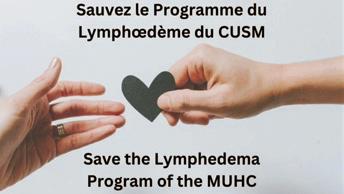
I believe so. The patients went to the media. We received dozens of letters of support from colleagues, academics, and patients from across the country, the US, Europe, and internationally. To date we have 14,795 signatures on the petition. People can still sign here: https://www. change.org/p/sauvez-le-programme-dulymphoed%C3%A8me-du-cusm-save-thelymphedema-program-of-the-muhc. If we encounter any more roadblocks, we will present that petition to the hospital and
One Wish Awards
the Ministry of Health. We know that the healthcare system is overstretched. But we need to advocate for the essentials. We need to demand distributive justice.
Kennedy
I love the term distributive justice and fighting for 1% of the cancer budget to gain equitable access for lymphedema care. Another example of equitable funding would be advocating for the same comprehensive care that diseases like diabetes have. Everything from start to finish. So why are there these gaps? Why is lymphedema treated like a poor cousin?
Towers
In contrast with Europe, where rehabilitation and physical treatments are more respected, I believe that North America has a cultural bias towards providing new high-tech, expensive treatments that might not benefit the population relative to what these products or technologies cost. So, without absolutely impeding technological progress, administrators will have to make important decisions as to how to distribute funds.
close December 31, 2024.
Kennedy
In Canada, those decisions are made at the provincial level. But at the Canadian level, there’s a lot of education that can be done. We could be sharing strategies among advocates about what has worked elsewhere. But I think an explanation of distributive justice is important because you will have some patient advocates insisting on access to private MLD therapy sessions every four weeks. And that’s not what we’re saying.
Towers
That’s an important point. Something that we stress with our administration is the need to provide evidence-based care that is cognizant of limited resources. In other words, we need to do as much as possible with the limited resources we have. For example, we could maximize online presence, provide group education sessions. We need to really look at what’s the evidence for the various therapy techniques that are being used. I think we need to focus on patient education on self-management.
Kennedy
The update of the Canadian Breast Cancer Lymphedema Guidelines, that Margie McNeely
and her team are leading will also better support evidence-based care. We talked about the role that advocates, provincial lymphedema associations and the Canadian Lymphedema Framework can have. In conclusion, what can organizations do, and what can our readers do?
Towers
We need to advocate for more academic clinical lymphedema programs to create the knowledge base and treatment guidelines – those certified therapists based in a university teaching hospital that see complex cases, do research and provide teaching. They would then need to partner with their provincial lymphedema association to create educational programs and to inform health professionals and patients about the latest research.
So how do we get there? Well, it’s heartening to know that we’re slowly getting more lymphedema therapists who have PhDs, and we’re slowly getting more physicians involved. We need more academic nurses who might have expertise in wound care. So, nursing professors involved for the noncancer population. All this would need to be
built up over the next 10 to 20 years.
In summary, we know that resources are limited in the health care system. The bias towards increased access to expensive technological solutions makes things worse rather than better. Lymphedema and chronic edema lead to increased morbidity and reduced life expectancy. Lymphedema patients deserve care and distributive justice demands that they receive it. LP
Editor’s Note:
Dr. Towers, Anna Kennedy and several other Canadians participated last fall in the LANA Summit in collaboration with the American Cancer Society. The working groups were tasked with providing updated reviews of lymphedema treatments, prospective surveillance, surgery etc. Their reports will be published as open access later this year or early 2025 in the Medical Oncology Journal. We encourage readers to look out for the publication and update their educational programs on the latest reviews of the literature and the scientific evidence for lymphedema treatments.
TheKloseTrainingAdvantage
• 135-hours of lymphedema education
75-hr engaging online home study module
60-hr (6 1/2 day) classroom education
• Time-tested, effective and evidence-based curriculum
• Learn from the most experienced instructors in the field
• Fewer days away from home and work
• Greater flexibility to fit your personal schedule
• Exclusive post-graduate resources
• Special pricing for Canadian Therapists
Online Courses
• Breast Cancer Rehabilitation with Jodi Winicour, PT, CLT
• Strength After Breast Cancer with Katie Schmitz, PhD, MPH, FACSM
• Wound Management for CLTs with Jan Weiss, PT, DHS, CLT
• Head & Neck Lymphedema with Heidi Miranda-Walsh, OTR/L, CLT
• Elastic Taping for Lymphedema with Ruth Coopee, OTR/L, CLT
• Add’l courses at klosetraining.com