
Forging Canada’s
Future
Forge: To create something strong or lasting through effort.

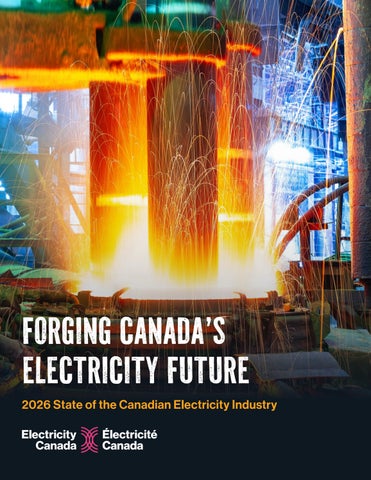
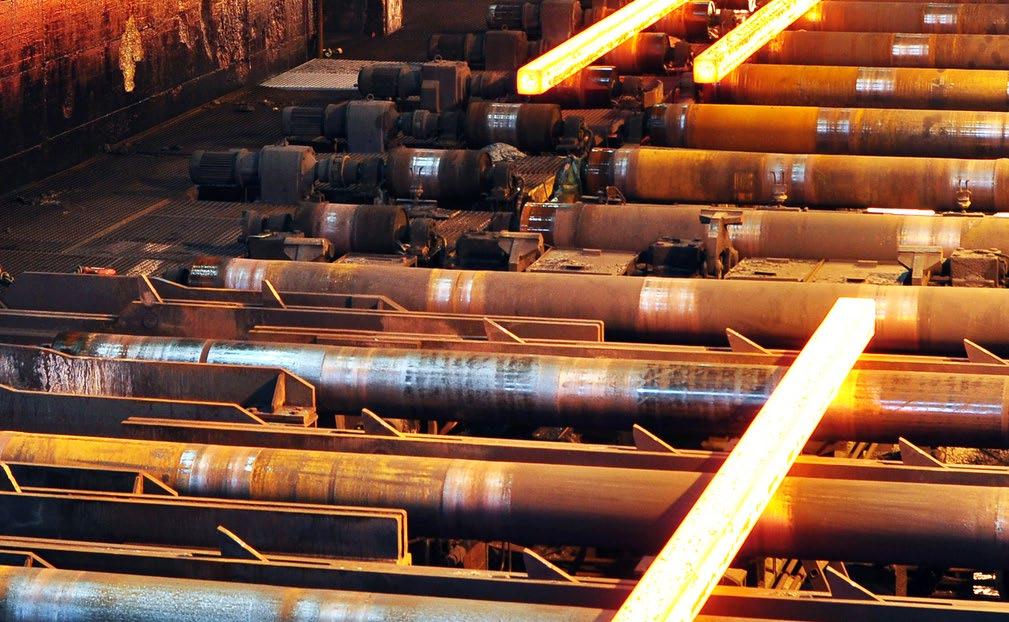
Cover photo: Electric arc furnace producing steel
Forging Canada’s Electricity Future: 2026 State of the Electricity Industry
Produced by Electricity Canada 1500-275 Slater Street, Ottawa, ON, K1P 5H9 | electricity.ca
Edited and written by Julia Muggeridge, Michael Powell and Channa Perera
Contributors: Brittany Botting, Graeme Burk, Diana Dominique, Daniel Gent, Eric Jacques, Shelley Levoy, Jay Wilson, Robin Yee
Designed by Fatima Khan
Translation by Louise MacKay
© 2026 Electricity Canada


Forging Canada’s electricity system
In 2025, members of Electricity Canada’s Board of Directors visited the Robert-Bourassa generating station in Northern Quebec. When it was opened 45 years ago, it was the largest underground electricity facility in the world. It offered clear proof of Canada’s place as a global hydroelectric superpower. The scope and ambition of the project were unparalleled.
The facility is as impressive today as when it opened. So is what developed around it: an entire community of skilled workers dedicated to keeping the facility operating around the clock, delivering clean, reliable power that supplies a significant share of Quebec’s electricity needs.
More than that is the ambition behind it. The confidence that Canada could build something bold, complex, and nation-shaping.
As Canada enters 2026, a renewed sense of ambition is once again shaping the future of the electricity system.
Our last three State of the Industry reports challenged government to meet the moment. Build It (2023), Getting to Yes (2024), and Electricity Is Essential (2025) emphasized urgency. Past reports brought attention to regulatory complications, permitting delays, and the oncein-a-generation opportunity to make Canada an energy superpower all while driving economic development in resource-rich regions and northern communities.
We have a strong start in this: electricity is a Canadian success story. Canada has one of the cleanest and most reliable electricity systems in the world: more than 80% our electricity is already non-emitting and has reduced emissions by more than 50% since 2005. But there is a lot of work to do.
With a new government dedicated to making Canada an energy superpower, there is now a clear opportunity to establish a credible roadmap for success. The focus is already there. What matters now is execution.
Each of the issues addressed in the chapters that follow looks at how to do this. Together, they define what it will take
to build at the scale Canada now requires to double the grid. We’ll discuss opportunities including nation-building projects, an east-west electricity system, and we’ll look at ongoing challenges including regulatory delays, wildfires and climate change.
The recommendations offered in this report are not new. In fact, these recommendations are from our past pre-budget submissions, from government consultations and from reports. Because what’s needed is more investment, fewer delays and of course, more ambition.
Balancing Ambition and Affordability
Ambition alone is not enough.
Cost pressures are already being felt. A 2025 RBC survey found that 55 per cent of Canadians feel “financially paralyzed.” Nearly half say they can no longer afford their current standard of living.
Electricity Canada’s 2024 National Customer Survey reinforces this reality: 84 per cent of respondents said electricity bill increases would have an impact on their finances. And those increases are coming. A review of rates across the country shows that no province is insulated, with most rates expected to rise faster than inflation.
These increases align with rising demand forecasts – with every jurisdiction in Canada needing more electricity to serve large load customers, increased population and electrification.
Despite these anticipated rate increases, trust in electricity companies is at an all-time high. Utilities received strong, favourable scores in the 2025 National Customer Satisfaction Survey, a notable shift since 2020. This trust is a critical asset. Our research shows that when Canadians understand where their electricity comes from and why new infrastructure is needed, they are more willing to support building, even in the face of rising costs.
Social license is used by electricity providers to discuss their ability to operate and build. Social license is another metric closely monitored by Electricity Canada annually,
with 81% of Canadians supporting replacing aging infrastructure and 79% of Canadians supporting grid hardening. These numbers echo a shift in priorities – to replace and grow, strengthen and protect our electricity system.
The trust earned by electricity providers in Canada creates a narrow but real window to act.
The task ahead is to build big again, decisively and ambitiously, while proving to Canadians that affordability, reliability, and long-term prosperity remain at the heart of Canada’s electricity future.
Modernizing regulation for a 21st-century electricity system
Conceiving, planning, and building major electricity projects takes time. It can take 25 years to design and build a hydroelectric plant. Even though construction won’t start for a decade or more, planning on future large nuclear facilities is already underway.
Unclear and unpredictable project approval and permitting processes disrupt such planning.
Without a well-defined approvals process, there is a considerable risk to projects that only drives up costs and makes it impossible to properly schedule and sequence construction. Delays caused by technical or external factors beyond a project’s control, can happen. But federal processes are something that we can control and manage.
We have designed a system that chooses delays.
The Major Projects Office (MPO), created under the Building Canada Act, is a significant step toward addressing these challenges. It brings a whole-of-government coordination to advance designated projects within two years, balancing the obligations of good planning against the outcome of urgently getting key projects built. One-third of the initial intakes are electricity projects (Darlington New Nuclear Project, Iqaluit Nukkiksautiit Hydro Project and the North Coast Transmission Line ) which underscores our sector’s role in advancing the national interest.
However, the grid is not just a handful of huge, generational projects. It is also the poles in front of your house, the smaller municipal power plants, the transmission network between cities, and everything in between. Delays and complications with smaller projects can cumulatively be just as bad as on major ones. Customers’ bills don’t distinguish between projects of national interest and the rest.
A federal commitment to a two-year time limit for project approvals must be extended to all projects.
The government can leverage the experiences and lessons from the MPO to this end. Accelerating federal efforts to reduce red tape and regulatory burdens, including eliminating duplication with provincial processes, is also essential. Recent cooperation agreements between the Impact Assessment Agency of Canada and provincial governments are a step in the right direction. The CanadaAlberta Memorandum of Understanding is another good example. This MOU also highlights how the federal and provincial governments can work together to improve outcomes on environmental regulations like the Clean Electricity Regulations, where provincial governments are better placed to make planning decisions. But more is required.
The impacts of delay and regulatory complexity extend beyond new construction. Permitting processes can make it harder and more expensive to operate facilities that have existed for generations, even when the processes provide little real benefit to the environment or the public.
An example of this is the case study on page 7 highlighting permitting delays on legacy hydro facilities which leave small, northern Indigenous communities with fewer options to address reliability challenges and rising system costs.
Fisheries Act permitting is another perennial example. Since changes to the Fisheries Act in 2019, proponents have been required to seek more Fisheries Act
Authorizations (FAAs), which have become increasingly burdensome to obtain even for low-risk, routine maintenance work. This is even with a clear understanding of the impact of that work on fish and fish habitat being well understood and effectively managed by industry. Uncertain, lengthy and onerous Fisheries and Oceans Canada processes have become a significant challenge for industry to the point that it is impeding the efficient operations of generating facilities.
Case Study: Relicensing legacy hydroelectric infrastructure in Canada
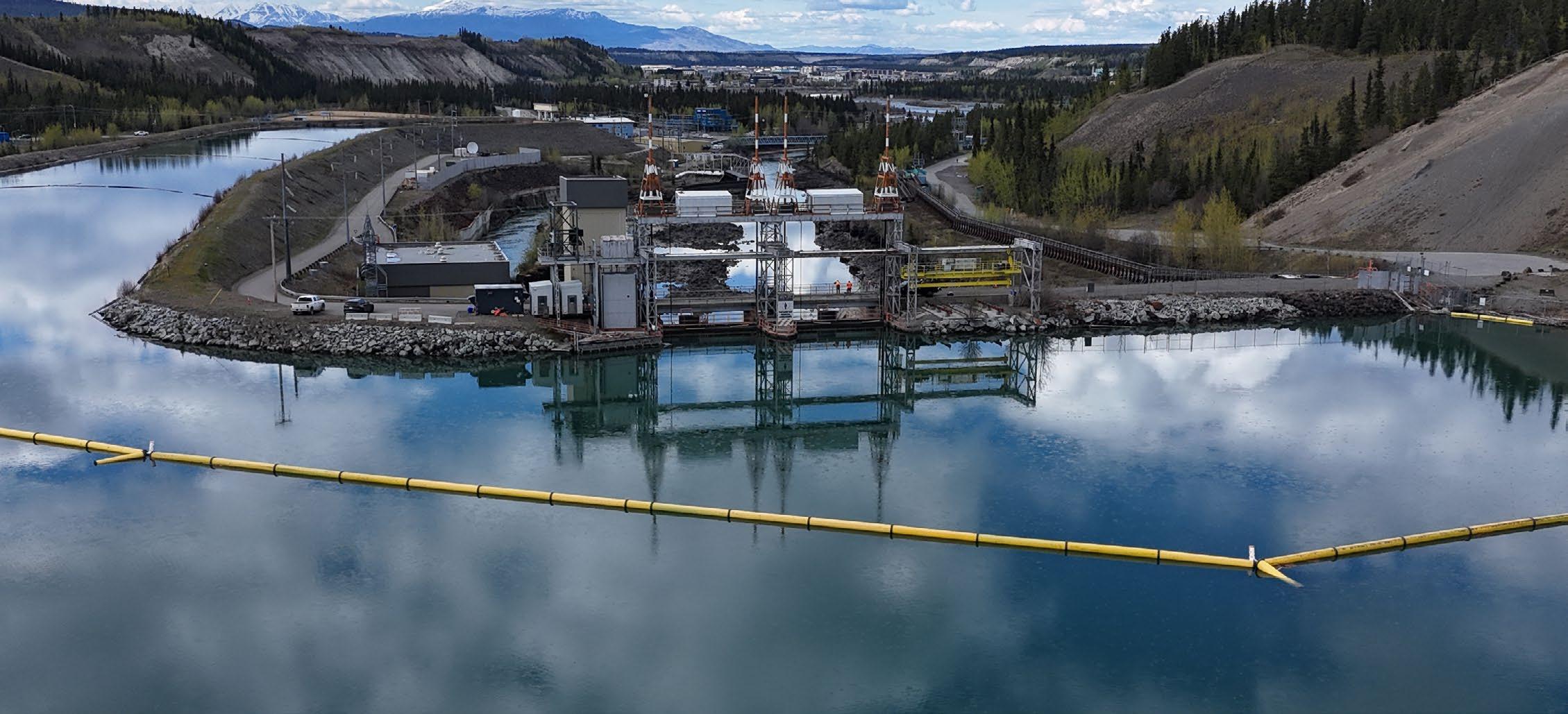
Canada’s electricity system relies heavily on legacy hydroelectric infrastructure, making the secure renewal of existing assets as important as the development of new clean generation projects.
Yukon Energy’s experience highlights the problems with regulations that aren’t designed for facilities that have been operating for decades. For more than 25 years, three hydroelectric plants operated by Yukon Energy have supplied over 90% renewable electricity to Yukoners, forming the backbone of a system not connected to the North American power system.
Yukon Energy is now working to relicense these facilities, but the process has become increasingly complex and costly.
Aging infrastructure, evolving environmental standards, and the need for meaningful engagement and consultation with Indigenous governments have significantly expanded the scope and duration of relicensing. Regulatory delays and backlogs now jeopardize the continued operation of assets that have been generating electricity safely for decades. At the same time, the process places substantial demands on utility staff and resources, increasing costs that ultimately place upward pressure on electricity rates for customers.
This experience highlights a gap in Canada’s electricity framework. Canada lacks a coordinated national approach to protecting long-standing clean power assets through regulation, infrastructure investment, and procurement. Without reform, regulatory bottlenecks risk weakening reliability, affordability, and progress on decarbonization.

Recommendations
` Commit to a two-year federal approval timeline for all electricity projects, drawing from the lessons from the Major Projects Office process, advancing continuous red-tape reduction, and minimizing duplication with provincial processes.
` Reform the Fisheries Act and associated regulations to adopt a risk-based approach for electricity infrastructure, focusing on impacts to fish populations and recognizing the unique operational characteristics of hydroelectric facilities.

From materials to people: Building system capacity
Our economy depends on secure, reliable energy, which in turn relies on a resilient supply chain. As global demand for electricity increases, it is straining supply chains. As a result, delivery times for critical equipment have grown much longer. It can take up to seven years for gas turbines and nearly four years for large transformers. Provincial forecasts (page 12) show that demand, and therefore material needs, will continue to increase. Strained supply chains create project risks for Canadian electricity companies.
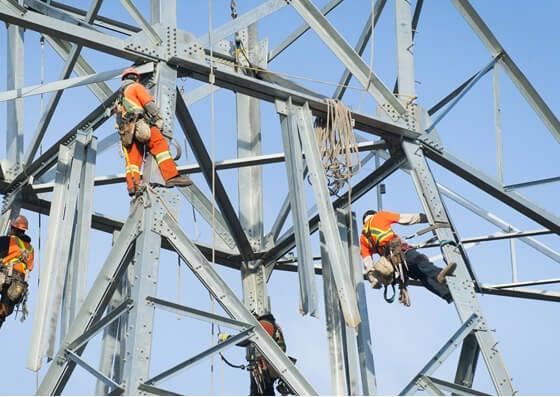
Securing Canada’s supply chain can also be seen as an economic and security opportunity for Canada. Domestic manufacturers can serve more of the domestic market for critical equipment while expanding export opportunities.
The government of Canada is already taking this approach in the defence sector, strategically expanding capacity based on expertise and export opportunities as countries around the world increase military spending. The same is true for the electricity industry: we know that substantial demand is on the way and that there is both a domestic need and a clear opportunity for international exports.
Electricity companies already play a role in this.
Much of the $30 billion that the electricity sector spends in Canada each year already goes to domestic suppliers. Hydro One, for example, spends 93% of its investment dollars with Canadian suppliers – including a recent announcement regarding Ontario’s Northern Transformer (page 9). Companies across Canada, such as Ontario Power Generation and Hydro Quebec, have established local supplier programs and built supply chain development into their long-term growth strategies.
Electricity Canada and its members have worked with suppliers to grow their existing capacity to meet domestic needs. We are also working with suppliers to find growth opportunities, identify challenges that are holding back investment, and bridge the gap together.
One example is high-voltage circuit breakers, where there is a clear long-term need in our industry but an uncertain future supply. Our association is working with Canadian manufacturers, to develop long-term business cases to expand production of these critical components. And circuit breakers are just the beginning.
The federal government can help facilitate this on a wider scale. A Canadian Electricity Supply Chain roadmap could help clarify future demand for manufacturers and connect them to existing federal tools, such as tax credits, the Business Development Bank of Canada (BDC), Export Development Canada (EDC), and the Canada Growth Fund. It could identify opportunities in trade-impacted industries, such as Canada’s steel sector, to support this growth. The roadmap should outline strategic opportunities where Canada is most likely to be successful.
Electricity’s Labour Shortage
Beyond the materials to meet Canada’s growing demand, Electricity Human Resources Canada (EHRC), a member of Electricity Alliance Canada, also projects a labour shortage facing Canada in the next several years. This labour shortage is driven by both the retirement of existing workers and rapid growth in demand for skilled labour, particularly as the sector expands to support electrification.
EHRC projects that the industry will need close to 28,000 new workers by 2028, equivalent to about 25% of the current workforce. Over half of these will be from expectant baby boomer retirements and the rest to meet the needs of the expanding electricity system.
Labour market data also shows persistent vacancy rates well above other trades, reflecting difficulty in attracting qualified talent. If the sector needs to replace and grow, so too does the workforce. Without coordinated efforts to expand recruitment, training, retention, and career development pathways, these workforce constraints risk undermining the reliability and resilience of Canada’s electricity system at a time of transformative change.
Case Study: Strengthening Ontario’s domestic electricity supply chain
Ontario is experiencing historic growth in electricity demand. New homes are being built across the province, businesses are expanding, and investment is accelerating in agriculture, mining, and electric vehicle manufacturing. Meeting this growth requires not only building new generation sources, but the core infrastructure of the electricity system including poles, wires, and critical equipment like transformers.
At a time when global supply chains remain strained and geopolitical uncertainty continues to disrupt manufacturing and delivery timelines, access to essential electricity equipment has become a strategic challenge. Long lead times and international competition can delay projects, increase costs, and threaten system reliability.
To address this risk, Hydro One is strengthening Ontario’s domestic supply chain by committing nearly $165 million over four years to Northern Transformer, an Ontario-based manufacturer (and Electricity Canada Corporate Partner) with more than 20 years of experience supplying power transformers. This long-term investment provides certainty for both organizations, supporting local manufacturing capacity, skilled jobs, and reliable access to critical equipment when it is needed most.


Recommendations
As an Ontario-based company employing more than 10,000 people across the province, Hydro One understands that investing at home builds secure, selfreliant supply chains. In 2024, more than 93 per cent of Hydro One’s annual spending went to Canadian companies, most of them based in Ontario.
This partnership demonstrates how utilities can balance ambition with affordability strengthening domestic industry while ensuring infrastructure projects move forward efficiently. By investing in trusted local suppliers and working closely with government and industry partners, Hydro One is helping to build a more resilient grid and a stronger Ontario economy.


` Develop a Canadian electricity supply chain roadmap, in partnership with electricity companies and suppliers, to identify opportunities to expand domestic production, particularly where export potential exists, leveraging existing federal tools such as tax credits, BDC, EDC, and the Canada Growth Fund.
` Establish a federal-industry workforce advisory council. The federal government should establish a senior-level advisory committee comprising representatives from industry associations, unions, and training providers to discuss emerging labour market issues, review forecasts, and adjust workforce strategies. Its mandate should include ongoing review, monitoring, and improvement of workforce mechanisms to ensure they remain adaptive and responsive to labour market realities.
Mobilizing capital: financing Canada’s electricity future
Electricity Canada’s 2025 National Customer Survey shows 34% of Canadians are already extremely or very concerned about being able to pay for their electricity bills. And yet, electricity companies in Canada will need to invest $2 trillion to double the electricity system to meet the needs of 2050.
Such investment will require new generation across all technologies, expanded transmission to connect communities, and significant upgrades to distribution systems to serve population growth and rising demand. We need to replace aging, weather-worn infrastructure, while growing faster than ever before. Sound expensive?
The scale of this investment is beyond the scope of the traditional utility funding model. Ratepayers cannot bear the full cost of a build-out that pushes past the limits of the traditional “postage-stamp” bill structure, where the transmission charge is the same for all customers in a large region, regardless of the physical distance from the power generation source. Relying on just the universal per kWh rate would require bill increases well beyond what customers can afford.
Regulatory constraints, including constraints on customer rates have already created a significant funding gap in parts of the sector: the Clean Prosperity Institute has identified a $4.7 billion shortfall in distribution investments in Ontario over the next 15 years.
Taxbase funding can balance this. Electricity is enabling infrastructure, just like roads, ports, and transit, that underpins long-term economic growth and creates a foundation for private sector investment. Canadians support this approach, with more than half of respondents to Electricity Canada’s National Customer Survey supporting the use of tax dollars to support grid expansion.
The federal government has begun to make such investments. The Clean Technology Investment Tax Credit (ITC) has lowered costs for new privately-run generation and storage, while the recently introduced Clean
Electricity ITC will expand this to include Crown-owned or Indigenous-led utilities. The Canada Infrastructure Bank and the Indigenous Loan Guarantee Program have helped advance projects through low-cost financing. Additionally, the Smart Renewables and Electrification Pathways Program (SREPs), with $4.5 billion in funding, has provided direct support for grid modernization and transmission and distribution infrastructure, though demand far exceeds available resources. Every dollar spent by the government on electricity infrastructure reduces a dollar from customers’ bills.
There are opportunities to optimize government investment in the electricity sector. Tax credits should be simplified to reduce administrative burdens and extended beyond 2035 to align with long-term build-out timelines, especially for major projects. They should be expanded to cover distribution and intra-provincial transmission, which can represent more than 40% of the total investment.
Additional support is needed for investments in the “grid” part of the electricity grid: distribution and intra-provincial transmission. This could come from a targeted expansion of the ITCs, additional funding for programs like SREPs, or including them in programs like the Build Communities Strong fund, included in the 2025 budget.
However, government resources are finite and must cover many needs. Private capital will be needed to grow the electricity system. Canada must ensure that we have policies that encourage private-sector participation and create a competitive investment climate. We need to avoid overly complex tax rules that drive investment abroad. For instance, repealing or substantially revising the Excessive Interest and Financing Expense Limitations (EIFEL) rules is critical to unlocking capital for electricity and other infrastructure projects.
Case Study: CIB, Indigenous partnership and the Wasoqonatl (New Brunswick-Nova Scotia) transmission line
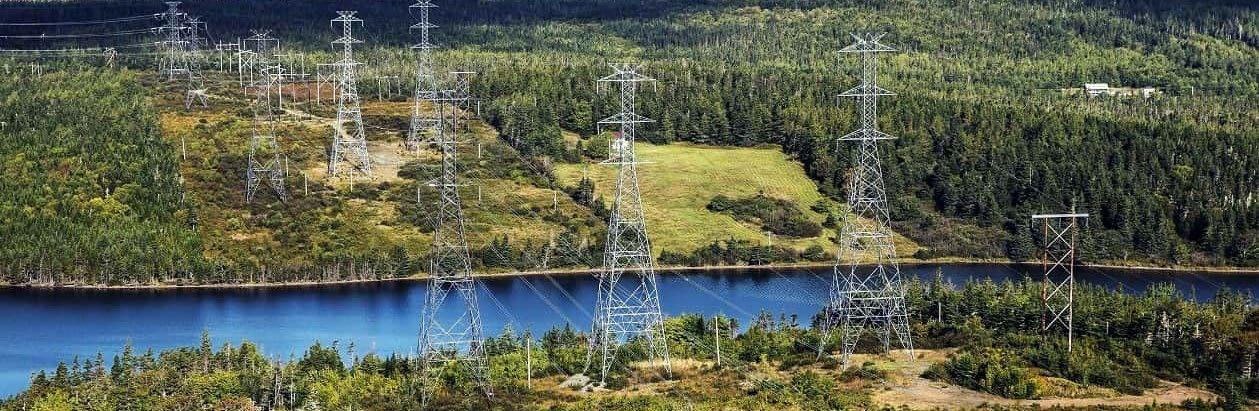
The Nova Scotia-New Brunswick Wasoqonatl Reliability Intertie is a 160-km, 345 kV transmission line running from Onslow, NS, to near Salisbury, NB. It will double the transfer capability between the two provinces, enabling more renewables, improving reliability and serving as the first phase of a modified Atlantic Loop.
The project had challenges which included high upfront costs, interprovincial complexity and the need for durable social licence across Mi’kmaw territory in both provinces. Traditional utility financing alone risked delays and higher costs for ratepayers.
The Canada Infrastructure Bank (CIB) stepped in with a $217-million equity investment, its first equity stake in a transmission line. This lowered the project’s overall cost of capital and is expected to save Nova Scotia ratepayers roughly $200 million over the asset life. The CIB also aligned its investment with the federal Electricity Predevelopment Program funding to NB Power and Nova
Scotia Power, which supported early studies and regulatory filings, helping move the project from concept to execution.
CIB used its Indigenous Equity Initiative to structure an accompanying loan for Wskijinu’k Mtmo’taqnuow Agency Ltd. (WMA), the economic development partnership owned by Nova Scotia’s 13 Mi’kmaw First Nations. This loan is designed to enable WMA to acquire an ownership stake in the Wasoqonatl project, moving Indigenous communities from “stakeholders” to equity partners.
CIB’s Indigenous-focused financing helped “kick-start” the NB-NS line by de-risking the balance sheet for utilities, embedding Indigenous ownership in the capital structure, and giving regulators and governments a more affordable, socially grounded project to approve.
The result is an interprovincial asset that advances clean energy goals, economic development and enables an important Indigenous partnership.

Recommendations
` Simplify and extend the Clean Technology and Clean Electricity Investment Tax Credits, extending eligibility beyond 2035 to reflect major project timelines and adjusting labour and wage requirements that add complexity without materially advancing workforce outcomes.
` Provide targeted federal funding for distribution and intra-provincial transmission projects, through a focused use of the Clean Electricity ITC, dedicated mechanisms such as SREPs, and/or expanding eligibility under programs like the Building Communities Stronger Fund.
` Repeal or substantially revise the EIFEL rules to remove unintended barriers to capital-intensive electricity infrastructure investment.
` Continue to deploy federal financing tools, including low-cost loans, repayable equity, and Indigenous financing supports, to accelerate timelines and de-risk projects.

Toward an integrated Canadian electricity grid
The federal and provincial governments are exploring opportunities to enhance Canada’s east-west electricity system. Historically, the Canadian electricity trade has focused on north-south exchanges (24 gigawatts) rather than east-west (16 gigawatts). Since 2024, there has been renewed interest, and building momentum, to invest in Canada by broadening interprovincial trade and strengthening Canada’s energy infrastructure.
The federal government committed to expanding domestic electricity trade during the federal election and has advanced that through early Major Project Office projects and in the Canada-Alberta Memorandum of Understanding. Canada’s provinces are also working to better coordinate electricity trade, including through an Ontario-led MOU to better coordinate planning, information sharing, and federal engagement on transmission projects.
Regional transmission is not an end in itself; surplus power must be available for trade. With peak provincial electricity demand forecasted to increase by an average of 28% by 2040—and by 40% in Ontario and and 48% in Quebec— Canada will need to add substantial net new generation in the coming years to meet growing electricity demand no matter what.
Better east-west grid interconnections can help support this growth by enabling provinces to share energy during peak periods, strengthening provincial trade corridors, unlocking economic development, and supporting energy independence.
But why hasn’t it been done before?
When Canada’s electricity providers were building the electricity grid of the 20th century, geography, economics and politics drove the development of the north-south electricity system. Geographically, hydro-rich provinces like British Columbia, Manitoba, and Quebec were closer to the larger electricity demand in the United States. Economically, the U.S. markets paid more, offering historically higher prices and long-term export contracts. Politically, provinces are responsible for electricity planning.
Without national funding to build a national grid, the geographic and economic motivations favoured provincial self-sufficiency and north–south connections over east–west integration.
To activate an east-west grid in 2026 and build for a 21st century electricity system, the government will also need to solve for geography, economics and politics to fully appreciate the potential benefits of reliability, affordability, and security.
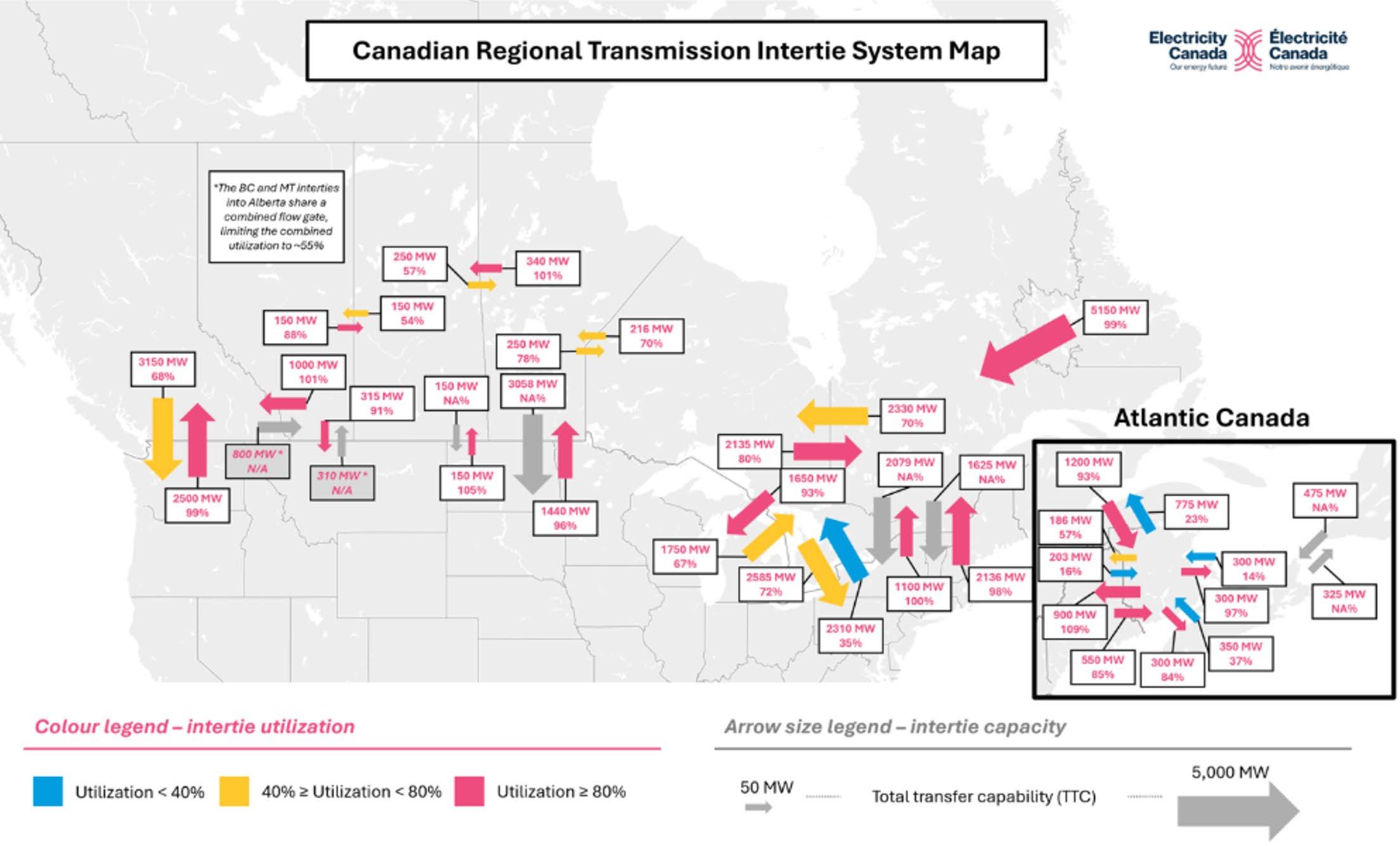
A recent study conducted by Deloitte, commissioned by Electricity Canada, assessed the current utilization of all interprovincial interties and examined provincial demand forecasts out to 2040. The data suggested that several interties in Canada could be enhanced now before new infrastructure is committed . These interties, outlined in the map of Canada (page 14) offer concrete opportunities that could enhance regional electricity systems instead of pressing for a full east-to-west grid. These opportunities offer enhanced reliability on either side of provincial borders.
The Deloitte study offers recommendations for furthering interties which will involve a hard look at the economics behind the provincial electricity markets. Over the past 50 years, provinces have developed different electricity market structures, ranging from fully deregulated markets (Alberta) to competitive wholesale markets (Ontario and what is emerging in Nova Scotia), to regulated markets (e.g., B.C., Manitoba, and Quebec). These differences create challenges in forming mutually beneficial, long-term contracts necessary for capital-intensive, long-lived assets like transmission interties.
Often, the primary barrier to expanded east–west electricity trade is the absence of a clear, shared benefit for both jurisdictions. Transmission lines are costly, and in practice those costs do not automatically accrue in a fair and equitable manner that makes interprovincial transmission an attractive proposition.
The federal government should look beyond existing tools and consider new or expanded ways of structuring markets, incentives, or agreements so that interprovincial transmission lines are used more often, valued properly, and financially viable. Electricity Canada and its members have developed a Benefit Accrual Framework that helps to clarify how the costs and benefits of an interprovincial transmission project will be apportioned, and how the federal government can help to bridge the gap to help develop an otherwise uneconomical transmission project.
In terms of political will, there is a renewed spirit of interjurisdictional cooperation. The federal government is exploring nation-building projects which have included both generation and transmission projects (mentioned below). There are provincial leaders looking to engage in discussion and invest in Canada.
Outlined below are some of the immediate opportunities Canada can explore and recommendations for further investment in Canada’s generation and transmission sector.
Intertie opportunities:
Western Canada
There are already interties connecting British Columbia to Saskatchewan via Alberta. However, the capabilities of the B.C.-AB intertie are limited, while the AB-SK intertie has only been in limited use recently due to problems from the age of the assets. Optimizing existing infrastructure of the B.C.-AB line, and rebuilding the SK-AB line, could enable greater resource sharing, but could also mitigate risks from intermittent generation sources and enable Western Canada to manage future demand and reliability.
Manitoba
Manitoba has well-developed intertie capacity and utilization as an exporter of electricity. The problem of late has been that, while the province has superior hydro resources, rising demand and limited new capacity may lead to future supply constraints. However, enhanced intertie use and coordinated planning could provide an opportunity for Manitoba to import electricity and address its supply gaps. This could boost Manitoba’s resiliency, particularly in poor water years, as well as reduce supply risks and ensure reliable service even as demand grows.
Atlantic Canada
The region is already heavily connected: Nova Scotia and PEI rely on imports from New Brunswick. Unfortunately, these three provinces tend to experience the impacts of extreme weather simultaneously, and their move to intermittent renewables from coal make it vulnerable. However, interties from Quebec and Newfoundland present an opportunity for Atlantic Canada. Both Quebec and Newfoundland have surplus supply under both baseline and stress scenarios. An expansion of intertie capacity from Quebec and Newfoundland could improve reliability, meet future demand, and ensure a supply of clean electricity.
Ontario and Quebec
These two provinces are an example of how interties can benefit both provinces, which have complementary peak-demand seasons: Ontario shares power with Quebec during the winter, and Quebec shares power with Ontario during the summer. This has reduced the need for redundant capital investments. And yet there is a potential undersupply for both provinces in 2040. This could be helped through an integrated regional approach to east-west transmission, which will help optimize existing assets, address supply challenges and prevent costly overbuilding.
Recommendations:
` Ensure regional flexibility for jurisdictions facing unique cost or reliability challenges by improving transparency in data and modelling assumptions and aligning mandates across federal institutions (e.g., Major Projects Office, Impact Assessment Agency, and Natural Resources Canada).
` Partner with provinces, system operators, and utilities to advance coordinated, data-driven interregional electricity planning, prioritizing optimization of existing transmission infrastructure and trade corridors before committing to new large-scale builds.
` Invest in robust, transparent, and standardized national electricity datasets to support planning, modeling, and regulatory decision-making.
` Advance market integration to enable intertie expansion, exploring additional market instruments that enhance the competitiveness and utilization of interprovincial transmission while respecting provincial market structures and jurisdictional authority.
Case Study: Connecting Canada’s two biggest provinces
Ontario and Quebec illustrate how interprovincial electricity interties can deliver meaningful cost, reliability, and systemefficiency benefits when grounded in complementary demand profiles and coordinated planning.
The two provinces have opposing seasonal peak demands: Ontario’s system typically peaks in the summer, driven by air-conditioning load, while Quebec’s system peaks in the winter, reflecting widespread electric heating. This seasonal complementarity enables each province to rely on the other during periods of highest system stress, reducing the need to build and maintain redundant generation capacity.
These dynamics underpin the 2024 Ontario-Quebec annual capacity swap agreement, which provides for the exchange of 600 MW of firm capacity. Under this agreement, Ontario receives capacity support during summer peak conditions, while Quebec receives support during winter peaks. This approach is cost-effective for both provinces when compared with alternatives such as curtailing surplus renewable electricity, maintaining
underutilized assets, or constructing net-new generation capacity solely to meet short-duration peak demand.
Interties between Ontario and Quebec also support more efficient system operations. Quebec’s flexible hydroelectric resources can respond quickly to changing system conditions, while Ontario’s growing renewable fleet can export surplus energy when available. This improves asset utilization, enhances reliability, and contributes to lower overall system costs and emissions.
Looking ahead, the strategic value of these interties is expected to increase. Under some energy transition scenarios extending into the 2030s, Ontario’s electricity system may become dual peaking, with material demand pressures emerging in both summer and winter. This evolution would further elevate the importance of interprovincial flexibility and firm capacity exchanges.
These highlight how strategic interties can deliver nearterm benefits while strengthening long-term system resilience.

Resilience in a changing climate: wildfires and system protection
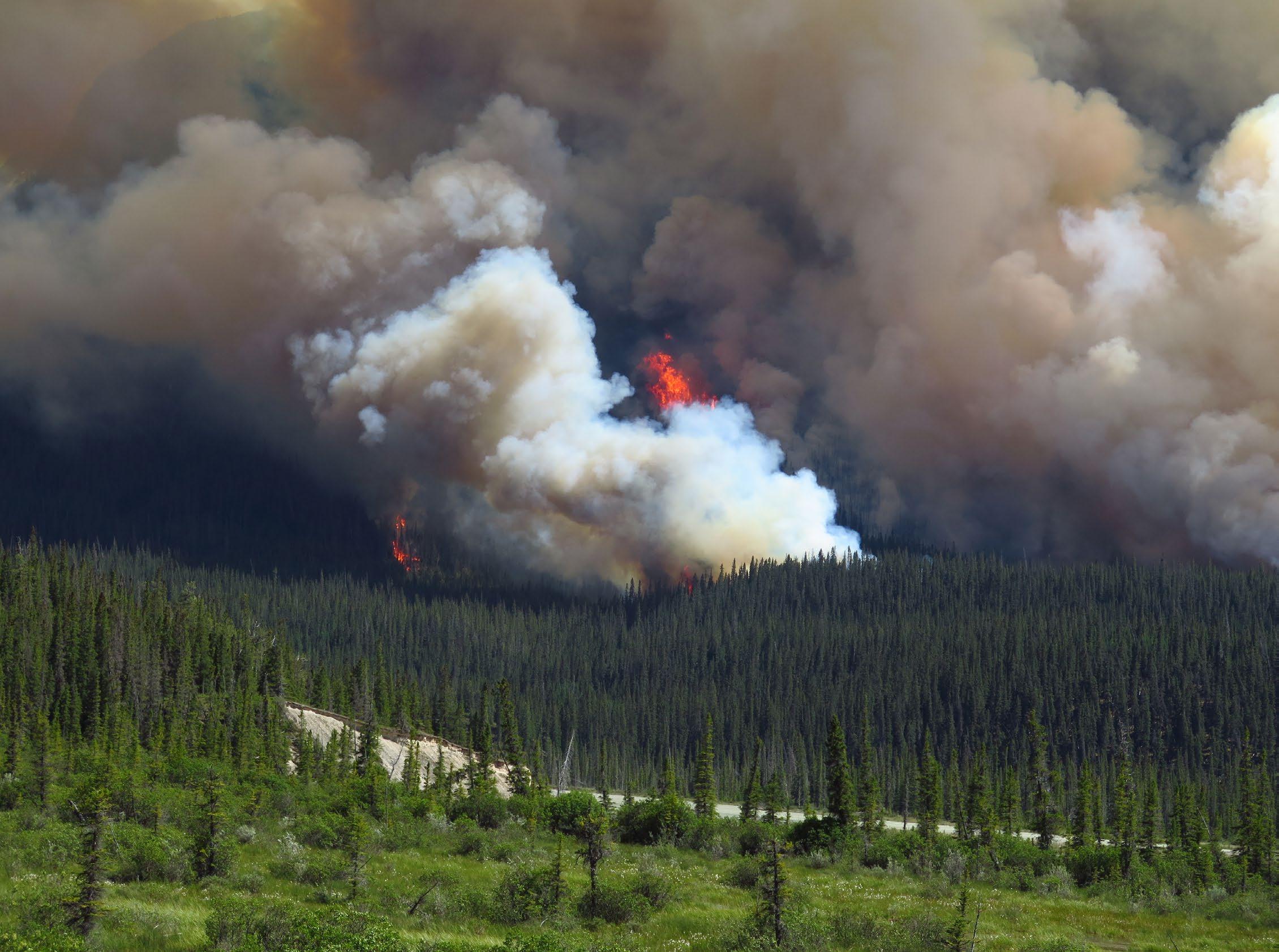
Wildfire risks have become a significant threat to Canada’s electricity system. In the past three years, almost every province and territory has been affected, with British Columbia, Alberta, Saskatchewan, Quebec, and the Northwest Territories experiencing the most destruction and local economic impact.
According to Statistics Canada, 2023 was one of the most severe years for wildfires in Canada, with over 5,500 incidents and a total of 17.3 million hectares affected. During the initial seven months of 2025, Canada faced another significant wildfire season, with 3,582 fires burning across 6.26 million hectares, exceeding four times the ten-year average of 1.38 million hectares.

For the electricity industry, these wildfires pose two immediate challenges. Electricity transmission and distribution lines are particularly susceptible to damage from wildfires. Replacing damaged poles and towers can be costly; for instance, replacing a single pole typically ranges from $3,000 to $6,000 CAD, depending on factors such as the equipment installed on the pole, its height, and whether the poles are made of composite material or wood.
Power lines can also be a source of ignition under extreme conditions. They can ignite wildfires through contact with trees and branches downed power lines, conductor slap,
or sparking hardware that can ignite. All of these factors can jeopardize public safety, destroy communities, damage electrical equipment, extend customer outages, and impose legal liabilities on the industry.
Given the enormity of this evolving situation, federal/ provincial/territorial governments, provincial economic regulators, and industry must work collaboratively to understand and address these challenges with urgency and speed.
Consistent action must be undertaken to scale investments in wildfire prevention, harden electricity assets to protect them from extreme heat and wildfire, and provide timely access to industry vegetation management (especially vegetation in proximity to powerlines situated on federal lands and parks). There must also be technology innovation via research, development and deployment to insulate the industry from potential legal liability arising from powerline -related wildfire ignitions.
Current government policies, funding, and regulatory approaches, especially the economic regulatory models used by utility boards, do not sufficiently support the proactive actions industry must take to prevent wildfires, including potential wildfire ignitions.
The status quo must change to ensure that we take a proactive approach to addressing wildfire and long-term risk reduction for the industry and Canadians.
Excellence in wildfire mitigation
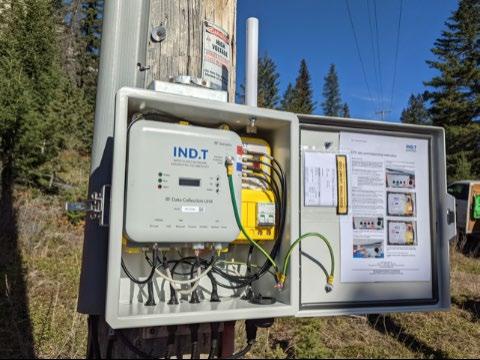
FortisAlberta is reducing wildfire risks, increasing reliability, and enhancing grid safety as the first utility in Canada to implement Early Fault Detection (EFD) technology. This technology identifies potential faults in the distribution system before they escalate, enabling timely interventions that protect communities and ensure uninterrupted power delivery.
EFD technology detects early signs of stress and degradation in critical distribution assets such as transformers, switchgear, conductors, and insulators and monitors for threats, such as tree encroachment. By analyzing unique radio frequency noise emitted by failing equipment, the system can pinpoint anomalies within a 10-metre range. This precise detection allows for swift maintenance responses, significantly reducing the likelihood of component failures that could lead to wildfires.
Since its introduction in 2022, EFD has proven highly effective. Over the years, technology has detected multiple critical issues, including broken conductor strands, wildliferelated hazards, and cracked insulators. These early alerts have enabled rapid interventions, prevented potential outages and mitigated wildfire risks associated with equipment failure.
Case Study: Alberta utilities collaborate on wildfire prevention
AltaLink, ATCO, and FortisAlberta (the owners and operators of the electric transmission and distribution networks in Alberta’s high fire-risk areas) are collaborating to help protect communities by reducing the likelihood that their systems contribute to the increased risk of catastrophic fires. In 2023, nearly 2.2 million hectares were burned in Alberta, with an additional 705,000 and 674,000 hectares burned in 2024 and 2025, respectively. This is a significant increase from the 2015–2022 annual average of 283,000 hectares burned. Although fewer than 10% of fires in Alberta are caused by electrical infrastructure, the risk remains under certain conditions. These three companies have developed a Wildfire Mitigation Plan that includes several key elements, from risk mapping to Public Safety Power Shutoffs (see below).
Public Safety Power Shuto (PSPS) triggered on extreme fire weather events
Enhanced Operational Practices during extreme risk
Operational Practices, Inspections and Corrections –accelerated operation and maintenance activities
Situational Awareness – implementation of enhanced weather monitoring, fire weather forecasting and fire detection
Asset design standards – assess and implement updates to reduce risk and improve resiliency / Hardening power system assets - modifications to reduce risk and impact
Scientific analysis to identify locations of high wildfire risk
These members actively support utility wildfire mitigation standards and regulations, contribute to the development of an Alberta Wildfire Mitigation Strategy (AWMS), and participate in the Power Line Wildfire Task Group. They are also proactive in raising awareness about wildfire mitigation efforts and emergency preparedness.

PSPS
Extreme Risk Days
Incremental Operational Practices
Enhanced Situational Awarenes Monitoring
Facility Widlfire Risk Reduction Programs
Risk Mapping
Recommendations
` Review federal and provincial legal frameworks to ensure appropriate protections related to potential industrycaused ignitions, with Electricity Canada supporting this work through a government contribution agreement.
` Establish a formal coordination mechanism between the electricity industry and Parks Canada to address vegetation management on federal lands.
` Introduce a resiliency tax credit and/or a targeted funding program to support weather hardening of electricity infrastructure and to protect the system from growing exposure to extreme weather events (including wildfires, ice storms, windstorms, floods, tornadoes).
` Support research, development, and deployment of grid-hardening technologies and infrastructure risk-reduction strategies.

Protecting Canada’s electricity infrastructure in a digital age
We live in an ever-more-connected world, with networked and internet-enabled devices changing how we live and work. The electricity system is no different. Countless digital connections link generation, transmission, and distribution equipment. Networked solutions allow for a nimble grid that can respond quickly to Canadians’ evolving needs. Operators can manage and monitor assets remotely, deploy advanced metering technologies that give customers more choice, and identify challenges before they become problems. Connectivity is central to a modern electricity system.
But connectivity also creates new sets of risks. The Canadian Centre for Cyber Security (CCCS) is clear that Canadian critical infrastructure faces real and specific threats.
This is not a theoretical risk: Canadian critical infrastructure providers have already experienced attacks. Hospitals and health networks across Canada have had data stolen and operations disrupted. The government of British Columbia announced that foreign-connected cyber attackers had tried to breach its systems in 2024. Water and agriculture system operators have experienced disruptions to their industrial control systems. Oil and gas companies have had information and operating technologies infiltrated. Electricity companies have had significant IT breaches with impacts on billing and information loss.
What is the solution? Preparation, practice, and vigilance. Just as electricity providers prepare for storms, the electricity sector works tirelessly to minimize cyber risks. Electricity companies have mature cyber security programs that continue to evolve.
Utilities also participate in information-sharing programs that strengthen collective security. Some, such as Lighthouse, run by Ontario’s IESO and compulsory for Ontario’s distribution companies, share intelligence directly with CCCS, allowing for government analysis to support our security efforts. Others, like the North American Electric
Reliability Corporation’s Electricity Information Sharing and Analysis Centre, operate across North America and add a continental view. Regular exercises, including the biennial GridEx held in 2025, test our readiness and ensure we can respond effectively under pressure.
But we must keep improving. Hostile actors continue to advance, and artificial intelligence-enabled tools multiply risks. Defence must work all the time; attacks only need to succeed once.
Staying ahead requires constant vigilance and improvement. Government and industry must continue to enhance collaboration. That means making sure that wellintentioned legislation like Bill C-8, which would impose new cybersecurity requirements, doesn’t inadvertently chill information sharing by not clearly defining how regulators handle data. That would be a setback we can’t afford.

Conclusion
There is a lot of work ahead of us.
From improving and enhancing permitting and approvals, to needing more materials and people, to accessing capital and ensuring competitiveness, to grid hardening in the face of extreme weather events while also hardening our digital infrastructure in the face of cyber threats – the challenges are many.
But the opportunity is also there: to lean into our natural resources, our national pride and our renewed ambition and build something great, an electricity system for the 21st century. This reflection and recommendations offer a way there.
The federal government has an opportunity to be involved in building this new grid – one that doesn’t just replace an aging grid, but forges it into something stronger, something that lasts and secures Canada’s place as an energy superpower.

Forge: To create something strong or lasting through effort.

State of the Canadian electricity industry recommendations
1. Commit to a two-year federal approval timeline for all electricity projects, drawing lessons from the Major Projects Office process, advancing continuous red-tape reduction, and minimizing duplication with provincial reviews.
2. Reform the Fisheries Act and associated regulations to adopt a risk-based approach for electricity infrastructure, focusing on impacts to fish populations and recognizing the unique operational characteristics of hydroelectric facilities.
3. Develop a Canadian Electricity Supply Chain Roadmap, in partnership with electricity companies and suppliers, to identify opportunities to expand domestic production, particularly where export potential exists, leveraging existing federal tools such as tax credits, BDC, EDC, and the Canada Growth Fund.
4. Establish a federal-industry workforce advisory council. The federal government should establish a senior-level advisory committee comprising representatives from industry associations, unions, and training providers to discuss emerging labour market issues, review forecasts, and adjust workforce strategies. Its mandate should include ongoing review, monitoring, and improvement of workforce mechanisms to ensure they remain adaptive and responsive to labour market realities.
5. Simplify and extend the Clean Technology and Clean Electricity Investment Tax Credits, extending eligibility beyond 2035 to reflect major project timelines and adjusting labour and wage requirements that add complexity without materially advancing workforce outcomes.
6. Provide targeted federal funding for distribution and intra-provincial transmission projects, through a focused use of the Clean Electricity ITC, dedicated mechanisms such as SREPs, and/or expanding eligibility under programs like the Building Communities Stronger Fund.
7. Bolster and prioritize NRCan utilityfocused programs (including SREPs, Smart Grid, and Regulatory Innovation Capacity Building) as critical capacitybuilding tools to improve efficiency, resiliency, distributed energy integration, and grid modernization.
8. Repeal or substantially revise the EIFEL rules to remove unintended barriers to capital-intensive electricity infrastructure investment.
9. Continue to deploy federal financing tools including low-cost loans, repayable equity, and Indigenous financing supports to accelerate timelines and de-risk projects.

10. Ensure regional flexibility for jurisdictions facing unique cost or reliability challenges by improving transparency in data and modeling assumptions and aligning mandates across federal institutions (e.g., Major Projects Office, Impact Assessment Agency, and Natural Resources Canada).
11. Partner with provinces, system operators, and utilities to advance coordinated, datadriven interregional electricity planning, prioritizing optimization of existing transmission infrastructure and trade corridors before committing to new largescale builds.
12. Invest in robust, transparent, and standardized national electricity datasets to support planning, modeling, and regulatory decision-making.
13. Advance market integration to enable intertie expansion, exploring additional market instruments that enhance the competitiveness and utilization of interprovincial transmission while respecting provincial market structures and jurisdictional authority.
14. Strengthen the business case for east–west transmission by developing benefit-accrual frameworks and policy mechanisms that incentivize investment and enable coordinated, multi-jurisdictional planning.
15. Review federal and provincial legal frameworks to ensure appropriate protections related to potential industrycaused ignitions, with Electricity Canada supporting this work through a government contribution agreement.
16. Establish a formal coordination mechanism between the electricity industry and Parks Canada to address vegetation management on federal lands.
17. Introduce a resiliency tax credit and/ or a targeted funding program to support weather hardening of electricity infrastructure and to protect the system from growing exposure to extreme weather events (including wildfires, ice storms, windstorms, floods, tornadoes).
18. Support research, development, and deployment of grid-hardening technologies and infrastructure risk-reduction strategies.