
Cirrus
DEPARTMENTS
Photo by Scott Blasken






Photo by Scott Blasken
IT’S COMING, WHETHER WE WANT IT OR NOT. BUT WHAT WILL IT LOOK LIKE?
The mandate to equip aircraft flying in Canadian Class C, D and E airspaces with ADS-B OUT technology is approaching, even though its imposition has been delayed more than once. Early information was that it would be satellite-based, using 1090ES (MHz) technology and would require antennae facing up toward satellites and down toward ground stations. This technology is not cheap — upwards of $20,000 or more for an installed package. Such an imposition by the authorities would likely spell the end of recreational flying for may aircraft owners.
In the U.S., the FAA chose a different technology for airspace under 10,000 feet, using ground-based 978 UAT (MHz) technology. To make it even more useful

to pilots, the FAA included free graphical weather to the upload signal, allowing pilots with at least a tablet to see weather depicted on their device. Typical cost to install such a system started at around U$3,000 but eventually dropped to under U$2,000. And, to make it a bit more affordable, the FAA threw in U$500 to the owner of each aircraft that had the equipment installed before October 2019. It then became mandatory in all Mode C and controlled airspace in 2020.
Granted, a country as large and sparsely populated as Canada cannot afford to install radio towers throughout the country. But there are alternatives, according to many.
Given the fact that the mandate for ADS-B OUT is imminent, we are

dedicating more column inches around this topic. Our Ed McDonald (Instrumental Facts) has written about ADS-B (Mar/Apr 2026) and has again for this issue (p.11). In our feature article “The Looming ADS-B Mandate” (p.44), Dan Oldridge provides us with a detailed description of the technology, and where he thinks we should be moving toward.
In our next issue (Sep/Oct), look for contributing writer Lee Coulman’s indepth article on the Canadian In-Flight Information Broadcasting Association (CIFIB), an Ontario-based non-profit volunteer-run organization that is already providing ground-based 978 UAT services to pilots throughout southern Ontario and is spreading westward from there.


Congrats to Robert Grant and the CA staff and writers for one of the best issues for as long as I have been a reader/subscriber. What more could I have asked for?
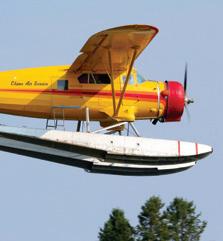
Articles on the Norseman, Stinson, planes of interest, as well as the interesting history of the somewhat weird Bellanca. The book review of Pratt & Whitney was a bonus.
I read the whole mag from cover to cover, even the section on health and the explanation of holding patterns, although I will never need to apply it, other than for a difficult final approach to the Canadian Tire parking lot. I very much enjoy your writing style, and I must say that I see some of it rubbing off on Ms. Buessecker’s writing. And who would have known a guy named Scratch would steal planes and shoot up air bases? I’m hoping it was like Tom Cruise, or some other film pilot, asking to buzz the tower.
A. Stacey Chelmsford, Ont.
That was a very informative article about the Noorduyn Norseman (May/ Jun). But I was kinda surprised that you didn’t mention the Norseman’s nickname. I’ve heard it called the “Thunder Chicken.” Since I worked at de Havilland Canada, we of course had the competition’s aircraft, the Beaver. It was in this circle of drivers that I heard the term Thunder Chicken.
I’ve enjoyed your magazine for many years, so keep up the good work.
Mel Goddard Blenheim, Ont.
The Norseman was notorious among pilots and passengers for its extremely loud cabin. –Ed.
There is no argument with the thoughts that Tim Cole mentions in his article “When will I be too old to fly?” (Nov/Dec 2025) However, perhaps I may add additional thoughts to the topic.
Aviation accidents are invariably viewed as extreme events by the general public, non-aviators, politicians and insurance companies. They see machines plummeting to the ground from the sky above at high speed and invariably accompanied by loud bangs and fires.
However, the far greater number of road accidents which result in injury, fatalities and property damage are treated to subdued levels of alarm, consternation, headline reporting, and often are not even mentioned in newscasts. People don’t seem to be particularly curious when encountering young men in wheelchairs absent one or two limbs who are possibly now quadriplegic and don’t think about whether their conditions are the result of road accidents. Notably, we don’t see much commentary or questioning on the causes of these injuries or, particularly, whether they might just be due to poor driving habits, or how such individuals were granted driving licences in the first place.
“Aviation accidents are invariably viewed as extreme events by the general public, nonaviators, politicians and insurance companies.”
Could the reason for the lack of (public) questioning in governance and insurance circles have anything to do with the fact that the questions apply to just about all drivers and, heaven forbid, we tighten up driving instruction and road testing to the point where denial of driving licences leads to reductions in auto manufacturing and an economic recession?
Some of your readers may have noticed talk about the new Ontario driver screening planned for elderly drivers on YouTube. Absent in all those I have watched has been any reference to the need for improved driving training but instead relay a heavy dose of attention given to the health of ‘senior’ drivers. It will be more than interesting to see how much the toll of road accidents is reduced by this focus on elderly drivers.
How does this relate to the subject?
In comparison to the numbers of road accidents, how many GA accidents occur annually, what are the comparative numbers of severely injured or killed people, associated costs of property damage, and insurance claims, and what is the proportion of GA accidents attributable to ‘old pilots’ and what is the proportion of accidents attributed to ‘younger’ pilots’, especially new pilots?
These questions are not put to infer criticism of flying training, but rather to look at the cost/benefits resulting from misguided decisions of governments and insurance companies.
Mr. Cole is right to think about his own particular health and general fitness to fly, but I would suggest that he also give adequate attention to the degree to which his flying career is at the mercy of “by the numbers” thinking among those in a position to dictate if/when he is an actual potential threat to the safety and wellbeing of society.
David Green Thornhill, Ont.
As a passenger and not a pilot, I want to share my point of view about Richard Pittet’s article (“Broken Trust,” May/Jun).
While I appreciate his honesty towards the system and his high standards of honour, I feel that he is using his high bar to measure others who might not share his. As an example, we have the latest wellknown incident where airline pilots have been using the emergency channel to “behave like animals.” Do I think those unprofessional pilots adhere to the same standards Mr. Pittet does? I don’t think so.
Besides, regarding the German pilot, one example 10 years ago is good enough for me to justify making the records available to those who need them. To say that because something happened in the past, and an isolated one (does he remember Flight 370 in Asia? It’s not just one incident), makes it irrelevant for the present is the same as saying that a mechanical control or failure that caused an accident 10 years ago doesn’t apply now to avoid a repeat.
Finally, if those are the rules and he doesn’t like them, then he should not have joined the ranks of pilots or quit now and stay at home. If you don’t like the rules, don’t play.
Once you have the life of others in your hands there is not such a thing as privacy if you could hurt those who depend on you.
Pablo Calcaterra London, Ont.
I read the “Aircruiser and Airbus” article by Robert Grant (May/Jun) with a lot of interest. Just a few notes to add:
• The former BTW carries the FAA registration of N2191K not N2919M. It was re-engined several years ago by the Oregon people. It now has a Wright R-1820 Cyclone. The Aircruiser could be delivered with either a Pratt & Whitney Hornet or a Wright Cyclone engine.
AND AIRBUS : Siblings in the Bush
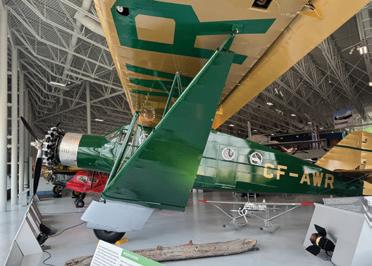
• The original EDO 12,700 floats on BTW/N2191K were modified with amphibious landing gear. These are the original floats built by Macdonald Bros. Aircraft Limited in Winnipeg c. 1940.
• I have some photos taken at the Kanuchuan Lake site shortly after BTW ran up onto the shoreline. I see no evidence of damage to the wings.
• Bellanca BKV came down on land at Smokey Lake. The very rusty fuselage front section is in storage with the Royal Aviation Museum of Western Canada.
• AWR was recovered in the late winter of 1973. It was then transported to Lac du Bonnet where George Fournier started working on the restoration in 1974. We are still working on it 52 years later at the Winnipeg Museum. When it pranged in early 1947 it had a P&W Hornet R-1690 engine. It now has a Wright Cyclone R1820 engine which was the engine installed when operated by Mackenzie Air Services in the late 1930s.
• The tires on AWR in the Winnipeg museum came from BTW. The Oregon group replaced the wheels and tires with those from a Grumman Mallard. Al Nelson and I went to Tillamook, Ore. about 25 years ago to bring back the tires and do some measurements on the former BTW.
• I was told that the P&W Hornet engine and cowlings on BTW came from a Trans-Canada Airlines Lockheed Model L14 Super Electra. When TCA decided to put P&W R1830s on their L14s, they sold off their now surplus Hornet engines, and several would have wound up with Aircruiser operators.
I flew several trips on BTW with Dan Springer when I worked at Pickle Lake in 1970. I didn’t get any stick time as I was only a lowly dockhand. It had a throw-over control column, and the throttle quadrant was on the far-left side of the cockpit. The main AME caretaker of BTW at that time was Ronnie Morrison. In late December 1939, AWR went through the ice of Kingsmere Lake in Prince Albert National Park. Ronnie Morrison was one of the salvage crew. I often think of Ronnie when we are working on AWR.
Gerry Norberg Winnipeg, Man.
Send us your letters. Canadian Aviator welcomes reader letters on topics of concern to Canadian pilots and the aviation industry. Please be brief, to the point and polite in your submissions. Email Steve Drinkwater steve@canadianaviator.com
Many of us who have followed the evolution of backcountry SOS devices have marvelled at how small they are becoming, and how many features get added every year or so. Garmin has now introduced an even more miniature version of its inReach line of SOS devises, the inReach Mini 3 Plus. It is packed with features including voice and text messaging, photo sharing, live track sharing and, of course, SOS messaging. Coverage is global via the Iridium satellite network. The device measures 2.16" x 3.85" x 1.05" (5.50 x 9.80 x 2.67 cm) and weighs just 4.42 oz (125.2 g). Battery is rechargeable via a USB-C connection. About C$630.
Learn more at, and available from, garmin.com

Do you use a clear, hollow fuel tank dipstick that measures the amount of fuel in your tank? You know — the kind that you insert, place your thumb over the top then retrack it to read the fuel level? It’s also known as a fuel straw. How many of you have accidentally dropped one in your fuel tank? For a very small investment, you can install an attachment called The Fuel Stop that will prevent the dipstick from falling into the tank. When placed on a wing while your hands are busy with the fuel nozzle, it’ll also prevent it from rolling off the wing. About C$13.50.
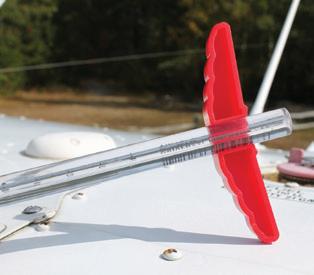
Learn more at, and available from, aircraftspruce.ca
Do you use prescription eyeglasses with progressive lenses in the cockpit? If you are an airline pilot, you’ll have to cock your head back at uncomfortably odd angles to read instruments mounted in overhead panels. Austin, Texas-based Flying Eyes Optics offers their FlightDeck 360 progressive eyeglasses, specially designed for airline cockpit use. The upper and lower parts of the lenses are shaped for near vision, leaving the centre part for distant vision. Frames or prescription lenses or both, regular or sunglasses are offered. Prices vary.
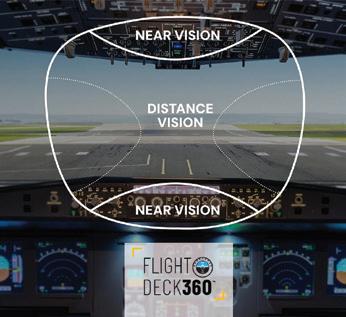
Learn more at flyingeyesoptics.com. Available from aircraftspruce.ca
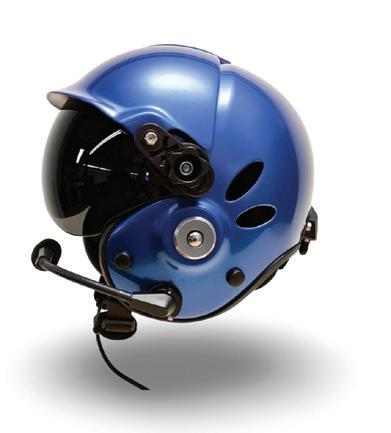
Many pilots feel better protected in the cockpit when they are wearing a helmet. This is relatively more common among helicopter pilots. In 1996 entrepreneur and skydiver Christopher Frisella founded Bonehead Composites in Perris, California that designs and manufactures composite helmets for the extreme sports world, later branching into helmets for military and aviation applications. The company offers five different helmet designs, each one configurable to the pilot’s needs with various communication and visor options. Multiple sizes are available. Shown is the Aries Flight Helmet with comms and visor. About U$1,800. Learn more at, and available from, boneheadcomposites.com

Near the end of my flying career, I took on a flying contract with a fishing lodge located a few miles north of 60◦ in an area of Canada referred to loosely as the “Territories.” The trees don’t grow very tall this far north, and the land is muskeg, which is flat and featureless except for myriad little lakes, which are frozen solid until the end of May. From the air, the country takes on the appearance of a big jigsaw puzzle with many pieces missing. The weather can be lovely or rainy or obscure from ice fog. It can be misty and, in the summer, smoky from what they call forest fires — if you can call those little trees a forest. Operating
a floatplane in this wilderness requires a certain amount of technical savvy and a great deal of optimism. Take this example — you will get what I mean.
I got into the resort’s DHC-2 Beaver one very rainy, muggy day with six passengers, all of them right off the streets of New York. They were all dressed to the nines in heavy, damp woollen overcoats, wearing fedoras, carrying brollies, speaking in Park Avenue and heating up the cabin with their breathing — plus each dissipating some 400 BTUs per hour of body heat so that the windows ran with condensation and fogged up beyond comprehension. They were all very excited to be up in Canada’s frozen
north where they were planning to fish for and catch one of those ugly Pike the area is known for, and too, here they were about to fly in the famed classic Beaver bush plane. They all stopped talking immediately when the Pratt & Whitney R-985 Wasp coughed into life.
The Beaver was soon roaring down the lake and clawing into the air, destined for a 15-minute flight to the campsite. I was able to reduce the length of the flight considerably this day when the loudest BANG I had ever heard up forward of the firewall occurred, which caused a lot of puckering in the direction of the seat cushion. I did an immediate 180◦ turn back to the lake of
(continued)
my so recent departure. It had taken us six minutes of flight to get to where the bang had occurred, but I figured it would only take five minutes to get back as I was now leaning forward with my nose on the windshield.
Just as the lake hove into view there was another BANG and that famous Pratt & Whitney out front just stopped. “All decisions made, all passion spent,” muttered this pilot as I dead-sticked onto the lake, pulling off not only a flawless touchdown, but coming off the step and drifting to within 10 feet of the dock, where the camp manager stood with a questioning look upon his brows. The first New Yorker stepping out of the plane asked about laundry facilities.
Some considerable time was spent thumbing through the Tech log before locating the tags and the date of installation of two Bendix-Scintilla magnetos, both of which had failed. Installed brand new more than two years previous, the TBO for this particular mag was shown as 1000 hours. It was determined that the first bang was from the left mag, which had flown exactly 1000 hours and the second bang from the right mag that had flown 1000 hours plus six minutes. I sure liked that right mag.
It took more than a week to get an engineer flown into camp to install two new magnetos and he was pretty choked about having to do the job in the bush from a plank laid across the floats, all performed while he was getting soaked from the heavy rain. His employer was the maintenance contactor for this little Class 4 charter operation run by the resort and were seemingly a little slack on keeping a watch on the time on components installed in this aircraft.
Another thing. Do you know what STC stands for? How about STA? We are in an industry loaded with acronyms. These initials stand for “Supplemental Type Certificate” and “Supplemental Type Application.” The de Havilland Beaver has a lot of these STCs designed by creative engineers
over the years from the 1947 date of the plane’s original manufacture.
For instance, Kenmore Air, an outfit located down on Lake Washington in Seattle, did a lot of STC stuff on the Beaver, and they were all great modifications. Beavers were first built with generators for recharging the battery. The battery weighed in at about 50 pounds, was mounted behind the passenger cabin a little bit aft of the C of G and had a cable, the conductor of which was about half an inch thick, running from the battery up to the engine compartment. The whole outfit, including the generator, must have weighed in at about 100 pounds. Also, generators only generate when the engine is running at higher rpm than idle, so the battery on the Beaver only charged during cruise.
“Kenmore also obtained STCs for bubble windows to allow broad-shouldered loggers to look out, an exterior baggage compartment access door and a tail skeg that didn’t get wiped off every time your tail went across the dock.”
On top of all that, generators suffered from what you could call an identity problem; sometimes they thought they were electric motors and when that happened, they ran backwards and discharged the battery. Kenmore threw all that stuff away from their fleet of 30 Beavers and obtained an STC for a small battery out on the firewall with an alternator just like your Chevy or your Rolls Royce Silver Cloud, and it was a vast improvement with a significant reduction of weight. Kenmore also obtained STCs for
bubble windows to allow broadshouldered loggers to look out, an exterior baggage compartment access door and a tail skeg that didn’t get wiped off every time your tail went across the dock. Later, Sealand Aviation in Campbell River, British Columbia developed an STC called the “Alaska Door,” which opened up the side of a Beaver allowing you to park a Euclid truck in the cabin. Then, they developed a cabin extension to the Beaver, which was sold to Beaver owners everywhere.
The Beaver I was flying had many of these modifications, but let’s get back to that alternator STC of Kenmore Air’s. Electrical devices, including alternators, generate a magnetic field around themselves and, unless they are shielded in some manner, will interfere with electronic equipment, particularly something with a radio frequency like an ADF. I had to learn this the hard way when I flew the resort’s Beaver, which had that Kenmore alternator modification, during my three-month stint in this countryside. During all these months the ADF would not work. It just drove the needle around in circles. Flying in a territory where you just had to have an operating ADF to find the various camps, I was faced with map-reading my way around from lake to lake with maps produced by the Forestry Department. The compass variation was over 30◦ easterly, so the compass was abandoned.
I flew around for three months with my finger on a chart, map-reading my track over those funny little lakes. I got to recognize the one that had the shape of a bowler hat and a few others whose shapes I identified with some body parts I will leave unmentioned. On days of low, near-zero visibility in all that smoke and fog there were some tense moments. On the final day of my three-month-long contract, I absentmindedly flipped the alternator switch to OFF and voila! the ADF arrowed in on the station. Too bad I had been flying with the alternator ON and my brain in OFF.
Nav Canada has undertaken a “consultation” process for aircraft owners and pilots for their thoughts on further implementation of ADS-B in Canada. Indeed, Nav Canada provided an online survey earlier this year to that effect.
This survey, however, did not ask the key questions on the minds of owners and pilots – what are the costs, what are the benefits, who benefits from ADS-B and where is the upside for this investment?
As an aircraft owner, I am acutely aware of the costs. While non-certified aircraft can be equipped with both ADS-B IN and OUT at a relatively modest cost, certified aircraft are an entirely different story. Here are two examples.
I own a relatively new Diamond DA62. This aircraft came equipped with a ground-based, 978 MHz ADS-B IN and OUT capability, the type used in the United States. Diamond recently issued a service bulletin to upgrade the aircraft to 1090 MHz ADS-B with diversity antennas. This would mean replacing the existing device and adding an antenna to the top of the aircraft; the hardware is about $13,500 and the estimated installation cost is at least $4,000, according to the Service Bulletin. In total, over $17,500. And this is with an aircraft with the necessary displays.
For a non-certified aircraft, the cost of the equipment is about half. However, the installation cost would be about the same. Note: while “experimental” or “amateur-built” aircraft do not require certified equipment, the devices nevertheless must meet the same Technical Standards Order (TSO) as any other device. The cost, therefore, is
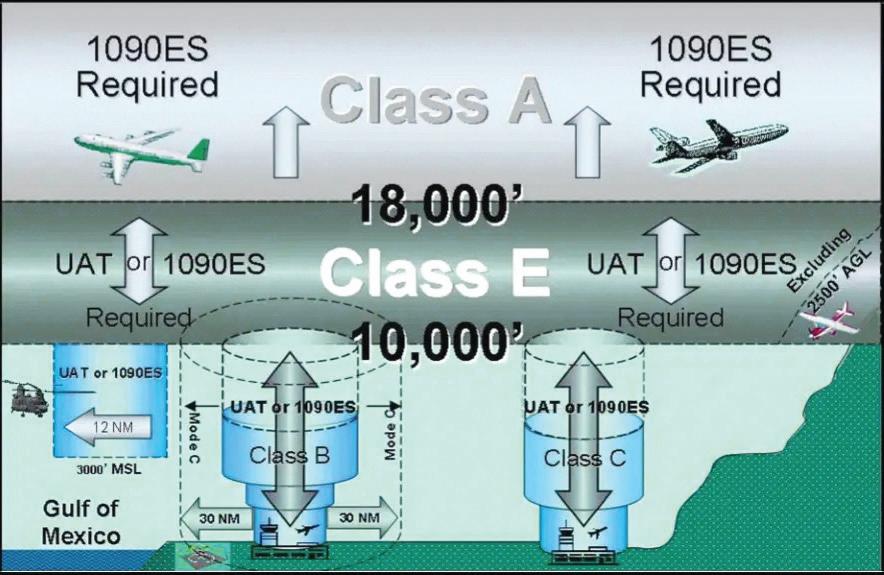
about $10,000, give or take. What does Nav Canada get for my investment? ADS-B OUT would ultimately mean shutting down radar stations, a huge cost saving. What do I get for that investment? Nothing. It’s all give and no take — owners get nothing in return.
Contrast that with the United States. For an investment like this, 978 MHz ADS-B IN provides weather, traffic and flight information. Each of these features are of significant value. In the 1990s the NTSB identified the lack of real time weather information as a contributing factor to aviation accidents; today, the information is there, but it cannot be accessed easily unless one has access to 978 MHz ADS-B IN. As described in an earlier article, there have been numerous fatal mid-air collisions that may have been prevented with
better traffic information, particularly at uncontrolled airports. The lack of regulatory and safety impetus for these technologies lies with the Transportation Safety Board and Transport Canada. The U.S. equivalents — the NTSB and FAA — figured this out a long time ago.
Wildfire-fighting activities close airspace at nearby airports, including their instrument approach procedures, just when they are needed the most for evacuations, medevacs, etc.
Kelowna was one of many recent examples of this. Flight information such as Temporary Flight Restrictions (TFR’s), graphically displayed to the pilot, would allow these instrument procedures to remain active.
978 MHz ADS-B IN is a proven technology and this should be a quidpro-quo for any investment by aircraft owners.
If you are as old as I am, you will remember when we began to see more and more people seemingly talking out loud to no one in public. It was unsettling. Then we realized that they were actually talking to somebody on their mobile phone.
Talking out loud to oneself in public is traditionally associated with mental health issues. The behavior has a strong social stigma. However, recent research has demonstrated that it is actually a worthy habit for healthy individuals. In fact, about 25 percent of the population talks out loud to themselves routinely. On the aviation side, a recent South
Korean study demonstrated that pilots who verbalize instrument indications aloud when exposed to highly disorienting scenarios improved their ability to maintain controlled flight, increased airspeed and altitude accuracy by 8 to 10 percent, decreased their perceived distress, and reduced their mental stress by 11 percent. Incidentally, acute stress can temporarily reduce functional I.Q. by more than 13 points.
Why does the technique work? How can we leverage this knowledge to improve flight safety?
“Talking it out” has been a longstanding tactic to handle emotional
stress or find solutions to complex problems, but it usually involves somebody else. It turns out that the benefits, minus potentially valuable feedback, apply to voicing it out to oneself.
Consciously verbalizing perceptions and thoughts function as a crosscheck just as reading out loud a written draft is a well-known proofing technique. It also filters out distractions and sharpens focus on the task at hand. The result is greater clarity and more brain processing power allocated to handle the issue. In an aircraft, the primary issue is always to “aviate”
before trying to solve any additional problems. Reading out the instrument indications helps alleviate the “noise” and concentrates attention on keeping the aircraft right-side up.
On my first multi-engine instrument flight test in a real airplane, the attitude indicator decided to fail during the initial climb. Of course, it did not just die. That would have made it easy to identify. When I levelled the wings using the attitude indicator, the turn coordinator indicated that I was in a slight turn; the heading indicator agreed. Then, when I levelled the wings using the turn coordinator, the attitude indicator showed a slight bank angle. I banked back and forth a couple of times before deciding on the culprit, never sharing my dilemma with the examiner until I had a result and a solution. When I did share my findings, the examiner said he was wondering why I was banking back and forth.
It may be time to reconsider our approach to flying with passengers. As an alternative, the technique also works when words are spoken softly, which makes them almost inaudible in most aircraft. Another option is to use the headset’s isolate function when available so others are not privy to the talking.
“A pilot who systematically verbalizes what he or she is doing can actually provide comfort — and education — to passengers who may feel stressed and powerless in a strange environment. It may be time to reconsider our approach to flying with passengers.”
Clarity and improved focus are key benefits of reading data out loud. Stress management is a vital windfall. For example, did you know that simply saying out loud, “I am stressed,” lowers stress levels? After recovering from an upset — whatever it may be — verbalizing “The aircraft is flying. I am okay,” reduces stress and the potential to enter into the proverbial string of errors that ends in a major issue. Speaking out positive goals such as “I am going to solve this” is also an effective way to reduce stress and improve I.Q.
I, like most pilots, was trained to do it all by myself with a stiff upper lip. Imagine how much more comfortable it would have been for the examiner if I had been trained to verbalize the situation aloud. Research shows that it would have likely allowed me to solve the problem even faster with far less stress — which was already elevated by the flight test situation.
A pilot talking out loud through an issue could be a little disheartening to his or her non-pilot passengers, but only if it is out of character. A pilot who systematically verbalizes what he or she is doing can actually provide comfort — and education — to passengers who may feel stressed and powerless in a strange environment.
The South Korean study found that verbal reports are particularly helpful in mitigating the effects of confusing bodily sensations. They also improve the quality of the scan pattern without increasing a pilot’s overall attentional workload.
Given the findings, verbalization should be part of standard upset recovery training, at a minimum. But let us consider going one step further: let us make it a part of all flight operations. If we were taught to voice our observations from the very first flight lesson, it would become second nature and make the flight instructor’s job a lot easier. No more guessing what students are missing or doing wrong. It is never too late to adopt a new technique if it means improving flight safety.
great article suggestions and post alerts when new issues become available.


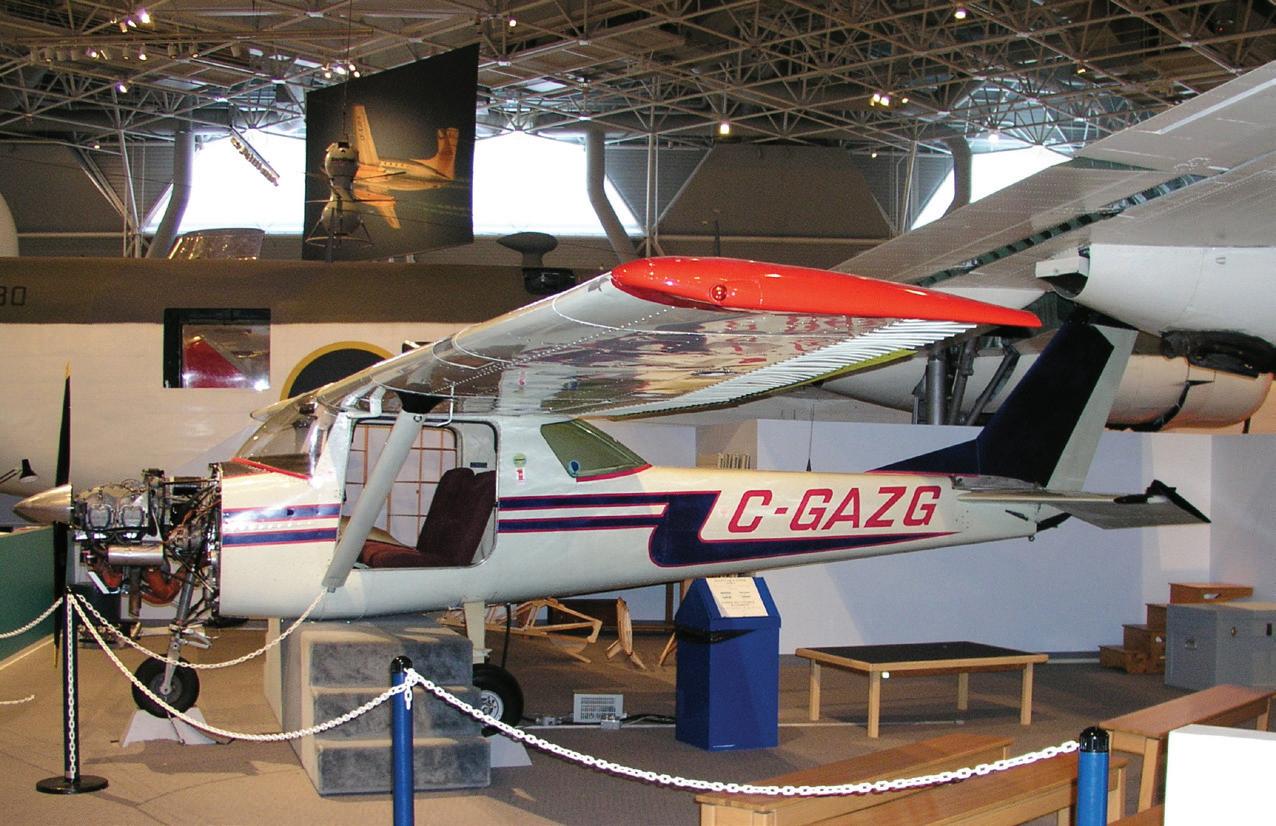
Aviation museums attract visitors to their awe-inspiring “big ticket” displays of multi-engine bombers, sleek fighter airplanes and pioneering bush-flying types. Ottawa’s well-planned Canada Aviation and Space Museum (CASM) has all these and more. Most cause wide-eyed slammed-back eyelids, raspy gasps and repetitive “Wows!”. Nestled neatly within a dedicated patch of floor rests an obscure single-engine airplane with a mere 32-foot, 8.5-inch wingspan.
Veteran aficionados halt before the collection’s massive Avro Lancaster. Off-duty or retired professional pilots gaze upon meticulously restored examples of aeronautical ingenuity such as Douglas DC-3 CF-TDJ. Before moving they barely glance at the diminutive Cessna 150H bearing registration letters C-GAZG. Children, however, pull parents’ arms and beg for closer looks at the tiny airframe protected by white stanchions and metal chain barriers. Some believe the two-seat tricycle gear basic trainer is merely a child’s play toy manoeuvred through the building’s massive doors for public interest.
Knowledgeable full-time interpreters and volunteer tour guides, wise in realms of aviation, surprise giggling youngsters when they invite them into the Cessna 150 for imaginary flights. After climbing a three-step platform, the future flight candidates learn that the red-lettered aircraft is genuine and carries serial number 15068296. Noiseless, non-flyable and secured in place with wheel chocks, C-GAZG will unlikely slip its restraints to fly again. Nevertheless, this artful assortment of metal, plastic and rubber occupies an important role in Canada’s air transportation industry.
Airlines and air services need pilots and aircraft maintenance engineers
(AMEs). No newcomers to the exciting field of wings, engines and cockpits earn their primary licences on international passenger jets or float- and ski-equipped bush planes. Interests enhanced by airshow visits, overlying airplanes or wandering into places such as spacious CASM may inspire careers far more exciting than ground-bound eight-to-five routines. The first moment they ease throttle forward and peer at a two-blade propeller through the Cessna 150’s one-piece windshield, the “bug,”
“Airlines and air services need pilots and aircraft maintenance engineers (AMEs). No newcomers to the exciting field of wings, engines and cockpits earn their primary licences on international passenger jets or float- and skiequipped bush planes.”
as aviators call it, implants the experience in many minds.
Museum guides explain that the aroused motivation dates from days when an American car salesman in Oklahoma became fascinated by things with wings at a 1911 airshow. Clyde V. Cessna went on to teach himself to fly and, five years later, relocated and opened a business in Wichita, Kansas. With persistence, he bent, hammered and nailed together an assortment of plywood and wire to produce the community’s first airplane. The First World War curtailed his drive until hostilities ceased and peacetime quiet returned.
In the tranquil times he welcomed himself back to the airspace above Kan-
sas’s wheat fields. After Cessna Aircraft underwent incorporation on December 31, 1927, dozens of advanced types emerged from assembly lines, including a twin-engine Cessna T-50 conversion trainer produced during the Second World War. In the present day, a “Bamboo Bomber” stands close to C-GAZG.
Test pilot Morton Brown flew the first Cessna 150 on October 10, 1957. Powered by a basic 100-hp four-cylinder Continental O-200A engine, the straight-tailed “Wichita Wonder” sold for $6,995. Follow-up models entered the scene and Cessna 150Hs, such as C-GAZG, slipped airborne in 1968. Registered N22457, CASM’s future acquisition migrated to Canada seven years later. None of the next six Canadian owners predicted that the non-glamorous flying machine would contribute so immensely to Canada’s aviation picture.
Companies in France and Argentina constructed Cessna 150s under licence. When the last went aloft in 1985, at least 24,000 had pushed aside competitors like Piper Aircraft and the Beech Aircraft Corporation. Slightly modified models excelled in aerobatic instruction; some wore seaplane floats and skiplane versions appeared on frozen lakes and rivers. Instead of fabric coverings and wood airframes, the maintenance-free metal structure handled sub-zero winters and shimmering summer heat equally.
Before Cessna 150s established dominance in the training field, predecessor Cessna 120s and 140s with tail wheels filled flight lines of elementary flying schools. Instructors considered them sensitive during landing and out-ofcontrol or “ground looping” excursions occurred frequently. Wichita’s designers expected the “wheel-in-front” arrangement would prove more user-friendly. It did: rudder pedals simultaneously
turning the nose wheel and rudder almost eliminated loss-of-control. Crosswind takeoffs and approaches became routine.
At CASM, eager staff encourage visitors to pause and sample the handling of a real-life Cessna 150 airplane. For safety, an employee remains on site. Although electrics still function, the starter remains disconnected. Guard tapes on wing and flap trailing edges avoid lacerated foreheads and pinched fingers. The 13-gallon fuel tanks in each wing contain nothing. Acquired on July 23, 1992, C-GAZG has never damaged an interested visitor nor consumed an ounce of 80/87 gasoline.
Volunteers and ebullient tour guides utilize prepared lesson plans and access a 63-page owner’s handbook to enhance their own knowledge. Enthralled potential aircrews soon find that the flight controls of their temporary “ride” are identical to airplanes at every airport. The Cessna 150, although fixed in place, formerly served as a commercial instructional platform operated by a flight school. “You start here,” tour guides explain, as they welcome future aviators into leather seats.
“One of the first steps in obtaining the
utmost performance, service and flying enjoyment from your Cessna (150) is to familiarize yourself with your airplane’s equipment, systems and controls,” reads the 63-page Handbook. “This can best be done by reviewing this equipment while sitting in the airplane.”
When inside C-GAZG, museum strollers relax. Tension lessens and learning peaks. The initially intimidating instrument panel becomes less complicated and contains instruments identical to units of operational airplanes like those of the nearby Rockcliffe Flying Club or Gatineau’s Select Aviation College, east of Ottawa. ‘All controls respond in the normal way,’ states the handbook. Newcomers learn that an instrument designated as an “artificial horizon” serves as a window through cloud. Tour guides point out that all airplanes, regardless of size, require a means to show forward speed — the airspeed indicator does the job. Flaps frequently draw questions.
“The Cessna 150 also has flaps on the right and left wings. Flaps produce drag, slowing down the aircraft and produce additional lift. Flaps can be set to any degrees from 10 to 40°”, reads the handbook. “In still air, full flap would be generally used for landing
and, in a strong wind, no flap. For short field, 15° of flaps should be used which increases lift without increasing drag significantly.”
Besides overwhelming visitors with exciting terminology, CASM’s tour guides discourage slamming controls. Avoiding harsh treatment becomes paramount. Stressful handling has been known to damage aircraft of all sizes. Prospective pilots and AMEs learn that superstrength does not qualify as a requirement to carry on into careers; fingertip grips suffice. Spirited staff enjoy pointing out that a Cessna 150 can depart a runway or airstrip after 735 feet at 55 miles per hour and climb 800 feet per minute.
There are no records tabling the number of attendees who pause to study CASM’s miniscule 1,122-pound teaching tool. Dedicated demonstrators ensure that anyone enjoying a session in C-GAZG walks away aware that airplanes no longer resemble intimidating creatures. Not cogs in overwhelming bureaucracy, guides and volunteers contribute to reducing pilot and AME shortages. Better for Canada and the travelling public, curiosity has been activated in eager minds.
My life changed on Tuesday, June 30, 1964. Bradley Air Services’ flight school, located at the Second World War-era Carp airport just west of Ottawa, was offering an introductory flight in a Piper Colt, PA22108, for $5.00. I took it. It was my first time in an airplane. The next day, on July 1, I started my private pilot training. Two weeks later I did my first solo and seven weeks after that introductory flight, I passed my private flight test. I was on my way.
I was a troubled teenager and discovering the aviation genre gave me a purpose in life. It put me back in school.
In 1965 I also enrolled in Bradley Air Services’ commercial pilot course, which I completed in 1966. Previously, I had quit school and started full time work to pay for my interests in football, cars, partying and girls. My passion for aviation placed me on a career path that lifted me out of the lifestyle of a wild youth and has lasted a lifetime. Sixty-one years later, I am pleased to say that I have continuously held a pilot licence for these many years, and I continue to enjoy my weekly flights.
Looking back on those mid-60s training days brings back some memories that today’s budding pilots may find
strange and intriguing. Bradley Air Services specialized in arctic operations utilizing Piper Super Cubs on tundra tires. Over the years, the company morphed into First Air and then Canadian North, as it is known today. They operate jet and turboprop aircraft throughout northern Canada.
It is a worthwhile initiative to do an online search of the history of this proud Canadian airline, which had its roots in a training school that started in Ottawa (CYOW) in 1946 and moved to the nearby Carp airport (CYRP) in 1950. Russ Bradley obtained a Piper dealership and hence his school operations utilized a
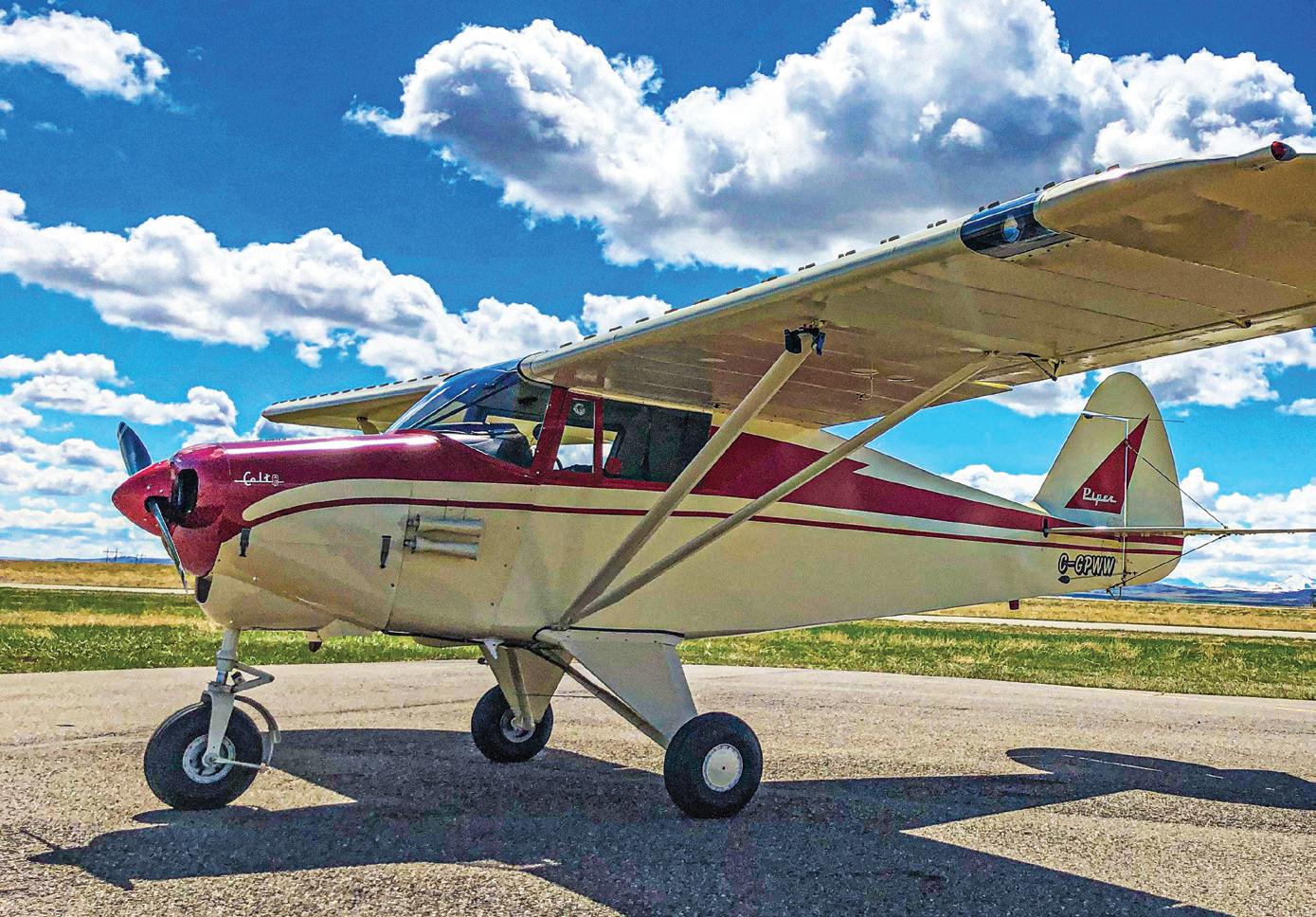
variety of mostly Piper aircraft including J3 Cubs, Super Cubs, the four-seat Tri-Pacers and the smaller two-seat Colts. The twin engine aircraft of the day was the venerable Piper Apache.
The Tri-Pacer was Piper’s equivalent of the Cessna 172, and the Colt was the equivalent of the Cessna 150. The solo rental cost for a Colt was $8 an hour and $12 an hour for dual instruction. While this seems a ludicrously low rental rate in 2026, it must be remembered that a wage of $1 an hour was reasonable in the 1960s and therefore an hour’s rental was a day’s wages for a solo flight and a day and half’s wages for an hour of dual instruction.
In those days there was a program that was a holdover from the Second World War and was part of the Cold War mentality of the 1960s. Pilots were a valuable commodity in the event of
hostilities and therefore there was a federal $200 subsidy to the pilot and another $200 awarded to the school for pilots who passed the approved flying training course. This was a huge financial help to the budding pilots of the day. I know it sure helped me as I worked at various low-wage jobs to pay for my flying lessons.
Nearly all of the flying training was done without the benefit of using a radio. The aircraft had a VHF radio, but it was referred to as a “coffee grinder” as it had a limited number of transmitting frequencies. The receiver had to be tuned by using a crank and a tone would emit when the transmitter and the receiver were paired together. This was referred to as “whistle tuning.”
Going to an airport with a tower was a “big deal” and intimidating to the novice during the first few tries. I remember my first solo flight into the Ottawa control zone and being told that, when I got back to Carp, have my instructor telephone the tower. Oh, the ignominy of it all! Transponders were almost unheard of in general aviation aircraft as were emergency locater transmitters (ELTs). Night flying was with pretty basic aids. A row of lanterns or “fire pots” would be lit and placed down one side of the active runway with and an L-shaped line of lights at each end of the runway. It sure made for an interesting initiation to “black hole” touchdowns.
My first instrument training flight was memorable in that the company used a Second World War piece of kit that involved placing a dark yellow tinted plastic covering over the windscreen and side windows. The pilot being trained wore a set of dark blue goggles that looked like a ski mask. The instructor could see out through the tinted windows but the student wearing the blue goggles, combined with the yellow shades, could see absolutely nothing outside the cockpit and was truly on instruments. The first takeoff was completely blind and relied solely on the setting of the directional gyro to the runway heading and the aircraft
instruments. It was an effective system, but it was an extremely clumsy setup and it was most uncomfortable for the student pilot. It was very primitive compared to today’s standards.
After 41years of flying in a number of different roles, I retired from professional flying. However, I didn’t completely retire as I kept my testing authority and, for several years, I was also contracted by the British Columbia provincial government to complete audits on flying training schools for compliance with the Private Career Training Institutions Agency (PICTIA). In this capacity I visited many of the flight schools in B.C.
Although the schools, in many cases were utilizing aircraft similar to the 1960 vintage technology, the instrumentation, navigation aids and training techniques were substantially different from the learning tools and techniques I had experienced 40 years earlier. While the basic flying training techniques (e.g., stick and rudder skills) are essentially the same, the navigation requirements, the volume of traffic and the complexity of the airspace, in metropolitan areas, requires substantially more intensive training programs for new pilots.
The current cost of training versus the cost of training during my early years is astounding. However, taking the cost of living in the 21st century versus what was required in the 1960s, it all seems to level out. I remember my first flying jobs paying $300 to $350 per month under some pretty arduous conditions that would not be accepted today. Obtaining a pilot licence and making a career in aviation in these days of chronic pilot shortages is a worthwhile venture that will pay off to the individual, not only in financial stability in the long run, but also in the satisfaction of being paid in a profession for those who have the passion for flight. My only regret is that I can’t start over and do it all again.
To all the new and budding pilots entering the profession, I hope you enjoyed my musing and I extend to you the old bush pilot’s blessing, May you have tight floats and tailwinds.
AEROBATICS WITH LUKE
Exactly 10 years ago is when this story begins. By then, I had already spent more than a decade as an aerobatic pilot. I was a Class 1 aerobatic instructor in Canada, teaching everything from basic to advanced manoeuvres, and I had logged what I believed was solid experience in a range of aircraft — most notably the Pitts S-2B.
But there was one thing I hadn’t done yet that was weighing on my mind; I hadn’t competed. Like many pilots in that position, I had reasons. Competitions were too far away. Travel was inconvenient. The timing never quite worked. All of those sounded reasonable — but they weren’t the real reason. The truth was simpler. I was afraid of finding out where I actually stood.
I had built a comfortable bubble in Manitoba. I flew often, instructed regularly and felt competent within that environment. But competition strips that comfort away. It forces you to line up — quite literally — and be measured. And there’s always that quiet question: What if I’m not any good? Crossing that line turned out to be one of the best decisions I’ve ever made in aviation.
This is a reflection on the 10 years between my first contest in Seward, Nebraska, in June 2016, and my return to that same contest for my 45th competition in May 2026.
I still remember arriving in Seward for the first time. I felt like I didn’t belong. Even on the practice day, just watching others fly, I felt a mix of intimidation and curiosity. These were pilots operating at a level I hadn’t yet experienced in a judged environment.
That evening, before my first flight, the nerves set in. I was at the hotel, running everything through my head, when a pilot I had been watching all day approached me. It was Aaron McCartan,
flying Advanced at the time. I had already been quietly studying his flying, thinking, I wish I could do that. He struck up a conversation and offered a few simple words of encouragement. He talked through what to expect, what to focus on — and just as importantly, what not to overthink. It wasn’t a long conversation, but it changed everything. The pressure eased. For the first time, I felt like maybe I did belong. The next pivotal moment came that same weekend.
I had noticed an older gentleman on the radio, coaching pilots from the ground. His delivery was sharp, efficient and unmistakably experienced. His name was Tom Adams and, from a distance, he carried a presence that felt a little intimidating. I asked around if he might be willing to coach me. The response? “Of course he will. Just go ask him.” So I did. His response was immediate: “Absolutely. What time is your slot?”
What followed was a short but incredibly beneficial coaching session. His feedback was concise and precise — small adjustments in positioning, timing and presentation that made an immediate difference. By the end of the weekend, I had won my first contest in the Sportsman category. But the result wasn’t the most important part. What mattered was the shift that happened internally.
Looking back, what those early mentors gave me went far beyond technique. Aaron and Tom didn’t just teach me how to fly figures that would score well; they taught me how to think. How to manage nerves. How to slow things down. How to visualize a sequence, walk it on the ground and fly it in my mind before ever touching the controls. Those lessons became foundational — not just in my own flying, but in how I train my students today. That weekend in 2016 set the trajectory for everything that followed.
Ten years later, I taxied in at Seward and made a point of parking in the exact same spot. Back then, I had sat in the cockpit wondering if I belonged. This time, the feeling was completely different. I was excited. Grateful. Surrounded by familiar faces and new ones. And in-
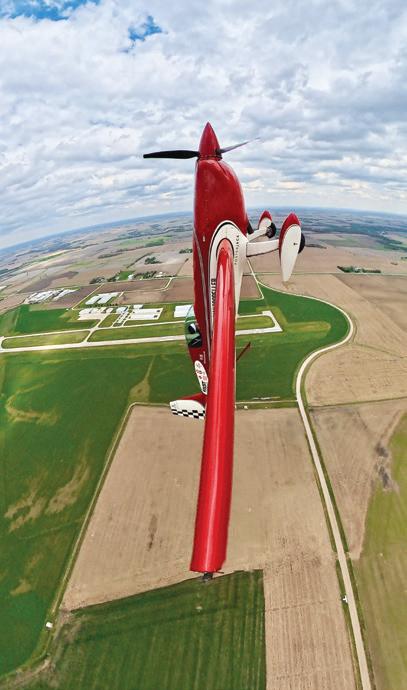
There is a purity to aerobatics that’s difficult to explain unless you’ve experienced it. It’s the intersection of precision, physics, timing, and control — executed within a narrow window where both aircraft and pilot are operating at their limit.
stead of preparing for a first Sportsman flight, I was there to compete in Unlimited. It’s easy to focus on results over a 10-year span, but what stood out in that moment wasn’t the progression through categories or the number of contests flown. It was the growth.
The biggest difference between 2016 and 2026 is mental. Ten years ago, I was consumed by nerves. Everything felt urgent, high-stakes and uncertain. Now, the nerves are still there — but they’re controlled. Managed through preparation, experience and a clear understanding of what actually matters.
Aerobatic competition is, at its core, an individual pursuit. You can’t influence what another pilot does in the box. The only meaningful comparison is with your own previous performance. So, the focus becomes simple. Fly better than you did yesterday. Know your
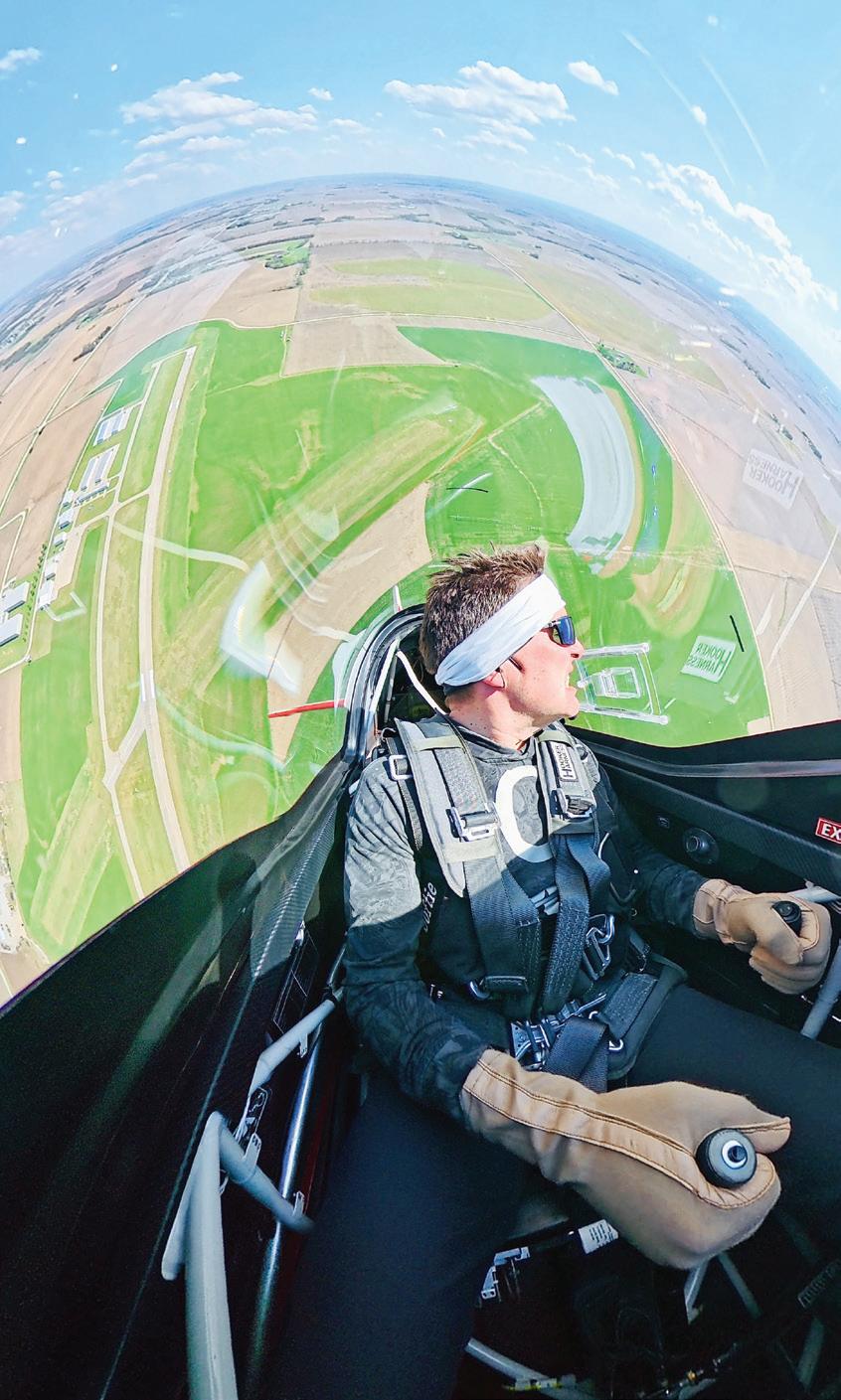
Left: The author’s Extra 330SC reaches skyward during competition at Seward, Nebraska, 10 years after his first appearance at this venue.
sequence completely. Understand the wind. Place every figure with intention. Give yourself the best possible platform to perform. That mindset carried me through the contest, where I was fortunate to finish first overall.
But winning isn’t why I compete. What draws me back, year after year, is harder to define. There is a purity to aerobatics that’s difficult to explain unless you’ve experienced it. It’s the intersection of precision, physics, timing, and control — executed within a narrow window where both aircraft and pilot are operating at their limit. To perform at your best despite stress, weather, turbulence and pressure, internal and external, that’s the real objective. That’s the art.
The Seward contest marked the beginning of another season, one that will include the Canadian National Championships at Rocky Mountain House, Alberta, the World Aerobatic Championships in Batavia, New York, and the U.S. Nationals in Salina, Kansas. There’s a long road ahead, and plenty of work to do. In the coming days, our national team coach, Pierre Varloteau, will arrive for the first training camp of the season. It’s an opportunity to be pushed, technically and mentally, beyond current limits. That process never really ends. And that’s part of the appeal.
If there’s one thing I’ve learned over the past 10 years, it’s that growth in this sport doesn’t come from staying comfortable. It comes from stepping into uncertainty. From asking for help. From being willing to be coached, corrected and occasionally (frequently) humbled. Those lessons were given to me in 2016 by people who took the time to invest in a new competitor who simply asked.
Today, after nearly 50 competitions and more than 30 podium finishes, those same lessons are the ones I pass on to my students. And in that sense, the real legacy of competition aerobatics isn’t found in scores or trophies. It’s found in what gets carried forward.
EVER-ADVANCING
In the 35 years since I first entered ATC, I’ve witnessed a lot of change. Back when I first joined, there were fewer radar sites to provide the type of surveillance coverage that helps controllers use airspace more effectively and keep airplanes moving more efficiently. The displays controllers use have changed a lot in their own right.
As a new controller in the tower at Halifax International Airport, I had the “pleasure” of using an older, analog model of radar called an ASR-5. It was then I learned of a new kind of display plotting.
The ASR-5 would draw its display from the centre outward. The centre represented the radar site and, as the antenna swept around the sky, the “main bang” would sweep around the screen, plotting whatever it saw. A primary radar target (reflected radiation) would be drawn as a “blip” whose size depended on how strong a “return” was.
An aircraft with a transponder showed as a slash on the screen, plotted perpendicular to the direction the antenna was facing when it received the transponder’s reply. A controller would select a particular code or a block of codes on a series of thumbwheels to distinguish between targets of concern (those he or she was responsible for) and others. When selected, they would show up as a “double slash.”
There were no data tags showing altitude, groundspeed, the identification of the aircraft — nothing. It was like a boring TV show. You watched it. There was no interaction with any flight data, no real tools other than range rings and a crude background map to refer to. You had to remember which each aircraft was by a hand-off that you’d receive from another controller, or take other

steps to positively identify which target represented which aircraft.
I moved up in terms of technology when I relocated to Moncton Centre. There, newer (but still dated) vector displays were in use. They would define a sharp, straight line by start and end point. Monochrome green displays now had digital data, including the much-valued data tags for each target, helping controllers see which each target represented, including its altitude and groundspeed.
These displays needed data to present to controllers, so flight data processors were working in the background to feed the displays. They were still pretty rudimentary by today’s standards, though. They also had the early versions of display tools that controllers could use to measure distance between aircraft and geographic points, other aircraft, etc.
The current displays are much more advanced. They’re raster-type, customsized computer monitors drawing the displayed information with the same pixels we see everywhere. The colour displays also are much more capable in terms of display tools and safety tools. Restricted airspaces are not only highlighted, but warning systems are in place should an aircraft file a flight plan through one or wander off course toward one.
Flight data that was once handled by voice over phone lines is now much more automated. This has had effects on the nature of the work, but also on the number of controllers. In my workgroup, for example, we needed upwards of 50 people 30 years ago. With the improvements in equipment, the same workgroup is half that size, and we can move aircraft more efficiently than ever before, largely due to the
automation of simple tasks.
The country’s Air Navigation Service provider continues to invest in more and newer technologies to make Canada’s skies safer and more efficient. Thirty years ago, I would not have believed you if you told me how good the surveillance coverage in Canada’s airspace would be.
Between the addition of radar sources, MLat (multilateration) sites, and ADS-B (both ground-based and space-based), we have the ability to see most of the aircraft cruising our skies, which greatly improves safety and controllers’ abilities to efficiently move aircraft compared to the “dark days” of fully-procedural — and more complicated, less efficient — separation. So where do we go from here? It’s fun to muse about three-dimensional displays where controllers can “grab”
“There’s an old nautical expression that says, ‘Anyone can man the helm when the seas are calm.’ ”
targets floating in front of them. Some say Artificial Intelligence (AI) will take over ATC before too long. All I can say about that for now is the current publicfacing versions of AI are nowhere near capable.
There’s an old nautical expression that says, ‘Anyone can man the helm when the seas are calm.’ But just like flying a plane is easy cruising in smooth skies when everything is working properly, air traffic control is pretty simple when aircraft are already separated, the weather is fine and
everyone is happily moving along their intended paths.
When unusual circumstances occur, an aircraft experiences distress of some kind, rapidly changing airport conditions, and the occasional thunderstorm wreaks havoc with traffic patterns in the skies, the current state of AI just doesn’t inspire confidence. In my own opinion, I’d rather have a human controller overseeing the skies I’m flying, just like I’d rather have human pilots flying the plane I’m in.
Skies that are 100 percent controlled by AI scares me, but there is likely room for tools to assist controllers that are based on some form of AI.
In any case, the future is coming. The changes I’ve witnessed so far have all been for the better, so who knows what can happen as time and technology progress? We’ll have to wait and see.
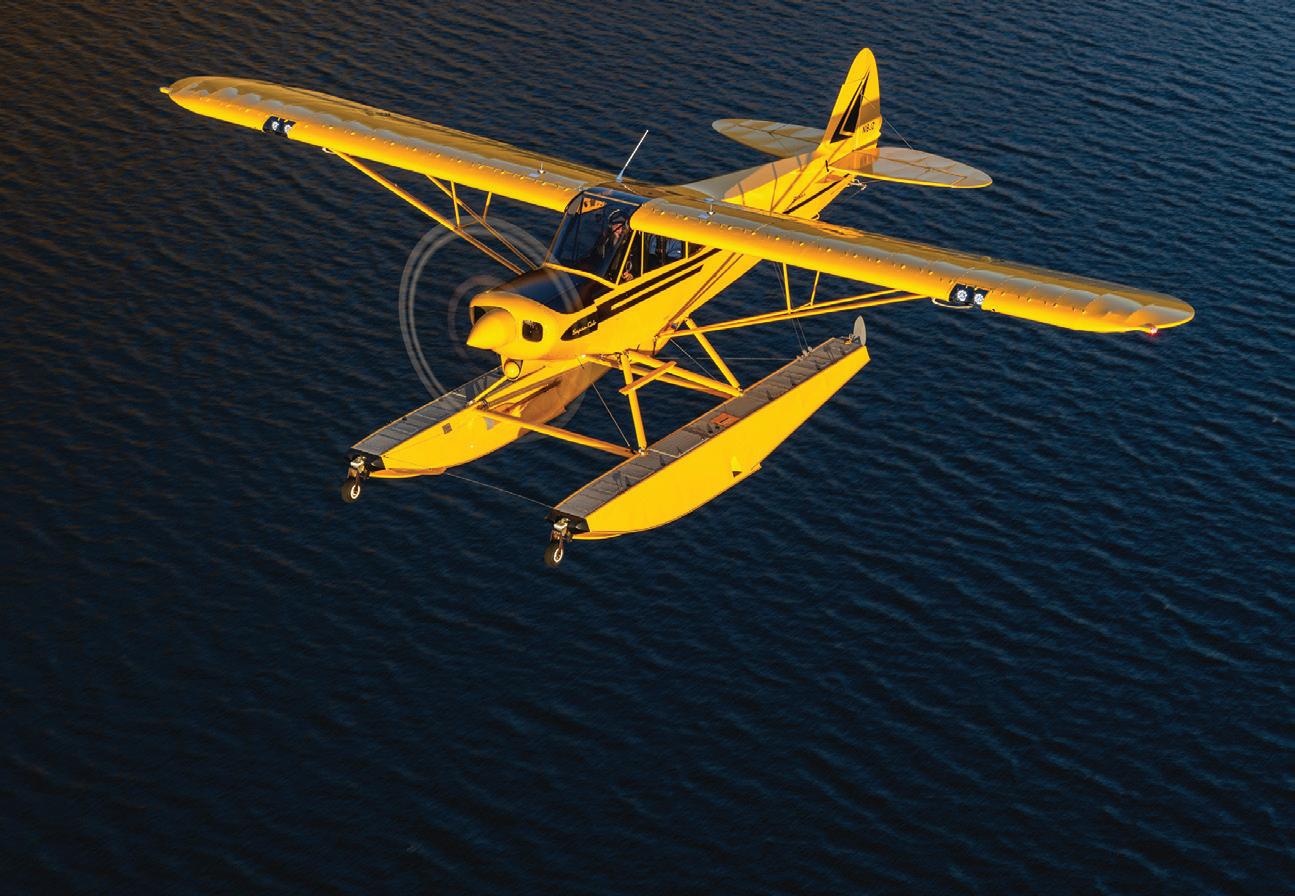
SWINGING WRENCHES WITH LIANA BUESSECKER
It’s not an old wife’s tale: sometimes the best troubleshooting is a simple taste test.
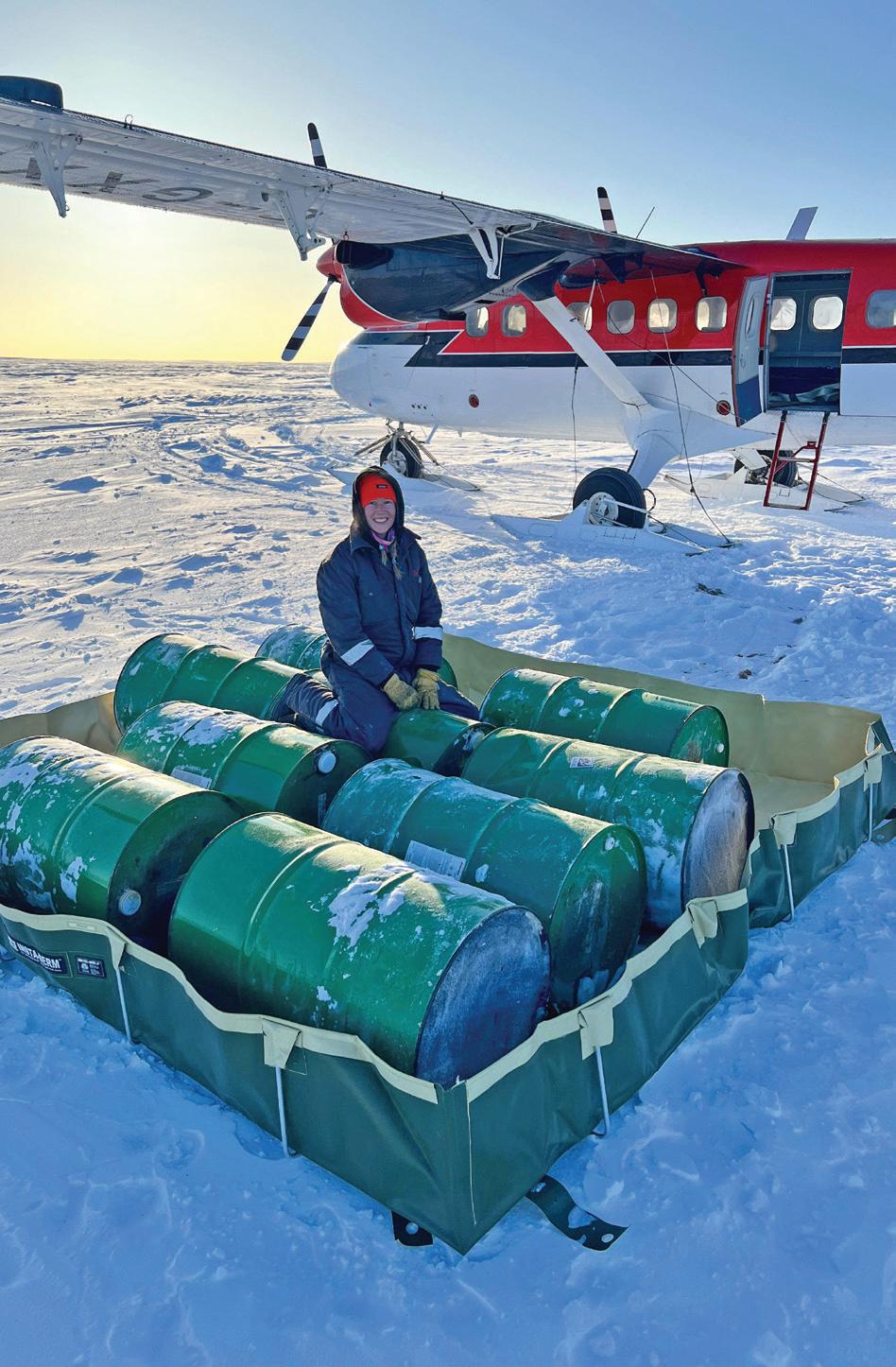
Recently, while flying across the Canadian Arctic, we landed at a remote airport to find a small amount of fluid weeping from the tail of the aircraft. Not a location where any liquid would normally be kept and certainly not somewhere it should be leaking. My first officer had just finished telling me a story about a flight he’d been on under very similar circumstances, when someone’s bag of groceries spilled and the stray liquid they found turned out to be soy sauce. (It was quite the chase — what on earth was this mystery liquid that didn’t belong anywhere on a plane and where could it possibly be coming from?)
Since whatever was leaking from my plane was not quite the colour of oil, and didn’t really smell like fuel, and the consistency was far too thick, I considered perhaps this situation was exactly like his story. So, I did what (I tell myself) every good mechanic would’ve done: a taste test. It certainly wasn’t soy sauce. It was a sludge of water, oil, and fuel, and it tasted accordingly.
With that mystery solved I then determined the source of the leak — our Honda pump, mixed with melted snow — and off we went. We landed in Cambridge Bay where further problems awaited. It turns out airplanes dislike -40◦ as much as I do.
When planes reposition to a maintenance base, which we did in Resolute Bay a week later, it often lands with a list of defects requiring rectification. Sometimes these are major issues that need immediate attention before the plane can fly again, and sometimes they’re comfort items — things that the pilots would appreciate being better but do not affect the serviceability of the plane.
Although all planes are built in a
factory following the same manuals and specs, they often end up what we call snowflakes — the same but somehow different. A panel screw hole is an eighth inch to the left, the bend on a bracket is at a unique angle, a run of wiring is not identical. Sometimes they just handle differently for no apparent reason at all.
These factors combined result in pilot concerns of engines not being rigged correctly, brake pedals that feel spongy, or a seat that doesn’t adjust quite right. When maintenance is chasing a snag that makes no sense and doesn’t have an obvious fix because we’ve already replaced all the logical components to no avail, an actual next step we will use is to “replace the pilot.”
It’s not unheard of for pilots to get used to flying a specific aircraft and therefore are accustomed to the way it handles and any specific characteristics it has. Then they get in a new plane that is slightly different: the volume on the radio is preset to a lower level, the chair cushion isn’t as soft. These seemingly minor inconveniences cause very real issues that can’t be rectified by a component swap.
Operating in the Canadian Arctic is difficult on man and machine alike,
making both more particular on what defines ideal flying conditions. If the plane breaks at a remote location, an entire team must then be sent for the rescue. While pilots are concerned about weather and legal limitations, mechanics must always consider what sort of condition the plane will be in several flights from now.
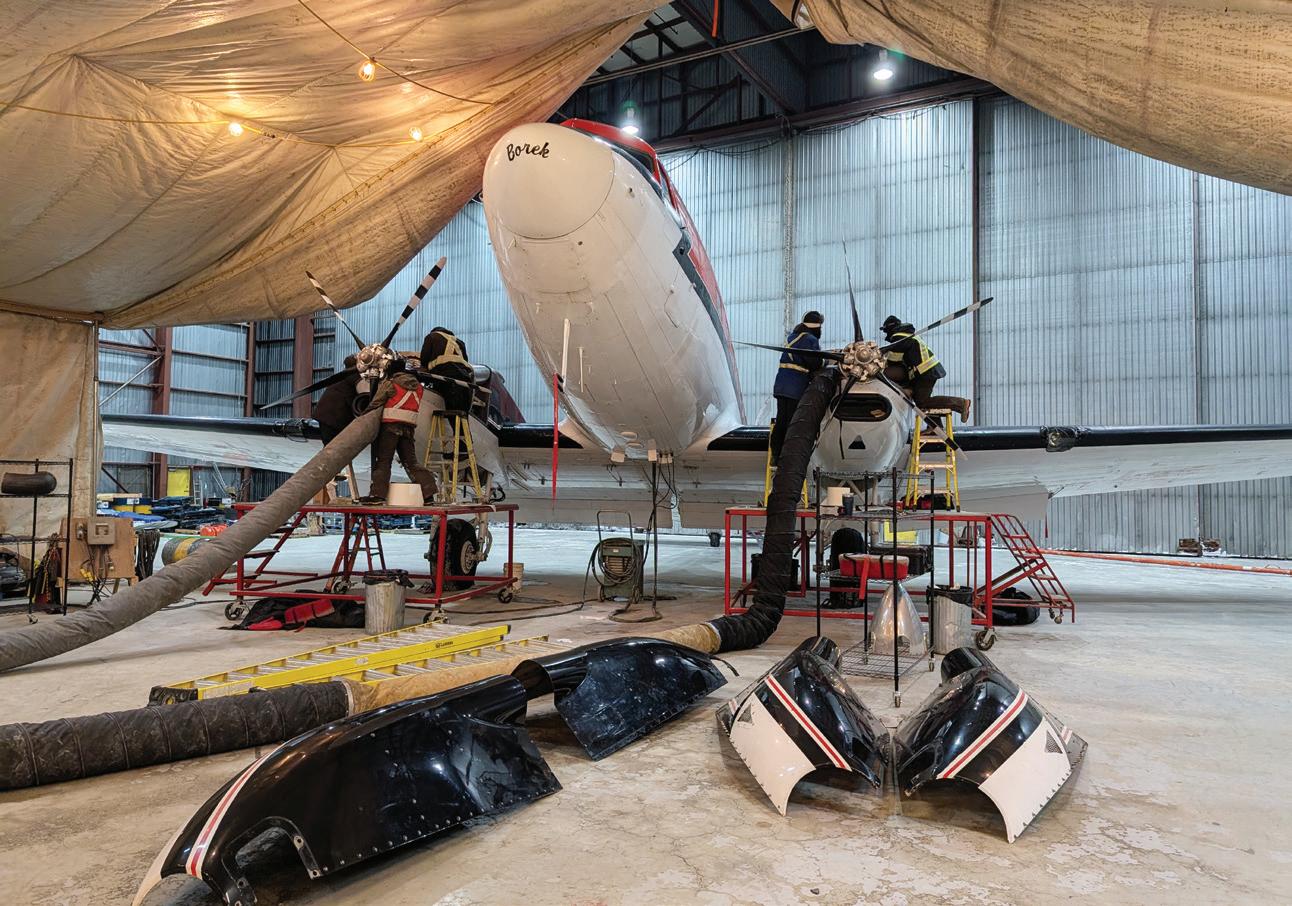
Landing off strip is hard on the aircraft skis, and cold weather starts can test your engine’s capabilities. Because of all this, thorough daily inspections are critical and properly putting the aircraft to bed at night includes plugging in heaters and installing engine tents. (Remember, if you’re cold, they’re probably cold too.)
It’s a different world living and operating at such extreme temperatures, especially when you don’t have a warm hangar to pull the plane into. Sometimes we have buildings that simply act as a wind break, and other times we use tarps and Herman Nelson heaters to create makeshift sanctuaries where we can stand taking our gloves off so we don’t drop that quarter-inch bolt.
At the end of contract, on the flight home, it seems like the time you can finally exhale and relax. But I can tell you
from experience it’s an awful feeling to hear your pilot say, while lining up on the runway, “Oops, did I just break that?” followed by the utmost nervous glance backwards at me. (Thankfully the switch in question was not something required for flight.)
Travelling with the plane you’re maintaining has its benefits, but one of the biggest downfalls I’ve experienced so far is how pilots seem to expect I can fix a wide range of problems while we’re not on the ground. Elevator trim is walking? Landing gear light flickers if you jiggle the gear handle? A gauge needle flutters? I absolutely can’t do anything about that while in the cockpit and flying at 12,000 feet. It all just gets added to the list for when the plane arrives at the hangar.
While I may be freezing, and bitter about just how much maintenance is scheduled for a hangar that doesn’t have consistent heat and running out of tools because they keep breaking in the cold, it’s an absolutely incredible experience working in the North. No polar bears were seen, and my fingers did temporarily get stuck to a metal door handle, but, “Wow, is this world gorgeous!” And my job is pretty dang cool.
Two years have passed since hanging up my spurs as a captain and check pilot at Air Canada. Now, officially retired, I’ve turned my focus to instructing on Boeing’s Dreamliner. Twice a year Air Canada lets me out of the simulator building for good behaviour, on the condition that I observe crews operating the 787 on a typical pairing.
Asia has always been a favourite destination of mine, so for one of my annual “Fam Flights” I chose a Vancouver-to-Shanghai pairing. What might at first appear as merely a 5227-nm jolly for great Chinese food actually has a more serious purpose. By both refreshing an instructor’s route knowledge and observing a line crew working in their natural environment, those of us teaching in the simulator are able to deliver more realistic training.
My job as the ride-along simulator instructor was to sit in the corner flight deck seat, quietly observe and, most importantly, stay out of the way.
Our flight plan took us northwest of YVR into the Anchorage Flight Information Region, then out over the North Pacific, remaining south of the U.S.’s most westerly state. Finally, a transit through Japanese airspace and into our destination, PVG.
Shanghai — on the same calendar day, around 14:00 hrs local time. Science tells us the body clock does better when flying west which, after nearly 30 years at the airline, I can absolutely confirm.
When I flew Hercules in the RCAF, our primary long-range communication was via HF (high frequency radio). It was the first officer’s job in those days to monitor the dreaded HF in the event that Shanwick, Gander, San Francisco, or whoever else might need to contact us be able to. Imagine listening to finger nails being dragged over a chalk board for up to 12 hours at a stretch, and you get the idea.
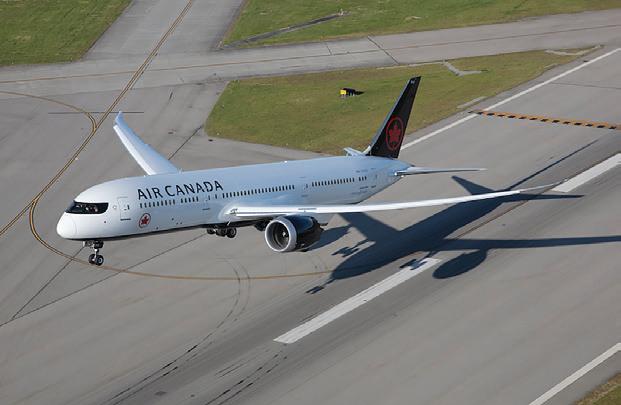
Our captain for the three-day mission was Maelene Fodor, a Trinity Western University graduate with over 20,000 hours of flight time. She’s instructed on tailwheels and flown the West Coast in Shorts 360s (the airplane in a box), as well as an Embraer EMB 110, aka the Bandeirante.
Her first officer on AC025 was Jarrett Kratzer, a 13,000-hour former Challenger and Astra jet corporate pilot based in Okanagan wine country. Kratzer similarly comes with a ton of experience on other Boeings, plus a whole lot of time on floats and in the bush.
The Guy-in-the Back was Cruise Relief Pilot Luc Sinal, a second-generation Air Canada pilot with over 4,000 hours in his logbook. Before landing at Air Canada, Sinal was “cleared from Mount Royal University to Jazz, via direct.”
That meant flying in mostly ETOPS airspace, meaning the rules for Extended Twin Engine Operations applied. In practical terms this also means remaining within two hours flight time of a diversionary airport. Eventually crossing three jet streams on our route of flight, we entered ETOPS airspace just west of Comox on Vancouver Island, with a planned exit in the vicinity of the Hokkaido Prefecture, Japan. The emergency diversion airports for the route were Comox, Anchorage, and Kushiro, a field located due east of Sapporo.
This little outing required that over 65,000 kilograms of jet fuel be boarded for the estimated 9:54 flight. Chasing the sun the entire way, we departed Vancouver late morning and arrived in
Today, modern airliners all use SATCOM, digital satellite communication, with HF being relegated to back-up duties. Should SATCOM fail, you simply pick up the on-board satellite telephone and literally dial ATC. To add to today’s ease of operations, virtually all oceanic airliners now use CPDLC, a sort of text message system used to request and receive clearances, meaning that voice coms are now mainly restricted to operations in domestic airspace.
Even though our flight plan was loaded into the 787’s Flight Management Computer automatically, the crew still carried the 54-page paper copy, in addition to backup digital versions loaded on their iPads. Despite a practically zero chance of programming errors, the uploaded flight plan was re-checked twice on the ground, and then again each time we approached a waypoint while underway. Flying over oceanic GPS waypoints, the airplane itself silently transmitted automatic position reports to ATC and Air Canada Flight Dispatch in Toronto. Even with all this
happening in the background, the crew still dutifully checked upcoming tracks and distances, as well as confirming fuel and weather at destination and ETOPS diversion airports.
It was also my first time seeing an amazing new app, SkyPath, in action. Tied into the airplane’s satellite communication system, whenever the crew’s iPads sensed unexpected motion through internal accelerometer, in turn measuring it as turbulence, the occurrence was digitally transmitted to a central reporting system. The result was live ride reports to all other flights using this feature.
The Boeing 787 still remains the most amazing civilian aircraft I’ve had the privilege of flying. And now, having the opportunity to simply observe an experienced crew conduct the flight, it gave me new appreciation for our profession. Flying the ocean can be an
abstract exercise where navigation is concerned, and the question of “where do we go if something goes wrong” for all our crews is a question that always came with an answer.
Clearances received and then loaded into the navigation computers digitally have greatly reduced the chances of gross navigation errors (GNEs), but as soon as the actual talking on the radio resumed with ATC, the expected language challenges emerged. To the credit of Japanese and Chinese controllers, I admit to having little chance of acquiring fluency in their respective languages to the same degree that they’ve learned English, still the international language of aviation. All this means listening hard, then applying great tact in your tone when the call “Say again” is required, often multiple times.
During the arrival phase I watched
the crew seamlessly transition from a more relaxed enroute flight deck to one recognizing the serious nature of what was about to happen. Their training had made them realize that whenever you change an airplane’s track or altitude, you automatically introduce a potential threat, however small, to the safety of flight. Accordingly, all verbal exchanges not related to the arrival and approach procedures suddenly ceased. It was strictly business on descent, arrival and during final approach and landing, even extending to our taxiing to the gate.
This was a relatively short trip for the 787. After nearly 10 hours cruising at Mach 0.86, Captain Fodor greased one on at Shanghai’s Pudong International Airport, as did her first officer on the return leg. I once again got to witness what I’ve known for years: that great crews make it look easy. Now, where to get that Chinese food.

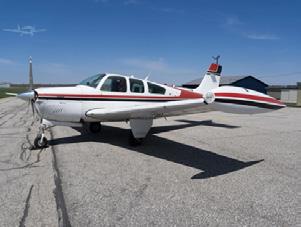
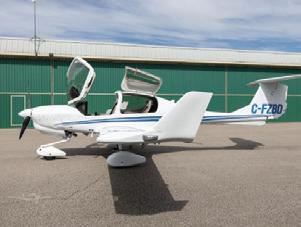
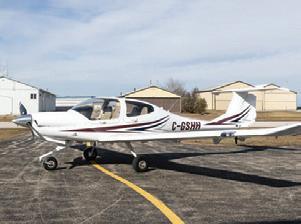
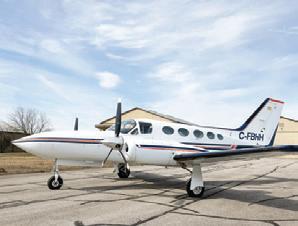
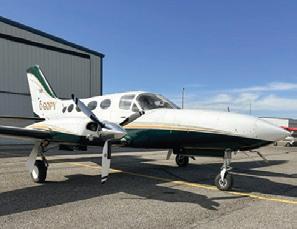
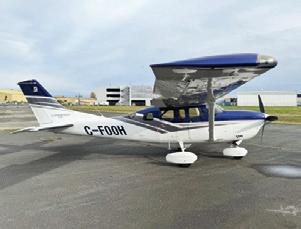
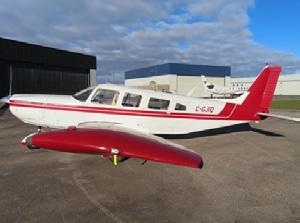
For over 80 years, the content of From the Ground Up as a literary benchmark that defines the multitude of theories associated to aeronautics. It describes the practices necessary to achieve the highest levels of distinction as safe, competent and skilled life-long aviators.
Through its evolving editions, many generations of readers have used this award-winning title as the foundation of their introduction to the concepts that require thorough understanding in advance of the sought-after hours of flying enjoyment that are the ultimate goal of all who seek to earn their wings and expand their knowledge of flight theory and practice.
The content of From the Ground Up may, at times, seem complex, but the pathway to learning the fundamentals of aeronautics is one that reaps much in the way of personal reward for all who pursue the goal of thoroughly understanding the subject. Indeed, it was by design that its original author, “Sandy” A. F. MacDonald — a man recognized as a “father” of what still stands today as the standard curriculum for ground school instruction — devised this aeronautical textbook to be comprehensive and current while conveying its material in such a way as to enhance the reader’s understanding of every written word.
Not one to permit his vast experience to allow for foregone conclusions, “Sandy” MacDonald’s meticulous care in the creation of From the Ground Up has become the hallmark for its widespread use and respect as the reference textbook of choice in hundreds of flying schools throughout Canada and around the world.
Its latest edition is the 30th Edition. A French-language version is also available under the title Entre Ciel et Terre Totalling over 400 pages of in-depth content formatted in a sequential, logical and easy-to-read fashion, the publication boasts over 360 graphics, charts, diagrams, illustrations and photos. An additional full-colour navigation chart and a sample weather chart are included.
All chapters are current in the latest technological and legislative aeronautical matters and cover such topics as The Airplane, Theory of Flight, Aero Engines, Aeronautical Rules & Procedures, Aviation Weather, Navigation, Radio & Radio Navigation, Airmanship, Human Factors, and Air Safety. From the Ground Up also includes an extensive index, glossary and a 200-question practice examination.
Since the 1940’s, virtually every student — civilian, military, commercial, recreational — who has ever learned to fly in Canada has used From the Ground Up as the primary ground school textbook from which they’ve learned everything one can learn about aeronautics, and about flying. Referred to as “the Bible” of ground school instruction, and updated with every frequent re-print, From the Ground Up has long been considered an essential resource for all with any interest whatsoever in the theory of flight, and in the practice of aviating.
Also available from Aviation Publishers
• From the Ground Up Workbook
• Canadian Private Pilot Answer Guide
• Canadian Commercial Pilot Answer Guide
• Canadian Instrument Pilot Answer Guide


• Instrument Procedures Manual
• Flying Beyond: for Commercial Pilots
• Unmanned: for RPAS Studies
• Flight Test Notes: for Flight Test Prep
For more information about all of our titles, visit us on the web or contact your local pilot supply
The American Psychological Association (APA) defines resilience as “the process and outcome of successfully adapting to difficult or challenging experiences, especially through mental, emotional, and behavioural flexibility and adjustment to external and internal demands.” There are other ways to define it, but this particular APA version seems pertinent to the role of aviators. How so?
Investigations into aircraft accidents focus entirely on causal factors. In other words, investigators seek to determine what went wrong. Certainly, this makes sense: if it is known what went awry, the industry can learn from it and enact measures to avoid having it happen again. This approach is critical to enhancing the safety of the overall aviation system: learning from mistakes – and the data recurrently shows that pilots are responsible for 70 to 80 percent of accidents – keeps flight safety trending upwards.
But there is also an alternative way of looking at aviation safety that has been gathering proponents over the last decade and more. Its focus is not about looking for what goes wrong; its approach to safety is to focus on what goes right. The vast majority of flights go well. But in actual fact, research suggests that 20 percent of flights experience aircraft malfunctions requiring crew intervention. How these malfunctions are dealt with is important: the flights end well because crews apply efficient and seamless solutions to deal with occasionally unplanned or unanticipated events. Effective and repetitive training surely is the reason for these inconsequential outcomes.
In a 2019 NASA research paper entitled “Human Performance Contributions to Safety in Commercial Aviation,” the authors lean heavily on
Erik Hollnagel’s proposal that “things go right because people continuously adjust their work to match their operating conditions.” Borrowing on Hollnagel’s concept of safety thinking and safety management, the NASA paper states that “a system is resilient if it can sustain required operations under expected and unexpected conditions by adjusting its functioning prior to, during, or following changes, disturbances and opportunities.” This is where resiliency fits in. And it’s not too big a leap to link these quoted assertions to the APA’s definition of resilience as stated above. The positive behaviours of pilots contribute to the aviation system’s resiliency.
Through the understanding of “how, what, where, when and why” pilots do what they do, the NASA paper conjectures that aviation can be designed to be extremely safe. How so, then? The paper identifies four performance strategies that resilient pilots have. They anticipate, they monitor, they respond and they learn.
Resilient pilots know when to anticipate procedural limitations. They can predict when the actual context of a flight will inhibit the normal use of procedures. They anticipate when a formal procedure won’t work. They anticipate the intent of others, and they anticipate any need to buy time when comparing time needed and time available for action. They prepare alternate plans and they identify, in advance, the conditions that will require the triggering of those alternate plans.
Resilient pilots monitor their environment. They look for cues that signal a change from normal operations. They look for hints that suggest a need to adjust from their current plan. And they monitor their own internal state: they constantly self-assess, keep track of their physiological and emotional states, their workload and their own limitations and capabilities. Their vigilance means that they can identify any variables that signal not only that something has changed from what was expected, but that their continuing “as
is” will not work as planned. They monitor for non-standard prompts, for deviations from the normal pace and “feel” of operations. Of course, they always monitor for other aircraft.
Resilient pilots know how to respond. They adjust current plans to accommodate other aircraft and pilots. They work with others to accommodate competing goals and reach mutually acceptable solutions. They respond to situations by altering plans that encroach upon safety boundaries. They will not engage in alternative actions until there is information to ensure that there is no risk of making a situation worse. They manage resources and balance workloads by giving tasks to other available crew, or by using any available automation tools. They ask for assistance and information, and they ask for clarification if what they hear is unclear. They manage priorities: they change goals, alter task sequencing and tweak pace of operations if or when necessary. They balance competing objectives yet always follow procedures, maintain margins, and ensure the comfort of passengers.
Finally, resilient pilots learn. They leverage their experience by comparing current situations to experiences that they’ve had in the past, raising their predictability of how events will evolve. They apply what they’ve learned to recognize when the context of current situations may require that they modify what they’re currently doing. They can mentally simulate procedures having learned from doing them before. They use rules-of-thumb guidelines and know why to apply formal procedures. And they’ve learned that sharing information with others helps everybody learn and, thus, increases the safety of the entire operating system.
Learning from what good pilots do well, and why, makes worthy sense. Resiliency is part of the framework of their skills.
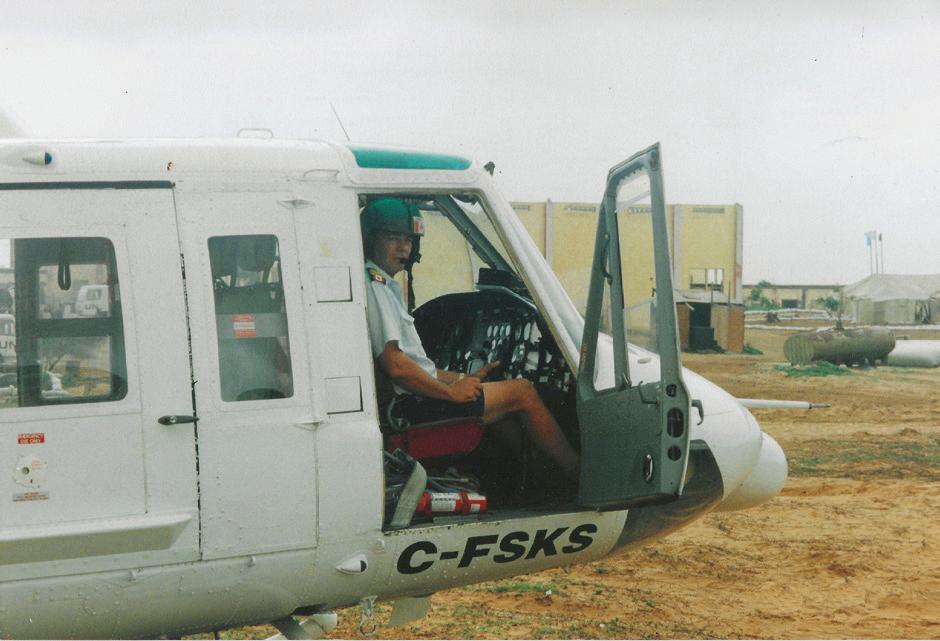
UNOSOM was not meeting its objectives of providing humanitarian relief to starving Somalis, nor being able to stop the warlords from attacking relief convoys, using the plunder to tempt insurgents to join their ranks. General Aidid was encouraged to gather the warlords and, with UNOSOM paying cash for their attendance, provide meals and accommodation to encourage peace talks. They were very well attended, but when asked to provide results or their daily cash subsidy would be discontinued, the Somalis walked out.
U.N. peacekeeping forces from various countries were gradually being withdrawn, especially from outlying bases which were subjected to constant stealing. It was a U.N. mandate for them to employ locals and give them access to their compound. On September 15, 1994, the American Liaison Office in Mogadishu was preparing to shut down.
On my second trip from the U.S. embassy, the Huey was again heavily loaded with confiscated arms, ammunition, grenades and redundant weaponry. A few miles out, over the Indian Ocean, it would be tossed into the sea. Landing back at the embassy, our dispatcher “Dragon Lady” informed me of a call for help from a small Pakistani convoy, reporting that they had been fired upon and needed an evac for the wounded. I made a quick stop at PakNorth, a field hospital occupying a former sports field north of the embassy. Two medics carrying medical supplies were waiting.
The ambush site wasn’t far, and I decided to approach cautiously with an overhead recon trying to determine if they were still under fire. Pakistani soldiers were crouching, no weapons in their hands, watching my arrival. Three stretchers were sheltered alongside a white armoured vehicle.
A camouflaged GMC pickup was to the side of the track, well ahead. This was going to be dirty as I surveyed the expanse of sand and building rubble. Picking a reference that wouldn’t be blown away by the downwash, I set up a descent. We were immediately enveloped in a blinding tornado of dust. Keeping my eyes glued to that concrete block below the chin bubble, I descended till I felt the skids touch down. Lowering the collective, my surroundings quickly materialized and, when the starboard cabin door slid open, the soldiers arrived with the first stretcher.
I kept the throttles at flight idle, spotting their progress and scanning the rubble off to my left, looking for signs of anyone approaching. The door finally slid shut with a thud and I pulled in torque. The 212 lifted and we were able to vertical out into the clear. I set course back to Pak-North. One of the stretchers was on the floor just behind me. On it, a small figure with a bloodied dressing. I was surprised to see that it was a very young Somali girl who now appeared to be gazing at me. I looked again; her eyes followed me. I smiled, hoping to give her some reassurance. When the sports field appeared ahead, I hollered to the medics and set up a descent. With skids on the ground, I turned again to smile at the young girl. Her eyes appeared glazed but were still looking at me. The medic bent to examine her, then he looked up at me shaking his head. He lifted the edge of her blanket to cover her face.
Back at the embassy I gathered my belongings, then bumped the 212 over to the Canadian Base. This was the home from which I had vacated several months ago. A huge Antonov 124 was loading up with Humvees and U.S. soldiers. The gunnery sergeant gave me thumbs up when he saw me watching. I raised my hand in farewell; I was no longer Mustang 5.
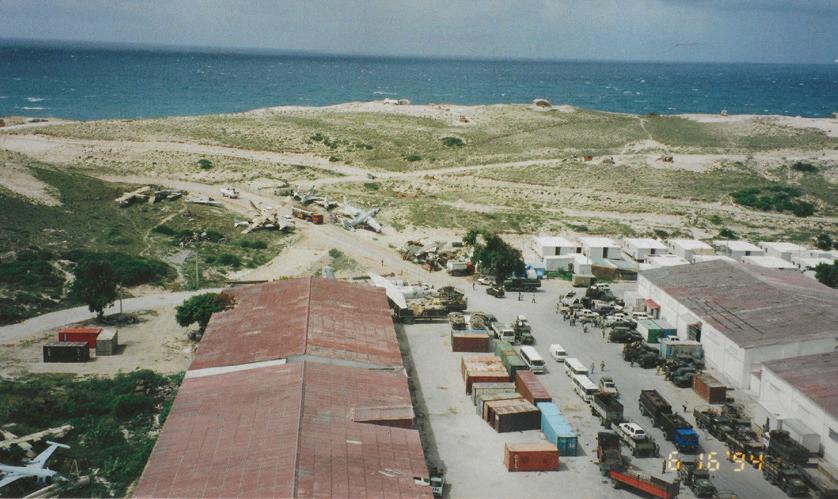
U.N. Bell 212 (Huey): U.N. 322.
“Indian Army closing their base north west of Mogadishu.” – UNOSOM notice
My next assignment on the duty board was a base change to Kismayo, still in Somalia. Fatima Mohammed, the translator who had helped us so much during our disastrous Red Cross trip, was on that base. As an indigenous Somali, she and her two sisters would no doubt be left onsite when the army pulled out. It was not their clan, and I remember her telling me about how their mother had died and subsequently been abandoned by their father, who had many wives. They had nowhere to go.
On the duty board I saw where Chris Swannell, another U.N. pilot, was scheduled to fly to that base the following morning. Sitting with him in the kitchen, it didn’t take long for him to join in and, upon landing at the Indian base, telling them that Fatima was required back in Mogadishu. Once landed back our base, I would meet them and, with their U.N.-issued blue identity cards, their presence on our base would not be questioned.
The Russian Antonov An-24 crew had a frequently scheduled run between Mogadishu to Nairobi; tomorrow was one of them. Getting the crew to let the women on board was another matter. I remembered that often they had an overnight stay at the Kismayo airport, which meant a very uncomfortable
drive for the crew. Primitive accommodations, too. As Kismayo’s soon-to-benew” lead pilot,” I would be in position to offer them, if and when required, safe helicopter transportation to our base, with good meals and comfortable accommodations. The Antonov pilots readily agreed.
The next day Swannell landed back at base and, as I approached, I was relieved to see that Fatima and her sisters were on board. Once he shut down, I guided them to the kitchen where I introduced them to the Antonov crew. I briefed Fatima on Kenya’s immigration policy: those with U.N. identify cards and arriving by a UNOSOM flight were informally granted access. The pilots mumbled and got to their feet. Fatima and her sisters got up, following them to the door. Soon the Antonov engines roared as they taxied to the runway. They were gone.
That afternoon, Kismayo appeared over the glareshield of U.N. 322. The pier on which our base was situated resembled a giant hook projecting out into the Indian Ocean. Providing our security was a detachment of Indian Army soldiers.
Many months later and at home in Spruce Grove, Alberta, I received an airmail envelope postmarked Kenya. “Dearest Father,” it began. It was from Fatima, thanking me with assurances that they were all safe and comfortable, living in Nairobi.
A REVIEW BY RENÉ R. GADACZ
BY DANIEL V. DEMPSEY
The Canadian airshow season typically runs from June to September, sometimes a month earlier or a month later, with most shows on summer weekends. By the time you are reading this, there will have been at least seven aerial demonstrations, flypasts, aerobatic performances and aviation display events across Canada, with 11 more to go on the 2026 calendar. Last year had a similar airshow cycle, while 2024 was exceptional with extra-early season shows featuring international teams timed with the RCAF Centennial, making it the most diverse airshow season in decades.
Enter A Tradition of Excellence. This book is likely the only existing single-volume treatment of Canada’s airshow heritage, spanning more than 100 years of aerial demonstration teams, individual pilots and their machines. Few works attempt to chart the full sweep of a nation’s airshow history.
Authored by Lieutenant-Colonel (Ret’d) Daniel Dempsey, a former Snowbird pilot and team lead (1989-1990), the book represents years of research, firsthand accounts and curation of photographic records. The book’s scope makes it stand apart from other works in Canadian aviation literature. At over 700 pages with more than 1,700 photographs (many published here for the first time), detailed aircraft profiles, extensive first-person narratives and archival material, this is an all-in-one large coffee-table tome and historical reference work (coming in at 8.2 pounds, or 3.7 kilograms).
The book’s obvious feature is its visual abundance: full-colour aircraft profiles, team portraits, hundreds of full-page breathtaking action shots, squadron crests, patches and paintings create a vivid visual history. Aircraft profiles by illustrator Peter Mossman and other artists are especially noteworthy. Positioned
in a central chapter (Aerial Artistry) are 42 high fidelity depictions of dozens of types flown by Canadian teams, ranging from the Siskin Mk IIIA, Supermarine Seafire Mk XV, Canadair CF-86 Sabres, Canadair CT-114 Tutors, to the Lockheed/Canadair CF-104 Starfighters and others.
Organized chronologically, each of the 12 chapters (though unnumbered) is dedicated to different eras and key teams in Canada’s airshow history. Early chapters cover pioneering displays like the Silver Dart flights (1909), the Barker Exhibition Team (1919) and the RCAF Siskins (1929-1934) — the latter being Canada’s first formal military aerobatic team, flying open-cockpit Armstrong Whitworth Siskin single-seat biplanes in formation, synchronized loops and rolls.
Post-Second World War formations feature the Blue Devils and Mustang Teams; there were no airshows during the war years. Subsequent chapters advance into jet age teams like the Silver Stars and Golden Hawks, and ultimately the modern era of the Snowbirds and even civilian demonstration teams. Here’s a short selection of some milestone airshow and aerobatic teams from over the decades:
• Seafire Mk XV Team, Canada’s first naval fighter of 803 Squadron, 18th Carrier Air Group, that formed Canada’s first post-Second World War demonstration team performing at the 1946 Toronto International Air Show.
• Blue Devils Air Defense Aerobatic Team, 1949-1951, featuring the F-51 Mustang IV and Harvard Mk II.
• Sea Fury Team, 1952-1953, flying the FB.11 that was deemed an improvement over the Seafire Mk.XV.
• Silver Stars, 1953-1955, one of the early jet fighters (featuring the Lockheed/ Canadair T-33 built under licence for the RCAF) to demonstrate speed and to showcase post-war jet-powered aviation.

• Golden Hawks, 1955-1964, who were the first team to earn Canada and the RCAF widespread international recognition. The most iconic of Canadian teams, they were formed to celebrate the 35th anniversary of the RCAF and the 50th anniversary of powered flight in Canada. Flying Canadair F-86 Sabres in distinctive gold paint, the aircraft’s design and powerplant enabled dramatic vertical loop manoeuvres previously impossible with piston aircraft.
• The Golden Centennaires, 1967, who performed to celebrate Canada’s 100th anniversary at Expo 67 and across North America. They flew Canadair CT-114 Tutor jet trainers in striking blue and gold colours. The Tutor is now the backbone of modern Canadian demonstration flying.
• The Snowbirds (1971 to present day) are known as Canada’s Aerial Ambassadors, officially the 431 Air Demonstration Squadron. The Canadair CT-114 Tutor is ideal for high-precision symmetrical manoeuvres and ultra-tight formation aerobatics. The Golden Centennaires proved the ship’s potential; the Snowbirds perfected it.
The Snowbirds have their own chapter in this book. At 153 pages, the chapter details information about how shows are designed, team building, different formations developed over the years and how the ground crews work (“the team within the team”).
• The Lockheed/Canadair CF104 Starfighter, McDonnell CF-101B Voodoo and the Northrop/Canadair CF-5 Freedom Fighter and McDonnell Douglas/Boeing CF-18 Hornet teams showcase solo and small-formation demonstrations. These front-line high-performance NATO interceptor/ strike aircraft are pure speed and power, emphasizing combat manoeuvres that include afterburner vertical climbs, sonic boom passes, high-G pulls, high speed separation and coordinated rejoin procedures and other aerial combat related moves.
The evolution of manoeuvre and display capabilities are clearly linked to airframe and powerplant developments. The shifts from wide-spacing formations (Siskins), power and speed-dominant manoeuvres (Golden Hawks) to ultra-tight geometric artistry and tactical realism (Snowbirds) are a function of evolving aviation technology. Signature manoeuvres include “The Loop,” “The Cuban Eight,” “The Bomb Burst,” “The Line Abreast Pass,” “The Opposing Solo Pass” and “The Vertical Climb and Pitch Back,” to name just a few.
Other teams were often regional or short-lived, such as the Gimli Smokers, 1959-1964, and the Goldilocks/Moose Jaw Harvard Aerobatic Team, 19621964, two of several regional teams that kept the spirit of aerial excellence alive across Canada. One chapter (The Motivators) showcases how demonstration flying extends beyond jets, by featuring helicopters (the Dragonflies, 1972-1984, 1992, among other teams), Search and Rescue demonstrations, gliders/sailplanes and parachutists (the Skyhawks, known for their precision and colourful skydiving routines).
Might this book be important on another level? Yes, absolutely. A deeper dive reveals a more serious side to airshows and demonstration flying. Canada’s aerobatic teams were never just spectacle. Teams became “extensions” of national military
policy, communicating visible skill, professionalism, technological modernity and projecting war-readiness to friends and foes alike. In Cold War Canada, for example, the Golden Hawks of the 1950s and the Golden Centennaires of 1967 were not just celebratory gestures. Where continental air defence and nuclear deterrence loomed large, public visibility mattered. The discipline behind the coloured smoke trails and impressive nine-ship formation aerobatics is combat-derived. For example, the Snowbirds’ early pilots were not just display specialists but were products of NATO air defence doctrine with backgrounds in front-line squadrons flying the Canadair F-86 Sabre and the CF-104 Starfighter in Europe. At the same time, A Tradition of Excellence is an inadvertent study of the challenge of incorporating and validating new fighter aircraft within a modern air force. While Dempsey does not explicitly frame it in this way, his broader RCAF perspective reflects the debates on aircraft replacement, the evaluation of successor platforms and continual RCAF modernization. This is evident in his discussions of the acquisition of the CF-18 Hornet and the selection of the F-35 Lightning II, as examples. Seen from this angle, the book takes on a rather new significance.
Vast in geographical and temporal breadth, yet very personal in many of its human stories (including stories of mid-air tragedies and fatalities), this book justifies its reputation as the definitive single volume on Canadian military and even civilian airshow teams. This book will reward you with knowledge and awe. So, if you haven’t already taken in a show, grab a folding chair, snacks, binoculars, sunscreen and head to your choice of venue for any of this season’s remaining events. What you’ll witness is a continuation of Canada’s tradition of excellence in aviation.
By Daniel V. Dempsey
High Flight Enterprises Ltd., 2002, 734 pp.
Available from The Aviator’s Bookshelf (aviatorsbookshelf.ca)
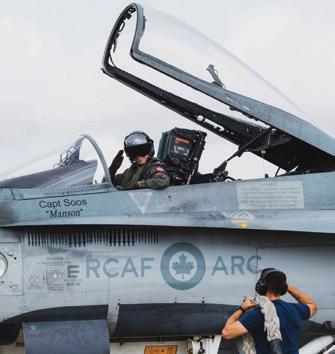
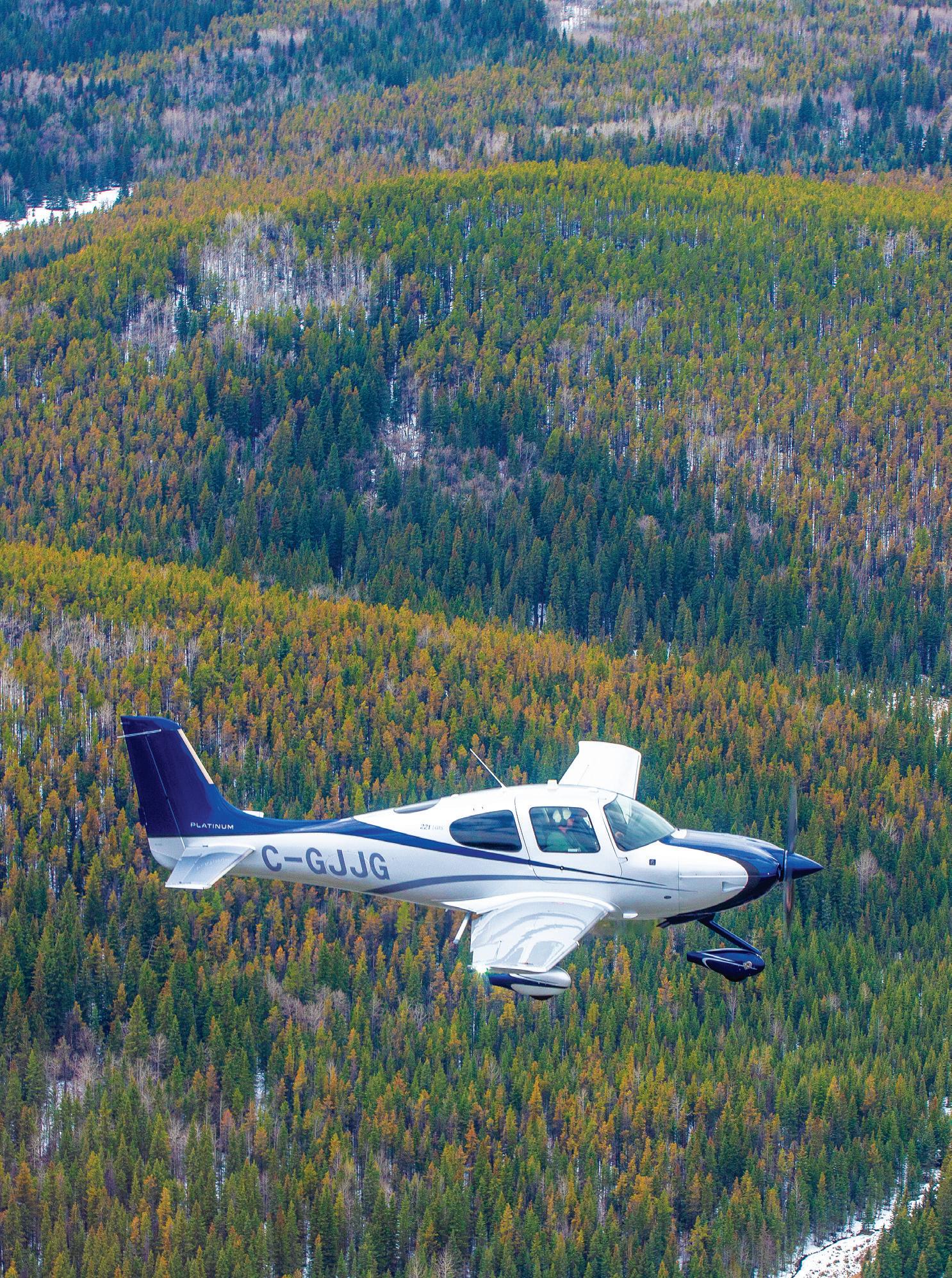
An effective tool for business (and pleasure).
BY RICHARD PITTET

Ihave a list of airplanes I dream of one day owning were money no object. In my fantasy hangar you’d find a P-51 Mustang, or a Supermarine Spitfire, homage to the heroes that flew both, and a salute to the men and women who truly freed our world from tyranny. You’d likely also find a Super Cub (or any of its modern iterations), plus an HA-420 HondaJet tucked in the corner for those weekend hops between Foothills Regional and Kelowna. Maybe a Cessna 185, 206 or, better yet, a 208 Caravan on amphibious floats.
I have a similar dream list of performance cars, starting with any variant of the legendary Porsche 911 Turbo. For track days make it a Chevrolet Camaro ZL1, a 650-hp street-legal race car. In the world of ‘affordable’ supercars, it has to be a 2026 Corvette ZR1X. This newest C8 generation boasts a mind-blowing 1,250 horsepower, accelerating from 0 to 60 mph in under 2 seconds. Imagine afterburners bolted to a transmission and you get the idea. So many fixations, so little money.
With this background, try to imagine the excitement that ensues when a self-professed, life-long gearhead — who is also an airplane fanatic — randomly meets a hugely credentialed car guy, who by some coincidence is also crazy about airplanes. As if that weren’t enough, his life partner is none other than a Boeing 787 Captain at Air Canada, a truly delightful and talented woman I’ve had the pleasure of flying with many times. I give you Paul Mifsud, Cirrus SR22T owner and automotive dealership executive consultant.
In the world of wheels, Mifsud is considered an industry Top Gun. Add to that someone who has successfully combined his love of flying with a passion for the automotive business. With 1,500 hours in his logbook, Pilot Mifsud flies his Cirrus SR22T to meet with the continent’s highest performing specialized dealership groups, drawing on his 33 years of industry experience.
The man from London, Ontario, began his career in the car business as a Service Advisor for a General Motors dealership, eventually rising to the position of Managing Director for a multi-dealership auto group based in Saint John, New Brunswick. Then there are the many industry board of director positions, including a seat in the Honda Canada boardroom.
With such a résumé it would also be fair to ask just how such a busy and accomplished man found the time to pursue an interest in general aviation. For the full story, rewind the calendar to the year 2007, and Canada’s own motor city: Windsor, Ontario. There, Mifsud first climbed aboard a Piper Tomahawk with dreams of becoming a licensed pilot. Then, like so many
of us, he made it about a third of the way through his PPL before life got in the way. A seven-year pause in training followed, during which time Mifsud moved to Prince Edward Island for his first opportunity to own a General Motors dealership. There, he met Lorne Brett, someone Mifsud calls his mentor, who helped him get started as a dealer — plus rekindle his interest in flying. Brett, who also owned a FBO in Saint John, was an active member in that community’s flying club. In addition, he flew another one of my favourite aircraft, a TBM 750, that Mifsud happened to hitch a ride in for a business meeting in Toronto. For Mifsud it was a eureka moment, with him instantly seeing the business advantages of airplane ownership.
Soon he was enrolled at that same Saint John Flying Club, finishing his private ticket in 2016, only now in a Cessna 172. Next came a Night Rating. He told Aviator that it was the “procedures” nature of flying that especially resonated with him, not unlike the skills he sees as critical in running an automotive dealership.
Even before finishing his private licence, Mifsud had
purchased a Van’s RV-6A. In short order he’d racked up 300 hours in the sometimes-dicey weather the otherwise friendly Maritimes are known for. While a great introduction to GA ownership, the RV-6A ultimately proved to lack the equipment and capability Mifsud considered critical for his true mission, namely reliable cross-country travel in more than just New Brunswick summers. That realization led Mifsud to begin the search for an even more capable aircraft. It didn’t take long before the performance and load-carrying ability of the Cirrus lineup caught his attention, and in October of 2019 he had found a used Cirrus SR20 based in the United States. With fresh paint and only 180 hours since engine overhaul, it seemed the ideal next airplane. Fortunately for Mifsud, a thorough pre-delivery inspection found corrosion on the Continental engine’s camshaft, meaning somebody was about to spend some significant money to effect a sale (an experience portending future events for Mifsud himself).
The airplane’s American owner, not wanting to lose the deal, had the engine pulled and returned it to the factory for a rebuild … just in time for the COVID outbreak.
(flight into known icing). He eventually bought a 2010 model, a Gen-3 airplane equipped with the TKS weeping-wing de-icing system and Garmin G1000 avionics. It was the perfect airplane, lacking only one thing — useful load. So, the automotive dealer became a customer once again, this time shopping for a Gen-5 model of the SR22T. What made the Gen-5 special was the use of carbon fibre for the wing spar, thereby boosting its useful load by 200 pounds. For Mifsud, that was a critical mission-capable uptick, meaning that now, all four seats could be filled, with fuel for a three-hour cross-country IFR flight, plus generous reserves.
Mifsud was just about to close on his second SR22T, the Gen-5 bird, when he noticed an oil leak under the engine of his own airplane. The leak was traced to a crack in the engine’s crankcase, which eventually led to a total engine rebuild. As Mifsud calmly puts it, “$135,000 later and the problem went away.”
“To add to the madness of the pandemic, there were no instructors available for the transition course Cirrus Aircraft provides to all new Cirrus owners, regardless of whether their airplane is new or used.”
To add to the madness of the pandemic, there were no instructors available for the transition course Cirrus Aircraft provides to all new Cirrus owners, regardless of whether their airplane is new or used. Not to be deterred from taking this critical training, Mifsud travelled to Waterloo, Ontario, the base of Canadian Cirrus instructor Dave Hughes. Hughes eventually helped Mifsud complete his Instrument Rating in the SR20, wisely advising him that anything approaching all-weather capability in a General Aviation aircraft meant a certified de-icing system, which his new-to-him SR20 clearly lacked.
After two years of ownership and with nearly 350 hours logged on the entry model Cirrus, Mifsud eventually took his instructor’s advice to heart. Soon he was shopping for the more-capable SR22T, one specifically capable of FIKI
Along with the expense of the unplanned overhaul, Mifsud now found himself selling his Gen-3 in a late 2023-early 2024 used airplane market. The post-pandemic madness had finally come off a rolling boil, and for Mifsud that meant including a newly overhauled engine in his sale price, gratis. Most of us would lose our minds at these numbers, but being a big picture guy, Mifsud took another view. He says he did well on the sale of his Van’s and his original Cirrus, the SR20, and all things considered, “everything worked out.”
Mifsud’s current SR22T has the Cirrus Platinum Trim package. With 900 hrs TTSN, he is the second owner, purchasing the airplane from a Canadian living in California. The airplane is equipped with a Continental TSIO-550-K, 315-hp turbocharged engine fixed to a Hartzell 3-blade composite propeller. The Garmin Perspective avionics suite is coupled to a Garmin GFC 700 autopilot system. A TKS weeping wing (plus windshield, prop and empennage) system gives the airplane its FIKI certification, which Mifsud uses as a “get out of” versus “fly into” capability.
Even considering the near all-weather operational flexibility its airframe de-icing system provides, some would say the real magic of the Cirrus family of aircraft resides in CAPS, or Cirrus Airframe Parachute System. As of the first quarter of 2026, the rocket-powered parachute system is attributed with 145 successful deployments resulting in 291 survivors.
Cirrus points out that when operated correctly, the ballistic parachute system has never failed to safely land one of their aircraft. This degree of safety doesn’t come cheap: the compulsory 10-year chute repack and rocket motor replacement will set you back over U$18,500. Add to that another C$2,800 for a secondary system of line cutters, which releases parts of the parachute system, also needing replacement every six years.
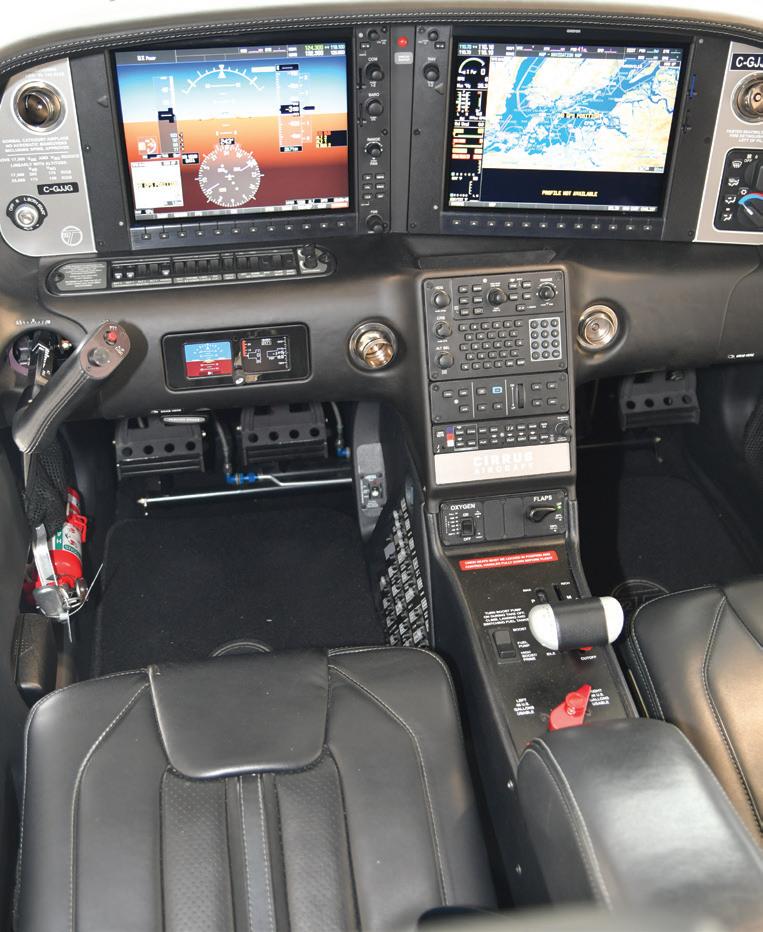
Aspiring Cirrus SR22T owners who hope to own one of these flying hot rods should know that at least 500 hours, plus an instrument and night rating, will probably be required before an insurance underwriter will even talk to you. Mifsud’s own insurance bill, based on a hull value of $1,000,000, recently dipped from $16,000 annually to a more palatable $11,000, thanks to COPA’s new insurance plan.
From his stunning man cave hangar located at Boundary Bay airport (CZBB) near Vancouver, Mifsud literally covers the North American continent in his flying hot rod. In addition to business flights, the SR22T has so far
logged three dog rescue missions for Canadian Wings of Rescue, one venturing as far east as Deer Lake, Newfoundland. More than these coast-to-coast flights, what really impressed me was his surviving a Canada Revenue Agency tax audit that focused on the business use of his airplane. Being a business guy himself, Mifsud understands that game, keeping very detailed records that tie his business use of the airplane to revenue generation for his company, which it turns out is about 80 percent of logbook time.
For personal use he rents the airplane from his corporation, which his records indicate costs about $480 per hour to operate, including insurance, maintenance, repairs, fuel and fees (based on 220225 hours flown per year).
When asked if he ever considers moving up to a turbine single, Mifsud points to the $1,200 to $1,300 per hour cost of operating a Piper single-engine turboprop, concluding there wasn’t a business case for him to upgrade at this time. He adds that his current Gen-5 airplane has only 350 hours on a new engine, regarding it as the ideal business aircraft for smaller companies such as his who cannot justify turbine ownership. It’s hard to argue with his thinking.
Even lacking a PT-6 turbine engine and retractable gear, this is a high-performance airplane, with Mifsud adding, “More Corvette than Impala.” The numbers back up his claim. For takeoff, normal rotation is at 78 KIAS, with an initial climb speed of 110 KIAS, accelerating to 125-130 once clear of obstacles. Over the Rockies and Coast mountains, Mifsud flies his airplane at 14,000
The GTS designation signifies the most fully loaded version of the SR22. Here, owner Paul Mifsud poses with one of his recent passengers.

“In addition to business flights, the SR22T has so far logged three dog rescue missions for Canadian Wings of Rescue, one venturing as far east as Deer Lake, Newfoundland.”
to 15,000 feet. For East Coast missions and trips over the flatlands, he describes 9,000 to 11,000 feet as his SR22T’s “sweet spot.”
On one trip between Chicago and St. Simons, Georgia, the Cirrus covered the 751 nm trip in just over three hours. His record groundspeed to date is a mind-blowing 275 kt. Remember — this is a fixedgear, piston-powered single.
Mifsud has several mission profiles he uses for trip planning, but generally counts on 175 KTAS at 10,000 feet, with the speed increasing to 180-185 TAS in the mid-teens, and 190 by the time he reaches FL200. At 16.2 gph, full fuel translates to 5.6 hours to empty tanks, but Paul generally IFR flight-plans for 3.5, landing with 30-35 gallons remaining.
Arrivals into busy terminal areas are made easy with a 150 KIAS full-flap speed limit. For landing, Mifsud targets 85 KIAS over the numbers, flaring at
80, with “100 percent” (full flaps) for landing. Like any big displacement turbocharged powerplant, the 315-hp Continental requires that you closely manage cylinder head temperatures, both in climb out and during descent.
If you now have a hankering for a shiny new Gen-7 SR22T, be willing to shell out somewhere between U$1.15 and U$1.3 million, with fully optioned models going for even more. Also, get in line and be prepared to wait up to a year to fly yours away from the factory.
The plane maker touts the “Cirrus lifestyle” in their marketing literature, likely believing that scenes of attractive couples at beach resorts sell airplanes. They’d be wise to instead ask pilots like Paul Mifsud who has 33 years of success in understanding big-ticket consumer purchases. I’ll bet he’d sum it up in one word: performance.
Definitely more Corvette than Impala.

TRANSPORT CANADA HAS ADOPTED SOME, BUT NOT ALL, OF OUR RECOMMENDATIONS.
BY YOAN MARIER, Chair at the Transportation Safety Board of Canada
From windswept coasts to the farthest northern lakes, seaplanes touch down where roads can’t reach, and traditional runways will never exist. They connect coastal towns to essential services, bring food and medical supplies to remote camps, support emergency response and anchor tourism economies.
When the runway is a river, lake or inlet, seaplanes are often the most practical solution. However, with that essential role comes a responsibility to ensure that the people who depend on waterborne aviation can expect the same standard of safety found anywhere else in Canada’s skies.
Operating from water introduces a dynamic set of variables that can shift minute to minute: wind shifts and cross swells during takeoff; glare and flat light; glassy water; boat traffic unexpectedly crossing the seaplane’s takeoff run; and confined waterways bordered by steep terrain and shoreline obstacles.
Many Canadian seaplane operators rely on long-serving aircraft such as the de Havilland Beaver and Otter — airframes originally designed in the 1940s and 1950s that remain widely used today. These aircraft often complete multiple short flights per day in demanding environments, facing operational pressures even as many fleets incorporate modern upgrades.
The Transportation Safety Board of Canada (TSB) has long documented the distinct challenges of seaplane operations. Through our investigations, we gain insight into how water conditions, visibility, terrain and operational pressures can intersect to elevate risk. By recognizing recurring patterns, we turn individual accidents into system-wide safety improvements.
With these operational realities in mind, the question becomes: How far have we come in addressing the risks, and what still needs attention?
Past TSB investigations identified that many occupants who escaped from sinking aircraft did so without a flotation device. In
fact, it had been a long-recognized problem in the seaplane sector. Our findings confirmed that when an aircraft is rapidly filling with water, people instinctively focus on getting out, leaving little time to find and don flotation equipment.
To address this, the TSB recommended in 2011 that Transport Canada (TC) require all commercial seaplane occupants to wear a flotation device during takeoff and landing (A1106). In 2013, the Board further recommended mandatory underwater egress training for all commercial seaplane flight crews (A13-02). By 2019, TC had implemented both measures through regulatory amendments, improving survivability in the critical moments after a water impact.
FOR SUBSCRIBERS:
Flight occurrences (in parenthesis) are hyperlinked in our digital magazine at canadianaviator.com.

Although this progress is encouraging, several key safety issues remain unresolved.
One example is the need to address how occupants exit a seaplane after a survivable water impact. Investigations have repeatedly shown that unusable exits contribute to drowning fatalities, and that is why the TSB recommended that TC require all commercial seaplanes — new and existing — to be fitted with regular and emergency exits that allow rapid egress (A1105).
Although TC made some efforts to address this issue, its most recent response to our recommendation remains unsatisfactory. Rather than mandate structural improvements, TC cites cost and feasibility concerns and instead relies on education campaigns and crew egress training. These measures help, but they do not address the underlying safety deficiency.
Another outstanding issue is the absence of mandatory shoulder harnesses for all passenger seats in commercial seaplanes with nine or fewer passengers (A1303). Without upper-torso restraints, occupants face increased risks of head injury and loss of consciousness, both of which can turn a survivable impact into a fatal drowning.
TC has stated that it cannot determine the benefit of additional restraints because survivability depends on many variables, including water conditions, impact attitude, and passenger fitness, many of which are
unpredictable. Meanwhile, restraints, exit design and training are among the few elements TC can directly influence.
Some progress has been achieved, but closing the remaining gaps would build on that momentum and bring us closer to ensuring that every seaplane crew and passenger has the best possible chance of survival.
In 2025, 43 accidents involving seaplane operations were reported to the TSB. In comparison, the average yearly number of accidents was 56 between 2001 and 2010, decreasing to 45 between 2011 and 2020. Although the overall trend shows a decline, three recent investigations — all involving floatequipped de Havilland DHC2 Beaver aircraft — illustrate how performance management, fuel assessment, maintenance practices and emergency preparedness remain central to seaplane safety.
The first of these occurrences took place in June 2024, when an aircraft departed Chukuni River, Ontario, on a visual flight rules flight with one pilot and four passengers on board. Shortly after takeoff, as the pilot retracted the flaps and reduced power during the initial climb, the aircraft began to lose airspeed. Attempts to recover were unsuccessful, and the aircraft stalled at low altitude before striking the shoreline. The aircraft was substantially damaged. Two passengers were seriously injured, and one later died.
The subsequent investigation (A24C0057) identified several key safety messages: artificial stall warning systems, for example, can provide pilots with critical cues during high-angle-of-attack operations such as takeoff and landing; and shoulder harnesses can significantly reduce the severity of impact injuries. The investigation also reinforced the importance of following aircraft flight manual procedures, particularly for critical manoeuvres with a high angle of attack, like takeoffs and landings.
August 2024 marked another occurrence, this time involving an aircraft on its return to the Fort Simpson Island Water Aerodrome in the Northwest Territories with one pilot and two passengers. Approximately seven nm from the destination, the aircraft experienced a complete loss of power due to fuel exhaustion, prompting the pilot to carry out a forced landing on a nearby highway. The aircraft sustained minor damage and, fortunately, no injuries were reported.
The need for rigorous fuel management in seaplane operations was highlighted in the investigation (A24W0116) that followed. Accurate fuel assessment can be challenging on water, and it is vital that pilots maintain a clear understanding of both actual and required fuel quantities. Strategies to support this
include using fuel meters, waiting for calm water to allow for reliable visual checks, crosschecking fuel gauges throughout the flight and uploading additional fuel during enroute stops.
Another example that illustrates the unique challenges of seaplane operations is the May 2025 loss of control and overturn on takeoff at St-Mathias Water Aerodrome, Quebec. In this occurrence, the aircraft began its takeoff run with two people on board. Shortly after it accelerated down the Richelieu River, the aircraft rolled unexpectedly, causing the right wing to strike the water and detach. The aircraft overturned and came to rest underwater. One occupant sustained minor injuries, while the other was fatally injured.
This investigation (A25Q0051) yielded several safety messages related to maintenance, preflight practices, pilot vigilance and occupant survival. One key safety message is the need for aircraft maintenance engineers to carefully inspect flight controls following maintenance work to ensure they are correctly assembled, lock properly, move freely, and respond in the correct direction – and that these inspections can be performed without distraction or interruption.
Obviously, pilots also play an important role in flight safety. After any maintenance, their preflight check should go beyond routine steps and specifically address recently serviced systems. Even so, not every issue can be detected before taking off. When flying, pilots must remain alert to any unusual control responses, vibrations or deviations from the expected flight path during the takeoff run and be mentally prepared to abort if something feels wrong.
Lastly, the occurrence also demonstrated the value of wearing a properly adjusted personal flotation device before departure. In sudden overturns on water, aircraft occupants have very little time to react, and the surrounding environment can severely restrict movement and orientation. Wearing a flotation device from the outset, rather than simply keeping one nearby, can significantly increase the chances of survival in such situations.
These three investigations reveal a common theme: Even routine flights can quickly become unforgiving when defences break down. Whether the challenge is managing aircraft performance, verifying fuel levels, confirming maintenance work, or preparing for an emergency on the water, each step matters.
At the TSB, every seaplane occurrence we investigate contributes to a clearer picture of the risks inherent in seaplane operations and reminds us why sustained attention to safety is vital.
One investigation (A24P0060) currently underway that drew significant media attention is a June 2024
“Even routine flights can quickly become unforgiving when defences break down.”
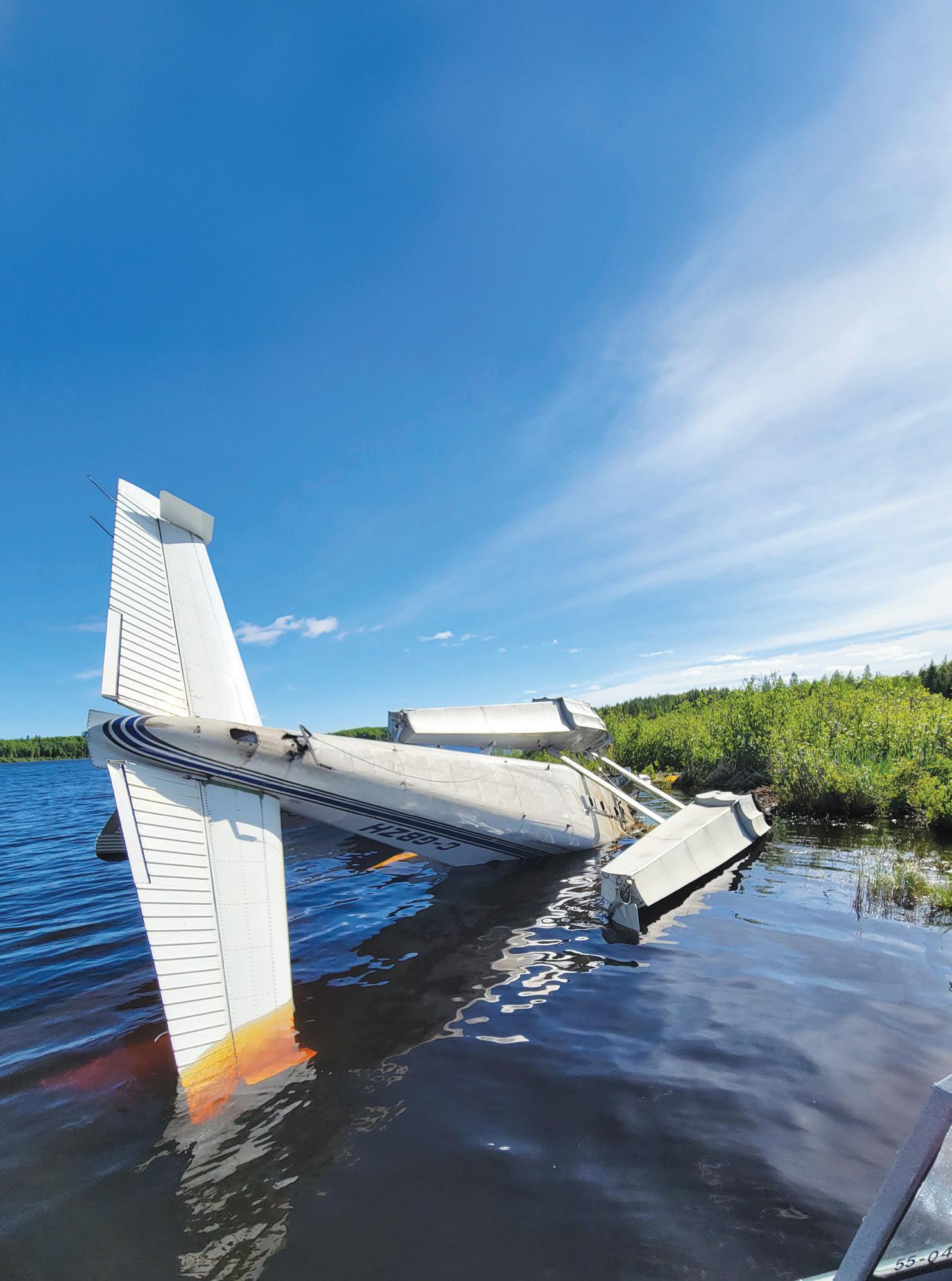
The occurrence aircraft (A24C0057) crashed shortly after takeoff in Red Lake, Ont. The occupants were partially submerged when the aircraft came to rest in the water.
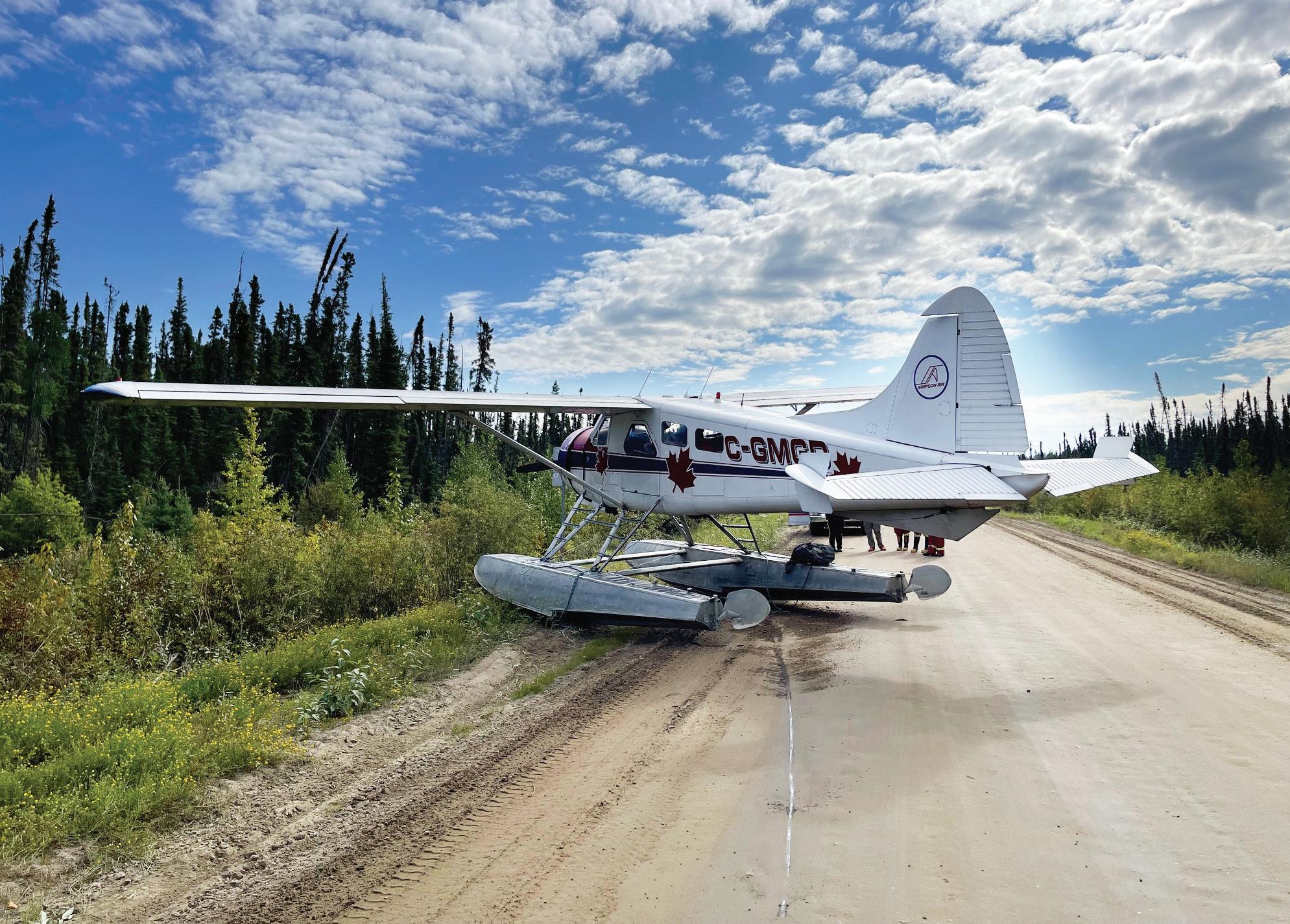
The occurrence aircraft (A24W0116) landed on Wrigley Highway, approximately seven nm west from Fort Simpson Island Water Aerodrome, N.W.T.
“Every occurrence teaches us a lesson. The value lies in what we do next.”
collision between a DHC2 Beaver and a pleasure craft at Vancouver Harbour Water Aerodrome, British Columbia. During takeoff, the aircraft, carrying one pilot and five passengers, struck a vessel with eight occupants on board. Both the aircraft and vessel were substantially damaged, and the aircraft began sinking shortly after. Everyone on the aircraft and vessel was brought safely to shore by first responders. As work on this investigation progresses, the occurrence reminds us that accidents can happen anywhere, even in well-managed environments.
We know that Canada’s seaplane community is experienced, pragmatic and deeply committed to safety. This is evident in both the corrective actions taken as a result of our investigations and the professionalism shown each day when flying in demanding conditions.
That being said, one thing is clear: safety in this sector cannot depend on a single safeguard or improve-
ment. It requires a coordinated effort from regulators, operators, maintenance personnel, pilots, and passengers, especially in addressing the TSB’s outstanding recommendations. Maintaining this shared focus is essential to ensuring that seaplane operations across Canada remain as safe and resilient as possible.
Every occurrence teaches us a lesson. The value lies in what we do next. When evidence informs procedures, when operators strengthen their defences, when pilots and maintenance teams treat routine as anything but, the margin for error widens and survivability improves.
We can’t calm the wind or smooth the swell, but we can make sure the system is ready when they rise.
Yoan Marier is Chair of the Transportation Safety Board of Canada and has many years of experience in the field of federally regulated transportation and regulatory compliance.
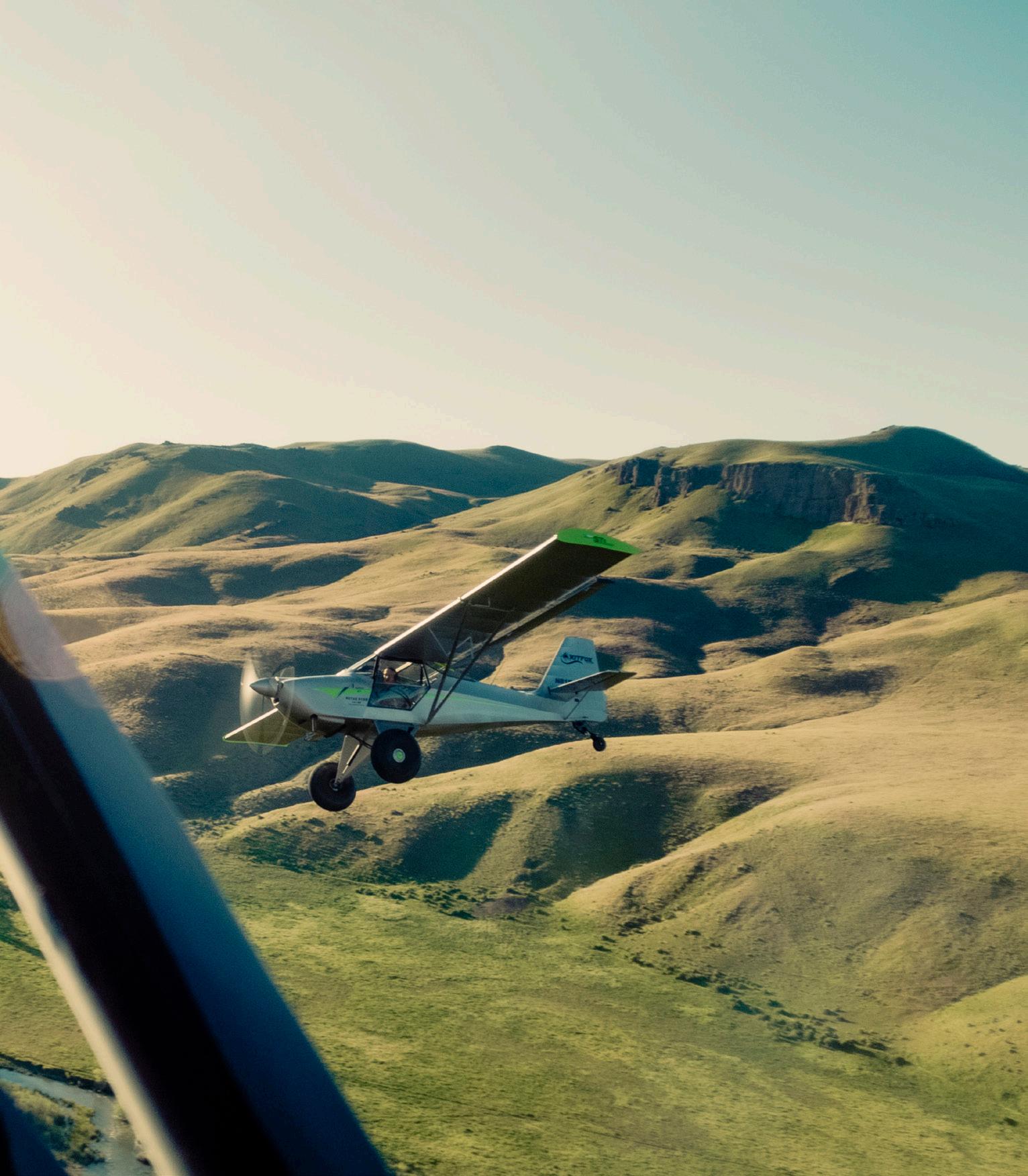

GA Pilots Can Be a Force for Change
BY DAN OLDRIDGE
In the March/April 2026 issue of Canadian Aviator, Ed McDonald outlined in his column Instrumental Facts the sad state of ADS-B in Canada as it relates to the lack of value-added services here compared with those available south of the border on 978 MHz UAT ADS-B. Having flown for 10 years now with ADS-B, I can empathize with McDonald and the thousands of Canadian pilots who feel shortchanged by the Canadian ADS-B system. I hope to provide a few more details and insight into the state of ADS-B, particularly the lack of 978 UAT in Canada, and how we might be able to force change.
The divide between the U.S. and Canadian ADS-B systems can be described as a clash between pilot-centric and controller-centric designs. While the FAA built a system to help pilots fly safer, Nav Canada built a system to help controllers manage commercial air traffic more efficiently.
out to ADS-B IN equipped aircraft in the area served by their towers. The “carrot” here was the provision of the UAT services to pilots who installed a full INOUT ADS-B system.
Although Transport Canada has traditionally followed much of what the FAA has implemented in the USA, there is a fundamental difference in the air navigation systems (ANS) in the two countries. The FAA is pilot-safety focused, whereas
regulator, Transport Canada, contracts out the ANS responsibilities to Nav Canada, a private not-for-profit organization, whose funding comes primarily from the supply of their ANS services to commercial operators such as domestic and international airlines, cargo operators, air charters, and business aviation, and to a very limited extent, private pilots.
As a not-for-profit organization that operates from revenues raised by its operations, Nav Canada made a “business” decision to invest in satellite technology that would allow it to achieve total Canadian airspace coverage, including oceanic coverage, therefore being able to market its services to airlines and other ANS providers around the world.
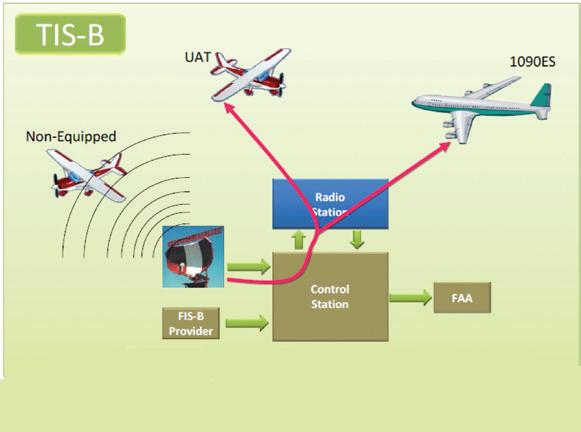
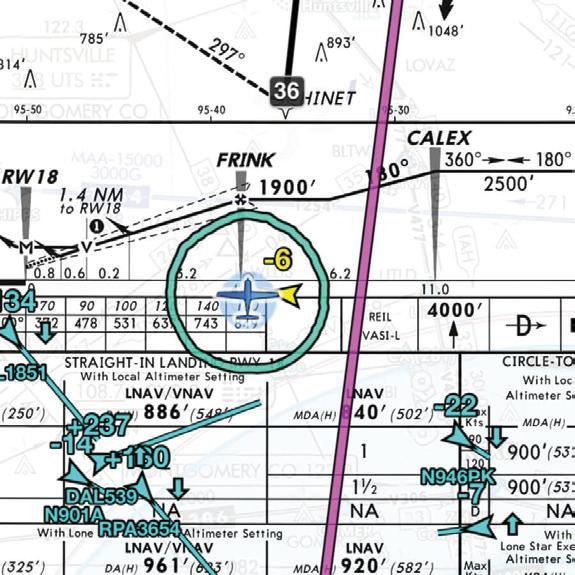
The primary goal of ADS-B is to enhance aviation safety through situational awareness. In its 2020 mandate, the FAA included an incentive for pilots who installed compliant ADS-B OUT in their aircraft by providing free ADS-B IN. By opening up a portion of the 978 MHz spectrum and creating the Universal Access Transceiver system (978 UAT) they reduced the burden on the 1090 MHz system and allowed two-way data connections, which are not practical on the legacy 1090 MHz system. The goal was total situational awareness for the pilot and to reduce the burden on ATC.
The FAA operates a ground-based dual band system, receiving both 1090ES and 978 UAT signals from aircraft, while transmitting FIS-B (weather) and enhanced TIS-B (traffic) on 978 UAT back
Nav Canada is surveillance and separation focused. Although they do publish some information and provide pre-flight briefings, Nav Canada does not view itself as a provider of “in-cockpit information services” like the FAA does. Compounding this issue is the fact that the
Using the Iridium satellite system, a new organization owned partially by Nav Canada, named Aireon, allows Nav Canada to provide ANS services globally in addition to covering Canada’s almost 10 million square kilometres of landmass and lakes. In spite of this undeniable benefit, Aireon has its shortcomings and, in my opinion, Nav Canada has revealed a fundamental flaw in its own mandate and purported safety focus.
Without the UAT services, pilots have less awareness of changing traffic, weather, and hazard conditions. As McDonald mentioned in his article, AOPA released an FAA report that cited an 89 percent reduction in in-flight fatalities as a result of UAT ADS-B IN traffic awareness in the U.S. Weather-related incidents were reduced by about one half. How many Canadian pilots who died in mid-air collisions would have been saved by having UAT services in Canada? We will never know, but I suspect about 89 percent of them. “See and avoid” is an antiquated ideology given the modern technology available. Anyone with ADS-B IN that has flown along the U.S. border understands
“South of the border, the FAA is moving ahead with enhancements for its ground-based ADS-B, including an investigation into high-speed low-latency satellite data links (Starlink).”
the safety benefits provided by 978 UAT ADS-B. In Canada, ATC is always ready to provide information about traffic and weather in their control zones, but that is where they see their responsibility ending. As I said, Nav Canada is surveillance and separation driven, not pilot-safety driven. They view safety as the pilot’s responsibility, especially outside their zone(s).
Nav Canada relies heavily on ground radar, which provides some separation information that ATC can relay to pilots, but radar has blind spots and takes about 5 seconds to “sweep” and update a target’s position. ADS-B by comparison updates every second, providing a much smoother, real-time picture. Even weather is relatively recent, with only a few minutes to about 15 minutes of delay, helping pilots avoid VMC into IMC situations. The days of “heads down” flying, trying to correlate a voice over the radio with a paper chart, are fading. A quick glance at the moving map provides all the data, keeping “eyes forward” to fly the plane.
Many of the software programs and Electronic Flight Bags (EFBs) designed to display ADS-B information, like ForeFlight, also display other hazards and obstacles, terrain and weather in real time as an added safety benefit of having ADS-B. Visual and audible warnings signal danger, helping to eliminate the “surprise” factor of a non-communicating aircraft or a pilot on the wrong frequency. You see their altitude, heading and closing speed long before they become a visual speck on the windshield.
space. For this to work, the satellites need a clear line of sight to the aircraft’s transponder antenna. However, for 70 years, General Aviation (GA) aircraft have used bottom-mounted transponder antennas to communicate with groundbased radar.
The original specification for Aireon included the installation of diversity antennas on aircraft (meaning one facing down and the other facing up). For most commercial operators, antenna placement was not an issue, since most airlines already used diversity to achieve suitable
satellite, only that it gets there reliably. Several years ago, Lee Coulman and I moved the transponder antennas on our amateur-built aircraft to the top of the fuselage in a location that would provide reasonable ground coverage too. We found this provided excellent coverage for both satellite-based (Aireon) and ground-based systems. Since Coulman’s amphibious Progressive Aerodyne Searey spends time on the water, a bottom-mounted antenna is a liability anyway.
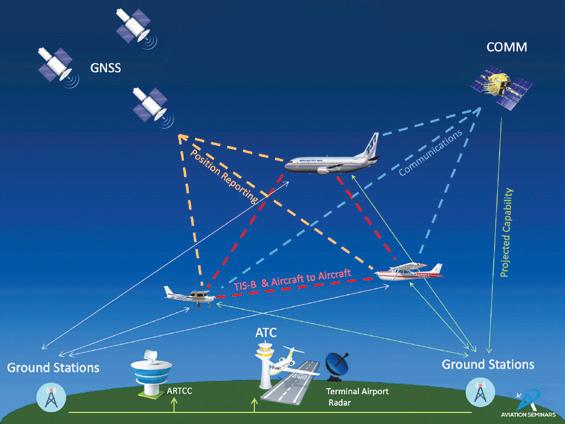
Nav Canada’s partnership with Aireon is intended to solve a massive geographic problem: Canada is too big and too empty to cover with ground-based radar or towers. The satellites look down from
TCAS operation. For the average Canadian Cessna or Piper owner, the mandate feels like a one-way street. You can spend $10,000 to $20,000, or more, on a diversity transponder and a top antenna installation with no guarantee of coverage improvement, but unlike your American neighbours, you don’t get free NEXRAD weather or traffic targets on your iPad in return. You are paying for the privilege of being seen by ATC.
Luckily, Nav Canada’s Aireon system has a performance edict. Technically, they do not care how you get the signal to the
South of the border, the FAA is moving ahead with enhancements for its ground-based ADS-B, including an investigation into high-speed low-latency satellite data links (Starlink). There is currently a U.S. Senate bill that would mandate an Airborne Position Reference Tool (APRT) at contract towers in the U.S. This provides lower-traffic ATC operators with a radar-like image of the aircraft in the surrounding area and displays them on a map, centred around the airport. APRT uses existing ADS-B data to give controllers a digital display of local traffic, drastically increasing safety at smaller airports without the need for massive, expensive radar installations. In the meantime, in this country Nav Canada is still trying to work out the bugs in the coverage of the (superior?) Aireon satellite system.
Given the congested 1090 MHz frequency in high traffic areas and the issue of legacy antennas, can the limitations with Aireon be solved? It depends. Solely relying on satellite-based coverage will be a problem for a significant number of GA aircraft and even commercial airliners in busy airspace. Nav Canada is investigating the installation of ADS-B ground-based stations in high-traffic
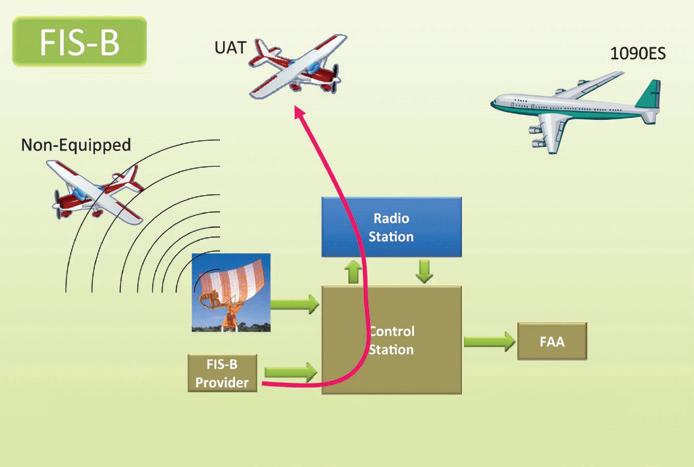
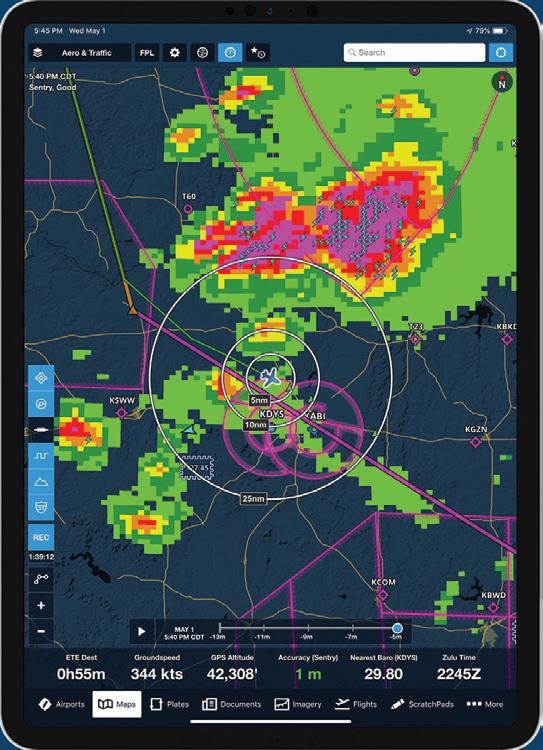
areas to fill in the coverage gaps created by legacy system noise, which produces drop-outs from packet loss, slow update rates, masking from higher aircraft, and higher-than-acceptable error rates from “interrogation fatigue,” where the sheer volume of signals causes a percentage of data packets to be lost to FRUIT (Friendly Remote Unsynchronized Inbound Transmissions).
The opportunity here is that given enough motivation, Nav Canada could easily and inexpensively (incremental cost) install 978 UAT OUT transmitters at ATC centres, FICs and RCOs to provide the free weather and traffic that GA pilots have been asking for in Canada. As the next mandate in 2028 is implemented, these stations could form the basis for a ground-based UAT network, similar to the FAA system in the U.S.
We have already demonstrated the feasibility of low-cost UAT in Stratford, Ontario, which served as a test site after Coulman and I first presented the concept to Nav Canada in 2018. Originally a one-year trial, the Stratford UAT site has
been rebroadcasting ADS-B, Nemo Scout and FLARM targets, weather information, and more for over four years now on 978 UAT. Soon after, COPA Flight 26 members formed a group called CIFIB (Canadian In-Flight Information Broadcasting Association, www.cifib.ca), which has reinforced this concept with UAT installations at a number of locations across Canada. The fact that these grassroots cells work, and that Nav Canada has co-operated and even coordinated 978 UAT frequencies with the FAA, shows the primary hurdle is not technical, but policy based.
Nav Canada currently has no intention of implementing 978 UAT, but they could in the future. With enough pressure from the TSB and Transport Canada, a revised mandate could require them to do so. If Canadian pilots want to fight this, we have to stop arguing about “fairness” or “cost” and start arguing about “pilot safety,” “preventable in-flight collisions and fatalities,” “inadequate situational awareness” and “1090ES system capacity.” The strongest technical argument against the
current mandate is 1090 MHz congestion. As the number of drones (UAVs and RPAS) and other aircraft grows, the 1090 MHz frequency is reaching its limit. We need the Canadian Owners and Pilots Association (COPA) and others to lobby for 978 UAT as a 1090 MHz “reserve” or a dedicated frequency for low-altitude GA.
1. Start by requesting that COPA establish an ADS-B/NextGen Special Interest Group (SIG). Put the burden on COPA to produce a formal white paper comparing Canadian accident rates vs. U.S. accident rates for equipped aircraft. COPA advocacy is data driven. Do not send them opinions, send them the study data you have (such as the AOPA article on the impact of ADS-B on aircraft accident rates). Ask them to present this to the Civil Aviation Regulatory Advisory Committee (CARAC). If they have to present a technical paper to Transport Canada, they cannot drag their feet. Start a petition within your local COPA flight of flying club (or across your region) specifically demanding that COPA present a
“Instead of contacting Nav Canada (who have already said no), write to the Minister of Transportation with an Aeronautical Assessment Request. ... Argue that the current mandate forces GA pilots to spend thousands on equipment that provides zero in-cockpit safety improvement (no weather, no traffic), which encourages pilots to not upgrade at all.“
formal Safety Deficiency White Paper to the Civil Aviation Regulatory Advisory Committee (CARAC). Provide COPA with a bulleted, source-cited document that they can present as a member-driven safety concern. There must be an objective safety risk; i.e., that the current system creates systemic dangers. Instead of general complaints, draft a formal resolution for your local COPA flight or flying club to adopt. A resolution carries more weight than an email because it represents a collective vote from members.
2. The “safety data” argument needs to be emphasized since Nav Canada will not provide UAT weather and traffic information. If you feel COPA or other industry bodies are stalling, you can use the TSB’s SECURITAS program. This allows you to report potentially unsafe conditions in the aviation system in complete confidence. The TSB analyst will review your claim and, if they determine it represents a valid safety deficiency, they have the authority to make formal recommendations to the Minister of Transportation. Transport Canada and Nav Canada are heavily influenced by data, risk mitigation, and international harmonization.
3. The TSB routinely notes that “see and avoid” is unreliable in high-density areas. Following several mid-airs, the TSB has cited that there are conspicuity technologies that provide active alerts to eliminate close calls and accidents. Unfortunately, the TSB has not made formal recommendations to Transport Canada regarding ADS-B IN, which is the critical link that turns ADS-B from a surveillance tool into a collision avoidance system. This is another serious flaw in the Canadian system that could be aided by 978 UAT ground stations, which would
encourage adoption. Pilots can use the TSB SECURITAS program to help get around this flaw to help force change.
4. Instead of contacting Nav Canada (who have already said no), write to the Minister of Transportation with an Aeronautical Assessment Request. Do not use the Aeronautical Assessment Form, which is for towers and obstructions only. Argue that the current mandate forces GA pilots to spend thousands on equipment that provides zero in-cockpit safety improvement (no weather, no traffic), which encourages pilots to not upgrade at all. By making compliance prohibitively expensive and devoid of safety-of-flight benefits, the current mandate is actually decreasing national safety by keeping older, non-ADS-B aircraft in the sky longer. Also include the facts that the 1090 MHz frequency is inadequate in busy airspace and that safer technologies are already available in the USA, including 978UAT that actually encourages pilots to equip their aircraft with ADS-B. You can also try emailing Transport Canada at sitcen@tc.gc.ca.
5. Instead of asking for “better services,” start providing a formal Safety Deficiency Report whenever you have a close call with traffic or encounter bad weather that might have been avoided with UAT. Cite the lack of in-flight services from Nav Canada as a cause and 978 UAT as a means of rectifying the unsafe situation. Call it a regulatory or systemic safety deficiency. Do not use the standard service feedback forms, as those are for customer service issues. Use the Service Difficulty Reporting (SDR) system if you have specific technical data on why 1090 MHz is failing or causing issues. By framing this as a Systemic Safety Deficiency, you trig-
ger a regulatory process. Transport Canada is legally required to acknowledge and address safety concerns submitted through the proper channels. Even if they initially deny the request, you now have a paper trail that can be used to hold them accountable in the future if an incident occurs that could have been prevented with 978 UAT service.
6. Also, write directly to the Director General, Civil Aviation, Transport Canada. Your letter should be titled: “Formal Submission: Identification of Systemic Safety Deficiency in the ADS-B Mandate.” Base your argument on ICAO standards and safety risk assessments rather than cost-of-installation complaints regarding the 1090ES Aireon mandate.
There may be other options to try to force a change, but these methods should at least get further answers on why Canadian GA pilots should be any less safe than their US counterparts.
Dan Oldridge is a private pilot with night and seaplane ratings. He is an amateur-built aircraft builder/owner of a Just Aircraft Highlander and a Fleet 80 Canuck, both with top-mounted 1090ES ADS-B IN and OUT. Dan is president of the Kitchener Waterloo RAA, a member of the Breslau Flyers (COPA Flight 26). He holds an Electronics Engineering Technician Diploma and a Queen’s MBA, is a retired firefighter and deputy chief, and currently is an instructor and the Aerospace Director of the Community Youth Aerospace Group.
In our next issue, Lee Coulman describes the CIFIB 978 UAT trial at the Stratford Municipal Airport. —Editor
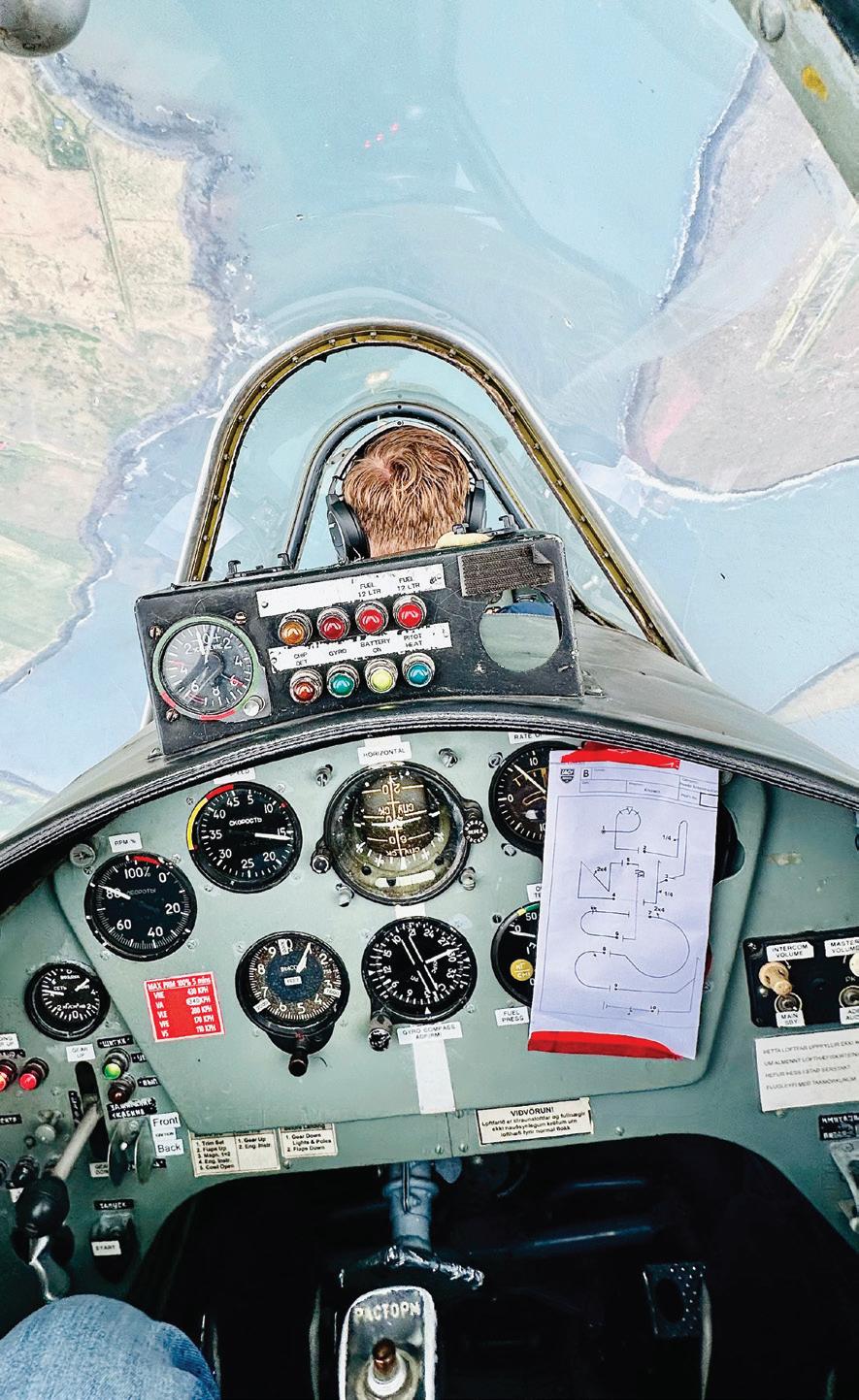
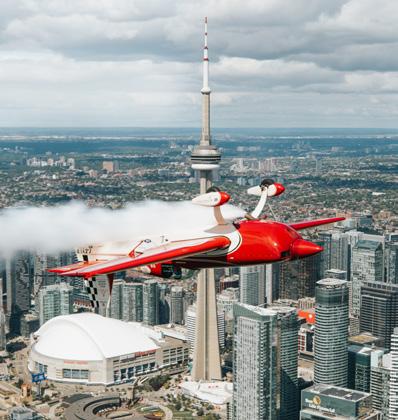

During the six years of the Second World War, Canadian fighter pilots flew and fought with great distinction in every theatre of war to which Commonwealth fighter forces were deployed. This book captures the spirit and magnitude of the Canadian contribution, which began in Europe’s Low Countries in 1940 and ended among the Japanese Home Islands in 1945. It collects the wartime diaries and postwar reminiscences from a great variety of the Canadian fighter pilots who served in the Second World War.
AUTHOR: David L. Bashow
PRICE: $48.95 (includes shipping in Canada)


This is the remarkable story of a group of small-town entrepreneurs who would leverage a single Bell 47 into Okanagan Helicopters, the largest helicopter company in the world. The company pioneered the commercial application of helicopters, and its successors continue as leaders in rotary aviation. The author worked for the company for decades and created this comprehensive history of one of Canada’s most important contributions to aviation.(Large format hardcover book — 255 pages with photos.)
AUTHOR: Douglas M. Grant
PRICE: $63.95 (includes shipping in Canada)

The Found family’s name is famous among bush pilots worldwide for having built a tough little freight-hauling aircraft designed for hard service in Canada’s wilderness.
The author’s father, Sherman, along with his uncle Nathan (Bud) Found, and with financial backing from department store magnate John David Eaton, took on the Herculean task of gaining FAA certification for their dream aircraft.
AUTHOR: S.R. (Rick) Found
PRICE: $26.50 (includes shipping in Canada)
During WW2, Allied air forces dropped nearly two million tons of bombs on Germany, killing more than half a million German citizens and leaving 80,000 pilots dead. But the terrible truth is that much of the bombing was carried out against the expressed demands of the Allied military leadership. Here, for the first time, the story of the American and British air campaigns is told — and the cost accounted for.
AUTHOR: Randal Hansen
PRICE: $44.95 (includes shipping in Canada)
The “Flying Canucks” in this volume include some legends of aviation lore. Donald McDonald speaks for the many Canadian WWII fighter pilots. The aerial achievements of Casey Baldwin and Don Muir serve as bookends of a century of aviation and embody the unconquerable spirit of every era of flying.
AUTHOR: Peter Pigott
PRICE: $31.95 (includes shipping in Canada)
The tragic fate of the British airship R101 — which went down in a spectacular fireball in 1930, killing more people than died in the Hindenburg disaster seven years later — has been largely forgotten. In His Majesty’s Airship, S.C. Gwynne resurrects it in vivid detail, telling the epic story of great ambition gone terribly wrong. She was the linchpin of an imperial British scheme to link by air the far-flung areas of its empire, from Australia to India, South Africa, Canada, Egypt and Singapore.
AUTHOR: S.C. Gwynne
PRICE: $36.50 (includes shipping in Canada)

In 1940 Canada sent hundreds to serve in Britain’s Royal Air Force as it began a concerted bombing campaign against Germany. Nearly half of them were killed or captured within a year. This book tells, in Jacobson’s own words, why he enlisted, his understanding of strategy, tactics, and the effectiveness of the air war at its lowest point, how he responded to the inevitable battle stress, and how he became both a hopeful idealist and a seasoned airman.
AUTHOR: Peter J. Usher
PRICE: $52.95 (includes shipping in Canada)

Bush pilot Scott Brandon forms a volatile alliance with Catherine McGregor, an executive jet pilot from California. Together they search in the Yukon for an old Lufthansa airliner that vanished in 1937. Their path of discovery takes them from the genesis of the Third Reich to the boardrooms of an American empire. Like mariners of old, a bond occurs understood only by those who share a passion for flight.
AUTHOR: Michael Bellamy
PRICE: $44.50 (includes shipping in Canada)
Bringing together leading researchers on Canadian air power, the book captures the history of the RCAF during the first decades of the Cold War – a period which marked the zenith of air force accomplishments in peacetime Canada. The volume covers topics that go beyond straightforward flying operations, examining policies that drove operational needs and capabilities and the personnel, technical and logistical functions that made those operations possible.
AUTHOR: Randall Wakelam, William March and Peter Rayls
PRICE: $59.95 (includes shipping in Canada)

In the early 20th century, Canada’s North was a mystery. In 1874, Canadian Prime Minister Alexander Mackenzie agreed to take up sovereignty of all the Arctic from the British, if only to keep the United States and Tsarist Russia out. But as the nation expanded east and west, the North was largely forgotten. From Far and Wide recounts exclusively the historic activities of the Canadian military in Canada’s North. (Hardcover book — 312 pages with photos.)
AUTHOR: Peter Pigott
PRICE: $55.75 (includes shipping in Canada)
For decades, films and television programs portrayed our allied heroes as grown-up men and women. However, the Battle of Britain was, in the main, fought and won by teenagers. Based on diaries and memoirs, this book tells the story of the Spitfire through the voices of the teenagers who risked everything to design, build and fly her. This isn’t a story of stiff-upper lips, stoical moustaches and aerial heroics; it’s a story of love and loss, a story of young people who won a battle that turned a war.
AUTHOR: Alasdair Cross
PRICE: $26.99 (includes shipping in Canada)
The history of air accidents is a harrowing one. Yet today flying is the safest mode of transportation, thanks in no small part to the work of crash detectives. Whenever a plane falls from the sky, the investigators pick through the wreckage for the clues they need to decipher what happened to that flight. Before the invention of the ‘black box’ and the evolution of forensic accident investigation, the causes often remained a mystery.
AUTHOR: Peter Pigott
PRICE: $53.95 (includes shipping in Canada)

Joseph Fall survived the Great War as a pilot in the Royal Naval Air Service, and he survived the Second World War serving as a Group Captain in North Africa. Alfred Atkey flew Bristol Fighters with No. 22 Squadron. William Claxton flew the S.E.5a, one of the most impressive aircraft of the Great War. Francis Quigley began the war as a Sapper with the Canadian Engineers. He transferred to the Royal Flying Corps and joined No. 70 Squadron flying Sopwith Camels.
AUTHOR: Roger Gunn
PRICE: $44.99 (includes shipping in Canada)
THE ROYAL CANADIAN AIR FORCE AT 100
In Canada’s Air Force (hardcover), historian David Bercuson shares the history of the first one hundred years of the Royal Canadian Air Force, from its inception in 1924 to its centennial in 2024. Drawing on memoirs, diaries, unpublished histories, archival sources, interview transcripts and standard reference works such as The Bomber Command War Diaries, Bercuson traces the history of the RCAF as not only a fighting force but also a human institution.
AUTHOR: David J. Bercuson
PRICE: $66.50 (includes shipping in Canada)
The extraordinary history of Canada’s airshow teams is recorded in its entirety. Meticulously researched by a former Snowbird team leader, this 768-page hardcover book documents the scores of Canadian military air demonstration teams that have thrilled millions of airshow spectators for over 85 years. From the Siskins to the Golden Hawks to the Golden Centennaires and Snowbirds, every Canadian demonstration team is represented in the book.
AUTHOR: LtCol (Ret’d) Dan Dempsey
PRICE: $139.99 (includes shipping in Canada)
From early spellbinding tales of daredevil aviators to the influential decisions made by hard-nosed businessmen, Wingwalkers is a meticulously researched history of the important role Canada’s other airline, which became Canadian Airlines International, played in shaping our nation, transforming itself from a bush flying and mining operation into an international carrier.
AUTHOR: Peter Pigott
PRICE: $49.95 (includes shipping in Canada)

In A Most Extraordinary Ride: Space, Politics, and the Pursuit of a Canadian Dream, Garneau chronicles his ascent from a mischievous teenager and rebellious naval midshipman to a decorated astronaut and statesman who represented Canada on the world stage — both on and off the planet. With candour and humour, Garneau describes the highs and lows of his life and career, including the awe he experienced first seeing the Earth from space, in this hardcover edition.
AUTHOR: Marc Garneau
PRICE: $59.50 (includes shipping in Canada)
Whether performing an emergency landing in darkness in Canada’s northern wilderness, rebuilding his plane’s engine with a rusty file, or zigzagging a bomber plane across the Atlantic Ocean during the Second World War, there was never a dull moment in Patry’s career. This book is Canadian aviation history at its best. Destiny uncannily placed Patry in the thick of the action, and he went from one adventure to the next without fanfare, pause or concern.
AUTHOR: H.J. SMITH
PRICE: $31.50 (includes shipping in Canada)
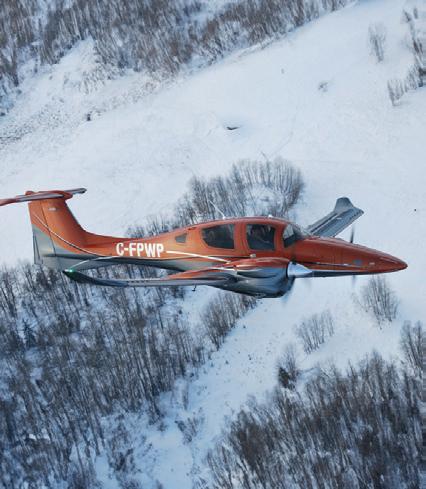
and instrument rating flight training
• Multi-engine and instrument rating
• Experienced professional pilots as instructors
• Multiple local flight test examiners
• New Diamond DA62/ Garmin G1000 NXi
• Flexible schedule and no wait list











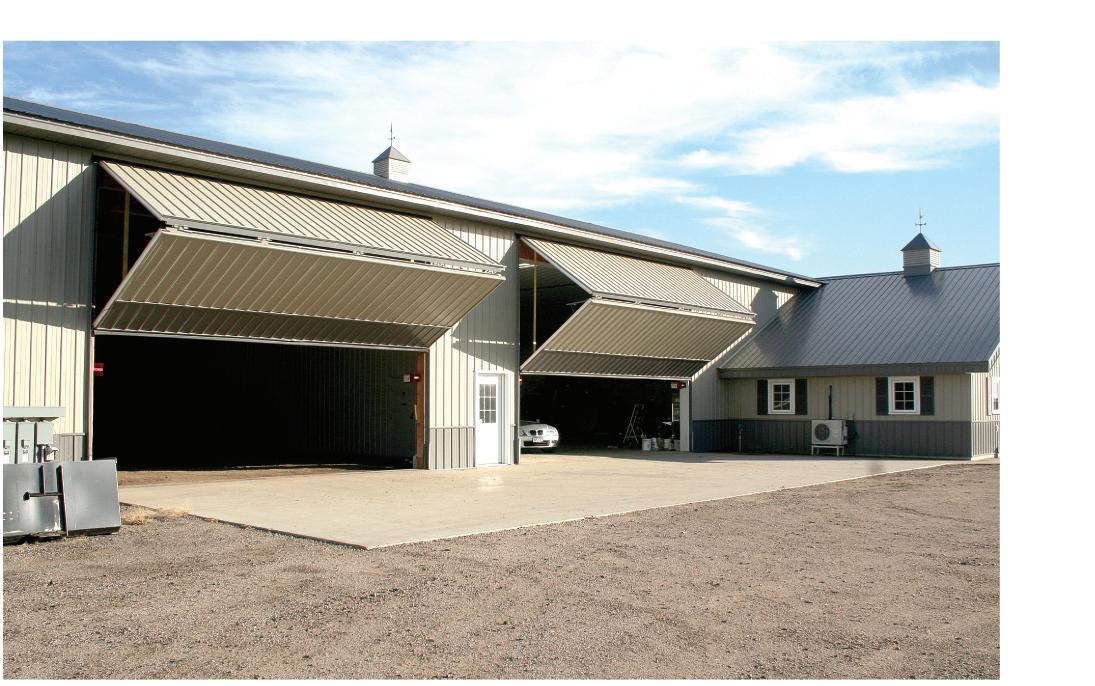




Within this puzzle are the names of 10 aircraft manufacturers. I’ve provided the founders’ first names (clues marked with an *). You provide the last ones. All other answers are aviation related.
ft Manufacturers Within this puzzle are the names of 10 aircraft manufacturers. I've provided the founders' first names (clues marked with an *). You provide the last ones. All other answers are aviation related.
BY GRAEME PEPPLER
1) Why is an aeroplane with a monocoque structure often compared to an eggshell?
a) Because, like an eggshell, a monocoque structure can bear the stresses acting upon it.
b) Because, like an eggshell, a monocoque structure is the most efficient aerodynamic shape.
c) Because, like an eggshell, if a monocoque structure shatters, it efficiently dissipates the most energy.
d) Because, like an eggshell, it produces minimal skin friction.
2) Which of the following identifies all of the correct variables in a triangle of velocities?
a) Wind speed, wind direction, heading, true airspeed, track, groundspeed.
b) Wind speed, wind direction, heading, track, groundspeed.
c) Wind speed, wind direction, heading, track, true airspeed.
d) Wind speed, wind direction, heading, track, drift angle, magnetic bearing, groundspeed.
3) Why may it be recommended to leave the park brake off if an aeroplane is left unattended for a while?
a) If left on for too long, the brake pads could fuse to the rotors, damaging the pads as well as the rotors.
b) Warm temperatures could expand hydraulic fluid that ruptures seals while cold could release the brakes.
1 B-1 is
4 Igor.*
8 Gander
Oceanic is one. William.* thing that might be detected by a ansmission sensor.
Marcel.*
14 Device used during IFR training.
17 Radio Detection and Ranging. 20 Orville was one.
21 The ‘A’ in KIAS.
22 Long Range Navigation.
used during IFR training.
23 An Air Canada flight glided there.
24 A major U.S. airline.
25 Albert.*
Detection and Ranging. was one. in KIAS.
1 J. Armand.*
Range Navigation. Canada flight glided there. U.S. airline.
2 A mic accessory.
3 “Slipped the surly bonds of _____”.
5 A U.N. organization.
6 Frank.*
7 RCAF F-86s served in this theatre.
9 Andrei.*
Result from exceeding the critical angle of attack. 18 An Air Transat flight glided there.
23L is one. 23 A popular fuel injector brand.
CORRECTION: The title of the previous puzzle (May/Jun) was “WWII Canadian Military Aircraft.” The word “Post” was inadvertently omitted from the beginning. We regret the error.
c) If left off, it allows slight movement of the aircraft to offset stress on the undercarriage in gusty winds.
d) Brake fluid could vaporize over time resulting in an aeroplane with no brakes when next used.
4) How and why will a strong wind funnelled through a mountain valley affect your altimeter?
a) The altimeter will over read because the venturi effect through the valley lowers the wind’s pressure.
b) The altimeter will under read because the venturi effect through the valley raises the wind’s pressure.
c) The altimeter will over read because the venturi effect through the valley raises the wind’s pressure.
d) The altimeter will under read because the venturi effect through the valley lowers the wind’s pressure.
5) What does a compass do on turns from the north and on turns from the south?
a) On turns from north, northerly turning error causes it to lead, and from south it causes it to lag.
b) On turns from north, northerly turning error causes it to lead and from south there is no effect.
c) On turns from north, northerly turning error causes it to lag, and from south it causes it to lead.
d) On turns from north, southerly turning error causes it to lag, and from south there is no effect.
6) If you turn off the master switch in flight, what will happen to the engine?
a) It will immediately shut off.
b) It will start running rough.
c) Nothing will happen.
d) It will eventually detonate.
5 years old from Kelowna, BC
• Battling nervous system disorder, myasthenia gravis
• Started travelling with Hope Air in 2022
• 11 trips





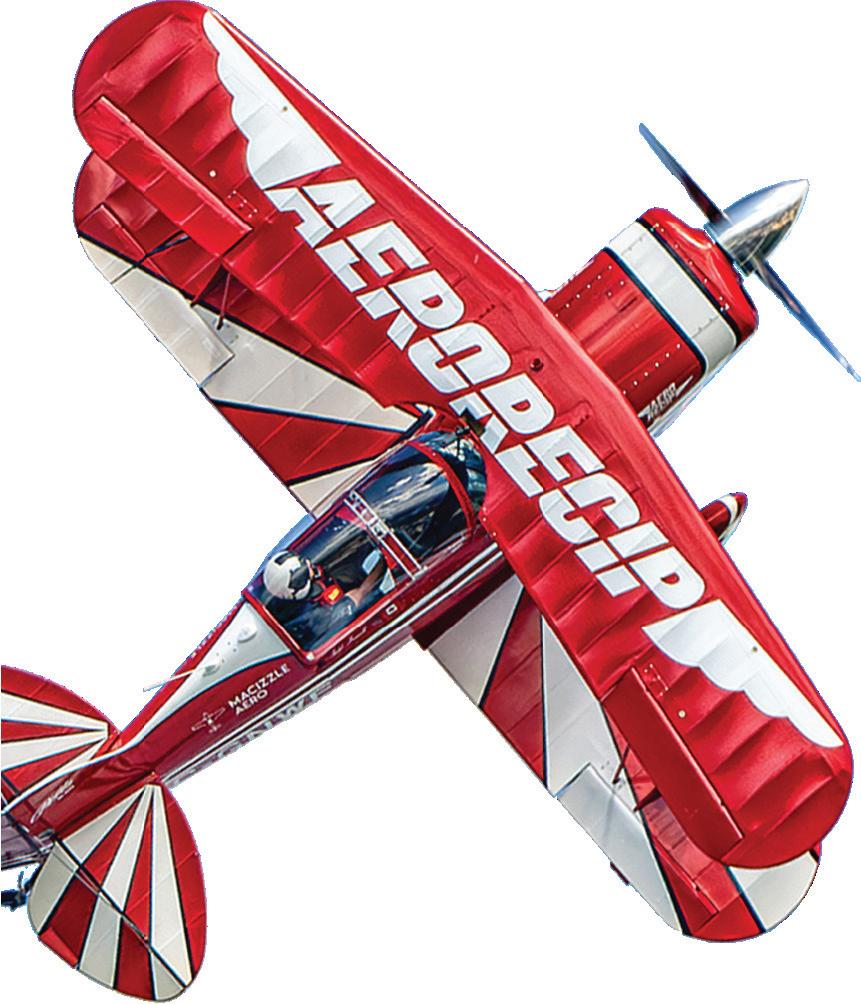





We are proud to sponsor the Northern Stars Aeroteam, flying at EAA AirVenture Oshkosh