2026 – 2031
A STRATEGIC PLAN FOR RENEWAL, GROWTH AND RECOGNITION
The mission of Campbell University is to graduate students with exemplary academic and professional skills who are prepared for purposeful lives and meaningful service. The University is informed and inspired by its Baptist heritage and three basic theological and biblical presuppositions: learning is appointed and conserved by God as essential to the fulfillment of human destiny; in Christ all things consist and find ultimate unity; and the Kingdom of God in this world is rooted and grounded in Christian community. The University embraces the conviction that there is no conflict between the life of faith and the life of inquiry.
CAMPBELL COMMITS to more effective fulfillment of its mission through a University-wide effort to achieve sustainable growth in overall student enrollments, with a target of 2% average annual growth over the five-year planning period (net increase of approximately 500 students).
OBJECTIVE 1. We will intentionally and substantially increase investment in those academic degree programs— whether existing or new—that demonstrate a clear ability to be catalysts for enrollment growth.
METRIC 1.A. We will track the success and return on investment of all academic degree programs by annual enrollment, tuition and fee revenues, retention rates, time-to-degree, and placement of graduates.
METRIC 1.B. We will make determinations on the addition of any new degree programs according to empirical measures of market demand, societal need, and alignment with institutional mission.
OBJECTIVE 2. We will expand and dramatically improve the marketing and promotion of degree programs and the overarching Campbell University brand.
METRIC 2.A. We will measure marketing gains by tracking website traffic, social media reach, digital search rankings, brand sentiment, and—most importantly—enrollment yield.
METRIC 2.B. We will measure gains in institutional brand awareness by tracking application and yield rates across all counties of North Carolina and by charting the increasing proportion of non-athlete enrollment coming from out of state.
METRIC 2.C. We will annually track Campbell’s status as “the private university enrolling the most North Carolina undergraduates” to ensure retention of this institutional point of pride.
OBJECTIVE 3. We will attain and sustain an overall student retention rate that exceeds 80%.
METRIC 3.A. We will measure one-year retention rates of bachelor’s-seeking, first-time/full-time cohorts with the goal of seeing 6-8% increases over the plan period.
OBJECTIVE 4. We will increase undergraduate enrollment by intentionally creating (and effectively advertising) pathways for students wishing to move seamlessly from Campbell bachelor’s degrees to Campbell graduate and professional degree programs.
METRIC 4.A. We will track increases in the number and percentage of entering cohorts in Campbell’s graduate and professional degree programs who have already earned a Campbell undergraduate degree.
OBJECTIVE 5. We will expand and improve the physical and human infrastructure necessary to sustain enrollment growth, including new investments in faculty, staff, amenities, student services, and facilities.
METRIC 5.A. We will track faculty and staff hiring in those disciplinary areas where enrollments grow to such an extent that corresponding increases are necessary.
METRIC 5.B. We will monitor increases in housing fill rates and track investments in maintaining/improving residence hall quality.
METRIC 5.C. We will annually survey students to gauge satisfaction on residence halls, campus dining, parking, and core student services. We will track and evaluate divisional responses to remediate items of clear student dissatisfaction.
METRIC 5.D. We will chart the establishment and monitor the functioning of a centralized career services center to support student success and professional development.
OBJECTIVE 6. We will attract and retain students through the expansion and strengthening of signature, high-impact learning experiences. These signature experiences will be broadly advertised to prospective and existing students.
METRIC 6.A. We will measure increases in the number of study abroad, internship, field study, and Christian missions available to Campbell students and the percentage of our student body that participates annually.
METRIC 6.B. We will measure progress toward this objective by increases in institutional and philanthropic support for study abroad, internships, field courses, and missions.
CAMPBELL COMMITS to strengthening the University’s financial health by ensuring that annual revenues regularly exceed expenses, expanding and diversifying revenue streams, increasing philanthropic support, remedying a backlog of deferred maintenance issues, and investing in employees in ways that reward merit.
OBJECTIVE 7. We will increase net revenue each year by generating more tuition/housing/dining dollars through increased enrollment and through consistent, incremental reductions in undergraduate discount rates.
METRIC 7.A. We will chart annual increases in net revenue from tuition, housing, and meal plans.
METRIC 7.B. We will chart annual decreases in average undergraduate discount rates, with an expectation of at least a 0.5% reduction annually for each year of the planning period.
METRIC 7.C. We will chart the allocation of increases in net revenue invested back into faculty and staff salaries according to annual measures of employee merit and performance.
OBJECTIVE 8. We will increase philanthropic support by setting annual goals that grow the endowment, broaden donor participation, and ensure that fundraising priorities across all divisions and units are aligned with the University’s mission and coordinated centrally to support institutional strategic priorities.
METRIC 8.A. We will launch and measure the progress of Campbell University’s most ambitious comprehensive fundraising campaign through total dollars received and percentage of target achieved.
METRIC 8.B. We will annually measure the effectiveness of Campbell Giving Day, shifting from participation goals to dollar goals with an expectation of exceeding $2M as a one-day total by no later than FY31.
METRIC 8.C. We will measure the overall effectiveness of fundraising efforts annually by charting total dollars contributed, with an expectation of at least 5% growth annually.
METRIC 8.D. We will prioritize the naming of at least one currently unnamed college or school during the period of this plan, with the naming gift(s) being of such magnitude that they can dramatically transform opportunities and operations for the academic unit.
OBJECTIVE 9. We will grow revenue streams by increasing extramural grant submissions and awards.
METRIC 9.A. We will measure growth by annually charting the number of proposals submitted, total dollar value of proposals submitted, number of grants awarded, and total dollar value of grants awarded.
OBJECTIVE 10. We will secure annual net gains in auxiliary revenue by maximizing use of campus facilities, by increasing residential occupancy, and by expanding revenue-generating partnerships and programs that enhance the campus experience and contribute to long-term financial stability.
METRIC 10.A. We will measure increases in residential occupancy each year, with an expectation of at least 2% growth annually (beds occupied and new net revenue generated).
METRIC 10.B. We will measure increases in net revenue from summer camps, conferences, and facility rentals with an expectation of at least 5% growth annually.
METRIC 10.C. We will measure increases in athletic event revenue, game guarantee revenue, and Fighting Camel Club gift revenue, with an expectation of at least 5% growth annually across all categories. A new revenue-sharing model will ensure that dollars derived from athletic events are distributed appropriately across contributing divisions and directed toward institutional priorities.
OBJECTIVE 11. We will complete a comprehensive campus Master Plan that prioritizes mission-aligned capital investments.
METRIC 11.A. We will deploy the Master Plan to chart progress on a preventive and deferred maintenance schedule, with annual funding benchmarks and implementation timelines providing clear metrics for institutional accountability.
METRIC 11.B. We will create, fund, and fill a new Mechanical Engineer staff position with responsibility for project design and management, thereby reducing institutional reliance on third-party engineering firms. We will measure dollars saved through this shift from external to internal capacity.
OBJECTIVE 12. We will strengthen procurement and technology resource management by modernizing policies, conducting regular competitive reviews, and ensuring that purchasing and system investments maximize institutional efficiency, reduce redundancy, and support long-term financial stewardship.
METRIC 12.A. We will complete a full assessment of the remaining lifecycle of all major technology systems and implement a prioritized replacement and modernization plan.
METRIC 12.B. We will measure the consolidation of software purchases to reduce redundancy, eliminate unnecessary outsourcing, and minimize duplicate functionality across disparate vendors.
CAMPBELL COMMITS to becoming the region’s most vital private educational partner for economic growth, workforce development, and improved health care.
OBJECTIVE 13. We will enrich the local community by collaborating with key employment sectors to address workforce needs and connect students to high-demand career opportunities.
METRIC 13.A. We will measure annual increases in the number of internships, co-ops, service-learning, and applied research opportunities in local enterprises (companies, government agencies, non-profits) that allow students to gain real-world experience while providing employers access to a pipeline of talent.
METRIC 13.B. We will hold a new centralized career services center responsible for tracking job placements of Campbell graduates and evaluate institutional impact on workforce development in North Carolina’s 78 officially designated rural counties.
METRIC 13.C. We will measure the number of new workforce development advisory committees established to assist academic units with curriculum development, internship design, and career preparation.
OBJECTIVE 14. We will be a catalyst for innovation in our local community and across the region and create opportunities for continued economic and quality of life impact.
METRIC 14.A. We will track the number of new business incubators Campbell University is able to facilitate through a combination of its locational and intellectual capital.
METRIC 14.B. We will track increases in the number of events and the number of participants coming to Campbell’s campuses for events dedicated to innovation, entrepreneurship, economic development, and community care.
OBJECTIVE 15. We will expand and deepen partnerships with community colleges by developing new transfer pathways, joint academic programs, and collaborative enrollment initiatives.
METRIC 15.A. We will track the number of new articulation agreements established, with a goal of no fewer than two in each year of the planning period.
METRIC 15.B. We will track the number of students who transfer from community college to Campbell each year, and we will measure increases in community college students who eventually earn a bachelor’s degree at Campbell.
OBJECTIVE 16. We will pursue mission-aligned public/private partnerships—including opportunities such as hotel development, property leasing and sales, community-based program development, new academic programs—to generate new revenue, enhance the student experience, and benefit the broader community.
METRIC 16.A. We will quantify partnership outcomes—e.g., new facilities built, new programs established, and levels of public/private funding obtained to underwrite joint initiatives.
OBJECTIVE 17. We will more effectively leverage our existing locational advantages (e.g., Raleigh, Fayetteville) and actively cultivate opportunities to expand Campbell’s geographic footprint in other areas of the state.
METRIC 17.A. We will annually track increases in instructional activity (credit hours generated) and experiential activities (including clinical placements) beyond the main Buies Creek campus.
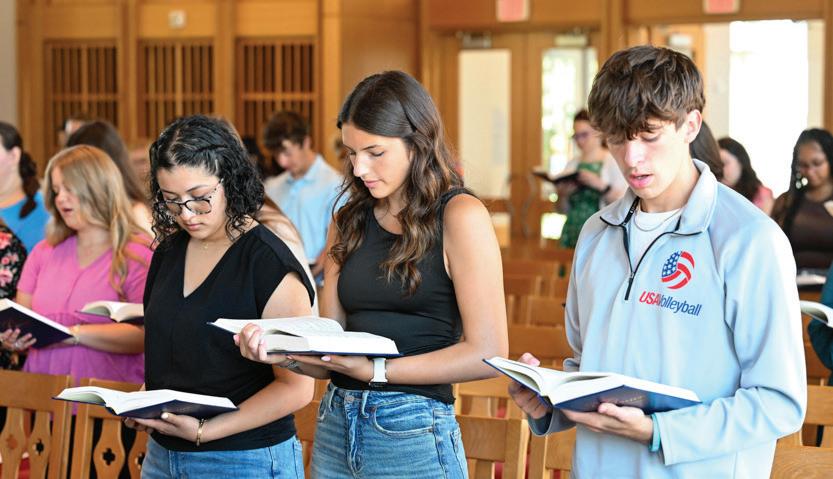
CAMPBELL COMMITS to strengthening its broader reputation as a Christ-centered institution of higher education, as a gathering space for people from all backgrounds who wish to live, learn, and grow in a thriving Christian community, and as the state’s top producer of graduates prepared for lives of servant leadership.
OBJECTIVE 18. We will ensure that Campbell University’s Christian identity is more clearly and more consistently reflected in both internal and external marketing and communications (including social media), and that messaging from Admissions, Marketing, Advancement, and Alumni Relations emphasizes the institution’s faith foundation as a distinctive for purposes of recruiting new students and for enhancing the retention of existing students.
METRIC 18.A. We will annually evaluate the University’s website, promotional materials, and on-campus imagery using measures of prominence, consistency, and mission alignment.
OBJECTIVE 19. We will secure philanthropic support to establish one or more new endowed scholarships that shall be awarded to incoming undergraduates based on Christian character, rather than solely on GPA and other traditional measures of academic preparation and performance.
METRIC 19.A. We will measure progress toward this objective by dollars raised, by evidence of scholarship launch, by number of prospective undergraduates applying, and by number of recipients.
OBJECTIVE 20. We will expand and improve the onboarding of new students, faculty, staff, and trustees to better educate them on Campbell University’s founding history, its current mission, and its Christian identity.
METRIC 20.A. We will evaluate the creation and application of a series of resources that can be adapted for use by departments, hiring managers, committees, boards, and student organizations to more clearly communicate the University’s mission and Christian identity. We will account for their deployment at such key institutional gatherings as new student orientations, Tartan, first-year seminars, Connections, student leader trainings, and new employee/trustee onboardings.
OBJECTIVE 21. We will significantly increase the use of Butler Chapel as a venue for worship and spiritual formation by students, faculty, staff, and the community.
METRIC 21.A. We will document annual increases in the number of events hosted at Butler Chapel, and we will account for increases in attendance (particularly at worship events held on Sundays).
METRIC 21.B. We will chart progress to establish an endowed fund to enhance worship resources, support lectures, hold performances, and/or convene conferences in Butler Chapel. This fund will engage the university and external communities on topics that reside at the intersection of faith and inquiry.
Unit-Level Planning. An important second phase of the strategic planning process will charge 14 separate administrative divisions with writing their own five-year plans that complement the key components of Campbell University 2026-31. The 14 local planning units include:
n College of Arts and Sciences
n College of Pharmacy & Health Sciences
n Wiggins School of Law
n Lundy-Fetterman School of Business
n School of Engineering
n School of Education and Human Sciences
n Wallace School of Osteopathic Medicine
n School of Divinity
n Adult and Online Education
n Athletics
n Enrollment Management
n Institutional Advancement
n Student Life and Christian Mission
n Wiggins Memorial Library

These local planning units will form their own committees and, following guidance from the University Strategic Planning Committee, draft their Plans (no more than five pages) during the Spring 2026 semester.