LOVE CAMDEN EVENTS TOOLKIT
A guide to planning community events in Camden



Hello! We are Camden Council’s Events Team which is part of the Culture Service
Camden Council’s Culture Service plays a strategic and practical role in supporting, enabling and growing arts and culture across the borough – we act as a bridge between cultural organisations, communities, neighbourhoods, and artists to help uncover local creativity and support cultural opportunities across Camden
The Events Service is responsible for:
• Managing the Culture Service’s Programme of free annual events, as well as some civic events
• Supporting communities or individuals to run
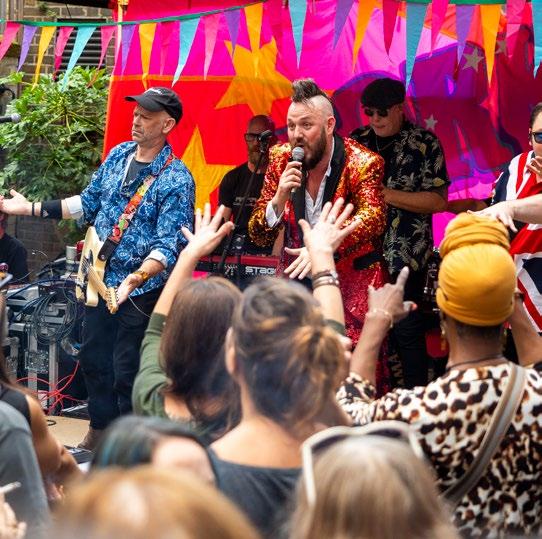
events outdoors in the public realm and inside some of our council buildings
• We help to coordinate permissions across council departments
• Overseeing filming in Camden’s public realm, in partnership with our Film Office
• Generating income through public realm activations and venue hire
We are here to guide and support you to deliver your events in Camden
This is a toolkit for anyone in Camden who wants to organise a local community event but needs guidance, structure, or reassurance on how to do so
This can include local residents, neighbourhood groups, community organisations or voluntary groups who may want to host non-profit community events such as street parties, or local fairs Event Managers who want to use Camden parks, streets or open spaces in public locations and anyone else who wishes to hold an event on public land, or as we refer to it, in the public realm.
This toolkit has been designed to empower you to organise and deliver your own safe, successful, and inclusive events Its purpose is to:
• Provide clear, practical guidance for planning events, including step-by-step advice on how to register your event with Camden Council if you are using the public realm, as well as key operational/delivery considerations for public events
This toolkit should help you understand the full process from initial idea to delivery
• To ensure events in our borough are safe, compliant and are well managed by highlighting the process of health and safety, licensing and safeguarding
• To support community cohesion, accessible participation, facilitate the celebration of local identity and strengthen local connections
• To encourage good stewardship of public spaces, highlighting responsibility for sustainability, waste management, and minimising environmental impact in the local area
• To provide resources and templates that save you time, including event management plans, risk assessments, and event schedules.
Camden Council currently funds outdoor, community-led, not-for-profit events through its Community Festival Fund There are grants available of between £200 - £2000 that are awarded to support events that take place in the borough These events must strengthen community cohesion, celebrate Camden’s cultural diversity, and bring residents together in an inclusive, accessible environment. The funding window for applications is typically January and February, and the awards are granted in April for the upcoming year (April – March) More information can be found on our website lovecamden .org .uk
For anyone running a community focused, notfor-profit event who doesn’t apply or isn’t awarded funding, Camden Council still commit to providing subsidised fees and charges for permits, and services such as road closures and street cleaning
For any private or commercial events, charges may apply so please get in contact with our Events Team on events@camden gov uk to learn more
Other Council funding that may be available (not necessarily events focused):
Community Cohesion Fund supports projects that bring people from different faiths, cultures, and communities together, typically small, responsive community projects
We Make Camden Kit, which is a small grants programme designed to give Camden residents, community groups and small organisations the money and support they need to run projects that improve life in the borough

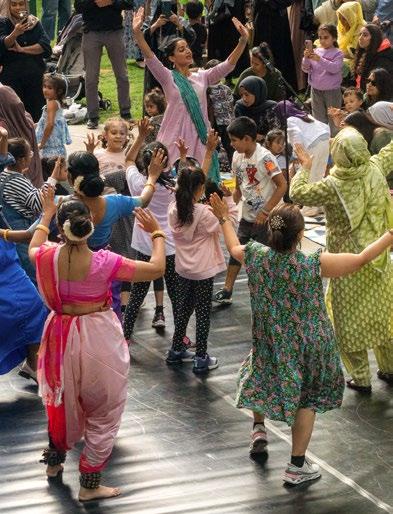
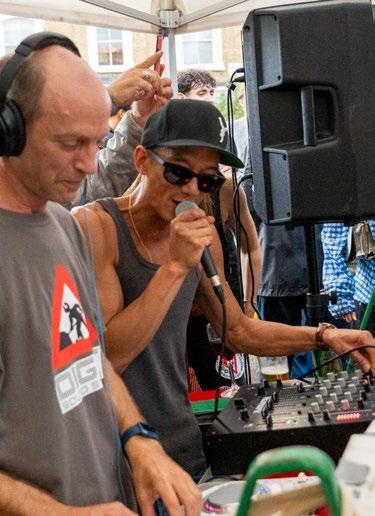
If your planned event takes place in the public realm, you will need to register your event with our team. It can be a free community event, festival, community or corporate park event, street party, filming or a commercial brand activation, but if it takes place on public land you’ll need to share more information with our team who will take you through what’s needed to get a permit (permission) for your event
Q . Why do you have to get a permit from the Council to do activity in the public realm?
A . Because public spaces are still regulated environments, and all Councils have duties to:
i) Ensure the event is safe for the public
ii) Manage the impact on public spaces and local communities
iii) Regulate activities that require legal licensing
iv) Maintain public order and manage the highway
v) Protect the environment and maintain public land
vi) Ensure fairness and proper use of shared spaces
Q Are you unsure if your event is on public land?
A . Get in touch with us anyway and we will be happy to confirm.
NB: If your event is being held on private land, you do not need to get in touch with us, but please do speak to the landowner to seek permission and check what information you need to share as you may still require specific licenses.
Q What if I skip getting a permit and run my event anyway?
A . Please don’t – this could expose you to legal, financial and safety risks. Your event might be
stopped or shut down, you may be in breach of licensing laws which can lead to legal penalties, fines, and enforcement actions, and it will harm your ability to run future activities in the borough
Q . What types of outdoor events are common in Camden?
A . Events come in all shapes and sizes, examples include:
• Cultural festivals
• Street parties and fairs
• Music events
• Fashion shows
• Seasonal markets
• Brand activations
• Corporate fun days
• Pop-up theatre and dance performances
• Art installations/exhibitions
Please get in touch as soon as possible, but at least 8 weeks before your event is due to take place
If your event is larger or more complex, you will need to contact us at least 6 months in advance so our team to have sufficient time to review your event plans and liaise with the appropriate services We may need to invite you to present to our Safety Advisory Group (SAG), who meet monthly.
For an event that is for 100 people or more you must notify the police using this link: www met police uk/tua/tell-us-about/eo/af/ events-processions
The police events team keep a log of all large events and will allocate resources if necessary
For any events involving a road closure, which includes street parties, we need an application at least 12 weeks in advance
Parking suspensions require a minimum of 17 days’ notice
Planning permission (required for an event that has structures in place for longer that 27 days) also requires a significant amount of notice - there is no statutory timeframe, but the details of your event need to be shared for public consultation, so please submit your application to the Planning team as soon as possible More information can be found here: Planning and building development - Camden Council
EventApp is Camden Council’s online application system for indoor and outdoor events, and it helps to manage the event approval process
Applicants will be able to:
• Submit event details
• Upload safety and insurance documents
• Receive quotes/cost sheets (if needed)
• Communicate directly with the Events Service team
• Upload evidence of licenses and community engagement
• Receive the final permit for your event
The portal is also accessed by other Council Services and the Police’s Events planning team
To get started with your application, you need to follow the link below and set up a free account: Apply to hold an event If you are a returning applicant, please use your log in details and create a new application, or to see your previous applications
After you apply on our EventApp portal, one of our team will get in touch with any questions, potentially schedule a call with you to discuss your event in more detail, and request that you begin uploading your documentation We are a small team, and it can take up to 7 working days for our team to respond to a new application, so please don’t be concerned if you don’t hear back from us immediately
Once we are assured that your event will be managed safely, and all paperwork has been finalised, we will grant a permit which acts as a conditional license agreement for use of the space (public realm)
If we cannot grant a permit, our officers will be in touch to explain the reasons why and offer advice for future applications
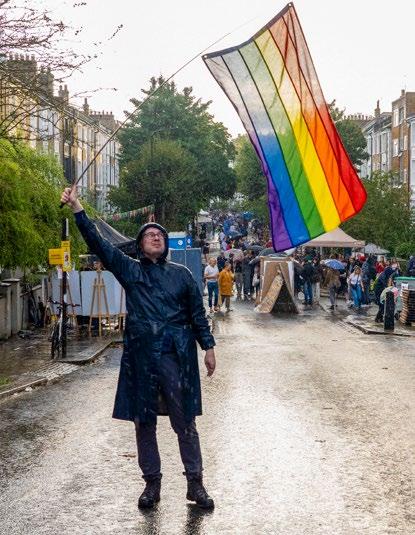
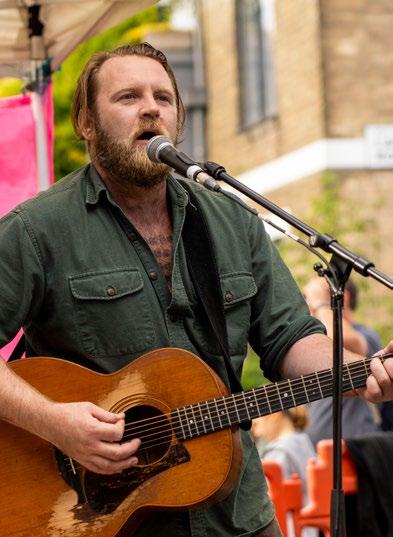
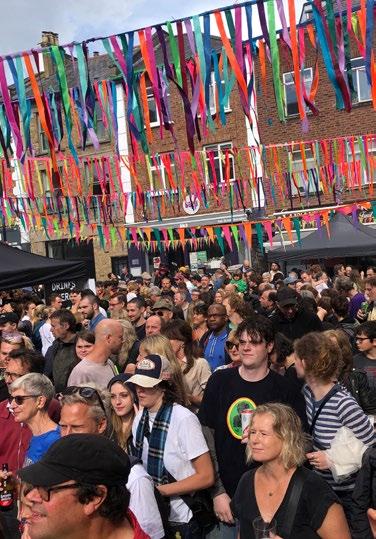
Camden has many locations suitable for events, including numerous parks and open spaces, as well as streets and roads that can be made available where appropriate A suitable location is one that is safe, accessible, the right size for your event and practical to manage, and always consider those residents/businesses surrounding the site might be impacted
Once you have decided on your event location, check the ownership of the land If this is in the public realm, please contact our team or complete an application on our events portal EventApp, where it will ask you to select the location
If you wish to hold your event on private land, you will need to reach out to the landowner and follow their procedures to get permissions If you are
unsure if the land is owned by Camden or private land, please reach out to our Events Team to check.
An event can range in scale from a small, organised picnic to a large street party or festival
You need to consider several key factors when deciding the scale of your event including,
• The location/space constraints
• Types of activities you have planned
• What infrastructure you might need (larger events will require more infrastructure)
• What resources you have to manage safety and risks
• What budget you have
• What staff/volunteers are available
• How much time you have to plan
Small scale private gatherings of short duration, with small numbers and no infrastructure (e g tables, gazebos etc) such as a family picnic in a park would not require any permission from the council. However, if there is music, gazebos being set up or sports games running, then you may need a permit from us so please get in touch with us as soon as possible, but at least 8 weeks before your planned event
Private, commercial, charity or community events that attract larger numbers of people, and will include infrastructure (furniture, fencing and staging etc), need possible crowd management and services such as traffic or waste management, will need to be submitted to our team at least 6 months in advance of your event
This allows sufficient time for us to provide guidance to ensure the event is delivered in line with council requirements and to notify local stakeholders and licensing authorities if needed We may also request a site visit to talk to you about the site and your plans, and we may require you to hold a public meeting for residents and businesses who may be impacted by the event (see section 3.7 Communications, Community Engagement)
Officers from the relevant Council services may attend your event to ensure that you are delivering it as planned, or they may simply touch base with you following the event for feedback
As mentioned previously, you must apply to Camden’s Events Service via EventApp for a permit to use any space in the public realm for your event – a permit is an agreement to use council owned land (See 2 1 for more info on why you need a permit)
If your event involves any licensable activity, you will also need to apply for one of two licenses from our Licensing team Licensable activity includes:
• Sale/supply of alcohol
• Regulated entertainment (live or recorded music, film screenings, performances, dancing etc)
• Late night refreshments (hot food/drink between the hours of 23:00 – 05:00)
1) Temporary Event Notice – A Temporary Event Notice (TEN) is for small events that are not more than 499 people attending at any one time (this includes staff/traders working in the event footprint) .
Your TEN application is sent directly to the Council Licensing team, Environmental Health team and the Police Licensing team for approval If there are any concerns with your activity, it may be discussed with you before the license is granted In some situations, if the events are deemed unsafe, your TEN applications may be rejected.
There is a small charge for a TEN application, and typically you will find out withing 3 working days if it is approved You must apply for your TEN at least 10 working days before your event takes place – please read more information on applying for a TENs here: Camden Licensing Temporary events notice
Please note, the Events Service to do not grant TENs but we will ask to see evidence that you have one for your event, if suitable.
2) Premises License – A premises license is for larger events that exceed 500+ people, and for any events that last more than 96 hours or involve complex entertainment .
Camden Council’s Licensing Team offer a preapplication service if you think your activity might need a premises license, and you want to talk through the details with a licensing officer. More information about this service can be found here: Camden Licensing Premises License
You will need to apply for a road closure if your event impacts the highway such as:
• Closing a road to traffic
• Restricting traffic
• Using pavements or cycle paths
Road closures are essential for the safety of street parties / festivals, parades, and any events that require placing a structure in the road It may also be needed if you have large queues in the street outside a venue
The Events Service facilitate all road closure bookings for events in the public realm so please include details of this on your event application Requests for road closures must be submitted with at least 12 weeks’ notice .
If you need to suspend any parking bays for your community focused, not-for-profit events activity, please speak to our Events Team who can help facilitate parking suspensions for you
If you are running a private or commercial event, please arrange parking suspensions directly with our Parking Operations Team via the website here: Book parking suspensions Charges will apply
Any request for parking suspensions must be submitted a minimum of 17 days in advance, or late fees may be charged Please be mindful of the impacted area and other users, including residential bays, electric bays, and disabled bays. Ensure you are only booking suspensions where absolutely necessary for your activity, and for the shortest duration possible
If your event will include stalls or traders selling items, you may need a street trading permit so please inform our Events Team who can advise Traders can include:
• Food traders selling hot or cold food/
beverages– they also need to register as a food business here: Camden website Register your food business
• Market stalls / retail units
Ultimately, the lead event organiser is responsible for any traders so you will need to request specific documentation from all traders, such as evidence of insurance and health and safety certificates, so please speak to the Events Team for further advice (see also 4 4 event entertainment & activities, stalls/food traders for more information)
If your event is using copyrighted music – live or recorded – you may need a PRS/PPL License which ensures that all royalties are paid to the rights holders Read more about this here or contact our team
Although temporary structures (like marquees, stages and other larger event infrastructure) may seem low-impact, they can still affect land use, public safety and local communities, so Camden’s Planning Team may need to give permission especially if these structures are going to be in place for more than 28 days per calendar year
You must apply, although there is no statutory timeframe, in plenty of time because approval must be issued before your structure is installed In some cases, approval can take many months.
There is a charge for the planning application process as well as pre-planning advice For more information, please follow this link: Planning applications - Camden Council
In Camden, most outdoor advertisements and signs require advertising consent, (unless your sign falls under deemed consent signs) –advertising that requires consent can include illuminated signs, large posters / hoardings / specialist display structures and signs placed above 4.6m on a building. For more information, please following this link: Advertisements and signs and planning permission - Camden Council
If you are inviting members of the public to attend or participate in your planned event, the responsibility, or duty of care, for their safety rests with you as the organiser.
A duty of care is a legal obligation, so you need to take sensible steps to keep everyone involved in your event - whether they are working, performing or attending - safe and well No matter the size of your event, safety should always be at the heart of your planning, from the very first idea right through to pack-down
If your event is taking place in the public realm, then we as the landowner hand over the responsibility of public safety to you, but we must be confident that you are running your event safely before we grant a permit (give our permission) This is why we ask you to create an application, so we can review all your documentation as evidence
The most effective way to provide evidence is by writing both an Event Management Plan (EMP) and a Risk Assessment (RA)
Your EMP should set out all key event details but also provide us with a clear understanding of who is responsible and how your event will be managed safely. Your EMP should include:
• Site Plan - a map, showing the whole footprint of the event, all entrances and exits, and location of infrastructure such as stages, food stalls, fair rides, and toilets etc
• Event schedule – which covers all activity from the first person to arrive on site, to the end of the day when the last item is removed from site A detailed schedule can help you plan critical safety moments such as checking equipment and you can share with stakeholders
• Key contacts – names and contact details of those individuals responsible for running and managing the event
• First aid / medical plan – details of your medical resource and planned response to incidents, anything from minor slips to medical emergencies
• Security plan – how many staff (stewards/ security) are working, their training, their responsibilities, and their location and how the
chain of command will work in the event of an emergency
• Emergency plan – procedures in place for emergencies/evacuations and what situations might trigger them
• Welfare policy – details of the available facilities and procedures for looking after staff, children, and vulnerable adults (see sections 4 3 Safeguarding & VAWG)
• Noise management plan – if you have amplified music or activity which may cause a disturbance to the local area you will need a plan of how to monitor sound levels
• Adverse weather contingency – procedures for extreme weather that may affect the safety of those at your event
• Suppliers list – a list of names, contact details and relevant paperwork for those permitted to work at your event
• Set up/de-rig plans – if you are planning to build any structures on site, you may need to include technical drawings and specific risk assessments
Templates for some of these documents can be found in Section 5 .1 – Application templates .
All these documents should be written to a level of detail that is reasonable for your event and should be shared with those who are working with you
Your Risk Assessment (RA) is designed to help you think in advance about the possible likelihood and severity of risks at your event, and how you might reduce those risks to keep everyone safe
It’s a particularly important document that Council officers and the Camden Safety Advisory Group will review to ensure that you have planned your event properly
Common risks at community events include:
• Slips, trips, and falls
• Crowds & congestion
• Behaviour and conflict
• Equipment and electrics
• Food safety
• Vehicles
• Children & vulnerable adults
• Fire safety
• Weather
• Medical issues
A risk assessment template and further instructions on how to complete can be found in Section 5 .1 Application Templates .
Depending on the scale and risk associated with your event, we may invite you to present your plans to the Camden Safety Advisory Group, otherwise known as the S A G This is made up of key services at the council, including Events, Licensing, Noise, H&S, Community Safety and Emergency planning, as well as other stakeholders such as the MET Police, London Ambulance Service, London Fire Brigade and TFL. The group offer advice and guidance on best practice and making your event as safe as possible .
“The success of an event is measured not only by enjoyment, but by everyone getting home safely!”
“Planning for safety means planning for people: their wellbeing, their confidence and their trust.”
Martyn’s Law, otherwise known as The Terrorism (Protection of Premises) Act 2025, is expected to come into force in 2027 The aim is to help everyone involved in running public events — from community organisers to local councils and venue owners — understand their role in keeping people safe from terrorism
The law builds on existing health and safety guidance, especially around crowd safety and security. As an event organiser, there are three main responsibilities to keep in mind:
• Legal – you need to make sure you’ve got the right licenses, permissions, and insurance in place. Without these, your event won’t be able to go ahead
• Moral – you have a duty of care to everyone at your event This means thinking through what could go wrong, putting sensible plans in place, and doing what you can to reduce risks so people can enjoy the event safely
• Financial – your event plans should be realistic and properly funded It’s important not to cut corners to save money if it could affect safety or wellbeing
Speak to the Events Team for more information on whether this is relevant for your event or read more about Martyn’s Law on the Protect UK website .
To plan and run a successful event, you should have a reasonable number of people working with you Consider what is sensible and achievable for the scale of your event and make sure that responsibilities on the day are clearly agreed with those people in advance
For smaller community events, you may want to reach out to your neighbours, residents’ groups, and other local community groups to recruit willing volunteers Camden Voluntary Action is a local volunteer organisation that can help point you in the right direction of local groups or consortiums - Voluntary Action Camden
Be aware that there is a difference between staff who are formally employed and paid for a specific role, and volunteers who are giving their time unpaid, so decide what skills you need, and what support, supervision and guidance you can give to these individuals
If you are planning a licensed event (where you need a TEN or Premises license) we strongly advise you hire licensed security personnel to help manage the event safely. Ideally, these are SIA (Security Industry Authority) registered security guards and booked through a professional company that has its own Public Liability Insurance
> Community engagement (In advance of your event)
Community engagement is essential for anyone organising an event in the public realm because public spaces are shared by everyone
Events can directly affect the people who live, work, and move through the area, so strong community engagement can help to build trust, and rally support It can also help to prevent conflicts, empower diverse groups, and can help to build long-term local networks that support future events
How you can engage with your local community:
• Speak to resident associations, community leaders, and/or community-used venues
• Pop-up stalls in local high footfall areas
• Speak to your ward councillors
• Do a letter drop to all business and residents in the local area with information about your event and on the day contact details if anyone has any concerns
• Hold a public meeting (necessary if your event includes a road closure, or will have a significant impact to the local area)
It is always helpful to share clear information and be transparent – share the purpose of your event, the benefits and how you will ensure it is safely managed
Not everybody will feel the same as you or share your passion for the event, so you might want to think about how you respond and try to mitigate any potential objections. If possible, find ways to compromise, adjust plans where possible and/ or reassure people If you feel you have gone to every effort to listen, adapt, and have received wider support, it may be appropriate to continue as planned but speak with our team for further advice via events@camden gov uk
Effective communication keeps an event running smoothly and ensures everyone knows what is happening and how to respond if something changes
Event briefings are key if you are working with others to run an event. You should always arrange one at the start of an event, before you are open to visitors and ensure that everyone understands their roles, responsibilities and how to escalate issues if necessary. You can also arrange for a debrief at the end of the day to help identify what went well or key learnings on what could be improved
Communication during the event can be done effectively using two-way radios for events on larger sites where you may not be able to see each other but need to manage issues quickly, or the use of mobile phones/messaging apps such as WhatsApp, provided there is good internet connection These can be useful for smaller events when you are in the sightline of oneanother and have non-urgent updates or want to share photos or instructions
Public Liability Insurance is a type of insurance that protects you, as an event organiser, and your staff/volunteers if a member of the public is injured or their property is damaged because of something connected to your event . Think of it as a safety net, which helps make sure that you or your organisation is not financially responsible if something goes wrong
Camden Council requires event organisers to have Public Liability Insurance cover, as this reassures us that you/your organisation can handle any unforeseen incidents involving members of the public
You should also consider Employers Liability Insurance if you are employing paid staff or volunteers to work on any high-risk activity involved in your event, including but not limited to the set-up, delivery, and de-rigging of equipment.
There are lots of events insurance policies online that will cover both, and many recognised insurers run community, and charity polices that would suit smaller free community events Just remember to always check reviews and prices to find the best cover to suit your event and reach out to our team if you have any questions about what we require
You should always consider what first aid/ medical cover is available at your event, as this is a key part of keeping people safe and reassuring visitors. Your provision should depend on the scale of your event and the level of risk associated and, in some cases, may be dictated by conditions on your permit or license
Smaller gatherings may only require first aiders, while larger events are likely to need dedicated first aid responders and, in some cases, paramedics Remember that accidents and illness can happen anywhere and quick responses make a big difference . Use your risk assessment to look at the types of risks that might be likely to occur at your event (e g more likely and severe risks at sporting events, large numbers or where alcohol is being served) and consider the consequence of something happening Also consider who is attending, if there are events with children or older or vulnerable adults it may be necessary to have additional first aid support.
You should also consider how quickly emergency services can reach you, but you must not rely on them for your event because they do not provide on-site event cover
We expect that all event organisers consider how to make their events welcoming for everyone no matter background, culture, age, ability, or financial situation. Through supporting event organisers, the Culture Service hopes to provide more opportunities for residents to lead and participate in arts and cultural events across the borough
Consider how to create an event that is both safe and enjoyable, whilst breaking down barriers to attendance and expanding your audiences –make the commitment to creating an event that is enjoyable and welcoming for everyone
We expect all event organisers to consider the following:
• How are you marketing/or telling people about your event? Consider using plain English and offer larger, easy-to-read text
• Can you make your event free or offer a reduced ticket price? Consider concessions for carers or allowing the use of the Access Card scheme
• Think about transport links when considering locations, and blue badge parking nearby
• Consider additional facilities such as accessible toilets, and platform ramps for larger events with stages, or additional seating where needed
• Consider having British Sign Language interpreters on stage or captioning on your screens
• Support people with sensory needs by offering quieter areas and providing clear signage
• If your event runs into the evening, consider appropriate event lighting so visitors feel safe and staff can manage crowds
• Train staff and volunteers on how to be welcoming and aware of additional needs
For further advice on how to make your event accessible, have a look at the following resources:
• Attitude is Everything – Live Events Access Charter: Live Events Access Charter - Attitude is Everything
• Scope – Accessible Events Toolkit: Accessible events toolkit - Scope for business
• Camden Disability Action – Provide support for organisations Support we offer organisations - Camden Disability Action
When planning your event, please consider ways you can reduce the environmental impact, from sourcing energy and minimising the use of plastics, to recycling and finding suppliers locally.
Key things to consider are:
• Suppliers –If using suppliers, please choose local suppliers where possible This helps reduce carbon emissions from travel, limits the number of vehicles entering the borough, and supports cleaner air in Camden
• Catering – Ask all food and bar operators to follow a no-single use plastic policy and instead provide reusable, compostable, or recyclable materials
> consider serving vegetarian and vegan options, and locally sourced products
• Power – If possible, try and use local power available at your location
> consider using new-generation battery power units wherever possible
> If you must use fossil-fuel power/ generators, they should be a low-emission diesel generator that meets modern Stage V standards and operates as quietly as possible
• Waste – Make full use of on-site recycling bins or provide additional recycling bins as part of your event
> use sustainable materials and minimise waste where possible
• Travel – Promote active travel where possible, and encourage visitors to use public transport and avoid driving
• Environment – Avoid actions that could negatively impact the local biodiversity or ecology, especially in parks and open spaces
You can find out more about Event Sustainability by visiting Home | Julie’s Bicycle | Culture & Climate Non-Profit or speak with our team for further advice
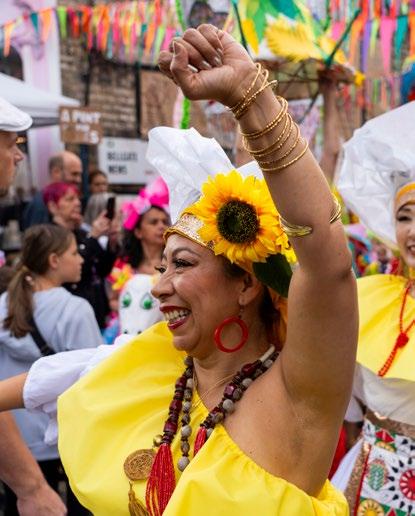
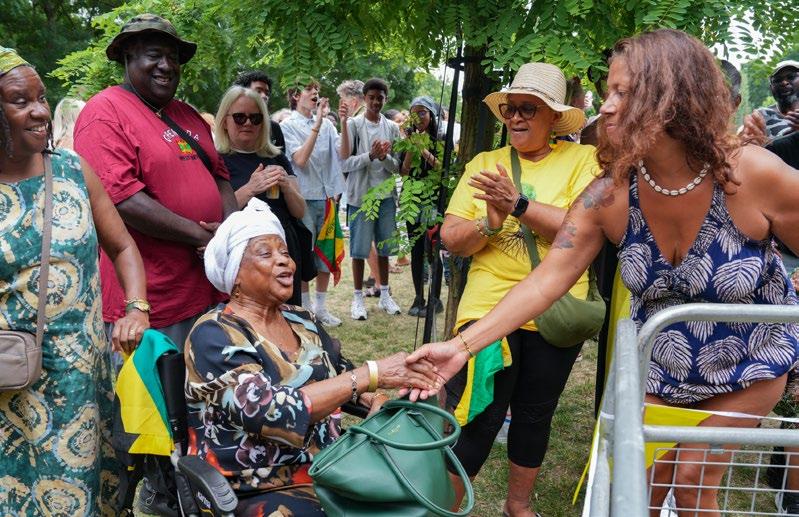
The weather can cause challenges to outdoor events so organisers often use marquees or small pop-up gazebos to cover activities such as workshops and info points
If you’re thinking about using these, first check you have enough space, ensure they are not blocking any entrances or exits, and make sure the ground is fairly level. They will also need to be secured, often using heavy weights or stakes, but stakes can damage tree roots or, more seriously, hit underground cables or utilities if they are larger, so you must confirm the location is safe before any staking is done Some marquees can be weighted using large water containers, but this only works if there is a reliable water supply on site
Always ensure that you include the use of marquees and gazebos in your risk assessment . If you have a contractor who is erecting them for you, ensure you get their risk assessment and check what wind speeds and weather may make them unsafe to use and ensure they are taken down If you are erecting your own pop-up gazebo, you will still need to consider wind and weather (the manufacturer often offers guidance) and have the correct weighting to ensure they do not blow away or collapse and cause injury to anyone
You may need power at your event, and ideally you will use an on-site mains supply, but if this isn’t available then you may need to consider the use of a battery-operated unit or generator
We do not allow the use of petrol generators in any Camden spaces due to significant safety, environmental and operational risks Diesel generators are allowed, if necessary, but must be low emission and silent - these are known as stage 5 generators . All generators must be hired from reputable, established companies and provided fully tested and appropriately insured Alternatively, a new generation of green power or battery-operated units are becoming more popular and more affordable, and we would encourage all event organisers to use these where possible
Remember:
• Include the use of a generator in your risk assessment, and consider the risk associated with the use of power .
• Ensure that you hire your generator from a reputable company that can deliver and often install specific power outage requirements for you
• Always protect the public by fencing off any generators
• Always ensure that all cables are covered, and sockets are off the ground and weatherproof
Find out more about generators at The Generator Project
The use of open spaces often requires specific types of fencing, to clearly mark the event area (this may be necessary if you need a TEN or Premises license), support security measures, and ensure attendance remains within agreed limits Fencing also helps to protect the public by creating safe boundaries around potential hazards such as generators, or hot cooking equipment.
There are different but common types of fencing used at events:
• Heras fencing: (typically 3 5m (W) x 2m (H)) Often used for perimeter fencing at larger events and for closing off sensitive areas such as backstage or bar/food units Heras fencing panels bolt together to make it hard to enter areas that the public shouldn’t be able to access This type of fencing can be hired from many local hire companies, but check it is clean, presentable, and undamaged if using in public areas of your event
• Crowd control barriers: (typically 2 3m x
1 1m) These barriers provide a safe choice for managing guests, ideal for queues at events, and for separating areas such as dog shows or VIP zones The hook system interlock making them quick and easy to erect and dismantle when needed .
• MOJO barriers: these are used at the front of stages, designed to withstand crowd pressure and reduce the possibility of crowd crushes
• Chapter8 Barriers: these are temporary road-safety barriers designed to guide and protect the public and workers near road or street works These are often brightly coloured and used for road closures
If you need additional advice on what barriers might be suitable for your event, contact the Event Team
Providing access to toilets might not feel exciting, but it is one of the most important parts of running a safe, welcoming community event, especially if you are serving food, alcohol or expecting big crowds. People will stay for longer, it helps keep the event site clean, and it offers a better visitor experience, not to mention toilet access is key for family-friendly events and to make your event more inclusive
If your event is small-scale, you may be able to partner with a local business or venue who will give you permission to signpost visitors to their public toilets, but if not, you may need to explore hiring portable toilets for your event
Consider how many portable toilet units are required to accommodate your visitors Standard single units are the most cost-effective option and they should be delivered clean and ready for use Accessible toilets should also be provided to make it possible for people with additional needs to attend and enjoy your event
If you are running a larger event, and employing staff or volunteers, you should also consider one or two staff-only toilets as part of your welfare plan
If you hire toilets, and they are delivered before the event or collected afterwards, we recommend securing the doors with strong cable ties to prevent them from being used by the public outside event hours
Effective signage is essential to the smooth running of any event. Clear wayfinding helps visitors navigate the space confidently and supports safety by clearly marking emergency exits, first aid and info points for example. It also makes your event feel welcoming and professionally organised Accessible signage also ensures the event is inclusive for all, so consider using consistent visuals, high contract colours, and simple language for a wider audience
Typical event signage includes:
• Entrance/exit (and emergency exits)
• Toilets
• First aid
• Registration
• Restricted access/staff only
• Workshop/performance times
• Road closure signage (this will be provided for you if you are running a community event)
Also consider signage at entrances for anything which is not allowed into your event, such as glass bottles/containers and requests such as asking visitors to keep dogs on leads
You should consider creating a site map for your event, which can help with planning and delivery of your event, as well as permits and licensing..
The simplest way to create a site map is to use your internet browser’s maps aerial image to gain a clear overview of your site This can help you plan the layout effectively and ensure there is clear access for guests and for emergency services in the event of an incident. You can take a screenshot, then use simple design tools (such as Paint or Canva) to overlay lines, shapes, and labels and add a key to identify the locations of any infrastructure such as stalls, generators, bars, food vendors, toilets, fairground rides, marquees etc
For larger events, it is useful to create a grid overlay on your site plan This helps those working at the event, which might include security teams and stewards, to respond more effectively to incidents and emergencies. For example, if an issue arises, you can direct staff to a specific grid reference making communication faster and easier
Safeguarding is the process of making sure that children and vulnerable adults are safe, protected and treated with care at your event (remember that even if the event is not for children, they may accompany adults). To do this, you should have trained staff and a policy in place, to deal with incidents, including lost children/vulnerable adults The policy should be shared with security teams and key event staff, but only during an on-the-day briefing to ensure it is communicated securely and appropriately
At an event, effective safeguarding can include:
• Making sure staff & volunteers know how to spot and report concerns
• Making sure there is a safeguarding lead or DBS checked staff who can be responsible for safeguarding
• Having clear procedures if a lost child/ vulnerable person is found or a parent/ guardian reports a missing child/vulnerable person
• Having signage around the site providing clear information for visitors
• Ensuring activities are safe, supervised and age-appropriate
• Risk assessing any activities with children/ vulnerable adults
• Manage photography and filming, and seek permissions from parents/guardians
• Check if you will have any police presence at your event and hope to contact them if needed
If you are worried about a child or vulnerable adult, please find more information about how and who to contact on Camden Council’s website: camden gov uk/social-care-health
Camden Council is strongly committed to preventing Violence Against Women and Girls (VAWG) and creating a borough where women and girls can live, work and move around safely and confidently. We emphasise that the responsibility for preventing VAWG lies with everyone, including event organisers, so there are some practical actions to consider, including having a high visibility of trained staff/security at your event, and procedures in place to safeguard vulnerable people
Read more about Camden’s commitment to VAWG on our website: In Camden we call it outCamden Council
> Ask for Angela is a safety initiative used in pubs, bars, venues, and public spaces to help people discreetly get support if they feel unsafe, threatened, or uncomfortable.
If someone approaches staff and asks for “Angela,” it is a coded request for help. Staff should be trained to respond by offering support — this may include:
• Taking the person to a safe, private space
• Helping them leave safely
• Calling a friend, taxi, or the police if needed
If your event is licensed, you will need to apply an Ask for Angela policy and ensure that you have posters around the site to make it clear that support is there for any female that is feeling vulnerable Read more about Ask for Angela here: Ask for Angela
All professional security companies should have VAWG training, so do check if you are using a security contractor. All MET police officers also have this training and have significantly expanded and professionalised it in recent years .
>Live performances: music or dance
Music and dance performances usually need a dedicated performance area or stage If you plan to use a stage, choose one that is the right size for your event and number of performers Stages are temporary structures and must only be installed by competent, professional companies with the correct insurance and experience Please do not cut corners — makeshift platforms like stacked boards or scaffolding are not acceptable – our team will require proof that any stage used is safe and fully compliant
If your event involves sports or dancing on grass, always check the ground condition in advance Walk the area to ensure its level, free of holes, uneven patches, potholes, or loose objects that could cause injury
For small community events, steel deck staging works well and fits neatly under a pop-up gazebo — ideal for solo performers or speakers For slightly larger events, trailer stages (around 8m x 5m) offer a professional look, quick setup, and have a built-in truss systems for sound and lighting They also include steps and handrails to keep performers and crew safe
Make sure you include the use of a stage or performance area in your risk assessment and highlight potential hazards and how you might reduce the likelihood and/or severity of them happening .
If you do have amplified sound, please keep in mind that you will need to manage the noise levels to ensure a comfortable environment for your visitors and minimal disruption to nearby residents and businesses Event organisers should consider the placement and direction of speakers, schedule louder activities for appropriate times of the day, and monitor sound levels throughout the event to stay within local guidelines All of this information should be included in your Noise Management Plan, as part of your EMP (see section 3 4 Event Management) It is also important to communicate clearly with residents in advance, provide a contact number for concerns and ensure that all amplified sounds
can be reduced or managed quickly if required
Inflatables/bouncy castles are popular attractions for young people and families If you are using inflatables at your event, the company providing them must have a PIPA certificate which means the equipment has been inspected by a registered, qualified PIPA inspector and reaches recognised safety standards. This certificate is linked to a unique PIPA tag number attached to the inflatable and you can check the details on the PIPA website
If you plan to include funfair rides at your event, research thoroughly and choose a reputable operator Funfairs are governed by the Showmen’s Guild and must follow strict health and safety standards. Before the event, ask the operator for a full list of the rides they will bring Each ride must legally have a valid ADIPS safety certificate (like an MOT for a vehicle), which confirms it has been thoroughly inspected and is safe to use When you receive the list, you can check each ride on arrival by using the national ADIPS online register
Please ensure you upload all these documents onto our EventApp portal for our officers to review.
When planning arts and crafts activities at your event (including face painting) make sure the area is well-supervised, accessible, and set up with safe, non-toxic, child-friendly materials. Tables and equipment should be stable, with enough space to avoid crowding and trip hazards For face painting, use professional, skin-safe paints and ensure artists follow good hygiene practices, such as using clean brushes and avoiding painting on broken or irritated skin Always consider any allergies, provide hand-washing or sanitising facilities, and be clear about parents remaining to supervise children if necessary
Make sure all activities are included in your risk assessment and covered by your public liability insurance .
If you plan to have a bar or serve alcohol at your event, make sure you understand your licensing requirements (as noted in section 3 3 Licenses and Permissions), this will include applying for a TEN or Premises license We strongly recommend that you have a Personal License Holder (PLH) on site who is responsible for ensuring all licensing conditions are followed with regards to serving alcohol This may also be a Designated Premises Supervisor (DPS) who is a PLH Having a PLH on site is beneficial because they are trained in age verification, handling refusals, preventing disorder, and managing alcohol sales responsibly
Think carefully about the bar’s location on site at your event, so it doesn’t obstruct visitor flow, sit too close to children’s areas or quiet zones, and ensures you put clear signage in place, including Challenge 21 signage which is required by law Ensure there are adequate waste facilities, as well as a plan for safely handling and storing alcohol Whatever products are available, you must also provide plenty of drinking water for visitors, and plan how you will manage queues at larger events
We strongly encourage you to contract professional SIA security to be present in areas where you are serving alcohol, as they will be able to assist with preventing under-age drinking and public disorder/intoxication
You should also consider safety measures such as ensuring all staff working at the bar are trained and aware of the Ask for Angela scheme and related procedures
> Stalls/food traders
As mentioned in earlier chapters, consider local Camden based traders and/or small or medium sizes enterprises where you can, and offering healthier food choices or vegetarian/vegan options at your event
If you have catering traders at your event you will need to ensure you have the correct permissions, and the caterer can provide the right paperwork, which includes:
• Food hygiene rating - above 3 stars
• Level 2 food hygiene certificate
• Appropriate risk assessment and insurances
• PAT (portable appliance testing)
• Certificates for the use of LPG gas, ensuring it is checked and stored correctly if used
You can find out more information about industry standards here: NCASS
Environmental Health Officers from the Council or the Health and Safety Executive (HSE) may visit your event to check that all required measures are in place. As the event organiser, you could be held liable if unsafe traders are operating on site or if a food poisoning incident occurs To help protect yourself and your event, always request the required documentation from traders and ensure they hold their own Public Liability Insurance (PLI)
If you are holding activity in the street, you may need to apply to close the road to vehicles (see section 3 3) A road closure requires at least 12 weeks’ notice, and for events, a road can only be closed once per year and remain closed for a maximum of three consecutive days Our event team will manage this process for community events, but we need you to include the names of the road/s to be closed and the dates/times required on your EventApp application
For community-led, free to attend events Camden may waive all costs associated for road closures and the set-up signage and barriers, but for commercial events, road closure and traffic management order fees would apply The Events Team will advise on all fees associated
Where you want to close a road, you may also need to suspend parking bays if you wish to keep the street clear (see section 3 3) For most community events, our Events Team can manage this for you, but for some large scale or commercial events you would need to apply directly to Camden’s Parking team where fees apply
• Risk Assessment Template
• Event Management Plan template
• Checklist Template
Apply to hold and event using Event App
• Love Camden website is a platform run by the Culture Service We champion and celebrate Camden’s rich arts, culture and heritage, supporting creative organisations and promoting local events Once you have your event details confirmed, you should list your event on Love Camden: Love Camden — Love Camden
• Licensing services
• Parking Suspensions
• Community Festival Grants program is open
once a year for local community groups and residents to apply of some financial and support in kind as well as guidance on event planning Community Festivals - Camden Council
• Planning link (2 2)
• Safeguarding
- Wanting to report concern for a child (at an event)
- Safeguarding for vulnerable adults
Camden’s Events Service is here to support you in your event planning, please feel free to email events@camden gov uk Our events officers are experienced events professionals and are happy to answer your questions
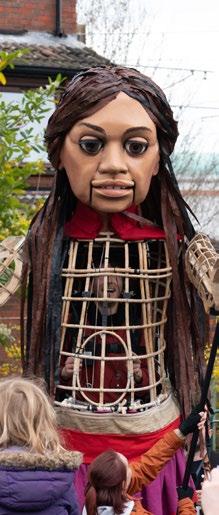
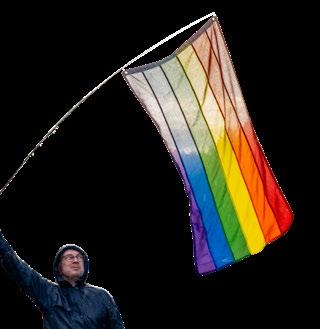
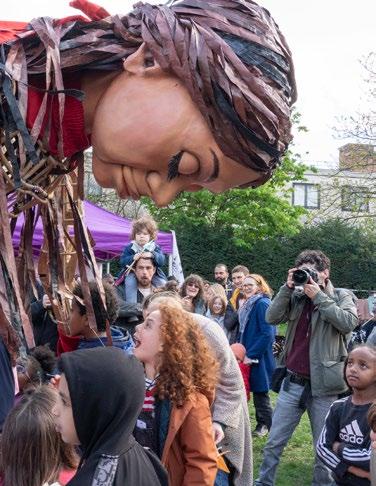
Front cover (left to right): Little Amal © Crispian Blaize
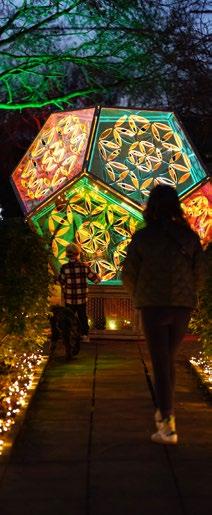
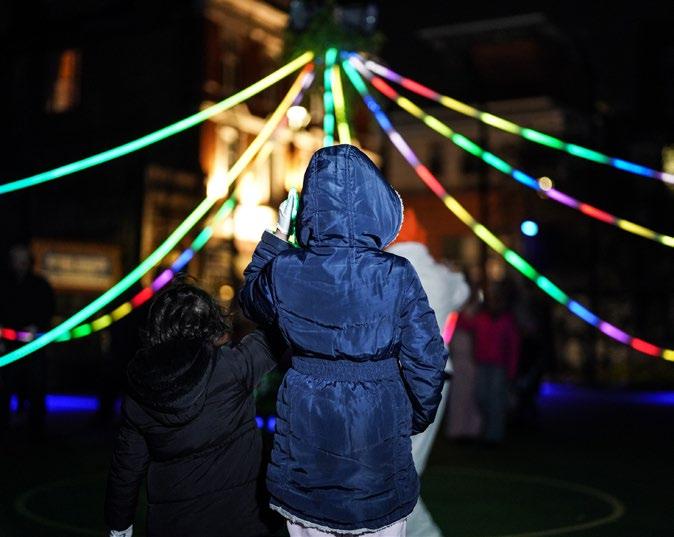
Light Up Kilburn © Crispian Blaize
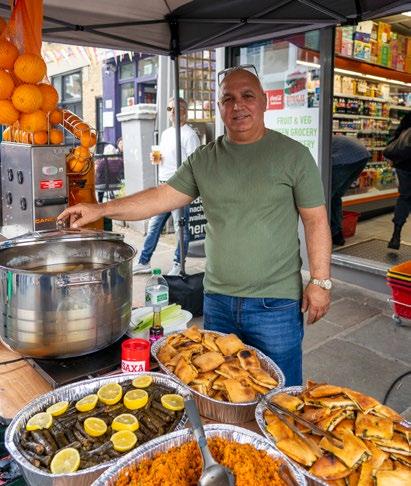
York Rise © Alice Horsley
York Rise © Alice Horsley
Page 3:
Light Up Kilburn © Crispian Blaize
York Rise © Alice Horsley
Page 5:
York Rise © Alice Horsley
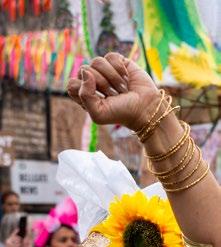
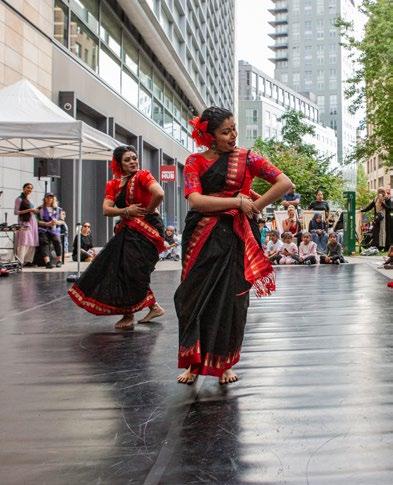
Old Diorama Arts Centre’s Regent’s Roots Festival, as part of South Asian Heritage Month © Alice Horsley
York Rise © Alice Horsley
Page 7:
York Rise © Alice Horsley
Page 15:
York Rise © Alice Horsley
Windrush Homecoming © Crispian Blaize
Page 21:
York Rise © Alice Horsley
Old Diorama Arts Centre’s Regent’s Roots Festival, as part of South Asian Heritage Month © Alice Horsley
Little Amal © Crispian Blaize