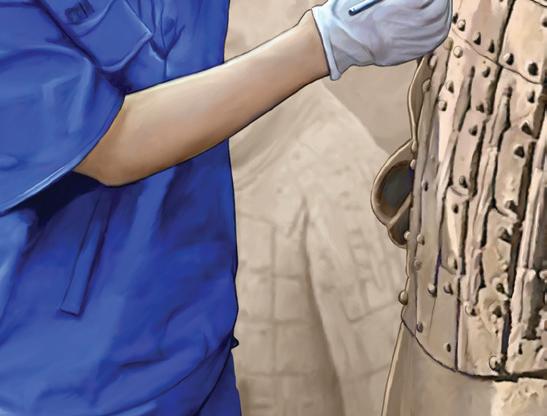
4.11 Site study: Mausoleum of the first Qin Emperor
4.12 Contacs
4.13
4.14
5.1
5.2 Physical features
5.3 Origin myths and legends
5.4 Key events in Greek history
5.5 The political and legal systems of Athens and Sparta
5.6 Daily life of men, women and children
5.7 The role of key groups in Athens and Sparta
5.8 The role and significance of religion in ancient Greece
5.9 Significant individual: Alexander the Great
5.10 The causes and effects of contact and conflict in the Greek world
5.11 Site study: Athenian Acropolis
5.12 Impact of ancient Greece’s historical and cultural legacy
5.13 Chapter review and historical inquiry
6.10
8.8
8.9 The decline of feudalism and the growth of cities in
8.10 Changing interpretations and representations of the legacy of medieval Europe
8.11 Chapter review and
UNCORRECTEDSAMPLEPAGES
9.1 Setting the scene
9.2 Geographical context
9.3 Life of the Prophet Muhammad (573–632)
9.4 The Rashidun Caliphate (632–661 AD)
9.5 The Umayyad Caliphate (661 CE–750 CE)
9.6 The fall of the Umayyad Caliphate
9.7 Rise of the Abbasid Caliphate (750 CE–1258 CE)
9.8 Key groups under the Umayyads and Abbasids
9.9 Role of religion
9.10 Science, philosophy and learning in the Golden Age of Islam
9.11 Art, architecture and culture in the Golden Age of Islam
9.12 Significant individuals
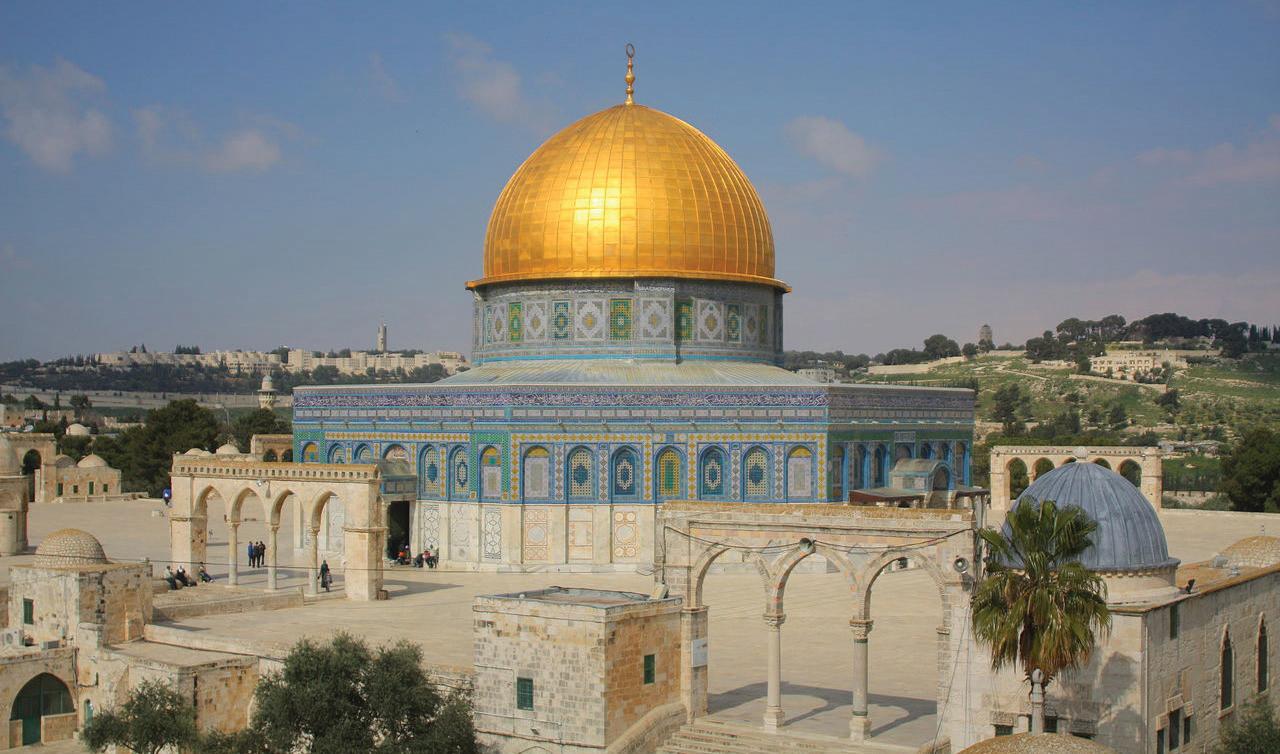
9.13 Site study: The Dome of the Rock Jerusalem
9.14 Decline of the Abbasid Caliphate and arrival of the Mongols
9.15 Changing interpretations and representations
9.16 Chapter review and historical inquiry
12.2
12.3 Influence of India
12.4 Jayavarman II and the founding of the Empire
12.5 The nature of Khmer kingship
12.6 Trade, commerce and diplomacy
12.7 Role of women
12.8 Warfare
12.9
12.10 Temples
12.11 Significance of Angkor Wat and Angkor Thom
12.12
12.13
12.14
Chapter 13 Japan under the Shoguns (c. 794–1867)
13.1 Setting the scene
13.2 Geographical context and natural features
13.3 Chronology
13.4 Political organisation and key groups
13.5 Everyday life 471
13.6 The nature and role of Shintoism and Buddhism in shaping values 474
13.7 Significant individual: Tokugawa Ieyasu 477
13.8 Site study: Himeji Castle 482
13.9 The reasons for Japan’s closure to foreigners under the Tokugawa Shogunate 486
13.10 Theories about the decline and fall of the shogunate
13.11 The legacy of the shogunate in modern-day Japan 494
13.12 Chapter review and historical inquiry 500
Chapter 14 Mongol expansion (c. 1206–1368) Online only chapter
14.1 Setting the scene
14.2 Background: The Mongol homeland in the time of Genghis Khan (Temujin)
14.3 Mongol daily life
14.4 Mongol social structure
14.5 Early life and family background of Genghis Khan
14.6 The significance of Genghis Khan and his descendants in the expansion of the Mongols
14.7 The role of warfare
14.8 Great Khans and khanates
14.9 The Silk Road and the role of trade in the Mongol expansion
14.10 The Mongols’ relationship with subject peoples
14.11 The impact and legacies of Kublai Khan and the Yuan dynasty
14.12 Site study: Xanadu (Shangdu), Inner Mongolia
14.13 The cultural and economic legacy of the Mongols
14.14 Chapter review and historical inquiry
Chapter 15 The Ottoman Empire (c. 1299–c. 1683) Online only
15.1 Setting the scene
15.2 The decline of the Byzantine Empire and founding of the Ottoman Empire
15.3 Geographical context of the Ottoman Empire under Suleiman the Magnificent
15.4 The role and nature of warfare during the Ottoman expansion
15.5 Key victories during the Ottoman expansion
15.6 The role of Suleiman the Magnificent in expanding and maintaining the empire
15.7 The relationship with subject peoples
15.8 Perspectives on the experiences of subject peoples
15.9 Ottoman art and architecture
15.10 Site study: Hagia Sophia
15.11 The legacy of the Ottoman Empire
15.12 Chapter review and historical inquiry
Chapter 16 The
Chapter 17 Renaissance Italy (c. 1400–c. 1600)
17.1 Setting the scene
Online only chapter
17.2 Geographical context and natural features that shaped Renaissance Italy
17.3 Role of wealth in the development of the Renaissance
UNCORRECTEDSAMPLEPAGES
17.4 Key events within the chronology of Renaissance Italy
17.5 Society in Renaissance Italy
17.6 Influence of classical thinking
17.7 Art in Renaissance Italy
17.8 Architecture, science and technology in Renaissance Italy
17.9 The role of patronage
17.10 Significant individual: Michelangelo
17.11 Site study: Sistine Chapel
17.12 Cultural, political and scientific legacy of the Renaissance
17.13 Changing interpretations of the nature and impact of the Renaissance
17.14 Chapter review and historical inquiry
Chapter 18 The Spanish conquest of the Americas (c.1492–c. 1572) Online only chapter
18.1 Setting the scene
18.2 Location of the major civilisations and cities of the pre-contact Americas
18.3 Spanish exploration, conquest and settlement of the Americas
18.4 Routes of the Spanish conquistadors and the location of the societies they encountered
18.5 Key features of Aztec society: Social structure
18.6 Key features of Aztec society: Politics, warfare and trade
18.7 Role of beliefs and religion in Aztec society
18.8 Site study: Templo Mayor and the sacred precinct
18.9 First contact between the Spanish conquistadors and the Aztecs
18.10 Hernán Cortés: Role and significance in the conquest of the Aztecs
18.11 The Spanish conquest and Aztec resistance
18.12 Short- and long-term effects of the Spanish conquest of the Aztecs
18.13 Changing interpretations and representations of the legacy of the Aztecs
18.14 Chapter review and historical inquiry
19.5
Focus area
Focus area The ancient past
UNCORRECTEDSAMPLEPAGES
CHAPTERS
Historical context study (core)
1.The ancient past
Depth studies (options)
2.Ancient Egypt
3.Ancient India
4.Ancient China
5.Ancient Greece
6.Ancient Rome
Online only chapter
Online only chapter
Chapter 1
Key questions
• What is history?
• How do historians and archaeologists investigate the past?
• What types of sources do they use?
• How do historians measure time?
• What is known about ancient Australia?
• Why do people disagree about what happened in the past?
• How can science help us understand what happened in the past?
• How can we conserve the remains of the past?
Lessons
1.1 Setting the scene
1.2 Theories of human migration
1.3 How historians talk about time
1.4 Sources of evidence of ancient societies
1.5 Sources of evidence of Aboriginal and Torres Strait Islanders’ histories and cultures
1.6 Site study: Lake Mungo
1.7 Western and non-Western traditions of historical inquiry
1.8 Use of science and technology in historiography and archaeological practices
1.9 Foundations of citizenship in antiquity
1.10 Ancient sites that have been lost, threatened or protected
1.11 Preserving and conserving archaeological and historical remains
1.12 Removal of cultural artefacts
1.13 Chapter review and historical inquiry
The ancient past UNCORRECTEDSAMPLEPAGES
Teachers access the Online Teaching Suite to:
• plan, sequence and assign directed tasks for students and classes using Task Manager
• view student activity reports
• provide feedback to students
• download a printable “Writing focus” workbook for this chapter.
1.1 Setting the scene
Learning intention
In this lesson, you will learn about the importance of studying Ancient History and what insights may be gained.
Success criteria
❏ I can outline the importance of studying Ancient History as a means of understanding the world around us.
Writing focus 1.1
Question words
archaeologists people who excavate ancient sites to study traces of the past
History is the study of what happened in the past. The past is everything from the very beginning of the universe up until today. It includes billions of events, most of them lost to us forever. Studying history, which is the story of the past, tells us how we became who we are today. It helps us better understand the development of our species and its many cultures over tens of thousands of years. The ancient past is particularly interesting, because it allows us to see how we are similar to our distant ancestors and how we are different. Studying history, therefore, offers us insights into what it means to be human.
Much of what we know about ancient peoples comes from the work of archaeologists, who dig up ancient sites to study traces of the past.
UNCORRECTEDSAMPLEPAGES
c. 90 000 BCE
c. 63 000 BCE
Human habitation at Madjedbebe
c. 20 000 BCE
Fossilised human footprints at Lake Mungo
c. 3500 BCE
Sumerians established early cities, including Uruk
c. 1324 BCE Death of Tutankhamun
c. 2000 BCE Death of Narrabeen Man
Evidence of modern humans outside Africa (Skhul Cave, Israel)
c. 40 000 BCE
Burial of Mungo Man and Mungo Lady
c. 11 000 BCE Agriculture develops in regions around the world
c. 3300 BCE Death of Ötzi
c. 1792 BCE
Hammurabi develops his Code of Laws
c. 1200 BCE Trojan War
c. 440 BCE Herodotus’s Histories is finished
c. 428 BCE Birth of Plato
c. 200 BCE Antikythera Mechanism constructed
79 CE Destruction of Pompeii
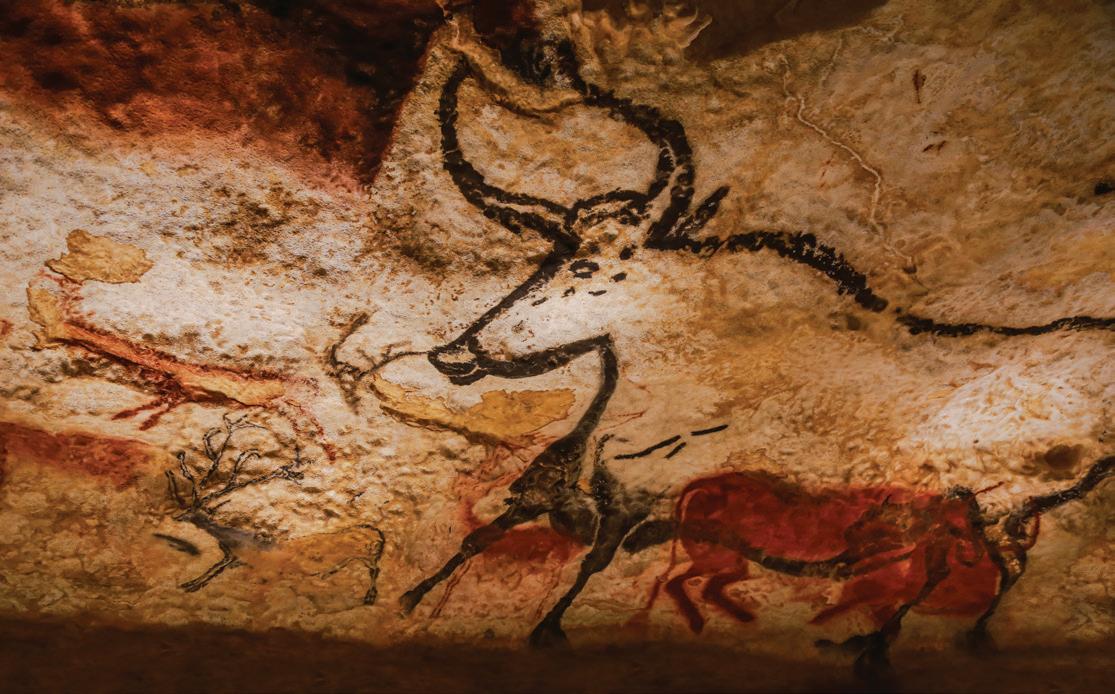
Based on Source 1.1.1, consider the following questions.
What can you see in this image? What do you think about this image? What does it make you wonder about studying the ancient past?
c. 145 BCE Birth of Sima Qian
1332 CE Birth of Ibn Khaldun
Source 1.1.1 Prehistoric cave paintings at Lascaux, France, dating to around 17 000 BCE
1.2 Theories of human migration
Learning intention
In this lesson, you will learn about the different theories of human migration across the globe.
Success
criteria
❏ I can describe approximate periods of migration.
❏ I can explain the “Out of Africa” migration theory.
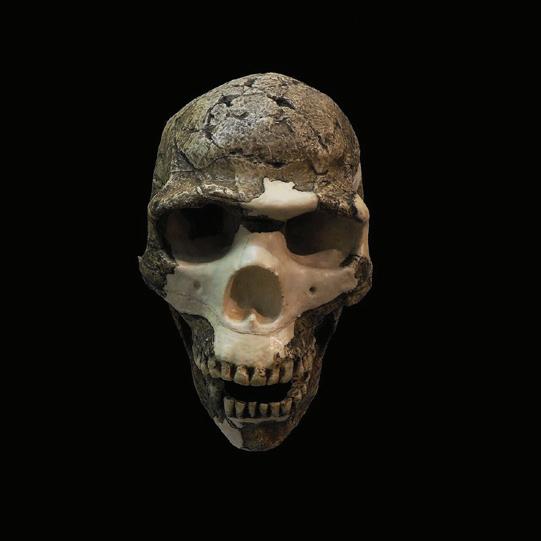
See, think, wonder
What can you see in this image?
What do you think about this image?
What does it make you wonder?
Source 1.2.1 Cast of a skull dating to about 90 000 years ago, discovered in Skhul Cave near Mount Carmel, Israel. This is one of the oldest traces of modern humans outside Africa.
Writing focus 1.2
Conjunctions
Understanding how humans spread across the globe is fundamental to studying the ancient past. The story of human migration helps explain how different societies developed around the world, and how the story has been shaped by the different environments they encountered and the challenges they faced.
Source 1.2.2 Map showing the approximate periods of migration of modern humans out of Africa and across the globe ➜
ATLANTIC OCEAN
INDIAN OCEAN
The Out of Africa theory
The most widely accepted theory of human migration is known as the Out of Africa theory. Scientific evidence, including DNA analysis and fossil discoveries, suggests that modern humans (Homo sapiens) first evolved in Africa. The earliest fossils showing some modern human features, known as archaic Homo sapiens, date to about 300 000 years ago. Fully modern Homo sapiens had evolved by about 160 000 years ago.
From Africa, humans began migrating to other parts of the world. Small groups had reached the Middle East by about 180 000 years ago, as shown by fossil discoveries at sites such as Misliya Cave. However, these early movements may not have led to permanent settlement. Most experts conclude that migration on a mass scale only occurred within the last 60 000 to 70 000 years. By this time, modern humans had reached South-East Asia, and shortly after, Australia.
These migrations were not constant or regular. Instead, they occurred in waves during periods when climate and environmental conditions were favourable. As humans migrated, they adapted to new environments and developed different societies. The evidence for these migrations comes from multiple sources, including:
• fossil remains of early humans
• stone tools and other artefacts
• DNA analysis of ancient and modern populations
• archaeological sites showing early human habitation.
The development of societies
As humans migrated across the world, they developed distinct societies adapted to their local environments. In Australia, Aboriginal and Torres Strait Islander Peoples developed sophisticated cultures that have continued for tens of thousands of years. In other parts of the world, different societies emerged along river valleys, coastlines and fertile plains. The development of agriculture, which occurred independently in several regions around 11 000 years ago, led to the growth of permanent settlements and eventually the rise of ancient civilisations.
One of the earliest of these civilisations arose in Mesopotamia, a region between the Tigris and Euphrates Rivers in what is now Iraq. By around 3500 BCE, the Sumerians had established some of the world’s first cities, including Uruk. Mesopotamian society produced some of the earliest-known writing, known as cuneiform, as well as written laws, monumental architecture and extensive trade networks.
At roughly the same time, the Indus Valley Civilisation developed along the Indus River in present-day Pakistan and northwest India, reaching its peak between approximately 2600 and 1900 BCE. Archaeological sites such as Mohenjo-daro and Harappa reveal sophisticated large cities, urban planning and advanced systems of water use and sanitation.
UNCORRECTEDSAMPLEPAGES
In China, complex societies emerged along the Yellow River valley from around 2000 BCE. The Shang Dynasty (c. 1600–1046 BCE) left behind rich archaeological evidence, including oracle bones, which are animal bones with early examples of Chinese writing, as well as bronze ritual vessels and elaborate royal tombs.
Source 1.2.3
The Out of Africa theory ➜ Homo sapiens the scientific name for modern humans, meaning “wise human” in Latin cuneiform one of the earliest writing systems, developed in Mesopotamia, made by pressing a reed stylus into soft clay tablets
What is striking about these civilisations is that they emerged independently in different parts of the world, yet shared common features: cities, writing, trade, organised religion and centralised government. The evidence for these developments comes from the same broad range of sources used to understand human migration more generally –archaeological remains, written records (where they survive) and, increasingly, environmental and genetic data.
1.2.1
Source analysis
Study Sources 1.2.1 and 1.2.2, and then answer the following questions.
Identify two types of evidence shown in these sources that help us understand human migration. Explain how fossil evidence like the Skhul 5 skull helps historians understand the timing of human migration.
Using Source 1.2.2, describe the route that modern humans are believed to have taken to reach Australia.
Evaluate the usefulness of maps like Source 1.2.2 for understanding human migration. What are their limitations?
Historical concepts: Cause and effect, Significance
skills: Analysis and use of sources
Teachers can go online to assign questions, view results, reports and more!
Knowledge and understanding
Define the “Out of Africa” theory.
List three types of evidence that scientists use to study human migration.
Outline the differences between the early movements of humans to the Middle East (around 180 000 years ago) and the mass migration that occurred later (around 60 000 to 70 000 years ago).
Explain the connection between human migration and the development of different societies around the world.
Explain why early civilisations tended to develop in river valleys rather than other environments.
Thinking and researching
Research the movement of people to Australia using the internet or your school library.
Outline the key theories of how people migrated to the Australian continent in the ancient past. Identify some evidence of early human habitation of the Australian continent.
Explain why the migration to Australia is considered a significant achievement in human history. Does this archaeological evidence found in Australia support the theory that all modern humans evolved in Africa before spreading out across the globe? Explain your answer with reference to specific evidence.
UNCORRECTEDSAMPLEPAGES
1.3 How historians talk about time
Learning intention
In this lesson, you will learn about the terminology historians use when talking about time.
Success criteria
❏ I can explain the different principles of time across historiographical and archaeological study, and why they are used.
Think,
Think: How does the acceleration of technology continue to change our relationship with time?
Pair: Pair up with the person next to you and discuss.
Share: Share your discussion with the class.
Measuring time is important for the study of history, but it is not always straightforward, particularly when dealing with the ancient past. To study history, we need methods of working out when things happened, how old artefacts are and how long societies existed for.
Measuring time in the ancient world
Ancient people marked time for many reasons, from knowing when to plant crops to observing religious holidays. People used a variety of methods for calculating time. One common method involved tracking celestial bodies such as the moon, planets and stars. This method is still used today. Other methods included calendars, sundials and water clocks.
UNCORRECTEDSAMPLEPAGES
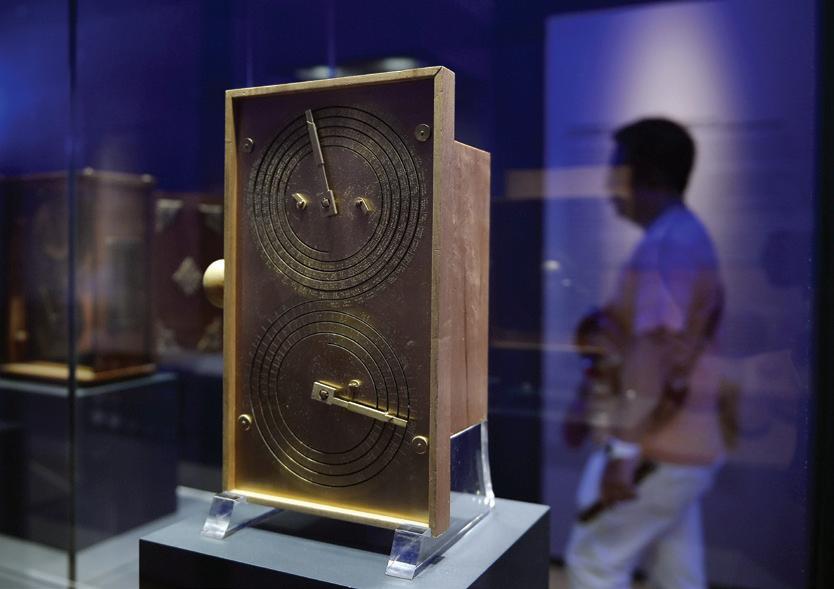
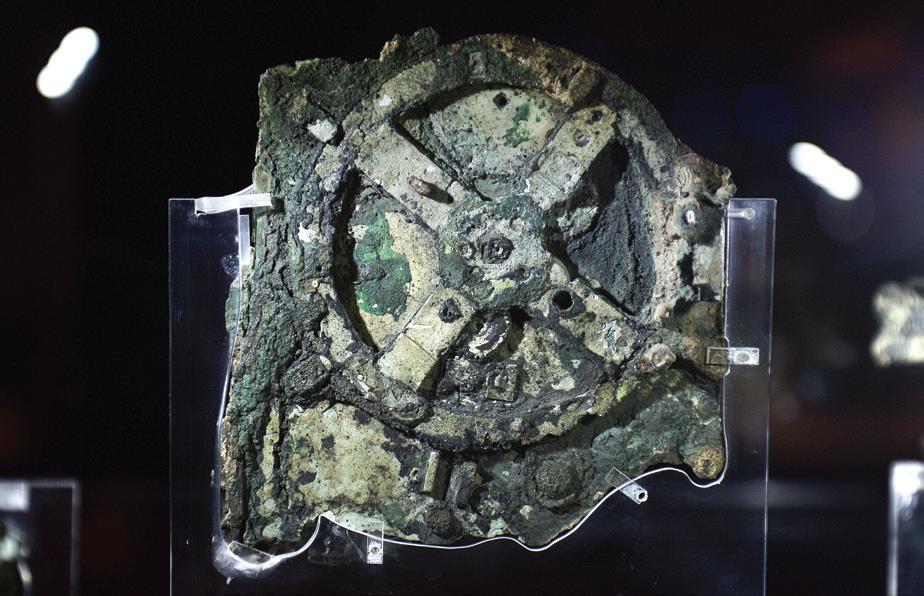
The Antikythera Mechanism is an ancient analogue computer discovered in a ship that sank near Greece more than 2000 years ago. It measured the relative position of planets and stars, allowing the user to determine key dates.
pair, share
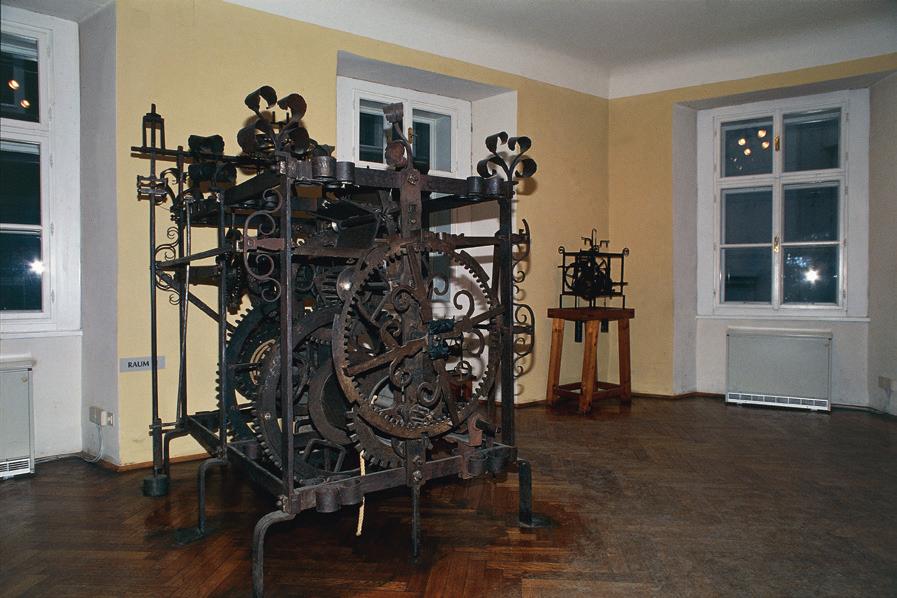
Source 1.3.1 The clock mechanism for an antique bell tower (left), and the date and time displayed on the lock screen of an iPhone (right) ➜
chronology the arrangement of dates in the order they occur
Source 1.3.2 A reconstruction of the Antikythera Mechanism
Calendar dating
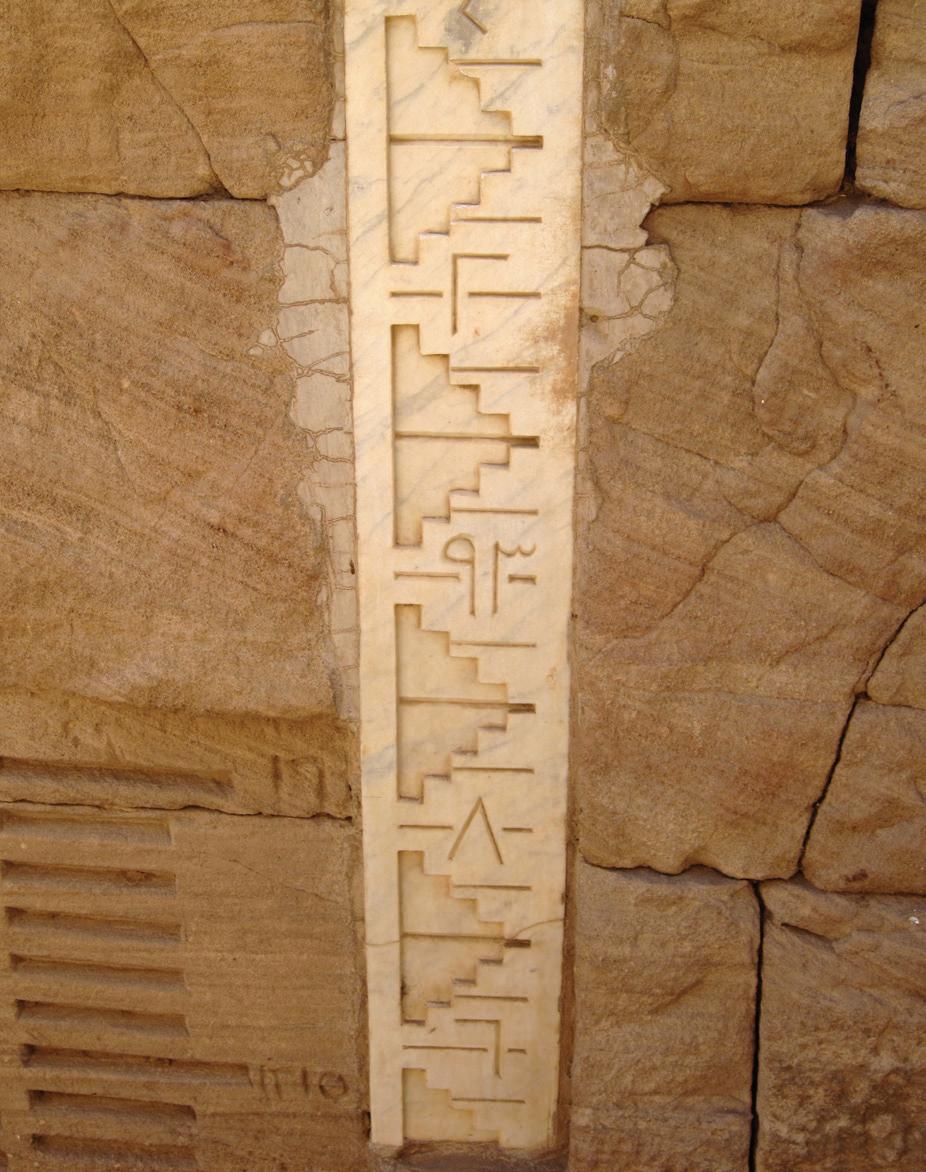
Different societies dated time differently. The ancient Egyptians had three seasons that revolved around the flooding of the Nile and weeks that lasted 10 days. They dated years by the reign of pharaohs and restarted at year one for each new ruler.
In the modern world, time is divided into seconds, minutes, hours, weeks, days, months and years. In Australia we follow the Gregorian calendar, named after Pope Gregory XIII, who introduced it in 1582.
The Gregorian calendar is widely used and enables international communication and trade. A year of 365 days is divided into 12 months. Every four years there is a leap year, which adds an extra day to February to account for the Earth’s orbit around the sun.
UNCORRECTEDSAMPLEPAGES
Source 1.3.3 The original fragments of the Antikythera Mechanism, corroded after 2000 years underwater. These fragments were discovered by sponge divers in 1901.
Source 1.3.4 An ancient Egyptian Nilometer carved in stone. The Egyptians divided their year into three seasons based on the flooding of the Nile.
Islamic, Buddhist and Jewish calendars are used to determine key religious holidays in those faiths.
Timelines
Timelines show the order in which things happened and can be used to show the chronology of a person’s life, the development of a society or battles in a war. A timeline demonstrates relationships between events and time, helping historians interpret cause and effect.
➜
Activity 1.3.1
Create a timeline of your own life, with each 2 cm equalling one year.
Try to include at least five events. 1. 2.
Highlight key events on the timeline such as your birth, your first day of school and the birth of siblings.
Historical concepts: Continuity and change Historical skills: Comprehension: chronology, terms and concepts
BCE/CE
In this textbook, we use the terms Before the Common Era (BCE) and Common Era (CE) to refer to dates. These terms are based on the Gregorian calendar and are designed to be neutral and inclusive.
BCE refers to dates before the year 1 CE. It is placed after the date: 100 BCE is 100 years Before the Common Era. Because it counts backwards, 200 BCE is older than 100 BCE. CE refers to dates from the year 1 onwards: 100 CE means the year 100 of the Common Era. The year 1 CE follows the year 1 BCE (there is no year zero).
Source 1.3.5 A timeline showing how BCE and CE work. Note that BCE counts backwards (larger numbers are older) while CE counts forwards.
BC/AD
The terms BC and AD are still widely used. They are based on the birth of Jesus. BC means Before Christ. AD comes from the Latin term anno Domini, which means “in the year of our Lord”.
The dates in both systems are the same: 100 BCE is the same year as 100 BC, and 100 CE is the same year as AD 100.
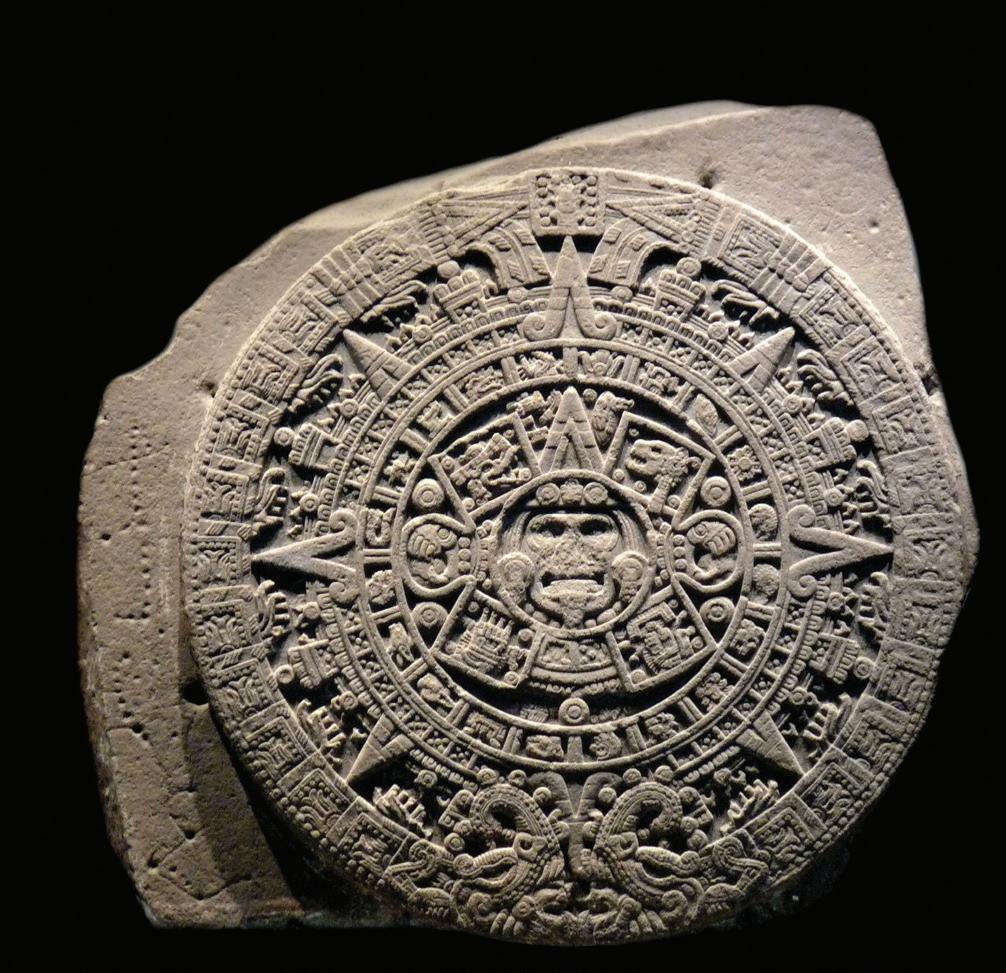
Source 1.3.6 The Aztec Sun Stone (also known as the Calendar Stone or Stone of the Five Eras), a late post-classic Mexican sculpture now housed in the National Museum of Anthropology, Mexico City
Before the Common Era (BCE) refers to dates before the year 1 CE Common Era (CE) refers to dates from the year 1 onwards
UNCORRECTEDSAMPLEPAGES
periodisation the process of dividing history into distinct periods or eras based on shared characteristics
Interestingly, we cannot be sure that BC/AD are based around the actual year of Jesus’s birth. Many modern historians and theologians think Jesus was born between 6 BC and 4 BC.
c. (circa)
When historians do not know an exact date, the abbreviation c. (circa) is used to show that a date is approximate. For example, the Great Pyramid of Giza was built in c. 2560 BCE.
UNCORRECTEDSAMPLEPAGES
typology using the characteristics of an object to classify them over time. It helps to show how an object has changed over time. Extension 1.3.1
Typology
Periodisation
Historians divide history into blocks of time, known as periodisation. Examples include the Dark Ages, Middle Ages, Renaissance and Enlightenment.
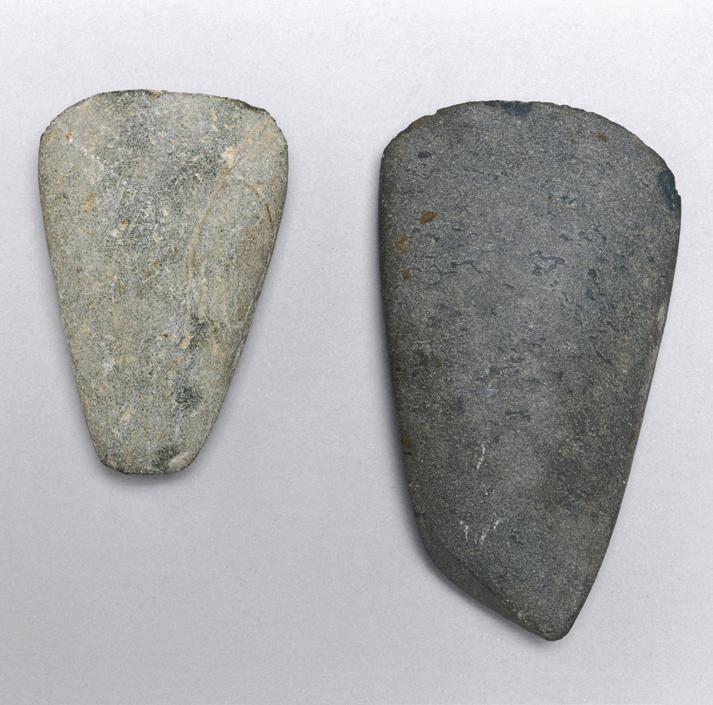
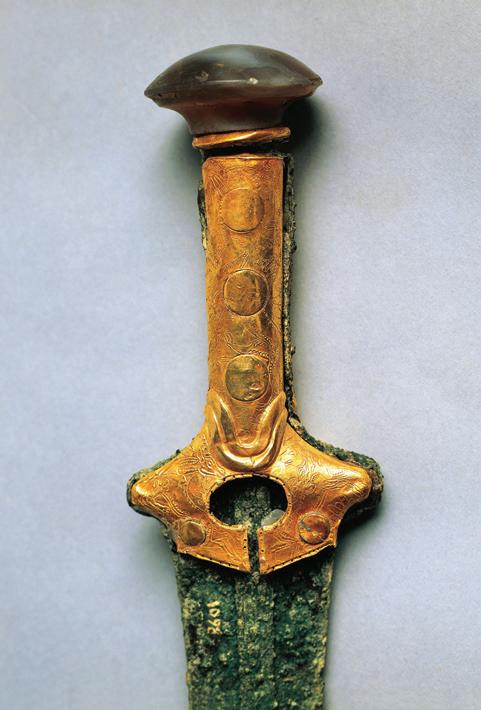
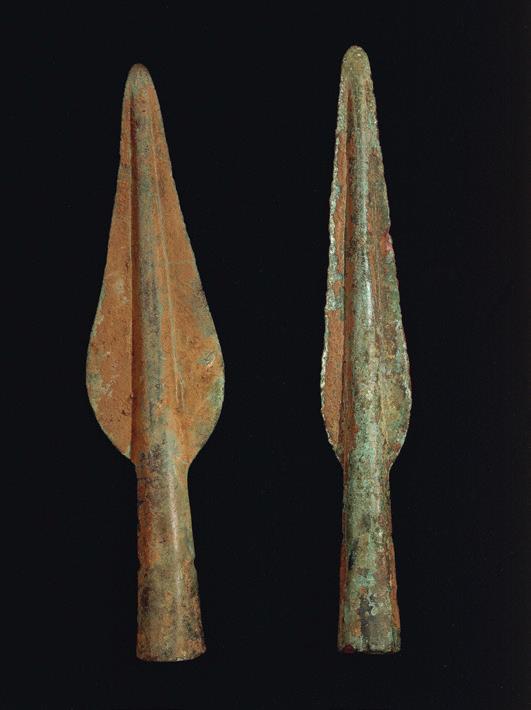
Three-age system: Stone, Bronze and Iron Ages
The three-age system has been widely used by historians. It was developed by Danish scholar C.J. Thomsen in the nineteenth century. Thomsen divided museum collections into different periods, depending on technology. This created the terms Stone Age, Bronze Age and Iron Age. Although inexact, these terms are still widely used. Other periods such as Copper Age, Steam Age and Digital Age follow similar principles.
Source 1.3.7 Tools from different ages: a Neolithic stone hand axe (Stone Age), a Minoan bronze sword (Bronze Age) and an iron spearhead (Iron Age). The three-age system divides prehistory into periods based on the materials people used.
Relative dating
Relative dating is the practice of determining the date of artefacts in relation to each other. Stratigraphy is an example, as things found in the same strata are assumed to be from the same time period. Another method is comparing artefacts to objects with similar features. As technologies and artistic styles evolve, they can be used to group things on a timeline: this is called typology dating. Although relative dating is not precise, it is fast and cost-effective.
Source 1.3.8 The evolution of lighting, demonstrating the principles of typology dating
Knowledge and understanding
List some of the methods used in the ancient world to measure time.
Define “BCE/CE” and explain why these terms are used.
Explain how BCE/CE relates to the BC/AD dating system.
Define “chronology” and explain why timelines are useful for historians.
Explain what periodisation means and give two examples of historical periods.
Describe the three-age system and explain how it was developed.
Identify the difference between relative dating and absolute dating.
Why is accurately measuring time important to the study of history?
Thinking and researching
Research the Antikythera Mechanism or another ancient calendar or time-measuring device, such as a water clock.
Write a paragraph outlining how it was made, how it worked and who used it. Include an image if you can find one.
1.4 Sources of evidence of ancient societies
Learning intention Success criteria
In this lesson, you will learn about the sources used by historians and archaeologists in evaluating evidence of ancient societies.
❏ I can define primary and secondary sources. ❏ I can explain the different types of historical evidence collected from ancient societies.
What can you see in this image?
What do you think about this image?
What does it make you wonder about finding evidence of the past?
UNCORRECTEDSAMPLEPAGES
Primary and secondary sources
When historians study the past, they are like detectives, and sources contain the clues they use to solve their cases. Sources are anything that has survived from the past and may include pottery shards, government records, written accounts, buried artefacts and preserved human remains.
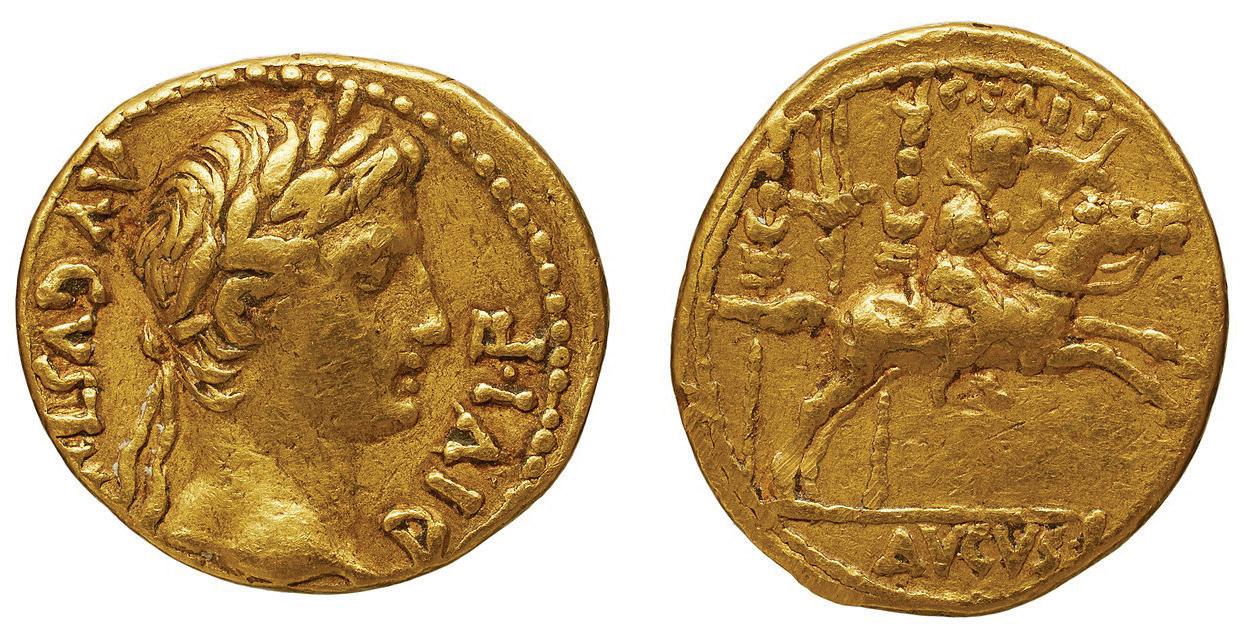
Evidence is different to sources. Sources are the raw material that historians use, while evidence is what the sources tell us about what is being investigated. For example, the ancient Roman coin in Source 1.4.2 is a source for ancient Rome. Given the image and writing, it can provide evidence for the rule of Augustus.
There are two main types of sources in history: primary and secondary. Primary sources were created during the time-period being studied. Secondary sources were created after that period. For example, the Colosseum in Rome is a primary source for studying ancient Rome, but a textbook about the Colosseum is a secondary source.
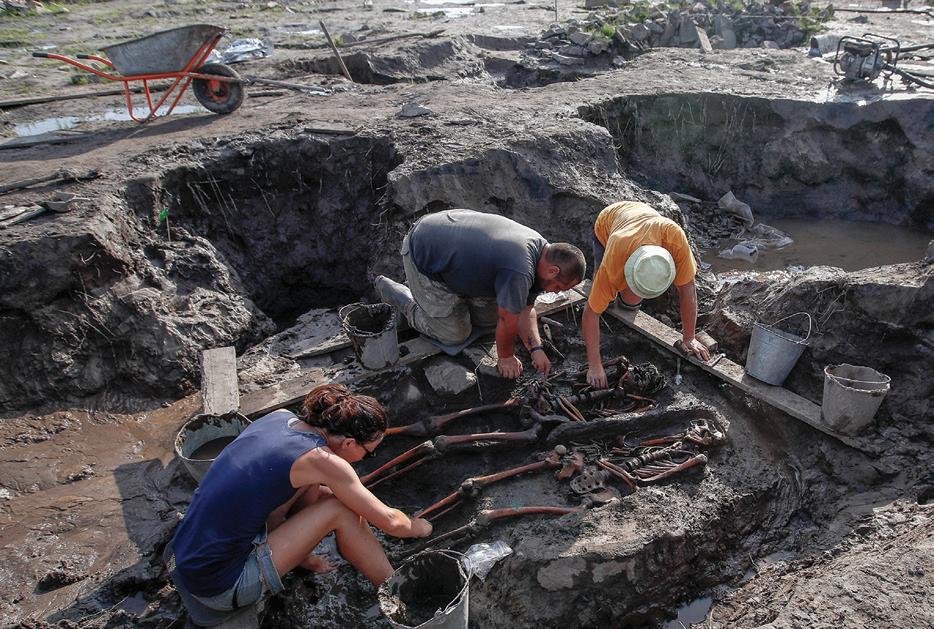
Source 1.4.1 Archaeologists working at a ninth-century BCE Scythian burial mound in Southern Siberia, Russia
Source 1.4.2 A Roman coin from 10 BCE. The head is of Emperor Augustus, with most of his name visible on the left.
Primary sources are not necessarily better than secondary sources. Secondary sources are usually based on primary sources, but they may contain insights not available at the time.
Types of evidence used by historians and archaeologists
Historians and archaeologists use many different types of evidence to understand the ancient past. Each type of evidence offers different insights into ancient societies.
Tools and archaeological sites
Archaeological sites provide direct physical evidence of how ancient people lived. The tools found at these sites, from simple stone implements to sophisticated metal objects, reveal the technological capabilities of the time. They show us how people hunted, prepared food, built shelters and created art. The development of tools over time also helps historians understand technological progress.
Writing
Written records are among the most valuable sources for historians because they can directly communicate the thoughts, beliefs and experiences of ancient people. Forms include inscriptions on stone, clay tablets, papyrus scrolls and books. Ancient writing systems include Egyptian hieroglyphics, Mesopotamian cuneiform, Chinese characters, and Greek and Latin alphabets. Written sources include laws, religious texts, histories, poetry and everyday records like receipts and letters.
Art and iconography
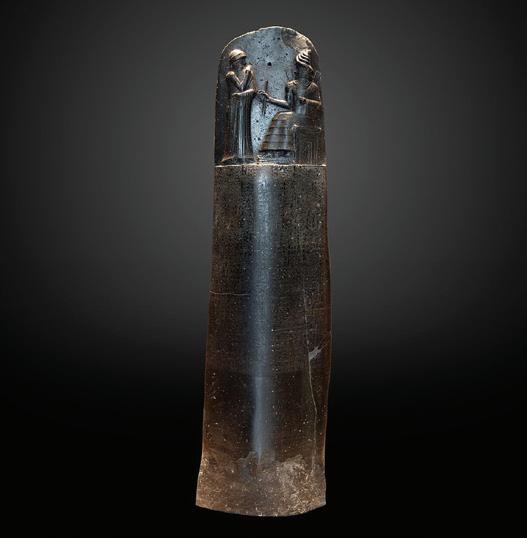
Art and iconography (the study of images and symbols) provide cultural, religious and political context. Cave paintings, sculptures, pottery decorations and architectural carvings reveal how ancient people saw their world. For example, the famous bas-relief on the Code of Hammurabi stela shows King Hammurabi receiving laws from the sun-god Shamash, indicating divine authority. Similarly, Aboriginal rock art across Australia provides evidence of spiritual beliefs, daily life and connections to Country spanning tens of thousands of years.
Oral tradition
Oral tradition is the passing of knowledge through spoken word. This is a vital source of evidence, particularly for societies without writing systems or whose written records have not survived. Oral histories include creation stories, historical accounts, songs, ceremonies and traditional knowledge passed on through storytelling, ritual and performance.
Writing focus 1.4
Developing sentences
UNCORRECTEDSAMPLEPAGES
Source 1.4.4 The Code of Hammurabi stela, now in the Louvre Museum, Paris. The stone pillar is over 2 m tall. At the top, King Hammurabi (standing) receives the laws from Shamash, the Babylonian god of justice (seated). Below the carving, the 282 laws are inscribed in cuneiform script.
Aboriginal and Torres Strait Islander cultures have maintained oral traditions for tens of thousands of years. Research has shown that First Nations Peoples’ oral accounts are accurate and durable, sometimes preserving memories of events like sea level changes from thousands of years ago.
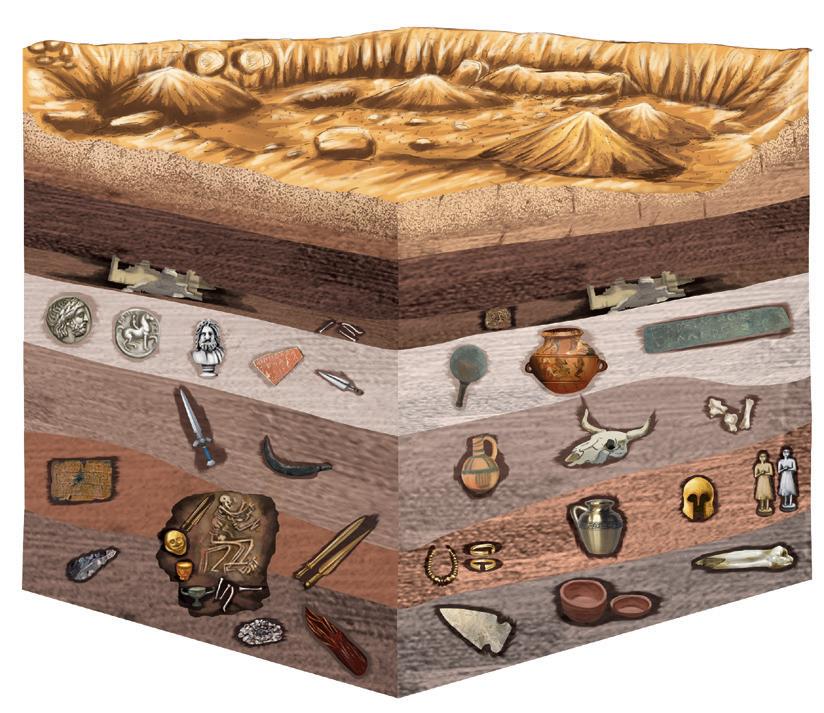
Source 1.4.3
Evidence for the emergence and establishment of ancient societies ➜
Activity 1.4.1
Source analysis
Which layer is the oldest?
Feature 7 Shaft burial with skeleton in crouch position, funerary offerings
Layer 6 No significant finds
Layer 5 Layer of ash, collapsed buildings, human remains
Layer 4 Coins, stone statue of Zeus, pottery shard with Greek script, spearhead, hand mirror, black figure pottery, bronze tablet with Greek script
Layer 3 Iron sword, iron scythe, foreign pottery, cattle bones
Layer 2 Tablet with Linear B writing, bronze weapons, gold jewellery, local painted pottery, bronze helmet, small clay and bone votive figurines
Layer 1 Flint tools, remnants of campfire, primitive pottery, midden of animal bones
The burial pit (feature 7) was dug by the people from which layer? Explain your answer.
Outline the technological developments between layers 1 and 2.
Identify what kind of catastrophe may have occurred in layer 5.
Identify the most significant development of layer 2. Explain your answer. Identify the objects that show development in technology at this site.
Why might the inhabitants of layers 2 and 4 have used different written scripts (Linear B/Greek)?
Explain what the presence of foreign pottery in layer 3 suggests.
Explain why the site may have been abandoned.
Identify what type of person you think was buried in feature 7. Explain your answer with reference to the goods found with the body.
Write a historical account explaining what you think occurred at this site. When you have finished, share your story with a partner.
Historical concepts: Continuity and change, Cause and effect Historical skills: Analysis and use of sources
How do historians use sources?
Historians collect sources and determine what evidence they reveal. Good historians use a range of sources to form the most complete picture possible. There are some important questions that historians ask when analysing a source. These include:
• What is the source?
UNCORRECTEDSAMPLEPAGES
• Where is it from?
• When was it created?
• Who created it?
For a written source, these questions reveal how the author’s background influenced their writing. Eyewitnesses may be more reliable than those reporting second-hand. Authors writing about opponents may be overly critical, while those writing about themselves may exaggerate their own achievements. Political or religious beliefs can also affect a source’s trustworthiness.
For archaeological sources, these questions are often harder to answer, but sources can be compared to other finds.
Evaluating sources
Once historians have analysed a source’s background, they can evaluate how relevant the source is by asking:
• Is it useful?
• Is it reliable?
A one-sided or untruthful source can still be useful. Usefulness relates to how much information the source reveals about what is being studied.
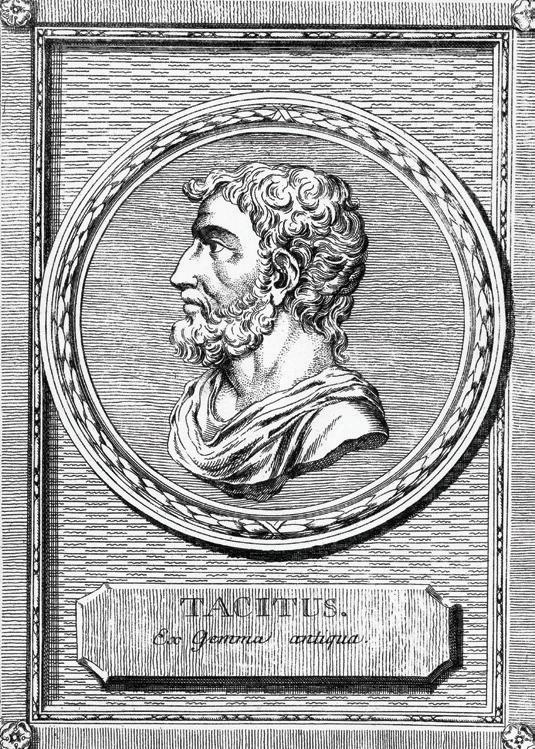
Some sources are biased, telling history from one point of view. Roman historian Tacitus wrote very negatively about the family who ruled Rome because he thought Rome should be ruled by the Senate, which he was a member of, and not by one family. His works remain important despite bias. Historians need to take account of bias when they are assessing reliability.
Explain the difference between a primary and a secondary source.
Outline the difference between a source and evidence.
Why is it important to know where a source comes from and who created it?
Explain what determines the usefulness of a source.
List the five main types of evidence used by historians to study ancient societies. Explain why oral tradition is considered a valuable source of historical evidence.
Teachers can go online to assign questions, view results, reports and more!
Outline
Explain what the study of his remains revealed about Australia’s ancient past.
Tacitus
biased,
Pleistocene Epoch a long period of geological time that includes the last glacial period, when temperatures were
1.5 Sources of evidence of Aboriginal and Torres Strait Islanders’
histories and cultures
Learning intention
In this lesson, you will learn about the sources of evidence used for understanding Aboriginal and Torres Strait Islanders’ histories and cultures.
Success criteria
❏ I can describe different pieces of archaeological evidence used in understanding Indigenous histories and cultures.
❏ I can explain the importance of oral tradition as a source for understanding Indigenous histories and cultures.
See, think, wonder Look at Source
What can you see in this image? What do you think about this image?
does it make you wonder about evidence of Aboriginal and Torres Strait Islanders’ histories and cultures?
Australia had a long history of human settlement prior to British colonisation. The first settlers migrated south from Asia during the Pleistocene Epoch, when sea levels were up to 100 m lower than today.
Sources for understanding ancient Australia
When the British colonised Australia, they declared the land terra nullius. Early British settlers did not recognise First Nations Peoples’ land management and fishing practices or tribal boundaries.
Archaeology has reshaped understanding of Australia’s ancient past. Finds at Madjedbebe in Arnhem Land demonstrate settlement from tens of thousands of years ago. Other finds have revealed Aboriginal and Torres Strait Islander Peoples had advanced environmental management practices.
Archaeological evidence also overturned “aqua nullius” – the idea that Aboriginal and Torres Strait Islander Peoples did not actively manage waterways. Sites like Brewarrina and Budj Bim suggest First Nations Australians developed elaborate aquaculture systems.
Oral tradition
Oral tradition is one of the most important sources for Aboriginal and Torres Strait Islander Peoples’ histories and cultures. It transmits knowledge through spoken word, song, dance and ceremony across generations.
Aboriginal and Torres Strait Islander Peoples’ oral traditions include:
• songlines – paths encoding geographical, spiritual and practical knowledge in song
• ceremonies – rituals transmitting law, spirituality and cultural knowledge
• Creation stories – accounts of how the world came to be
• historical accounts – memories of events, people and places
• traditional ecological knowledge –information about plants, animals, seasons and land management
Writing focus 1.5
Appositives
UNCORRECTEDSAMPLEPAGES
• language – words preserving cultural concepts.
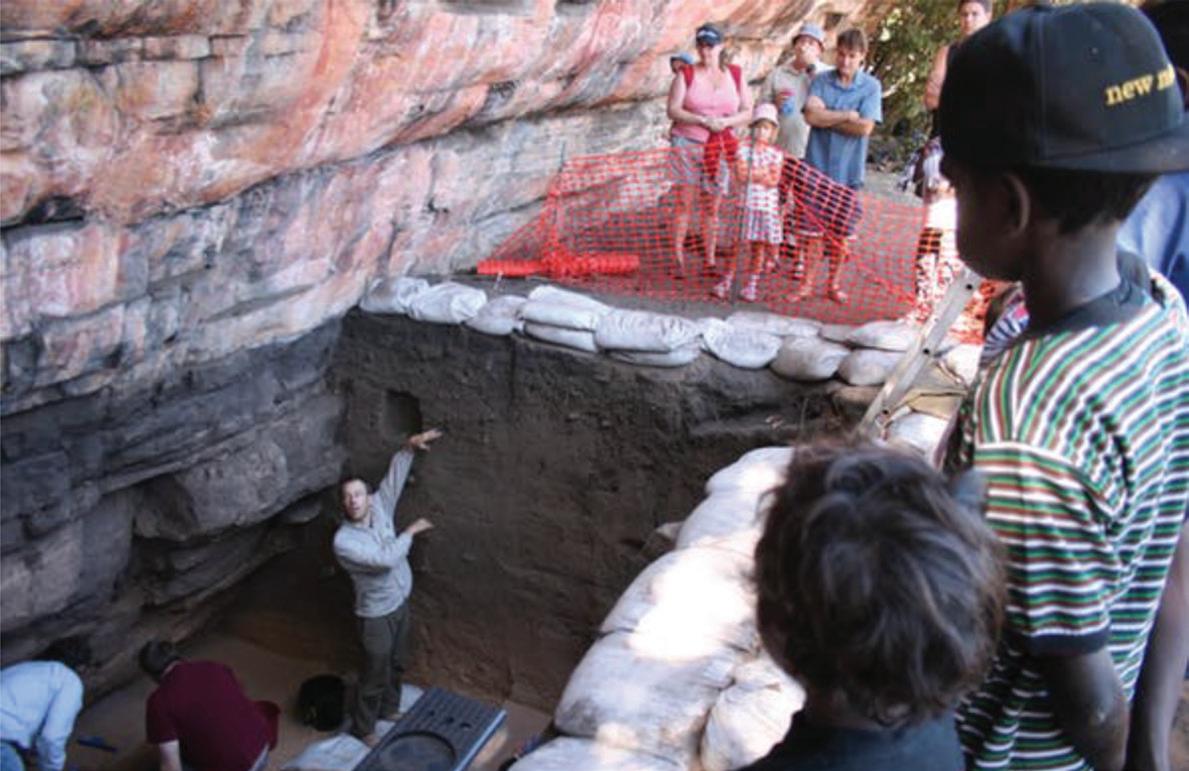
Source 1.5.3 Professor of Archaeology, Ben Marwick, shows the Madjedbebe site to visitors
terra nullius a Latin term that translates as “land belonging to no one”, meaning free to be claimed
the ice ages
Source 1.5.2 The continent of Australia joined to New Guinea during the Pleistocene Epoch
Halmahera Ceram Present-day mainlands
extensions by lower sea levels during
Babr
Buru Lombok Wallace Line
Mindanao
Tanimbar Islands
Dreaming a term for the spiritual, legal and ritual beliefs of Aboriginal and Torres Strait Islander Peoples
Oral tradition frequently manifests in rituals. Song and dance are considered the most important oral genres within Aboriginal and Torres Strait Islander communities, serving to transmit knowledge, celebrate events and maintain connections with Country and ancestors.
The Dreaming
The Dreaming refers to the spiritual world of Aboriginal and Torres Strait Islander Peoples, encompassing the creation of the world by ancestral spirits and the ongoing relationship between people, Country and all living things passed down through story, ceremony, art and song.
The accuracy of oral tradition
Aboriginal and Torres Strait Islander Peoples’ oral accounts are remarkably accurate, preserving memories from thousands of years ago. For example, Aboriginal and Torres Strait Islander groups around Australia’s coastline describe times when sea levels were lower. Scientific evidence confirms sea levels rose dramatically around 10 000 to 12 000 years ago.
The strength of oral traditions lies in rigorous transmission methods. Knowledge is carefully taught through structured processes. Important stories may only be told by certain people, at certain times and in certain places, thus ensuring accuracy.
Artwork
Sacred image paintings and sand sculptures express Aboriginal and Torres Strait Islander concepts of ancestral beings and Dreaming elements. Bark paintings represent knowledge from song series and oral traditions.
Carvings and rock art dating back thousands of years are found across Australia, serving both ritual and non-ritual purposes. Images often have multiple layers of meaning. Rock art is closely connected to oral tradition. Many sites are associated with specific Dreaming stories explaining the images.
UNCORRECTEDSAMPLEPAGES
Red ochre – a natural pigment from iron-rich rocks – is particularly significant. Aboriginal peoples have used it for tens of thousands of years in art, ceremony and burial practices. Red ochre on Mungo Man, dated to about 40 000 years ago, provides some of the earliest evidence of ritual practice anywhere in the world.
Archaeological evidence
Archaeologists based understanding of ancient Australian life on remains of campfires, stone tools, middens and features like fish traps. Aboriginal and Torres Strait Islander Peoples lived differently throughout the continent depending on local environments.
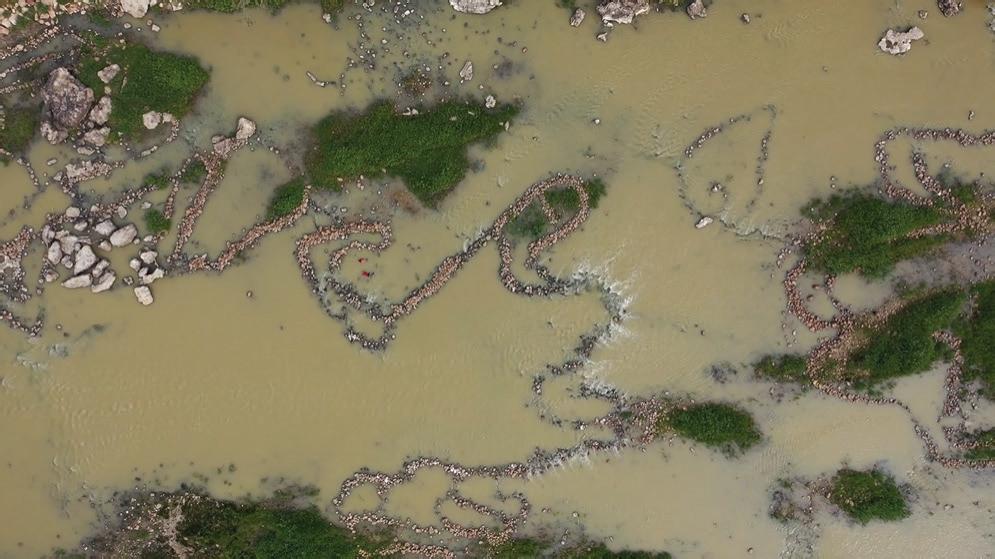
Brewarrina fish traps (Baiame’s Ngunnhu)
The Brewarrina fish traps, known as Baiame’s Ngunnhu in Ngemba language, are located on the Barwon River in northern New South Wales. The design herds fish into channels for easy catching while allowing smaller fish through, demonstrating sophisticated sustainable fishing. The traps required ongoing maintenance over many generations. The site demonstrates that First Nations Peoples developed and maintained complex, permanent infrastructure, likely before similar technologies appeared in other parts of the world.
middens the rubbish piles of early settlement sites, often containing shells, bones, botanical materials and the workings from ceramics and stone tool-making
Budj Bim Cultural Landscape
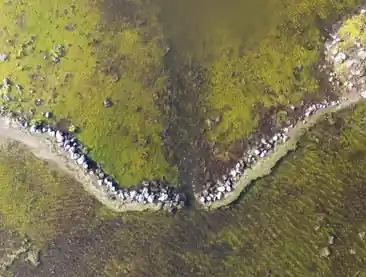
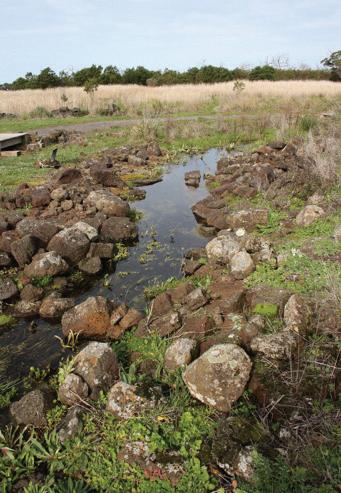
Another remarkable aquaculture example is the Budj Bim Cultural Landscape in Victoria. Built by the Gunditjmara people using basalt rocks, radiocarbon dating places construction at least 6600 years ago.
UNCORRECTEDSAMPLEPAGES
The system was designed to harvest kooyang (short-finned eels). The complex includes channels, weirs and holding ponds, allowing year-round eel management. The site contains rock-built living structures, supporting sedentary Aboriginal lifestyles in some regions – contrary to the myth that all First Nations Peoples were purely nomadic.
In 2019, Budj Bim was inscribed on the UNESCO World Heritage List, the first Australian site listed exclusively for Aboriginal cultural values.
Source 1.5.5
The Brewarrina fish traps ➜
Source analysis
Study Sources 1.5.4–1.5.7, then answer the following questions.
Compare the fish traps at Brewarrina with the aquaculture system at Budj Bim. What do they have in common? How are they different?
How do these sources challenge the concept of terra nullius?
What does the age of these sites tell us about Aboriginal technological achievement?
UNCORRECTEDSAMPLEPAGES
Historical concepts: Continuity and change, Significance Historical skills: Analysis and use of sources
Teachers can go online to assign questions, view results, reports and more!
Knowledge and understanding
Explain what middens are and how they are useful to archaeologists.
Identify the types of archaeological sources that can be used to understand ancient Australia. Outline how archaeology has changed our understanding of ancient Australia.
Why are the discoveries of Australian archaeology so significant for our understanding of Australian history?
Describe the significance of the Brewarrina fish traps, making reference to both their archaeological and cultural importance.
Explain how oral tradition helps preserve Aboriginal and Torres Strait Islander knowledge. Why is the Budj Bim Cultural Landscape considered globally significant?
Explain how the creation story of Baiame’s Ngunnhu demonstrates the connection between oral tradition and physical places.
Evaluate how sites like Brewarrina and Budj Bim challenge earlier assumptions about Aboriginal and Torres Strait Islander societies.
Thinking and researching
When studying ancient cultures, non-written sources of evidence such as art, tools and oral histories can provide deep insight into daily life, beliefs and the culture’s surrounding environment. Write a short research report on non-written First Nations sources, dedicating a paragraph to each of the following:
Research examples of tools used by Aboriginal or Torres Strait Islander cultures (i.e. coolamons or stone tools). What environment may they have been used in? What do these artefacts reveal about technology, resource use and sustainability?
Research examples of Aboriginal or Torres Strait Islander art (e.g. headdresses or bark paintings). What symbols or patterns are shown? What do these artworks communicate about First Nations Peoples’ connections to Country and Sea?
Listen to or read an Aboriginal or Torres Strait Islander oral history. What are the key messages or lessons imparted? How do they connect to First Nations Peoples’ laws or cultures?
Historical concepts: Significance, Perspectives Historical skills: Analysis and use of sources, Perspectives and interpretations, Research
1.6 Site study: Lake Mungo
Learning intention
In this lesson, you will learn about the history of Lake Mungo in western New South Wales.
Success criteria
❏ I can explain Lake Mungo’s importance as a rich archaeological site.
❏ I can describe the archaeological evidence recovered from Lake Mungo.
UNCORRECTEDSAMPLEPAGES
Starter activity
See, think, wonder
What can you see in this image?
What do you think about this image?
What does it make you wonder
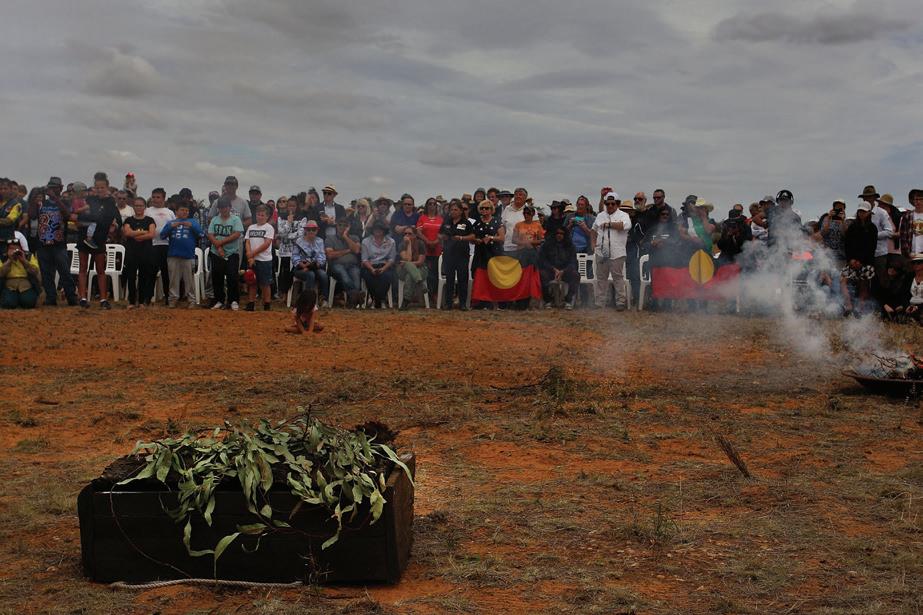
Source 1.6.1 In 1974, an archaeologist working at Lake Mungo found the skeleton of an ancient man, who had been ritually buried. The remains were initially taken to a university, but in 2017 they were returned to Lake Mungo and reburied.
Some of the oldest human remains to have been ritually buried were discovered in the dry dunes of Lake Mungo, in the Willandra Lakes region of western New South Wales. The remains revealed that the Aboriginal people who lived there tens of thousands of years ago had a complex culture that flourished in the formerly rich lands around the now mostly dry Willandra Lakes. Around 50 000 years ago, during the Pleistocene Epoch, this region was cooler, and these lakes were full of water and surrounded by vegetation. This provided abundant fish and crayfish and attracted animals that could be hunted. The long history of human inhabitation has combined with dry climatic conditions to create a rich archaeological site.
Discovery of human remains
In 1968, geologist Jim Bowler discovered evidence of human occupation in the dry dunes of Lake Mungo. As well as finding campfires, tools, middens and other artefacts, the remains of two ancient humans were found. The first remains discovered were of a woman, commonly called Mungo Lady (Mungo I). She was a young woman, about 19 years old, who had been cremated (burned) beside the lake. Her bones were then crushed.
Working with an archaeological team from the Australian National University (ANU), the body was carefully excavated. Over the next few months, a physical anthropologist, Alan Thorne, painstakingly pieced together the skeleton and skull. The site was dated by examining the stratigraphy and dating the layers using luminescence dating. This revealed that the body was at least 25 000 years old. More modern dating work in 2003 suggested that Mungo Lady is probably 40 000 years old, making her burial the earliest human cremation yet discovered.
Six years later, Bowler found Mungo Man, another well-preserved skeleton that was covered with red ochre, a stone-based pigment. The way the body was prepared and laid out was further evidence of ritual burial, showing the care with which he was buried and the complex beliefs about life and death that his people held. These finds not only rewrote our understanding of Australian history, but also of human development.
UNCORRECTEDSAMPLEPAGES
The remains of Mungo Man were initially moved to ANU in Canberra, but in 2015 they were formally handed over to Aboriginal Elders, and in 2017 they were returned to Lake Mungo and buried in a casket of ancient red gum (see Source 1.6.1). The remains of Mungo Lady had been repatriated in 1992.
Source 1.6.2 The Willandra Lakes region ➜
Mulurulu Lake Garnpung
Leagher
Durthong Lake Mungo
Chibnalwood
Arumpo
Prungle Lakes
Willandra Creek
Source 1.6.3 In a 2017 interview with The Guardian, Jim Bowler talked about Mungo Man. ➜
The anointing of the body in that nature is the sort of ritual that would be acceptable in any cathedral today. And there you've got the fire – think the smoke and the incense … so to have that in our backyard 40,000 years ago, there's nowhere else in the world that happens … think of it in the context of cultural continuity of the present Aboriginal people.
UNCORRECTEDSAMPLEPAGES
Bowler, J., 14 November 2017, quoted in Daly, P., “Finding Mungo Man: the moment Australia's story suddenly changed”, The Guardian
Other evidence from Lake Mungo
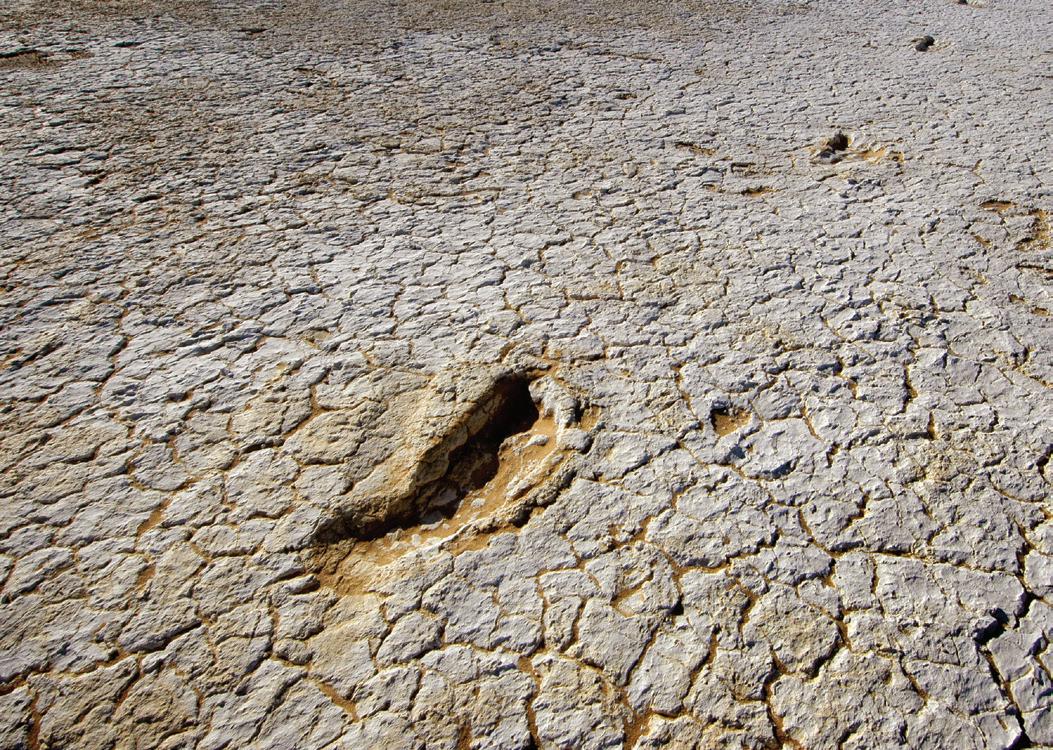
As well as human remains, other important evidence of human activity has been found at Lake Mungo. This includes the remains of ancient campfires, middens, stone tools and a series of well-preserved human footprints that have been dated to 20 000 years ago.
The fossilised footprints discovered in the clay pan around Lake Mungo comprise the largest collection of their kind anywhere in the world. They provide remarkable direct evidence of the people who lived in this area, showing their size, the way they walked, and even evidence of children at play. Dating to approximately 20 000 years ago, these footprints are a powerful connection to the ancient past.
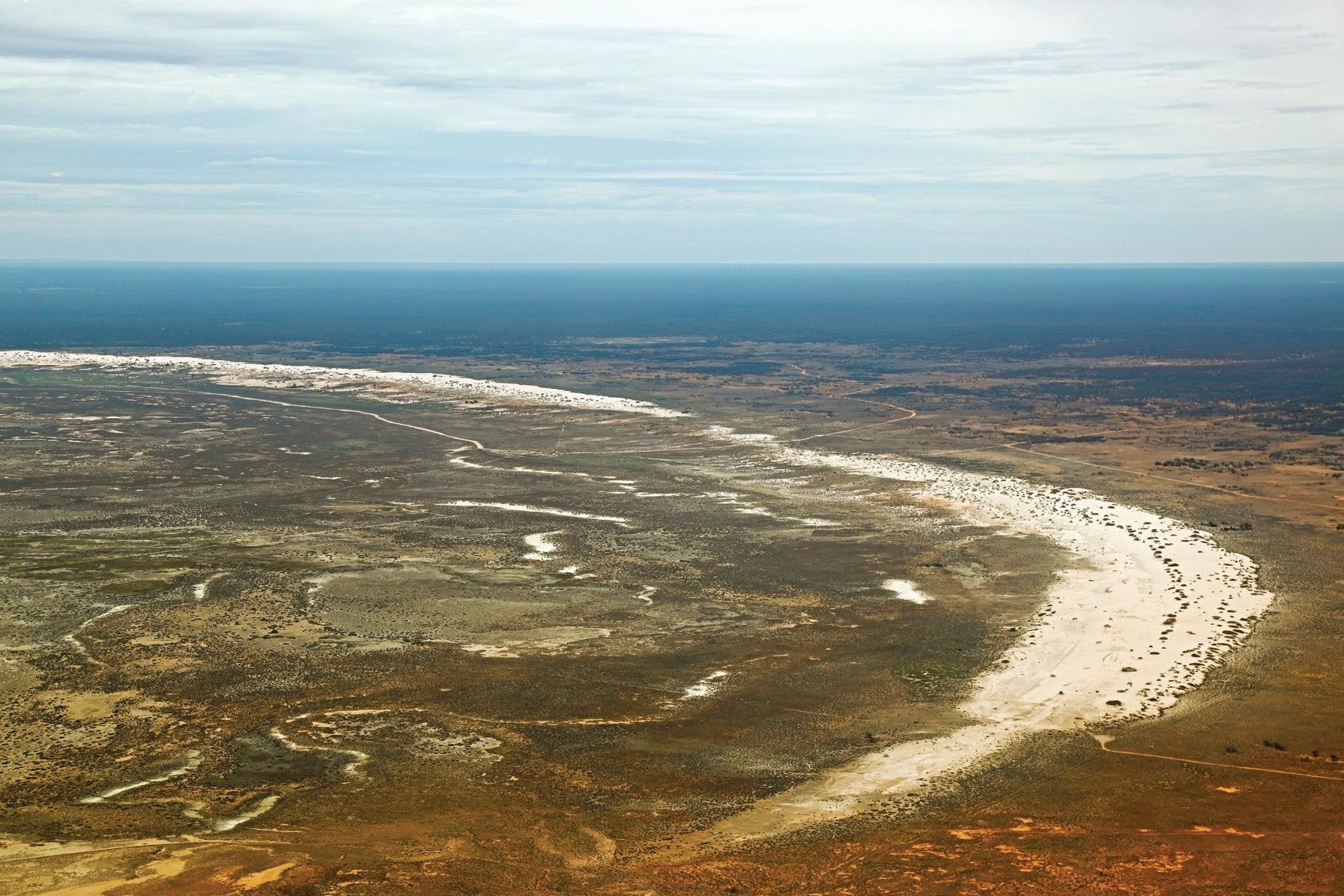
Source 1.6.4 The eroded dunes or lunette formations seen from the sky. Mungo Lady and Mungo Man were found near the end of the thicker section of white sand in the bottom right of the photo.
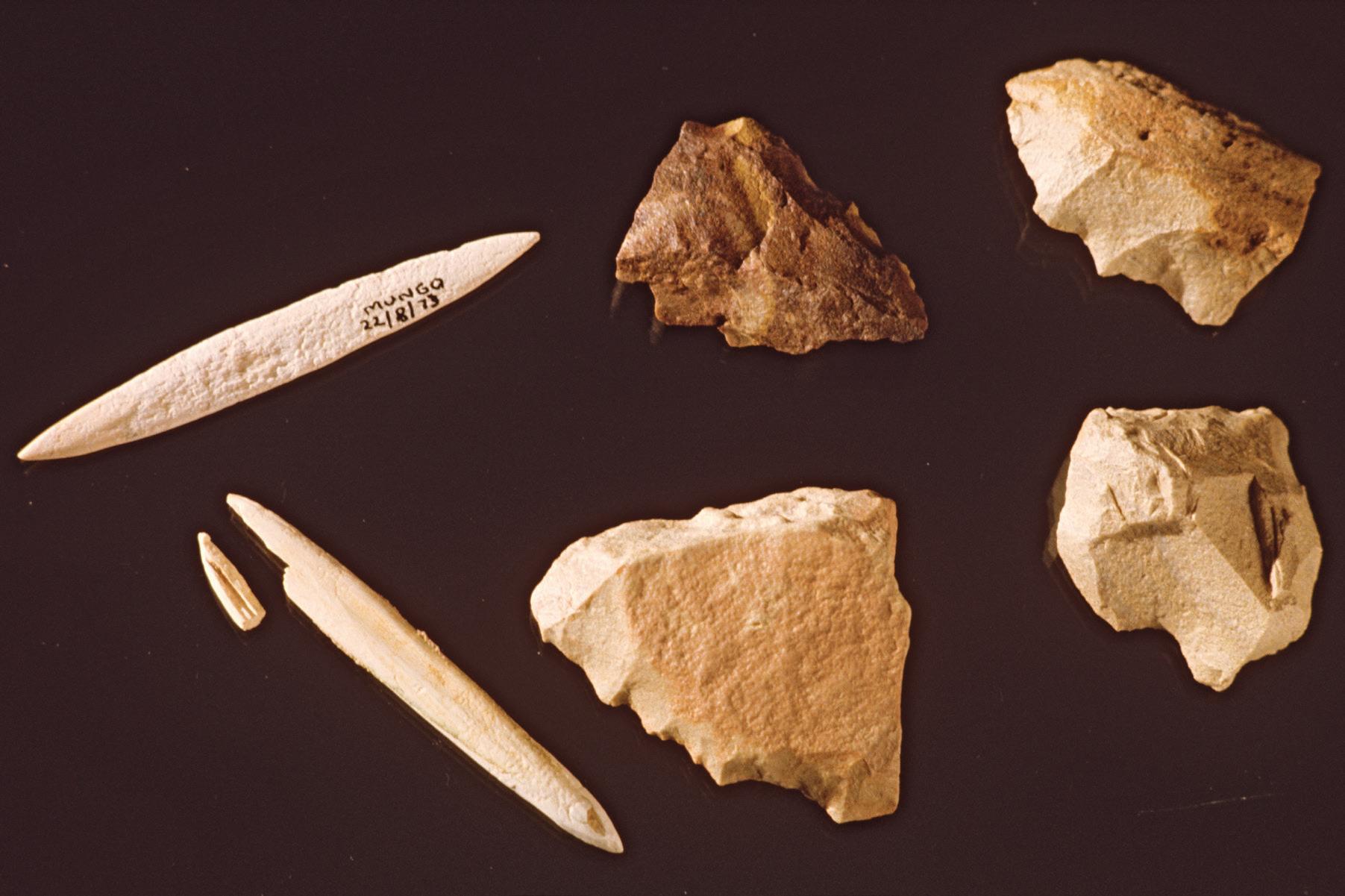
Source 1.6.5 Stone and bone tools from Lake Mungo, New South Wales ➜
study questions 1.6
How was the Lake Mungo site discovered?
Identify the types of artefacts found at the site.
Explain how the environment has helped preserve a record of human activity at the site.
Outline what the human remains reveal about the people who lived around Lake Mungo 40 000 years ago.
Identify why Lake Mungo is a significant archaeological site for human history, not just for the history of Australia.
Explain how the use of red ochre in Mungo Man’s burial provides evidence of spiritual beliefs.
Why was the repatriation of Mungo Man and Mungo Lady to their traditional Country significant?
Historical concepts: <author to provide> Historical skills: <author to provide>
UNCORRECTEDSAMPLEPAGES
Source 1.7.2 Archaeology and archaeologists
1.7
Western and non-Western traditions of historical inquiry
Learning intention
In this lesson, you will learn about Western and non-Western traditions of historical inquiry across the ages.
Writing focus 1.7 Conjunctions
Starter activity
See, think, wonder
What can you see in this image?
What do you think about this image? What does it make you wonder?
Success criteria
❏ I can outline the ancient Greek, Chinese and Islamic traditions of historical inquiry.
❏ I can compare the similarities and differences across these traditions.
UNCORRECTEDSAMPLEPAGES
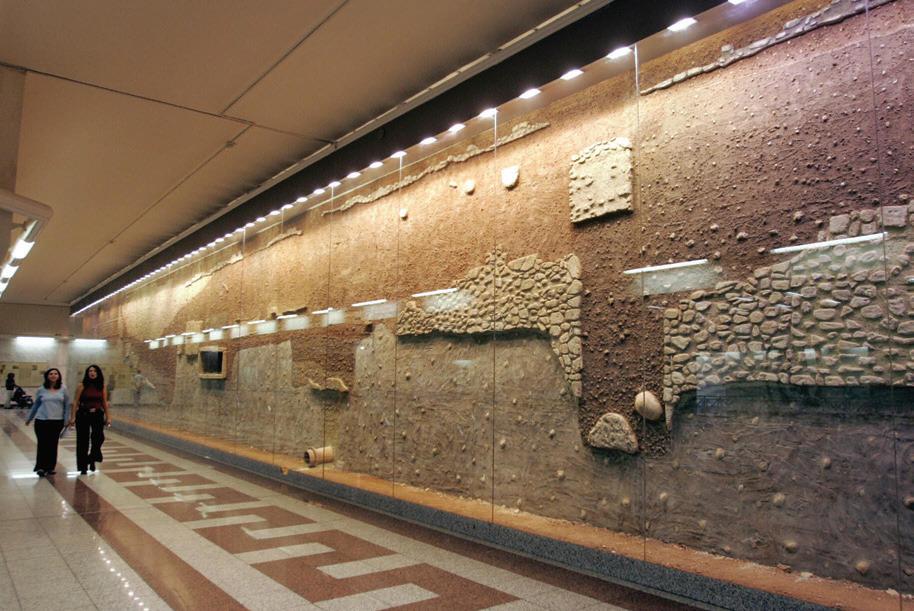
Source 1.7.1 Fortifications of ancient Athens are showcased in Syntagma Station, discovered by accident during the station’s construction in 2004.
History and archaeology
The term history comes from Greek historia, meaning “inquiry” or “research”. Historical inquiry investigates the past by asking questions and using evidence to answer them.
The term archaeology comes from Greek archaios (ancient) and logos (study). While historians focus on written records, archaeologists deal with physical remains called artefacts, ranging from pottery shards to large buildings like the pyramids of Giza.
What is historical inquiry?
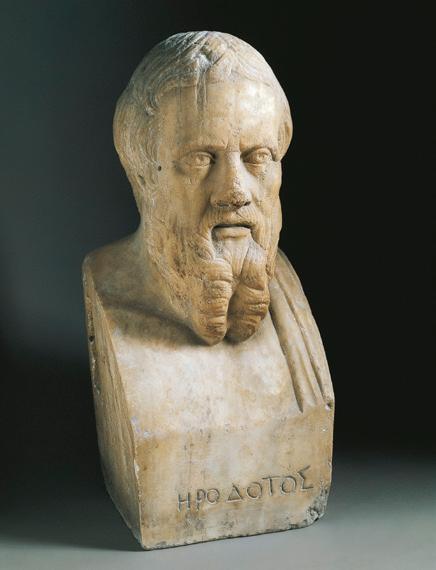
Early historians relied on oral stories. Writers like Herodotus, who lived in ancient Greece approximately 2500 years ago, were interested in the great deeds of great men. Although he did not practise modern historical methods, he is considered the “father of history” in the Western world.
Source 1.7.3 Bust of Herodotus of Halicarnassus, who is often called the “father of history”
Modern historians work with written, oral and archaeological sources. They focus on a particular area, develop a hypothesis and search for evidence. They must think critically and question the usefulness and reliability of sources to ensure their version of the past is as accurate as possible.
After collecting evidence from different sources, historians construct and publish an account of the past. Once published, other historians respond and agree or disagree. The conversation is ongoing as evidence emerges and perspectives change.
Activity 1.7.1
Compass points
Source 1.7.4 Changing perspectives of Tutankhamun ➜
If what happened in the past cannot change, we may ask: Why does our understanding of history change?
On a large piece of paper or cardboard or using a digital application, draw a compass with N, E, S and W around the edges. On each compass point respond to the questions below by considering:
Need to know: What else do you need to know or access to help you answer the question?
Excited: What do you find exciting or interesting about investigating this idea?
Stance: What is your current stance (position) on this question? How might you move forward to evaluate how accurate your position is?
Worrisome: What are you worried about when thinking about how to research this question?
Brainstorm all of your ideas about the question.
Historical concepts: Perspectives, Contestability Historical skills: Perspectives and interpretations
Different civilisations developed their own traditions of recording and understanding history.
The Western tradition: Ancient Greece
The Western tradition of historical inquiry began in ancient Greece with Herodotus and Thucydides.
Herodotus (c. 484–425 BCE)
Herodotus wrote Histories to record wars between Greeks and Persians. He travelled widely, collecting stories, including political and military events as well as customs, geography and culture. He gathered oral accounts from witnesses and informants, then wrote them down. He sometimes included stories he did not personally believe, noting he was simply reporting what he had been told. This method – travelling, interviewing and recording diverse accounts – became a foundation of historical inquiry.
UNCORRECTEDSAMPLEPAGES
Thucydides (c. 460–400 BCE)
A generation later, Athenian historian Thucydides wrote a history of the Peloponnesian War between Athens and Sparta. He was sceptical of unverifiable stories and focused on political and military causes and effects. He believed history should be based on eyewitness accounts and careful analysis.
perspectives different attitudes or ways of thinking about something, such as an issue, person or event
historiography the study of how history is written; the methods and practices historians use to investigate and record the past
Thucydides wrote that his work was intended to be “a possession for all time” – a guide for understanding politics and war. His emphasis on accuracy, analysis and learning from the past influenced Western historians for centuries.
The Chinese tradition
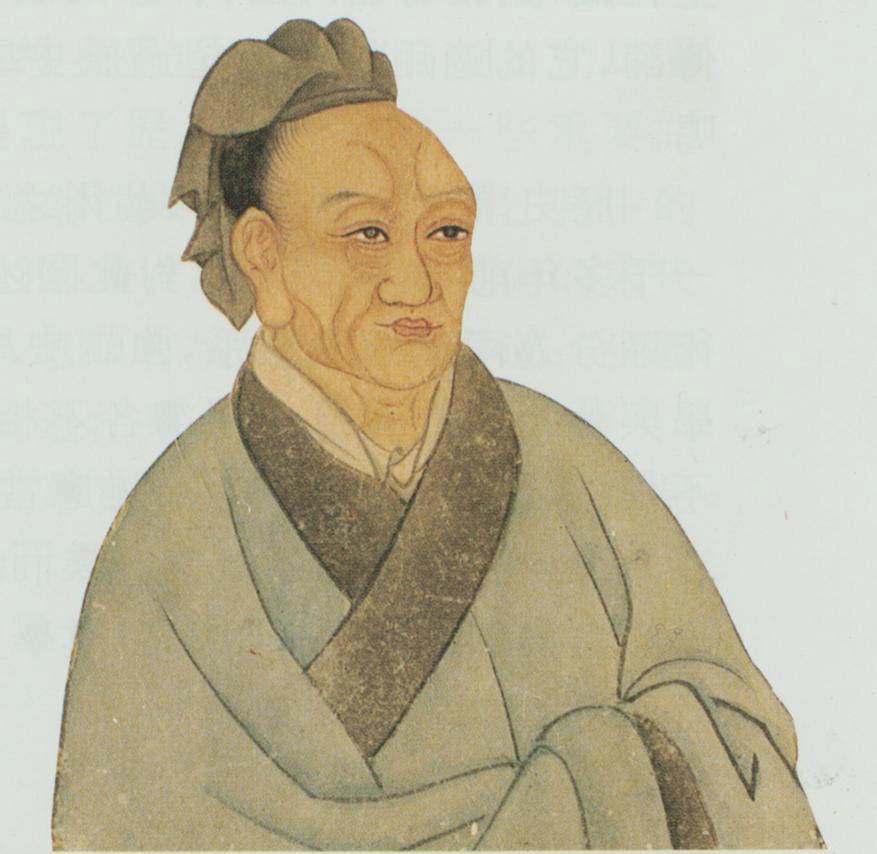
While the Greeks developed their approach, a different tradition emerged in China. The greatest figure in Chinese historiography is Sima Qian, often called the “father of Chinese history”.
Sima Qian (c. 145–86 BCE)
UNCORRECTEDSAMPLEPAGES
Sima Qian served as Grand Historian during the Han Dynasty. His father, Sima Tan, had begun writing a complete history of China but died before finishing it. Sima Qian promised to his father to finish the work and devoted his life to fulfilling this promise.
The result was the Shiji (Records of the Grand Historian), a monumental work covering over 2500 years of Chinese history – from the legendary Yellow Emperor to Sima Qian’s own time. At over 500 000 characters, it remains one of the longest and most comprehensive historical works ever written.
Like Herodotus, Sima Qian travelled extensively, visiting historical sites, consulting local archives and interviewing people throughout China. He was methodical and sceptical, verifying information by comparing different sources.
The structure of the Shiji
The Shiji was organised into 130 chapters divided into five sections:
• Basic Annals – records of rulers and dynasties
• Chronological Tables – timelines of major events
• Treatises – essays on topics like astronomy, economics and music
• Hereditary Houses – histories of important aristocratic families
• Biographies – lives of notable individuals from all levels of society.
This structure was revolutionary. Unlike earlier Chinese records focusing only on rulers, Sima Qian included biographies of merchants, assassins, philosophers and court entertainers. He believed history should record all aspects of society, not just the powerful.
The Islamic tradition
A third great tradition developed in the Islamic world. One of the most innovative Islamic historians was Ibn Khaldun.
Source 1.7.5 A traditional portrait of Sima Qian, the “father of Chinese history”. He served as Grand Historian at the Han Dynasty court.
Ibn Khaldun (1332–1406 CE)
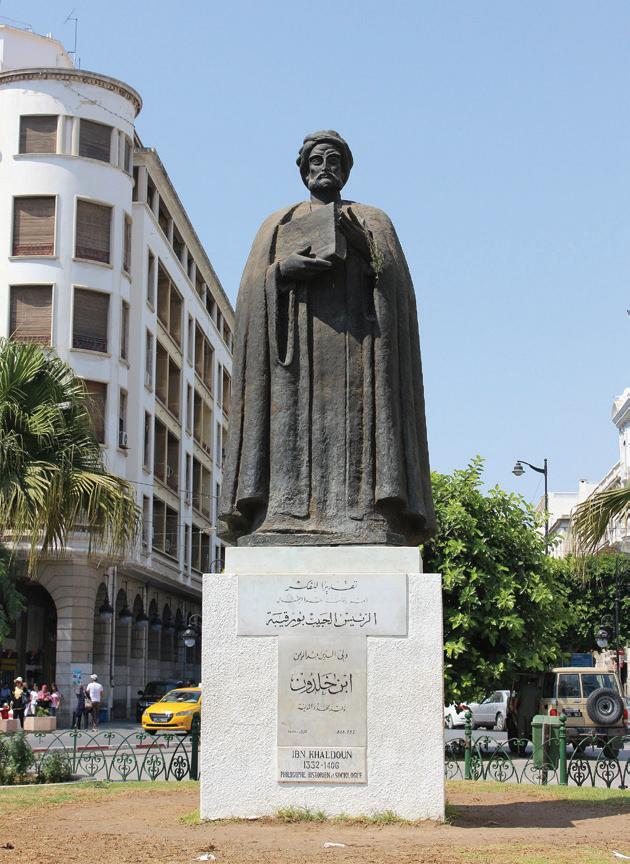
Ibn Khaldun was born in Tunis (modern-day Tunisia) into a family of scholars and government officials. He experienced wars, political intrigues and the Black Death, a plague that killed both his parents. His experiences gave him deep understanding of how societies rise and fall.
From 1375, Ibn Khaldun spent four years writing the Muqaddimah (“Introduction”), a pioneering work some scholars consider the foundation of sociology and philosophy of history.
Ibn Khaldun criticised earlier historians who simply recorded events without asking why. He argued historians should look for underlying causes of historical change – in economics, social structures, geography and human nature. He looked seriously for patterns in history and developed theories about why civilisations rise and fall.
Key concepts from the Muqaddimah
Ibn Khaldun introduced several important ideas:
• Critical evaluation of sources – historians should carefully examine whether claims are believable.
• Social solidarity (asabiyyah) – the bonds that hold groups together, also the key to understanding why some societies succeed while others fail.
• Cycles of history – dynasties and civilisations follow predictable patterns of rise, prosperity, decline and fall.
• The influence of geography and economics – climate, resources and economic conditions shape how societies develop.
Modern scholars called the Muqaddimah “the greatest work of its kind” and note Ibn Khaldun anticipated ideas European thinkers would not develop until centuries later.
Comparing the traditions
These traditions developed independently but share important features:
• All valued gathering evidence and being sceptical.
• All believed history has lessons to teach.
• All produced works that have been studied and admired for centuries or millennia.
UNCORRECTEDSAMPLEPAGES
However, there are differences. Herodotus wrote history as narrative storytelling; Sima Qian created an encyclopaedic structure; and Ibn Khaldun developed theoretical frameworks.
Today, historians worldwide draw on all these traditions, combining careful research, critical analysis of sources and theoretical understanding to investigate the past.
Source 1.7.6 A statue of Ibn Khaldun in Tunis, Tunisia. Ibn Khaldun is considered one of the greatest historians and social thinkers of the medieval world.
Extension
1.7.1
Sources
Comparing historians across cultures
Create a table comparing Herodotus, Sima Qian and Ibn Khaldun. Include when and where they lived; their major work; their main methods; and their key ideas about history.
Historical concepts: Significance Historical skills: Comprehension: chronology, terms and concepts
Knowledge and understanding
Define “historiography” in your own words.
can go online to assign questions, view results, reports and more!
Explain the differences between how historians and archaeologists study the ancient past.
Explain the difference between Herodotus’s and Thucydides’s approaches to history.
Describe the structure of Sima Qian’s Shiji and explain why it was revolutionary.
Outline Ibn Khaldun’s main criticisms of earlier historians.
Identify three similarities between the Western, Chinese and Islamic traditions of historical inquiry. Evaluate the significance of non-Western traditions of historical inquiry. Why is it important to learn about historians from different cultures?
Thinking and researching
Each of the four historians we have looked at held different but sometimes overlapping beliefs about the purpose of history, which influenced the methodology of their work.
Identify and sort the perspectives of Herodotus, Thucydides, Sima Qian and Ibn Khaldun under the four following categories (most will fall under more than one). You may do this in the form of a short report or annotated diagram.
• History as storytelling
• History as evidence-based fact-finding
• History as moral instruction
• History as social/cultural analysis
Justify your placement of each historian. What sort of history were each concerned with? What type of sources did they utilise? How did they explain the causes of events?
Choose a modern historical event (e.g. a protest, pandemic, sporting event, etc.) and analyse it through the lens of each category. How would each historical method seek to explain the event? What would their focus be?
Which category do you think best describes modern history? One, or a combination?
Historical concepts: Perspectives, Significance Historical skills: Perspectives and interpretations, Research, Communication
1.8 Use of science and technology in historiography and archaeological practices
Learning intention
In this lesson, you will learn about the use of science and technology in historiography and archaeological sources.
think, wonder What can you see in this image? What do you think about this image? What does it make you wonder about how science and technology are used in historical research?
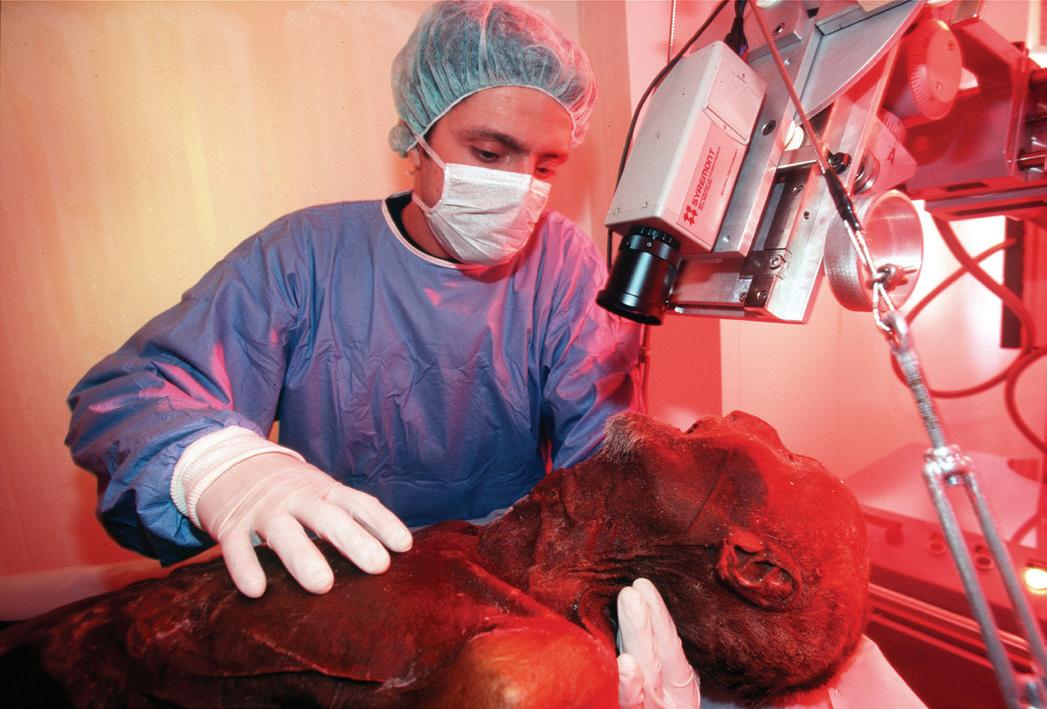
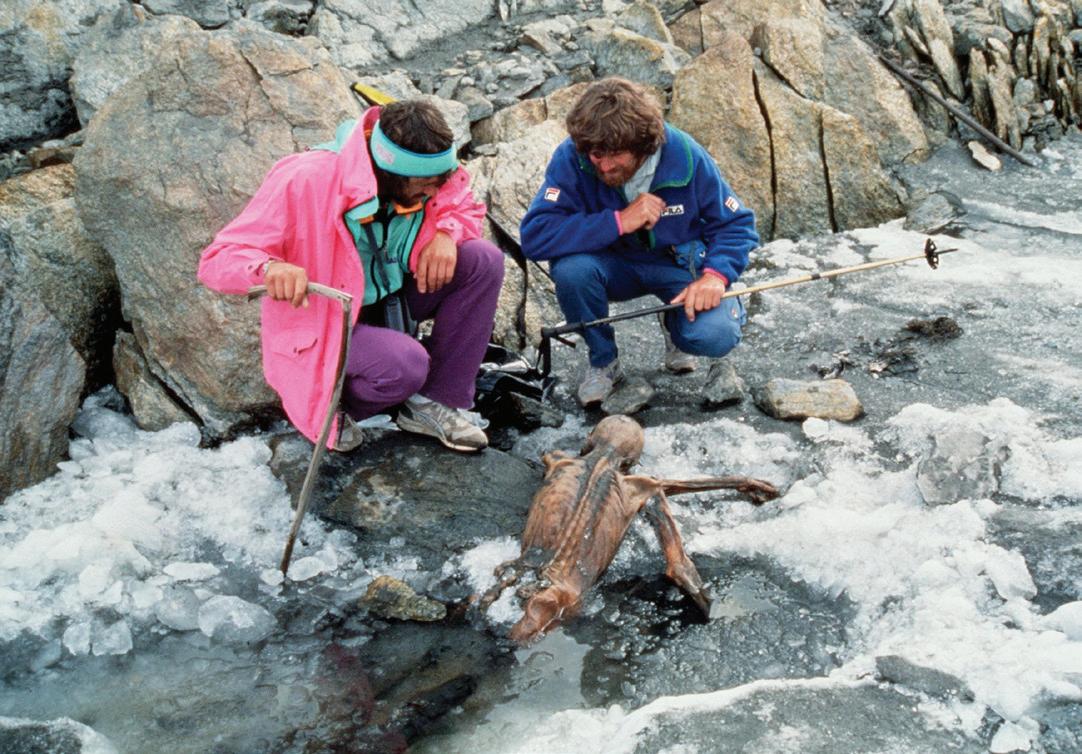
Source 1.8.1 The body of Ötzi the Iceman, Europe’s oldest natural human mummy, was discovered in 1991. Archaeologists, assisted by specialist scientists, carried out a range of tests, including radiocarbon dating, medical examination and DNA testing. They learned everything from his age (more than 5000 years old) to his last meal (dried ibex meat) and even traced his genetic code to 19 living descendants in Tyrol, Austria.
Success criteria
❏ I can define scientific advances in historiography and archaeological practices. ❏ I can explain how these scientific advances allow for more effective historiographical and archaeological research.
How science has transformed archaeology
Scientific advances have transformed archaeology. Modern technologies allow archaeologists to accurately date artefacts, analyse ancient DNA and reconstruct faces of people who lived thousands of years ago. Science has enhanced traditional methods by providing new tools to answer historical questions.
Scientific (absolute) dating
UNCORRECTEDSAMPLEPAGES
Scientific dating methods provide more precise date ranges than earlier techniques. Although called “absolute dating”, they still cannot provide exact years. These methods work best when combined with other approaches.
Radiocarbon dating
Radiocarbon dating, developed in the 1940s, is used on organic material such as hair, bones, papyrus and wood. It is based on the principle that all living things absorb the radioactive isotope carbon-14 while they are alive. Once they die, the carbon-14 starts to decrease at a steady rate. The remaining amount determines age.
This method can be used on materials up to about 50 000 years old. Modern accelerator mass spectrometer (AMS) machines can date very small samples with high precision.
UNCORRECTEDSAMPLEPAGES
1.8.3 Graph showing how radiocarbon dating works: living organisms absorb carbon-14 from the atmosphere, which begins to decay at a steady rate after death.
Thermoluminescence dating
Thermoluminescence dating measures how long it has been since an object has been heated above 500°C. It is used on pottery or stones. Reheating the sample to over 500°C shows the amount of radiation trapped in an object since it was last heated, creating a flash of light that is measured. It can be inaccurate, but is useful for identifying forgeries.
A related technique, optically stimulated luminescence (OSL) dating, was used to date the sediments at Lake Mungo in New South Wales. This helped establish that Mungo Lady and Mungo Man lived approximately 40 000 years ago, making the site one of the most significant archaeological discoveries in Australia.
Source
Source 1.8.2 An AMS is used for radiocarbon dating.
Dendrochronology
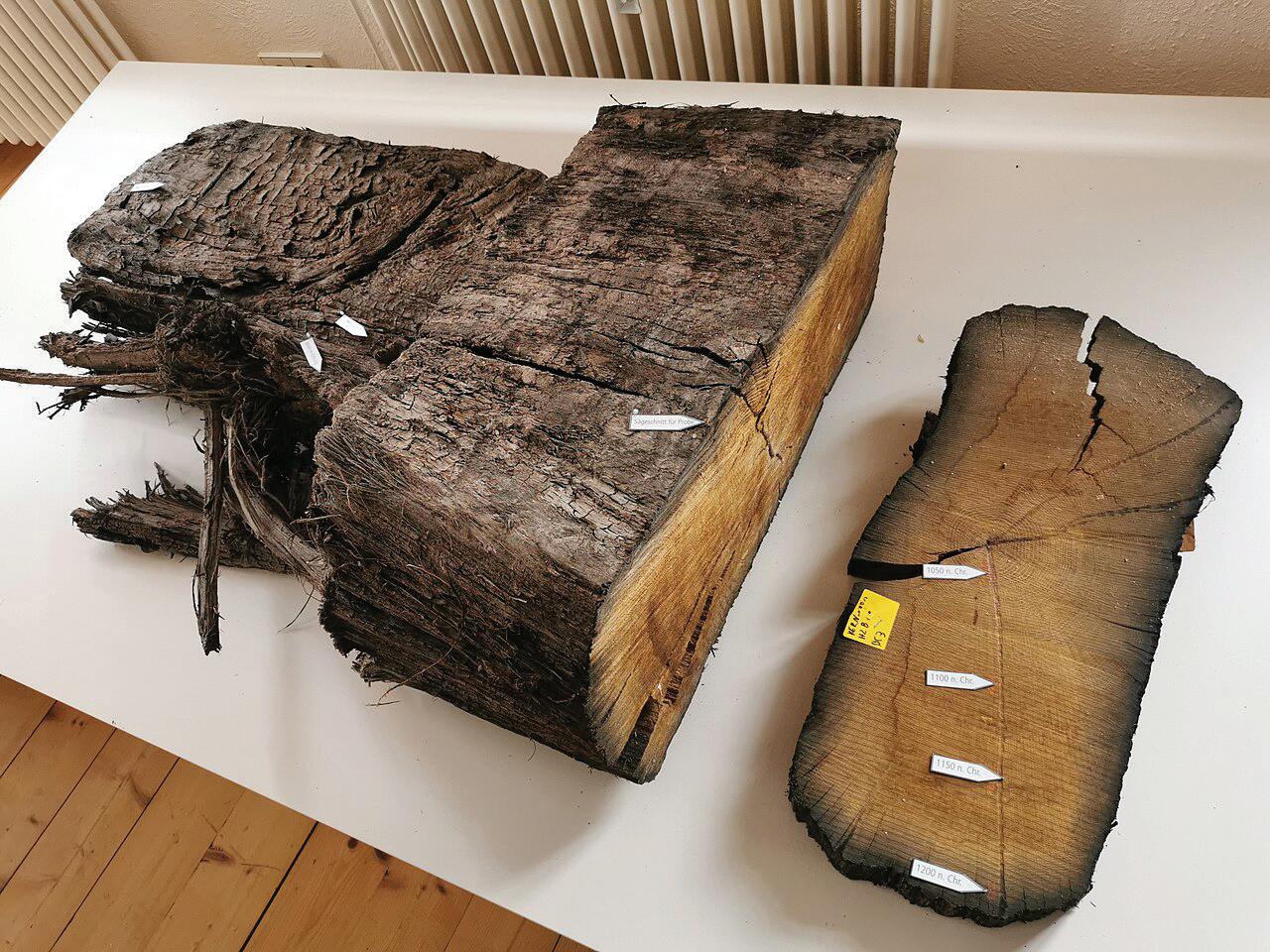
Dendrochronology dates tree rings. Trees grow at different rates each year depending on environmental factors such as rain, sun and temperature. The differing sizes of the growth-rings act like a barcode, revealing when the tree was alive. By comparing different samples, dendrochronologists can build up a detailed database for a region that goes back thousands of years.
1. Sample from living tree
2. Sample from standing dead tree
3. Sample from a beam of a house
n. Chronology extended with samples from historic buildings or sub-fossil wood
Schematic representation of crossdating in dendrochronology
Source 1.8.4 Dendrochronology uses different samples to build up a sequence, which allows the samples to be cross-dated.
UNCORRECTEDSAMPLEPAGES
Source 1.8.5 The pattern of thick and thin rings can be matched to known sequences to determine when the tree was alive.
Source 1.8.7
Space archaeology
DNA analysis
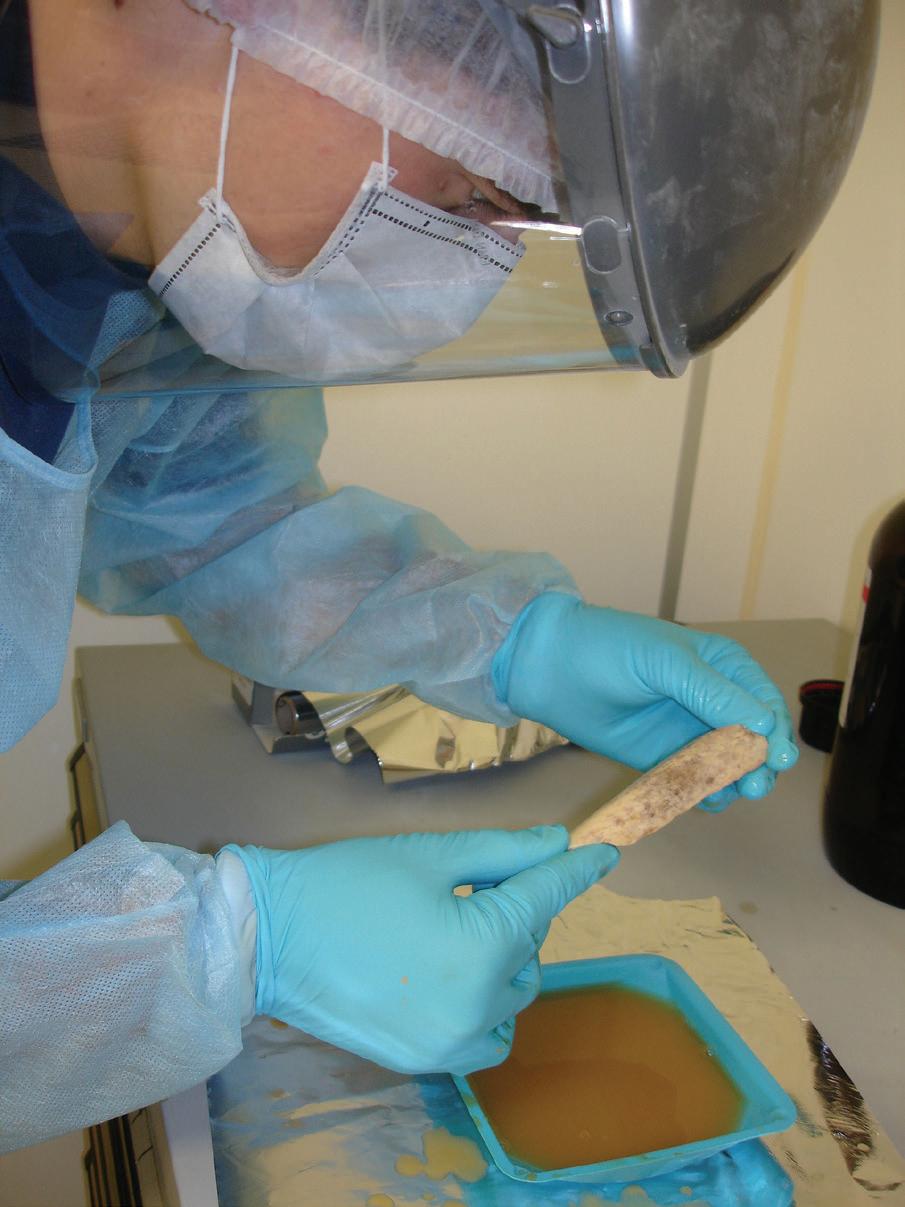
DNA (deoxyribonucleic acid) is the blueprint for all life. It contains the genetic material that determines how a living thing will look and behave. All life has a unique DNA fingerprint. In archaeology, DNA analysis can reveal such things as the species of an animal, a type of plant found at a site or the ancestral background of human remains.
The field of ancient DNA (aDNA) analysis has advanced rapidly. Scientists can now extract and analyse DNA from bones, teeth and soil samples that are tens of thousands of years old. This has revolutionised our understanding of human migration, ancient populations and the relationships between modern and ancient peoples.
Medical imaging technologies
UNCORRECTEDSAMPLEPAGES
Medical technologies such as X-rays, computed tomography (CT) scans and endoscopy allow scientists to examine ancient remains and artefacts without damaging them.
X-rays can reveal hidden features inside mummies, statues and other objects. CT scans create detailed three-dimensional images that can be used to reconstruct faces, identify injuries and detect diseases. Endoscopy uses tiny cameras to examine the inside of bodies and objects through small openings.
Finding archaeological sites
Modern technology has transformed how archaeologists locate sites before any digging begins. Ground-penetrating radar (GPR) sends radio waves into the soil and measures how they reflect back, revealing buried structures and voids without disturbing the ground. Magnetometry detects variations in the earth’s magnetic field caused by buried features such as hearths and building foundations. LiDAR (Light Detection and Ranging) uses laser pulses fired from aircraft to map landscapes, and can reveal ancient structures hidden beneath dense vegetation. These techniques allow archaeologists to plan excavations more precisely, reducing unnecessary disturbance to sites.
Source 1.8.6 A scientist in a clean laboratory extracts ancient DNA from bone samples. Strict protocols prevent contamination with modern DNA.
Science in historiography
Scientific imaging has also transformed how historians read ancient texts. Multispectral imaging, which photographs documents across different wavelengths of light, has revealed faded or damaged text on manuscripts such as the Dead Sea Scrolls. More recently, X-ray tomography and artificial intelligence have allowed scholars to read the Herculaneum Scrolls, which are papyrus texts carbonised by the eruption of Vesuvius in 79 CE, without physically unrolling them, promising the recovery of ancient works lost for nearly two thousand years.
Source 1.8.9 Two mountaineers who discovered Ötzi, Europe's oldest natural human mummy, and an ancient footprint at Lake Mungo. Many different scientific techniques were used when investigating these discoveries.
Knowledge and understanding
Explain how radiocarbon dating works.
Describe how dendrochronology can be used to date wooden objects.
Explain how scientific dating techniques established the significance of Lake Mungo.
Evaluate the contribution of science and technology to our understanding of the ancient past.
Thinking and researching
Examine how the development of scientific knowledge has changed our understanding of the past.
Choose one technique, such as DNA testing.
Outline how the technique was discovered and developed.
Teachers can go online to assign questions, view results, reports and more!
UNCORRECTEDSAMPLEPAGES
Explain how it has changed the study of history and what has resulted from its development.
Source 1.8.8 Case studies: Ötzi the Iceman and Lake Mungo ➜
citizenship the status of being a member of a particular country or community, with the rights and responsibilities that this involves
1.9 Foundations of citizenship in antiquity
Learning intention
In this lesson, you will learn about the development of citizenship as a concept, evolving over thousands of years across the ancient world.
Success criteria
❏ I can define the Code of Hammurabi from ancient Babylon.
❏ I can define the concept of citizenship from ancient Rome.
❏ I can explain their importance as legal texts that provided a foundational idea of “citizenship” across the ages.
Starter activity
Think, pair, share
If you are born in Australia, or if your parents are Australian citizens, you automatically become an Australian citizen. Citizenship gives you certain rights and responsibilities.
Think: Think of two rights and two responsibilities that come with citizenship.
Pair: Pair up with the person next to you and discuss.
Share: Share your discussion with the class.
The foundations of citizenship were laid thousands of years ago, when ancient societies developed ideas about law, rights and what it meant to belong to a community. Two key examples were the Code of Hammurabi from ancient Babylon and the concept of citizenship in ancient Rome.
Writing focus 1.9 Conjunctions
stela (plural: stelae) a stone or wooden slab, usually taller than it is wide, set up as a monument or marker, often with inscriptions or carvings
UNCORRECTEDSAMPLEPAGES
The Code of Hammurabi
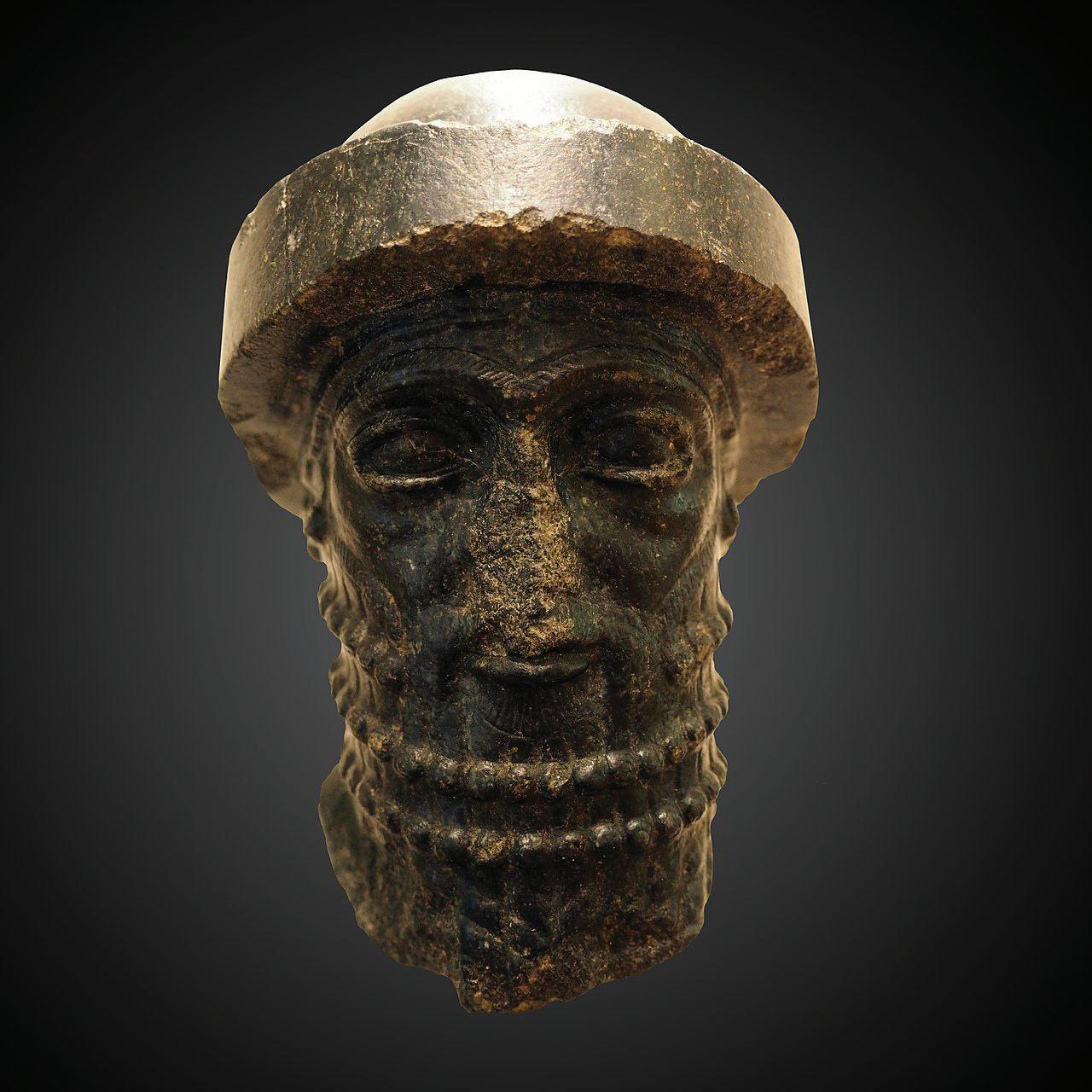
One of the earliest written law sets comes from ancient Babylon, a powerful city in Mesopotamia (modern-day Iraq). Around 1792–1750 BCE, King Hammurabi of Babylon collected 282 laws and had them carved onto a stone pillar called a stela
Source 1.9.1 Royal head attributed to Hammurabi, second millennium BCE, Department of Near Eastern Antiquities of the Louvre, Paris
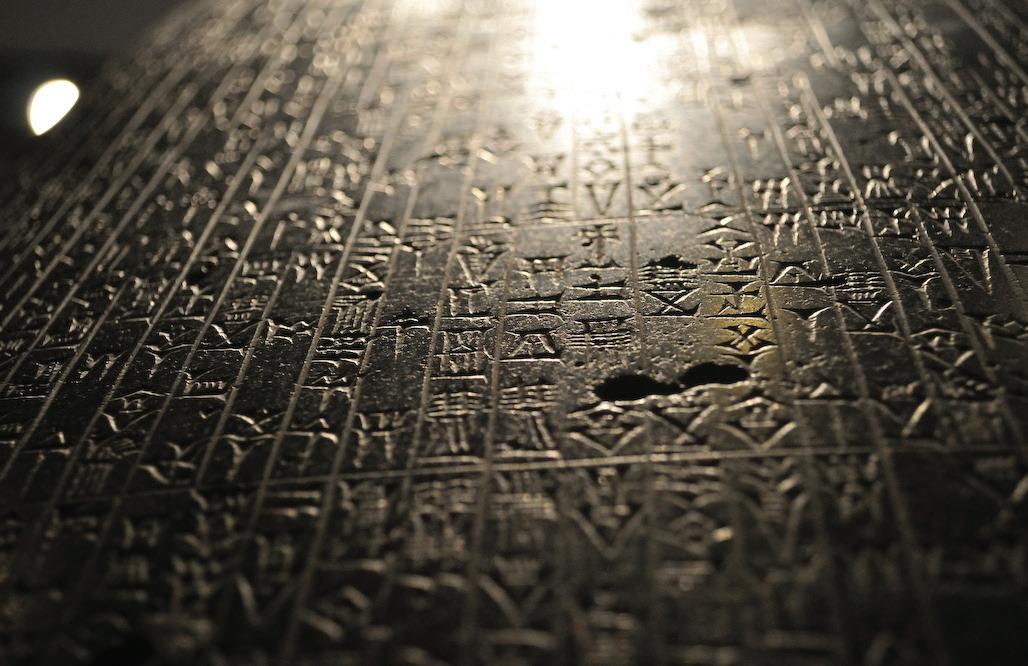
The Code of Hammurabi is the longest and best-preserved legal text from the ancient Near East, written in cuneiform script in Akkadian. The stela was displayed publicly so everyone could see the laws. Most people could not read but could have the laws read aloud – an early attempt to make justice accessible.
Source 1.9.2 Laws inscribed in cuneiform script on the Code of Hammurabi stela
What the Code tells us about Babylonian society
The 282 laws cover many aspects of daily life, including:
• trade and commerce (prices, contracts and business dealings)
• property rights
• family law (marriage, divorce and inheritance)
• criminal law (theft, assault and murder)
• slavery and debt
• the responsibilities of workers and professionals.
Babylonian society had three main social classes: the awilu (property-owning elite), the mushkenu (free commoners, possibly landless) and slaves. Punishments varied by social status of the offender and victim.
Source 1.9.3 From the prologue of the Code of Hammurabi, in which Hammurabi explains the purpose of his laws
UNCORRECTEDSAMPLEPAGES
When Marduk sent me to rule the people and to bring help to the country, I established law and justice in the land and promoted the welfare of the people [...] that the strong might not oppose the weak, and that they should give justice to the orphan and the widow.
Code of Hammurabi, Prologue (adapted translation)
“An eye for an eye”
The Code is famous for lex talionis – the law of retaliation, often summarised as “an eye for an eye, a tooth for a tooth”. Punishments were meant to match the crime. However, this principle only applied when the victim and offender had equal social status. If a wealthy man injured a commoner or slave, he paid a fine.
Source 1.9.4 Examples of laws from the Code of Hammurabi ➜
Law 196: If a man has blinded the eye of a member of the awīlum class, his eye will be blinded.
Law 198: If he has blinded a muškēnum’s eye or has broken a muškēnum’s bone, he will weigh out one mina of silver.
Law 199: If he has blinded the eye of a man’s slave or has broken the bone of a man’s slave, he will weigh out half his value.
UNCORRECTEDSAMPLEPAGES
Source analysis
Study Sources 1.9.3 and 1.9.4, then answer the following questions.
According to Source 1.9.3, what was Hammurabi’s purpose in creating his laws?
Look at Source 1.9.4. Explain how the punishment for the same crime differed depending on the victim’s social status.
Historical concepts: Perspectives, Significance Historical skills: Analysis and use of sources
The significance of the Code
The Code of Hammurabi represents an important step in the development of law and citizenship. For the first time, laws were written down and displayed publicly, so that everyone knew what was expected of them. The Code also required accusers to present evidence before punishment could be handed down, an early recognition that justice should be based on proof.
Although the laws treated people differently based on their social class, the Code still aimed to protect the weak from the strong. It was studied and copied for over 1500 years after Hammurabi’s death and influenced later legal codes, including those of the Assyrians and Babylonians.
In this way, the Code established something fundamental to the idea of citizenship –that belonging to a society comes with both rights and responsibilities. Citizens of Babylon could expect the law to protect their property, their family and their person. In return, they were expected to follow the same laws. While Babylonian society was far from equal, the public display of the Code meant that the law applied to everyone, a principle that lies at the heart of modern citizenship.
Code of Hammurabi
Roman citizenship
While the Code of Hammurabi established written law, ancient Romans developed citizenship in ways that still influence us today.
Roman citizenship compared with Greek citizenship
In Greek city-states, citizenship was tied to the polis. An Athenian citizen could only be a citizen while living in Athens. Greek thinkers believed only free men born in the city could be citizens. Women, foreigners and slaves could not.
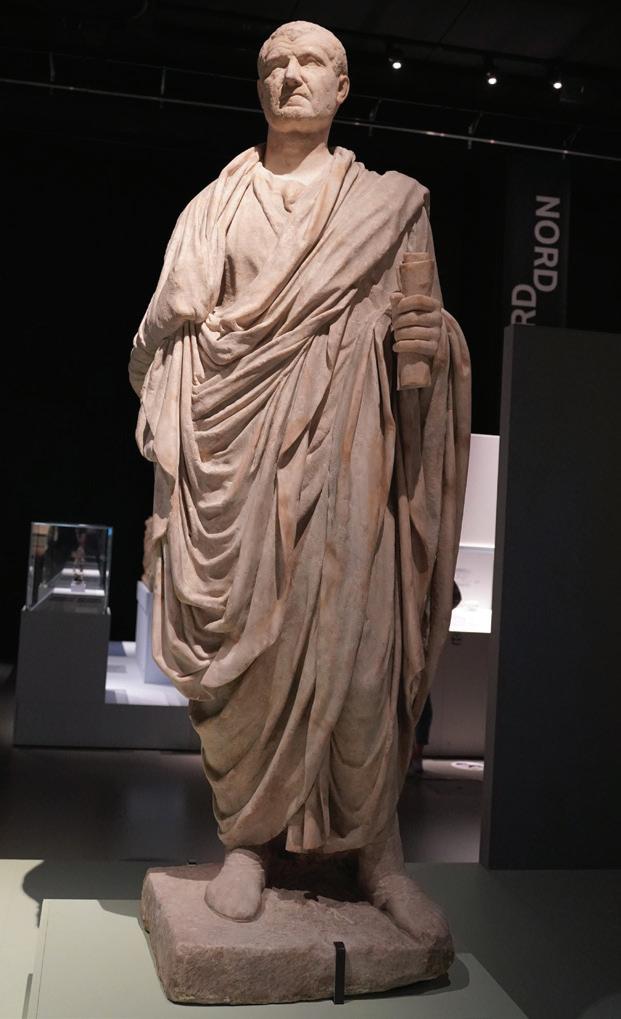
Roman citizenship worked differently. Citizenship was a contract between the individual and the state, not dependent on location. A Roman citizen remained a citizen whether living in Rome, Sicily, Egypt, Judea or elsewhere.
The rights of Roman citizens
Roman citizenship came with clearly defined rights:
• the right to own property
• the right to engage in trade and make contracts
• the right to marry other citizens
• the right to use the Roman legal system
• protection from certain punishments (citizens could not be tortured or crucified)
• at certain periods, the right to vote and hold public office.
Romans distinguished between res privatae (private affairs – a person’s own interests) and res publicae (public affairs – the state’s interests). Citizenship protected private interests while connecting people to the public community.
The expansion of Roman citizenship
Initially, only people born in Rome could be citizens. After a war with other Italian peoples (90–88 BCE), full Roman citizenship was granted to most people living in Italy. Later, citizenship extended to provinces – conquered territories around the Mediterranean. Non-citizens serving in the Roman army were granted citizenship upon completing service.
Finally, in 212 CE, Emperor Caracalla issued a decree granting citizenship to almost all free people in the Roman Empire – a remarkable development where millions of people of different backgrounds, languages and cultures could share the same legal status.
UNCORRECTEDSAMPLEPAGES
Source 1.9.6 A Roman citizen wearing a toga. Only Roman citizens were allowed to wear the toga, making it a visible symbol of citizenship status.
Romanus sum – “I am a Roman citizen” ➜
The Roman concept of citizenship influenced later ideas about rights and belonging. The idea that citizens have certain rights that the state must respect, and that these rights can be extended to people regardless of where they were born, are foundations of modern citizenship that we can trace back to ancient Rome.
Activity 1.9.2
Comparing ancient and modern citizenship
Create a table comparing citizenship in ancient Babylon, ancient Rome and modern Australia. Consider: Who could/can be a citizen? What rights did/do citizens have? What responsibilities did/do citizens have?
Historical concepts: Continuity and change Historical skills: Comprehension – chronology, terms and concepts, Explanation and communication
Knowledge and understanding
Define “citizenship” in your own words.
Explain why the Code of Hammurabi was displayed publicly.
Describe the three social classes in ancient Babylon.
List three rights that Roman citizens possessed.
Explain the difference between Greek and Roman ideas of citizenship.
Outline how Roman citizenship was extended over time.
Evaluate the significance of the Code of Hammurabi and Roman citizenship as foundations for modern ideas about law and rights.
Thinking and researching
Prepare a short report investigating how “fair” law and citizenship was in the ancient world, referencing the Code of Hammurabi and Roman ideals of “citizenship”. Use the following questions to help you:
Research and identify laws from the Code of Hammurabi that indicate different punishments for different social classes. What is the crime and what are the punishments?
Compare the laws from the Code Hammurabi with the Roman law’s treatment of citizens, non-citizens, slaves and women, conducting research to find examples of similar laws.
Are either of these two law codes consistent in their treatment of all citizens? Is one more fair than the other?
Why might ancient societies have believed unequal laws were fair?
How does this compare with modern ideas of equality under the law?
Should the past be judged by modern values?
Historical concepts: Continuity and change, Significance Historical skills: Comprehension, Analysis and use of sources, Research
1.10
Ancient sites that have been lost, threatened or protected
Learning intention
In this lesson, you will learn about ancient sites across history that have disappeared, been threatened or been protected and preserved.
Success criteria
❏ I can explain the history of ancient sites that have disappeared, such as the settlement of Akrotiri.
❏ I can define “natural” and “human” threats, and explain the history of ancient sites that have been destroyed, such as Palmyra.
❏ I can outline the concept of protected World Heritage sites, such as Kakadu National Park.
See, think, wonder
What can you see in this image? What do you think about this image? What does it make you wonder about the disappearance of ancient sites?
Source 1.10.1 A nineteenth-century engraving depicting the ruins of ancient Palmyra. The caption reads: “Palmyra, near View of a Portion of the Ruins”. Tragically, the Monumental Arch in the engraving (built in the late second to early third century during the Roman Empire) was deliberately destroyed in October 2015, leaving only fragments.
The traces of the ancient past are fragile. Over thousands of years, cities have been buried by volcanic eruptions, swallowed by rising seas or crumbled to dust. Some sites that ancient writers described have never been found, while others that survived for millennia are now under threat from natural disasters, climate change, warfare and modern development.
Understanding why sites disappear helps us appreciate why preservation and conservation are important.
UNCORRECTEDSAMPLEPAGES
Sites that have disappeared
Throughout history, natural disasters have buried, destroyed or submerged entire cities. While some sites have been rediscovered, others remain lost forever.
Sources 1.10.2 and 1.10.3 “Room of the Lilies” fresco at Akrotiri, Thera, alongside an interior view of the excavated site. Destroyed by a volcanic eruption in the sixteenth century BCE, the site has revealed a technologically advanced society that included three-storey buildings and a complex drainage system.
Akrotiri: The “Pompeii of the Aegean”
On the island of Thera (Santorini) in the Aegean Sea, a Bronze Age civilisation flourished until around 1600 BCE, when a massive volcanic eruption buried the settlement of Akrotiri under metres of ash. The eruption was one of the largest in recorded history and may have contributed to the decline of the Minoan civilisation on nearby Crete.
UNCORRECTEDSAMPLEPAGES
The site was rediscovered in 1967 by Greek archaeologist Spyridon Marinatos: a wellpreserved town with multi-storey buildings, drainage systems and stunning frescoes (wall paintings) that reveal details of daily life over 3500 years ago.
Akrotiri appears to have been evacuated before the final eruption. No human remains have been found, suggesting the population had warning signs – probably earthquakes –and fled in time. However, they left behind their belongings, art and buildings, giving archaeologists an extraordinary window into Bronze Age life.
Source 1.10.4 The “Boxing Boys” and “Fisherman” frescoes from Akrotiri, showing two young men boxing (left) and a boy with two bunches of fish (right). Frescoes like this provide valuable evidence about daily life, clothing, hairstyles and recreational activities in the Bronze Age Aegean.
The Pharos Lighthouse of Alexandria
The Pharos Lighthouse of Alexandria, one of the Seven Wonders of the Ancient World, stood for over 1500 years before being destroyed by earthquakes. Built during the reign of Ptolemy II (c. 280 BCE), the lighthouse stood on the island of Pharos in Alexandria’s harbour, Egypt. Ancient sources describe it as being between 100 and 140 m tall. A fire burned at its peak, and mirrors reflected the light out to sea, guiding ships.
Earthquakes between 956 CE and 1323 CE progressively damaged the lighthouse until it collapsed. Its ruins lay underwater for centuries. French archaeologists began exploring the harbour floor in 1994, and discovered massive stone blocks, sphinxes and remnants scattered across the seabed.
Today, the remains are an underwater archaeological site with proposals to create an underwater museum.
Source 1.10.5 An artist’s reconstruction of the Pharos Lighthouse of Alexandria, based on ancient descriptions and archaeological evidence. The lighthouse guided ships into Alexandria’s harbour for over 1500 years.
Sites that are threatened
Many ancient sites that survived for thousands of years now face serious threats. These threats can be divided natural threats and human threats.
Natural threats
UNCORRECTEDSAMPLEPAGES
Once exposed, sites start to decay. Normal weather, including rain, wind and heat, erodes objects. Natural disasters such as cyclones, landslides, volcanoes and floods can hugely affect, and even destroy, archaeological artefacts.
Source 1.10.6 A diver explores the underwater ruins of the Pharos Lighthouse in Alexandria’s harbour. The massive stone blocks and statues on the seabed are all that remain of one of the Seven Wonders of the Ancient World.
Source 1.10.7 Moai statues at Rano Raraku quarry, Easter Island. Rising sea levels from climate change threaten many of the island’s famous statues, some of which stand close to the shoreline.
Living things also pose threats. Bacteria, fungi and plants grow over frescoes and through buildings. Animals like birds and insects make nests and eat through organic material. Climate change threatens sites worldwide, particularly in low-lying areas like Easter Island.
Human threats
Human activity threatens ancient evidence. Pollution and urbanisation have negative effects. Tourism damages sites like Pompeii, Italy, which attracts millions of visitors yearly. Tourists degrade pavements, and moisture in breath eats away at painted plaster walls. Looting, warfare and terrorism have also destroyed many remnants.
Destruction at Palmyra
Recent wars in Iraq and Syria have led to significant destruction of cultural heritage in those countries. One tragic loss was at Palmyra, an ancient city in Syria that was a UNESCO World Heritage site.
Palmyra was founded in the third millennium BCE and became a wealthy trading city under the Roman Empire. Its ruins included magnificent temples, colonnaded streets and monumental tombs. In 2015, ISIS fighters deliberately destroyed the Temple of Bel, the Temple of Baalshamin and other structures. They also murdered the 82-year-old chief archaeologist, Khaled al-Asaad, who had devoted his life to protecting the site and refused to reveal where valuable artefacts had been hidden.
UNCORRECTEDSAMPLEPAGES
Source 1.10.8 The ruined Temple of Bel at Palmyra ➜
The destruction at Palmyra shocked the world and highlighted how vulnerable ancient sites are to deliberate destruction. International efforts are now underway to document and restore damaged structures.
Fortunately, governments, international organisations and local communities worldwide work to protect ancient sites. Sites like Pompeii, Angkor Wat in Cambodia and Teotihuacan in Mexico are now carefully managed to preserve them for future generations.
In Australia, significant sites including Kakadu National Park, the Willandra Lakes Region (home to Lake Mungo) and Budj Bim are protected as World Heritage sites. They preserve archaeological evidence and the living cultural heritage of Aboriginal and Torres Strait Islander Peoples.
Source 1.10.9 The Temple of Bel at Palmyra before its destruction. This temple was nearly 2000 years old when it was demolished by ISIS in 2015.
Knowledge and understanding
Describe what happened to the settlement at Akrotiri around 1600 BCE.
Explain what the Pharos Lighthouse of Alexandria was and why it was significant.
Describe two natural threats to archaeological sites.
Describe two human threats to archaeological sites.
Explain why the destruction of Palmyra was significant.
Compare what happened at Akrotiri with what happened at Pompeii. What was similar and what was different?
Evaluate why protecting ancient sites from threats is important for our understanding of the past.
Thinking
Choose one of the following ancient sites to research: Pompeii, Angkor Wat or Teotihuacan.
Describe the site’s history and significance.
Explain whether the site has disappeared, is threatened or is now protected.
Identify what caused the site to disappear or what threatens it today.
Discuss what steps (if any) are being taken to protect or preserve the site.
Present your findings as a short report (300–400 words) or a digital presentation.
1.11
Preserving and conserving archaeological and historical remains
Learning intention
In this lesson, you will learn about the preservation and conservation of archaeological and historical remains.
Starter activity
Look at Source 1.11.1.
What can you see in this image? What do you think about this image? What does it make you wonder about preservation and conservation? 1.
Success criteria
UNCORRECTEDSAMPLEPAGES
A
❏ I can explain the methods of preserving and conserving archaeological remains.
❏ I can define the process of repatriation.
The past leaves only traces for us to study, and these traces are fragile. Once a site or artefact is uncovered, special care needs to be taken to protect it.
Early archaeologists focused on making great finds and promoting them. Modern archaeologists incorporate conservation into all aspects of a dig. At sites like Pompeii, capping tourist numbers, roping off areas, creating walkways and restoring drainage have made a difference. Conservation work has also been undertaken to prop up walls and repair paintings.
Improved technology has led to new conservation methods. Techniques such as 3D laser scanning and ultrasonic surface measurements have helped conservators map buildings and understand the materials that were used.
Source 1.11.1
photo of the 55-m-tall Buddha of Bamiyan in Afghanistan, 1963 (left), and a photo of the remaining empty niche in 2008, after its destruction in 2001 by Taliban forces
Source 1.11.2 Ultrasonic surface measurements (left) and lasers (right) are used to assess and clean the frescoes of the Villa of the Mysteries, Pompeii.
UNESCO and World Heritage sites
The most important international body for protecting cultural heritage is the United Nations Educational, Scientific and Cultural Organization, or UNESCO. It manages the World Heritage List established in 1972. UNESCO works with governments and other groups to protect cultural and natural heritage of outstanding value. World Heritage sites include the Great Pyramid of Giza and the Sphinx in Egypt, the Acropolis in Greece and the Great Barrier Reef in Australia.
For a site to be considered for World Heritage listing as a historical site, it needs to meet at least one of six cultural criteria.
Protecting Aboriginal and Torres Strait Islander cultural heritage
Understanding how Aboriginal and Torres Strait Islander cultural heritage is managed is essential to respecting First Nations Peoples’ connections to Country. This protection involves physical conservation, respect for First Nations Peoples’ rights and consultation with Traditional Owners.
In Australia, Aboriginal and Torres Strait Islander heritage is protected through legislation, World Heritage listing and co-management with Traditional Owners. Key principles include:
UNCORRECTEDSAMPLEPAGES
• free, prior and informed consent – Traditional Owners must be consulted before sites are disturbed
• co-management – Aboriginal and Torres Strait Islander communities work alongside government agencies
• repatriation – the return of ancestral remains and cultural objects
• recognition of living heritage – Aboriginal and Torres Strait Islander heritage is a living, continuing culture.
The Criteria for Selection, UNESCO
Writing focus 1.11
Developing sentences
Kakadu National Park
Kakadu National Park was declared a UNESCO World Heritage site in 1981 because of its natural beauty, biodiversity and cultural significance. Kakadu is home to numerous cave paintings, rock carvings and archaeological sites recording life dating back tens of thousands of years.
The images found in the park showing human figures, spirit beings and extinct animals demonstrate the artistic style and beliefs of First Nations Peoples.
UNCORRECTEDSAMPLEPAGES
They also document changes since colonisation, with images depicting ships and firearms, showing the continuing connection of First Nations Peoples to the land.
Conservation at Kakadu National Park
These sites are of ritual significance to the First Nations Peoples of Kakadu, who maintain a link to ancestors and culture through them. The Bininj/ Mungguy people manage the national park as Traditional Owners, with government assistance, dealing with risks posed by natural elements and human activities.
Threats to the site
Tourism, crocodile hunting, mining and pest species like the water buffalo threaten Kakadu. Crocodile hunting was banned in 1972, but water buffalo still pose a threat. There is one operational mine on the site, with strict environmental controls. Tourism is arguably one of the biggest threats as large numbers of people and infrastructures provided for them affect Kakadu. Visitor fees are used to care for the site.
Source 1.11.5 Jim Jim Waterfall, Kakadu National Park
Budj Bim Cultural Landscape
In 2019, the Budj Bim Cultural Landscape in Victoria became Australia’s first site listed solely for Aboriginal cultural values. This acknowledged the Gunditjmara people, who created one of the world’s oldest aquaculture systems.
The system includes stone channels, weirs and traps to farm kooyang (short-finned eels). Some structures are at least 6600 years old –predating the pyramids of ancient Egypt and Stonehenge in England.
The protection of Budj Bim demonstrates how First Nations communities lead in managing their heritage. The Gunditjmara people, through the Gunditj Mirring Traditional Owners Aboriginal Corporation, manage the site with Parks Victoria, ensuring Traditional Knowledge guides its interpretation.
Repatriation: The return of Mungo Man and Mungo Lady
One important aspect of Aboriginal and Torres Strait Islander heritage protection is the repatriation (return) of ancestral remains and cultural objects. During the nineteenth and twentieth centuries, the remains of Aboriginal and Torres Strait Islander Peoples were often removed without consent and taken to museums and universities.
Today, there is recognition that these remains should be returned for proper burial. The Australian Government supports repatriation through programs helping communities recover ancestral remains. The Indigenous Repatriation Program has helped return the remains of more than 1500 ancestors.
The repatriation of Mungo Lady and Mungo Man to Lake Mungo was a landmark moment in recognising First Nations Peoples’ rights. For years, the remains of Mungo Lady and Mungo Man had been held at ANU. However, the Mutthi Mutthi, Ngiyampaa and Paakantji peoples – the Traditional Owners of the Willandra Lakes Region –campaigned for their return.
UNCORRECTEDSAMPLEPAGES
Mungo Lady was returned in 1992 and placed in a secure keeping place at Lake Mungo. Mungo Man was formally handed over in 2015 and, in 2017, in a moving ceremony attended by hundreds of people, his remains were returned to Lake Mungo and buried.
repatriation the return of cultural artefacts to their country or community of origin
The repatriation is considered a landmark moment in recognising First Nations Peoples’ rights to care for their ancestors and control their heritage. It demonstrates how attitudes have changed – from treating remains as specimens to recognising them as ancestors deserving respect.
Teachers can go online to assign questions, view results, reports and more!
Knowledge and understanding
Why is conserving the past important?
Outline what UNESCO does.
Explain the significance of Kakadu as a site worthy of conservation.
Describe how Aboriginal and Torres Strait Islander cultural heritage is protected in Australia.
Explain why the World Heritage listing of Budj Bim was significant.
Define “repatriation” and explain why it is important for First Nations communities.
Should archaeological sites be closed to the public if they are under threat? Justify your answer.
Whose responsibility is it to conserve the remains of the past?
Evaluate how the management of Lake Mungo demonstrates changing attitudes towards First Nations Peoples’ cultural heritage.
Thinking and researching
Complete one of the following two tasks.
Look at the UNESCO World Heritage Criteria List in Source 1.11.3.
a. Choose an archaeological/historically significant site from the list.
b. Explain why it is considered a World Heritage site. Make direct reference to the six criteria listed.
c. Outline any threats to the site and steps being taken to manage those threats.
UNCORRECTEDSAMPLEPAGES
Research conservation at Pompeii. Write a conservation report on the site explaining:
a. the natural threats to the site from things such as weather and animals
b. what impact tourism and other human activities have had on the site
c. what steps are being taken by authorities to limit the damaging effects of natural forces and human impacts on the site.
Source 1.11.7 David Edwards, a Mutthi Mutthi Elder, welcomes Mungo Man back to Country during a smoking ceremony in 2017 in Balranald, Australia.
1.12 Removal of cultural artefacts
Learning intention
In this lesson, you will learn about why cultural artefacts were removed, the impact of their removal on source communities and the growing movement for repatriation.
Success criteria
❏ I can explain historical reasoning behind the removal of cultural artefacts.
❏ I can define contested historical artefacts and the reasons why they are contested.
❏ I can compare the arguments for and against repatriation of cultural artefacts.
Source 1.12.1 The dismantling of the Abu Simbel Temples, Egypt, in 1966. The giant pieces of sculpture are being moved by sawing them into blocks, so that the temple can be moved to a new site to stop it being swallowed up by the Nile River.
Why were cultural artefacts removed?
Museums worldwide contain millions of artefacts from ancient civilisations. Cultural artefacts were removed from their countries of origin for many reasons.
Colonialism and imperial conquest
UNCORRECTEDSAMPLEPAGES
During the eighteenth and nineteenth centuries, European powers colonised large parts of Africa, Asia, the Pacific and the Americas. Colonial officials, soldiers and traders took cultural objects as war trophies or items of scientific interest. In some cases, entire collections were shipped to Europe to fill growing museums.
Writing focus 1.12
Creating topic sentences
Early archaeology
Early archaeologists like Heinrich Schliemann, who in the 1870s searched for the ancient city of Troy, prioritised spectacular finds over careful excavation and took artefacts without permission. Schliemann’s discovery of “Priam’s Treasure” was smuggled out of the Ottoman Empire.
Warfare and looting
UNCORRECTEDSAMPLEPAGES
Throughout history, conquering armies have taken cultural treasures. Napoleon’s campaigns saw vast quantities seized for French museums. The Nazis systematically looted art and cultural objects from occupied countries during World War II. Recently, conflicts in Iraq and Syria have led to widespread looting.
The antiquities trade
Legal or illegal trade in antiquities has existed for centuries. Collectors, dealers and museums have purchased artefacts without questioning their origin. While international laws now prohibit trade in stolen property, the black market remains a serious problem.
Contested artefacts
The Parthenon Marbles (Elgin Marbles)
Perhaps the most famous case of contested cultural artefacts involves marble sculptures that once decorated the Parthenon temple in Athens, Greece.
Between 1801 and 1812, Thomas Bruce, the seventh Earl of Elgin, British Ambassador to the Ottoman Empire (which then controlled Greece), removed approximately half of the surviving sculptures. He claimed permission from Ottoman authorities, though this has been disputed. The sculptures were sold to the British Museum in 1816.
Source 1.12.2 Human rights lawyer Amal Alamuddin Clooney visited the Acropolis Museum in Athens, advising the Greek Government on the return of the Parthenon Marbles.
Greece has been requesting their return since its independence in 1832, arguing that:
• the sculptures are integral to Greek cultural heritage
• Elgin’s permission from the Ottomans was not legitimate
• the removal caused significant damage to the temple
• Greece built a museum designed to house them.
The British Museum argues:
• the removal was legal
• the marbles have been well preserved and seen by millions
• they form part of a “universal” collection
• returning them could set a precedent.
The Rosetta Stone
The Rosetta Stone is a stela inscribed with a decree issued in 196 BCE during the reign of Ptolemy V of Egypt. The same text appears in three scripts: ancient Egyptian hieroglyphics, Demotic script and Ancient Greek, making it possible for scholars to decipher Egyptian hieroglyphics.
French soldiers discovered the stone in 1799 during Napoleon’s Egyptian campaign. In 1801, the stone was handed over to Britain under the Treaty of Alexandria. It has been in the British Museum since 1802.
Egypt has requested the return of the Rosetta Stone because it is one of the most important symbols of Egyptian heritage. The British Museum has refused, citing its legal acquisition and its role in making Egyptian history accessible to the world.
The Benin Bronzes
UNCORRECTEDSAMPLEPAGES
Source 1.12.3 The Parthenon Marbles displayed in the British Museum, London. Greece has been requesting their return for nearly 200 years.
➜
➜ Source 1.12.4 The Rosetta Stone in the British Museum. This ancient Egyptian artefact was the key to deciphering hieroglyphics.
The Benin Bronzes are thousands of metal plaques and sculptures that decorated the royal palace of the Kingdom of Benin (in present-day Nigeria). Created from the thirteenth century onwards, they are considered masterpieces of African art.
In 1897, British forces attacked Benin City. They looted the royal palace, taking thousands of bronzes that were sold to museums and collectors. The British Museum holds about 900 pieces, with others in museums in Germany, the United States and elsewhere.
The Benin Bronzes have become a focal point for debates about colonial looting. Nigeria has long demanded their return. Germany announced in 2021 that it would return its collection, and several other institutions have followed.
UNCORRECTEDSAMPLEPAGES
The impact of removing cultural artefacts
The removal of cultural artefacts has had significant impacts on the communities from which they were taken:
• Loss of cultural heritage: communities lose tangible connections to their history. Objects that had spiritual, ceremonial or educational purposes can no longer fulfil those roles.
• Incomplete historical record: artefacts removed from their context lose historical value. When taken without proper documentation, information about where they were found and how they were used is lost.
• Economic impacts: countries that lost cultural treasures may also lose tourism revenue.
• Ongoing trauma: for many communities, the removal is a continuing source of pain and injustice, particularly when objects were taken through violence or include human remains or sacred items.
The repatriation debate
As described earlier, repatriation is the return of cultural artefacts to their country or community of origin. In recent years, there has been growing momentum for the return of objects that were taken during colonial periods or through other questionable means.
Source 1.12.5 A Benin Bronze plaque depicting warriors and attendants. Thousands of these artworks were looted by British forces in 1897.
There are a number of arguments in favour of repatriation of artefacts:
• Cultural artefacts belong to the people who created them and their descendants.
• Many objects were taken illegally or unethically, even if it was legal at the time.
• Countries of origin can now care for their heritage.
• Human remains and sacred objects should always be returned.
However, there are also arguments against repatriation:
• Many acquisitions were legal at the time.
• Universal museums allow artefacts to be seen in a global context.
• Some countries may lack the resources to care for returned objects.
• It can be difficult to determine the rightful owners.
• Returning everything could break up collections and limit scholarship.
Activity 1.12.1
Source analysis
Source 1.12.6 Greek Culture Minister Lina Mendoni, speaking in 2025 ➜
Greece's request is longstanding, [and] the landscape around it has changed significantly in recent years. Across the world, governments, museums, and civil society now recognize the need to address historic wrongs in the handling of cultural heritage. Major institutions are returning artifacts acquired through dubious means, and the global conversation has shifted decisively toward restitution and ethical stewardship. In this context, since 2021, UNESCO has issued a series of strong, unanimous decisions acknowledging that the Greek claim for the restitution of the marbles is legitimate and rightful … The significance of the Parthenon Marbles to Greece extends far beyond art history. To Greeks the Acropolis monuments and the Parthenon are constitutive and essential parts of their cultural, ethnic, and national identity. They are central focal points of collective memory and education. They are valued as emblematic achievements of Greek culture, and examples of the combined excellence in the arts, philosophy, and political theory that Greece has presented to the world …
UNCORRECTEDSAMPLEPAGES
The Museum is a unique resource for the world: the breadth and depth of its collection allow a global public to examine cultural identities and explore the complex network of interconnected human cultures. The Trustees lend extensively all over the world and over 4.5 million objects from the collection are available to study online. The Parthenon sculptures are a vital element in this interconnected world collection. They’re a part of the world's shared heritage and transcend political boundaries.
The Acropolis Museum allows the Parthenon sculptures that are in Athens (about half of what survives from the ancient world) to be appreciated against the backdrop of Athenian history. The Parthenon sculptures in London are an important representation of ancient Athenian civilisation in the context of world history. Each year millions of visitors, free of charge, admire the artistry of the sculptures and gain insight into how ancient Greece influenced – and was influenced by – the other civilisations that it encountered. The Trustees firmly believe that there’s a positive advantage and public benefit in having the sculptures divided between two great museums, each telling a complementary but different story.
Global Times
Source 1.12.7 Statement from the British Museum ➜
British Museum website public statement
According to Source 1.12.6, why does Greece believe the Parthenon Marbles should be returned?
What arguments does Source 1.12.7 use to justify keeping the marbles in London?
Identify the perspective of each source. How might these perspectives affect the arguments presented?
What additional information would you need to form your own view on this debate?
Do you think the Parthenon Marbles should be returned to Greece? Justify your answer, using evidence from the sources and your own knowledge.
Historical concepts: Perspectives, Contestability Historical skills: Analysis and use of sources, Perspectives and interpretations
Knowledge and understanding
Thinking and researching Online quiz
Knowledge and understanding
Students can access sample responses and results
Teachers can go online to assign questions, view results, reports and more!
Identify three reasons why cultural artefacts were removed from their countries of origin.
Describe the circumstances in which the Parthenon Marbles were taken from Athens.
Explain why the Benin Bronzes are significant to Nigerian cultural heritage. Outline the main arguments for and against the repatriation of cultural artefacts.
Explain how the removal of cultural artefacts can impact the communities from which they were taken. Compare the repatriation of the Benin Bronzes with the repatriation of Mungo Man and Mungo Lady. What similarities and differences can you identify?
Evaluate whether it is ever justified for museums to keep artefacts that were taken without the consent of the communities who created them.
Thinking and researching
Conduct research to prepare a short report investigating the possibilities of modern technology affecting artefact removal. Investigate the following questions:
Define four ways that digital technology is currently being used to preserve, study and display cultural artefacts (e.g. digital preservation).
Explain the advantages and disadvantages of viewing a digital version of an artefact compared with the real artefact.
Explain whether you believe digital alternatives of artefacts can replace real-life cultural or historical value.
Can digital preservation eliminate the need to physically remove artefacts? What about the need to return artefacts? Justify your opinion with reference to a real-life case study.
UNCORRECTEDSAMPLEPAGES
Historical concepts: Continuity and change, Perspectives, Significance, Contestability Historical skills: Perspectives and interpretations, Research
1.13 Chapter review and historical inquiry
Access the Interactive Textbook for a range of digital tools to help you review this chapter and build confidence.
• Auto-marked questions for fast feedback and fun practice
• Self-assessment tools to track your progress, review answers (if enabled by the teacher), and flag questions for extra help
• Downloadable worksheets for class or homework revision
Summary
Summary notes
What have you learned about the ancient past? Copy the table below and fill it out by explaining your understanding. Aim for two points per topic.
Topic
How historians and archaeologists investigate the ancient past
Early human migration and the development of ancient societies
Measuring and organising time in historical studies
Types of evidence used to understand ancient societies
The role of science and technology in reconstructing the past
Preservation and protection of ancient sites
Visible thinking routine
I used to think … now I think …
What I have learned
Reflect on your understanding of the ancient past before beginning this chapter and what it is now.
• How and why has your understanding of history changed?
• Divide a piece of paper in two halves under the headings “I used to think” and “Now I think”.
• List your ideas before and after completing this unit.
UNCORRECTEDSAMPLEPAGES
Questions and activities
Scorcher quiz
Access a fast, fun, competitive quiz that puts your understanding to the test.
UNCORRECTEDSAMPLEPAGES
Quick questions
The study of the ancient past relies on interpreting ________ as clues about earlier human activity.
The most accepted explanation for early human dispersal is the ________ theory.
Radiocarbon dating measures the decay of ________ to estimate age.
The term ________ is used when historians cannot determine an exact date.
The burial of Mungo Man with ________ indicates early ritual behaviour.
Define the term “chronology”.
Identify one piece of evidence found at Lake Mungo and explain why it is important.
Identify one type of evidence historians use to study the ancient past.
Describe what oral tradition is in Aboriginal and Torres Strait Islander histories and cultures.
Outline why preserving ancient histories is important.
Group work activity
In a group, use a tool of your choice (paper or digital) to draw a time capsule for a historian of the future. Choose things that would help them understand what life was like today.
• For each object, write a few sentences explaining why you have chosen the item.
• When you have finished, try to imagine any problems the future historian may have understanding your world from the objects you have selected.
Research activity
Throughout this chapter, you have learned about different ways that people understand and record the past, including archaeology, written records, oral tradition and scientific analysis.
• Create a table comparing at least four different sources of evidence about the ancient past (e.g. archaeological artefacts, written records, oral tradition, scientific data).
• For each type of evidence, explain its strengths and limitations.
• Discuss why historians and archaeologists use multiple types of evidence to understand the past.
• Reflect on whose perspectives might be missing from traditional historical accounts and how this is changing.
Creativetask
Access this activity on the Interactive Textbook.
Writing focus
The following activities offer ways to demonstrate your understanding of the chapter and allow you to continue to practice your writing skills.
Answering questions in paragraphs
This sample response to a question is structured using:
• a topic sentence
• the four Es (explain, elaborate, examples and evidence)
• a linking sentence.
You can use this as a model when writing your own answers to the following questions.
Question: Explain the role that sources play in constructing history. (6 marks)
Model answer:
Topic sentence: the first sentence of the paragraph; directly answers the question
Elaborate: additional information, connections, historical significance, change and continuity, cause and consequence
Examples: provide credibility and illustrate the argument
Sources play a vital role in constructing history because they provide the information historians use to understand what happened in the past. Because historians cannot directly observe the past, they rely on sources to supply the clues that allow them to explain events, actions, beliefs and everyday life. Sources act as the starting point for all historical investigations. Analysing them helps historians judge how useful and reliable the information is before forming conclusions. Historians use many types of sources, including artefacts, written records, artworks and oral traditions, in order to gather evidence about ancient societies. For example, a Roman coin is a primary source, which historians use as evidence to learn about Emperor Augustus’s rule and the symbols valued in Roman society. Therefore, without sources, historians would have no way to reconstruct or explain the past, making them essential to creating accurate historical accounts.
Extended-response questions
UNCORRECTEDSAMPLEPAGES
Explain: clarify, define and describe
Evidence: specific, relevant evidence to support arguments Linking sentence: reconnects to the topic sentence using the language of the question
Choose a famous historical figure and explain why studying them is important.
Explain the role that sources play in constructing history
Explain how and why our understanding of ancient Australia has changed since colonisation.
Why have people measured time differently in human history?
Why is conservation important to archaeologists?
Compare the foundations of citizenship in ancient Athens and ancient Rome. In your response, discuss who could be a citizen, what rights citizens had and what limitations existed.
Explain how Sima Qian’s approach to writing history differed from the approaches of Western historians like Herodotus. Why is it important to study non-Western traditions of historical inquiry?
Discuss the role of oral tradition as a source of evidence for understanding the ancient past. Use examples from Aboriginal and Torres Strait Islander cultures to support your answer.
Evaluate the arguments for and against the repatriation of cultural artefacts that were removed during the colonial period. Use at least two specific examples in your response.
Historical inquiry
Investigating contestability
History is not always a collection of simple facts with one correct answer. Historians often disagree about what happened, why it happened, or how important an event or person was. This is known as contestability. Different interpretations can develop because historians use different sources, ask different questions, or place different importance on the available evidence. As new sources are discovered or existing evidence is re-examined, historical interpretations can change. This means we should be prepared to debate different viewpoints, evaluate the evidence that supports them, and recognise that some aspects of the past will continue to be debated rather than accepted as certain.
In this historical investigation into contestability in the ancient past core topic, you will undertake the following steps:
Part 1: Develop historical questions
-Step 1: Choose a topic
-Step 2: Brainstorm what you already know
-Step 3: Develop a historical inquiry question
-Step 4: Explain why the question is important
Part 2: Locate and analyse evidence
-Step 1: Collect primary sources
-Step 2: Analyse your primate sources
-Step 3: Research the topic
-Step 4: Organise your evidence
Part 3: Communicate historical finding
Part 4: Reflect
UNCORRECTEDSAMPLEPAGES
Teachers, access the Online Teaching Suite for digital resources and tools that support review, assessment and reporting, including:
• student and class activity reports
• a test generator to create custom assessments
• built-in feedback tools
• editable downloadable support material
• a downloadable and printable “Writing focus” workbook for this chapter.
Focus area 2
The medieval world
CHAPTERS
Historical context study (core)
7. The medieval world (c. 500–c. 1600)
Depth studies (options)
8. Medieval Europe (c. 590–c. 1600)
9. Expansion of Islam (c. 610–1258)
10.Polynesian expansion across the Pacific (c.700–1756)
11.The Vikings (c. 790–1066)
12.The Angkor/Khmer Empire (c. 802–c. 1431)
13. Japan under the Shoguns (c. 794–1867)
14. Mongol expansion (c. 1206–1368)
15. The Ottoman Empire (c. 1299–c. 1683)
16. The Black Death in Asia, Europe and North Africa (c. 1347–c. 1351)
17. Renaissance Italy (c. 1400–c. 1600)
18. The Spanish conquest of the Americas (c.1492–c. 1572
Chapter 7 The medieval world (c. 500–c. 1600)
Key questions
• How did the medieval world grow out of the ancient world?
• How did people live their lives in the medieval world?
• How did people of different religions interact?
• How and why did medieval societies change over time?
Lessons
7.1 Setting the scene
7.2 The collapse of the Roman Empire and the role of Christianity in medieval Europe
7.3 Social hierarchies
7.4 The dominance of religion
7.5 The Magna Carta
7.6 The expansion of Islam
7.7 Interactions between Islam and Christianity
7.8 Cross-cultural contact through trade
7.9 Changes in medieval society
7.10 Chapter review and historical inquiry
Teachers access the Online Teaching Suite to:
• plan, sequence and assign directed tasks for students and classes using Task Manager
• view student activity reports
• provide feedback to students
• download a printable “Writing focus” workbook for this chapter.
UNCORRECTEDSAMPLEPAGES
7.1 Setting the scene
Learning intention
Success criteria
In this lesson, you will learn about key events that shaped the medieval world. ❏ I can name three key events in the medieval period.
Christendom the Christian world, especially the countries of Europe where Christianity was the main religion during the Middle Ages Renaissance a period of cultural and intellectual revival beginning in fourteenth-century Italy, marked by renewed interest in art, science and classical learning; a rebirth
The Medieval World refers to the period from around 476 CE to approximately 1600 CE. It began after the fall of the Western Roman Empire and was a time of major political, religious and cultural change across Europe, the Middle East, Africa and Asia.
In Europe, new kingdoms formed and Christianity became a unifying force through the idea of Christendom. Beyond Europe, powerful Islamic empires and Asian dynasties expanded trade, learning and cultural exchange. Trade routes such as the Silk Road connected distant societies, spreading goods, ideas and technologies.
The medieval period was not a time of decline, but one of transformation. This transformation paved the way for more significant reforms during the Renaissance and early Modern periods.
UNCORRECTEDSAMPLEPAGES
Muslim armies are victorious in the battles of Yarmouk (against the Byzantine Empire) and al-Qadisiyyah (against the Sasanian Persian Empire) 661
Umayyad Caliphate comes to power
–18
Abbasid Caliphate comes to power
1122
Concordat of Worms: the pope has the right to appoint bishops spiritually while the emperor can grant political authority and lands
1147–49 Second Crusade
1164–80
Saladin unites much of the Muslim world
Look at Source 7.1.1.
What can you see in this image? (I can see …)
What does this image make you think about the medieval period? (This makes me think …)
What does this image make you wonder about the medieval period? (I wonder about …)
1215
King John of England signs the Magna Carta, limiting his authority
1258
Mongol sack of Baghdad
1291
The last Christian stronghold, Acre, is taken by Muslims 1517
Martin Luther challenges the authority of the Catholic Church with his 95 theses
Writing focus 7.1
Question words
7.2 The collapse of the Roman Empire and the role of Christianity in medieval Europe
Learning intention
In this lesson, you will learn how the Western Roman Empire declined and collapsed, and how Christianity became a powerful unifying force across medieval Europe.
Success criteria
❏ I can explain the main reasons why the Western Roman Empire declined and ended in 476 CE. ❏ I can describe how Christianity became the foundation of medieval European society.
See, think, wonder
Look at Source 7.2.1.
What can you see in this map? (I can see …)
What do you think about this map? (I think that …)
What does this image make you wonder about the collapse of the Roman Empire? (I wonder about …)
UNCORRECTEDSAMPLEPAGES
Europe
The Roman Empire was one of the most powerful empires that had existed in the ancient world. It grew from a small Italian republic from the fifth century BCE and continued in some form throughout the middle ages as the Byzantine Empire. At its height, it reached from Britain in the west to the Middle East in the east, and from Germany in the north to Africa in the south.
The Eastern and Western Roman Empires
By the third century CE, pressure had begun to build on the Roman Empire, particularly along its northern borders. From the mid-second century, Germanic tribes, called barbarians by the Romans, began moving into imperial territory. These migrations were partly driven by population pressures and the movement of other groups further east. Unable to completely stop this movement, Roman emperors allowed many groups to settle within the empire as foederati (allied peoples). In return, they were expected to provide soldiers and defend the frontiers.
At the same time, the empire faced serious internal problems. A period known as the “Third Century Crisis” saw frequent changes of emperor, with many rulers gaining power through the army and ruling only briefly. Civil wars became common, weakening stability and draining resources. Trade declined, farming was disrupted and heavy taxation placed strain on ordinary people. As government income fell, it became harder to maintain roads, pay soldiers and defend the borders effectively.
In an effort to restore order, Emperor Diocletian divided the Roman Empire into eastern and western halves in the late third century to make it easier to govern. Later, Emperor Constantine the Great strengthened the eastern half by establishing a new capital at Constantinople. Over time, the Eastern Roman Empire grew wealthier and more secure, while the Western Roman Empire struggled economically and militarily.
Germanic soldiers in the west were often unpaid or poorly treated. In 410, Rome was famously sacked by the Visigoths, partly as a result of this mistreatment. The western government never fully recovered. Finally, in 476, the Germanic leader Odoacer removed the last western emperor and ruled Italy on behalf of the eastern emperor. This event is traditionally seen as the end of the Western Roman Empire, while the Eastern Roman (Byzantine) Empire continued for nearly another thousand years.
Byzantine Empire the eastern part of the Roman Empire that continued after the fall of Rome in 476 CE, with its capital at Constantinople barbarians people who live outside the limits of the society and are therefore believed to be uncivilised and primitive
UNCORRECTEDSAMPLEPAGES
Source 7.2.2 A coin of the German King Odoacer from c. 477
Germanic relating to the tribes from northern and central Europe (such as the Goths and Franks) who helped shape medieval Europe
Source analysis
Source 7.2.3 A seventeenth-century painting of the emperor Constantine the Great. Constantine was allegedly converted to Christianity when he saw a cross in the sky, with the words “In this sign, conquer” (seen in Greek in the image).
Describe the key aspects you can see in Source 7.2.3. Explain how Constantine is depicted in the painting.
Explain what this tells us about the later beliefs about Constantine’s conversion to Christianity.
Historical concepts: Continuity and change, Significance Historical skills: Analysis and use of sources
The end of Rome?
UNCORRECTEDSAMPLEPAGES
After Odoacer removed the last Western Roman Emperor, Romulus Augustulus, he ruled Italy in the name of the eastern emperor, rather than appointing a new western emperor. After this point, the western half of the empire no longer functioned as a united Roman state. Instead, various Germanic groups established their own kingdoms in former Roman territories. The Visigoths ruled in Spain, the Franks controlled much of Gaul (modern-day France) and the Ostrogoths governed Italy for a time. These kingdoms blended Roman traditions with Germanic customs. Roman law, language and Christianity continued to influence these new societies, showing that Rome’s legacy did not disappear overnight.
Over time, these early kingdoms formed the foundations of several modern European nations, including France and Germany. Although central Roman authority had collapsed in the west, Roman culture and institutions remained deeply embedded in European society.
Meanwhile, the eastern half of the empire continued to thrive. Governed from its capital city Constantinople, it preserved many features of the earlier Roman system, including Roman law, a strong bureaucracy and imperial rule. Emperors such as Justinian I even attempted to reconquer parts of the former western territories. The eastern empire continued to call itself the Roman Empire, but modern historians refer to it as the Byzantine Empire, after Byzantium, the original name of its capital.
While some historians before the twentieth century called this a period of Rome’s decline and fall, the “end” of Rome was not a single moment of disaster but a transformation over a long period of time. While the Western Roman Empire changed, Roman traditions survived and evolved in both the Germanic kingdoms of Europe and the Byzantine Empire for centuries to come.
The legacy of Rome: the spread of Christianity
One of the most important legacies of the Roman Empire is Christianity. In the early first century CE, Jesus, a Jewish teacher in Roman-controlled Judea, was executed by Roman authorities. His followers, known as Christians, believed he was the Son of God and that he rose from the dead. They began spreading his teachings throughout the Mediterranean and across the Roman Empire.
Christianity appealed especially to women, slaves and the poor because it offered hope, equality before God and the promise of eternal life. Unlike traditional Roman religion, Christians worshipped only one God. This created tension because in the Roman world emperors were often treated as divine figures, requiring offerings to be made to them. Refusing to worship the emperor was seen as disloyal, and Christians were sometimes persecuted as a result.
Despite some periods of persecution, Christianity continued to grow. Its message spread more easily because of Roman roads, trade routes and the common use of Latin and Greek. By the early fourth century, it had become widespread enough to influence imperial politics.
A turning point came when Emperor Constantine the Great converted to Christianity after winning a major battle. In 313, he issued the Edict of Milan, which made Christianity legal. Later emperors supported the Church, and by the end of the fourth century, the Emperor Theodosius the Great had made Christianity the official religion of the empire, and all other religions were gradually restricted or banned.
UNCORRECTEDSAMPLEPAGES
Extension
7.2.1 The apostle Paul
As the Roman Empire declined in the west, Christianity remained strong. Many Germanic rulers who established kingdoms in former Roman lands converted to Christianity. This helped preserve Roman traditions, literacy and law through the Church. Even after the transformation of the Western Roman Empire, Christianity continued to shape European society. It became a unifying force across different kingdoms and remains one of Rome’s most lasting influences on the modern world.
UNCORRECTEDSAMPLEPAGES
Source analysis
Considering that Theodosius banned all religions except Christianity, why is the artwork on the dish interesting?
Explain why the artwork on this dish would have been created.
Source 7.2.4 A silver ceremonial dish commemorating the 10th anniversary of Theodosius the Great’s accession to the throne. It was likely created in Constantinople, but was found in Spain in 1847.
Historical concepts: Significance Historical skills: Analysis and use of sources
Christianity in Europe in medieval Europe
After the fall of the Western Roman Empire, political unity in Europe declined. However, Christianity became a powerful unifying force across much of the continent. Although kingdoms often fought wars against one another, they shared a common religion, belief system and cultural framework. This shared Christian identity became known as Christendom.
Latin, the language of the Roman Empire, remained the official language of the Church and of education, law and government records. Even though people spoke different local languages, Latin allowed communication across regions. Church leaders, scholars and rulers could correspond and share ideas, helping to maintain connections between distant kingdoms.
Christian beliefs shaped almost every aspect of medieval life. The Church taught that life on Earth was preparation for eternal life in heaven. This influenced laws, moral behaviour and daily routines. The calendar was organised around Christian festivals such as Easter and Christmas. Kings often claimed that their authority came from God, strengthening the link between religion and political power.
The Church also played a central role in education. Monasteries preserved ancient texts and trained priests and scholars. Most schools were connected to churches or monasteries, meaning that education was strongly influenced by religious teachings. Architecture reflected the importance of faith, with grand cathedrals dominating city skylines and symbolising devotion and wealth.
Although kingdoms within Christendom had different governments, customs and languages, Christianity provided shared core beliefs. It connected rulers and ordinary people across Europe and created a sense of belonging to a wider Christian world. In this way, religion became the foundation of medieval European society, shaping culture, politics, education and identity for centuries.
monasteries religious communities where monks lived, worked and worshipped
Teachers can go online to assign questions, view results, reports and more!
Knowledge and understanding
Who were the “barbarians”? Outline their impact on the Roman Empire in the second and third centuries CE.
Explain the impact of the “Third Century Crisis” on the Roman Empire. Who was Constantine the Great? Explain his impact on Roman history. Explain the term “Christendom”.
How did the idea of Christendom unite the different European kingdoms? “There was no collapse of the Roman Empire. It continued on in the Germanic kingdoms and the Byzantine Empire.” Do you agree with this statement? Justify your response.
Thinking and researching
Write a historical biography of Emperor Theodosius the Great. The biography should outline his origins, how he came to power, what he did as emperor and why he had such an impact on the “transformation” of the Roman Empire.
Historical concepts: Significance Historical skills: Comprehension, Research, Communication
UNCORRECTEDSAMPLEPAGES
Source 7.2.5 The front of Wells Cathedral, England ➜
7.3 Social hierarchies
Learning intention
In this lesson, you will learn about the social hierarchy of medieval Europe and the roles of different groups.
Success criteria
❏ I can identify and describe the features of the different levels of medieval social hierarchy and their roles.
❏ I can explain why the social hierarchy changed very little during the Middle Ages.
See, think, wonder
What can you see in this image? (I can see …)
What do you think about this image? (I think that …)
What does this image make you wonder about social hierarchies? (I wonder about …)
Source 7.3.1 A section of the Bayeux Tapestry of soldiers burning down the house of peasants during the Norman invasion of England in 1066
Bayeux Tapestry
a 70-m-long woven story that depicts the different stages of the Norman conquest of England
UNCORRECTEDSAMPLEPAGES
Most European kingdoms had similar hierarchies, or structures, of who was expected to do what in society. At the top was the king, and they had absolute power in their kingdoms. Throughout most of Europe, the king (or queen, though there were very few in the Middle Ages) was the wealthiest person in the kingdom and they owned most or all of the land. They were usually born into their position, or sometimes fought to become the king through warfare. The king maintained control through laws he passed and through the fear that he could use an army to stop any rebellion against his rule.
Other individuals and families were often born into their positions, and these made up the noble classes. They were usually wealthy and powerful, owning large amounts of land that the king or queen had given them to control in return for loyalty, taxes or military service. These nobles or lords would help the ruler to control and run the kingdom, and they were considered to be better than those below them in society because God has chosen to put them in that position. They were expected to be kind and generous (within reason) to those below them in society.
Other wealthy people were knights, who were often soldiers in armies. They would use the land given to them by their local lord to give to peasants or serfs below them in society. They lived in small castles or grand manor houses on large estates of land and, like nobles, had lives of relative leisure for most of the time. They fought in the lord’s or king’s armies, but their role was also to ensure that the poorer people in society did what was expected of them.
Source analysis
Describe the actions that you think are happening in Source 7.3.2.
Explain how this would create a relationship of loyalty between the king and the knights fighting for him.
What does this source tell us about society for the upper classes in the medieval period? Justify your answer using what you can see in the source.
Source 7.3.2 A miniature (small painting) from France in 1352 showing a soldier being
➜ Historical concepts: Significance Historical skills: Analysis and use of sources
The lowest part of society across Europe were peasants or serfs (poor people who were required to live on the land under the control of their local lord). Europe was mainly driven by agriculture and farming, so most of these poorer people lived on or near the land they farmed in basic houses. They worked every day except for religious holidays and Sundays, when they were expected to go to church. Life for the people in the bottom level of society was difficult, and across Europe they were often only one bad harvest away from starvation.
This social hierarchy changed very little across Europe during the Middle Ages, mainly because land and wealth were passed down through families. This meant that only those whose families who had land to start with could expect to have land in the future. Writing
UNCORRECTEDSAMPLEPAGES
made a knight by the French King
manuscript a book or document written by hand, often copied by monks before the printing press was invented chronicles written historical records that describe events in the order they happened
Noble families’ positions changed little over time because those below them in the social hierarchy had no way to own land themselves. Kings would also rarely give the large amount of land needed to become wealthy to families or individuals who were not already noble, which was another reason that poorer people, and even knights, had little chance to climb the social hierarchy.
It was believed also that, if someone was born into a position, it was because God had put them there. It was generally thought that to change one’s position in society was to go against God, who had put the person there for a purpose. This was reinforced by people at the top of society to make sure that they did not lose their position to those below them. All these reasons made it very difficult for the social hierarchy to change.
UNCORRECTEDSAMPLEPAGES
Using the information above, create a social pyramid showing the person/people who had the most influence or power at the top of the pyramid, and the people with the least influence or power at the bottom. For each level in society, write at least two dot points of information.
Historical concepts: Significance Historical skills: Analysis and use of sources, Communication
Sources for social hierarchy in the medieval period
Historians understand medieval social hierarchies through a range of surviving sources. This includes legal documents, tax records, letters, artwork and chronicles or histories. We should remember that most of these sources were written by monks, as they were the largest literate group across Europe at the time. This means that our evidence is sometimes biased, even though these sources may be official or legal records.
Manuscript illustrations and chronicles often depict kings at the top of society, seated on thrones or leading armies. Royal charters and law codes show that monarchs claimed authority over land and justice. These documents particularly emphasise that kings granted land and privileges to powerful families in return for loyalty and service.
Records such as land grants, court rolls and tax lists provide evidence of noble families controlling large estates. This shows how wealth and land were passed down through generations. The Bayeux Tapestry, for example, visually represents nobles and knights as distinct from ordinary people, highlighting differences in clothing, armour and status.
Evidence of life for peasants and serfs comes from records of manors and estates, farming accounts and church documents. These sources describe labour duties, rents and fines, showing that most people worked in agriculture and had limited freedom. Archaeological evidence, such as the remains of simple village houses, also supports written records of difficult living conditions.
Church teachings and sermons further explain why social hierarchies remained stable. Religious texts emphasised that the social order reflected God’s will. Because most surviving written sources were produced by educated elites, historians must also consider whose perspectives are missing.
The role of women
Most surviving medieval sources suggest that society was dominated by men. Much of this evidence comes from religious texts, law codes and court records, and almost all of these were written by men. Church teachings based on the Bible were widely copied in sermons and manuscripts. The story of Adam and Eve was often interpreted to show that women were weaker or more likely to lead men into sin. Sermons and theological writings reinforced the idea that women should obey their fathers or husbands, showing how the Church supported male authority.
Legal documents also show the dominance of men over women. Laws from different kingdoms state that women were almost always under the guardianship of a male relative. Even noble women from wealthy families had little control over major decisions in their life. Marriage contracts reveal that noble women often married at a young age to strengthen political alliances. These contracts were agreements between families, not the bride and groom, showing how little control women had over marriage decisions. Letters and estate records indicate that noblewomen managed households, supervised servants and sometimes acted in place of their husband if he was absent, but rarely controlled anything independently.
UNCORRECTEDSAMPLEPAGES
Manorial court rolls and tax records show the involvement of peasant women in agricultural labour. Fines recorded against women for failing to complete work duties demonstrate that they were expected to contribute economically. Archaeological evidence of tools and household remains also supports the idea that women worked both inside and outside the home.
sermons religious speeches given by priests to teach people about faith and morality guardianship legal responsibility for caring for someone else or managing their property
Source 7.3.4 A painting from 1170 of a woman spinning cloth, a traditional activity that women were expected to do. Notice that she is also looking after her baby at the same time.
Source 7.3.3 A section of the Bayeux Tapestry showing nobles hunting ➜
Convent records provide rare examples of female voices. Some nuns wrote letters, chronicles and religious texts, showing that women in religious life could be educated and influential within their communities.
However, because most sources were produced by male elites, historians must recognise that women’s everyday experiences are often underrepresented. Even so, surviving legal, religious and economic records clearly show that medieval women had limited legal rights and were largely excluded from real power or control over their lives.
Activity 7.3.3
Create a mind map outlining the position and role of women in society in the medieval period. You should consider three areas: wealthy women, non-wealthy women and women in religion.
When you have finished the mind map, write a paragraph explaining the role of women in the medieval period.
Historical concepts: Perspectives Historical skills: Communication
Knowledge and understanding
Explain how a medieval king was able to ensure that he stayed in power.
Outline the role of knights in medieval society.
Explain why society did not change much during the medieval period.
Choose two sources on society in the medieval period and explain how they can help us to understand social structure.
Explain why women were kept lower than men in social standing.
Explain why the fact that men wrote most of the sources in the medieval period has given us a biased view of women in this period.
Thinking and researching
There were some prominent women in the medieval period. While it was unusual due to the societal structure, some women held and used power independently. Research one of these women. Write a short biography of their life and explain how they came to hold power. Explain the impact they had on their time and their legacy.
UNCORRECTEDSAMPLEPAGES
Historical concepts: Perspectives Historical skills: Research, Communication
7.4 The dominance of religion
Learning intention
In this lesson, you will learn about how the Catholic Church dominated almost every aspect of medieval life, and how it came into conflict with political rulers over authority.
Success criteria
❏ I can explain how the Catholic Church held both spiritual and political power in medieval Europe. ❏ I can outline the key events of the Investiture Contest between the pope and Emperor Henry IV.
See, think, wonder
What can you see in this image? (I can see …)
What does it make you think about the dominance of religion in the medieval period? (I think that …)
What does this image make you wonder about the dominance of religion in the medieval period? (I wonder about …)
Without doubt, the most central feature that united societies across medieval Europe was religion. There were two different types of Christianity: Latin Christianity, which was based around Rome and western Europe, and Orthodox Christianity, centred around Constantinople and eastern Europe.
UNCORRECTEDSAMPLEPAGES
In 1054, there was a major disagreement about several rules and ideas within the Church. As a result, the leader of the Church in Rome, the pope, excommunicated the leader of the church in Constantinople, the patriarch. The patriarch excommunicated the pope in return, and the two different forms of Christianity began. Across medieval Europe, it was believed that the pope in the Church in Rome was the leader of what was called the Catholic Church.
excommunication being officially excluded from the Church and its ceremonies Catholic relating to the Roman Catholic Church, the main Christian Church in western Europe during the Middle Ages
Source 7.4.1 Santiago de Compostela Cathedral in Spain. Construction on this cathedral began in 1075, and the last stone was laid in 1122. It was consecrated in 1211.
baptism a Christian ceremony using water to welcome someone into the Church consecrated declared sacred or holy through a religious ceremony
tithe one-tenth of a person’s income or produce, paid to support the Church purgatory in Catholic belief, a place where souls are purified before entering Heaven
The institution of the Catholic Church
The Catholic Church was the most powerful institution in medieval western Europe and influenced almost every aspect of life. The pope, as the head of the Church, held spiritual authority over all Christians in the west. His official decrees, known as “papal bulls”, survive in large numbers and show how the papacy controlled religious belief and behaviour. These documents could command obedience from rulers, settle disputes between kingdoms and even remove kings from the Church through excommunication. Because religion was central to medieval life, this gave the Church enormous political power as well.
Although it is difficult to measure personal belief, a wide range of surviving sources suggests that most people across Europe were deeply religious. Records from local church regions show that almost everyone was baptised shortly after birth, married in church and buried in consecrated ground. Church court records and local accounts also indicate that priests closely monitored religious behaviour within communities. The local priest played a crucial role in everyday life, ensuring that people received essential religious services such as baptisms, marriages and last rites. Attendance at church on Sundays and religious festivals such as Christmas and Easter was expected, and the Church calendar shaped work, rest and celebrations throughout the year.
Writing focus 7.4
Developing sentences
UNCORRECTEDSAMPLEPAGES
Financial records show that all Christians were expected to give one-tenth of their income or produce, known as the tithe, to the Church. This provided a steady flow of wealth. In addition, wealthy individuals often donated large sums of money or paid for the construction of grand cathedrals and churches. These buildings still stand today as physical evidence of the Church’s wealth and influence. Many people believed that generous donations would help secure forgiveness for sins and reduce time spent in purgatory. This belief led to the sale of indulgences and the practice of simony, where Church officials accepted payments in exchange for spiritual benefits.
Fear of hell and hope of heaven strongly shaped behaviour. Sermons and religious writings repeatedly warned of eternal punishment for sin and promised salvation for obedience. For poorer people, faith offered comfort after a difficult life, but it also reinforced obedience to authority. In this way, the Church not only guided spiritual life but also helped maintain social order across medieval Europe.
Source 7.4.2 A tithe barn in the English village of Pilton, dating back to the fourteenth century, where the tithe of grain was kept for the abbey at Glastonbury ➜
Activity 7.4.1
Source analysis
Source 7.4.3 An extract from the Dictatus papae (Dictate of the Pope) of Pope Gregory VII, issued in 1075 ➜
The Roman Church was founded by God alone.
The Roman Pontiff [Pope] alone can with right be called universal.
He alone may depose or reinstate bishops.
He may depose emperors.
He himself may be judged by no one.
The Roman Church has never erred; nor will it err to all eternity.
Source 7.4.4 Extracts from the instructions sent by Pope Innocent III to English bishops during the interdict ➜
The doors of the church are to remain closed ... The baptism of children can be celebrated in the usual way ... but inside the Church with the doors shut, and no lay people admitted except the godfather and godmother ... Neither the Gospel or Church hours are to be celebrated ... Priests may say their prayers privately ... In the midst of life, we are in death.
Source 7.4.5 An extract from the Fourth Lateran Council (a meeting of all of the Church’s leaders) in 1215 ➜
All the faithful of both sexes shall after they have reached the age of discretion faithfully confess all their sins at least once a year to their own (parish) priest and perform to the best of their ability the penance imposed, receiving reverently at least at Easter the sacrament of the Eucharist... otherwise they shall be cut off from the Church (excommunicated) during life and deprived of Christian burial in death... He who dares to reveal a sin confided to him in the tribunal of penance, we decree that he be not only deposed from the sacerdotal office but also relegated to a monastery of strict observance to do penance for the remainder of his life.
interdict a Church order that stops religious services in a particular area as a form of punishment
UNCORRECTEDSAMPLEPAGES
Explain how the Dictatus Papae makes the pope more powerful than all other rulers in Christendom.
Explain why the actions of Pope Innocent III in 1208 against King John would have been a serious threat to the king’s power.
Explain how the instructions from the Fourth Lateran Council in 1215 strengthen the power of the Church in society.
Do you agree that the Dictatus Papae justifies what is said in the other two sources? Explain your answer, using examples from all sources.
Historical concepts: Continuity and change, Cause and effect Historical skills: Analysis and use of sources, Communication
Pope Gregory VII, Dictatus papae, 1075
Pope Innocent III, Letter to King John of England, 1208
Fourth Lateran Council, 1215
The Investiture Contest
Even kings were expected to be loyal Christians and obey the pope, so powerful was the influence of the Church. However, conflict sometimes arose when rulers and popes disagreed about authority. One of the most important examples of this tension was the Investiture Contest, a dispute over who had the right to appoint senior Church officials.
In 1075, Pope Gregory VII declared that only the pope had the authority to appoint bishops and archbishops. These positions were important not only spiritually but politically, as bishops controlled large areas of land and wealth. The Holy Roman Emperor, Henry IV, believed he should appoint Church officials within his empire because of the significant amount of land they held, making them almost non-religious leaders in his view. If bishops were loyal to the pope rather than the emperor, Henry feared losing control over his own territory.
UNCORRECTEDSAMPLEPAGES
Holy Roman Emperor the ruler of a group of central European territories believed to continue the legacy of the Roman Empire, mainly based in what is modern-day Germany
Source 7.4.6 An enamel panel created in c. 1160 showing the investiture of a bishop by a king ➜
When Henry refused to accept the pope’s authority, Gregory excommunicated him. In a deeply religious society, this was a serious threat. Subjects were told they no longer had to obey an excommunicated ruler, weakening Henry’s position. German nobles began to rebel, pressuring Henry to seek forgiveness. In 1077, Henry travelled across the Alps in winter to the castle of Canossa in northern Italy where Gregory was staying. According to contemporary chroniclers, Henry waited barefoot in the snow for three days before being granted absolution. Although this restored him to power temporarily, the conflict continued for decades.
The dispute was eventually settled in 1122 through the Concordat of Worms. The pope retained the right to appoint bishops spiritually, while the emperor could grant them political authority and lands. The Investiture Contest strengthened the papacy and demonstrated that even powerful emperors could be challenged by the Church, confirming its dominant role in medieval Europe.
Knowledge and understanding
Outline the different ways that the Church impacted the life of ordinary people in the medieval period.
Explain how the Church was able to become Europe’s wealthiest organisation in the medieval period. How did fear of hell strengthen the power of the Church?
Explain how excommunication could be used as a tool by the pope to ensure that all kings followed his instructions.
Do you think Henry was right in claiming that senior church leaders had become political as much as spiritual leaders? Explain your response.
Thinking and researching
Henry IV’s actions demonstrated that the pope was far more powerful than kings. Do you agree with this statement? Justify your response, referring to the Investiture Contest.
Did people in the medieval period obey the Church because they believed in it, or because they feared it? You will be given one side of the question to research and you will work in small groups to research the question. Your teacher will ask people to contribute to the debate, so be prepared to contribute to a class debate.
UNCORRECTEDSAMPLEPAGES
7.5 The Magna Carta
Learning intention
In this lesson, you will learn why King John was forced to sign the Magna Carta in 1215 and how it challenged royal power in England.
Success criteria
❏ I can explain the political, military, financial and religious causes that led King John’s barons to force him to sign the Magna Carta.
❏ I can summarise the key principles of the Magna Carta and its long-term significance for modern democracies.
See, think, wonder
Based on the image in Source 7.5.1, consider the following questions for discussion.
What can you see in this image? (I can see …)
What do you think about this image? (I think that …)
What does this image make you wonder about King John? (I wonder about …)
UNCORRECTEDSAMPLEPAGES
Source 7.5.1 A painting from 1350 of King John on a stag hunt
Not all medieval kingdoms were organised in the same way, and in England royal authority faced serious challenges in the early thirteenth century. In 1215, these tensions forced King John to accept the Magna Carta, or “Great Charter”, a document that attempted to limit his authority and place the king under the law.
Poor King John
John became king in 1199 after the death of his brother Richard I, known as the Lionheart. Richard had earned a reputation as a brave warrior through his crusading campaigns, even though he spent very little time in England and heavily taxed the country to pay for warfare and his ransom after capture. When John inherited the throne, he also inherited the vast Angevin Empire in France and an ongoing rivalry with Philip II of France. Within a few years, John lost Normandy and much of northern France. This was a humiliating blow, particularly for English barons who owned land on both sides of the English Channel and depended on royal military success to protect their estates. Angevin relating to the English kings that ruled England and parts of France in the twelfth century
In response to these losses, John attempted to rebuild his military strength. To do this, he demanded increasingly high levels of taxation. He made frequent use of scutage, a payment made by nobles instead of providing military service, and he imposed heavy fines for minor offences. Many barons felt that he exploited traditional customs for financial gain. He was also accused of acting arbitrarily in his administration of justice, sometimes imprisoning or taking land from opponents without what they believed to be proper legal judgement. As resentment grew, John’s rule came to be seen not as firm leadership but as harsh and unpredictable.
At the same time, John’s authority was weakened by conflict with the Church. In 1205, a dispute arose over the appointment of the Archbishop of Canterbury. When John refused to accept the pope’s chosen candidate, Stephen Langton, Pope Innocent III placed England under interdict in 1208. This meant that church services were suspended, and religious ceremonies such as marriages and burials were severely restricted. In 1209, John was excommunicated. Although he eventually submitted to the pope in 1213 and accepted Langton, even agreeing to hold England as a subject to the pope, this submission damaged his prestige. Many barons believed their king had both angered God and humiliated the kingdom.
By 1215, opposition had hardened into rebellion. A group of powerful barons, particularly from the north and east of England, refused to continue their loyalty unless the king agreed to reforms. When they captured London in May 1215, John’s position became untenable. Lacking sufficient military support, he met the rebels at Runnymede, in Surrey, in June. There he agreed to a written charter setting out limits to his authority.
scutage a payment made by a knight instead of serving in the king’s army
UNCORRECTEDSAMPLEPAGES
Writing focus 7.5 Developing sentences
Source 7.5.2 One of the four existing copies of the Magna Carta, held in the British Library. The original wax seal of King John was lost at some point in the past.
The Magna Carta
The Magna Carta contained 63 clauses addressing grievances against the Crown. It confirmed that the English Church should be free from royal interference. It stated that certain forms of taxation, including scutage, could not be raised without the “common counsel” of the realm. Most famously, it declared that no free man could be imprisoned, dispossessed or punished except by lawful judgement of his equals or according to the law of the land. It also promised that justice would not be sold, denied or delayed. To ensure enforcement, a council of 25 barons was authorised to compel the king to comply if he broke the agreement. This was an extraordinary limitation on royal power.
Despite signing the charter, John had little intention of honouring it. Within months he appealed to the pope, who said the agreement was not valid, leading to renewed civil war. John died in 1216 during the conflict. The charter was reissued under his young son, Henry III, although some of its more radical enforcement clauses were removed. Over time, however, Magna Carta came to symbolise a powerful constitutional principle: that the king was not above the law.
UNCORRECTEDSAMPLEPAGES
Source 7.5.3 Extracts from the Magna Carta ➜
12. No “scutage” or “aid” may be levied in our kingdom without its general consent …
20. For a trivial offence, a free man shall be fined only in proportion to the degree of his offence, and for a serious offence correspondingly, but not so heavily as to deprive him of his livelihood …
35. There shall be standard measures of wine, ale, and corn … throughout the kingdom …
38. In future no official shall place a man on trial upon his own unsupported statement, without producing credible witnesses to the truth of it …
39. No free man shall be seized or imprisoned, or stripped of his rights or possessions, or outlawed or exiled, or deprived of his standing in any way, nor will we proceed with force against him, or send others to do so, except by the lawful judgment of his equals or by the law of the land …
40. To no one will we sell, to no one deny or delay right or justice …
51. As soon as peace is restored, we will remove from the kingdom all the foreign knights, bowmen, their attendants, and the mercenaries that have come to it, to its harm, with horses and arms …
52. To any man whom we have deprived or dispossessed of lands, castles, liberties, or rights, without the lawful judgment of his equals, we will at once restore these. In cases of dispute the matter shall be resolved by the judgment of the twenty-five barons referred to below in the clause for securing the peace …
Magna Carta, 1215
Which of the clauses in Source 7.5.3 are directly relevant only to nobles? Which are relevant to all people in England, wealthy and poor?
There are several clauses related to trials and juries (clauses 20, 38, 39). What does this tell you about how the nobles wanted to limit the power of the king?
Explain what clause 51 tells us about how King John had been fighting this civil war in England.
Historical concepts: Continuity and change, Cause and effect Historical skills: Comprehension, Analysis and use of sources
Impact of the Magna Carta
The Magna Carta is considered to be a foundation of government today. The agreement limited the power of the king or queen because they agreed to be bound by the law, and the monarch had to follow the same laws as their people. John recognised how much power he had lost as a result of this because he then tried to ignore the terms of the Magna Carta as much as possible for the rest of his life. Before signing the Magna Carta, a King of England had absolute power (as other monarchies around Europe continued to have for many centuries to come). After Magna Carta, a king could not act outside the law, just like the rest of the people in his kingdom. This remains an important principle today in all democracies that came from England (such as Australia, New Zealand and Canada).
This was also the start of a government in England, where barons began to have some power. It was the beginning of what came to be called Parliament, when the monarch could summon their barons (Lords) to discuss policies. Importantly, from this time on in England it was only with the agreement of these barons that taxes could be put in place. This involvement of the wealthy landowners of England in government is the origin of the House of Lords in the British Government today.
By its very nature, the Magna Carta limited the power and authority of the monarchy in England. The idea that nobles could come together to place a limitation on the king was seen as a major step forward for non-royal power in England, but many countries at the time saw it as a rejection of God because they believed the king had been chosen by God to rule and this went against God’s wishes. Also, by forcing the monarch to consult with their nobles and lords of the kingdom when they wanted to raise money, it ensured the king could not automatically do anything he wanted and that he had to remain within the bounds of the law.
UNCORRECTEDSAMPLEPAGES
monarch a king or queen who rules a country
Knowledge and understanding
Knowledge and understanding
Thinking and researching
Students can access sample responses and results online
Explain why King John was in such need of money in the early years of his reign.
Outline the actions taken by King John that made the barons so angry with him.
Teachers can go online to assign questions, view results, reports and more!
Who was the other person King John had a significant disagreement with at the beginning of his reign, and why was that important?
How did the barons try to make King John adhere to the terms of the Magna Carta?
Explain why you think King John immediately went against the agreement.
Explain why the Magna Carta is one of the most significant legal documents in Western history.
Thinking and researching
The American Constitution and Bill of Rights are seen to be an extension of the Magna Carta, with similar ideas present in them. Research the ideas and concepts in these documents and create a table comparing some of the key ideas, showing how they are similar and different. Use the table below to help organise your information.
Idea or concept
Limitation of taxation
Importance of the rule of law
Protection against arbitrary imprisonment
Focus on the power and wealth of the elite, not the ordinary people Written limits on the power of government
justice in court
UNCORRECTEDSAMPLEPAGES
US Constitution/Bill of Rights
Magna Carta
7.6 The expansion of Islam
Learning intention
In this lesson, you will learn about the origins of Islam, the life of the Prophet Muhammad, and how the Islamic Empire rapidly expanded after his death.
Success criteria
❏ I can outline the origins of Islam and the key events in the life of the Prophet Muhammad.
❏ I can identify the major caliphates that ruled after Muhammad’s death.
❏ I can describe how and why the Islamic Empire expanded cross the Middle East, North Africa and beyond.
See, think, wonder
Look at Source 7.6.1.
What can you see in this image? (I can see …)
What do you think about this image? (I think that …)
What does this image make you wonder about Islam as a religion? (I wonder about …)
Today, Islam is one of the world’s largest religions. It is monotheistic and its followers believe in the same God as Christianity and Judaism. The Islamic God is called Allah and the religion follows the teachings of the Prophet Muhammad, who lived in the seventh century CE in what we call the Middle East today. The expansion across the Middle East was rapid and was the basis of what is known as the period of the Islamic Empire.
UNCORRECTEDSAMPLEPAGES
Origins
Islam began in the early seventh century in the Arabian Peninsula, a region divided into tribes with no central government. Loyalty to tribe and family was central to identity and survival. Mecca, where Muhammad was born around 570 CE, was an important trading city located on major caravan routes. It was also a religious centre.
Source 7.6.1 One of the Khan rulers of Mongolia depicted studying the Quran, c. 1350 ➜
The Kaaba (the cube-shaped building in the centre of the Great Mosque) contained many idols worshipped by different tribes, and pilgrimage brought wealth and influence to Meccan leaders, especially the Quraysh tribe, the group of people who controlled Mecca and the Kaaba.
Muhammad, a member of the Quraysh tribe, worked as a merchant and became known for his honesty. Troubled by social inequality and moral problems in Meccan society, he began to retreat to the Cave of Hira for prayer and reflection. In 610, he received the first revelation from Allah through the angel Gabriel. These revelations continued for around 20 years and were later compiled into the Qur’an. They emphasised belief in one God, moral responsibility, charity and judgement after death.
His teachings challenged the polytheistic beliefs of Mecca and threatened those who profited from idol worship. As opposition and persecution increased, Muhammad and his followers migrated to Medina in 622, an event known as the Hijra. In Medina, he established a religious and political community. After several conflicts with Mecca, Muhammad peacefully took control of the city in 630, removed the idols from the Kaaba and united much of Arabia under Islam before his death in 632.
UNCORRECTEDSAMPLEPAGES
Describe what you can see in Sources 6.7.2 and 6.7.3.
Explain how these two paintings show two sides of the spread of Islam.
Source 7.6.3 A depiction from India under the rule of the Mughals depicting a Muslim procession duing Eid al-Fitr (a religious holiday)
Activity 7.6.2
How did Muhammad come to power? Use evidence from the text to explain your answer. Write a paragraph on each of the following: Muhammad’s message and beliefs the Hijra and Medina the conquest of Mecca.
In each paragraph, have a clear point to make at the start, use historical detail to talk about the relevant events, explain why they are relevant and use evidence to support what you have said.
Historical concepts: Cause and effect, Significance Historical skills: Communication
The expansion of Islam and the Islamic Empire
Under the leadership of Muhammad, many tribes across Arabia converted to Islam and accepted his authority. By his death in 632, most of the Arabian Peninsula was united under Islamic rule. However, this unity was briefly threatened by revolts known as the Ridda Wars, which were suppressed by the first caliph, Abu Bakr. This ensured that the new Muslim community remained politically and religiously united.
The first four caliphs, known as the Rashidun (“Rightly Guided”) caliphs, oversaw rapid expansion. Under leaders such as Umar ibn al-Khattab, Muslim armies defeated the Byzantine Empire at battles such as Yarmouk in 636 and the Sasanian Persian Empire at al-Qadisiyyah, also in 636. Within a few decades, Muslim rule extended across Syria, Egypt, Iraq and Persia. These victories were aided by the exhaustion of the Byzantine and Persian Empires after years of warfare against each other.
The Umayyad Caliphate
The Umayyads were the ruling family of the Umayyad Caliphate, the second major caliphate in Islamic history. They came to power in 661 after a period of civil war following the death of the fourth Rashidun caliph, Ali. The first Umayyad caliph was Muawiya I, who established the capital in Damascus in modern-day Syria.
Under the Umayyads, the Islamic Empire expanded rapidly. Muslim armies conquered North Africa, crossed into Spain in 711, and expanded eastwards into Central Asia and parts of the Indian subcontinent. At its height, the empire stretched from the Atlantic Ocean to the borders of China, making it one of the largest empires in the world at that time.
UNCORRECTEDSAMPLEPAGES
The Umayyads created a more centralised and organised system of government. Arabic became the official language of administration, and Islamic coinage was introduced, helping to unify the empire economically and culturally.
caliph the political and religious leader of the Islamic community after the death of Muhammad (caliphate = the land ruled by a caliph)
Writing focus 7.6 Creating topic sentences
However, some Muslims criticised the Umayyads for ruling more like hereditary monarchs than religious leaders. In 750, they were overthrown by the Abbasids. One branch of the Umayyad family survived and later ruled in Muslim Spain (al-Andalus), establishing a powerful state centred on Córdoba.
Source 7.6.4 The Dome of the Rock at the Aqsa Mosque in Jerusalem. It was built during the Umayyad Caliphate in the late seventh century and is the oldest-surviving Islamic building in the world.
The Abbasid Caliphate
In 750, the Abbasid Caliphate came to power and moved the capital to Baghdad, which became one of the largest and wealthiest cities in the world. The Abbasid Caliphate began after overthrowing the Umayyads. The Abbasids claimed descent from Abbas, an uncle of the Prophet Muhammad, which helped them gain support from groups who felt excluded under Umayyad rule. They moved the capital from Damascus to Baghdad, a newly founded city strategically located near major trade routes between Asia, Africa and Europe. This location helped Baghdad become one of the most important cities in the world.
UNCORRECTEDSAMPLEPAGES
Under the Abbasids, the empire became known not just for its size, but also for its wealth and cultural achievements. Baghdad developed into a centre of learning, particularly during the period known as the Islamic Golden Age. Scholars translated Greek, Persian and Indian texts into Arabic, preserving and expanding knowledge in mathematics, medicine, astronomy and philosophy. The famous “House of Wisdom” in Baghdad symbolised this intellectual activity.
Source 7.6.5 A copy of a fourteenthcentury painting of the siege of Baghdad by the Mongols in
Although the caliphs gradually lost direct political control over distant regions, the Abbasid period marked a high point in Islamic culture, trade and scientific development before the Mongol sack of Baghdad in 1258.
1258
Below are a series of statements about how or why Islam spread. You need to categorise them into military reasons, political/administrative reasons and religious/social reasons. Explain why each statements fits into its category. Muslim armies were disciplined and united. The Byzantine Empire was weakened by war. Conquered peoples could keep their religion. Trade networks spread ideas and goods. Arabic became a common administrative language. There was strong leadership under the caliphs. Revolts were crushed after Muhammad’s death. Baghdad became a wealthy centre of culture.
and understanding
Knowledge and understanding
Explain why Muhammad was seen as a threat by the leaders of Mecca. Who were the Rashidun caliphs and what did they achieve?
Teachers can go online to assign questions, view results, reports and more!
Explain why the Islamic Empire expanded so quickly between 632 and 750. Who was the more important dynasty of caliphs for the spread of Islam – the Umayyads or the Abbasids? Explain your answer.
Thinking and researching
Research the spread of Islam to North Africa and Spain. Explain how the religion spread there and the impact it had on these regions.
Islam, Christianity and Judaism all worship the same God. So why are they different religions? Research the differences and explain how they developed in different ways. To do this, you can use the table below.
Origins
Key place of worship
Key
Key prophets and figures
Core moral teachings
When you have finished your research, explain how Islam, Christianity and Judaism can worship the same God but be different religions.
Historical concepts: Perspectives, Significance Historical skills: Comprehension, Research
7.7 Interactions between Islam and Christianity
Learning intention
In this lesson, you will learn about how Christians and Muslims interacted through conflict and cultural exchange.
Success criteria
❏ I can define the term “Crusades” and explain the causes and main events of the first three Crusades.
❏ I can identify positive outcomes of contact between Islamic and Christian civilisations in the medieval period.
See, think, wonder
What can you see in this image? (I can see …)
What do you think about this image? (I think that …)
What does this image make you wonder about interactions between Islam and Christianity? (I wonder about …)
➜
Source 7.7.1 Scene of the Battle of the Field of Blood, which took place in 1199, between the First and Second Crusades. This miniature was painted in 1337.
besiege to surround a city or castle with an army to cut it off and force it to surrender
UNCORRECTEDSAMPLEPAGES
The rise of Islam was seen as a threat by Christendom. From the 630s, the Islamic Empire started to expand into Christian countries, defeating Byzantine armies in the Middle East, Egypt and North Africa. As these were viewed as lands that had belonged to the Roman Empire (the origin of Christianity), this was a disaster for Christians. Muslim forces crossed into Spain and conquered the land now known as Andalusia. They attempted to expand into Europe, but the Frankish King Charles Martel stopped the advance of the Islamic Empire into Europe at the Battle of Tours in 732.
Fighting continued in the east, with the caliphs trying to take control of Byzantine lands, and the capital itself, Constantinople, was attacked in 717 and besieged for a year. The rise of a new Muslim power, the Seljuk Turks, was seen as a critical moment for Christians, and their defeat of the Byzantines in 1071 at the Battle of Manzikert and the conquest of huge amounts of Byzantine territory, is seen as one of the key motivations for Pope Urban’s call for the First Crusade in 1096.
Source 7.7.2 An engraving from 1856 of Charles Martel defeating the Islamic army at the Battle of Tours in 732
Positive contact
However, not all interactions between Muslims and Christians were negative. Islam had a strong focus on learning and the preservation of knowledge. This was in contrast to much of Europe, where Christian religious leaders were conservative and did not welcome new ideas and change as readily. While Christian Europe had largely ignored texts by ancient thinkers such as Plato and Pythagoras, Islamic scholars had preserved the texts and built on their ideas. This led to Islamic advances in medicine, mathematics, natural science and philosophy. Discoveries by Islamic scholars, such as algebra and trigonometry, started to influence the study of mathematics in Europe. Observatories around the Islamic world developed ancient understanding of the stars and this led to improved navigational instruments such as the astrolabe.
The study of ancient philosophy by Islamic thinkers influenced later Christian thinkers such as Thomas Aquinas, leading to developments in all branches of philosophy. This was made possible by the peaceful exchange of knowledge that happened as a result of trade across Europe and the Middle East. Also, as a result of the continual conquest and reconquest of each others’ territory, new ideas and technologies were also spread.
The Crusades
The Crusades were the invasions by European Christians of the “Holy Land”, controlled by Muslims. They stand out in the Middle Ages as a key moment, with far-reaching political, economic and cultural consequences for both Christendom and the Islamic world.
The Crusades were started mainly as a result of the Islamic control of the Holy Land, particularly the city of Jerusalem. This was where Jesus was crucified and was believed by Christians to have been resurrected. Since the seventh century, it had been under the control of the Islamic Empire. However, as Muslims were tolerant of other religions, they allowed Christians to continue to visit and worship in the city.
After the Turkish Muslims defeated the Byzantines at the Battle of Manzikert in 1071, the Byzantine Emperor Alexios I requested help from Pope Urban II to defend Christianity from the advance of Islam. In response, the pope called a council, at the French city of Clermont, of religious leaders and nobles from across Europe in 1095. At the council, it was announced by the pope that a “holy war” would attack and retake the Holy Land from the Muslims. He announced that any person who went on the Crusade would have all of their sins forgiven, which was a powerful attraction to many knights who had led less than holy lives. This started a period of warfare between Christianity and Islam that lasted for almost 200 years.
astrolabe a scientific instrument used in the medieval world to measure the position of stars and help with navigation by measuring distances
UNCORRECTEDSAMPLEPAGES
The first three crusades
Two crusades set off for the Holy Land at approximately the same time. The first, led by a preacher called Peter the Hermit, was made up of peasants and commoners who felt that God would lead them to victory against the Muslims.
7.7.1 Discoveries in the Islamic world
preacher a person, usually not an officially recognised priest, who gives religious teachings or sermons
jihad an Islamic term meaning “struggle”, often referring to spiritual struggle or, in the context of the medieval period, a holy war to defend Islam
Those who survived the bandit attacks and starvation from lack of supplies were defeated by the Turkish forces at the Syrian city of Nicaea.
However, a more professional army, led by powerful nobles from Europe, met in Constantinople and marched as a united force into the Holy Land. They captured key cities, including Nicaea and Antioch, before besieging and capturing Jerusalem. They established Four European states: the Kingdom of Jerusalem, the County of Edessa, the Principality of Antioch and the County of Tripoli. This entire region was called Outremer (“Overseas” in French) and was made up of various Christians. It survived from 1098 to 1291, when it was finally captured by Turkish forces.
UNCORRECTEDSAMPLEPAGES
In 1144, a crisis arose in Outremer when the County of Edessa was captured by Muslims. This threatened the other three states of Outremer and the next year Pope Eugenius III declared the Second Crusade. King Louis VII of France and the Holy Roman Emperor Conrad III responded to the call. These armies met, after difficult and costly journeys, where both were weakened by starvation, disease and attacks by enemy armies. They launched an attack on the Turkish-controlled city of Damascus, but poor planning and a lack of unity led to a humiliating defeat and withdrawal without any success. While this was a blow to Christendom, it was a morale boost for the Muslim armies and rulers, who believed that Allah had been on their side.
Between approximately 1164 and 1180, Saladin, a powerful Muslim ruler, managed to unite much of the Muslim world. He was a strong believer in jihad, and was convinced of the religious importance of taking and holding the city of Jerusalem. In 1187, he defeated the Christians at the Battle of Hattin and captured most of the Kingdom of Jerusalem, including Jerusalem itself. In response, three European Christian rulers –King Richard I (the Lionheart) of England, King Philip II of France and Emperor Frederick I Barbarossa of the Holy Roman Empire – led the Third Crusade. Frederick drowned while marching there, Philip returned early in 1191, and after several battles Richard and Saladin came to a truce, agreeing to Muslim control of Jerusalem with safe and free access to religious sites for Christians, and the continuation of existing Christian control of their surviving parts of Outremer.
Source 7.7.3 Krak de Chevaliers, the castle occupied by the Knights Hospitaller in Outremer until 1271 ➜
A Fourth Crusade was launched in 1202–04 to attack Jerusalem, but Crusaders attacked and looted Constantinople as a result of internal politics in the city. This diminished the standing of the Crusaders in the east. Later Crusades attempted to retake the Holy Land, but all failed. The last Christian stronghold, Acre, was taken by Muslims in 1291, and this ended the period of the Crusades and the Christian presence in the Holy Land.
Activity 7.7.1
Create a timeline of the Crusades. For each battle or major incident, use different colours to indicate whether they were a success or a failure for the Crusaders. When you have finished, choose the three most significant events and explain in two sentences why they were important moments for the Crusaders.
Historical concepts: Continuity and change, Cause and effect, Significance
Historical skills: Comprehension, Communication
Impact of the Crusades on relations between Christianity and Islam
The Crusades had a significant and lasting impact on relations between Christian Europe and the Muslim world. Between 1095 and 1291, waves of European armies travelled to the eastern Mediterranean to fight for control of Jerusalem and other holy sites. These campaigns brought long-term and often violent contact between two civilisations that had previously interacted mainly through trade.
One important impact was cultural and intellectual exchange. Crusaders encountered advanced centres of learning in the Islamic world, particularly in cities such as Baghdad and Damascus. Through contact in places like Outremer and via Mediterranean trade, Europeans were reintroduced to classical Greek texts that Muslim scholars had preserved and developed. Knowledge in medicine, mathematics, astronomy and philosophy gradually spread into Europe, influencing later developments such as the Renaissance.
Trade also expanded significantly. Italian cities, including Venice, Genoa and Pisa, transported Crusaders and supplied settlements in the eastern Mediterranean. In return, they gained access to luxury goods such as silk, sugar, spices and perfumes. These trading networks strengthened the economies of Mediterranean ports and increased contact between cultures.
However, the Crusades also deepened hostility. Events such as the massacre of Muslims and Jews in Jerusalem in 1099, and later the sack of cities during campaigns, left lasting resentment. From the Muslim perspective, the Crusades were aggressive invasions. Leaders such as Saladin framed resistance as a religious duty, strengthening Islamic unity. Although there were periods of truce and cooperation, the memory of violence contributed to long-term mistrust that shaped relations between Christian and Muslim societies for centuries.
Writing focus 7.7 Conjunctions
UNCORRECTEDSAMPLEPAGES
Source 7.7.4 A ninth-century CE astrolabe from North Africa
Source 7.7.5 A sixteenth-century woodcut of a man measuring the height of a building using an astrolabe
Teachers can go online to assign questions, view results, reports and more!
Knowledge and understanding
Answer the following recall questions:
a. Who was Peter the Hermit?
b. What was Outremer?
c. Who was Saladin?
d. What happened at the Battle of Hattin?
e. When did the Crusades finally end?
f. Who was Charles Martel and why was he significant?
Explain why Pope Urban II called for a Crusade in 1096.
Explain why the First Crusade succeeded, but the Second Crusade failed.
Explain why the Islamic capture of Outremer was significant.
Do you think the Crusades were ultimately going to fail? Justify your response.
Thinking and researching
The Second Crusade is the most famous of the attempts to capture the Holy land. This is primarily because of the skills and renown of the two leaders, Richard I and Saladin. Research these two historical figures and create an A4 profile poster on them, retelling their background, their skills and how they influenced the Crusade.
UNCORRECTEDSAMPLEPAGES
“The Crusades caused more harm than good for relations between Christians and Muslims.” How much do you agree with this statement? Justify your response using evidence and historical details from the information in this section and your own research.
7.8 Cross-cultural contact through trade
Learning intention
In this lesson, you will learn how the major medieval trade networks connected different parts of the world and how they spread goods, ideas and religions.
Success criteria
❏ I can identify the three main medieval trade networks and describe the key goods they carried.
❏ I can describe the main goods traded along these routes and explain why they were valuable.
❏ I can explain how trade routes contributed to the spread of religion, technology and cultural ideas across the medieval world.
Starter activity
See, think, wonder Look at Source 7.8.1.
What can you see in this image? (I can see …) What do you think about this image? (I think that …) What does this image make you wonder about cross-cultural trade in the medieval period? (I wonder about …)
Throughout the medieval period, there was trade across much of the world. This was important as it enabled societies to interact with others, leading to the spread of knowledge and learning. Also, trade brought wealth to different parts of the world.
The Silk Road
The Silk Road was a vast network of trade routes that connected East Asia to the Mediterranean world from around 200 BCE. Rather than being a single road, it consisted of many land and sea routes linking China, Central Asia, the Middle East and Europe. Both land and sea trade routes existed in the medieval period. The Silk Road, which had existed for centuries, linked Europe to China, travelling through Asia and the Middle East. It allowed the spread of goods such as silk and exotic spices.
UNCORRECTEDSAMPLEPAGES
Source 7.8.1 A Chinese vase found in Mogadishu, Somalia (in Africa) ➜
Writing focus 7.8
Note-making
More spices were able to be traded as a result of the Silk Road through contact with India, along with gold and ivory.
Silk, produced in China, was one of the most valuable trade goods and gave the network its name. However, many other products were traded, including spices, porcelain, precious metals, glassware and textiles. Caravans of camels carried goods across deserts and mountains, stopping at trading cities where merchants from different cultures met and exchanged products.
UNCORRECTEDSAMPLEPAGES
The Silk Road also led to the spread of ideas and knowledge. As a result of this contact across vast areas, religions such as Buddhism spread from India into China and Central Asia. Islam later expanded across parts of the network. Technologies including paper-making and gunpowder travelled westward, while artistic styles and scientific knowledge moved in many directions. The Silk Road also helped spread ideas about mathematics, astronomy and medicine circulate between societies.
Trans-Saharan trade routes
The Trans-Saharan trade routes connected West Africa to North Africa and the Mediterranean world from around the eight century CE. These routes crossed the vast Sahara Desert, one of the harshest environments on Earth. Although the journey was dangerous, trade across the desert became highly profitable and led to important cross-cultural contact.
Camel caravans made this trade possible. Camels could travel long distances without water and carry heavy loads, making them ideal for desert travel. Gold and salt were traded between Africa and Europe across the Trans-Saharan trade routes. In particular, salt was an important item because it was used to preserve meat. It was also an important part of the medieval diet, as salt helps to maintain muscle and body fluids.
The contact with the African kingdoms that traded these items, particularly the African kingdoms of Mali and Songhay, ensured that the kings of these kingdoms became extremely rich. Centres such as Timbuktu became wealthy and influential. Under rulers like Mansa Musa of the Mali Empire, trade expanded and brought great prosperity. Mansa Musa made a famous pilgrimage to Mecca in 1324–25, demonstrating the wealth of West Africa and strengthening links with the wider Islamic world.
Trade also led to the spread of Islam into West Africa. Muslim merchants and scholars travelled south across the desert, bringing religious beliefs, education systems and new forms of architecture. Islamic learning centres developed in cities such as Timbuktu, where scholars studied subjects including law, mathematics and astronomy.
Activity 7.8.1
Source analysis
Look at the images in Source 7.8.2. Describe the people and what they are wearing. Explain how you can tell which are the merchants and which are the “employees”.
What do you think the small castle-like structures represent? Explain how this adds to our understanding of the Silk Road.
What two animals are being used for transport? Explain why you think there would be two different types of animals used.
What do you think Mansa Musa is holding? Explain what this can tell us about the main item of trade from West Africa.
How does this image help us to understand aspects of trade along the Silk Road and Trans-Saharan trade routes?
Historical concepts: Cause and effect, Significance Historical skills: Analysis and use of sources
The Indian Ocean trade network
The Indian Ocean trade network also connected East Africa, the Middle East, India, South-East Asia and China for a period spanning over a thousand years. Unlike landbased routes, this system relied solely on the sea. Sailors used predictable monsoon winds to travel across the ocean, allowing merchants to plan regular trading journeys between ports.
It connected all of the trade routes discussed above, and ships carried a wide range of goods: gold and ivory from Africa; silk and porcelain from China; and also cotton, textiles and spaces from India. Busy port cities developed along the coastline, becoming meeting places for people from different cultures. Merchants often settled in foreign ports, forming multicultural communities. Along the Swahili Coast of East Africa, African, Arab and Asian influences blended to create a unique Swahili culture, including a new language that mixed African and Arabic words.
UNCORRECTEDSAMPLEPAGES
Source 7.8.2 A scene from the Catalan Atlas (a visual representation of the known world), created in 1375, showing a caravan on the Silk Road (left) and trade into West Africa (right). Mansa Musa, a king of Mali, thought to be one of the wealthiest people ever to have existed, is depicted as the central figure wearing a crown.
Religion also spread through trade. Islam expanded widely across coastal East Africa and into South-East Asia as Muslim merchants shared their beliefs. Over time, Islamic architecture, education and legal systems became part of many trading cities. Hinduism and Buddhism also travelled along these sea routes.
Teachers can go online to assign questions, view results, reports and more! Knowledge and understanding
Students can access sample responses and results
Knowledge and understanding
Outline the different items traded across trade routes from Asia to Africa and where they came from.
Explain how the Trans-Saharan trade routes made the kingdoms of Mali and Songhay wealthy.
Explain the importance of camels in the trade networks during the medieval period.
Explain two ways that trade in the medieval period led to the spread of ideas and knowledge.
Was trade more important for spreading goods and wealth or knowledge? Justify your response by using specific examples and explaining their importance.
Thinking and researching
Choose one of the trade routes discussed in this section. For each one, answer the following questions.
a. Geography:
• Where did the trade route begin and end?
• What physical challenges did traders face?
b. Goods:
• What were the most important goods traded?
• Why were these goods valuable?
c. People:
• Who were the main traders or kingdoms involved?
• How did rulers benefit from trade?
d. Ideas and religion:
• What ideas, technologies or religions spread along this route?
• Give at least one specific example (e.g. paper-making, Islam, algebra).
e. Significance:
Why was this trade network important in medieval history?
When you have finished, select a country/kingdom along that route and create a medieval newspaper report on the importance of the trade route for your country.
Which medieval trade network was more important for spreading ideas? You should select two routes, write a paragraph on each one, explaining their significance, and then write a paragraph comparing them.
UNCORRECTEDSAMPLEPAGES
7.9 Changes in medieval society
Learning intention
In this lesson, you will learn how the Reformation and the Renaissance challenged the power of the Church and transformed European society.
Success criteria
❏ I can explain how the Reformation challenged the authority of the Catholic Church and led to new religious divisions.
❏ I can describe the main effects of the Reformation on politics, religion and daily life.
❏ I can describe how humanism and the invention of the printing press changed education and thinking during the Renaissance.
Think, pair, share
Think: Before the invention of the printing press, all books were copied out by hand. Think of some changes that were made to books, reading and knowledge sharing by the invention of the printing press.
Pair: Discuss your ideas with a partner, and decide what you think was the most revolutionary change.
Share: Share your view with the class.
UNCORRECTEDSAMPLEPAGES
Protestant a Christian who belongs to churches that broke away from the Roman Catholic Church during the Reformation Extension 7.9.1
The 95 Theses
Over time, all societies change as they are exposed to new ideas, and other factors such as population changes or technology begin to influence people. For example, the new ideas spread by trade from the Middle East had a significant impact on European society. As a result of the Black Death, around 40 per cent of the population in Europe was wiped out, leading to new values. Also, with the development of the printing press, new ideas were able to be spread, leading to change in understanding and science.
The Reformation
UNCORRECTEDSAMPLEPAGES
The Reformation was a religious movement that began in 1517 when Martin Luther challenged the authority of the Catholic Church. Luther argued that individuals could form a direct relationship with God through faith, which was a threat to the position of the Catholic Church because it implied that priests, bishops, archbishops and even the pope, the head of the Church, would not be as important. This was seen as a protest, and hence the people who believed in these new ideas came to be called “Protestants”.
Luther’s challenge happened at a time when people were beginning to question the power of the Church. As a result, one of the most significant impacts was the breakdown of religious unity. For centuries, western Europe had been largely united under the Catholic Church. The rise of Protestant churches divided communities and nations, leading to religious wars across Europe between Catholic and Protestant countries, and political instability. However, this division also weakened the power of the pope and strengthened the authority of local rulers across Europe. In many regions, kings and princes gained control over churches within their territories, shifting the balance of power from religious to political leaders.
The Reformation also transformed education and literacy. The printing press enabled reformers’ ideas to spread rapidly. Protestants believed individuals should be able to read the Bible themselves, which encouraged schooling for both boys and girls. This increased literacy and, as a result, promoted even more independent and critical thinking.
Family and community life changed as well. Protestant teachings emphasised hard work, discipline and personal responsibility. Marriage was valued as an important social institution, and clergy were allowed to marry, reshaping attitudes towards religious life.
In response, the Catholic Church launched the Counter-Reformation to reform abuses and strengthen its influence. New religious orders, such as the Jesuits, focused on education and missionary work. It was groups like the Jesuits that encouraged the spread of Catholicism into the “New World” of the Americas, after their colonisation by European powers such as Spain.
The Renaissance
The Renaissance began in Italy in the fourteenth century and spread across Europe, bringing major changes to society. While it is often remembered for great art and architecture, its most important impact was the way it transformed how people thought about themselves and people in authority, and the way that they interacted with the world and society.
An important part of the Renaissance was the rise of humanism. Humanist scholars believed in the value of human potential and achievement, and rejected the idea that God was involved in controlling their everyday lives. As a result, people began to study history, literature, science and politics instead of focusing only on religion and religious life. This broadened education beyond the Church and encouraged critical thinking. Schools and universities expanded their subjects to include ancient or “classical” texts written by Greek and Roman authors, grammar, rhetoric and philosophy. As literacy increased, more people gained access to new ideas.
Writing focus 7.9
Conjunctions
➜
The invention of the printing press by Johannes Gutenberg helped accelerate these changes. Books became cheaper and more widely available, allowing ideas to spread quickly across Europe. This reduced the Church’s control over knowledge because previously books were copied by hand, usually by monks, meaning the Church had almost complete control over what books should be copied. The spread of new knowledge encouraged people to question traditional authority and ideas, leading to further developments in science, and building the foundation of more modern scientific ideas.
The Renaissance also changed social structures. Wealthy merchants and bankers gained influence, particularly in city-states like Florence. Economic success through trade created a growing middle class. This shifted power away from feudal landowners towards urban elites who invested in education, art and public works to demonstrate their new status in society. This encouraged new styles of art to be developed. With a new focus on the importance of the individual, art started to celebrate human form and individual talent. The works of artists such as Leonardo da Vinci and Michelangelo reflect this change in artistic style.
UNCORRECTEDSAMPLEPAGES
century.
humanism a Renaissance movement that focused on human potential, classical learning and critical thinking, rejecting the influence of God in all aspects of human life rhetoric the art of persuasive speaking or writing
feudal a type of ruling system based on land usage where the ruler owns all the land and allows others to occupy and use it in return for taxes, money, goods or services
Source 7.9.2 Books written in Greek from the beginning of the sixteenth
Source analysis Activity 7.9.1
Source 7.9.3 The Pietà by Michelangelo, depicting the Virgin Mary holding her son Jesus after his crucifixion. This is considered one of the greatest marble sculptures ever created as it depicts not just a religious theme, but individual sorrow and vulnerability. It is also similar in style to classical marble sculpture.
What makes Michelangelo’s Pietà a good example of Renaissance ideas?
Explain how Vitruvian Man is a mixture of scientific and artistic inquiries.
How is Old Woman and Boy with Candles similar to Michelangelo’s Pietà?
Explain how all of these artworks are examples of the new style of art developed in the Renaissance.
Source 7.9.5 Caravaggio’s Old Woman and Boy with Candles (1616). While this is a non-religious painting, most of his artwork was explicitly Catholic themed as it was commissioned (paid for) by senior Church officials.
Source 7.9.4 Leonardo da Vinci’s Vitruvian Man (1490), showing the connection between artistic work and scientific inquiry. It is considered one of the most iconic images of Western civilisation.
Historical concepts: Continuity and change, Significance Historical skills: Analysis and use of sources
UNCORRECTEDSAMPLEPAGES
Knowledge and understanding Thinking and researching
Knowledge and understanding
Outline two factors that led to change in medieval society.
Students can access sample responses and results online
Explain how Martin Luther’s ideas were a threat to the Catholic Church.
Explain two consequences of the Reformation for political power in Europe.
Teachers can go online to assign questions, view results, reports and more!
Explain how the printing press contributed to religious and social change in the Renaissance. How did humanism change the way that people thought about authority and the world around them? Were new ideas or technology more important in changing society from the medieval to Renaissance periods? Justify your response, using examples and ideas from the text.
Thinking and researching
Categorise each of the points below into either religious change, technological change or social and economic change:
• Martin Luther challenges the Church
• printing press spreads ideas
• growth of the middle class in cities
• humanism
• increased literacy
• decline in Church control of knowledge.
Choose what you think are the three most important changes and explain what made them so important.
Research the Counter-Reformation. Use the question scaffold below to help guide your research.
a. Background:
• What was the Counter-Reformation?
• Why did the Catholic Church feel it was necessary?
b. Key events and people:
• What was the Council of Trent (1545–63), and what did it decide?
• Who were the Jesuits, and why were they important?
• What role did the pope play in this movement?
c. Actions taken:
• How did the Church try to reform itself?
• How did it try to stop the spread of Protestantism?
UNCORRECTEDSAMPLEPAGES
When you have finished your research, answer the following question: “Was the CounterReformation more about the Church trying to make people happy with religious practices, or was it about ensuring they maintained their control over people’s lives?”
7.10 Chapter review and historical inquiry
Access the Interactive Textbook for a range of digital tools to help you review this chapter and build confidence.
• Auto-marked questions for fast feedback and fun practice
• Self-assessment tools to track your progress, review answers (if enabled by the teacher), and flag questions for extra help
• Downloadable worksheets for class or homework revision
UNCORRECTEDSAMPLEPAGES
Summary
Summary notes
What have you learned about the medieval world? Copy and fill out the table below by explaining your understanding. Aim for two points per topic.
Topic
From Roman Empire to medieval Europe
The causes and consequences of the Crusades The Crusades – different perspectives Why medieval people obeyed the Church The significance of the Magna Carta Did Rome “fall”?
Visible thinking routine
Compass points
What I have learned
Consider the statement, “The medieval period was a difficult time for most people”. Answer the following questions:
• E = Excited – what excites you about the medieval period? Why do you find it interesting?
• W = Worrisome – what worries you about a statement like this? What is there in the medieval period that can allow you to agree with this? What is there that helps you to disagree with the statement?
• N = Need to know – what extra information would you need to know before you can make an accurate response to the statement? What sources would you like to examine before making a final response?
• S = Stance – what is your final stance or position on this statement? Do you agree or disagree? Or do you feel more is needed before making a decision?
Questions and activities
Scorcher quiz
Access a fast, fun, competitive quiz that puts your understanding to the test.
Quick questions
Trade routes such as the __________ connected distant societies, spreading goods, ideas and technologies.
Most surviving medieval sources about social hierarchy were written by __________, as they were the largest literate group across Europe at the time.
In 1215, King John was forced to accept the __________, or “Great Charter”, a document that attempted to limit his authority and place the king under the law.
Muhammad received his first revelation from Allah through the angel __________ in 610 CE.
The Reformation was a religious movement that began in __________ when Martin Luther challenged the authority of the Catholic Church.
Define the term “Byzantine Empire” as used in this chapter.
Define the term “excommunication” and explain why it was a powerful tool for the pope in the Middle Ages.
Identify two areas of knowledge or technology that Islamic scholars contributed to medieval European learning.
Outline two key internal problems that weakened the Western Roman Empire during the Third Century Crisis.
Describe the role of the Silk Road in spreading ideas and religions across Asia and Europe.
Group work activity
In groups, you will be allocated one of the following themes:
Power and authority (kings, feudalism, the Church, caliphates)
Belief systems (Christianity, Islam, Crusades, religious unity and conflict)
Trade and cultural exchange (Silk Road, Trans-Saharan trade routes, Indian Ocean trade route)
Conflict and expansion (Crusades, Islamic expansion)
Change and innovation (Black Death, printing press, Renaissance, Reformation)
UNCORRECTEDSAMPLEPAGES
For each theme, the group needs to create a presentation, addressing the following:
A.Context
• What is the theme about?
• Who were the key individuals or groups involved?
B. Evidence
• Include at least three specific historical examples.
UNCORRECTEDSAMPLEPAGES
• Include dates relevant to the examples.
• Use appropriate historical terms.
C. Impact
• How did this shape medieval society?
• Who gained power?
• Who lost power?
• Did this cause short-term or long-term change?
This will be presented to the class by your group. To do this successfully, you need to allocate tasks to each member of the group, and decide on the way it will be presented (PowerPoint, poster, etc.) and who will present each section.
Research activity
Research the daily life of one of the following people in Europe during the medieval period:
• a farming peasant
• a wealthy noblewoman
• a knight who has fought in the Crusades and lives in Outremer
• an Islamic trader who makes money trading along the Silk Road
• a local priest who provides religious support for the people of his village.
For your selected person, create a short diary outlining the key experiences of that person over the course of a year. Write at least six entries in your diary outlining key events in your year and explaining why they are significant.
Creative task
Castles were the most important and effective way for the wealthy and elite to remain in power. Examine examples of castles across Europe, then design your own castle. You need to explain key features that you have used to ensure that if you were attacked, you would survive and be able to remain in power.
Writing focus
The following activities offer ways to demonstrate your understanding of the chapter and allow you to continue to practise your writing skills.
Answering questions in paragraphs
This sample response to a question is structured using:
• a topic sentence
• the four Es (explain, elaborate, evidence and examples)
• a linking sentence.
You can use this as a model when writing your own answers to the following questions.
Question: Explain the importance of the Crusades for the development of society in the Medieval period. (6 marks)
Model answer:
Topic sentence: the first sentence of the paragraph; directly answers the question
Elaborate: additional information, connections, historical significance, change and continuity, cause and consequence
Examples: provide credibility and illustrate the argument
The Crusades were important for the development of medieval society because they shaped religious identity in this period. The Crusades strengthened the idea of a united Christian community, or Christendom, by bringing Europeans together under the shared goal of defending the Holy Land. They also increased contact with the Islamic world, which introduced Europeans to new knowledge and technologies that later supported social and economic change. Source 7.7.2 shows a medieval depiction of crusaders marching under the cross. This demonstrates how religious motivations were used to mobilise society and reinforce the Church’s authority. The religious banner also shows unity across different kingdoms. Overall, the Crusades were significant because they deepened Christian unity and strengthened the Church’s influence over medieval society.
Extended-response questions
Download single paragraph model
UNCORRECTEDSAMPLEPAGES
Explain: clarify, define and describe
Evidence: specific, relevant evidence to support arguments Linking sentence: reconnects to the topic sentence using the language of the question
The medieval world was far more connected than we often assume. Do you agree with this statement? Justify your response using examples from the chapter.
Explain the importance of the Crusades for the development of society in the medieval period.
Explain the similarities and differences between Christendom and the Islamic Empire.
Historical inquiry
Investigating continuity and change
Historians investigate how societies, cultures and people change over time and what remains the same.
• Continuity refers to features that remain relatively unchanged over time.
• Change refers to developments, transformations or differences that occur over time. Understanding both helps historians explain how the past has shaped the present.
In this historical investigation into continuity and change in the medieval world, you will undertake the following steps:
Part 1: Develop historical questions
• Step 1: Choose a topic
- Select an aspect of the medieval core topic that interests you. Examples include:
• Castles, warfare, religion, trade, women in medieval society, children in medieval society, technology
• Step 2: Brainstorm what you already know
• Step 3: Develop a historical inquiry question
- Your questions should focus on continuity and change. Examples include:
• How did medieval medicine change over time?
• What changed and what remained the same in medieval warfare?
• How did the role of women change during the medieval period?
• To what extent did castles change between 1000 and 1500 CE?
• Step 4: Explain why the question is important
Part 2: Locate and analyse evidence
• Step 1: Collect primary sources
• Step 2: Analyse your primary sources
- What information does this provide?
- What evidence of change can you identify?
- What evidence of continuity can you identify?
- How useful is this source?
• Step 3: Research the topic
- Research the topic using secondary sources (i.e. online information, print books, journal articles, etc.)
• Step 4: Organise your evidence
- What changes have you identified in your topic?
- What changes were most significant?
- What led to those changes and why?
Part 3: Communicate historical findings
Part 4: Reflect
UNCORRECTEDSAMPLEPAGES
Teachers, access the Online Teaching Suite for digital resources and tools that support review, assessment and reporting, including:
• student and class activity reports
• a test generator to create custom assessments
• built-in feedback tools
• editable downloadable support material
• a downloadable and printable “Writing focus” workbook for this chapter.