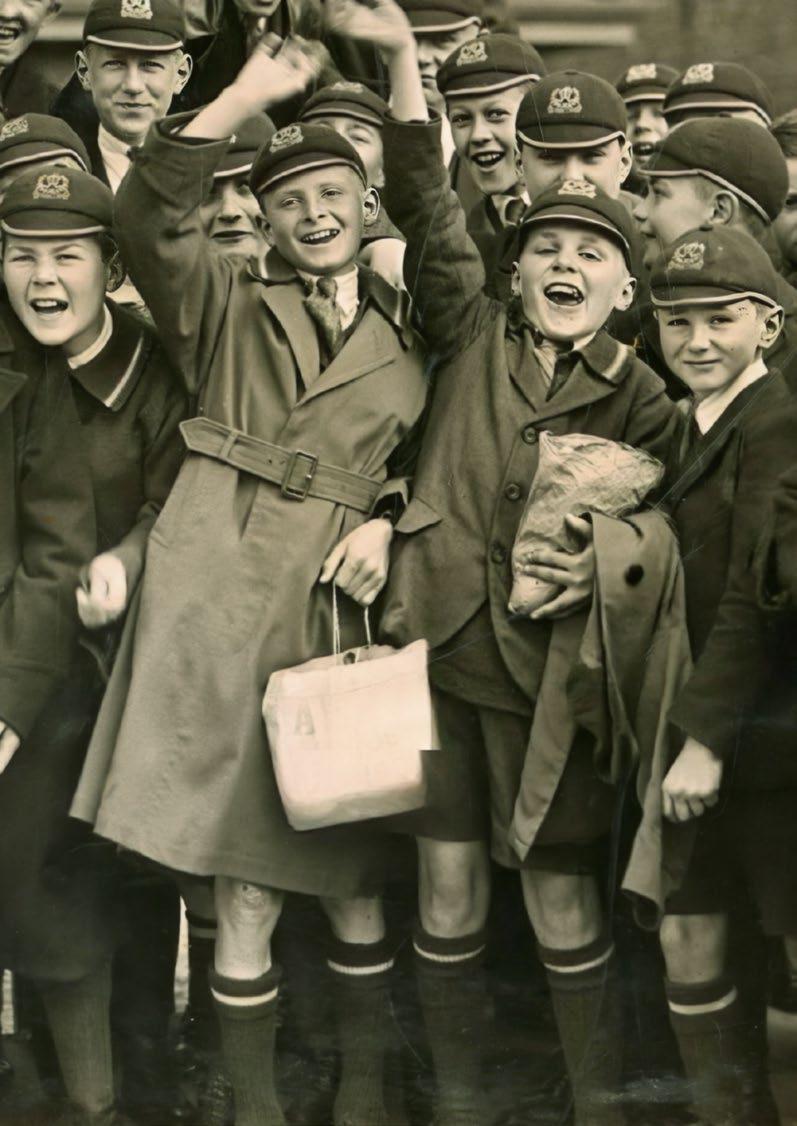
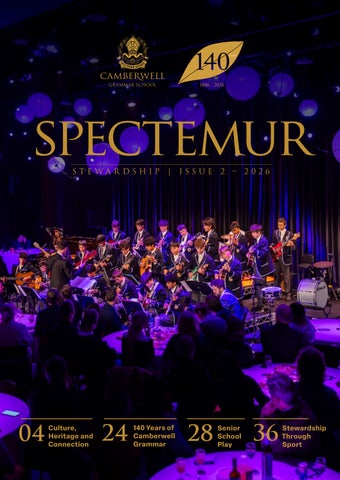
As we celebrate 140 years of our School this year, it is natural to look back with gratitude at those who came before us. We honour the vision of our founders, the dedication of generations of teachers, the commitment of families, and the achievements of thousands of past students who have carried the values of this School into the wider world. Yet an anniversary is not simply an opportunity for reflection; it is also an invitation to consider our responsibility for what comes next.
That responsibility can be captured in a single word: stewardship.
Stewardship is about recognising that we are temporary custodians of something far greater than ourselves. Although we may feel a powerful connection, duty and investment in what happens to Camberwell Grammar School, none of us owns our School. Rather, we have the privilege of caring for it, strengthening it and preparing it for those who will follow. A school does not endure for 140 years by accident. It flourishes because generation after generation chooses to invest in its people, its culture and its purpose.
For our students, this is an important lesson in itself.
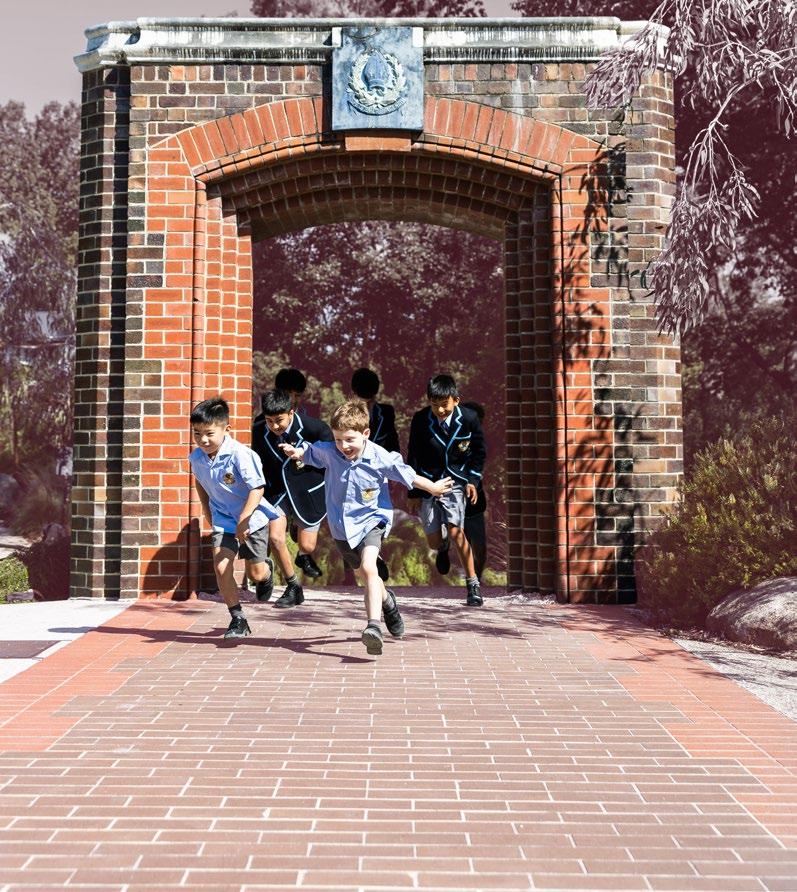
In a world that often encourages individual achievement above all else, schools have a unique opportunity to teach young men that they are part of something larger than themselves. True fulfilment comes not only from personal success, but also from contributing to a community and leaving it stronger than they found it. When students understand that they are custodians rather than simply consumers of their education, they begin to develop the qualities that define good character: respect, humility, integrity, gratitude and a genuine sense of purpose.
Stewardship is visible in countless everyday moments across our campus. It is seen in the student who picks up litter without being asked because he takes pride in his surroundings. It is evident in the older boy who encourages a younger student, recognising that
leadership is expressed through service rather than status. It is demonstrated by students who wear the School uniform with pride, who respect their teachers and classmates, and who understand that their actions contribute to the culture experienced by everyone around them.
Equally, stewardship extends beyond our students. It is a shared endeavour requiring the active, collaborative participation of the entire School community. At its best, education is a partnership between home, school and the individual student. Each has a distinct role, but each depends upon the others.
Our teachers are entrusted with the stewardship of young minds and hearts. Every lesson taught, every conversation held and every opportunity provided contributes to the intellectual, moral and personal development of the boys in their care. Their influence extends well beyond academic outcomes, helping to shape the men our students will become in the years ahead.
Parents, too, are vital partners in education. The values we seek to nurture at school are reinforced most powerfully when they are modelled consistently at home. Respect, learning, courage, integrity and optimism are not taught through words alone, but through the daily example of the adults in a young person’s life. When home and school work together with shared purpose, boys flourish.
Our past students also exemplify stewardship. Every graduate becomes an ambassador for the School, carrying its reputation into universities, workplaces and communities across Australia and around the world. Many continue to give generously of their time, wisdom and resources, ensuring that future generations enjoy opportunities they themselves once received. Their continued connection reminds our current students that belonging to this community is not confined to their years at school; it is a lifelong relationship built upon shared values and enduring friendships.
'One hundred and forty years ago, others invested in a future they would never see. Today, we have the privilege of doing the same.'
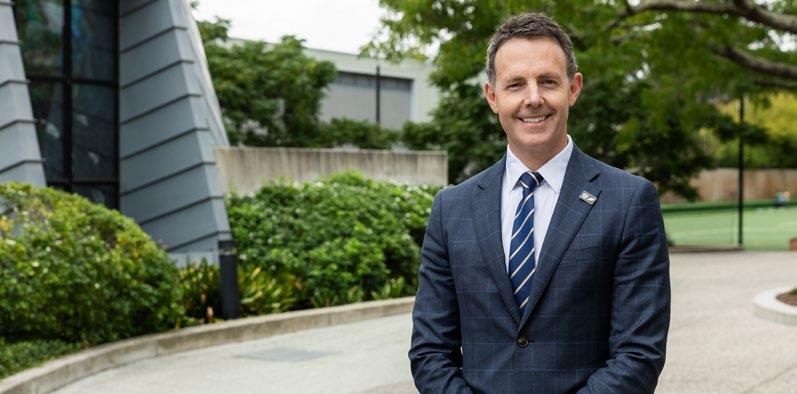
As Principal, I am constantly reminded that leadership itself is an act of stewardship. Every decision we make must balance the needs of today with our obligations to tomorrow. We are called to preserve the traditions that define us while embracing thoughtful innovation that ensures the School remains relevant for future generations. Stewardship is not about resisting change; it is about ensuring that change is guided by purpose and anchored in enduring values.
As we continue to mark this significant 140-year milestone in our history, I hope every member of our community reflects on the role they play in the continuing story of this remarkable School. Whether you are a current student, parent, staff member or past student, you are part of a legacy that has been entrusted to your care.
The buildings, traditions and achievements of the past are important, but they are not our greatest inheritance. Our greatest inheritance is the responsibility to shape young men of character who, in turn, will become wise stewards of their families, professions and communities.
One hundred and forty years ago, others invested in a future they would never see. Today, we have the privilege of doing the same. That is the enduring nature of stewardship, and perhaps its greatest gift: caring faithfully for something today so that generations yet to come may flourish tomorrow.
Mr Ben Jeacocke Principal
In 2026, technology can translate instantly and connect us across the world in seconds. Yet real understanding still depends on something deeper than translation alone. Language is not just about communication. It shapes how people think, relate and make meaning within their culture. While technology provides instant access to information, it cannot fully convey tone, humour, history, or the subtle expectations that shape human interaction.
This is where language learning matters. It develops the ability to slow down, listen carefully and interpret meaning beyond the literal. In a society that often values speed, confidence and certainty, emotional intelligence can be overlooked unless it is deliberately practised and developed.
Empathy is built through repeated exposure to differences. Language learning creates that space: noticing nuance, managing misunderstanding, and responding with acceptance and respect. These are essential skills for life beyond school.
If you talk to a man in a language he understands, that goes to his head. If you talk to him in his language, that goes to his heart. Nelson Mandela
The long tradition of French, Indonesian, Chinese and Latin at Camberwell Grammar School reflects this belief. These languages are not simply academic subjects; they are training grounds for understanding. These languages train students to see the world beyond literal meaning. In a fast-moving world, that capacity for empathy and interpretation is what makes genuine connection possible.
Ms Naomi Eckersley Head of Languages
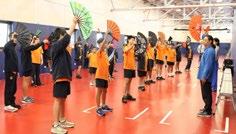
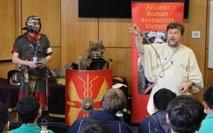
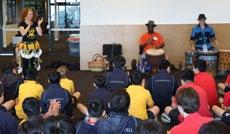
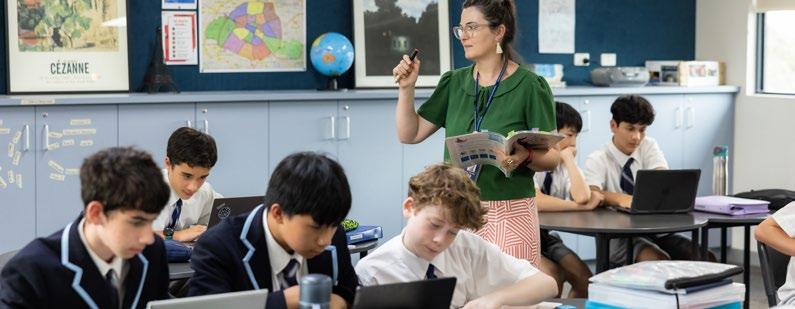
This full-day event, held on 29 April, was a new initiative designed to excite and engage students as they continue to discover the four languages offered at CGS. Throughout the day, students rotated through a range of immersive cultural and linguistic experiences, including African drum and dance, Indonesian martial arts, Roman historical re-enactment, Chinese creative arts, Gong Fu fan workshop, treasure hunt, poster creation and reflection.
The program was developed to deepen students’ cultural understanding and appreciation of the rich traditions connected to each language, while supporting them to make informed
decisions about their future language studies. It also underscores CGS’s strong core language policy and the School’s commitment to language learning as a central part of a broad and globally minded education.
The immersive sessions quickly challenged students’ assumptions about global history and geography. In the French workshops, Michael Lim (Year 7) was surprised by the language’s vast global footprint, noting, ‘I learnt that 29/54 countries in Africa speak French.’ Meanwhile, the Roman historical re-enactment captivated Year 8 student Henry Armstrong-Cash. ‘It explained what Roman soldiers went to war in
and all their strategies and weapons. It made me think about just how powerful Rome must have been because they had hundreds of small details that would completely change the way they fought.’
The martial arts and performance workshops provided further high-energy highlights. Adam Marriot (Year 7) admitted he previously didn’t know ‘that Indonesia has their own martial art,’ while Michael observed that the style was uniquely ‘involved with countering attacks from others instead of being offensive.’ Meanwhile, ‘the Gong Fu fan activity surprised me with the different Chinese fighting styles,’ Adam said.

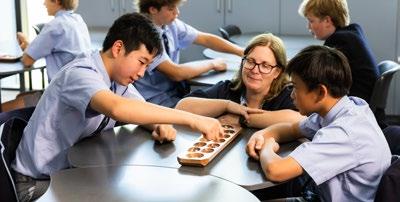
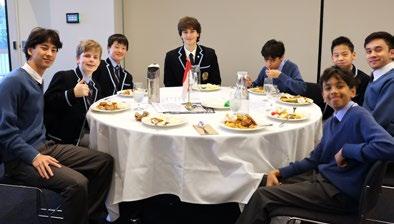
Our Indonesian program offers many opportunities for students to engage with Indonesian culture and hear from famous ‘Indonesianists’. For example, during Terms 1 and 2, all Year 7s practised their Indonesian skills with one another as they enjoyed a traditional lunch. Our Year 9s took part in tropical fruit tasting (including Durian!), and every Indonesian-learning student from Year 7-12 celebrates Independence Day on 17 August with a traditional lunch. Trying another country’s cuisine is a perfect way of gaining insight into their cultural practices.
Earlier this year, our students sat in on an Indonesian comedy session with OmTom. In doing so, students were encouraged to see the humorous side of Indonesian language learning and that understanding humour is an important part of cultural association. Our Senior students hear from Robbie Gaspar, Australia’s first professional soccer player in Indonesia and current President of the Indonesia Institute in Australia, about his career and the significance of the Australian-Indonesian bilateral relationship and take part in an immersive Indonesian soccer workshop.
At the end of their language learning journey at CGS, students will have had fun in the classroom and also developed an appreciation for the rich diversity and importance of understanding our closest Asian neighbour.
Mr Matt Grose
Subject Leader – Indonesian
I recently interviewed some Year 9 French students, asking them to reflect honestly on their French learning journey. Midway through their high school experience, these young men are at a pivotal crossroads as they prepare to choose their senior subjects and decide whether to pursue French through to VCE.
Their insights reveal that horizons broaden daily in our classroom. Language learning is a powerful equaliser; regardless of academic starting points, every boy finds his own path to success, big or small. For some, pride came from ‘learning to conjugate – IR verbs really quickly,’ while for others, the breakthrough was realising they ‘were able to answer a lot more questions than expected in the exam.’
Beyond grammar, French acts as a portal to cultural appreciation. The boys discovered a world both familiar and delightfully foreign, noting everything from ‘the culture around food, especially walking to the boulangerie each morning’ for a fresh baguette, to the sheer global scale of a language spoken across 30 nations.
Ultimately, French challenges our boys to look outward. As one student shared, it is about ‘unlocking boundaries, unlocking doors and unlocking different relationships with others.’ They are developing the ultimate tool for global stewardship: the ability to ‘see the world from another country’s perspective.’
Ms Naomi Eckersley
Subject Leader – French
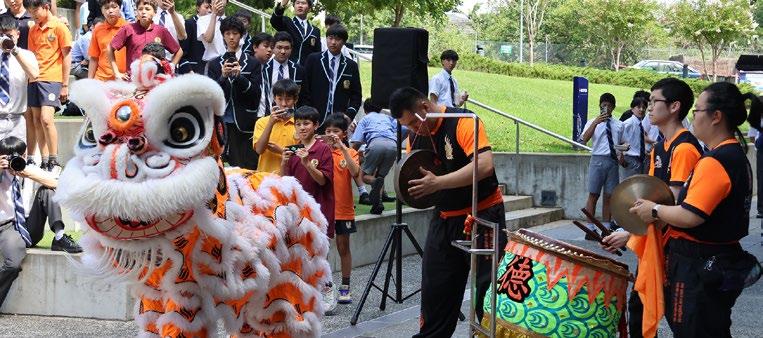
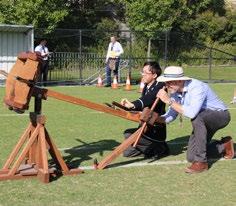
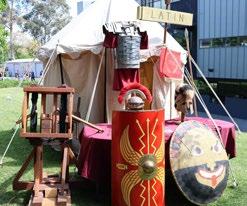
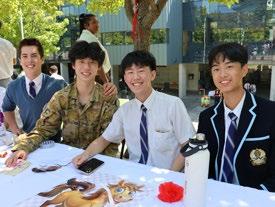
A golden opportunity to connect with Middle School students arrived in the second week of Term 2: Language and Culture Carnival. Our Latin department has acquired or constructed over the years everything from Roman helmets and shields, to a working ballista and its target, a wooden simulacrum of ancient Gallic warriors (affectionately nicknamed ‘Targetorix’!). Not only did Middle School students get to hear from historical reenactors who explored topics with them, like the nuances of slingshotting and the significance of battle horn signals, but they also witnessed the ballista in operation and learned about its impact on battles like that at Mons Graupius in Scotland.
These practical demonstrations complement beautifully the students’ study in the classroom of Latin texts drawn from Tacitus’ Agricola, where the author describes the campaigns of his father-in-law in ancient Britain and Scotland, the nature of Agricola’s leadership and the experience of the Roman troops serving under him.
As one student put it, ‘It was just like watching the Romans come to life!’ – and more than one confessed the next day in class to having gone to sleep dreaming of adventures in Scotland against the wild ‘barbarians’ of two thousand years ago!
Mr Tebb Kusserow
Subject Leader – Latin
The Year of the Fire Horse began spectacularly. With the first beat of Mr Jeacocke’s drum, CGS welcomed a lively Chinese New Year Celebration and Fete. The campus came alive with lion dancing, colourful cultural stalls and enthusiastic student participation, creating a strong festive atmosphere and a warm sense of community.
Students also explored Chinese culture through food, art and performance. The Year 7 Dumpling Lunch, together with the Zongzi handcraft activity, connected classroom learning about the Chinese New Year and the Dragon Boat Festival with authentic cultural experiences. On Language and Culture Day, students worked with a Chinese calligrapher, painted pandas and traditional Chinese landscapes, and learned Kung Fu Fan from Mr Tang, an internationally renowned performer and Jet Li’s senior martial arts fellow apprentice.
We were also very proud of Year 10 student Ashton Bedoya for his outstanding performance in the Victorian Hanyuqiao Speaking and Performance Competition. His heartfelt recitation of Saying Goodbye to Cambridge Again demonstrated courage, dedication and a genuine love for the Chinese language and culture.
Beyond school, the China Cultural Tour further deepened students’ understanding of language and culture. Students visited our sister school, Xi’an Tieyi High School, and experienced the scenery, history and culture of Beijing, Xi’an and Shanghai.
Ms Emily Wang
Subject Leader – Chinese
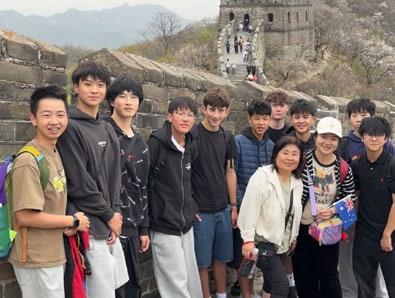
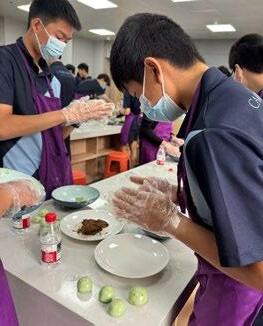
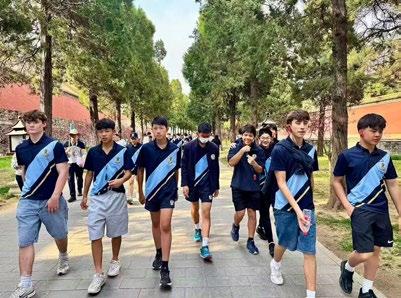
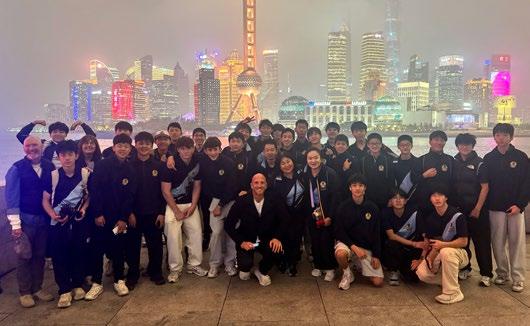
This 10-day journey was a deeply enriching and impactful experience. Students fully immersed themselves in China’s ancient history and vibrant modern culture, gaining global insights that extended far beyond the classroom. From the outset, students approached the tour with curiosity and openness.
Our journey began in Xi’an, where ancient heritage meets rapid modernisation. A major highlight was our partnership with Xi’an Tieyi High School. The extraordinary reception, shared classroom lessons and moving closing ceremony allowed students to build genuine, lasting friendships with their Chinese peers. Students also practised language skills with local buddies on the historic City Wall, marvelled at the legendary Terracotta Army, and tried their hand at traditional paper cutting and sculpting.
Travelling via high-speed rail at speeds of up to 360 km/h, the group transitioned to Beijing, the nation’s political and historical heart. The sheer scale of China’s imperial past came alive through visits to Tiananmen Square, the Forbidden City, and the Temple of Heaven. Exploring the Great Wall of China stood out as a defining milestone,
offering both a rigorous physical challenge and a profound opportunity for shared reflection.
The final leg in the vibrant metropolis of Shanghai offered a striking futuristic contrast. From the historic French Quarter to the soaring heights of the Shanghai Tower, the city showcased China’s immense economic dynamism. A day trip to nearby Suzhou provided a beautiful counterpoint, highlighting the timeless elegance of traditional canals and classical gardens.
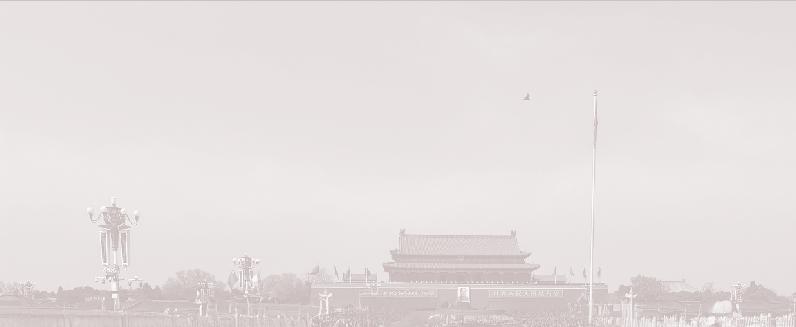
Throughout the complex itinerary, students demonstrated immense growth in resilience, adaptability and cultural awareness. Whether navigating bustling markets or sampling local street food, they consistently stepped outside their comfort zones with maturity and respect.
The success of this tour is a credit to the students’ impeccable behaviour, our dedicated CGS staff and our expert local guides. The entire school community can be proud of how these young ambassadors represented CGS.
Ms Suzanne Jack
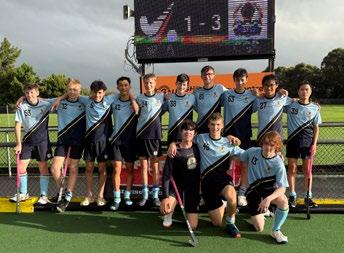
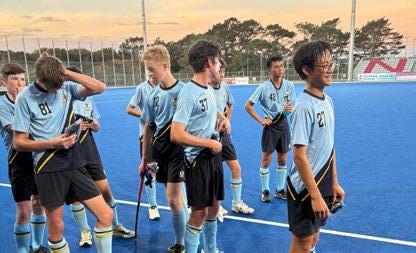
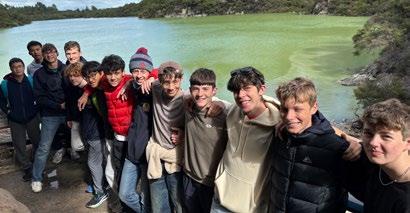
The New Zealand Hockey Tour provided our students with an unforgettable blend of sport, culture, adventure and friendship as they travelled through Auckland, Hamilton, Rotorua and Tauranga.
The tour began in Auckland, where students explored iconic landmarks including the Sky Tower, Eden Park and the All Blacks Experience. They also had the opportunity to train with New Zealand international hockey player James Coughlan and test themselves against strong local opposition. While early results did not always fall our way, the team’s improvement was evident with every match.
Away from the hockey field, students embraced New Zealand’s unique landscapes and culture. Highlights included exploring the Waitomo Glowworm Caves, visiting the spectacular Bridal Veil Falls, walking on Raglan’s famous black-sand beach, experiencing Māori culture at Mitai Village and marvelling at the geothermal wonders of Rotorua. The glowworms dazzled, the geysers erupted and Rotorua’s famous sulphur aroma ensured nobody forgot where they were.
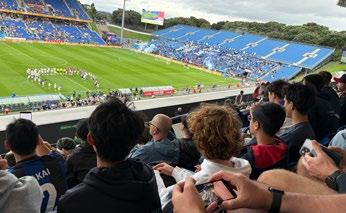
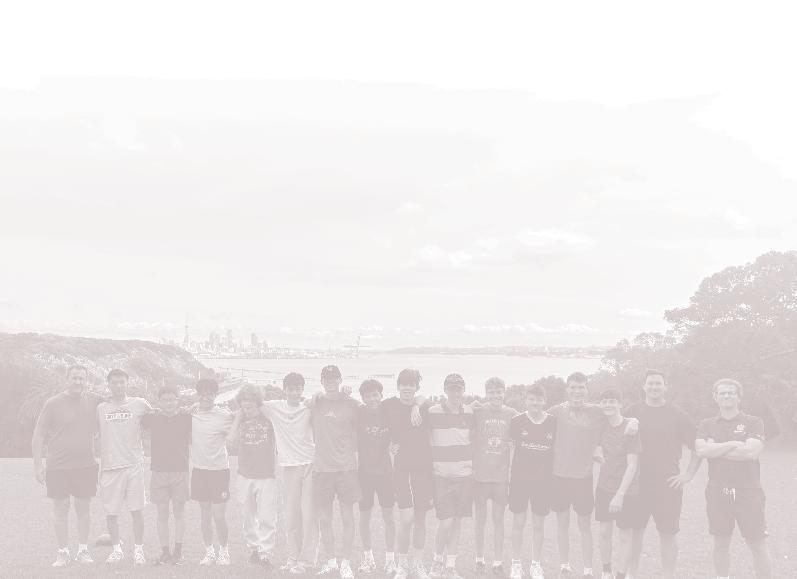
The adventure continued with luge racing, zorbing, ten-pin bowling, laser tag, mini golf and relaxing visits to the Polynesian Spa. Along the way, students discovered that New Zealand contains an astonishing number of hills, food courts and opportunities to test their appetite.
On the hockey field, the team’s persistence paid off with a series of impressive victories as confidence, teamwork and skill continued to grow throughout the tour. More importantly, students represented the School with distinction. Their behaviour, manners and willingness to embrace every opportunity were regularly praised by members of the public, hosts and tour operators.
The tour was a tremendous success, creating lifelong memories, strengthening friendships and providing experiences that will be talked about for many years to come. The efforts of the staff helped create a safe, enjoyable and enriching experience that enabled every student to grow both on and off the hockey field.
Mr Michael Pettolino
The learning of a foreign language is an essential component of an education at Camberwell Grammar. Back in 1886, it was similarly acknowledged that learning a language other than English was an important part of the schooling of an “Australian gentleman”. Although Headmaster Taylor (1886-91) qualified this educational element by insisting that boys must obtain ‘a good grasp of their own language before they attempt to take up Latin, Greek and French’, the acquisition of these three languages was open to the initial Grammarians. Taylor himself instructed in Latin, as did many of his successors. The offering of classical languages was inevitable in this era as both evidence of a liberal education as well as a requisite for tertiary study – the only questionable option was the choice of a modern language. French was still regarded as the gentlemanly choice, but those with an interest in science and industry preferred German. Yet, Arthur Taylor adhered to French and his students were exposed to this language both in the classroom and through the dancing and deportment master, Monsieur Paul Bibron. In these opening years, he instructed alongside ‘Drill’ and ‘Gymnastics’ master Herr Beyer, who also exposed boys to the German tongue, if informally.
A lthough the Great War, 1914-18, obviously impeded the attraction of German, Headmaster Alfred Hall (189126) ensured that his school avoided the anti-German sentiment of many other similar institutions, and boys often sought instruction in the language from external tutors with the support of the “Old Boss”. However, it was not until 1939 that Headmaster Tonkin (1932-49) formally introduced the teaching of German at CGS, convinced as he was that ‘in these days there is a demand for German’. He believed that this tongue would soon constitute the chief foreign language taught at Camberwell Grammar, even if Mr Tonkin himself continued to teach French (and Latin). Some Fourth Formers had attended the radio station 3AR on the last day of the final Term of 1938 to sing two German songs in a school-based broadcast.
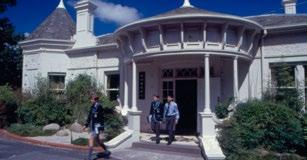
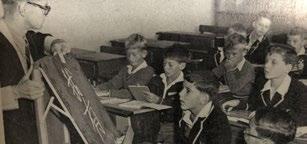
Once the language was taught in the following year, a German language-centred ‘musical evening’ was held in the Senior School during Term 1, 1939 – it was poorly attended as not all in the school community shared the headmaster’s enthusiasm. The cancellation of a planned repeat performance by Form VC of those two German songs on radio 3AR in December indicated the wartime turning of the tide. Although the teaching of German continued throughout the war and immediately after, Tonkin’s intended program was hindered.
Accordingly, French was confident that it could continue unchallenged as the School’s primary modern language, but once the post-war school employed the gifted, cultured Viennese scholar Dr Henry Wight as a teacher of modern languages, the continued survival of his native tongue from 1949 onwards was ensured. The sudden death of “the Doc” in 1974 soon led to the demise of the German language at CGS, but there were now options for Grammarians other than French, given the pioneering work of Glyn France (1956-64), who had overseen the introduction of the School’s first nonEuropean language – Chinese – in 1960. Mr France had then noted that a ‘linguistic inflation’ at CGS led 60% of Form II boys to express a desire to study French and 35% of them to study German, observing that ‘so many boys will try to learn German only in the remote hope that it will help them to do a degree or diploma in Science’. Instead, Mr France offered boys an opportunity to study an Asian language as ‘a means of enlarging the pupil’s view of mankind and the world about’. His vision was rewarded and strengthened by both the experimental introduction of Indonesian in 1969, this language being taught at various levels from 1972 onwards, and through the incorporation of the Kingussie Asian Studies Centre in 1976. Both Asian languages have become staples of a CGS education in the following years.
Despite these developments, French marched on from the mid-1970s as the only modern European language at the School, as it had been at that distant beginning almost a century earlier –the Franco-German rivalry at CGS was over – but now alongside those Asian languages unimagined in 1886. Latin, of course, continued uninterrupted, remaining an important component of the education of many Grammarians, seemingly unconscious of its three rivals. The language baton had been passed on, but the “Australian gentlemen” of the twentyfirst century would be offered a much wider field of play.
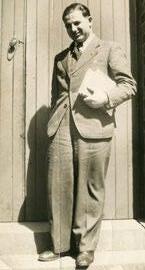
Dr David Bird
School Historian and Archivist
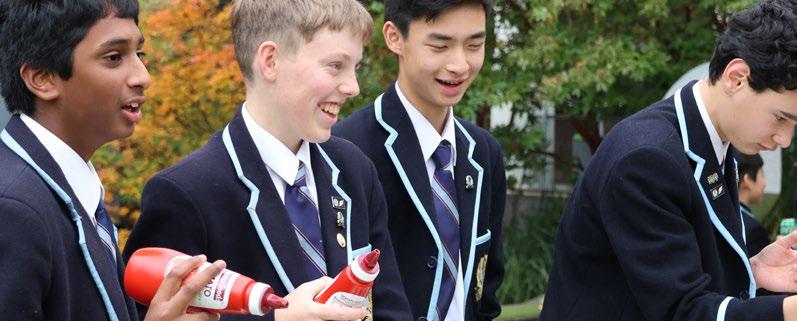
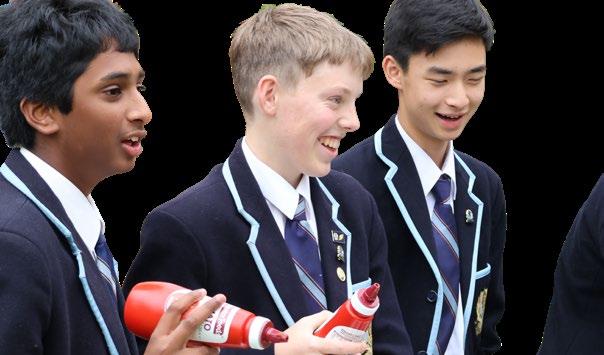
True stewardship is about taking responsibility for the wellbeing of our communities, a principle that lies at the heart of the CGS Rotary Interact club. With over 200 members across Years 9 to 12, this group channels its collective energy into meaningful acts of local and global service. Read on to learn how our students are stepping up as active stewards of positive change.
CGS Rotary Interact is a student-led club that encourages meaningful contributions to the community. The club works together to plan and organise events to support charitable initiatives.
In recent years, we have continued to grow, with membership exceeding 200 students and an increasing involvement across all year levels. This growth has created opportunities for more student leadership within the group, with initiatives such as project subcommittees being the foundation for members to take ownership of their ideas, develop practical skills, and contribute to the club and wider community directly.
Rotary Interact enables students to turn ideas into action. Whether it’s helping to organise an event, volunteering or working behind the scenes on a project, members are actively involved. This gives us the chance to develop essential skills such as teamwork, leadership
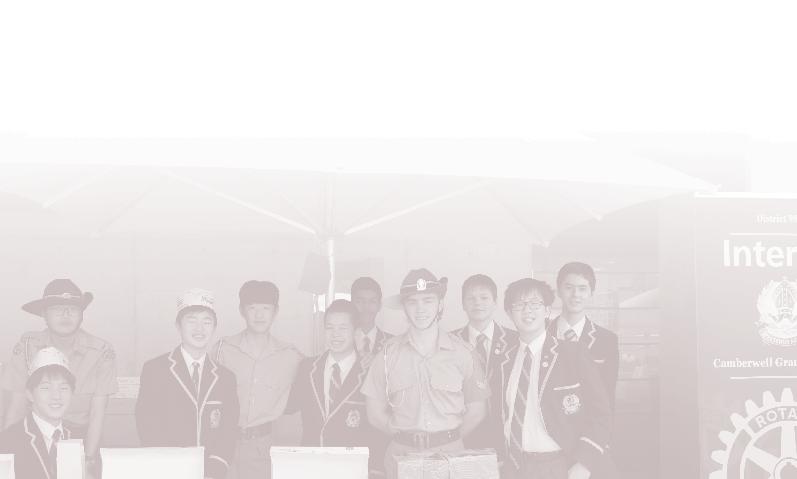
and organisational skills while making a meaningful contribution to the community.
Over the years, we have developed strong relationships with organisations such as Camberwell Place, Canterbury Rotary and Presbyterian Ladies’ College. These partnerships have allowed Interact to expand its connections with a wider range of people, while also providing members with opportunities to work alongside different students and volunteers beyond CGS.
While fundraising remains an important part of the club, Interact is ultimately about bringing people together in support of worthwhile causes. Through service, volunteering and collaboration, members are encouraged to take initiative, contribute their ideas and play an active role in projects that have a positive impact both locally and internationally.
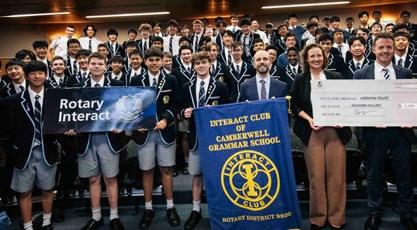
Trivia Night is one of our biggest events each year and has become a favourite on the club calendar. The night brings together students, parents, staff, alumni and friends of the School for an evening of fierce competition, fundraising and plenty of questionable answers. While the trivia itself is always fiercely contested, the event is also an important opportunity to strengthen connections across the CGS community. This year, Trivia Night raised over $1,700 for charitable causes, reflecting the hard work of the students involved in organising the event.
Beyond the local community, Interact’s support for Operation Toilets Australia remains one of the club’s most significant commitments. Through Trivia Night, the Year 9 Social and other fundraising initiatives, students contribute towards improving sanitation and educational opportunities for schools in India. For years, Interact members have supported this cause, recognising the difference that access to safe and hygienic facilities can make to a student’s education and wellbeing.
The club’s commitment to service is also reflected through initiatives such as the FORaMEAL meal packing event, delivered in partnership with Presbyterian Ladies’ College and Canterbury Rotary. Every year, hundreds of students from both schools come together to pack more than 10,000 meals for communities in need. The event highlights the impact that can be achieved when students, schools and community organisations work together towards a shared goal.
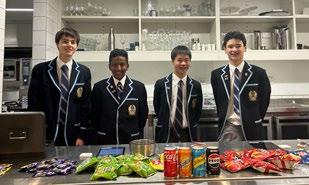
Together, these projects reflect what CGS Rotary Interact is all about. Bringing people together, supporting communities and providing students with opportunities to make a meaningful difference. Whether through local events such as Trivia Night or international initiatives like Operation Toilets, the Rotary Interact club continues to show how student-led action can create lasting impact.
For me personally, being involved in Rotary has allowed me to connect with people beyond the CGS community, take on leadership opportunities and contribute to causes that make a real difference. These experiences have taught me the value of service, collaboration and initiative, and it has been incredibly rewarding to see the positive impact that our projects have on both local communities and beyond.
Evan Lin – Year 10

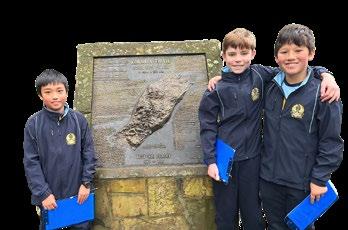
Year 6 students enjoyed a week of hands-on learning and real-world experiences focused on sustainability. From exploring environmental action at CERES and learning from Sea Shepherd, to creating Bee Hotels, retracing the Kokoda Track at the 1000 Steps, and visiting IMAX and the Shrine of Remembrance, students made meaningful connections between sustainability, geography, history and community.
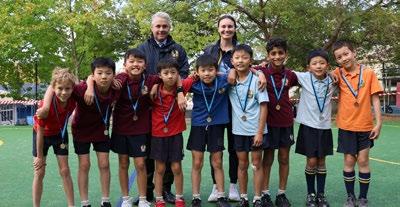
Our Year 3, 4 and 5 students showed incredible grit and House spirit at May’s Cross Country event, tackling the 2km and 3km courses through Belmont Park, up the big hill, and finishing on the Junior School Green. Well done to Charlie Das Neves (Year 5) for securing his third consecutive win, and to Brian Teh, Max Qian and Eddie Wang (all Year 4) for placing in the top three for the second year in a row.
During May, our Year 7 students took part in BODi Day, a valuable opportunity to reflect on wellbeing and develop greater awareness around mental and physical health, social media and screen time. Students engaged in a range of activities, including pickleball, blind futsal, boxing, gym sessions and goalball.
In June, our Year 8 students were engaged in experiential learning through the BODi Week Program. The boys explored themes, including Indigenous Studies, Leadership, and Sexual and Relationship Education. We welcomed back Elephant Ed, our long-term partners who helped deliver sessions on these important topics.
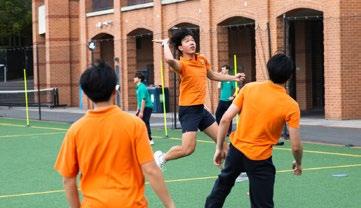
In late May, our Senior School students went head-tohead in the House Multi-Sport competition. Students brought immense energy, healthy rivalry and outstanding sportsmanship to the courts and fields. Congratulations to Schofield who won the first place trophy!
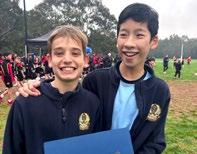
Thirty-five boys from our Junior Cross Country Squad braved cold conditions at Chesterfield Park for the annual AGSV Cross Country event. Competing across 2km and 3km courses, the team ran exceptionally well and showed fantastic determination and spirit.
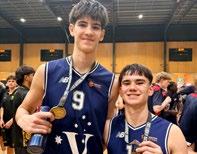
Chandler Siegle (Year 11) was a member of the championshipwinning Under 18 Victoria Metro team at the Australian Under 18 Basketball Championships. He also received the Community Award. Chandler is pictured right, with former CGS student, Yahya Basaran (now attending the Centre of Excellence).
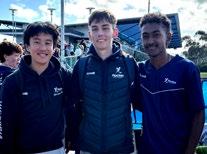
At the Under 16 National Hockey Championships held in Tasmania, Kai Fernando (Year 11) and his Victorian team won the Gold Medal. Luke Callander (Year 11) and Thomas Tsui (Year 10) played with the Victorian Development team.
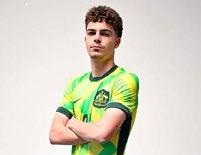
Congratulations to Luke Becvinovski (Year 11) who was selected for the Football Australia U17 squad for the AFC U17 Asian Cup Saudi Arabia 2026.
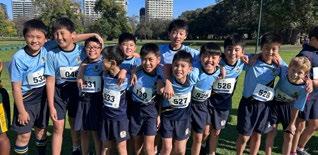
A team of 39 boys from Years 4-6 represented CGS at the South Yarra District Cross Country Championships at Fawkner Park. Competing across 2km and 3km distances, all runners showed determination. Congratulations to Top 10 finishers: Charlie Das Neves (Year 5) – 6th place and Isaac Huang (Year 6) – 10th place.
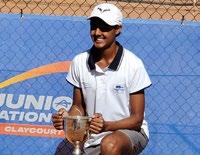
Ayush Salunkhe (Year 9) won both the doubles and singles titles at the U14 Claycourt Nationals in Canberra in April. He won a hard-fought singles final in three sets against the No. 1 seed.

Congratulations to Luca Cosolo (Year 11) on an outstanding performance in Round 2 of the AU4 Championship at Sydney Motorsport Park in early June. After a strong showing across the event, Luca secured third place overall for the round – a fantastic result.
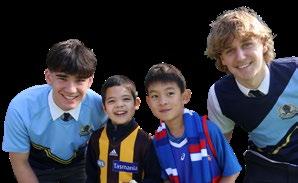
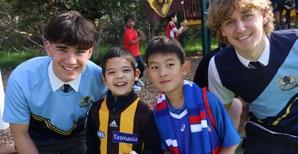
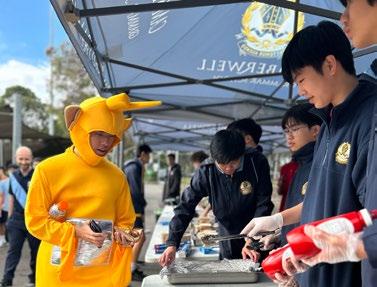
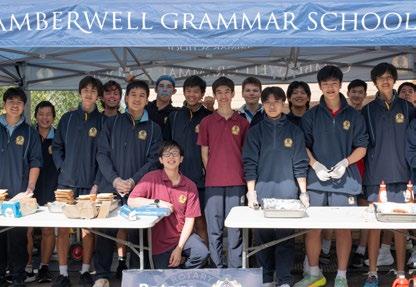
Our annual Footy Day and Sausage Sizzle, held on the last day of Term 2, brought plenty of fun, with Junior School boys enjoying a kick on the JTO alongside our First XVIII Football team.
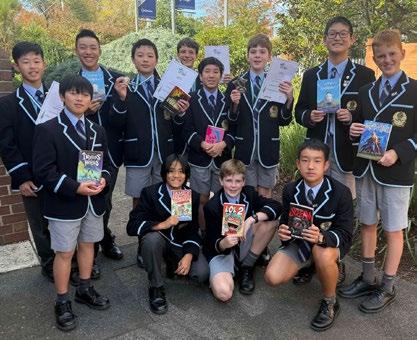
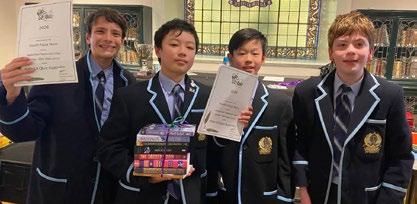
Our Middle School bookworms were in their element at the Kids Lit Quiz Melbourne heat. Three teams of Year 7 and 8 students headed to Kingswood College on 28 April for a morning of fast-paced literary trivia.
Following a win in Melbourne, the team of Jimmy Jarred (Year 7), Vincent Lin (Year 8), Tobias Mitchell (Year 8) and Lachlan Yang (Year 7) travelled to Sydney to compete in the National Finals at the State Library of NSW. After a thrilling penultimate round where they held second place, the team finished fourth in Australia, an extraordinary achievement.
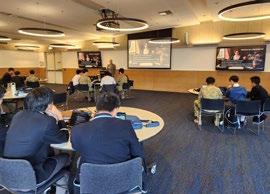
Year 10 Coding students took part in an exciting immersive business simulation, where teams designed innovative services for a bank. Combining AI tools with human decisionmaking, students tackled challenges across interactive quizzes, creative thinking, solution design and risk management.
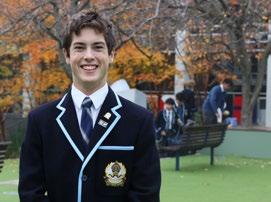
Congratulations to Ashton Bedoya (Year 10), who recently placed third in the grand final of the prestigious Rotary Public Speaking competition. Following a victory in the semifinals, Ashton delivered a highly engaging final speech exploring the dynamics of empathy, sympathy and apathy. He secured a $1,000 donation to a charity of his choice and a $100 gift card for himself.
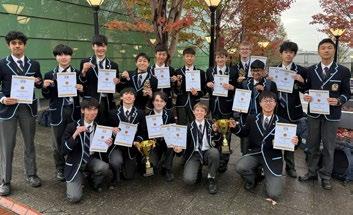
Four CGS teams competed in the Victorian regional da Vinci Decathlon at PEGS, securing our strongest results to date. Both our Year 9 and Year 10 teams (pictured) took out first place overall in the state.
• Bertie Atkin, Maxwell Cai, Leon Chen, Jian Choong, Rowan Li, Christopher Ran, Sanat Salem and Winston Tan (Year 10) topped the charts in Ideation, Cartography and Creative Producers.
• Year 9s Arohan Dasgupta, Felix Gu, David Guo, Samuel Jacob, Augustin Kao, William Li, Sam Osborne-Smith and Eamon Reilly achieved top results in Mathematics, Cartography, Science and Legacy.
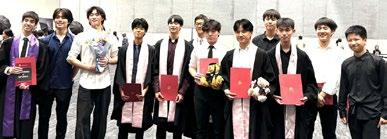
Congratulations to the record number of CGS musicians who received their AMEB Diploma at this year’s Conferring Ceremony. A special highlight was hearing two of our Year 10 musicians take to the stage:
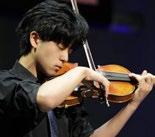
David Chon gave a movingly assured performance of Ysaye’s Ballade on Violin, and clarinettist Aiden Li gave a dazzling rendition of the finale of Weber’s Clarinet Concerto.
For this year’s piano project, 14 dedicated pianists immersed themselves in Sergei Rachmaninoff’s Op. 32 set of preludes. The preparation spanned a term, where every Friday during Academy time, we would gather to play and refine our collective interpretations of the preludes.
Rachmaninoff’s works are characterised by intense emotions, lush harmonies, and passionate and lyrical melodies. The boys captured this spirit on the night of the concert, holding the audience’s rapt attention through the hour-long work. Every pianist paired their allocated prelude with an art piece painted in 1910, the same year the preludes were composed. This artwork was projected above each performer while they played.
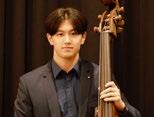
In April, I attended the Australian Youth Orchestra’s Young Symphonists’ Program in Canberra, along with Nathan Wayne and Isaac Field (both Year 12). It was great to meet like-minded musicians from across Australia and connect with old friends from previous years.
The seven days of intense yet enjoyable rehearsals culminated in a great performance of RUN by Naomi Dodd, Romeo and Juliet Fantasy Overture by Tchaikovsky, Awakened by Syafiqah ‘Adha Sallehin, In the South Overture Op. 50 by Elgar. I really liked the Elgar because of its lyricism, expressive and emotional melodies, the calming viola solo in the middle and dramatic big moments throughout, which gives it a grand character inspired by the Italian countryside. The romantic slow melodies from Tchaikovsky gave me goosebumps when we played, listening to how lush and resonant the orchestra sounded.
Derek Wei (Year 11)


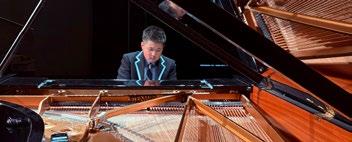
The evening was a testament to our growth as pianists and our shared love for music. We’re so grateful to Dr Harrold and the music staff for making this ambitious project possible.
Joseph Ni (Year 12)
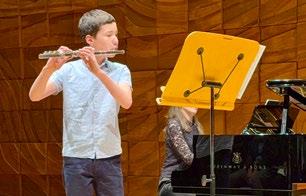
During the April holidays, I participated in the AMEB woodwind Masterclass at the Melbourne Recital Centre. When I arrived, I was taken from the foyer up to my own, very spacious dressing room! Then I performed Robert Schumann’s First Romance in A Minor, accompanied by pianist Berta Brozgul. I learnt a lot about how to contrast dynamics within the piece, and how to be more expressive from Dr Johanna Selleck, a flautist, composer and musicologist.
Lachlan Croxford (Year 7)

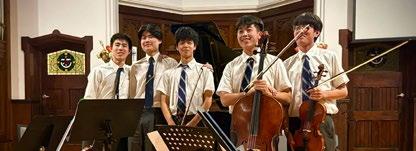
Six Camberwell Grammar Chamber music ensembles recently performed at the Boroondara Eisteddfod, Music Society of Victoria Chamber Music Awards and the Ringwood Chamber Music Eisteddfod.
Boroondara Eisteddfod Results
• 1st Prize Roystead Quintet
• 2nd Prize Wattlebird Trio
• Honourable Mentions Kingussie Trio and Mallinson Trio
Music Society of Victoria Chamber Music Prize
• 2nd Prize Roystead Quintet
Ringwood Eisteddfod Chamber Music Section
• 1st Prize Kingussie Trio
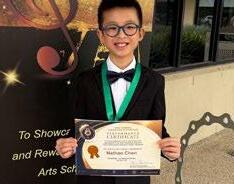
Nathan Chen (Year 5) recently competed in the Boroondara Eisteddfod and Ringwood Eisteddfod. He was awarded 3rd place in the 12 Years & Under Piano category in both competitions, along with an Honorable Mention in the Piano Concerto section.
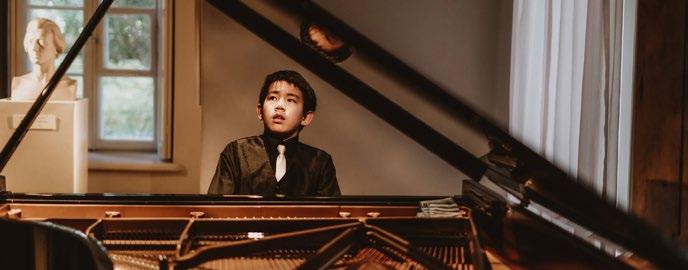
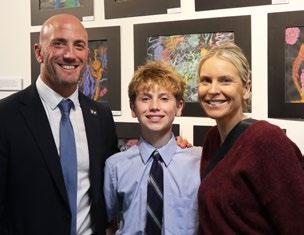
Dillon Chan (Year 9) is a semi-finalist in the prestigious 2026 ABC Young Performers Awards. Australia’s premier classical music competition uncovers the nation’s most exceptional young instrumentalists. Dillon is the youngest of just 12 semi-finalists chosen nationwide, testament to his dedication and talent. Dillon’s musical achievements already span the globe, including winning first prize at the Jeune Chopin Competition in Switzerland. We wish Dillon the best of luck as he takes the stage for this exciting next round on August 12.
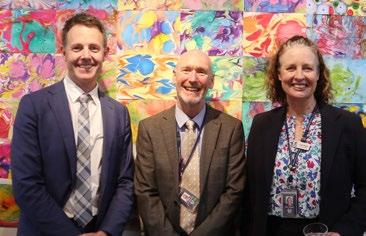
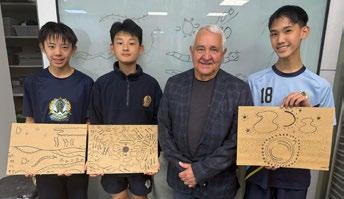
The opening night for Entrée 26 was held on 29 April in the David Williams Gallery. This show welcomed our newest artists to the Middle School and marked the beginning of their creative journey through CGS. The exhibition showcased the diversity of the Visual Art Program at Year 7, where learning outcomes are expressed through a variety of techniques and processes.

Drawing inspiration from works in the Xipell Collection, students explored Australian art through painting and sculpture. Influences ranged from the iconic Australian Impressionist 9 x 5 Exhibition, to portraiture, to Frances Derham’s linocut of the Sydney Harbour Bridge during construction, inspiring creative investigations of landscape, structure and form. The exhibition showcased students’ creativity, technical skill and engagement with Australia’s rich artistic heritage.
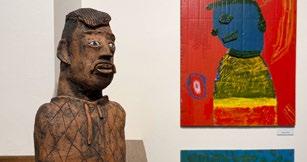
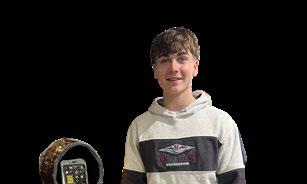
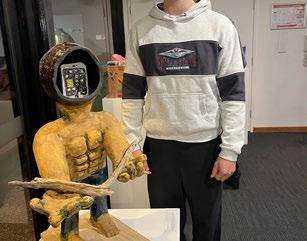
Three of our art students (Year 10 students Will Bain – pictured and Horus Cheung, and Year 11 student Spencer Chou) along with art teacher Ms Kate Thornburn, had work in this year’s Korowa Ceramics Award. The exhibition invites ceramic works from students, emerging and established artists, and celebrates innovation, craftsmanship and creativity.
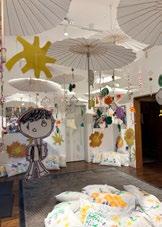
Figures from the Collection, at the Dorset House Gallery, featured works inspired by the School’s Xipell collection. Prep and Year 10 students exhibited sideby-side, creating a dialogue between our emerging and experienced artists.
The Preps explored floral designs on fabric pillows and crafting intricate mobiles. In Same Figures, New World, Year 10 students reimagined the figures from Jack Carington Smith’s On the Beach (1949) within contemporary settings, while their Personal Portraits series celebrated individuals of personal significance. Another theme, Loved Ones, drew inspiration from William Frater’s Thecla (1972), a portrait of the artist’s wife.

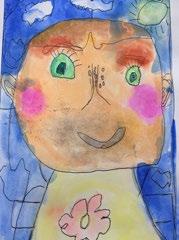
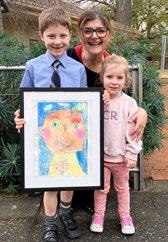
Ollie Hudson (Year 1) was shortlisted for the Young Archie 2026, placing in the top 8% of over 4,300 entries nationwide. Ollie’s vibrant portrait reflects his joy for creating, nurtured by the enthusiastic guidance of his art teacher, Sofia Tsolakis. Ollie said: “I love flowers and wanted a flower in my portrait. I am a funny boy who loves to run and smell the flowers. I am creative with my sister, and I wish we could do more art together.”
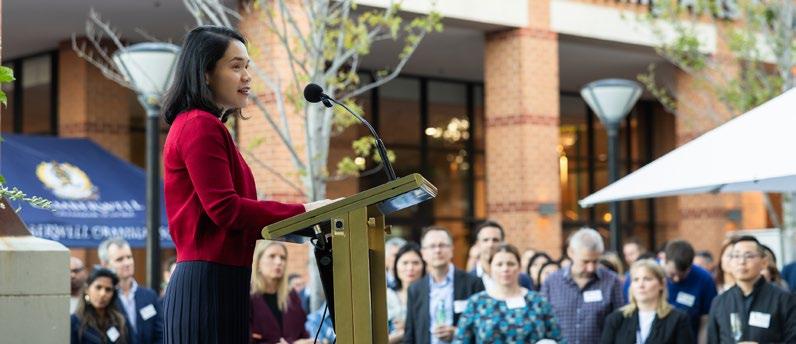
New Roles, New Faces: Introducing the staff members shaping our community in 2026.
What inspired you to take on the stewardship of the Parents’ Association this year, and what do you hope your legacy as President will be?
It was the people. I was inspired by parents with boys in older year levels getting involved. I enjoyed the opportunity to talk to them and learned so much from them about CGS and raising boys. Watching them contribute over the years made me grateful to be part of this warm community. Taking on this role feels like a great way to ‘pay it forward’ and ensure that spirit of welcome continues to grow.
My hope for a legacy is about fostering a culture of inclusive community. I hope every parent feels that there is a place for them and that their contribution is valued. A key part of this is ensuring that the sense of belonging doesn’t have to end when a boy graduates. That’s why an idea I’m passionate about is establishing a Past Parents’ Community. If, at the end of my tenure, more parents –past and present – feel connected to the School and to each other, I’ll consider it a great success.
In your view, how does a strong parent-school partnership directly benefit the boys’ day-to-day experience?
It sends a powerful message that we are all on the same team, working together to support them on their journey. When boys see their parents and teachers collaborating, whether it’s volunteering on campus, attending events, or simply communicating positively, it reinforces school as a secure and cohesive community. It sets a good example for our future generations to pay it forward too!
What is the one event on the school calendar that you believe really captures the spirit of our community?
It has to be Open Day, when the entire school comes together to showcase every facet of life at CGS. It’s a day of immense pride, amazing energy and collaboration that really shows what an amazing school and community we have.
Favourite school event? That’s like asking me to pick a favourite child! But if I had to choose, the Welcome Drinks. Hidden talent or hobby? I speak English, Mandarin, Cantonese and Bahasa fluently, and understand Hokkien and Hakka.
Describe the 2026 PA team in three words? Collaborative, dedicated, welcoming.
Favourite weekend spot in Melbourne? Camberwell Junction for Pilates, a cuppa, a visit to the Sunday market, and my favourite sourdough from Woodfrog Bakery.

What first sparked your passion for the Indonesian language and culture, and how did that lead you to a career in education?
I began learning Indonesian much as the students do here at Camberwell Grammar. Through the passionate delivery of my teachers at school, I quickly realised how important it is to connect with our Asian neighbours as Australians, particularly Indonesia. Learning Indonesian always made a lot of sense to me, both from a linguistic and broader geopolitical context. As soon as I realised I could use my language and cultural skills in real-world situations to connect with people, I felt empowered. I also recognised that, not being a native speaker, I would never be ‘perfect’, but I was always motivated to keep learning and improving. At university, I had some fantastic opportunities to go deeper with my Indonesian. When I chose not to pursue a career in law, I realised I could teach the subject I loved the most!
Language teachers are often the primary stewards of global perspective in a school. How do you hope to foster a deeper sense of global citizenship among the students?
When it comes to Indonesia and Australia, it’s hard to find two other neighbouring countries with such marked ethnic and cultural differences. That being said, Indonesia and Australia are equally bound by shared geography and history, and the two countries have a lot more in common than people first realise. I reiterate to my students that while we can’t choose our neighbours, we are partners by choice – and the ability to understand the Indonesian people, language and culture is critical to shaping Australia’s future in the region.
You have a long-standing history of coaching cricket alongside your teaching career. How do these two passions intersect?
Cricket coaching for me is an escape, where I can channel my competitive energy and connect with kids in a very different way. Funnily enough, my two passions intersected for a short period of time when I was SBS Radio Indonesia’s cricket correspondent during a previous Ashes campaign – which was a fantastic challenge. There’s also a new world-class cricket facility being built in northern Bali, so who knows, maybe I will get to lead a cricket and cultural tour to Bali one day!
Favourite Indonesian street food? Martabak manis Spin or pace – which is harder to coach? Pace
Most beautiful place you’ve visited in Indonesia? Lombok Current book on your bedside table? Thriving by David Reid
Meet Mrs Hayley Blakiston, Head of Junior School Music
How do you see your role as a steward of the boys’ early creative sparks? And how do you keep that flame alive as they grow?
Music isn’t just my career; it’s my life, and I want to ignite that passion in my students. I believe every child is born a musician; real musicianship is part of their identity, not just a task to perfect. To tap into that inner spark, I anchor our music in storytelling. Boys love stories, and every piece has a narrative behind it. By collaborating on creative projects, lifelong bonds are formed. As a teacher, I want my students to know I believe in their potential; I will always challenge them and walk with them on this journey.
Coming from an experienced background, what was it about Camberwell Grammar that made you want to lead the Junior School Music program?
Having taught across various schools and year levels, my true love lies in junior school music, drawing me to Camberwell Grammar. The school’s Kodály-inspired singing program is the perfect fit to bring my philosophy to life alongside an amazing music team. I firmly believe singing is the most powerful tool for strong musicianship. I’m also incredibly excited to return to teaching boys. They bring an immense spirit and vibrant energy to the classroom, never afraid to give it their absolute all.
Junior School students have a unique brand of enthusiasm. How do you channel that energy into disciplined, collaborative music-making?
Junior School students bring much enthusiasm (and humour!) to each class. The key to channelling
that energy lies in transforming them into an ensemble working toward a singular goal. Music perfectly merges individual energy into collective responsibility. Fostering an environment centred on active listening teaches students that their unique talents are amplified when they work together as a team. Reminded to ‘listen louder than they speak’, they turn natural enthusiasm into a focused, empathetic and disciplined lifelong skill that generates a powerful musical bond.
First instrument you ever played? Clarinet Favourite song or genre? Anything musical theatre! Morning coffee or afternoon tea? Afternoon tea
Best live concert you’ve ever attended? Too hard! Michael Jackson, my first ever concert.

How does your history as a past CGS student and now teacher shape the way you steward the traditions and culture for the current Year 9 and 10 students?
CGS has a culture of producing good citizens who carry the values of the School into their lives as members of the wider community. I’m now in a position where I can help guide our current generation of students through their own journeys to becoming quality Camberwell Grammarians, and my own experience as a former student certainly has an influence on shaping this and continuing the strong tradition of the School.
What’s your philosophy on helping boys move from the structured Middle School to the independence of the Senior School?
My philosophy focuses on scaffolded independence. Year 9 is a significant step in lowering the safety net of a heavily guided schooling experience to one of student ownership. It’s important for students to find their place in their new Senior School environment, helping them to form a supportive network around them, so that they can build their own sense of self. Allowing students to ‘fail safely’, where mistakes are treated as coaching moments, while also building important life skills such as time management and accountability, helps students build a strong level of independent learning as they approach their all-important VCE years.
If you could give your Year 9 self one piece of advice, what would it be?
Give everything a go and experience as much as possible. The School has such a rich variety of opportunities available that it can be overwhelming. As a primary school-age student, I took up every opportunity that came along: music, sport and drama. However, this dropped off as the years progressed. Now, watching all of the amazing things the current students are doing within these spheres makes me feel I could have experienced so much more. A simple piece of advice to our students: get involved and experience as much as you can!
Best canteen snack from your student days?
Rainbow Paddle Pop
Piece of lab equipment you can’t live without? Bunsen burner
Early bird or night owl? Night owl
Go-to Melbourne weekend activity? Pub trivia

The Merriam-Webster Dictionary defines stewardship as ‘the careful and responsible management of something entrusted to one’s care’. Clearly, this term is loaded with meaning for a school – even more so during this time of unfolding climate crises.
At Camberwell Grammar, we have been working for over a decade to show our students and the broader community that we see these crises defining the modern era, and that our stewardship of our students goes hand in hand with our responsibilities to the environment we all share.
Our roof-covering solar plant grew into the Net Zero program (the report for which is publicly available on our website). Still, it is the student body we are talking to because we need them to understand that we take pride in our actions and in our attempt to lead Victorian schools to a more sustainable footing.
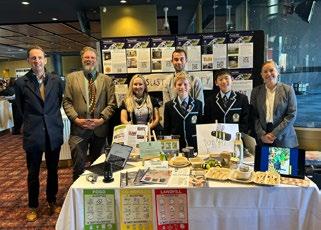
This was recognised this year, when our staff team and student team were Student Action Team of the Year and Teacher/s of the Year Finalists in the annual ResourceSmart Schools Awards. While we did not bring home an award, it was fantastic to be recognised. Stewardship is more than doing the right thing – it is also telling the story of what has been done and, in doing so, encouraging others to follow suit.
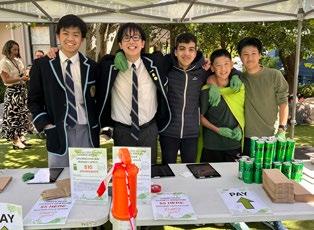
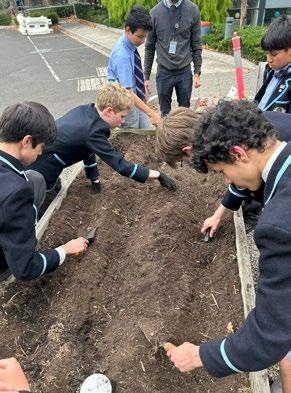
The 50-odd members of our Towards 2050 student group are a testament not only to our actions but also to the fact that our students are engaged in the change-making process. For example, we encourage our students to get dirt under their fingernails and put on a bee suit. Kingussie garden and Junior School gardens were tended to during Term 2 by passionate students, planting potatoes, snow peas, pollinating flowers and a mandarin tree. The beekeeping program is popular and harvested 30kg of honey. Through this program, the students learn not only how plants grow and produce food, but that they can be involved in the process – and hopefully, some of these lessons will find their way to your gardens at home!
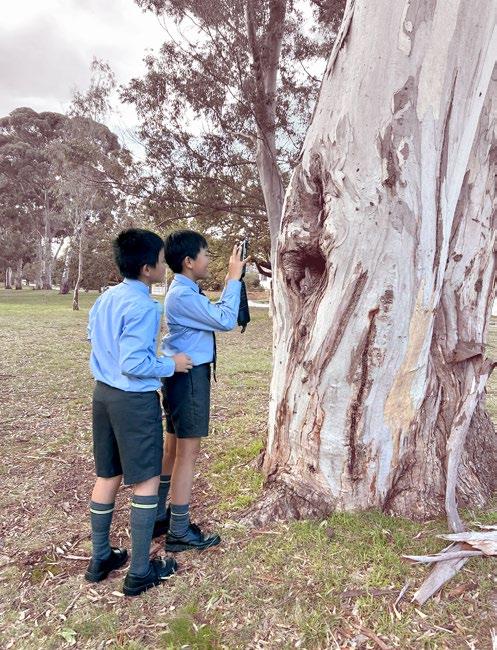
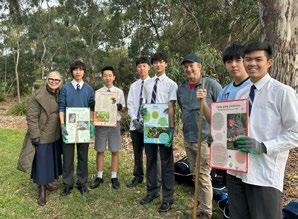
We are working with Boroondara Council and Kooyongkoot Alliance on the Belmont Park Revegetation Project, providing opportunities for students to care for country, conserve and prepare the site through

weeding, mulching, plant identification and being still in the adjacent green space. We are preparing the park in preparation for Term 3 planting natives to attract fauna for future (and present) generations to enjoy. We hope to develop our boys’ relationship with the natural world, that they may more clearly recognise not only the role it plays in their life, but their role in nurturing nature.
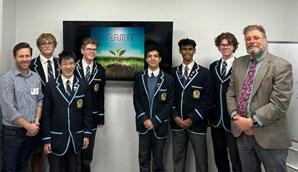
Young people today face a complex future, the pressures of which are amplified by a news industry increasingly focused on negativity and doom. In response, we started a podcast, Fix the Future (published on Spotify), a short, student-created production focused on solutions and progress from around the world. Most importantly, this project is shared with a growing number of schools, and so not only nurtures hope within our students, but helps connect them with a community of like minded students. Nick Schildberger (1997), Sound Cartel Founder, supported the podcast students by providing insights into professional podcasting.
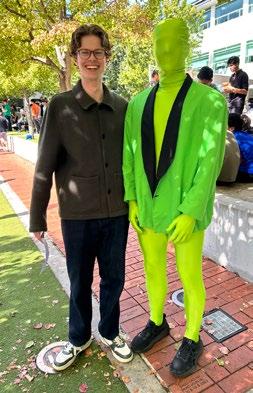
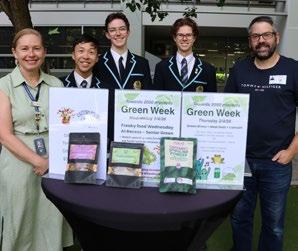
Meanwhile, our annual Green Week was once again driven by students who took the lead in organising a ‘Freaky Food’ event, which challenged staff to try eco-friendly future foods like mealworms, crickets and algae. Their initiatives extended into the community through a Green Dress Day that raised money for Eastern Food Rescue and included the student-run Green Week Concert. This highlights the profound impact of student stewardship in turning environmental passion into tangible, communitywide action.
Our approach to sustainability has always been bedded in the broader community – we do not live in isolation, and our efforts are amplified when developed in concord with other schools. The communal nature of the crises and of our solutions was clear at the Kew High Sustainability Summit, to which we took a small group at the start of Term 2. These events cement the importance of looking after our students and the future they will come to inherit – our living and evolving definition of stewardship.
Mr Will Hone Environment & Sustainability Coordinator
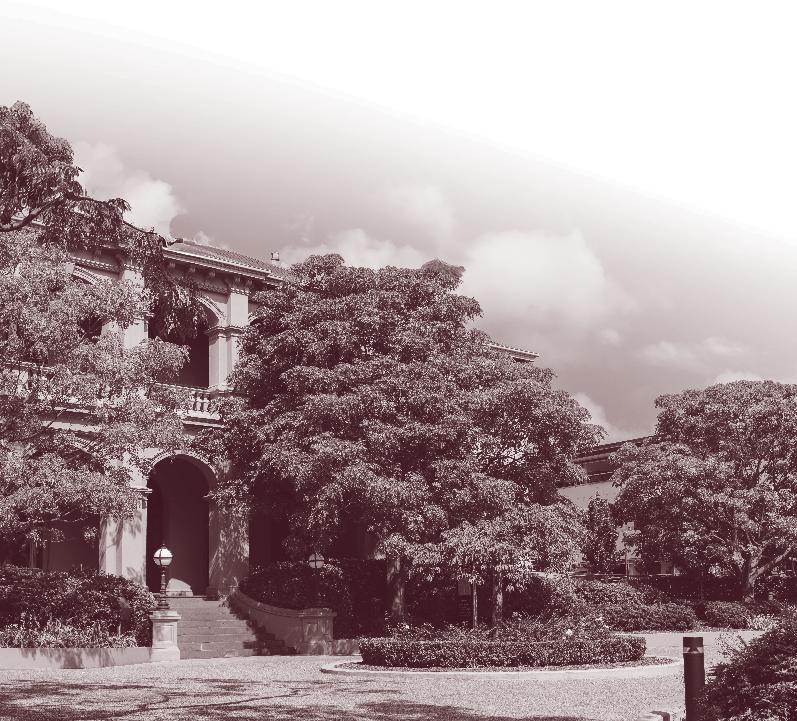
'Stewardship is more than doing the right thing – it is also telling the story of what has been done and, in doing so, encouraging others to follow suit.'
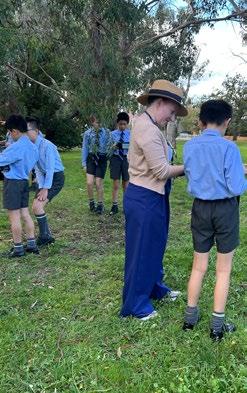
Good character consists of knowing the good, desiring the good, and doing the good habits of the mind, habits of the heart, and habits of action. Thomas Lickona
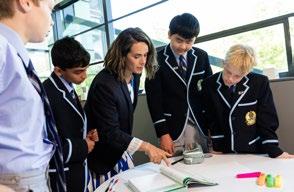
The importance of character in education can sometimes be overlooked. The notion that a student will spend 13 years at school and that our sole responsibility is academic achievement is a misconception. The culture, reputation and long-term success of any school are built upon the stewardship of good people.
At Camberwell Grammar School, how do we cultivate character? Why is it so central to our success, and why does it feature so prominently in what we celebrate as a community?
There are countless examples I witness every day of boys supporting one another, staff going above and beyond for students, and members of our community demonstrating kindness, integrity and perseverance. These stories matter, and I will return to them. However, I also want to explore the research that underpins the culture we seek to create for our boys.
Researcher Niobe Way argues that ‘boys want us – the adults in the room – to listen, care and take responsibility.’ At its heart, character education is about creating an environment where young people feel seen, valued and supported. When schools intentionally foster these qualities, they not only develop capable learners but also compassionate, resilient and principled young men. There is a growing body of research examining the experiences of young men, particularly in the context of the rise of the Manosphere. As an educator, I remain
optimistic. I believe I work in the best profession in the world because young people are inherently good. They want to contribute, they want to belong, and they want to be valued by those around them.
It is not difficult to understand why the Manosphere has gained traction among some young men. Adolescence is a time when identity, belonging and purpose matter deeply. In an increasingly digital world, young people are constantly navigating online spaces that seek to capture and retain their attention.
The pathways into the Manosphere are often indirect. Many boys begin by engaging with seemingly benign content focused on fitness, self-improvement, motivation or personal development. However, algorithms are designed to maximise engagement, and this can gradually expose users to more extreme content and increasingly rigid views about gender and relationships.
To be clear, the Manosphere encompasses a broad range of beliefs and communities. The Australian National Research Organisation for Women’s Safety (ANROWS) describes it as ‘the global collection of online forums, websites, social media communities, influencers and podcasters that talk broadly about men’s rights and contemporary issues facing men and boys.’ In itself, the discussion of issues affecting men and boys is not problematic. Concern arises when content reinforces narrow and restrictive ideas about masculinity or promotes unhealthy attitudes towards women and girls.
The focus of this article is not the Manosphere itself, but rather the role that schools and communities play in cultivating character. If powerful forces are seeking to shape young men’s beliefs, values and behaviours, then we must be equally intentional in creating environments where empathy, respect, responsibility and genuine connection can flourish.
Character is not developed through a single lesson or program. It is built through relationships, expectations and daily interactions. It grows when young people feel known, valued and connected to a community that expects the best from them and helps them become the best version of themselves.
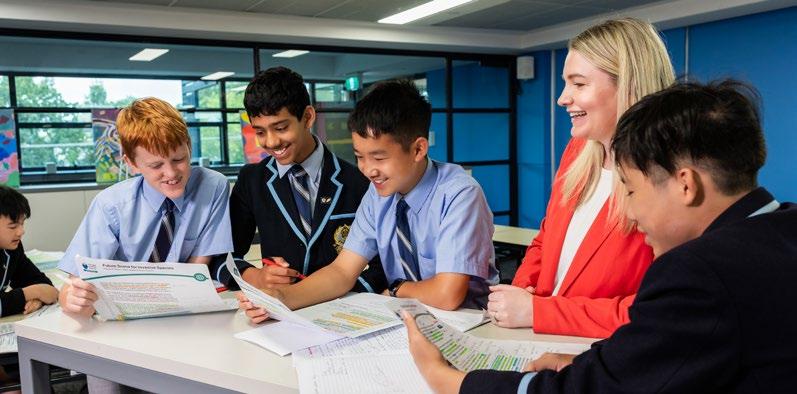
Researchers of character education, Thomas Lickona and Marvin Berkowitz, argue that qualities such as integrity, empathy, responsibility and perseverance are most effectively cultivated when they are embedded in the life of a school, through strong student-teacher relationships, a culture of respect and belonging, opportunities for leadership and service, clear expectations and the consistent modelling of values by adults. This aligns closely with Niobe Way’s research on boys, which highlights their deep desire for connection and belonging and their need for adults who listen, care and take responsibility.
The largest protective factor for a young man is that they have purpose, direction and mission. They find this when they belong to a community and have strong and wonderful role models who celebrate them. Character is built, it is not found. It is built by those around us, helping to shape behaviour, not just accepting behaviour. Our boys must be exposed to as many different people as they can; they need to understand the possibilities for their future and for who they choose to be.
If we know that boys need strong role models and meaningful connections, perhaps we should ask ourselves three simple questions:
How do I show him that I care?
• W hat messages about masculinity am I modelling and discussing?
• How do I make sure he knows that he matters?
I am fortunate to spend time in a Year 7 classroom every day. I attend assemblies, visit classrooms, and witness countless examples of boys celebrating one another’s successes and supporting each other through challenges. Often, at the beginning of a lesson, I ask the boys a question that encourages them to notice the good around them. Their responses are thoughtful, insightful and kind.
When I look around the school grounds at lunchtime, I am reminded why I remain so optimistic about young people. I see young men who care for one another, who want to contribute, and who are learning what it means to be responsible members of a community. The world is in good hands. These boys will one day become the stewards of our culture and our communities, and I have great faith in their capacity to be a force for positive change.
Ms Victoria Triantafyllou Head of Teaching and Learning
The OCGA and the Parents’ Association
Two associations have played important parts in maintaining the traditions of Camberwell Grammar – the Old Camberwell Grammarians’ Association and the Parents’ Association.
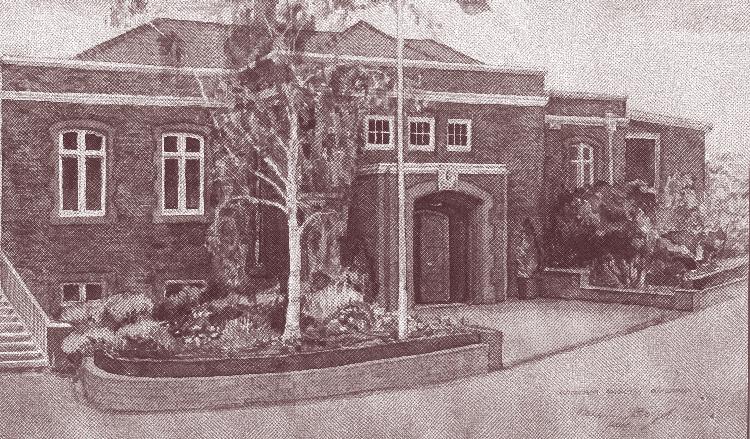
The OCGA was born in March 1910, owing to the lobbying of many of the 700 Old Boys who had attended the School since 1886 at St John’s Prospect Hill and, currently, at Burke Hill under the revered Headmaster Alfred Hall. Accordingly, on the evening of Wednesday 10 March 1910, 60 past Grammarians met in Little Collins Street at “The Savoy” to form the “Old Camberwell Grammarians Association”. The stated aims of the OCGA were to hold annual reunions and, primarily, ‘to foster and increase the interest of Old Boys in the School’, tasks that have been maintained over the last 116 years. The first President was solicitor Frederick B. Waters, one of the pioneering 66 and one of the first matriculants from CGS in 1887. Some distinguished alumni followed him as President, including Francis Derham (1901) in 1914 and 1924, alongside the Reverend Garnet Shaw (Dux of the School 1891), a Life Governor and OCGA President in 1928; he had been appointed the inaugural chaplain for the new Royal Australian Navy in 1912 and, like Derham, was widely respected for his war service. Other servicemen, 191418, had been offered a free copy of the school Magazine courtesy of the Hon. Secretary of the OCGA.
Once it became clear that the School would be in danger of closing as a private business with the impending retirement of Alfred Hall in 1925, the OCGA was an important component of the transition, 1926-27, to the association of the School with the Church of England and the placing of its control under the collective management of a Council, a body on which the OCGA would be represented and remains so. The 2010 Centenary Dinner of the Association was also held at
the Savoy Hotel in the city, a fitting recognition of the important part that the OCGA has played and continues to play in the history of Camberwell Grammar.
The Parents’ Association is younger, but another important link in stewardship. The newly associated School had accrued considerable debt by the late-1920s, including the acquisition of the new “Gym”, and to address this debt of over £250, the Council called upon parents for fundraising. Accordingly, Council President, the Reverend Schofield, welcomed over 100 parents to a meeting in the Kintore Street School House on 29 April 1929. A committee was elected on this evening for a “Parents’ Association”, a group that was soon organising activities in order to ease the gymnasium debt and other financial issues. Their first annual ball, a short time later, resulted in a profit of £125, a sum used for gym furnishing and equipment. This new Association also gained a seat on the Council, a position which it too maintains today. Similar fundraising continued, and a period of self-described ‘violent agitation and activity’ followed when it became clear by the early-1930s that Camberwell Grammar must be re-sited from the dilapidating Burke Hill campus or face extinction. The Parents’ Association hoped to raise £500 towards a new property purchase but failed to secure any significant amount needed for such a ‘new home’. Nevertheless, once “Roystead” was acquired in April 1934, the Association remained determined to focus on fundraising for sorely-needed facilities with ‘valiant hearts and a praiseworthy optimism’ as the Grammarian described it. Such vigour has been maintained in the decades that followed, and the School looks forward to the approaching centenary of this valued Association.

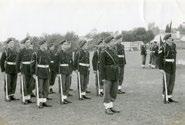
By 1955, the Camberwell School Army Cadet Unit, founded in 1888, had witnessed three significant conflicts (the South African War, 1899-1902, and the two world wars). Over 700 Grammarians had served in these wars, and a considerable percentage of them had been cadets at Camberwell Grammar beforehand. As cadets, they had become accustomed to utilising live ammunition both at external ranges and at the School itself on the eastern side of the KAO after the Second World War; they were also experienced in the use of mortars and similar apparatus at Puckapunyal and had even experienced the use of light artillery at Seymour in 1939. For most of these first 67 years, each Grammarian cadet had been furnished with an ex-Army .303 calibre rifle and the fearsome bayonet for which British-oriented services were notorious. The first five headmasters of the School up to 1954 cultivated the CSACU to various degrees and maintained it through the difficult periods of interruption following Federation and the Great Depression. None was as diligent or as militaryminded as Headmaster Michael Searle, 1950-54, who had served in Britain’s élite Tank Regiment at the rank of Major, a title he continued to use at Camberwell Grammar. Searle brought military fashion to the School, and even the boys’ bike racks were reorganised in a military fashion – few, if any, could recall the objections of boys in 1915 to a similar practice in wartime, soon abandoned as impractical. The uniformed Major Searle now regularly took the salute at school parades of his cadets. However, his successor from 1955, the Reverend Thomas Timpson (1931), had a different outlook on the Cadet Unit, one that was more community-oriented.
Tom Timpson had been compelled to serve in the cadet unit 1928-29, but once the volunteer system replaced it, he chose not to enrol in the ranks, preferring athletics and debating. During the Second World War, he had served as a RAAF chaplain for five years, including a period of ‘overseas service’ in New Guinea and this service chaplaincy, combined with his licensed Christian faith, offered him an unprecedented perspective on his school’s cadets and a vision of a less military-oriented future. The new Headmaster intended the Unit to be more conscious
of the wider community – the rifle range was closed, and the Headmaster no longer participated in parades or reviews. His vision of reforming the Unit was tied to his earlier experience at the Uppingham School in Rutland, England, of the Outward Bound movement and the Council was presented in 1959 with an option to “Replace Cadets with an Outward Bound School or Group X, as in operation in England”. This would, the new Headmaster believed, “help the individual boy to learn to accept responsibility for himself and to serve the community to which he belongs”. Outward Bound focused on community-based activities of a wide character and was alien to the character of the Cadet Unit, as it had functioned since 1888. Much of the military-style activities would be replaced with school-and community-based activities such as Rescue and Public Service, including first-aid, life-saving, fire service, youth leadership, expanded rescue work and animal welfare, amongst others.
As was expected, there was resistance within the Unit to such proposals but in due course something of a compromise was reached and the CSACU evolved into the type of unit we see today – the baton has been passed on to a Unit that is conscious of community service and integrity, one that is truly ‘outward bound’ but also conscious of the traditions it has maintained since 1888.
Dr David Bird School Historian and Archivist
As part of our 140 Years celebrations, we’re sharing highlights from a series of interviews featuring reflections from past staff and community members who have played an important role in the School’s history. In this edition, you’ll hear from former Director of Development, Liz Board and former student and long-standing staff member of 42 years, Stephen Li.

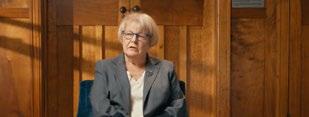
Listen to former Director of Development, Elizabeth (Liz) Board.
‘I think the value of putting people first has carried the School through to what it is today. It also makes the boys aware that that’s what’s important. People are important.’


Listen to former student and long-standing staff member, Stephen Li.
‘The Headmaster, Mr Colin Black, asked me, “Why are you here for so long? Have you no ambition?” I said to him, “I don’t think I can find a better school or one that offers me a position teaching Chinese and working as a psychologist.”

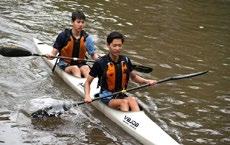
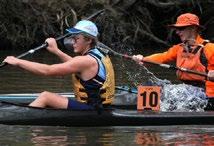
On 2 May, the CGS Kayaking squad and numerous eager volunteers took to the waters of Fairfield Canoe Club for the inaugural Paddle to the Max five-hour endurance challenge in honour of Max McKenzie, a former CGS student. Coaches, students, kayakers and alumni alike gathered to honour Max and compete for the cup.
After a slow start for some, the squad was off and away, showing the true grit, belief and endurance befitting of the school values. Shout-outs to new Year 9 kayakers Jasper Barker, David Kyriakou, William Li, Jack Neilsen, Jacob Yuen and Jeffrey Zhong, who gave it their all. Congratulations also to the Year 7 and 8 team from the CGS squad, some of whom had only had a single term of kayaking experience, Vincent Li, Gordon Wu (both Year 7), PJ Ng and Samuel Legge (both Year 8) who dominated in TK2s.
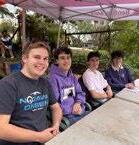
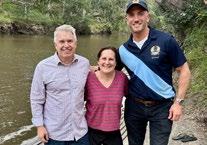
Well done to Kayaking Vice-Captain Liam Clarke (Year 12), who put everything into his last-ever race, and Alex Kelher (Year 10), who challenged himself, getting into a significantly harder boat, K2, and speeding through the course along with Kenny Ji (Year 9). Well done to team captain, Jian Yao Choong, who smashed through 24 kilometres in three different boat categories with two different partners, inspiring others to give it their all. Oscar Wallis (Year 11) came home with gold, dominating the Under 18s solo category, with five hours of continuous paddling in K1, covering an incredible 42km and showing exactly how he earned full colours.
Thanks to all the CGS community members who got involved to support such a great cause. Over 1000 kilometres was paddled and more than $2000 raised for anaphylaxis research by the National Allergy Centre of Excellence.
Jian Yao Choong (Year 10)
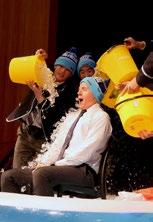
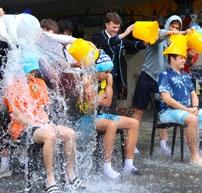
On 25 June, the school community threw its support behind the Clifford House Big Freeze charity event, raising funds and awareness in the fight against MND. The day was filled with community spirit, laughter and plenty of icy moments. Teachers and Prefects bravely took the plunge, students enjoyed a sausage sizzle, and Mr Jeacocke was a fantastic sport, getting dunked in front of the entire Senior School Assembly. A huge thank you to everyone who participated, donated and helped make the event such a success.
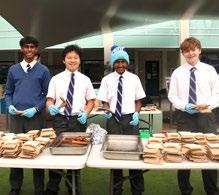
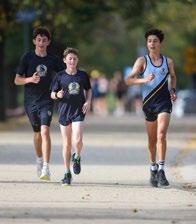
Forty Camberwell Grammar students gathered at the Pillars of Wisdom for the annual Run the Tan event. Our team joined runners from across the state to raise awareness and funds for mental health organisations. A highlight of the day was an outstanding performance by James Alex (Year 12), who finished second in the Schools event with a time of 11:43. Congratulations to everyone who took part and contributed to the fundraising efforts.
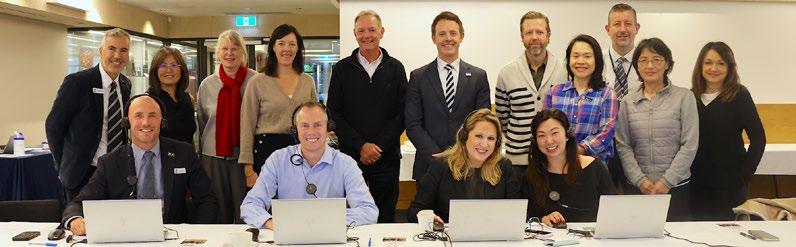
The CGS community came together on 10 June in a powerful show of spirit and solidarity for our inaugural Giving Day. Held as part of our milestone 140th Anniversary celebrations, the 12-hour event saw staff, alumni, current and past parents, and volunteers rally together to support the David de Kretser Scholarship program.
Our community’s response was extraordinary. Thanks to our generous matching donors tripling every contribution, we exceeded all expectations to raise over $600,000. This phenomenal achievement ensures we can secure our goal of funding two additional places for 2027, expanding life-changing opportunities for future students. We extend our sincere gratitude to everyone who donated, volunteered and brought this day to life. Adding further momentum to our philanthropic efforts, several CGS music ensembles achieved outstanding success in Musica Viva’s national Strike A Chord competition.
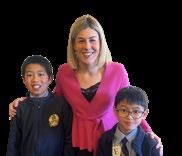
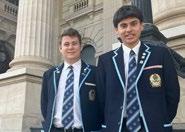
Some of our student leaders explored civic engagement at forums hosted by Jess Wilson MP at Parliament House. School Captain Dylan Hodges and Vice Captain Max Korganow attended the Secondary Leaders Forum. Year 5 leaders Victor Huang and Jonathan Cheng attended the Primary Leaders Forum, sitting in the Legislative Council chamber to discuss important youth issues with MPs.
The Push-Up Challenge has become a powerful example of our school’s commitment to community wellbeing and mental health awareness. With over 300 students and staff taking part, the event fostered a strong sense of unity and shared purpose, as participants pushed
In a superb display of community spirit, three prizewinning groups chose to donate their combined $600 in prize money directly to the David de Kretser Scholarship fund. The Roystead Quintet (Keyboard Prize), Mallinson Trio (AUSTA String Prize), and Wattlebird Trio (Mixed Ensemble Prize) each won $200 for their exceptional performances.
Additionally, the Kingussie Trio – David Chon, Gabriel Liu (both Year 10) and Dillon Chan (Year 9) –has successfully progressed to the National Final. They will represent CGS at the Melbourne Recital Centre on Saturday 29 August at 2.00pm.

To learn more about the David de Kretser Scholarship program, scan the QR code.
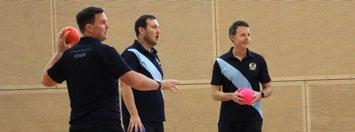
In Weeks 4-6 of Term 2, the basketball courts transformed into a battleground for the Macneil House Dodgeball Tournament. Teams of 5 + 2 reserves faced off in a high-stakes, bracket-style competition for the ultimate glory: a chance to challenge the “Final Boss” teacher team, featuring Mr Jeacocke and other staff. Thanks to all who got involved, with funds raised going to support the Monash Victorian Heart Institute.
themselves physically to complete 3307 push-ups from 3-26 June, while supporting an important cause. Together, they raised a very impressive $15,651, demonstrating the school’s collective spirit and compassion.
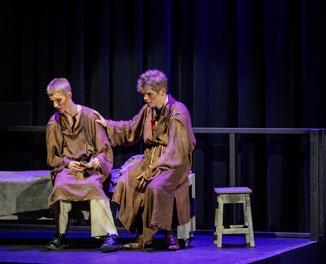
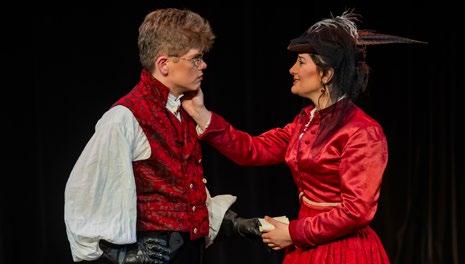
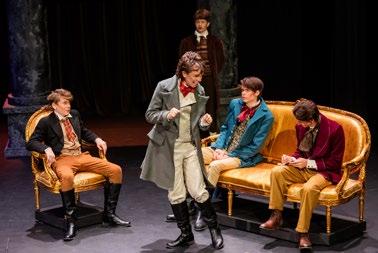
To breathe fresh, theatrical life into a popular, classic novel from mid-nineteenth century France is no mean feat . . . especially when the story unfolds as an epic and episodic adventure-romance, with an intricately woven web of characters and sub-plots! This grand, sweeping and quintessential melodrama features pure-hearted victims, scheming villains, wrongful imprisonment, daring escapes, secret treasure, sweet revenge and the pursuit of a slow-burning, carefully-calculated poetic justice. Camberwell Grammar School, in association with Canterbury Girls’ Secondary College, recently presented a dramatisation of Alexandre Dumas’ The Count of Monte Cristo, translated crisply by professeur de français Jason Hall, and adapted tightly by metteur en scène Andrew Stocker, from a hefty twelve hours into a digestible four. Their collaborative, literary handiwork, elevated in a gloriously ‘operatic’ interpretation, guaranteed a most diverting evening of theatre indeed!
In Mark Wager’s understated, yet striking, set design, rostra upstage represented a prison cell, an opera box, and the island of Monte Cristo, while the downstage was
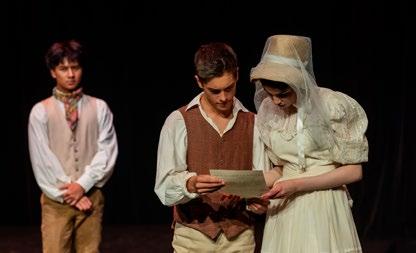
left bare to allow opera patrons to be seated and a duel to be enacted. Towering over the stage was an imposing, columnar arch, adorned by gold drapery for a disrupted and confrontational night at the opera! Jennifer Bennie’s patterned dresses and tailored attire, in a gorgeously rich colour palette, elegantly evoked a period several decades prior to the novel’s composition, as well as the rising social status of its major players. Musically and dramatically, the melodies of a sea-shanty, a pianosonata, and a grand-opera, underscored and enhanced Dumas’ rollicking tale, with all of its coat-swishing, bootstomping, poison-swallowing and pistol-brandishing! Now, a proper melodrama would not be complete without a dastardly villain, and Dumas certainly raised the stakes here with a trio of unscrupulous conspirators, who plotted an innocent man’s downfall – the amoral and jealous general, Fernand (Frank Roodenburg, Year 11); the corrupt and ambitious magistrate, Villefort ( Will Nethercote, Year 12); and the drunk and greedy neighbour, Caderousse (Lachlan Barnes, Year 11). All three performers relished expressing the heightened
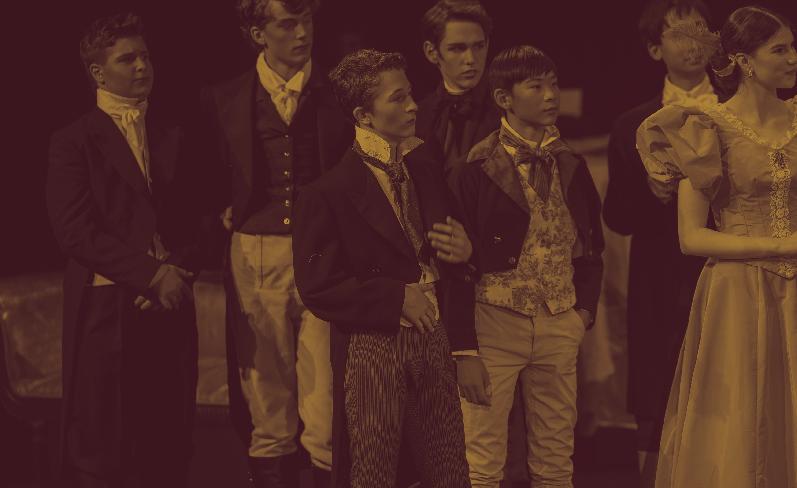
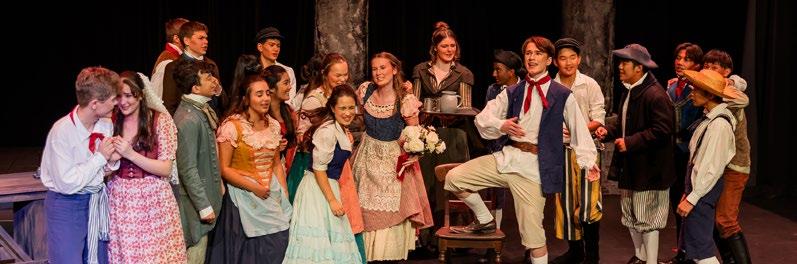
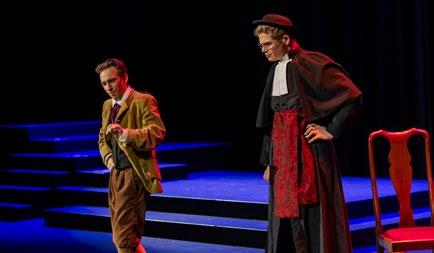
emotions and exaggerated behaviour of such selfserving, wealth-grasping betrayers, the latter of whom delighted with his outrageously protracted death-scene! By contrast, a paragon of honour was the young soldier Maximillian ( Ashton Bedoya, Year 10), who effortlessly won the hearts of not only his beloved Valentine, but also the charmed audience members.
Very deservedly, special plaudits were earned by one actor’s portrayal of the sailor Edmond Dantès, who assumed various guises and ultimately transformed himself into the titular Count. Thomas Klebanowski (Year 12) delivered a sober and disciplined performance that anchored the entire, swash-buckling evening and proved to be a measured and considered ‘still-point’ around which the ‘thrills and spills’ occurred. He must be wholeheartedly commended, in so Herculean and ‘Hamletian’ a role, for investing a requisite maturity, conveying a delicate sensitivity, and utilising his character’s own ‘memory-techniques’ to help remember so many lines of dialogue!
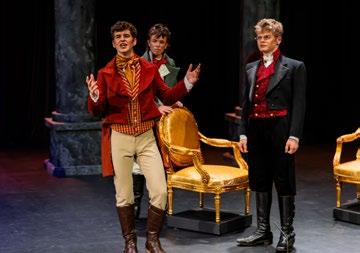
Director Andrew Stocker is to be applauded, too, for his resolute vision and sterling fulfilment of a personal challenge posed so optimistically for the students involved and the audiences engaged. His courage to tackle such a monumental production, to which more than 50 cast-members and a dozen crew-members contributed their talent and expertise – and which required him to fashion a stageable script from a novel up to 1,300 pages long – is truly laudable. To endorse Dumas’ astute reminder that the sum of human wisdom is contained in the two words ‘wait ’ and ‘hope ’ – the outcome of this theatrical venture is that, because its director did so, its participants did so, its audiences did so – and, of course, its Count did so – everyone joyfully and exhilaratingly experienced one of literature’s best ‘ripping yarns’!
Mr Samuel Gough
Drama Teacher
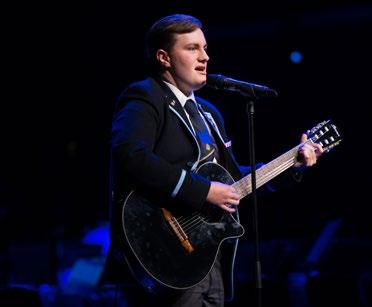
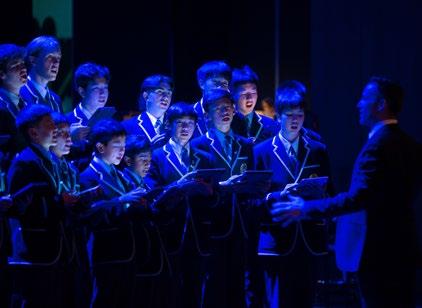
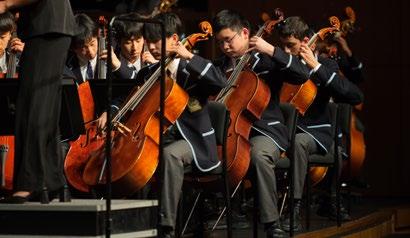
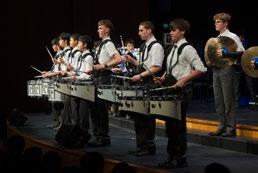
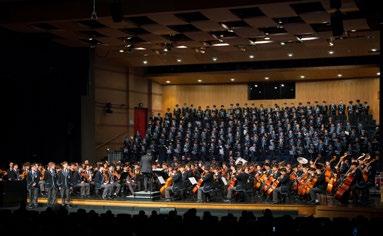
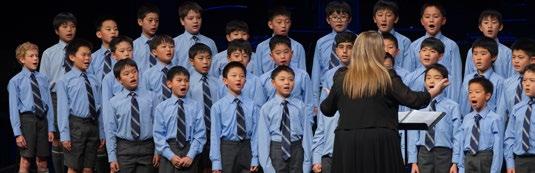
On Thursday 21 May, the whole school joined together for a night of fantastic music. From the Junior School Choir, all the way to the Senior School Orchestra, the night was filled with memorable performances.
The night began with an intrinsic performance of The Fantastical Quest by the Philharmonic Orchestra, with a striking string opening to begin the night. As far as shout-outs go, we need to give a massive round of applause to Jeremy Shen (Year 9) for having the courage, skill and passion needed to get up as a student and conduct the orchestra – well done! Following this, the Senior School Symphonic Winds played a moving interpretation of Amazing Grace. The Junior School Choir then sang Why We Sing and a fantastic rendition of the Swahili song Kusimama. This was followed by the Middle School Concert Band’s performance of Byzantine Dances The Drumline then displayed their first and second movements with extreme precision, which will also be displayed at Nationals later this year. Highton Strings then played Larghetto from Serenade for Strings, turned into a medley with the main theme from Psycho
The audience got a shock from the music – before they were shocked by the music, in Joseph Ni (Year 12) playing Rachmaninoff’s Piano Concerto no.2. Joseph displayed a feat of technical prowess, dedication and musical endeavour, so a huge congratulations to him. After a brilliant performance of Vienna, the Senior School Symphony Orchestra played off the night with an arrangement of Eleanor Rigby, featuring the Senior School Choir, and amazing solo performances by Will Nethercote (Year 12), Harrison Lipscombe (Year 12) and the Captain of Music, Thomas Klebanowski (Year 12). What a great way to end the night! Except – just as Mr Bishop walked off, The Redetsky March started – as per Austrian tradition.
Thanks to all the Music School staff and teachers for your dedication in creating such a memorable night for students and parents.
Thomas Klebanowski – Captain of Music and Evan Cooke
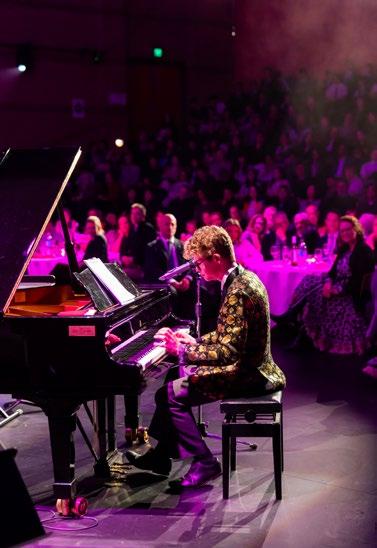
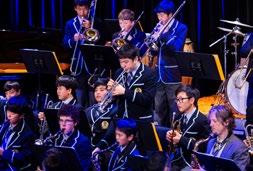
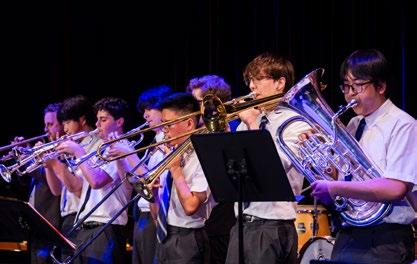
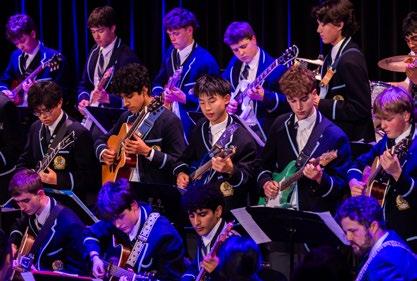
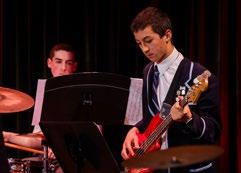
Only a week after the Mid-Year Concert, the Middleton Theatre was transformed once again into Camberwell’s very own jazz club for the 5th annual CGS Jazz Night. The energy was electric, with parents, staff and students coming together to enjoy a more laid-back night of music, good food and lively conversation.
The night kicked off with the gargantuan Senior School Guitar Ensemble playing some Frank Zappa, followed by the Jazz Night debut of our newest jazz combo, The Headliners. The Middle School Stage Band then brought the heat with an extended and diverse set of classics, finishing with a crowd-favourite rendition of Sucker by the Jonas Brothers. Next, the highly anticipated Brass Bandits dazzled the audience before giving way to two intricate performances spanning generations of jazz from the CGS Big Band.
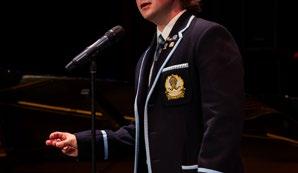
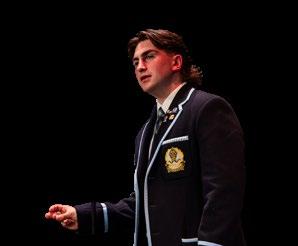
Woven throughout the evening, there were several vocal interludes from our singing students, including Year 12 Harrison Lipscombe’s poignant ballad rendition of Seven Nation Army, a stripped-back yet stunning Moon Over Bourbon Street from Thomas Newman-Thurlby and Derek Wei (both Year 11) and a heartfelt rendition of A Sentimental Person by the evening’s host, reflecting on the anniversary of Jazz Night.
The night wrapped up with the flagship Senior Stage Band performing Thing of Gold by Snarky Puppy, followed by an original composition, Blue Dark, which was penned by the band’s director, Mr Nic Johnston, as a tribute to his daughter and featured an ethereal trombone solo from Nick Radelczyk (Year 12). Overall, it was a sensational night, and we owe a huge thank you to all our music staff for their work in bringing our community together and mentoring us.
Evan Cooke and Thomas Klebanowski – Captain of Music
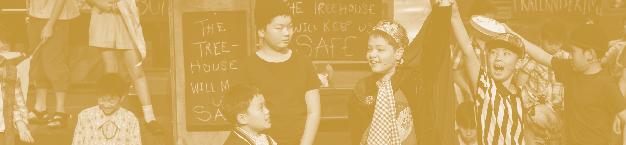
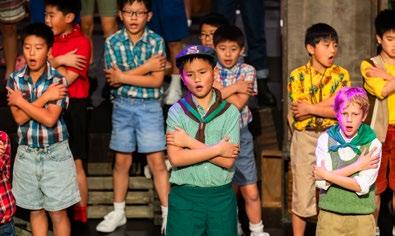
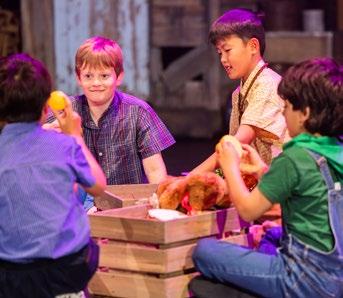
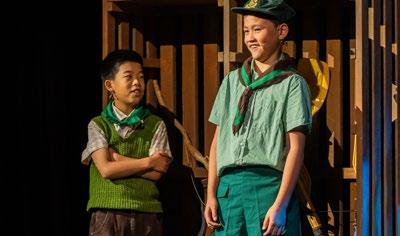
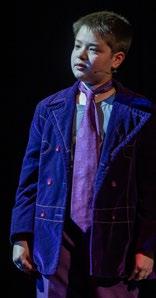
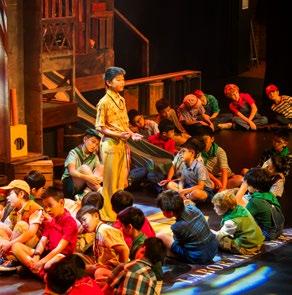
When we teach children music and bring the arts into their lives, it is not because we want to make them better at maths or improve their reading scores (which it does). We do it because we want them to see the world in a new way, and to discover how they might transform it.
This philosophy directly aligns with the famous Danish theatre ideal, ‘Ej blot til lyst’— ‘Not just for amusement.’ When audiences come to see our latest production, they will certainly be entertained. But the performance itself is really just the tip of the creative iceberg. Behind the scenes, for months, our boys have been diligently demonstrating our school values: working collaboratively, building resilience during long rehearsals and developing vital lifelong skills. It has been a joy to watch them figure out where to place their props, learn how to support one another on stage when they forget a line, and discover how to best tell a story with their faces. The arts are not just a nice, pretty thing for an audience’s entertainment; they provide a profoundly rich, transformative experience for our students.
The journey to this production began in late 2024. We wanted to write a completely new musical tailored specifically to the unique talents and strengths of the boys at CGS. Our goal was to create something musically challenging that would also prompt them to think deeply about the current state of our world.
We landed on the legendary tale of Robin Hood, but with a twist: updating it into a contemporary context that our students would understand. By early 2025, after many weekends and text messages, we began fleshing out the storyline, mapping out the narrative arcs, and identifying exactly where the music needed to elevate the drama. We knew we wanted a score that was incredibly singable and deeply innovative—rooted in popular musical theatre, yet carrying a profound message. You will certainly hear hints of music theatre that also tell stories of struggle and protest.
Grounded in a legend that has evolved since the 14th century, Robin Hood has always stood for resistance,
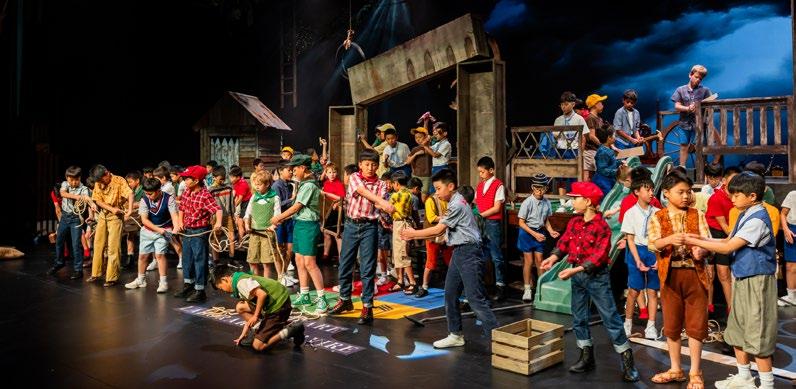
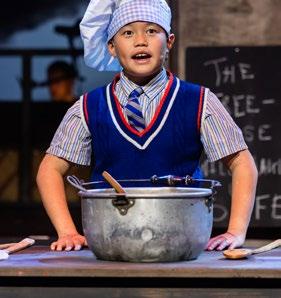
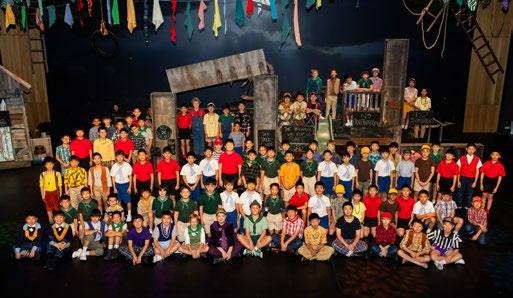
justice and the struggle against corrupt authority. In this sense, sadly, our world hasn’t changed much. In reshaping this story for our boys, we focused on its essential themes of equality, strength in numbers and the discovery of a personal moral compass. His legend embodies so many of our school values. In our version, injustice is met with unity, bravery and the hope for positive change. At its heart, it is a story about being stronger together.
For those listening a little deeper, you will hear some familiar quotations of other music and literature that also sought to speak truth to power and tyranny. I couldn’t go past the interpolations of Dmitri Shostakovich’s music, composed as a form of protest under Soviet tyranny. The song, Rebel Chorus, directly quotes Banjo Paterson’s “Rebel Chorus” from “Freedom on the Wallaby”—a fierce Australian protest poem reflecting the injustices faced by workers prior to the 1890 Queensland Shearers’ Strike. The script features allusions to political and dystopian classics like Machiavelli’s “The Prince” and Aldous Huxley’s “Brave New World”.
Even the character names have been reimagined to pay tribute to history while offering a new identity. Friar Tuck becomes “Zaki” (derived from the Arabic word for “wise one”), and our students were delighted to discover that “Marion” has a long, historical tradition as a boy’s name.
By tackling a work of this complexity, the boys have done so much more than memorise lines and music. They have engaged with contemporary concerns about power, inequality and the misuse of authority, embodying our core school values of courage and integrity.
We could not be prouder of the resilience, teamwork and artistic growth our boys have shown throughout this process. They have proven that when our students take to the stage, they aren’t just putting on a show—they are learning how to change the world.
Mr Alex St Vincent Welch Music Director and Co-writer

Term 2 has been another highly successful period for Sport at Camberwell Grammar, characterised by strong participation, excellent school spirit and a commitment to teamwork across all year levels. As we approach the conclusion of the Winter Season, students have embraced the opportunity to represent the School with pride, demonstrating resilience, sportsmanship and determination both on and off the field.
Several of our Firsts teams have enjoyed outstanding seasons and are well-positioned heading into the final stages of competition. The Firsts Badminton team remains undefeated after five rounds and has already secured its place in the AGSV Grand Final. Under the leadership of Captain Owen Lim and Vice-Captain Edward Lam (both Year 12), the team has combined experience with emerging talent to produce consistently strong performances. Meno Chu (Year 11) has continued to be a key contributor, while the depth of the program has again been evident, with several students outside the Firsts team stepping in when required and performing admirably against quality opposition.
The Firsts Hockey team has also enjoyed an exceptional campaign and sits undefeated atop the ladder after five rounds. Having already qualified for the Grand Final, the team has demonstrated impressive consistency throughout the season. Captain Daniel Tsui (Year 12) has led the group well, while Kai Fernando’s (Year 11) goal-scoring ability and Lachlan Hoyling’s (Year 11) influence through the midfield have been instrumental in the team’s success. Their commitment to each other and willingness to play for the team has been a defining feature of the season so far.
Firsts Soccer has continued its upward trajectory and enters the final round in third position, having recorded three wins, one draw and one loss. A semi-final berth has already been secured, with the final home-and-away match against Trinity determining whether the team finishes third or fourth. The highlight of the season to date was a memorable 3–1 victory over Marcellin. Captain Lucas Cirillo has been influential through the midfield, Aston Monteleone has provided a constant attacking threat, and Christian Iacobucci (all Year 12) has been a reliable presence in defence.
While results have not always reflected the effort invested by the Firsts Football team, the group has been highly competitive throughout the season. Narrow defeats against Assumption and Mentone could easily have gone
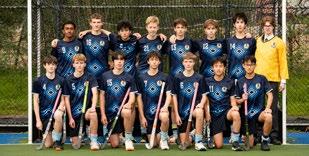
the other way, while the team has also recorded a win and a draw. Captain Angus Goodale (Year 12) has led with determination, supported by strong performances from Dan Bullock (Year 12), Angus Dunstan (Year 10), and brothers Sam (Year 12) and Freddie (Year 10) Hardman The team’s willingness to compete strongly until the final siren has been commendable.
Our Cross Country squad continues to perform strongly and currently sits second on the AGSV ladder with two races remaining. Captain James Alex (Year 12) has led the way in the Senior division, while Edward Smith (Year 9) and Kevin Ma (Year 8) have been outstanding performers in the Intermediate and Junior divisions, respectively. The squad has again demonstrated the consistency and dedication that have become hallmarks of the program.
Beyond the major AGSV team sports, students have continued to participate enthusiastically in a wide range of activities. Fencing remains one of the School’s popular sports and has enjoyed another successful term. Under the leadership of Captain James Bui (Year 12), students produced a strong showing in individual competitions and achieved several medal-winning performances in both Junior and Senior team events.
Although the Baseball program has faced a challenging season from a results perspective, student commitment and enthusiasm have remained high. Players have continued to train diligently and represent the School positively each week despite facing strong opposition.
Interest in Real Tennis remains strong, with students continuing to develop their skills in this unique sport ahead of the annual CGS Championship, which will be contested in Term 3.
The Snowsports squad has spent the term preparing for a busy winter campaign. Unfortunately the annual Family Week program at Falls Creek was cancelled due to a lack of snow, however our skiers look forward to the Victorian Interschools Snowsports Championships at Mount Buller in August.
Several students have also earned selection in State and National representative teams throughout the term, a fitting recognition of their talent, commitment and hard work. These achievements continue to highlight the quality of athletes within our Sport Program and the opportunities available to students across a diverse range of activities.
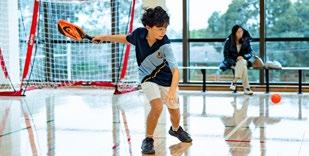
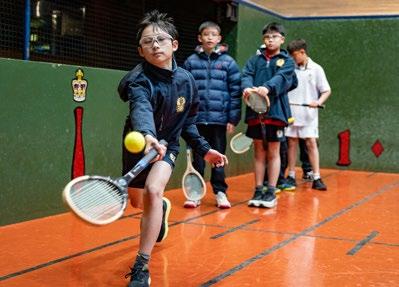
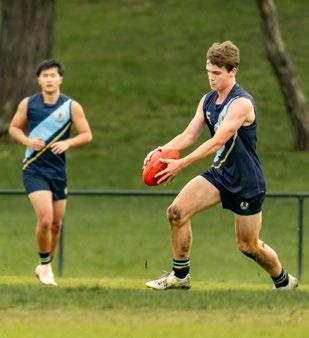
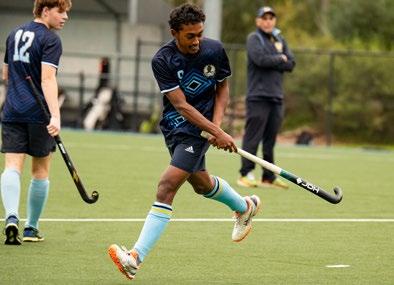
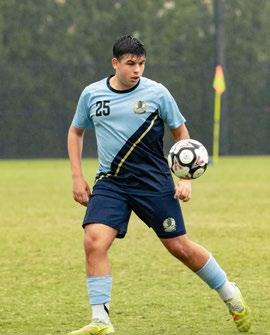
Several students have proudly represented Victoria or Australia during Term 2 or over the Term 2 holidays:
• Football: Angus Dunstan and Freddie Hardman –Under 16 Victoria Metro team
• Basketball: Chandler Siegle (Year 11) – Under 18 Victorian Metro team
• Hockey: Lachlan Hoyling – Victorian Under 18 Development team, Kai Fernando – Victorian Under 16 team, Luke Callander (Year 11) and Thomas Tsui (Year 10) – Victorian Under 16 Development team
• S wimming: Liam Paulsen (Year 10) – Team Vic Swimming 10-19 Years
• Soccer: Luke Becvinovski (Year 11) – represented Australia at the Under 17 Asian Cup in Saudi Arabia
• Indoor Cricket: Josh Moore (Year 10) and Jagan Tennakoon (Year 9) – Victorian Under 16 Green team
• Baseball: Joshua Moulds (Year 8) – competed for Melbourne Athletics Baseball in the Australian Junior League Championships
• C ricket: Ranen Gandhi (Year 10) – Cricket Victoria Under 17 Emerging Player Program
• Rock Climbing: Josiah Wilson (Year 9) competed at the 2026 Sport Climbing Australia National Youth Championships
• Badminton: Rémi Foster (Year 10) – represented Victoria at the Australian National Para Badminton Championships.
With only a small number of Winter Season fixtures remaining, excitement is building as several teams prepare for finals campaigns. Following the conclusion of Winter Sport, attention will quickly turn to the Spring Season, where students will once again have the opportunity to participate in Athletics and Water Polo. We look forward to another term of strong participation, teamwork and school spirit as students continue to represent Camberwell Grammar with distinction.
Mr Lachlan Crawford Head of Sport
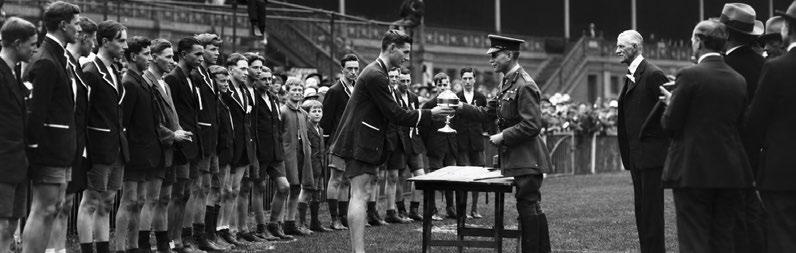
There are few better places to understand stewardship than on a Saturday morning at Camberwell Grammar. From the first light over Keith Anderson Oval (KAO) and Jack Tobias Oval (JTO), through to the steady rhythm of competition across Melbourne, school sport reflects something enduring: a community entrusted with something larger than itself.
Within that responsibility sits a simple idea. Each generation does not simply participate in the Sport Program – it inherits it, strengthens it and passes it on in a better condition than it was found.
That sense of continuity is deeply embedded in our history.
Camberwell Grammar won the very first AGSV Premiership in Athletics in 1920, setting in motion a tradition of excellence that has spanned more than a century. Since then, the School has gone on to win 121 AGSV Premierships (and counting!) — the most of any school in the Association and 16 more than our nearest rival, Trinity Grammar. These numbers are not simply markers of success; they represent decades of sustained commitment from students, coaches and families who have contributed to a culture built on high standards and collective effort.
Nowhere is stewardship more visible than in the traditions and spaces that define our sporting life.
The Mitre Cup against Trinity Grammar, long regarded as one of the School’s great sporting contests, continues to connect present-day students with generations of history and rivalry. At home, the development of facilities such as the Sport Centre (2018) and the Ian Mason Tennis Centre (2021), alongside the enduring presence of KAO and JTO, reflects a community that has invested with intent — not only in performance, but in experience, belonging and opportunity.
Across these settings, stewardship is not abstract. It is expressed through behaviour, expectations and the way students choose to represent the School. There is quiet pride in the fact that Camberwell Grammar is consistently held in high regard by opposition schools for its sportsmanship, respect and conduct across all levels of competition. This reputation has not been built in a single season, but through generations of students who understood that how they compete matters as much as the result itself.
While success in AGSV competition is never the sole measure of a program, it does reflect sustained excellence. Since 2021, Camberwell Grammar teams have secured 27 AGSV Premierships and a further 12 secondplace finishes across sports including Badminton, Tennis, Athletics, Swimming, Table Tennis and, more recently, Basketball. These outcomes speak not only to talent, but to habits — preparation, resilience and a shared commitment to one another.
Yet the true strength of the Sport Program lies in its breadth. Across 28 sports and hundreds of teams, opportunities exist for students of all abilities to contribute meaningfully. From Firsts fixtures through to entry-level participation, each student helps shape the identity of the School’s sporting culture. Stewardship, in this sense, is not reserved for a few; it is a shared responsibility carried by all. Equally important are those who support the program beyond the playing arena. Coaches, staff, Old Camberwell Grammarians and the many Friends of Sport groups all play a vital role in sustaining the experience our students enjoy. Their commitment ensures that sport remains not only competitive, but deeply connected — to tradition, to community and to personal growth.
In the end, stewardship in sport is measured in legacy. It is found in the standards upheld when no one is watching, in the respect shown to opponents, in the encouragement offered to younger players, and in the pride taken in representing the School.
Long after the final siren or last point is played, what remains is not the result of a single season, but the culture that has been strengthened, protected and passed on.
Mr Lachlan Crawford Head of Sport
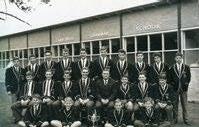
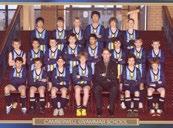

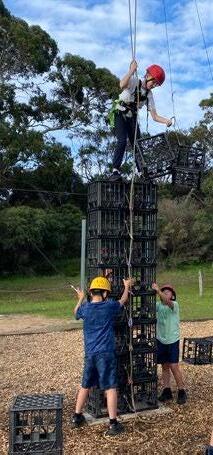
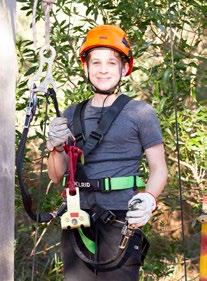
During my time at camp, I learned new things and conquered my fears by trying the Giant Swing and many other activities. Surprisingly, I enjoyed washing the dishes after meals when it was my group’s turn. The food was amazing at camp. I recall one night they served really good burrito bowls. One of my favourite activities was the Crate Climb. This was when we had to stack crates, hook them onto a rope, and climb them at the same time! However, my overall favourite activity was the Giant Swing. I’m normally petrified of rollercoasters in general, and although this is a swing, I felt the same way. With some support from the teachers, I decided to go all 18 metres high, and it was worth it. Overall, I had an amazing time at Camp Manyung. Thank you to all the camp and CGS staff.
Matthew Farrell (6M)
Camp was really fun and exciting, packed with many exhilarating activities, such as the Flying Fox and Giant Swing. The food was also really good, as we got a different type of meal for all three meals a day. The free time between the last rotation of the day and dinner was also a great chance to be with friends, shower and play in the playground or on the tennis and basketball courts.
My cabin was where I had some downtime, as I needed to get some rest. We also had to get up quite early in the
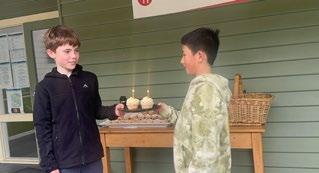
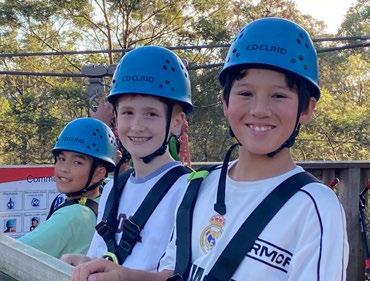
morning. We could go outside to play at the time, but the mornings were frosty, cold and wet, so going out to play wasn’t a good idea. I had a great time at camp, and I slept so well the night I got back!
Isaac Huang (6M)
The blazing afternoon sun touches the horizon as the loud sounds mingle together and slowly dampen as I listen to the world around me. I glide slowly, appreciating the sheer beauty of the nature around me.
The cool breeze brushes against me smoothly as I glide on my bike faster than I could ever run. I look to the side and see the trees towering above me. I taste the fresh air, purified in my throat.
I feel the bike handles gripping onto my hands as I slowly clench the brakes, as the instructor yells, ‘Slow down!’ I smell the fresh air purified with the scent of gumtree after minor rainfall.
My head snaps back into true consciousness as I pull the brakes too hard, not used to this bike, I think, as I go over the handlebars.
Oscar Reilly (6J)

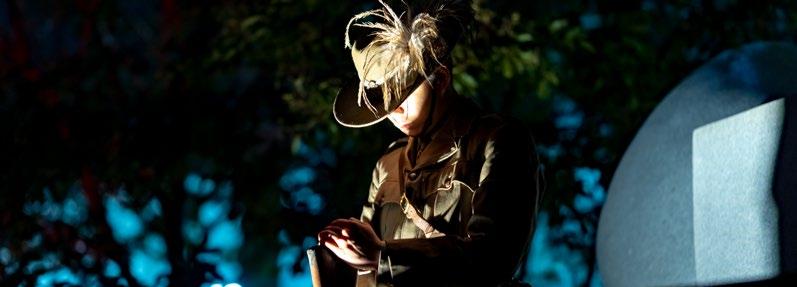
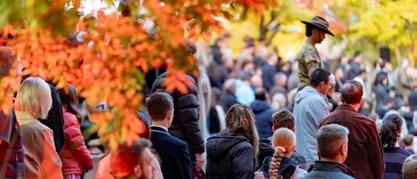
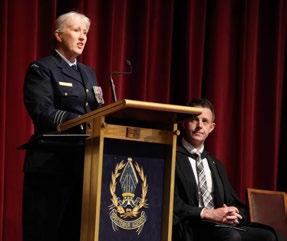
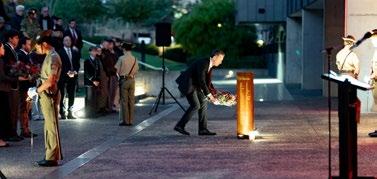
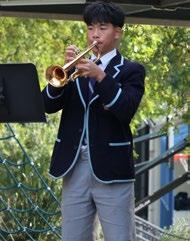
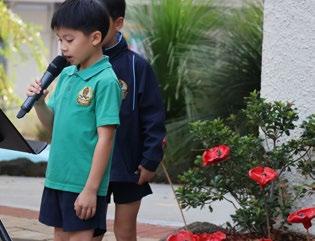
The Junior School held a reflection service near the flagpole where a wreath was laid, with Year 2 students sharing the story of the first ANZACs. At the Senior School Assembly, special guest Wing Commander Lisa Macnaughton spoke about service and sacrifice, highlighting former student PTE Douglas Wood, one of 245 alumni who served in WWI, and among the 40 who gave their lives.
Our school community then came together for our annual ANZAC Day Dawn Service on 25 April to reflect and give thanks. Students, staff, parents, alumni and community members honoured the servicemen and women who have served our country in times of conflict. Lest We Forget.
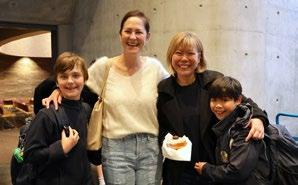
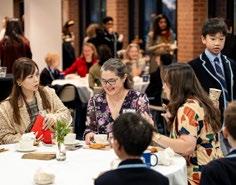
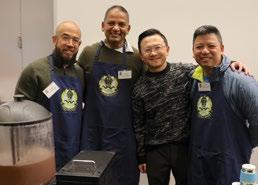
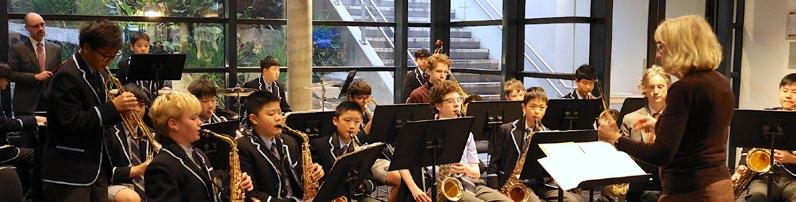
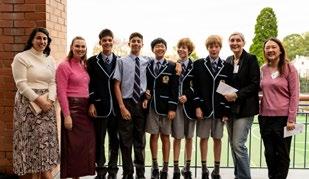
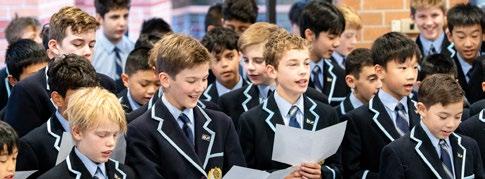
We celebrated the wonderful mothers and special women in our students’ lives through several Mother’s Day events. The Junior School Mother’s Day Breakfast and Year 7 Mothers’ and Sons’ Breakfast both featured beautiful musical performances and delicious food.
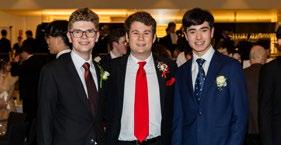
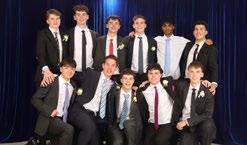
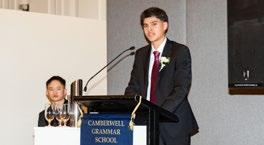

Leonda by the Yarra provided the perfect backdrop for a memorable evening celebrating our Year 12s. From student awards and the formal video to endless photos and dancing, the night was a wonderful celebration of friendship, achievement and shared memories. The evening concluded with a spirited rendition of the Chess Anthem, marking a special milestone in the Year 12 journey.
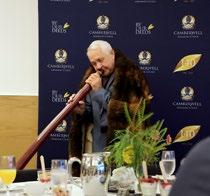

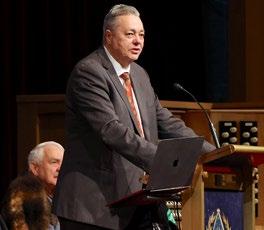
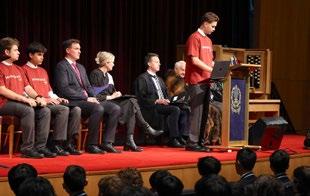
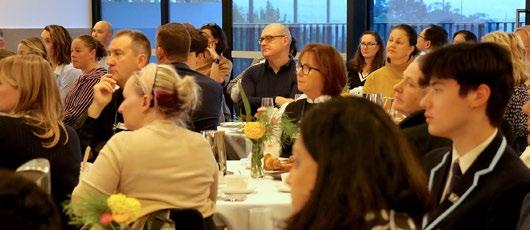
Our school community gathered for our National Reconciliation Week Breakfast and a special assembly. We were honoured to welcome our first special guest, Murrundindi, Ngurungaeta (Head Man) of the Wurundjeri people, who delivered a Welcome to Country. We were also privileged to hear from Professor John Evans, Pro Vice-Chancellor of Indigenous Engagement at Swinburne University, who shared insights on Indigenous engagement, education, research and employment.
National Reconciliation Week encourages all Australians to reflect on our shared histories and consider how we can contribute to reconciliation and justice for First Nations peoples. This year’s theme, ‘All In’, calls on all Australians to commit wholeheartedly to reconciliation every day.
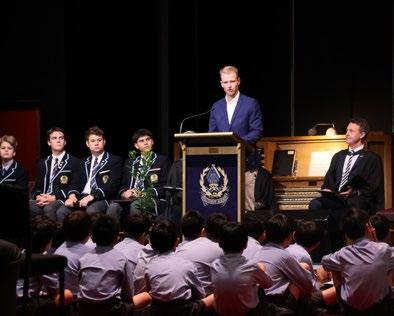
Men’s Health Week – 15 - 21 June
We recognised Men’s Health Week, which raises awareness of preventable health issues and encourages early detection, treatment and overall wellbeing among men and boys. To mark the occasion, we held a whole-school assembly featuring guest speaker Blake Collyer (2024), a professional golfer who has competed across Australia, Asia, Europe and the US. Having trained with the Victorian Institute of Sport, Blake is also passionate about health and wellness, and shared valuable insights from his sporting career, along with lessons he has learned through personal and professional challenges.
Students from the Junior, Middle and Senior Schools also shared their perspectives on optimising physical and mental health, encouraging positive conversations and proactive approaches to wellbeing.
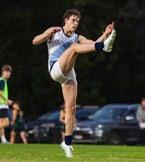
Congratulations to Sam Grlj (2025), who was named the AFL Round 7 Rising Star nominee after a standout ANZAC Day Eve performance against Melbourne. Since his Round 1 debut for Richmond, Grlj has impressed with his speed and running ability throughout the season.

The CGS Senior School plays produced by the late Tony Brown between 1969 and 1974 launched my mother Claire’s professional career in theatre costume. In 1969, Tony produced The World We Live In in which Czech writer Carol Capek uses the insect world to satirise modern life, circa 1921: hedonism, capitalism and the rise of militant authoritarianism; it could well be worth a rerun today.
A total perfectionist, Tony wanted spectacular costumes for authentic species of butterflies, moths, predator flies, snails, etc. He put a note in the School circular calling for mothers interested in ‘a little light sewing’. My mother was the only volunteer. So throughout Term 1, 1969, she laboured over 13 life-sized insect costumes, also costumes for the human characters who wander through the show – a tramp, a professor, a woodcutter, an old woman. She loved it so much she volunteered again in 1970 for Lola Montez, a period piece set in the Bavarian court of Ludwig I and on the Ballarat goldfields. And again in 1971 for a double-bill, Sheridan’s restoration comedy The Critic and Euripides’ Greek tragedy, Medea. In 1974, she made witches’ costumes for Dark of the Moon
It isn’t called ‘Drama’ for nothing. Get a bunch of senior students acting out powerful emotions, and what’s likely to happen? Many CGS/Fintona romances blossomed through the Senior School plays. In 1971, the electricity between ‘Jason’ and ‘Medea’ exploded offstage leaving Tony Brown, the Principal David Dyer and his opposite number at Fintona, talking down scandalised parents –red faces all round.
The King’s Birthday 2026 Honours List

Mr Tony Sheehan AM (1984)
Member of the Order of Australia (AM) in the General Division
For significant service to Australia's national security, and to public administration.

Dr Wayne Spring OAM (1969) Medal of the Order of Australia (OAM) in the General Division
For service to medicine as a general consultant physician.
Matthew Sabransky (2013) welcomed daughter Lilah in November 2025. He is pictured here with Lilah and his father-inlaw, Benjamin Thomson (1986).
In 1973, Tony gave Claire an introduction to Melbourne Theatre Company. From there, she went on to do costumes and props for Hoopla!, later called Playbox Theatre, now known as the Malthouse Theatre. She then taught theatre costume at the Victorian State College, building an extensive portfolio of samples –drawings, notes, photos, construction hints and fabrics, documenting a lifetime of secrets in creating stage illusions on a shoestring.
My mother died last year, aged 98. A lifelong theatre friend of hers from MTC, Alan Andrews, who retired to Tasmania years ago, donated Claire’s vast portfolio of practitioners’ samples to the University of Tasmania’s School of Creative and Performing Arts, where it lives on to educate and inspire. A little light sewing indeed!
Christopher Nailer (1969)

2026
40 Year Reunion (Class of 1986) — Friday 21 August
60 Year Lunch (Class of 1966 and prior) — Wednesday 18 November
SA Network Function — Wednesday 11 November
WA Network Function — Friday 13 November
Gallery of Achievement and Life Governors Dinner — Thursday 27 August
OCGA Art Exhibition & Sale Opening Night — Wednesday 28 October
End of Year Social Lawn Bowls — Wednesday 2 December
ocga.org.au

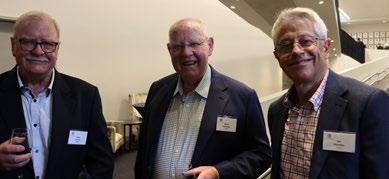
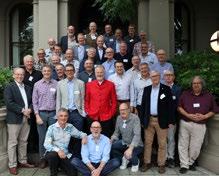
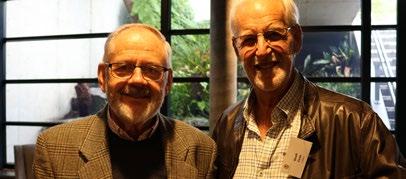
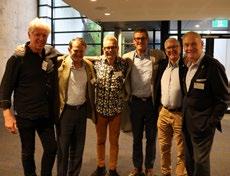
A strong attendance of more than 170 (alumni and guests) came together for the 50 Year Lunch. Principal Mr Ben Jeacocke welcomed members of the 50 Years Chapter and shared reflections on life in 1976, followed by Grace delivered by Rt Rev’d Philip Huggins (1966).
Prof Julian Feller (1976) proposed the Toast to the School, sharing memories of his time at CGS. Julian appreciated the safer and simpler time when most students made their own way to and from school, how the House system created healthy rivalries and that CGS was not a flash school but more middle-class. Julian reflected on the discipline instilled through pre-school sports training
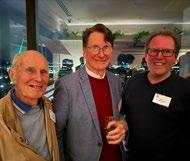
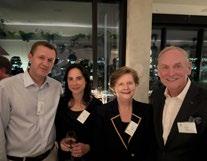
After moving to Canberra to study at the Australian National University, Lachlan Cross (2025) discovered the value of connecting with the existing CGS network by attending the ACT Network Function. The event brought together alumni living, working and studying in Canberra, with attendees building connections across
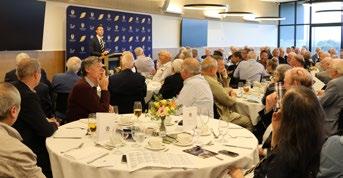
and expressed admiration for the dedication of the schoolmasters, who gave generously of their time beyond the classroom, as well as the high standards set by Director of Music, Mr John Mallinson, particularly during concerts.
John Mallinson later accompanied his successor, Mr Trevor Henley (1969), to play the School Song and Sports Song on piano while Trevor led the singing.
Following the presentation of 50 Year Badges by OCGA President Nick Schildberger (1997), members of the Class of 1976 gathered on the steps of Roystead for group photographs.
shared industries including Law, Government and Cyber Security.
More alumni networking functions will be held throughout the year in Sydney, Brisbane, Adelaide and Perth, with all alumni encouraged to attend and expand their personal and professional networks.
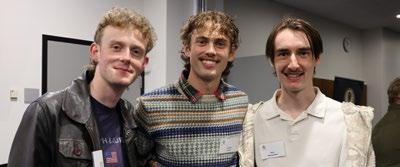
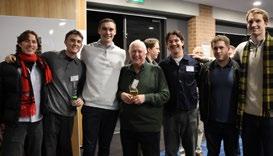
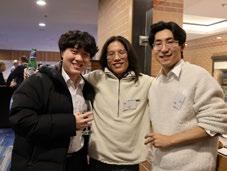
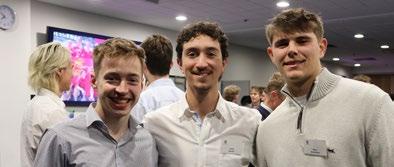
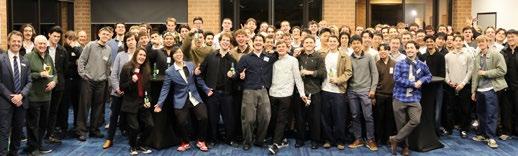
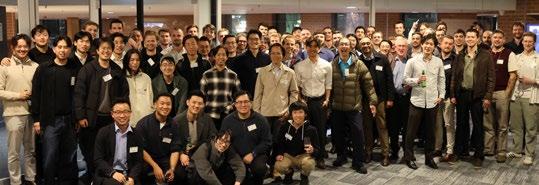
5 (2021) and 10 (2016) Year Reunions – Friday 22 May
The 5 Year Reunion saw nearly 50% of the cohort in attendance. Despite spending their final two years of schooling in lockdown, the strength of the bonds formed through their shared experience was clearly evident on the night. The group was addressed by Principal Ben Jeacocke, before he handed over to former Head of Senior School, Rob French, who reflected on how special this cohort was to him, having moved with them from Middle School through to Senior School together.
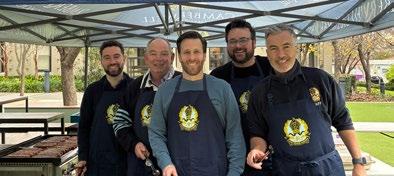
A decade after graduating, alumni returned to reconnect, reminisce and celebrate the friendships and experiences that shaped their school years. The 10 Year Reunion was filled with laughter, stories and reflections as former classmates and teachers caught up. Many have now completed their studies and are beginning to establish themselves in their chosen careers.
The OCGA Committee does more than plan events, support affiliated clubs and manage finances – they also roll up their sleeves, pick up the tongs and cook sausages. 355 Senior School students sat the General Achievement Test (GAT), and after the three-hour first session, Nick, Warren, Peter, Michael and Ryan were ready with barbecued sausages to keep everyone fuelled for the second half of the day.
Alumni Stories
Camberwell Grammar celebrates 140 years this year. What does this mean to you?
For 140 years, CGS has developed young people and supported them in forging their own paths to making the world a better place. I feel part of a community that supports one another, and it’s a privilege.
What are your strongest memories of life at CGS?
I remember my extracurricular activities, such as photographing events, helping film concerts, making the end-of-term video in Middle School, and being part of the Lawn Bowls squad, winning multiple premierships, medals and trophies. I had a terrific relationship with Mr French, spending my entire high school experience under his wing, being his go-to IT helper whenever he needed support. I reflect on these memories, the opportunities I was given and took to explore my interests and passions, with great gratitude and emotion.
Tell us about your pathway since leaving CGS, including any career highlights and learnings?
I was apprehensive, but was ultimately accepted into a dual degree program comprising a Bachelor of Cyber Security and a Bachelor of Laws at Deakin University. Since then, I’ve had numerous opportunities, including serving on advisory groups at the university investigating the early stages of AI in higher education, as well as on mental health services and programs offered there in 2024.
I travelled on an exchange to the University of Exeter in the UK to focus on the impact of artificial intelligence and human rights on international criminal law, and equality and diversity (discrimination) law. This experience opened my eyes to a regulatory world that is only just beginning, and one that I’m excited to be part of.
I’ve also represented the eSafety Commissioner and ReachOut Australia at Senate Hearings, directly with Members of Parliament, and created policy submissions. I was heavily involved in the social media age legislation, consulting with various departments to ensure it protected young people without harming them in ways that may not have been foreseen by decision-makers.
Nowadays, I spend time finishing my dual degree, as well as consulting with Orygen, ReachOut, the eSafety Commissioner and Deakin University to help improve the experience of online tools for young people and to better support them. I also work at Slater & Gordon in Class Actions as a Litigation Technology Paralegal.
What advice would you give to current students about life beyond the CGS gates?
School often felt like a tick-box exercise: keep your head down and do what you are told. That is definitely one way to go about it, but reframing school as a place of growth and experience is so vital post-school. It is a very different experience; you go from studying intensively to a choose-your-own-path adventure. There is unlimited potential beyond CGS, and I found that my time at school helped me take advantage of the opportunities I was given.
Don’t do VCE subjects because they scale. I was not academic by any means. I was a socially anxious person and kept to myself, as many of my peers knew. I got an ATAR on the lower end compared to my peers, but I have forged my path from the experiences and passions I engaged with. Success is merely a social construct, and I think we get caught up in that during school, feeling like we are competing against each other. My experience is that your value lies not in grades or abilities, but in how you support others and the world around you.
How did CGS help shape your character, values and your relationship to community ?
There was always an emphasis on forging your own path, trying out what interests you, and taking chances. Being able to participate in so many different programs helped me connect more closely with the community and myself. I was able to build many strong connections with teachers who valued my contributions and commitment, even though I did not always feel it. I was given independence to look after my own learning and to try new things. I was allowed to make mistakes, and now I realise that getting it wrong achieves more than always getting it right.
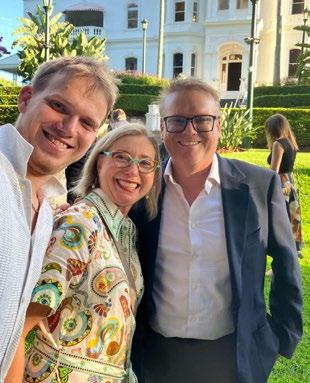
Camberwell Grammar celebrates 140 years this year. What does this mean to you?
Any organisation that can contribute to the community it serves for such a long period deserves recognition. With three brothers who also attended CGS, school played a formative role for us all in different ways.
What are your strongest memories of life at CGS?
I was an unusual CGS student, having attended Years 7 and 8 and then leaving to go to Templestowe Technical School, when my wish was to be a motor mechanic. Principal David Dyer said at the time, if I ever wanted to come back, just to say so. And that I did – halfway through Year 10 when I realised I might want to complete Year 12 and obtain my HSC. I remember a new desk being placed in some classes when I returned, with many thinking my return was a joke. I remain grateful for the opportunity to come back. The school plays and choir are also etched in my memory, and I still sing to this day (and I still service my own cars!).
Tell us about your pathway since leaving CGS, including any career highlights and learnings?
Variety has been a hallmark of my career choices. I have been privileged to be appointed CEO/Director General across four organisations over the past 15 years. These are a long way from my earlier days as a teacher (MLC “Marshmead”), local government contract manager (in
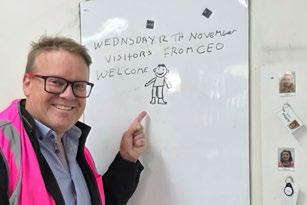
the UK) and management consultant (SMS Management & Technology).
As CEO of Endeavour Foundation, I am most proud to lead our 4500 employees in delivering support services, employment and creating meaningful life opportunities for people with intellectual disabilities. Being a father to a 23-year-old son who has an intellectual disability and is non-verbal plays neatly into my style of authentic leadership and bringing your whole self to your chosen profession.
What advice would you give to current students about life beyond the CGS gates?
Stay open to opportunities that provide personal growth. I would always encourage students to focus on meaning, purpose and their passions before the pay cheque. Being kind and saying thank you are also easy rules to remember that will never go out of fashion – or be taken over by AI!
How did CGS help shape your character, values and your relationship to community?
My years at CGS were shaped by having two older (Michael and John) and one younger (Simon) brother around me. As a collective, we were all into music, sport and were very different academically. School was a place where respect for others and having a strong moral compass were seen as important and part of the culture. As a brotherhood, we still share that today.
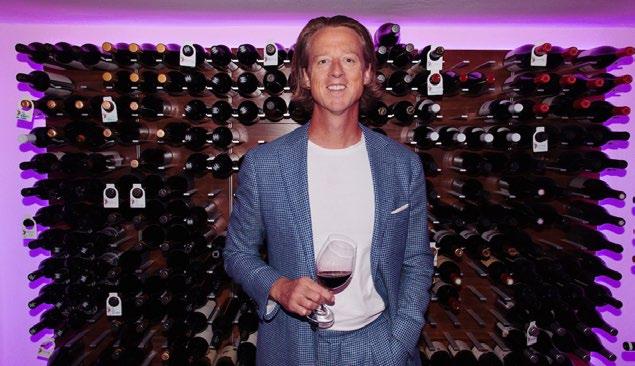
Camberwell Grammar celebrates 140 years this year. What does this mean to you?
Camberwell Grammar’s 140th anniversary is a reminder that we are all custodians of something bigger than ourselves. The values, opportunities and friendships I gained there helped shape my life, and they were built by generations before me.
It reinforces a simple belief: our job is to leave things better than we found them, whether that’s a school, a business, a community or the environment.
What are your strongest memories of life at CGS?
My strongest memories are the friendships. Many of the people I met at Camberwell Grammar remain close friends today, and those relationships have stood the test of time. I also vividly remember the journey to and from school. It took me about an hour and a half each way, which, as a teenager, felt like an eternity. Looking back, those trips taught me discipline, independence and resilience. More than anything, CGS was where I formed lifelong friendships and was surrounded by people who challenged, supported and helped shape me into the person I am today.
Tell us about your pathway since leaving CGS, including any career highlights and learnings?
I left school and went straight into business. Since then, I’ve built companies across hospitality, technology and wine, with plenty of successes, many failures and lessons along the way. The highlight has been co-founding The Hidden Sea, a wine brand with a mission to remove plastic from our oceans. Seeing a business create both commercial success and meaningful environmental impact has been incredibly rewarding. The biggest lesson? Success is rarely a straight line. Most of what I’ve learned has come from setbacks, taking risks and being willing to back myself when the outcome wasn’t certain.
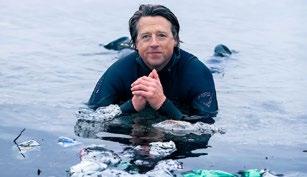
What advice would you give to current students about life beyond the CGS gates?
Don’t be afraid to start before you’re ready. Most people spend too much time waiting for the perfect moment, but the truth is, there isn’t one. Just get started.
Focus on controlling the controllables. Your attitude, effort, work ethic and resilience are all within your control. The rest is often noise. You’ll have setbacks, make mistakes and get knocked down. That’s part of the journey. The people who ultimately succeed aren’t always the smartest or most talented; they’re often the ones who refuse to give up. Life beyond the CGS gates is full of opportunity. Back yourself, stay curious, work hard and remember that persistence is an incredible competitive advantage.
How did CGS help shape your character, values and your relationship to community?
CGS helped instil values that have stayed with me throughout my life: integrity, resilience, accountability and a strong sense of community. It was a place that encouraged us to aim high, but also reminded us that success is about more than individual achievement. The School taught me the importance of contributing to something bigger than myself and giving back where you can. Looking back, many of the values that guide me today, both in business and through The Hidden Sea’s environmental mission, can be traced back to the lessons, people and culture I experienced at CGS.

4 November 1976 – 4 June 2026
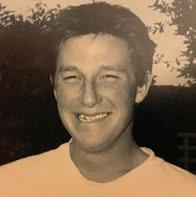
The CGS community is deeply saddened by the passing of Nick Board. Joining Camberwell Grammar in Year 11 from Sale, Nick, known as ‘Boardy’, quickly made a lasting impression. A confident, witty and naturally gifted sportsman, he bypassed the usual challenges of entering a new school late in secondary education, instantly cementing a closeknit bond with a group of lifelong mates. His energy was infectious, and his ability to bring fun and mischief to everyday school life made him a cherished presence in the hallways.
After graduating, Nick continued his strong connection to the CGS community by playing football for Old Camberwell for six years until 2000. He played exactly how he lived: with absolute dedication, courage for his teammates and a distinct refusal to take life too seriously. He was just as memorable for his fierce determination on the field as he was for being the life of the party in the rooms afterwards.
It is deeply challenging for those who knew Nick to reconcile his bright, joyful spirit with the profound darkness and quiet pain he carried in recent times. His enduring 30-year friendships stand as a testament to a man with a massive heart who brought immense laughter to the world.
We extend our deepest condolences to his family, in particular to Liz and Laurie, and to his children, Charlotte and Dylan. Nick’s light shines on through them, and he will remain a legend in the hearts of his schoolmates.
Excerpted from a tribute by Ryan Whitehead (1994), Head of Community and Development
23 March 1931 – 10 March 2026
15 June 1931 – 26 March 2026
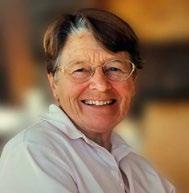
The CGS community mourns the passing of Dr June Danks, aged 94. June was the wife of the late Professor David Danks, former CGS School Council Chair, and the proud matriarch of a large CGS family. Her four sons all attended the
School: Andrew (1975), Phillip (1976), Peter (1983) and Alister (1985).
June was a pioneering medical practitioner and a lifelong advocate for women’s health, graduating from The University of Melbourne in 1954 at a time when few women entered the field. While she paused her career to raise her five children, her return to medicine was defined by a deep commitment to health equity. Notably, she worked unpaid for 18 months at the Royal Women’s Hospital Family Planning Clinic to ensure vulnerable women could access care.
She also provided unwavering support to David, particularly during his establishment of the Murdoch Institute in 1986, and later cared for him until his passing in 2003. In retirement, June remained dedicated to community service through the International Soroptimist Society and the Clan McMillan Society.
A grandmother of 14 and great-grandmother of two, June’s life was defined by capability, compassion and generosity. We extend our deepest condolences to the Danks family.
3 March 1982 – 9 April 2026
1 September 1946 – 9 June 2026
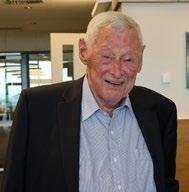
David Richmond had a deep and enduring connection with Camberwell Grammar and the Old Boys’ community which had a great influence on his life.
He was Vice Captain of the School, Captain of Robinson House and Captain of the School First XVIII team in 1965. He also represented the School in football for the Associated Grammar Schools (AGS) combined team for three years, vice captaining that team in 1965.
After school he maintained his school connection by playing for the Old Boys football team, and taking on the Old Camberwell Grammarians Presidency for a number of years. Through these connections, he forged great friendships with old boys that endured throughout the years.
He spent the majority of his working life at the Reserve Bank of Australia, where he worked for many years before starting the transition to part-time employment at Harry’s Liquor and Celebrations, to his eventual retirement. He was proud to see his son Mark (1994), nephew Paul (1993) and two of his great nephews ( Will and Tom Nethercote – current pupils) attend the School.
While he has passed, the memory of him will live on in the thoughts of his family, friends and old boys who would remember him calling the years at Old Boy dinners, playing their teams, being around the old boys footy club or watching on from the GBO rooms balcony.
Vale David Richmond.
Mark Richmond (1994)
13 March 1934 – 24 March 2026

Bruce passed on 24 March after 92 years of a full life. While his last eight years were mired by Alzheimer’s, he continued to enjoy life up until his last few days. Bruce’s adage that ‘every day is a good day’ set an exemplary model for his three sons and those who knew him.
Though a quiet personality, he loved to engage in a serious conversation. Bruce started his working life as a shipwright working at Williamstown’s naval dockyard, following his father before him. Though he was a natural carpenter, winning top apprentice every year of his apprenticeship, he later moved to the dockyard drawing office, studying Naval Architecture at RMIT.
Bruce’s natural ethos was one of service, responsibility and leadership within his local community. From 1954-59 he undertook National Service in the Navy as a Petty Officer, serving sea time on HMAS Australia and HMAS Vengeance, and later led church and young adult youth groups as well as serving on Church vestry. He became a Cub Leader and later Group Leader in Scouts, along the way teaching his sons camping and sailing on family holidays. Bruce enjoyed tennis, bowls and Masonic Lodge, becoming a Worshipful Master of Ashwald Lodge. With his carpentry background, Bruce was a great handyman at home and also an important contributor at community working bees. Bruce was proud that his three sons attended CGS and was a regular parental assistant at Bambara and Saturday morning sport. Always active, repairing or making, his passion was engaging with and helping people which he demonstrated until the end.
Father of David (1981), Peter (1984) and Stephen (1989) Uncle of Jeffrey Wagner (1985), Cousin of Sam Cant (1945 dec.)
David Wagner (1981)
30 November 1974 – 13 April 2026
Be part of the Camberwell Grammar community and keep up to date with our news and achievements by following us on our social media channels, reading our latest news, and more.
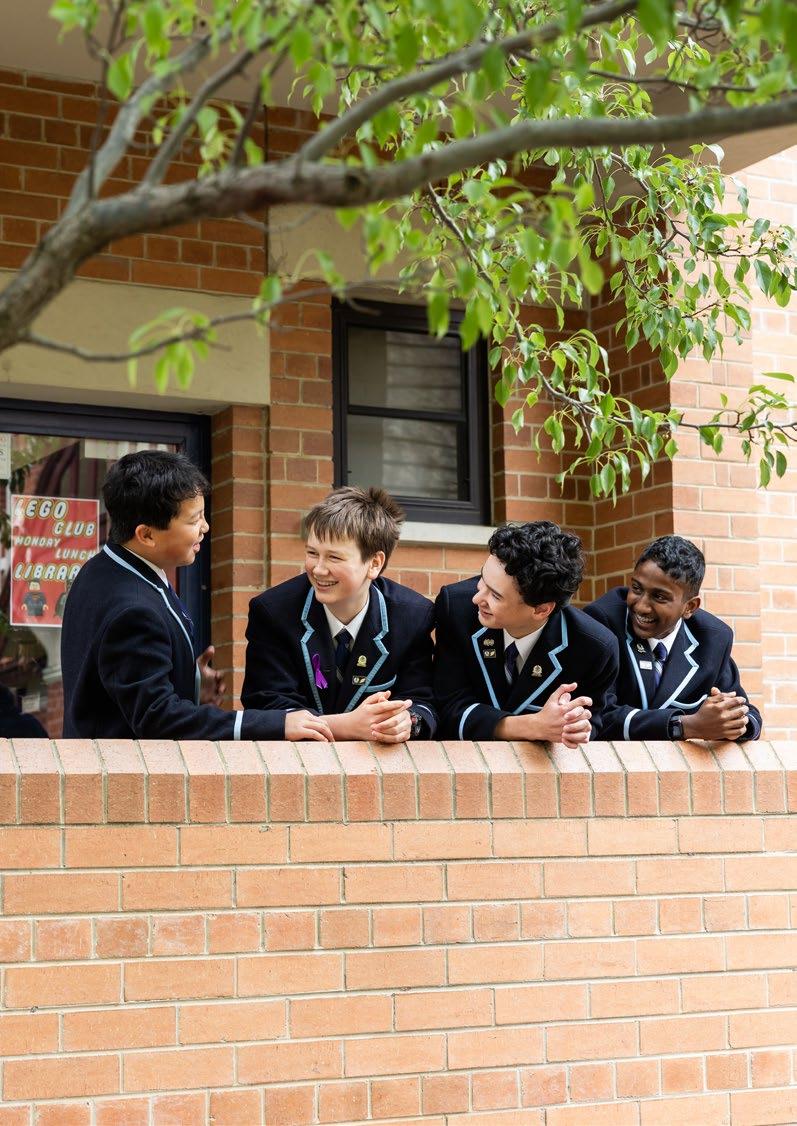
This year, we celebrate 140 years of community, tradition and the people who make Camberwell Grammar extraordinary.
Saturday 15 August
Parents’ Association Gala Ball
Monday 7 September
Biennial Concert @ Hamer Hall
Celebrating 140 Years of CGS Music
Thursday 10 September R U OK? Day Community Breakfast
Saturday 10 October
Open Day
Celebrating 140 Years of CGS Community