
Throughout 2025, the Group continued to strengthen its identity, expanding and diversifying its offering across the fashion, food & wine, and nautical sectors.









Throughout 2025, the Group continued to strengthen its identity, expanding and diversifying its offering across the fashion, food & wine, and nautical sectors.

calzedonia.com


intimissimi.com/uomo


atelier-eme.com



s.r.l. Italy
Calzedonia Investments s.r.l. Italy
Antonio Marras s.r.l. Italy
Calzificio Trever s.r.l. Italy
Intimo 3 s.r.l. Italy
Ti.Bel s.r.l. Italy
Arcadia s.r.l. Italy
CVE 710 s.r.l. Italy
2M s.r.l. Italy
Oniwines s.r.l. Italy
Falconeri s.r.l. Italy
Immobiliare Santa Croce s.n.c Italy
Società Agricola Agribel s.r.l. Italy
Agricola
Giuva s.r.l. Italy
Atelier Emé s.r.l. Italy
del Pardo s.p.a. Italy
Calzedonia Digital d.o.o. Croatia Calz Polska sp.zo.o. Poland
s.p.a
Fiorano d.o.o. Serbia
Ytres d.o.o. Croatia
Tubla d.o.o. Croatia
Calzedonia Hungary kft. Hungary
Calzedonia TK Dis Tikaret Limited Turkey
Zalli s.r.l. Bulgaria
Calzru o.o.o. Russia
Aries Textile s.r.l. Romania
Calzedonia Brasil lda. Brasil
Calzedonia Finanziaria s.a.Luxembourg
Ella Textile d.o.o. Bosnia Alpha Apparels ltd. Sri Lanka
Bytres d.o.o. Bosnia Benji ltd. Sri Lanka
Calzedonia Japan k.k. Japan
Calzedonia Sverige a.b. Sweden
Calzedonia USA inc. USA
Calzedonia Shanghai Co. ltd. P.R.C.
Flash Srb d.o.o. Serbia
Calzedonia Hong Kong ltd. Hong Kong
Calzedonia Germany g.m.b.h. Germany
d.o.o. Croatia
b.v. Netherlands
Finanziaria s.a. Belgium
Finanziaria s.a. Netherlands
Intinova d.o.o. Croatia
Gordon d.o.o. Serbia
Com Prom Plus d.o.o. Croatia
Adriana.tex d.o.o. Serbia
Fr. Calzedonia España s.a. Spain
Calzedonia Sucursal Estrangera Andorra
Calzedonia Portugal lda. Portugal
Calpra s.r.o. Czech Republic
Calzedonia U.K. ltd. United Kindom
Calzedonia Österreich g.m.b.h. Austria
Calzedonia Slovak s.r.o. Slovakia
Oniverse Holding s.p.a. is the Group’s operative parent company.
The Board of Directors’ Report provides the information required by Art. 2428 of the Italian Civil Code, supplemented by all additional information considered appropriate in order to provide a truthful, balanced and comprehensive representation of the economic, equity and financial position of the company and Group.
The statutory financial statements of the operative parent company have been prepared in accordance with the accounting standards laid down by the Italian Accounting Standards Board (Organismo Italiano di Contabilità, OIC), while the consolidated financial statements and related notes have been drawn up in accordan-
ce with the IAS/IFRS adopted by the European Union. The report must be read in conjunction with the accompanying statutory and consolidated financial statements.
Below is information on the position of the parent company, the Group companies and the core business segment, in addition to data on the operating performance, both with reference to FY 2025 and future prospects.
The clarifications given of the figures relating to the parent company alone and to the Group as a whole are included in the statutory and consolidated financial statements, respectively, and in the related explanatory notes.
Our Group mainly produces and markets, to the retail and wholesale industries, hosiery, swimwear and lingerie branded primarily Calzedonia, Intimissimi and Tezenis.
Over the years, we have embarked on a path of diversification, first in sectors related to our core business, namely knitwear with the Falconeri brand, wedding gowns and ceremonial clothing with the Atelier Emé brand, and haute couture with the Antonio Marras brand.
In these segments, the Group has verticalised its structure, ensuring the design, production and distribution, both directly and through franchisees, of all its products. Today, a significant portion of the goods sold is produced by companies belonging to the Group.
Products are only sold in single-brand stores, both managed directly by
Group companies (direct stores) and under franchise agreements (franchised stores) or managed by external distributors (master franchisors) or through the on-line channel. Any unsold inventories of fashion collections are marketed through a network of outlets.
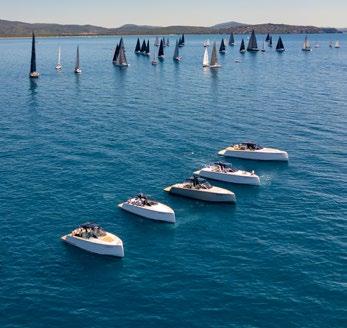
The diversification process has also involved new sectors considered to be a qualified expression of the Italian lifestyle and creative skills. This includes the food and wine industry, with the Signorvino chain of stores, wine bars offering light meals, and with the Oniwines wine project, and the yachting sector, which started back in 2023 with the acquisition of a controlling interest in Cantiere del Pardo s.p.a., famous for producing high-end sailing and motor boats under the Grand Soleil, Pardo and Van Dutch brands.
The Group is organised as follows: Oniverse Holding s.p.a. (the operative parent company) manages and coordinates the Group companies, to which it also supplies miscellaneous services. Amongst others, it controls
Calzedonia Finanziaria s.a., a company incorporated under the laws of Luxembourg, which in turn controls and coordinates most of the equity investments held in non-Italian companies.
More specifically, at year end,
Oniverse Holding s.p.a. directly controls:
- Calzedonia s.p.a. (sales and production);
- Signorvino s.r.l. (sales);
- Calzedonia Finanziaria s.a. (financial holding and sales);
- Società Agricola Agribel s.r.l. (agricultural business);
- Società Agricola La Giuva s.r.l. (agricultural business);
- Immobiliare Santa Croce s.n.c. di Oniverse Holding s.p.a. (real estate);
- Atelier Emé s.r.l. (sales and production company);
- V Palace s.r.l. (real estate);
- Dorama Filatura Cardata s.r.l. (production);
- Antonio Marras s.r.l. (sales and production);
- Cantiere del Pardo s.p.a. (sales and production);
- Tezenis s.p.a. (sales and production).
Oniverse Holding s.p.a. indirectly controls:
- through Cantiere del Pardo s.p.a., Cantiere del Pardo Usa inc. (sales) and Adria Sail s.r.l. (production).
Calzedonia s.p.a. directly controls:
- Aries Textile s.r.l. (production);
- Calzificio Trever s.r.l. (production);
- Intimo 3 s.r.l. (sales);
- Ti-Bel s.r.l. (production);
- Zalli s.r.l. (production);
- Calzru o.o.o. (sales);
- CVE 710 s.r.l. (real estate);
- Calzedonia Investments s.r.l. (financial investments);
- 2M s.r.l. (production);
- Falconeri s.r.l. (sales and production);
- Arcadia s.r.l. (real estate);
- Oniwines s.r.l. (sales).
Calzedonia Finanziaria s.a. directly controls:
- Fiorano d.o.o. (production);
- Ytres d.o.o. (production);
- Tubla d.o.o. (production);
- Calzedonia Hungary kft. (sales);
- Calzedonia TK Dis Tikaret ltd (sales);
- Alibrent b.v. (transport);
- Intinova d.o.o. (production);
- Omega Line ltd (production);
- Sirio ltd (production);
- Alpha Apparels ltd (production);
- Benji ltd (production);
- Franchising Calzedonia España s.a. (sales);
- Calzedonia Portugal lda (sales);
- Calz Polska sp.zo.o. (sales);
- Calpra s.r.o. (sales);
- Calzedonia UK ltd (sales);
- Calzedonia Österreich g.m.b.h. (sales);
- Calzedonia Slovak s.r.o. (sales);
- Ducal d.o.o. (logistics services);
- Nalmor Trading ltd (real estate);
- Calzedonia France s.a.s.u. (sales);
- Calzedonia Switzerland ag (sales);
- Calzedonia Germany g.m.b.h. (sales);
- Brasil Comercio de Moda e Acessorios lda (sales);
- Gordon d.o.o. (production);
- Calzedonia Hong Kong ltd (sales);
- Calzedonia Japan kk (sales).
- Itaca Textile plc (production);
- Calzedonia Sverige ab (sales);
- Calzedonia USA inc. (sales);
- Calzedonia Shanghai co. ltd (sales);
- Ella Textile d.o.o. (production);
- Bytres d.o.o. (production);
- Flash Srb d.o.o. Apatin (production);
- Calzedonia Digital d.o.o. (digital services);
- CalzMexico S.A. de C.V. (sales);
- Taurus s.a.r.l. (production);
- SCI Michel (real estate);
- ComProm Plus d.o.o. (production);
- Signorvino France s.a.s.u. (sales);
- Belfil llc. (production);
- Onipalm fzco. (service company);
- Calzedonia Croatia d.o.o. (sales).
Calzedonia Finanziaria s.a. indirectly controls:
- through ComProm Plus d.o.o., Adriana Tex d.o.o. (production);
- through CalzMexico S.A. de C.V., Polaris Importadora S.A. de C.V. (imports);
- through Belfil llc., Cashfil llc. (real estate).
In addition to managing the stores in Luxembourg, Calzedonia Finanziaria s.a. also has a commercial branch in Belgium and in Holland. Calzedonia Sucursal Estrangera (sales) is directly controlled by Franchising Calzedonia España s.a..
In January 2025, the partial demerger of the Signorvino business unit from Calzedonia S.p.A. was completed, with its transfer to Signorvino S.r.l., the beneficiary company established during 2024.
In February 2025, Dubai saw the establishment of Onipalm fzco (service company), necessary for the future opening of retail outlets on site.
In April 2025, the company Tezenis s.p.a. was established, which, from 1 January 2026, will be responsible for the management of the Tezenis brand. The company will coordinate all activities related to the aforementioned brand, from product design, through production, to the management of the network of stores under the Tezenis brand.
At the end of July 2025, 100% of the commercial company Calzedonia Croatia d.o.o. has been acquired, which is responsible for the development of the retail network for the Group’s brands in Croatia.
Also during the course of 2025:
- Calzedonia Finanziaria s.a. acquired the minority stakes in the Croatian company Tubla d.o.o., of which it now directly holds 100%;
- Belfil LLC established the Mongolian real estate company Cashfil LLC;
- Dorama Filatura Cardata s.r.l. incorporated the company Pettinatura Effeci s.r.l., thereby centralising all phases of the fibre spinning process undertaken by the Group in the Biella district, resulting in significant savings and operational and administrative efficiencies.
In the nautical sector, Cantiere del Pardo s.p.a. established a company in the United States, Cantiere del Pardo USA Inc., which will be dedicated to the import and marketing of the yard’s boats, thereby strengthening its presence in the important US market. Also in 2025, the shipyard acquired the remaining share capital of Adria Sail s.r.l., strengthening industrial control over the production supply chain.
Lastly, during the year, Invit s.r.l., a company no longer deemed strategic for the Group, ceased operating.
Further information is given on the subsidiaries in a later paragraph.
In 2025, Group turnover grew to 3.7 billion euros, up 4.8% at current exchange rates (5.1% at constant exchange rates), as compared with the 3.5 billion euros recorded as at 31 December 2024.
The portion of turnover generated abroad has reached 2.3 billion euros.
Total investments exceeded 350 million euros, split between all the Group’s business areas.
The Group operates in the main sector of fashion with the brands Calzedonia, Intimissimi, Iuman, Tezenis, Falconeri, Atelier Emé and Antonio Marras. In 2025, the Intimissimi Uomo brand became Iuman in a strategic rebranding choice intended to increasingly differentiate the brand’s male and female identities.
As at 31/12/2025, a total of 5,538 sales stores operated under the Group’s brand names, of which 3,650 abroad and 1,888 in Italy; abroad, the greatest impact in terms of openings involved Mexico, the United States of America and Turkey. Present in 59
countries, the Group aims to strengthen its leadership across the major European markets while continuing to expand in selected non-EU countries of strategic interest. In retail, in addition to new store openings and refurbishments, the global integration project between stores and e-commerce continues. Investments in logistics and production are mainly focused on cutting-edge technology that allows the Group companies to remain innovative.
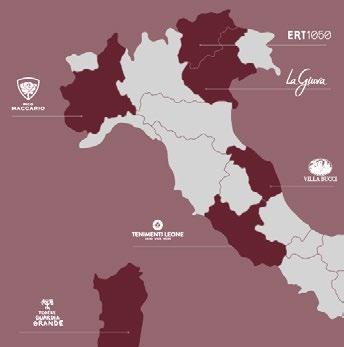
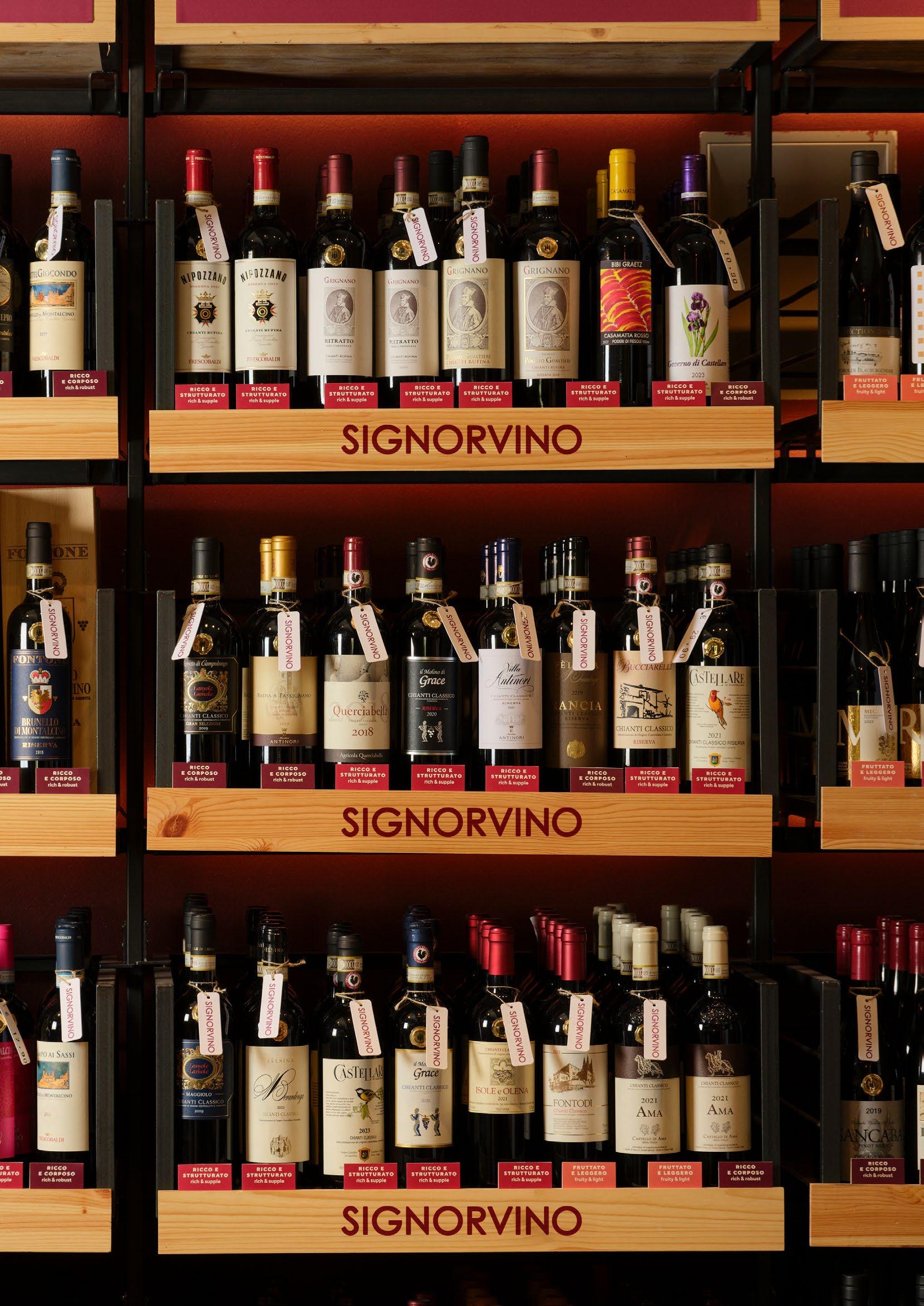
In the food and wine sector, Oniverse operates with a chain of Signorvino stores, wine bars offering light meals, and with Oniwines. Signorvino currently numbers 42 sales stores, of which 40 in Italy and 2 abroad. Oniwines aims to create a portfolio of companies that represents the most significant Italian regions for the production of quality wines. In 2025, the long-established Piedmont-based winery “Pico Maccario” located in Mombaruzzo (Asti), was purchased. This strengthens the presence of Oniwines in Monferrato and on the
scene of great Piedmont wines. Also in 2025, Ert1050 opened in the heart of the Monte Baldo Park, dedicated to the production of Trentodoc.
In the nautical sector, the Group is represented by Cantiere del Pardo, a leading company in the production of premium sailing and motor yachts. In the course of 2025, a process of production and commercial reorganisation commenced, with a long-term perspective. The design was also completed for the new production site in Forlí and the new hub facing out onto the sea in Marina di Ravenna.
In 2025, the Group continued its commitment to balanced development that respects the environment in which it operates, with the long-term perspective that has always characterised it. The Group’s strategy is developed along two main lines, one internal and the other external. The
internal one envisages a continuous improvement process in all areas of activity, with a pragmatic approach oriented towards the creation of value in the medium to long term. The external one envisages collaboration with key market players to achieve, together, concrete and tangible goals. With this in mind, collaboration continued within the Fashion Pact, an alliance of leading fashion, textile and sportswear groups that aims to work towards concrete and ambitious goals in the areas of protecting the oceans, combating climate change and protecting biodiversity. Communication activities on the way the Group has operated since its inception continued, including with voluntary sustainability reporting published on the corporate website (www.oniverse. it).
The financial result indicators are taken directly from the figures of the consolidated financial statements, after reclassification.
The application of the IFRS 16 accounting standard (which, for accounting purposes, results in the non-linear replacement of rental costs by the recognition of depreciation on “rights of use” and interest on financial liabi-
lities for leases and rentals) generates a significant change in EBITDA, which as at 31 December 2025 stood at 933 million.
Below is an analysis of some of the financial result indicators chosen from those considered to be most meaningful in relation to the Group’s position. The following indicators have been chosen:
The equity indicators bear out the Group’s solid capital position.
Shareholders’ equity exceeds fixed assets and covers 90% of total requirements; the secondary structure ratio, which increased compared to the previous year, confirms the Group’s ability to cover fixed investments with long-term funds. The independence ratio improved and shows a higher fi-
nancial autonomy of the Group.
The economic indicators show an increase in the Group’s profitability, which is also the result of investments made in past years.
In 2025, Group turnover grew to Euro 3.7 billions, up +4.8% at current exchange rates (+5.1% at constant exchange rates), with the portion of foreign turnover exceeding 62%.
As commented on above, in recent years, the Group has embarked on a path of diversification of the business segments in which it operates, flan-
king its main business of production and marketing in the textile fashion industry first with activities in the food and wine industry and then, starting September 2023, in the nautical segment with the acquisition of the company Cantiere del Pardo s.p.a..
Revenue in the various segments in which the Group operates is reported:
In Italy, the revenue share came to 37.9% (38.5% in 2024), up 2.9% on the previous year.
Europe recorded an increase of 5.8% compared to 2024 and accounted for 55.5% of the Group’s turnover. The percentage of revenue of “Other countries” (including Brazil, Japan, Hong Kong, the United States of America, China and Saudi Arabia) went from 6.5% to 6.6% of the consolidated turnover, recording an increase of 7.4%.
The gross operating margin, or EBITDA, amounted to Euro 932.7 million, compared to Euro 787.6 million in 2024, thus rising from 22.3% to 25.2% of total revenue.
The positive impact on the operating margin was due to the strong performance of sales, many of which were achieved at the beginning of the season resulting in a higher margin, as well as a reduction in certain operating costs. Operating costs included, in particular, a significant reduction
in transport costs, a decrease in industrial processing costs and travel expenses. An increase in certain costs has been recorded as a result of specific strategic development choices. In the context of marketing, the increase in communication costs reflects an integrated approach that has enhanced both traditional and digital campaigns, with the aim of maximising brand awareness for the Group. With regard to IT infrastructure, the higher costs for system support are closely related to the support and implementation of new strategic projects at Group level. Finally, the strong drive towards the digitalisation of sales has resulted in an increase in services related to marketplaces for the e-commerce channel, essential investments to oversee this sales channel as well.
Personnel costs account for 22.3% compared to 21.7% in 2024, reflecting an increase of 7.4%. The significant increase in personnel costs is due both to the increase in overall headcount
and to the rise in salary levels in many of the countries in which the Group operates.
The result of the financial area has slightly improved compared to 2024, with an incidence of -2.1% compared to -2.2% recorded last year.
Profit before taxes amounted to Euro 367 million compared to Euro 216.2 million in 2024.
Taxes amounted to Euro -106.8 million compared to Euro -74.4 million in 2024.
Net profits came to Euro 260.2 million compared to Euro 141.8 million recor-
ded in 2024.
The activity of opening, refurbishing, and closing retail outlets that are no longer profitable or no longer aligned with the image and development guidelines has continued in all markets in which the Group operates. At year end, stores (direct and franchisee stores) numbered 5,538, making for a net decrease of -194 stores on last year. The table below shows the breakdown, Italy and abroad, of the number of stores for each brand:
*This item includes the brand’s stores.
Investment continued both in sales and production. Details are given below in the Report and in the Notes.
The financial position is commented on at the foot of this Report.
The number of employees working in Group companies as at 31/12/2025 came to 46,433, of whom 57% work in production plants, 41% in sales and 2% in services. There was an increase of 547 compared to the end of the previous year.
Oniverse Holding s.p.a. (Italy) continued its management and coordination activities during the year, as operative parent company, in addition to the centralised exercise of certain technical-operating activities carried out for them.
The shareholders’ equity of the operative parent company amounted to Euro 525.5 million.
Below is the additional information required by Art. 2428 of the Italian Ci-
vil Code.
In addition to disbursing loans, during the year, the parent company also provided and received services.
Intra-group transactions are carried out at arm’s length. The reference used in determining transfer prices is the one that independent parties would have used in similar conditions. Related trends and more information on how the prices are determined are described in annual Masterfiles and Country Files made available to the tax authorities.
No particular relations were entertained with the subsidiaries in addition to those specified above.
The company has its administrative headquarters at Via Monte Baldo 20, Dossobuono di Villafranca (VR), Italy.
In FY 2025, the Group companies continued to make industrial investments, as was considered necessary in order to complete the verticalisation of the Group structure, both to control production costs through constant renewal and to improve production strategies.
As in previous years, the sales companies continued to pursue objectives aimed at improving the quality of the sales network.
Investments have continued that will allow the retail channel to be increasingly integrated with the digital channel.
During the financial year, the Group also made investments in business units related to the oenology sector, as well as significant investments in infrastructure within the nautical sector.
Please refer to the previous paragraphs and the notes for further details.
Considering the business of Oniverse Holding s.p.a., again this year, the company did not carry out any research and development; this is instead done by some subsidiaries, as described below.
The Group is constantly committed to the development of fashion
collections. Some of the production branches are constantly involved in the research and development of advanced industrial models, aimed at increasing efficiency and productivity. The related costs are charged to the income statement.
The company operating in the nau-
tical sector also continuously carries out research and development activities aimed at expanding the range of products offered and improving existing models. In particular, the planning and design of new boats, the elaboration of executive drawings
relating to the hull, deck, equipment and on-board systems, the design of interiors and the development of aesthetic-functional solutions, as well as the optimisation of spaces and layouts according to technical constraints and usage requirements.
Sales in the early months of 2026 are showing encouraging growth.
With reference to the main sector in which the Group operates, the strategy pursued will continue to focus on development in European countries where revenue growth has proved particularly promising. Development programmes will also continue in non-European countries (particularly in the United States and Mexico), with more focus on the balance between traditional trade channels and e-commerce.
Vertical integration of the business model will continue in 2026 with the acquisition, or establishment, of companies upstream in the supply chain.
The past few years have shown that
the verticalisation of the Group has been a winning choice not only because it allows it to react quickly to changing market situations, but also because it can guarantee, through direct control, a sustainable and responsible development of the business, in the conviction that every activity must limit its impact on the environment and contribute to the growth and well-being of the community in which it is located, while also creating social value.
In a macroeconomic context characterised by significant geopolitical uncertainty, where sanctions against Russia and the Middle Eastern crisis may impact operational costs and currency and inflationy fluctuations,
the Group maintains cautious optimism, hoping for a gradual resolution of international tensions. While we are confident about the Group’s resilience and ability to cope with changing market dynamics, we feel that we still need to be moderately cautious and prudent about our outlook for the current year.
The paragraph on risks explains the possible impact of the international crisis on the Group’s position.
Oniverse Holding s.p.a. does not hold any treasury shares; none of the subsidiaries or associated companies hold shares in the operative parent company.
Oniverse Holding s.p.a. had no rates and exchange derivative contracts in place as at 31 December 2025.
Please refer to paragraphs 23 and 28 of the notes to the consolidated financial statements for more information.
(Credit, liquidity and changes in cash flow and exchange rates)
The Group has become increasingly international over the years. It is present with its own network of sales stores in many areas of the world, in particular, in Europe, Russia, the United States of America, Brazil, Mexico and Asia. Production is in Italy, Croatia, Serbia, Bosnia, Sri Lanka, Bulgaria, Ethiopia and Tunisia. Its presence in different areas of the world exposes the Group to risks related to geopolitical conditions, war conflicts, econo-
mic crises, natural disasters (floods, earthquakes, etc.), and terrorist attacks that may occur in the countries where it operates.
For an analysis of the Group’s exposure to credit, price, interest rate, exchange rate and liquidity risks, please refer to the information given in paragraph 28 of the explanatory notes to the consolidated financial statements.
Oniverse Holding s.p.a. is not exposed to any significant price, credit, liquidity or cash flow risks. As the holding company, it is, however, subject to the risks of the underlying Group. Below is a description of the main risks and uncertainties involving the Group.
1) Market risk: the Group operates on different markets using a network of direct or franchisee stores. This risk, which is generally limited given the Group’s operational situation, changed considerably following the spread of the pandemic in previous years and now the ongoing conflict in Ukraine, further worsened by the recent, acute geopolitical tension in the Middle East. The ongoing military conflict between Russia and Ukraine has not significantly harmed the Group’s interests at this time. Compared to the situation as at the end of 2024, in 2025 the dynamics of exchange rates have remained stable or slightly improved; the rouble appreciated during the year by approximately 10% against the euro, and the level of demand in Russia has remained constant. The United States and European sanctions, although
further tightened, have not yet significantly affected the business. If we take a broader look, beyond merely considering relations with the Russian Federation, we cannot rule out a gradual deterioration of diplomatic and trade relations between the EU/UK on the one hand and the US on the other, with the imposition of additional tariffs targeting imports of EU goods into the US, increased volatility in the energy and financial markets with possible increases in oil and gas prices and a resurgence of inflation. While we hope for a negotiated and peaceful resolution of the conflict that will lead to the resolution of this human and social tragedy, it is possible, however, that its prolongation, together perhaps with the scenario of sanctions divergence outlined above, will have a negative effect on the Group’s performance, but not to an
extent that would jeopardise its continuity.
2) Risk connected with local political situations: the Group has important production plants in Sri Lanka. During 2025, the country consolidated its post-crisis recovery, progressing in debt restructuring and maintaining the objective of a primary surplus in line with the IMF directives. On the political front, the recent institutional renewal has fostered greater stability and renewed attention to transparency.
However, structural challenges remain related to bureaucratic efficiency, the social impact of necessary austerity measures, and exposure to adverse climatic events, such as Cyclone Ditwah at the end of last November, which caused one of the largest humanitarian emergencies in recent years. To summarise, although 2025 marked a decisive step towards macroeconomic stabilisation, the context still requires caution to mitigate exposure to local vulnerabilities and global geopolitical uncertainties. The Group continues to manage the local situation in compliance with the reLevnt regulations, continuing its production activities and the support of its employees and allied industries.
Tigrayan separatists, ongoing tensions among different Tigrayan factions and instability in neighbouring regions continue to pose a high risk of renewed hostilities, within a context of increasing frictions between the country and the other key regional players: Sudan, Egypt and Eritrea. This factor, combined with the instability of maritime transit through the Red Sea and exacerbated by the recent negative developments in relations between the United States and Israel on one side, and Iran and its affiliated groups on the other, results in increased variability in supply times and the risk of stock depletion for components of the supply chain incoming from the East, along with a rise in freight costs.
With a view to risk reduction, the Group is evaluating other countries for possible procurement and built new plants in other areas of the world closer to Italy. Production at the new production site in Tunisia started in 2023.
With regard to the situation in Ethiopia, where Oniverse has an industrial site in the Tigray region, despite the partial normalisation following the Pretoria treaty (November 2022) which seemed to have brought an end to hostilities between the federal army and
Despite the significant challenges that Tunisia also faces, including rising import and raw material costs, which slow down export growth, the overall picture represents an important investment opportunity for Oniverse, thanks to the easy availability of skilled labour in textiles and the extremely short and efficient logistics chain to Italian distribution centres.
3) “Data Protection” and “Cybersecurity” risk: the pervasive use of technological solutions, coupled with
the complexity of internal processes, increases exposure to cyber-attacks and their damaging consequences, as well as sanctions by the Data Protection Authorities and the National Cybersecurity Agency. In the last year, the use of generative AI has begun to show its effects in the realm of cyber attacks. In light of these new threats and the new regulations in force, Oniverse is assessing appropriate technical and organisational measures to be implemented over the coming months. With a view to risk mitigation, Oniverse has planned several project activities to improve the technological and organisational safeguards adopted, in order to prevent security incidents more effectively and ensure their timely handling.
4) Environmental risk: Oniverse has always paid great attention to the impact of its activities on the environment and the communities with which it interacts. The main socio-environmental initiatives promoted - described in the Sustainability Report (www. oniverse.it) - include investments in state-of-the-art plants and ongoing energy efficiency measures, the commitment to progressively increase the use of energy from renewable sources, the adoption of materials with a lower environmental impact in its products, and the construction of increasingly transparent and responsible supply chains, through the enhancement of suppliers’ ESG strategies. In addition, Oniverse is a member of the “Fashion Pact”, an international coalition
established to guide fashion companies in defining concrete plans to mitigate climate change, protect the oceans and safeguard biodiversity.
5) Risk connected with the importance of certain key personnel: the Group’s evolution is linked to the work of certain key people who have made an important contribution to its success. The Group has established an organisational structure that is able to assure continuity. If some of these people should cease collaborating with the Group, their replacement may, in the short-term, have negative effects on the Group’s results.
The consolidated statement of cash flows shows operating cash flow before changes in working capital of Euro 958 million as compared with Euro 811.4 in 2024. In the year just ended, working capital absorbed cash of Euro 16 million, compared to Euro 3 million in the previous year. Cash generated from operations amounted to Euro 942.1 million, compared to Euro 808.4 million in 2024. These resources covered tax and investment management flows.
The most significant uses of cash resulted from investments made during the year. The total changes generated by financing activities amounted to Euro -548.6 million, compared to Euro -503.9 million in 2024. Closing cash and cash equivalents amounted to Euro 373.4 million, compared to Euro 396 million last year. Please refer to the notes for details and further information.
Dossobuono, 27 March 2026
On behalf of the Board of Directors
Sandro Veronesi
Allocation
The consolidated financial statements of Oniverse Holding s.p.a. (hereinafter also referred to as the “Company”) have been prepared in compliance with the International Financial Reporting Standards (IFRS) endorsed by the European Union and in force as at the date on which this document was prepared. Some significant information is given in the Board of Directors’ Report.
The consolidated financial statements have been prepared with valuations mainly at historical cost, with the exception of the measurement of equity investments held in associates, carried out using the equity method, and some financial instruments, including derivatives, which are measured at fair value.
The consolidated financial statements are presented in units of euros, as at 31/12/2025, and include the eco-
nomic and equity position of Oniverse Holding s.p.a. and its Italian and foreign subsidiaries (hereinafter also referred to as “Oniverse” or the “Group”).
The Company’s registered office is at Via Portici Umberto Primo n. 5/3, Malcesine, Verona, Italy.
The Group operates in 59 different countries and as at 31 December 2025 had 46,433 employees.
These financial statements have been prepared on the basis of the draft financial statements of the Group companies relating to the period 01/01/2025 - 31/12/2025 approved by the respective administrative bodies.
The consolidated financial statements were approved on 27 March 2026 by the Board of Directors, which authorised their publication.
The accounting standards adopted for the preparation of the consolidated financial statements as at 31 December 2025 are the same as those adopted for the preparation of the statutory financial statements as at 31 December 2024.
The Group has not early adopted any new standards, interpretations or amendments issued but not yet in force.
Below is a brief description of the accounting standards, amendments and interpretations applicable for the first time to the financial statements as at 31 December 2025. Standards, amendments and interpretations that by their nature cannot be adopted by the Group are excluded from the list.
Lack of convertibility – Amendments to IAS21
The amendments to IAS21 The Effects of Changes in Foreign Exchange Ra-
tes specify how an entity should assess whether a currency is convertible and how it should determine the spot exchange rate when convertibility is absent. The amendments also require the disclosure of information that enables users of the financial statements to understand how non-convertible currency impacts, or is expected to impact, the economic result, the financial position, and the cash flows of the entity.
The amendments had no impact on the Group’s financial statements.
IFRS accounting standards, amendments and interpretations not yet endorsed by the European Union
At the time of writing, the standards and interpretations described below have been issued but have not yet come into force.
IFRS 18: Presentation and Disclosure in Financial Statements
In April 2024, the IASB issued IFRS 18,
which replaces IAS 1 Presentation of Financial Statements. IFRS 18 introduces new requirements for the presentation of the income statement, including specific totals and subtotals. In particular, entities will have to classify all income and expenses in the income statement within four categories: operating, investing, financing, income tax and discontinued operations, where the first three categories are new.
The standard also requires disclosures based on the new definition of management-defined performance measures (MPMs), subtotals of income and expenses, and includes new provisions for the aggregation and disaggregation of financial information based on the roles identified in the Primary Financial Statements (PFS) and notes.
In addition, amendments have been made to IAS 7 Statement of Cash Flows, including the change of the starting point for determining cash flows from operations based on the indirect method; from profit or loss to operating profit or loss and the removal of the option to classify cash flows from dividends and interest. Additionally, consequential changes were made to several other accounting standards.
IFRS 18, and amendments to other standards, are effective for financial years starting on or after 1 January 2027; early application is permitted subject to disclosure. IFRS 18 will ap-
ply retrospectively.
The Group is currently working to identify the impact the amendments will have on its financial statements and notes to the financial statements.
IFRS 19: Subsidiaries without Public Accountability: Disclosure
In May 2024, the IASB issued IFRS 19, which allows eligible entities to opt for a reduction in their disclosure requirements while continuing to apply the recognition, measurement and presentation requirements of other IFRS accounting standards. To be eligible, at the end of the financial year, an entity must be a subsidiary as defined in IFRS 19, it cannot have public accountability and it must have a parent company (ultimate or intermediate) that prepares consolidated financial statements, available to the public, drafted in accordance with IFRS.
IFRS 19 will become effective for financial years starting on or after 1 January 2027, with early application permitted.
The statement of financial position presents current and non-current items separately, for both assets and liabilities.
The consolidated statement of comprehensive income follows a presentation format based on the nature of income and expense components, highlighting operating profit, which is
considered a significant indicator of the Group’s economic performance.
It was decided to combine the separate income statement and the statement of comprehensive income into a single statement.
The statement of cash flows has been prepared using the indirect method.
All intra-group transactions and balances, including any unrealised gains and losses deriving from relations entertained between Group companies, have been eliminated.
Subsidiaries are fully consolidated as from the date of acquisition, namely from the date on which the Group acquires control; they cease being con-
solidated on the date on which control is transferred outside the Group.
Minority interests represent the part of the profits or losses of net assets not held by the Group and are stated in a separate item of the income statement, and on the balance sheet amongst items of shareholders’ equity, separately from Group shareholders’ equity.
Business combinations, by virtue of which control is acquired over a company, are booked applying the purchase method: according to this method, the cost of an acquisition is measured as the sum of the price paid on the date on which control was acquired and the value allocated to the minority interest not acquired; the latter value, for each transaction, may be measured either at fair value or in proportion to the acquiree’s shareholders’ equity at current values. The acquisition costs are charged to the income statement.
Goodwill deriving from a business combination is initially measured at the cost emerging as the excess between the acquisition cost, determined as described above, and the value assigned to the identifiable assets acquired and liabilities assumed by the Group. If the cost of the acquisition is less than the fair value of the net assets acquired of the subsidiary, the difference is recognised in the income statement.
If the business combination takes place in several stages, the fair value of the investment previously held and measured using the equity method is recalculated at the time control is acquired, and any resulting gain or loss is recognised in the income statement.
The effects deriving from the acquisition (disposal) of investment shares after assumption of control (without loss of control) are recognised in the shareholders’ equity.
Combinations of joint ventures are booked using the “pooling of interests” accounting method. This method requires the net value of the assets and liabilities of the companies acquired to be included on the consolidated financial statements at the historic values booked on the financial statements of the acquired company. Any positive differences resulting from a comparison of the acquisition cost and these values are charged to the consolidated shareholders’ equity.
Goodwill recognised in the financial statements as deriving from the acquisition of subsidiaries is initially determined as the excess of the acquisition cost over the fair value of the assets and liabilities acquired and is not amortised, but rather, at least once a year and in any case whenever any events occur that may suggest a loss of value, is subject to impairment testing in order to verify its potential recovery.
Financial statements prepared in foreign currencies have been translated into euro using the current method, as explained below in paragraph 5.1.
The Group consolidated financial statements include the financial statements as at 31 December 2025 of the Company and subsidiaries listed below.
* Calzedonia s.p.a.
The consolidated financial statements also include the financial statements of the Calzedonia Finanziaria s.a. branches in Belgium and Holland and the Franchising Calzedonia España s.a. branch in Andorra.
The following transactions took place during the year:
- Partial demerger transaction of Calzedonia S.p.A., with the transfer of the “Signorvino” business unit to the beneficiary company, Signorvino S.r.l., which was incorporated during 2024. As a result of the transaction, the “Signorvino” business unit was transferred to Signorvino S.r.l.
- establishment of Onipalm fzco in the United Arab Emirates, a company intended to carry out commercial activities in the country;
- establishment of Tezenis S.p.A., beneficiary of the division from Calzedonia s.p.a. effective from 1 January 2026 relating to the activity of the Tezenis brand;
- establishment of Cantiere del Pardo USA Inc., a company intended for the marketing of vessels produced by the nautical companies of the Group;
- establishment of Cashfil LLC in Mongolia, to support the activities of Belfil LLC;
- acquisition of all shares in Adria Sail s.r.l., a company engaged in the production of vessels, which are subsequently marketed by the nautical companies of the Group;
- acquisition of minority interests in Tubla d.o.o.;
- acquisition from the master franchisor in Croatia of all shares in the commercial company Calzedonia Croatia d.o.o.;
- merger by incorporation of Pettinatura Effeci s.r.l. into Dorama Filatura Cardata s.r.l.;
- cessation of operations of Invit s.r.l..
For more information and details on the above transactions, please refer to
paragraph “29. Changes in the scope of consolidation”.
As of 2022, the Turkish economy is considered hyperinflationary according to criteria set out in IAS 29 “Financial Reporting in Hyperinflationary Economies”. This followed the assessment of a number of qualitative and quantitative elements, including the presence of a cumulative inflation rate of more than 100% over the preceding 3 years.
For the purpose of preparing these consolidated financial statements, and in accordance with the provisions of IAS 29, certain items in the balance sheets of the investee company in Turkey have been remeasured by applying the general index of historical consumer prices to reflect changes in the purchasing power of the Turkish lira at the reporting date. For a more detailed discussion of the subject, see paragraph 5.1 Foreign currency transactions.
The consolidated financial statements are presented in euros, which is the functional and presentation currency used by the Group, namely the currency in which most of the Group’s transactions take place.
The financial statements of the Group companies are prepared in the functional currency of each business. On the individual financial statements, transactions in non-functional currencies are initially recorded at the exchange rate in force on the transaction date.
As at the date on which they are extinguished or at period end, monetary assets and liabilities denominated in foreign currencies are converted into the functional currency at the exchange rate in force on that date. Non-monetary items, measured at historical cost in a foreign currency, are translated using the exchange rates in force at the date of initial recognition of the transaction.
Translation of financial statements denominated in foreign currencies
At the close of the financial year, the financial statements of foreign com -
panies, whose functional currency is not the euro, are translated as follows: income statement items, including the result for the year, are translated at the average exchange rate for the period; balance sheet items, excluding the result for the year and shareholders’ equity, are translated at the exchange rate at period end; shareholders’ equity items are translated at historical exchange rates. The translation balance originating from the shareholders’ equity translated at the historic exchange rates and the assets and liabilities of the balance sheet translated at period end exchange rates, is recorded in the consolidated shareholders’ equity under the “Translation reserve” classified under “Other reserves”.
When a company that prepares its financial statements in a currency other than the euro is disposed of, the accumulated exchange differences previously recorded under shareholders’ equity, are recognised in the income statement. The distribution of dividends by subsidiaries is considered to be a disposal only when it effectively represents the reimbursement of the original investment made by the Group. If not, exchange differences that originate between the time profits were accrued and the time distribution was resolved, are kept in a specific shareholders’ equity reserve.
The rates applied in the translation, compared with those used the previous year, are given below.
Turkey - hyperinflationary economy: impacts of applying ias 29 “financial reporting in hyperinflationary economies”
With regard to Turkey, the country in which the subsidiary Calzedonia TK Dis Tikaret ltd operates, IAS 29 “Financial Reporting in Hyperinflationary Economies” has been applied starting FY 2022.
The standard applies to the financial statements of companies whose functional currency is the currency of a hyperinflationary economy and defines the criteria for measurement, presentation and disclosure. In order to reflect the loss of purchasing power of the local functional currency in the financial statements, non-monetary items and shareholders’ equity items were remeasured by applying an inflation index reflecting the general price trend during the period of hyperinflation.
The accounting effects of this remeasurement were recognised as follows: - the effect of the inflation adjustment as at 31 December 2021, the date of first-time application, of non-monetary assets and liabilities and of shareholders’ equity with an offsetting entry in a specific equity reserve; - the effect related to the remeasurement of the same non-monetary items, shareholders’ equity, and income statement items recognised in 2022 and subsequent years, carried out to take into account the change in the reference price index, with an offsetting entry in the income statement under foreign exchange gains/
losses.
In order to take into account the impact of hyperinflation also on the local currency exchange rate, balance sheet and income statement balances expressed in hyperinflationary currencies were translated into euro (the Group’s functional currency) as required by IAS 21.
The cumulative levels of general consumer price indices as at 31 December 2025 are shown below:
1 January 2023 to 31 December 2025
The effects of IAS 29 on the opening balance sheet as at 1 January 2025 and the effects of cumulative hyperinflation as at 31 December 2025 are shown below, as well as the impact of hyperinflation on the income statement, differentiating between that relating to revaluation based on general consumer price indices and that relating to the application of the average exchange rate for the period, as required by IAS 21 for hyperinflationary economies.
As at 31/12/2025, the cumulative effects of the application of IAS 29 and IAS 21 directly impacted the items of share capital and IAS 29 reserve in the amount of Euro 5,388,123, in addition to the negative effect of Euro 3,728,669 in the income statement.
Tangible fixed assets are recognised at historical cost, inclusive of directly-related accessory expenses required to use the asset for the purpose for which it was acquired, including any financial expense as may have been incurred to finance the purchase or construction of the asset and incurred before the asset was ready for use.
Tangible fixed assets are stated net of the reLevnt accumulated depreciation and any impairment. Depreciation is calculated on a straight line basis, according to the estimated useful life of the asset, reviewed once a year.
If significant components of a tangible fixed asset should have different useful lives, the components are booked and depreciated individually. Land, both free from constructions and annexed to buildings, is not depreciated as it has an unlimited useful life. The useful life assigned to the cate-
gories of most important fixed assets is summarised below.
The net value of tangible fixed assets is subjected to impairment testing in the ways described in paragraph 5.5 below, where events or circumstances arise that suggest a permanent loss of value.
At the time of sale, or when there is no future economic benefit envisaged from their use or disposal, tangible fixed assets are derecognised from
the financial statements and any losses or gains (calculated as the difference between net proceeds from
sale and the book value) are immediately allocated to the income statement.
5.3 Leases
The Group recognises right-of-use assets on the lease inception date (i.e. the date on which the underlying asset is available for use). Right-of-use assets are measured at cost, net of accumulated depreciation and impairment losses, and adjusted for any remeasurement of lease liabilities.
The cost of right-of-use assets comprises the amount of recognised lease liabilities, initial direct costs incurred and lease payments made on or before the commencement date, net of any incentives received. Unless the Group is reasonably certain of obtaining ownership of the leased asset at the end of the lease term, right-of-use assets are depreciated on a straight-line basis over the shorter of the estimated useful life and the lease term. Right-of-use assets are subject to impairment testing.
At the lease commencement date, the Group recognises lease liabilities by measuring them at the present value of the lease payments that are not paid at that date. Payments due include fixed payments (including in-substance fixed payments), less
any lease incentives receivable, variable lease payments that depend on an index or rate, and amounts expected to be payable under residual value guarantees. Lease payments also include the exercise price of a purchase option if it is reasonably certain that such option will be exercised by the Group and lease termination penalty payments if the lease term takes into account the Group’s exercise of its lease termination option. Variable lease payments that do not depend on an index or rate are recognised as expenses in the period in which the event or condition that generated the payment occurs. In calculating the present value of the payments due, the Group uses the incremental borrowing rate at the lease inception date. After the commencement date, the amount of the lease liability increases to reflect interest on the lease liability and decreases to reflect payments made. In addition, the book value of lease payables is restated in the event of any changes to the contract or to reflect revised in-substance fixed lease payments; it is also restated in the event of changes in the valuation of the purchase of the underlying asset.
Short-term leases and leases of low-value assets
The Group applies the exemption for the recognition of short-term leases (i.e. leases that have a term of 12 months, or less, from the transition date and do not contain a purchase option). The Group also applied the exemption for leases relating to low-value goods (goods with a value of less than USD 5,000). Fees for short-term leases and low-value asset leases are recognised in the income statement on a straight-line basis over the term of the contract, and the liability is recognised under trade payables.
judgement in determining the lease term of contracts containing an extension option
The Group determines the lease term as the non-cancellable period of the lease, together with both the periods covered by the lease extension option if there is reasonable certainty of exercising that option and the periods covered by the lease termination option if there is reasonable certainty of not exercising that option. The Group has the possibility, for many of its contracts, to extend the lease for further periods. The Group applies its judgement in assessing whether there is a reasonable certainty of exercising the renewal, also taking into account all reLevnt factors that may result in an economic incentive to exercise it.
After the commencement date, the Group reassesses the lease term in the event of a significant event or si-
gnificant change in circumstances within its control that may affect the ability to exercise (or not exercise) the renewal option (for example, a change in business strategy).
Since there is no implicit interest rate in most of the leases entered into by the Group, the Group has calculated an Incremental Borrowing Rate (IBR).
The discount rate is defined taking into account the currency, the contractual maturity and the economic environment in which the contracts are concluded, plus the Group’s credit spread.
Intangible assets acquired separately are initially recognised at cost; those acquired through business combinations are recognised at fair value at the acquisition date. After initial recognition, intangible assets are carried at cost less accumulated amortisation and any accumulated impairment losses.
Internally-generated intangible assets are recognised in the income statement with the exclusion of all those development costs which, although manifesting themselves in a single year, are expected to provide their usefulness to the production process for a greater number of years and are therefore capitalised.
The useful life of intangible assets is measured as finite or indefinite. Amortisation of intangible assets with a finite useful life is applied systematically throughout the useful life of the intangible assets in accordance with the forecast economic use. The residual value at the end of the useful life is assumed to be zero unless there is a commitment by a third party to purchase the asset at the end of its useful life or there is an active market for the asset.
The Directors revise the estimated useful life of the intangible fixed assets at each period end.
Intangible fixed assets with an indefinite useful life are not subject to amortisation, rather they are impair-
ment tested as defined under paragraph 5.5.
The main Group trademarks have been created and developed internally; they are therefore not charged to the balance sheet assets for a significant value. Any write-backs applied in the individual financial statements of Group companies, in application of revaluation laws, are not recognised for the purposes of these consolidated financial statements.
Licences used for more than a year are recognised at cost and amortised on a straight line basis over three financial years, after which time, on average, these assets have ceased all economic purpose.
Key money refers to amounts that are incurred to acquire lease and rental contracts in strategic commercial positions.
As a result of the application of IFRS 16, the entry rights recognised by the Group as of 1 January 2019 were recognised under “Right-of-use assets”; the opening balance of the same, resulting from the financial year prior to the year of first-time application of IFRS 16, remained excluded from the measurement of the initial right of
Key money paid in countries in which the commercial lease contracts have no legal expiry are considered assets with an indefinite useful life and as such are not amortised and are subjected to annual impairment testing. These assets have not been included in the measurement of the right of use.
In business combinations, goodwill
initially represents the excess of the purchase price over the value assigned to net assets of the entity acquired at the transaction date.
Goodwill is not amortised but is subject to impairment testing, at least once a year or when events occur that suggest a potential impairment, in order to verify its recoverability and in the manner described in paragraph 5.5 below.
Any time there are clear internal or external indications that assets recognised in the financial statements may be impaired, or for intangible assets with an indefinite useful life, at least once a year, impairment testing is carried out, namely a check is performed to ensure that the assets are not recognised in the financial statements at a value that exceeds their recoverable value.
The check performed on the potential recoverability of the book value is carried out by comparing the fair value of the asset less costs to sell or the value in use. The value in use of an asset is equal to the present value of the future cash flows expected from the asset during its residual useful life, discounted at a rate that reflects both the expected cost of money
and market risk. If the independent cash flows cannot be forecast for an individual asset, the minimum cash-generating unit (CGU) is identified to which the asset belongs and for which independent cash flows can be forecast, and a comparison is drawn between the book value and the value in use of the CGU.
If the recoverable value of an asset or CGU is lower than the book value, the latter is immediately adjusted by recognising a loss in the income statement under cost categories that are coherent with the allocation of the asset showing the loss in value. When there is no longer any reason to maintain the impairment, the book value of the asset or CGU is reinstated up to the book value that the asset or CGU would have had, had it never been impaired.
Goodwill is allocated on the date on which one or more CGUs are acquired, according to the benefits and synergies forecast from the combination that generated the goodwill. Goodwill is impairment tested by evaluating the value in use of the cash generating unit to which goodwill can be traced; where the value that can be recovered is less than the book value, a loss is recorded. If
goodwill is written off, it cannot be reinstated in future years. Goodwill is impairment tested once a year with reference to the date of 31 December.
The Group measures financial instruments at fair value at the end of each reporting period. The fair value is the price that would be received to sell an asset or paid to transfer a liability in an orderly transaction between market participants at the measurement date.
Fair value measurement assumes that the transaction to sell the asset or transfer the liability takes place in the principal market for the asset or liability or, in the absence of a principal market, in the most advantageous market for the asset or liability. The principal or most advantageous market must be accessible to the Group.
The fair value of an asset or liability is measured by adopting the assumptions that market participants would use in pricing the asset or liability, assuming that they would act in their
economic best interest. A fair value measurement of a non-financial asset considers the ability of a market participant to generate economic benefits by deploying the asset to its highest and best use or by selling it to another market participant who would deploy it to its highest and best use. The Group uses valuation techniques that are appropriate to the circumstances and for which sufficient data is available to measure fair value, maximising the use of reLevnt observable inputs and minimising the use of unobservable inputs. All assets and liabilities for which the fair value is measured or disclosed in the financial statements are categorised according to the fair value as described below:
• Level 1 - quoted prices (unadjusted) in active markets for identical assets or liabilities that the entity can access at the measurement date;
• Level 2 - inputs other than quoted prices included in Level 1, observable directly or indirectly for the asset or liability;
• Level 3 - valuation techniques for which the inputs cannot be observed for the asset or liability.
The fair value measurement is classified entirely at the same level of the fair value hierarchy in which the lowest level input used for the valuation is classified. For assets and liabilities recognised in the financial statements on a recurring basis, the Group determines whether transfers between levels of the hierarchy have occurred by reviewing the categorisation (based on the lowest level input, which is significant to the fair value measurement in its entirety) at each reporting date.
Financial assets measured at fair value with changes in fair value through profit or loss are initially recognised at fair value of the day of initial recognition. All other financial assets are recognised at their fair value, including transaction costs directly attributable to the acquisition of the asset.
Trade receivables, on the other hand, which do not have a significant financing component (determined in accordance with IFRS 15 “Revenue from Contracts with Customers”) are initially recognised at the transaction price.
Subsequent measurement is defined according to the classification, de-
termined by the Group at the initial recognition and revised at each period end. More specifically:
- Trade receivables and loans: are measured according to the amortised cost criterion net of write-downs applied to reflect loss of value. Provisions are made when there is objective evidence that it is impossible to recover the reLevnt amount or, prudently, estimating recovery according to information available at the reporting date.
Receivables that cannot be collected are written-off in full.
- Financial assets measured at fair value through profit or loss: these assets include debt securities, equity securities and derivative instruments held for trading. After initial recognition, these financial assets are measured at fair value with unrealised gains and losses recognised in the income statement.
- Financial assets measured at fair value through other comprehensive income: these assets include debt securities and equity securities not held for trading. After initial recognition, these financial assets are measured at fair value with unrealised gains and losses recognised in the statement of comprehensive income.
Realised gains and losses from the disposal of equity securities classified in this category are recognised in the statement of comprehensive income, while realised gains and losses from the disposal of debt securities are recognised in the income
statement.
Equity investments in other companies are measured at fair value; when the fair value cannot be reliably determined, equity investments are measured at cost adjusted for impairment losses.
Financial assets are derecognised from the financial statements when the right to receive cash expires, the Group has transferred to a third party the right to receive cash flows from the asset or has assumed a contractual obligation to pay them in full and without delay, and (1) has substantively transferred all risks and rewards of ownership of the financial asset, or (2) has neither substantively transferred nor retained all risks and rewards of the asset, but has transferred control of it.
The Group does not hold any financial liabilities for trading. All financial liabilities other than derivatives are initially booked at an amount equal to the consideration received or due, net of transaction costs (commission or fees for taking out loans).
Financial liabilities, consisting of bank overdrafts or amounts payable to leasing companies, are measured at amortised cost using the effective interest rate method.
A financial liability is derecognised when the obligation underlying the liability is extinguished, cancelled or discharged. Where an existing financial liability is replaced by another from the same lender, under signifi-
cantly different terms, or the terms of an existing liability are substantially modified, such exchange or modification is treated as a derecognition of the original liability, accompanied by the recognition of a new liability, with any differences between the book values recognised in the income statement.
The Group uses interest rate swaps (IRS) to manage the risks deriving from interest rate fluctuations. These derivative financial instruments are initially recognised at fair value on the date on which they are entered into; subsequently, the fair value is regularly re-measured. They are booked as assets when the fair value is positive and as liabilities when it is negative.
When entering into the contract, the Group designates and documents the existence of a hedge, specifying the identification of the hedging instrument, the hedged item or transaction, the correlation between the two and the nature of the risk.
If the derivatives do not meet the requirements to be classified as hedges, changes in fair value are allocated directly to the income statement for the period.
If derivatives qualify as hedging transactions, hedge accounting is applied; under this method of accounting, hedges are classified as: - fair value hedges if they hedge the risk of a change in the fair va-
lue of the underlying asset or liability. Changes in the fair value of hedging derivatives are recognised directly in the income statement; - cash flow hedges, if they hedge exposure to changes in cash flows, attributable to a specific risk associated with a recognised asset or liability. The portion of the profit or loss on the derivative relative to a change in the fair value of the effective portion of the hedge is recognised directly under shareholders’ equity, whilst the ineffective portion is reco-
gnised in the income statement.
Differently from changes in fair value connected with year-end measurements, differences on contracts paid or collected at pre-defined due dates are in any case recognised in the income statement to which they pertain, regardless of the purpose of the derivative.
Inventories are measured at the lower of cost and presumed net realisable value.
The costs incurred in bringing each asset to the location and condition in which it can be found as at the year-end date are recognised as follows:
- raw materials and goods for resale: purchase cost determined at the weighted average cost;
- finished and semi-finished products: direct cost of materials
Equity investments in associates are measured according to the equity method. In accordance with this method, the investment is initially recognised at cost and subsequently adjusted to reflect the share of the investee’s results, and the amortisation of any portions of costs assigned, during first application, to the investee’s net assets. Goodwill relating to the associate is included in the book value of the equity investment and is not, by contrast, subject to amortisation.
Changes connected with subsequent
measurements of the equity investment using this method are generally recognised in the income statement; however, if an associate should recognise adjustments directly allocated to shareholders’ equity, the Group recognises its share and represents it, where applicable, on the statement of changes in shareholders’ equity.
The accounting closure date of the associates is aligned with that of the Group. The accounting standards used comply with those used by the Group.
and labour in addition to a share of the general production expenses according to normal production capacity, determined using the weighted average cost.
The presumed net realisable value consists of the normal estimated retail price, less the estimated costs both for completion and realisation of the sale for finished products, and the cost of replacement for raw materials.
Liquid funds and short-term deposits comprise cash in hand and shortterm and on-demand deposits, in this latter case with original due date envisaged as within three months.
For the purpose of the consolidated
statement of cash flows, cash and cash equivalents are liquid funds as defined above, net of bank overdrafts.
Trade and other payables are generally due between 30 and 90 days and are booked at cost, corresponding to the nominal value.
Provisions for risks and charges are liabilities of certain or probable existence, that can be reliably estimated but which are indeterminate in terms of the date of onset or the exact amount to be committed to extinguish the obligation. The related allocations are made when the
Group is required to cope with a current obligation resulting from a past event, if it is likely that there will be an outlay of resources with regards to said obligation and it is possible to reliably estimate the amount.
Employee severance indemnities (TFR) allocated by the Group’s companies come under the scope of application of IAS 19 (employee benefits).
For the Italian companies, the booking of this liability was significantly affected by the reform of the TFR applied through Italian Law no. 296 of 27 December 2006. More specifically, the share of TFR accrued under the regime previously in force is classified in accordance with IAS 19 as a defined benefit plan: as such, the
related liability is subject to actuarial calculations at the end of each period, using the “Projected Unit Credit Method”. Profits and losses deriving from changes in the actuarial measurements are recognised on the statement of comprehensive income. By contrast, TFR accrued under the new regime, which must be paid to the entities specified by each worker, is a short-term payable, to which discounting logics no longer apply and, which is, therefore, booked at nominal value.
5.13 Revenue recognition
Revenue is recognised to the extent that the significant risks and rewards connected with the ownership of assets are transferred to the buyer and it is likely that the related economic benefits are enjoyed by the Group. In compliance with this general principle, revenue is recognised as follows:
These sales are made by the stores managed directly by the Group. The related revenue is booked when the asset is delivered to the customer, which takes place at the same time as making cash collections or collecting payment electronically.
These sales are typically made to franchisees (managing the Group’s brand stores under franchise agreements) or master franchisors (foreign distributors). The related revenue is booked at the time the asset is delivered or dispatched or sold to the end customer. Payment generally follows delivery.
Revenue from the sale of products through the e-commerce channel is recognised when the enterprise transfers the significant risks and rewards of ownership of the goods and the collection of the related receivable is reasonably certain.
These are booked on an accruals basis, according to the portion of the service provided at the reporting date.
This is recognised according to maturity, using the effective interest method.
This is booked on an accruals and straight-line basis over the duration of the contracts.
Public grants are recognised when there is reasonable certainty that they will be received and all conditions relating to them are met. When grants relate to cost items, they are recognised as reductions of such cost items and allocated systematically over the financial periods in order to match the recognition of the costs they are intended to offset. If the grant is related to an asset, it is recognised as a revenue on a straight-line basis over the expected useful life of the asset.
Current period income tax is calculated in relation to the taxable income and in compliance with current provisions in force in the individual countries in which the Group operates.
Prepaid and deferred tax is calculated on temporary differences resulting on the reporting date between the tax values taken as reference for the assets and liabilities and the corresponding book values.
Deferred tax is recognised against all temporary taxable differences, with the exception of where they derive from the initial recognition of goodwill or another asset or liability in a transaction that is not a business combination and that, at the time of the transaction, do not have any effect on the profit for the year calculated for reporting purposes or on the profit or loss calculated for tax purposes.
No deferred tax has been allocated
on “potential” dividends insofar as no distribution is envisaged.
Prepaid tax is recognised against all deductible temporary differences and for tax assets and liabilities carried forward, to the extent to which the existence of suitable future tax assets is likely that can allow for the application of deductible temporary differences and tax assets and liabilities carried forward.
The value to be booked for prepaid tax is reviewed at the end of each reporting period and reduced to the extent to which it is no longer likely that sufficient tax income will be available in the future in order to partly or entirely allow the credit to be used. Prepaid tax that is not recognised is reviewed once a year on the reporting date and is recognised to the extent to which it is likely that the tax income shall suffice to enable the deferred tax asset to be recovered.
Prepaid and deferred tax is measured according to the tax rates
expected to be applied during the period in which the asset will be realised or liability extinguished, considering the rates in force and those already issued or substantially such at the reporting date.
Income tax relating to items recognised directly on shareholders’ equity are allocated directly to shareholders’ equity and not to the income statement.
Prepaid and deferred tax offset against each other if there is a legal right enabling the offsetting of current tax assets and current tax liabilities and deferred income tax refers to the same taxable subject and the same tax authority.
The Inclusive framework on Base Erosion and Profit Shifting (BEPS) of the Organisation for Economic Cooperation and Development (OECD) responds to the tax challenges arising from the digitisation of the global economy. The Global Anti-Base Erosion Model Rules (Pillar Two model rules) apply to multinational corporations with revenue exceeding Euro 750 million in their consolidated financial statements.
Top-up Tax (QDMTT)
- Income Inclusion Rule (IIR)
- Under Taxed Payments/Profits Rule (UTPR)
The object of the tax rules is based on a tax treaty that generally proposes a minimum tax on certain cross-border intragroup transactions that would otherwise not be subject to a minimum level of taxation.
The new tax mechanism may impose a minimum tax on profits generated in each jurisdiction where multinationals operate. The IIR, UTPR and QDMTT provide for the payment of a top-up tax in a jurisdiction where the effective tax rate, determined on a jurisdictional basis under the provisions of Pillar Two, is below the minimum rate of 15%.
The Pillar Two Model introduces three new tax mechanisms on the basis of which multinationals will pay a minimum level of tax (Minimum Tax):
- Qualified Domestic Minimum
On 25 May 2023, the IASB issued International Tax Reform-Pillar Two Model Rules - Amendments to IAS 12 (the Amendments). The amendments clarify that IAS 12 applies to income taxes arising from laws in force or substantially in force that implement the requirements of the Pillar Two model as published by the OECD, including tax laws that introduce a Qualified Domestic Minimum Top-up Tax (QDMTT). The Group has implemented these changes, introducing:
- a mandatory temporary exemption for the accounting of deferred taxes resulting from the im -
plementation in jurisdictions of the Pillar Two model; - disclosure requirements for the entities involved to help users of financial statements better understand the entity’s exposure to taxes arising from the implementation of the Pillar Two model.
The provisions of the Pillar Two model were adopted in Europe at the end of 2023 and are applicable as of 1 January 2024. According to these rules, the Group is regarded as a multinational enterprise to which the requirements of the Pillar Two model are to be applied. At the same time, laws implementing the Pillar Two model have come into force or are substantially in force in multiple jurisdictions in which the Group operates as of financial years starting on 1 January 2024.
In this regard, with reference to FY 2025, it has emerged that, in addition to the jurisdictions identified during 2024 as being unable to meet any of the three requirements set forth by what is termed the “Simplified Transitional Regime” for such jurisdictions (Bulgaria, Slovakia, and Sri Lanka), Poland has been added. Therefore, for these jurisdictions, the Group has performed a detailed calculation in accordance with the standard Pillar Two Model Rules in order to estimate any top-up tax due.
Based on the information currently available, or reasonably estimable at the end of the reporting period, a top-up tax in the amount of Euro 243,120 was determined, relating to the jurisdiction of Bulgaria.
The preparation of the consolidated financial statements and related notes requires the Directors to make discretionary measurements, estimates and hypotheses that affect the book value of assets and liabilities. The estimates and assumptions are reviewed regularly and the effects of each change are reflected immediately on the income statement. The nature and scope of the estimates made
in relation to the individual items are described in full in the paragraphs above.
Hypotheses involving the greatest amount of discretion, insofar as they are connected with detailed forecasts of future Group results, regard the recovery of prepaid tax and the impairment testing, carried out as defined above.
None of the Group companies holds or has issued any publicly traded shares or debt securities. The Group is exempt, therefore, from the obligation to report
consolidated segment financial information, pursuant to IFRS 8, and earnings per share information pursuant to IAS 33.
In the face of a 4.8% increase in total sales revenues, the “Textile and Fashion” sector, which accounts for more than 94.6% of the Group’s total turnover, recorded growth of 6.3%.
The “Food and wine” sector, represented by the chain of stores under the Signorvino brand and the Oniwines wine project, recorded revenue growth of 8.8%. The “Nautical” sec-
tor closed FY 2025 with a decrease in revenue, reflecting a general normalisation of market demand following the extraordinary levels experienced in the previous two-year period.
Below is a breakdown of revenue by type and geographical area.
This
“Other revenue” corresponds, for the most part, to the revenue of the Group’s real
During the financial year, greater gains were recognised following the early termination of lease contracts subject to IFRS16 and the sale of a prestigious property.
The item “Revenue from services” mainly includes amounts related to the billing of system support and/or maintenance services to the Group’s franchisees in support of the business.
The item “Reimbursements and indemnities” mainly relates to insuran-
ce reimbursements and various cost recoveries, primarily including the recovery of transport costs on sales, the value of which is linked to the turnover volumes of the e-commerce channel.
The item “Other” mainly comprises contingent assets, indemnities for early termination, recharges of various non-routine services and other non-core income.
The item “Sundry financial income” mainly includes the positive results of securities management by Calzedonia Investment s.r.l..
Under the item “Revaluations of shares and bonds measured at fair value” and “Capital gains on disposal of shares and bonds measured at fair value”, the gains from revalua-
tion and realised gains relating to the portfolio securities of Calzedonia Investments s.r.l. are recorded.
“Exchange gains” were generated during the year with respect to commercial and financial transactions relating to items in foreign currencies.
item consists of the following:
8.1 Operating costs
The item is detailed as follows:
The trend in “Costs for services” shows an overall increase, primarily driven by higher expenses incurred for “Advertising and communication” activities aimed at enhancing brand positioning and recognition as well as customer loyalty.
“Transport” recorded a decrease compared to the previous period, due to both lower volumes shipped and an actual reduction in transport costs, the latter also supported by an increasing integration between the retail network and on-line distribution.
The cost of “Manufacturing” has also decreased compared to FY 2024, as a result of greater internalisation of certain production phases at the Group’s sites in the direction of increasingly complete vertical integration.
The item “Other services” includes costs related to different types of services: services provided to employees, travel and subsistence expenses, commission expenses on services related to the e-commerce circuit, other costs of services related to business or of a general nature.
The number of employees working in Group companies as at 31/12/2025 came to 46,433, of whom 57% work in production plants, 41% in sales and 2% in services. There was an increase of 547 compared to the end of the previous year.
“Personnel costs” increased by 7.4% compared to the previous financial
The balance of “Provisions for risks and charges” includes amounts set aside against probable future liabilities related to risks on pending judicial and amicable disputes and product warranty provisions on sales in the nautical sector.
During the financial year, the Group’s retail network was affected not only by the opening of new locations as
year, due to both an increase in overall headcount and an increase in salary levels in many countries in which the Group operates.
part of its expansion into its markets of operation, but also by significant restructuring and rationalisation activities.
This has resulted, in relation to the numerous closure and refurbishment operations, in a significant increase in costs recognised under the item “Capital losses on disposal of assets/ businesses”.
8.2 Amortisation, depreciation and impairment
Details of this item are shown in the table below:
The item “Depreciation” includes the amount of Euro 3.8 million related to the remeasurement of the values of the company Calzedonia TK Dis Tikaret Ltd. in application of IAS29. The item “Losses and impairment/ Write-backs” includes the wri-
te-down of tangible fixed assets that occurred as a result of impairment losses or the reversal of an impairment loss, if there is no longer a basis for impairment, in accordance with IAS36.
Details of this item are shown in the table below.
The item “Losses and impairment/ Write-backs” includes the write-down of intangible assets that occurred as a result of impairment losses or the reversal of an impairment loss, if there is no longer a basis for impairment, in accordance with IAS36.
The Group adopts a homogeneous policy for the identification of impairment related to its direct stores. In the event that indicators of impairment are seen at the chain or store level or, regardless of the existence of such indicators, there are stores with intangible assets with an indefinite useful life (typically key money subject to the particular legal regimes of certain countries), the Group performs an impairment test normally referring to the value in use to determine
the recoverable amount, identifying individual stores as CGUs. The cash flows expected from the CGUs, net of expected outlays for the regular continuation of business, are based on the budgets of the individual stores, prepared annually by the sales management.
These flows are forecast with progressively decreasing growth rates, over a period of 10 years (with terminal value) and discounted at a rate of 9.2%.
Annual impairment testing is also carried out on the goodwill recognised in the consolidated financial statements. In this case too, the recoverable value is determined with reference to the value in use.
For goodwill, the CGUs are identified with the companies acquired, to whi-
ch it refers. The expected cash flows of the CGUs are determined by forecasting the EBITDA expected to be achieved by the subsidiaries, gross of inter-company margins, over a period of 10 years (with terminal value) with progressively decreasing growth rates. Flows are discounted at a rate of 9.2%.
No impairment was recorded for goodwill.
The impairment test relating to goodwill arising from the acquisition of the companies operating in the yachting sector was performed by comparing the Net Invested Capital, including goodwill, with its value in use, determined using the Discounted Cash Flow (DCF) methodology.
Operating cash flows (unlevered free cash flows) were projected over a five-year explicit forecast period, based on the business plan approved by the Board of Directors, without taking into account the effects of the new production investments initiated during the financial year, the economic benefits of which will materialise upon their completion.
The outcome of the test confirmed that the recoverable amount exceeds the carrying amount of the Net Invested Capital, including goodwill; therefore, no impairment loss is required. Sensitivity analyses performed on the discount rate and EBITDA further confirmed the robustness of these results, even under adverse scenarios.
8.3 Financial expense
The decrease in the item “Bank interest and expenses” is primarily due to the interest accrued on bank loans taken out in October 2023, which have been partially repaid over time.
“Interest on lease liabilities” refers to lease liabilities in application of IFRS16.
The item “Impairment of shares/ bonds at fair value” includes valuation losses on securities held in the portfolio of Calzedonia Investments s.r.l..
“Exchange losses” arose during the year with reference to commercial
and financial transactions relating to foreign currency items, with international dynamics that showed significant fluctuations during the year in some of the currencies of the countries in which the Group operates.
The item also includes, for Euro 2.7 million, the effect of the remeasurement of non-monetary items of the subsidiary Calzedonia TK Dis Tikaret ltd in Turkey, to take into account the change in the reference price index of 2025, in application of IAS29.
The
Deferred/prepaid tax is calculated using the “liability method” on temporary differences resulting on the reporting date between the tax values taken as reference for the assets and liabilities and the corresponding
book values.
The following is a reconciliation between the tax burden and what results from applying the Group’s tax rate to pre-tax profit.
Current tax is recorded according to the directors’ best estimates of taxable income, in compliance with the provisions in force in the different countries in which the Group operates.
In detail, “Deferred/prepaid tax” is as follows:
Changes not recognised in the income statement relate to the recognition of deferred taxation on IAS 19 reserves, as well as to financial instruments measured at fair value through other comprehensive income, and to the translation of financial statements denominated in currencies other than the presentation currency of the consolidated financial statements.
Deferred tax assets in the “Brand” item refer to tax and accounting revaluations of the Calzedonia, Intimissimi and Tezenis brands carried out by Calzedonia s.p.a. in 2020 pur-
suant to Law no. 126 of 13/10/2020. These revaluations, since they are not recognised for accounting purposes under international accounting standards, have resulted in the recognition in the consolidated financial statements of a deferred tax asset related to differences that will reverse in future years.
Deferred tax liabilities related to “Other” mainly refer to deferred taxation of certain group companies determined by reference to the different amortisation/depreciation period of fixed assets.
In 2025, Oniverse Holding s.p.a. resolved to pay dividends to shareholders in the amount of Euro 20 million.
A breakdown of tangible fixed assets is given below:
The most significant increases in the item “Land and buildings” are attributable to renovation and modernisation work carried out on buildings for commercial and production use in Italy and abroad, the acquisition of prestigious property in the cities of Rome and Milan, as well as the acquisition of an important wine cellar in the Piedmont region.
The increase in the item “Plant and machinery” is attributable to the purchase of specific production plant and machinery, logistics plant and investment in sales outlet network plant.
The main investments under the item “Other assets” relate to furniture and IT systems in the stores and administrative headquarters.
The item “Assets under construction
and advances” mainly includes amounts paid for the renovation and expansion of production facilities in Sri Lanka and Tunisia, as well as the purchase of a new aircraft.
The values included in the item “Change in the scope of consolidation” refer to the acquisitions that occurred during the year of the companies Calzedonia Croatia d.o.o. and Adria Sail s.r.l..
The item “Other changes” includes, for an amount of Euro 1.5 million, the remeasurement of the balance sheet items of the company Calzedonia TK Dis Tikaret Ltd in accordance with IAS29, using the general index of historical consumer prices, in order to reflect the changes in the purchasing power of the Turkish lira at the reporting date.
Details of changes in right-of-use assets are given below:
The item “Land and buildings” includes right-of-use assets relating mainly to lease contracts for stores and, to a residual extent, to lease contracts for offices and other spaces.
The most significant increases during the year relate to new lease agreements signed mainly for stores.
Other movements refer mainly to remeasurements due to changes in indexation rates, which occurred during the year, and to changes in contractual conditions.
Further details on the Group’s liabilities for right-of-use assets are provided in paragraph 22 below on financial liabilities.
A breakdown of changes to intangible fixed assets is given below:
The most significant increases that occurred during the year are attributable to the capitalisation of costs incurred for the purchase of software, licences and developments related to IT and digital activities aimed at supporting the business through the continuous renewal and modernisation of the Group’s technological platforms.
Entrance fees paid on or after 1 January 2019, if they relate to leases within the scope of IFRS 16, have been included in “Right-of-use assets” as initial direct lease costs.
The residual value of “Intangible assets with an indefinite useful life” and the related changes are given below:
Details of goodwill, divided up according to the subsidiary to which it refers, are given in the table below:
These assets relate to costs for taking over the lease contracts paid by the subsidiaries Calzedonia France s.a.s.u., Calzedonia Brasil lda, Calzmexico s.a. de c.v. and Calzedonia Portugal lda. The rights to which such assets refer have an indefinite useful life that is independent of the duration of the related lease contracts. The classification and measurement
of these assets is therefore outside the scope of IFRS 16. Goodwill and assets with an indefinite useful life are not amortised but rather are subjected to annual impairment testing, in accordance with the general standards described in paragraph 5.5 and in the ways detailed in paragraph 8.2.
The Group has no equity investments in associates measured according to the equity method.
This item consists of the following:
The item consists of the following:
“Equity investments in other companies” includes non-controlling interests held by various Group companies. The item “Financial assets measured at fair value through other comprehensive income” refers to the investment in the Blacksheep Fund, which invests in vehicles in the AI, Big Data and Automation sectors, of direct interest to the Group.
The item “Receivables from other companies” mainly includes the loan in favour of the company Calin a.e.. “Other receivables due beyond the next year” mainly relate to security deposits with reference to lease contracts and utilities of direct stores of the Group commercial companies.
The amount of inventories is adjusted, as necessary, to reflect the lesser market value of the assets. Changes in inventories of finished and semi-finished products is carried on the income statement through a specific item. Changes in goods for resale and raw materials, on the other hand, are booked under “Costs for raw, ancillary and consumable materials and goods for resale”, details of which are given in paragraph 8.1. With reference to the yachting sector, starting from the 2025 financial year, production related to specific customer contracts has been presented separately under “Contract
assets”, in accordance with IFRS 15, as it relates to customised vessels covered by formal customer orders. In the 2024 financial year, these amounts were included under “Inventories”. This reclassification is purely presentational in nature and aims to provide a clearer representation of balance sheet items by distinguishing between inventory balances (raw materials, work in progress and finished goods not covered by a contract) and production activities relating to specific contractual agreements with customers.
The item “Contract Assets” includes the value of completed and in-progress vessels produced to specific customer order by the Group’s companies operating in the nautical sector. The item will be presented separately from FY 2025 in order to provide greater visibility of production covered by contracts compared to generic inventory balances.
The item “Trade receivables” consists of the following:
The table below gives a geographic breakdown of trade receivables:
The balance of “Receivables from customers” is stated net of the related “Provision for doubtful debt”, for which changes are reported below:
The following is a breakdown of “Receivables from customers” according to due date as at 31/12/2025:
These are advance payments, withholding taxes, tax credits for direct taxes claimed for reimbursement.
The balance of the items “Bonds and Shares at fair value through profit or loss” includes investments in financial instruments, measured at fair value through profit or loss, made by the company Calzedonia Investments s.r.l..
The item “Receivables from financial institutions for deferred collections” includes sums relating to instalment payments on sales of direct stores, in countries where this form of payment is envisaged.
The item “Trading derivatives” refers to the subscriptions of instruments made by Calzedonia Investments s.r.l. during the course of 2025.
This item consists of the following:
“Receivables from other debtors” are as follows:
The item consists of the following:
Liquid funds consist of cash in hand and at banks at the end of the reporting period.
The change from the previous year is due to the absorption of cash during the year to support investments and working capital.
The item consists of the following: The share capital of Oniverse Holding s.p.a. is
5,000,000 and numbers 5,000,000 shares of a unit amount of Euro 1 each.
The translation reserve derives from the translation of financial statements in
or associates, whose statements are set out in currencies other than the euro, according to the method described under paragraph 5.1. The change in the shareholders’ equity is given in the specific statement.
Changes in lease liabilities during the year are shown below:
The following is an analysis of the maturity of undiscounted cash flows, referring to the duration of leases subject to IFRS16 and former IAS17 accounting:
As at the reporting date, it is deemed that the book value of financial liabilities, measured using the amortised cost method, does not differ significantly from the reLevnt fair value. Consequently, no supplementary disclosure is provided in this regard.
With regard to payables to banks for
loans, the counterparties are all leading banks.
The amount of Euro 550 million, initially subscribed in 2023, was partially repaid and reduced to Euro 400 million in 2024, and was further reduced by Euro 120 million in October
2025, amounting to Euro 280 million at the end of the financial year. Bank and finance lease liabilities are mainly variable rate, indexed to the Euribor.
The Group’s net financial position, net of financial assets with counterparties that are not banks, leasing companies or other major financial institutions, is shown below:
As at 31 December 2025, the Group has no outstanding derivative contracts for hedging currency and interest rate risks. Last year’s figure refers to an interest rate swap derivative contract in place with the company Cantiere del Pardo s.p.a., which can be classified as a hedge against interest rate fluctuations of variable-rate financial liabilities.
The fair value adjustment of instruments for which at year end there is a highly effective hedge and the related deferred tax have been recognised in the balance sheet and offset in shareholders’ equity.
The interest rate swap contract existing as at 31 December 2024 was entered into to cover the interest rate risk arising from an outstanding financial debt with a bank, which reached natural maturity during the year.
The increase in the item “Payables to other creditors” is attributable to the long-term portion of the debt for the acquisition of the entire shareholding in Calzedonia Croatia d.o.o. For more details regarding the transaction, refer to paragraph 29.
The balance of the item “Accruals and deferrals over several years” mainly includes deferred income from grants for store renovations and government grants received by the Group’s production companies. The item “Provisions for risks and charges” changed as follows:
“Provisions for risks and charges” are set aside against probable future outlays as a result of ongoing judicial and amicable litigation, for expenses to restore business premises to their original condition under the reLevnt lease agreements, and, with regard to the nautical business segment, against guarantees on sales issued to customers.
The balance of the item “Advances” mainly includes prepayments from customers for the purchase of gift cards.
The item “Liabilities for refunds” includes the amounts set aside to reflect the adjustment of sales revenue recognised during the year, in consideration, on the one hand, of the probable return in the following year of unsold goods by franchisee customers, and, on the other hand, of the reimbursements to be recognised to franchisees for commercial policies adopted in support of them. The increase in the item “Other creditors” is attributable to the shortterm portion of the debt for the acquisition of the entire shareholding in Calzedonia Croatia d.o.o.. For more details regarding the transaction, refer to paragraph 29.
The item “Contract liabilities” includes advances received from customers based on sales orders for boats under construction or completed but not yet delivered, as presented in the balance sheet item “Contract assets”. In 2024, the amounts received were classified under “Other current liabilities” Values are reported for guarantees given and received by the Group: “Bank guarantees” is issued mainly in favour of lessors and is counter-guaranteed by the Group.
The Group’s main financial liabilities, other than derivatives, comprise bank loans, leases and other payables. The main aim of these financial liabilities is to finance the Group’s operations.
The Group has financial and other receivables, trade and non-trade receivables and liquid funds that arise directly from operations.
The Group is exposed to interest rate risk, exchange rate risk, credit risk, market risk and liquidity risk.
The Group’s exposure to the risk of changes to market rates is mainly connected with the cost of bank loans, finance lease agreements and, to a significantly lesser extent, with the use of available credit facilities. Interest rate risk management involves the use of a combination of fixed and variable borrowing rates.
In relation to an overall financial exposure to banks and leasing companies as per paragraph 22, the amount of Euro 24.6 million is at a fixed rate.
A 10% positive or negative change in
the interest rates currently applied to the Group’s bank financing payables would have a negative or positive impact of approximately Euro 0.7 million on the consolidated income statement.
Exchange rate risk
Exposure to exchange rate risk can have the following effects:
- economic risk deriving from the different significance of costs and revenue stated in foreign currency in different periods of time;
- settlement risk deriving from the conversion of trade and/or financial receivables/payables stated in foreign currencies;
- translation risk connected with the conversion of the assets/ liabilities of consolidated companies preparing their financial statements in currencies other than the euro. The Group manages and monitors the economic and settlement risk; the translation risk is not monitored. An increasing portion of Group turnover and a very significant portion of its production processes are realised in countries with currencies
that differ from the Group’s functional currency. The Group is therefore exposed to the risk of changes in the exchange rates of currencies in which part of its commercial transactions and operations take place (in particular some currencies of eastern Europe, the US dollar and the Chinese renmimbi). The significant volatility of the exchange rates of some of the currencies of the countries in which the Group’s commercial companies operate has led to the invoicing of the related supplies in local currency, with the simultaneous transfer of the exchange rate risk to the distributors Calzedonia s.p.a. and Falconeri s.r.l.; this risk is entirely physiological given the volume of Group business. In general, exchange rate risks are monitored by the Group, which, at present, has not deemed it necessary to implement systematic exchange rate risk hedging transactions.
Trade assets and liabilities to third parties existing as at 31 December 2025 that originated in US dollars, Russian roubles, Chinese renmimbi and Turkish lira were subjected to sensitivity analysis. Assuming a 10% strengthening of these currencies against the euro, as a consequence of the adjustment of the reLevnt balance sheet items, the Group would incur higher expenses of approximately Euro 4.4 million. By contrast, should the euro gain in the same amount against these currencies, the Group would incur lesser expenses for about Euro 5.4 million.
The credit risk is the Group’s exposure to potential losses deriving from failure by commercial counterparties to fulfil commitments they have made. Part of the business, namely direct retail, has no risk. The risk connected with the supply of products and services to franchisees, master franchisors or other wholesale customers is managed for some customers by obtaining suitable guarantees in contracts; for the other subjects by means of the continuous monitoring of the credit situation, with a view to gaining early awareness of and indeed preventing possible liquidity crises.
Most of the Group’s customers are in any case known and reliable. There is also no significant concentration of credit risk within the Group. The analysis of receivables according to due date, which gives an important indication of the quality of the trade receivable in place, is given in paragraph 19.
The liquidity risk is connected with the hypothetical unavailability of financial resources to cope with the commitments made to third parties in the short-term. The existence of significant available credit lines, as specified in paragraph 22, the presence of considerable cash in hand and at bank as per paragraph 20, of current financial assets held for trading and available for disposal as
per paragraph 19, and the cash flows constantly generated by the Group’s companies make it unlikely that financial resources are actually unavailable.
In any case, the Group manages the liquidity risk by planning the use of liquid funds. On a Group level, the regular inflows of cash needed to finance operations and investments are guaranteed by means of a cash pooling structure, with the parent company acting as pooler.
In addition to available liquidity and highly liquid financial assets, the Group has other undrawn bank credit lines of over Euro 350 million immediately available for liquidity needs.
Thanks to the availability of said credit facilities, the Group may, in any case, should it deem necessary, consolidate its financial position very quickly indeed.
Market risk
This is the risk the investor incurs as a result of general market changes, in particular equity risk (due to the variability of share prices).
The Group did not consider it appro-
priate to take new risk positions on the equity markets, favouring a more prudent profile. The vast majority of the invested liquidity pertains to money market and bond instruments.
Classification of financial instruments and representation of their fair value
Below is a table summarising the financial instruments held by the Group, as defined by IFRS 9, the related category, in accordance with this same standard, and the corresponding fair values.
On 21 February 2025, the company Onipalm fzco was established in the United Arab Emirates, a service company necessary for the future marketing of the Group’s brands in the country. The voting share held by the Group is 100% and as at 31 December 2025 the company was not yet operational.
On 14 April 2025, the company Tezenis s.p.a. was established in Italy, benefiting from the partial demerger of Calzedonia s.p.a. concerning the business segment responsible for the management of the “Tezenis” brand. The transaction became legally effective from 1 January 2026.
On 6 May 2025, Cantiere del Pardo Usa inc. was established, which will be responsible for the marketing of boats produced by the Group’s nautical sector companies in the US market.
On 13 June 2025, Cashfil LLC was established in Mongolia to support the activities of the Group’s company Belfil LLC. During the course of 2025, the company remained inactive.
During FY 2025, Calzedonia Finanziaria s.a. acquired the minority shares of the Croatian manufacturing company Tubla d.o.o., of which the Group now holds 100% of the voting rights.
Effective from 1 January 2025, the Group’s company Dorama Filatura Cardata s.r.l. has incorporated through merger, the company Pettinatura Effeci s.r.l., an Italian company engaged in the processing of textile fibres within the production process.
During FY 2025, Invit s.r.l., a company managing investments established in 2021 that had remained inactive, ceased operations.
On 31 July 2025, the Group acquired from its master franchisor in Croatia the entire shareholding in the com-
The difference arising between the consideration for the purchase of the shares and the corresponding equity portion has been allocated to goodwill.
The acquisition resulted in the recognition in the consolidated financial statements of the assets and liabilities of the acquired entity at the
Below are the main figures for the operation:
time of the business combination corresponding to “Tangible assets” amounting to Euro 13,863,593, “Trade receivables” amounting to Euro 579,227, “Inventories” amounting to Euro 3,830,484, “Tax receivables” amounting to Euro 559,255, “Cash and cash equivalents” amounting to Euro 10,199,780, “Trade payables”
amounting to Euro 5,847,611, “Lease liabilities” amounting to Euro 8,768,136 and “Deferred tax liabilities” amounting to Euro 1,430,340, “Payables to employees” and “Provi-
sion for employee severance indemnities” amounting to Euro 619,224, “Other assets and liabilities” for the residual value.
On 22 July 2025, Cantiere del Pardo s.p.a. acquired all equity interests in the company Adria Sail s.r.l., a company engaged in the production of vessels for the nautical sector companies within the Group. Below are the main figures for the operation:
The difference arising between the consideration for the purchase of the shares and the corresponding equity portion has been allocated to goo-
dwill.
The acquisition resulted in the recognition in the consolidated financial statements of the assets and liabi-
lities of the acquired entity at the time of the business combination corresponding to “Tangible assets” amounting to Euro 2,550,772, “Trade receivables” amounting to Euro 232,919, “Inventories” amounting to Euro 412,967, “Indirect tax receivables and deferred taxation” amounting to Euro 547,972, “Cash and cash equi-
valents” amounting to Euro 101,372, “Trade payables” amounting to Euro 1,499,591, “Lease liabilities” and “Payables to banks” amounting to Euro 1,745,518, “Payables to employees” and “Provision for employee severance indemnities” amounting to Euro 743,786, “Other assets and liabilities” for the residual value.
The amount of the provision for employee severance indemnities (TFR) mainly corresponds to the amount payable for indemnities due to employees of the Group companies, calculated in compliance with reference legislation.
The actuarial valuation of the TFR accrued as at 31/12/2006 in the case of Italian companies, and at the reporting date, in the case of other companies of the Group, is achieved according to the “accrued benefits” methodology using the Projected Unit Credit Method as established by IAS 19. This method basically consists of valuations expressing the average present value of pension obligations accrued on the basis of the service provided by the employee up to the time the valuation is made.
The calculation method can be summarised as follows:
- estimate, for each employee,
of the forecast for the payment of TFR to be made by the Group upon termination of the employment or requests for advances;
- discounting at the reporting date of payment forecasts.
The actuarial model used to measure TFR is based on several hypotheses, both demographic in nature and economic-financial.
The main model assumptions used in the case of Italian companies are:
- staff turnover rate: 0.5% - 10% (different turnover rates depending on professional classification);
- discount rate: 3.62%;
- inflation rate: 2.00%.
The main model assumptions used in the case of Sri Lankan companies are:
- staff turnover rate: 1% - 30% (different turnover rates depending on age);
- discount rate: 10%;
- annual rate of salary increase: 6.00%.
The main model assumptions used in the case of Croatian companies are: - staff turnover rate: 10% - 18% (different turnover rates depending on the company);
The amounts of directors’ fees of Group companies are shown below: - discount rate: 2.50% - 3.50%; - inflation rate: 5.00%.
Period changes to the provision can be summarised as follows:
In order to comply with the provisions of Article 1, paragraph 125, of Law no. 124/2017, we report that in 2025 the Group’s Italian companies received the following sums by way of grants, contributions, paid assignments and in any case economic benefits of any kind deriving from public
administrations and the entities referred to in Article 2-bis of Legislative Decree no. 33 of 14/3/2013, as well as by companies controlled de jure or de facto directly or indirectly by public administrations and by companies in which public administrations hold a stake:
Falconeri s.r.l.
Falconeri s.r.l.
Falconeri s.r.l.
Falconeri s.r.l.
Falconeri s.r.l.
Falconeri s.r.l.
Falconeri s.r.l.
Falconeri s.r.l.
Calzedonia s.p.a.
Calzedonia s.p.a.
Calzedonia s.p.a.
Calzedonia s.p.a.
Calzedonia s.p.a.
Calzedonia s.p.a.
Calzedonia s.p.a.
Calzedonia s.p.a.
Calzedonia s.p.a.
GSE Operating grants for photovoltaic syst. 03/06/2025 13.337,63
GSE Operating grants for photovoltaic syst. 30/06/2025 11.144,22
GSE Operating grants for photovoltaic syst. 31/07/2025 11.144,22
GSE Operating grants for photovoltaic syst. 01/09/2025 11.144,22
GSE Operating grants for photovoltaic syst. 30/09/2025 11.423,31
GSE Operating grants for photovoltaic syst. 31/10/2025 11.423,31
GSE Operating grants for photovoltaic syst. 01/12/2025 5.698,63
GSE Operating grants for photovoltaic syst. 31/12/2025 11.474,09
GSE Operating grants for photovoltaic syst. 31/01/2025 56.785,47
GSE Operating grants for photovoltaic syst. 29/02/2025 56.558,35
GSE Operating grants for photovoltaic syst. 31/03/2025 124.892,33
GSE Operating grants for photovoltaic syst. 30/04/2025 51.521,49
GSE Operating grants for photovoltaic syst. 03/06/2025 59.418,02
GSE Operating grants for photovoltaic syst. 17/06/2025 5.518,14
GSE Operating grants for photovoltaic syst. 30/06/2025 56.558,69
GSE Operating grants for photovoltaic syst. 31/07/2025 56.558,69
GSE Operating grants for photovoltaic syst. 01/09/2025 56.558,69
Calzedonia s.p.a. GSE Operating grants for photovoltaic syst. 30/09/2025 58.140,01
Calzedonia s.p.a. GSE Operating grants for photovoltaic syst. 31/10/2025 58.139,61
Calzedonia s.p.a. GSE Operating grants for photovoltaic syst. 01/12/2025 53.558,19
Calzedonia s.p.a. GSE Operating grants for photovoltaic syst. 31/12/2025 57.860,77
Soc.Agr.Agribel s.s. AGEA incentives for agriculture 07/02/2025 1.089,79
Soc.Agr.Agribel s.s. GSE Operating grants for photovoltaic syst. 31/03/2025 465,77
Soc.Agr.Agribel s.s. APPAG Rural Development Plan disadvantaged areas 01/04/2025 887,66
Soc.Agr.Agribel s.s. GSE Contribution to photovoltaic op. a/c 30/04/2025 465,77
Soc.Agr.Agribel s.s. AGEA PAC contributions 13/05/2025 22.336,24
Soc.Agr.Agribel s.s. GSE Contribution to photovoltaic op. a/c 03/06/2025 331,24
Soc.Agr.Agribel s.s. ARGEA Sardinia rural development project 26/06/2025 8.885,29
Soc.Agr.Agribel s.s. AGEA PAC contributions 30/06/2025 1.921,36
Soc.Agr.Agribel s.s. APPAG PAC contributions 27/06/2025 3.962,97
Soc.Agr.Agribel s.s. InvItaly Terra del Sol chain contract 11/08/2025 242.721,37
Soc.Agr.Agribel s.s. InvItaly Terra del Sol chain contract 20/10/2025 471.072,48
Soc.Agr.Agribel s.s. GSE Spa Operating grants for photovoltaic syst. 31/10/2025 686,67
Soc.Agr.Agribel s.s. AGEA Rural development project 03/11/2025 1.519,01
Soc.Agr.Agribel s.s. AGEA Rural development project 12/11/2025 8.209,36
Soc.Agr.Agribel s.s. ARGEA Sardinia rural development project 25/11/2025 6.297,02
Soc.Agr.Agribel s.s. APPAG Rural Development Plan disadvantaged areas 09/12/2025 2.190,04
Soc.Agr.Agribel s.s. GSE Contribution to photovoltaic op. a/c 31/12/2025 787,91
del Pardo s.p.a. Emilia Romagna Experimental
It should also be noted that the Group’s Italian companies have also benefited from facilitations (and/or subsidies and/or various other benefits) qualifying as State Aid and, the-
refore, subject to the obligations of publication in the National Register of State Aid, the results of which can be found at the link “https://www.rna. gov.it/trasparenza/aiuti”.
Despite the commencement of FY 2026 continuing to be marked by a macroeconomic context of geopolitical uncertainty, which is presumed to potentially reflect on activity costs and currency and inflationary fluctuations, sales in the early months of the year have recorded good growth.
Amidst the complexity of this context, the Group relies on its responsiveness and ability to tackle continuously changing market dynamics, continuing activities aimed at expanding its markets through a balanced de-
velopment between traditional commercial channels and e-commerce, and a continuous vertical integration along the production supply chain, a model that has proven successful in the Group’s evolutionary journey not only in responding to the variability of market situations but also in ensuring sustainable and responsible growth. For more details, refer to the comments in the Report on Operations.

Independent auditor’s report pursuant to article 14 of Legislative Decree n. 39, dated 27 January 2010 (Translation from the original Italian text)
To the Shareholders of Oniverse Holding S.p.A.
Opinion
We have audited the consolidated financial statements of Oniverse group (the Group), which comprise the consolidated statement of financial position as at December 31 st , 2025, and the consolidated statement of income, the consolidated statement of comprehensive income, consolidated statement of changes in equity and consolidated statement of cash flows for the year then ended, and notes to the consolidated financial statements, including material accounting policy information.
In our opinion, the consolidated financial statements give a true and fair view of the financial position of the Group as at December 31 st , 2025, and of its financial performance and its cash flows for the year then ended in accordance with IFRS accounting standards issued by International Accounting Standards Board as adopted by the European Union.
We conducted our audit in accordance with International Standards on Auditing (ISA Italia). Our responsibilities under those standards are further described in the Auditor’s Responsibilities for the Audit of the Consolidated Financial Statements section of our report.
We are independent of the Group in accordance with the regulations and standards on ethics and independence applicable to audits of financial statements under Italian Laws. We believe that the audit evidence we have obtained is sufficient and appropriate to provide a basis for our opinion.
Responsibilities of Directors and Those Charged with Governance for the Consolidated Financial Statements
The Directors are responsible for the preparation of the consolidated financial statements that give a true and fair view in accordance with IFRS accounting standards issued by International Accounting Standards Board as adopted by the European Union and, within the terms provided by the law, for such internal control as they determine is necessary to enable the preparation of financial statements that are free from material misstatement, whether due to fraud or error.
The Directors are responsible for assessing the Group’s ability to continue as a going concern and, when preparing the consolidated financial statements, for the appropriateness of the going concern assumption, and for appropriate disclosure thereof. The Directors prepare the consolidated financial statements on a going concern basis unless they either intend to liquidate the Parent Company Oniverse Holding S.p.A. or to cease operations, or have no realistic alternative but to do so.
The statutory audit committee (“Collegio Sindacale”) is responsible, within the terms provided by the law, for overseeing the Group’s financial reporting process.
Our objectives are to obtain reasonable assurance about whether the consolidated financial statements as a whole are free from material misstatement, whether due to fraud or error, and to issue an auditor’s report that includes our opinion. Reasonable assurance is a high level of assurance, but is not a guarantee that an audit conducted in accordance with International Standards on Auditing (ISA Italia) will always detect a material misstatement when it exists. Misstatements can arise from fraud or error and are considered material if, individually or in aggregate, they could reasonably be expected to influence the economic decisions of users taken on the basis of these consolidated financial statements.
As part of an audit in accordance with International Standards on Auditing (ISA Italia), we have exercised professional judgment and maintained professional skepticism throughout the audit. In addition:
we have identified and assessed the risks of material misstatement of the consolidated financial statements, whether due to fraud or error, designed and performed audit procedures responsive to those risks, and obtained audit evidence that is sufficient and appropriate to provide a basis for our opinion. The risk of not detecting a material misstatement resulting from fraud is higher than for one resulting from error, as fraud may involve collusion, forgery, intentional omissions, misrepresentations, or the override of internal control;
we have obtained an understanding of internal control relevant to the audit in order to design audit procedures that are appropriate in the circumstances, but not for the purpose of expressing an opinion on the effectiveness of the Group’s internal control;
we have evaluated the appropriateness of accounting policies used and the reasonableness of accounting estimates and related disclosures made by the Directors;
we have concluded on the appropriateness of Directors’ use of the going concern basis of accounting and, based on the audit evidence obtained, whether a material uncertainty exists related to events or conditions that may cast significant doubt on the Group’s ability to continue as a going concern. If we conclude that a material uncertainty exists, we are required to draw attention in our auditor’s report to the related disclosures in the financial statements or, if such disclosures are inadequate, to consider this matter in forming our opinion. Our conclusions are based on the audit evidence obtained up to the date of our auditor’s report. However, future events or conditions may cause the Group to cease to continue as a going concern;
we have evaluated the overall presentation, structure and content of the consolidated financial statements, including the disclosures, and whether the consolidated financial statements represent the underlying transactions and events in a manner that achieves fair presentation;
we have obtained sufficient appropriate audit evidence regarding the financial information of the entities or business activities within the Group to express an opinion on the consolidated financial statements. We are responsible for the direction, supervision and performance of the group audit. We remain solely responsible for our audit opinion.
We have communicated with those charged with governance, identified at an appropriate level as required by ISA Italia, regarding, among other matters, the planned scope and timing of the audit and significant audit findings, including any significant deficiencies in internal control that we identify during our audit.
Opinion and statement pursuant to article 14, paragraph 2, subparagraph e), e-bis) and e-ter) of Legislative Decree n. 39 dated 27 January 2010
The Directors of Oniverse Holding S.p.A. are responsible for the preparation of the Report on Operations of the Group as at December 31 st , 2025, including its consistency with the related consolidated financial statements and its compliance with the applicable laws and regulations.
We have performed the procedures required under audit standard SA Italia n. 720B, in order to:
express an opinion on the consistency of the Report on Operations, with the consolidated financial statements;
express an opinion on the compliance of the Report on Operations with the applicable laws and regulations;
issue a statement on any material misstatements in the Report on Operations.
In our opinion, the Report on Operations is consistent with the consolidated financial statements of Oniverse Group as at December 31 st , 2025.
Furthermore, in our opinion, the Report on Operations complies with the applicable laws and regulations.
With reference to the statement required by art. 14, paragraph 2, subparagraph e-ter), of Legislative Decree n. 39, dated 27 January 2010, based on our knowledge and understanding of the entity and its environment obtained through our audit, we have no matters to report.
Verona, April 10, 2026
EY S.p.A. Ilaria Faedo (Independent Auditor)
This report has been translated into the English language solely for the convenience of international readers.