The Magazine of California State Parks Foundation
Fall Winter 2026
California's State Parks Magazine of California State Parks Foundation, published twice a year. Fall Winter 2026 Volume 2, Issue 2 © 2026 Executive Director Rachel Norton Managing Editor Ashley Moore Associate Editor Elise Matera
For over 50 years, California State Parks Foundation has been the leading statewide voice in advocating for parks and people, protecting the best of California for future generations. We want to hear from you! Tell us what you think of this issue of California’s State Parks by taking our short survey. Your feedback helps us improve future editions — and you’ll be entered to win a complimentary California State Parks Foundation membership, including a California Explorer Vehicle Day Scan the QR code Use Annual Pass ($195 value)! Just scan the QR code to get started. to enter to win!
Design Eric Ball Design
Ways to Get Involved
Board of Trustees Rachel Alvarez Leo Chyi Ben Cipollini Angela Clark-Mubarak Dan Goldman Meaghan Gorman Carol Hart Brian Hess Chuck Hornbrook Shiva Iyer Leslie Leonard Paul Luning Elisa Mendel Rao Rapeta Doug Rappoport Diane Ross-Leech Darry Sragow Tanya Tan Nate Taylor Ryan T’Kindt Will Turner
Our donors make our work possible. We welcome gifts from individuals, corporations, and foundations — including donor-advised funds, stock gifts, workplace giving, and in-kind donations. Learn more at calparks.org/allwaystogive.
Advisory Trustees Arnoud de Villegas Kacy Hutchison Gail Kautz Asim Khan S.K. Lee Ren Liu Connie Lurie Meg McGraw Federal Tax ID No. 94-1707583
DONATE
BECOME A MEMBER
Join our community of park lovers working to protect California’s state parks. Membership starts at $25 and includes exclusive member benefits. Depending on your giving level, members receive up to 10 day-use park passes that provide entry to more than 100 California state parks. With a gift of $1,000 or more, you’ll join the Californians Leadership Circle and enjoy exclusive perks, such as event invitations and a vehicle day-use annual pass. Learn more at calparks.org/membership.
LEAVE A LEGACY GIFT
Many people choose to leave a gift to charity in their will or trust because they care about supporting the causes that matter most in their lives. To learn more about making California state parks a part of your enduring legacy, visit calparks.org/legacy or contact Samantha Joseph, Director of Development, at 415-262-4404 or samantha@calparks.org.
VOLUNTEER
Volunteers are critical to the work we do taking care of state parks. Together, we can accomplish so much to make our parks safe and enjoyable for visitors and their natural inhabitants. To sign up for a volunteer day near you, visit calparks.org/volunteer.
CONNECT
California’s 280 state parks need you! Please visit them and be inspired, learn, relax, and have fun. To stay up to date on our projects, programs, park events, activities, and more ways you can support parks every day, visit our blog at calparks.org/blog and connect with us on social media: /calparks
@calparks
@californiaparks
@calparks
DISCOVER MORE
Explore how we’re protecting California’s state parks and how you can get involved. To view this magazine online, visit calparks.org/magazine. To learn more about our work, head to calparks.org.
California State Parks Foundation 235 Montgomery Street, Suite 1202 San Francisco, CA 94104 calparks.org 2
California’s State Parks
Executive Director’s Letter California’s state parks are one of our state’s greatest legacies. They preserve our natural wonders, safeguard our cultural heritage, and connect us to stories that span generations. But parks are only as strong as the people who care for them, support them, and experience them. Expanding access to California’s state parks remains one of our highest priorities. This year, we celebrated a landmark victory when California established ongoing funding for the California State Library Parks Pass Program. Since its launch, the program has helped remove one of the most common barriers to visiting state parks: the cost of a vehicle day-use pass. By allowing people to check out a free pass with their library card, the program has opened the door for thousands of Californians to experience the outdoors. This achievement reflects years of partnership and advocacy. We are grateful for the leadership of California’s First Partner, Jennifer Siebel Newsom, whose commitment to expanding access to the outdoors has helped elevate this work across the state. We are also thankful for the thousands of advocates who raised their voices in support of the program. Together, we secured a lasting investment that will connect Californians with their state parks through local libraries for years to come. The future of California’s state parks depends on more than the landscapes we preserve. It depends on who feels welcome, whose stories are shared, and whether future generations have the same opportunities to experience these places. That work takes many forms: protecting iconic landscapes, preparing parks for a changing climate, expanding access, and deepening our understanding of California’s history. Together, these efforts ensure California’s state parks remain relevant, welcoming, and inspiring. California’s state parks are a legacy we inherited and a responsibility we share. By investing in both places and people, we can ensure these parks continue to enrich lives, strengthen communities, and inspire stewardship for generations to come. Thank you for helping care for California’s state parks.
COVER PHOTO
Rachel Norton Executive Director
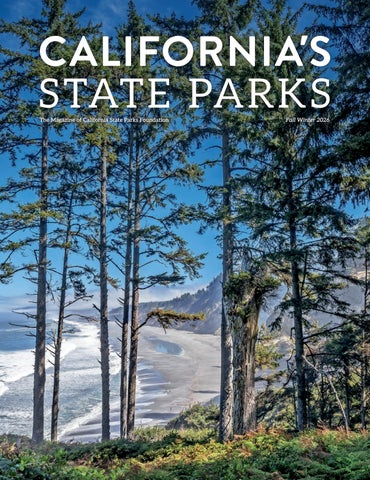
Sue-meg State Park overlooking Humboldt Lagoons State Park. Photo: © Randy Andy.
calparks.org
3
Letters to the Editor “I was moved by the interview with Taylor
“Pigeon Point Lighthouse is a favorite
Moore in ‘Ask a Museum Curator.’ Her
picnic spot for my wife and me and our
account of her work at the State Indian
granddaughter. The quintessential Pacific
Museum and Sutter’s Fort is intriguing, and
Ocean vistas and historic nature of the
her dedication to meticulous investigation,
site are compelling. I’m so glad it is being
curation, and repatriation of cultural
restored and expanded.”
artifacts is inspiring. This article also
— Barry G.-H.
informed me that California State Parks has
Write us a letter about this Fall Winter issue of California’s State Parks. Scan the QR code or visit calparks.org/ LetterstotheEditor
a large cultural heritage collection spread
“I received my magazine yesterday and was
throughout the state — I did not know that!”
so excited to see an article on the Rivers of
— Annie M.
the Valley parks. I moved to California two years ago and live on the Stanislaus River,
“The article about Anza-Borrego reminded
and I’m hoping we can actually get more
me of all the photography I used to do there
protected land along our precious riparian
when I was younger, the spring wildflowers
environment as development continually
and the magnificent views at both sunrises
threatens our valley rivers. Thank you for
and sunsets from Font’s Point.”
your informative articles and beautiful
— David S.
photographs. I’m eager to continue
“With more littles coming into the family, seeing
— Anonymous
exploring our great state parks.” the advice from real families was a treasure!” — Ingrid S.
“I enjoyed reading about Helen Smith and her
“I love that the interpreters and guides
Tahoe. I’ve often seen this castle while hiking
lifelong association with Vikingsholm at Lake have different backgrounds and adapt
or driving above the lake and wondered
what they share to the expressed areas of
what its backstory was. I’m deeply inspired
interest and curiosity of each visitor. Feeling
by how one person was able to make a
engaged in the experience makes each visit
huge difference in educating parkgoers
a memorable one and is an encouragement
and helping raise the money to restore this
to return and/or to explore other state
historical gem. Next time I’m at Lake Tahoe,
parks. It is apparent from the articles that
rather than admiring it from afar, I won’t
park employees love what they do and are
bypass the opportunity to take the boat ride
committed to making visitors feel welcome.”
over and visit Vikingsholm.”
— Marja Dawn S.
— Janet B.
Photo: © Anita Sagastegui.
Del Norte Coast Redwoods State Park
4
California’s State Parks
FA L L W I NT E R 2 02 6 VO L U ME 2 I S S U E 2
Features A LOOK INSIDE
The People Behind the Poppies Reflecting on the 50th Anniversary of Antelope Valley California Poppy Reserve State Natural Reserve. PAG E
6
Antelope Valley California Poppy Reserve State Natural Reserve in 1974.
A Day in the Park Learn the history of Colonel Allensworth State Historic Park. PAG E
10
Quick Tips Colonel Allensworth State Historic Park
Finding and enjoying California’s hidden gem state parks. PAG E
12
A Champion for Access
Will Rogers State Historic Park
How First Partner Jennifer Siebel Newsom helped expand opportunities for every Californian to experience state parks. PAG E
14
Los Angeles State Parks for Everyday Adventures Explore four urban state parks that bring nature, history, culture, and recreation into the heart of the city. Los Angeles State Historic Park
PAG E
18
Photos: (top to bottom) © California State Parks, 1974, all rights reserved. © Stephen Van Lydegraf. © Allison Zaucha. © Brian Baer, 2019, California State Parks.
History Through a Wider Lens How the Reexamining Our Past initiative is creating belonging in California’s state parks. PAGE
20
Ask a State Parks Administrator A conversation with Juan Villarino, District Administrative Chief of the Santa Cruz District. PAGE
24
A Future for Joshua Trees How restoration and research are helping protect western Joshua trees. PAGE
26
A Lifetime Connected to California’s State Parks Childhood summers exploring state parks shaped a lifelong connection. PAGE
30
calparks.org
5
The People Behind the
POPPIES Reflecting on the 50th anniversary of Antelope Valley California Poppy Reserve State Natural Reserve. BY ELISE MATERA
ach spring, the hills west of Lancaster come alive in orange, gold, and purple. Antelope Valley California Poppy Reserve State Natural Reserve, a 1,781-acre state park in northern Los Angeles County, is known for — and was protected because of — its vast displays of springtime wildflowers, including California’s state flower, the California poppy. Visitors come from around the world to see the blooms, but this landscape might have vanished if not for decades of grassroots advocacy and conservation led by ordinary people. As the reserve marks its 50th anniversary, its history reflects how local residents, Indigenous peoples, volunteers, farmers, schoolchildren, and conservation organizations helped protect a landscape that could easily have been lost to development. Today, it stands as a lasting example of what communities can accomplish together.
A Landscape Worth Saving “It is absolutely stunning when there is a good bloom of wildflowers. It doesn’t necessarily have to just be the poppies because you get this huge wash of orange, but you also get big splotches of yellow from the goldfields and purple from owl’s clover,” says Lori Wear, Interpretive Program Manager for California State Parks’ Great Basin District. “It doesn’t even seem real sometimes — it’s the peace it gives you.” Long before the land became a state park, the Tataviam, Kitanemuk, Serrano, and neighboring Indigenous peoples stewarded this landscape, and they continue to care for the plant and animal relatives living here. For many visitors, the experience becomes a lasting memory. “People definitely remember the good bloom years, and they’ll share >>>
6
California’s State Parks
Antelope Valley California Poppy Reserve State Natural Reserve during the 2019 super bloom.
calparks.org
7
photographs and memories, going back even to the late ’70s and early ’80s. The wildflower blooms evoke something people remember for their entire lives,” Wear says.
Planting the Seeds of a Poppy Park Like many environmental movements, this one started with a handful of dedicated community members. “Really, the roots of the idea of having a poppy park go back to the 1940s with a librarian in the Antelope Valley named Anna Davis and the local chapter of the Daughters of the American Revolution,” Wear explains. Over time, community involvement expanded. In the 1960s, self-taught artist and amateur botanist Jane S. Pinheiro played a major role, using detailed watercolor studies of wildflowers to inspire appreciation for the region’s biodiversity. Pinheiro joined with the Lancaster Woman’s Club’s Wildflower Preservation Committee to set up a wildflower information center on Sierra Highway for Antelope Valley visitors. The center featured Pinheiro’s paintings, live wildflowers in mason jars, and directions to the best viewing areas, helping build public support for protecting the blooms. Margaret Rhyne, President of the Poppy Reserve Mojave Desert Interpretive Association (PRMDIA), highlights the advocacy of everyday community members. “None of these supporters were wealthy,” she says. “They were men and women who were family farmers, small business owners, educators, local politicians, and volunteers who believed this landscape was worth saving.” In 1970, Frederick Meyer, the Natural Heritage Section Supervisor at California State Parks, wrote “Proposal for Poppy Reserves,” identifying the Antelope and Fairmont Buttes as an ideal location for protection. Spearheaded by the Lancaster Woman’s Club, a statewide campaign to purchase the land soon followed. 4-H clubs sold plants, landowners donated or discounted property, and schoolchildren participated in “Pennies for Poppies,” raising $18,000 statewide back in 1976. The Bank of America Foundation matched that effort, doubling its impact. “In 1976 that was a huge amount of money,” Wear emphasizes. “The creation of the reserve would not have been possible without the efforts of these grassroots groups,” Rhyne says. "They captured the public’s imagination and inspired support from organizations across California,
8
California’s State Parks
including California State Parks Foundation.” California State Parks Foundation collected and managed the campaign funds, including raising $125,000 more. The effort was featured in the organization’s first annual report (pictured right), which called on Californians to help purchase land for “our state’s first wildflower preserve.” Overall, advocates raised approximately $350,000 to acquire the land. On April 24, 1976, the property was officially transferred to the state of California. For Wear, the story remains deeply relevant. “It feels like we’re facing seemingly insurmountable challenges, like climate change, and people wonder, ‘What can I do?’” she says. “This is proof that individuals really can make a difference.”
People and Poppies Today Today, the reserve remains both a protected habitat and a beloved community park. The Jane S. Pinheiro Interpretive Center — named after the artist and activist following her death in 1978 — is open during peak bloom season from March 1 through Mother’s Day. Revenue from the visitor center supports the park through PRMDIA. “Our nonprofit evolved from the local citizens who
LEFT The Jane S. Pinheiro
Interpretive Center, during the 2019 super bloom. TOP Lori Wear, Interpretive Program Manager, listens to remarks at the 50th anniversary celebration of Antelope Valley California Poppy Reserve State Natural Reserve. MIDDLE California State Parks Director Armando Quintero speaks with Jewlya Samaniego, a citizen of the Fernandeño Tataviam Band of Mission Indians, who is featured in the new Interpretive Center video. BELOW The front cover of California State Parks Foundation's first annual report from 1971.
helped create the reserve,” Rhyne shares. “Today, we continue supporting the park financially and through our support for state park volunteers.” California State Parks is also working with Native partners through the Reexamining Our Past initiative to better reflect Indigenous histories and perspectives in park interpretation. Through deep collaboration, the reserve is updating educational materials, including a new interpretive center film incorporating Indigenous names and uses of native plants. The reserve includes an ADA-accessible trail, while surrounding trails offer longer hikes and sweeping views of the Antelope Valley. Throughout the milder fall and winter months, locals use the park daily for walking, biking, and hiking. “We have locals who come out, and they go hiking every single day or walking,” Wear notes. “We also have a cell phone tour people are using in the park year-round.”
Protecting Poppies for the Next 50 Years The future of the reserve depends on continued stewardship. Wear emphasizes the importance of staying on designated trails. “We have a slogan,” she says. “Don’t doom the bloom.” Off-trail walking compacts soil and disrupts wildflower growth, making visitor awareness of these guidelines essential.
Rhyne highlights “visual fences,” subtle markers that help define trails without disturbing the landscape. “They give visitors a reminder of where the trails are,” she says. The reserve also faces pressures beyond its boundaries. Wear notes that nearby solar and housing developments continue to change the surrounding viewshed, highlighting the need to balance growth with conservation. Looking forward, both Wear and Rhyne emphasize education as key to long-term preservation. Education is central to the California State Parks’ Parks Online Resources for Teachers and Students (PORTS) program. “We’re basically educating the next generation of Californians about this park, its importance, and the habitat that it protects,” Wear says. Rhyne adds, “Unless we keep young people and the public in general engaged and involved, future support for public lands may erode.” Fifty years after ordinary Californians came together to save this landscape, the poppies continue to bloom — a reminder that protecting special places has always been, and continues to be, a community effort. \\\
Photos: (previous spread and above) © Brian Baer, 2026 & 2019, California State Parks.
calparks.org
9
A Day in the Park
Learn the history of Colonel Allensworth State Historic Park.
olonel Allensworth State Historic Park is ideal for fall and winter visits, when temperatures begin to cool in the heart of the San Joaquin Valley. The park preserves the town of Allensworth — California’s first town founded, financed, and governed by and for Black community members. Today, visitors can see 20 historic buildings and attend events celebrating Black history and culture throughout the year. While planning a visit, consider timing your trip for one of the park’s many celebrations. This fall,
Colonel Allensworth State Historic Park
the park commemorated the 50th anniversary of its dedication with the annual 5K Run/Walk for Health, docent-led tours inside the buildings, and other special opportunities for a more in-depth experience. During other major celebrations, like Black History Month and Juneteenth, visitors can take advantage of Amtrak’s special whistle-stop train service to the park — a fitting way to arrive since Allensworth was intentionally established along the railroad.
Morning If you visit on a quieter weekend, pick up a brochure at the visitor center for a free self-guided tour, view the interpretive signs, listen to the free cell phone audio tour, or download an augmented reality experience through the Agents of Discovery or California State Parks Virtual Adventurer smartphone app. For a deeper experience, call at least 72 hours in advance to inquire about a docent-led tour. Start your day following Palmer Avenue and peer through the old glass windows of the historic buildings — especially the Hindsman Company General Store (pictured left) and the Mary Dickinson Memorial Library — which offer well-preserved glimpses into daily life in the early 1900s. As you walk the streets, imagine the determination and vision of the Black pioneers who built this self-governed community and created new opportunities for future generations. 10
California’s State Parks
Midday By midday, find a spot in the day-use area between the visitor center and the schoolhouse for a picnic. Although fall brings cooler temperatures, the park offers little shade, so bring plenty of water, wear sun protection, and pack comfortable walking shoes. After lunch, take a break in the visitor center, pick up a postcard or souvenir, and ask park staff or volunteers any questions that came up in the first half of your tour. Next, explore the nearby Allensworth Elementary School (pictured right). This two-room schoolhouse was once a haven of learning for first-generation students whose parents had been enslaved. The school remained in use until 1972, and some former students still return each year for special events, helping keep the community’s story alive for new generations.
Afternoon Continue your day with a stop at the First Baptist Church (pictured left), where Colonel Allen Allensworth preached and where many of the town’s important community gatherings took place. The church stood at the heart of daily life in Allensworth and remains one of the park’s most recognizable landmarks. As you explore Stowe and Sojourna Avenues, make a final stop at the Allensworth House, home to the Allensworth family during the town’s earliest years. If time allows, venture to the homes and farm buildings at the southern end of the park for an even deeper appreciation of everyday life in this remarkable community. As the late afternoon sun stretches across the open landscape, keep an eye out for the tiny endangered burrowing owls that call the park home, and listen for the songs of western meadowlarks, northern mockingbirds, and Bullock’s orioles. Whether you travel by train or car, take time to reflect on the history and significance of this extraordinary place as you head home, and plan to visit for the park’s next special event. \\\
Scan to learn more about visiting Colonel Allensworth State Historic Park.
Photos: (top and bottom) © Elise Matera.
calparks.org
11
ne of the most popular requests we’ve heard from readers is how to skip the crowds at some of California’s best-known state parks. With 280 parks to visit, there are many incredible lesser-known parks waiting to be discovered! Here, we uncover 10 of our parks community’s top suggestions for state parks off the beaten path, along with tips for making the most of your
Finding and enjoying California’s hidden gem state parks.
time there. We hope you can enjoy some solitude at these parks and find a new favorite before it becomes the next most popular state park! Some responses have been lightly edited for clarity and length.
Railtown 1897 State Historic Park “Railtown 1897 State Historic Park, located in historic Jamestown, is a hidden gem. It’s small, only 26 acres, but it is mighty in that it represents and showcases a truly important piece of California history — a short-line railroad that was built to connect Tuolumne and Calaveras Counties to the mainline railroads in Oakdale.” — Nancy I.
MacKerricher State Park “It’s kind of out of the way so it’s pretty quiet and you can enjoy nice quiet walks on the beach.” — Barbara J.
Sugarloaf Ridge State Park Portola Redwoods State Park “My favorite is Portola Redwoods State Park for its ethereal, fairy-like trails. During fall, winter, and early spring, you will feel transported to New Zealand or Scotland. The drive up to the park is a pain (yes!) but once your boots hit the ground, you won’t remember where you are, the canopies and redwoods are that majestic.” — Zunaira Q.
“The waterfalls in spring, the observatory nights, and the miles of trails are all secret favorites of the locals.” — El L.
China Camp State Park “Learn the often-forgotten or -erased history of Chinese communities that built many of the state’s railways and worked as agriculturists and physicians, but unfortunately were impacted by racist laws such as the Chinese Exclusion Act.” — Omi Yoomi I.
12
California’s State Parks
California Citrus State Historic Park
Bodie State Historic Park
“Tucked away in Riverside, California Citrus State Historic Park is a true hidden gem celebrating the region’s rich citrus heritage. Enjoy free admission to the museum, explore historic buildings, and take a complimentary tour through the orange groves to see where it all began. With fresh citrus tastings, scenic walking trails, picnic areas, and dog-friendly grounds, it’s a charming local escape for the whole family.” — Stephanie B.
“Quite a trek back in time. It’s as if the entire town closed up and left it all for you to step back into time. You can picture the rambunctious saloons, lively streets, and hardworking people doing their darndest to make a living. What an incredible experience!” — Sarah Z.
Sue-meg State Park “It’s located in Northern California on the coast north of Eureka. Great campground. Cool temperatures in the summer months. Rocky coast with a beach. You can often see gray whales and seals. Plenty of wild blackberry bushes for a summer treat.” — Christine B.
Indian Grinding Rock State Historic Park “This park is off the beaten path and not many know about it, but it is rich with relevance to Indigenous culture. The Miwok culture is alive and well, and their ancestry is clearly seen and felt in this peaceful and beautiful little park.” — Jennifer H.
Petaluma Adobe State Historic Park “This park is the bridge of history between the Spanish Mission period and Mexican California, and California’s transition to becoming part of the United States. Staff and docents give great tours and have fun activities, and it’s not crowded, so you can get one-on-one interactions.” — Christine B.
Tell us what you want to know more about. Suggest a topic for a future issue at calparks.org/quicktips.
Illustrations: Jennifer Doehring.
calparks.org
13
A CHAMPION FOR ACCESS How First Partner Jennifer Siebel Newsom helped expand opportunities for every Californian to experience state parks. BY ASHLEY MOORE
ong before Jennifer Siebel Newsom became California’s First Partner,
California’s outdoors shaped the way she saw the world. Growing up in Marin County, she developed a deep connection to California’s outdoors. Those childhood experiences stayed with her into adulthood and inspired one of her signature priorities as First Partner: making sure every Californian has the opportunity to experience California’s state parks. “As a young girl, nature was my sanctuary,” she says. “I grew up running around in the towering redwoods, wading in the creeks near Mount Tamalpais, and exploring California’s natural beauty. Now, as a mom, I’ve watched what happens to my own kids when they spend a day outdoors. They come home calmer, more curious, more themselves. And of course, it doesn’t hurt that they are away from their screens!” Watching her own children develop that same connection to nature strengthened her conviction that access to parks is about much more than recreation. She believes California’s state parks can serve as important “third spaces” for families — places outside of home and work or school where people reconnect with each other and with nature. “That’s why we created California’s Outdoors for All,” she says, “because access to our precious natural resources should be a given for every California family.” In 2019, Siebel Newsom chaired California State Parks Foundation’s Pathways to Parks initiative. The Foundation convened health experts, park leaders, educators, community organizations, youth leaders, and others across California to better understand what true access to parks requires. Those conversations made it clear that proximity alone wasn’t enough. Cost, transportation, awareness, language, cultural relevance, and whether people felt welcome all influenced whether families visited California’s state parks. Rachel Norton, Executive Director of California State Parks Foundation, >>>
FIRST PARTNER Jennifer Siebel Newsom speaks at California State Parks Foundation's Policy Forum in 2019. Photo: © Jess Rhodes.
14
California’s State Parks
calparks.org
15
says Siebel Newsom’s leadership has helped keep the focus on making California’s state parks more welcoming and accessible. “The First Partner has been an extraordinary champion for ensuring every Californian can experience our state parks,” Norton says. “She understands that access is about more than opening a gate. It’s about removing barriers, listening to communities, and making sure everyone feels like they belong in these incredible places.” Over the following years, many of those ideas became reality. In 2021, Governor Gavin Newsom and the state Legislature committed more than $1 billion to the Outdoors for All initiative, creating a once-in-a-generation investment to expand access to parks and open space across California. That same year, Governor Newsom signed Assembly Bill 148, establishing the California State Park Adventure Pass and providing free day-use access for fourth graders and their families at participating parks. Senate Bill 129 funded both the Adventure Pass and the California State Library Parks Pass. California State Parks Foundation helped advance both programs by advocating alongside partners and continuing to support efforts to make access more equitable. The Adventure Pass launched first, followed by the Golden Bear Pass for eligible CalWORKs families. In 2022, the California State Library Parks Pass began allowing library card holders to check out free vehicle day-use passes through their local public libraries. Together, these programs have expanded opportunities for children, families, and communities across California to experience California’s state parks.
Pathways to Parks A timeline of key milestones 2019–2026
16
California’s State Parks
2019 Pathways to Parks launches California State Parks Foundation convenes leaders from across California to identify barriers to accessing state parks. First Partner Jennifer Siebel Newsom serves as chair of the initiative.
The work has continued to evolve. This year, California State Parks Foundation partnered with California State Parks and the California State Railroad Museum Foundation to offer a free Historian Passport in recognition of America’s 250th anniversary. The Historian Passport expanded free access to more than 30 state historic parks. More than 454,000 Historian Passports were downloaded by the end of the offer. Meanwhile, the California State Park Adventure Pass has surpassed 100,000 downloads and has reached families in every California county. For Siebel Newsom, those milestones reflect something larger than participation numbers. “These statistics showcase that Californians truly value the outdoors,” she says, “and when we remove barriers to access, we’re fostering the next generation of environmental stewards and ensuring every child can experience the breathtaking beauty and history of our state.” The California State Library Parks Pass has become one of California’s most successful efforts to expand access to state parks. Available through more than 1,100 public libraries, the program allows Californians to check out free vehicle day-use passes to more than 200 participating California state parks. Since the pass launched, California State Parks Foundation has worked alongside California State Parks, the California State Library, local libraries, legislators, and community organizations to support the program and advocate for continued funding. Foundation research found that cost remains one of the biggest barriers to visiting California’s state parks. It also found that nine out of 10 participants said the program encouraged them to visit more often.
2021 Historic investment in outdoor access Governor Gavin Newsom announces a historic investment of more than $1 billion to expand access to parks and open space.
July 2021 Legislation establishes new parks pass programs Governor Newsom signs Assembly Bill 148, establishing the California State Park Adventure Pass. Senate Bill 129 funds the Adventure Pass and California State Library Parks Pass.
September 2021 Adventure Pass launches The California State Park Adventure Pass begins providing free day-use access for California fourth graders and their families.
This year also marked the program’s biggest milestone. California’s 2026–2027 state budget established ongoing funding for the California State Library Parks Pass. Rather than requiring annual approval through the budget process, funding will now continue automatically unless changed by a future governor or legislature, providing long-term certainty for libraries and helping ensure future generations can continue discovering California’s state parks. “This is a landmark moment for expanding access to California’s state parks,” says Norton. “By establishing ongoing funding for the California State Library Parks Pass program, California is making a lasting commitment to ensuring that cost is not a barrier to experiencing our state parks.” For Siebel Newsom, the work has never been about launching programs for their own sake. It has always been about making the benefits of nature available to everyone. “Time in nature is a public good and a genuine public health tool. It’s good for our hearts, our minds, and our bodies, at every stage of life,” she says. “California has the largest and most diverse state park system in the country: coastlines, redwoods, deserts, and the historic places that tell the story of our incredible state. They belong to every Californian, and a family’s ZIP code or income should never determine whether they get to explore our abundant coastlines or get lost in the sequoias. When we make these places truly reachable, we’re investing in healthier, more connected communities across the Golden State.” Ultimately, she hopes these efforts change not only public policy but also the way Californians think about their state parks, seeing them as places where people can gather, recharge, and build community. As she puts it, “Gavin and I want every Californian to feel a sense of belonging when they visit a state park. And if a child grows up seeing their local state park as the place where their family celebrates and neighbors gather for walks or picnics, then we’ve created something that extends far beyond any single policy.” \\\
March 2022 Golden Bear Pass for CalWORKs families launches Eligible CalWORKs families receive free vehicle day-use access to participating state parks.
FORMER DISTRICT Superintendent Sean Woods gives First Partner a tour of Los Angeles State Historic Park. Photo: © Allison Zaucha.
Scan the QR code or visit calparks.org/pathwaystimeline to explore the complete Pathways to Parks timeline and learn more about the progress made over the years. The timeline below highlights just a few key milestones.
April 2022 Library Parks Pass launches
February 2023 Library Parks Pass expands
2024–2025 Advocacy protects the program
July 2026 Ongoing funding secured
The California State Library Parks Pass becomes available through public libraries statewide.
Additional funding increases the number of passes available through California's public libraries.
California State Parks Foundation and its partners successfully advocate to restore funding for the California State Library Parks Pass after proposed budget reductions.
California's 2026– 2027 state budget establishes ongoing funding for the California State Library Parks Pass, securing long-term access to free state park passes through public libraries.
calparks.org
17
FOR EVERYDAY ADVENTURES
Explore four urban state parks that bring nature, history, culture, and recreation into the heart of the city.
Rio de Los Angeles State Park
THE MOSAIC TILES on the bench were created by students at the high school next to the park, with support from California State Parks Foundation.
hen many people think of California state parks, they picture rugged coastlines, towering redwoods, or vast desert landscapes. Yet some of the state’s most important parks are found in California’s largest cities. Urban state parks play a unique role in California’s park system. They bring California’s parks closer to where people live, creating opportunities to connect with parks without traveling far from home. Many can be reached by foot, bike, or public transit, making it easier for more people to experience a state park. These spaces preserve important stories and resources while providing places to exercise, gather, learn, and enjoy the outdoors. Los Angeles is home to several urban state parks that showcase the many ways parks can serve communities. Whether you’re looking for green space, local history, public art, or panoramic views, these parks offer a different perspective on what a state park can be. Photos: (top to bottom) © Brian Baer, 2019, California State Parks. © Brian Baer, 2014, California State Parks. © Philip Oakley Otto. Map Illustration: Rise Wise.
18
California’s State Parks
Los Angeles State Historic Park
Just north of downtown Los Angeles, this 32-acre park transforms a former rail yard into a vibrant community gathering space. Walking trails, native landscaping, and expansive lawns provide room for recreation and events, while views of the city skyline highlight the connection between Los Angeles’ past and present. The park also interprets the history of the city and the communities that helped shape it. Rio de Los Angeles State Park
Built on former industrial land along the Los Angeles River, Rio de Los Angeles State Park demonstrates how parks can revitalize neighborhoods and reconnect people with natural resources. Athletic fields, walking paths, and restored habitat support both recreation and local wildlife, making the park an important community asset and
part of the broader effort to reimagine the Los Angeles River corridor. Baldwin Hills Scenic Overlook
One of the best views in Los Angeles awaits at Baldwin Hills Scenic Overlook. Visitors can climb the park’s famous staircase or follow the Hillside Trail’s switchbacks to the summit, where sweeping vistas stretch from downtown Los Angeles to the Pacific Ocean. Along the way, interpretive signs explore the area’s natural history, ecology, and role in the region’s development. Watts Towers of Simon Rodia State Historic Park
This remarkable historic park preserves one of California’s most celebrated works of folk art. Over more than 30 years, Italian immigrant Simon Rodia built the soaring Watts Towers by hand using steel, mortar, and found materials.
Today, the site stands as a testament to creativity, perseverance, and the cultural heritage of the surrounding community. These four parks demonstrate that some of California’s most inspiring state parks can be found in urban Los Angeles. Whether you’re interested in history, public art, wildlife, or simply finding a nearby place to enjoy the outdoors, Los Angeles offers countless opportunities to connect with state parks close to home. Our Los Angeles State Parks Guide highlights destinations across the region, from mountain trails and historic sites to scenic beaches and additional urban parks. \\\
Scan the QR code or visit calparks.org/LAparksguide to download our Los Angeles State Parks Guide and start planning your next state park adventure. calparks.org
19
Angel Island State Park
20
California’s State Parks
History Through a Wider Lens
How the Reexamining Our Past initiative is creating belonging in California’s state parks BY RACHAEL KIRK-CORTEZ
young family drives past a sign welcoming them to a California state park. They show the park aide their California State Library Parks Pass, thankful the program makes today’s adventure more affordable. The parents orient themselves by reading the trailhead’s map, tracing their fingers along trails and ridges bearing names given to them during the Spanish colonial era. Inside the visitor center, the children inspect exhibits sharing information on the Indigenous people whose homelands are now part of the park. The youngest child asks, “Are these people still alive? Do they visit this park?” Think of the last state park you visited. How did the exhibits, signage, and programs tell a complex story about who we were and who we are? What perspectives were missing? California State Parks is undertaking a multi-division initiative called Reexamining Our Past to expand the historical narratives told within parks and share the full context of California’s history in parks. The work is complex and seeks to better represent the interconnected histories of California through redressing discriminatory names of features attached to State Park units and restoring traditional place names; creating new and updated signage, interpretation, and exhibits; building relationships; and providing training. >>>
calparks.org
21
LEFT Visitors read interpretive panels at the grand reopening of the visitor center at Sue-meg State Park. RIGHT A reproduction of one of the many poems carved on the walls of the barracks building at Angel Island State Park. Photos: (previous spread and above) © Brian Baer, 2026, California State Parks.
The goal is straightforward: to expand the historical narratives told within parks so more Californians see their heritage included in these beloved places. Nationwide Reckoning Instigates Systemic Action The Reexamining Our Past initiative grew from a profound period of national introspection following mass demonstrations against systemic racism. In 2020, alongside governments and communities across the country grappling with how to address monuments and place names honoring leaders with racist legacies, California took a look at its own public spaces. The data collected made clear that State Parks must act holistically. “We previously weren’t looking at how we were approaching our history, or the accuracy of that history, across the entire parks system. With Reexamining Our Past, we took a moment and considered where are we not living up to the standards we should be meeting today?” reflects Leslie L. Hartzell, Ph.D., Chief of Cultural Resources for California State Parks. Historically, State Parks have relied on funding infusions from voter-approved bonds or philanthropy. Reexamining Our Past is unique because it received five years of dedicated resources from the state’s general fund, allowing the department to invest in processes and tools that enable this work to endure. Signs of the Times: Restoring Place Names, Rebuilding Visibility Language contains immense power, dictating whose stories we remember and who feels included. Altering a park’s name, 22
California’s State Parks
a park feature’s name (such as that of a campground or trail), or a geographical feature’s name involves robust processes that can include historical analysis, public stakeholder engagement, and tribal consultation to ensure the new name endures for generations. In the case of the names of physical geographical features such as mountains or rivers, this work involves the U.S. Board on Geographic Names; for park unit names, this work involves approval from the California State Park and Recreation Commission. Restoring Indigenous place names presents both opportunities and complexities. Land contained within a park often holds profound meaning for multiple tribes; each refers to the area by a distinct name in their respective languages. To adopt the name of Sue-meg State Park (pronounced “SOO-may”), culturally affiliated California Native American tribes consulted together to collectively determine the modern spelling of their shared ancestral home. California State Parks is currently working through the processes for several place name restoration and renaming requests from California Native American tribes. Additionally, visitors will notice a visible transformation in signage. Over the next 18 months, California State Parks is enhancing signage and changing the language used at events, on park websites, and in educational materials across 208 of its 280 park units, thanks to the partnerships of 70 tribes, to recognize and acknowledge the known cultural affiliations and ancestral homelands of California Native American tribes.
Restoring Respect: The Power of Memorandums of Understanding Rebuilding trust is a precursor to creating belonging. For Indigenous peoples, the requirement to pay a fee to access their ancestral homelands to gather traditional materials, conduct ceremonies, or practice sacred stewardship feels fundamentally unjust. Yet state law requires California State Parks to generate a portion of its operational revenue, which it does through day-use fees. California State Parks uses memorandums of understanding (MOUs) with California Native American tribes as vehicles for providing Tribal Members access to their homelands without charge. By establishing mutually beneficial activities, the MOUs illustrate how it is of benefit to the parks for Tribal Members to have access to and the ability to share stewardship of their homelands. Currently, the department has 15 Tribal MOUs; each identifies how State Parks and that specific Tribe are going to work collaboratively. For instance, the MOU between State Parks and the Big Valley Band of Pomo Indians includes incorporating traditional ecological knowledge into natural resource management at Clear Lake State Park. Meanwhile, the MOU with the Fernandeño Tataviam Band of Mission Indians prioritizes collaboration on interpretation and education at the Village of Siutcanga, currently known as Los Encinos State Historic Park. Modernizing Interpretation and Training Visitors do not engage with history passively; they actively experience it through guided programs, physical exhibits, educational curricula, and virtual field trips. Reexamining Our Past is modernizing these experiences and equipping staff to engage with previously avoided topics through three distinct strategies. First, communities of experts actively partner to broaden park narratives. The Relevancy & History Program brings university students into state parks to conduct original research and receive interpretive training. A vital partnership with the California African American Museum is capturing oral histories that detail various African American experiences throughout history, including during the Gold Rush in places like Shasta State Historic Park, during the agricultural boom at California Citrus State Historic Park, and military service at sites like Fort Ord Dunes State Park. This research not only broadens how we look at the past but also creates places
to explore who we want to become. For example, accurately reflecting the historic Asian immigrant experience of the 1880s and Japanese American incarceration during World War II at Angel Island State Park ensures we do not forget these past wrongs as we write current and future immigration policy. Second, an 18-month inclusive history training program gives staff the tools to facilitate respectful public conversations about complex or controversial historical events. Cohorts unite parks across the state that interpret similar time periods, such as the era of the establishment of California missions or the Gold Rush. As a result, parks are implementing a variety of microprojects, such as actively revising volunteer manuals and updating programs. For example, La Purísima Mission State Historic Park paused its traditional living history program, a respectful decision that opened the door for the Chumash people to begin partnering on interpretation at the park. Finally, California State Parks is executing the comprehensive Historic Interpretation Assessment Project across 60 park units. Teams are evaluating exhibits, docent manuals, and all aspects of the visitor experience against new historical standards and position statements. This will generate a prioritized road map for upgrading many features that have remained untouched since their creation more than 30 years ago. Heather Holm, Chief of Interpretation and Education for California State Parks, emphasizes that this collaborative evolution marks a fundamental shift in perspective: “It’s beyond ‘How do you want your stories to be told?’ It’s really ‘How do you want to participate?’” A Lasting Promise: Creating Institutional Memory A hidden power of Reexamining Our Past is its efforts to evolve how California State Parks preserves our collective heritage. By creating digital archives, guiding principles, and repeatable training modules, this initiative enables California State Parks to evaluate biases and revise standards into the future. In the coming years, park visitors will engage with a richer and more nuanced understanding of history. Hartzell cautions that the changes “may seem subtle, as they are spread across many different parks in many different ways. However, the experience in parks and with park programs will hopefully feel more like a dialogue.” Holm captures the driving hope simply, stating, “Our parks have so many rich stories that are all interwoven together. We need to be telling all of them.” \\\
calparks.org
23
Ask a State Parks Administrator A conversation with Juan Villarino, District Administrative Chief of the Santa Cruz District. ver Juan Villarino’s 17-year career with California State Parks, he has worked in a variety of roles. He first joined the Natural Resources Crew in Santa Cruz as a seasonal employee and went on to lead that crew for eight years. He was then promoted to Park Maintenance Supervisor at Big Basin Redwoods State Park, where he lived through the 2020 CZU Lightning Complex Fire, which burned 97% of the park and destroyed his home. Today, as District Administrative Chief, he supports the people and parks that shaped his career path.
How did you get started with California State
I counted 27 peaks. It was this big, pretty meadow
Parks?
surrounded by pristine rocks. I felt so small. In a good
Growing up in Tehachapi, California, we were outdoor kids. We played outside in the creek, up the mountain, running around getting foxtails in our socks and just being dirty kids. We were outdoorsy, but I didn’t know what backpacking was. As I got older, I worked doing community organizing. My brother, who worked for the California Conservation Corps, kept saying, ‘You have to do this Backcountry
It’s going to be here forever. It was this empowering moment of clarity where I was like, ‘This is incredible, and I want to do everything I can to protect this and help other people find this feeling too.’
How did experiencing the 2020 CZU Lightning Complex Fire shape your career and your perspective?
Trails Program. It’s going to change your life.’ I finally
I reflect on it a lot. The evacuation call, monitoring the
joined. I committed and pushed myself, and it paid
radio as my house burned down, structure protection
incredible dividends.
at Año Nuevo, and working as a resource advisor
It changed my life. I remember the exact moment. It was toward the end of our season. Our trail camp was south of Tuolumne Meadows, and from my tent
24
way — insignificant. This landscape’s been here forever.
California’s State Parks
(READ). It was heavy. The day after Big Basin burned, a small contingent of us fire-trained personnel returned to the park for an initial damage assessment. It was devastating. The redwoods looked like matchsticks.
“We should work to minimize the barriers for people who want to enjoy these places. These lands belong to everybody.” But the true loss didn’t really hit at that time. To stay an
rebuild a park? To have the public, stakeholders, Tribes,
effective firefighter, I had to compartmentalize.
and staff all buying into this idea of ‘Let’s rebuild this
I worked as a READ on CZU to help stop the fire from spreading and to protect our valuable resources. I did everything I could to help then, and I try to show up the same way in my career today.
Looking back, what stands out to you most about that turning point? The resiliency of the community and the park. Like many in our community, we lost our house and everything in it. It was hard, but when challenged like that, it’s about how you respond. You find your capacity for doing hard things grows. You stretch yourself, and you come out stronger. You can’t do it alone, though. Everybody showed up for us. The support and the overwhelming feeling of belonging were incredible. Today, the park looks great. How often do we ever get to
place the best way possible,’ using the best science and getting everybody’s consideration — that’s a pretty incredible opportunity.
Can you describe your role as a State Parks administrator? I’m a problem solver, a fixer. Issues in this role are often messy or ugly, and the work is really hard. But I have a lot of pride in being the person who helps navigate complex issues. My staff are specialists who are very good at their jobs, and my chief role is to support them and help make their jobs easier. I work for them, and they work for the district.
What are you most proud of in your career? One of the things I’m really proud of is seeing people I’ve mentored advance into leadership positions. I think of them as these kids that I’ve hired and trained, but they’re now scientists and rangers and park planners, and they care. That makes me proud.
Why is the relationship between people and parks so important? Working in activism and then at State Parks, I understand that social justice is tied to environmental justice. Everybody deserves clean water, clean air, and places to sweat and swim and fish and hike and barbecue — however they choose to recreate! We should work to minimize the barriers for people who want to enjoy these places. These lands belong to everybody. People can discover something about themselves. Maybe in doing that, we create future stewards, and that really matters. \\\
TOP LEFT Villarino works on a prescribed burn project. LEFT Villarino on a birdwatching walk. Photos: © Courtesy of Juan Villarino.
calparks.org
25
THE FUTURE FOR
JOSHUA TREES
How restoration and research are helping protect western Joshua trees.
BY EMILY DOYLE, PH.D.
hen Californians imagine the desert, western Joshua trees are inevitably on the horizon. Branches angling into the sky and adorned with white blossoms, this iconic species stands silent guard over one of the state’s most extraordinary landscapes. Western Joshua trees grow just inches per year and can live for hundreds of years. For these and other reasons, they have become an enduring symbol of California deserts. Sadly, western Joshua trees are increasingly threatened by climate change, including more frequent and more severe wildfires. More than 2 million Joshua trees have been killed by massive fires in just the past six years, and the threat of climate change is only growing. Immediate action is critical to preserve this iconic species, and California State Parks Foundation is helping lead the way.
26
California’s State Parks
An estimated 4 to 11 million Joshua trees grow in Southern California, and thousands call California state parks home. Protecting and restoring these parks is critical to conserving this threatened species. California State Parks Foundation has supported multiple projects at Arthur B. Ripley Desert Woodland State Park through its climate resilience grant program. This work includes not only wildfire restoration projects but also scientific research to better understand how Joshua trees can be preserved in the face of climate change. By funding this critical work, California State Parks Foundation will continue to fight for state parks and the wildlife that makes them unique. >>>
calparks.org
27
How is climate change impacting Joshua trees? Climate change is having numerous impacts on western Joshua trees. Dr. Jeremy Yoder, a Joshua tree expert at California State University Northridge, points to both longerterm changes in growing conditions and extreme climate events such as wildfires.
Young trees are struggling to grow due to changing climate conditions As older trees die, the changing climate makes it harder for young trees to replace them and maintain healthy groves. “An established Joshua tree is pretty robust,” Yoder says. “A lot of the trunk is storing water. It has a really welldeveloped root system, so it can pull in resources from a broad area.” As a result, older Joshua trees can better endure changing climate conditions. Joshua tree seedlings, however, are much more delicate and require specific conditions to survive, including a protective shrub or nurse plant and a prolonged cool period for the sprout to grow. “Even in the conditions they’ve historically evolved for, Joshua tree seedlings are very, very delicate,” says Yoder, “but as climate is changing, that confluence of good conditions may be getting harder.” As older trees die without enough young trees replacing them, populations become older and less resilient. Yoder says, “There are places where you go and there’s a very low-density population. It’s not really a grove of Joshua trees, and all of the trees are enormous.” This shift toward
28
California’s State Parks
older populations may increase as climate change accelerates. Therefore, it is critical to identify and protect healthy Joshua tree groves, such as those in Arthur B. Ripley Desert Woodland State Park and other parks within the Great Basin District.
Threats from increasing wildfires Western Joshua trees are also threatened by extreme climate events like wildfires, which are increasing in frequency and severity due to climate change. In 2020, the Lake and Dome Fires wiped out over 1.3 million trees, and a million more died in the York Fire just three years later. This increase in wildfire risk is largely due to the introduction of fire-adapted invasive grasses and changes in precipitation patterns, with wet years increasingly followed by prolonged drought. “That combination is bad for fire, of course, because in the good years, you get lots of vegetation growth, and then you hit a dry year, and it all dries out, and you’ve got this big fuel buildup,” saysYoder. Reducing wildfire risk through vegetation management and other tools is, therefore, critical. How can we protect Joshua trees from these climate impacts? Conserving western Joshua trees requires protecting healthy populations and strengthening at-risk populations. California state parks are key to both efforts. Yoder says, “There are absolutely places in the Joshua tree range where populations are still healthy, and we want to identify those places and make sure they’re protected, because those are the places where
a really bad fire could actually impact the species’ viability long term. Getting a sense of population status and health in California state parks is really valuable because those are already protected populations.” California state parks also offer the opportunity to research restoration practices that strengthen more at-risk populations. For example, how can vegetation management reduce wildfire risk, and how can delicate Joshua tree sprouts be protected after planting? Over the past five years, California State Parks Foundation has partnered with California State Parks at Arthur B. Ripley Desert Woodland State Park to help answer those questions. How California State Parks Foundation is making a difference: Projects at Arthur B. Ripley Desert Woodland State Park California State Parks Foundation has supported multiple Joshua tree conservation projects at Arthur B. Ripley Desert Woodland State Park, which is home to over 560 acres of Joshua trees. In 2020, the Lake Fire burned 55 acres of the park, killing many mature Joshua trees and burning critical brush habitat. The following year, California State Parks Foundation granted California State Parks the first of two climate resilience grants toward wildfire restoration and prevention.
Project 1: How to protect Joshua tree sprouts during wildfire recovery The first restoration project at Arthur B. Ripley Desert Woodland State Park is an excellent example of state parks leading restoration research, as it addressed one of the critical questions in Joshua tree conservation: How do you ensure delicate Joshua tree sprouts survive to maturity? Park staff identified over 700 sprouts and installed protective cages, providing protection similar to that of a nurse plant. After one year, almost half of the sprouts had survived, showing this to be a promising technique. The project also established a baseline for monitoring overall ecosystem recovery from wildfire. Luis De Vera, an Environmental Scientist for California State Parks’ Great Basin District, previously emphasized the importance of this study for understanding how Joshua trees recover from wildfire. In a recent update, De Vera noted continued recovery at the site. He says that, in some cases, “a burned
Joshua tree is scarred, but is still living. You can see where it’s healing.” These observations are critical for identifying ideal conditions and practices for Joshua tree recovery after a wildfire and, therefore, improving conservation efforts.
Project 2: Reducing wildfire risk through vegetation management In 2024, California State Parks Foundation continued this partnership and funded a fuels reduction project at Arthur B. Ripley Desert Woodland State Park. Dry vegetation had built up around the border fence, creating ladder fuels that could enable rapid fire spread. With grant support, park staff removed excess vegetation from around the park perimeter and reduced the threat of spread within the park. When asked about the partnership with California State Parks Foundation on this project, De Vera said, “Brush clearing is one of the things we’ve been prideful of because we’ve worked with Tribes and nonprofits” to accomplish this important work. De Vera also emphasized the importance of such projects to local communities and their value as educational opportunities. Through this climate resilience grant, California State Parks Foundation helped protect Joshua trees while supporting education and stewardship in rural communities. In 2026, California State Parks Foundation’s work at Arthur B. Ripley Desert Woodland State Park was recognized with the California State Parks Director’s Recognition Award for Climate Adaptation, honoring efforts to prepare for and protect against the impacts of climate change. What’s next? California State Parks Foundation has made a significant impact on Joshua tree conservation, but the work is ongoing. Through climate resilience grants funded in part by The Seaver Institute and other strategic partnerships, California State Parks Foundation will continue supporting restoration and conservation efforts throughout the Great Basin District and beyond. Working with California State Parks and other partners, it will also help examine how climate change will impact Joshua tree habitat, how those impacts can be addressed, and how proactive park management can help protect this iconic species for generations to come. \\\
Photos: (previous spread and left) © Brian Baer, 2024 & 2016, California State Parks.
calparks.org
29
A LIFETIME CONNECTED TO CALIFORNIA’S STATE PARKS Childhood summers exploring state parks shaped a lifelong connection. or Diana Bailey, California’s state parks have been
part of her life for as long as she can remember, first through family vacations from the 1940s through the 1960s, and later on, trips with her sisters and friends. Growing up, family vacations followed the school calendar because her dad was a teacher. “We went to state parks each year and enjoyed each of them for a different reason,” Bailey says. Those trips showed Bailey how state parks made affordable family vacations possible. Bailey remembers her parents preparing well before summer arrived. Her mother stocked up on canned and boxed food when they were on sale, while her father built a wooden storage box that fit on top of the teardrop trailer or the family car to carry their camping gear. “If not for state parks, we would not have had a vacation,” she says. As a child, Bailey looked forward to evening campfire programs led by park rangers, where she learned songs, explored nature, and discovered the importance of caring for public lands. Those experiences helped shape Bailey’s lifelong respect for nature and California’s state parks. Over the years, Bailey has continued exploring state parks throughout California. She especially enjoys parks with forests and streams, and the redwood parks she visited as a child remain among her favorites. Año Nuevo State Park is another favorite. “I’ve been there many times. I love watching
30
California’s State Parks
LEAVE A LEGACY THAT LASTS To learn more about how you can make a planned gift and join Diana Bailey in safeguarding California’s state parks, visit calparks.mylegacygift.org or contact development@calparks.org. Scan the QR code to learn more!
ABOVE Bailey’s family camps in a teardrop trailer during one of their many
California state park adventures. LEFT Bailey and her family celebrated her mom’s 85th birthday in 2002 with a trip up the California coast, visiting state parks along the way. RIGHT Bailey (third from left), her sisters, and their cousin relax on a handmade campsite couch built from reclaimed wood.
the elephant seals give birth and all their behavior during the winter season tours.” Each visit deepens the connection she first formed as a child and strengthens her appreciation for the places that have shaped so many of her life’s memories. One place has remained especially meaningful to Bailey and her family: Morro Bay State Park. They spent many Christmases and summer vacations there over the years, first camping in the park before later staying in a travel trailer and, by the 1980s, in nearby hotels. Bailey and her sister Judy honored their parents and their other sister, Jacquie, with a memorial bench at the park. After Judy passed away, Bailey placed another memorial bench for her at nearby Tidelands Park. Her connection to parks extended beyond childhood. She worked for several years at the Angeles National Forest headquarters. Later, she volunteered at Monrovia Canyon Park, where she was honored as Volunteer of the Year. Years later, that lifelong connection to parks influenced another important decision. “My mother passed away, and then my sister passed away several years later,” she says. “I thought, ‘What would they do with this money?’ I instantly knew they
both loved the California parks, especially along the coast.” She decided to include California State Parks Foundation in her estate plans. “I think it’s important for people to know that they can leave a legacy gift to the parks to honor a loved one,” she says. “It’s a cost-effective way to share with others the wonders of nature and to preserve parks for generations to come.” Bailey hopes families will continue to see California’s state parks as places where they can spend time together and make memories, just as her family did. For her, leaving a legacy gift is a way to support the California state parks that have meant so much to her and her family. \\\
calparks.org
31
California State Parks Foundation 235 Montgomery Street, Suite 1202 San Francisco, CA 94104 calparks.org
Connect with us on social media! /calparks @calparks @californiaparks @calparks Photo: © Brian Baer, 2016, California State Parks.
Watts Towers of Simon Rodia State Historic Park