



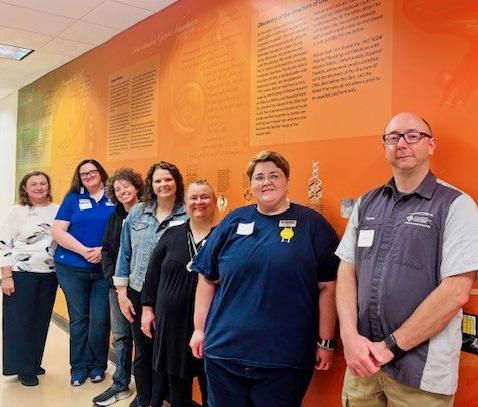
of Calhoun Career Services is to guide and direct students in navigating college and career pathways through classroom presentations, individual appointments, and on-campus events as well as facilitate experiential learning through co-op and apprenticeship programs, in addition to equipping alumni to successfully navigate the employment process while tracking their progress.


CAREER ADVISING
COOPERATIVE LEARNING AND APPRENTICESHIPS
JOB SEARCH STRATEGIES
PROFESSIONAL READINESS – RESUMÉ BUILDING & MOCK INTERVIEWS
NETWORKING OPPORTUNITIES
PROFESSIONAL ATTIRE CLOSETS

It’s totally normal for students to enter college with apprehension over choosing a major. We are glad you chose to attend Calhoun, and Career Services is here to help.
is an interactive, online, self-guided career and education planning system designed to help you make decisions about your future goals.
Focus 2 Career is free to Calhoun students and community members.
There are three useful phases of Focus 2 Career:
SELF-ASSESSMENT | CAREER EXPLORATION | CAREER PLANNING
Focus 2 Career includes five different assessment tools:
1. Work Interest Assessment – highly recommended
2. Personality Assessment
3. Skills Assessment
4. Values Assessment – highly recommended
5. Leisure Assessment
WHAT’S YOUR HOLLAND CODE ?
WHAT WORK VALUES ARE MOST IMPORTANT TO YOU?
FOCUS LOGIN INFORMATION USERNAME
• Create your account using the passcode Warhawks
• Download the Career & Education Student Planning Workbook
Our CAREER COACH tool is another resource available to you. This website includes local employment data and allows you to take a career assessment, explore careers within certain industries, and research majors that will best prepare you for that career field. No login is necessary.



can feel like a job ; however, there are three things you do not want to waste while here at Calhoun: time, money, and effort. Researching careers is important for not only understanding the end goal but also the expectations of what it takes to get there.
Now that you have completed the FOCUS 2, let’s see how your results translate to different careers while also considering the needed skills, required education, salary, and the demand for those occupations. Utilizing the websites below can assist with that research.

In addition to talking with your career advisor , these websites may be useful as you research careers:

After you have narrowed down your career choices, completing an informational interview is crucial in making a final decision. Having the opportunity to sit down with an industry member to gather insight on their pathway to success is more effective than what you may find on the internet.
Completing this research builds your confidence and helps you navigate your academic and career pathway. Contact Career Services for assistance along the way.
Schedule an appointment with your career advisor today:


Professional skills differ from technical skills, but both are important. Technical skills are developed through education and can be easily verified (degree, licensure, certifications, etc.). These skills are often the gateway to a career. Without meeting the basic qualifications, you will be overlooked by employers.
On the other hand, professional skills, or soft skills, are often mentioned on a resumé (good communicator, fast learner, etc.) but must be observed to be proven true. Technical skills might lead to an interview, but the professional skills typically translate to a job offer--and most certainly a promotion.
Take some time to identify the professional skills you need to improve and make an action plan to hold yourself accountable. Your career will thank you!
Communication: Do you show respect as well as empathize with others? Communication is conveyed in written or verbal words, facial expressions, and even tone. Be tactful even when you disagree.
Teamwork: How do you approach teamwork? Effective collaboration often involves listening, delegating, and assuming accountability.
Adaptability: Are you flexible when it comes to your work day? Adaptability is associated with being organized, calm, and optimistic.
Problem-Solving: Do you complain about problems more than you present solutions? To address a problem, you must observe the entire process, identify potential barriers, and suggest alternatives to your management.
Creativity: What type of insight do you bring to the workplace? Innovation often involves trial and error. Don’t be afraid to recommend creative solutions in the workplace.
Work Ethic: Are you a self-starter who holds yourself accountable to deadlines and given responsibilities? Employers are consistently seeking an employee with patience, sensitivity, and the ability to get along with other people.
Time Management: Where does the time go? Spend your time wisely at work by prioritizing, planning, and organizing your tasks and deadlines. Keeping a calendar and setting specific times during the day for email can help you stay on track.
Leadership: Leadership isn’t tied to a job title. Demonstrating characteristics such as generosity, trustworthiness, sensitivity, and authenticity prove that you have the potential to move up in the organization.
Attention to Detail: Do you double-check your work before submitting it? Listen to instructions, ask questions when needed, and analyze the assignment for completion and correctness before sending to your boss or customer.


Are you seeking part-time work in your field of study?


There are several ways Career Services can help through work-based learning.
Calhoun’s co-op program offers students the opportunity to work on a part-time basis (a minimum of 20 hours per week) in paid positions directly related to their academic majors while attending school on a full-time or part-time basis. Review the qualifications and complete the application at www.calhoun.edu/coop
Similar to co-op, interns work in a position directly related to their field of study for a limited time period. Internships tend to be unpaid, but the experience is invaluable and helps to build a resumé.
Apprenticeships are industry-driven and initiated by an employer who is seeking additional skills for the current or future workforce. A specific curriculum is followed so that work responsibilities mimic classroom instruction.
Work-based learning also happens in the classroom. Industry tours, guest speakers, networking events, and service learning are just a few examples of other ways to gain real-world experience while still in college.
INTERESTED IN A CO-OP POSITION?
Be mindful of your GPA
Review the co-op guidelines for your major
Get your resumé ready
Let your advisor know you would like to qualify for the co-op program


Unfortunately, not all job postings are legitimate. Unscrupulous people may pose as hiring companies, using online job banks and classified ads to take advantage of trusting job seekers. For this reason, it is important to exercise caution and common sense when conducting your job search.
1. Avoid job postings that sound too good to be true
Beware of job announcements requiring no experience or skills, but offering large salaries. If it sounds too good to be true, it probably is.
2. Steer clear of unprofessional listings
Absence of a professional job title, lack of specific job tasks, frequent misspellings, and grammatical errors may be signs of a fraudulent posting.
3. Beware of job postings that ask you to pay a fee
Legitimate recruiters are paid by employers, not by job seekers. While you may be required to pay union dues or licensing fees once you acquire a job, there should be no fees associated with applying for a position.
4. Protect your identity
Never disclose your birth date, social security number, or mother’s maiden name until you’ve received a job offer. These details may be required for a background check, but scammers request this information immediately in an attempt to steal your identity.
5. Watch out for money wiring scams
Do not provide bank, Paypal, or credit card information to an employer. Be leery of an employer you have never met or a virtual job that requires you to wire money or mail checks.
6. Always do your research
Conduct a Google search, verify the company exists, look for blog entries reporting misconduct or associated scams. Look for a valid direct phone number associated with the organization, not just a cell number. Look for a physical location, not just a P.O. Box. Addresses can be verified using Google Maps. Question email addresses that are linked to a free email provider rather than a corporate account.
7. Beware of unsolicited contact from an employer
Be careful when posting your resumé to an online job board which may inadvertently disclose your personal information. Take note of the site’s privacy policy, how long your resumé will be posted, and who will have access to it. Fraudulent employers often utilize resumé posting systems to identify their victims.
8. Protect your social networking presence
Consider information posted by or about you on all social media sites. Maintain a profile that presents positive and accurate content. Do not share contact information or post disparaging photos.
9. Do not provide employers with referrals
Do not provide employers or recruiters with referrals of friends that might be interested in an opportunity. Should you believe a friend would be interested in an opportunity, forward the recruiter’s name and information to the friend, allowing them to contact the employer if they choose.
10. Be careful when meeting employers
The majority of interviews take place at the business or on-campus. On occasion, an employer might invite you to a lunch or dinner interview. Only agree to meet in a public place you are familiar with.
A professional summary (also known as an objective, profile, or overview) is a short paragraph located below your resumé header. The purpose of a summary is to provide an engaging introduction to your information while showcasing your skills and career goal. This section can be easily updated to reflect the specific position you are applying for. The items mentioned in the summary may be elaborated on in other sections.
Education might be the most relevant section of your resumé!
This section should include:
• College/University name
• City and state of the college
• Degree earned or pursuing, along with major and concentration (if applicable)
• Expected graduation date
• Honors programs or GPA if above 3.5 (optional)
• Certifications
If you are unsure of this information, you can refer to your academic transcript. High school information does not need to be included as part of the education section. However, if you completed technical coursework relevant to your major, it can be included.
This section refers to paid, volunteer, or clinical experience. If you have an extensive work history, focus on related and/or recent opportunities. As a rule of thumb, list your most recent experience first.
This section should include:
• Employer name
• City and state of employer
• Dates of employment (month & year)
• Job title
• List of accomplishments/responsibilities
By using the right action verbs and statements in your resumé, you can demonstrate not only your job duties, but what you have accomplished. Here’s an example of the STAR (Situation, Task, Action, Result) formula: Skill verb * What you did * What you accomplished (adding statistics when applicable)
Marketed launch of our new mobile app using daily Instagram posts and radio interviews, increasing downloads by 320% in the first month
Coordinated volunteer training and scheduling at free weekly health clinic, increasing participation by 150%
All job applicants need to prepare a list of 3-5 professional references who will speak positively on their behalf. Now is a great time to receive permission from several managers, co-workers, mentors, instructors, etc. to utilize them as a reference. You will need to list the following information on a separate page from your resumé.
• Full name
• Job title
• Phone
There’s a myriad of other sections that are included on some templates and can be included, if appropriate and relevant.
Hobbies: not applicable unless directly related to the responsibilities of the position you are applying for Skills: great to include but stick to specific technical skills rather than broad personality traits
Honors & Awards: fine to include if you have several recent and notable accomplishments; however, another option is to combine into the Education section
Volunteer: only deserves a dedicated section if the volunteer experiences are long-term and recent. Make sure to include the number of hours and your responsibilities as a volunteer Activities: seems vague and is typically unrelated
Leadership: instead of having a dedicated section for leadership, note leadership roles and accomplishments within job responsibilities
Communication: it’s not necessary to have an entire section for communication. Instead, focus on technical skills and education that relate to the job description for the position you are applying for
Once you have completed your resumé draft, submit it to Career Services for a FREE review!
Skills which are abilities that are relevant and helpful across different areas of life. They are “portable skills” meant to be carried with you. The exciting news is that you already have transferable skills. They have been developing throughout your life; at school, at home and in your social life as well as through any experience in the workplace.
It is important that you are able to identify and give examples of these in which you have developed.
When applying for a job you should remember that the type of transferable skills you highlight in a resumé should be relevant to the position for which you are applying.
1. Teamwork
2. Leadership
3. Time Management
4. Listening
5. Written Communication
6. Verbal Communication
Computer Literacy
Numeracy
13. Troubleshooting 14. Organization 15. Interpersonal Communication
16. Dependability
17. Adaptability
18. Multitasking
ONE VERY EFFECTIVE WAY TO GET YOUR RESUMÉ NOTICED IS TO TAILOR IT TO THE JOB DESCRIPTION OF THE POSITION YOU ARE SEEKING.
Do this every single time you submit a resumé. It may sound like a lot of trouble, but it’s really not.
1. Begin by carefully reading the job description and highlighting keywords that jump out at you. These can be nouns as well as verbs. Be sure to note words or phrases that are used multiple times.
2. Look at your resumé and determine how you can emphasize and highlight your own skills and/or experience using those keywords. For hard skills, such as specific certifications or degrees, make sure you use the exact wording that is in the job description. For softer skills, such as “customer service” and “detail-orientation”, rephrase some of your bullet points to include these terms.
3. Do not invent skills that match. Contrary to popular belief, you never want to be dishonest about your experience. However, you can find skills that match what they are looking for and rephrase your descriptions to highlight how you fit the position.
Another benefit of this strategy is that it can help your resumé pass through any Applicant Tracking System (ATS) being used by an employer. These systems look for certain keywords and phrases to send job applicants through to the recruiter or hiring manager.
Mirroring the language of the job description in your resumé can help the employer visualize you in the position.
Applicant Tracking Systems (ATS) are becoming more and more common as the job application process grows increasingly more digitized. Companies can use an ATS to collect applications, resumés, and other materials and screen them before they even reach a person. Here are some tips to make your resumé ATS-friendly and increase your chances of passing the screening process!
1. SIMPLIFY YOUR FORMATTING AND AVOID TEMPLATES.
The ATS has trouble reading complicated formats like tables and images, so it’s best to avoid them and go for a simpler, more traditional resumé style.
2. TAILOR YOUR RESUMÉ TO THE JOB DESCRIPTION WITH KEYWORDS.
The ATS will search for keywords from the job description to determine whether your resumé is a good match. However, don’t overuse keywords in an unnatural way. Only include the keywords that are truly relevant to you and to your desired position.
3. CHECK YOUR RESUMÉ FOR SPELLING AND GRAMMAR ERRORS.
The ATS will not catch a keyword if it has a spelling error or an extra space in the middle. Because of this, misspelled keywords may be overlooked and rendered useless.
4. DON’T USE ACRONYMS ALONE.
If you need to list an acronym, also list the full name. The ATS may not know to search for “AAS” when it’s looking for “Associate of Applied Science” and vice versa. It’s best to list those kinds of keywords as "Associate of Applied Science (AAS)".
5. USE STANDARD RESUMÉ HEADINGS LIKE “EDUCATION” AND “WORK EXPERIENCE.”
The ATS scans for these to enter the relevant experience into its screening process for each section.
6. USE A CHRONOLOGICAL RESUMÉ FORMAT.
The ATS has trouble reading “functional” or “skills-based” resumés, since they’re not sorted into traditional categories.
7. USE STANDARD BULLET POINTS.
Bullet points make your resumé easier to read and standard bullet points help ensure it can be read by the ATS. Complicated or custom bullet points might be small image files. These cannot be read by the system and might scramble your text.
8. DON’T USE A FANCY FONT.
Simple, standard fonts like Times New Roman, Arial, Cambria and Calibri are all good options for your resumé.
9. MAKE SURE YOUR FORMATTING IS CONSISTENT THROUGHOUT.
This includes using the same date format, font, bullet points, and heading size and styles on your entire resumé. The system uses these clues to “read” the sections and sort them into the appropriate areas. Within each section, list the information in the same order for each entry.
10. UPLOAD BOTH A WORD DOCUMENT AND A PDF OPTION IF POSSIBLE.
Some systems prefer one option over the other. Thus uploading both is usually a safe bet. Additionally, ensure your file name is professional.


(256) 987-5432
Marcus.G.Joel@gmail.com
99 Limestone Ct. Athens, AL 35611
Linkedin.com/in/marcusjoel
A U.S. veteran with a prior security clearance seeking an entry-level IT position that offers growth and advancements opportunities. Knowledge of Windows operating systems, networking configuration, and Security+. Bilingual in Spanish and pursuing further education in Computer Science.
Athens State University | Athens, AL
Bachelor of Science, Computer Science – Cybersecurity | Expected May 2027
Calhoun Community College | Decatur, AL
Associate of Applied Science, Computer Information Systems – Programming | May 2025
Calhoun Community College,
Phi Theta Kappa, Member 2024- Present
Phi Theta Kappa, President 2024-2025
Most Outstanding Student, Computer Information Systems, May 2025
June 2024 – May 2025
July 2018 – May 2024
Cybersecurity Essentials Expected August 2026
Programming Essentials December 2025
Cisco CCNA Preparation December 2024
IT Intern / Calhoun Community College / Decatur, AL
• Provided technical support to computer users across three campuses.
• Assisted with software configuration, network wiring, and PC hardware set up/repair.
• Performed administrative tasks such as data entry, filing, and scanning.
• Followed technical instructions and demonstrated troubleshooting knowledge.
INFANTRYMAN / U.S. Army / Fort Drum, NY
• Inspected field communications equipment for defects and reported to superiors daily.
• Communicated urgent directions effectively to a team of over 100 personnel.
• Operated and maintained a variety of radio equipment and systems.
• Performed inventory checks daily of over 500 weapons.
• Delegated duties to fellow infantryman that led to the safety of personnel and equipment.
A member of Calhoun’s Nursing Honors Society who demonstrates
Michael’s Hospital, –
Michael’s Hospital, ER Doctor
Andrew.warhawk@calhoun.com
903 Warhawk Avenue, Huntsville, AL 35801 (256) 123-4567
PROFESSIONAL SUMMARY
Recent AAS Accounting graduate seeking an entry-level position to expand accounting skills and academic knowledge. Respectful, determined, and detail-oriented individual with an understanding of Quickbooks, accounts receivable, accounts payable and financial reporting.
Calhoun Community College, Tanner, AL May 2025
Associate of Science in General Studies with a Concentration in Business, Cum Laude Phi Theta Kappa August 2023-May 2025
Accounting Associate – Awesome Company, Madison, AL September 2025 – Present
o Process and validate invoices based on sales request using Quickbooks, Sage and QuoteWerks
o Colaborate with sales personnel to prepare and distribute invoices and packing slips
o Maintain accurate documentation of customer interactions in databases
o Respond to customer inquiries regarding invoices and payments
o Conduct collection calls for overdue accounts
o Monitor crdit card transactions for descrepancies and process payments accordingly
o Organize and manage financial documents
Accounting Intern – The Good Company, Athens, AL December 2023 – August 2025
o Completed financial draft statements for review
o Kept an orderly filing system
o Ensured all invoices and vouchers filed appropriately electronically
o Entered transactions and reconcile account balances
o Prepared journal entries, reconciliations, and trend analysis during month-end
o Executed secure disposal of outdated and confidential company records
o Ensured clients understood their financial reports
o Detail-oriented when preparing financial information
o Proficient in QuickBooks, Sage, and Quotewerks
o Analytical and critical thinker by calculating budgets into the systems
o Knowledge of Microsoft Word, Excel, and PowerPoint to prepare revenue reports
o Practice time management by completing a task before the deadline
o Utilize communication by following up with colleagues and supervisors
o Adaptable to new softwares and data analytics tools
brittany.warhawk@calhoun.edu | 256-987-6543 | Huntsville, AL
Current Business Administration student at Calhoun Community College with experience in customer service, scheduling, sign language, and file management. Eager to utilize strong organizational skills with diverse communication abilities, conflict resolution, and outreach experience in an administrative support role.
Associate of Applied Science, Business Administration
Expected May 2025 Honors Program August 2023 - Present Calhoun Community College, Huntsville, AL
Reception & Customer Service
• Greeted and interacted with an average of 75 customers a day.
• Responded to client questions and resolved concerns.
• Answered up to 50 incoming calls a day and directed callers to the appropriate departments .
• Managed the office email account and handled over 150 new messages daily
• Nurtured relationships with donors and potential supporters via phone and community events
Scheduling & Meeting Coordination
• Created complex weekly schedules for a team of 20.
• Coordinated weekly team meetings, reserved meeting locations, and ordered refreshments .
• Prepared presentations for team meetings and fundraising events
• Assisted in planning quarterly fundraising events for up to 500 attendees
• Communicated with vendors, booked venues, and arranged catering and entertainment
Administrative Support
• Maintained 700+ donor files and assisted in the transition to a paperless filing system .
• Monitored employee records, including promotions, discipline, and PTO
• Drafted content and announcements for a biweekly newsletter
• Managed social media presense regarding news and event details
Community Representative, Christmas Charities Year-Round, Huntsville, AL May 2020 – July 2023
Shift Supervisor, Dollar General, Madison, AL January 2015 – April 2020
Administrative Assistant, UAB Medical Campus, Huntsville, AL July 2007-December 2015
Calhoun Community College, Honors Program Scholarship August 2023
Phi Theta Kappa, Member January 2024 - Present
Microsoft Office Suite, Google Docs, Social Media (Facebook, Twitter, SnapChat, Instagram), Quickbooks, Acuity Scheduling, and American Sign Language
Calhoun Community College, Tanner, AL Major area of study: _____________________________
Expected graduation date:___________ GPA: ________
Work Experience
Job Title: Business Name, Location:
Dates of Employment: ______________________ Describe Position Duties (use at least 3 key verbs): ____________________________________________________________________________________________________
Job Title:
Business Name, Location:
Dates of Employment: ______________________ Describe Position Duties (use at least 3 key verbs): ____________________________________________________________________________________________________
Job Title: _________________________
Business Name, Location: _____________________________________
Dates of Employment: ______________________ Describe Position Duties (use at least 3 key verbs):
SCHOOL AND COMMUNITY ACTIVITIES (list all recent and relevant activities)
Activity: Years of activity: Activity: _____________________________________________________ Years of activity: ____________________
AWARDS (list recent awards or special recognitions you have received)
Title of Award: Month, Year:
Title of Award: __________________________________________________ Month, Year: ____________________

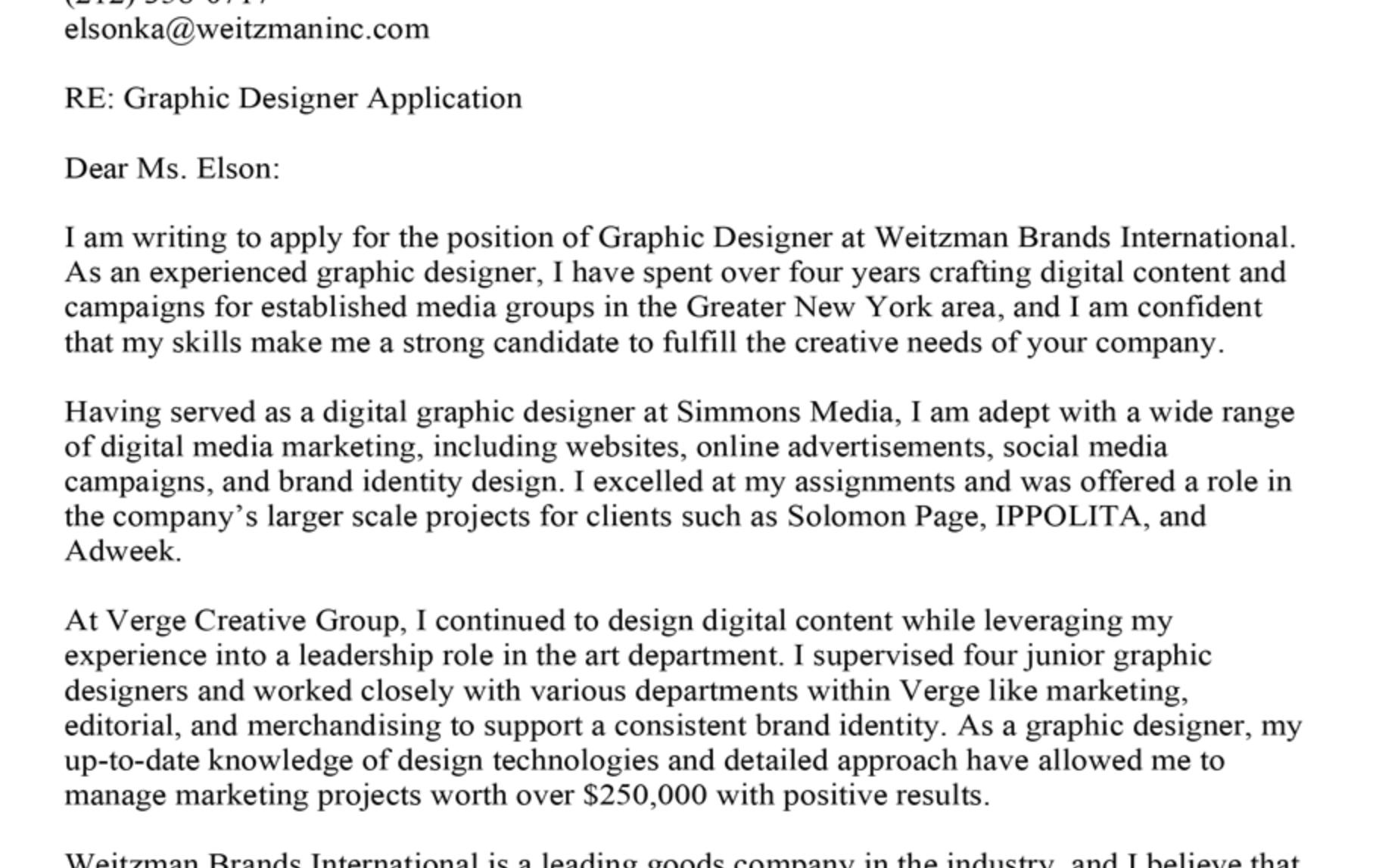
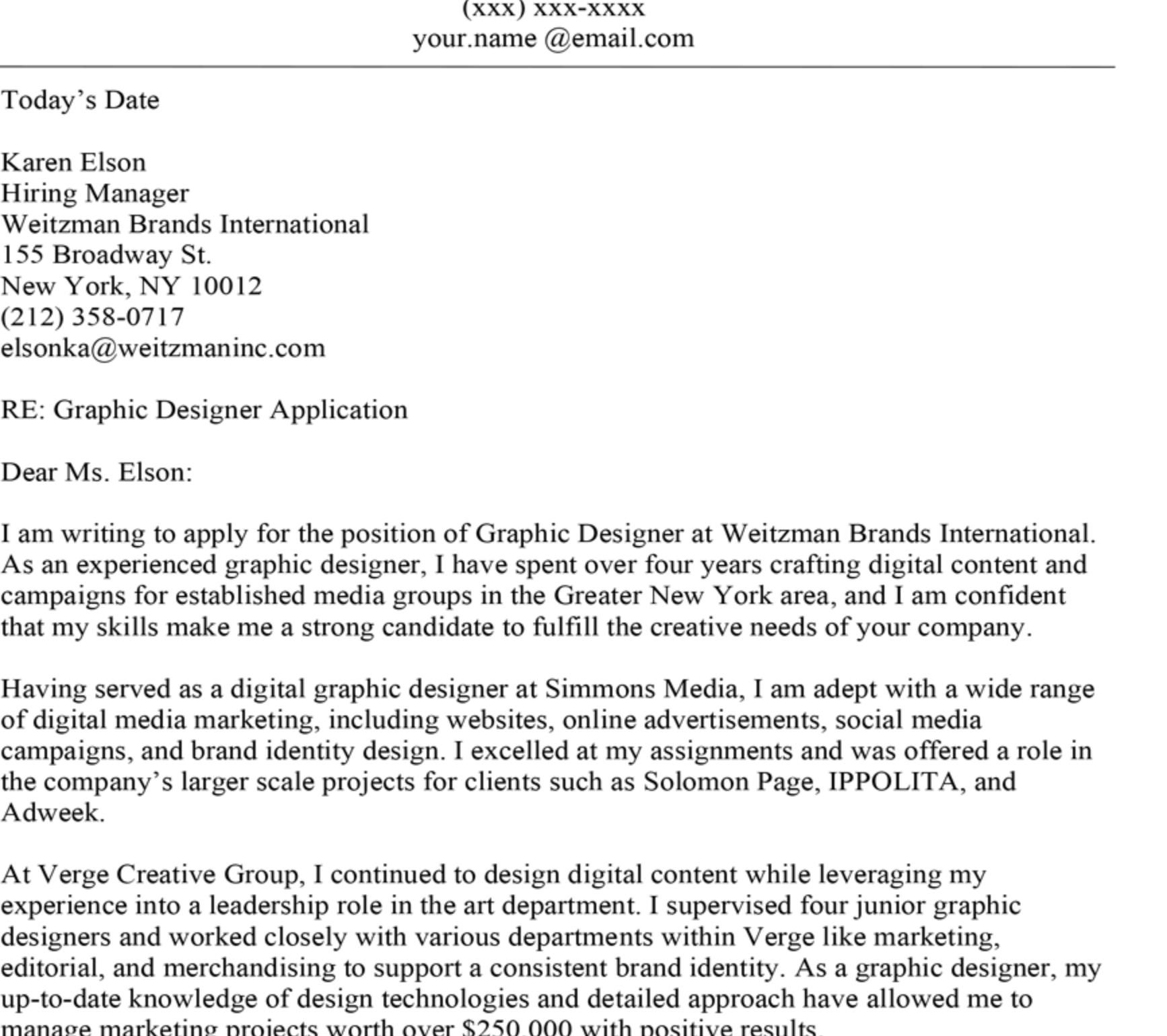
Cover letters are formal business letters written to the employer as a brief and engaging introduction that outlines your objective and highlights your skills. Cover letters can be optional or required, depending on the application requirements and are included with the application packet. Employers review multiple applications for open positions, so a cover letter gives you a chance to stand out! Here are some tips for constructing a well-written cover letter.
Research the correct way to construct a formal business letter
Research templates online and in programs like Microsoft Office
Use statements that capture the employers’ attention
Express your interest in the position and the company
Include language from the job description
Incorporate how your skills fit the position
Include data that demonstrate your success in a particular position
Add credentials that uniquely qualify you for the position (Education, Certifications, Awards, Extraordinary GPAs, etc)
Include your picture or headshot
Include your social media URL
Include your references (this should be on a separate, stand-alone sheet)
Include personal information such as relationship status, DOB, SSN, etc.
Use templates (Customize your letter as much as possible and only use templates as a reference or guide)
03/17/2025
www.linkedin/jordanwarhawk
Jordan.warhawk@calhoun.edu 321 Drive, Decatur, AL 35601
Patricia Morris
Human Resources Director
Manufacturing USA
123 Best Fit Ave.
Madison, AL 35758
RE: Maintenance Technician
Dear Patricia Morris,
I am excited to hear that Manufacturing USA is seeking an experienced Maintenance Technician to assist with the tremendous efforts to manufacture 40,000 parts over the next year! With proven experience in manufacturing, industry certifications, and an AAS Advanced Manufacturing degree, I feel that I would be an asset to your team.
In previous roles, I maintained and troubleshot production equipment and plant electrical systems and helped launch a new preventive maintenance program by reviewing and learning relevant software applications. In addition, I have a current OSHA 10 and NCCER certification.
I look forward to meeting you to discuss this opportunity further in an interview setting. Additional information concerning my qualifications and experience can be found in the attached resume. Thank you for your consideration
Kind Regards,
Jordan Warhawk
Attachments: Resume
Your Contact Information
NAME
STREET ADDRESS
CITY, STATE ZIP
DATE
Employer Contact Information
CONTACT NAME OR DEPARTMENT
COMPANY NAME
MAILING STREET ADDRESS CITY, STATE ZIP
Salutation
Dear (NAME OR “HIRING MANAGER”),
First Paragraph:
The first paragraph of your letter should include a brief introduction, why you chose to apply for the position, and how you learned about the opening. Mention the position you are applying for. If someone referred you or you know someone who works there, include their name. Be clear and concise regarding your request.
Middle Paragraph(s):
The next section of your cover letter should describe what you have to offer the employer. Make strong connections between your skills and the job requirements. Mention specifically how your education and experience match the position you are applying for. Remember, you are interpreting your resume, not repeating it. Try to support each statement you make with a piece of evidence. Be careful not to have one large block of text. One to two short paragraphs are best.
Final Paragraph:
Conclude your cover letter by thanking the employer for considering you for the position. Include information on how and when you will follow-up (one to two weeks is typical).
Complimentary Closing
Respectfully yours,
Signature
Handwritten, if possible. Typed if not.
Your Contact Information
Date
Employer Contact Information
Respectfully yours,

Focus on creating your built-in network through former or current classmates, colleagues, and friends. Here are other conduits for networking opportunities:
• FELLOW STUDENTS
• CO-WORKERS
• SUPERVISORS
• INSTRUCTORS
• MENTORS
• CONTACTS IN YOUR CAREER FIELD
“I am Andrew Warhawk, and I recently graduated from Calhoun Community College with my AS Degree in General Studies, concentrating in Business. I have two years of work experience in accounting, specifically related to month-end financial processing in Quickbooks. I look forward to beginning my career with a mid-level firm in the Huntsville area that would support me in obtaining a Bachelor’s degree in the future.”

Current Status (freshman, recent graduate, etc.): ________________Institution:____________________
Major/Concentration:
Plans after Calhoun: ________________________________________________________________
Job

Which organizations will be at the event?
Research panel members and presenters in advance
“I want to meet two new people.”
“I want to find someone who works in my subject area.”

A first impression can be more than a face-to-face meeting. Employers often get to know candidates by searching the internet. It is highly encouraged that job seekers research themselves to see images, social media accounts, and articles that populate during an internet search.
LinkedIn is the most frequently used social media platform when it comes to professional connections. Creating a LinkedIn profile allows you to post your work experience and network with industry members. When reviewing and creating any social media accounts, here are a few things to keep in mind:

Keep your account clean
Create a positive impression and avoid posting negative issues that can be handled privately.
Communicate professionally
Avoid using foul language and remain respectful with your posts.
Engage with your network
Utilize your account. Interaction helps build relationships and rapport with your connections.
Provide a complete and relevant profile
Completing your account with a professional photo, details from your resumé, and career goals will encourage employers to read the content.
Highlight the details
Provide details of more than your experience on your resumé. Include your research, publications, affiliations, leadership activities, or conference presentations.

What is an ePortfolio? ePortfolios are an avenue for students to document their educational journey and share their work with others through an online platform.
WHICH MAJORS BENEFIT FROM AN EPORTFOLIO THE MOST?
• Graphic Design
• Multimedia Design
• Art
• Photography
• Design Drafting
• Interior Design
• Landscape Design
• Architecture
• Engineering
• Education
• Marketing
• Creative Writing
• Journalism
• Broadcasting
POTENTIAL SITES TO BUILD A FREE PORTFOLIO:
TIPS:
Choose a design that reflects your profession and personal style that doesn’t overwhelm the reader.
Stay consistent – use the same color pattern and font style throughout.
Proofread for grammatical errors.
Update your site regularly. Set a reminder to review every six months at most.
INCLUDE:
• Introduction
• Featured Projects
• Work Samples
• Testimonials
• Contact Information
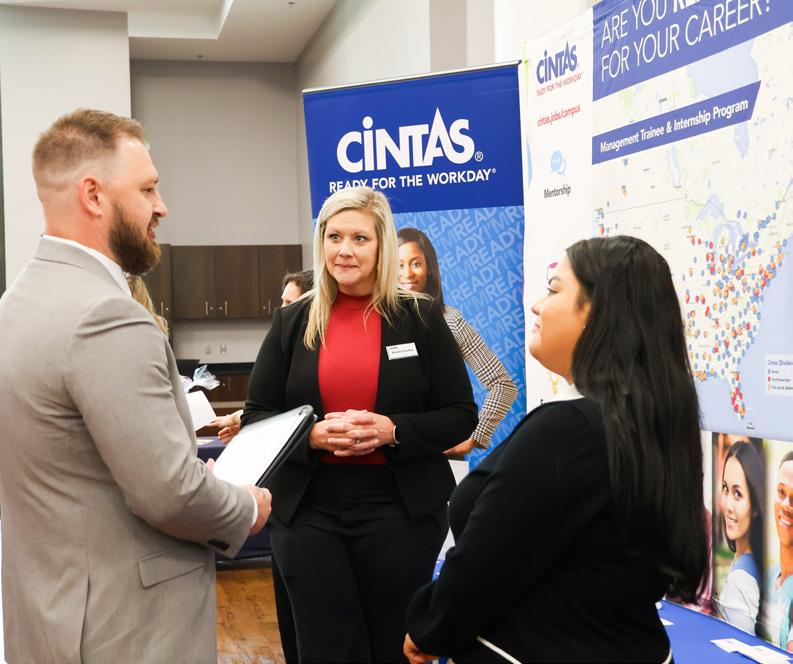
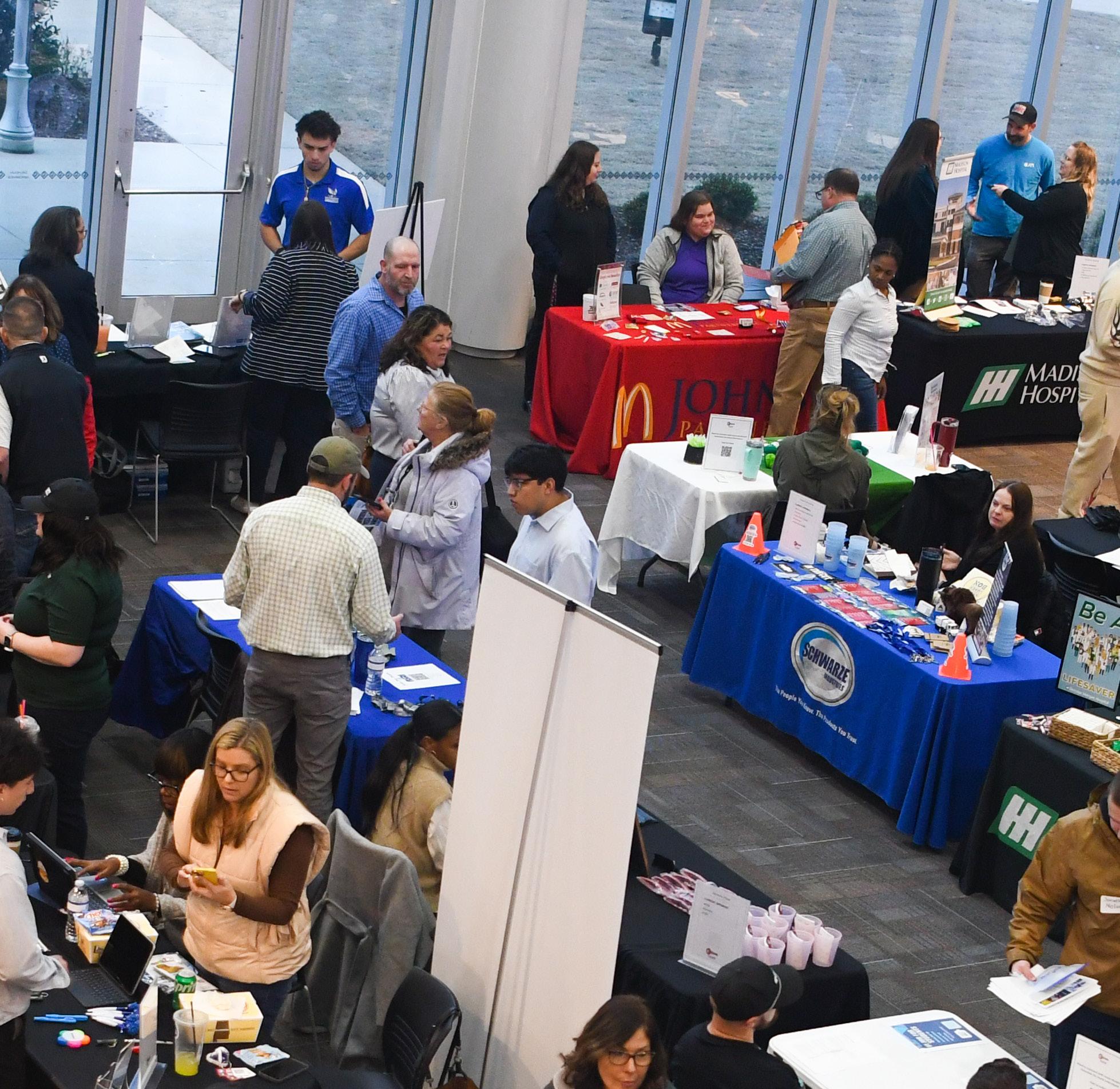
Job fairs can be the key to landing a job, no matter where you are on your professional journey. Job fairs present many opportunities to connect and network with employers and people in your community. They are a great way to introduce yourself and practice your own “elevator pitch.” Meeting and interacting with recruiters and employers face-to-face is still a critical part of the job search process.
HERE ARE SOME WAYS TO MAKE THE MOST OF YOUR JOB FAIR EXPERIENCE:

1. Research the companies attending
2. Dress like you would for a job interview
3. Prepare questions that you cannot find the answers to online
4. Practice answering questions about yourself beforehand
5. Be interested, engaged, and enthusiastic
6. Once you make a connection, give them your resumé or apply online
7. Grab a business card
8. Take notes
9. Follow up by email
10. Be courteous
AI resources can be a powerful tool to boost your resumé, cover letter, and interviewing skills! However, it is important to know how to use these new tools responsibly. If you choose to use AI resources in your career development journey, use them as a supplement, not a replacement for your own work. For each step on the career development journey, you’ll find tips for utilizing and evaluating your AI tools to guard against potential problems. Remember, AI is drawing from publicly available information on the internet, and it cannot fact-check itself. You are responsible for fact-checking any information you find for accuracy and validity.
You can ask AI questions, such as “what is the typical career path in [insert field]?” or “what careers blend [interest] and [interest]?”
You can ask AI questions, such as “what is the company culture like at [insert organization]?” or “what are some trends in [insert industry]?”
You can use AI to check a resumé for spelling and grammar, to help tailor your descriptions of previous jobs to a new field, or to generate action verbs for your descriptions with prompts like “what are some action verbs for an [insert field here] resumé?” or “improve the following resumé bullet point: [insert bullet point here].” Some AI services will screen resumés for readability.
You can ask AI to serve as an interviewer for a specific position: “act as an interviewer for [insert position title or job description], and generate interview questions for that role.”
You can ask AI questions such as “what is the average starting salary for entry-level positions in [insert industry or organization]?”
Use the information you receive as a starting point, not an end point, for your research. If a field or path you find through AI sounds interesting, consult professional organizations or the Career Services office for more information.
Compare the information you find through AI with other websites, including the websites for individual organizations. Consider asking a recruiter or other employee for organizations of interest as well.
AI cannot know exactly what you did at previous jobs. Make sure you only report tasks and responsibilities you actually had. Additionally, be mindful of privacy. Do not copy and paste your entire resumé, including personal information, into an AI system, since you do not know how their data is stored.
There is no guarantee that AI will ask questions you will eventually see in an interview, and it does not have much ability to evaluate your answers.
Most free AI tools do not draw from information after 2021, so the numbers you receive will not be the most recent information.

Panel interviews happen at companies where several members have a say in who is hired.
Prepare a copy of your resumé for each member of the panel.
Phone interviews are generally the first type of interview before going forward in the interview process.
Virtual interviews are used as a convenience to the job seeker when the company is distant. It is also a way to save on travel expenses.
Take a phone interview as serious as a face-to-face interview.
Identify a quiet, welllit place free from distractions for the interview.
Be ready to maintain good eye contact with the entire panel, paying a little more attention to the one asking the question.
As soon as you submit your resumé, expect a call. The first call could be a “make it or break it” situation.
Make sure your internet connection is stable and your computer’s webcam and microphone are working.
This is the most common type of interview. Oneon-one interviews are generally conducted when candidates meet minimum requirements according to their resumé.
Research the company, explore their website and social media page.
Print a copy of your resumé and place it side-by-side with the job description to compare your experience and to identify what personal qualities you have that fit the job description. Be ready to talk about yourself.
It’s important to ask questions. Prepare a list of potential questions to ask the panel. Limit to 1-2 at the end of the interview.
Eliminate anything that can be distracting. Turn off the television. Get comfortable, but not too comfortable, and have your resumé handy.
Dress professionally. Keep your answers straightforward and easy to follow.

Once you have polished your resumé and have been called in for an interview, the real preparation begins. Now take time to thoughtfully consider your goals and qualifications as they are relevant to the position and employer. To do so, research the company, review the job description, and understand why you are the best fit for the position. Here are some tips to succeed in your interview:
1. Be prepared – Write down everything you need to know ahead of time for the interview.
2. Do your research about the company – Who are their customers, what do they do, where are they located, and why do you want to work for this company?
3. Manage your online footprint – Check your online identity (social media) and be sure you know what recruiters/employers see. This is also a good opportunity for you to review your email address. What does it say about you?
4. Leave your cell phone in the car – We all think if we put our phone on silent, it will be fine. They still tend to make noise and be very distracting.
5. Bring fresh copies of your resumé – Do not assume everyone in the interview will have a copy of your resumé. Bringing a padfolio or folder makes you look professional.
6. Dress in a clean and conservative manner – Dress better than the job you are interviewing for. Remember to be simple, clean, and wrinkle-free. Refrain from wearing flashy jewelry or overwhelming scents.
7. Offer a firm handshake and eye contact – Maintain a warm smile and don’t avoid eye contact.
8. Be polite and respectful – Do not talk negatively about a previous job or supervisor.
9. Focus on your career goals and accomplishments – Be prepared to support your responses with specific examples.
10. Finish strong – Ask 1-2 prepared follow-up questions, thank the interviewer for the opportunity, and reiterate why you are the best fit for the position.
While each employer will have specific questions related to their industry and the position itself, there are several general interview questions you can go over before your interview to help prepare. Your resumé can serve as a guide as you discuss your experience and why you are the best fit for the position. Here are some common interview questions along with tips that can help you prepare for any interview:
The interviewer does not need to hear your life story when making this statement. You can assume they have already read your resumé and know the basics about you. When you answer this question, connect the dots on your resumé so the interviewer understands not only what you’ve done, but why. Talk about how your skills are relevant to the specific position you are interviewing for.
When answering this question, provide a sharp, on-point answer and be clear and concise. If you consider yourself to be a great problem solver, be sure to provide examples to show how you are a great problem solver. It is best to come up with 2-3 strengths with supporting experiences.
Everyone gets nervous when answering this question, but the key is to transform the flaw/weakness into a strength in disguise. You can also choose a weakness that you are working to improve. No one is perfect and there is always room for improvement!
This is why it is so important to research the company beforehand. While you might be interviewing for 5 jobs, you want that interviewer to know you want THIS job. Give reasons that your skill set aligns with the company and position you’re interviewing for.
This is your opportunity to discuss your professional goals. You want the interviewer to know that you are passionate, ambitious, and you’ve set realistic expectations for your career.
The goal here is to share an achievement that lets the interviewer see you succeeding in that position.
with it.
Be honest about a difficult challenge you have faced. Remember, you are not venting to a friend so do not go into too much detail. Most people are looking for evidence that you are willing to face issues head-on and make a sincere attempt at a resolution. Stay calm and professional while telling your story.
Think about a time you were the head of a project, took initiative, and helped motivate your team to get something done. When answering situational questions such as this one, use the STAR method: situation, task, action, results. It will help you stay on track and not ramble!
How would a previous supervisor or coworker describe you?
Be honest. Try to point out strengths you haven’t already discussed in the interview.
Tell me about a time you made a mistake.
The key here is to be honest without pointing blame at someone else. Explain what you learned from the situation and how you made sure it wouldn’t happen again. Most people want to hear that you are self-aware and open to feedback.
This is a chance to let your personality shine! It also lets employers see you as a person, not just a candidate for this job. Don’t talk about something that may give the impression you’re going to spend all of your time doing something besides your job.
Tell me about a time you disagreed with your supervisor or company policy.
This question relates to your ability to communicate effectively in a high-pressure situation. What you do during a conflict or disagreement says a lot about you. Focus on your skills and experiences that helped you diffuse the disagreement. Be sure to mention how this situation will help you handle disagreements in the future.
Describe your dream job.
Be relevant when answering this question. You can learn something and develop skills in every job. Be sure to identify things about the job you’re interviewing for and talk about how that will help you land your dream job.
Focus on the positives that the move will present and talk about the ways you want to grow professionally. Don’t ever complain or bad mouth your current boss!
This is your chance to interview the interviewer! Ask smart questions to show you are a great candidate but also to see if this is a good fit for you. Come up with a few questions and have them written down in your padfolio/ folder.

1. What are the day-to-day responsibilities of the postion?
2. How has this postion changed over time?
3. Can you describe the working culture of the company?
4. Do you provide professional development opportunities? If so what does that look like?
5. What are some of the challenges someone in this position might face?
6. How does the company measure success in this role?
Believe it or not, there is a list of questions an employer/interviewer cannot ask you in an interview. In the United States, there are certain topics that are off-limits to protect against discrimination. It is illegal for an interviewer to discriminate against an applicant based on race, color, religion, sex (including gender identity, sexual orientation or pregnancy), age, national origin, or disability. Asking questions related to these things could put the company at risk for a discrimination lawsuit.
Here are some examples of questions that are illegal for employers to ask:
• Are you a U.S. citizen? Employers cannot ask if you are a citizen, but they can ask if you are authorized to work in the United States. They can also only ask about other languages that you speak if it is relevant to the job.
• Are you married? Do you have children? Are you pregnant or planning to have children soon? Have you ever been divorced? Where does your spouse work? Interviewers can only ask questions related to relocating if the job requires it, but not in relation to your marital status/family situation.
• How old are you? When were you born? Employers may ask if you are at least 18 years of age due to the job requirements.
• Do you have any disabilities or medical issues? Have you ever been diagnosed with a mental illness? It is possible that an interviewer wants to know if you have any conditions that could hinder you from doing the job you are interviewing for. That could be a yes or no answer. Some jobs require applicants to complete a drug screen or physical to ensure that job duties can be performed with or without reasonable accommodations, but asking these questions directly is illegal.
• Are you religious? What is your practicing religion? Interviewers might want to know if you are able to work on weekends, but they should phrase it accordingly.
There are a few ways to respond if you think you have been asked an illegal question:
• You can choose to answer it. There is a chance the interviewer accidentally asked the question in an attempt to get to know you. They could be trying to make a connection, so consider the intent of why they asked the question.
• You can go around the question they asked while still addressing the concerns they have mentioned. They are most likely not trying to ask illegal questions on purpose, but this sometimes happens when mentioning any kind of personal information.
• If the question makes you uncomfortable and you are questioning its relevance, ask the interviewer how it relates to the position you are interviewing for.
• If someone is asking inappropriate questions you do not want to answer, you can always politely try to change the subject or ask to be excused from the interview.

When planning your interview outfit, strive to look professional, clean, and neat. Taking care of your appearance shows the potential employer that you are serious about your job search and that you value his/her time. Even before you greet your interviewer, the way you are dressed makes an impression.
Dress Pants
Modest skirt or dress
Blouse
Jacket or cardigan
Polo or button-up shirt
Tie
Closed-toe shoes
Simple accessories
INTERVIEW CHECKLIST:
Are you:
• Clean and well-groomed?
• Wearing clothing appropriate for the position?
Shorts
T-Shirts
Flashy accessories
Perfume/cologne
Flip-flops
Low-cut tops
Miniskirts
Consider covering tattoos and piercings
• Wearing clothing that is clean, unwrinkled, and well-fitted?



• Test your technology ahead of time (camera, microphone, internet, platform login).
• Choose a professional setting with a clean, distraction-free background. Avoid being in a bedroom space.
• Dress professionally from head to toe, as you would for an in-person interview.
• Send a copy of your resumé via email prior to the interview even if you already provided it in the application.
• Maintain good lighting - face a natural light source or lamp so your face is clear.
• Make eye contact by looking at the camera, (not just the screen) and smile.
• Sit up straight and use confident body language.
• Have your resumé and notes ready for quick reference.
• Silence notifications on your phone and computer to avoid interruptions.
• Speak clearly and at a steady pace so the interviewer can follow easily.
• Utilize the STAR (situation, task, action, result) formula to respond to questions with specific examples.
• Prepare follow up questions to ask at the end of the interview.
• Follow up with a thank-you email after the interview.
• Don't join late-log in at least 5-10 minutes early.
• Don't use a messy or distracting background (clutter, TV on, bad lighting, moving objects, etc.).
• Don't interrupt or talk over the interviewer - pause briefly before responding.
• Don't read directly from notes or your resumé - as it can make you appear disengaged.
• Don't multi-task (check your phone, email, or look away often).
• Don't risk poor audio or video quality - use headphones if necessary.
• Don't forget to smile and show enthusiasm - it helps overcome the virtual barrier.
• Don't eat, chew gum, or drink excessively during the call.
• Don't panic if there are tech issues - stay calm and politely reconnect if needed.

The employment process doesn’t end with the interview. Wherever you are in your career, following up remains an important step in the job search.
1. Ask about a timeline before you leave your interview. It is important for you to be clear about the next steps in the process. This will help you to know exactly when it’s acceptable to follow up. Sometimes employers will tell you they hope to have interviews complete and a candidate chosen by a certain day, and sometimes it’s more of a range (i.e. two weeks). Depending on what they tell you, it is more than appropriate to follow up with them according to the timeline they gave you.
2. Write a thank you note. If the employer gave you a quick turn around time, you can certainly send a thank you email. But if you know you have time, sending a thank you note really speaks volumes. If you interviewed with more than one person, try to get their names during the interview so you can include them all. A thank you note/email not only shows your gratitude for the opportunity, but it reminds them of who you are and that you would be an asset to their team.
3. If things do take a little longer than expected, you can check in with them. This can be a quick, brief email that doesn’t really ask for anything in return. You always want them to remember you in a positive way. Be sure to remain professional.
Name Address
City, State, Zip Code
Phone Number
Date
Contact Name
Contact Title
Organization Address
City, State, Zip Code
Dear [Recipient’s Name]:
I hope you are doing well. Thank you again for the opportunity to interview for the [Position Title] position at [Company Name] on [Interview Date]. I greatly appreciated the chance to learn more about your team and the exciting work being done at your organization.
I wanted to kindly follow up regarding the status of the hiring process and inquire if there is an anticipated timeline for the next steps or a decision. I remain very interested in the role and in contributing to your team’s success. Please let me know if there is any additional information I can provide to assist with your decision-making.
Thank you again for your time and consideration. I look forward to hearing from you.
Sincerely,
Signature
Typed Name

What happens after you have been offered a job? Besides celebrating and patting yourself on the back, you still need to decide whether or not you are going to accept. Make sure the position is still the right fit for you! When you start to assess the offer, you need to consider what’s important to you both professionally and personally.
These are some things worth considering:

• Paid Vacation/Sick Leave
• Healthcare Coverage
• Other Insurance
• Retirement
JOB SATISFACTION
COMPATIBILITY WITH THE OFFICE CULTURE
OPPORTUNITY FOR PROFESSIONAL GROWTH
FLEXIBILITY
Will I be excited about going to work based on the day-to-day responsibilities of this job?
What does the future of the company look like?
Do I feel like the culture/environment of the company fits with my personality? What opportunities will I have for growth in this role?
Am I okay with the work schedule, hours, and commute?
Be sure to read and reread the contract/offer letter. You want to know all of the details and expectations laid out in this job offer. The company might also allow you to speak to someone there so that you can ask some questions. Check all of the benefits offered. If your salary offer is a little less than you anticipated, see if the benefits outweigh the loss in salary. Know what you’re willing to compromise on. If you know that you aren’t willing to travel out of state because you have young children at home and this job requires some travel, be prepared to discuss that or possibly turn down the offer. Create a list after you interview for the job with what’s important to you and your non-negotiables. Go back to that list once you have been offered the position.
Once you have talked with the company and received a final offer, it is your job to make the final assessment of whether or not it meets your expectations. If it doesn’t and you turn the job down, you now know what you are really looking for in your job search.

Salary negotiation is the process when the employer and the potential employee reach an agreement on the terms and conditions of employment.
A compensation package can be presented in writing or in person and includes a proposed salary. If you believe the offered salary doesn't align with your experience, skill set or education, you may negotiate for more money.
• Resist asking about pay until the employer introduces the topic.
• Thoroughly evaluate the job offer.
• Consider the company policy regarding negotiating salaries. Some state and/or federal companies do not allow negotiations and have to strictly adhere to predetermined salary range.
• Consider offering a counteroffer after researching the national and local average salary compensation for the type of position it is and your specific experience and/or education.
1. Research the national and local average salary
It can provide you with a good baseline and justify your salary request.
2. Compare salaries
Compare the salary the hiring manager offers you to the data from your research. Make sure to compare their salary offer to the industry standard.
3. Pitch to justify your desired salary
Prepare a pitch to justify your desired salary based on your research. You may use this time to point toward your experience, skill set, career level or education and/or a unique perspective you have in order to increase your chance at higher pay.
4. Adjust your salary expectations
Adjust your salary based on the schedule, company culture and location. If you'll be working at an inconvenient location, your schedule is inflexible or the employer asks you to travel out of town for work, the job may be worthwhile if they increase their salary offer. Likewise, if you have an easy commute, flexible hours and the company treats you well, it may be worth it for you to accept offers that are slightly under the industry standard. Take these personal preferences and elements into account when considering the pay you want.If you are required to relocate, calculate the cost of temporary housing, moving expenses and travel or airfare. You can either ask the employer for a relocation package or a signing bonus. Also, make sure to take the geographic location and cost of living into account when assessing your worth.
5. Determine your final salary range
Effective salary negotiation requires you to know both your target amount and the lowest amount you're willing to accept. First, negotiate for your desired salary. If the employer cannot meet it, negotiate the least amount for which you would be willing to settle. If the employer still cannot meet the lowest salary you can accept, you may need to stop negotiating.Make sure to maintain the value of your worth. Review the average salaries in your location and field, and consider what unique experiences or skills you can bring to the company that increase your worth.

6. Consider other negotiable benefits

Some companies may not offer a higher salary, but offer benefits packages or "perks," that can be negotiated as a part of the entire compensation package. Ask for a breakdown of the full compensation package, including whether you'll receive a company phone, vacation, paid time off or medical and life insurance.
7. Delay salary negotiations for as long as possible
If possible, hold off on discussing salary until after the employer has offered you the position. Wait for them to introduce the topic.
If the employer asks you to name your salary requirement in a resumé or cover letter, do so. It may be the criteria used to narrow down qualified candidates. Follow the employer's directions to make sure your resumé gets shortlisted.
If the hiring manager brings up salary before you're prepared to discuss it do not feel pressured to answer. You can redirect the question. You can say something like, "Before we get into that, I'd like to know more about the role." You can then ask them about the responsibilities of the position.
8. Let the hiring manager make an initial offer
If the hiring manager offers you the position, let them name a figure first to make sure you don't give a salary figure that is lower than what they could negotiate or higher than the company will consider. If the hiring manager asks you what your desired salary is, you can counter in several ways, such as:
• Asking: "What is the typical salary range for employees in the company with that position?"
• Asking: "What is the company's budget for the role?"
• Say: "I will accept any reasonable offer."
• Say: "As a hiring manager, you are better informed to estimate how much value I can add to the company than I am."
Once you receive the salary offer make a counteroffer by asking for your ideal amount. Hiring managers expect a negotiation, so their initial offer usually includes some room for them to move up. Also, be straightforward. If you want more money, then ask for it. Instead of saying something like, "Well, I just purchased a new house, so my expenses are really high," say, "I need a higher salary" or "I need more than that."
9. Disclose your previous job's salary
Disclosing the salary you received at your previous position(s) could be a useful salary negotiation tool, especially if your previous employer(s) accommodated a higher compensation than the compensation being offered by the current potential employer.
10. Discuss current job offers from other companies
Disclose information about other job offers that promise a higher salary. Make sure to discuss this information in a positive tone and emphasize your desire to work for the company with whom you currently speak.
11. Be confident and cordial
Negotiate with confidence! After you've done your research, you know that the salary you're asking for is reasonable. If the hiring manager can't meet the amount you ask for, then you may need to pass on the job. However, make sure not to issue ultimatums. For instance, instead of saying, "This is my last offer", say, "I need at least $45,000 to make the change in jobs work for me." Repeat your unique skills or education that especially qualify you for the position. You may close the conversation with, "I look forward to working together on this." Remember: the negotiation process is still a part of what the employer learns about you! Being cordial when working through the process can have a positive impact!
Name Address
City, State, Zip Code
Phone Number
Date
Contact Name
Contact Title
Organization Address
City, State, Zip Code
Dear Mr./Ms. Last Name or To Whom it May Concern:
Thank you very much for oIering me the position of [Position Title] at [Company Name]. I truly appreciate the time and eIort you and your team invested in the interview process and in considering me for this role.
After careful consideration, I have decided to decline the oIer. This was not an easy decision, as I was impressed by your organization and the opportunities it provides. However, [brief reason, optional: e.g., I have accepted another position that aligns more closely with my career goals].
I am grateful for your oIer and for the chance to learn more about your team. I hope we can stay in touch and perhaps cross paths in the future.
Thank you again for your kindness and understanding.
Sincerely, Signature
Typed Name
Name Address
City, State, Zip Code
Phone Number
Email Date
Contact Name
Contact Title
Organization Address
City, State, Zip Code
Dear [Recipient’s Name]:
I hope you are doing well. Thank you again for the opportunity to interview for the [Position Title] position at [Company Name] on [Interview Date]. I greatly appreciated the chance to learn more about your team and the exciting work being done at your organization.
I wanted to kindly follow up regarding the status of the hiring process and inquire if there is an anticipated timeline for the next steps or a decision. I remain very interested in the role and in contributing to your team’s success. Please let me know if there is any additional information I can provide to assist with your decision-making.
Thank you again for your time and consideration. I look forward to hearing from you.
Sincerely,
Signature
Typed Name