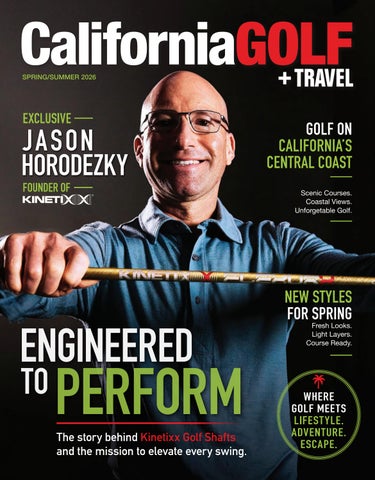
ENGINEERED TO PERFORM
The story behind Kinetixx Golf Shafts and the mission to elevate every swing.



If you are not completely satisfied with your
If you are not completely satisfied with your purchase, return






























































THE FAIRWAY CONNECTION: BRIDGING GENERATIONS VIA THE SO CAL JR GOLF ALUMNI ASSOCIATION
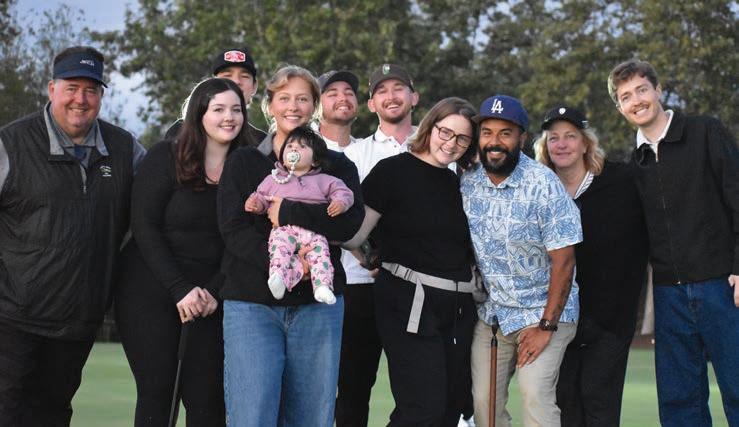
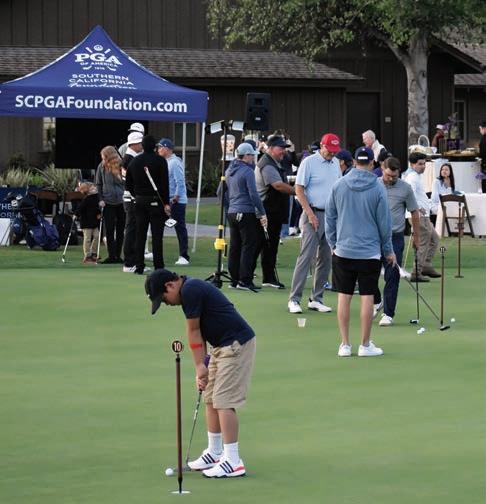
The fairways of the SCPGA Junior Tour have long served as a proving ground for talent, a classroom for character, and a birthplace for lifelong friendships. For many, the transition from junior golf to the professional or amateur adult world marks the end of a competitive chapter, but the So Cal Jr Golf Alumni Association is ensuring the story continues. By fostering a vibrant community of former SCPGA members, the Association is dedicated to a mission that transcends the scorecard by supporting the SCPGA Foundation’s vital initiatives in education, inclusivity, and the sustainable growth of the sport. This is more than just a network of former competitors; it is a collective effort to build a future where every aspiring golfer has the opportunity to thrive.
Central to this mission is a commitment to the “cycle of giving,” where every dollar from membership dues directly funds the SCPGA Foundation’s Grants and Scholarships Pillar. This contribution serves as a powerful equalizer in the game, removing the daunting financial barriers that often prevent talented young golfers from competing. By covering tournament entry
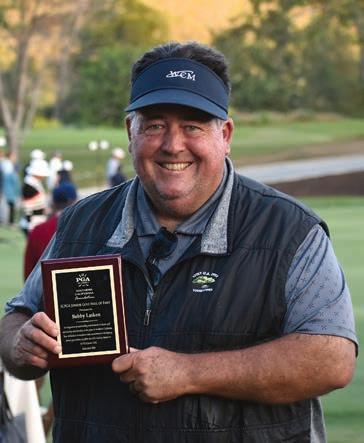
fees for families in need, alumni ensure that a young player’s journey is determined by their passion and skill rather than their financial means. This creates a profound legacy, as the alumni of yesterday become the silent benefactors of the champions of tomorrow, keeping the spirit of the game alive for the next generation.
Beyond the philanthropic impact, the Alumni Association offers a unique space to rekindle the bonds formed during those formative years with the SCPGA. Through a curated
calendar of special events—ranging from casual reunions to highstakes team competitions—alumni from every era can reconnect and share the stories that only those who have walked the same fairways can truly understand. These gatherings bridge the gap between past and present, celebrating a shared history while offering exclusive perks. Members gain access to VIP viewing opportunities at select PGA and LPGA Tour events, celebrity meet-and-greets, and limited-edition alumni gear, ensuring they remain close to the game they helped shape. There has never been a better time to reconnect with your roots and make a lasting impact on the sport. By joining the So Cal Jr Golf Alumni Association, you aren’t just signing up for rewards; you are reclaiming your place in a community that values your legacy and shares your passion for golf’s future. While this network celebrates our former players, it is truly open to everyone. We warmly welcome all fans of the game and supporters who are looking to make a meaningful connection with the SCPGA community. We invite you to return to the fold or join us for the first time to help pave the way for the juniors of today. To learn more about the community and to secure your membership, visit scpgafoundation.com/alumni and join us in championing the next generation of golfers.




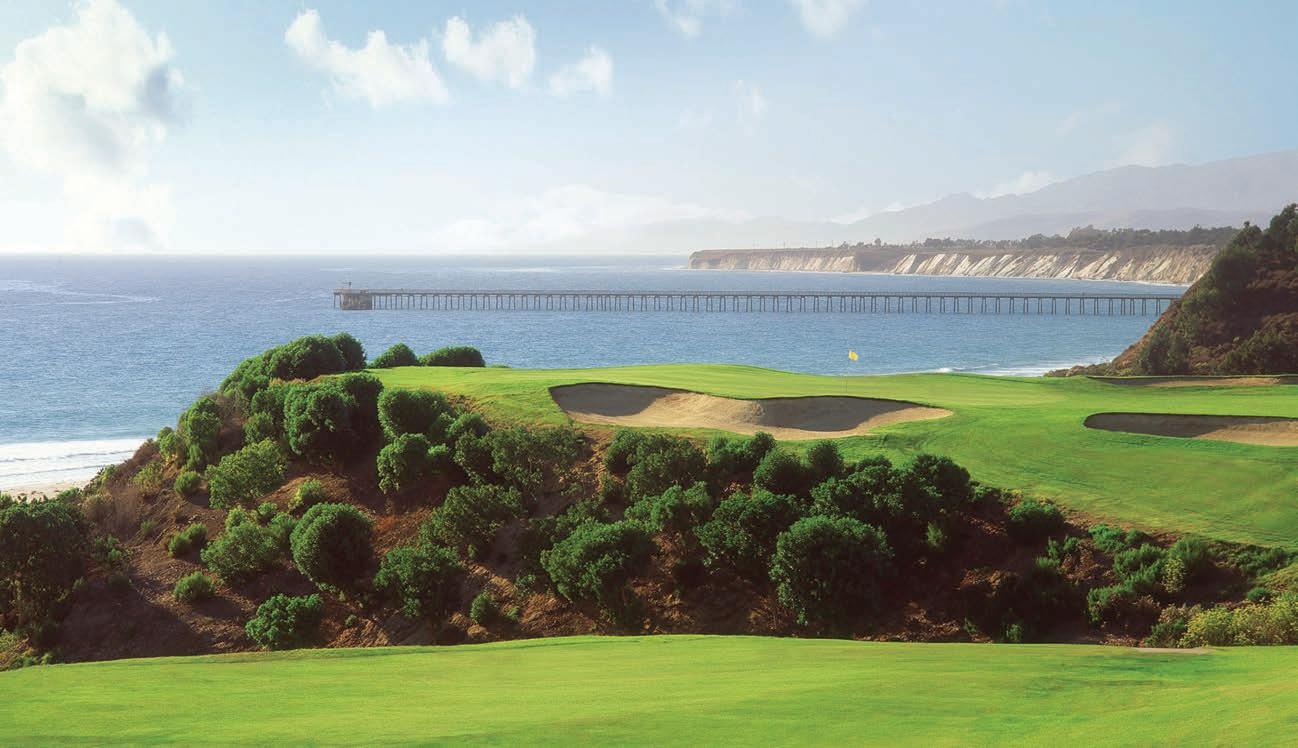
Discovering Golf on California’s Central Coast
By DAVID WEISS
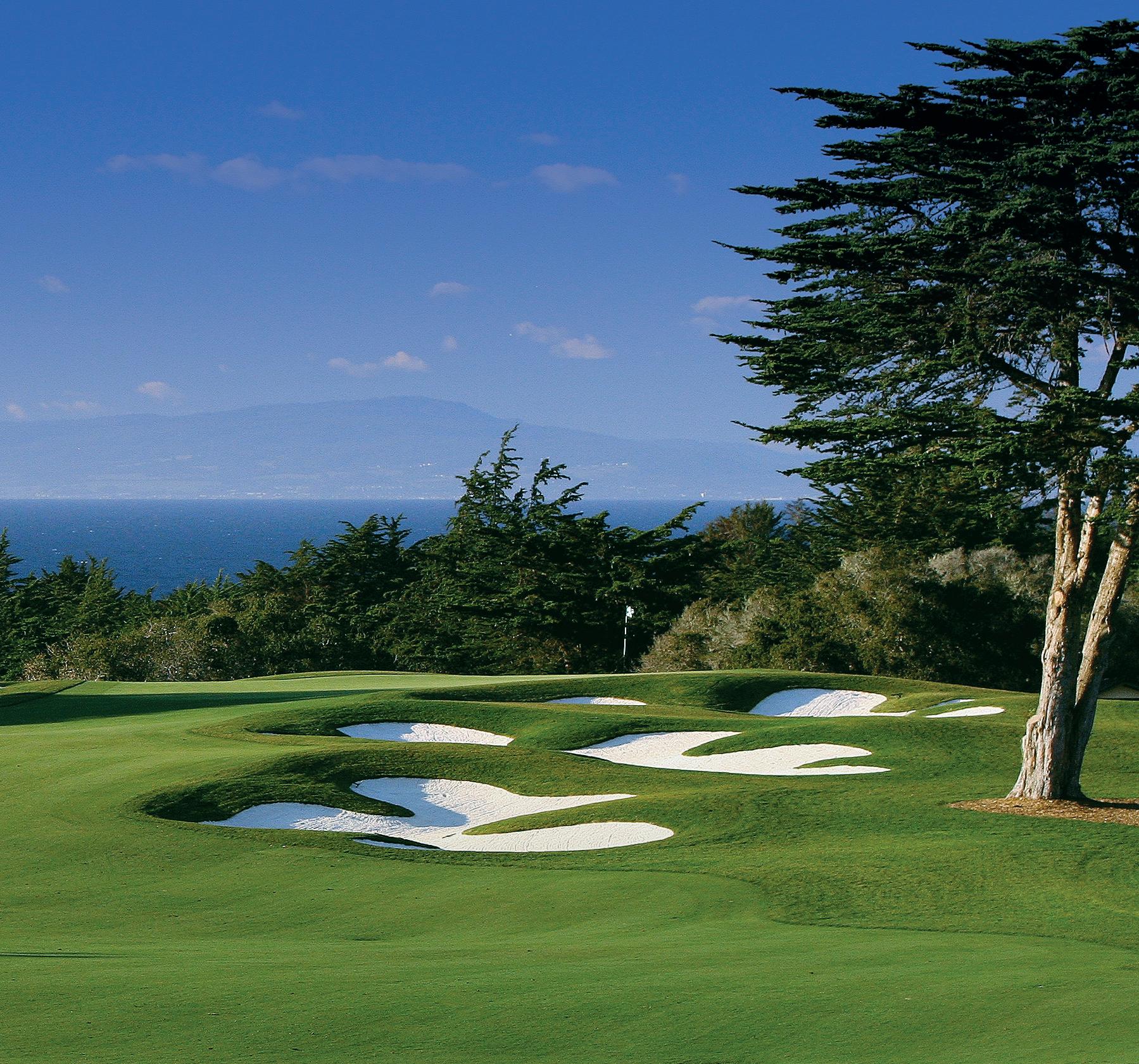
The first thing you notice about golf on California’s Central Coast isn’t the golf. It’s the light. It arrives softly over the Pacific, a kind of gauzy, cinematic glow that makes even a range bucket feel like a prop in a lifestyle shoot. By the time you’ve driven north out of Santa Barbara, past citrus groves, roadside farm stands, and the slow, tilting rhythm of vineyards, you begin to understand that golf here is less a pursuit than a mood. The fairways just happen to be very, very good. Start with the ocean because you should always start with the ocean. At Sandpiper Golf Club, the Pacific doesn’t so much frame the round as stalk it. Holes spill along the bluffs above the water, gulls circling lazily as if they’ve got tee times of their own. Designed by William Bell Jr., Sandpiper has that old-school California ease: wide corridors, strategic bunkering, greens that don’t shout but still get the better of you.
The par-3 sixth is the postcard, perched above the surf, the kind of hole that makes you briefly consider quitting your job and becoming the sort of person who lingers. Even when the wind kicks up, and it will, you’re not fighting the course so much as negotiating with it. The ocean sets the terms.
Drive inland and the mood shifts. The salt air gives way to chaparral and oak, and the land begins to roll with a different kind of authority. Rancho San Marcos Golf Course feels like a hidden chapter, tucked into the foothills, quieter, more intimate. It’s a course that rewards attention: uneven lies, subtle doglegs, greens that ask for imagination instead of brute force.
There’s a sense here that you’re playing through the land rather than over it, that each hole was discovered rather than built. It’s the kind of place where you look up after a shot and realize you haven’t heard a car in an hour.
North again, and the terrain opens into something broader, windier, more elemental. La Purisima Golf Course is often spoken of in reverent tones, and for once, the reverence feels earned. Designed by Robert Muir Graves, it stretches across a wide valley like a links course that took a wrong turn and ended up in wine country. There are no houses, no visual clutter, just fescue, bunkers, and the steady insistence of the breeze.
The routing is muscular without being punishing, the greens large enough to invite hope and then quietly dismantle it. It’s a thinking player’s course, but also a feel player’s course, and occasionally a survival course when the wind decides to show off. You leave La Purisima with that rare sensation of having been tested without being scolded.
Not all Central Coast golf is so austere. Some of it leans into comfort, into a kind of cultivated ease that pairs as well with a post-round
Sandpiper Golf Club
Negroni as it does with a well-struck 7-iron.
At Ojai Valley Inn, the game unfolds in a setting that feels almost improbably serene. The George C. Thomas Jr. design winds through a valley framed by the Topatopa Mountains, where the light in late afternoon turns a shade of pink so distinctive it has its own name: the “Ojai Pink Moment.”
The course itself is classic California, walkable, elegant, just demanding enough to keep you honest. But Ojai is as much about the in-between moments as the golf: the citrus-scented air, the low hum of conversation on a terrace, the sense that time has agreed to slow down for your benefit.
A little farther afield, Alisal Guest Ranch and Resort offers a different kind of escape, one that trades coastal chic for Western charm. Here, you can ride horses in the morning, play 18 in the afternoon, and end the day with a steak that feels like it belongs to the landscape.
The Ranch Course is the headline act, a tree-lined, creek-crossed layout that asks for precision and rewards patience. There’s something deeply satisfying about golf that coexists so comfortably with boots and saddles, as if the game has always been part of ranch life, even if it arrived fashionably late.
Then there’s Soule Park Golf Course, a municipal gem that locals speak of with a kind of protective pride. Redesigned by Gil Hanse, Soule Park has the bones—and now the polish—of something far more exclusive. Wide fairways give way to strategic angles, greens that are generous until they aren’t, and views that rival anything in the region. It’s the sort of place where you might expect pretense but find none, where a twilight round can feel as meaningful as anything you’d book months in advance.
Before you leave town, it’s worth circling back to where it all begins. Santa Barbara Municipal Golf Course (“The Muni” to locals) offers a final reminder of what makes golf here so enduring. It’s unpretentious, walkable, and quietly scenic, with mountain backdrops and glimpses of the coast that never feel forced. There’s a rhythm to The Muni that mirrors



Ojai Valley Inn
La Purisima Golf Course - Hole 2
Rancho San Marcos Golf Course

the city itself: relaxed, welcoming, and just serious enough to keep you engaged. It’s not about spectacle, it’s about feel. And in many ways, it’s the most honest round you’ll play all trip.
What ties these courses together isn’t just geography, though the proximity is part of the charm. It’s a shared sensibility, a belief that golf should be experienced, not endured. Even the more demanding layouts here seem to understand that they’re part of a larger story, one that
includes food, wine, weather, and the quiet luxury of space.
Between rounds, the Central Coast makes a compelling case for lingering. In Santa Barbara, that might mean a long lunch with a view of the harbor, or a stroll along State Street where the pace feels intentionally unhurried. Head into the Santa Ynez Valley and the rhythm shifts again, tasting rooms, farm-to-table restaurants, roads that curve just enough to keep you curious. It’s easy to lose a

day here, easier still to justify it.
And that may be the real trick of golf in this part of California. It invites you to play, certainly, but it also gives you permission not to rush. Tee times feel less like appointments and more like suggestions. Scores matter, but not as much as the way the light hits a fairway at 5 p.m., or the sound of the wind moving through the grass, or the simple pleasure of walking off the 18th green knowing there’s nowhere else you need to be.
By the end of a few days, you start to recalibrate your expectations.
Golf doesn’t have to be a grind, or a checklist, or a test you’re always slightly failing. It can be something softer, more expansive, a way of moving through a landscape that rewards attention without demanding perfection.
On your last morning, you might find yourself back by the ocean, or tucked into a valley, or standing on a tee box with the mountains rising in the distance. The details blur a bit, the exact yardages, the number of putts, but the feeling lingers. The light, especially. Always the light.
And you realize that on the Central Coast, the golf isn’t competing with the setting. It’s collaborating with it.
Soule Park Golf Course
Alisal Guest Ranch and Resort

WHEN YOU LEAST EXPECT IT Shooting Your Age...
For those who spend a lifetime in the game of golf, there comes a moment when a quiet thought begins to surface: Will I ever shoot my age?
It’s one of the game’s most personal milestones, less about competition and more about time, persistence, and a lifelong relationship with the sport. Yet for most, the question of when, where, or how it might happen gradually fades into the background.
Until, suddenly, it doesn’t.
TWO LIFETIMES IN GOLF
In the fall of 2025, that milestone arrived unexpectedly for two longtime friends: Bill Murray and John Ashworth.
Their paths into golf began in remarkably similar fashion. Both learned the game as young caddies: Bill in the suburbs of Chicago, John in Southern California. Over the years, each carried a single-digit handicap and developed a deep, enduring connection to the game, though their careers would take very different directions.
Bill Murray became one of the most recognizable entertainers of all time, often weaving golf into his work. From his unforgettable role as Carl Spackler in Caddyshack, to his decades of crowd-pleasing appearances at the AT&T Pebble Beach Pro-Am, to his iconic swing toward Mount Fuji in Lost in Translation, golf has always been part of his story.
John Ashworth’s journey stayed closer to the fabric of the game itself. A collegiate player at the University of Arizona in the late ’70s and early ’80s, he later caddied on the PGA Tour before building a legacy in golf apparel. Through brands like Ashworth, Fidra, Linksoul and now at Goat Hill Park, he has helped shape the style and culture of modern golf.
Their friendship was forged about a decade ago through a shared passion for the game and a cause that mattered deeply to John.
SAVING GOAT HILL
In 2014, Ashworth led the effort to “Save Goat Hill,” a struggling municipal course in Oceanside, California, that was on the brink of closure. Looking to rally support, he reached out to Murray.
What followed was a moment that gave the project national attention.
At the 40th anniversary of Saturday Night Live, Murray stepped onto the stage wearing a tuxedo with a “Save Goat Hill” t-shirt underneath. The image became
a powerful symbol of support, injecting new life into the effort. Not long after, Murray became an investor and partner in the course.
From there, the two stayed connected, playing golf together in various places over the years, their friendship grounded in the game they both loved.
A MAGICAL WEEK IN SCOTLAND
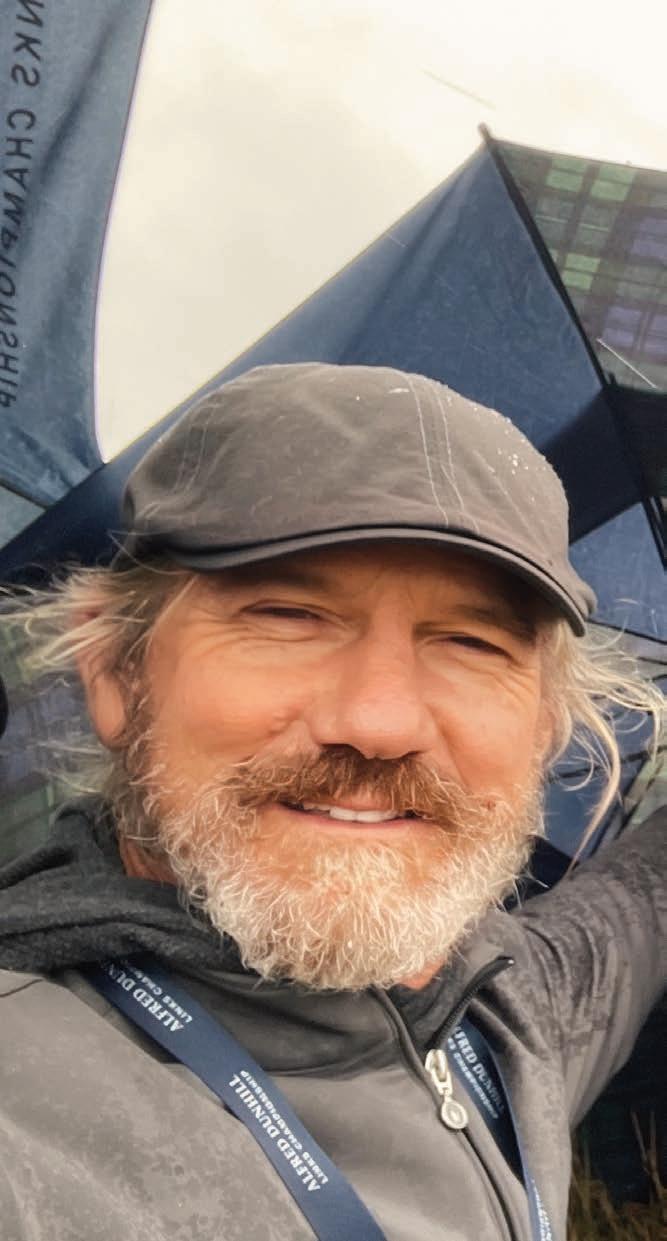
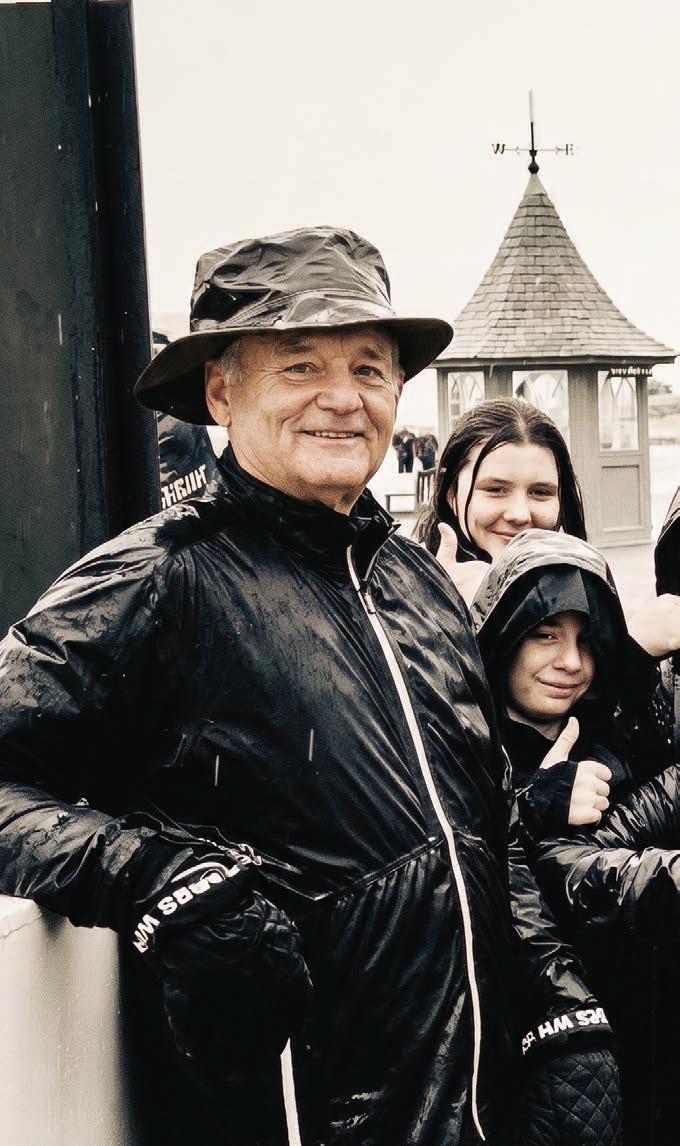
In early October 2025, Bill Murray found himself at St Andrews, competing in the Dunhill Links Championship. Paired with professional golfer Jordan Smith, Murray helped their team make the cut, no small feat in a Pro-Am field where only 15 teams advance to the final round.
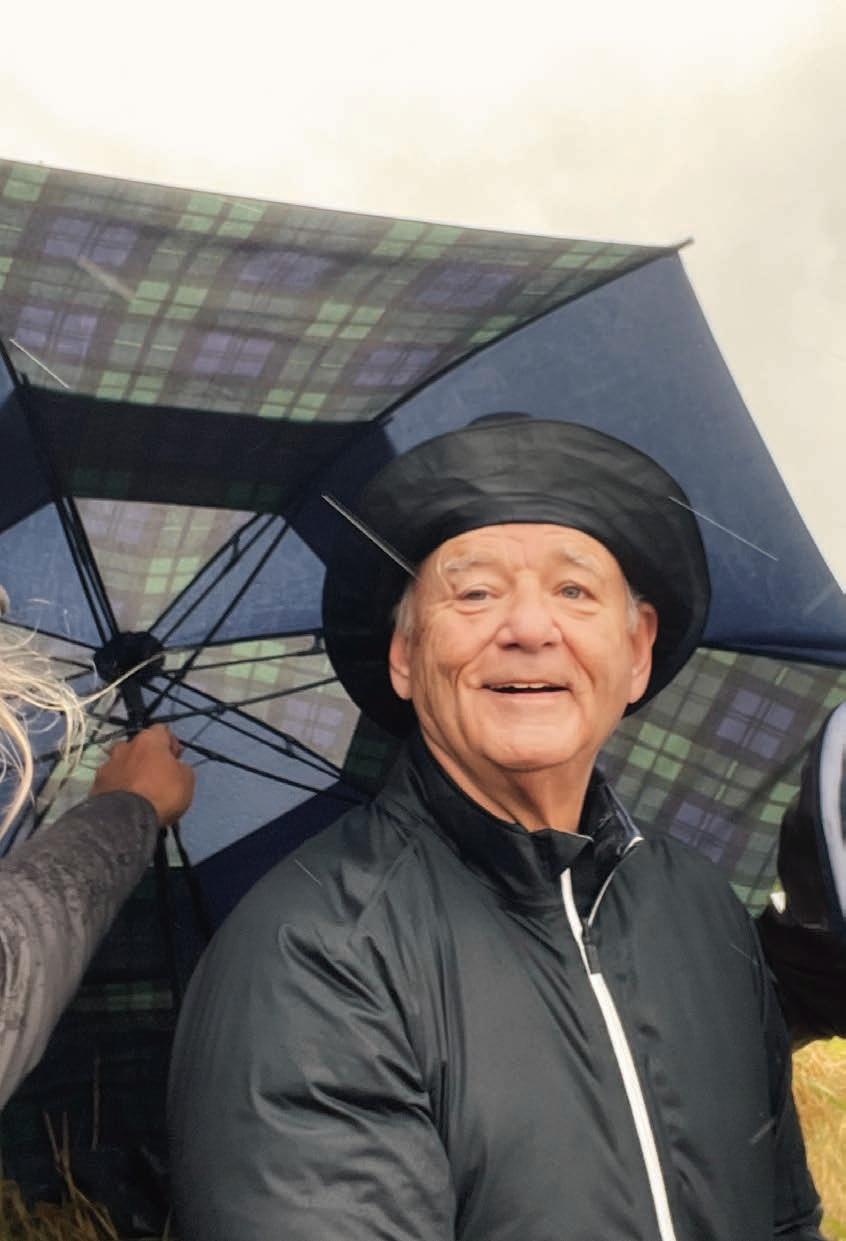
He was playing well. Comfortable. In rhythm.
Then, on Sunday, October 5, just two weeks after turning 75, it happened.
On the Old Course, in competition, with a gallery looking on, Bill Murray shot 75.
His age.
It was the kind of moment golfers dream about but rarely experience: the game’s most historic stage, the weight of competition, and a number
that aligned perfectly with the years behind him.
And, fittingly, the golf gods had a hand in it.
On the final hole, Murray hit a solid tee shot that drifted right, bounding through a wooden boundary and onto the adjacent road, where it struck the backside of a dog. The ball ricocheted back into play, settling safely in the fairway. He would go on to make par, sealing the round.
A bounce you couldn’t script.
A story you couldn’t invent.
Afterward, Murray called Ashworth, his voice filled with unmistakable joy.
“I thought I’d have to be in my eighties to get it done,” he admitted.
For a lifelong golfer, it was one of those rare, perfect days.
BANDON DUNES: A DIFFERENT KIND OF MAGIC
Just over two weeks later, on October 21, the day after his 66th birthday, John Ashworth landed in North Bend, Oregon, for his annual buddies’ trip to Bandon Dunes.
Among his group, affectionately known as the “Uncle Tony,” were 24 friends from across the country gathering for five days of golf, camaraderie, and friendly competition at one of the game’s most revered destinations.
Arriving at Bandon carries a certain feeling, something like being a kid pulling into Disneyland for the first time. Anticipation, excitement, a sense that something special is about to happen.
Ashworth barely had time to take it all in.
His group had moved their tee time at Old Macdonald from 2:40 to 1:30 to ensure they could finish all 18 holes. That meant a scramble: luggage dropped at the lodge, shoes changed, clubs assembled, a quick shuttle ride—and no time for the range or practice green. Just a power bar, a pull cart, and straight to the first tee.
But none of that mattered.
The weather was perfect, 70 degrees, calm air, and the mood was even better. Smiles all around. Energy high.
Teams were drawn on the first tee:
• Ollie, a PGA teaching professional and scratch player, paired with Spoony, a 7-handicap business owner from San Diego
• Drew, an attorney from Chicago, teamed with “Uncle Ashy”—John Ashworth himself—both playing to 4 handicaps
The stage, once again, was set.
A ROUND FOR THE AGES
What follows is the round as remembered by their playing partner, Ollie—a hole-by-hole account that, in hindsight, reads less like a scorecard and more like something unfolding in real time.
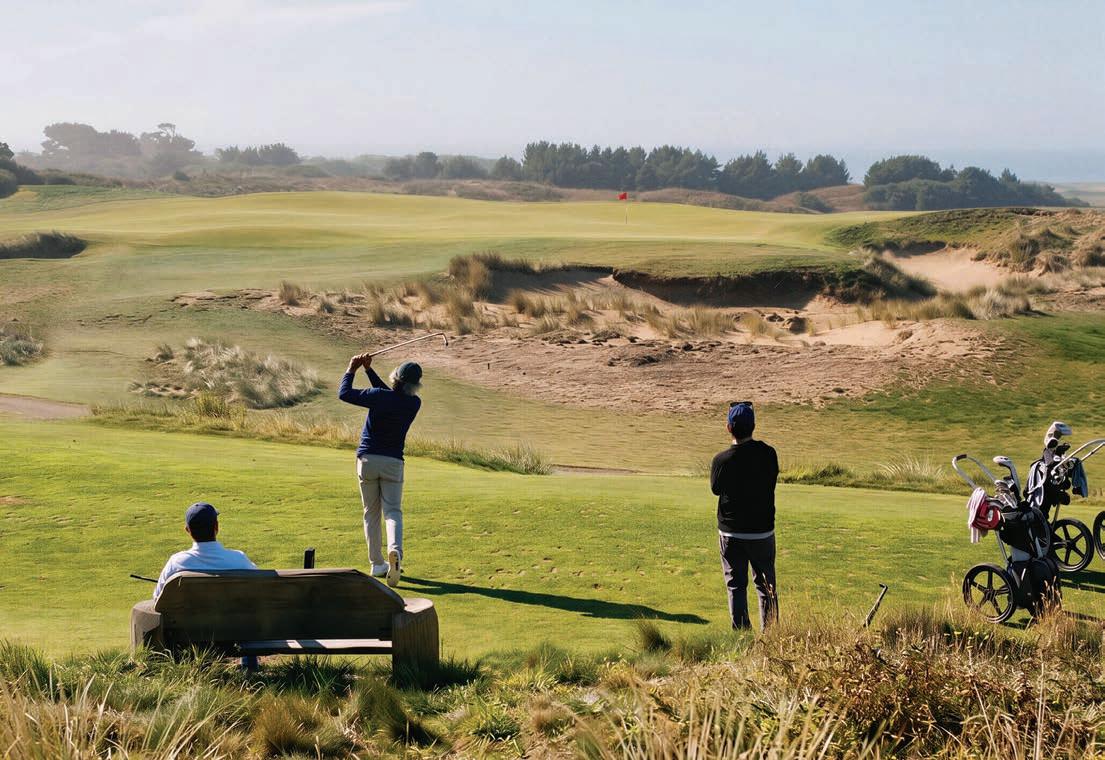
It didn’t start with fireworks.
At the opening hole, a gentle par 4, Ashworth found the fairway, hit a solid approach to 20 feet, and calmly two-putted for par. A steady beginning. Nothing more.
The second, a demanding par 3, offered the first hint that this might not be an ordinary day. After a rare mishit off the tee, understandable given the whirlwind arrival just minutes earlier, Ashworth clipped a delicate 70-yard wedge, using the slope perfectly to set up an unlikely par. A small save, but a meaningful one.
From there, a rhythm began to build.
Pars came easily through the next few holes—controlled drives, composed approaches, nothing forced. Then, at the short par-3 fifth, the tone shifted. A 16-foot birdie putt dropped, almost unexpectedly, and a quiet confidence began to take hold.
At six, a reachable par 5, Ashworth threaded a remarkable lay-up between bunkers before floating a wedge to three feet. Another birdie. Now two under.
And then, at the seventh, the round ignited.
From the fairway of the ocean-side par 4, Ashworth struck a 9-iron that, according to his playing partners, “never left the flag.” The ball landed
just short of the hole and disappeared.
Eagle.
In the span of three holes: birdie, birdie, eagle.
Something had changed.
THE QUIET REALIZATION
By the turn, Ashworth had reached five under par. Only then did the realization begin to creep in—not for him, but for those around him.
The front nine at Old Macdonald plays to a par of 34.
Ashworth had shot 29.
The mood shifted instantly. Words became scarce. Glances were exchanged. A finger to the lips. No one wanted to disturb what was unfolding.
Golf has a way of punishing awareness.
So they said nothing.
HOLDING THE LINE
The back nine became a test not of brilliance, but of composure.
At ten, a cautious two-putt par.
At the par four eleventh, a pivotal moment. A drive out of position left, a decent recovery followed by a delicate wedge from 105 yards settled inside four feet. The putt dropped, a par saved and with it came the first outward release—high-fives, laughter, the kind of energy that can no longer be contained.
Five under.
At twelve, another dart with a flushed 7-iron, this time to eight feet on a demanding par 3. The putt never threatened to miss.
Six under.
Now the question lingered, unspoken but understood: How far could this go?
A BRIEF WOBBLE
Even in the best rounds, golf demands its moment of resistance.
At thirteen, a missed birdie opportunity from close range brought a rare sense of deflation. At fourteen, a slightly heavy tee shot hinted at tension creeping in.
But Ashworth responded the way seasoned players do—not with force, but with acceptance.
A steady par. Reset.
On fifteen, as the sun began to drop over the Pacific, he delivered one of the most remarkable shots of the day: a fairway metal from distance that finished perfectly holehigh on the green. An eagle putt narrowly missed but tap in birdie.
Seven under.
THE TEST
At sixteen, a slight block right miss off the tee led to a difficult lie and a blind approach over the iconic “Alps” mound. What followed was a towering 7-wood that carried trouble and took the sloop onto the green. Another chance. Another near miss.
The round held.
Then came seventeen.
A par 5. A scoring opportunity.
But golf, as always, demanded something in return.
A misjudged third shot found a bunker. A recovery left more work to do. For the first time all day, Ashworth faced adversity with the card in jeopardy he holed a gritty 10 foot putt.
Bogey.
His first of the day.
And yet, even that felt like a victory. The round remained intact.
THE FINISH
At eighteen, under fading light, Ashworth split the fairway one final time.
The approach was pure, landing softly and feeding toward the hole, settling 15 feet away. A final test. Two putts.
Par.
SIXTY-FIVE
Only then, as the round ended and the group gathered, did the number come into focus. 65.
Six under par.
One stroke better than his age.
Ashworth hadn’t been tracking it. Not consciously. While those around him whispered and calculated, he simply played—shot by shot, moment by moment.
When he realized what he had done, the reaction was immediate.
Celebration. Laughter. Disbelief.
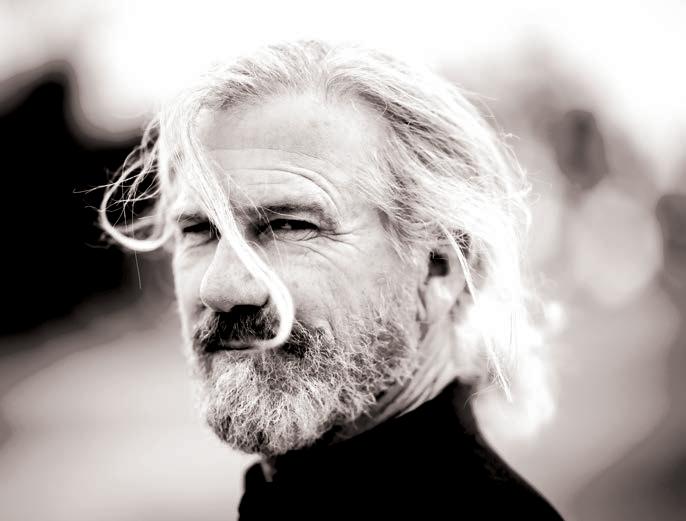
For his playing partners, it felt like witnessing something rare and fleeting, a round where everything aligns just enough, and time seems to step aside.
ELEVATE
Later that evening, after helping secure victory at the 2025 Uncle Tony Invitational alongside his partner Pat Foley, Ashworth sat among friends, the glow of the day still lingering.
The conversation drifted, as it often does, toward routines, habits, and the search for something deeper in the game.
Someone asked about his yoga and meditation practice.
Ashworth paused, then answered simply:
“I’m just trying to elevate.”
He lifted his hands slightly, flipped his thumbs upward, and smiled.
Around the table, the group exchanged puzzled looks, unsure exactly what he meant.
Ashworth shrugged, flashed that familiar, sheepish grin, and took a gulp of his beer.
No further explanation needed.
WHEN IT FINDS YOU
Two friends.
Two rounds.
Two moments that arrived not through chasing, but through time, patience, and a lifetime in the game.
One on the Old Course at St Andrews.
One on the rugged coast of Oregon.
Both unexpected.
Both unforgettable.
Because in golf, as in life, the milestones you think about for years rarely arrive when you’re looking for them.
They find you when you least expect it.
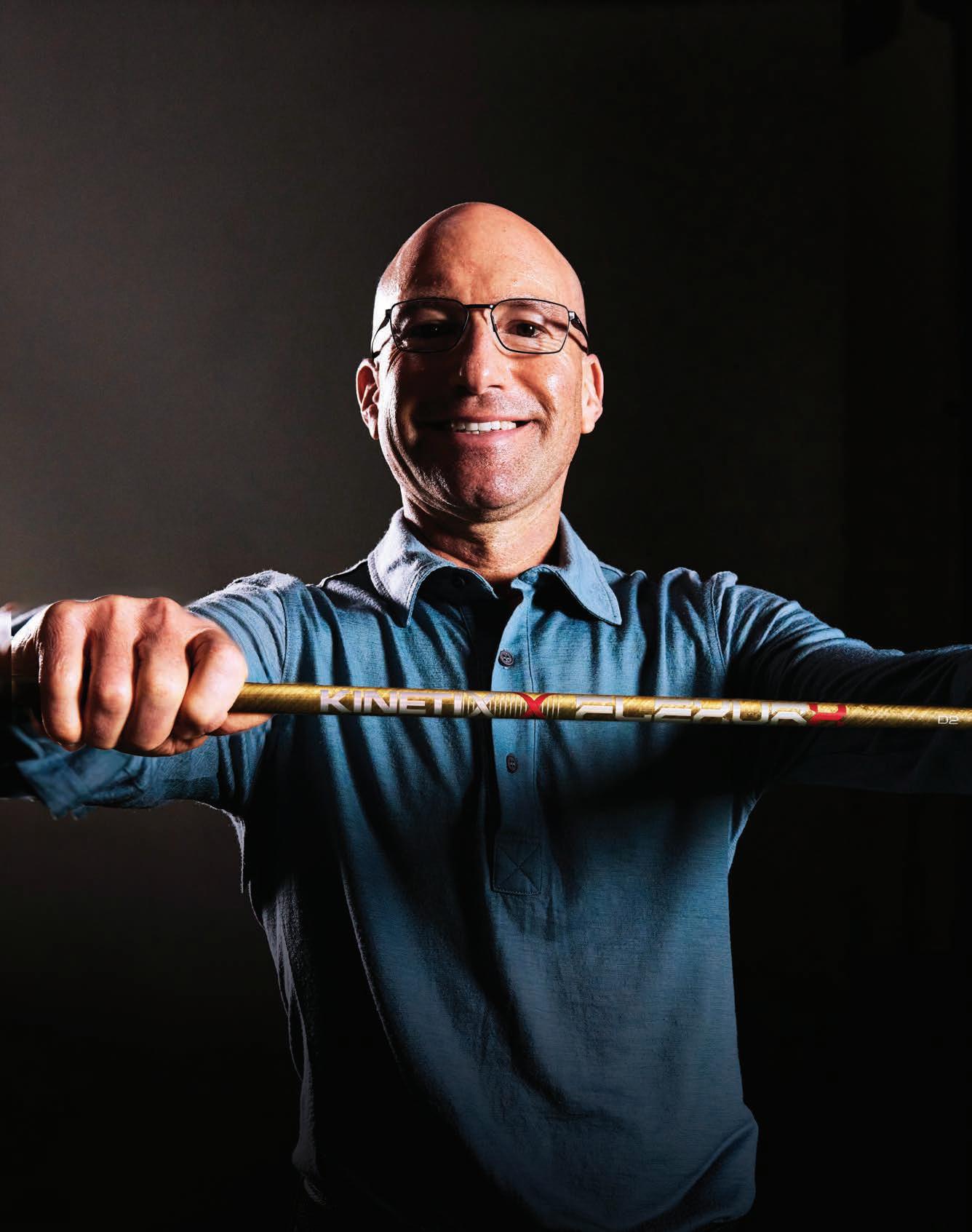
BUILT DIFFERENT: JASON HORODEZKY AND THE FUTURE OF GOLF SHAFTS
By CASSANDRA BAUSCH
For most golfers, the shaft is still the least understood piece of equipment in the bag.
They’ll debate driver heads for hours. They’ll chase putters like they’re searching for religion. But ask them what’s actually happening inside the 46 inches connecting their hands to the clubhead, and the answers are usually vague: “stiff,” “low launch,” maybe “the one Rory uses.”
Jason Horodezky has spent the better part of three decades trying to fix that.
Not with better marketing. With better physics.
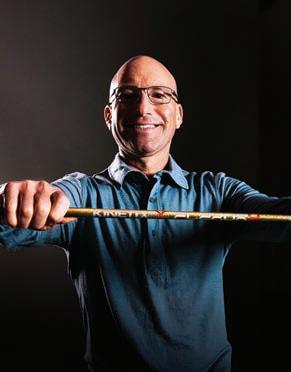
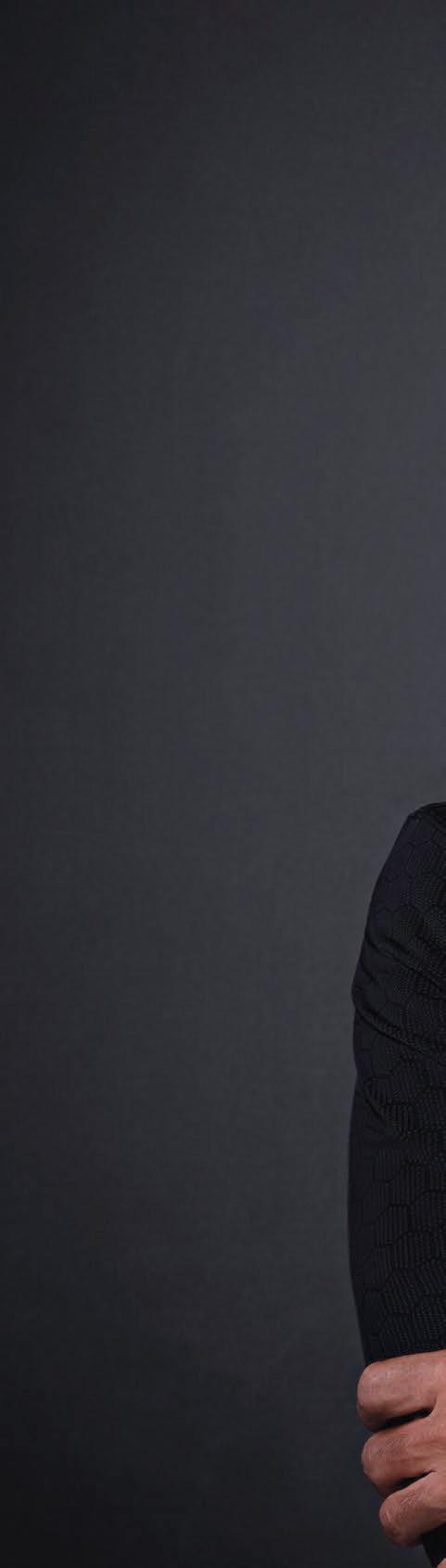
As CEO and CTO of KINETIXX Golf, Horodezky is one of the rare people in golf who can comfortably discuss torque values, resin systems, electrochemistry, and center-face smash factor in the same breath and somehow make it all sound like common sense. He is equal parts inventor, materials scientist, and golf obsessive, with more than a dozen utility patents and more than 50 patent numbers globally tied to his work. But if you ask him where that wiring came from, he’ll tell you it started long before golf.
His family tree reads less like a standard business bio and more like a blueprint for a lifelong inventor.
His mother was a Canadian art glass designer whose work ended up in the palaces of Sheikh Mohammed bin Rashid Al Maktoum during Dubai’s massive buildout. His father was Canada’s largest independent concert promoter, shaping the country’s music and sports exhibition landscape for decades through Brimstone Productions. Both were entrepreneurs, artists, and what Horodezky calls “outcasts” from families filled with PhDs, engineers, doctors, and scientists.
Innovation, in other words, was the family business.
One grandfather, Jacob Horodezky, was a Russian PhD chemist who escaped military service, immigrated
to Canada, and built patented aqueous cleaning chemistries, some of which still exist today under the Johnson & Johnson label. Another, Harry Dubo, was a mechanical engineer who developed automated waste collection systems and servo-controlled scenting technologies still used in large commercial spaces today.
So yes, golf shafts were probably inevitable.
“In the early ’90s, I originally planned to pursue golf professionally,” Horodezky says. “But I was more drawn to physics, structural mechanics, and electrochemistry. I loved sports and wanted to combine my technical skills with performance-oriented sports equipment.”
In 1994, he founded iGolf Tech Technologies as an R&D, manufacturing, and fulfillment arm for the golf and sports equipment industry. It quickly became the place where ideas stopped being ideas.
“At that time and even today, there’s always a lot of interest in the category, but few with the intellectual and infrastructural capabilities to put ideas into practice,” he says.
That ability made him the quiet architect behind some of golf’s most recognizable product stories.
Long before golfers knew the KINETIXX name, they were already playing his ideas. His engineering fingerprints touched legacy innovations like Adams Tight Lies and Orlimar TriMetal, along with decades of OEM development for some of the biggest brands in the game.
For years, Horodezky operated in what he likes to call golf’s “behind-thecurtain” world; the place where technology gets built long before a logo gets stamped on it.
“We weren’t new to golf,” he says. “We were just new to the consumer.”
That distinction matters.
Because KINETIXX didn’t begin as a marketing exercise. It began as a manufacturing problem.
Horodezky’s background is less country club and more laboratory. With formal grounding in electrochemistry, physics, mechanical engineering, and impact mechanics, he approaches golf equipment the way a scientist approaches failure: by asking why.
Why do some shafts feel stable but dead?
Why do others feel explosive but inconsistent?
Why does the industry keep accepting compromise as unavoidable?
Most golf shafts are still built around tradeoffs. Increase torsional stability, and you often sacrifice feel. Add stiffness, and you can lose efficient energy transfer. Improve forgiveness, and dispersion can suffer elsewhere.
Horodezky never liked that answer.
“Every product is an engineered system,” he says. “Optimizing performance depends on manufacturing processes. Design language has negligible ROI. The structure method and material matrix from which a design is produced is most influential on performance return.”
Translation: paint and decals don’t fix bad engineering.
That philosophy is also why he has never been particularly interested in being another golf company built on clever marketing.
“I want KINETIXX to be in the same discussion as icons like Karsten at PING, Gary Adams at TaylorMade, Ely Callaway,” he says. “Innovators delivering generational technology. Clear and simple. Pure transparency.”
He also didn’t love how shafts were being built.
Traditional table-rolled shafts, still the industry standard, can introduce inconsistencies through resin pooling, voids, washout, and centerless grinding. If the structure isn’t consistent, the performance can’t be either.
For an engineer obsessed with repeatability, that was unacceptable.
So he challenged the process.
KINETIXX became known for hybrid construction methods combining vacuum curing, filament winding, and precision table rolling — utilitypatented approaches designed to eliminate structural flaws before they ever reached a golfer’s hands.
“Our genius lies in hybridized manufacturing methods,” he says. “By making differently, we can access more materials and develop structures
Everyone has an idea, but few can practice it. The hardest part is making it happen.”
and patterned geometries for more targeted downrange performance difference.”
That molecular-level thinking is exactly where the next chapter began.
Kevlar is not new to golf. But Kevlar® EXOTM is.
Developed by DuPont, Kevlar EXO represents what Horodezky calls “the most significant commercially viable advancement in composites in the last 15-plus years.”
He knew it the moment he saw the
technical data sheets.
“We recognized the potential immediately,” he says.
Kevlar EXO is a next-generation copolyamide aramid fiber with improved molecular alignment compared to standard Kevlar. In practical terms, it delivers an unusual combination of extreme lightness, flexibility, elongation, and strength. It stretches more than high-modulus carbon fiber without breaking, absorbs energy more efficiently, and offers exceptional ther-
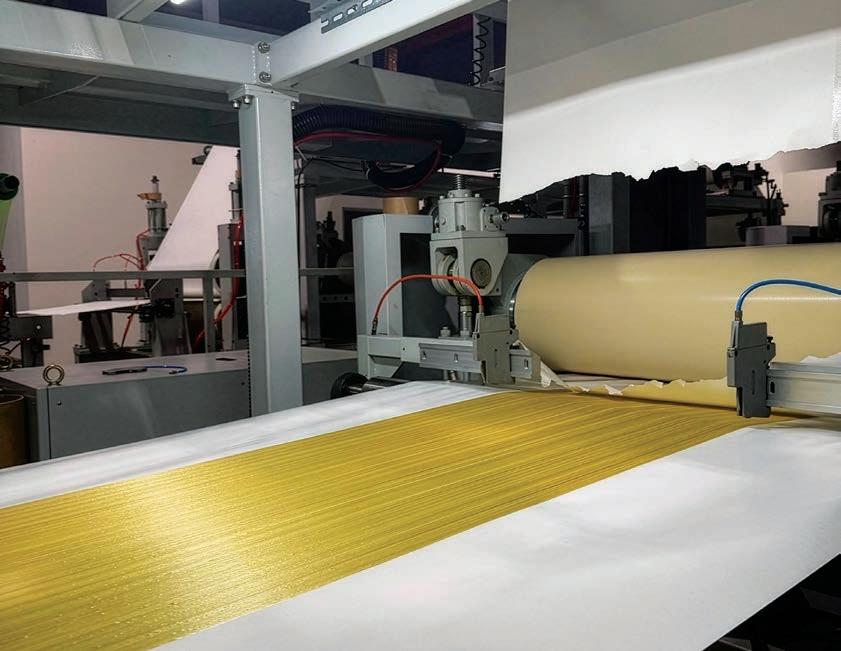
mal and fatigue resistance.
That may sound like a chemistry lecture, but in golf terms, it means something much simpler: stronger, faster, more stable energy transfer.
Most manufacturers source materials and try to design around them. Horodezky took the opposite route.
KINETIXX secured exclusive access to Kevlar EXO for golf shafts and built the proprietary unidirectional prepreg architecture around it themselves. They didn’t just buy the fiber; they designed, manufactured, and commercialized the material system.
That vertical integration is the real story.
“End-to-end control of the developmental and raw materials supply chain is crucial today,” he says. “This is the primary reason we take control, endto-end where and whenever possible.”
In a category where most companies are choosing from someone else’s menu, Horodezky decided to own the kitchen.
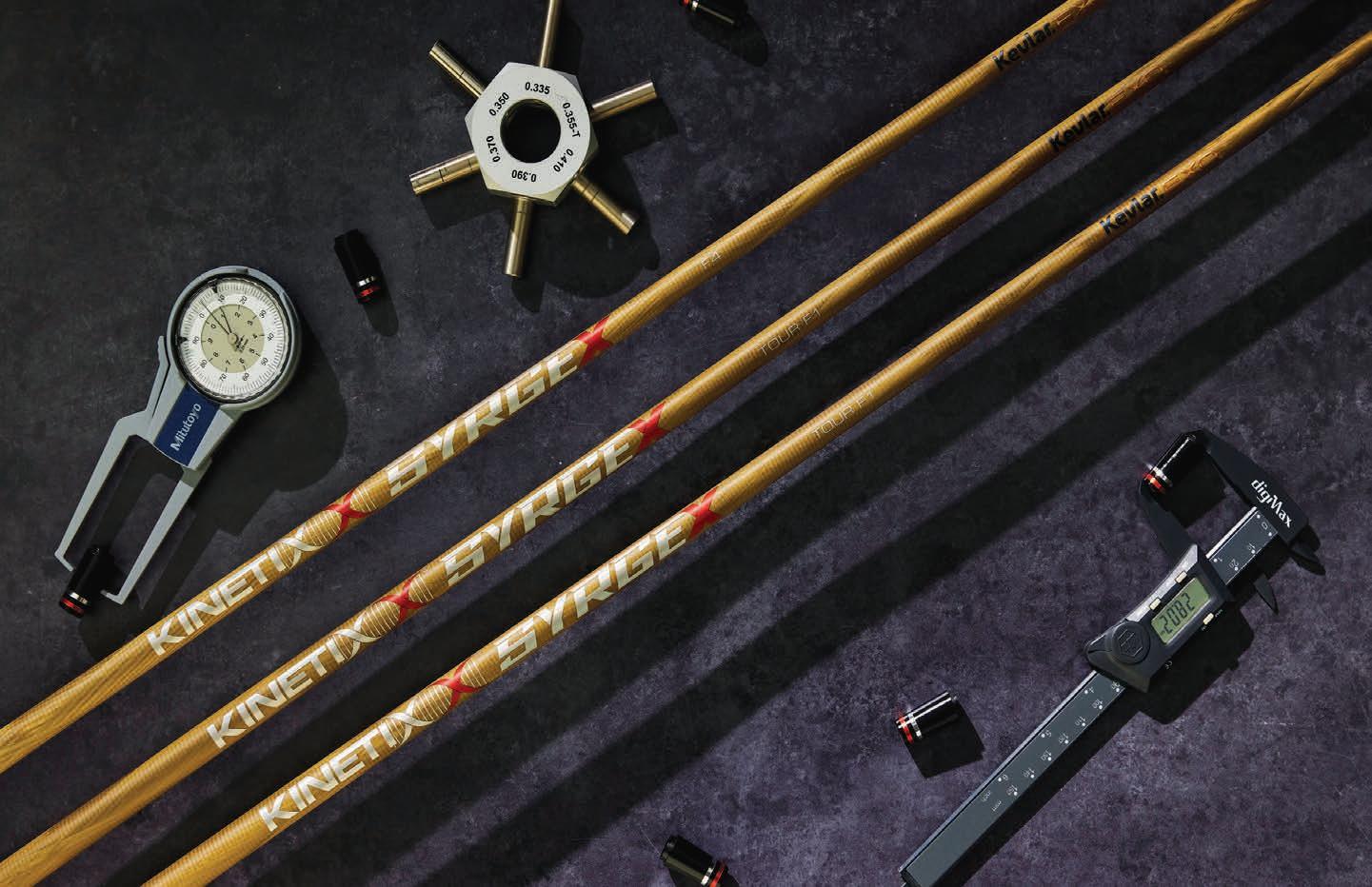
That led to SyrgeX and FlexurX.
These are not positioned as “new shafts” so much as proof of concept for an entirely new materials platform.
It took more than two years, eleven prototype iterations, robot testing, and 300 dozen Titleist RCT balls to get there.
“This was a two-plus-year journey of tireless dedication, bandwidth, and expense,” he says.
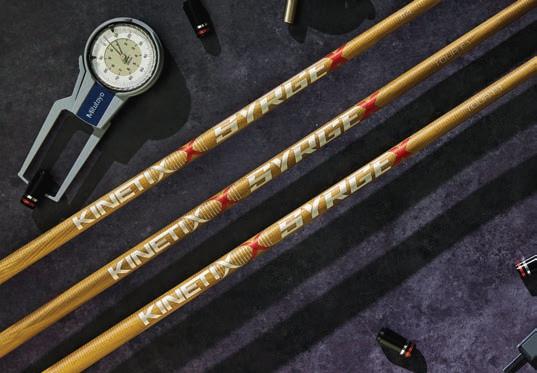
SyrgeX is the headline-grabber: lowmid launch, aggressive energy transfer,

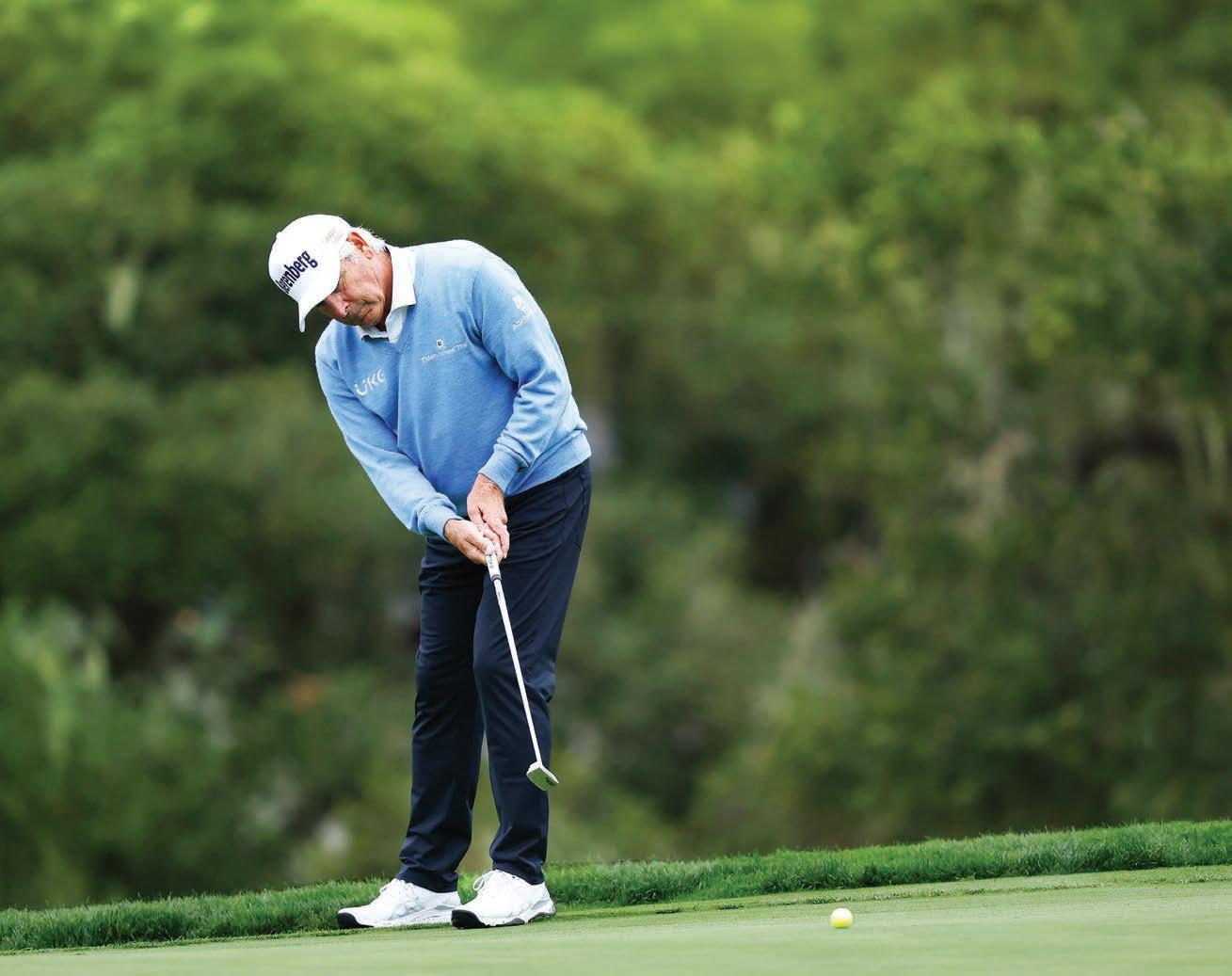

FRED COUPLES WORLD GOLF HALL OF FAMER
This was a twoplus-year journey of tireless dedication, bandwidth, and expense.”
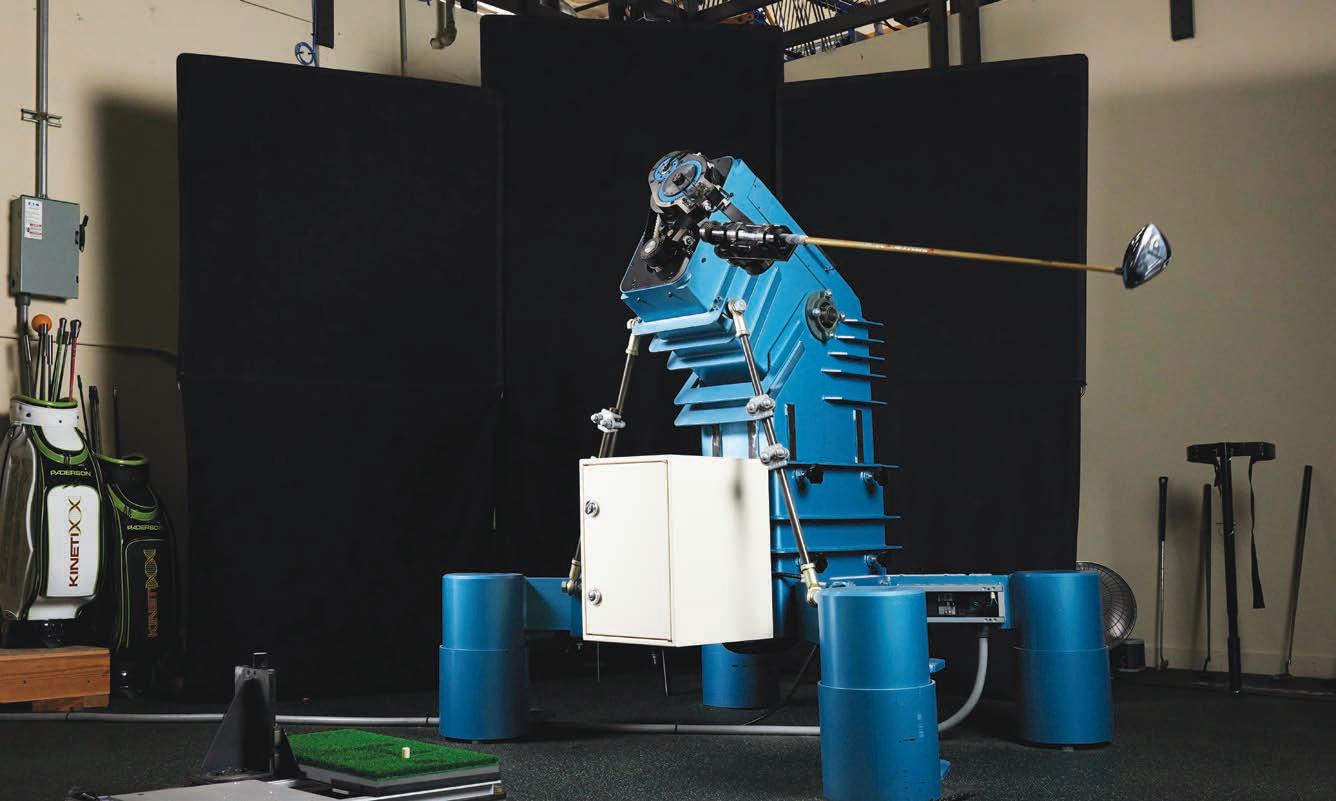
and what KINETIXX calls “bulletproof precision.” It uses a high-modulus core paired with a filament-wound Kevlar EXO exoskeleton to reduce ovaling, suppress vibration, and dramatically improve torsional stability.
In simpler terms: it goes hard without getting wild.
It’s built for mid-to-high swing speed players who want a stable kick point, low torque, and the feeling that every ounce of energy is moving directly into the ball, not disappearing into shaft deformation.
FlexurX attacks the same problem from a different angle.
Built for golfers who need a little more help — more forgiveness, more efficiency, and more consistency on offcenter strikes — it delivers mid-high launch with controllable spin and what Horodezky calls “the most advanced table-rolled shaft ever developed.”
Same science. Different player.
Both are built around the same holy grail: eliminating the long-standing tradeoff between bending stiffness and torsional stability.
That sounds technical because it is.
But the golfer experience is easy to understand.
Better contact. Tighter dispersion. More efficient energy transfer. Less wasted swing.
And maybe most importantly, a shaft
that doesn’t ask the player to choose between distance and control.
The idea of eliminating compromise is the thread running through Horodezky’s entire career.
He talks about shafts less like products and more like systems.
“The shaft isn’t there to launch the ball,” he says, essentially. It’s there to preserve and deliver kinetic energy as efficiently as possible.
Every layer matters. Every angle matters. Every fiber orientation matters.
Good design is invisible. The golfer just feels the result.
That same thinking extends far beyond golf.
KINETIXX has already developed a 12-to-15 variation catalogue of Kevlar EXO unidirectional prepreg products for qualified manufacturers across industries. The same hybrid construction methods used in SyrgeX and FlexurX can apply to hockey sticks, helmets, footwear, aerospace applications, motorsports, defense systems... anywhere lightweight strength and repeatable performance matter.
“This is not just about golf shafts,” Horodezky says. “Think hockey sticks, helmets, footwear. Any hollow-body structure.”
That’s the bigger vision.
SyrgeX and FlexurX are not the fin-
ish line. They are technical milestones.
“These signify the start of a new run,” he says.
For Horodezky, success isn’t simply launching another premium shaft into an already crowded marketplace. It’s sustained discussion that puts KINETIXX on the short list of true technology brands. It’s more shafts in play on Tour. It’s major wins. It’s continuing to be the winningest shaft brand in recent long drive history. It’s also seeing Kevlar EXO deployed in life-saving applications and maybe, just maybe, helping produce a sub-twohour marathon shoe along the way.
When asked what he hopes his legacy will be, his answer sounds exactly like the career he’s already built:
“Advanced composite materials innovation…visible fiber technology in complex engineered structures that maximize potential energy, enhance efficiency, and deliver pure kinetic energy transfer.”
Jason Horodezky has spent a career building things other companies put their names on.
Now, with KINETIXX, the name on the shaft is finally his.
The technology, however, is only getting started.
Visit kinetixxgolf.com for more information and use code CAGOLF26 to get 20% off.
THE LATEST CLUBS FOR YOUR SHORT GAME
By ED TRAVIS
Spring is a great time for resolving to score better and the right wedges and putter in your bag are a good start. There are dozens from which to choose so evaluating to find the best for your game is a must. Below are a few that we can recommend for you to try.

Cleveland Golf CBZ Wedges
Cleveland uses a new steel alloy called ZAlloy for the CBZ Wedges that is lighter and softer and created by their engineers just for this line of wedges. CBZ Wedges ($179.99) have a cavity back design with a specially designed TPU insert behind the face’s sweet spot for great feel at impact. The face has Cleveland’s Ultizip grooves and their Zipcore hosel and heel construction for more forgiveness. us.dunlopsports.com


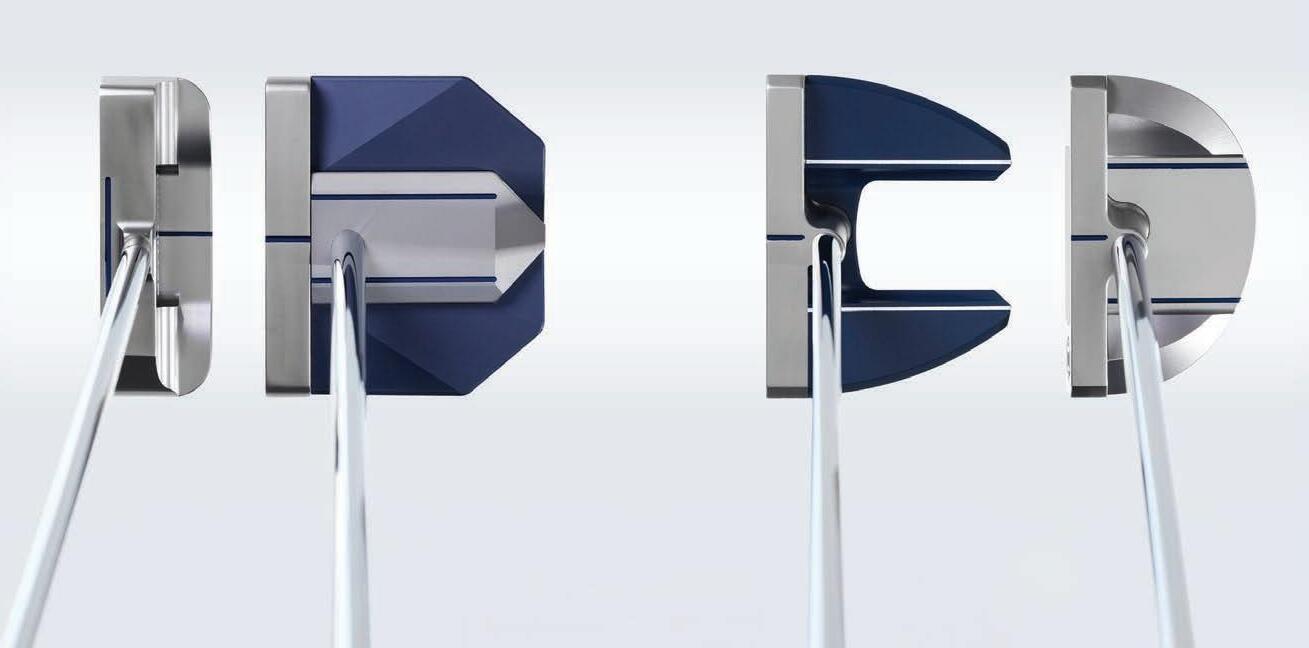
Ping Scottsdale TEC Putters
Ping says it is better to have the center of gravity behind the shaft so that it is “pulled through” by the stroke giving more stability. These three new TEC models ($435 each) are not zero torque in the usual sense but have the center of gravity behind the shaft so the weighting can be placed to complement various styles of strokes: Ally Blue straight strokes, Ketsch slight arc and the Hayden for a blade-like straight arc. ping.com
Bettinardi HLX 6.0 Forged Wedge
We really like the looks of the new distinctive and eye-catching Molten Copper PVD finish of the Bettinardi HLX 6.0 wedges. This limitededition model is forged from soft carbon steel and the copper finish over time will have natural patina deeper in color that effectively resists corrosion. So far players have enthusiastically responded and like the performance and versatility of the design. $250 bettinardi.com
Odyssey S2S Tri-Hot SB Putters
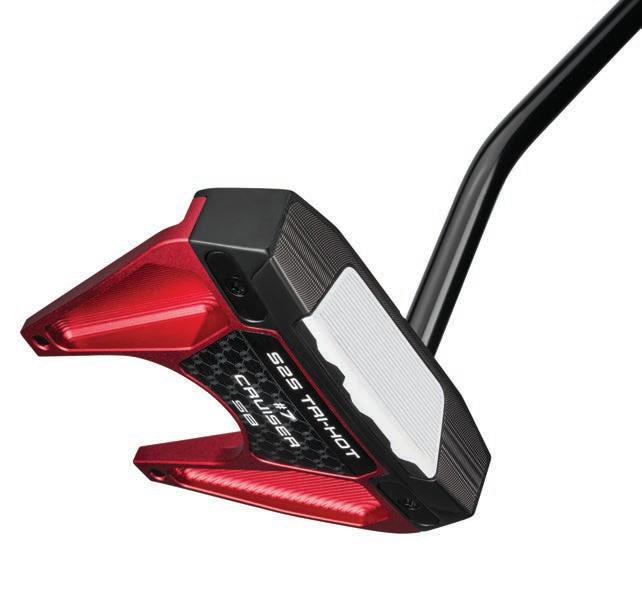
Callaway division Odyssey has a good lineup of zerotorque type putters and the new Tri-Hot SB models are an extension of the previous models they had on the market. For clarification S2S stands for Square 2 Square and SB refers to the shaft’s Single Bend. There are four SB putters in familiar shapes, the Jailbird, #7, and Rossie are priced at $599.99 and the longer length #7 Cruiser is $649.99 odyssey.callawaygolf.com

FASHION
Spring Styles for the Course
By ED TRAVIS
It may only be psychological but for many of us looking good on the course is a positive reinforcement for playing well and apparel that abets our performance is a must. Here are few items we have seen recently that we like and think you will too.
Turtleson Louise Sweater
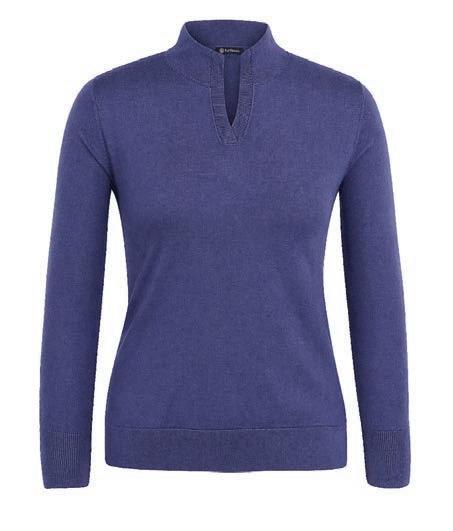
The Louise Sweater by Turltleson is made from a silk and cashmere blend that is so soft you must touch it to believe. The neckline has a modern contour that is both clean looking and flattering. The design drapes comfortably and enhances any style with a split tail hem that is somewhat longer in the back. The Louise ($290) is offered in two colors, the Anchor Heather (shown) or Periwinkle Heather. turtleson.com
Puma Golf Field Notes Collection
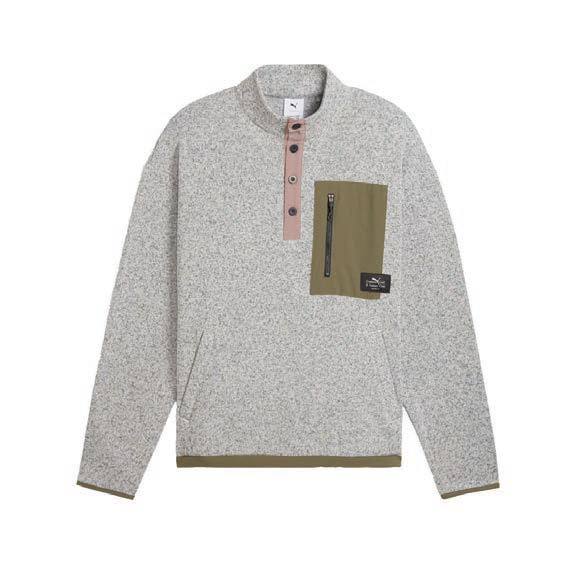
Puma Golf has collaborated with Gumtree Golf & Nature Club for the eight item Field Notes collection. For those spring mornings that may be a little crisp in temperature we like the Puma Golf x GGNC ¼-Zip in Warm White Heather ($130). In a style that never goes out of fashion the sweater fleece material has 90% recycled polyester and there is a distinctive zip picket on the left breast plus a drawcord bungee to adjust the fit just right. pumagolf.com
Centerline Athletics Women’s Cross-Sport Sleeveless Polo Dress
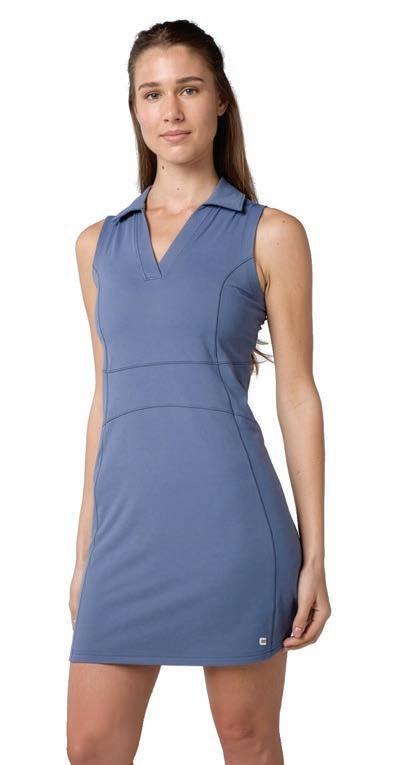
This Sleeveless Polo dress ($99) is a classic with its slim silhouette and traditional V-collar for plenty of unrestricted movement. Made from a blend 81% nylon and 19% Elastane interlock fabric, the seams are flatlock for smoothness and contoured to enhance the shape. Anti-bacterial and moisture of course this dress works on either the course or court or everyday wear. Color choice of In Bounds Blue or Black. centerlineathletics.com
Yardage Co.
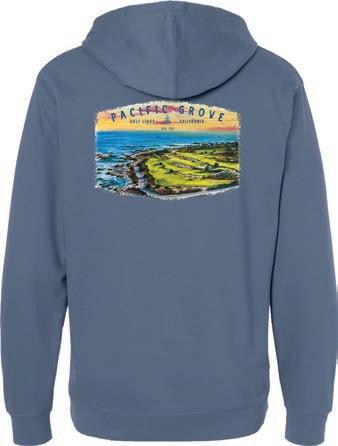
Their slogan is Yardage = Distance + Elements and this Aptos, Calif. Company makes custom graphic apparel blending art and performance. We like the course image hoodies constructed from an ultra-soft 8.5 oz. midweight ring-spun cotton blend. The design is great for on the course or every day exceptional comfort. They are durable and comfortable, ideal for when the temperatures demand a little warmth. From $60 yardageco.com

GOLF TECH THAT DAZZLES
By ED TRAVIS
Let’s face it, many aspects of our game have become highly technical. This is true not only in the materials and construction of clubs and balls but in the many useful pieces of gear that are available to improve our games or simply have more fun on the course. The items shown here are worth everyone checking out.
Full Swing Kit Launch Monitor
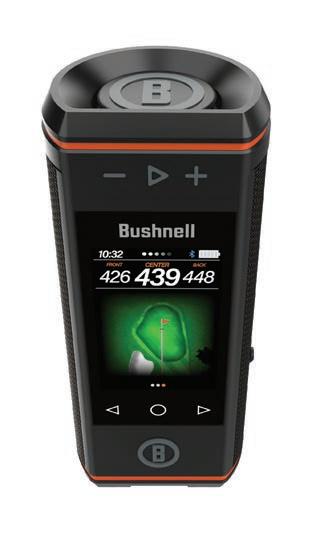
Bushnell HD Wingman
So having your tunes on the course is no big deal but having them from a premium quality speaker that also gives you front, back and center yardages plus up to six hazards on the hole being played is in one word, awesome. The Wingman HD ($229.99) has a 3.5-inch color touch screen with a full hole view showing accurate GPS distances plus 360° sound from you Bluetooth connected smartphone. bushnellgolf.com
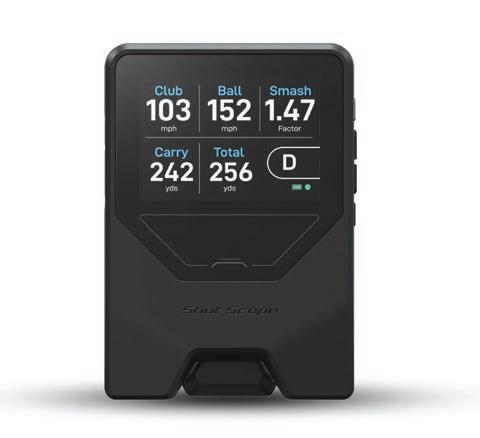
Shot Scope LM1 Launch Monitor
Everyone who uses the Shot Scope LM1 Launch Monitor raves at the ease of setup on the practice and when hitting shots not to mention the clarity of the display. That’s followed by astonishment of the golferfriendly price of $199.99. We like the 3.5-inch color display and the accuracy of the six data points recorded by the Doppler radar for each swing plus we like that Shot Scope does not charge a subscription fee. shotscope.com
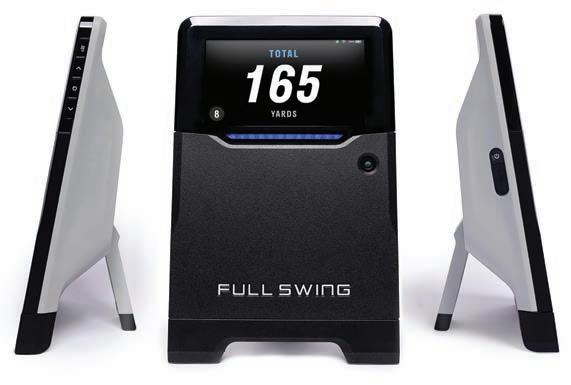
For someone looking for a launch monitor complete package the Full Swing Kit Launch Monitor is a great choice. The heads-up display is fed by computer processors dedicated to analyze the data read by the 5D Machine Learning radar showing carry distance, launch angles, ball speed and spin rate for each practice swing. Many Tour professionals use this model every time $4,999

The makers of the laser putting aid PuttAim Plus will tell you if you line up properly and keep your putter on that line you will sink more putts, something that can’t help but get our attention. PuttAim Plus ($159.99) is made of metal for durability and theirs is a regulation size cup in the base of the adjustable laser beam generator which shows the putting line. It is easy to set up and can be used anywhere indoors or out. puttaim.com

WHY THE BEST SWINGS IN GOLF FINISH THE SAME
By ERIC WOODS
Photos by GLENN ALEXAKIS
Watch Adam Scott, Rory McIlroy, and Tommy Fleetwood swing a driver, and at first glance, you’ll see three completely different motions. Scott’s classic, structured rhythm. McIlroy’s explosive athleticism. Fleetwood’s smooth, flowing tempo.
But freeze them at the finish and suddenly, they look nearly identical.
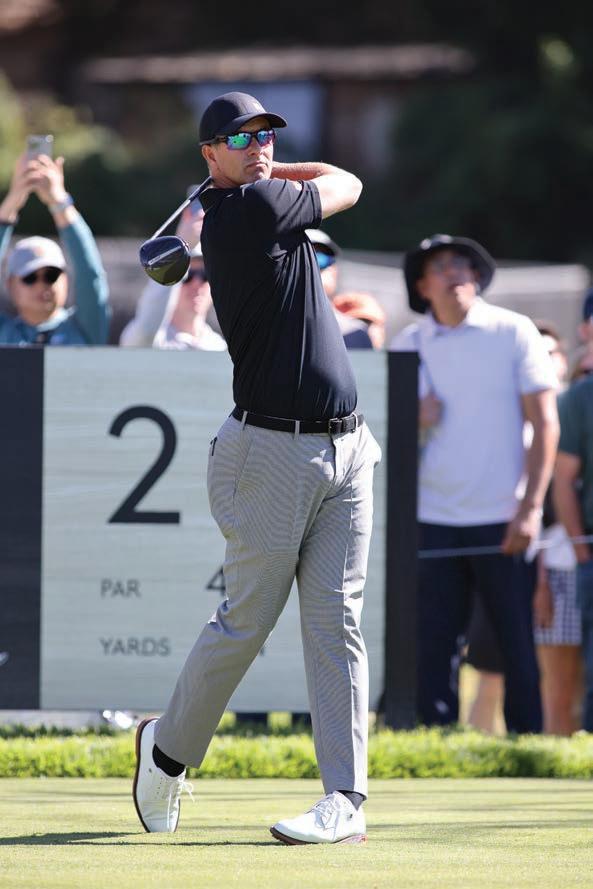
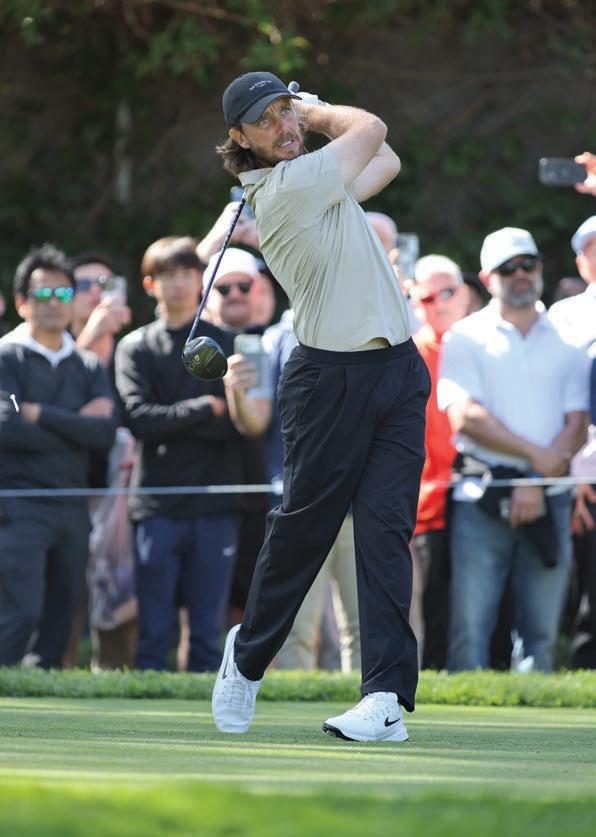
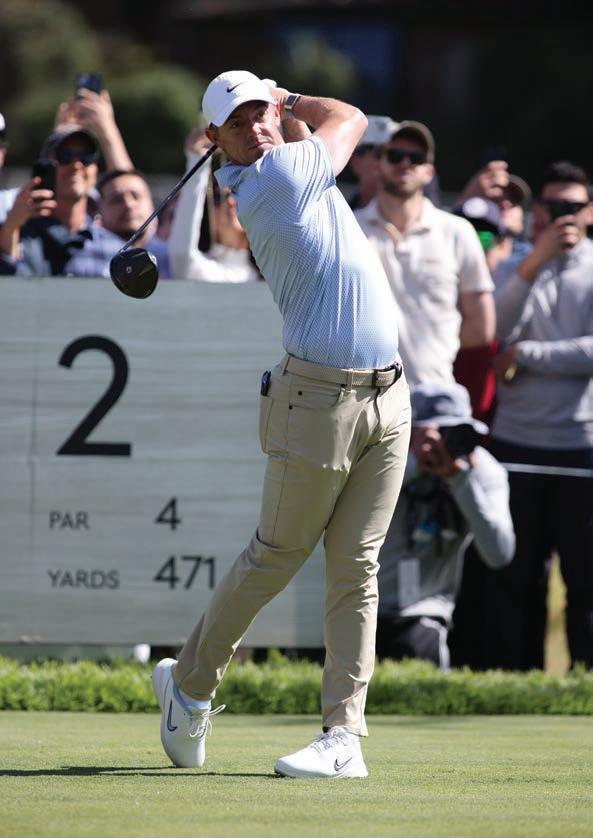
Each player is fully rotated toward the target. Their weight is entirely on the lead (left) side. The trail heel is off the ground, pointing skyward. The lead leg is braced and stable. The right shoulder is pointing toward their intended target.
Different swings. Same ending.
That’s not a coincidence, it’s a clue.
The Finish Is a Result, Not a Position
Many golfers make the mistake of trying to pose the finish. They lift the back foot, force a turn, or try to “hold” a tour-looking position after the ball is gone.
But elite players don’t manufacture that finish. They arrive there because of what they do through impact.
The real lesson isn’t how they finish; it’s why they finish that way.
WHAT THEY ALL HAVE IN COMMON
Despite their stylistic differences, Scott, McIlroy, and Fleetwood share a few critical movements through the ball:
• A stable lead foot that stays grounded and square throughout the swing
• A braced lead leg that straightens as they rotate through impact
• Full hip rotation toward the target, with the belt buckle facing forward
• Upper body rotation that brings the chest and right shoulder through
These aren’t cosmetic details. They’re the engine of the golf swing.
When those pieces work together, the body has no choice but to move into a balanced, fully rotated finish.
LET THE BACK FOOT REACT
One of the most telling similarities is the trail heel—lifted, with no weight remaining on the back foot.
But here’s the key: none of these players are trying to lift it.
The heel comes up because all of their pressure has moved forward. Their rotation has pulled them onto their lead side. The back foot simply responds. Trying to force that move by spinning out or jumping off the trail foot usually leads to poor contact and loss of balance.
Instead, think of it this way:
“Don’t lift your back foot, rotate until it has no choice.”
Adam Scott
THE LEAD SIDE IS THE ANCHOR
The lead side does the heavy lifting.
As these players move through the ball, the lead leg firms up and acts as a post. This allows the hips to open, the torso to unwind, and the club to release with speed and control.
Without that stability, rotation stalls. And when rotation stalls, everything else breaks down, timing, strike, and direction.
A simple, effective feel:
“Push into your lead leg and turn around it.”
BALANCE IS THE FINAL CHECK
The finish position is ultimately a test of balance.
If you can hold your finish with your weight fully on your lead side, trail foot light, and body facing the target, there’s a good chance you moved well through the shot.
If you’re falling backward, hanging on your trail foot, or struggling to stay upright, something earlier in the motion needs attention.
THE BIG PICTURE
Adam Scott. Rory McIlroy. Tommy Fleetwood.
Three distinct swings. One shared truth.
Great ball-strikers don’t chase positions—they create them through motion. Their identical finishes aren’t rehearsed poses; they’re the natural outcome of proper sequencing, pressure shift, and rotation.
So the next time you practice, don’t focus on copying the finish.
Focus on what gets you there.
ERIC WOODS
Golf Lab Academy Founder
2 Time Canadian Tour Leading Money Winner
Canadian Tour Low Stroke Average Winner
South American Leading Money Winner
Tour Member:
Asian Tour, Australian Tour, Canadian Tour, South African Tour, South American Tour www.golflabacademy.com
Rory McIlroy
Tommy Fleetwood
WHISKEY WITH A MISSION TACTICAL SPIRITS:
TacticalSpirits isn’t just another name in the crowded world of premium whiskey: it’s a brand rooted in purpose, memory, and service. Founded by Marine veteran Eric Franklin, the company was built on a simple but powerful idea: to create spirits that reflect the strength, consistency, and loyalty of those who serve. These are the same qualities that define both great Marines and great whiskey.
But Tactical Spirits goes beyond craftsmanship. Each bottle is designed to evoke something deeper, a connection to the moments that shape a life in service. From grueling days in training to the unbreakable bonds formed during deployment, and the shared trials of combat, these experiences leave a lasting imprint. Tactical Spirits aims to honor that journey.
More than a drink, it’s a tribute. Every pour recognizes the men and women, Marines, Soldiers, Sailors, Airmen, and Guardians who have
worn the uniform. It celebrates not only their sacrifices, but also the camaraderie and resilience that endure long after service ends.
For veterans and supporters alike, Tactical Spirits offers something meaningful: a chance to reflect, remember, and reconnect. Whether it’s the memory of long nights in the field or the pride of serving something greater than oneself, each glass invites you back to those defining moments and forward to the stories still waiting to be written.
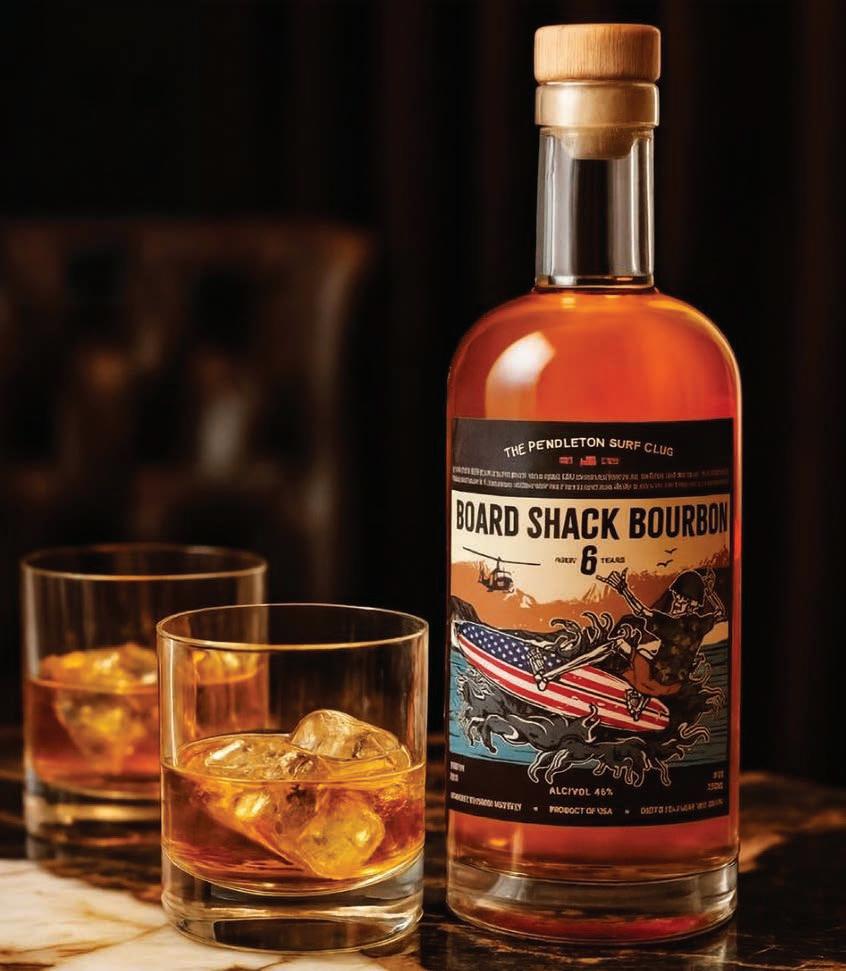
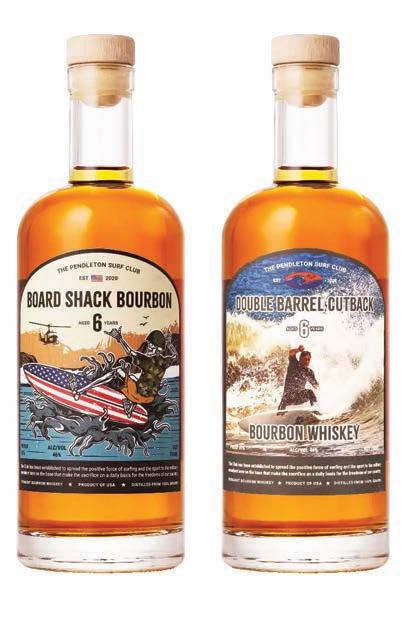
Celebrate surf, service, and craftsmanship with the Pendleton Surf Club Bourbon Bundle, a twobottle collection inspired by the Southern California coast and the legacy of the Camp Pendleton Surf Club. Finished and bottled by Pacific Coast Spirits in Oceanside, CA, this set delivers rich character and easydrinking appeal.
The Double Barrel Cutback is a 6-year straight bourbon bottled at 92 proof, enhanced by a secondary rest in new American oak. Expect notes of caramel, toasted oak, vanilla, and a subtle smoky finish.
The Board Shack Bourbon offers
a smoother, coastal-inspired profile. This small-batch release features creamy caramel, ripe fruit, and gentle spice, with a soft, lingering sweetness that makes it approachable yet distinctive.
WHAT’S INCLUDED
1 x Double Barrel Cutback (6 Years, 92 Proof)
1 x Board Shack Bourbon (Small-Batch Straight Bourbon) Perfect for sipping neat or sharing with friends, this bundle honors tradition, community, and the stories that connect them.
To purchase Tactical Spirts, go to tacticalspirits.com
PENDLETON SURF CLUB BOURBON BUNDLE


Tour the few remaining homes, and discover your final opportunity to live surrounded by 36 holes of golf on the Monterey Peninsula. Don’t miss this chance, call 831-432-7133 today or visit TheEnclaveBySheaHomes.com