How Duane Pate Built One of California’s Most Respected Union Demolition Contracting Companies
DEMO & RECYCLING 2026


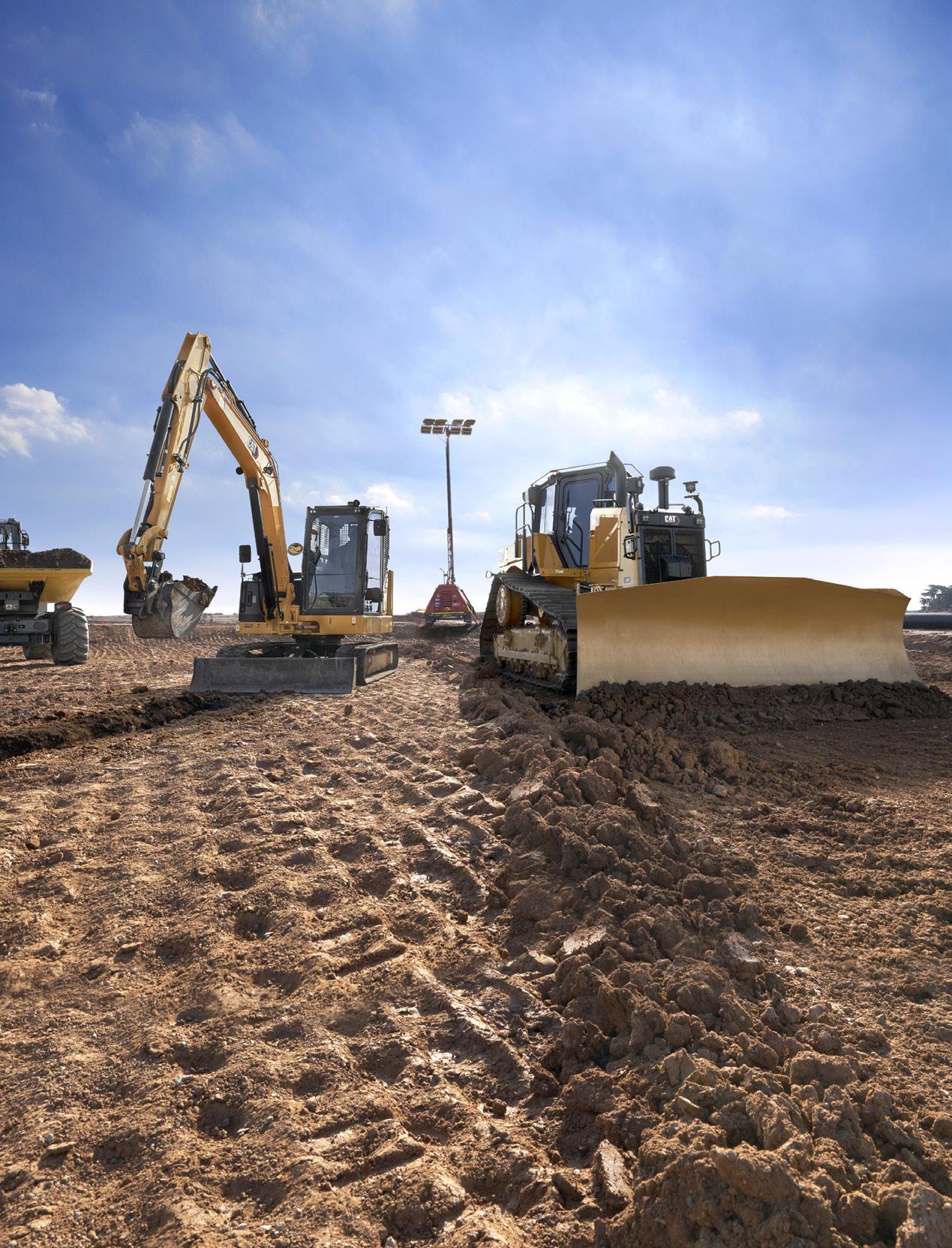



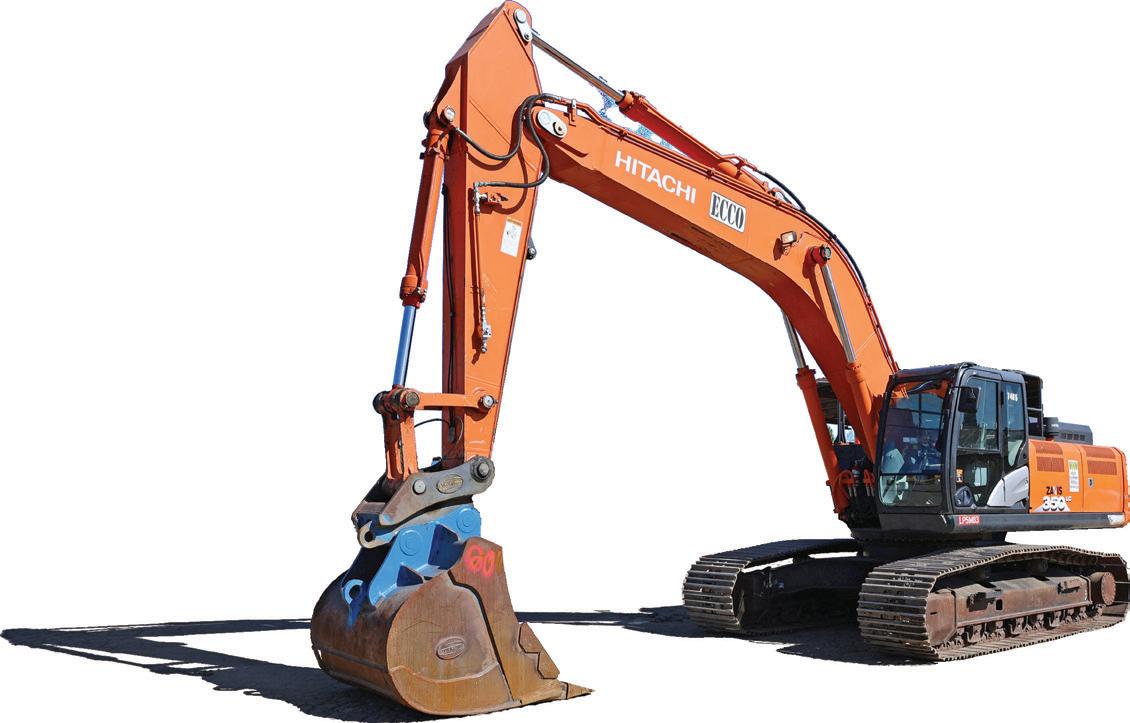
When the job calls for raw power, relentless durability, and precise control, John Deere excavators rise to the occasion. Engineered for high-impact demolition, these machines feature:
• Reinforced booms and arms for heavy hammering
• High-flow hydraulics to power shears, breakers, and pulverizers
• Superior visibility and protection with ROPS/FOPS cabs
• Smart technology for grade control and efficiency
• Legendary reliability backed by Deere’s nationwide support
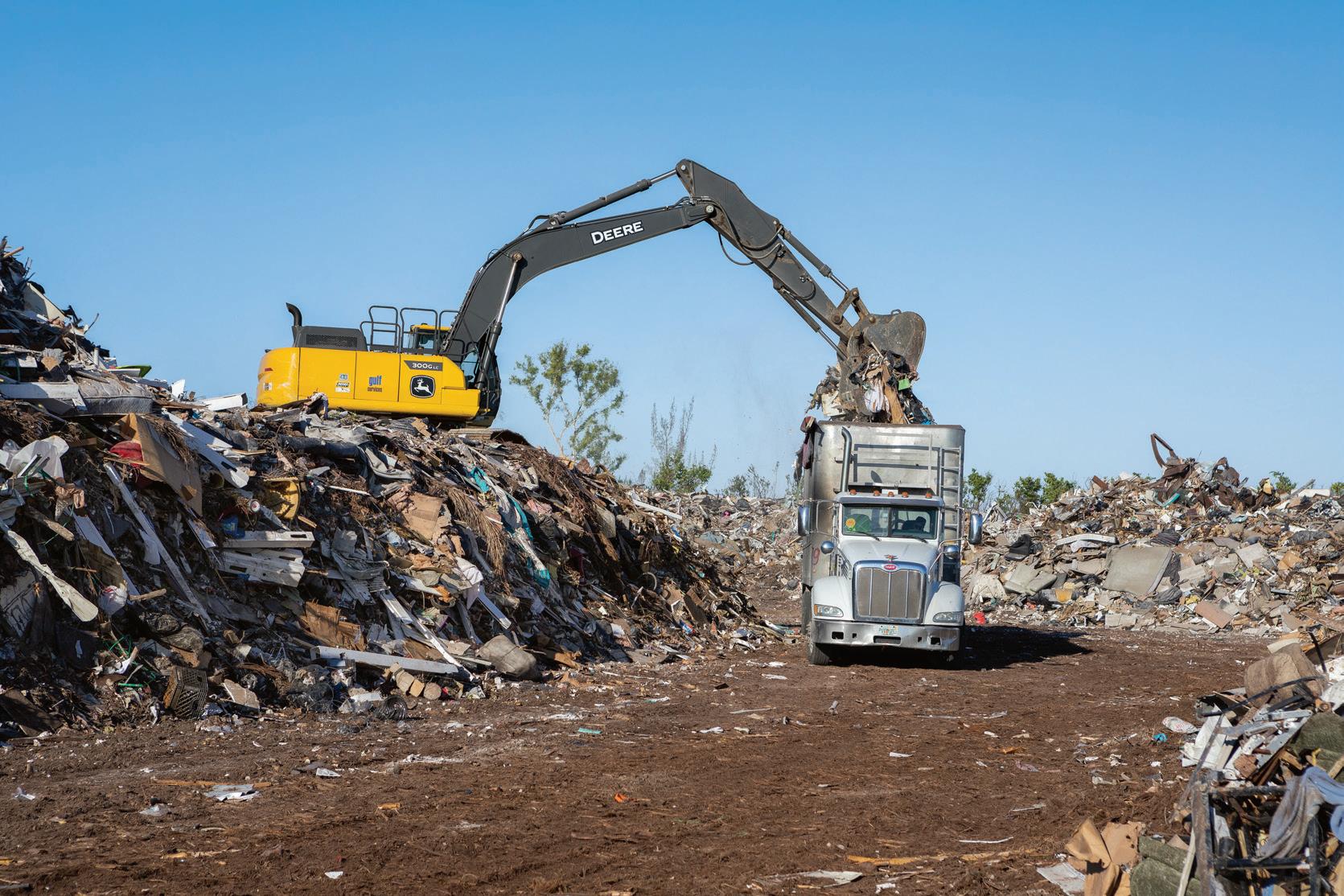

Bakersfield




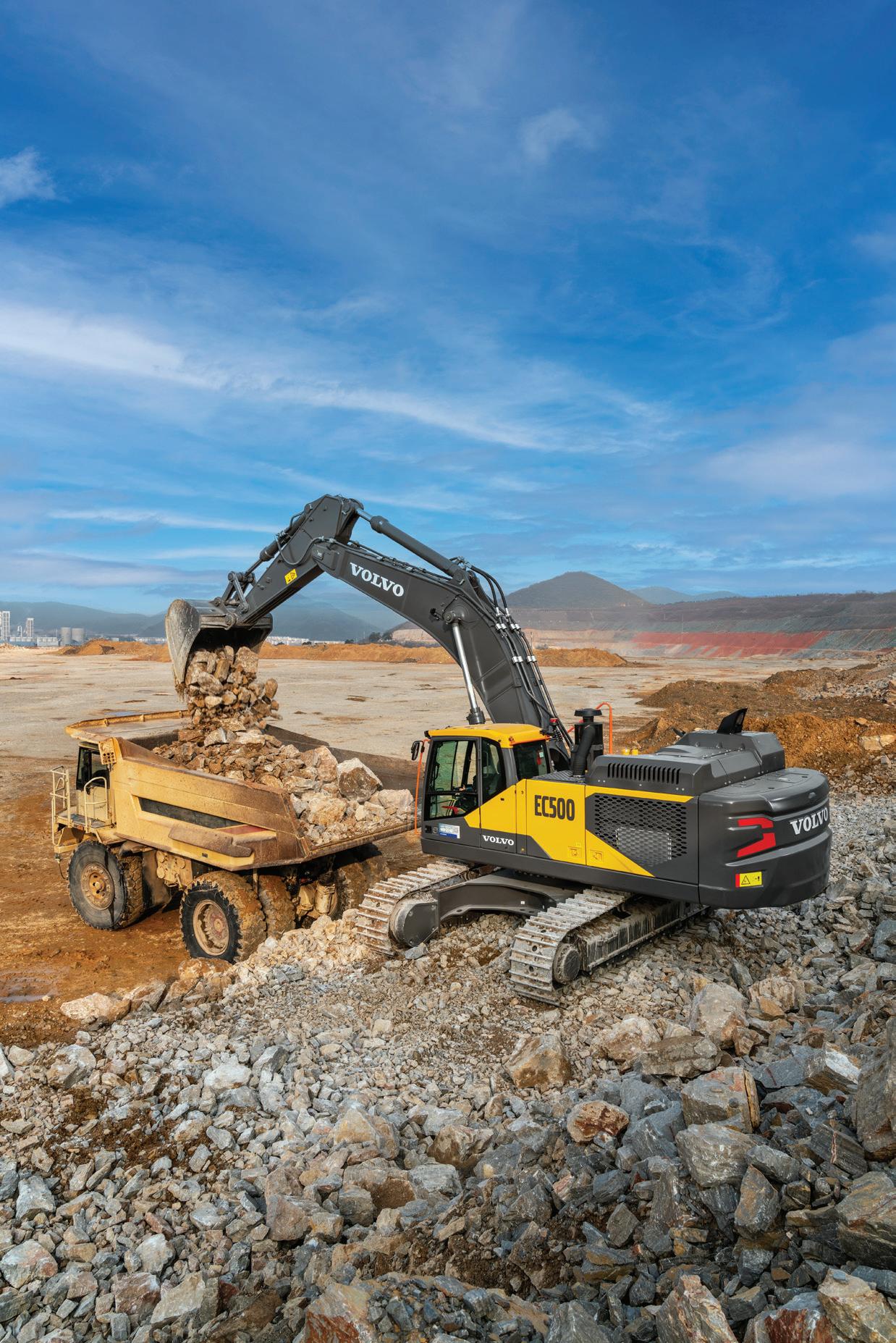
Meet the new Volvo EC500 — redefining heavy-duty excavation through strength, efficiency, and smart technology. Available from VCES, the EC500 combines Volvo’s proven reliability with hybrid hydraulic innovation to cut fuel use and emissions while maximizing uptime. Add CareTrack telematics and advanced work modes, and you’ve got a smarter, cleaner, and more powerful machine ready for any jobsite.
C ontact your nearest VC E S location today.
How Duane Pate Built One of California’s Most Respected Union Demolition Contracting Companies
By Brian Hoover / Photos provided by Force Demolition, Inc.
Success in the demolition industry is rarely the result of luck. It is built through years of experience, hard work, strong relationships, and the ability to persevere through adversity. Few people understand that better than Duane Pate, President and Owner of Force Demolition, Inc. Over the past several years, Pate has transformed Force Demolition from a kitchen-table startup into one of California’s fastest-growing union demolition contractors. Today, the company employs as many as 160 union tradespeople, owns more than 100 pieces of equipment, and performs demolition and abatement work on some of the most recognizable projects in the state. From Los Angeles International Airport and the Los Angeles Convention Center to the Honda Center redevelopment, OC Vibe, and numerous emergency response and infrastructure projects, Force
Demolition has established itself as a contractor capable of taking on some of California's most challenging assignments.
The company's rapid growth is impressive, but the story behind that success is even more remarkable. Force Demolition was not built overnight. Instead, it represents the culmination of more than three decades of experience, relationship building, and leadership within the demolition industry. After spending much of his career helping grow successful demolition operations for others, Duane Pate eventually saw an opportunity to build a company that reflected his own vision, values, and approach to business. The result was Force Demolition, a name that reflects the power of the equipment, the strength of its people, and the momentum that continues to drive the company forward today.
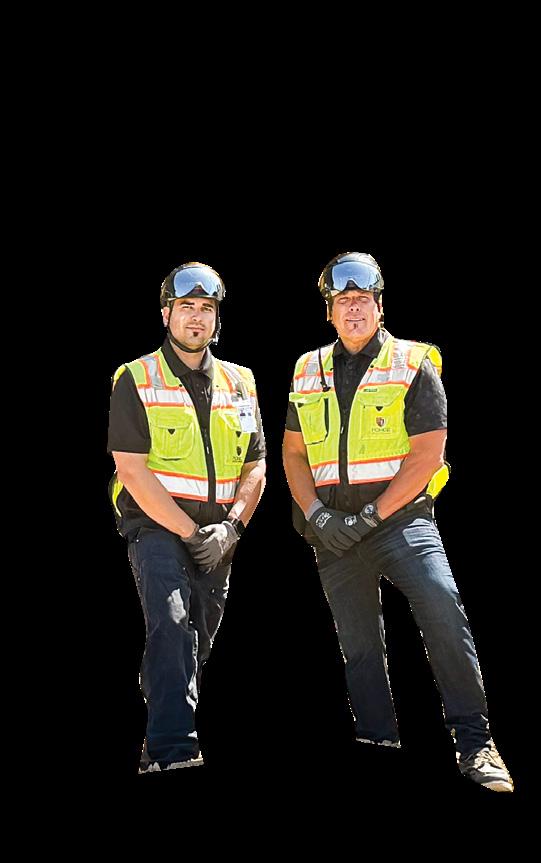
Duane Pate, President/Owner (right), with his son, Anthony Pate, STSC General Superintendent.
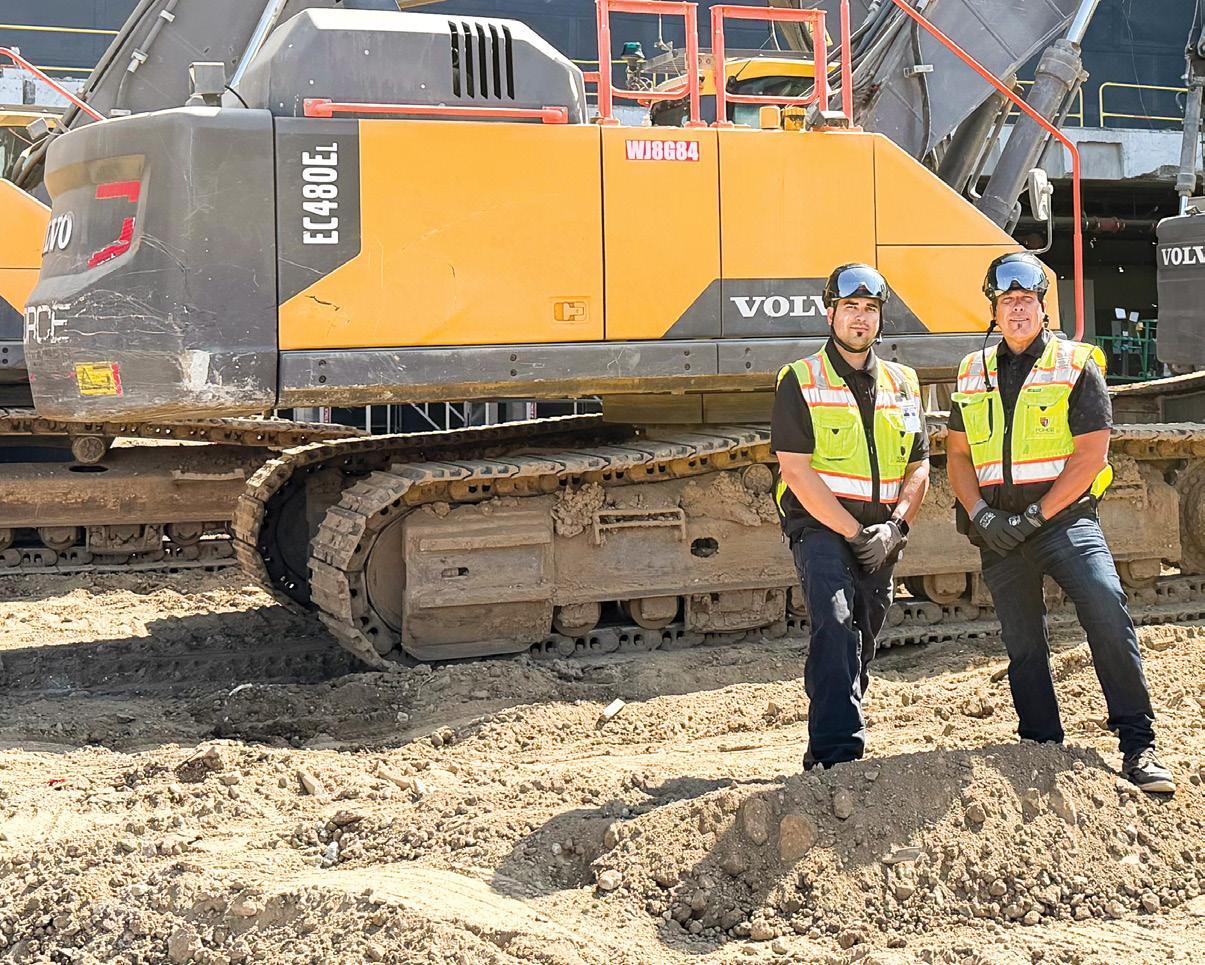
Long before he became a business owner, Pate was simply a teenager from Fontana looking for a summer job. In 1991, a friend told him about a demolition contractor that needed several laborers to help dig a ditch on a project in
Palm Springs. It seemed like a good opportunity to make some money during summer break, and Pate eagerly accepted. By the end of the project, however, something unexpected happened. A supervisor by the name of Bob
Garcia approached him and said he would like him to come back and work again. At first, Pate assumed Garcia was referring to the entire group who had worked together on the project. Instead, Garcia made it clear that he was
only interested in bringing one person back and that individual was Pate. Looking back on that moment more than three decades later, Pate still recognizes its significance. “That conversation changed the course of my life,” he says. “If Bob Garcia hadn't given me that opportunity, I honestly don't know where I'd be today.”
Pate worked that summer for Harber Companies, a demolition contractor based in Grand Terrace, and quickly discovered that he enjoyed the work. When summer ended and school resumed at Fontana High School, he informed the company that he would need to return to his studies. Harber
Companies had another idea. The company offered him a position working on nighttime freeway demolition crews throughout Southern California. At the time, Pate was already a young father, and the opportunity provided a chance to earn money while continuing his education.
The schedule was demanding. During the day, Pate attended high school. At night, he worked on freeway projects, often jackhammering bridges and concrete structures until the early morning hours before heading directly back to class. It was a lifestyle that would have overwhelmed many teenagers,
After spending several years at Harber Companies, Pate moved to Penhall in 1993. The transition marked another important step in his development and exposed him to larger projects and broader responsibilities. Initially working as a union laborer and concrete cutter, he gained valuable field experience while continuing to build relationships throughout the industry. Then, an unexpected dirt bike accident ultimately altered the trajectory of his career. While recovering from a broken leg, he received a call from one of Penhall's sales representatives, who suggested that he would make an excellent estimator and project manager. Pate accepted the opportunity and soon found himself learning the business side of demolition.
The transition proved invaluable. Estimating, project management, scheduling, budgeting, customer relations, and operations all became part of his daily responsibilities. More importantly, he began developing
a deeper understanding of what separates successful contractors from unsuccessful ones. Over the next two decades, Pate continued to advance through the industry, taking on leadership positions with several well-known demolition contractors. He spent time helping establish demolition divisions, managing large projects, developing business relationships, and building teams. Along the way, he also accumulated an impressive network of loyal friends and employees. Project managers, estimators, operations, project engineers, operators, laborers, foremen, and superintendents repeatedly followed him from company to company because they trusted his leadership and believed in the way he conducted business. That loyalty remains one of the defining characteristics of Force Demolition today. “I am so fortunate to have this amazing team who have followed me for more than 20 years,” says Pate. “They are family, our Force family.”
but Pate embraced it. More importantly, he found a mentor in Garcia. Over the years, Garcia taught him not only the technical aspects of demolition but also the importance of professionalism, accountability, and work ethic. More than three decades later, Pate still credits Garcia as one of the most influential people in his life. In fact, when Garcia recently retired after a long career in the demolition industry, Pate commissioned a 14-karat gold-plated jackhammer as a retirement gift, a symbolic tribute to the man who first gave him an opportunity.
“ “ DUANE PATE
I am so fortunate to have this amazing team who have followed me for more than 20 years
Like many successful entrepreneurs, Pate's path to business ownership was not a straight line. Several partnerships throughout his career provided valuable experience, but they also taught him important lessons about leadership and company culture. The most significant chapter occurred during his time as a partner with a particular demolition and abatement firm. At first, the partnership appeared ideal. The company in question already had an established operation and strong abatement capabilities. Pate brought decades of demolition experience, longstanding customer relationships, and a highly skilled workforce. Together, they experienced rapid
growth and generated impressive revenues.
Unfortunately, differences in business philosophy eventually emerged. As the company expanded, disagreements over personnel decisions and long-term direction created tension. Eventually, the partnership dissolved, leaving Pate in a difficult position. He had invested significant personal resources into the business and suddenly found himself searching for answers. The experience was both financially and emotionally challenging, but it ultimately became the catalyst for Force Demolition. You might even say, it “forced” Pate’s hand into becoming the sole owner of his own demolition company.
For several months, Pate considered returning to work for another contractor. He met with respected industry leaders and explored potential opportunities. At the same time, he continued evaluating whether this might finally be the right moment to build his own company. The person who ultimately helped him make that decision was his fiancée, Christina Bond. At the time, the couple operated an investment company and successfully flipped houses. Christina believed they could weather the uncertainty that comes with starting a business and encouraged him to take the leap.
{ Continued on page 10 }
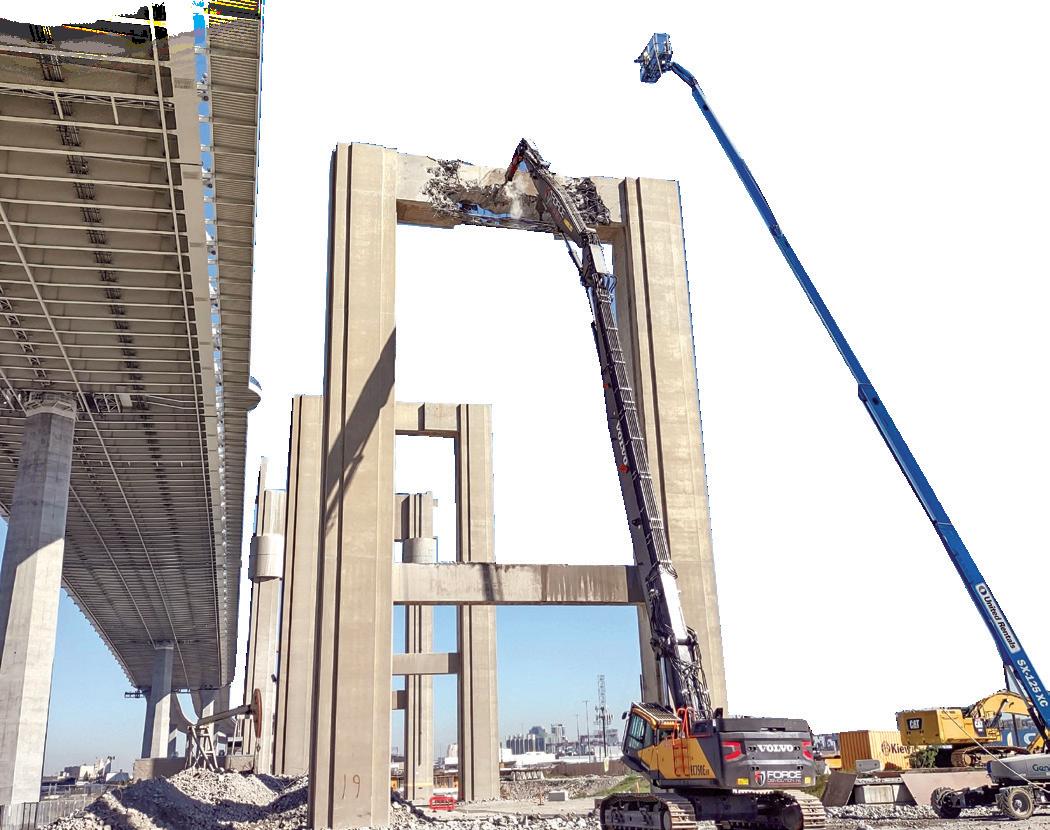
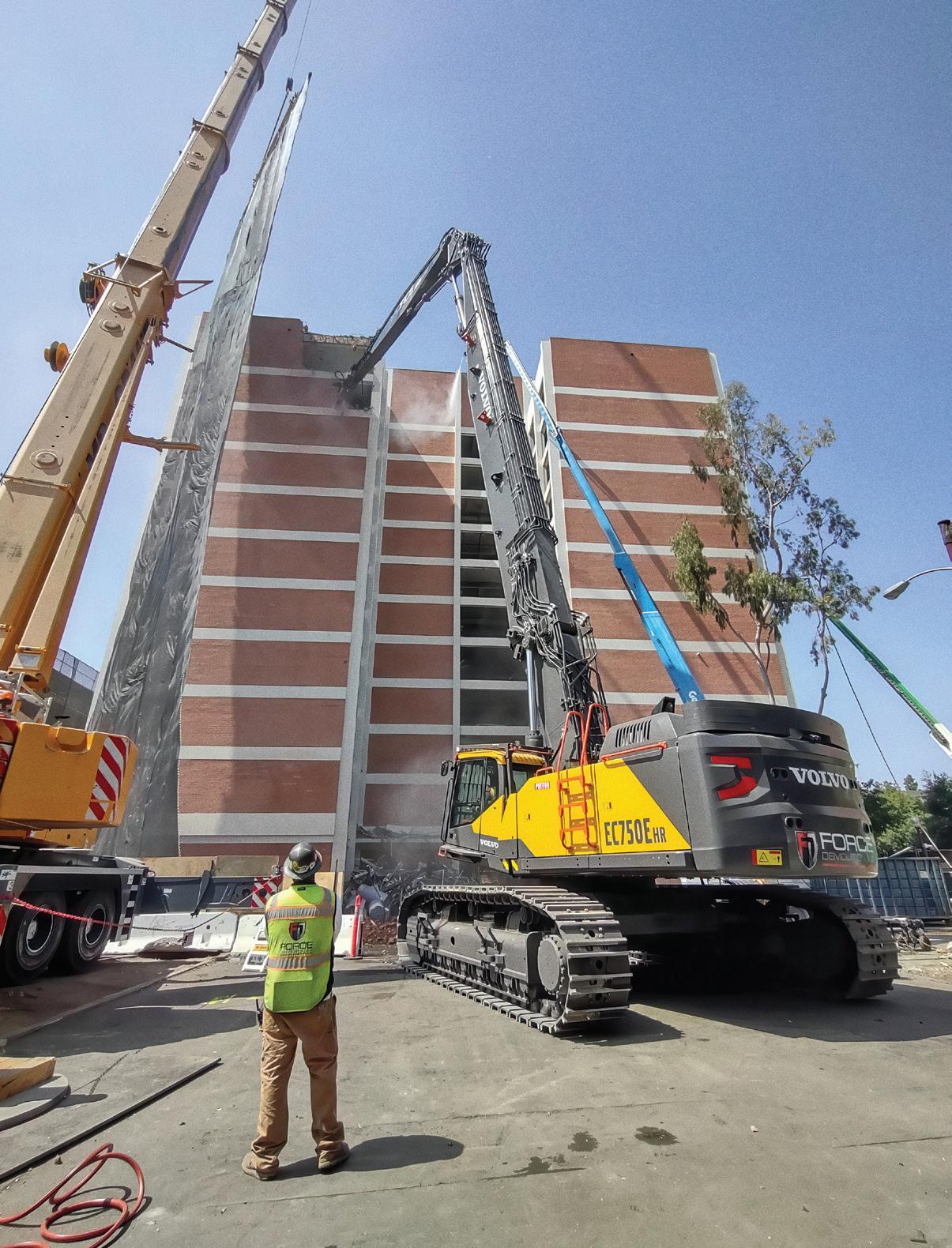
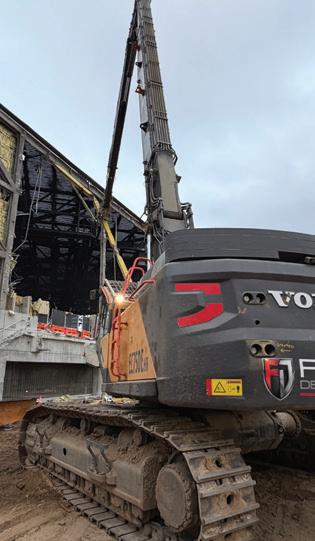
Volvo EC750 High Reach excavator demolishes concrete piers rising up to 160 feet tall as part of Kiewit’s Gerald Desmond Bridge demolition project.






The name, Force Demolition seemed appropriate considering the force required to demolish structures and the fact that his hand had finally been forced to go it alone. Launching Force Demolition required far more than determination. It required licensing, bonding, insurance, prequalification approvals, and enough working capital to survive until payments began arriving. The company officially formed in 2019, but by the time everything was in place and work was ready to begin, 2020 had arrived. Then COVID struck.
For many businesses, the pandemic created enormous uncertainty. Ironically, it also created opportunities. Airports, schools, colleges, public facilities, and institutional owners suddenly found themselves with access to facilities
that would normally be occupied. Projects that had been delayed for years suddenly moved forward. Force Demolition landed its first assignment, a relatively modest $10,000 project cutting a door opening at a college campus. Shortly afterward, additional work began arriving.
The company's early days were anything but glamorous. There was no large office, no administrative staff, and no extensive fleet of equipment. In fact, Christina became the company's only office employee besides Pate. Together, they handled estimating, billing, payroll, scheduling, collections, insurance, and every other responsibility necessary to keep the business moving forward. “We started at our kitchen table,” recalls Pate. “It was
One of the first major breakthroughs came when Force Demolition secured work at Los Angeles International Airport for Hensel Phelps. The American Airlines Terminal 4 project initially appeared to be a relatively modest assignment, but it quickly evolved into one of the company's defining projects. What began as a project valued at approximately $1.5 million ultimately grew into a multi-phase effort worth many times that amount. More importantly, it demonstrated that Force Demolition could successfully perform within one of the most complex construction environments in the country.
Working at LAX presents challenges unlike those found on traditional demolition projects. Passenger operations must continue uninterrupted, as arrival and departure roadways remain
active. Security requirements are stringent, and underground passenger tunnels continue to function.
Construction schedules are tightly controlled, and much of the demolition work occurs at night to minimize disruption.
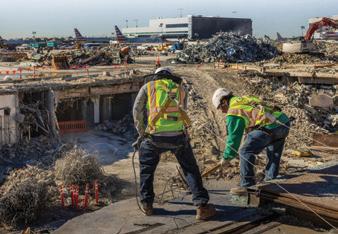
Force Demolition crews have spent years carefully dismantling portions of existing terminal structures while allowing airport operations to continue around them. The project remains one of the company's most significant
just Christina and me figuring it out one day at a time.”
Those first months were stressful. Pate openly admits that the company was operating on a razor-thin margin while waiting for payments to arrive. What allowed Force Demolition to survive was something he had spent nearly thirty years building: trust. Equipment suppliers trusted him. Rental companies trusted him. Trucking firms trusted him. Many simply told him to pay them when he got paid. Those relationships provided the breathing room necessary to keep moving forward, and once the momentum started, it accelerated rapidly. As Pate explains, “That's when you realize the value of relationships you've built over a lifetime.”
achievements and continues to this day. “You're demolishing portions of an active airport terminal while passengers continue moving through it,” says Pate. “There's no room for mistakes.”
Under Hensel Phelps, Force Demolition’s aviation work at the American Airlines Terminal 4 project includes the total demolition of the Terminal 4 headhouse and concourse structures at LAX, along with selective demolition of the existing apron and interior removals at Terminals 4 and 5 in preparation
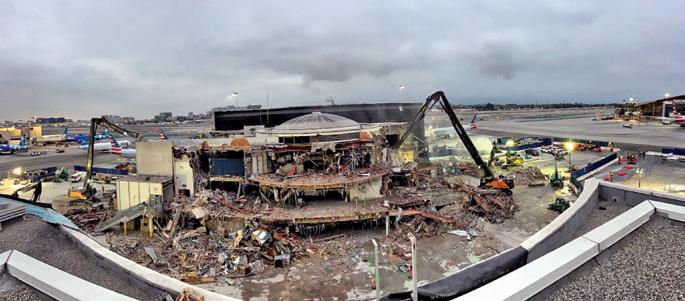
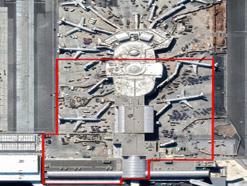
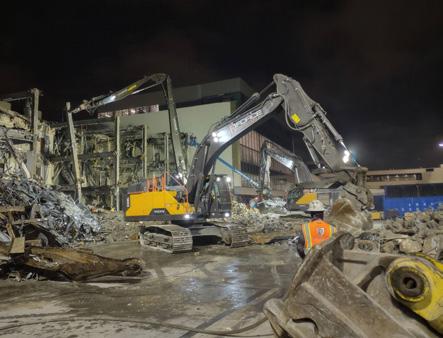
for the total demolition of the headhouse and concourse. The scope also includes selective demolition of approximately 70,000 square feet of Air Operations Area taxiways at Terminals 4 and 5 to make way for new utilities and trailer compound areas, as well as selective demolition removals
associated with passenger boarding bridge reconfigurations. In all, the work includes the total structural demolition of the existing Terminal 4, representing approximately 350,000 square feet of demolition performed in multiple phases over a six-year period. The project is expected to generate approximately 45,000 tons of demolition removals, with Force Demolition achieving an approximate 96 percent diversion rate.
While the LAX work helped establish Force Demolition's reputation, the Los Angeles Convention Center project elevated the company to another level. For Pate, the project carries special meaning because he first became involved with budgeting efforts nearly a decade ago while working for another contractor. Long before Force Demolition existed, he was helping evaluate demolition scopes and pricing associated with the planned modernization effort. For years, he watched the project evolve from concept to reality while hoping he might one day have the opportunity to participate. “I first worked on budgets for that project almost ten years ago,” says Pate. “To finally win it and see our equipment out there every day is pretty special.”
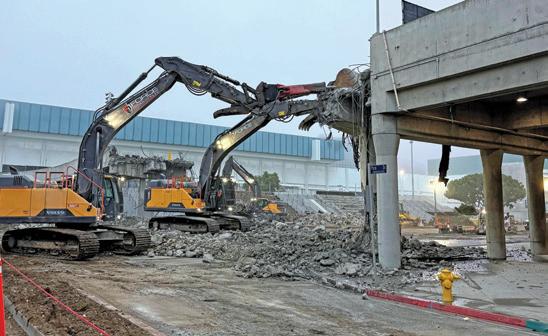
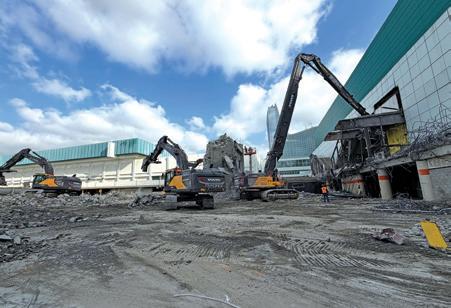
That opportunity finally arrived when Force Demolition was awarded the demolition and abatement work under the PCL-Webcor Joint Venture. Today, the project represents one of the largest and most visible assignments in the company's history. Force Demolition is responsible for extensive demolition activities involving parking structures, roadways, building facades, structural steel, and major portions of the existing convention center complex. At peak production, the company maintains approximately 60 to 65 workers on-site, making it one of the largest subcontractor workforces on the project. For Pate, driving onto the site and seeing a fleet of Force Demolition excavators working simultaneously remains a surreal experience. It serves as a reminder of how far the company has come in a relatively short period of time.
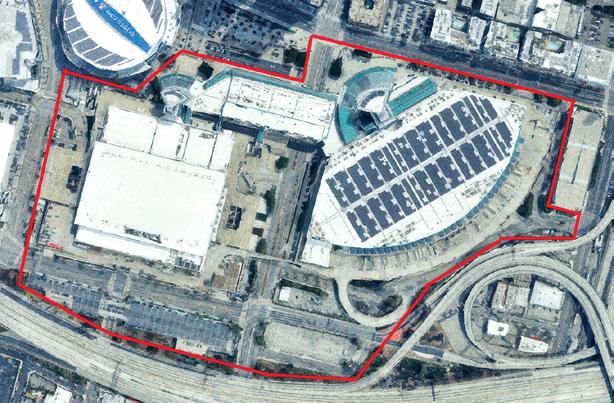
The scale of the project is difficult to overstate. Entire sections of the convention center are being removed and reconfigured to accommodate a massive modernization effort that will prepare the facility for future international events and conventions. The work requires careful coordination, extensive planning, and a highly experienced workforce capable of
performing demolition in a dense urban environment. It is exactly the type of project that showcases Force Demolition's capabilities.
Working under PCL-Webcor, a Joint Venture, Force Demolition’s public works scope on the Los Angeles Convention Center project includes abatement, demolition, and removals throughout the existing facility. This includes major
Another project that demonstrates the company's versatility is the ongoing Honda Center redevelopment and OC Vibe project in Anaheim. The ambitious entertainment district development is transforming the area surrounding the Honda Center into a world-class destination that is expected to play a major role leading up to the 2028 Olympic Games. Force Demolition has been heavily involved in demolition activities associated with both the arena improvements and surrounding development. The project has kept up to 35
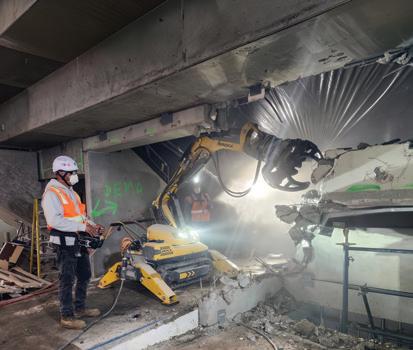
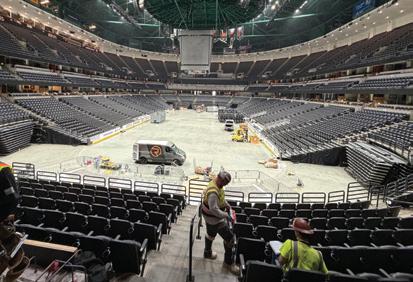
employees busy and further strengthened the company's presence within Southern California's entertainment and hospitality sectors. “Everything right now seems to be driven by the Olympics,” says Pate. “It's exciting to be part of projects that are helping shape Southern California's future.”
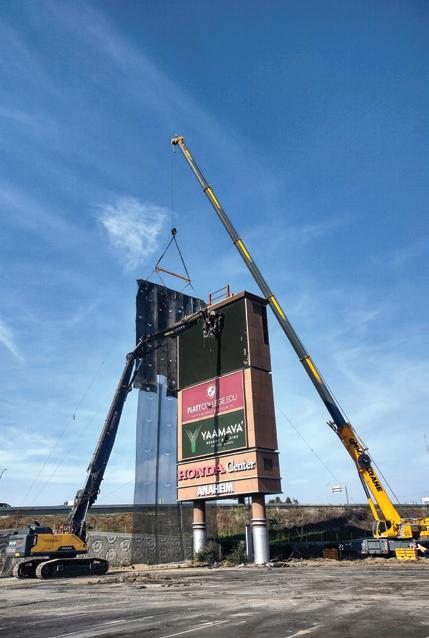
Working under Hathaway Dinwiddie, Force Demolition’s scope on the ocV!BE – Honda Center Renovation project includes complete demolition and removals across approximately 1,900,000 square feet of site buildings, the marquee sign, asphalt lots, streets, concrete walks, curbs and gutters,
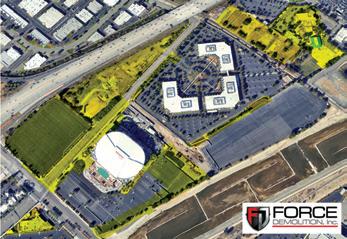
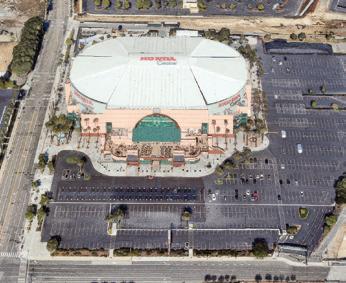
removals of existing building structures, parking structures, bridges, streets, underground utilities, and significant interior and exterior selective demolition removals involving portions of the exhibit halls. In total, the project includes approximately 70,000 tons of demolition removals, with Force Demolition achieving an approximate 98 percent diversion rate.
trees, shrubs, grass, fixtures, and underground utilities.
Specific to the Honda Center renovation, Force Demolition is also performing selective demolition and removals across approximately 400,000 square feet of exterior and interior renovation work. This includes both soft and hard construction removals involving ceilings, walls, flooring, fixtures, kitchens, concrete stairs, concrete arena seating, concrete decks, suites, mini marts, restrooms, and related areas throughout the facility.
{

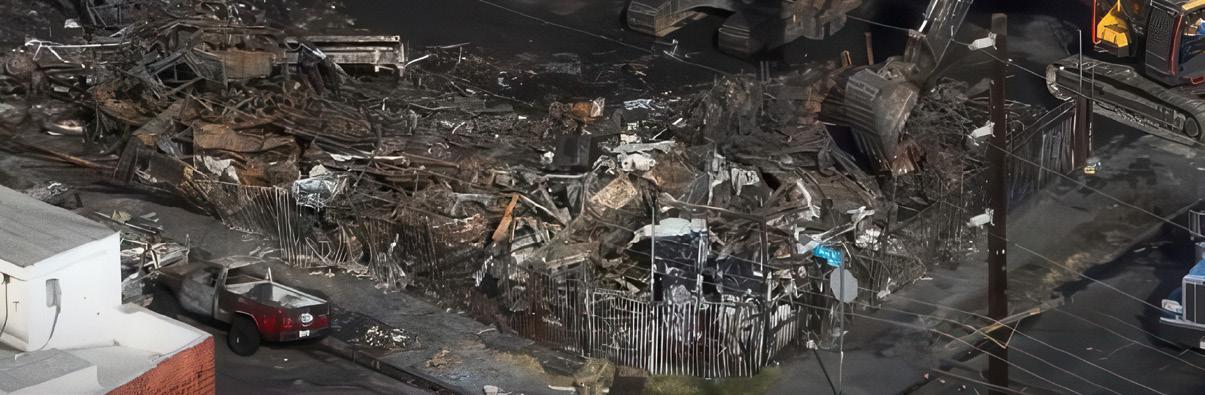
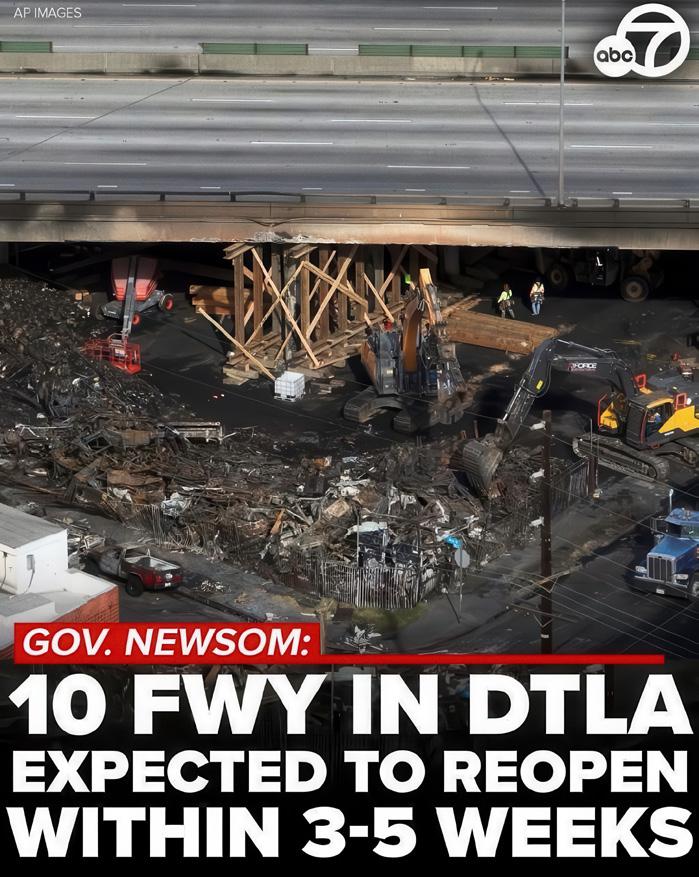
Interstate 10 freeway fire in Los Angeles. When the emergency call came in, the company mobilized immediately. Within an hour, Force Demolition personnel and equipment were on-site assisting emergency response efforts. Crews worked around the clock helping remove burned vehicles, support investigators, clear debris, and assist contractors responsible for restoring the damaged infrastructure. For days, Force Demolition equipment became a familiar sight on television news broadcasts throughout Southern California. The project highlighted the company's ability to respond rapidly during emergencies and reinforced the value of maintaining experienced personnel and readily available equipment. “We had equipment and people moving within an hour of getting the call,” recalls Pate. “That's what relationships and preparation allow you to do.”
Working under Griffith Company on the 10 Freeway –Alameda Emergency Bridge Fire Project, Force Demolition received the call at 6 a.m. on a Sunday morning and had boots on the ground within one hour to assess the debris removal needs beneath the compromised bridge structure. Equipment began arriving within two hours, and Force Demolition’s crews worked strategically with CDF arson investigation teams, assisting with debris removal to help finalize the investigation. Once the investigation was completed, the crews were given
That's what relationships and preparation allow you to do “
DUANE PATE
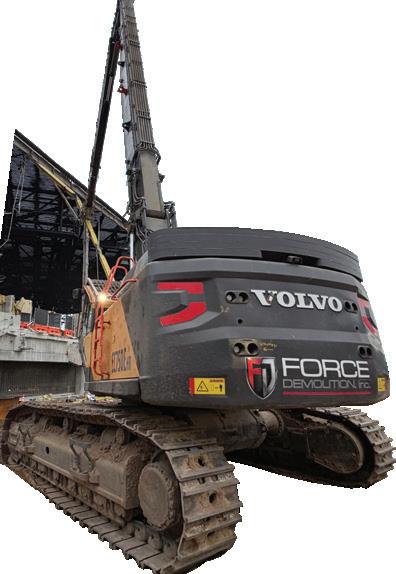
the go-ahead to clear all debris beneath the fire-damaged bridge so reshoring could be installed. Within four hours of the initial call, Force Demolition had two 100,000-pound Volvo excavators, two loaders, six skid steers, two
water trucks, and more than 25 team members working around the clock. Crews continued 24 hours a day for five straight days, removing debris and hauling off more than 160 loads for disposal. Force Demolition also had multiple crews working in conjunction with Caltrans engineers and inspectors to prepare approximately 70 columns for repair. The company’s field teams performed precise hand demolition, strategically chipping damaged concrete from the columns using rivet busters to depths of up to four inches behind the existing rebar cages, exposing sound concrete for the new repairs.
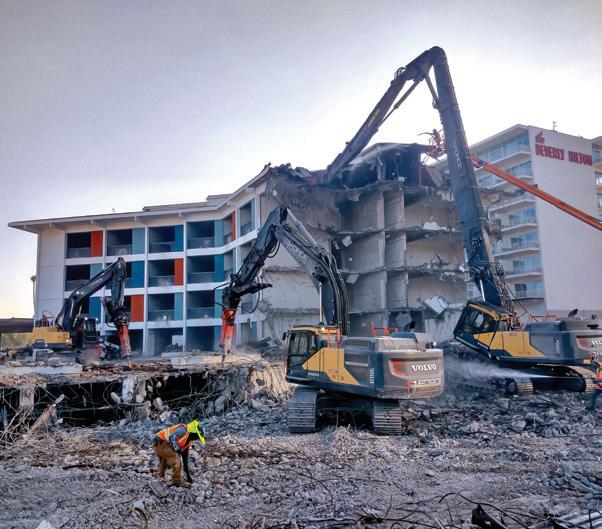
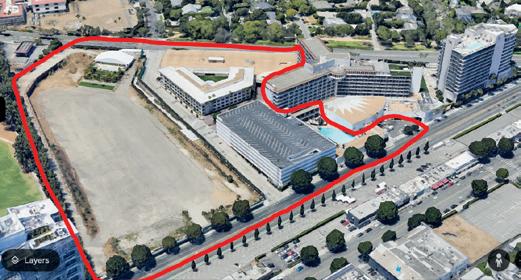
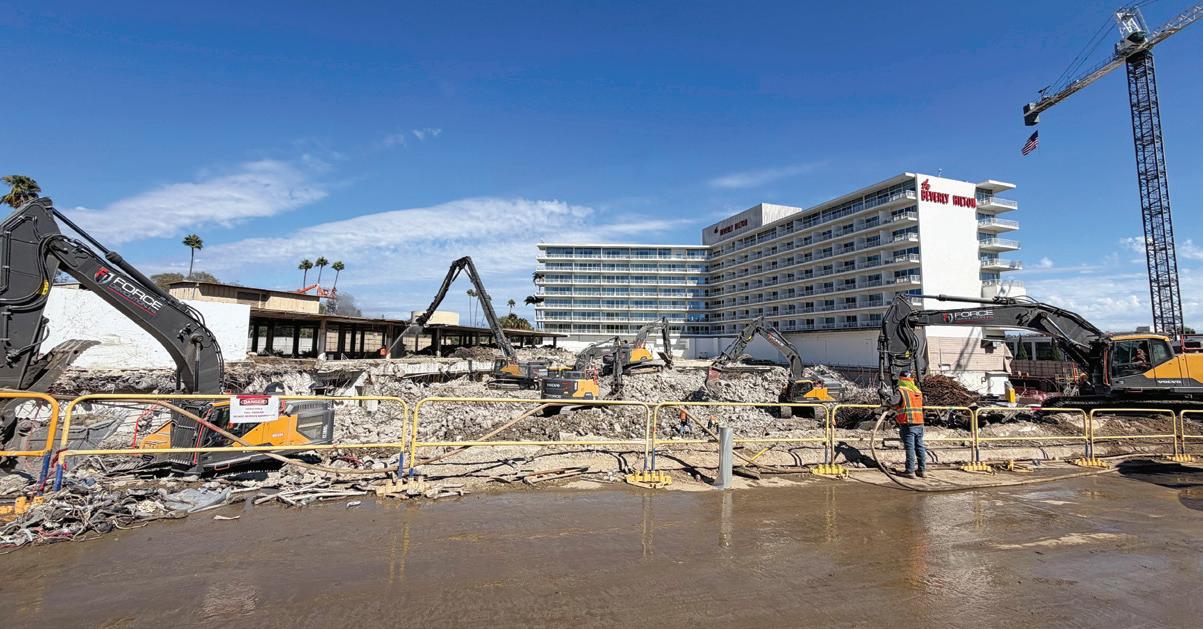
Force Demolition’s hospitalitysector work also includes the One Beverly project at the historic Beverly Hills Hilton, where the company is performing complete abatement and structural demolition under Turner Construction. The scope
includes demolition of the existing two-story hotel cabana suites, the north hotel tower, five-story structures with basement levels, a five-story parking structure, site concrete, trees, and vegetation. To complete the work, Force
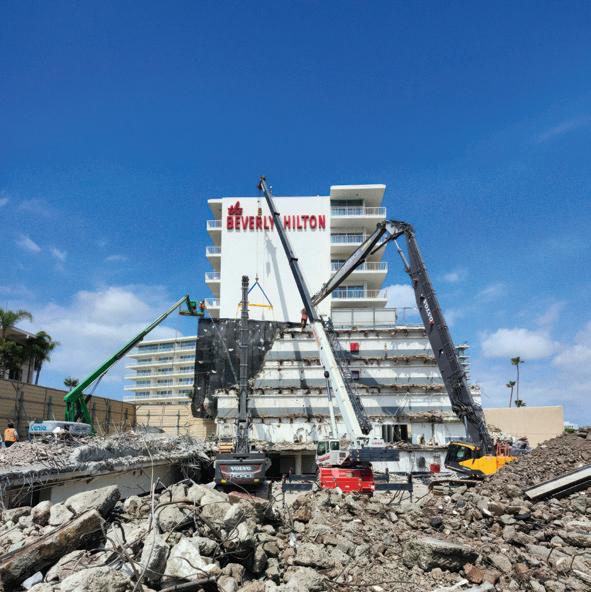
Demolition utilized its Volvo 750 and 480 high-reach excavators equipped with a 5,000-pound hammer and muncher/shear jaw attachments, providing reach capacity up to approximately 130 feet.
Force Demolition’s educationsector work includes the USC Fluor Tower Demo Project, performed under Hamilton Construction. The project involved demolition of an existing 12-story building structure at USC, utilizing Force Demolition’s Volvo 750 high-reach excavator equipped with a 5,000-pound
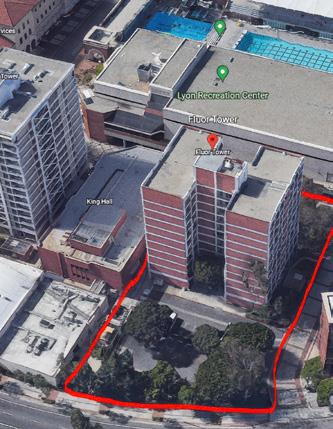
hammer and muncher/shear jaw attachments, providing reach capacity up to approximately 130 feet.
Beyond these marquee projects, Force Demolition has built an impressive portfolio that includes higher education, aviation, hospitality, entertainment,
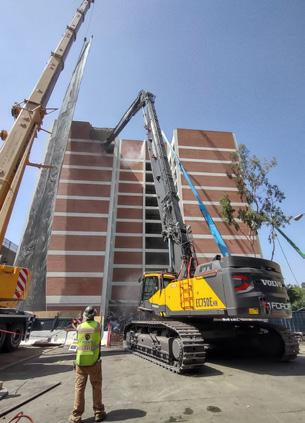
Supporting that work is one of the most impressive privately owned demolition fleets in California. Force Demolition owns more than 100 pieces of equipment, including approximately 20 Volvo excavators ranging from compact units capable of fitting through doorways to specialized high-reach demolition excavators capable of reaching approximately fourteen stories. The fleet also includes skid steers, water trucks, processors, pulverizers, breakers, shears, crew trucks, and Brokk demolition robots, among other implements. Pate's commitment to Volvo equipment stems from both performance and relationships.
healthcare, public works, and heavy civil projects throughout California. The company also participated in demolition activities associated with the Gerald Desmond Bridge replacement and continues to perform work throughout the state from San Diego to San Francisco.
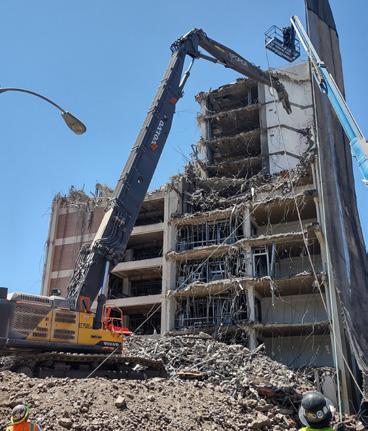
He believes the machines offer one of the strongest demolition packages available while also appreciating the support he has received from Volvo Construction Equipment & Services throughout the company's growth. “Volvo Construction Equipment & Services has been a tremendous partner since the day we started Force Demolition,” says Pate. “They believed in us early on, supported our growth, and have always been there when we needed them. Their professionalism, service, and commitment to our success have played an important role in helping us build the company we have today.”
Equally important is maintenance. Every piece of equipment follows strict service schedules, and the company works closely with Volvo Construction Equipment & Services to ensure machines remain productive and reliable. Pate believes owning equipment provides significant long-term advantages compared to renting, particularly when supported by a strong backlog and careful planning. The approach has allowed Force Demolition to steadily expand its fleet while maintaining financial discipline.
Safety remains another defining characteristic of the organization. Demolition is widely recognized as one of the most hazardous segments of the construction industry, yet Force Demolition has established an exceptional safety record. The company recently
achieved an EMR of approximately 0.65 and has experienced zero lost-time injuries. Pate attributes that success to experienced personnel, detailed planning, ongoing training, and a culture where everyone understands the importance of looking out for one
another. Many of the company's employees have worked together for decades, creating a level of trust and communication that is difficult to replicate. “We work in a dangerous business,” says Pate. “Everybody has to go home the same way they came to work.”
Looking ahead, Pate remains optimistic about the future. Force Demolition's backlog extends years into the future, and the company continues to pursue opportunities throughout California. Yet growth alone is not the ultimate objective. Instead, Pate is focused on creating a lasting organization that rewards the people who helped build it. One long-term
goal is transitioning Force Demolition into an employeeowned company through an ESOP structure, providing employees with an opportunity to share in the company's future success. “I'd like to see the employees own part of this company one day,” says Pate. “They're the reason we've become successful.”
Family also plays an important role in that future. Pate's son, Anthony, now serves as one of the company's top superintendents and represents the next generation of leadership. Having grown up around demolition projects, Anthony followed a path remarkably similar to his father's and has become a key contributor to the company's continued growth. Together with the experienced workforce that helped build Force Demolition, he represents the next chapter in the company's story.
For Duane Pate, however, success will never be measured
solely by revenue, equipment, or project size. Instead, it is measured by relationships, opportunities, and the ability to create something meaningful from adversity. The same determination that carried a fifteen-year-old laborer through overnight freeway shifts and high school classes continues to drive the company today. Force Demolition may have been born from a difficult chapter, but it has grown into one of California's most respected demolition contractors, proving that sometimes the greatest opportunities emerge when life forces you to start over.
I'd like to see the employees own part of this company one day
DUANE PATE “
Pate stated in closing, “It truly takes a team with everyone striving for the same goal to be successful. We could not do this without our amazing Force Demo Team (The Force Family), our amazing clients, trade partners, subcontractors, bonding company, banking institution, insurance carriers, and CPA’s.
Force Demolition, Inc.’s headquarters is located in Corona. For more information, please visit www.forcedemolitioninc.com or call (840) 800-DEMO. Cc








By Brian Hoover / Photos provided by GGG Demolition, Inc.
As Los Angeles International Airport continues its ambitious modernization efforts ahead of the 2028 Olympic Games, GGG Demolition is playing a critical role in preparing one of the airport's busiest facilities for its next chapter.
Working under contract to Hensel Phelps, GGG Demolition was selected to perform the demolition and site clearing portion of the LAX Terminal 5 Renovation
and Reconstruction project, one of the most significant aviation infrastructure improvements currently underway in Southern California.
According to Alan Paradiso, Executive Vice President of Estimating and acting project manager on the project, demolition activities officially began in November 2025 with an extensive environmental abatement program. Originally constructed in 1962,
Terminal 5 had undergone numerous renovations throughout its lifespan, but still contained asbestos, lead-based materials and other regulated substances that required removal before structural demolition could commence.
Despite the building's age, crews encountered less hazardous material than anticipated, likely due to previous renovation projects that had already addressed many of those concerns over the years.
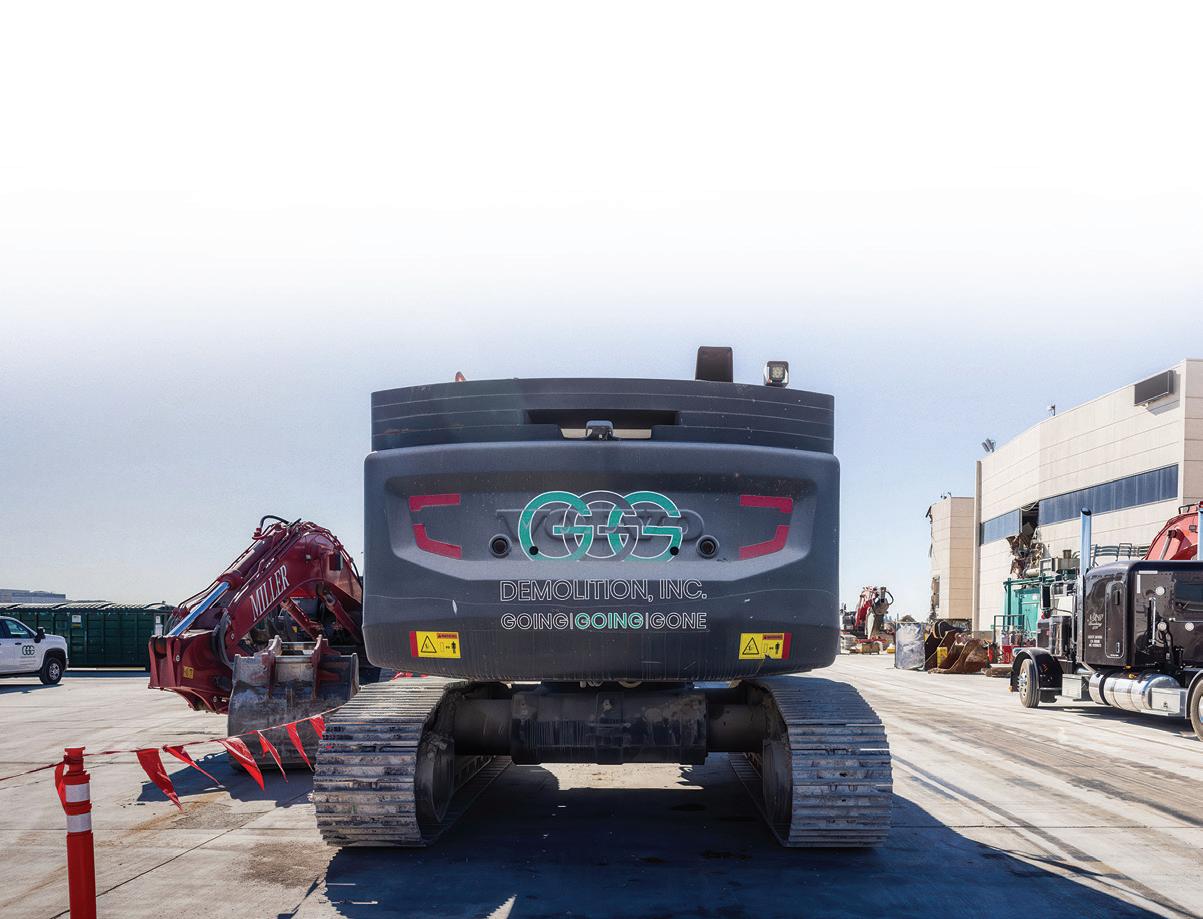
GGG Demolition equipment staged at LAX Terminal 5 ahead of demolition operations. Working under contract to Hensel Phelps, GGG began environmental abatement in November 2025 before transitioning to full structural demolition.
An aerial view of LAX Terminal 5 mid-demolition, showing the scale of the structure being systematically dismantled on a bay-by-bay basis. More than 3,000 truckloads of debris, concrete, and recyclable metals were ultimately removed from the site.
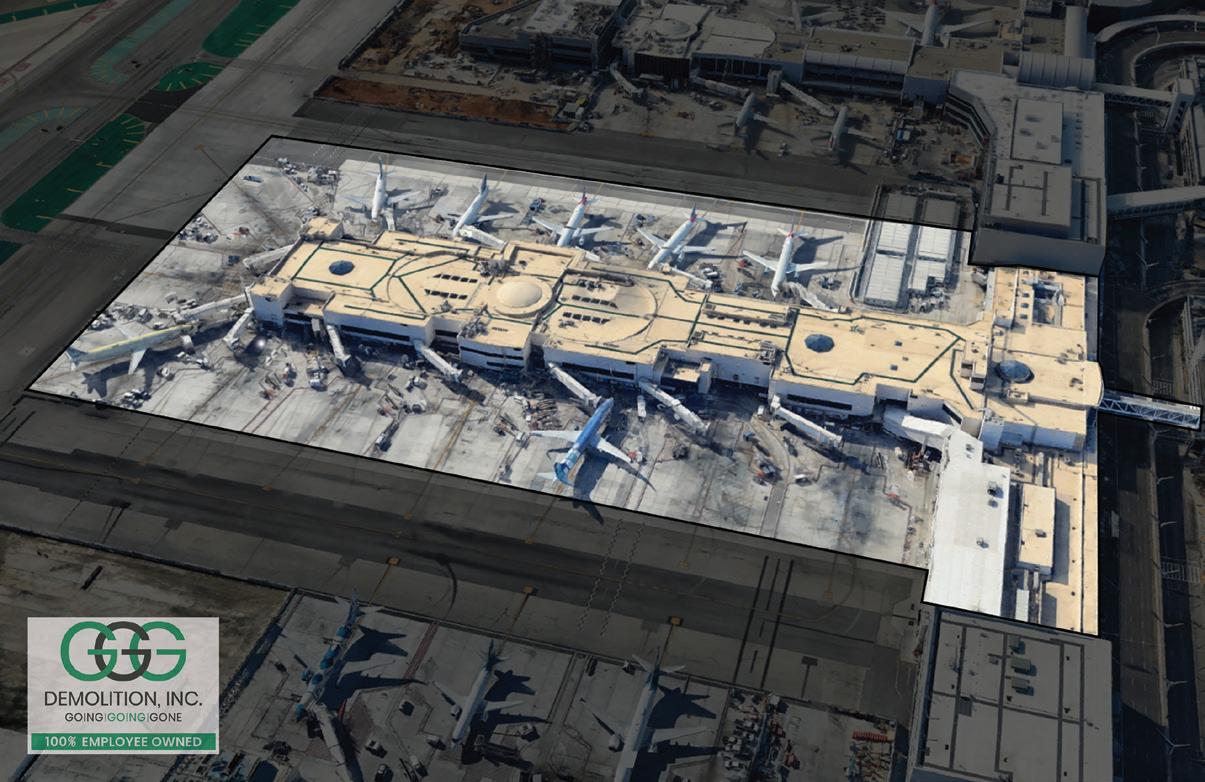
Once environmental abatement was completed, GGG (referred to as triple G) transitioned into structural demolition operations. Working under an aggressive schedule driven by upcoming reconstruction activities, crews systematically dismantled the terminal using engineered demolition plans designed to maintain structural stability throughout the process.
The demolition sequence was carefully coordinated on a bay-bybay basis, allowing portions of the structure to remain stable while adjacent sections were removed.
The sheer volume of material removed from the site illustrates the magnitude of the project. More than 1,160 truckloads of construction and demolition debris were hauled away, along with approximately 1,200 truckloads of concrete material and more than 700 truckloads of recyclable
metals. Structural steel columns, girders, reinforcing steel and other metallic components were separated onsite and sent for recycling. Concrete materials were sized into two-foot sections along
with other trash and mixed debris and trucked to local diversion and recycling facilities. As with most public works projects in California, achieving a high diversion rate remained a major project objective.
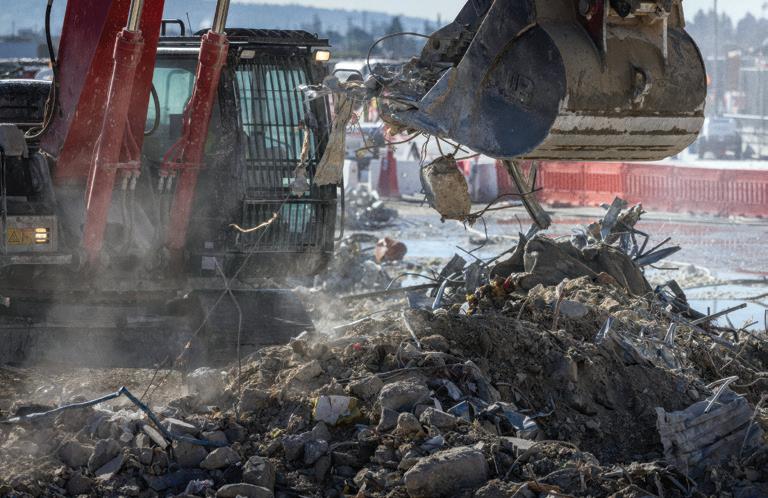
A GGG excavator works through the structural demolition of Terminal 5, where crews operated day and night shifts six days a week at peak production with approximately 60 workers deployed across two simultaneous work zones.
Maintaining the accelerated schedule required significant manpower and coordination.
At peak production, approximately 60 workers were deployed between day and night shifts, with crews operating six days per week.
The project was divided into two primary work areas. One team focused on the headhouse, which contains ticketing, baggage handling and passenger processing functions, while a second team worked simultaneously on the concourse where aircraft gates and boarding areas are located. By attacking
both portions of the terminal at the same time, GGG was able to advance demolition ahead of schedule and clear critical areas for reconstruction activities.
“This construction project is all about schedule. The airport is planning to have Terminal 5 demolished and rebuilt ahead of the 2028 Olympics, so every day matters. Our team worked day and night shifts to keep the project moving and clear the way for the next phase of construction,” says Paradiso. “Working inside an active airport environment requires an incredible amount of planning and coordination.
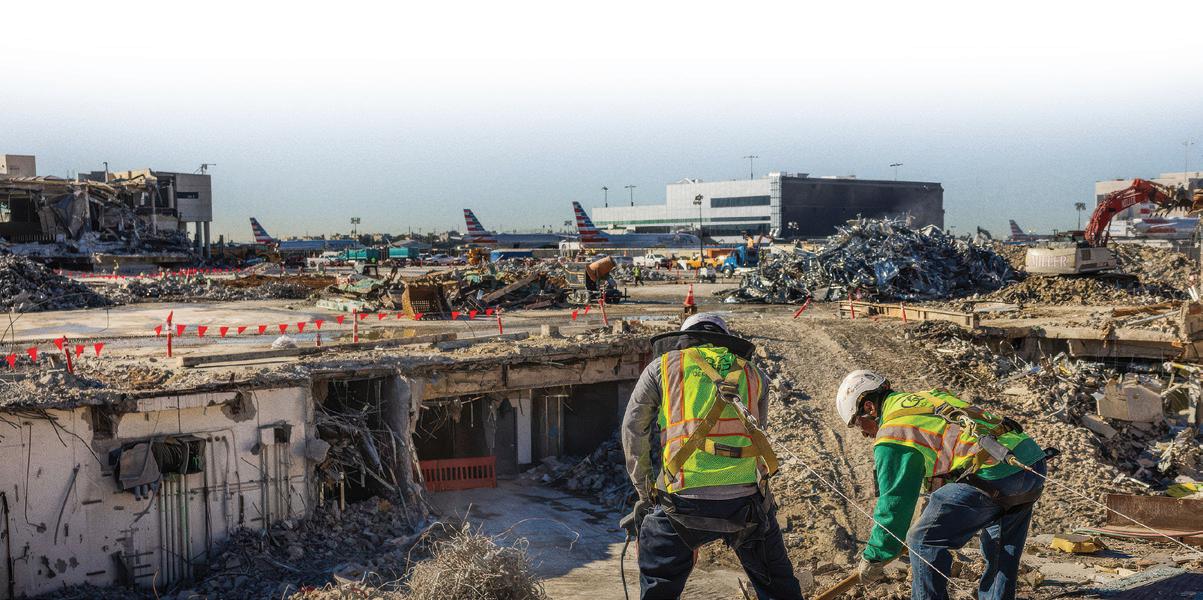
GGG crews work amid the cleared footprint of LAX Terminal 5 as neighboring terminals continue normal flight operations in the background. Despite the scale of demolition underway, strict coordination with airport officials kept adjacent terminals fully operational throughout the project.
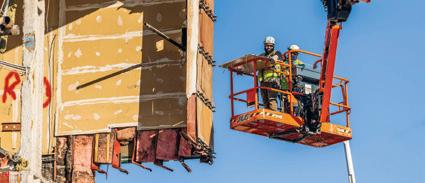
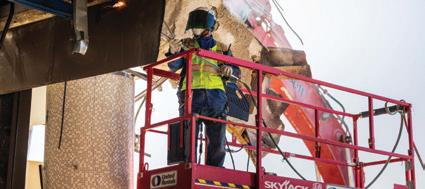
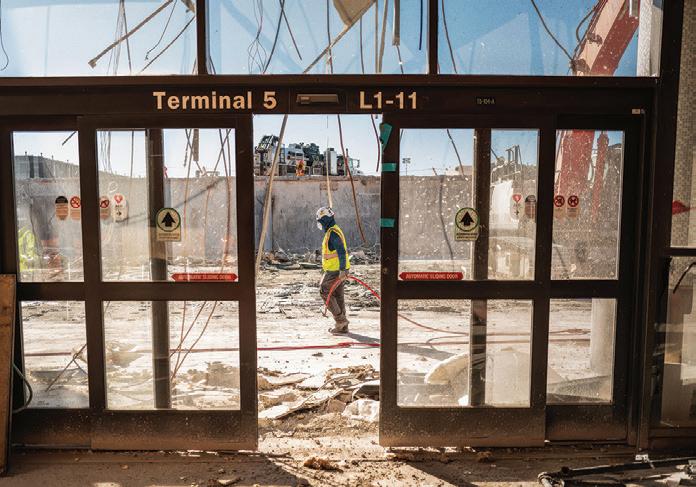
Above: GGG crew member performs abatement work at Terminal 5. Originally constructed in 1962, the terminal required removal of asbestos, lead-based materials, and other regulated substances before structural demolition could begin.

Every truck movement, every demolition activity and every safety measure had to be carefully managed to meet the strict operational requirements at LAX.”
Working within one of the world's busiest airports presented challenges that extended far beyond the demolition itself. Although Terminal 5 had been shut down for reconstruction, neighboring terminals remained fully operational.
Every truck entering and exiting the project site required careful coordination and escort services through airport operational areas.
{ Continued on page 24 }





{ Continued from page 22 }
Dust control measures were rigorously enforced through continuous monitoring stations placed around the perimeter of the project. Crews also adhered to strict Foreign Object Debris protocols designed to prevent any loose materials from escaping the work zone and impacting nearby aircraft operations.
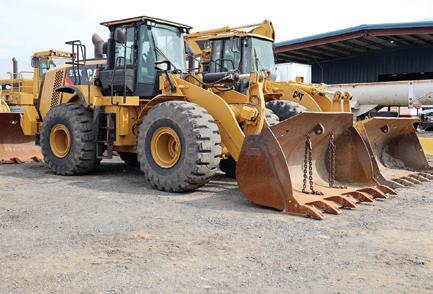
An extensive fleet of demolition equipment was utilized throughout the project. Multiple excavators, including high-reach demolition machines, worked simultaneously to dismantle the structure while large track loaders and support equipment handled material processing and site logistics. In some areas, demolition extended into the aircraft apron where pavement sections reached thicknesses of up to 24 inches, requiring substantial breaking and removal efforts.
One of the more unique aspects of the project involved preserving an underground tunnel that connects portions of the terminal complex.
While nearly everything around it was removed, the tunnel itself had to remain intact. Crews carefully managed equipment loads and traffic patterns around the structure, even leaving certain slab sections in place to help protect the tunnel from excessive loading during demolition operations.
“We’re proud of how the project has progressed. The team has stayed focused on safety, productivity, and schedule while helping prepare one of the nation’s busiest airports for the future,” concludes Paradiso. “When you’re demolishing a major terminal at LAX,
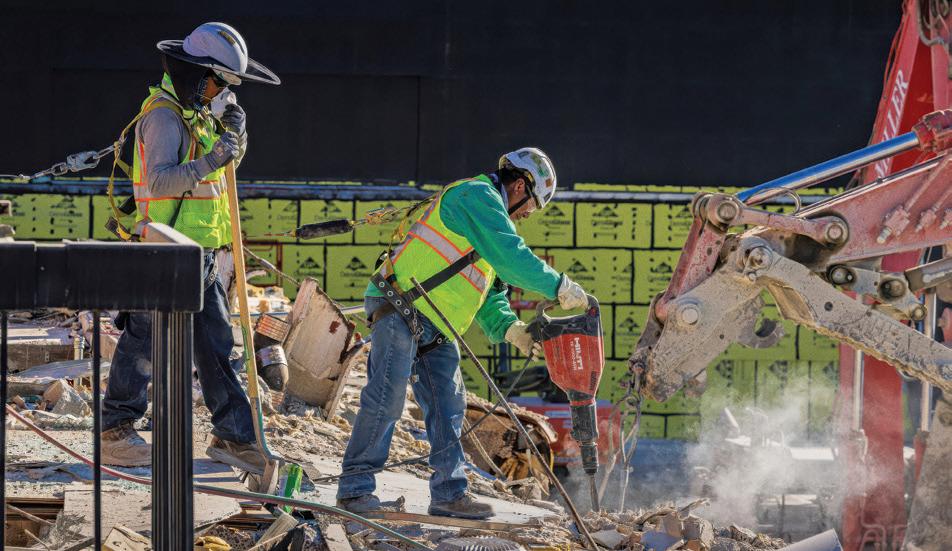
GGG crew members perform precision demolition work at LAX Terminal 5. Strict Foreign Object Debris protocols and continuous perimeter dust monitoring were enforced throughout the project to protect nearby aircraft operations and meet LAX’s stringent safety requirements.
there are no shortcuts. Planning, safety and communication are what make a project of this scale successful.”
With structural demolition substantially complete and apron demolition activities continuing through the summer, GGG Demolition has successfully positioned the project for its next phase. Through close coordination with Hensel Phelps, airport officials, consultants and subcontractors, GGG Demolition maintained an aggressive schedule while meeting the strict safety, environmental and operational requirements associated with working inside one of the world's busiest airports. The company's work has cleared the way for a modernized Terminal 5 that will serve millions of travelers while helping Los Angeles prepare for the international spotlight of the 2028 Olympic Games. Cc
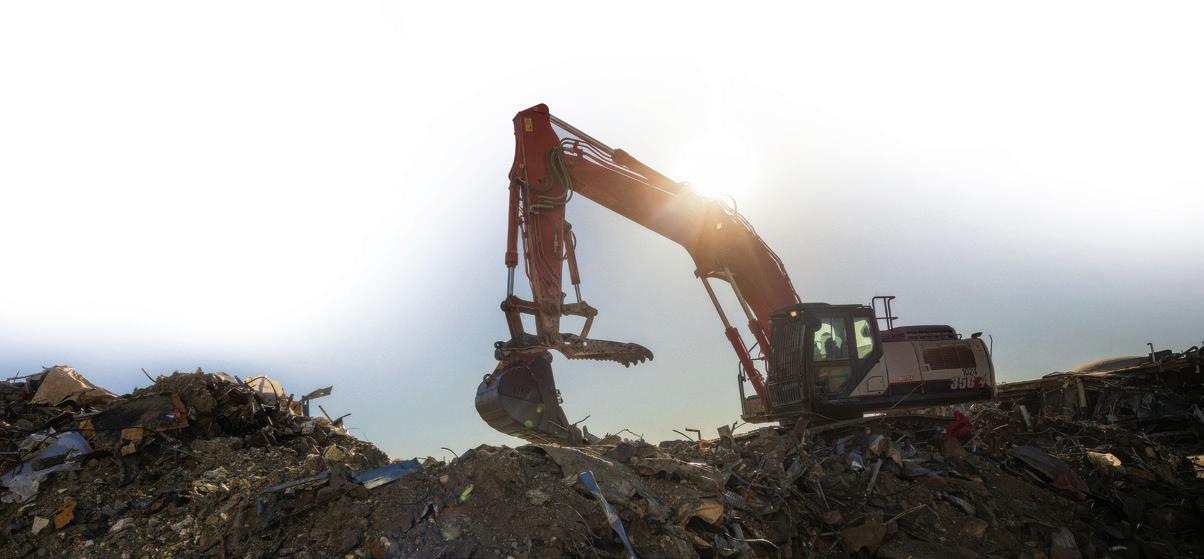
GGG excavator continues apron demolition activities. In some areas, pavement sections reached thicknesses of up to 24 inches, requiring significant breaking and removal efforts before the site could be cleared for reconstruction.

By Brian Hoover /
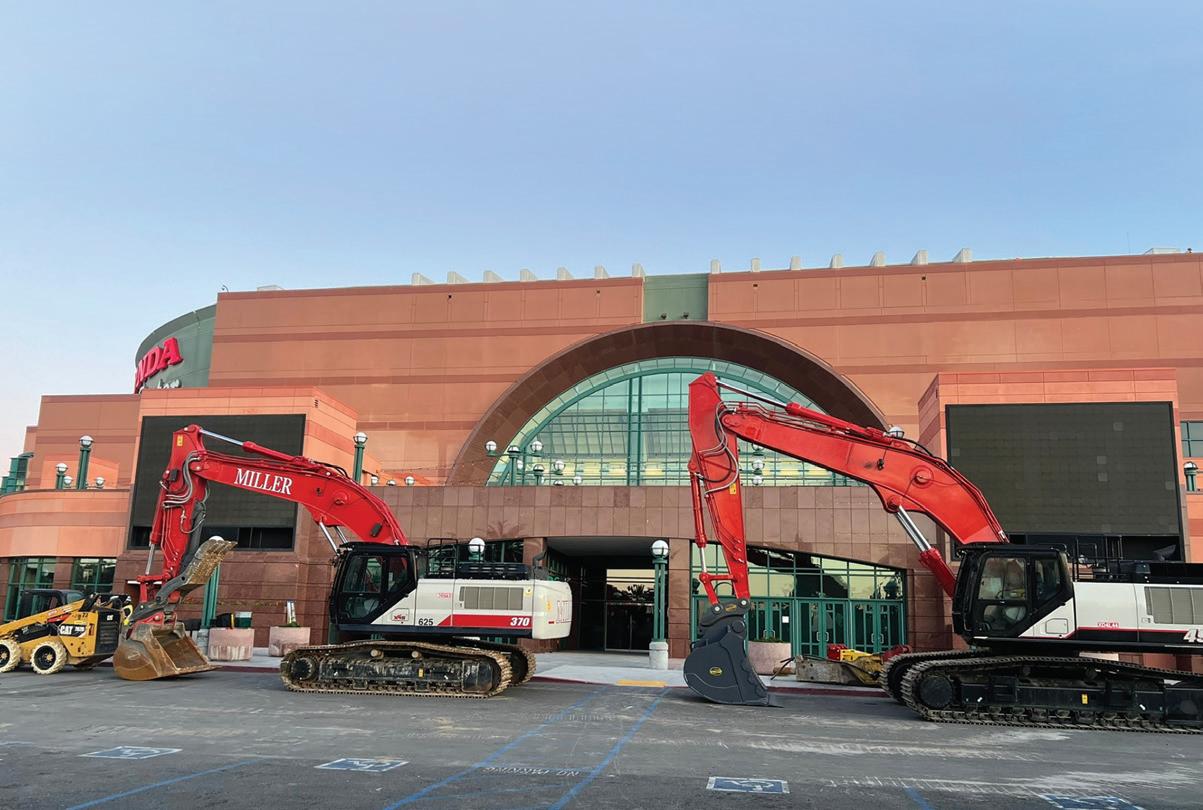
For demolition professionals, opportunities to work on iconic Southern California landmarks do not come along every day. For Miller Environmental, the demolition of the Honda Center Encore South Addition provided just such an opportunity while helping pave the way for one of the region's most
ambitious entertainment district redevelopments.
Located adjacent to the Honda Center in Anaheim, the South Addition demolition is part of the larger OC Vibe redevelopment effort that is transforming the area surrounding the home of the Anaheim Ducks. The project is intended to modernize the venue
and surrounding entertainment spaces in preparation for future growth and increased international attention leading up to the 2028 Olympic Games.
The demolition project began in January 2026 under an accelerated schedule that demanded careful planning, close coordination and efficient execution.
The project had its complexities, but the team did an outstanding job, zero safety incidents while maintaining an aggressive schedule and meeting the owner's expectations.”
— Tyler Rutledge, Project Manager
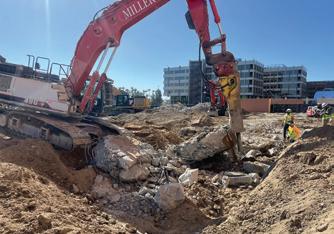
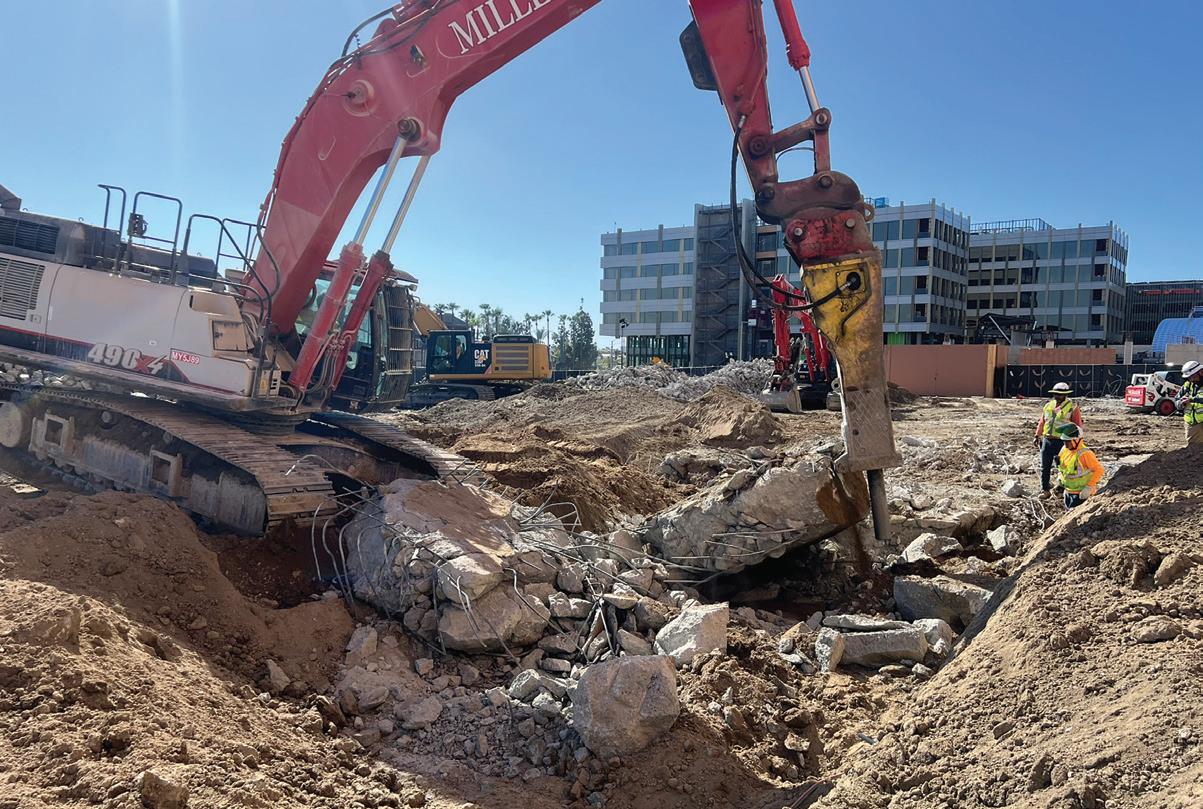
A Miller Environmental excavator equipped with a hydraulic breaker systematically dismantles the structure as crews work approximately 50 to 60 hours per week to meet the project's aggressive six-week demolition schedule.
Working for general contractor Matt Construction, Miller Environmental was tasked with removing approximately 22,000 square feet of existing structures attached to the arena while maintaining safety and minimizing impacts to the surrounding facility.
According to Project Manager Tyler Rutledge, one of the first challenges involved coordinating utility disconnections and isolating services that supported the South Addition while ensuring the remaining portions of the Honda Center continued to operate without interruption. Prior to structural demolition, crews removed hazardous materials, drained HVAC systems and completed a variety of preparatory activities that included site clearing, tree removal and dismantling the large marquee sign located along Katella Avenue. Once the site was ready, demolition
crews moved quickly into structural removal. Working approximately 50 to 60 hours per week, the team completed the majority of the demolition effort within a six-week period. Large excavators equipped with hydraulic breakers and demolition attachments systematically dismantled the structure while crews separated materials for recycling and disposal.
“The biggest challenge was the schedule. We had roughly six weeks to complete the demolition, so our crews worked hard every day to keep the project on track and deliver the site back for redevelopment,” says Rutledge. “The project had its complexities, but the team did an outstanding job. We completed the work with zero safety incidents while maintaining an aggressive schedule and meeting the owner's expectations.”
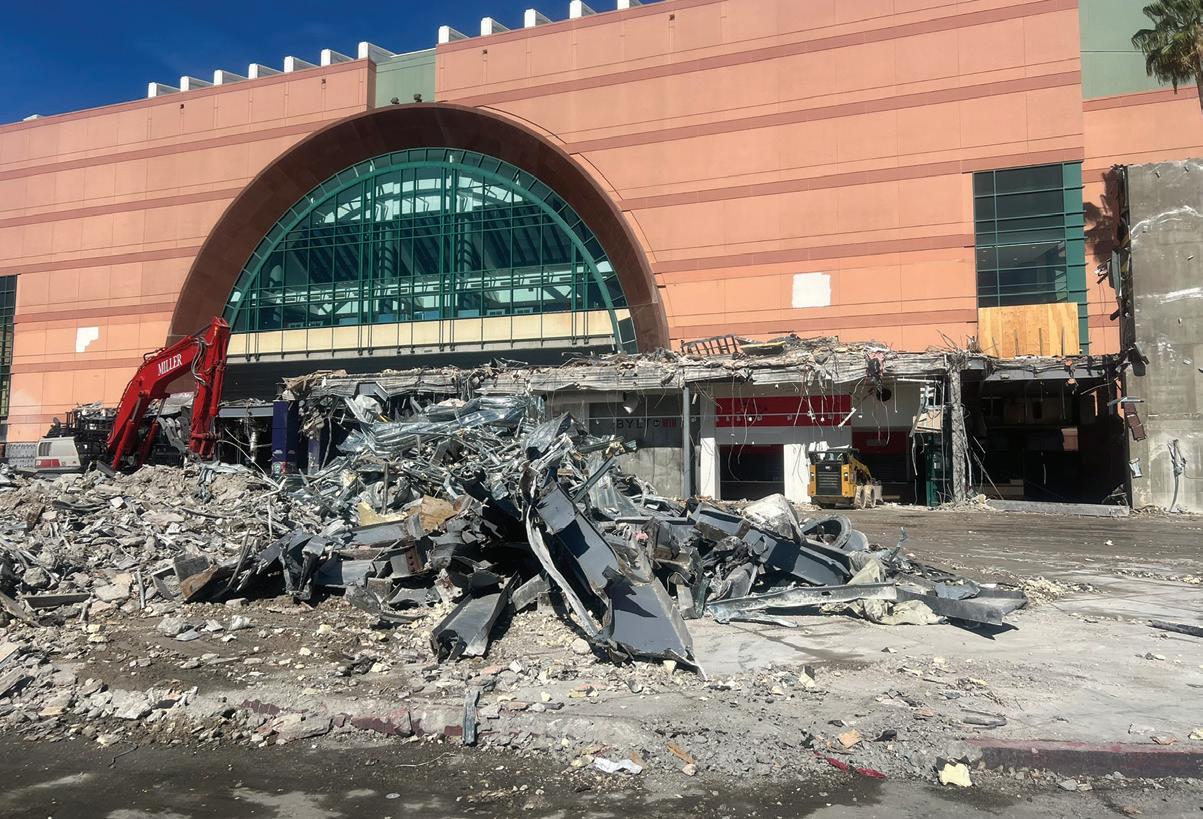
The South Addition structure reduced to rubble following structural demolition.
Approximately 4,000 tons of concrete and 600,000 pounds of structural steel were recovered and recycled as part of the project's 75 percent diversion goal.
"The foundations were among the largest our team has ever encountered — roughly 22 feet deep and nine feet wide. It was one of the biggest surprises of the project."
— Tyler Rutledge, Project Manager
The project generated significant quantities of recyclable materials.
Approximately 4,000 tons of concrete were removed from slabs, beams and foundation systems throughout the structure. In addition, roughly 600,000 pounds of structural steel were recovered and recycled. Interior finishes, drywall, ceiling materials, floor tile, electrical components and other construction debris were processed through diversion facilities where additional recyclable materials could be separated and recovered.
The project carried a diversion goal of approximately 75 percent, reflecting the growing emphasis on sustainability and material recovery throughout the construction industry.
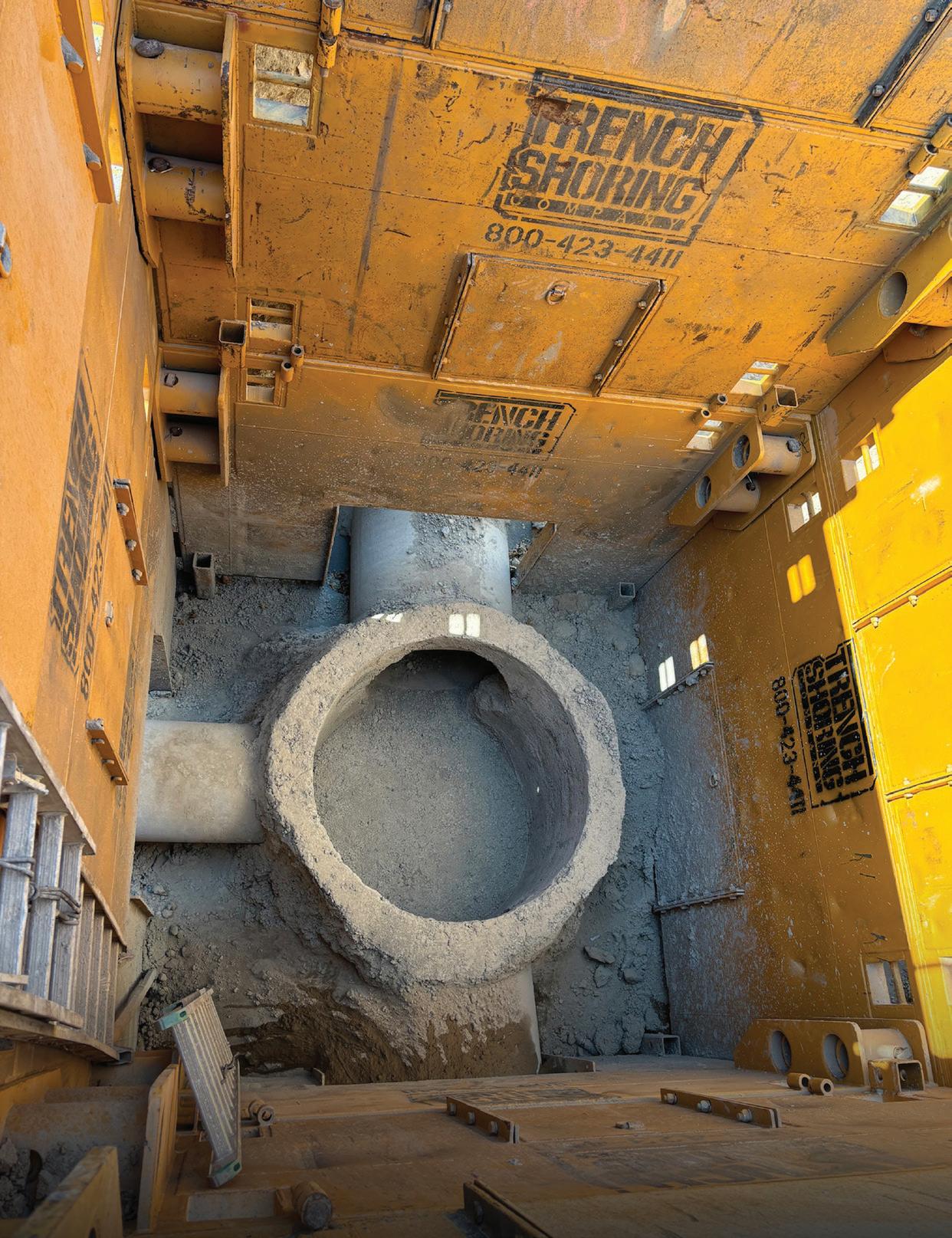
One of the biggest surprises occurred below ground. With limited as-built information available, the project team was uncertain what type of foundation system would be encountered during demolition.
As excavation progressed, crews uncovered massive reinforced concrete footings that far exceeded expectations.
Measuring approximately 22 feet deep and nine feet wide, the foundations were among the largest the team and construction firm has ever encountered.
Roughly eight of these enormous footing systems had to be carefully removed while ensuring the stability of adjacent portions of the Honda Center that remained in service.
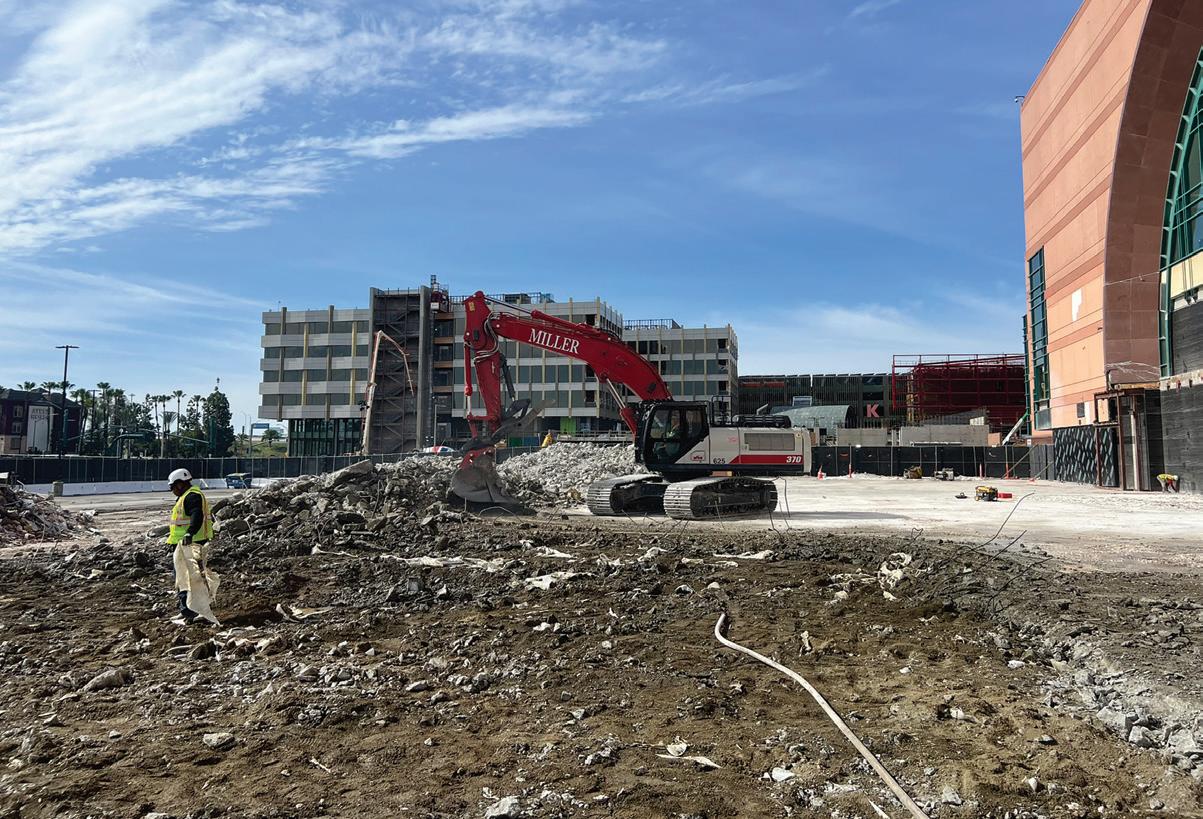
A Miller Environmental excavator works through the cleared footprint of the Honda Center South Addition. Despite encountering unexpectedly massive foundation systems up to 22 feet deep, the crew of approximately ten personnel kept the project on schedule throughout demolition.
{ Continued from page 28 }
Despite the unforeseen foundation conditions, the project continued to move forward on schedule. At peak production, Miller Environmental maintained a workforce of approximately ten personnel consisting of laborers and equipment operators.
The primary demolition fleet included Link Belt 370 and 470 excavators equipped with hydraulic breakers, processing attachments and material handling buckets capable of demolishing structures, separating materials and loading trucks without the need for additional loading equipment.
All demolition materials were processed onsite and sized to meet transportation requirements before being hauled from the project. Concrete and steel were
recycled while mixed construction debris was directed through diversion facilities to maximize material recovery and reduce landfill disposal.
While many fans may miss the familiar features that once occupied the South Addition, the demolition marks the beginning of an exciting new chapter for the Honda Center. In its place will rise modern entertainment spaces, upgraded amenities and new gathering areas designed to enhance the fan experience and support the continued evolution of the OC Vibe district.
“For me personally, this project was special. I grew up just a few minutes from the Honda Center and spent years coming here as a Ducks fan, so having the opportunity to be part of its
transformation was something I'll never forget,” continues Rutledge. “Many people knew the South Addition because of Brewery X and the other popular gathering spots there, but what's coming next is set to completely redefine the fan experience.”
Most importantly, Miller Environmental completed the project with zero safety incidents, a notable achievement considering the accelerated schedule, complex utility coordination and unexpected foundation conditions encountered throughout the work.
As redevelopment continues across the site, the company's demolition efforts have laid the groundwork for what will become one of Southern California's premier sports and entertainment destinations. Cc


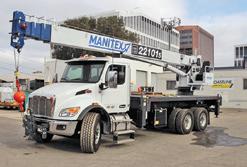
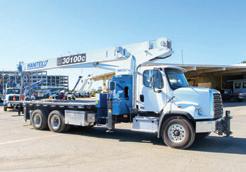
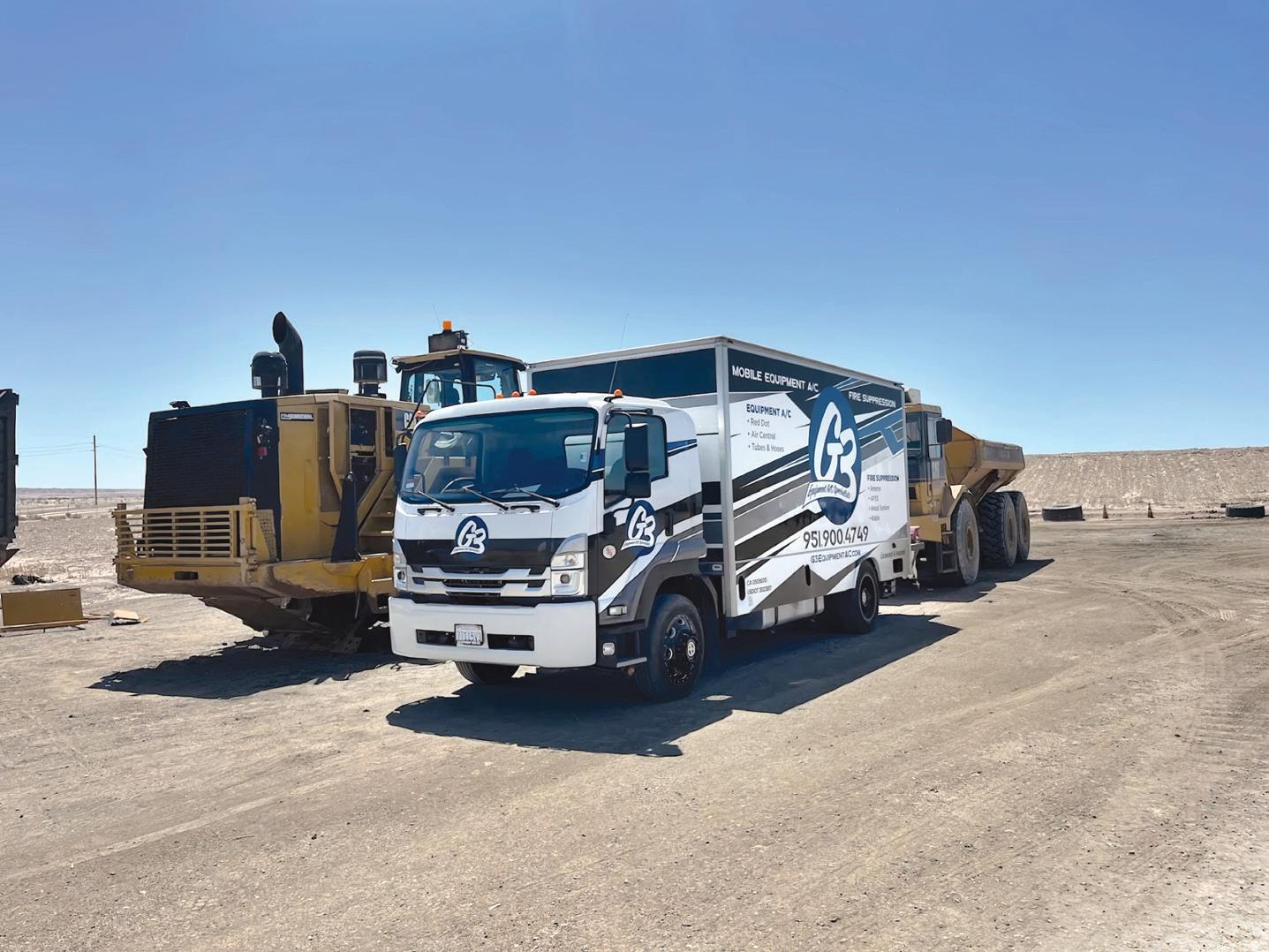
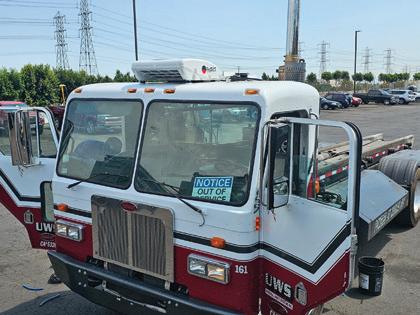
At G3 Equipment AC Specialists, we provide expert AC repair services for commercial fleets. Our skilled technicians ensure your systems operate safely and efficiently— keeping your vehicles running smoothly and your drivers safe and comfortable.
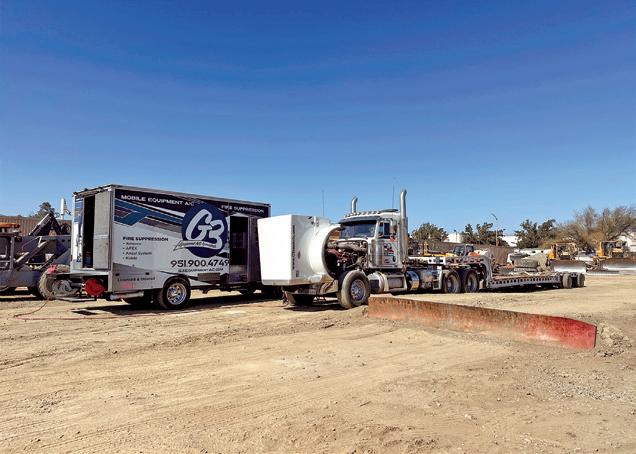
‰RED DOT Roof Top
‰Air Central
‰Mobile AC Hoses
AC PARTS IN STOCK FOR SALE

















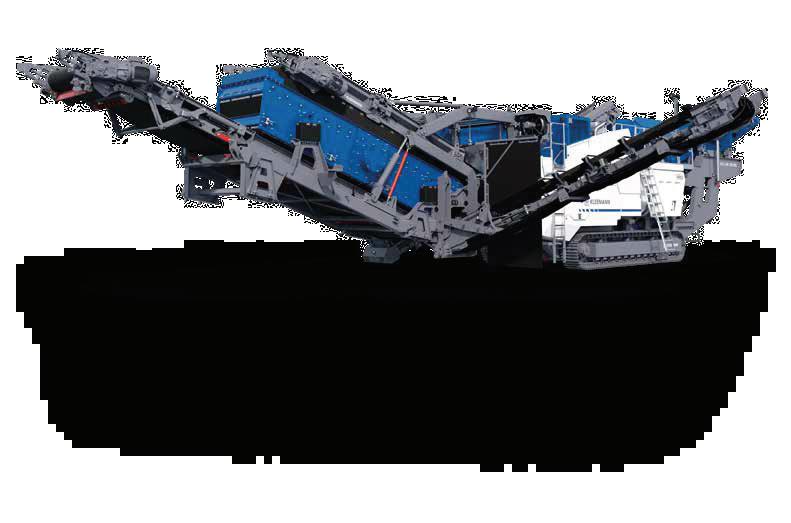


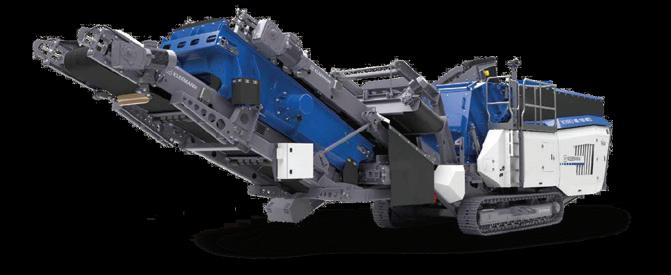
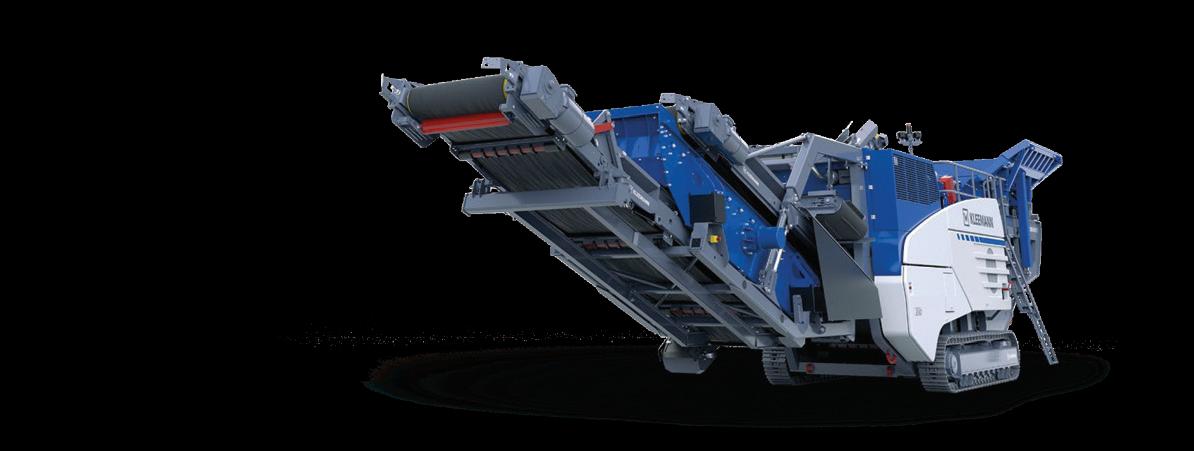
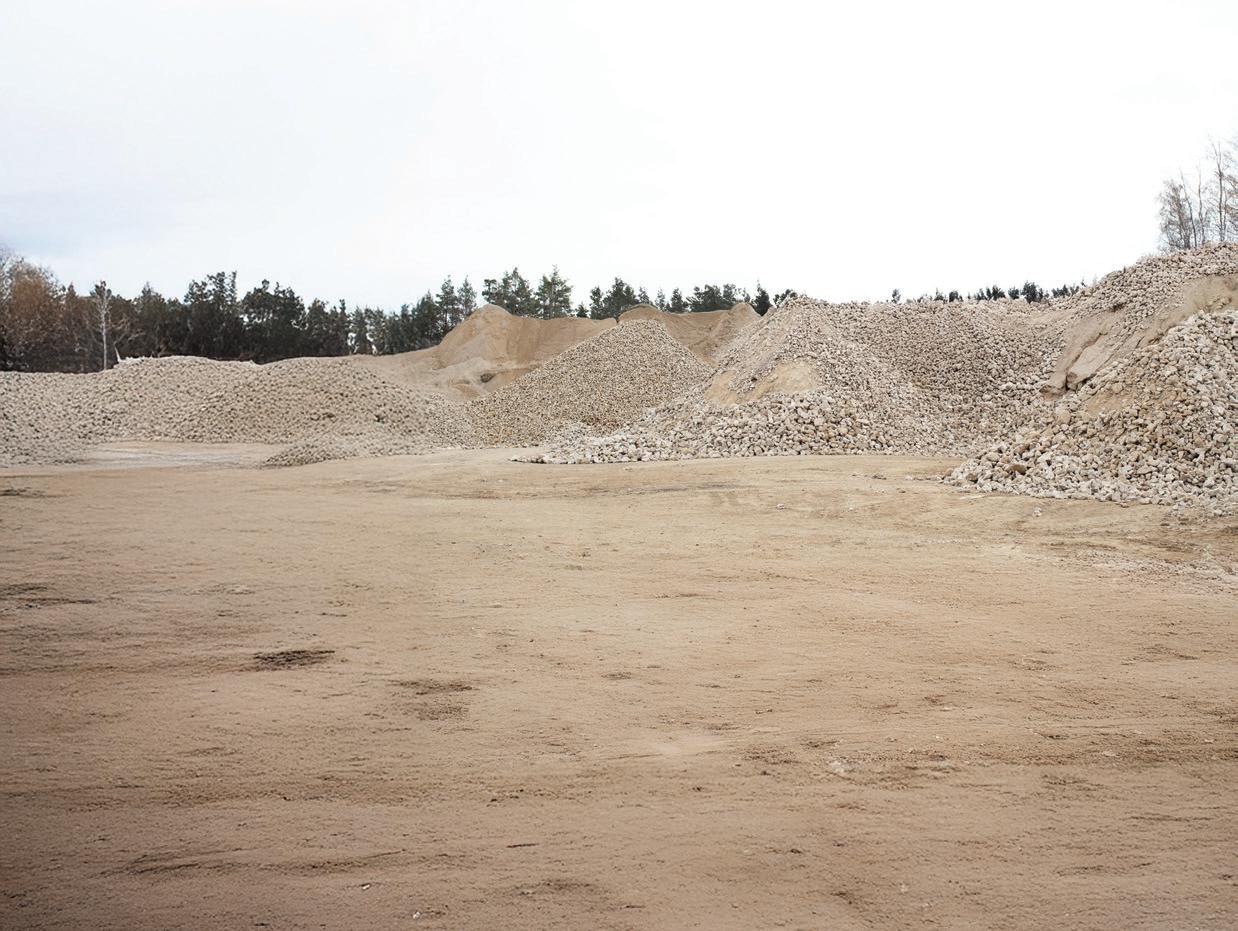
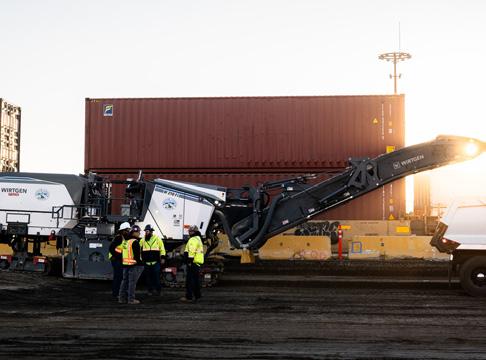
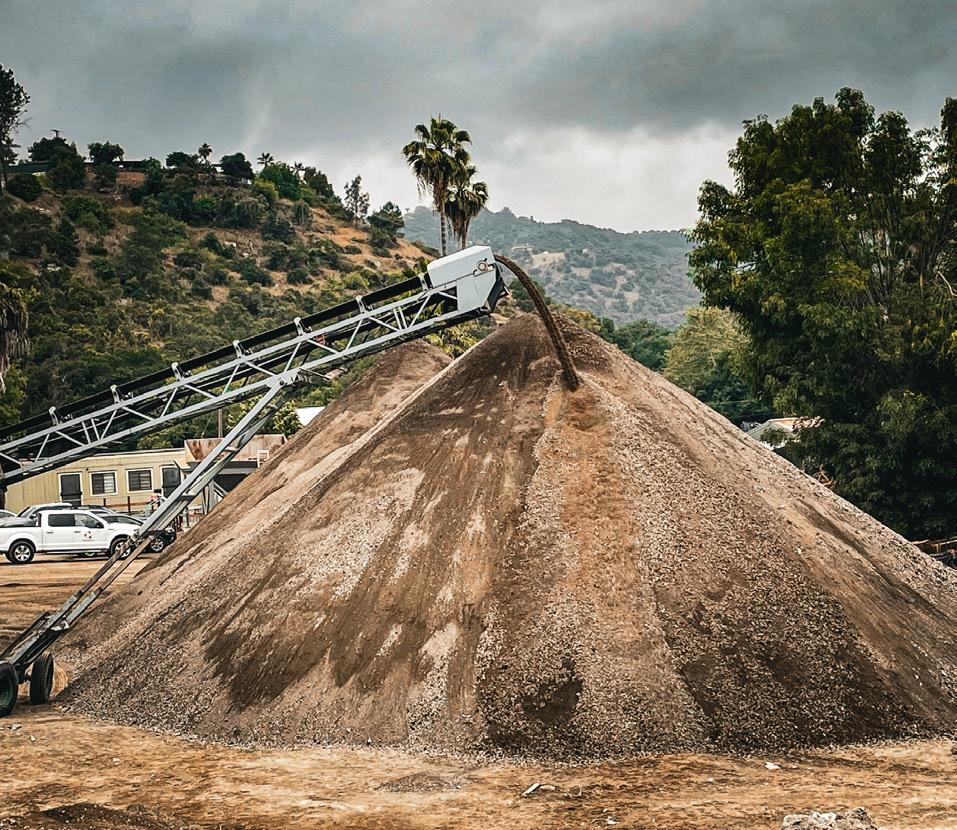
The mobile MOBIREX impact crushers are used in soft to medium-hard natural stone and in recycling. The performance of the plants is impressive – not just in terms of pure volume reduction. The focus today is on cost and environmental awareness, availability, versatility and, above all, the quality of the end-product to be achieved. The MOBIREX plants crush stone so e ciently that the grain shape, grain size distribution and cleanness comply with the strict standards for concrete and asphalt aggregates.