Committee Co-Chairs and Editors in Chief A.J. Jahanian, Esq., Beaumont Tashjian
Daniel Heaton, Esq., DeNichilo Law, APC
Committee Members
Sean Andersen, PRA, RS, Association Reserves
Gina Fanizzi, CMCA, AMS, Seabreeze Management Co.
Denis Goulding, Accurate Termite and Pest Control
Kimberly Lilley, CMCA, CIRMS
Joy Marino, CMCA, AMS, Professional Community Management, AAMC
Eric Zarr, CMCA, AMS, FirstService Residential, AAMC
CHAPTER STAFF
Executive Director
Erica Tenney, CMCA, AMS, AAMC
Administrative Assistant Elda Pfitzinger
MAGAZINE DESIGN
Rial Marketing Communications
CONTACT
Advertising, Articles or Correspondence
CAI-Greater Inland Empire Chapter Headquarters 900 South Main St, Ste 110, Corona, CA 92882 (951) 784-8613 • info@cai-grie.org • cai-grie.org
All articles and paid advertising represent the opinions of authors and advertisers and not necessarily the opinion of either Connect or the Community Associations Institute–Greater Inland Empire Chapter. Information contained within should not be construed as a recommendation for any course of action regarding financial, legal, accounting or other professional services and should not be relied upon without the consultation of your accountant or attorney.
Connect is an official quarterly publication of Greater Inland Empire Chapter of the Community Associations Institute (CAI–GRIE). The CAI–GRIE Chapter encourages submission of news and articles subject to space limitation and editing. Signed letters to the editor are welcome. All articles submitted for publication become the property of the CAI–GRIE Chapter. Reproduction of articles or columns published permitted with the following acknowledgment: “Reprinted with permission from Connect Magazine, a publication of the Greater Inland Empire Chapter of the Community Associations Institute.”
As I look back on this remarkable year, I am filled with immense gratitude and pride for what our chapter has accomplished together. When we set out with our 2025 theme, “Inland Empire Strikes Back,” we envisioned a year defined by renewed energy, bold action, and a strong return to connection and community. Now, as we close out the year, I can confidently say: we didn’t just strike back, we did so in leaps, bounds, and with unmistakable use of “The Force.”
This year has been one of the most rewarding and memorable experiences of my professional life, and that is entirely because of the people who make CAI-GRIE what it is. Being entrusted to serve as your Chapter President has been an honor I will carry with me for many years. Every event, every meeting, every conversation reminded me how fortunate I am to lead such a committed, innovative, and truly special Chapter.
First and foremost, I want to extend my heartfelt appreciation to our 2025 Board of Directors.
Your collaboration and unwavering dedication shaped the momentum of this Chapter all year long. Each of you brought thoughtful leadership, creativity, and a shared passion for elevating our industry and supporting our members. Together, you set the tone for excellence and helped ensure that every initiative we pursued was grounded in purpose.
I must also recognize our incredible Executive Director Erica Tenney, whose steady leadership and behind-the-scenes coordination make our Chapter’s success look effortless, even though we all know the effort is extraordinary. You have taken to this role like a true Jedi Master. Thank you for keeping us focused, organized, and always moving forward.
And to our volunteers, this year would not have been possible without you. You are the heart and engine of CAI-GRIE. You show up, you work hard, and you bring enthusiasm to everything you touch. From contributing on our committees or dedication in executing events, your time and energy made all the difference. Our Chapter thrives because of people like you who give generously and believe deeply in the mission of CAI. Please know that your efforts never go unnoticed.
It wasn’t just about striking back, it was about lifting each other up, creating new opportunities for growth, and fostering a Chapter culture where every member feels valued and included. Together, we built momentum that will carry far beyond this year, setting the stage for 2026 and our incoming President Lana Hamadej, who I am sure is going to thrive in her own personal trilogy and further solidify her indelible mark on this Chapter.
As I close out my term, I want to express how profoundly thankful I am for the privilege of serving as your President. The friendships forged, the lessons learned, and the memories made are gifts I will always treasure. This role gave me a front-row seat to the very best of our community: the collaboration, the generosity, and the shared belief that we are stronger together.
Greg Borzilleri
Greg Borzilleri
2025 CAI-GRIE Chapter President
As a Chapter, we truly embodied the spirit of “Inland Empire Strikes Back.” After years of rebuilding, re-energizing, and reconnecting, this was the year we surged forward with confidence. The feedback we received all year long was clear: the Inland Empire is stronger, more vibrant, and more connected than ever!
Thank you for trusting me, supporting me, and inspiring me throughout this incredible journey. I am proud of what we accomplished, excited for what lies ahead, and honored to remain a part of this exceptional organization.
As I wrap up my first full year serving as your Executive Director, I find myself reflecting with a truly grateful heart. What a year it has been. Each of our events carried an energy that could only be created by the people in the room: our members. You showed up, you connected, you shared ideas, and you helped create a sense of community that continues to define who we are.
WBorzilleri
EDITORS’ LINK
volunteers are informed and empowered, our programming, advocacy, publications, and events all rise to another level. If you intend on or are interested in being on a committee in 2026, please be sure to sign up and join us January 7, 2026.
elcome to a very special Issue of Connect Magazine – one that not only kicks off 2025 but of the CAI-Greater Inland Empire Chapter. This year, we plan to celebrate our legacy foundation, the volunteers who carry our mission forward, and the innovations that will shape
Education has been at the core of that progress. This year, our Chapter proudly celebrated 22 new designations (15 CMCA and 7 AMS), a milestone that speaks loudly about our members’ dedication to improving their craft and supporting the communities they serve. Providing quality education from experts within our own membership is something we stand firmly behind, and it remains one of the greatest strengths of our Chapter. The knowledge shared benefits not only managers and business partners, but the boards and homeowners throughout the Inland Empire who rely on informed leadership.
Chapter President
I’ve said it many times, and it remains undeniably true: knowledge is power and the more involved you are, the stronger you become. Our committees provide a pathway not only to contribute at a higher level but to grow, collaborate, and build relationships that often outlast the tasks themselves.
Inside this Issue, you’ll find thoughtful guidance on timely topics, like Doug Bickham’s “If Over Ten, considering a governing documents update. We also spotlight the critical intersection of financial planning into how reserve studies align with Civil Code § 5551.
We look back with pride as we feature reflections from our Hall of Fame Inductees and Past Presidents, through the lens of our 2025 Chapter Goals. We also emphasize the involvement of our members in broader communities, as discussed in our first Legislative Update of the year, provided by CAI CLAC’s Legislative
Looking ahead to 2026, I am excited for the lineup of educational topics we have prepared, content designed to offer value whether someone is brand new to the industry or has decades of experience. Each session has been thoughtfully selected to ensure attendees walk away with tools, insights, and ideas they can immediately put into action.
Thank you for your support throughout 2025. Thank you for welcoming me with kindness, for your trust in our direction, for the many conversations and ideas shared, and for the enthusiasm you bring to each gathering. This Chapter thrives because of you, your engagement, your partnership, and your heart for this industry.
This year’s Issues of Connect will continue to highlight best practices, spotlight Chapter contributors, communities with confidence. Let this edition be a renewed call to action – read, reflect, and engage. The and your voice is an essential part of it.
Here’s to our past, present, and promising future – together.
I am honored to serve as your Executive Director and grateful for the year we have shared together. Here’s to an even stronger 2026; rooted in connection, driven by education, and powered by the collective commitment of our members.
AJ Jahanian
We will begin the year with our first Annual Committee Kickoff Breakfast, bringing together the volunteers who give their time and creativity to elevate our Chapter. This gathering ensures alignment, clarity of goals, and shared purpose, because committee involvement isn’t just about tasks, it’s about shaping the Chapter’s future. When our
A.J. Jahanian, Esq.
Co-Chair and Co-Editor in Chief
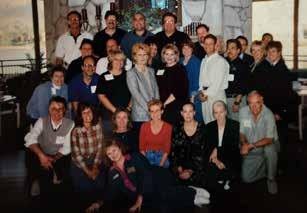
Strategic planning professionals take a breather after planning for the future of GRIE at Sunnymead Ranch HOA in the mid 1990’s.
CAI-GRIE STRATEGIC PLANNING SESSIONS: THEN AND NOW
A.J. JAHANIAN, ESQ.
TASHJIAN
Top back row: Tim Hoss, Bob Stephens, Phil Hakopian, Jim CcCarthy, Kevin Davis, Shirley Prasser, Jon Epsten, Scott Brubaker. Row 2: Andrea Yorba, Dan Saldana, Victoria Roberts, Kathy Hoagland, Matt Ober, Joe Perry, Mary Deutsch, Lana Hamadej Row 3: Joan Urbaniak, Craig Bicker, Barbara Conn, Denise Flory, Nancy Johnston. Kneeling: Kevin Lewis, Blair Loubet, Pamela Hazard, Susan Angland, Erin Maloney, Wenda Alvarez, Bill Gavitt. Floor: Patee Barta
EDITORS’ LINK
EDITORS’ LINK
WAWWEDITORS’ LINK
EDITORS LINK
A.J. JAHANIAN, ESQ. BEAUMONT TASHJIAN
A.J. JAHANIAN, ESQ.
A.J. JAHANIAN, ESQ.
BEAUMONT TASHJIAN
BEAUMONT TASHJIAN
A.J. JAHANIAN, ESQ.
BEAUMONT TASHJIAN
DANIEL HEATON, ESQ.
DANIEL C. HEATON, ESQ.
DENICHILO LAW, APC
DENICHILO LAW, APC
DANIEL HEATON, ESQ. DENICHILO LAW, APC
DANIEL HEATON, ESQ.
DENICHILO LAW, APC
elcome to a very special Issue of Connect Magazine – one that not only kicks off 2025 but also commemorates the 35th Anniversary of the CAI-Greater Inland Empire Chapter. This year, we plan to celebrate our legacy by honoring the visionaries who laid our foundation, the volunteers who carry our mission forward, and the innovations that will shape our future in the years to come.
elcome to a very special Issue of Connect Magazine – one that not only kicks off 2025 but also commemorates the 35th Anniversary of the CAI-Greater Inland Empire Chapter. This year, we plan to celebrate our legacy by honoring the visionaries who laid our foundation, the volunteers who carry our mission forward, and the innovations that will shape our future in the years to come.
s Co-Editors of CAI-GRIE’s 4th Issue of Connect for 2025, we are proud to present this year-end edition that closes out another remarkable chapter in our community’s story. With gratitude for the journey and excitement for what lies ahead, we wrap up 2025 by delivering timely, impactful content that equips our members for the challenges and opportunities of 2026 and beyond.
elcome to a very special Issue of Connect Magazine – one that not only kicks off 2025 but also commemorates the 35th Anniversary of the CAI-Greater Inland Empire Chapter. This year, we plan to celebrate our legacy by honoring the visionaries who laid our foundation, the volunteers who carry our mission forward, and the innovations that will shape our future in the years to come.
Inside this Issue, you’ll find thoughtful guidance on timely topics, like Doug Bickham’s “If Over Ten, Time to Amend,” a must-read for any board considering a governing documents update. We also spotlight the critical intersection of financial planning and compliance in Sean Andersen’s dive into how reserve studies align with Civil Code § 5551.
Inside this Issue, you’ll find thoughtful guidance on timely topics, like Doug Bickham’s “If Over Ten, Time to Amend,” a must-read for any board considering a governing documents update. We also spotlight the critical intersection of financial planning and compliance in Sean Andersen’s dive into how reserve studies align with Civil Code § 5551.
This issue brings you essential legislative updates that will shape community association governance across California. We provide in-depth analysis of the Woolard case and its far-reaching implications for handling “neighbor to neighbor” disputes, break down the recent Adams v. Aqua decision and the boundaries it reestablishes for Fair Housing and reasonable accommodation issues, and examine the latest developments in landscaping legislation, including compliance and best practices.
Inside this Issue, you’ll find thoughtful guidance on timely topics, like Doug Bickham’s “If Over Ten, Time to Amend,” a must-read for any board considering a governing documents update. We also spotlight the critical intersection of financial planning and compliance in Sean Andersen’s dive into how reserve studies align with Civil Code § 5551.
We look back with pride as we feature reflections from our Hall of Fame Inductees and Past Presidents, and we look forward with increasing purpose through the lens of our 2025 Chapter Goals. We also emphasize the involvement of our members in broader statewide advocacy efforts to protect our communities, as discussed in our first Legislative Update of the year, provided by CAI CLAC’s Legislative Co-Chair, Robert DeNichilo.
We look back with pride as we feature reflections from our Hall of Fame Inductees and Past Presidents, and we look forward with increasing purpose through the lens of our 2025 Chapter Goals. We also emphasize the involvement of our members in broader statewide advocacy efforts to protect our communities, as discussed in our first Legislative Update of the year, provided by CAI CLAC’s Legislative Co-Chair, Robert DeNichilo.
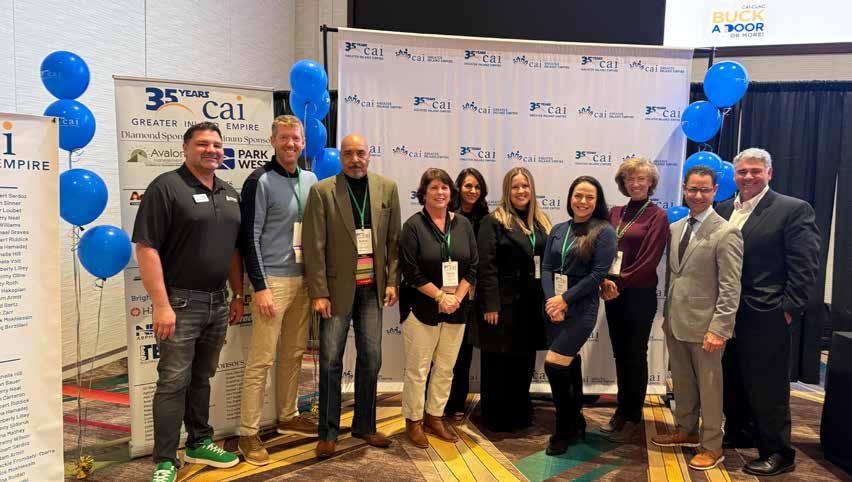
Complementing these critical updates, you’ll find a vibrant photo recap of our end-of-year Chapter events, capturing the energy and 35th Anniversary celebrations that defined 2025. From our annual Monte Carlo Night Awards Gala to our monthly luncheons and educational programs, these images reflect the strength of the GRIE family and the relationships that make our Chapter exceptional.
We look back with pride as we feature reflections from our Hall of Fame Inductees and Past Presidents, and we look forward with increasing purpose through the lens of our 2025 Chapter Goals. We also emphasize the involvement of our members in broader statewide advocacy efforts to protect our communities, as discussed in our first Legislative Update of the year, provided by CAI CLAC’s Legislative Co-Chair, Robert DeNichilo.
This year’s Issues of Connect will continue to highlight best practices, spotlight Chapter contributors, and deliver the tools you need to lead your communities with confidence. Let this edition be a renewed call to action – read, reflect, and engage. The story of our Chapter is still being written, and your voice is an essential part of it.
This year’s Issues of Connect will continue to highlight best practices, spotlight Chapter contributors, and deliver the tools you need to lead your communities with confidence. Let this edition be a renewed call to action – read, reflect, and engage. The story of our Chapter is still being written, and your voice is an essential part of it.
As we turn the page on 2025, we thank our dedicated members, volunteers, sponsors, and business partners. Thank you for your unwavering support, and for all that each of you have done to build the Chapter into what it has become over the last 35 years! Together, we can and will continue to build stronger, smarter, and more connected communities throughout the Inland Empire.
This year’s Issues of Connect will continue to highlight best practices, spotlight Chapter contributors, and deliver the tools you need to lead your communities with confidence. Let this edition be a renewed call to action – read, reflect, and engage. The story of our Chapter is still being written, and your voice is an essential part of it.
Here’s to our past, present, and promising future – together.
Here’s to our past, present, and promising future – together.
Here’s to an outstanding finish to 2025 and an even brighter year ahead!
AJ Jahanian
Here’s to our past, present, and promising future – together.
AJ Jahanian D. Heaton
A.J. Jahanian, Esq.
A.J. Jahanian, Esq.
AJ Jahanian
Committee Co-Chair and Co-Editor in Chief
Committee Co-Chair and Co-Editor in Chief
A.J. Jahanian, Esq.
D. Heaton
Daniel Heaton, Esq.
Daniel Heaton, Esq.
D. Heaton
Committee Co-Chair and Co-Editor in Chief
Committee Co-Chair and Co-Editor in Chief
Daniel Heaton, Esq. Committee Co-Chair and Co-Editor in Chief Committee Co-Chair and Co-Editor in Chief
PAGE 9
PAGE 9
PAGE 9
CAI–GREATER
Using National Reserve Study Standards to Guide Us Through california Civil Code Section 5551
Using National Reserve Study Standards to Guide Us Through california Civil Code Section 5551
Using National Reserve Study Standards to Guide Us Through california Civil Code Section 5551
SEAN E. ANDERSEN, PRA, RS
SEAN E. ANDERSEN, PRA, RS
SEAN E. ANDERSEN, PRA, RS
Celebrating
Celebrating
PAGE 12
PAGE 12
PAGE 12
35th Anniversary of CAI-GRIE
INLAND EMPIRE
35th Anniversary of CAI-GRIE
35th Anniversary of CAI-GRIE
The CAI–Greater Inland Empire (GRIE) Chapter hosts educational, business and social events that provide the Chapter’s Business Partners various opportunities to promote their companies’ products and services to Community Association owners and managers serving the Community Association Industry. It is expected that all participants in Chapter events – whether they be educational, business or social – will conduct themselves in a professional manner representative of their business or service organization so as not to detract from the experience of others seeking to benefit from their membership in the Chapter.
PAGE 18
PAGE 18
PAGE 18
CAI-CLAC Legislative Update: 2025 First Quarter
CAI-CLAC Legislative Update: 2025 First Quarter
BETTY ROTH, CMCA, AMS, LSM, PCAM
BETTY ROTH, CMCA, AMS, LSM, PCAM
KIMBERLY LILLEY, CMCA, CIRMS GREG BORZILLER
KIMBERLY LILLEY, CMCA, CIRMS
BETTY ROTH, CMCA, AMS, LSM, PCAM
GREG BORZILLER
KIMBERLY LILLEY, CMCA, CIRMS
GREG BORZILLER
CAI-CLAC Legislative Update: 2025 First Quarter
ROBERT M. DENICHILO, ESQ., CCAL
ROBERT M. DENICHILO, ESQ., CCAL
ROBERT M. DENICHILO, ESQ., CCAL
GLOW IN THE DARKSIDE GOLF –A GALACTIC SUCCESS!
September 26, 2025
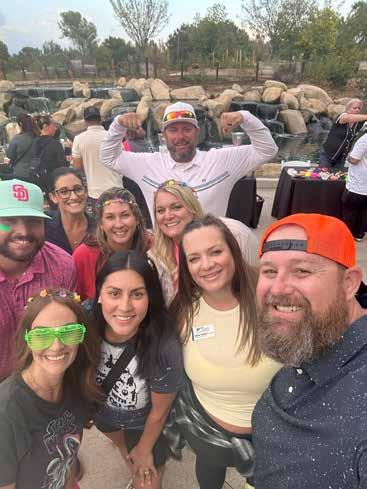
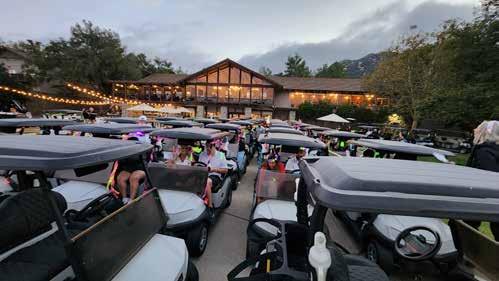
Our “Glow in the Darkside” Golf Tournament lit up the course, literally! Temecula Creek Inn was the perfect setting for our first annual Glow in the Dark Golf Tournament. Teams embraced the neon theme, tee booths glowed across every fairway, and the energy was unmatched. Laughter, networking, and competition made this one of our most memorable events yet.
Members ready to golf
Members on the course
NEW MEMBER MIXER – HEROES OF
EASTVALE
October 2, 2025
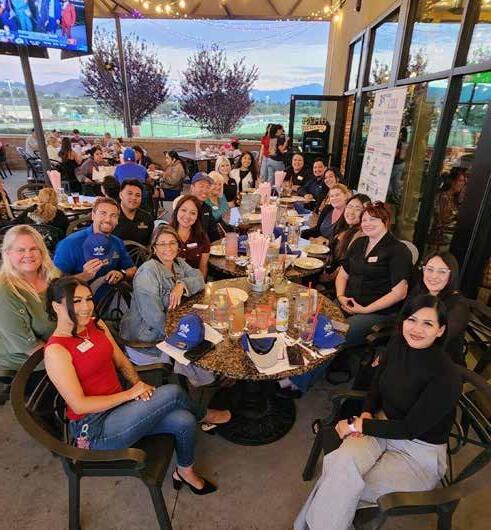
We welcomed our newest members with a gathering at Heroes in Eastvale. It was a wonderful evening of introductions, shared stories, and new relationships as members learned more about the Chapter, our committees, and how to get connected. A perfect start for those joining our CAI-GRIE family!
OCTOBER EDUCATIONAL LUNCHEON: INSURANCE INSIGHTS AT THE HALL IN NORCO
October 15, 2025
Our October luncheon delivered timely and critical information on industry insurance trends. Held at The Hall in Norco, attendees enjoyed our first sponsored coffee bar and gained valuable tools to navigate rising premiums, risk mitigation, and regulatory updates. The panel’s experts, Phil Hakopian and Cory Neubauer, helped managers, boards, and business partners prepare for what lies ahead in the insurance world.
New Member Mixer Attendees
Speakers (l to r): Cory Neubauer and Phil Hakopian
A $7.4 MILLION WAKE-UP CALL:
If you only read one fair-housing case this year, make it Adams v. Aqua 388 Community Association, where a federal jury handed down an inconceivable damages award against a California condominium association for denying a reasonable accommodation—a total of $7.4 million against the HOA.
What Happened?
Dr. Emma Adams, a university professor with paraplegia who uses a wheelchair, purchased a unit in the 388-unit luxury high-rise Aqua condominium in downtown Los Angeles. She drives a specially modified full-size van with a side-entry ramp. From 2020 through 2023 Dr. Adams submitted six formal written requests, each backed by physician letters, asking for one van-accessible parking space near the elevator lobby. Each time the association responded with, what Adams felt, were inadequate alternatives:
• a standard-sized space three levels away,
• valet service (still requiring her to transfer in the driveway, or garage entrance), or
• a vague promise that a space might open “when one becomes available.”
After three years, the U.S. Department of Justice filed suit on Dr. Adams’ behalf, alleging intentional discrimination under the federal Fair Housing Act (FHA) and California’s Fair Employment and Housing Act (FEHA).
In July 2024 the parties entered a consent decree that forced Aqua 388 to rewrite its accommodation policy, train every board member and employee, and immediately assign Dr. Adams a compliant space. Damages, however, went to a jury. In December 2024 the jury returned its verdict:
• $7,000,000 joint and several compensatory damages for emotional distress, inconvenience, and lost opportunities
• $400,000 punitive damages against the management company
• Total exposure for the defendants: $7.4 million, plus their own sevenfigure attorney fees.
Takeaways for Every Board and Manager
1. The burden is on the association, not the resident. You must prove an accommodation is unreasonable or creates undue hardship — the resident does not have to disprove it.
LESSONS FROM ADAMS V. AQUA 38
BY A.J. JAHANIAN, ESQ.
2. “We’ll get to it later” = intentional discrimination in the eyes of this jury. Repeated delays and half-measures were cited as evidence of malice.
3. Management companies are on the hook. Management was held jointly liable because its on-site and regional staff participated in the denials and failed to escalate with proper legal guidance.
4. Parking accommodations remain the #1 FHA lawsuit trigger nationwide. A clear policy with reasonable and enforceable response deadlines can prevent most problems.
5. Annual fair-housing training is your best insurance policy. Juries routinely reduce or eliminate punitive damages when associations can show regular training.
Where to go from here – be proactive!
Boards and management companies should work with their HOA legal counsel to take proactive measures:
1. Adopt or update a written Reasonable Accommodation & Modification Policy and post it on your website and in your rules packet.
2. Create a simple one-page request form (disability-related need + specific solution requested).
3. Commit to a written response within 30-45 days — even if only to acknowledge and request clarification.
4. Schedule annual fair-housing and general board training with legal counsel for directors and staff (one-hour webinars count and cost little).
5. When in doubt, call your attorney before saying “no.” A quick consult is far cheaper than a multimillion-dollar verdict.
Adams v. Aqua 388 Community Association is an extreme outcome, but the message is clear: under both federal and California law, reasonable disability accommodations are not optional — they are mandatory unless the association can prove undue burden. With disability rights and housing access remaining top priorities in Sacramento and Washington, juries are sending a strong signal that delay and denial will be expensive. Your community may never face a $7 million judgment, but every board can avoid becoming the next cautionary tale by treating these requests promptly, professionally, and compassionately.
A.J. Jahanian, Esq. is with Beaumont Tashjian and serves as CAI-GRIE Committee Co-Chair and Co-Editor of Connect Magazine.
EVENTRECAP ROCKTOBER CONCERT
POP GUN RERUN AT DOS LAGOS
October 24, 2025
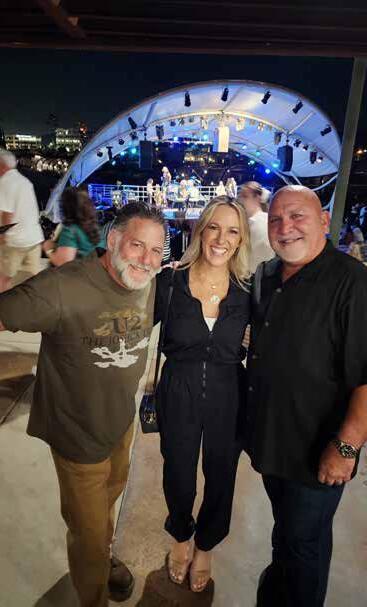
Rocktober was a hit! Pop Gun Rerun brought the 80s alive at the Dos Lagos Amphitheater, and our members showed up ready to rock. We also had the privilege of hanging out with CAI National’s CEO, Dawn Bauman, who came to enjoy our event. A special shoutout to our very own Heather Leivas, who won Best Costume with her Elvis impression!
Your Dynamic GRIE Duo - Executive Director Erica Tenney (left) and Administrator Elda Pfitzinger
(l to r): Mike Rey of LaBarre Oksnee, CAI CEO Dawn Bauman and Phil Hakopian of Gallagher Insurance
Costume Contest Winner - Heather Leivas of Harvest Landscape
COMMUNITY SPOTLIGHT: OAKS NORTH COMMUNITY CENTER
BY: ANGEL MELGAR, GENERAL MANAGER, OAKS NORTH COMMUNITY
As a 55+ community in Rancho Bernardo, Oaks North Community Center has many cherished traditions, but this holiday season is particularly meaningful for me, as it is my first as General Manager. Early on, I learned about a special tradition that our two amazing office staff members, Cherryl Merten and Gregorie Snow, coordinate each year.
In collaboration with The Salvation Army, our community hosts an Angel Tree for seniors. It is truly heartwarming to witness Seniors Helping Seniors. The Salvation Army provides Angel Tree tags with the names and gift wishes of seniors in their housing program. Cherryl and Gregorie thoughtfully review each tag and beautifully decorate our tree with them.
A notice is then sent to the community inviting residents to stop by the office and select an Angel Tree tag. Residents purchase and gift-wrap the requested items and return them to our office, where we gather the donations for delivery. It is a delight to see our residents dropping off gifts, each one a gesture of kindness and support for seniors in need.
This meaningful tradition brings joy to our community every year, and our residents always look forward to participating. I am grateful to be part of such a generous and caring community!
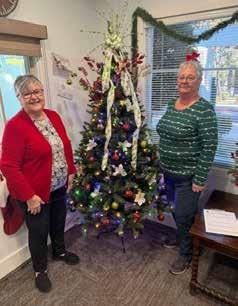
Volunteers who organized the Angel Tree
AB 130 PROHIBITS FEES RELATED TO ADUs
BY DAVE WANKEL, ESQ. OF IGER WANKEL & BONKOWSKI, LLP
While the confusion regarding the new laws restricting a homeowners association’s ability to fine members has received most of the attention, one additional line was added to the emergency budget bill that also impacts how homeowners associations operate.
Civil Code section 714.3 has been amended over the years and allows a homeowners association to regulate, but not ban, accessory dwelling units (ADUs) and junior ADUs (JADUs). The change to the law creates a new definition of what might be considered a “reasonable restriction” by adding “Reasonable restrictions shall not include any fees or other financial requirements” to Civil Code section 714.3.
This new definition of what is and is not “reasonable” essentially eliminates an association’s ability to charge a fee or deposit for
the architectural review of an ADU or JADU application. It should be noted that ADU architectural applications rarely include adding a new ADU structure without modifying any other improvements on the lot, such as landscaping, walls, fences, hardscape, etc. Associations may still be permitted to charge fees and deposits for the review of the improvements that do not fall within the ADU or JADU definition.
Including this new language clearly indicates an intent to remove barriers that might make ADUs unaffordable, thus creating roadblocks to the legislature’s intent. But it also increases the burden on the membership by essentially requiring any architect’s or management company fees related to administering or reviewing architectural applications to be subsidized by the entire membership rather than borne by the owner who seeks to profit from the rental of the ADU.
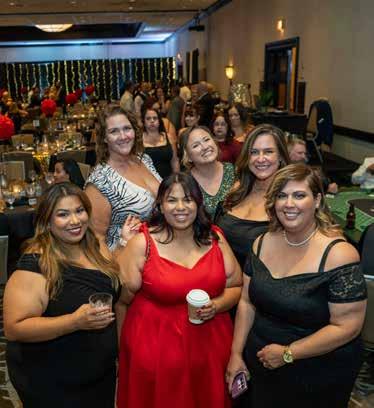
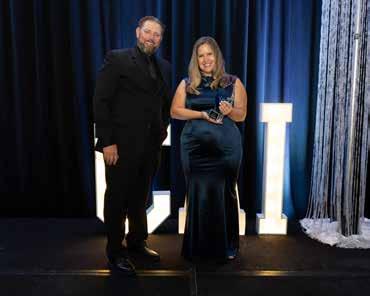
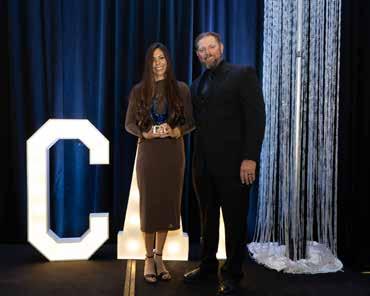
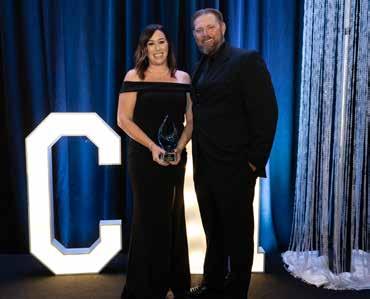
MONTE CARLO NIGHT AT DOUBLETREE ONTARIO
A NIGHT OF STARS & CELEBRATION
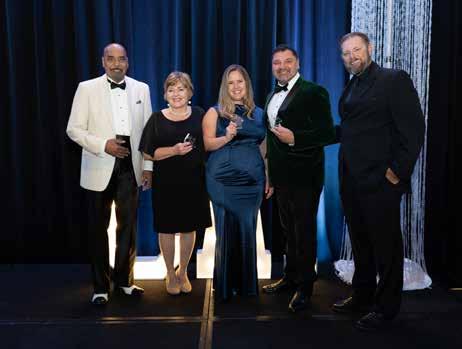
Our annual TOPS Awards and Monte Carlo Night was nothing short of spectacular. Held at the DoubleTree Ontario for the second year, members enjoyed a glamorous evening featuring a cocktail hour, dinner, awards presentation, and seemingly endless raffle prizes. It was truly a night dedicated to celebrating excellence and the outstanding achievements of our members. Don’t miss out next year and make sure to get your detailed nominations for TOPS Awards in early!
continued on next page
Committee of the Year - Country Faire-Monte Carlo Committee
(l to r): Judith Lopez, Jennifer Sanders, Jacsan Lopez, Danielle Dalley, Bridget Dolan and Naidin Peralta
Photo Booth (l to r): Eric Zarr, Kristina Butler, Kat Hughes and Michelle Priske
Manager of the Year – On-Site
Sarah Karlovic
Manager of the Year –Portfolio
Sarah Reed
Congratulations,
Humanitarian of the Year
Phil Hakopian
Rising Star Award – Manager
Jacob Rossi
Rising Star Award –Business Partner
Kristina Butler
Community Association of the Year – Small Sycamore Hills Community Association
Community Association of the Year – Medium
The Enclave Master Association
Community Association of the Year – Large Gabion Ranch Master Association
Community Association of the Year – XL
The Preserve Master Community
Association Volunteer of the Year
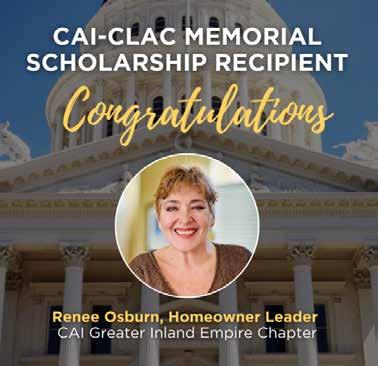
Renee Osburn
Business Partner of the Year Beaumont Tashjian
Committee of the Year
Country Faire/Monte Carlo Committee
Speakers of the Year
AJ Jahanian, Esq.
Daniel Heaton, Esq., and Sarah Karlovic, CMCA, AMS for Talk Less, Say More (Legally): Bringing Balance to Confidentiality and Transparency
Article of the Year
Daniel Heaton, Esq. for Damage and Deconstruction Clauses in Your CC&Rs: Critical Tools or Hidden Liabilities?
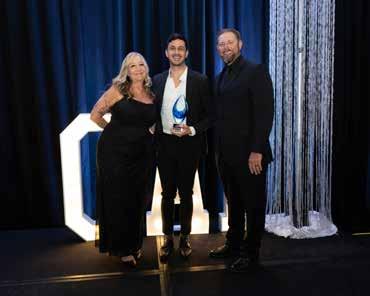
Community Manager of the Year - Portfolio winner Sarah Reed with Chapter President Greg Borzilleri
2025 TOPS Award Recipients!
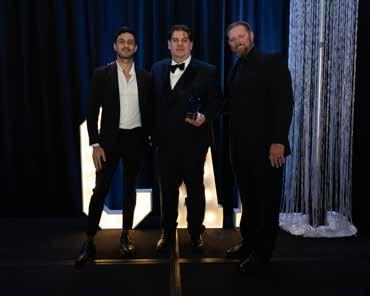
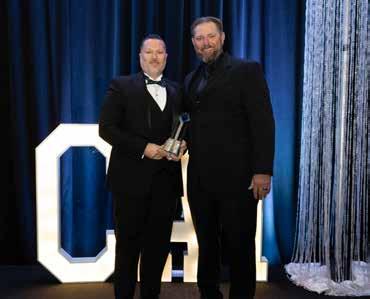
(l to r): 2024 Article of the Year (AOTY) winner AJ Jahanian, Esq. presents award to 2025 AOTY winner Daniel Heaton, Esq., with Chapter President Greg Borzilleri
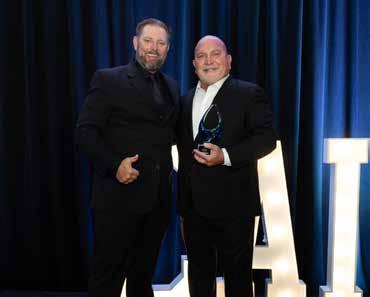
(l to r): 2025 Hall of Fame Inductee Brian Henry with Chapter President Greg Borzilleri
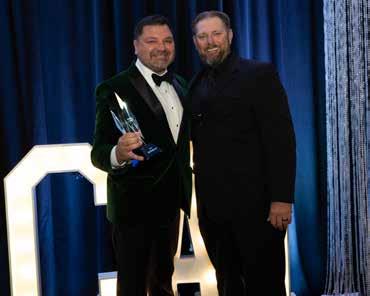
2024 Business Partner of the Year (BPOTY) recipient Sue of Whitestone Industries presents 2025 BPOTY to Beaumont Tashjian, accepted by AJ Jananian
(right): Humanitarian of the YearPhil Hakopian
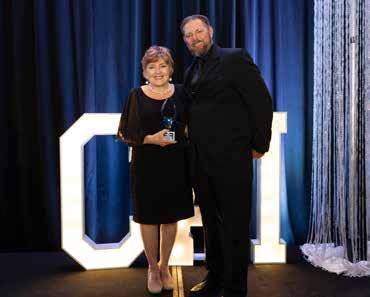
2025 President’s Award Recipient Nick Mokhlessin and Chapter President Greg Borzilleri
Chapter President Greg Borzilleri and Executive Director Erica Tenney
NEW LAWS RESHAPE LANDSCAPING AND ELECTION PROCEDURES FOR HOA s IN CALIFORNIA
BY SANDRA L. GOTTLIEB, ESQ., CCAL, CO-FOUNDER, SWEDELSONGOTTLIEB
California community associations are once again facing significant legal and operational changes due to the passage of new legislation. Several newly enacted Assembly Bills will dramatically affect how homeowners associations (HOAs) manage common-area landscaping and conduct HOA elections. As legal counsel to common interest developments throughout the state, I urge boards and managers to prepare now for the impact of these laws.
Landscaping Compliance: A Tectonic Shift in Water Use and Fire Safety
Four separate but related bills AB 1572 , AB 1573, AB 38, and AB 3074 introduce sweeping new requirements for how HOAs maintain their landscaping, with a clear legislative priority on water conservation, native plant use, and wildfire risk reduction.
AB 1572: The End of Decorative Grass Watering with Potable Water
Starting January 1, 2029, HOAs will be prohibited from using potable (drinking) water to irrigate nonfunctional turf defined as grass that
is ornamental and not used for recreation or community gatherings. This includes decorative grass commonly found in medians, building frontages, or entryways within HOA common areas.
The law further mandates that HOAs with more than 5,000 square feet of irrigated common area must certify their compliance every three years commencing in 2031. Failure to comply could result in civil penalties of up to $500 per day. Boards should begin planning now by evaluating irrigation systems and identifying areas of nonfunctional turf suitable for replacement.
AB 1573: Promoting Biodiversity Through Native Landscaping
In support of AB 1572’s water conservation goals, AB 1573 encourages HOAs and other non-residential landowners to replace nonfunctional turf with native California plant species. This legislation is not a mandate, but it provides a strong policy signal favoring ecologically sustainable landscaping that supports biodiversity, reduces water usage, and promotes climate resilience.
AB 38 and AB 3074: Fire-Safe Landscaping in High-Risk Zones
HOAs located in Very High Fire Hazard Severity Zones must also pay attention to AB 38 and AB 3074, which require the creation and maintenance of defensible space around buildings and the implementation of a “Zone 0” vegetation-free buffer the first five feet surrounding any structure. These laws impose new obligations on associations to modify landscaping and remove certain vegetation types near homes to help reduce wildfire ignition risks. Boards should assess whether their communities fall within designated fireprone zones and develop a compliance strategy, potentially including updated maintenance protocols, contracts with landscape vendors, and communication with homeowners.
Electronic Voting and Election Reform: Increased Flexibility and Accessibility
Alongside the environmental mandates, two new laws AB 2159 and AB 2460 modernize and streamline election procedures for common interest developments, addressing long-standing issues related to voter participation and election logistics.
AB 2159: Secure, Optional Electronic Voting
Effective January 1, 2025, AB 2159 permits HOAs to conduct board member elections, recalls, and governing document votes* using secure electronic secret ballots, provided certain conditions are met:
• The HOA must adopt updated election rules that incorporate electronic voting procedures
• Homeowners must receive proper notice of the new voting system; and
• Owners must be given the opportunity to opt in or out of electronic voting.
Importantly, *special assessment votes must still be conducted using paper ballots. This hybrid model gives communities the option to adopt digital voting tools while maintaining homeowner choice and election integrity.
AB 2460: Reduced Quorum for Reconvened Meetings
Under current law, many elections are stalled due to failure to reach quorum. The Legislature, in adopting AB 2460 addresses the obstacles this causes in HOA elections by allowing, notwithstanding what an HOAs documents say, a reconvened election meeting upon motion, second and approval of the owners in attendance, to proceed with a reduced quorum of 20% of the voting power, unless an HOA’s governing documents calls for a lesser percentage amount, provided the following conditions are met:
• The initial election meeting fails to meet quorum
• The reconvened meeting is held at least 20 days thereafter; and
• The association provides new written notice at least 15 days in advance of the reconvened meeting.
This change is a welcome reform aimed at avoiding delays, reducing administrative burdens, and ensuring that essential association business can move forward even in the face of low member turnout.
Final Thoughts: Proactive Planning is Key
The legislative trends are clear: sustainability, safety, and modernization are top priorities for California policymakers. HOA boards and management companies should not delay in reviewing landscaping practices, updating governing documents, restating or revising election rules, and planning for short- and long-term budget impacts related to these new laws.
Sandra L. Gottlieb, Esq., CCAL, is a founding and managing partner of SwedelsonGottlieb, specializing in the representation of California community associations. SLG@sghoalaw.com
The CAI California Legislative Action Committee (CLAC) wrapped up their annual efforts in Sacramento for the year 2025. Below is a brief summary of some of the wins and losses from this calendar year.
Homeowner Association Accountability - AB 21 (DeMaio)
This bill proposed an overhaul of the meeting procedures and board oversight over the management of common interest developments (CIDs) and homeowners’ associations (HOAs).
The bill was defeated in the Assembly Housing Committee, but eligible for a motion to move out of committee in January 2026. This was a definite win to push this off calendar year!
Cap on Fines- AB 130 (Committee on Budget)
This bill included amendments covering numerous issues involving housing. One of the amendments mirrored the language from SB 681 to cap the fines an association can charge at $100, unless “the violation may result in an adverse health or safety impact on the common area or another association member’s property.”
As everyone knows, the bill was signed and was effective as of June 30, 2025. CLAC already considers a response to this law as a top priority, but we will have to wait until next legislative session. In the meantime, associations must look at their fine schedules and reconsider how they use fines as an enforcement tool.
CID Real Estate Broker License - AB 739 (Jackson)
This proposed legislation would require that managers hold a real estate broker license issued by the state.
This bill was defeated in the Assembly but will be eligible for a motion to move out of committee in January 2026. If and when it does move, CLAC is ready with significant changes to the requirements. Another good outcome!
Balcony Inspection Cover Page - SB 410 (Grayson)
This bill required inspectors to include specific information on the cover page of balcony inspection reports.
The bill passed Assembly Floor without further debate and was signed by the Governor to be effective January 1, 2026.
Insurance Limits - SB 547 (Perez)
This bill adds commercial property with policy limits of $10,000,000 or more to the cancellation moratorium list.
CAI supported this legislation, and it was passed and signed by the Governor to be effective January 1, 2026. This prevents associations from immediate loss of coverage until longer term insurance reform is in place. Another win!
ENDING OF ANOTHER LEGISLATIVE YEAR: CAI-CLAC 2025
BY: MATTHEW A. GARDNER, ESQ., CCAL, RICHARDSON OBER
Streamlined
Architectural Procedures - SB 625 (Wahab),
This bill proposed a streamlined architectural review process for rebuilding after natural disasters.
After productive discussions, the bill’s scope was limited to actual disasterrelated events, and CLAC moved to a neutral position. The bill passed the Assembly and was signed by the Governor to be effective January 1, 2026.
Invalidate Restrictions during Rebuilding - SB 677 (Wiener)
The proposed legislation attempted to prevent associations from imposing CC&Rs that prohibit or unreasonably restrict housing developments or urban lot splits on single-family zoned districts statewide.
CAI opposed this legislation, and it failed to pass in the Senate. A good outcome for a bad association bill.
EV Charging Station - SB 770 (Allen)
This bill proposed to eliminate the requirement that Owners list their association as additional insured on individual policies covering EV charging equipment.
Despite no objection from insurers to maintaining these protections for associations, the bill passed the Assembly and was signed by the Governor to be effective January 1, 2026. By removing the association as an additional insured, the law will shift risk from the Owner of the charging station onto the association. Associations may need to increase their existing coverage to reduce the risk, or to cover damage from Owners’ EV equipment. Another setback for communities during an already challenging insurance market.
Overall, this was an incredibly challenging year for legislation. While the theme that legislators explored spent a lot of time and energy focused on “affordable housing,” much of the legislation targeting California Common Interest Developments will likely have the opposite effect.
Associations are already seeing some of the downside. As boards and managers work to implement new approaches to enforcement resulting from AB 130, they are realizing that owners may simply choose to ignore fines or violation notices. What was once a reasonable penalty of $100$500 may instead turn into full blown litigation effort to correct violations and seek attorney fees for enforcement of the governing documents. Legislation passed without significant discussion or consideration of the unintended consequences may lead to openings in next years legislative session to make important revisions to existing harmful policy outcomes.
Do your part to make your voices heard in Sacramento. Continue to support CLAC, and make sure to respond to emails and calls to action to limit harmful legislation from Sacramento.
A NEWBIE’S EXPERIENCE AT 2025 ADVOCACY WEEK
MAY 20, 2025 | GUEST POST, LEGISLATIVE DAY
CHAPTER
A Rollercoaster of Nerves, Pride, and Purpose
Let me start off by expressing my gratitude to CAI-CLAC for sponsoring my attendance at this year’s Advocacy Week. From the moment I got that email—“Congratulations, you’ve been selected!”—my stomach was doing backflips. Excitement, nerves, maybe a bit of fear. Would I say the right thing? Would legislators even care what we had to say? But the pride was stronger than the nerves. I was ready to represent. I’ll be honest: I didn’t expect to be so moved by the experience. I’d been to conferences before—plenty of them, in fact. But this was different. This was Sacramento, the Capitol, and I wasn’t just attending. I was showing up for my community, for Sunnymead Ranch’s 2,677 families, and for every neighbor who’s ever asked, “Why would our lawmakers pass a law like that and what did my HOA do about it?” Turns out, a whole lot.
Getting There: Planes, Rideshares, Old and New Friends
The adventure started at Sacramento Airport, I shared an Uber with two other attendees, and let’s just say it was a bit cozy buckling-up in the back seat! We checked in at the Hyatt Regency Sacramento, I dropped my bag, grabbed my name badge, and already I felt like I was part of something bigger. The meeting room was alive with energy – vendors (a great big shout out!) and fellow attendees everywhere.
Learning the Ropes: Bill Briefing and Teamwork
Some CAI-CLAC members were already attending Senate Housing Committee Hearings, which were live streamed into our meeting room. We were able to view the rollcall for “Opposition or Support” of SB 677 (lot splitting bill).
GUEST BLOG POST BY: RENÉE OSBURN, PRESIDENT WITH SUNNYMEAD RANCH PCA, CAI GREATER INLAND EMPIRE
The real work started almost immediately. Our group of approximately 80 were assigned to teams and given info packets to become familiar with. Louie Brown, our tireless CAI-CLAC lobbyist, broke down the bills we’d be challenging. I scribbled notes, already picturing myself in those meetings. That night, over a glass of wine, conversation kept circling back to our HOAs and the importance of our advocacy.
Game Day: Hitting the Capitol
I had been warned that we would be doing a lot of walking, standing, and even conducting meetings in hallways. Donning my best-looking athletic footwear, business casual attire and my “I ♥ my HOA” pin, I set off for the breakfast meeting.
We did a final run through of the bills, points to discuss, and the timeline for day. The excitement in the room was evident, we were ready to go! As our group gathered for photos on the Capitol steps, I felt nothing but pride. We looked like a team—diverse, determined, and totally committed.
Security checks, elevator lines, then suddenly—we were in. Seven meetings, each one a blur of introductions, handshakes, and heartfelt pitches. Some legislators or representatives got it immediately, nodding along, sharing their own HOA stories. Others listened, asked questions, and I could see their wheels turning.
The Bills That Hit Home
Two bills really caught my attention for Sunnymead Ranch:
• AB 21 would require individual notices for each meeting, over and above our current website posting, clubhouse posting, and eblasts. This bill would cost my community $73,000 a year in postage alone without any benefit to the members I serve.
• SB 681 wants to cap violation fines at $100. Been there, done that! It’s frustrating that as an HOA director it is my job to enforce our governing documents, but without reasonable fines, we have no effective way to do that, other than to file lawsuits. In the past, my community’s violation fines maxed out at $100, and our 40-year-old community showed significant signs of neglect and disrepair. After numerous pleas from homeowners to “do something,” we updated our policy, practices, and increased fines. I am happy to say that we are going in the right direction, based on homeowners’ feedback noting marked improvement and “pride of ownership” returning.
Wrapping Up: Community and Connections
After a whirlwind day, we capped things off with a “Meet the Delegates” event, a quick awards ceremony, and—you guessed it—another glass of wine. I was now surrounded by new friends—exhausted but exhilarated. I’d done it, we’d all done it. We showed up, we spoke up, and we were heard.
The next morning, our debrief was full of laughs and a sense that we’d made an impact. I left Sacramento feeling fired up, inspired, and a little more connected—to my neighbors, to fellow HOA leaders, and to the big, messy process of democracy. Advocacy Week wasn’t just a trip. It was a reminder that ordinary people actually can make a difference and I look forward to Sunnymead Ranch joining future Advocacy Weeks.
CLAC BUCK-A-DOOR CHAMPIONS
November 10, 2025
We are proud to recognize our Buck-a-Door Champions, the associations that generously contributed $1 per door in support of the California Legislative Action Committee (CLAC). Their commitment directly fuels critical advocacy efforts in Sacramento, ensuring the interests of community associations are heard, protected, and represented.
Through their contributions, these associations not only support our statewide legislative goals, but also invest in their own future by securing a strong voice where decisions are made. We deeply appreciate their leadership, partnership, and dedication to advancing our industry.
Thank you for standing with us and helping us reach our donation goals! Together, we are stronger, smarter, and better positioned to navigate the challenges and opportunities ahead.
Join us in 2026 through the Buck-a-Door Campaign and be one of our future CLAC Champions!
Special thanks to:
Sunnymead Ranch POA
Rosena Ranch COA
Wolf Creek Maintenance Corp
Morgan Hill HOA
Villa Avanti Association
Stonebrook Estates COA
Jess Ranch Lakes RV Resort Association
Verandas at Apple Valley HOA
Quail Run Estates COAC
North Woods HOA
CLAC Champions Buck a Door Contributors from November Luncheon
Buck a Door Champions from Monte Carlo NightSunnymead Ranch
HOA, Rosena Ranch HOA and Wolf Creek Maintenance Corp.
TRAP SHOOTING EVENT –
PRADO OLYMPIC SHOOTING PARK
November 14, 2025
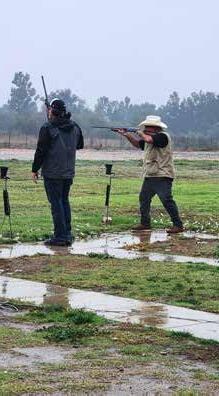
Even a little light rain near the end couldn’t dampen the excitement! For our second annual Trap Shooting contest, attendees enjoyed friendly competition, safety-focused instruction, and an incredible BBQ lunch. Congratulations to Everthrive Landscape’s team, who took home first place honors! It was a day of great sportsmanship, networking, and fun.
(l to r): Lacy Anderson, Veronica Money, Greg Borzilleri and Stephanie Fitivale.
(l to r): Mike McCarthy and Phil Hakopian Ty Jaglowski
GRIE Staff - (l to r): Elda Pfitzinger and Erica Tenney
Winning Team - Everthrive
RADICAL TRANSPARENCY, REAL-WORLD LIMITS: HOW CALIFORNIA COMMUNITY ASSOCIATIONS
CAN BE BOTH OPEN AND PROTECTED
BY DANIEL C. HEATON, ESQ. OF DENICHILO LAW, APC
In the last issue of Connect , community manager Sarah Karlovic made a compelling case for “Radical Transparency.” Using an example involving mandatory turf removal under AB-1572, she showed how early, honest, and repeated communication can turn anxiety and rumor into understanding and buy-in.
Her core point is an important one: information gaps left by boards and managers are often filled with rumor, suspicion, and social media outrage. When those same boards take the time to explain what is happening and why, the temperature in the room drops.
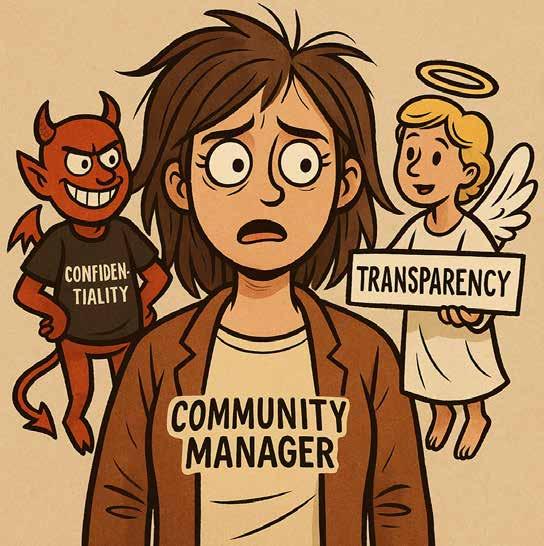
The legal framework that all boards necessarily operate within doesn’t enable them to adopt a policy of “tell everyone everything at all times.” If “radical transparency” is misunderstood as “give every document, email, and internal discussion to anyone who asks,” well-intentioned efforts can quickly run into privacy violations, loss of attorneyclient privilege, misuse of records, and unnecessary litigation.
Instead, the next important step in this discussion is to connect the transparency Sarah describes with the framework that California law already contemplates: clear, reliable processes for decisionmaking and information access, surrounded by sensible safeguards for privacy, privilege, and safety. In short, transparency in California community associations should mean visible, lawful governance process, not unlimited information exposure.
This article is intended as a companion to Sarah’s piece. It takes her practical insights and situates them within the legal framework that boards, managers, and homeowners work within every day.
I. What “Transparency” Really Means in a Community Association
Ask five people what “transparency” means, and you will get at least six answers.
For some owners, it means: “I should be able to see any document if I ask for it.” For others, it means: “I deserve a detailed explanation to answer all of my questions.”
For some boards and managers, especially those who have been burned by prior requests, it means: “We do the bare minimum the law requires and say as little as possible.”
None of these approaches work for long.
In reality, the California state legislature has already examined the issue and agrees that a certain level of disclosure is important. But even Sacramento acknowledges that not every piece of information a board has is appropriate to share with the membership. In enacting the Open Meeting Act and also identifying which association records that members are statutorily entitled to receive, the state has already embedded a structured version of transparency into the very notion of good corporate governance for community associations. That framework includes:
• Open meeting requirements
• Detailed record inspection rights
• Annual disclosure duties
• Enforcement provisions if the association refuses to comply
At the same time, the same statutes that require openness also impose strict limits:
• Certain topics are private and appropriately handled in executive session
• Certain records may be withheld or redacted
• Member records may only be used for purposes reasonably related to membership interests
Taken together, this framework creates a more workable definition: Transparency means owners can see what decisions are made, by whom, under what rules, and with what financial impact, and they know how to obtain additional information within the legal limits of privacy and privilege.
This shifts the focus away from “produce everything” and toward clear process and understandable communication. This is where Sarah’s article and the legal framework line up almost perfectly. In her AB 1572 turf example, the association did not simply comply with the law and send out a citation. The manager and board:
• Educated owners by explaining the legislation and the consequences of noncompliance
• Described the options the board considered
• Brought in vendors and professionals to answer questions
• Used multiple channels to deliver the same message consistently
None of that required handing out every internal communication. It required explanation, repetition, and accessible forums to answer homeowner questions.
II. The Legal Baseline: How
California Already Defines “Transparency”
A. Records: What they are and how long they are available
Civil Code §§ 5200-5210 define both “association records” and “enhanced association records” and provide time frames for owner inspections or productions:
• “Association records” include a wide range of financial, corporate, and governance materials such as budgets, financial statements, minutes, executed contracts, and membership lists.
• “Enhanced association records” include supporting documentation like invoices, receipts, and canceled checks.
• Most association records are subject to inspection for the current fiscal year and prior two fiscal years.
• Minutes of member and open session board meetings are subject to inspection permanently.
Civil Code § 5205 sets out procedures and timelines for inspection and copying by members and their designated representatives. These obligations are statutory, with potential penalties for noncompliance.
Through these provisions, the Legislature codified its own definition of ”documentary transparency,” and has already indicated what must be available, to whom, and for how long. In other words, in this particular area, Sacramento has already weighed in on where the appropriate balance should be between confidentiality and transparency
B. Meetings: The Open Meeting Act as “process transparency”
The Open Meeting Act (starting with Civil Code § 4900) applies the same transparency concepts to board meetings. In simplified terms, it provides that:
• Regular and special board meetings must be properly noticed with agendas.
• Members may attend most board meetings and address the board, subject to reasonable rules.
• Boards must avoid making decisions outside noticed meetings, with limited exceptions.
• Minutes (or draft minutes) of open meetings must be made available within 30 days.
Boards and managers that comply with these rules are already practicing a structured form of transparency, even if not a single correspondence has ever been printed and handed to an owner. These statutes create both rights for owners and guardrails for boards, and they include remedies if the association ignores the rules.
III. Built In Safeguards: Where Transparency Stops
If the statutes stopped at records and open meetings, “radical transparency” could be incorrectly taken to mean “share everything and let the chips fall where they may.” The Legislature and the courts have not taken that view.
continued on next page
A. Confidential topics in executive session
The same statutory provisions that require open, noticed meetings also require that certain topics be handled in executive session, including:
• Actual or threatened litigation
• Formation of contracts with third parties
• Member discipline
• Payment plans for delinquent assessments
• Foreclosure decisions
• Certain personnel issues
Boards are expected to address these issues privately, subject to limited requirements to generally note executive session decisions in the next open session minutes. Homeowners that view executive sessions as inherently “secretive” are either not aware of or have misunderstood the statute. Confidentiality is not a board preference. Some matters cannot be handled in public without harming the association or individual owners. Boards that fail to use executive sessions appropriately, whether too much or too little, risk exposing their association to legal claims or inappropriately broadcasting sensitive information.
B. Records that may be withheld or redacted
Civil Code § 5215 identifies records and categories of information that may be withheld or redacted when members exercise inspection rights, including:
• Information that could lead to identity theft or fraud (e.g., account numbers, Social Security numbers)
• Personal information where disclosure would invade privacy, such as specific disciplinary actions, payment plans, and collection efforts
• Minutes and materials from executive session meetings
These are not “loopholes.” Instead, these statutory provisions and protections acknowledge the necessary balance between transparency and privacy. In Chantiles v. Lake Forest II Master HOA
(1995) 37 Cal.App.4th 914, a director sought access to secret ballots from a recall election. The Court balanced the director’s broad entitlement to corporate records against the privacy interests held by individual owners in keeping their votes confidential. Ultimately the Court rejected the director’s claim for unrestricted access.
C. Attorney-client privilege and director inspection rights
Attorney-client privilege complicates perceptions of transparency more than almost any other topic.
Directors generally have broad statutory rights to inspect the corporation’s records, including executive session minutes and privileged materials. However, case authorities also make clear that these rights are not a license for a director to weaponize confidential information against the association or to undermine the privilege for personal reasons. Privilege belongs to the entity, not to any individual director or member.
For homeowners, this can feel counterintuitive: “If my assessments pay the lawyer, why can’t I read their opinion letters?” The answer is that the lawyer represents the association as a corporate entity, and the duty of loyalty runs to that entity, acting through its board.
A transparent board can acknowledge that legal counsel has been involved and, with guidance from that counsel, describe in general terms how the association will meet its obligations based on the legal advice received. However, the board should not circulate the opinion letter or summarize the legal reasoning in detail because that may risk waiving privilege or creating exposure in future disputes. Preserving the attorneyclient privilege protects the association while still allowing the board to explain, at a high level, why it has selected a particular course.
IV. A Practical Framework for Boards and Managers
Boards and managers sit between owners who feel stonewalled and counsel that warn
about overdisclosure. Used consistently, the below framework helps boards keep “radical transparency” aligned with both statutes and common sense.
1. Is the owner entitled to this information by statute or the governing documents?
Start by asking:
• Does the request fall within categories of “association records” or “enhanced association records” in Civil Code §§ 5200–5210 during the relevant time frames?
• Is the information already reflected in open session minutes, budgets, reserve studies, or other documents subject to inspection?
If the answer is yes, the association should comply, subject to reasonable procedures and cost reimbursement. Owners should not have to fight for information the law already indicates they are entitled to receive.
“Boards and managers should recognize the potential existence of these types of underlying concerns and, where appropriate, address them directly
Homeowners often ask for “all communications” because they don’t know what else to request. Their real concern is usually about the process itself: “Did you handle this fairly? Did you follow the rules? Did you act in the association’s best interests?”
Boards and managers should recognize the potential existence of these types of underlying concerns and, where appropriate, address them directly:
• Instead of producing all emails with a landscaper, the board might provide a summary of the bidding process, the criteria used to select the vendor, and key terms of the contract, along with copies of the executed agreement and minutes reflecting the decision.
• Instead of producing other owners’ payment histories, the board might provide overall delinquency statistics, a copy of the collection policy, and a general explanation of how many accounts are in payment plans or active collection.
In this circumstance, transparency means helping owners receive a clear picture of the association’s governance and financial health by providing appropriate records, not just refusing to provide the requested dump of inappropriate raw correspondence.
V. Conclusion: Radical Clarity, Not Radical Exposure
2. Would sharing the information violate privacy, privilege, or other legal duties?
If the request goes beyond records that are clearly covered by statute, the next question is whether disclosure would:
• Reveal another owner’s disciplinary or collection history
• Disclose information discussed in executive session (litigation, personnel, contractual negotiations)
• Undermine attorneyclient privilege or workproduct protections
• Breach confidentiality obligations under vendor contracts or insurance policies
If the answer is yes, the correct response should be more than an unhelpful “we don’t have to give you that.” Instead, a more transparent response would be something like:
“We understand your interest in this issue. The specific information you’ve requested falls into a category the law treats as confidential, so we cannot provide it. Here is what we can share …”
EDITORS
’ LINK
WSarah’s “Radical Transparency” article captures an important truth: when owners are left to guess at what is happening, suspicion fills that void. When boards and managers proactively and consistently explain what they are doing and why, most owners are willing to listen, even when they disagree with the outcome.
California’s statutory scheme is built around the same insight. The Open Meeting Act and the records inspection provisions create a strong presumption in favor of openness in certain defined areas. At the same time, the law also recognizes that certain information cannot be completely exposed without harming the community.
The choice is not between total transparency and total secrecy. The real task for boards and managers is to operate within a framework that is visible and understandable to owners, and then communicate generously about decisions, constraints, and tradeoffs.
If the industry can move toward that type of model, “radical transparency” will not mean unfiltered discovery or constant conflict. It will mean communities where owners understand how their associations work, where boards are not afraid to explain themselves, and where privacy and privilege are treated as compatible with trust, rather than enemies of it. In that sense, invoking radical transparency in community associations comes back to ensuring a foundation of radically clear process framed within real-world legal limits.
This type of explanation respects both the owner’s concern and the legal boundary.
A.J. JAHANIAN, ESQ.
BEAUMONT TASHJIAN
3. Can we address the underlying concern with a higherlevel summary?
DANIEL HEATON, ESQ.
DENICHILO LAW, APC
Daniel C. Heaton, Esq. is a Senior Associate at DeNichilo Law, APC, serving as corporate and litigation counsel for community and commercial associations throughout California. He is also co-editor of CAI-GRIE Connect magazine. He may be contacted at Daniel@DLawAPC.com or 949.654.1510.
elcome to a very special Issue of Connect Magazine – one that not only kicks off 2025 but also commemorates the 35th Anniversary of the CAI-Greater Inland Empire Chapter. This year, we plan to celebrate our legacy by honoring the visionaries who laid our foundation, the volunteers who carry our mission forward, and the innovations that will shape our future in the years to come.
EVENTRECAP LEGISLATIVE UPDATE LUNCHEON
November 19, 2025 at Pechanga
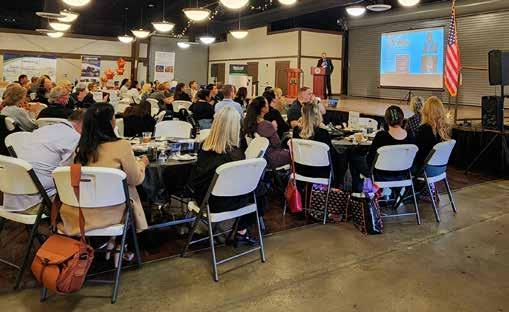
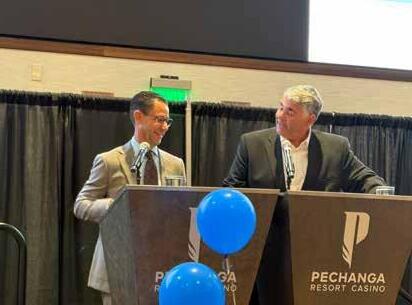
Approximately 180 members gathered at Pechanga for our final educational luncheon of the year, featuring CLAC Advocate Louie A. Brown, Jr. and attorney Robert M. DeNichilo. They provided in-depth updates on 2025 legislation impacting community associations, compliance strategies, and what to expect in 2026. This annual update remains one of our most valuable programs each year. We also thanked our 2025 Committee Chairs and members of the Chapter’s Board of Directors for their service before swearing in the 2026 Board.
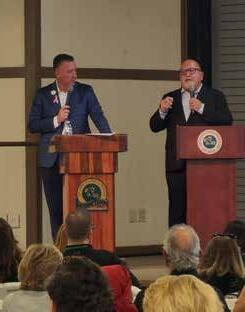
(l to r): Speakers CLAC Delegate Louie Brown and Robert DeNichilo of DeNichilo Law APC
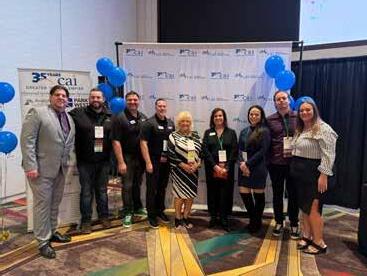
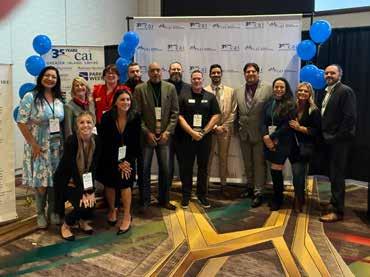
2025 Board Of Directors
2025 Committee Chairs
2026 Board of Directors
HOLIDAY PARTY
December 4, 2025
Luke’s on Front Street
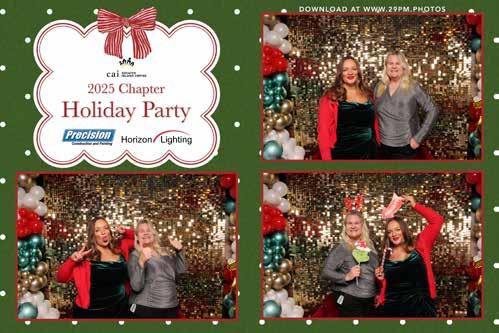
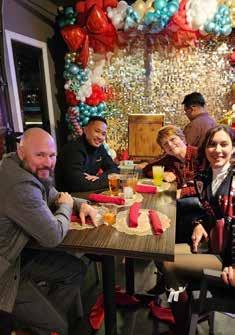
We closed out the year in festive style at Luke’s on Front Street in Temecula. Luke’s was perfectly decorated for the holiday season and with heavy appetizers, a toast to 2025 from our 2025 Board President Greg Borzilleri, music, photo booth, and an ornament exchange, the evening was filled with gratitude and celebration. It was the perfect way to honor our accomplishments, connect with one another, and toast to an incredible 2025. Everyone enjoyed themselves so much that we are looking to add on to the Holiday Party for 2026!
EVENTRECAP
Photo booth fun with your CAI Staff, (l to r): Erica Tenney and Elda Pfitzinger
BrightView Landscape and their guests
Luke’s holiday welcome sign
Members mingling and enjoying the evening
Park West Landscape and their guests
Chapter President Greg Borzilleri giving his toast to 2025
IS THE ASSOCIATION
REQUIRED TO INVOLVE ITSELF IN
NEIGHBOR-TO-NEIGHBOR DISPUTES?
BY JAMES R. MCCORMICK, JR., ESQ., CCAL, FOUNDING PARTNER, DELPHI LAW GROUP, LLP
Referring to something as a neighbor-to-neighbor (“N2N”) dispute has often been considered a “get out of jail free” card. Once an issue is considered N2N, a board or manager may simply believe that no further action or involvement by the association is necessary. The 2024 case of Woolard v. Regent Real Estate Services, 107 Cal.App.5th 783 (2024), provided further clarification of this topic.
Generally, board members in California must comply with the business judgment rule (“BJR”) set forth in Corporations Code Section 7231. The BJR requires a director to perform their duties “in good faith, in a manner such director believes to be in the best interests of the corporation and with such care, including reasonable inquiry, as an ordinarily prudent person.” As to alleged violations, this generally requires a board to investigate an allegation to determine whether the alleged conduct is a violation of the governing documents and, if so, determine what enforcement action to take.
To be clear, this obligation and requirement of the BJR applies regardless of whether an issue can be considered a neighbor-to-neighbor dispute.
In the Woolard case, neighbors who were both tenants had a long running feud that culminated in what could be described as a festive, holiday fight on December 27, 2019. The parties sued each other and one of the parties sued the Greenhouse Community Association (“Association”) and its management company, Regent Real Estate Services, Inc. (“Regent”), alleging that the Association and Regent should have intervened earlier to stop the harassment and prevent the fight.
The court considered the question of whether an association or its managing agent have a duty of care to intervene or to otherwise resolve a neighbor dispute to prevent a later assault. The court held that such a duty did not exist, and they declined to create such a duty:
Imposing a duty on homeowners associations or their managing agents to intervene and attempt to resolve disputes between homeowners (or their tenants) would place an untenable burden on these entities.
They cannot compel owners, much less tenants of owners, to sit down and work out their differences, and they cannot adjudicate differences except in the limited context of violations of the association’s governing documents.
Imposing a duty under these facts would leave associations liable for the outcome of such disputes without the tools to prevent them.
Accordingly, we find no existing duty of care was breached and decline to recognize a new duty of care requiring a homeowners association or its management company to involve itself in disputes between homeowners outside the confines of the governing documents
The expert who testified on behalf of the Association and Regent, opined that the standard of care does not require intervening in N2N disputes, but that the appropriate response is to investigate governing document violation allegations, and to advise residents to contact law enforcement as needed. The court found that the Association and Regent had carried out this duty.
The holding of the court in the Woolard case provides clarification of how an association should approach N2N disputes. The holding confirms the general guideline noted above as to the process an association should follow when a violation is alleged, even if that violation involves an N2N dispute.
Based on this holding. processing a violation should proceed as follows:
1. Receipt of violation allegation
2. Response to resident making allegation that it has been received
3. Investigation of the allegation, review of governing documents, review of alleged facts
4. Determination by board as to whether the facts constitute a violation
5. If violation is found to exist, determination by board as to what enforcement action to take (consistent with enforcement policy and holding of Beehan v. Lido Isle case which held that an association is not obligated to file a lawsuit on every violation)
Members often demand that an association act on their behalf as if the association is a police agency or a landlord. The Woolard case makes it clear that this is not required; a holding that is consistent with the BJR and with the language of Civil Code Section 5975, which provides, in pertinent part:
(a) The covenants and restrictions in the declaration shall be enforceable equitable servitudes, unless unreasonable, and shall inure to the benefit of and bind all owners of separate interests in the development. Unless the declaration states otherwise, these servitudes may be enforced by any owner of a separate interest or by the association, or by both. (Emphasis added.)
The law makes it clear that a member has a right to take enforcement action directly even if an association determines not to act on an alleged violation. The Woolard case confirmed that there is no “peacemaker” duty of an association or management company and that instead the obligation is to enforce the governing documents. To fulfil this obligation, an association should review alleged violations and process them as outlined in and required by the BJR.
James R. McCormick, Jr., CCAL is a founding partner of Delphi Law Group, LLP, a law firm dedicated to representing community associations in California. He may be contacted at Info@DelphiLLP.com