







The Community Associations Institute – Coachella Valley Chapter (CAI-CV), established in 1983, is a nonprofit organization dedicated to serving the educational, business, and networking needs of community association professionals and homeowner leaders throughout the Coachella Valley. As part of an international organization, CAI-CV provides vital resources, training, and legislative advocacy to help homeowners associations (HOAs) operate effectively and responsibly. Our mission is to build better communities by equipping board members, community managers, and business partners with the knowledge and tools necessary to lead with confidence, make informed decisions, and foster thriving, well-managed neighborhoods. Membership is open to all who serve HOAs. Board members can enroll up to 15 members of their community, including the Board of Directors, committee chairs, and committee members, with one low fee. This offer also extends to cities or other governing agencies that would like to connect with CAI.
If you are a manager or business partner, CAI offers many opportunities for education and credentialing, including the Educated Business Partner distinction, multiple designations, and specialty credentials for community managers.
To inquire about membership, visit www.cai-cv.org/join, call (760) 341-0559, or email admin@cai-cv.org
Members have access to our online directory, which contains contact information for all members within our chapter across all membership categories. Advertising opportunities are also available—please contact our office for details.
HOA Living is CAI-CV’s monthly magazine and the official publication of the chapter. Circulation is approximately 1,200 and growing. A digital copy is distributed free to all members, and a printed version is available with a paid subscription.
If you are interested in submitting an article or advertising, contact us at admin@cai-cv.org.
GENERAL INQUIRIES
Email: admin@cai-cv.org
Phone: (760) 341-0559
Mail: CAI-CV, 49950 Jefferson, Suite 130-117 Indio, CA 92201
MEMBERSHIP INQUIRIES AND UPDATES
Membership status/renewals cai-info@caionline.org
Address or information changes addresschanges@caionline.org
Recruiter credit addresschanges@caionline.org
PRESIDENT
Term 1/1/2026 – 12/31/2029
BRUCE LATTA, CMCA, CFE Manager, Indio Properties
PAST PRESIDENT
Term 1/1/2023 - 12/31/2026
MARK DODGE, CMCA, AMS Branch President & CEO Associa – Desert Resort Management
TREASURER
Term 1/1/2025 - 12/31/2027
JOLEN ZEROSKI, CMCA VP, Regional Account Executive First Citizens Bank
SECRETARY
Term 1/1/2026 – 12/31/2029
DAN GOODRICH
CCAM-LS, AR, AMS PCAM, LSM Sierra Dawn Estates
DIRECTOR
Term 1/1/2023 - 12/31/2026
JULIE BALBINI, ESQ. Managing Attorney, CV Office, Fiore Racobs & Powers, A PLC DIRECTOR
Term 1/1/2026 – 12/31/2028
WILLIAM BRADY Fision Fiber Optics by Hotwire DIRECTOR
Term 1/1/2026 – 12/31/2029
MICHAEL MARSHALL, CMCA, PCAM Vice President, FirstService Residential DIRECTOR
Term 1/1/2025 - 12/31/2027
LILY ORTEGA, CMCA Office Manager, Pro Landscape DIRECTOR
Term 1/1/2026 – 12/31/2029
DAVID SCOTT Ranch Club Palm Estates DIRECTOR
Term 1/1/2025 - 12/31/2027
STEVEN SHUEY, PCAM Retired Community Manager DIRECTOR
Term 1/1/2023 - 12/31/2026
MIKE TRAIDMAN
Treasurer, Mira Vista at Mission Hills HOA Commissioner, CAMICB
NATIONAL CONTACTS
National Corporate Member updates addresschanges@caionline.org
National Professional Directory
Laura Mason, lmason@caionline.org
Dues or multi-chapter additions cashprocessors@caionline.org
JENNIFER JAMES, ESQ. CHAIR
Partner & Managing Attorney of the Coachella Valley, Roseman Law, APC
JAY JARVIS CO-CHAIR Homeowner Leader
SEAN ANDERSEN Association Reserves
FELICIA BUSTOS WICR Inc. Waterproofing & Construction
SIERRA CARR, CMCA, AMS, CCAM, PCAM Personalized Property Management
JOHNNY CONTRERAS Southwest Landscape & Maintenance
ROBERTO ANTONIO FLORES Hidroklear LLC
MIRANDA LEGASPI, EBP, MBA Platinum Security
JESSICA MCCONNELL HOA Invest
LILY ORTEGA Pro Landscaping Inc.
BRITAIN ROME Allied Universal
JASON SAVLOV, ESQ. Adams | Stirling, PLC
DAVID SCHUKNECHT, AMS, PCAM, MBA Personalized Property Management
JOHN SCHUKNECHT, CMCA, AMS LaBarre/Oksnee Insurance
STEVEN SHUEY, PCAM Retired Community Manager
CHRIS SIGLER, B.S.C.E, CDT C.L. Sigler & Associates, Inc.
CREATIVE DIRECTOR & GRAPHIC DESIGNER
RODNEY BISSELL
Bissell Design Studios, Inc. rodney@bisselldesign.com (714) 293-3749
PHOTOGRAPHY
MATTHEW LAWTON, CIC, CIRMS, EBP OCV Insurance Services matt@ocvinsurance.com 760-774-2099
HOLLY SMITH, PCAM Executive Director
The opinions and views expressed in editorial material are those of the individual authors or interviewees and do not necessarily reflect the views of CAI–CV, Community Associations Institute, its Board of Directors, members, or advertisers.
Unless expressly stated, CAI–CV does not endorse any individual, organization, product, service, political candidate, or opinion.
Information contained in this publication is provided for general informational purposes only and does not constitute legal, accounting, or professional advice. Readers are encouraged to seek the advice of qualified professionals before acting on any information contained herein.
HOA Living reserves the right to edit or reject submissions and advertising that do not meet its standards. Print colors may vary slightly due to the printing process.
BECOME AN EDUCATED BUSINESS PARTNER
Call the CAI-CV office or go to www.caionline. org/education-for-partners/ for more information. Business Partner Essentials is an online course that empowers CAI-member business partners to better serve community associations. Participants who complete the course earn the CAI Educated Business Partner distinction, highlighting their knowledge, professionalism, and commitment to excellence.
Julie R. Balbini, Esq., Fiore Racobs & Powers, A PLC
Micha Ballesteros, Cartwright Termite & Pest Control, Inc.
Roxi K. Bardwell, Advanced Reserve Solutions, Inc.
Rodney Bissell, Bissell Design Studios, Inc.
Gary Butler, Asphalt MD's
Linda Cardoza, Alliance Association Bank
Will Cartwright, Cartwright Termite & Pest Control, Inc.
Christopher Cellini, Flood Response
Todd Chism, PatioShoppers
Thomas Edelson, BPR Inc. Trip Hazard Repair
DJ Conlon, Poppin Promotional Products
Julie Frazier, Frazier Pest Control, Inc.
Victoria Germyn, Teserra
Elaine Gower, The Naumann Law Firm, PC
Michael Graves, SCT Reserve Consultants
Amanda Gray, Harvest Landscape, Inc.
Jennifer James, Esq., Roseman Law, APC
Jennifer Felder, Platinum Security
Erin Kelly, Banc of California
Megan Kirkpatrick, Kirkpatrick Landscaping Services
Katy Krupp, Fenton Grant Mayfield Kaneda & Litt, LLP
Matt Lawton, CIC, CIRMS, OCV Insurance Services
Larry Layton, Kirkpatrick Landscaping Services
Alison LeBoeuf, Sherwin-Williams
Mike Mastropietro, OCBS, Inc.
Chris Meyer, Asphalt MD's
Greg Morrow, Eagle Roofing Products
Bridget Nigh, BEHR Paints
Matt Ober, Esq., Richardson Ober DeNichilo LLP
Lily Ortega, Pro Landscape
Chet Oshiro, EmpireWorks
Mallory Paproth, SCT Reserve Consultants
Jay Powell, Ben's Asphalt
Dana Pride, Automation Pride
Mike Rey, LaBarre/Oksnee Insurance Agency
Kelly Richardson, Esq., Richardson Ober DeNichilo LLP
Brent Sherman, Animal Pest Management Services, Inc.
Liz Williams, AMS Paving
Taylor Winkle, Roof Asset Management
Bevan Worsham, AMS Paving
Jolen Zeroski, First Citizens Bank
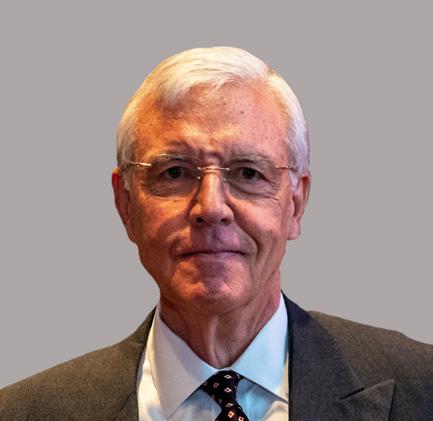
IBruce Latta, CMCA, CFE Manager, Indio Properties President, of CAI-CV
n April, we received notice from CAI National that our Coachella Valley Chapter had gone above and beyond and has been selected for an Achievement Award in the Public Affairs category for the City HOA Workshops we conduct in partnership with several cities in the Coachella Valley. The award recognizes “building the CAI brand and making the community aware of the services and resources available.”
The National awards will be presented during the General Session of CAI’s Annual Conference & Exposition, June 3-5, in Fort Lauderdale, Florida, on Friday, June 5. We need to create a trophy case to display or list all the awards our chapter has won in recent years.
Several members of our chapter are attending and representing the Coachella Valley. The event is the premier gathering for the HOA industry, bringing together CAI members across all membership categories.
All CAI members can attend this three-day event, featuring educational sessions, a keynote speaker, an exhibit hall, and socializing events and networking opportunities. Attendees always return with fresh ideas and insights to share with the chapter. Here is a link if you want to learn more or sign up, scan the QR code or go to this link: https://events.rdmobile.com/Events/Details/19432.
Our City Workshops began in Indio four years ago and have since expanded to include most cities in the valley. Planning for next year’s City Workshop schedule will begin soon, and it looks like we will be conducting them in six different cities. We are not only providing information and education through the workshops, but also raising the visibility of the Chapter here in the valley.
Some additional good news. This is the 4th month in a row that our chapter membership has increased. It wasn't a huge number for March; we added five new members, but the upward trend continues. At the time of this writing, preliminary April membership numbers also indicate membership growth. We will have those totals in May after April month-end reports.
In addition, the April data from Constant Contact for our HOA Living magazine emailing shows that open and click rates are up 6% compared with the previous three months’ mailings. Given the size of our mailing list, that represents about 100 more people. Again, good news, and we must be doing something right.
Whether it's attracting new members or increasing readership of our monthly magazine, we need to continue our efforts to inform and educate non-members so they know they're really missing out on a great resource. We need to create some FOMO for non-members.
Thank you all for your continued support and engagement. I would like to recognize all our volunteers and sponsors and the work they do for the chapter and all of us, but there isn’t enough room on this page. You are all an amazing group of people, and the chapter couldn’t exist or be successful without you. Let’s carry this momentum into the summer and beyond.
See you down the road at one of our events.
And don’t forget Mother's Day May 10th. It is to celebrate and honor mothers' influence, sacrifices, and love. In 1914, President Wilson signed a proclamation designating the second Sunday in May as a national holiday. The holiday recognizes the vital role mothers play in families and society.
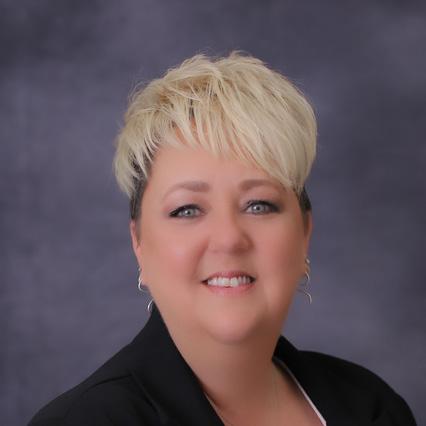
Holly Smith, PCAM Executive Director
arlier this month, I had the opportunity to attend the Elevate Associations West Conference in Newport Beach, held April 13–16. This is an organization for those involved in the management of associations such as ours. What I brought back wasn’t just notes—it was a shift in perspective.
A challenge, really.
What would happen if we decided— right now—to go all in?
Not cautiously. Not incrementally. All in on evolving our industry, our chapter, and the way we show up as leaders.
In community associations, we are exceptionally good at managing outward operations, compliance, budgets, and governance. But Elevate challenged something deeper:
Are we taking the time to look inward?
To evaluate not just what we do—but how and why we do it.
Because growth doesn’t start with a new program or a new initiative. It starts with awareness and the willingness to question whether what has always worked…is still working.
Our industry is built on systems, many of which were created for a different time, a different pace, and a different set of expectations.
And while those systems have served us, they can also quietly limit us.
When we take a step back and truly see the system, we create space to ask:
Is this still effective?
Is this still valuable?
Or is this simply familiar?
At CAI–Coachella Valley, this is where the real opportunity lies—not just to participate in the industry, but to help shape what comes next.
To be thoughtful.
To be intentional.
And yes—to be rule changers when it serves the greater good of our members and communities.
One idea from the conference continues to stay with me:
Possibility is the belief that something that is not currently true, real, or done…can be.
In our world, it’s easy to focus on constraints. But what if we shifted that perspective?
What if we looked at our programs, our partnerships, and our messaging through the lens of possibility instead of limitation?
What could we create?
What could we improve?
What could we do differently starting now?
At CAI–Coachella Valley, going all in means more than doing more—it means doing what matters, better.
It means rethinking how we deliver education, elevating the experience for our members and business partners. Challenging ourselves to move beyond “how it’s always been done” and toward what is truly impactful.
You will see this in the evolution of our programs, our strategic partnerships, and the way we continue to position our chapter—not just as a resource, but as a leader in our region.
Because standing still is not an option in a rapidly changing industry.
So, I leave you with this:
Where are we holding back?
What are we doing simply because it’s familiar?
And what would happen if we chose—collectively—to go all in?
Not just as individuals, but as a chapter.
Because when we challenge the way we’ve always done things, we create space for something better.
And that is where the future of CAI–Coachella Valley begins.
By Chris Scott

As the vibrant social season in the Coachella Valley transitions, many homeowners begin to plan their summer retreat, trading the desert heat for cooler climes. Before you lock the doors and embark on your journey, a crucial step remains: preparing your residence for the intense desert summer. A proactive approach not only protects your investment but also ensures a smooth, worry-free return.
The Coachella Valley's summer is demanding on a home. Extreme temperatures, coupled with unexpected monsoon activity, require specific preparation. Think of this as your essential checklist for transforming your year-round desert haven into a protected summer oasis.
The first line of defense is always the exterior. Start with your landscaping, which is both a beauty feature and a potential liability. Trim back all palm fronds and dead branches, especially those near the roofline, to prevent wind damage and fire hazards. The intense sun can quickly destroy expensive outdoor furnishings. Ensure all cushions, pillows, and decorative items are stored in a cool, dry place or covered with high-quality, UV-resistant covers.
• Pool Maintenance: Maintain a regular chemical balance to prevent algae bloom, which can turn your pool into an unsightly mess. Consider reducing the filter run time during the hottest hours to conserve energy, but ensure adequate circulation.
• A/C Condensers: The air conditioning unit will be working overtime. Clear away any surrounding debris, leaves, or vegetation to ensure unrestricted airflow. A simple hose-down of the coils (when the unit is off) can significantly improve efficiency.
• Patio and Walkways: Check all pavers, flagstones, and concrete for cracks. Summer rains can exploit small imperfections, leading to costly erosion and shifting.
Inside, the goal is to minimize energy consumption and prevent heat-related damage. Even if you plan to keep your A/C running on a minimal setting, certain steps can reduce the load.
Set your thermostat to a higher but stable temperature, generally between 82 and 85 degrees Fahrenheit. This prevents excessive heat buildup, which can damage woodwork, art, and electronics, without incurring massive utility bills. Ensure all windows are tightly sealed and consider applying a reflective or UV-blocking film to south and west-facing windows for additional heat rejection.
• Water Safety: Turn off the main water supply to your home. Even a small leak from a pipe, toilet, or appliance can become a catastrophic flood when left unattended for weeks or months. This single step can save tens of thousands in damage and remediation. If you have any concerns about burst pipes, drain the water system after turning off the main supply.
• Appliances: Unplug all nonessential electronics to protect them from power surges and "phantom" energy drain. Clean out and unplug your refrigerator and freezer if you are leaving them empty; otherwise, leave the fridge running but set it to a less aggressive cooling level.
For the Coachella Valley homeowner who values peace of mind, the most effective summer preparation is partnering with a professional property management team. While your careful preparation goes a long way, nothing replaces a human presence. The summer is when unexpected events happen: a sudden monsoon microburst, a prolonged power outage, or an isolated pest problem. Our team provides scheduled, professional Home Check-Ins.

• Property Inspection: Comprehensive review of interior and exterior every week
• Pest and Critter Control: Immediate action against scorpions, rodents, and ants
• A/C Function Verification: Ensuring the cooling system is running to prevent mold/heat damage
• Mail and Package Retrieval: Eliminating signs of extended vacancy
• Emergency Response: 24/7 contact for alarm calls and storm damage
By having a dedicated team member check your home and pool weekly, we mitigate risks before they escalate into major expenses. A property manager is not just a key holder; they are a liaison with local service providers and a constant, reliable presence for your investment. Enjoy your summer knowing your Coachella Valley oasis is safe, secure, and ready for your return.
Property management companies that specialize in vacation rentals and absentee homeowner services can assist with everything from routine upkeep to coordinating maintenance and local vendors. In the Coachella Valley, firms such as Valley Peak Property Management are among those offering these types of services, alongside many other providers in the region. Working with a qualified professional can help homeowners protect their investment and simplify ongoing property responsibilities.
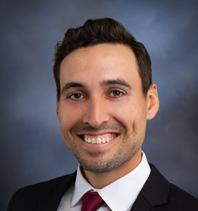
Chris Scott is a licensed Realtor based in Palm Desert, California (DRE#01943388). He works with Valley Peak Property Management, assisting homeowners throughout the Coachella Valley with residential real estate, vacation properties, and property care needs. Chris can be reached at 760-464-5151 or chris@valleypeakpm.com
By Michael Berg CIRMS, CMCA, MBA
Aboard of directors is tasked with maintaining, if not improving, the value of the assets within a community. This process involves expenses, of course. The risk of financial loss needs to be managed through a risk management program designed to avoid, control, transfer, or accept that risk.
reserve study identifies the useful life of components and estimated replacement cost. Using the reserve study as a guide, an association can build a financial plan such that funds are available when a component reaches the end of its useful life.
Transfer of Risk: This is the essence of insurance. An insurance policy
“The risk of financial loss needs to be managed through a program designed to avoid, control, transfer, or accept that risk.”
Avoid Risk: By removing potential hazards or implementing protective measures, a risk can be avoided. For example, if there is a tree in the common area that has a propensity to lose large branches or a possibility to fall over completely, removing the tree avoids the risk.
Control Risk: Large expenses will cause hardships for the membership in the form of special assessments. A
is a contract between the insurance company and the insured. The association agrees to pay the premium and accept a portion of a loss (aka, the deductible). In exchange, the insurance company agrees to accept the risk of certain property or liability losses. Not every event (aka peril) is transferred (i.e., covered by the policy). The insurance carrier outlines the covered perils in the insurance policy.
Accept Risk: There will always be exposure that cannot be avoided, controlled, or transferred. Those exposures simply need to be accepted.
While requirements vary by governing documents, lender guidelines, and State legislation, the following coverage is either required or should be considered:
Property insurance is required coverage and applies to buildings and other common area property maintained by the association. Perils typically include damage caused by fire, water from a burst pipe or backed up drain, and wind. Carriers in different regions of the country may add limitations or exclude certain catastrophe perils. For example, hurricane damage is typically excluded in states like Florida. A separate policy is therefore required to protect against hurricane loss. Other catastrophe coverages to consider are wind, hail, flood, tornado, and earthquake damage.
Property insurance policies should be written on a replacement cost basis, rather than actual cash (i.e., depreciated) value. Coverage written on a replacement cost basis provides that property will be repaired or replaced with like
“Property insurance should be written on a replacement cost basis to ensure damaged property is repaired or replaced with like kind and quality.”
kind and quality at the time of loss. With an actual cash value policy, the association would receive an amount equal to the depreciated value of the component. The association’s insurance professional should review the governing documents to ensure coverage meets the CC&Rs insurance requirements.
General liability insurance is another required coverage and protects the association against claims of bodily injury and property damage occurring in the common area. The Davis-Stirling Common Interest Development Act (DSA) suggests a minimum limit of $2 million per occurrence GL insurance for communities with up to 100 homes or units. That minimum is $3 million per occurrence for larger communities. If these minimum limits are in place, any legal action must be filed against the association. If coverage falls below these minimum limits, legal action can be filed against each individual owner. Each association will have different exposures, and each board will have a different risk tolerance.
A slip-and-fall claim is the most common occurrence addressed by GL. Other allegations include property damage to a home or neighboring property caused by the association’s asserted
failure to maintain common area components, such as sprinklers or drains.
D&O liability insurance is generally required coverage, though some governing documents do make it optional. It is recommended that a policy be in place before serving on a board of directors. This is how a board member’s personal liability is protected when making decisions on behalf of the association. Like GL, the DSA suggests minimum limits for D&O policies. Communities with up to 100 homes or units should maintain at least $500,000 per occurrence D&O insurance, and larger communities should maintain at least $1 million of per occurrence insurance. Most commonly, the GL and D&O limits will be the same for simplicity and continuity.
Duly elected members of an association’s board of directors and committee members appointed by the board are considered insureds. Everyone should be a volunteer. Coverage does not
apply to board members who are compensated. The means of compensation that may trigger a coverage issue could include a gift card or even something non-monetary. The important thing to remember is that service by members of the board must remain completely voluntary.
Among other things, the insurance carrier will provide defense and pay judgment or settlement amounts for allegations of wrongful acts, breach of duty, and failure to enforce the CC&Rs. Ideally, the policy will include conditions for failure to procure adequate insurance, defense cost outside the limit of liability, and non-monetary claims
Maintaining appropriate crime/ fidelity insurance is a requirement of the DSA, and always a requirement for a member’s sale or refinance of their unit or home. The DSA and lenders require a limit at least equal to the total of three months’ assessments, including reserve contributions. In addition, the DSA
“Service on a board must remain completely voluntary for D&O coverage to apply.”
requires a computer fraud and funds transfer fraud limit equal to the limit of coverage for theft. If the association uses a community management company, crime/fidelity coverage needs to include coverage for acts by the managing agent as if they were also an employee of the association.
The insurance carrier will indemnify the association for financial loss via theft, fraud, or embezzlement. It’s worth noting that the association must do all the forensic accounting, including informing authorities, in order to validate the claim of loss.
Limits of crime/fidelity insurance vary based on the CC&R requirements, with the most common being a limit required by the DSA and lenders. The association’s insurance professional should compare the CC&R requirements with other requirements and recommend a limit matching the more conservative figure.
Umbrella/excess liability is rarely a requirement of the governing documents. The policy provides additional liability insurance over the GL and D&O policies. Few carriers offer GL limits higher than $3 million per occurrence or D&O limits higher than $1 million per occurrence. If the governing document-required limits, or those of a state regulation, are higher than what can be offered by the underlying carrier, an umbrella policy is necessary to reach those requirements.
In addition, the umbrella/excess liability insurance is used to increase limits to meet the risk tolerance of a board of directors. For example, the board of directors of a small single family home community may satisfy legal requirements with a $2 million per occurrence limit, but the board of a large master-planned community with liability exposures like a lake, streams, or athletic facilities may wish to maintain higher limits for additional peace of mind.
Workers' compensation (“work comp”) insurance is a requirement for any association that has employees. Coverage includes medical costs and lost income for workplace injuries.
It is also considered best practice to maintain an “if-any” work comp policy even if the association does not actually employ individuals. If a vendor’s work comp carrier denies a claim, the association may be considered the employer of the vendor’s employee. The work comp policy protects the association from this rare but real exposure.
If not included in other policies purchased, and depending on exposure, a board of directors should consider coverage for equipment breakdown, pollution liability, cyber theft and cyber liability, commercial auto insurance, or specific event liability.
Remember, the risk management program involves avoiding, controlling, transferring, and accepting risk. If something cannot be avoided, controlled, or transferred, it is then an accepted risk and the association will need to address expenses related to that exposure. Industry professionals specializing in common interest developments can advise on which exposures exist and make recommendations to limit the risks that are accepted by the association.
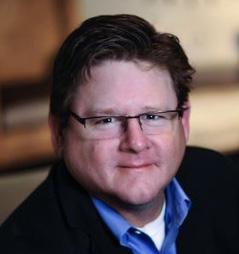
Michael
CMCA,
Berg CIRMS,
MBA, is the Vice President of Education, LaBarre Oksnee Insurance.
“If a risk cannot be avoided, controlled, or transferred, it must be accepted—and the association must be prepared to address the financial impact.”



By Ben Christopher
This commentary was originally published by CalMatters.
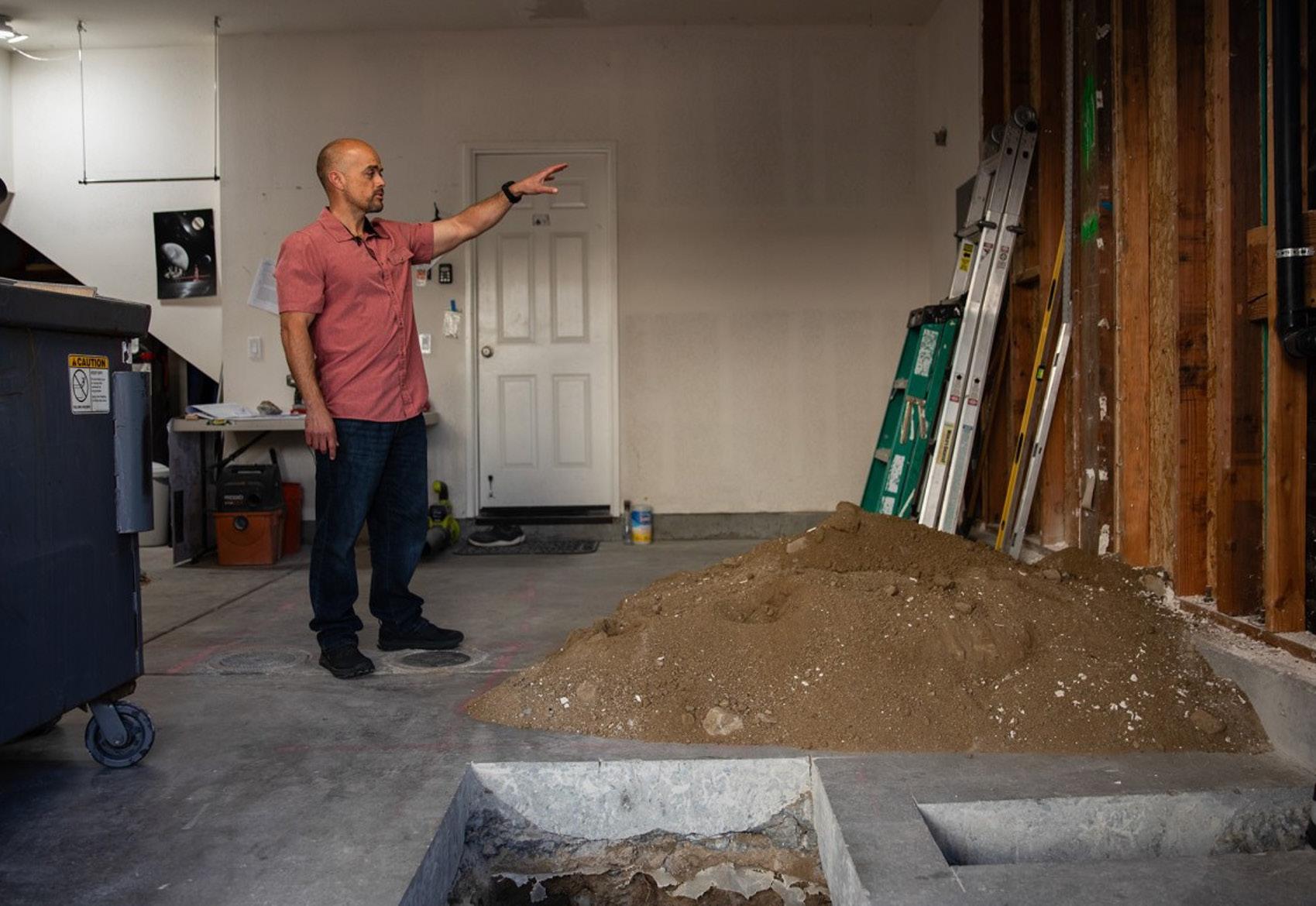
ACarlsbad condo-owner lost his legal battle to turn his garage into an apartment over the objections of his homeowners association.
Welcome to CalMatters, the only nonprofit newsroom devoted solely to covering issues that affect all Californians. Sign up for WhatMatters to receive the latest news and commentary on the most important issues in the Golden State.
Adam Hardesty fought the HOA and the HOA won.
In a legal decision issued Friday afternoon, a San Diego County judge ruled against the Carlsbad condo owner who tried to convert his garage into a rental unit over the objections of his homeowners association. The ruling brings to an end — at least for now — a year-long legal tussle centered on whether state housing law written to make it harder for locals to reject new developments also applies to all homeowners associations, the quasi-private governments that enforce neighborhood rules for more than one-third of California’s residents.
Adam Hardesty looks through the construction at his home in Carlsbad on Feb. 19, 2025. Hardesty wanted to convert the garage of his three-story condo into a ground-floor apartment despite opposition from his own Homeowners Association.
Photo by Adriana Heldiz, CalMatters
Throughout much of the fight between Hardesty and the Mystic Point Homeowners Association, Hardesty has sat on the association’s board.
The dispute is more than a neighborhood-scale drama. Though the California Legislature has spent the last 10 years overriding local restrictions on new residential development in order to boost the state’s stock of homes amid an affordability crunch, HOA authority often falls into a legal gray area.
In the case of Mystic Point, Hardesty argued that a 2019 state law voided any HOA restrictions on accessory dwelling units — small residences located on the same property as a larger existing home. Hardesty wanted to turn his condo garage into a rental for extra income. The HOA countered that its own ban on using garages for anything other than car storage made that a no-go.
Hardesty, backed by the opinion of a planner at the state’s Housing and Community Development department, believed the law was on his side and went ahead and broke ground. Shortly after CalMatters reported on the dispute early last year, the HOA sued.
In its court filings, the association argued that though the 2019 law might very well prohibit many types of HOAs from placing restrictions on ADUs, the law doesn’t apply to condo developments like the one at Mystic Point.
It also argued that the law only applies to areas “zoned for single-family residential use.” Because Hardesty’s plot did not exclusively allow single-family homes, but townhomes and small condos as well, it doesn’t apply in this case for that reason, too.
In a highly technical ruling with heavy emphasis on syntax and grammar, Superior Court Judge Victor Torres sided with the HOA on both counts. If the Legislature had intended to include condos, it “could have easily” made that language more explicit, the judge wrote. “It did not.” Likewise, applying the law to Hardesty’s plot with its multi-use zoning would be “contrary to the legislative intent,” he wrote.
The legal battle has so far played out without the intervention of the state. Though housing regulators and the state’s attorney general’s office regularly step in when local governments quash a development project in a way that may conflict with state law, they do not typically take such enforcement actions against HOAs.
In a hearing Friday afternoon, Torres acknowledged the complexity of the case, saying that he wished he had “a stronger feeling one way or the other.” Ultimately, he ruled for the association, but noted that this might not be the end of the legal saga.
“I’m sure I’ll hear more education from the Court of Appeal at some point,” he said.
Hardesty said he would like to appeal the decision but isn’t in a position to do so. “What it’s going to take is more time and money,” Hardesty said in a telephone call. “Time, I have. But money? I think I’m pretty much bone dry.”
He estimates that he and his wife spent more than $100,000 in combined construction costs and legal fees.
In fighting for his right to add a unit under his condo, Hardesty pushed up against what many see as a fundamental character of HOA living — the ability to restrict how other residents use their land. Economic researchers have found that residences governed by associations are typically more valuable when they neighbor areas with lax zoning. In other words, people are often willing to pay more to guard against the possibility of a new apartment in their neighborhood.
By Ben Christopher, Special for CalMatters.

By Chris Sigler, B.S.C.E., CDT
The Coachella Valley, as is the case with various hot desert areas, has a large population of seasonal residents, generally referred to as “Snowbirds” – residents that many times use desert climates to avoid harsh winter weather. Usually, these residents either have a second home or a long-term rental property that they use during our high “season” that starts in October or November and runs through April or May.
If you are a Snowbird that will not have a renter or anyone tending to your Coachella Valley home during the offseason, there are a number of actions that should be taken to protect and prepare your desert home for the extreme heat while you are away. This article will attempt to provide you with some guidance about some simple things that Snowbirds can do to protect your Desert home before you leave, and while you are gone for the summer.
THE BIGGEST RISKS THAT YOU CAN PROTECT YOURSELF FROM
• Water leaks (most costly and common)
• Extreme interior heat (can warp cabinets, flooring, drywall seams)
• Pest infestations
Here are some practical things that can be done to avoid these types of risks while you are away:
• Shut off the main water supply to the unit, if at all possible.
• If the unit’s supply cannot be shut off without affecting other units, try to shut off specific appliances or components such as toilets, laundry machines, sinks/faucets, etc.
• Consider turning off the water heater or setting it to “vacation mode.”
• Run dishwasher and washing machine empty before leaving.
• Optional but smart: install a leak detector.


TEMPERATURE & HVAC
• Set your thermostat to ~80–85°F (don’t turn it off completely—heat can damage finishes, electronics, and cabinetry).
• Replace your HVAC filter before leaving.
• If you have a smart thermostat, monitor it remotely.
• Take out all trash and food and make sure that the trash is removed by the local disposal company.
• Clean thoroughly (especially the kitchen).
• Consider a preventative pest treatment.
• Seal obvious entry points if needed.
Other simple measures can (and should) also be taken before leaving:

• Unplug non-essential electronics (TVs, coffee makers, etc.).
• Turn off breakers for major appliances if appropriate.
• Clean out refrigerator:
• Toss perishables
• Leave doors slightly open to prevent mold
• Ice maker: turn it off.
• Close blinds/curtains to reduce sun and heat damage.
• Move furniture or rugs out of direct sunlight.
• Remove candles, aerosols, or anything heat-sensitive.
• Lock all windows and doors.
• Notify the HOA Management and/ or security company if applicable.
• Use timers for lights to simulate occupancy.
• Pause mail or forward it via United States Postal Service.
• Let a trusted neighbor or neighbor know you’ll be gone.
HOA-SPECIFIC STEPS TO BE TAKEN:
• Check your HOA rules—some require:
• Emergency contact info
• Periodic inspections
• Confirm who handles:
• AC failures
• Water leaks between units

• Disconnect the battery or use a trickle charger.
• Inflate tires properly.
• Don’t leave it baking in the sun if possible.
• Install a Wi-Fi camera or monitoring system.
• Use a water shutoff valve with remote control.
• Hire a property check service (someone who can check the home via monthly walkthroughs).
By doing some (if not all) of the above measures, disasters that could ensue while you are away can usually be avoided. The most sure-fire way to avoid problems while you are away would involve having someone periodically check your home for any potential issues that can arise. If you are able to utilize some of today’s technological advances such as WIFI cameras, security systems, thermostats and water shutoff valves, you can find a peace of mind in addition to a regular property check by a trusted service or neighbor.
Snowbirds are a vital part of our Valley! We all need to work together to protect ourselves and our neighbors to maintain the health and vitality of our communities.

Chris Sigler is the President and Owner of C.L. Sigler & Associates, Inc., a Construction Management and Consulting firm that has exclusively served the HOA industry for 23 years. He is a Civil Engineer by trade with more than 35 years of Engineering and Construction experience, and is actively involved in projects throughout the Coachella Valley. Chris is certified with the Construction Specifications Institute (CSI) as a Construction Documents Technologist. Located in Palm Desert, his firm serves the Coachella Valley and Riverside County, and the San Francisco Bay Area in Northern California from its San Jose Corporate office.

By: Holly Smith, PCAM Executive Director CAI-CV
Let’s talk about the RSVP—not the casual calendar click, but the intentional act of registering for an event.
It seems simple. And it is. But it’s also one of the most important parts of a successful event—and one of the most overlooked.
Because an RSVP isn’t just about saving your spot. It’s what makes the event possible in the first place.
RSVPS ARE THE BLUEPRINT
Every event decision is based on registration numbers. How much food to order. How many tables and chairs to set. How many materials to print. How to staff the room. Even whether the event can move forward at all.
Without RSVPs, we’re not planning—we’re guessing.
And while guessing might work for picking a Netflix show, it doesn’t work when contracts, catering minimums, and real dollars are involved.
Recently, we made the difficult decision to cancel an event due to low registrations specifically, no registrations.
What followed was surprising: we heard from several people who were disappointed the event didn’t take place.
And we get it. We want to host these experiences. We want full rooms, great conversations, and meaningful connections.
But here’s the reality: we can’t plan an event based on good intentions and “I was thinking about going.”
An event without registration isn’t an event waiting to happen, it’s an event that quite literally cannot be planned.
Now let’s talk about timing… because when you RSVP matters just as much as the if.
Registering the day before—or the morning of the event puts everyone in a scramble. Final counts for venues and catering are due in advance, and while we would love to magically add chairs, meals, and materials
overnight… we don’t have that superpower (yet).
To give us enough time to get all the details just right, we’ll be wrapping up registration 48 hours before each event. It helps us plan—and makes the experience better for everyone.
Even when registrations come in, accuracy matters.
If you RSVP and don’t attend, resources are wasted meals go uneaten, materials sit untouched, and someone else may have missed the opportunity to take that spot.
If you show up without registering, we’re suddenly playing a real-life game of “musical chairs?”—and not in a fun way.
Both scenarios lead to the same result: an event that doesn’t run as smoothly as it should.
RSVPing takes less than a minute. Truly. About the same amount of time it takes to scroll past three posts on your phone.
But that one small action directly impacts budgeting, planning, and the overall experience for everyone in the room.
It allows us to be intentional. To be prepared. To deliver the level of quality our members expect and deserve.
If you plan to attend, register.
If you register, plan to attend.
If something changes, let us know.
That’s it.
Because behind every event is a team working to create something valuable—and your RSVP is what allows that effort to come to life.

Holly Smith has been in the property management industry for over 20 years throughout Southern California. Holly is currently Executive Director of Comunity Associations Institute of Coachella Valley. Holly can be reached by calling (760) 341-0559 or email holly.smith@cai-cv.org.
Across the country, community associations are making headlines for reasons that range from legislative changes to high-profile disputes. While these stories may not be happening in our backyard, they reflect broader shifts that directly impact how our industry is perceived, governed, and challenged.
For those of us here in the Coachella Valley, the takeaway isn’t just awareness—it’s understanding what these moments signal about where we’re headed.
And more importantly, what we do next.
In Arizona, new legislation allowing homeowners to keep backyard chickens has sparked questions about how far HOA authority should extend. While existing governing documents still prevail, the underlying message is clear:
Homeowner expectations are changing—and lawmakers are paying attention.
This isn’t about chickens. It’s about the growing tension between individual rights and collective governance. If we aren’t clearly demonstrating the value of our rules, we risk having those decisions made for us.
To read more about the chicken debate, “cluck” here.
In Nevada, a tragic case involving neighbor disputes reportedly tied to ongoing HOA-related complaints ended in violence.
By Holly A. Smith, PCAM
While associations are not responsible for individual actions, situations like this highlight a hard truth:
Unmanaged conflict doesn’t disappear—it escalates.
Communication, consistency, and early intervention aren’t just best practices—they are essential to maintaining safe and functional communities.
To read more about the shooting of Nicholas Davi, click here.
In another Arizona neighborhood, increased attention following a tragedy connected to Savannah Guthrie’s family led to an influx of visitors, forcing the association to manage access and protect residents’ privacy.
The reality is, private communities are no longer insulated. Visibility— whether through media, social platforms, or public interest—can change overnight.
Boards must be prepared to lead through situations that extend beyond traditional governance.
To read the full story, click here.
In South Carolina, a $1.25 million settlement followed years of deferred maintenance at a condominium community.
This wasn’t a surprise failure; it was a known issue that went unaddressed.
Deferred responsibility becomes liability.
For boards and managers, this is one of the most critical lessons: proactive planning isn’t optional; it’s foundational.
To read more about the Renaissance Tower and the settlement, click here.
In Idaho, proposed legislation could dissolve HOAs unless homeowners actively vote to keep them.
This is perhaps the clearest signal yet: if members don’t see value, they will question the existence of the association itself.
To read more about how Idaho is working to dissolve HOAs, go here.
These stories are not outliers—they are indicators.
Indicators that our industry is being examined more closely.
Indicators that expectations are evolving.
Indicators that standing still is not an option.
At CAI–Coachella Valley, this is why we continue to challenge ourselves to think differently, lead proactively, and elevate how we serve our communities.
Because if we don’t define our value, someone else will.
Holly Smith has been in the property management industry for over 20 years throughout Southern California. Holly is currently Executive Director of Comunity Associations Institute of Coachella Valley. Holly can be reached by calling (760) 341-0559 or email holly.smith@cai-cv.org.

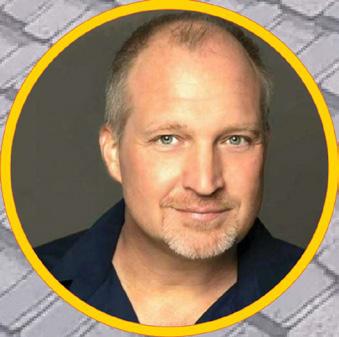


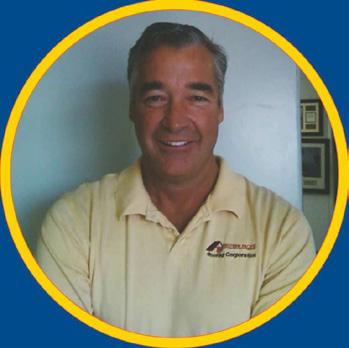














President of Digital Technologies & Global CIO of Associa and President & CEO of HOAM Ventures
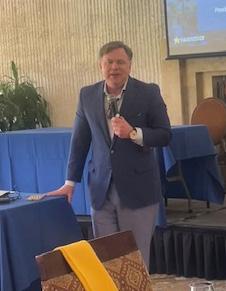
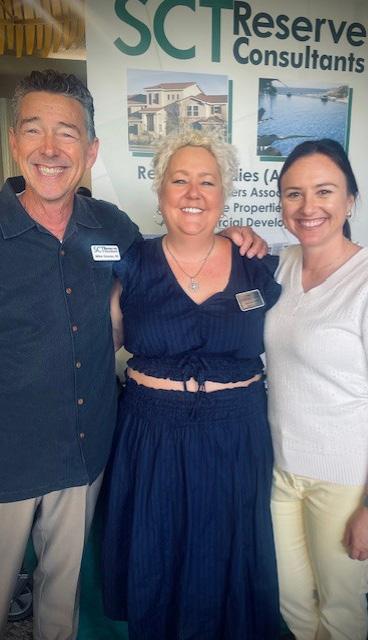
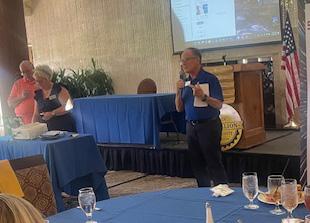
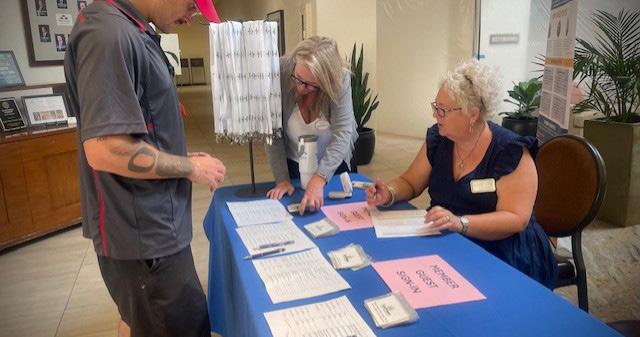
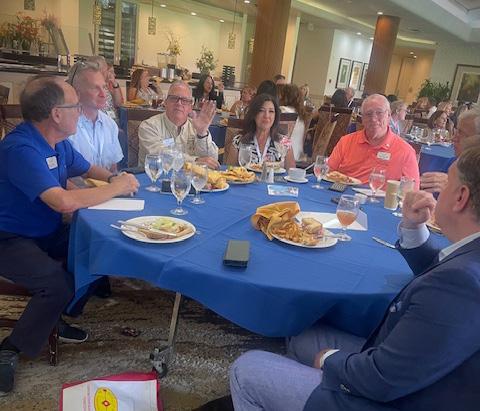
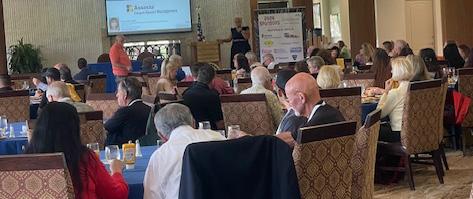
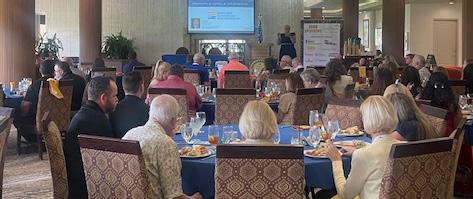
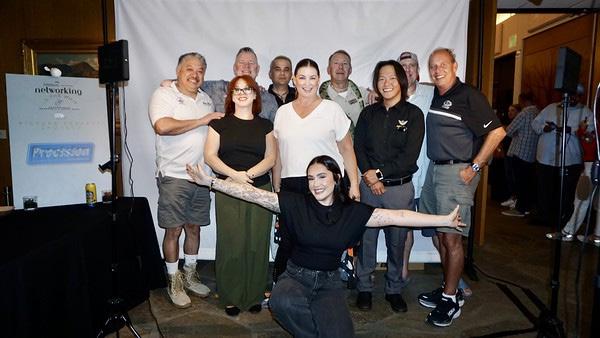
Our featured speaker, Andrew Brock, delivered an engaging and insightful presentation on how artificial intelligence is reshaping business operations, technology platforms, and decision-making across industries — including community management and real estate.
As President of Digital Technologies & Global CIO of Associa, Andrew shared his expertise on leading global digital operations, advancing automation platforms, strengthening cybersecurity, and driving strategic technology initiatives across multiple international software organizations. He also highlighted his work at HOAM Ventures, where he focuses on investing in innovative PropTech and real estate technology companies that are helping shape the future of the industry.
A nationally recognized technology leader and National CIO of the Year, Andrew brought valuable perspective and real-world insight into how AI is evolving, what it means for organizations and professionals, and how leaders can begin preparing for the rapidly changing technological landscape.
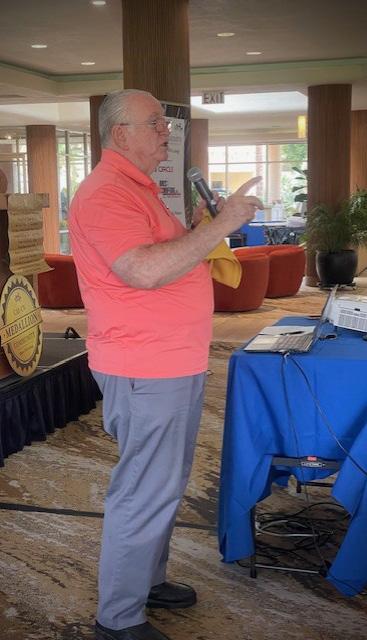
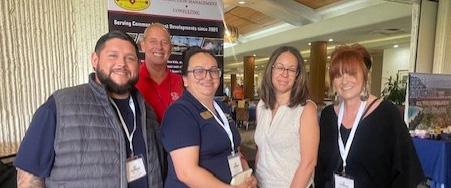
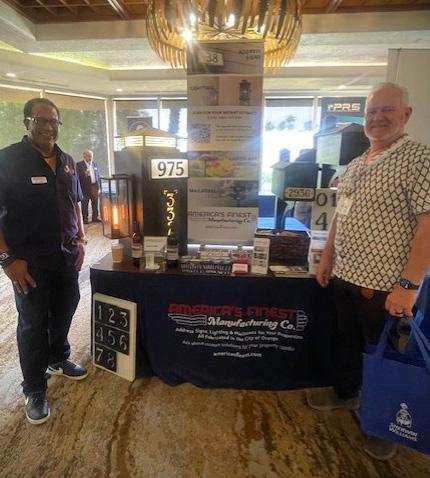
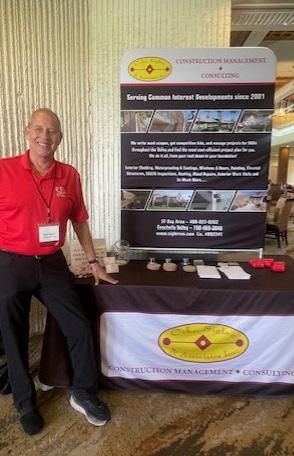
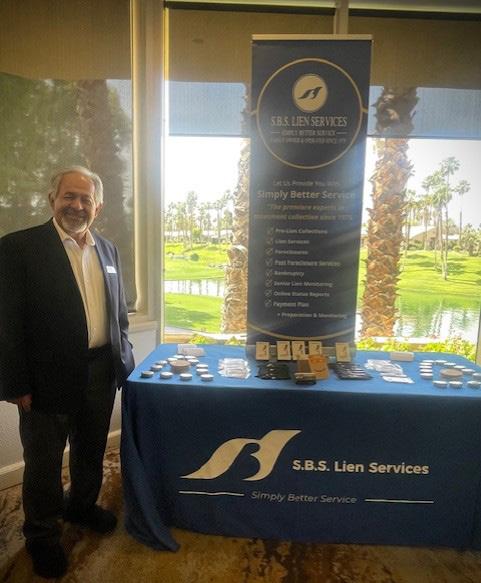
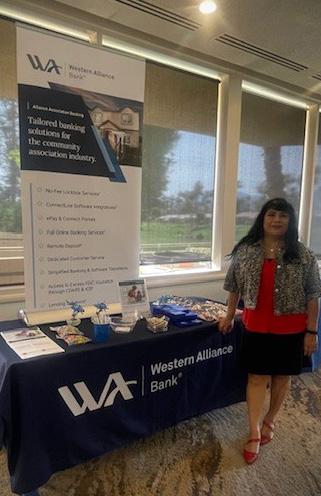
The program was well attended and sparked great conversation among participants, providing a valuable opportunity to learn about emerging technology while connecting with fellow HOA leaders and industry professionals. Attendees walked away with fresh ideas and a deeper understanding of how AI is influencing the future of community management.
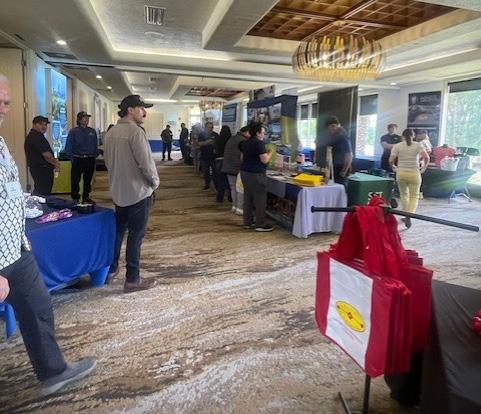
We also took a moment to look ahead to the CAI-CV Annual Expo this November, one of the largest gatherings of HOA professionals and service providers in the Coachella Valley.
Thank you to everyone who joined us and helped make this event such a success. We look forward to seeing you again soon.

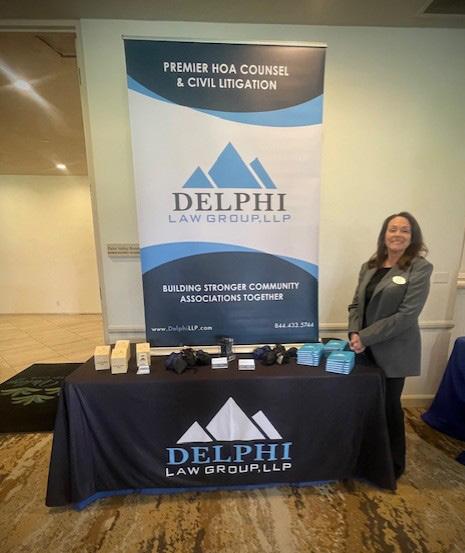

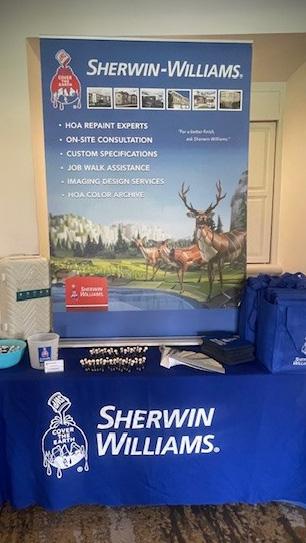
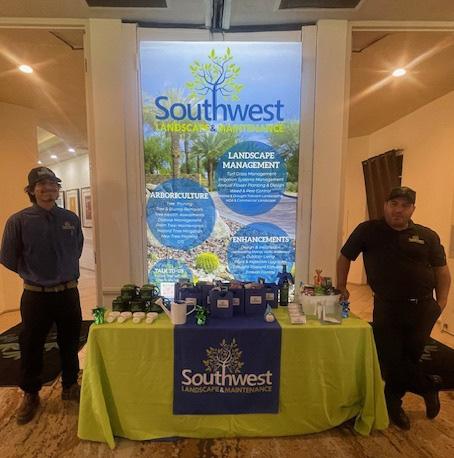
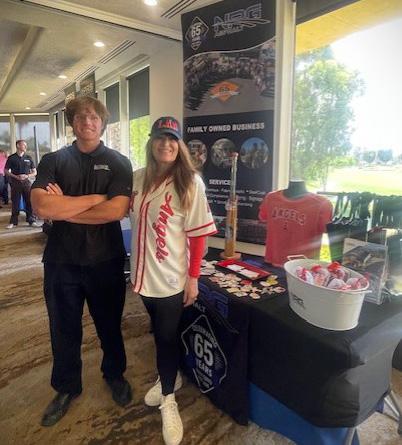


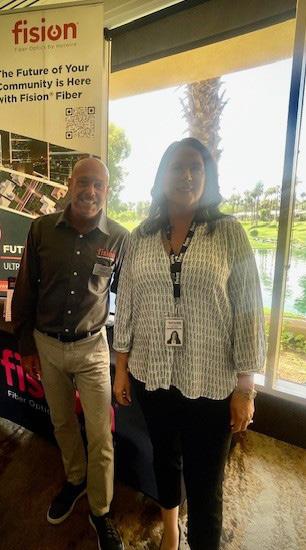
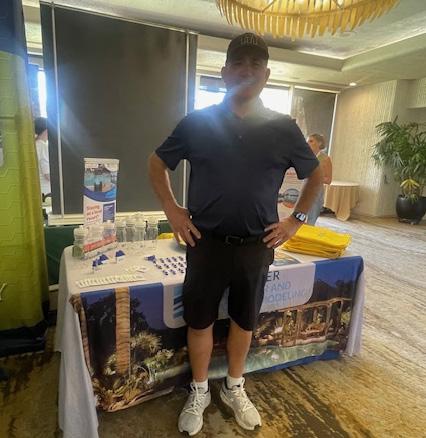
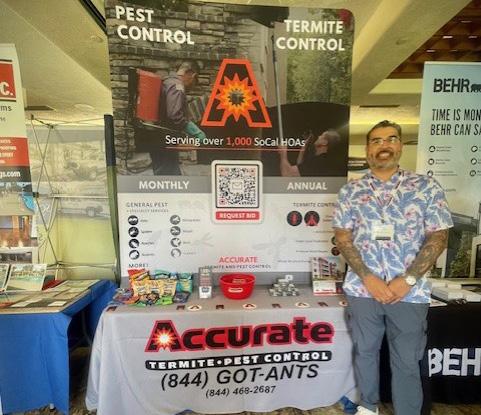
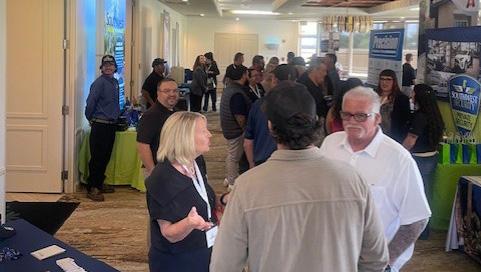
THANK YOU!
Trade Show Booth
Exhibitors
Accurate Termite & Pest Control
AMS Paving
Behr Paint
C.L. Sigler & Associates
Cooper Coatings
Delphi Law
First Citizens Bank
Gardner Pool
Fision Fiber Optics by Hotwire
Communications
NG Asphalt
Pipe Restoration Solutions
Precision Construction & Painting
Prestige Paving Company
SCT Reserve Consultants
Southwest Landscape & Maintenance
Southwest Security
Vintage Landscape
Western Alliance Bank
Lunch Name Badge and Lanyard Sponsor
Southwest Landscape & Maintenance
CLAC Upgrade Sponsor
Cooper Coatings
O'Linn Security
SCT Reserve Consultants
By Britain L. Rome
In today’s world, community safety is no longer something that can be taken for granted, it requires awareness, participation, and consistent habits from everyone who calls the neighborhood home.
For homeowners living in an HOA community, security is a shared responsibility that extends beyond gates, cameras, or patrols. While professional security services can play a role, the most effective neighborhoods are those where residents actively contribute to a culture of safety.
Here are several practical and impactful ways homeowners can help improve security in their community:


Gates, doors, and entry systems are only as strong as the habits surrounding them. Always ensure gates close behind you and avoid “tailgating” vehicles entering behind you without proper access. If your community uses codes or fobs, keep them confidential and report any suspicious attempts to gain entry.
Lighting is one of the simplest yet most effective deterrents to unwanted activity. Exterior lighting around entryways, garages, and backyards reduces hiding spots and increases visibility. Motion-activated lights are especially useful for conserving energy while maintaining security.
Knowing your neighbors is one of the most powerful security tools available. Familiar faces make it easier to spot unfamiliar or suspicious activity. Simple actions like greeting neighbors, joining HOA events, or participating in community groups can strengthen this network of awareness.
Package theft remains a common issue in many communities. Whenever possible, arrange for deliveries when someone is home, use secure package lockers, or coordinate with neighbors to retrieve deliveries promptly. Promptly reporting missing packages can also help identify patterns of suspicious activity.
Landscaping plays a role in security. Overgrown bushes or trees can create hiding spots near windows and entry points. Keeping vegetation trimmed improves visibility for both homeowners and passersby, making it harder for potential intruders to go unnoticed.
Timely reporting is critical. If something feels out of place, unknown individuals lingering, unusual vehicles, or attempted access to restricted areas, report it to your HOA management or local authorities. Even small observations can help prevent larger issues.


Smart home devices such as video doorbells, security cameras, and alarms can enhance awareness and provide peace of mind. When used properly, these tools not only protect individual homes but can also help document and deter suspicious activity in the community.
Many communities offer neighborhood watch programs, safety meetings, or communication platforms. Staying engaged ensures you are informed about any concerns and can contribute to community-wide solutions.
Ultimately, security in an HOA community is strongest when residents, management, and service providers work together. While infrastructure and professional services provide a foundation, everyday actions by homeowners are what truly sustain a safe environment.
By staying aware, communicating openly, and adopting simple preventive habits, homeowners can help create a community where safety is not just a priority, but a shared standard.
Britain Rome is the Manager of Business Development at Allied Universal Security Services for the Coachella Valley. Britain can be reached at 714.453.7450 or Britain.rome@aus.com. You can find them at 77-725 Enfield Lane Suite #150 Palm Desert, CA 92211.
By Coachella Vally Water District

Valuing water goes well beyond acknowledging local and regional sources. It runs much deeper than that. Valuing water requires understanding the bigger picture and taking meaningful actions to conserve it.
Each year in May, California observes Water Awareness Month – an opportunity to reflect on the vital role water plays in our lives and highlight the tools and strategies that help protect our supply for current and future generations.
CVWD INVITES YOU TO CELEBRATE WATER AWARENESS MONTH BY JOINING OUR COMMUNITY-WIDE EFFORTS TO SAVE WATER. THIS MAY INCLUDE:
• Learning more about the water sources that sustain the Coachella Valley.
• Adopting water-saving habits in your day-to-day activities.
• Replacing home appliances and fixtures with water-efficient models.
• Using a pool cover to cut down on water evaporation, reducing the amount of water needed to maintain proper pool water levels.
• Finding and fixing irrigation and pool leaks quickly, as well as checking for outdoor leaks in pipes, hoses, and faucets.
• Creating a water-efficient landscape by including desert-friendly plants in your yard.
Small, sustainable water efforts at home go a long way. CVWD’s Indoor Water Conservation Kits are a valuable resource and are available for free to eligible homeowners on a first-come, first-served basis.
CVWD INDOOR WATER CONSERVATION KITS INCLUDE:
• Earth® 3-Spray Handheld Shower Head, 2.0 GPM
• Water-Saving 7-Spray Garden Hose Nozzle
• Moisture Meter
• Leak-Detection Dye Tablets
• Plumber’s Tape
• 5-Minute Stop In Time® Shower Timer
• Dual Spray Kitchen Swivel Faucet Aerator, 1.5 GPM
CVWD also offers rebate incentives for residential, HOA, and commercial customers to help reduce outdoor water use. This includes rebates for smart water technology, such as the free Hunter Pro-C Solar Sync Smart Irrigation Controller, Rachio Smart Sprinkler Controller, and Flume Smart Home Water Monitor.
For more information on ways to save, visit cvwd.org/conservation
To learn more, visit cvwd.org/askCVWD, cvwd.org/Tips-for-Residents, worldplumbing.org, or epa.gov/ watersense/fix-leak-week.
Several policy issues continue to be discussed at the The legislature is currently on Spring recess and will reconvene on April 6, coinciding with CAI-CLAC Advocacy Days. Many of bills sponsored by CLAC will be heard in the coming weeks.
Key CLAC sponsored measures include AB 2050, which would require reserve studies to identify the minimum annual contribution needed to prevent reserves from falling below zero over a 30-year period, and AB 1892, which clarifies an HOA’s responsibility for restoring interrupted gas, heat, water, or electrical service originating in the common area. AB 1892 also revises election rules to require 30-day notice for electronic secret ballots and shortens the acclamation election notice period from 90 to 30 days.
Additionally, AB 2579 is a CLAC sponsored clean-up measure addressing issues related to AB 130. The bill clarifies when fines exceeding the current $100 cap may be imposed, particularly for violations impacting health and safety.
Other key legislation includes SB 1007, which would prohibit an association from increasing or imposing regular assessments without member approval and would cap increases at the prior year’s amount adjusted for inflation. CLAC is actively working with the author’s office on amendments to address our concerns.
The bill has passed the Senate Housing committee with a commitment from the author to continue discussion with stakeholders and is now pending in the Senate Judiciary Committee.
SB 1238 would impose additional disclosure requirements on homeowners selling their property, including separate disclosures related to exterior elements and units requiring imminent repairs. CLAC is opposed to the bill. It has been referred to the Senate Housing Committee and is scheduled to be heard on April 15.
Finally, AB 1684 would void governing document provisions that prohibit the installation, upgrade, or replacement of cooling systems. CLAC has taken and “opposed unless amended” position. The bill has passed the Assembly Hosing and Community Development Committee and is currently pending in the Assembly Judiciary Committee.
CLAC advocates are actively engaged in conversations with bill authors to secure amendments that address our concerns.
If you haven’t already done so, you are encouraged to follow CAI-CLAC on Facebook, X, LinkedIn, Instagram and YouTube for ongoing news, resources, events and legislative action. AND, feel free to LIKE, SHARE and COMMENT on CAI-CLAC posts. This helps to spread our message and show the strength of our community.

YOUR ASSOCIATION CAN MAKE A DIFFERENCE WITH THE BUCK A DOOR PROGRAM
By Felicia Bustos

Ashley Herrera is redefining HOA management through experience, resilience, and a people-first approach.
In the Coachella Valley, Ashley Herrera has become a respected presence in the community association industry, known for her experience and commitment to building strong, service-driven communities.
Her career began in 2009 in an accounting role at a small property management firm, where she gained a solid foundation in the financial and operational side of HOA management. What started as an entry-level position quickly evolved into a long-term career path.
By 2013, Ashley transitioned into assistant community management, working directly with boards, homeowners, and vendors. As her responsibilities grew, so did her dedication to the profession. Earning her CACM certification marked a key milestone, strengthening her expertise and shaping her long-term vision.
The pandemic became a defining chapter in her journey. Navigating increased demands and constant change, Ashley remained focused on supporting the communities she served.
“COVID changed everything,” she says. “It tested everyone in this industry, but it also strengthened my commitment to the work and the communities we serve.”
That experience ultimately pushed her to take the next step. Although she had explored other entrepreneurial ideas over the years, she realized her greatest strength was in community management and the relationships at its core.

In late 2024, Ashley launched Apex Community Management. What began as a small, carefully planned venture quickly grew. Built on years of trust and professional relationships, former clients and boards reached out, helping expand her portfolio to more than ten communities in a short time.
Despite that growth, Ashley remains focused on her original mission: delivering responsive, relationship-driven management with a personal touch.
She credits much of her success to the support around her.

“None of this would have been possible without my husband, family, colleagues, and partners,” she shares. “Starting a business is both exciting and overwhelming but having that support system made all the difference.”
Just over a year in, Ashley has already exceeded many of her early goals while continuing to grow as both a leader and business owner.
Her story reflects the values at the heart of the industry: professionalism, resilience, and a commitment to strengthening the communities she serves.

Felicia Bustos is the Business and Development Liaison for WICR Inc. Waterproofing and Construction, serving the Coachella Valley and Inland Empire areas. She works closely with homeowners, HOAs, and property managers to ensure properties are ready for every season. Contact Felicia at Marketing@wicr.net or call 760-835-5674.

By: Holly Smith, PCAM Executive Director CAI-CV

CAI-Coachella Valley was once again proud to be represented in the public spotlight as Julie Balbini, Esq., of Fiore Racobs and Powers, appeared on the Fred Roggin Show on KMIR to address concerns raised by a homeowner from Indian Palms Country Club.
During the segment, Balbini provided clear, professional insight into the legal framework surrounding association elections—specifically addressing the use of a delegate voting system. She explained that when properly implemented in accordance with a community’s governing documents, delegate systems are both valid and legally enforceable. Her response helped clarify misconceptions presented in the complaint and reinforced the importance of understanding how governing documents guide association operations.
This appearance marks the second time CAI-Coachella Valley has been called upon to provide expert perspective on local media in response to negative or misleading public commentary regarding HOA governance. These opportunities are not only important, they are essential.
As the leading source of education, resources, and advocacy for community associations, CAI-CV remains committed to elevating the conversation around HOA living. Situations like these highlight a critical need: ensuring that homeowners, board members, and industry professionals alike have access to accurate information and a clear understanding of how associations are structured to operate.

By stepping into these public discussions, our industry professionals help bridge the gap between perception and reality—reinforcing that well-governed associations, when

guided by proper procedures and education, serve to protect property values, maintain community standards, and support the longterm success of our neighborhoods.
At CAI-CV, we will continue to show up, speak up, and lead with knowledge—because education is the foundation of better HOA living..
Holly Smith has been in the property management industry for over 20 years throughout Southern California. Holly is currently Executive Director of Comunity Associations Institute of Coachella Valley. Holly can be reached by calling (760) 341-0559 or email holly.smith@cai-cv.org.
















By Mike Traidman
Each year the California Legislative Action Committee (CLAC) travels to the Capital in Sacramento to meet with legislators to educate them on current submitted bills that will affect California common interest developments (HOAs). CLAC is following 500 current bills in Sacramento. This year all eight California CAI chapters attended with about 100 members. Clint Atherton and I are the Coachella Valley chapter delegates and attended this two-day event.
Our Sacramento advocate, Louie Brown, and his office set up 105 meetings for Wednesday, April 8th. The attendees were divided into seventeen teams. On Tuesday we all met and reviewed the bills we would be discussing during our meetings.
My team had six scheduled meetings on Wednesday. They were evenly divided between actual legislators and their staffs. Usually, the staff member oversees housing issues. The staff members are responsible to listen to advocates that either support or oppose these bills and educate the legislators and suggest how they vote. They also keep track of emails and calls into their office from constituents with their comments.

AB 2050 (Caloza) – This is a reserve bill which mandates that HOA reserves cannot go below zero over 30 years. It provides HOAs six years to adjust their reserves in a reasonable phase-in period. We sponsored this bill and support it.
SB 1007 (Menjivar) – This terrible bill caps HOA assessments to the cost of inflation. If higher amounts are needed, it requires a vote of the members. One simple challenge is the bill does not define how to calculate inflation. We feel this will increase special assessments and not allow HOAs to fund legislative requirements like turf removal, rising costs of insurance, utilities, etc. We oppose this bill unless amended.
"THE STAFF MEMBERS ARE RESPONSIBLE TO LISTEN TO ADVOCATES THAT EITHER SUPPORT OR OPPOSE THESE BILLS AND EDUCATE THE LEGISLATORS AND SUGGEST HOW THEY VOTE."
AB 2579 – (Petrie-Norris) – This is a partial clean-up to AB 130 and adds some significant exemptions. We sponsored this bill and fully support it. Unfortunately, the author will not negotiate the $100 max fine amount. Louie thinks this has a good chance of passing after the Assembly Housing and Community Development Committee meeting on April 22.
AB 1892 (Davies) – This is an election bill that improves on the passed AB 502 from a couple of years ago. It will reduce the notification time from 90 days to 30 days for acclimation elections which is what the non-acclimation schedule calls for. We sponsored this bill and support it.
AB 1903 (Wicks) – This bill was introduced by the builders and passes the liabilities for construction defects to the homeowners from the builders. It has various sections that makes it more difficult for homeowners to seek damages after purchasing new construction. CLAC opposes this bill unless amended.
In addition to the meetings scheduled, Clint and I had the opportunity to visit our State Senator, Rosilie Ochoa Bough, and leave her the packet outlining our position on these five bills. Senator Ochoa Bough is on the housing committee and recently voted against SB 1007 as we requested. I also had a chat with our local Assembly member, Greg Wallis who represents much of the Coachella Valley in district 47.
It was a packed two days, and I think accomplished our objectives. You can follow these and other bills on the CLAC website, www.caiclac.com, under current campaigns and hot bills.
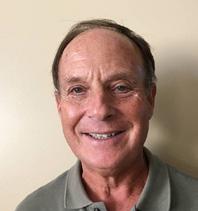
Mike Traidman is a Director of Coachella Valley CAI Chapter, the Treasurer of Mira Vista at Mission Hills HOA, and a Commissioner for the Community Association Managers International Certification Board (CAMICB). Mike can be reached at mtraidman@yahoo.com.





VOLUNTEER INFORMATION
Name:
Company/Organization:
Mailing Address:
Phone: Alternate Phone:
Email:
I understand there is a 2-to-3-hour monthly commitment in serving on a CAI-CV committee and I understand that if I miss 3 or more meetings, I may be removed from the committee.
Signature:
Date:
Complete the form, scan and email to admin@cai-cv org or go to www caicv.org/committee to read descriptions, review committee charters and complete your volunteer form You can use one form to sign up for multiple committees.
☐ Awards Committee (Meets 2 Thursday monthly at 12 PM)
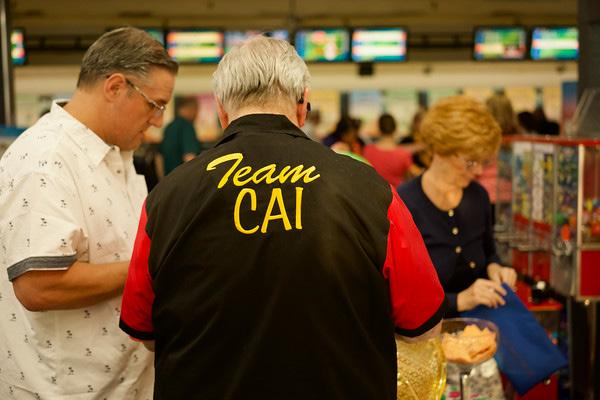
Bowling Committee
(Meets 2 Wednesday monthly at 12 PM)
Business Partner Committee (Meets 1 Thursday monthly at 11 AM)
Education Committee st Meets 3rd Thursday monthly at 4 PM) ☐ Golf Committee (Meets 4 Friday monthly at 3 PM) th ☐ HOA Living Magazine Committee Meets 1 Wednesday monthly at 12 PM)
☐ Homeowner Leader Committee (Meets 2 Tuesday monthly at 8:30 AM) nd
☐ Legislative Support Committee (Meets 3 Thursday monthly at 12 PM) rd ☐ Marketing Committee (Meets 2 Monday monthly at 4 PM) ☐ Membership Committee
(Meets 1 Thursday monthly at 11 AM)
☐ Oktoberfest Committee (Meets 1 Thursday monthly at 12 PM)
☐ Professional Managers Committee (Meets 1 Wednesday monthly at 3:30 PM)
☐ Social Media Committee (Meets 2 Tuesday monthly at 12 PM)
☐ Web & Tech Committee
(Meets 2 Tuesday Monthly at 12 PM)
☐ Corks for CLAC Committee (Meets 2 Wednesday monthly at 3:30 PM) nd