For 50 years, Discount Tire has proudly served the families of Cache Valley. From our grand opening in 1976 to today, generations of local drivers have trusted us for tires, automot ive service, and honest care.
Through changing cars, changing roads, and changing times, one thing has stayed the same: our commitment to this community.
This summer, we’re celebrating 50 years in Logan with anniversary savings, community events, and a special car show at our Logan location.
Whether you’ve been with us since the beginning or just discovered us recently, thank you for letting us be part of your journey.
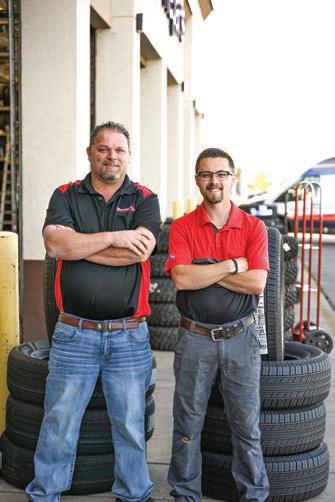
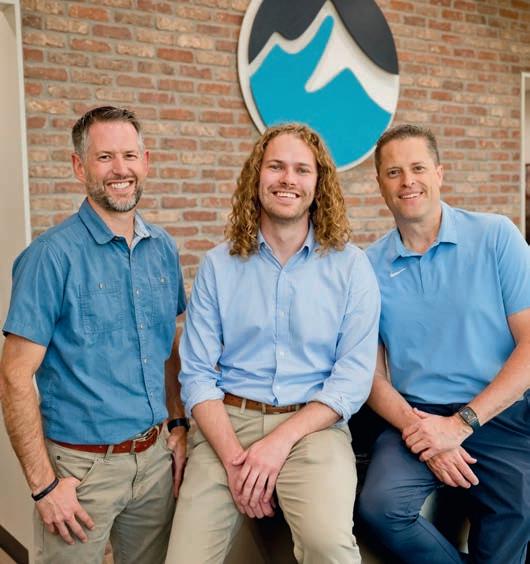
Tyler Glabe and Josh Stock are third generation in this family-owned business.
Best of Cache Valley 2026
BEST BREAKFAST
BEST LUNCH
BEST DINNER
BEST BURGER
BEST FAST FOOD
BEST PIZZA
BEST ETHNIC FOOD
BEST DESSERT
BEST COOKIE
BEST BAKERY
BEST ICE CREAM
BEST FOOD TRUCK
BEST SODA SHOP
BEST COFFEE SHOP
BEST SALON/SPA
BEST NAIL SALON
BEST TANNING SALON
BEST BARBERSHOP
BEST HEALTH AND FITNESS CENTER
BEST GYMNASTICS/TUMBLING
BEST DANCE STUDIO
BEST FLORIST
BEST EVENT VENUE
BEST CATERER
BEST MORTUARY
BEST EMPLOYER
BEST GROCERY STORE
BEST PEDIATRICIAN
2026 Best of Cache Valley Awards
Celebrate the best businesses and services in our community by nominating your favorites for the 2026 Best of Cache Valley Awards! Voting is open May 25 — July 31. Winners will be announced in our Fall 2026 issue.
BEST DERMATOLOGIST
BEST FAMILY DOCTOR
BEST DENTIST
BEST PEDIATRIC DENTIST
BEST ORTHODONTIST
BEST OBSTETRICIAN
BEST EYE DOCTOR
BEST CHIROPRACTOR
BEST MEDICAL CLINIC
BEST PHARMACY
BEST HOTEL
BEST BANK OR CREDIT UNION
BEST LIVE ENTERTAINMENT
BEST FAMILY ENTERTAINMENT
BEST DATE NIGHT VENUE
BEST SUMMER CAMP
BEST SPORTS CAMP
BEST MUSIC PROGRAM
BEST CHILDREN'S PLAY PLACE
BEST MUSEUM
BEST PRESCHOOL
BEST CHILDCARE CENTER
BEST PET CARE
BEST SPORTING GOODS STORE
BEST REALTOR
BEST HOME MORTGAGE
BEST INSURANCE AGENT/AGENCY
BEST HOME BUILDER
BEST HOME REPAIR
BEST CARPET CLEANER
BEST PLUMBER
BEST ELECTRICIAN
BEST ROOFER
BEST GARDEN CENTER/NURSERY
BEST LANDSCAPER/YARD CARE
BEST PEST CONTROL
BEST AUTO CARE
BEST CAR WASH
BEST CAR SALES
BEST FAMILY PHOTOGRAPHER
BEST CHILDREN'S PHOTOGRAPHER
BEST WEDDING PHOTOGRAPHER
BEST VIDEOGRAPHER
BEST LITTLE KID ENTERTAINMENT
BEST BIG KID ENTERTAINMENT
BEST BIRTHDAY PARTY VENUE
BEST RAINY DAY FUN
BEST APPAREL
BEST HOME DECOR
BEST GIFT SHOP
BEST BOOKSTORE
BEST CHILDREN'S STORE
BEST FURNITURE STORE
BEST ANNUAL EVENT
BEST CUSTOMER SERVICEDINING
BEST CUSTOMER SERVICERETAIL
Publisher & Editor in Chief
EMILY BUCKLEY
Copy Editor
TARA BONE
Cover Photography BRITTANY CASCIO
Layout Design
ELISE CREATES, LLC
Contributing Writers
MARK ANDERSON
HAYLEE BLADEN, LCSW
BETH BLAKE
TARA BONE
TYSON BROWN, M.D.
EMILY BUCKLEY
VALERIE DAINES
RUSSEL MCKENNA, D.O.
CHELSEA PETERSEN, LMFTCEFT
FRANK SCHOFIELD
SARAH THURGOOD
SPENCER YOUNG
HAILEY WESTENSKOW
SAFE KIDS WORLDWIDE
Please send all editorial correspondence to info@cachevalleyfamilymagazine.com or by mail to PO Box 6831, North Logan, UT 84341. All correspondence is sent on a non-confidential basis and Cache Valley Family Magazine shall be free to reproduce, publish, edit and/or use any such communications. All materials become property of
PHONE NUMBER (435) 764-0962
MAILING ADDRESS PO Box 6831 North Logan, UT 84341
EMAIL info@cachevalleyfamilymagazine.com
WEBSITE cachevalleyfamilymagazine.com
FACEBOOK /cachevalleyfamilymagazine
YOUTUBE /cachevalleyfamilymag
INSTAGRAM @cachevalleyfamilymag
TO ADVERTISE call (435) 764-0962 or email ads@cachevalleyfamilymagazine.com
MAKING A DIFFERENCE Service That Doesn’t Stop: A Place Where Veterans Help Veterans ... pg 7
PEOPLE OF CACHE VALLEY Cadillacs, Ladders, and Lifelong Friendships ... pg 12
COVER STORY
7
Kip, Community, and Very Good Bread: Davis and Kara Larsen share how Bussin’ Bread grew from a 100-year-old sourdough starter into one of Cache Valley’s favorite bakeries ... pg 26
EDUCATION UPDATE
Cache County School District: The Summer Toolkit for Lifelong Learners ... pg 30
Logan City School District: Making Summer Count: Simple Ways Families Can Keep Kids Learning ... pg 31
Celebrate "America250" in Cache Valley ... pg 10
More Than a Race: Battling Life’s Mountains ... pg 14
Turning Summer Days Into Learning Moments ... pg 15
RAISING RESILIENT KIDS AND TEENS
Helping Teens Navigate Anxiety During the Summer Months ... pg 19
Helping Kids Build Confidence Through Anxiety ... 21
Cache Valley Fair and Festival Roundup ... pg 25
The Secret to Gorgeous Summer Planters ... pg 33
Summer Safety Tips Every Parent Should Consider ... 36
Beyond the Scribe: What AI Could Actually Become in Healthcare ... 40
Spring Allergies 2026: Why Symptoms May Feel Worse and How to Get Relief ... 43
2026 Outstanding High School Graduates ... 46
2026 Summer Camps & Classes Guide ... 50
Expert Heart Care Close to Home
Logan Cardiology Clinic
We’re here for you and your heart. Our specialties include:
› Care for your heart: We diagnose and manage heart conditions including high cholesterol, high blood pressure, heart attacks, and more
› Echocardiograms: A safe, painless test that shows how your heart is working
› Stress testing: See how your heart performs when it’s working hard
› Holter/ATM Monitoring: Track your heart’s rhythm over time, even while you sleep
› Heart Rhythm: Find and treat problems with your heart’s electrical system
Ph: 435-716-2200
MAKING A DIFFERENCE
Service That Doesn’t Stop: A Place Where Veterans Help Veterans
“Service is the rent we pay for room on Earth,” Wallace Odd, president of the Rocky Mountain Veterans Center, said. He speaks with the quiet conviction that comes from 25 years in the Air Force. “A lot of people say to [veterans], ‘Thank you for your service.’ Well, that service was to a country that we loved. And that does not stop.”
When Wallace walks through the front door of the Rocky Mountain Veterans Center in Logan, he sees more than a building. He sees a promise — one he and a small group of dedicated volunteers made to the veterans of Cache Valley: No one gets left behind.
The center is a nonprofit staffed entirely by volunteers that opened its doors about two years ago with a simple but far-reaching mission to improve the
HAILEY WESTENSKOW contributing writer
lives of veterans and their families by identifying needs, facilitating access to veteran-centered resources, and providing service opportunities.
Walk into the center on any given day, and you might find a Vietnamera veteran finally filing for disability benefits he never knew he was entitled to, a family member asking for help tracking down a hospital bed for a spouse who can't make the five-hour round trip to Salt Lake City, or a younger veteran, freshly discharged, quietly unsure whether four years of service “even counts."
It all counts, Wallace is quick to say. That is one of the things he cares most about.
"A lot of veterans think they're not really veterans because
maybe they weren't on the front lines," he said. "But you were there. You turned a wrench. You handled the paperwork. You worked in a hospital. You served your country out of love. That matters."
At the heart of the center's work are its Veteran Service Officers, or VSOs — certified advocates who sit down with veterans one-on-one to untangle the paperwork and process of filing for VA benefits. Wendy Griffin, a disabled veteran herself and the first recipient of the center's Dan Gyllenskog Spirit and Service Award, was recently named the number one VSO in the country.
She volunteers her time, travels across the state, and shows up — wheelchair and all — because she believes deeply in helping veterans.
...continued on next page
The Heroes Tribute and Ride for the Fallen is an annual three-day event in Cache Valley each August designed to honor fallen military heroes, particularly Marine Lance Corporal Michael J. Allred. The event features a banquet, a charity motorcycle ride, and a patriotic devotional, with proceeds funding scholarships at Utah State University.
continued from previous page... The center also offers employment counseling, food pantry vouchers, a Quilts of Valor program that wraps veterans in handmade quilts presented in
a formal ceremony, and a flag retirement program led by volunteer Callen Jenson, who has properly retired more than 1,200 flags in the past year alone.
Every August, the center hosts its signature Heroes’ Tribute — a threeday weekend that draws the community together in the most meaningful way. On Saturday morning, before a group of motorcycle riders sets out on the Ride for the Fallen, 103 names are read aloud. Each name is a Utah veteran killed overseas. A bell rings. Then the riders go.
“We served because we loved this country. That doesn’t stop.”
The ride was founded by the parents of United States Marine Lance Corporal Michael J. Allred, who was killed in Iraq on September 6, 2004, and had
dreamed of attending Utah State University. His family has since raised more than $100,000 in scholarships in his name.
It’s that kind of story — grief transformed into generosity — that defines what the Rocky Mountain Veterans Center is about. More than programs and paperwork, it’s about people choosing, again and again, to show up for each other.
In many ways, the Rocky Mountain Veterans Center has become exactly what Wallace hoped it would be — a place where veterans continue serving each other long after the uniform comes off.
The center welcomes veterans, families, and community members. You can donate or get involved by stopping by the center at 1760 North 200 East in North Logan or visiting rockymtnvc.org online.
Dr. Karl Gubler
Marine Lance Corporal Michael J. Allred
Celebrate "America250" in Cache Valley
BETH BLAKE contributing writer
This summer, communities across Cache Valley will join the rest of the nation in celebrating a major milestone — the 250th anniversary of the signing of the Declaration of Independence. From concerts and theatre productions to scavenger hunts and community gatherings, America250 offers families meaningful ways to celebrate history, service, and community together.
America250 is the bipartisan, nationwide initiative to celebrate the 250th anniversary of the signing of the Declaration of Independence. While the official anniversary falls on July 4, festivities will take place throughout the summer of 2026.
Community Gatherings
America’s Potluck is one of the featured programs, built around the tradition of gathering together for a shared meal. On July 5, Smithfield will join hundreds of host communities across all 50 states and Puerto Rico. All Cache Valley communities are welcome
to join in for food and music at Mack Park from 5 to 7 p.m.
One unique Utah program tied to the commemoration is the 3D Coin Design Contest, sponsored by the Utah STEM Action Center. Participants are invited to create a digital coin design celebrating the history and contributions of a Utah county. Winning designs will be milled for exhibition, featured in an online gallery, and eligible for cash prizes. For more information, visit stem.utah.gov/coin-contest .
Music and Theatre
Several music and theatrical productions happening in Cache Valley this summer will also help families get into the spirit of the anniversary. On June 11 at the Cache County Fairgrounds and Events Center, there will be a “Dancing through the Decades” gala. Guests can enjoy live bands and instruction from semi-professional dancers featuring dance styles from
different eras of American history. Audience participation is highly encouraged!
The American Festival Chorus will be performing a celebratory concert on July 1 at the Logan Tabernacle. The event will include patriotic music as well as American folk music. The concert is free and open to the public.
Utah Festival Opera Company will be putting on the classic, 1776: The Musical , leading up to the Fourth of July, with a production on the big day as well. The production brings the story of the Continental Congress to life with humor, music, and memorable songs. For tickets, go to: utahfestival.org/1776-2/ Learn Together
Education and historical reflection are also central parts of the America250 initiative.
In March, the Logan Library started offering a free lecture series about various aspects of American history.
Lectures are held on the third Saturday of each month at 4 p.m. in Community Room B. Two summer film series exploring American history will also be offered at the library on the second and third Thursdays of the month. The children and family movie will be at 1 p.m. and the regular movie will be at 6 p.m.
Families can also explore local and American history together through the “Let Freedom Ring” statewide discovery scavenger hunt. Participants can download the Goosechase app on any smartphone and enter the code “freedom250LC.” The app features a Cache County–customized adventure that encourages families to explore local landmarks and complete a variety of activities.
Family Activities
Looking for even more ways to celebrate America250 as a family? Try a few of these ideas:
• Participate in Hyrum City’s Star Spangled Celebration, that kicks off with a rodeo and includes a patriotic program the Sunday before the 4th, the Blacksmith Fork Fun Run, a patriotic flag display, and the annual parade. Also visit the Hyrum City Museum at hyrumcitymuseum.org for activities celebrating America all year.
• Visit Brooker’s Ice Cream Parlor on Main Street in Logan, where each flavor of ice cream is paired with a name of an influential person from American history. Challenge each family member to learn one fact about the historical figure connected to their ice cream flavor.
• Service is a big theme of the America250 initiative. Plan out a service project that your family can do together.
• Have a patriotic film festival. Family favorites might include: Mr. Smith Goes to Washington , the National Treasure movies, and Captain America
• Talk as a family about ways each person can help make the community and nation a better place.
Parents and guardians can also find additional family activities and educational resources at america250.utah.gov/education/.
David Zook, who recently retired from public service, after many years serving as Cache County Executive, wrote an op-ed for Cache Valley Daily on July 3, 2025, to kick off the America250 celebration in Utah.
“America250 is more than just a moment,” Mr. Zook said. “It’s a movement, one rooted in gratitude, built on unity, and carried forward by the people who call this county and this country home. Let’s make this a celebration that future generations in Cache County will look back on with joy.”
For more information about America250 celebrations around the valley, visit cacheamerica250.carrd.co
Cadillacs, Ladders, and Lifelong Friendships
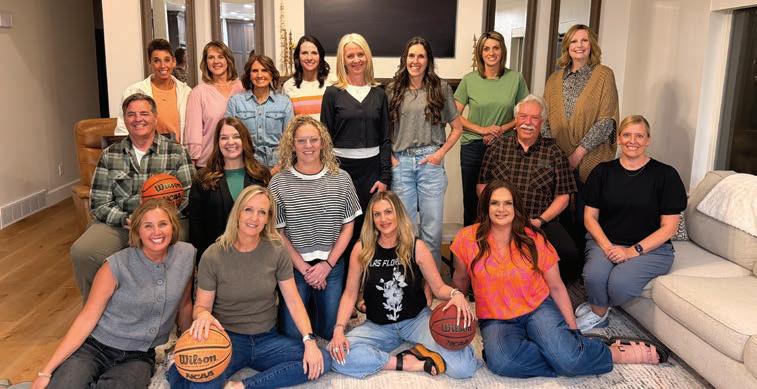
More than 30 years after playing together at Logan High School (LHS), former members of the LHS girls basketball team from the late 80’s and early 90’s reunited and quickly realized that while time had passed, the connection they built as teammates had not.
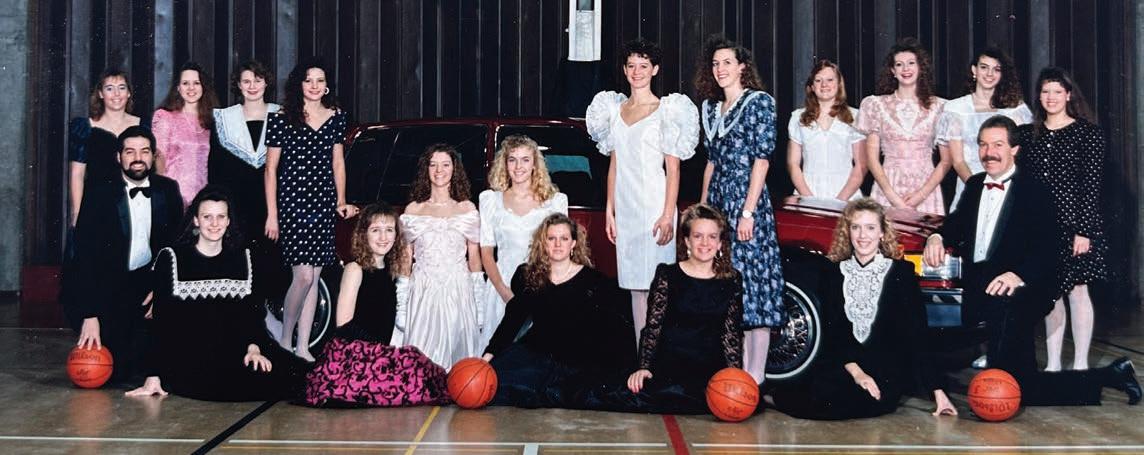
Jenny McGregor Franson, who played from 1990-1993, said the original team photo that inspired the reunion (shown on this page) still means a great deal to her.
“It was more than just a basketball team,” Jenny said. “It was a group of girls who worked hard together, had fun together, and created memories and friendships. It gave us a place to belong.”
For Nikki Strebel Volle, who played from 1989-1993 and helped organize the reunion, reconnecting with teammates felt long overdue.
“It had been way too long since we had seen everyone,” Nikki said. “Back when we were in school, we didn’t have cell phones and social media. We had lost contact with a lot of people … people that we really
EMILY BUCKLEY editor in chief
cared about, so it was beyond time to get together.”
Wendy Coray Wimmer, who played from 1986-1991, remembers the original team photo shoot clearly — right down to the fashion choices.
“We wanted to show our ‘feminine’ side,” Wendy said. “Palmers Motors delivered the Cadillac for us to use. I have no idea why we wanted to pose in front of a car, but we sure had a fun time getting ready for this shoot … and yes, I thought those sleeves were so cool!”
Malia Belliston Nelson, who played from 1988-1991, said the photo represented “us basketball players showing that we are not just players but also beautiful young women.”
As the women reflected on their years at LHS, many found themselves thinking less about scores and statistics and more about practices, bus rides, friendships, and the culture built within the program.
“When I think back to Logan High basketball, I remember relationships first,” Jenny said. “The girls I played with were more than
teammates,” Nikki said. “They were my closest friends. When I think back on my high school days, my time playing basketball is some of the most prominent. I was surrounded by good, good people.”
Many of the women remembered the energy surrounding those years.
Nikkel Nielsen, who graduated in 1991, said memories of “being Region Champs, bus trips, and the love of playing” still come to mind first when she thinks back to those years.
Cori Beck Jensen said basketball became one of the things that carried her through high school.
“I hate to admit it but sports are what got me through high school,” Cori said. “Coach McKay expected a certain GPA, so getting bad grades was never an option.”
Reggie Blanch Peck, who played from 1989-1993, immediately thinks of Coach McKay and the intensity he brought to the program.
“Coach McKay was/is known for his STRICT rules, practices, workouts, and
Front Row: Coach Randy Smith, Amber Allen, Becky Geertsen McDonald, Reggie Blanch Peck, Camille O’Brien Sipe, Trish Cox Berrett, Head Coach Bryant McKay
PEOPLE OF CACHE VALLEY
changes. She remembers him arranging for one of his scouts to complete an Eagle Scout project building a girls’ scoreboard at the rec center to match the boys’ scoreboard.
“This team really showed up and showed what can be done when you all work together,” Wendy said. “I have carried that with me for my entire life.”
The lessons learned on the court extended far beyond basketball.
“Sports really became a part of my identity and helped me discover my love for health and fitness,” Jenny said.
Cori said joining the team changed her life in ways she never expected.
“I had never touched a basketball before my freshman year,” Cori said. “I showed up in jeans, a sweatshirt, and Keds. By some miracle I made the team which turned out to be a major turning point in my life.”
dedication to our team! The practices were structured and disciplined. If someone was late, the rest of the team ran ladders while she watched!”
Shelly Whittiker McKenna, who played from 1989-1993, said those demanding practices shaped the team in lasting ways.
“They prepared us mentally and physically for pressure situations by pushing us,” she said. “Those tough practices taught us discipline, resilience, and how to perform under pressure.”
Cori said those lessons stayed with her long after high school. “It was probably running timed ladders that taught me not to give up,” she said. “If we didn’t make it as a team, we ran again. You can’t give up when it affects your team.”
Several teammates also reflected on what it meant to play girls sports during the late
1980s and early 1990s — a time when girls athletic programs still fought for equal attention and support.
“Even though it was in the late 80’s and early 90’s girls sports were still an afterthought for athletic directors and administrators,” Wendy said.
She remembers wearing old freshman boys’ uniforms altered to fit the girls’ team and watching parents advocate for equal treatment.
“Our parents were the booster club,” Wendy said. “They demanded equality. We got our first ‘real’ uniforms that fit, the school would finally pull out the bleachers for the students to sit and watch our games.”
Wendy said her father, who served as booster club president, was one of many parents who helped push for those
Nikki said one of the biggest things she gained from the team was friendship. “True friendship,” she said. “I didn’t realize how fortunate I was to have true friendship.”
And despite decades apart, many said the reunion felt surprisingly natural.
“It felt like it was yesterday!” Wendy said, and she admits, “I still hate running ladders!”
They share a gratitude for what the team gave them — not just as athletes, but as people.
“This reunion says a lot about the culture that was built on that team,” Jenny said. “It was about more than winning games. It created friendships, respect, support, and lasting connections that people still value decades later.”
More than 30 years later, the wins and records matter a lot less than the friendships that are still there. After all this time, they still feel like a team.
When Amy Smith was diagnosed with thyroid cancer in 2007, it changed the way she looked at life. After enduring treatments and learning to live with uncertainty, she made a decision: she no longer wanted to live with limits. She began running, eventually completing multiple half marathons and even a full marathon.
For years, Amy dreamed of creating a race of her own — one that felt meaningful and inspiring. At the time, she was raising young children while continuing to battle cancer, so the idea stayed on hold. Now, with her children grown and beginning families of their own, that dream has returned with a new purpose. Amy realized that everyone faces
obstacles in life. Some are visible, others deeply personal. That realization became the inspiration behind Battle the Beav, a race designed to challenge participants physically while reminding them they are capable of overcoming difficult things.
While hiking in Logan Canyon, Amy suddenly knew exactly where the race belonged: Beaver Mountain Ski Resort. “I don’t need to make the obstacles,” she said. “The mountain is the obstacle.” With determination and heart, Amy is bringing that vision to life. Whether participants run, hike, climb, or simply finish, the goal is the same: proving to themselves that they can face challenges head-on and keep moving forward.
Amy Smith
WHAT 20 YEARS IN SKIN CARE HAS TAUGHT US
For more than two decades, the team at Rocky Mountain Dermatology and Young Skin Care Medical Spa has watched the medical spa industry evolve — and says patient safety, education, and medically guided care matter now more than ever.
The medical spa industry has changed dramatically over the past two decades. What was once a small corner of the beauty and wellness world has grown into a rapidly expanding industry fueled by social media trends, celebrity influence, and increasing demand for cosmetic treatments at younger ages than ever before.
Thebestmedicalspas prioritizepatientsafety andproventreatments over trends.
While many of these advances have created exciting new opportunities in skin care and aesthetics, the rapid growth of the industry has also raised important questions about patient safety, provider training, and medical oversight.
For the team at Rocky Mountain Dermatology and Young Skin Care Medical Spa, these concerns are not simply industry talking points — they are issues they have watched evolve firsthand over more than 20 years of caring for patients in Cache Valley.
According to the providers at Young Skin Care, one of the biggest misconceptions about the medical spa industry is that all practices operate under the same medical standards. In reality, the level of physician involvement, provider experience, and treatment oversight can vary significantly from one practice to another.
Because medical spas focus on skin health and cosmetic treatments, experienced dermatology oversight remains one of the most important factors patients should consider when choosing where to receive care. Boardcertified dermatologists undergo years of specialized education and training focused specifically on the skin, including skin aging, skin disease, cosmetic treatments, and the interaction between procedures and overall skin health.
Experienced providers understand that successful skin care is rarely about dramatic overnight transformations. Instead, long-term skin health is built through individualized care plans, medically guided treatments, and realistic expectations tailored to each patient’s needs.
Long-term skin health focus
Fortunately, many within the industry believe medical spa standards are improving. States across the country have begun implementing stricter guidelines surrounding medical direction, provider qualifications, and patient safety requirements. As regulations continue to evolve, patients are becoming more informed and more selective about where they seek care.
For patients navigating today’s crowded aesthetics market, experts recommend choosing practices connected to reputable dermatology or plastic surgery offices, where treatments are more likely to be supported by experienced medical professionals and established standards of care.
In an industry often driven by trends and rapid change, the providers at Rocky Mountain Dermatology and Young Skin Care believe the future of aesthetics remains rooted in something much simpler: safe treatments, experienced providers, and helping patients feel confident and cared for in their own skin.
Turning Summer Days Into Learning Moments
SARAH THURGOOD executive director, Bear River Head Start
For decades, Bear River Head Start has supported young children and families throughout northern Utah and southeastern Idaho. The federally funded early childhood program focuses on helping children build a strong foundation for school readiness through education, family support, health resources, and early learning opportunities.
As summer begins, Bear River Head Start educators remind families that learning does not have to stop when school is out. Simple, everyday moments can help children continue developing important skills while still enjoying all the fun summer has to offer.
Here are a few simple ways to turn summer days into memories filled with fun and learning.
Read Every Day
Reading 15–20 minutes a day can make a
significant difference in a child’s learning and development. Reading supports language development, imagination, listening skills, comprehension, and early literacy.
FAMILIES CAN:
•Visit local libraries and participate in summer reading programs.
•Read signs, menus, and instructions together.
•Encourage older siblings to read to younger children.
•Tell stories as a family.
•Predict story endings or make up funny new endings to familiar stories.
Make Learning Fun Every Day
Children learn best when learning is connected to real life. Daily routines create opportunities to practice important skills.
FAMILIES CAN:
•Count groceries while shopping or look for foods by color, shape, or beginning letter.
•Measure ingredients together while cooking.
•Sort laundry by color or family member, identify patterns, and match similar items.
•Play “I Spy” or talk about the weather, animals, and plants while taking a walk together.
•Practice printing names or making simple lists.
•Have conversations and ask openended questions that encourage children to share their thoughts.
•Play rhyming games.
Encourage Outdoor Exploration
Outdoor play is valuable in supporting both physical health and brain
development. Nature encourages creativity, curiosity, problem-solving, and observation skills.
FAMILIES CAN:
•Go on a nature walk and explore colors, textures, shapes, sounds, and the world around you.
•Visit a park or playground to count steps, play follow the leader, or red light, green light.
•Plant flowers or vegetables together, count seeds, water plants, and talk about how they grow.
•Watch birds, insects, or clouds together. Talk about the sounds, shapes, colors, and animals you notice.
•Ask “who,” “what,” “why,” and “how” questions about the animals and nature you observe.
•Have a scavenger hunt to look for things like smooth rocks, green leaves, flowers, birds, or heartshaped leaves.
•Try movement activities like Simon Says, Freeze Dance, animal walks, marching games, or races to find objects by color or shape.
Encourage Creative Play
Technology can support learning at times, but children need firsthand
WHY CHOOSE US
• Certified Teachers
experiences, social interaction, and active play.
Set reasonable screen-time limits that create balance during the summer months.
FAMILIES CAN:
•Encourage creative play through dress-up, building forts, puppet shows, and drawing pictures.
•Create building projects using Legos, pillows, or household materials to invent something creative or silly.
•Try art activities like painting, coloring, sculpting, using play dough, or creating with recycled materials.
•Talk about colors, shapes, and textures while creating artwork together.
•Play board games together as a family.
•Make homemade puzzles by gluing drawings onto cardboard, cutting them into pieces, and putting them back together.
•Enjoy outdoor adventures like riding bikes, blowing bubbles, or building obstacle courses.
•Make time for family conversations during meals, car rides, walks, or bedtime.
The administrative office for Bear River Head Start is in Logan. Enrollment is available now for the upcoming school year. More information is available at brheadstart.org or by calling 435-755-0081.
PROGRAM OPTIONS INCLUDE:
Early Head Start home-based program where family educators work with parents in the home to support early learning. Center-based preschool programs offered in 31 classrooms throughout the service area, including Early Head Start centers for children ages 0–3.
AGE GROUP PROGRAMS
Early Head Start — 0-3 years (including pregnant women) Center-based and home-based options.
• High Quality Child Development Services
• Disability Support/Services
• Support for Family as a Whole
Preschool Head Start — 3-5 years Center-based learning with extended day and part-day (AM/PM) options.
A PARENT’S GUIDE TO ANXIETY AND EMOTIONAL RESILIENCE
From childhood worries to teen anxiety, local mental health professionals share practical tools for helping families navigate hard emotions with confidence, connection, and resilience-building strategies.
Helping Teens Navigate Anxiety During the Summer Months RAISING RESILIENT KIDS AND TEENS
CHELSEA PETERSEN
licensed marriage and family therapist, Cache Valley Counseling
A Therapist’s Guide for Parents Who Want to Support Without Overwhelming
When summer arrives, many families expect a natural sense of relief. The school year ends, schedules open up, and there is an assumption that stress will fade.
But for many teens, the opposite can happen. While academic pressure decreases, the loss of structure can create new challenges. Sleep schedules shift, routines disappear, and social dynamics change. For teens who already experience anxiety, this lack of predictability can increase feelings of restlessness, isolation, or emotional overwhelm.
Understanding this shift is the first step in offering meaningful support.
Why Summer Can Increase Anxiety for Teens
During the school year, teens operate within a structured environment. Even though school can be stressful, it provides predictability, routine, and consistent social interaction.
When summer begins, several changes happen at once:
• Daily structure becomes less defined.
• Social interaction may decrease or become inconsistent.
• Screen time often increases.
• Sleep schedules shift.
• There is more unstructured time to think and worry.
For some teens, this creates space for anxiety to grow. Without clear routines or expectations, their minds may fill in the gaps with uncertainty or self-pressure.
This does not mean something is wrong. It means their environment has changed, and their nervous system is adjusting.
What Anxiety May Look Like in Teens
Teen anxiety does not always show up as obvious worry. It can appear in ways that are easy to miss or misunderstand, such as:
• Irritability or mood swings.
• Withdrawal from family or friends.
• Changes in sleep or appetite.
• Increased screen use or avoidance behaviors.
• Difficulty relaxing or “turning off” their thoughts.
Recognizing these patterns early allows parents to respond with awareness instead of frustration.
How Parents Can Offer Support
Supporting a teen with anxiety does not require perfect communication or constant intervention. In fact, the most effective approaches are often simple and consistent.
“Connection builds emotional safety, which makes it easier for teens to open up over time.”
1. Reintroduce Light Structure
Teens do not need rigid schedules during the summer, but having some rhythm helps regulate their nervous system. This might include consistent wake times, regular meals, planned activities, or designated downtime.
Structure creates stability, even in a relaxed season.
2.
Focus on Connection Over Correction
When teens seem withdrawn or irritable, the instinct may be to correct behavior. ...continued on next page
continued from previous page...
But often, what they need most is connection.
Small moments matter:
• Sitting together without distractions.
• Asking open-ended questions without pressure.
• Sharing time during everyday activities.
Connection builds emotional safety, which makes it easier for teens to open up over time.
3. Normalize Their Experience
Many teens feel confused by their own anxiety. They may think something is wrong with them because they “should” feel relaxed during summer.
Simple reassurance can go a long way:
• “Anxiety is a normal response to change.”
• “You do not have to feel great all the time.”
• “It is OK to take things one day at a time
• Reducing shame helps teens feel less alone in what they are experiencing.”
4. Encourage Movement and Time Outside
Physical activity and time in nature play a significant role in regulating mood and reducing anxiety.
This does not need to be structured exercise. It can be:
• Walking together.
• Swimming.
• Playing outside.
• Spending time in open, natural spaces.
Movement helps shift both mental and emotional energy.
5. Keep Conversations Simple and Open
Teens are more likely to engage in conversations that feel natural rather than forced.
Instead of asking direct or intense questions, try:
• “How has your day been feeling?”
• “Anything on your mind lately?”
• “What’s been the best part of your week so far?”
These small openings create opportunities for connection without pressure.
When Additional Support Can Help
Sometimes, even with strong family support, teens need additional space to process what they are experiencing. Having a neutral, supportive environment where they can talk openly can help them:
• Understand their anxiety
• Learn practical tools to manage it
• Build confidence in handling stress
• Feel heard without judgment
Support is not about fixing a problem. It is about giving teens the tools and space to feel more steady and capable.
Final Thoughts
Summer does not have to be a season of disconnection or uncertainty. It can become a time for families to slow down, reconnect, and support one another in simple, meaningful ways.
You do not need to overhaul your routines or have perfect conversations.
Small, consistent moments of connection and support can make a lasting impact.
For many teens, knowing they are not alone in what they are feeling is one of the most powerful things a parent can offer.
RAISING RESILIENT KIDS AND TEENS
A PARENT’S GUIDE TO ANXIETY AND EMOTIONAL RESILIENCE
Anxiety continues to be one of the most common reasons families seek services at WholeKids Emotional Wellness. As the clinical director, I spend much of my time helping my team of clinicians support children and parents who are navigating worries, fears, perfectionism, school struggles, social anxiety, and the many ways anxiety can quietly take over family life.
I also see something else every day: parents who are trying incredibly hard. As parents, we naturally want to protect our children from discomfort, uncertainty, disappointment, and fear. We want to fix things, reassure them, help them avoid distress, and make life feel safe again.
Helping anxious children takes tremendous emotional energy, and many parents quietly carry guilt or worry that they are somehow doing it wrong, myself included at times. I want parents to know this is incredibly common. Even as a therapist, my own children experience anxiety, and our family continues practicing these skills too.
Anxiety is not a parenting failure,
and it is not something we eliminate from our children’s lives. In many ways, anxiety is part of being human. The goal is not to raise children who never feel anxious. The goal is to raise children who believe they can handle anxiety when it shows up.
Some seasons can feel emotionally exhausting and draining as parents repeatedly support children through hard moments, uncertainty, and big feelings. But when children slowly learn they can tolerate discomfort rather than escape it, something powerful begins to happen: They build confidence.
One of the clinicians I frequently draw from is Lynn Lyons, author of Anxious Kids, Anxious Parents . Her work has greatly influenced the way many therapists approach anxiety treatment, particularly the idea that resilience grows when children learn to cope with uncertainty instead of constantly trying to feel calm or certain.
Here are a few powerful ways parents can begin supporting anxious children differently:
Shift From Reassurance to Resilience
Most parents instinctively reassure anxious children:
• “You’ll be fine.”
• “Don’t worry.”
• “Nothing bad will happen.”
“Maybe it will be hard, and you can handle hard things.”
While reassurance can temporarily reduce distress, it often feeds anxiety long term because children begin relying on certainty to feel okay.
Instead, try saying:
“Maybe it will be hard, and you can handle hard things.”
This small shift teaches children that confidence does not come from guarantees. It comes from learning they are capable, even when things feel uncomfortable.
...continued on next page
continued from previous page...
Focus on Coping, Not Calming
Many families understandably become focused on helping anxiety disappear as quickly as possible. But the goal is not to eliminate anxious feelings entirely. The goal is to help children learn they can function and move forward even while feeling anxious.
Instead of asking, “How do we make this anxiety go away?” try asking, “What’s your plan if you feel nervous?”
This teaches problem-solving, flexibility, and emotional endurance rather than avoidance.
Model Flexibility
Children learn how to respond to stress by watching the adults around them.
When plans change, mistakes happen,
or unexpected problems arise, let your child hear you model calm flexibility:
• “This wasn’t the plan, but we’ll adjust.”
• “This is disappointing, but we can figure it out.”
“If things don’t go my way, I will still be OK.”
These moments may seem small, but they teach children that discomfort and uncertainty are manageable parts of life rather than emergencies.
In our own home, one phrase we practice often is: “If things don’t go my way, I will still be OK.”
That simple statement has become an important reminder for our
family, especially because anxiety can easily create rigidity in children. Many anxious kids desperately want predictability, sameness, and certainty because it helps them feel safe and in control. Life is full of unexpected changes, disappointments, sensory overload, social stressors, and uncomfortable emotions.
Like many families, we have worked through school anxiety, social anxiety, perfectionism, and moments of emotional overwhelm in our own home. We are continuously practicing social and emotional skills together, not perfectly, but consistently.
Sometimes that looks like helping my youngest daughter move through disappointment when plans change, encouraging flexibility during sensory overload with my middle daughter who has special needs, or supporting my oldest daughter through a social situation she wants to avoid.
These are not one-time conversations. Building emotional resilience happens slowly through everyday moments, repetition, modeling, and practice.
Encourage Bravery
One of the hardest things for parents is watching a child struggle. Naturally, we want to step in and rescue them from distress, but anxiety grows stronger when children consistently avoid feared situations.
Confidence develops when children face challenges, even imperfectly.
Bravery does not mean the absence of anxiety. It means learning to move forward despite anxiety.
Whether it’s walking into school, ordering their own food, attending a social event, sleeping in their own room, or trying something unfamiliar, each small act of bravery helps rewire the anxious brain over time.
Normalize Uncertainty
Anxiety constantly asks:
“What if something bad happens?”
Unfortunately, life cannot provide complete certainty, and trying to guarantee outcomes often strengthens anxiety’s grip.
Instead, practice phrases such as:
• “Maybe, maybe not.”
• “We can handle not knowing.”
• “We’ll figure it out if it happens.”
Learning to tolerate uncertainty is one of the most important long-term skills anxious children can develop.
Praise Effort, Not Outcome
When supporting anxious children, focus less on whether everything went perfectly and more on the courage it took to try.
"You kept going even when it was hard."
Praise statements like:
• “I’m proud of how brave you were.”
• “You kept going even when it was hard.”
• “You did something uncomfortable today.”
Over time, this helps children develop internal confidence based on effort, resilience, and perseverance rather than perfection.
When we help children see that they can survive discomfort, solve problems, and move through uncertainty, we give them tools that will serve them for the rest of their lives.
Anxiety may always be part of their story, but it does not have to define who they are or limit what they can do.
Cache Valley Fair and Festival Roundup
Summer is fast approaching, and Cache Valley is gearing up for a magical season full of fairs, festivals, concerts, rodeos, parades, and community celebrations all summer. From small-town traditions to lively entertainment, this summer’s lineup offers countless ways to celebrate the season and connect with the community. Here’s your guide to some of the can’t-miss events happening across Cache Valley this summer.
JUNE
Smithfield Summer Concert Series
When: June 5, 12, 19, 26 | 7 p.m. (Food trucks at 6 p.m.)
Where: Central Park
Enjoy live music in the park with food trucks and a relaxed summer atmosphere.
Millville Old Mill Days
When: June 11-13
Where: Millville City South Park
Featuring a parade, food, and family activities.
Cache Valley Summer Kick-Off
When: June 13 | 10 a.m.
Where: Cache County Fairgrounds
Kick off the summer season with food trucks and over 100 different booths.
Nibley Heritage Day
When: June 13 (5K) and June 20 (parade)
Where: Virgil Gibbons Heritage Park
Celebrate local heritage with the 5K run/ walk and a community parade.
Summerfest Arts Fair
When: June 18–20
Where: Cache County Fairgrounds
Experience a diverse world of art, complemented by great food and live entertainment.
Clarkston Pony Express Days
When: June 27
Where: Clarkston City
Get your tickets now for all the fun, including a carnival, rodeo, parade, and fireworks.
JULY
Cache Valley Cruise-In
When: July 2–4 (parade July 4 at 6:30 p.m.)
Where: Cache County Fairgrounds
Classic cars, community events, and a parade finale.
Lewiston 4th of July Celebration
When: July 2–3 (rodeo) and July 4 (parade)
Where: Lewiston Fairgrounds
Rodeo events followed by the famous Independence Day parade.
Hyrum Star-Spangled Celebration
When: July 4 | 10 a.m.
Where: Hyrum City Square
Celebrate the Fourth with a rodeo, parade, water fight with firemen, baseball game, Blacksmith Fork Freedom Run, and fireworks.
Hyde Park Hometown Days
When: July 17–18
Where: Hyde Park City
A community celebration with local activities, a parade, and small-town charm.
Pioneer Day Festival
When: July 24 | 9 a.m.
Where: Elk Ridge Park
A full day of excitement, food, activities, a parade, and a movie in the park with fireworks.
AUGUST
Cache County Fair and Rodeo
When: August 5–8
Where: Cache County Fairgrounds
Enjoy rodeo events, carnival rides, fair food, and family entertainment.
Providence Sauerkraut Days
When: Aug 10-15
Where: Zollinger Park
Featuring a parade, scavenger hunt, and community fun.
River Heights Apple Days
When: Aug 15
Where: Heber Olson Park
Family activities and a movie at the park for community fun.
Paradise Trout and Berry Days
When: Aug 28-29
Where: Paradise Town Square
Enjoy a trout dinner and berry tarts, a parade, and family fun activities.
ALL SUMMER
Cache Valley Gardener’s Market
When: Saturdays, May 9 –
October 17 | 9 a.m. – 1 p.m.
Where: 199 N. Main Street
(Behind the Old Courthouse)
Shop local produce and goods, enjoy live music, and taste delicious food all season long.
Alive After 5 Summer Concert Series
When: Wednesdays at 7 p.m.
(Special concert July 24)
Where: The Laub Plaza
Cost: Free
Bring a blanket and enjoy the weekly live music in downtown Logan
Kip, Community, and Really Good Bread
DAVIS
AND KARA
LARSEN
SHARE HOW BUSSIN’ BREAD GREW FROM A 100-YEAR-OLD SOURDOUGH STARTER INTO ONE OF CACHE VALLEY’S FAVORITE BAKERIES
In a small live-work townhouse on Wolfpack Way in North Logan, something remarkable is happening — and it started more than a century ago during Alaska’s Klondike Gold Rush.
In 2022, Davis Larsen spent the summer in Skagway, Alaska, driving tour buses to earn money for school
EMILY BUCKLEY editor in chief
at Utah State University (USU). While there, he learned about prospectors traveling through the brutal Alaskan winters carrying sourdough starter in small pouches around their necks to keep it alive and warm when commercial yeast couldn’t survive the conditions.
Fascinated by the history, Davis
posted in a local Facebook group asking if anyone had sourdough starter to share.
What he received was extraordinary. A Skagway local gifted him a starter that had reportedly been passed down for more than 127 years. Davis named it “Kip,” and that living piece
of history became the foundation of his future as a baker and a businessman.
"It’s such a powerful way to build community.”
“Initially, it was the history of it,” Davis said of what first drew him to sourdough. “But one of my favorite things about sourdough is that it’s such a powerful way to build community.”
Back in Utah, Davis met Kara James, and somewhere between baking focaccia and building a relationship, the two realized they were onto something. What started as a shared
interest quietly grew into a shared vision. Eventually, they even served their handcrafted sourdough to family and friends at their own wedding reception.
After graduating from USU, Davis and Kara spent time considering internships and traditional career paths. But nothing they found excited them quite like their growing passion for sourdough. So,
instead of stepping into corporate jobs, they took a leap of faith. With two Dutch ovens, a deep love for baking, and the sourdough starter named Kip, the couple launched a tiny micro-bakery that has since grown into Bussin’ Bread, their bustling shop in North Logan that serves handcrafted sourdough loaves, focaccia, baguettes, ciabatta, English muffins, pastries, and more. All of the baked goods are naturally fermented and made from scratch.
Make no mistake, the Larsens’ bread is exceptional. But spend even a few minutes at Bussin’ Bread and it quickly becomes clear that the business is really about people. Each loaf is made using simple, intentional ingredients: organic flour from Central Milling, water, salt, and, of course, Kip. The process takes 36 hours from start to finish, ...continued on next page
DAVIS AND KARA LARSEN OUTSIDE THEIR BUSINESS, BUSSIN' BREAD
continued from previous page... beginning Sunday afternoon with careful preparation of the starter and ending with fresh loaves pulled from the oven on Tuesday mornings, just in time for customers walking through the door.
“We want people to feel remembered and valued...”
But what can’t be shared in a recipe is the feeling.
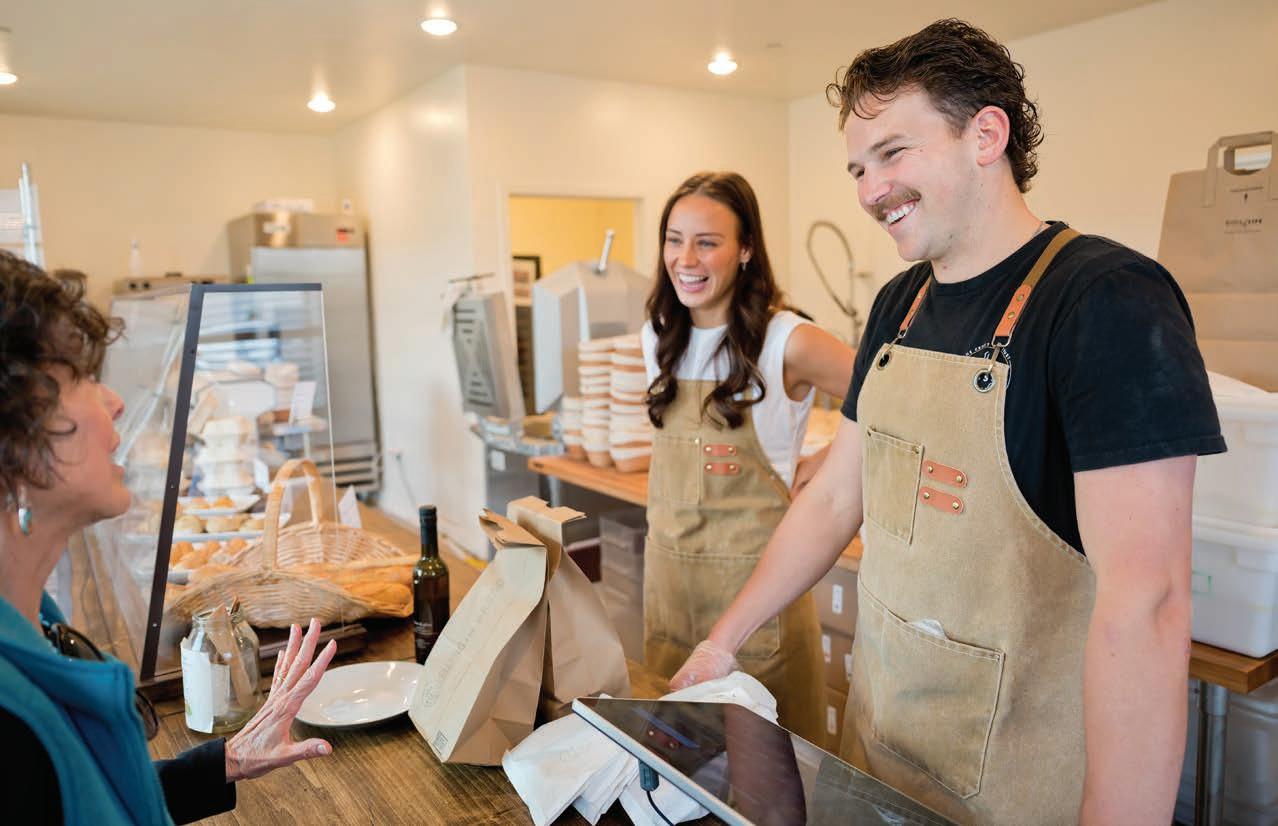
Customers aren’t rushed in and out of the bakery. They’re greeted by Davis’ big, friendly smile, remembered, and they often linger a little longer to catch up. It’s not uncommon to see conversations unfolding across the counter, names exchanged, stories shared.
There’s an ease to it, a sincerity that’s hard to manufacture.
Kara and Davis don’t just run a business; they build relationships.
“We want people to feel remembered and
valued,” Kara said. “Honestly, we want them to feel like family.”
Part of what makes their bread so special is something most people don’t realize: Sourdough isn’t just a recipe, it’s alive.
“Most people don’t realize that sourdough isn’t just a type of bread,” Davis said. “It’s a living ecosystem.”
Unlike commercial bread made with instant yeast, sourdough relies on wild yeast and beneficial bacteria that slowly ferment the dough over time, creating its flavor while also improving digestibility and nutrient absorption. “What looks like a simple loaf is actually the result of time, care, and a delicate balance of nature,” he said.
Running a business as a couple comes with its own challenges, but for Davis and Kara, it’s been a source of growth.
Their strengths naturally complement each other. Kara focuses on the customer experience, new recipes, and
the creative side of the brand, while Davis leans into the science of bread-making and manages the logistics behind the scenes. Together, they’ve grown from baking just a couple of loaves a day to producing around 200.
“I’ve personally loved watching Davis in his element, pursuing his passion,” Kara said. “I think that’s a big reason it has been so successful.”
There’s a quiet admiration between Davis and Kara that shows an understanding that this business isn’t just about bread, but about partnership, trust, and shared purpose.
“Everyone should have a Kara in their life,” Davis said, “just not mine — she’s taken!”
Ask them what Cache Valley means to them, and their answer comes easily: home.
From their time at USU to building Bussin’ Bread from the ground up, they’ve found a sense of belonging that continues to shape their business. They talk about community not just as customers,
but as relationships. As neighbors. As people who show up for each other, and that mindset is woven into everything they do.
As Bussin’ Bread continues to grow, Kara and Davis have simple hopes: to reach more people and make quality bread accessible to everyone. But some things, they say, will never change: They’ll always keep the ingredients simple. They’ll always rely on sourdough. And they’ll always keep the heart of what they’re doing at the center of it all.
Because for them, success isn’t just about what they bake; it’s about how people feel when they leave.
“Success is keeping our customers fed with better bread and smiling along the way,” they said. “For us, it’s measured by the people we’re able to make feel loved.”
The Summer Toolkit for Lifelong Learners
SPENCER YOUNG
Cache County School District, communications intern
With summer break on the horizon, the next few months will be a fantastic time to connect with your children. There are so many fun and educational summer activities that can create great family memories away from digital devices and screen time. Here are a few different ideas and pieces of advice to keep their brain learning in fun and engaging ways over the next few months.
Dedicate Time for Reading
Setting aside time each day for reading is a great way to help your child work on their literacy skills over the summer. Choosing a consistent 20- to 30-minute daily window is proven to improve cognitive engagement, memory, and information processing. Working this into your summer routine will help keep your child ready for the classroom in the fall.
“Summer is a great time to build simple reading routines with your children, especially if it includes reading together,” Brittany Foster, CCSD executive director of teaching and learning, said. “That might be reading after breakfast, before activities for the day, or before bedtime to help them wind down.”
Explore the Community
There’s so much to see and do across Cache Valley, and summer is the perfect time to visit local libraries, museums, and parks, or to go on hikes. There are also plenty of nearby
events this summer, from local holiday parades to the Cache Valley Gardeners’ Market every Saturday. Getting out of the house is a great way to enjoy the warm weather and keep your child’s brain active!
Create a Summer Bucket List
Work with your child to create a summer bucket list full of activities and places they’d like to visit. If they help create the list, they are more likely to be genuinely excited about the planned activities. This also gives you fun alternatives to suggest when screen time is becoming too much of a focus.
Hands-on Learning
Other engaging activities include arts and crafts, low-stakes science
experiments, a small at-home garden, or helping to prepare a meal. Getting hands-on experience is one of the best ways to learn, and there are many opportunities to take advantage of during the summer. Planning projects that your child can touch and feel can be both enjoyable and educational for the whole family.
These are just a few different ways that your family can make the most of your summer break this year! These ideas can help make your summer full of laughter and learning, creating lasting memories and helping your child along their educational journey. For more information about summer learning resources and district programs, visit ccsdut.org.
A student from Lincoln Elementary
Making Summer Count: Simple Ways Families Can Keep Kids Learning
FRANK SCHOFIELD
Logan City School District Superintendent
Summer offers children a valuable opportunity to rest, recharge, and enjoy a change of pace. It also provides opportunities for continued learning. When children remain mentally active during summer, they are more likely to return to school feeling confident, prepared, and ready to build on the progress they made during the previous year.
One of the best ways to support summer learning is through reading . Reading helps children strengthen vocabulary, comprehension, and imagination, and it can be one of the easiest activities to include in a busy summer schedule. A daily reading routine, even just 15 to 20 minutes, can make a lasting difference for a child. Families might visit the local library together, let children choose books that match their interests, or listen to audiobooks during car rides. Some children may enjoy reading aloud. Others may be motivated by creating a summer reading chart or setting a family reading goal. The key is to make reading an enjoyable, natural part of the day rather than a chore. Writing can also be woven naturally into summer activities. Children can keep a journal about vacations, camps,
or neighborhood adventures. They might write postcards to relatives, create comic books, or invent stories inspired by their favorite games and movies. Older students might draft short essays, or research topics they find interesting. Writing helps students organize thoughts, communicate clearly, and practice important language skills.
Summer also provides many opportunities for children to see how math can be used in real life. Parents can involve children in measuring ingredients while cooking, comparing prices at the grocery store, planning a travel budget, or calculating distances on a road trip. Board games and card games often build number sense, strategy, and logical thinking. Younger children can practice counting, sorting, and recognizing patterns through toys or household objects.
Learning also happens through experiences that may not seem academic at first glance. Travel, whether across the country or across town, exposes children to new places, people, and ideas . Visiting museums, zoos, historic sites, festivals, or community events helps students connect classroom concepts to the real world. Even a family picnic can include planning, teamwork, conversation, and observation. Children learn by helping prepare meals, caring for younger siblings, organizing their rooms, or managing chores. These activities build independence, responsibility, and life skills that are just as important as academic growth.
Parents sometimes worry that they need to recreate school at home during the summer, but that is not necessary. Summer learning should feel different from the school year. It can be more relaxed, flexible, and centered around a child’s interests. If a child loves sports, learning might include reading about athletes,
keeping score, or measuring running times. If a child enjoys art, learning could involve drawing nature scenes, visiting galleries, or studying famous artists. A child who enjoys technology might learn coding basics, create digital projects, or research how machines work.
Setting aside a consistent time for reading or exploration each day can create positive habits. Some families prefer mornings before summer activities begin, while others choose quiet evening time. The goal is progress and engagement, not perfection. Consequently, summer learning should include balance. Children need time to play, rest, and explore. Free play supports creativity, problemsolving, and social development, while time with friends and family strengthens relationships and emotional well-being. When students return to school after a summer filled with reading, exploration, conversation, and discovery, they often do so with stronger skills and renewed enthusiasm. They are better prepared to learn new concepts because they continued using their minds during the break. More importantly, they may come back seeing learning as something that happens everywhere.
Summer is a season of possibility. It offers time to slow down, enjoy family, and create lasting memories. By adding small, enjoyable learning experiences along the way, parents can help children grow academically and personally while still enjoying all the freedom summer brings. A book before bedtime, a trip to the library, measuring ingredients for dinner, watching stars in the backyard, or talking together during a drive can all become moments of growth. When learning feels fun, natural, and connected to life, summer becomes more than a break from school, it becomes a season of opportunity.
The Secret to Gorgeous Summer Planters
MARK ANDERSON owner, Anderson's Seed and Garden
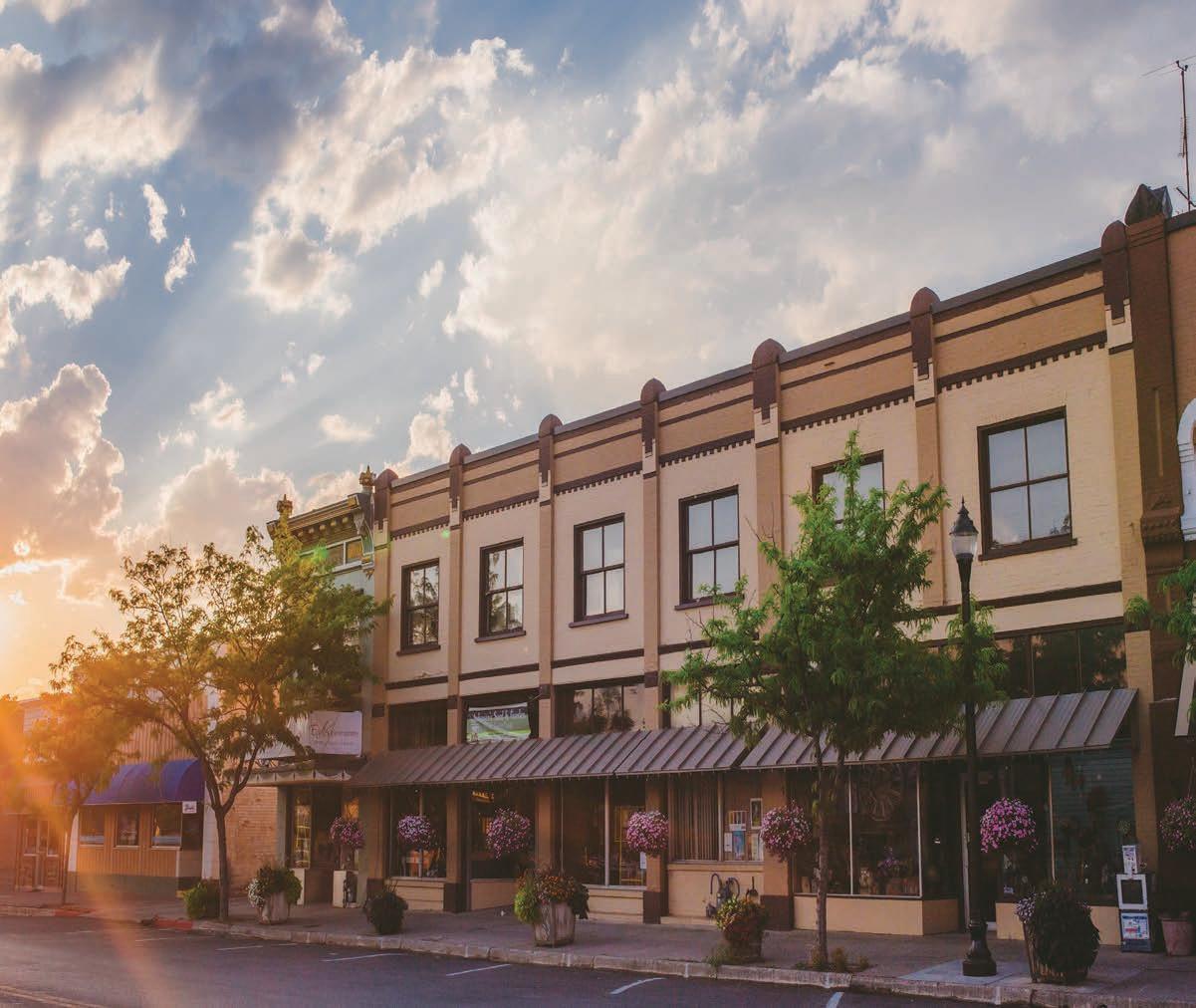
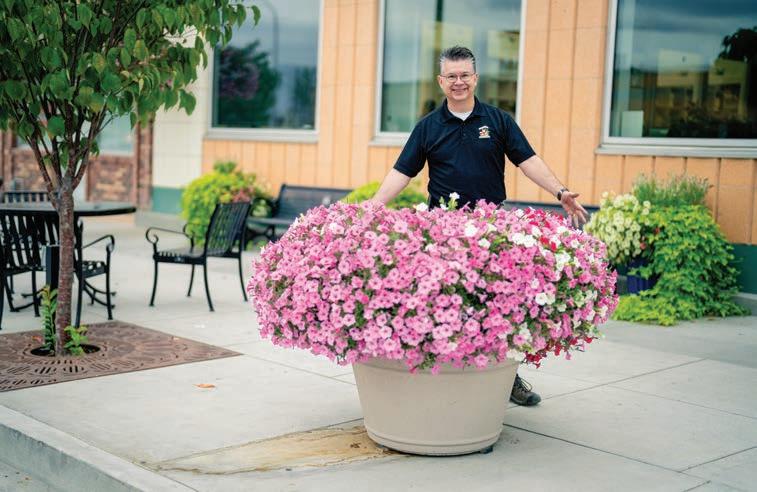
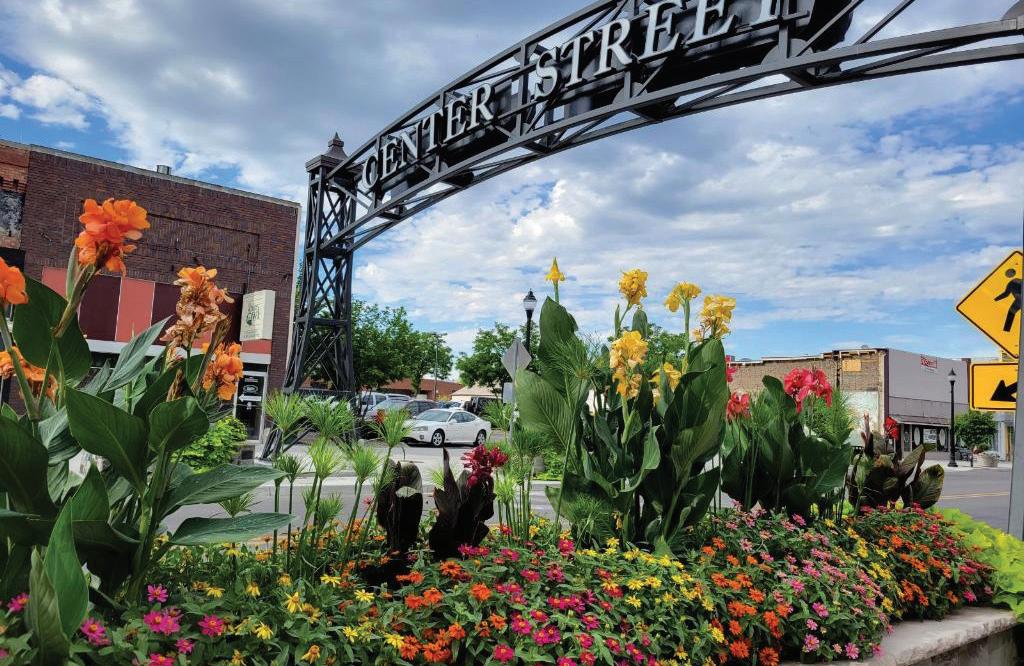
There is nothing more frustrating than planting beautiful hanging baskets and planters in May, when the flowers all look amazing, only to watch them slowly decline as the heat of summer arrives in June. For some gardeners, it’s just a matter of time before those planters dry up and the flowers shrivel with them. Why can’t flowers look great all summer long? They can — and they should. You just need to know a few simple steps to keep them well hydrated, properly fed, and producing flowers well into September and October. Don’t forget that these same principles work for flowerbeds and gardens as well. This is exactly how we care for the hanging baskets on Main Street and the flowerbeds on Center Street in downtown Logan.
First, start with the best potting soil you
can find. The main ingredients should include peat moss, vermiculite, perlite, coco coir, humate, worm castings, and maybe a pinch of leaf mold (compost). Avoid potting soils that list bark as an ingredient. Bark is often used as a filler in cheaper potting soils and offers little benefit in a potting mix besides lowering the price and tying up available nitrogen. If you don’t start with good soil, you’ll be fighting an uphill battle all summer long to keep your plants alive and looking good.
Next, feed them. Who likes to eat just once a week? I don’t, and your plants don’t either. We top-dress baskets and planters with a slow-release coated fertilizer that generally lasts for two to three months. Then we begin a weekly feeding regimen using a high-phosphorus liquid fertilizer, such as a 9-52-8
formulation, every Monday, followed by a balanced liquid fertilizer like a 20-20-20 or 10-10-10 formulation every Thursday to keep plants growing and blooming like crazy. Since baskets and planters need daily watering during hot weather, much of the fertilizer gets leached out, leaving little food for the plants. Feed them regularly — consistency is the key. It’s also important to keep the soil healthy during hot, dry weather. Every week or two, we recharge the soil with Compost Tea, which introduces beneficial microbes and microorganisms back into the soil. It supercharges all types of soil so plants can absorb and use water and nutrients more efficiently. It’s amazing how Compost Tea can perk up even stressed and struggling plants.
...continued on next page
continued from previous page...
We’ve used it successfully for years to revive plants others considered ready for the compost pile. When your soil is healthy, plants can access and use water and nutrients much more effectively. Healthy soil matters.
At Mt. Naomi Women's Health, we offer a full range of healthcare services for women of all ages- including preventative care, gynecological and obstetrical services, surgical treatments, hormone replacement therapy, and health and wellness exams. We look forward to the opportunity to meet you!
Finally, maintaining moisture in the soil during the heat of summer is a daily task. One of our best secrets for keeping baskets looking amazing is using a soil penetrant or surfactant, such as EZ Wet or Hydretain, in the water once a month. These products help the soil absorb and retain more water than it normally could.
The surfactant binds with the soil and attracts water, literally pulling moisture into the soil and holding it there for the plants to use. It makes watering more effective, keeps the soil from dehydrating and shrinking, and draws valuable water deep into the root zone for maximum results. It won’t eliminate the need to water every day, but it will make it far less likely that your baskets and planters will dry out during those 90- to 100-degree summer days.
Follow these four simple steps, and you’ll see the difference: use great soil, feed the plants regularly, nourish the soil with beneficial microbes and enzymes, and make your water work harder for you. Beautiful plants and colorful flowers will be your reward all summer long — and even into the fall. You’ll really notice the difference about the time everyone else’s hanging baskets and planters start fading away. Have a colorful summer!
Kristin Craig, M.D.
Nathan Bertoldo, M.D., M.P.H.
Deena Balls, C.N.M.
Deb Flansburg, C.N.M.
2245 N 400 E Suite 201 North Logan, UT 84341 Accepting new
Kids Book Club
Summer Safety Tips Every Parent Should Consider
As the weather warms up and families spend more time outside, summer becomes a season filled with adventure, activity, and fun. It’s also a good time for parents to review a few important safety reminders. Many common summer injuries are preventable with awareness, supervision, and a few simple precautions.
WATER SAFETY
Whether your family is headed to the beach, lake, splash pad, or backyard pool, taking a few extra safety measures can help keep everyone safe while enjoying the water.
Important Facts About Drowning
• Drowning is the leading cause of injury-related death for children ages 1–4.
Courtesy of Safe Kids Worldwide
• It is also the third leading cause of unintentional injury-related death for children and teens under 19.
• Hundreds of children drown each year, and thousands more require emergency medical care following water-related accidents.
Swimming Safety Tips
Always supervise children near water. Young children and inexperienced swimmers should stay within arm’s reach of an adult at all times. Even strong swimmers should swim with a buddy.
Designate a “Water Watcher.” When several adults are present, choose one person whose only job is watching the children in or around the water. Rotate every 15–20 minutes to keep everyone attentive.
Enroll children in swim lessons when
they are developmentally ready. Comfort and experience around water vary from child to child.
Teach children basic water survival skills, including:
• Returning to the surface after entering deep water
• Floating or treading water
• Turning toward safety
• Moving through the water while breathing
• Safely exiting the water
Remember that open water is different from swimming pools. Lakes, rivers, and oceans may have currents, uneven surfaces, changing depths, or reduced visibility that make swimming more dangerous.
Learn CPR and basic water rescue skills. Knowing how to respond in an emergency could save a life.
BIKE SAFETY
Summer is the perfect season for bike rides with friends and family.
Riding bikes encourages exercise, independence, and outdoor play, but safety should always come first. A few simple precautions can help keep every ride fun and safe.
Helmets Matter
A properly fitted helmet is the most effective way to prevent serious head injuries in a bike accident, yet many children still ride without one.In addition to wearing a helmet, riders should:
• Ride on sidewalks when possible. If riding on the road, ride in the same direction as traffic and stay as far to the right as safely possible.
• Follow traffic rules and use hand signals. Predictable riding helps drivers and other cyclists know what to expect.
• Wear bright colors and use lights or reflectors, especially during early morning or evening rides.
• Ride together as a family until children are confident and mature enough to ride safely on their own. ...continued on next page
continued from previous page...
HOT CAR SAFETY
It can be tempting to leave a sleeping child in the car during a quick errand,
but even a few minutes can become dangerous. Heatstroke can happen quickly — even on mild days.
A vehicle’s temperature can rise nearly 20 degrees in just 10 minutes, and cracking the windows provides
very little relief. Young children are especially vulnerable because their bodies heat up much faster than adults’.
Tips to Prevent Hot Car Tragedies
• Never leave a child alone in a vehicle, even for a minute.
• Keep vehicles locked when parked to prevent children from climbing inside unnoticed.
• Create reminders when your child is in the back seat. Some parents place a stuffed animal in the front seat or keep a purse, phone, or briefcase in the back as a reminder.
• If you see a child alone in a car, call 911 immediately. Emergency responders would rather respond to a false alarm than arrive too late.
A few extra moments of caution can make all the difference. With preparation, awareness, and supervision, families can focus on what summer is meant for — making safe and happy memories together.
Beyond the Scribe: What AI Could Actually Become in Healthcare
RUSSEL MCKENNA, D.O. pediatrician, Canyon Medical Group
We are living through one of the most important technological shifts in modern history, yet much of the conversation around artificial intelligence in healthcare feels surprisingly small.
Most discussions focus on efficiency: Can AI write notes? Can it summarize visits? Can it reduce burnout? Those are useful questions. But they are also limited ones. As a physician, I think we may be underestimating what AI could actually become.
Right now, many doctors interact with AI the same way many patients do: They ask it questions and get answers. In medicine, most systems are primarily using AI as a documentation tool or digital scribe.
But what if the real value of AI is not in answering questions?
What if its greatest value is in helping us ask better ones?
Medicine has always depended on thoughtful history-taking. Long before advanced imaging, genetics, or artificial intelligence, physicians relied on asking good questions and recognizing patterns hidden inside a patient’s story.
The challenge is that no physician can personally experience every disease, every atypical presentation, or every uncommon manifestation of a common condition. Medicine is simply too large.
Doctors provide care based on their knowledge and experience. But every doctor also has blind spots created by the natural limits of individual training and exposure. That is not failure. That is reality.
This is where AI becomes interesting. Not because it replaces doctors. Not because it independently diagnoses patients. But because it can help patients
and healthcare teams explore concerns more thoroughly before important details are overlooked.
Imagine a patient with fatigue, headaches, abdominal pain, or weight changes. In a rushed healthcare system, there may only be enough time to touch the surface. But an AI-guided intake process could help explore medications, travel, family history, exposures, mental health overlap, disease progression, sleep patterns, and subtle clues the patient may not realize are important.
The goal is not for AI to diagnose the patient. The goal is to help the physician begin the encounter with a broader, more organized clinical picture.
One experience that reinforced my thinking involved a 3-year-old child who initially presented to the emergency room with what appeared to be a relatively unimpressive rash in his diaper.
The child was diagnosed with a yeast infection and treated accordingly, but the treatment did not help. Two days later, the family presented to our pediatric clinic.
What changed the encounter was not that AI “diagnosed” the patient. It did not.
What mattered was that a more thoughtful and structured questioning process helped develop the story more completely.
Additional details surfaced that had not previously been connected: the child had experienced a sore throat roughly two weeks earlier, both parents had recently been diagnosed with strep throat, and the family had been applying topical steroid cream to the rash, altering its appearance
and making it appear less inflamed. Those details mattered.
The child ultimately tested positive for Group A Streptococcus and improved quickly once appropriate treatment was started.
In pediatrics, atypical presentations are common. Perianal streptococcal infections are not necessarily something every emergency physician encounters frequently in a busy environment focused appropriately on emergent care. But in primary care pediatrics, repeated exposure over years builds pattern recognition around these presentations.
That experience reinforced something important to me: The future value of AI in healthcare may not primarily be in writing notes after a visit. Its greatest value may be in helping patients and clinicians build a more complete clinical story before important clues are missed.
There is also another side to this conversation that few people discuss: AI creates an opportunity for medicine to
become less siloed. Right now, medical knowledge is often trapped inside individual experiences. Over decades, doctors accumulate unique clinical insight that often disappears when they retire. But what if medicine could learn collectively? What if anonymous patterns, atypical presentations, and nuanced patient experiences could help inform future questioning for everyone?
Patients everywhere deserve a fair opportunity to be asked thoughtful questions. Healthcare should not depend entirely on geography, network size, or whether someone happens to encounter the one physician who has seen a rare presentation before.
AI may finally allow medicine to scale thoughtful inquiry. Not perfect inquiry. Not infallible inquiry. But better inquiry. Used thoughtfully, AI may help physicians recover something modern healthcare increasingly struggles to protect: time for curiosity and deeper listening again. And that matters.
Author’s Note: I use AI the same way I believe many physicians eventually will — not to replace human judgment, but to help organize information, explore ideas more thoroughly, and communicate more effectively. AI tools were used in the drafting and organization of this piece.
Editor Note: Dr. Russel McKenna is a pediatric physician and founder of Ask YADAYADA, an AI-assisted healthcare initiative focused on improving clinical questioning and thoughtful information gathering in non-emergent care. He has spent thousands of hours refining physician-guided AI workflows and has applied AI-assisted questioning approaches across thousands of patient encounters while advocating for AI as a tool that supports — rather than replaces — human clinical judgment.
Spring Allergies 2026: Why Symptoms May Feel Worse and How to Get Relief
TYSON BROWN, M.D.
Intermountain Health Budge Allergy and Immunology, Intermountain Health Logan Regional Hospital
If your allergies feel worse this season, you’re not imagining it. After a dry winter, many people notice symptoms earlier and more intensely than usual. With less snow and moisture to hold pollen down, allergens can circulate more easily in the air. That means longer exposure, stronger symptoms, and more frustration — even if you’re already taking medication.
Warmer temperatures and shifting weather patterns are contributing to longer and more intense allergy seasons.
Why allergies may be worse this year
A dry winter changes what’s happening in the air around you.
Normally, snow and moisture help keep pollen grounded. But when conditions are dry, pollen lifts more easily and lingers longer. Add early warming temperatures, and plants start releasing pollen sooner than expected. The result is a longer, more intense allergy season.
Common Spring Allergy Symptoms
Spring allergies can look a little different for everyone, but there are a few key symptoms to watch for.
You may notice:
• A runny or congested nose.
• Sneezing that comes in waves.
• Itchy, watery eyes.
• Post-nasal drip, which can feel like
mucus in the back of your throat.
• Trouble keeping asthma symptoms under control.
These symptoms can show up quickly and linger for weeks or even months, especially when pollen levels stay high.
If these symptoms are affecting your daily life, allergy testing and treatment can help identify the root cause and provide relief.
Allergies or a Cold? How to Tell the Difference
When symptoms hit, one question always comes up: Is this allergies, or am I sick?
Sometimes it can be difficult to tell the difference. Allergies can even cause a sore throat due to post-nasal drainage. But there are a few key differences:
• Allergies tend to cause intense sneezing and itchiness, without a fever.
• Colds are more likely to come with fever, cough, and body aches.
• Allergies last as long as you’re exposed to triggers, while colds usually improve within a week.
If you’re unsure, getting clarity can help you treat the problem and feel better faster.
Why regular allergy medications may not work as well
A lot of people start the season the same way: reaching for antihistamines, nasal sprays, or decongestants. And, at first, they may help. But many people eventually notice the relief doesn’t last long enough. Most over-the-counter treatments focus on temporarily controlling symptoms rather than addressing the underlying allergy itself.
• Antihistamines block the chemicals behind your symptoms, but don’t stop the allergic reaction.
• Nasal sprays reduce inflammation temporarily, but symptoms return.
• Decongestants can backfire if used too often, making congestion worse.
In a tougher allergy season, those limits show up faster. You may feel some temporary relief, but still not feel fully better. That’s often the point where it makes sense to look at longer-term solutions.
Find out what’s actually causing your allergies
Here’s something many people don’t realize … they’re often allergic to more than one thing.
Tree pollen peaks early in the season, grass pollen comes later, and they often overlap. On top of that, other allergens like dust or pet dander can play a role. That overlap can make it difficult to identify triggers on your own.
Allergy testing helps us get specific. We can identify what your body is reacting to and build a plan around that.
Treat the cause, not just the symptoms
If you’re tired of managing symptoms day after day, there’s another option: treating the source of the problem.
Allergen immunotherapy works by gradually training your immune system to tolerate allergens.
...continued on next page
continued from previous page... Over time, your body stops reacting as strongly.
There are two main approaches:
• Allergy shots (subcutaneous immunotherapy)
• Tablets under the tongue (sublingual immunotherapy)
Both treatments expose your body to small, controlled amounts of allergens to help reduce symptoms long term. In some cases, they may even help prevent new allergies from developing.
For many people, it changes what allergy season feels like entirely.
When to see an allergy specialist
You don’t have to wait until your symptoms are severe to get help. Allergy specialists can help
with seasonal allergies, asthma, eczema, food allergies, chronic hives, and year-round allergy symptoms. And you do not need a referral.
A good rule of thumb: If your symptoms are affecting your sleep, your focus, or your ability to enjoy your day, it’s worth having a conversation.
Allergy specialists also treat a wide range of related conditions, including asthma, eczema, food allergies, and chronic hives.
Allergy seasons are changing, but that doesn’t mean you have to accept feeling miserable every spring. With the right care, you can understand your triggers, reduce your symptoms, and feel more in control of your health.
To register or view more information, visit our website: utcourts.gov/divorceedforchildren
Visit teen website: utcourts.gov/en/self-help/case-categories/family/dived/teen-page.html
2026 OUTSTANDING
High School Grads
TARA BONE contributing writer
Each year, it’s our honor at Cache Valley Family Magazine to spotlight one graduating senior from each high school in the Cache County and Logan City School Districts. These exceptional students are nominated by their school counselors and selected for their resilience, leadership, and determination to succeed — even in the face of challenges.
We're also proud to award the Paul Norton Memorial Scholarship for the fifth year. This scholarship honors the legacy of Paul Norton, a mentor to Cache Valley Family Magazine publisher Emily Buckley. Paul often quoted a favorite
Roman philosophy: “Luck exists where preparation and opportunity meet.” His advice to young people was simple and profound: “You never know when opportunity will come — so prepare yourself for the success you seek.”
The 2026 Paul Norton Memorial Scholarship is awarded to Sky View High School’s Easton Mills. Selected from the six featured students in this issue, Easton was chosen for his resilience, gratitude, and potential.
Congratulations to Easton and to all 2026 graduates! We celebrate your hard work and wish you success as you chart life's course.
May 26
MOUNTAIN
May 28
SKY VIEW HIGH SCHOOL
May 28
RIDGELINE HIGH SCHOOL
May 29
GREEN CANYON HIGH SCHOOL
May 29
LOGAN HIGH SCHOOL
May 29
At6-foot-7, Easton Mills is hard to miss on a basketball court. He is physical, competitive, and determined, and the toughness that defined his game as a Sky View High School (SVHS) athlete also carried him through challenges most people never saw from the stands.
Easton delt with a lot of family struggles and by the time he was 13, he lived in several different places, including with his aunt, other family members, his best friend, and people who stepped up to help. That experience was not easy, but Easton says it taught him how to adapt, keep going, and recognize the people who truly show up.
“I think moving around over the past years has been really tough for me because I'm always on the edge about where I'm going to go and how I'm going to adapt,” he said. “But it’s taught me a lot about myself and a lot about change and learning how to adapt to my environment.”
Easton’s high school counselor says Easton has overcome adversity with a sense of humor and courtesy in every interaction.
Easton really shines on the basketball court. For Easton growing up, basketball became more than
WhenSydney Aird moved to Green Canyon High School halfway through her sophomore year, she felt lost. She was recovering from knee surgery and navigating a new school where friendships, teacher relationships, and activities already felt established. But Sydney stepped into the unknown and found a way forward.
Music ultimately helped her find her place. Sydney had always loved singing, even as a little girl who preferred making up songs to playing soccer. When she joined choir at Green Canyon, she found an immediate welcome.
“The day I walked in, all of them flooded the doorway and were like, we’re so excited to meet
Easton Mills
a sport. It was structure, connection, and an outlet when life felt uncertain.
“I started playing because I felt it was an escape from the things that I couldn't control in my life,” he said. “I always used basketball as an outlet for me, if I ever needed to get away from my problems, or if I needed an outlet or a way to let out my stress.”
That outlet turned into opportunity. Easton played for Sky View’s 2025-26 region championship team, earned all-region honors as a senior, and received multiple college basketball offers. He ultimately committed to Green River College, a junior college near Seattle, where he hopes to continue developing his game.
Easton is quick to credit the people at Sky View who helped him along the way. He names teachers, basketball coach Kirk Hillyard, counselors, kind office staff who shared Christmas gifts, and close friends as people who made school feel manageable and meaningful. He is especially grateful for his aunt, Emily Murdoch, a steady influence in his life.
“She saw enough in me to help me with my life path and help me get where I needed to go, and I'll always be so grateful for that,” he said.
GREEN CANYON HIGH SCHOOL
you!” Sydney said. “It definitely helped me get my footing on things.”
That welcome grew into a full high school experience. Sydney became involved in choir, theatre, musical theatre, pep band, and marching band, while also taking AP and concurrent enrollment classes. She has performed in Crescendo, the school’s advanced choir and this year was selected as Green Canyon’s Vocal Sterling Scholar. Sydney was also nominated for Utah Ambassadors of Music and worked as a lifeguard to pay for the trip, which included two weeks of singing in cathedrals and historic venues in Europe.
But one of Sydney’s boldest decisions came her junior year when she walked into band director Jacob Andersen’s office and said she wanted to learn the alto saxophone and join Green Canyon’s state championship marching band — with no prior instrument experience.
“He looked at me like I was kind of crazy,” Sydney said.
She admits the beginning was intimidating. Younger students could already play better than she could, and she had to learn both an instrument and marching technique in just a few months. She practiced for hours, took private lessons, and kept showing up. By the state championship, Sydney played the entire show perfectly and marched every step in time. She
“I definitely wouldn't be the man I am today without her.”
At Green River, Easton plans to explore business or marketing and has an interest in sales because he likes talking with people and helping them. Off the court, he enjoys boxing, reading, and anime.
Easton’s advice for incoming freshmen: “Don’t worry about how people perceive you, just choose to associate with those that pour back into you the way you pour into them.”
Sydney Aird
says she left it all on the field and the experience changed how she sees herself and what is possible.
“I learned that it's never too late to do something,” Sydney said. “You can do things that you never thought you could do.”
Sydney’s determination is especially meaningful because she was recently diagnosed with dyslexia and ADHD. For years, she thought she simply could not keep up as easily as other students and added, “I have to work 10 times harder than the average student.”
Her family has been an important source of support. Her mom, Sarah, often reads aloud when the words on a page become overwhelming. Sydney says her parents, Jeff and Sarah Aird, both Aggies, have supported her journey, and she is excited to follow in their footsteps to Utah State University (USU).
At USU, Sydney plans to study music therapy and hopes to use music to help children with autism and students with learning disabilities to accomplish non-musical goals. She also plans to continue playing saxophone in the USU marching band.
Sydney’s advice for incoming freshmen: “You shouldn't let anything define what you can or can't do. Don't let anything stop you.”
MOUNTAIN CREST HIGH SCHOOL Breanna Bassett
Breanna Bassett has always loved animals, agriculture, and the kind of work that must be done even when you’re tired, busy, or facing challenges. That steady work ethic has shaped her years at Mountain Crest High School, where she has earned a perfect 4.0 GPA while taking rigorous concurrent enrollment classes and serving in FFA leadership.
Breanna grew up around animals in Wellsville and says FFA felt like a natural fit. Her dad participated in FFA in high school, along with her older brother. Breanna had already spent years raising goats through 4-H to show and sell at the Cache County Fair and says, “she loved it so much.”
At Mountain Crest, Breanna found a place to grow as both a student and a leader. She has served as vice president of the FFA chapter for the past two years and credits her ag advisor, Tyrell Stephens, with helping her become more confident.
“Before I joined FFA, I was super quiet, didn't really like to talk to anybody, and was very shy. I didn't really have confidence in myself,” Breanna said. “But he was able to help push me out of my comfort zone and find the potential I didn't know I had in myself.”
Breanna’s love for agriculture extends far beyond the classroom. She works at Denali South Horse Ranch, where she serves as a
Alekzia Sweigart has learned earlier than most that strength looks like showing up for school, work, family, and the future, even after life changes in unexpected ways. Alekzia’s biggest challenge came at the end of her sophomore year, when her mom, Nancy Parkinson, passed away from a heart attack at age 41. In the months that followed, Alekzia transferred to Cache High for her junior year, where the smaller school environment gave
barn manager and helps train horses. She also teaches riding lessons and has trained her own horse, Roo, whom she took to state 4-H last year. She is also the current Wellsville Rodeo Queen and plans to compete for Cache County Fair and Rodeo Queen.
Not only does Breanna love animals, but they have also taught her responsibility and hard work.
“You have to wake up every morning, and you have to go feed your animals and work them and train them — even if you're having a bad day because they depend on you,” she said.
During her junior year, Breanna faced a frightening health challenge. After returning from FFA Nationals, her leg began to swell and became painful. Doctors eventually discovered an infection that had spread from her hip to her knee. She spent several days in the hospital, was on strong antibiotics, and missed three months of school while recovering.
The experience became even more serious when doctors warned that the infection was moving toward her knee joint and that she was becoming septic. Breanna says the experience changed how she sees life.
“The biggest takeaway from that experience was I learned to be grateful for the things you don't think about,” she said. “Being thankful to be able to stand up and get out of bed and go
play fetch with my dog, or to go just brush my horse.”
Fortunately, Breanna’s health recovered and now she is ready for the future. She plans to attend Utah State University to study equine science and management. Her long-term goal is to attend veterinary school, become an equine veterinarian, and specialize in equine reproduction, including artificial insemination and embryo transfers.
Breanna’s advice for incoming freshmen: “Try to be involved in something. Whether that's FFA, theater, or a sport. Just try to be involved in and make the best out of high school.”
her additional support. There, she found caring teachers and counselor Launi Evans, who she credits for connecting her with Bridgerland Technical College and her goals.
During her junior year, Alekzia completed CNA, medical terminology, and drug dosage and calculations courses at Bridgerland, while also finishing her core high school classes with straight-A grades. As a senior, she has spent the year fully focused on Bridgerland’s Medical Assisting program. She also works weekends at Blacksmith Fork Assisted Living.
Healthcare has always felt meaningful to Alekzia, in part because of her mom’s example.
“My mom worked in healthcare for a long time, and I always found it really inspiring to see her help people,” she said. “I find that level of knowledge and understanding of the human body really admirable, and it's always something that I've wanted to pursue.”
Alekzia hopes to work as a medical assistant after graduation, save money, and eventually return to school for another degree, possibly in nursing. She loves the way healthcare allows her to serve people when they need help most.
Alekzia says losing her mom forced her to grow up quickly, but it also helped her discover her own strength.
“Navigating life without your mom is just a really unique experience,” she said. “I think I learned a lot. And I've had to work through a lot and face up to a lot of things and I think I am a stronger person for it.”
Outside of school and work, Alekzia enjoys reading. Her favorite book is Into the Wild by Jon Krakauer, especially because of its reflection on community, and community is important to Alekzia. She lives in Wellsville with her three sisters: Katie, 24; Madi, 20; and Alyza, 12, and near grandparents and family.
“I think it all really comes back to community for me,” she said. “One of the famous quotes in that book is, ‘Happiness is only real when shared.’”
Alekzia’s advice for incoming freshmen: “Have fun and enjoy it, but also stay focused because it goes by fast.”
CACHE HIGH SCHOOL
Alekzia Sweigart
Christopher Carter Olson
Christopher Carter Olson has never been one to seek the spotlight. Quiet, analytical, and focused, he has built an exceptional high school experience through steady discipline and resilience.
During his four years at Logan High School, Christopher has balanced responsibilities beyond the typical high school experience. Following significant changes in his family, including his mother’s medical disability, Christopher stepped into major responsibilities at home, helping care for his mother and disabled twin brother, Gabriel. He helps with transportation, appointments, household needs, and daily support, all while maintaining a perfect 4.0 GPA.
When asked how he has managed to keep straight As through high school, Christopher’s answer is simple: “It was my goal for high school, so I do whatever I can to get the A. That’s about it.”
His drive is evident across all his activities. Christopher has played cello in the Logan High School Orchestra, competed on the varsity swim team all four years, taken Spanish throughout high school, enjoyed AP
Government and AP U.S. History, and pursued digital media design through Bridgerland Technical College. He is close to completing an associate-level credential through Bridgerland and has shifted his focus toward audio and video editing to support his long-term goals in film.
Christopher also saved money with his brother to participate in Close Up, a week-long civics experience in Washington, D.C., where students visited historic sites, participated in a mock Congress, and met with elected leaders. These interests connect directly to Christopher’s future plans. This fall, he plans to attend Westminster University, where he hopes to build an interdisciplinary path that includes film, theater, and political science. His dream of becoming a filmmaker started simply.
“One day I came out of a movie just thinking, I want to be a director,” he said. “And so, I've kept that thought in my mind for a very long time.”
Christopher is also interested in using his Spanish to serve others, possibly through the Peace Corps someday. He sees Spanish as more than a class; he sees it as a necessary skill for
connecting with and helping people. Teachers and counselors describe Christopher as quietly courageous, responsible, intellectually curious, and consistently high achieving. He appreciates his teachers who have supported him along the way, and even the challenges he’s encountered that have helped him grow.
Christopher’s advice to incoming freshmen is practical and direct: “Do the work, get it in on time, and you'll be just fine.”
Mason Olsen has become a familiar face at Ridgeline High School who brings people together. Whether he is running track, cheering in the student section, serving in student government, or showing up at musicals and school events, Mason has made it a point to be involved and to help others feel they belong.
But Mason’s upbeat presence has been hardearned. During his sophomore year, he was diagnosed with serious depression and anxiety
RIDGELINE HIGH SCHOOL
and went through a very difficult period. What helped him most, he says, was realizing he was not alone and finding support from counselors, friends, and family.
It’s a lesson that now motivates him to help others find hope. Rather than hiding from mental health struggles, Mason speaks about them with openness because he hopes his story can help others.
“It's not something I'm ashamed of — it definitely shaped me and helped me with my life,” he said. “I overcame a pretty heavy thing and now I'm living my best life.”
Mason has enjoyed participating in cross country and track all four years of high school and wrestled as a freshman and sophomore. He runs the 400 and 4x400 relay and serves as a track team captain. He also loves to play club soccer and spend time outdoors. A highlight of his senior year was teaching Hawk Academy for incoming freshmen, an experience that allowed him to encourage younger students as they began high school.
Academically, he challenged himself this year by taking seven college classes, all while
Mason Olsen
continuing to serve, compete, and support his school. But of all his activities, serving as a senior class officer has been especially meaningful to Mason. While it required hard work, he says it also taught him patience, time management, goal setting, and the importance of building relationships.
“I feel like that this year I’ve experienced a big change,” he said. “I feel like I'm talking to everyone in the halls, and I like being positive.”
After graduation, Mason plans to serve a mission for The Church of Jesus Christ of Latter-day Saints in Wichita, Kansas. When he returns, he hopes to attend Utah State University and study psychology, with the goal of helping others the way others have helped him.
“I just want to hopefully help change lives like how people helped change mine,” he said. Mason’s advice for incoming freshmen: “Get involved in something. Whether it's sports, band, music, anything — there is something in high school for everyone.”
Explore the Ocean Blue Explore the ocean with singing, musical games, instruments, movement, rhythms, and crafts. Don’t miss this chance to discover the beauty and mystery of the ocean while building your musical skills, developing friendships, and having a blast!
CAMP I: June 8-12, 2026; 9 a.m.-Noon, Ages 4-6 (by September 1)
CAMP II: June 8-12, 2026; 1 p.m.-4 p.m., Ages 5-7 (by September 1)
• Tuition: $85 per child, includes t-shirt
• Location: Wilson Elementary School
CAMP III: June 8-12, 2026; 9 a.m.-2:30 p.m., Ages 8-12 (by September 1)
• Tuition: $120 per child, includes t-shirt
• Location: USU Fine Arts Center
SMITHFIELD RECREATION
smithfieldrecreation.com
Smithfield Recreation offers a wide variety of summer camps for all ages including:
Basketball and Beyond: Basketball camp coached by Utah State Hall of Famers Gary Wilkinson and Tai Wesley. July 7-9. Ages 6-18. $85.
Basketball Skills Camp: Monday, Wednesday, and Friday, July 6-17. $50.
Broadway Bound Theatre Show Choir: June 8-13. Kids ages 8-16. $96.
Creative Craft Classes: Tuesdays and Thursdays 1:30 to 3 p.m. Ages 6-13. $45 per session. Sessions throughout June and July.
Dance Camp: July 13-15. Ages 2-10. $45.
Dodgeball Camp: Session 1: June 22 and 24, Session 2: July 27 and 29. Kids ages 6-13. $20 per session.
Group Guitar: Wednesdays June 3-August 12. Ages 10+. $150.
Group Ukulele: Wednesdays June 3-August 12. Ages 7+. $150.
Health City Kids Sports and Wellness Camp: Mondays and Thursdays June 1-11, July 13-23, or August 3-13. Ages 6-12. $45 per session.
Jr. Chef Classes: Tuesdays and Thursdays 11:30 a.m. to 1 p.m. Ages 6-13. $45 per session. Sessions throughout June, July, and August.
(Smithfield Recreation Cont.)
Jump Rope Camp: June 22-25 for Kindergarten through 6th graders. $35.
Lego Legends Camp: June 15-18, July 6-9, or August 3-6. Ages 8-12. $45.
Play with Me Music: Wednesdays June 3-August 12. Ages 0-10 with a parent or caregiver. $150.
Pickleball Camps: Session in June and July. Ages 8-12. $30 per session
Skateboard Lessons: Ages 8+. Tuesdays and Thursdays 9 to 10:15 a.m. May 12-28, June 9-25, July 7-23, or July 28-August 1. $65 per session.
Sky View Girls Basketball Kids Camp: June 2-11, Tuesday, Wednesday, and Thursday. 2nd-8th grade. $50.
Sky View Tennis Camps: Sessions throughout June and July. Ages 6-16. $40 per session.
Summer Scientists Camp: Mondays and Wednesdays June 8-17 and July 6-15. Ages 8-13. $50 per session.
Top Flight Tumbling: Sessions throughout June and July. Ages 3+. $40 per session.
Train Like a Sky View Bobcat: Tuesdays and Thursdays, June 9-July 16. Athletes 6th-8th grade. $55.
Volleyball Training Camp: Sessions in June and July. Grade 3 and older. $40 per session.
Young Artist Camp: Sessions through June and July, 3 to 4 p.m. Ages 6-13. $30 per session.
Tueller School of Dance
521 1/2 N Main • Logan, Utah
The first and last dancing school your dancer will ever need.
We’re proud to have been teaching dancers in Cache Valley for over 55 years. We o er Ballet, Contemporary, Tap, Jazz + Hip Hop for ages 3 and up. Competitive and Recreational classes available.
tuellerdance.com • tuellerdance@gmail.com
CACHE VALLEY FUN PARK
cachevalleyfunpark.com
cachevalleyfunpark@gmail.com
435-792-4000
Summer camps at the FUNNEST place in town! Our camps are the perfect way to beat the summer doldrums! Your kids will experience activities full of fun and learning. No vegging out in front of the TV … just FUN times and happy memories. All camps includes daily lunch and arcade credits.
Flashpointe Camp: June 1-5 / June 15 – 19 / July 6 – 10 / July 20 – 24
Fun Times Camp: June 8 – 12 / July 13 – 17 / July 27 – July 31
Science and Engineering: June 22 –27 / August 3 – 7
Camp Director: Kayla Barney, USU graduate in education and current educator.
MOUNTAIN PEAK VOLLEYBALL
COLOR ME MINE
mtnpeakvolleyball.com
Summer Camps: Youth volleyball camps for ages 4 to 18 for all skill levels begin in June! We offer camps from June through August. Receive quality instruction from our Mountain Peak coaching staff.
Outdoor Volleyball: Get outside and play under the sunshine. Our grass and sand volleyball clinics begin in late May and end in early August. Tournaments are offered on select weekends in collaboration with Logan City and Nibley City.
Fall League: Practice and competition in a league format for K through 12th graders begin in August! Our recreation and competitive leagues are split into 1st-3rd grade, 4th-6th grade, 7th-9th grade, and 8th-12th grade. Both north and south practice options are available.
Boys & Girls Club Tryouts: Tryouts for all U13-U18boys (all levels) and nationallevel U14-U18 girls will be mid-July. Check the website for more information!
logan.colormemine.com | 435-890-8505
$125 per session, 10% off for additional siblings.
Six Sessions for Kids ages 6-12. Each week has a choice of times with either 9 a.m. to Noon or 1 p.m. to 4 p.m. All camps run Monday-Thursday.
Campers will paint pottery pieces, create with clay, make crafts, and have a snack each day.
June 8-11, Theme: Pool Party/Celebrate Summer
June 15-18, Theme: Grow Here
June 22-25, Theme: Movie Night
July 6-9, Theme: Christmas in July
July 13-16, Theme: Under the Sea
July 20-23, Theme: Desserts
Teen Camps: Ages 12+, 1 p.m. – 4 p.m.
June 22-25 or July 13-16
Call 435-890-8505 to reserve your spot. Please visit logan.colormemine.com for more information.
NORA ECCLES HARRISON MUSEUM OF ART AT UTAH STATE UNIVERSITY usu.edu/artmuseum/education/ community-family
Tueller School of Dance
521 1/2 N Main • Logan, Utah
Tueller School of Dance
521 1/2 N Main • Logan, Utah
The first and last dancing school your dancer will ever need.
TUELLER SCHOOL OF DANCE
The first and last dancing school your dancer will ever need.
NEHMA invites youth ages 5–12 to join our summer camp focused on creativity and experimentation. Whether exploring new materials or playing team games, participants will develop skills, confidence, and curiosity while having fun. Registration is now open!
There are three sessions to choose from. Each camp is Monday through Thursday from 9 a.m. to 3 p.m.
• June 22-25
• July 13-16
• August 3-6
tuellerdance.com | 435-752-9154
We’re proud to have been teaching dancers in Cache Valley for over 55 years. We o er Ballet, Contemporary, Tap, Jazz + Hip Hop for ages 3 and up. Competitive and Recreational classes available.
CACHE THEATER COMPANY cachetheatre.com/academy
We’re proud to have been teaching dancers in Cache Valley for over 55 years. We o er Ballet, Contemporary, Tap, Jazz + Hip Hop for ages 3 and up. Competitive and Recreational classes available.
Join us for our fun Summer Technique Workshops! Offering classes for ages 3 and up. This is a great time to get little ones started and for experienced dancers to improve their turns, leaps, tricks, and overall dance technique. See our schedule and classes on our website or email us at tuellerdance@gmail.com for more info. Come dance with us!
tuellerdance.com • tuellerdance@gmail.com
tuellerdance.com • tuellerdance@gmail.com
Come and experience the captivating world of performing arts with Cache Theatre Company. Discover our incredible 2026 Summer Camps.
Mini Camp: Aladdin themed Kids Camp for ages 4-7. $150. 9:30-11:300 at Cache Theatre Academy in North Logan.
• June 8-12
• June 22-26
• June 29-July 3
Shrek Jr.: for ages 8-18 at Logan High School. Two-week intensive summer theatre camp. $275. Multiple dates available in June and July.
Come celebrate our 25th birthday with some of our favorites:
PICKLEVILLE CAMP
picklevillecamp.com
Join Pickleville Playhouse's cast and directing team for an insanely fun week of singing, dancing, and acting — culminating in an end-of-week performance and pizza party! All campers receive a Pickleville Camp t-shirt and a complimentary ticket to attend either of Pickleville's exciting 2026 summer productions!
DATES:
• July 20-24
(Logan: Ages 7-18)
• July 27-31 or August 3-7
(Bear Lake: ages 7-18)
DISCOUNT:
Get $50 OFF registration before June 1 with promo code: CVFMAG
SPORTS ACADEMY
sportsacademy.com
Summer Registration begins April 13
Summer Camps: Keep kids active and healthy during this weeklong camp!
Four one-week camps, 9 a.m. to 3:30 p.m. $275 per camp. Ages 5-12.
Summer Swim School: Learn to swim with the best instruction in the valley. Classes begin June 1. Two-week sessions, Monday-Thursday, 40-minute classes.
Tennis Classes and Camps: Professional tennis instruction from the valley’s top coaches and players. All ages and ability levels! Classes begin June 1.
Tumbling Classes: Flip and tumble to new heights with classes for all ages and abilities. Classes begin June 1.
usu.edu/lyricrep/camp/
Step into Willy Wonka’s world of pure imagination to create original theatre inspired by Charlie and the Chocolate Factory
SESSION 1: June 16-19 (ages 12-18).
Performance: June 20 at 7 p.m.
SESSION 2: June 23-26 (ages 6-11).
Performance: June 27 at 1 p.m.
Cost: $150. Limited spots available!
LYRIC REP THEATER CAMP
CACHE VALLEY CIVIC BALLET SCHOOL
MANNY MARTINS SOCCER CAMPS AT UTAH STATE UNIVERSITY
cvcballet.org | 435-753-3633
The Cache Valley Civic Ballet-School offers qualified training in classical ballet to community members of all ages and skill levels. The five-week summer semester runs from June 15 to July 16. Ages 3 and up. Visit our website for a complete list of classes. Summer Intensive: August 3-14.
LOVE TO COOK
luvtocook.com | 435-752-9220
Copycat Cooks Youth Ssummer 3-Day Camps with Wil: 1:30 to 3:30 each day. June 1-3, June 8-10, June 15-17, July 20-22, July 27-29
Kids Camp (Coed ages 6-14):
• June 22-25
• July 20-23
mannymartinssports.com Skills • Character • Fun
Overnight Elite Camp (Girls ages 14-18):
• June 26-28
Youth Summer 2-Day Cooking Camps with Margaret: 10 a.m. to Noon each day. June 23- 24, June 30July 1, July 7 -8, July 14-15
Youth Cooking Classes: 10 a.m. to Noon each day
June 3: Homemade Rainbow Fettuccine
June 8: Flippin' Fun with Crepes
June 10: Bake and Play! Memory Game Cookies
June 15: Cake Decorating Basics
J une 16: Korean Mini Kimbap (Rice Balls)
HIGH POINT TUMBLING sportsacademy.com | 435-753-7500
Ongoing, year-round tumbling and gymnastics classes for toddlers through competitive teams. Check our website for the current schedule.