Welcome to this refreshed edition of Cabrini Connect — your Foundation news, keeping you connected with all of us at Cabrini as together we continue to heal lives and inspire hope.
At Cabrini Foundation, we are purpose-driven. We create meaningful ways for patients, their families, and our community to connect and express gratitude, enabling Cabrini to continue providing exceptional care — now and into the future.
This edition gives you a glimpse of the powerful impact of donations to Cabrini. Every contribution, big or small, is a testament to the transformative power of generosity and gratitude.
Right now, Cabrini is looking ahead to the future of healthcare. With increasing demand for world-class surgical care, we are seeking donations to purchase a new surgical robot at Cabrini Malvern — an investment that will expand access to advanced, life-changing procedures.
Together, we have the power to change lives. With your support, we can continue to invest in life-saving equipment, drive breakthroughs in cutting-edge research, and ensure our exceptional clinical staff deliver the highest standard of compassionate care to every Cabrini patient.
Thank you for your ongoing commitment to our mission.
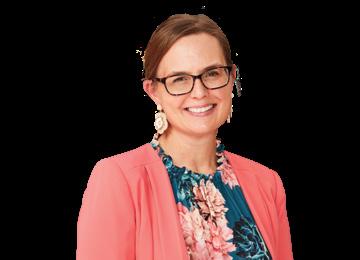
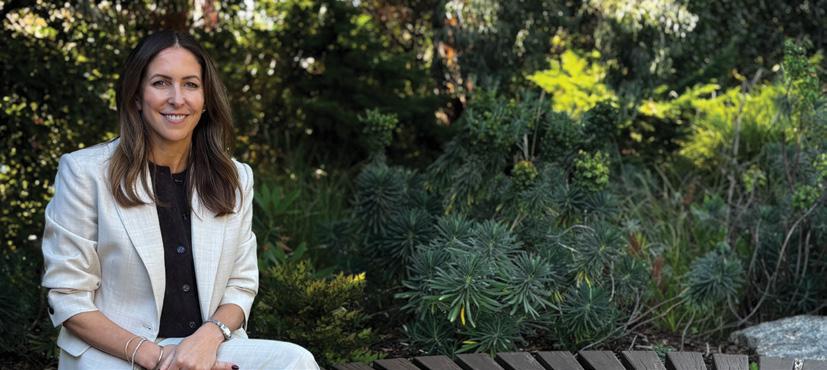
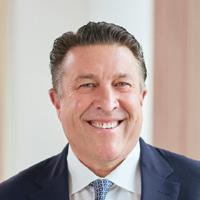
Megan Potter
Megan Potter Director, Cabrini Foundation
Update
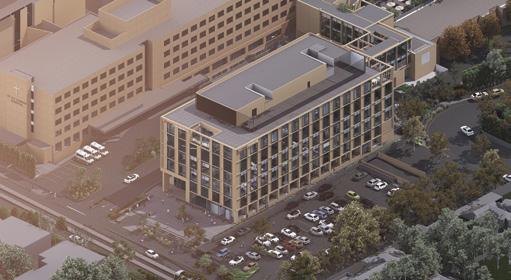
In a redevelopment milestone, Cabrini Health has been granted town planning approval for the next stage of its Malvern ‘Next Era’ redevelopment, which includes a new East Building.
Chief Executive, Sue Williams, said the approval marks a major step forward for the hospital.
“This project will allow Cabrini to expand capacity and continue meeting the growing healthcare needs of our community, now and in the future.”
By 2036, more than 150,000 patients are expected to seek care at Cabrini each year for comprehensive cancer, cardiac, orthopaedic and palliative care services. The new East Building will deliver two state-ofthe-art wards, with modern clinical facilities, inpatient accommodation and expanded consulting space.
It also includes a palliative care ward, upgrades to the main foyer for easier navigation of the hospital, a new café, underground carpark, and a dedicated emergency drop-off zone.
“A heartfelt thank you goes to our donor community, for their generosity, vision and passion for quality healthcare.” Ms Williams said.
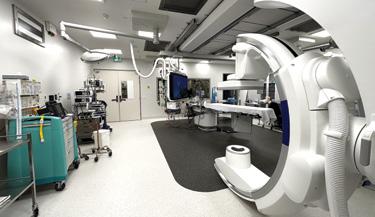
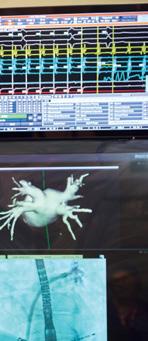
Cabrini staff and donors celebrated the opening of our newly built cardiac catheter lab, operating theatre, and ground floor recovery area in April.
“The opening of these key spaces is a major milestone in the redevelopment of Cabrini Malvern’s new theatre block and marks the first step in a staged roll out of the new facilities. The feedback from everyone has been overwhelmingly positive,” Executive Director –Malvern and Brighton, Louise Alexander said.
“And there’s more to come — three new theatres, plus refurbished procedure rooms, and a very impressive ground floor admissions area ready by June.”
New cardiac catheter lab
Approval granted for ‘Next Era’ of Cabrini Malvern
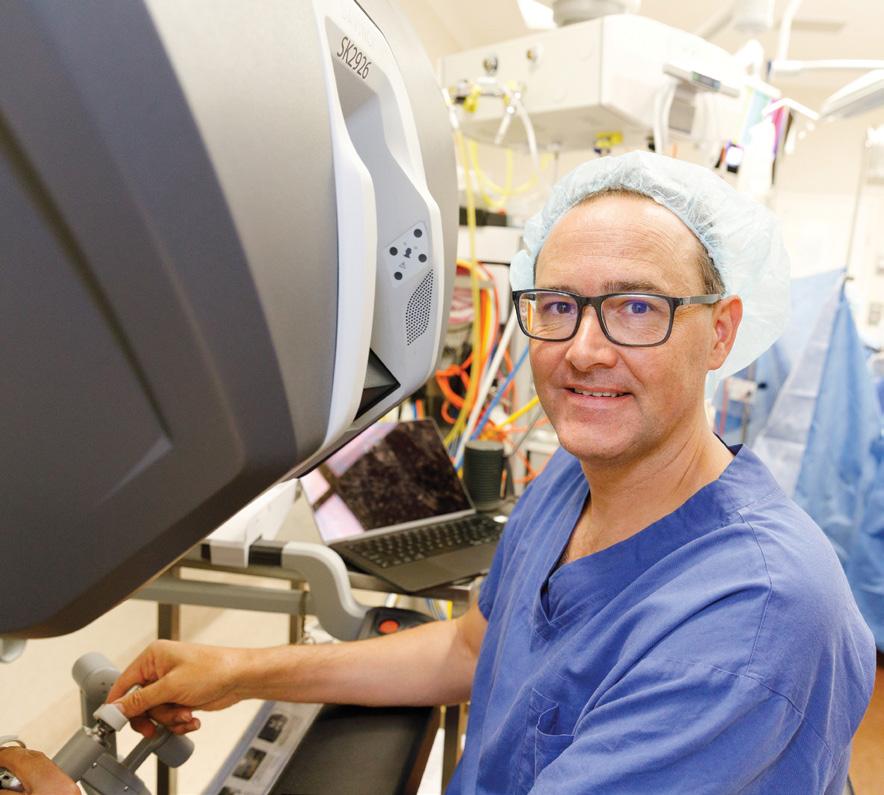
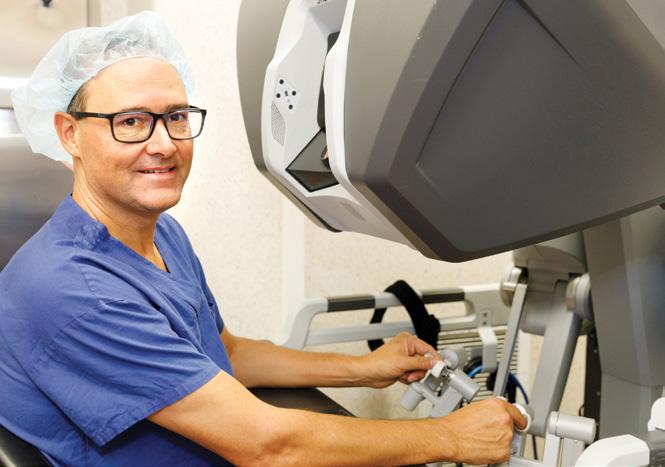
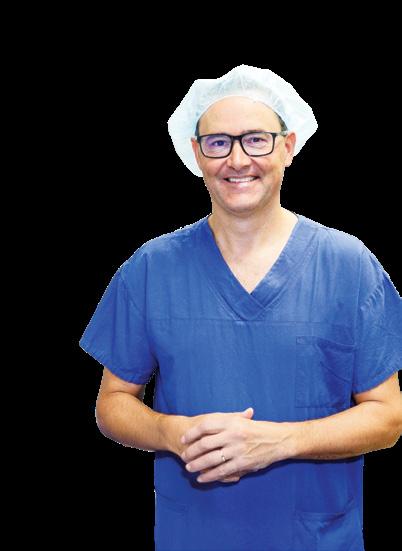
Associate Professor Daniel Moon is no stranger to pressure.
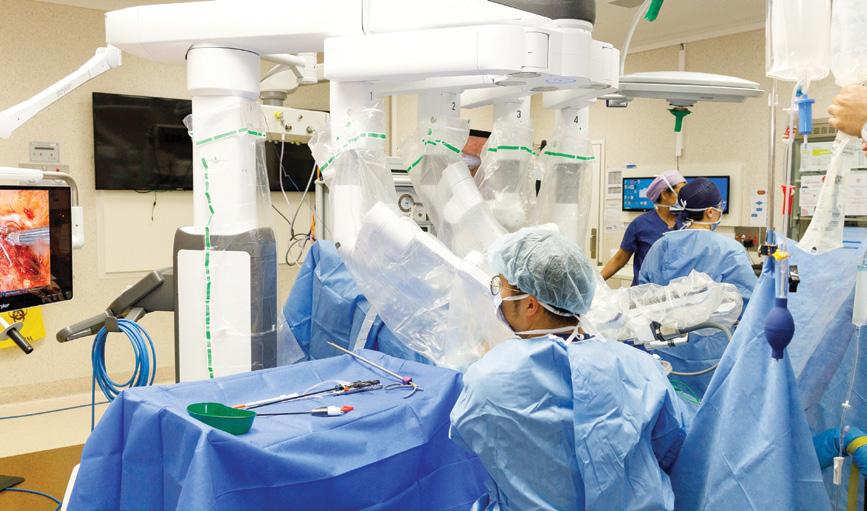
Every time he operates on a patient’s kidney to remove a tumour – a procedure he’s done hundreds of times – he only has 30 minutes. Any longer, and he risks causing permanent damage. In these high-risk, complex cases, A/Prof Moon uses advanced robotic technology to do what many others cannot.
“There’s a lot on the line and you have to move quickly,” he says.
“With the access and vision of robotics, you can delve deep into a kidney. And because we have superior magnification, you can see things in great detail and remove cancers, wherever they are, all through keyhole surgery. Previously, that was unimaginable.”
Advanced surgical robotic technology is pushing us beyond the limits of possibility.
Beyond the limits of possibility
Benefits for patients:
• Smaller incisions with minimal scarring
• Less risk of complications like bleeding, clots and wound infections
• Less risk of transfusions and intensive care admissions
• Reduced pain and discomfort
• Shorter stays in hospital and faster recovery time
Benefits for surgeons:
• Unparalleled vision and 3D magnification means tiny vessels and structures can be seen in incredible detail
• Better dexterity than the human hand
• Greater precision, control and ergonomics
• Faster procedures – average theatre time has reduced by 32 minutes
Scan here for video
Associate Professor Daniel Moon
A/Prof Moon has performed over 2,500 robotic surgeries for prostate and kidney cancer – the highest volume in Victoria.
For one of his patients, Derrick, this robotic surgery was life-changing.
A PET scan revealed a 5 by 6 centimetre tumour growing in his only kidney. Without the right skill and expertise, there was a high chance Derrick would lose his kidney and end up on dialysis while he waited for a transplant.
In Derrick’s case, robotic surgery gave A/ Prof Moon precision and control when it mattered most.
An ultrasound and probe was used to precisely map out the extent of the tumour. Blood flow was clamped before meticulously following the tumour down into the kidney. Enhanced magnification meant he could see tissue planes in great detail, and dodge major vessels.
After the cancer was removed, the kidney was repaired in layers. All this was done through five small incisions rather than needing a 40cm cut, bigger instruments and greater risk.
In the last six years, the number of robotic surgeries at Cabrini has ballooned from 214 to 561 per year. Our sole robot is now running at capacity.
Your support will help expand access to this cutting-edge technology, push us beyond the limits of possibility and transform surgical outcomes across all specialities.
Thanks to our generous matching donors, all donations for a new surgical robot will be doubled.
Matching Donors:
• Carter Family Foundation
• Friend of Cabrini Foundation
• In loving memory of Barbara Mountain
• The Tile Importer
• David and Roslyn Turnbull
gift will be matched –but only until 30 June. Please donate now.
It’s easy to understand why Emily McGrath dismissed her bowel cancer symptoms as something less sinister. At 37, fit and healthy, she’d only ever seen older men represented as the face of the disease.
When Emily noticed a little blood in her bowel movements in late 2018, she self-diagnosed it as haemorrhoids. But in January 2019, Emily had a significant bleed. A colonoscopy at Cabrini Malvern confirmed Stage 3 bowel cancer that had spread to her lymph nodes.
“When you see an ad for bowel cancer, the images are of older men that look nothing like you,” Emily said. “So, you just don’t associate it with yourself.”
Under the care of Professor Paul McMurrick and Cabrini specialists, Emily had a bowel resection, an ileostomy, and seven months of chemotherapy.
Like many cases of early-onset bowel cancer, Emily’s diagnosis was one of a growing number across Australia that don’t fit the traditional profile.
ANOTHER FACE OF
Bowel Cancer
It’s a pattern Cabrini’s Prof Paul McMurrick, Chair of the Cabrini Monash University Department of Surgery and a leading advocate with Let’s Beat Bowel Cancer, recognises all too well.
“Nearly 2000 Australians under the age of 50 now develop bowel cancer each year,” Prof McMurrick says. “These early-onset cancers tend to be diagnosed at more advanced stages, making early detection through screening critically important.”
Let’s Beat Bowel Cancer is calling for the National Bowel Cancer Screening Program to be extended to encourage Australians above the age of 30 to consider using the FOB (Faecal Occult Blood) test kit each 12 months, even if the Program doesn’t provide it.
And Emily’s message to anyone sitting on a symptom they’re not sure about is simple.
“Act on it straight away,” she said. “The treatment for this can be really straightforward if it’s caught early.”
CabriniOutreach
Saint Frances Xavier Cabrini’s (Mother Cabrini’s) dedication to serving those in need, particularly immigrants, the poor, and the sick, was marked by her practical approach to providing education, healthcare, and social support.
For 20 years Cabrini Outreach has extended the mission of Mother Cabrini by delivering medical care, advocacy, and social services for refugees, asylum seekers, and those experiencing hardship.
From premises in Northcote, the Cabrini
Outreach Asylum Seeker and Refugee Services provide free primary care, specialist mental health care, psychosocial support and a health waiver program (pharmaceuticals, glasses and other medical aids and equipment provided for free), for people seeking asylum who are ineligible for Medicare, have limited or no source of income or are ineligible for any form of income support.
These services are provided by a mix of employed and pro-bono GP’s, psychiatrists and nurses to provide quality primary and specialist healthcare.
“As an asylum seeker living on a bridging visa, along with my mother, who faces numerous medical challenges and requires regular medication, this program has been a lifeline for us. The support this program has provided has been nothing short of life-changing.”
Feedback from a client of the Cabrini Outreach Asylum Seeker and Refugee Health Hub.
Cabrini Outreach relies on donations from our community. Donations can be made online: outreach.cabrinifoundation.com.au or call the Cabrini Foundation office on 03 9508 1380
Excellence
DRIVING DISCOVERY
1,000 patients access clinical trials every year
For over 25 years, Cabrini Research has supported hundreds of innovative projects and contributed to significant breakthroughs in patient care.
With 109 Victorians receiving a cancer diagnosis every day, a robust research program has never been more important. At Cabrini, one of our focuses is precision medicine — developing personalised, targeted treatments tailored to each individual patient.
From genomic analysis and clinical trials to translational research and exercise studies, our research programs can give patients access to promising new therapies before they become widely
51 researchers
298 active research projects
available — while building a body of knowledge that will help shape the future of medicine.
One exciting advancement is the ability to grow three-dimensional “mini-tumours” from a patient’s own cancer cells. This breakthrough helps our researchers understand why cells become cancerous and help identify the treatment most likely to succeed for each person — improving outcomes and sparing patients from unnecessary side effects.
Cabrini’s research program continues to grow, driven by the vision of our clinicians and made possible by the unwavering generosity of the Cabrini community.
Our donors are our lifeblood. They give our incredibly motivated and tenacious team of researchers the resources to keep going and improve patient lives for the better.”
- Professor Gary Richardson OAM Group Director Cabrini Research
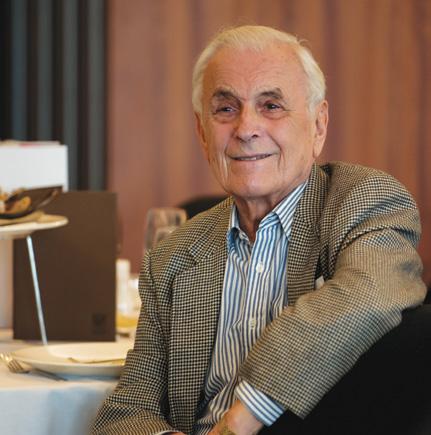
Otto’s story
SIX DECADES OF SUPPORT
Otto Kohn’s relationship with Cabrini spanned more than six decades - a connection that began with his first admission at the age of 28. He often recalled that 1956 visit with great fondness, when Cabrini was still the old St Benedict’s mansion run entirely by the Cabrini Sisters.
“They took out my tonsils,” he once said. “I remember there was a lot of fruit, and they came in at night and chatted and ate fruit with us. Fruit was limited then. They were very kind. They were absolute human beings. Just the best. Full stop.”
Even then, Otto felt something special — a sense of care and humanity that stayed with him for the rest of his life.
Otto’s early years were marked by extraordinary hardship. Otto was born in Prague in 1928. He survived five Holocaust concentration camps between 1942 and 1945, contracted tuberculosis in 1948 and, after losing most of his beloved family members in the Holocaust, arrived alone in Australia in 1950. Through determination and hard work, he went on to build a successful timber business and a life defined by resilience.
His connection to Cabrini continued throughout his life. His last admission, for pneumonia and bronchitis, kept him in hospital for seven weeks - an experience he
admitted was difficult - but even then, his respect for Cabrini’s care never wavered.
“For me, my impressions of Cabrini are superb,” he said. “I think the nuns resonated with me. Forget about religion — Cabrini is trying to do the best job they can. When you’re sick, you want the best care you can get.”
Otto chose to leave a gift in his Will to Cabrini, believing deeply in supporting future care. “I think it will make a difference,” he said. “Any money will make a difference.”
Otto’s generous bequest ensures that the compassionate care he experienced at Cabrini will live on, touching the lives of others for years to come. His remarkable journey was one of resilience and purpose — a life that transformed great adversity into enduring hope.
Otto passed away on 11 April 2025, aged 97, and will be held in fond memory by everyone at Cabrini.
Otto Kohn
IN MEMORY OF MICHAEL MORSE
A Gift That Lives On
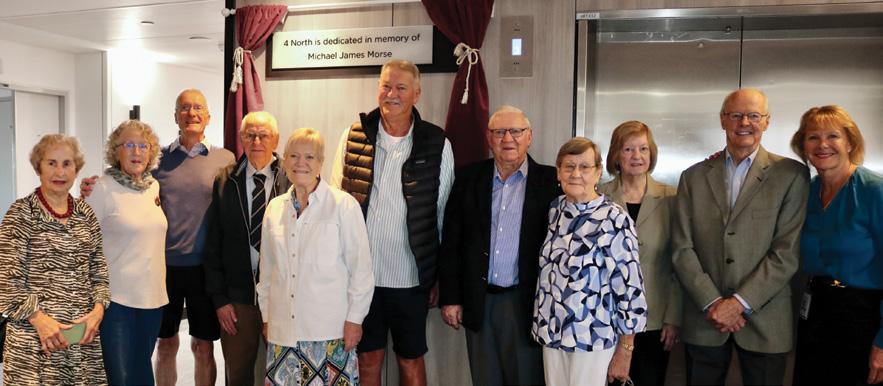
We gathered recently to honour the life and legacy of Michael James Morse — a man whose generosity will shape care and comfort for countless patients and families.
Through a remarkable gift in his Will, Michael made possible the refurbishment of ward 4 North at Cabrini Malvern. Today, that space stands not only as a place of healing, but as a lasting expression of compassion, dignity, and generosity.
It was a privilege to welcome members of the Morse family, many of whom travelled from Tasmania and Queensland to be part of this special occasion. Their presence was a powerful reminder that a gift like this is never just one person’s act — it reflects a shared set of values, a deep sense of care for others, and a belief in making a difference.
We were equally honoured to be joined by the dedicated clinicians and nurses who bring places like 4 North to life every day. This included clinician Mr Pravin Ranchod, who cared for Michael for more than a decade, along with 4 North Nurse Unit
Manager Melissa Gusti and several nurses who supported Michael during his time at Cabrini in 2019. Their presence created a fitting connection between the care Michael received and the lasting legacy he leaves behind.
Michael’s story is one of resilience, determination, and quiet generosity.
Born in Burnie, Tasmania, in July 1939, one of eight children, Michael’s early years were shaped by strong family ties and a love of sport. A talented footballer, he played in a State Premiership-winning team in 1957 before moving to Melbourne to pursue further opportunities.
At just 20 years of age, Michael’s life took an unexpected turn when a boating accident resulted in the loss of his leg. Yet this moment did not define him — instead, it revealed his extraordinary strength of character. He went on to build a long and successful career with Shell Company of Australia and became deeply engaged in advancing healthcare, contributing to the development and testing of orthotics for lower limb amputees and embracing new
technologies, including being an early recipient of a cochlear implant.
In later years, Michael became a regular patient at Cabrini. Grateful for the care he received, he chose to give back in a way that would benefit others long into the future.
Michael passed away peacefully on 17 November 2024, surrounded by those he loved. He is remembered for his strength of spirit, his generous heart, and the quiet resolve that defined the way he lived.
His legacy now lives on in every patient cared for on 4 North, in every family who finds comfort there, and in every staff member supported to do their very best work in a thoughtfully designed environment.
If you would like further information about leaving a gift in your Will to Cabrini please contact: Faye Devlin on 03 9508 1376 or visit www.cabrinifoundation.com.au/ giftsinwills
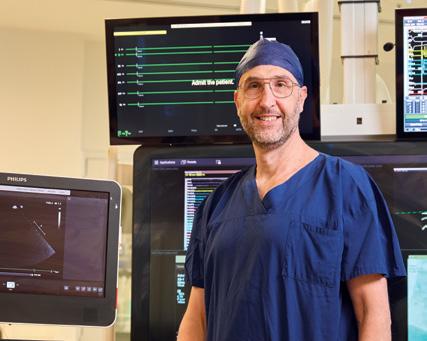
NEW CARDIAC TOE ULTRASOUND at Cabrini
Thanks to donor generosity, more than $199,000 was raised in December to fund a second transoesophageal echocardiogram (TOE) ultrasound and probe for Cabrini’s new Cardiac Catheter Laboratory.
TOE equipment is an essential part of daily cardiac care, relied upon by Cabrini’s cardiologists, surgeons, and anaesthetists to deliver minimally invasive treatments that reduce risk, speed up recovery, and shorten time in hospital.
Since the new Cardiac Catheter Laboratory opened in April, the demand for cardiac care has grown significantly. Having a second TOE ultrasound and probe has proven invaluable in ensuring patients receive timely, effective treatment when they need it most. Thank you for helping make every heartbeat stronger.
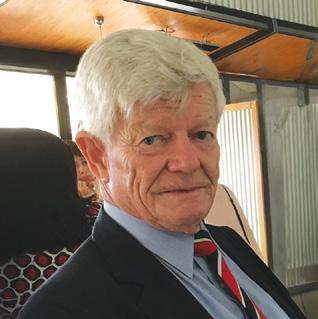
Dr Mark Freilich
Michael Morse
MY GIFT:
My donation is: Once off I want to give monthly
Please debit my: Card number:
Expires: /
Card holder name:
Signature:
OR, Enclosed cheque/money order payable to Cabrini Foundation
Online donations: cabrinifoundation.com.au/donate
Please direct my donation to:
Please send me some information on leaving a Gift in Will. I have already included a Gift in Will to Cabrini Foundation. MY PAYMENT DETAILS ARE: MY DETAILS ARE: