

May 2026 • Volume 14 Issue 5
Dear readers,
Welcome to the final issue of the 2025-2026 school year! This issue wraps up an incredible year of C Magazine, covering a variety of topics from Paly skateboarding culture to the unique history of science fiction films. Our cover story, “When It Comes To Women ... It’s Probably Just Their Period,” dives deeper into the understanding of women’s health beyond the stereotypically recognized surface. Writers Anjali Dahncke, Bahar Diner, Stella Guo and Adrienne Lec emphasize the importance of understanding the issues women face when accessing healthcare.
“I really enjoyed working on this story because it was really fulfilling to bring to light such an undercovered issue,” Dahncke said. “I loved speaking to so many professionals who have dedicated their lives to this, as well as women who have been impacted by it.”
In honor of this issue being the last for our senior staff members, we’ve decided to carry on the tradition of the C Mag senior playlist. Created by seniors Ria Mirchandani and Alice Sheffer, this spread includes a fun playlist that includes each senior’s most played song of senior year, their guilty pleasure song and the song they will listen to on the last day of school.

“It was really fun to talk to all the seniors on staff and just learn more about them and their favorite songs,” Sheffer said.
“I’ve been looking forward to doing senior playlists since my sophomore year.”
Another tradition C Mag carried out this issue was our Paly artist feature story. To celebrate the last magazine of volume 14, Senior Lily Williams was chosen to be included. Created by Alice Sheffer and Ria Mirchandani, Williams was the perfect fit due to all the freelance work she has done for C Mag over the years.

“It’s really great to continue this tradition and it was so much fun to spotlight someone who … definitely deserves the flowers for how much she’s put into C Mag,” Mirchandani said. “I’m really excited to see how featured artists change and expand in the future.”
While we look ahead to what the future holds for our seniors, we also take a trip down memory lane as we look through the stories behind why our teachers decided to choose teaching as an occupation. Written by Kyle Chen, Maia Lin and Amalia Tormala, this story covers seven different stories of individuals, all with different inspiring paths.
“The best part about writing why teachers became teachers was getting closer and having a better relationship with my teachers,” Chen said.
With all of that being said, we hope you enjoy this issue just as much as we enjoyed making it.
Happy reading!


By Eileen Lee

By Sophia Zhang
By Annie Kasanin

Allison Wong
Aynur Diner
The Boneh Family
The Egan-Lech Family
Annie Lu
Jill Keefe
Jenny Guo
Kelvin Guo
Kirill Kuzmichev
The Dahncke Family
The Lee Family
Perry Meigs
Peggy Morrison
Carol Replogle
The Rodriguez Family
Sooyang Suh
The Sheffer Family
Vimal Shyamji
The Sperling Family
S.T.A.R. Physical Therapy
The Stoval Family
The Tormala Family
Marsha Greenberg
The Greenfield Family
Zacaria Mo Geunhwi Lim
Editors-in-Chief
Xuaner Duan, Zoe Ferring, Poppy Morrison, Maria Uribe Estrada
Writing Director
Anjali Dahncke
Online Editor-in-Chief
Derek Chen
Managing Editors
Kyle Chen, Anjali Dahncke, Adrienne Lec, Ella Renazco-Sperling
Social Media Manager
Bahar Diner
Staff Writers
Creative Directors
Eileen Lee, Luna Lim
Business Manager
Zoe Peterson
Audience Engagement Editor
Ella Renazco-Sperling
Table of Contents
Ella Renazco-Sperling
Adviser
Brian Wilson
Dylan Berger, Talia Boneh, Kea Chiao, Estelle Dufour, Stella Guo, Sonya Kuzmicheva, Maia Lin, Ria Mirchandani, Silvia Rodriguez, Alice Sheffer, Ellis Shyamji, Amalia Tormala, Sophia Zhang
Cover
Zoe Ferring, Poppy Morrison, Maria Uribe Estrada
Illustrators and Photo Credits
Publication Policy
C Magazine, an arts and culture magazine published by the students in Palo Alto High School’s Magazine Journalism class, is a designated open forum for student expression and discussion of issues of concern to its readership. C Magazine is distributed to its readers and the student body at no cost.
Printing & Distribution
C Magazine is printed 5 times a year in October, December, February, April and May by aPrintis in Pleasanton, CA. C Magazine is distributed on campus and mailed to sponsors by Palo Alto High School. All C Magazine stories are available on cmagazine.org.
Advertising
The staff publishes advertisements with signed contracts, providing they are not deemed by the staff inappropriate for the magazine’s audience. For more information about advertising with C Magazine, please contact business manager Lily Jeffrey at businesscmagazine@gmail.com.
Letters to the Editors
The C Magazine staff welcomes letters to the editors but reserve the right to edit all submissions for length, grammar, potential libel, invasion of privacy and obscenity. Send all letters to cmagazine.eics@gmail.com or to 50 Embarcadero Rd., Palo Alto, CA 94301.

Poster
Maria Uribe Estrada
Quinn Basewitz, Alyssa Bond, Zahra Butt, DailyInventions, Xuaner Duan, Zoe Ferring, Katie Gilchrist, Stella Guo, Kae Huang, Gabriella Juan, Rena Kim, Tali Lehrer, Michael Li, Luna Lim, Lucasbosch, Ria Mirchandani, Nusaybah Mohsin, Poppy Morrison, seRVe Photography, Tarika Pillay, Ella Renazco-Sperling, Rod Satterthwaite, Samanvika Senthil-Kumar, Alice Sheffer, Ellis Shyamji, Keshav Srinivasan, Alicia Szebert, Sima Thomas, Amalia Tormala, Maria Uribe, Lily Williams, Zachary Yen

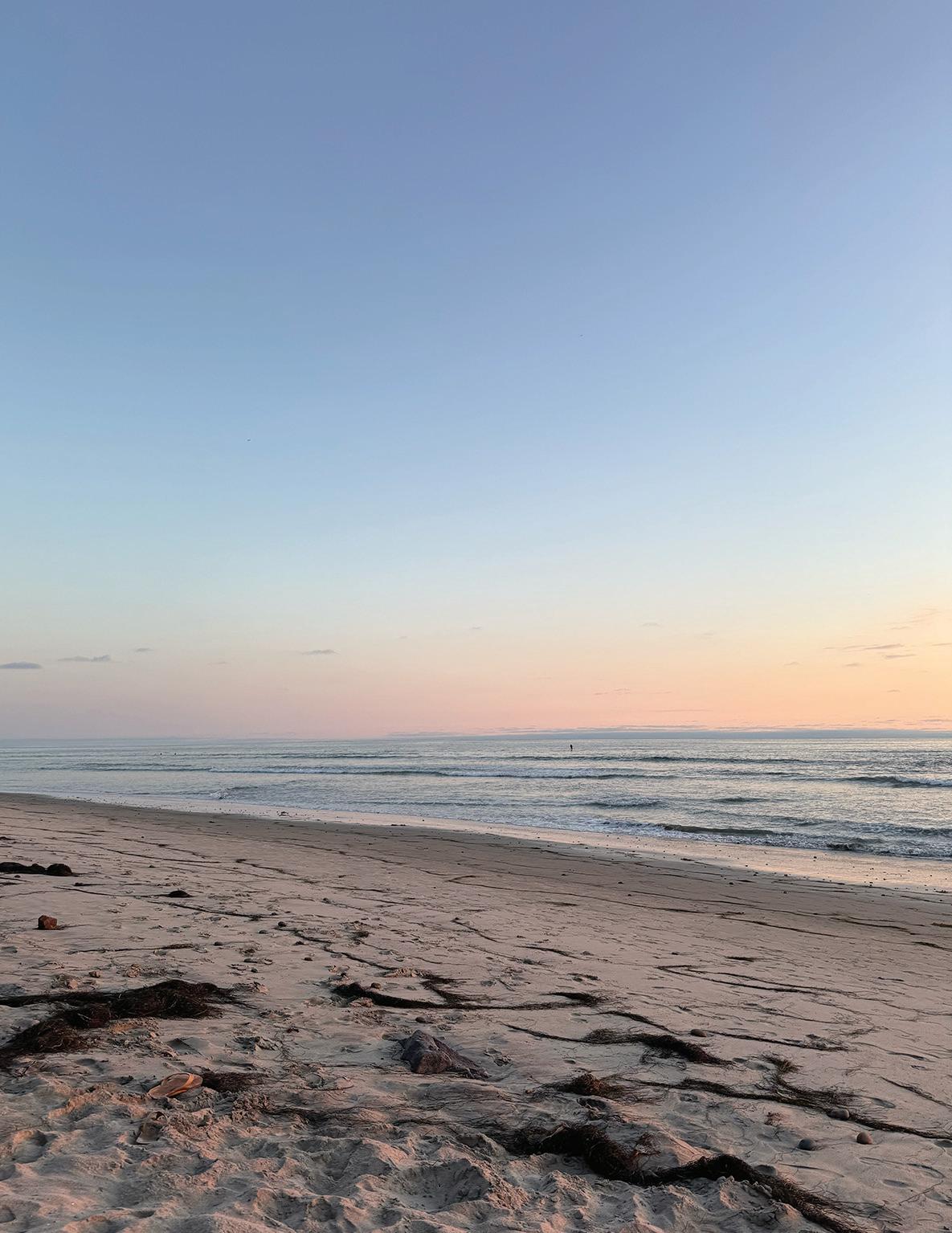
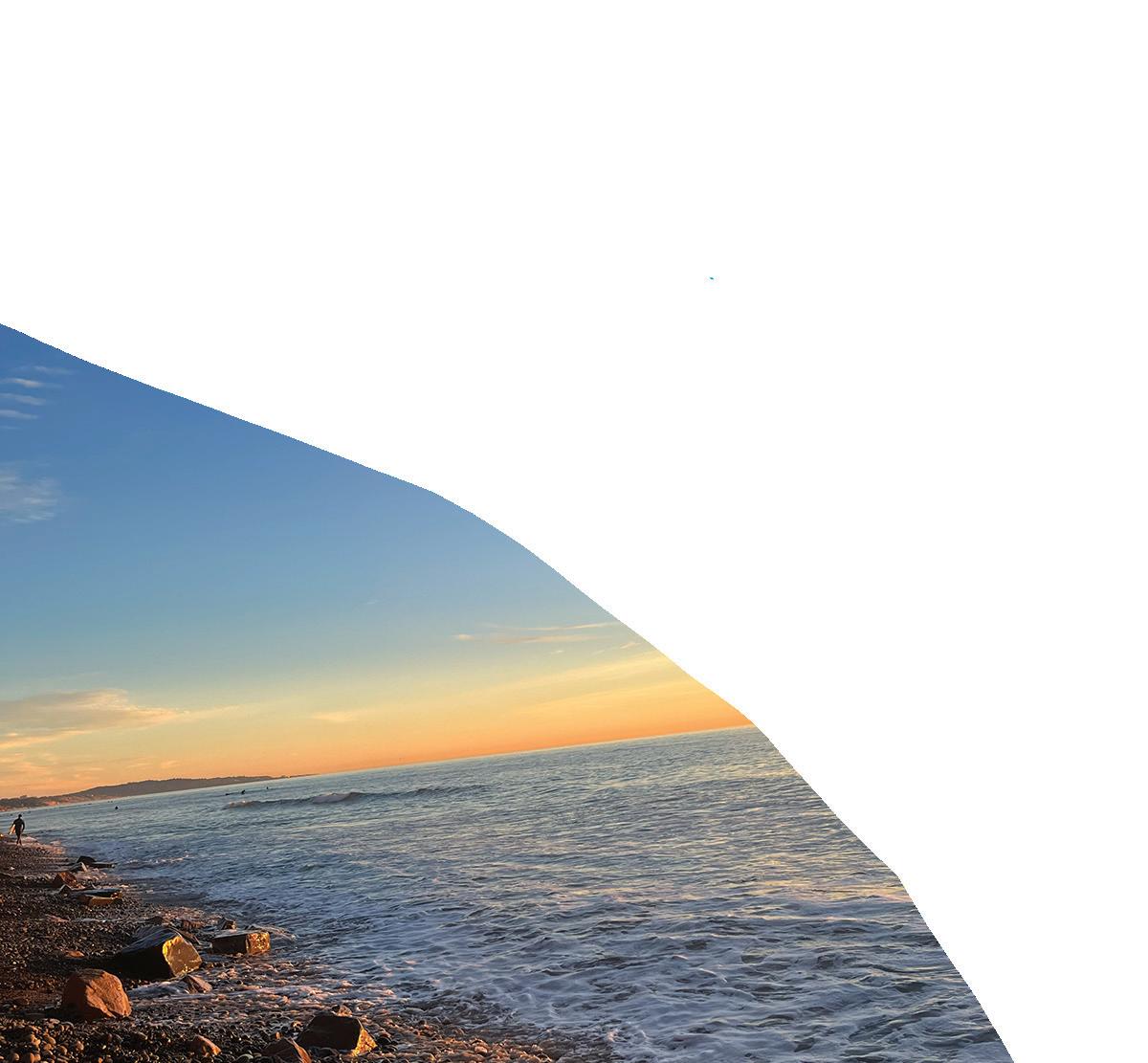
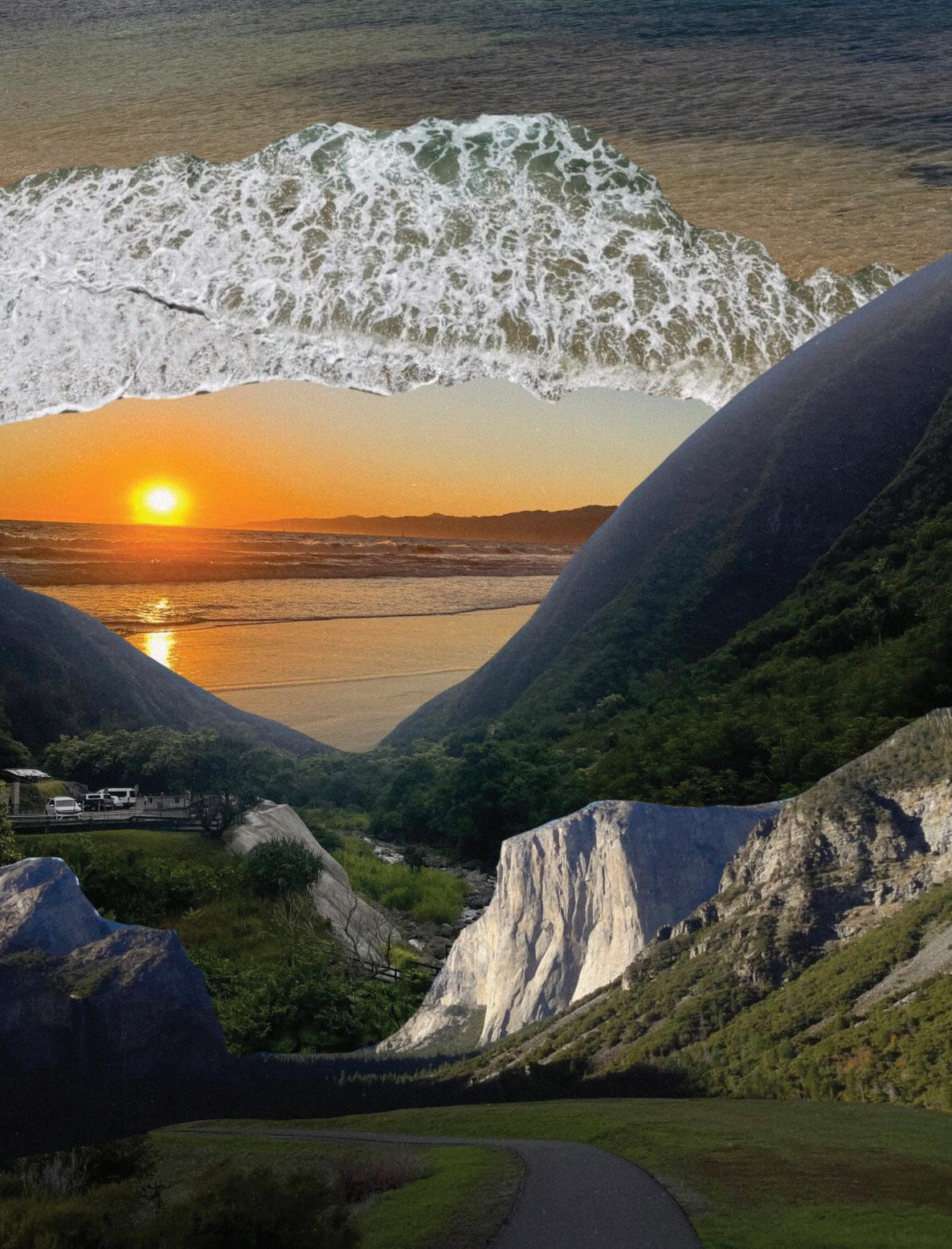
“It was sunset time, so there were a lot of surfers out there watching the sunset. there’s a superstition that when the sun immediately sets, there’s a green flash.” - Ella Renazco-sperling

IEach teacher’s path to educating is unique in their own ways. At Paly, a school in what Niche coined the second most competitive Bay Area public school district, these backstories are often overlooked. From aspiring veterinarians to those who always knew they wanted to become an educator, Paly’s staff boasts a myriad of unique journeys to teaching. Thus, in the spirit of exploration and inquiry, C Magazine interviewed seven members of Paly’s staff, asking them to answer one (not so) simple question: Why did you become a teacher?
’ve always wanted to be a teacher… I wanted to pass on my love for learning,” instrumental music codirector Katie Gilchrist said.
Growing up, Gilchrist had a dream to be involved in education. However, she never knew exactly which subject she wanted to teach. Originally planning to major in history, she shifted after discovering a music education pathway in college.
During her senior year of high school, Gilchrist joined a competitive band group that pushed her to strive for excellence. She enjoyed the atmosphere of everybody collaborating and working together
“Being in an environment where everyone was striving toward one goal made me think, ‘I want to do this when I get older,’” Gilchrist said.
Gilchrist’s experience growing up in Silicon Valley also shaped her perspective. Surrounded by academic pressure, band was a place where she could relax and be herself.
Now, she aims to establish the same environment where she teaches.
“I really just wanted to create that warm and welcoming community kind of oasis for the students here,” Gilchrist said.
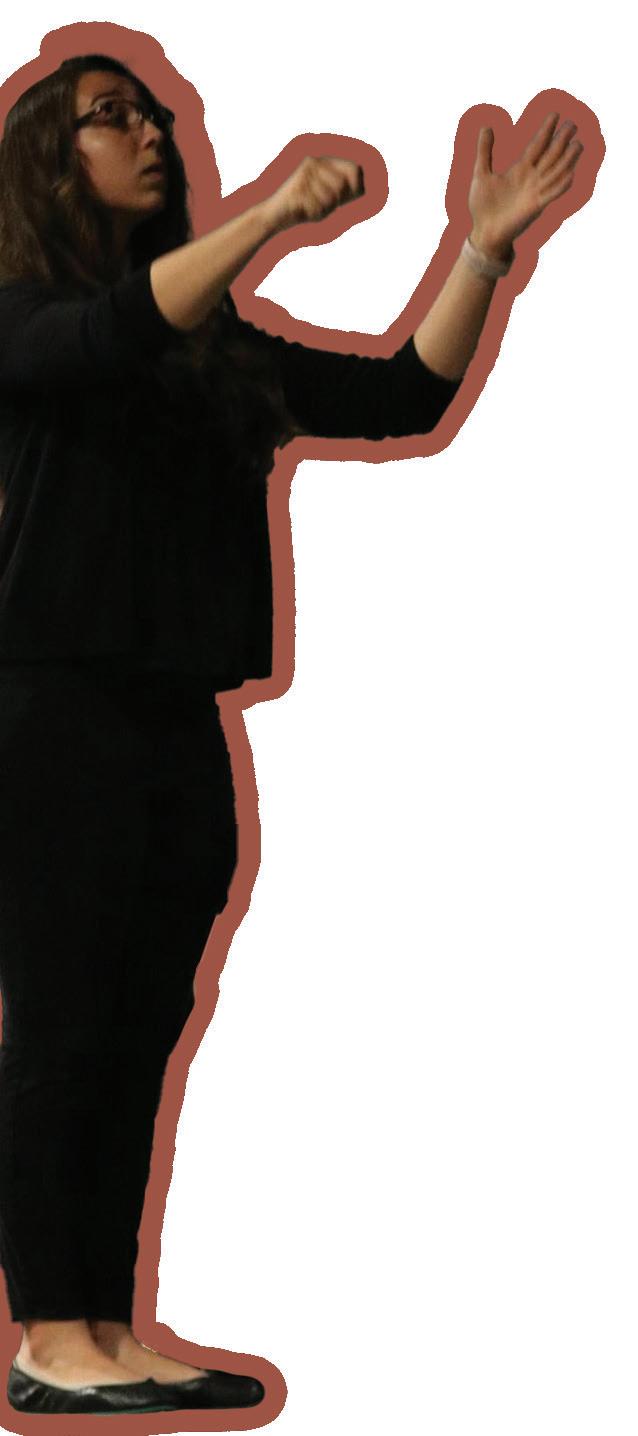
Now in her eighth year of teaching, Gilchrist values the sense of community that music creates in her classroom. That sense of connection became especially meaningful this year after the birth of her daughter, Eleanor. In honor of her daughter, Gilchrist conducted a piece she had chosen specifically for her at a concert.
“How lucky are we as musicians to have music to celebrate each other and to celebrate life,” she said.
Text and Design by KYLE CHEN, MAIA LIN and AMALIA TORMALA • Photos by QUINN BASEWITZ, ALYSSA BOND, KATIE GILCHRIST, GABRIELLE JUAN, RODNEY SATTERTHWAITE, ALICIA SZEBERT and SIMA THOMAS

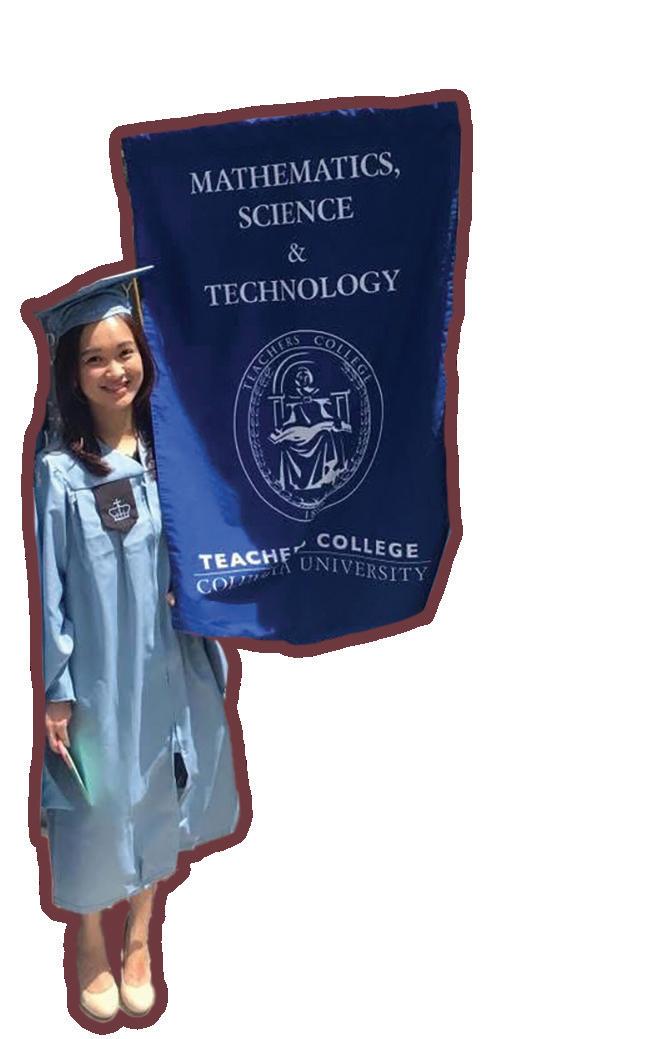
Paly math teacher Gabrielle Juan’s path to becoming a teacher was shaped by inspiration and observation. Growing up, Juan was influenced by her mother, who was a college lecturer that taught English in Taiwan.
“I grew up watching her being a teacher [and] sharing her philosophy about teaching,” Juan said.
However, it was her younger sister’s negative experience with education that had the greatest impact on Juan. As a young child, her sister loved school, but that enthusiasm soon changed after
“I saw her going from a child who really enjoys school to someone who [was] afraid of school,”
This experience stayed with Juan and motivated her to become a teacher herself – not just to teach, but to help create a positive environment
“That inspired me to be a role model for children,” Juan said.
At first, Juan didn’t envision a career in math. In fact, she actually wasn’t good at math in middle school. It was only later, after moving to the United States, where she discovered her love for numbers and ultimately chose to become a math teacher.
Now in her third year of teaching, Juan’s most rewarding moments in class are when students overcome challenges.
“Seeing them [students] struggle, but then figuring it out and having [an] ‘aha’ moment is really rewarding,” Juan said.
Ultimately, Juan advises students aspiring to become teachers to stay invested despite whatever obstacles they may face.
“It [teaching] does take some patience and some grit,” Juan said. “It will be challenging in the first few years, but stick with it and it will be rewarding.”
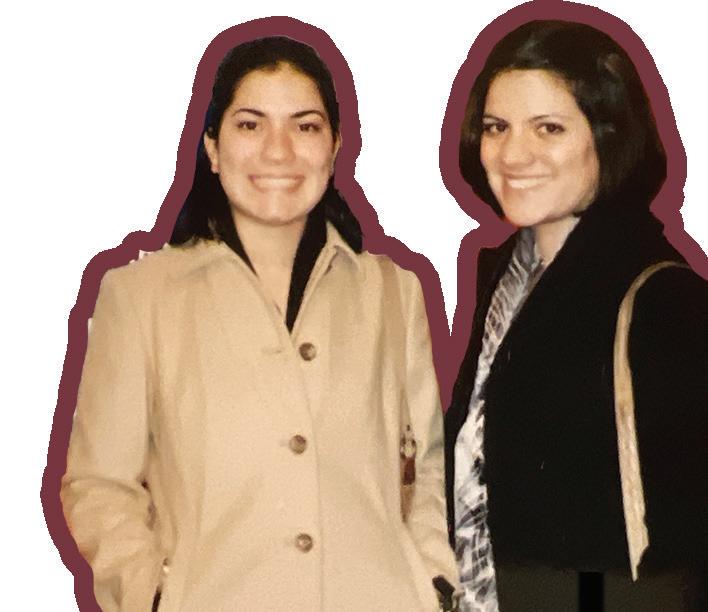
Librarian Sima Thomas, a Paly alumna herself, had no plans of teaching growing up and actually wanted to go into the publishing industry.
“The idea of becoming a teacher wasn’t completely crazy to me, but it was just not a job that I thought about,” Thomas said.
Everything changed during her senior year of college after she lost one of her best friends in a drunk driving accident. Because of this tragedy, Thomas decided not to follow her original plan of entering the publishing industry.
“I couldn’t quite bring myself together,” Thomas said. “So I moved to the Czech Republic to teach English, because it was this pretty easy thing to do.”
What began as a way to cope slowly transformed into a career Thomas had never previously envisioned for herself.
“Since I’d already done some teaching, it seemed like a somewhat natural path to go down,” Thomas said.
Thomas eventually returned to Paly and started teaching English before becoming a librarian. To Thomas, the most meaningful part of her job is the space she helps create.
“Anytime a student confides in one of us and says that the
library is somewhere they feel really safe… that’s really cool [to me],” Thomas said.
Looking back on her decision to teach, she has no regrets.
“As you live your life, you’ll have these [career-altering] moments and you can go one way or another,” Thomas said. “I just happened to come into this opportunity and I am so grateful, because it’s been an amazing career.”

Mathematics teacher Quinn Basewitz kicked off her first year teaching high school students at Paly. Basewitz said she always knew she wanted to be a teacher, though her interest really took root during high school, when she worked as a peer tutor.
“I found it incredibly rewarding when students I worked with, who were retaking Algebra, were proud of their progress,” Basewitz said.
Basewitz’s passion for math, though, preceded her peer tutoring stint.

“I have always loved math,” Basewitz said. “Some of my earliest memories involve spending time with my family and noticing the math all around us — whether we were counting M&Ms at the kitchen table, measuring ingredients while cooking or tallying the colors of cars passing by our porch.”
To further develop her interest, Basewitz attended Swarthmore College, where she double-majored in mathematics/statistics and computer science — plus several education classes each semester. Alongside coursework, Basewitz said she was a part of a teacher preparation program pairing classes with weekly observations in schools.
“Each semester,
I spent time in a different classroom, observing fifth- through twelfth-grade classes in public, private, suburban and urban settings,” Basewitz said. “Seeing such a diverse range of teachers and students helped me understand how classroom culture and teacher expectations shape a student’s experience with math. It made me excited to build my own classroom centered on collaboration and curiosity.”
Now in the process of building said classroom, Basewitz said her favorite part of teaching is having the opportunity to work with students on a daily basis and witness their problem-solving abilities in real time.

However, Basewitz said there exists one prominent challenge in her classrooms: the constant presence of screens.
“I appreciate the school-wide policy to have phone-free classrooms, but even computers can be distracting,” Basewitz said. “It is an ongoing challenge to figure out [the extent to which] screens belong in my classroom — some technology can be helpful in math, and students will have access to screens in college, but they can also prevent students from staying present and engaging with math and each other.”
In honing her classroom culture, Basewitz said she uses a lesson college taught her — the importance of cultivating a more expansive way of thinking about mathematics.
“I realized that higher-level math is less about finding a single correct answer and more about exploring relationships and crafting arguments,” Basewitz said. “Now, as a math teacher, I try to create a space in my classroom that fosters this deeper … type of thinking.”
Chemistry teacher Alicia Szebert initially worked as a research and development technician for an intraocular lens company, designing lenses for cataract patients. However, it was a job she found was driven by profit rather than the desire to improve patients’ lives.
“The whole for-profit motive of the business world really did not sit well with me,” Szebert said. “It wasn't about what made the best product for people's eyes. … Even when I came up with something that made the lens better, my boss didn't go through with because it meant less surgeries [and] then the ophthalmologist wouldn't make as much money. … So I quit after that.”
She then turned to teaching and never looked back. This move was driven by her enjoyment of
tutoring introductory courses in college.
“It was the type of tutoring where you had classes of students, wrote on the chalkboard, and gave lessons,” Szebert said. “That started the idea of teaching [for me].”
In the end, teaching was where she found a sense of fulfillment. Having taught high school science for a total of 16 years and Paly students for 11, Szebert enjoys watching students grow and learn to enjoy sciences.
“Seeing students learn how to learn and solve problems — those light bulb moments [when] they push through something challenging — you live for that as a teacher,” Szebert said.
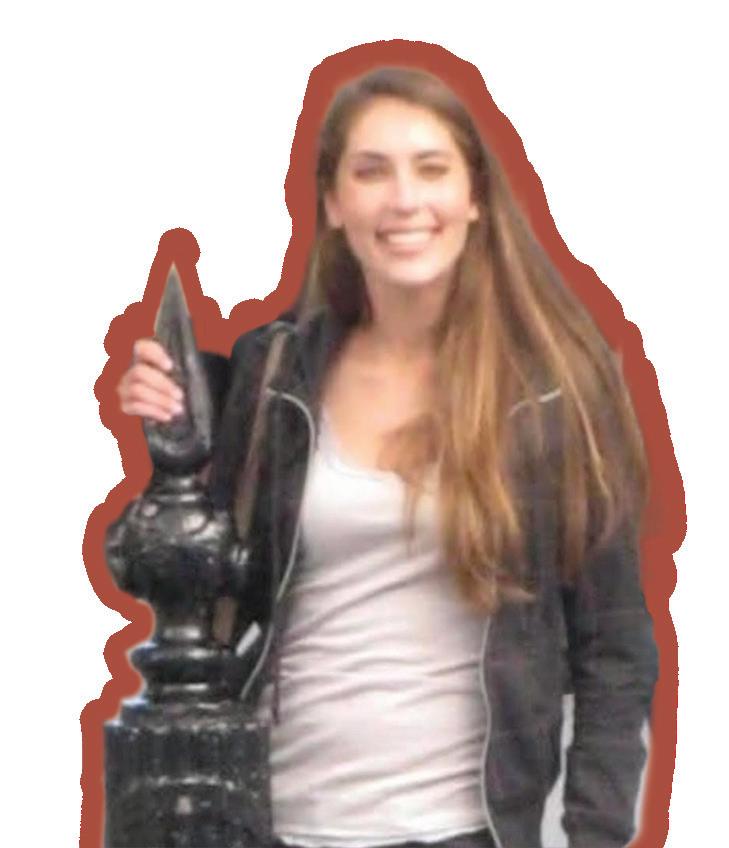

Associated Student Body student activities director and dance teacher Alyssa Bond has always aspired to be a teacher.
“My mom ran a daycare when I was a kid and I would force the children to play school with me and I was always the teacher,” Bond said. “I knew I loved the arts and working with students, so I wanted to stay in the arts and do that by sharing it with and teaching the next generation of artists.”
Each year, Bond looks forward to Spirit Week.
“It’s always great to see the floats come together, the dancers come together and students increase
their engagement with Spirit Week,” Bond said.
Although it is only her second year working with ASB, Bond said that the idea of spirit has always resonated with her and that the connection and community created in a classroom has always felt special.

R“I love [the] ‘aha’ moments when a student gets something they’ve been working on or they make a connection or they find something that becomes really important to them and I see that spark light up with them,” Bond said.
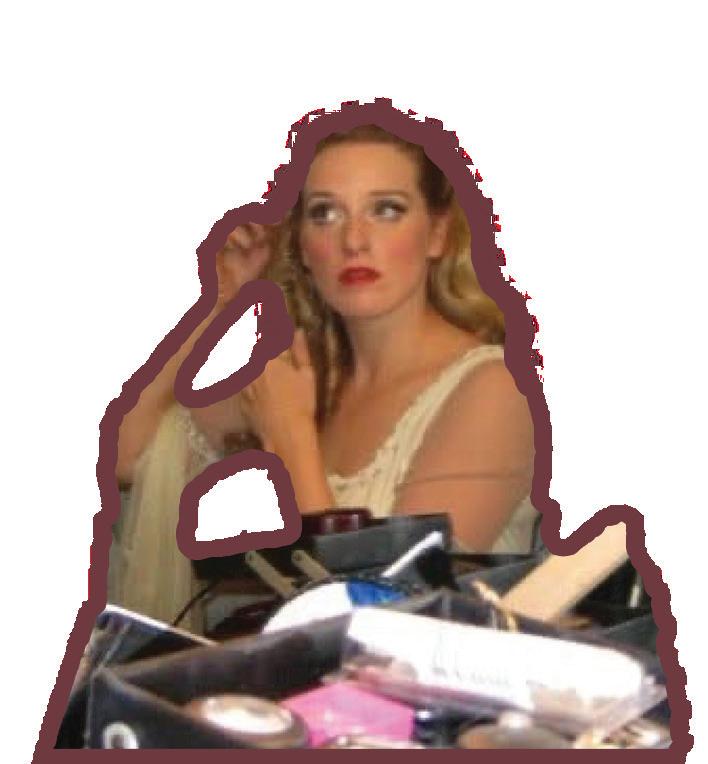
od Satterthwaite, the award-winning adviser of Paly’s Campanile newspaper and InFocus broadcast, began college with the plan to become a veterinarian — though, he said he knew this was not the career he ultimately wanted to pursue.
In fact, Satterthwaite stated this original plan to become a veterinarian was catalyzed by the pressure he found around himself. To comments instructing Satterthwaite to focus on math or science, he always responded, “What about [being] a teacher?” However, according to Satterthwaite, the answer to this question tended to be, “You can’t make enough [money] as a teacher.”
“I got to college, started my vet school training and did not like it at all,” Satterthwaite said. “[I] couldn’t stand the math classes, couldn’t stand the science classes, had terrible teachers, classes of 200 kids and couldn’t get any help.”

While attending Michigan State University, Satterthwaite mentioned he soon realized a pre-veterinary path was not the right path for him.
“I considered dropping out, taking some time off and trying to figure out what I want[ed] to do with my life,” Satterthwaite said. “I talked to a counselor at Michigan State who [wa]s like, ‘What do you want to do?’ And I [said], ‘I have no idea.’”
Then came his counselor’s recommendation: Take English classes. Soon, Satterthwaite said he began focusing on education classes. This is when he experienced what he called his “lightbulb moment.”
Satterthwaite said he loaded up on both English and education classes, before graduating and jumping right into teaching.
“I had to take one class in the summer to graduate, which I did,” Satterthwaite said. “Then I was applying for jobs, and I got one that fall, basically a month after my last class.”
This role was in Woodstock, Ill., but Satterthwaite said he
decided he wanted to live closer to his family in Michigan, where he spent 21 years.
Satterthwaite was then in Detroit for two years after moving to be closer to his wife, whom he met at a journalism conference. Then, after meeting and befriending Paly journalism adviser Brian Wilson, Satterthwaite came to Paly, where he has served as a journalism adviser for the last eight years.
Before becoming an adviser, Satterthwaite said he did not have any journalism training. However, while in Woodstock, the English department chair asked if Satterthwaite would be willing to advise a new literary magazine, to which he responded affirmatively.
“When I was applying for the job in Michigan, right before school started, the previous … yearbook and newspaper advisor retired, … so the principal called me and he’s like, ‘Your job is now newspaper,’” Satterthwaite said.
From then on, Satterthwaite served as an English teacher, a journalism adviser or both — a career he said fulfills him and makes him enjoy going to work every day.
“What I love about teaching is I get to work with young people who I find I get a lot of energy from,” Satterthwaite said. “I like the idea of just helping [to] be an advocate for people, young people, who often don’t get a voice. And journalism is that place where they can find that voice.”
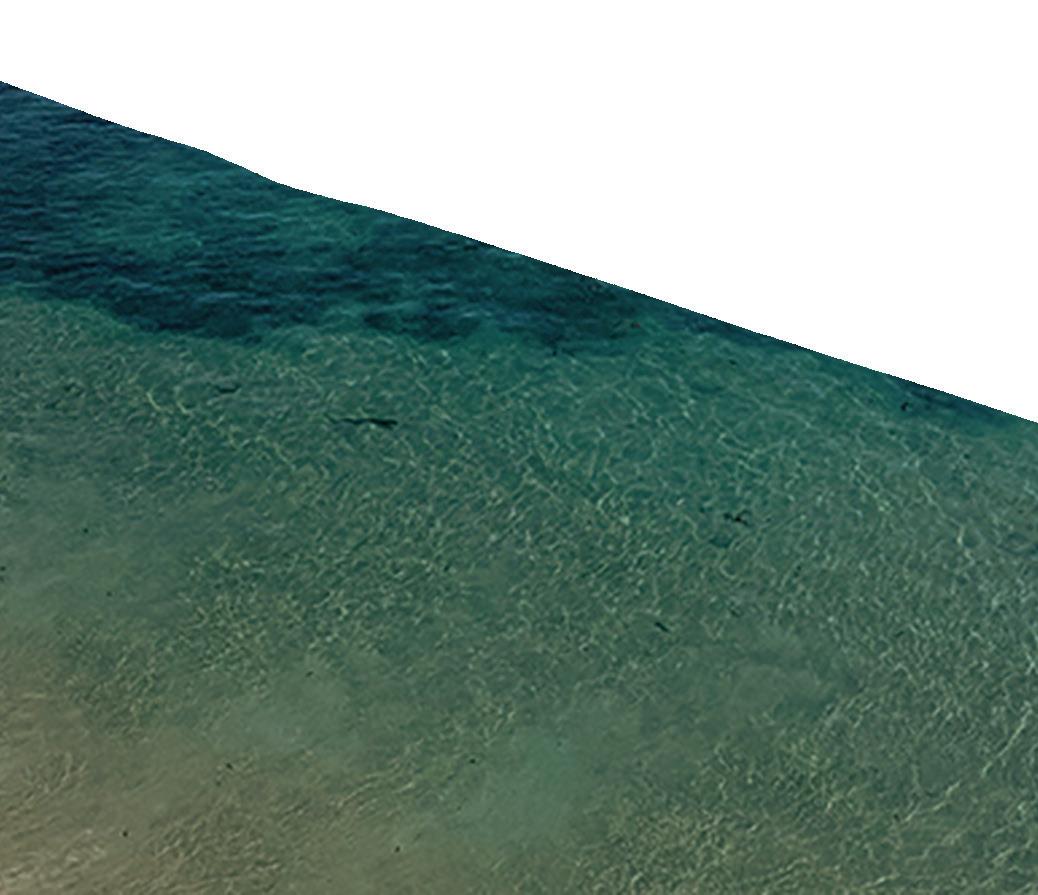
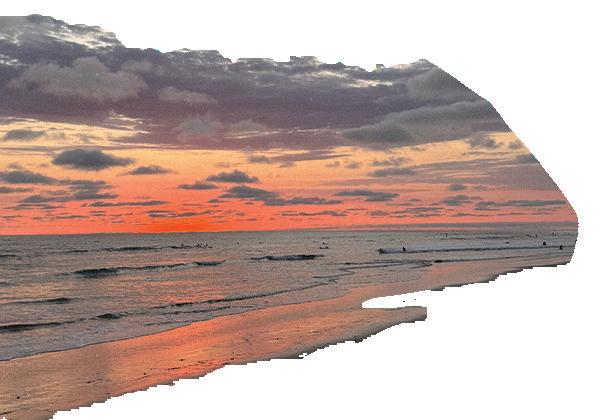
In between the Sierra Nevada and the Pacific, Paly students choose between...

“The beach is a nice, warm place where you can swim in the ocean. [Mountains] will never beat the beach, the feeling of sand in between your toes while playing spikeball or volleyball with your friends.”
Kamili Fossati-Moiane, 12
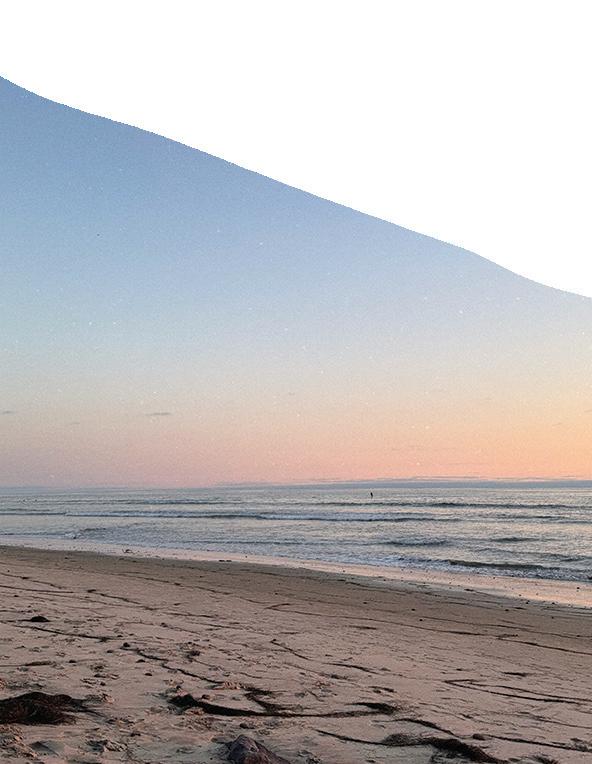




“Good
food, good vibes and good weather.”
Siena Marku, 10
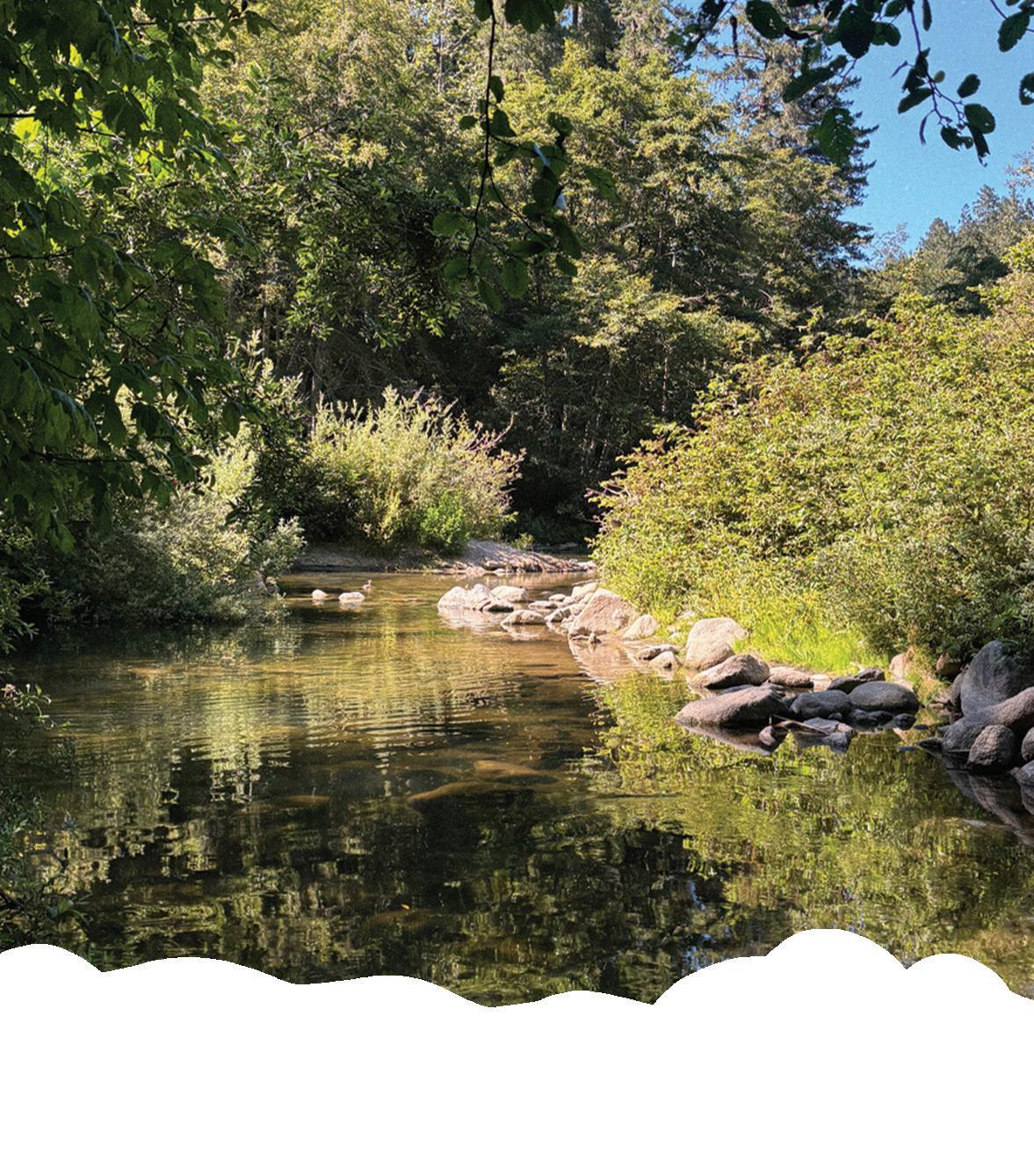



“I feel very fresh when I visit the mountains. Every time I go to the mountains, I feel a sense of newness.”
Vanessa Martin, 11
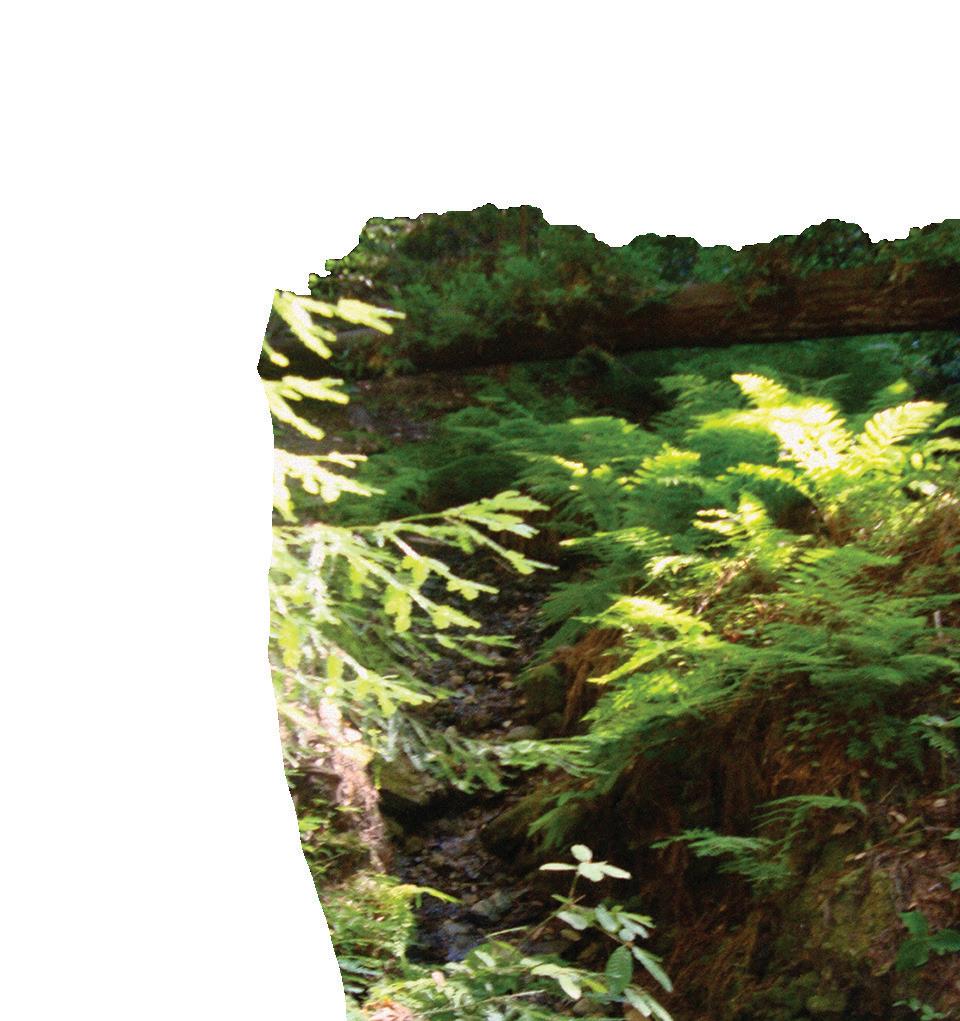
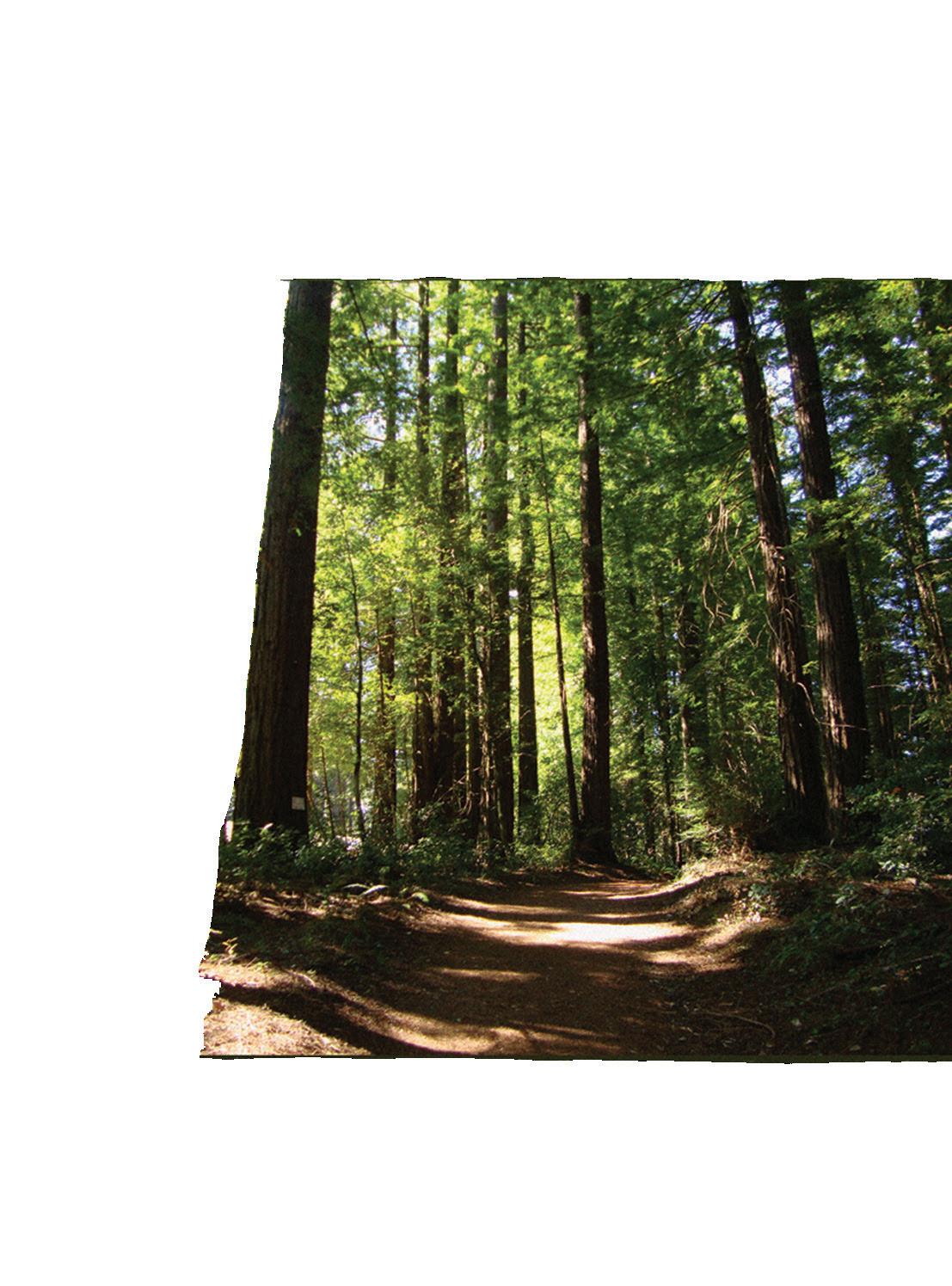
1. Purisma Creek Trail
2. Castle Rock State Park
3. Lands End Trail
4. Condor Gulch to High Peaks Trail
5. Monte Bello Open Space Preserve
1. Mori Point
2. Point Reyes
3. Men Resa State Beach
4. Twin Lakes Beach
5. Gray Whale Cove State Beach


The historic neglect of women’s health has left many female patients searching for answers
She sits in the exam room, adamantly describing her pain as clearly as she can — sharp, persistent and an obstruction to her daily life. The doctor nods before turning to face the patient, only to utter the six words she dreaded most: it’s probably all in her head.
This hypothetical scenario echoes the real experience of women across the coun try who feel dismissed and unsupported by the American healthcare system — includ ing Palo Alto High School junior Aurelia McKinney.
“A lot of my medical needs have been ignored, and the process to be able to even get what I need has been very difficult,” McKinney said. “It requires a lot of re ferrals and a lot of odd questions that you don’t want to answer because they’re em barrassing.”
For patients like McKinney, feeling min imized by the healthcare system has been a significant obstacle in her path to a clear diagnosis and treatment plan. However, according to obstetrician-gynecologist Dr. Jennifer Lincoln, the situation is not only inconvenient but also dangerous.
“When women and men go to an emergency department for the exact same complaint, a man is more likely to be seen sooner,” Lincoln said. “A man is more like ly to be given pain medication if they’re complaining of pain, and a woman is more likely to be given anxiety medicine. When women try to speak up and get told it is anxiety, it can literally cost them their lives.”
A study conducted and published by the Proceedings of the National Academy of Sciences confirms that women wait ap proximately 30 minutes longer than men to be seen in an emergency department. In Lincoln’s experience working in the labor and delivery department, half an hour can make all the difference, particularly during patient emergencies.
“When people come in with chest pain and go to the regular emergency depart ment, there are protocols about how quick ly they have to be seen, and they have to get an EKG [electrocardiogram, a diagnostic heart rate and rhythm test],” Lincoln said. “Sometimes, a pregnant woman will go to the emergency room. [The doctors] see that she’s pregnant, freak out and send her
immediately up to us [OB-GYNs]. But just because she has a baby in her uterus doesn’t mean that we should bypass this protocol that we know can save lives.”
The mismanagement of heart attacks in women can be attributed to an overall lack of research in the field, according to Dr. Julia Fridman Simard. As an Associate Professor of Medicine in Immunology, Rheumatology and Obstetrics, Simard emphasizes the danger of this gap.
“Women don’t necessarily present with the same symptoms, but they are still having a heart attack,” Simard said. “[Since]
Health Research (SWHR).
“There were actually federal guidelines that came out before 1990 that said that [medical research trials] shouldn’t include women, specifically of childbearing age, because of the fear of adverse effects from research,” Lefton said. “We now know it’s extremely safe to do research on women, including women of childbearing age, and in some cases, including pregnant women.”
To Simard, a major factor in the decision to exclude women from medical research stems from a larger scientific culture with a tendency to view female bodies as an

“It’s so internalized that we should just endure, as if the fact that we’re bleeding and we’re hurting is just what makes you a woman.”
Dr. Jennifer Lincoln
well-understood issue surrounding a woman’s body, there are two surrounding a man’s.”
This gap in understanding is further reinforced by the narrow framing of public perception of women’s health, often reduced to a stereotypical image of issues relating to menstruation and pregnancy. This limited view overlooks a broader range of conditions that disproportionately affect women, such as the autoimmune diseases lupus and multiple sclerosis. Nearly 50 million Americans have an autoimmune disease, and four-fifths of that group are women, according to a Stanford Medicine-led

“What’s really sad is that I see a lot of very basic gaps, and you can tell people were not taught how their body works,” Lincoln said. “I see people who can’t or would not be able to verbalize what a normal menstrual cycle is. They were never taught, [and] they internalize shame [when] they can’t ask about it.”
While Lincoln is used to seeing these disparities in a professional setting, this experience is common for students like Littke as well.
“I wish people cared and fought more regarding the fact that the responsibility of birth control falls mostly on the woman.”
“We know from lots of different studies that there seems to be a predisposition that biological females are more likely to be diagnosed with an autoimmune disease, particularly something like systemic lupus, than a biological male,” Simard said. “These health disparities have to do with biological differences or social factors, or a combination of the two.”
Elle Feira
“The majority of girls that I know don’t necessarily even know the four names of the cycles in the period, and they don’t understand the different things that come along with [that],” Littke said.
“Birth control is so complicated,” Feira said. “It has genuine short and long-term effects on the female body, and I don’t like that it’s understood to be a uniquely female responsibility.”
Despite never being on birth control herself, Feira feels as though she is one of the few people who are well educated about the medication.
“I’ve received enough information to make an informed decision, but I have talked to so many people that haven’t and do not understand the consequences and risks that come with [being on birth control],” Feira said. “I wish people cared and fought more regarding the fact that the responsibility of birth control falls mostly on the woman.”
Even for young women who have experience with birth control, any truly effective path can be hard to find.
While recognition of these diseases has grown over the years, it has not always translated into immediate changes in medical research practices.
“It wasn’t until relatively recently [in 2014] that the National Institutes of Health released this new requirement that you had to talk in your [research] grant [about] how you’re going to consider sex as a biological variable, the idea being [that people] can’t just keep studying only men,” Simard said.
While this mandate is a prominent step forward in reversing decades of misinformation and a lack of research, many women still feel the effects of this clinical gap in
“There are so many things that we’re doing … that are intended for male bodies and aren’t good for our bodies,” Littke said. “For example, the diet that’s recommended to the average person is what’s good for a man. I’m not necessarily saying that that diet is wrong, but there’s just not enough research to show the difference.”
Women’s health struggles stem from more than just being under-researched — the roots lie in a lack of education, according to Lincoln.

This striking lack of reproductive health literacy inspired Lincoln to take matters into her own hands. Alongside her clinical practice, as of April 15, Lincoln has amassed over 2.8 million followers on TikTok, with a platform providing approachable women’s health education and reducing the stigma around complex medical topics.
“I wanted to be a source of evidence-based information that also felt like you were just chatting with a friend,” Lincoln said. “I was a product of an abstinence-only, shame-based education. I went to Catholic schools all my life, and I got [sexual education] from a nun, so I really wanted to educate the teenage version of myself.”
Lincoln’s experience has made her aware of how confusing the female body can be to those who have not received adequate education about it. And as a content creator, she has seen how quickly that confusion can spread on social media.
“There’s a lot of misinformation on social media that tends to go really viral about the extremes, like that birth control will kill you or it will give you cancer,” Lincoln said. “There’s no nuance[d] discussion.”
The misinformation surrounding birth control is particularly convoluted, as it remains a topic many women — especially teenagers — already harbor confusion about.
“During freshman year, I was having very irregular periods, which happens to a lot of girls when they’re adolescents,” Littke said. “I went to the doctor to ask them for help to fix this, and essentially they told me that they didn’t have much [of a] solution for it, other than that they could put me on birth control.”
Despite being a proposed solution, in Littke’s experience, birth control only served to worsen her symptoms and the way she felt.
“I took [birth control] for a month, and it didn’t do anything to regulate my periods,” Littke said. “It just made me feel sad all the time, and it made me feel very helpless and frustrated that there was no better solution for me.”
Littke’s struggle to find effective treatments, and the distress that accompanied it, is not an uncommon reality for women as a whole.
“It definitely does not feel good when it feels like a system isn’t geared towards you and it’s really impacting your well-being,” McKinney said. “There are women who have severe depression or mood swings or other ways that they feel like they are out of control in their body, and they can’t get help, and that’s a really bad feeling.”
While the healthcare system is a major propagator of the collective sense of dismay among women who feel unsupported by their doctors, it is not the only culprit. Many of the assumptions embedded in these institutional gaps are also reinforced by interpersonal relationships and social expectations among women themselves.
“It’s so internalized that we should just
endure, as if the fact that we’re bleeding and we’re hurting is just what makes you a woman,” Lincoln said. “That gets passed down from mothers to daughters, and we just tell each other that this is the price of admission.”
Littke has observed this problematic pattern of minimizing women’s medical experiences firsthand.
“Just the other day, I was listening to a woman tell her friend about how she had to beg her doctor to be able to give her the resources she needed to deal with her menopause,” Littke said. “She eventually had to switch doctors because the doctor was basically just telling her to tough it out.”
Incidents like this are hardly isolated; rather, they reflect a broader theme of female suffering being downplayed and dis-
through their daily lives in terrible pain,” Littke said. “If they are to complain at all, it’s dismissed as insignificant and as if they’re exaggerating — when in reality that diminishing of the problem is very condescending and misogynistic.”
There is a clear feedback loop between how society expects men and women to respond to pain and how society responds to men and women expressing that pain. These stereotypes are not
people who think [they are weak] to spend ten minutes with me on labor and delivery [and to] watch a woman give birth unmedi cated, look me in the face and tell me wom en are weak.”
Misconceptions like this directly impact the prioritization of available women’s healthcare. Lincoln sees lim ited access to adequate care as a critical
“It definitely does not feel good when it feels like a system isn’t geared towards you and it’s really impacting your wellbeing.”

also dangerous when placed
“There is more so a culture of pushing through [pain] among men, versus the opposite form of understanding and care towards health issues among women,” Feira said. “This may affect decision-making, as a doctor may believe a female patient is just playing up symptoms or being too quick to seek help, stem[ming] from the belief that women are ‘too emotional’ or do not endure much pain before seek-
The societal portrayal of women as overdramatic and fragile has existed for centuries, according to Lincoln.
“When you look at the Greek root of the word [hysterical], ‘hyster’ means uterus,” Lincoln said.
“Back in the day, [ancient Greeks] thought that all of [women’s] problems were caused because our uterus was wandering around our body. They attributed everything to us being crazy because we were
Unfortunately, Lincoln has witnessed these deeply flawed stereotypes continue to persist
“Many people still think that women are very weak, and that we’re overreacting [when expressing a medical concern],” Lincoln said. “I would just ask
cialist in your area, you might have to wait six months to a year to get in,” Lincoln said. “We just sort of internalized the idea that, ‘well, I guess it’s not that im portant.’”
This feeling of minimization does not simply go away when a woman finally gains access to care; in many cases, it is actually reinforced within the exam room.
“If you’re just going to tell us we need to lose weight, it’s in our heads [and] that our labs are normal — why would anyone keep looking for care?” Lincoln said. “[Because of this, patients] put it off, then they devel op cancer or infertility, the very condition that could have been prevented.”
In some parts of the country, it can be difficult for a woman to secure a doctor’s appointment with a women’s health spe cialist. In others, it is nearly impossible.
“There’s something called a maternal healthcare desert, where there’re no OBGYNs, no midwives, no birthing centers or labor and delivery,” Lincoln said. “About one-third of all U.S. counties are maternal healthcare deserts. 50% of U.S. counties have no OB-GYNs. From 2010 to 2021, the percentage of Americans who live within 30 minutes of obstetric care went from 90% to 60%.”
While access to women’s healthcare remains uneven nationwide, specialty clinics like Radiant Women’s Health in Menlo Park have ensured that women in the Bay Area have adequate resources to navigate all of their medical needs, as explained by Trevina Oats, the Care Coordinator and Membership Liaison.
“We offer unlimited visits to our mem-
ed care. We have primary care, gynecology, -
“We know from lots of different studies that there seems to be a predisposition that biological females are more likely to be diagnosed with an autoimmune disease.”
Beyond clinical care models likeganizations such as SWHR work to address gaps in care -
“Our policy team works really closely with communicating with lawmakers to make sure that there is robust funding, not only for women’s health specific topic areas, but also for public health at large,” Lefton said. “[We make] sure [agencies] like the National Institutes of Health, the Centers for Disease Control and Prevention and more are receiving ample funding from the government each year so that they can continue tracking and doing
This focus on funding is instrumental in directly shaping the scope and quality of research on women’s health. For students like McKinney, research is an essential step forward in addressing systemic gaps — but

said. “[Many traditional clinics] really treat patients like a number instead of someone you have a relationship with and provide ongoing healthcare for.”
Founded by Jessica Kassis, a Stanford-trained OB-GYN and menopause specialist, Radiant Women’s Health was initially established to address a striking lack of menopause support available to middle-aged women. Now, it hosts an array of trained physicians in various fields to meet the needs of women across all stages of life.
“Radiant Women’s Health was designed to be a one-stop shop for women to receive comprehensive, evidence-based and compassionate care,” Oats said. “We’re accomplishing this by bringing together various specialties under one roof or truly connect-
of what’s going on and can figure out these problems much easier,” McKinney said. “It can be hard when [researchers] aren’t experiencing or don’t understand [these conditions], so having wider information to the general public is also really important.”
formation or sign up for emails to get our resources, because there’s already so many barriers to the women’s health ecosystem.”
While organizations like SWHR have done substantial work to address these barriers, Lefton affirms that there is always further advocacy, research and education to be done in order to level the playing field for good.
“We know that we’re working against a historic gap and already starting three steps behind,” Lefton said. “There are a lot of facets addressing the women’s health gap and solving it, and, like every good social issue, it’s going to take the work of everybody.”
Collective action is not limited to the work of policymakers and institutions. In fact, student-led, community-based efforts have produced incredibly meaningful results in furthering the cause. Junior Zoya Prabhakar, the co-president of the Paly Women’s Health Club, highlights the success the club has seen when promoting puberty and menstrual education through local efforts.
“This year, we hosted a drive where we got together a bunch of hygiene items and made care kits that we distributed to nonprofits and underprivileged girls who don’t have access to the same supplies that we do,” Prabhakar said. “It fosters a really good environment within Paly, where a bunch of girls can just come together.”
“Spend ten minutes with me on labor and delivery, watch a woman give birth unmedicated, look me in the face and tell me women are weak.”
Dr. Jennifer Lincoln
Efforts like those of Paly Women’s Health Club and similar organizations highlight the variety of pathways possible to enact change, even as larger systemic problems remain.
SWHR aims to meet the need for accessible information by ensuring that reliable education is easily accessible.
“All of our resources are completely free to download, use and share on our website,” Lefton said. “Nothing is paywalled. We’re really adamant about making sure that you never have to share personal in-
“A full change wouldn’t be feasible in the short term, but meaningful progress could happen in so many ways,” Feira said. “There are so many small changes that could have really impressive benefits.”


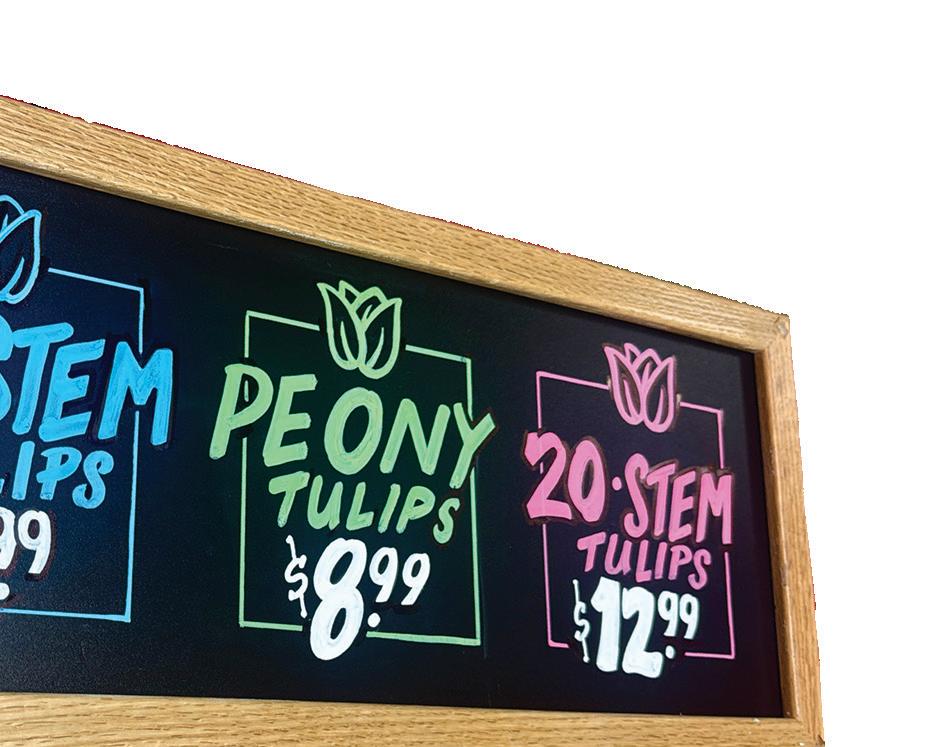
oopy script fonts are accompanied by vibrant color palettes and hand-painted illustrations on the blackboards of Trader Joe’s, representing unique items ranging from the Freeze Dried Strawberry Pieces to the Ketchup Flavored Lattice Potato chips. Vibrant pinks, blues, and greens light up the entire storefront with fun graphics and diverse visuals.
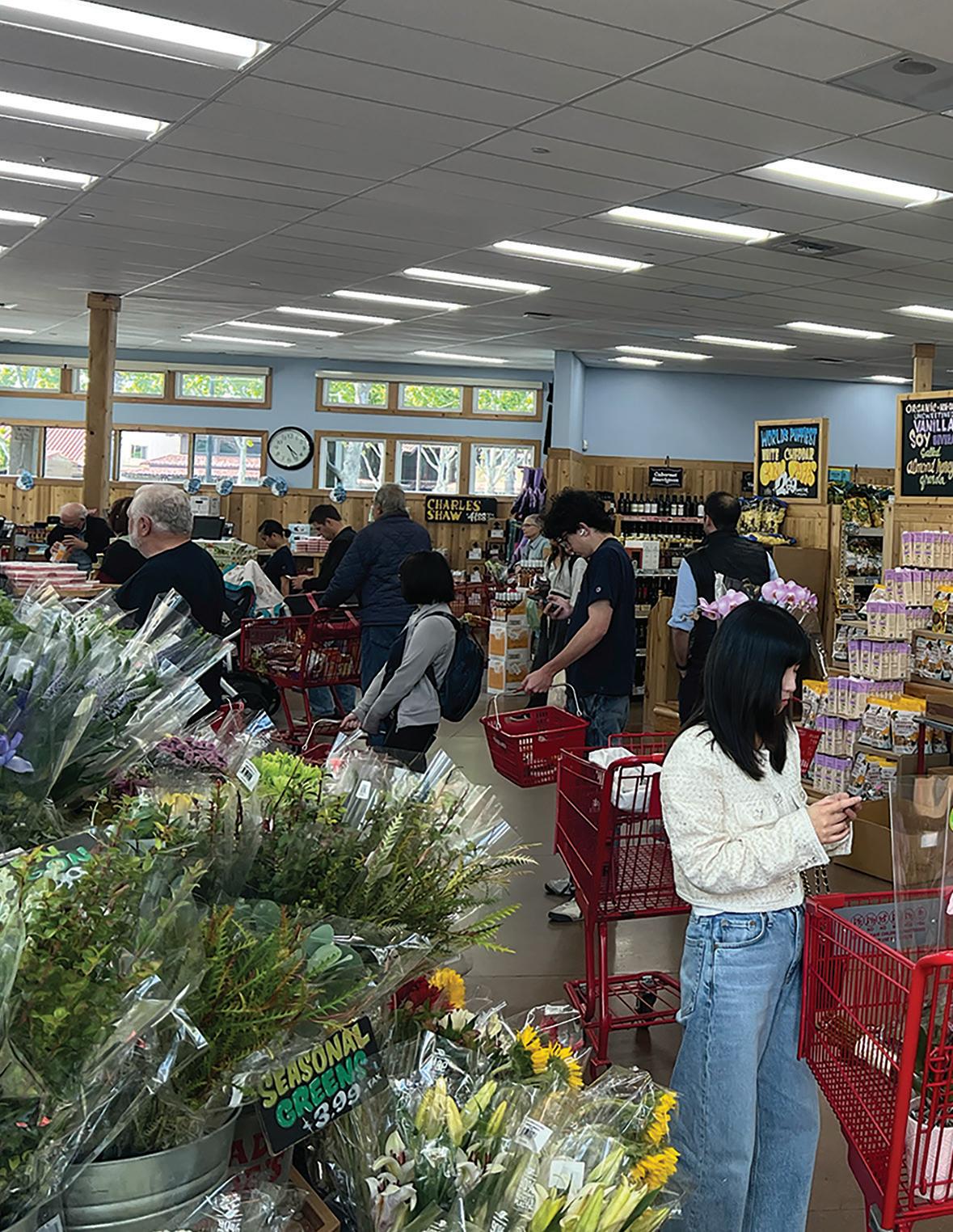
These signs have long been an integral part of every store. On the surface, they seem to primarily help advertise new products and describe product details. However, as they decorate the window storefronts and accessorize the shelves, these signs can actually have multiple functions — influencing what cus tomers are drawn to, especially for students who frequent Trader Joe’s be tween classes.

Sign artist Carmen Churchill has worked as a Trader Joe’s employee in Portland, Ore., since 2023. When she initially started, how ever, the path to becoming a sign
ers I was interested in art, and they let me practice with a few signs here and there, but it was never official ... When a spot opened up at my new store [in Portland], they offered me the position.”
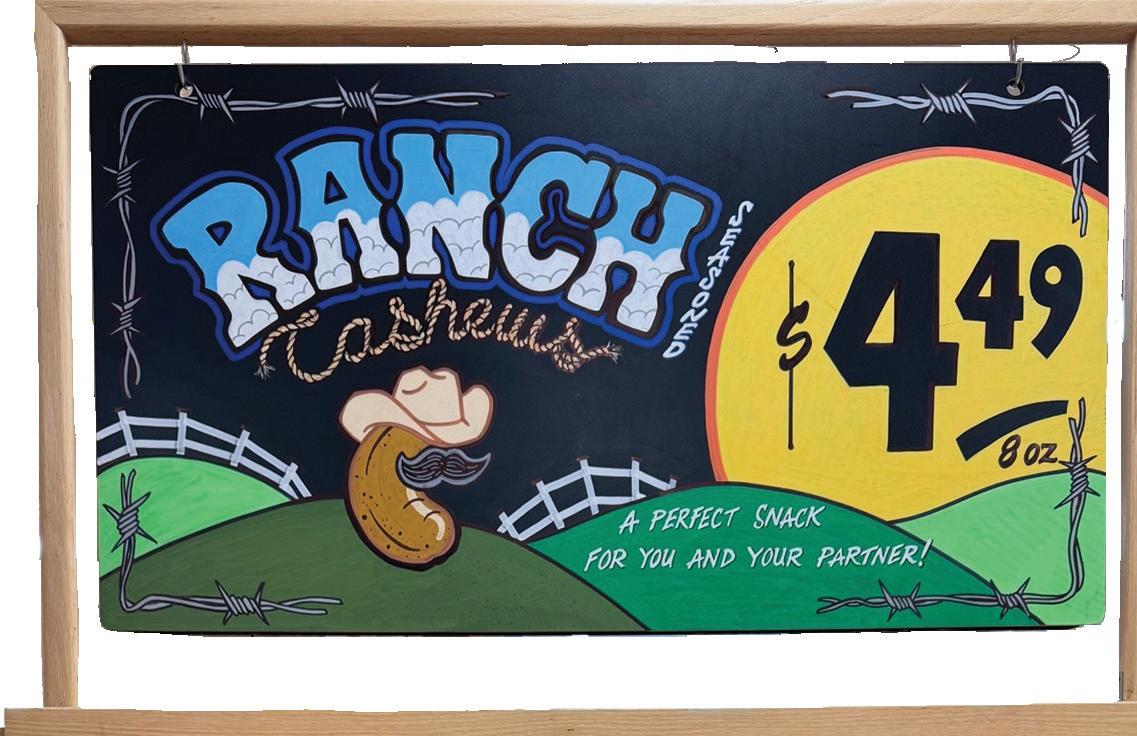
For Trader Joe’s sign artist and former Disney artist Jason Maloney, who is based in Edmond, Okla., most design inspiration and color palettes for each sign come from the product’s packaging or the sign’s theme.
“I went with a cool western theme for some ranch seasoned cashews,” Maloney said. “They really give us a lot of room to flex our creativity as long as the price is very big, the title of the product is easy to read and there is a clear tag line written somewhere on the
An alternative route for sourcing design ideas is through searching social media.

a black marker, Churchill brings her signs to life.
Each line, shape and color of the Trader Joe’s signs introduces an element of fun and creativity to the job as a Trader Joe’s employee.
“Some of the most fun signs I get to do are display boards,” Churchill said. “They go on the ends of the aisle at Trader Joe’s and are a few feet wide. My favorite display boards are general ones, where I can put a phrase and an image on it instead of just names of products and prices.”
Having a job as a sign artist can even have an impact on one’s life outside of their job. This job can push them to be more creative in their day-to-day life and practice artmaking, according to former Trader Joe’s sign artist Alexa Maldonado, who worked at Trader Joe’s from 2022 to 2024 in Long Island, N.Y.

“It took almost a year for me to get on the art team at Trader Joe’s,” Churchill said. “I told my manag-
“I get a lot of inspiration from other artists I follow on Instagram or TikTok,” Churchill said. “If the packaging is cute on a product, I often will borrow elements to use as well. If I’m really in a slump for inspiration, Pinterest is great.”
Churchill first sketches a design with chalk, then uses an extra large tipped POSCA white marker to fill in the large price and product title on a pre-painted black board. After drying each layer of color with a hairdryer and cleaning up linework with
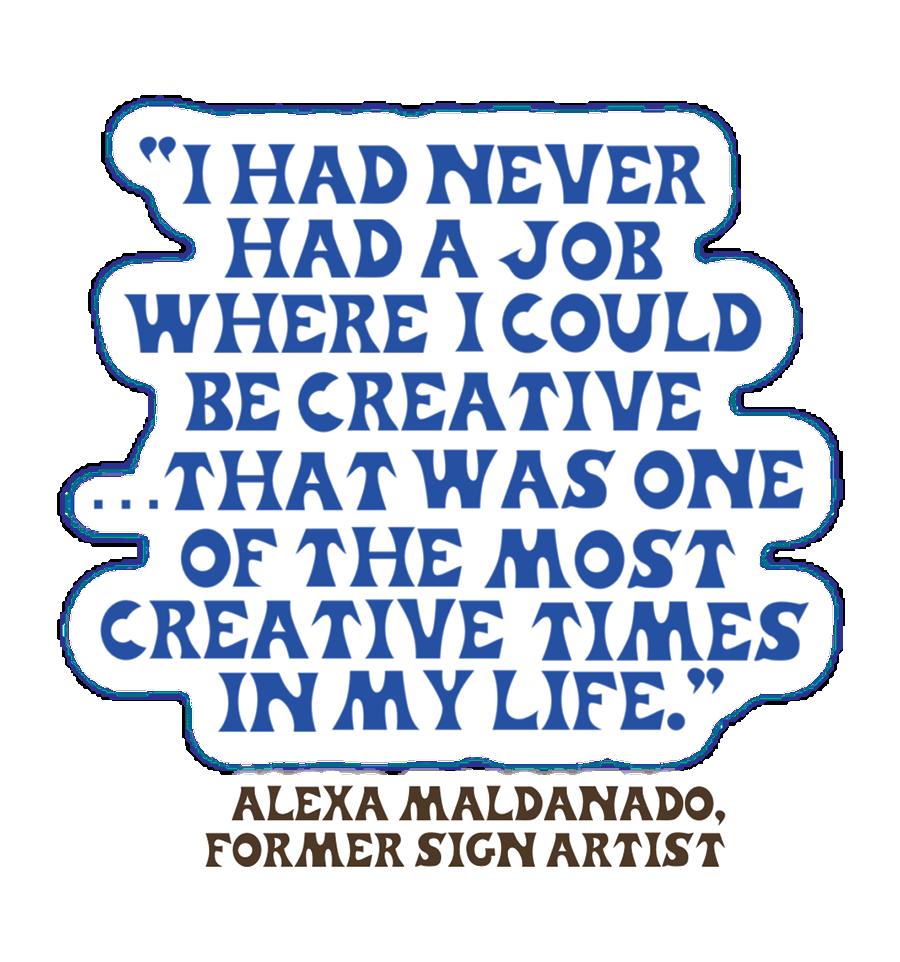
“I had never had a job where I could be cre ative,” Maldonado said. “That’s like the only job where I’ve had the oppor tunity. It was real ly awesome just being able to flex that muscle and express it. I miss it sometimes because that was one of the most creative times in my life.”
According to Churchill, the



for display signs. Oftentimes, artists can use these signs to discover their personal style and artistic preferences.
“Every sign artist has their own style and techniques they gravitate towards,” Churchill said. “I like bold, cartoonish fonts, while I’ve had coworkers who tend to use script or serif fonts more.”
The freedom of creativity when illustrating also gives artists an opportunity to express parts of their lived experiences and skills. For example, Maldonado often incorporated features of her personal background into her signs.
“I’m half Mexican, so I would look at Mexican sign art [for inspiration] because they have a really big sign painting culture there as well,” Maldonado said. “I would try to mimic the fonts in that style, and sometimes the colors, which were very bright. That’s how I would express my creativity, mostly with the colors and using fonts that maybe aren’t so common.”
Besides personal expression, these signs have become an immensely beneficial aspect of Trader Joe’s for both employees and customers. Bella Gertsch, senior and Trader Joe’s employee, said that these signs helped her get accustomed to the store itself.
‘Oh, that’s a really good price. Trader Joe’s is the only store that I’ve been to that has these cute, artsy signs. If you go to any other Trader Joe’s, all the signs are different.”
Moreover, these signs have proven to be effective in marketing specific products and encouraging customers to buy products they would have otherwise overlooked.
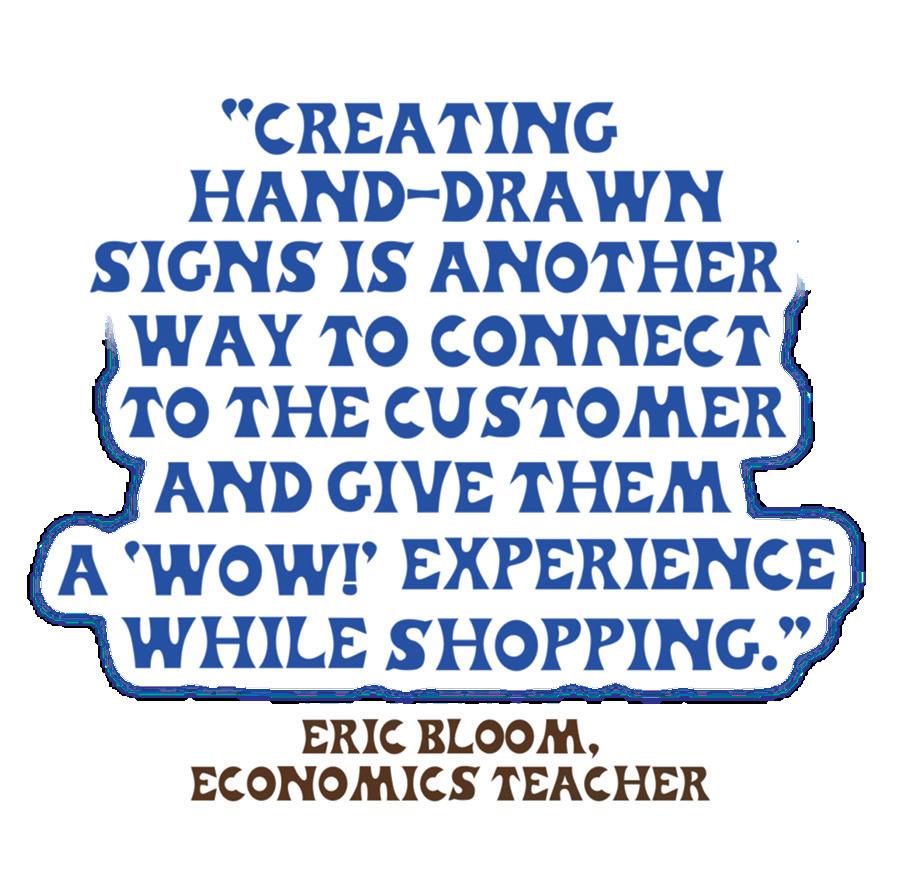
drawn signs is another way to connect to the customer and give them a ‘Wow!’ experience while shopping.”
Overall, it’s through these signs that give the brand its local, comforting and nostalgic personality — an element that is a uniquely crucial part of the Trader Joe’s brand.

“I had a coworker let me know a customer came up to tell them how great all the display boards looked in our store,” Churchill said. “The customer said she was an artist herself and just had to comment on how eye-catching they all were and [that] she probably bought something off of each one. It’s always nice to hear a compliment like this, as some days I’m not sure if anyone even notices the signs I make.”
“They [Trader Joe’s] can get you to think Trader Joe’s is interesting, valuable, tastes good [and] convenient,” Bloom said. “That is all part of the way that they’re trying to brand that they’re not a big corporate entity, even though they are. The signage is just one of the things that they try to do to signal to their customers that they are different, that they are unique and that they are local.”
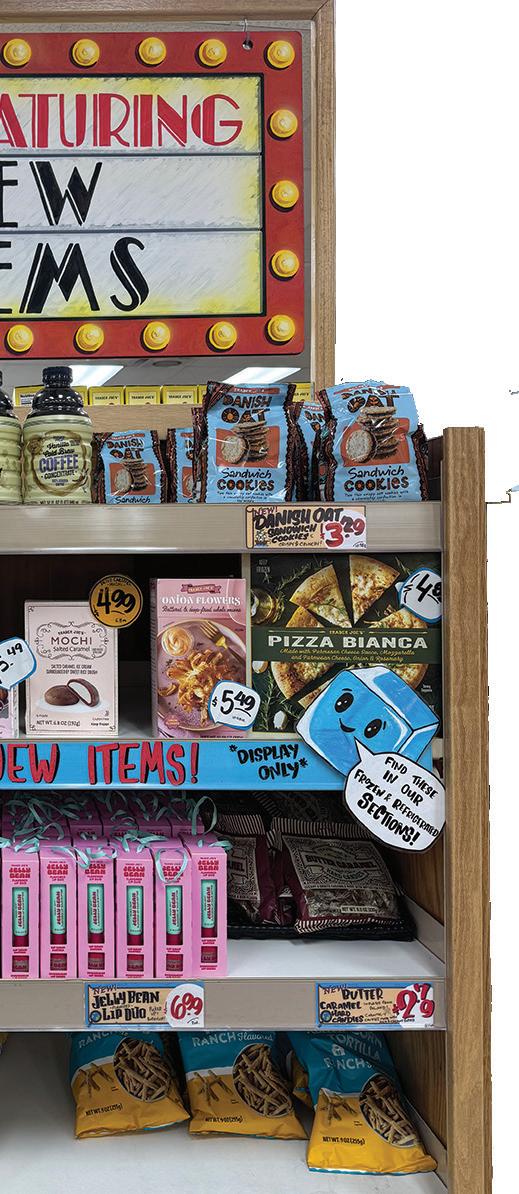
“The signs helped me remember, in the early days, which aisles were what,” Gertsch said.
“I’m a visual person and when I see a sign [with] the big numbers, like $3.99, I think
These signs have be come a staple in Trader Joe’s stores across the coun try. According to Paly economics teacher Eric Bloom, not only do they add personality to each store’s interior design, but they also play into strategic marketing tactics to increase customers and brand name recognition.
In fact, the decision to change these product signs every few weeks is intentional. According to Bloom, the signs prompt customers to be more attentive on what new foods the store has to offer.
“The idea of doing it was to periodically change it up to make people think about you,” Bloom said. “[Younger customers] will notice as [they] go in and think, ‘Oh, that’s funny. Last week they had this one, and now they’re changing it.’ That’s part of how a store gets you to put your foot into the store.”
Signs at Trader Joe’s also help elevate the shopping experience by making a positive impression on their customers. They also contribute to the brand’s audience engagement, even resonating with customers.
“The customers love the signs we make, and they can’t believe that they are all hand-drawn in-house and not printed,” Maloney said. “Working at Trader Joe’s is really about customer experience, and creating hand-
While these signs help enhance Trader Joe’s marketing, they simultaneously serve another one of Trader Joe’s goals. Specifically, handdrawn signs support the brand’s mission of keeping authentic, creative art across the nation.
“Trader Joe’s has always been a huge supporter of individuality within the team,” Maloney said. “They also love art and have hand drawn artwork all around their stores, wherever they are in the country.”
In a world of increasing technology usage and a push to computerize artwork, these handmade designs help preserve the art of whimsical, “made-with-love”, signmaking.
“I’m really happy that [sign painting] is a real job that exists,” Maldonado said. “Yes, you can use computers for it, but I really respect the fact that it’s handmade and it’s traditional media.”
Text, design and art by TALIA BONEH and SOPHIA ZHANG • Photos contributed by JASON MALONEY and BRI RILEY


Then all of a sudden, the sound of explosions rings throughout space. Blinding neon laser beams flash back and forth between swerving ships as their drivers frantically run their fingers across the hologram control panel in an effort to regain control of the spacecraft.
An exhilarating image like this is often what comes to mind when people bring up the topic of science fiction. However, technological aspects of sci-fi are only a recent development in film. The genre actually dates all the way back to the Industrial Revolution.
The Industrial Revolution took place from the late 18th to early 19th century, and it was defined as a shift from manual labor to machine-driven manufacturing and leaps in technology, according to an article by the World Economic Forum. Toward the end of the revolution, a little over two centuries ago, author Mary Shelley wrote the fictional classic known today as “Frankenstein”. The story is about a scientist named Victor Frankenstein who unintentionally creates a sentient monster. When later rejected by society, it wreaks chaos in Vic-


The science fiction genre’s evolution with recent blockbuster films like Project Hail Mary has spiked interest in the behind-the-scenes of filmmaking
tor’s life. Mary Shelley’s Frankenstein is a novel that, today, still defines the standard for science fiction, according to Shane Denson, a film and media studies professor at Stanford University.
“‘Frankenstein’ is often regarded as the first science fiction novel,” Denson said. “Importantly, it is also about gender, embodiment and our material entanglements with novel technologies. These topics travel from the Industrial Revolution and into cinema and other media.”
Frankenstein emphasizes the fear of change and technological development outpacing human adaptation during the revolution. Although sci-fi tends to include various futuristic elements, Denson notes that many people misinterpret these as solely predictions of the future.
“In some ways, sci-fi is always about contemporary changes in technology as much as it is about the future,” Denson said. “The history of Fran kenstein films, for example, is the history of exploring the cutting edge of cinematic technologies through the self-reflexive spectacle of artifi cial creation, or the animation of the creature.”
The approach taken with science fiction has changed in recent years, ac cording to Denson. Science fiction’s themes have shifted to reflect the status quo of science rather than anticipatory anxieties.
“I see sci-fi, especially in mov ing-image media, as a largely self-re

flexive genre, so its main theme is typically its own technological medium,” Denson said. “What this means, then, is that it’s largely changes in the media of film, television, digital [and] imaging that have led to these changes, though of course not in a vacuum.”
With the recent movie adaptation of Jacob Elordi’s “Frankenstein” in 2025, the retelling of the story through a modern lens makes the influence of the medium much more apparent. The concerns around unchecked technological advancements during the 19th century are slowly turning into a reality.


“The recent wave of Frankenstein films from last year and this year are in some ways motivated by the most recent changes, including A.I.,” Denson said. “Sci-fi series like ‘Black Mirror’ do something similar. They may seem to be about future scenarios, but they are just as much about the most recent media technological changes.”
Currently, in the science fiction genre, the predominant medium is visual media and filmmaking. In the genre of science fiction media, technologies are constantly developing, which causes difficulty when trying to constantly produce original concepts. Greg Grusby, director of communications at Industrial Light and Magic, says that during production, planning is the most crucial yet challenging step of developing cutting-edge graphics.
“Each project, regardless of genre, brings with it a different set of challenges,” Grusby said. “How do we create a visual that’s completely new and compelling, something we’ve never seen before? We pull our teams together to brainstorm what type of effect we could create that’s unique and would help the filmmaker tell this particular story.”
As director of communications, Grusby is responsible for global communications and publicity strategies for the company, which includes internal and external communications.

“Filmmaking is the ultimate collaborative art form and developing visuals that are totally fresh and new is always a challenge.”
Director of Communications, ILM GREG GRUSBY
and visual effects producer are seeking to identify any shots or scenes that will require visual effects to help tell the story,” Grusby said. “This could mean extending practical sets with digital extensions, creating a fully digital environment, adding or augmenting crowds, creating a digital character or vehicle or creating CG smoke, sparks, fire, water, wind or other atmospheric effects.”
After fully drafting a contract and signing, the team starts by creating a concept, making sure that the director is overseeing visuals for approval.


graphic (CG) elements to be added to it goes to our layout team, where a virtual camera is generated that precisely matches the production’s lens and camera movements,” Grusby said. “So when we add our CG elements, there is no discrepancy in the movement.”
The last stage is compositing, when all of the separate elements are brought together and combined into the final cumulative image. This multi-step process is grueling, yet crucial to a high-quality final
Industrial Light and Magic (ILM) is a visual effects company that was founded in 1975, and it contributed effects for films such as “Transformers One,” “Ultraman: Rising” and most recently, “Project Hail Mary.” ILM’s long history is paired with an equally complex planning process. Grusby shares more about the important details of how high-quality effects are produced from paper
“When we break down a script, our visual effects supervisor
“Typically, the first stage of a project in volves one of our visual effects supervisors going on location to supervise the filming of the movie and ensure that any and all necessary data is captured during produc tion that our artists may need to craft the visual effects shots as envisioned,” Grusby said. “In parallel, our art department is often designing visual concepts for charac ters, vehicles and effects that will appear in the film.”
With approved concepts in hand, Grus by explains that the digital modeling team will begin creating the necessary objects, turning two-dimensional concepts or rough [three-dimensional] models into full-reso lution 3D geometry that artists work with during the length of the project.
Once the full rigging and animation process is complete, the cut is shared with a VFX editor at the company who up dates the edit to match the picture editor’s cut, according to Grusby.
“Each shot that requires computer


Francisco, also struggles to generate original and innovative narratives in storytelling.
write stories too…[now], it’s possible for a kid in their bedroom to make
narrative rather than a dystopian one.
“The inspiration you had is not enough to make it [the film] good.”
A couple of years ago, a method to easily combat this challenge was developed: artificial intelligence. With the rise of AI, the process of creating and editing content from simple ideas has become much more approachable and will make the production of visual effects more affordable as well as practical, according to Carman.
“I think AI is the latest and greatest invention in the history of filmmaking,” Carman said. “The last big revolution we had was digital filmmaking[that gave]the ability to edit pixels on a screen, which gave rise to Jurassic Park and Star Wars. I see generative technology or AI as a generalized technology that enables you to generate new pixels in new ways, and to help you
set the new gold standard for what can be accomplished in the world of cinema. .
“A lot of people in the [film] club really liked it,” Bittinger said. “I think Ryan Gosling’s a very strong actor, and it’s pret ty remarkable what they’ve done. I’m not fully aware of the technical parts of it … But I heard that the little creatures were done with puppets.”
In the movie, science teach er Ryland Grace wakes up with amnesia and has to solve the mystery, causing the sun to die out. The director prioritizes a hopeful
“[The sci-fi genre is] something that is rapidly developing and offers a lot of hope for people,” Bittinger said. “I know that Project Hail Mary coincided with the launch of Artemis II. I have no idea if that was planned, but they were aware that the NASA mission would happen at this time,
The Artemis II launch on April 1, 2026, is a significant milestone in space travel, marking the second deep space mission since 1972, according to NASA. Due to the unexpected coincidence of these two major space-focused events, the future seems more distant and difficult to predict than
“Mary Shelley’s novel ‘Frankenstein’ raised questions about the broad reorientation of human embodiment, labor [and gender in the wake of the Industrial Revolution,” Denson said. “Contemporary sci-fi tries to do something similar with respect to computation, robotics [and] AI. In both cases, sci-fi leads the way in terms of shaping imaginations while, at the same time, dealing with concerns that are still inchoate and that may not become central for many


COR SOMETHING




Palo Alto has found friends, fashion and community through the world of....
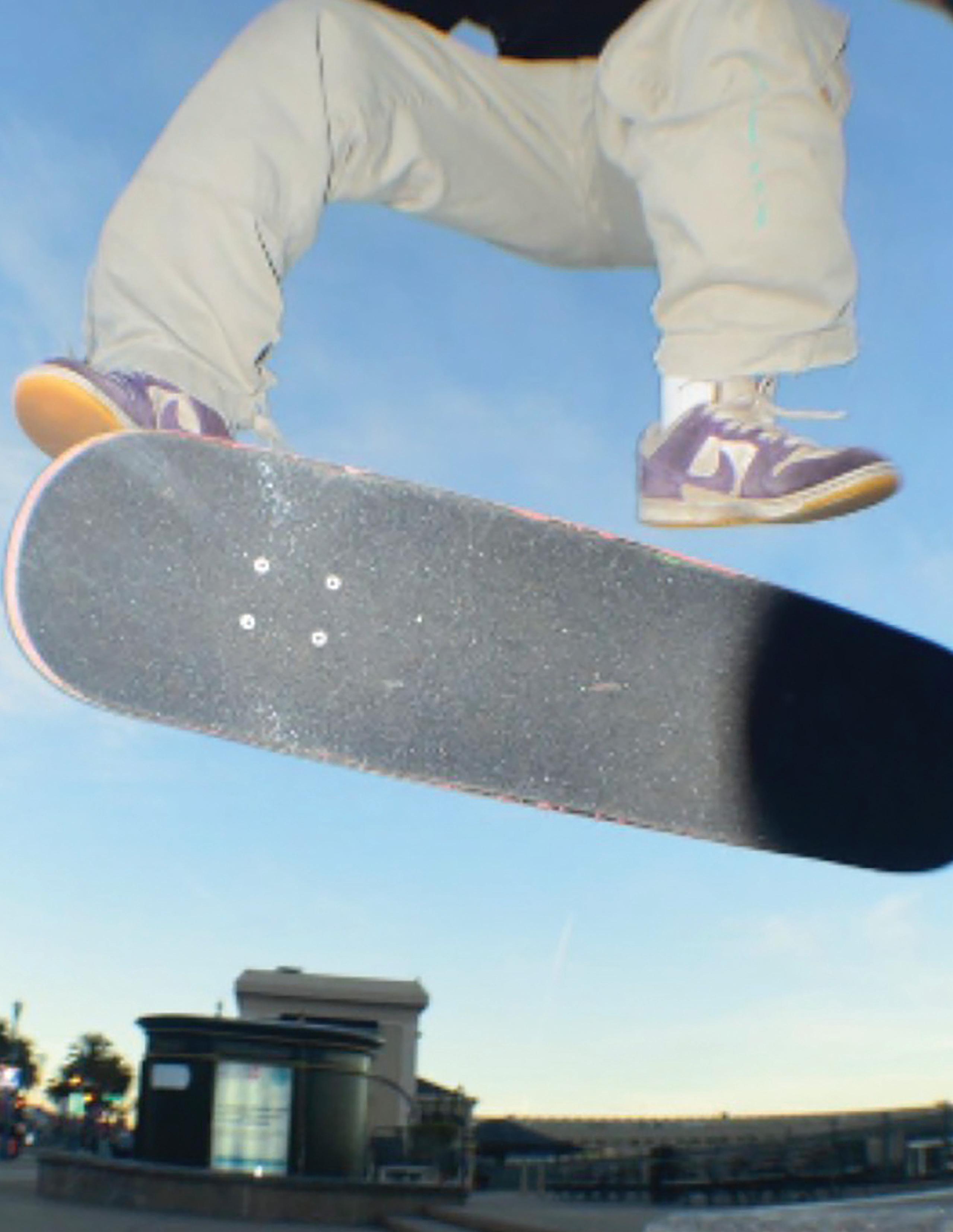
As senior Zachary Yen floats through the air, he expertly flips the skateboard underneath him to complete a Tre flip.
“Essentially, it's two tricks: the board does one rotation and it flips underneath you, and it combines with a 360 [kickflip] where the board spins around itself,” Yen said.
As a native resident of Palo Alto who currently attends Northfield Mount Hermon High School in Massachusetts, Yen founded the Paly skateboarding club and started developing his skateboarding skills at eight years old. His passion began after crafting his own boards at woodworking classes at Young Builders in Midtown.
“I was always drawn to skateboarding,” Yen said. “'I’ve always loved things with wheels. I was quick to biking. I like building things as well, and seeing cool things to build.”
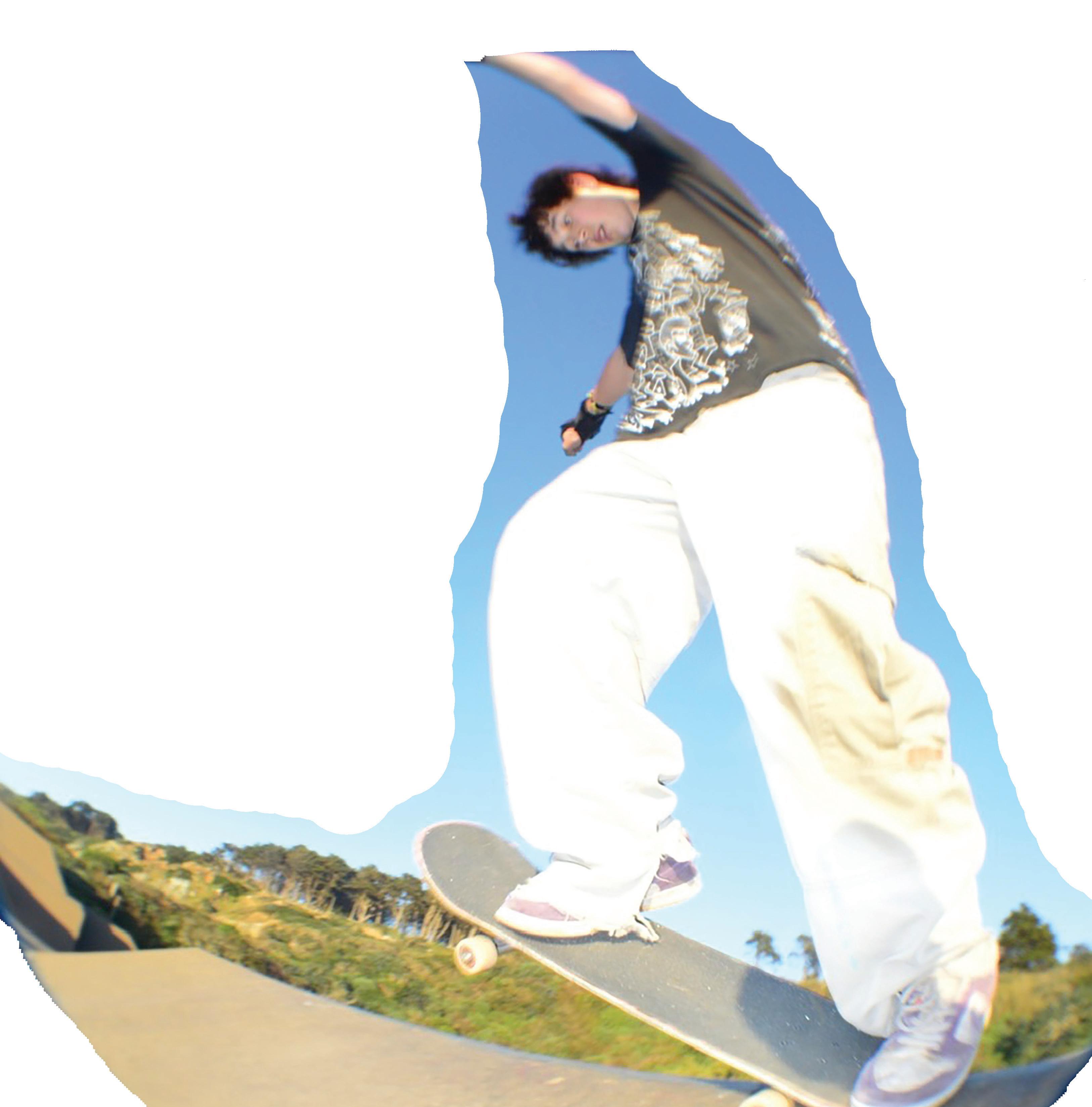
For most, such as junior Samanvika Senthil-Kumar, being gifted a skateboard jump-started their passion.
“I started skateboarding in the eighth grade when I got a skateboard for Christmas,” Senthil-Kumar said. “A lot of kids in my neighborhood skateboarded when I was young [and] I would see them doing all these tricks. I thought, ‘That's really cool. I want to do that when I'm older.’ So I was like, ‘Why not just start now?’”
During Yen’s early skateboarding days, the community and people, particularly at Burgess skate park in Menlo Park, made him fall in love with the activity.
“I remember always seeing people skateboarding there and thinking ‘Oh, they're so cool,’” Yen said. “I would go with my friends, but none of us knew how to skate, so we were just rolling around [on our skate boards].”
Despite Yen and his friends' inexperience, older skaters showed Yen and his friends the ropes.
didn't find in the sports that I was doing.”
However, not everyone has had a positive experience with the skateboarding community as a beginner. Senthil-Kumar said she felt looked down on when she first began skateboarding.
“I remember when I started, a lot of people called me a poser, which didn't make sense to me because I was just starting,” Senthil-Kumar said. “I feel like a lot of [more experienced skaters] have a condescending tone towards people who are starting.”
Senthil-Kumar’s advice for beginners is to ignore the criticism, as you will always find amazing people in the community.
“You just have to keep on doing it and over time, you'll meet people that are actually accepting,” Senthil-Kumar said. “That's when it starts getting fun.”
“Within five seconds of walking in, a couple of older kids came to me and said, ‘Dude, you want to learn how to skate?’” Yen said. “[I said] ‘I’d love to,’ and they showed me around. I'm still friends with those guys today.”
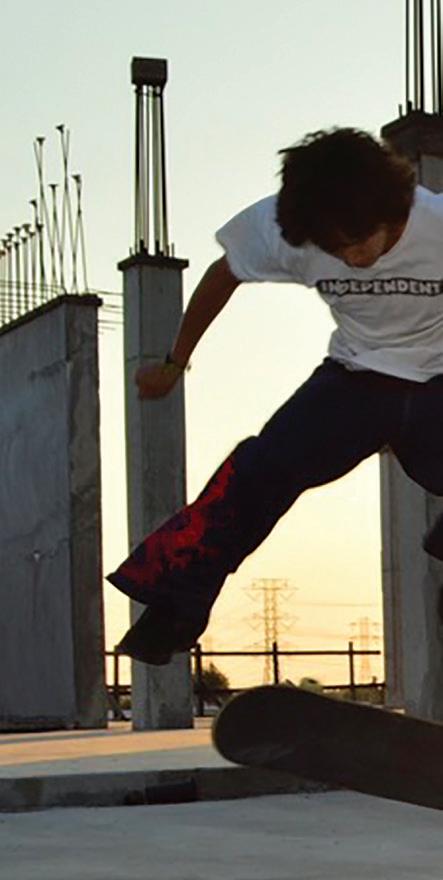
Sometimes, however, skateboarding isn’t just about fun. According to Yen, it’s also about conquering your fear and creating lifelong connections.
“Whenever I'm in a new environment, I'll bring my skateboard with me,” Yen said. “I find that it can be intimidating to ask someone ‘hey, you want to hang out,’ but if you both skate, it's a really easy way to connect. I've met a lot of friends that way.”
Skateboarding’s origins come from this community aspect. Surfers in Southern California built the first skateboards so that they could continue to socialize and do tricks, even when the waves were flat.
There’s a real sense of community in skateboarding.
“ “
The collaborative, mentoring nature of skateboarding was distinct to Yen’s previous experience with athletics.
“You take a young skater underneath your wig,” Yen said. “I grew up
“Skateboarding descended from surfing sometime in the ‘50s,” Yen said. “The first skateboards had wheels made out of metal that didn't really turn much. When surfers didn't have good waves, they would take their skateboards because the carving motion is very similar, and eventually that picked up speed.”
For many, California continues to be the epicenter of skate culture, but young people have brought the sport nationwide.
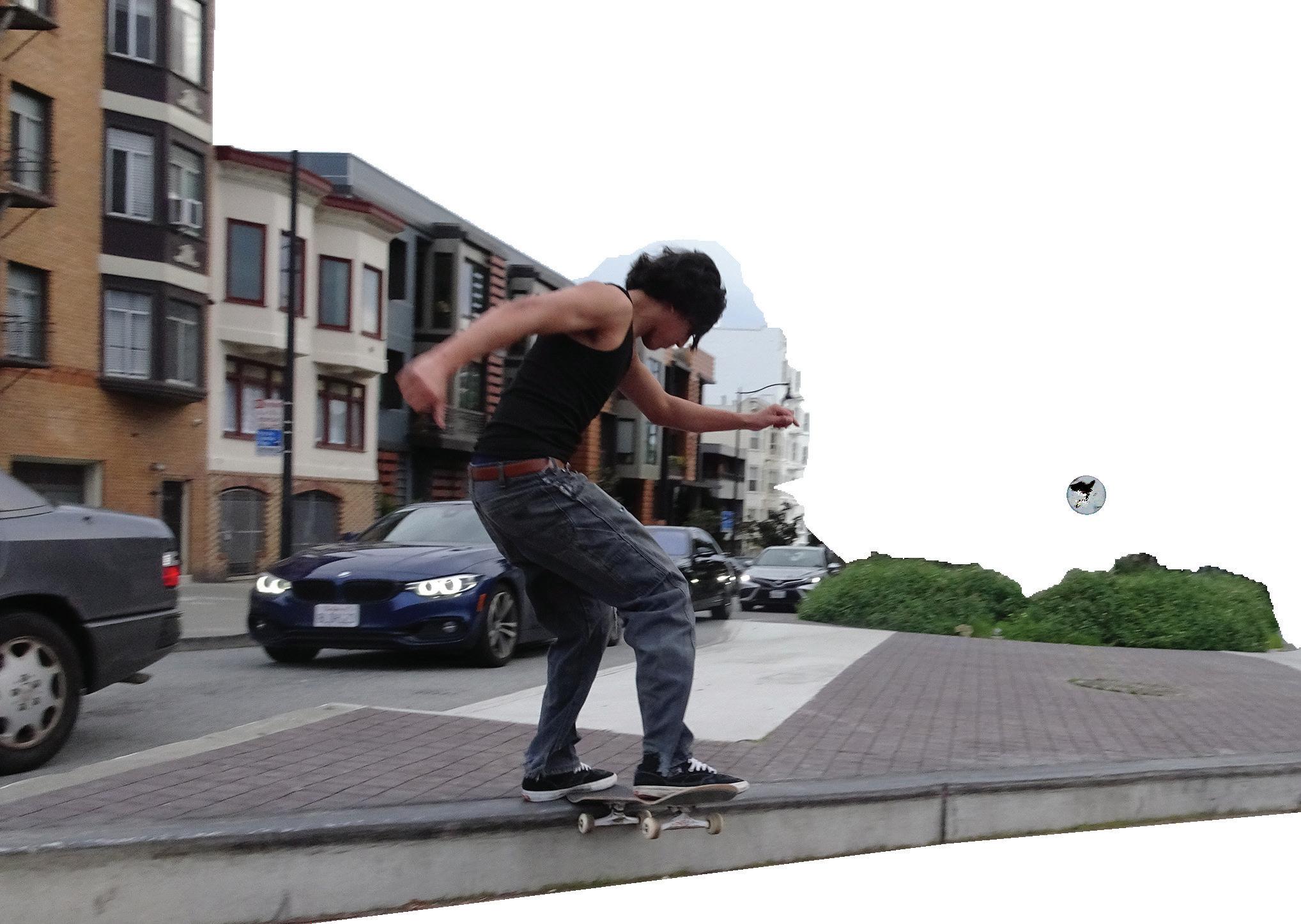
“California and New York definitely have some of the major hot spots in the United States,” Yen said. “These are areas that have a lot of youth culture. In cities like Los Angeles there are areas planned around skateboarding. In New York, it caught a similar vibe.”
As a result of the urban features and prominent culture, Yen especially enjoys going up to the city.
“I love San Francisco,” Yen said. “I'll go up pretty regularly with my friends and we'll skate around the Embarcadero area and around the Sunset District. That's my favorite place to skateboard.”
Although Palo Alto may not boast the largest population of skateboarders compared to more urban areas, Senthil-Kumar said there are still many parks and areas to find other people to meet and skateboard with.
“I think Palo Alto has a smaller

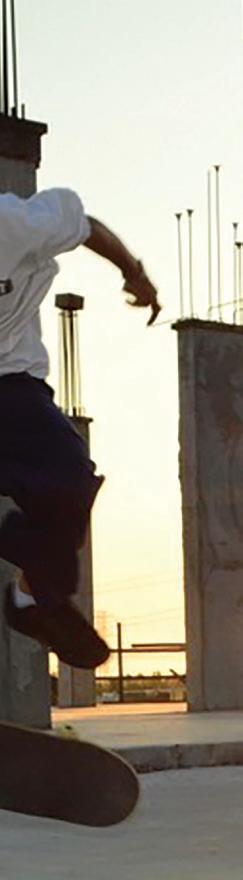
skateboarding community,” Senthil-Kumar said. “I've seen it a lot in the city, San Francisco, where almost everyone I know skateboards, because they have all the hills. I do know other people here that skateboard, and near where I live there's the Greer Skate Park, so sometimes I go there and I'll see people and that's how I connect with other skaters.”
Through this strong community, skateboarding has changed how Yen faces challenges.
“I found what kind of person I am through skating,” Yen said. “I'm a rower, so whenever I'm having a really hard practice, I'm like, ‘Yeah, you know what?’ This is really not that scary considering I just threw myself down ten stairs last week. I found that I have more perseverance and I could do things that I thought I couldn't do because skateboarding really puts a lot of things into perspective.”
Along with his fashion brand, Yen also started a skateboarding club at Paly to unite the community of skaters around campus.
“[I] saw that there was a group of skateboarders at Paly and we all hung out,” Yen said. “I started the club as a way to bring people together.”
“Skateboarding really crosses all barriers, it’s a great way to connect with people.”
For Yen, skateboarding is unique in how diverse the community is compared to other sports.
“With [other] sports, there can be an age divide, or even in some cases, a race divide,” Yen said. “Skateboarding really crosses all barriers. You go to the skate park and you'll see and be friends with a seven year old and a 70 year old, because you guys all have the same interest. So it's a great way to connect with people.”
Beyond the raw physicality of skateboarding, skateboarding has been a major influence on popular culture and style, drawing many to the sport.
“[In] the fashion world, baggy pants and just baggy clothing in general, has become really popular,” Yen said. “That's like a gateway into skateboarding for a lot of people.”
The creativity Yen developed through planning out lines at the skate park extended into starting the clothing brand Puzzledwrld, which has amassed a following of over 6,000 on Instagram.
“I started my brand the summer before my freshman year,” Yen said. “I was scrolling on TikTok and I saw a video of this guy talking about where he gets all his blank T-shirts for his brand. I was thinking, ‘You know, it really wouldn't be that hard to make some shirts.’”
Yen creates clothes with the skateboarding identity as the focus.
“A lot of my customers when I was first starting out were the friends that I skateboarded with,” Yen said. “I make clothes for skateboarders, because that's the scene I was in. Today, a lot of my customers are skateboarders, BMXers or scooters, people in that whole
Senthil-Kumar says that anyone looking to start skateboarding should just go in and try, no matter what their first thoughts are.
“Try with any board and just start,” Senthil-Kumar said. “No matter how hard it is at first, I would say just keep on going. Try a little bit every day and eventually you'll get the hang of it.”

Text by XUANER DUAN, ZOE
FERRING and POPPY MORRISON •
Art and design by XUANER DUAN
• Photo courtesy of KAE HUANG, TALI LEHRER and MICHAEL LI

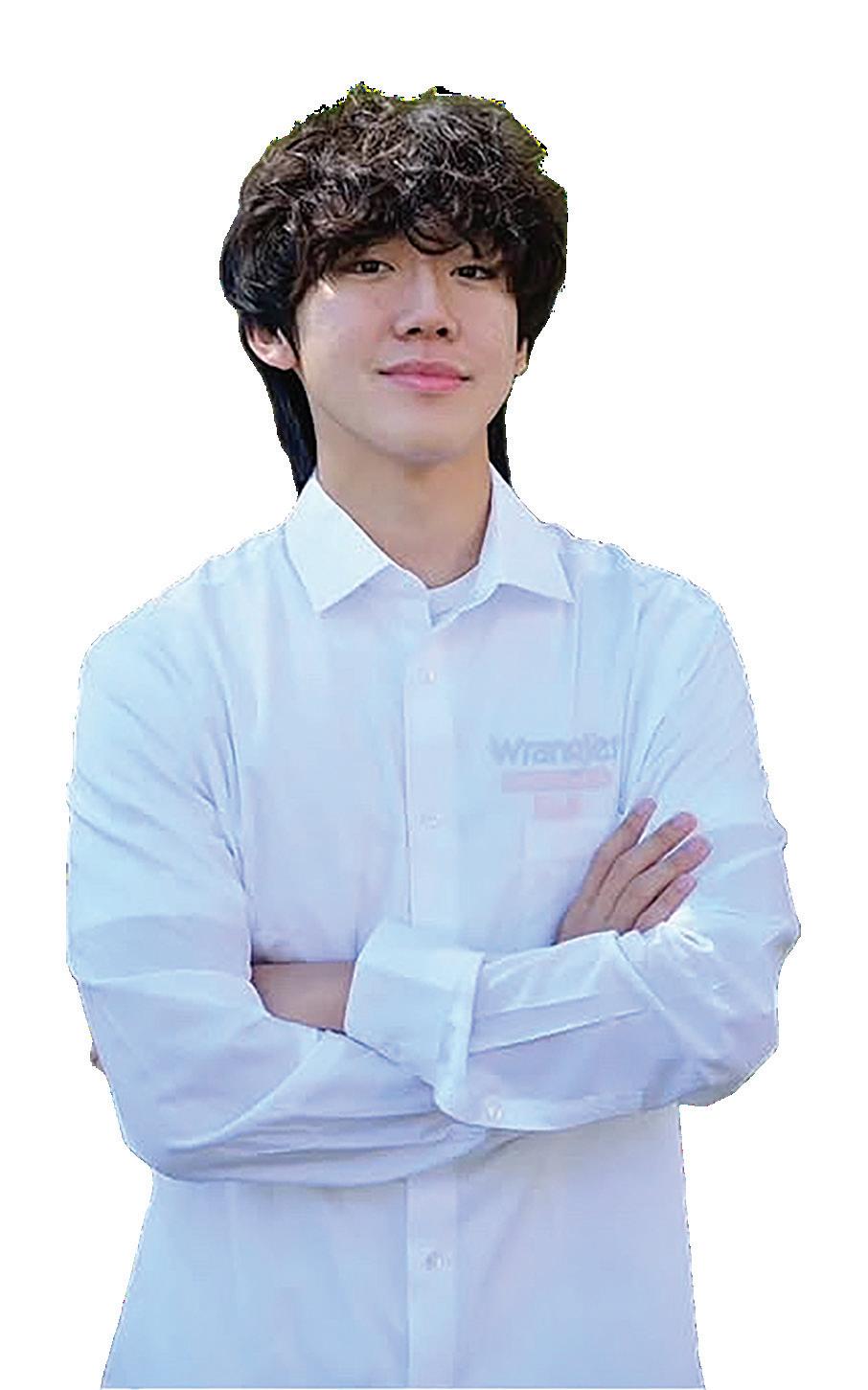



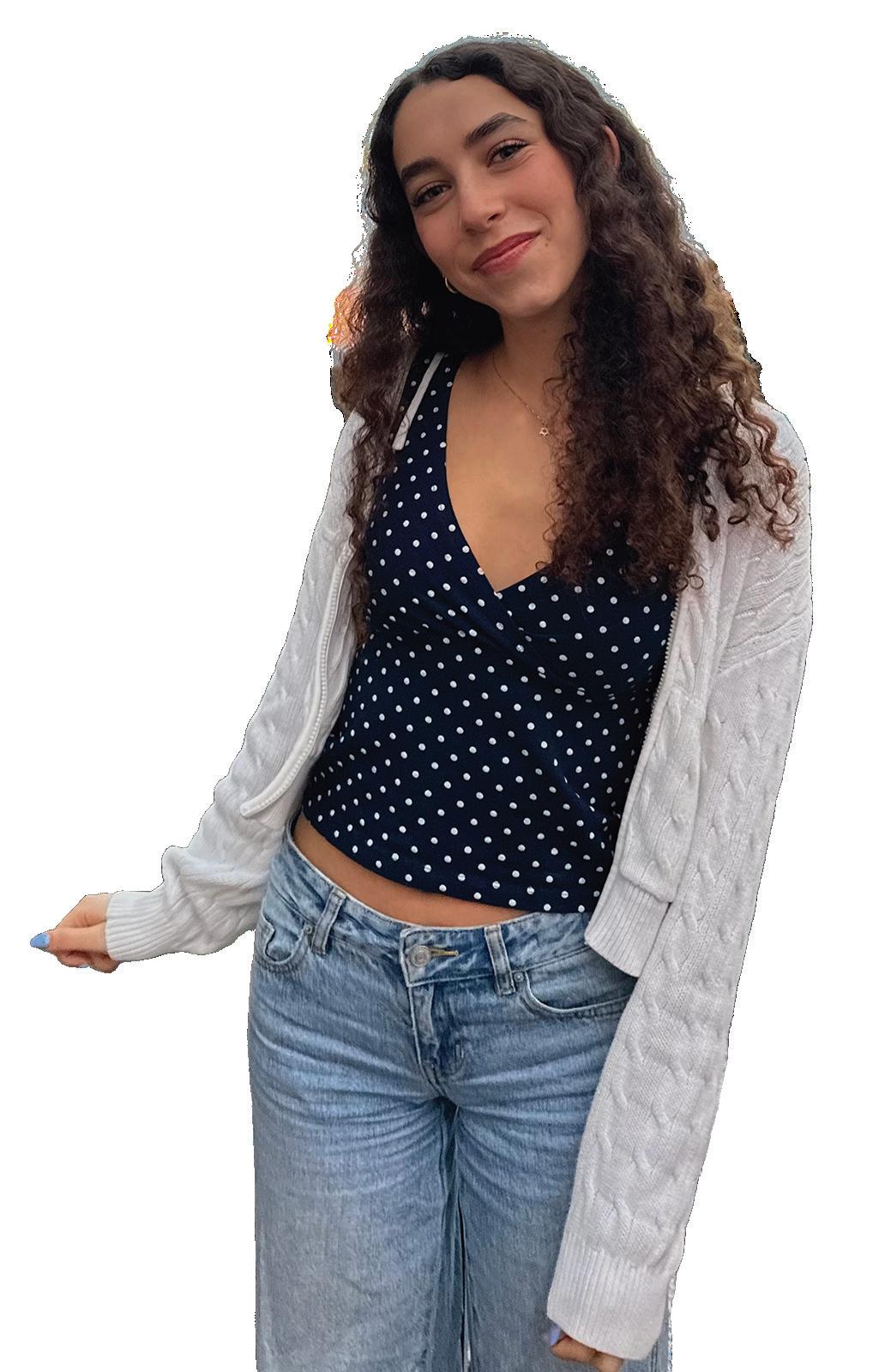
“There’s just no other time in your life where you can have unique experiences without having to feel like you’re behind. I’m super excited to [take a gap year and] just get to live in Israel and immerse myself in the culture and the country.”
“I am going to Foothill Community College because I want to get into a good UC (University of California). I’m excited to study everyday [at Foothill]. My family was supportive of my decision, but others had contrasting opinions. ”

“I am planning to go to college in New York for fashion. Throughout high school, I’ve been really passionate about clothes. I know my parents wanted me to go to UW (University of Washington) for business or San Diego [State University], but I don’t want to be in those locations.”

















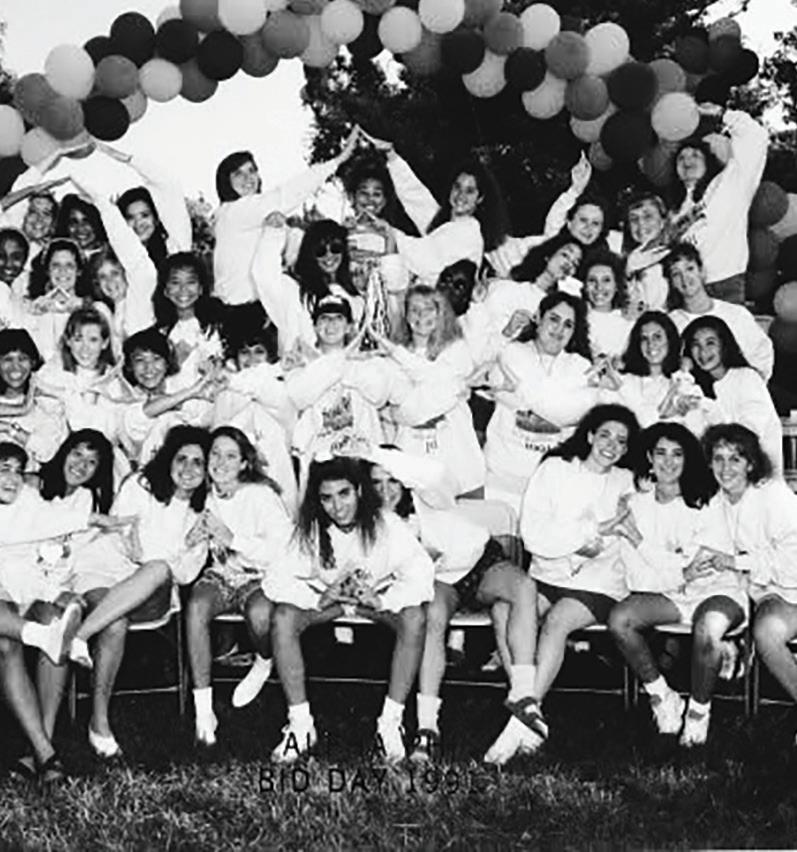

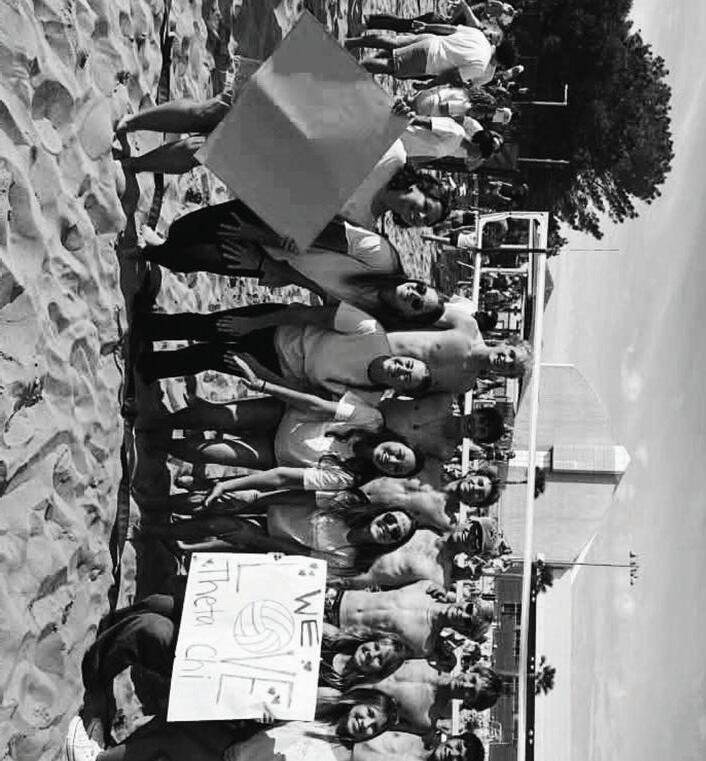
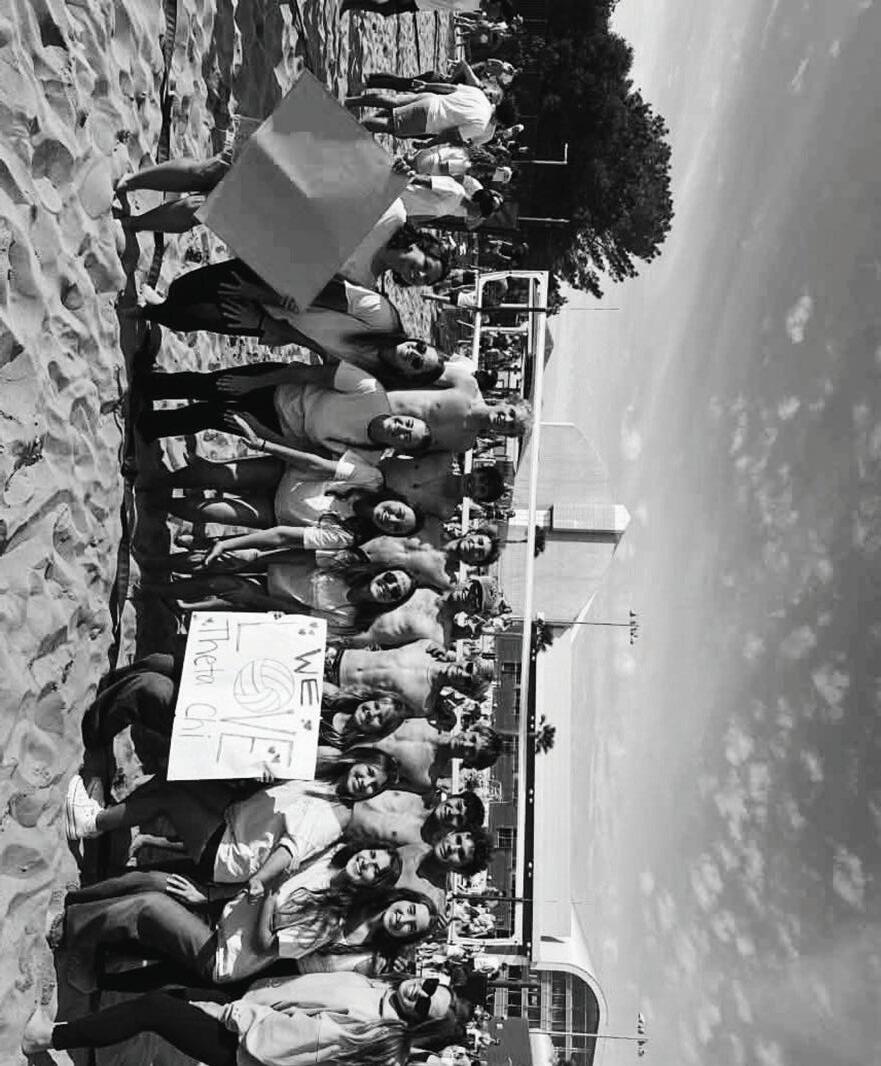
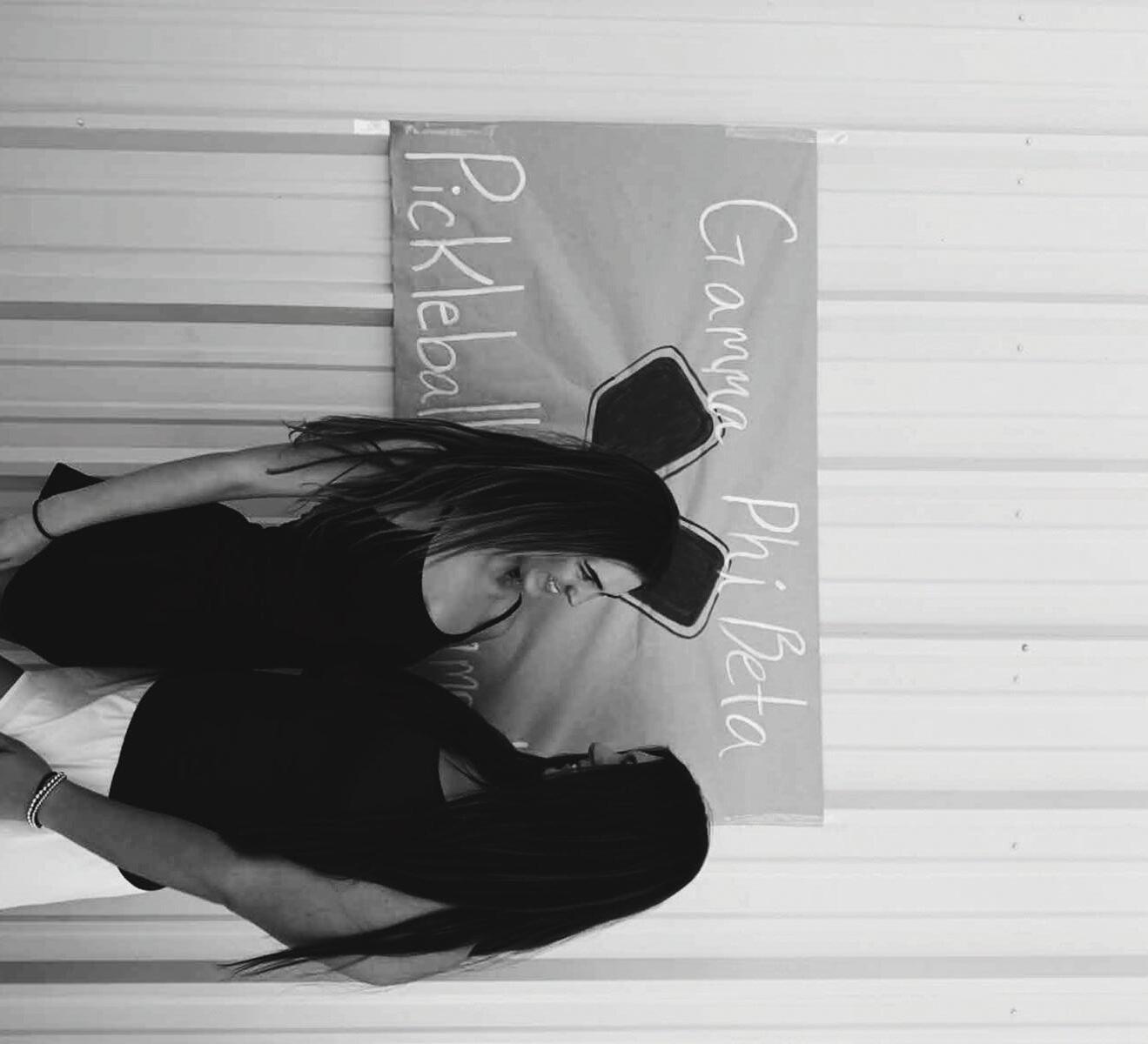
Across colleges in America, Greek life is an option for students looking to build an immediate, tight knit community
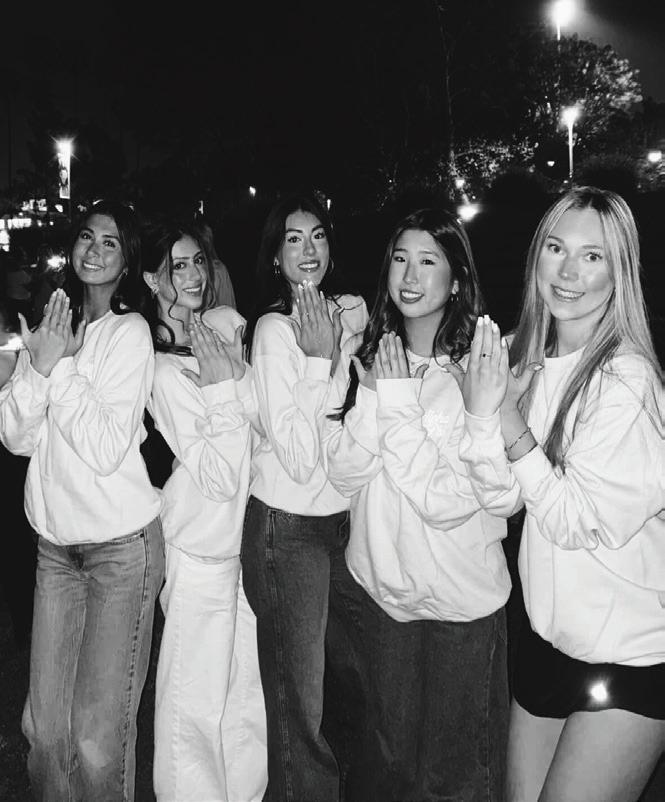

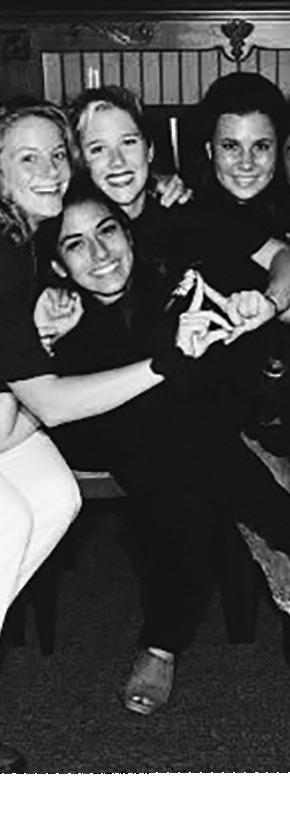


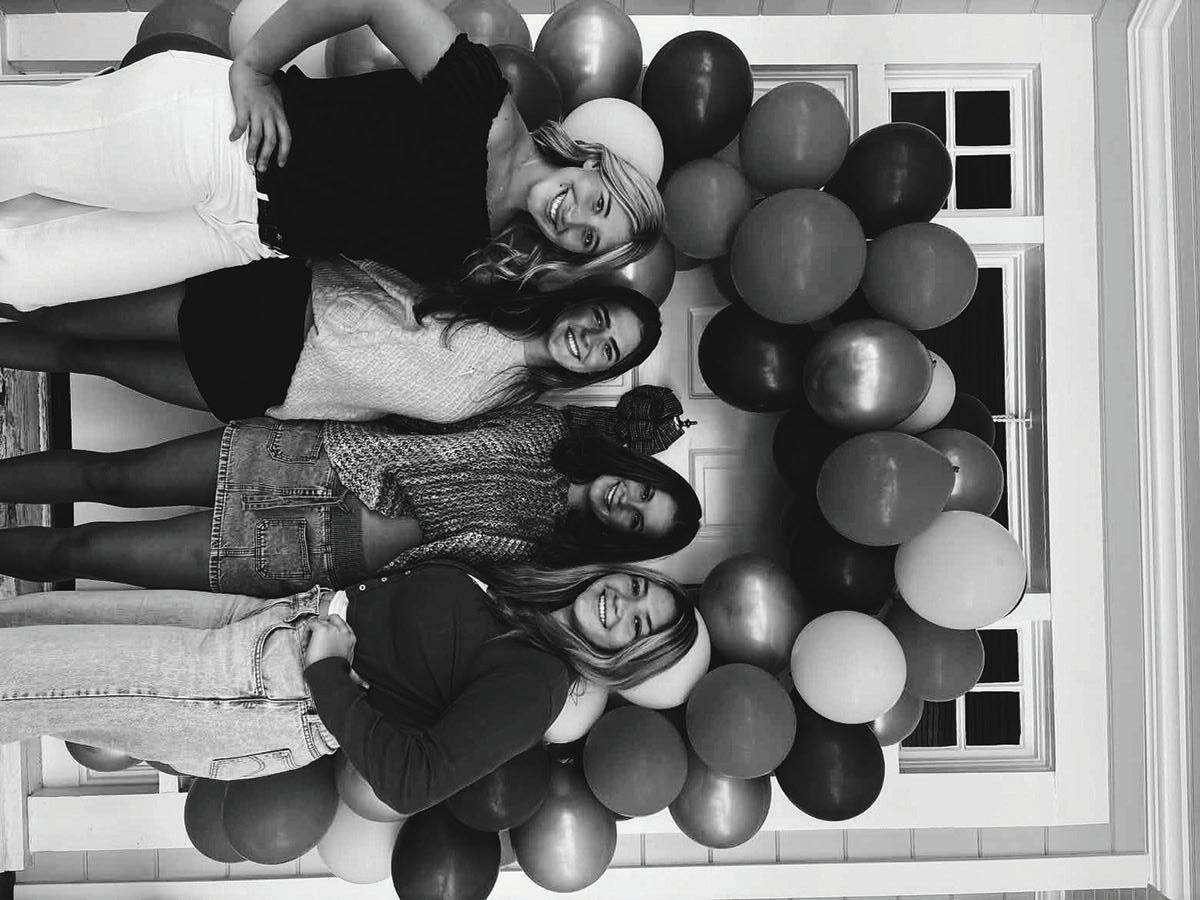

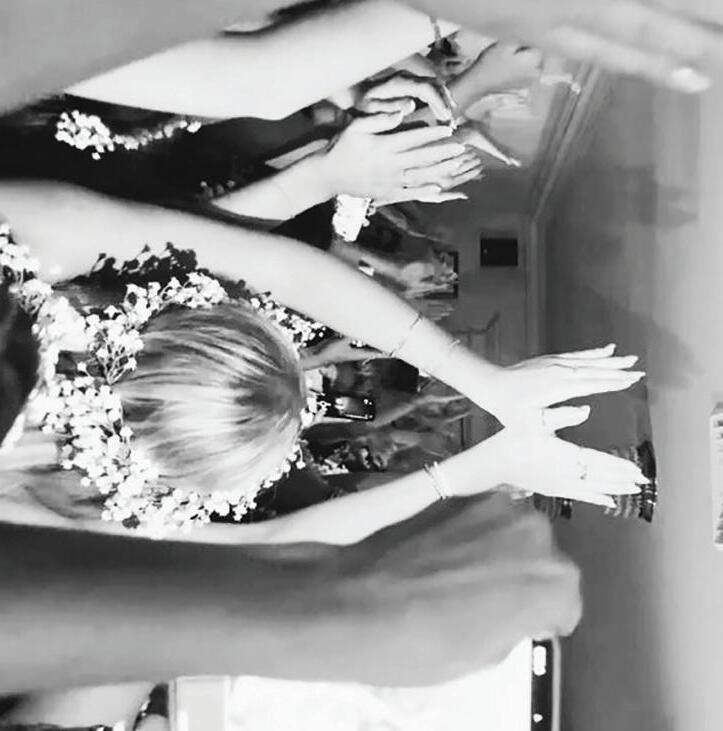

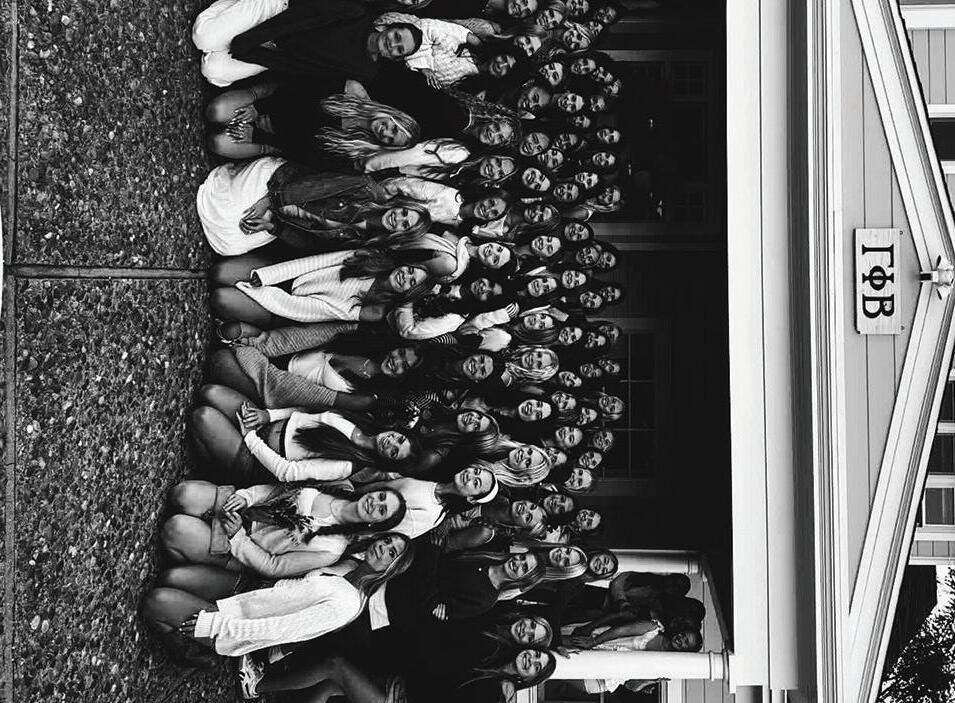




shows up on social media—the curated, high-energy highlight reels you always see about col-

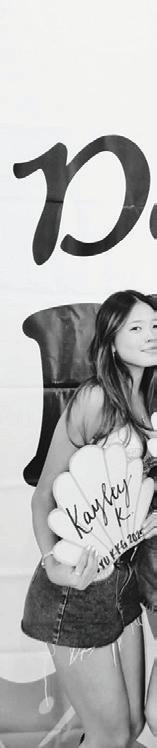
built-in community; it has given her oppor tunities to volunteer at organizations and give back to other communities alongside her chapter.

“We do certain events where we participate in fundraising for mental health,” Ko said. “We also fundraise in Washington Square Park, or we do sponsored events with different organizations.”
Having an active role in these events and organizations has made philanthropy a central part of Ko’s Greek experience.
“That has been a really amazing part of being in Greek life, trying to help others as much as we can with the position that we’re in [and] give back to the community.”
On the other coast at Loyola Marymount University (LMU), Ella Hwang, Paly graduate from the class of 2025, found a similar philanthropy setting in her sorority.
“A lot of our events are geared towards [philanthropy],” Hwang said. “When people hear about sorority and fraternity life, they just think of partying and that kind of lifestyle, not the official things we do in our events.”



For some, they are leaving the comfort of their hometown to immerse themselves into a new environment. Many students decide to lean on Greek life to better ease their transition into college life, an entry into a stable, when navigating a big city, according to Kayley
A lot of these events are focused on helping other organizations, both by raising money and awareness on various issues.
“We’re doing the red dress gala for women’s heart health,” Hwang said. “ It’s a really big thing, and a lot of our events are geared towards that.”
“Going to a college where there’s so many new people can be really scary. . . Greek life is a great way to meet a lot of new people,” Ella Hwang
Outside of the philanthropic aspect, Hwang was able to find an immediate group of friends through her sorority, something she initially found difficult due to the large campus at LMU.
“Going to a college where there’s so many new people can be really scary. . . Greek life is a great way to meet a lot of new people,” Hwang said. “It’s good to be part of a community where you are forced to be close to other people and make connections.”


As a current freshman in college, Hwang is still actively building those relationships. Yet, for UC Irvine (UCI) alumni Lisa Duffield, UCI class of 1995, similar bonds have proven their longevity.
“A couple of my sorority sisters were in my wedding, and I still talk to them today,” Duffield said. “Sorority life was life-changing. It gave me confidence. It helped me . . .

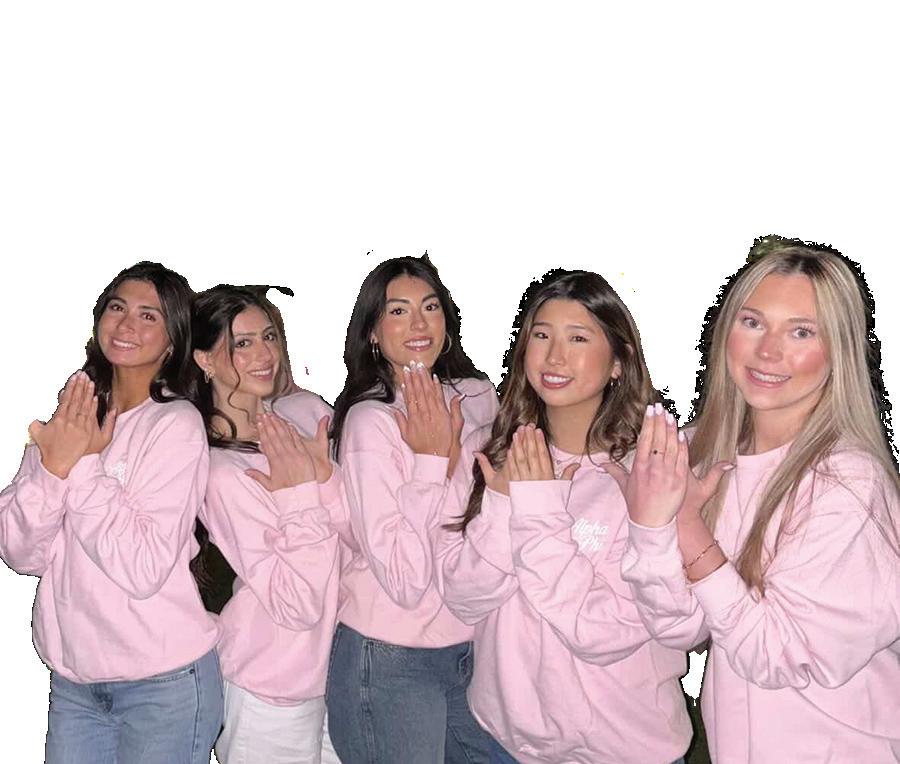

[find] some of [my] best friends.”
One of the ways Duffield met people was through her participation in the intra-sorority sports that were hosted each quarter.
“We would make our own teams within our sorority and play against other sororities, and we would have fraternity guys coach us, so that way we’re meeting fraternities [while] interacting with other sororities,” Duffield said. “I was lucky to meet people who were open to being friends with me, even if we weren’t in the same sorority.”
Similarly, current LMU student, Watson Koegler, a Paly graduate from the class of 2024, joined a fraternity in search of people to play sports and spend time with.
“[Joining a fraternity] was a no brainer,” Koegler said. “I wanted to join a group with a lot of people who shared the same interests as me—people I could golf with, go to the gym with, go out at night with, people that have your back and you can lean on.”
“Something that I’ve noticed and something that I feel like isn’t talked about as much, is the networking that you can get from being in a sorority, not just socially, but for my future,” Cummings said.
At LMU, Koegler’s pledge process, which is often seen as a new member education before being initiated into the frat, gave him an opportunity to participate in more brotherhood bonding activities. Yet, the pledging process is not always as positive at other schools.


“You have to be careful about what school you’re at and know what you’re getting yourself into beforehand,” Koegler said. “There’s certain schools that have bad hazing incidents and [people can] get kicked off campus. Those are horrible. But that’s one chapter in America’s schools . . . it’s not everywhere, and it’s not most places, in fact.”
“Sorority life was life-changing. It gave me confidence. It helped me . . . [find] some of [my] best friends.”
At the beginning of his first year at LMU, Koegler visited information booths of different fraternities to meet the members—a process he recommends to get a better feel for the unique environments. Visiting those tables helped Koegler find the fraternity where he ultimately gained the connection he desired.
Lisa Duffield

“It’s definitely made me more comfortable in my surroundings and made my college experience way better,” Koegler said.
Through his decision to join a fraternity, he also gained the valuable networking that comes with being part of Greek life.
“[Before joining a fraternity,] I didn’t fully know the benefits of being connected to 90-plus people that truly have your best inter est at hand, and how much opportunity there is to do unique and adventurous activities,” Koegler said.
Paly graduate, class of 2024, Scarlett Cummings who is a part of Greek life at Cal Poly San Luis Obispo had a similar experience
Alex — an anonymous source — was part of the Sigma Phi Epsilon chapter at University of Arizona, experienced first hand how hazing can have a negative impact on students. With his frat getting investigated for multiple hazing incidents, he had an overall bad experience with Greek life.
“I think hazing has a place, but when it’s taken too far and people get hurt or emotionally affected it’s lost its role,” Alex said.
While leaving the frat did dismiss him from the social circle that he had built, he didn’t see that as a major drawback.
“Leaving didn’t really affect anything since I already had the friends from it and the house was just .. a house,” Alex said.

Text, design and art by DYLAN BERGER, SONYA KUZMCHEVA and ELLA RENAZCOSPERLING • Photos courtesy of SCARLETT CUMMINGS, LISA DUFFIELD, ELLA HWANG and KAYLEY KO







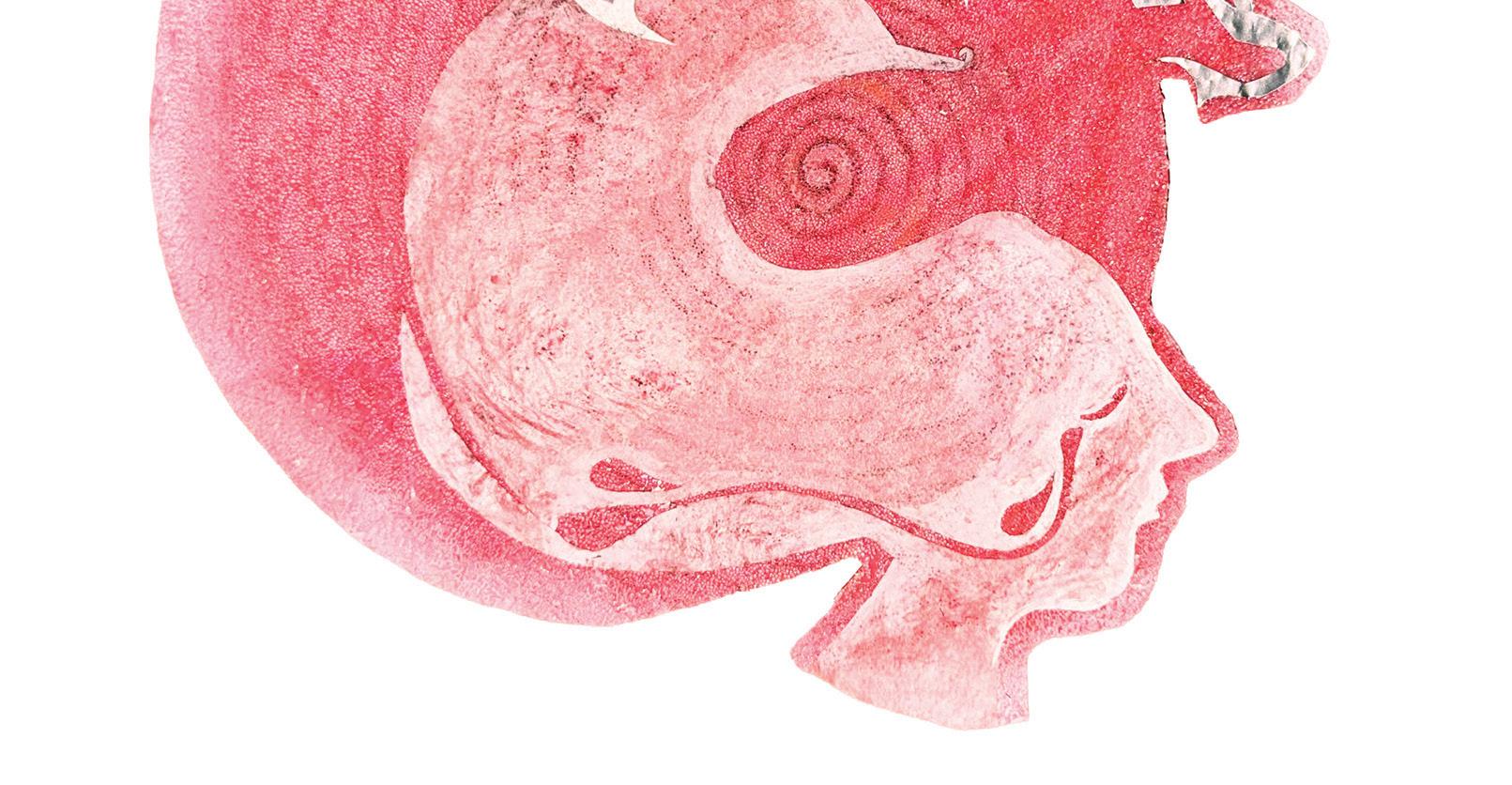
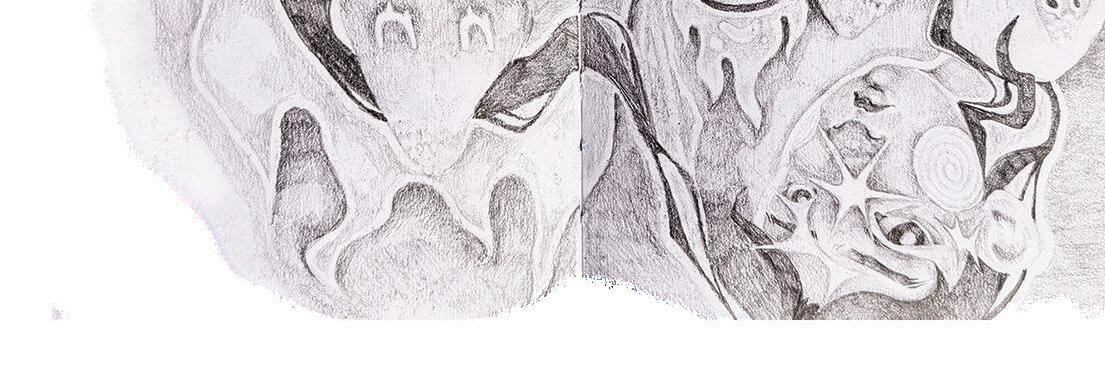
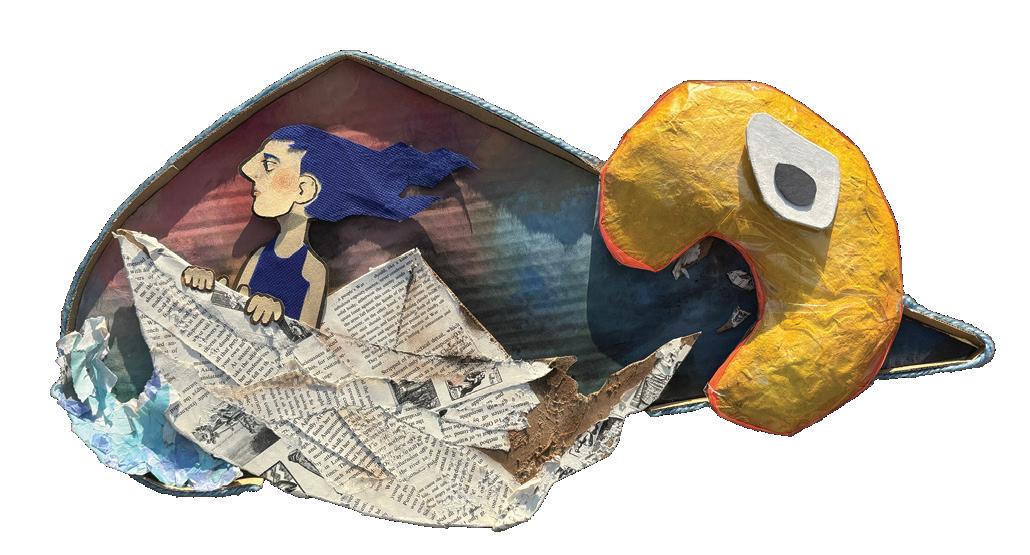
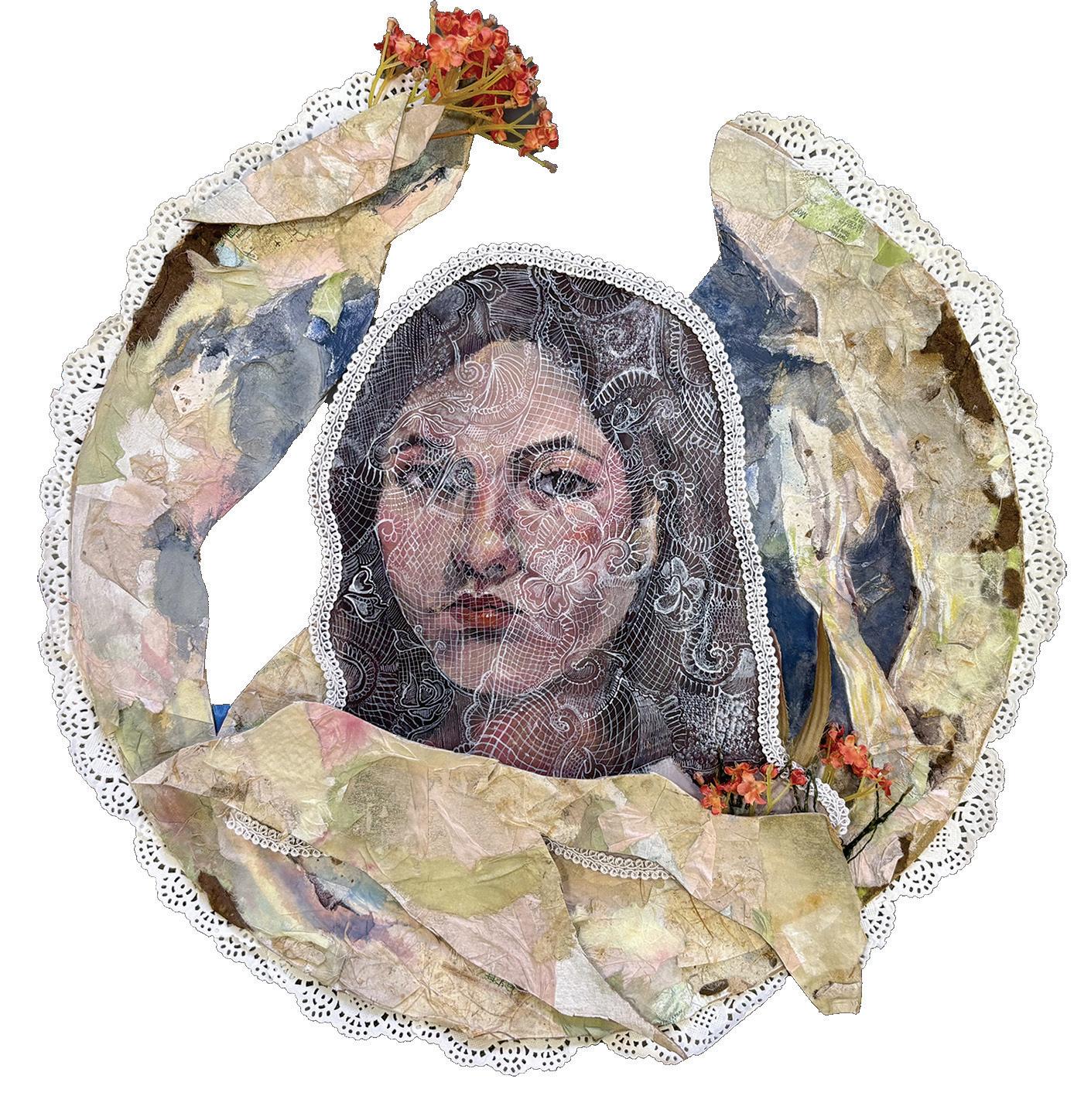
FA: Through her use of creative mediums, Lily Williams immerses viewers in fantastical and surreal scenes
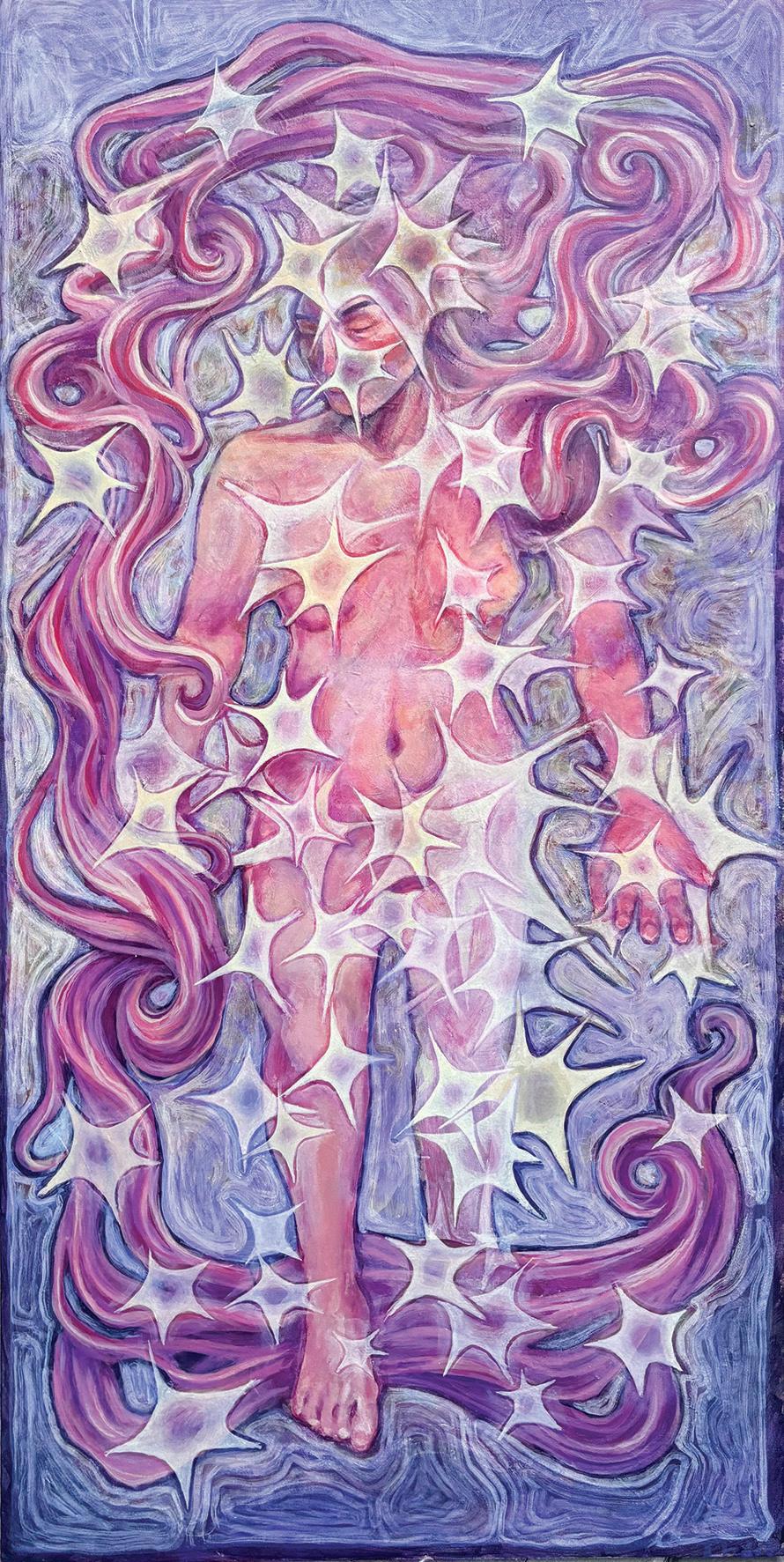
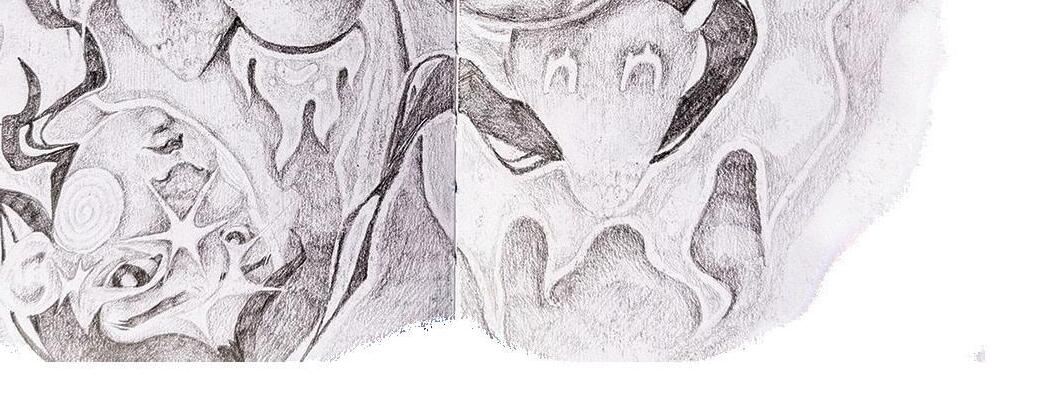
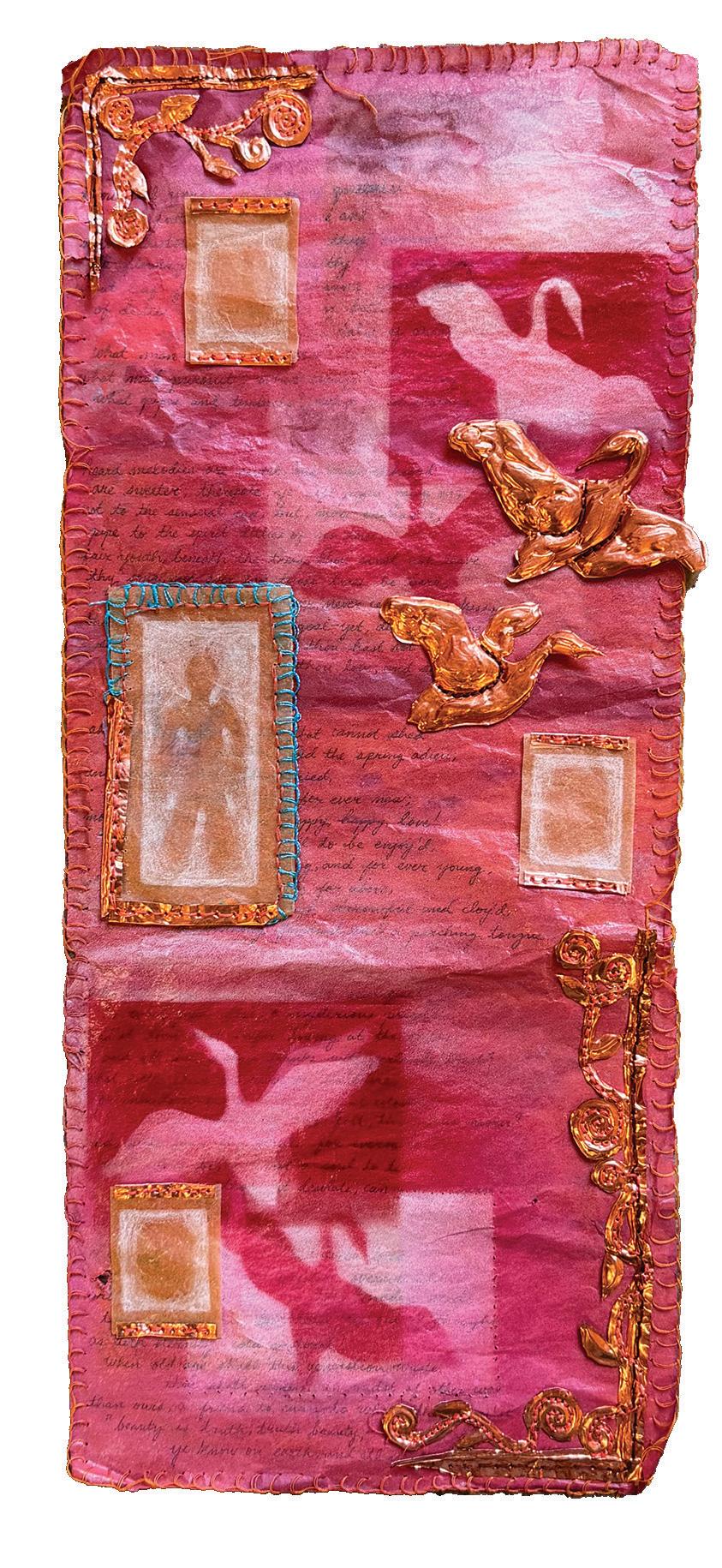
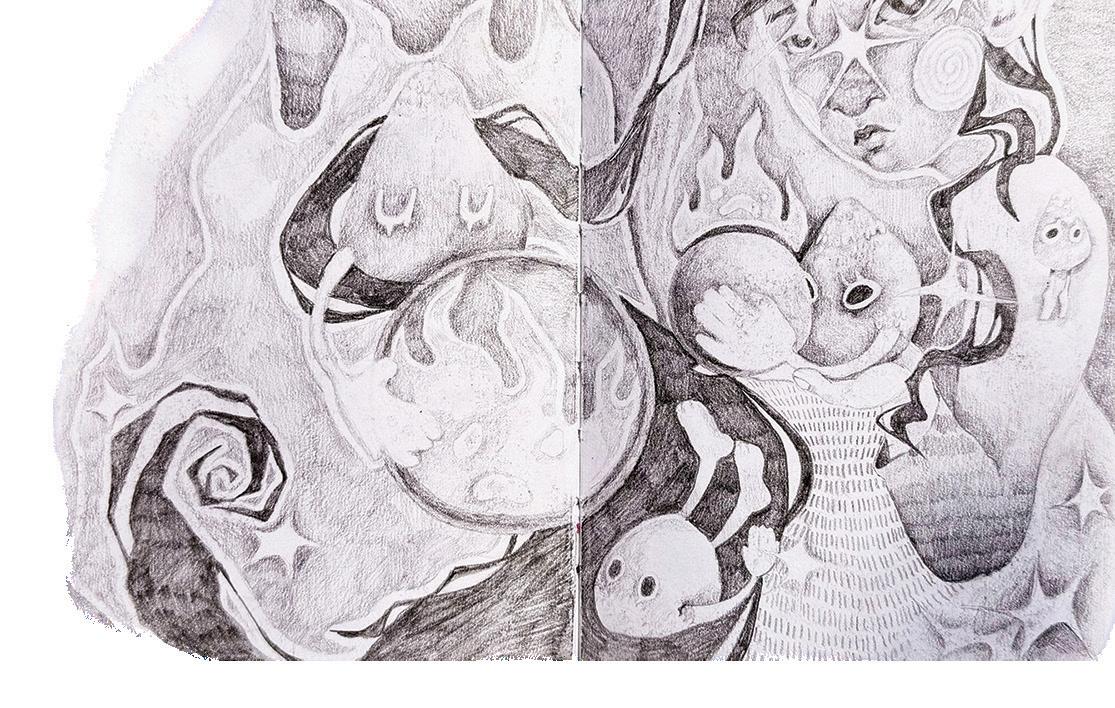
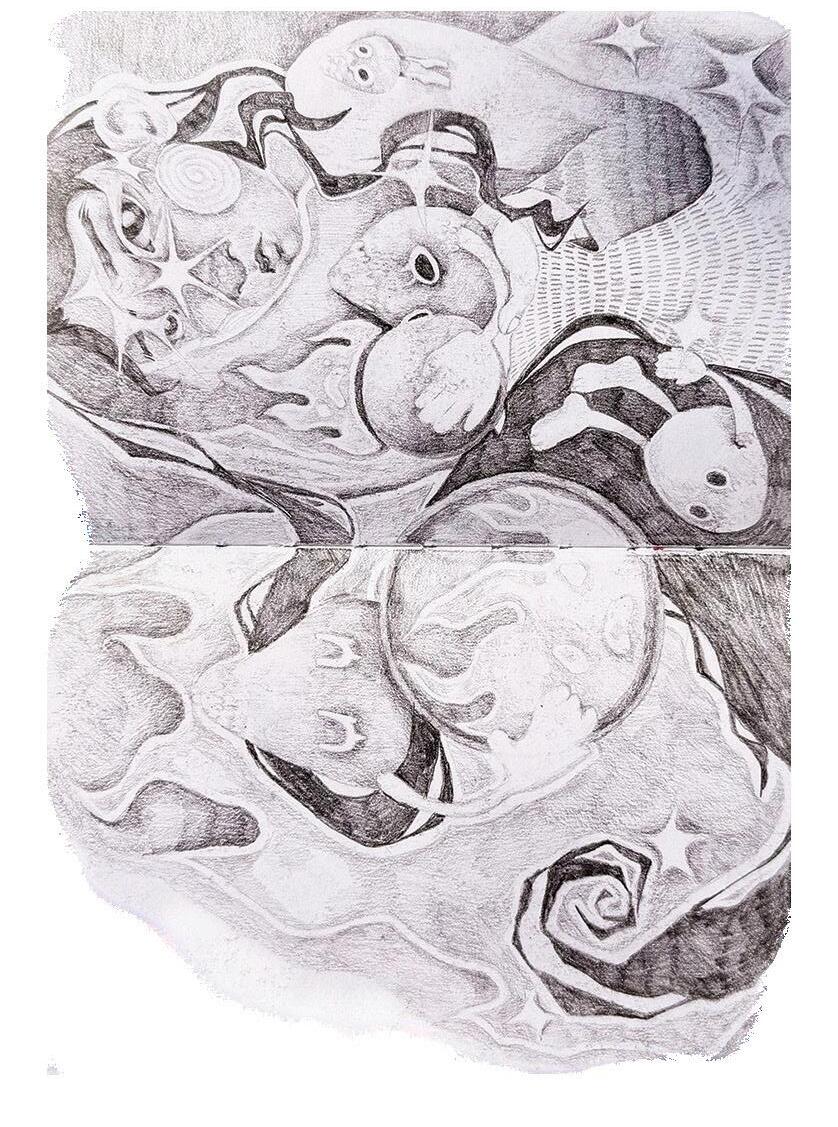
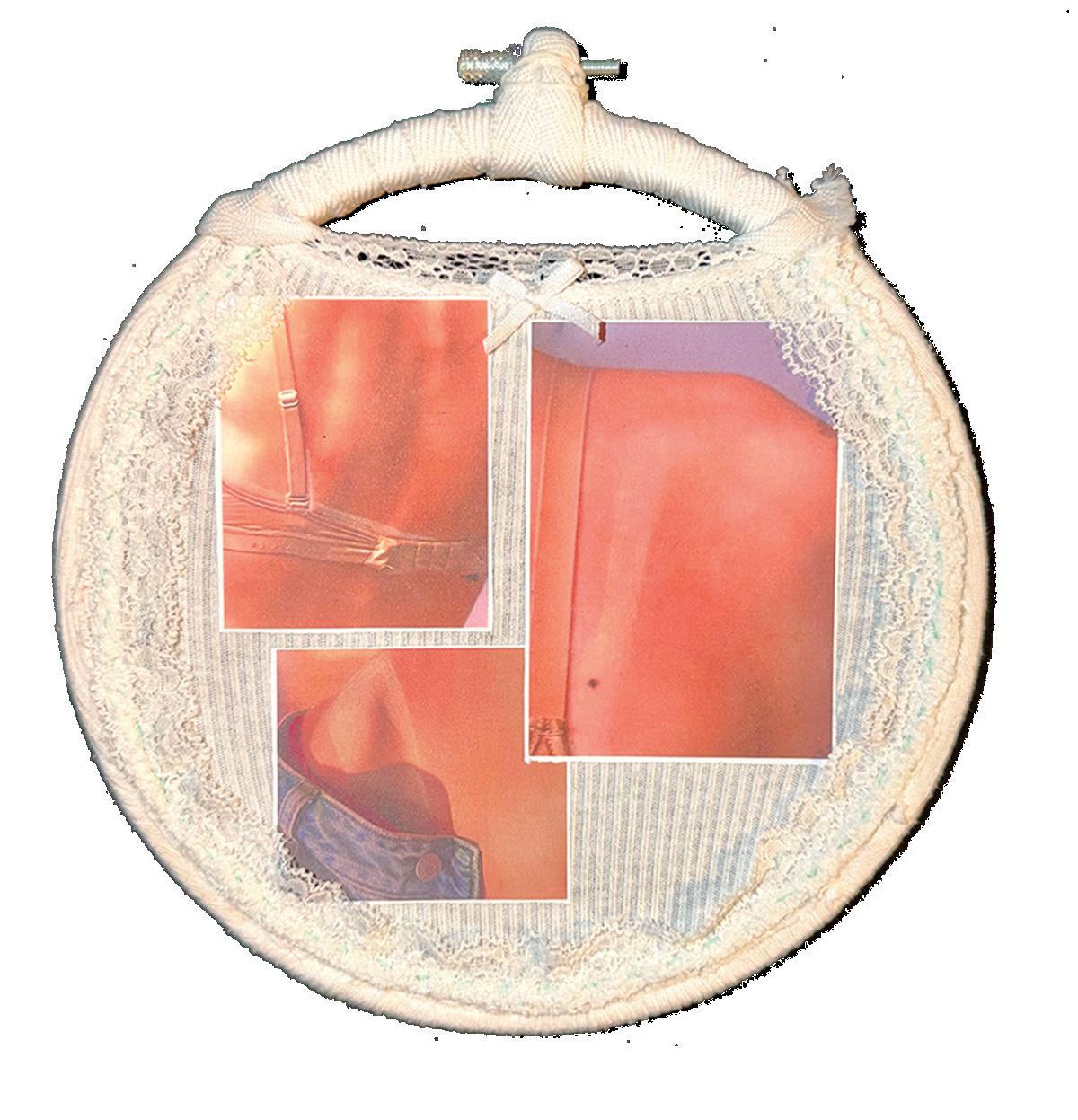
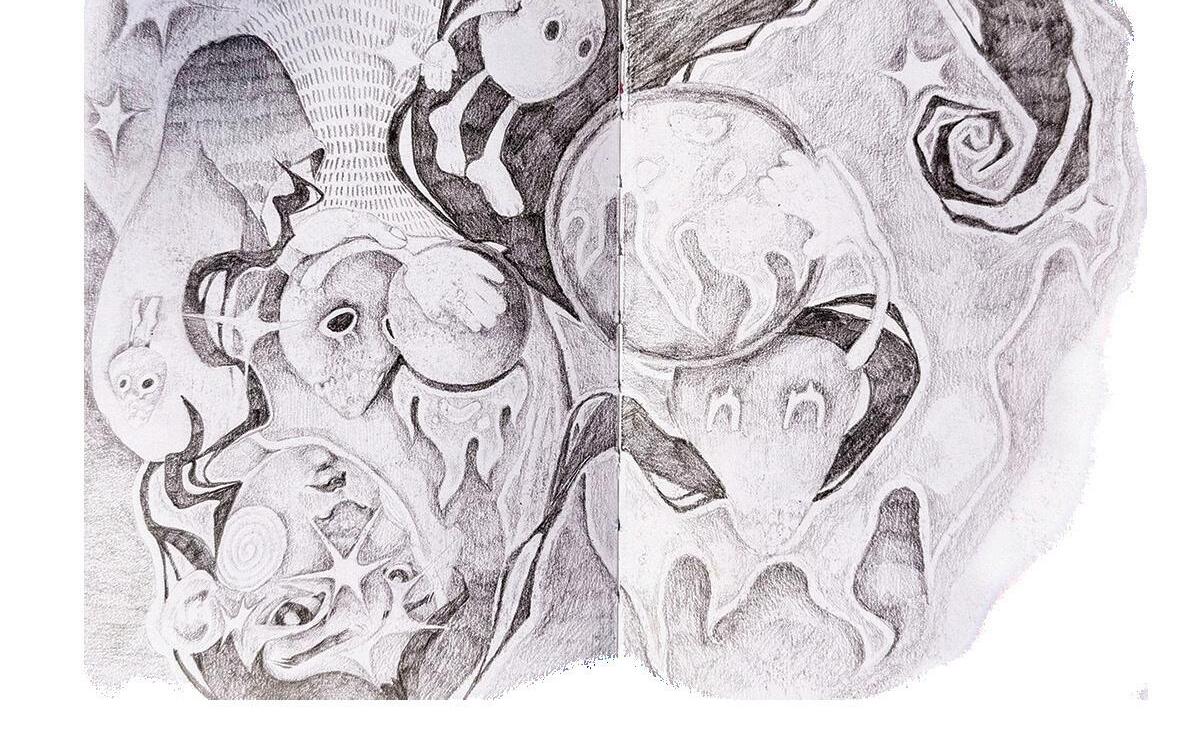
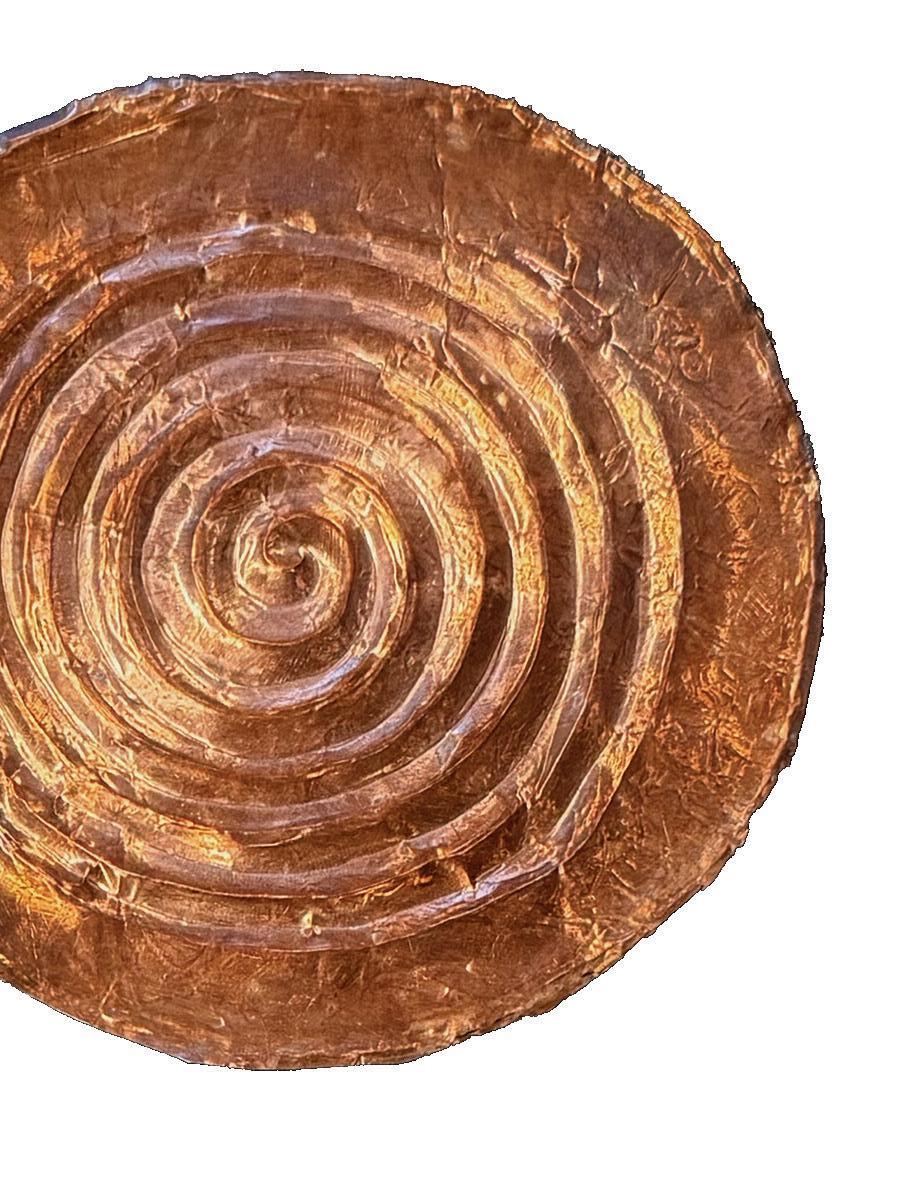
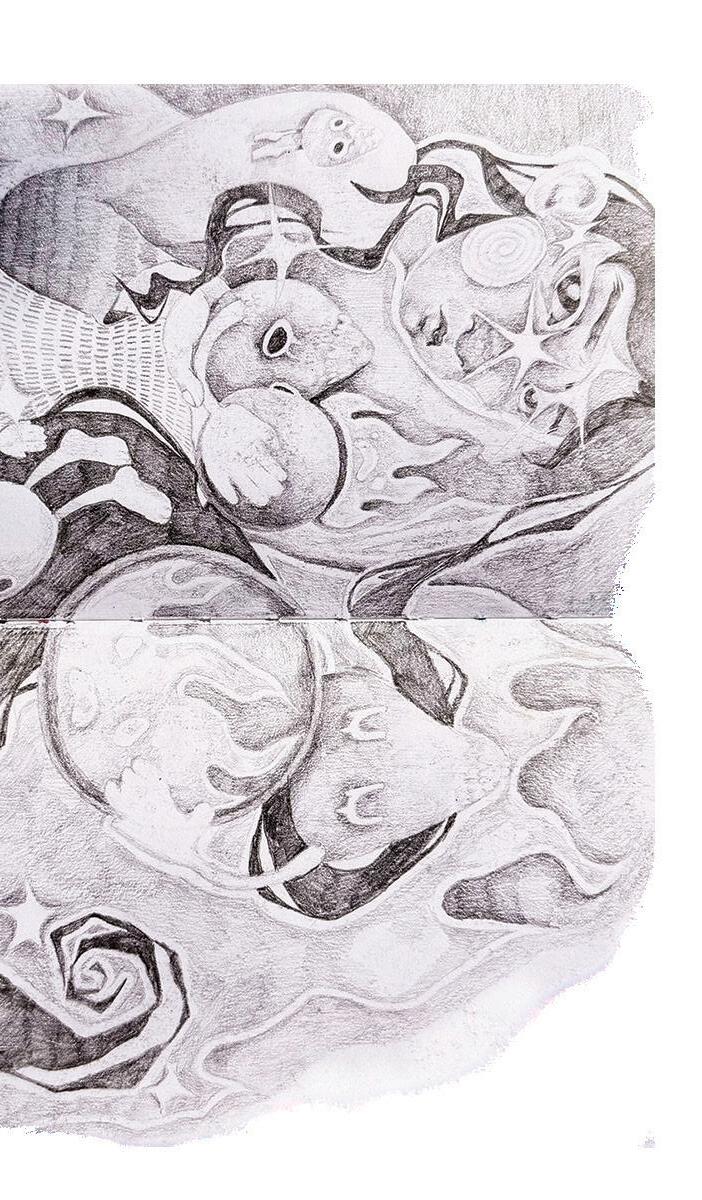
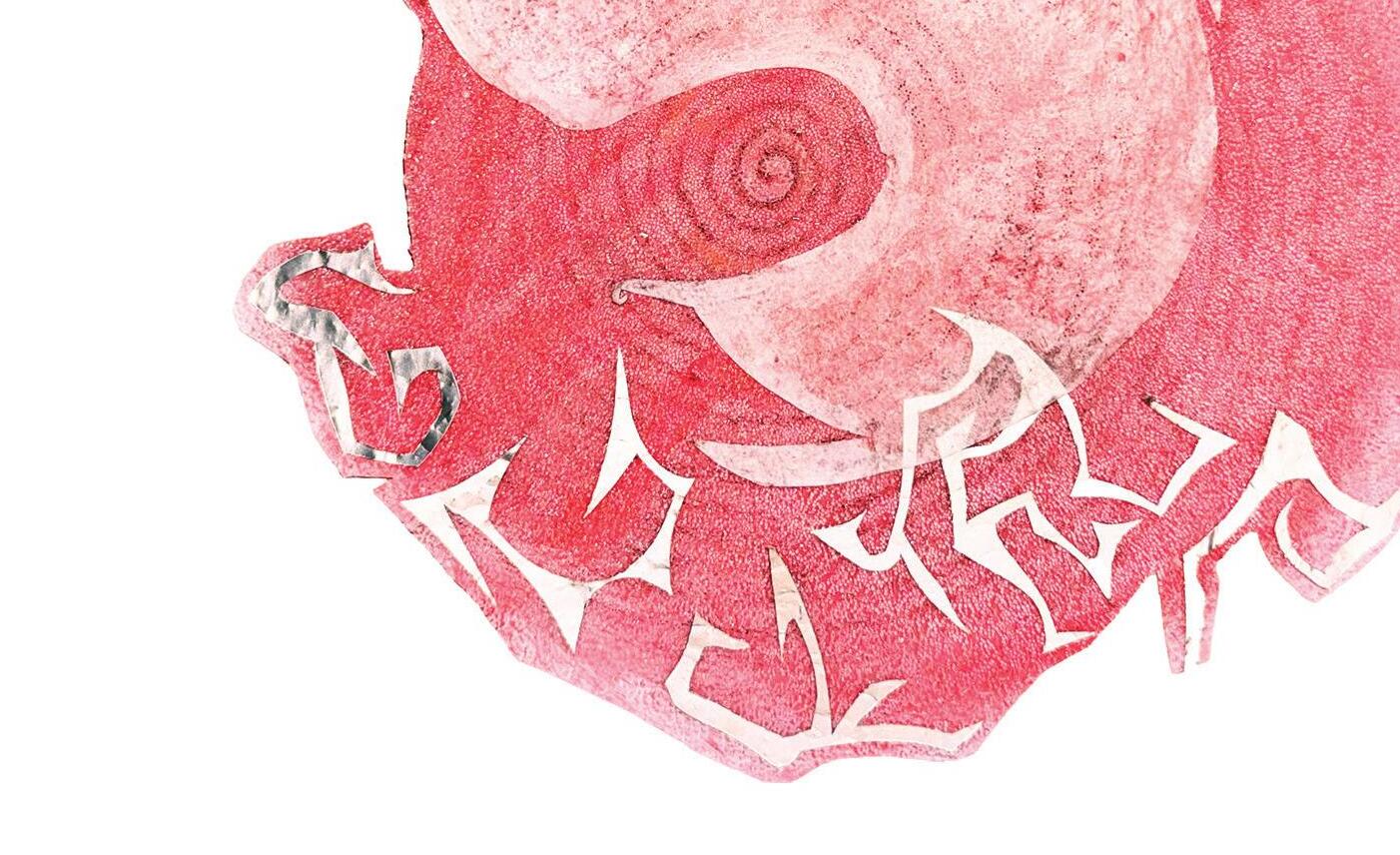
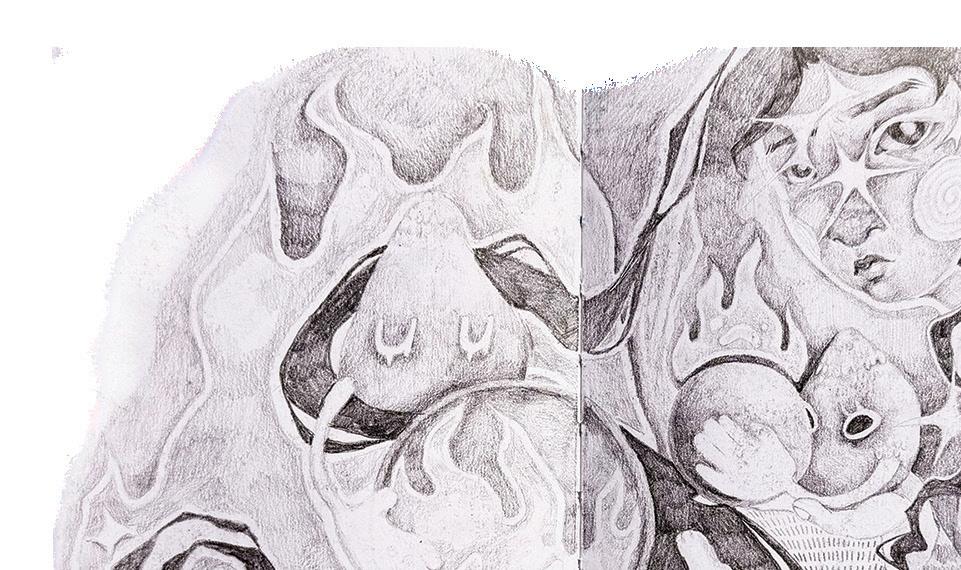
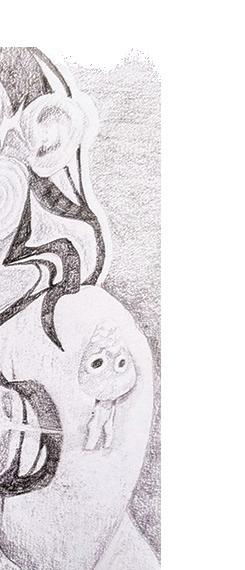
Senior Lily Williams knows how to make you feel transported. Under her brush, colors come alive and jump off the canvas. Whether it is sewing swans onto tissue paper or using textured acrylic paint to cover a 4 foot-tall-canvas, Williams’ art creates last ing impressions.
“I don't have a su per distinct art style,” Williams said. “There are things I gravitate towards, like bright colors and very whimsical motifs.”
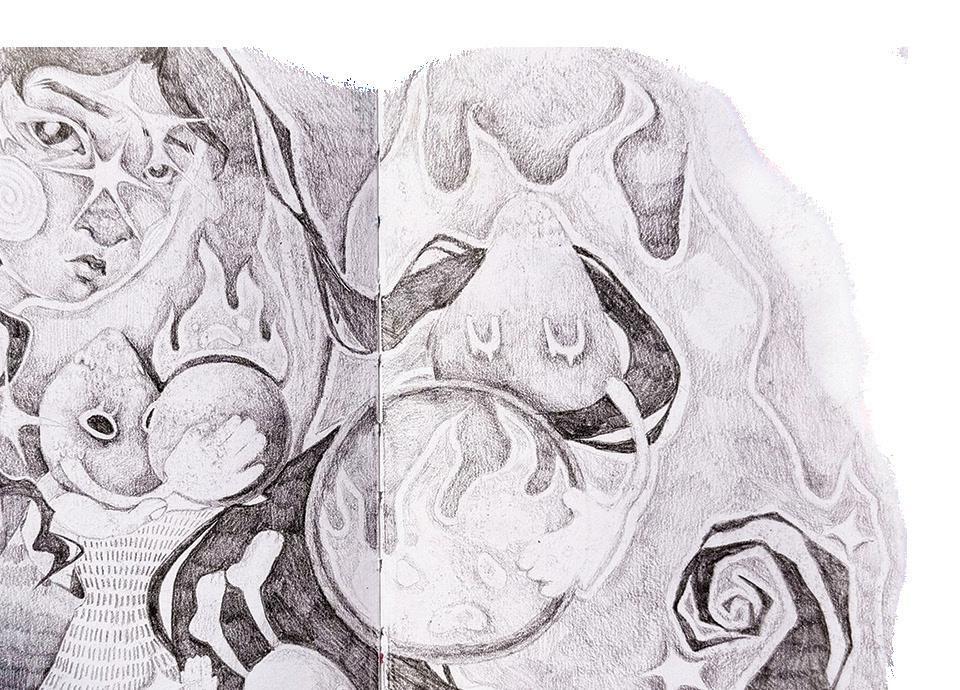
“I like to do world building, like alien guys,” Williams said. “[I’m drawn to those topics] because I can cre ate something that's never been done be fore. Also I can just make cute, colorful things [like] round, big-eyed alien creatures.”
“A lot of the books I read as a kid were very fantastical. ... That comes up [in my art].”
Along with the eccentric patterns that she incorporates into her art, Williams’ work has ties to memorable books of her childhood.
“A lot of the books I read as a kid were very fantastical,” Williams said. “I really loved [The Chronicles of] Narnia and I had [many] unicorn picture books. They’re just girls with unicorns going into the woods. That comes up [in my art].”
Williams’ whimsical designs often provide respite from the chaos of the outside world. In the face of rapid modernization, Williams looks to the absurd and extraterrestrial.
The creativity that was fostered in her as a child — through reading these books, exploring the fantasy of everyday life, and the influence of her friends and mentors — resulted in an early interest in visual mediums.
“I grew up [creating] art and going to art camps,” Williams said. “I liked them because school has been good at teaching me a lot of 2D skills, but I did a lot of sculpture outside of school and I think it's important to explore your artistic voice outside an academic setting.”
In many traditional art classes, pieces are graded using a rubric. Some criteria on rubrics can include elements and principles of design, craftsmanship and artist statements. While some students may have trouble with the rigidity of this scoring method, Williams has come to



op my skills and make it so that I can really express myself the way I want to.”
Despite growing up in Silicon Valley, where there is often a social pressure to pursue jobs in technology due to the industry’s dominance, Williams showed an early interest in working in artistic fields.
Williams follows her own advice of adapting her visual art in a digital age. As she looks to the future, she is excited about the possibilities and opportunities to expand the variety of media she uses in her
“I really want to keep exploring different processes,” Williams said. “I got to visit Carnegie Mellon University, where I will be attending. I got to see a lot of students’ work, which was really interesting and I saw [other ways in which] I might be able to create.”
“I grew up doing art and all my life the dream jobs [I had] as a kid were visual art related,” Williams said. “I remember I wanted to be a cake decorator. Then as I got older, I was influenced by my environment. So I was thinking about design and UI [user interface].”
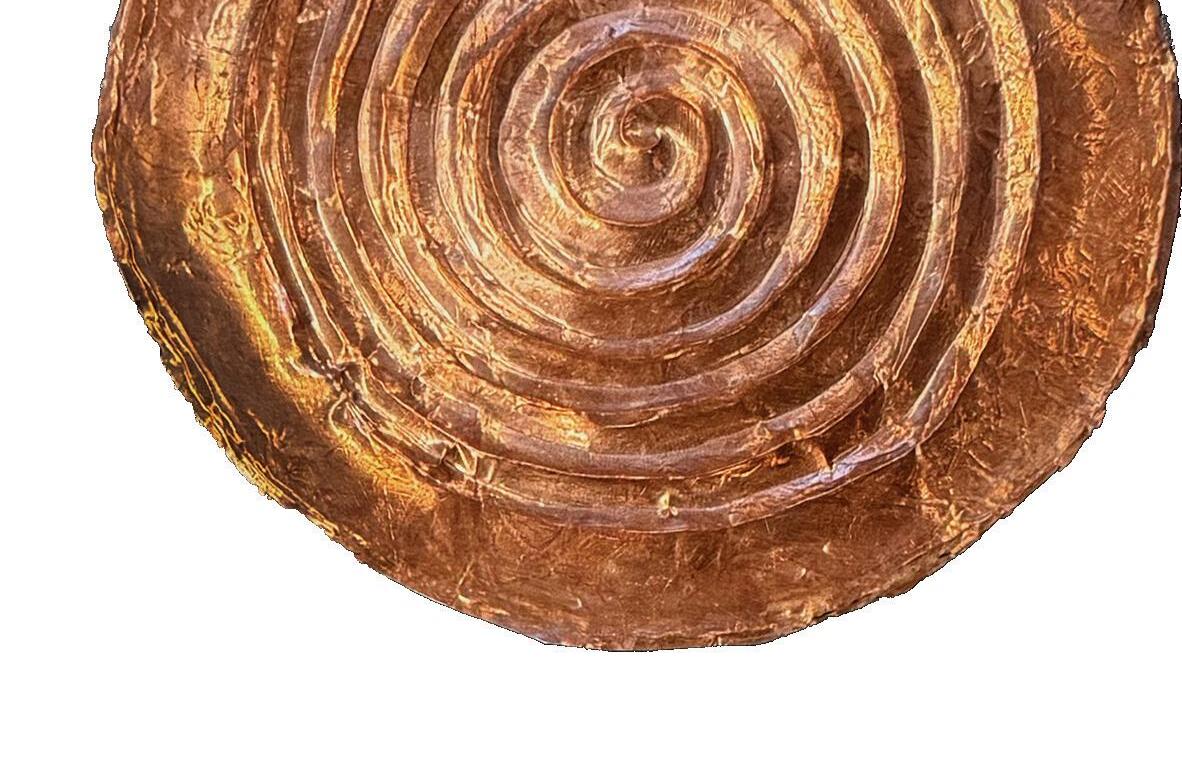
like they’re going to be replaced ... I think you just have to adapt.”
Williams realized that her interests in art do not have to intersect with technology, as she had originally thought.
“Going through the college application process, I [realized that] I don't want to do design, I don't want to build interfaces,” Williams said. “I am open to technology, but I don't think that you necessarily have to do that to be successful.”
As she moves into the next phase of her life and art career, Williams looks back on her experience at Paly. Her advice for Paly students who have an interest in art is to trust the power and freedom that comes with creating art.
“You don't necessarily have to place constrictions on yourself, especially at such a young age.” Williams said. “As a community, we have so many resources. Art is such a great way to explore who you are as a person and the world you want to see.”
Story and design by RIA MIRCHANDANI and ALICE SHEFFER • Art courtesy of LILY WILLIAMS
terms with this model.
“I don’t necessarily have a problem with rubrics because they do tend to be very open ended,” Williams said. “There are things about art that are somewhat objective, but a lot of it is very open ended, [so] you can really push yourself.”
Similarly, critique can be a fragile subject for many art students. As Williams has navigated her art classes, she has learned to handle it with an open mind.
“People can take criticism against their art really negatively because it's tied to you as a person,” Williams said. “It's helpful to separate the critique on your work from the critique on yourself.”
Part of handling criticism is keeping in mind that mentors hope to grow the artistic
Additionally, her exposure to technology in the Bay Area has fundamentally shifted Williams’ perception of artificial intelli gence, causing her to be more open-mind ed about the perceivable future of AI replacing the artist workforce, as she believes artists will find ways to evolve in this new era.
“I feel like a lot of people are really scared of AI and I don't really think that it is as big of a prob lem as a lot of people think it is,” Williams said. “Every time there's techno logical change, people have this inclination to feel like they're going to be replaced … I think you just have to adapt.”





GUIDED BY THE CROONING SOUND OF TRUMPETS AND SAXOPHONES, PALO ALTO HIGH SCHOOL ENGLISH TEACHER DAVID COHEN NAVIGATES THE BUSTLING CROWDS OF THE NEW ORLEANS JAZZ AND HERITAGE FESTIVAL WITH EASE. DESPITE BEING A LIFELONG LIVE MUSIC ENTHUSIAST, THE ATMOSPHERE OF WALKING INTO A MUSIC FESTIVAL NEVER GETS OLD. “You have it all kind of combined in one day,” COHEN SAID. “The anticipation, the social side of it and something new or something to discover.” ALL MUSIC FESTIVALS SHARE CORE ELEMENTS, BUT EACH HAS ITS OWN UNIQUE FEEL DUE TO THE DIFFERENT LOCATIONS, SETLISTS AND ATMOSPHERE AT EACH EVENT. FOR PALY SOPHOMORE ZAHRA BUTT, COACHELLA WAS A STANDOUT EXPERIENCE COMPARED TO OTH“The quality of performances were amazing,” BUTT SAID. “I have been to another



Music enthusiasts reflect on the evolution and commercialization of music festivals over the years



festival and Coachella definitely topped all the ones I’ve heard about and even the one I had gone to.”
Beyond just the musical performances, Butt also appreciated the cultural significance that Coachella had, bringing back memories from a decade ago. These events create the opportunity to connect over shared memories.
“The unicorn frappachino was there, artists and songs that were popular during that time, and the out fits were so 2016,” Butt said. “It really made me feel nostalgic for the era because, even though I was young, I still remember the music and fashion.”
together tiered ticket systems to improve the experience for those willing to pay more.
“Even just regular concert venues are starting to put together more VIP packages, where you can listen to the sound check, get a photo and a signed poster,” Cohen said.

However, not all music festivals are designed to cultivate the same atmosphere as Coachella. They are flexible experiences intended to be shaped by each individual who attends and their musical preferences.
“I think for a lot of the audience, music is the cornerstone of it, but it's not the whole thing”
“I would say that the culture and the vibe at different festivals vary,” Cohen said. “You can still find some of the more low-key experiences for people who just want to enjoy the music.”
In more recent years, especially, this percentage of audience who are in attendance just for the music has decreased. Music festivals have become more about the full package, such as the improved food and drink selection, rather than purely about the music performed there. There have been major increases in food selection and areas such as VIP lounges that make the festival experience more enjoyable for attendees looking for entertainment alongside the music performances.
— David Cohen, Paly English teacher
Paralleling the increase in ticket tiers and commercialization at these events, the ticket prices have also risen. This trend was noticed by Paly sophomore Lucia Davis.
“The ticket prices have definitely increased, and it is so expensive to go to music festivals now,” Davis said. “I don’t really have a problem with the ticket tier system because you can have a great experience with either general admission tickets or VIP.”
The ticket tier systems not necessarily being a negative aspect of events such as music festivals is reflected by Jasper Thrun, a senior at Gunn High School and self-made music producer. However, there are still a few downsides to the system.
“The idea is that you’re willing to pay a little bit more for a [VIP] ticket because you’re going to get more”
— Eric Bloom, Paly Economics teacher
“I think it makes sense for the event organizers to have ticket tiers, especially for higher-paying fans, as it gives them the option to stay away from bigger crowds,” Thrun said. “It kind of sucks as an attendee, though, since a VIP area next to the stage will usually take away space or view from the general audience.”

“I think for a lot of the audience, music is the cornerstone of it, but it's not the whole thing,” Cohen said. “I'm sure there are a lot of people who would go if the ticket prices were different, or if [they] had a friend from out of town or out of the country, and were like, ‘Come on, let's find something fun and special to do.’”

While music festivals may be a rare event for some, others choose to attend them more often, despite the impractical conditions. Many find that the memories they create and experiences they have make these impractical conditions worth it and continue to attend festivals.“Everyone's tolerance for discomfort, extreme lines, extreme temperatures or extreme crowds [is] going to vary from person to person,” Cohen said. “I get the appeal of putting yourself through something and getting the reward.”
That tension highlights the competing priorities in tiered ticketing. Paly economics teacher Eric Bloom sees the VIP options as a practical way to refine the experience for those who can pay more.
“The idea is that you're willing to pay a little bit more for a [VIP] ticket because you're going to get more,” Bloom said.
The economic benefits of tiered ticketing expand beyond audience management and experience. Festival organizers also rely on these systems to help cover operational costs of festivals.
“A festival has higher startup costs because you have to bring everything there,” Bloom said. “Having a venue is expensive, and you have to fill the call, book acts, get people to come in and [again on] Tuesday, Wednesday and Thursday when no one's there.”
To make up for these expenses, many music festivals have transitioned from purely music-based celebrations to more all-rounded commercialization opportunities in recent years.
Despite the extreme circumstances, many are still drawn to the payoff. At the same time, there has been a shift in recent years toward a greater variety of food, drink and other amenities that
“Originally, music festivals were a cheaper alternative to concerts, as they would combine many into one larger event,” Thrun said. “But modern music festivals are [now] dominated by sponsors, which help pay for the artists and event setup.”
ticket prices continue to increase. To some atsignificant rise in price makes it not worth the experience.
prices] are absurdly high for what you’re ting,” Thrun said. “I think it would be justi fied if every buyer was a fan of every single at tending artist, but that’s just not true for anyone.”
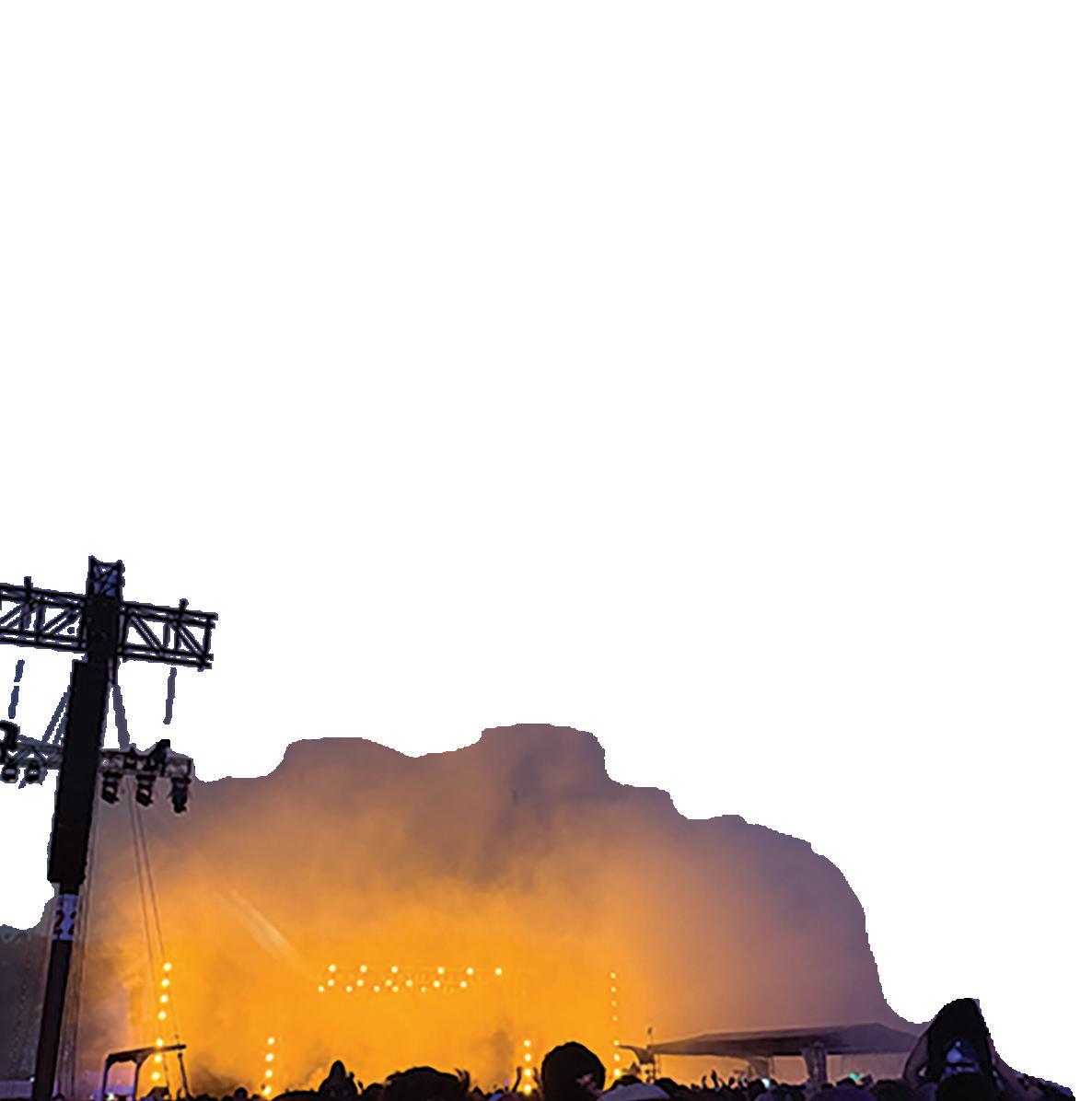

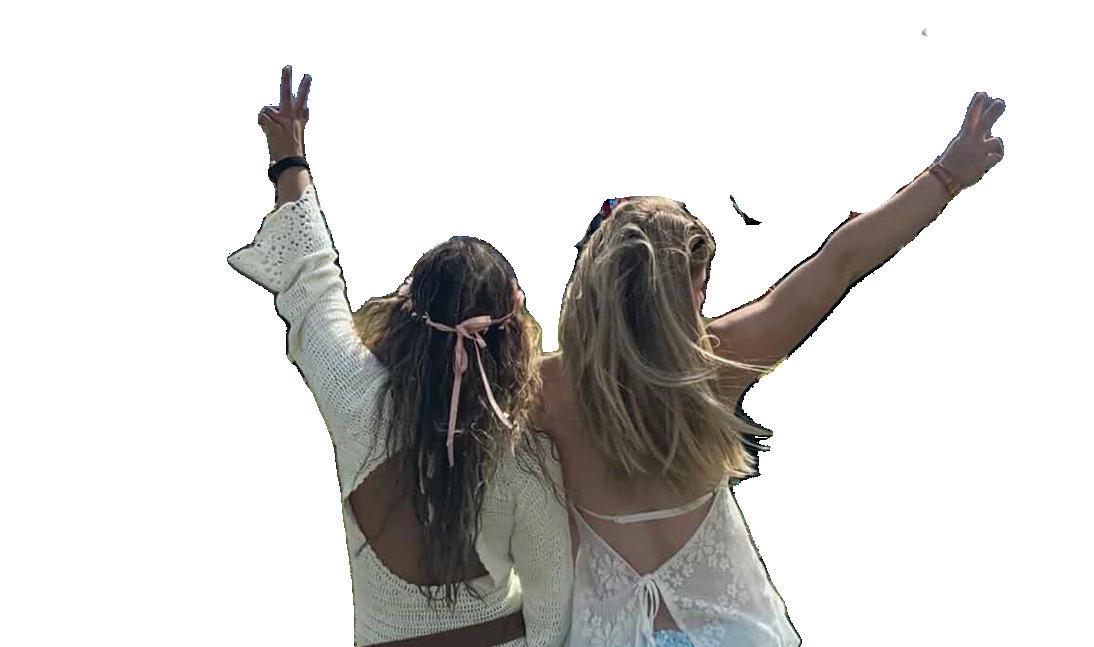







festivals can be a substantial way for smaller artists to advertise and showcase their talents, potentially increasing income later in their career.
“Festivals are great for smaller artists since they get to expose their music to new audiences, and usually grow their fanbase doing so,” Thrun said.

Social media coverage of music festivals also helps listeners explore new genres. Short moments from performances can go viral and live streams and official coverage provide global access.
“I think social media has been great for listeners, since it greatly increases accessibility to these shows for most,” Thrun said.
In addition to smaller artists sharing their songs, there has also been a significant amount of influencers posting about their own experiences at festivals. While the increase in influencers makes the atmosphere more prestigious, it also makes viewers and fans want to go even more.
“The amount of influencers I see posting about festivals, specifically Coachella, is crazy,” Davis said. “I feel like a lot of them are just going for content and clout and not necessarily to enjoy the music, which definitely changes the experience for normal people.”
Although social media can take away from the authenticity of music festivals, for Cohen, the full package offered by experiencing live performances is unmatched, and the same feeling cannot be found online. The anticipation leading up to a set and the dynamic between the performers and the audience cannot be replicated through a screen.
“The best days for me have been [when] I arrive totally psyched to see one of my favorite bands,” Cohen said. “Maybe [it’s] because I've already seen them, and I know how good it's going to be, or [because] I've never seen them [live].”
The feeling created by music festivals was noticed by Paly senior Arabella Guinle, who, as a Paly ASB spirit commissioner, made a few drastic changes to Paly’s own music festival, Quadchella, last year. Her goal was to improve the environment and make it more reflective of a real music festival.
“People used to never go [to Quadchella], and now people look forward to it all year,” Guinle said. “I added Italian ice, bought better quality blankets and moved it to the tower building.”
While the music and performances are foundational to any music festival, including Quadchella, the full experience is what makes it that much more enjoyable for students.
“The vision behind Quadchella was to embody the same feeling as a concert, [with] really upbeat and good vibes,” Guinle said. “We also work with Mr. Najar’s class, which really amped up the quality of the whole event.”
about how difficult your television can be switching between HDMI cables or something like going from cable to streaming. Well, imagine that tenfold, live in front of 100 people.”
Although there are many opportunities for error, the expertise that comes with being part of a music festival outweighs the downsides. For Najar’s audio production class, Quadchella is a unique and valuable experience.
“It’s really nice that audio production has a chance to problem-solve in front of other people,” Najar said. “We’d always like more opportunities, if they come, to do that.”
While the technical team valued the exposure, performers such as Paly sophomore Adina Steinberger experienced the result of their work on stage. The positive atmosphere was evident to her, and it went beyond performing, emphasizing a strong feeling of community.

Aiming to capture the concert feeling, Paly music teacher Michael Najar included his audio production class in Quadchella, using their involvement and experience with audio and technology to elevate the performance quality. This collaboration reflects the broader idea of music festivals bringing communities together.
“People used to never go [to Quadchella], and now people look forward to it all year”
— Arabella Guinle, ASB Senior
“One of the things that I really believe in is that putting together these group events is important for the campus,” Najar said. “It brings us together in a very rare way that we don’t do a lot of, which is people voluntarily coming together just to participate with each other.”

“I felt very connected to the Paly community while performing and watching other acts,” Steinberger said. “I think that Quadchella is very beneficial to the student body because it allows students to express themselves, but also have other students show up for them.”
The experience left Steinberger with a lasting impression, building anticipation for the years of Quadchella to come.
“I think that Quadchella is very important and is something that all Paly students look forward to at the end of the year,” Steinberger said. “Quadchella should continue for years to come.”
Core aspects of music festivals involve creating an uplifting atmosphere and a sense of belonging, yet bringing these performances to life requires a high level of technical skill and experience.
“[Performing in music festivals] is one of those things where you can only learn by doing,” Najar said. “Just think
Art and






The path to making the right decision for you is one that considers your values, priorities and sense of self.

Many of us have been in situations where we can’t decide what to do. What if I regret it? What if I make the wrong choice? These are questions that go through my head when making stressful decisions. Maybe it is as simple as choosing to turn right or left, yet sometimes I still look back and feel as if I should have picked
It makes sense; it’s hard to be certain about a choice when you are confused by your own thoughts and emotions, those of others, as well as pressures from cultural, societal or academic norms.
I was presented with the opportunity to switch from being a shooter to a goalie in water polo during my sopho
field player, which involved shooting and switching from offense to de fense. However, since our team did not have a goalie anymore, my deci sion mattered for the team’s future. Playing against steep competition, our team needed someone who could anchor the team as a last line of defense.
For a while, I was torn. I had never pic tured myself playing as a goalie. I had no training, and I was worried that I would not be good enough to be varsity-level if I took that role. The pressure was high as our first games loomed just a month away.

I decided to seek out advice; I talked with my parents, past coach

to pick the outcome I would enjoy the most, since it would motivate me to put






ward two things when mak ing these hard choices: my heart and my mind. To me, the heart helps make decisions that bring happiness and a sense of purpose and fulfillment. The mind helps make logical, strategic and more analytical decisions that consider the whole picture, not just an instinct-driven deci-


Through that mindset, look within yourself first — your intuition, heart and mind — when making a choice. If they clash, like you’re tugging yourself in opposite directions, that’s when you should look towards the future and ask yourself who you could be in your new position. Make the decision from the perspective of the person you want to become.
Any decision you make, as long as you picked it, will bring you down a path you won’t regret. “ ”
Of course, this too can be complicated. Answering the question “Who am I truly?” is hard; the answer is fluid and changing as you move through different stages of your life. So with these future-orientated decisions, I recommend that you aim to keep the parts of yourself that match your values, priorities and preferences. Make the decision that will allow you to keep your favorite parts of yourself.
There’s an immense pressure from all kinds of people to make the “right” decision, so remember to take the time to find what’s right for you. Choices will rarely be right versus wrong, nor will they necessarily be easy or hard. In water polo, I took the time to train and make the position into a place where I can be comfortable and confident. So take the time to make something work out and you will find that it will become right for you.

Tiam m., 11 & maggie C., 11 arTiN i., 11 & SOPHIa r., 12





“Don’t worry about it so much… its chill”
- Elsa L, Senior
“Start plotting [to get a prom date] around four months before prom.”
- Anonymous Junior
“Prom is supposed to be representative of your high school experience. People overstress too much trying to get a date… but going with friends is all right.”
- Amily Zhang, Senior
Lara s., 12 & ryleigH l., 12

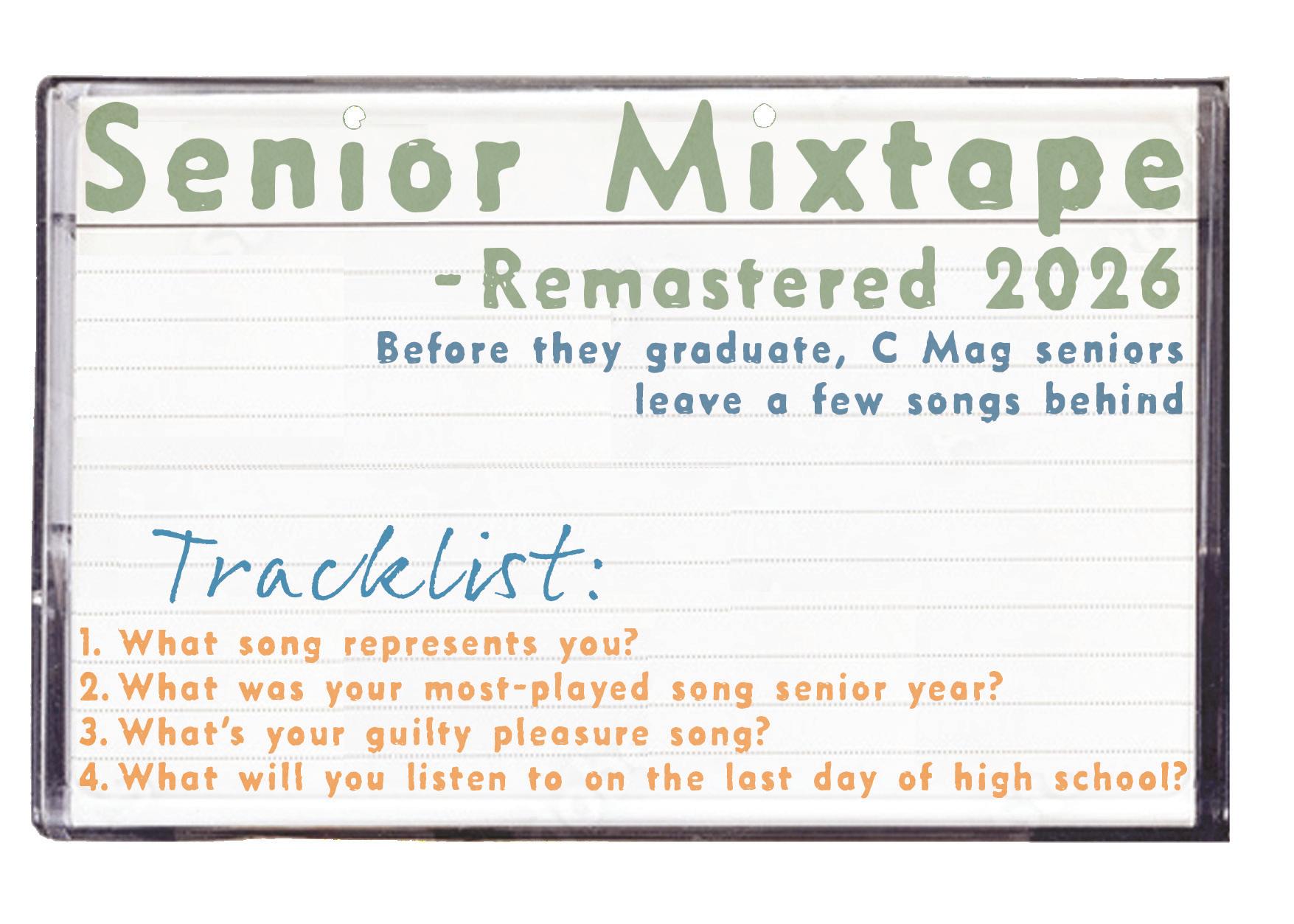


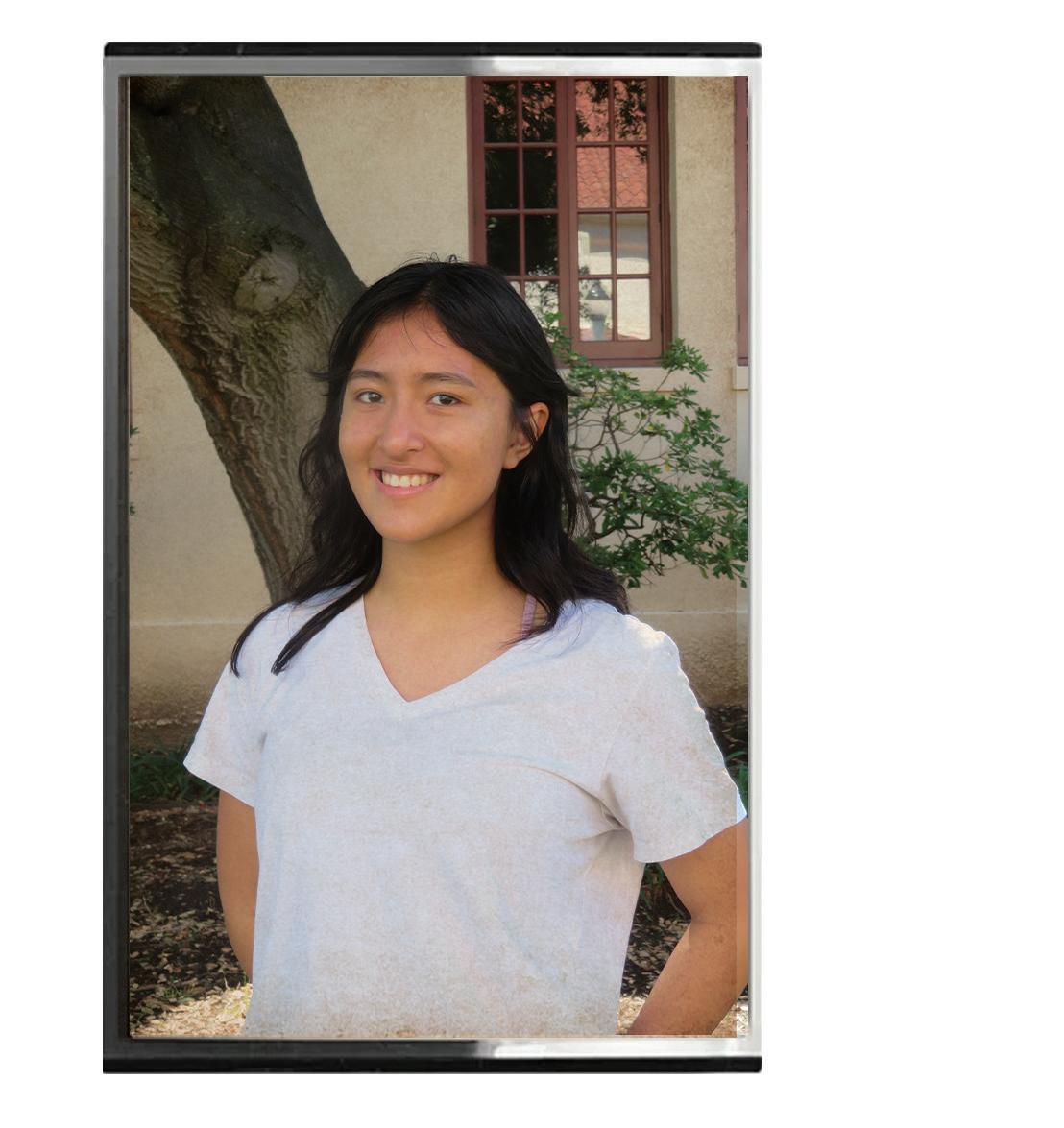
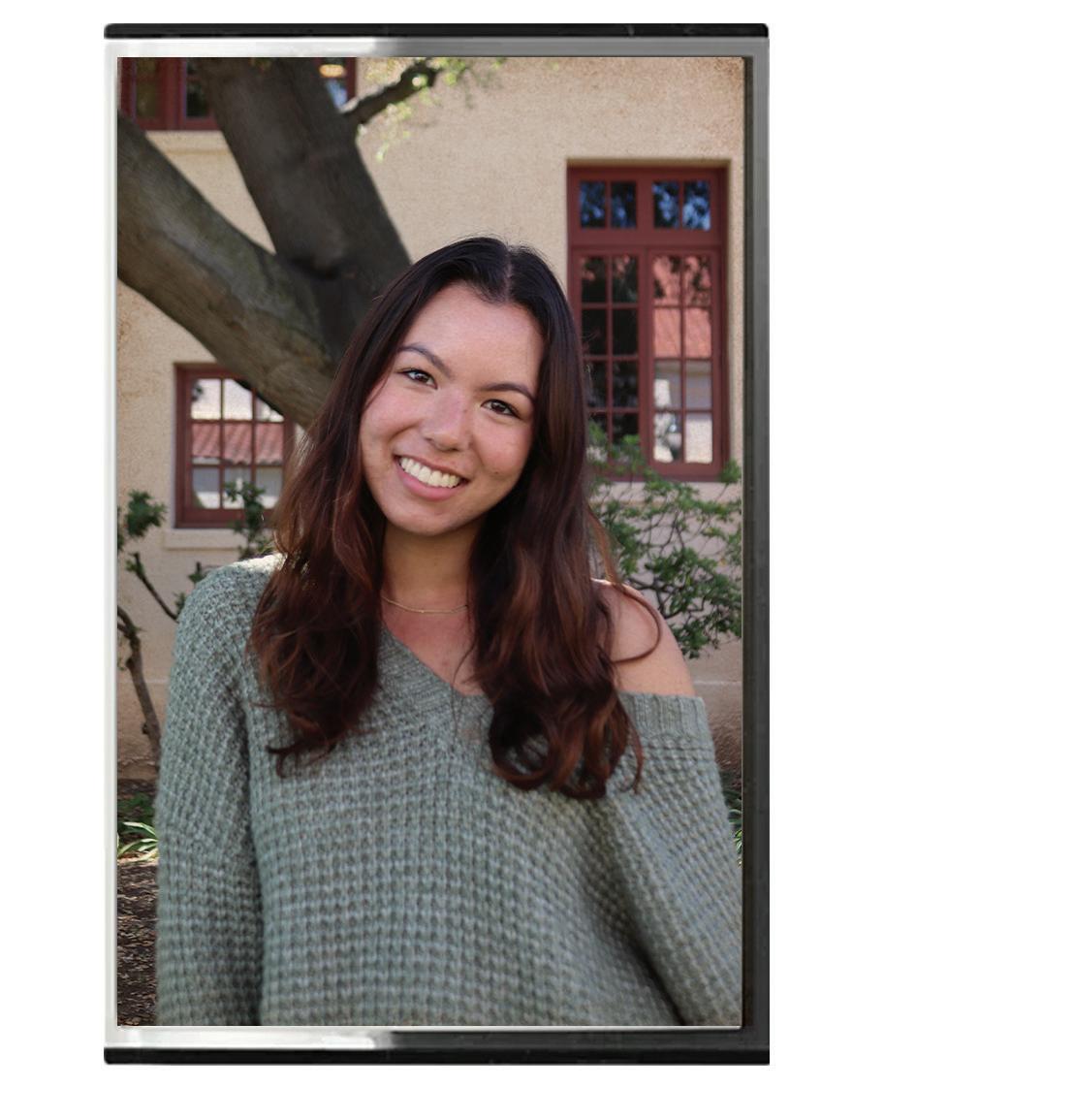
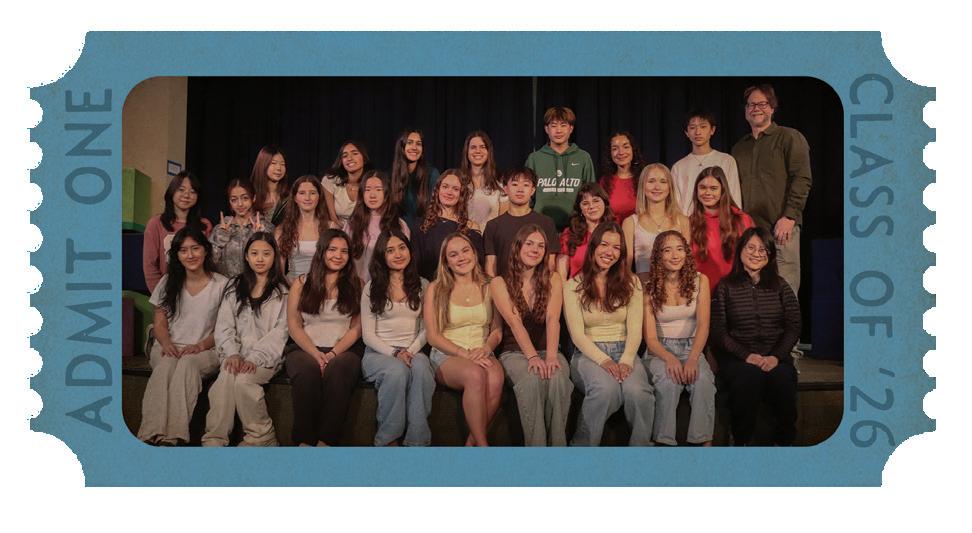

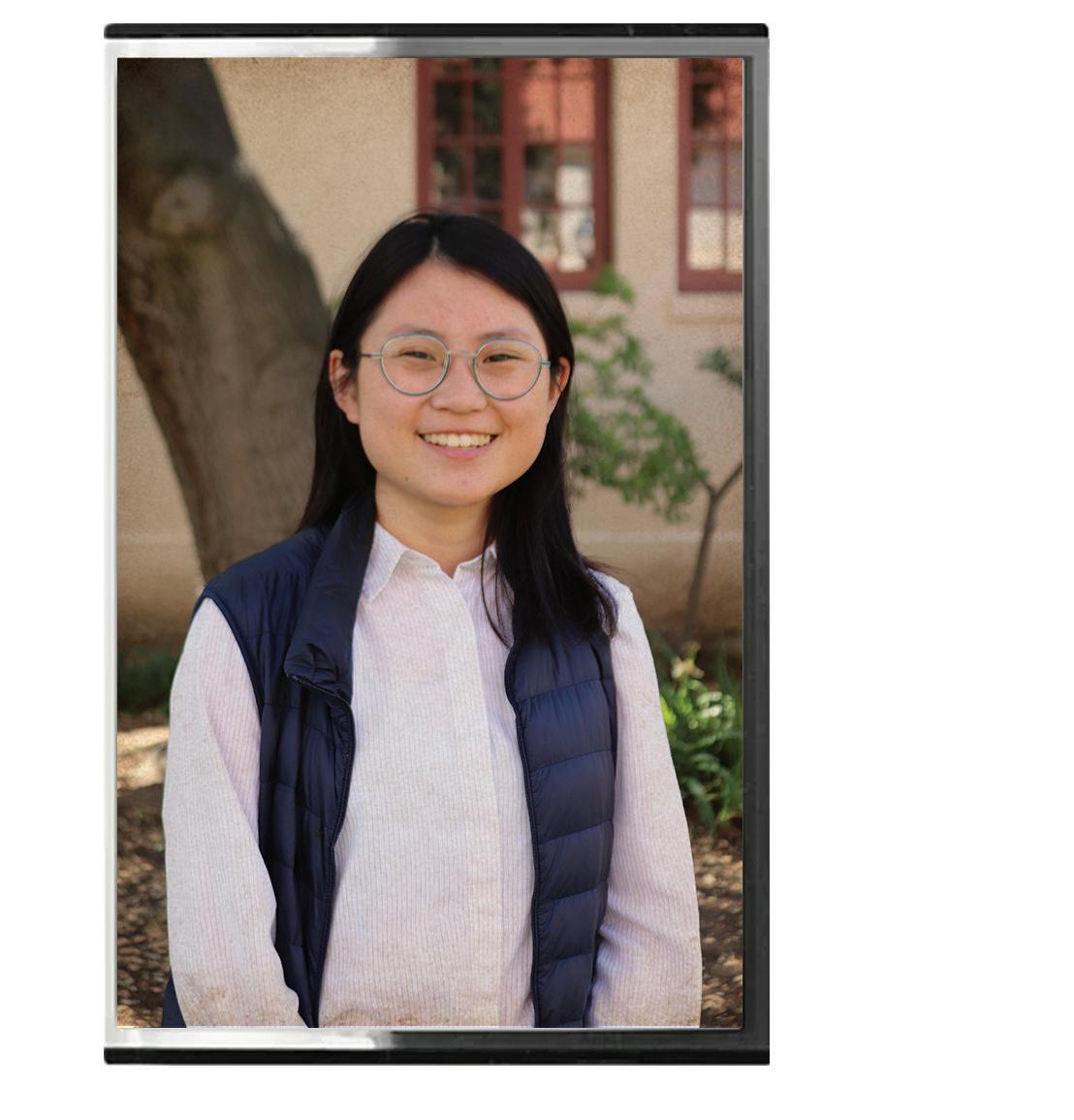
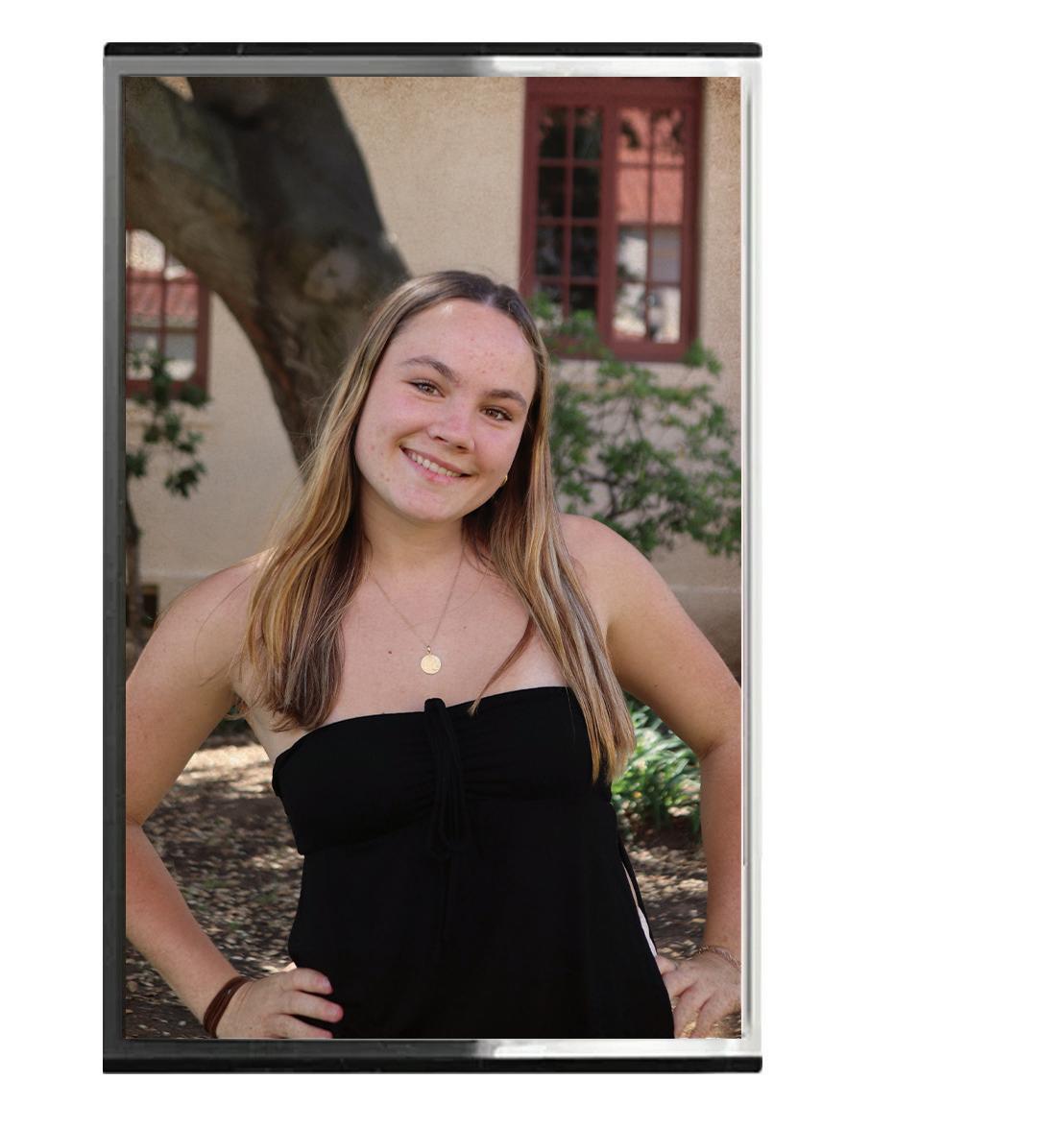
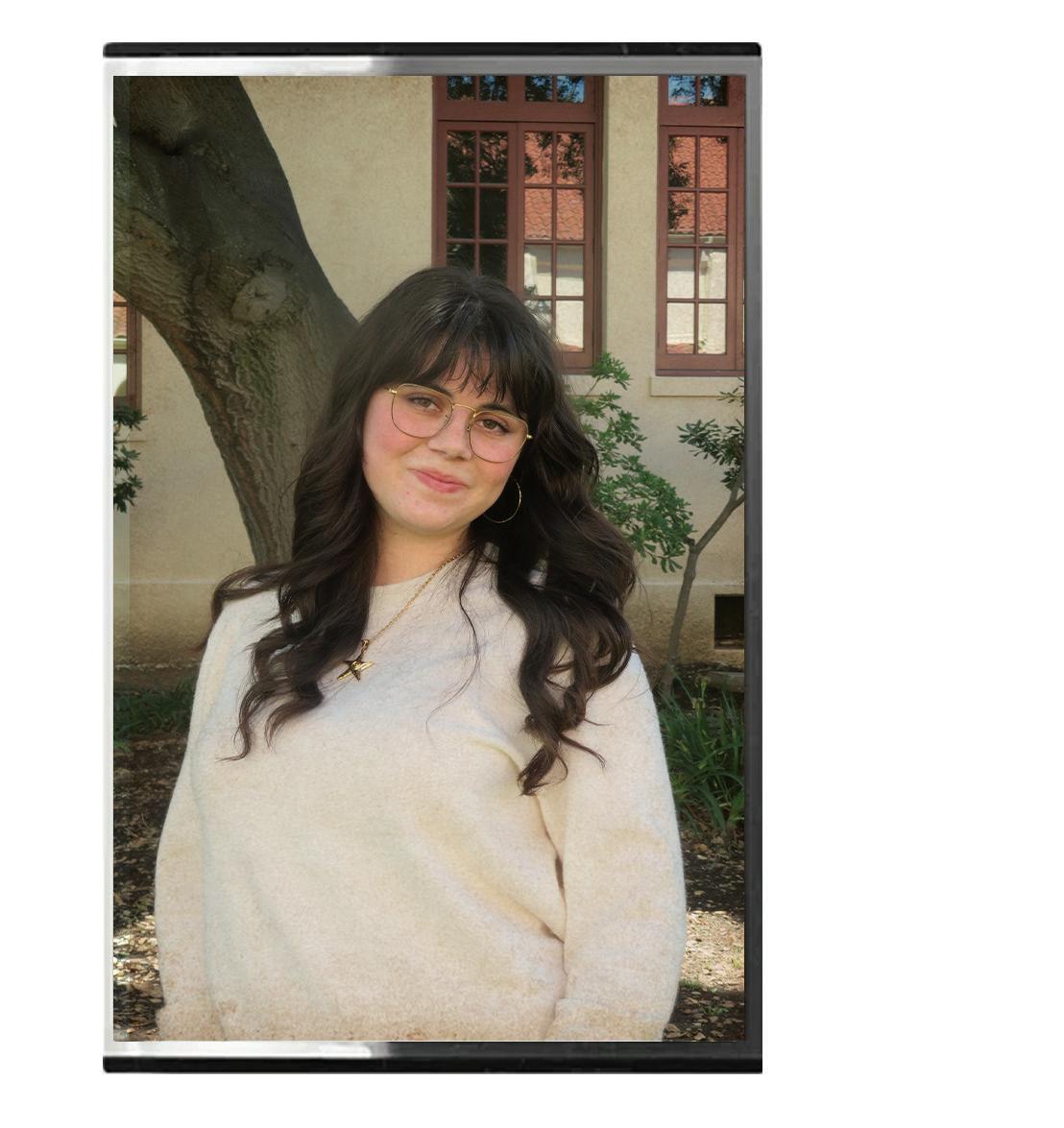

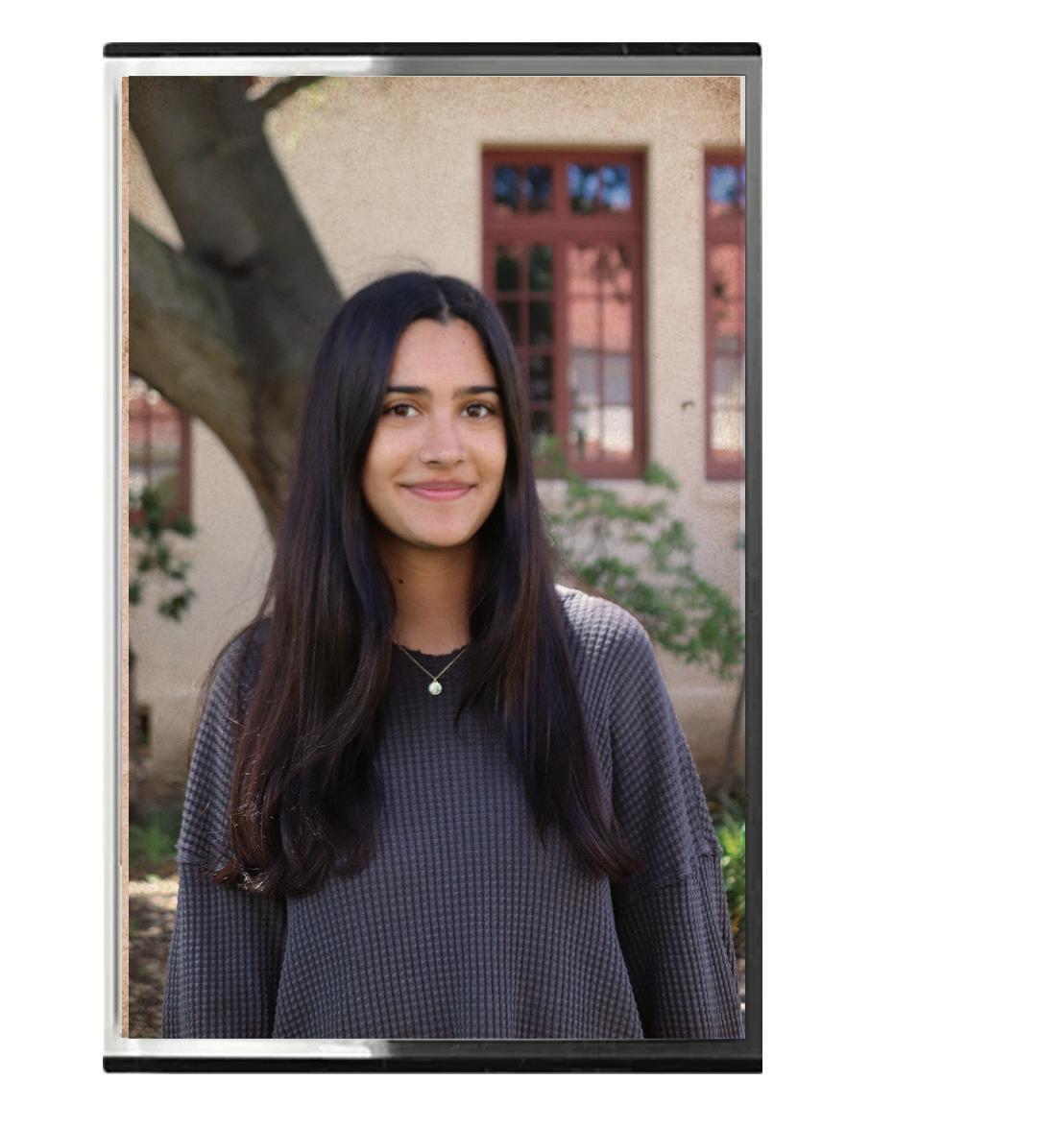
1. Dreams – The Cranberries
2. 400 Lux –Lorde
3. Home –Edward Sharpe & The Magnetic Zeros
4. You’re Gonna Go Far – Noah Kahan
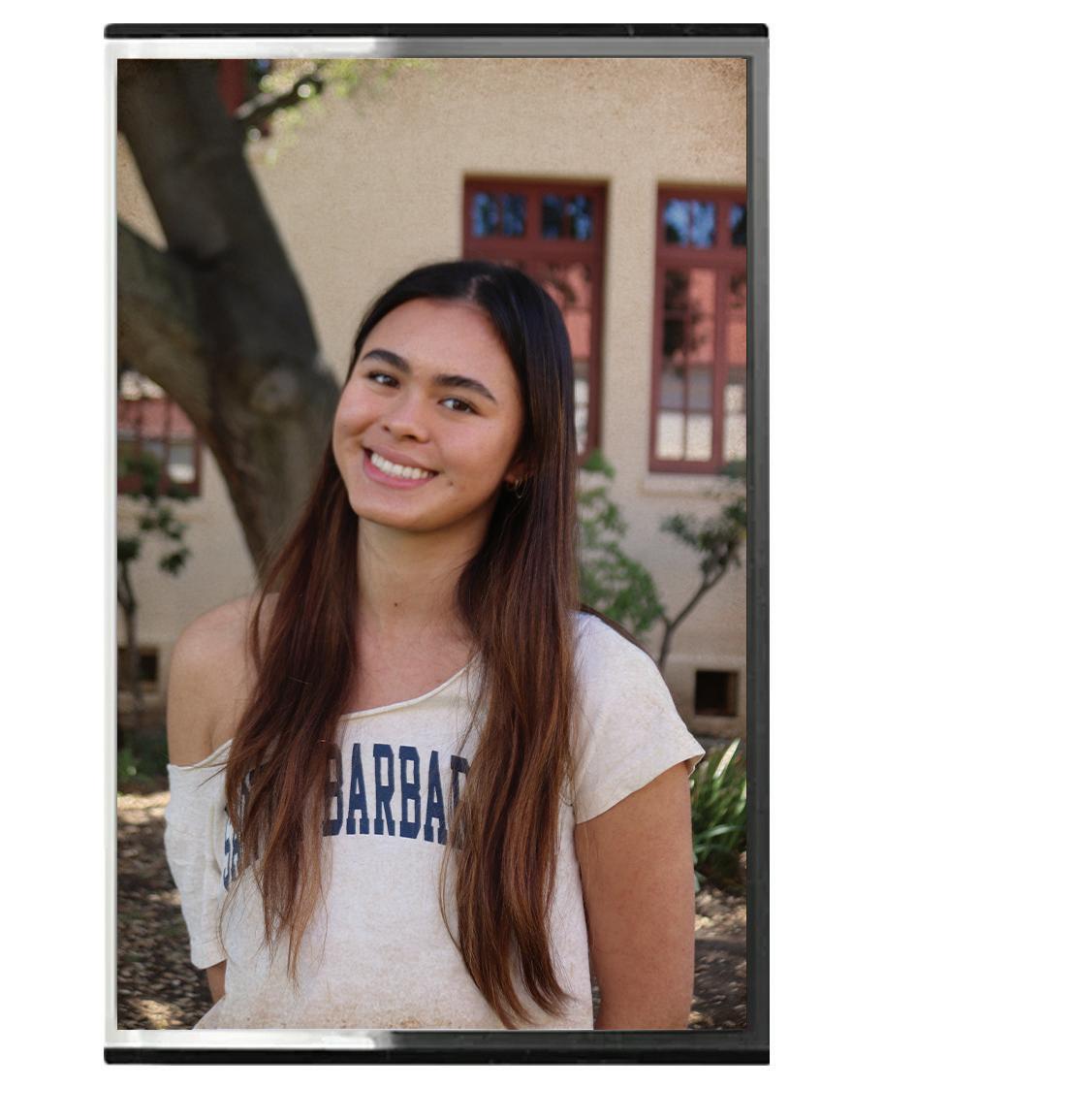
1. California –beabadoobee
2. Time Bomb –Iration
3. Bowl For Two – The Expendables
4. Better Together – Jack Jackson
1. Put Your Records On –Corinne Bailey Rae
2. Come Around Me – Justin Bieber
3. Replay – Iyaz
4. Somewhere Only We Know –Keane
Design, photos and photo illustrations by RIA MIRCHANDANI and ALICE SHEFFER
1. PERFuMITO NUEVO – Bad Bunny, RaiNao
2. Soledad y el Mar – Natalia Lafourcade
3. Food for the Soul – its murph
4. Rocky Mountain High –John Denver


1. Earrings –Malcolm Todd
2. White Keys –Dominic Fike
3. Champagne & Sunshine –PLVTINUM, Tarro
4. The Man Who Can’t Be Moved – The Script

1. A World Alone – Lorde
2. “Heroes” –David Bowie
3. 20 Min – Lil Uzi Vert
4. American Pie – Don McLean










check out our site to hear more!


what’s one thing about college you’re excited for?
“To meet people who are interested in the same career as me.”
Nusaybah Mohsin
“To do research for a professor’s lab.”
Camille Trimbur
“To meet new people and make new friends.”
“To explore a new state.”
Sophia Zhang Talia Boneh
notebook