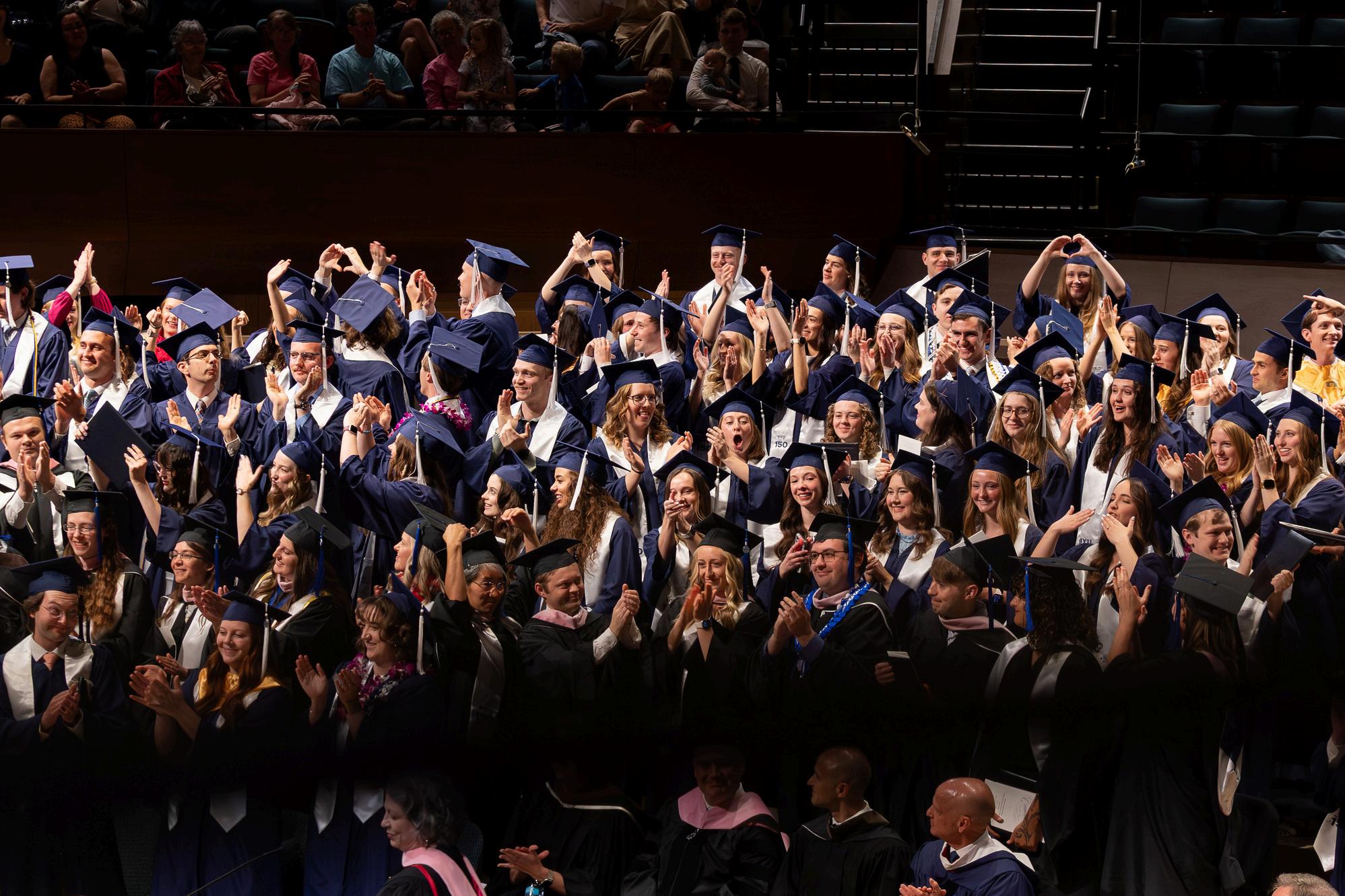
As we make our way through life, we usually celebrate milestones and accomplishments along the way Birthdays, anniversaries, graduations, weddings, a new year, and new jobs are just a few in the myriad of opportunities we have to celebrate
As you have no doubt heard, BYU is celebrating its 150 year since its foundation 150 years of sharing light! In addition, the College of Fine Arts and Communication will be celebrating the 100 anniversary of its inception And the arts at BYU, especially music, have truly been among the brightest lights that have shone during this last 100+ years th
Our School of Music journal is all about Sharing the Light Each issue highlights various individuals and ensembles and how they have shared light through their performances and experiences We invite you to read, explore, and celebrate with us as we continue to share light with the world!
Maestro Marcelo & The Universal Language
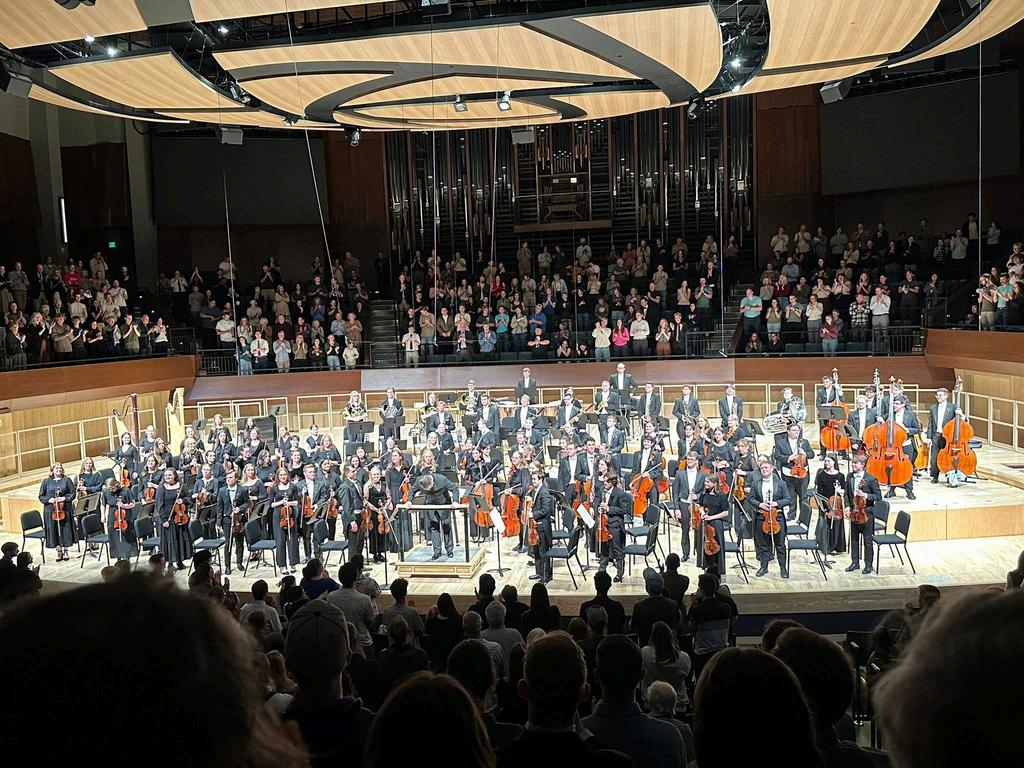
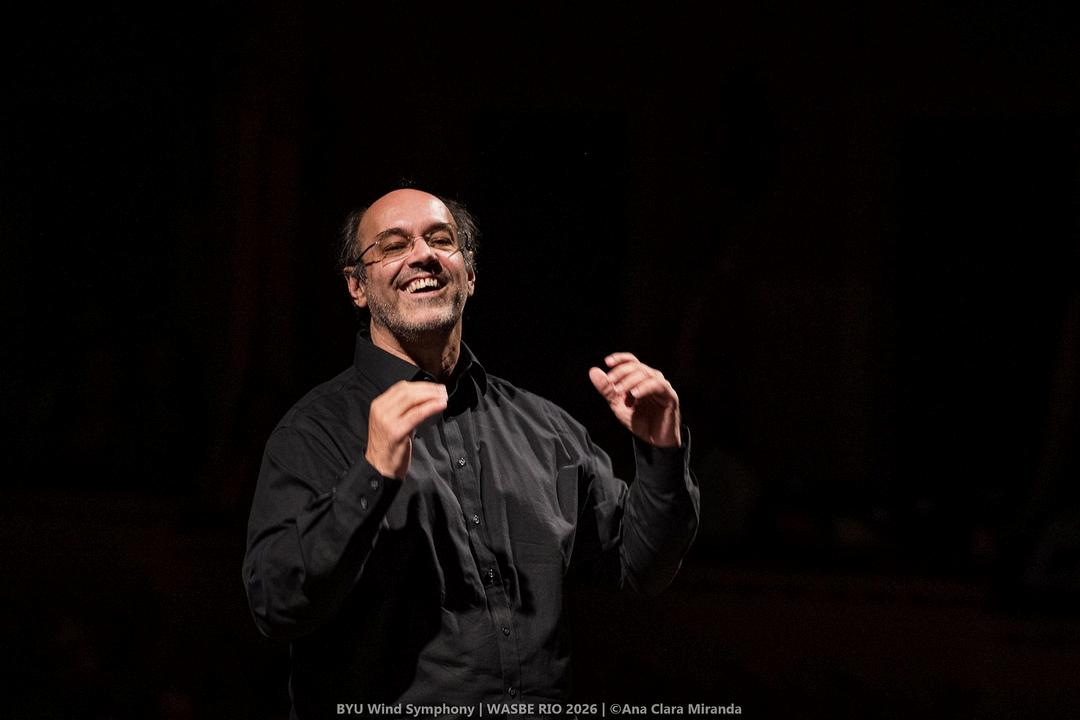
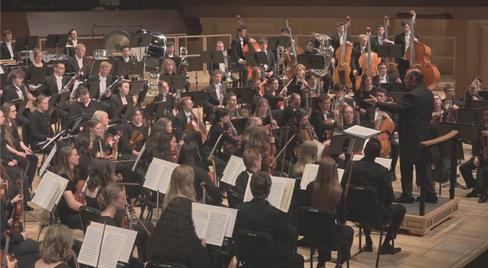
For our top ensembles, the last concert of the school year serves as both a reflection on current skill and as a final exam within respective ensembles. April 11th marked the BYU Philharmonic’s final exam and performance, a deeply moving concert titled ‘From the New World’. This served as the finale to a long week of music exchanges & workshops hosted by our esteemed guest artist, Maestro Marcelo Jardim from Rio de Janeiro, long time friend and colleague of Dr. Shawn Smith (Director of the School of Music). These workshops were created with students in mind, an opportunity to build international connections and expand the musical knowledge and skills of the performers. By sharing these different cultural and artistic ideas across borders, the unifying power of music only grows stronger & increasingly universal
As experts in Brazilian music, Maestro Marcelo and Smith are incredibly well versed in the pedagogical applications of rehearsing and performing repertoire from the golden era of Brazil’s orchestral and wind band composers
“ a kind of romance of the backcountry atmosphere of northeastern Brazil The climate, color, temperature, light, chirping of birds, the scent of honeyed grass between the hen-houses, and all elements of nature of a hinterland served as inspiration for motives in this work However, it does not represent any objective aspect nor a descriptive flavor”
One of the highlights of the BYU School of Music is how accessible globalized curriculum and academic opportunities are for students. From long study abroad trips to supporting student ideas and projects through experiential learning, we often have multiple opportunities weekly to attend performances from guest artists or learn from world class musicians. Our collaboration with Maestro Marcelo Jardim from the School of Music at the Federal University of Rio de Janeiro was a perfect example of how these academic opportunities enrich the students as well as the audiences
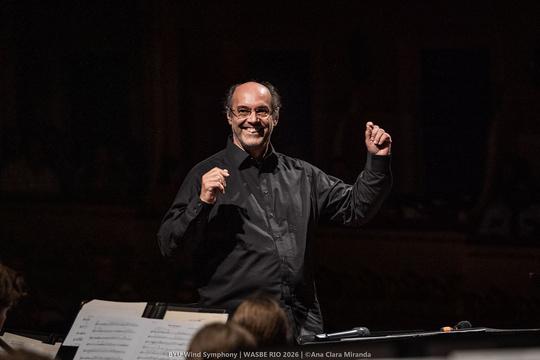
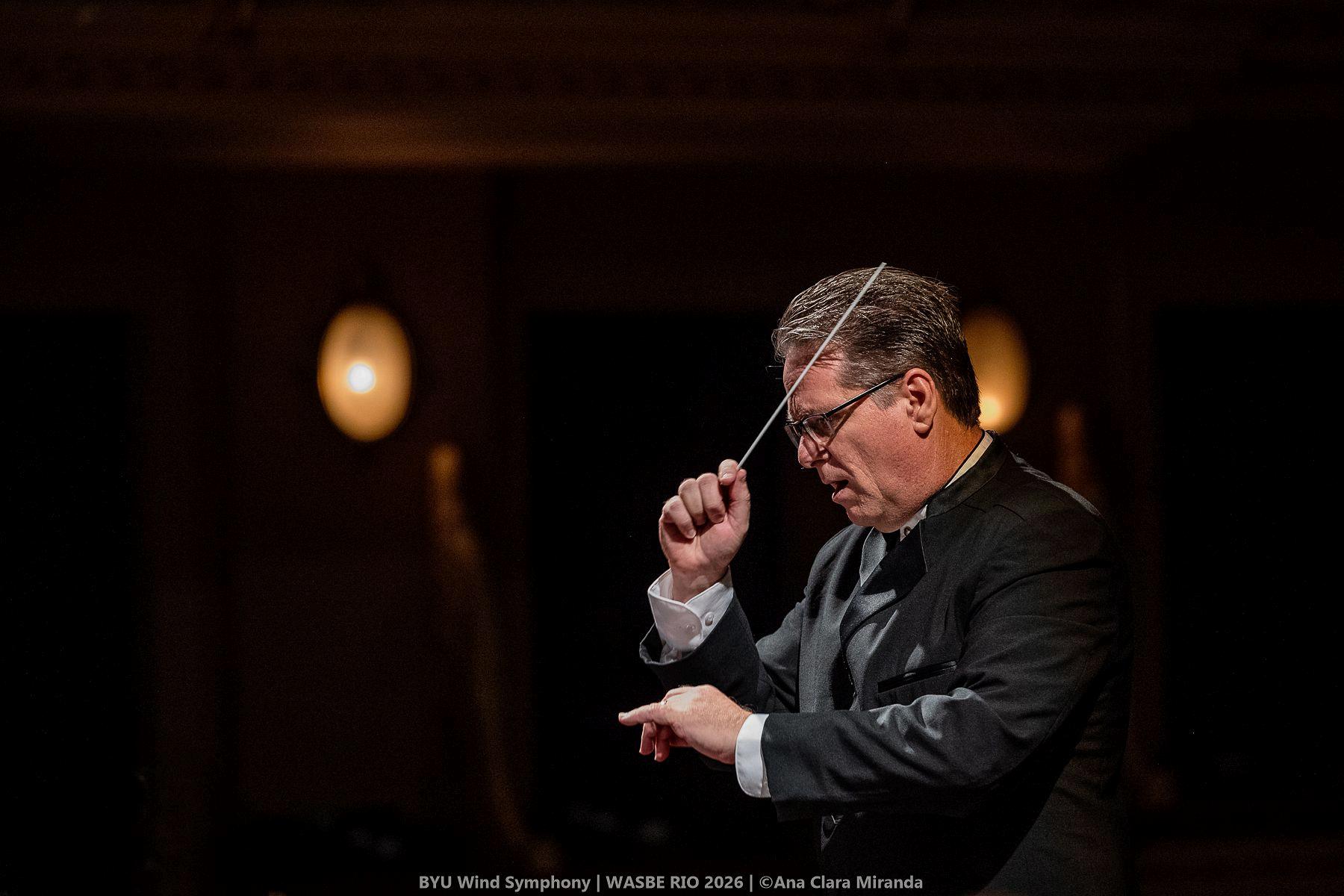
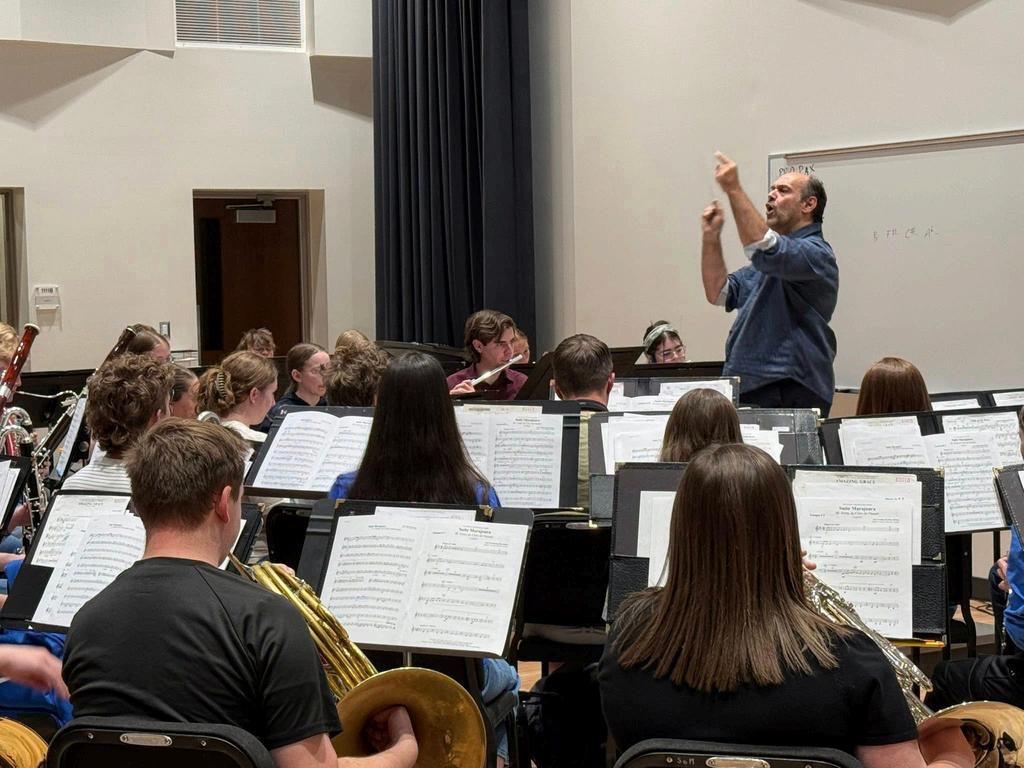
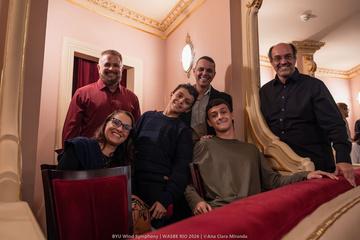
Friends and colleagues with our director Dr Shawn Smith, Maestro Marcelo worked with both the BYU Philharmonic and Wind Symphony over multiple rehearsals and conducted both in their April concerts.
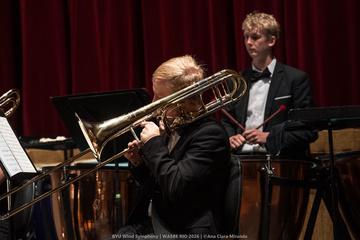
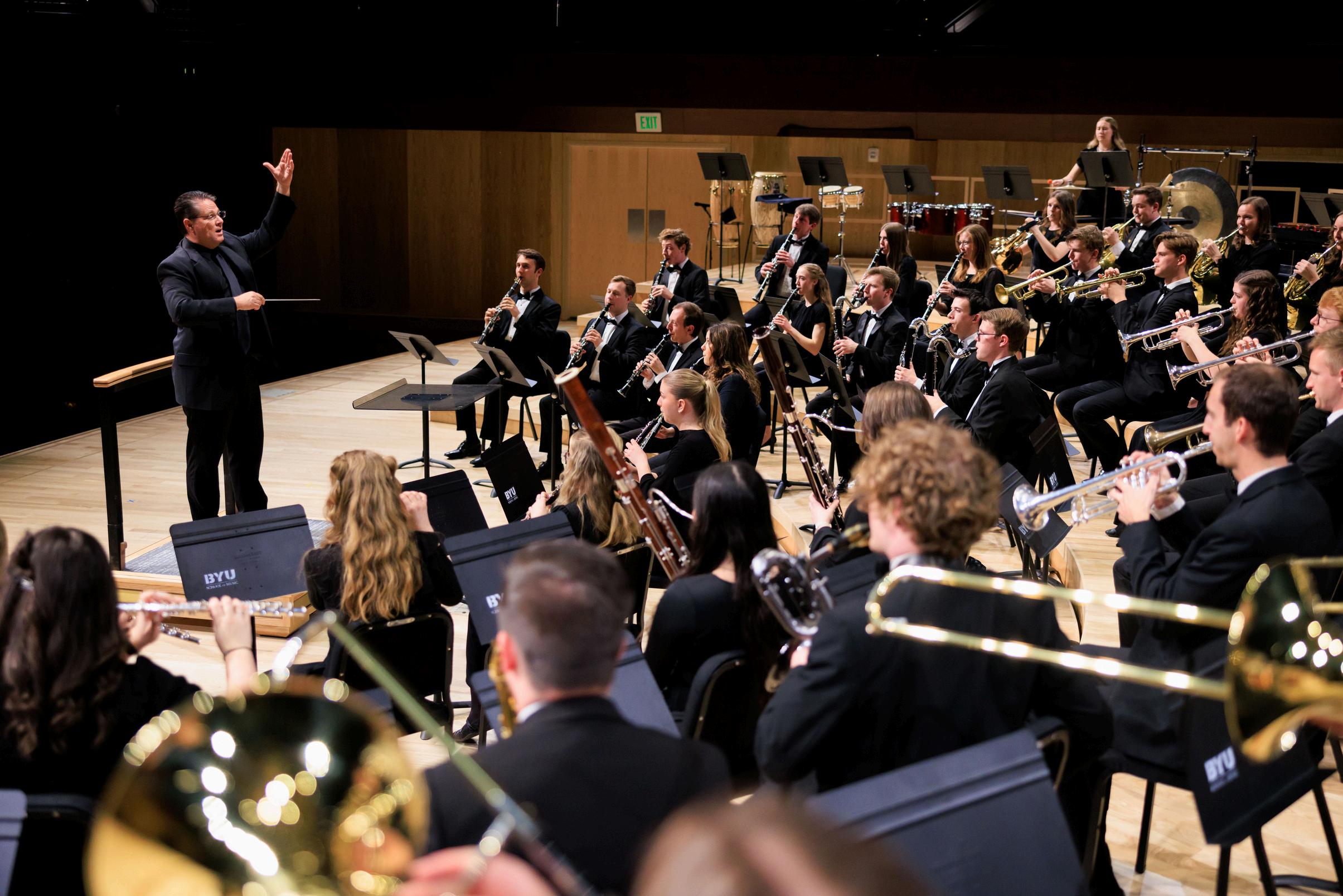
The Brazil Workshop showcase started on April 10 with the Wind Symphony’s ‘A Brazilian Celebration!’ concert welcoming audiences to preview their upcoming tour’s setlist, with guest conductor Maestro Marcelo Jardim after a week of rehearsing and working up close with students on classic Rio-born repertoire and composers. th
“Learning about and playing Brazilian was so great because it opened up a whole dimension of music and musical ideas I hadn’t come across before! Marcelo was wonderful He was so calm and you could tell just by interacting with him how much he loved working with us ” Luke Lehmuller, Euphonium in Wind Symphony
Story by Emma Hogge
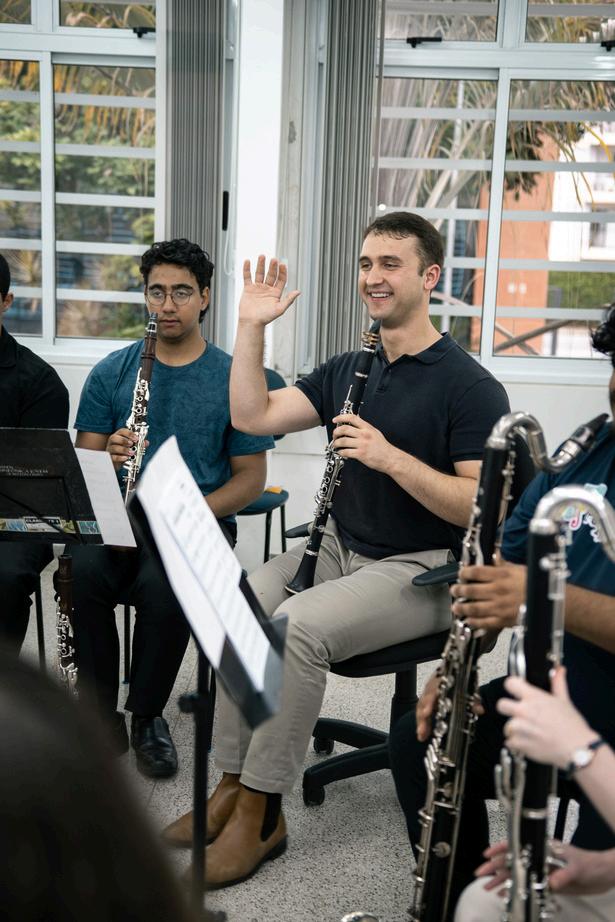
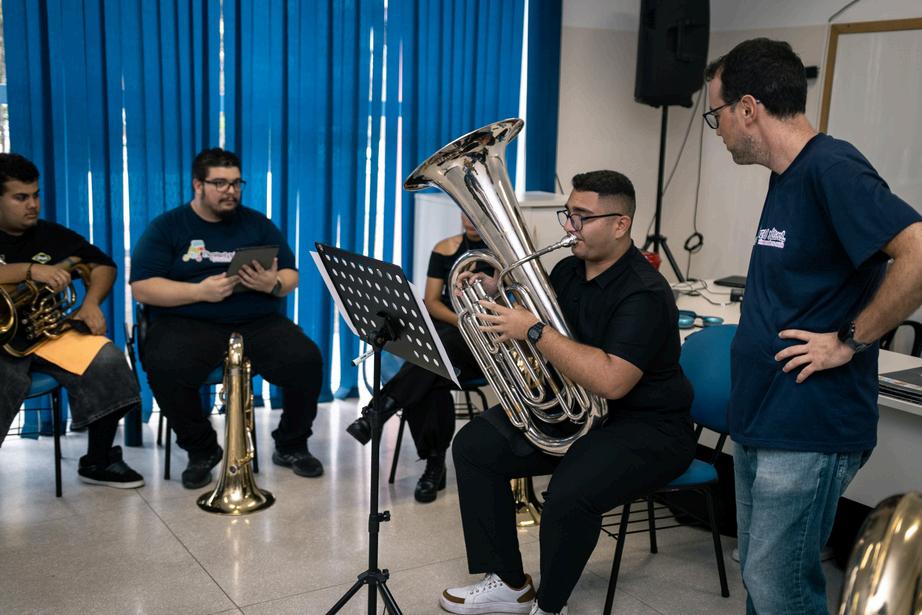
Wind Symphony Musicians working with students in Brazil in music masterclasses and exchanges
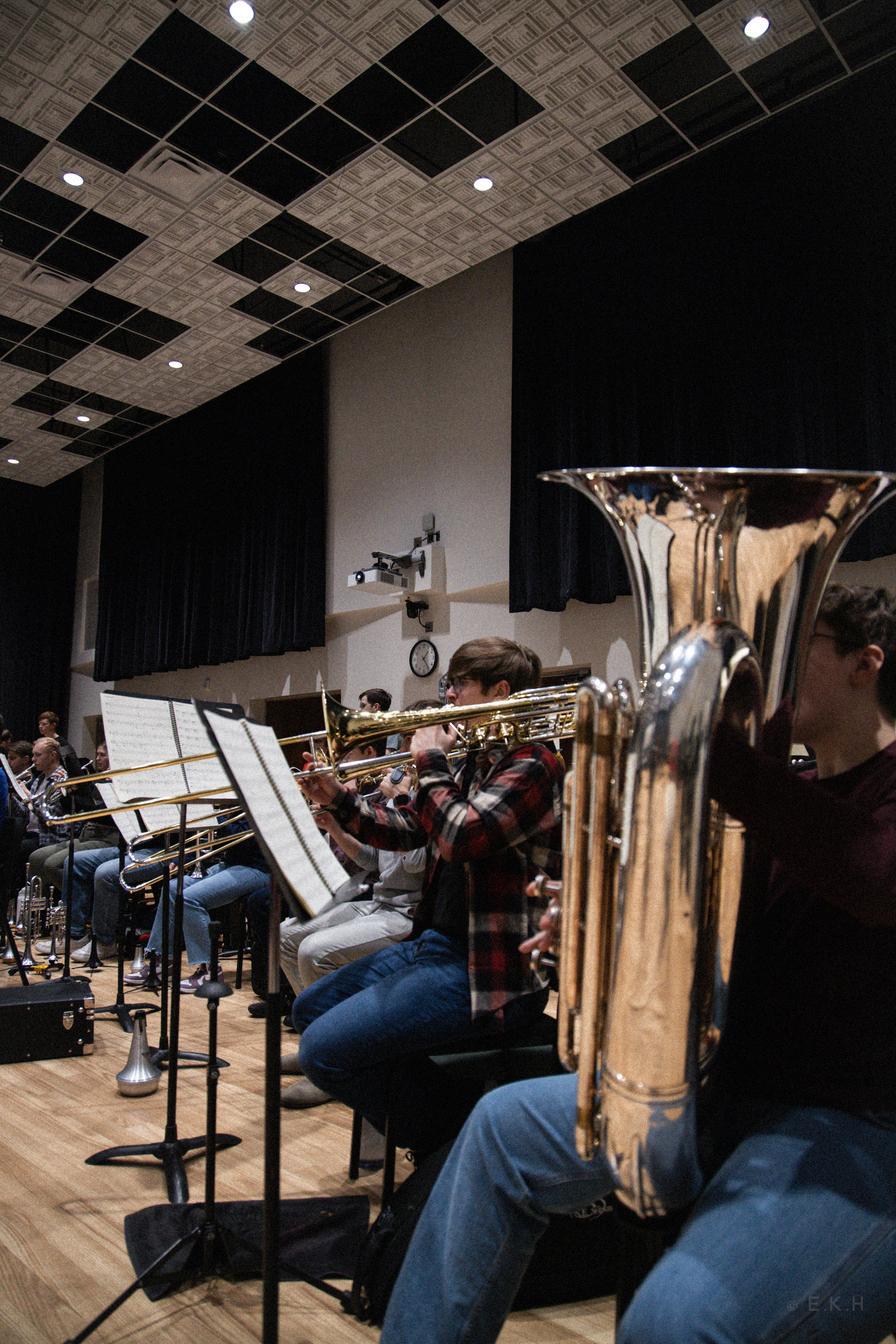
Learning Brazilian styles and history behind these creative golden ages for wind band was incredibly enriching for the Wind Symphony - an ensemble of aspiring music educators and performers who seek knowledge-expanding opportunities such as these With a long history of touring internationally and building connections through music, the chance to work with Maestro Jardim in the band’s home rehearsal room was transformative for every musician The concert on April 10 was a prelude to the upcoming BYU Wind Symphony concert tour of over half a dozen cities throughout Brazil in May 2026
Alfredo da Rocha Viana Filho (also known as Pixinguinha) was one of the introduced composers in Wind Symphony’s workshop rehearsals with Maestro Jardim, studying a piece titled ‘1x0' by Pixinguinha and arranged for wind band by Marcelo Jardim. As one of the major developers of the choro (Brazilian genre blending european influences with Afro-Brazilian rhythms) around the turn of the 20 century. He is also attributed with helping the genre become established as an official aspect of Brazil’s culture, and was a fascinating artist to study in preparation for a 3-week tour to Brazil. th
The next night the BYU Philharmonic closed the workshop week with a performance of Chôros No. 6 by Villa-Lobos, guest conducted by Maestro Jardim. Chôros No. 6 premiered in 1942 by the Orquesta Sinfonica at the Theatro Municipal in Rio de Janeiro, Brazil.*
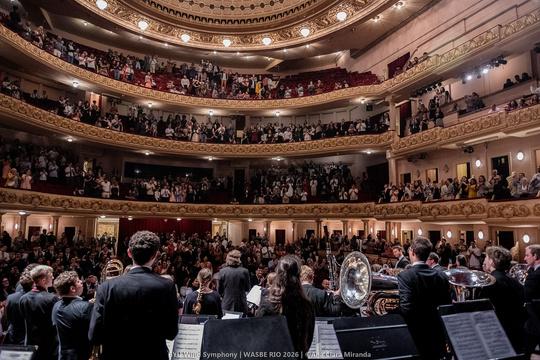
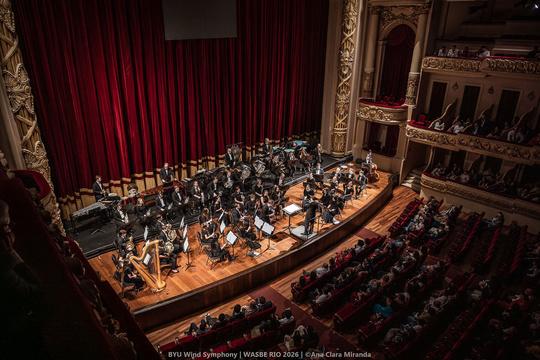
*the Wind Symphony performing at the Theatro Municipal do Rio de Janeiro on May 10, 2026, conducted by Maestro Jardim and Smith, featuring Dr. Reich as Soprano Voice
Maestro Jardim’s University Teacher Bio
Marcelo Jardim is the artistic director and vice-director of the School of Music at UFRJ (Federal University of Rio de Janeiro), professor of Band Conducting and Orchestra Practice, and musical director of the UFRJ Wind Orchestra. He also serves as a supervising professor in the Professional Master's Program in Music (PROMUS) at UFRJ. He holds a PhD in Interpretive Practices from the Federal University of the State of Rio de Janeiro (UNIRIO), and a Master's and Bachelor's degree in Conducting and Interpretive Practices from UFRJ. He is the general coordinator of the UFRJ-Funarte Projects, with national scope, which includes the National System of Social Orchestras of Brazil (Sinos), Bossa Criativa – Art for Everyone, Um Novo Olhar (A New Look), aimed at cultural accessibility, Arte em Circuito (Art in Circuit), and the XXIV Biennial of Contemporary Brazilian Music. He is an artistic consultant and pedagogical coordinator for training courses for conductors and instrumentalists of music bands, Funarte Panels for Music Bands, held by the National Arts Foundation, and responsible for the Music Score Edition Project for Bands. He maintains a constant schedule as a guest conductor, lecturer, and teacher, working with orchestras and symphonic bands, festivals, seminars, symposia, and congresses in Brazil, Latin America, the United States, and Europe. He translated the book "The Art of Practicing the Violin" by Robert Gerle, 2016, published by UFPR. He has been teaching at the main music festivals in the country, such as: Belém International Music Festival (PA), Femusc (SC), International Festival of Brazilian Colonial Music – Juiz de Fora (MG), Cascavel Music Festival (PR), Ponta Grossa Music Festival (PR), Gramado in Concert, and Unisinos (RS). He has served as concertmaster for the Camerata Antiqua de Curitiba, the Santa Catarina Philharmonic Orchestra, and the Mato Grosso State Orchestra. He participates as one of the violin teachers in the Sinos (National System of Social Orchestras) – Espiral project, a video lesson project in partnership between Funarte and UFRJ.
The Philharmonic were the first to work with Maestro Jardim the previous Monday as he went directly from the airport and arrived in time to work with our musicians at rehearsal. Chôros No. 6 was dedicated to Arminda Neves d’Almeida (1936). It is a work for large orchestra consisting of a large series of episodic sections of constrasting tempos or textural ideas Heitor Villa-Lobos (the composer) described this work as a polytonal harmonic environment representing the simultaneous natural sounds of the Amazon and melodic quotations of famous Chôros/Brazilian composers and their melodies Villa-Lobos described this work as chamber music to a peer, citing the textural and sectional nature of the work and how it combines a tapestry of his musical thoughts about Brazil with quotations of ideas that inspired the work. Maestro Jardim was incredible for the Philharmonic to work with as his insistence in students understanding how it was chamber music evolved their rehearsal of the Villa-Lobos into the April 11 performance. th
The common theme from student feedback was the value this workshop had in deepening their appreciation for the humanities and music as a crucial expressive power.
“It was such a pleasure to work with Marcelo He had a fantastic interpretation of the music, and I loved his insights He encouraged me to play out and be expressive.”
Rhianna Brunson, Flute Masters Graduate 2026
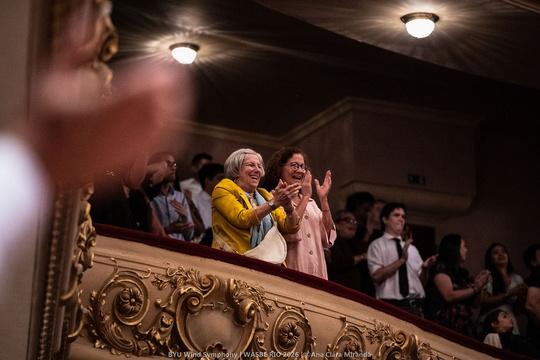
Audience feedback was incredibly positive, appreciating the performances of the Philharmonic and Wind Symphony as well as the collaboration between American and Brazilian cultures throughout both concerts. From workshop rehearsal time to experiencing the energy of Maestro Jardim’s performances these collaborative guest artist opportunities are absolutely invaluable for students and audiences alike - bringing a piece of guest cultures here to Provo and enriching BYU.
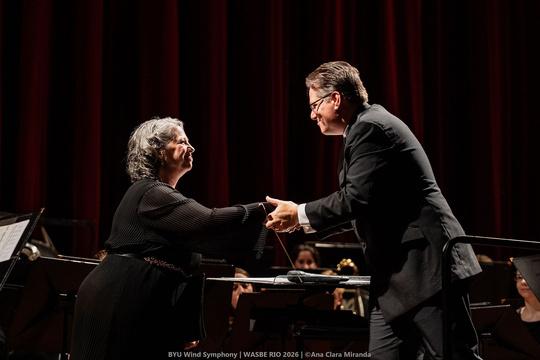
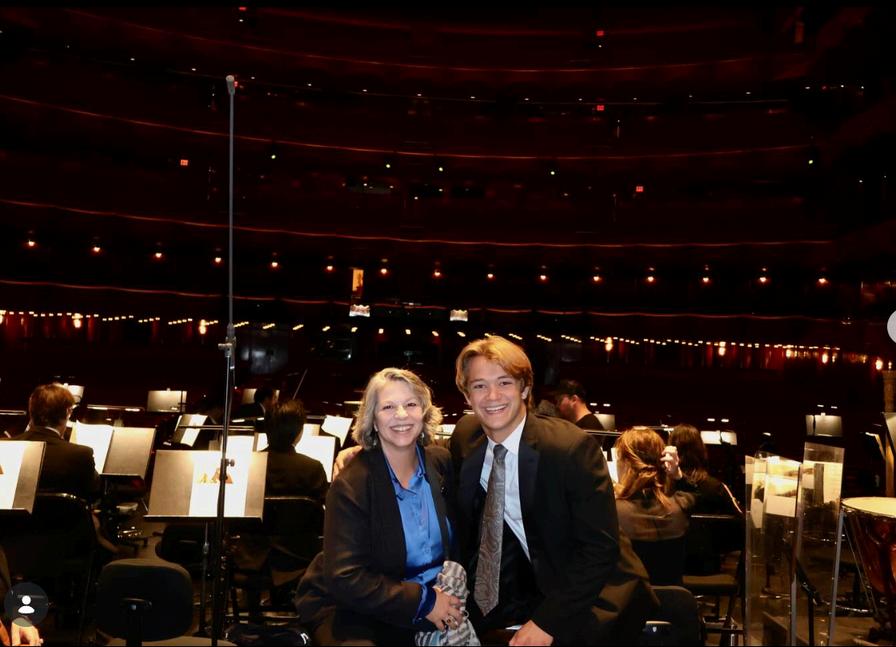
Maestro Marcelo Jardim and Dean of BYU CFAC Dr. Diane Reich
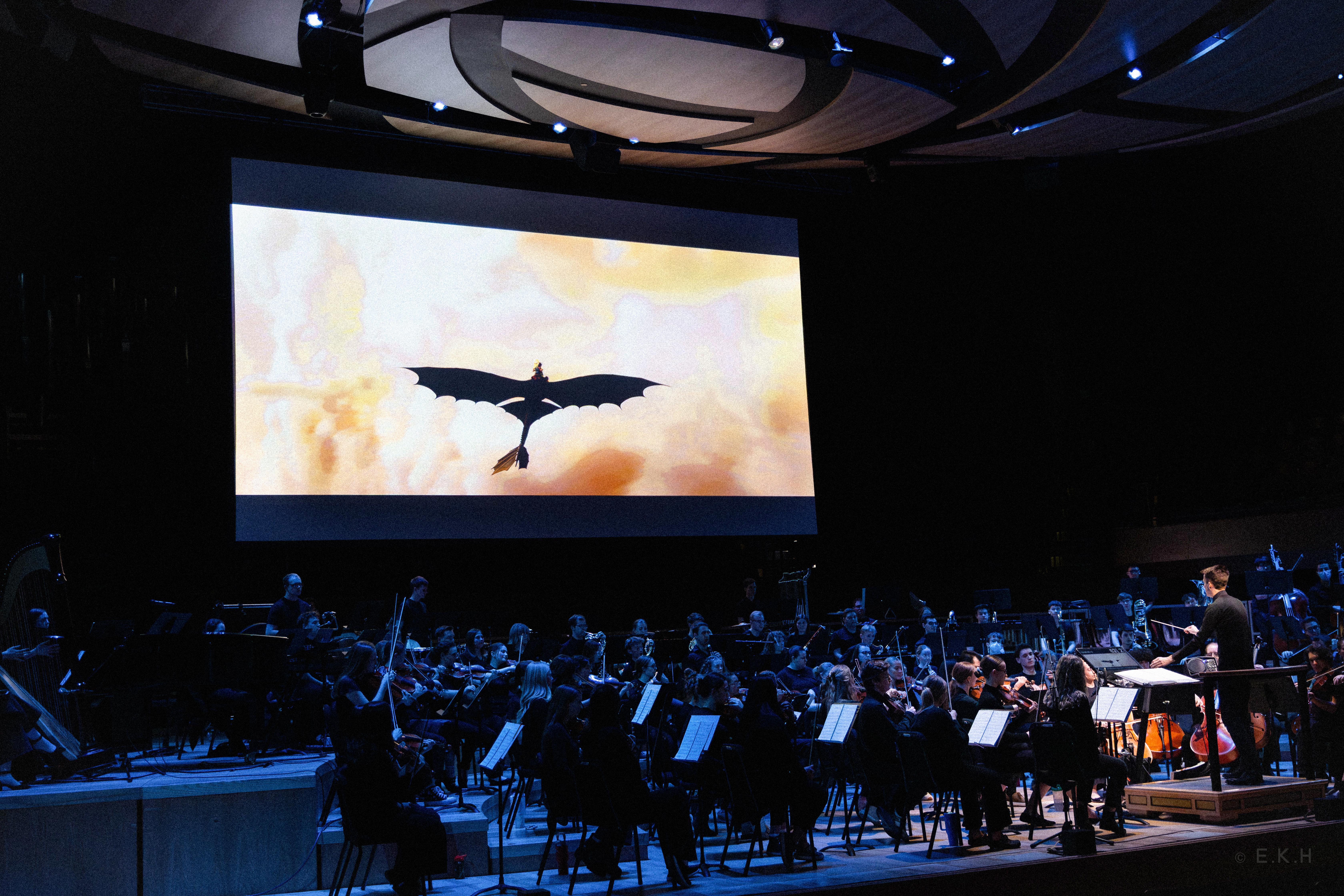
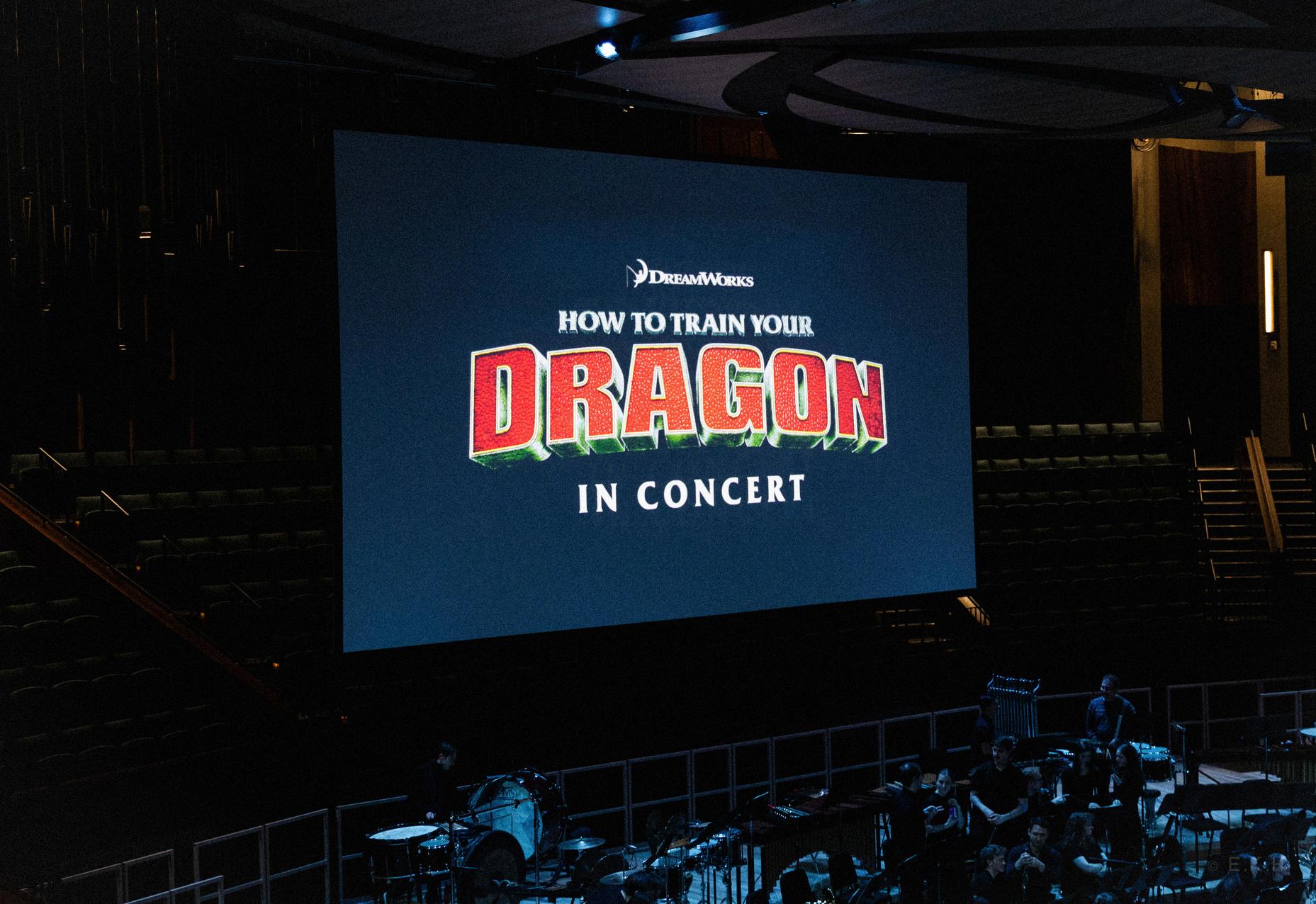
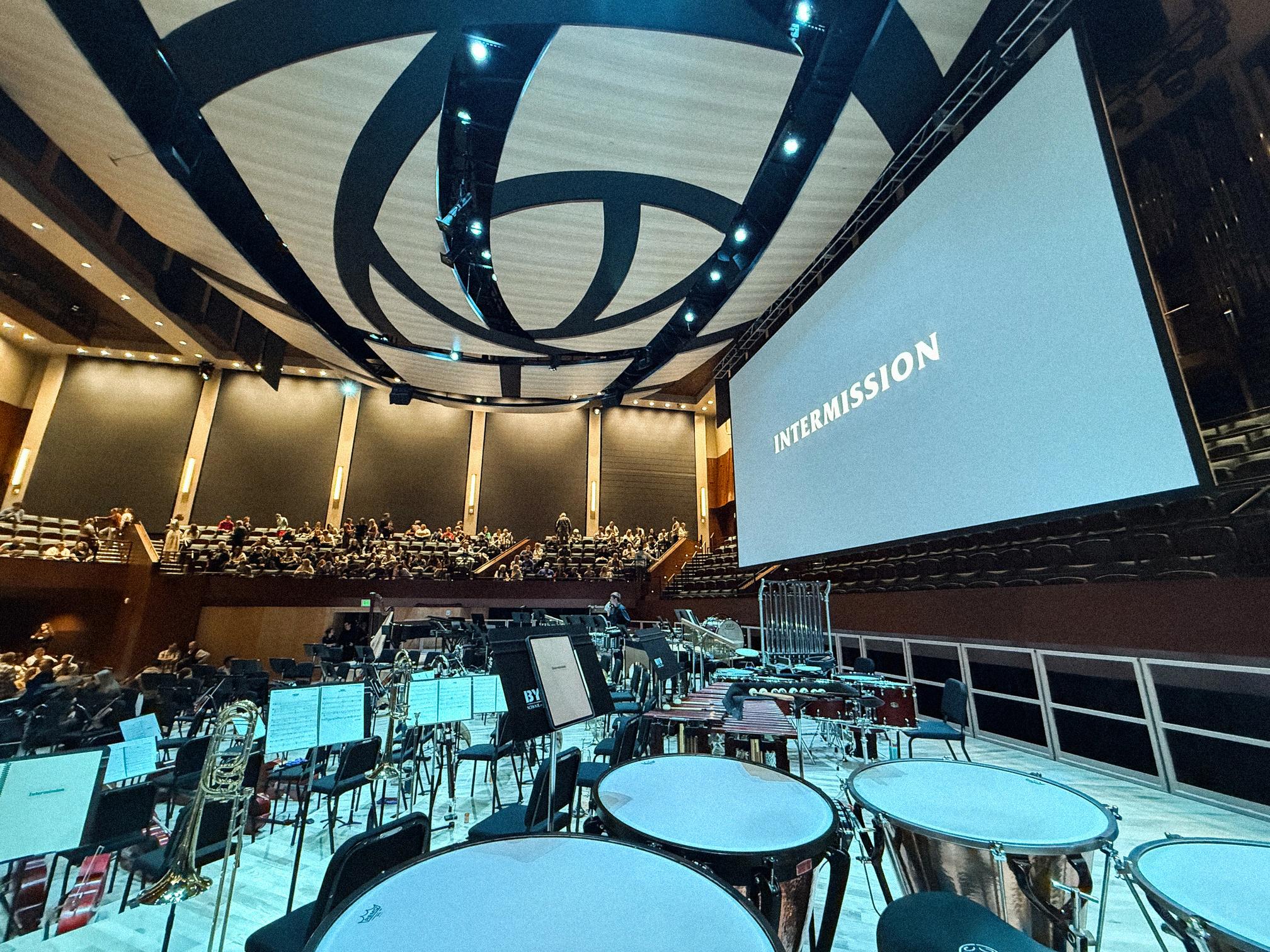
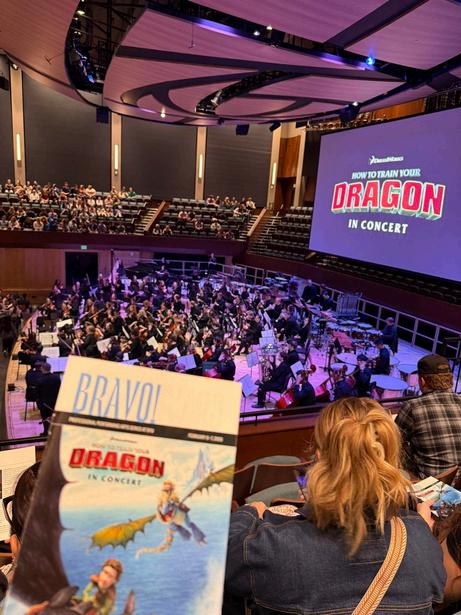
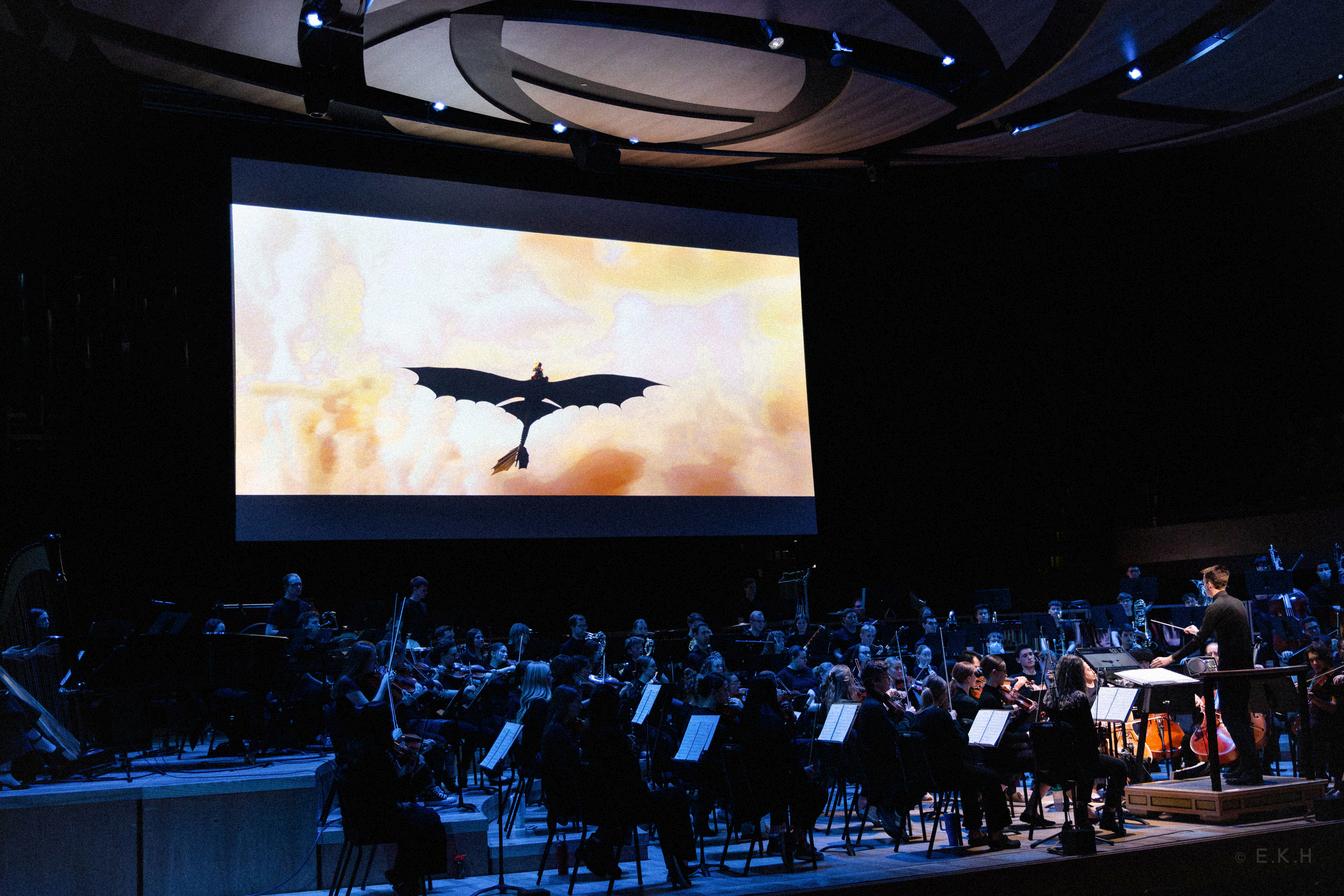
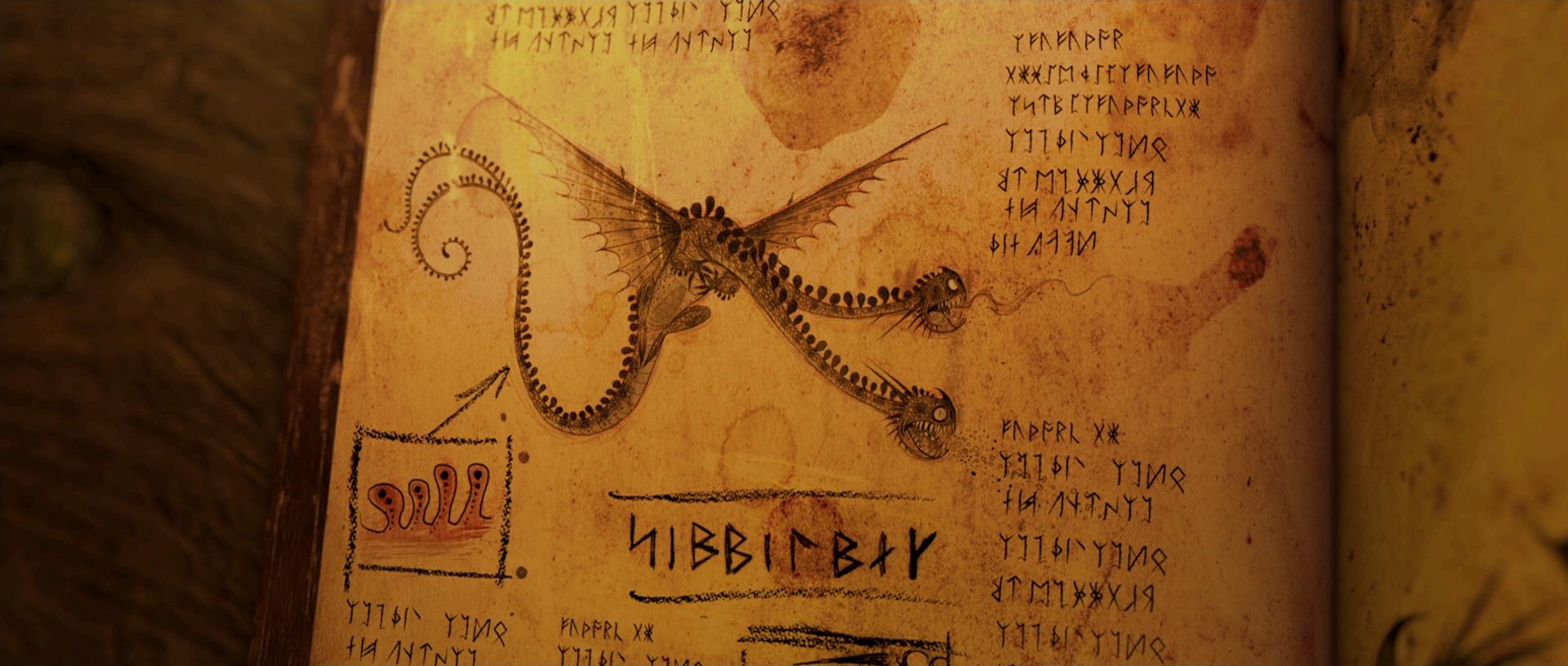
How to Train Your Dragon in Concert
BRAVO! Series Event February 6–7 | 7:30 p.m
@ the BYU Music Building Concert Hall
“A winner with audiences and critics alike, DreamWorks’ How to Train Your Dragon is a captivating and original story that combines humor, fire-breathing action, and epic adventure! How to Train Your Dragon in Concert features this acclaimed film presented in HD, with composer John Powell’s Academy Award®–nominated score performed live to picture by the BYU Philharmonic Orchestra in a thrilling experience for all ages.” BYU Bravo! Event Description
Story by Emma Hogge
Music has always been a part of humanity, and is an ever changing form of expression with a constant purpose - to serve someone through the music. For classical audiences experiencing the premiere of one of Saint-Saens’s Symphonies, it was relatable to them. It didn’t matter if they didn’t play an instrument or know the exact meaning for the composers’ decisions - humanity yearns to find community through sharing stories, experiences and time together
As new generations replace the masters preceeding them, new questions, ideas, and methods flourish as musicians must tackle challenging core beliefs and evolve alongside an ever-changing world With infinitely increasing focus on greed and commodification coupled with the devaluation of the arts, young musicians are faced with more internal struggle than ever as they continue on refining their musicianship anyways, trailblazing past public pushback
“We hope you enjoy this music as much as we have, and we are so excited to welcome you all to our performance of How To Train Your Dragon. We want to especially thank the tech, stage, house, projection, sound and marketing crews for all of the hard work they put in to make this possible. What a dream come true!”
@byuphil
All three performances of How To Train Your Dragon were completely sold out.
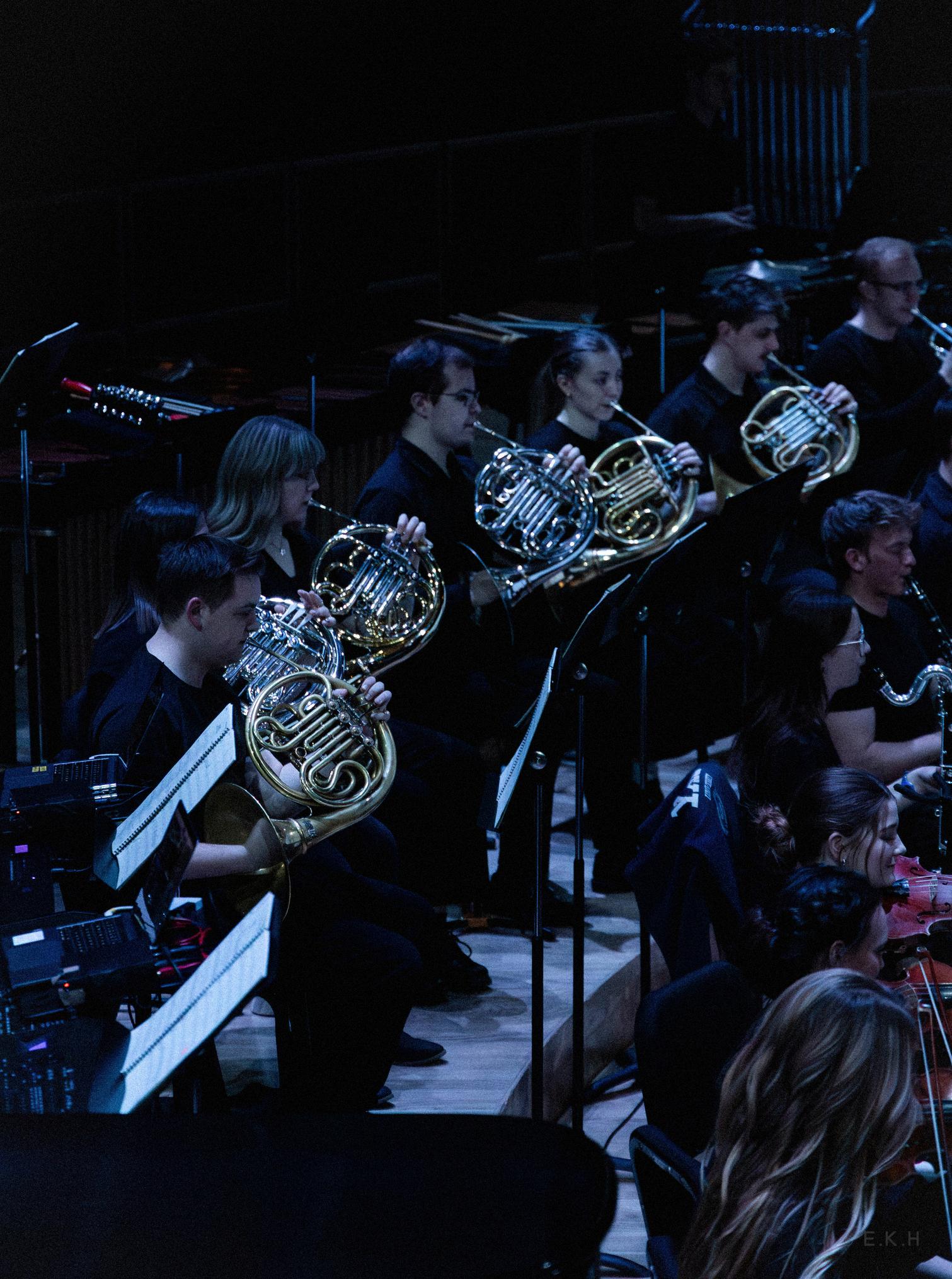
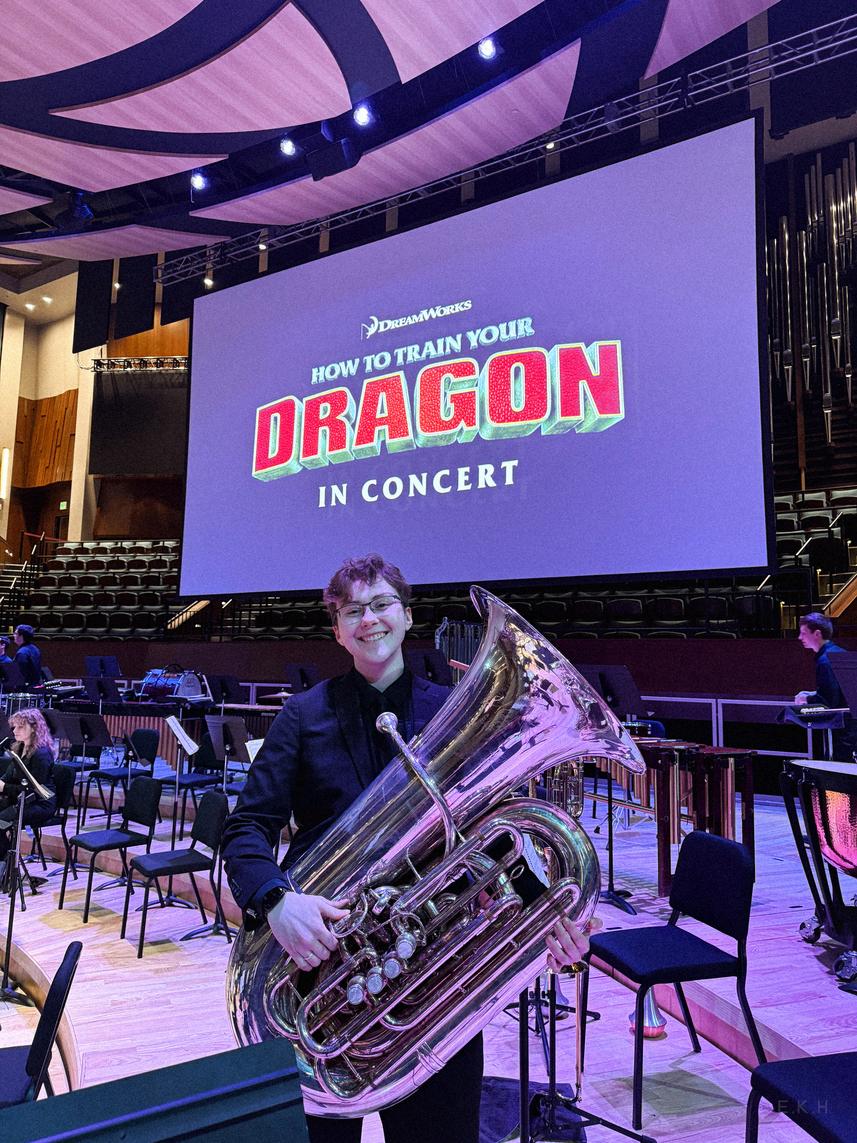
As a young tuba player in Alaska, there was little to inspire me as music education wasn’t well funded and any sort of brass musicianship was extremely rare Watching HTTYD was transformative for me as the creative freedom, relatable stories or characters, and unbelievable power from real brass playing inspired me to study music for the rest of my life. For the rest of my peers in the Philharmonic, this movie was a similar experieince for them as well, with all-around groundbreaking instrumental ideas and textures producing the unforgettable storytelling experience this movie boasts.
“So
been
Live performance in all forms has been an essential aspect of music history and community for milenia We’ve only had a few decades of digital music, and yet its technology has transformed musicianship completely, relying on new and inspired pedagogy for younger musicians born into both digital and acoustic musical worlds This also means less opportunity for in-person performing and listening
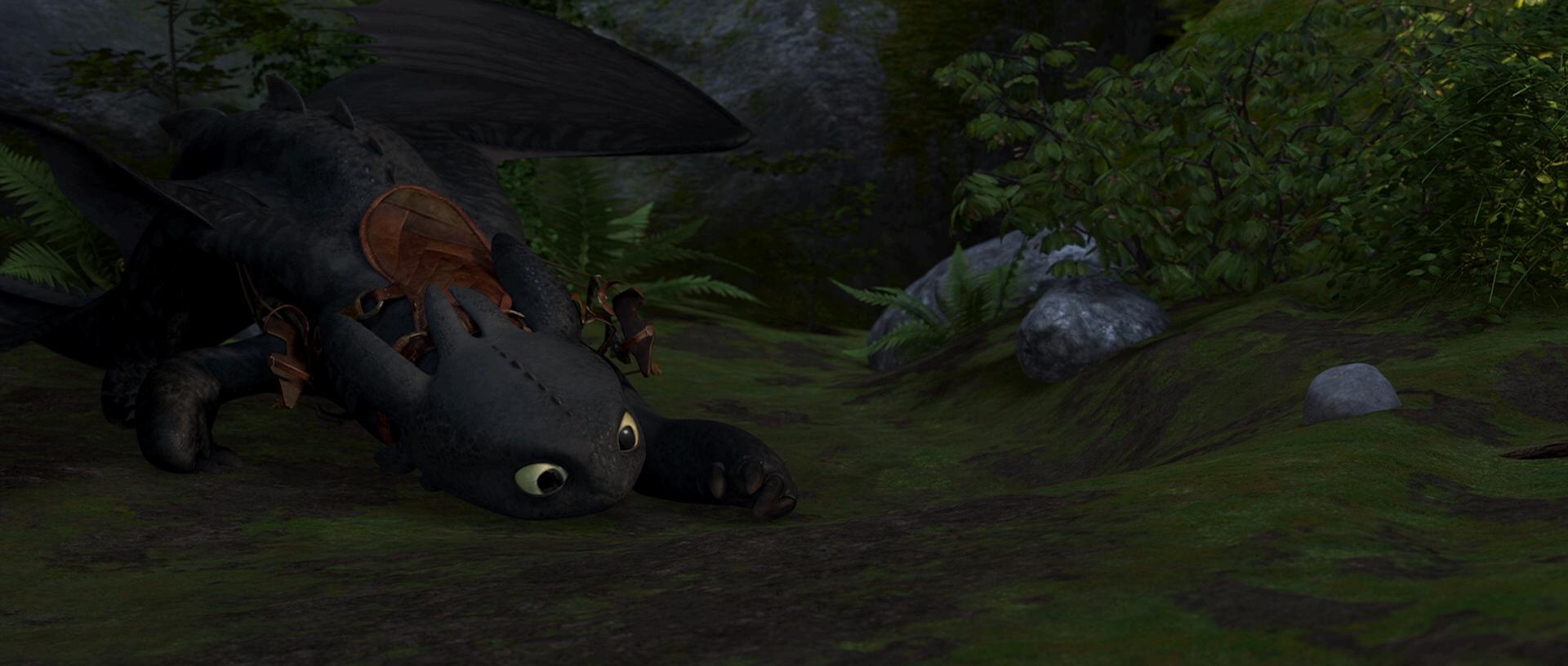
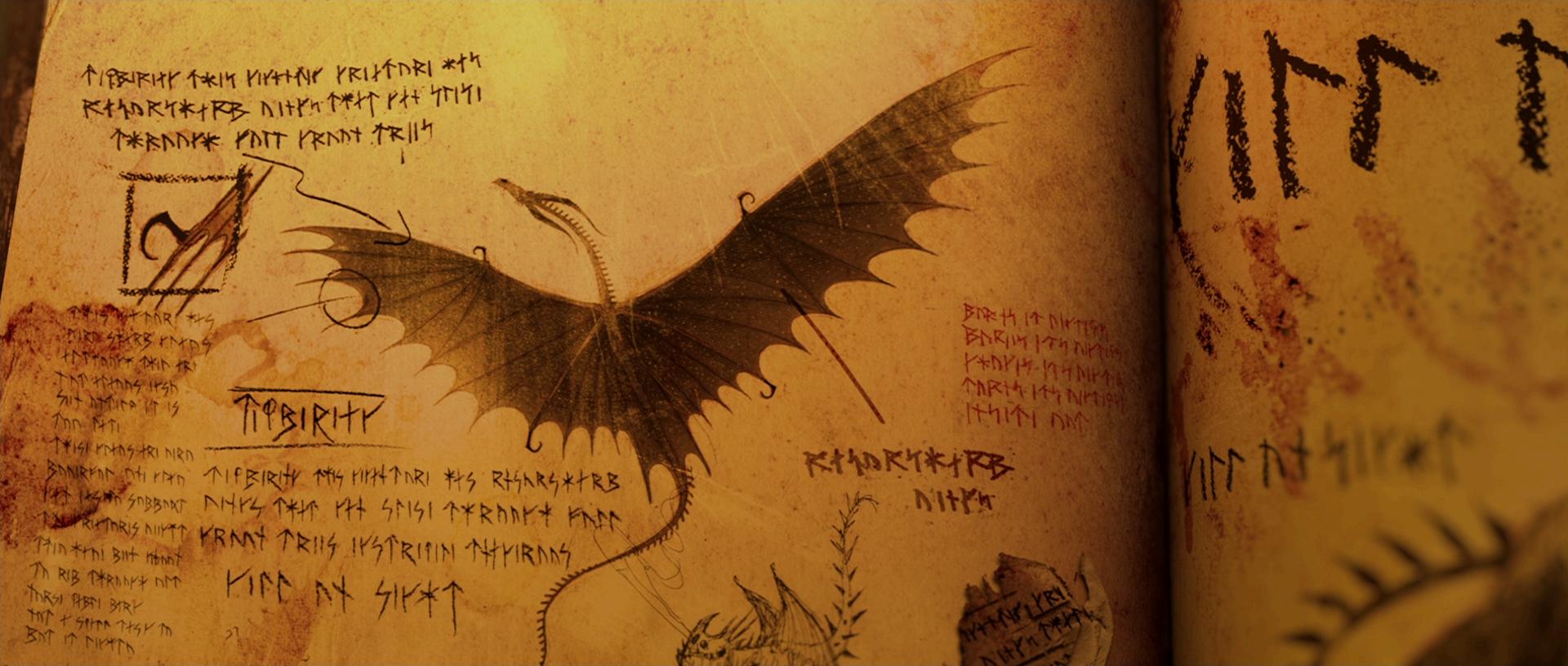
One of the first movies I remember being totally enamored with was Dreamworks Studio’s 2011 movie ‘How To Train Your Dragon’, which I was able to see in theatres upon its release This animated movie was paired with cutting edge orchestration styles, brass textures, experimentation, and MIDI effects, redefining what was possible for movies and children’s entertainment. Hearing composer John Powells ‘Test Drive’ that mixes the power of the tuba/low brass with the bagpipe (our performances had an electric guitar replicating the sound) to create an epic sense of excitement and emphasis on the main protagonistsHiccup and his dragon, Toothless. It was a life-changing story of two ‘outcasts’ who were accepting the things that made them different from everyone else and thriving because of their authenticity and ability to do good in their world
“It
was fun to play everything down an octave ”
BradenHoldaway,Bassoon
“I was not a natural... This is the story of becoming... the Hard Way.”
Cressida Cowell, How to Train Your Dragon
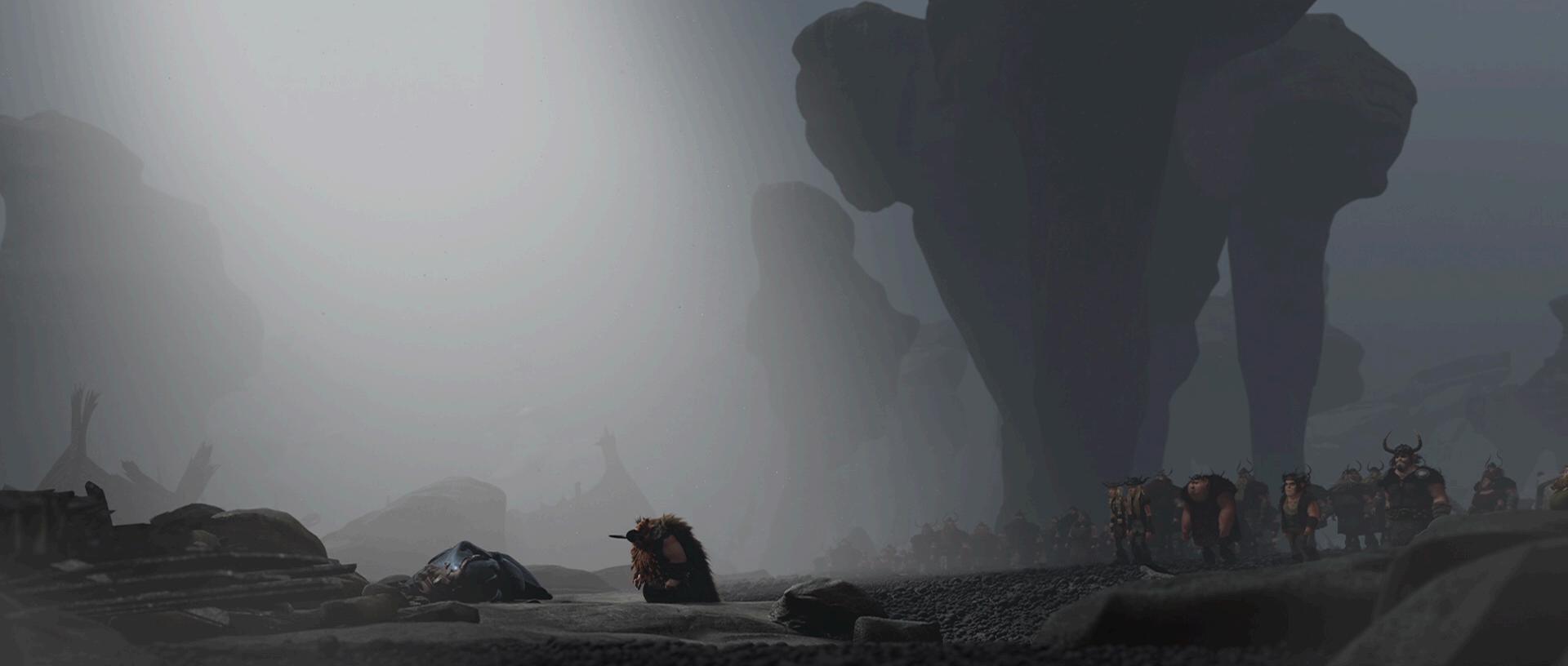
Hicccup’s father, Stoic approaches solemnly after witnessing his son fall from the sky
incredible, it’s
such a joy to learn and play this music Thank you (to Dr Haines) for making it happen!!”
RachelJohnson,Oboe
Still, until very recently it was incredibly hard to hear the things I needed to, such as the lowest tones of the ensemble, the audibility of the tuba and key vibrations through percussive hits. While orchestras were starting to become more accessible to attend in the early 2000's in more populated areas of the world, live movie concerts weren’t as known or considered until the success of the 2018 world premiere of How To Train Your Dragon in Concert with the City Light Symphony Orchestra in Lucerne, Switzerland.
“It was so much fun playing music we heard so much growing up! Such an amazing opportunity!!!” Olivia Washburn, Violin
These available and accessible soundtracks helped raise me into the musician I am today, but rarely was I able to experience these famous themes live As recording technology has evolved, so to has the ability to recreate an orchestra’s powerful and dynamic sound, gradually improving over the past few decades
For a kid in Alaska, popular slang already takes decades to make its way up to the Last Frontier, and opportunities in the arts are even slower and more sparse. Movie music was my inspiration and aural guide throughout high school, and by the time I arrived at BYU for my undergraduate studies these forms of music recording were far more common and recieved by public interest. Now, studio recording is a full time speciality for both musicians and producers, and pedagogy surrounding this new form of expression is beginning to flourish and evolve. How To Train Your Dragon remains a bastion of revolutionary animating styles with inspired musical scoring, all of which was essential in inspiring my love for music and brass playing early in my childhood. For me and many others, HTTYD was proof that we can think outside of the box, dream big, and leap towards embracing who we are and our hopes for a better world for all.
Story by Emma Hogge
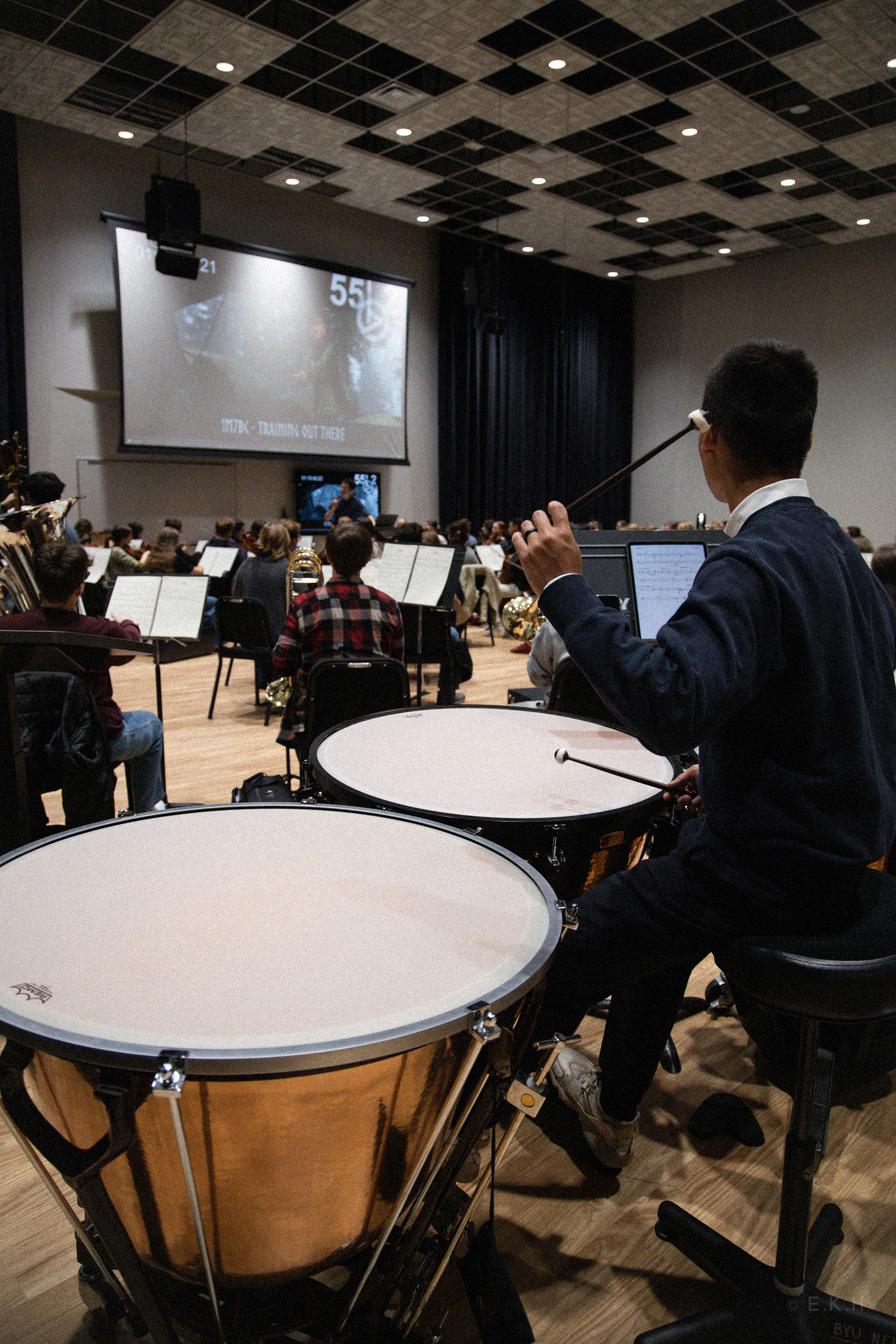
Bringing Berk to BYU was a special challenge, taking years of planning and the efforts of hundreds of people both in and out of BYU. Starting with our Bravo! team who had to contact John Powell’s agency and purchase/rent the rights to show and perform the movie then collaborating with Dr Haines and the School of Music to kickstart these first steps Tech crews and stage crews spent countless hours planning and preparing a flawless execution of the performance through teamwork and trial & error Pulling off an entire movies’ worth of music is a huge challenge to tackle, so the orchestra starting practicing their parts in early December of 2025 alongside Dr. Haines studying the score & click/streamers file. Overall, it took years from start to finish to show How To Train Your Dragon at the BYU School of Music - and what an incredible expereince it was for both audience and orchestra members.
“Congratulations on a highly successful concert! The Philharmonic was awesome, and we are so lucky to have the opportunity to do something like this ” Shayla Bott, Associate Dean
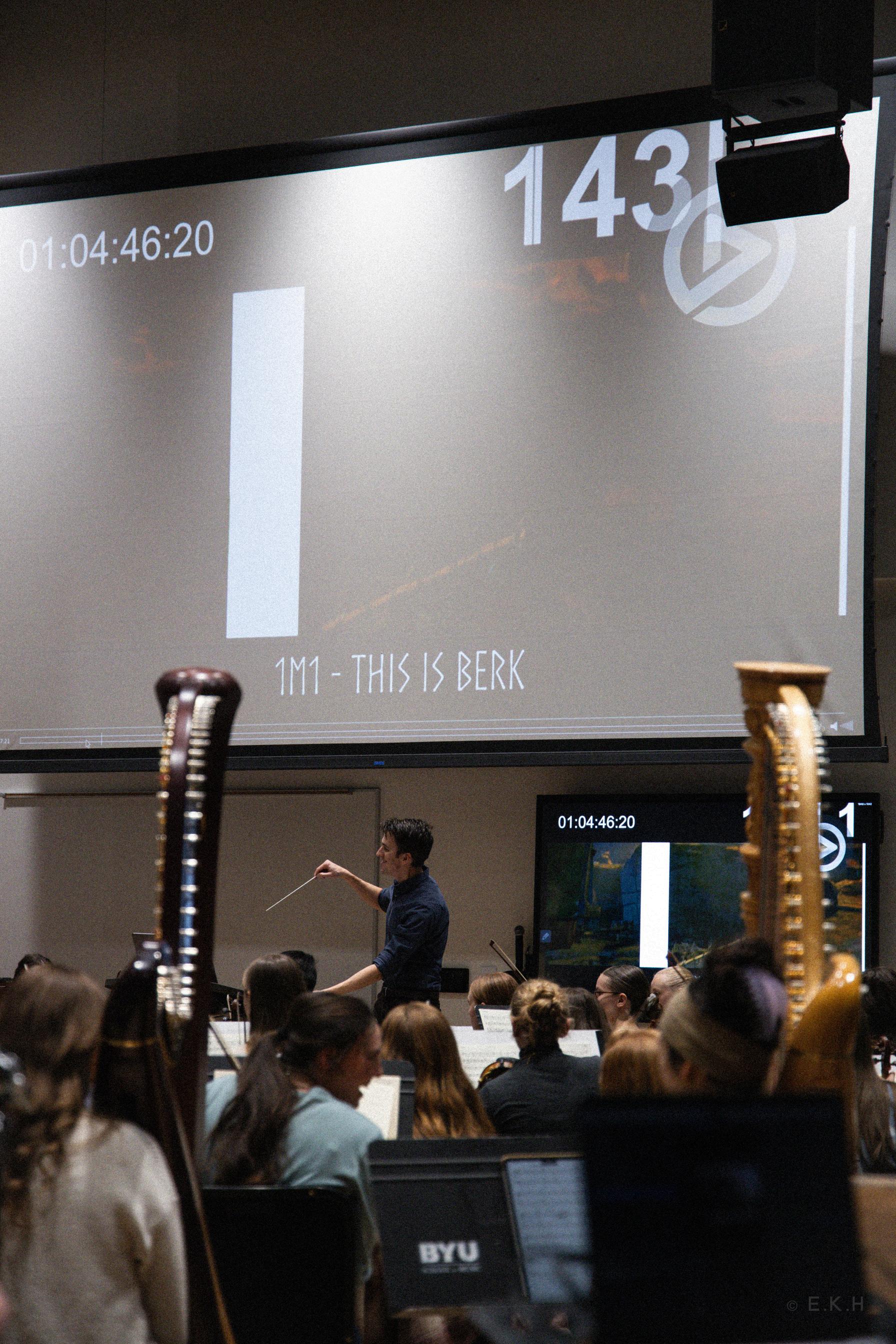
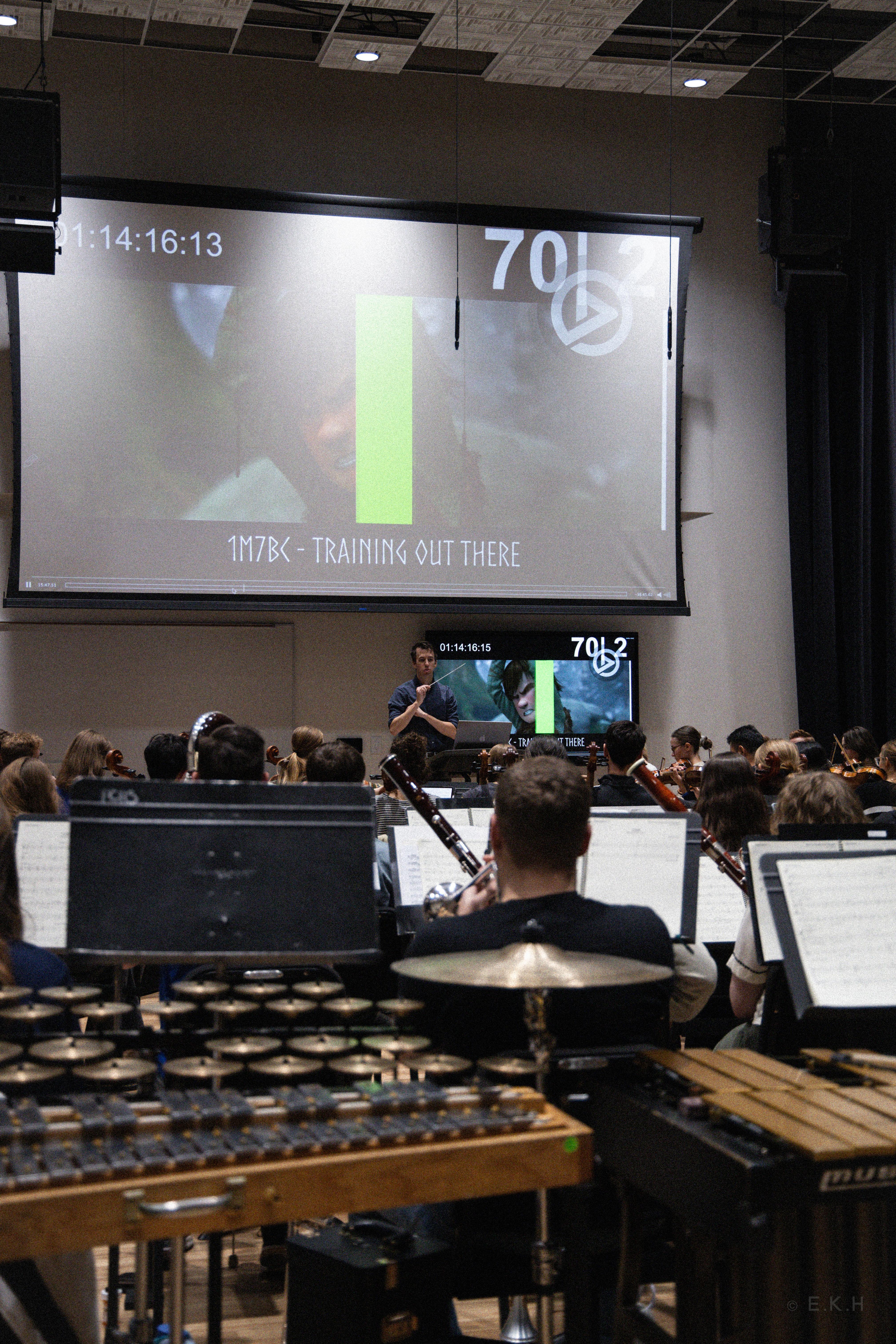
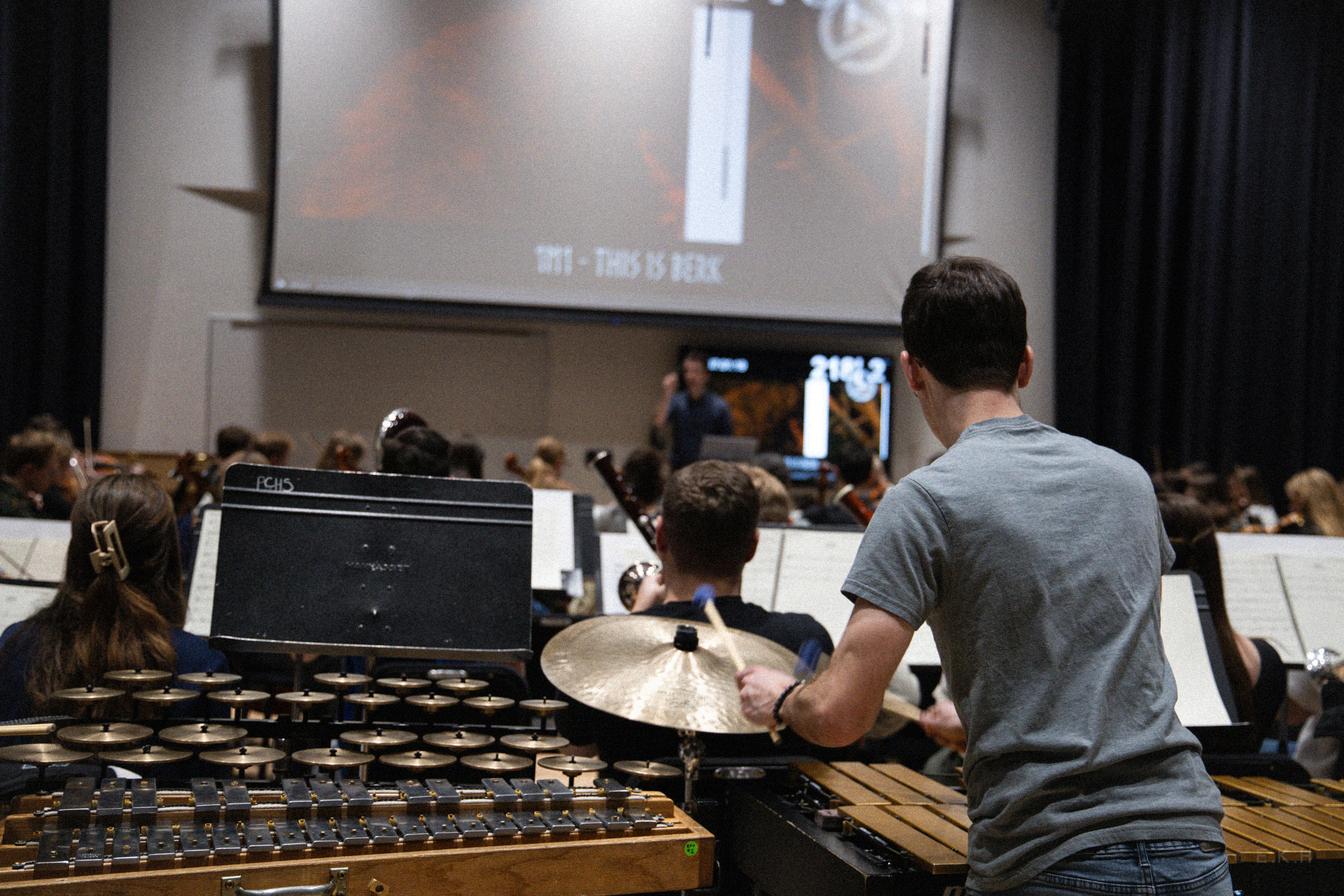
The conductor’s responsibility in live movies is especially difficult, relying off of a click track (a audible metronomic sound in an earpiece) as well as ‘streamers’ - which are white visual lines overlaid on a movie monitor that helps the conductor simultaneously see beats as well as line up with the movie. This monitor also has helpful information such as runtime in minutes and seconds, the cue (how different scenes are separated musically, such as 1M3), time and measure numbers, and many other on-screen symbols Movie score conducting can be unusual in this way as it requires the conductor to be reliant on a set tempo and keep close attention to the audibility of the movie’s dialogue over the orchestra at various dynamics
Story by Emma Hogge
This entire process was a dream come true for everyone involved, and trail blazed more possibilities and opportunities for Music at BYU to flourish. For the orchestra this process was invaluable, gaining skills and knowledge about cutting edge studio techniques and practices. The marketing and outreach efforts that the College of Fine Arts made on this concerts’ behalf was also miraculous, expanding our audience throughout the local Utah community and giving us a larger stage to share our light and love for music on Opportunities like this are precisely what makes music at BYU such a special program, and gives students like the Philharmonic the chance to grow and develop their divine gifts
Dr. Hainesrehearsing the movie withthe Philharmonicwith theClick Track
“Last night was a forever moment for our family! Thank you so much for putting all of that together it was an absolute triumph!”
Overall, this was an extraordinary musical experience that challenged each of us as musicians and as people aspiring to be Christlike I recently stumbled onto an old video of me from middle school playing along to a non-copyright style replication of the HTTYD soundtrack on youtube, not a care about technique in my mind just enjoying playing along and engaging with the music This was a touching video to find as I’m a graduating senior who has recently began to truly understand the sole purposes of why we engage in music. “The feeling that came when the audience cheered or the universal logo theme (and everything else) was ELECTRIC I was like, they don’t even know what they’re in for!! SO FUN!!”
ClaraGunnerson,Violin
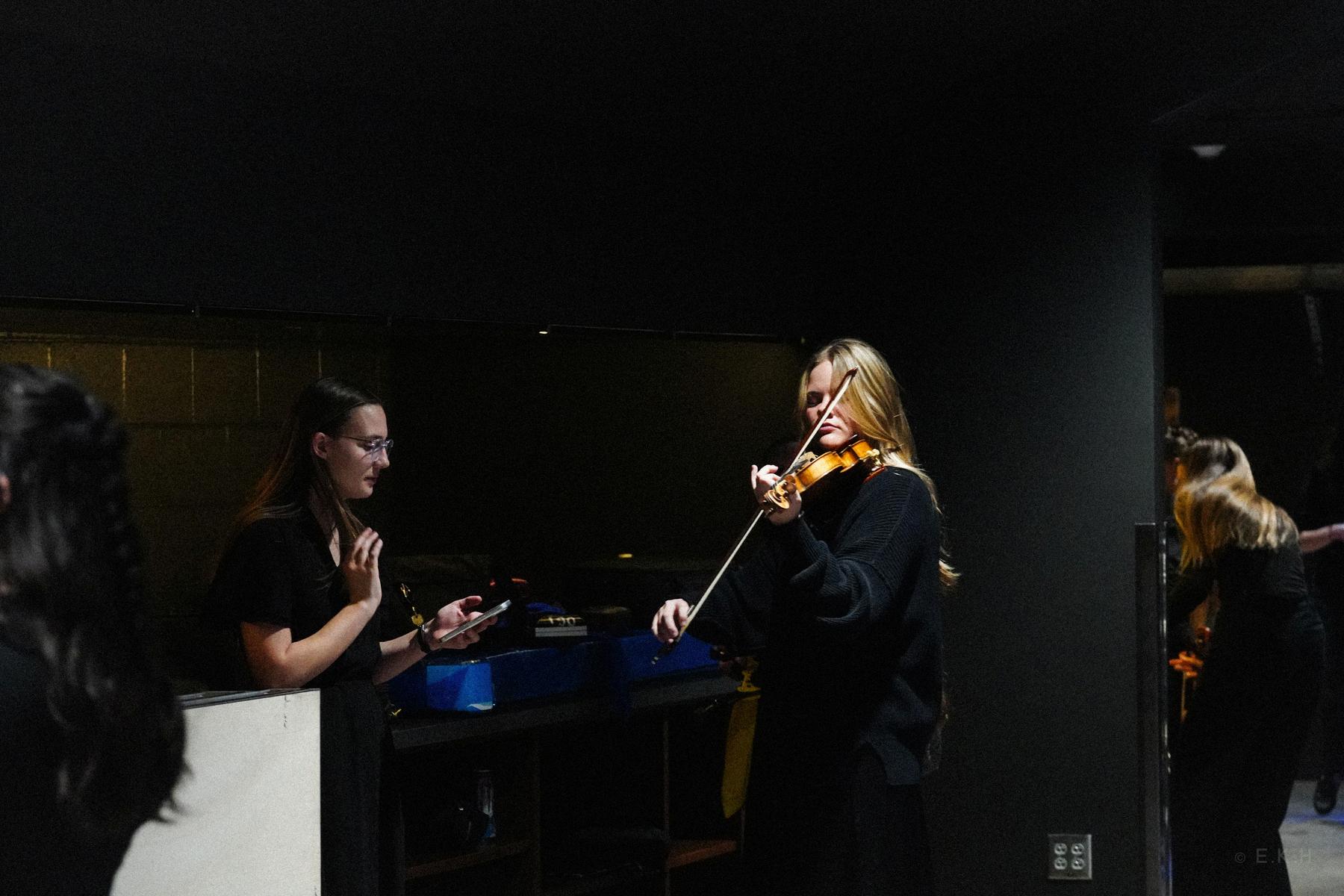
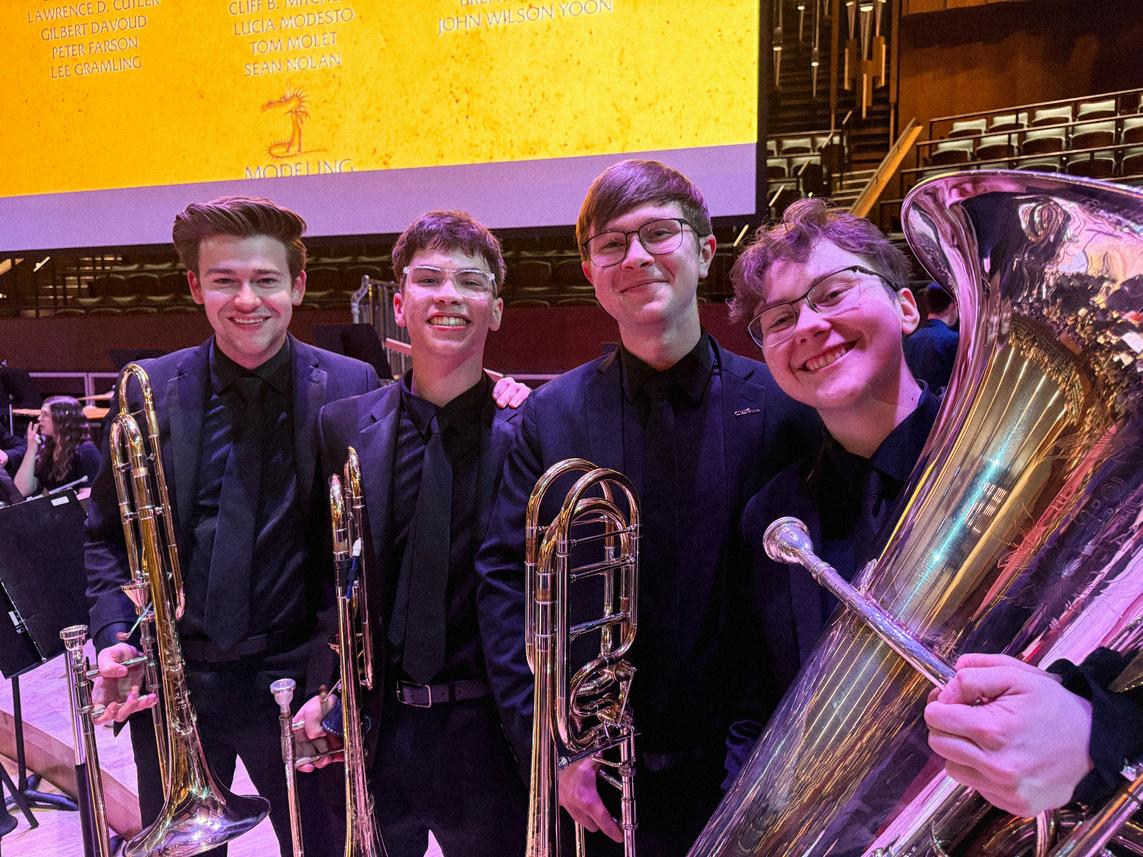
Without a doubt, the accumulated efforts of every member (full time or auxillary) of the Philharmonic came to a beautiful finale over three performances of How To Train Your Dragon As the tubist in the orchestra, I have always had a unique perspective and view on the ensemble both literally and figureatively - getting to observe my peers as they learn, improve, encourage each other, and engage with music at such a high level with such passion is one of my life’s greatest blessings. This rehearsal and performance experience was no exception, with beautiful moments of camaraderie and excellent musicianship happening both in and out of the rehearsal room. Thanks to the hard work of the Music Performance Library, we were able to get our parts for this concert before leaving for Winter Break - allowing us time to excitedly pour over our music and study how to make this our best effort in concert. The first week of January, our concertmaster Lindsay Rust set up a How To Train Your Dragon watch party for the Philharmonic to bring our scores and watch it together, in the Wilkinson’s Center Movie Theater!
“It was very cool to lead the cello section and hear all the applause and cheers from every night I got goose bumps every time we played the Test Drive theme and heard the audience!”
Shae Cliften, Cello
Story by Emma Hogge
Emma Hogge,Tubist
AlexWoods
Something we often talk about in music circles is what we would say to our beginner musician self if we could talk to them at this point in our careers. Some of us wouldn’t have guessed where we’ve ended up, others are in completely different disciplines from their start, and some would be shocked at how they’ve persisted and pressed onwards through lifes’ trials Recieving my part for this movie was one of these moment’s I wish I could share, shedding tears over
the universal logo laminated tuba part, overwhelmed that I’ve made it to this point and been given these opportunities. I think younger me would have the same reaction, and would be incredibly proud of how far we’ve come. When talking with my peers in between performances backstage, it was clear they all felt very similarly, fufilling a long time childhood dream of not only performing a full movie score but How To Train Your Dragon‘s in its entirety
“I
now leave you in the very capable hands of Dr Hansen and Dr Smith for the rest of the semester. I love and pray for you all,
and I know that you will continue to do extraordinary things with the talents the Lord has given you. Till We Meet Again!”
Dr. Haines, Director of Orchestras
Getting the opportunity to perform this movie felt absolutely miraculous, learning so much and having the most fun along the way. We offer our sincerest gratitude to all of the faculty, staff and mentors who worked to make this possible. To our friends, family and peers who have encouraged us all to continue following our passions and sharing our gifts: you are the greatest treasure for all of us. To be a musician is to perform, whether for an audience of one or one million, we couldn’t do it without the support of our loved ones and communities.
In the end, this was truly a dream come true for both the orchestra and the audience. As the College of Fine Arts & Communications celebrates 100 years of artistry at BYU, we felt that this was the perfect experience to honor the past century of inspired musicians and mentors as well as look forward to the future of sharing our light through music.
“I just experienced the concert tonight - what a stellar performance! Absolutely loved it and was astounded at your brilliant execution and artful musicality Well done!”
Aaron Merrill
Percy Grainger Symposium
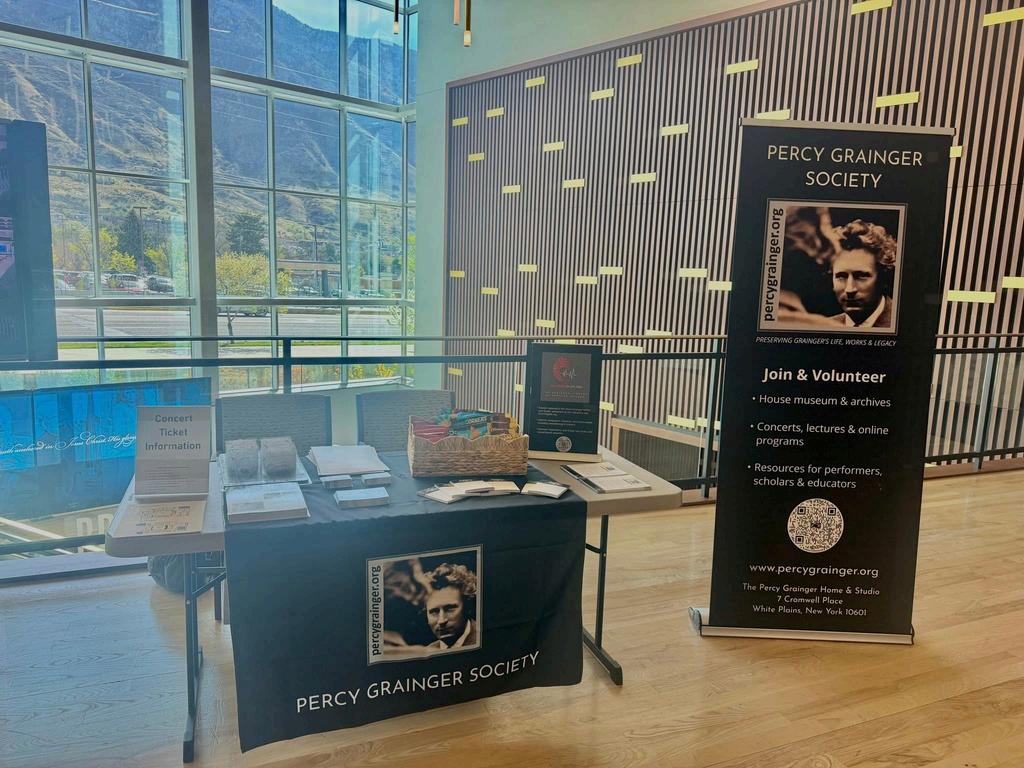
This year, we had the wonderful opportunity to collaborate with the Percy Grainger Society in forming the Approaches to Performing Grainger Symposium. Percy Grainger, an Australian-born composer, was born in 1882 and traveled to America in 1914, becoming an American citizen in 1918. He started his music career as a concert pianist where he would compose but didn’t start publishing his compositions until 1911 when he was confident enough to do so. Percy Grainger is a legend among the classical music world as he was a pioneer in bringing old British, Scottish, and Irish folk songs together in wonderful arrangements, experimenting with new ways to showcase those beloved melodies. He also wrote many prolific compositions that were fully his own.
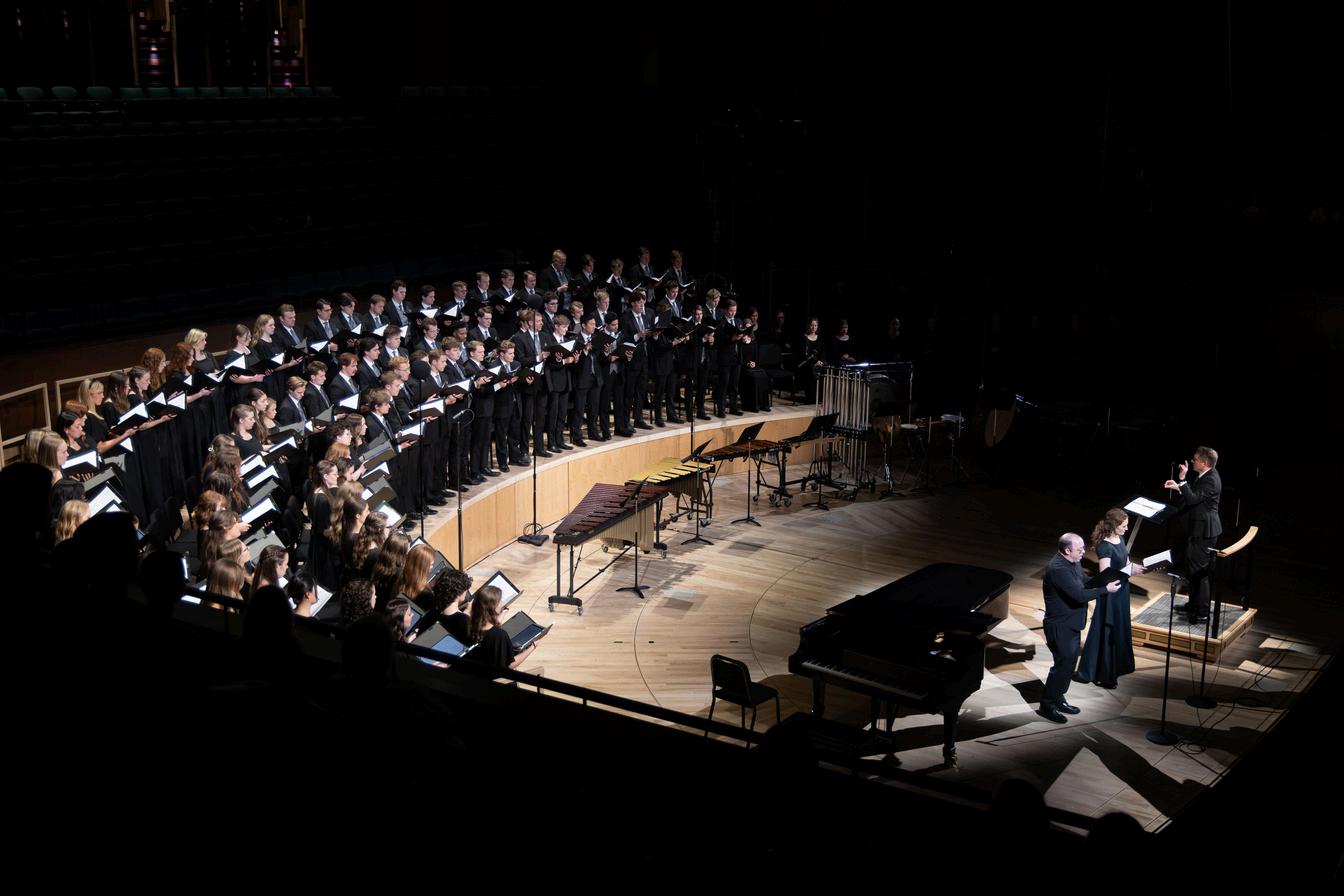
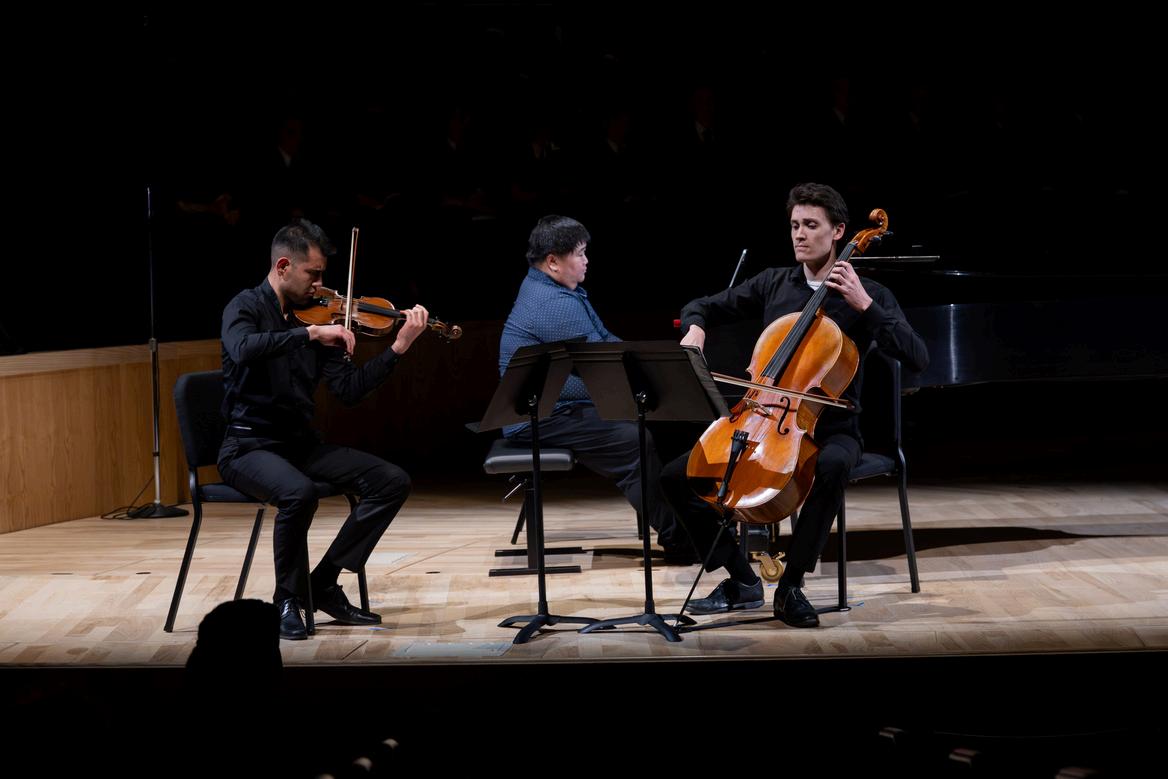
Probably the largest parts of the symposium were the four performances by BYU faculty and students. Before some of the concerts, groups including BYU Choirs, Symphonic Band, and Wind Symphony participated in workshops showcased to participants of the symposium. Each of these workshops explored the techniques Grainger used in composing some of these pieces these groups were performing. Out of the four performances mentioned before, two of them were lecture recitals given by vocal and piano studios respectively
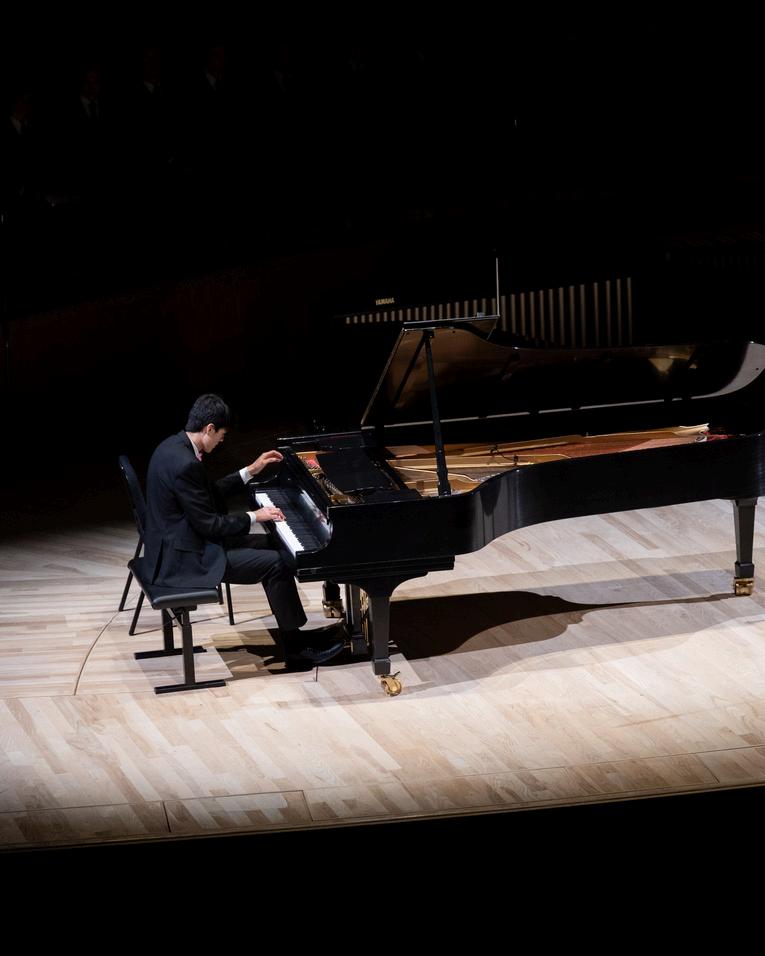
The piano recital featured many piano solos and duets most notably including Irish Tune from County Derry, performed by Ian Patterson, The Lost Lady Found in Lincolnshire Posy, performed by Lizzie Weber and Bethany Parker, and Country Gardens, performed by Elizabeth McConkie Some other pretty well known pieces they performed are Handel in the Strand, performed by Jihea Hong-Park and Katherine Leach, and Shepherd’s Hey, performed by Rachel Johnson
This conference lasted Friday and Saturday on the 27th and 28th of March which included different events such as lectures, recitals, and large ensemble performances. Teresa Balough, music history adjunct professor at Eastern Connecticut State University known for her extensive research and books written on Percy Grainger, gave an opening Keynote speech for the symposium. Throughout the two days, many people presented papers they wrote including Mykala Black, Amy Gabbitas, Jordan Waddell, Madeleine Chadwell, Chalon Ragsdale, Nathan Haines, Johannes Bowman, Alexa Knaupp, Joanne Heaton, David Reynolds, Nate Seamons, Allen Feinstein, Jason Green, Curt Ebersole, and Teresa Balough
The BYU Wind Symphony in a Lecture Showcase of Percy Grainger’s Lincolnshire Posy
The vocal recital also included solos with piano accompaniment most notably being Early One Morning, performed by Elise Farmer and accompanied by Rachel Johnson, and The Sprig of Thyme, performed by Emmeline Sevey and accompanied by James Monson.
Some other fairly well-known pieces are The Twa Corbies, performed by Lindsay Kimball and accompanied by James Monson, Died for Love, performed by Angie Whiting-Vance and accompanied by James Monson, Bold William Taylor, performed by Claire Anderson and accompanied by Bryce Turner, and Lord Maxwell’s Goodnight, performed by Mark Hansen and accompanied by Rachel Johnson The two other performances were larger concerts finishing off both Friday and Saturday.
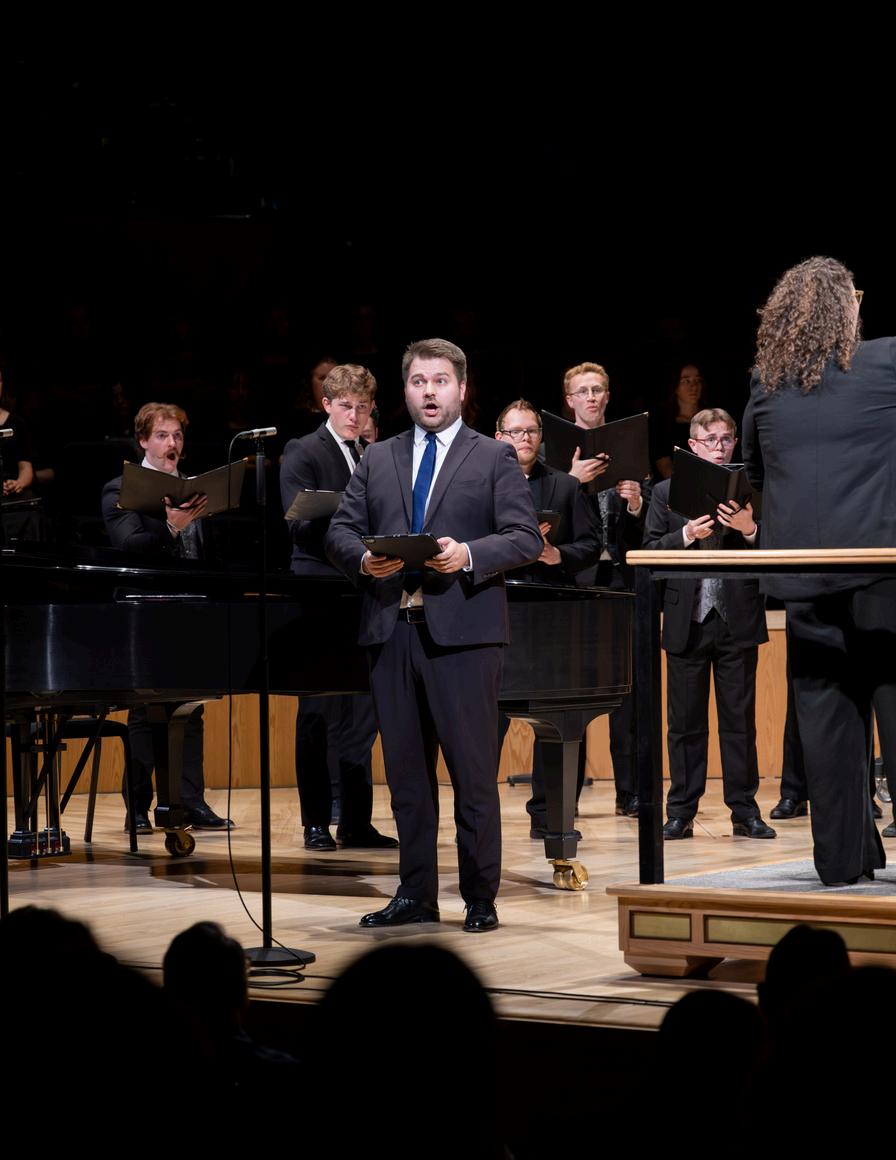
The Friday evening performance in the BYU Concert Hall included music by soloists, Orpheus Winds, Singers, Concert Choir, and Symphonic Band One of the most wellknown pieces performed by the Symphonic Band is Children’s March Some others include In Dahomey “Cakewalk Smasher”, performed by Tim McKay on piano, Sussex Mummers’ Carol, performed by Neil Harmon on organ, British Waterside, performed by baritone, Trace Glick, and Soldier, Soldier, performed by Concert Choir.
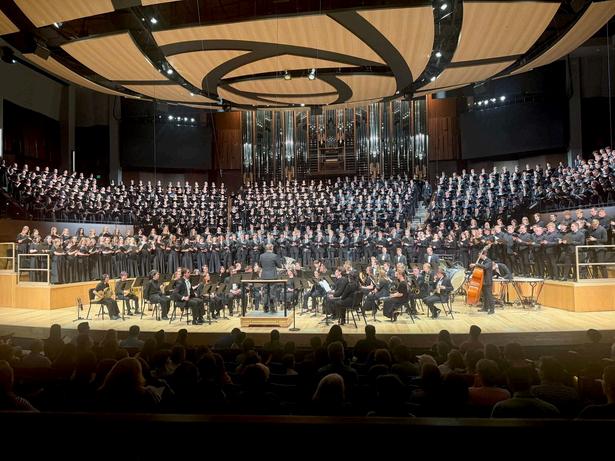
The last performance of the symposium Saturday evening included most of BYU’s premiere groups including Men’s Chorus, Women’s Chorus, Concert Choir, Philharmonic Orchestra, and Wind Symphony At times all choirs would be singing together with the instrumental ensemble underneath creating an absolutely epic performance of Grainger music this world has never seen Some notable pieces performed were Country Gardens and Scotch Strashpey and Reel, performed by the BYU Philharmonic, Molly on the Shore and Lincolnshire Posy, performed by the Wind Symphony, and Shenandoah, performed by Men’s Chorus, Skye Boat Song, performed by Women’s Chorus, and Brigg Fair, performed by Concert Choir. With such a large-scale display, this Percy Grainger Symposium was one of the largest celebrations of Grainger’s works in the world.
BYU’s Concert Choir performing on Friday, March 27, 2026
President Oaks’ Tuesday Devotional
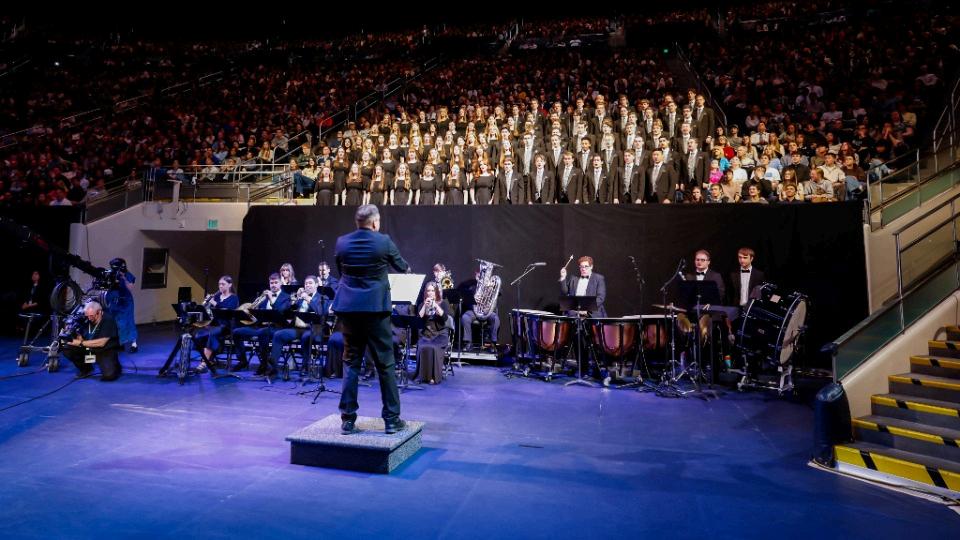
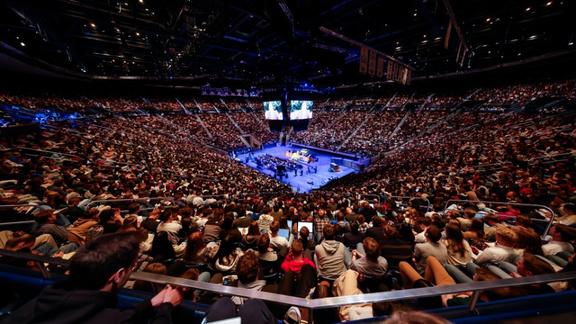
For the semester of Winter 2026, President Oaks, President of the Church of Jesus Christ of Latter-Day Saints came to BYU campus to address the students along with members of the Church across the world in as a Tuesday Devotional. This devotional in particular was noteworthy as it was Oaks’ second address to the Saints as President of the Church; first being the October 2025 General Conference. Adding to the grandeur of this devotional, BYU planned to have a large musical number.
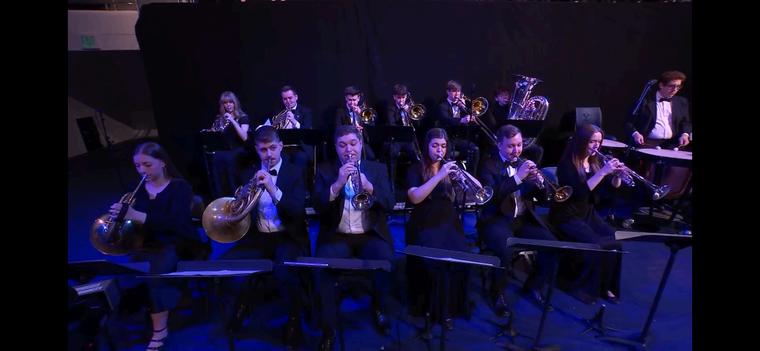
From our own School of Music, BYU’s Concert Choir accompanied by a student brass ensemble and organ performed All Creatures of Our God and King. With the Marriott Center filled to the brim and thousands of members worldwide, including missionaries, watching the broadcast, this Mack Wilberg arrangement was brought to life. BYU Concert Choir has performed at the Marriott Center for devotionals many times before but what’s notable this time is the brass ensemble.
The brass players were made up of some of BYU’s best brass music majors to create an impactful experience that only a choir couldn’t create. The Church of Jesus Christ of Latter-Day Saints actually has a long-standing history of brass bands; most notably the Nauvoo Brass Band
Originally called Joseph’s City Band in Nauvoo, Illinois, this brass band began in 1842 and rebranded after the Saint’s exodus to the Utah territory Upon regathering in Utah as an official Church brass band, they performed in the October 1848 General Conference among other performances
Members of the brass ensemble performing on February 10, 2026
In the modern day, the group has been recreated by the Illinois Nauvoo Mission to be filled with young performing missionaries that perform each summer in Nauvoo. They perform now as a part of their missionary efforts, inviting the Spirit and telling a story in a way words couldn’t. In a similar vein, that is the effect the devotional performance for President Oaks strived to invoke.
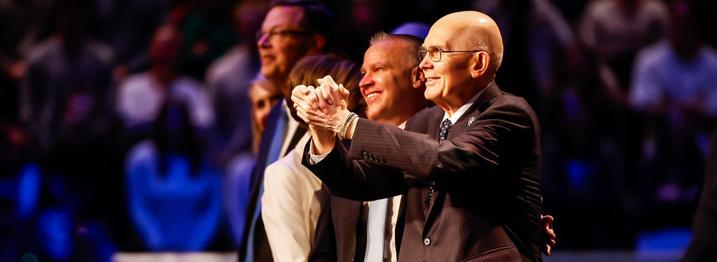
Church President DallinH.Oaks and
Shane Reese after
Group for New Music:
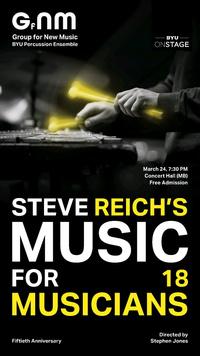
The 50 Anniversary of Music for 18 Musicians
Article By Melissa Coulter
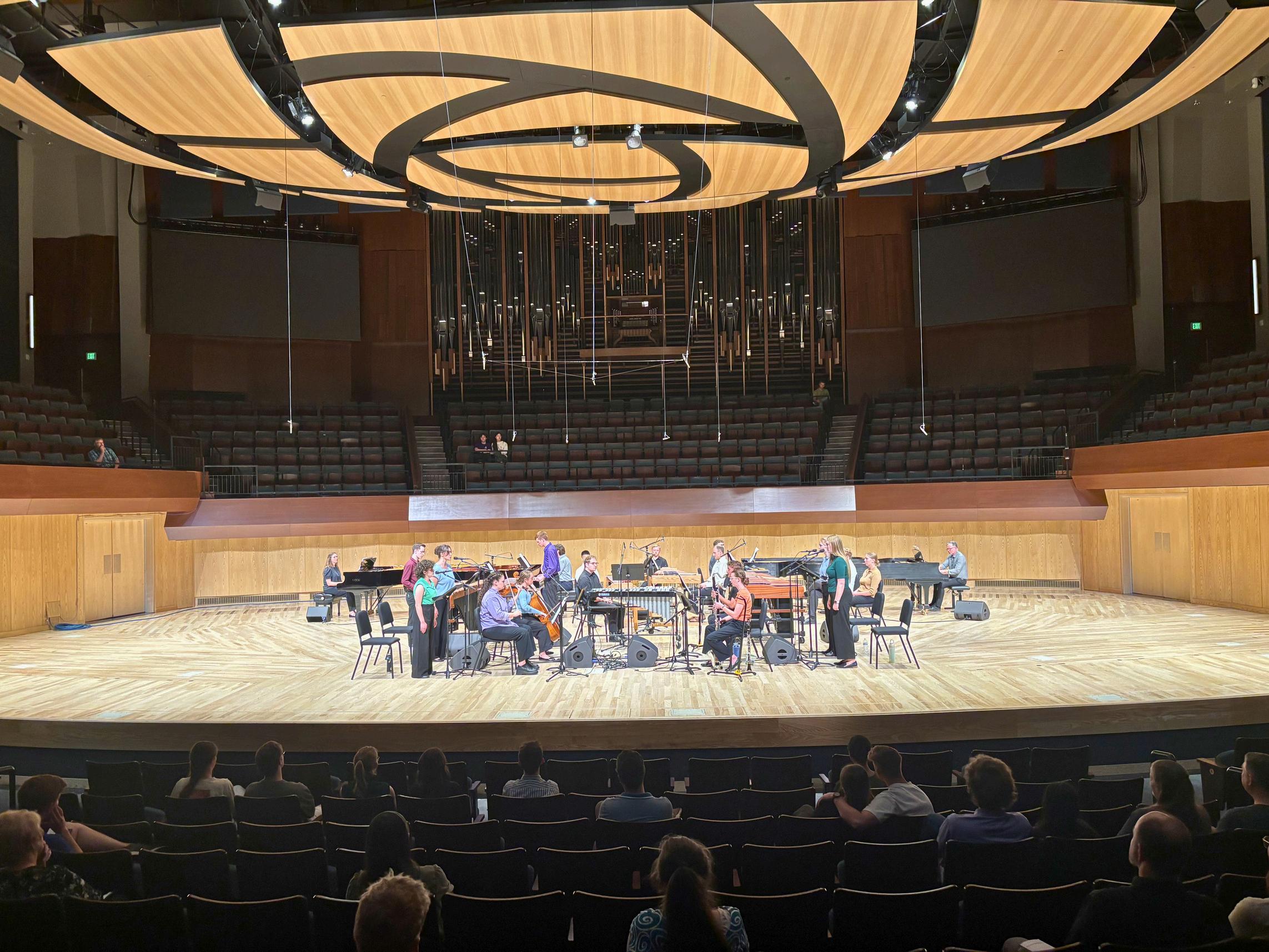
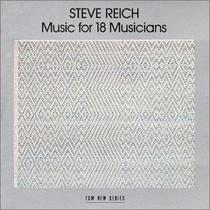
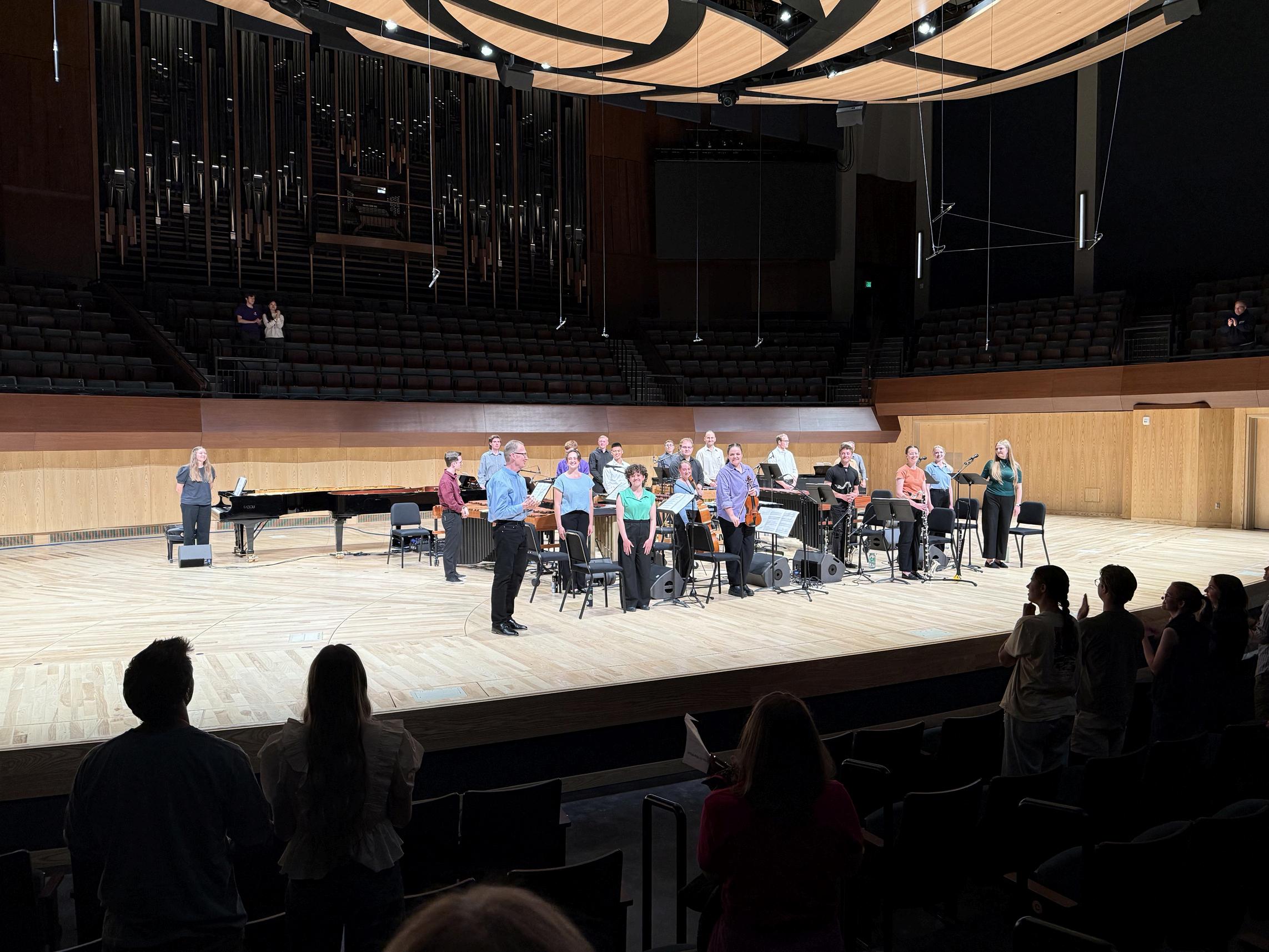
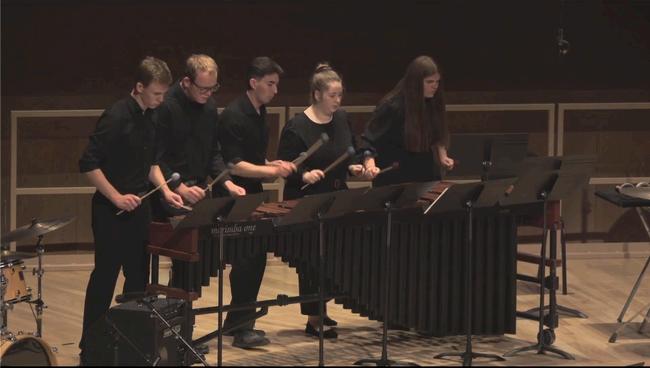
This semester, the Group for New Music undertook a rare and ambitious challenge: performing Steve Reich's Music for 18 Musicians. The piece is written for a percussion ensemble, four pianos, four voices, violin, cello, and two clarinets. Dr. Stephen Jones is the current director of The Group for New Music, and has been for 10 years. In discussing the nature of the group, he said, “because new music is so varied. It isn't like I can have a set ensemble like the orchestra or a band. I have to build a program and then go find players who want to play those pieces. It's always a challenge to do that every semester, and never have we done just one piece like this.”
50 years ago, as minimalism was gradually moving from downtown to uptown New York, Steve Reich was playing with the question of how to add harmony to the process and pattern-oriented music for which he was already known. The piece that came from these musings was Music for 18 Musicians. A few years ago, Dr. Jones realized that the 50th anniversary of the piece was this year and thought that it would be a great way to honor Steve Reich and celebrate this work’s important contribution to modern music.
There were some challenges though Where would he find 7 percussionists, and how could he get four grand pianos into the concert hall A particularly difficult problem was finding a time when all 18 musicians from different areas of the School of Music would be able to rehearse Knowing all the challenges that would be in store, he pressed forward Jones said, “About a year ago, I approached the percussion area [led by Dr Matt Coleman] and said, ‘Hey, would you like to perform this work?’ Coleman didn’t even hesitate. ‘Absolutely,’ he said, ‘We're in!’ Then it was a matter of getting the rest of the players together and making it happen.”
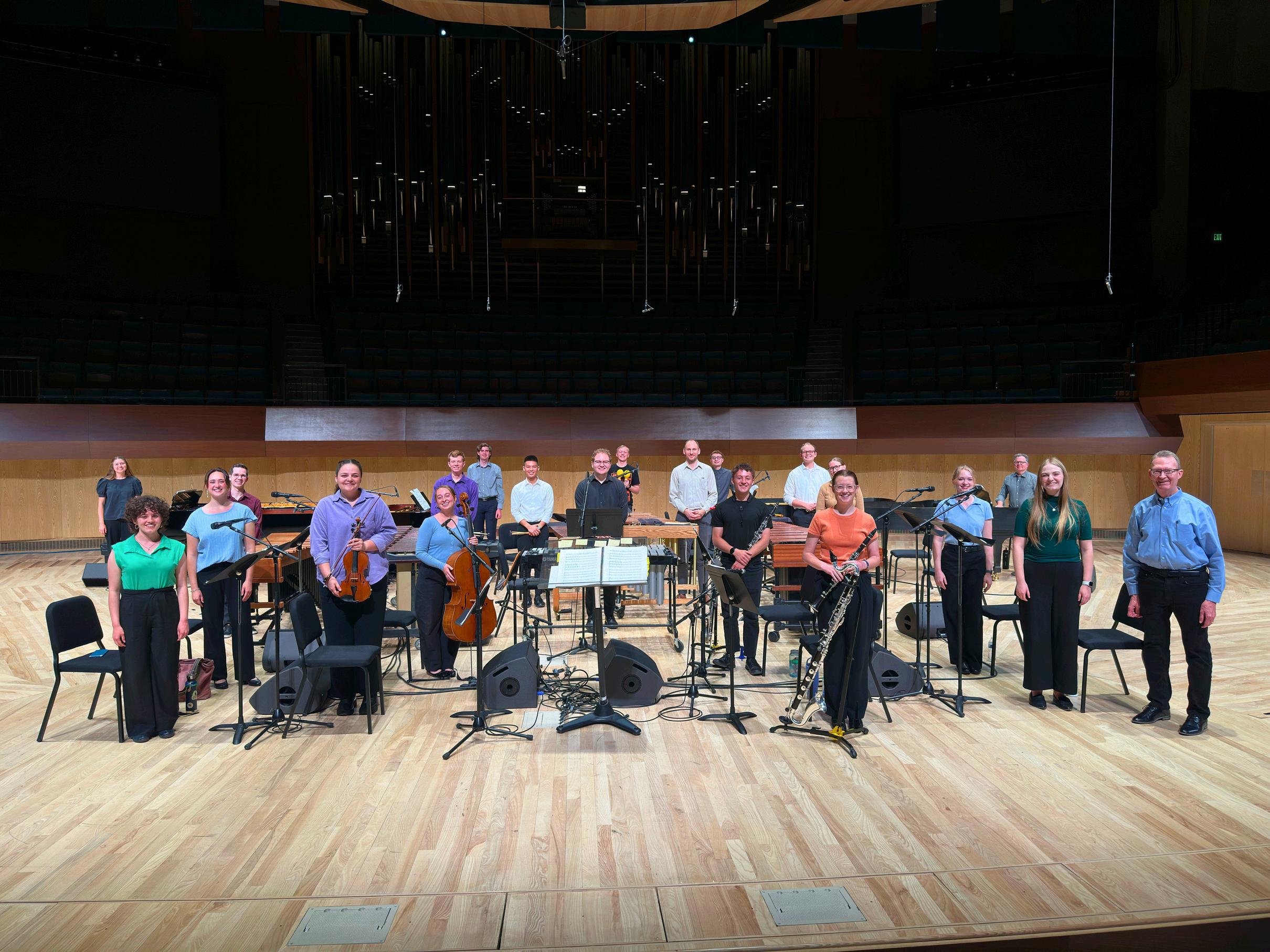
The Musicians at the performance of Music for 18 Musicians by Steve Reich
Story by Melissa Coulter
The piece is written and structured around eleven chords, and Reich stretches them out over the span of an hour. He uses a technique that combines patterns using one note, to begin, that eventually becomes two notes, and then becomes three, and then four within a space of like two bars each. This pattern reveals itself over time and then once our ears get used to that, the piece moves on to another pattern. The magic comes as the patterns get passed around in the ensemble, causing the harmonies to slowly shift. In the composer notes he mentions the rapid pulsing that occurs throughout the piece, saying,”This combination of one breath after another gradually washing up like waves against the constant rhythm of the pianos and mallet instruments is something I have not heard before and would like to investigate further ”
After attending the concert, BYU’s clarinet professor Dr Jaren Hinckley said, "Even though I was a Reich fan before attending this concert, my worry was that I would potentially get bored with an hour-long minimalist piece I needn't have worried at all. The first 20-25 minutes literally just flew by. By that point, my mind had settled into a zen state and each new iteration of motives just added to the hypnotic, calming excitement of the piece. I was actually surprised when it ended because I literally did not notice the time passing."
Dr Jones says, “it's like he's taken minimalism, with all of its patterns and the joy of its rhythmic energy, and then added this human layer on top of it Like breathing in and out really slowly The pulses are fast, but the sound, just the way it comes and sits there and then decays is just kind of a magical effect that no composer has ever [achieved] It's just a new sound And as a composer and a teacher of composers and a theory teacher, I just think it's a piece that every musician should study and get to know.”
While the effect is cool, the work that is required by each performer is intense and sometimes even painful or dangerous Ben Smith, one of the marimba players explains, “The piece is anything but simple In one of the first rehearsals, the ensemble was having a hard time staying together so I had to play so hard and loud that the mallets started to rip into my hands I couldn't play anything for a few weeks without my hands bleeding ” For almost the entire hour that the piece is performed, the first and second marimba players are playing every downbeat and every upbeat respectively Smith says, “I had to spend a lot of time in a practice room, just me and a metronome for hours. It gets really hard to stay focused that long when all you're doing is playing the same notes over and over again. But if I ever lose focus I'll start to be out of time, so I can't let myself get distracted.” There were many members of the ensemble who shared similar experiences while preparing to perform this piece.
The Group for New Music provides School of Music students the opportunity to be able to explore new music and learn new skills. Of everyone in the ensemble, all but three members were undergrads. Dr. Jones says, “I think it's really important for undergraduate students to encounter new works Most of the things that we perform are challenging, rhythmically or in terms of pitch Or, when there are fast passages, they're not the scales and arpeggios that most musicians practice inside the major and minor tonal system So, learning new fingering patterns, whether it's on piano, or a clarinet, or any other instrument, is challenging And then, the harmonies are often different harmonies than students are typically familiar with.”
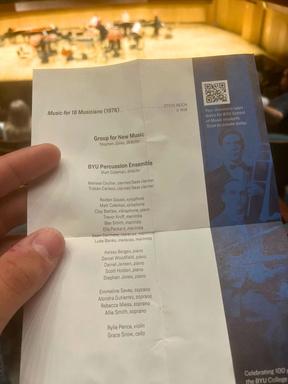
Members of the Group for New Music Winter 2026:
Stephen Jones, director
BYU Percussion Ensemble
Matt Coleman, director
Raiden Sasaki, xylophone
Matt Coleman, xylophone
Clay Battles, vibraphone
Trevor Kroff, marimba
Ben Smith, marimba
Ella Packard, marimba
Sean Caviness, maracas/marimba
Luke Banks, maracas/marimba
Kelsey Berges, piano
Daniel Woodfield, piano
Daniel Jensen, piano
Scott Holden, piano
Emmeline Sevey, soprano
Alondra Gutierrez, soprano
Rebecca Miess, soprano
Allie Smith, soprano
Rylie Pence, violin
Grace Snow, cello
New music has been, and still is, often rejected by many because it isn’t what we are used to. The performances from The Group for New Music are chances for us to open our minds to new sounds and feelings through new music. Dr. Jones said, “I'm grateful we have a way to perform new pieces here and introduce BYU students and the community and the campus to those works.” Stay tuned for many more historic performances like this one from The Group for New Music in the future
Melissa Coulter, clarinet/bass clarinet
Tristan Carlson, clarinet/bass clarinet
Music for 18 Musicians Cover Image
The Group for New Music after their performance of Music for 18 Musicians
New World
The last concert of the year is always bittersweet for the Philharmonic, marking an end for our graduates, of a year of growth for all, and another new beginning to students continuing their degree. This concert was no exception - a perfect finale to an incredible semester amongst amazing peers and professors. For students in the Philharmonic, Winter 2026 was especially uniquewith back to back concerts with some of the worlds’ most challenging repertoire to putting together an entire movie concert before our director, Dr. Haines left for his paternity leave. Working under the baton of four different conductors over the course of the semester meant staying flexible, being patient, and working hard individually to ensure we were all prepared to rehearse efficiently Over these hard winter months, my peers came together to support one another in incredible ways musically and as brothers and sisters of Christ
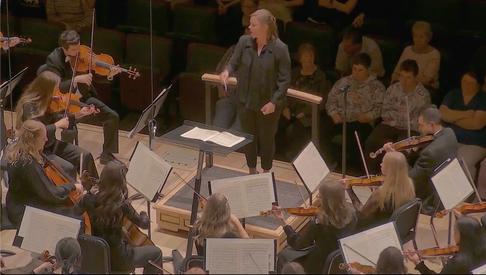
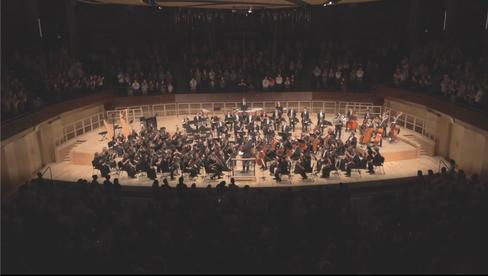
On Saturday, April 11 the dilligent efforts of every member of the BYU Philharmonic created a concert and performance experience that was unforgettable, sacred, and critical in building lifelong relationships and community. ‘From The New World’ was a unique final concert in the history of the BYU Philharmonic, with three different conductors directing the orchestra on three unique pieces. The concert opened with Johannes Brahms’ 81 Opus ‘Tragische Ouvertüre under the baton of Conductor Vanese McPherson, a graduating masters student in the School of Music and one of two TA’s for the Philharmonic. As part of the conducting masters program, Vanese rehearsed this piece with the Philharmonic preceeding the concert while also actively conducting multiple other groups such as Studio Orchestra class (see page 36) and the University Orchestra. Vanese was an amazing conductor to work under, with her emphasis on expanding our emotional understanding of the piece creating a beautifully vivid performance of this legendary Late-Romantic Era overture. th st
“I’ve always loved working under Vanese’s baton because she always brings fun, light and energy to the music, enhancing my experience as a learning musician. Her interpretation of the Brahms was especially influential every moment felt intentional and filled with individual meaning from the Orchestra, channeled through Vanese’s conducting ” Emma Hogge, Tubist & Graduating 2026 Philharmonic Member
Following the overture, we welcomed our special guest conductor onto the stage - Maestro Marcelo Jardim, Vice Director of Brazil’s leading School of Music at the Federal University of Rio de Janeiro Maestro Marcelo flew all the way to Provo to work with the BYU Philharmonic and Wind Symphony in a Brazilian composer workshop that lasted a few days in early April
The piece the Philharmonic was collaborating with Maestro Marcelo with was ‘Chôros No. 9" by Heitor Villa-Lobos, one of Brazil’s most beloved composers throughout the early 20 century. With orchestration and textures that we weren’t familiar with, learning how to portray the Brazillian soundscape through our sound was challenging but so enriching, as the final product was an energy filled performance with Maestro Marcelo
VaneseMcPhersonconductingtheBYUPhilharmonic
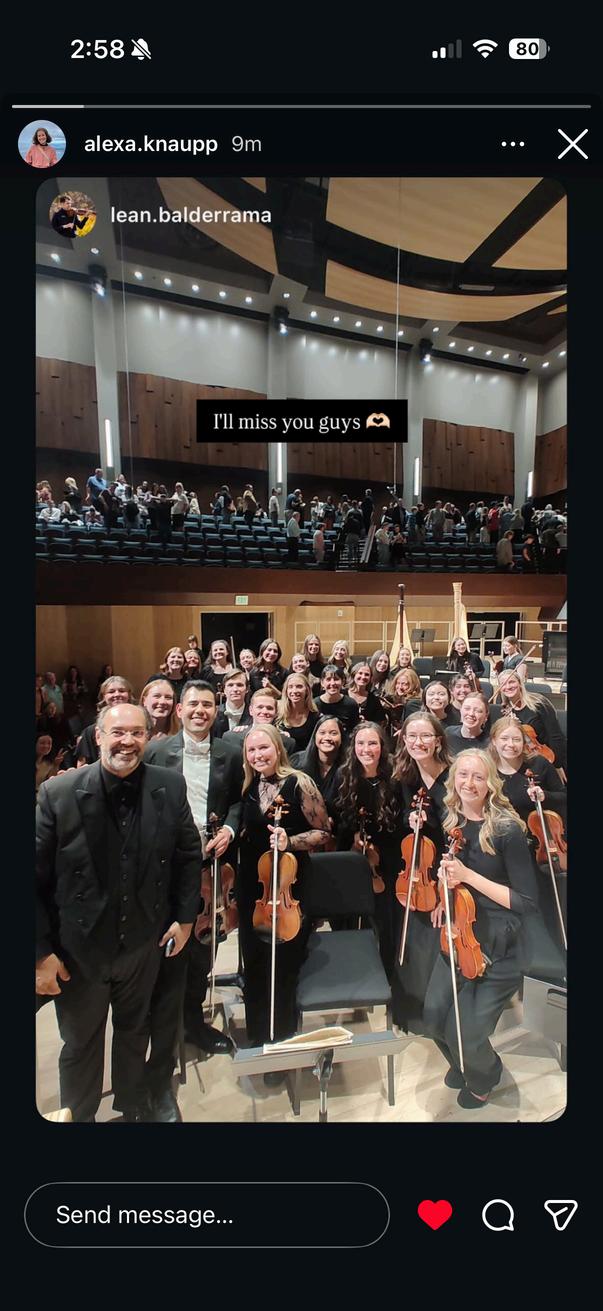
Maestro Jardimwithmembers of thePhilharmonic aftertheConcert on April11th
Written for strings and most modern orchestral winds, Chôros No. 9 was a unique rehearsing experience for the Philharmonic as it pushed us to grow our understanding of sound, how our instruments can function and the possibilities of orchestral music on a global scale. The percussion section also had the opportunity to get more hands on experience with the unique textures of Brazilian percussion - utilizing the tam-tam, bass drum, tambor, tambor surdo, camisão (large and small), pio, triangle, reco-reco, tartaruga, caxambu [pt], chocalho (metal and wood) alongside other traditional instruments. Overall, performing music by Villa-Lobos was an incredible experience on the academic and musical fronts, and is a testament to why these opportunities to expand our global perspectives are critical in the longevity of the arts and prioritizing connection through sharing cultural ideas and practices
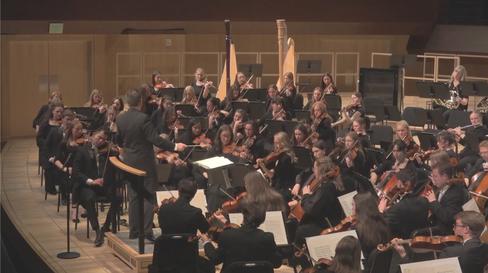
After a ten minute intermission, Dr. Shawn Smith, Director of the School of Music and temporary conductor of the BYU Philharmonic took to the stage to finish off the concert with one of the most famous symphonies to ever exist - Dvořák’s 9 Symphony, The New World Symphony. th
“Just finished a fantastic week with Marcelo Jardim, the BYU Wind Symphony and the BYU Philharmonic! Two truly remarkable concerts where the students played with such passion and artistry. Thank you to all involved for an exhausting, exhilarating, enlightening and unforgettable week!”
Dr. Shawn Smith on his Conductor Pages, @conductorshawnsmith
Interestingly, Dvořák composed this symphony, his final symphony when he was a teacher in New York In the BYU School of Music, lifelong learning expands far beyond academia and means seeking inspiration and giving inspiration, mentoring the next generation of musicians. The New World Symphony is known to strike at the heartstrings of any who experiences it, whether they be a trained musician or not. Dvořák wrote this symphony as a tapestry of his perspective on America at its’ soul - heavily referencing AfricanAmerican spiritual melodies and textures throughout the symphony. As a composer, artist and teacher, Dvořák wanted to inspire the future generations of America to cultivate and cherish the heart of the People through this symphony.
The BYU Philharmonic has a rich and prestigious history both musically and academically, with concerts being crucial points of reflection for students and professors, acting as our ‘exams’. At times, as aspiring music professionals, we can get into a cycle of feeling inconsequential, going through the motions as musicians out of fear of failure rather than love Our From The New World concert and final exam reminded us that love is the critical foundation to why we refine and share our gifts
“We hope you enjoy this music as much as we have, and we are so excited to showcase our love for the Orchestra and the mentors and professors who constantly lift us up and inspire us to live passionately and musically ” @byuphil
Dr. Smith andPhilharmonicPerformingthe NewWorldSymphony
Shawn SmithconductingtheBYUPhilharmonic
MarceloJardim conductingtheBYUPhilharmonic
Student Composer Highlights
We’ve had some incredible student performances this past semester It’s always amazing to see the incredible works students here at BYU can make Supporting these young composers by being there and being open to collaborate with them is the greatest way to help these musicians grow and bless others. Some highlights we’ve had this year due to their scale have been Hannah Evans’ One by One Oratorio, Daniel Woodfield’s Slow Sailing, Long Night, Deep Water, and Avery Merrill’s Goodwill.
Merrill, seeking to challenge himself in his ability to compose, sought out to compose for orchestra. He reached out to all the BYU students who knew or had some connection with that played an instrument for orchestra Although it was a small ensemble, he pulled together a full group for which he wrote the piece In pondering the grace he was depending on by these performers, he decided to title his piece Goodwill, based off of the goodwill the performers shared by helping him. The piece itself has a very bright and hopeful feeling as well, seeking to also be a symbol of Christ’s goodwill to the world.
Although I only featured these three performances, there were many other incredible pieces written and performed this semester that deserve recognition and praise. If you’ve missed their performance, make sure to go see future performances of works by student composers.
“Without craftsmanship, inspiration is a mere reed shaken in the wind” - Johannes Brahms
Below is a list of all student composers and their pieces performed this semester at Student Composer Showcases:
Harrison Huang - The Voice of Home: String Quartet
Samuel P. Ericksen - Death of Discworld; III. Soul Music: Small Combo, The Steel Church
Rylie Pence - Fiddle #1: Violin Solo, With Thee Anear: Vocal Solo
Avery Merrill - Of Gods, Monsters, and Heroes—A Piano Sonata in C Minor, Goodwill: Orchestra
Daniel Woodfield - You Are a Butterfly Factory: Instrumental Trio, Harpsichord Solo
Evan Chamberlain - Of Myths and Legends—III. Legendary Deeds of the Ageless Hero: Horn Solo, Piano Trio Mvt. II
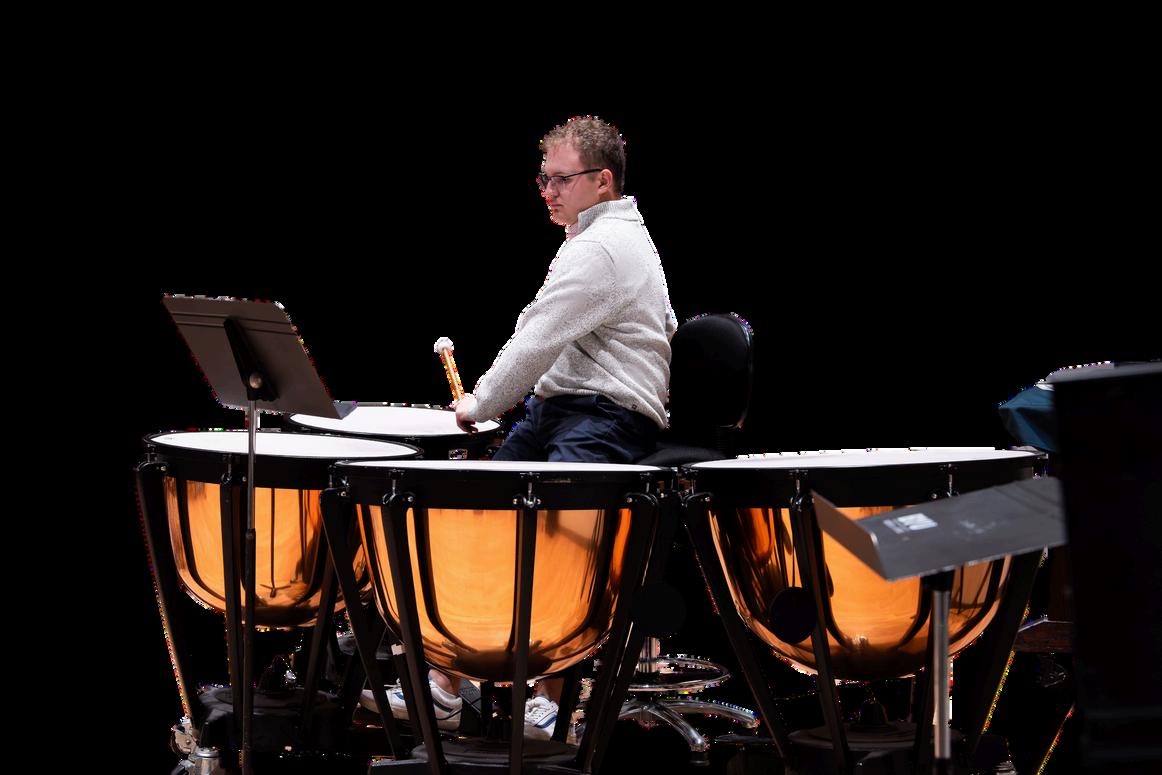
After 10 years of sitting right next to the bass drum every day, I started to get worried about my hearing health and occupational safety. I tried multiple different kinds of hearing protection ranging in prices and fit, but started to give up after a year or so as I was experiencing a unique feedback when playing my instrument. The tuba’s frequencies are so low that vibrations don’t travel through hearing protection, they vibrate it, so all I hear is tuba sound when I put plugs in. I did some light research and learned about how our hearing will experience a temporary threshold shift when we are exposed to very loud sounds over an extended period. I tabled my major concerns for a while, thinking that my youthful ears would be able to withstand a few more years of these sound levels before having to figure out my hearing proterction After my second year in the HFAC’s practice and rehearsal rooms I felt that studying this topic would quickly become crucial both for my health and on a larger occupational scale for my peers and colleagues This semester I took the Acoustical Physics class here at BYU, and for my final project recorded the sound levels I experienced on an average day in the school of music With this project I hoped to gain valuable data and understanding of the sound levels instrumentalists are actually exposed to daily, and to provide options and suggestions to maintain long term hearing health as a musician.
As an overview, after seeking out answers to my research questions, studying average sound levels for different instruments in the orchestra and the federal occupational safety & health guidelines, I found significant cause to urgently advocate for immediate awareness and application of hearing protection for everyone in the School of Music Most if not all of the orchestra prefers not to wear any kind of hearing protection in order to retain precise live feedback and spacial information.
RESEARCH QUESTIONS
What is the sound level I’m exposed to on average?
Is that level harmful, should I seek out specialty hearing protection?
If so, what are the maximum recommended exposure levels?
Understandably, using hearing protection does entail a slight learning curve, but studies show that musicians who use hearing protection over a long time retain significant aural sensory functionality, in contrast to peers who do not protect their hearing and decline quickly over their career. My study also showed that every single instrument both creates and is exposed to sound levels that far surpass the hourly OSHA regulated limit. Whether you’re a violinist in a practice room or a tuba player in the middle of the brass, hearing protection guidelines insist on the same level of protection to minimize damage Considering all of my aquired data and resources, I can confidently claim that hearing protection should be a priority for musicians of all ages and levels Through this study and report I also hope to spark awareness on the necessity of studying topics such as this, and through collaborative efforts we can easily improve the living quality and experience of all in simple yet impactful means
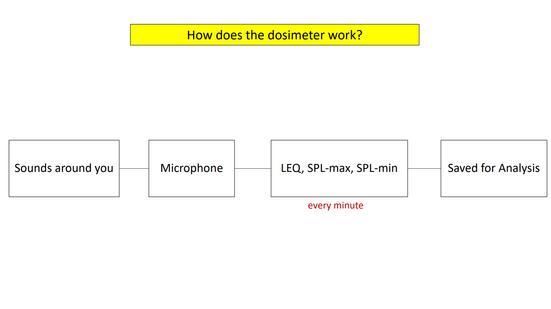
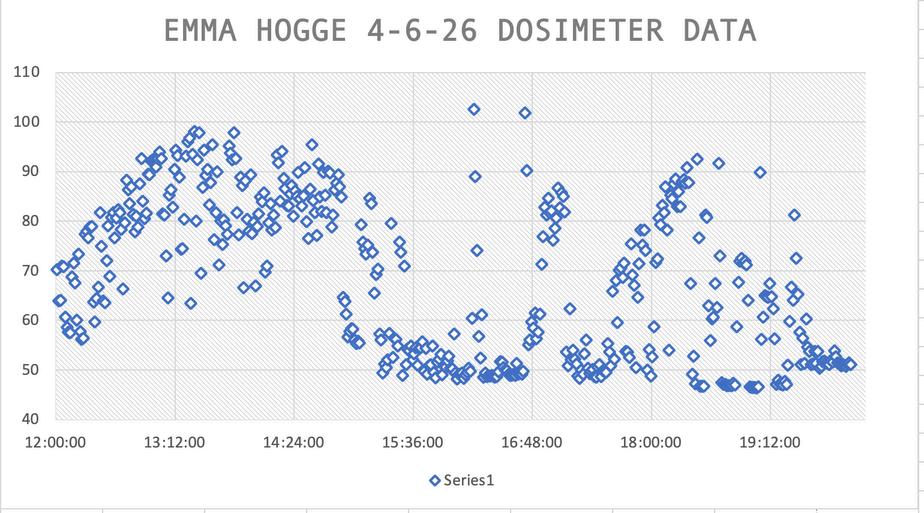
On Monday April 6 , 2026 I recieved my dosimeter and wore it for the remainder of the day to record the sound levels I was exposed to in various enviornments around campus and the BYU School of Music. To monitor my noise exposure, the dosimeter I used (see Fig 1) recorded a snapshot of the acoustical sound levels of my environment every 60 seconds for the 8-hour analysis period of 12:00pm-8:00pm in varying environments. (See Below) I noticed a difference in my hearing after rehearsals and practicing alone, recording a ‘stuffed’ feeling that is attributed to the temporary threshold shift our hearing makes to adapt to these high sound levels th
After receiving my recorded dosimeter data and applying the 8-hour period of analysis (12:00:00-20:00:00) into a scatter plot, I found my hypothesis to be confirmed with my experiential data During the times that I was participating in large group and small group ensembles, my sound level that I was exposed to was over the federally recommended and occupationally mandated 80 decibel maximum hourly exposure to protect against long term hearing loss From noon to 1pm, I was practicing my bass tuba in a small sized practice room that is padded, but not considered sound proof.
ANALYSIS & RECOMENDATIONS
Under Occupational Safety rules OSHA requires hearing protections for exposure to 90 dB for eight hours and double hearing protection is required at 100 dB. This means if BYU Orchestras were considered an occupational workplace, a hearing conservation program would be mandated.
Musicians want to be able to hear all of the noise and dynamics during a concert - which is usually impacted by uninformed or ill-fitting hearing protection types This is a common hesitation with widespread hearing health awareness among musicians globally, as most prefer to take the risk in order to preserve ‘clarity’ of sound. This is where I hope to shift the focus from an entire loss of aural flexibility to only a slight learning curve.
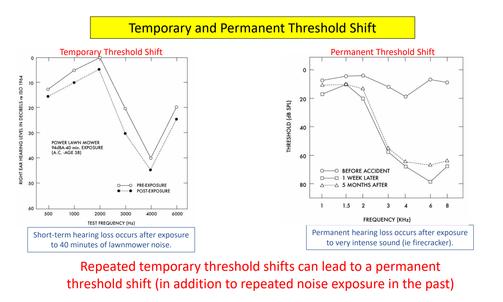
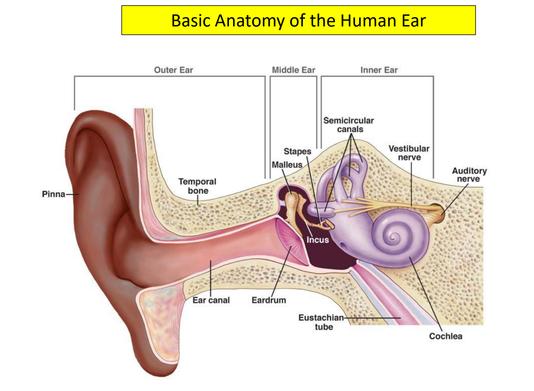
Exposure to these levels without any hearing protection will result in hearing loss in both temporary and lifelong ways. The hair cells in your Cochlea only can flex so many given times and when you expose them to this much noise, they will get flattened down like grass (the result of the Temporary Threshold Shift - your ears’ attempt to adapt to the enviornment and prepare for damaging sounds). These hairs tend to stick down if a large noise pushes them over, and musicians can be affected by immediate temporary hearing loss due to high intensity sounds like the ones we created and recorded while rehearsing with the Philharmonic on April 6th. These delicate sensory hairs will be affected by our musical environments but a lot of of them will rebound overnight and fluff back up. When forced to adapt to daily temporary threshold shifts the ear will over time fatigue its abilities to adapt and experience permanentdamage tosensory cellsand organs.
ENVIORNMENTAL FACTORS
As expected, my exposure exceeded the 80dbl maximum but wasn’t louderthan90dbl.
From 1pm to 3pm, I was in the Music Building’s largest rehearsal room, MB 1111 (the North Ensemble Room) which fits the entire 100 person Philharmonic Orchestra with our percussion equipment comfortably, and has adjustable thick curtains and a very tall ceiling. During this period my dosimeter measured sound levels from around 60dbl minimum and peaking at around 100dbl maximum, which is what I expected prior to experimentation as we were working on a very loud symphony that hasanintense low brassfanfare.
From 3pm to 4:50pm I returned to a small practice room with my bass tuba to practice, often listening to recordings with my headphones during this period. This practice session was my lowest sound exposure level of the 8-hour period, sitting comfortably under 60dbl on average. On the other hand, the loudest part of my day also happened during this practice session, peaking over 100 decibels as I was practicing a difficult concerto and intermittently stopping to listen and review recordings.
At 5pm I returned to the North Ensemble Room for tuba masterclass from 5pm 7pm, which was mainly a lecture from our professor and at times some demonstrations from him mixed with student performances and discussions. This period was the smoothest overall, withconsistent fluctuatingsoundlevelsanywhere from50dbl to 90dbl.
My sound exposure levels then dropped to its lowest average of the day whenI returned homeaftermasterclasswas done, at 50 decibels.
Table 2: Emma Hogge’s Recorded Dosimeter Data
Soundfrompercussion rarelyoccurs below 120db, often radiatingvolumelevelsalmost asloudas agunshot!
Any kindofhearing damage prevention helps reducelong termexposure risk, from foam plugstonoise attenuatingdevices likeairpodpros, simplemeasures can save yourlong term aural health!
Story by Emma Hogge
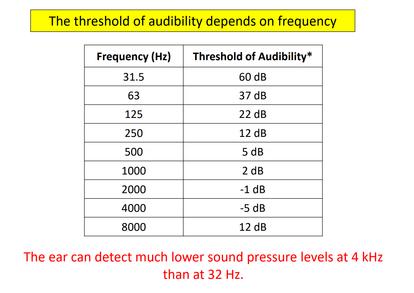
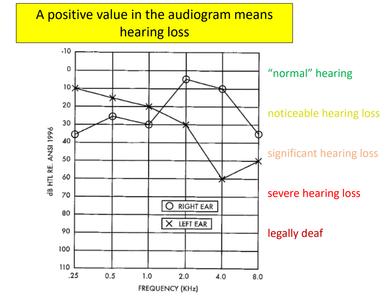
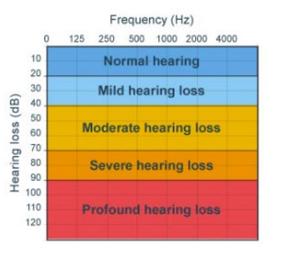
Typically with common hearing loss, higher frequencies are lost first (around 2000 K and 4000 K, see Info 3) so partial attenuation (like ear plugs) would dampen the sharp peaks of the noise yet preserve some of the sound quality so you can hear the clarity, dynamics and acoustical information about the enviornment. As far as qualitative testing, each individual musician may feel a certain solution is more effective than another, and subjectivity with specific types of hearing protection should be encouraged. The necessity for protection and awareness of how our musical environments are physically affecting us is more important than ever and is a focus that hopes to increase our quality of daily life
In a study done between thousands of professional and non-professional musicians in Germany about hearing health, significant improvements to other health conditions or qualities were reported when long term hearing protection was employed. Moods were better, people reported experiencing less chronic headaches or pains, and social comprehension was far better in old ages when compared to those who didn’t use any protection. (See source #) Professionals who reported difficulty in perception in social enviornments actually didn’t report the same for their occupational musician situations, which is an argument for the ‘hearing is inherent’ crowd I believe that is an interesting aspect of human auditory perception and the deep ability to feel music vibrationally rather than solely relying on raw auditory perception, and I hope this can begin to inspire new questions to be posed about tuba/instrumentalist occupational health and safety on a long term scale.
Table 3: Temporary and Permanent Threshold Shift
Table 4: Audiogram with Common Hearing Loss
Informatic 3: Common Hearing Loss TypesAcross Frequencies
Musicians should be especially aware of the surrounding noise they are exposed to, especially percussive and radiating sound as a potential risk to long term hearing health For example, those who sit directly in front of brass players with front facing bells (trumpet, trombone) should consider ample hearing protection to keep their sensory organs safe from impulsive and high intensity sounds Out of the entire orchestra, the Horn was the biggest culprit of causing long term hearing loss and problems for their players, exposing these musicians to levels over the OSHA regulated 50% dosage maximum While the Horn took the prize for most intense exposure levels, we cannot minimize the necessity for all muscians to become more aware of how hearing loss may be affecting their auditory perception and consider finding sufficient hearing protection to use occupaitonally.
After reviewing the recorded levels with an OSHA trained and licensed safety professional, the compromised advice is that musicians don’t necessarily need full noise attenuation (such as NRR 33 DBA hearing protection) and instead a recommended attenuation which would fall around 22 DBA, such as a light end plug that professional musicians from the last decade or so prefer or rate well When noise is attenuated with hearing plugs, it’s not straight across all decibel ranges and instead plugs tend to attenuate better on high frequencies, with over-ear protection tends to more effectively cover the lower frequencies.
For tuba specific research, I hope to pose questions about how low frequencies can affect the player through bone resonances or vibrations, and how this kind of feedback affects how tubists perceive our own sound while actively vibrating (playing) the air column. I am curious to learn how these low vibrations may affect internal sensory organs over long periods of exposure and which hearing protection attenuates the best ranges for tubists.
Study by Emma Hogge, 2026 School of Music Graduate
Study was a final project for BYU Acoustical Physics class PHSCS 167 and reformatted for the School of Music Journal. Data compiled from dosimeter readings and following analysis reviewed by an OSHA certified safety manager and verified for factual accuracy.
As the tubist in a large orchestra, my own data and exposure levels didn’t shock me at all as I expected my daily sound levels to exceed the maximums (see Acoustical Characteristics of Musical Instruments source) but it was interesting to learn that there isn’t a single instrument in the orchestra that wouldn’t require mandated hearing protection. From the violin in a small practice room to the cellos sitting right in front of the trombones’ bells, average orchestral musician sound levels are frequently exceeding 100 decibels hourly no matter where you sit in the ensemble nor your instrument. On average every single instrument in the orchestra radiates a minimum around 80 decibels, which is a level that still requires occupational hearing protection - even without enviornmental considerations.
At the Met
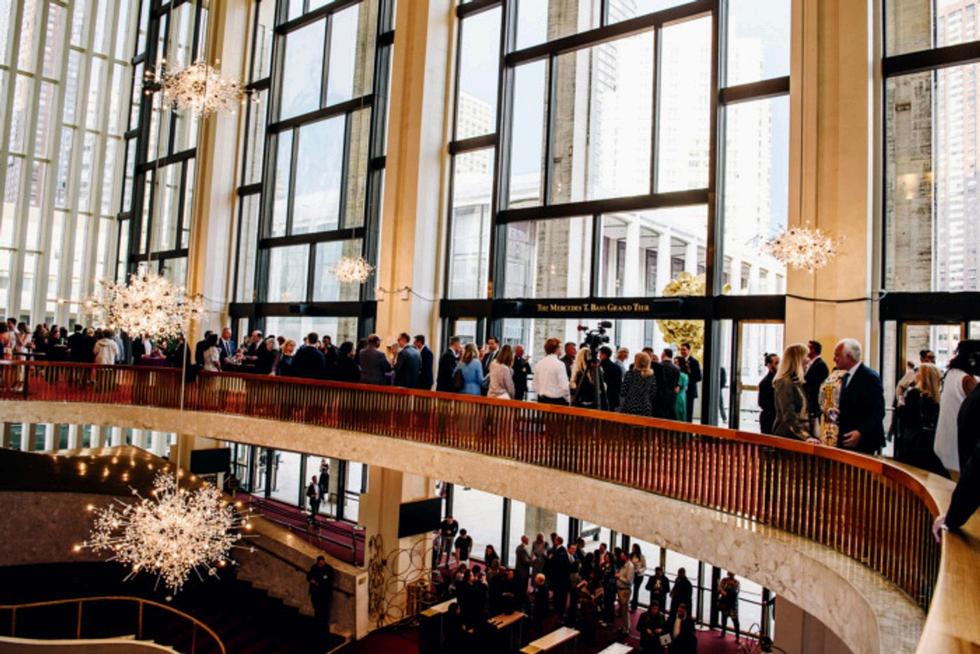
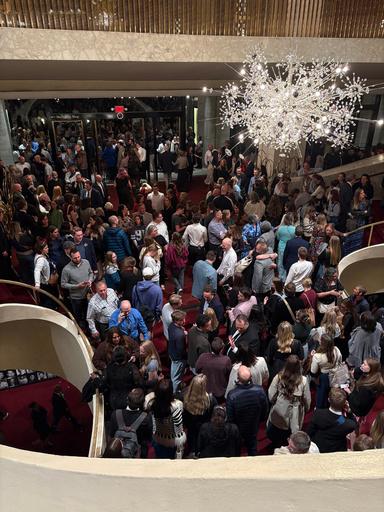
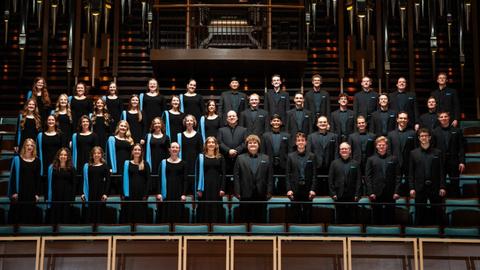
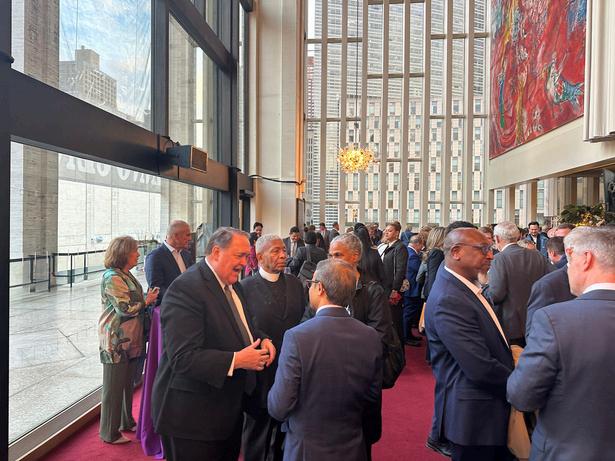
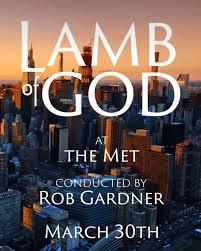
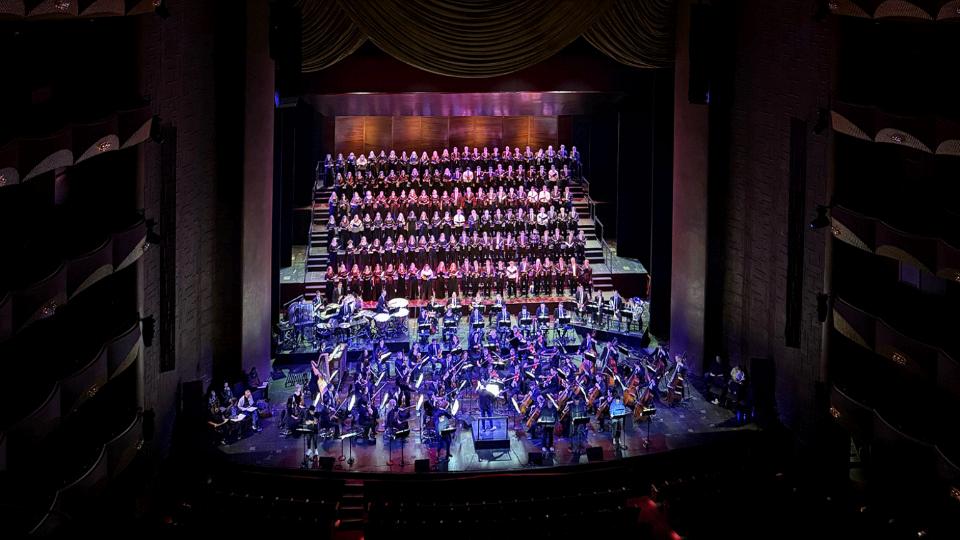
This Easter, BYU Concert Choir and BYU Singers traveled to New York City to perform alongside award winning broadway and vocal artists at the Metropolitan Opera House on March 30, 2026 This was an incredible effort to remember His greater love by gathering and combining hundreds of voices in performance of Rob Gardner’s Lamb of God, a sacred musical witness of the death, atonement and resurrection of Jesus Christ.
“Greater love hath no man than this, that a man lay down his life for his friends ” John 15:13
For our peers in Concert Choir and Singers, being a part of this historic premiere at the Metropolitan Opera House was both an unbelievable experience and a testimony-building opportunity too. Sam Marley, a bass in the BYU Concert Choir reflected on his Lamb of God NYC experience on his social media pages:
“Performing The Lamb of God at the @metopera changed everything for me Many moments these past few years have left me feeling quite directionless But I gained a true witness of Jesus Christ’s love for me, me personally Thanks, @robgardnermusic and @byuconcertchoir for an experience I will remember forever!“ (@samisinteresting)
For our peers in Concert Choir and Singers, being a part of this historic premiere at the Metropolitan Opera House was both an unbelievable experience and a testimonybuilding opportunity too Sam Marley, a bass in the BYU Concert Choir reflected on his Lamb of God NYC experience on his social media pages:
Story by Emma Hogge
Sam Marley (right) with Dean of the College of Fine Arts & Communications Dr. Diane Reich (left) at the Met Opera House
“We’re honored and thrilled to have BYU Singers and BYU Concert Choir join Rob Gardner’s “Lamb of God” at the Met on March 30! The 135 combined voices of Brigham Young University’s premier choral ensembles drawn from a long tradition of choral excellence will join Tony Award winners Jessie Mueller and Santino Fontana, Tony nominees Joy Woods, Brandon Victor Dixon, Norm Lewis and more for this spectacular onenight-only New York City premiere conducted by the composer ” @lambofgodnyc
BYU Singers, conducted by Dr. Andrew Crane, is known internationally for its powerful sound, stylistic versatility, and innovative programming. The choir has won top honors at major European competitions including the Cork International Choral Festival (Ireland), the International Stasys Šimkus Choir Competition (Lithuania), Aegis Carminis (Slovenia), and the World Choir Festival and Competition on Musicals (Greece). BYU Singers has performed in many of the world’s leading concert venues—including Carnegie Hall, the Kennedy Center, the Sydney Opera House, the Musikverein in Vienna, and Walt Disney Concert Hall— and has toured extensively across the United States and in more than two dozen countries.
BYU Concert Choir, conducted by Dr. Brent Wells, is renowned for its powerful sound and musical versatility. The choir performs major choral-orchestral masterworks, beloved works of the choral canon, newly commissioned compositions, and music from cultures around the world. Concert Choir has appeared as a featured ensemble at regional conventions of the American Choral Directors Association, collaborated with the Utah Symphony, and been featured on numerous recordings. Through its dynamic performances and broad repertoire, BYU Concert Choir continues a distinguished tradition of choral excellence on campus and beyond.
Story by Emma Hogge
Promo Poster of Soloist Announcement
L’incoronazione di Poppea
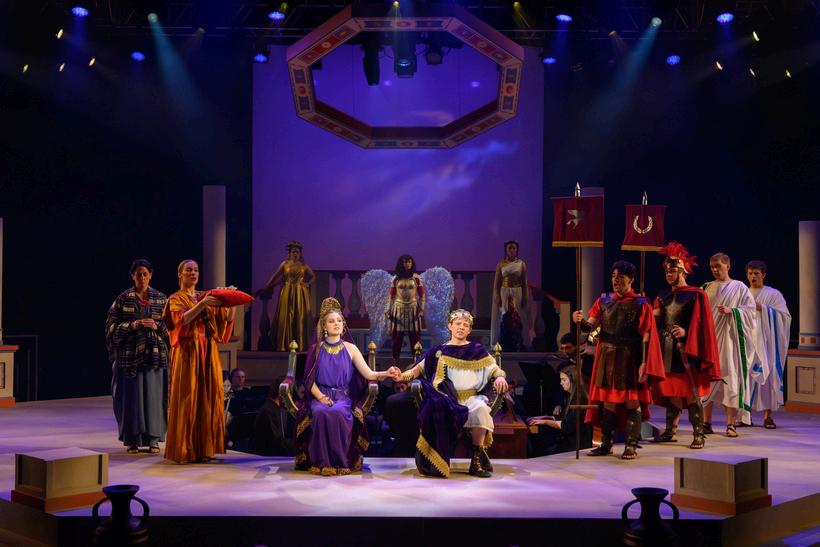
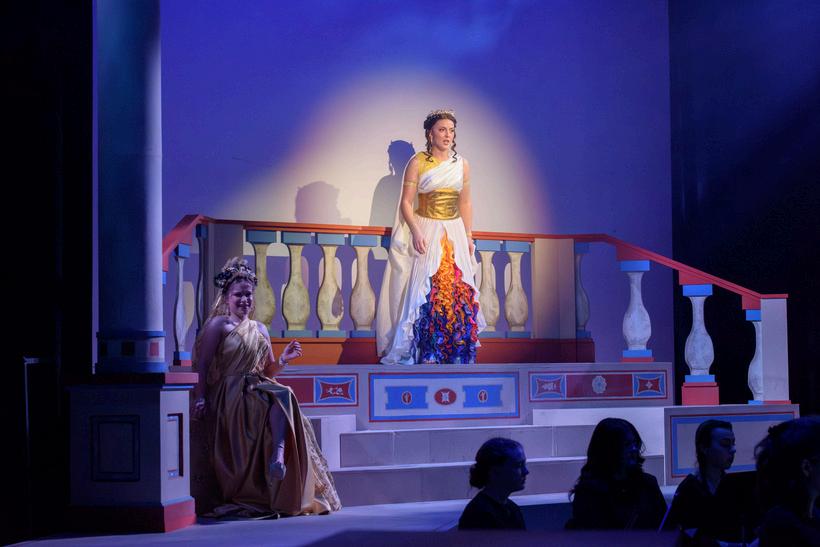
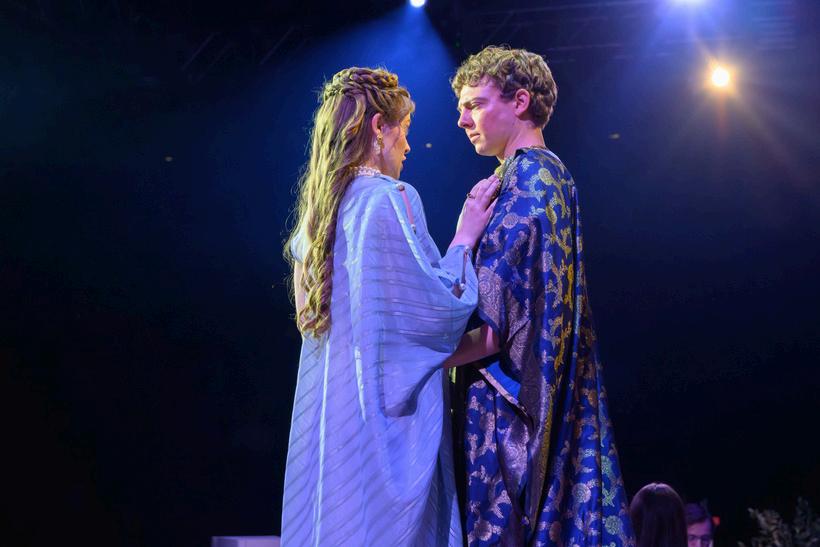
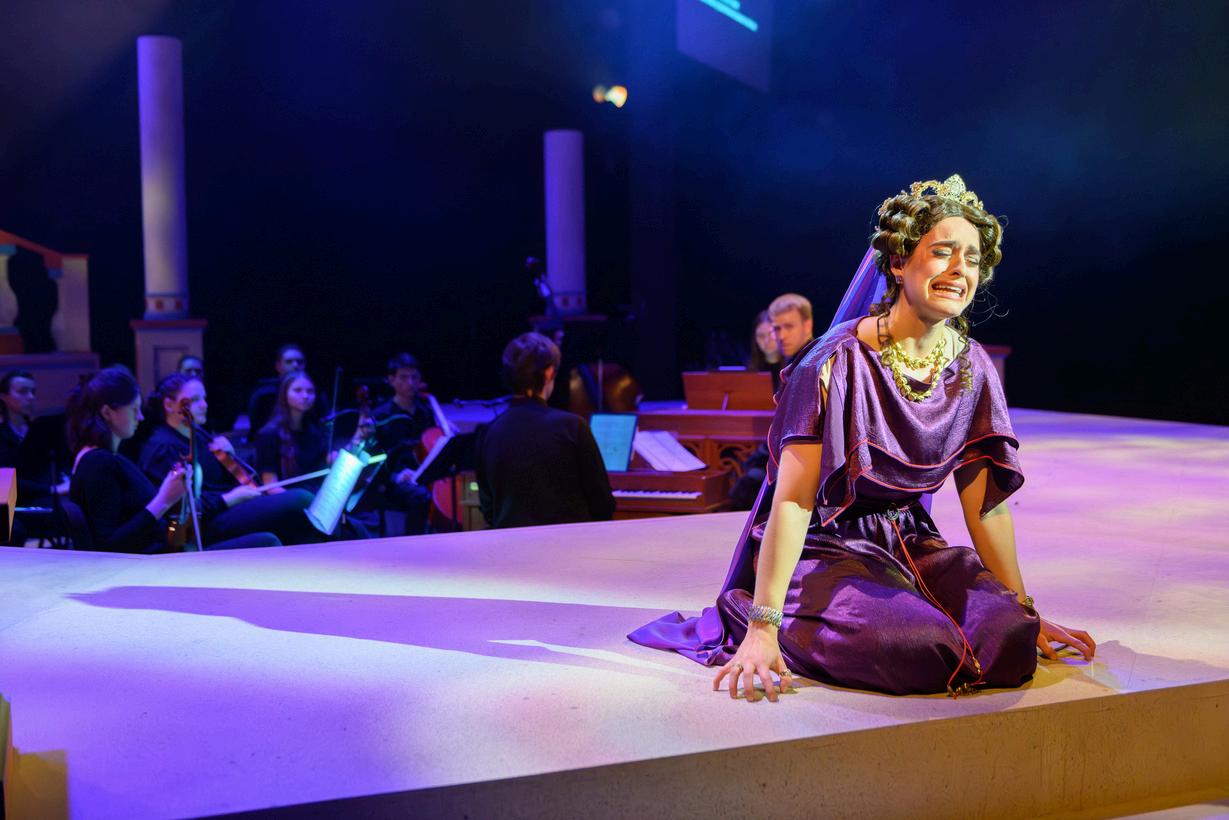
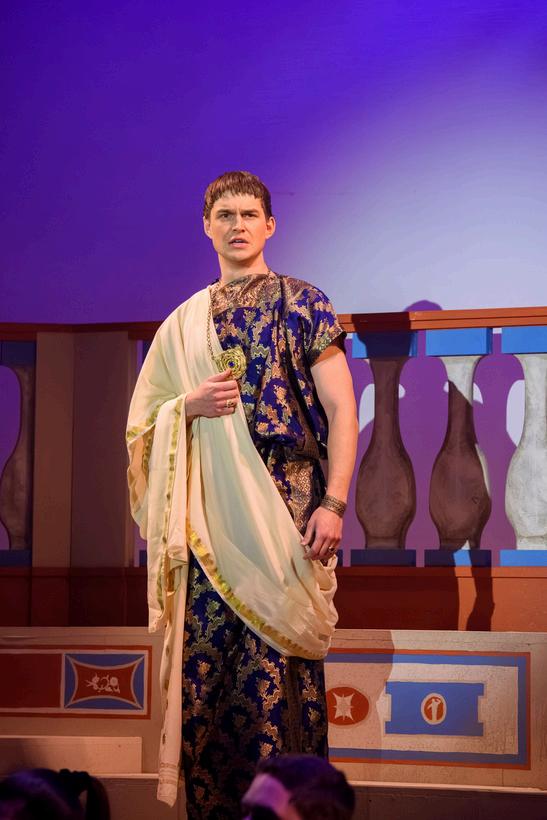
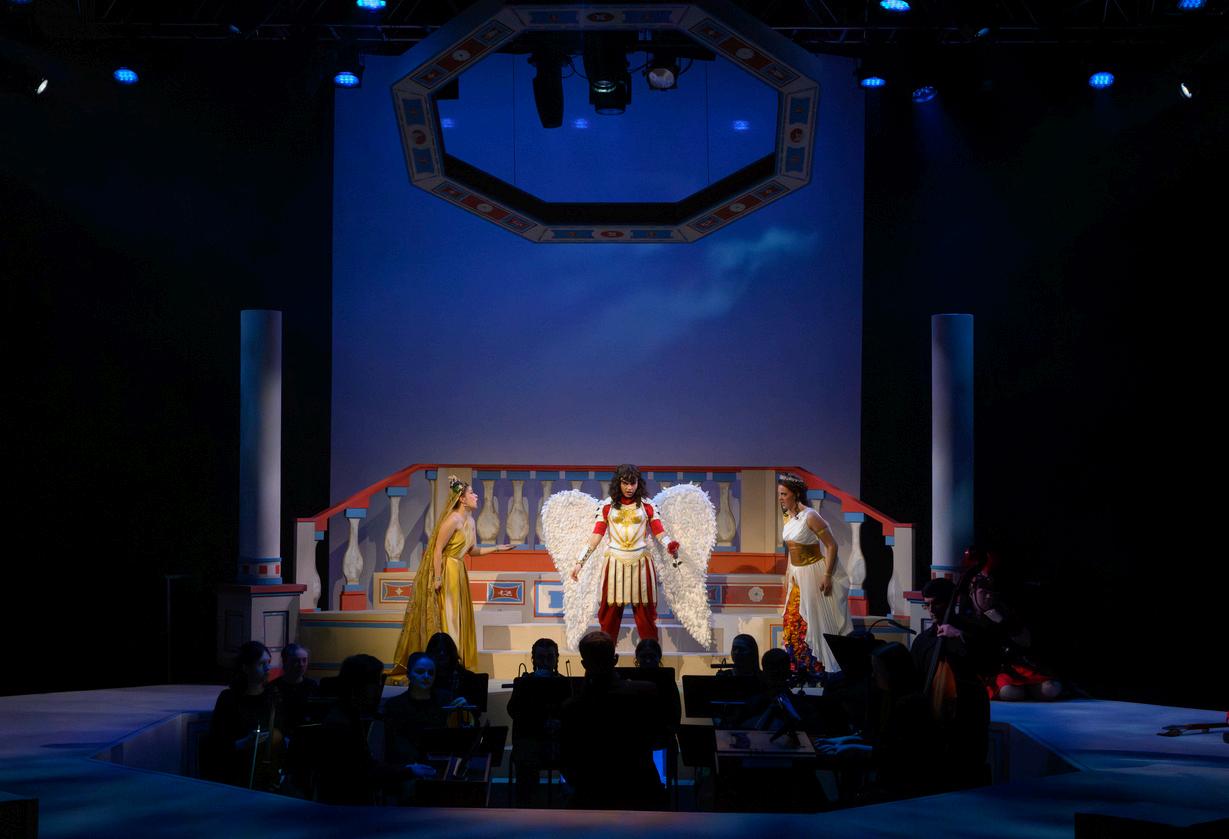
This Winter Semester, BYU Opera brought to life one of the most compelling and unconventional works of the Italian Baroque era, L’incoronazione di Poppea (The Coronation of Poppea), by Monteverdi. Directed by Shea Owens and conducted by CJ Madsen and Johannes-Krystof Bowman, the production was fully staged at the West Campus building with a run from February 14th to the 21st The show featured two casts with students from the Vocal Performance program, with auditions happening in the Fall and rehearsals beginning in January The dual casting allowed for multiple students to explore these demanding roles, showcasing the depth of talent of BYU’s students.
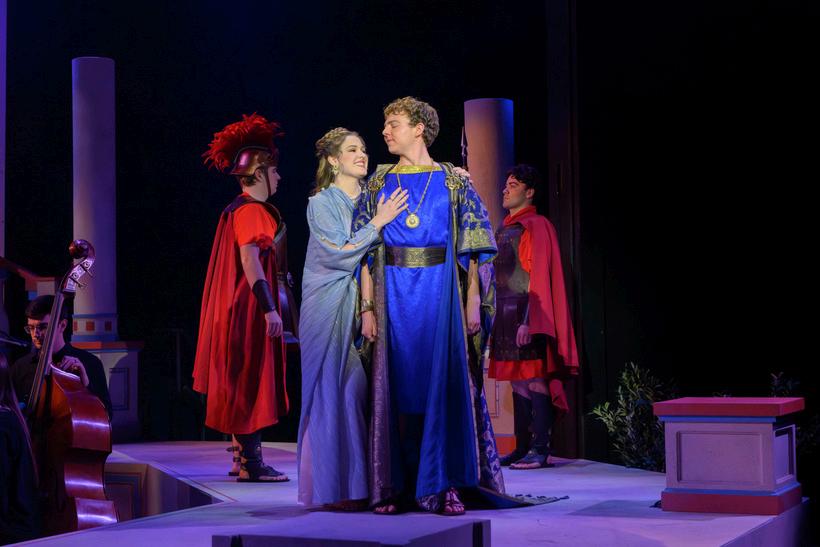
L’incoronazione di Poppea is a story of love and ambition. The early opera breaks usual plot expectations as the “villains” of the story succeed in the end. Poppea, a noblewoman, seduces the Emperor of Rome, Nerone, and is crowned as Empress. The themes of love, power, and morality are complex, and the more virtuous characters suffer consequences This story allowed for the BYU students to dive into the complexities of the plot and characters In this Baroque opera, text and emotion are prioritized in the music over spectacle, meaning that the understanding of the language and motivations of the characters were intimate and important These themes shaped both the musical and dramatic approach of BYU’s production
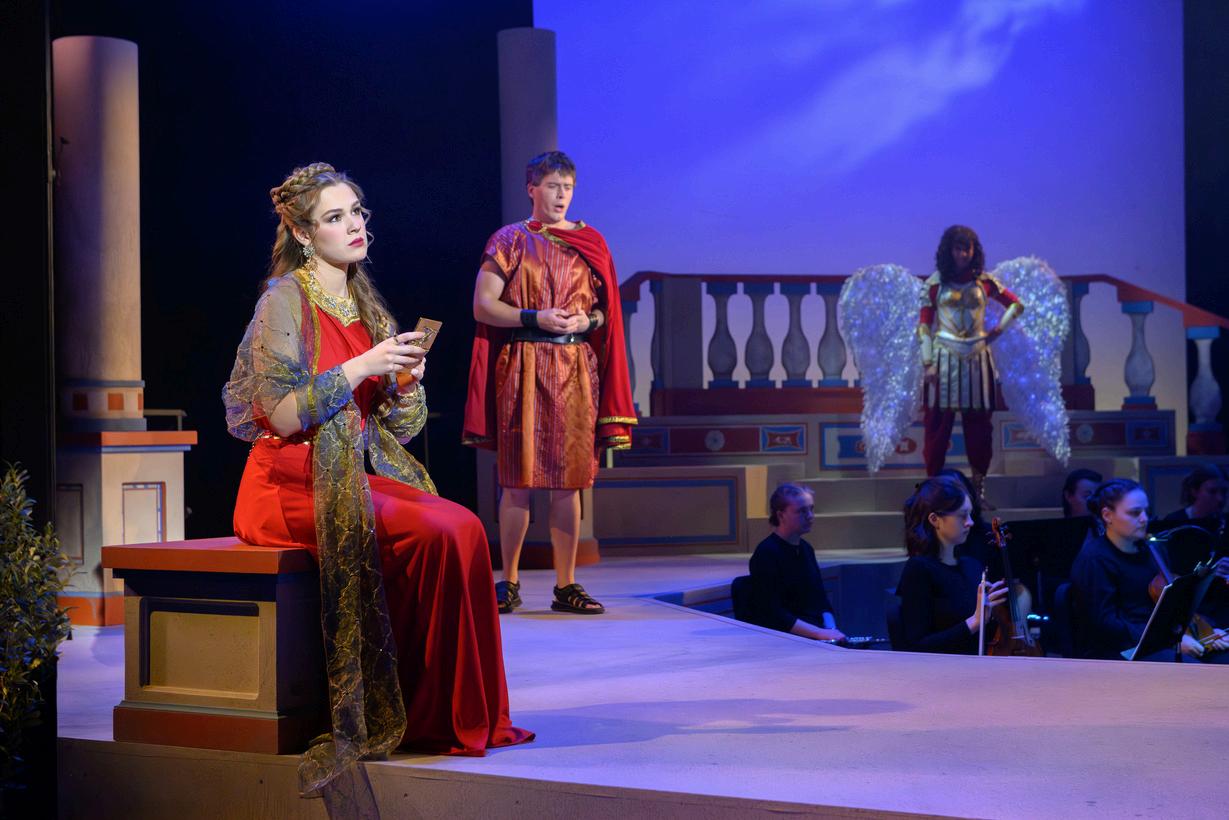
The set design mirrored a Roman palace, with Roman goddesses placed slightly above, overlooking the more worldly characters with a few notable interactions between the two “realms.” Moments of more intimate recitative between characters highlighted the emotional immediacy of Monteverdi’s style, drawing the audience in to witness the shifting power dynamics A small Baroque ensemble made up of BYU music students was placed in a pit in the middle of the thrust stage, allowing for the instrumentalists and singers to coordinate closely and respond in real time to the more improvisational ornamentations and recitative. The beautifully intricate costuming, hair, and makeup were historically-inspired by Ancient Rome, with rich symbolism to signal status and linkage between the characters. Students attended fittings before the Winter break as the vision for the show continued to develop. These visual elements reinforced the hierarchy and manipulation in the story, allowing for the audience to be fully immersed in the production
see the Roman story of love and betrayal in its full operatic glory!” BYU Opera on Instagram
The musicians worked exhaustively on their own and in rehearsals to learn and memorize Monteverdi’s Italian stylings They attended individual coachings as well as an extensive rehearsal process for clarity of diction, expressive phrasing and the use of Baroque ornamentation, a distinct technical challenge L’incoronazione di Poppea includes a large amount of recitative, which is a dialogue-like pattern to singing, as well as flexible rhythms and opportunities to include emotional ornamentations in the intimate arias. Staging rehearsals began early on in January, and migrated from the BYU Music Building to the West Campus Theatre. There was a great deal of collaboration between the students, director, instrumentalists, and conductors to allow for the music to be communicated cohesively.
The students participated in many discussions about the motivations and morality of the characters, and how to understand the history and importance of the story being told today. The production was extremely well received, being complimented on the professionalism and hard work of the students, directors, and crew. The staging, music, and characterization in both casts prompted audiences to think about the distinct consequences of ambition, offering a compelling reflection on the enduring relevance of Baroque opera.
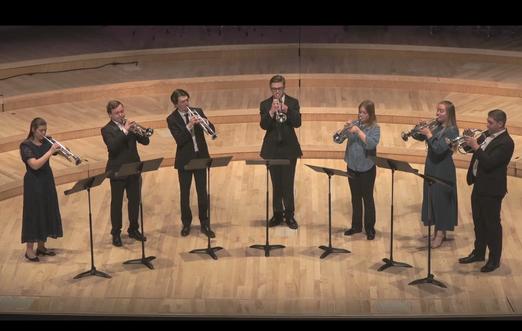
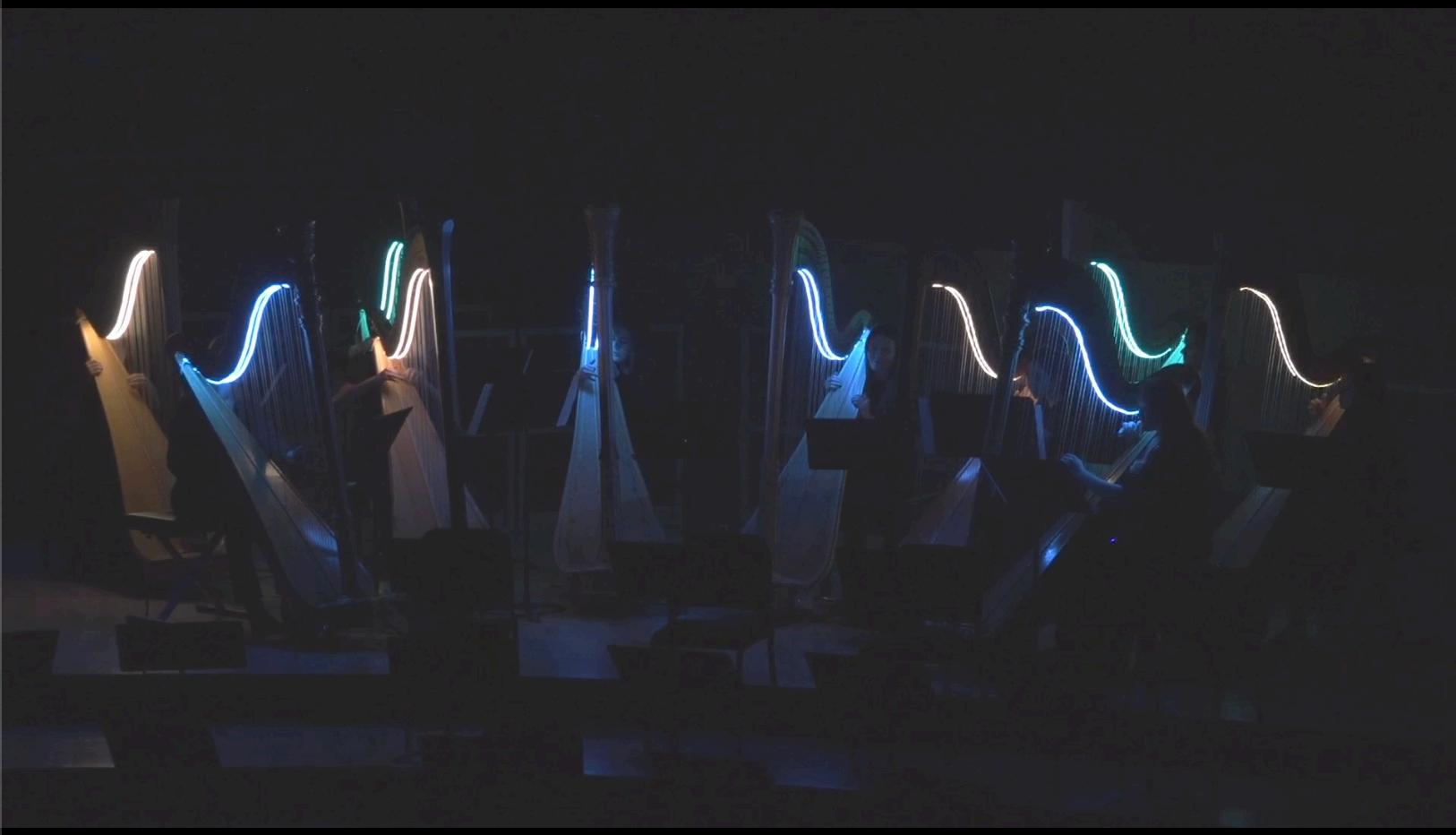
At the beginning of each winter semester at BYU, the School of Music puts on a performance in January to kick off the semester with BYU Blast! This event always features tons of soloists, studio ensembles, and large ensembles held here at the School of Music This year, we had a Trumpet Ensemble, Orpheus Winds, Clarinet Choir, Flute Choir, Trombone Choir, Symphony Orchestra, Orchestral Brass Ensemble, Bassoon Ensemble, Harp Ensemble, Sound Reasoning, Percussion Ensemble, Cello Ensemble, and Symphonic Band perform
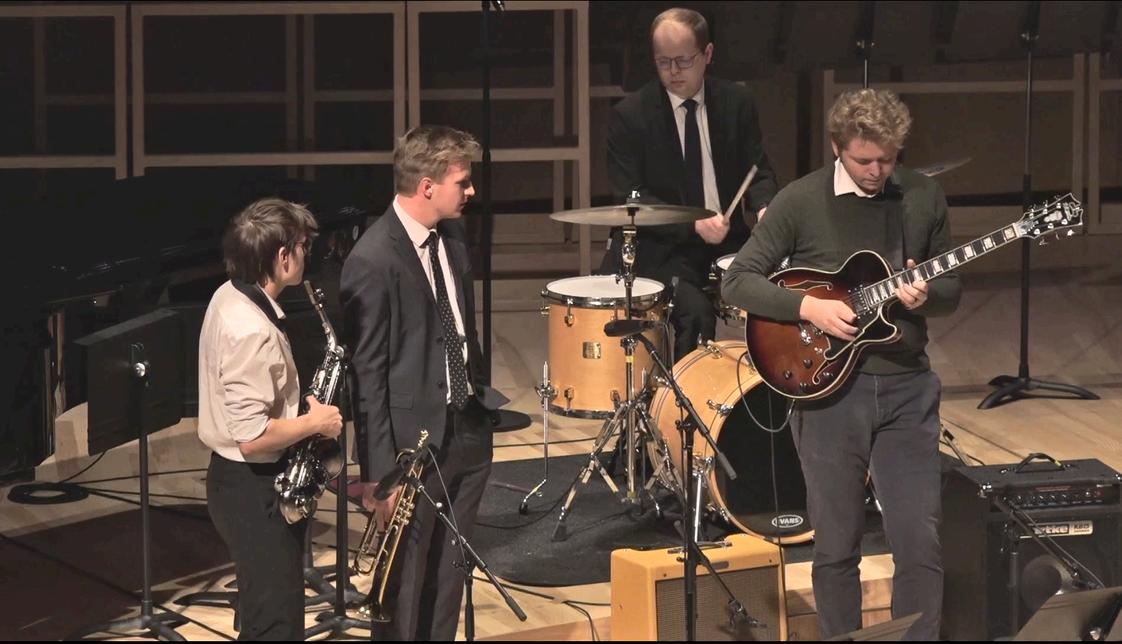
Some highlights of performances was Cello Ensemble’s performance of Golden from K-Pop Demon Hunters, Orchestral Brass Ensemble’s performance of Fanfare for the Common Man to start the second half, Sound Reasoning’s performance of Au Privave by Charlie Parker, Symphony Orchestra’s performance of Danza ritual del fuego, and Symphonic Band’s performance of Bright Shadow Fanfare. One of the most unique parts of BYU Blast is how quickly each transition between pieces happens.
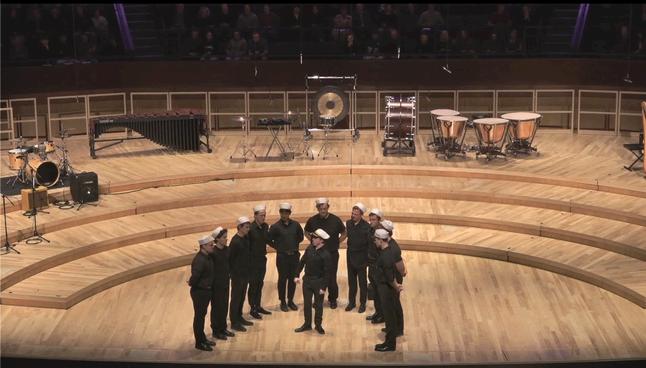
Performance of Sailors and Sirens Medley
Sound Reasoning performing Au Privave by Charlie Parker
With 19 pieces for 19 separate groups, there had to be multiple performers playing at a time. Using multiple parts of stage and the balcony above the audience, while one piece was being performed, the previous group would be moving off and another would be moving on so they could start as soon as the previous piece ended It makes for a logistical nightmare but a super energetic night of exciting music Overall, BYU Blast is an electric event made to kickstart people back into the exciting season of performances BYU always has in store of everyone’s lovely Christmas break
Program
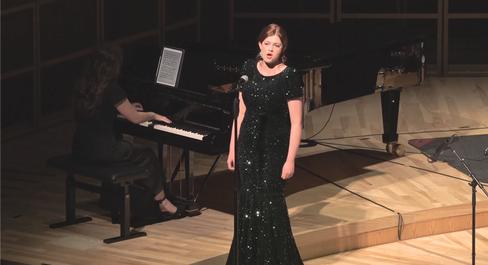
“Blue” Fantasia by Herman Beeftink; performed by Lillie Gardner, flute Dürrenhorn Passage by Kevin McKee; performed by Trumpet Ensemble Lord Leighton’s House by Jaren Hinckley; performed by Orpheus Wind Trio Sailors and Sirens Medley by W. S. Gilbert, Arthur Sullivan, and Henry Purcell; performed by Choir Bagatelle by Clare Grundman; performed by Clarinet Choir Havanaise by Pauline Viardot; performed by Sydney Crandall, soprano; Jill Smith, piano Sails, Winds, and Echoes by Crawford Gates; performed by Flute Choir Kingsville Overture by Steven Verhelst; performed by Trombone Choir Carillon of Westminster by Louis Vierne; performed by Yevgeniya Jaynes, organ Danza ritual del fuego, from El amor brujo by Manuel De Falla; performed by Symphony Orchestra Fanfare for the Common Man by Aaron Copland; performed by Orchestral Brass Ensemble I Just Called to Say I Love You by Stevie Wonder arr. Rath; performed by Bassoon Ensemble Sea of Stars by Lauren Scott; performed by Harp Ensemble
Au Privave by Charlie Parker arr. Samuel Handley; performed by Sound Reasoning Ablaze by Peter Graham; performed by Madeleine Chadburn, Luke Lehmuller, euphoniums Celebration II by Daiki Kato; performed by Percussion Ensemble Golden, from KPop Demon Hunters by Ejae and Mark Sonnenblick arr. Grant Hill; performed by Cello Ensemble Bright Shadow Fanfare by Nicole Piunno; performed by BYU Symphonic Band
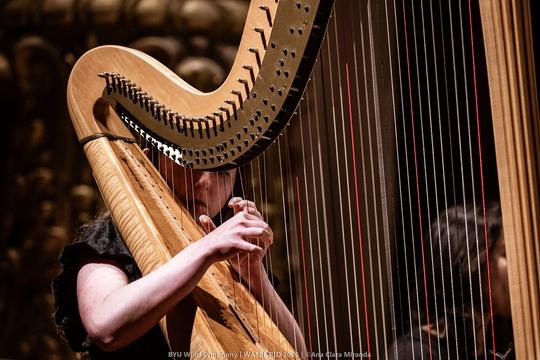
Harp Ensemble performing Sea of Stars by Lauren Scott
GUEST ARTISTS THIS SEMESTER
Every semester the Brigham Young University College of Fine Arts and Communications has the privilege of hosting guest artists from all over the world Each performing group brings their unique and powerful talents and experiences to BYU, which inspire all the students, staff, and faculty that have the chance to attend their performances. In addition to performing, these guest artists will often hold masterclasses, question and answer sessions, and even private lessons for students.
coordinator of
Bridge & Wolak are a globe-trotting musical duo from Canada who create life-affirming concerts full of beauty, virtuosity, and humor. Since meeting over a decade ago, Michael Bridge (accordion and piano) and Kornel Wolak (clarinet and piano) have toured extensively—from Kraków to Quito, from Nancy, France, to Fargo, North Dakota—and they continue to play dozens of original shows every year. With their own uniquely reimagined repertoire of classical, world, and jazz fusion, Bridge & Wolak bring deft virtuosity and endless wit to the BYU stage!
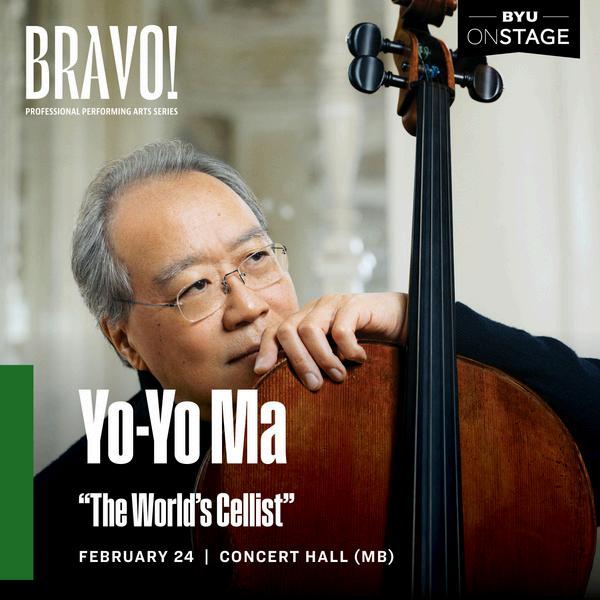
Grammy-winning cellist Yo-Yo Ma performs in a special gala celebrating BYU's sesquicentennial and the College of Fine Arts and Communications’ centennial. With a discography of more than 120 albums that range from iconic renditions of the Western classical canon to recordings that defy categorization, Ma is a renowned performer and the recipient of numerous awards, including the Presidential Medal of Freedom and the Birgit Nilsson Prize. His multifaceted career is a testament to his belief in culture’s power to generate trust and understanding. Whether performing new or familiar works for cello, bringing communities together to explore culture’s role in society, or engaging unexpected musical forms, Ma strives to foster connections that stimulate the imagination and reinforce our humanity.
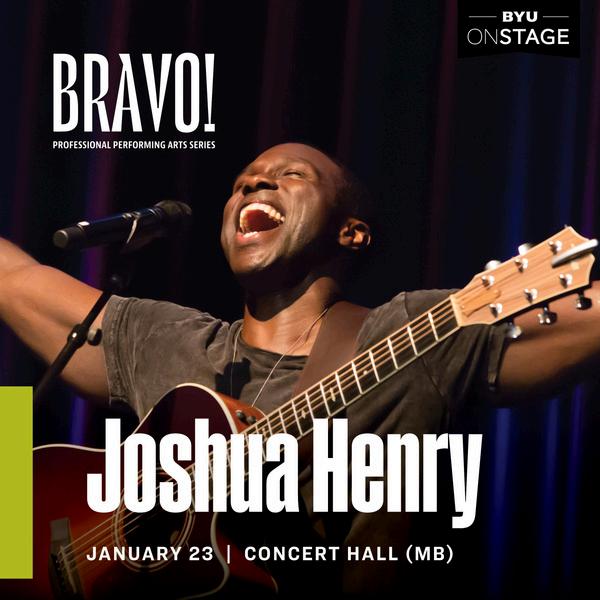
Joshua Henry is a Grammy-winning, Tony-nominated performer best known for roles in Broadway favorites such as Hamilton, Carousel, and Into the Woods. His show, Get Up Stand Up, is a soulful bop through the songs that have moved and grooved us through the decades.
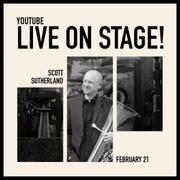
This multimedia recital is where the worlds of live performance and popular media collide - Scott’s performance alongside YouTube videos are projected on the big screen, including selections from films, video games, and so much more. Even the audience gets involved, contributing music and sound effects during the performance through a unique mobile phone app.
The
organ studies at Peabody Conservatory, Daniel Aune, plays the BYU Létourneau concert organ.
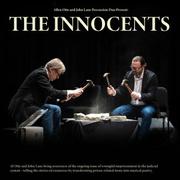
Percussionists Allen Otte and John Lane bring awareness of the ongoing issue of wrongful imprisonment in the judicial system— telling the stories of exonerees by transforming prison-related items into musical poetry.
BYU welcomes pioneering flutist and tenor saxophonist Lew Tabackin, performing with Matt Larson (bass) and BYU faculty John Blasucci (piano) and Matt Coleman (drums). Celebrated for his unique and transformative approach to both flute and saxophone, Tabackin has integrated diverse influences to shape a sound that is distinctly his own. Don't miss this evening of virtuosic music!
Student Highlights
“I loved attending Lew Tabackin’s masterclass, and being able to hear perspectives on the saxophone from an incredibly influential voice in jazz. Meeting him for the first time helped me to realize that a good musician is not just technically skilled, but very personable and friendly I am grateful that BYU gives us opportunities to connect with those in our field, and to be able to learn from them face to face ”
- Jonathan Crane, Saxophone
I loved having the opportunity to work with Daniel Aune in his masterclass Getting to ask him questions and hear his thoughts on different aspects being a musician opened my perspective to opportunities with the organ. He showed me new ways to explore music.
- Brenna, Organ
"I think Michael Bridge was impressed that we had an accordion club, and we were equally delighted that a virtuoso such as himself would take the time to show us his technique. He introduced us to the world of chromatic and electronic accordion. Since then I have started reading his 100 page thesis on accordion technique and I'm still practicing today the bellows technique he showed us. "
-Pierce Bryner, accordian
The masterclass with Allen Otte and John Lane really opened my eyes to what performing is all about. Their piece, The Innocents, and their performance of it showed me that music is a powerful medium for discussing and shining light on social justice issues. While music for its own sake is great, it can also be a way to spread light and goodness.
- Luke Banks, Percussion
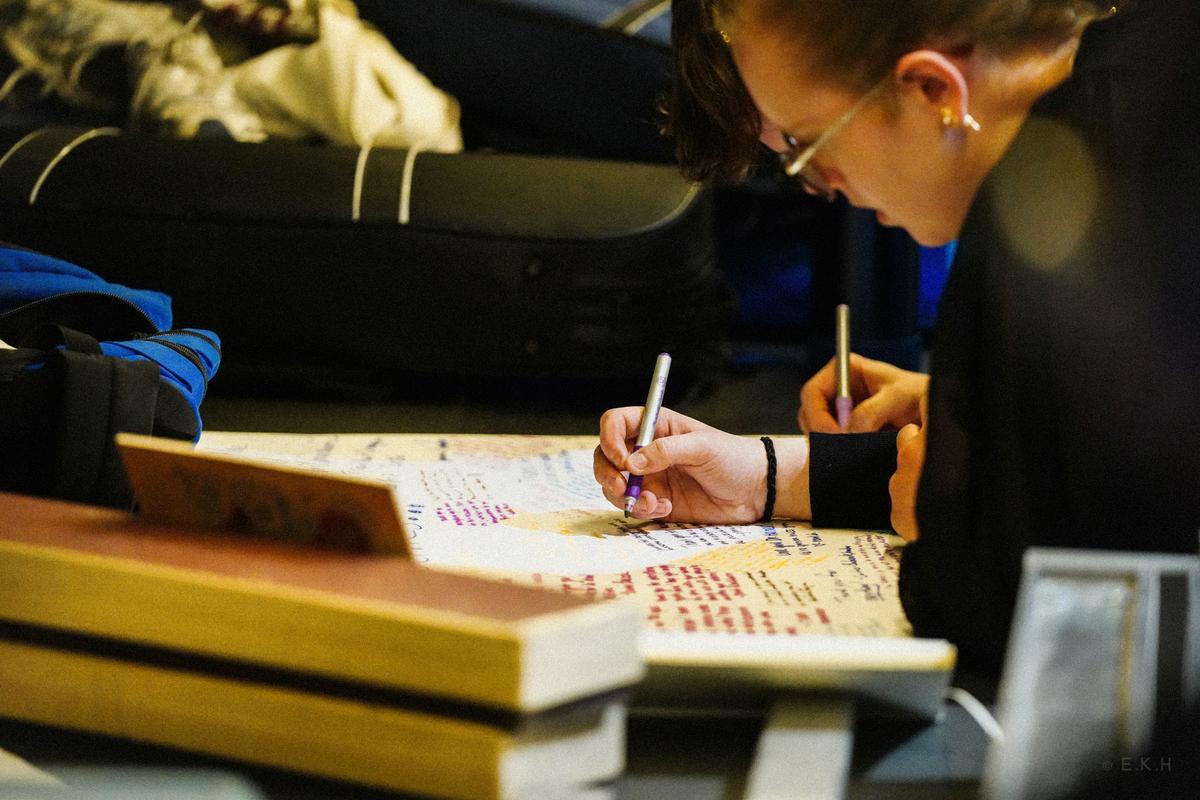
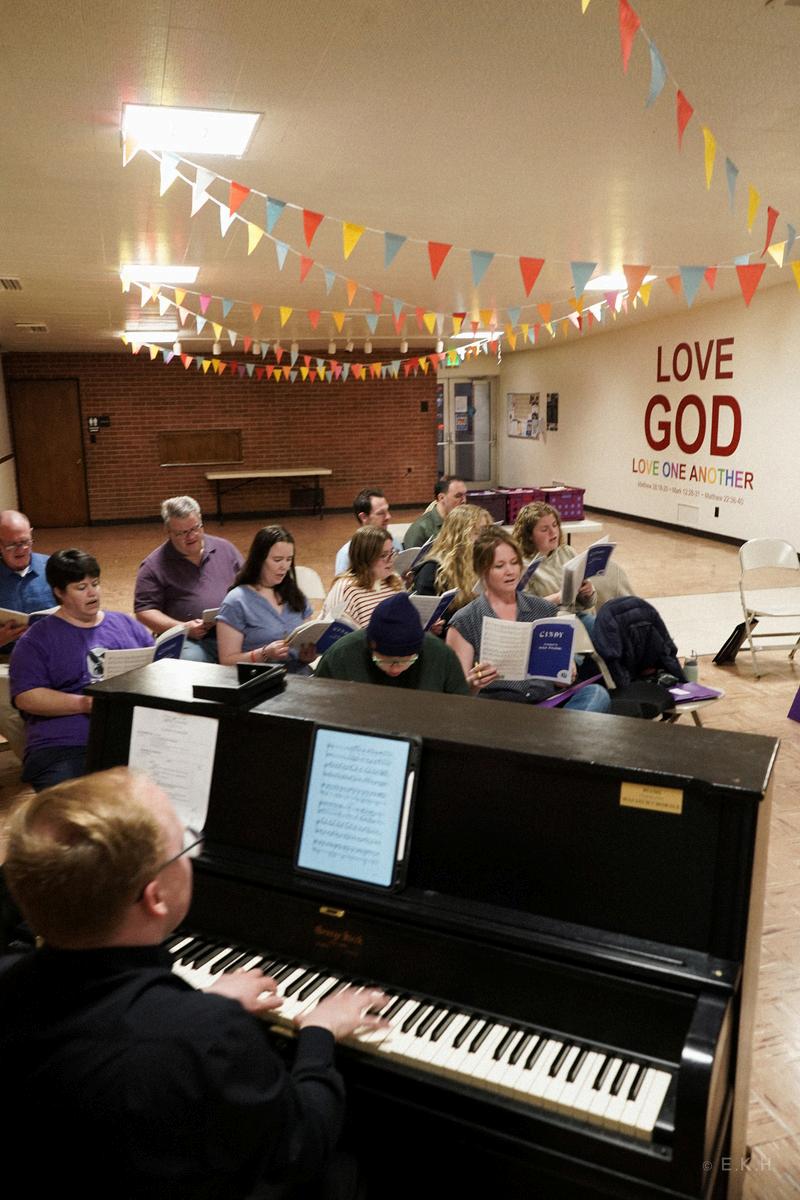
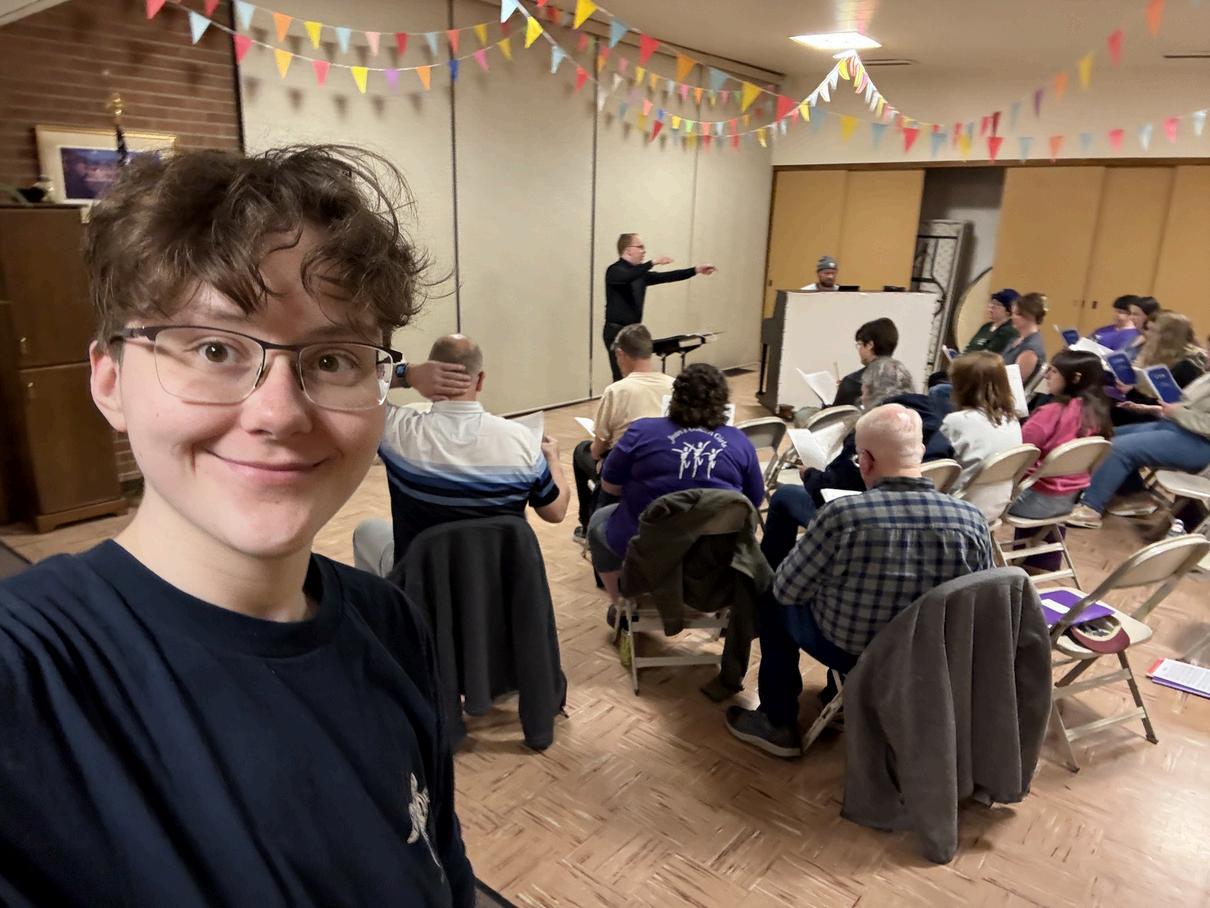
As someone who is primarily an instrumentalist, I asked if I could observe and at times volunteer my photography skills to help the choir build their presence in the community through online and printed outreach efforts. Over the semester I was actually able to attend around 5 times, and asked David to send me the music early on so I can listen and learn more about choral music and rehearsal pedagogy. I work professionally as a photographer and creative artist and have been hired by David Kime many times in the past for other performing non-university ensembles, but I wanted this experience to be solely voluntary and a chance for me to have a positive music space that’s focused on community and christlike belonging
Provo’s Interfaith Choir: Christlike Community
This semester at my request I was allowed to come observe and photograph a local interfaith choir by a friend and peer of mine in the School of MusicDavid Kime, a graduate of the choral conducting program. While catching up with David early in the semester I mentioned looking around for music related interfaith events/groups for a class project, and he invited me to observe the local choir he was co-conducting for his graduate program The choir meets once a week on Thursdays at the Provo Community Congregational United Church of Christ and is the Utah Valley Interfaith Choir
I loved getting to work with and observe the Utah Valley Interfaith Choir, I feel like it has been the perfect bittersweet ending to wrap up my undergraduate music degree. The venue, a local congregational Christian church that has deep roots in Provo’s history brought me so much comfort and reminded me of the consistent good nature of humanity. I absolutely loved hearing the joy, the dedication and the community that this choir had through rehearsing simple but impactful music This choir taught me that the small, empathetic voice of Christ’s love can be seen and felt through the simple daily efforts we all take to make the world a better place for everyone It reminded me that embodying what Christ stood for requires vulnerability, effort, and community Watching my friend and colleague David Kime conduct this local choir with the same vigor and passion as he would conduct an internationally competitive choir also reminded me of Christ and how his love for humanity never wavered in any circumstance I feel like this was such a positive experience for my semester, and made me feel closer to Christ through actively observing good things in my local community through music, affirming to me that it is possible to enact great change in society through music, and in turn inspiring me to continue pursuing my career as a music educator and advocate
Student Side Hustles
Due to the constantly changing economic and social world of music related occupations, being a music student in 2026 means understanding that flexibility is key for long term financial stability and personal fulfillment. From other profitable creative professions to unrelated side gigs, modern musicians are faced with evolving conditions that require most to fill financial gaps with non-music related work. This is becoming the case with Undergraduate musicians, with more and more students reaching outside of their disciplines to make life a bit more manageable (at least on a financial front). From private teaching, delivery driving, fabric alterations, and food service, School of Music students are proactive in developing skills, hobbies, and systems in their life that will help establish stability and humility through hard work.
Photography, Social Media, teaching, mentoring, catering, coding, or designing - School of Music students continue to work hard at developing skills and qualities across all areas of their lives. These students are conquering the modern musician’s challenges by sacrificing time and effort to develop these financial aids, pushing past the proposed limitations of our current job market and finding success from their passions.
Violin Performance Major Elizabeth Loveridge is one of these hard working students, owning and managing her own Cake Baking/Decorating business, developing a beloved hobby and being compensated for it too. “I love decorating cakes to sell to people!” Elizabeth reported. Another self made student business brings professional and affordable clothing alterations to BYU, servicing a large range of alterations from musicians’ performance clothes to wedding dresses
“I’m a seamstress! I have been doing it for 3 years professionally I am just about to start a busy summer of bridal alterations!!!”
Elizabeth Loveridge’s Decorated Cakes (@elizabeth.loveridge on instagram)
Lauren Lee on her Alterations (@laurynslee on instagram)
@silken.strings
STUDIO ORCHESTRA
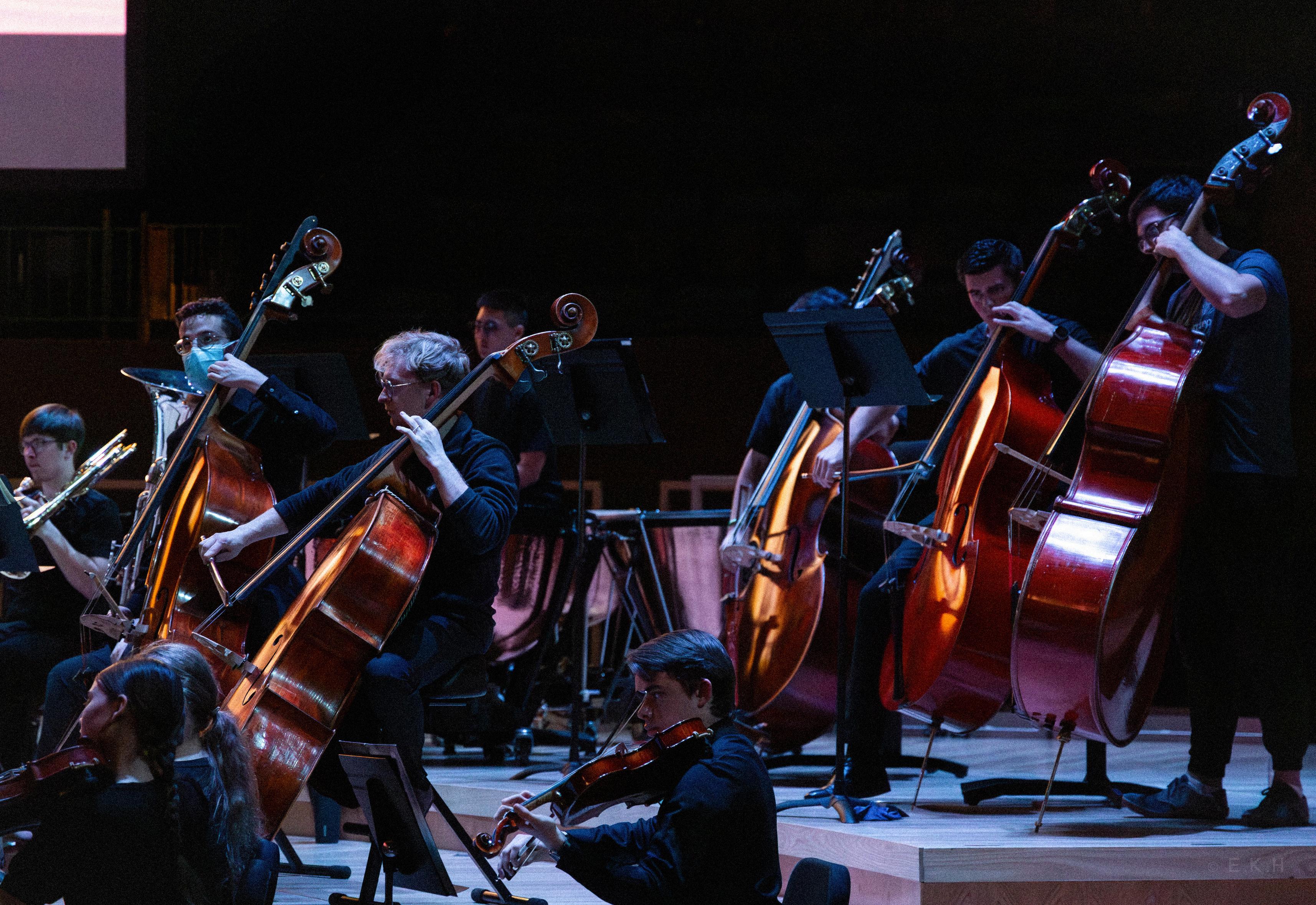
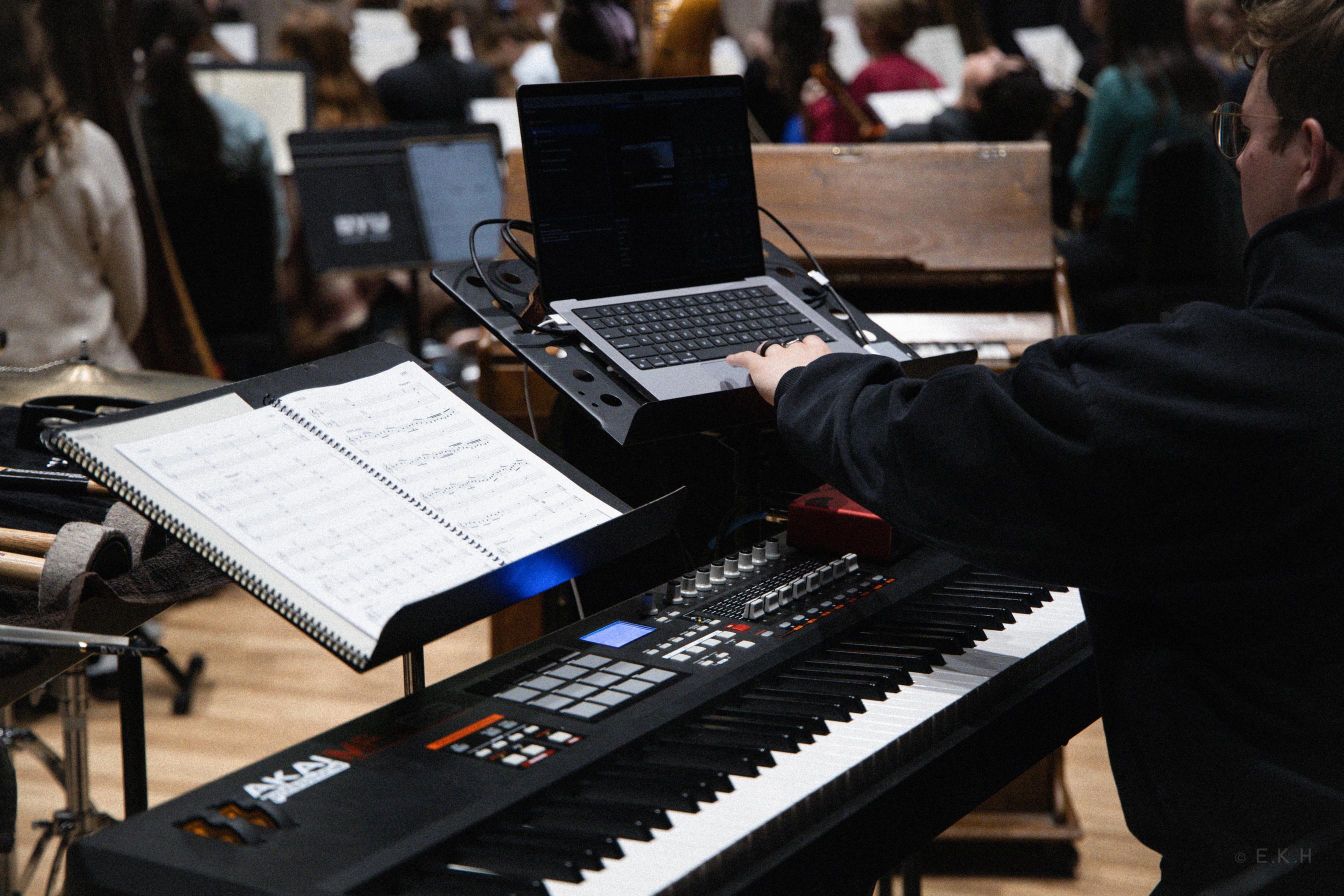
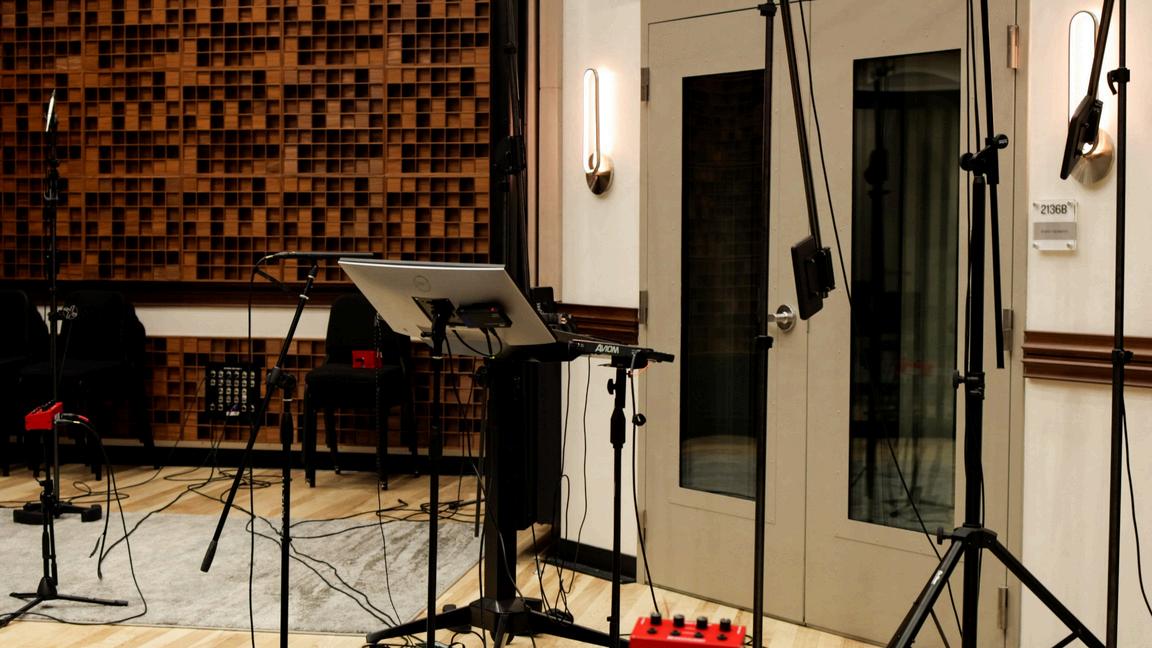
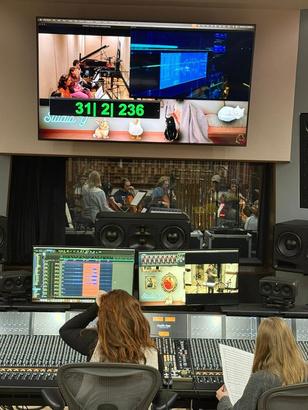
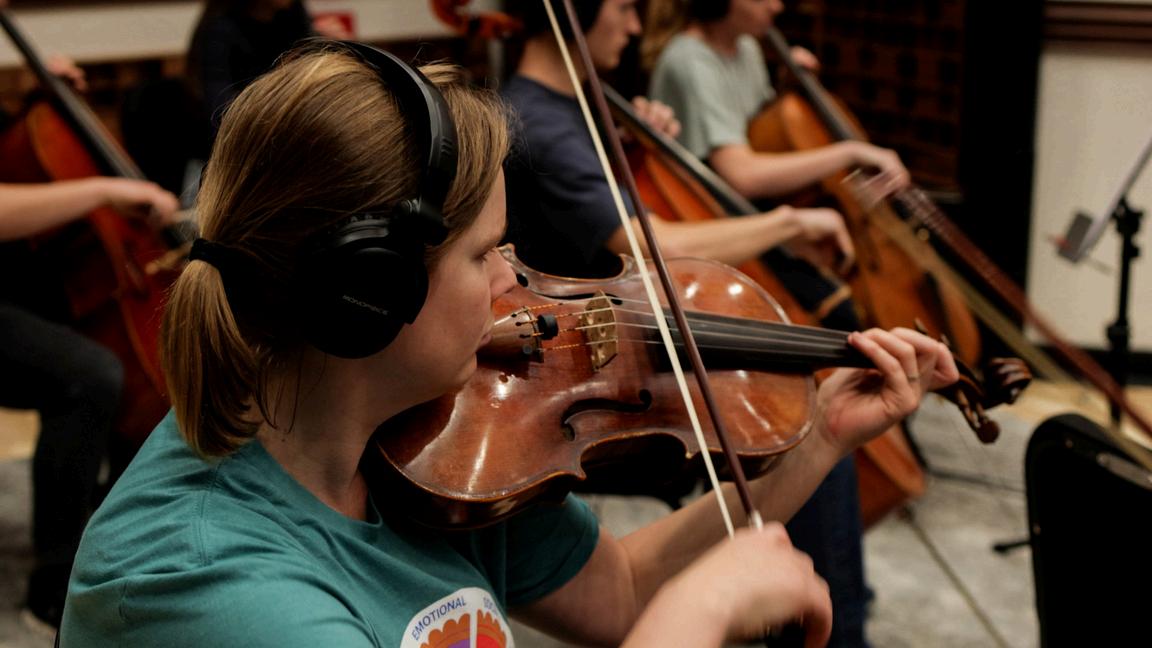
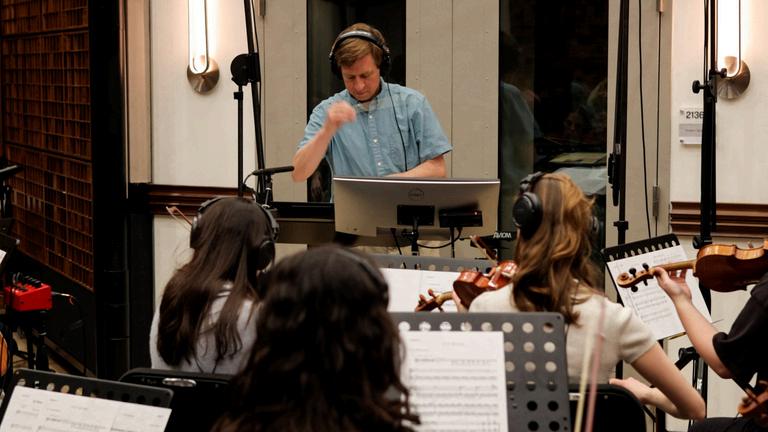
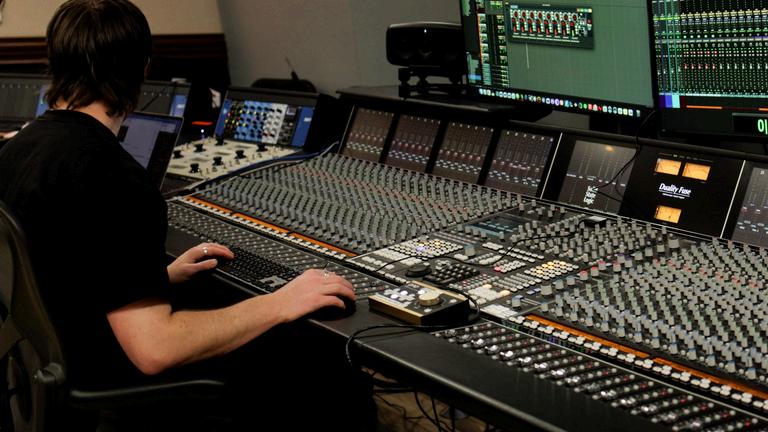
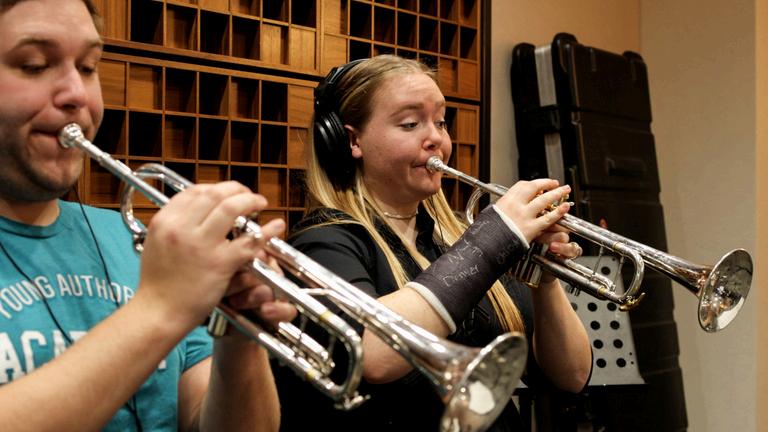
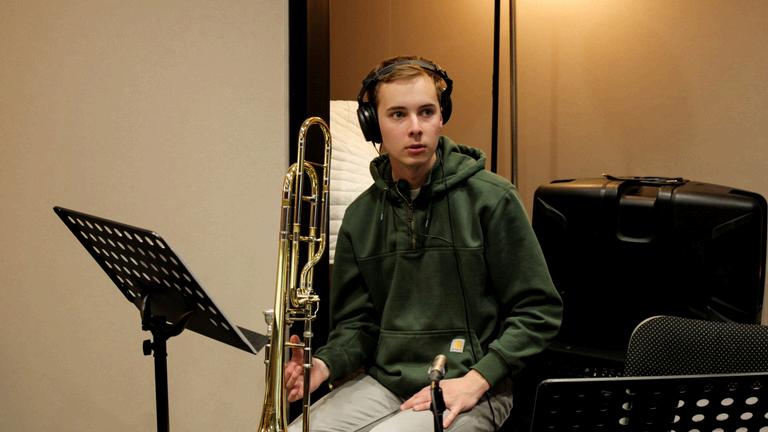
Studio Orchestra is where all the disciplines of music meet: Student composers compose for the class, commercial music student producers produce, and our instrumental musicians play and gain a full studio recording experience right at home in Studio Y. As one of BYU’s most cross-disciplinary classes, Studio Orchestra is known for its’ active rehearsal and production schedule and trailblazing new ideas and concepts for studio musician life - involving students and professionals in a collaborative process that prepares students for current music industry habits and practices.
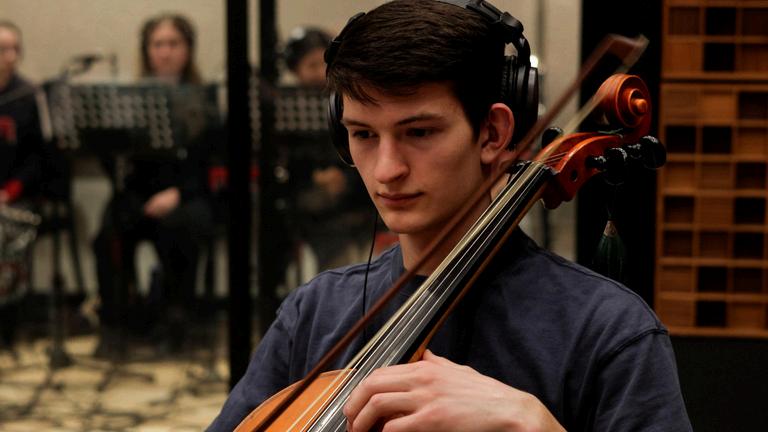
“I found it to be one of the most applicable classes offered at BYU to prepare for working in music. Also, it’s solely in-class work so no need to practice at home or outside of class - perfect to fit in to a busy music students’ schedule as an enriching studio experience ” Vanese McPherson, a Conducting Masters Graduate and 2025-26 member of Studio Orchestra
Just this semester, the Studio Orchestra was able to record music by School of Music students for the Theater Department’s upcoming Shakespeare production as well as a 1 place award winning capstone project from BYU’s Animation Department titled “Honey Business” that will release in Spring of 2027 The orchestra reflected on these opportunities, amazed at the finished product after experiencing the intricate process required for these multidisciplinary projects Students also recommended others to consider taking the class in the future, many agreeing that the skills were critical in opening new opportunities into modern musical environments st
Story by Emma Hogge
BYU Singers Win 1 Place st
From May 13-17, BYU Singers participated in the Nordic Voices Choir Festival in Lahti, Finland. 22 choirs performed in the competition, from the nations of: Finland, Sweden, Turkey, Bosnia and Herzegovina, Estonia, and the United States. An esteemed international jury from Belgium, Finland, and the United Kingdom evaluated all competing choirs. Performances took place in Sibelius Hall, which Australia’s Sydney Morning Herald named as one of the 10 best concert halls in the world.
After intense musical competition between world class groups, BYU Singers celebrated receiving 1 place scores in multiple categories - Mixed Choirs, Sacred Music A Cappella and taking the
Grand Prize - a thousand Euro award & intricate wooden sculpture-trophy. Competing against 22 world class choral ensembles was exhilarating and academically enriching for all involved, with the final results being determined by mere tenths of a point between the 1 and 2 place winners st nd
Members of BYU’s Singers remarked on the community building aspect of these competition conference trips, getting the unique opportunity to connect with peers and professionals in their field from across the world.
“They have given stunning performances the entire year, with this tour showing their character, stamina, love of the Gospel and each other, and willingness and ability to do whatever Dr Crane requires from them He truly has brought out the best in this choir, and audiences in Finland, Austria, and Germany have benefitted from it ” Excerpt from BYU Singers Tour Blog
After the incredible experiences in Lahti Finland, BYU Singers continued to Share Their Light through music through various succeeding stops in Austria & Germany - even bumping into President Uchtdorf in Salzburg Austria at a stake center’s opening concert/devotional. Overall, BYU Singers showcased how the School of Music seeks to inspire others through music and Sharing the Light across borders and language differences.
ABOUT THE JOURNALISTS
As a team of School of Music students, reporting and representing these stories is extremely personal for usinterviewing the peers and mentors that shape us daily
“Being a tuba player is especially subject to these anxieties over identity... This journey has challenged me to find purpose in sharing all kinds of musical gifts and find worth in my divinely created individuality - regardless of how much I may stand apart from others.”
-Emma Hogge, Lead Specialist
“I’ve always been captivated by the arts. Much of my life was filled with the paintings of my grandmother, the designs and ideas of my grandfather, the music of my brother, and my own writing as well. As life got busier and family got older, I saw less and less new works even until the day my grandparents passed. Now, the house I live in is a collection of their love for art. My grandfather’s simple designs make the shelves that hold my grandmother’s paintings — the old piano topped with cassette recordings of song after song written by my brother. I got to learn firsthand the depth of connection art gives people. While it’s not my pursuit nominally, it does guide every aspect of my life. I want to live in it as much as I want to encourage and support it.”
-Thatcher Longman, Journalist
Responsible for the School of Music Website, Journal & Article Publications, and Social Media Pages, we find inspiration through connecting with our peers, mentors, and communities --- collaborating to effectively Share the Light across all our platforms. With each Journal, we hope to share the inspiring stories of the School of Music’s Students, Staff, and Alumni.
“Although I am very new to the dream team, I have learned just how important it is to document everything as a musician. Because social media can reach millions of people each day, we can use this tool to our advantage to spread our art to so many people. As a musician, I have learned just how important it is to factor social media into your "to-do" list and to treat it as a tool and not just a toy.”
-Pia Lim, Social Media Specialist
“I've loved getting to see what other people are inspired to do in music and the steps they take to achieve it. It's really inspiring and I hope it improves my own effort to try things I normally wouldn't have tried before. I'm working through my undergrad and eventually hoping to graduate with a doctorate in hopes of teaching trumpet at a university and performing in any capacity I can. I also hope to be involved in music production.”