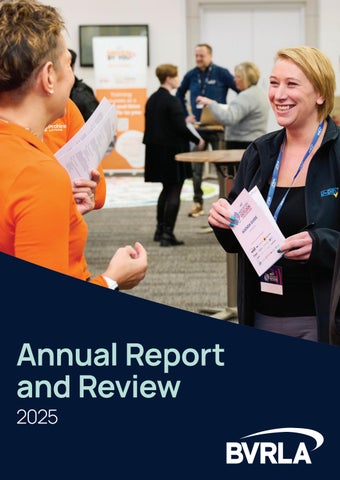

Annual Report and Review 2025
About the BVRLA
The BVRLA represents 1,000 companies engaged in vehicle rental, leasing and fleet management. Our membership is responsible for a combined fleet of over 4.6 million cars, vans and trucks –one-in-ten cars, one-in-six vans and one-in-six trucks on UK roads.
BVRLA members represent the demand-side of the automotive industry, buying around 50% of new vehicles, including over 80% of those manufactured and sold in the UK. In doing so, they support almost 500,000 jobs, add £7.6bn in tax revenues and contribute £49bn to the UK economy each year.
Together with our members, the association works with policymakers, public sector agencies, regulators, and other key stakeholders to ensure that road transport delivers environmental, social and economic benefits to everyone. BVRLA members are leading the charge to decarbonise road transport.
BVRLA membership provides customers with the reassurance that the company they are dealing with adheres to the highest standards of professionalism and fairness.
The association achieves this by reinforcing industry standards and regulatory compliance via its mandatory Codes of Conduct, inspection regime, government-approved Alternative Dispute Resolution service and an extensive range of learning and development programmes.
The association’s Vision and Mission statements communicate the long-term goal the BVRLA is working towards and highlight its role in the industry. The statements form an integral part of the association’s culture and give clear direction to all activity undertaken.
Vision
To see Government and Industry united in delivering zero-emission road transport that provides environmental, social and economic benefits to everyone.
Company Information
Chairwoman Lakshmi Moorthy
Vice Chairman Gary Smith
Chief Executive Toby Poston
Secretary Shashi Maharaj
Registered office River Lodge, Badminton Court, Amersham, Bucks, HP7 0DD
Auditor Azets Audit Services, Suites B&D, Burnham Yard, London End, Beaconsfield, Bucks, HP9 2JH
Mission
To inform, inspire and influence the automotive community in meeting the road transport needs of society.
Chair’s Introduction
The vehicle rental, leasing and mobility sector continually navigates a landscape defined by change, challenge and opportunity. On that backdrop, the strength of the BVRLA has remained rooted in one thing above all else: the collective commitment, expertise and resilience of our members.

The operating environment for our industry remains complex. Regulatory change, economic pressures, compliance demands and ongoing market uncertainty continue to shape decision-making for businesses of every size. Whether operating internationally or serving customers at a local level, members across the Association are facing many of the same challenges and expectations.
At the same time, 2025 and the early months of 2026 have also demonstrated the sector’s ability to adapt, innovate and lead.
One of the most significant developments has been the long-awaited clarity around motor finance. While important questions and implications remain, particularly around redress, the BVRLA worked tirelessly to ensure the specific position of leasing was properly understood and appropriately treated. Protecting the stability and reputation of the sector during this period has been a major priority for the Association.
“The BVRLA continued to strengthen the practical support available to members, providing guidance, tools and operational insight to help businesses manage complexity with confidence.”
The transition to zero-emission mobility has also continued to gather attention. Further incentives to support the uptake of new electric cars have provided positive signals, although significant gaps remain. Support for the used vehicle market and the rental sector will be essential if electric vehicle adoption is to accelerate at the scale
required. The BVRLA has continued to make that case clearly and consistently to policymakers.
Alongside this, there has been genuine and welcome progress in the decarbonisation of vans and commercial vehicles. The extension of the Plug-in Van Grant, investment in depot charging infrastructure and the removal of operational barriers around drivers’ hours and vehicle testing have all reflected growing recognition of the challenges businesses face in making the transition to zero-emission fleets.
These developments have not happened in isolation. They are the result of sustained engagement between industry and government, evidence-led advocacy and the collective voice of members working through the BVRLA to shape practical, workable policy outcomes.
The Association’s role, however, extends well beyond influencing policy. Throughout the year, the BVRLA continued to strengthen the practical support available to members, providing guidance, tools and operational insight to help businesses manage complexity with confidence. In a rapidly evolving environment, that day-to-day support remains as important as ever.
The achievements highlighted throughout this report demonstrate not only the scale of the work undertaken by the Association, but also the professionalism and dedication that exists across the wider industry. They reflect a sector that continues to deliver for customers, support economic growth and play a central role in the UK’s mobility transition.
Looking ahead, there is no doubt that challenges will continue to emerge. The pace of change across regulation, technology and consumer expectations is unlikely to slow. But there is also every reason to be confident in the future of this industry.
By continuing to work together, share expertise and engage constructively through the BVRLA, members are helping to shape a more sustainable, innovative and resilient future for road transport.
I would like to thank all our members, partners and stakeholders for their continued support of the Association and for the contribution they make to the success of this sector. The progress achieved over the past year is a reflection of that shared commitment, and I look forward to building on it in the year ahead.

Lakshmi Moorthy BVRLA Chair
Chief Executive’s Foreword
Over the past year, the BVRLA and its members have continued to operate in an unforgiving environment. Political turbulence, regulatory reform, economic pressure and rapid technological evolution are reshaping the road transport sector at pace. At times, it can feel as though our industry sits at the intersection of all these challenges.

My first full year as Chief Executive reinforced just how resilient, innovative and committed our membership community is. Across fleet, leasing, rental and supply chain businesses, members continue to adapt, invest and lead through periods of significant transition.
Throughout 2025 and into 2026, the most pressing issues facing members have remained firmly at the top of our agenda. Concerns around used electric vehicle depreciation, growing scrutiny over motor finance and customer care, ongoing ZEV Mandate reviews, increasing taxation, and the wider cost burden on businesses, continue to create genuine operational and commercial pressures.
This is precisely why the role of the BVRLA has never been more important.
Our responsibility is not simply to respond to events as they unfold, but to help members navigate uncertainty with confidence, influence policy outcomes and build the conditions for long-term success.
That work is guided by three core strategic commitments: championing the sector, raising industry standards and delivering tangible member value.
Championing the sector means ensuring the voice of responsible fleet and mobility services businesses is heard clearly within government, among regulators and across the wider policy landscape. Throughout the year, we have continued to represent member interests on all the critical issues that impact how they operate. Our close engagement with policymakers and stakeholders enables us to provide evidence-led advocacy that supports members today while helping shape the future operating environment for tomorrow.
Maintaining trust and professionalism while exploring opportunities to raise standards even further is becoming ever more critical. Over the past year, we have continued to strengthen the frameworks, guidance and training that support members in delivering the highest levels of customer care and operational excellence. This includes improvements to our inspection programme, expanded accredited training opportunities and the launch of a new learning management system designed to support the workforce of today and tomorrow.
Strong standards are not simply a compliance exercise. They are fundamental in protecting consumer confidence and strengthening the value that comes with displaying the BVRLA logo.
Our ambition is clear: when a business says it is a BVRLA member, that should stand for professionalism, credibility and accountability.
Alongside this, we have placed renewed focus on delivering greater value to every member. We have restructured our membership engagement approach, expanded the ability for members to shape the Association’s direction and introduced new support that provides practical, day-to-day guidance for businesses navigating increasingly complex challenges. New services, new engagement, new insights.
“Our responsibility is not simply to respond to events as they unfold, but to help members navigate uncertainty with confidence.”
There is no doubt that the year ahead will continue to test our sector. But there is also every reason to remain optimistic. By working together, sharing expertise and speaking with a collective voice, we can continue to strengthen this industry and ensure it remains central to the future of mobility and fleet services in the UK.
The BVRLA will continue moving forward, improving and evolving alongside its members. I would like to thank all those who have contributed their time, insight and support over the past year, and I look forward to building on that progress together in the years ahead.

Toby
Poston Chief Executive
Grow BVRLA Capital
The Annual Survey invites members to share their feedback with the association. Gathering Members’ views and insights from across the full membership helps the BVRLA assess its performance and determine how best to direct resources and services in the year ahead.
83% of members are satisfied with the BVRLA
2025 Member Survey
84% of members say the BVRLA is easy to work with
2025 Member Survey
“My experience is very positive. Being a member of the BVRLA gives my business credibility, and my customers confidence in choosing a reputable lease co.”
2025 Member Survey
90% of members see the BVRLA’s Guidance and Advice as an important benefit
2025 Member Survey
88% of members feel the BVRLA provides a strong voice for the industry
2025 Member Survey
“I enjoy working with the BVRLA, an organisation full of genuine passion and expertise, and that delivers enormous amounts of credibility.”
2025 Member Survey
Grow BVRLA Capital
A programme of industry conferences, forums and an Annual Dinner in a new home made for a packed calendar in 2025.
Every year, the events line-up features nine forums, three conferences, deep dive events and the ever-popular Annual Dinner.
Collectively, the programme gives delegates the opportunity to gain valuable business insight, explore best practice and understand how emerging trends are shaping the sector. BVRLA events facilitate vital face-to-face networking, enabling members to connect, share experiences and strengthen professional relationships.

Industry Outlook Conference
A record number of member delegates gathered to find out what was on the horizon at the Industry Outlook Conference. 250 members and industry partners joined the event for a blend of panel discussions, surgery sessions and keynotes, as well as operational insights.
“It was a fantastic event, well run, great attendees, and a great spirit of networking. It might be the best BVRLA event I’ve ever been to, and I usually think they’re quite good.”
Delegate
Annual Dinner

Another sell-out Annual Dinner welcomed over 950 members and their guests for a fabulous evening at the new venue of the JW Mariott Grosvenor House Hotel on Park Lane. Through three peer-nominated awards and an address from the association Chair, plus unparalleled networking opportunities, the event celebrated the contributions of the industry and the individuals within it.


4.47 out of 5 average score of attendee satisfaction.
Member visits
Throughout 2025 and continuing into 2026, our Head of Membership, Director of Member Services and wider team have been visiting members at their premises across the UK. Doing so gives them a deeper understanding of the businesses that make up the BVRLA community. These visits have provided valuable opportunities to meet teams face-to-face, hear about the challenges and opportunities within the sector, and discuss how the BVRLA can continue to support members through insight, representation, guidance and industry expertise.
“We participate in both the VFM and RVR forums which are invaluable in providing market intel, trends and opportunity to network.”
2025 Member Survey
Over 1700 members were hosted at in person events.
Champion the Sector
The BVRLA strengthened its reputation as a trusted industry voice in 2025, leading collaborative campaigns and ensuring members’ views were represented across Government, regulators and Whitehall departments.
Supported by its working groups and member insights, the BVRLA continued to champion the sector’s priorities. Working both independently and alongside aligned trade bodies and partner organisations, the association helped drive progress on key issues including depot charging grants, electric car and van incentives, salary sacrifice VAT, the Advisory Electric Rate (AER) split rate, and destination charging among others.
This was evidenced in (numbers are for 2025):
• 95 MP meetings and interactions
• 660 Member and external stakeholder meetings
• 16 Ministerial and select committee appearances
• 143 roundtables, workshops and events attended
• 199 meetings with officials and regulators
• 32 Consultation and Committee Inquiry submissions

“The BVRLA works tirelessly, engaging with Government on issues affecting our industry and giving us a voice. We believe that the BVRLA has been a key driver for the continuous improvement of standards, credibility and visibility of the sector.”
2025 Member Survey




Suite of Outlook Reports
The BVRLA strengthened its insight offering through an expanded suite of market outlook reports covering key areas of the vehicle rental and leasing sector.
Alongside the established Industry Outlook and Leasing Outlook publications, the association launched an updated Leasing Broker Outlook and a dedicated Rental Outlook report, with a new HGV Outlook following in Spring 2026.
Combining market data, member insight and expert commentary, the reports provide a forward-looking assessment of the opportunities and challenges shaping the sector.
Key themes emerging across the reports included cautious optimism around demand growth, continued economic and regulatory uncertainty, the accelerating transition to electric vehicles, and ongoing pressure on residual values and operating costs.
Top Policy Wins:
Electric vans: confirmation of a top-up grant, alongside additional flexibility for 4.25t vehicles and removal of restrictive red tape.
Depot charging grant: a new grant opportunity, with BVRLA membership providing a direct, compliant route to access.
AER: the introduction of a split AER approach, marking a positive step in recognising how public and private charging costs vary.
Electric Car Grant: confirmation that leasing and rental operations are eligible for the funding.
Airport issues: concerns affecting the sector are firmly on the Department for Transport’s radar.
CMCs: claims management companies are now being brought within scope for Financial Ombudsman Service (FOS) fees.
88% of members say that the BVRLA does well at being the voice of the industry
2025 Member Survey
Champion the Sector
The BVRLA continues to highlight the critical role that fleets play in driving EV adoption. BVRLA members remain at the forefront of the transition, introducing drivers to electric motoring, supporting manufacturer sales targets and supplying the growing used EV market.

In early 2026, the Government’s consultation on proposed Electric Vehicle Excise Duty (eVED) reforms was in focus. The BVRLA warned that the proposed system risked introducing unnecessary complexity at a critical moment for EV uptake.
Under the proposals, EV drivers would be required to estimate their annual mileage in order to determine the level of tax they pay. While intended to establish a taxation framework for electric vehicles, the association raised concerns about the operational burden this could place on fleets managing large and diverse vehicle parc operations.
The BVRLA responded to the consultation on behalf of members, highlighting the practical implications for fleet operators, businesses and drivers, while encouraging members to engage directly with Government to strengthen the sector’s collective voice.
Key concerns raised by the BVRLA included:
Increased administrative complexity for fleet operators
Potential confusion for drivers and customers
Additional costs at a sensitive stage of EV adoption
Risks to consumer confidence in electric vehicles
The need for a simple, fair and scalable taxation system.

“There is some fantastic work being done on behalf of the sector for which we are extremely grateful as a member. Keep the foot on the accelerator with all of the great lobbying work and let us grow the collaboration stronger between members and trade body.”
2025 Member Survey
Alongside taxation policy, the association continued to engage with Government and stakeholders on the Zero Emission Vehicle Mandate and the wider decarbonisation agenda.
The BVRLA stressed that the EV transition must be supported by stable policy, affordable vehicles and improved charging infrastructure. While industry remains committed to decarbonisation, the association warned that inconsistent messaging and rapidly changing policy risked undermining consumer confidence.
Engaging closely with Government on the Zero Emission Vehicle (ZEV) Mandate, electric vehicle taxation and wider decarbonisation policy remains a priority into 2026.
Champion the Sector
Zero Emission Van Plan
Supporting the transition to zero emission vans remains a priority for the BVRLA. Working in partnership with Logistics UK, RechargeUK, the AFP and The EV Café, the association has brought industry voices together through the Zero Emission Van Plan.
The Plan set out clear, practical recommendations to accelerate the transition and continued to gain traction through 2025 and early 2026. Key progress has been made on regulatory flexibility for 3.5–4.25 tonne zero emission vans, with draft legislation published following the Government’s consultation response.
#happyEVafter

The Van Plan has also helped secure wider support measures, including the extension of the plug-in van grant and continued investment in charging infrastructure through the Depot Charging Scheme.
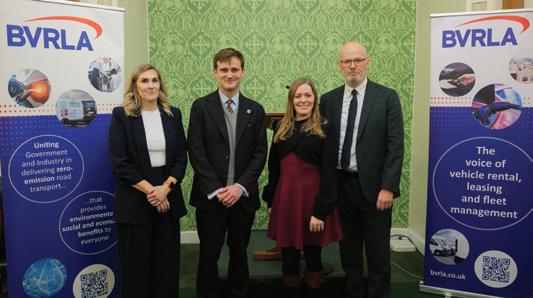
Momentum has been maintained through ongoing engagement with policymakers and industry, including the Transport Minister addressing delegates at the Van Plan Reception in the House of Commons. The event in February 2026 marked the initiative’s twoyear anniversary and provided a platform to address remaining barriers to adoption.
The #happyEVafter campaign, launched in 2024 and led by the BVRLA in conjunction with Auto Trader, EVA England and the NFDA, continues to call for targeted Government intervention to restore confidence in the used EV market. Engagement intensified in 2025, with the BVRLA taking the campaign directly into the heart of Government, including briefing No10 on the scale of the challenges and potential solutions, and giving the sector a united voice as part of #UsedEVWeek in October. While demand for used EVs is growing, supply consistently builds at greater pace. The campaign has highlighted ongoing pressure from falling residual values and the impact this is having on leasing costs, balance sheets and wider investor confidence in the transition.
Bon VoyCharge
The Bon VoyCharge campaign, in partnership with organisations from the vehicle rental, tourism and hospitality sectors, has focused on improving destination charging across the UK’s tourism and leisure locations, where drivers travel, stay and spend time. Launched with support from the Department for Transport, the campaign has brought together industry and policymakers to address gaps in provision and highlight best practice at accommodation providers, tourist attractions, and airports.


Engagement in 2025 took place across the UK, including a launch event at Alton Towers, plus ministerial roundtables, parliamentary events and site visits to key destinations spanning theme parks, zoos and National Trust properties. A dedicated campaign vehicle toured the UK, helping to bring the issue to life for MPs and local stakeholders.
Through its Parliamentary Reception and wider political engagement, the BVRLA set out clear priorities for government, including a more strategic approach to infrastructure planning, targeted support for destination charging, and incentives to accelerate deployment and usage.
Raise Industry Standards
Robust governance and compliance remain central to the BVRLA’s role in raising standards across the sector. Doing so gives members, their customers and stakeholders confidence in businesses that display the BVRLA logo. All members are subject to rigorous audits against the association’s Codes of Conduct and key regulatory requirements, including the General Data Protection Regulation (GDPR), Financial Conduct Authority (FCA) requirements and Competition and Markets Authority (CMA) standards.
Inspections

257 Rental Programme Inspections completed in 2025
135 Leasing Broker Programme Inspections completed in 2025
488 Inspections planned for 2026
“We appreciate the BVRLA’s tireless work advocating on behalf of the industry. The work carried out since the Supreme Court hearing has been incredibly valuable, particularly putting forward a broker specific view and trying to get feedback from the FCA and from legal experts specific to brokers and not just dealers.” 2025 Member Survey
90% of members value the guidance and advice provided by the BVRLA 2025 Member Survey
Motor Finance Consumer Redress Scheme
The FCA published the final policy statement on the motor finance consumer redress scheme (PS26/3) at the end of March 2026.
A webinar was held that evening to provide the BVRLA’s preliminary views on the content and impact on members. Prior to that announcement, the BVRLA worked to support members in getting themselves prepared for the potential outcomes, alongside engaging with key stakeholders and representing the sector’s views.
Guidance
Factsheets for members published during 2025:
• CCR009 FCA Reporting
• Complaint Handling Guidance (pre-Supreme Court Judgement in Summer 2025)
• DMCCA Unfair Commercial Practices Guidance
• Risk Assessment Checklist
• Pre-Consultation Checklist
• FCA Redress Scheme Guidance
• S&W Blog on Motor Finance Redress Schemes
• Updated Self-Assessment Checklist
• Self-Hire Insurance –Towergate Factsheet
• VED Updates
• Windsor Framework
Three BVRLA Compliance Forums took place during 2025:
• May (Hosted by Shoosmiths in London)
• September (Hosted by Shoosmiths in Birmingham)
• November (Hosted by SW Group LLP in London)

There was Regulator attendance at all of the Forums including the Financial Ombudsman Service (FOS), FCA and CMA.
“Very well chaired, informative, highly relevant and engaging event.” Compliance Forum attendee
“Well organised by the team, great content, great venue and the pre-event engagement was also top class. Many thanks.” Compliance Forum attendee
Raise Industry Standards
Raising industry standards underpins the long-term success of our sector. In 2025 and into 2026 there was an expanded training calendar, new Learning Management System, and access to trusted third-party experts. All combined to support members in operating to the highest level. As regulation tightens and scrutiny on the sector increases, strong standards are not a burden, they are a necessity and a competitive advantage.

New Learning Management System
The BVRLA has launched a new Learning Management System (LMS), creating a modern and consistent platform for delivering BVRLA-accredited training. Designed to improve the learner experience and simplify access to training, the new system enables members to access e-learning in one place, monitor learner progress, manage certifications and benefit from clearer reporting and a more intuitive user experience.
The launch also supports the BVRLA’s wider work with funders and leasing brokers to encourage a more consistent, sector-wide approach to learning, compliance and governance.

Learning and Development
Expanding delegates’ knowledge and competence on critical topics, the association trained 568 industry colleagues across 79 instructor-led courses in 2025. A further 2301 individuals took out packages on our e-Learning platform.
Learning and Development
4.73/5 average rating for overall experience
2025 Member Survey
“I work closely with the Learning and Development team, and they are great to work with and very knowledgeable too.”
2025 Member Survey
“Training interactions are overwhelmingly positive; the team are always responsive and helpful.”
2025 Member Survey
Learning and Development
9.29/10 average recommendation score
2025 Member Survey
Case Study – Octopus EV
Octopus EV partnered with the BVRLA to create a bespoke e-learning programme tailored specifically to the needs of the EV leasing sector and its own operational model. Working collaboratively with Octopus EV’s internal experts, the BVRLA developed accessible, role-specific digital learning modules that combined regulatory requirements with real-world application.
Early outcomes included improved engagement, stronger knowledge retention, enhanced confidence across teams, and a smooth implementation process delivered ahead of schedule. By aligning learning directly to operational needs, the programme has helped Octopus EV build a stronger foundation for compliance, customer experience, and longterm business growth — reflected in the positive feedback from the client:
“No ask was too big or too small. The project was easy to manage, delivered on time, and often ahead of schedule. Communication and partnership exceeded expectations.
“We would absolutely recommend working with the BVRLA on e-learning, particularly for businesses looking to customise content to their own operational needs.”
Raise Industry Standards
A Chartered Trading Standards Institute (CTSI)-approved Alternative Dispute Resolution (ADR) service is available in circumstances where a customer remains dissatisfied having exhausted a member’s complaints procedure.
BVRLA members or their customers can refer an unresolved dispute to the association. The service reviews the evidence from both parties and determines if there has been a breach of the relevant Code of Conduct.
4,400 dispute cases handled by the BVRLA in 2025
Average days to resolve
27 days
Damage remains the most frequent cause of complaints in the rental sector, other common areas of concern include fees for optional products, fuel policies, and vehicle upgrades.
Damage disputes are considered alongside the BVRLA’s Fair Wear and Tear Standards, with three distinct sets of guidelines in place to assess condition of cars, vans and trucks.
“Many thanks indeed for your help and professionalism. In a short time, you have managed to contact the relevant persons, received response and made closure. You have also communicated in a fair and clear manner, which is much appreciated.”
Customer feedback from case, 2025

“Thank you very much for your assistance and continued support throughout this process. I truly appreciate the time and effort taken to review the matter further and to consider the additional evidence provided.
“I would also like to say that the way the case was ultimately handled reflects a very professional and well-managed operation. Your communication, attention to detail, and willingness to reassess the situation fairly were genuinely appreciated.”
Customer feedback from case, 2025
European Car Rental Conciliation Service (ECRCS)
The ECRCS has been run by the BVRLA on behalf of Leaseurope in Brussels for over a decade. The service helps customers with unresolved complaints concerning cross-border vehicle rentals within Europe; member organisations include Alamo, Avis Budget, Budget, Dollar, Enterprise, Europcar, Firefly, Hertz, Maggiore, National, Sixt and Thrifty.
2,200 ECRCS cases handled during 2025
Average days to resolve
24 days

Members of the Committee Report
For the year ended 31 December 2025
The members of the committee present their annual report and financial statements for the year ended 31 December 2025.
Principal activities
The principal activity of the company and group continued to be that of the representation of members involved in the provision of vehicle rental, leasing, contract hire and fleet management services.
Members of the committee
The members of the committee who held office during the year and up to the date of signature of the financial statements were as follows:
B P Back (Resigned 22 May 2025)
T P Buchan (Resigned 17 February 2025)
J M Lawes
S Grime
T Laver
G McDowell
Ms L Moorthy
J C Finch
P I Vogerl
R Johnson
T J H Bailey (Resigned 22 May 2025)
Mrs M Chudziak (Resigned 15 January 2025)
S Jenkins (Resigned 5 February 2025)
I M Hughes
P L Hyne
G N Smith
I Turner
Mr S Fedrigo (Appointed 21 August 2025)
Ms S D Gray (Appointed 22 May 2025)
Mr R A Jones (Appointed 22 May 2025)
Mr R H Lloyd (Appointed 22 May 2025)
Ms E M Matschy (Appointed 22 May 2025)
Mr N McCrossan (Appointed 21 August 2025)
No members of the committee received any remuneration during the year from the company. In accordance with the Articles of Association, one third of the members retire, being eligible, offer themselves for re-election.
Auditor
In accordance with the company’s articles, a resolution proposing that Azets Audit Services be reappointed as auditor of the group will be put at a General Meeting.
Statement of disclosure to auditor
So far as each person who was a member of the committee at the date of approving this report is aware, there is no relevant audit information of which the auditor of the company is unaware. Additionally, the members of the committee individually have taken all the necessary steps that they ought to have taken as a member of the committee in order to make themselves aware of all relevant audit information and to establish that the auditor of the company is aware of that information.
This report has been prepared in accordance with the provisions applicable to companies entitled to the small companies exemption.
On behalf of the board
Ms L Moorthy Director
26 February 2026
Members of the Committee Report
(continued)
Members of the Committee Responsibilities Statement
The members of the committee are responsible for preparing the Annual Report and the financial statements in accordance with applicable law and regulations.
Company law requires the members of the committee to prepare financial statements for each financial year. Under that law the members of the committee have elected to prepare the financial statements in accordance with United Kingdom Generally Accepted Accounting Practice (United Kingdom Accounting Standards and applicable law). Under company law the members of the committee must not approve the financial statements unless they are satisfied that they give a true and fair view of the state of affairs of the group and company, and of the surplus or deficit of the group for that period.
In preparing these financial statements, the members of the committee are required to:
• select suitable accounting policies and then apply them consistently;
• make judgements and accounting estimates that are reasonable and prudent;
• state whether applicable UK Accounting Standards have been followed, subject to any material departures disclosed and explained in the financial statements;
• prepare the financial statements on the going concern basis unless it is inappropriate to presume that the group and company will continue in business.
The members of the committee are responsible for keeping adequate accounting records that are sufficient to show and explain the group’s and company’s transactions and disclose with reasonable accuracy at any time the financial position of the group and company and enable them to ensure that the financial statements comply with the Companies Act 2006. They are also responsible for safeguarding the assets of the group and company and hence for taking reasonable steps for the prevention and detection of fraud and other irregularities.
Independent Auditor’s Report
to the members of the British Vehicle Rental and Leasing Association Limited
Opinion
We have audited the financial statements of British Vehicle Rental and Leasing Association Limited (the ‘parent company’) and its subsidiaries (the ‘group’) for the year ended 31 December 2025 which comprise the group income and expenditure account, the group balance sheet, the company balance sheet and notes to the financial statements, including a summary of significant accounting policies. The financial reporting framework that has been applied in their preparation is applicable law and United Kingdom Accounting Standards, including FRS 102 The Financial Reporting Standard applicable in the UK and Republic of Ireland (United Kingdom Generally Accepted Accounting Practice).
In our opinion the financial statements:
• give a true and fair view of the state of the group’s and the parent company’s affairs as at 31 December 2025 and of the group’s surplus for the year then ended;
• have been properly prepared in accordance with United Kingdom Generally Accepted Accounting Practice; and
• have been prepared in accordance with the requirements of the Companies Act 2006.
Basis for opinion
We conducted our audit in accordance with International Standards on Auditing (UK) (ISAs (UK)) and applicable law. Our responsibilities under those standards are further described in the Auditor’s responsibilities for the audit of the financial statements section of our report. We are independent of the group and parent company in accordance with the ethical requirements that are relevant to our audit of the financial statements in the UK, including the FRC’s Ethical Standard, and we have fulfilled our other ethical responsibilities in accordance with these requirements. We believe that the audit evidence we have obtained is sufficient and appropriate to provide a basis for our opinion.
Conclusions relating to going concern
In auditing the financial statements, we have concluded that the members of the committee use of the going concern basis of accounting in the preparation of the financial statements is appropriate.
Based on the work we have performed, we have not identified any material uncertainties relating to events or conditions that, individually or collectively, may cast significant doubt on the group’s and parent company’s ability to continue as a going concern for a period of at least twelve months from when the financial statements are authorised for issue. Our responsibilities and the responsibilities of the members of the committee with respect to going concern are described in the relevant sections of this report.
Other information
The members of the committee are responsible for the other information. The other information comprises the information included in the annual report, other than the financial statements and our auditor’s report thereon. Our opinion on the financial statements does not cover the other information and, except to the extent otherwise explicitly stated in our report, we do not express any form of assurance conclusion thereon.
In connection with our audit of the financial statements, our responsibility is to read the other information and, in doing so, consider whether the other information is materially inconsistent with the financial statements or our knowledge obtained in the audit or otherwise appears to be materially misstated. If we identify such material inconsistencies or apparent material misstatements, we are required to determine whether there is a material misstatement in the financial statements or a material misstatement of the other information. If, based on the work we have performed, we conclude that there is a material misstatement of this other information, we are required to report that fact.
We have nothing to report in this regard.
Independent Auditor’s Report
(continued)
Opinions on other matters prescribed by the Companies Act 2006
In our opinion, based on the work undertaken in the course of our audit:
• the information given in the members of the committee report for the financial year for which the financial statements are prepared is consistent with the financial statements; and
• the members of the committee report has been prepared in accordance with applicable legal requirements.
Matters on which we are required to report by exception
In the light of the knowledge and understanding of the group and parent company and its environment obtained in the course of the audit, we have not identified material misstatements in the members of the committee report.
We have nothing to report in respect of the following matters where the Companies Act 2006 requires us to report to you if, in our opinion:
• adequate accounting records have not been kept by the parent company, or returns adequate for our audit have not been received from branches not visited by us; or
• the parent company financial statements are not in agreement with the accounting records and returns; or
• certain disclosures of members of the committee remuneration specified by law are not made; or
• we have not received all the information and explanations we require for our audit; or
• the members of the committee were not entitled to prepare the financial statements in accordance with the small companies regime and take advantage of the small companies’ exemption in preparing the members of the committee report and take advantage of the small companies exemption from the requirement to prepare a strategic report.
Responsibilities of members of the committee
As explained more fully in the members of the committee responsibilities statement, the members of the committee are responsible for the preparation of the financial statements and for being satisfied that they give a true and fair view, and for such internal control as the members of the committee determine is necessary to enable the preparation of financial statements that are free from material misstatement, whether due to fraud or error.
In preparing the financial statements, the members of the committee are responsible for assessing the group’s and the parent company’s ability to continue as a going concern, disclosing, as applicable, matters related to going concern and using the going concern basis of accounting unless the members of the committee either intend to liquidate the group or the parent company or to cease operations, or have no realistic alternative but to do so.
Auditor’s responsibilities for the audit of the financial statements
Our objectives are to obtain reasonable assurance about whether the financial statements as a whole are free from material misstatement, whether due to fraud or error, and to issue an auditor’s report that includes our opinion. Reasonable assurance is a high level of assurance but is not a guarantee that an audit conducted in accordance with ISAs (UK) will always detect a material misstatement when it exists. Misstatements can arise from fraud or error and are considered material if, individually or in the aggregate, they could reasonably be expected to influence the economic decisions of users taken on the basis of these financial statements.
A further description of our responsibilities is available on the Financial Reporting Council’s website at: https://www.frc.org.uk/auditorsresponsibilities. This description forms part of our auditor’s report.
Independent Auditor’s Report
(continued)
Extent to which the audit was considered capable of detecting irregularities, including fraud Irregularities, including fraud, are instances of non-compliance with laws and regulations. We design procedures in line with our responsibilities, outlined above and on the Financial Reporting Council’s website, to detect material misstatements in respect of irregularities, including fraud.
We obtain and update our understanding of the entity, its activities, its control environment, and likely future developments, including in relation to the legal and regulatory framework applicable and how the entity is complying with that framework. Based on this understanding, we identify and assess the risks of material misstatement of the financial statements, whether due to fraud or error, design and perform audit procedures responsive to those risks, and obtain audit evidence that is sufficient and appropriate to provide a basis for our opinion. This includes consideration of the risk of acts by the entity that were contrary to applicable laws and regulations, including fraud.
In response to the risk of irregularities and non-compliance with laws and regulations, including fraud, we designed procedures which included:
• Enquiry of management and those charged with governance around actual and potential litigation and claims as well as actual, suspected and alleged fraud;
• Reviewing minutes of meetings of those charged with governance;
• Assessing the extent of compliance with the laws and regulations considered to have a direct material effect on the financial statements or the operations of the entity through enquiry and inspection;
• Reviewing financial statement disclosures and testing to supporting documentation to assess compliance with applicable laws and regulations;
• Performing audit work over the risk of management bias and override of controls, including testing of journal entries and other adjustments for appropriateness, evaluating the business rationale of significant transactions outside the normal course of business and reviewing accounting estimates for indicators of potential bias.
Because of the inherent limitations of an audit, there is a risk that we will not detect all irregularities, including those leading to a material misstatement in the financial statements or non-compliance with regulation. This risk increases the more that compliance with a law or regulation is removed from the events and transactions reflected in the financial statements, as we will be less likely to become aware of instances of non-compliance. The risk of not detecting a material misstatement resulting from fraud is higher than for one resulting from error, as fraud may involve collusion, forgery, intentional omissions, misrepresentations, or the override of internal control.
Use of our report
This report is made solely to the company’s members, as a body, in accordance with Chapter 3 of Part 16 of the Companies Act 2006. Our audit work has been undertaken so that we might state to the company’s members those matters we are required to state to them in an auditor’s report and for no other purpose. To the fullest extent permitted by law, we do not accept or assume responsibility to anyone other than the company and the company’s members as a body, for our audit work, for this report, or for the opinions we have formed.
Jack Tatschner
ACA (Senior Statutory Auditor)
For and on behalf of Azets Audit Services
Chartered Accountants
Statutory Auditor
Suites B & D
Burnham Yard
London End
Beaconsfield
Buckinghamshire
HP9 2JH
2 March 2026
Group Income & Expenditure Account
For the year ended 31 December 2025
Surplus for the financial year is all attributable to the owners of the parent company.
Group Balance Sheet
As at 31 December 2025
Creditors:
These financial statements have been prepared in accordance with the provisions applicable to groups and companies subject to the small companies regime.
The financial statements were approved by the members of the committee and authorised for issue on 26 February 2026 and are signed on its behalf by:
Ms L Moorthy
G N Smith Chairwoman Vice Chairman
Company Balance Sheet
As at 31 December 2025
Creditors:
As permitted by s408 Companies Act 2006, the company has not presented its own income and expenditure account and related notes. The company’s surplus for the year was £15,364 (2024 - £37,223).
These financial statements have been prepared in accordance with the provisions applicable to companies subject to the small companies regime.
The financial statements were approved by the members of the committee and authorised for issue on 26 February 2026 and are signed on its behalf by:
Ms L Moorthy
G N Smith Chairwoman Vice Chairman
Company Registration No. 00924401
Notes
Notes to the Financial Statements for the Year Ended 31 December 2025
1 Accounting policies
Company information
British Vehicle Rental & Leasing Association Limited (“the company”) is a private limited company domiciled and incorporated in England and Wales. The registered office is River Lodge, Badminton Court, Amersham, Buckinghamshire, United Kingdom, HP7 0DD.
The group consists of British Vehicle Rental & Leasing Association Limited and all of its subsidiaries.
1.1 Accounting convention
These financial statements have been prepared in accordance with FRS 102 “The Financial Reporting Standard applicable in the UK and Republic of Ireland” (“FRS 102”) and the requirements of the Companies Act 2006 as applicable to companies subject to the small companies regime. The disclosure requirements of section 1A of FRS 102 have been applied other than where additional disclosure is required to show a true and fair view.
The financial statements are prepared in sterling, which is the functional currency of the company. Monetary amounts in these financial statements are rounded to the nearest £.
The financial statements have been prepared under the historical cost convention. The principal accounting policies adopted are set out below.
1.2 Basis of consolidation
The consolidated financial statements incorporate those of British Vehicle Rental and Leasing Association Limited and all of its subsidiaries (ie entities that the group controls through its power to govern the financial and operating policies so as to obtain economic benefits).
All financial statements are made up to 31 December 2025. Where necessary, adjustments are made to the financial statements of subsidiaries to bring the accounting policies used into line with those used by other members of the group.
All intra-group transactions, balances and unrealised gains on transactions between group companies are eliminated on consolidation. Unrealised losses are also eliminated unless the transaction provides evidence of an impairment of the asset transferred. As a consolidated income and expenditure account is published, a separate income and expenditure account for the parent company is omitted from the group financial statements by virtue of section 408 of the Companies Act 2006.
1.3 Turnover
Subscriptions income and income from the sale of goods and services are included in the financial statements on the basis of amounts receivable for the year, net of Value Added Tax.
1.4 Intangible fixed assets other than goodwill
Intangible assets acquired separately from a business are recognised at cost and are subsequently measured at cost less accumulated amortisation and accumulated impairment losses.
Amortisation is recognised so as to write off the cost or valuation of assets less their residual values over their useful lives on the following bases
A full year’s amortisation is charged in the year the asset becomes available for use.
Development costs 3 years
1.5 Tangible fixed assets
Tangible fixed assets are initially measured at cost and subsequently measured at cost or valuation, net of depreciation and any impairment losses.
Depreciation is recognised so as to write off the cost or valuation of assets less their residual values over their useful lives on the following bases.
A full year’s depreciation is charged in the year of acquisition and no depreciation charged in the year of disposal.
Freehold buildings 2% on cost
Fixtures and fittings 33% on cost
Computers 33% on cost
The gain or loss arising on the disposal of an asset is determined as the difference between the sale proceeds and the carrying value of the asset, and is recognised in the income and expenditure account.
1.6 Fixed asset investments
In the parent company financial statements, investments in subsidiaries are initially measured at cost and subsequently measured at cost less any accumulated impairment losses.
A subsidiary is an entity controlled by the group. Control is the power to govern the financial and operating policies of the entity so as to obtain benefits from its activities.
1.7 Impairment of fixed assets
At each reporting period end date, the group reviews the carrying amounts of its tangible assets to determine whether there is any indication that those assets have suffered an impairment loss. If any such indication exists, the recoverable amount of the asset is estimated in order to determine the extent of the impairment loss (if any). Where it is not possible to estimate the recoverable amount of an individual asset, the company estimates the recoverable amount of the cash-generating unit to which the asset belongs.
1.8 Financial instruments
The group has elected to apply the provisions of Section 11 ‘Basic Financial Instruments’ and Section 12 ‘Other Financial Instruments Issues’ of FRS 102 to all of its financial instruments.
Financial instruments are recognised in the group’s balance sheet when the group becomes party to the contractual provisions of the instrument.
Basic financial assets
Basic financial assets, which include debtors and cash and bank balances and government gilts, are initially
2 Change in accounting policy
measured at transaction price including transaction costs and are subsequently carried at amortised cost using the effective interest method unless the arrangement constitutes a financing transaction, where the transaction is measured at the present value of the future receipts discounted at a market rate of interest. Financial assets classified as receivable within one year are not amortised.
1.9 Provisions
Provisions are recognised when the group has a legal or constructive present obligation as a result of a past event, it is probable that the group will be required to settle that obligation and a reliable estimate can be made of the amount of the obligation. The amount recognised as a provision is the best estimate of the consideration required to settle the present obligation at the reporting end date, taking into account the risks and uncertainties surrounding the obligation.
1.10 Retirement benefits
Payments to defined contribution retirement benefit schemes are charged as an expense as they fall due.
In the current period the company has changed its accounting policy for the measurement of Government Gilts from measurement at fair value through profit or loss in accordance with section 12 of FRS 102 to measurement at amortised cost using the effective interest rate method in accordance with section 11 of FRS102.
This change in accounting policy has been applied retrospectively, in accordance with Section 10 Accounting Policies, Estimates and Errors of FRS 102. Comparative information has been restated where necessary. Details can be found in note 14.
The average monthly number of persons employed by the group and company during the year was:
5 Intangible fixed assets
6
Tangible fixed assets
Movements in fixed asset investments
8 Subsidiaries
Details of the company’s subsidiaries at 31 December 2025 are as follows:
Name of undertaking BVRLA Services Limited
Registered office River Lodge, Badminton Court, Amersham, Buckinghamshire, HP7 0DD (UK)
Class of shares held
9 Debtors
10 Creditors: amounts falling due within one year
11 Company limited by guarantee
The company is limited by guarantee and does not have share capital.
At the reporting end date the group had outstanding commitments for future minimum lease payments under non-cancellable operating leases, as follows:
13 Related party transactions
Owing to the nature of the group’s operations and the composition of the Members of the Committee being drawn from related organisations, it is inevitable that transactions will take place with organisations in which a Member of the Committee may have an interest. All transactions involving such organisations are conducted at arm’s length and in accordance with the group’s normal policies.
14 Prior period adjustment
In the current period the company has changed its accounting policy for the measurement of Government Gilts from measurement at fair value through profit or loss in accordance with section 12 of FRS 102 to measurement at amortised cost using the effective interest rate method in accordance with section 11 of FRS102. This change in accounting policy has been applied retrospectively, in accordance with Section 10 Accounting Policies, Estimates and Errors of FRS 102. Comparative information has been restated where necessary.
How we can help….
The BVRLA team has expertise spanning a range of services to meet member needs. Find the relevant contact details to match your enquiry below or contact info@bvrla.co.uk to be pointed in the right direction.

Compliance and governance compliance@bvrla.co.uk
Membership query Joanna Grinter, joanna@bvrla.co.uk
Legal advice legal@bvrla.co.uk
Dispute resolution team complaint@bvrla.co.uk
Learning and development team training@bvrla.co.uk
Events query events@bvrla.co.uk
Policy team policy@bvrla.co.uk
Fair Wear and Tear guide or VE103B Kim Gazeley, kim@bvrla.co.uk
Sponsorship and partner opportunities Vickie Smith, vickie@bvrla.co.uk
Finance or accounts finance@bvrla.co.uk
Communications team communications@bvrla.co.uk
British Vehicle Rental & Leasing Association
River Lodge, Badminton Court, Amersham, Buckinghamshire HP7 0DD
Tel 01494 434747 Email info@bvrla.co.uk www.bvrla.co.uk