Queen of the South
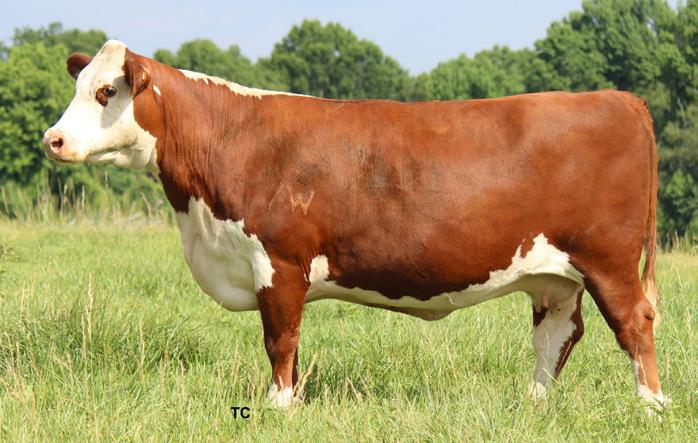
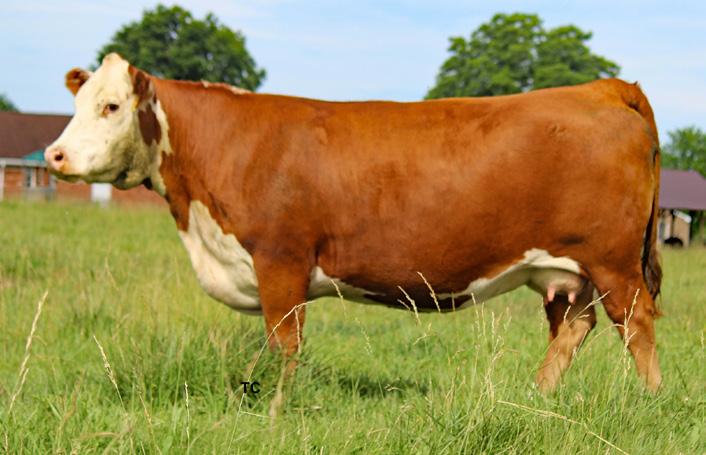
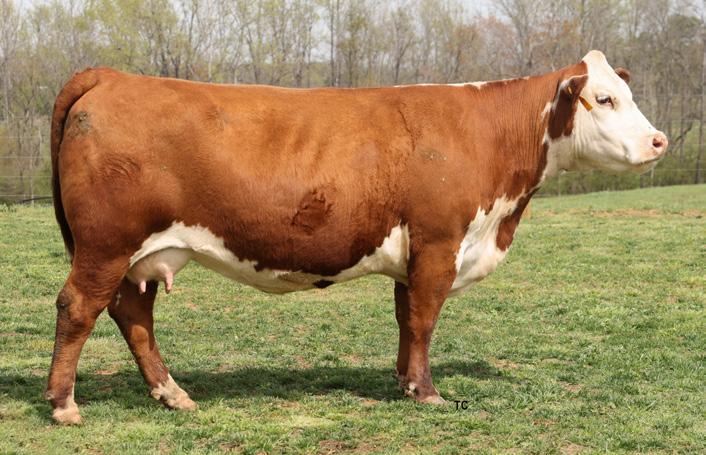
Boost
By the American Hereford Association | August 2026

Boost
American Hereford Association
Address:
11500 N. Ambassador Dr., Ste. 410 Kansas City, MO 64153 816-842-3757 • Fax 816-243-1314 hworld@hereford.org • Hereford.org
AHA BOARD OF DIRECTORS
President Austin Snedden, Maricopa, Calif. Vice president Scott Sullivan, Grannis, Ark. Directors
Term expires 2026
Jim Coley, Lafayette, Tenn.
Hampton Cornelius, LaSalle, Colo. Term expires 2027
Jerry Delaney, Lake Benton, Minn. Cindy Pribil, Hennessey, Okla. Term expires 2028
Danny Fawcett, Ree Heights, S.D. Grant McKay, Marysville, Kan.
Jim Williams, Kearney, Neb. Term expires 2029
Bryan Blinson, Buies Creek, N.C. Joe Ellis, Chrisman, Ill. Joe Dan Ledbetter, Wheeler, Texas
ADMINISTRATIVE STAFF
Executive vice president
Jack Ward, jward@hereford.org
Chief operating officer and director of breed improvement
Shane Bedwell, sbedwell@hereford.org
Chief financial officer
Leslie Mathews, lmathews@hereford.org
Director of records department
Laura Kouba, lkouba@hereford.org
Director of youth activities and foundation
Amy Cowan, acowan@hereford.org
National shows coordinator and youth activities assistant
Bailey Clanton, bclanton@hereford.org
Associate director of youth marketing and education
Chloé Durian, cdurian@hereford.org
Records supervisor
Ashleigh Sloan, asloan@hereford.org
Director of communications and digital content
Taylor Belle Matheny, tmatheny@hereford.org
Audio-visual specialist
Kelsey Vejraska, kvejraska@hereford.org
Administrative assistant and event coordinator
Claire Norris, cnorris@hereford.org

Certified Hereford Beef Staff
President and chief executive officer
Ernie Davis, edavis@herefordbeef.org
Account executive
Marie Prodell, mprodell@herefordbeef.org
Brand manager
Ty Ragsdale, tragsdale@herefordbeef.org
Commercial Programs
Director of commercial programs
Justin Miller, jmiller@hereford.org
Commercial marketing representatives
Jake Drost, jdrost@hereford.org
Trevor Johnson, tjohnson@hereford.org
Hereford World Staff
Director of field management and seedstock marketing
Kane Aegerter, kaegerter@hereford.org
Production manager
Caryn Vaught, cvaught@hereford.org
Executive editor
Wes Ishmael, wishmael@hereford.org
Managing editor
Sydnee Shive
Assistant editor
Katie Maupin Miller, kmiller@hereford.org
Print and digital coordinator
Morgan Barba, mbarba@hereford.org
Creative content and editorial specialist
Kaitlyn Baker, kbaker@hereford.org
Graphic designers
Sharon Blank and Teri Wolfgang
Contributing writers
Laura Brenner, Heather Smith Thomas and Gentry Warner
Field Staff
Western Region – Contact the AHA Ariz., Calif., Idaho, Nev., Ore., Utah and Wash. Central Region – Austin Brandt Iowa, Kan., Minn., Mo., and Neb. 712-621-1829, abrandt@hereford.org
Upper Midwest Region – Contact the AHA Ill., Ind., Ky., Md., Mich., Ohio, Pa., W.Va. and Wis. Southwest Region – Ty Drach Ark., La., N.M., Okla. and Texas 815-822-3552, tdrach@hereford.org
Eastern Region – Peyton Pruett Ala., Fla., Ga., Miss., N.C., S.C., Tenn. and Va. 731-988-8470, ppruett@hereford.org
Mountain Region – Aaron Friedt Colo., Mont., N.D., S.D., Wyo., central and western Canada 701-590-9567, afriedt@hereford.org
Northeast Region – Contact the AHA Conn., Del., D.C., Maine, Mass., N.H., N.J., N.Y., R.I., Vt., and eastern Canada The publisher reserves the right to decline any advertising for any reason at any time without liability, even though previously acknowledged or accepted.

Custom Campaigns include:
Targeted audience strategy
Branded photo & video graphics
Tailored captions
Performance & analytic reporting
Hereford Publications, Inc., offers digital marketing opportunities to boost your online presence. Our social media marketing campaigns use advanced targeting tools across Facebook and Instagram to expand your reach and keep your program in front of the right audience.
Every campaign is customized to fit your goals, with benefits including:
• Building momentum before your sale
• Expanding brand awareness
• Connecting with potential customers
• Showcasing your genetics
• Affordable advertising with measurable results
For more information, contact your field representative, our Print & Digital Coordinator, Morgan Barba, at mbarba@hereford.org, or our Creative Content Specialist, Kaitlyn Baker, kbaker@hereford.org.


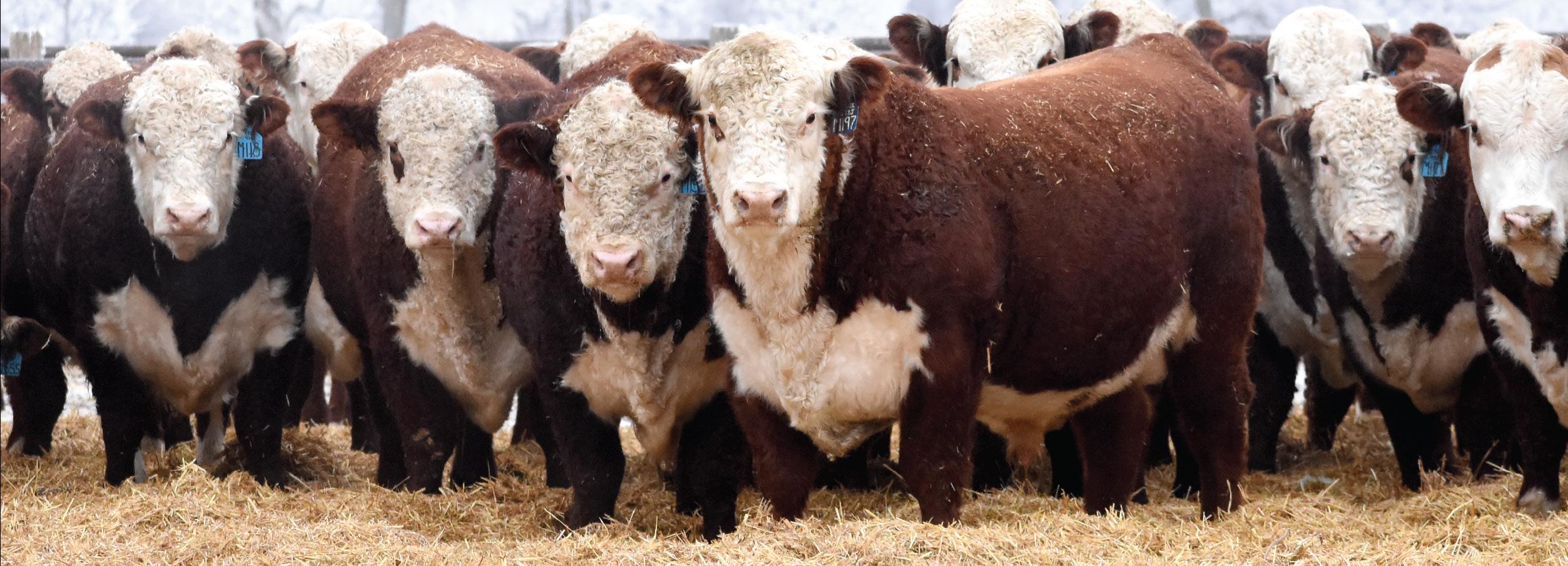
Topp Herefords is actively seeking open Hereford and baldy heifers, as well as steers, sired by TH bulls.
If you purchased Topp Herefords bulls, you have access to multiple valueadded options for your calves this fall. Don’t wait—call us today and put plans in place to increase your return on investment!

Through a variety of feeder programs, ranging from spot sales to forward contracting, we can help you capture the added value of your Topp Herefordssired calf crop.
In partnership with Pitz Farms in Iowa, Topp Herefords buys back about 2500 head annually of first cut, replacement-quality open heifers from our bull clients and are developing relationships placing additional females into trusted programs.

Retained ownership gives producers the opportunity to capitalize on the full potential of their calves. We are working to introduce our bull customers to the option of retaining ownership of their calves to the rail.



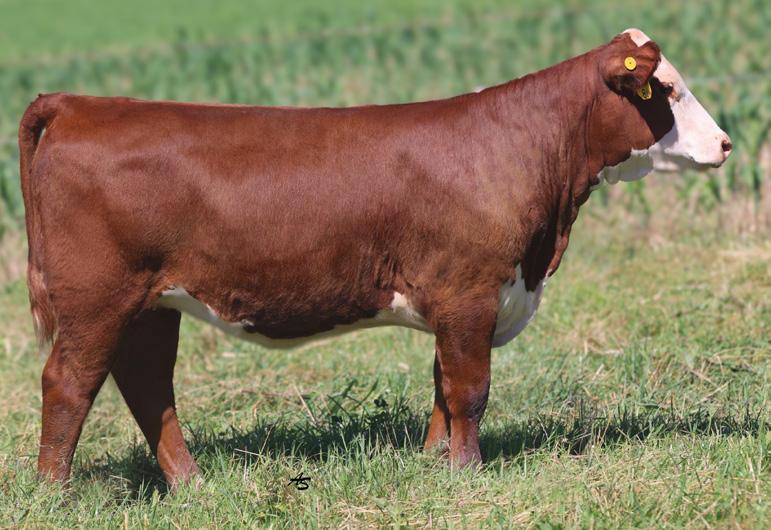
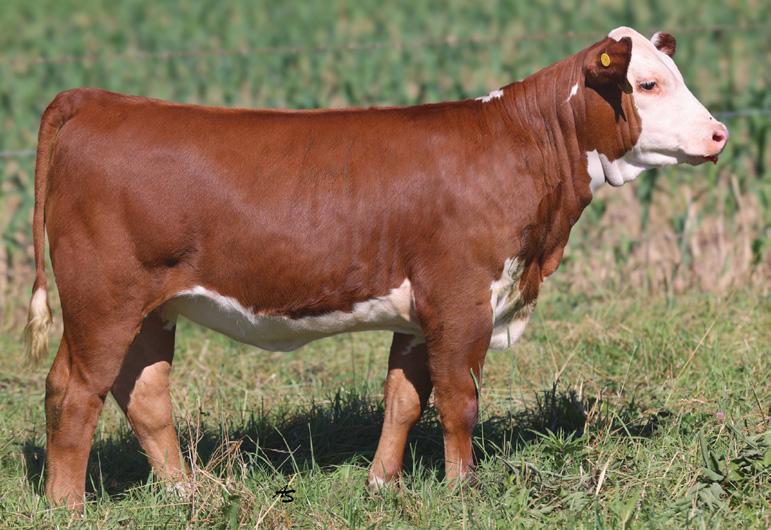
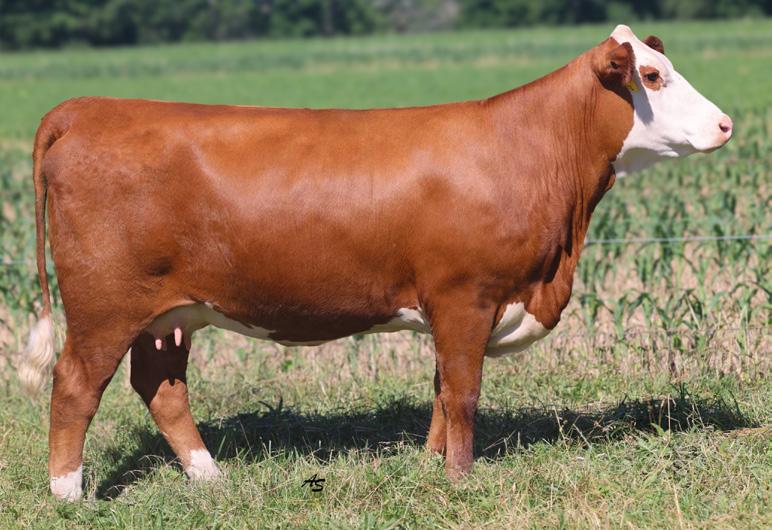
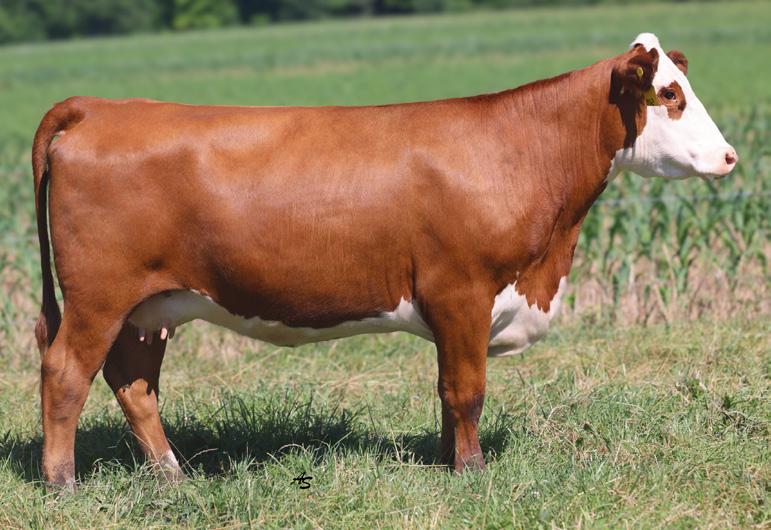
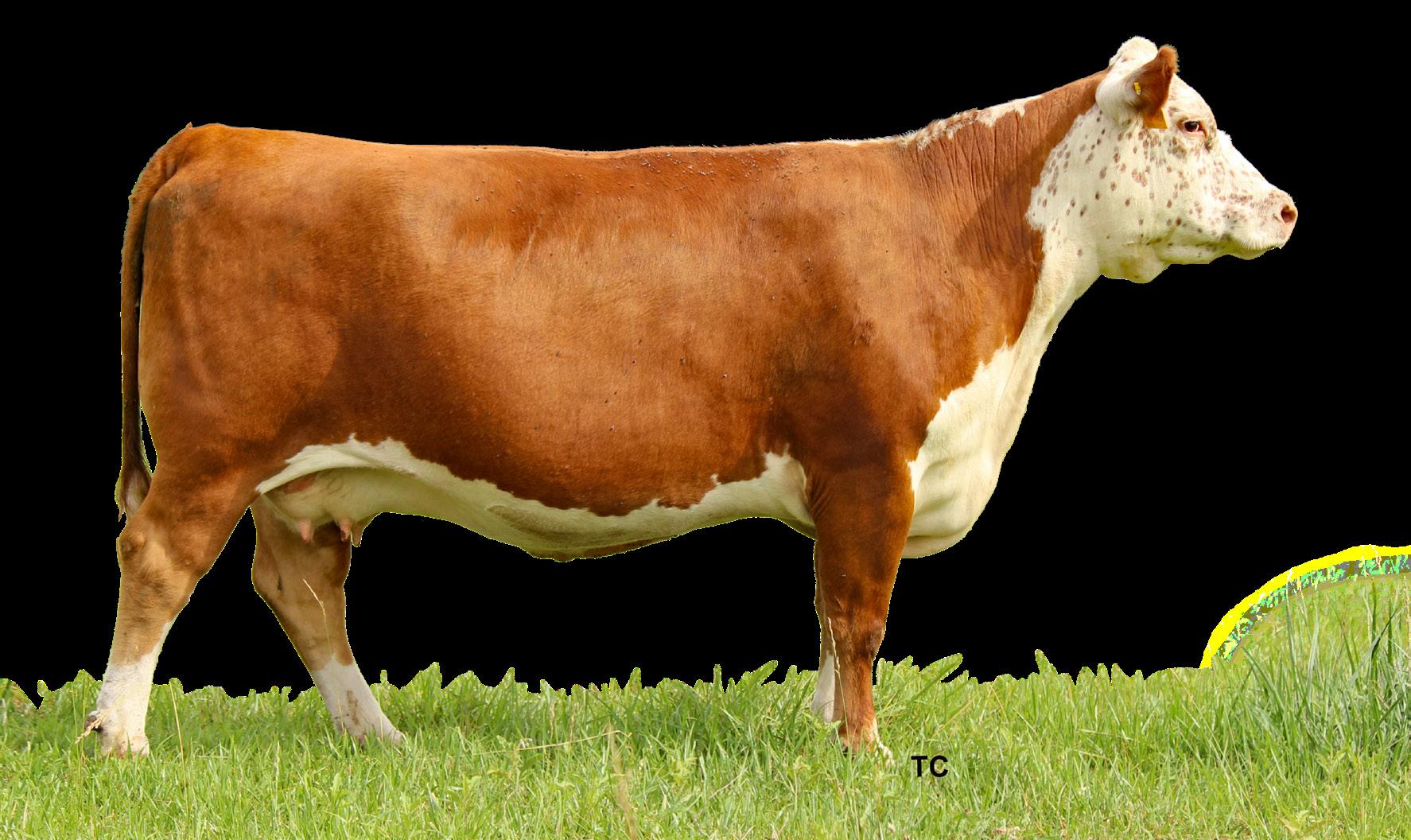
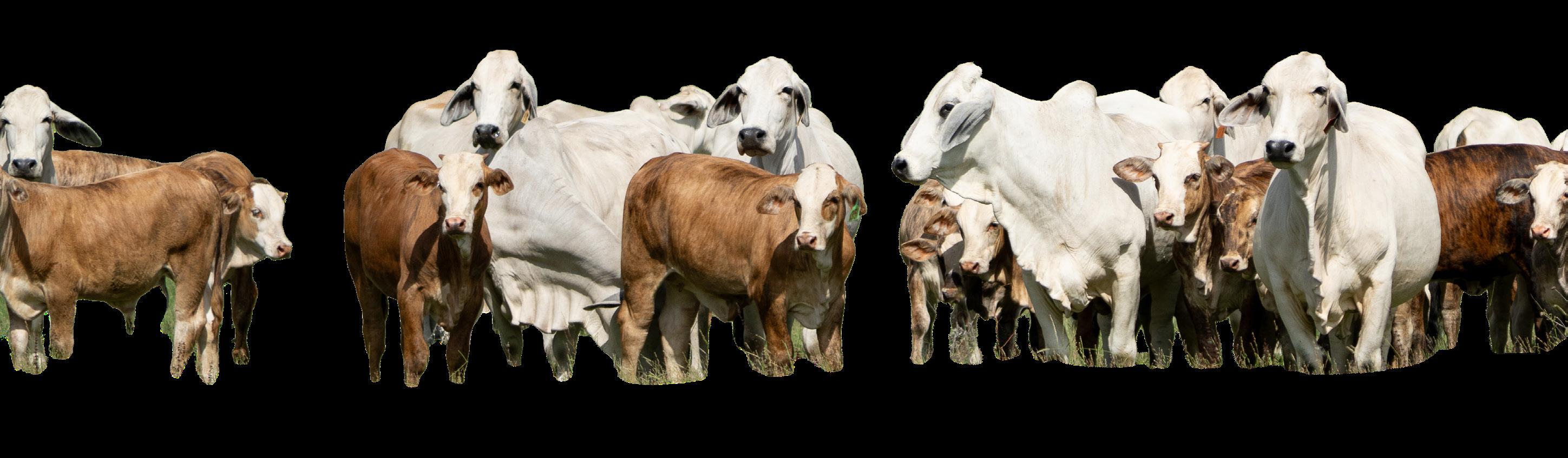
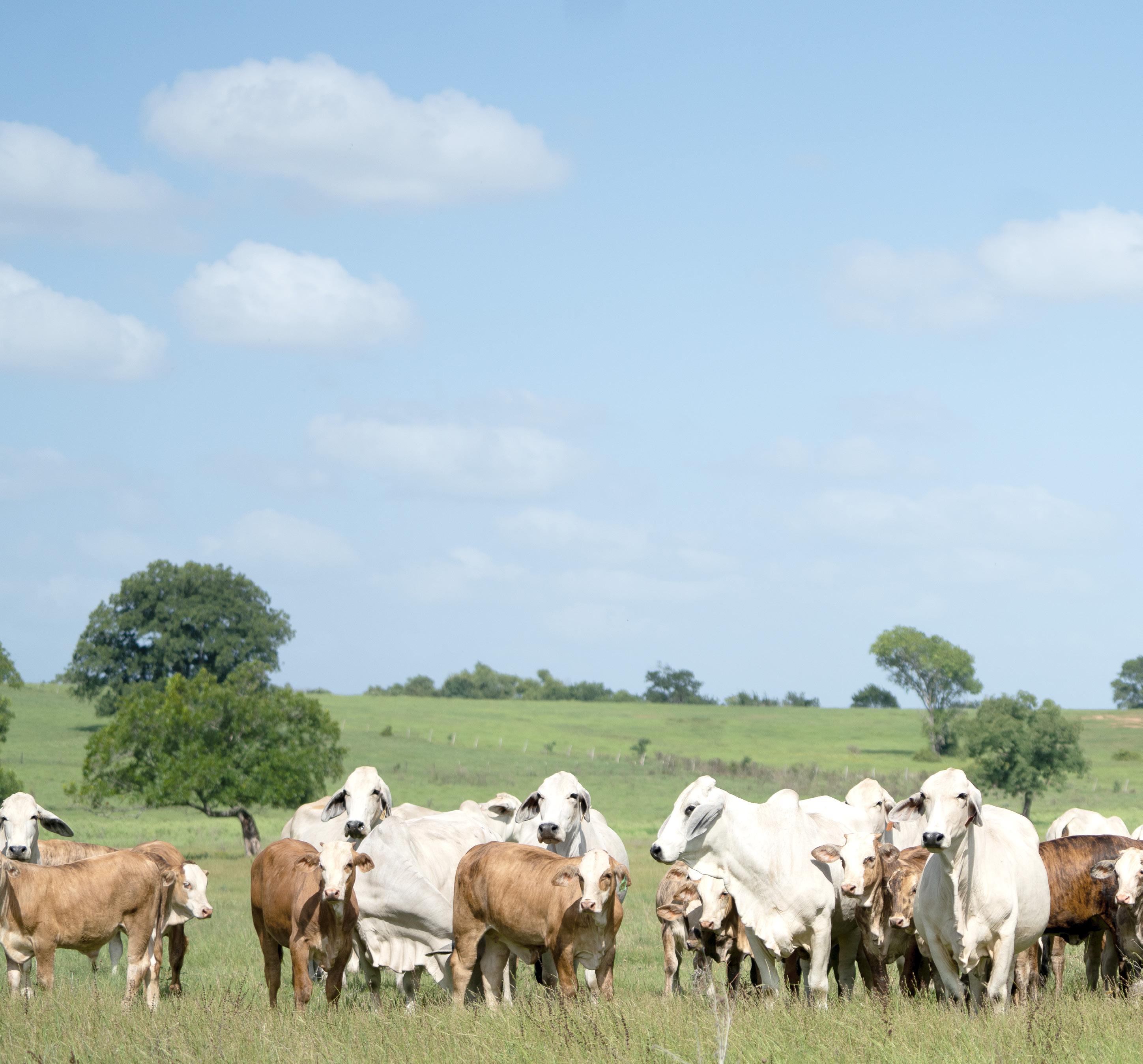
The Malazzo family builds the tiger-striped replacements they wanted to buy.
by Katie Maupin Miller
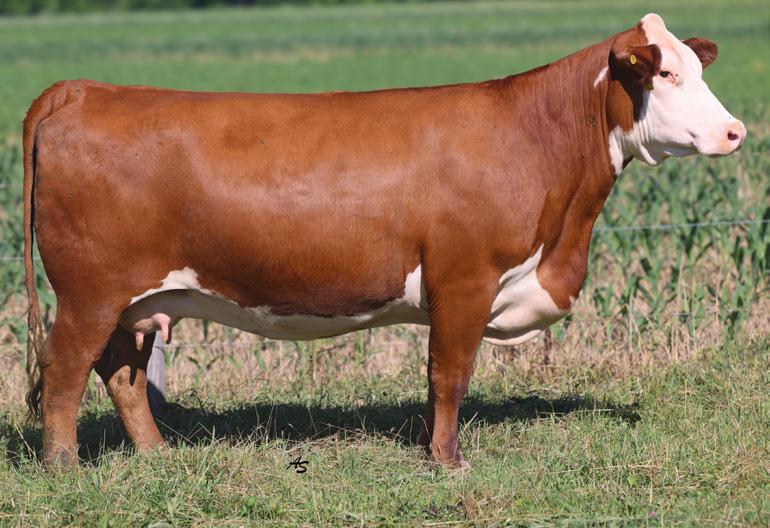
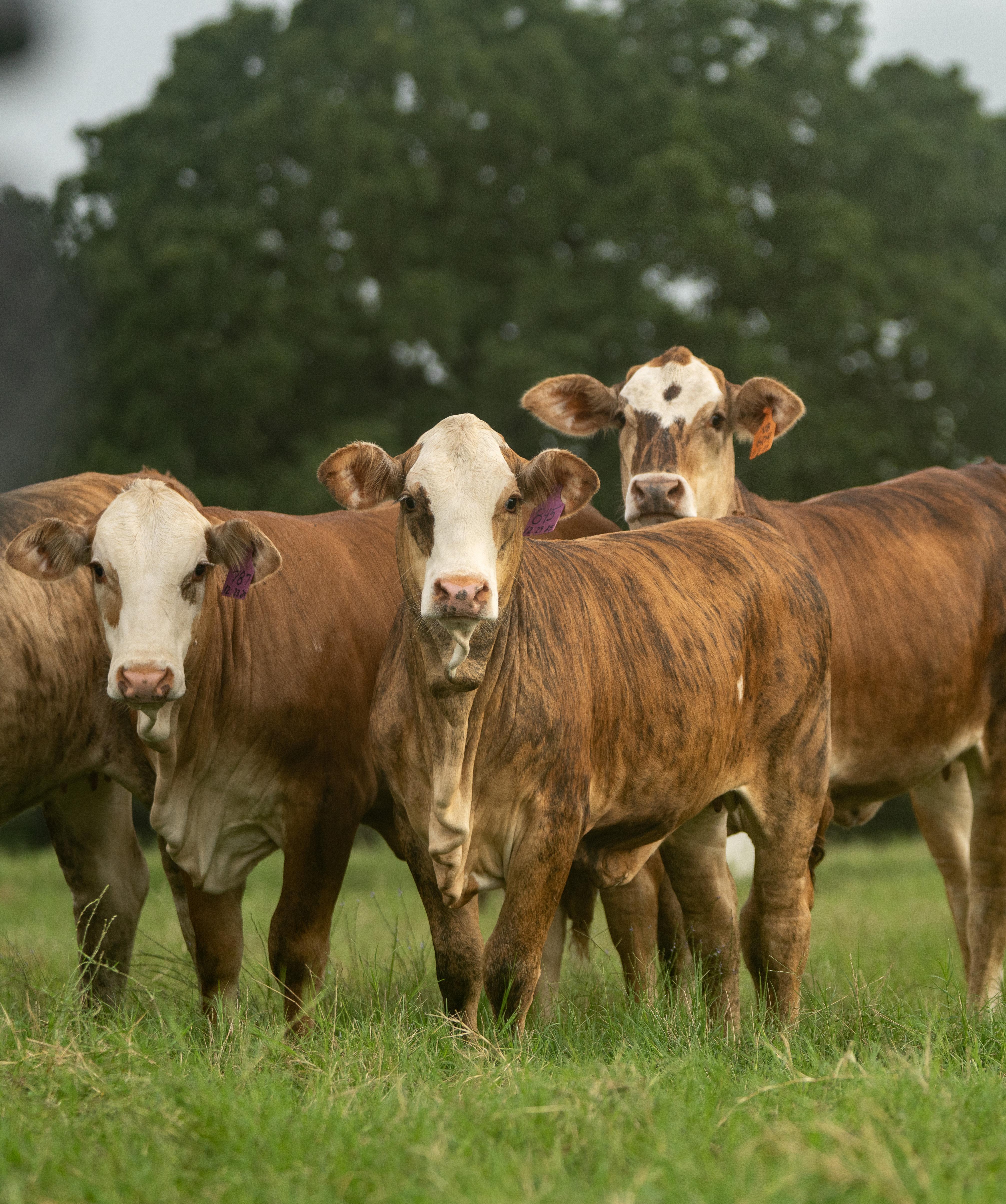
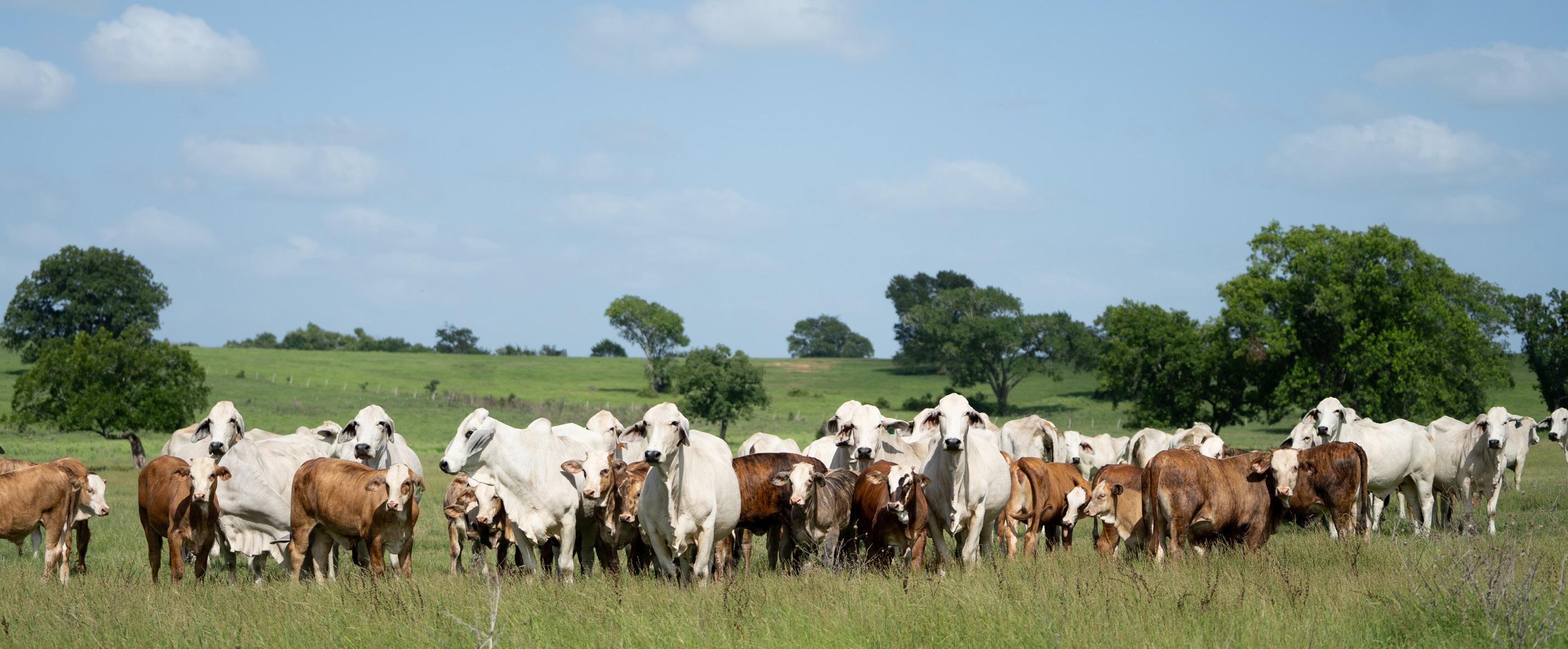
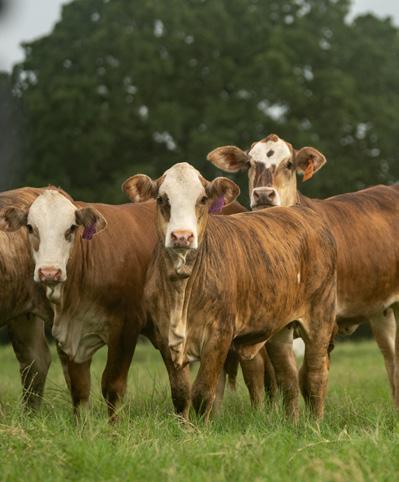
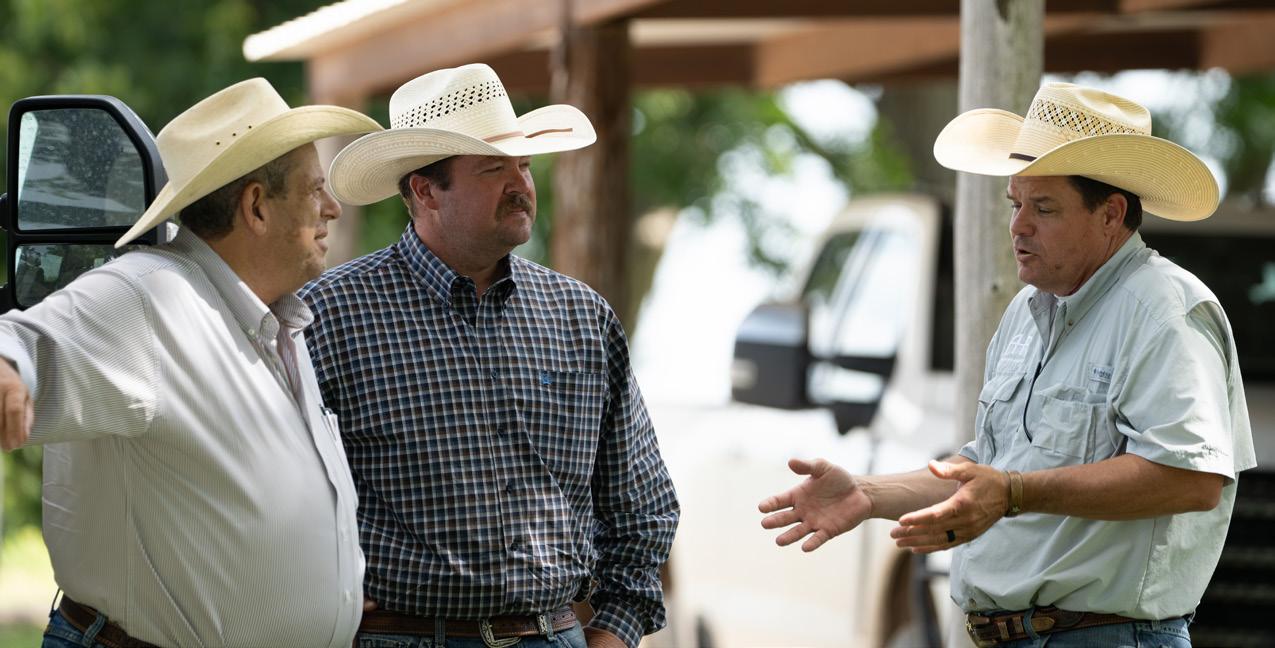
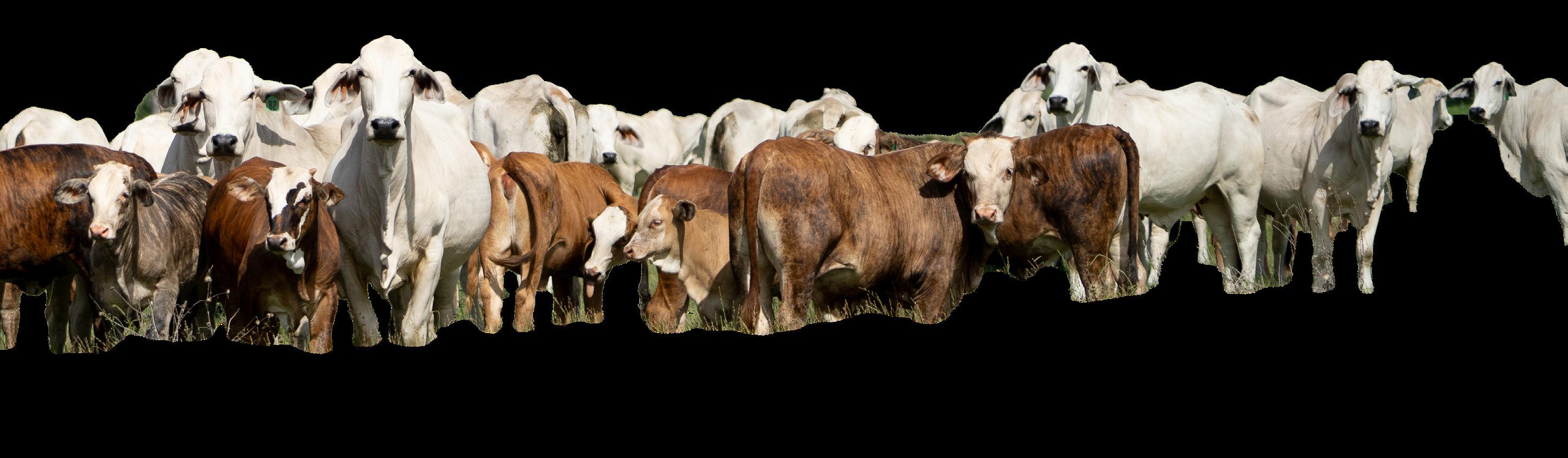
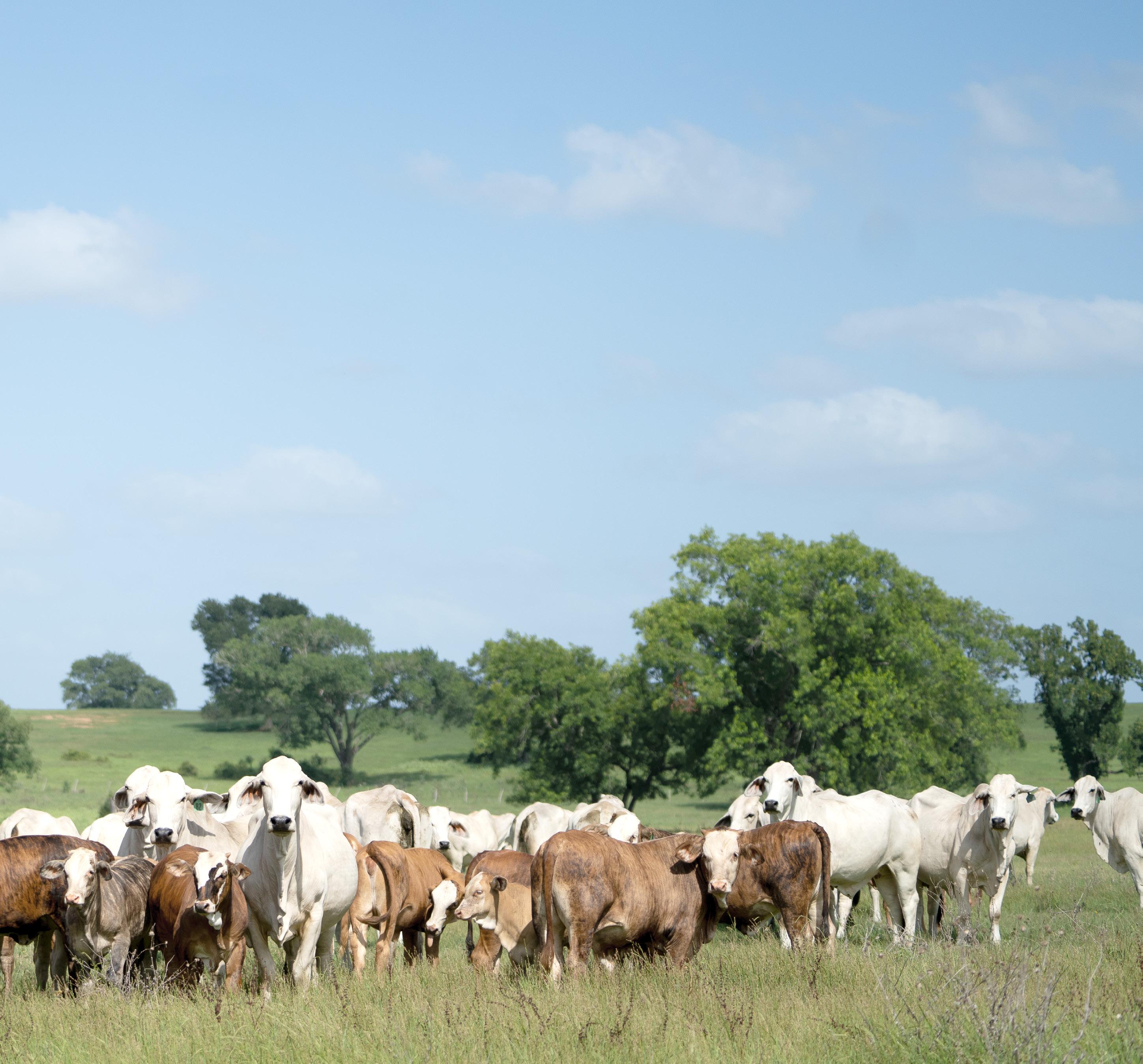
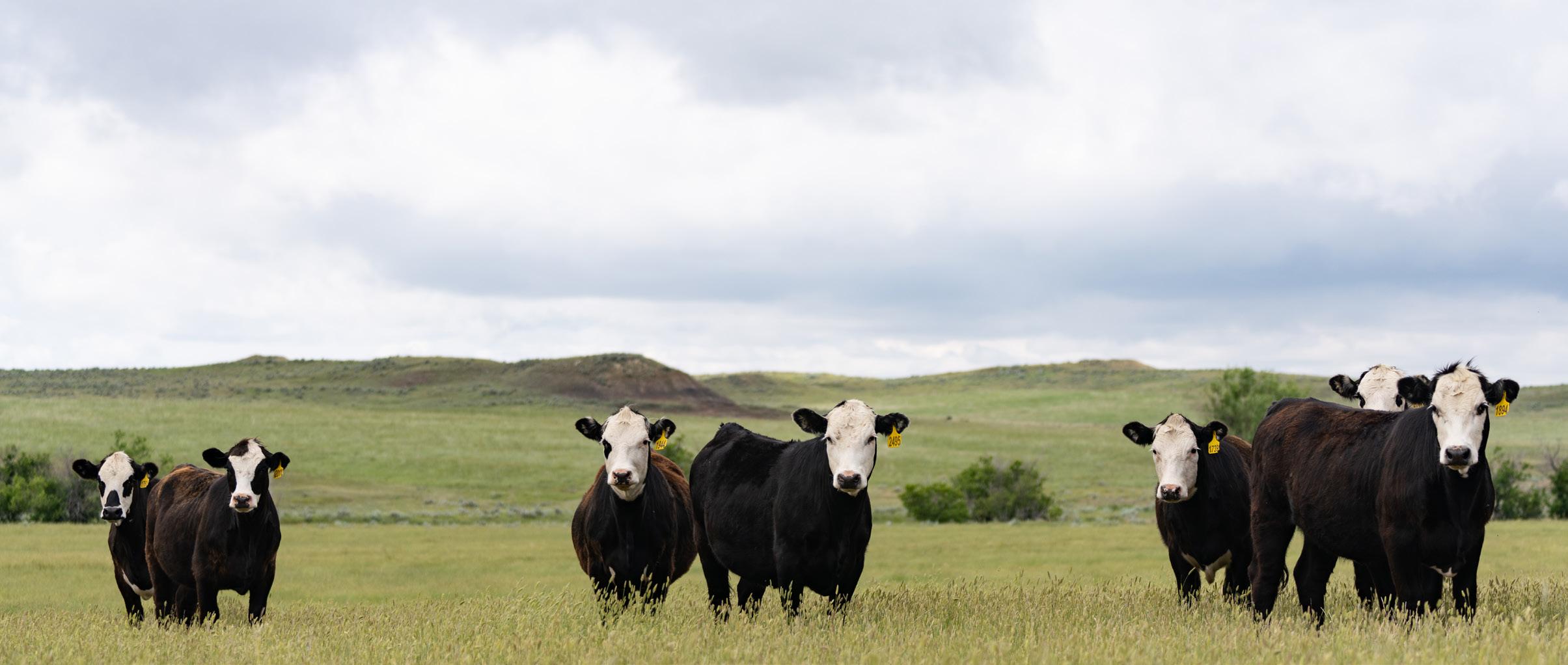
Tiger-stripe cows earn their reputation as Queens of Cow Country — the undisputed Queen of the South — for their ability to thrive and reproduce in the Gulf Coast’s harsh subtropical climate.
“I know there are parts of the country that get hot. But I don’t think many parts of the country face the humidity that we face here in the Gulf Coast area, and to me, that’s the difference,” explains John Malazzo, Caldwell, Texas. “That’s why everybody loves an F1 cow, because of their heat tolerance and mosquito tolerance, but you’ve got to have that Hereford in them to make them do good, to make them feed well and grade good.”
Those tiger-striped cows handle the humidity, heat, mosquitos and disease threats thrown at them daily. They have the heat tolerance of their Brahman dams, but as John explains, they also have added docility and increased udder quality in addition to the boost of maternal heterosis that the bald face adds.
“From central Texas south, if you ask 10 ranchers what they’d like to have on their place, nine of them would say Brafords,” John says. “Or Brahman, and there’s a few Brangus people out there, but I would say 90% of them think that half-Hereford cattle really work best.”
When John returned home to his family’s diversified operation after graduating from Texas A&M University, he knew he wanted to give more attention to the cows his family runs, in addition to raising cotton and corn.
“I wanted to try to improve the cow herd from the regular old cows that Dad had, and we tried to upgrade into some crossbred cattle that fit this environment. I spent a lot of time searching, trying to buy F1 Braford cattle … They didn’t have really a large number of them, so you only had limited opportunities. On one of those frustrated trips home I said, ‘I’m just going to start raising them,’” John recalls.
Growing tiger stripe demand
Trying to find the perfect cow for central Texas landed John in the business of making them. Today, John Malazzo Farms — managed by John, his son, Jason, and their families — focuses on producing top-tier tiger-stripe heifers by breeding their Brahman cow herd to Hereford bulls. Growing demand underscores their success.
“I’ve seen a surge — a huge surge,” John says about the demand for his Hereford F1 females. “I had a call today from a fellow in Louisiana wanting 50, and we get calls weekly. I’m proud of that, but it also makes me feel like, ‘Man, I need to be raising more of them.’”
Malazzo’s replacements are known for their adaptability, as well as the careful, maternally minded selection that goes into making them. With making superior F1 females at the forefront of the Malazzo crew’s goals, sire selection leans toward maternal traits. They often evaluate their sires on paper for expected progeny differences (EPDs), which
will add value to their daughters, such as maternal milk (MM), udder suspension (UDDR) and teat size (TEAT). Of course, birth weight is always toward the top of their list when sorting traits.
Longevity and fertility are also top of mind for the Malazzos. They know the cost of a good replacement, and they want to make sure theirs stay around and pay for their customers.
“It’s not the easiest thing to go find a lot of females. If you can find what you want, have that female be productive for a lifetime, which could be 15-17 years, then you make your money back on her and your profit. Maybe you do buy a female that’s not productive, and you lose — maybe she’s not productive, and you have to go a different direction, maybe you have to sell her, and maybe you don’t have her paid for,” Jason, says. “I love it when I can buy a female and keep her on the ranch until her life is almost over.”
Moreover, Jason explains cow efficiency aids fertility in tough environments. The Malazzos emphasize moderate, easy-doing cattle to ensure their F1 females have the fleshing ability to breed back with a calf at their side. As a bonus, the steer mates that they’ve fed have proven to be just as efficient on feed. The brindle baldy steers gain well, finish at 1,400 pounds and make the grade on the rail.
In addition to selecting for moderate framed cattle, Jason says they look for heavy structured, good footed, thick, deep-bodied Hereford sires to complement their Brahman dams and produce the tiger-striped daughters. Interestingly enough, they also prefer lighter-colored sires, which they’ve found tend to throw the perfectly patterned daughters for the region, rather than the darker, more chocolate-colored baldies.
“We don’t want to sell anybody anything that we know is not going to be what we think will last a lifetime,” Jason points out. “So, feet wise, structurally wise, fertility wise, anything that we have red flags or questions about … we mark that female, and she doesn’t sell as a replacement.”
Every replacement quality tiger-stripe heifer sells as an open heifer in the John Malazzo Farms annual sale in March. The day after the sale, the Malazzos head to the fields to start planting their crops. John sometimes
wishes he could market his F1s as bred heifers or as pairs; he knows they’d ring the bell for buyers. But, this is the perfect system for their diversified operation.
Buyers would be hard-pressed to find a more uniform set of tiger stripes, too.
“Uniformity is a big thing in our business, and we try to sell groups that are as uniform as they can be,” Jason says. “My dad and I have discovered, over the years, that we try to get as many blood families together and use them as tightly as we can. We try to buy half-brother bulls — a lot of our Brahman cows are half-sisters — and when you put four half-brother bulls together on 100 half-sister cows, the uniformity comes out.”
Consequently, the Malazzos’ high-quality, uniform set of tiger-stripe heifers draws more than just commercial cattlemen to their annual sale. Their offering is also sought by local youth who select them for the commercial heifer shows that are popular in Texas — learning the ropes of the cattle business with the area’s most proven cross.
To the Malazzo family, there is simply no debate about the best cow for the South, and they’re proud to make them.
“When you can adapt your cattle to your environment, that’s where maternal heterosis really shows up, and for right here in central Texas, the F1 is, as the old saying goes, ‘Queen of Cow Country,’” John says.


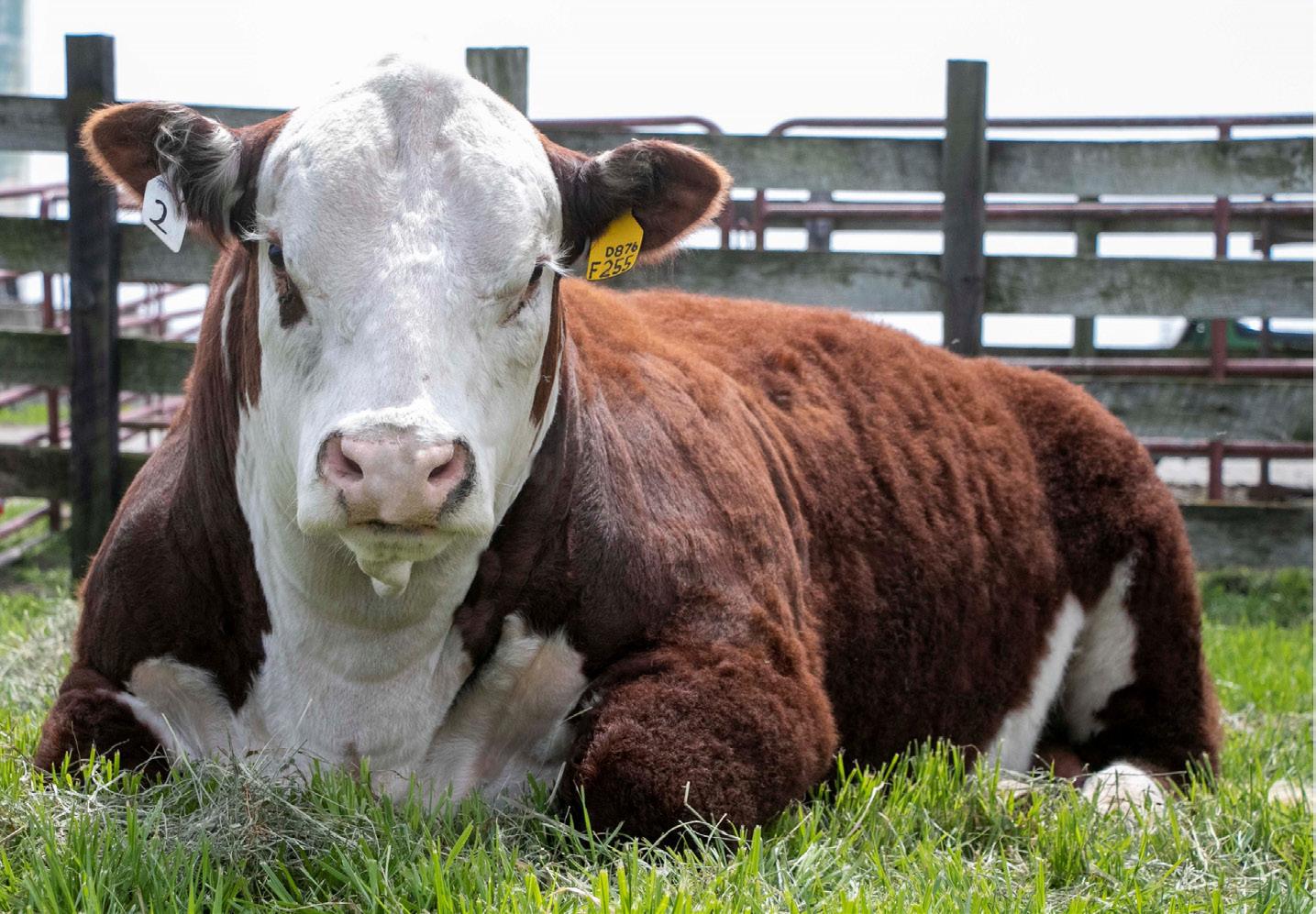
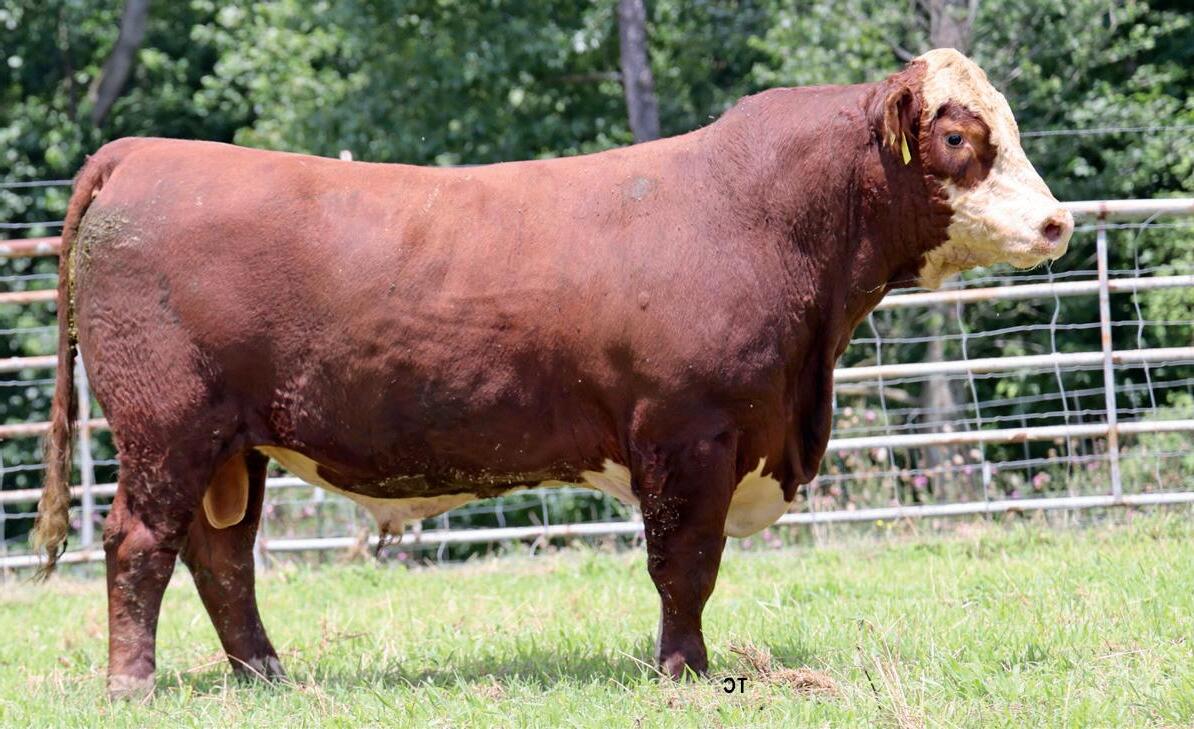
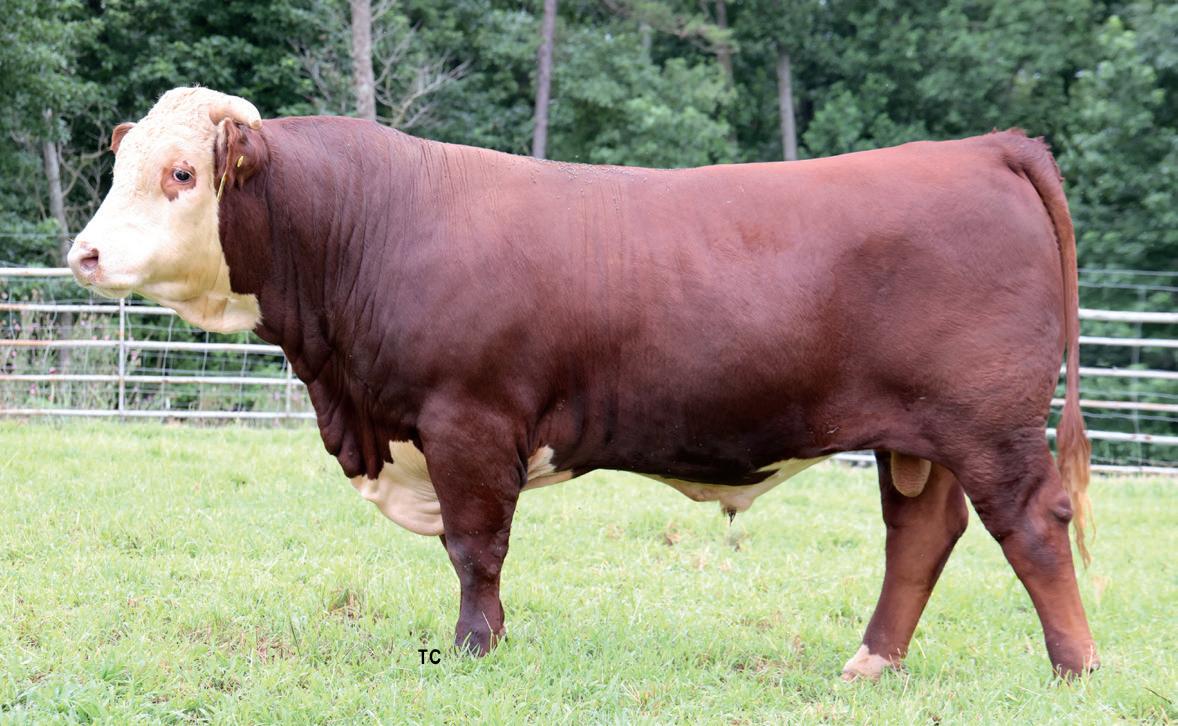
EFBEEF D876 COST CUTTER F255 — P43898290 The #1 Hereford and #4 ACROSS ALL BREEDS for RFI-Efficiency in the Vytelle Growsafe Top 150 Proven Sires list.

Efficient grazing daughters are working in the cowherds of MM Ranch, Kansas; and EFBEEF. W489 as a 16-year-old
Phil and Joyce Ellis
26455 N. 2300th St., Chrisman, IL 61924
765-665-3207
Matt and Lisa 217-712-0635 Joe and Lauri 765-366-5390 Chris Ellis 765-505-9691 Call us or visit for more information.
• Cost Cutter is sired by EF BEEF X651 Tested D876, who is a great full brother to EFBEEF BR Validated B413.
• Cost Cutter is out of EFBEEF N014 Phreda W489, pictured this spring as a 16-year-old raising her next good one.
• Maternal grandsire is the indomitable EF K334 Crown Beef N014, who was an early find in feed efficiency testing and also provides great carcass value.

D i r e c t o r o f C o m m e r c i a l Pr o g r a m s ( 8 0 6 ) 6 7 9 - 4 0 2 3
j m i l l e r @ h e r e f o r d o r g w w w h e r e f o r d o r g
by Wes Ishmael
Few would argue against fertility and longevity being central to cow efficiency and commercial cow-calf profitability. Open cows and heifers weigh on the bottom line like an anvil in quicksand. The cost of developing or buying replacements adds drag.
“Cows that miss breeding are unlikely to ever become profitable, as a year of missed revenue makes offsetting their maintenance and development costs untenable,” explained Troy Rowan at the 2024 Applied Reproductive Strategies in Beef Cattle (ARSBC) conference. He is a beef cattle geneticist at the University of Tennessee.
While environment and management are the overwhelming drivers of fertility in most beef cattle populations, Rowan explained ignoring the genetics behind it is costly. Specific fertility traits are generally lowly to moderately heritable, but, as he pointed out, respond well to heterosis.
“This is due to a well-known inverse relationship between trait heritabilities and their responses to heterosis. While heterosis (percentage of crossbred performance above parent expectation) is moderate for growth and performance-related traits, it is substantially higher for lowly heritable traits, such as fertility and longevity,” Rowan explained. “This increased heterosis in maternal traits makes crossbreeding an essential tool for commercial producers that raise or purchase replacement females. While substantial value can be created
for producers in added performance, such as more weaned calf pounds and higher feedlot performance, the real value of crossbreeding comes in making these longer-lived and more fertile cows. The heterosis response for these maternally oriented traits is between four and five times the amount generated across production traits.”
Ongoing cooperative research conducted by the University of Illinois Urbana-Champaign (UIUC) and the American Hereford Association (AHA) provides real-world illustration. The study is designed to quantify the differences between breeding either Hereford or Angus bulls to commercial Angus cows over time and retaining replacement heifers. It began with 600 commercial Angus cows. Half were bred to six different Hereford bulls; the other half to Angus bulls. All bulls used represented the top 15% of each breed for its maternal and terminal indexes. This is a fall-calving herd.
As experience suggests, Hereford-sired females, compared to those bred to Angus bulls, were more moderate in size, consumed less feed, weaned more calves, bred back more efficiently and had increased longevity.
More specifically, 14% more of the Hereford-sired black baldy heifers weaned their first calf, compared to the straight black heifers, and 18% more bred back on time for their second calf; 13% more remained in the herd at 4 years of age (see Table 1).
Shane Bedwell, AHA chief operating officer and director of breed improvement, points out that Herefords provide additional heterosis due to the fact they are the least related of the Bos Taurus breeds, as documented by U.S. Meat Animal Research Center.
Advantages illustrated in the research mentioned above also point to the benefit gained by utilizing complementary breeds in strategic crossbreeding.
Source: University of Illinois
“It’s no secret that everyone wants a baldy female,” said Anton Hermes, Hermes Livestock, a diverse operation with multiple cattle enterprises in eastern Colorado (see Baldy Advantage, Jan. 2025, Cow Power). For perspective, the operation includes a commercial cow herd, stocker cattle, breeding mature cows for customers and developing heifers for themselves and others.
Hermes shared data from the heifer development program to illustrate the baldy preference during an AHA Annual Meeting and Research Symposium. He analyzed data from 3,700 replacement heifers they developed for themselves and customers over the previous four years: 970 black baldies, 735 red baldies, 1,120 Angus and 883 Red Angus.
Crossbreeding and sire selection are complementary and should be used in tandem to build an optimum mating system in commercial herds.
— Bob Weaber, Kansas State University
These heifers were AI-bred with conventional (non-sexed) semen in May, followed by clean-up bulls for 55 days, running on grass. They were pregnancy-checked via ultrasound in September.
All told, 64% of the F1 black baldy heifers bred in the first 35 days, which was 9% more than the Angus heifers; 12% more than the Red Angus heifers. The F1 red baldies widened the gap further with 69% of them bred in the first 35 days, compared to 55% of the Angus heifers and 52% of the Red Angus heifers. Hermes points out the purebred breeding performance was strong but fell short of the F1 heifers.
“When you look at what we’re getting with heterosis in heifers developed exactly the same way — same age and same maturity — 9-12% more baldy females bred in the first cycle,” he said.
Next, Hermes analyzed four years of data from four commercial cow-calf herds, including his own, comprising a total of about 2,900 mature cows.
For cows aged 3 to 5 years, 2% more of the F1s bred in the first 35 days than their same-aged purebred contemporaries with 2% fewer opens and 4% more scoring at least a body condition score (BCS) 5.5 when pregnancychecked in October-November.
“As the baldy cows mature, they have less fallout, more bred in the first 35 days and a substantially lower cull rate,” Hermes said.
Leveraging strengths
“The use of crossbreeding offers two distinct and important advantages over the use of a single breed. First, crossbred animals have heterosis or hybrid vigor. Second, crossbred animals combine the strengths of the parent breeds,” according to Bob Weaber, Extension beef cattle specialist and geneticist at Kansas State University. “The term ‘breed complementarity’ is often used to describe breed combinations that produce highly desirable progeny for a broad range of traits. One potential solution that may help optimize the selection of sires that produce desirable maternal trait attributes and market targeted calves is to separate this into two distinct breeding decisions. Doing so increases the selection intensity of both sire groups as they are no longer bound by the demands of balancing the trait groups.”
During last year’s ARSBC conference, Weaber pointed out commercial cow-calf producers find it increasingly difficult to identify bulls that can meet their needs for building replacement females, while also providing the characteristics they want in their terminal calves.
“The desire to produce environmentally adapted replacement females that are appropriate for mature weight and lactation potential in a given forage environment and management system while simultaneously producing highvalue, market-targeted feeder cattle has challenged the thinking of many producers,” Weaber said.
Adding potential and reducing risk
Enhanced profit potential is likely one of the strongest motivators for producers to implement effective, structured crossbreeding systems.
“The substantial improvements in production efficiency, measured as weaning weight per cow exposed, support improved profit and operational sustainability,” Weaber explained. “Improved profit potential is realized through the simultaneous improvement in gross revenue stream to the ranch while decreasing costs of production through reduced replacement female requirements. Enhanced reproductive efficiency, especially in harsh environments, favorably decreases the breakeven unit cost of production. Getting more calves to market endpoint, marketing heavier calves and selling a larger percentage of the calf crop through the benefits of individual and maternal heterosis, enhances gross revenue. Increasing revenue, while decreasing or maintaining costs improves profit, assuming constant inventories.”
Despite the power of disciplined, complementary crossbreeding, Weaber noted heterosis cannot overcome lowquality genetic inputs.
“The quality of progeny from a crossbreeding system is limited by the quality of the parent stock that produced them,” Weaber explained. “Conversely, do not believe that the selection of extremely high-quality bulls or semen or choosing the right breed will offset the advantages of an effective crossbreeding system. Crossbreeding and sire selection are complementary and should be used in tandem to build an optimum mating system in commercial herds. The biggest keys to success are the thoughtful construction of a plan and then sticking to it. Be sure to set attainable goals. Discipline is essential.”

September 25, 2026 • 1 p.m. (MT) at the Ranch
75 – Elite Line One Females
Proven Donors • All 2018 Model Cows including Donors
15 – Bred Heifers • 25 – 2 and 3-year-old Bred Cows
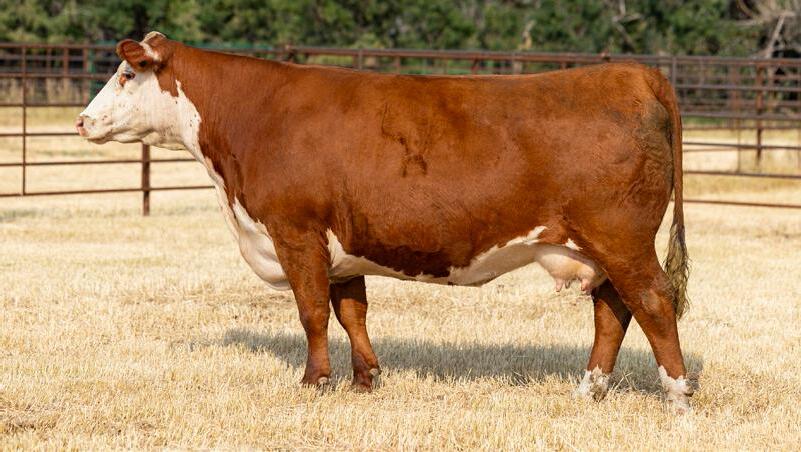
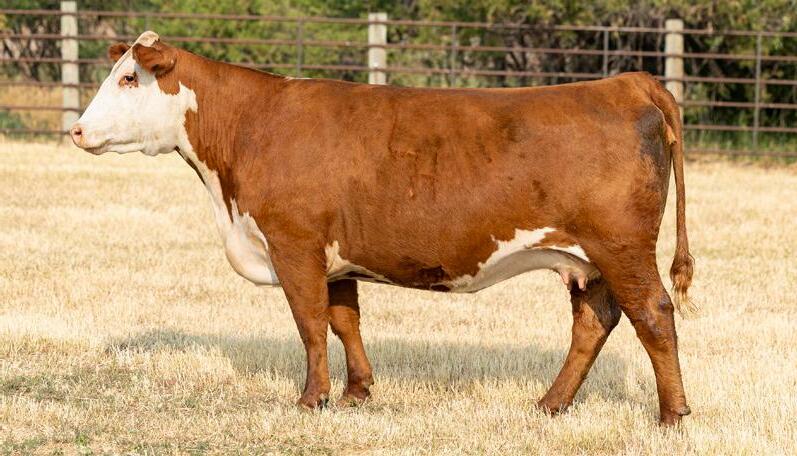
Help yourself to a great opportunity! Our biggest female sale offering in years. Take advantage of the proven maternal strengths of Line One females. Fertility, productivity, udder quality, pigment, fleshing ability, and phenotype. Backed by 70 years of consistent performance selection and a line breeding program that guarantees predictability, consistency, and uniformity.
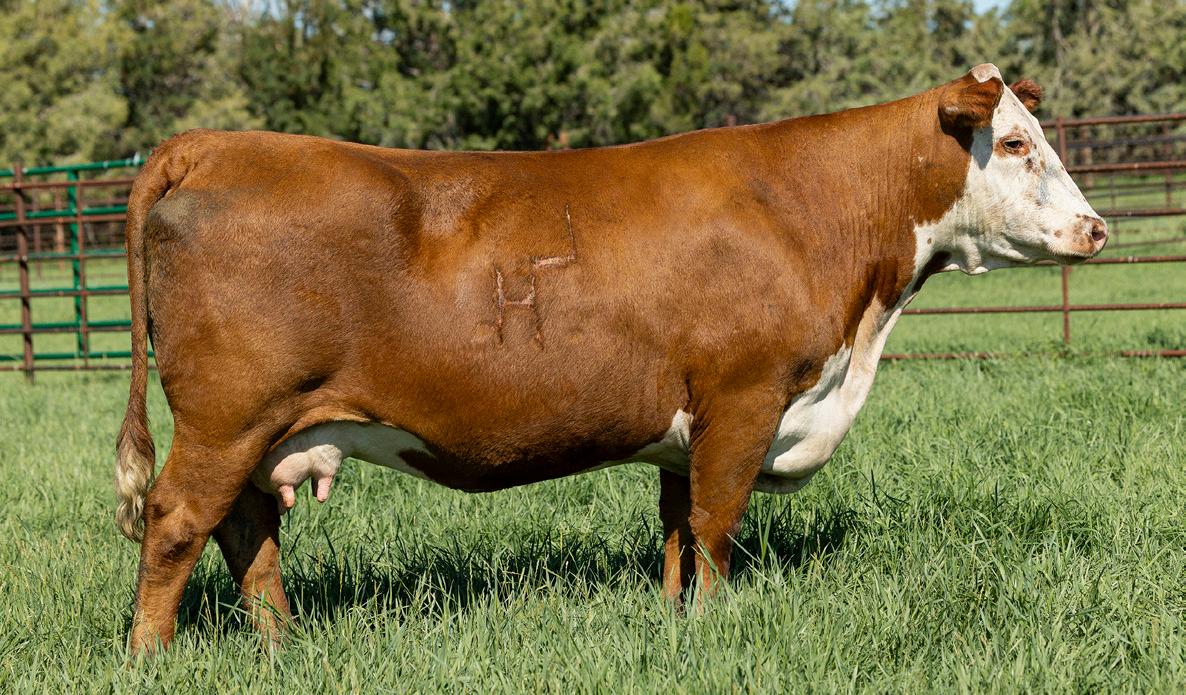
HH MISS ADVANCE 1202J ET
Sire: CL 1 Domino 883F
CE 1.6; BW 4.0; WW 63; YW 95; MM 32; UDDR 1.40; TEAT 1.50; FAT 0.036; REA 0.60; MARB 0.10; BMI$ 395; CHB$ 152
• Proven donor that is as pretty as you can make one. Phenotype, EPDs, and cow power in a great package.
• Maternal sister to our 2137K and 3037L herd sires. Maternal granddam of our 5042N herd sire.
• Big time embryo producer with 24 progeny already registered and more coming in 2027. Sons will be top sale features in our 2027 Sale.
• Selling ½ embryo interest, No Possession.

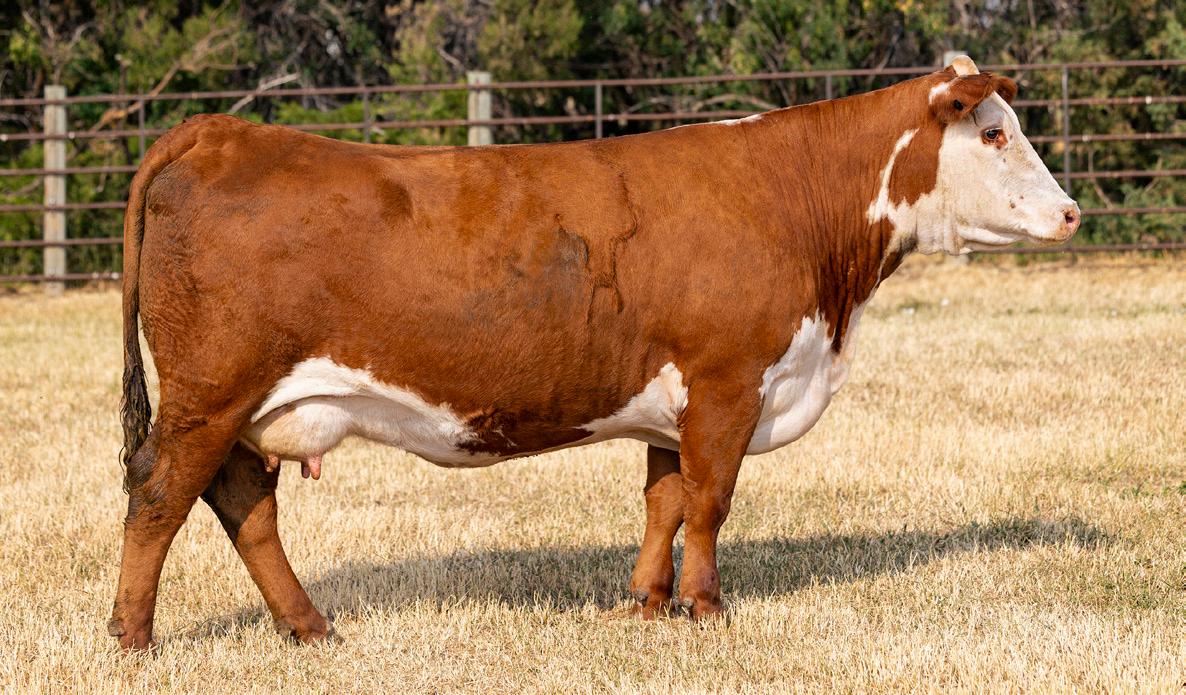
Sire: HH Advance 8008F

CE 6.2; BW 1.2; WW 66; YW 111; MM 33; UDDR 1.50; TEAT 1.50; FAT -0.004; REA 0.63; MARB 0.39; BMI$ 456; CHB$ 187
• Elite donor that checks all the boxes. Dam of multiple herd sires and her daughters are exceptional.
• 5 sons averaged $43,000 in our 2026 Sale.
• Top 10% or higher on 10 different traits and top 5% on Scrotal, UDDR, TEAT, and CHB$
• Dam of herd sires 2106K, 4265M, and 5161N
• Big time embryo producer with 26 progeny already registered.
• Selling ½ embryo interest, No Possession.
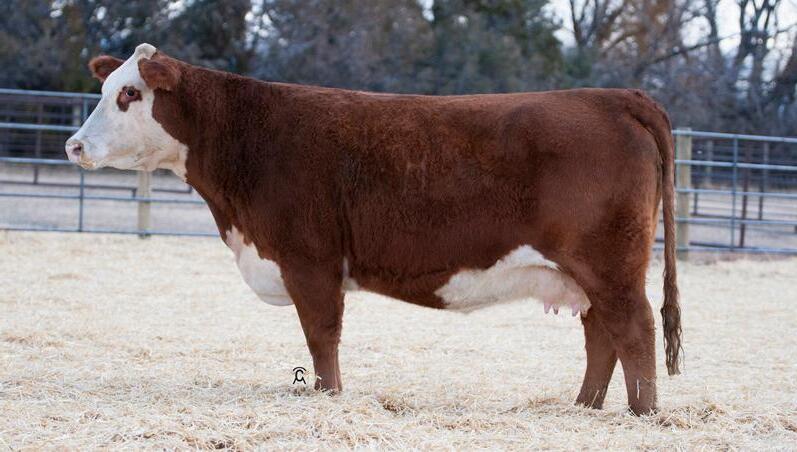

• She Sells!
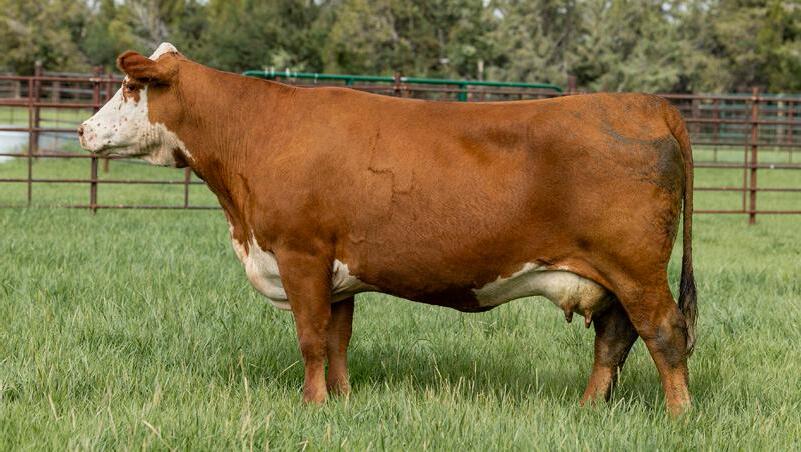
HH MISS ADVANCE 0181H

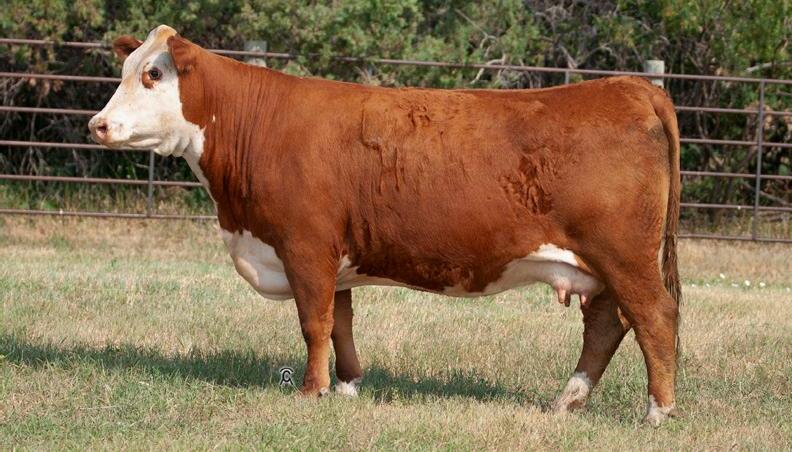
HH MISS ADVANCE 8046F
Sire:
•
•
fleshing ability, eye appeal, and calving ease.
• Top 20% on WW, YW, UDDR, and TEAT and top 20% on CED and Scrotal
• She sells!
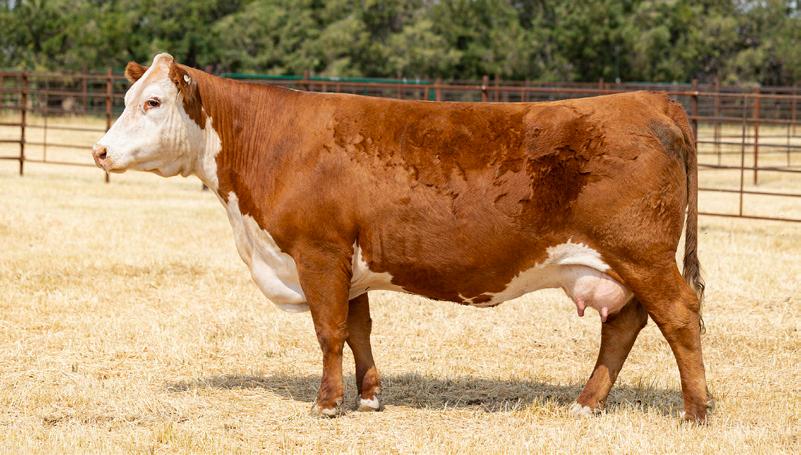
HH MISS ADVANCE 7032E
Sire: CL 1 Domino 420B ET

• Dam of the 5056N bull that sold for $60,000 in our
• Owned with Al Calise, OR • She Sells!





Hereford Feedout Programs provide unique education.
by Wes Ishmael
Experience is hard to beat as a teacher, especially when you have skin in the game and face economic consequences. That’s why participation in the Hereford Feedout Programs continues to grow. Hereford breeders and commercial users of Hereford genetics can retain ownership in a few head of cattle and learn how a sampling of their genetics perform in the feedlot and on the rail with limited financial exposure. Juniors can do the same with a single head.
“You learn really fast about your health program at home and the genetics you have,” says Justin Miller, American Hereford Association (AHA) director of commercial programs. As a former feedlot manager and fed cattle buyer for one of the nation’s largest beef packers, he understands how valuable the knowledge is to both seedstock and commercial producers.
“If you want to understand the value of your cattle and how to improve your genetics and management for those who buy and feed your cattle, you can make huge strides by entering cattle in this program,” Miller says. “It’s an opportunity to dip your toes in the water and gain a wealth of knowledge for limited financial exposure.”
Broadly speaking, producers enter as few as five head of Hereford or Hereford-influenced steers or heifers into the program. Although, there is no limit, and they can enter entire pens if they want. All cattle are fed at HRC Feed Yards, LLC in Scott City, Kan. Depending on the number, HRC sometimes shares ownership with the owner, as they do with other clients who feed cattle with them. Producers receive monthly closeouts and individual carcass data after their cattle are harvested. Cattle are eligible to be marketed on the U.S. Premium Beef value grid.
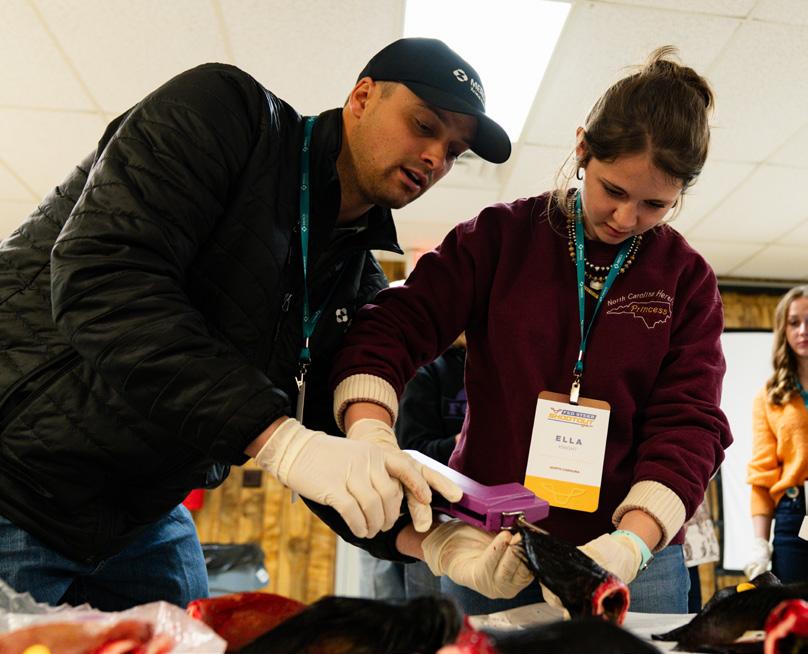
Likewise, members of the National Junior Hereford Association (NJHA) feed their cattle at HRC for the organization’s annual Fed Steer Shootout, entering a single steer or pens of three. They receive the same data for their cattle, as well as the opportunity to participate in learning modules revolving around the cattle feeding and beef packing sectors.
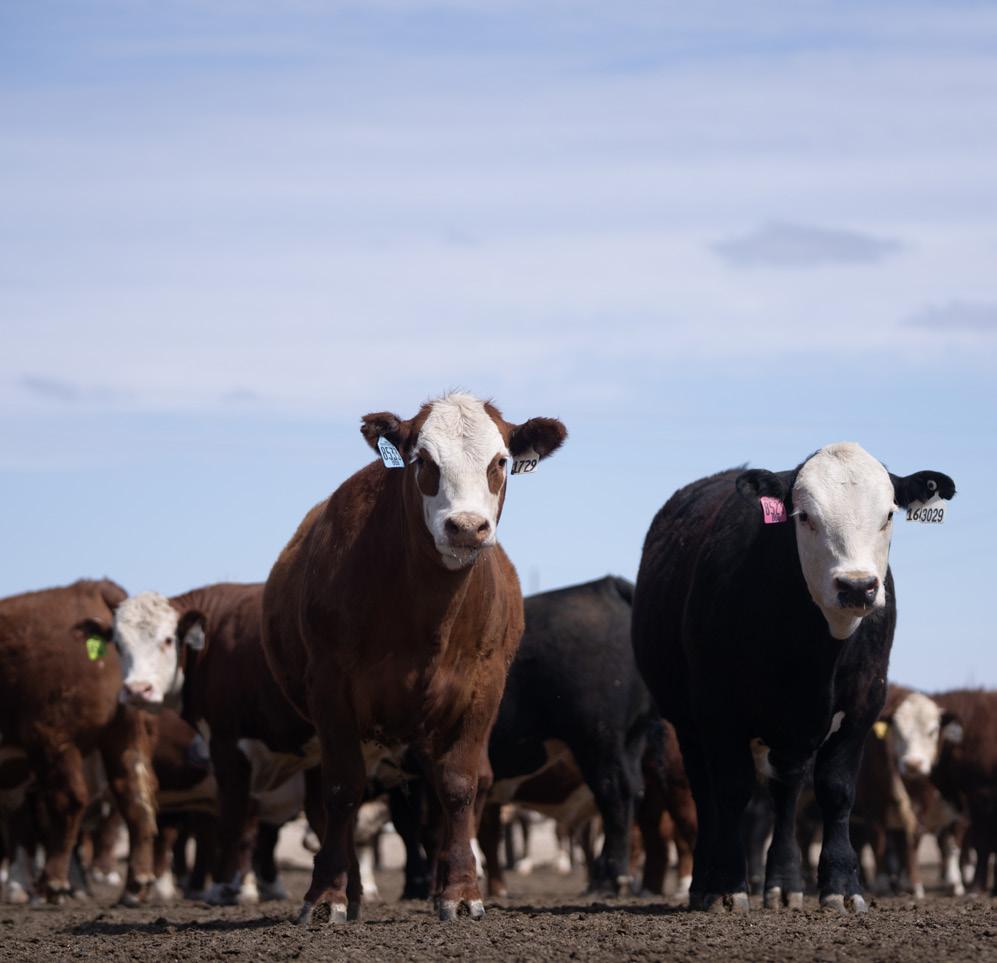
NJHA members also compete for a range of scholarships based on their participation and how their cattle perform. HRC fed steers for 82 NJHA members from 20 states during the latest competition.
Many juniors and adult participants describe the annual Fed Steer Shootout Field Day as icing on the cake, a time to visit HRC, see their own cattle on feed and participate in an intensive educational program.
“You’re not just in the cow-calf business. You’re not just in the feedyard business. You should have the mindset of being in the meat business. Your product is the end-product,” Miller told the crowd of more than 100 gathered for the 10th annual field day at Scott City. “Even though you sell bulls to customers, even though you have cattle on feed, your customer is the consumer at the grocery store meat counter.”
Field day participants came from as far away as Montana and North Carolina for the event, which included:
• Real-world insight into feeder cattle procurement via a simulation experience presented by Jarrod Gillig, Cargill’s senior vice president of North American beef business. Cargill representatives also provided demonstrations and discussion about food safety and retail-specific variety meats.
• Cattle markets overview and outlook from Kevin Good, CattleFax vice president of industry relations.
• Hands-on presentation about the economic benefits of implanting feeder cattle, presented by Cody Doubet, Merck Animal Health.
• Interactive fed cattle evaluation and grading, presented by Shane Bedwell, AHA director of breed improvement and chief operations officer.
For more about the field day, see Partners Expand Learning Opportunity.
“There’s going to be an awful lot of opportunity in this beef business in the next 10 years for people to step up and take over,” said Lee Mayo, HRC Feed Yards general manager, during the most recent field day. “I think we’re creating some of those future leaders and participants right here in this room, and I really believe that. There’s not a
“The consistent increase in National Junior Hereford Association (NJHA) Fed Steer Shootout Field Day attendance year after year speaks for its value to the beef industry and Hereford breed,” says Amy Cowan, American Hereford Association (AHA) director of youth activities and foundation.
“We’re thankful for the industry partners, along with the staff at HRC Feed Yards, LLC who make this event possible. The field day is a foundational piece of the learning opportunities we provide to junior members.”
Industry partnerships bolster opportunities for young people attending the field day.
For instance, this year’s event featured an NJHA Meet-Up — Powered by Sure Champ®. The Meet-Up provided juniors the chance to connect, learn and grow alongside industry leaders.
program like this one anywhere — with any other breed or anywhere else.”
Miller notes the rare opportunity Hereford Feedout Programs provide is due to HRC Feed Yards’ willingness to partner in the program and work with so many owners represented by a single pen of cattle.
“The Hereford Feedout Programs and the NJHA Fed Steer Shootout allow AHA and NJHA members to receive
Shane Schaake, BioZyme® Inc. field representative, was also on hand to share practical insights, helping participants understand how to utilize Sure Champ products effectively at home and on the road.
This year, the NJHA Fed Steer Shootout received support from the Community Foundation of Southeast Kansas (CFSEK). A $15,000 grant, in honor of the late Bill House, was awarded to the Hereford Youth Foundation of America. The 2026 CFSEK Bill House Agricultural Grant honors a historic figure in the beef cattle industry and the Hereford breed. House served as the AHA president from 1963-1964 and was highly involved in the Kansas beef industry. This grant continues to honor his life and legacy through the Hereford breed and cattle industry, supporting an interactive learning experience for NJHA members.
a wealth of information about their cattle and the beef industry,” Miller emphasizes. “They can make breeding decisions based on the feeding and carcass data they receive, improving their own operations in addition to the quality of beef our industry provides to consumers.”
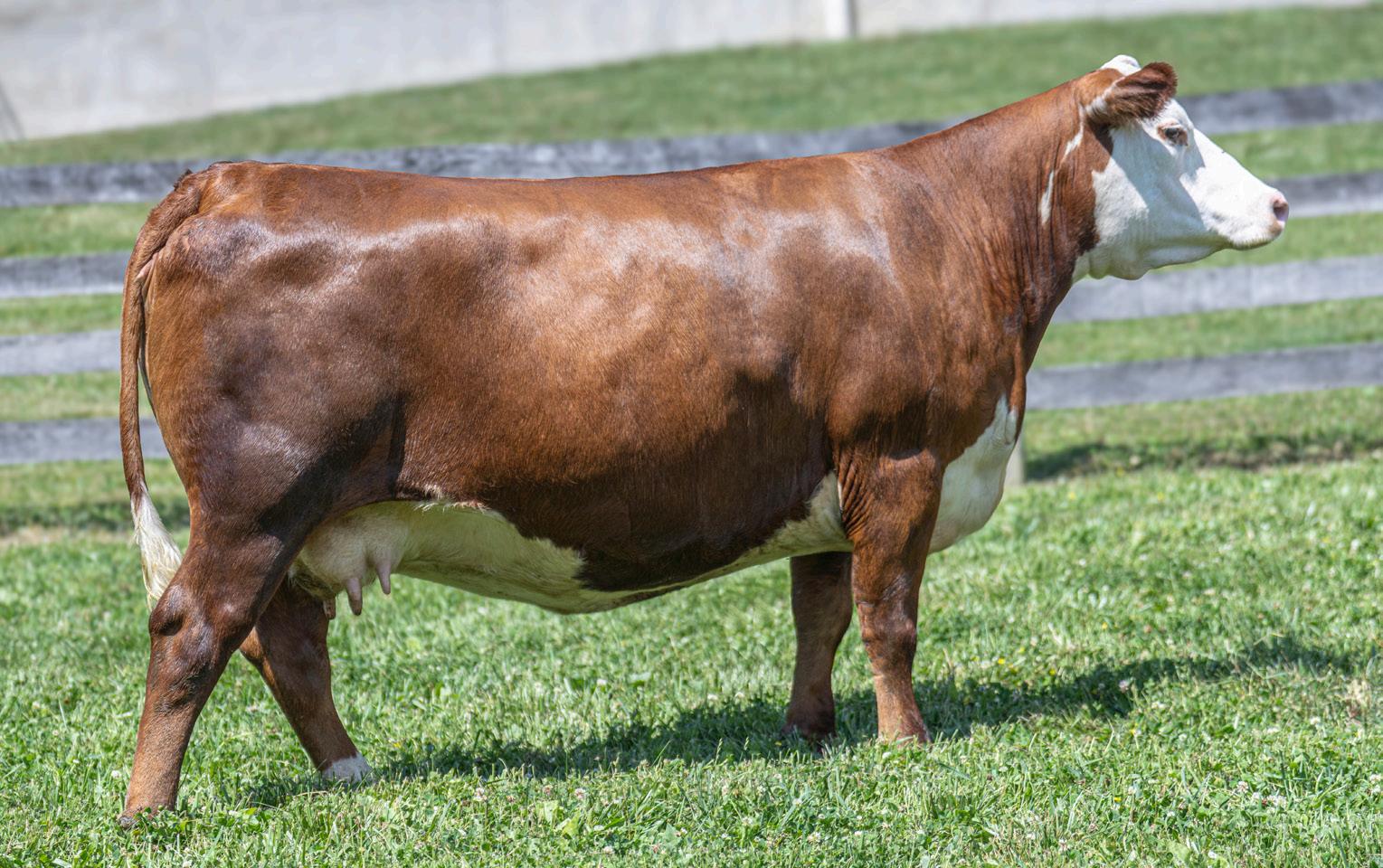

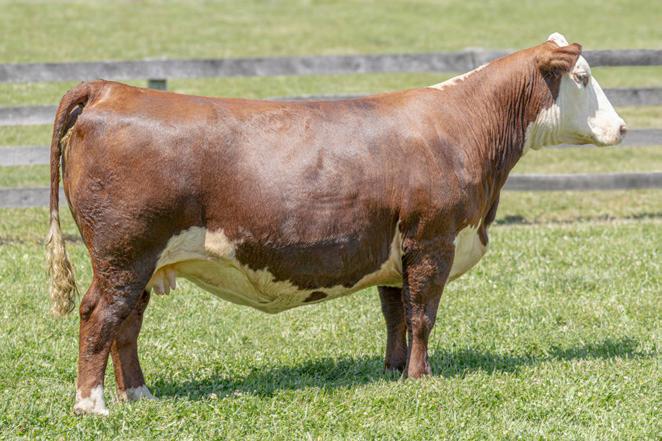

Beef Improvement Federation names top seedstock and commercial producers.
Browse the list of producers, who have received the prestigious Seedstock Producer and Commercial Producer of the Year awards from the Beef Improvement Federation (BIF), and you’ll find many familiar, nationally recognized names because they have carved such a wide path with their cattle and industry leadership. Studying them offers both valuable lessons and inspiration.
Read about this year’s winners, and you will also be struck by how much in common the operations share, from dedication to building cattle that serve customers’ needs to utilizing data to guide their genetic and management decisions.
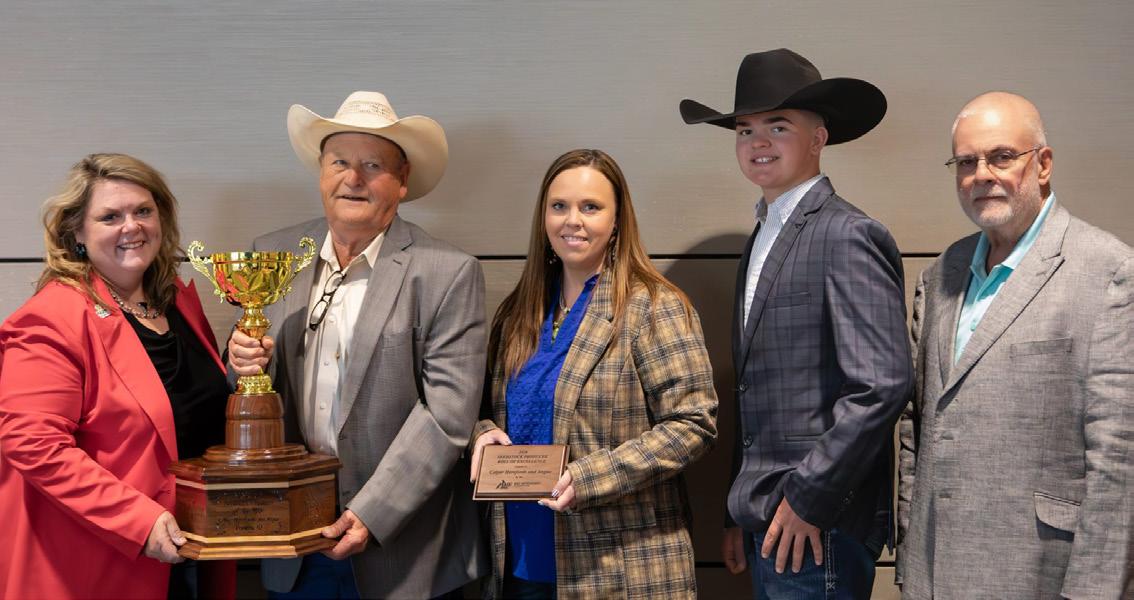
Awards were presented June 2-3 during the 58th annual BIF Research Symposium and Convention in Boise, Idaho. Both awards recognize producers’ dedication to improving the beef industry. The awards are sponsored by Drovers.
Colyer Herefords and Angus —
BIF Seedstock Producer of the Year
Colyer Herefords and Angus represents a masterclass in balancing multi-generational heritage with cutting-edge genetic progress. Today the fifth, sixth and seventh generations of the Colyer family manage the ranch. When the ranch began in 1876, it was a traditional commercial cow-calf
operation. Today, it is recognized as one of the nation’s premier seedstock operations, but it never lost its commercial roots.
“We base all of our breeding decisions off of the commercial cattle industry and what their needs are,” says Guy Colyer. Specifically, Colyer Herefords and Angus focuses on producing genetics that thrive in the rugged, semi-arid Western environment, along with an unflinching belief in the power of heterosis.
“Heterosis is the biggest thing a commercial producer can use to gain an advantage,” Colyer says. “In our part of the world, nothing beats a black baldy. Really, the profitability in a cow herd is pregnancy rates and weaning weights; all of that leads to using Hereford bulls on black cows in our part of the world.”
The Colyer’s cow herd consists of approximately 200 registered Hereford and 200 registered Angus females, along with roughly 300 recipient cows used in their embryo transfer (ET) program. They have always embraced accurate data and cutting-edge technology for genetic improvement. From purchasing their first computer in 1984 to achieving the prestigious Platinum Whole Herd Total Performance Records (TPR™) breeder status, a distinction held by less than 1% of Hereford breeders in the U.S., the ranch prioritizes data integrity. By utilizing artificial insemination, ET, in vitro fertilization and genomic testing, they provide commercial cattlemen with a level of predictability that is rare in the industry.
“For nearly 150 years, the Colyer family has made a lasting impact on commercial cow herds across the United States by supplying Hereford and Angus genetics rooted
in disciplined selection, comprehensive data collection and a focused breeding program,” says Shane Bedwell, American Hereford Association (AHA) chief operating officer and director of breed improvement. “Their longevity, combined with a forward-thinking approach to genetic improvement, is something that should be admired across the beef industry.”
Commitment to the Colyer’s conception-to-consumption focus is underscored by their direct involvement in marketing their customers’ feeder cattle, ensuring that Colyer genetics deliver value at every level of the beef industry.
“We’ve kept using superior genetics through the years and kept trying to make every generation better. I think every generation should be stronger,” Colyer says. “We’ve got EPDs, we’ve got genomic-enhanced EPDs, we’ve got embryo transfer and artificial insemination. We’ve got all of the tools in place to keep moving the cattle forward.”
Colyer Herefords and Angus was nominated by the AHA.
BIF Commercial Producer of the Year
Autauga Farming Co., Autaugaville, Ala., has spent more than a century refining one of the Southeast’s most distinguished commercial cow herds. Founded in 1919 and now stewarded by the fourth and fifth generations of the Wendland family, the operation reflects a deep, unwavering commitment to beef improvement.
“Autauga Farming Company and the Wendland family symbolize the performance principles of the Beef Improvement Federation and have done so for generations,” says Michelle Elmore, Alabama Beef Cattle Improvement Association (BCIA) executive secretary.
A fall-calving herd of 1,018 breeding females— closed for
more than 40 years — lies at the heart of Autauga Farming Co. By eliminating outside female influence, the Wendlands have built a genetic program precisely tailored to Alabama’s sandy soils and climate. Their three-breed terminal rotation of Angus, Hereford and Charolais is engineered for maximum hybrid vigor and produces calves that excel in maternal traits, feedlot performance and carcass quality.
For perspective, Dan Wendland explains Hereford-sired females are bred to Charolais bulls, Charolaissired females are bred to Angus bulls and Angus-sired females are bred to Hereford bulls.
“With the three-breed cross, we are looking to get the best of all three worlds,” he says. “We want the Charolais frame, the Angus marbling and the Hereford durability. When we put them in a field, we want them to last, endure the Southeast heat, the wet months and the dry months.”
The family’s commitment to data backs every breeding decision. As
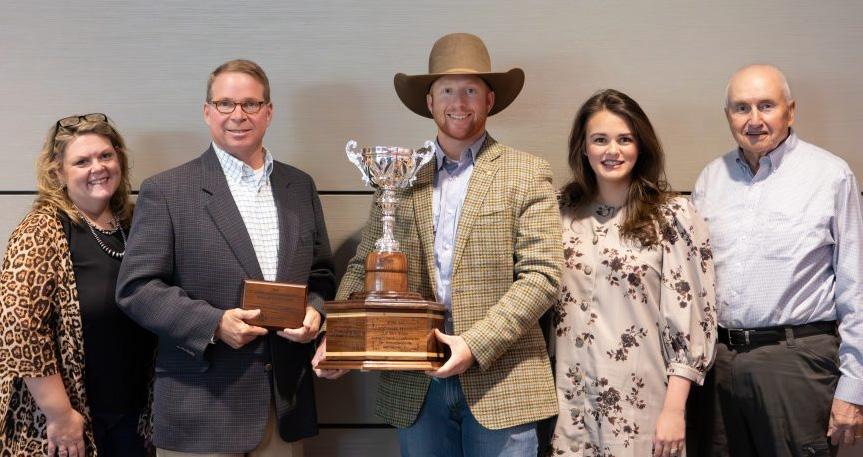
charter members of the Alabama BCIA in 1964, the Wendlands have maintained 62 consecutive years of performance records — weaning weights, gain ratios and carcass data — now managed digitally through CattleMax and electronic identification technology. Carcass feedback from their customers directly informs sire selection, ensuring their genetics perform as well on the rail as in the pasture.
In 2025, Autauga Farming Co. reintroduced artificial insemination into its replacement heifer program for the first time in 25 years to tighten the calving window and improve calf uniformity. The Wendlands didn’t just build a better herd; they built a better market. Co-founding the Producers Feeder Calf Sale in 1980, they established a regional benchmark for pre-conditioned, vaccinated, uniform calf loads that command premium prices.
“Their innovative spirit and love of agriculture have and will continue to make a positive and influential impact,” Elmore says. “Each generation has served as a dedicated model for progressive agriculture. Autauga Farming Company will continue to be an advocate for improvement in efficiency, profitability and sustainability of agriculture.”
Autauga Farming Co. was nominated by the Alabama BCIA.


•
•
•

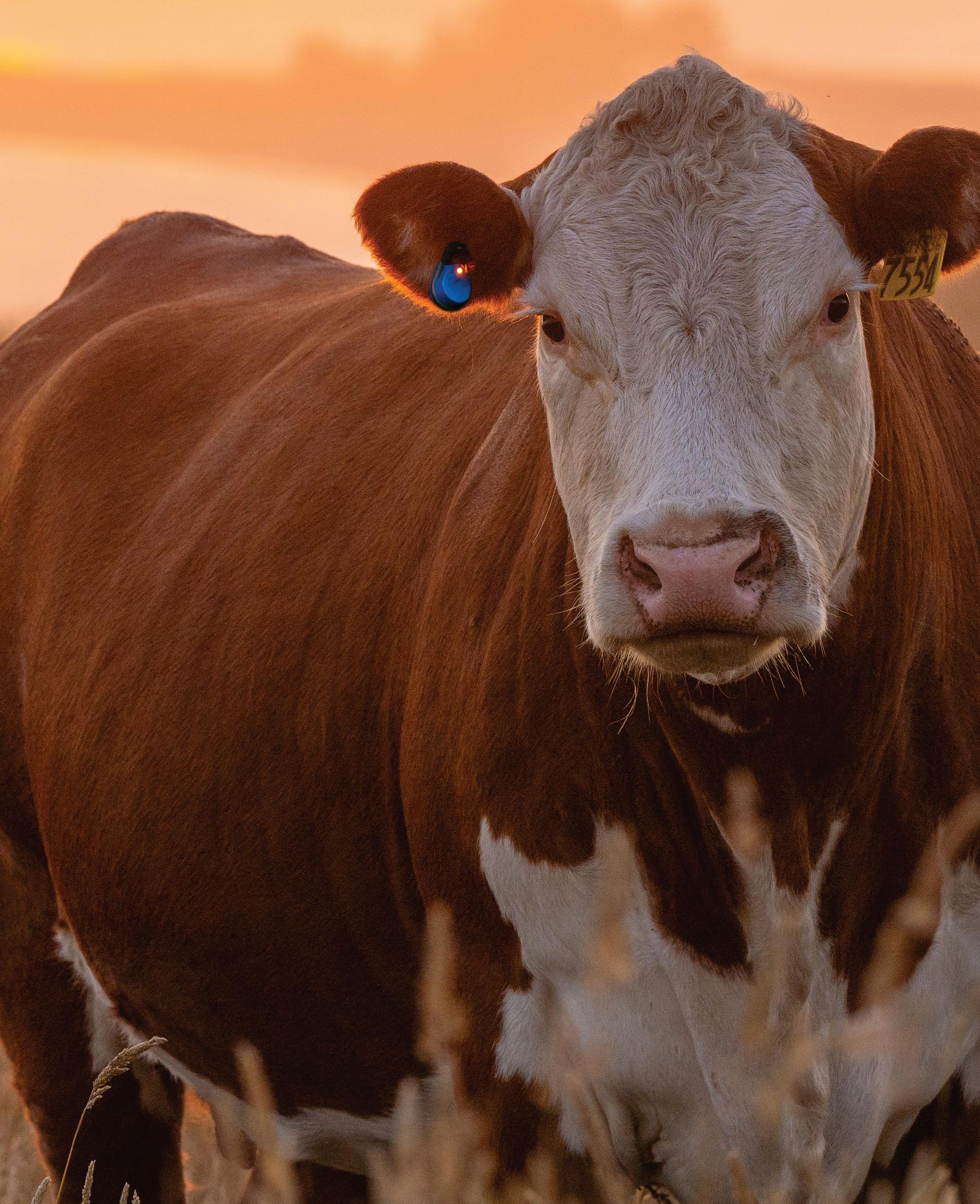
Getting cows and heifers bred promptly remains one of the biggest challenges for producers using artificial insemination (AI) or embryo transfer (ET). A bred cow means a calf on the ground, and more dollars in a producer’s pocket.
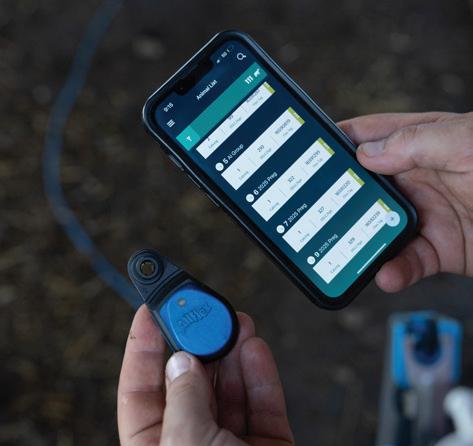
At Shaw Cattle Co. in Caldwell, Idaho, Tucker Shaw and his brother, Sam, use SenseHub Cow Calf to improve heat detection and breeding efficiency across their multigenerational Hereford, Red Angus and Angus operation. Since implementing SenseHub Cow Calf, they’ve seen improved conception rates, tighter calving windows and improvements in first-service success.
Improving heat detection and efficiency
Accurate heat detection is critical to achieving strong pregnancy rates, but visual observation alone can be time-consuming and inconsistent, especially for producers who are not on-site full time.
SenseHub Cow Calf helps address this challenge by providing 24/7 herd activity monitoring and delivering real-time alerts when animals show signs of heat. These insights help identify optimal breeding windows and enable more timely and informed breeding decisions.
For the Shaw family, the technology has been especially valuable for monitoring replacement heifers located miles from headquarters, saving them both time and labor.
“We can look at the app on our phone and determine what type of crew we need,” Shaw said. “It helps us manage not only our time but also our employees better.”
Driving conception and tightening calving windows
Beyond identifying estrus, SenseHub Cow Calf helps flag animals that may not have conceived at the first breeding or are cycling irregularly. This allows producers to intervene sooner and keep animals on track within the breeding cycle.
These capabilities help producers:
• Catch second heats more quickly Rebreed within the same cycle
• Maintain tighter calving windows
Insights beyond breeding
The value of SenseHub Cow Calf extends beyond the breeding season. By tracking activity and rumination, the system can help identify animals that may need attention, enabling earlier intervention and supporting better health outcomes.
Customizable dashboards and reports provide actionable insights into heat activity, herd health and nutrition, helping producers make more informed management decisions. An LED indicator on the ear tag also makes it easier to quickly locate animals requiring attention.
For Shaw, the data has become an important management tool beyond breeding and has supported more efficient, informed decision-making throughout the year.
For Shaw Cattle Co., SenseHub Cow Calf delivers more than data. It provides confidence in breeding decisions, improves labor efficiency and helps maximize herd performance.
By reducing guesswork and enabling more timely action, producers can make the most of their breeding programs, and their time.
SenseHub Cow Calf is not intended to diagnose, treat, cure, or prevent any disease in animals. For the diagnosis, treatment, cure, or prevention of diseases in animals, you should consult your veterinarian. The accuracy of the data collected and presented through this product is not intended to match that of medical devices or scientific measurement devices.
© 2026 Merck & Co., Inc., Rahway, NJ, USA and its affiliates. All rights reserved. US-SHB-260600006
| by Laura Brenner
Fall cover crops add more than forage.
Ranchers often ask Jim Johnson how to supplement grazing needs while transitioning to regenerative practices. The Noble Research Institute senior regenerative ranching advisor recommends using fall cover crops, instead of baling or buying hay.
the Noble Land Essentials courses he teaches.
From a grazing perspective, adding fall cover crops to pastures can reduce reliance on hay. But they also can boost soil health, increase plant diversity and attract pollinators and other beneficial insects.
“In the first year, you may see an increase in insects and beneficial animals. But it may take a few years for a noticeable increase in earthworms and water retention or infiltration rates,” Johnson explains.
Noble’s Red River Ranch incorporated fall cover crops a couple of years ago. Ranch manager Kevin Pierce plants cool-season crops in December and grazes them in February and March when his warm-season pastures are dormant. He adopted this practice for soil health benefits. However, Johnson says the economic benefit of increasing grazing days also gains attention during
“The economics are a lot better, for one, because you’re not paying to cut, rake, bale and haul hay off, then haul it back and feed it to (the cattle),” Johnson says. “You don’t have the shrink from it decomposing in a field or the capital expenditure if it’s in a barn for storage.”
Before ranchers ready their planting equipment, Johnson says it’s important to know why and how you plan to use the cover crop.
“How does that grazing field fit into the rest of your grazing plan? Does it match a time when you have a forage need and allow you to reduce hay feeding?” Johnson asks. “Maybe instead of a cover crop, think of it as a second forage crop. I think it can still provide a lot of the same benefits to the ecosystem if we manage it properly when you graze a cover crop.”
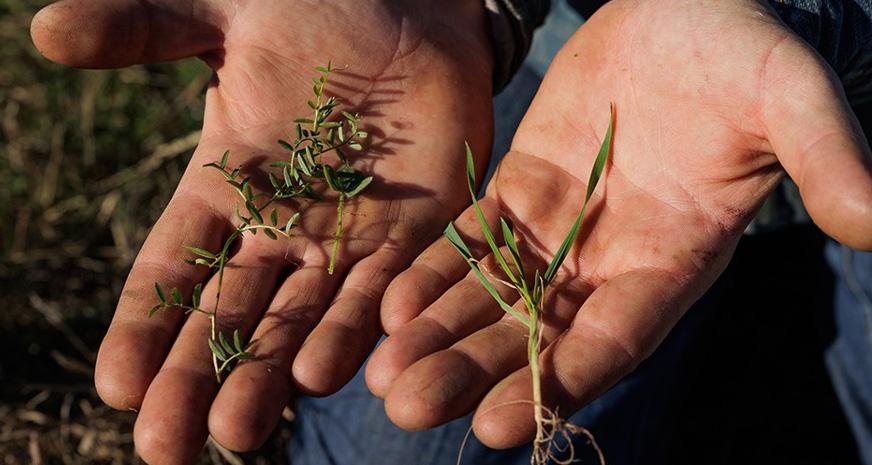
If you know why you’re planting the cover crop, then you can begin to determine the right crop or mix of crops to plant (See Cool-season Cover Crops). For example, a cover crop to increase plant diversity and
add forages to your grazing plan might be a specific mix of grasses and legumes. On the other hand, a cover crop to break up compacted soil or attract pollinators will focus on plants with deep root systems or flowering plants, respectively.
Johnson recommends connecting with a neighbor who uses cover crops or contacting your regional Cover Crops Council for more information about what works well in your area. If local producers aren’t an option, he suggests starting with a seed company website or catalog. There are many good ones available, but his preference is Green Cover, based in south-central Nebraska.
“Many seed company websites have some kind of interactive tool to help producers determine the right mix for their operation,” Johnson says. “You might have to tweak their recommendation, but it gets folks started on a good path.”
The easiest way to integrate a fall cover crop is to let the first frost stop the growth of your warm-season grasses, then plant your cool-season cover crop. Johnson acknowledges that some ranchers
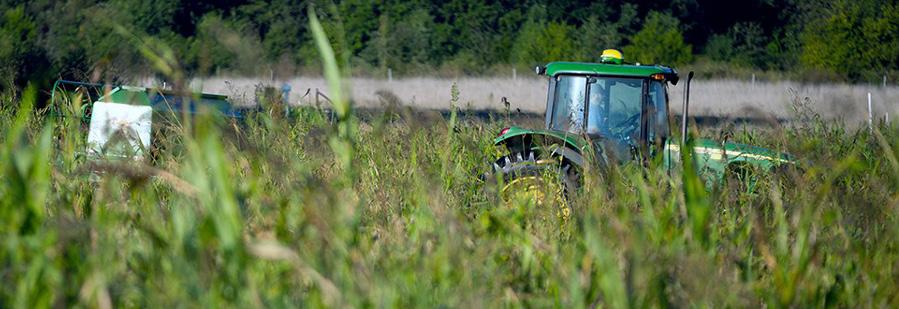
may lack access to a no-till drill, which he believes is the most effective tool to plant a crop in pastureland.
“You can broadcast or tread in with cattle, but it’s not as dependable and predictable as a no-till drill. Though, if you can get some good rain right after planting, you might get closer,” Johnson says. He also points out that broadcast seeding rates may need to be higher than those recommended when using a notill drill.
Noble Research Institute observations
Barley
Barley is better suited to salty or high pH soils. It is similar in other traits to other small grains.
Brassicas
Brassicas, such as collards, mustards, radishes, rape, turnips and various hybrids of these, are sometimes problematic if used as cover crops. If conditions are favorable, their growth can be overwhelming. However, they can also be disappointing due to poor germination and stand establishment, or from freezing out before meeting desired production goals. While it is best to try all cover crops on a limited area to begin with, this is especially good advice with brassicas.
Crimson Clover
This is one of the first clovers or legumes to mature in the spring. It is adapted to a wide range of soils and may be one of the more acid-tolerant clovers. Crimson is one of the larger-seeded clovers and can reseed itself if given the opportunity. It can provide nitrogen (N) fixation but will not be as productive as vetch or peas.
Oats
In addition to fall planting, oats can be planted in late winter. Certain cultivars are even showing promise for use in the warm season. Oats are better suited to heavier or wetter soils. They are reported to be one of the better species for forming associations with mycorrhizal fungi. Occasionally, the seed does not flow through the tubes from the drill seed box to the row opener unit because of light seed weight. Oats can be winter tender; some varieties may freeze out.
Although many ranchers may not like hearing this, Johnson often responds to their requests for specific cover crop advice or recommendations with, “It depends.” He explains every ranch is unique and every rancher employs a different philosophy about achieving their ranch goals. Generally, he encourages producers to experiment on a small section of their pasture to determine what works best for them.
Editor’s Note: This is part of a continuing series of articles about regenerative ranching from Noble Research Institute, long trusted by beef cattle producers for supporting the industry with research, education and consultation. Follow the series in future issues of Baldy Advantage and Hereford World, as well as in special 1881 podcasts, at Hereford.org. Additional regenerative resources and past articles in the series are also at Noble.org.
Laura Brenner is a senior content writer at Noble Research Institute.
Rye
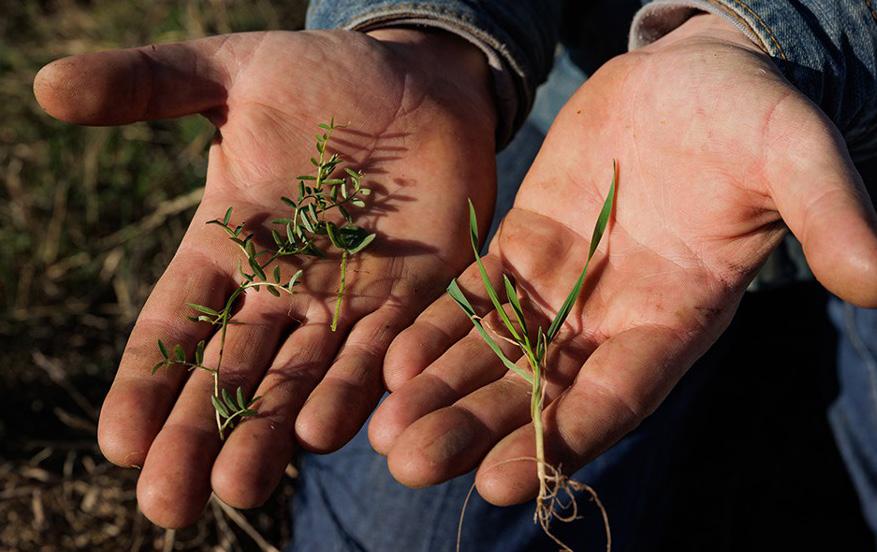
Rye is better suited to sandy soil. It is a little more tolerant of low pH levels and low fertility than other small grains, and it grows at temperatures 5 degrees Fahrenheit cooler than other small grains. It will be the earliest of the small grains to mature and can be broadcast seeded successfully. Rye is popular for its allelopathic effect against marestail (Conyza canadensis). Rye may be considered a weed in future small grains crops.
Triticale
Triticale is an interspecific cross of wheat and rye. Due to this hybrid vigor, it can have high biomass production. Triticale shares a lot of the qualities of wheat and rye. Awned and awnless varieties are available.
Most vetch used in cover crops is hairy vetch, but there is also common vetch that may fit in certain circumstances. Vetch is better
suited to sandy soil. Being a legume, vetch can provide significant N fixation. One of the most notable differences between vetch cultivars is maturity date. The flowers draw many different species of pollinators in the spring. Vetch can be broadcast seeded and will reseed itself if given the opportunity.
The market offers cultivars of wheat that are widely adapted to a broad range of soils. In addition to awned and awnless varieties, there are also soft and hard wheats from which to choose.
Winter Pea
Winter pea is better suited to medium and heavy textured soils. There are high-tannin and low-tannin varieties. Grasshoppers tend to avoid high-tannin varieties. There are also spring peas that may fit in certain circumstances. Peas are also legumes and fix N.
Friday
SEPTEMBER 25, 2026
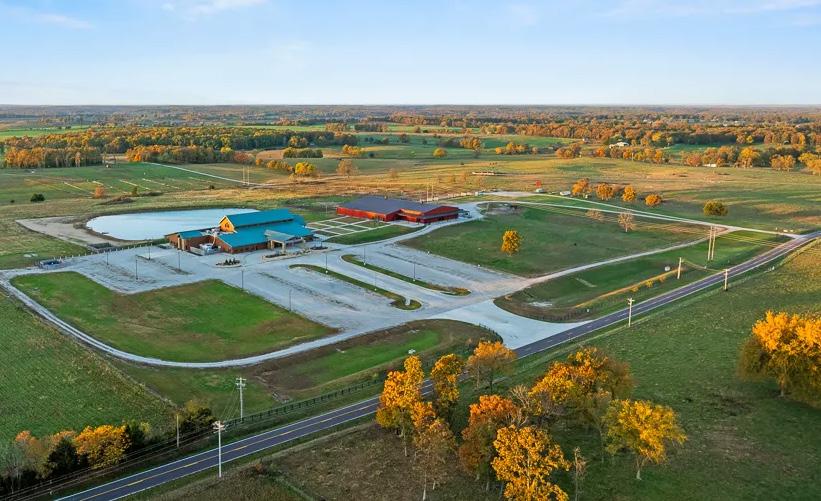
Real Estate Auction
Saturday
SEPTEMBER 26, 2026
Farm Machinery/Cattle
Equipment Auction
COMPLETE & TOTAL LIQUIDATION OF
1566 ACRES
mostly contiguous with improved pastures offered in multiple tracts
21,644 SQ FT EVENT CENTER commercial kitchen, bridal suites, bars, outdoor amphitheater, high-quality sound system
25,600 SQ FT SALE FACILITY with permanent holding pens and horse stalls
7 very well-maintained HOMES
Abundant automatic waterers, fence line bunks, quality fencing
Modern cattle working facilities Visit


FRIDAY, SEPTEMBER 18, 2026
n FROZEN EMBRYOS FROM SOME OF THE FRESHEST GENETICS AVAILABLE
n PICK OF THE HERD FLUSH
n A SPECIAL HEIFER PREGNANCY 160 Head Sell as 105 Lots in
n Several Top Donors

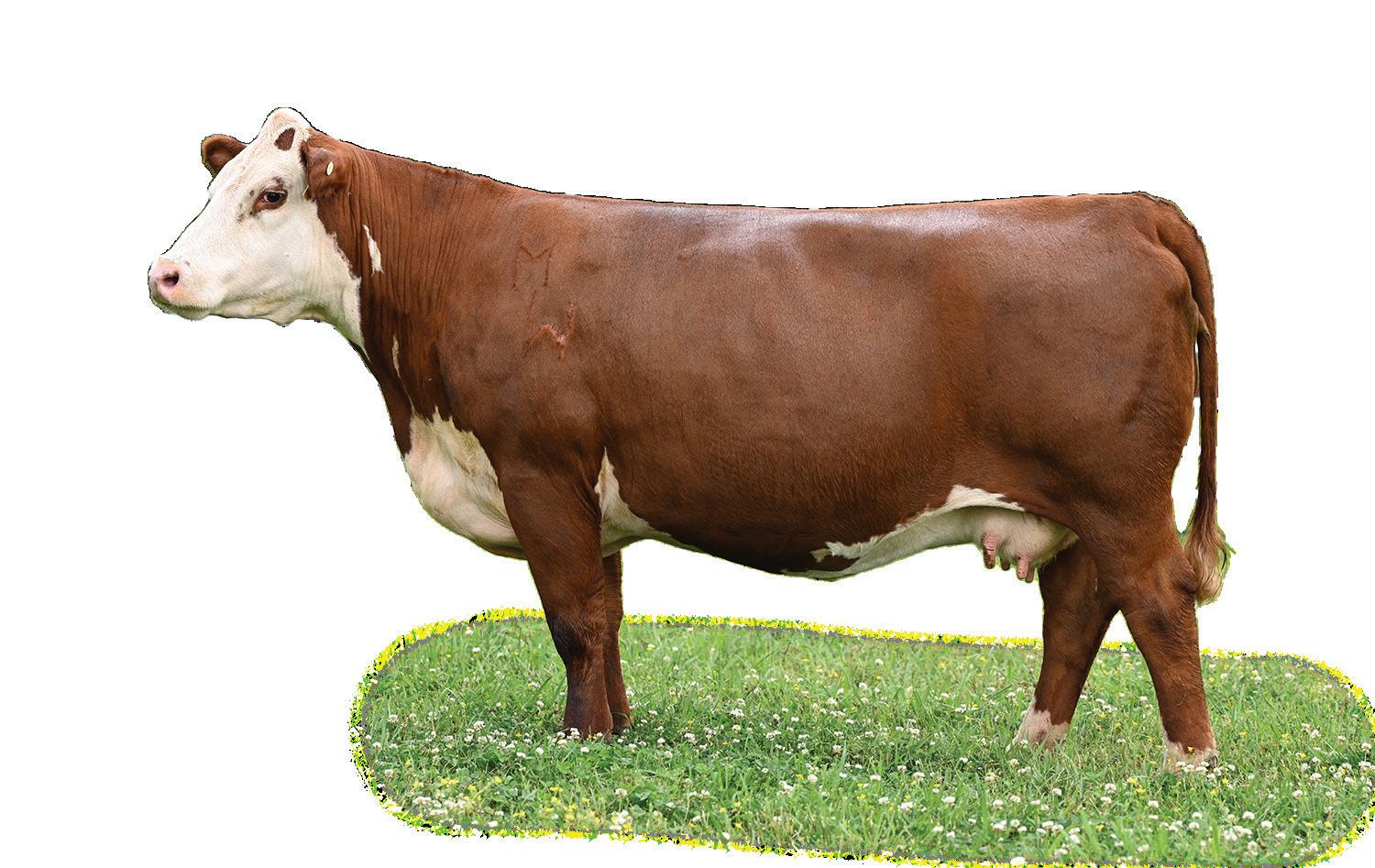
SATURDAY, SEPTEMBER 19, 2026
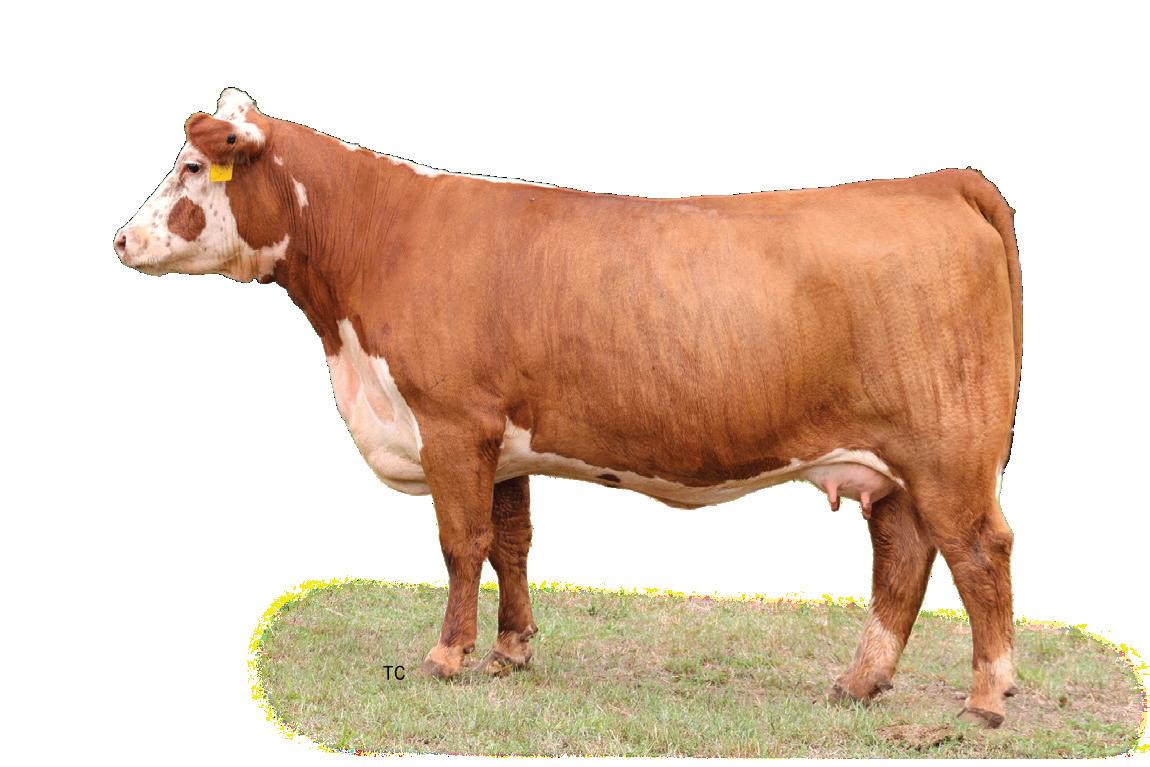
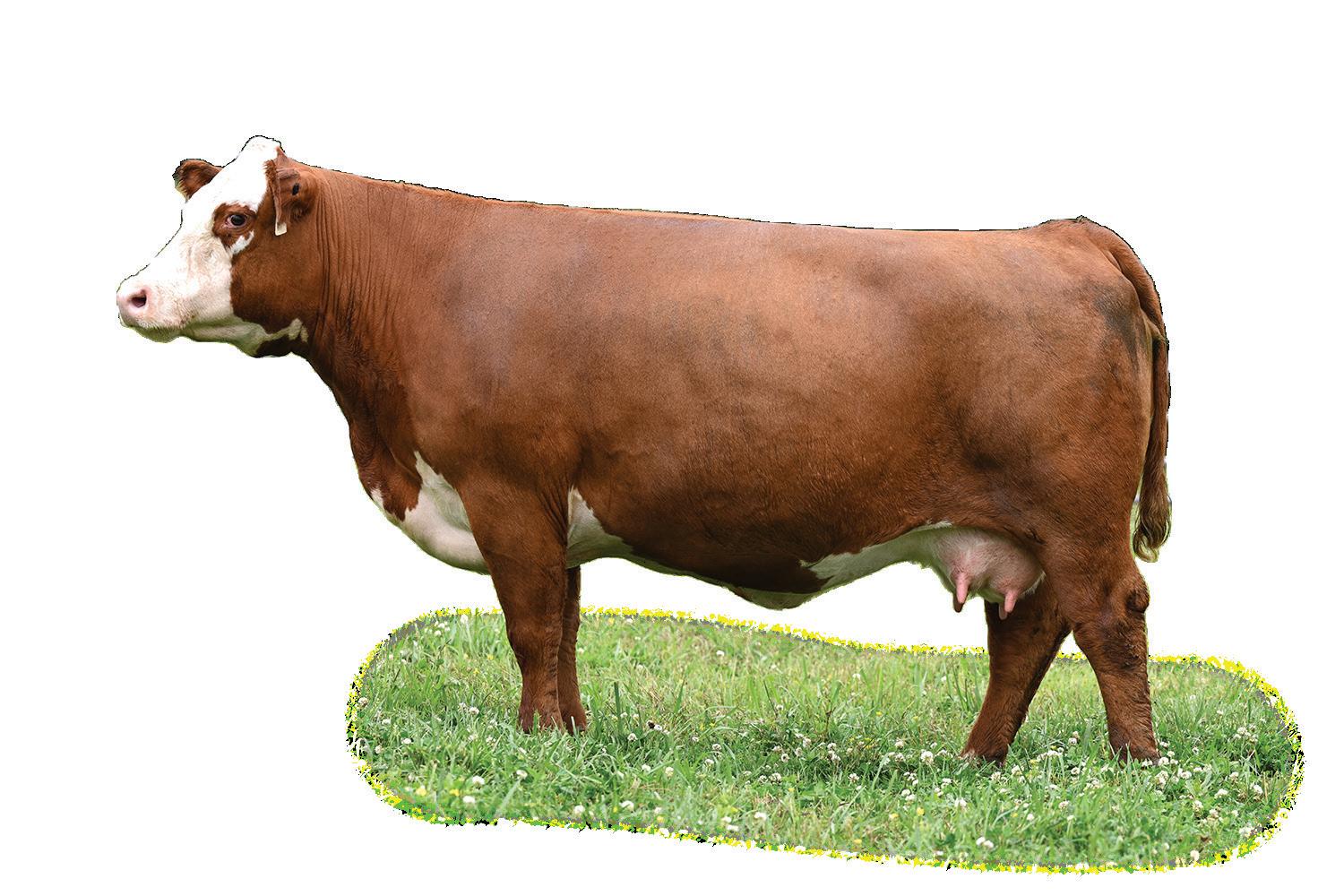
n Bred Cows with Heifer Calf Splits
n Bred Cows with Bull Calf Splits
n Bred Heifers (Spring & Fall)
n Open Heifers (Spring & Fall)
n Fall Cows with Young Calves at Side


MAKE IT A TENNESSEE HEREFORD WEEKEND! /W Foundations for the Future ’26 Sale, Sept. 18 and 19. Burns Farms & Friends Sale, Sept. 19, 5 PM, Pikeville,Tennessee.
by Heather Smith Thomas
Even in these times of tight cattle supplies and historically high calf prices, cattle buyers will pay more for preconditioned calves to reduce their risk of ownership and increase the odds of economic success.
Ron Gill, Ph.D., Extension livestock specialist, Texas A&M University, explains the term “preconditioning” means how a calf is managed from weaning until 30 to 45 days or more after weaning. If you retain calves long enough to get them past weaning stress or retain ownership through harvest, it is important to minimize stress, which reduces health problems. It also improves the future health and longevity of replacement heifers.
“Weaning at the ranch, in their home environment, is the least stressful.
The buyer will have fewer health issues in properly preconditioned calves,” Gill says. “The main reason to do it is for the welfare of the calf, but you also need to make it pay.”
Fixed costs associated with preconditioning include the vaccination protocols required by most recognized preconditioning programs. These vaccines include clostridial and respiratory, such as modified-live virus vaccines — though some might also require a Pasteurella shot — plus deworming.
However, Gill explains most dollars spent for preconditioning stem from feed cost, whether it’s high-quality pasture, pasture with a supplement or a mixed feed for confined calves.
“Nutrition is where most people have the most issues in controlling (preconditioning) cost,” Gill says. “If you want to make it profitable, you’ll use the least prepared/harvested feed possible. Unless producers have a cheap source of silage or high-quality forage, they generally use formulated rations or preconditioning feeds and lose any potential for profit if they dry-lot the calves for more than a few days.”
Gill says it is ideal to wean calves on good-quality pasture and supplement with additional protein if needed to maintain forage intake and digestibility. He adds that lightweight calves may also need additional energy to keep them gaining at an acceptable level.
No matter the specific feeding program, Gill stresses
the importance of considering the value of gain, relative to the cost of gain, for pounds added during preconditioning.
“Some people think calves need to gain 2.5 pounds per day to make a preconditioning program work, but we can’t look at it that way,” Gill says. “You must be able to feed those calves at a cost of gain that is lower than the value increase from that gain or you will lose money. Feedlot people understand value of gain, cost of gain, etc., but many cow-calf producers don’t, and they can get in big trouble.”
The value of gain equals [(final cattle weight x price) - (initial weight x price)] ÷ (final weight - initial weight).
“As long as you can keep the value of gain above your cost of gain, a profit is more attainable,” Gill says. “Even if you have the calves on pasture, you need to figure in a pasture fee (cost) and account for that in your budget, plus any additional supplement. The cost of any feed used for the calves after you wean should not be allocated to the cow herd. You have to track costs to know whether the weaning program for calves that year was profitable.”
Moreover, Gill explains maintaining calf daily gain of 1 to 1.5 pounds on decent-quality pasture is readily achieved. “Those calves will stay healthy and are still on a positive plane of nutrition, and you can control your costs” he says.
Keep facilities in mind
Maintaining calves for preconditioning after weaning also requires considering potential facility requirements.
“Many producers now use fence-line weaning in their preconditioning programs and keep the calves on pasture just across the fence from the cows for those first days,” Gill explains. “If you can do that, it makes weaning really easy, but you do need a good fence between them. If you have to build the fence, that expense would go into the cost of the preconditioning program, but if you already have a good place to wean, it won’t be an additional expense.”
As long as you can keep the value of gain above your cost of gain, a profit is more attainable.
— Ron Gill, Extension livestock specialist, Texas A&M University
Conversely, Gill notes some producers keep calves penned for 7-10 days, and then turn them out on pasture when they’re less likely to test fences trying to reunite with their mamas.
All of this is another way of saying that there is no single correct way to accomplish effective preconditioning. Each ranch is different and every producer needs to figure out the optimum way to wean and precondition on their own place with their constraints and resources. “The main objective is to keep those calves on a positive plane of nutrition and keep the cost of gain down,” Gill says.
Many buyers are willing to pay a premium for same-weight, same-sex and same-class cattle that come with the reduced health risk associated with effectively preconditioned calves. As Gill explains, preconditioned cattle won’t be as stressed as calves taken right off their mothers. They already know how to eat and will be calm and comfortable.
Even so, preconditioned calves need to be marketed to buyers who recognize the added value and who can assemble load lots of them.
“The important thing is to market them into a system that values and markets preconditioned calves,” Gill says. In other words, he explains premiums may be hard to come by if a producer brings preconditioned calves to town for the regular sale.
“For most markets it has to be a special stand-alone sale or segment of a sale that attracts the orders for preconditioned calves,” Gill explains. “Video auctions have done a great job of identifying truckload lots of preconditioned calves. Those calves have some history that gives them additional value.
“If you are preconditioning calves, you also need to think about genetic value. If you are preconditioning mediocre calves, they will still bring
mediocre calf prices. The value we see in preconditioning lesser-value calves is not as high as we’ll see in the higher-quality reputation cattle. Buyers go after the ones they think have the whole picture, which includes genetics, good health and the potential to do well on gain and also on the rail.”
Beside the potential price premium, Gill points out calves weaned at least 30-45 days shrink less through the marketing process. This reality, coupled with how producers market their cattle and manage shrink can cover the costs of preconditioning.
For instance, Gill explains selling calves off the ranch typically means they’re sold with pencil-shrink of 3-4%, whether the calves are weaned or not. “If you take those calves to an auction, and they only shrink 1% versus a 3% or 4% pencil shrink at the ranch, this is to your advantage. I don’t hesitate to take a set of calves to an auction market where they have a good group of buyers because we can manage shrink to our benefit,” he says.
Gill also points out producers can manage calf condition to their economic benefit. As an example, some people who precondition calves utilize high-energy feed that adds too much flesh to calves.
“Many buyers will discount calves for being that fleshy; they prefer calves a little leaner that will gain more in the stocker phase or in the feedyard. If they manage them right, fleshy calves will do fine, but buyers are still going to discount them,” Gill says.
Incidentally, calves weaned on grass rather than a high-energy grain diet lose their baby fat but are still growing and gaining. Although they look a bit rougher, buyers prefer them.
“Most cow-calf people think those calves are losing weight because they’ve lost that baby-fat bloom, but they are simply growing fast,” according to Gill. “You can add about $4 to $5 per hundredweight just by changing the look of that calf.”








by Wes Ishmael
Cattle markets remained resilient through June, absorbing volatility and uncertainty stemming from an array of outside factors, including confirmation of New World screwworm in the United States, the U.S-Iran war, potential beef packing capacity loss and continued White House rhetoric about the need to lower consumer beef prices.
Tight cattle supplies and strong consumer beef demand continue to win the day, though, with cattle prices maintaining year-over-year gains, albeit at a narrowing degree. For instance, regional prices for Medium and Large No. 1 steers weighing 600-650 pounds were 23-25% higher near the end of June and weighted average FOB live fed steer prices were 13% higher.
USDA’s Economic Research Service (ERS) lowered expected feeder steer prices a touch for the remainder of this year, compared to the previous month in the June Livestock, Dairy and Poultry Outlook.
Based on recent price data, the ERS lowered projected prices by $2 in the third and fourth quarters to $378 per hundredweight (cwt.) and $382, respectively. The forecast annual average price also declined $2 to $375.22. The first-quarter price next year was unchanged at $378. Price projections are for Medium and Large No. 1 steers weighing 700-800 pounds and selling at Oklahoma National Stockyards.
In the June World Agricultural Supply and Demand Estimates, the ERS left the projected five-area direct average fed steer price unchanged for the remainder of this year. Forecast prices were $252 per cwt. in the third quarter and $255 in the fourth quarter with an annual average price of $250.16. The first-quarter price next year was forecast to be $250. Beef production this year was projected to be 109 million pounds
less than the previous month (-0.4%) at 25.4 billion pounds. The total would be 565 million pounds less (-2.2%) than last year.
Although retail beef prices continue churning higher, wholesale beef prices were lower year over year at the end of June (see Table), lacking the seasonal spark typically present during the grilling season hallmarks of Memorial Day and Independence Day.
Narrow, sometimes negative, daily Choice-Select spreads during the spring and early summer also prompted plenty of pondering. Undoubtedly, supply was part of the story with so little Select available relative to Choice and higher grading carcasses. Consumer economic pressure from the U.S.-Iran war likely played a role, too.
“Given the recent rise in fuel costs, income for other items and weekly spending at stores has likely taken a hit, which tends to push consumers toward more price-sensitive food choices and away from higher-priced beef items that rely on Choice-level marbling,” according to Charley Martinez, agricultural economist at the University of Tennessee, in the early May issue of In the Cattle Markets. “As a result, downstream buyers have placed less emphasis on quality premiums, compressing the spread even when supply conditions might otherwise support it.”
Stalwart domestic consumer beef demand also may be showing signs of wear, based on the latest Meat Demand Monitor (MDM).
“Consumer frustrations with their finances continue to grow by a larger subset of the U.S. population,” according to Glynn Tonsor, agricultural economist at Kansas State University. “Specifically, the latest Meat Demand Monitor base report notes 39% of U.S. residents indicate their household
finances are worse than in May of 2025 — the highest on record for May since the MDM series launched in 2020. This corresponds with weaker beef demand per the MDM for the month of May and is a cautionary point regarding the broader risk at hand to beef demand’s historically strong run that truly has been the largest economic force underpinning cattle and beef prices.”
At the same time, in the late June issue of In the Cattle Markets from the Livestock Marketing Information Center, Tonsor points out consumers have, thankfully, taken news of New World screwworm in stride so far.
Beef exports remain challenged U.S. beef exports continued lower in April, according to data released by USDA and compiled by the U.S. Meat Export Federation (USMEF).
April beef exports totaled 89,783 metric tons (mt), down 11% year over year, while value fell 5% to $780.6 million. However, April beef exports shined on a per-head basis, as export value equated to $415.88 per head of fed slaughter, up 5% from a year ago. While prospects are brightening for U.S. beef’s return to the China market, April results still reflected a near-total lockout.
Beef variety meats were a bright spot in April, with exports climbing 20% from a year ago to 25,314 mt, led by growth to top volume market Mexico, valued at $114.7 million (up 40%).
For January through April, beef and beef variety meat exports were 11% below the 2025 pace at 365,138 mt and declined 5% in value to $3.13 billion. When excluding China, exports were up slightly (+0.3%) in volume and increased 7% in value.
“Global demand for U.S. beef has proven very resilient, even in the face of tight supplies and higher prices,” says Dan Halstrom, USMEF president and CEO. “But there are certainly
Regional Feeder Steer Prices1
North Central
South Central
Wholesale Beef Prices4
prices9
significant headwinds, including the impact of weak currencies in Korea, Japan and Southeast Asia, and higher energy prices weighing on consumer confidence and disposable income. And while we were thrilled to see China renew U.S. beef plant registrations following the summit meeting between President Trump and President Xi, additional obstacles must also be addressed before U.S. beef’s presence in China rebounds.”
Estimated cattle slaughter year-to-date total11
1AMS National Weekly Feeder & Stocker Cattle Summary, 06/22/25 and 06/21/26
2 CME Feeder Cattle Index year over year 07/01/2026
3 USDA Five-area weekly weighted average direct slaughter cattle, year over year, week ending 06/28/26
4 National Weekly Boxed Beef Cutout and Boxed Beef Cuts (negotiated, weekly cutout value summary), weekly average for weeks ending 07/03/25 and 07/02/26
5 USDA steer byproduct drop value (FOB central U.S.), year over year 07/02/26
6 National Weekly five area direct slaughter cattle premiums and discounts, weighted average week of 06/30/25 and 06/29/26
7Meat Price Spreads, Choice beef values and spreads and all fresh beef retail value, USDA ERS; monthly values, cents per pound of retail equivalent (May 2026 year over year)
8 U.S. Meat Export Federation data — April 2025 and 2026
9CME futures, nearby contracts year over year, 07/02/26
10 WTI-CME, nearby contract, year over year, 07/02/26
11 Estimated weekly meat production under federal inspection, year to date 06/26/26 year over year
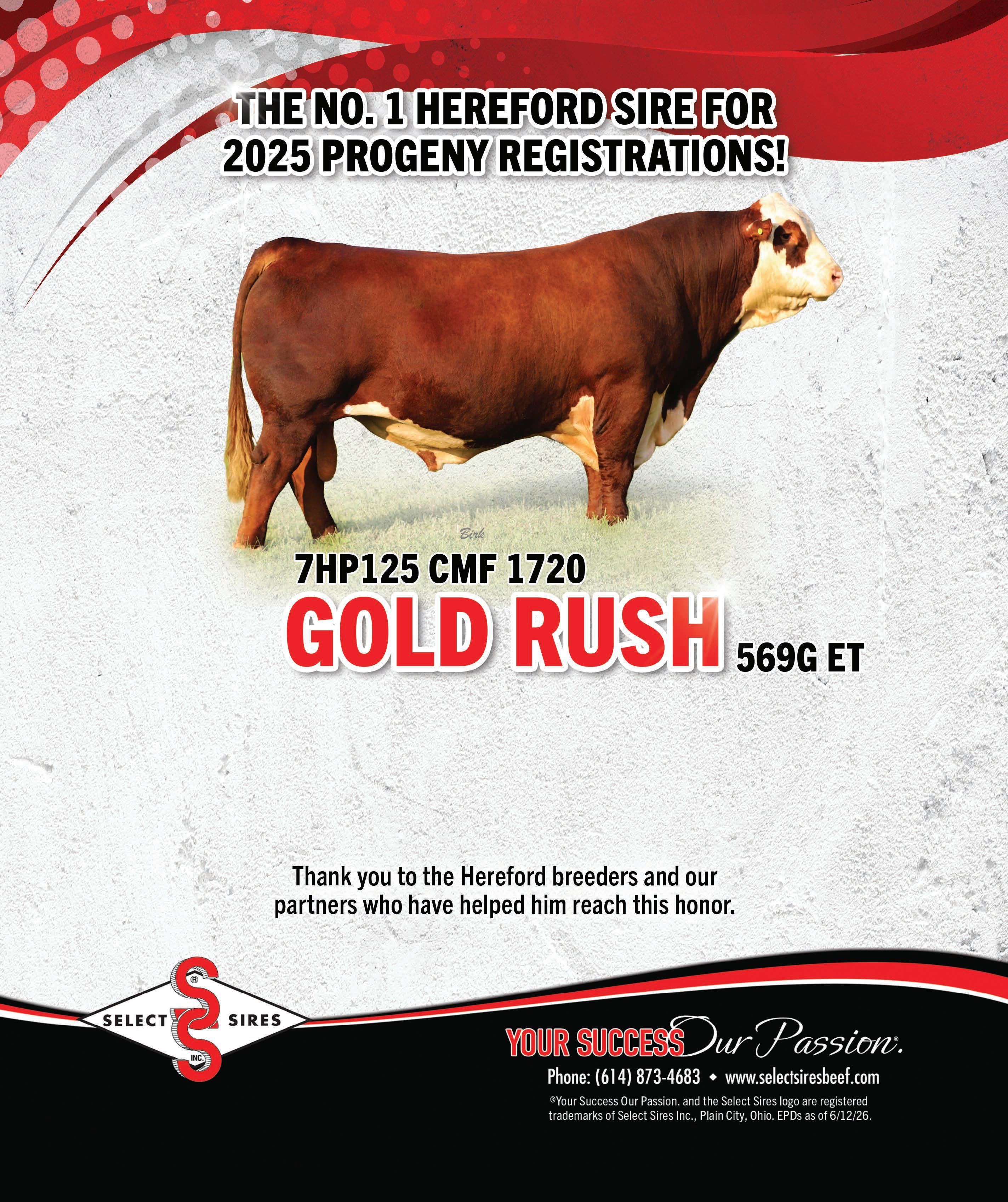
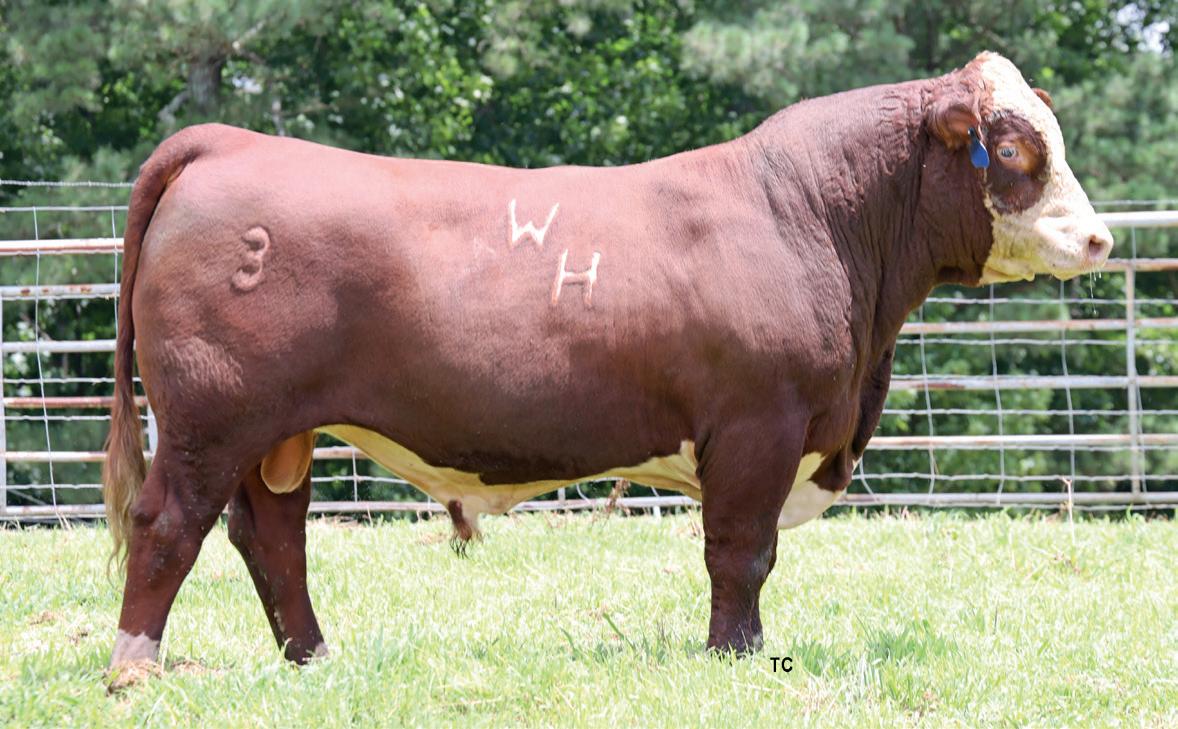
GOLD RUSH is our high-selling Hereford bull and for good reason. This sire excels at just about every task our customers ask of him. Proven to deliver, GOLD RUSH sires exceptional bulls and females. His daughters in production are standouts and his value in both commercial and purebred herds continues to grow. As he adds more records, GOLD RUSH still ranks in the top 1% of the breed for both Carcass Weight and Marbling. He has quality and pounds covered!





Hereford influence shines in summer feeder cattle auctions.
Cattle markets’ long bull run held pace during late spring and early summer calf and feeder cattle auctions as buyers chased dwindling supplies. Resurgent forage in some areas also renewed demand for grazing cattle.
“Although the price floor is historically high, buyers continue to pay more for cattle they believe will return more on the other side of the trade,” says Justin Miller, American Hereford Association director of commercial programs. “Even with short cattle numbers, premiums paid for reduced health risk is evident, as are premiums for cattle with the genetic potential to ring the bell in the feedlot and on the rail.”
Browse the sale results below and demand for the Hereford influence shines through.
“Heterosis always provides leverage,” Miller says. “That’s why baldies and tiger stripes built with Hereford are always in such high demand. Buyers get that pop from hybrid vigor along with Hereford’s genetic strengths,
which include feed efficiency. Likewise, producers who utilize Hereford-sired baldy and tiger stripe females capture the breed’s advantages in fertility and longevity along with the power of maternal heterosis.”
Demand for maternal heterosis via baldy heifers was reflected by the ShowMe-Select™ (SMS) Southwest Missouri (SWMO) sale May 15 at Joplin Regional Stockyards, Carthage, Mo.
“Strong bidding set new records for both high and average prices,” says Patrick Davis, University of Missouri (MU) Extension livestock field specialist.
All told, 165 heifers from 12 consignors sold for a record average of $4,947 per heifer, totaling a record gross of $816,350. The average bested the spring 2025 sale by more than $900 (124 heifers) and the fall 2025 sale by more than $700 (246 heifers).
“Compared with feeder heifer prices, bred heifers are currently selling
at a slightly lower ratio than historic norms,” Davis says. For perspective, he explains data from the University of Tennessee indicates the price of fallcalving heifers selling in May typically equate to 2.5 times the price of a 550-pound feeder heifer. Bred heifers in the recent SMS-SWMO sale brought 1.98 times the value of a 550-pound feeder heifer, based on the previous week’s Southwest Missouri Weekly Summary Report from the Missouri Department of Agriculture. That ratio is slightly lower than the two 2025 Joplin Regional Stockyards SMS sales.
“Three longtime consignors posted average sales of more than $5,700 per heifer,” Davis says.
Nolan Kleiboeker Farms LLC (NKF) of Wentworth, Mo., consigned the top-selling lot, an AI-bred HerefordAngus cross, red mottle-faced heifer that brought $6,750.
NKF also consigned the second high-selling lot with three natural-bred black baldy, Hereford-Angus cross heifers, which sold for $6,700 per head.
B (black), BWF (black whiteface), BBF (black brockle-face), BR (Brahman influence), Hfr (heifer), Hfr-RQ (replacement quality heifer), Herf. (Hereford), R (red), RWF (red whiteface), Spd hfr (spayed heifer), Str (steer), TS (F1 tiger stripe), YWF (yellow whiteface)
Cattle Country Video
Aug. 4-5
Oregon Trail Classic Gering, Neb.
Sept. 10
Frontier Fall Roundup Cheyenne, Wyo.
LiveAg
Aug. 5
Producers Livestock Video Auction Autaguaville, Ala.
Aug. 13
LiveAg Video Auction Cody, Wyo.
Dec. 10
LiveAg Video Auction Las Vegas, Nev.
Northern Livestock Video Market
Aug. 17
Early Fall Preview
Billings, Mont.
Sept. 14
Fall Premier Billings, Mont.
Superior Livestock Auction
Aug. 17-21
Big Horn Classic
Sheridan, Wyo.
Western Video Market
Aug. 10-11
Cheyenne, Wyo.
Sept. 15
Ogallala, Neb.
Nov. 6
Amarillo, Texas
Greater Midwest Certified Hereford Feeder Calf Sale
Jan. 4, 2027
Carthage Livestock Auction –Carthage, Ill.
Contact:
309-221-9621





Potentially strong El Niño could open the gate to broader herd expansion.
by Gentry Warner
Heading into this summer, lingering and emerging drought continued forcing beef cow liquidation and delaying herd expansion across vast swaths of the nation’s cow country. The likely El Niño this fall and winter could change that for some.
“There is a 63% chance of a very strong El Niño during NovemberJanuary that would rank among the largest El Niño events in the historical record going back to 1950 (see ‘A Different El Niño’),” according to forecasters with the National Weather Service Climate Prediction Center. “Even very strong El Niño events do not lead

to the expected impact everywhere, but stronger events can more significantly tilt the odds in favor of expected outcomes.”
El Niño Ahead
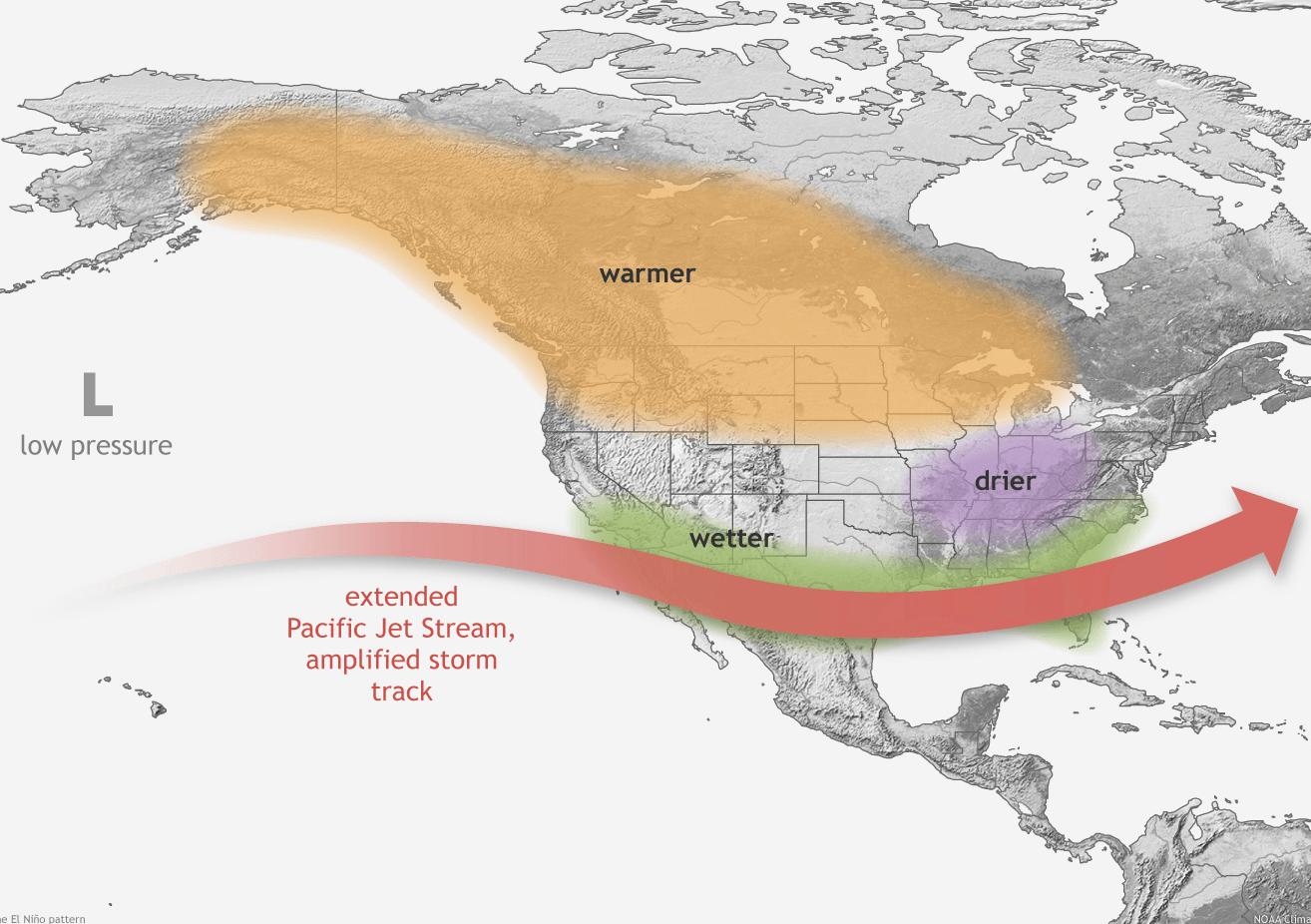
El Niño conditions occur when ocean temperatures across areas of the equatorial Pacific Ocean become warmer than normal. Warmer waters influence atmospheric circulation patterns around the globe, usually leading to significant shifts in precipitation and temperature across the United States.
“Typical El Niño-related impacts include wet weather across the southern and southeastern United
States, along with milder and often drier weather across the North,” says Brad Rippey, USDA meteorologist.
The timing of this year’s El Niño could also help boost moisture for producers in some of the most drought-affected regions. For instance, forecasters predict a more active North American monsoon pattern throughout the Southwest during late summer. Increased monsoonal moisture could provide drought relief across portions of Arizona, New Mexico, Colorado and Utah.
El Niño conditions also provide hope for improving forage conditions to cattle producers across Texas, Oklahoma, Kansas and other Southern Plains states.
Even if drought conditions improve, rebuilding the nation’s cow herd will not happen overnight. It will take time before the drought truly dwindles, pastures recover, hay inventories replenish and water sources stabilize.
Plus, unlike the previous national herd expansion that ended in 2019, this year began with the smallest beef cow herd since 1951 and a dearth of replacement heifers to begin the rebuilding process.
Producers need confidence that improved conditions will last longer than a single growing season.
In the Southwest, for instance, where long-term drought has persisted for decades, improved precipitation may help replenish
If
moisture
improves across major cow-calf
states,
we could begin
seeing the foundation for herd rebuilding. But producers will still evaluate feed costs, interest rates and overall market conditions before making long-term expansion decisions.
— Brad Rippey, USDA meteorologist
A Different El Niño Meteorologists categorize El Niño events based on how warm Pacific Ocean temperatures rise. When sea-surface temperature anomalies exceed 2 degrees Celsius above average, the event is designated as a Super El Niño. Only four events since 1950 received the designation: 1972-1973, 1982-1983, 1997-1998, and 2015-2016.
soil moisture and improve grazing conditions. However, major reservoirs and water storage systems remain significantly depleted.
“The Colorado River Basin has been drawn down over decades,” Rippey notes. “A single wet winter won’t completely solve that problem.”
While producers across the Southern Plains could benefit from increased moisture, parts of the Northern Plains and the Northwest could experience warmer and potentially drier conditions than normal. Unfortunately, not every
Each Super El Niño produced slightly different outcomes, but several common themes surfaced:
• Storm activity increased across much of the southern United States. Drought coverage declined dramatically. In some cases, major flooding occurred as storms repeatedly tracked across the same regions.
cattle-producing region will see the same advantages.
In addition, strong El Niño years can bring severe weather, such as flooding and storm-related challenges. More rain is generally welcomed in drought areas, but too much moisture too fast can create its own set of management concerns.
For that reason, many producers remain cautiously hopeful rather than outright optimistic.
“If moisture improves across major cow-calf states, we could begin seeing the foundation for herd rebuilding,” Rippey says. “But
• During the 2015-16 Super El Niño, drought coverage across the lower 48 states fell to just 12.4% by March 2016.
• While no two events are identical, strong El Niño episodes tend to tilt the odds toward wetter conditions in areas that desperately need moisture.
producers will still evaluate feed costs, interest rates and overall market conditions before making long-term expansion decisions.”
Given historically strong calf and feeder cattle prices, fueled by snugger supplies and robust consumer beef demand, more producers may finally have both the economic incentive and the environmental conditions to expand, if moisture and forage conditions improve.


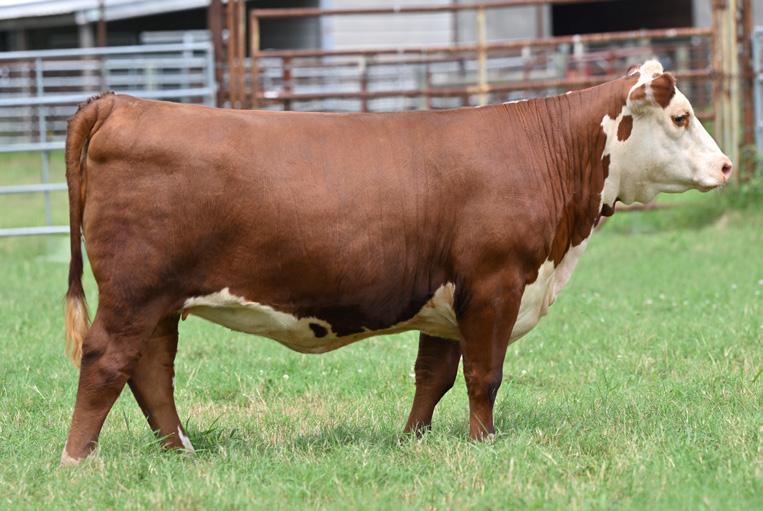
FCF MS SANDHILL 43B ET
REG.#P44716226
Sire: Loewen Sandhill L70 ET
Dam: PR2 4013 Bonnie 701G 43L ET The oldest Loewen Sandhill L70 daughters to sell.
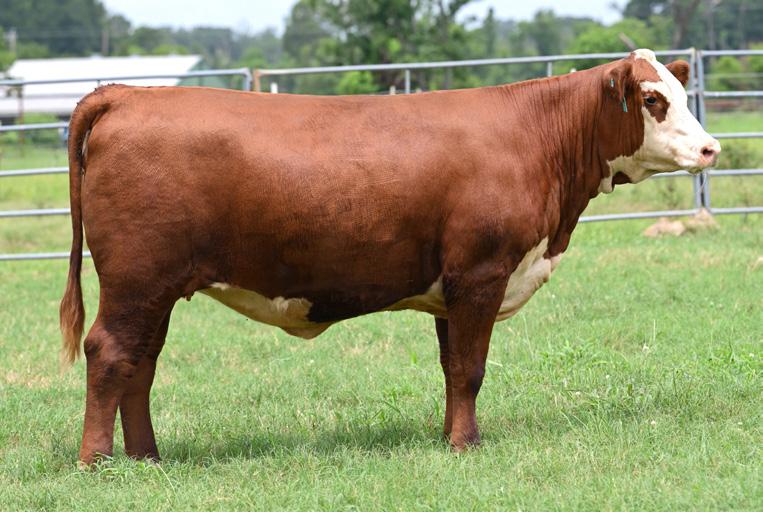
FCF LADYBROADWAY 755A1 ET
REG.#P44632134
Sire: Churchill Broadway 858F
Dam: WHR 0142 311G Beefmaid 213K Due to calve Feb 2027 to KCF Geronimo N253.
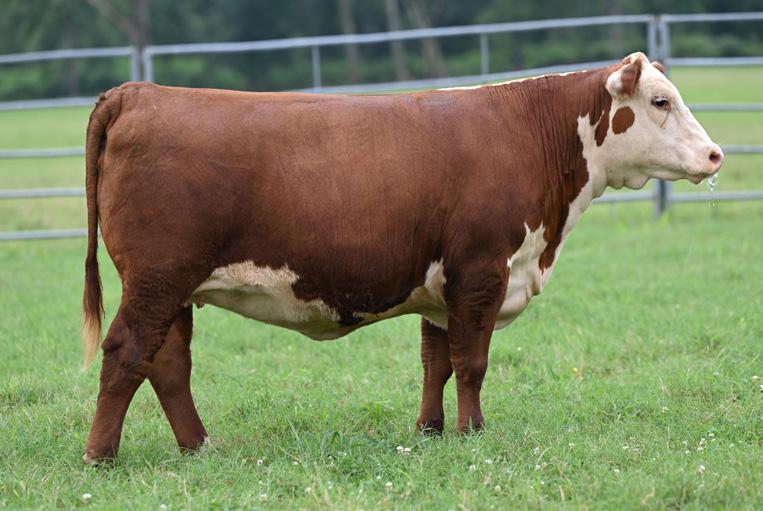
FCF MS SANDHILL 43A ET
REG.#P44716223
Sire: Loewen Sandhill L70 ET
Dam: PR2 4013 Bonnie 701G 43L ET Power and performance.
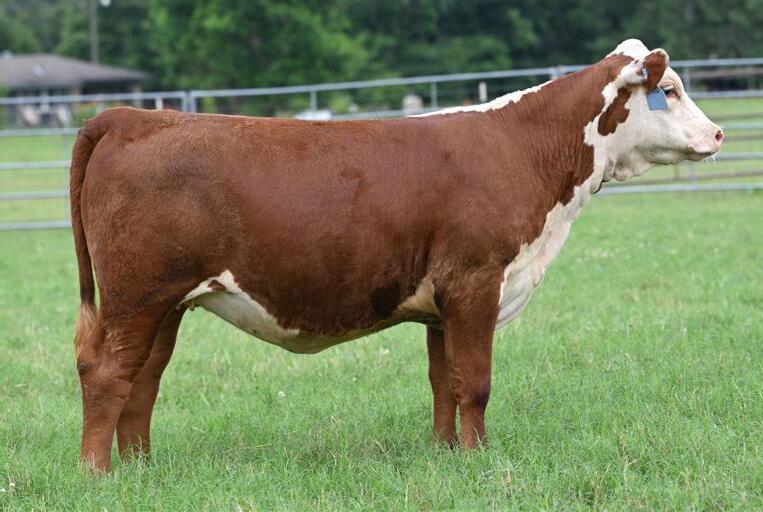
FCF MS KEEPSAKE 1A
REG.#P44716255
Sire: Churchill Equity 3316L ET
Dam: 7 Oaks H086 Keepsake L124 ET Pedigree built for longevity.
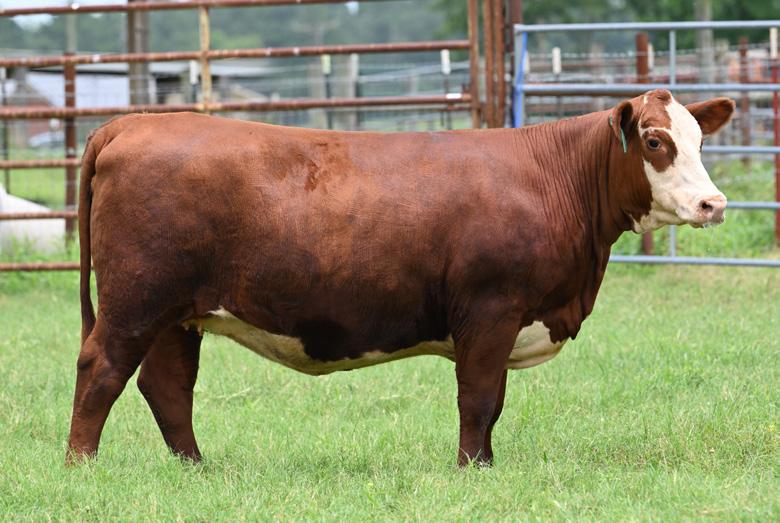
FCF MS LADYBROADWAY 755A2 ET
REG.#P44632139
Sire: Churchill Broadway 858F
Dam: WHR 0142 311G Beefmaid 213K Due to calve Feb 2027 to KCF Geronimo N253.
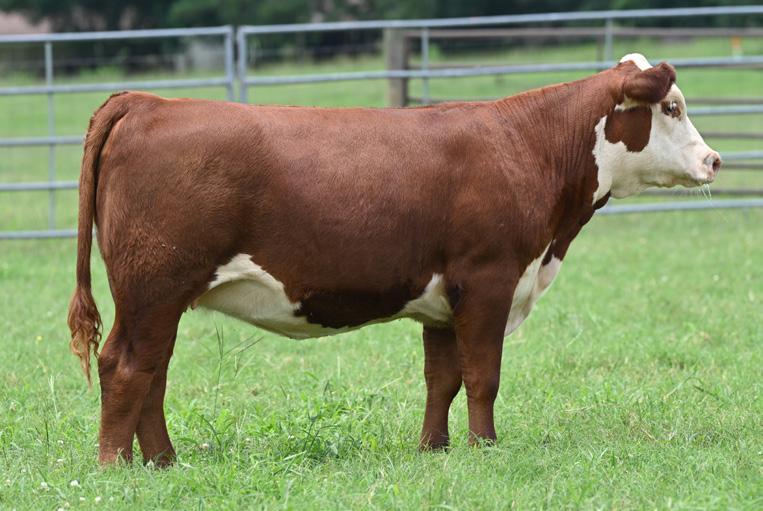
FCF MS NEXTLEVEL62A1
REG.#P44771853
Sire: 111F Next Level ET
Dam: THM 535G MAR C 4026 The next level kind.


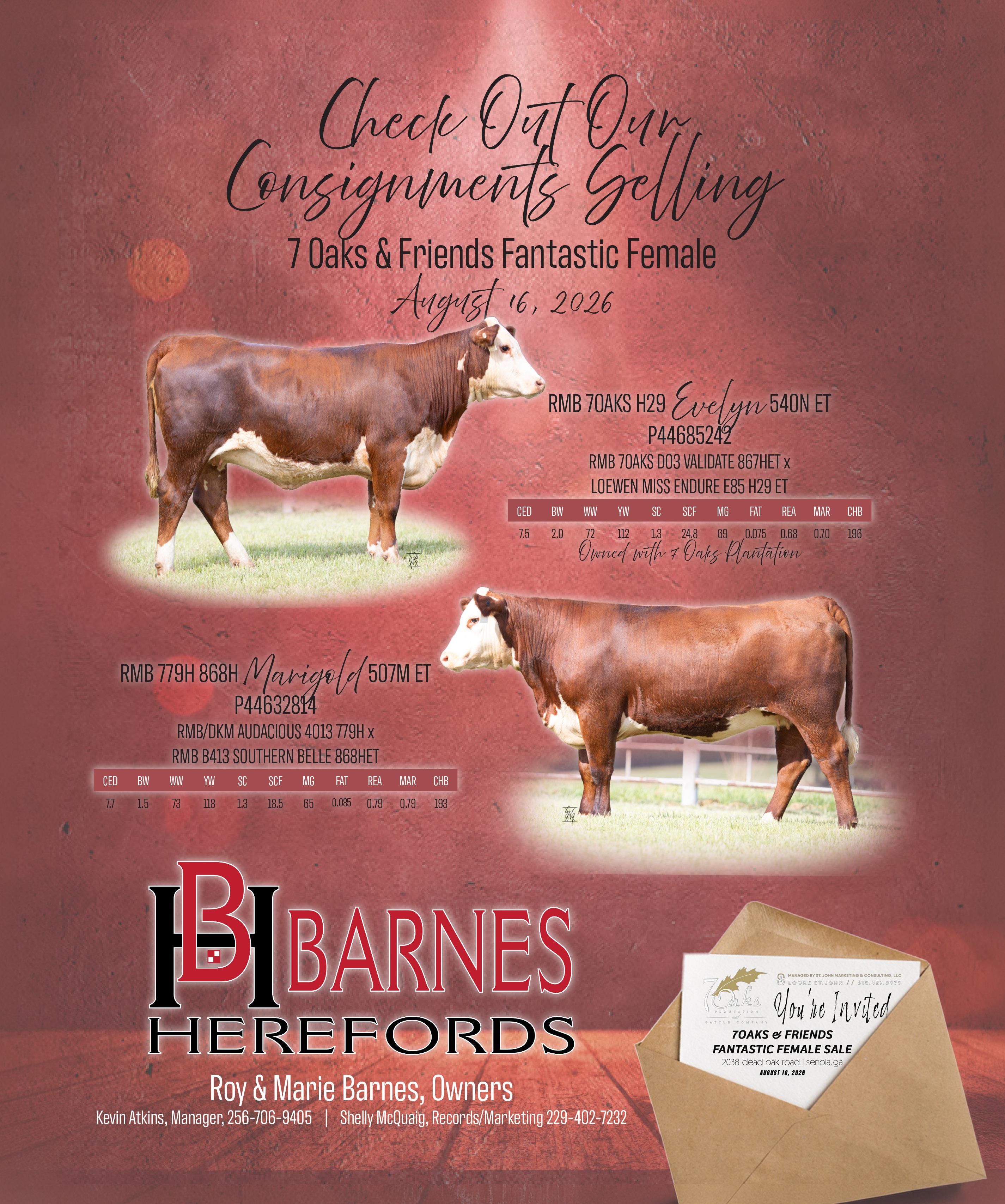
Sunday, Aug. 16, 2026 in Senoia, Georgia and view our consignments in person.


Mohican Farms
Conard and Nancy Stitzlein 4551 State Rt. 514 Glenmont, OH 44628
Matt Stitzlein 330-231-0708 Alexis Stitzlein 330-231-9538
lexstitz@gmail.com Visit us on Facebook Mohican Polled Herefords
10708 Main Rd. Berlin Heights, OH 44814 Nathan Campbell President 740-255-3591
John and Marytha Pitt 515-290-1383 pitt@iowatelecom.net www.pittfarms.com
Josiah and Sara Hulbert 419-308-7055
15339 Wynncrest St. S.W. Navarre, OH 44662
Jeff and Jane Johnson 330-466-1336 Jeremiah Johnson 614-325-8539 creekbottomfarm12@gmail.com
J&L and Guests Sale: 10/10/2026 Find us on Facebook and Instagram
www.switzerlandpolledherefords.com
Jerry and Mary Ann Berg 16821 Withrich Rd. P.O. Box 224 Dalton, OH 44618 330-857-7967 330-465-6185 cell jwberg@bright.net

Rippling Rock Hereford Farm
Tim, Stephanie, Ashleigh and Andrew Osborn 3537 Second Creek Rd. Blanchester, OH 45107
Tim: 937-655-0644 timosborn62@gmail.com Sam,
740-815-2557
740-334-8953
THF Toby 3H
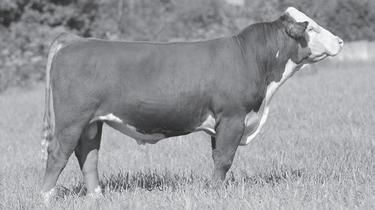
Selected in 2022 for the NRSP by Olsen Ranches. TWIN HILLS FARMS
Jeff and Andrea Cramer Apple Creek, OH and Fresno, OH 330-464-1810
jeffcramer@hughes.net
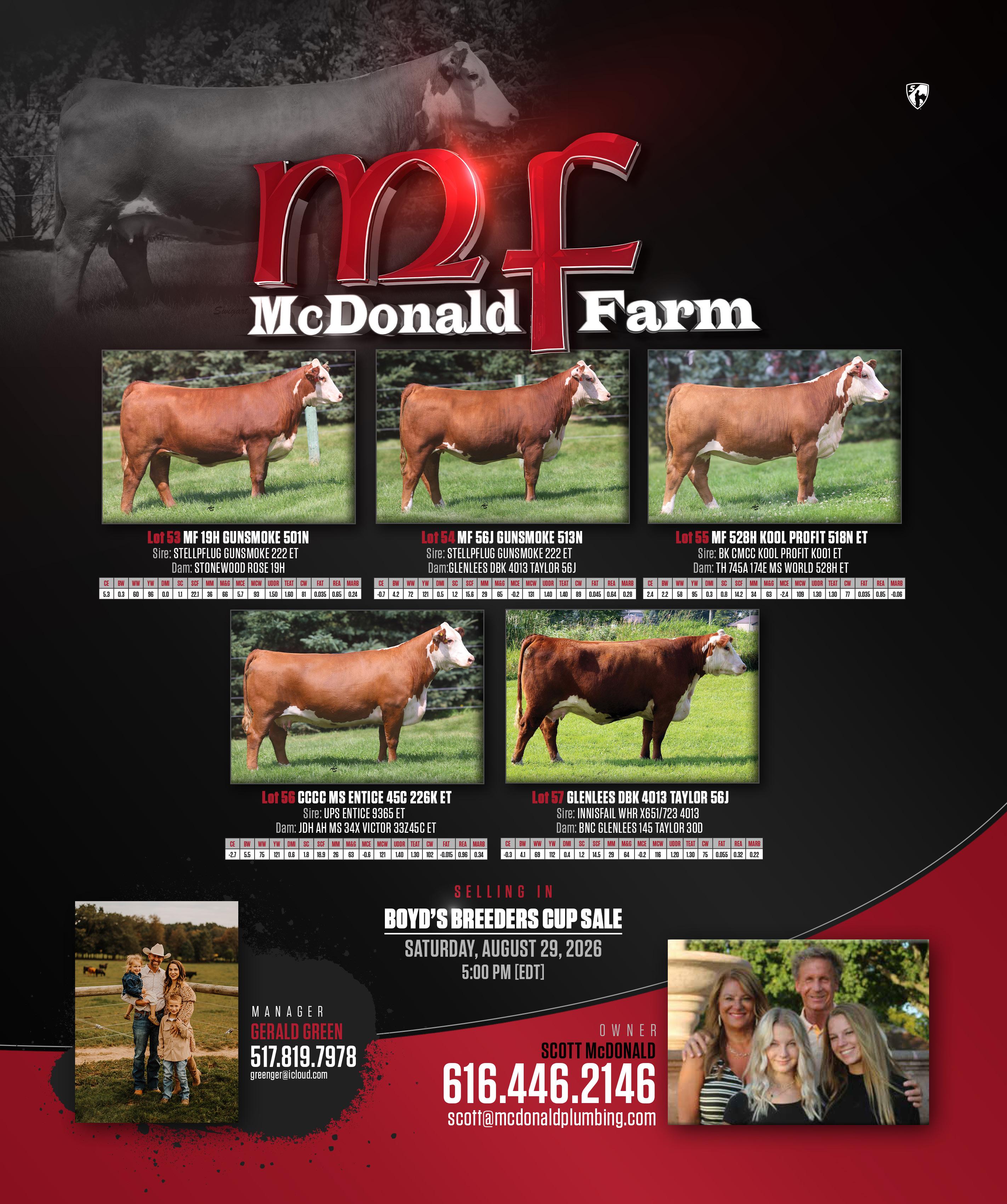
Early detection and reporting are critical.
The cattle industry has faced New World screwworm (NWS) before — and won. But as experts emphasized at the recent NWS Symposium sponsored by Merck Animal Health, the threat of this devastating parasite demands renewed vigilance, stronger coordination and a proactive mindset across the entire livestock industry.
Stephen Diebel, a Texas cattle producer and president of the Texas and Southwestern Cattle Raisers Association, pointed to the magnitude of the threat, noting that New World screwworm poses a $12–$14 billion annual economic risk for the state of Texas when both livestock and wildlife are considered. That scale of loss underscores why the issue demands attention, even from producers who may feel geographically removed.
While NWS does not pose a food safety concern, it is an animal health concern, and its ability to devastate animal populations is well understood. Infested animals can suffer severe tissue damage, become incapacitated and die if untreated. The impact extends beyond cattle, affecting wildlife, companion animals and other warm-blooded species.
That broad host range makes NWS a shared risk and a shared responsibility.
Why New World screwworm is a risk NWS differs from many common livestock pests in a critical way: It targets living tissue. The New World screwworm adult female fly lays eggs in wounds, where larvae hatch and feed on the animal, causing significant pain and often severe damage, which can cause organ damage or systemic
infections. This infestation of NWS (Cochliomyia hominivorax larvae) is known as myiasis.
The adult NWS fly is about the size of a common housefly or slightly larger, with orange eyes, a metallic blue or green body and three dark stripes. New World screwworm can be difficult to identify as it resembles other bot fly species. Confirmation of the fly identity can be determined only by trained individuals. If you see suspicious flies, contact your veterinarian immediately.
Even small wounds can serve as entry points. Experts at the NWS Symposium stressed that vulnerabilities range from something as minor as a tick bite to larger injuries. The umbilical cords of newborn calves are especially vulnerable. This makes routine management practices — calving, branding and processing — key moments of risk.
Additionally, the parasite does not respect geographic boundaries. It can spread across operations and regions regardless of fences or property lines. This, combined with the national movement of livestock, creates a potential pathway for rapid spread.
Diane Kitchen, DVM, Ph.D., of the Florida Department of Agriculture, emphasized that while southern climates are particularly conducive to year-round survival of NWS, the risk of outbreak is not limited to those regions. Livestock movement means that animals — and the parasites that affect them — can travel far beyond their origin.
“This isn’t just a Southern issue,” was a consistent theme throughout the symposium, due to the interconnected nature of the U.S. cattle industry.
Across all speakers, one principle stood out: Early detection is the most powerful tool available.
“The most important thing we can put on animals for screwworms is our eyes,” said T.R. Lansford III, DVM, of the Texas Animal Health Commission. Daily observation of livestock, along with awareness of wildlife and companion animals, is essential for early identification of wounds and potential infestations. Vigilance can make the difference between a manageable situation and a widespread outbreak.
History provides a clear example. During the Florida Keys outbreak from 2016 to 2017, New World screwworm was present for multiple generations in wildlife before being officially reported. By the time authorities who could help were alerted, the parasite had already caused significant damage and mortality, particularly in wildlife populations.
Experts emphasized that producers should err on the side of caution. Even if most suspected cases turn out not to be NWS, early investigation of suspected cases is critical to protecting the broader industry.
Despite the importance of reporting, hesitation remains among some producers. Concerns about regulatory consequences or market disruptions can create reluctance.
However, symposium speakers were clear: Early reporting enables rapid response. Identifying the location of an infestation allows authorities to implement control measures, including sterile insect techniques, to contain and eliminate NWS before it spreads.
New World screwworm is classified as a foreign animal disease pest in the United States, and reporting suspected cases is a legal requirement for veterinarians, producers and animal caretakers.
Diebel emphasized that strong identification and reporting practices ultimately help safeguard markets. In a time of strong cattle prices, protecting regional and national market access is directly tied to how effectively the industry manages threats like NWS.
New World screwworm preparedness starts on the ranch
While government agencies and cattle industry organizations play a key role in response, preparedness begins at the ranch level to help with infestation prevention.
Producers are encouraged to take a proactive approach by evaluating their operations and identifying potential vulnerabilities by:
• Enhancing surveillance and observation routines
• When possible, adjusting calving seasons or locations to improve monitoring
• Minimizing injuries through facility and handling improvements
• Strengthening relationships with veterinarians
• Implementing or updating comprehensive ectoparasite control programs
Diebel noted that even incremental changes, such as improving surveillance or refining protocols, can make a meaningful difference.
Jason Sawyer, Ph.D., of the East Foundation, echoed that sentiment, describing preparedness as an ongoing process of evaluating risk, understanding exposure potential and identifying mitigation strategies. In many cases, it involves adapting existing animal health protocols rather than building entirely new systems.
For example, producers may consider shifting the timing of certain practices or incorporating preventive treatments earlier in the production cycle. These adjustments can help reduce the likelihood of infestation or improve response time if an outbreak occurs.
One of the more complex aspects of New World screwworm management is its impact on wildlife.
Unlike livestock, wildlife populations cannot be easily handled or treated. This limits direct intervention options and increases the importance of observation and early detection.
The Florida Keys outbreak highlighted how wildlife can serve as a reservoir for the pest, allowing it to persist and spread before detection. As a result, producers and land managers are encouraged to monitor wildlife activity and report any suspicious cases.
This broader lens reinforces the need for collaboration beyond the ranch gate.
Industry-wide collaboration is essential
With recent detection in the U.S., NWS response requires coordination across multiple stakeholders, including producers, veterinarians, state and federal agencies, researchers and industry organizations.
Communication and information sharing are critical to ensuring that all parties understand the risk, recognize the signs and know how to respond.
Equally important is education. Producers are encouraged to share knowledge with employees, neighbors and local communities to build awareness and strengthen collective preparedness.
Facing the threat of NWS with current tools
As speakers emphasized, the goal is to respond to an outbreak and limit its impact through early action and coordinated effort. That includes incorporating prevention and treatment options into a broader parasite management strategy. Producers can find a complete list of products approved for NWS treatment and prevention at screwworm.gov
The lessons shared at the NWS Symposium point to a clear path forward:
• Stay vigilant through daily observation.
• Report early and often to enable rapid response.
• Strengthen preparedness plans at the ranch level.
• Collaborate across the industry to share information and resources.
• Leverage new tools and technologies as part of integrated management.
Perhaps most important, the industry can draw confidence from its history. New World screwworm has been eradicated from the United States before. With coordinated effort, it can be defeated again.
For more on insights shared at the NWS Symposium, visit MAHCattle.com.
Editor’s Note: This article is provided by Merck Animal Health.
Copyright © 2026 Merck & Co., Inc., Rahway, NJ, USA and its affiliates. All rights reserved. US-EXZ-260600013
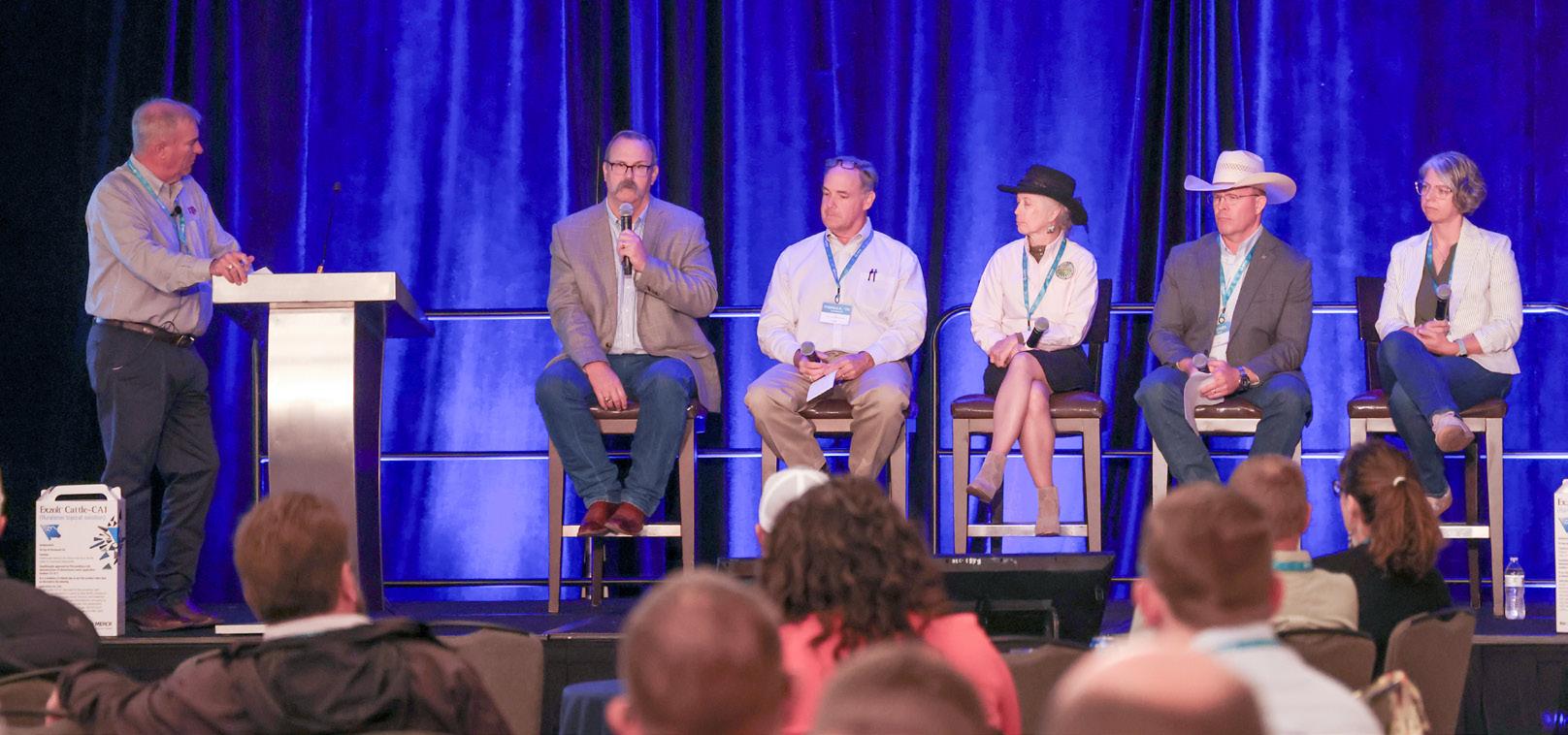
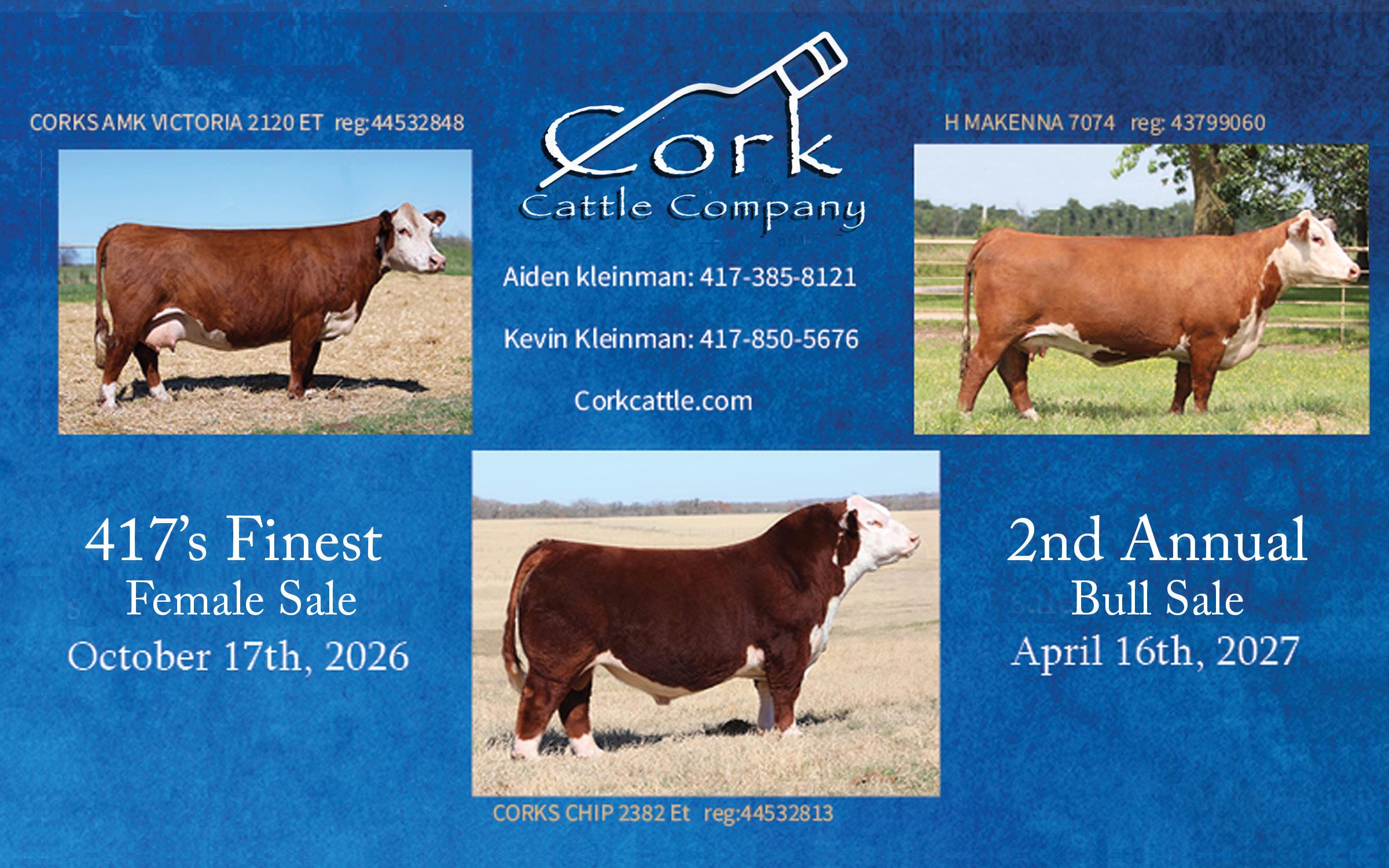
Success Breeds Success BLUE RIBBON FARMS
Jeff and Stephanie Rawie
Aaron and Kylie Noble 11768 W. Farm Rd. 34 Walnut Grove, MO 65770 417-209-5538 jeffrawie24@yahoo.com

Premier Genetics
Tony Ward 35000 E. McQuerry Rd. Oak Grove, MO 64075
Reed Gooden
573-292-6799
Rick and Laurie Steinbeck 2322 Drake School Rd. Hermann, MO 65041 573-237-2668 573-680-0954 cell steinbeckredcows@gmail.com
Polled Herefords and Red Angus Breeding Stock Available
20509 E-Courtney Atherton Independence, MO 64058
BRIAN MUNDY 816-313-9488
Jake Munday 816-313-9488 bmundy.whisperingwinds@gmail.com

Rusty and Marijane Miller 20500 Sioux Dr. Lebanon, MO 65536
Rusty, cell 317-840-7811
Marijane, cell 317-341-3846
millerherefords@yahoo.com www.millerherefords.net
21658 Quarry Ln. Barnett, MO 65011
Alan Mead 573-216-0210 meadangus@yahoo.com
ANNUAL BULL SALES: First Saturday in March Last Saturday in October
abrandt@hereford.org

Bradshaw Ranch
Riley Bradshaw 12180 272nd St. La Belle, MO 63447 217-491-6096 rileybradshaw23@gmail.com
or abrandt@hereford.org
Gary Duvall 1082 Hwy. 97
Lockwood, MO 65682
417-827-2163 cell duvallherefords@keinet.net
Herdsman: Miguel Cifuentes 417-793-5082
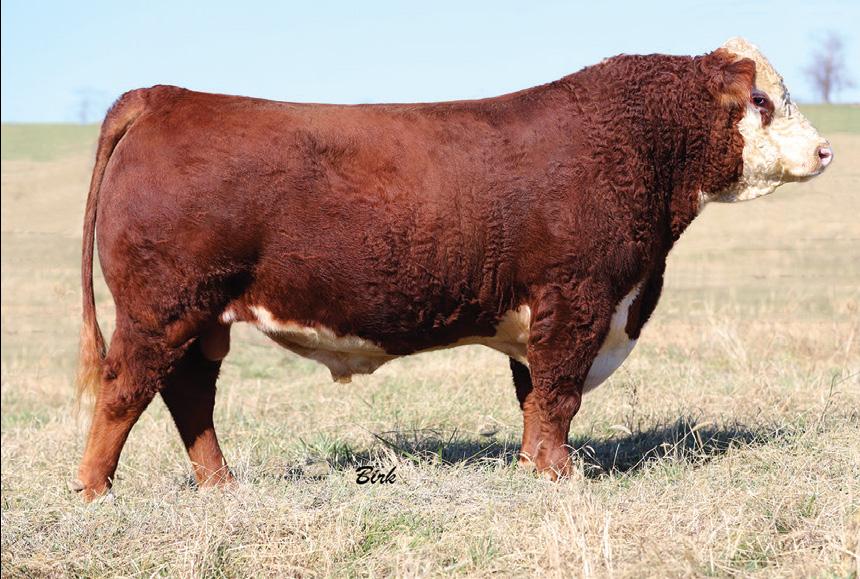



ammalone@lcwb.coop

by Heather Smith Thomas
Bovine theileriosis (Theileriosis), a tick-borne disease continues to spread westward across the U.S., following the Asian longhorned tick (ALT), which is a primary vector for the protozoan blood parasite. Theileria orientalis (Ikeda genotype) infects red and white blood cells. Infection can cause severe anemia, jaundice, fever and even death in cattle.
Craig Payne, DVM, University of Missouri Extension, explains Theileria uses the ALT as one of its hosts. When the tick feeds on cattle, the immature protozoan in the tick’s saliva can be transmitted to the cattle. These immature forms continue their development in the blood cells of the host animal and at a later stage can be picked up by a tick sucking blood — to start the cycle over again.
“The disease was first detected in Missouri in June of 2023, in the southern part of the state. About four months later, we had a case in the northeast part of the state,” Payne says. The Missouri state veterinarian deemed Theileriosis a reportable disease in November 2023. While some reportable diseases require a herd to be quarantined, animal health professionals quickly learned quarantine was not effective at containing Theileria and the ALT that carries it.
“We simply added it to our reportable disease list so we can track its progression across the state,”
Payne notes, adding that it spread rapidly through the state. “In January 2024 we had four counties where the disease had been detected. In January of 2025, a year later, it was 22 counties, and by January 2026 it was 59 counties. It moved across the state swiftly.”
Spreading stateside
The ALT is native to certain regions of east and central Asia, including China, Korea and Japan, as well as the Pacific islands, Australia and New Zealand. This tick wasn’t found in the U.S. until 2017. However, a re-examination of tick specimens from 2010, showed that the ALT was present then. It’s believed the ticks were present in the eastern U.S. for several years before they were discovered. Despite being detected and intercepted at U.S. ports on imported animals and materials to block entry to the U.S., some Asian longhorned ticks made it through. This tick is now found in many states. All attempts to eradicate it failed because once it arrived, it successfully overwintered and spread to more animals, including wildlife. The ALT feeds on a wide variety of warm-blooded animals, including livestock, wildlife, pets and humans. Because these ticks are a multi-host species, different life stages will attach to different hosts to take their blood. These ticks soon became established in more states as an invasive species.
“The first case of Theileriosis in the U.S. due to the Ikeda genotype (the most pathogenic type) was seen in Virginia in 2017 in a cow-calf herd,” Payne says. “In August of that year, that farm lost seven animals, ranging in age from 3 months to 13 years, and no one knew for sure why they died. Then in September a cow on that same farm became sick with similar clinical signs. The herd veterinarian made the preliminary diagnosis of anaplasmosis but took a blood sample for further testing. The test confirmed that Theileria orientalis Ikeda genotype was the cause.”
The disease spread westward alongside the growing population of Asian longhorned ticks. At the end of 2025, Theileria had been reported in 26 states, as far south as northern Georgia and as far west as Kansas and Oklahoma. It has been spreading rapidly in the eastern U.S. and will likely continue to spread into any areas where temperatures and humidity are favorable. The ALT could potentially inhabit most of the eastern half of the U.S. and areas along the Pacific Coast. As mentioned earlier, the ALT is considered the most important route of transmission from one bovine animal to another.
Theileria mainly spreads through the ALT, but that’s not the only way. It can also be transmitted if infected
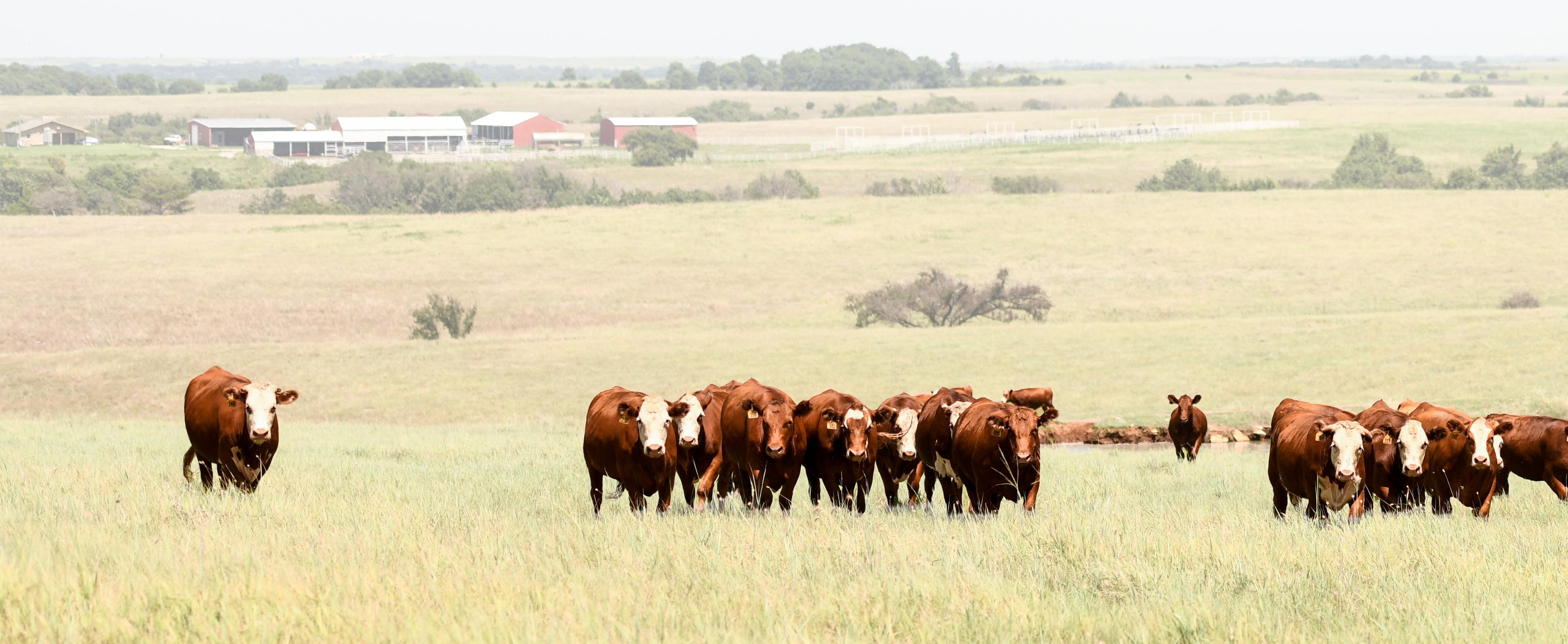
blood cells are passed from infected animals to susceptible animals via needles, surgical tools, biting flies or sucking lice.
The clinical disease in cattle is often described as being similar to anaplasmosis in adult cattle, while calves may show pneumonia-like symptoms, including fever and rapid respiration. “Infected animals can become anemic, have a fever and develop jaundice. They may go off feed, become weak and have increased respiration rate because they are anemic; red blood cells are affected so there is not enough oxygen perfused through the body,” Payne says.
Most animals infected with this protozoan never show clinical signs, though.
Since Theileria is a protozoan, it is not affected by traditional antibiotics. “We don’t have an approved treatment here in the U.S.,” Payne says.
Buparvaquone is used in some countries to treat certain forms of Theileriosis. The drug is injected to treat and prevent tick-borne Theileria in cattle by targeting the protozoan. Severe cases often require a second dose of the medicine 48-72 hours later.
“This drug has been marketed in multiple countries for many years but is not approved for use in the U.S. because it has been used primarily to treat a form of Theileriosis that is different from what we see here,” Payne says. “But with emergence of the Ikeda genotype, there has been some interest by U.S. producers, wondering if this drug would be an effective treatment here.”
With the limited amount of research available, it does appear that buparvaquone reduces the number of parasitic protozoans in the blood but doesn’t completely clear the infection. But, that
reduction in parasitemia (presence of the parasite in the blood) appears to increase the chances of survival. “Cattle are most likely to die from this disease during the initial infection. If you can reduce parasitemia with treatment, there may be a better chance for recovery, even though the animal will be infected for life,” Payne says.
In most cases, these lifelong carriers will not develop clinical Theileriosis again. However, if they become immunosuppressed due to stress or another disease condition they may relapse. “Animals that are lifelong carriers have a low-level immunity against the organism and are usually able to keep it under control,” he says.
In states where the disease and the ALT are becoming widespread, Payne notes being a chronic carrier might be beneficial, as carriers may be safer from acute (potentially fatal) infection than a naïve animal.
Realizing the possible benefits of buparvaquone, Payne began to consider avenues for expedited approval of the drug in the U.S. He submitted a policy statement at the Missouri Cattlemen’s Association policy and legislative committee meeting in November 2025, asking the FDA to evaluate and take necessary steps to allow buparvaquone to be considered for Emergency Use Authorization (EUA) or some other expedited pathway. With EUA, the FDA may allow use of unapproved medical products or unapproved uses of approved medical products in an emergency, such as to diagnose, treat or prevent serious or life-threatening diseases or conditions when certain statutory criteria have been met when there are no adequate, approved drugs available.
“The EUA was recently utilized to allow certain drugs to be used for
treatment and control of New World screwworm, so I thought this might be an approach,” Payne says.
However, Kathy Simmons, DVM, National Cattlemen’s Beef Association’s chief veterinarian, says she had already been in conversations with FDA about the approval of the drug. She believes the FDA didn’t consider buparvaquone to be a feasible solution for treatment, and it would not be eligible for approval by EUA.
An additional challenge Payne discovered was the potential for a long withdrawal period after treatment with buparvaquone. For instance, he says New Zealand established an 18-month meat withdrawal for animals treated with the drug and has strict policy surrounding its use.
Manage to prevent Kansas State University (K-State) encourages producers to conduct regular tick inspections. Search under the ears, udder and tailhead, in addition to using spray, pour-on and backrubbers to apply pesticides — fly tags alone are ineffective. Cattlemen can also isolate new cattle from regions where the ALT is found and stay up to date on their state’s reporting and testing protocols.
Asia, Australia and New Zealand have faced Theileria orientalis Ikeda for decades. Their producers focus on management — good nutrition, stress reduction and herd health — rather than eradicating Theileria and its vectors.
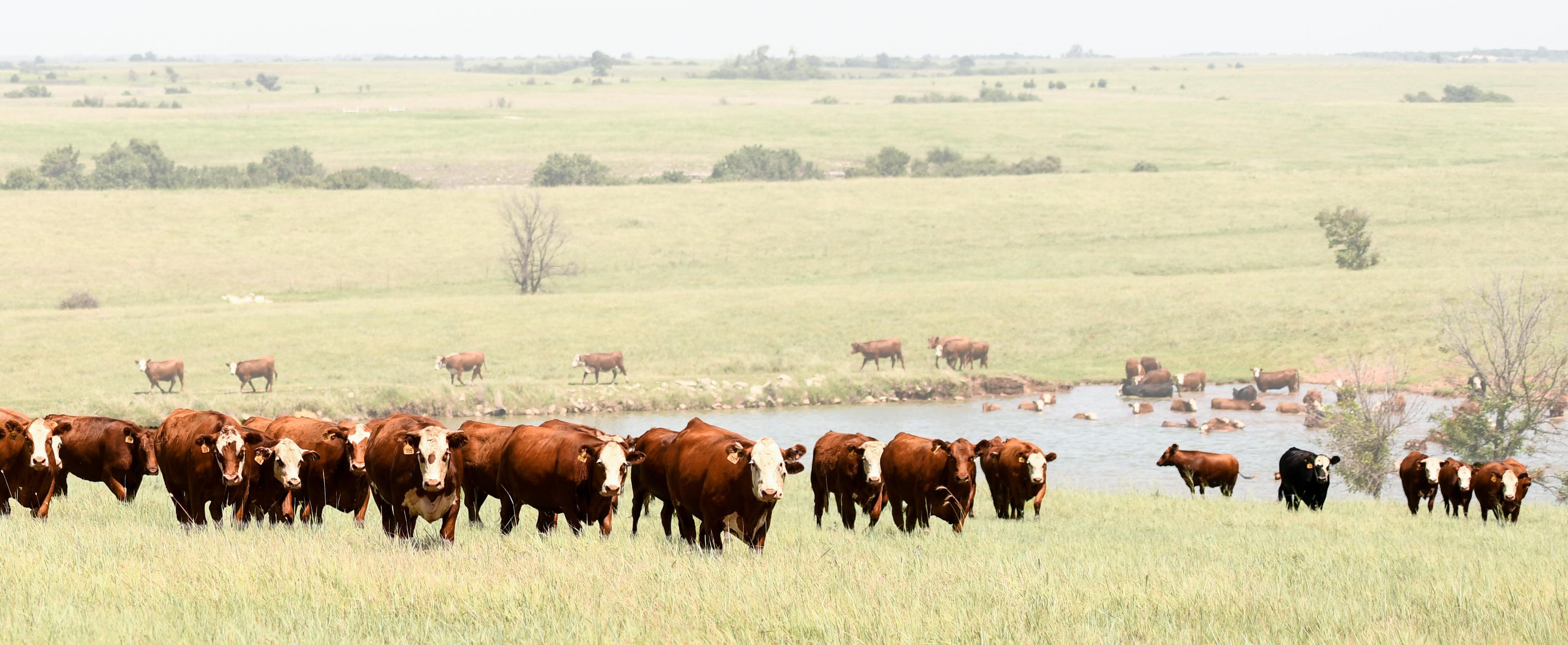
“In Japan and New Zealand, they learned to live with it,” according to Gregg Hanzlicek, professor and associate director of the Kansas Veterinary Diagnostic Laboratory, in a K-State Today update. “Producers focus on management and resilience. That’s likely what we’ll have to do here — stay aware, adapt and make informed decisions.”


Jason, Jaclyn, Mya and Bianca Bevan Joyce Bevan 1681 Austin Rd. • Platteville, WI 53818
Jackie 608-732-4251
jaclyn@jaclynbevan.com bvbbeef@outlook.com
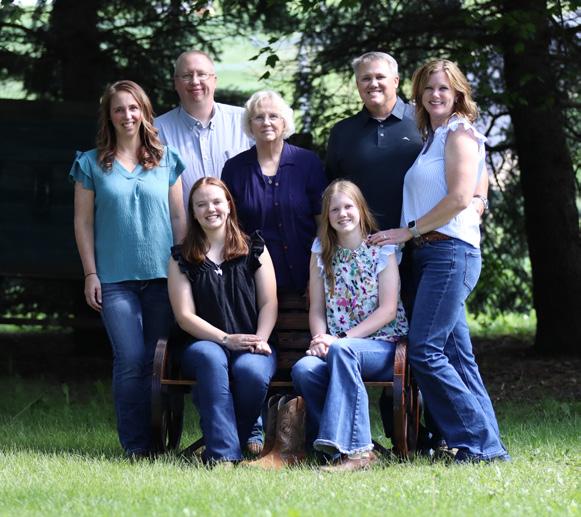

Investing, Breeding and Exhibiting Elite Hereford Cattle
Eric 262-719-6902 Allison 262-751-6406 alisonsmith819@gmail.com Tessa, Makenna, Austin & Killian www.FourLeafCattle.com
Tod, Sondra, Blake and Bryce Brancel
W7874 Hwy. 23 Endeavor, WI 53950
608-617-6949 cell 608-697-9026
Ben and Gail Brancel 608-981-2003 brancel@nextgenerationgenetics.com
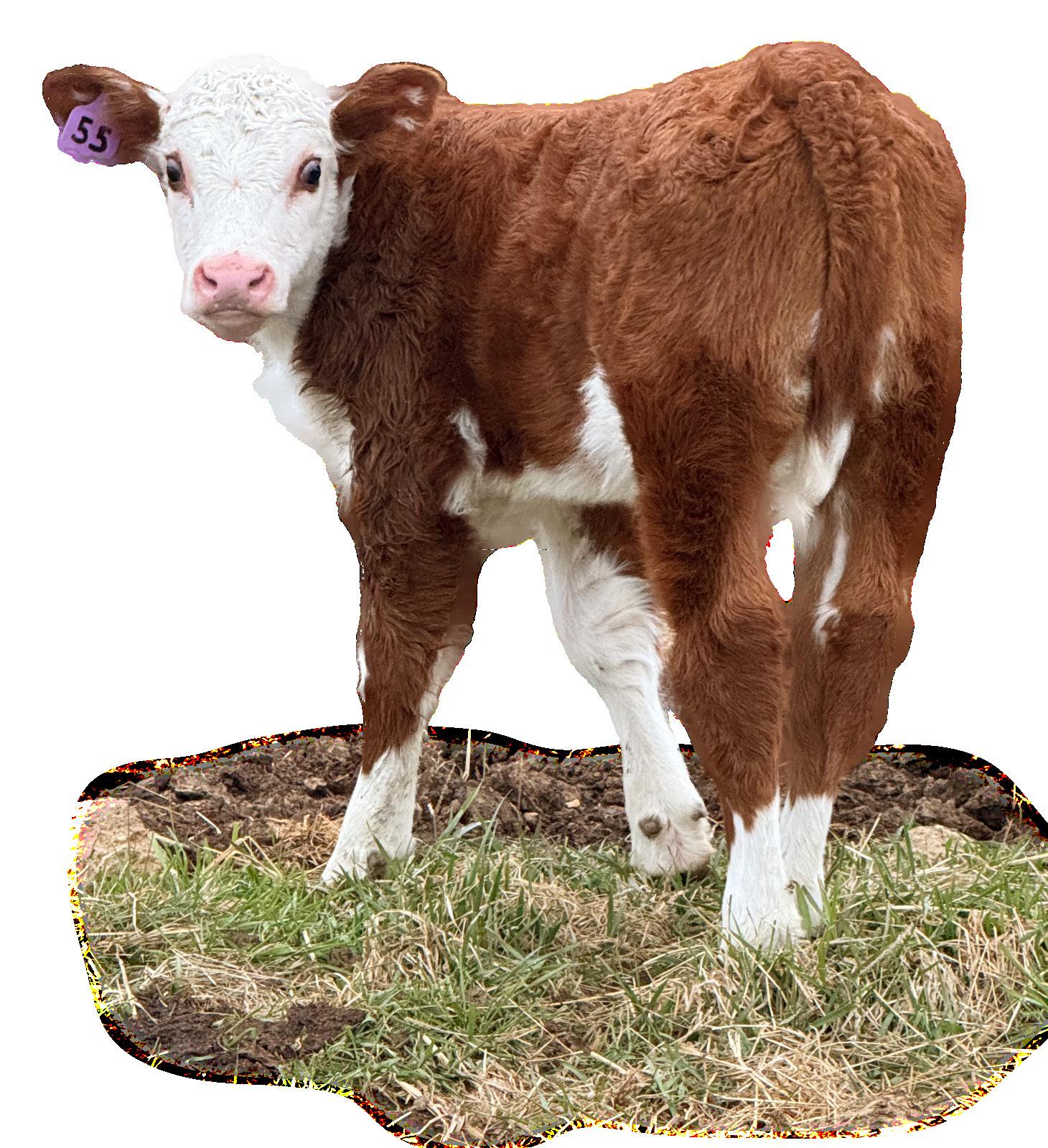

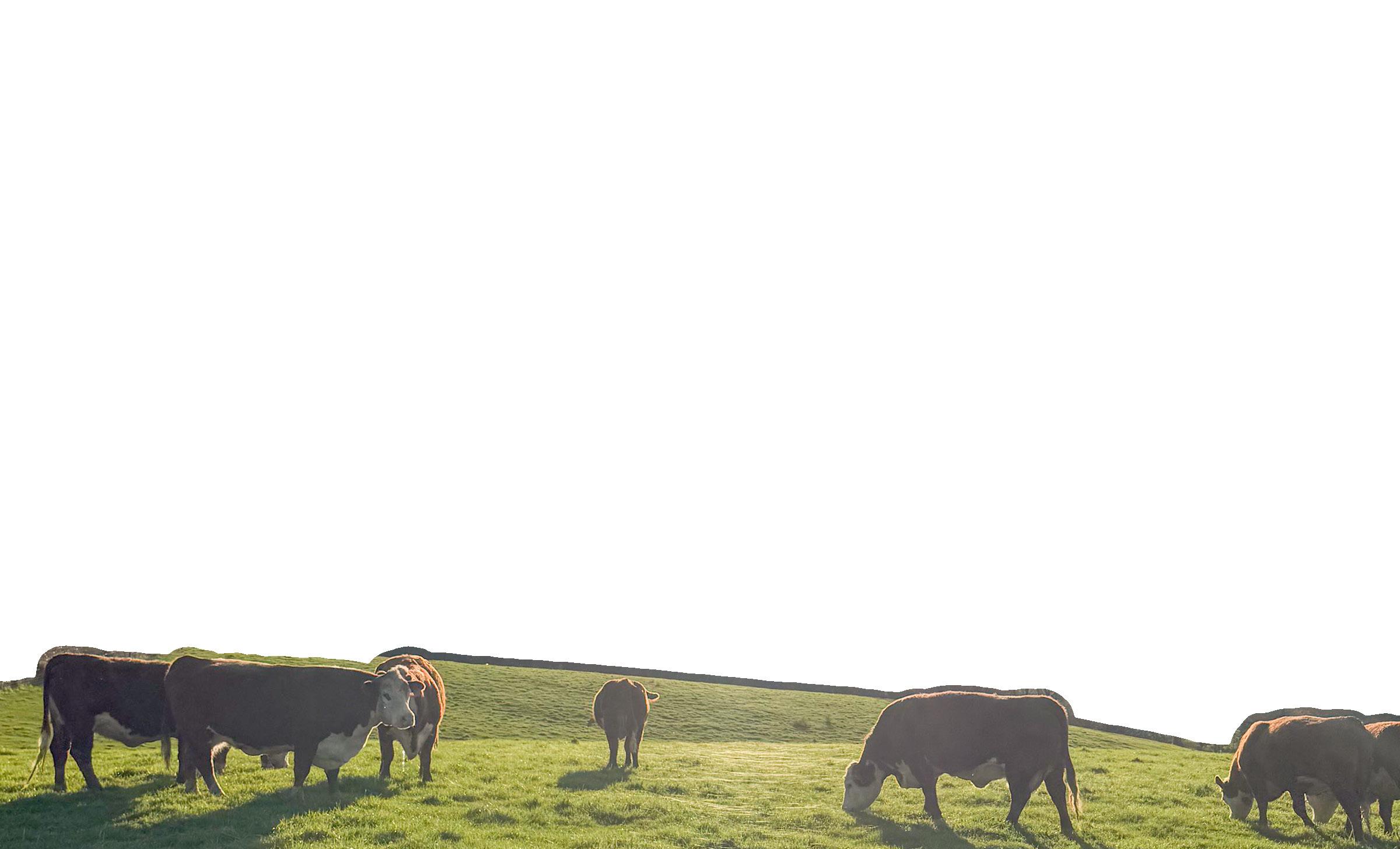
W13707 Hwy. 44 Brandon, WI 53919
Brent & Emma Hopp 920-266-6936 608-628-2330 hoppbre@gmail.com
Facebook @ H&H Cattle Farm
LARSON HEREFORD FARMS
N8494 110th St. Spring Valley, WI 54767
Fred 715-495-0837 fredlarson@mac.com Easten 715-495-6233 Jerry 715-772-4566 www.larsonherefordfarms.com
JOSH and AMY SPAETH
2515 250th St. Cadott, WI 54727 715-289-4098 spaethherefords@gmail.com www.spaethfarms.com
Contact CORBIN COWLES 270-991-2534 ccowles@hereford.org
Mark Friedrich and Family
1454 70th Ave. Roberts, WI 54028 715-760-2350
markfriedrich@yahoo.com

W16163 U.S. Hwy. 10 • Fairchild, WI 54741
Butch and Maryellen • 715-597-2036 • Cell 715-828-7271
Brandon: 715-533-2470 • Garritt: 715-586-0033
cmboettcher@centurytel.net
Visit our website: www.brookviewacres.com Check us out on Facebook PROUD CONSIGNOR
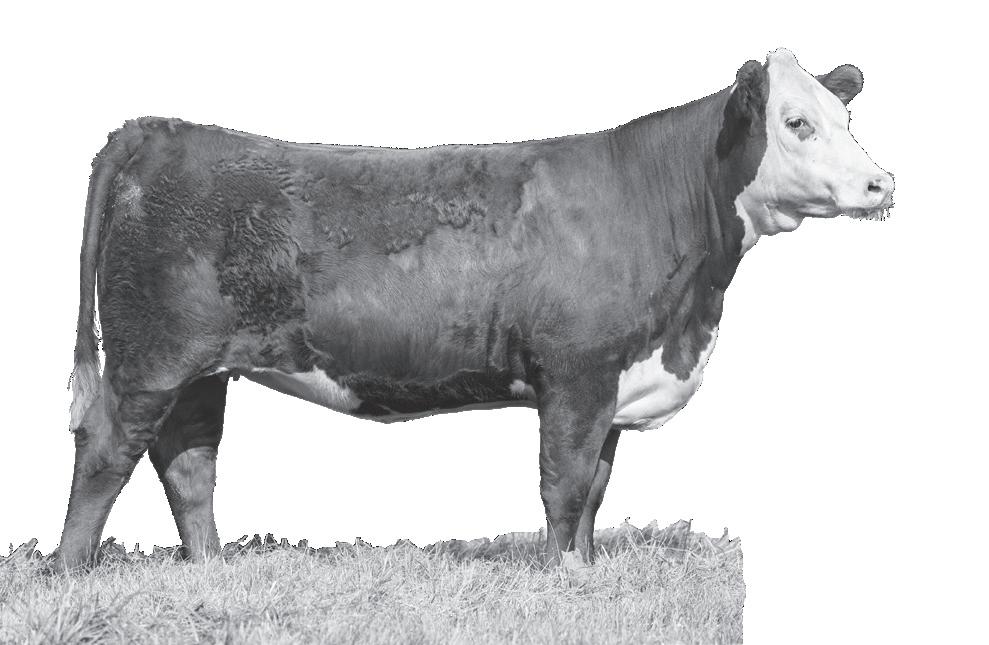
SATURDAY, OCTOBER 3 , 2026
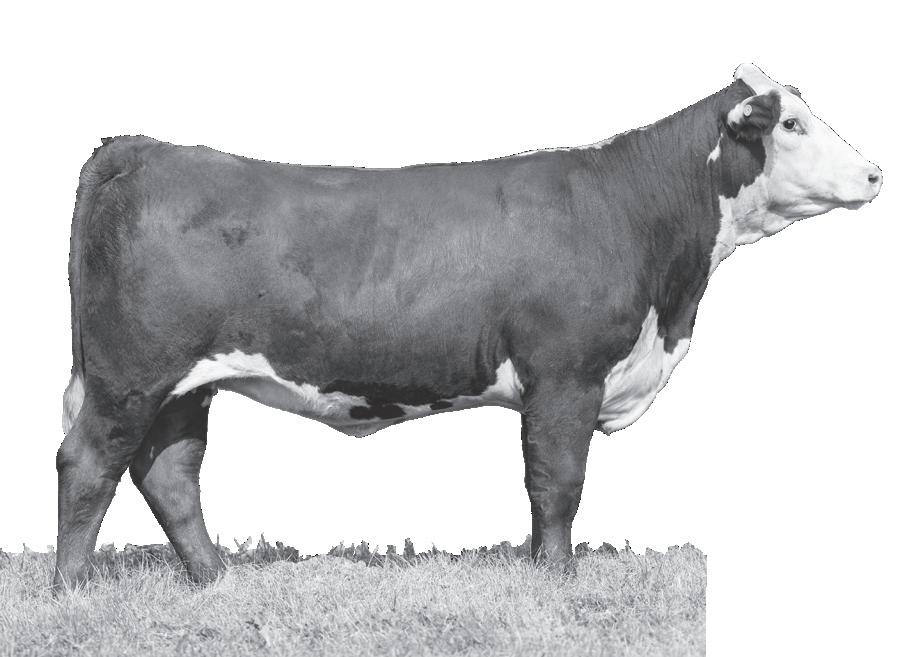
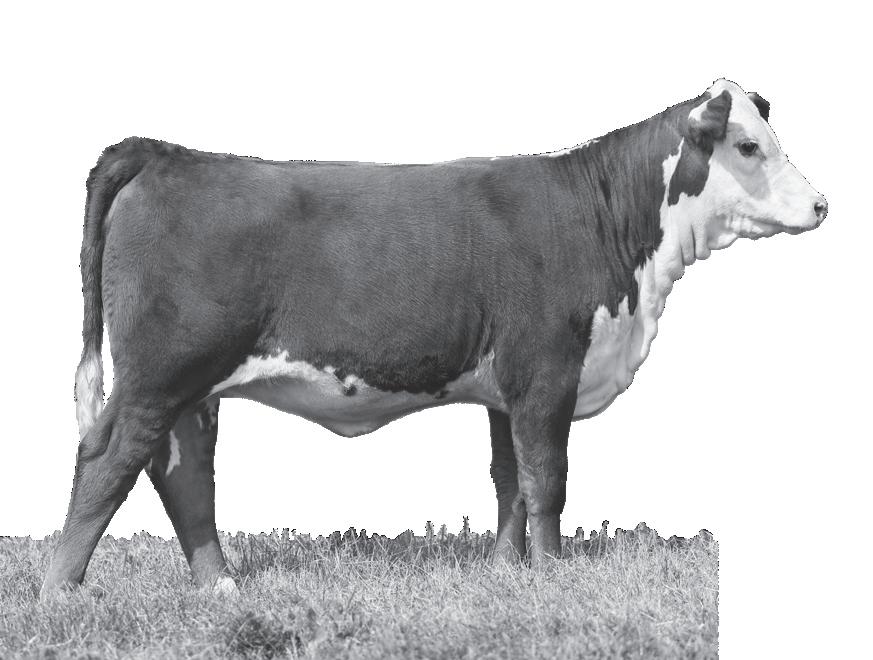

Steve Merry 1840 Co. Rd. CC Hartford, WI 53027 drstevemerry23@gmail.com 414-881-5274
mgmpolledherefords.com
Six Generations of MERRY Polled Hereford Breeders –Spanning 121 Years
Harold and Connie Lietzau 7477 Iband Ave. Sparta, WI 54656 608-633-2875
hllietzau@gmail.com
Troy and Michelle Jaydon, Devon and Jocelyn Taylor and Ty Taylor cell 608-487-0015
ccowles@hereford.org
ccowles@hereford.org
Rick, Jenny, Ryder and Ricki Starck Cadott, WI Cell: 715 313 3234
y
COWLES 270-991-2534
ccowles@hereford.org
hjh@whiskeyrunfarms.com www.whiskeyrunfarms.com
Hank and Charlotte Handzel and Family 2791 Sime Rd. Cottage Grove, WI 53527 608-839-5207 Main 608-235-9417 Cell
starckfarm@gmail.com

Ken and Sandy 608-434-0578 Travis and Megan 608-434-2843 Jim and Veronica E10645 Hatchery Rd. Baraboo, WI 53913 kenpierce254@gmail.com
ccowles@hereford.org
Joe and Amy Starr and Family
E5198 N. Water Dr. Manawa, WI 54949 920-596-2580
Fax 920-596-2380
starr@wolfnet.net
CORBIN COWLES
270-991-2534
ccowles@hereford.org

Samantha, Todd, Rachel and Zach Parish 618-926-7388
parishfarmsherefords@gmail.com www.parishfarms.com
Floyd and Annette 815-712-5735
Chad, Erin, John and Ella 815-712-5739
LaSalle, IL 61301 c_herfs01@yahoo.com
35073 E. C.R. 1550 N. Mason City, IL 62664
bhrnds@speednet.com Brent, cell 217-971-5897
STEVE & KEELY NEIL 27536 Chippendale Ave. W. Northfield, MN 55057
507-649-1917
keelykn@yahoo.com
270-991-2534
ccowles@hereford.org
Tuscola, IL 61953
Dave, Marcia & Elise Hackett
Dave: 217-621-1761 Elise: 217-621-6864 davehackett91@yahoo.com
Lonny, Kim (Carney) and Riley Rhodes 18736 Cross Creek Rd. Carlinville, Il 62626 217-899-4104 Cell rhodesfarminc.kim@gmail.com
Cattle and Embryos for sale at all times
Steve Lorenzen 17696 E. 1825th Rd. Chrisman, IL 61924 Adam Harms 217-369-3609 adamdharms@icloud.com www.lorenzenfarms.com

RJ Orsten 8747 County Rd N.W. Willmar, MN 56201
320-894-0171
rj@cardinalcreekcattle.co

59185 790th St. Alpha, MN 56111
Brad and Meg Freking
507-541-0402
Jason May 507-339-8248
or abrandt@hereford.org
Jason Krick 605-870-1802 mefreking@nfpinc.com
LIND FAMILY FARMS/TLC Doug Lind & Family 43620 County 10 Rushford, MN 55971
507-458-5421 douglind62@gmail.com
1764 U.S. RT. 136 Penfield, IL 61862
Buddy 217-649-0108
Bailey 217-714-4955
Cody 217-871-9708
edenburnfamilyfarm@gmail.com
Jack and Sherry Lowderman Monte, Carrie and Rhett Brent, Kris, Blake, and Morgan Cody and Abby P.O. Box 488 Macomb, IL 61455 Monte 309-255-0110 info@lowderman.com www.lowderman. com
Ross & Beth Carlson 1465 10th St. S.E. Murdock, MN 56271
320-366-3726 rbmrc1@gmail.com
DELANEY HEREFORDS
Jerry & Shelly Delaney Family 2071 County Rd. 101 Lake Benton, MN 56149
Jerry 507-820-0661
Shelly 507-820-0203
Nick 507-829-0561
jdh@delaneyherefords.com delaneyherefords.com

WALSH HEREFORDS
Jackson Walsh 725 100th St. S.E. DeGraff, MN 56271
320-444-7914
jackson.walsh.wfh@gmail.com

BAKER HEREFORD FARM
Spencer Baker 5830 Simpson Rd. S.E. Rochester, MN 55904 507-993-8980 Cell spencerbakerhereford@aol.com
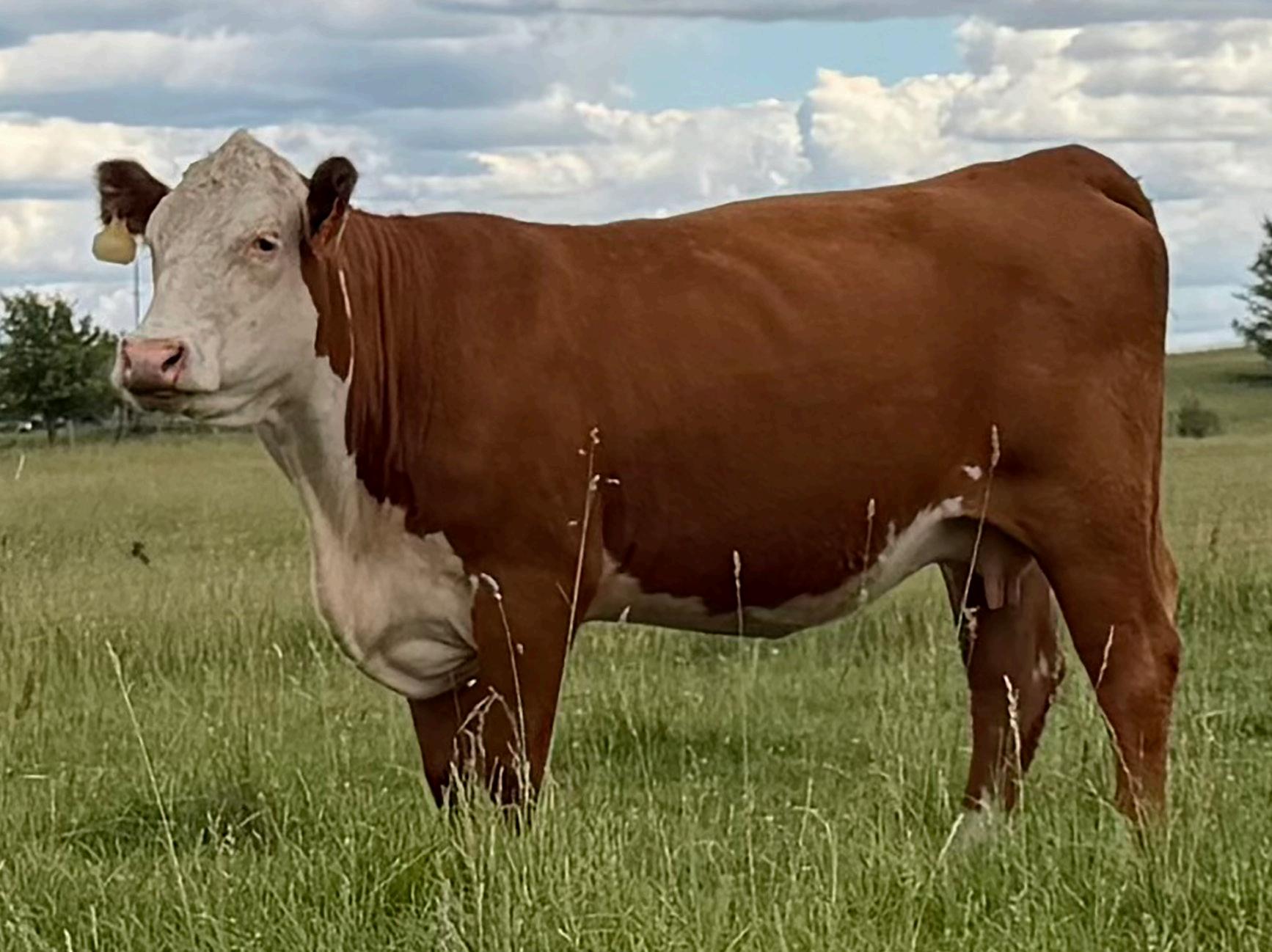




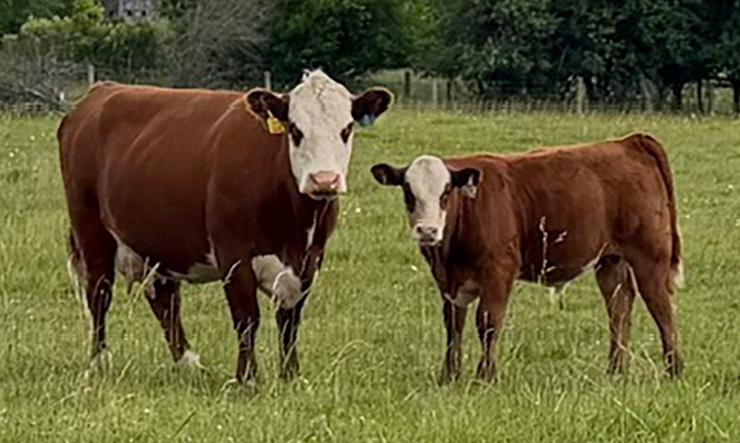
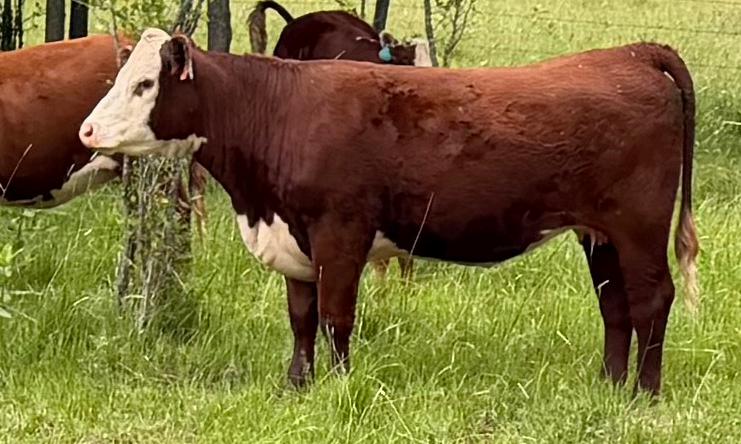

Nancy and Tim Keilty 6192 S. French Rd. • Cedar, MI 49621 231-228-6578
Ray Ramsey 317-727-4227 rayramsey77@gmail.com www.cottonwoodspringsfarm.com


“What’s New?” is a column designed to keep you in the know about Hereford happenings. You can sign up for Hereford Headlines, an electronic newsletter distributed the first Friday of each month by the American Hereford Association highlighting Hereford news and events. You can also receive the Bald Faced Bottom Line, a commercially-focused electronic newsletter sent the third Friday of each month. To subscribe to these free newsletters, send an email to outreach@hereford.org. Archived issues are posted at Hereford.org
Annual Meeting
2026 AHA Board of Directors candidate slate
The American Hereford Association (AHA) nominating committee is pleased to announce the six candidates nominated for election to the AHA Board of Directors. The candidates are:
Brett Barber Barber Ranch, Channing, Texas 806-681-2457
brettbarber69@gmail.com
Andy Beck
Beck-Powell Polled Herefords, Bainbridge, Ind. 765-720-1696
abcbeck92@gmail.com
Larry Cunningham Cunningham Herefords, Spring City, Tenn. 423-605-9241
cunninghamphfarm@aol.com
Mark Ehlke
Ehlke Herefords, Townsend, Mont. 406-439-4311
ehlke@mt.net
Steve Lorenzen Lorenzen Farms, Chrisman, Ill. 217-822-2803
lf3@ecicwireless.com
Ryan McGuffee McGuffee Herefords, Mendenhall, Miss. 601-668-1000
ryanmcgu@bellsouth.net
2026 AHA Annual Meeting dates and hotel information
Make plans to join us for the AHA Annual Membership Meeting and Conference Oct. 23-25, at the Kansas City Marriott Downtown. Registration and a detailed event schedule will be available
soon. Find more information at Hereford.org/annual-meeting 2026 Headquarter Hotel Kansas City Marriott Downtown 200 West 12th Street Kansas City, MO 64105 816-421-6800
Association News
Coates joins AHA records team
Riley Coates, a Baldwin City, Kan., native, joined the AHA records team as a customer service representative June 15.
In her role with the Association, Coates will communicate with Hereford breeders, help resolve questions and interpret discrepancies, while maintaining accurate records and promoting participation in AHA programs and services.
“Riley’s livestock background, combined with her drive to help others, makes her an asset to our team and Hereford breeders,” says Shane Bedwell, AHA chief operating officer and director of breed improvement. “We are really excited to have her join the records department.”
Coates graduated from Kansas State University in 2025 with a bachelor’s degree in animal sciences and industry. While she was at the university, she was a member of the meat judging, meat animal evaluation and wool judging teams, along with the Block and Bridle Club. Coates was active in 4-H — exhibiting pigs and cattle, and she continues to assist with her family’s showpig operation. She is a Douglas County 4-H
volunteer and has worked in their Extension office as a summer engagement intern.
“I am excited to join the AHA,” Coates says. “It will be a great opportunity to cultivate relationships and assist others within the agriculture industry, which has always been a passion of mine.”
Coates can be contacted at rcoates@hereford.org.
Scholarship deadline approaching
The Hereford Youth Foundation of America (HYFA) fall scholarship deadline is Sept. 1. HYFA will award more than $220,000 in scholarship money throughout the year, including more than $165,000 in scholarships and awards during the AHA Annual Meeting in Kansas City, Mo. Scholarships must be submitted online through Submittable. To learn more, visit the website: HerefordYouthFoundation.org/ scholarships.
Hereford Herd Builder Applications Due Sept. 15 New this fall, National Junior Hereford Association (NJHA) members, ages 14-21 will have the opportunity to apply for elite genetics to help them get a start in the Hereford business and build their own programs. Thanks to the vision of Dale and Nancy Venhuizen, Churchill Cattle Company and other partners such as GKB Cattle, AHA and NJHA, junior members will be awarded pregnant recipient females carrying elite Hereford genetics sourced from top donor females and matings provided
by industry-leading breeders and partners.
Applications close Sept. 15 and pregnant recipients will be awarded at the AHA Annual Membership Meeting in Kansas City with delivery of females to follow in November. Apply today at Hereford.org/herdbuilder
Deadline for queen applications
National Hereford Queen applications are due Sept. 1. For more information, email nationalherefordwomen@gmail.com.
Enter the Fed Steer Shootout
Learn more about the cattle feeding sector and how your genetics perform in the feedyard by participating in the 2027 National Junior Hereford Association Fed Steer Shootout. The contest entry deadline is Oct. 31, 2026, and tentative delivery for cattle to HRC Feed Yards LLC in Scott City, Kan., is Dec. 14-18, 2026. For more information and to plan your cattle delivery, contact Justin Miller at jmiller@hereford.org.
Visit Hereford.org/Youth/ NJHA-Fed-Steer-Shootout to enter and learn more.
DAVID & PAULA PARKER PARKER BROS.
DAVID’S CELL / 615-464-7008
EMAIL / DPLP@DTCCOM.NET WWW.DKMFARMS.COM
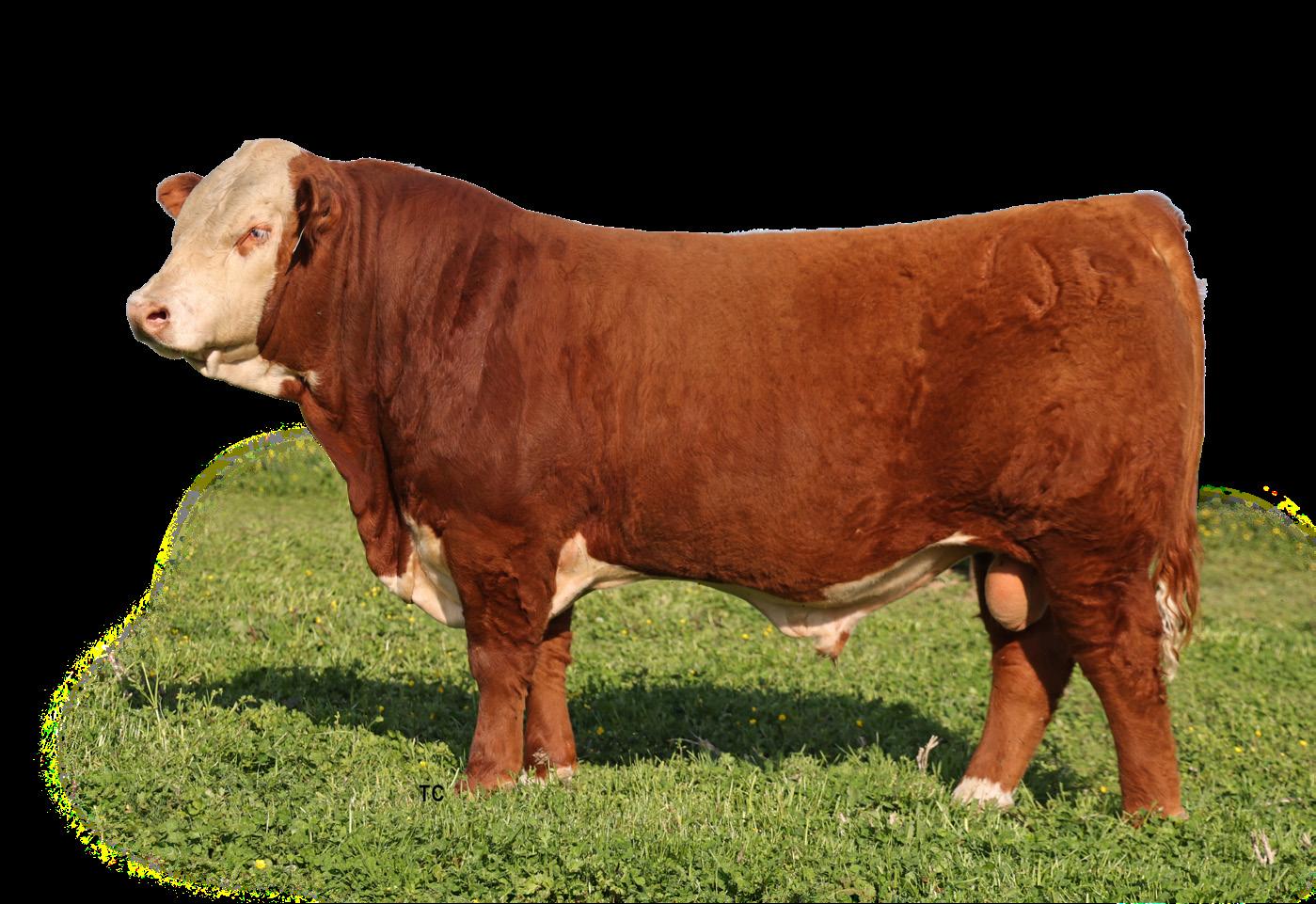
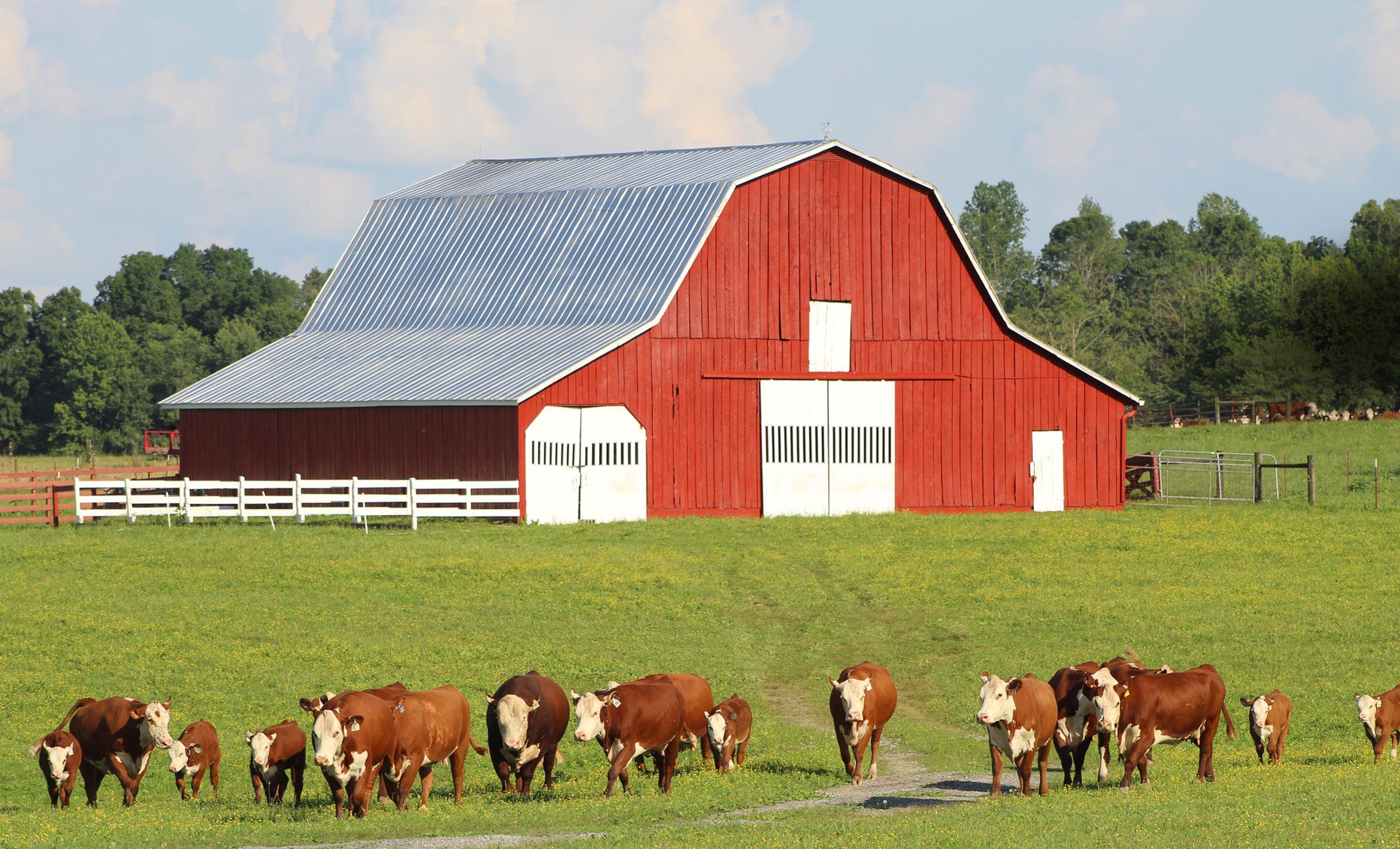

Bobby and Brenda Wells
439 Flatwoods Frozen Camp Rd. Corbin, KY 40701 606-344-0417 cell wells_farm@yahoo.com
Danny Miller
4850 Caldwell Ridge Rd. Knifley, KY 42753 270-465-6984
jmsfarm@msn.com www.jmspolledherefords.com
101-103 N. Main St. Saluda, SC 29138
Earl B. Forrest 864-445-2387
Kevin, Angela, Kenlea and Kyler Murray 606-682-8143 cell 328
Matthew Murphy
770-778-3367
3432 Red Bud Rd. N.E. Calhoun, GA 30701
Keene Murphy 770-355-2192
565 Candy Meadow Farm Rd. Lexington, TN 38351
Rob Helms 731-968-9977
rhelmscmf@netease.net
Randy or Steve Helms 731-968-2012
Heath Helms 731-614-3979 Fax 731-967-1445
864-445-7080 Office 864-445-3707 Fax
Brad Forrest 864-445-7633
Herd Certified and Accredited


Norris Fowler
864-219-0182
nrfowler@brecwb.com
Rogers Fowler
864-426-3281
Greg Fowler
864-426-7337 Cell
Raising Herefords for the past 62 years fowkenfarm.com
Ben, Jane, Lincoln Clifford Noah and Shelby Wright 3459 KY Hwy. 1284 E. Cynthiana, KY 41031
Ben 859-421-7902 Lincoln 859-954-0102
Clifford Hereford Farms
Jody Standley 919-291-4212
jodystandley@gmail.com
84 Austin Farm Ln. Clayton, NC 27520
Toby and Debby Dulworth 2492 S. Kirkman Rd. LaCenter, KY 42056 270-224-2993
dogwood@brtc.net https://dogwoodherefords.com
Matthew and Chloé Durian, Kansas City, Mo., welcomed daughter, Harper Layne Durian, on June 12. She weighed 8 pounds, 4 ounces, and measured 20 inches long. Harper has strong ties to the livestock industry with her mom serving as the American Hereford Association’s (AHA) associate director of youth marketing and education and her father’s role as the livestock event manager at the American Royal. Team Hereford happily welcomes the newest member of the Durian family.

Mary Ann Berg, 83, Dalton, Ohio, passed June 11. Mary Ann was born on Aug. 22, 1942, in Wooster, Ohio, to the late Walter and Ellen (Getchell) Brillhart. She graduated from Smithville High School in 1960 and went on to earn a bachelor’s degree in home economics from Bluffton College. She later received her vocational teaching certificate from The Ohio State University.
On Aug. 8, 1964, she married the love of her life, Jerry W. Berg, at St. Michael’s Lutheran Church in Marshallville, Ohio. Together, they shared more than 61 years of marriage and built a life centered on faith, family and community.
Mary Ann began her career as a vocational home economics teacher at Dalton High School, teaching for two years before dedicating herself to raising her family. After her children were grown, she returned to education as a substitute teacher, serving the Dalton Local Schools for 18 years. In addition, she worked alongside her husband in operating their family farm, Berg Polled Herefords, and Berg’s Tax Service, where she was integral in building
a customer-focused business. Many relationships were built in both the farm and the tax business because customers depended on and appreciated Mary Ann. Jerry said customers would rather talk to her than him.
A lifelong servant of her church and community, Mary Ann was a devoted member of St. Michael’s Lutheran Church in Marshallville. She shared her faith through her involvement as a youth leader, on the Sunday School team and as a Vacation Bible School volunteer. She was also active in numerous agricultural organizations, including the Buckeye Hereford Association, the AHA, American and Ohio CattleWomen, and Farm Bureau.
Her dedication to youth extended to years serving as the organizational advisor for Dalton Stitch and Chatter 4-H Club and the National Organization of Poll-ettes (NOP — later the National Hereford Women) and National Hereford Queen contest chair. In 2007, she was awarded the National Poll-ette of the Year for her contributions to the Hereford breed and youth. As a member of the strategic planning committee to combine the NOP and American Hereford Women, Mary Ann had the distinct honor to serve as the newly formed National Hereford Women’s first president. She also served as a Certified Hereford Beef® ambassador, traveling the U.S. and promoting Hereford beef at many local supermarkets.
Mary Ann found joy in creating a welcoming home for family and friends, cooking and baking, including her famous Christmas tea rings and unparalleled tomato sauce. She was a talented seamstress, making clothing and costumes for her children and, most recently, altering a granddaughter’s wedding dress. She especially cherished time spent
on the family pontoon boat at Atwood Lake, attending cattle shows and agricultural events, and celebrating life’s special moments with her children and grandchildren. Her greatest pride was her family, and she treasured every opportunity to gather with them in her home or around the fire by the grain bins. Many summer memories were made each year with friends, who became family, at Camp Luther praising God, recharging faith and playing lots of Euchre. In recent years, Mary Ann loved to spend Mother’s Day with her family attending a Cleveland Guardians game.
In addition to her husband, Jerry, she is survived by her four children, Lisa (Brian) Gwin of Dalton, Michael (Patricia) Berg of Dalton, Jennifer (Brad) Barone of Jackson Township and Mary Beth (Chad) Day of Delaware; 11 grandchildren: Alyssa (Ian) Hardgrove, Harrison (Ashton Vogelhuber) Gwin, Garrett Gwin, Bennet (Rachel) Gwin, Hannah (Blake) Burkhart, Sydney Berg, Colin Berg, Riley Berg, Ethan Day, Trenton Day and Aiden Barone; along with many beloved nieces, nephews, extended family members and friends.
She was preceded in death by her parents and her siblings, Karen Gordon, Larry Brillhart and Garry Brillhart.
Goggins elected LMA president Joe Goggins, a lifelong livestock marketer and rancher, took the helm as president of the Livestock Marketing Association (LMA) during the association’s annual convention in June.
Goggins serves as chief executive officer of the Vermilion Ranch
Corp. in Billings, Mont. In this role, he oversees Public Auction Yards, Billings Livestock Commission, Western Livestock Auction, Northern Livestock Video Auction, the Vermilion Ranch Registered Angus Herd, Diamond Ring Ranch and other diversified business ventures. Prior to becoming CEO, he worked alongside his late father, Pat Goggins, and grew up immersed in the family’s operations. Along with his wife, Linda, Goggins also operates J&L Livestock, a commercial cattle operation focused on breeding and raising Angus females.
He graduated from Montana State University with a degree in animal science before pursuing his passion for auctioneering. A longtime LMA supporter whose family has deep roots in the organization — his father also served as president — Goggins has been involved in the association for approximately 20 years, previously serving on the board of directors and executive committee.
Goggins emphasized the value the association provides to its more than 800 members, which include auction markets, order buyers and dealers. He highlighted the association’s industry-leading insurance products — particularly critical for livestock facilities — prompt pay reform advocacy, buyer verification services and payment protection insurance.
Beyond operational support, Goggins is passionate about LMA’s broader role in the industry.
He stressed the importance of initiatives like Common Ground Coalition that aim to unify the industry, keep producers on the land and sustain rural economies.
“I’ve never been prouder to be part of an organization,” he says. “Because they see the big picture: this country needs food security and that only happens if we keep cow-calf producers on the land.”

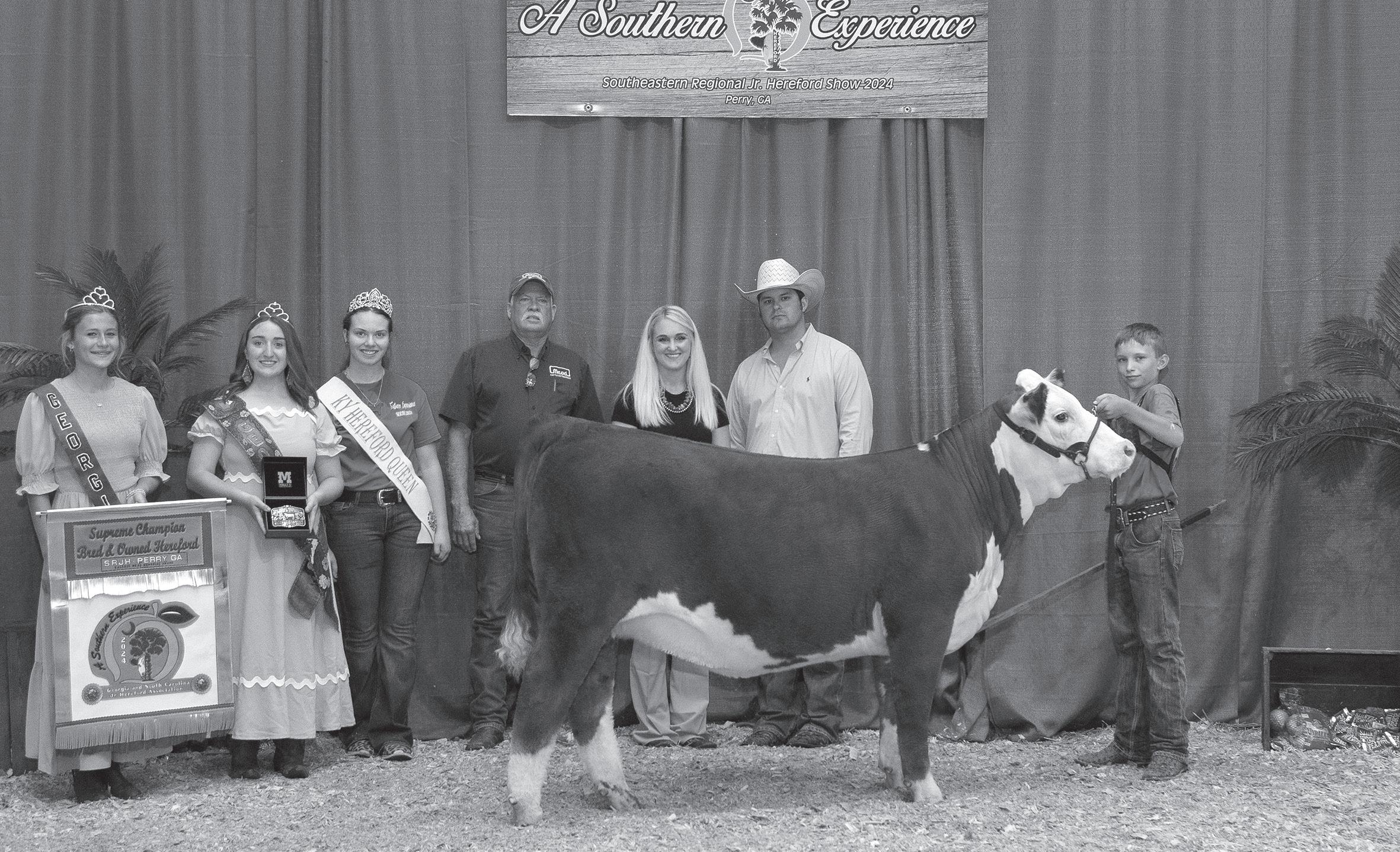

4134 County Hwy. 30 Horton, AL 35980
Perry Debter or John Ross Debter 205-429-4415 debterfarm@otelco.net
Join us for our next sale: OCT. 24, 2026
Joel and Amanda Blevins 324 Austin Ln. Wytheville, VA 24382 276-759-1675 herefordhollow@gmail.com

pandjfarmsherefords@gmail.com 7007 Sugar and Wine Road Monroe, NC 28110

MATHENY HEREFORDS Andrew, Suzanne, Taylor Belle, Austin and Rylee Matheny 6706 U.S. Hwy. 68 Mays Lick, KY 41055
Andrew 606-584-5361 Austin 606-375-2167 amathenyherefords@gmail.com



Join Us for our next sale: OCT. 24, 2026 Perry Debter or John Ross Debter 205-429-4415 Perry 4134 County Hwy 30 • Horton, AL 35980 debterfarm@otelco.net

Randy & Kelly Owen
John & Randa Starnes
John: 256-996-5545
Roland Starnes: 706-601-0800
Red, White, and Black: Dixieland Delight Angus, Hereford Production Sale 1st Sat. in May
553 Randy Owen Dr. NE Fort Payne, AL 35967 www.tennesseerivermusic.com cattle@tennesseerivermusic.com
High Cotton Bull Sale Last Monday in October
Brandon Theising 805-526-2195
P.O. Box 1019 805-358-2115 cell Simi Valley, CA 93062-1019 brandon@pwgcoinc.com www.pwgcattle.com
Steve Lambert Family 2938 Nelson Ave. Oroville, CA 95965 Cell 530-624-5256
lambertranchherefords.com
Jim McDougald Manager 559-822-2178
Registered Herefords 46089 Rd. 208, Friant, CA 93626
The Brand You Can Count On MORRELL RANCHES
Registered Herefords & Angus Barry, Carrie and Bailey Morrell morrellranches@yahoo.com 5640 Co. Rd. 65 Willows, CA 95988
McDougald Family 559-822-2289 Carrie Cell 530-218-5507 Barry Cell 530-682-5808


THE COLEMAN FAMILY
Tim, Kara, Tyler and Kathryn Tim 209-968-7232 • tim@sierraranches.com Kara 209-613-6062 • kara@sierraranches.com P.O. Box 577980, Modesto, CA 95357
Austin and Sarah 805-423-0248 Richard and Susie 805-839-1049
CATTLE COMPANY
Tom and Cindy Weimer P.O. Box 1197 • Susanville, CA 96130 530-254-6802 • 530-260-0416 mobile weimercattleco@citlink.net www.weimercattleco.com
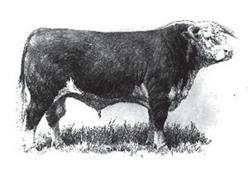

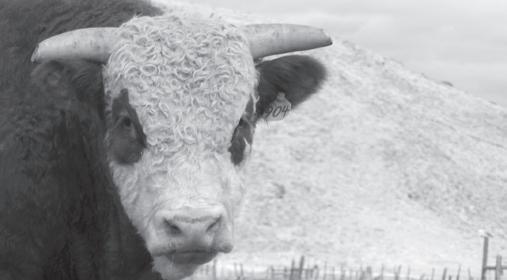




Winton and Emily Harris Family
Polled Herefords • Brafords
Jonny and Toni Harris 334 K-Ville Rd. Screven, Ga 31560 912-586-6585 • Cell 912-294-2470 greenviewfarms@windstream.net www.greenviewfarms.net
Square and Round Bermuda Grass Hay Performance and Quality from Grazing since 1942

Guy and Sherry Colyer – 208-845-2313
Guy cell – 208-599-0340
Kyle cell – 208-250-3924
Katie cell – 208-599-2962 31058 Colyer Rd. Bruneau, ID 83604 www.hereford.com
Keith Elkington 208-521-1774 Layne 208-681-0765 Eric 208-881-4014 RANGE READY, PERFORMANCE PROVEN Visitors always welcome.
ELKINGTON POLLED HEREFORDS
5080 E. Sunnyside Rd. • Idaho Falls, ID 83406
James and Dawn Anderson / Bev Bryan Bryan and Charly Anderson / 208-280-1505 1973 S. 1500 E., Gooding, ID 83330 jbbalherefords.com
Private treaty bull and heifer sales Herefords Since 1967
Family Agri-Business Since 1933
1278 E. 20th Rd. Streator, IL 61364
Fred Debby
Sarah Susan John 815-672-3491 Cell 815-257-3491 Fax 815-672-1984
Dan Bixler
7115 E. 1000th Ave., Newton, IL 62448 618-544-1842 • 618-562-3888 cell insman542002@yahoo.com
Gary and Debbie McConnell Box 253, Kincaid, IL 62540 217-237-2627
Gary’s cell 217-827-2761 Farm is 1.5 miles west of Sharpsburg, Ill.
Burns Polled Hereford farm
Kent & Barb Burns 618-521-3199 burns.kentd@gmail.com Cattle for sale at all times 11770 Wilson Rd., Coulterville, IL 62237
Joe and Lauri Ellis 765-366-5390
Matt and Lisa Ellis 217-712-0635
Phil and Joyce Ellis 765-665-3207
26455 N. 2300th St. • Chrisman, IL 61924 www.efbeef.com • efbeef1@aol.com
Rich & Michelle Fleisher Knoxville, IL 309-208-8826
Bryar & Emersyn Fleisher Knoxville, IL 309-582-4633
Darrel and Anna Behrends Jim Behrends & Leonda Markee • Kim & Liz 29014 E. C.R. 1000 N. • Mason City, IL 62664 217-482-5470 dab3741@cassblue.com • www.ohfherefords.com

11268 Hobbs Rd. Rochester, IL 62563 Office 217-529-8878 Greg 217-725-7095 Randy and Jamie Mullinix 997 Twp. Rd. 150E Toulon, IL 61483



S Shaw Cattle Co. 22993 Howe Rd. Caldwell, ID 83607 www.shawcattle.com greg@shawcattle.com
THE BULL BUSINESS
Greg: (208) 459-3029
Sam: (208) 880-9044 899-0455 (208) Tucker: Ron Shurtz: (208) 431-3311

Neal Ward Family 673 N. 825 W. • Blackfoot, ID 83221
Alicia Billman 208-589-0870 • 208-684-5252 woodenshoefarms@gmail.com
Douglas E. Gerber 5324 State Rd. 227 S. • Richmond, IN 47374-9425 765-935-5274 Cell • 765-220-1070
douglas@gerbercattle.com • www.gerbercattle.com
3629 5th Rd., Bremen, IN 46506
Connie, Todd and Cassie, Jason and Jeni, and Bryan

Todd’s cell 574-298-4959
cjlaudy@fourway.net www.laudemanfamily.com
Jason’s cell 574-209-6470


Rob, Kristie, Kylie and Logan 7477 E. 825 N. • Otterbein, IN 47970 765-491-0258 kristielm2001@yahoo.com SHOW STEERS AND HEIFERS FOR SALE!
(712) 653-3678 wieseandsons@gmail.com www.wieseandsons.com Bulls • Females
Dean and Danny 29111 B Keene Rd. • Maple Hill, KS 66507 785-256-4643 • 785-256-4010
Danny cell 785-383-2493
Located 13 miles west of Topeka on I-70, Keene/Eskridge exit then 3 miles south

Megan 785-332-8575
Gus, Deb and Shelbi Gustafson Tava and Koy 7477 Davis Creek Road Junction City, KS 66441 785-238-7306 I-70 exit 303... 7 miles South

1944… A respected cow herd and premier Hereford performance bull breeder
2271 C.R. 74 • Quinter, KS 67752 Gordon Jamison 785-299-0441 Daron Jamison 785-650-9639 Devin Sweitzer 785-299-0663 www.jamisonherefords.com
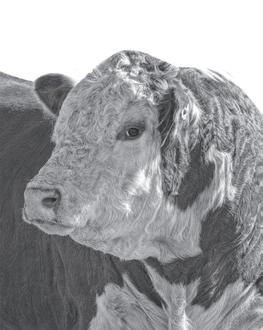

Kevin Jensen 785-243-6397
Sheila Jensen 785-262-1116
Brady Jensen 785-614-1645 Box 197 • Courtland, KS 66939 jensenks@courtland.net www.jensenbros.net
Alex & Alison Mih, and Mariam Mih P.O. Box 2, Chanute, KS 66720 620-431-3917 • 620-212-3250 cell amih@mmherefords.com Breeding cattle for economically relevant traits and performance. mmherefords.com
10272 S. Forsse Rd. • Falun, KS 67442 www.oleencattleco.com oleencattle@hometelco.net
Greg Umberger
Cell: 620-923-5120
gregumberger@yahoo.com www.umbergerpolledherefords.com



Chuck 785-332-4034 1805 RS 115 St. Francis, KS 67756 megan@douthitherefords.com www.douthitherefords.com d

Grant and Linda McKay and Family 1226 8th Rd. Marysville, KS 66508 785-619-6086 308-470-1190 cell glmherefords@bluevalley.net www.glmherefords.com Walter, Megan and Chuck
Kevin and Vera Schultz Cell 620-546-4570 Tyler and Hannah Schultz 620-546-1574
2048 280th Ave., Haviland, KS 67059 www.sandhillfarms.com
Glenn 785-826-0870 Chuck 785-452-2961 Brandon 785-452-8148 Annual Production Sale • 4th
Schu-Lar Herefords, LLC
“YOUR BRAND OF HEREFORD” SCHUMANN
367 Hwy. 40, Lecompton, KS 66050 • 785-887-6754 brycegina@sunflower.com
508 Rockfence Pl., Lawrence, KS 66049 • 785-843-5986 schular@sunflower.com
• Blake 606-375-3718 www.boydbeef.com Brad, Carla, Clay, Clint, Caleb and Cooper 1011 Driftwood Lane Elizabethtown, KY 42701 Cell 270-668-7126 Fax 270-735-9922 bchambliss@priorityapproval.com 6706 U.S. Hwy. 68 Mays Lick, KY 41055 Andrew, Suzanne, Taylor Belle, Austin and Rylee Matheny amathenyherefords@gmail.com
Jacob, Michelle and Andrew Wolfrey 3859 Federal Hill Rd. • Jarrettsville, MD 21084 410-692-5029 • GGSC@grimmelfarms.com www.grimmelgirlsshowcattle.com
W7048 C.R. 356 • Stephenson, MI 49887 Glenn Hanson, Sr 906-753-4684 Glenn Hanson, Jr 906-630-5169 “Cattle made for the North in the North”
12967 N. Cochran Rd., Grand Ledge, MI 48837
Ron’s Cell 517-230-7431
Jill’s Cell 517-627-4327 jilllemac@aol.com
David and Lorie Kitchell Family
Matthew & Darci, Dawson and Dutton Kitchell 3471 State Hwy. 200 • Ada, MN 56510-9260 701-799-7690 • www.dakitchfarms.com
Jerry and Shelly Delaney & Family 2071 C.R. 101 • Lake Benton, MN 56149 507-368-9284 • 507-820-0661 Jerry cell jdh@delaneyherefords.com • www.delaneyherefords.com

Hwy. 28 W. • P.O. Box 753 • Hazlehurst, MS 39083 Dayne Zimmerman 704-906-1571 daynez@mindspring.com www.caldwellherefordranch.com

Herman Nunely and Family 204 Co. Rd. 994 • Iuka, MS 38852 Cell 662-279-5136 Home 662-423-3317 leaningcedarherefords@gmail.com
103 Earl McGuffee Rd. New Hebron, MS 39140 www.mcguffeeherefords.com
ipt

Joe McGuffee 601-672-0245
Ryan McGuffee 601-668-1000 ryanmcgu@bellsouth.net Tyler Russell 601-331-0409
Owner: Al Bonebrake
James Henderson, Herdsman 417-588-4572 • Springfield, MO
Les Krogstad cell 218-289-5685 3348 430th St, Fertile, MN 56540 218-945-6213 • kph@gvtel.com www.krogstadpolledherefords.com
Darin Krogstad 16765 Welch Shortcut Welch, MN 55089 651-485-0159
2477 N.W. Main St. • Coon Rapids, MN 55448
We welcome your visit! Doug and JoAnn 763-755-4930 Bryan and Marytina 763-389-0625 Bradley and Brigitte 612-720-1311
POLLED HEREFORDS
Troy Williamson 110 161st St. Garretson, SD 57030
507-597-6221 605-254-7875 Cell twilliamson@alliancecom.net
Chad Williamson 339 91st St. Pipestone, MN 56164 507-825-5766 507-215-0817 Cell springwater@svtv.com

ROD FINDLEY 32505 E. 179th St. Pleasant Hill, MO 64080 816-540-3711 • 816-365-9959 findleyfarms@gmail.com 2.4 mi. E of 7 Hwy
Straight Line One Cooper Holden Genetics BULLS AVAILABLE AT PRIVATE TREATY
Harding Bros. Herefords
MARVIN AND EVERETT HARDING Rt. 2 • Ridgeway, MO 64481 660-872-6870 Marty D. Lueck, Manager Rt. 1, Box 85G • Mountain Grove, MO 65711 417-948-2669 • Cell 417-838-1482



McMURRY CATTLE
2027 Iris Ln. Billings, MT 59102 406-697-4040 406-254-1247
REGISTERED POLLED HEREFORDS
Genetics for Certified Hereford Beef® Fred, Doreen and Rebecca McMurry
Squaw Creek Ranch 20 miles east of Billings www.mcmurrycattle.com mcmurrycattle@gmail.com
Richard and Shirley
Bruce and Tammy 406-544-1536
Kurt and Jessica 406-239-5113 P.O. Box 30055, Gold Creek, MT 59733 bruce@thomasherefords.com www.thomasherefords.com

Wichman Herefords
www.wichmanherefords.com
Registered bulls and females for sale by private treaty. Proven bloodlines, longevity, performance, functional justinwichman22@gmail.com
Justin and Carmen Wichman 1921 Wichman Rd. 406-350-3123 cell Moore, MT 59464 406-374-6833 home
Lowell and Carol 402-589-1347
ANNUAL BULL SALE
48979 Nordic Rd. Spencer, NE 68777
Frenzen Polled Herefords
Fourth Tuesday in March
Galen Frenzen 50802 N. Edgewood Rd. Fullerton, NE 68638 Galen 308-550-0237 Eric 308-550-0238
Females and club calves for sale private treaty.
Steve & Nancy Peterson 2490 Eagle Rd. Wolbach, NE 68882 Steve 218-849-2238 speterson1018@outlook.com
Milk, Muscle, Performance and Weight Outcross Pedigrees Bulls and females always for sale. Visitors always welcome!
Denny and Dixie Hoffman • 406-425-0859 Jason and Kaycee Hoffman • 530-604-5096 Office 308-645-2279 • P.O. Box 287 • Thedford, NE 69166 jason@hoffmanranch.com • www.hoffmanranch.com

Females that Produce Jack and Bev Beeson Wayne, NE 68787 Prolific Disposition 402-375-3404 Cell 402-375-9027
Albert Moeller & Sons 7582 S Engleman Rd Grand Island, NE 68803 308-384-0979
Cattle for sale by Private Treaty and at Nebraska Cattlemen’s Classic
Oshkosh, NE 69154 • www.vannewkirkherefords.com Joe: 308-778-6049 • Kolby: 308-778-6230 Quality Herefords Since 1892
P.O. Box 306 • Hyannis, NE 69350
James 308-458-2406 Bryan 308-458-2865 • Bob 308-458-2731
1417 Rd. 2100 Guide Rock, NE 68942-8099
Ron 402-756-3462 rnschutte@gtmc.net www.schutteandsons.net
“The Best of Both” Horned and Polled Genetics
Don, Skeeter, Kari, Brooke and Bryce P.O. Box 239 • Orovada, NV 89425 775-272-3152 Home • 775-272-3153 Fax 209-479-0287 Cell orovadaherefords@aol.com brumleyfarms.com

308-726-2138 • 406-855-8288 cell BERNIE AND STACIE BUZANOWSKI Arthur, NE
MINIATURE - CLASSIC HEREFORDS www.splittcreekranch.com North Platte, Nebraska 69101 Shaun Brott 308-530-4161 Judy Splitt 308-530-1287 judysplitt@gmail.com
Annual Bull Sale • First Saturday in February 45060 Upstream Rd. • Taylor, NE 68879 Brent and Robin Meeks • 308-942-3195 upstreamranch@gmail.com www.upstreamcattle.com
Horned and Polled Herefords BULL & FEMALE SALE SEPT. 2026 Chris Beck, Mgr. 618-367-5397 Bob Coker, Owner 916-539-1987 640 Genoa Ln. Minden, NV 89423 www.genoalivestock.com
Sarman (775) 934-3905 HC 36 Box 59 Spring Creek, NV 89815 cpsarman@gmail.com www.leelivestock.com
Loren, Terrie, Hunter and Tanner PO Box 2412 • Minden, NV 89423 775-848-0160 lorenmrnak@aol.com www.mrnakherefordswest.com
Ainsworth, Nebraska Harrison 402-382-5899 | Houston 402-382-5285 Jim 402-760-1919 | Office 402-382-8016 www.hutton-ranch.com @Hutton Ranch
burnettjimbob@gmail.com

cornerstone@plateautel.net www.cornerstoneranch.net
575-355-2803 • 575-355-6621
616 Pecan Dr., Ft. Sumner, NM 88119
LaMoyne and Opal Peters
Leslie and Glenda Armstrong Kevin and Renee Grant Ephesians 2:20
Bill King 505-220-9909
Tom Spindle 505-321-8808
Becky Spindle 505-252-0228
P.O. Box 2670 Moriarty, NM 87035 www.billkingranch.com
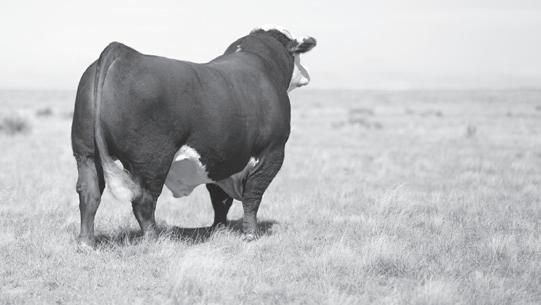
9767 Quay Road O Nara Visa, NM 88430
Michael Pérez - 575-403-7970
Kyle Pérez - 575-403-7971
Drew Pérez - 806-640-8340 Info@PerezCattleCo.com PerezCattleCo.com
T ripleTT polled Herefords
PREDICTABLE GENETICS
Sheldon Wilson 575-451-7469 • cell 580-651-6000 1545 Dry Cimarron Hwy • Folsom, NM 88419
HOME OF CHURCHILL BROADWAY 104J Timothy Dennis 315-536-2769 315-856-0183 cell tdennis@trilata.com 3550 Old County Rd. Penn Yan, NY 14527
John and Ted Kriese – 4385 Italy Hill Road – Branchport, NY 14418 315-856-0234 hereford@frontiernet.net www.fingerlakescattle.com BREEDING CATTLE BUILT FROM THE GROUND UP J. Brent Creech 14926 Taylor’s Mill Rd. Zebulon, NC 27597 919-801-7561 www.tmfherefords.com tmfherefords@icloud.com
Farm: 2296 N. Lomax Rd., Traphill, NC 28685 775 Clacton Circle, Earlysville, VA 22936 John Wheeler, owner • 910-489-0024 doublejfarmllc@yahoo.com • www.doublejfarmllc.com 14503 91st St. S.W. Bowman, ND
SINCE 1916 22990 E. 2090 Rd., Terral, OK 73569
REGISTERED AND COMMERCIAL HEREFORDS 580-662-9211 • 580-757-2515 • Cell 940-704-9682
James Triplett 127 Roseman Ln. • Statesville, NC 28625 704-876-3148 (evening) 704-872-7550 (daytime) VisiT ors Welcome Bulls and Females For Sale Private Treaty



Mohican Polled Hereford Farm 4551 S.R. 514 Glenmont, OH 44628
Conard and Nancy Stitzlein 330-378-3421
Matt Stitzlein 330-231-0708
Alexis Stitzlein 330-231-9538 stitz@mohicanfarms.com
Mohican West 3100 Sportsman Park Rd. Laurel, MT 59044 Phone/Fax 406-633-2600 Terry Powlesland 406-670-8529 mohicanw@yahoo.com www.mohicanpolledherefords.com
BULLS FOR SALE Don Moler 100 Bonita Dr. Elk City, OK 73644 580-497-6162 Herd Bulls & Donor Females For Sale

P.O. Box 166 • Caddo, OK 74729 Alan Dufur — 580-775-3830
Ranch 19402 W. Hwy. 51 P.O. Box 434 Sand Springs, OK 74063
Registered Polled Herefords Pecans flyinggranchss@aol.com Mike and Lotsee Spradling 918-640-7711 918-245-8854
Robbie & Tracie Gipson 918-774-4795 g4gcattleco@gmail.com
Bulls & Females available for sale private treaty

Ralph & Stephanie Kinder, Owners 790250 S Hwy 177 Carney, OK 74832 (405) 714-3101 ralph@headquartersranch.com headquartersranch.com

Littau Polled Herefords Balko, Oklahoma 73931
Sam Littau 32197 NS 115 Rd. 580-525-1155 Ryan Littau 116128 EW 33 Rd. 806-435-0279
littaupolledherefords@hotmail.com
23731 NS 157 Rd. Laverne, OK 73848
Milton 580-273-9494 Van 580-552-1555 van1messner@gmail.com
Registered Herefords George and Karen Sprague 85777 Vilhauer • Eugene, OR 97405 541-465-2188 gks@bar1ranch.com • www.bar1ranch.com

Homozygous Polled Herefords
Don, Peg, Seth and Bridget Zilverberg 18542 326th Ave. Holabird, SD 57540 605-852-2966 www.barjz.com cattle@barjz.com
Annual Production Sale February 2027
Gerald and Janelle Bischoff 20025 399th Ave., Huron, SD 37350 Gerald 605-350-0979 Garret 605-461-1555 Matt 605-350-0980 ravinecr@santel.net • www.ravinecreekranch.com
Annual Production Sale - 2nd Wednesday in March


David and Lynda Bird 45863 Crow Rd. • Halfway, OR 97834 541-742-5436 • Cell 541-403-2828 • bird@pinetel.com
42590 Salmon Creek Rd. • Baker City, OR 97814 Bob Harrell Jr. 541-403-2210 Don Schafer 541-403-0008
Registered Hereford Cattle and Quarter Horses Annual Sale First Monday In March

Gordon and Thordys 39462 178th St. Frankfort, SD 57440 605-472-0619
Michael and Becky 605-224-4187 605-870-0052 blumeherf@yahoo.com
21115 344th Ave. Ree Heights, SD 57371
Keith, Cheryl, Erin and Matt Fawcett • 605-870-0161 Dan, Kyla, Hollis and Ivy Fawcett • 605-870-6172 Weston, Kristin, Falon and Jensen Kusser www.fawcettselmcreekranch.com

140 Morgan Rd., Lafayette, TN 37083 615-804-2221 • coleyherefords@gmail.com www.coleyherefords.com Jim and Kay Coley and Family PO Box 215, Cross Plains, TN 37049 615-478-4483 billymjackson@aol.com website: jacksonfarmsherefords.com

Mike Rogan 1662 McKinney Chapel Rd. Rogersville, TN 37857 423-272-5018 423-754-1213 Cell roganfarm@yahoo.com
Cattle Co.
“Your Eastern Oregon Range Bull Source”
Registered Herefords and Quarter Horses
M.T. and Cori Anderson
47295 Izee Paulina Ln. Canyon City, OR 97820 541-477-3816

M.T. 541-377-0030 Cori 541-377-3347
Breeding Today for Tomorrow Greg and Therese Stallings Eugene, OR 97405 Office 541-485-3615 info@stallingspolledherefords.com www.stallingspolledherefords.com
Mark and Mary Kay Frederickson 19975 Bear Ridge Rd. Spearfish, SD 57783 605-642-2139 Cell 605-645-4934
PYRAMID BEEF Bull Sale First Saturday in December
Nate and Jayna Frederickson Cell 605-254-4872 Shawn and Sarah Tatman 307-673-4381
Hoffman Herefords Horned & Polled Herefords 11341 357th Ave. • Leola, SD 57456 Colin 605-216-7506 • Miles 605-277-5048 cmbhoffman@msn.com www.hoffmanherefords.com
Ollerich Brothers Herefords 29188 303 Ave., Clearfield, SD 57580 605-557-3246
5121 Bedford Creek Rd., Franklin, TN 37064 triplelranch@msn.com • sleehereford@gmail.com www.lllranch.com Steven Lee 615-799-8085 cell 615-456-6165
Since 1945 – Quality Line 1 Cattle For Sale! Winn Woodard 615-389-2624 • Phil Spicer 615-351-2810 4948 William Woodard R d. S pringfield , TN 37172
Your source for top end bulls and females. Jimmy, Claudia and Precious Atlas 4920 CR 401 • Grandview, TX 76050 214-202-5178 • 817-456-4691 atlasfarms@sbcglobal.net
Jerome 605-842-5212 • jeromeo@goldenwest.net James 605-359-4006 jacob@rauschherefords.com • RauschHerefords.com America’s
Bill or Chad Breeding 1301 N. Lions • Box 186 | Miami, TX 79059 Bill 806-662-2406 | Chad 806-570-9554 1941breeder@gmail.com | chadebreeding@gmail.com
Terri Barber 817-727-6107
Jason Barber 817-718-5821
Dale Barber 806-673-1965
Justin Barber 806-681-5528
Brett Barber 806-681-2457
Mary Barber 806-930-6917
10175 F.M. 3138 • Channing, TX 79018 www.barberranch.com • office@barberranch.com

Pete and Angela Case
P.O. Box 240, Mertzon, TX 76941 325-650-6209 • pete@caseranch.com www.caseranch.com
Jack and Lyn Chastain 3924 Burkett Dr. Ft. Worth, TX 76116 817-821-3544
Farm located at Mineral Wells, TX

Mike Doyle
P.O. Box 82 | Wolfe City, TX 75496 214-240-4538 | mike@acecreditconsulting.com doyleherefordranch.com
Box 10, Comanche, TX 76442 • Office 325-356-2284
John Dudley 325-642-0745 Tom Dudley 325-642-0748 john@dudleybros.com www.DudleyBros.com Registered Herefords Since 1938
Harry and Cheryl Grett 512-585-2948
P.O. Box 969 Elgin, TX 78621 g3ranch@aol.com
Lee & Jacqui Haygood 923 Hillside Ave. Canadian, TX 79014 806-323-2906 lee@indianmoundranch.com indianmoundranch.com
Noack Herefords 116 E. Bell Ave. Rockdale, TX 76567 Cell 979-218-0065 Office 512-446-6200
Scott, Alise, Ilissa, Bethany and Audrey 1950 Skylark Rd. • Gilmer, TX 75645 nolanherefords@aol.com Res. 903-797-6131 Cell 903-738-5636


Maynard and Sandi Warnken
Kevin Warnken, manager P.O. Drawer 29 • Schulenburg, TX 78956 979-561-8846 • 979-561-8867 fax Kevin cell 979-743-0619 rockinw@cvctx.com • rockinwranch.net
Seth Koetting, manager 806-584-4922 5749 Rocking Chair Ln. Ft. McKavett, TX 76841 www.therockingchairranch.com
Raising cattle in Texas since 1855
Joey and Susan Skrivanek, owners 407 W. Mustang • Caldwell, TX 77836 Cell 979-224-4698 • Office 979-567-3131 j.skrivanekranch@outlook.com
9 miles east of Caldwell on Hwy. 21 or 15 miles west of Bryan-College Station on Hwy. 21
Larry Woodson Bonham, TX 214-491-7017 larrywoodson@gmail.com www.stillriverranch.com
Horned and Polled Pete Johnson, owner St Hwy 94 • Lufkin, TX 75904 936-465-1672 • pljmhj@yahoo.com http://www.sunnyhillranchherefords.com Southeast Texas Bull Sale Headquarters
4609 Airport Freeway Ft. Worth, Texas 76117 817-831-3161 texashereford@sbcglobal.net www.texashereford.org


Curtis 435-770-0509 rod@cachefeeds.com herefords1@hotmail.com
Herefords 3847 W. 2200 S. • Wellsville, UT 84339 www.jbherefords.com
Jensen 435-764-2422 Kyson Smith 435-421-9032 jbherefords@gmail.com
Brothers Herefords – Since 1920

and Craig Johansen Castle Dale, UT • 435-650-8466 johansenherefords@gmail.com www.johansenherefords.com Line One Performance Breeding Since 1979

Jake Rees 801-668-8613
Scott Rees 801-949-8960 Roger Rees, DVM 801-913-5747
Herefords & Angus ReesCattle.com reescattle@gmail.com
2235 E. Rees Ln.•Morgan , UT 84050
703-850-5501 Cell • 703-368-5812 Office Featuring Polled Descendants of J215 Thistle Tree Farm
Linda Lonas
P.O. Box 187 • Purcellville, VA 20134
Bill Cox 688 Pataha St. Pomeroy, WA 99347 509-566-7050 cell cxranch@live.com
SINCE 1943 DIAMOND M RANCH
Hereford Cattle Since 1902 P.O. Box 66 • Kaycee, WY 82639 307-738-2443 or 307-267-3229 Cell Annual Sale – November largentandsons@yahoo.com www.largentandsons.com
Polled Herefords and Angus Raising Herefords since 1967 Jim and Jerri McClun and Family 1929 Rd. 60 • Veteran, WY 82243 • 307-837-2524 Cell 307-534-5141 • jkmcclun@wyomail.com www.mcclunranch.com Private Treaty Sales and Annual Production Sale in April
Selling Herefords for 80 years
Annual Sale — Fourth Wednesday in October
P.O. Box 15, Ft. Bridger, WY 82933
Dale 307-780-8232

Ron 307-747-3897
njwardherefords@gmail.com www.NJWHerefords.com

SELLING 1,500 HEREFORDS ANNUALLY “The great feedlot performance cattle” The McIrvins Box 99 Laurier, WA 509-684-4380
Winter Headquarters 646 Lake Rd. Burbank, WA 99323 509-545-5676
Marty, Shannon, Matt and Derrick Wilcox 17912 S. Hwy. 195 Spangle, WA 99031 509-953-2535 – Marty www.wilcoxfamilycattle.com

Kevin and Janice Bennett 3752 Ollie Bell Rd. Benton, WI 53803 608-778-8685 kevinjanicebennett@gmail.com www.sandrockranchherefords.com
Jay and Janice Berry 3049 C.R. 225 Cheyenne, WY 82009 307-634-5178 • www.wherecowmenbuybulls.com








POLLED HEREFORDS
Jim Westfall, owner 304-927-2104 • 304-377-1247 cell jimwestfall2104@gmail.com
Lucille Westfall, herdsman 304-532-9351
1109 Triplett Rd. Spencer, WV 25276 Bulls and Females For Sale

Quality Hereford Cattle Ken and Chris Scott 2586 Grandview Rd. Beaver, WV 25813
Ken 304-573-0844 Chris 304-228-5524 chance37@suddenlink.net

5683 Rocky Step Rd. Winfield, WV 25213 www.grassyrunfarms.com
Polled Herefords Since 1954
192 Ruger Dr. Harrisville, WV 26362
Butch 304-643-4438
Certified and Accredited lawherefords@yahoo.com
Gary Kale, Owner
Aaron Glascock, General Manager 304-312-7060 / alglascoc@aol.com
Derik Billman, Herdsman 330-432-3267
63 Henderson Ridge Road Fairmont, WV 26554
Dave 304-612-3795
Robert 304-265-0005 dnsk0603@gmail.com
“Calendar of Events” is a listing of Hereford sales and events known to our staff. Italicized dates denote shows and events. Non-italicized dates denote sales. To make the calendar concise we have used the following abbreviations: association, assn.; international, int’l; junior, jr.; mountain, mtn.; national, nat’l; northeast, NE; northwest, NW; performance tested, PT; southeast, SE; southwest, SW; and university, Un.
1 SE Cattle Conference Herefords in the Cove, Covington, Ga.
2-3 Texas A&M Beef Cattle Short Course, College Station, Texas
7 Indiana State Fair, Indianapolis
9 Indiana State Fair Jr. Show, Indianapolis
10-11 Western Video Market Auction, Cheyenne, Wyo.
11 Wisconsin State Fair Jr. Show, W. Allis
13 Illinois State Fair Jr. Show, Springfield
13 LiveAg Video Sale, Cody, Wyo.
13 Wyoming State Fair & Rodeo, Douglas
15 Illinois State Fair, Springfield
15-16 Kansas Hereford Tour
15 State Fair of West Virginia Jr. Show, Lewisburg
15-16 Wilson County — Tennessee State Fair, Lebanon
15 Wisconsin State Fair, W. Allis
16 7 Oaks Plantation & Cattle Co. & Friends Fantastic Female Sale, Senoia, Ga.
16 Missouri State Fair, Sedalia
20 Iowa State Fair, Des Moines
20 Upper Peninsula State Fair, Escanaba, Mich.
22 East Tennessee Hereford Assn. Kick-Off Classic, White Pine
22 Oregon State Fair Open Show, Salem
22 State Fair of West Virginia, Lewisburg
22 Western Idaho Fair, Boise
24 Oregon State Fair Jr. Show, Salem
25 Ad deadline for October Baldy Advantage
26 Appalachian Fair, Gray, Tenn.
27 Kentucky State Fair Jr. Show, Louisville
29-30 Illinois Hereford Tour
29-30 Maryland State Fair, Timonium
29-30 Missouri Hereford Assn. Field Day
29 Wisconsin Hereford Tour
30 Iowa Hereford Tour, Northwood
30 Kentucky State Fair, Louisville
31 DuQuoin State Fair, DuQuoin, Ill.
SEPTEMBER
3 Nebraska State Fair, Grand Island
3 Sierra Ranches Bull Sale, La Grange, Calif.
4 South Dakota State Fair, Huron
4-5 West Texas Fair & Rodeo, Abilene
5 Boyd Beef Cattle Breeder’s Cup Sale, Mays Lick, Ky.
5 Minnesota State Fair, St. Paul
7 East Side Farm & Guests Annual Production Sale, Frederick, Md.
7 Genoa Livestock Annual Bull Sale, Minden, Nev.
12 Kansas State Fair, Hutchinson
12-13 Tennessee Hereford Assn. State Show, Nashville
15 New Mexico State Fair, Albuquerque
18 River Valley’s Genetic Designs XXII, Newburgh, Ontario
18-19 Walker Herefords Foundations for the Future, Morrison, Tenn.
19 Burns Farms & Friends Annual Female Sale, Pikeville, Tenn.
19 Central Missouri Polled Hereford Breeders Assn. Semi-Annual Sale, Cuba
19 Ehlke Herefords Montana Made Production Sale, Townsend, Mont.
19 Elmlodge & Friends Source 4 Success XXV & Stonewood Grand Female Sale, Indian River, Ontario
19 Stonewood Grange 1st Annual Female Sale, Lakefield, Ontario
20 Mendonte Highlands Polled Herefords Autumn Alliance, Orillia, Ontario
25 Ad deadline for November Hereford World
25 Holden Herefords Line 1 Ladies Female Event, Valier, Mont.
25 Mtn. State Spectacular Fall Sale, Weston, W.Va.
25-26 World Beef Expo, W. Allis, Wis.
26 Celebrate Maryland Sale, New Windsor
26 Delaney/Atkins Herefords Genetic Opportunity Sale, Tea, S.D.
26 Gohr Cattle Co. Crown Jewel Event, Madras, Ore.
26 RPH 30th Annual Classic Sale, Marlette, Mich.
1 Dudley Bros. Annual Bull Sale, Comanche, Texas
2 Keystone Int’l Livestock Exposition (KILE) Nat’l Hereford Show, Harrisburg, Pa.
2-3 Michigan Fall Spectacular, Shiawassee
3 California Bull Breeders Sale, Turlock
3 Cattlemen’s Delight Sale, Black River Falls, Wis.
3 Chambliss Hereford Farm Dispersion, Elizabethtown, Ky.
3 Colyer Herefords Annual Fall Female Sale, Bruneau, Idaho
3 Journagan Ranch/Missouri State Un. Annual Production Sale, Springfield
3 Prairie Cross Ranch Mature Cowherd Dispersal, Sherman, Ill.
4 Badger Southern Select Sale, Burlington, Wis.
4 KILE Jr. Show, Harrisburg, Pa.
4-11 Tulsa State Fair, Tulsa, Okla.
6 Copeland & Sons Annual Demand the Brand Female Sale (Online), Clayton, N.M.
8 GKB Cattle Annual Fall Bull Sale, Desdemona, Texas
9 Fawcett’s Elm Creek Ranch Fall Female Sale, Ree Heights, S.D.
10 J&L Cattle Services & Guests Sale, Jeromesville, Ohio
10 JD Bellis Family Herefords Partners in Performance Production Sale, Lebanon, Mo.
10 Perks Ranch Fall Celebration Sale, Rockford, Ill.
10 Snedden Ranch Bull Sale, Maricopa, Calif.
11 Bar A Cattle Co. Elite Hereford Female Sale (Online), Nocona, Texas
11 Brumley Farms Ranch Royalty Heifer Sale (Online), Orovada, Nev.
11 Buckeye Hereford Assn. Fall Harvest Sale, Wooster, Ohio
11 Lowderman Cattle Co. Illini Top Cut Sale, Macomb, Ill.
12 Grand Meadows Farm Grand Opportunity Sale (Online), Ada, Mich.
12 Indian Mound Ranch Annual Production Sale, Canadian, Texas
15-19 North Carolina State Fair, Raleigh
16 W4 Ranch Annual Fall Production Sale, Morgan, Texas
17 417’s Finest Hereford Female Sale, Fair Grove, Mo.
17 ANL/Glenlees Polled Herefords & Guests Female Sale, Steelman, Saskatchewan
17 Lambert Ranch Butte Bull Sale, Oroville, Calif.
17 Northern Int’l Livestock Exposition, Billings, Mont.
17 White Hawk Ranch Fall Bull & Female Sale, Buchanan, Ga.
18 Blair-Athol/Haroldson’s & Friends Female Sale, Arcola, Saskatchewan
18 Reynolds Herefords Annual Production Sale, Huntsville, Mo. 19-20 Nebraska Hereford Tour, Taylor & Thedford
21 Texas Hereford Assn. Fall Classic Bull Sale, Buffalo
22 Jensen Ranch The Chosen Female Sale, Louisburg, Kan.
24 Debter Hereford Farm Annual Production Bull Sale, Horton, Ala.
24 Switzerland of Ohio Polled Hereford Assn. Annual Meeting, Sarahsville
25 Able Acres Circle of Champions Sale (Online), Wingate, Ind.
25 Ad deadline for December Hereford World
25 American Royal Nat’l Hereford Show, Kansas City, Mo.
26 Hoffman Ranch Fall Female Sale, Thedford, Neb.
26 Tennessee River Music High Cotton Bull Sale, Ft. Payne, Ala.
27 Alberta Hereford Showcase, Red Deer
28 C&L Hereford Ranch Sale (Online), Ixonia, Wis.
28 Micheli Ranch Bull Sale, Ft. Bridger, Wyo.
30 Best in the West Bull & Female Sale, Red Deer, Alberta
30 Virginia Tech 32nd Annual Hokie Harvest Sale, Blacksburg
31 McGuffee Herefords Two Breeds One Standard Bull & Commercial Female Sale, New Hebron, Miss.
31 Mohican Farms & Guests Production Sale, Glenmont, Ohio
31 South Texas Hereford Assn. Annual Fall Bull Sale & Pride of Texas Female Sale, Beeville
2 P&R Herefords Production Sale, Leedey, Okla.
6 Lorenzen Farms Striving for Integrity Sale (Online), Chrisman, Ill.
6 Cornhusker Classic Sale, Kearney, Neb.
7 Burns Farms Bull & Commercial Female Sale, Pikeville, Tenn.
7 Missouri Hereford Assn. Annual Meeting/Banquet, Sedalia
8 Dry Creek Farms Annual Production Sale, Pell City, Ala.
8 Missouri Opportunity Sale, Sedalia
11 Barber Ranch Annual Bull Sale, San Saba, Texas
14 Mid-Atlantic Fall Bonanza Sale, Harrisonburg, Va.
14 North American Int’l Livestock Exposition (NAILE) Jr. Show, Louisville, Ky.
14 South Dakota Excellence Sale, Brookings
14 Valley Oaks Fall Production Sale, Warsaw, Mo.
16 Green Springs Bull Test, Nevada, Mo.
17 B&D Herefords The Fall Classic, Odin, Kan.
18 NAILE Nat’l Hereford Show, Louisville, Ky.
19 Hoffman Ranch Fall Bull Sale, Thedford, Neb.
19 Largent & Sons Desert Prime Bull Sale, Kaycee, Wyo.
21 Maryland Hereford Assn. Annual Meeting, New Windsor
21 MCM Polled Herefords Steer & Heifer Sale (Online), Ayr, Neb.
21 MG/4M Farms Top Cut Bull & Female Sale, Woodville, Miss.
21 Middle Tennessee Hereford Assn. Fall Sale, Carthage
23 Berry Herefords Bull Sale, Cheyenne, Wyo.
23 Heart of America Hereford Assn. Fall Sale, Shelbyville, Ill.
25 Ad deadline for January Baldy Advantage
28 Hutton Ranch Thanksgiving Roundup, Bassett, Neb.
28 Southern Partners in Performance Bull Sale, Union Grove, N.C.
29 Able Acres Annual Winning Tradition Sale, Wingate, Ind.
1 Ward Livestock Red, White & Blue Bull Sale, Laramie, Wyo.
2 Goehring Herefords Annual Sale, Keosauqua, Iowa
2-5 Western States Nat’l Hereford Show, Reno, Nev.
3 Traditions Hereford-influenced Feeder Calf Sale, Stanford, Ky.
4 Hirsche Herefords Production Sale, Del Bonita, Alberta
4 Knoll Crest Farm Total Performance Bull Sale, Red House, Va.
4 Shockley Ranch Herefords Female Sale, Keota, Okla.
4 Western States Hereford Sale, Reno, Nev.
5 Frederickson Ranch Annual Bull Sale, Spearfish, S.D.
5 Kansas Hereford Assn. Annual Meeting, St. George
5 Kentucky Hereford Autumn Sale, Lexington
10 Kentucky Hereford Assn. Fall Feeder Calf Sale, Lexington
12 GKB Cattle & Barber Ranch The Female Event, Desdemona, Texas
12 Go-Pher the Purple Sale, Hutchinson, Minn.
12 Illinois Hereford Assn. Winter Classic Sale, Carthage
13 GLM Generations in the Making Female Sale (Online), Marysville, Kan.
14-15 Harvie Ranching Female & Genetics Sale (Online), Olds, Alberta
18 Three Hills Bull & Female Sale, Baldwin, Iowa
25 Ad deadline for February Baldy Advantage
JANUARY
2 Greater Midwest Hereford Influenced Feeder Calf Sale, Carthage, Ill.
11 Still River Ranch Red River Reds Sale (Online), Bonham, Texas
18 Van Newkirk Herefords Annual Bull Sale, Oshkosh, Neb.
19 Mrnak Hereford Ranch Annual Production Sale, Bowman, N.D.
25 Ad deadline for March Hereford World
26 Four Diamond Livestock Inaugural Bull Sale, Manhattan, Mont.
26-30 Red Bluff Bull & Gelding Sale, Red Bluff, Calif.
27 Nelson Hereford Annual Bull Sale, Pleasanton, Neb.
28 Ridder Hereford Ranch Annual Bull Sale, Callaway, Neb.
29 XTC Ranches’ Annual Bull Sale, Eastend, Saskatchewan
30 Wisconsin Hereford Assn. Annual Meeting, Mauston
FEBRUARY
1 Pelton Polled Herefords Annual Cattleman’s Choice Bull Sale, Halliday, N.D.
3 Durbin Creek Ranch Bull Sale, Worland, Wyo.
4 Stroh Hereford Ranch Annual Production Sale, Killdeer, N.D.
5 Baumgarten Cattle Co. Annual Production Sale, Belfield, N.D.
5 Dvorak Herefords Bull & Female Sale, Lake Andes, S.D.
5 Elkington Polled Herefords Annual Bull Sale, Idaho Falls, Idaho
6 Buckeye Hereford Assn. Annual Meeting, Plain City, Ohio
6 Klamath Falls Bull Sale, Klamath Falls, Ore.
6 Messner Herefords 66th Annual Production Sale, Slapout, Okla.
6 South Texas Hereford Assn. Spring Bull Sale & Pride of Texas Female Sale, Beeville
6 Upstream Ranch Annual Production Sale, Taylor, Neb.
6 Walker Herefords Foundations for the Future Bull Sale, Morrison, Tenn.
8 BB Cattle Co. Annual Bull Sale, Connell, Wash.
8 Fawcett’s Elm Creek Ranch Annual Production Sale, Ree Heights, S.D.
10 Friedt Herefords Annual Production Sale, Dickinson, N.D.
12 CX Ranch Annual Bull Sale, Lewiston, Idaho
12 Topp Herefords Volume XXVII Bull Sale, Grace City, N.D.
13 Rees Bros. Spring Bull Sale, Morgan, Utah
15 Iowa Hereford Breeders Assn. Banquet, Pleasant Hill
15 Rausch Herefords Annual Bull & Female Sale, Hoven, S.D.
16 5 Star Polled Herefords & Haught Bros. A Lasting Legacy Sale, Harrisville, W.Va.
16 Bar JZ Ranches Annual Production Sale, Holabird, S.D.
16 McClun’s Lazy JM Annual Spring Sale, Torrington, Wyo.
17 Iowa Select Hereford Sale, Des Moines
17 Shaw Cattle Co. Annual Bull Sale, Caldwell, Idaho
18 NCC The Classic “Winter Edition,” Kearney, Neb.
18 Olson Hereford Ranch Red Power Performance Bull & Female Sale, Argusville, N.D.
18 Mitchell Livestock Hereford Feeder Calf Special, Mitchell, S.D.
18 YV Ranch Bull Sale, Airdrie, Alberta
19 Hoffman Ranch Annual Spring Bull Sale, Thedford, Neb.
20 Carmichael Herefords Annual Bull Sale, Meadow, S.D.
20 Colorado State Un. Annual Bull & Female Sale, Ft. Collins
20 Delaney/Atkins Herefords Annual Bulls & Breds Sale, Lake Benton, Minn.
22 Colyer Herefords Annual Bull Sale, Bruneau, Idaho
22 Hennebold Herefords Annual Bull Sale, Winner, S.D.
24 EF1 Cattle Co. Annual Bull Sale, Carpio, N.D.
25 Ad deadline for April Hereford World
25 DaKitch Farms 13th Annual Bull & Female Sale, Ada, Mich.
25 L Bar W Cattle Co. Annual Production Sale, Absarokee, Mont.
26 Gant Herefords Annual Bull & Heifer Sale, Geddes, S.D.
26 Jamison Herefords & Friends Annual Bull Sale, Quinter, Kan.
27 Chapman Land & Cattle & Woolfolk Farms Genetic Source Bull & Female Sale, Nunnelly, Tenn.
27 Illinois Beef Expo Jr. Show & Illinois Hereford Assn. Annual Meeting, Springfield, Ill.
27 Kreth Herefords Annual Production Sale, Mt. Vernon, S.D.
27 MG/4M Spring Bull & Female Sale, Woodville, Miss.
27 Tegtmeier Polled Herefords Annual Bull & Female Sale, Burchard, Neb.
Cross Plains, Tenn. | April 25
Auctioneer: Dale Stith
Reported by: Peyton Pruett Lots
TOP BULL LOT
$5,200 — ZNI Notable 823N
DOB 2/23/2025, by KJ BJ 309C Leader 182F, sold to a Tennessee buyer.
TOP FEMALE LOTS
$7,600 — FPH MS G5 Ms Perfecto J108
DOB 11/29/2020, by BG LCC 11B Perfecto 84F, sold to an Alabama buyer.
$6,600 — RSC Ella Jella 2247
DOB 9/20/2022, by RSC Running Worldwide D03 ET, sold to an Illinois buyer.
$5,800 — Unique Stormy U07M
DOB 4/2/2024, by Huth FTF Torque C002, sold to a Kentucky buyer.
$5,700 — SHF Walker H086 N078
DOB 1/30/2025, by SHF Houston D287 H086, sold to a Kentucky buyer.
Burns Farm
Pikeville, Tenn. | May 9
Auctioneer: Dustin Layton
Reported by: Peyton Pruett
TOP BULL LOT
$25,000 — BF GZF 157F Big Iron 127N ET
DOB 11/12/2025, by KLD RW Marksman D87 ET, sold to Ground Zero Farm, Watts, Okla.
TOP FEMALE LOTS
$120,000 — BF 5502 Novel 37N ET
DOB 03/04/2025, by KLD RW Marksman D87 ET, sold to Ground Zero Farm.
$60,000 — BF 157F Rita 113N ET
DOB 10/18/2025, by KJ 7603 Element 019L ET, sold to Day Ridge Farm, Telford; and P & J Farm, Monroe, N.C.
$50,000 — BF 42F Ladysport 130N ET
DOB 10/30/2025, by KJ 7603 Element 019L ET, sold to Landon and Logan Mansfield, Liberty.
$25,000 — BF 157F Rita 122M ET
DOB 11/05/2024, by Bar JZ On Demand, sold to GKB Cattle, Desdemona, Texas.
$25,000 — BF Comadre 4126
DOB 10/10/2024, by 77 Potency 8F 63G, sold to GKB Cattle.
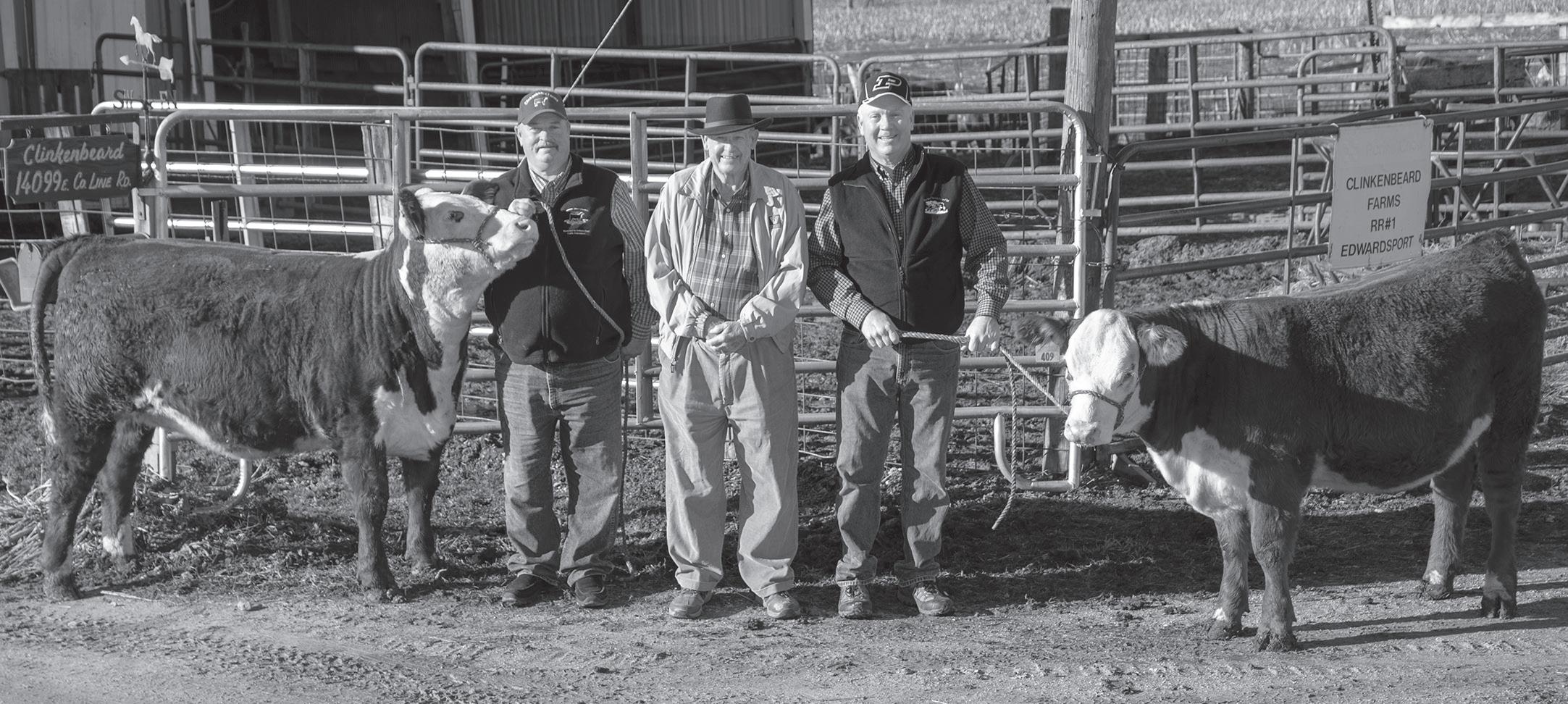

Bruce, Shoshanna, Blake, Ashley, Jordan and Brian 4072 E. 500 S. Waldron, IN 46182
317-407-3618 cell bruceeverhart56@gmail.com
Polled Herefords
Lee, Cindy and Matthew Elzemeyer
2538 State Rd. 122 Richmond, IN 47374
765-969-2243 lee@elzehereford.com
Ray 317-727-4227 Allison 240-513-5557 rayramsey77@gmail.com

Brian, Janelle, Collin and Landon Deatsman
5708 North 200 East Leesburg, Indiana 46538
Brian Cell: 574-527-6679 gdeatsman@hotmail.com Visit our website! www.deatsman.com

The Duncan Family
1264 N. Mountain Rd. Wingate, IN 47994
David cell 765-366-0295 davidandjilld@aol.com www.ableacrescattle.com

Kottkamp Family
2261 E. U.S. Hwy. 40 Clayton, IN 46118
Dale 317-752-7523
765-585-1105
casey.hampton@me.com
3013 W. State Rd. 38 West Lebanon, IN 47991
Dylan 317-752-3267 kottkampcattle@gmail.com
1953 1490N Co. Rd. 1150W Norman, IN 47264 jccattleco7@gmail.com 50 YEAR BREEDER 1480 S. 675 E. Greenfield, IN 46140
ccowles@hereford.org
Terry, Susan and Hayley
Hayhurst, Lillian Knust and Delaney Linville
14477 S. Carlisle St.
Terre Haute, IN 47802
812-696-2468
812-236-0804 cell HayhurstFarms@aol.com G ary Greenwood


August 18th
Iowa State Fair 4-H Breeding Beef Show
August 19th
Iowa State Fair 4-H Market Beef Show, Iowa Hereford Steer Futurity
August 20th
Iowa State Fair Open Hereford Show
August 30th
Iowa Hereford Tour / North Central Iowa
Stops include: MDF Polled Herefords, Grand View Farm & Ranch, and others

John and Joell Deppe with boys - Montana, Chance, Austin and Nick 21938 150th St. Maquoketa, IA 52060 home phone: 563-672-3531 John, cell 563-599-5035 Joell, cell 563-599-5038 josiedeppe@gmail.com webcowsdeppebros.com

ADAIR, IA
MATT, ERIKA, LANE & CLARA WOOLFOLK
MATT: 731-694-6469
ERIKA: 641-745-5902
MRWCATTLE@GMAIL.COM
MRWCATTLE.COM
Craig and Denise Amos Indianola, Iowa 515-961-5847
515-238-9852 Cell cdamos@msn.com www.amosherefordfarm.com
Bill and Becky Goehring 2634 Clearwood Ave. Libertyville, IA 52567
Bill’s cell 641-919-9365
keosalebarn@netins.net www.keosauquasaleco.com
Brent, Robin, Dylan and Nicole 2169 290th Ave. DeWitt, IA 52742 563-357-9849 bapete@iowatelecom.net
Tom and Jo Heidt Family 3388 240th St. Lockridge, IA 52635 Cell 608-574-2309
Livestock, LLC Patrick and Amanda Wall Pleasantville, IA 50225 515-450-7665 pawlivestock@gmail.com www.pawlivestock.com
Debter Hereford Farm . . 42, 63, 64
Tennessee River Music 64
Lambert Ranch . . . . . . 64
McDougald Herefords 64
Morrell Ranches 64
P W Gillibrand Cattle Co 64
Pedretti Ranches 64
Pfendler Ranches 64
Sierra Ranches 64
Snedden Ranch 64
Sonoma Mountain Herefords 64
Wiemer Cattle Co .
64
Campbell, James T 64
Clark Anvil Ranch .
64
Cline Registered Herefords 64
Coleman Herefords 64
Coyote Ridge Ranch 64
Fuchs Herefords, Mike 64
Leroux Land & Cattle 64
Robb & Sons, Tom 64
Sidwell Herefords 64
7 Oaks Plantation 18
Barnes Herefords . . . . . . . 11
CES Hereford & Angus 63
Greenview Farms Inc . . . . . 65
HME Herefords 63
MTM Polled Herefords . . . 61
Predestined Cattle Co 63
White Hawk Ranch IBC
Canyon Gem Livestock . . . 65
Colyer Herefords & Angus 65
Elkington Polled Herefords . 65
Holt Family Cattle 65
JBB/AL Herefords . . . . . 65
Shaw Cattle Co 65
Wooden Shoe Farms . . . 65
Baker Farms 65
Behrends Farms 58
Bixler Herefords 65, 79
Bob-O-Lou Herefords 65
Burns Polled Hereford Farm 65
Crane Herefords 58
Dobbs Cattle Co . . . . . . 79
Edenburn Family Farm 58
Ellis Farms . . . . . . 9, 65
Fleisher Farms 65, 79
Knott Farm
65
Lark Herefords LLC 79
Lorenzen Farms . . . . . . 58
Lowderman Cattle Co 58
McCaskill Farms . . . . . . 79
Newbold Farms Inc 65
Oak Hill Farm 65
Parish Farms 58
Plainview Stock Farm 58
Prairie Cross Ranches, The 79 Prairie Meadow Herefords 65
Prairie Rose Cattle Co 79
Purple Reign Cattle Co 65
RGR Cattle Co 58
Sayre Hereford Farm 65
Stephens and Loehr Herefords 65
Stumpf Land & Cattle 65
West Wind Herefords . . . . 65
Able Acres 76
Beck-Powell Polled Herefords 65
Clinkenbeard Farms & Sons 76
Deatsman Farms 76
Elzemeyer Polled Herefords 76
Everhart Farms 76
Gerber Land & Cattle 66
Greenwood Family Herefords 76
Hayhurst Farms . .
76
JC Cattle Co 76
Kottkamp Cattle . . . . . . 76
Laudeman Family Farm 66
McFatridge Cattle Co . . . . 66 Ramsey Herefords 76
Amos Hereford Farm 77
Deppe Bros Cattle Co 77
Goehring Herefords 77
Iowa Hereford Breeders Assn 77
Jackson Hereford Farms 77
K7 Herefords . . . . . . 77
MRW Herefords 77 PAW Livestock LLC . . . . 77 Petersen Herefords 77
R&R Cattle Co
77
Wiese & Sons 66
Brannan & Reinhardt Polled Herefords 66
Davis Herefords 66
Douthit Herefords 66
GLM Herefords 66
Grimmel Schaake Cattle Co 66
Gustafson Herefords 66
Jamison Herefords .
66
Jensen Ranch 66
Malone Hereford Farm . . . . . 53
MM Ranch Polled Herefords 66
Oleen Cattle Co . . . . . . 66
Sandhill Farms 66
Schu-Lar Herefords, LLC . . . . 66
Springhill Herefords 66
Umberger Polled Herefords . . . 66
VJS Polled Herefords 66
Botkin Polled Herefords . . . . . 66
Boyd Beef Cattle 66
Chambliss Hereford Farms . . 41, 66
Clifford Farms 61
Dogwood Farm
61
JMS Polled Herefords 61
Matheny Herefords . . . . . 63, 66
Wells Farm 61
Womack Cattle Co 63
Church View Farm 80
East Side Farm 17, 66, 80
Grimmel Girls Show Cattle . . . 67
Breasbois Farms 59
Cottonwood Springs . . . . . . 59
Grand Meadows Farm 59
Hanson’s Double G Herefords 67
MacNaughton Farms 67
McDonald Farm 49, 59
Miller Creek Farm 59
Sugar Sweet Ranch 59
Baker Herefords . . . . . 58
Cardinal Creek Cattle Co 58
Carlson Farms
58
DaKitch Hereford Farms 67
Delaney Herefords . . . . 58, 67
Freking Cattle 58
Krogstad Polled Herefords . . . 67
Lawrence Herefords 67
Lind Family Farms 58
Neil Farms 58
Springwater Polled Herefords 67
Walsh Herefords 58
Caldwell Hereford Ranch 67
Flat Creek Farm . . . . . . 47
Leaning Cedar Herefords 67
McGuffee Polled Herefords . . . 67
Bellis Family Herefords 53
Blue Ribbon Farms 52
Bonebrake Herefords 67
Bradshaw Ranch 52
Cork Cattle Co 52
Duvall Polled Herefords 52
Falling Timber Farm . . . . . 67
Findley Farms 67
Harding Bros . Herefords . . . 67
Journagan Ranch/Missouri
State University . . . . . 53, 67
Lager Polled Hereford Farms 53
McMillen’s Toothacre Ranch . . . 53
Mead Farms 52
Menzies Cattle Co , LLC . . . . 53
Miller Herefords 52
Reed Farms 53
Reynolds Herefords 53
Shoenberger Polled Herefords 53, 67
Steinbeck Farms 52
Storie Farms 53
Valley Oaks Farm 52
Whispering Winds Farm . . . . 52
WMC Cattle Co 53
Cooper Hereford Ranch . . . . 67
Curlew Cattle Co 67
Ehlke Herefords . . . . 67
Feddes Herefords 67
Holden Herefords 14, 15, 67
J Bar E Ranch 67
L Bar W Cattle Co 67
McMurry Cattle 68
Thomas Herefords 68
Wichman Herefords 68
Fisher Family, Lowell 68
Frenzen Angus and Polled Herefords 68
High Point Herefords . . . . 68
Hoffman Ranch 68
Hutton Ranch 68
JB Ranch Polled Herefords 68
Moeller & Sons, Albert 68
Monahan Cattle Co 68
Nebraska Hereford Assn 32
Ridder Hereford Ranch 68
Schutte & Sons 68
Snowshoe Cattle Co 68
Splitt Creek Ranch 68
Upstream Ranch . . . . 68
Valley Creek Ranch 68
Van Newkirk Herefords . . . . 68
NEVADA
Brumley Farms 68
Genoa Livestock, LLC 31, 68
Lee Livestock, LLC 68
Mrnak Herefords West 68
NEW JERSEY Grass Pond Farm . . . . 80
NEW MEXICO
B&H Herefords 68
Copeland & Sons Herefords LLC . 69
Cornerstone Ranch 69
Fawcett’s Elm Creek Ranch 70
Frederickson Ranch 70
Hoffman Herefords 70
Ollerich Brothers Herefords 70
Rausch Herefords 70
Stenberg Herefords 70
Candy Meadow Farms . . . 61
Coley Herefords 70
Day Ridge Farm . . . . . . 63
East Tennessee Hereford Assn 21
Jackson Farms . . . . . . . 63, 70
Parker Bros 61
Rogan Farms Herefords . . 70
Triple L Ranch 70
Walker Herefords 27
Woodard Hereford Farms 70
Atlas Farms 70
B&C Cattle Co . . . . . . 70
Bar J Bar Hereford Ranch 71
Barber Ranch . . . . . . . 71
Case Ranch Herefords 71
Chastain Cattle Co . . . . . . 71
Doyle Hereford Ranch 71
Dudley Bros 33, 71
G3 Ranch 71
GKB Cattle IFC, 71
Indian Mound Ranch 71
Metch Polled Herefords 71
Noack Herefords 71
Nolan Herefords 71
Powell Herefords 46, 71
Redbird Ranch 71
Rockin’ W Polled Herefords 71
Rocking Chair Ranch . . . . . 71
Skrivanek Ranches 71
South Texas Hereford Assn . . 37 Still River Ranch 71 Sunny Hill Ranch . . . . . 71 Texas Hereford Assn 71
Willis Polled Herefords . . . 71
Cache Cattle 71
JB Herefords 71
Johansen Herefords 71
Rees Bros 72
VIRGINIA
Deer Track Farm . . . . . . . 80 Fauquier Farm 80
Hereford Hollow Farm 63
Knoll Crest Farm 80
Thistle Tree Farm 72
CX Ranch 72
Diamond M Ranch . . . . . . 72
Wilcox Family Farm 72
Cottage Hill Farm . . . . . . 73
Cottle Brothers Farm 73
Five Star Polled Herefords 80
Grandview Hereford Farm 73
Grassy Run Farms 73
Knotts Polled Herefords 73
Law & Sons, David 73
Litton Livestock 73
McDonald Polled Herefords 73
Westfall Polled Herefords 73
Bacon Branch Beef 56
Boettcher’s Brookview Acres . . 57
Four Leaf Cattle 56
H&H Cattle Farm . . . . . . 56
Lamb Bros Beef Farm 19
Larson Hereford Farms 56
Lietzau Hereford Farm 57
MGM Polled Herefords 57
Next Generation Genetics 56
Pierce’s Hereford Haven 57
Sandrock Ranch Herefords 72
Spaeth Farms 56
Starck Century Farm 57
Starr Polled Herefords 57
Whiskey Run Farms LLC 57
Windy Hills Herefords .
56
Berry’s, The 72 Largent and Sons . . . . 72
McClun’s Lazy JM Ranch 72
Micheli Herefords 72
NJW Polled Herefords 72
Ochsner-Roth Cattle Co 72 Wilhelm Cattle 72
Elmlodge Polled Herefords 30, 72
Medonte Highlands Polled Herefords 72 River Valley Polled Herefords . . 43 Stonewood Grange 40

Ron and Leigh Kiesewetter 901 Rhymer Dr. Normal, IL 61761 630-878-0206 rkiese1967@gmail.com
David, Shirley and Keaton Dobbs Newton, IL
Keaton 618-792-6370
David 618-792-0515 dobbshereford@gmail.com
Dan Bixler 7115 E. 1000th Ave. Newton, IL 62448 618-544-1842 618-562-3888 cell insman542002@yahoo.com
Ronnie 217-430-8705
Randy 217-242-1262 randy.mccaskill@burrusseed.com
Matt 217-779-0775
Derke 217-617-8443
Tait 217-430-5949
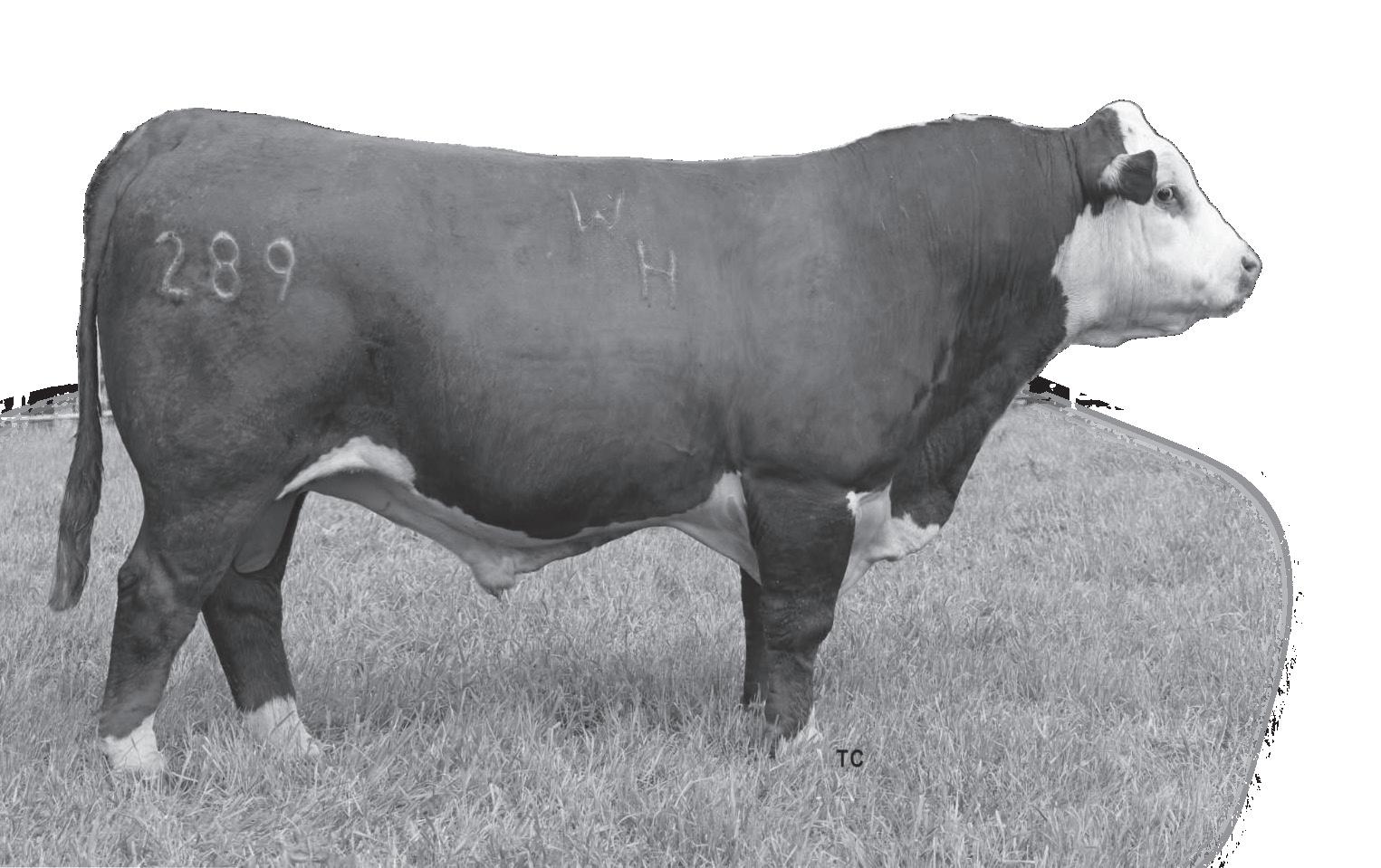
SRM WHR 4010 PRIME PLUS 289 ET. Getting the job done at Stone Ridge Manor and Whitehawk! His parents are top tier genetics being out of one of our best donors 4010 — one of the top carcass cows in the breed. Dark red and pigmented — Prime Plus makes calves that are stunning.
Selling the Future – One Hereford at a Time SRM WHR 4010 PRIME PLUS 289 ET {DLF,HYF,IEF,MSUDF,MDF,DBF}
654 Cold Springs Rd. Gettysburg, PA 17325
P44544444 - Calved: 11/12/22 - Tattoo: LE 289/RE SRM
NJW 79Z Z311 ENDURE 173D ET {SOD}{CHB}{DLF,HYF,IEF,MSUDF,MDF,DBF}
LOEWEN GENESIS G16 ET {CHB}{DLF,HYF,IEF,MDF,DBF}
P43987463 LOEWEN 77 48 MISS 344N 4RB42ET {DLF,HYF,DBP}
EFBEEF TFL U208 TESTED X651 ET {SOD}{CHB}{DLF,HYF,IEF,MSUDF}
INNISFAIL 723 U208 4010 ET {DLF,HYF,IEF,MSUDF}
P43541962 INNISFAIL P230 T723 {DLF,HYF,IEF,MSUDF}

6470 Beverleys Mill Rd. Broad Run, VA 20137
Tyler Newman 540-422-1747
Bob Kube 540-347-4343 fauquierfarmllc@gmail.com
248 River Bend Ln. Smithville, WV 26178
Derek Haught
304–477–3818 — Home 304–299–9170 — Cell derek@fivestarherefords.com
Bob and Pam Rhyne 3700 Peach Orchard Rd. Charlotte, NC 28215
Bob’s cell 704-614-0826 rhynelandfarms@gmail.com
Kim, Alexis and Courtney Eudy 10945 Hickory Ridge Rd. Harrisburg, NC 28075
Kim’s cell 704-589-7775
KNOLL CREST FARM
“Serving the beef industry since 1944” P.O. Box 117 Red House, VA 23963 Office 434-376-3567
Paul S. Bennett 434-941-8245
Jim G. Bennett 434-664-7935
Brian R Bennett 434-664-8309
Dalton G. Bennett 434-664-7946
Scott R. Bennett 434-660-7268 knollcrest@knollcrestfarm.com
Bill 443-871-0573
Tara 443-871-0520 ttlajacobs@aol.com Lindsey 443-306-3218


GrassPondFarm.com