The right of Helen Grimes to be identified as the author of this work has been asserted in accordance with the Copyright, Designs and Patents Act 1988.
All rights reserved. No part of this publication may be reproduced, stored in a retrieval system or transmitted in any form, or by any means, without the prior written permission of the author, nor be otherwise circulated in any form of binding or cover other than that in which it is published and without a similar condition being imposed on the subsequent purchaser.
Every effort has been made to ensure that all the information in this book is accurate. However, due to differing conditions, tools and individual skills, the publisher cannot be responsible for any injuries, losses and other damages that may result from the use of the information in this book.
First published 2026 by: Bustle & Sew Station House West Cranmore Shepton Mallet BA4 4QP
www.bustleandsew.com
WelcometotheJuneMagazine
June brings long (and hopefully warm!) evenings, roses climbing over cottage walls, and hedgerows growing lush and untidy in the warm sunshine. Here in the countryside the fields are turning from the bright green of spring to the deeper shades of early summer, whilst the garden seems to change almost daily as foxgloves, geraniums and the first sweet peas begin to flower.
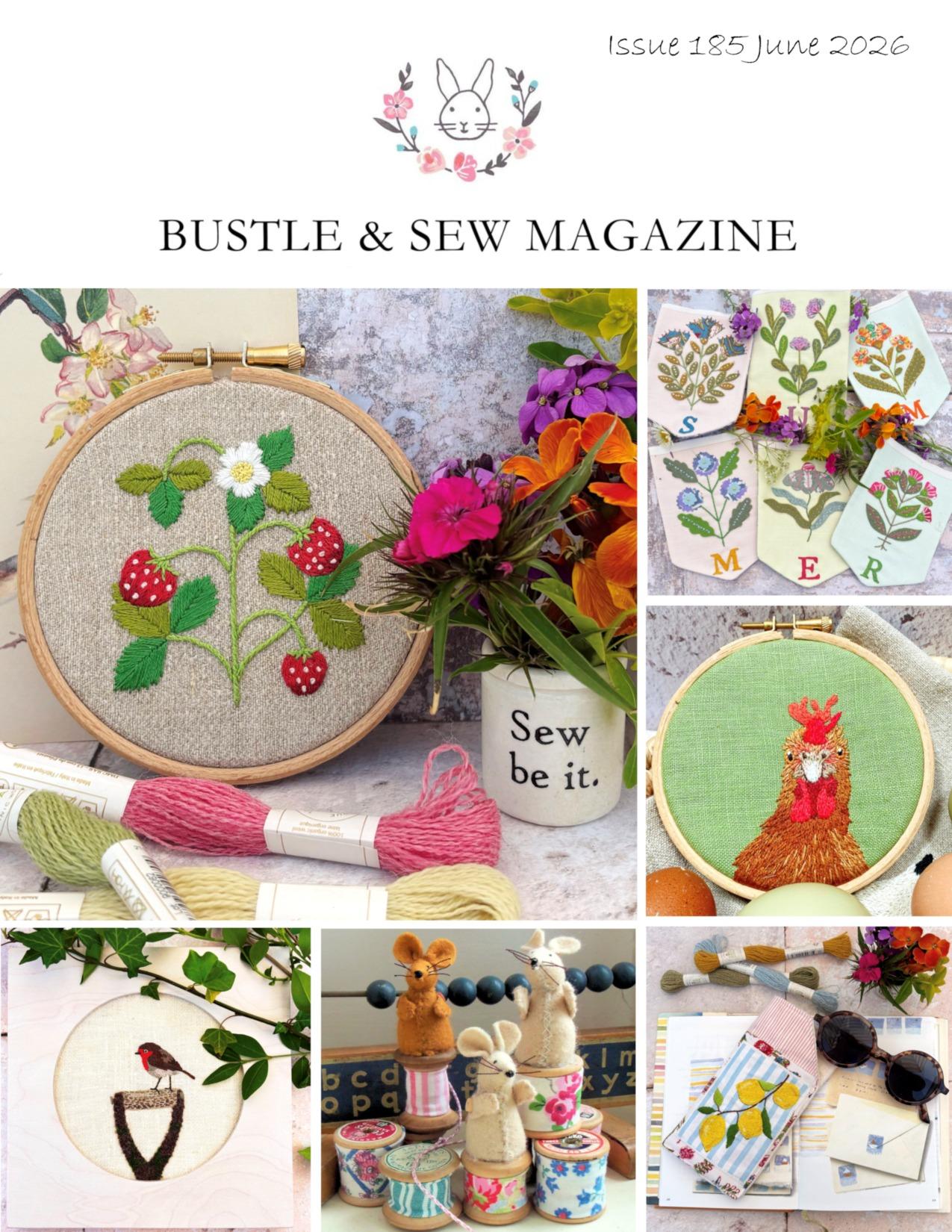
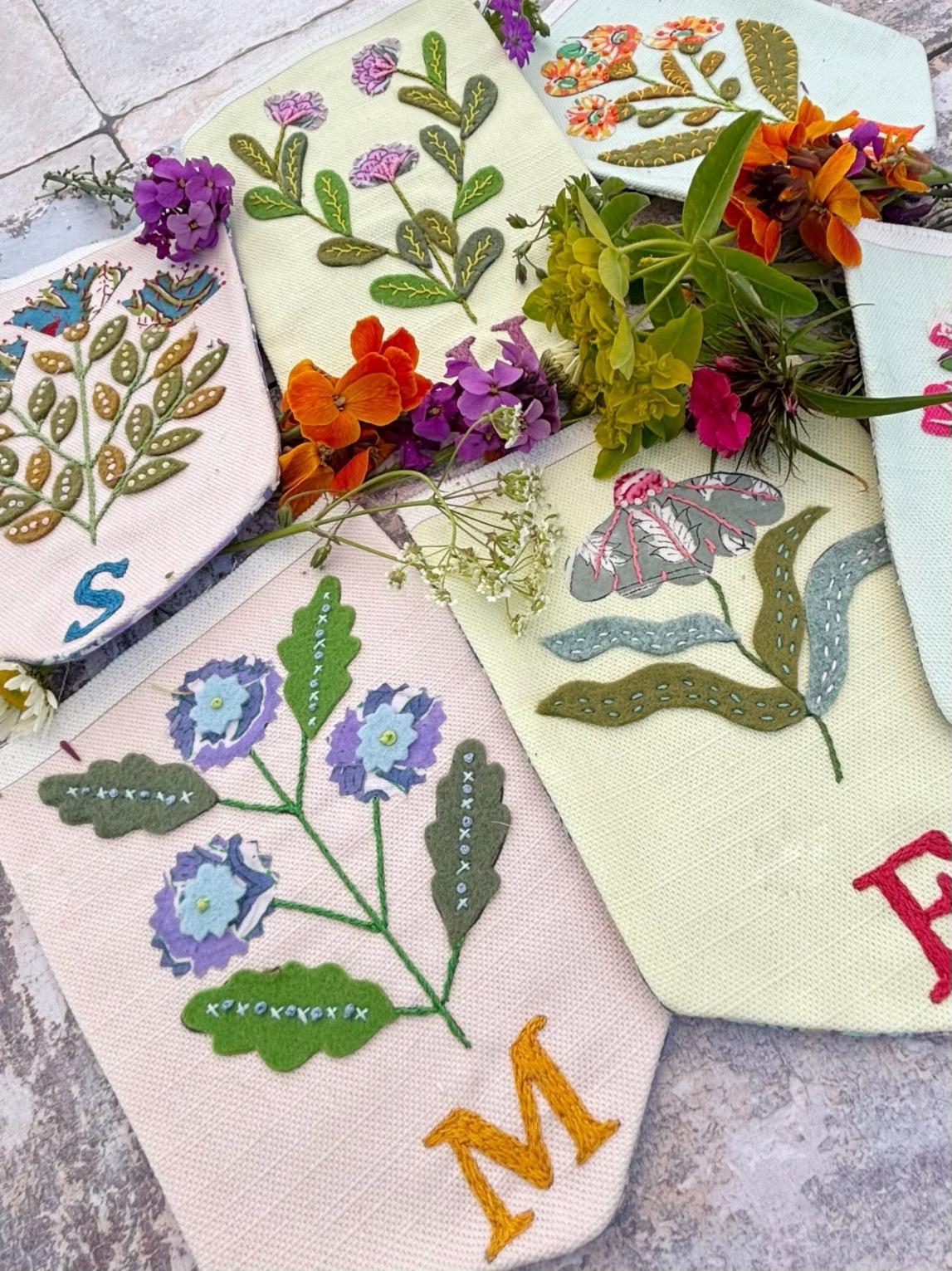
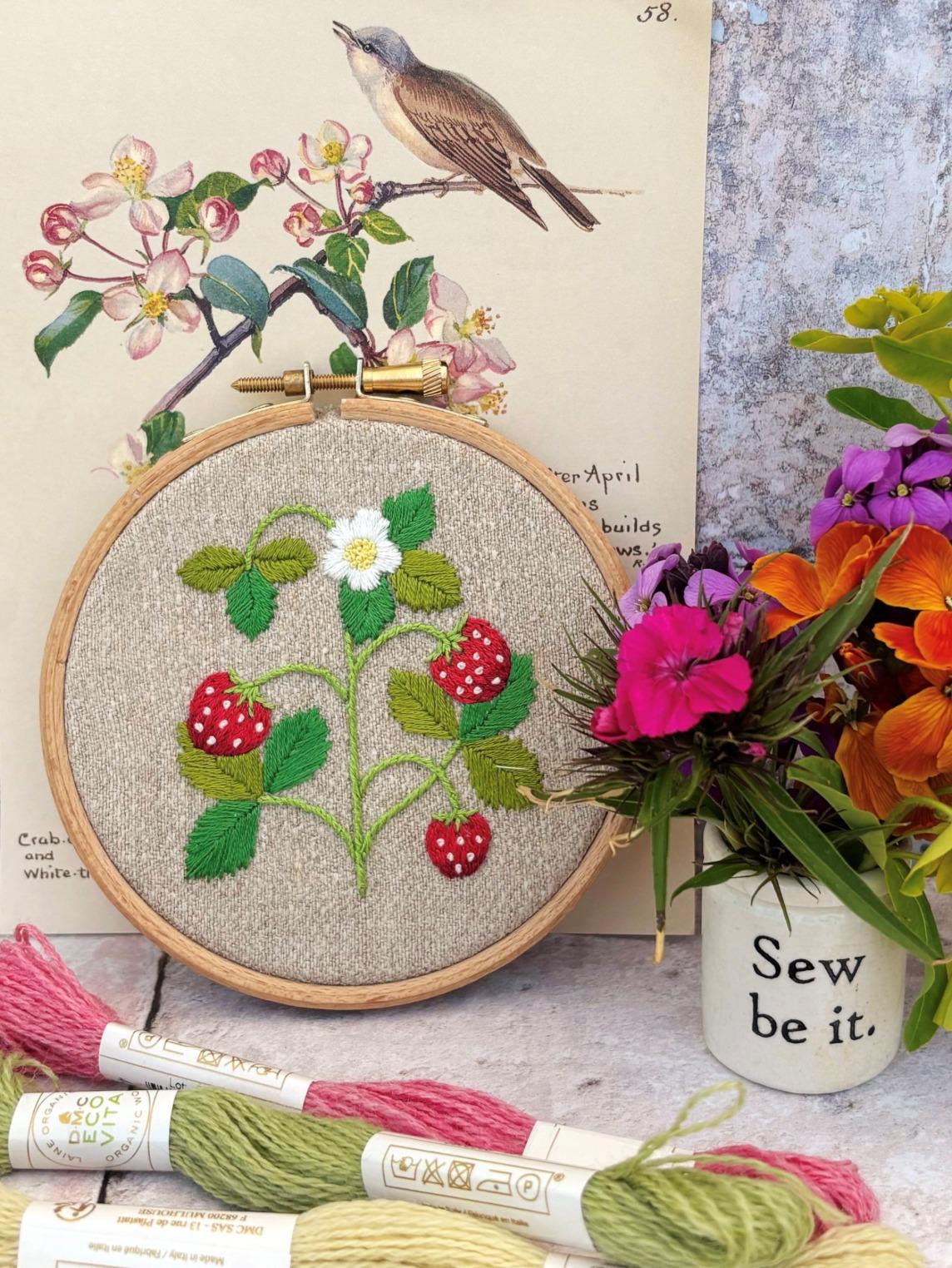
This month’s magazine is filled with projects and articles inspired by the beauty of the season. The embroidered strawberry plant motif captures one of the loveliest sights of June — tiny white flowers giving way to ripening fruit tucked beneath green leaves, while the floral summer bunting is designed to bring a little colour and cheer indoors or out for garden gatherings, summer sewing rooms or simply brightening an ordinary corner of home.
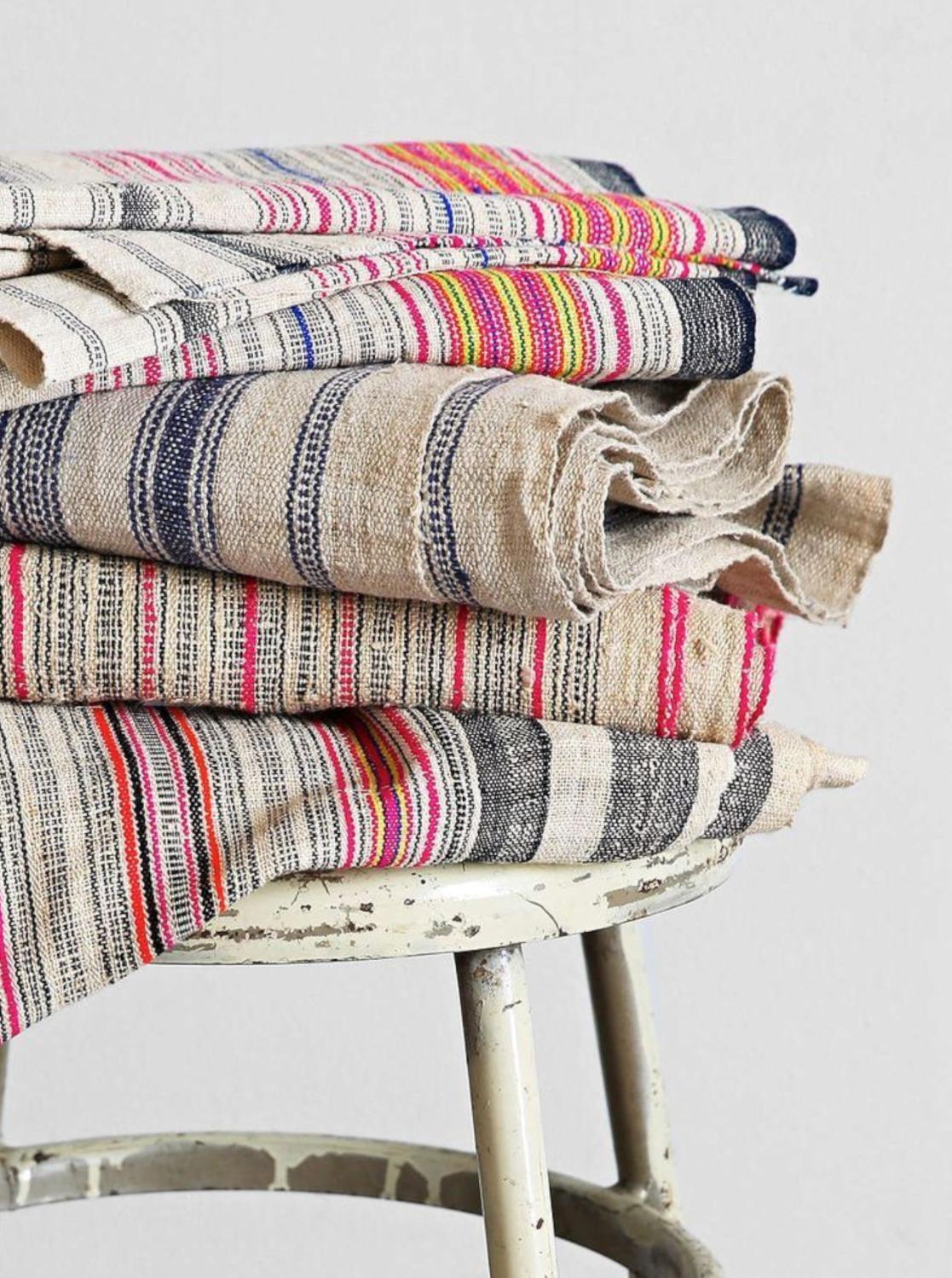
We also take a wander through the world of Shakespeare’s flowers, exploring some of the blooms and herbs woven through his plays and poetry. Shakespeare understood the language and symbolism of flowers so well, and many of the plants he mentioned are still familiar in English gardens today, from carnations and roses to violets and lady-smocks. Alongside this we take a look at traditional ticking fabric, with its practical beginnings and enduring appeal. Once used for sturdy mattress covers and household textiles, ticking stripes have become a timeless country fabric that still feels perfectly at home in cottages and sewing rooms today.
Elsewhere in this issue you will find seasonal inspiration for making, stitching and enjoying these early summer days. Whether you are sewing in the shade of an open window, planning a picnic, gathering flowers from the garden or simply finding a quiet half hour with needle and thread, I hope you will enjoy this issue. The July edition will be published on Thursday 25 June, in four weeks time. Until then…
Very best wishes
June
After the awakening of April and the blossom time of May, the month of June brings long days, scented air, and a sense of lush abundance. The hedgerows are no longer tentative lines of green but thick, unruly borders spilling over with hawthorn, dog rose, and elderflower. Fields stretch outward in patchwork hues, some painted the acid yellow of oil seed rape grass, whilst others display the richer tones of early summer growth.
As I walk along the lane beside the railway track the air is heavy with the scent of blossoms and warm earth,while bees drift lazily from flower to flower, their low hum forming a constant, soothing soundtrack. Birds are everywhere, not just heard but seen in flashes of
movement, darting between hedges or perched boldly on fence posts, the newly fledged youngsters fluttering their wings madly and opening their beaks hopefully to be fed as their exasperated (and probably also exhausted) parents try to persuade them to learn to feed themselves. June is also the month when our gardens come into their own. Roses, perhaps the most iconic of English flowers, begin their grand display. Climbing roses cascade over walls and archways, their petals unfolding in layers of soft pink, deep crimson, and creamy white. Cottage gardens, with their slightly chaotic charm, are a riot of colour and texture, foxgloves standing tall among delphiniums, peonies bursting open in generous blooms.
Across the countryside, hedgerows and roadside verges are full of the first foxglove flowers, wild honeysuckle, dog roses and bramble flowers, that later in the year will become succulent dark blackberries, perfect for crumbles and jams. Sweet peas begin to flower in June, and you must pick them often in order to stop them setting seed. A jar of sweet peas on the kitchen table is a sure sign that summer has arrived - in our house at least!
In June the days are at their longest and the nights are short so that, on bright sunny days it can be hard to settle to sleep. The fresh, sparkling dawns, full of the day’s promise and long twilight evenings are so wonderful after the short dark days
of winter, that it’s hard to resist the temptation to sit up late, perhaps in the garden, stitching or reading until the dew begins to fall. The month of June itself probably takes its name from the Roman goddess Juno, though Celtic names for this month contain words for ‘mid’ or ‘middle’ as this month was regarded by the Celts as the height of summer.
June is of course the month of the longest day, which this year falls on Sunday 21 when the northern hemisphere is tilted closes to the sun. The word solstice derives from the Latin (sun) and (to stand still) as the sun seems to pause in its path before changing direction. For a few days either side of the solstice, sunrise and sunset occur at similar times; as they mark the longest days of the year with just a few hours between dusk and dawn, whilst in the far north of Scotland it hardly seems to grow dark at all. Our ancestors considered this to be an auspicious time of the year, when the sun is at its most powerful, and has been eagerly anticipated since prehistoric
times. Stone circles and other ancient monuments are aligned with the rising sun at summer solstice.
Although this is also the moment when the days begin to shorten as we approach autumn (still a long way off!), the summer solstice is by no means the warmest day of the year, but is rather a blend of the luxuriance of spring and the warmth of the high summer months that lie ahead. Away from the city, across the countryside elder trees are coming into bloom, their profuse creamywhite flower heads unmissable. Both the flowers and the berries are good for making a variety of drinks such as wines and cordials, whilst elderflower fritters make a delicious snack. Ideally pick elderflowers for edible purposes on a warm dry day and don’t take them from roadside trees as they will be polluted from by exhaust fumes.
June is also the season of village fêtes, those quintessentially English gatherings that bring communities together in celebration. Held on village greens or in the grounds of
local halls, these events are a blend of the traditional and the playful. There are stalls selling homemade cakes and jams, games that range from the delightfully simple to the mildly competitive, and often a sense of cheerful chaos that is part of their enduring appeal. These fêtes are not grand spectacles but intimate occasions, rooted in a sense of community and belonging.
World Environment Day falls on the fifth of June. Established by the United Nations, this day encourages awareness and action for the protection of the environment. It feels particularly fitting this, when nature is at its most peak. Hedgerows are full, wildlife is active, and the countryside seems to embody exactly what this day tries to protect. Schools, communities, and environmental groups often use this date to organise clean-ups, educational events, or simply to encourage people to spend time outdoors and reconnect with the natural world.
Roses,RosemaryandViolets:
A(verylittle)lookatafew ofShakespeare’sFlowers
AWildflowerMeadowinJune
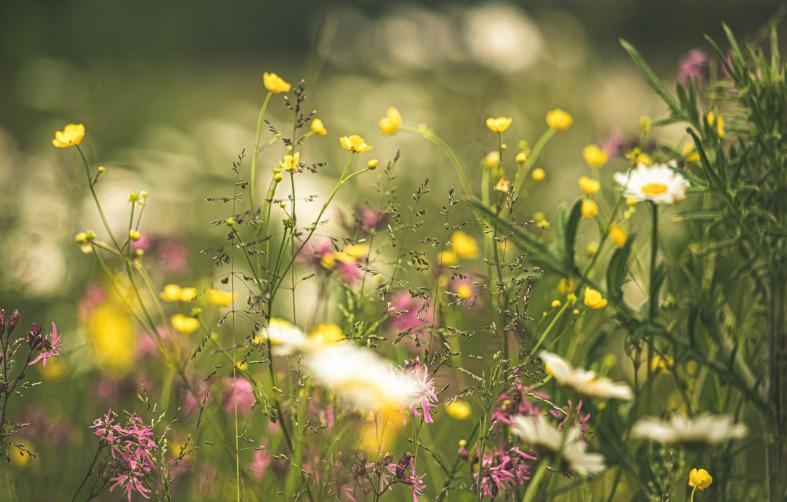
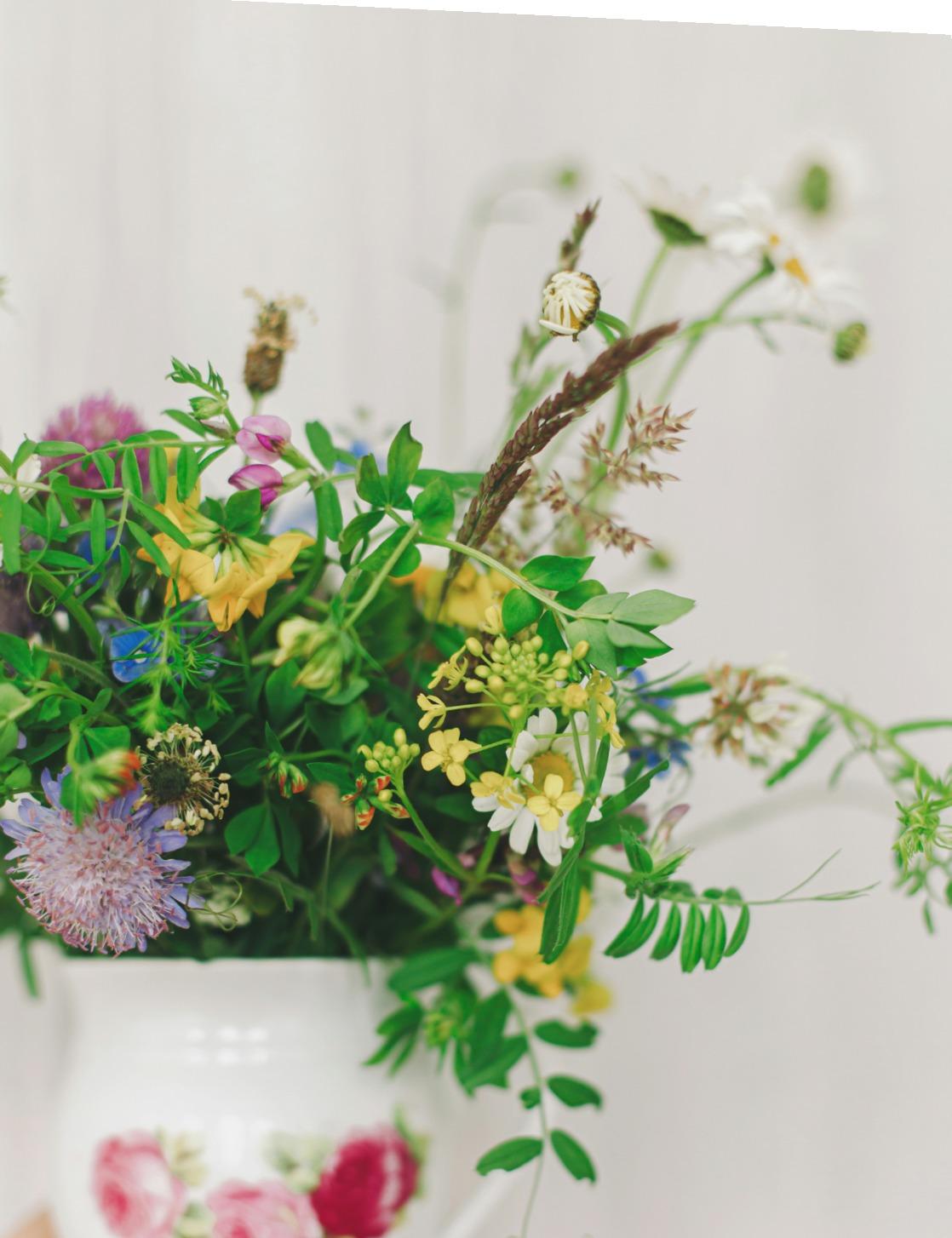
A meadow near at hand would seem to give more pleasure than a corn-field. G rain, to appear to full advantage, should be seen at a little distance, where one may note the changes in its colouring with the advancing season, where one may enjoy the play of light when the summer clouds throw their shadows there, or the breezes chase one another over the waving lawn. It is like a piece of shaded silk which the salesman throws off a little, that you may better appreciate the effect. But a meadow is a delicate embroidery in colours which you must examine closely to understand all its merits; the nearer you are, the better. One must bend over the grass to find the blue violet in May, the red strawberry in June; one should be close at hand to mark the first appearance of the simple fieldblossoms, clover, red and white, buttercup and daisy, with the later lily, and primrose, and meadow-tuft; one should be nigh to breath the sweet and fresh perfume, which increases daily until the mowers come with their scythes.
Susan Fenimore Cooper (1813-1894) from Rural Hours, 1850
AStitcher’s Palette
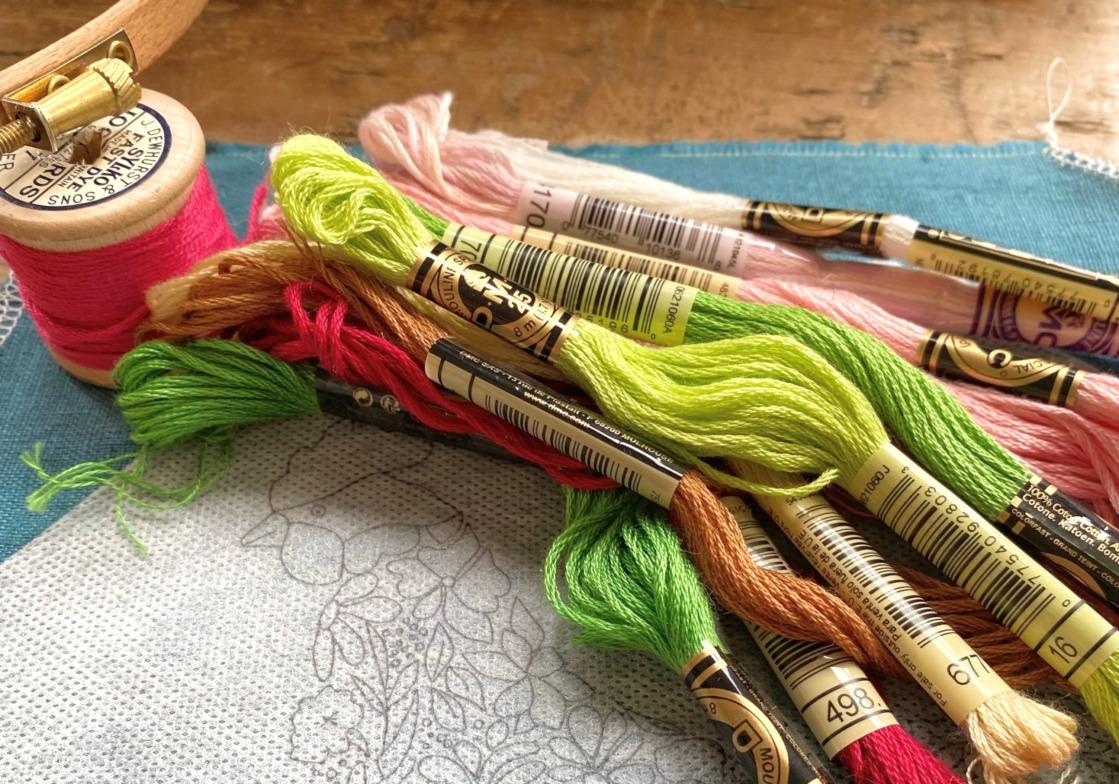
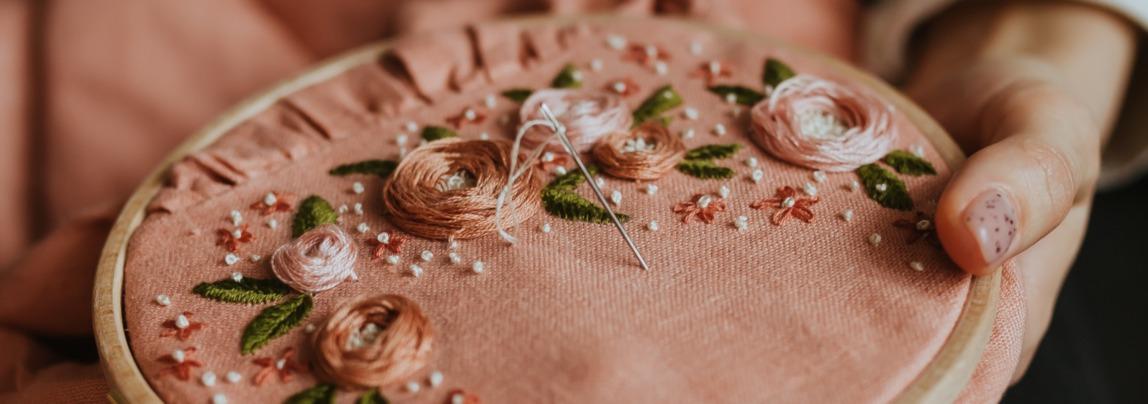
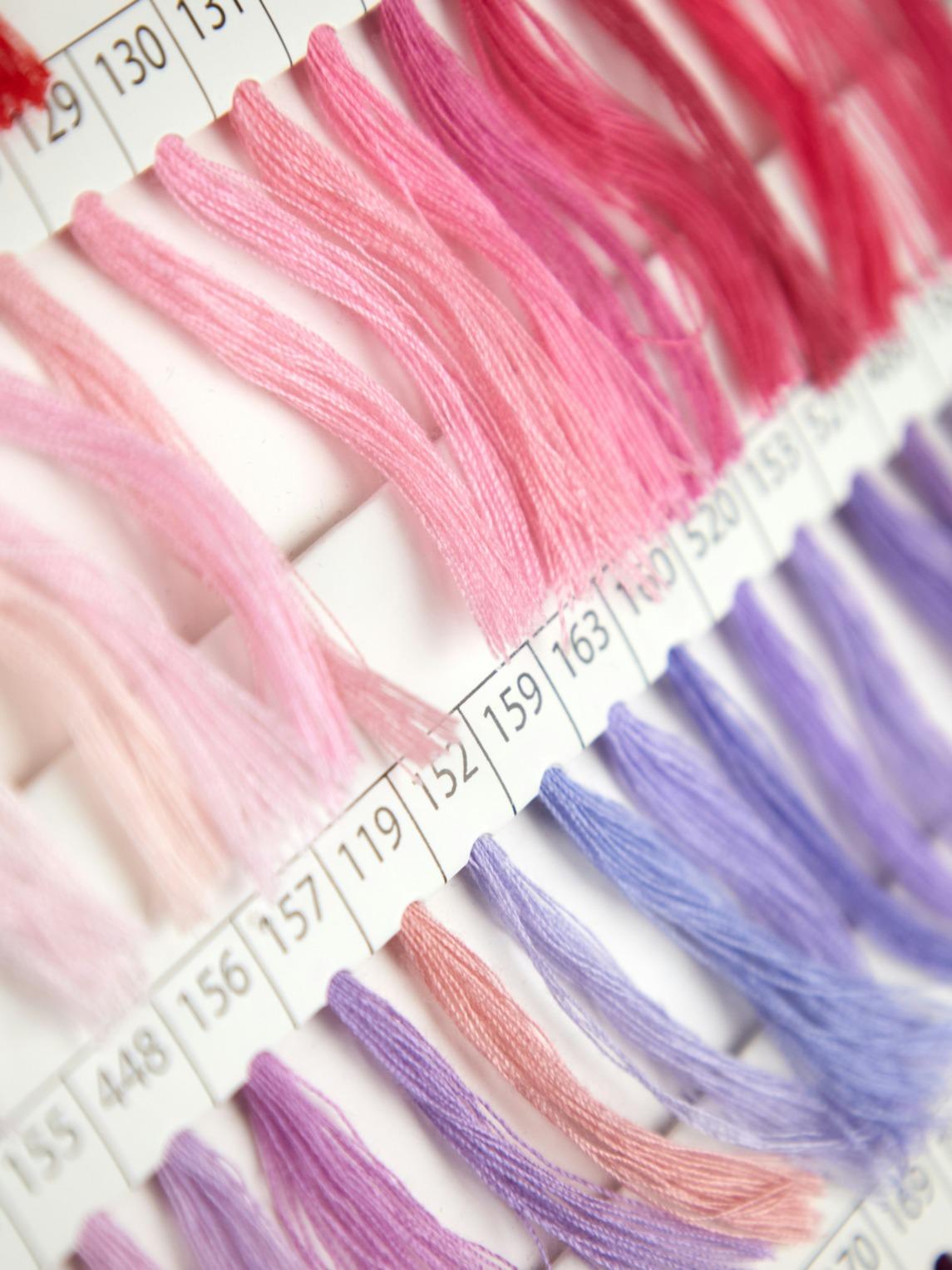
Few things are more enticing to an embroiderer than a collection of beautiful threads. Arranged in baskets, wound carefully onto cards or spilling from sewing boxes in a riot of colour, embroidery threads suggest infinite possibilities. A soft faded green may call to mind mosscovered stones beneath woodland trees, while deep berry shades suggest cottage gardens in late summer. Silks shimmer like water, wool threads promise warmth and texture, and fine cottons carry the cheerful brightness of wildflowers scattered through meadow grass. The choice of thread can completely transform a piece of embroidery. A simple floral motif stitched in soft matte cotton looks and feels completely different to the same design worked in glowing silk or textured wool.
Almost any kind of non-elastic fibre can be used for embroidery - as long that is - as it can be threaded for a needle and a suitable material can be found to support your stitches. However, until you’ve tried a few different types of thread it’s perhaps best to keep to manufactured embroidery flosses that are tried and tested for strength and colourfastness, and that are suitable for embroidering on many different types of background fabric. Versatile, affordable and available in an astonishing range of colours, stranded flosses are the most widely used embroidery thread in the world. Traditionally made from mercerised cotton, they are
composed of six strands that can be used together or separated and used either individually or in a certain number depending on the desired effect. This flexibility makes it suitable for almost every style of embroidery.
Threads come in all colours of the rainbow (sometimes all at once!) and are packaged in many different types of skeins and hanks. Some are wound so that lengths can be pulled out easily (if you choose the right end that is!), as in stranded cotton. However many brands, and artisan threads, need the skein bands removed and the yarn untwisted or unfolded before they can be used. Many of these kinds of threads once untwisted will fall out into a skein that can be cut at each end to create a bundle of threads the right length for stitching. If this is the case then knot the bundle loosely in the centre so it will keep tidily together and not fall apart and tangle. Don’t use an elastic band to hold the threads together, as rather in the same way that they’re bad for your hair, they’re bad for floss too.
Stitches can vary markedly in appearance when they’re worked in different threads. Try a variety of thicknesses and types of thread in one stitch to gauge the different effects achieved. Some stitches are much easier to work in finer threads, but the boldness of heavier fibres can create a dramatic effect.
When choosing thread shades, some stitchers will be drawn to the faded palette of antique samplers with their dusky roses, moss greens and muted blues while others will prefer more vivid colours, such as saffron yellow, turquoise and coral - these are all very personal decisions and part of what makes every hand embroidery project unique since, even if you’re working to a pattern, you may choose to substitute colours according to your own personal preferences if you wish.
The changing seasons around my home here in the Somerset countryside definitely bring changes to my own personal colour choices. Spring brings pale greens, blossom pinks and buttercup yellows, while summer encourages brighter shades and sky blues. Autumn threads glow with rust, ochre and berry shades, and winter frequently calls for softer neutrals, silvers and deep evergreen tones.
Thread manufacturers have long recognised the emotional appeal of colour. Entire collections are carefully curated to reflect gardens, historical textiles, countryside palettes or seasonal moods. Hand-dyed threads in particular have become increasingly popular among embroiderers seeking individuality and subtle variation.
As well as stranded cotton floss you may choose to use pearl cotton which has a lustrous corded finish and the strands can’t be separated. It is available in four different gauges, 3, 5, 8and 12 with 3 being the heaviest. Soft embroidery cotton is a relatively thick, single thread fibre with a matt finish. It’s best restricted to loose weave fabric as it’s hard to pull through tightly woven ones and can look lumpy. Crewel wool is a fine woollen (obviously!) thread that can be used singly or stranded together as required.
Whatever thread you’re using always choose a good brand and don’t be tempted by bundles of cheap threads, in my experience they’re not nice to work with and the frustration they can cause may even put a beginner off stitching altogether.
Not
justforChristmas… theGardener’sFriend
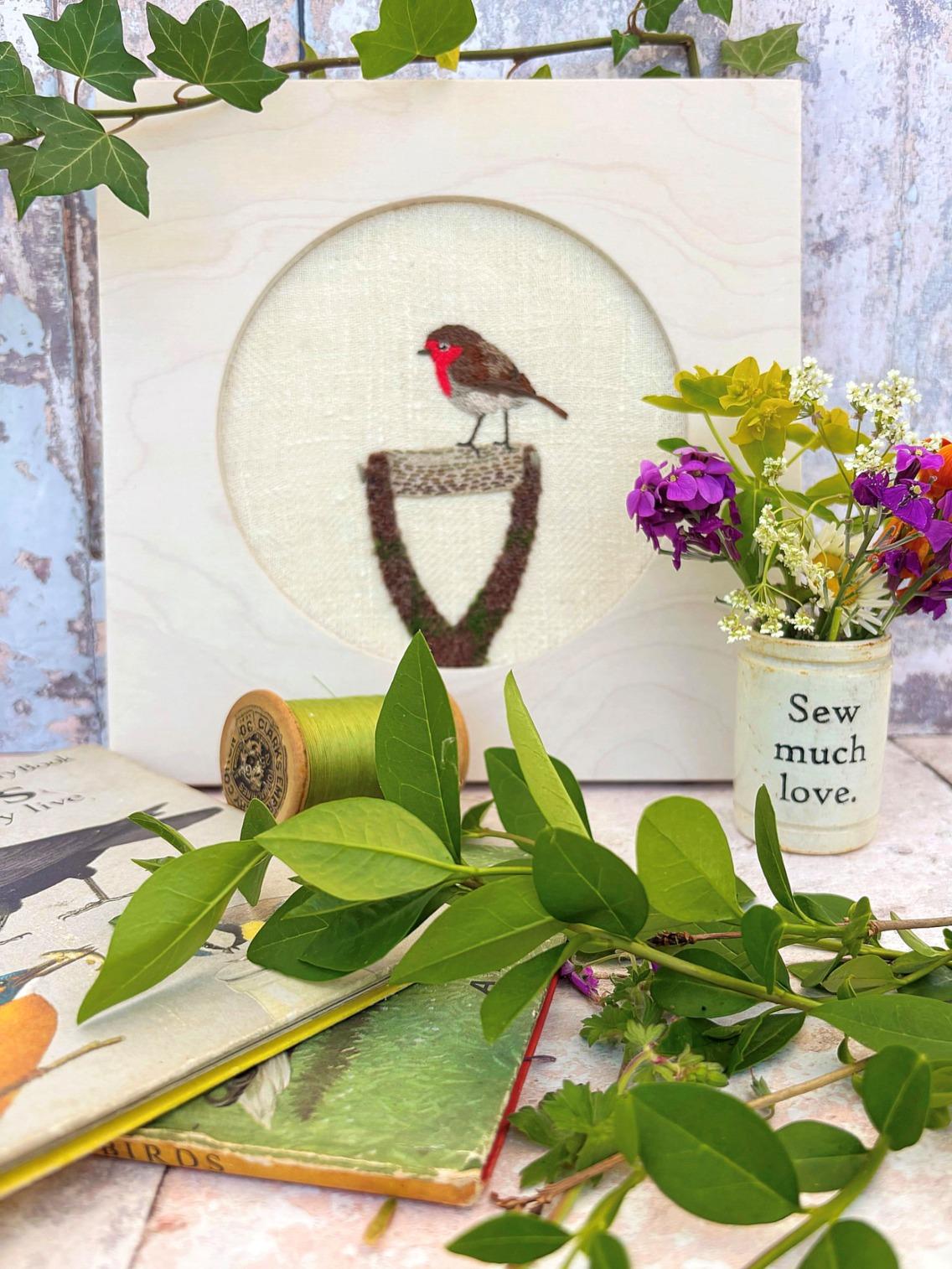
The European robin is one of the best known and most widespread garden birds in Britain. Found across Europe, western Asia and parts of North Africa, the robin has adapted particularly well to living alongside people and is now a familiar visitor to both rural and urban gardens. In Britain alone it is estimated that there are more than seven million breeding territories, making it one of the country’s most common birds.
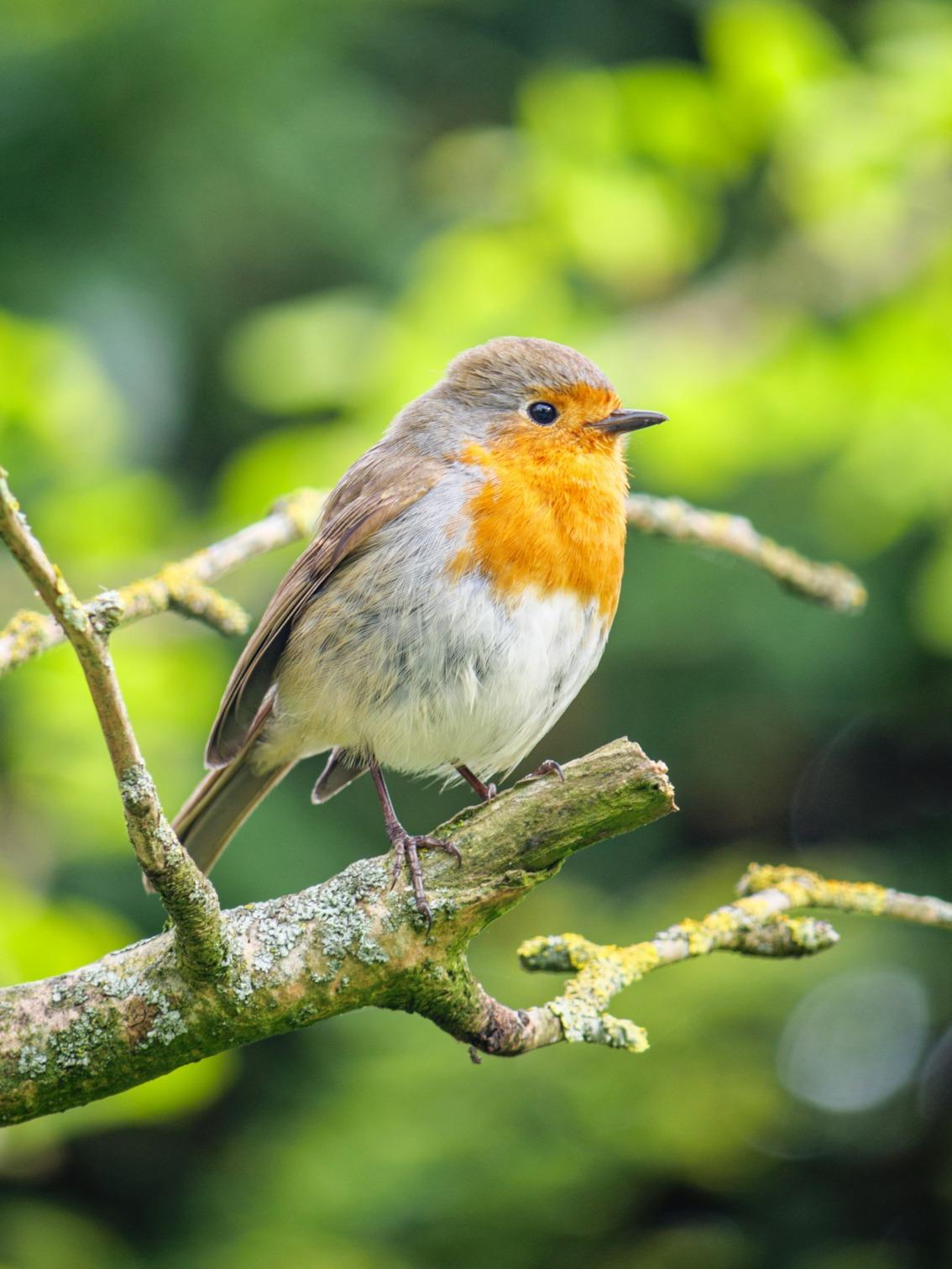
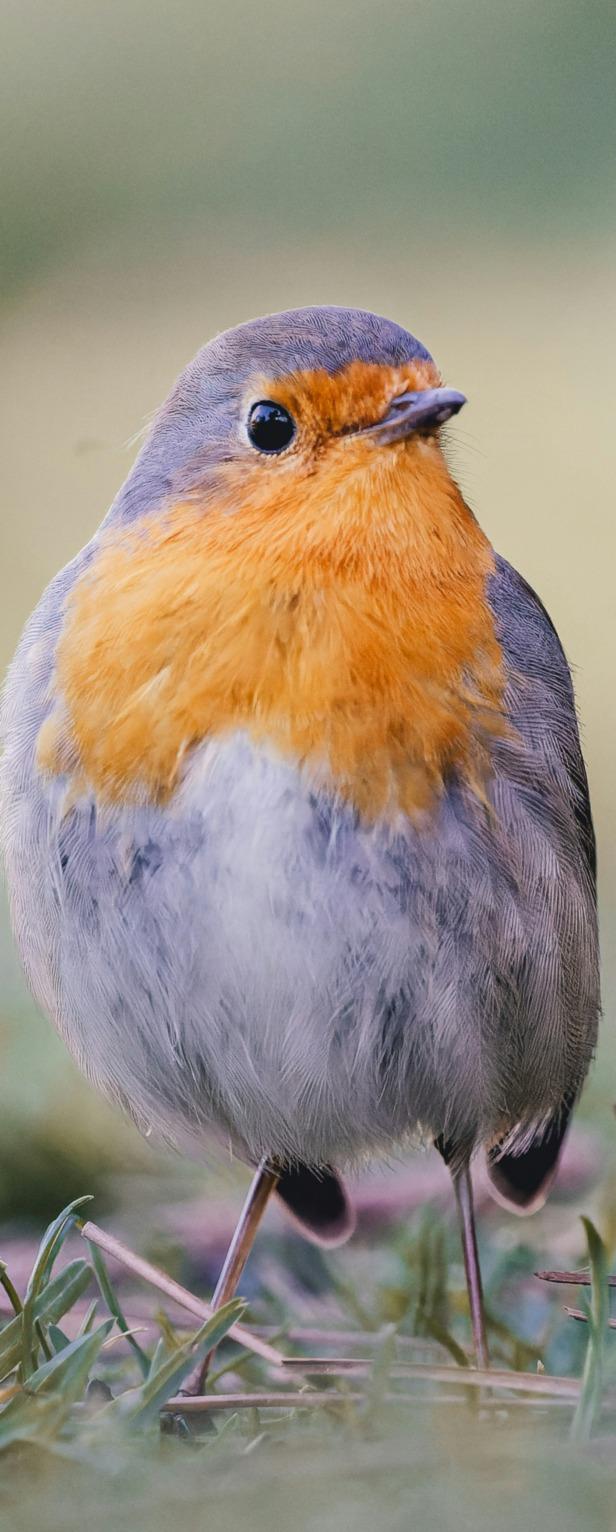
The European robin, Erithacus rubecula, is a small insect-eating bird belonging to the flycatcher family. Adult robins measure around 14 centimetres in length and weigh between 16 and 22 grams. Both males and females look alike, with olive-brown backs, pale underparts and the distinctive orange-red face and breast that extends from the forehead down to the upper chest. Juvenile robins do not have the famous red breast at first. Young birds are mottled brown and gold, which helps camouflage them while they are vulnerable after leaving the nest. The red breast develops gradually during late summer and autumn.
One reason robins are so successful in gardens is their adaptability. Unlike many woodland birds that require specialised habitats, robins are comfortable almost anywhere that offers cover, nesting sites and a supply of insects. They are commonly found in gardens, hedgerows, parks, allotments and woodland edges. Gardens are particularly attractive because digging, compost heaps and watered lawns provide easy feeding opportunities.
Robins feed mainly on insects and other small invertebrates. Earthworms form an important part of their diet, along with beetles, spiders, caterpillars and small snails. In autumn and winter they will also eat berries and seeds. In gardens they readily visit bird tables and feeders, especially for mealworms, suet pellets and soft fruit. They are less interested in large seeds than finches or sparrows. Robins are often seen close to gardeners because they have learned that digging soil exposes worms and insects. This behaviour has helped create the robin’s reputation as a friendly and trusting bird.
Despite their tame appearance around humans, robins are highly territorial. Both males and females defend feeding territories during winter, though males usually hold breeding territories in spring and summer. Singing plays a major role in territory defence. The robin’s song is heard for much of the year, unlike many birds that sing mainly in spring. Its song is a series of thin, clear
StripesThrough Time
The enduring story of ticking fabric from humble mattress cloth to timeless country-house classic
Berriesand Cherries…
There is a particular pleasure to be found in cooking seasonally at this time of year. Long mornings filled with birdsong, hedgerows thick with blossom, and gardens beginning offering the first harvests of the year all find their way onto the table in one form or another.
As spring softens into early summer, the markets and kitchen gardens begin to fill with the ingredients we wait for through the colder months. Tender asparagus tied in neat bundles, peppery radishes still dusted with soil, bunches of herbs fragrant enough to scent an entire room, and bowls of scarlet strawberries that taste unmistakably of an English June all remind us that eating seasonally is as much about anticipation as flavour.
The countryside itself has always shaped the way we cook. In villages and market towns across Britain, recipes have traditionally been guided by what could be gathered, grown, preserved, or traded nearby. The old cottage gardens, once planted as much for usefulness as beauty, supplied their residents with apples, beans, herbs, onions, currants, and medicinal flowers, while surrounding fields and hedgerows offered blackberries, elderflower, wild garlic, and nuts according to the season.
Food and memory are so often entwined, particularly at this time of year. The scent of strawberries warming in the sun recalls long-ago childhood picnics spread
across faded blankets, while freshly shelled peas can bring back memories of helping in the garden during the long school holidays. The crackle of pastry, the sharp sweetness of gooseberries, or the earthy scent released when new potatoes are cut open can transport us instantly to another time and place.
For me, the rhythm of seasonal cooking feels increasingly important in modern life. To be aware of what’s available in the farmers’ markets, what will soon be ready in my kitchen garden, and how well the chickens are laying gives me enormous satisfaction. I love to cook with ingredients at their natural peak as I think this encourages me to adopt a slower and more mindful way of living, and is good for the environment too. A bowl of soup made from freshly picked peas or a tart filled with ripe tomatoes from the greenhouse may seem simple, yet can taste incredibly delicious.
In this issue, you will find simple recipes (after all who wants to spend hours in the kitchen at this time of year?) designed for unhurried afternoons and light-filled evenings, dishes that make the most of seasonal ingredients at their very best. There are buttery pastries filled with herbs and soft cheese, a hearty fish stew inspired by farmhouse kitchens, and lighter dishes intended for garden tables and open windows, as well as delicious, and healthy too, strawberry ice lollies for the little (and not-so-little ones!).
Method
StrawberryIce Lollies
Ingredients
● 400g strawberries, hulled and roughly chopped
● 150g natural yogurt
● 30g caster sugar or 2 tbsp honey (or to taste)
● Tip the strawberries into a blender, food processor or smoothiemaker and blitz to a purée. Add the yogurt and blitz again to combine. Taste for sweetness and add as much sugar or honey as needed – this will depend on the ripeness of the fruit as well as your personal taste.
● Divide the mixture evenly between the holes of a six-hole ice lolly mould – they should be filled to the brim. Insert the lolly sticks and freeze for 4 hrs or until solid. Will keep frozen for up to a month.
A (very) little look at some wedding traditions
Marriage has always been far more than a legal contract or a public declaration of love. Weddings have always been occasions of joy and hope, but they have also reflected the realities of their times. In medieval Europe marriage could secure land, peace or influence. In rural villages it marked a practical partnership essential for survival. In royal courts dynastic marriages could alter the fate of nations.
Across centuries and continents marriage has always been a ceremony full of symbolism and superstition, shaped by religion, geography, social custom and family expectations. Though styles of dress and the shape of the celebrations may change with fashion and time, many ancient traditions are still included in modern weddings. A bride tossing her bouquet, the wedding ring exchanged between partners, a tiered cake shared among guests, and even confetti showered over a departing couple, all of these have origins stretching back into history. Some of these traditions were intended to ensure prosperity or fertility, others to ward away evil spirits, while many simply sought to bind families and communities together.
Yet amidst all these of this there remains something universal about marriage customs. Whether beneath the cherry blossoms of Japan, within a candlelit English church, beneath embroidered canopies in Jewish ceremonies or among the vibrant colours of an Indian celebration, there is always a sense of transition. Marriage marks the crossing from one stage of life into another, witnessed and blessed by the people who matter most to the couple.
The traditions of marriage in ancient Rome are still part of today’s ceremonies. Roman brides wore veils coloured flame-red rather than white, intended both to symbolise passion and to protect against evil influences. Wedding vows were spoken before witnesses, and rings were exchanged as a symbol of fidelity and permanence. The Romans believed the fourth finger of the left hand contained the “ ,” or vein of love, believed to lead directly to the heart. Though anatomically mistaken, the symbolism endured and wedding rings are still worn on this finger today.
Roman weddings were pragmatic as well as ceremonial. Marriage bound families together politically and financially, and fathers played an important role in arranging unions. Yet there was also celebration and festivity. Nuts were scattered among children during wedding processions, symbolising fertility and prosperity, while feasts and music marked the beginning of married life. Some historians believe the tradition of carrying a bride across the threshold may have originated in Roman times, and was perhaps intended to prevent the bride from stumbling, which was considered to be unlucky.
In medieval Europe marriage became increasingly shaped by the Christian church. By the twelfth century the church had formalised marriage as a sacrament, and ceremonies became more structured and religious. Yet folk traditions remained woven into the celebrations. In England villagers decorated churches with greenery and flowers, bells rang out across the countryside and great communal feasts were held. Weddings often lasted several days, especially among wealthier families.
Superstitions flourished in medieval marriage customs. Brides carried herbs such as rosemary and thyme to ward away evil spirits and symbolise fidelity. Rosemary in particular became associated with remembrance and loyalty. In some regions garlic was tucked into clothing for protection, while bells and loud music were thought to frighten away malicious forces that might threaten the couple’s happiness.
The custom of bridesmaids originally had a very different purpose from today’s cheerful attendants in matching dresses. In medieval Europe bridesmaids dressed similarly to the bride in order to confuse evil spirits or jealous suitors who might attempt harm or abduction. Groomsmen too once served practical purposes, particularly in times and places where marriages could involve family disputes or territorial tensions. The “best man” may originally have been the groom’s strongest ally, prepared to defend the bride or assist in securing the marriage.
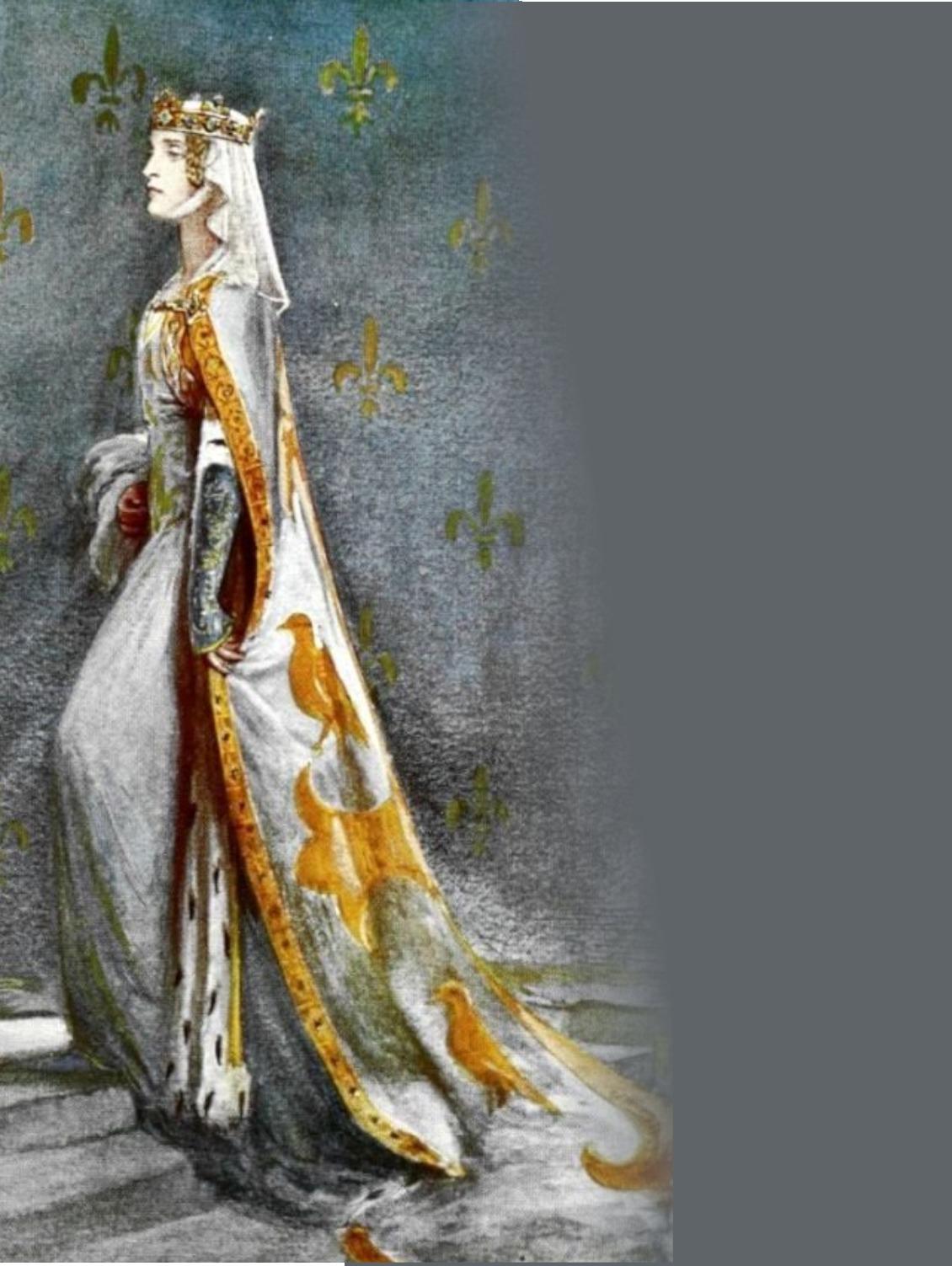
For a medieval wedding, the bride would have worn her finest dress and robe. Pictured on the left is Anne of Bohemia, Queen of Richard II.
For the lower classes, this might mean opting for the same dress they wore for other special occasions. However, those of royal or noble class typically commissioned new outfits for the occasion
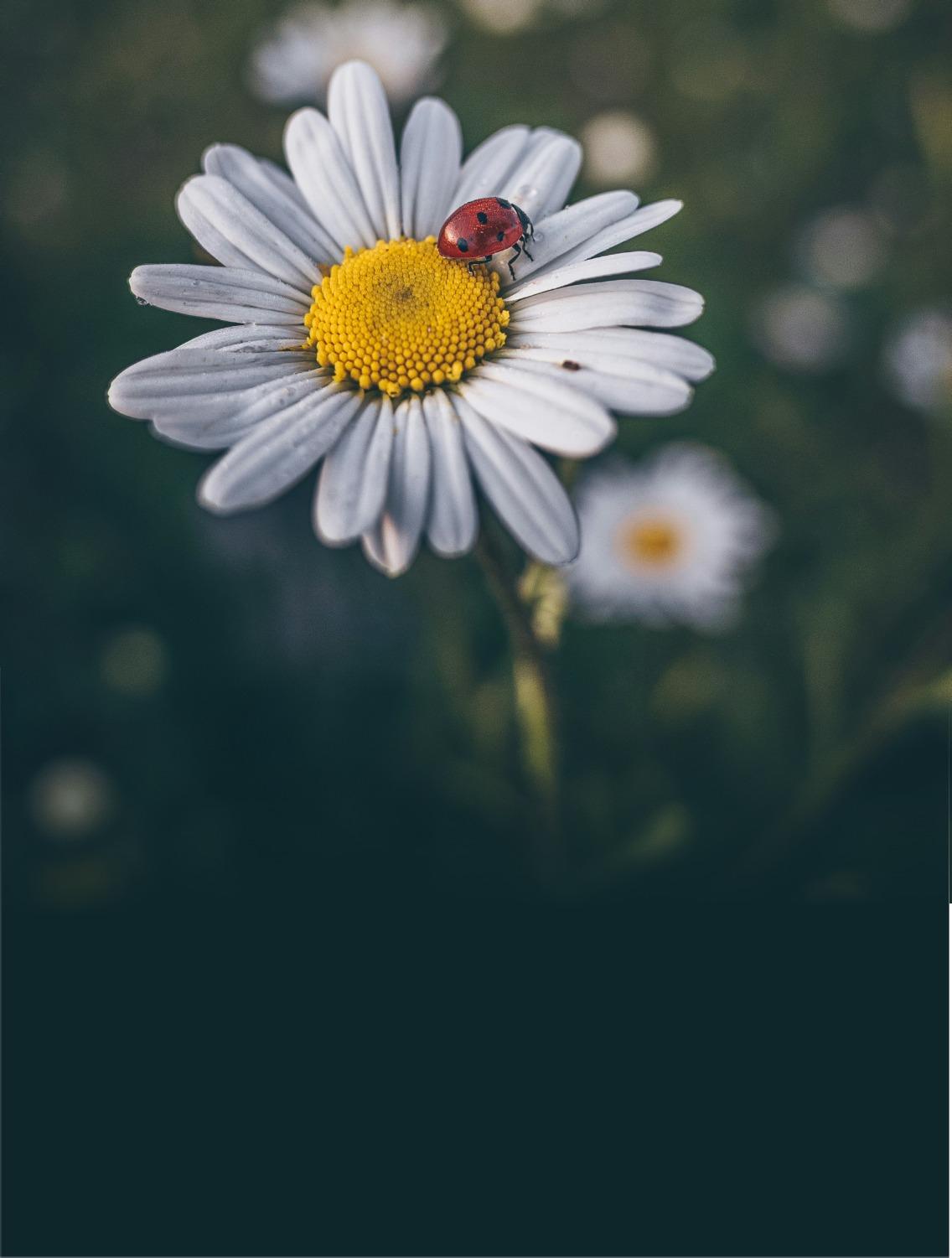
Ladybird, ladybird, Fly away home, Your house is on fire, Your children all roam, Except little Nan, Who sits in a pan, Weaving gold laces As fast as she can.
This well-known nursery rhyme was collected and adapted in various forms across the country during the eighteenth and nineteenth centuries. A version is often associated with Emily Brontë because it appears in her novel Wuthering Heights.
The rhyme itself is much older than Brontë and existed in many regional variations. Some folklorists believe it may connect to old agricultural practices in which fields were burned after harvest, causing ladybirds to flee the flames. Others see it simply as a traditional children’s rhyme passed down through the generations.