The right of Helen Grimes to be identified as the author of this work has been asserted in accordance with the Copyright, Designs and Patents Act 1988.
All rights reserved. No part of this publication may be reproduced, stored in a retrieval system or transmitted in any form, or by any means, without the prior written permission of the author, nor be otherwise circulated in any form of binding or cover other than that in which it is published and without a similar condition being imposed on the subsequent purchaser.
Every effort has been made to ensure that all the information in this book is accurate. However, due to differing conditions, tools and individual skills, the publisher cannot be responsible for any injuries, losses and other damages that may result from the use of the information in this book.
First published 2026 by: Bustle & Sew Station House West Cranmore Shepton Mallet BA4 4QP
www.bustleandsew.com
WelcometotheMayMagazine
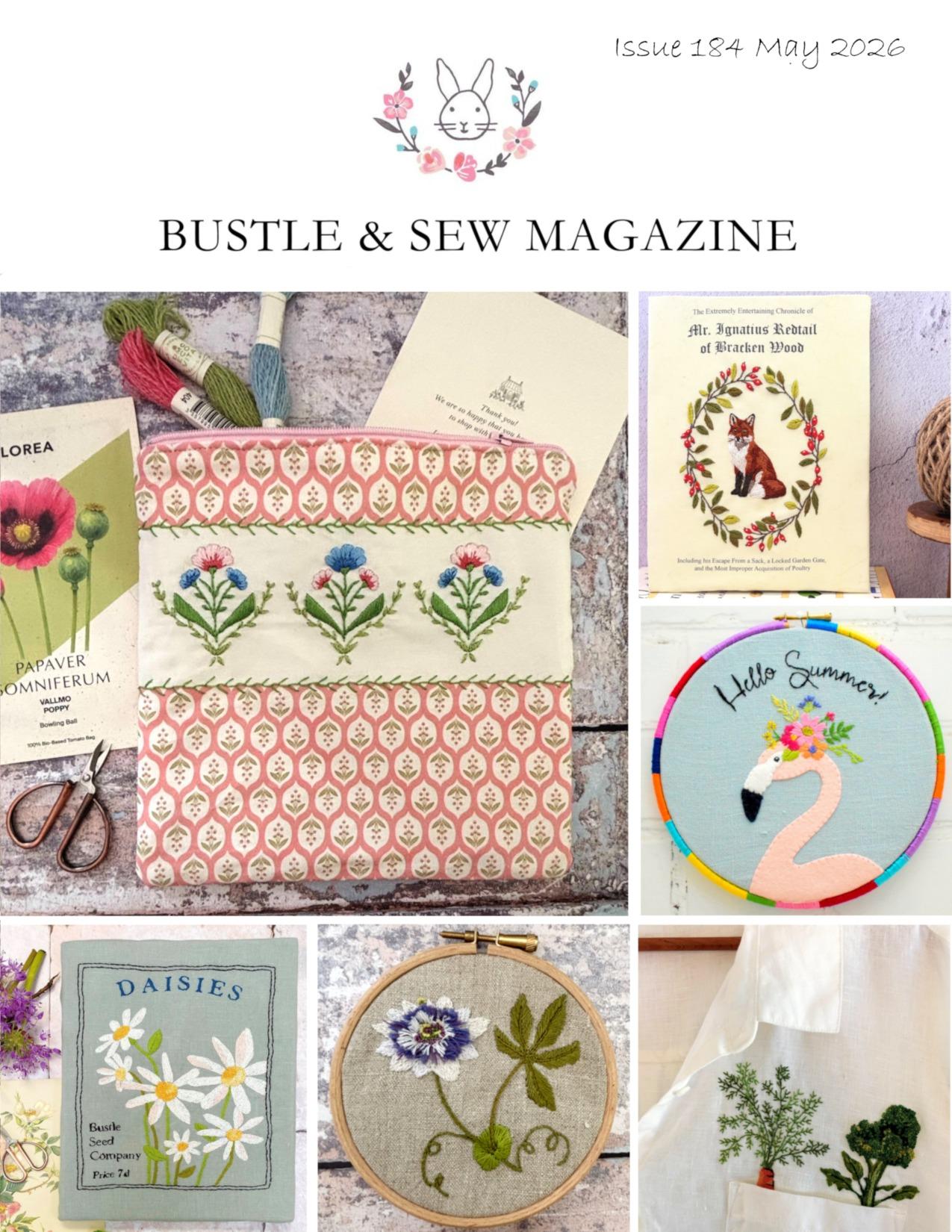
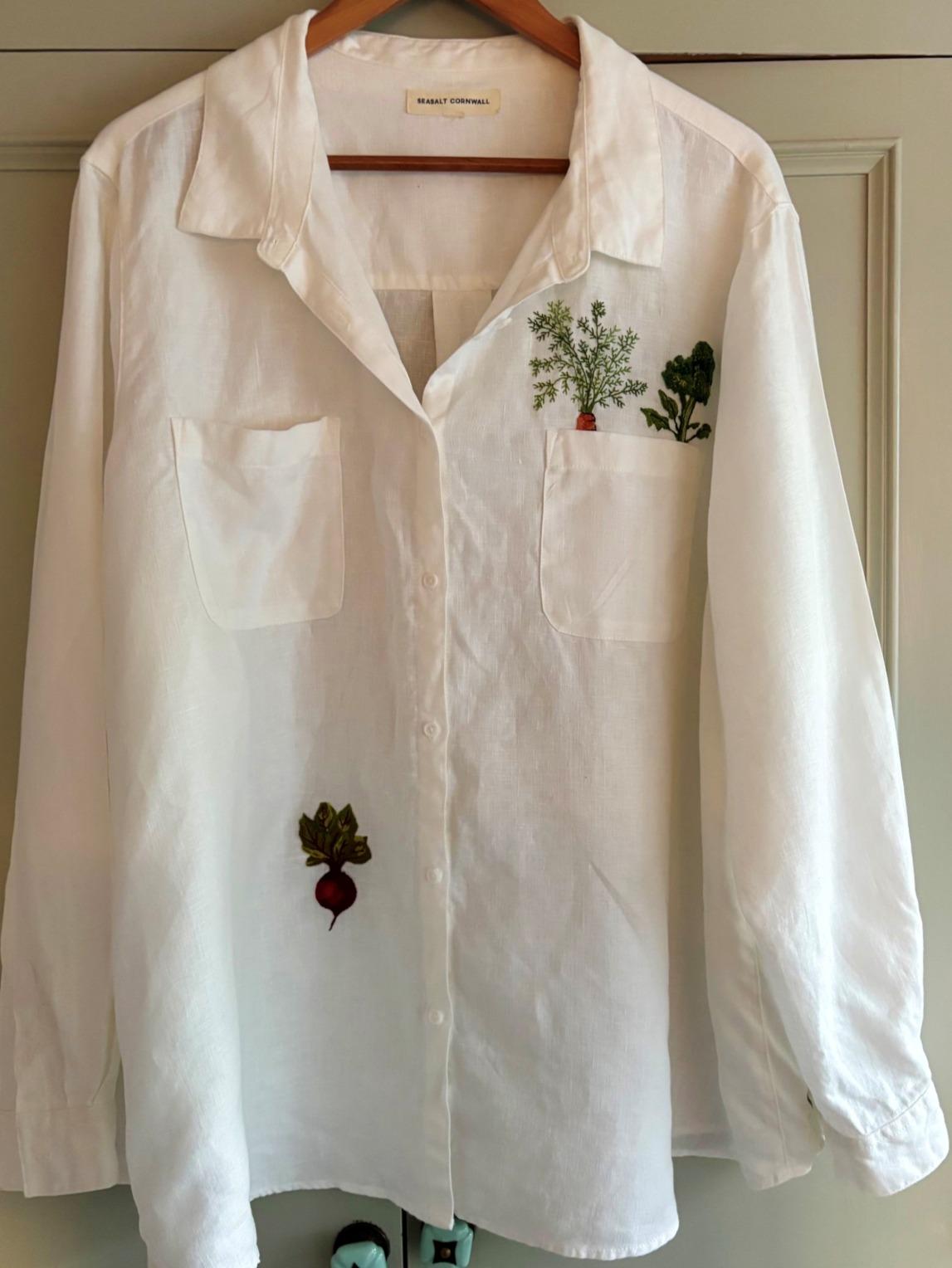
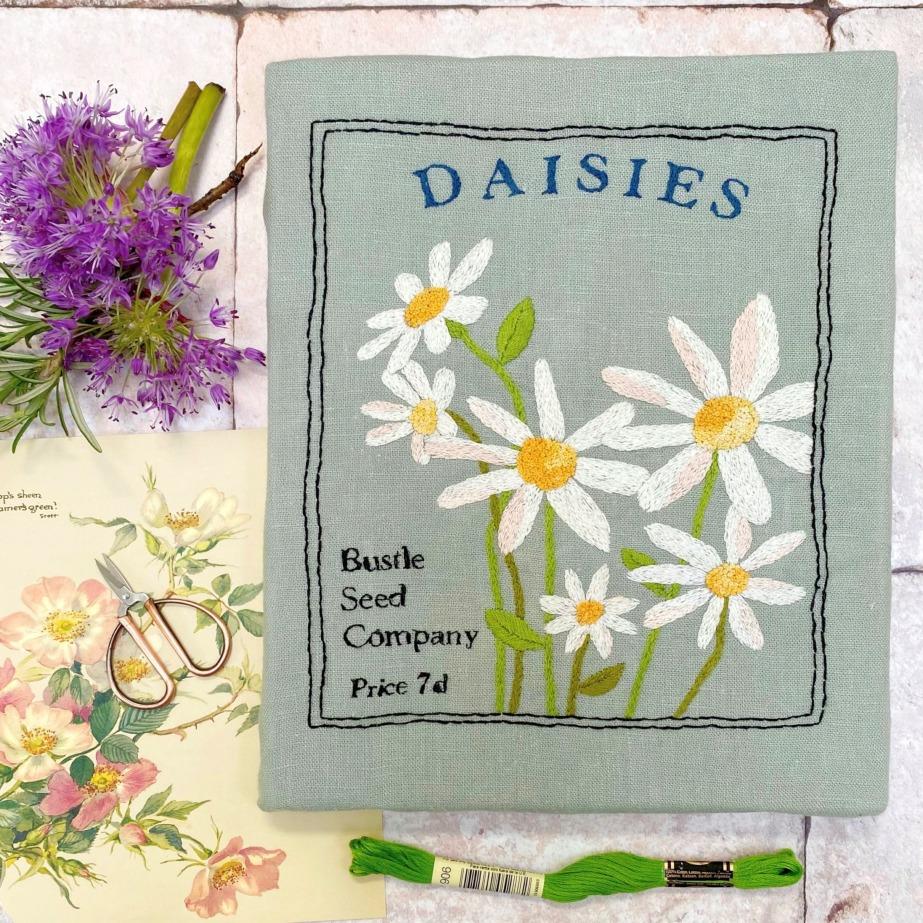
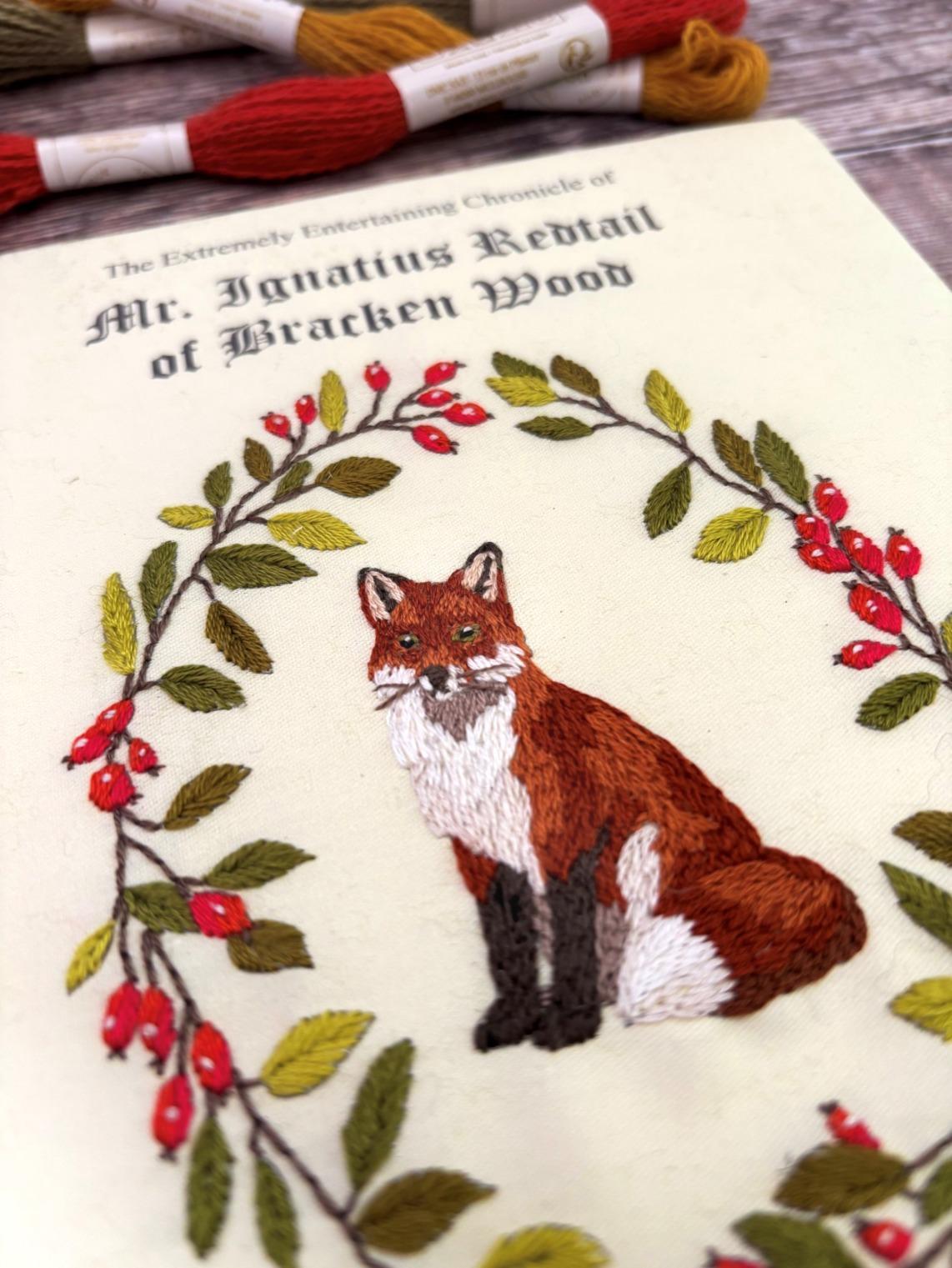
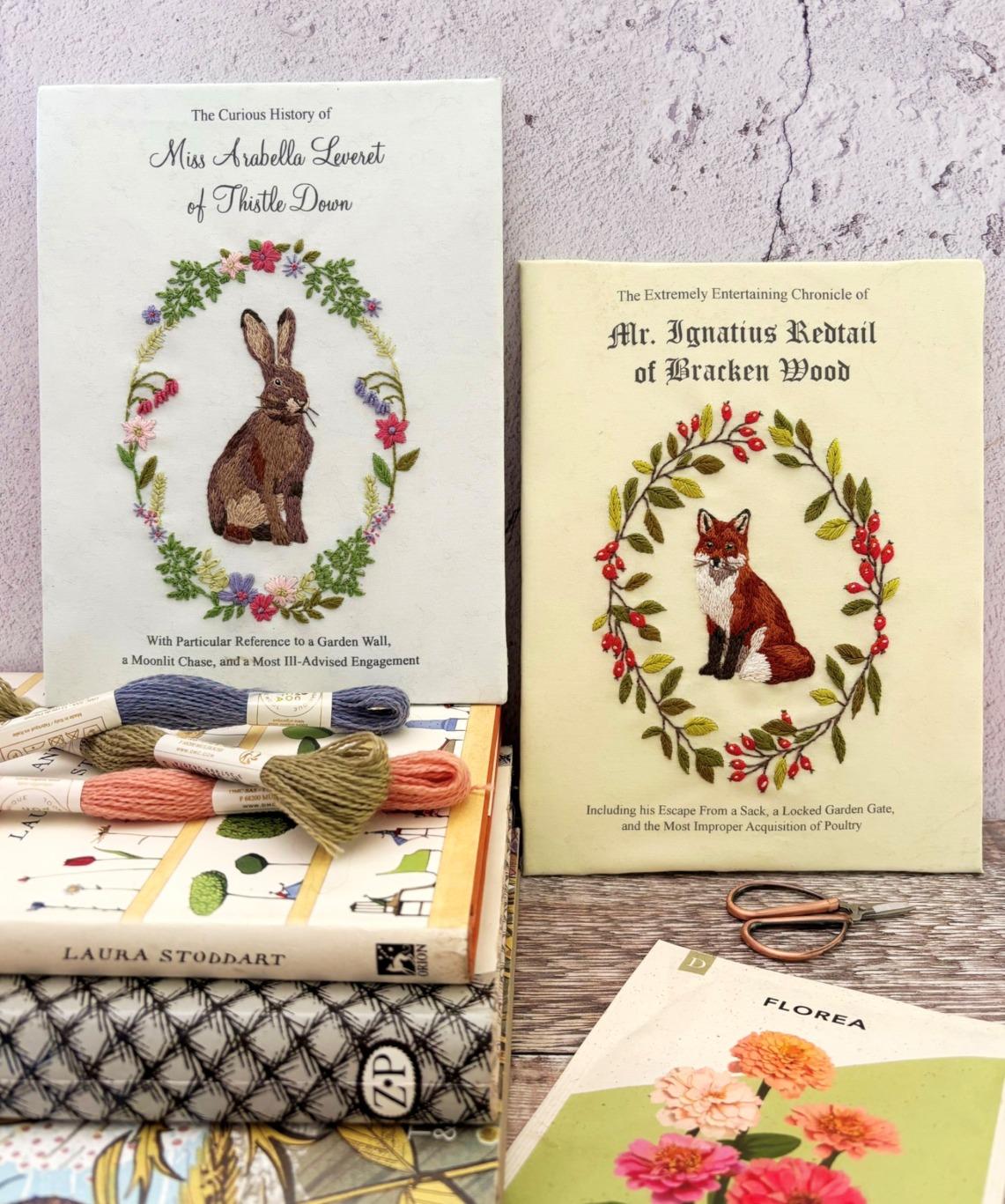
May is one of the most beautiful months of the year, and I’ve tried to capture at least a little of this beauty in this month’s projects. You’ll find a delightful collection of hand embroidered vegetables, humble garden favourites, alongside a scattering of fresh daisies and the second of my two book cover designs. This month Mr Ignatius Redtail takes centre stage bringing with him a touch of woodland whimsy to complement last month’s Miss Arabella Leveret.
Beyond the hoop, this edition explores the stories and traditions that enrich textile art. We delve into the deep blue hue of indigo dye, tracing its history and offering some insights into its enduring appeal today. Then we visit Japan at cherry blossom time, and travel back in history to uncover the elegance of blackwork embroidery.
Whether you are stitching in a quiet garden corner or planning your next project, I do hope this issue brings you both inspiration and enjoyment.
The June edition will be published on Thursday 28 May, in four weeks time. Until then…
Very best wishes and happy stitching!
May
The Celtic festival of Beltane that falls on the first of this month marked a crucial point in the turning year. Spring was blossoming into summer with the promise of easy living and abundance to come. But the veil between this world and the next was thought to be particularly thin at this time - which could threaten this renewed prosperity. House, barn, byre, dairy and stable - all had to be protected from misfortune. “Bringing in the May” meant going out to the woods and fields to collect blossom to make garlands to protect against illwishing spirits or even witches.
Beltane was a fire festival, associated with fertility, protection, and the vitality of the natural world. Livestock were driven between
bonfires to cleanse and bless them, and communities gathered to celebrate the abundance of the coming season.
When Christianity spread across Britain, many of these traditions were adapted rather than erased. May Day became a more secular celebration of spring, though its underlying themes of fertility, renewal, and joy remained intact.
One of the most enduring symbols of May Day is the maypole. These are tall poles decorated with ribbons, around which dancers weave intricate patterns. The maypole itself is often interpreted as a fertility symbol, representing the union of earth and sky.
Morris dancing, another iconic feature of May Day, is performed by groups of dancers wearing bells, ribbons, and sometimes face paint. The exact origins of Morris dancing are debated, but it is thought to date back to the late medieval period, and was possibly influenced by earlier folk traditions. The rhythmic stepping, clashing sticks, and jingling bells are thought to awaken the land, encouraging growth and prosperity.
In Oxford, one of the most famous May Day traditions takes place at dawn. Choristers of Magdalen College sing from the top of the college tower as crowds gather below, marking the arrival of the day with music that feels both sacred and celebratory.
May has long held a special place in English literature. Poets and writers have returned to it again and again as a symbol of youth, renewal, and fleeting beauty. In medieval poetry, May was often depicted as a time of courtship and adventure. Geoffrey Chaucer, in The Canterbury Tales, begins his famous prologue with a celebration of April’s showers giving way to May’s vitality. Shakespeare frequently used May as a backdrop for transformation and mischief, most notably in A Midsummer Night’s Dream, where the natural world becomes a stage for magic and confusion. The association of May with enchantment and possibility continues to this day.
May 24 was established as Empire Day in 1902 to celebrate the British Empire and promote unity among its territories. It was chosen as the birthday of Queen Victoria, whose reign marked the height of imperial expansion. Schoolchildren across Britain once marked the day with patriotic songs, flag ceremonies, and lessons about the empire. Over time, as the empire dissolved, the meaning of the day shifted. It eventually evolved into Commonwealth Day,
now observed in March, reflecting a modern association of independent nations.
Oak Apple Day, celebrated on 29 May, is one of England’s most curious and once widely observed traditions. It is a day that blends political history, royal legend, and folk custom. Though largely forgotten today, it was once a major national celebration, especially in rural areas. It commemorates the restoration of the monarchy in 1660, when Charles II was restored to the throne after more than a decade of republican rule under Oliver Cromwell. Central to the tradition is one of the most famous escape stories in British history.
After his defeat at the Battle of Worcester in 1651, the young Charles II was on the run from Parliamentarian forces. At one point, he famously hid in an oak tree at Boscobel House to avoid capture. From this moment came the enduring symbol of the “Royal Oak.” When the monarchy was restored, people began wearing oak leaves or small oak apples (the knobbly growths found on oak trees) to show
loyalty to the crown and to commemorate the king’s survival.
The Late May Bank Holiday, now officially called the Spring Bank Holiday, is held on the last Monday in May. Before 1971, this holiday was not fixed in late May. Instead, it was tied to the Christian festival of Whitsun (Pentecost), which occurs seven weeks after Easter. Because Easter is a moveable feast, Whitsun could fall anywhere from mid-May to mid-June. By the mid twentieth century this was causing problems and so in 1971 the government reformed the system, replacing the Whit Monday Bank Holiday with a fixed Bank Holiday - the last Monday in May.
And it’s this bank holiday right at the end of this month that brings to an end the period we call “spring.” By this time the hawthorn (“may blossom”) is fading, meadows are filling with buttercups and tall grasses and evenings are long, twilight often stretching past nine in the evening. It’s a pivotal time as spring tips over into early summer.
"Among the changing months, May stands confest the sweetest, and in fairest colours dressed."
Loveliest of trees, the cherry now Is hung with bloom along the bough, And stands about the woodland ride Wearing white for Eastertide
A E Housman
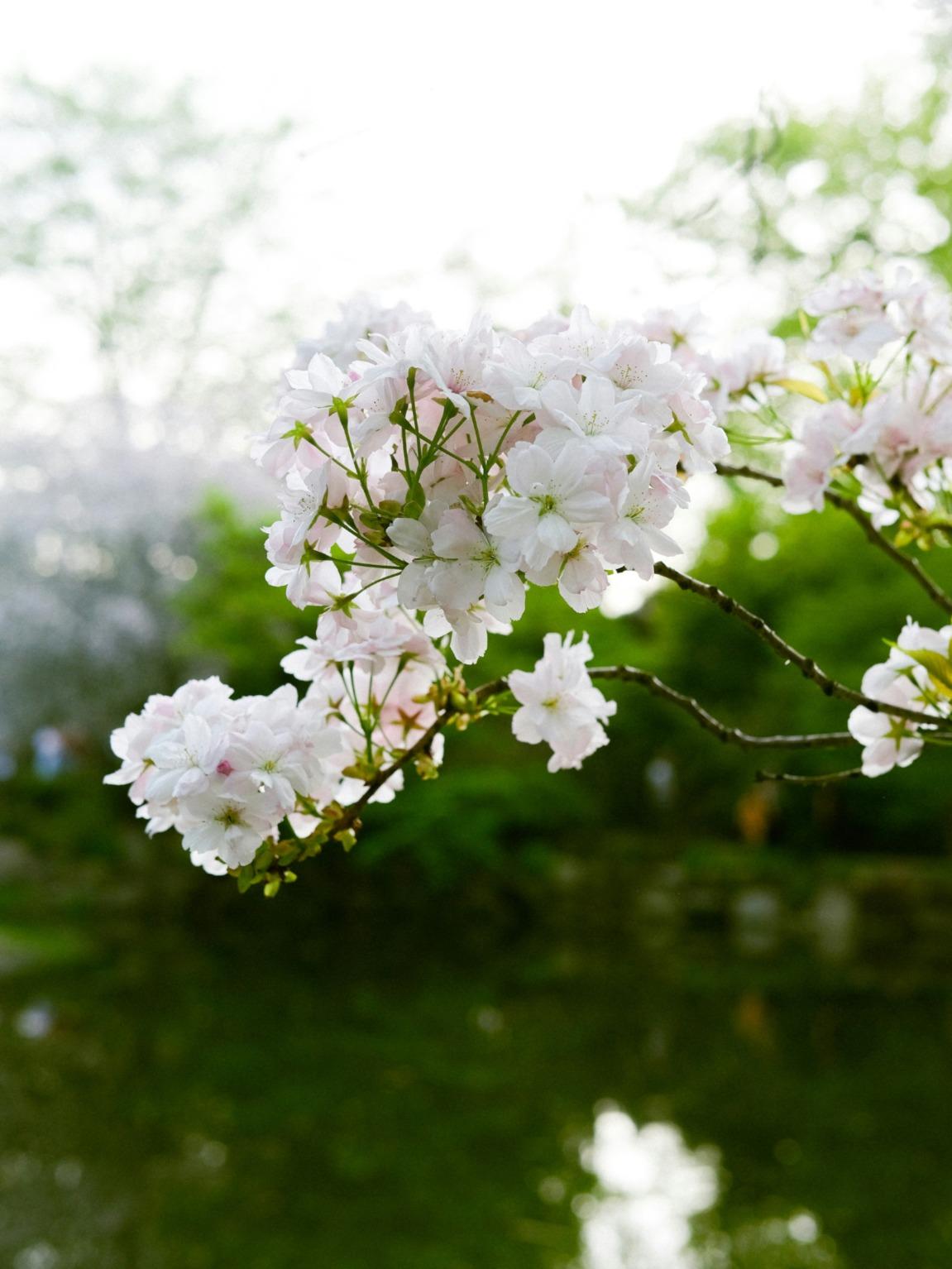
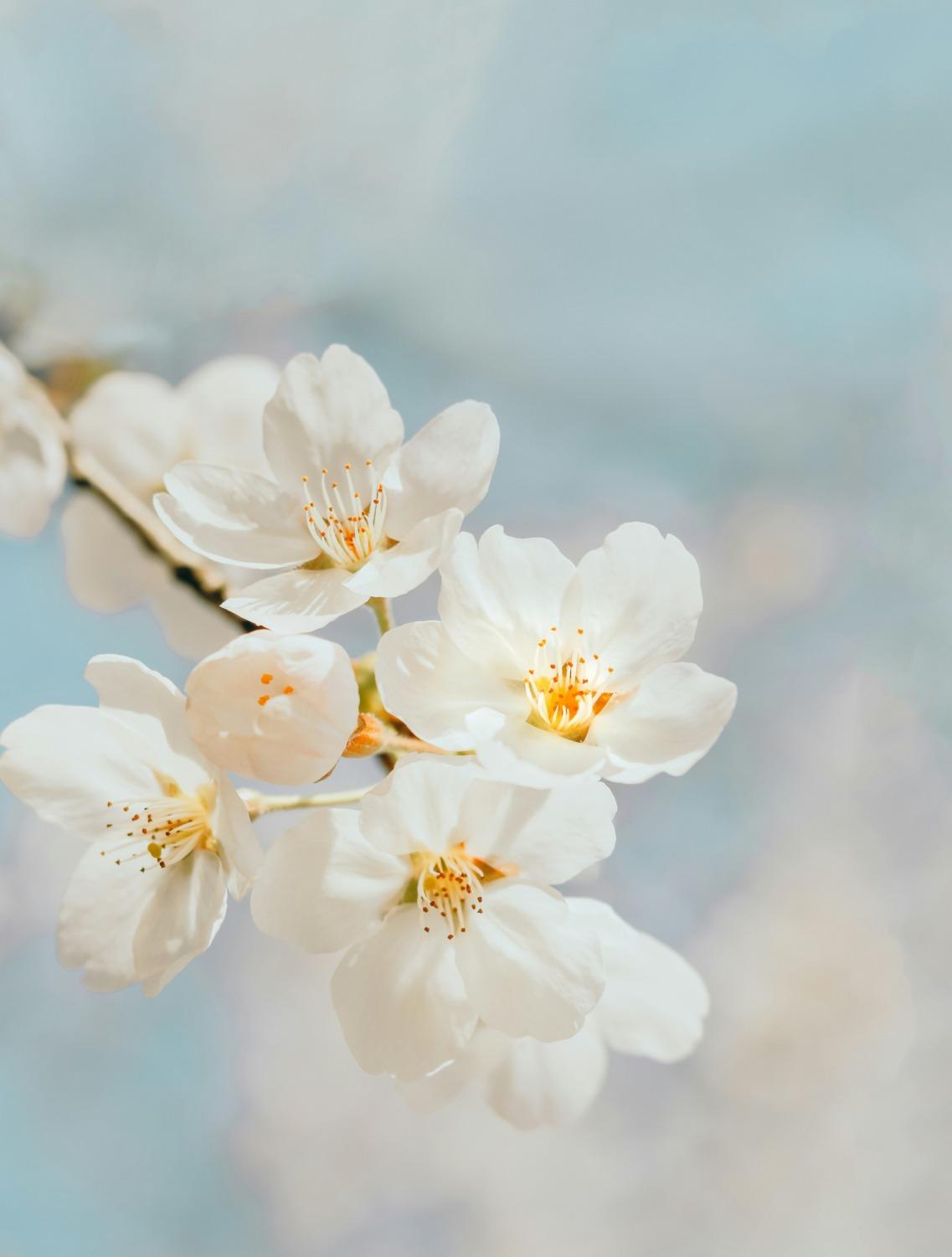
The cherry - what an amazing tree it is, that gives us such a wonderful display of spring blossom followed later in the summer by the most delicious fruit. Late April and early May are the blossom months here in the Mendip Hills, and we all hope for a warm dry spring so the pollinators will be out and about guaranteeing a good harvest in a few months time.
The word “cherry” is derived from the old French “ and the Latin which in turn came from a word from ancient Assyria and Babylonia. The cherry was first cultivated in the Middle East, but wild cherry trees have grown in Western Europe since prehistoric times. Today we would consider their fruits to be unpalatable, but archaeological research has shown that many people did in fact eat them. This wild European cherry, which grows up to 18m tall, is known as the bird cherry and is probably the ancestor of our modern sweet cherry. Birds love their fruits, which are small and dark, but sweet.
is a much smaller tree or bush with sourer fruit. Cultivated sour cherries divide into Morellos and Amarelles. Morellos have dark fruits and may well have come into Europe through southern Spain as their name - Morello - means little Moor. Amarelles are paler and are known as in France where they are widely used in confectionary.
According to the Roman author Pliny, it was the Roman general and gourmet Lucullus who brought cultivated cherries to Italy in 74 BC. Cherries reached this country fairly soon after that and immediately became popular. Throughout the Middle Ages their brief season was enjoyed by all. In (written c 1370–86) William Langland describes the poor people as mostly living on vegetables but also enjoying baked apples and cherries.
Fruit was often given as a gift and after coming to the throne in 1509, King Henry VIII (better known for his six wives perhaps!) began a campaign to make England self-sufficient in fruit, including cherries, of which he was particularly fond. His fruiterer, Richard Harris, planted vast orchards in Kent - the perfect place for them. The cherry orchards were close to the markets of London and the soil was well drained and sandy which the trees liked. John Tradescant continued this work in the seventeenth century and cherry orchards were established all along the banks of the River Thames. These orchards flourished in the eighteenth and nineteenth centuries, but in the twentieth century the huge size of the trees and the difficulties in picking the fruit became a problem. Trees could be over 15m tall and fruit picking was a precarious activity using long heavy wooden ladders which had to be carried by two men. Later on this changed with the introduction of dwarfing rootstocks which made harvesting the fruit much easier.
Free from Craft Invaders: Rosemary and Peppermint Foot Scrub
Hooppreparation: Whybindyourhoop?
At its core, binding a hoop involves wrapping the inner ring, or sometimes both rings, with a strip of fabric, ribbon, or twill tape. This creates a slightly padded surface between the wood (or plastic) and your background fabric. While it may seem like an unnecessary extra step, especially for beginners eager to get stitching, it is definitely worthwhile, especially if your fabric is smooth and slippery or your hoop is slightly old and doesn’t tighten evenly.
One of the major benefits of a bound hoop is improved fabric tension. Anyone who has struggled with fabric slipping and loosening as they work will understand how frustrating it can be to constantly tighten and adjust. The smooth surface of an unbound hoop, particularly if it has been well-used over time, can allow fabric to shift more easily than you might expect. Binding gives a little more grip, helping your fabric stay drum-tight for longer periods. This stability is especially valuable when working detailed stitches that require consistent tension, such as satin stitch or long-and-short shading.
Closely related to this is the way binding helps protect your fabric. Embroidery often involves delicate or high-quality background materials such as linen, silk, or fine cotton that can be marked or strained by direct contact with the hoop. A bare hoop can leave compression lines, or in some cases even slight abrasion, particularly if the fabric is held in the hoop for extended periods. (Who else is guilty of not removing the hoop from their project at the end of each stitching session?!) The soft layer created by binding acts as a buffer, reducing pressure and helping to prevent the fabric stretching or distorting. For pieces that will be washed, framed, or exhibited, this added protection can make a real difference to the final look of your work.
Binding also helps to maintain an even tension across the entire working area. Without it, the outer ring presses directly against the inner ring and the fabric between them, which can sometimes create uneven stress points especially as the hoop gets older. (or perhaps has a few tooth marks from the early years of an unsupervised terrier puppy!) A bound inner ring distributes that pressure more gently and evenly (and covers the tooth marks which might otherwise
damage the fabric). The result is a smoother stitching surface, which not only feels better to work on but also contributes to more consistent stitch quality. When your fabric behaves predictably, your stitches tend to follow suit.
There is also a practical advantage in terms of hoop longevity. Wooden hoops, in particular, can warp slightly over time or develop a polished surface from repeated use. Binding helps mitigate these effects by reducing direct wear and tear. It effectively extends the life of your hoop, making it a worthwhile habit for those who invest in high-quality tools or use the same hoops frequently.
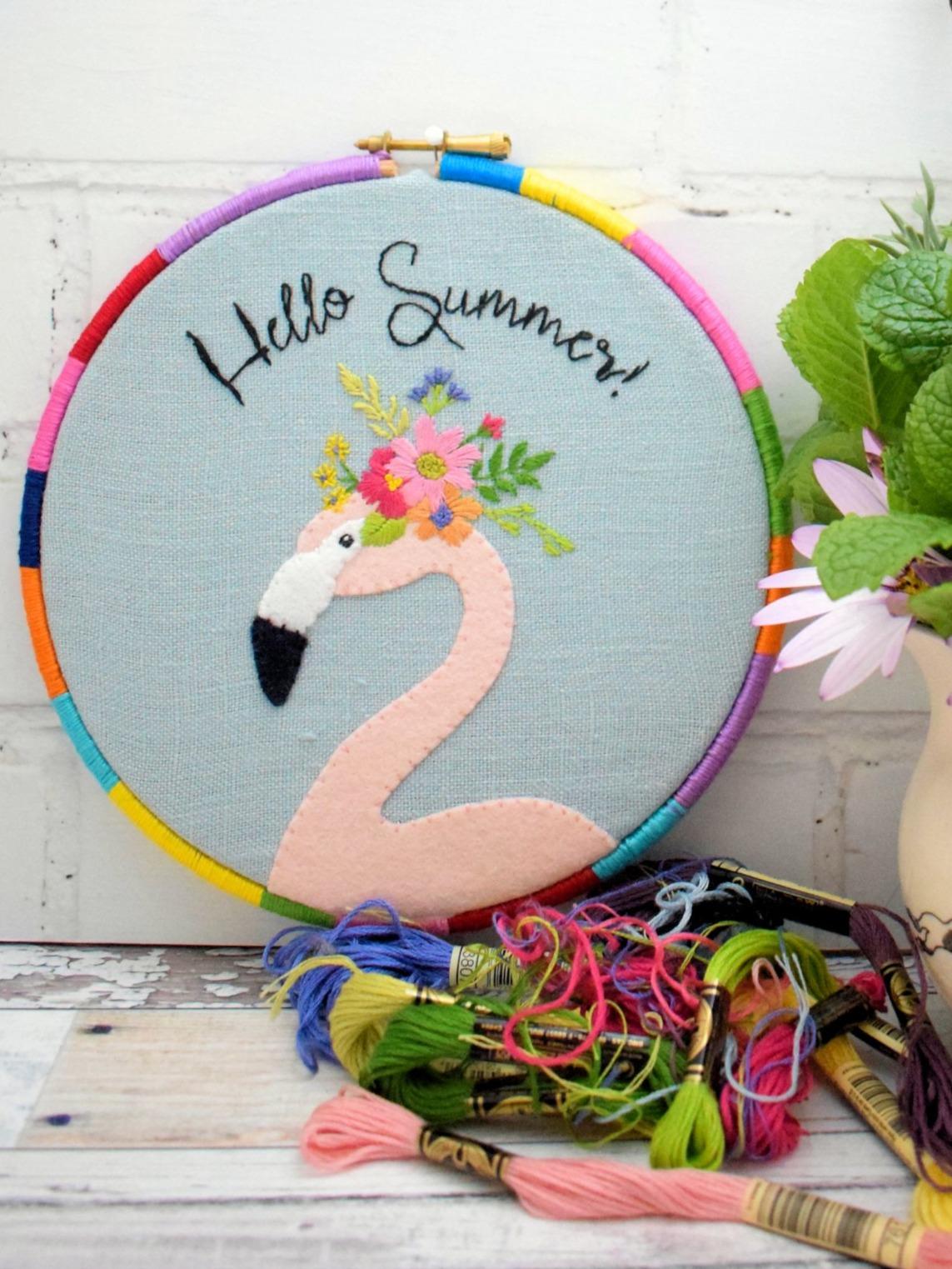
Aesthetically, a bound hoop can also be pleasing in its own right. If you are working on a piece that will remain in the hoop for display, wrapping the outer ring in a carefully chosen fabric can complement
your fabric and threads. Choosing a neutral binding for subtlety or a contrasting colour for visual interest allows you to extend your design considerations beyond the stitched area itself. It is a small detail, but one that can make a big difference to the final look of your finished piece.
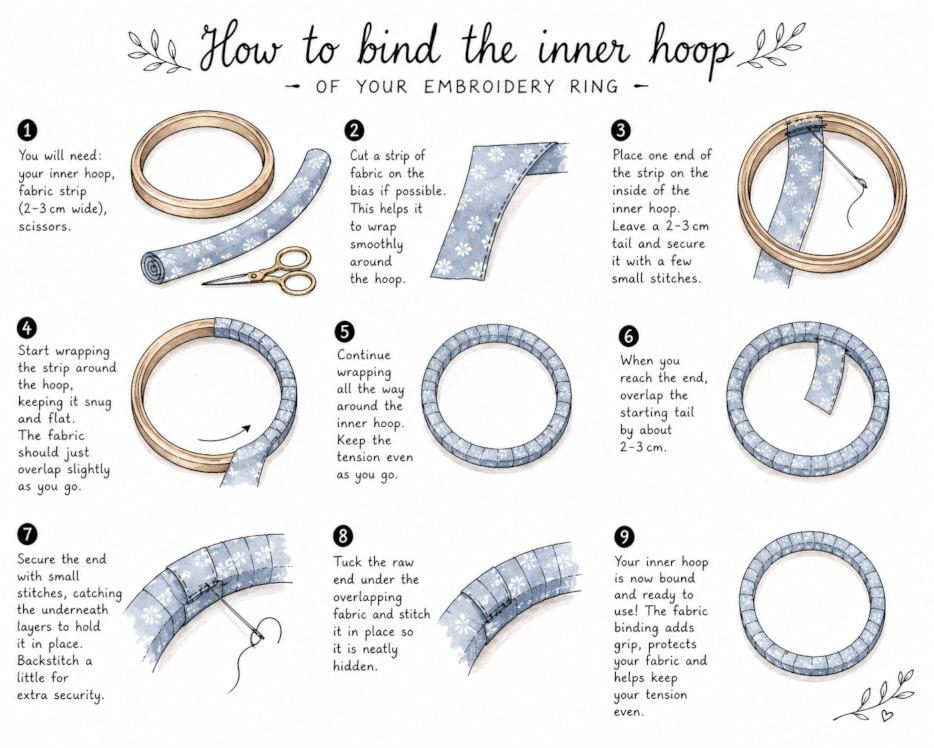
Some stitchers don’t bother to bind the inner hoop as it seems time-consuming or fiddly. In practice, it is a straightforward process that becomes quicker with repetition. A narrow strip of fabric, wrapped snugly and secured as you go, is all that is required. (See above for how to wrap your ring).
The time taken to do this is minimal compared to the hours you may well spend stitching your design, yet the benefits of doing this will last throughout the life of the project, both in progress and the finished work.
It’sBlossom time…
AuntJane’sFresh CherryCake Ingredients
● 140 g self-raising flour
● ½ tsp ground cinnamon
● 50 g golden caster sugar
● 1 egg
● 4 tbsp milk
● 85 g butter, melted
● 350 g juicy, ripe cherries
● icing sugar, for dusting
Forthetopping
● 25 g plain flour
● ¼ tsp ground cinnamon
● 25 g golden caster sugar
● 25 g butter, at room temperature
Method
● Preheat the oven to 180 C. Grease and base line a 20 cm round cake tin, about 5 cm deep.
● Sift the flour, cinnamon and caster sugar into a bowl. Make a well in the centre and add the egg, milk and melted butter, then combine with a wooden spoon or electric whisk. Beat well to make a thick, smooth mixture. Spoon into the tin and spread evenly.
● Remove the stalks and stones from the cherries, using a pitter if you have one to keep the fruit whole. Scatter the cherries over the mixture and gently press them in.
● To make the topping, tip all the ingredients into a bowl. Rub in the butter with your fingers to make a crumb-like mixture, then work the mixture until it comes together in pea-sized pieces. Scatter the topping over the cherries.
● Bake for 30-35 minutes until a skewer pushed into the centre comes out clean. Leave in the tin until cool enough to handle, then run a knife round the edge, remove the cake from the tin and leave on a wire rack until completely cold.
Printed panels are available from
Miss Arabella Leveret and Mr Ignatius Redtail form a pair of spoof Victorian gothic novel covers.
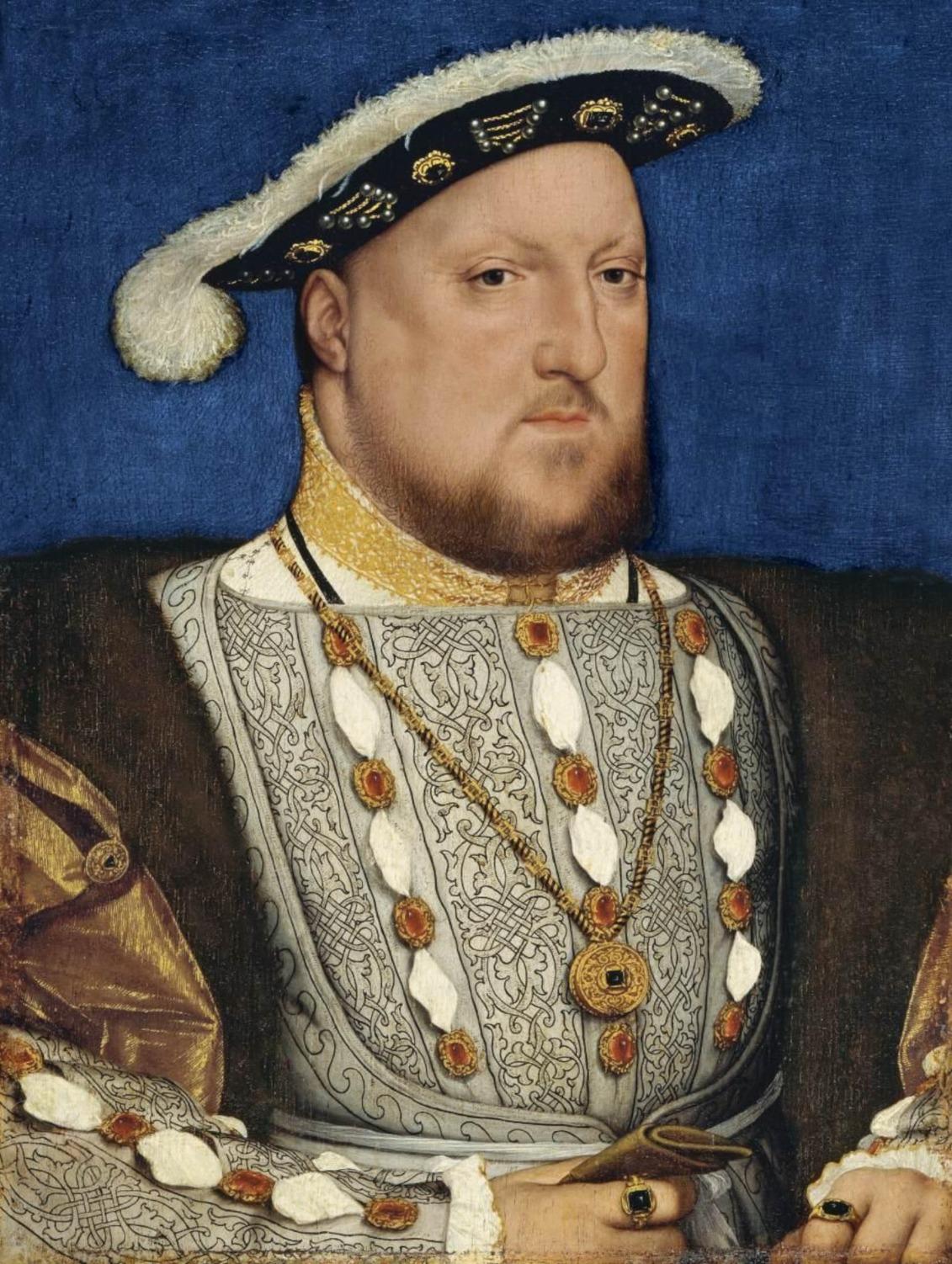
In this portrait by Hans Holbein the Younger, Henry VIII is wearing richly decorated garments with visible blackwork embroidery along the shirt and cuffs. The embroidery is finely detailed, emphasizing wealth and royal authority