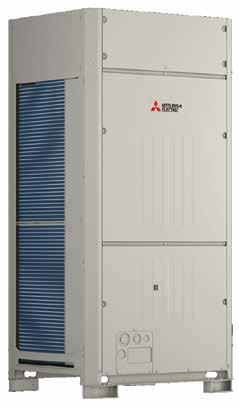
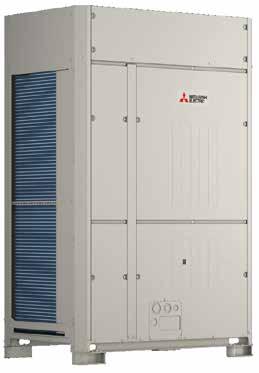
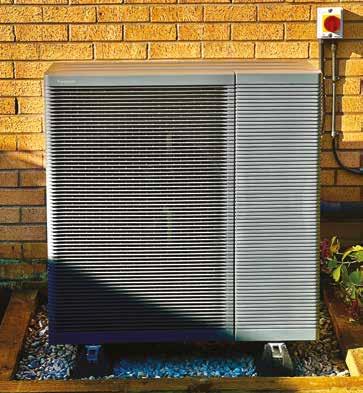
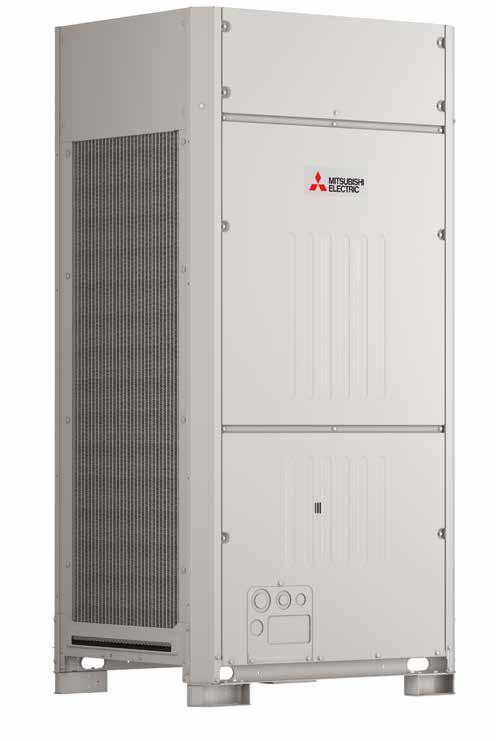
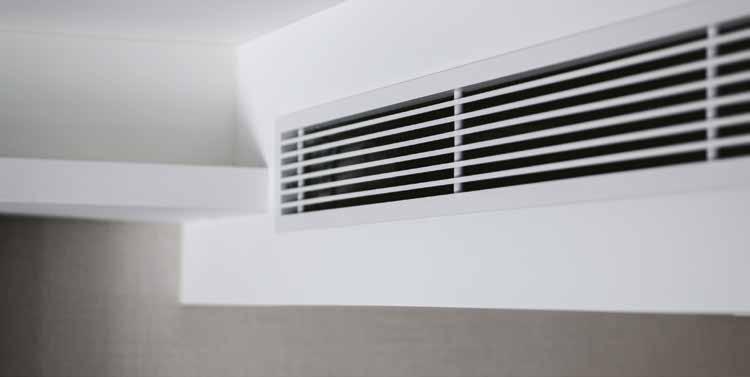
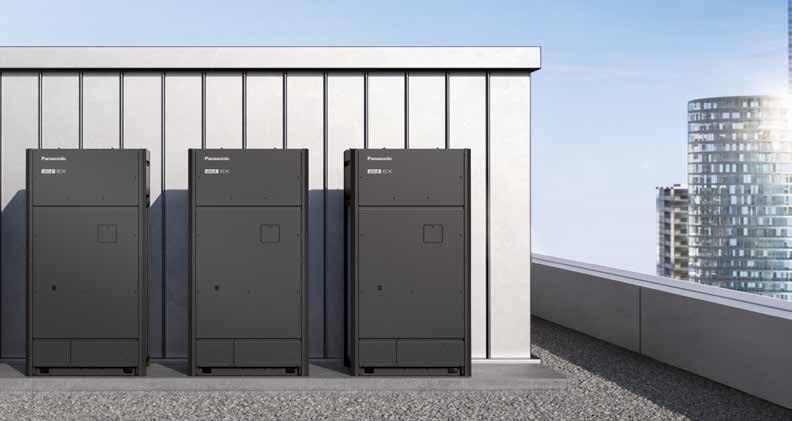
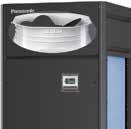
With flexible configurations, advanced control options, and a wide variety of indoor unit styles, the new City Multi R32 VRF YXM range delivers tailored comfort, energy efficiency and system scalability to meet the demands of any project.
Designed with a reduced footprint, the new range maximises design flexibility on space‑constrained sites.
Engineered to support evolving regulations and diverse building requirements, the City Multi R32 VRF YXM range offers a smarter, more sustainable approach to VRF design. Ideal for offices, hotels, education and mixed‑use developments.
Ultra Compact & Modular
Flexible Piping Configurations
Market-Leading Low Noise
Powerful Fans
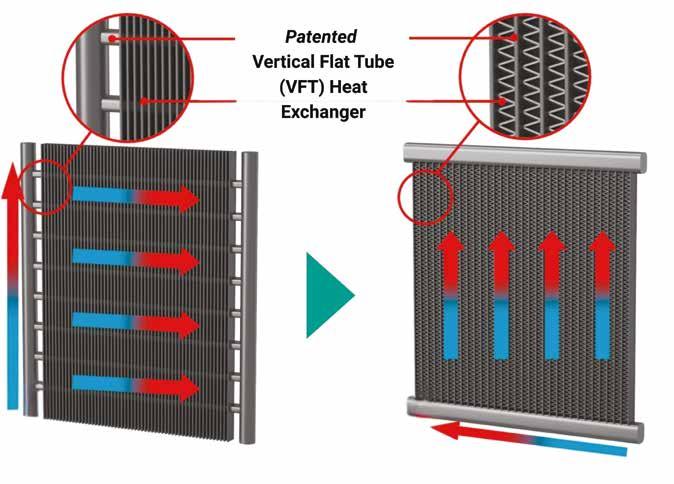
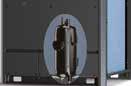
Unique Patented Vertical Flat Tube Heat
editorial
Each day the Irish building services sector navigates the dual demands of rapid project delivery and stringent climate obligations.
In this issue of Building Services Engineering, a new IGBC/TCD report notes that achieving Ireland’s ambitious housing targets will require a transition toward nature-led, climate-resilient neighbourhoods. Central to this evolution is the total electrification of the built environment. True electrification requires integrating solar power and battery storage into core infrastructure during the initial design phase, rather than treating them as optional retrofits.
Concurrently, the commercial sector is experiencing a profound shift. Deep retrofits are reshaping Dublin’s office market, offering a faster, more capital-efficient route to modernising ageing assets compared to full redevelopment.
The technical revival of No 11 Parnell Square exemplifies this balance, seamlessly embedding 21st-century engineering—including high-efficiency bivalent heat pump systems—within a protected 300-year-old Georgian structure.
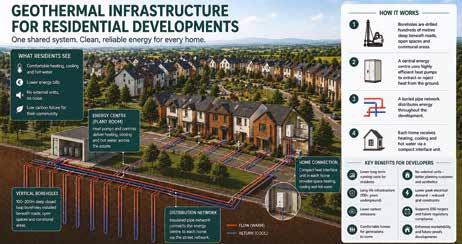
Moving toward investor-funded Geothermal Energy-as-a-Service models could unlock low-carbon heating at scale without increasing upfront costs. To uphold the integrity of these advanced systems, the sector must also collaborate to address structural gaps in residential ventilation validation, ensuring unquestionable quality and regulatory compliance across the industry.
Read all about these issues and more in
of Building Services Engineering
Robbie Cousins Editor
COMMERCIAL HEAT PUMPS: A TECHNICAL OVERVIEW
Greentherm MD Enda Ruxton kicks off a new series with a guide to air-to-water and water-to-water systems, covering capacities, application demands, and low-GWP refrigerant safety.
THE ELECTRIFIED BUILDING
As Europe resets its research priorities, EFCA Policy Manager Mihai Barcanescu examines how the ECCREDI 2026 Strategy marks a pivotal shift for the built environment, moving the sector to the centre of the EU’s competitive and climate agenda.
NEWS AND PRODUCTS
Marking Kevin Kelly’s CIBSE Gold Medal Award CIBSE Ireland style
While Kevin Kelly received his CIBSE Gold Medal Award with full honours at the prestigious London awards ceremony
last autumn, CIBSE Ireland recently marked the occasion with a more intimate, relaxed celebration.
Kevin and his family—wife Louise and daughters Shauna, Órlaith, and Lana— were the principal guests at a celebratory lunch hosted by CIBSE Ireland Chair Laura McMahon at the RDS Members’ Club in Dublin. They were joined by CIBSE Ireland committee members, as well as CIBSE President Vince Arnold and CEO Ruth Carter, who both travelled from the UK. The guest list featured close friends, former colleagues, past chairs, and emerging leaders like Heather Holt (WIBSE Chair) and Dylan Ryan (CIBSE Ireland YEN Chair).
Later that evening at the same venue, the celebrations continued with a special dinner honouring the region’s newly Chartered Engineers and Fellows. The event doubled as an excellent networking opportunity for attendees. CIBSE President Vince Arnold delivered the keynote address and officially presented lapel pins to the three newly minted Fellows: Mona Duff, Keith Brazil, and Michael McDonald, capping off a memorable day of professional achievement.
Warning bell tolled for Irish data centres
An economic study by Amárach Research, issued by Digital Infrastructure Ireland, has issued a stark warning regarding Ireland’s data centre ecosystem. The report, ‘Digital Infrastructure for the Future We Want’, highlights that the €18bn sector—spanning 105 facilities—is a critical driver of national economic performance, underpinning €107.5bn in ICT industry taxes and substantial corporate tax windfalls.
However, authors Jim Power and Gerard O’Neill warn that ongoing development limitations and energy restrictions pose a considerable risk to Ireland’s foreign direct investment (FDI) attractiveness.
Speaking at the launch, Timmy Dooley, Minister of State at the Department of Climate, Energy and the Environment, emphasised that these facilities support tens of thousands of jobs and digital competitiveness.
The crux of the risk lies in intellectual property (IP). Ireland’s attractive R&D tax credits and Knowledge Development Box have drawn global tech giants. Yet, Maurice Mortell, Chairperson of Digital Infrastructure Ireland, noted that if data centre development is curtailed, mobile IP assets could follow pipelines elsewhere, devastating corporation tax revenues.
For building services engineers, the solution lies in accelerating renewable power infrastructure. The report advocates for plan-led data centre connections to support the national grid, utilising steady demand to drive offshore wind delivery and exploring data centre heat integration to support a low-carbon economy.
Kevin Kelly and family.
CIBSE Fellows Michael McDonald, Mona Duff and Keith Brazil.
NEWS AND PRODUCTS
‘Women Shaking Up the Future’ of Apprenticeships
Minister of State Marian Harkin TD, the National Apprenticeship Office, and Rose of Tralee electrical apprentice Katelyn Cummins have launched the national “Women Shaking Up the Future” campaign at Maryfield College, Dublin.
Part of the ‘Facts, Faces, Futures’ initiative, this campaign positions apprenticeships as a premier career path for young women across 80 diverse programmes, including engineering, construction, and technology.
Minister Harkin and SOLAS Director Con Ferry emphasised their deep commitment to building an inclusive workforce by actively challenging outdated perceptions, while Katelyn Cummins highlighted how these excellent apprenticeships empower women to excel in skilled trades.
Currently, over 3,000 Irish women are
thriving as apprentices, building bright futures as laboratory technicians, electricians, and insurance practitioners. This initiative directly encourages school leavers to explore dynamic, rewarding
Mitsubishi Electric debuts YXM range and previews R290 CAHV-Z
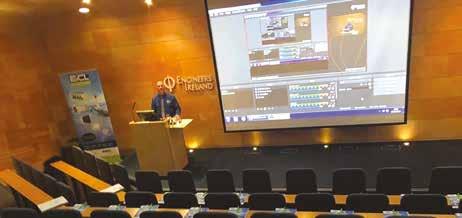
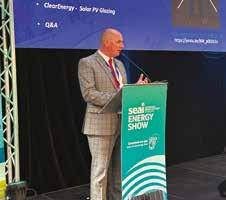
Mitsubishi Electric recently hosted a launch event at Teeling Whiskey Distillery in The Liberties, Dublin, to showcase the next generation of sustainable climate control solutions. Presented by Consultant Sales Engineer Margaret Rafter and Applied Business Development Manager Paul McCormack, the session kicked off with a comprehensive look at the manufacturer’s rich history in R32 VRF and HVRF technologies.
The core presentation focused on the strategic “why” behind their sustainable approach, highlighting the environmental and efficiency advantages driving modern HVAC design. Attendees received an in-depth breakdown of the new Citymulti R32 VRF YXM range, including its key benefits, full indoor and outdoor line-up, and advanced BC controllers. Margaret Rafter demonstrated how the YXM
pathways far beyond traditional routes. Discover your ultimate potential and explore 80-plus unique career pathways by visiting the official campaign website at www.apprenticeship.ie
range introduces unparalleled design, installation, and planning flexibility, while prioritising safety features and robust risk management.
Rounding out the event was an exciting sneak preview by Paul McCormack of the highly anticipated CAHV-Z commercial R290 heat pump, launching this summer, and an interactive Q&A session.
Once the technical briefings wrapped, attendees swapped schematics for spirits during a tour of the Teeling Distillery, followed by a guided whiskey tasting that offered the perfect blend of networking and local Liberties flavour.
Minister of State, Marian Harkin TD, Rose of Tralee and electrical apprentice, Katelyn Cummins, are pictured with fifth-year Maryfield College students Krisha Chakouree and Crooke.
NEWS AND PRODUCTS
New research points the way to vibrant, nature-rich neighbourhoods
New research from the Irish Green Building Council and Trinity College Dublin, supported by The Housing Agency, outlines a clear path toward vibrant, nature-rich neighbourhoods.
The “BIO-NEIGHBOUR” report offers 18 specific recommendations to protect and enhance biodiversity within new residential developments. This
Activ8 Energies and SSE Airtricity launch landmark €200m all-island solar initiative
In a landmark move for the Irish energy sector, Activ8 Solar Energies and SSE Airtricity have launched a €200m all-island solar initiative designed to empower businesses across the country. Unveiled in Carrickmacross, Co Monaghan, this partnership effectively removes the primary hurdle to renewable adoption: the hefty upfront cost. By utilising Power Purchase Agreements (PPAs), companies can now install sophisticated solar PV systems with zero capital expenditure, instead paying an agreed, competitive rate for the electricity generated on-site for terms ranging from 15 to 25 years.
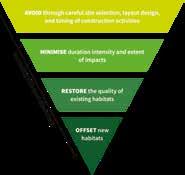
comprehensive initiative is vital as Ireland targets delivering 300,000 homes by 2030 while simultaneously fulfilling its binding EU Nature Restoration obligations. Core proposals include aligning fragmented government policies and state agencies, establishing nationwide biodiversity mapping, and upskilling the construction workforce. Central to the report is a national strategy focused on the mitigation hierarchy of avoid, minimise, restore, and offset.
Transitioning to this “nature-led”
As global energy markets remain notoriously fickle, this initiative offers a much-needed shield against price volatility.
The Minister for Climate, Energy and Environment, Darragh O’Brien, emphasised that private investment at this scale is crucial for aligning commercial interests with Ireland’s 2030 climate targets. The programme is specifically tailored for energy-intensive sectors like manufacturing and logistics, providing a predictable financial roadmap and a practical path to rapid decarbonisation.
Ciaran Marron, CEO, Activ8 Energies - which is currently celebrating its 20th anniversary -highlighted that the initiative allows businesses to reclaim control over their energy costs while planning for long-term growth.
Minister of State Niamh Smyth and SSE Airtricity Managing Director Stephen Gallagher echoed this sentiment, noting that the partnership fosters both environmental sustainability and regional innovation. With the potential for additional SEAI grant support, this funded solar model ensures that doing right by the planet and the bottom line are no longer mutually exclusive goals.
development model ensures that future projects demonstrably enhance local ecosystems.
Ultimately, integrating these biodiversity measures will not only safeguard nature but also reduce planning risks, streamline housing delivery, and create vibrant, climateresilient communities that vastly improve long-term public health and overall community well-being across Ireland.
Siemens launches AI-powered autonomous building operations service
Siemens has launched Asset Performance Advanced, an AI-powered managed service designed to drive autonomous building operations. Integrated within the Building X ecosystem, this solution combines predictive failure classification with advanced fault detection and diagnosis (FDD).
For building services engineers and facility managers, the service shifts maintenance from reactive to proactive by continuously monitoring HVAC and automation systems. Unlike analytics-only tools, it pairs AI-assisted recommendations with standardised resolution playbooks and automated workflows. This allows engineers to prioritise high-impact actions, optimise energy use, and maintain occupant comfort, significantly reducing operational costs while ensuring reliability across complex healthcare, higher education, and commercial real estate portfolios.
Bringing together predictive intelligence, prescriptive AI, and expert-guided actions, Asset Performance Advanced supports the transition toward human-centric autonomous buildings.
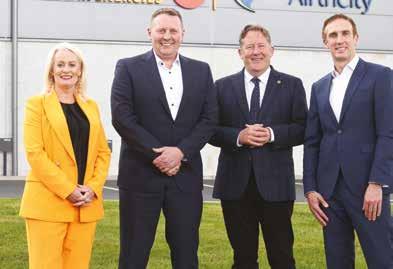
At the launch of the €200 million funded solar initiative from Activ8 Energies and SSE Airtricity at Activ8 Energies’ offices in Carrickmacross, Co. Monaghan. From left to right: Niamh Smyth, Minister of State at the Department of Enterprise, Tourism and Employment; Ciaran Marron, Chief Executive Officer, Activ8 Energies; Darragh O’Brien, Minister for Climate, Energy and the Environment; and Stephen Gallagher, Managing Director, SSE Airtricity.
NEWS AND PRODUCTS
Deep retrofit reshapes
Dublin’s office market
Deep retrofit is rapidly emerging as the most commercially attractive strategy in Dublin’s office sector. According to ‘Ireland’s Deep Retrofit Report 2026’, published by Buildcost Chartered Quantity Surveyors, building owners can achieve up to 90% of redevelopment rental performance at approximately one-third of the capital cost.
Launched at a joint industry briefing with Bannon and Evia, the report highlights that “time to income” is now a defining commercial consideration. Rising construction costs, constrained capital, and stringent ESG requirements are shifting the focus from demolition to modernisation of building services.
A central case study compared a prime Dublin office asset. A deep retrofit investment of €15m could deliver an A3-rated building within two years, generating €3m in annual rent. Conversely, a full redevelopment would require a €44m capital investment and a five-year delivery programme. Crucially, the retrofitted building generates over €10m in rental income while the redevelopment would still be under construction.
Dublin faces growing pressure to modernise ageing stock. Buildcost estimates that over 1,000 office buildings are more than 10 years old—representing 33 million
sq ft of space—yet only 3% are currently A-rated. With limited new completions expected before 2027/28, building services engineers and deep retrofits offer the fastest route to reposition assets, boost capital efficiency, and meet urgent occupier demand.
Speaking at the launch, Liam Langan,
HPAI expanding membership to accelerate Ireland’s heat pump rollout
The Heat Pump Association of Ireland (HPAI) held its AGM in March of this year, and the following members have been elected to the board of directors.
Jeff Colley – Chair
Stephen Dempsey – Ecovolt (Treasurer)
April McHale – Mitsubishi Electric
Niall Fay – Grant Engineering
Mike Cotter – Alternative Heating & Cooling
Paul O’Donnell – Unipipe
Chris O‘Brien – Precision Heating
Stephen Murphy – Renewable Energy Centre
Heat pumps have become the dominant approach to heating new buildings. There is a clear political commitment to the
Director, Buildcost, said, “The commercial conversation around retrofit has changed significantly over the last 18 months. This is no longer just simply about sustainability or compliance; it is increasingly about capital efficiency, speed to market and protecting asset value.”
widespread rollout of heat pumps into existing buildings. This is because heat pumps hold the key to providing affordable, secure, clean heating, due to their ability to turn a kilowatt of electricity into three to four kilowatts of heat or more.
The HPAI has plans in place to grow and better serve the heat pump industry and all stakeholders interested in this key technology.
The main aim of the association this year is to broaden its membership to include a wider range of stakeholders with an interest in heat pumps, including utility providers, one-stop shops, installers, consultants, and suppliers of related technologies. This will provide a platform that will drive greater information flow and a more comprehensive understanding of industry requirements for new-build and retrofit projects.
The HPAI continues to work closely with SEAI to drive retrofit heat pump installations, and the association welcomes recent increases in grant values for private homeowners and approved housing bodies.
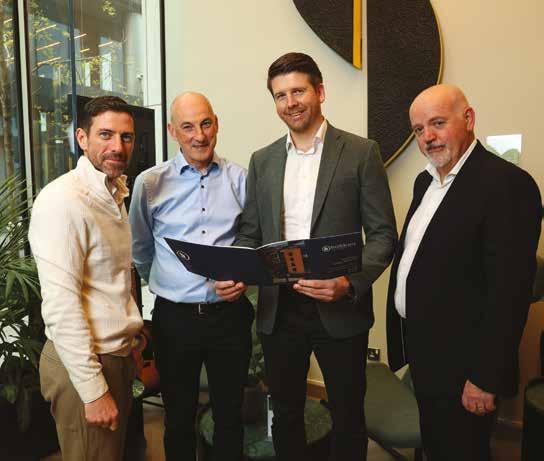
Pictured at the launch of Ireland’s Deep Retrofit Report 2026 at The Green Room, Windmill Lane, Dublin (l-r): Jason Tully and Liam Langan, Buildcost; Adam Merriman, EVIA; and Neil Bannon, Bannon.
NEWS AND PRODUCTS
CPAC Modular launches
Ireland’s first RIAIapproved MMC course
CPAC Modular has unveiled Built Smarter 2, the first RIAI-approved CPD course dedicated to modern methods of construction (MMC) in Ireland. Launched at the Irish Architectural Archive, this immersive programme equips architects, engineers, and developers with the skills needed to accelerate the delivery of sustainable, highquality infrastructure.
Industry milestone
An Taoiseach Micheál Martin praised the initiative
for driving innovation, efficiency, and responsibility across housing, education, and healthcare sectors.
Gavin Fox, Director of Business Development, CPAC Modular, noted that the course dispels misconceptions by demonstrating MMC’s quality, flexibility, and immense design potential.
The launch featured a panel discussion with Sean Murphy, Managing Director, CPAC Modular, and leading architects who successfully integrate MMC into contemporary practice.
Ultimately, Built Smarter 2 reflects CPAC Modular’s vital investment in industry education, proving that modern construction methods are faster, greener, and ready for widespread utilisation.
Accelerated data centre delivery: Is time pressure undermining established standards?
The race for AI capacity is drastically compressing data centre project cycles, turning speed into a competitive advantage while risking long-term reliability. Speaking at a Janitza North America webinar, Vice President of Engineering Roshan Rajeev warned that commissioning schedules are being cut by up to 90%. Consequently, established engineering standards and technical specifications are increasingly being sidelined.
This unprecedented acceleration coincides with soaring power demands, with rack densities now reaching 160 kW per rack. Such rapid scaling introduces severe, unpredictable load fluctuations that directly threaten grid stability and power quality.
To mitigate these risks without stalling critical deployments, building services engineers must leverage advanced power-quality monitoring and robust energy data. Roshan Rajeev emphasises
No new wind farms approved in Q1 2026
An Coimisiún Pleanála approved zero new wind farms in Q1 2026, down from seven in Q1 2025. This significant slowdown occurs despite a massive 2,500 MW project pipeline, with 15 projects stalled for over a year.
Wind Energy Ireland CEO Noel Cunniffe warns that these planning delays threaten national energy security and keep electricity bills high for consumers.
Although 2025 achieved a high 88% approval rate, fewer total decisions worsened the growing backlog. Fortunately, Q2 started on a positive note, with three projects approved in April. Noel Cunniffe emphasises that meeting statutory timelines is essential to deliver affordable, clean energy to Irish homes and businesses.
establishing temporary network infrastructure during early project stages to utilise live data rather than assumptions. Furthermore, as AI facilities deploy in remote locations, comprehensive remote monitoring allows operators to manage load redistribution and maintain stability without a permanent on-site presence. Ultimately, high-quality, reliable measurement data safeguards long-term efficiency, grid compliance, and overall profitability under this intense time pressure.
Watch the full webinar at https://info. janitza.com/techtalk.
CPAC Modular team at the launch event (l to r): Niall McLoughlin, Director of Construction; Seán Murphy, Managing Director; Seán Plunkett, Financial Controller; and Gavin Fox, Director of Business Development.
NEWS AND PRODUCTS
Ethos marks expansion milestone with rebrand and new Dublin HQ
Ethos has marked an important new chapter in its growth with the launch of its new European headquarters at Bankside, Dublin, and a refreshed brand identity, unveiled at a client event under the theme “Performance Made Possible”.
The event, with special guests Johnny Sexton and Bernard Jackman, brought together clients, partners, and colleagues to celebrate Ethos’ continued evolution as a leading consultancy for complex data centre and energy infrastructure projects. The new HQ and brand refresh reflect the company’s expanding EMEA presence, strengthened specialist teams, and continued focus on delivering certainty, quality, and performance for clients.
Speaking about the new offices and brand refresh, Greg Hayden, CEO, Ethos, commented, “At Ethos, this launch is about more than a new European HQ at Bankside and a refreshed visual identity – it marks the next chapter in our evolution as a business.
“With the backing of Exponent and the addition of new specialist teams across Europe, we are doubling down on what matters most to our clients: certainty, quality, and performance in increasingly complex environments.
“Performance Made Possible was not just a theme for the night, it’s a commitment to how we show up every day – through our people, our partnerships, and a relentless focus on delivery.”
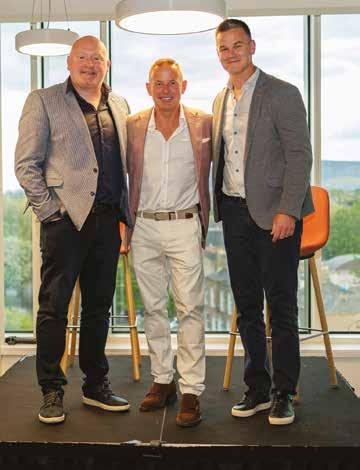
Bernard Jackman, Greg Hayden and Johnny Sexton at the official opening of Ethos’ new European headquarters at Bankside, Dublin.
Panasonic
Panasonic and Centrica’s Energised Futures launch pilot to unlock smart heat pump potential
Panasonic has announced a partnership with Energised Futures, energy services provider Centrica’s in-house research and innovation incubator, in a new pilot designed to advance intelligent heat-pump control. Demonstrating how collaboration across manufacturers, installers and technology innovators can accelerate the shift to smarter, more efficient low-carbon heating.
The research explored the automation and optimisation of heat pumps in seven Dublin homes as part of the EU-funded Horizon 2020 programme – the DEDALUS project – to develop user-centred demand-side response (DSR) systems. By combining technical innovation from Energised Futures with Panasonic’s manufacturing expertise alongside local installer partner MOS Mechanical’s on-the-ground installer insight, the project reflects the full lifecycle of heat pump deployment.
Building on its UK governmentfunded Marram Energy Storage Hub (MESH) project, Energised Futures uses
digital twins and predictive algorithms to remotely optimise Panasonic heat pumps. The system automatically schedules heating and hot water for when electricity is cheapest and cleanest—lowering household bills and emissions while maintaining occupant comfort and supporting grid stability.
Digital Twins and Demand Response
Insights from the Dublin trial will feed directly into complementary pilots in Austria, Denmark, Italy, Spain and Romania, helping to build a holistic understanding of how smart heating and flexibility solutions work across different climates, housing types and energy systems. The overall programme wrapped up at the end of April, after which the combined results from Dublin and the other EU pilots are being analysed and shared.
Leaders in unlocking heat pump potential
Ben Krikler, PhD, Head of Energised Futures and Director of Research & Innovation, Centrica, emphasised the opportunity ahead. He said, “Heat pumps have incredible potential, but that potential isn’t being fully realised. By combining advanced controls, predictive algorithms, and real-world data, we can make heat pumps smarter, more efficient, and more rewarding for households by delivering comfort at the lowest running cost while also helping to balance the grid and reduce emissions.”
Laurence Cox, Country Manager for Panasonic Heating & Cooling Ireland, added, “This project highlights the realworld benefits of heat pump technology, from reduced energy costs and improved comfort to lower carbon emissions. We are proud to
be working alongside Centrica and MOS Mechanical to help underline the growing importance of proven, lowcarbon technologies in supporting the transition to a more sustainable built environment.”
A user-centric, behavioural science approach
The pilot adopts a user-centric, cocreation approach to understand what drives or hinders participation in demand response, including comfort, data privacy, and energy literacy. Supported by a robust social science framework and drawing on behavioural science, motivation theories, and socioeconomic insights, the project actively involves participants through workshops, segmentation analysis, and interface testing.
Empowering installers and consumers on the ground
Kildare-based MSM Renewables provided real-world installation and household support for the trial.
MOS Mechanical CEO Mick O’Shea emphasised that hands-on experience with evolving tech builds installer confidence and maximises household benefits. The partners are now leveraging insights from the project to shape policy and accelerate clean heating rollouts.
To find out more about Panasonic’s range of solutions, visit https:// www.aircon.panasonic.eu For more information about Energised Futures, visit - https://www.energised-futures. com
Laurence Cox, Country Manager, Panasonic Heating & Cooling Ireland.
Engineering the future of heritage: The technical revival of No 11 Parnell Square
The recent official opening of No 11 Parnell Square by President Catherine Connolly marks a transformative chapter for Ireland’s cultural landscape. While the €5.5m conservation project, led by McCullough Mulvin Architects, is celebrated for housing Poetry Ireland and the Irish Heritage Trust, its true marvel lies in the seamless integration of 21st-century engineering within a 300-year-old Georgian framework. Balancing historical integrity with modern functionality required a sophisticated approach to mechanical and electrical systems, ensuring the building is both accessible and environmentally sustainable.
Central to the building’s modernisation was the challenge of universal access. To overcome the architectural barriers of a historic townhouse, the project team installed a primary internal lift alongside an external platform lift.
These additions, integrated by main contractor Bourke, ensure that the four floors of heritage—including the new Seamus Heaney Poetry Library—are accessible to all visitors for the first time in the building’s history. These circulation upgrades were achieved through alternative design solutions specifically approved for protected structures, allowing for fire-safety and accessibility compliance without compromising the original timber-lined chambers or parquet flooring.
From an environmental perspective, the engineering feat is equally impressive. Under the guidance of M&E consultants JV Tierney and mechanical sub-contractors Phoenix Mechanical, the building achieved an exceptional A3 Building Energy Rating.
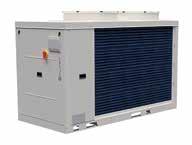
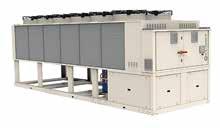
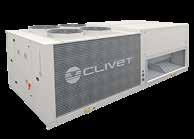
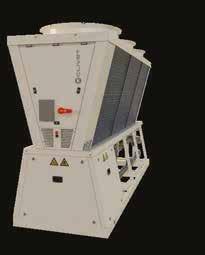
According to JV Tierney, “The upgrade features a bivalent heating system combining high-efficiency Clivet heat pumps, supplied by Hevac, for year-round space heating and preheating hot water, with two De Dietrich condensing boilers, with a cascade kit, to handle peak winter loads and final water heating. A Building Management System (BMS) and energy meters optimise operation based on demand,
occupancy, and performance monitoring.”
To preserve the protected building’s structure and character, the air-source heat pumps and upgraded infrastructure were carefully integrated into existing plant spaces to abate visual impact. Combined with mineral wool insulation, LED lighting, natural ventilation, and improved glazing, the restoration delivers high energy efficiency and modern thermal comfort, creating a sustainable model for urban regeneration.
This technical revival, supported by the Urban Regeneration and Development Fund, proves that Ireland’s most cherished historic assets can meet the highest standards of modern engineering.
The quantity surveyor on the project was Brendan Merry & Partners.
No 11 Parnell Square, Dublin 1.
Former Dublin County Council Chamber at No 11 Parnell Square.
Rear of No 11 Parnell Square with external lift shaft on right of photograph.
Mitsubishi Electric Launches City Multi R32
YXM VRF System, Redefining
Sustainable Commercial Heating and Cooling
Mitsubishi Electric has introduced its new City Multi R32 YXM VRF air conditioning range, delivering a future ready solution designed to support more sustainable, efficient and flexible heating and cooling in commercial buildings. As the market transitions toward lower GWP refrigerants, the YXM range has been engineered to support BS EN 378 compliance design, combining integrated safety measures with dedicated
accessory options, to give consultants, contractors and building owners a clear pathway to safe, practical system design Available in Heat Pump and Heat Recovery configurations, the City Multi R32 YXM range offers system capacities from 22kW to 112kW, making it suitable for a wide variety of new build and retrofit commercial applications.
A Fully Engineered Approach to EN378 Supported Design
The introduction of R32 (A2L) refrigerant brings specific safety considerations under BS EN 378, including leak detection, alarms, shut off capability and, where appropriate, independent power supply and ventilation considerations.
The system incorporates integrated low level refrigerant leak detection, complete with a dedicated power supply, audible and visual alarms, and intelligent system response. In the event of a detected leak, only the affected indoor unit is isolated, while the remainder of the system continues to operate, maintaining comfort and minimising disruption.
The leak detection system is engineered for exceptional longevity, offering an estimated 30 year operational lifespan, unless the alarm is activated, which then would require replacing, significantly reducing long term maintenance requirements compared with conventional 10 year sensors, significantly reducing the need for replacement over the building’s life cycle and providing long term reassurance for building owners and facilities managers.
Designed for Sustainability and Performance
The City Multi R32 YXM has been completely re engineered to deliver improved performance over previous
Mitsubishi Electric City Multi YXM- Future Proofed by Design: Engineered for Performance, Compact Flexibility and Long Term Assurance
VRF generations. A key contributor to this uplift is Mitsubishi Electric’s patented Vertical Flat Tube (VFT) Heat Exchanger, which enhances refrigerant distribution and seasonal efficiency and reduces internal volume, helping to lower total refrigerant charge compared with R410A systems.
Additional performance enhancements include Next generation defrost technology, Refined compressor operation and extended heating performance down to –25°C.
The system uses lower global warming potential (GWP) R32 refrigerant, and can deliver measurable performance improvements, including reduced running costs and operational carbon, alongside enhanced seasonal efficiency, supporting organisations in meeting evolving environmental standards and decarbonisation targets.
Compact, Flexible and Easy to Specify
Designed with modern commercial buildings in mind, the City Multi R32 YXM features an ultra-compact modular chassis, offering a smaller footprint and helping to simplify installation in spaceconstrained locations.
Mitsubishi Electric’s patented 2-pipe design reduces refrigerant volume, minimises brazing points and saves valuable riser space while also streamlining installation and design.
The system can support up to 50 indoor units from a single outdoor unit, delivering high levels of flexibility and scalability, extended height separation up to 113 metres, supporting taller and more complex buildings and a fivestep low noise mode, enabling project specific acoustic optimisation
Select MS indoor units have been designed for dual compatibility with both the existing R410A YNW VRF and the new R32 YXM range, making the transition effortless for consultants and contractors
These enhancements give designers greater flexibility in meeting project requirements across offices, education facilities, hospitality venues, healthcare environments and mixed-use developments.
A Future Ready VRF Solution
Commenting on the launch, Morgan Treacy, Commercial Product Manager at Mitsubishi Electric Ireland, said, “City
Multi YXM represents a major step forward for our VRF offering. Our focus was not just on introducing an R32 VRF system, but on delivering a modern, low GWP solution with a pathway engineered to support EN 378 compliance and long term performance. With its compact footprint, expanded design flexibility and advanced safety integration, YXM gives consultants, installers and building owners a VRF system they can specify with confidence.”
The City Multi R32 YXM range is now available to specify, with units available for installation from Summer 2026, providing a future-ready VRF solution that brings together performance, sustainability and enhanced safety integration.
For more information visit: https://les.mitsubishielectric.ie/ products/airconditioning/ city-multi-vrf or scan the QR code
The patented Vertical Flat Tube Heat Exchanger delivers even refrigerant distribution and higher seasonal efficiency in a compact, modern coil design. Its reduced internal volume also lowers refrigerant charge while enhancing both heating and cooling performance.
Enhancing residential ventilation quality: The next steps for third-party validation
Seven years after Ireland introduced third-party validation for residential ventilation, serious structural gaps threaten the integrity of the entire system. From unvalidated housing projects to inadequate testing equipment, TONY MAHON, Chair, Residential Ventilation Association of Ireland, calls for urgent collaboration with the NSAI and Building Control to ensure true independence, introduce a central registry, and ensure compliance across the construction sector.
As Ireland continues to champion energy efficiency and NZEB standards, the importance of robust residential ventilation has never been greater. The Residential Ventilation Association of Ireland (RVAI) is dedicated to advancing industry standards and ensuring that homes have healthy, compliant indoor air environments.
A critical pillar of this objective is the third-party validation system. While the framework established seven years ago was a significant step forward, industry experience indicates that there are crucial areas requiring collaborative refinement to ensure the system delivers on its intended promise. The RVAI aims to work constructively with the National Standards Authority of Ireland (NSAI), Building Control, and Building Standards to fortify this essential process.
The Principle of True Independence
The foundational requirement of third-party validation, as established in 2018, is absolute independence: No one involved in the design, supply, installation or commissioning of a ventilation system may participate in its validation.
However, the RVAI has noted systemic vulnerabilities where this independence is not strictly maintained. Instances in which organisations validate their own installations directly contradict the framework’s core principles. To protect the integrity of the process and ensure reliable outcomes, the RVAI advocates for enhanced mechanisms to strictly enforce this separation.
Visibility, auditing, and enforcement
Currently, the validation system operates without a central
“Currently, there is no formal training course that specifically teaches standardised procedures for validating different ventilation systems; validators are primarily provided with a practical testing template.”
database or a centralised auditing infrastructure. This structural gap creates several pressing challenges for the industry:
• There is no comprehensive way to track or audit validations across the sector
• Current auditing procedures rely on reviewing certificates that validators voluntarily choose to present to the NSAI, thereby creating a significant oversight gap
• A fundamental concern is that a notable number of housing projects are simply not being validated at all, bypassing the system entirely due to a lack of enforcement Establishing a centralised, transparent registry would provide regulatory bodies with the data needed to ensure universal compliance and maintain high industry standards.
Standardising competency and equipment
Beyond administrative oversight, there are pressing technical concerns regarding the execution of validations in the field. Currently, there is no formal training course that specifically teaches standardised procedures for validating different ventilation systems; validators are primarily provided with a practical testing template. This education gap can lead to fundamental misunderstandings, such as newly certified testers inappropriately attempting to disconnect heat-recovery pipework during testing.
Furthermore, there are critical issues surrounding testing equipment.
• The BG46/2022 Guide – the industry-standard publication detailing how to test, measure, and commission domestic ventilation systems – outlines preferred testing methodologies, yet the industry frequently relies on noncompensating anemometers
• This is problematic because many users lack an understanding of the complex pressure-drop calculations required to ensure accurate readings in this conditional testing method
• In recognition of these reliability issues, UK regulations (ADF) are completely removing the conditional method by 2027 in favour of unconditional methods utilising powered flow hoods.
The RVAI believes a collaborative review of approved testing
Tony Mahon, Chair, Residential Ventilation Association of Ireland.
equipment and associated training materials with the NSAI is essential to guarantee accurate, reliable validation data.
The gap between design and installation
Engineers frequently design systems based on strict calculations, but the translation to the site often falls short. For instance, in natural ventilation installations, there is widespread non-compliance due to a misunderstanding of equivalent free area calculations. It is commonly, yet incorrectly, assumed that a single four-inch hole per room is adequate.
In reality, accurate calculations typically call for 10,000 to 12,000 square millimetres per room, requiring five-inch holes or multiple smaller openings. A robust validation system is the critical safety net meant to catch these exact discrepancies.
Professional indemnity and the role of the engineer
For members of CIBSE and Engineers Ireland, these systemic gaps carry profound professional implications. Under the Building Control Regulations, professional services are liable for compliance. When an engineer signs off on a system, their professional indemnity is directly on the line. If the underlying validation process suffers from independence violations, inadequate equipment, or a lack of verifiable auditing, the final sign-off is built on a fragile foundation.
A collaborative path forward
The RVAI is committed to constructive dialogue. Our intention is not to point fingers, but to highlight that a system designed to protect consumers and elevate building standards is currently falling short of its full potential.
We are currently preparing formal communications to all relevant departments, including Building Control, the SEAI, Building Standards, and the NSAI, as well as to professional bodies such as CIBSE and Engineers Ireland, to express these industry-wide concerns.
By working collaboratively across all tiers of the construction sector, we can close oversight gaps, standardise training, and ensure that the third-party validation system delivers the unquestionable quality and compliance the Irish construction sector deserves.
To learn more about the Residential Ventilation Association of Ireland or join the conversation about third-party validation for ventilation systems, visit https://www.rvai.ie or email info@rvai.ie
EXHAUSTO enters powerful multibrand Soler & Palau Ventilation Group
Spanish manufacturer and distributor Soler & Palau
Ventilation Group (S&P) has acquired the EXHAUSTO Group.
Soler & Palau is a global leader in ventilation and a market leader In Ireland. It offers innovative and energy-efficient indoor climate solutions for residential, commercial and industrial applications.
The acquisition of EXHAUSTO adds a state-of-the-art platform of specialised air handling units to S&P’s global portfolio and brings new strength to northern European markets.
Juan Manuel Lecue, Europe Managing Director, S&P, commented, “Our customers and partners throughout Europe will see the EXHAUSTO strong brand continued without compromise. The promise to deliver energy-efficient indoor climate solutions of high quality is clearer than ever.”
Mads Rosenmeier, CEO, EXHAUSTO, commented, “We are happy to become part of another family-owned group with roots in the industry, just like EXHAUSTO. We share the same values and ambitions to strive for growth through innovation and development.”
Together with EXHAUSTO’s management, S&P will strengthen
and develop the company’s market position over the coming years. The major investments in production equipment and the development of a completely new product platform in recent years, together with a competent team, form a very strong base for its future growth plans.
Soler & Palau Ventilation Ireland Ltd is managed by Tristan Healy, who is equally happy to add the extensive list of Exhausto product range to its fast-growing Irish set-up.
Tristan commented, “The key to our successful growth has been the quality of our solutions. I believe that expert advice is a mandatory accompaniment to a wide range of options, and this addition to our expert offering will strengthen us further.”
After more than 70 years of continuous development, S&P products and services are available in more than 90 countries, with a focus on improving indoor air quality and increasing energy efficiency. With more than 25 factories, five main R&D centres around the world and a wide portfolio of leading brands in its sector, it is no surprise that S&P is a global leader in residential, commercial and industrial ventilation. The S&P product portfolio includes more than 10,000 references to
“Our customers and partners throughout Europe will see the EXHAUSTO strong brand continued without compromise. The promise to deliver energyefficient indoor climate solutions of high quality is clearer than ever.”
–
Juan Manuel Lecue, Europe Managing Director, Soler & Palau
meet all needs in the European and Irish markets, and thanks to a comprehensive logistics network and the group’s commitment to delivering an exceptional service level to customers, an S&P product is installed somewhere around the world every 6 seconds.
To learn about the Soler & Palau EXHAUSTO product range, contact: visit www.solerpalau.ie Soler & Palau Ventilation Group Ireland. T: 01 – 412 4020; E: sales.ie@ solerpalau.com or scan the QR code
The Soler & Palau Ireland team at the SEAI Energy Show 2026 (l to r): Gavin McCarthy, Niamh Staunton, Paige Thomas and Tristan Healy.
Modern commercial architecture demands a delicate balance: Delivering optimal indoor air quality without sacrificing aesthetic integrity, acoustic comfort, or valuable square footage. From bustling offices and crowded classrooms to high-end retail spaces and historical renovations, standard, bulky HVAC systems often force a compromise.
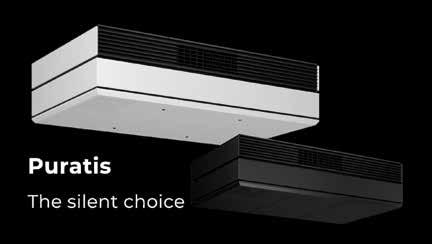
Enter Puratis, Versatile’s decentralised ventilation solution. Engineered specifically for complex modern environments, Puratis throws out the old compromises, delivering a masterclass in adaptability, ultra-quiet performance, and installer-friendly design.
Unmatched flexibility: 72 ways to fit in Every building layout presents unique structural hurdles. Puratis tackles this challenge head-on by offering an unprecedented 72 installation configurations. Available in three scalable airflow sizes—600 m³/h, 800 m³/h, and 1,050 m³/h—the system seamlessly conforms to the architecture, rather than forcing the architecture to conform to the machinery.
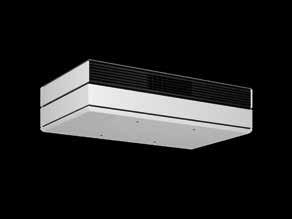
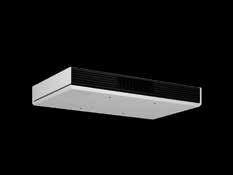
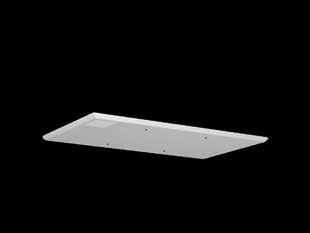
Whether an engineer requires ceiling-mounted layouts (with external, semi-recessed, or fully recessed options) or floor configurations (horizontal or vertical), Puratis integrates effortlessly.
For designers who care about visual harmony, the units are available in black and white finishes, with outdoor and exhaust air connections that can be configured to stay completely out of sight.
Acoustic comfort and advanced air quality
A ventilation system should be felt, not heard. Puratis boasts ultra-low noise levels, operating as low as 35 dB(A) at one metre—the acoustic equivalent of a quiet library. This makes it ideal for concentration-heavy environments like schools and corporate boardrooms.
Beyond quiet operation, Puratis prioritises true thermal and respiratory comfort. An optional enthalpic heat exchanger provides advanced humidity recovery, ensuring a balanced indoor climate year-round. Air distribution is further optimised with a doubledeflection diffuser, eliminating uncomfortable drafts, while versatile internal options—including waterreversible, water-heating, and electriccoil—allow for precise temperature control.
Engineered for the installer and facility manager
The genius of Puratis extends well beyond its daily operation. It is
deeply embedded in its logistics and maintenance lifecycle. Transporting heavy commercial HVAC equipment through tight corridors is a notorious pain point. Versatile solves this by utilising an innovative multiblock construction, delivering the system in three manageable components packaged within an 80cm-wide footprint for effortless site access. Safety is also built right into the hardware, featuring rounded internal edges to eliminate accidental cutting risks during handling. Once live, long-term maintenance becomes a one-person job. A railmounted sliding control board pulls out easily for rapid servicing, while the enhanced TAC7 interface simplifies initial setup and ongoing system monitoring. Furthermore, Puratis is fully compatible with modern building management systems, offering seamless integration with SAT Wi-Fi Ethernet, BACnet Gateway, and Modbus protocols. By bridging the gap between architectural elegance and mechanical excellence, Versatile’s Puratis sets a new benchmark for what commercial decentralised ventilation can — and should — be.
To learn more, visit www..versatile.ie, phone +353 (0) 46 902 9444 or email sales@versatile.ie
Puratis.
• Ultra-quiet decentralised ventilation designed for modern environments
• 35dB (A) performance, flexible integration, and simplified maintenance
• Engineered for modern commercial spaces
• Available in external, semi-recessed, fully recessed
• Ceiling and wall-mounted options available
• 72 configurations available
CIBSE Ireland AGM: Technical growth, global reach, and industry connection drive 2026 strategy
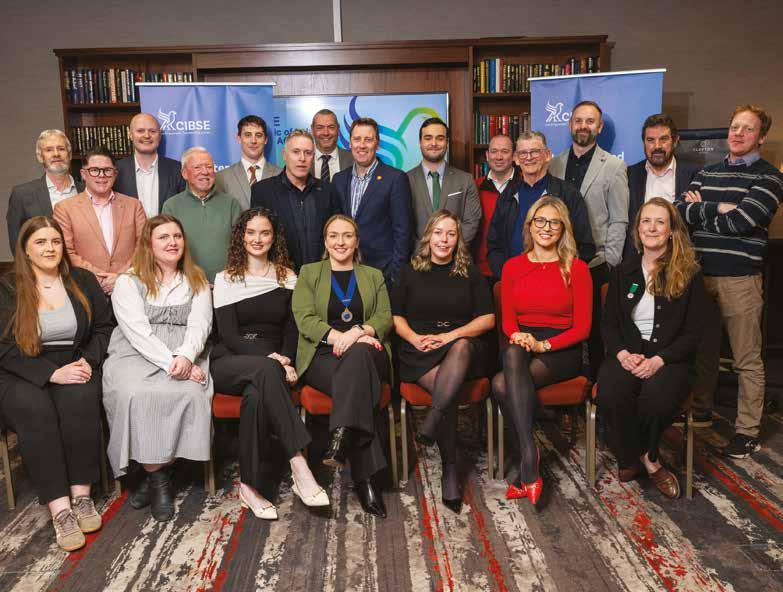
The Chartered Institution of Building Services Engineers (CIBSE) Ireland convened its Annual General Meeting on Thursday, 16 April, at the Clayton Hotel in Ballsbridge, Dublin. The gathering served as a pivotal moment for chairperson Laura McMahon to reflect on a year of significant momentum and to set the trajectory for her continued term.
Laura expressed pride in CIBSE Ireland’s progress, highlighting that the institution’s strength lies in the professionalism and energy of its dedicated committee. She noted that the Ireland branch is in a strong position, bolstered by a proactive, collaborative approach to industry challenges.
Expanding professional and technical horizons
A cornerstone of the past year’s success was the robust technical CPD programme, curated by Michael Curran, which included a bi-annual webinar series during the spring and autumn. These sessions remained closely aligned with CIBSE technical guidance while prioritising sustainability and system performance. By engaging industry leaders and subject-matter experts, CIBSE Ireland ensured its members received high-
quality, relevant knowledge year-round. This commitment to excellence was further showcased when Laura presented at the new CIBSE headquarters in London, highlighting Ireland’s strong standing and technical contributions within the global organisation.
Networking and charitable contributions
The institution’s flagship industry networking event, the CIBSE Ireland Christmas Lunch, sponsored by Panasonic in 2025, was cited as a major success, significantly enhancing regional visibility and engagement. Beyond professional networking, the event carried a strong philanthropic element, raising €5,100 for Cancer Trials Ireland.
Additionally, the annual golf day in August, sponsored by Lindab, saw broad participation from across the industry, including consultants, contractors, and suppliers.
Laura commented, “This event continues to strengthen cross-industry relationships and has been confirmed for late August of the upcoming year to maintain this vital industry connection.
CIBSE Ireland AGM 2026 attendees.
Modernising knowledge sharing and talent development
To modernise knowledge sharing, CIBSE Ireland launched the Bringing Buildings Alive podcast earlier this year. The monthly series is serving to amplify Irish engineering voices on a global stage. This platform has already garnered international attention, with listeners reaching as far as New Zealand.
Supporting the next generation of engineers also remained a priority, evidenced by the inaugural Seamus Homan Award was received by Sean McMahon.
The successful CIBSE Workshare programme, involving companies Ethos and Designer Group, provided young professionals with valuable insights into different disciplinary working practices and helped bridge the gap between consulting and contracting.
Vision for the future and committee appointments
Looking toward the 2026-2027 term, the institution intends to build on its established foundation by promoting the value of Chartered Engineer status and further refining its technical offerings to meet evolving safety and sustainability priorities.
This year’s committee represents a diverse mix of seasoned professionals and emerging leaders, including Vice Chair Paul Tighe, Honorary Treasurer James Porter, and Honorary Secretary Sarah Boylan. Under the continued leadership of Laura McMahon, CIBSE Ireland remains committed to inclusivity, university engagement, and maintaining a strong sense of community within the building services sector.
The CIBSE 2026 Committee comprises Laura McMahon (Chair), Lawler Sustainability; Paul Tighe (Vice Chair), Ethos; James Porter (Honorary Treasurer), Euro Gas; Sarah Boylan, (Honorary Secretary), Kerrigan Mechanical; Paul Martin (Branch Almoner), The Housing Agency; Heather Holt, (Chair, WIBSE), Tech Refrigeration; Stephen Weir (Immediate Past Chair), Hereworks; Michael Curran, SOLAS; Michael McDonald, TU Dublin; David Doherty, T Bourke; Pat Lehane; Mona Duff, WELL Building Institute; Debo Adeduntan, AECOM; Jimmy Cullen, James A Cullen Consulting Engineer; Dylan Ryan (Chair, CIBSE YEN), Euro Gas; Emma Hinch (Vice Chair, CIBSE YEN), Jones Engineering; Sean McMahon (Treasurer, CIBSE YEN) EICL; Christy Faul, ORS; Anna Rooney, AECOM; Niamh O’Halloran, Black & White; and Ryan Loney, HSE.
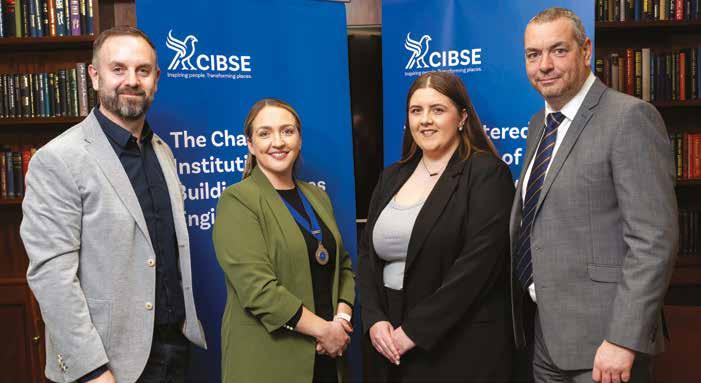
CIBSE Ireland officers(l to r): Paul Tighe, Vice Chair; Laura McMahon, Chair; Sarah Boylan, Honorary Secretary; James Porter, Honorary Treasurer.
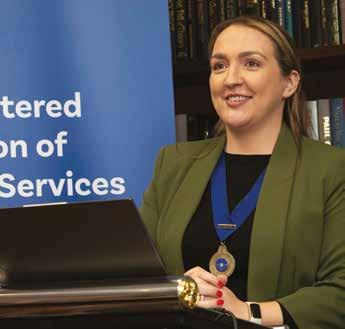
Laura McMahon, Chair, CIBSE Ireland, delivers her address.
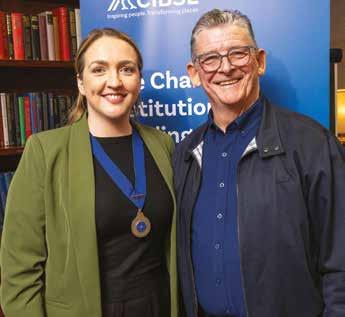
Laura McMahon, Chair, CIBSE Ireland; and Emeritus Professor Kevin Kelly, Past-President, CIBSE.
IRAC 2026 Exhibition
– A resounding success
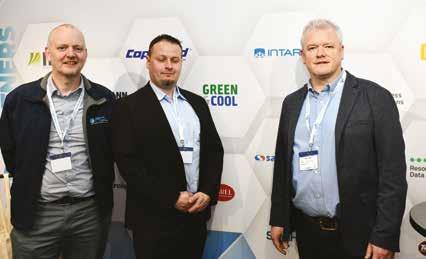
The refrigeration, air conditioning, and heat pump industry converged on the Green Isle Hotel in Dublin in April for the Refrigeration, Air Conditioning, & Heat Pump (IRAC) Exhibition 2026, organised by the Irish Institute of Refrigeration (IRI). The biannual event proved to be a landmark
date for the sector, drawing hundreds of professionals from across the country for a day of networking, innovation, and technical exchange.
A hub of industry innovation
The atmosphere was one of high energy from the start as wholesalers,
manufacturers, specialist contractors and tradespeople gathered to explore the latest advances in the field. From cutting-edge heat pump technology to high-efficiency refrigeration systems, the exhibition floor served as a live showcase of the solutions driving the Irish market forward.
In her programme notes, IRI President Margaret Rafter (Mitsubishi Electric) underscored the vital importance of the gathering, “Our industry is evolving rapidly. With new technologies, improved efficiencies, and a growing focus on sustainability, events like
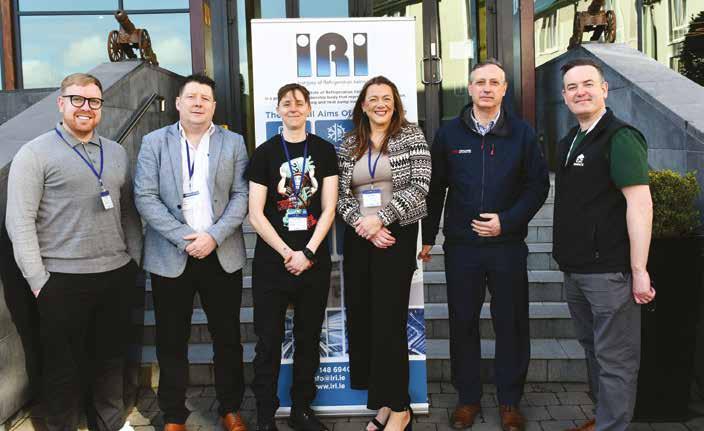
IRI Committee members: (l to r) Johnny Ryan, Crossflow; Liam Kirwan, Daikin; Ruth Gill, Crystal Air; Margaret Rafter (President), Mitsubishi Electric; Andrew Dunwoody, Anglo Irish Refrigeration; and Jeff Aherne, EVHACS.
The RDL team at IRAC 2026.
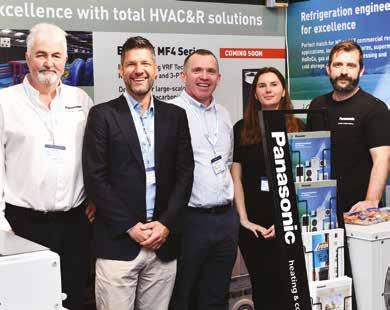
The Panasonic team at IRAC 2026.
this allow us to share knowledge, showcase innovation, and strengthen the relationships that keep our industry moving forward.”
Focus on collaboration and sustainability
The 2026 show placed a significant emphasis on the industry’s transition toward greener solutions. Exhibitors highlighted equipment designed to meet increasingly stringent environmental standards, while technicians and innovators shared insights on the practicalities of implementing these new systems.
Margaret Rafter thanked the exhibitors for providing “real value” to the attendees, noting that the event’s primary strength lies in its ability to
foster collaboration. The show provided a rare opportunity for skilled technicians to engage directly with industry leaders and manufacturers to discuss the future of the trade.
Industry support
The success of the event was bolstered by the support of key industry players. The IRAC 2026 Show was sponsored this year by RSL Group, Mitsubishi Electric, RDL and C&F Quadrant.
The massive turnout and the quality of the technical displays reinforce the IRI’s role as a cornerstone of the professional community, ensuring the Irish refrigeration, air conditioning, and heat pump sector remains at the forefront of technological and environmental excellence.
Karen McNevin, L&J Marketing Services; and IRI President, Margaret Rafter.
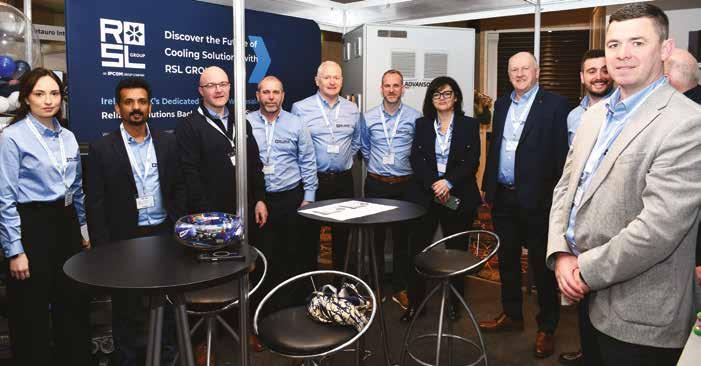
The RSL Group team at IRAC 2026.
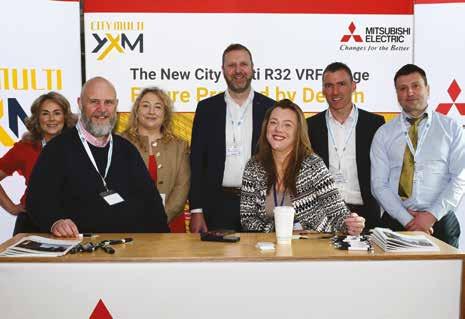
The Mitsubishi Electric team at IRAC 2026.
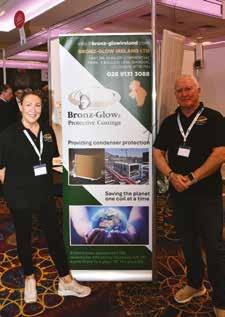
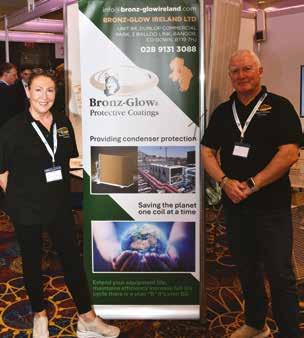
The Bronz Glow Ireland team at IRAC 2026.
Performance Transparency Matters in Heat Pump Specification
In heat pump specification, performance claims are no longer enough. Building services engineers are looking for clear, comparable data they can trust when assessing how systems are expected to perform.
This shift is placing greater emphasis on ErP fiche data, standardised performance information defined under EU regulations, which enables direct, like-for-like comparison between products. For specifiers, including engineers responsible for system design, it provides a consistent and regulated basis for assessing how systems are expected to perform under defined test conditions.
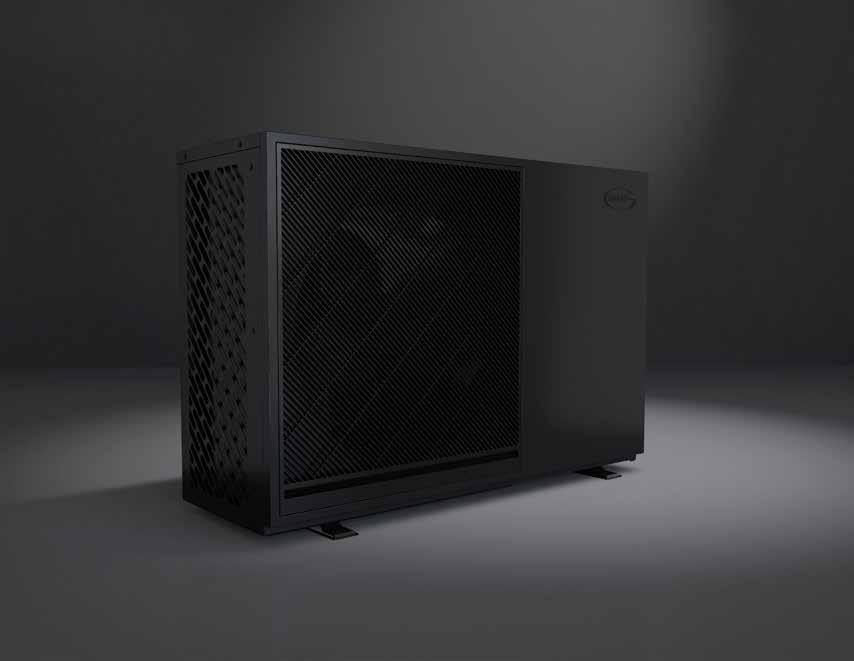
Rather than relying on isolated performance figures, the Grant Aerona R290 provides transparent performance data across its full range, available in outputs from 4kW to 16kW, all confirmed in line with EU standardised test conditions and independently verified by TÜV SÜD. This level of transparency offers an additional layer of assurance for specifiers, contractors and engineers assessing system performance across different applications.
Across all models, the units achieve A+++ energy ratings under low-temperature conditions, with
seasonal space heating efficiency exceeding 200% in smaller units and maintaining close to 190% at larger outputs. This indicates the system can deliver approximately twice the heat output relative to electricity input under standardised test conditions, an important factor in energy performance and expected running costs.
A key characteristic of the Aerona R290 range is the consistency with which it is delivered. As system sizes increase from 6.5kW to 16kW, efficiency levels remain robust and predictable, giving specifiers, contractors and engineers greater confidence that performance will remain aligned across varying heat loads and system configurations.
Equally important are the annual energy consumption figures for the Aerona R290 range, ranging from approximately 1,600 kWh for smaller units to over 6,600 kWh for larger capacities. For engineers, this supports more accurate modelling and more informed discussions around operational costs. Notably, the system also utilises natural refrigerant R290, which has a GWP of just 3; significantly lower than conventional alternatives such as R32, supporting reduced environmental
impact while maintaining high levels of performance.
As building standards continue to evolve, so too must the criteria for product selection. Working with a trusted manufacturer and specifying systems with clear, proven performance data will be essential in delivering compliant, efficient and future-proofed projects from both a design and system performance perspective.
For specifiers, this reflects a growing emphasis on verified performance data and consistency across system design.
Understanding ErP Fiche Data in Heat Pump Specification
• Provides standardised performance data under EU regulations
• Enables direct, like-for-like comparison between products
• Supports accurate assessment of system performance under defined conditions
• Includes key metrics such as:
• Energy performance ratings
• Seasonal space heating efficiency
• Annual energy consumption
• Supports BER modelling and system performance calculations
Learn more about the Grant Aerona R290 heat pump and Grant’s innovative product range at grant. ie. Follow Grant on LinkedIn @ GrantEngineeringULC, Facebook @ GrantIRL, Instagram @grant_irl or You Tube @GrantEngineeringIE.
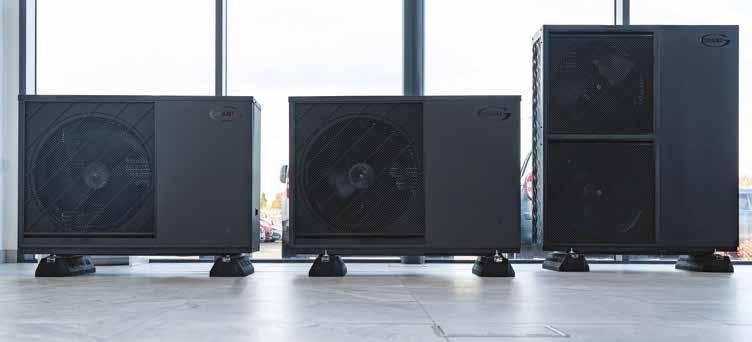
Grant Aerona R290 4kW, 6.5kW and 12kW heat pumps.
NEXT GENERATION
- Designed for the Irish and UK Climate
- Innovative Technology
- Exceptional Performance
- Ultra-Low Noise Levels
- Outputs from 4kW – 16kW
EVENTS
CIBSE Ireland Annual Golf Outing: Tee Off for a cause at Luttrellstown Castle
Prepare your clubs and perfect your swing for a premier day on the fairways at the CIBSE Ireland Annual Golf Outing, proudly. This highly anticipated fixture returns on Friday, 28 August 2026, staged at the breathtaking Luttrellstown Castle Resort. Known for selling out year after year, the event offers a perfect blend of spirited competition and high-level networking for professionals across the industry.
Schedule and competition format
The day begins with registration opening between 11:00 am and 12:15 pm, setting the stage for a 1:00 pm shotgun start. Teams will compete in an engaging four-person scramble format, ensuring a lively and inclusive afternoon of golf for all skill
levels. Beyond the sport itself, your involvement provides essential funding for CIBSE Ireland’s initiatives, while a portion of the proceeds also benefits the vital work of Cancer Trials Ireland.
Sponsorship and post-match festivities
This year’s outing is proudly sponsored by Daikin and concludes with a well-earned meal and the official prizegiving ceremony immediately following the day’s play.
Entry for a four-ball team is priced at €650. Given that the number of participating teams is strictly limited each year, early booking is highly advisable to ensure you don’t miss out on this memorable day.
How to secure your place
To reserve your four-ball, please contact James Porter via email at james.porter@ eurogas.ie. James will manage your invoice and provide the relevant bank details for a direct transfer. We look forward to seeing you on the green for a fantastic day of sport and support.
In an industry defined by rapid technological shifts, staying ahead is a professional necessity. CIBSE Ireland’s flagship podcast, “Bringing Buildings Alive,” delivers a vital monthly tactical briefing for engineers navigating the modern frontiers of building services.
Released on the first Monday of every month, the series continues to move beyond daily project grinds to explore future-proof solutions—from AI design integration to next-gen heat pump technology.
The expert-led highlights include:
• EU Lighting Regulations: Gavin Edwards (Fagerhult), Elena Scaroni (Lighting Europe), and Dave Murphy (Lighting Association of Ireland)
• ESG in Engineering Decisions: Laura McMahon (Lawler Group / CIBSE Ireland Chair) and Kayleigh-Ann Myles (Lawler Sustainability)
• Digital Buildings as a Process: Stephen Weir (Hereworks) and David Hegarty (Arup)
• Ethical AI Adoption: Paul Tighe (Ethos Engineering) and Maryrose Lyons (AI Institute).
• Tallaght District Heating Success: John O’Shea (Codema) in conversation with James Porter (Euro Gas)
Equip yourself with the market intelligence needed to design highperforming buildings built to last.
How to Listen
Catch up on episodes on Spotify, Apple Podcasts, or Podfollow. Listen and subscribe https://podfollow.com/ cibse/view or scan the QR code
Luttrellstown Castle Resort golf course.
Liam Kirwan; Daikin; Laura McMahon, Chair, CIBSE Ireland; and Paul Tighe, Vice Chair, CIBSE Ireland.
CIBSE Benevolent Fund: Protecting the CIBSE family
PAUL MARTIN, Almoner, Ireland Region, CIBSE Benevolent Fund, highlights the life-changing impact of the Fund and urges members to protect this vital safety net as donation rates hit a record low.
The CIBSE Benevolent Fund
Trust is a registered charity that operates locally, internationally, and independently from CIBSE. It exists in parallel to support members, former members, and their dependents who have fallen on hard times. As an almoner, I have seen firsthand how the CIBSE Benevolent Fund provides essential financial aid, advice, and a sympathetic ear to those experiencing significant need or distress.
The Fund’s mission is simple: “Support the CIBSE family during times of hardship and ill health”.
This assistance is available to those who have paid subscriptions for at least three years and find themselves in difficult circumstances due to illness, bereavement, or a financial crisis. Whether it is a long-term commitment for ongoing needs or a one-off grant to cover an unexpected bill, the Fund is here to help.
CIBSE Benevolent Fund impact
The impact of this support is lifechanging. For instance, the Fund recently assisted a member who contracted a serious disease and could no longer climb stairs by covering the cost of converting a downstairs room into a toilet and shower room. In another case, the Fund supported the widow of a long-standing member in Australia, providing a quarterly grant to help her raise three school-age children on her own.
Crucially, all support is handled with the highest ethical standards; the identity of beneficiaries is kept strictly confidential, known only to the local Almoner.
Here to help
If you are in need of assistance or know of someone who may be going to difficult times please share this article with them and contact me directly at cibseirelandalmoner@gmail.com. All
conversations and applications are held in strictest of confidence. We are aware that their may be a hesitation from some members to reach out for assistance but the CIBSE Benevolent fund is here to help.
Give what you can
I am calling on every CIBSE Ireland member to help us reverse this trend. When you receive your membership renewal, please tick the box to donate just £10 (approximately €12) to the CIBSE Benevolent Fund. If you have already renewed your membership for this year and want to make a donation now, please visit the Fund website listed below or scan the QR code below to make a donation.
This small gesture, when multiplied across our membership, makes a massive difference.
For those who can do more, we have launched a new Sustaining Member scheme with a £50 annual donation, and a Sustaining Employer scheme for companies at £100 per year.
In Ireland, the CIBSE Ireland committee donated €5,000 this year to demonstrate our commitment.
The CIBSE Community
CIBSE is a global community with local impact; we must be there for each other. Please support your colleagues by donating £10, and stay alert to any members who may be in distress and could benefit from our help. Together, we can ensure that no member of our community has to face hardship alone.
To contact the Ireland Region Almoner directly on any matters relating to the Benevolent Fund, email cibseirelandalmoner@gmail.com
To learn more or make a donation, visit www.cibse. org/about-cibse/ benevolent-fund or scan the QR code
Paul Martin, Almoner, Ireland Region, CIBSE Benevolent Fund.
Grange Golf Club case study
In 2021, Grange Golf Club began a journey to significantly lower its running costs, improve the quality of its offering, and enhance the value of its club through a series of energy upgrades, all affecting different parts of the club, including the staff and member experience.
The first intervention was to address the CMF building housing the greenkeepers (the unsung heroes of every golf club!) and their very valuable equipment. JV Tierney (Mechanical Electrical & Sustainable Engineers) specified a class-leading Kronoterm ADAPT 0724 from Glenergy in Rathnew, Co Wicklow, for heating and, separately, a Kronoterm DHW heat pump for the hot water usage. This was successfully installed by Gaffney Mechanical in 2022.
The Grange were delighted with the performance, aesthetics, and acoustics of the Kronoterm equipment, which gave them the confidence to further decarbonise their energy requirements.
The next stage was to replace the existing DHW heaters with additional Kronoterm DHW heat pumps using exhaust air from the building itself, providing higher efficiencies and more hot showers for the hardy winter golfers. These works were led by SystemCore (M&E Consultant Engineers - Designing systems that drive buildings towards a net zero future) and installed by CJK Mechanical
SystemCore continued by designing a new air-handling system set to 55 degrees, with the existing radiator system largely maintained as additional heating. A new Kronoterm ADAPT Max 10070 (70 kW) unit was installed using the environmentally friendly refrigerant R290. All were flawlessly installed by CJK Mechanical. All these investments combined to reduce the club’s energy costs while improving the comfort of everyone involved in this longestablished club. Our thanks to all our great partners in this story…
Kronoterm ADAPT MAX
Efficiency ADAPTMAX boasts top heating and cooling efficiency, placing it at the forefront*. As the only one in its category, it ranks in energy class A+++ across all climate zones for both underfloor and radiator heating, while achieving exceptional cooling performance. Its seasonal efficiency-inheating is up to 45% higher than the average heat pump in the
segment, and up to 22% more efficient in cooling than the average chiller. This brings significant savings
The BAFA list confirms that the BEST IN BAFA LIST ADAPTMAX heat pump is the most efficient in its category *with capacities from 20 kW to 1 MW for underfloor heating. BAFA is a German federal agency that maintains a list of energy-efficient devices - 1.8.2024
Modularity: ADAPTMAX offers exceptional flexibility with a modular design that allows configurations based on the specific needs of the user and the building – as simple as stacking blocks. Modularity simplifies design and management by combining the advantages of both small and large units, including easier installation, maintenance, and setup, as well as the possibility of gradual system upgrades. Individual modules can be supplied preassembled, which significantly simplifies planning and installation.
Design: With its elegant and refined design, ADAPTMAX upgrades the ADAPT heat pump line and sets new standards in aesthetics. Ideal for use in urban and modern residential, educational, and other public buildings, where it is not only functional but also visually appealing. The colour and material of the housing can be individually customised, ensuring complete cohesion with the overall design aesthetic of your project.
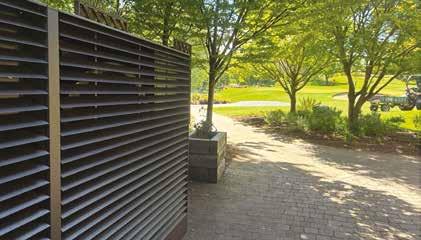
Kronoterm ADAPT MAX whisper operation beside the green!
Grange Golf Club.
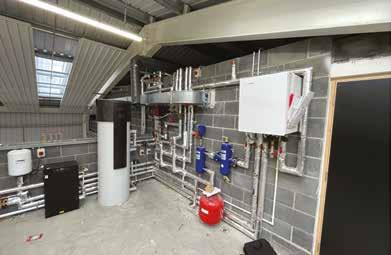
CMF Building plant room.
Maximise ROI on your Energy Upgrades
BETTER PERFORMANCE EQUALS HIGHER GRANTS
REVOLUTIONISING HEATING IN LARGE BUILDINGS
ADAPT MAX HEAT PUMPS
• Energy class A+++, 5.82 SCOP key to maximum SEAI grants
• Enhance the value of your building through optimising performance and reducing running costs
• Seasonal Efficiency in heating up to 45% higher than the average heat pump in this sector
• 22% more efficient in cooling than the average
chiller, bringing significant savings
• 75°C outlet water temperature
• Innovative design, in a range of finishes
• Whisper-quiet operation
• Easy installation, detailed schematics and remote performance monitoring
• R290...minimising environmental impact and supporting your ESG goals
EVENTS
Save the date: The CIBSE Ireland
Annual Lunch 2026, Friday 11
December
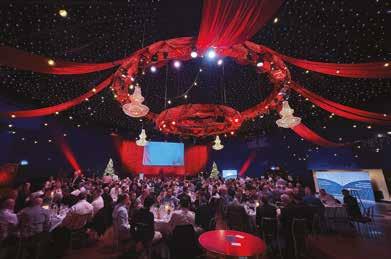
The Building Services Engineering sector’s most anticipated social fixture is fast approaching. Hosted in partnership with Lindab, the CIBSE Ireland Annual Lunch 2026 represents the premier networking opportunity of the year. It is an unparalleled occasion to reconnect with industry colleagues, solidify long-standing professional relationships, and forge new connections within a vibrant and engaging environment.
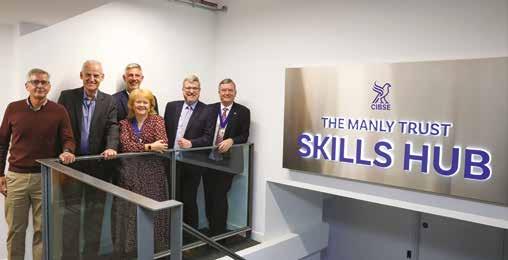
£1.2m boost for CIBSE’s new Manly Trust Skills Hub
CIBSE has officially unveiled its redeveloped London headquarters, featuring the landmark opening of The Manly Trust Skills Hub. This launch is bolstered by a £1.2m donation from The Manly Trust—the largest single gift in CIBSE’s 129-year history. This transformational investment is designed to future-proof the building services
Venue and schedule
This exclusive gathering will be held at the historic Round Room within the Mansion House, Dublin, on Friday, 11 December 2026. The afternoon begins with the Chairperson’s Reception at 12:00 noon, with formal proceedings commencing at 12:30 pm. As one of the highlights of the industry calendar, the event serves as the perfect setting to entertain guests and broaden your professional horizons.
Supporting a vital cause
While the lunch is a celebration of the industry, it also serves a higher purpose. CIBSE Ireland is proud to announce that Lindab is the main sponsor for this year’s event.
Secure your table
Demand for places is exceptionally high, and with capacity strictly limited to 350 attendees, tables are expected to sell out quickly. To ensure you do not miss out on this essential industry event, please email James Porter at james.porter@eurogas.ie today. James will arrange your invoice and provide the necessary CIBSE Ireland bank details to facilitate payment via direct transfer.
engineering profession by equipping practitioners with essential skills in AI, digital tools, and rapidly evolving green technologies.
The newly reimagined headquarters serves as a dynamic centre for collaboration and learning. It includes modern conference areas for knowledge sharing, dedicated training facilities focused on a low-carbon future, and flexible workspaces where members can connect and work. The Manly Trust Skills Hub sits at the heart of this vision, providing hands-on educational opportunities that reflect the realities of
modern engineering practice.
Trustees David Manly and Ewen Rose emphasised the natural synergy between the Trust’s mission and the Hub’s vision, noting its potential as a legacy project for future generations of engineers.
CIBSE CEO Ruth Carter described the donation as a catalyst for creating a world-class facility that supports the institution’s mission to advance global professional excellence.
She said, “We are deeply grateful to The Manly Trust for this extraordinary donation. Their support is truly transformational and enables us to accelerate our plans to create a world-class facility for learning and development.”
As a cornerstone of the Building for the Future campaign, the Hub reinforces CIBSE’s commitment to public benefit, offering a sustainable space for innovation and industry engagement. This partnership ensures that engineers remain prepared to deliver safe, sustainable, and highperforming buildings for decades to come.
Des O’Brien, Lindab; Paul Tighe, Vice Chair, CIBSE Ireland; and Laura McMahon, Chair, CIBSE Ireland.
The Manly Trust Skills Hub opening event with CIBSE CEO Ruth Carter, CIBSE President Vince Arnold and The Manly Trust trustees.
IRI Propane, Naturally Safe, refrigeration workshops draw a full house in Dublin
The Institute of Refrigeration Ireland recently hosted workshops in Dublin that underscored the rapidly evolving landscape of the refrigeration sector.
As the refrigeration sector transitions toward natural refrigerants, mastering the technical and safety demands of propane (R290) has become a top priority.
Through a lifecycle-focused approach—emphasising safe planning, installation, and operation—industry professionals are building the essential expertise needed to lead the shift toward sustainable, low-GWP cooling systems.
The Institute of Refrigeration Ireland’s (IRI’s) recent conference, held at the Clayton Hotel, Liffey Valley, Dublin, attracted a diverse range of delegates, including refrigeration professionals, contractors, consultants, technicians, manufacturers, and operators from across the country. The high turnout is a clear indicator of the Irish industry’s deep commitment to embracing the technical challenges and safety requirements associated with the shift toward sustainable cooling solutions.
World-class expertise at the forefront
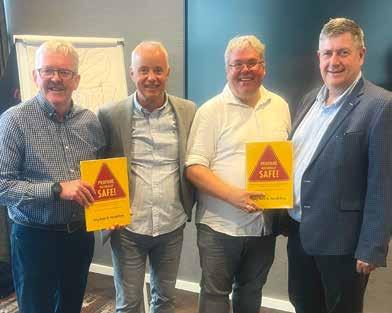
The educational sessions were anchored by two of Europe’s most respected authorities on hydrocarbon technology: Stig Rath and Harald Erös. As internationally recognised experts and co-authors of the authoritative guidebook ‘Propane, Naturally Safe!’, they provided attendees with unparalleled access to industry-leading insights. Their presence in Dublin signalled a significant opportunity for local professionals to bridge the gap between theoretical knowledge and the practical application of natural refrigerants, ensuring that Ireland remains aligned with global safety standards and technological trends.
Core themes of safety and competence
Guided by the central mantra, ‘Plan Safely. Install Safely. Operate Safely’, the workshops provided a structured framework for complex technical discussions. Throughout the morning and afternoon sessions, the experts navigated the intricacies of working with propane (R290) and other A3 flammable refrigerants. The curriculum covered a comprehensive spectrum of the lifecycle of these systems, including best-practice design, installation protocols and ongoing maintenance for both refrigeration and heat pump applications. This holistic approach ensured that participants left with a robust understanding of how to manage these systems in commercial, industrial and residential environments.
Equipping professionals with essential resources
Every attendee received a copy of the Propane, Naturally Safe! guidebook. By providing this resource, the IRI has
ensured that the knowledge shared during the workshops continues to serve the industry long after the event concluded. Participants praised the practical focus of the content and the unique opportunity for direct, high-level engagement with the speakers. The positive feedback highlights the value of such hands-on training in building professional confidence when working with alternative refrigerants.
Driving the transition to sustainable technology
The resounding success of the Dublin workshops serves as a barometer of the broader transition underway in the refrigeration and HVAC sectors. As the industry moves away from traditional synthetic refrigerants, the demand for competency in natural refrigerant technology continues to climb. By facilitating this exchange of expertise, the IRI has played a pivotal role in fostering the professional development necessary for this sustainable transition. The institute remains dedicated to supporting its members and industry partners through future training initiatives, ensuring that the Irish refrigeration sector remains prepared, knowledgeable, and at the forefront of global environmental standards.
At the IRI Propane, Naturally Safe workshops, (l to r) Seamus Kerr, RSL Group and IRI Council; Stig Rath, Stig Rath Consulting; Harald Eros, Ingenieurbüro Erös eU; and Declan Fitzmaurice, FTG Consultants and IRI Council.
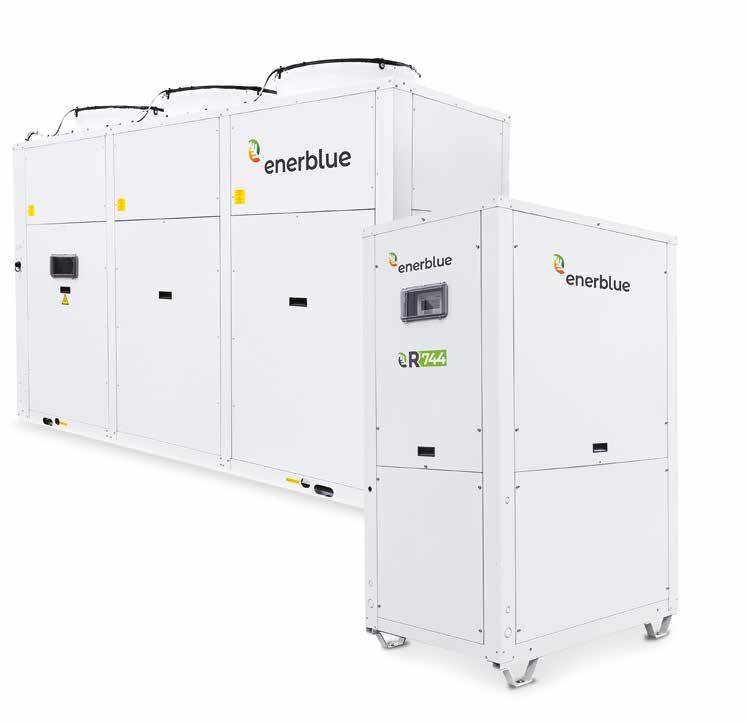
IRIDIUM - IRIDIUM WW
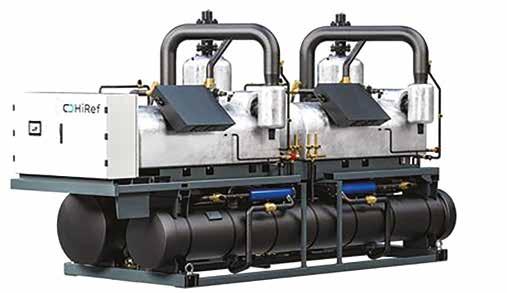
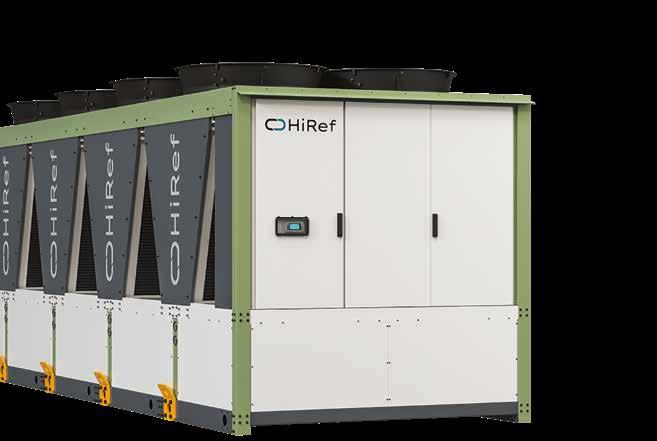
High temperature air to water and water to water heat pumps which use natural refrigerants.
• Heating capacity 14,5 kW to 137,9 kW in both air to water and water to water.
• Installation sectors commercial/ industrial.
• Utilising more than a decade of experience of low global warming potential refrigerants.
R744 (CO2) as refrigerant gas allows systems to heat water to temperatures up to 90° with an external temperature of -20°, efficiently
For further details, contact Chris Satell, Chris@cfquadrant.ie, or visit www.cfquadrant.ie or www.enerblue.it
PALLADIUM HEAT BEYOND SILENCE
The range of PALLADIUM heat pumps has been designed to allow units to be used with R290 natural refrigerant even in applications where noise must be minimised. The perfect balance between sizing of the aeraulic section, soundproofing of the unit and the combination of top performance and operating limits stretched to the furthest possible point has resulted in a range of
reversible heat pumps designed to meet the requirements of even the most challenging heating applications.
Features
• High Temperature Hot Water
• Low acoustic values
• Natural Refrigerants
• Environmentally Friendly for decarbonisation project
• Targets high demand hot water users
• Ideal for all commercial and industrial applications
C&F Quadrant
Dublin: +353 (1) 630 5757
Belfast: +44 (28) 90 36 55 55
For further details, contact Chris Satell, Chris@cfquadrant.ie, or visit www.cfquadrant.ie or www.enerblue.it
Motor efficiency: Are you leaving money on the table?
THOMAS MARKS, Director General, Association of Electrical and Mechanical Trades (AEMT), writes that when an engineering team replaces an ageing motor with a shiny new, high-efficiency IE4-rated unit, they often consider the job done. However, according to experts involved in the UK government’s review of Ecodesign Regulations for electric motors and Variable Speed Drives (VSDs), this “compliance win” often leaves the biggest energy savings completely untouched.
Tocusing narrowly on motor efficiency ratings is frequently an incomplete strategy—and sometimes an expensive distraction.
The problem with “blinkered” upgrades
The IE efficiency classification system has successfully raised the bar for motors. However, experts warn against being “blinkered.” A motor is merely one component in a wider system. Often, the largest energy losses aren’t in the motor itself, but in inefficient gearboxes, misaligned drivetrains, or mechanically throttled pumps.
For example, a team might install a highly efficient motor, yet fail to notice a manual valve partially restricting a pump’s flow. Simply opening that valve could deliver energy savings that dwarf the gains from the expensive motor upgrade. True energy efficiency requires looking at the entire transmission path—the motor, the driven equipment, and everything in between.
Budget disconnect
Why do sub-optimal decisions persist? Often, it is a structural budget issue. Engineering departments are typically tasked with procurement and maintenance, while
energy costs are managed by facilities or finance. Because engineers are measured on capital expenditure rather than lifetime kilowatt-hour savings, they are incentivised to select the lowest-cost compliant replacement.
Organisations that bridge this gap—by aligning procurement with whole-life energy costs or involving energy managers in purchasing decisions—consistently make better investments.
Where the real
gains are
With incremental gains from motor efficiency classes becoming marginal, the biggest opportunities now lie in these three areas:
Variable Speed Drives (VSDs): If an application runs at a fixed speed but requires variable output, adding a VSD can provide rapid returns by matching the motor speed to actual demand rather than throttling flow.
Right-sizing: Oversized motors run inefficiently. Replacing an oversized unit with a correctly sized one yields immediate, ongoing savings.
The wider drivetrain: Gearboxes, couplings, belts, and bearings are often overlooked. A system audit may reveal these components are wasting more energy than the motor itself.
Measure before you act
An assessment is only as good as the data behind it. Avoid relying on a single, brief energy reading. Use extended monitoring that captures data across representative operating cycles to understand how the system performs under real-world conditions.
A practical framework for owners
Don’t ignore compliance, but treat every motor replacement as an opportunity for a broader system conversation. Before ordering a replacement, ask:
• Is the motor the right size for the actual load?
• Is the driven equipment (pump, fan, etc.) operating efficiently?
• Could a VSD be justified on energy savings alone?
• When were the transmission components (gearbox, couplings) last assessed?
• Who is considering the lifetime energy cost, not just the purchase price?
• Do we have enough data to understand real-world performance?
These questions cost nothing to ask, but the answers could be worth far more than the most efficient motor on the market.
Thomas Marks, Director General, Association of Electrical and Mechanical Trades.
EVENTS
Innovation and sustainability honoured at SEAI Energy Show 2026
The building services engineering sector converged on the RDS in Dublin for the SEAI Energy Show 2026, showcasing the cutting edge of sustainable development. With innovation serving as the industry’s lifeblood, this year’s Product of Show Awards highlighted pioneering technologies delivering major commercial and ecological benefits. Entries underwent a rigorous assessment by an expert panel spanning building engineering, architecture, and facilities management.
Taking top honours, Harold Engineering secured both Overall Product of the Show and Best Energy Efficient Product for the Ingersoll Rand RTE45/55NE compressor, praised for its scalable capacity upgrades. Other key category winners included:
• Best Innovative Product: Aeroseal Ireland’s AeroBarrier, with Ecological Building Systems’ Ecococon Straw Wall Panel System highly commended.
• Best Sustainable Product: Aubren
Limited’s AHU Retrofit & Healthcare Decarbonisation Programme (Showersave’s QB1-21XE was highly commended).
• Best Renewable Energy Product: Huawei Technologies for the Huawei SUN2000 330KTL H1 low-carbon inverter.
BTU Golf Society swings into 2026 season at Forest Little
The BTU Golf Society officially launched its 2026 competitive season on 17 April with a strong field of 33 players teeing off at the pristine Forest Little Golf Club in Swords.
Generously sponsored by Ideal Energy, the day was marked by generally favourable weather, though players did have to contend
• Best Services Provider: BERGO for its specialist BER assessment software. Presented by SEAI CEO William Walsh and Minister of State Alan Dillon, the awards champion the smart, highefficiency energy solutions vital to the future of building services.
with a few intermittent showers. Despite poor weather conditions over the previous months, the course at Forest Little was in superb condition, providing a fair but challenging test for the season opener.
The day concluded with a meal in the clubhouse, where members gathered for the presentation of prizes and to catch up ahead of the year’s upcoming outings.
Results
Brendan Coghlan claimed the top spot as the Overall Winner, carding a solid 35 points off a 34 handicap. Competition was particularly tight in Class 1, where Steve Jones secured first place over Robert Kenny following a countback on the back nine.
Overall Best in Class Product of the Show, Harold Engineering – Ingersoll Rand RTE45/55NE: (L-r) William Walsh, CEO, SEAI; Danny Ormond, CEO, Harold Engineering Ltd; Alan Dillon, Minister of State at the Department of Enterprise, Tourism and Employment.
DISTRIBUTOR - HEVAC
Hevac & Clivet: Engineering the Future of Sustainable HVAC Solutions
Hevac’s strategic partnership with Clivet SpA, a market-leading manufacturer of HVAC capital equipment, is driving advanced decarbonisation solutions across the heating and cooling market. Founded in 1989 in Feltre, Italy, Clivet began as a specialist manufacturer of chillers and heat pumps. Since then, the company has diversified into rooftop units, water loop heat pumps, and residential systems. Its 2016 strategic alliance with
Hevac’s strategic partnership with Clivet SpA, a market-leading manufacturer of HVAC capital equipment, is driving advanced decarbonisation solutions across the heating and cooling market.
Founded in 1989 in Feltre, Italy, Clivet began as a specialist manufacturer of chillers and heat pumps. Since then, the company has diversified into rooftop units, water loop heat pumps, and residential systems. Its 2016 strategic alliance with Midea Group further strengthened its competitive position, combining world-class manufacturing with a strong commitment to research and development at its original Feltre plant.
Midea Group further strengthened its competitive position, combining world-class manufacturing with a strong commitment to research and development at its original Feltre plant.
Together, Hevac and Clivet deliver technical expertise and customer service excellence, providing clients with a compelling alternative to fossil fuel–based heating and cooling. This partnership ensures sustainable, future-focused solutions for residential, commercial, and industrial applications.
Together, Hevac and Clivet deliver technical expertise and customer service excellence, providing clients with a compelling alternative to fossil fuelbased heating and cooling solutions. This partnership ensures sustainable,
HVAC SOLUTIONS FROM CLIVET SPA
HVAC SOLUTIONS FROM CLIVET SPA
THUNDER R290 AIR-TOWATER HEAT PUMP
THUNDER R290 AIR-TOWATER HEAT PUMP
The full inverter heat pump offers maximum energy efficiency and is fully compliant with the European regulations for fluorinated gases. Available in 4080kW, features include high performance and versatility with it’s modular design allowing up to 16 units in cascade. It heats domestic hot water up to 75°C with a heating operating range of -20°C to +43°C. Ideal for new buildings and renovations due to its ability to produce hot water at high temperatures, it offers an alternative to boilers in combination with classic radiator systems.
New in 2024, the full inverter heat pump offers maximum energy efficiency and is fully compliant with the European regulations for fluorinated gases. Available in 40- 80kW, features include high performance and versatility with it’s modular design allowing up to 16 units in cascade. It heats domestic hot water up to 75°C with a heating operating range of -20°C to +43°C. Ideal for new buildings and renovations due to its ability to produce hot water at high temperatures, it offers an alternative to boilers in combination with classic radiator systems.
SHEEN EVO 2.0 R32 AIR TO WATER HEAT PUMP
SHEEN EVO 2.0 R32 AIR TO WATER HEAT PUMP
A high temperature solution for harsh climates, the Sheen EVO is available in an Excellence version with very high seasonal efficiency and Premium version with high seasonal efficiency. Offering extremely compact dimensions, it heats hot water up to 60°C, chilled water down to 0°C and is operational at -20°C. A hybrid version in combination with a condensing boiler offers instant DHW production.
A high temperature solution for harsh climates, the Sheen EVO is available in an Excellence version with very high seasonal efficiency and Premium version with high seasonal efficiency. Offering extremely compact dimensions, it heats hot water up to 60°C, chilled water down to 0°C and is operational at -20°C. A hybrid version in combination with a condensing boiler offers instant DHW production.
SPINCHILLER4
future-focused solutions for residential, commercial, and industrial applications.
For enquiries, design information and quotations please contact: Anthony Harte, Specification Manager, Hevac anthony.harte@hevac.ie | www.hevac.ie Quotation Enquiries: tender.enquiry@hevac.ie
For enquiries, design information and quotations please contact: Anthony Harte, Specification Manager, Hevac anthony.harte@hevac.ie | www.hevac.ie
Quotation Enquiries: tender.enquiry@hevac.ie
R32 AIRTO-WATER HEATPUMP
SPINCHILLER4 R32 AIRTO-WATER HEATPUMP
The air-cooled, reversible heat pump uses four independent circuits for high reliability with scroll compressors and EC Axial fans. An Excellence version is ideal for a high full load and seasonal efficiency, and the Premium line for high seasonal efficiency with compact dimensions. Domestic hot water can be heated up to 55°C, while modular operation management offers up to four units in cascade.
The air-cooled, reversible heat pump uses four independent circuits for high reliability with scroll compressors and EC Axial fans. An Excellence version is ideal for a high full load and seasonal efficiency, and the Premium line for high seasonal efficiency with compact dimensions. Domestic hot water can be heated up to 55°C, while modular operation management offers up to four units in cascade.
CLIVETPACK3I R32
CLIVETPACK3I R32
PACKAGED AIRCONDITIONING UNIT
PACKAGED AIRCONDITIONING UNIT
With capacity spanning 60kW-190kW, CLIVETPack3i lays claim to the widest range of full inverter rooftops on the market, reducing environmental impact by more than 80% through its adoption of R32 low- GWP ecological refrigerant.
Offering enhanced air filtration with low ventilation consumption, it can handle -15°C in heating mode, using a patented Recovery EVOlution thermodynamic recovery system to achieve marketleading seasonal efficiency.
With capacity spanning 60kW-190kW, CLIVETPack3i lays claim to the widest range of full inverter rooftops on the market, reducing environmental impact by more than 80% through its adoption of R32 lowGWP ecological refrigerant. Offering enhanced air filtration with low ventilation consumption, it can handle -15°C in heating mode, using a patented Recovery EVOlution thermodynamic recovery system to achieve market-leading seasonal efficiency.
In 1989, the word“Eco-Friendly” was used for the first time. We were already there.
For 35 years, Clivet has been synonymous with heat pumps. An efficient and sustainable technology in which we continue to invest for a maximum performance in all sectors, from residential to commercial and industrial.
THUNDER
Reversible heat pump with a power range from 40 to 85 kW
•Scroll compressors and full inverter fans
•Hot water production up to 75°C
•Modularity up to 16 units
•Operational range for heating from -20°C to +42°C
For enquiries, design information and quotations please contact: Muirfield Drive, Naas Road, Dublin 12 - Tel: +353 (0)1 419 1919 Unit L, Furry Park Industrial Estate, Santry, Dublin 9 - Tel: +353 (0)1 842 7037 South Ring West Business Park, Tramore Road, Cork - Tel: +353 (0)21 432 1066
Anthony Harte, Specification Manager, Hevac anthony.harte@hevac.ie | www.hevac.ie
Quotation Enquiries: tender.enquiry@hevac.ie
FOCUS
Private Wires Bill advances following key committee report
AECI President DARREN KINSELLA examines the pivotal Pre-Legislative
Scrutiny Report on the Private Wires Bill 2025, which outlines a new framework for limited, privately owned electricity connections in Ireland. From enabling on-street EV charging to protecting the national grid’s integrity, this summary explores how the proposed legislation aims to balance energy innovation with climate targets and consumer protection.
The Joint Committee on Climate, Environment and Energy has published its Pre-Legislative Scrutiny Report on the General Scheme of the Private Wires Bill 2025, marking an important step forward in how private electricity connections may be regulated in Ireland.
The proposed legislation would amend the Electricity Regulation Act 1999 to allow privately owned electricity lines in strictly limited circumstances, enabling direct connections between generators, storage facilities and customers, separate from the national grid.
The committee has made 47 recommendations, following extensive stakeholder engagement. A central message of the report is that the national electricity grid must remain publicly owned and the preferred route for connection, with private wires permitted only where they clearly serve the public interest and do not undermine grid financing, system integrity or climate objectives.
Limited use cases and EV charging
The report identifies four narrow scenarios where private wires may be appropriate, including single-generator connections, hybrid connections, neighbouring premises, and notably on-street electric vehicle (EV) charging for domestic use. For EV charging, the committee recommends a greater role for local authorities, potentially through road opening licences, rather than full CRU licensing.
Climate alignment and consumer protection
Strong emphasis is placed on climate alignment, with recommendations that private wires be renewables focused, subject to emissions thresholds, and consistent with Ireland’s Climate Action and Low Carbon Development (Amendment) Act 2021 and carbon budgets.
The committee also stresses fairness to households and small businesses, calling for a no-cross-subsidy principle and a full tariff impact assessment by the Commission for Regulation of Utilities (CRU) before any licensing regime is commenced.
What happens next?
The report has been submitted to the Minister for Climate, Energy and the Environment and will inform the final drafting of the Bill, which is currently listed for ‘Priority Publication’. The committee has recommended that licensing should not begin until the CRU is adequately resourced.
AECI perspective
“Electrical contractors are at the front
line of delivering the energy transition. This report rightly recognises that private wires must be carefully controlled, climate aligned and fair to consumers.
AECI welcomes the emphasis on grid integrity, EV charging enablement, and the need for clear, workable rules that support high quality, safe electrical installations without shifting costs onto households.
“AECI will continue to closely monitor the progression of the Private Wires Bill and engage with policymakers to ensure the final framework supports safe practice, consumer protection, and practical delivery on the ground for electrical contractors.”
The Association of Electrical Contractors (Ireland) (AECI) is the leading representative trade association for the Irish electrical industry. Dedicated to supporting electrical contractors across commercial, industrial, and domestic sectors, AECI provides a comprehensive range of technical and business support services.
To learn more, visit www.aeci.ie
FOCUS
An introduction to commercial heat pumps
In the first of a series on evolving heat pump technologies, Greentherm Managing Director ENDA
RUXTON provides a technical overview of air-towater and water-to-water configurations, exploring capacities, application demands, and low-GWP refrigerant safety regulations.
Heat pumps are essential to phasing out fossil fuels in commercial buildings, hospitals, and district networks. By transferring thermal energy rather than generating it, they deliver far more energy than they consume. This efficiency is measured by the Coefficient of Performance (COP), which typically ranges from 3.0 to 6.0 in commercial systems, meaning three to six units of heat are delivered for every unit of electricity consumed.
Unlike residential units, commercial heat pumps operate on a massive scale, from 20 kW to the megawatt range for district heating or industrial applications requiring complex engineering decisions around compressors, architecture, and strict refrigerant safety compliance. Over the coming issues, I will provide a technical breakdown of air-towater (AtW) and water-to-water (WtW) configurations, including their refrigerants, temperature capabilities, and hydraulic applications.
Air-to-Water - Typical output sizes and applications
Commercial AtW heat pumps are manufactured across a wide range of capacities. Small commercial units suitable for single buildings or apartment blocks typically fall in the 20–100 kW range and are commonly available as monobloc units (all components in a single outdoor cabinet) or as split systems (an outdoor evaporatorcompressor unit connected by refrigerant pipework to an indoor hydraulic module). Mid-range systems
from 100 kW to 1 MW are typically modular, with multiple compressor circuits on a common frame, allowing staged operation to match load variation and improving part-load efficiency. Large-scale air-to-water systems, used in district heating networks and industrial pre-heating applications, can aggregate multiple units to deliver an output exceeding 5 MW.
In terms of applications, AtW heat pumps are well-suited to space heating, domestic hot water preparation, swimming pool heating, and low-tomedium temperature process heating. Modern high-temperature variants, using refrigerants such as propane (R290) or R-744 (CO2), can produce flow temperatures of 80–90°C, extending their applicability to legacy heating systems originally designed for higher temperature operation.
Water-to-Water - Typical output sizes and applications
WtW heat pumps are manufactured from as small as 15 kW (for commercial ground-source applications) up to several megawatts for large institutional or district heating schemes. They are the preferred technology for hospitals, universities, and large hotels where simultaneous heating and cooling is required, since many WtW systems can be configured in heat recovery mode, rejecting heat from a building’s cooling circuit directly into the heating circuit, achieving extremely high combined COPs.
WtW systems are also used extensively
in industrial process applications where stable temperature output and high reliability are paramount. Industrial variants may be designed to produce chilled water as the primary output (with heat recovery), or heating water for process needs, with flow temperatures selectable in the range of 35°C to 90°C, depending on the refrigerant and compressor choice. Although some specific units operate well of 100°C. Primary side input circuits would frequently be in the range off 10°C to 45°C.
Refrigerant Safety Classification and GWP
Refrigerants are classified under the ASHRAE Standard 34 system, which combines a toxicity class (A for lower toxicity, B for higher toxicity) with a flammability class (1 for no flame propagation, 2L for lower flammability, 2 for flammable, 3 for highly flammable).
This produces designations such as A1, A2L, A3, and B1, each of which carries different handling, installation, and regulatory implications.
The dominant refrigerants used in commercial heat pumps span the full range of safety classifications.
The industry is currently mid-transition away from high-GWP HFC refrigerants (such as R-410A and R-134a) in response to the EU F-Gas Regulation and equivalent national legislation, driving adoption of lower-GWP alternatives, many of which are A2L or A3 class.
The wide variety of refrigerant gases in use today is too vast to cover in this
Enda Ruxton, Managing Director, Greentherm.
Table 01
Refrigerant Class GWP Typical Flow Temp. Primary Application Notes
R-410A A1 2,088 Up to 60°C ATW, WTW
R-32 A2L 675 Up to 65°C ATW, WTW
R-454B A2L 466 Up to 65°C ATW, WTW
R-290 (Propane) A3 3 Up to 80°C ATW, WTW
R-600a (Isobutane) A3 3 Up to 70°C WTW, process
R-744 (CO2) A1 1 Up to 90°C ATW, WTW, DHW
R-134a A1 1,430 Up to 60°C Chillers, WTW
R-1234ze(E) A2L 7 Up to 65°C Large WTW, chillers
R-718 (Water) A1 0 Up to 90°C High-temp WTW
brief article. Table 01 gives an overview of some of the refrigerants in use across various applications, with an overview of their class, GWP and typical application.
A1 Class Refrigerants (Non-Flammable, Low Toxicity)
A1 refrigerants present no flammability risk, making them the simplest from an installation safety perspective. R-410A has been the workhorse of commercial heat pumps for two decades, offering good thermodynamic performance and manageable operating pressures, though its high GWP of 2,088 has placed it firmly in the crosshairs of phasedown legislation. R-134a is common in large water-cooled chillers and water-towater systems, though its GWP of 1,430 likewise faces regulatory pressure, where R-744 (carbon dioxide) represent the zero-GWP extremes of A1 classification. CO2 systems operate at supercritical pressures over 70 bar and require specialised high-pressure components, but can deliver flow temperatures approaching 90°C, making them particularly attractive for domestic hot water and district heating.
A2L Class Refrigerants (Mildly Flammable)
A2L refrigerants have a maximum burning velocity of 10 cm/s or less. They will propagate a flame under specific
Water-to-water heat pump up to 2.2Mw in R515B or R1234ze refrigerants.
Phasing out under F-Gas. Still widely installed.
Increasingly common replacement for R-410A.
R-410A drop-in substitute with low GWP.
Excellent thermodynamic properties; flammable.
Lower pressures than R-290; niche commercial use.
Transcritical operation; very high flow temps.
Being phased out; still found in large chillers.
Ultra-low GWP; growing adoption in large systems.
Centrifugal compressors; very large systems only.
conditions, but are far less hazardous than conventional flammable gases. R-32 (difluoromethane) has become one of the most widely deployed commercial refrigerants due to its GWP of 675 (approximately one-third of R-410A), excellent energy efficiency, and relatively benign flammability characteristics.
R-454B and R-452B are HFO/HFC blends designed as near-drop-in replacements for R-410A with GWPs in the range of 466–676.
R-1234yf and R-1234ze(E) are hydrofluoroolefins (HFOs) with GWPs of less than 10, increasingly used in new large commercial and industrial heat pump designs.
Installation of A2L systems requires attention to ventilation, leak detection, and equipment placement, though the requirements are less onerous than for A3 systems. Most commercial equipment manufacturers have moved or are moving their standard product ranges to A2L refrigerants.
A3 Class Refrigerants (Highly Flammable)
A3 refrigerants, including R-290 (propane) and R-600a (isobutane), are highly flammable hydrocarbons. Their thermodynamic properties are exceptional, with R-290, in particular, having a low boiling point, excellent heat transfer characteristics, zero ODP,
and a GWP of just 3, making it highly attractive from both an efficiency and environmental standpoint.
Commercial heat pump products using R-290 are now offered by several major manufacturers, and the technology is considered mature for units up to 50 kW.
Larger R-290 systems are entering the market in cascade or distributed configurations to manage charge sizes. Flow temperatures with R-290 can reach up to 80°C in purpose-designed hightemperature variants.
In the European Union and the UK, the use of flammable refrigerants in commercial heat pumps is governed by a combination of the following regulations
• Machinery Directive (2006/42/ EC), the ATEX Directive 2014/34/EU (equipment for use in potentially explosive atmospheres)
• EN 378 (Refrigerating Systems and Heat Pumps Safety and Environmental Requirements)
• EN 60079 series standards for explosive atmospheres.
For A3 refrigerants, the following requirements are particularly significant.
Maximum refrigerant charge limits
EN 378 Part 1 specifies maximum permissible refrigerant charge limits based on occupancy category and room volume. For A3 class refrigerants, the practical charge limit in occupied spaces is extremely restrictive; the Lower Flammability Limit (LFL) of propane is approximately 88 g/m³, and EN 378 limits the charge such that an accidental full release would not produce a concentration exceeding 25% of the LFL in the smallest room through which refrigerant could migrate. In practice, this restricts A3 systems in indoor plant rooms to charge sizes typically below 1.5 kg without additional engineered controls.
Commercial R-290 heat pumps are often designed with factory-sealed
refrigerant circuits and minimised charge quantities. Many manufacturers have engineered units in the 20–50 kW range with charges of 1.2–2.5 kg using improved heat exchanger designs and optimised circuit geometry. For larger systems, cascade arrangements can be used to keep each individual A3 circuit within permissible charge limits while delivering higher total output.
Zone Classification and ATEX Equipment Requirements
Under ATEX Directive 2014/34/EU, any area where a flammable atmosphere may exist must be classified into explosion zones. For A3 refrigerant plant rooms or enclosures:
• Zone 1: Areas where a flammable atmosphere is likely to occur in normal operation, typically within 1 metre of refrigerant connection points, relief valve discharge points, and flexible hose connections.
• Zone 2: Areas where a flammable atmosphere is not likely in normal operation but may occur in abnormal conditions in the general space within a plant room housing an A3 system where a significant leak could accumulate.
• Zone 0 classification (continuous presence of flammable atmosphere) is generally avoided by design; no operational component should create a permanent source of refrigerant release.
All electrical equipment installed within classified zones must comply with ATEX equipment categories appropriate to the zone: Category 2G (suitable for Zone 1) or Category 3G (suitable for Zone
2). This includes motors, fans, control panels, junction boxes, sensors, and luminaires.
Ventilation Requirements
Adequate ventilation of plant rooms containing A3 refrigerant equipment is mandatory. EN 378 and associated guidance requires that mechanical ventilation systems achieve sufficient air changes to dilute any accidental refrigerant release below the Lower Flammable Limit (LFL). For propane, the typical design requirement is a minimum of 8–12 air changes per hour under normal operation, with the capability to increase to emergency ventilation rates triggered by refrigerant detection. Ventilation extract points must be positioned at low level, as both propane and isobutane are heavier than air and will accumulate at floor level. Inlet air should be introduced at a high level to create a downward displacement flow pattern. Emergency ventilation systems must be classified for operation in ATEX Zone 2 at a minimum, and ventilation fan motors must be ATEX-rated or positioned outside the hazardous area with non-sparking impellers and antistatic ducting.
Refrigerant Detection and Alarm Systems
Continuous refrigerant detection is required in plant rooms housing A3 systems. Fixed gas detection systems must be provided with sensors positioned at low level calibrated to the target refrigerant. Detectors must be certified to ATEX Category 1G or 2G depending on their location, and must
be subject to a documented calibration and maintenance programme. The detection system should be independent of the heat pump control system to ensure operation even in the event of a heat pump fault.
In his next article, Enda Ruxton will look at heat pump compressor technologies and achievable Flow Temperatures by Refrigerant. If you would like early access this content now, visit https://buildingservicesengineering. ie/2026/06/01/an-introduction-tocommercial-heat-pumps/ or scan the QR code
About the Author
Enda Ruxton, Founder and Managing Director, Greentherm, is a sustainable heating expert. specialising in renewable technologies like heat pumps and solar. He leads the design and commissioning of mechanical systems for diverse projects, utilising intelligent controls and energy monitoring. He combines mechanical engineering and controls expertise to deliver efficient, ecofriendly energy solutions across Ireland.
Greentherm provide CPD training on a range of technical topics. For more details, phone 01 531 4781, email info@ greentherm.ie, visit www.greentherm.ie
HiRef NHA - R290 propane units up to 688Kw with flow temp to 80 C
Flushed away: Why hot water circulation pumps are key in combatting Legionella
RICHARD SWINBURNE, Managing Director, Wilo Ireland, discusses why hot water circulation pumps are imperative to flushing out Legionella bacteria in both domestic and commercial properties.
What is Legionella? As news surrounding major outbreaks becomes increasingly widespread, Legionella has garnered attention not just for its dangerous effects, but questions on what it even entails. Though some installers may not have come across it before, it is important to become familiar with the bacteria and the preventative measures that can be taken to protect its spread.
A common misconception is that flushing taps out will clear any Legionella bacteria harboured in plumbing and heating systems. However, were the bacteria to have been able to breed in the system, then at that point it’s already too late. Today, flushing taps is just one of the measures against the spread of Legionnaires’ disease in homes and commercial properties. With properties that have a secondary hot water system particularly, hot water circulation pumps have proven themselves to be the most effective defence against the disease – making them an essential tool.
But before thinking about prevention, it is crucial to understand what Legionella is, and where it originates.
Legionella:
What is it, and where can it be found?
Legionella is a form of bacteria found primarily in hot water systems across both domestic and commercial properties. If breathed in, it can trigger Legionnaires’ disease, a type of pneumonia; although the mildest forms of the outbreak may present like cold or flu symptoms, the disease can have potentially deadly consequences.
The bacteria start to multiply in stagnating water, and one of the most troubling features of Legionella is its ability to grow in equipment used day-to-day – anything from showerheads to hot water cylinders are spaces where it may thrive. Throw in water temperatures between 20°C and 45°C and ‘dead legs’ in pipe systems, meaning water flow is poor, and this can further exacerbate the spread of the bacteria.
Combatting Legionella
Luckily there are several preventative measures that can be taken to ensure that the bacteria do not spread.
One of the biggest culprits that aids the spread of Legionella is the presence of dead legs in a plumbing system. Lengths of pipework which infrequently or never have water flowing through them, dead legs become an ideal space for water stagnation to occur.
If dead legs are present in a plumbing system, these should be cut off rather than simply being capped off, as even a 25mm-long dead leg can be a hub for dangerous bacteria to grow. However, when there are no options to remove dead legs, these should be flushed through regularly to prevent stagnation.
Beyond issues in plumbing systems, protection against Legionella extends beyond just removing contaminated pipework. With Legionella thriving in temperatures between 20°C-45°C and completely eradicated at 65°C, ensuring that hot and cold water operate at consistent temperatures throughout the system is a key defence mechanism. Insulation also helps here with heat loss and preventing hot water temperatures dipping into the danger zone and also means other issues with pipe condensation which may produce damp and mould that can lead to further health issues in the long-term are mitigated.
Dead leg management and insulation measures are vital tools to fight against Legionella bacterial contamination in pipe systems. But some larger residential properties may also hugely benefit from alternative means – a secondary hot water return system and a modern secondary hot water circulation pump.
Secondary system strategies
Large domestic and commercial properties often include secondary hot water systems which provide an instantaneous flow of hot water and recirculating this in a loop to avoid water cooling. A more sustainable mechanism in their energy and water efficiency, secondary hot water systems can be great in the prevention of Legionella growth. However, just as maintaining water temperature can aid in combatting the bacteria, secondary systems are only useful if hot water circulation is operating correctly and between 50°C
and 60°C.
For buildings with in-built secondary hot water systems, these may typically include bronze pumps. While these are functional in the fight against Legionella, they are a more antiquary form of technology. Traditionally made of bronze, hence the name, these pumps feature only a simple three fixed speed operation, meaning they run at an unchanging, constant speed and lack the energy efficiency or progressive setup capacities of their newer peers. Drawing up to 100 watts while running, these pumps are rapidly becoming an outdated option for properties.
Although bronze pumps may have some use in Legionella defence, moving toward a more energy efficient future is crucial – and Wilo is leading the charge. The manufacturer has recently discontinued its SB30 bronze pump, with installers instead having the option to choose a stainless-steel adjustable pump, named the Yonos PICO¬-Z.
A popular choice within heating and plumbing industries, stainless steel adjustable pumps are becoming prominent in domestic installations with more compact models also offering an alternative to those used in light commercial applications.
The benefits of hot water circulation pumps
Alongside the energy efficiency gains found in hot water circulation pumps equipped with an EC motor, the pumps offer greater selectable control options. The pumps’ flow rate (speed) and head (pressure) can be tailored specifically to the system it operates within, including but not limited to secondary hot water systems.
Wilo’s incoming Yonos PICO-Z range comes with precise flow rate settings, alongside an LED display that can show the exact rate chosen. Similarly, the head setting can be adjusted in increments of 0.1 in order to maintain the required pressure within each system. With the adjustable features in the Yonos PICO-Z range, the pumps can operate from as little of four to a maximum of 40 watts of power for the most energy efficient system possible, in contrast to the
high energy consumption of the traditional bronze pumps
Designed for easier usage with their lighter, compact nature, Wilo’s Yonos PICO-Z pumps include a manual venting and automatic de-blocking function, both of which are unique to Wilo’s range. Ensuring optimal functionality and troubleshooting, the pumps’ LED display system flags any issues in the hot water system as an error code.
Legionella defence with stainless steel pumps
To mitigate the spread of Legionella bacteria, cutting off dead legs and pipe insulation is incredibly important. But beyond these safeguarding measures, upgrading plumbing systems with a modern stainless steel secondary hot water circulation pump is crucial. Wilo’s Yonos PICO-Z range combines top-line energy efficiency and control options with a system better equipped to protect against Legionnaires’ disease
Find out more about Wilo’s domestic hot water solutions, visit www.wilo. com/ie or scan the
QR code
Richard Swinburne, Managing Director, Wilo Ireland.
FOCUS
Cradle-to-Cradle Management of Core Maintainable Assets – A simpler path to better buildings through structured information
DAN O’GORMAN, Business Solutions Consultant, GS1, explores how moving away from proprietary “walled garden” QR codes to open, interoperable GS1 standards enables seamless cradle-to-cradle tracking of core maintainable assets, bridging the handover gap and reducing long-term operational costs.
The construction and building services sector is undergoing an important shift. For many years, projects have focused on completing buildings on time and on budget, while far less attention has been paid to how those buildings perform over their long operational life. As a result, asset owners are frequently left with incomplete handover information, disconnected maintenance records, and limited visibility into the products installed in their buildings. This is where product and asset Identifiers, following the GS1: Open, Interoperable and Persistent Standards, can help with the Cradle-to-Cradle track and trace of “Core Maintainable Assets” (CMAs), where access to the latest, accurate data is vital to efforts to reduce both OPEX costs and unplanned downtime.
The simple ask is that the QR codes affixed to electrical and mechanical plant, cables, and pipework for track, trace, and commissioning purposes are not proprietary to the extent that all subsequent users of the facility are locked into using the solution providers used during the construction and commissioning phase.
Today, the “Walled Garden” approach is no longer sustainable as growing demands around carbon reporting, fire safety, operational resilience, and ESG performance mean that buildings must now be treated as long-term, data-driven assets. For that reason, and given a host of EU-mandated operational carbon footprint reporting requirements, owners need clear, reliable information not just at handover but throughout the entire lifecycle of their facilities.
Moving beyond handover problems
A common issue in the industry is the “handover gap.” By the time a building becomes operational, key details are often missing, such as what was actually installed, whether it matches the original design, how it should be maintained, and whether it complies with safety or carbon requirements. This leads to inefficiencies, higher costs, and increased risk.
To address this deficiency, we contend that a Cradle-toCradle approach solves the problem by treating every key asset as part of a continuous information system. Each asset carries a digital identity derived from forthcoming “Digital Product Passports” (DPPs), along with its performance data, maintenance history, and supporting documentation. Instead of losing information over time, it is built up and strengthened, as every human interaction that is preceded by a scan of GS1 “Global Individual Asset Identifiers” (GIAIs), “Global Location Numbers” (GLNs) and “Global Trade Item Number” (GTINs) QR-coded tag opens the correct online page on the users mobile device for both retrieving knowledge sets or capturing
more pertinent data need for the continued, safe, efficient, uninterrupted use the CMA.
Structuring information from the start
This approach begins early in the design stage, using the principles of the ISO 19650 BIM standard by first completing the “Project Information Record” (PIR) standards. Using this disciplined approach, the asset owners set out their goals, such as reducing energy use, meeting safety standards, or improving maintenance efficiency, thereby ensuring that designers and contractors collectively understand exactly what information must be delivered throughout the project. With this early engagement, CMA information can be structured and carried through the entire project in a seamless, frictionless manner via scans of GS1 tags, much like the simplicity of self-scanning in a supermarket.
Maintaining design intent through procurement
One of the key challenges during construction is product substitution. Contractors may replace specified products with alternatives, sometimes without full visibility of the long-term impact.
A more structured approach solves this risk by clearly defining performance requirements rather than relying on specific brands. With a shorter, more efficient Technical
Dan O’Gorman, Business Solutions Consultant –Construction, Gs1.
“By combining structured information practices with clear asset identification, the industry can move from fragmented processes to a connected, lifecycledriven approach”
Submission and approval workflow aided by GS1 identifiers, products can be approved more easily based on their ability to meet vetted requirements, supported by accurate, accessible digital information.
Using GS1 standards, such as GIAIs, GLNs, and GTINs, each product or asset and its fixed-in-place location can be identified with a unique identifier that links to verified data, such as technical specifications, certifications, maintenance guidance, and carbon information. This allows engineers to assess alternatives more transparently and make betterinformed decisions.
From construction to long-term operation
Once installed, each asset’s digital record grows over time. Installation details, commissioning results, inspections, and maintenance activities are all linked throughout the facility’s full life cycle. That is, provided the software hosted on the hand-held devices used during construction does not confine all subsequent users of the asset and location tags to the
solution provider’s proprietary QR or RFID tags. Otherwise, a complete and reliable picture of the asset’s performance is lost to subsequent users, particularly as CAFM platforms are swapped out or retired.
At handover, instead of receiving stacks of documents, the building operator receives a structured, digital record of all key assets. This can be quickly integrated into facilities management systems, making it easier to plan maintenance, track performance, and ensure compliance.
Supporting better outcomes over the lifecycle
Over time, this approach delivers significant benefits. Maintenance becomes more consistent and aligned with manufacturer guidance. Issues can be identified earlier, reducing downtime and cost. Carbon performance can be monitored more accurately, supporting sustainability goals.
At the end of an asset’s life, the benefits continue. With clear records in place, owners can assess whether equipment can be reused, refurbished, or recycled. This supports a more circular approach, reducing waste and recovering value, and facilitates the host of ESG-related reporting being driven by EU directives and, in the UK, the “Building Safety Act,” etc.
A more connected future for building services
The shift toward cradle-to-cradle asset management represents a major opportunity for building services engineering. By combining structured information practices with clear asset identification, the industry can move from fragmented processes to a connected, lifecycle-driven approach. Ultimately, better information leads to better decisions. And in a future where buildings must be safer, greener, and more efficient, that foundation will be essential.
For further information, contact Dan O’Gorman, Business Solutions Consultant – Construction, GS1. T: 01 208 0660/087 283 7803 E, dan.ogorman@ gs1ie.org or scan the QR code to email
The Guard of the Coils: Why HVAC Protection is Smart Asset Management
FRANK FRAYLING, Managing Director, Bronz-Glow,
speaks with Robbie Cousins about why proactive coil protection has shifted from an optional extra to a critical commercial investment.
The Hidden Cost of Corrosion
RC: In today’s demanding commercial environments, how severe is the threat of coil corrosion?
FF: It is incredibly severe, and it begins long before you see any physical damage. Air-cooled heat exchangers and condenser coils face relentless exposure to salt air, moisture, and aggressive chemicals. Once that protective surface deteriorates, airflow and heattransfer efficiency are immediately compromised.
In coastal regions, data centres, food production plants and swimming pools, this degradation accelerates dramatically. As coils degrade, systems must work much harder to maintain temperature. This leads to higher electricity consumption and massive strain on compressors and fans. Eventually, you are looking at costly downtime, expensive repairs, or full, premature equipment replacement.
Why advanced coatings matter
RC: How do modern protective coatings combat these harsh operational environments?
FF: They act as a highly engineered shield. Advanced coatings create a durable barrier against environmental attack while actively maintaining crucial thermal transfer performance. Unlike inferior solutions that can reduce airflow or insulate the coil surface, advanced coatings are designed to preserve efficiency while preventing corrosion from taking hold.
A professionally applied coating can dramatically extend equipment’s operational life, especially in harsh or corrosive environments. This not only protects capital investment but also supports sustainability goals by reducing waste and lowering energy consumption.
Long-term benefits for building owners
RC: For facilities managers and building owners looking at the bottom line, what are the primary long-term advantages?
FF: The returns on investment are measurable and substantial. When we look at the lifecycle of protected assets, the key benefits include:
• Extended equipment lifespan
• Reduced maintenance and replacement costs
• Improved system efficiency and lower energy bills
• Protection against corrosion in coastal and industrial environments
• Reduced downtime and improved operational reliability
• Support for sustainability and carbon reduction initiatives
• A smarter preventative maintenance strategy
RC: Given the current pressure on energy costs and building performance, where does coil protection fit into modern maintenance?
FF: It needs to be right at the forefront. Protecting coils at the start of a project—or refurbishing existing systems with a specialist coating—is a thoroughly practical and costeffective way to reduce lifecycle costs.
With rising energy prices and strict pressure to improve building performance, preventative strategies are becoming vital across the building services sector. Building professionals must view coil protection as an essential part of long-term system performance. Ultimately, the cost of protection is minimal compared to the expense of a corrosion-related failure. In our industry, protecting heat exchanger coils is no longer just good practice; it is smart asset management.
To learn more visit www.bronz-glow. co.uk , email frank@bronz-glow. co.uk or phone 0044 1 253 890666
Lisa and Frank Frayling, the faces of a family-run business for 23 years.
Only Bronz Glow coatings are guaranteed to coat any depth of coil 100%.
Low-noise drainage: a specification detail that matters
Wavin AS+ offers acoustic comfort in Irish residential and mixed-use projects WAVIN
Peace and quiet in a building are usually associated with protection from the sound of neighbours, traffic or other external sources. Yet one of the most persistent and overlooked sources of disruption can come from within the building itself. Wastewater moving through pipework, vibration from brackets and rattling services can
quickly undermine the sense of quality and comfort in a space.
That issue is particularly relevant in multi-occupancy buildings. Apartments, hotels, hospitals, nursing homes, student accommodation and mixed-use schemes all place drainage systems under heavy and irregular demand. In these environments, acoustic performance is
not simply a technical consideration, but part of everyday comfort and wellbeing.
Ireland’s housing output is increasingly focused on higher-density dwellings. The Central Statistics Office reported 36,284 new dwelling completions in 2025, up 20.4% on 2024. Apartment completions rose faster, increasing by 38.7% to 12,047 units. Momentum continued into the first quarter of 2026, with 7,856 new dwellings completed, a 32.9% increase on Q1 2025. Apartment completions in Q1 2026 were 2,355, up 33.3% year on year. For specifiers, this presents an important challenge. As more people live, work and recover in multi-storey buildings, internal services must support quieter, healthier spaces. Good acoustic design should therefore be considered early in the project, rather than treated as a remedial issue after installation.
Wavin AS+ is an advanced soil and waste system for wastewater and internal rainwater drainage in buildings, delivering superior noise reduction, enhanced performance and rapid installation.
Building on more than 30 years of Wavin AS development, it provides a low-noise soil and waste system for apartments, residential homes, schools, universities, hospitals, hotels and offices. The system is also suited to internal rainwater drainage in gravity-fed systems, where heavy downpours can create significant noise over a sustained period, making it important to mitigate this for the building’s occupants.
AS+ addresses sound created and transmitted by a typical internal wastewater or rainwater drainage system through the use of high mass and wall thickness, low elastic modulus and specially designed brackets. This allows the system to minimise airborne and structure-borne sound, while its unique material composition, compact design, sculptured spigot and patented self-lubricated blue seal are intended to support long service life and easier installation. The blue seal significantly
lowers the force needed to push pipes into fittings, which is useful in confined or awkward spaces.
Building Regulations TGD Part E 2014 deals with sound in buildings. Regulation E1, Table 1 stipulates the sound insulation performance levels required for compliance with Part E. In practice, this makes service noise an important specification issue where bedrooms, patient rooms, hotel rooms or study spaces sit close to drainage runs.
For design teams, the benefit of AS+ is not simply the product itself, but the ability to model acoustic performance before installation. The Wavin SoundCheck tool simulates soil and waste acoustics using project-specific parameters, including wall construction, room dimensions, shaft type and drainage system selection. Developed with specialist acoustic engineering input, it considers both airborne and structure-borne sound, allowing designers to test how changes in specification can support a target acoustic performance.
Wavin AS+ is available as a system with pipe diameters of 50/110/160 and 200mm and fittings including branches, bends, access components, adaptors and low noise brackets. BIM Revit content supports coordination, giving consultants and contractors an accurate representation of how the low noise piping system will be installed within their project.
Recent AS+ projects for soil and rainwater applications
Four Park Place, a luxury office development in Dublin 2; The Crown Star Hotel, a new-build 177-bed hotel in Galway city centre; Anner Castle, a heritage project in Tipperary; and Abbott Longford, a new pharmaceutical plant in Longford. The diverse nature of the projects listed above indicates the broad spectrum of application requirements for low-noise soil and rainwater systems. As Ireland delivers more apartments and complex multi-occupancy buildings, comfort standards will increasingly be judged not only by layouts, energy performance and finishes, but also by what occupants do not hear. Specifying Wavin AS+ from the outset helps project teams meet regulatory expectations, improve acoustic comfort and deliver quieter, higher-quality buildings.
For more information about Wavin AS+ see wavin.ie or contact projects.ie@ wavin.com
include
‘AI Conditioning’: How smart HVAC is helping buildings to breathe
AI and digital technologies offer a pathway to cleaner and more efficient buildings, at a time when building owners are grappling with unpredictable weather, rising energy costs and climate regulations.
RHONDA DOYLE, Country
President, Schneider Electric Ireland, makes the case for AI HVAC systems while also raising the questions building owners should ask before embarking on their AI journey.
HVAC is fundamental to keeping commercial spaces safe, comfortable and productive. But facilities managers must balance strict temperature and air-quality targets with the need to cut energy use, drive down carbon emissions, strengthen resilience and meet new building standards.
However, traditional approaches to HVAC management still operate on fixed schedules and static setpoints, with little consideration for real-time occupancy, weather fluctuations or equipment health. Over 30% of HVAC consumption is estimated to be unnecessary, resulting in wasted energy and missed opportunities for optimisation. That’s why building owners and facilities managers are combining digital technologies with electrification to create buildings that are intelligent, adaptable, and compliant with Ireland’s tightening energy performance standards.
Smart building data lays the foundations
These intelligent building systems are made up of IoT sensors and smart monitoring tools designed to enhance adaptability and improve safety and comfort. AI is also becoming an integral element of the makeup of smart buildings. It’s now being applied to HVAC to dynamically adjust environmental
conditions, temperature, and air quality based on occupancy patterns and external weather conditions.
These digital and AI-powered functions are all underlined by real-time operational data used to calibrate HVAC, lighting and other systems. But while that data is put to practical everyday use, it can also help to benchmark performance against evolving energy-efficiency and carbon-emissions standards. Not to mention aggregating building data to track energy consumption and plot a course for decarbonisation.
To understand the real value of AI-powered HVAC, we need to look at how it works in the real world—specifically, how it automates compliance and saves you resources.
Why should I upgrade my existing HVAC systems?
As I mentioned earlier, smart digital monitoring tools have been on the market for some time, and most HVAC systems are connected to data analysis platforms via sensors. But many of the processes are still manual, and data collection can be time-consuming. Adjustments can be slow, and issues can slip by undetected, leaving you on a reactive footing when it comes to maintenance, repairs and replacements.
A new generation of data driven HVAC optimisation -
“The building technology skills gap is widening, but AI and digital tools can help bridge that gap through centralised control and monitoring.”
that combines AI, building management systems (BMS) and real-time operational data - enables HVAC performance to move beyond fixed schedules and reactive alarms to a more continuous, predictive approach, resulting in lower energy use and emissions, earlier detection of issues, better system uptime, and faster responses to changing conditions.
AI brings a new level of intelligence to HVAC operations. By continuously analysing data from sensors, weather feeds, occupancy patterns, and asset health, AI algorithms can predict and adjust systems in real time. They learn the unique rhythms of each building, predicting demand and proactively adjusting setpoints, ventilation rates, and equipment operation.
Would my building meet the latest regulatory standards if I were audited tomorrow?
This is a question at the back of everyone’s minds, compounded by the worry that an audit would also reveal that HVAC systems and other assets are obsolete, and the building data doesn’t comply with regulations.
There is an urgent need to ensure building stock meets the European Energy Performance of Buildings Directive (EPBD), currently being transposed into Irish Law. Any building owners whose new properties don’t comply with local EPBD regulations by the end of May 2026 could find themselves in a difficult situation.
Under the EPBD, building owners have an obligation to ensure that new buildings comply with Ireland’s net-zero targets as we look to decarbonise the built environment. Whereas existing buildings need to undergo retrofits to ensure energy efficiencies in line with the directive’s minimum standards.
AI-powered HVAC systems will help to meet EPBD standards
through a combination of continuous monitoring and reporting - by tracking performance against requirements in real timeturning compliance into an active, ongoing process rather than a passive one.
How can my facilities teams use AI to close the growing skills gap, improve performance and meet net-zero targets?
New regulations are altering how building energy is rated as we look to decarbonise operations and cut emissions. But building owners and facilities teams, faced with the challenge of delivering more energy-efficient buildings, have their work cut out for them. They are being asked to do more with less. The building technology skills gap is widening, but AI and digital tools can help bridge that gap through centralised control and monitoring.
AI engines pull data from multiple sources, enabling real time decisions, fault detection and predictive maintenance. Digital twins then simulate HVAC operations so teams can test scenarios, predict outcomes and optimise settings. Intuitive dashboards and mobile apps provide facilities management leaders and their teams with actionable insights, alerts, and performance metrics. Automated work orders, fault diagnostics, and energy analytics streamline operations and simplify maintenance, making advanced HVAC management accessible to teams of all sizes.
This shift from reactive to adaptive is transformative. Buildings become living, breathing systems, able to recalibrate themselves for efficiency, comfort, and resilience without constant human oversight and manual processes. Crucially, AI platforms can predict energy costs and consumption, helping teams to integrate renewable energy sources, to reduce reliance on fossil fuels, decarbonise operations and cut emissions. Essentially, AI eliminates the guesswork from facility management.
An intelligent HVAC future
AI-powered HVAC represents a fundamental shift in how the built environment is designed, operated and sustained. By moving beyond fixed schedules and reactive interventions to continuous, predictive performance, facilities teams can reduce energy waste, cut emissions, optimise wellbeing and comfort, and improve resilience. In an era where efficiency and agility define building performance, AI driven HVAC is set to play an integral role in cutting emissions and decarbonising Ireland’s building stock.
Rhonda Doyle, Country President, Schneider Electric Ireland.
Unitherm twins with Swegon Sustainable R290 solutions for commercial applications
The BlueBox R290 range of commercial heat pumps from Swegon was developed to deliver heating solutions for commercial applications that offered a reduced carbon footprint, were energy efficient, and ensured compliance with all regulatory requirements.
Distributed in Ireland by Unitherm Heating Systems, the range comprises three models – Titan Sky, Omicron Zero S4 and Geyser Sky.
Common to all is that they use R290 refrigerant which is a perfect sustainable option offering the following features:
• Contractors
• Nearly zero global warming potential (GWP = 3);
• Natural fluid;
• Natural non-toxic refrigerant;
• No ozone layer impact;
• 40% gas charge compared to R410A;
• No carbon tax;
• Supported by incentive schemes;
• Future-proofed natural solution given the ongoing HFC phase-out.
The three model choices are designed for different applications, brief details of which are as follow:
Titan SKY – This is a large range of high-efficiency chillers and reversible heat pumps featuring full inverter reciprocating compressors and an air source, suitable for both comfort and process applications. Chiller versions can produce chilled water from -15°C up to 20°C, with external temperatures from -15ºC up to + 52°C.
Heat pump versions are designed for the production of hot water up to 63°C, with outside temperature down to -20°C. Units feature variable speed inverter compressors in order to maximise the seasonal efficiency and achieve stable thermodynamic regulation in any load condition. Locating units is flexible as the range is characterised by its compactness and low refrigerant charge.
Geyser Sky – This range of reversible heat pumps is ideal for boiler replacement and features variable speed scroll compressors with extended operating mode. Configurations available include the Hi HP: Reversible heat pump version,
with inverter compressor; and /SLN: the super low-noise unit. Benefits include reduced refrigerant charge; extended operating limits; domestic hot water managed via a 3-way valve, either built-in or external; production of hot water up to 78°C; operation down to ambient -20°C with outlet water at +60°C; 4.3” touch screen interface.
OMICRON Zero – The OMICRON
Zero is a range of high-efficiency, multifunction units designed for large 4-pipe systems. It offers unique, high-tech solutions and is the first of its kind to deliver a GWP = 0. It incorporates independent defrosting cycles for each circuit with evolved operating logic, extended operating limits and is Eurovent certified.
The body is modular with a loadbearing frame, made from galvanized sheet-iron coated with polyester powder RAL 5017/7035 which makes it highly resistant to weather conditions.
The compressors are hermetic orbiting spiral scroll compressors, and each one is fitted with an oil level sight glass. Depending on the particular model, there are the following compressor configurations:
• Models with two compressors;
• Models with four compressors;
• Models with six compressors.
Units with two or three compressors come with an oil equalisation line. All the compressors are fitted with a crankcase heating device. The fans are axial fans, directly coupled to a 3-phase, 6-pole electric motor, with integrated thermal overload protection and IP 54 protection rating. The fan also includes the shroud, which is designed to optimise its efficiency and reduce noise emission to a minimum. The safety guard is also included.
For full details on the BlueBox range of commercial heat pumps, contact the Commercial Team at Unitherm Heating Systems. T: 01 610 9153; E: commercial@unithermhs.ie
Swegon’s new Bluebox R290 range of commercial heat pumps.
R290 Commercial Heat Pumps
BlueBox TITAN SKY
BlueBox TITAN SKY
Reversible heat pump with natural refrigerant (R290-Pr rooppane)
Reversible heat pump with natural refrigerant (R290-Propane)
30-200 kW
30-200 kW
Max temp 65 oC
Max temp 65 oC
BlueBox GEYSER SKY
BlueBox GEYSER SKY
Full inverter reversible heat pump with natural refrigerant (R290-Pr rooppane
Full inverter reversible heat pump with natural refrigerant (R290-Pr ropane)
20-30 kW
20-30 kW
Max temp 78oC
Max temp 78oC
BlueBox R290 Family
BlueBox R290 Family
BlueBox Omicron Zero
BlueBox Omicron Zero
High efficiency Multi-Funtional air source heat pumps (R290-Propane)
High efficiency Multi-Funtional air source heat pumps (R290-Propane)
50-230 kW
50-230 kW
Max temp 70oC
Max temp 70oC
9 City East Business Park, Ballybrit, Co Galway. T: 091-380 038
9 City East Business Park, Ballybrit, Co Galway. T: 091-380 038
Unit 30, Glenrock Business Park Bóthar Na Mine, Galway. T: 091-380 038
Peamount Business Centre, Newcastle, Co Dublin. T: 01-610 9153
Unit 8, Cherrywood Business Park, Little Island, Co Cork. T: 021-441 4010
Peamount Business Centre, Newcastle, Co Dublin. T: 01-610 9153 Unit 8, Cherrywood Business Park, Little Island, Co Cork. T: 021-441 4010
Peamount Business Centre, Newcastle, Co Dublin. T: 01-610 9153 Unit 8, Cherrywood Business Park, Little Island, Co Cork. T: 021-441 4010
www.unithermhs.ie
commercial@unithermhs.ie
www.unithermhs.ie commercial@unithermhs.ie
The invisible drain on your building’s energy bill: The plug-and-play fix
A500-apartment complex in Gothenburg cut €90,000 in annual operating costs — without a single fabric upgrade. What Irish BSE professionals need to know. Organisations investing in heat pumps, CHP plants, HVAC upgrades and retrofits face a silent threat: limescale impact. With ~50% of all building energy consumed by HVAC systems, and just 1mm of limescale increasing energy demand by 7%, the financial and operational exposure is significant. Yet calcium deposits accumulate invisibly inside boilers, heat exchangers, cooling and refrigeration plants, and HVAC pipework — no alarm, no error code, no maintenance ticket. The drain mostly goes unnoticed.
A 500-unit residential management company in Gothenburg paid attention. To find the most effective solution, they ran a structured pilot comparing three competing limescale protection systems. Aqua demonstrated the strongest performance and was selected for full-site installation — now delivering proven results over three consecutive years.
The culprit was medium-hard mains water depositing scale on every heated — and cooled — surface, driving rising energy and maintenance costs, premature equipment failure, uneven heating temperatures, noise disturbances and water supply downtime from corrosion and leaks.
A smart, chemical-free solution
Rather than pursue costly replant or chemical dosing, the management team installed the Aqua electric lime dissolver system. Three x Aqua 5000 units on the incoming mains, three x Aqua 2000 units on the circulating pumps and HVAC plant. No salt, no chemicals, no filter changes. Automated 24/7 protection across a 15-year service life. Plug-and-play seamless functionality.
After three years of continuous operation, the results speak for themselves:
• €90,000 annual cost improvement across the full complex
• Eliminated gurgling noise and heating disturbances
• 2–3 times prolonged equipment lifespan — improved circularity, less scrappage
• 30% lower use of chemicals and hygiene products across the site
The facilities manager with the Residential Management Company in Gothenburg, commented, “The system has exceeded our expectations. After three years, the savings speak for themselves — and the reduction in maintenance call-outs has transformed how we manage the site.”
The ESG case
As CSRD and EU energy performance obligations tighten,
documented reductions in energy demand, chemical use and premature asset replacement carry real reporting value.
Limescale protection is low-hanging fruit: one decision touching energy efficiency, Scope 1 and 2 carbon, circular economy and water quality — simultaneously.
Chemical- and salt-free treatment means water quality is fully preserved, and eliminating scale removes potential breeding grounds for Legionella, further strengthening building health credentials.
Green Connection is Aqua’s exclusive distributor in Ireland. Green Connection’s Emil Fustar comments, “For Irish BSE professionals, the Gothenburg model is replicable across residential, commercial, healthcare, public sector, and any site with centralised heating, cooling or hot water.
“The Aqua range delivers measurable OPEX savings through smart, automated protection.”
To learn how the Aqua range can be specified for your next project — new build or retrofit — contact Emil Fustar at Green Connection, exclusive distributor in Ireland: www. smartwaten.com, info@smartwaten.com, Ph: 085 743 8697
FOCUS
EICL celebrates 20 (22) years at the forefront of Irish HVAC
June 2026 marks a major milestone for European Industrial Chillers Ltd (EICL), as the company celebrates 20 years at the heart of Ireland’s HVAC and processcooling industry.
While the anniversary technically fell in 2024, EICL chose to delay the celebrations to focus on a period of unprecedented project demand. Now, the team is taking a well-earned moment to reflect on a legacy defined by landmark installations, national awards, and a rapidly expanding engineering team.
An evolving mission
The business has transformed since its founding in 2004. While the name reflects its origins, EICL has long outgrown a “chiller-only” description. Today, the firm supplies significantly more heat pumps than chillers, with the majority of new projects centred on lowcarbon, multifunctional, and renewableready hydronic technologies.
While founder and CEO Peter McMahon is the face of the brand, EICL’s success is driven by a formidable operational team. Technical Sales Executive Patrice Sola provides the deep engineering design input that consultants nationwide rely on, while COO Martin Hanrahan ensures seamless project delivery. On the service side, Manager Craig Doyle leads a team of engineers who provide rapid commissioning and aftercare to maintain long-term client trust. Rachel Darby completes the senior management team as Accounts & HR Manager.
Peter McMahon was delighted to recently welcome his son Sean McMahon back into the business, who rejoined as Lead Technical Design Engineer and also now becomes part of the senior management team.
A reputation for technical authority
With over 35 years in the industry, Peter McMahon remains a trusted advisor to the engineering community. His influence extends to his roles with the Institute of Refrigeration Ireland (IRI) and his CPD-accredited sessions for Engineers Ireland. Furthermore, his guest lectures at Technological University Dublin (TU Dublin) highlight a commitment
to mentoring the next generation of building services professionals.
Award-winning innovation
EICL’s portfolio features some of Ireland’s most ambitious projects, including:
• Salesforce Tower Dublin: Winner of the IRI Project Innovation Award for its highly efficient six-pipe hydronic system.
• Croom Hospital: An SEAI Energy Awards finalist for Ireland’s first nonfossil-fuel hospital, utilising advanced Aermec multifunctional heat pumps.
• Through long-term partnerships with global manufacturers like Aermec and Hitema, EICL continues to bring cutting-edge, sustainable solutions to the Irish market.
The next 20 years
As the industry shifts toward electrification and digitalisation, EICL is ready for the challenge. “The last 20 years were about building capability and trust,” says Peter McMahon. “The next 20 will be about helping Ireland transition to smarter, more sustainable HVAC solutions.”
Building Services Engineering
EICL, Dunboyne Business Park, Dunboyne, Co Meath. Phone: 01 825 5155. Web: www.eicl.ie Email: HVACSolutions@eicl.ie
congratulates Peter and his team at EICL on their successes in the past 22 years and wishes them all the best for the next 22.
FOCUS
The truly electrified building
PRISCILA MC GEEHAN, Director of Communications & Strategy, Solar Ireland, outlines why solar-ready design is becoming central to Ireland’s energy future.
Electricity demand is expected to rise significantly as heating, transport and industry continue to electrify. Heat pumps, EV charging, battery storage and smart energy systems are already becoming more common across residential and commercial developments, while Ireland is working towards much higher levels of renewable electricity generation and lower operational emissions across the built environment.
This shift means buildings will increasingly need to generate, manage and store energy as well as consume it.
For the construction and building services sector, that changes the conversation around solar energy. Rooftop solar is no longer simply an environmental upgrade or optional sustainability measure. It is becoming part of building performance, energy resilience and long-term operational efficiency.
The question is no longer whether buildings should be designed with solar in mind. The question is whether Ireland can afford to continue designing buildings that are not.
Designing for the energy system ahead
Traditionally, buildings were designed around predictable electricity consumption patterns and relatively centralised energy generation. That model is changing quickly.
Future buildings will interact far more dynamically with the electricity system. They will increasingly combine rooftop solar, electrified heating, battery storage, EV charging infrastructure and smart controls to manage energy demand and reduce operating costs. This has important implications for architects, engineers, developers and contractors.
Solar readiness is no longer simply about roof space. It affects structural loading, electrical design, plant space, cable routes, inverter locations and
how building systems integrate over the lifetime of the asset.
The earlier these considerations are addressed, the easier and more cost-effective deployment becomes. Retrofitting buildings for solar and electrification after construction is often significantly more expensive than integrating these elements from the outset.
Good design decisions made today can help avoid future retrofit costs while improving energy flexibility and resilience.
Solar-installed, not just solar-ready There is another important dimension to this discussion – affordability.
As energy costs continue to affect households and businesses, buildings that can generate part of their own electricity will become increasingly valuable, particularly homes, SMEs and public buildings with predictable daytime demand.
For many years, the conversation focused on making buildings “solarready”. That was an important first step. But as Ireland moves deeper into electrification, there is a growing case for asking a more fundamental question: should new buildings still be delivered without solar already installed?
Retrofitting solar after construction is almost always more expensive and more disruptive than integrating it during the build phase. Roof access, scaffolding, electrical works and system integration can all be delivered more efficiently when solar is treated as part of the original building design rather than as a future upgrade.
This is especially important in the context of housing delivery. Ireland cannot afford to build a new generation of homes that may require costly energy upgrades within a relatively short timeframe. Integrating rooftop solar from the outset can help reduce future retrofit costs while improving long-term
Priscila Mc Geehan, Director of Communications & Strategy, Solar Ireland.
affordability for occupants.
The same principle applies to commercial and public buildings. Solar should increasingly be viewed as part of core building infrastructure, alongside heating, lighting and ventilation systems, rather than as an optional sustainability feature.
When combined with battery storage, heat pumps and smart energy management systems, on-site solar can help create buildings that are better prepared for a more electrified energy system.
Commercial and industrial opportunity
Ireland also has a major opportunity across commercial and industrial buildings.
Warehouses, logistics facilities, factories, retail centres and agricultural buildings often have extensive roof space and significant daytime electricity demand, making them particularly suitable for rooftop solar generation.
For businesses, this can reduce exposure to energy price volatility while supporting sustainability and carbon reduction goals. For the electricity system, distributed generation reduces network pressure by producing electricity closer to where it is consumed.
Unlocking this potential at scale will require coordination across policy, planning, grid infrastructure and building
design. It will also require delivery capacity, with engineers, electricians, installers and construction professionals playing a central role in Ireland’s next phase of solar deployment.
The role of building services professionals
Building services engineers are increasingly operating at the intersection of construction, energy and digital systems.
The electrified building will rely on multiple technologies working together efficiently. Solar panels, heat pumps, EV charging infrastructure, battery systems and energy management platforms cannot be treated as isolated components. They must function as part of a coordinated building energy strategy.
This creates a significant opportunity for the sector. The expertise required to design and manage these integrated systems will become increasingly important as Ireland’s building stock evolves.
Building a future energy system
EU policy is accelerating this shift. The revised Energy Performance of Buildings Directive and broader EU electrification objectives are placing increasing emphasis on solar deployment, building performance and integrated energy systems.
For Ireland, this means the
conversation around solar is moving beyond generation targets alone. It is becoming part of a wider discussion about how buildings contribute to energy security, affordability and emissions reduction.
That is why Solar Ireland’s 2026 Annual Conference, ‘Energising Life – Decarbonising How We Live’, will include a strong focus on rooftop solar, electrification and the future of energyintegrated buildings.
Speakers at the conference will include Minister for Climate, Energy and the Environment Darragh O’Brien; Oonagh Buckley (Keynote speaker), Secretary General, Department of Climate, Energy and the Environment; Conor O’Connell, CIF; and José Donoso, CEO, Spanish Solar Association.
The transition to cleaner energy is not only about national infrastructure. It is also about the everyday buildings where people live, work and do business. The electrified building is no longer a future concept. The challenge now is ensuring we design for it properly.
To book your place at Solar Ireland’s 2026 Annual Conference, visit https://solarirelandconference.ie/ or scan the QR code
OPINION
From Plant to Infrastructure: Why Geothermal Energyas-a-Service could transform Ireland’s housing market
As Ireland grapples with the dual pressures of a housing crisis and ambitious decarbonisation targets, DR JOSEPH IRELAND, Business Development Manager, GeoServ, writes that a structural shift is underway whereby redefining geothermal energy as long-term infrastructure—rather than a short-term building cost—through an Energy-as-a-Service model can unlock low-carbon energy at scale and de-risk residential development.
Ireland’s housing challenge is well understood. Delivering homes at scale, at pace, and at an acceptable cost is now one of the defining issues for the built environment. At the same time, the sector is navigating a rapidly changing energy landscape shaped by geopolitical instability, volatile energy markets, and growing pressure to balance energy security, affordability, and sustainability.
Developers are now being asked to meet increasingly stringent energy performance standards, reduce carbon emissions, and future-proof assets against rising and uncertain energy costs. The key question is becoming increasingly clear: How do we deliver low-carbon heating and cooling at scale without increasing upfront development cost or long-term cost risk to residents?
Internationally, Geothermal Energy-asa-Service (GEaaS) models are beginning to provide an answer.
A shift from plant to infrastructure Traditionally, heating systems have been treated as perishable components of buildings, installed and funded by developers and replaced at a cost every 15 to 20 years.
Across the UK, Europe and North America, geothermal energy systems are increasingly being redefined as infrastructure rather than plant.
At the centre of this transition is the ambient ground loop: a network of boreholes embedded in the ground and capable of providing heating, cooling, and hot water for generations. With design lives exceeding 100 years, these systems behave more like utility infrastructure than traditional building services equipment.
The technology itself is not new. What
is changing is how it is financed, owned and delivered.
Historically, geothermal systems have often struggled because the cost was placed entirely on the developer at the construction stage. Traditional utilities – electricity, water, telecommunications and gas infrastructure – are financed and managed as shared long-term infrastructure rather than individual building assets.
As the academic Bruno Latour observed, “The world is not a solid continent of facts… but a vast ocean of uncertainties.”
In many ways, this reflects the challenge facing energy transition markets. Developers have often defaulted to familiar systems even where stronger long-term infrastructure solutions exist.
However, geothermal is now beginning to change. Institutional capital is entering the market, and one of the clearest signs that a market is changing is the growing involvement of institutional investors.
In Europe, CBRE Investment Management has expanded its
geothermal platform through the acquisition of Aitoenergia and the growth of its Finnish geothermal business, Geonova. In the UK, Octopus Energy and Legal & General have invested heavily in Kensa Group to scale investorfunded geo energy infrastructure.
Pioneer Point Partners, a private equity firm, has acquired a majority stake in Rendesco, a UK developer and operator of geothermal heat networks, committing up to £100m to support its growth.
In North America, DIF Capital Partners acquired Diverso Energy, while Dandelion Energy has secured significant investment to support large-scale residential geothermal deployment.
Taken together, these developments point to a clear trend: geothermal is increasingly being recognised as an investable infrastructure asset capable of generating stable, long-term returns.
Geothermal Energy-as-a-Service
At the heart of this shift is the emergence of Geo-Energy-as-a-Service (GEaaS) delivery models. Under this structure:
• A third-party investor funds and operates the geothermal infrastructure
Dr Joseph Ireland, Business Development Manager, GeoServ.
• The developer avoids significant upfront capital expenditure
• Residents or building owners pay a monthly energy service fee This fundamentally changes the economics of delivery. Developers reduce capital burden and risk exposure. Investors gain access to long-life infrastructure assets with stable returns. Residents benefit from lower-carbon heating and cooling with more stable long-term energy pricing.
Importantly, the model also creates alignment between infrastructure performance and operational outcomes, with long-term operators incentivised to maximise system efficiency over decades.
Why developers are paying attention
Internationally, geothermal is increasingly being viewed as more than a compliance option towards an energy trilemma solution. Developers are recognising several strategic advantages:
• Reduced upfront infrastructure cost
• Lower operational energy costs for occupants
• Improved ESG performance
• Long-term energy price stability
• Enhanced asset resilience and value
This is particularly relevant for large residential and mixed-use developments where scale improves the economics of shared geo energy infrastructure.
Building more than homes
Beyond decarbonisation, geo-energy infrastructure also presents a broader economic opportunity. International experience shows that geothermal deployment supports the growth of an ecosystem around drilling, engineering, geology, geoscience, heat pump integration, energy centre construction, and long-term operations.
In Ontario, Canada, geothermal adoption reportedly increased from
approximately 1% to nearly 30% of new residential developments within a decade, alongside significant growth in workforce capability and investor participation.
For Ireland, this represents an opportunity not only to decarbonise but also to develop an entire supply chain of long-term domestic capability.
Why this matters for Ireland Ireland now faces several converging pressures:
• The urgent need to accelerate housing delivery
• Increasing strain on the electricity grid
• Binding decarbonisation obligations
• Growing focus on operational performance, energy affordability and security.
At the same time, the conditions for geo-energy infrastructure deployment are strong. Closed-loop geothermal systems are viable across much of the island. The challenge is no longer primarily technical, it is structural.
Ireland has the resource base, the policy direction, and growing market demand. What is still emerging is the large-scale delivery model capable of unlocking deployment.
Investor-funded geo-energy infrastructure offers one possible pathway forward by reducing upfront development costs, improving long-term energy affordability, and supporting more resilient building performance over time.
An opportunity to lead
Internationally, geothermal has moved decisively from niche technology toward mainstream infrastructure discussion. Institutional investors, utility-style ownership structures, and GEaaS delivery models are now shaping the market.
Ireland does not need to invent this model from scratch. It can learn from markets where these approaches are already being deployed successfully and adapt them to local conditions. The shift from plant to infrastructure is already underway. The question for Ireland is how quickly the market chooses to act.
Selected sources and further reading
1. CBRE Investment Management (2024) – Expansion of geothermal platform through acquisition of Aitoenergia
2. Kensa Group/Octopus Energy / Legal & General (2023) – Investorfunded ground source heat pump infrastructure in the UK
3. DIF Capital Partners (2023) –Acquisition of Diverso Energy
4. Dandelion Energy (2024) – $40m Series C funding and expansion of residential geothermal deployment
5. IGSHPA (2023) – The value of the ground loop heat exchanger for third-party ownership models
6. Ireland, JF (2024) – Institutional Market-Making: A Study of the Geothermal Energy Transition, Queen’s University Belfast
A New Blueprint for Construction Innovation in Europe
As Europe reassesses its research and innovation priorities for the coming decade, the ECCREDI 2026 Strategy marks a pivotal shift for the built environment. MIHAI BARCANESCU, Policy Manager, European Federation of Engineering Consultancy Associations (EFCA), examines how this new blueprint for digital, green, and resilient construction aims to move the sector from the margins of EU policy to the centre of the continent’s competitive and climate agenda.
Europe’s construction sector has entered a decisive decade. Pressures linked to climate change, resilience, digital transformation, productivity gaps and skills shortages are converging at a time when public and private investments in research and innovation (R&I) require significant
policy and operational changes. Against this backdrop, the European Council for Construction Research, Development and Innovation (ECCREDI) recently published its 2026 Strategy, offering an important signal of how the sector intends to reposition itself within Europe’s evolving R&I landscape.
The strategy’s timing was carefully planned. The European Union (EU) is reassessing its overall R&I priorities as it discusses its next Multiannual Financial Framework (2028-2034), the future of its R&I funding instruments, and the growing emphasis on strategic autonomy, resilience, and competitiveness. The construction sector, still underrepresented in EU R&I debates and programming, is making a clear case for renewed attention.
Transformative Pillars
ECCREDI’s strategy is structured around several key dimensions of the sector’s future, each briefly presented below.
Emphasising digital and clean construction, the strategy calls for reskilling and upskilling, modular training schemes and partnerships between industry and education. Workforce transformation and wellbeing are crucial for the sector’s future.
With extreme weather events and
“ECCREDI argues that construction R&I delivers high societal returns, reducing lifecycle emissions, improving energy efficiency, enhancing resilience and enabling smarter cities and regions.”
ageing infrastructure on the rise, climate adaptation and mitigation measures are now a must. It is therefore necessary to achieve a net-zero and climate-positive construction sector. Achieving this requires scaling up low-carbon materials and deep renovation, integrating buildings into smart energy grids, and supporting these efforts with user-friendly carbon assessment tools.
ECCREDI also advocates for climate-resilient designs, predictive maintenance and embedding resilience metrics into procurement and valuation policies. Moreover, by advocating for the accelerated adoption of Building
Information Modelling (BIM), artificial intelligence (AI), the Internet of Things (IoT), and digital twins, the strategy seeks to overcome interoperability and data governance barriers and enhance the sector’s digitalisation.
However, this approach ought not be restricted to the technical aspects but should also encompass public procurement reforms to support innovation.
As circularity is one of today’s main challenges, ECCREDI highlights the need for adaptable, deconstructable buildings, material passports, and new business models for circular construction. It also calls for legal frameworks to facilitate reuse and recycling, especially in post-disaster contexts.
The sector’s competitiveness is a factor often subsumed to the more technical aspects in similar documents, yet ECCREDI directly addresses procurement, insurance and liability models, advocating for innovation-friendly contracts and the global promotion of EU standards. It stresses the importance of resilience against climate and man-made risks, and the need to overcome nontechnological barriers to innovation.
A European debate on construction innovation
The ECCREDI strategy is part of a wider debate on how the sector’s R&I should be positioned within EU policy frameworks. Recent discussions in EU institutions underscore the risk that construction innovation is viewed as incremental rather than transformative, despite the sector’s central role in advancing the EU’s climate and circularity objectives.
ECCREDI’s intervention is therefore timely. It argues that construction R&I delivers high societal returns, reducing lifecycle emissions, improving energy efficiency, enhancing resilience and enabling smarter cities and regions. Furthermore, it underlines the need to boost the uptake and scaling of innovation, addressing the gap between research outputs and their market roll-out.
Impact at the national level – the Irish example
As a country with a strong engineering sector, an open innovation ecosystem and growing
complex infrastructure challenges – from housing to data centres –Ireland is well placed to benefit from a more coordinated European construction R&I agenda. In fact, many of the strategy’s priorities are already being tested in Ireland.
National initiatives such as Construct Innovate support applied research on whole-life carbon assessment, modern methods of construction (MMC) and digital tools.
In parallel, the Build Digital Project is accelerating the uptake of BIM and common data standards across public works, reinforcing Ireland’s role as a testbed for digital construction at scale.
Such efforts are supported by significant public investment in digitally enabled infrastructure, including EU funding. This illustrates how coordinated R&I, policy and project delivery can strengthen resilience and productivity in the built environment.
Looking ahead
As Europe debates the future of its R&I policy and funding, the ECCREDI 2026 Strategy provides a clear and timely message: Construction innovation matters, and it must be treated as a strategic enabler. The challenge now is to ensure that this vision is reflected in funding priorities, regulatory frameworks and collaborative platforms. This will be a turning point not only for the sector, but also for Europe’s competitiveness, sustainability and resilience.
Mihai Barcanescu, Policy Manager, EFCA.
APPOINTMENTS
EDC appoints Michelle Kelly as associate director
Engineering Design Consultants
(EDC ), operating across Ireland and the UK, has appointed Michelle Kelly as Associate Director in its Dublin office.
This appointment reflects both Michelle Kelly’s significant contribution to the business to date and EDC’s continued investment in leadership as the company expands its presence across key markets.
Since joining EDC, Michelle has played a central role in the Dublin office’s growth and development. She has led the MEP and sustainability function with a strong people-first approach, while building
DECO Engineering appoints Maurice Mortell to its board
DECO Engineering has announced the appointment of Maurice Mortell as NonExecutive Director.
Headquartered in Navan, Co Meath, with operations in Magherafelt, Co Derry, DECO Engineering has established itself as a leading electrical contractor in the data centre sector. The company’s growth has
lasting client relationships and driving high standards of delivery across multidisciplinary teams.
In her new role as associate director, Michelle will continue to support the strategic development of EDC’s Dublin operations, contributing to the company’s wider ambitions across Ireland and the UK.
Speaking on her appointment, Michelle Kelly said: “I’m incredibly grateful to step into the role of associate director at EDC. What I have experienced here is a company that means what it says about developing its people. This promotion is the most direct evidence of that I could have asked for.”
Richard O’Farrell, Managing Director, EDC, commented: “Michelle is exactly the
been driven by its specialist expertise in mission-critical infrastructure, delivering complex projects for major clients across multiple European markets, including Ireland, the UK, Austria, Denmark, Sweden, Finland, Germany, Italy and Spain.
Maurice Mortell brings over 25 years of experience in the data centre and digital infrastructure sector, both in Ireland and internationally. His expertise spans strategy, organisational structure, people development, market expansion, and sustainability.
kind of leader EDC needs as we grow. She leads with integrity, brings people with her, and holds the standard. As we scale across Ireland and the UK, having leaders of this calibre in our Dublin office is exactly what this next phase requires.”
Following the recent formalisation of an ambitious five-year growth strategy to build on its current €20m annual turnover, DECO Engineering has secured over €75m in project work for delivery within the next 24 months.
Commenting on the appointment, Declan Donnelly, Director, DECO Engineering, said, “Having an industry leader like Maurice Mortell join our board is a major achievement for DECO Engineering. His experience, insight, and strategic guidance will be invaluable as we continue to scale the business across Europe.”
Maurice Mortell commented, “I am delighted to join DECO Engineering as a nonexecutive director at such an exciting time in the company’s development. Declan, Darran, and the wider team have built an impressive business in a relatively short period of time. There is a clear opportunity to accelerate growth further across Europe, and I look forward to supporting the team in realising that potential.”
Michelle Kelly, Associate Director, EDC.
DECO Engineering board (l-r): Maurice Mortell, Darran Monaghan and Declan Donnelly.
Empowering excellence with total HVAC&R solutions
ECOi-EX MF4 Series
Revolutionising VRF Technology with R32 Efficiency and 3-Pipe Performance
Designed for large-scale comfort, control and decarbonisation
High Performance & Efficiency
• Up to 36 HP multi-combination capacity for large projects.
• High efficiency even in extreme outdoor temperatures.
• Uses R32 refrigerant for reduced environmental impact optimised safety.
3-Pipe Technology & System Flexibility
• Simultaneous heating and cooling with energy recovery.
• Compatible with wide range of indoor-units with IAQ enhancements and connections.
• Flexible configurations with safety and standard HR box versions.
Design & Installation
• Graphite colour finish for premium architectural integration.