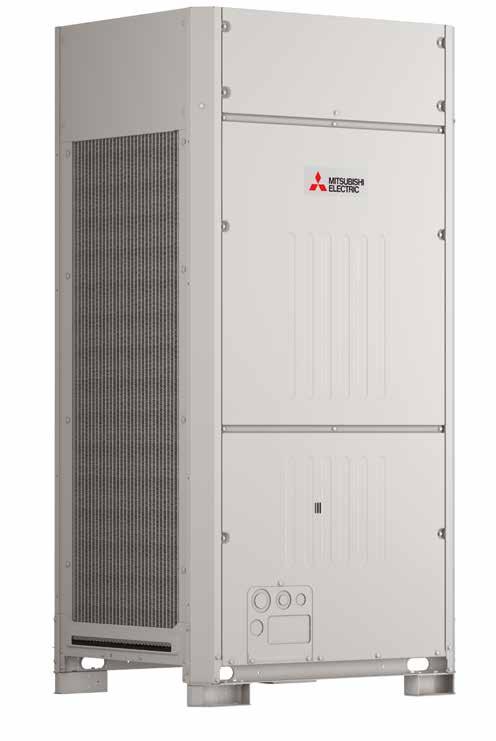
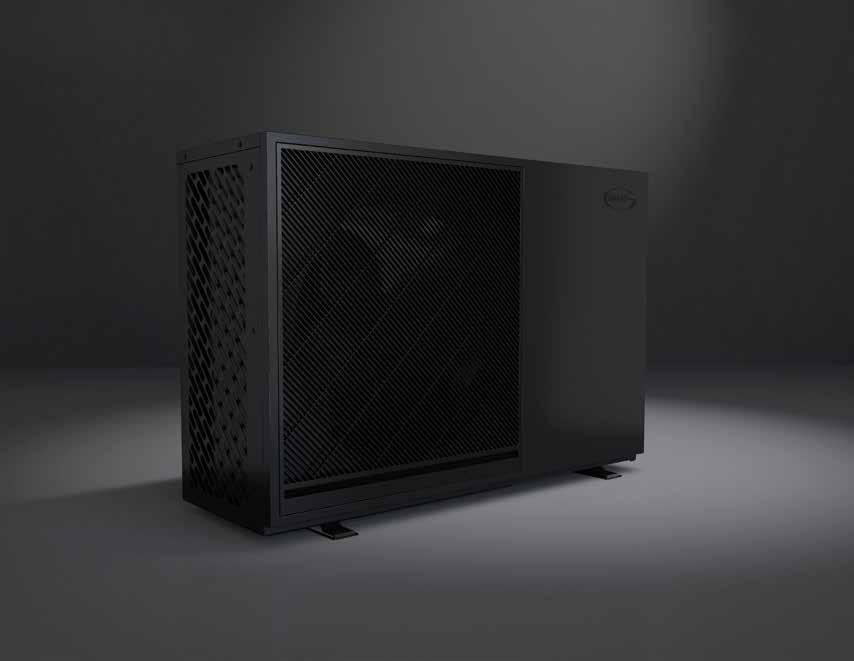
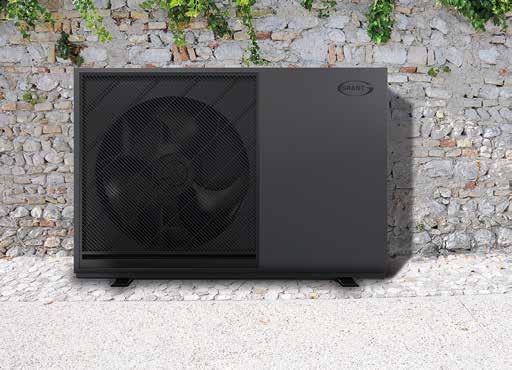
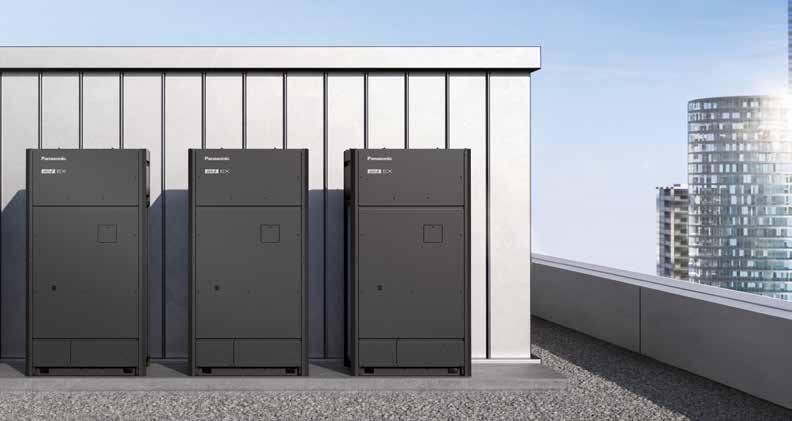
With flexible configurations, advanced control options, and a wide variety of indoor unit styles, the new City Multi R32 VRF YXM range delivers tailored comfort, energy efficiency and system scalability to meet the demands of any project.
Designed with a reduced footprint, the new range maximises design flexibility on space‑constrained sites.
Engineered to support evolving regulations and diverse building requirements, the City Multi R32 VRF YXM range offers a smarter, more sustainable approach to VRF design. Ideal for offices, hotels, education and mixed‑use developments.
Ultra Compact & Modular
Flexible Piping Configurations
Market-Leading Low Noise
Powerful Fans
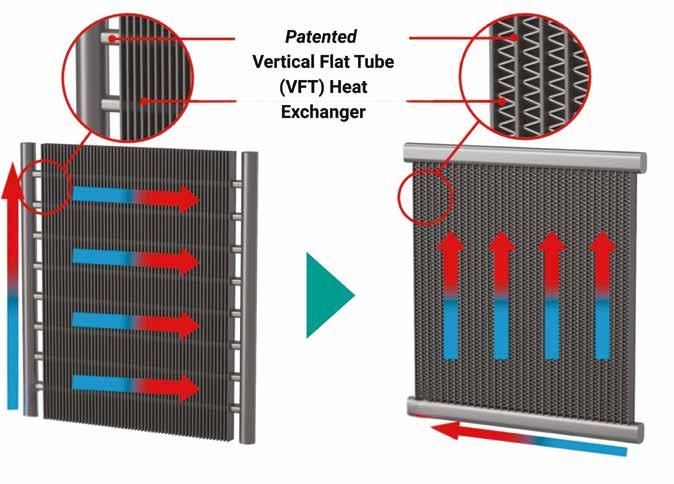
Unique Patented Vertical Flat Tube Heat
editorial
Welcome to this issue of Building Services Engineering, where we explore the initiatives and technical shifts defining the Irish building services and energy sectors.
We lead with the CIBSE Ireland Workshare Exchange, a vital programme bridging the gap between digital design and site delivery by allowing consultants and contractors to swap workplaces. Enhancing this collaborative spirit, we celebrate diversity with a report on the ‘Women in HVAC&R’ event, which honoured leadership and the “Breaking Barriers” mission.
For those navigating rapid technological changes, we introduce CIBSE Ireland’s ‘Bringing Buildings Alive’ podcast, offering tactical briefings on AI and net-zero solutions.
This issue also examines the critical need for data centre resilience amidst geopolitical volatility and provides technical deep dives into BMS hardware alignment and the new ‘One WELL’ certification framework.
Finally, we look at Ireland’s energy transition through the lens of rooftop solar deployment, moving the conversation from national targets to practical installation.
Are you passionate about a particular aspect of the building services sector? We are looking for fresh perspectives and expert insights. If you would like to submit a 500 or 1,000-word article for consideration in a future issue, please get in touch and share your expertise to help shape the industry conversation.
If you have something to say, email me now at robbie@buildingservicesengineering.ie
Robbie Cousins Editor
ONE WELL: A FIRST LOOK AT THE NEW WELL Contents
The IWBI is streamlining healthy building certification with “One WELL,” a unified, digital-first framework featuring a revamped scoring system that is open for public feedback through 01 May 2026.
Published under license by Tower Media Ltd 11 Hunter’s Leap, Newcastle, Co Wicklow. A63 D983 Tel: (01) 661 6448 Email:
Editor: Robbie Cousins
Design: Joanne Birmingham
Advertising: Joe Connolly (086 396 6158), Philip McGaley (087 266 6568)
ALIGNING BMS
Greentherm MD Enda Ruxton explores the evolution of BMS architecture—from hardwired controls to modern protocols—and explains why strategic functional design is vital for achieving true operational efficiency.
Plumb Merchants’ Kevin Sullivan argues that closing the heating efficiency gap requires prioritising technical factors like water pressure and legacy pipework over brand names.
BOILER TALK
Suir Engineering
M&ECA
Liquid Cooling
Careers
NEWS AND PRODUCTS
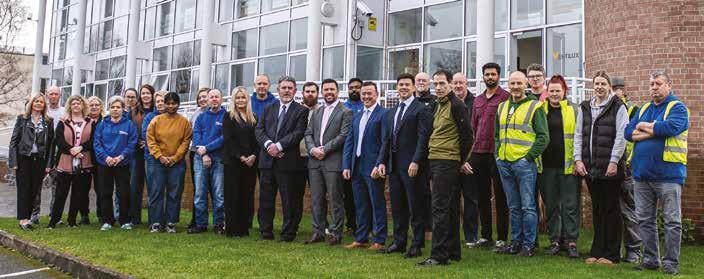
Suir Engineering accelerates European growth with Slovak expansion
Suir Engineering has announced the opening of its new office in the Slovak Republic, marking a further expansion of its European operations.
Located in Košice in eastern Slovakia, the new office currently employs six senior engineers and will support the design and delivery of projects across the energy and renewables sectors throughout Europe. This strategic location provides Suir Engineering with a solid platform for future investment and expansion to meet growing international demand.
Suir Engineering will recruit talent from across European markets to support this growth.
Day-to-day operations will be led by long-serving Suir Engineering veteran Jozef Belusko, Engineering Director of EP&R (Energy, Power & Renewables), who said, “It’s a privilege to lead this significant
New sustainability pathway unlocks green finance for SME builders
The Irish Green Building Council (IGBC) has launched the Home Performance Pathway, a streamlined certification designed to help small- and medium-enterprise (SME) homebuilders transition toward sustainable construction and access lower-cost green development
milestone in Suir Engineering’s European expansion. The country has firmly established itself as a centre of excellence for engineering, energy infrastructure and renewable projects.
“In Košice, we can leverage the Slovak Republic’s strong technical expertise and strategic European position to further drive innovation in digital infrastructure. Opening a new office here will play a key role in Suir Engineering’s continued expansion across Europe, and I’m proud to be part of that journey.”
John Kelly, CEO, Suir Engineering, added, “Establishing a presence in the Slovak Republic enhances our ability to deliver complex engineering solutions at scale for our clients across Europe.
“At Suir Engineering, we are continually building on our strong foundation of excellence. Establishing a presence in a recognised engineering hub such as Slovakia is central to our growth and innovation strategy. As an Irish company with an expanding European footprint, strengthening our connections in Slovakia is a significant milestone.”
Headquartered in Waterford, Ireland,
finance.
SMEs represent over 80% of Ireland’s construction turnover, and this pathway acts as a feeder for the more rigorous Home Performance Index (HPI). It provides a structured framework for smaller projects to meet national targets of 300,000 new homes and a 51% emissions reduction by 2030.
The certification moves beyond basic energy ratings, requiring engineers to demonstrate excellence in:
• Environmental Impact: Carbon emissions, water efficiency,
and with offices in Dublin, London, Stockholm, Copenhagen and Frankfurt, Suir Engineering has grown over 42 years to become one of Europe’s leading providers of high-voltage, electrical & instrumentation, and mechanical engineering services. It operates in three core sectors: life sciences, energy, power and renewables, and data centres.
biodiversity, and waste management.
• Occupant Health: Indoor air quality (IAQ), acoustic performance, and “summer comfort” (overheating mitigation).
Why It Matters
Major lenders, including AIB, Bank of Ireland, and HBFI, have backed the pathway, signalling a shift where development finance is increasingly tied to verified sustainability credentials. IGBC CEO Pat Barry noted that the tool is designed to help SMEs “thrive in a future where all finance is dependent on proof of sustainability.”
With over 3,500 dwellings certified under the full HPI in 2025, the Home Performance Pathway offers a scalable entry point. For the engineering community, it represents a standardised methodology to validate high-quality, climate-resilient designs while securing the financial viability of SME-led projects.
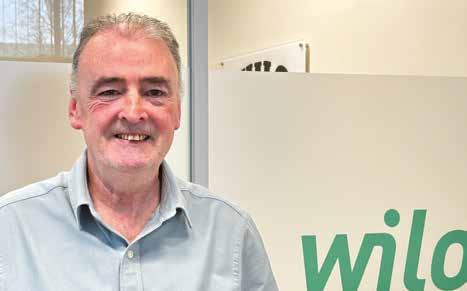
Jozef Belusko, Engineering Director EP&R, Suir Engineering.
John Kelly, CEO, Suir Engineering.
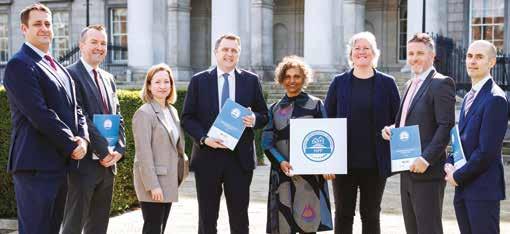
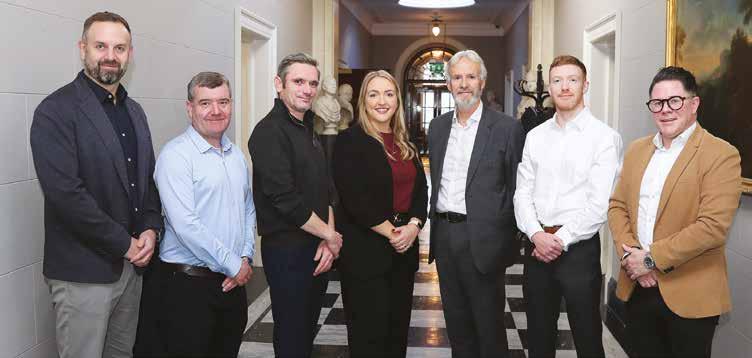
Pictured outside the Custom House for the launch of the Home Performance Pathway certification for SME developers are (L-R): John Delahunty, AIB; Fergus Mangan, Home Building Finance Ireland; Magdalena Hajdukiewicz, Construct Innovate; James Browne TD, Minister for Housing, Local Government & Heritage; Johanna Varghese, Irish Green Building Council; Deirdre Murphy, Housing Agency; Brian Gaffney, Bank of Ireland; and PJ Ryan, Construction Industry Federation
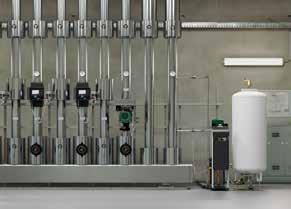
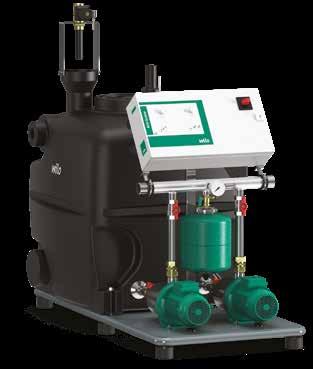
ƒ Degassing systems
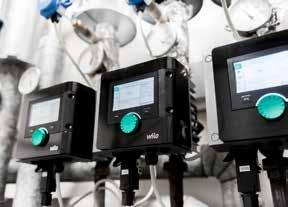
ƒ High efficiency pumping
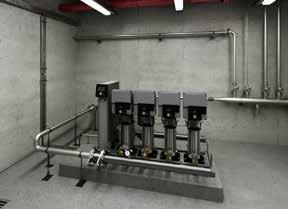
ƒ Pressure boosting and surge protection
ƒ Expansion and pressurisation
ƒ Rainwater harvesting
NEWS AND PRODUCTS
Equinix begins construction on new data centre in Dublin
Digital infrastructure company Equinix Inc has begun construction on a new data centre in Dublin.
DB7x, which will be located in Blanchardstown, will be sited close to two of Equinix’s existing data centres for enhanced connectivity. Equinix anticipates an investment of $78m into the new high-performance data centre facility, plus an additional $14m to support a retail IBX build-out.
Equinix retail IBX data centres provide enterprises with the digital infrastructure needed to digitally transform, manage AI workloads and scale critical services locally while connecting to their customers across Ireland and internationally.
Retail capacity at the data centre is scheduled to be available to enterprises from early 2028 and will directly support foreign direct investment (FDI) in Ireland, adding to the 200 FDI corporations that Equinix already provides digital infrastructure to in Ireland.
The new building, which will be 100% flexible to support the national grid, will require no additional grid power, as it will be constructed on an existing Equinix site and use the power already allocated to that facility.
Speaking about the announcement, Peter Lantry, Managing Director, Equinix, Ireland, said, “This is an exciting development for Equinix’s operations in Ireland, as we celebrate 10 years of being in Ireland, investing in its infrastructure and economy. This announcement strongly supports the government’s recently
Panasonic AQUA-G
EVO: High-Efficiency
R290 Commercial
Heat Pumps
Panasonic has expanded its ECOi-W portfolio with the AQUA-G EVO (60–110H) heat pump series, a purpose-built solution
published Digital and AI Strategy, which outlines a path for keeping Ireland at the forefront of global digital innovation. It also reaffirms our commitment to Ireland and its importance to businesses worldwide.
“This is positive news for the Irish economy. By expanding colocation capacity in Dublin, we will enable domestic and international enterprises to scale, innovate, and connect across Equinix’s global digital infrastructure platform with ease.”
for decarbonising commercial, light industrial, and multi-residential assets.
Leveraging R290 (Propane), the range offers an ultra-low GWP of 0.02, ensuring long-term compliance with evolving F-Gas regulations. The system is engineered for high-temperature applications, producing 75°C leaving-water at -2°C ambient and maintaining 55°C even at -18°C. Critically
for northern climates, capacity loss at -10°C is restricted to 15%, significantly outperforming the industry standard of approximately 38%.
Available in 60, 80, and 110 kW capacities, the AQUA-G EVO supports cascading of up to eight units for a total output of 880 kW.
• Footprint: Optimised for spaceconstrained plant rooms; up to four units can be installed side-by-side with minimal clearance.
• Efficiency: Features inverter-driven compressors and pumps for precise load matching and superior seasonal performance (SEER/SCOP).
This series represents a robust “plugand-play” boiler replacement strategy, integrating seamlessly with Panasonic’s wider ecosystem of fan coils and smart building platforms.
Pictured announcing the construction of a new $92m data centre in Dublin are (l to r): Equinix’s Bruce Owen, President, EMEA; Adaire Fox-Martin, Global CEO; and Peter Lantry, Managing Director, Ireland.
The Aqua-G EVO heat pump system. (Image: Panasonic)
NEWS AND PRODUCTS
C&F Quadrant appoints Damien Power as Technical Manager
C&F Quadrant has announced the appointment of Damien Power as the company’s new Commercial Technical Manager. Damien brings a wealth of industry experience and technical expertise to the role, where he will lead the engineering strategy and oversee the delivery of high-performance energy solutions.
With a proven track record in HVAC technical leadership, Damien’s appointment reinforces C&F Quadrant’s commitment to providing marketleading expertise and innovative services to its clients.
Commenting on his appointment, Damien Power said: “I am incredibly excited to join the team at C&F Quadrant. The company has a stellar reputation for quality and innovation in the industry, and I look forward to the challenge of building on that foundation. My focus will be on driving technical excellence and optimising our technical support systems to enhance the performance and sustainability of our HVAC energy solutions for our commercial customers.”
Emmet Duffy, Managing Director, C&F Quadrant, expressed his enthusiasm for the new appointment. “We are delighted to welcome Damien to the team. His deep understanding of the HVAC technical landscape and his strategic vision make him the perfect fit for this role. I am very much looking forward to working closely with Damien as we continue to evolve our offering and enter our next phase of growth.”
Ireland’s Construction ‘Super Cycle’: 5% growth forecast for 2026
A new report from Goodbody indicates that Ireland’s construction sector has entered a multi-year “super cycle,” with output growth forecasted at 5% for 2026—double the western European average. This expansion is supported by a robust labour market, which saw employment reach 192,000 in Q4 2025, a 9.1% year-on-year increase.
For engineers and project managers, the focus shifts toward closing a 25% per capita infrastructure gap relative to EU peers. The €275bn National Development Plan (NDP) provides a massive capital pipeline, specifically targeting structural bottlenecks in water, transport, and the power grid.
The sector is increasingly driven by hyperscale activity (Amazon, Microsoft, Meta). Key metrics for the engineering community include:
• 76% projected rise in hyperscaler CAPEX by 2027.
• €5bn pipeline, contingent on resolving grid and utility capacity constraints.
• 50,000-unit annual housing target, requiring a sustained step-up in high-density residential delivery.
While AIB’s Construction PMI shows new orders at a four-year high, the “super cycle” will demand significant technical innovation to bypass current capacity limits in energy and water infrastructure.
The Railyard development, Cork.
Ireland’s tallest residential building taking shape
Cork is on track to reclaim the title of having Ireland’s tallest residential building as the main core of the 25-storey Railyard development, which now stands at over 85.5 metres, was completed on 28 March.
Specialist contractor Slipform UK poured over 1,700 cubic metres of concrete and tied over 225 tonnes of reinforcing steel.
Dan Sheehan, Contracts Manager with main contractor PJ Hegarty commented, “We are very pleased to have completed this important phase of the project safely and on schedule, which was the result of months of planning and collaboration across the project team. Cores 2 and 3 shall now commence, which are a more traditional precast concrete design, which we expect to have completed by the end of April.”
The project is located at the transition point between the historical city core and the new dockland development.
The Railyard also includes the renovation of the two listed buildings on site, namely Carey House and the former railway terminus building.
When fully constructed, the Railyard will be the tallest residential building in Ireland, designed by Henry J Lyons with input from specialist tall-building architect Richard Coleman of London-based City Designer.
The scheme is a collaborative partnership between Cork City Council, Clúid and JCD Group.
CIBSE Ireland Workshare Exchange: Bridging the Gap Between Design and Delivery
In the complex world of building services, the distance between a digital twin and a construction site can sometimes feel vast. To bridge this gap, CIBSE Ireland is inviting engineering firms and consultants to participate in the Workshare Exchange Programme—a unique initiative designed to foster cross-industry empathy, technical excellence, and seamless project delivery.
The programme offers a structured exchange where staff members from design consultancies and contracting companies swap workplaces. By stepping out of their usual environments, participants gain a first-hand look at the challenges, workflows, and perspectives of their industry counterparts.
Why your firm should participate
The CIBE Ireland Workshare Exchange is specifically tailored for engineers with two to five years of experience—a pivotal stage where professional habits and technical foundations are formed.
Broadened Perspectives: Consultants see how their designs are implemented on-site, while contractors gain insight into the intricacies of the design and compliance process.
Enhanced Communication: By understanding the “why” behind the other team’s decisions, communication
becomes more efficient, reducing friction on live projects.
Professional Development: Participants return to their home firms with a more holistic understanding of the building services lifecycle, making them more versatile and effective engineers.
Laura McMahon, Chair, CIBSE Ireland, says the Workshare Exchange isn’t just about technical skills; it’s about building the empathy and practical insight that transform a good engineer into a great collaborator.
Laura comments, “By seeing the project through a partner’s eyes, we don’t just solve problems—we prevent them. This programme is essential for developing the next generation of industry leaders who understand that excellence requires both design precision and practical reality.”
How CIBSE Ireland Workshare Exchange works
Re-introduced in 2023 with continued success through last year, the programme is built on a framework of mentorship and practical immersion.
The Structure
Typically, staff are exchanged between a consultancy and a contractor, often working on a common project,
ensuring the experience is relevant and immediately applicable.
Duration
The exchange generally lasts for a few months, providing enough time for deep immersion without long-term disruption to firm operations.
Mentorship
To ensure maximum value, every participant is assigned a mentor at the host company to guide their learning and integration.
Proven Success
Leading industry names, such as Ethos Engineering and Designer Group, have already participated, reaping the benefits of more collaborative, technically-savvy teams.
Join the Exchange
CIBSE Ireland believes that while core engineering knowledge is a shared language, the practical application from both design and installation perspectives is where true innovation happens. CIBSE Ireland invites all forward-thinking firms to sign up to the 2026 programme and invest in the future of their engineers and the efficiency of our industry.
If you are interested in participating in this year’s CIBSE Ireland Workshare Exchange Programme, email cibseirelandchair@gmail.com
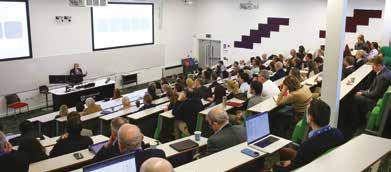
(L to r): Paul Tighe, Ethos and CIBSE Ireland; Damien Hughes and Gerard Doyle, Designer Group; Laura McMahon, Chair, CIBSE Ireland; Pat Lehane, CIBSE Ireland; Bernard McLoughlin, Ethos; and Stephen Weir, Hereworks and CIBSE Ireland.
NEWS AND PRODUCTS
Dancing Queens and Silver Dreams: IEBA Announces ABBAesque for Landmark Silver Jubilee Ball
The Irish Electrical Benevolent Association (IEBA) is hitting a major milestone this year, and they aren’t planning on letting it pass quietly. To celebrate their Silver Jubilee, the organisation has announced that their annual Charity Winter Ball will be a high-energy tribute to 25 years of industry support.
The Ultimate Headliner: ABBAesque
The IEBA has secured a headline act that knows exactly how to get a crowd on its feet. ABBAesque, widely recognised as Ireland’s premier tribute band, will be taking centre stage.
With a career spanning over 21 years and a staggering schedule of more than 150 sell-out shows annually, ABBAesque has earned their reputation as the most successful tribute act in the country. Their performance promises to bring the perfect blend of nostalgia, showmanship, and infectious energy to the Jubilee celebrations.
Celebrating a quarter-century of care
While the music will undoubtedly be a highlight, the heart of the evening remains the IEBA’s mission. For 25 years, the charity has provided a vital safety net for members of the Irish electrical industry and their families during times of hardship.
The Silver Jubilee Winter Ball serves as both a celebration of that legacy and a critical fundraising platform to ensure the IEBA can continue its work for the next 25 years.
Don’t Miss the Party of the Year
Expect a night of sequins, classic hits, and meaningful contributions. Whether you’re
a ‘Dancing Queen’ or just looking to support a fantastic cause, the Silver Jubilee Winter Ball is shaping up to be the industry’s must-attend event.
Ready to say “Thank You for the Music”? Make sure to secure your tickets early—if ABBAesque’s track record is any indication, this is one show that won’t have empty seats for long.
Date: Friday, 20 November 2026
Venue: The Intercontinental Hotel, Dublin 4
For tickets email Áine Higgins at aine.higgins@irisheba.ie
C&F Quadrant unveils new logo
As part of a strategic review of its business model for the future and to align the company and its responsibilities with its commitment to creating a greener environment, C&F Quadrant has unveiled a new logo.
Chris Satell, Commercial Sales Director, C&F Quadrant, commented, “Our new logo better reflects the journey ahead as
C&F Quadrant moves from a fossil-fuel energy-based landscape to decarbonisation, where the environment id at the forefront of our offering.”
He added, “C&F Quadrant is also making key investments this year in many other
areas to reshape the company for the future. We are expanding to include new brands and products, alongside a new training centre, new showrooms, and trade-counter area, with more details to be announced throughout the year.”
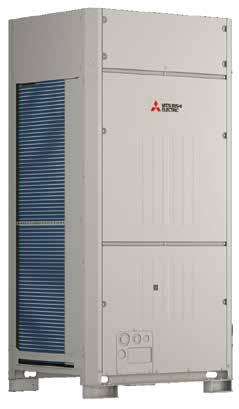
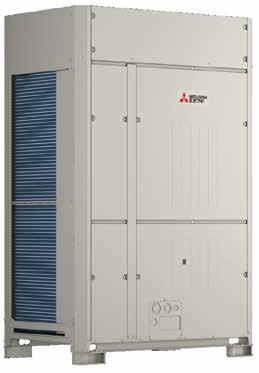
Mitsubishi Electric Launches City Multi R32
YXM VRF System, Redefining
Sustainable Commercial Heating and Cooling
Mitsubishi Electric has introduced its new City Multi R32 YXM VRF air conditioning range, delivering a future ready solution designed to support more sustainable, efficient and flexible heating and cooling in commercial buildings. As the market transitions toward lower GWP refrigerants, the YXM range has been engineered to support BS EN 378 compliance design, combining integrated safety measures with dedicated
accessory options, to give consultants, contractors and building owners a clear pathway to safe, practical system design Available in Heat Pump and Heat Recovery configurations, the City Multi R32 YXM range offers system capacities from 22kW to 112kW, making it suitable for a wide variety of new build and retrofit commercial applications.
A Fully Engineered Approach to EN378 Supported Design
The introduction of R32 (A2L) refrigerant brings specific safety considerations under BS EN 378, including leak detection, alarms, shut off capability and, where appropriate, independent power supply and ventilation considerations.
The system incorporates integrated low level refrigerant leak detection, complete with a dedicated power supply, audible and visual alarms, and intelligent system response. In the event of a detected leak, only the affected indoor unit is isolated, while the remainder of the system continues to operate, maintaining comfort and minimising disruption.
The leak detection system is engineered for exceptional longevity, offering an estimated 30 year operational lifespan, unless the alarm is activated, which then would require replacing, significantly reducing long term maintenance requirements compared with conventional 10 year sensors, significantly reducing the need for replacement over the building’s life cycle and providing long term reassurance for building owners and facilities managers.
Designed for Sustainability and Performance
The City Multi R32 YXM has been completely re engineered to deliver improved performance over previous
Mitsubishi Electric City Multi YXM- Future Proofed by Design: Engineered for Performance, Compact Flexibility and Long Term Assurance
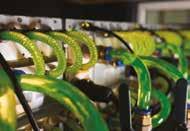
VRF generations. A key contributor to this uplift is Mitsubishi Electric’s patented Vertical Flat Tube (VFT) Heat Exchanger, which enhances refrigerant distribution and seasonal efficiency and reduces internal volume, helping to lower total refrigerant charge compared with R410A systems.
Additional performance enhancements include Next generation defrost technology, Refined compressor operation and extended heating performance down to –25°C.
The system uses lower global warming potential (GWP) R32 refrigerant, and can deliver measurable performance improvements, including reduced running costs and operational carbon, alongside enhanced seasonal efficiency, supporting organisations in meeting evolving environmental standards and decarbonisation targets.
Compact, Flexible and Easy to Specify
Designed with modern commercial buildings in mind, the City Multi R32 YXM features an ultra-compact modular chassis, offering a smaller footprint and helping to simplify installation in spaceconstrained locations.
Mitsubishi Electric’s patented 2-pipe design reduces refrigerant volume, minimises brazing points and saves valuable riser space while also streamlining installation and design.
The system can support up to 50 indoor units from a single outdoor unit, delivering high levels of flexibility and scalability, extended height separation up to 113 metres, supporting taller and more complex buildings and a fivestep low noise mode, enabling project specific acoustic optimisation
Select MS indoor units have been designed for dual compatibility with both the existing R410A YNW VRF and the new R32 YXM range, making the transition effortless for consultants and contractors
These enhancements give designers greater flexibility in meeting project requirements across offices, education facilities, hospitality venues, healthcare environments and mixed-use developments.
A Future Ready VRF Solution
Commenting on the launch, Morgan Treacy, Commercial Product Manager at Mitsubishi Electric Ireland, said, “City
Multi YXM represents a major step forward for our VRF offering. Our focus was not just on introducing an R32 VRF system, but on delivering a modern, low GWP solution with a pathway engineered to support EN 378 compliance and long term performance. With its compact footprint, expanded design flexibility and advanced safety integration, YXM gives consultants, installers and building owners a VRF system they can specify with confidence.”
The City Multi R32 YXM range is now available to specify, with units available for installation from Summer 2026, providing a future-ready VRF solution that brings together performance, sustainability and enhanced safety integration.
For more information visit: https://les.mitsubishielectric.ie/ products/airconditioning/ city-multi-vrf or scan the QR code
The patented Vertical Flat Tube Heat Exchanger delivers even refrigerant distribution and higher seasonal efficiency in a compact, modern coil design. Its reduced internal volume also lowers refrigerant charge while enhancing both heating and cooling performance.
NEWS AND PRODUCTS
European Investment Bank backs milestone project finance deal for Irish solar
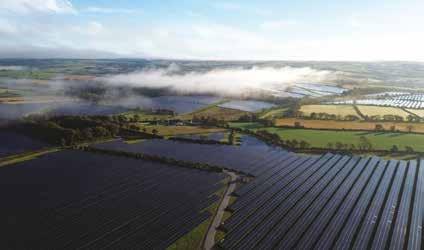
The European Investment Bank (EIB) is providing a €100m loan to Dolmen Solar Ltd, a holding company of Power Capital Renewable Energy, to support the construction of four utilityscale solar projects in counties Clare, Wicklow, Wexford, and Tipperary. Representing a total investment of €260m, these schemes will generate approximately 367 GWh of clean electricity annually, enough to power 79,900 households and prevent 114,000 tonnes of carbon emissions.
This landmark transaction marks one of Ireland’s largest solar investments to date and is the first to be funded on a pure project finance basis.
EIB Vice President Ioannis Tsakiris noted that the partnership strengthens Ireland’s energy security while contributing to the national target of 80% renewable electricity by 2030.
Ioannis Tsakiris commented, “This new partnership with Power Capital builds on more than €1.238bn of EIB clean energy investment in Ireland over the last decade and shows how we can work with experienced Irish developers to deliver REPowerEU on the ground.
“This landmark transaction demonstrates that large-scale solar projects can attract long-term, non-recourse financing when backed by robust support mechanisms and experienced developers.”
Power Capital CEO Justin Brown described the financing as a
ENX to scale operations following acquisition by UKbased Phenna Group
Dublin-based mechanical, electrical, and plumbing (MEP) specialist ENX is set to significantly expand its reach and service capabilities following its acquisition by the Nottingham-based Phenna Group.
major vote of confidence that will create skilled rural jobs and accelerate the transition to a low-carbon power system.
Justin Brown commented, “This financing enables the delivery of four strategically located solar projects that will supply clean, affordable electricity to homes and businesses, create skilled jobs in rural communities, and further strengthen Power Capital’s position as one of Ireland’s leading independent power producers.”
Minister for Climate, Environment and Energy Darragh O’Brien welcomed the investment, highlighting that it signals a shift in perception regarding Ireland’s suitability for solar power.
Minister O’Brien said, “This is a very welcome €260m investment, spread across Clare, Tipperary, Wicklow and Wexford, which will boost clean electricity generation right across the country, reduce our reliance on imported energy and support delivery of our 2030 climate targets.
“The European Investment Bank is playing a key role as a long term partner for Ireland’s energy transition, and today’s announcement is an important milestone in scaling up renewable power on our grid.”
By reducing reliance on imported energy and fostering local contracting opportunities, the project serves as a significant milestone in scaling up the Irish renewable grid through long-term international partnership.
Founded in 2014, ENX has built a reputation as a leader in the Irish residential new-build and retrofit sectors. The firm provides critical technical expertise, including MEP design, comprehensive mechanical, electrical, and plumbing engineering as well as Sustainability services in the form of advanced energy solutions and green building strategies. It also offers compliance services comprising site
inspections, planning support, and regulatory adherence.
Under the new agreement, ENX will join Phenna’s subsidiary, Building Envelope Technologies (BET). This “bolt-on” move is designed to create a powerhouse for Tier One contractors and residential developers in Ireland.
By merging ENX’s early-stage design and sustainability expertise with BET’s established post-construction testing services, the firm can now offer a seamless, end-to-end service lifecycle—from initial blueprints to final certification.
Speaking about the acquisition, Kieran Morley, Director, ENX, commented, “This partnership allows us to significantly expand our service offering. By joining forces with BET and the wider Phenna Group, we are better positioned to support our clients through every phase of the construction process.”
ENX team (l to r): Hamilton Diaz, Operations Manager; Antal Vigh, Site Manager; Kieran Morley, Director; and Michael Lannon, Associate Director.
PANASONIC
Tecnair, a Panasonic Company, launches liquid cooling CDU designed for high-density AI and HPC data centres
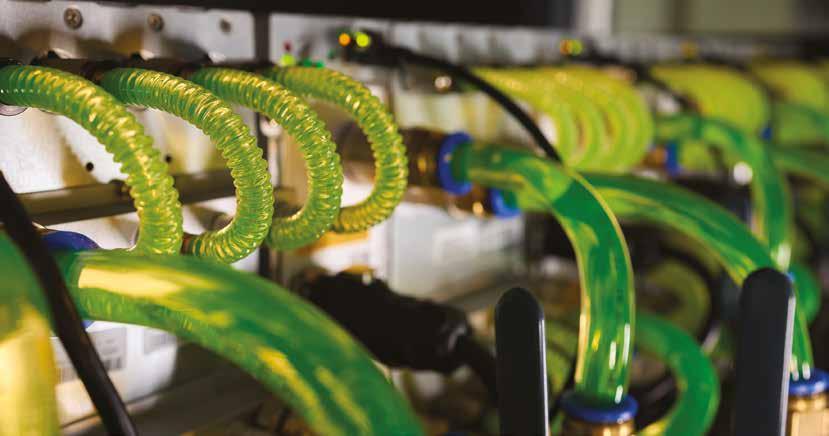
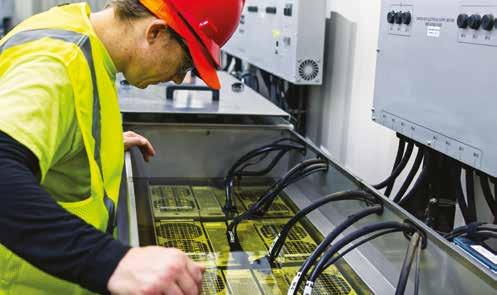
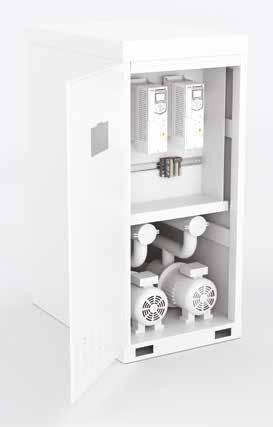
Tecnair, a Panasonic company, introduced its new high performance coolant distribution units (CDUs) at the recent Data Centre World London 2026. These new units are designed to address the rising thermal demands created by AI and high performance computing. As AI and highperformance computing (HPC) densities push traditional air-cooling systems beyond their limits, the new CDU portfolio delivers a robust, efficient, and scalable liquid-cooling platform that integrates seamlessly with existing infrastructure, supporting data centre operators and hyperscalers in their transition to sustainable, high-density operations.
With decades of precision cooling expertise, the CDUs tackle one of the most urgent challenges facing data centre operators today: How to efficiently cool rack densities that now routinely exceed 50 kW and are climbing towards 100 kW and beyond. The CDU range supports both direct-to-chip and immersion cooling architectures, delivering reliable liquid cooling with the monitoring, redundancy, and scalability required for mission-critical 24/7 operations.
Liquid cooling is no longer optional
for high-density environments; it is a strategic enabler. According to the European Data Centre Association (EUDCA), Europe is on track for €100bn in data centre investment by 2030, with power demand increasing by around 15% annually, driven by AI adoption, cloud expansion, and rising compute density.
The launch of the new CDU range reinforces Panasonic’s commitment to equipping data-centre operators, engineers and partners with the advanced thermal-management technologies required to enable the sector’s rapid transition toward highdensity, low-carbon infrastructure.
Designed for efficiency and reliability
The range delivers features designed to protect sensitive IT equipment while maximising energy efficiency. Key features include:
• Industry-leading efficiency: Achieves partial Power Usage Effectiveness (pPUE) as low as 1.02 through advanced free-cooling coils and micro-channel heat exchanger (MCHE) technology, significantly reducing energy consumption versus traditional air cooled designs.
• Flexible, scalable, and highly reliable, the CDU is available in
400 and 800 kW with modular networking to support deployments ranging from edge environments to hyperscale data centres. Designed for continuous 24/7 operation, its fully redundant architecture includes pumps, power supplies, sensors, and a failover system to ensure uninterrupted cooling during maintenance or component failure.
• Intelligent monitoring and diagnostics: Integrated Modbus BMS control with embedded sensors provides real time monitoring of temperature, pressure, flow rate, water level, leak detection, and system alarms, all accessible via a wide, intuitive touchscreen interface for seamless local and remote management.
A complete system approach with seamless integration
Recognising that liquid cooling extends beyond the CDU itself, Panasonic offers an integrated system solution, incorporating a Panasonic free-cooling chiller using R1234ze, a refrigerant with a low GWP of 1,37 (AR6), and fastrestart capability that further enhances suitability for edge environments. These models feature a free cooling function, which generates chilled water using low outdoor temperatures (down to –10°C), delivering high energy efficiency.
Availability and next steps
The CDU range will be available across European markets from Autumn 2026.
For more information on the CDU, visit www.tecnair.com/GO_en/happening/ coolant-distribution-unit-cdu or scan the QR code
For more information on Panasonic’s wide range of solutions, visit https://www.aircon.panasonic.eu/ IE_en/
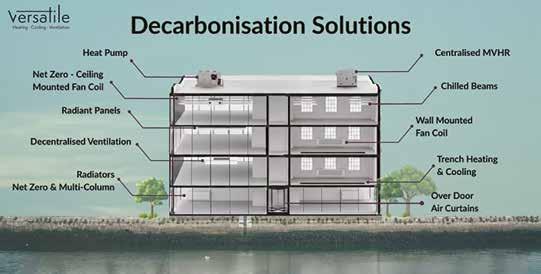
Bridging the Gap: How Versatile Redefining the Decarbonisation Roadmap
Since its establishment in 1984, Versatile has excelled at bridging the gap between high-level engineering expertise and innovative building and environmental control solutions. For over four decades, the family-run business has cultivated a reputation for excellence in HVAC, bathroomware and tiling.
As the global climate crisis demands more than just “efficiency,” Versatile has evolved to a point where it stands as a dedicated “decarbonisation partner,” providing the technical roadmap and highperformance toolkit necessary to solve the complex net-zero puzzle without compromising architectural beauty.
The transition to sustainable building performance is often perceived as a trade-off between green technology and aesthetic integrity.
Versatile’s core philosophy, “designled engineering,” challenges this. By integrating low-carbon technology directly into the building fabric, it ensures that carbon reduction is a seamless part of the design, whether
in a sleek modern office, domestic home or a sensitive historic retrofit.
The Sanus Revolution: Decentralised Precision in Heat Recovery
One of the most critical components of Versatile’s decarbonisation toolkit is the Sanus decentralised, selfregulating heat-recovery unit. In high-occupancy environments, such as classrooms, nurseries, and offices, maintaining indoor air quality (IAQ) is paramount, yet traditional centralised systems can be bulky and difficult to retrofit.
The Sanus unit offers a monobloc, compact solution designed for roomby-room applications. Its genius lies in its flexibility; it can be fully visible or recessed under a false ceiling using a patented mounting frame.
Key features of the Sanus system include:
• Patented Innovation: The unit is built on four distinct patented innovations, including a unique support frame kit and mobile articulated hinges.
• Maintenance Simplicity: All
components, including the filters and the heat exchanger, are accessible from below, simplifying upkeep in busy commercial environments.
• Superior Air Quality: It supports dual filtration on fresh air (up to ePM1 80% [F9]), ensuring a healthy breathing environment.
• Silent Performance: Thanks to double-skinned panels with highdensity mineral wool insulation, the unit operates with the stealth required for educational and professional settings.
• Connectivity: The system integrates easily with Building Management Systems (BMS) via Modbus, BACnet, or Web protocols.
Versatile Net Zero Radiator Range: The Perfect Heat Pump Partner
As buildings move away from fossil fuels, the efficiency of the heat delivery system becomes vital.
Versatile’s Net Zero Radiator Range is specifically engineered to be the “perfect heat pump partner”. Unlike traditional radiators that require high flow temperatures, these units are designed to provide excellent output at ultra-low flow temperatures (35/30), which significantly improves the Coefficient of Performance (COP) of heat pump systems.
The range follows a “go smarter, not bigger” philosophy. Despite their high performance, these radiators are incredibly slim—the XS version is just 85mm deep. The product lineup includes:
• Wall & Ceiling XS: An ultra-slim model that provides both heating and cooling while blending into any décor with various colour options.
• Wall & Ceiling S: A versatile midsized option that maintains high performance on life cycle analysis by reducing raw material usage.
• Net Zero M (Wall & Ceiling): Designed for larger spaces
requiring more robust output without sacrificing the sleek, aesthetic standards of the range. These units aren’t just for winter; they can provide “light/free cooling” at high flow temperatures (16C/18C), further enhancing cooling COP.
Climate
Ceilings: Invisible Comfort, Visible Design
For projects where traditional ductwork or wall-mounted units are unfeasible, Versatile’s Climate Ceilings provide an advanced, refined alternative. These systems operate by circulating temperature-controlled water through concealed pipework. The result is a quiet, draught-
free environment that distributes temperature evenly through radiant panels.
Climate ceilings are particularly well-suited for healthcare, offices, and public buildings because they offer:
• Architectural Seamlessness: They are available in various modular formats, including metal panels, plasterboard constructions, and even “ceiling sails”.
• Multi-Functional Integration: These ceilings can seamlessly house lighting, ventilation, and acoustic elements.
• Energy Efficiency: By utilising radiant heat rather than forced
air, they reduce high-energy consumption while providing superior comfort.
Legacy in Action: From Heritage to High-Tech
Versatile’s impact is perhaps best seen in its “sensitive retrofits”. A standout example is the Google Annex and Treasury Building in Dublin. By integrating ultra-low acoustic fan coils and trench heating, Versatile helped transform this 1940s structure into a beacon of modern sustainability, achieving WELL Platinum, LEED Platinum, and Carbon Zero status. This project proves that the built environment of tomorrow doesn’t always have to be built from scratch. Through technical partnership, CIBSEaccredited educational support, and a robust toolkit of low-carbon technologies, Versatile is more than a supplier—it is a collaborator in the fight against climate change.
To learn more about how Versatile can support your project’s transition to net zero, visit www.versatile.ie or contact their engineering team at sales@ versatile.ie
NEWS AND PRODUCTS
M&ECA AGM 2026: A year of transition and transformation
The Mechanical & Electrical Contractors Association’s 2026 AGM marked a historic milestone with the appointment of Joanne Cluxton as the first female president in the Association’s history. SINEAD CRONIN, Specialist Contracting, Construction Industry Federation, writes that from navigating complex new industrial relations agreements to addressing a cooling domestic market, the M&ECA is continuing to develop European markets to ensure stability.
The Mechanical & Electrical Contractors Association (M&ECA) gathered at Construction House on Thursday, 22 January for its Annual General Meeting (AGM), an event that marked not only a review of a pivotal 2025, but also a historic milestone for
the association. The M&ECA presidency officially passed from Paul Nicholls, Mechanical Engineering & Building Services Contractors’ Association (MEBSCA), to Joanne Cluxton, Electrical Contractors’ Association (ECA). Joanne Cluxton is the first female president in the ECA’s history and is now the first female president of the M&ECA.
She will be supported by Eamon Thornton, who continues in his role as Vice President, ECA, while Mark Hodson was elected President of MEBSCA and Darragh Martin was appointed Vice President.
Industrial relations
Industrial relations continued to dominate the agenda for both ECA and MEBSCA members In 2025. The ECA
successfully concluded pay agreements with the Connect Trade Union, introducing the eleventh year-out-oftime rate from September 2025, with further increments scheduled for early 2026.
The ECA also established a subcommittee to review apprentice pay for first- and second-year apprentices. A joint electrical SEO remains to be established in the industry. Should this be established, it is hoped it may pave the way for future progress on the long awaited mechanical SEO and pay harmonisation.
Market activity
While 2025 was broadly successful for members, domestic activity slowed in Ireland, competitiveness intensified, and labour pressure eased slightly. Ireland’s construction output fell for eight consecutive months, though December’s Purchasing Managers’ Index (PMI) data hinted at stabilisation. Members continually report concerns about pipeline scarcity and the need to pursue export markets.
Many members report that the majority of their order books are made up of projects on mainland Europe, which ensures a more stable and predictable pipeline, and, by extension, business continuity.
The M&ECA looks forward to a productive and progressive year ahead under the leadership of Joanne Cluxton and Mark Hodson, with the support of Denise Tuffy, Director of Specialist Contracting at the Construction Industry Federation, and her team.
Participation, collaboration and collective expertise remain the cornerstone of M&ECA’s strength and success.
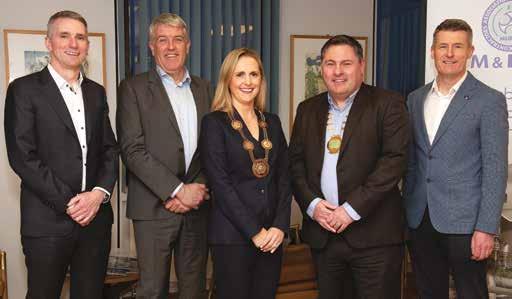
M&ECA officers, (l to r): Paul Nicholls, Outgoing President, M&ECA; Eamonn Thornton, Vice President, ECA; Joanne Cluxton, President, ECA; Mark Hodson, President, MEBSCA; and Darragh Martin, Vice President, MEBSCA.
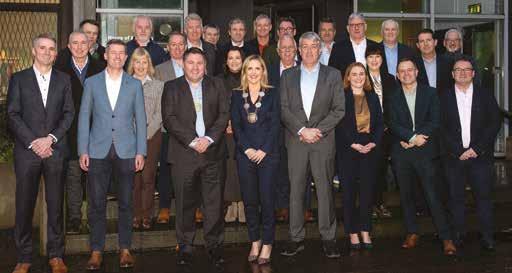
M&ECA AGM attendees outside Construction House, Dublin.
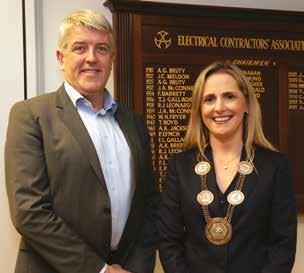
Eamonn Thornton, Vice President, ECA; and Joanne Cluxton, President, ECA.
NEWS AND PRODUCTS
Mitsubishi Electric Ireland and WIBSE Ireland celebrate diversity in HVAC&R
Once again this year, Mitsubishi Electric Ireland, in partnership with CIBSE Ireland and WIBSE, hosted the annual ‘Women in HVAC&R’ event at its Dublin 22 offices.
Titled “Breaking Barriers: Engineering the Next Generation of Leaders”, the gathering took place in a sector where the tide is definitely turning. What began as a pioneering initiative back in 2022 has now evolved into a cornerstone event for Irish building services engineering. While the industry has traditionally been male-dominated, this year’s assembly proved that talent knows no gender, bringing together a diverse crosssection of female consulting engineers, designers, operations experts, and sales specialists.
The event was hosted by Mitsubishi Electric Ireland Marketing Manager Rachel O’Brien with support from Marketing Assistant Megan Sage.
A major highlight was the presentation of the first ‘Breaking Barriers Role Model Award for Outstanding Leadership in
Advancing Women in the Industry’. This prestigious honour was deservedly presented to Susan Cormican, Director, Ethos Engineering, who was celebrated as a trailblazer and a vital role model for aspiring engineers.
Before proceedings got underway, Mitsubishi Electric Europe Ireland Branch President Ciaran Moody was on hand to welcome the high-calibre audience eager to engage with the day’s practical and inspirational programme.
The speaker line-up featured industry leaders and specialists, including Mitsubishi Electric Ireland Business Development Managers April McHale and Siobhan Gilroy, as well as Margaret Rafter, President, Irish Refrigeration Institute and Consultant Sales Engineer, Mitsubishi Electric Ireland, whose long standing involvement has helped shape the event and drive momentum since its earliest days.
They were joined by Lynne Cantwell of the IRFU, leadership strategist Margaret Kennedy, career coach Heather Thompson, and Niamh O’Halloran, Mechanical Engineer, Black & White Engineering and CIBSE/WIBSE committee member. They all shared insights into their personal professional journeys, offering a mix of technical
wisdom and leadership strategy.
Commenting on the day, Rachel O’Brien said, “Events like this highlight just how important it is to create space for women’s voices, champion diversity, and continue building a more inclusive future in HVAC&R. This year’s event was far more than a simple networking opportunity; it was a reaffirmation of a mission started four years ago. By fostering a space where women can connect and learn, we are engineering diversity together.
“The goal remains to encourage and grow the number of women entering, remaining, and thriving within the HVAC&R industry, ensuring the sector benefits from a full spectrum of diverse talent and perspectives,” Rachel concluded.
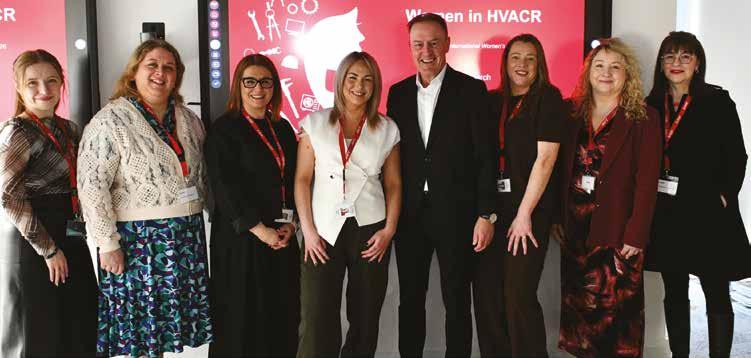
(L to r): Megan Sage, Heather Thompson, April McHale, Siobhan Gilroy, Ciaran Moody, Margaret Rafter, Rachel O’Brien and Margaret Kennedy.
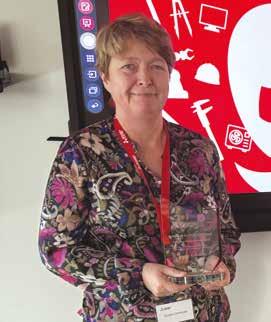
The inaugural Breaking Barriers Role Model award winner, Susan Cormican, Director, Ethos.
NEXT GENERATION
The Grant Aerona R290 GET AHEAD WITH THE
- Designed for the Irish and UK Climate
- Innovative Technology
- Exceptional Performance
- Ultra-Low Noise Levels
- Outputs from 4kW – 16kW
Designing for Performance: A Digital Workflow for Modern Heat Pump Systems
With the transition to low-carbon heating technologies, accurate system design has never been more important. For building services engineers and design teams, the successful integration of heat pump systems depends not only on product performance but also on careful planning, accurate heatloss calculations and clear technical documentation at the design stage.
Recognising the growing demand for detailed technical support, Grant, long established as a leader in Ireland’s home heating sector, has strengthened its support for engineering professionals and the wider industry. By enhancing its Heating Design & Specification Service through the introduction of advanced digital design software, the company can now provide comprehensive heating system designs that can be integrated earlier in the design process.
Using the enhanced digital platform, Grant’s technical specialists carry out in-depth room-by-room heat-loss calculations, detailed sizing for radiators or underfloor heating systems and full pipework circuit layouts. Automated calculation processes improve accuracy and consistency whilst reducing the time required to produce complete system specifications.
For building services engineers coordinating multiple systems across complex projects, the availability of clear and structured design outputs can significantly improve collaboration between design teams and contractors. The digital workflow produces clear layout drawings and annotated schematics provide design teams with a complete heating system specification that can be reviewed and integrated early in the project workflow.
Notably, the enhanced design service also supports regulatory
compliance. Heat-loss calculations are produced in line with recognised industry standards, including S.R. 50 and MCS requirements, helping project teams demonstrate alignment with relevant Building Regulations and additional energy performance targets.
The approach also supports the effective specification of modern heat pump technologies such as the Grant Aerona R290 air-to-water heat pump, which can achieve A+++ ErP ratings and SCOPs of up to 4.88. Whilst the Aerona R290 heat pump is capable of 75°C flow temperature, correct system design will ensure that lower, more efficient flow temperatures can be utilised.
For engineers designing systems across a range of property types, the Aerona R290 range offers flexibility with five models ranging from 4kW to 16kW outputs.
By combining digital efficiency with decades of technical expertise, Grant’s free Heating Design & Specification Service continues to provide practical, real-world support to the Irish construction industry, helping engineers deliver compliant, future-ready homes.
Grant’s Heating Design & Specification Service features advanced digital software for seamless, early-stage integration.
Planning drawings can be sent to heatpump@grant.ie or engineers can complete the Design & Specification Application Form online, attaching property plans, contact details, and preferred heat emitters (radiators, underfloor, or both).
Learn more about the Grant Aerona R290 heat pump and Grant’s innovative product range at grant.ie. Follow Grant on LinkedIn @ GrantEngineeringULC, Facebook @ GrantIRL, Instagram @grant_irl or YouTube @GrantEngineeringIE.
Grant Aerona R290 4kW air-to-water heat pump.
Combat Water Woes with Rainwater Harvesting
The building services industry is being encouraged to combat increasingly common water shortages by adopting rainwater harvesting systems in new builds and commercial developments.
The callout comes from Wilo Ireland after 03 March 2026 was named as Ireland’s first entirely dry day since December (Ireland’s Weather Channel).
Despite this, 2025 was named the second-warmest year on record in Ireland (Met Éireann Annual Climate Statement for 2025), highlighting how extreme weather is quickly becoming the norm. Last year, Uisce Éireann also implemented hosepipe bans in several areas.
With a critical need for decentralised water resilience, Wilo is urging stakeholders across the built environment to proactively integrate rainwater harvesting into building design and operation.
“Rainwater is a resource, not a runoff problem,” says Richard Swinburne,
Managing Director at Wilo Ireland. “By capturing and reusing rainwater, buildings can significantly reduce reliance on mains water, ease pressure on local infrastructure and contribute to longterm water security.
“Current infrastructure relies too heavily on centralised treatment and outdated drainage systems, contributing to storm overflows, water waste and environmental degradation. By comparison, rainwater harvesting reduces demand on mains water for non-potable uses, such as toilet flushing, irrigation and cleaning – regardless of unpredictable rainfall patterns. It also provides stormwater attenuation, easing pressure on combined sewers and alleviating flood risk.”
To encourage adoption, Wilo has developed solutions scalable for every development. Its AF 400 system, designed for large buildings and commercial sites, offers a 400-litre hybrid tank that can be connected to the mains water system, making it ideal for high-occupancy buildings like apartments, student accommodation and offices.
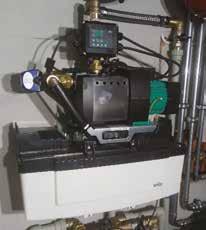
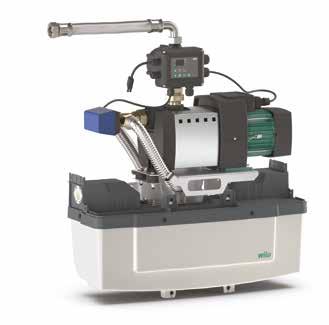
For residential schemes, it also offers compact systems, such as the Wilo-RAIN1, that
integrate with existing plumbing and help meet water efficiency targets.
Richard adds: “The increased investment in Ireland’s water and wastewater infrastructure has been well documented in recent months, though it is crucial that an application as simple yet so beneficial as rainwater harvesting is not overlooked.
“Decision makers have an open goal to prepare for future water stress by embedding rainwater harvesting systems into their developments. It is lowcarbon, low-cost and high-impact – and it’s ready to scale now with solutions already on the market.”
Discover more about Wilo solutions by visiting https://wilo. com/ie or scan the QR code to learn about Wilo’s rainwater harvesting solutions
The Wilo-RainSystem AF400.
The Wilo-RAIN1.
NEWS
‘Bringing
Buildings Alive’: CIBSE Ireland’s new tactical podcast briefing for engineers
In an era of rapid technological shifts, staying ahead of the curve is no longer optional—it’s a professional necessity. “Bringing Buildings Alive,” the flagship podcast series from CIBSE Ireland, has emerged as the essential monthly pulse for the building services industry, offering a “tactical briefing” for those navigating the frontiers of modern engineering.
Released on the first Monday of every month, the series moves beyond identifying current obstacles to spotlighting the solutions of tomorrow. From the integration of AI in design workflows to masterclasses on next-gen heat pump technology, the podcast provides a deep dive into the technical edge of the profession.
Expert-led insights
Listeners can explore critical themes defining the next decade, including:
• The Net-Zero Transition: Navigating sustainability challenges.
• Smart Infrastructure: How AI is teaching buildings to “think.”
• Human-Centric Design: Exploring WELL Building standards and indoor health.
The line-up of podcasts include:
• Stephen Weir (Hereworks) and David Hegarty (Arup) discuss the shift toward “Digital Buildings as a Process”
• Paul Tighe (Ethos Engineering) and Maryrose Lyons (AI Institute) break down the playbook for ethical AI adoption and the rise of autonomous agents
• Tallaght District Heating Success, featuring John O’Shea (Heat
State must become primary apprentice sponsor
As the Action Plan on Apprenticeships 2026–2030 closed on 16 February, the Labour Party demanded a radical shift in how Ireland trains its technical workforce.
Labour’s education spokesperson, Eoghan Kenny TD, warned that current housing and infrastructure targets are at risk unless the state becomes the primary sponsor and employer of apprentices.
Despite rising apprenticeship registrations, Deputy Kenny argued that a reliance on private sector outsourcing is creating a bottleneck for essential public works. To meet targets for social housing, retrofitting, and infrastructure maintenance, Labour asserts that local authorities must rebuild their “in-house” technical teams.
Deputy Kenny stated, “It makes no sense to set ambitious
• A lighting podcast features CIBSE committee member Gavin Edwards of Fagerhult; Elena Scaroni, Secretary General, Lighting Europe; and Dave Murphy, Chair, Lighting Association of Ireland (LAI).
By stepping back from the “daily grind” of project delivery, this series offers engineers the market intelligence needed to design buildings that will remain high-performing through 2075.
How to Listen
Catch up on episodes like Tallaght District Heating Success on Spotify, Apple Podcasts, or Podfollow.
Listen and subscribe https://podfollow. com/cibse/view or scan the QR code
housing targets while councils lack the plumbers, electricians, carpenters, and engineers needed to deliver them.”
The proposed shift would see state agencies move from merely funding training to directly employing and retaining skilled workers. With the aim of ensuring accountability, securing pipelines and delivering value.
and Electricity Lead, Codema) in conversation with James Porter
Powering the Future: Ireland’s LEAP towards a sustainable industrial grid
Ireland’s Large Energy Action Plan (LEAP) introduces a 17-point strategy forcing large energy users to adopt “bring your own energy” solutions, including 80% renewable self-sufficiency and regional “Green Energy Parks.” This shift from moratoriums to managed growth, supported by the PR6 grid investment, presents significant opportunities for M&E consultants in designing integrated, sustainable infrastructure.
Ireland’s energy landscape is undergoing a seismic shift.
Following years of uncertainty and an effective moratorium on new grid connections for large energy users, the Cabinet approved the Large Energy Action Plan (LEAP) in January.
For mechanical and electrical (M&E) engineering consultants, this marks more than just a policy change; it signals a new era of technically
demanding, high-value projects that will redefine the nation’s infrastructure.
The strategy aims to decarbonise and decentralise the Irish grid while securing the next generation of investment in data centres, semiconductors, and pharmaceuticals. With 17 targeted actions to be implemented over the next five years, the government is looking to turn a
period of restriction into a decade of innovation.
From Moratorium to “Glide Paths”
Since late 2021, the Commission for the Regulation of Utilities (CRU) has maintained a tight grip on new large-scale connections due to soaring demand. Data centres alone accounted for 22% of Ireland’s electricity usage in 2024—a staggering
jump from just 5% in 2015. Projections suggest this could hit one-third of national demand by 2030.
To balance this growth with climate targets, the CRU has introduced a rigorous framework. New facilities must now:
• Meet at least 80% of their annual energy demand through new renewable sources.
• Utilise a six-year “glide path”, allowing developers time to bring renewable generation online alongside their facilities.
• Ensure that this energy is additionality-focused, meaning it must come from new sources rather than siphoning off existing contracted renewables.
For M&E consultants, this bring-
your-own-energy requirement transforms the traditional scope of work. They are no longer simply designing a facility to receive power; they are designing integrated ecosystems where onsite generation, battery storage, and complex power purchase agreements (PPAs) are central to the mechanical and electrical architecture.
The Rise of Green Energy Parks
One of the most ambitious elements of LEAP is the shift away from the saturated greater Dublin area, which currently hosts 50% of the country’s data centre capacity. The strategy prioritises regional development and the creation of Green Energy Parks.
These parks involve the co-location of large energy users with renewable generation, such as offshore wind or large-scale solar. By placing the demand next to the supply, the pressure on the national grid is significantly reduced.
The Minister for Enterprise, Peter Burke, has already indicated that two significant parks are entering the planning process.
He said, “Capacity is very limited in the greater Dublin area. We have to set out a framework to direct activity to where there is capacity, without diminishing it. You have to bring your energy to the table.”
For building services engineers, this regional pivot opens up fascinating technical challenges. These include:
• Advanced Cooling Solutions: Implementing liquid cooling or heat-recovery systems to feed local district heating schemes.
• Grid Reinforcement: Designing private-wire networks and complex HV/LV interfaces.
• Sustainability Integration: Balancing the intermittency of renewables with the 24/7 uptime requirements of mission-critical facilities.
Aligning Policy with Infrastructure: The PR6 Factor
The success of LEAP is inextricably linked to the National Development Plan (NDP) and ESB Networks’ PR6 investment plan (2026–2030). As one of the largest electricity network
The Minister for Enterprise, Peter Burke TD.
Paul Nicholls, Group Managing Director, Designer Group and Immediate Past-President, M&ECA.
investment programmes in the state’s history, PR6 is the physical backbone that will allow LEAP to function.
The Mechanical & Electrical Contractors’ Association (M&ECA) has highlighted that this alignment creates a robust pipeline for the industry.
Denise Tuffy, Director of Specialist Services at the Construction Industry Federation, notes that LEAP places M&E expertise at the very heart of industrial policy.
She commented, “LEAP’s focus on locating large energy users near renewable generation and strengthened grid infrastructure places the ESB Networks’ PR6 programme at the centre of industrial policy.
“For the M&ECA, this points to a growing volume of technically demanding projects — data centres, advanced manufacturing, pharmaceuticals and energy parks — where high-spec electrical systems, cooling, heat recovery and energy efficiency solutions are essential.”
Paul Nicholls, Group Managing Director, Designer Group and Immediate Past-President, M&ECA, says that the LEAP is a clear step change in how energy infrastructure will be delivered in Ireland.
He comments, “The move towards locating large energy users alongside renewable generation, supported by strengthened grid infrastructure, is already driving a pipeline of more technically demanding projects. For
the industry, this means a greater focus on integrated solutions, where power, cooling, heat recovery and energy efficiency all need to work together. It’s a shift that will require strong engineering capability, but one that creates a real opportunity to deliver more sustainable, highperformance infrastructure.”
A Roadmap for Economic Growth
However, while Friends of the Earth has voiced concerns regarding the prioritisation of industry over households, the government maintains that LEAP is the only way to accelerate renewable delivery. By forcing large users to fund and build new renewable capacity, the plan effectively subsidises the greening of the entire national grid.
Maurice Mortell, Chairman of Digital Infrastructure Ireland, views the plan as a necessary “roadmap” after four years of lost investment. The move is expected to unlock billions in funding, particularly for AI infrastructure, which requires the exact kind of high-density, highspec engineering that Irish M&E consultants excel at.
The Consultant’s Verdict: A Bright Horizon
For the M&E community, the LEAP is a resounding vote of confidence. It moves the conversation away from “energy consumption” and towards “energy innovation”. We are moving into a phase where the consultant’s
role is not just to provide services to a building, but to act as the primary designers of Ireland’s energy transition.
By integrating renewable generation, pioneering heatreuse technologies and navigating the complexities of the PR6 grid upgrades, M&E consultants will be the ones to turn these 17 actions into a tangible, sustainable reality.
The path forward is clear: It is technically demanding, regionally diverse, and, above all, incredibly promising for the future of Irish engineering.
LEAP opportunity
As Ireland pivots towards a “plan-led” model under the Large Energy Action Plan (LEAP), the focus for building services consultants is shifting from simple heat rejection to complex thermal integration. The mandate for data centres to meet 80% of their demand through new renewables is only half the story; the other half lies in the EU Energy Efficiency Directive (EED) requirements for waste heat recovery. In the “Green Energy Parks” identified in the LEAP, the mechanical and electrical (M&E) challenge is to transform low-grade waste heat into a viable utility. This requires a fundamental rethink of cooling topologies and the thermodynamic bridge between the data hall and district heating networks (DHNs).
The new mandate
The LEAP has effectively moved the boundary of the “building” out to the “park”. For consultants, the scope of work now encompasses the entire energy life cycle – from the point of renewable generation to the point of final thermal reuse.
This presents a unique opportunity for building services engineering in Ireland. The technical complexity of Green Energy Parks provides a platform to showcase innovation in heat recovery, modular cooling, and gridinteractive uninterruptible power supply (UPS) systems. By embracing these requirements, engineers are not just facilitating data; they are engineering the circular energy economy.
Denise Tuffy, Director of Specialist Services at the Construction Industry Federation
Maurice Mortell, Chairman, Digital Infrastructure Ireland.
Heat Every Outdoor Moment
Energy-efficient electric outdoor heating, designed for year-round use.
Instant Heat No Warm-Up Time, Just Immediate Warmth
Zero Maintenance No Fuel Refills, No Servicing, No Consumables
Built for Outdoor Use
Weatherproof IP55 Rating
Commercially Proven Pubs, Restaurants, Hotels, and Public Spaces
Installer-Friendly
Pre-Wired & Backed by a 2-Year Warranty
Outdoor Heating That Pays Off- for You and Your Clients
Patios, terraces, courtyards— these aren’t fair-weather luxuries anymore. Post-pandemic, customers expect venues to make these areas work year-round, not just during the three weeks of British summer. Unfortunately, the weather rarely gets the memo. Venues that don’t plan ahead lose out. This is your chance to help your clients turn “outdoor” into “in profit”. Your secret weapon? Energyefficient outdoor heating.
Capri and Elba - Heating That Makes Money
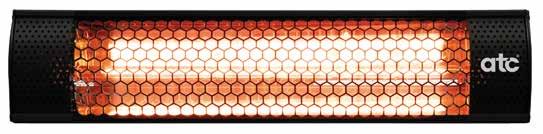
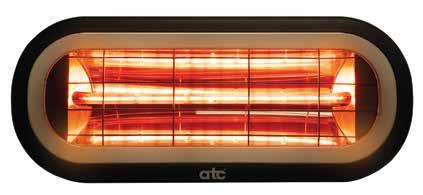
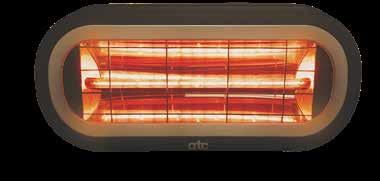
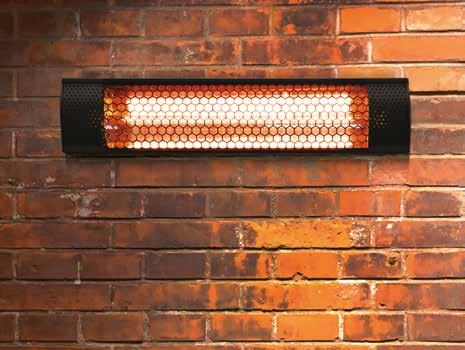
Both ATC’s Capri and Elba electric heaters use shortwave infrared to provide instant heat where it’s needed. No warm-up time, no wasted energy. But these aren’t just heaters. They’re money-makers.
Let’s Do the Maths
A restaurant has 15 outdoor seats. Each seat brings in around €50 per customer.
Extend the season by just 1 month (30 days) with electric heaters. That’s an extra €22,500 (€50 × 15 × 30).
Add 2 more hours to evening service
in summer (that’s 1 extra sitting), and that could mean another €22,500 per month.
Even after factoring in heating costs, that’s still a tidy profit! And with high-quality units like Capri and Elba, you can expect to extend the season beyond a single month. Heating is often seen as a cost centre, but done right, it’s a profit driver.
Save €5.8K a Year by Choosing Electric Gas heaters burn through budgets, but electric delivers on cost and carbon. Take a look:
• Gas patio heater: ~ €7,060/year to run
• Electric heater: ~ €1,235/year
• Annual savings: €5,825
That’s serious savings, especially in hospitality, where margins matter.
Electric also wins on emissions:
• Electric = 1,303kg of CO₂/year
• Gas = 5,802kg of CO₂/year
Pair with our optional HS500 HeatSTAT digital thermostat, and you can run these heaters on a set schedule. Alternatively, our Time Lag switch (EXTLSW16A) allows ondemand activation for a set duration. Both options save energy, which
is important for clients looking to future-proof against rising fuel costs and emissions targets.
Based on heaters operating 7 days per week, 6 hours per day, 42 weeks per year (1,764 operating hours annually).
Figures correct as of September 2025. Electricity cost calculated at €0.35 per kWh, based on a 2.0 kW electric heater.
Gas heaters assumed to burn 1.1 kg of gas per hour, using an 11 kg gas bottle priced at €40.
Big Terrace or Small Balcony? There’s a Heater That Fits.
• Elba = More Power, More Coverage.
• Capri = Compact Install, Great for Smaller Spaces.
Elba’s larger size (190 x 460 x 110mm) and extended heat throw offer roughly 8m² more coverage than Capri (107 x 570 x 115mm), making it ideal for larger terraces and commercial areas. But that extra output can be too much for compact spaces like small balconies. In those cases, the stylish Capri is the smarter spec.
Fast Install, Fewer Callbacks
Both IP55 electric heaters come pre-wired with matching wall brackets, ensuring a fast and hasslefree installation. No additional components required. And with ATC’s 2-year warranty, you’re covered right from the first fix.
Recommend electric, and you’re not just saving clients money—you’re helping them earn it. That’s advice they remember.
Explore the range at www.atc.ie or scan the QR code
One WELL: A first look at the new WELL – Public comment now open through 01 May 2026
The International WELL Building Institute (IWBI) is streamlining the pursuit of healthy spaces with “One WELL,” a comprehensive overhaul of its global WELL certification system. This next-generation framework merges disparate ratings into a single, “evergreen” library featuring simplified terminology and a revamped scoring system, where every strategy—including preconditions—now earns points. AS IWBI moves toward a more intuitive, digital-first journey for practitioners, building professionals and stakeholders are invited to preview the draft and submit feedback during the public comment period, open through 01 May 2026.
The WELL Building Standard (WELL) is a performancebased certification system managed by the International WELL Building Institute (IWBI) that focuses exclusively on enhancing human health and well-being through the built environment. It measures, certifies, and monitors features of buildings—such as air, water, nourishment, light, and comfort— that impact occupant productivity, health, and happiness.
Following a year of in-depth
conversations with its community, IWBI has launched an updated draft of the WELL Building Standard. The updates have been shaped by feedback from its global network of project teams and reviewers. It is now inviting building services engineers, real estate portfolio managers, and broader industry stakeholders to preview the changes and share their feedback through public comment until 01 May 2026. Participate in public comment Community feedback is at the
heart of what informs the evolution of WELL, and during the public comment period, stakeholders have the opportunity to review and provide feedback on:
• Clarified WELL strategy language and structure
• The WELL Standard’s new design, layout and functionality
• The program changes are summarised in this article
The public comment period is an opportunity to provide feedback on the new version of the WELL Standard in its current draft form. As part of the finalisation process, IWBI will address feedback and polish everything before opening it for enrolment.
IWBI reimagined the public comment experience from the ground up — with side-by-side comparisons of WELL v2, a digital changelog that highlights what’s evolved, and an interactive feedback widget that makes it easier than ever to share feedback.
The WELL Standard at a glance
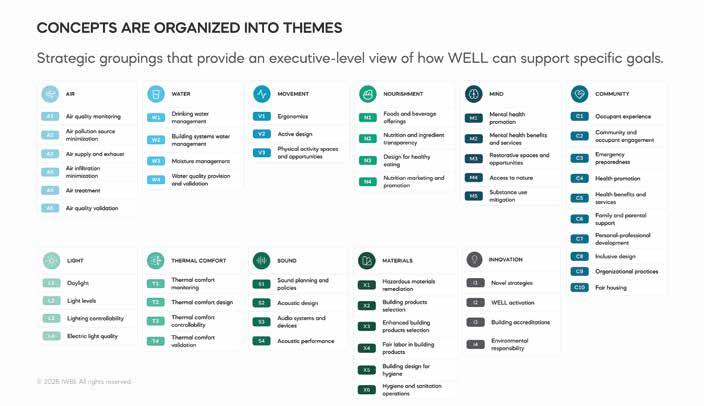
The new version of the WELL Standard incorporates a refreshed layout, updated hierarchy and new terminology. Here are the layers of hierarchy that can be expected to be navigated when exploring the next version of WELL:
• The same 10 WELL Concepts, plus
Mona Duff, Director of EMEA Client Success, IWBI; and Giovanna Jagger, Senior Director of Global Market Development (EMEA), IWBI; at the recent launch of the draft One WELL updated draft of the WELL Building Standard.
Innovation.
• 54 Themes (previously WELL features): Groupings of WELL strategies that provide an intuitive, executive-level view of the categories of interventions within each concept, making it easy to pinpoint relevant strategies.
• 212 Strategies (previously WELL feature parts): Evidencebased health and well-being interventions that, when validated, contribute to WELL achievements. All strategies result in points, even the required preconditions for certification.
IWBI vision for “One WELL”
The power of WELL comes from our comprehensive library of evidencebased interventions. Today, there are more ways than ever for organisations to implement WELL strategies, deliver on business goals and earn recognition through certification and rating achievements.
That’s why our first release in a series of enhancements that are part of One WELL is a preview of the next version of the WELL Standard. Through clearer language, elevated design and unified program rules, IWBI is delivering on its commitment to make the WELL journey more efficient and impactful.
But this is just the beginning. As it works towards opening enrolment, imagine an experience that is more intuitive to navigate, more connected and more rewarding
at every step of the journey. That’s what it has been building, and this preview offers a first look. All of the changes summarised below will be reflected in an updated version of the WELL Program Guidebook, which will be published when IWBI opens enrolment.
Harmonised
Single unified library of strategies with filtering to see how strategies contribute to specific WELL achievements.
• Strategies from WELL Ratings, WELL v2 and select strategies from WELL for residential have been harmonised and compiled in one unified standard.
• The remaining WELL for residential strategies will be incorporated prior to enrolment, and IWBI plans to integrate strategies from the WELL Community Standard over time.
• IWBI also plans to expand filtering options to include additional business goals and priorities, providing a more advanced experience to help clients pinpoint the strategies that matter most.
A new theming and consolidated structure that organises WELL strategies into intuitive groupings, providing a more scannable experience.
First and foremost, “Theming” allows related strategies to be
easily assessed and compared, rather than being listed in different positions throughout the concept. For example, within the Community Concept, strategies related to emergency preparedness were previously designated as C03, C14 and C15. In the new version of WELL, they are all grouped under one theme.
Additionally, consolidating strategies related to the same health intent allows the basic and enhanced pathways to be considered together, rather than listed separately, spanning a “precondition” and an “optimisation.” For example, within the ‘Air’ concept, the thresholds for particulate matter were previously listed in A01.1 and A05.1. In the new WELL version, they are grouped together in strategy A6.1 as three tiers.
Consistent strategy names, requirements, point values and scoring to streamline how projects can make progress towards various WELL achievements.
All strategy names and requirement language are exactly the same across all WELL achievements and benchmarks, including WELL Ratings, WELL Certification and the WELL Score.
To align scoring methodology, all strategies have been assigned points based on the strength of the evidence supporting them. Points are the same across all WELL achievements. Preconditions, which are required for WELL Certification,
now qualify for points across the board. These scoring improvements help ensure that every point earned toward a rating is now a point earned toward certification.
Enrolment
Certification requirements for each concept will be explained with a list of ‘preconditions’ for WELL Certification and the concept point minimums.
The minimum number of points required for WELL Certification levels will be adjusted to reflect that preconditions now have points.
The minimum number of points required for WELL Ratings will be adjusted to reflect changes made to strategy points and the combination of certain requirements (eg, WELL v2 Feature Parts A01.1 and A01.2, which cover indoor and outdoor smoking bans, were combined into a single strategy).
The WELL Score calculation will be updated to reflect that preconditions now have points. Additionally, the 49-point cap for locations that have not achieved preconditions will be removed, enabling better recognition of the incremental achievement of foundational health and well-being strategies.
Increased recognition of achievement within each concept to accelerate impact
Caps that previously limited concept achievements to a maximum of 12 points per concept will be removed, affording more ways to earn the points needed for each level of WELL Certification.
Clarified
Informed by extensive feedback from WELL clients and reviewers, IWBI has restructured and simplified how all WELL strategies are written, making them clearer, more scanable, and easier to implement. These are the same WELL strategies known and trusted - underscored by a rigorous body of research.
As part of IWBI’s clarity edits, it also reviewed feedback from project teams and reviewers about feasibility and impact. This resulted in additional changes that expand the ways to comply, removing criteria to emphasise what’s most important to the health intent and to improve specificity to address instances of
“One WELL is the next evolution of the WELL Standard, representing a unified and integrated vision for people-first places. As we usher in the future of WELL, we welcome the invaluable perspectives of the Irish WELL community. Input from local industry leaders is essential to advancing healthy buildings and positively impacting the well-being of people throughout Ireland.”
Mona Duff, Director of EMEA Client Success, IWBI.
misinterpretation.
The next version of WELL includes more instances where strategies have been updated to be more stringent than a typical addenda. These changes reflect an elevated standard for health leadership, a trend that is not expected to be as frequent in future updates.
Key changes
The changes include:
Simplified language and structure: All strategies
• Utilised more direct and precise strategy language to make it clearer what needs to be done to achieve each strategy.
• Elevated minimum scope and applicability of each strategy, to emphasise critical information about eligibility and implementation.
• Introduced bulleted lists to increase scannability and to clearly distinguish separate requirements.
Expanded pathways to offer more flexibility
For example, WELL v2 Feature Part V08.1 [new code V3.2] includes a new tier inspired by the WELL for Residential program that rewards projects for implementing accessible fitness spaces.
Reduced scopes to address market feasibility
• For example, WELL v2 Feature Part M09.2 [new code M4.2] no longer includes a policy-based requirement for nature access to reduce complexity and emphasise the criteria that are most critical to the health intent.
Clarified language to avoid misinterpretation
• For example, WELL v2 Feature Part N02.1 [new code N2.1] confirms that projects must actively prepare food on-site to be eligible to earn this strategy.
Increased stringency to reflect updated evidence on what constitutes health leadership
Primarily, the types of changes that can be expected to be seen in this category include:
• A revised threshold that is more stringent
• The addition of new requirements
• An adjusted scope that is more expansive
In cases where a strategy reflects additional stringency, clients will have access to an “existing legacy pathway,” allowing them to utilise legacy feature language for a period of three years starting from the date IWBI
opens enrolment. After the legacy pathway expires, clients would need to submit updated documentation demonstrating compliance with the updated requirements or remove the feature from their scorecard.
For example, WELL v2 Feature Part A05.1 Tier 2 [new code A6.1 Tier 3] includes lower thresholds for PM2.5 (5 ug/m3 compared to 10) and PM10 (15 ug/m3 compared to 20), based on updated air quality guidelines from the World Health Organization (WHO).
The evergreen addenda
Just like an evergreen tree, the WELL Standard has always gone through surges of new growth every year as science and best practice evolve.
The evergreen addenda approach prioritises gradual enhancement over restructuring, allowing practitioners to manage all of their projects within a single WELL version that reflects the latest improvements as they are published over time.
For enrolment
• All enrolled locations utilise the same version of the WELL Standard.
• The scorecard automatically updates when IWBI make updates to WELL.
• An updated user experience and digital changelog provide a clear summary of what changed and why.
• For the majority of changes that make WELL more flexible, feasible and easier to understand, application of older iterations of the standard still comply. It is acceptable to submit documentation based on an earlier iteration.
• Then, while IWBI rarely makes WELL more difficult to achieve, when it does, there is a choice whether to incorporate that change. The legacy strategy language can be used for three years after a more stringent requirement is published.
A smarter One WELL
Each of the changes described above - the harmonisation, the clarifications, and the evergreen model - solves a real problem on its own. But together, they create something larger: the foundation for a fundamentally different kind of WELL experience. When every location shares “one standard”, “one scoring system” and “one living version”, IWBI can deliver what was previously impossible:
• Dynamic scorecards that adapt to workflows and stage of development
• Built-in intelligence that shows how progress on one achievement advances others
• Personalised guidance toward the next milestone, informed by where one is today
• Granular permissions so team members see only what’s relevant to their role
• Streamlined file sharing and documentation management across a portfolio
• And so much more.
This same unified infrastructure opens the door to expanding how WELL recognises achievement. With streamlined naming, consistent point values, and a coherent architecture, IWBI can more easily create targeted pathways with different goals and audiences over time — meeting more organisations where they are on their health journey.
These platform and program enhancements are coming in future phases, but the standard changes being previewed now are what make them possible.
Areas under development
One WELL is being developed in phases, starting with a preview of the new version of the WELL Standard and public comment and moving toward open enrolment with continuous enhancements along the way. For the preview and public comment period, the following aspects of WELL are not finalised:
• Enrolment options, processes and pricing
• Verification methods, documentation templates, forms and calculators
• FAQs and Alternative pathways, including AAPs and Crosswalks
• Metric conversion between Imperial and Metric (InternationalSystem of Units)
• Criteria citations and background information for WELL Strategies and Concepts
• Migration from older versions of WELL to the new version
• Support resources, articles and technical tools.
IWBI will continue to provide updates on these developments.
Have your say and be part of the One WELL conversation
Explore the One WELL vision: visit https://standard.wearewell.com/ Join the Well Forum: visit https:// forum.wearewell.com/sign_up
Hibernia Real Estate Group’s 2 Windmill Lane building in Dublin 2, a WELL Health Safety-Rated building.
NEWS AND PRODUCTS
The Nordic Edge: SETU students explore some of Europe’s most innovative energy projects
Students from the BEng (Hons) and MSc in Sustainable Energy Engineering, and Electrical Engineering students at South East Technological University (SETU) Waterford recently went on their annual international study trip, this year to Copenhagen, Denmark, and Sweden.
The trip gave them the opportunity to explore some of Europe’s most innovative energy and infrastructure projects.
The first visit was to Denmark’s largest waste-to-energy plant, where they saw how municipal waste can be converted to thermal energy and used in Copenhagen’s extensive district heating network.
At HOFOR Energy & Water showroom, students learned about Copenhagen’s ambitious sustainability strategy, which has significantly reduced the city’s carbon footprint and positioned it as a global leader in the transition towards carbon neutrality.
The trip also included a train journey across the famous Øresund Bridge to Sweden, where the group visited a hyperscale data centre project currently being delivered by Sisk.
On returning to Copenhagen, the group visited CopenHill, the city’s renowned waste-to-energy facility, which uniquely features a ski slope and café on its roof from where the group could view the HOFOR biomass plant and the city skyline.
The trips would not be possible without the generous support and sponsorship of industry. Many thanks to Laura McMahon and Paul Martin of CIBSE Ireland, David O’Connor of WELTEC
InstallerSHOW 2026: A global milestone for Irish building services
The InstallerSHOW 2026 returns to the NEC Birmingham from 23–25 June, and it is no longer just a regional trade show— it has evolved into a more global looking event.
For Irish building services engineers, 2026 is a pivotal year as the show hosts
Engineering and Pat Corcoran of FPK Engineering Solutions for providing this support.
International study trips provide invaluable educational and cultural experiences for students. SETU is deeply appreciative of the generous support from sponsors, whose contributions help make these opportunities accessible.
Level 8 BEng (Hons) in Sustainable Energy Engineering, Programme Leader: Colm Tynan colm.tynan@setu.ie
Level 9 MSc in in Sustainable Energy Engineering – Programme Leader: Mervin Doyle mervin.doyle@setu.ie
the 14th World Plumbing Conference (WPC) for the first time. Under the theme “Worldwide Problems – Global Solutions”, this co-location provides a unique platform to discuss universal challenges such as water scarcity and sustainable sanitation that mirror Ireland’s own infrastructure goals.
The 2026 event sees a massive expansion in scope, featuring over 1,000 exhibitors across expanded halls. Key highlights will include:
• The CIBSE Theatre: Delivered in partnership with CIBSE, this dedicated space focuses on high-level engineering for low-carbon buildings, heat pump performance, and sustainable cooling.
• InstallerELECTRIC: An expanded zone dedicated to “Electricity 4.0,” covering smart grids, EV infrastructure, and the 2026 amendments to the BS 7671
Wiring Regulations.
• InstallerTRADES & BUILD: New sectors focusing on the holistic “fabric-first” approach, essential for meeting Ireland’s NZEB (Nearly Zero Energy Buildings) standards.
With the Irish construction sector increasingly focused on decarbonisation pathways, the 2026 show offers an unparalleled opportunity to bridge the gap between theoretical design and practical, multi-disciplinary installation.
And, of course, there is plenty of Irish interest. Margaret Rafter, Mitsubishi Electric Consultant Sales Engineer and Institute if Refrigeration President, will be sharing her insights and discussing trends, challenges and opportunities shaping the future of the HVAC&R sector, or you can visit the EVHACS stand where Jeff Aherne will be displaying the world’s first combined heat pump and EV charger.
Reliability and ease of install made Wavin Comfia UFH first choice for a future-proofed Leitrim project
When a homeowner in Co Leitrim decided to optimise the use of the land around their existing property, the construction of a 190m2 domestic garage was the preferred option. Maximising the building’s potential, the 100m2 ground floor space will be used as a garage, with an option to convert to a residential dwelling, while the first floor 90m2 space will become a two-bed apartment, ideal for either holiday lets or accommodating visiting family and friends.
The challenge was to ensure the building was future-proofed for any change of use down the line, and, to this end, the homeowner’s heating and plumbing contractor, Brian O’Reilly, selected Wavin Comfia - a high-specification underfloor heating system that includes pipes, manifolds, mixing units and floor panels, perfectly suited for all kinds of heat sources. Rigorously tested and innovative, it’s designed for quick and easy installation without compromising quality. It’s the perfect solution for buildings that require reliable, high-performance underfloor heating systems that deliver comfort and efficiency no matter the heat source. It is perfectly suited to residential, commercial and industrial projects.
Floor systems include
• System Plates: Plastic sheets with pre-formed grips to hold the pipe
• in position. This system is laid on top of insulation panels before the floor is screeded.
• Staple & Rail: Comprising of onemetre penta rails fixed directly to the rigid insulation using track rail staples. A simple and effective guidance system for ease of installation of the UFH pipe along
with 40mm or 60mm staples, which are also used to fix the UFH pipe.
• Low Build: A low build x flooring solution ideal for retrofit. Channels are pre-grooved with correct spacing to allow the laying of an underfloor system on top of an existing floor.
Brian selected the Comfia UFH Staple & Rail System and used 16mm x 500m and 16mm x 200m pipe coils. A composite manifold was used, which can be sized to the exact number of individual UFH circuits up to a maximum of 12 circuits. Again, this aligns with the project’s futureproof strategy, as the apartment is yet to be completed.
Speaking about the product choice, Brian said, “We wanted a straightforward, effective system that would be quick to install. The system works with a wide choice of insulation panels, depending on the thermal or acoustic properties required of the build. We’re happy with the ease of installation and the access to any technical advice we needed from Wavin’s team.”
Brian’s team is also installing Wavin’s Hep2O Imperial push-fit system for the hot and cold plumbing. Designed for reliability and ease of installation, Hep2O fittings guarantee secure connections first time thanks to their In4sure joint recognition. The system also offers peace of mind thanks to a 50-year guarantee.
To find out more about Wavin Comfia see www.wavin.com/ie
Efficient Heating Solutions: AIC COILMASTER twin condensing boiler with hot water output
Distributed in Ireland by C&F Quadrant, the AIC COILMASTER range represents a significant leap forward in commercial and large-scale residential heating technology. As a high-efficiency, floor-standing condensing combination boiler, the series is engineered to deliver sustainable heating alongside instantaneous domestic hot water (DHW). With outputs spanning 60kW to 120kW, these units provide a robust solution for demanding environments where performance and reliability are non-negotiable.
Advanced Core Technology
The exceptional performance of the COILMASTER is rooted in its stainless steel fire-tube heat exchanger and fully radial pre-mix burner. This combination ensures maximum heat extraction and high thermal efficiency, reaching up to 104% in DHW mode. Furthermore, the system achieves
a high modulation ratio of 10:1 and maintains a NOx Class 6 rating, ensuring outstanding combustion stability while minimising environmental impact.
One of the most distinctive features of the COILMASTER is its integrated stainless steel coil. Unlike traditional systems that require a separate cylinder, the COILMASTER’s design enables immediate hot-water delivery, saving both installation time and valuable plant-room space.
Versatility and Scalability
The range is purpose-built for flexibility. All models are factoryconfigured for natural gas but can be easily converted to propane via an optional kit. For larger facilities requiring higher capacity or redundancy, multiple units can be installed in a cascade configuration. This allows for a dramatically increased total output without sacrificing simple system control or ease of installation.
Given its compact footprint and lightweight casing, the COILMASTER is the ideal choice for refurbishments
Key Features & Benefits
Feature
Stainless steel fire-tube
and new builds where space is limited.
Typical applications include:
• Multi-family residential buildings.
• Hotels, leisure centres, and care homes.
• Small to medium commercial premises.
Benefit
High thermal efficiency and long service heat exchanger life due to superior corrosion resistance.
Built-in stainless
Instantaneous hot water production steel DHW coil without needing a separate cylinder. Fully radial pre-mix burner
Compact dimensions
High modulation ratio and very low NOx emissions.
Fits easily into spaceconstrained plan rooms; perfect for refurbishments. Cascade-ready configuration
Built-in anti-frost protection
Web Server Module
Scalable output and added redundancy for larger installations.
Automatic pump and burner activation to protect the boiler.
Allows for remote monitoring (optional) and management.
For further details, contact Chris Satell, chris@cfquadrant.ie, or visit www.cfquadrant.ie
Driving
down
electrical
harmonics is key to Google’s CDU cooling initiative for AI data centres
Google has defined a new, more rigorous opensource standard for cooling the next generation of AI data centres. CHRISTIAN LEAL, Global Sales Manager ABB, explains why ultra-low harmonic (ULH) drives are an essential component for any manufacturer with ambitions to pick up Google’s Project Deschutes coolant distribution unit (CDU) baton.
The AI race is heating up. As providers like OpenAI and Anthropic compete to offer ever more sophisticated models and tools, the companies providing the infrastructure – like Google, Microsoft, and Meta – must keep increasing the computing power behind them. That means building more data centres and stacking them with increasingly high-performance processors.
Cooling has always been a priority for data centres. The electronics involved in computing consume a lot of power and therefore give off a lot of heat. Rack a lot of processors together in a server, line up lots of those servers together, and the effect is a bit like lining up rows of ovens and turning them all up to maximum heat at once.
If that heat is allowed to build up inside a data centre, it quickly reaches a point where it can damage the delicate electronics, leading to a shutdown. So data centres need advanced, powerful cooling systems to remove heat as fast as it can build up, allowing the servers to keep working without interruption.
If the servers in a standard data centre are ovens, the ones in a modern AI data centre are rocket engines. The heat buildup on the processors that power AI models is far greater than anything earlier generations of data centres had to cope with. Data centre cooling systems need to take a corresponding leap forward; otherwise, progress will stall, and the forerunners of the AI race could stumble.
Project Deschutes
In 2025, Google announced a leap forward. Codenamed Project Deschutes, it’s a revolutionary solution in several ways. And ABB’s ULH variable speed drives (VSDs) make it possible.
Project Deschutes is a design for a new kind of data centre cooling distribution unit (CDU). It’s revolutionary because it’s open. Open, in that the CDU itself is open-frame. AI data centres are the Formula One of the data centre world, and Google designed Project Deschutes like a Formula One car: Every component is accessible, making everything quick and easy to inspect, maintain, or replace. No one has to unscrew any panels or squeeze inside cramped server cabinets to hunt down faults, which– at the scale of Google’s data centres and the performance the company aspires to – would be unacceptably inefficient. And open, too, in that the blueprint for Project Deschutes is public, not proprietary. Google released the specification via the OCP in late 2025, allowing any manufacturer to build and sell Project Deschutes CDUs. This is just as much of an innovation as the technology itself.
Project Deschutes is Google’s fifth-generation liquid-cooled data centre CDU design. The previous four generations were closely guarded secrets. The fifth generation is Google’s gift to the AI industry. A gift, and a challenge to the rest of the industry to catch up to the leader, propelling the whole sector forward.
High performance demands high standard specifications
Google has been using liquid cooling in its data centres since 2018 as utilising water or dielectric fluid to remove heat is up to 3,500 times more effective than air. Microsoft and Meta had both adopted liquid-cooled servers by 2024. Project Deschutes continues the liquid cooling trend.
Like a giant, super-efficient heart, a Deschutes CDU keeps liquid coolant constantly pumping around the server. Each CDU can cool a twomegawatt (MW) AI server. That’s more than powerful enough for any server currently in existence: Less than a year ago, Google, Meta, and Microsoft announced that they were working together to design the first 1MW server.
A few data centre generations ago, 2MW of cooling would have been enough for an entire neighbourhood of servers.
So the specification Google has provided for these CDUs is, unsurprisingly, stringent.
Every component of a Deschutes CDU must be able to operate in constant 50°C heat without power derating, for example. The system must filter any particles bigger than 0.2 microns out of the coolant as it circulates, to protect the delicate chips.
And the requirements for the variable speed drives (VSDs) that control the coolant pumps are just as rigorous. To meet the Deschutes standard, CDUs must incorporate VSDs with advanced telemetry and a total harmonic current distortion (THDi) under 5%.
ABB’s ultra-low harmonic VSDs weren’t developed specifically for Deschutes, or even specifically
for data centres, but they were designed to be high-performing. And, so it happens that these drives already perfectly meet Google’s specifications.
The reliable beating heart of the solution
By combining predictive maintenance with high-performance components, Google is aiming for 99.999% data centre uptime.
To support this level of predictive maintenance, the VSD in a Deschutes CDU must report highly detailed data on motor torque, DC power, and insulated gate bipolar transistor (IGBT) temperature to the programmable logic controller.
ABB minimising harmonic distortion
Standard drives draw current in a non-linear manner rather than sinusoidally, resulting in a distorted current waveform known as harmonics. Harmonics are undesirable in all sorts of applications – from ventilation to industrial processes –because they lead equipment such as motors, transformers and cabling to run hotter and less efficiently.
In data centres, it’s even more important to avoid harmonics because they can interrupt the servers’ power supply.
That’s why the acceptable THDi of a drive in a Deschutes CDU is so minimal, which makes ABB’s ULH drives the ideal solution. They are designed to draw current smoothly, generating only a negligible electrical noise.
Boyd, Vertiv, Stulz, major players in the high-performance data centre cooling market, now have the specification they need to start producing CDUs to the standard Google intends the AI industry to
Christian Leal, Global Sales Manager, Abb.
embrace. It is crystal clear to me from the specification that the easiest way to guarantee the stability and reliability required of these nextgeneration CDUs is to integrate into those ABB ULH drives for the pump control.
As the AI race continues to accelerate, Google is undoubtedly already developing the nextgeneration successor to Project Deschutes. Just as ABB’s drives were ready and waiting to meet the Deschutes specification, ABB will be ready for whatever comes next.
For more information on ABB ULH drives: visit www.abb.com
New Professional Development Programme for Engineers
Emergency lighting is often approached as a compliance exercise - something that needs to be ticked off as part of the overall design. But on many Irish projects today, it has become a much more important decision, with real implications for how buildings perform over time.
As projects grow more complex and expectations around safety, resilience and long-term performance continue to increase, emergency lighting can no longer be treated as a secondary consideration. The choice of system, how it integrates with the wider electrical infrastructure, and how it will be tested and maintained all play a role in determining not just compliance, but how well the system actually works in practice.
Ventilux has been responding to this shift by expanding its professional development activity, including a recent online seminar focused on system selection. The session forms part of a wider programme designed to support building services engineers, consultants and specifiers across Ireland and the UK in navigating the practical challenges that come with emergency lighting design.
Compliance, of course, remains central. While the fundamentals are well understood, the way standards are interpreted and applied can vary
from project to project. In Ireland, this means working through the requirements of IS 3217 alongside BS 5266, while also considering BCAR obligations and certification responsibilities. Getting clarity on areas such as illuminance levels, escape route design, duration and signage is essential, particularly as expectations around documentation and accountability continue to grow.
Testing and maintenance are also becoming much more of a part of the early conversation. Traditionally, something left until after handover, they are now influencing decisions much earlier in the design process. For building operators, the choice between manual testing, self-test systems or fully automated monitoring has a direct impact on maintenance workload and compliance risk. For engineers, these are no longer secondary considerations - especially on larger residential schemes, data centres and pharmaceutical projects where access, scale and operational continuity all come into play.
On more complex developments, such as healthcare, infrastructure and life sciences projects, central battery systems and static inverters bring additional layers of technical detail. Load sizing, inrush current, cabling strategies and fault management all need to be carefully considered. At the same time, practical constraints - such as limited plant space or working within existing buildings - often shape what is realistically achievable on Irish sites, reinforcing the importance of early coordination across disciplines.
There is also a clear move towards greater visibility and control. Monitoring technologies, including DALI-based and centrally monitored systems, are becoming more common, particularly on commercial and industrial projects. These systems help reduce the need for manual testing and make it easier for operators to demonstrate compliance, which is becoming increasingly important.
The expansion of Ventilux’s professional development
The Ventilux team.
on making informed decisions early, understanding how systems will be used in practice, and thinking beyond handover. By focusing on the realworld challenges engineers face, initiatives like this programme aim to make those decisions a little clearer and more manageable.
Find out more and register for the remaining sessions:
17/04/2026 – Emergency Lighting Standards
08/05/2026 – Testing Systems
22/05/2026 – CBS Part 1
05/06/2026 – CBS Part 2
Engineering, compliance and dependable performance.
In 2026, Ventilux celebrates 40 Years of innovation, technical excellence and a people-first culture. From a family-led business to an internationally recognised emergency lighting manufacturer, our team brings decades of in-house expertise across design, engineering and technical support..
Our long-standing presence in the market reflects a commitment to quality, consistency and technical expertise.
Suitable for Every Environment
Ventilux luminaires are ideal for:
Offices & public buildings
Retail & supermarkets
Healthcare & education
Industrial & warehousing
Data centres
Residential & mixed-use
High-footfall & transport spaces
Where safety is critical, Ventilux delivers!
Engineered for Compliance
Clearly illuminated escape routes
Reliable performance in demanding environments
Long-life operation with low maintenance
Clean, professional installation
Full in-house design support from concept to completion
Responsibly Manufactured
ISO 14001 certified
Environmentally responsible operations
Ongoing investment in sustainable manufacturing
Emergency lighting you can depend on - backed by standards that matter. Visit Ventilux.com to discover how we’re shaping the future of emergency lighting
Delivering solar where life happens
Beyond national targets and policy documents, the true test of Ireland’s energy transition lies on the roofs of our homes, farms, and businesses. SEÁN
SHERLOCK, Director of Policy & Regulation, Solar Ireland, explores how the building services sector holds the key to “solar where life happens”—and why designing for solar-readiness is now a fundamental responsibility for the industry.
When solar energy is discussed in Ireland, the conversation often centres on national targets or large infrastructure projects. These milestones matter. They show progress and signal ambition. But the real test of Ireland’s solar transition will be much closer to home.
It will be seen on the roofs of houses, farm buildings, schools and small businesses across the country. It will be reflected in lower electricity bills and greater control over energy costs. Most importantly, it will be measured by whether the benefits of solar reach people in their everyday lives.
“The energy transition will only succeed if people feel its impact in
their homes, farms and businesses.”
For the construction and building services sector, this creates both an opportunity and a responsibility. The professionals who design, build, and retrofit Ireland’s buildings will play a central role in determining how quickly and how fairly solar energy reaches the places where people actually live and work.
Solar should not remain something that exists mainly in policy documents or national infrastructure plans. It should be delivered where life happens.
Rooftop solar at scale
Ireland has already made significant progress in deploying rooftop solar. According to the latest figures from
the ESB, more than 170,000 rooftops across the country now generate electricity, including homes, farms, schools and commercial premises.
This progress demonstrates what can be achieved when policy frameworks, industry capability and public engagement move in the same direction. Reaching the next stage of deployment will require continued attention to three practical areas: ‘Access’, ‘Standards’, and ‘Delivery’.
Access remains fundamental. Support schemes have enabled many households and small businesses to invest in solar for the first time. Maintaining stable and predictable frameworks will remain important if rooftop solar is to continue expanding across society.
Standards and quality assurance are equally important. As installations increase, maintaining strong technical standards protects consumers and ensures systems perform reliably over their lifetime. Skilled installers, clear certification pathways and consistent technical guidance are essential.
Delivery capacity must keep pace with demand. Engineers, electricians, installers and building professionals are the people who translate policy ambition into functioning systems on real buildings.
Seán Sherlock, Director of Policy & Regulation, Solar Ireland.
A 1.6MWp 2,869-panel rooftop at Glenpatrick Water in Clonmel (Image courtesy of Activ8 Solar Energy).
Designing buildings with solar in mind
One of the simplest ways to accelerate solar deployment is to ensure buildings are designed with solar in mind from the outset.
When solar is considered during the design phase, installation becomes easier and more affordable. Roof orientation, structural loading, electrical capacity and space for inverters or batteries can all be incorporated with relatively minor adjustments when addressed early.
For building services engineers, this means thinking about solar as part of the wider building energy system. Integrating rooftop solar alongside heat pumps, EV charging infrastructure, and smart energy management systems can create buildings that reduce operating costs while improving energy performance.
Designing buildings that are solarready also improves affordability. When the basic infrastructure is already in place, households and businesses can install solar later at a lower cost. This helps ensure the technology remains accessible to more people over time.
Unlocking the potential of commercial and agricultural rooftops
Ireland also has considerable untapped potential across commercial and agricultural buildings. Warehouses, factories, retail centres and farm buildings often have large roof areas and significant daytime electricity demand. These conditions make them well-suited for solar generation.
For many businesses and farms, electricity costs represent a major operational expense. On-site solar generation can provide greater price stability while also strengthening the wider electricity system. Producing electricity closer to where it is consumed reduces network pressure and improves efficiency.
Unlocking this opportunity requires solutions that work for SMEs and agricultural businesses. Financing models, simplified connection processes, and clear technical standards can help lower barriers to deployment.
Solar should not become something that only large corporations can access. It should remain a practical option for the
wider economy.
Solar and the cost of living Energy affordability is one of the defining policy challenges of our time. Solar has an important role to play in addressing that challenge, but the way it is delivered matters.
While the long-term benefits are clear, the upfront cost of installation can still be a barrier for some households. Addressing this challenge will require a range of policy approaches rather than relying solely on increased capital grants.
Community energy models, shared rooftop installations, and innovative financing structures can allow households to benefit from solar without needing to own the system directly.
Solar can also play an important role within broader retrofit programmes. When combined with insulation, heat pumps and smart energy management, solar can contribute to meaningful reductions in household energy costs. For lowerincome households in particular, combining solar with energy efficiency upgrades can help reduce bills while improving comfort and resilience.
Energy security through distributed generation
Rooftop solar also contributes to Ireland’s energy security. Producing electricity closer to where it is consumed reduces reliance on imported fossil fuels and increases resilience within the electricity system.
When combined with battery storage and flexible demand, rooftop solar can support a more responsive and efficient energy network.
For the construction and building services sector, this presents an opportunity to design buildings that participate actively in the energy system rather than simply consuming electricity.
Practical actions for the construction sector
Delivering solar where life happens will depend on collaboration across construction, engineering and energy sectors. Three practical actions can help accelerate progress.
• Design buildings that are ready for solar: Ensure roof structures, electrical systems and plant space
allow for future solar and battery installation.
• Maintain strong installation standards: High-quality design, installation and certification will protect consumers and support confidence in solar technologies.
• Integrate solar with building energy systems: Combining solar with heat pumps, EV charging, and energy management systems can improve efficiency and reduce energy costs.
Solar Ireland’s 2026 Annual Conference
Ireland’s clean energy transition must work for everyone. If solar is to fulfil its potential, it must be accessible across the full spectrum of society, including urban homes, apartment buildings, farms and small businesses across rural Ireland.
“Solar already provides real benefits for many households and businesses. The next challenge is ensuring those benefits reach many more people in the years ahead.”
These issues will form a central part of Solar Ireland’s 2026 Annual Conference, Energising Life –Decarbonising How We Live. The conference will examine how rooftop solar can scale across homes, farms and SMEs while helping address both energy affordability and energy security.
The conversation about solar is not only about generation capacity. It is about delivering practical solutions that reduce energy costs, strengthen resilience and bring the benefits of clean energy into the places where people live and work every day.
Solar Ireland 2026 Annual Conference – RDS Dublin
Thursday, 18 June 2026
– Energising Life – Decarbonising How We
Live
The Solar Ireland 2026 Annual Conference, with the theme “Energising Life – Decarbonising How We Live“, will explore how rooftop solar can scale across homes, farms and SMEs and how policy design can ensure solar helps reduce energy costs while strengthening Ireland’s energy security.
To learn more and secure your place, visit www.solarirelandconference.ie
Wavin Sewer’s compliance and lasting guarantees make them top choice at Riverwood
Munster Construction is currently on site on Riverwood, a new housing development in Thurles, Co Tipperary. The development consists of 127 homes and is a mix of duplexes, two-, three- and fourbedroom homes.
Site Manager Peadar O’Toole worked with Wavin Technical Representative Patrick Corrigan to select Wavin’s Sewer range on the development. Products used include WAJ’s, Wavin Tegra 600 and Wavin Sewer.
Speaking about his choice, Peadar said, “I decided early on in the project to use the Wavin Sewer range, and, on consultation with our Wavin representative, we made our selection and then worked with
Uisce Éireann’s engineers for approval. We’ve been happy with the products themselves, which we knew would be Uisce Éireann-compliant, and the ease of installation.
“Wavin has been on hand with any technical help we’ve needed, and, overall, the whole process has been very straightforward.”
Taking a closer look at the products used shows how efficiency on site, ease of installation and peace of mind that comes from product reliability and quality are key influencing factors:
Newly Launched - Tegra 600 Wavin has built on 40 years of inspection-chamber expertise with an enhanced Tegra 600 range. Certified to EN13598-2 and compliant with Irish Building Regulations Part H and Uisce Éireann requirements, the updated system offers a specification ready, long lasting solution for wastewater projects.
The range now includes seven flow profiles and 27 base variants, supporting 110mm to 315mm connections to give installers greater flexibility across varied site conditions. Key upgrades include a patented ball socket design offering 10° movement in all directions, improving tolerance for on-site misalignment and a chamfered, easy push fit shaft socket that reduces installation force and speeds up assembly. With a 100 year design life,
the enhanced Tegra 600 delivers a durable, contractor friendly option for modern wastewater networks.
The number one Access Junction
Wavin’s Access Junction (WAJ) has been Irish contractors no-1 choice for the past 45 years. Independently certified, it’s available in 10 flow profiles and complete with Wafix seals, a triple-layer captive seal, so you know that when a pipe is in, it’s in. The socket profile allows a high angle of deflection so there is more connection flexibility. There are also extras such as directional flow arrows to reduce the risk of installation errors.
Wavin Sewer
Wavin’s PVC-U below-ground drainage system offers a comprehensive range in 110mm, 160mm, 244mm, 315mm, 400mm and 500mm sizes for gravity drainage and sewer installations. Fittings with a green seal feature RootSeal technology, which harmlessly repels tree roots to help prevent damage to the pipe system. Wavin Sewer also offers SN4 or SN8 pipe options and seamless integration with the Wavin Inspection Chamber ranges.
To speak to the Wavin team about your project needs, contact: projects.ie@wavin.com
Conquer the Energy Unknown with state-of-the-art usage monitoring. Energy wastage giving your business nightmares?
Future-Proof Heat Pump Solutions for Low-Energy Homes
Modern low-energy and airtight homes have much lower heating demands, but expectations around comfort, hot water delivery, and ventilation remain high. For installers and contractors, the challenge is choosing systems that operate efficiently at low loads while remaining reliable, serviceable, and properly supported.
This is where NIBE heat pumps, supplied and supported in Ireland by Unipipe for over 25 years, continue to deliver on site.
Proven Performance That Lasts Across Ireland, thousands of NIBE systems supplied by Unipipe have been operating reliably for more than two decades. In a market where some lower-cost or lesser-known heat pump brands have entered and exited quickly, long-term availability of parts, backup, and technical support matters.
For installers, that consistency reduces risk, both at handover and years later.
Why Installers Choose NIBE
• Long-term spare parts availability
• Stable supply partner with local technical backup
• Proven performance across apartments and housing schemes
• Factory pre-plumbed and pre-wired
units for faster installation
• Free NIBE installation training and ongoing technical support
• Systems installers can confidently stand over
Efficiency Where It Matters Most With one of the widest ranges of heat pump technologies available in Ireland, NIBE offers installers the flexibility to specify the right system for each project, rather than forcing one solution to fit all.
NIBE’s range covers the most common site applications:
• Ground Source – The NIBE S1256 delivers SCOP values above 5.5 (EN14825) and can be used with horizontal loops, boreholes, or underwater collectors.
• Air-to-Water – The new NIBE S2125 air source range delivers improved efficiency, lower sound levels and enhanced cold-climate performance using R290 refrigerant.
• Exhaust Air – The NIBE S735 combines heating, hot water, ventilation and cooling in a single compact unit, ideal for apartments and low-load homes.
Designed for the Future
All new NIBE models now use R290 refrigerant (GWP 3), helping installers
and clients stay ahead of EU F-gas requirements and reducing future compliance risk.
Comfort, Control and Support
NIBE heat pumps carry Quiet Mark certification, making them suitable for modern airtight homes. Controls via myUplink allow remote monitoring and optimisation.
Unipipe backs every system with:
• Installer training at its Bray training centre
• Pre- and post-sales technical support
• SEAI grant guidance
• A nationwide service network
Do It Once. Do It Right.
For installers working on modern housing, from low-energy builds to Passive House projects, choosing the right heat pump is about reliability, ease of installation, and long-term support. With NIBE’s proven technology and Unipipe’s 25 years in the Irish market, it’s a solution designed to perform and to last.
25 Years of NIBE Heat Pumps in Ireland Built to Last, Ready for the Future
Quiet comfort • Smart control • Long-term value
Future-proof R290 refrigerant • Backed by 25 years of expertise
EXHAUST AIR
Heating, hot water, ventilation & cooling
GROUND SOURCE
Maximum seasonal efficiency
AIR/WATER
Quiet, flexible solutions
Aligning BMS hardware with operational intent
From the evolution of hardwired controls to the complexities of modern network protocols, ENDA RUXTON, Managing Director, Greentherm, explores the technical architecture of Building Management Systems and explains why a strategic approach to functional design is essential for achieving true operational efficiency.
Prior to the advent of BMS control, building controls were hardwired and, as a result, were fixed in function and limited in intelligence. Any change to functionality required a change in wiring, resulting in considerable cost. The advent of electronic control revolutionised building controls, allowing enhanced intelligence and easy, low-cost engineering modifications.
There is a frequent misunderstanding about the differences between Building Management Systems (BMS), Energy
Management Systems (EMS), and Supervisory Control and Data Acquisition Systems (SCADA).
BMS have become a standard feature of HVAC and lighting systems within modern buildings, providing operational control of electromechanical systems. By nature, they generally cater for single buildings. The primary focus of EMS is for energy optimisation, generally, at building, campus or grid level. The main data it provides is energy consumption, and, at control level, it provides load optimisation. It can be local or distributed by nature.
SCADA is typically used for industrial process control of factories or infrastructure. At data level, it provides industrial process data and employs Programmable Logic Controllers (PLC) for field device control and operates over wide area networks.
BMS hardware
The central pillar of BMS hardware is the hardware controller. This contains the CPU chip that executes the program, contained within onboard memory. The memory is non-volatile, meaning it retains its contents in the event of power loss.
A Backplane is a data bus that connects the controller hardware to the Input/Output (I/O) modules that are mounted adjacent to it. This could be CAN-Bus or another protocol prescribed by the manufacturer.
I/O modules can be input-only, output-only, or a combination of both. Digital inputs accept binary signals from field devices, such as door contacts, pressure switches, and thermostats. Digital outputs are, in turn, used to switch on loads such as indicator lamps, acoustic alarms, and contactors for heaters, or to provide a run signals to heat sources, including boilers and heat pumps. Analogue signals work on scaling functions, such as voltage, 0-10vdc,
A DIN rail BMS controller with IO modules (Image courtesy of DEOS AG.
current, 0-20ma or 4-20ma, or resistance, such as PT1000’s for temperature measurement. An example using a 0-10 V analogue input might be valve actuator position feedback, where 0 V is closed, and 10 V is fully open. The voltage measurement resolution would be used to interpret the position as a percentage of the total, eg, 5.2 V would represent 52% open. The advantage of using 4-20 mA over 0-20 mA scaling is to detect a cable break, which would show as a zero reading. This ensures no false reading, given that 4 mA is the lower end of the scale.
All BMS controllers will interpret analogue inputs in the form of voltage, current and resistance. However, as a general rule, analogue outputs are only 0-10 V, unlike Programmable Logic Controllers (PLCs), which frequently use 0-20/420 mA outputs. If required, this needs to be handled with an external signal conditioner. The key advantage of current outputs is that they are not susceptible to voltage drop, although this is generally not an issue within single buildings.
Visualisation
Visualisation provides the user interface for the operation and status of the controlled field devices. Today, this can be achieved in numerous ways. A Human Machine Interface (HMI) screen can be integrated into a control panel enclosure. These are typically IP65-rated devices.
BMS controllers contain onboard web servers, which allow any web server to remotely connect over Ethernet. In larger systems, it is typical to deploy a SCADA-like serverbased visualisation and management platform on a computer server.
It is possible to set up remote access over mobile networks via a Virtual Private Network (VPN) to allow remote visualisation, program changes and alarm event notifications.
Software
Every hardware manufacturer provides its own proprietary software to program its respective controllers. The software application will contain a library of code blocks specific to the control of various field devices, such as mixing valves, AHUs, remote thermostats, and the configuration of
network communications, as well as the visualisation of a user interface.
In general, where open network protocols are used, the only proprietary element is the central controller and its respective software application. In essence, it is technically possible to remove a given controller and replace it with a programmed controller from another manufacturer as a direct replacement. The only exception to this is where proprietary communication services are run on top of the open protocol. This could result in restrictions on certain diagnostic functions.
Network Communications
Digital communication protocols provide a reliable and efficient method to collect signals from, and control outlying field devices.
The key advantage of bus technology communications pathways is the ability to use a single communication cable to control outlying I/O modules wired locally to field devices. This eliminates the need to wire the same field devices back to the central controller individually, saving on cable and labour costs while optimising service shaft space.
Common protocols include Modbus, BACnet, M-bus, KNX, and Dali. Although there are some exceptions, most communication protocols use either Ethernet Internet Protocol (IP) or RS-485 communications serial ports.
The key network protocols in use today are as follows:
• BACnet - An object-oriented
protocol where devices expose data as objects (eg, Analogue Input, Binary Output). Each object has properties such as value, status, units, etc. Communication is via BACnet/IP over Ethernet or BACnet MS/TP using RS-485.
• Modbus - Register-based open-protocol client-server communication. The protocol can have up to 247 clients. There are two varieties available, Modbus RTU utilising RS-485 and Modbus TCP using Ethernet.
• KNX – A decentralised system architecture where no central controller is required. Each device (sensor, actuator, controller) has its own embedded intelligence. Devices communicate directly via group addresses. This improves reliability, where the failure of one device doesn’t crash the system. It is typically utilised in lighting, HVAC, and blind automation applications.
• M-Bus - Can have up to 250 node devices and be up to 1km in network length, although the distance. It is a low-data network typically used to connect heat, water and gas meters. It is wired on a shielded twisted-pair network cable.
• DALI – A client-server protocol specific to the lighting industry. Each ballast driver has an address that is given a signal to turn on/ off or dimming functions.
• MQTT – An Internet of Things (IoT) protocol that uses a publish/ subscribe model via a broker. Devices publish data to topics within the broker, and other devices subscribe to topics of interest, making it an eventdriven communication method. It’s used for IoT-enabled BMS systems, remote access and cloud integration to additional services.
Aligning BMS hardware with operational intent
BMS hardware can be standalone in a control-only enclosure panel or can be incorporated as part of a Motor Control Centre (MCC) panel. It is good practice to maintain a circa-25% free area within the panel to facilitate future expansion.
It can be argued that there are smaller construction projects where BMS is not appropriate, but equally larger projects where it should be
Enda Ruxton, Managing Director, Greentherm.
incorporated into the overall system design.
When projects are small in scale and budget, it is possible to utilise IoT controllers that can be configured without specialised software or programming skills. These can provide lower cost solutions for smaller buildings, delivering energy efficiency for building stock that often has basic regulation.
One of the inherent difficulties with heating, ventilation, and air conditioning (HVAC) project controls is that, generally, within the industry, the controls element can be often treated as an afterthought.
BACnet
Modbus Simple industrial
KNX Distributed
LonWorks Distributed
MQTT IoT/cloud
DALI Lighting
M-Bus Metering
In commercial buildings, it is very rare that the end client knows or understands how good control strategies can support their business, in terms of building comfort, predictive maintenance and energy efficiency. The ultimate outcome of these benefits is operational cost savings, through content workforce and reduced engineering costs.
By its nature, BMS straddles the world of electro-mechanical HVAC systems, where the programmer often follows a logic process, but may not have intrinsic knowledge of how to operate the mechanical plant in the most efficient manner.
Client-server + COV
Client-Server
Event-driven
Peer-to-peer
Publish-subscribe
Client-Server
The provision of a User Requirement Specification (URS), which is produced either by or on behalf of the client, outlines requirements, goals, and expectations and a Functional Design Specification (FDS) produced by the engineering team detailing how the solution will deliver on the client’s requirements. Sadly, this step is rare rather than the norm, frequently resulting in completed projects where the desired outcome is not achieved.
In conclusion
The power of a modern BMS lies in its ability to turn technical complexity into operational simplicity and cost savings. From selecting the right communication protocols to ensuring hardware expansion space, every technical decision must serve the building’s ultimate function. As the industry evolves, the “afterthought” mentality must be replaced by a commitment to the URS and FDS process. When we align hardware capabilities with a clear functional vision, we move beyond mere installation toward creating truly intelligent, efficient, and responsive built environments.
Greentherm provide CPD training on a range of technical topics. For more details, phone 01 531 4781, email info@ greentherm.ie, visit www.greentherm.ie
About the Author
Enda Ruxton, Founder and Managing Director, Greentherm, is a sustainable heating expert. specialising in renewable technologies like heat pumps and solar. He leads the design and commissioning of mechanical systems for diverse projects, utilising intelligent controls and energy monitoring. He combines mechanical engineering and controls expertise to deliver efficient, ecofriendly energy solutions across Ireland.
Full BMS integration
Plant equipment
Lighting / room control
Legacy BMS
Smart/remote systems
Lighting control
Client-Server Energy meters
A typical HMI interfaces. (Image courtesy of DEOS AG)
User interface showing a typical control visualisation example for a ventilation system. (Image courtesy of DEOS AG)
Climate mandates and grants fuel Ireland’s underfloor heating boom
The European underfloor heating market was valued at approximately €7bn in 2024, with projections to grow to €11.9bn by 2034. Ireland is a key engine of growth within the EU. Driven by our ambitious housing delivery targets and the widespread adoption of NZEB standards, the Irish sector is being reshaped by a shift toward low-carbon living.
From the integration of airto-water heat pumps in new suburban developments to the rise of smart, AI-driven controls in urban retrofits, underfloor technology is no longer a luxury addition; it is the fundamental infrastructure of the modern, energyefficient home.
The total European underfloor heating market was valued at approximately €7bn in 2024. By 2034, this value is expected to reach approximately €11.9bn.
While specific standalone market value figures for Ireland are often bundled into broader UK/Ireland or western Europe reports, the Irish sector is estimated to be worth approximately €75m to €95m annually.
The market has seen a significant surge following updates to Sustainable Energy Authority of Ireland (SEAI) grants. Homeowners can now access up to €12,500 for heat pump bundles, including a €2,000 allowance for central heating upgrades such as underfloor heating.
With Ireland’s ‘Delivering Homes, Building Communities (2025–2030)” plan targeting 50,000+ new homes per year—many of which will be specifying underfloor heating as standard to meet NZEB requirements—the Irish market is currently one of the most concentrated areas of growth per capita in the EU.
There is a distinct “two-tier” market in Ireland: high-value hydronic installations in new suburban developments (Dublin/Leinster) and a rapidly growing electric mat market for apartment renovations and bathroom retrofits in urban centres.
Hydronic systems currently hold the majority of the value share
(approximately 60%), largely due to their integration with heat pumps in new builds.
Ireland’s “Climate Action Plan” and the EU’s Energy Performance of Buildings Directive (EPBD) are the two drivers of market expansion. With the EU aiming for a zeroemission building stock by 2050, Irish developers are increasingly adopting underfloor systems to meet Part L Building Regulations. The systems are particularly effective when paired with air-to-water heat pumps, a combination now standard in new Irish residential schemes to achieve NZEB status.
Smart controls
The fastest-growing domesticheating sub-sector is smart controls; the integration of AI-driven thermostats and occupancy sensors allows homeowners to optimise heat distribution, significantly reducing the “carbon penalty” of traditional heating.
In conclusion
Driven by ambitious housing targets
SEAI Grants
SEAI grants for underfloor heating are typically provided as part of a comprehensive Heat Pump System grant package, which offers up to €12,500 for total upgrades. Underfloor heating, often classified under “central heating upgrades,” can receive up to €2,000 when installing a new, eligible heat pump system, supporting the shift away from fossil fuels.
To learn more, visit www.seai.ie/planyour-energy-journey/for-your-home/ guide-to-upgrades
and stringent NZEB standards, Ireland’s underfloor heating market is experiencing a significant surge, transforming into a core component of energy-efficient, low-carbon residential construction. Supported by SEAI grants and a policy-driven shift towards heat pump integration, this technology is essential to achieving Ireland’s 2050 net-zero emissions goals.
For more details on the Irish housing and energy sector, visit the SEAI website, www.seai.ie
Underfloor systems
Underfloor heating technology has evolved from a luxury add-on to a versatile heating solution suitable for everything from single-room retrofits to comprehensive new-build projects.
In the Irish market, the fundamental choice between electric and waterbased (hydronic) systems dictates more than just the initial layout; it influences long-term running costs, responsiveness, and how effectively the system integrates with renewable energy sources like air-to-water heat pumps. Selecting the right system requires balancing installation complexity against specific heating requirements. Electric mats and cables excel in targeted applications—such as bathroom renovations or kitchen extensions—due to their low profile and rapid heat-up times. Conversely, hydronic systems are the gold standard for whole-house installations. While more complex to install, they offer operational efficiency and are the primary drivers behind meeting Ireland’s NZEB standards.
As homeowners seek to optimise performance room by room, emerging hybrid approaches are gaining traction. By combining the high-efficiency thermal mass of water-based systems in main living areas with the precision and speed of electric heating in smaller zones, users can achieve a bespoke heating profile.
Whether prioritising the low upfront costs of electric retrofits or the sustainable, long-term gains of hydronic technology, the modern market now offers a path to high-performance, fossilfuel-free heating for every Irish home.
Unit 30, Glenrock Business Park, Ballybane, Co Galway.
EVENTS Lawler Group highly commended at CIBSE Building Performance Awards 2026
On 05 March, the CIBSE Building Performance Awards took centre stage at London’s Park Plaza Westminster Bridge Hotel. This flagship gala united industry leaders to celebrate the projects, products, and people driving measurable results and engineering excellence across the built environment.
Building Performance Champion and Project of the Year –Workplace – International: B201 redevelopment – Beca
The University of Auckland’s B201 Building has undergone a remarkable transformation, evolving from an ageing human sciences facility into a cutting-edge hub for Education, Social Work, Arts, and Creative Arts. By repurposing the original structure, the project slashed embodied carbon by 50% compared to a new build. Its low-carbon design is equally impressive, consuming just one-third of the energy of a typical modern equivalent. With an energy use intensity of 66 kWh/m² per year—comfortably beating the 2050 UK Net Zero Carbon Buildings Standard—judges hailed the project as a “greatest hits of benchmarks” for its honest, holistic approach.
Sponsor: Crane Fluid Systems
Engineer of the Year: Miriam Ozanne, independent building performance consultant
The judges named Miriam Ozanne Engineer of the Year for her philosophy of “listening to people, the building, and the data.” A leader in building performance and decarbonisation, she is highly valued by clients for her blend of deep technical expertise and practical, actionable net-zero strategies.
Sponsor: Ideal Heating – Commercial Products
Building Performance Consultancy (up to 50 employees): RCDC Judges named RCDC a winner, praising their “diverse workforce and commitment to innovation”. The consultancy stood out for its
collaborative culture and missionled approach, backed by high-tech solutions like an IoT heat-metering platform for heat pump optimisation and SmartWindows technology. These products demonstrate RCDC’s drive to improve building performance by autonomously managing heat loss, CO2, and indoor air quality.
Highly commended – Lawler Group. The Kilkenny-based consultancy excelled in achieving this accolade. CIBSE Ireland Chairperson and Lawler Group director Laura McMahon commented, “Such a strong category. We were really thrilled to be highly commended. For an Irish consultancy to be recognised on this international stage is a huge achievement for our growing team across Ireland and the UK.”
Sponsor: Mitsubishi Electric
Building Performance Consultancy (51-300 employees): XCO2
XCO2 continued its winning habit by landing a CIBSE Building Performance Consultancy Award for the fifth year in a row. The judges praised the company for its ‘very forwardthinking approach – the submission proved that building performance was integral to the building culture’.
Sponsor: Airflow
Building Performance Consultancy (over 300 employees): Buro Happold Buro Happold was recognised for its outstanding support, not just for clients, but also for its staff. The judges praised the company’s pro bono work for projects across the world, and its organised international field trips with clients and
collaborators.
Sponsor: ABB
Client of the Year: BBC Workplace
BBC Workplace secured the Client of the Year title by setting clear decarbonisation targets and rigorous processes from the project’s inception. Judges specifically praised their heat decarbonization efforts at Pacific Quay, where gas-fired boilers and traditional chillers were replaced with high-efficiency four-pipe airsource heat pumps and cascade water source heat pumps for hot water.
Leadership: Hong Kong Science and Technology Parks Corporation
By piloting a wide range of new technologies, the Hong Kong Science and Technology Parks Corporation (HKSTP) is providing real-world test beds that give start-ups the support they need to scale their innovations.
Sponsor: Hays
Collaboration: One Creative Environments
One Creative Environments and landlord Prime partnered to deliver a high-performance HQ retrofit using a clever funding strategy. By financing improvements through the service charge and offsetting costs with energy savings, they successfully incentivised their landlord to invest in low-carbon infrastructure.
Sponsor: CIBSE Life-cycle Carbon Assessment Training
Project of the Year – Public: Locomotion New Hall – Buro Happold
Buro Happold achieved an exceptional energy use intensity of
50 kWh/m2 per year at the National Railway Museum’s new County Durham facility. By combining a highly airtight envelope with meticulous building management tuning, the project seamlessly integrates modern sustainability with the conservation of 47 historic railway vehicles.
Sponsor: Crane Fluid Systems
Project of the Year – Workplace – Existing and Retrofit:
Decarbonisation of York House –British Land
York House is a five-floor, multioccupied office building that is a decarbonisation test bed for British Land. Interventions included replacing four gas boilers and chillers with two air-source heat pump chillers and one water-to-water heat pump.
Sponsor: Crane Fluid Systems
Project of the Year – Portfolio: Bourn Quarter – SRE
Judges praised this ‘future-ready’ industrial development for the impressive work being done with multiple tenants to reduce emissions during fit-out and operation.
Sponsor: Crane Fluid Systems
Product or Innovation of the Year – Air Quality and Product or Innovation of the Year –Wellbeing: AirDoor – VES
Double award-winner VES has solved a common commercial building flaw with AirDoor. This freestanding unit uses CFD-engineered aerodynamics to stop air infiltration through open doors. Highly versatile, the system was praised by judges for its ability to maintain climate control in both heating and cooling modes.
Product or Innovation of the Year
– Building Performance Evaluation: WISE – Swegon
Designed for buildings of all sizes, WISE is a smart demand-controlled solution that balances occupant comfort with maximum energy efficiency. The system continuously analyses performance to optimise connected services in real time— adjusting water temperatures for chillers and heat pumps to cut thermal loss, reducing air pressure to save fan power, and tailoring primary air temperatures to meet specific room-level loads.
Highly commended: IES Live 2025 –IES
Product or Innovation of the Year –Thermal Comfort: Cosysense
Cosysense is a retrofit control system that personalises thermal comfort while reducing HVAC energy use. The system was tested in a zone with no existing smart control, and tests confirmed substantial efficiency gains, with peak reductions of 82% during spring and average seasonal savings of 34% in HVAC energy use. The product uses AI to leverage performance and can be deployed in new and retrofit applications.
Sponsor: Lochinvar
Best Digital Innovation –Organisational Strategy: Engentica –EMSD, Government of Hong Kong
The judges said Engentica demonstrated ‘true organisational change’, with positive impacts on the performance of all building types. The Engentica platform integrates a unified digital operations and
management system with agentic AI, enabling predictive analytics, energy optimisation and fault diagnosis.
Best Digital Innovation – Project Delivery: CarbonMe – Hilson Moran
CarbonMe is a web-based application with a graphical interface, designed to transform how MEP engineers estimate embodied carbon from the earliest design stages. Judges said ‘the extent of the innovation is excellent, simplifying the communication of the impact of decisions on embodied carbon across the project life-cycle’.
Other winners
Project of the Year – Education
Winner: Riverside Primary School –Architype
Project of the Year – New-build Workplace
Winner: 11 & 12 Wellington Place –Ove Arup and Partners
Winner: Bluebird Project, Southendon-Sea – Max Fordham
Sponsor: Crane Fluid Systems
Building Performance Evaluation –Practice and CIBSE Next Generation of Building Performance Award Winner: Willmott Dixon
Facilities Management (FM)
Winner: Hong Kong Children’s Hospital – Hospital Authority
Highly commended: Landsec – BGIS Global Integrated Solutions
Learning and Development
Winner: Data Academy apprenticeship –Hoare Lea Sponsor: CIBSE Patrons
CIBSE Embodied Carbon Award – Products and Systems: for Manufacturers and Suppliers
Winner: Swegon
CIBSE Embodied Carbon Award – Services and Projects: for Consultants
Winner: Buro Happold
Highly commended: SCS and Introba
Consulting
Sponsor: CMR
The Lawler Group team at the awards. (l tor): - Siobhan Culleton, Jonathan Culleton (MD, Lawler Group), Zoe Shinkins (Lawler Group), Vince Arnold (CIBSE President), Laura McMahon (Lawler Group and CIBSE Ireland Chair), Kayleigh Ann Myles (Lawler Group) and Raymond Breen (Lawler Group)
Engineering Excellence of Hevac’s Polytherm Underfloor Heating
In the evolving landscape of the Irish construction industry, the demand for sustainable, high-efficiency heating solutions has never been greater. As the nation moves towards more stringent building regulations and a greener economy, one name remains at the forefront of this transition: Hevac Ltd.
Hevac has built a reputation for delivering technical excellence. At the heart of their offering is Polytherm, a premier underfloor heating (UFH) brand synonymous with reliability, comfort, and state-of-the-art engineering.
A Unique Position in the Irish Market
What distinguishes Hevac from other suppliers is its holistic approach to internal climates. Rather than simply providing components, Hevac offers a fully integrated service tailored specifically to the Irish residential, commercial, and industrial sectors. Their unique position is underpinned by a dedicated team of in-house engineers and CAD/Revit technicians. This technical backbone ensures that every Polytherm system is not just sold, but meticulously designed to meet the unique architectural requirements of Irish buildings.
In an era where “off-the-shelf” solutions often fail to meet complex energy targets, Hevac provides a bespoke engineering service. By utilising modern BIM (Building Information Modelling) and Revit software, they bridge the gap between initial architectural concepts and the final, functional installation. This ensures that every Polytherm system is perfectly calibrated for the specific environment it is intended to heat.
Maximising Efficiency with Low-Temperature Technology
The fundamental appeal of the Polytherm UFH system lies in its extraordinary efficiency. Traditional radiatorbased systems typically require water to be heated to approximately 80°C to be effective. In contrast, Polytherm operates at significantly lower temperatures—typically
between 35°C and 45°C.
This low-temperature operation makes it the perfect partner for modern, renewable heat sources such as air-to-water heat pumps. By reducing the required temperature gradient, the system allows heat pumps to operate at their maximum Coefficient of Performance (COP), drastically lowering energy bills for the end-user. Even in older builds or industrial settings, the efficiency gains of Polytherm represent a future-proof investment against rising fuel costs.
Precision Design and Technical Support
Hevac’s commitment to quality is evident long before a
single pipe is laid. The Polytherm journey begins with rigorous heat loss calculations. Using the U-Values stipulated in current Irish Building Regulations, Hevac’s engineers determine the exact thermal requirements of every room.
Upon receipt of floor plans in CAD or PDF format, the technical team produces:
• Specific Heat Outputs: Calculated to ensure every space reaches the desired design temperature
• Flow Rate Data: Precisely determined for each individual UFH loop to ensure balanced heat distribution
• Comprehensive Drawings: Detailed layouts indicating manifold locations, loop directions, and exact lengths. By providing detailed cutting schedules, Hevac minimises on-site pipe wastage and facilitates a fast, error-free installation process. This level of detail provides contractors and specifiers with the confidence that the system will perform exactly as promised.
The Principles of Radiant Heat and Comfort
The Polytherm system operates on the principle of radiant heat. While conventional radiators rely on convection—heating the air and causing it to rise to the ceiling where it is often wasted—underfloor heating turns the entire floor surface into a large, low-temperature radiator.
This results in a “feet warm, head cool” thermal profile, which is widely considered the most comfortable for the human body. Because the heat is distributed evenly across the whole floor area, there are no cold spots. Furthermore, because UFH is a radiant system, the ambient air temperature can often be set 1–2°C lower than in a radiator-heated room without any perceived loss of warmth, leading to significant fuel savings.
From a design perspective, removing bulky radiators frees up valuable wall space. This “invisible” heating solution allows for greater architectural freedom, particularly in modern Irish homes featuring floor-toceiling glazing or minimalist interior designs.
Meeting Standards and Design Limits
Quality assurance is a non-negotiable aspect of the Hevac philosophy. All Polytherm systems are designed in strict accordance with both international and Irish standards, including BS EN1264-2. This standard dictates that the maximum floor surface temperature should not exceed 9°C above the room temperature in occupied areas, resulting in a maximum surface temperature of 29°C.
While older buildings might have required high heat outputs, the superior insulation of modern Irish newbuilds means that requirements are often as low as 35–40 W/m². Polytherm is designed to meet these needs with precision, ensuring the system is never overworked or inefficient.
To provide ultimate peace of mind, Hevac offers a comprehensive system warranty. Hevac stands behind the entire integrated system, ensuring that householders and specifiers alike are protected by a guarantee of long-term reliability. With Polytherm, Hevac doesn’t just provide heat; they provide a lifetime of comfort.
To learn more, visit https://www.hevac.ie/c/polythermunderfloor-heating
Boiler Talk: A merchant’s
perspective: Navigating
water
pressure, CPDs and the efficiency trap
As the heating industry evolves, the gap between theoretical efficiency and real-world performance is widening.
KEVIN SULLIVAN, Managing
Director
of Plumb Merchants Dublin, argues that successful installations in the city’s unique housing stock require installers to look far beyond the brand name on the box, focusing instead on water pressure, operating temperatures, and the legacy of old pipework.
As a small independent plumbing merchant in the heart of Dublin, I often get asked for my “insider take” on where the national boiler market is heading. To be perfectly honest, I don’t feel I could give you a sweeping, data-heavy guide on national trends. We run a supply-on-demand business; if a customer walks through our door looking for a specific brand, we either have the channels to get it or we don’t.
However, what I do have is a front-row seat to the daily challenges faced by installers and homeowners carrying out retrofits across the north of the city and beyond. And from where I’m standing, the conversation shouldn’t be about which boiler is “best,” but rather which installation is “correct.”
The myth of the ‘bad’ boiler
One of the most common questions I hear is: “Kevin, what’s the best boiler on the market right now?” My answer is straight: “I don’t believe there is such a thing
as a truly bad boiler on the market today. Because of the incredibly stringent manufacturing conditions and environmental standards that brands must adhere to, every unit available today is manufactured to a very high standard. The baseline for efficiency is now so high that the gap between an “entry-level” model and a “premium” model isn’t necessarily about how much gas they burn to heat a litre of water.
Instead, the differences lie in the quality of the internal components and the additional “intelligence” or capabilities the premium versions have. But in terms of achieving basic efficiency, they are all good to a certain degree. The real variable isn’t the machine; it’s the environment into which it’s being fitted.
Breaking the brand loyalty habit
We find that, in general, installers are fiercely loyal to the brands they know. It makes sense—if you’ve installed 100 units of a particular brand, you know the quirks, the spacing, and the error codes. You’re confident!
However, this familiarity can lead to a certain hesitancy when presented with newer, perhaps more technologically advanced products. I would strongly encourage every registered installer to step out of that comfort zone and take advantage of the Continuing Professional Development (CPD) courses offered by manufacturers and distributors. Whenever an installer comes back to us after attending a CPD on a new product range, the change in their attitude is night and day. They move from being sceptical to being comfortable. These courses are an incredible service provided by the industry, and in a world where technology is moving as fast as it is, staying “loyal” to a 20-year-old way of working is actually a risk to your business.
The combi conundrum: Tradition vs Modernity
In our neck of the woods, we almost exclusively deal with retrofits and replacements rather than new builds. This means we are constantly dealing with the “hot press” tradition. Across much of Europe, instantaneous hot water via a combi boiler is the gold standard. In Ireland, we are still very much wedded to our
or stainless steel cylinders. While we are seeing a massive shift toward homeowners wanting to swap system boilers for combis to reclaim that hot press space, it isn’t always a “plug and play” solution.
A boiler vet
When a person comes to our counter looking for a new boiler, we vet the request, asking why they are changing, what they are trying to achieve. If you move a family from a large stored water system to a combi without checking the incoming mains, you aren’t doing them a favour—you could be creating a headache.
Dublin water crisis: The 0.5 Bar reality
Perhaps the most significant issue we face in Dublin—specifically near us in Dublin 1, Dublin 3 and Dublin 7—is the “water variant”. Depending on the
age of the dwelling and the specific street, incoming mains pressure can be excellent, mediocre, or, frankly, dire.
We have experienced incoming water pressures as low as 0.5 bar or 1 bar. To put that in perspective, 0.5 bar is equivalent to a 5-metre head of water. That is incredibly weak. Conversely, a few streets over, you might find 2.2 bar.
The issue is compounded by the “occupancy explosion.” Many of the houses near our store started life as single-family homes. Today, those same buildings might have five or six times the average occupancy. Yet, the supply is still the same old half-inch lead or copper pipe coming in from the street.
The supply has remained static while the demand has become overwhelming. Once you hit peak time—the morning shower rush— that supply is completely depleted. If you’ve installed a high-output combi boiler that requires a certain flow rate to trigger the burner, and the mains pressure drops to a trickle, the boiler won’t even fire. This is why we feel it is essential to vet every installation. Selling a high-value product that won’t operate adequately because of local infrastructure isn’t just bad business; it’s a disservice to the trade.
The Condensing Myth: The 67°C Rule
Every boiler we sell today is a condensing boiler, but it only delivers on its efficiency promises when it operates in condensing mode. This typically requires a return temperature of around 54°C or lower, which usually means setting the boiler flow temperature to approximately 67°C.
The problem arises when an
copper
Kevin Sullivan, Managing Director, Plumb Merchants.
occupant (or an installer trying to compensate for undersized radiators) turns the dial up to 75°C or 80°C. At that point, the boiler stops condensing. You’ve essentially paid for a high-tech, high-efficiency
machine and then forced it to run like a 1980s cast-iron beast. It is a waste of money and technology. Part of the installer’s job now is educating the homeowner: “Keep the temperature lower, let the house warm up more
gradually, and let the boiler do the job it was designed to do.”
Managing the legacy of the back boiler
We are currently in an era where we are trying to get new technologies to work on very old “bones.” Many Dublin homes evolved from back boilers to gas-fired central heating, then to wall-mounted units.
With modern controls, we are trying to get sophisticated zoning and smart tech to work on pipework layouts that were never designed for it. You can only deliver a truly comprehensive solution if you understand the entire pipe layout of the dwelling.
Current regulations require a certain level of temperature control and zoning. While zoning makes absolute sense from an efficiency standpoint, it isn’t always feasible in a retrofit unless the pipework allows for it. We see many “considerable extensions” being added to old houses where the original system was never designed to handle the additional load.
My advice to the trade
If I could leave installers with one takeaway, it’s this: The “box-swap” is dead. In the modern market, you aren’t just a fitter; you are a consultant. You have to be the one to tell the builder or the homeowner that their half-inch pipe won’t support a 40kW combi. You have to be the one to explain why the boiler temperature shouldn’t be set to “max.”
At Plumb Merchants Dublin, we will always have access to the stock and the brands to help you get the job done. But the success of that job depends on the vetting you do before you even crack a nut on the old system.
Let’s make sure the high-tech equipment we’re putting into these houses actually has the environment it needs to thrive.
2026 is a landmark year for Kevin Sullivan. Alongside 48 years of industry experience, he’s celebrating a decade of Plumb Merchants serving the Dublin community from Russell Street this May.
To contact Kevin and his team, phone 01 860 3943, email: kevin@plumbmerchants.ie
CIBSE Technical Symposium 2026 explores the future of buildings fit for 2050
The CIBSE Technical Symposium 2026, one of CIBSE’s flagship events, took place at Loughborough University on 26–27 March last, uniting top industry experts, academics, policymakers and practitioners to explore how the built environment can be reshaped to prioritise wellbeing, inclusivity and sustainable performance.
Under the theme “Fit for 2050 – Redesigning Spaces for Wellbeing, Inclusivity, and Sustainable Performance”, the two-day symposium provided a dynamic platform for sharing cutting-edge research, practical insights and bold ideas that will shape the next generation of building services engineering.
The symposium covered a wide range of topics critical to the future of the built environment, including indoor air quality, ventilation, thermal performance, overheating mitigation, energy-efficient retrofits, circularity in design, net-zero pathways, AI and machine learning applications and the evolving role of engineers in an increasingly data-driven industry.
BUILDING SERVICES ENGINEER
EXPORT WITH 5mm BLEED
The event reinforced the importance of interdisciplinary collaboration, innovation, and a shift from compliance-driven design to performance-led, people-focused outcomes, highlighting the critical steps needed to prepare buildings and communities for a sustainable, resilient and inclusive future.
We cover all angles
From hybrid to fully electric, our heating and hot water solutions are designed around your business needs. With low-carbon technology and expert support at every stage, we help you stay ahead.
Careers in Engineering – Sean McMahon, Design
Engineer, PMEP Consulting
SEAN MCMAHON, Design Engineer at PMEP Consulting, Treasurer, CIBSE YEN Ireland, and CIBSE YEN Ireland Mechanical Award winner, answers some questions about what he values about being an engineer.
What is your current job and with what company? I am a Mechanical Design Engineer with PMEP Consulting.
What drew you to engineering, more specifically building services, and what was your path to becoming an engineer and developing your earlier career?
My interest in building services engineering started from a young age. My dad is a building services engineer and owns a HVAC supply company. I grew up around large plant, like chillers and heat pumps. At the time, I didn’t really understand what any of it did. I just thought they were big, impressive machines.
As a child, when I would be out in the car with my dad, he would point out buildings and say, “We did the heating and cooling in that one”, and he would always say that’s what allowed us to go on holidays and do things as a family.
One memory that stands out as I got older is from when I was 15. I wanted money for a concert, so my dad brought me out to work on a job servicing a chiller over a couple of days. At the time, I thought it would be the most boring way to earn money. But during the job, he found a refrigerant leak and used dye and UV glasses to trace it. Seeing that this process is something you couldn’t spot with the naked eye was the first time I realised how technical and interesting the work actually was.
I started helping out in the business from around that age, going on-site with service engineers and getting exposure to sales and marketing as well. That gave me an early understanding of the industry’s different aspects, including working with contractors, consultants, and suppliers.
School itself was something I struggled to engage with. I knew I wanted to go into engineering, so I focused on engineering-related classes, and I found it difficult to connect with subjects that didn’t feel relevant.
When I started studying Building Services Engineering at TU Dublin, Bolton Street, everything clicked into place. I remember a lecture on air conditioning where we were shown how using the wrong psychrometric data for a climate could lead to a complete system failure. That was the moment I began to think like an engineer, realising how many variables are involved and how critical the decisions that we make are.
From then on, I was fascinated by how systems work together, how they impact people’s comfort, and how they can be designed more efficiently.
Among your various responsibilities, what would you say is your favourite part of the job?
In my current role as a Mechanical Design Engineer, I’m responsible for designing complete mechanical systems
Sean McMahon receiving his the CIBSE YEN Ireland Mechanical Award from Stephen Weir and Laura McMahon.
for new and existing buildings and conducting site visits to ensure installations align with the design intent.
The part of the job I enjoy most is starting with a fresh set of drawings and building up a complete system from scratch. One project that stands out was a large hotel retrofit, where we had to completely rethink the heating, cooling, and ventilation systems within an existing building.
The challenge wasn’t just designing new systems; it was understanding what was already there, identifying what could be reused, and figuring out how to integrate everything together. Initially, we looked at fully electrifying the heating system, but the available electrical capacity couldn’t support it. That forced us back to the drawing board to rethink our approach.
And this is what I enjoy most about the job, the problem-solving side. You can have a design in mind, but real-world constraints like power, space, and existing infrastructure mean you constantly have to adapt. It keeps the job interesting and ensures you’re always learning.
What stand out as career highlights to date?
A key highlight for me has been winning the CIBSE YEN Ireland Mechanical Award for my paper on integrating heat pumps into retrofit projects. I found out while I was in work. I got a phone call telling me I’d won, and it genuinely came as a shock. I assumed there would be others with more experience or stronger submissions. It was the first time my work had been recognised at an industry level, which made it particularly meaningful.
Another highlight has been working on deep energy retrofit projects in schools. Seeing the real-life impact of these projects is incredibly rewarding. In some cases, improved ventilation with heat-recovery systems made a noticeable difference for students, particularly those with asthma, helping to create a healthier and more comfortable learning environment.
It’s the moments when you see the outcome beyond just drawings and calculations that really stand out to me.
Looking ahead, what aspects of your work or the broader engineering landscape genuinely excite you for the future?
What excites me most is how the push to reduce carbon emissions is actively changing the way building services engineers design buildings. It’s not just about swapping out old systems for new ones; it’s forcing a complete rethink of how buildings operate.
One area I’m particularly interested in is heat pumps in retrofit projects. There’s a common misconception in the general public that you can simply replace a boiler with a heat pump and everything will work the same, but in reality, it requires a completely different approach. The physics involved is different, and systems need to be designed accordingly.
That challenge in educating clients and designing systems that actually perform as intended is something I find really engaging. It’s not just about applying technology; it’s about understanding it properly and making it work in real buildings.
Who or what are your primary sources of support, both professionally and personally (networks), as you navigate your engineering career?
My main support network comes from my dad, my colleagues and the wider group of industry contacts I’ve built over time. Having grown up around building services, my dad has always been someone I can go to for practical advice, particularly for real-world applications.
I’m also part of the ASHRAE Young Engineers in ASHRAE (YEA) programme, where I’ve been paired with a senior mentor. Having someone experienced to bounce ideas off and challenge my thinking has been really valuable in developing my technical and professional skills.
What bodies are you a member of, and how important is this to you?
I am currently the Treasurer of CIBSE YEN Ireland and also part of the ASHRAE YEA mentorship programme.
Being involved in these organisations has been very important for networking and development. Through CIBSE YEN, I’ve helped organise events such as karting and social meetups, which bring young engineers together in informal settings.
I’ve also had the opportunity to give a guest lecture in TU Dublin, Bolton Street, speaking to students about entering the industry. That was something I found particularly rewarding, being able to share my experience with people in the same position I was in not too long ago.
If you could offer one piece of advice to a younger person starting out in engineering, what would it be?
My main advice would be to always ask questions. Early in my career, I sometimes avoided asking questions because I didn’t want to come across as inexperienced or not worth my salary. Looking back, that was completely the wrong approach.
The more questions you ask, the more you learn, and it’s far better to clarify something early than to make mistakes or assumptions.
I would also encourage young engineers to take risks. Put forward ideas, get involved, and don’t be afraid to step outside your comfort zone. Early in your career is the best time to do this, as it helps you build confidence and develop your own way of thinking.
Sean McMahon, Mechanical Design Engineer, PMEP Consulting.
Data Centres ‘EnGulfed’ in Conflict – Europe’s opportunity?
As geopolitical volatility turns commercial cloud facilities into military targets, the “risk premium” for data infrastructure is being rewritten. Examining the lessons from EFCA’s 2025 Resilience Report, MIHAI BARCANESCU, Policy Manager, European Federation of Engineering Consultancy Associations, explores how Europe can leverage its engineering excellence and political stability to become a global safe harbour. He highlights the evolving role of the consulting engineer—no longer just a specialist in cooling and power, but the strategic lead in shielding the world’s digital backbone from both physical and cyber threats.
The targeting of data centres and other ICT infrastructure in the Gulf region has sent shockwaves through the European and global ICT and engineering communities alike. Until now, critical‑infrastructure attacks in the Middle East have been synonymous with mostly energy (oil and gas) and transport facilities, if we do not consider the proper military and governmental infrastructure. But recent Iranian drone strikes on the Amazon Web Services (AWS) data centres in the UAE and Bahrain mark
a decisive shift: Digital infrastructure has now become an explicit front line. Multiple facilities have been hit since early March, resulting in outages to banking activities, payments, mobility apps and enterprise services across the region. Analysts have noted that this is likely the first time that commercial data centres have been deliberately targeted as military assets during an active conflict worldwide. Moreover, the attacks on the wider ICT infrastructure in the Gulf countries are at an astonishing rate.
These attacks also illustrate the growing entanglement between commercial cloud systems and geopolitical power. The AWS facilities hit in Bahrain were reportedly singled out because of their role in supporting certain US military and intelligence functions. As the region suffered widespread digital disruptions, it also served as a reminder to global stakeholders that “the cloud” is not an abstraction but a network of very physical and highly vulnerable sites.
A
European perspective: Lessons from EFCA’s Report on ICT Resilience In Europe, these events should not be viewed as distant regional turbulence. Instead, they are confirmation of trends identified in the European Federation of Engineering Consultancy Associations’ (EFCA) ‘Future Trends Report: The Resilience of the European ICT System (2025)’. Our report stresses that systemic ICT resilience is now central to Europe’s economic stability, continuity of essential services, and the functioning of smart, interconnected built environments. In fact, ICT is a cornerstone of European competitiveness and quality of life
Our report has underscored the need for multi‑layered resilience: adopt a ‘resilience by design’ approach from the procurement phase, covering both natural and man made risks; diversified geographic distribution of
data‑centre and other ICT assets; improved cyber‑physical threat modelling; a closer integration of engineering, digital and security disciplines at the various educational and training levels. The attacks in the Gulf have just demonstrated the necessity of implementing all of these aspects as soon as possible.
Why this could be an opportunity for Europe – and for Ireland
While the alarm bells can no longer be ignored, this global shift creates opportunities for jurisdictions that can offer political stability, strong rule of law, skilled engineering capacity, and reliable infrastructure – conditions that Europe, in general, and Ireland, in particular, can credibly guarantee. In fact, Ireland already hosts a dense cluster of strategic data‑centre and cloud investments, supported by a highly professionalised engineering and construction ecosystem. Furthermore, while the country is not a NATO member, it is surrounded by NATO members and enjoys a crucial advantage thanks to its geographic distance from geopolitical hotspots. As Gulf‑region hyperscale providers face new geopolitical risk premiums, Europe can position itself as a safer, standards‑driven environment for resilient digital infrastructure. The market size(s) also ought not to be overlooked, since the EU is both one of the richest and most tech savvy regions in the world. Additionally, its digital and cybersecurity frameworks, despite all criticism, provide greater predictability for investors compared to the volatile environments of other regions.
The role of consulting engineers
Consulting engineers sit at the centre of this transition. The convergence of digital and physical threats means
“Consulting engineers will be the linchpin in ensuring that the digital backbone of the European and world economy is not only efficient but also resilient and future-proofed.”
data‑centre design is no longer only about the ‘business as usual’ optimisation, cooling efficiency and grid connection. Now other aspects must be factored in: advanced risk assessment, redundancy engineering, zoning strategy and resilience‑by‑design.
Furthermore, consulting engineers can guide clients in diversifying locations, embedding intelligence‑driven security monitoring, strengthening continuity strategies and ensuring compliance with evolving EU requirements.
In conclusion
The events in the Gulf are a clear turning point. Data centres have, at the same time, become strategic assets and strategic targets. Europe, and Ireland in particular, can transform this global vulnerability into a competitive advantage by doubling down on resilience, regulatory simplification and clarity, and engineering excellence. Consulting engineers will be the linchpin in ensuring that the digital backbone of the European and world economy is not only efficient but also resilient and future proofed.
Mihai Barcanescu, Policy Manager, Federation of Engineering Consultancy Associations.
APPOINTMENTS
Wilo Ireland appoints new technical solutions manager to expand water management services
Paul Mannion has been appointed as the new Technical Solutions Manager at Wilo Ireland to oversee the delivery of advanced water treatment and management services.
With more than 30 years of experience in the water management sector, Paul’s career spans the restructuring of public water services in Ireland and includes extensive expertise in pumping station design, installation, onsite system assessment and energy auditing.
In his new role, Paul aims to work closely with contractors, equipping them with the technologies and support they need to deliver water treatment and management projects efficiently, sustainably and cost-effectively.
Paul said, “I am delighted to be joining the Wilo team and am very excited about the future as we expand our water management services. My experience across the sector has given me a clear understanding of what is needed at every stage of the supply chain to achieve the best results. I look forward to collaborating with contractors to deliver our shared ambition of advancing water management services.”
Ireland’s ageing water infrastructure continues to place increasing pressure on the country’s ability to meet rising demand.
Paul Mannion, Technical Solutions Manager, Wilo Ireland.
Patsy Supple appointed Chair of CIF Cork branch
Patsy Supple has been appointed the new Chairperson of the Construction Industry Federation (CIF) Cork branch. Outgoing Chairperson Cian O’Mahony of Cumnor Building and Civil Engineering Contractors passed the chain at the organisation’s AGM held in Little Island. Patsy Supple is a Director at Mavro Property Ltd, with 35 years’ experience in the building and property sector.
Paul will oversee the full suite of Wilo Ireland’s solutions designed to address these challenges.
Wilo’s FSM fine filter screens help remove grit, fibres and other small debris from wastewater, improving treatment efficiency while lowering maintenance and operational costs. Its aeration systems ensure stable and effective biological treatment by delivering optimal oxygen levels in activated sludge tanks. Meanwhile, vertical mixers generate strong, consistent basin flow, and, alongside pumps and circulation equipment, are powered by Wilo’s robust submersible motors, engineered for reliable performance even under demanding conditions.
Richard Swinburne, Managing Director, Wilo Ireland, said, “I am thrilled to welcome Paul to Wilo Ireland. His depth of knowledge and experience make him an excellent fit for our organisation and our long-term objectives. Water is a finite resource; it doesn’t grow on trees.
“With the challenges posed by climate change and outdated infrastructure, effective water treatment and management must be a priority. At Wilo Ireland, we are committed to enhancing water services through environmentally conscious, efficiency-focused solutions.”
The expansion of Wilo’s water management services supports the company’s global sustainability goals, including its commitment to halving direct and energy-related greenhouse gas emissions by 2030.”
Speaking at her first engagement since being appointed and addressing almost 300 guests, Patsy Supple said that construction in Ireland is facing many challenges as delivery of projects, particularly in housing, needs to be scaled up to meet the country’s needs.
“I would ask everyone in this room - whether you are parents, grandparents, aunts, uncles or mentors - to encourage the young people in your lives to consider careers in this sector. I would particularly encourage you to inspire young women to join our industry. They remain one of our greatest untapped resources. If we ever think construction might not be a suitable career for women, then perhaps it is time for all of us to ask what changes we need to make to ensure that it is.”
Outgoing CIF Cork Branch Chairperson Cian O’Mahony hands over the chain of office to Patsy Supple.
ONE SOLUTION, ONE SUPPLIER
We provide an all-encompassing, customized service to ensure your system installation is hassle-free — adding value, not stress. With PIPELIFE, you collaborate with one supplier from conception and layout design through to installation. Whether you’re starting from scratch or planning to retrofit, we’ll find the optimal solution for your individual project requirements, saving you time and money every step of the way.
Empowering excellence with total HVAC&R solutions
ECOi-EX MF4 Series
Revolutionising VRF Technology with R32 Efficiency and 3-Pipe Performance
Designed for large-scale comfort, control and decarbonisation
High Performance & Efficiency
• Up to 36 HP multi-combination capacity for large projects.
• High efficiency even in extreme outdoor temperatures.
• Uses R32 refrigerant for reduced environmental impact optimised safety.
3-Pipe Technology & System Flexibility
• Simultaneous heating and cooling with energy recovery.
• Compatible with wide range of indoor-units with IAQ enhancements and connections.
• Flexible configurations with safety and standard HR box versions.
Design & Installation
• Graphite colour finish for premium architectural integration.