
All growth cylinders down, warns BDO exec
By Carmel Pedroza
CEBU CITY—Economic growth in the Philippines is expected to slow further this year as rising oil prices, inflation, and a weakening peso continue to weigh heavily on consumers, businesses, and investments, according to a top executive of BDO Unibank Inc.
“All the growth cylinders— household consumption, government spending, investments — lahat humina [they all weakened]. So, our forecast of 4.5 percent [when we were] entering the year, is now just 3 percent to 3.7 per -

THEBy Andrea E. San Juan @andreasanjuan
fiscal side should “step up more decisively” to enable the central bank to focus on its primary duty of stabilizing prices especially amid global risks like the Middle East tensions.
In separate messages, analysts explained how the monetary side is currently having “greater difficulty” of doing its job due to the absence of fiscal stimulus alongside the political noise, mostly generated by recent events in the Senate.
The economists raised this concern a few days after Bangko Sentral ng Pilipinas (BSP) Governor Eli M. Remolona Jr. signaled in a televised interview that in a lowgrowth and high-inflation environment, there is a need for “good division of labor.”
“Fiscal policy should focus on growth. It should stimulate growth and then monetary policy should focus on inflation. So that’s what we’re trying to do,” Remolona said, adding that the fiscal side is “trying to do its job.”
The central bank governor de -
scribed the current job division as becoming “trickier,” as the monetary side is “trying to help as much as we can on the fiscal side” while also doing its part to curb inflation, its primary mandate. With this, Jonathan L. Ravelas, senior adviser at Reyes Tacandong & Co., agreed that the monetary policy is “doing a bit more than it ideally should” such as helping support growth “because fiscal support has not been as strong or as targeted as it could be.”
Ravelas told this newspaper: “It’s not that fiscal policy isn’t doing its job, but there’s room to be more proactive and better aligned—especially in boosting infrastructure, supporting key sectors and cushioning vulnerable households without overstimulating inflation.”
By Justine Xyrah Garcia
DEATHS linked to mental and behavioral disorders sharply increased last year even as overall mortality in the Philippines declined, the Philippine Statistics Authority (PSA) said on Tuesday.
PSA data showed fatalities associated with mental and behavioral disorders rose by 55.5 percent to 1,014 cases from January to November 2025, up from 652 cases recorded in the same period in 2024.
The increase was among the steepest recorded across the country’s top causes of death during the 11-month period.
In contrast, deaths due to intentional self-harm or suicide declined by 3.1 percent to 2,734 from 2,821 cases a year earlier.
Ischaemic heart disease remained the leading cause of
death in the country despite posting an 8.4 percent decline to 111,896 cases from 122,170 previously.
Cancer remained the country’s second leading cause of death with 64,864 recorded fatalities, while cerebrovascular diseases—including stroke— ranked third with 55,756 deaths during the period.
Both figures declined by 8.6 percent and 11.3 percent, respectively, from those recorded a year earlier.
“Pneumonia emerged as the fourth leading cause of death with 38,607 cases, while diabetes mellitus ranked fifth with 34,611 deaths,” the statistics agency also noted.
One of the sharpest declines was recorded in Covid-19 deaths, which plunged by 81.7 percent to 306 from 1,673 previously,
cent,” Federico “Fritz” Ocampo, Senior Vice President and Department Head of Investment Management under the Trust and Investments Group, said, partly in Filipino.
Ocampo warned that the prolonged Middle East conflict is beginning to inflict deeper economic pain on the Philippines, particularly as the country remains heavily dependent on imported oil, fuel, fertilizers, and agricultural inputs.
“The longer the conflict, and we are now on its third month, the more painful for the Philippines,” he said at a BDO Business Talk held
in Cebu on Tuesday, May 26, 2026. He outlined five major economic consequences currently confronting the country: slower economic growth, higher inflation, rising interest rates, a weaker peso, and a stagnant stock market.
Inflation pressures intensify ACCORDING to Ocampo, Filipinos are already feeling the impact of soaring fuel prices, noting that diesel prices surged by as much as 150 percent, reaching P154 per liter, while gasoline prices climbed to P100 per liter. As commodity prices rise, household purchasing power shrinks,
reducing consumer spending and slowing economic activity.
Kapag tumataas ang presyo ng mga bilihin, lumiliit ang inyong pitaka [When the prices of goods go up, your wallet shrinks]. Therefore, you can spend less,” he explained.
BSP seen raising rates further OCAMPO also projected more aggressive monetary tightening by the Bangko Sentral ng Pilipinas as inflation accelerates. “As inflation goes up, the Central Bank will start raising interest rates, which they did,” he said.



FOCUSING on displaced workers affected by the Middle East crisis and expanding job opportunities for the youth will be among the priorities of newly appointed Labor Secretary Francis Tolentino.
Speaking to reporters on Tuesday, Tolentino said President Ferdinand Marcos Jr. had directed him to prioritize assistance for workers who may lose their jobs due to the ongoing conflict in the Middle East.
“ Dapat matulungan talaga yung mga na -displace, yung mga walang-wala, at dapat din siguraduhin na ang mga kabataan natin ay mabigyan ng tamang oportunidad sa ngayon ,” Tolentino said.
[Those who have been displaced, those left with nothing, must truly be helped. We also need to ensure that our youth are
given the right opportunities at this time].
He admitted that the marching orders would be “quite heavy and difficult” given the current economic environment.
Data from the Philippine Statistics Authority (PSA) showed the country’s unemployment rate averaged 5.3 percent in the first quarter of the year, higher than the 4 percent recorded in the same period last year.
This, coupled with inflation accelerating to 7.2 percent in April and economic growth slowing to 2.8 percent in the first quarter, has prompted several economists to warn that unemployment could worsen in the coming months as firms reduce working hours, trim their workforce, or delay expansion plans.
Asked by BusinessMirror about
the specific initiatives he plans to implement, Tolentino did not provide details.
Legal reforms
BEYOND the President’s marching orders, Tolentino said he also plans to focus on strengthening legal assistance for workers, including the possible creation of a labor attorney’s office that would function similarly to the Public Attorney’s Office by providing free legal services to workers.
“So that our workers who cannot afford lawyers will have access to free legal counsel if they are facing cases or have labor complaints,” Tolentino said in Filipino.
He also floated the idea of establishing a 24-hour hotline for workers in the gig economy and pushing for the “professionaliza -
tion” of labor arbiters. Tolentino said the move aims to ensure that decisions made by labor arbiters are consistent, humane and aligned with the law, adding that he wants to institutionalize clear protocols within the labor dispute resolution system.
The newly appointed labor chief said he is also studying the possible codification of past rulings issued by labor secretaries to improve consistency in labor decisions.
He added that he plans to reach out to both labor and management groups, a move that several workers’ organizations had earlier said they hoped he would pursue following his appointment.
“It may not happen all at once, it may be one at a time. I will also talk to management,” Tolentino said. Justine Xyrah Garcia
BDO’s Federico “Fritz” Ocampo during a business forum in Cebu said Filipino households are feeling the squeeze as prices of fuel, food, and other basic goods continue to rise. He added that higher commodity costs shrink consumers’ purchasing power,
reflecting the country’s continued recovery from the pandemic years.
Separately, the PSA said the provisional number of registered deaths for the full year of 2025 reached 566,709, lower by 11.8 percent than the 642,622 deaths recorded in 2024.
Among regions, Calabarzon (Region IV-A) recorded the highest number of registered deaths from January to November 2025 at 88,090, accounting for 15.5 percent of the country’s total deaths during the period.
The National Capital Region (NCR) followed with 69,362 deaths, although this was lower than the 76,883 recorded a year earlier.
Quezon City posted the highest number of deaths in Metro Manila at 14,788, while Cavite recorded the highest number of registered deaths among provinces at 22,650, followed by Bulacan (20,690) and Pangasinan (19,024).
Retail compliance now 63% for imported rice price cap
By Ada Pelonia @adapelonia
RETAIL
compliance with the P50 per kilo price cap on imported rice in Metro Manila has increased to 63 percent, according to an official from the Department of Agriculture (DA).
Agriculture Assistant Secretary Arnel de Mesa said the government continues to implement the price ceiling on imported rice in coordination with other agencies and local government units (LGUs).
“Many retailers couldn’t comply with the price cap at the beginning, saying they purchased rice at a higher
support the modernization program of the Armed Forces of the Philippines.
security partnership.
Under Japan’s Official Security Assistance program, it provides grants to
During the meeting, Marcos said he will also raise the issue of the West Philippine Sea, the ongoing conflict in the Middle East, cooperation with the United States, and the Philippines’s candidature to the United Nations Se-
price,” De Mesa said.
“The good news is that in the NCR [National Capital Region], the compliance rate of retailers has increased to 63 percent,” he added.
He said the DA conducts spot checking or surprise visits in wet markets nationwide while ramping up information campaign efforts to strength-
curity Council.
Conferment ceremonies
MARCOS is also scheduled to meet with Japanese Emperor Naruhito and Empress Masako, who are expected to confer the Grand Cordon of the Supreme Order of the Chrysanthemum

en the mandated price ceiling’s implementation.
President Ferdinand Marcos Jr. issued Executive Order (EO) 118, imposing a P50-per-kilo ceiling on 5-percent broken imported rice for 30 days. This was issued “to address unjustified price increases, prevent market abuse, and ensure the availability of affordable rice while maintaining market stability.”
Meanwhile, De Mesa said the agency will hold a stakeholders’ consultation for the government’s bid to implement a suggested retail price (SRP) for local rice.
“The SRP will be determined in the consultation as well as when it will be implemented and for how long,” he said.
on Mr. Marcos, and the Grand Cordon of the Order of the Precious Crown on First Lady Louise Araneta-Marcos.
“In turn, I shall confer upon His Majesty the Emperor the Order of Lakandula with the rank of Supremo, and Her Majesty the Empress, the Order of Gabriela Silang, both of which are [among] the highest civilian honors in the Philippines, in recognition of Their Majesties’ contributions to strengthening Philippines-Japan ties,” he said. He said the exchange marks a milestone in the “strong friendship and enduring goodwill” between
The DA official explained that price control measures tend to be effective when executed for a short period to prevent market distortion.
De Mesa said the SRP will only serve as a guide for consumers: “This is just a suggestion and will serve as a guide for our consumers on what the price should be, so that when they go to the markets, they have an idea of what the actual price is.”
Earlier, the DA announced the plan to set an SRP of P53 per kilo for local rice.
The agency consulted rice millers and industry groups to ensure that the P53 per kilo is “acceptable,” adding that market players may still sell lower to allow others in the value chain to earn reasonable margins.
Philippines and Japan, which will be celebrating the 70th anniversary of the normalization of their diplomatic relations.
“This visit seeks to further strengthen the bonds of friendship with a close neighbor, like-minded, and future-oriented just like us in many ways, and a most reliable partner in times of both prosperity and times of uncertainty, such as today’s ongoing oil crisis,” Marcos said.
Before concluding his trip in Tokyo, Marcos is scheduled to meet with business leaders in a bid to attract more investments, as well as the Filipino community in Japan.
sonally the import season, hihina pa yung piso [the peso will weaken further],” he said.
BDO expects four to five interest rate hikes this year, potentially bringing benchmark rates from 4.5 percent to between 5.25 percent and 5.5 percent.
He added that discussions are ongoing within the BSP on whether to implement another rate hike during its next scheduled meeting or through an emergency offcycle adjustment, depending on the May inflation data expected in early June.
Peso seen to keep weakening THE peso is likewise expected to weaken further as rising import costs increase demand for US dollars.
“When the prices of oil, gasoline, and food that we buy increase, the import bill goes up. So the companies that import these goods mave to buy more dollars. As the demand for dollars rises, the peso weakens,” Ocampo said, partly in Filipino.
The peso has already traded between P61.50 and P61.77 against the US dollar, with BSP Governor Eli Remolona Jr. previously mentioning the possibility of the currency reaching P63.50.
Ocampo noted that importers have started purchasing supplies earlier than usual amid fears of shortages in oil, gasoline, and fertilizer supplies, contributing to the peso’s earlier-than-expected depreciation.
“As we move towards the third quarter this year, which is sea-
Agri sector faces ‘double whammy’
THE agriculture sector remains among the hardest hit by the ongoing crisis.
Because the Philippines imports fertilizers, pesticides, and urea, Filipino farmers are grappling with sharply rising production costs while simultaneously confronting the effects of El Niño.
“This is a double whammy. They already know that the prices of what they need are increasing. Second, we have El Niño. They already know they will incur losses,” Ocampo pointed out. He added that international concerns are also growing over long-term food security, particularly by 2027.
Economic slowdown already visible OCAMPO stressed that the economic slowdown is no longer merely a forecast but is already reflected in actual data.
Before the pandemic, the Philippine economy expanded by 6.7 percent. However, GDP growth slowed to 2.8 percent in the first quarter and 3 percent in the fourth quarter of last year.
“So it’s really weakening already. That’s no longer a forecast —it’s already happening,” he said. He warned that the second quarter could weaken further as the Middle East conflict continued to affect April, May, and June economic activity.

“Bababa lalo [It will go down even more],” Ocampo said.
Despite the mounting headwinds, he said the Philippine stock market is expected to remain range-bound rather than collapse outright.
“It won’t crash. It also won’t rise,” he said in Filipino.
For his part, Emilio S. Neri Jr., Bank of the Philippine Islands’ (BPI) Lead Economist, explained to this newspaper how the fiscal side is encountering a “mountain of challenges” aside from the issue on oil.
This includes, Neri said, the “stigma caused by the flood control corruption investigation that seems to have slowed the signing of construction contracts.”
“The Senate fiasco is also causing delays of much needed legislation to push forward with reforms,” Neri added.
Taking these all into account, Neri said: “It’s more like the monetary side is having greater difficulty of doing its job due to the absence of the fiscal stimulus, political noise.”
To which Ravelas agreed, as he emphasized that there is some pressure on the central bank “to carry extra weight.” But, he pointed out: “That’s not sustainable. If fiscal steps up more decisively, it allows the BSP to focus on its core job of stabilizing prices, which ultimately benefits the entire economy.”
Ravelas asserted that growth is a shared responsibility—but each side has to play its role well.
“The more fiscal policy delivers, the less monetary policy has to stretch—and that leads to a more balanced, resilient recovery, especially amid global risks like the Middle East tensions,” he also told this newspaper.
Neri explained how the fiscal side could prop up the economy amid these challenges. The BPI Lead economist said it must be efficient (not wasteful) in the mobilization of resources. In particular, he said the fiscal side should “ensure disposable incomes of consumers are not eroded by inflation and burdensome taxes.”
In a televised interview on May 22, Remolona underscored: “We’re trying to revive fiscal policy so that it lends a hand to the government and to the economy. And that will also help us. It lifts a bit of the burden on monetary policy.”
In an interview in April after the Monetary Board delivered a quarterpoint hike, the BSP chief expressed confidence that the fiscal side is “ready to resume spending.”
“I think in March, it wasn’t clear to us that fiscal policy would start to kick in. But now it seems we’re more confident now that fiscal policy will be more ‘stimulative’ than before,” Remolona said a month ago.
“The government will start spending more. I think spending of the government slowed down because of this effort to discipline its spending. And now I think they have more or less controls in place and they can begin to spend more,” he added.
However, the BSP chief said he was not sure if there were assurances from the government that the fiscal support will come.
“There were nods, I think,” Remolona purportedly said during the April 23 policy meeting of the Monetary Board. That day, too, he said “there will be discussions” and that one MB member was invited to attend that session. (See: https://businessmirror.com.ph/2026/04/27/bspchief-expects-fiscal-side-couldprop-up-economy/)
In separate messages sent to the BusinessMirror in January 2026, economists flagged the “flawed fiscal policy” as the culprit behind the government’s failure to hit growth targets for three consecutive years. This includes inefficiency in collecting revenues, lack of budget transparency and excessive borrowing. (See: https://businessmirror. com.ph/2026/01/19/flawed-fiscal-policy-hampers-growth-experts/)
Sister’s ‘no-el’ claim displeases Marcos
By Samuel P. Medenilla

W@sam_medenilla
ITH a smirk, President Marcos expressed his displeasure over the allegation of his sister, Sen. Imelda Josefa Remedios R. Marcos that he is pushing a no election (no-el) scenario in 2028.
Malacañang slammed the senator’s claim, which it said aims to divert the attention from the coming impeachment trial of Vice President Sara Duterte and the ruckus in the Senate which allowed Sen. Ronald dela Rosa to avoid arrest.
Before boarding Flight PR001 at the Villamor Air Base in Pasay on Tuesday for his four-day state visit to Japan, a reporter asked for his reaction on his estranged sister’s claim.
“I wanted a no election scenario?,” Marcos asked, then smirked and walked out of the briefing area of the Maharlika Presidential Hangar.
Palace Press Officer Claire Castro denied the claim of Senator Marcos and stressed that the President abides with the law, which sets the next presidential
elections in 2028.
“The President does not violate the law. We have a law regarding the next election in 2028. So we can be assured the President will follow that law,” Castro said in Filipino.
She dismissed the video presented by Senator Marcos as fake and a diversionary tactic.
“From what I understand, this [video] is aimed at covering the real issue: the upcoming impeachment trial [of Vice President Sara Duterte],” Castro said.
“So we know what Senator Imee wants when it comes to the impeachment trial. The trial has not started yet, but she has already made a judgement [on Duterte’s case],” she said. Senator Marcos has been a vocal supporter of Duterte. Castro said Senator Marcos’s claim also aims to distract the public from questioning how dela Rosa was allowed to leave the Senate last week, when he was under its protective custody.
Dela Rosa left the Senate premises under cover of darkness and in the company of Sen. Robinhood Padilla.
Sustain anti-crime drive, Nartatez tells policemen
By Rex Anthony Naval
THE Philippine National Police (PNP) Chief, Gen. Jose Melencio Nartatez Jr., on Tuesday ordered regional and local units to sustain aggressive anti-criminality operations even as focus crimes dropped by nearly 16 percent under the government’s Safer Cities initiative.
Nartatez added that decline in crime incidence reflects the impact of reforms and operational adjustments implemented nationwide.
Nartatez said the force will continue strengthening police visibility in crime-prone areas and transport hubs to prevent criminals from regaining ground.
“This 16 percent drop is not a temporary dip but the direct result of institutionalized reforms, datadriven deployments, and strict resource accountability,” the PNP chief said.
Likewise, Nartatez said the PNP is ensuring sustainability
by maximizing its logistics so that funding directly serves police operations and keeps boots on the ground where they are needed most.
Data showed focus crime incidents fell from more than 4,400 incidents recorded between February 22 and April 5 to below 3,800 cases from April 6 to May 18.
Among the biggest decreases were rape cases at 40 percent, carjacking at 28 percent, and physical injuries at nearly 26 percent.
Robbery, theft, homicide, and murder incidents also declined.
The PNP chief said police units continue to coordinate with barangays and local government units under the Safer Cities initiative, which focuses on faster response operations, increased patrol presence, and closer community engagement to deter street crimes and other public safety threats.
Nartatez also reminded police personnel to remain disciplined despite the lower crime figures.
Pinoy, Aussie troops start Kasangga drills
FILIPINO and Australian troops has started this year’s iteration of Exercise Kasangga drills in Camarines Sur, the Army (PA) announced. In a statement, the PA spokesperson, Col. Louie Dema-ala, said the drills formally opened at the Ninth Infantry “Spear” Division Grandstand, Camp Elias Angeles, San Jose, Pili, Camarines Sur.
“The month-long bilateral exercise, conducted in partnership with the Australian Army , aims to strengthen interoperability, enhance command and control capabilities, and improve combined arms operations among the participating forces,” he added. Dema-ala said training activities include intelligence operations, movement and maneuver, fire support, civil-military operations, sustainment, medical operations, jungle warfare, and force protection.
“A total of 278 Philippine Army soldiers from the 83rd Infantry Battalion, 9th Division Training School, 565th Engineer
Retrieval, clearing operations start at Angeles building collapse site
By Ashley J. Manabat
ANGELES CITY—Retrieval
and clearing operations at the site of the collapsed ninestory condominium hotel under construction in barangay Balibago, as families of missing workers aired frustration over the termination of search and rescue operations.
Authorities ended search and rescue operations on Monday night after the Unified Command System reported no further signs of life beneath the rubble and shifted efforts to recovery work.
The structure collapsed before dawn Sunday after strong winds and heavy rains battered Angeles City over the weekend, although authorities said they are also investigating the building’s structural integrity.
At least four people were killed, 16 remain missing, and 26 others were rescued, officials said.
Among the survivors was
Bryan Sytiangco, 46, a construction worker from Camarines Sur, who sustained bruises and a left shoulder injury after being struck by falling debris.
He recalled being trapped inside the collapsing structure and forced to navigate through darkness and rubble before escaping. Related story on page A5.
Na -xray na ako, binigyan na rin ako ng gamot. Nagamot na ako,” Sytiangco said.
“Pag-gising ko una iyong malaking bato tumagos sa bubong. Biglang dilim. Pinilit ko nalang kahit masakit hanggang sa nakalabas
ako pero nakita ko ang building gumuho na pala,” he added.
Families of missing workers, meanwhile, questioned the decision to halt rescue operations.
Bernadette Arogante said her brother, Ferdinand, a plumber, remains among the missing. She said families continue to hope despite officials declaring no signs of life.
She also said relatives were not consistently updated on developments at the site.
“Mixed emotion po eh. Hindi naman 100 percent malalaman na wala na daw buhay diyan. Umaasa pa rin kami ,” she said.
“ Wala pa update s a amin Panay sila meeting, meeting nang meeting pero hindi kami sinasabihan. Kaninang umaga kung di ako magtatanong di sila mag- inform sa amin ,” she added.
Balibago Barangay Captain Joseph Ponce said displaced workers and families were being sheltered while additional affected residents were being accounted for.
Ponce said the incident exposed gaps in worker documentation and coordination with local authorities. He added that stricter disclosure rules for construction projects would be enforced.
“Kinupkop natin ang mga victims
at ibang pamilya nila. May dadating pa na 15 families na involved s a mga na -trap sa loob. We are ready,” said Ponce.
Ang pinapa - igting namin dito ay ang barangay clearance ng mga empleyado, kung na -update kami , at least alam namin ang pangalan , identity, profile ng mga construction workers,” he added. Social Welfar Secretary Rex Gatchalian, in an interview Monday, said affected workers would receive P10,000 in cash aid and livelihood assistance. He added that about 20 workers not directly trapped were also being assessed for assistance.
“Na -displace na sila agad. Ang cash assistance is meant to be immediately distributed so that makabwelo ang pamilya . We don’t want them going hungry,” Gatchalian said. “Ang nasa akin ngayon ay 20 workers na hindi directly na -injure or nasa loob,” he said.
Pampanga Gov. Lilia Pineda, Rep. Carmelo Lazatin Jr., and Angeles City Mayor Carmelo Lazatin II visited affected families, offered condolences, assistance, and psychological support as recovery operations continued at the site. The cause of the collapse remains to be determined.
Vida to dela Rosa: Heed call of law, surrender
JConstruction Battalion, 9th Field Artillery Battalion, and 21st Cavalry Company, are participating in the said bilateral exercise,” he added. For its part, the Australian Army deployed 86 personnel.
“Marking their first-ever participation in Kasangga, the Air Force [PAF] and the Navy [PN] deployed 18 and 22 personnel respectively,” Dema-ala said.
The first Kasangga exercise conducted in the Bicol Region was held in November 2024.
The successful conduct of the initial exercise paved the way for expanded training engagements and strengthened military partnership between the two partner nations.
Kasangga which means “ally” or “partner” in Filipino, includes training scenarios that will challenge the participating troops’ skills and expertise while enhancing their knowledge of each other’s tactics, techniques and procedures. Rex Anthony Naval
By Joel R. San Juan @jrsanjuan1573
USTICE Secretary Fredderick
Vida on Tuesday appealed to Sen. Ronald dela Rosa to just “heed the call of the rule of law” by surrendering to authorities, following the issuance of an arrest warrant issued against him by the International Criminal Court (ICC) for his role in the bloody anti-illegal drug war campaign during the Duterte administration.
Vida made the appeal after dela Rosa went into hiding anew he briefly resurfaced at the Senate on May 11 to cast the decisive 13th vote that ousted Sen. Vicente Sotto III as Senate president and installed Sen. Alan Peter Cayetano as replacement.
Dela Rosa’s arrival in the Senate caused a commotion after agents of the National Bureau of Investigation (NBI) attempted to serve the ICC arrest order against him.
He was then placed in Senate protective custody to prevent his arrest which resulted in a shooting incident when Senate security personnel shot at NBI operatives who were securing the adjacent Government Service Insurance System (GSIS) premises on May 13.
The senator slipped out of the Senate premises together with Senator Robin Padilla under cover of darkness before dawn on May 14.
The government intensified its efforts to arrest dela Rosa with
the deployment of tracker teams following the Supreme Court’s denial of his plea for a temporary restraining order or statu quo ante order or both which could have prevented the enforcement of the ICC arrest warrant.
“My appeal to Senator dela Rosa: He is an incumbent senator, he is a former chief of the National Police, and every Monday during flag-raising ceremonies in different government agencies, we all take an oath. He has gone to the Supreme Court where his grievances and complaints are being heard. Let us all work together to uphold the process and the rule of law,” Vida said during a press briefing.
“So my request, as a fellow Filipino to Senator dela Rosa, is to heed the call of the rule of law. He knows that when there is an arrest warrant, it should be served and it should be obeyed,” the DOJ secretary added.
The ICC issued the arrest warrant in connection with the crimes against humanity charges filed against former President Rodirgo Duterte and several of his key officials involved the anti-drug war campaign.
Dela Rosa has been named as one of the co-perpetrators in the case for at least 32 killings in relation to the drug war.
Meanwhile, Vida said he has asked the panel of prosecutors investigating the May 11 to May 14 incident at the Senate to determine
the actual number of firearms that have been issued to and personally owned by dela Rosa in light of reports indicating the latter as “armed and dangerous.”
What I heard is that there are several items or barrels registered to him. I don’t want to speculate but it’s numerous. So, we’re collating that information,” Vida said.
Earlier reports said at least 118 firearms, many of them highpowered assault weapons, are registered in the name of dela Rosa.
Vida added that he would ask the National Police-Firearms and Explosives Office (PNP-FEO) to immediately revoke registration of dela Rosa’s guns as his license to possess and own firearms (LTOPF) and permit to carry firearms outside residence (PCTFOR).
“I expect the PNP should have done that yesterday and I will give a call to the PNP. Basically, if there is an arrest warrant... a gun ownership is not a right but a privilege… I will talk to [PNP Chief] General [Jose Melencio] Nartatez [Jr.] about that and I expect that it should be revoked at the soonest possible time,” he added.
Vida also said a letter will be issued to one of Dela Rosa’s counsels, including lawyer Jimmy Bondoc, requesting for information about the senator’s whereabouts following his admission that he knew the location of his client.
“This is an opportunity for Attorney Bondoc to cooperate with
legal processes and assist law enforcement authorities in the proper service of the ICC warrant,” he said.
When asked about the clientlawyer privilege, Vida said that the privilege does not excuse a lawyer from cooperating with the DOJ’s efforts to serve a valid arrest warrant.
“My position is that the clientlawyer privilege doesn’t excuse him, being an officer of the court, being a citizen of the Republic of the Philippines covered by the law, doesn’t excuse him from cooperating or doesn’t excuse him from committing crimes, like concealing offenders, misleading authorities or delaying legal process,” the DOJ chief stressed.
Vida also indicated that Padilla’s role in the escape of dela Rosa from the Senate is also under investigation by the DOJ following his public statements admitting that he allowed his colleague to board his vehicle to be able to leave the Senate premises.
“Our panel of prosecutors will study everything based on his admissions, based on his factual milieu or factual circumstances can lead to a conclusion that he or a person is probably guilty of a particular crime,” Vida pointed out.
Vida said Padilla would be given a chance to formally air his side if the ongoing case build-up would lead to the filing of a formal complaint and the conduct of a preliminary investigation.
Comelec reports slow turnout of overseas voters
By Mary Jade Jadormio
ONLY 990,000 overseas Filipinos have registered so far for the 2028 elections, a small figure compared to the estimated 10 to 11 million Filipinos working and living abroad, the Commission on Elections (Comelec) said.
Comelec Chairman George Erwin M. Garcia urged Filipinos abroad to register early for the upcoming elections, as the poll body flagged persistently low overseas voter turnout despite a two-year registra -
tion window that runs until September 30, 2027.
“I just want to emphasize that overseas voters’ registration is ongoing. This runs for two years, but registration abroad is still quite slow,” Garcia said during a forum. He warned overseas Filipinos against waiting for the deadline before registering, noting a recurring pattern of last-minute turnout.
“We hope our fellow Filipinos abroad will not wait until Sept. 30, 2027 before they register,” he said. Garcia said Philippine embassies,
consulates, and Department of Foreign Affairs (DFA) posts continue to conduct voter registration drives across different regions, but participation remains limited. Despite these efforts, he said only around 40,000 additional overseas voters have been registered during the ongoing two-year registration period.
“As of now, we only have about 990,000 overseas voters. That is very small,” Garcia said, stressing the wide gap compared to the total overseas Filipino population. He said the Comelec is targeting at least two million overseas voters for the 2028
elections, but acknowledged the current numbers remain far from the potential pool. Garcia stressed that overseas Filipinos are entitled to vote for key
tions, including president, vice president, senators, and party-list representatives. He reiterated that the registration period will not be extended beyond the
PHL eyes $16-B wellness tourism boom by ’30
By Ma. Stella F. Arnaldo @akosistellaBM Special To The Businessmirror
THE Philippines’ health and wellness sector earned US$5.5 billion (P330 billion) in revenue in 2024, with Medical Tourism being the largest revenue earner, ahead of Dental, Cosmetic, and Wellness Tourism.
In his presentation on the State of Health Tourism in the Philippines at the recent Third International Health and Wellness Tourism Congress, Department of Tourism (DOT) Director for Health and Wellness Tourism
Dr. Paulo Tugbang said Medical Tourism accounted for 23 percent of the entire health and wellness sector’s revenue, at $1.26 billion (P75.6 billion). This makes the Philippines the third top destination for Medical Tourism in
Southeast Asia and 20th in the world.
Medical Tourism is projected to earn $4 billion to $5 billion by the year 2034, growing at a compounded annual growth rate (CAGR) of 12.2 percent with a projected 200,000 international visitors by that year.
“The Philippines has four JCI [Joint Commission International]accredited hospitals, namely The Medical Center [TMC], St. Luke’s Medical Center [SLMC], Makati
Medical Center [MMC], and Asian Hospital and Medical Center. Cosmetic surgery accounts for 35 percent of medical tourism procedures, followed by cardiology, and oncology, while in-vitro fertilization is the fastest-growing medical procedure,” said Tugbang.
A JCI-accreditation means a hospital abroad has passed the strictest global quality standards for healthcare and patient safety. As such, this allows a patient to use his health insurance to cover his medical procedure in a JCIaccredited hospital abroad.
Growth potential
MORE than 100 delegates from 22 countries joined the Congress, which featured panel discussions, business-to-business meetings, and site visits to health and wellness facilities including Asian Hospital, Clinique de Paris, Urban Smiles, and Belo Nexa. The participants included international players in medical and wellness tourism with high-level corporate buyers, healthcare providers, and government agencies in advancing cross-border healthcare services.
Among the reasons foreign visitors come to the Philippines for medical procedures is the relatively lower cost of surgeries like a coronary bypass, which costs $100,000 (P6 million) in the United States compared to just $17,000-$19,000 (P1.02 millionP1.14 million) in the Philippines.
Of the four health and wellness tourism categories in the country, Wellness Tourism shows the most upside potential at 29.66 percent in CAGR from 2024 ($3.28 billion) to ($16.3 billion) by 2030. The Farm at San Benito, for instance, has won over 100 international wellness tourism awards since its opening in 2002.
“The Philippines has a structural advantage no competitor can replicate,” Tugbang told congress participants, a 4.6-million Filipino-American diaspora, 2.2 million overseas Filipino workers in Gulf Cooperation Council states, 850,000 Filipinos in Europe, and 200,000 FilipinoAustralians, “all structurally captive health tourism markets that come home.”
Other key source markets for
NFA ramps up palay procurement operations in Central Mindanao
Thealth and wellness tourism are
South Korea, Japan, and the Pacific Islands like Guam and the Federated States of Micronesia.
Price-wise, the Philippines only ranks number seventh globally in dental, cosmetic, and wellness tourism, said Tugbang. But “it holds exclusive advantages no competitor can replicate: native English, a 4.6-million Fil-Am diaspora, a formal partnership with the Global Wellness Institute, and ‘Hilot’ [massage] as a globally unclaimed healing tradition.”
From arrival to recovery
IN the last two years, the DOT has launched projects and programs to further strengthen health and wellness tourism as a product and its promotion.
Among its major projects is the launch of a medical concierge desk at Ninoy Aquino International Airport Terminal 3, which provides an end-to-end patient arrival system with TMC, SLMC, Asian Hospital, MMC, Belo Medical, Gan Advanced Osseointegration Center (Gaoc), Avignon Clinic, NovoDental, Urban
Smiles + Wellness Association of the Philippines.
“Health tourism is not a transaction. It’s a journey,” said Tugbang. “The Philippines now has the infrastructure to manage that journey end to end—from the Medical Concierge at Terminal 3 to a recovery villa in Palawan.”
Since 2024, the DOT has been training health and wellness centers in the Filipino Brand of Wellness. It also signed its first publicprivate medical tourism partnership with TMC, targeting source markets like the US, South Korea, Japan, Saudi Arabia, United Arab Emirates, the United Kingdom, and Germany.
The DOT recognized Gaoc as a dental tourism destination in the Philippines, while Belo Nexa was the first aesthetic clinic recognized as a tourism enterprise under the CREATE Law. Last year, SLMC was the first Philippine hospital to receive Global Healthcare Accreditation, while an MOU was signed between Shinagawa, Japan’s top aesthetics brand, and Asian Hospital.
By Ada Pelonia @adapelonia
HE National Food Authority has tapped 15 rice mills in Central Mindanao under an emergency procurement program, covering more than 10,750 metric tons (MT) of palay.
The NFA said this will create more warehouse space to purchase palay from around 1,000 farmers in Central Mindanao or Soccsksargen (South Cotabato, Cotabato, Sultan Kudarat, Sarangani and General Santos), while supporting the government’s P20 rice program. The emergency procurement of milling
services initiative covers over 10,750 MT or 215,000 50-kilo bags of palay harvested across the region, with contract valued at P48.5 million. This is expected to produce 133,251 bags of rice for government buffer stocks.
NFA Administrator Larry Lacson said the measure serves more than just a procurement exercise.
“Every bag of palay we move out of our warehouses means another farmer we can help and another family assured that their harvest has value,” Lacson said. “We are clearing space not simply to store rice, but to keep buying from farmers who rely on us during difficult market
conditions. That support can spell the difference between profit and loss for many small growers,” he added.
A chunk of the milling contracts, covering around 161,841 bags of palay, was awarded to six millers in North Cotabato, which collectively have a 12-hour milling capacity of 4,526 bags.
Another six millers in Sultan Kudarat will process 45,357 bags, while three millers in South Cotabato will handle the remaining 7,965 bags.
For his part, Agriculture Secretary Francisco Tiu Laurel Jr. said the NFA milling program will sustain palay buying operations at favorable prices for farmers.
He said the milling contract will be replicated in other areas of the country to maximize benefits for local rice producers.
“We cannot allow our farmers to carry the burden alone after months of hard work in the fields,” Tiu Laurel said.
“When the government steps in to buy their harvest at fair prices, we protect livelihoods, strengthen food security, and ensure that Filipino families will continue to have rice on their tables,” he added.
Soccsksargen is among Mindanao’s major rice-producing regions, generating as much as 1.5 million metric tons (MMT) of palay annually, with North Cotabato accounting for roughly 40 percent of total regional output.
Maynilad begins partial operation of raw water reservoir at La Mesa Dam
By Jonathan L. Mayuga
@jonlmayuga
AYNILAD Water Services Inc.
M(Maynilad) has started the partial operation of its raw water reservoir at the La Mesa Water Treatment Plant (WTP) in Quezon City.
The facility is capable of storing of up to 67 million liters of raw water to help stabilize supply during the dry season, the company said in a statement.
Interconnected economic ecosystems critical for PHL, says EABC chair
By Carmel Pedroza
CEBU CITY—Building interconnected economic ecosystems will be critical if the Philippines wants to position itself as a major destination for global investments amid shifting trade and supply chain dynamics, according to East Asia Business Council (EABC) 2026 Chair Jay Yuvallos.
Yuvallos said growing instability in the Middle East is reshaping international trade routes and investment decisions, prompting global companies to explore alternative markets across Southeast Asia.
become a major shipbuilding center in Asia, but emphasized that achieving this vision would require stronger government and private sector collaboration.
He noted that industries such as shipbuilding demand skilled welders, engineers, technical specialists, and supply chain support systems. Investments in technical education, engineering programs, transport infrastructure, and logistics connectivity would therefore be essential.
Southern Cebu also holds significant potential for tourism, retirement communities, and residential developments anchored on the province’s heritage and natural attractions, he added.
According to Maynilad, the initial utilization of one converted lagoon within the La Mesa WTP supports its efforts to improve operational flexibility, particularly during periods when inflows from the Angat–Ipo Dam system are reduced owing to lower rainfall or allocation adjustments.
The project—targeted for full completion by June 2026—involves the repurposing of former sludge lagoons within the La Mesa compound into a six-meter-deep impounding reservoir capable of storing up to 200 million liters of raw water.
A concessionaire of the Metropolitan Waterworks and Sewerage System (MWSS) for the West Zone of the Greater Manila Area and the cities of Cavite, Bacoor and Imus, and the towns of Kawit, Noveleta and Rosario, all in Cavite, Maynilad has the largest water concession by population.
Previously used for sludge handling in the treatment process, the lagoons have been converted into a dedicated raw water storage facility, marking a shift from internal process use to system-level supply support.
Once fully operational, the reservoir will provide La Mesa Water Treatment Plant 1 with an additional raw water buffer, enabling more stable plant operations and helping sustain water service during periods of reduced inflow.
The facility may also serve as a settling basin during periods of elevated turbidity, allowing suspended particles in raw water to settle naturally before entering the treatment process. This helps support more efficient
treatment operations during challenging raw water conditions.
“This facility enhances our ability to manage raw water variability and maintain stable treatment operations, particularly during periods of lower inflow or higher turbidity,” said Maynilad Chief Operating Officer Christopher Jaime T. Lichauco.
Once completed, the facility will be Maynilad’s first dedicated raw water storage reservoir, complementing its 38 existing reservoirs for treated water across the West Zone.
Maynilad said it continues to invest in strategic infrastructure projects that strengthen system resilience and ensure reliable water service for the communities it serves.
Farmers’ groups welcome NFA intervention in rice market
FARMERS’ organizations on Monday expressed support for a bill that restores the National Food Authority’s (NFA) authority to intervene in the rice market, amid continuing concerns over price
instability and farmgate price pressures. The groups voiced their positions during a hearing of the House Committee on Agriculture and Food, chaired by Quezon Rep. Mark Enverga, on a substitute bill

consolidating 26 proposals related to the proposed Rice Industry and Consumer Empowerment (RICE) Act. Among these is House Bill 1, principally authored by Leyte Rep. Ferdinand Martin G. Romualdez.
“Given the persistent price instability, warehouse congestion, and weakened palay pro procurement, there is now a compelling need to restore to the NFA some, two if not all, of its original regulatory and market intervention powers,” Romualdez said.
Representatives from the Federation of
Free Farmers (FFF) and Samahang Industriya ng Agrikultura (Sinag) were among those who supported the measure, particularly the proposal to restore certain market intervention powers to the NFA.
FFF’s Raul Montemayor told the committee that rice prices were more stable before the Rice Tariffication Law (RTL) was enacted, when the NFA had greater authority to release rice stocks in order to influence market prices.
See “NFA,” A12

W hile disruptions create uncertainty, he believes they also open doors for countries prepared to respond quickly.
“Periods of disruption often redirect capital flows,” Yuvallos said, noting that investors are now evaluating new locations for manufacturing, logistics, and long-term expansion.
H e added that the Philippines remains one of the markets being closely watched despite being historically overlooked compared to regional neighbors.
According to Yuvallos, Southeast Asian economies such as Singapore and Vietnam have successfully attracted foreign capital in recent years, but the Philippines still possesses strong untapped potential.
H e described the country as an undervalued market with opportunities spread across multiple industries, particularly in infrastructure, logistics, tourism, manufacturing, education, and technology.
Rather than pursuing development through isolated projects, Yuvallos stressed the importance of creating integrated ecosystems where industries and support systems reinforce one another.
He said infrastructure development must be aligned with technology, workforce training, logistics systems, and education pipelines to create sustainable growth and attract long-term investors.
Yuvallos pointed to Cebu as a strong example of how regional economies can evolve through ecosystem-driven planning.
He said Metro Cebu already has many of the necessary foundations, including exportoriented manufacturing, tourism assets, academic institutions, and strategic port access.
The next step, he said, is identifying gaps in the value chain and building around them.
He highlighted northern Cebu as a promising location for manufacturing expansion, citing the presence of companies like Mitsumi in Danao City.
Western Cebu, meanwhile, could emerge as a hub for shipbuilding and maritimerelated industries because of the province’s long-standing maritime tradition and strategic coastal location.
Yuvallos said Cebu has the potential to
For Yuvallos, the key is linking these industries into a unified economic network rather than allowing them to develop independently.
Connecting manufacturing hubs, ports, tourism zones, logistics corridors, and transport infrastructure would strengthen the province’s competitiveness and encourage more foreign investments.
He also underscored the importance of infrastructure projects that directly support industrial growth, including international ports, transport corridors, and road networks capable of reducing logistics costs and improving supply chain efficiency.
According to Yuvallos, foreign investors—particularly from countries like Japan—carefully study transportation efficiency, operating costs, and supply chain reliability before entering new markets. Countries that can provide these advantages are more likely to secure long-term investments.
He said the Philippines must also adopt a more competitive and forward-looking mindset as neighboring economies aggressively position themselves as manufacturing and supply chain hubs.
Yuvallos cited Thailand as a model for ecosystem development, pointing to how large multinational manufacturers are supported by networks of suppliers and small and medium enterprises integrated into the broader value chain.
“That is how value chains are built,” he said, stressing the need to connect supply chains, technology transfer, infrastructure, and talent development. As global investment patterns continue to shift because of geopolitical tensions, Yuvallos said the Philippines faces a critical opportunity to reposition itself in the regional economy.
He said the country must move beyond traditional approaches and embrace creative, ecosystem-based strategies if it hopes to emerge as a serious investment destination in Asia.
Angara: Completion of reforms orientation
‘only the beginning’ of deeper support
By Claudeth Mocon-Ciriaco @claudethmc3
FOLLOWING the successfully concluded orientation series on the Learning Systems Reform Policies, the Department of Education (DepEd) said it will continue to assist schools in their transition of teachers and school heads across all regions to ensure consistent implementation of major education reforms for the upcoming school year.
DepEd said that they will still conduct monitoring, feedback gathering, and technical assistance after the nationwide orientation series concluded, covering critical Learning Systems reforms, including the Three-Term School Calendar; Revised Guidelines on Lesson Planning; Classroom Assessment, Grading System, Awards and Recognition; Flexible Learning Programs; Education in Emergencies; Work Immersion, and the Strengthened Senior High School Curriculum.
Education Secretary Juan Edgardo “Sonny” Angara said the completion of the orientations is “only the beginning” of deeper implementation support for schools.
“Alam nating maraming pagbabago ang kailangang paghandaan ng ating mga guro at school leaders. Kaya mahalagang sapat ang kanilang kaalaman at kumpiyansa sa pagsisimula ng implementasyon ,” Angara said.
The orientation series reflects President Ferdinand R. Marcos Jr.’s directive to strengthen basic education reforms through clearer implementation support for teachers, school leaders, and learners.
“ Patuloy tayong magbibigay ng malinaw na gabay, sasagot sa mga tanong mula sa field, at makikinig sa feedback para masigurong ang mga reporma ay tunay na makatutulong sa pagtuturo at pagkatuto,” Angara added.
The final leg of the orientation series was conducted in MIMAROPA through a twoday orientation in Puerto Princesa City. The event gathered regional and division office personnel, school heads, and teachers through a hybrid setup of onsite and clustered viewing arrangements across the region.
DepEd Central Office officials traveled to all regions, concluding with MIMAROPA, to ensure that accurate and comprehensive information reached the field. The orientations were designed to ensure that these reforms are clearly understood, properly interpreted, and supported by accurate and reliable information at the school level.
The MIMAROPA leg also drew positive feedback from participating teachers, who said the orientation helped clarify the purpose and implementation of the reforms.
The Department also urged teachers and school leaders to utilize the Learning Systems Guidebook (https:// sites.google.com/deped.gov.ph/ lsguide/home), a centralized reference hub containing policy guides, teacher toolkits, short instructional videos, and official feedback channels.
Wednesday, May 27, 2026
NGCP: Supply shortages, not reporting lapses, caused May red and yellow alerts
By Jovee Marie N. Dela Cruz @joveemarie
HE National Grid Cor -
Tporation of the Philippines (NGCP) on Tuesday defended its response to the transmission disturbances that preceded red and yellow alerts in Luzon and the Visayas earlier this month, stressing that supply shortages—not reporting lapses—were the primary cause of the power interruptions.
During the joint hearing of the House Committee on Energy and House Committee Legislative Franchise, NGCP President Anthony Almeda told lawmakers that the grid operator promptly issued advisories and coordinated with relevant agencies following the tripping of two major transmission lines on May 13.
According to Almeda, the Dasmariñas–Ilijan and Ilijan–Tayabas 500-kilovolt (kV) lines tripped at 4:46 a.m. and 6:30 a.m., respec -
tively. The agency said it sent SMS advisories within minutes and submitted notifications to the Department of Energy and the Energy Regulatory Commission through text and email while restoration efforts were ongoing.
“It is not true that we failed to submit the reports,” NGCP said, emphasizing that reporting protocols allow for informal notifications during critical incidents, as provided under ERC Resolution No. 13 (Series of 2010).
The grid operator acknowledged that its formal Significant Incident Report (SIR) was submitted beyond the prescribed 60-minute window, but explained that operational priorities—such as restoring affected lines and stabilizing supply— took precedence amid worsening conditions.
Despite the initial transmission disturbance, the NGCP official noted that the Luzon grid remained stable in the early hours
of May 13, with no cascading line trippings recorded. The grid was still under “normal condition” as of 6 a.m.
However, he said the situation deteriorated later in the day after several power plants—including Binga, Casecnan, and Limay—experienced unplanned shutdowns around 1 p.m. These outages, combined with a 312-megawatt increase in demand forecast, triggered the declaration of red and yellow alerts from 2 p.m. on May 13 until 2 a.m. the following day.
He also clarified that these plant shutdowns were unrelated to the earlier transmission line incidents.
The company also reported that both affected transmission lines were restored within 8 to 12 hours despite difficult terrain and adverse weather conditions. An investigation into the root cause is ongoing, with sabotage not yet ruled out. NGCP said it has sought assistance from the Philippine Na -
DOLE suspends C. Luzon director for 1 month over deadly Angeles City building collapse
By Justine Xyrah Garcia & Ashley J. Manabat
THE Department of Labor and Employment (Dole) is placing its Central Luzon regional director under a monthlong preventive suspension as the agency investigates the deadly collapse of a building under construction in Pampanga that killed four people and left more than a dozen others missing.
Acting and recently appointed Labor Secretary Francis N. Tolentino on Tuesday confirmed that he would issue the suspension order of Dole Region III Director Geraldine M. Panlilio within the day.
“I’ll be placing Director Panlilio under preventive suspension for one month while investigation is ongoing. The assistant regional director will take over,” Tolentino said in a chance interview.
Earlier this week, a building under construction in Angeles, Pampanga pinned down 47 construction workers after it suddenly collapsed due to a still unknown reason.
The death toll has already climbed to four, including two construction workers trapped
ENVIRONMENTAL and health groups have backed the Metropolitan Manila Development Authority’s (MMDA) campaign against smoking and vaping near schools and youthcentered places.
The Action on Smoking and Health (ASH), Framework Convention on Tobacco Control Alliance Philippines (FCAP), and the EcoWaste Coalition, in particular, welcomed the MMDA’s efforts to enforce the ban on the sale of cigarettes, vapes, and other novel tobacco products near schools and other youth-centered places as part of its “smoke-free environment” campaign.
In a joint statement, Dr. Maricar Limpin, executive director of ASH lamented that “tobacco and vape retailers continue to sell these products near schools and
beneath the collapsed structure and two individuals staying at a nearby apartelle that was hit by falling debris during the incident.
The Angeles City Disaster Risk Reduction and Management Office said 26 people had been rescued so far, while 17 remain missing.
Tolentino acknowledged that prior to the incident, the construction site had been placed under a work stoppage order by Dole Central Luzon due to a series of violations committed by the contractor, Golden Years Construction and Steelworks, including non-compliance with occupational safety and health standards.
“These include the workers’ barracks, which should not have been located inside the building under construction. There was a report that one barracks located about five meters away was spared, which is why one worker survived, but the construction company, Golden Years, failed to address the issue,” he explained.
The work stoppage order was eventually lifted after the firm allegedly corrected the violations flagged by DOLE. But Tolentino
said questions now linger over whether follow-up inspections were ever conducted after the initial visit.
He noted that the building may have only been four storeys high when the work stoppage order was lifted, but had already doubled to eight floors by the time it came crashing down.
“Perhaps this is one policy I will change, inspections should not be done just once,” Tolentino added.
No more signs of life
SEARCH and rescue operations at the collapsed under construction nine-storey condominium hotel in barangay Balibago officially ended Monday night, after authorities detected no more signs of life beneath the rubble.
The Unified Command System terminated rescue operations at 8:27 p.m. following a final assessment using a life locator operated by the Pasig City local government.
“As of 8:27 p.m., the Unified Command System has decided to cease search and rescue operations,” Angeles City Information Office chief Jay Pelayo IV said on Tuesday.
tional Police.
The grid operator pointed out that even before the May 13 incident, the power system was already under strain. On May 12, a total of 31 power plants were either on forced outage or operating at reduced capacity, while electricity demand in Luzon peaked at 14,268 MW—the highest recorded so far this year.
He stressed that attributing the series of alerts solely to transmission issues would be misleading.
“NGCP, as System Operator, can only transmit power that is available,” the company said.
Citing historical data, NGCP added that 96.7 percent of red alerts recorded from 2016 to 2025 were due to generation supply problems, underscoring the need for more reliable baseload power.
The NGCP also raised concerns over the Visayas grid’s dependence on imported power from Luzon and Mindanao, saying inter-island sharing should only serve as a supplemental measure.
While welcoming the addition of renewable energy sources such as solar, he noted their limitations, particularly during nighttime when output drops significantly. The red alerts following the May 13 incident occurred from mid-afternoon to midnight—hours when solar generation was minimal or unavailable.
To address recurring power issues, the NGCP official reiterated its call for a comprehensive, longterm energy development plan focusing on sufficient baseload capacity, a diversified energy mix, and improved resource adequacy planning.
“Red alerts have, sadly, become an annual occurrence,” NGCP said. “We must focus on the root causes and reinforce weak points in the system.”
The company assured lawmakers and the public of its commitment to transparency and continuous improvement in its operations.
Manila Water reinforces system readiness against severe El Niño
By Jonathan L. Mayuga @jonlmayuga
MANILA Water on Tuesday said it has reinforced its system-wide readiness to ensure a continuous water supply and reliable service delivery across its East Zone concession area ahead of the anticipated severe El Niño.
In a statement, Manila Water said that even prior to the official declaration of the expected dry spell, the company had already put in place a comprehensive suite of operational, infrastructure, and customer engagement measures designed to maintain supply resilience despite prolonged periods of reduced rainfall and potential strain on traditional water sources.
Diversifying water source
TO reduce dependence on Angat Dam, Manila Water said it continues to diversify and strengthen its water sources. Angat Dam experiences significant water supply reduction during dry season.
Manila Water said a key element of this strategy is the full integration of alternative raw water sources, including the Upper Wawa Dam and the Tayabasan Weir, both of which are exclusively managed and utilized by Manila Water. Combined, these sources can supply up to 710 million liters per day (MLD), providing critical augmentation to the system.
up to 110 MLD. The East Bay Phase 1 Treatment Plant contributes up to 50 MLD. Both the Cardona and East Bay facilities source raw water from Laguna Lake, further strengthening supply diversification and resilience. These facilities provide critical additional supply, particularly to growing service areas such as Antipolo City, where tens of thousands of residents now benefit from improved water availability, the company said.
Complementary measures COMPLEMENTING these supplyside measures, Manila Water has also ensured the integrity and resilience of its water supply network and treatment facilities. The company has laid and continues to maintain 5,686.75 kilometers (as of March 2026) of pipeline infrastructure across its concession area, supported by regular inspection, maintenance, and system optimization to guard against service disruptions during peak dry conditions.
In parallel, Manila Water continues to invest in innovative technologies that maximize existing resources. Among these is the implementation of backwash water recovery systems in its Balara, East La Mesa, and Cardona treatment plants. The technology allows the company to reuse water from filtration processes and effectively stretch production capacity without compromising water quality.
other places frequented by minors despite long-standing legal prohibitions.”
Republic Act No. 9211, or the Tobacco Regulation Act of 2003, bans the sale of tobacco products within 100 meters from any point of the perimeter of schools, public playgrounds, and other youthoriented facilities, while Executive Order No. 106 (2020), further strengthened by RA 11900, or the Vaporized Nicotine and Non-Nicotine Regulation Act of 2022, extended similar restrictions to vape and other novel tobacco products.
“This is how the industry exploits weak enforcement, by positioning its products as close as possible to young people, then amplifying exposure through advertising, promotions, and product displays,” Limpin added.
For his part, Bobby del Rosario,
president of FCAP, said the next generation deserves schools and youth spaces that are free from tobacco and nicotine promotion, addiction, and toxic waste.
“We welcome and fully support the MMDA initiative of posting warnings in stores prohibited from selling cigarettes and vapes near schools, as well as the efforts of cities and municipalities that penalize retailers and establishments repeatedly violating these protected youth zones.”
Del Rosario also thanked MMDA Chairman Atty. Romando Artes and General Manager Nicolas Torre III for leading the enforcement drive against violations that have long persisted despite the passage of the Tobacco Regulation Act more than two decades ago.
Additional supply is supported by the Calawis Water Supply System Phase 1, which can provide up to 80 MLD, and the Cardona Water Treatment Plant with a capacity of
THE Department of Agrarian Reform (DAR) said on Tuesday it has brought calamity aid to Hinunangan, Southern Leyte, benefiting around 100 agrarian reform beneficiaries (ARBs) from two island barangays. Led by Eastern Visayas Regional Director Robert Anthony Yu, the distribution included flashlights, slippers, towels, and hygiene kits that farmers can use during calamities and in their everyday lives. The support package was
As of March 2026, Manila Water has sustained low non-revenue water (NRW) at 13.92 percent, one
See “Manila Water,” A13
received by affected ARBs in the island barangays of San Pedro and San Pablo, who received calamity readiness packs from the Department of Agrarian Reform (DAR), helping farmers prepare for emergencies while easing daily expenses. Yu said the assistance, under the directive of Agrarian Reform Secretary Conrado Estrella III, aims to strengthen the resilience
See “DAR,” A13
A6 Wednesday, May 27, 2026
Editor: Angel R. Calso
US military says it carried out ‘self-defense’ strikes in Iran, targeting missile launch sites
By Konstantin Toropin, Lindsay Whitehurst & Munir Ahmed
The Associated Press
WASHINGTON—The US military said Monday that it carried out “self-defense” strikes in southern Iran, including on missile launch sites and boats placing mines, even as President Donald Trump said on social media that negotiations with Tehran were “proceeding nicely.”
The strikes were done “to protect our troops from threats posed by Iranian forces,” but the military was “using restraint during the ongoing ceasefire,” Capt. Tim Hawkins, the spokesman for the US military’s Central Command, said in a statement. Further details were not immediately available, including more specifics on the threats from Iran and what this means for negotiations. There was no official response from Iran, which had sent its parliament speaker Mohammad Bagher Qalibaf to Qatar for negotiations over the possible
deal with the US. Qatar, which faced intense attacks from Iran during the war, holds billions of dollars in frozen Iranian funds. In Iran, the news website Tabnak, believed to be close to former Revolutionary Guard chief Mohsen Rezaei, identified four dead Guard troops it said had been killed in American strikes on boats. Iranian state television separately reported blasts around Bandar Abbas, a city on the Strait of Hormuz home to a military port and a dual-use airport. The strikes were the latest

attacks to shake the weekslong ceasefire in the war. The Strait of Hormuz, through which a fifth of all crude oil and natural gas traded once passed, remains effectively in Iran’s chokehold, disrupting global energy markets.
Trump brings up recognition of Israel
EARLIER , Trump said any agreement to end the Iran war should include a requirement for several additional countries, including Saudi Arabia and Pakistan, to join the Abraham Accords, the US-brokered agreements from Trump’s
first term aimed at normalizing relations with Israel.
The proposal came as the emerging Iran deal faced criticism from fellow Republicans who favor a harder line on Iran, and it could add new diplomatic complications to the negotiations.
Trump pointed to Saudi Arabia and Qatar as countries that should “immediately” sign on. Bahrain and the United Arab Emirates became the first countries to join in 2020, diplomatically recognizing Israel.
He wrote that “after all the work done by the United States to try
Human Rights Watch: UAE sent Colombian fighters to aid Sudan’s paramilitary group
CBy Samy Magdy
The Associated Press
AIRO—The United Arab Emirates trained Colombian mercenaries before sending them to fight alongside a notorious paramilitary group in Sudan’s devastating war, Human Rights Watch said Tuesday. Its new report is the latest by an international rights group accusing the wealthy Gulf monarchy of financially and militarily aiding the Rapid Support Forces that have been widely accused of committing atrocities amounting to war crimes, crimes against humanity and genocide.
The United Arab Emirates denied the latest accusations in response to questions from The Associated Press.
Report adds to a ‘growing body of evidence’
THE recruitment of Colombian private military contractors adds to a growing body of evidence that the UAE provides military support to the Rapid Support Forces, which have repeatedly carried out heinous atrocities in Sudan,” said Mausi Segun, executive director of HRW’s Africa Division. Sudan’s war broke out on April 15, 2023, when a power struggle between the military and RSF exploded into fighting in the capital, Khartoum, and elsewhere in the sprawling northeastern African country.
The RSF was born out of feared Arab Janjaweed militias that were notorious for atrocities in the early 2000s against people identifying as East or Central African in Sudan’s western region of Darfur.
In the new report, Human Rights Watch said hundreds of Colombian mercenaries were trained by Emirati nationals at a military

Khartoum, Sudan, Sept. 26, 2024, after Sudan’s military started an operation to take areas of the capital from its rival, the paramilitary Rapid Support Forces.
base in Al Dhafra region, about 250 kilometers (155 miles) west of the UAE capital of Abu Dhabi, and at another facility in Abu Dhabi, before being deployed to Sudan to fight alongside the RSF.
The rights group quoted an unnamed Colombian mercenary as saying he trained RSF recruits at camps around Nyala, the provincial capital of South Darfur, in April last year.
Many recruits were “young children,” the mercenary was quoted as saying. The rights group said it interviewed another Colombian mercenary and other sources, including former Colombian military officers.
A United Nations panel of experts in a report to the U.N. Security Council in September said Colombian mercenaries fought in multiple areas across Sudan, including in Khartoum, its sister city of Omdurman and the regions of Darfur and Kordofan, among other areas. The experts said the mercenaries’ combat roles included the operation of RSF drones, artillery and armored vehicles, as well as participation in direct attacks.
RSF commander Gen. Mohammed Hamdan Dagalo acknowledged in video comments in February that Colombian mercenaries have aided his group to operate drones.
Report urges countries to press the UAE to end RSF support
The mercenaries were hired by Abu Dhabi-based Global Security Services Group, a private security firm, Human Rights Watch said. According to the U.N. experts, the firm was chaired by Mohammed Hamdan Al-Zaabi, an Emirati national.
Human Rights Watch said Emirati authorities and the firm didn’t respond to its requests for comment. The UAE’s Foreign Ministry, however, denied the allegations in an email to the AP.
“The UAE does not permit its territory to be used for the recruitment, training, financing or transit of foreign fighters to any conflict, including Sudan,” the ministry said.
It said any private individual or entity, Emirati or foreign, that provides support to non-state armed
groups “would be doing so without state authorization, in violation of Emirati law, and would be subject to criminal investigation and prosecution.”
Human Rights Watch said it verified videos showing mercenaries, apparently Colombian, fighting alongside the RSF when it captured the Darfur city of elFasher in October in an offensive the U.N.-commissioned experts said bore “ the hallmarks of genocide. “ At least 6,000 people were killed in three days, according to the U.N.
The rights group called for the international community, including the European Union, to press the UAE to end its support to the RSF though suspending military cooperation and arms sales.
“Other countries need to stop accepting the UAE’s blanket denials of support to the RSF which fly in the face of the facts, and should put an end to its impunity for war crimes and crimes against humanity,” Segun said.
The US has imposed sanctions on many people and firms based in Colombia’s capital, Bogota, over allegedly recruiting and deploying Colombian mercenaries to fight with the RSF. But it hasn’t addressed reports of the UAE’s alleged support to RSF which it accused of repeatedly carrying out “summary executions, ethnically motivated attacks, sexual and gender-based violence, and torture throughout areas under its control” during the war.
At least 59,000 people have been killed over the three years, according to the Armed Conflict Location and Event Data Project, known as ACLED. The US-based tracking group, however, said its toll was almost certainly an underestimate given the difficulty in reporting.
and pull this very complex puzzle together, it should be mandatory that all of these Countries, at a minimum, simultaneously, sign onto the Abraham Accords.”
Trump has long hoped Saudi Arabia would join. Saudi Arabia in particular has for decades called on Israel to return to its 1967 borders and allow the formation of a Palestinian nation with east Jerusalem as its capital. Israel’s conduct in the war against Hamas in the Gaza Strip also has alienated Gulf Arab states and the wider Muslim world as well.
Pakistan remains key mediator RECOGNITION of a Palestinian state also remains key for Pakistan, which is among the countries that do not have diplomatic relations with Israel.
Islamabad-based analyst Syed Mohammad Ali said Pakistan’s position on Israel remains unchanged despite Trump’s latest proposal.
“The invocation of the Abraham Accords at this stage gives an altogether new dimension to the diplomatic and mediatory processes because this issue was not on the agenda,” he said, pointing to the domestic pressure Trump is facing to strike a favorable deal. Still, Khan said, “the diplomatic track is still working, and I believe Pakistan is very much at the center of it, supported by regional countries.” It remains unclear when or how any deal with Iran might be completed. Trump suggested even Iran could eventually sign on to the accords, if an agreement is reached.
The accords are a series of diplomatic, economic and security agreements created with U.S. influence during Trump’s first term, which also saw Sudan, Morocco, and, more recently, Kazakhstan, join.
Ahmed reported from Islamabad. Associated Press writer Jon Gambrell in Dubai, United Arab Emirates, contributed to this report.
The president said he brought up the Abraham Accords plan with leaders during negotiations on Saturday. He said he would accept “one or two” countries declining to sign, but said most should be willing. Egypt and Jordan already formally recognize Israel and have longstanding peace treaties. Turkey first recognized Israel in 1949. Masood Khan, Pakistan’s former ambassador to the United States, said it remains to be seen how workable the proposal might be for the countries on Trump’s list.
North Korea launches ballistic missile, other weapons over the sea in latest show of force
By Hyung-Jin Kim & Kim Tong-Hyung The Associated Press
SEOUL, South Korea—North Korea launched a close-range ballistic missile and other weapons toward the sea on Tuesday, South Korea’s military said, days after the leaders of Russia and China voiced their opposition to Western pressures on North Korea.
The missile fired from Jongju, a city near the North’s west coast, flew about 80 kilometers (50 miles), South Korea’s Joint Chiefs of Staff said. North Korea launched other kinds of projectiles, it said, but didn’t elaborate.
South Korean media, citing the military, reported the other weapons systems mobilized included multiple rocket launch systems. The reports said that the simultaneous launches of different kinds of weapons were likely meant to test an ability to evade South Korean and US defenses.
North Korean leader Kim Jong Un has focused on modernizing his nuclear and missile arsenals since his nuclear diplomacy with US President Donald Trump collapsed in 2019. In recent years, Kim has expanded ties with Russia by sending troops and conventional arms to support its war efforts against Ukraine. Kim has also pushed to cement cooperation with China, North Korea’s economic pipeline.
In their summit in Beijing last week, Russian President Vladmir Putin and Chinese President Xi Jinping expressed their opposition to “foreign
South Korea’s military said that it closely monitors activities in North Korea. It said that South Korea, with a solid alliance with the US, maintains a readiness to repel any provocations by North Korea. It was North Korea’s first weapons launch event since April 19, when the country fired multiple short-range missiles in what statemedia described as a demonstration of cluster bomb warheads.
Search continues for 7 villagers trapped in a flooded Laos cave
By Jintamas Saksornchai The Associated Press
BANGKOK—Rescuers tried to reach seven villagers trapped inside a flooded cave in Laos for the seventh day on Tuesday, with difficult terrain and weather impeding their efforts. There has been no contact with them since they became trapped. The villagers entered the cave in Xaisomboun province on May 19, but heavy rain triggered flash flooding that blocked the exit, according to Lao and Thai rescue teams involved in the operation. The Lao organization Rescue Volunteer for People, which is working closely with the local authorities, posted on its Facebook page that Tuesday’s operation plan includes exploring air shafts above the cave in hopes of identifying possible access points. and locating the trapped people.
Rescuers from neighboring Thailand also arrived at the site over the weekend to assist the operation.
Challenging conditions hamper rescue efforts ACCORDING to rescuers, divers have navigated about 100 meters into the flooded, narrow cave. They believe the villagers may be trapped about 30 meters beyond the furthest point currently accessible. They are working to pump water out of the cave to aid the search efforts. The site is in a remote area in Xaisomboun province’s Longcheng district, which is about 120 kilometers (75 miles) north of the capital, Vientiane. Rescuers at the scene have detailed on social media the challenging mountainous terrain and heavy rain that is hampering the operation.

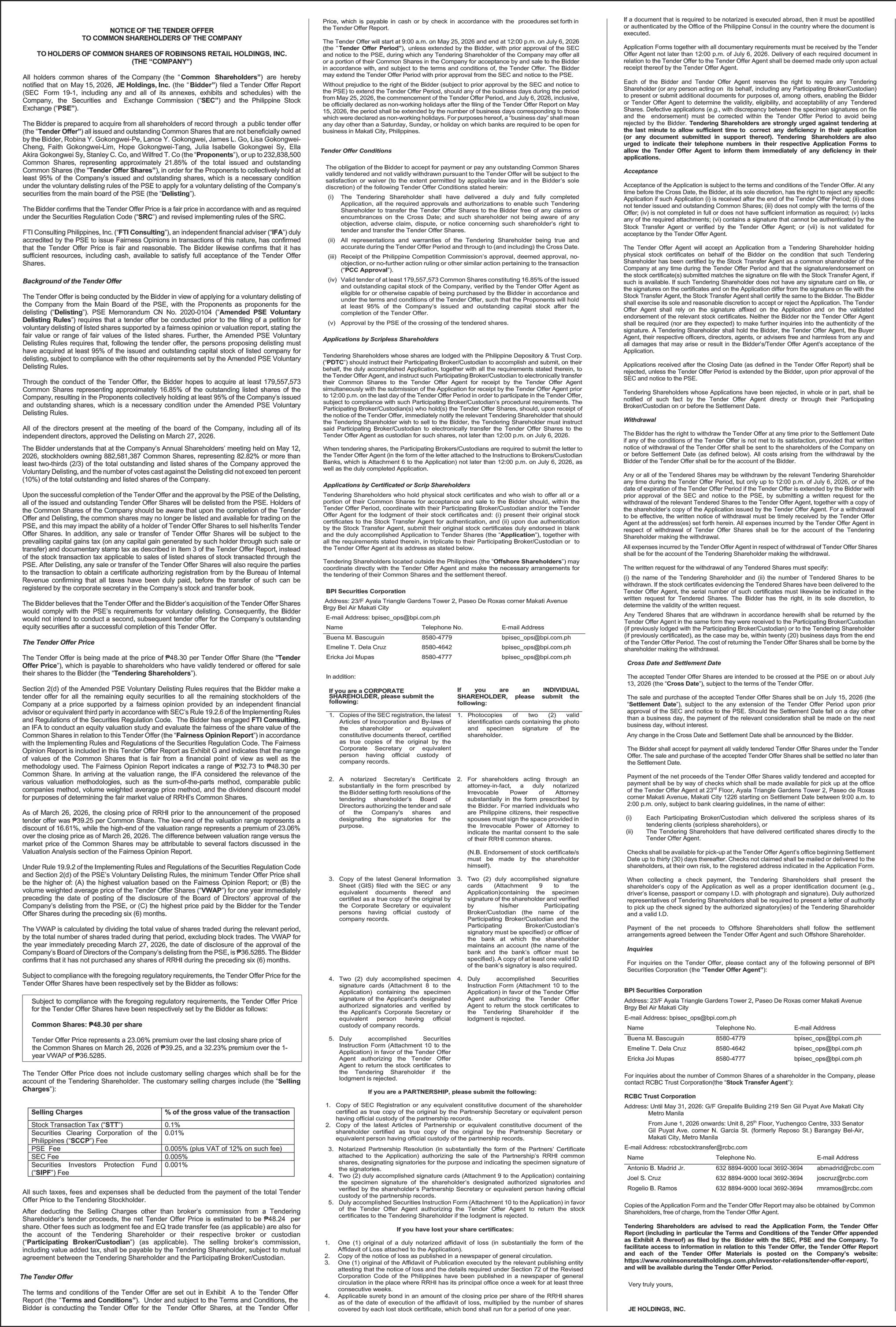
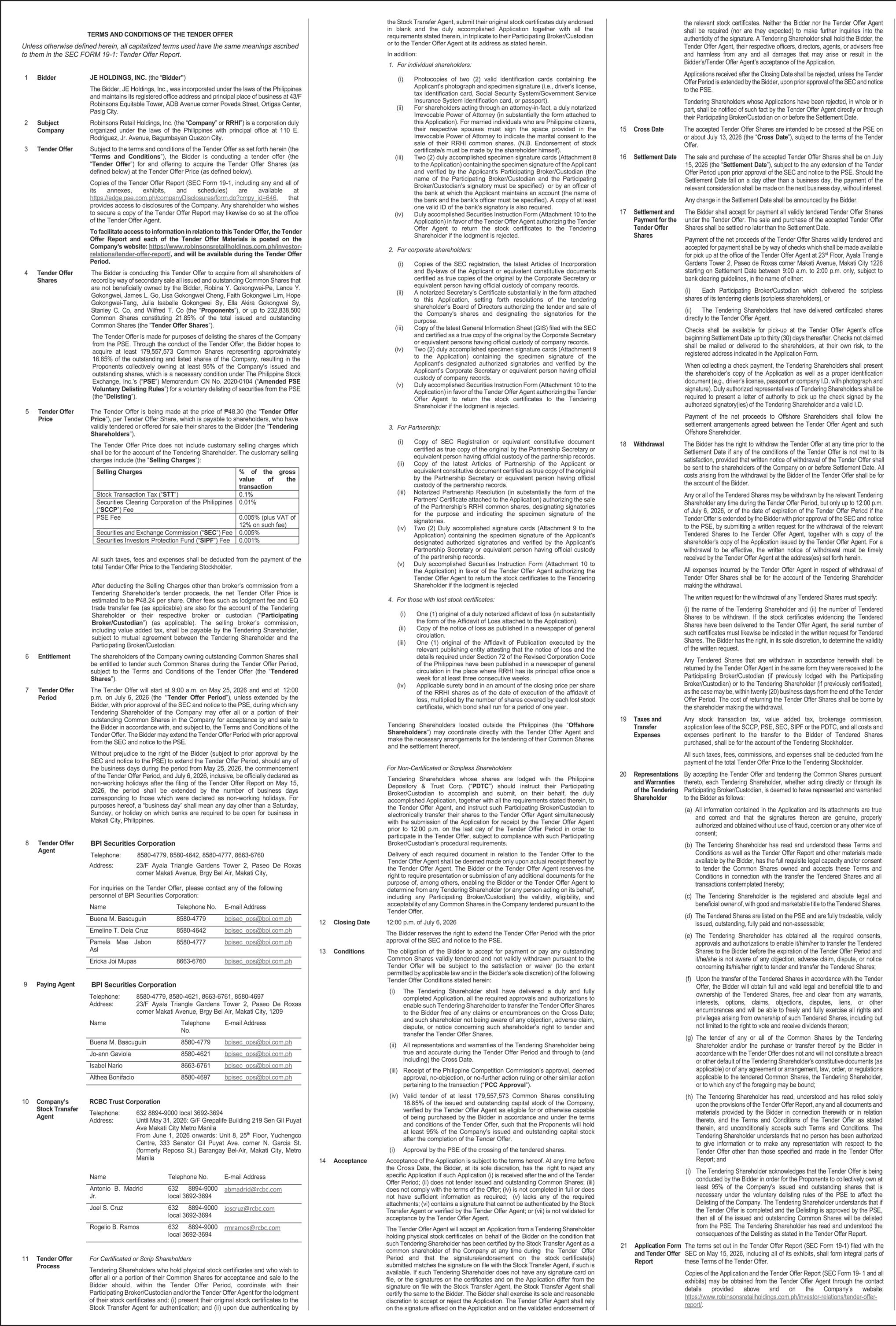
A10 Wednesday, May 27, 2026
‘Magnifica Humanitas’: Pope issues sweeping manifesto declaring AI must be ‘disarmed’
By Nicole Winfield, Kaitlyn Huamani & Paolo Santalucia The Associated Press
VATICAN CITY—Pope Leo XIV called Monday for robust regulation of artificial intelligence and for its developers to work for the common good rather than profit, issuing a sweeping manifesto on safeguarding humankind as the technology impacts everything from work to war.
“Magnifica Humanitas” (Magnificent Humanity), Leo’s first encyclical, has been eagerly awaited ever since history’s first US-born pope announced days after his election that he considered AI to be the biggest challenge facing humanity today.
In the text, Leo denounced the “culture of power” driving the AI race, especially in developing ever more sophisticated methods of remote warfare. He declared that it was “not permissible” to entrust irreversible, lethal decisions to AI systems, setting up another flash point between the American pope and the Trump administration, which has worked aggressively to deregulate AI development.
“Artificial Intelligence now demands to be disarmed, freed from logics that turn it into an instrument of domination, exclusion and death,” the pope told a special Vatican presentation of the encyclical, one of the most authoritative types of teaching documents a pope can issue.
Experts in the tech industry, academia and Catholic morality said the document will likely become a benchmark in the debate over AI, a point of reference for policymakers, researchers and ordinary folk alike. It comes as the near-daily developments in the technology trigger concerns over AI replacing human jobs and even human intelligence.
Taylor Black, a Microsoft AI executive and director of Catholic University of America’s AI institute, said the document would prompt people “at the forefront of these tools” to ask questions such as “What does it mean to be human?”
Pope calls out AI companies even as he hosts Anthropic THE Vatican launch also included remarks by the co-founder of Anthropic, which is currently locked in a legal battle with the Trump administration over access to its AI technology. The Vatican decided to involve Anthropic as part of its


decade-long effort to engage Silicon Valley in dialogue over the human cost of AI.
And yet in his text, Leo repeatedly blasted the concentration of power and data in the hands of so few people in the private sector as a danger, especially to children and the most vulnerable, and called for external regulation of their work.
“It is not enough to invoke ethics in the abstract; robust legal frameworks, independent oversight, informed users and a political system that does not abdicate its responsibility are required,” he wrote. “A more moral AI is not enough if that morality is determined by a few.”
Leo appealed to AI developers and political leaders responsible for regulating them to slow down and reflect on what they are doing. He urged them to use ethical and spiritual guidelines to make the choice to work not for their own profit or power, but the betterment of humanity.
AI competitors OpenAI and Anthropic are the second- and thirdmost valuable US private companies, each valued at hundreds of billions of dollars, more than the GDP of many nations. Both companies are heading toward neartrillion-dollar IPOs.
Anthropic co-founder Christopher Olah welcomed Leo’s criticism and concern. He said such external checks were fundamental to the technology “going well” for humankind since there is so much at stake—“a real possibility that AI will displace human labor at a very large scale.”
“We need more of the world— religious communities, civil society, scholars, governments—to do what His Holiness has done here: to take this seriously, to look
closely, and to push events in a better direction,” Olah said. “We need moral voices that the incentives cannot bend.”
Experts say the text will become a benchmark
IN a methodical text, the math major pope traced the history of the Catholic Church’s social teaching and applied its core concepts—justice, solidarity, the dignity of work and the universal destination of resources—to the digital revolution.
“I am convinced that this will prove to be a defining document for our era, a profound and prophetic document,” said Paolo Carozza, law professor at Notre Dame Law School and chair of the Meta Oversight Board.
“Pope Leo is offering a clear, comprehensive, and coherent voice urging us to take responsibility for constructing a world in which technology will serve humans rather than degrade them,” he said.
In its strongest chapters, Leo denounced how AI had helped accelerate the “normalization of war” by desensitizing people to its cost. He didn’t name specific conflicts, but cited “opposing imperialisms, between powers that wish to preserve their supremacy, and those that aspire to seize that supremacy.”
He demanded transparency and accountability by AI developers so that the chain of decision-making command in ordering strikes with AI weaponry is always known. He declared that the Catholic Church’s “just war” theory, which provides specific criteria for when force can be justified, was now “outdated” given the technological advances of warfare.
See “Magnifica,” A12


Attacks from suspicious residents complicate the fight in Congo against a rare type of Ebola
By Justin Kabumba & Ope Adetayo The Associated Press
BUNIA, Congo—Every time Vanny Birungi, a volunteer with the Red Cross in eastern Congo, goes out to raise awareness about the latest Ebola outbreak as suspected cases near 1,000, she faces a double threat.
One is the rare Bundibugyo type of Ebola, with no vaccine or treatment. The other is the anger and suspicion of residents who have pelted her with stones and verbal abuse in Bunia, a city at the heart of the outbreak.
“We continue to tell them that the disease is out there. Some accept, and others don’t,” Birungi told The Associated Press on Monday as she and colleagues spoke with groups of people in a working-class neighborhood under the scorching sun.
Aid workers are especially at risk in this volatile region where residents, like Birungi, have long been under threat of armed groups that have killed thousands of people and displaced many more in recent years.
Trust is hard to find among the traumatized population that is wary of outsiders, even those trying desperately to contain the rapidly spreading outbreak that experts say was discovered weeks late. Surveillance for such diseases has been weakened by US and other aid cuts.
The World Health Organization says that a family of fruit bats is believed to be the natural hosts of the viruses that cause Ebola. But some people don’t believe the virus exists, or are skeptical about its origins.
“These people should stop bothering us. They just want to get rich. Let’s not forget that Ebola is a white man’s invention,” declared Pierre Basola, a 56-year-old resident of Bunia, who added: “Stop talking to me anyway.”
Cases are nearing 1,000 but health centers are burned THREE times in the past week, healthcare facilities have been attacked. On Sunday, angry young men stormed a hospital treating Ebola patients, forcing medical staff to evacuate them as gunfire rang out.
On Saturday, a group of residents set fire to a tent for suspected and confirmed Ebola cases run by Doctors Without Borders in Mongbwalu, and more than a dozen people suspected to have the virus fled. On Thursday, a center in Rwampara was burned after relatives were barred from retrieving the body of a man suspected to have Ebola.
Anger is amplified as virus prevention practices keep loved ones from handling bodies in final rites following an illness some have described as sudden and dramatic, with vomiting and bleeding.
The Ebola virus is spread through close contact with sick or deceased patients’ bodily fluids, such as sweat, blood, feces or vomit. Experts say healthcare workers and family members caring for patients face the highest risk.
“Trust is almost as important as the health response, because if you get this massive distrust in the communities, they’re not going to go to the health centers,” said Heather Kerr, country director for the International Rescue Committee in Congo.
Armed conflict in the region poses another challenge. To travel from Bunia, the capital of Ituri province, to Mongbwalu, aid groups risk potential attacks in a region more than 1,000 kilometers (620 miles) from Congo’s capital, Kinshasa.
See “Ebola,” A12

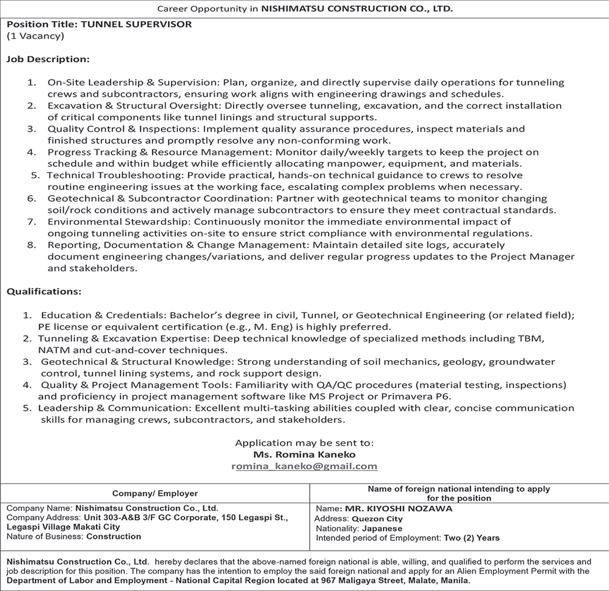
Quad ministers announce new Indo-Pacific initiatives on maritime security and energy
By Sheikh Saaliq The Associated Press
NEW DELHI—Foreign
ministers from Australia, India, Japan and the United States announced new initiatives on Tuesday on maritime security, port infrastructure and energy to boost cooperation in the Indo-Pacific to counter concerns about China’s growing influence.
The announcements by the group of nations known as the Quad came after talks in New Delhi between India’s Foreign Minister Subrahmanyam Jaishankar, US Secretary of State Marco Rubio, Japanese Foreign Minister Toshimitsu Motegi and Australian For -
Europe bakes in record heat as deaths at amateur sports events spur warnings
PARIS—Europe is baking under unseasonal heat that is shattering temperature records, including in the United Kingdom on Monday, and prompting government warnings after deaths were reported at amateur sports events in France.
The French sports minister, Marina Ferrari, posted condolences to the loved ones of a runner who died Sunday in a Paris race. Le Parisien newspaper reported that the 53-year-old man suffered a heart attack during the run in the capital’s 20th arrondissement, and that firefighters were unable to revive him.
It wasn’t yet known if the cause of the runner’s death was heat-related, but Ferrari suggested a possible link. Temperatures in Paris went as high as 32 C (90 F) in the afternoon.
“The events that occurred today (Sunday) during running races are a reminder that practicing sports in extreme heat requires absolute vigilance,” Ferrari said in an X post.
“My thoughts are with the family and loved ones of the runner who died in Paris, as well as with the people who were treated by emergency services.”
In the southeastern city of Lyon, local media Actu Lyon on Monday reported the death of a woman who suffered heat stroke there during another sports competition, also on Sunday.
The national weather service, Meteo France, said temperatures are breaking records for the month of May, soaring past 30 C (86 F) in many parts of the country and forecast to last into the week.
The United Kingdom broke its record Monday for the hottest temperature recorded in May, after a heat wave was declared in several parts of the country.
Residents and tourists sought relief at beaches, parks and searched for shade on the holiday as the temperature hit 34.8 C (94.6 F) at Kew Gardens in southwest London, breaking the previous record of 32.8 C (91.4 F) set in 1922 and matched again in 1944.
The U.K. Health Security Agency has issued its first amber health alert of the year, warning of a rise in deaths, particularly among the elderly, at the hottest times of the day. AP
eign Minister Penny Wong.
Speaking after the meeting, Rubio announced a new Indo-Pacific maritime surveillance initiative to integrate the four countries’ surveillance capabilities and strengthen real-time information sharing across the region. He said
the Quad would work with Fiji to upgrade port infrastructure in the Pacific islands, marking its first joint regional infrastructure project.
The ministers also launched an Indo-Pacific energy security initiative aimed at strengthening regional fuel and energy supply chains, with the US set to host a Quad fuel security forum later this year, Rubio said.
“We are deeply committed to this partnership. It is a linchpin in a cornerstone of our global strategy as a nation,” he said.
Separately, India and the US signed a deal to strengthen cooperation on critical minerals as global concerns grow over reliance on China-dominated supplies.
Asked about the Quad agreements, China said that cooperation among countries should promote regional peace and stability and not target third parties.
“We do not support forming exclusive small groupings or bloc confrontation. Any cooperation
should not undermine mutual trust and cooperation among regional countries,” Foreign Ministry spokeswoman Mao Ning said in Beijing.
The Quad group is a key strategic partnership for cooperation on maritime security, supply chains and regional strategy as China expands its military and economic influence in the Indo-Pacific.
Its members have repeatedly accused China of flexing its military muscles in the South China Sea and aggressively pushing its maritime territorial claims. Beijing maintains that its military is purely defensive to protect what it says are China’s sovereign rights and calls the Quad an attempt to contain its economic growth and influence.
The Quad meeting comes days after US President Donald Trump visited China, a trip closely watched in New Delhi for signs of any shift in Washington’s approach toward Beijing.
Leaders keep wary eye on Belarus for
By Hanna Arhirova & Yuras Karmanau
KThe Associated Press
YIV, Ukraine—Belarus’exiled opposition leader Sviatlana Tsikhanouskaya visited Kyiv on Monday as the Ukrainian capital cleaned up after Russia’s biggest missile attack of the year, and world leaders kept a close eye on how much support the Belarusian government is ready to provide for Moscow’s all-out invasion.
Russia and ally Belarus held joint nuclear drills last week, and Ukrainian President Volodymyr Zelenskyy has warned in recent days that Belarus could provide a launchpad for Russia to open a new front in northern Ukraine. Some Russian troops entered Ukraine from Belarusian territory in Moscow’s invasion on Feb. 24, 2022.
In a further sign of concern, French President Emmanuel Macron spoke by phone with Belarusian President Alexander Lukashenko on Sunday about the war in Ukraine, their first call since the invasion began.
Russia warns of more ‘systemic strikes’ FURTHER “systemic strikes” on Kyiv are in store, the Russian Foreign Ministry said in a statement Monday. It urged foreign citizens, including members of diplomatic missions, to leave the city as quickly as possible and told residents to stay away from military and government facilities.
The ministry said Friday’s deadly Ukrainian drone strike on a college dormitory in Starobilsk was “the final straw.” Ukraine said it hit only targets supporting Russia’s invasion.
The Russian army is locked in a hard and costly slog on the 1,250-kilometer (780-mile) front line that mostly snakes through eastern and southern Ukraine.
“Russia hit a dead-end on the battlefield, so it terrorizes Ukraine with deliberate strikes on city centers,”Kaja Kallas, the European Union’s foreign policy chief, said on X, after the weekend barrage that killed two people and damaged buildings across the Ukrainian capital.
With US-made air defense missiles in short supply because of the Iran war, Russian missiles are harder for Ukraine to stop. Meanwhile, US efforts to stop the fighting have stalled.

Countries keep a wary eye on Belarus
IN his call with Lukashenko, Macron “underscored the risks for Belarus of allowing itself to be dragged into Russia’s war of aggression in Ukraine,” according to a presidential aide in the French leader’s office who spoke on condition of anonymity in accordance with the presidential palace’s practices. Macron also spoke Sunday with Zelenskyy.
A terse readout released by the Belarusian presidential press service said the call with Macron took place “on the French side’s initiative” and the leaders discussed “regional issues” and Belarusian relations with the EU and France.
Belarusian opposition leader Tsikhanouskaya on her first visit to Kyiv, told The Associated Press on Sunday that“Lukashenko’s regime knows well what needs to be done to improve ties with the European Union, but it isn’t happening. Instead, hybrid attacks, nuclear blackmail and threats to the entire region.
Speaking after meeting with Ukrainian officials in Kyiv, Tsikhanouskaya said that “Ukraine is defending not only its independence but also the right of our peoples to live without imperial dictatorship, without violence and fear.”
“I am convinced that Ukraine’s victory will open the way to Belarus’s freedom,” she told a
Ahead of Tuesday’s talks, Rubio said that Washington wants the Quad to move beyond being a dialogue platform and take more concrete action on issues including maritime security and critical minerals. He also said officials were working toward a summit of the four leaders later this year, although no date has been announced.
The four countries had hoped to hold a leaders’ summit in India last year, but the plan was delayed because of strains in US-India relations, including disagreements over tariffs.
Jaishankar described the talks as “an exercise of considerable value,” saying the ministers also discussed maritime trade, energy and fertilizer supplies, as well as critical minerals. He added that as economic activity, energy, trade and maritime commerce in the region grow, “the responsibilities of the Quad will grow commensurately, and we must prepare for that.”
The leaders also discussed the Iran war and halted energy shipments through the Strait of Hormuz.
Australia’s Wong said the IndoPacific was facing “acute economic stress” and warned that any closure of the strait would have serious consequences for regional energy security.
“We recognize the importance of maintaining the principle of freedom of navigation and our opposition to any tolling proposition,” Wong said, referring to Iran’s plan to charge vessels passing through the Strait of Hormuz. She said the Quad reflects a shared commitment among four sovereign nations to a free and open Indo-Pacific.
“There is great alignment between our interests. We all share a vision for the Indo-Pacific, a region that is free and open,” she said.
The Associated Press journalist Eduardo Castillo in Beijing, China contributed to this report.
signs it might offer Russia help in Ukraine conflict
news conference.
Ukraine’s Foreign Minister Andrii Sybiha, who appeared alongside Tsikhanouskaya, emphasized that“Ukraine consistently differentiates between the regime that has dragged Belarus into Russian aggression and the Belarusian people,” adding that “we appreciate the contribution of Belarusian volunteers, journalists, human rights advocates and activists who are fighting for freedom, both ours and yours.”
Lukashenko, who has governed his country of some 9.5 million people with an iron fist for more than three decades, relies on the Kremlin for cheap energy, loans and other support. Western countries have repeatedly slapped sanctions on Belarus, including for its crackdown on human rights and for allowing Moscow to use its territory to invade Ukraine.
More recently, Lukashenko has been trying to improve ties with the West. Since US President Donald Trump returned to the White House, Lukashenko has released hundreds of political prisoners as part of deals that lifted some US sanctions.
Russia fires hypersonic missile at Ukraine
SUNDAY’S bombardment included Russia’s powerful hypersonic Oreshnik ballistic missile,
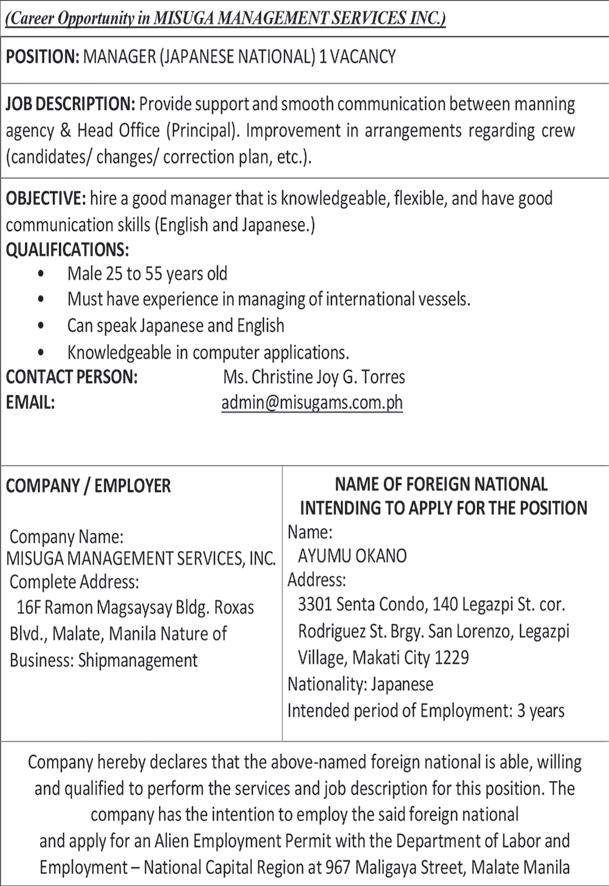
which can carry multiple warheads. Russian President Vladimir Putin has boasted it can travel up to 10 times the speed of sound and evade air defense systems.
Zelenskyy said Ukrainian intelligence
services had received tipoffs from the United States and European countries that Russia was preparing to launch an Oreshnik.

A12 Wednesday, May 27, 2026
Democrats feud over stock trading as they sharpen anti-corruption case against Trump
By Matt Brown
The Associated Press
ALLAS—After three terms in the US House and two unsuccessful campaigns for the US Senate, Colin Allred said he’s heard plenty about voters’ suspicions that politicians are just trying to make a buck in Washington.
“’What about the stock trading in Congress? What about people getting rich in Congress?’” Allred said they ask him regularly. “And I have to say to them, you’re absolutely right about that, too. We need to be better.”
He’s challenging Rep. Julie Johnson in the Democratic runoff for a Dallas-area House seat on Tuesday, and he’s one of several candidates trying to harness populist anger over congressional stock trading. Allred has denounced Johnson for trades involving companies like Palantir, a data analytics firm with ties to President Donald Trump’s administration. Johnson said her trades were handled by a financial manager, and she accused Allred of being “only out for himself.” She pointed to financial disclosures that showed Allred’s wealth nearly doubling during his own time in Congress, although Allred said his assets were in a blind trust and the money came from his wife’s income as a partner at a law firm.
“To be clear, the sum total I made on that trade was only $90,” Johnson said of her Palantir stock. “My opponent is trying to make it seem like it was hundreds or thousands .”
The bitter campaign is emblematic of broader debates within the Democratic Party over the role of money in politics. Long a refrain of strident progressives and good-government reformers, accusations that political rivals are self-dealing or bought by special interests have become a mainstay of Democratic primaries. The heightened criticism of lawmakers’ personal wealth comes as the party looks to sharpen its anti-corruption message against Trump and to develop a platform for overhauling Washington if Democrats take power in the midterms.
Some are tracking congressional stock trading TRUMP campaigned on a promise to “drain the swamp,” capitalizing on Americans’ disdain for the Washington establishment. Now that his family is profiting while he’s back in the White House, Democrats are
eager to regain the upper hand on an issue that could prove potent with voters.
“The difficulty is that right now, no party has the mantle on anti-corruption,” said Daniel Lobo-Lewis, a political consultant in Washington. “Many voters outside of the beltway see both parties as corrupt, because they see all politicians as bought by the donors or by their own self-interest.”
Lobo-Lewis and Nico Agosta founded the Political Integrity Project last year to track stock trading and corporate donations involving members of Congress.
The organization asks candidates to sign an “integrity pledge” to refrain from trading stocks or accepting corporate donations while in Congress and vow not to work as a lobbyist after they leave office. So far, about 90 challengers and seven sitting lawmakers have taken the pledge.
“If we want to, in any way, start rebuilding trust in our political institutions, it starts with no-brainer changes like this that have an approval rating above and beyond any other issue you could imagine,”
Lobo-Lewis said.
Congress has yet to enact a stock trading ban for its members, though insider trading is already illegal for members just like it is for anyone else. There are multiple proposals on Capitol Hill, but none have gained traction.
A bipartisan bill to ban congressional stock trading stalled this year despite receiving Trump’s blessing during his State of the Union. And Democrats remain divided over the number of alleged loopholes in their competing proposals.
Anti-corruption messages spread in Democratic primaries
A CROWDED race in a Democratic-leaning Utah congressional seat has featured attacks over candidates’ personal wealth.
State Sen. Nate Blouin criticized his main rival, former Rep. Ben McAdams, for having equity in a Utah data center firm, and excoriated others in the race for past investments and jobs.
McAdams said the equity of several thousand dollars was payment for a past contract completed by his government consulting firm while he was a private citizen. His campaign defended the data center project by saying it would use no water and run on clean energy.
A spokesperson for McAdams also claimed Blouin “is currently hiding his corporate donations” by removing them from campaign disclosure reports, which
A text in the church’s social justice tradition LEO signed the text May 15, the 135th anniversary of the publication of “Rerum Novarum” (Of New Things), the most important teaching document of Leo’s hero and namesake, Pope Leo XIII. That document addressed workers’ rights, the limits of capitalism, and the obligations that states and employers owed workers as the Industrial Revolution was underway.
It became the foundation of modern Catholic social thought, and the current pope cited it at the start of his pontificate in relation to the AI revolution, which he believes poses the same existential
policy isolation, economic sanctions, military pressure and other methods of creating threats to the security” of North Korea, according to a statement from the the Kremlin.
Russia and China, both veto-wielding members of the U.N. Security Council, have previously frustrated the US and others’efforts to toughen international sanctions on North Korea, despite its banned weapons tests.
Trump has repeatedly expressed his desire to resume talks with Kim, but Pyongyang has responded that Washington must first drop demands for the North’s nuclear disarmament as a precondition for talks.
Kim has taken an increasingly hardline stance
McAdams’ campaign claims “is not only deceitful, it breaks campaign finance law.”
In an interview, Blouin rejected the claim that he broke the law, and said that he removed the donations because he returned the money to each donor.
“It was actually quite uncomfortable to return some of those,” said Blouin, because some of the firms included local firms and clean energy companies. “But there is a perception that campaign contributions from lobbyists and companies influence votes, and I think there is some truth to that.”
In a New York City congressional district that includes both Wall Street and the Democratic Socialists of America’s headquarters, the city’s former comptroller, Brad Lander, has accused Rep. Dan Goldman of trying to buy another term by using his own wealth to match campaign contributions. Goldman, an heir to the Levi Strauss family fortune, says he entered all of his assets into a blind trust after taking office in 2023.
A spokesperson for Goldman said Lander is “running a deceitful campaign based on absurd lies that Dan is beholden to special interests” and that Goldman has raised more campaign funds than Lander “without taking a dime of corporate PAC money.” Goldman has spent his own money on the race, the spokesperson said: “To ensure that the NY-10 voters can be sure that he is beholden only to them and his principles.”
Lander said Goldman’s spending is “not illegal, but it is certainly anti-democratic when a quarter-billionaire like Dan Goldman not only dumps millions of his own inherited wealth into his elections but also solicits money from the same forces who are rigging the economy and worsening the affordability crisis.”
More candidates are fighting over stocks in California
E VEN representatives who support a ban on congressional stock trading are feeling the heat.
Democratic Rep. Brad Sherman of California is facing multiple primary challengers who have criticized the congressman for holding stocks while serving in Congress. Sherman does not trade individual stocks and supports a ban on stock trading.
“I only own three individual stocks, which I inherited from my mother when she passed away, which were originally acquired by my grandmother,” Sherman said. “I have
questions that the Industrial Revolution posed over a century ago. “Magnifica Humanitas” thus becomes the latest chapter in a century-long history of popes adapting “Rerum Novarum” to the social questions of their times, often dwelling on the dignity of work for human flourishing.
AI is evoking both existential fears and utopian vision amid an intensifying debate on whether it will become a catalyst that enriches humanity or a technological toxin that dulls human intelligence while wiping out millions of high-paying jobs.
“The pursuit of greater profits cannot justify choices that systematically sacrifice jobs, because the human person is an end, not a means, and the economic order must remain subordinate to human dignity and the common good,” Leo wrote.
toward South Korea, calling it his country’s most hostile enemy and taking steps to terminate all ties with its neighbor. In a meeting with military commanders last week, Kim discussed efforts to strengthen military units along the border with South Korea in line with a state objective to turn the border line into “an impregnable fortress,” according to state media.
On Tuesday, South Korean President Lee Jae Myung called for stronger efforts to advance the country’s military. In televised remarks during a regular Cabinet meeting, he emphasized artificial intelligence and drone capabilities, and the potential acquisition of a nuclear-powered submarine, an issue that has been part of his diplomacy with Washington.
Elise Morton contributed to this report from London.
never sold them because I made a promise to my constituents that would not buy and sell individual stocks.”
One of Sherman’s primary challengers is Jake Levine, a former climate adviser to President Joe Biden, who signed the pledge from the Political Integrity Project. But Sherman said Levine “refuses to disclose key elements of his $18 million stock portfolio, and actively bought and sold stocks while serving on the National Security Council.”
Levine said in a statement shortly after midnight on Tuesday that Sherman “knows he’s losing because voters are sick of politics as usual and ready for a new generation of leadership.”
He added: “He’s chosen to close his campaign with desperate, unfounded attacks against me rather than make a real argument of why he deserves to be reelected. We look forward to the results next week.”
In the race to succeed former House Speaker Nancy Pelosi, California State Sen. Scott Wiener has critiqued his progressive opponent, Saikat Chakrabarti, over his personal wealth. Chakrabarti is a former software engineer who earned millions as an early employee at the tech firm Stripe. He later served as the first chief of staff to Rep. Alexandria Ocasio-Cortez, D-N.Y. Wiener said that Chakrabarti “has enormous investments” and “is trying to buy this seat” while “spreading bogus conspiracy theories” with his own wealth. He criticized Chakrabarti for not disclosing the last decade of his stock trades.
“If you’re making a ban on stock trades a central part of your campaign—as Saikat is doing, running around saying that everyone under the sun is corrupt—how about you tell the voters about your own stock trading history,” Wiener said.
Chakrabarti retorted that his wealth as a private citizen is not relevant to his future time in office and that he would place all of his assets into a blind trust should he be elected. He critiqued Wiener for being supported by super PACs funded by the AI firm Anthropic and other major corporations.
“This is all part of a larger problem, which is just the whole idea of corruption in our politics,” Chakrabarti said. “If you’re in Congress, you sit on committees that oversee a lot of these industries, and it’s unethical to be using that insider information, that knowledge to make stock trades. But that doesn’t apply to a private citizen.”
Leo extended his concern for upholding human dignity in labor to issue the first-ever papal apology for the Holy See’s own role in legitimizing slavery by giving European sovereigns explicit authority to subjugate and enslave “infidels.”
A decade-long dialogue with Silicon Valley
VATICAN officials declined to say who contributed to Leo’s encyclical. But Vatican and church officials have been engaged in a dialogue with Silicon Valley tech firms for a decade.
The decision to include Anthropic at the Vatican launch was criticized by some who considered it a papal stamp of approval of the AI firm, which is currently suing the Trump administration after it ordered all US agencies to stop using Anthropic’s
In addition to the two deaths, at least 91 people were wounded in Sunday’s barrage, according to Tymur Tkachenko, the head of the Kyiv City Administration.
Shattered glass littered sidewalks on Monday after Ukrainian authorities said the assault damaged buildings across the city, including near government offices, residential buildings, schools and a market.
Sybiha, Ukraine’s foreign minister, led ambassadors from more than 70 countries on a visit to the sites of the strikes. He urged the international community to step up pressure on Moscow and ensure Ukraine gets more air defense assets.
“Right now, rice prices are fluctuating, going up and down,” he said, adding that that consumers—including rice farmers who also rely on rice purchases—are bearing the brunt of the unstable market.
“It is the middlemen—traders, importers, and wholesalers—who are benefitting from the RTL regime,” he said.
He also urged lawmakers to retain effective practices from both the pre- and post-RTL periods while discarding policies that have proven ineffective.
Sinag Executive Director Jayson Cainglet also expressed support for expanding the NFA’s palay procurement authority to help stabilize farmgate prices.
Videos shared online by Thai rescuers showed that reaching the cave’s entrance requires a steep hike on foot of roughly 4 kilometers (2.5 miles). The entrance is also steep and rocky, and barely wide enough for a single person to climb through at a time.
Inside, rescuers must go through muddy passageways, flooded sections and narrow tunnels that forced them to crawl forward.
Villagers were reportedly mining THERE has been no official confirmation on why the villagers went into the cave, although the rescuers involved said that they went in to look for gold deposits.
Bounkham Luanglath of the Lao rescue group has told The Associated Press that the cave was frequented by local residents looking for gold, although authorities had repeatedly warned them against entering the cave out of safety concerns.
The average per capita income in Laos of about $2,000-2,500 is among the lowest in Southeast Asia, and it is less still in underdeveloped rural areas.
Laos is not known as a major gold producer, but its mining industry is sizable considering the country’s developing economy. The mining sector is fueled by foreign direct investment, largely from neighboring Thailand and China. Copper is a major export, and mining for rare earth elements, needed for most modern technologies, has become more common in Laos recently.
The Laos Foreign Ministry on Tuesday said it has no official information to share with the media. The Southeast Asian nation
technology for its refusal to allow the US military unrestricted use of it.
Brian Boyd, US faith liaison for the nonprofit Future of Life Institute, read the inclusion of Anthropic’s co-founder Olah as a recognition of its prominence in the field and as similar to a papal audience with a head of state: not an endorsement.
Anthropic is an “enormous corporation that is taking onto itself an enormous risk and responsibility,” Boyd said, adding that the company has “demonstrated genuine goodwill and integrity and interest in dialogue.”
Winfield reported from Middletown, Connecticut, and Huamani reported from Los Angeles. Associated Press writers Kelvin Chan in London and Colleen Barry in Milan contributed to this report.
In other developments:
RUSSIA’S Federal Security Service said divers found magnetic mines attached to the hull of a liquefied petroleum gas tanker in the Russian Baltic port of Ust-Luga. The tanker Arrhenius was bound for Samsun, Turkey, it said, adding that the limpet mines were made in a NATO member country. Ukrainian officials made no immediate comment.
Meanwhile, a Russian missile hit a business in the northeastern Ukrainian city of Derhachi, killing two people and wounding 19 others Monday, Kharkiv regional administration head Oleh Syniehubov said. Seventeen people were hospitalized.
Associated Press writer John Leicester in Paris contributed to this report.
“When prices are good, that’s well and good for farmers. But when prices are low, the NFA should procure as much as 10 percent of the harvest to help influence prices,” he said.
However, he clarified that Sinag is not in favor of restoring the NFA’s trading and importation functions, stressing that government intervention should focus on local procurement.
Cainglet also emphasized that the government should prioritize buying from domestic producers, saying rice importation largely benefits foreign farmers.
For his part, Enverga said concerned agencies were given until next week to submit their position papers on the substitute bill, adding that the committee aims to finalize the measure soon before endorsing it to the House plenary.
is a one-party communist state with no organized opposition and the government keeps a tight lid on information.
Cave rescues are risky business THE news quickly drew headlines in Thailand because of its resemblance to the dramatic 2018 cave rescue in northern Thailand, where 12 boys and their soccer coach were trapped for more than two weeks before being safely rescued in an operation that became a global sensation. A former Thai navy SEAL diver was killed during the search and rescue effort.
A new tragedy occurred earlier this month, with five Italian divers found dead after they went missing while diving into a cave in the Maldives. A Maldivian military diver who was part of the recovery team was killed during the high-risk operation to retrieve their bodies.
A major health risk of being trapped in a cave is cold conditions quickly leading to hypothermia. The body can cope for weeks without food, but clean water is necessary to prevent dehydration. A contaminated water supply could cause diarrhea, hastening dehydration.
Declining oxygen levels cause symptoms similar to altitude sickness and in the long run can damage the lungs and other organs, while carbon dioxide buildup causes exhaustion and eventual unconsciousness.
Constant darkness disrupts time perception and the body’s circadian rhythms. It also causes extreme sensitivity when the eyes have to adjust again to light.
The Associated Press journalists Grant Peck, Anton L. Delgado and Haruka Nuga contributed to this report.
region, told the AP. In neighboring Uganda, where a far smaller number of cases has begun to spread after Congolese traveled there, at least three health workers have been infected.
Meanwhile, the outbreak now has more than 900 suspected cases and more than 220 suspected deaths, WHO Director-General Tedros Adhanom Ghebreyesus said Monday.
“We are now playing catch-up with a very fast-moving epidemic,” he said.
‘We leave everything to God’ MADO NDITAMBA a 70-year-old Bunia resident, said that she has seen students running away from aid workers.
“The last time Ebola came, it was not on the scale that we see today,” Nditamba said. “But this epidemic today is worse. We go to the doctors in the hospitals, but they also die. That’s what worries us. We don’t know what to do and we leave everything to God.”
Congo has had 17 Ebola outbreaks, and WHO says the country is equipped to respond. But early tests in this outbreak were conducted for a more common type of Ebola, losing valuable time. Experts are still trying to determine when this outbreak began.
There are few places to test for this Bundibugyo type in a region where clinics can run on generators, and a major airport serving as a humanitarian hub has been in the hands of rebels for more than a year. Health workers on the ground have told the AP that they are underprepared and underprotected. An unknown number of responders have been infected, and some have died.
A Congolese doctor was reported dead on Sunday in Rwampara, Rubens Dhedgia, coordinator of the Ebola response in the
And perhaps most worryingly, the International Federation of Red Cross and Red Crescent Societies says three volunteers died in Mongbwalu, after it believes they handled bodies on March 27 during work unrelated to Ebola.
If confirmed, that would significantly push back the timeline of the outbreak from the first confirmed death in late April in Bunia.
Some residents still believe Ebola is a myth EVEN as at least one funeral home manager dusted off coffins for sale alongside a road in Bunia, experts reported a lack of trust among some residents of the region who don’t believe the virus exists. Action Aid, another of the international humanitarian groups responding, said that a high level of skepticism and lack of understanding remains, citing residents it questioned in mid-May in Ituri province just after the outbreak was announced.
“The only way to go, as far as this particular virus is concerned, is community engagement,” said Yakubu Mohammed Saani, country director for Action Aid in Congo. How that will be improved, and quickly, is still not clear. Meanwhile, both WHO and Africa Centers for Disease Control and Prevention believe the outbreak is larger than the cases reported so far.
Ope Adetayo reported from Abuja, Nigeria. Jean-Yves Kamale contributed to this report from Kinshasa.
DOLE. . .
Continued from A5
Naging consistent ang kanilang findings using the life locator indicating no signs of life. Today, we are transitioning from search and rescue to retrieval and clearing operations,” Pelayo said.
Bureau of Fire Protection Region 3 spokesperson Supt. Mariah Leah Sajili said rescuers conducted continuous verification from 3:00 p.m. Until 8:00 p.m. before ending the operation.
“We would like to clarify [the search for] the signs of life started mga 3:00 p.m. and then that 3:00 p.m. ang ating continuous verification until 8: p.m. iyong sequence na pag -verify kung meron pa tayo ma- dedetect na buhay,” Sajili said.
Authorities said retrieval and clearing operations will begin Tuesday morning, with protocols for the management of the dead and missing already in effect.
Mayor Carmelo Lazatin II ordered retrieval teams to ensure the dignified handling of victims’ remains throughout the operation.
Four people have been confirmed dead including two construction workers, a Malaysian national and an unidentified individual. Authorities said 26 people were rescued alive, while 16 others remain missing.
The building, reportedly owned by Ernest Lim and being constructed by Golden Years Construction and Steelworks, collapsed before dawn Sunday after strong winds and heavy rains battered Angeles City over the weekend.
Lazatin earlier ruled out the weather as the primary cause of the collapse. He said investigators were looking into the structural integrity of the building.
The Department of Labor and Employment-Central Luzon had issued a work stoppage order against the contractor in September 2025 over multiple workplace safety violations, according to earlier reports. The order was later lifted after the company instituted corrective measures.
The cause of the collapse has yet to be determined.
Humanitarian aid
THE Department of Social Welfare and Development (DSWD), through its Field Office Central Luzon (FO-3), has extended an initial humanitarian aid of P464,000 to the survivors and relatives of the fatalities in the collapsed building.
Alinsunod po sa kautusan ni Pangulong Marcos na tiyakin na maipo -provide natin yung kaukulang tulong sa mga kababayang naapektuhan, ang utos po ni Secretary Rex Gatchalian ay agad na i -profile ang mga apektado na na -rescue, ibigay ang kaukulang assistance kagaya ng financial aid. Para naman po doon sa mga namatayan, magbibigay po tayo n g burial assistance [In line with President Marcos’ directive to ensure that appropriate assistance is provided to the affected individuals, Secretary Gatchalian has ordered the immediate profiling of those who were rescued, and will provide them with assistance such as financial aid. For the bereaved families, we will provide burial assistance],” the DSWD spokesperson, Assistant Secretary Irene Dumlao, said in a televised interview on Tuesday. Dumlao, who heads the department’s Disaster Response and Management Group, also expressed the Department’s condolences to the families who lost their loved ones, reiterating Gatchalian’s commitment to provide them with appropriate aid.
Solons demand substantive answer from VP Sara, reject motion to dismiss
By Jovee Marie N. Dela Cruz @joveemarie
THE House of Representatives is expecting Vice President Sara Z. Duterte to file a full and detailed answer to the impeachment charges against her, with lawmakers hoping for a substantive response rather than a motion to dismiss.
“We are hoping to receive an answer, not a motion to dismiss,” Deputy Speaker Paolo Ortega of La Union said. His statement comes as the 10-calendar-day non-extendible period given by the Senate impeachment court for the Vice President to respond to the charges draws to a close on June 1, Monday.
Under the impeachment rules, the House prosecution panel will then have five calendar days, also non-extendible, to submit its comments.
Ortega said any move to dismiss the case or to ask the Senate impeachment court to defer proceedings pending a Supreme Court ruling on related issues would be a delaying tactic.
“It will just be a waste of time. We do not think the Senate impeachment court, which has so far acted forthwith on the impeachment case, will allow it,” he said.
The House leader also urged Duterte to honor her earlier commitment to respond during the Senate trial.
“She consistently refused to show up in the House impeachment proceedings. She waited for more than a year since last year’s impeachment process for her trial to take place and to present her answer. She should seize this opportunity so the people can finally hear from her,” he said.
The impeachment complaints against Duterte include allegations of unexplained wealth, failure to fully declare assets in her Statements of Assets, Liabilities and Net Worth (SALNs), alleged assassination threats against President Ferdinand Marcos Jr., First Lady Liza Araneta-Marcos, and former Speaker Ferdinand Martin
TESDA introduces flexible online training for child development workers
By Claudeth Mocon-Ciriaco @claudethmc3
THE Technical Education and Skills Development Authority (TESDA) has launched the TESDA Online Program courses on Early Childhood Care and Development (ECCD) Services NC III, as part of continuing efforts to strengthen the country’s early childhood workforce through flexible and inclusive learning opportunities.
TESDA Secretary Jose Francisco “Kiko” Benitez said that the ECCD Services will help Child Development Workers (CDWs) to have better access to training.
Benitez said the digital learning initiative aims to help more child development workers gain quality training and certification without geographical barriers. He also encouraged the graduates to get further training, and be added to the pool of much needed trainers and assessors.
“I’m excited because today we will also be launching our ECCD e-Learning Courses. May online ECCD training na tayo, para anytime, anywhere, sa pamamagitan ng cellphone o laptop, pwede magaral at your own pace. Sana naman, itong graduation ay hindi katapusan, kundi bagong simula. Sana po maging trainers and assessors din po kayo,” Benitez said. Recognizing the importance of investing in the country’s early
MMDA.
Continued from A5
For her part, Aileen Lucero, National Coordinator of the EcoWaste Coalition, urged Metro Manila mayors, together with all barangay and Sangguniang Kabataan (SK) chairpersons, to strengthen local actions to
DAR. . .
Continued from A5 of farming communities in disaster-prone areas. Provincial Agrarian Reform Program Officer II Cecil Malubay shared that bringing the assistance directly to the barangays also helped farmers save around P170 to P200 in transportation costs. The savings can instead be used for food, farm needs, and other household expenses.
childhood workforce, Senator Sherwin Gatchalian expressed support for initiatives that expand learning and professional development opportunities for Child Development Workers.
Ang trabaho ng ating mga Child Development Workers ay hindi simpleng trabaho. Ito po ang isa sa mga pinakamahalagang punto ng pag-aaral ng isang bata. Kayo ang bumubuo ng pundasyon ng mga kaalaman ng mga bata. Kung mahina ang pundasyon, mahina na ang lahat,” Gatchalian said.
The initiative supports the administration of President Ferdinand “Bongbong” Marcos Jr. in strengthening the country’s early childhood care and development system under Republic Act No. 12199, or the ECCD System Act of 2025.
Developed in collaboration with select TESDA Technology Institutions, the Early Childhood Care and Development Council, and the University of the Philippines Department of Family Life and Child Development, the courses provide technical-vocational institutions with readily available and qualityassured eLearning materials that may be utilized in the implementation of blended learning programs. The eLearning courses also allow learners to revisit modules at their own pace, helping improve readiness for competency assessment and increasing certification opportunities.
promote a smoke-free environment in time for the resumption of classes.
“To complement the absolute ban on smoking and vaping in all schools, we urge local government leaders, especially our mayors, barangay and SK chairs, to join the MMDA in ensuring that cigarettes, vapes, and other novel tobacco products are not advertised, distributed, and sold by
ARB Lolito Bago-od from Barangay San Pedro said the assistance will help his family focus their budget on daily necessities. Meanwhile, 69-year-old Rita Tagnipez from Barangay San Pablo expressed gratitude after receiving a new pair of slippers to replace her worn-out ones. Aside from aid distribution, DAR also encouraged farmers to organize into agrarian reform beneficiaries organizations (ARBOs) to access more government support programs, including
This expands the reach of training delivery beyond the physical limitations of training institutions while allowing more learners to access training programs within their own communities.
The ECCD Services NC III program equips Child Development Workers with competencies in health, nutrition, early learning, child protection, and holistic child development for children aged zero to five years old.
Latest TESDA data show that 2,477 trainees nationwide have already completed the program out of 3,452 enrollees.
TESDA also continues to strengthen the nationwide implementation of the program, with 89 registered programs, 75 accredited assessment centers, 72 certified assessors, and 451 trainers across the country.
The courses were launched during the ceremonial graduation of ECCD trainees from the TESDA Regional Training Center – Pili, Camarines Sur last May 22, 2026. Attended by Benitez, Gatchalian, , United Nations Children’s Emergency Fund (UNICEF) representative Dr. Teresita Inciong, the event highlighted TESDA’s Representatives from various municipalities of Camarines Sur also attended the activity to show support for the holistic growth and development of children in their respective communities.
stores and vendors near schools and other youth-focused care, sports, and recreational facilities,” she said.
“Strictly enforcing tobacco and vape laws safeguards our youth from addiction while keeping our environment free from toxic litter such as residual cigarette butts and used electronic smoking devices (ESDs),” she pointed out. Jonathan L. Mayuga
livelihood assistance, training, and financial aid.
Residents thanked President Ferdinand Marcos Jr. and Estrella for bringing government services closer to their communities.
For farmers in these remote island barangays, the program is more than just relief assistance — it is added support that helps communities become stronger and more prepared during difficult times Jonathan L. Mayuga
G. Romualdez, as well as graft and corruption, bribery of Department of Education officials, and misuse of public funds.
House prosecutors have said they possess strong evidence, including an Anti-Money Laundering Council (AMLC) report covering financial transactions involving the vice president and her husband from her time as Davao City vice mayor up to 2024. Her reported net worth rose from P7.25 million in 2007 to P88.5 million in 2024.
Pro bono
HOUSE trial spokesperson Zia Alonto Adiong of Lanao del Sur on Tuesday said that many private lawyers had offered to join the House prosecution team for the impeachment trial of Vice President Sara Z. Duterte on a pro bono basis.
Adiong said the strong response from members of the legal community reflected growing public
interest in the impeachment case and the constitutional issues surrounding it.
“There are a lot of lawyers, private lawyers that have come up and approached the House prosecution team to offer their services pro bono to be part of the team,” Adiong said. The Senate has already convened as an impeachment court and ordered Duterte to answer the Articles of Impeachment transmitted by the House of Representatives, with pre-trial proceedings expected to begin next month.
Adiong said some private prosecutors had already been accepted into the prosecution team, although discussions on the final composition were still ongoing. Adiong said the prosecution team was carefully screening applicants before finalizing the roster of private prosecutors who would help present evidence during trial.
PNP moves to revoke over 100 firearm permits of fugitive Sen. ‘Bato’ Dela Rosa
By Samuel P. Medenilla @sam_medenilla
THE Philippine National Police (PNP) is now in the process of revoking the firearm permits of over 100 guns owned by Senator Ronald ‘Bato’ Dela Rosa, who is now a fugitive and the subject of a large-scale manhunt.
PNP chief Jose C. Nartatez Jr. made the statement in an interview with reporters at the Villamor Airbase in Pasay City after the send-off ceremony of President Ferdinand Marcos, who is headed to Japan for his fourday State Visit. He said the senator was given permits for different categories of firearms.
“The concerned office of the PNP is now processing for revocation,” he said.
The National Bureau of Investigation (NBI) made the revocation request to PNP as it continues to
Manila Water. . .
Continued from A5
of the lowest in Asia, enabled by its intensified leak detection and rapid response capabilities. These include smart monitoring technologies and prompt response to customer reports that allow the company to swiftly identify and address pipe leaks, thereby minimizing water losses and preserving available supply.
Year-round inspection, maintenance OPERATIONAL readiness also remains a priority, with Manila Water conducting year-round inspection, maintenance, and optimization of its pumping stations, supported by the readiness of standby generator sets across key facilities. These measures have been put in place ahead of peak dry months and are crucial
pursue Dela Rosa, who is now a fugitive as he remains in hiding even after the Supreme Court junked his petition to block his arrest.
Dela Rosa has an active warrant of arrest from the International Criminal Court, where he has pending crimes against humanity cases for his involvement in the bloody drug war of the Duterte administration.
The lawmaker was last seen in public when he went to the Senate earlier this month to vote for the change in leadership in the Upper chamber of Congress. When asked if the PNP considers Dela Rosa as a “threat” with so many firearms at his disposal, Nartatez said they have sufficient resources to bring him in.
He also assured that the PNP will treat Dela Rosa, who is a former PNP chief, the same way they treat other fugitives.
in ensuring uninterrupted water production and distribution, particularly in light of recent power supply interruptions affecting the Luzon grid. Beyond infrastructure and operations, the company is actively engaging its customers in water conservation efforts. Through its #WaterWays campaign, Manila Water promotes responsible water use across its digital platforms and community-based programs such as Lakbayan and the Salin Program. These initiatives aim to instill long-term water stewardship among households, communities, and partner institutions. With an expanding customer base now serving over 7.9 million individuals in the East Zone, Manila Water underscores its commitment to delivering reliable and sustainable water services even under challenging climate conditions.
Boost domestic food production to reduce strain on foreign exchange reserves
THE latest data of the Bangko Sentral ng Pilipinas (BSP) on the country’s gross international reserves (GIR) is proof that overseas Filipino workers have rightfully earned the title “bagong bayani” (new heroes). Despite the decline in the country’s dollar reserves in April, the BSP noted that the GIR during the period was enough to cover imports of goods and payments of services and primary income for 6.9 months. (See, “FX intervention, external payments behind 15-month foreign reserves low,” in the BusinessMirror, May 9, 2026). The central bank said GIR is considered adequate if it can finance at least three-months’ worth of the country’s imports of goods and payments of services and primary income.
Remittances from OFWs and earnings from the business process outsourcing (BPO) industry in recent years have supported the GIR level of the Philippines. The income of OFWs and local call center agents have buoyed the economy by enabling the country to continue importing food and fuel—two of the country’s major import expenses. As the Philippines does not have a huge oil reserve, it relies on imports to run its factories and keep vehicles on the road. The Philippines also imports a number of food items, such as rice and meat products particularly pork, which has become scarce because of disease. The continuous increase in the purchases of food items has also been putting pressure on the country’s balance of payments (BOP). The surge in import bill coupled with tepid demand for Philippine exports caused the BOP deficit to reach $7.4 billion, a level that even exceeded the gap for all of 2025, when it hit $5.66 billion. (See, “January-April BOP deficit exceeds gap in 2025, in the BusinessMirror ,” May 19, 2026).
With tensions in the Middle East showing little sign of abating, it is likely that the BOP gap could widen further and even exceed the $7.8-billion deficit projected by the BSP for the 2026. While the Philippines can continue to lean on OFWs to replace the dollars that flowed out of the country in recent months, the country cannot afford to be complacent. For one, a prolonged conflict could dent the income of Filipinos abroad or, worse, force them back to their home country.
The BPO industry is also facing a host of other challenges such as efforts in the United States to minimize or stop the offshoring of call centers as well as the rise of artificial intelligence. Last March, the Federal Communications Commission (FCC) voted to launch a new proceeding looking into the use of offshore call centers. The FCC is seeking comment on proposals that would encourage businesses to bring call center jobs back to the US and “improve” customer service at existing call centers, including a proposal to require call takers to be proficient in American Standard English.
All these developments point to a need to trim dollar outflows by reducing import payments. And the most viable strategy at this point is to beef up food production, considering that the country has enough land and water resources that it can tap for this purpose. Aside from rice, the Philippines can produce other food items that do not have to be imported in huge quantities, if there are significant improvements in the productivity of farms.
If policymakers have given up on producing more rice because they have subscribed to the belief of some quarters that Vietnam and Thailand can do it more efficiently, then the Philippines will have to develop other farm products that it can supply to its local industries and even export. Reducing purchases of foreign food items will not only help ease the pressure on the country’s foreign reserves but also support local industries, particularly SMEs, that are now struggling to stay afloat.

Preserving our past for the future

AMark Villar
THE BUILDER
S urbanization and economic expansion reshape our cities, we tend to overlook the structures that hold our history and culture.
As we build more skyscrapers, highways and modern complexes, old structures are torn down to give way to modern ones. To preserve our legacy and identity as a nation, we should maintain the integrity of our cultural landmarks. While economic growth is necessary, it should not come at the expense of our national identity.
The Philippines possesses many cultural and historical landmarks that chronicle our heritage, enduring traditions and history. Our history is physically engraved in coralstone churches, elegant bahay na bato (stone houses), ancestral towns, historic brick facades and vibrant plazas.
While iconic sites like Malacañang Palace, Intramuros, Rizal Park, Magellan’s Cross and Vigan are wellmaintained, countless other historically important houses and buildings are neglected. They are in imminent danger of losing their significance— and their existence—to decay or the wrecking ball.
In Europe, historical spaces are given utmost attention. They serve as a source of immense national pride and draw millions of tour -

Iists annually. Filipino travelers frequently marvel at the old, beautifully preserved buildings of Barcelona, Rome, Paris or London. We need to cultivate that same reverence for our own landmarks.
Preserving our built heritage is not about freezing our towns in the past or halting progress. Instead, it is about managing growth so that our modern identity remains deeply rooted in historical memory.
The most sustainable way to save an old building is to give it a modern reason to exist. When historical buildings are simply locked up as dusty structure, they become financial burdens prone to deterioration. We, thus, must encourage the continued existence of historical structures for contemporary, functional operations. Iconic spaces like the Manila Metropolitan Theater—the crown jewel of Philippine Art Deco— and the Manila Central Post Office Building possess immense potential. By converting historical landmarks into vibrant commercial hubs, cultural centers or tourist spots, they can generate the very revenue required to fund their own long-term maintenance.
The current legal backbone of preservation in the country is Republic Act No. 10066, or the National Cultural Heritage Act of 2009. This law protects historical structures against unauthorized modification or demolition, establishing a presumption of importance for structures at least 50 years old.
Laws only work when enforced effectively at the grassroots level.
Local government units (LGUs) should take the lead by integrating heritage preservation directly into their comprehensive land use plans (CLUPs).
During my tenure as secretary of the Department of Public Works and Highways (DPWH), I recognized this gap and issued a memorandum mandating all district engineers and building officials to coordinate with national cultural agencies—such as the National Commission for Culture and the Arts (NCCA) and the National Museum—prior to issuing any permits for the renovation, retrofitting or demolition of declared heritage structures.
Simply recognizing a site as “historic” is not enough to keep it standing. To address chronic issues like inadequate funding, poor maintenance and the constant threat of natural disasters, I have filed a proposed bill to amend RA 10066.
This amendment introduces a system of financial incentives and tougher penalties to make heritage conservation sustainable for property owners and stakeholders alike. The bill provides exemptions on estate, capital gains and documentary stamp taxes for heritage properties, along with real property tax breaks.
Cuaderno. The rising Filipino industrial class included the Aguinaldo, Araneta, Concepcion, Domingo, Elizalde, King, Periquet, Puyat, Razon, Roxas and Teodoro families.
Under the bill, tax credits will be made available to assist private owners and LGUs with the heavy costs of upkeep and authentic restoration. Cultural properties will be classified into distinct grades to better determine and distribute levels of national protection and financial support.
To prevent historical vandalism, the measure proposes tougher sanctions for the unauthorized alteration, destruction or misuse of cultural treasures.
Our identity is deeply rooted in our culture and history. It is not enough to pay lip service to their importance. We should provide tangible support to the caretakers of these irreplaceable treasures. By combining legislative incentives, strict local zoning, authentic craftsmanship and grassroots community involvement, we actively encourage the private sector and local governments to participate in safeguarding our history.
Preserving our historic landmarks is a deliberate choice to let our past coexist in harmony with modern society.
I hope this measure passes quickly. We must not allow our historical treasures to be destroyed by modern ambition or forgotten by the next generation.
Through a stronger law and a united public-private partnership, we can ensure that future generations of Filipinos will be able to see and experience the physical foundations of our national identity.
For feedback e-mail to senatormarkvillar@ gmail.com or visit our web site: https://markvillar. com.ph


N the early 1960s, the World Bank hailed the Philippines as second to Japan in economic growth and industrial development in Asia. And yet today, six and a half decades after, the Philippines is languishing at the bottom in Asia’s development race. It has become an economic and industrial laggard, overtaken by Singapore, South Korea and Taiwan in the 1980s; by Malaysia and Thailand in the 1990s; by Indonesia and China at the turn of the millennium; and in 2022 by Vietnam.
There is an inflation of economic explanations how this happened? Weak institutions, corruption, limited export capability, import dependence, and so on ad nauseam.
But one major explanation for the economic stagnation is hardly mentioned: abandonment of nationalism as guide in development planning. The Philippines’ rapid industrial growth in
the 1950s was due to a surge of can-do nationalist spirit among the emerging Filipino industrialists. The American grudging acceptance of the import-replacing industrial policy under President Elpidio Quirino allowed the ardent proponents of Philippine industrialization to invest under the Central Bank’s credit-assisted program for “new and necessary industries” of fiercely nationalistic Miguel
Many of these families were members of the pre-war National Economic Protectionism Association (NEPA) and its mother business organization, the Chamber of Commerce of the Philippine Islands (CCPI). Then Finance Secretary Manuel Roxas, a NEPA supporter, wrote: “The only workable economy possible under present conditions is a nationalistic economy on a producer-consumer basis… we must endeavor to supply as much of our requirements as practicable with our own production.” NEPA was conceived as part of the Philippine readiness for its acquisition of independence under the Tydings–McDuffie Act, signed on March 24, 1934.
The Philippines registered doubledigit annual industrial growth in the 1950s up to the early 1960s, which explained why the World Bank considered the country as “the most promising for the long run” in East Asia. For a while, this rosy projection appeared realistic, as the
economy and labor market grew in complexity and diversity in the 1960s. Some Filipino industrial pioneers even began venturing into vehicle development, producing in the late 1960s prototypes of karbayan (Filipino car) and trakbayan (Filipino truck), decades ahead of their South Korean counterparts! But the road to full and integrated industrialization was full of disruptive political and economic humps and choke points. As a backgrounder, the initial burst of industrial progress was limited to light processing using imported industrial raw materials, which resulted in annual trade and balance of payments deficits. This prompted Senator Claro M. Recto, who thundered in the Senate in 1957: “Today, we are free politically, but we
Stabilizing PhilippinesChina relations through infrastructure cooperation
By Rommel C. Banlaoi
AMIDST continuing disputes in the South China Sea, the an-
nouncement that International Container Terminal Services Inc. (ICTSI), under the leadership of Enrique K. Razon Jr., has secured a $300-million loan from the Beijing-based Asian Infrastructure Investment Bank (AIIB) is a landmark in the trajectory of Philippines-China relations. This loan, the AIIB’s first non-sovereignbacked transaction in the Philippines, is a strategic development that underscores the growing interdependence between Manila and Beijing. The signing ceremony, attended by ICTSI Chairman and President Razon and AIIB President Zou Jiayi during her inaugural visit to the Philippines on May 20, symbolizes a new chapter in bilateral cooperation that deserves careful reflection.
The expansion and modernization of three container terminals across the country will significantly enhance the Philippines’ logistics capacity. In an era defined by global supply chain disruptions and the urgent need for resilience, this investment positions the Philippines as a vital hub in the Indo-Pacific.
Ports are not just gateways for goods. They are vital arteries of economic development. By strengthening these arteries, the Philippines can better integrate into regional trade networks, attract more foreign investment, and improve its competitiveness. This development is a reminder that infrastructure cooperation is not merely about steel and concrete abut also about building bridges of trust, stability, and shared prosperity between China and the Philippines.
However, this positive development unfolds against the backdrop of persistent maritime disputes in the South China Sea, which have strained Philippines-China relations and fueled mistrust and nationalist sentiment.
Sovereignty concerns remain non-negotiable for the Philippines, but it is equally imperative to recognize that economic cooperation can serve as a stabilizing force. The AIIB loan demonstrates that despite political frictions, there is space for pragmatic engagement that benefits both nations. It shows that economic pragmatism can coexist with security vigilance, and that cooperation in areas of mutual interest can temper the intensity of disputes.
To stabilize and strengthen Philippines-China relations, institutionalizing economic dialogue is essential. Regular high-level exchanges on trade, investment, and infrastructure can prevent misunderstandings and ensure that economic cooperation remains insulated from political turbulence and security tensions. Dialogue must be structured, consistent, and forward-looking. By creating institutional mechanisms for economic engagement, both countries can build predictability into their economic relationship. This predictability is crucial for investors, businesses, and policymakers who need assurance that development cooperation will not be derailed by sudden political shocks.
Beyond ports and terminals, the relationship between the Philippines and China must be nurtured at the people-to-people level. Cultural exchanges, academic partnerships, and tourism initiatives can foster mutual understanding and reduce the trust deficit. When ordinary citizens experience the benefits of cooperation, whether through educational opportunities, cultural appreciation, or economic gains, they become stakeholders in the relationship. This grassroots dimension of diplomacy is often overlooked, yet it is vital for building durable ties that can withstand political storms.
Balancing security and development is another critical pillar. The Philippines must continue to safeguard its national interests, particularly in the maritime domain, while recognizing that development partnerships with China is essential. Security and development are complementary. A strong economy provides the resources needed for
Vigilance required: The impeachment trial and the fight for fair process

DTo stabilize and strengthen Philippines-China relations, institutionalizing economic dialogue is essential. Regular high-level exchanges on trade, investment, and infrastructure can prevent misunderstandings and ensure that economic cooperation remains insulated from political turbulence and security tensions. Dialogue must be structured, consistent, and forward-looking. By creating institutional mechanisms for economic engagement, both countries can build predictability into their economic relationship.
national defense, while a stable security environment creates the conditions for economic growth. By pursuing both objectives, the Philippines can avoid the false dichotomy of choosing between sovereignty and development.
The security sector must, therefore, be more circumspect in its actions to support the stabilization and strengthening of PhilippinesChina relations. While vigilance in protecting sovereignty is indispensable, overly aggressive posturing or reactive measures can inadvertently escalate tensions and undermine economic cooperation. The armed forces, law enforcement agencies, and security institutions must calibrate their responses with strategic prudence, ensuring that national defense is pursued without foreclosing avenues for dialogue and partnership. A measured approach that balances firmness with restraint will help create an environment where economic initiatives, such as the ICTSI–AIIB loan, can flourish alongside efforts to safeguard territorial integrity.
The ICTSI–AIIB agreement is a reminder that the Philippines cannot afford to view China solely through the lens of maritime disputes. While vigilance in protecting sovereignty is necessary, reducing the relationship to a single contentious issue risks overlooking opportunities for cooperation that can uplift the nation. Economic pragmatism must complement security vigilance. By embracing cooperation where interests align, Manila can transform contentious relations into constructive engagement.
Stabilizing Philippines-China relations is not about choosing between sovereignty and development but pursuing both simultaneously. The AIIB loan is a step in that direction, offering a model of how pragmatic cooperation can coexist with principled defense of national interests.
The ICTSI–AIIB partnership is a strong demonstration that despite disputes, cooperation is possible. It is a reminder that infrastructure is not just about ports but about building bridges of trust toward a future where Philippines-China relations are stabilized and strengthened for the benefit of both nations and the wider region.
Dr. Jesus Lim Arranza
MAKE SENSE
URING my early married life, I was a choir member of the Familia Chorale at the Presentation of the Child Jesus Parish Church in BF Homes, Parañaque City. We sang the Gospel during the Holy Mass, a tradition that our long-time choirmaster, Minda Fernandez, continues to this day. Our current parish priest, Father Elmer Ilao, greatly appreciates this tradition.
There is one song I’ve never quite forgotten. Its melody is simple, almost pleading: “If My people who are called by My name, will humble themselves and pray, and seek My face and turn from their wicked ways, then will I hear from Heaven, forgive their sin, and heal the land.”
I sang those words dozens of times. Back then, the song felt like a promise. Today, it feels like a question directed at me.
The timing of the recent Senate coup came just in time for the senators to sit as judges in the impeachment trial of Vice President Sara Duterte. I have turned that sentence over in my mind so many times that the words have begun to lose their meaning. Coincidence? Strategy? Or something else entirely—something that those of us watching from the outside are not meant to understand?
What I do understand is this: the new 13-member majority led by Senate President Alan Peter Cayetano has sharply divided public and political reactions. Deep skepticism, political tension, ongoing conflict. These are not my words; they are the words of journalists and analysts trying to name what we are all feeling. But they are accurate.
I believe that you can tell every-
thing about a person by what they do when they think no one is watching. But what about what they do on live television? What about what they do in the glare of cameras and the full knowledge of a waiting nation?
Rep. Leila de Lima and other House lawmakers have characterized the new majority as die-hard Duterte supporters. The acronym is familiar now: DDS. It lands differently depending on who is saying it and who is hearing it. But the point is not the label. The point is the accusation that the sudden shift in power happened around the same time as the Vice President’s impeachment. Senator Panfilo Lacson has publicly stated what should have been obvious: the majority needs to prove it is genuinely independent, credible, and transparent. The fact that he had to say it at all is the problem. When a senator must issue a public call for the Senate to be what it already claims to be, something has already gone wrong.
On social media, the language is less measured. People express disappointment. They call the maneuvering self-serving. Some have used the word hudas—betrayers—over controversies like un-signed flood control reports. The word stings
because it comes from a deep well. Judas did not betray with a sword. He betrayed with a kiss.
The Catholic Bishops’ Conference of the Philippines has strongly urged the Senate to promptly convene as an impeachment court. Their pastoral statement, titled “Serve the Common Good in the Pursuit of Justice and Truth,” was released on May 12, 2026.
The bishops said that the House finding probable cause and transmitting the Articles of Impeachment is a clear constitutional demand that the Senate must fulfill. They said impeachment is a vital democratic instrument for accountability and transparency. They warned lawmakers against delaying or dismissing the trial for political convenience.
To do so, they said, would deny justice to both the Filipino people and the Vice President.
Justice is not merely a matter of private conscience. It is a public performance of fairness. A judge who is fair must also appear fair. Otherwise, the verdict—even if correct—poisons the well. When a senator declares opposition to the Vice President’s impeachment on live television, the perception of partiality becomes unavoidable.
The song that our choir sang spoke of turning from wicked ways. But what happens when those in power refuse to see their own turning?
I am not a legal luminary. I am simply a citizen trying to make sense of a constitutional process that seems, from the outside, deeply flawed. The Constitution intended the Senate to be an impartial court. But some senators have already demonstrated partiality. What remedy exists? Should the Supreme Court step in, despite the political question doctrine? Or should the people themselves— vigilant, informed, demanding— become the ultimate check?
We must remain vigilant in moni-
toring the proceedings. But vigilance without standards is merely observation. As citizens, we are all bound to follow the law, and if we violate it, we accept the consequences as prescribed by law.
But what happens when the law is administered by those who have already decided? What happens when the court is not a court but a confirmation?
I keep coming back to the song our choir sang: If My people who are called by My name... The condition is clear. The people must humble themselves. They must pray. They must seek God’s face. They must turn from their wicked ways. Only then comes the promise: healing for the land.
I do not know if God is trying to tell us something. But I know that when a Senate majority is formed at the exact moment an impeachment trial is coming, when artists publicly sever ties with a senator they once believed in, when a Catholic school removes a portrait from its wall of empowered women—something is being said. Whether we are listening is a different matter.
I will watch the trial. I will read the arguments. I will hold my elected officials to the standard the Constitution sets and the bishops articulate. Senators serving as impeachment judges must base their decision solely on trial evidence, not on politics, outside opinions, or partisan narratives. By focusing only on testimony, exhibits, and sworn arguments, they protect the integrity of the process and ensure a fair, reasoned verdict grounded in what was proven in the hearing.
Dr. Jesus Lim Arranza is the Chairman Emeritus of the Federation of Philippine Industries and Fight Illicit Trade; a broad-based, multisectoral movement intended to protect consumers, safeguard government revenues and shield legitimate industries from the ill effects of smuggling.
This Spanish graft probe really hurts the Sánchez govt
By Daniel Basteiro
WHEN Spanish Prime Minister Pedro Sánchez overturned a significant polling deficit to hold on to power in 2023, his Socialist predecessor José Luis Rodríguez Zapatero was a crucial ally on the campaign trail. Three years later, Zapatero’s legal troubles are threatening the Socialist leader’s bid for reelection next year.
Zapatero was last week named as a suspect in a corruption investigation at Spain’s National Court, and the news has left many in the governing party deeply shaken, according to several top officials.
Over the 15 years since he stepped away from front-line politics, the former leader has become an icon for the Spanish left and is considered a moral compass by some Socialists. Now he’s becoming an electoral liability.
While Zapatero has not been charged
Ofreneo. . .
continued from A14
ployment, underproduction, perennial trade imbalance, and misery and backwardness in the midst of rich natural resources and abundant manpower.” Do we not hear these problems every year?
In 1958, the nationalist campaign unleashed by Recto, with the able support of his political and economic adviser Renato Constantino, reached a historic level. The National Economic Council under President Carlos Garcia promulgated the Filipino First Policy and called for “preferential treatment” to Filipinos in business.
However, this was immediately denounced by the American Chamber of Commerce and the US Embassy. The latter even branded the Filipino First policy as communist-inspired. Given the Cold War atmosphere in that period, the Filipino First campaign died unnaturally. Instead, a counter-nationalist program was hatched by the Americans.
First, they supported the election of Diosdado Macapagal as President in 1962. Immediately, Macapagal entered into a $300 million loan agreement with the
and denies any wrongdoing, the stain on his reputation is already shaking the increasingly fragile alliance that has helped Sánchez to retain power for eight years.
With no budget agreed since the last election, graft cases piling up and allies peeling away, the Basque Nationalists urged Sánchez to call early elections in order to deliver a necessary reset for Spanish politics. The Canary Islands Coalition on Monday made a similar appeal.
“It would be irresponsible to continue beyond 2026 with no direction, no budget, no stable majority and an uncontrolled agenda that has become entangled in the courts,” Aitor Esteban, head of the Basque Nationalists, said Sunday at a party rally.
€53 million loan
SIXTY-FIVE-YEAR-OLD Zapatero, who governed Spain from 2004 to 2011, is the first former prime minister to be
IMF and World Bank, two global financial institutions which have remained economic advisors of the country since.
In the 1962 loan agreement, the conditionalities were: peso devaluation (from P2:$1 to P3.50:$1) and lifting of the import and foreign exchange controls, the major instruments used by Elpidio Quirino, Ramon Magsaysay and Carlos Garcia in spurring industrial development via the import substitution route.
Moreover, they planted a poisonous seed in Malacañang: the creation of a coordinating development agency called Program Implementation Agency (PIA), the forerunner of the National Economic and Development Authority (Neda). PIA’s First Report did not hide its primary purpose: “ The role of nationalism shall be considered a minor factor, for purposes of economic competition.”
PIA became the recruiting ground for American-trained economists such as Armand Fabella and Gerardo Sicat. In 1971, Sicat wrote (Philippine Industrialization and Trade Policies) that economic nationalism was one of the constraints to Philippine industrial development.
In 1972, upon the declaration of martial law, PIA became Neda. Under Neda, several things happened:
named a suspect in a criminal investigation. In a ruling made public last week, a judge at the National Court accused him of running an “influence-peddling scheme” focused on shaping government policy, laundering money and “obtaining economic benefits” for himself, his two daughters and others. The case dates back to 2020 when Plus Ultra, a tiny airline with ties to Venezuela, received a €53 million ($62 million) loan from the Spanish government to cope with the impact of the Covid-19 pandemic.
“The company was not strategic,” said Luis Garicano, an economist at the London School of Economics who had filed a complaint about the case when he was European lawmaker for the Spanish opposition. “Plus Ultra is what the ‘entrepreneurial’ state looks like in practice,” Garicano added in a social media post, in which he argued that the loan was out of all proportion to the size of the company’s balance sheet and its importance to Spanish taxpayers. According to the judge, Zapatero helped to secure the bailout in exchange for illegal payments of nearly €2 million. The judge also tied Zapatero to “highvalue international transactions” of oil, gold and shares involving counterparties in Venezuela, China and the United Arab Emirates. Zapatero has been called to testify on June 2 after the court ordered searches of his office and the freezing of some of his bank accounts.
First, the Magna Carta of Social Justice and Economic Freedom, a revival of the nationalist campaign for full and rounded industrialization in the country without the phrase Filipino First, was simply set aside. This Magna Carta was adopted by Congress in 1969 under the leadership of Speaker Jose Laurel, with technical support from Emmanuel Yap and Alejandro Lichauco.
When the ruling was released, Sánchez initially ordered his associates to defend Zapatero, according to the officials, and in their initial response party spokespeople accused the judge of playing politics. Sánchez himself pledged “full cooperation with the justice system” while defending “full respect for the presumption of innocence.” With assistance from Rob Dawson and Rodrigo Orihuela / Bloomberg
As a result, there is a massive rethinking in the neo-liberal academic world and in the corridors of the IMFWorld Bank on the central importance of “Industrial Policy” as a powerful instrument in the industrial transformation of a backward economy. Many Filipino neo-liberal prophets are now posturing as IP champions. And yet, no mea culpa has come out of their lips. Worse, they still avoid using the phrase “economic nationalism,” a curse term in the sad neo-liberal decades of the 1980s-2010s, decades when the Philippines was left behind by its Asian neighbors in the development race.
Dr. Rene E. Ofreneo is a Professor Emeritus of the University of the Philippines. For comments, please write to reneofreneo@ gmail.com.
Second, the World Bank declared the Philippines as an area of concentration for the World Bank, IMF and creditor countries. Third, Neda started producing a series of 5-year Medium-Term Philippine Development Plan (now simply called PDP) without mentioning nationalism as a guide. The Constitution (1935 or 1973 or 1987 version) is not even mentioned. From the 1970s onward, Neda and the IMF-World Bank group pushed for export-oriented industrial (EOI) development without mentioning nationalism as the overall guide in economic transformation. In the 1980s, this EOI was reinforced by a series of neo-liberal structural policies calling for the privatization, deregulation and liberalization of the economy, primarily for the purpose of opening the country to foreign capital, goods and services. Today, the neo-liberal economic construct or Washington Consensus has collapsed. Trump has his Make America Great Again; India, with its Make in India; Russia, with its Import Substitution and Reengineering Strategy; and China, with its CPP-led Beijing Consensus on “building socialism with Chinese characteristics.”
Rommel C. Banlaoi, PhD, is the Director of the Philippines-China Studies Center at Diliman College and President of the Philippine Society for International Security Studies.
Wednesday, May 27, 2026
2nd Front Page
BusinessMirror
‘RETAIL RECOVERY MAY STALL ON EXTENDED MIDEAST WAR’
By Justine Xyrah Garcia
ROLONGED Middle East tensions
Pand rising fuel prices may slow the recovery of the country’s retail sector as consumers cut back on discretionary spending and mall operators adopt a more cautious approach to expansion, according to property consultancy firm Colliers Philippines.
In its latest Metro Manila Retail Report, Colliers warned that prolonged geopolitical tensions in the Middle East could weaken household spending, particularly among families dependent on overseas Filipino remittances from the region.
“The Middle East tension is likely to temper the retail segment’s recovery. This is likely to drastically affect spending on luxury items as Filipinos, especially households relying on remittances, are expected to prioritize essentials,” said Joey Roi Bondoc, director for research at Colliers Philippines.
Colliers noted that nearly one-fifth of remittances sent to the Philippines come from the Middle East, making the domestic economy vulnerable to prolonged instability in the region.
The consultancy added that higher fuel prices are also expected to push up transportation and commuting costs, prompting consumers to become more selective in planning mall visits and spending on nonessential purchases.
The more cautious consumer environment is beginning to spill over into retailers’ expansion plans.
According to Colliers, some retailers have started delaying store openings in malls
located outside major central business districts as weaker demand weighs on retail sentiment.
The consultancy also expects developers to limit new retail supply over the next few years as mall operators prioritize renovation, redevelopment and curation of existing spaces instead of aggressively building new malls.
From 2026 to 2028, Colliers projects annual average completion of retail supply at around 113,000 square meters, significantly lower than the 332,000 square meters delivered annually before the pandemic from 2017 to 2019.
“Among the malls likely to be completed during the period include Filinvest Mall Cubao, SM Harrison Plaza, Ayala Malls Parklinks, Forum Robinsons, and the expansion of SM Fairview in Quezon City,” it noted. Despite external risks, Metro Manila’s retail vacancy rate continued to improve, declining to 10.8 percent in the first quarter of 2026 from 11.4 percent in the third quarter of 2025, the lowest level recorded since the pandemic.
However, the consultancy said it now expects retail vacancy to return to prepandemic levels only by the first half of 2027 instead of late 2026 due to geopolitical uncertainties and softer consumer demand.
“Overall, Colliers is cautiously optimistic about the near-term growth in the retail sector. Rising geopolitical tensions in the Middle East and their potential impact on domestic inflation and OFW remittances are likely to prompt consumers to cut back on discretionary spending,” it also said.
With super El Niño looming, agri on PHL-Japan agenda
By Samuel P. Medenilla
ASthe government braces for the impact of a possible severe El Niño on the country’s food security, President Ferdinand Marcos Jr. has now included agriculture in the areas where he will seek enhanced cooperation with Tokyo during his fourday State Visit to Japan this week.
Earlier this month, the Department of Agriculture (DA) announced that among the issues to be discussed in the President’s trip to Tokyo was the amendment on the PhilippinesJapan Memorandum on Agriculture, to include the fisheries sector.
The country will also seek collaboration with Japan on smart agriculture as well as the lowering of tariff for Philippine-produced fresh bananas, the DA added.
Aside from agriculture, Marcos said he will explore a possible partnership with Japan on additional fronts including space technology, and also the
development of Mindanao.
These are on top of the priority areas, as announced by the Department of Foreign Affairs (DFA), which will be tackled in the President’s bilateral talks with the Japanese officials—energy and decarbonization, maritime cooperation, trade and investment, infrastructure, and defense and security.
“This State Visit to Japan is essential amid an increasingly challenging and evolving global environment,” Marcos said in his speech before his departure on Tuesday at the Villamor Airbase in Pasay City for his first State Visit in Ja-

FDC rejects ‘improving’ poverty fight
By Justine Xyrah Garcia
THE Freedom from Debt Coalition (FDC) has pushed back against the government’s claim of improving poverty conditions after it sought the partial cancellation of unused World Bank loan proceeds for the Pantawid Pamilyang Pilipino Program (4Ps). In a statement on Tuesday, the debt watchdog described the supposed decline in poverty as a “deceptive illusion,” arguing that millions of Filipino families continue to experience economic hardship despite lower official poverty figures.
Latest data from the Philippine Statistics Authority (PSA) showed poverty incidence among families fell to 10.9 percent in 2023, equivalent to around 3 million poor fami-
lies, from 13.2 percent or 3.5 million families in 2021. On an individual basis, 15.5 percent of Filipinos—or an estimated 17.54 million people—were considered poor in 2023. However, self-rated poverty remained elevated at 52 percent in March 2026, according to the latest Social Weather Stations (SWS) survey, which FDC said reflected the disconnect between official statistics and the lived experience of many Filipinos. It argued that the current 4Ps framework has largely become a tool for political patronage, reducing social protection into a mere “ayuda system.”
“It reduces crucial social protection to a mere ayuda system. It acts as a temporary patch rather than providing what the working class
actually needs: secure, sustainable, dignified jobs and livelihoods,” the watchdog said.
The group issued the statement after the World Bank disclosed that the Philippine government, through the Department of Finance (DOF), requested the cancellation of more than $2.34 million in unused proceeds from the 4Ps loan package due to “a decline in poverty levels across the country” and “foreign exchange differentials.”
The Washington-based lender noted that the cancellation request came despite the program’s “strong performance,” with over 99 percent of loan proceeds already utilized.
Approved in 2020, the loan financed the Beneficiary FIRST Social Protection (BFIRST) Project, a program aimed at improving the delivery of cash assistance to mil-
lions of 4Ps beneficiaries.
But while the program’s implementation was largely successful, FDC Vice President Raquel Castillo argued that social protection reforms should move beyond debtfunded ayuda and evolve into a more “comprehensive, universal, and people-centered” system without increasing the country’s dependence on foreign borrowing.
“We do not need more foreignfunded, digitized ayuda band-aids that trap us in a cycle of dependency and debt. We need structural change, decent work, and the political will to make the ultra-rich pay for the social services this country desperately deserves,” Castillo said.
As of March this year, the 4Ps program covered 2.86 million households and 6.74 million children nationwide.
pan from May 26 to 29.
“It forms part of a broader foreign policy agenda to forge closer political ties, stronger defense and security cooperation, and more enduring economic partnerships with major countries in the region in order to advance the interests of the Filipino people, while promoting regional peace, stability, and prosperity,” he added.
Severe El Niño
ON Monday, Marcos held a meeting with members of his Cabinet to discuss government interventions to mitigate the effects of El Niño, which is expected to affect the country in the second half of the year.
“Yesterday, we had a meeting with the President...we studied the government responses when it comes to El Niño because we might have severe El Niño [this year],” Executive Secretary Ralph G. Recto told reporters in Filipino at the Villamor Airbase.
“So we looked at the past. What did the government do? What worked? And we are now planning to mitigate the effects of El Nino on all of us,” he added.
The Department of Agriculture said El Niño will worsen the impact of the Middle East crisis on local food production, which caused a spike in
global price of oil and fertilizers. The high fertilizer prices are projected to significantly reduce the country’s rice production to 18.6 million metric tons (MMT) to 18.8 MMT.
Before the start of the Middle East conflict last February 28, the government estimated
Bilateral talks
WHILE in Tokyo, Marcos is scheduled to meet with Japanese Prime Minister Sanae Takaichi. It will be his fourth engagement with the head of Japan’s government since last year.
“The Prime Minister and I also expect to witness the signing and exchange of important agreements in trade and investment. We will also be announcing key bilateral initiatives in security and maritime cooperation,” he said.
DFA earlier said Marcos will witness the signing of bilateral agreements on trade and investment, human resources, and defense. Manila and Tokyo have signed a Reciprocal Access Agreement in 2024 and the Acquisition and Cross-Servicing Agreement this year as part of their efforts to strengthen their defense and
BIR digitalization boosted with launch of Taxpayer Portal
By Reine Juvierre S. Alberto
THE Department of Finance
(DOF) is pushing to overhaul the Bureau of Internal Revenue’s (BIR) tax systems through full digitalization and integration, starting with the implementation of the Taxpayer Portal (TP Portal).
Finance Secretary Frederick D. Go said at the launch of the TP Portal on Tuesday that the DOF and BIR are in talks about completely reintegrating all the Bureau’s multiple systems.
“This is meant to simplify not just for taxpayers but especially for officials of the [BIR] to make your life easier, to make your work easier and more efficient,” Go said.
This comes after the BIR rolled out the TP Portal, a secure and centralized digital platform keeping taxpayers’ records and transactions in a single place.
Taxpayers may view their registration details, monitor filed tax returns by tax type, track tax payments, access account ledgers and receive systemgenerated reminders in the portal.
The portal will first be implemented to taxpayers registered under the Large Taxpayers Service and will be gradually introduced to other types of taxpayers soon.
Go said the TP Portal is expected to remove the burden of navigating complex multiple systems, frag-
mented records and repeated follow-ups for taxpayers carrying out routine obligations.
“The [TP Portal] is built on a simple but powerful idea. If compliance is clear, simple, and accessible, people will comply better. Instead of going through separate platforms and scattered records, everything is now in one place,” Go said.
“This portal is not the end goal. It is a major step towards better systems. Every improvement we make in tax administration strengthens our entire nation,” he added.
The BIR and DOF had earlier discussed the BIR Tax Modernization Project, which aims to fully digitalize the country’s tax system by 2034. Internal Revenue Commissioner Charlito Martin R. Mendoza said the TP Portal is the latest among several digital initiatives launched by the BIR this year.
“We accelerated the rollout of digital initiatives designed to improve taxpayer experience, strengthen efficiency, and promote voluntary compliance,” Mendoza said. Since the start of the year, the BIR has rolled out the Interactive Digital Tax Calendar, LOA Verifier, QR Code Verification System for Certificates of Registration, Digital TIN through the eGovPH App, BIR Form 1701-MS for micro and small taxpayers and the QR-enabled Registration Seal Badge for online businesses.

Editor: Jennifer A. Ng

By Ma. Stella F. Arnaldo @akosistellaBM Special to the BusinessMirror
HOMEGROWN Philippine
chain Pickup Coffee will likely exceed its target opening of 300 stores this year, as expansion will likely pick up at a faster pace through franchising.
In an interview with media, Pickup Coffee Country President and CEO Rami Chahwan said, “Initially we wanted to achieve between 750 and 800 this year, so that’s another 300 stores. We’re just being a little more careful now with what’s happening in the Middle East.
We used to open at a rate of 20-25 locations a month. Now we’re scaling down to probably 15-20. But we’re introducing franchising. So, that number might go above the 700-800 stores of the company, not including the franchise.”
He added that there was still room to grow in the local coffee market not just in Metro Manila, but in other parts of the Philippines, including the Ilocos Region, Mimaropa, Western Visayas, and Mindanao.
“So, there’s still a lot of room for us, but our strategy is to do that by
clustering, because having a one-off logistically doesn’t make much sense, so we work our way towards that. For instance, we’re opening Bicol in June. We’re going to start between Tabaco, Naga, and Daet.”
Founded in 2022, the company recently reached a milestone of 500 company-owned stores nationwide, and have sold more than 50 million cups. Prior to the formal launch of its franchising direction, the company pilottested with 10 franchisee-stores. The company is targeting ideally 20-25 percent of its total stores as franchisee-owned.
Resilient market WHILE the Middle East crisis has slowed the opening of companyowned stores, the conflict has not affected the prices of its products.
“There are no plans [to adjust prices] because unlike other chains, our operating expenses are kept to a minimum,” said Chahwan. “Right now we’re operating either in a cart or a small footprint. There is not a lot of seating, no gas, not a lot of aircon. We’re outside so our philosophy was to pass on that cost to the consumer. Even if, let’s say, the LPG price goes up, we’re not affected.”
Pickup Coffee’s products range from P30 for a double-shot espresso to P115 for a sea salt biscoff latte among its signature espresso-based drinks. Its cappuccino costs P75 compared to a popular overseas coffee chain’s P285 (short). Chahwan said its product prices have remained the same as two years ago.
As of March, company sales grew by 18 percent this year. Although actual figures were not shared, sales are projected to continue increasing at this rate, notwithstanding belt-tightening measures of many Filipinos due to economic uncertainties.
“I speak from past experience… usually a consumer, the last thing (he) would cut is that cup of coffee, because psychologically (he’s) like, ‘A lot of things are happening. It’s tough. I still want to reward myself with that little thing.’ And what is fairly affordable is that last cup of coffee.
It’s kind of a self-reward and it is
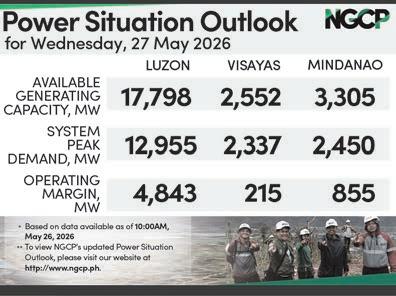
functional, at the same time, it allows you to stay awake and work. That’s what I believe is what’s driving the resiliency of that market now,” said Chahwan.
Predicting viability SEPARATELY, Pickup Coffee Global
Managing Director Francis Flores said franchisees can choose to invest anywhere from P1.7 million (small kiosks) to P4 million (big-format stores or cafes).
Franchisee applicants are expected to propose the location of their store, with the company using artificial intelligence to predict if the area is viable.
“We basically get the location itself and we plug it into that model and we have our own traffic count. We input a couple of metrics and it gives us at almost, 75 percent certainty of the top line. And based on that, we forecast the revenues, and if it falls within our paybacks and we see that this store is viable, we just do it,” said Chahwan.
Based on internal estimates and ideal store conditions, the brand projects a potential payback period of 18 to 24 months. Franchise partners are also supported by a structured business framework, which includes centralized supply-chain support, standardized processes, operational guidance, comprehensive training, and business playbooks.
Franchise push to speed up expansion of Pickup Coffee Hospital in Calamba taps MPower
By Lenie Lectura
@llectura
HE Calamba Medical Center
T(CMC) has entered the contestable market, allowing it to select its own power supplier for its hospital buildings and facilities in Laguna. MPower, the retail electricity supplier (RES) of the Manila Electric Co. (Meralco), said Tuesday it is committed to provide “reliable and flexible” electricity supply to support CMC’s growing energy requirements. The company will enable the enrollment of five service accounts under the Retail Aggregation Program
(RAP) and one account under the Competitive Retail Electricity Market (CREM).
CMC is one of the leading healthcare institutions in South Luzon. It is recognized as Laguna’s premier medical center, serving as a major referral hospital for acute care and remains committed to delivering accessible, compassionate, and high-quality healthcare services to communities.
“We see this partnership not just as a way to save on costs, but as our contribution to the nation, maximizing resources and building a better future for the next generation,” CMC President and CEO Pilar Nenuca Almira said in a statement.
The partnership lays the groundwork for expanded collaboration to support the healthcare institution’s future energy needs. “We also look forward to expanding this partnership with the upcoming construction of CMC’s new medical buildings,” Almira added.
For his part, Meralco Senior Vice President and Head of MPower Redel Domingo said the partnership reflects how the company continues to “evolve energy solutions alongside customers’ growing need.”
“We are proud to support Calamba Medical Center as it expands its capacity to serve more communities in Laguna. For us, powering healthcare
goes beyond providing reliable supply. It means enabling institutions to operate with greater efficiency, resilience, and readiness for what’s ahead.”
Last April, Rustan Coffee Corp. (RCOC) announced that it selected MPower to supply power to 60 Starbucks branches across Metro Manila. RCOC is the authorized licensee of Starbucks in the Philippines. Its partnership with MPower consolidates 60 stores with a combined demand of over 3 megawatts (MW) under RAP, enabling operational efficiencies for the coffee chain while supporting the company’s broader business and sustainability objectives.
Taiwan overtakes India as world’s fifth-largest stock market
Taiwan overtook India in stock market value, powered mainly by a breakneck rally in the world’s largest chipmaker Taiwan Semiconductor Manufacturing Co. (TSMC). The island’s market capitalization climbed to $4.95 trillion as of Monday, according to data compiled by Bloomberg. India’s value has dropped to $4.92 trillion. Taiwan’s stock market is now the fifth largest in the world, behind only the United States, mainland China, Japan and Hong Kong.
Taiwan’s ascent up the global equity rankings is largely driven by TSMC, which now accounts for about 42 percent of the benchmark index, representing intense market concentration. The chipmaker’s shares have rallied 49 percent this year as it has benefited from the artificial intelligence trade, in which its semiconductors have a dominant market position.
The surge in the island’s market value highlights intense optimism in AI that is triggering a global rally in tech shares, disproportionately ben-

efiting manufacturing hubs such as Taiwan and South Korea. India, on the other hand, is grappling with surging energy cost, slowing corporate earnings growth and the lack of companies directly linked to the AI buildout.
“Taiwan’s rising market capitalization is fundamentally a reflection of its heavy concentration in tech hardware, which is currently at the center of the AI investment cycle,” said Yi Ping Liao, a fund manager at Franklin Templeton. “Markets with
limited exposure to tech hardware are increasingly being overshadowed by tech hardware–heavy markets such as Taiwan and Korea.”
New regulations are also in TSMC’s favor. Taiwan’s financial regulator last month increased the limit that domestic funds can invest in a single stock. Under the new guideline, funds that invest solely in Taiwanese stocks can hold up to 25 percent of their net assets in any listed company whose weighting exceeds 10 percent in the Taiwan Stock

By Lorenz S. Marasigan @lorenzmarasigan
THE Department of Information and Communications Technology (DICT) is advancing the country’s push for responsible and inclusive artificial intelligence (AI) adoption across the region amid persistent gaps in digital infrastructure and readiness that continue to leave governments, small businesses, and communities behind.
At the Asia Tech x Singapore Summit, ICT Secretary Henry R. Aguda said he held high-level talks with senior officials from Singapore, the United States, and global industry leaders on AI governance, cybersecurity resilience, digital infrastructure investment, and workforce development.
He said the pushed for an “inclusive and trusted AI agenda” at the forum.
“AI is already here. It is already helping shape how the government delivers services and how parts of our economy operate. So, the real question for us is not if AI will matter, but how we govern and scale it responsibly, together,” Aguda said.
He added that the Philippines’s AI strategy is anchored on trust, inclusion, and readiness.
“For the Philippines, the direction is clear: enable innovation, protect trust, and ensure AI becomes a tool
for inclusion, not concentration.”
In a bilateral meeting with Singapore Minister for Digital Development and Information Josephine Teo, both sides committed to ensuring continuity of Asean digital priorities as the chairmanship transitions from the Philippines to Singapore in November 2026. Aguda said he also met separately with US Under Secretary of State for Economic Growth, Energy, and Environment Jacob Helberg, Cyberspace and Digital Policy Senior Bureau Official Russ Headlee, and Department of Commerce Assistant Secretary Bill Guidera. The meetings explored collaboration on cybersecurity, digital economy initiatives, and emerging technologies, as well as investment opportunities in digital infrastructure — including data centers, subsea fiber cable landing hubs, and ancillary services. AI is no longer confined to experimental use and is now actively reshaping business operations by making companies leaner, faster and more cost-efficient, according to Paolo Angelo Florenda, Velocity AI chief executive officer. Florenda told the BusinessMirror that AI is already embedded in everyday business systems and is increasingly being used to streamline workflows, reduce operating costs, and change how work is structured across industries.
Exchange, up from a previous limit of 10 percent. Currently, only TSMC meets the criterion.
The change may help lure in more than $6 billion of inflows to Taiwan, JPMorgan Chase & Co. said in a research note.
While Taiwan has overtaken in market value, India’s $4.15 trilliondollar economy—among the fastest growing in the world—still trumps the island’s $977 billion gross domestic product, according to International Monetary Fund estimates. Indian stocks have fallen this year amid record foreign outflows, driven by elevated valuations and a weakening rupee. Higher energy costs have also stoked inflation concerns and clouded growth prospects.
Global funds have sold nearly $24 billion of local equities so far this year as they chased the AI boom in Taiwan and Korea. India’s gauge is down 8 percent, heading for its first annual drop after a decade of gains. India’s weight in the MSCI emerging markets index has also fallen to about 12 percent from 19 percent last year. Bloomberg News
TOP executives issued public apologies and warned of “substantial” declines in revenue after Starbucks Korea was hit with a boycott campaign in response to a botched promotional event that referenced a highly-sensitive 1980s massacre to sell tumblers.
Shinsegae Group Chairman Chung Yong-jin bowed three times at a press conference early Tuesday as he expressed remorse for Starbucks Korea’s “Tank Day” campaign, which offered discounts on the company’s “Tank” tumbler series.
“I sincerely apologize and ask for your forgiveness and to all who have been hurt,” Chung said. “I take it very seriously that, as a result of this inappropriate marketing campaign, many people have experienced deep pain and anger. All responsibilities are on me.”
South Korea is Starbucks’ largest market outside of the United States and China. Shinsegae’s supermarket chain E-Mart owns a 67.5-percent stake in the local business, with the remainder owned by Singapore’s sovereign wealth fund.
The promotion’s launch last week coincided with the anniversary of the Gwangju uprising on
May 18, 1980, when South Korea’s then-military junta deployed soldiers in tanks to crush a protest in the southern city, killing hundreds. The backlash was swift. The company’s local chief executive officer was fired, and US-based Starbucks Corp. issued a statement calling the campaign “unacceptable”. But the response failed to quell outrage, and the ruling Democratic Party—the leadership of which includes numerous former student pro-democracy activists— has called for a boycott.
South Korean President Lee Jae Myung said last week that the promotional campaign was “inhumane, reckless behavior of lowclass merchants” seeking to make a quick buck.
Quieter cafes POLICE have launched an investigation after civic groups filed complaints, according to Yonhap News.
An internal Starbucks investigation had not been able to establish “malicious intent” among the five employees who had organized the event, Jeon Sangjin, Shinsegae’s senior executive vice president and chief financial officer, said at the briefing. Bloomberg News
STOCK market information displayed at the Taiwan Stock Exchange Corp. headquarters in Taipei, Taiwan, on Tuesday, May 6, 2025.
DEPARTMENT of Information and Communications Technology office in Quezon City (PNA FILE PHOTO)
By Reine Juvierre Alberto @reine_alberto

YIELDS on the 4-year and 10-year Treasury bonds (Tbonds) rose to 7 percent on Tuesday, with the Bureau of the Treasury (BTr) conceding to higher rates by fully awarding bids to gather funding for the government.
During the auction, the Treasury received a total of P78.747 billion in bids, or 2.6 times the P30-billion offer.
“The BTr was really forced to award the higher bids as the government needs the funding,” Sun Life Investment Management and Trust Corp. President Michael Gerard D. Enriquez said adding that investors are anticipating continued high inflation for May.
National Treasurer Sharon P. Almanza told the BusinessMirror that the auction committee decided to award the minimum issue size as the bids were “within market expectations.”
The 4-year securities climbed by 68.9 basis points to average at 7.430 percent from the previous auction’s 6.741 percent. This was also higher than the secondary benchmark rate for the same tenor at 7.348 percent.
The Treasury awarded investors with yields ranging from a low of 7.3 percent to as high as 7.490 percent.
Tenders for the 4-year tenor was 2.3 times oversubscribed, as bids reached P46.362 billion, enabling the Treasury award the full P20 billion it offered.
10-year T-bonds
YIELDS on the 10-year T-bonds, meanwhile, surged by 74.5 basis points to 7.602 percent from the 6.857 percent average yield in the previous auction.
The average yield is likewise higher than the Philippine Bloomberg Valuation Reference Rate (PHP BVAL) of 7.550 percent for the 10-year tenor.
Accepted yields were as low as 7.5 percent to as high as 7.688 percent.
Bids for the 10-year notes hit P32.385 billion, or 3.2 times oversubscribed the P10-billion offering, which was fully awarded.
Although demand for the 10year tenor was strong, the Treasury capped the award at P10 billion to “help contain upward pressure on yields,” Almanza told this newspaper.
When asked if rates this high are still manageable for the Treasury, Almanza said yields have reached this level even before Tuesday’s auction.
“Our debt metrics and risk indicators are still within limits and manageable,” Almanza said. “The [national government] has to balance its funding needs and borrowing cost taking into consideration market conditions.”
Jonathan L. Ravelas, senior adviser at Reyes Tacandong & Co., said the market is still liquid, but investors are clearly demanding for a higher premium.
The government’s decision to fully award signals preference to lock in funding now rather than gamble on future rates, Ravelas said.
“It also reflects a broader ‘higherfor-longer’ view, with markets still cautious on inflation and global rate movements,” he added.
Banking&Finance
Govt budget surplus shrank
THE national government’s budget surplus narrowed to P31.4 billion shrank by 53.29 percent to P31.4 billion in April from P67.3 billion in the same month last year as state spending continued to rise and revenue collections softened.
The shrinking of the budget surplus, revealed in the latest cash operations report released by the Bureau of the Treasury, comes after government expenditures jumped by 11.14 percent year-on-year to P505.4 billion from P454.8 billion.
The Treasury attributed the increase to higher national tax allotment shares of local government units, the annual block grant to the Bangsamoro Autonomous Region in Muslim Mindanao, releases for the local government support fund
THE Social Security System (SSS) is set to release P6.5 billion in benefits as pensioners will soon receive higher monthly pensions starting this June, after advancing the second tranche of the increase to provide relief to pensioners.
Jonathan Gary T. Jimenez, Special Assistant to the Corporate Head III, told reporters last Tuesday that retirement and disability pensions will be boosted by 10 percent next week.
“Because we have this economic crisis and to abide by the instructions of the President,” Jimenez said, “instead of pensioners receiving the 10-percent increase in September, SSS advanced it this June.”
Particularly, retirement and disability pensions will increase by 10 percent, while death and survivor benefits will go up by 5 percent.
This is part of the SSS’ Pension Reform Program, which raised monthly
MEMBERS of the Philippine Health Insurance Corp. (PhilHealth) with concerns over healthcare benefits and claims may now seek free legal aid services from the Integrated Bar of the Philippines (IBP).
The benefits are contained in an agreement signed last Tuesday by PhilHealth President and CEO Edwin M. Mercado and IBP National President and Chairman of the 27th Board of Governors Allan G. Panolong
“As contributors, advocates and legal professionals with a wide reach, [this] directly strengthens what we can offer to the Filipino people together,” Mercado, also a physician, said after signing the deal.
PhilHealth and IBP will collaborate to improve support systems for PhilHealth members, particularly in addressing concerns related to healthcare benefits, patient rights and access to information.
As such, the IBP will provide free legal aid services to qualified PhilHealth members, particularly indigent patients or those from margin-
and increased budgetary support for government corporations.
Higher disbursements were also driven by direct payments made by development partners to suppliers and contractors involved in various foreign-assisted railway projects of the Department of Transportation.
Interest payments likewise rose by 36.77 percent to P63.5 billion in April from P46.4 billion a year ago.
Revenue collection
MEANWHILE, revenue collections
pensions starting September 2025. The hike will continue every September until 2027.
Retirement pensioners currently receiving the minimum monthly pension of P2,420 will see this increase to P2,662 under the second tranche of the pension hike, while disability pensioners with an average pension of P2,200 will receive P2,420.
Survivorship pensioners, meanwhile, will receive P2,205, up from the current minimum pension of P2,100.
Executives of the SSS earlier said they expect the pension increase will inject about P117.2 billion into consumer spending through the pensioners, boosting economic growth over the next three years.
Aside from the pension increase, Jimenez said SSS will soon roll out a micro-loan program in the second quarter to offer members with short-
alized sectors, with issues involving healthcare benefits or denied claims.
PhilHealth, for its part, will provide the documents and information needed by lawyers facilitating legal assistance.
“When indigent clients face disputes, denials, or procedural confusion, they may need competent legal assistance to assert their rights,” Panolong said. “Through this partnership, the IBP will help ensure that indigent PhilHealth clients can access the law through legal assistance, capacity building, knowledge sharing and other forms of support.”
Existing dispute resolution mechanisms within PhilHealth will likewise be enhanced under the partnership to improve service delivery, and member concerns and benefit-related issues will be addressed promptly.
“In healthcare, there are inherent healthcare failures,” Mercado, also a physician, said. “We want our members to be protected from [these.]” To promote greater awareness of
grew at a slower pace of 2.83 percent to P536.8 billion in April from last year’s P522.1 billion.
Of the amount, P511.0 billion came from taxes while the remaining P25.8 billion were sourced from non-tax revenues.
Broken down, the Bureau of Internal Revenue (BIR) collected P422.2 billion, a marginal increase of 0.41 percent from P420.5 billion a year ago.
The Treasury said the “slower growth” was partly due to the extension of the filing and payment of AITR deadline from April 15 to May 15 as the country was put under a State of National Energy Emergency.
The Bureau of Customs (BOC), meanwhile, collected P86.3 billion during the month, posting a doubledigit growth of 15.52 percent compared with the P74.7 billion it raised a year ago.
Non-tax revenues also went up by 7.32 percent year-on-year to P25.8 billion from P24.1 billion.
term loans ranging from P1,000 to P20,000.
The loan repayment may span from 15 to 90 days, with an interest rate of 8 percent, Jimenez said.
The loan may availed through SSS’ partner banks, including Rizal Commercial Banking Corp., Union Bank of the Philippines and Land Bank of the Philippines, among others, he added.
The SSS has also put in place the enhanced Emergency Loan Program, which offers up to P20,000 with an interest rate of 7 percent and a sixmonth repayment moratorium.
The eligibility requirements was lessened to 18 from 36 months of posted contributions, with at least six contributions posted within the last 12 months.
The SSS has allocated about P27 billion for this program, which is expected to benefit around 2.24 million eligible members. Reine Juvierre S. Alberto
members’ rights and entitlements, PhilHealth and IBP will collaborate on joint information and education campaigns and on policy initiatives to enhance patient welfare and healthcare service delivery.
Moreover, PhilHealth and the IBP will also work together in health law and policy development, capacitybuilding programs, continuing legal education for PhilHealth lawyers, and fraud prevention efforts.
PhilHealth paid out last year a total of P300.45 billion in benefits, up by 81.72 percent from the previous year.
PhilHealth said it is looking into reported discrepancies between what patients are told about their coverage and what providers submit in their claims.
“We are reinforcing our auditing systems, deepening coordination with oversight bodies and healthcare providers, and ensuring that our members always receive accurate, transparent information about their benefits,” it said earlier.
Reine Juvierre S. Alberto
This was supported by P160 million in restitution funds recovered from flood control projects and P623.9 million in privatization proceeds, the Treasury said.
Interest payments
CHINA Banking Corp. Chief Economist Domini S.D. Velasquez told the BusinessMirror that the “April fiscal performance suggests underlying revenue collections were softer than headline figures imply.”
Revenues came in softer due to the extension of tax filing deadlines despite collections from the BOC benefiting from higher oil prices and the weaker peso, Velasquez added.
Spending growth, meanwhile, indicates cautious disbursement activity as this was still driven by interest payments.
“The slight pickup in April spending excluding interest payments could be positive, especially if directed toward infrastructure,” she told the BusinessMirror.
From January to April, the government’s budget deficit tapered by 14.44 percent to P324.1 billion from P378.7 billion in the same period last year. Revenue collections rose by 9.99 percent to P1.672 trillion during the four-month period from P1.520 trillion in the comparable period a year ago. Tax revenues grew by 3.54 percent to P1.480 trillion,
Despite the improved year-todate deficit position, Velasquez said the government may still need additional revenue sources. Velasquez said this could potentially come from non-tax measures to keep the deficit within target this year at P1.611 trillion. Reine
Data: The new oil or new gold?

comparison is intriguing.
Like oil, data is useless unless it is refined. Raw data must first be extracted, processed and analyzed before it becomes valuable. Once properly refined, data can power almost everything: from advertising and artificial intelligence to management decisions and economic growth. Processing data requires verifying its accuracy, analyzing the data and structuring the data in ways that help organizations achieve goals or guide business decisions.
Just as there are oil giants, today we have tech giants; companies that own digital infrastructures and have recognized the immense power of data. These corporations have built modern monopolies by leveraging the massive use of digital devices in today’s digital economy. They use data to train machine-learning models, improve algorithms, make advertising more effective and develop increasingly efficient automated systems.
Like gold, data is an asset that can endure over time if properly preserved. Its value can even appreciate through continuous use and accumulation. However, raw or granular data, like unmined gold, has little value unless it is processed and transformed into something useful.
In the digital economy, “mining” data means customizing and analyzing information to meet business needs. Companies use data to generate reports on consumer behavior, improve sales strategies, reduce operational costs, streamline workflows and ultimately increase revenues.
Yet data mining, much like mining for gold, is neither simple nor effortless. Data mining requires specialized tools, digital expertise and intensive labor to identify the right metrics and extract valuable insights.
However, compared with oil and gold, data may actually be more powerful. In terms of value, the comparison is fitting but data possesses unique attributes that surpass both oil and gold.
First, data continues to expand in availability, whereas oil and gold are finite resources. Oil reservoirs can be depleted or permanently damaged. A recent example is the blockage of Iranian oil cargo shipments due to United States sanctions. Because production had to be reduced, storage facilities reached capacity, forcing oil wells to shut down. According to Miad Maleki in an article published by iranintl.com on April 13, 2026, shutting mature oil wells can cause “water coning,” a process in which underground water intrudes into the reservoir and permanently traps oil within rock pores, resulting in irreversible damage. Second, while oil can only be consumed once, data can be reused, recycled and utilized simultaneously by multiple users. The same data can generate value repeatedly across different industries and applications.
Most importantly, data is accessible to all of us. Every day, we generate it through our transactions, communications, searches and online activities. The real question is whether we choose to
effect immediately. In its disclosure, the bank said it appointed Shuitsuro Komatsu as the new director, replacing Masatoshi Komoriya who resigned from his post due to personal reasons, according to a statement the lender issued last Tuesday. Myla R. Untalan, the company’s
Show BusinessMirror

MOVING ON THE actress’ girlfriend is the ex of another actress, who has been in the news lately. We wonder what happens when they bump into each other at showbiz events. The actress’ girlfriend is part of showbiz but in a low-key role. Their past relationship with the other actress was quite passionate and volatile and nearly ended in tragedy. The actress broke up with the girlfriend because she valued her career more and knew that it being revealed would be detrimental to her reputation. Thankfully, everyone seems to have moved on from that, and the actress and the low-key girlfriend seem to be very happy. Meanwhile, the other actress is waiting for happily ever after. Hopefully, it will come very soon.
NOT THE BREADWINNER
MANY people are under the impression that the actress is her family’s breadwinner. The truth is, when she married her husband, everyone said she was lucky. The guy has a huge collection of something that, if sold, would translate to a lot of money. His line of work does not require him to wear suits or report to the office but the husband definitely contributes significantly to the family’s income.
PROBLEMATIC
A BROADCASTER who is in legal trouble right now seems to come from a family that is, to put it mildly, problematic. His father used to be an employee of the same network and he was allegedly let go because of something related to a co-employee. Meanwhile, while everyone thought the broadcaster was asked to resign, he was allegedly terminated for cause. We don’t know what went on in the process but it definitely included the same complainant and one other lady, who prefers to remain anonymous.
NOT THE ONE
EVERYONE thought that the beauty queen finally found the one after a couple of failed relationships. Apparently, this relationship was also not meant to be. The difference between this and the beauty queen’s other relationships is that this guy is very, very rich. There are rumors that the beauty queen is trying to blackmail the guy to extort money from him while he is being very careful with his movements because he knows he’s being watched. The guy financed the beauty queen’s business (everyone was wondering where she got the money) and gave her a lifestyle fit for a princess. The relationship reportedly ended because he cheated.

SANDRA BULLOCK, NICOLE KIDMAN RETURN AS OWENS SISTERS IN ‘PRACTICAL MAGIC 2’ MAGIC always finds its way back.
Nicole Kidman and Sandra Bullock are back as the Owens sisters in Practical Magic 2, the sequel to the beloved 1998 film Practical Magic. The follow-up is directed by Susanne Bier (The Night Manager, In a Better World ) and written by Georgia Pritchett and Akiva Goldsman.
Kidman and Bullock are joined in the cast by Stockard Channing, Dianne Wiest (both reprising their roles from the first film, as well), Joey King (Bullet Train), Xolo Maridueña (Cobra Kai ), Maisie Williams (Game of Thrones) and Lee Pace (The Hobbit trilogy).
Practical Magic 2 opens in Philippine cinemas September 9. The official trailer can be viewed at youtu.be/wSkpEPqQXKI.


By Eugenia Last

Daniel Dae Kim explores booming South Korean pop, film, cosmetics and food in�luences for CNN series

NEW YORK—Not too long ago, Daniel Dae Kim had an unusual encounter with a salmon. It had nothing to do with dinner. The actor, director and producer lay down in a doctor’s office in Seoul and underwent microinjections into his face of DNA from salmon sperm. The hope was to reduce inflammation and improve elasticity.
“I look like a got a little sunburn and a little redder than usual, but it’s not bad,” he says to a camera crew after the procedure. “OK, I’m camera ready.” Kim was putting his face on the line as part of the new CNN series K-Everything: The Global Rise of Korean Culture, his love letter to K-beauty, K-pop, K-food and K-film. It debuts on Saturday on CNN International and is also available on CNN and HBO Max.
“It’s an examination of how Korea has risen in the course of three short generations from a war-torn third world country to one of the most modern places in the world,” Kim says in an interview. “We’ll take a look at how that’s happened through food, through cinema, through beauty products and through music.”
WHAT’S THE SHOW ABOUT?
AT a vibrant kimchi festival in Pyeongchang, Kim explores how K-food is reshaping fine dining across the globe. In other episodes, he meets actor Lee Byung-hun, “Gangnam Style” singer-songwriter Psy, BigBang’s Taeyang and the songwriters behind the Oscar-winning song “Golden.”
“For those who’ve never been to Korea, this is a nice introduction in a way that is not something taught in a classroom or in a textbook,” Kim says.
In the beauty episode, Kim chats with makeup artist and influencer LeoJ and model Irene Kim on how beauty standards have changed. He tries various serums and face masks and even visits a factory where snail slime is collected to be used in various products. “I got to meet people from different walks of life, from different cities, from different economic classes, and it just broadened my understanding of the culture,” he says. Kim was born in South Korea but moved to the United States when he was 1, returning frequently. That makes K-Everything a personal journey, which also includes his parents.
Seoul has undergone such an economic and cultural boom that all the landmarks his parents


knew from when they were teenagers were gone and they relied on him to navigate. “It was almost a foreign country to them,” he says.
‘A
TRUSTED GUIDE’
KIM joins a crowded field of celeb travel hosts, which includes Tony Shalhoub, Rainn Wilson, Eugene Levy, Stanley Tucci,Orlando Bloom, Zac Efron, José Andrés, Chris Hemsworth, Will Smith, Eva Longoria and Ewan McGregor.
Kim, the Lost star who recently earned a Tony Award nomination, is a fan of the late chef and TV host Anthony Bourdain, who helped create the role of modern TV travel host.“I wouldn’t say that this show is as irreverent as Anthony Bourdain’s show was, but I loved it because I felt like he was showing me his take on each country and he was a trusted guide,” he says. “If I can be that for some people, then that’s the spirit that I’d like to bring into this show.”
Amy Entelis, executive vice president for talent, CNN Originals and creative development, says Kim brings a unique and deeply personal perspective to the series.
“From the first time I met him, it was clear he was incredibly well-equipped to tackle this— deeply passionate about the subject and highly knowledgeable. He was also very focused on making sure the way we look at Korean culture translates to a broad global audience, really putting a spotlight on it,” she says.
Kim has never played TV host, but he’s an avid traveler and he’s not a fish out of water in Korea. He says despite stretching himself, he felt comfortable.
“I get to introduce the world to a culture that I love and have gotten to know and has informed who I am as a performer and as a human being. So to me, it was strangely comfortable and it didn’t feel at all like I was stepping outside of my comfort zone.”
Kim hopes the series can help non-Koreans better understand a culture that has influenced so much of the globe of late and address anti-Asian racism, which surged during the Covid-19 pandemic.
“If we can start to understand one another a little bit better through culture, then I think it is one step toward bringing together a global community. And I think the world could use a little more understanding in general.” AP
3 stars
LIBRA (Sept. 23-Oct. 22): Think about the ramifications before you make a radical or emotional move or gesture. Consider what matters to you most and how you can diversify your plans or skills to make your life easier and your finances manageable. Life choices can make or break how your daily routine flows. Surround yourself with supportive people. 3 stars
SCORPIO (Oct. 23-Nov. 21): Be receptive, but not foolish. Ask questions and reach out to agencies, institutions and experts who can explain the ins and outs of whatever you are considering. Whatever decision you make, it’s likely to disrupt a relationship with someone you share common ground with. Making alternative suggestions will help ward off costs. 3 stars
SAGITTARIUS (Nov. 22-Dec. 21): You’ll be anxious for a change. It’s time to light the fuse and to make things happen. If you don’t like where you live or the rising costs you’re enduring, it’s time to rethink your lifestyle and your expenses. Reach out to someone you look up to. Ask questions that help you redirect your energy. 4 stars
CAPRICORN (Dec. 22-Jan. 19): Remain calm, observant and practical. You have more opportunities than you realize, but first you must be willing to let go of what’s no longer working for you. Put your time and effort into adjusting your living space to meet your demands and to make thoughtful

DANIEL DAE KIM hosts a new CNN travel series.
Cutting through the noise

On view is a collection of ceramics, textiles, fabrics, and adornments as the De La Salle-College of Saint Benilde (DLS-CSB) student recontextualizes materials commonly associated with the female anatomy and fashion to explore identity, emotion and memory
Curated by visual artist Wilfredo Offemaria Jr. with the Exhibition Note by playwright and designer Timothy Dacanay, Malaya Clara, Malaya Ka Ba? is a voyage in itself—one that invites viewers to pause, look inward, and confront the quiet truths they often avoid. It is a reflection of Marfori’s practice, which is characterized by fluidity, movement, and organic formations which echo the inner processes of healing and transformation.
Influenced by her background in the performing arts, to include music, dance, and theater, Marfori’s works carry a strong sense of rhythm and presence.
Among her interactive installations is Sumpa Kita, which encourages viewers to offer sampaguita garlands to the sculpted hands lining the walls, depicting gestures of labor, devotion and survival.
The final step in the exhibition is Malaya Ka Ba?, a mirrored encounter wherein guests are taken into a moment of confrontation. The installation becomes a portal of selfawareness. Here, they are asked to ponder and respond to the titular question and offer written reflections which will be part of a collective archive of longing and recognition.
Through her installations, sculptures, and participatory works, Marfori hopes to invite viewers into a space where art is not only seen but deeply felt, and where vulnerability becomes strength.
Malaya Clara, Malaya Ka Ba? is on view at the NCCA Gallery on the Ground Floor of the NCCA Building along General Luna Street, Intramuros, Manila, until May 31, 2026.

LEADERSHIP is often described through vision, influence, and decision-making. Yet one of its most practical and overlooked aspects is how you manage information. Each day, you receive updates, reports, messages and opinions from many directions. Your role is not only to absorb them but to filter, organize, and turn them into clear action. When information lacks structure, teams feel confused and overwhelmed. When it is managed well, people feel focused and confident. The clarity of your leadership often depends on the clarity of what you choose to share.
One common challenge is passing along too much information. You may think sharing everything keeps your team informed, but it often creates noise and uncertainty. When details pile up, people struggle to see what matters. You can improve this by curating what you share. Before forwarding a message or giving an update, ask what your team truly needs to know and what they can ignore. Distill key points and communicate them clearly. Summarize long updates into a few sentences that highlight actions and priorities so your team can focus on what requires attention.
Another important skill is translating information into meaning. Data on its own rarely inspires action. Your team looks to you to interpret what the information means and what should happen next. For example, if performance numbers decline, you can simply present the figures, or you can explain the possible causes and outline the next steps. When you add context and direction, you turn information into guidance. This reduces confusion and builds trust in your leadership because your team sees that you are not only informed but also thoughtful in your response.
Leaders also face the pressure of constant updates. Messages arrive throughout the day, and there is an expectation to respond quickly. While responsiveness has value, constant reaction can disrupt your ability to think clearly. You can manage this by setting boundaries around when you process information. Allocate specific times to review updates and respond to messages. During other periods, focus on deeper work such as planning and problem-solving. You may also communicate these boundaries to your team so that they understand when to expect responses. This balance allows you to stay informed without losing your ability to lead with intention.
Clarity is another essential part of managing information. Even when you have the right

insights, unclear communication can create misunderstandings that slow progress. You can strengthen clarity by using simple language and structured thinking. When you assign a task, explain the goal, the expected outcome, and the timeline. When you share updates, highlight what has changed and what actions are required. You can also invite your team to repeat key points in their own words to confirm shared understanding. Clear communication reduces repeated questions and helps your team move forward with confidence.
Listening is equally important in the flow of information. Leadership is not only about sending messages but also about receiving them. Your team often holds valuable insights, but these can be lost if you do not create space for them. You can encourage open communication by asking thoughtful questions and giving your full attention during conversations. Notice patterns in what your team shares, as repeated concerns often signal deeper issues. When people feel heard, they are more likely to share relevant and useful information. This improves decision-making and strengthens collaboration across the group.
Another practical habit is organizing information in a way that supports action. Scattered notes and disconnected updates make it difficult to track progress. You can create simple systems that keep information accessible and clear. For example, maintain a shared document that outlines key priorities and updates. Review it regularly with your team to ensure alignment and accountability. You can
also group information by project or goal so that it is easier to follow. This reduces confusion and keeps everyone focused on the same outcomes.
You also need to recognize the impact of emotional tone in how information is delivered. Facts may be neutral, but the way you present them influences how they are received. If you communicate with urgency and stress, your team may feel anxious even when the situation is manageable. If you communicate with calm and clarity, you create a sense of stability. Choosing your words carefully and pacing your delivery can make a significant difference in how your message is understood. Being mindful of your tone helps you guide not only what your team knows but also how they feel about it.
Finally, effective leaders understand that managing information includes knowing what to ignore. Not every update requires action, and not every issue deserves attention. You can protect your time and energy by focusing on what aligns with your priorities. This discipline allows you to lead with purpose rather than reacting to every incoming detail. Over time, your team will learn to follow your example and focus on what truly matters.
Leading as an information manager is about creating clarity in a world of constant input. When you filter what matters, provide meaning, and communicate with intention, you help your team work with confidence and direction. In doing so, you turn information from a source of stress into a tool for steady and effective leadership.
Kindness at work can mean giving honest feedback, limiting meetings and bending rules
By Cathy Bussewitz
The Associated Press
NEW YORK—Beth Brown was assigned to a major project at work when hardship struck. First, her 6-month-old daughter fell ill with Covid-19. A few days later, her mother passed away.
Brown, director of health and well-being at a company that provides employee mental health programs and absence management services, sent a note to the senior ComPsych director who was her partner on the project, explaining she would have to miss work to care for her daughter and to make funeral arrangements.

Instead of calling to go over remaining tasks, the director reached out to ask whether Brown was OK and to tell her not to worry about the project. “In the grand scheme of things, this is not important,” Brown recalled her colleague saying. “It’ll be here when you get back. I’ll be there when you’re back.” Hearing the kind words, Brown “felt like there was a brick taken off my chest.”
The importance of treating others with kindness is one of the first lessons most parents and guardians try to teach children. But the skill sometimes falls by the wayside in work settings that encourage competition and where adults face deadlines and pressure. Financial worries and fears of layoffs also can stifle generous impulses.
Perhaps that’s why acts of kindness on the job often are so memorable for those
on the receiving end. Molly MacDermot, director of special initiatives at Girls
Write Now, a nonprofit mentorship and writing program, feels lucky to have a boss who was kind to her when MacDermot’s father died eight years ago and her mother passed away six months ago. As technology accelerates the pace of many types of work, “it’s really important to feel human, to be allowed to be human, which is getting the grace to just deal with the bumps in life,” MacDermot said. Kindness can also mean sharing hard truths in a productive way, going out of the way to welcome a new coworker or bending the rules for the sake of love.
Here are some examples of kindness in action and ideas for spreading goodwill at work.
CREATE SAFE SPACES
TREATING others with warmth and consideration may be especially meaningful at a time of heightened political divisions that has many people feeling like they have to choose sides, said Anna Malaika Tubbs, a sociologist and author of The Three Mothers and Erased
“Especially in a workplace, where you can level the playing field and really make sure people know, ‘Hey, you’re welcome here and you’re seen here,’ that can really make a difference at a time when on a national level people feel really divided from each other,” Tubbs added.
One way to encourage empathy at work is to create an environment where people get to know each other, Tubbs said.
The goal isn’t “to erase political
difference or erase being able to disagree with each other” but to promote a cultural shift by encouraging behavior and actions different from the ones that often get rewarded at work, Tubbs said.
“Let’s not show up to meetings thinking that we have to compete and show who’s going to be the loudest and who’s going to be the most dominant,” she said.
Creating a supportive culture within an organization requires daily attention, said Maya Nussbaum, the founder of Girls Write Now and MacDermot’s boss. She also encourages actively listening to different perspectives.
PROVIDE REAL FEEDBACK
COMPASSION can mean sharing hard truths in a tactful way. For example, it’s challenging to let people know they aren’t meeting performance expectations, but “sometimes kindness is getting out of your comfort zone and telling someone the truth so they can shine,” said Chantel Cohen, founder and CEO of Atlanta-based CWC Coaching and Therapy, a counseling and life coaching practice in Atlanta.
When providing feedback as a manager, give specific examples to illustrate the behaviors that need improvement, she said.
“Kindness isn’t a conflict-free workplace. Kindness is a workplace where repair is possible or improvement is possible,” Cohen said.
However, remember to acknowledge successes. Karla Cen recalls a former boss who she says criticized her several times a
day. She learned a lot, but felt unrelenting pressure.
GIVE BACK TIME BEFORE scheduling a meeting, consider whether the goals can be accomplished another way. For example, a manager can tell a working group, here’s what’s on the agenda, take time to think about it and send your ideas in writing, Cohen suggested.
“Sometimes, the gift of time is such a kindness,” she said. “Maybe you can’t give your team time off right now, but what you could do a couple times a quarter is just say, ‘Hey we’re going to skip tomorrow’s meeting and here are the things I want you all to think about. Submit this in writing so that you can have the time for yourselves.’”
RECONSIDER RULES
MEHER MURSHED began dating a colleague, Anupa Kurian-Murshed, more than two decades ago when they both worked at Gulf News in Dubai. The couple wanted to marry, but the newspaper prohibited spouses from working in the same department. They feared one of them would have to quit if they wed.
So they appealed to their editorin-chief, who raised the issue with the managing director. The top managers decided the couple could keep their jobs and get married as long as one of them didn’t report to the other.
“It changed our lives. Life could have been very different,” Meher Murshed said.
PHOTO

SHFC, DHSUD award over P47M in housing aid to Valenzuela families
The Social Housing Finance Corporation (SHFC), in partnership with the Department of Human Settlements and Urban Development (DHSUD), continues the rollout of the Enhanced Community Mortgage Program (ECMP), awarding more than P47 million in housing assistance to a community in Valenzuela City on May 6, 2026.
DHSUD Secretary Jose Ramon Aliling and SHFC President and CEO Federico Laxa led the ceremonial turnover of checks to the Archangel Sword II Homeowners’ Association,
Inc. (HOAI). The funds will support the acquisition of land that the community has occupied for nearly two decades.
Located in Barangay Lawang Bato, the community is composed of 256 memberbeneficiaries. The initiative forms part of SHFC’s ongoing efforts under the President’s Expanded Pambansang Pabahay para sa Pilipino (4PH) Program.
In his message, Laxa emphasized the agency’s commitment to delivering housing assistance to ECMP communities nationwide.
“Halos linggo-linggo po kaming nagpupunta ni Secretary Aliling upang iabot sa inyo ang tulong na pinansyal kung saan magkakaroon ng kasiguraduhan sa katuparan ng inyong pangarap na pagmamay-ari ng mga lupang kinatitirikan ng inyong mga tahanan [Secretary Aliling and I visit you almost every week to provide you with financial assistance that will ensure the fulfillment of your dream of owning the land on which your homes stand],” he said.
HOA President Victor Simon Edrosolo, meanwhile, expressed gratitude on behalf of
the beneficiaries, describing the milestone as the fulfillment of a long-awaited dream after nearly 20 years. “Ito na ang pinakahihintay natin,” he said in his closing remarks, thanking SHFC and DHSUD for helping turn their dream into reality.
To date, SHFC has approved 45 projects since the program’s launch in July 2025, benefiting more than 7,700 families nationwide. Of these, 17 communities have already been awarded checks for land acquisition, paving the way for their transition into legitimate homeowners.
Aside from ECMP, the agency is implementing vertical 4PH developments, including Crystal Peak Estates in San Fernando City, Pampanga; People’s Ville in Davao City; Valley View Township in Tagoloan, Misamis Oriental; Tandikan Ville in Puerto Princesa City, Palawan; and Pascualer 7 and 10 in Quezon City.
For more information on SHFC projects and application procedures, the public may visit www.shfc.gov.ph or call (02) 5322-7300.
Sun Life shifts head office to geothermal power, strengthening sustainability efforts

Sun Life Philippines has taken a significant step towards more sustainable operations with the transition of Sun Life Centre, its head office in Bonifacio Global City, Taguig, to geothermal power. The building is now powered by 100 percent renewable energy, through a collaboration with First Gen, one of the country’s leading clean energy providers. The transition reinforces the company’s commitment to reducing its environmental impact and operating responsibly in the face of growing climate challenges. By shifting to cleaner energy sources with significantly lower emissions, Sun Life strengthens its approach to long-term sustainability
while supporting a more climateresilient future.
“This milestone demonstrates that sustainability isn’t just part of our corporate values, but embedded in how we operate,” said Michelle CorderoGarcia, Chief Human Resources Officer of Sun Life Philippines. “Our commitment to renewable energy reflects our belief that businesses have a responsibility to contribute to environmental solutions.”
The shift to geothermal power is a testament to how Sun Life continues to build on its pioneering green building legacy. Sun Life Centre was the first in the Philippines to earn a LEED Gold certification for Core and Shell in 2012. Since then, the facility has maintained its sustainability leadership through green design features such as rainwater harvesting, motion-sensor lighting, double-glazed windows, and a distinctive green roof, all of which contribute to significant energy savings.
Through its sustainability plan, Sun Life seeks to maximize its positive impact, strengthen its long-term resilience as an organization, and uphold being a trusted and responsible business.
GSIS opens bike, e-mobility loan to cut members’ daily transport costs
Members of the Government Service Insurance System (GSIS) now have an affordable way to move through their communities, by bicycle or electric mobility device, without the burden of high upfront costs or fuel expenses.
The GSIS recently launched the Ginhawa Bike and E-Mobility Loan (GBEL), a new loan facility that offers affordable and accessible terms for government employees who want to reduce their daily transportation costs.
GBEL forms part of President Ferdinand R. Marcos Jr.’s whole-ofgovernment effort to make daily life better for Filipinos, aligned with the Unified Package for Livelihood, Industry,
Food, and Transport (UPLIFT) and the broader push for livable, accessible communities where people can move freely and affordably. Earlier, the GSIS introduced the Ginhawa Solar Energy Loan (GSEL) to help members reduce household electricity expenses. GBEL extends that effort to transportation. Under the GBEL, qualified members may borrow up to 100 percent of the cost of the unit, subject to a maximum of P300,000, payable over 36 months.
The loan carries an interest rate of five percent per annum, with no service fee to be charged upon granting. GSIS President and General Manager

DOTr-LRTA, LANDBANK sign agreement to settle unpaid obligations to private concessionaire
COMMUTERS will benefit from LRT1 line’s better and improved service as the Department of Transportation (DOTr) and Light Rail Transit Authority (LRTA) signed an agreement with Land Bank of the Philippines (LANDBANK) on May 14, 2026 to settle DOTr-LRTA’s P3.6 billion contractual obligations to Light Rail Manila Corporation (LRMC), the private operator of LRT-1.
President Ferdinand Marcos Jr. has ordered the DOTr to settle its duties to private concessionaires for the benefit of the passengers and ensure reliable, safe and commuter-centric service.
Transportation Secretary Banoy Lopez said the credit line agreement (CLA) with LANDBANK will enable the transport agency to honor its financial obligations to LRMC to guarantee continued services for commuters.
“We hope that as we settle our obligation with the private concessionaire, we will see more improvements on their services, including structural upgrades, digitalization, and reliability of the rail line,” Secretary Lopez said.
LANDBANK President and CEO Lynette Ortiz noted that the agreement underscores
Conrad
Wick Veloso said the program is designed to provide immediate and practical support to members.
“This program will give our members a practical option to manage their daily transportation expenses. We want our members to be able to move through their communities without that financial weight,” Veloso said. Applications are processed online through the GSIS Touch mobile application.
GBEL covers brand-new bicycles and a wide range of electric mobility devices, including e-bikes, e-scooters, e-mopeds, cargo e-bikes, folding e-bikes, and other similar electric-powered transport units.
the National Government’s commitment to honoring its obligations and strengthening public-private partnerships in the transport sector.
“This loan facility represents a deliberate action by the National Government, through the LRTA and the DOTr, to fulfill its commitments and maintain strong and credible partnerships with its development partners” Ortiz said. Under the DOTr-LRTA and LANDBANK agreement, the state-run bank will extend financing to cover the amount needed by the transport agency to partially settle its contractual obligations with LRMC.
Lopez expressed his gratitude to Finance Secretary and LANDBANK Chairman Frederick Go and to Ortiz for providing the DOTr the needed financial resources, which he said will foster good relationship with the LRMC.
“Itong kasunduang ito ay para sa commuters. [This agreement is for the commuters.] Thousands of commuters ride the rail line everyday. So we owe it to our commuters to provide them with quality and efficient service at masiguro ang kanilang kaligtasan [and to ensure their security],” Lopez said.
Manila strengthens culinary excellence with appointment of new F&B director, Indian chef
CONRAD Manila is delighted to welcome distinguished additions to its culinary leadership team: Vikram Singh as Indian Chef and Jaquelyn Sunderarajo as Director of Food and Beverage. With their extensive experience and refined expertise, guests can anticipate elevated offerings and thoughtfully curated culinary experiences across the hotel’s signature dining venues.
“It is with great pleasure that we welcome new reinforcements to the culinary powerhouse of Conrad Manila,” said Rupert Hallam, general manager of the hotel. “We began the year with exceptional dining experiences, and guests can look forward to even more remarkable moments in the months ahead, especially as we celebrate our 10th anniversary, with Jaquelyn’s strategic direction and Chef Vikram’s passion for authentic cuisine.”
Sunderarajo brings with her over 15 years of experience in luxury hospitality, having held leadership roles across some of Singapore’s most well-known hotel brands. Prior to joining Conrad Manila, she led one of Southeast Asia’s largest and most complex food and beverage operations at Hilton Singapore Orchard. She is recognized for driving guest satisfaction, delivering strong commercial performance, and fostering highperforming teams, alongside introducing innovative and compelling dining concepts.
Chef Vikram offers a uniquely inspiring journey into the culinary arts, having spent nearly two decades in the corporate world before pursuing his true passion. Guided by his mother’s culinary heritage, he undertook formal training in international cuisine before deepening his expertise in North Indian gastronomy under her mentorship, continuing a rich family legacy. Today, he is dedicated to showcasing traditional and often lesser-known North Indian cuisines, such as mughlai and awadhi, while preserving their authenticity through the thoughtful use of seasonal ingredients.
Together with Conrad Manila’s Executive Chef and its award-winning culinary team, they have already begun introducing exceptional dining concepts that continue to captivate epicureans and hotel guests alike.
The Philippines’ Biggest Dessert Buffet at Brasserie on 3
Featuring over 100 meticulously crafted desserts, Conrad Manila unveils Wonderland Reverie, an imaginative and indulgent dessert buffet at Brasserie on 3. Inspired by Lewis Carroll’s Alice in Wonderland, the experience presents seven curated stations that reimagine the classic tale through exquisite sweets and savory creations, inviting guests into a journey of fantasy and flavor. Wonderland Reverie

Unti July 31, 2026
Saturdays and Sundays
P2,500 nett per person
Signature Curries Across the World at Brasserie on 3
As part of the refreshed themed dinner offerings for 2026, “Curries of the World” presents a rich and aromatic exploration of curry traditions from Thailand, Malaysia, Indonesia, Japan, and India, among others. Highlights also include a dedicated laksa station and an array of curated desserts. Curries of the World
Wednesdays and Thursdays
Until 31 December 2026
P3,600 nett per person
Hermès-inspired Afternoon Tea
Indulgence at C Lounge
Conrad Manila invites guests to experience “Heures d’Orange,” a bespoke Hermès-inspired afternoon tea at C Lounge, curated in collaboration with The Amenity Studio. Available until July 31, 2026, this limited-time offering explores the harmony of fragrance and flavor, pairing tea selections inspired by iconic Hermès scent profiles with an elegant assortment of artisanal pastries, refined savory bites, and delicate confections by the hotel’s award-winning pastry team. Heures d’Orange
Until July 31, 2026
12 pm to 6 pm
P3,288 ++ per set
As Conrad Manila celebrates its 10th anniversary this June, the hotel looks forward to unveiling more exceptional dining experiences defined by luxury, innovation, and purposeful hospitality. For inquiries and reservations, please call +632 8833 9999 or email MNLMB.FB@ConradHotels.com.
Jaquelyn Sunderarajo, Conrad Manila’s Director of Food & Beverage; Vikram Singh, new Indian Chef
Sun Life Centre
Editor: Tet Andolong

Property sector still bullish despite headwinds

By Rizal Raoul S. Reyes @brownindio
NOTWITHSTANDING the fact that the local real estate market is experiencing headwinds, there is still a silver lining that should entice future investors.
“There will always be pockets of opportunities in the real estate market regardless of the general situation of the property c ycle. Usually, good commercial spaces are available due to landlords not being able to ride the challenging economic environment, thus, their business decision to lower rental rates,” says Lobien Realty Group (LRG) CEO and founder Sheila Lobien in an email interview with the BusinessMirror F or the seasoned real estate executive, the residential sector shares a bullish scenario as the premium residential condominiums have a different target market who are a b it opportunistic as they optimize their buying power. Nevertheless, Lobien observes that the extremely affluent market s egment is not affected by the economic conditions but by the presence of “trophy” assets as this group is sensitive to exclusivity, branding, and prestige.
S he also agrees that the secondary market for residential real estate is another avenue to derive value as most investors are s elling at lower than the price per square meter of new developments. “Finally, condominium prices in Makati and Bonifacio G lobal City tend to be more resilient than those in other residential and township corridors in Metro Manila, which preserve value in these two central business districts,” Lobien says.
I ndustrial real estate, on the other hand, has remained resilient. LRG says this stability is primarily driven by e-commerce g rowth, rising cold storage demand, and long-term lease agreements, which help

shield the sector from short-term economic shocks.
Timing is the key
TO achieve a favorable result in real estate, Lobien says location, reliability of the developer, and timing are the key factors. “Timing i s usually assessed using the property cycle that includes recovery, expansion, hypersupply, and recession,” Lobien points out. For the Philippine property market, Lobien mentions commercial (office and retail) a nd residential real estate can be placed under recovery based on their current vacancy, r ental rates, and supply position. Vacancy rates for these subsectors are higher than the long-term optimum vacancy rate of around 5 percent for office and retail spaces and around 12-month worth of inventory for residential units.
Rent is also lower than pre-pandemic rates for commercial real estate while resi -

in e-commerce.
dential units, particularly Metro Manila
c ondominium units, are being sold at higher discounts for new developments and lower selling prices as compared to pre-pandemic amounts for the secondary market.
Metro Manila office vacancy rates rose from 5 percent pre-pandemic to more than 20 percent in 2024 which created a significant negotiating leverage for tenants in s elected commercial office spaces. The increase in vacancy rate was due to weak postp andemic office demand, new office space completions and the exit of the Philippine offshore gaming operators (POGOs) in 2024. Industrial real estate (warehouse and storage) can still be considered as under expansion as LRG has not noted any decrease in rent or excessive vacancy rate, p rimarily buoyed by the significant growth

For commercial and residential real estate, LRG expects this to last for the next t hree to five years, depending on several economic indicators such as gross domestic product growth, foreign direct investment performance, inflation, benchmark interest rate and over-all business and consumer c onfidence and actual spending. Lobien says the war in the Middle East was a curve ball that the country did not expect to happen this year and may have adjusted backwards the recovery trajectory of the country’s real estate post-pandemic recovery.
Lobien acknowledges there is always the risk of entering the market too early that will result in higher mortgage rates for home buyers or property buyers on credit and suboptimal rental rates for office space
Philippine GDP takes a dip, property tightens grip

First of two parts
THE Philippine economic growth momentum is early decelerating. The country’s economy is persistently troubled by geopolitical tensions, and these are stifling the Philippines’s ability to weather the debilitating impacts of the Middle East conflict. Aside from the ensuing hike in fuel prices, the rise in inflation and potential hike in mortgage rates are likely to hamper growth of the residential sector. Developers and investors’ actions must go beyond wait-and-see; stakeholders should be quick in aggressively implementing proactivity.
The country’s economy grew by only 2.8 percent in Q1 2026, amid weaker domestic consumption and slower investment activity despite a pickup in government spending. This is also the lowest recorded quarterly growth since Q1 2021, a year after the Covid pandemic broke out. The government’s economic planning department is set to lower its growth target for 2026 given the uncertainty from tensions in the Middle East.
Central bank delivers first rate hike since 2023
THE Bangko Sentral ng Pilipinas (BSP) or Philippine central bank raised benchmark rate by 25-basis points (bps) in April 2026,
bringing the country’s interest rate to 4.5 percent. This marked the central bank’s first rate hike since October 2023, as a response to the surging inflation fueled by oil price shocks due to the Middle East conflict.
In April 2026, inflation rate soared to a 3-year high of 7.2 percent, reflecting the upward pressure on food and transport prices. The central bank expects inflation rate to average at 6.3 percent in 2026.
Residential: Opportunity through volatility
THE Metro Manila condominium market showed early signs of recovery in Q1 2026, with the remaining inventory life improving to 6.8 years from a peak of 13.4 years in mid -2 025. This rebound was driven largely by a sharp increase in pre - s elling take - u p in Q1 2026—up 765 percent year - o n - y ear— concentrated in the economic and affordable segments. Developers’ aggressive promos and flexible payment terms proved effective,
particularly for ready - for - o ccupancy units. However, overall market conditions remain fragile. Vacancy is projected to reach a record high of 25.6 percent by end -2 026, with oversupply risks especially pronounced in the Bay Area. Lease rates are expected to remain flat, while capital value recovery is likely to be delayed by geopolitical risks, inflationary pressures, and elevated interest and mortgage rates.
Colliers Philippines believes that firms need to proactively look for markets to tap into, including the affordable and economic housing segments within and outside Metro Manila. Amid challenges in the Middle East, property firms should also explore other overseas Filipino markets such as Singapore, Hong Kong, Japan and North America. Meanwhile, developers should continue innovating their ready-for-occupancy (RFO) promos.
Office: Resilience before crisis’ impact
METRO Manila’s office market showed ear -
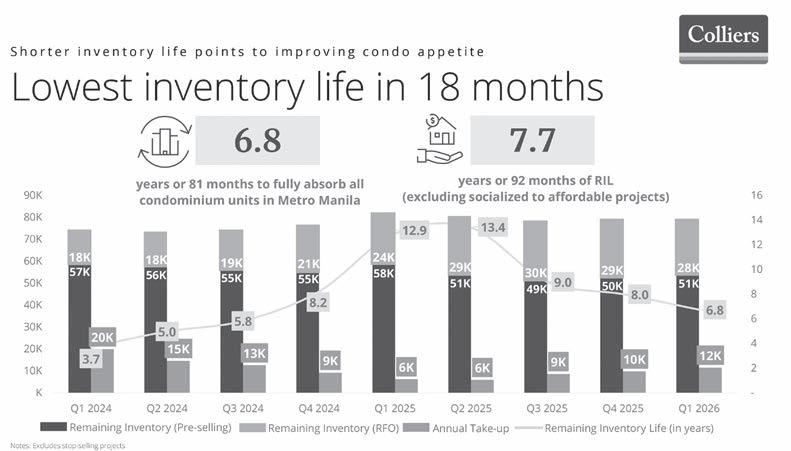
ly - y ear resilience despite headwinds such as the flood - c ontrol controversy that emerged in the latter part of 2025. Traditional firms continued to drive office transactions in the capital region, followed by expansions and new setups from IT- B PM firms, despite declining average area size requirements across all tenant classes. Provincial office markets, however, posted lackluster performance during the first three months of 2026 versus the same period last year, with Iloilo overtaking Cebu as the latter faces limited inventory within its IT and business parks.
Amid heightened uncertainty brought about by the ongoing Middle East crisis, Colliers encourages both office occupiers and landlords to be proactive rather than adopt a wait - a nd - s ee stance. Alternative office delivery models—such as OPEX- b ased and flexible workspace solutions—may also be integrated into real estate strategies to better navigate near - t erm volatility.
Colliers Philippines believes that amid a more fragile macroeconomic environment, both the office and residential sectors are navigating a phase of cautious recovery tempered by structural and external risks. Office demand remains underpinned by traditional and IT-BPM occupiers, but evolving space requirements and geopolitical uncertainty underscore the need for flexible, costefficient strategies. Meanwhile, residential gains, particularly in affordable and RFO segments, signal improving absorption from end-users, though elevated vacancy and interest rates continue to weigh on sustained recovery. Moving forward, success will hinge on developers’ ability to remain agile—leveraging product innovation, pricing flexibility, and targeted market segmentation to capture demand while mitigating downside risks. To be continued
tenants and locators.
However, the recent projections of lowered GDP growth, higher inflation due to the Middle East war and the resulting increase in benchmark rates will make property buyers on credit suffer higher borrowing costs. Nevertheless, this has to be balanced w ith at least two factors: (1) the projected 50 bps increase in benchmark rates will make mortgage rates higher in the second half of 2026 and (2) the window to secure the best office space for office space tenants, the best piece of residential property might close if office tenants enter the market t oo late in the cycle (when expansion has started). Our view is that real estate market players must strike a balance between the lowest possible mortgage and rental rates while securing the best available p iece of real estate. One’s knowledge of the cycle will be of great help to maximize the benefits of a market under the recovery phase,” says Lobien.
CENTURY Properties Group Inc. (CPG) reported a 5 percent increase in earnings before interest, taxes, depreciation, and amortization (EBITDA) in January to March 2026, reaching Php1.04 billion from Php988 million in the same period the previous year, driven by disciplined cost management and improved operating efficiency. This is reflected in its gross profit margin which improved to 48% from 46 percent in the prior period.
Net income after tax (NIAT) for the first three months of 2026 totaled P446 million, 6 percent lower than P473 million in the comparable period in 2025, as higher interest expense and taxes partly offset the improvement in operating performance.
Consolidated revenues for the period amounted to P3.58 billion, slightly lower than P3.72 billion posted a year earlier. The First-Home Residential Developments (PHirst) segment remained the largest contributor, generating P2.48 billion or 68 percent of total revenues. Premium Residential Developments contributed P682 million (19 percent), while Commercial Leasing and Property Management contributed P297 million (8 percent) and Php151 million (4 percent), respectively. “Our first-quarter performance reflects the resilience of our core businesses and the benefits of disciplined execution across the organization. Amid a dynamic operating environment, we remain focused on margin protection, prudent cost
LOBIEN Realty Group Founder and CEO Sheila Lobien
Alas still taking shape but raring to go
Filipinos can expect the best from Alas Pilipinas in the Asian Volleyball Confederation (AVC) Women’s Cup, even as the team has yet to be finalized with about 10 days remaining before the tournament proper. We’re very, very humbled and excited to be part of the national team again and represent the country with pride,” Valdez said in Tuesday’s Philippine Sportswriters Association Forum at the Philippine Sports Commission media room. “ But realistically, we cannot predict anything. All we can do now is to prepare well. But we will represent the country with honor and pride,” the
32-year-old Valdez added. Shaq de los Santos, tapped interim coach last week as Thai coach Anusorn Bundit recovers from an ankle injury sustained in a motorcycle accident in Thailand, remained optimistic about the team’s chances in the tournament set for June 6 to 14 in Candon City. The goal right now is to strengthen the squad,” de los Santos said. The Philippine National Volleyball Federation’s pool started training last week and now includes 20 players, among them Valdez, Jovelyn Gonzaga and Ces Molina, members of the Philippine team in the 2019 Southeast Asian Games.
It feels good to be back on the national team. We’re excited. It’s hard to turn down the national team,” the
34-year-old Gonzaga said. “ We are focused on the preparations. There are no expectations yet,” she said in the forum presented by San Miguel Corporation, PSC, Philippine Olympic Committee, Milo and sports app ArenaPlus.
A lso with them at the PSA Forum was 24-year-old Nina Ytango of the University of the Philippines, the only four-time Best Middle Blocker in the University Athletic Association of the Philippines.
A lso in the pool are Nina Ytang, Trisha Tubu, Ara Galang, Royse Tubino, Tots Carlos, Kyle Negrito, Kyla Atienza, Alyssa Eroa, Clo Mondoñedo, Thea Gagate, and collegiate players Tin Ubaldo, Jaz Ellarina, Cla Loresco, Lara Mae Silva,
Paalam, Vicera bag gold in Netherlands slugfest
TBy Josef T. Ramos
OKYO Olympics silver medalist
Carlo Paalam won by unanimous decision over England’s Abdul Burton on Monday to bag the bantamweight division gold in the Eindhoven Box Cup at the Van der Valk Hotel in Eindhoven, Netherlands.
Young gun Clark Vicera won the flyweight gold medal with a 5-0 win over Ukraine’s Rudyk Maksym, his second win in Europe after the 63rd Belgrade Winner Elite Men and Women’s boxing in Serbia last week.
Paalam, 27, ruled the 55-kg class, beating Bennama Billal of France in the semifinal, 4-1, after a 5-0 win over Germany’s Justin Sahin in the the quarterfinals.
I am so happy because I trained so much for this tournament. I am grateful to the Filipino fans and everyone who supported me, Paalam said in an interview
with the Eindhoven Box Cup media.
He proved himself as an elite fighter.
This is a good preparation for everyone in the Asian Games,” Coach Pat Gaspi told the BusinessMirror on Tuesday.
The 19-year-old Vicera, from of Bago, Negros Occidental, also scored a unanimous decision win in the semifinals against Belgium’s Samir Ardawan.
C ambodia Southeast Asian Games gold medalist Paul Julyfer Bascon bowed out of the men’s lightweight division (60 kgs), losing to Mahmoud Al Chabtun of the Netherlands.
R isa Pasuit lost to Zidani Amina of France in the women’s featherweight (57 kg) quarterfinals. The Philippine team is preparing for the Aichi-Nagoya Asian Games in Japan set from September 19 to October 4.
Vanessa Sarie, Natalie Estreller, Clarisse Loresco, Jonna Perdido and Adamson’s Lhouriz Tuddao.
A las Pilipinas was drawn into Pool A with Chinese Taipei, South Korea, Kyrgyzstan, Australia and Uzbekistan. Titleholder Vietnam heads Pool B with Kazakhstan, Iran, Indonesia, Hong Kong and Lebanon.
“ We’ll take it one game at a time,” de los Santos said.






MFast-rising Pinay handball squad seeks breakthrough in world championships
FROM perennial regional contender to an emerging global threat, the Philippine handball team heads to the World Women’s Beach Handball Championship in Zagreb determined to prove its rise is no fluke.
The World No. 12 Filipinas vie for honors in the 16-team championship, bannered by world No. 1 and defending champion Germany, set for June 23 to 26.
The Philippine women’s team continued to make waves on the international stage after defeating Australia (21-12, 1914) during the last world championships in Pingtan Island, China.
The Philippine ladies squad booked its place in Croatia after finishing second in Asia behind Vietnam.
Newly-elected PHF president Dr.

ARIAN CAPADOCIA took down eighth seed Althea Ong, 6-2, 6-3, on Tuesday to secure a quarterfinal berth in the Palawan Open 2026 at the Rizal Memorial Tennis Center.
The 30-year-old veteran, coming off a dominant opening-round 6-1, 6-1 win against wild card Judy Ann Padilla, is one two unranked players to reach the round of eight.
C apadocia next takes on second seed Stefi Aludo in the P2-million tournament.
A ludo, who dominated Princess Tana, 6-0, 6-0, enters the showdown fully rested after a walkover win over Mica Emana.
Sharing the spotlight in the women’s division is La Salle’s Annika Diwa.
Capadocia defeats Ong to gain quarterfinals
A fter upending third seed
Tiffany Nocos in a thrilling opener, 3-6, 6-3, 6-3, Diwa maintained her momentum by turning back Joanna Peña, 6-3, 6-4, to reach the quarterfinals. She faces either Louraine Jallorina or Akshita Antil. Top seed Tennielle Madis blanked Althea Azores, then ripped Mikaela Vicencio, 6-0, 6-1, setting up a centercourt showdown with No. 5 Elizabeth Abarquez, who cruised past Ava Banson, 6-0, 6-0, and Dyan Nataño, 6-2, 6-3.
N o. 4 Kaye-Ann Emana blasted
past Amygray Olalo, 6-1, 6-0, before getting past Rovie Baulete, 6-1, 3-0 (ret.). She will next collide with No. 7 Niña Alcala, who survived a grueling duel against Paula Uy, 6-3, 3-6, 7-6(7).
I n the men’s division, the big names coasted into the Round of 16. No. 1 Digvijay Singh of India swamped Jeremiah Latorre, 6-1, 6-0, arranging a clash with No. 13 Jarell Edangga, who fought off Mark Alcoseba, 6-3, 1-6, 6-4.
Second seed AJ Lim eased past Mcleen Gomera, 6-1, 6-2, setting up a
faceoff with No. 14 Loucas Fernandez, a 6-2, 3-1 (ret.) winner over Elvin Geluz.
T hird-ranked Eric Jed Olivarez overcame early struggles to foil Brysl Libao, 7-5, 6-2. He will face qualifier Lucas Go, who outlasted Hilbert San Jose, 3-6, 6-1, 7-6(3).
N o. 4 Christopher Papa of the US repelled Eric Tangub, 6-3, 6-3, arranging a showdown with No. 14 Lance Fernandez.
Fifth seed Parth Aggarwal of India advanced with a 7-5 (ret.) win over Noel Damian and will next battle No. 9 Arthur Pantino, who shut down

Ernesto Jay Adalem said the priority is to build on the teams’ growing momentum.
The Philippine women’s team bagged bronze in the Southeast Asian Beach Handball Championship last year in Suphan Buri, Thailand, where the men’s squad bagged the gold.
“Our immediate concern is to prepare strongly for the world championships in Croatia and continue building a competitive program for Philippine handball,” Adalem said.
A lso elected on Saturday alongside Adalem was Dr. Charlie Ho as se cretary-general, while erstwhile president Steve Hontiveros was named chairman emeritus. The women’s beach handball team is coached by Joanna Franquelli, who has overseen the squad’s emergence as one of Asia’s top-performing teams. The national federation credited the Philippine Sports Commission, particularly chairman Patrick Gregorio, for supporting the team’s preparations through the use of the training facilities inside the PhilSports Arena, which the squad shares with futsal. A dalem, vice president of St. Clare College and one of the founding officials of the National Athletic Association of Schools, Colleges and Universities, said the PHF is also looking to make the Philippine roster for the Asian Games set Sept. 19 to Oct. 4 in Aichi and Nagoya in Japan.
THE Philippine women’s handball team looks to make waves in Zagreb. PHOTO VIA FACEBOOK.COM/JANA.FRANQUELLI
Miguel Iglupas, 6-0, 6-0. A lso advancing into the next round of this tournament, sponsored by the Palawan Group of Companies and sanctioned by Philippine Tennis Association and the Universal Tennis Rating, were John Kendrick Bona, Vicente Anasta, John Benedict Aguilar, Ronard Joven, Nilo Ledama, and Casey Alcantara.
I n the men’s doubles, top seeds Alcantara and Papa trounced John Baje and Marc Suson, 6-2, 6-2.
I ndia’s second-seeded duo of Singh and Aggarwal drubbed Marben Mosquer and Ronald Roces, 6-2, 6-1. I n the women’s doubles, sisters Kaye-Ann and Mica Emana dominated Kiana de Asis and Francine Dizon, 6-2, 6-0.
UNSEEDED Marian Capadocia joins the young guns in the round of eight.
PPS PHOTO
Early exit. Alexandra Eala bows out of Roland Garros, absorbing a 4-6, 2-6 defeat to 18-year-old Iva Jovic of the US, the 17th seed, in the first round of the French Open on Tuesday. AP
COACH Shaq de los Santos and players Alyssa Valdez, Nina Ytang, Ces Molina and Jovelyn Gonzaga are determined to deliver despite the limited preparation for the AVC Women’s Cup. PSA PHOTO