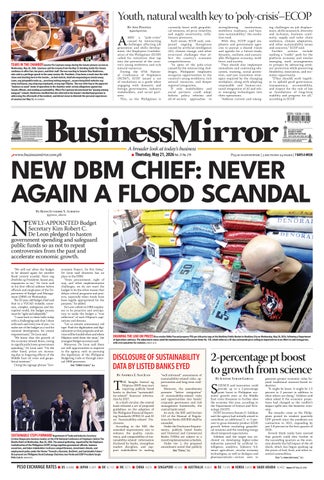
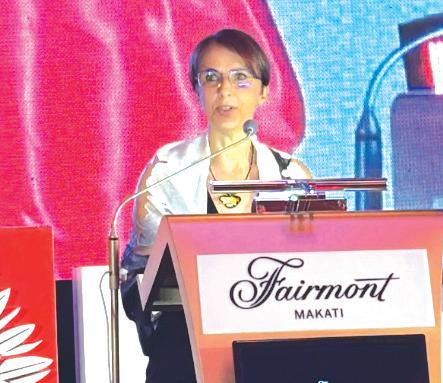
TEARS IN THE CHAMBER Senator Pia Cayetano weeps during the Senate plenary session on Wednesday, May 20, 2026. Cayetano said the trauma from the May 13 shooting inside the Senate continues to affect her, her peers, and their staff. She was reacting to Senator Risa Hontiveros, who said in a privilege speech in the same session: Mr. President, it has been a week since the wild chase and shooting here in the Senate... Sa loob-loob ko, hindi ako mapanatag na simula noong Lunes, ang ipinapakita natin ay... para bang walang nangyari...na para bang hindi nabastos ang ating institusyon, ang ating mga empleyado, at ang mga Pilipino. She was referring to the apparent “business as usual” mode of operations in the chamber amid serious allegations against key Senate officials, and evading accountability. When Pia Cayetano misconstrued her “parang walang nangyari” remark, Hontiveros clarified that she referred to the Senate’s institutional posture in addressing the aftermath of the incident, and did not mean to diminish the personal experiences of senators last May 13. ROY DOMINGO
By Reine Juvierre S. Alberto @reine_alberto
NEWLY-APPOINTED Budget
Secretary Kim Robert C. De Leon pledged to hasten government spending and safeguard public funds so as not to repeat controversies from the past and accelerate economic growth.
“We will not allow the budget to be abused again for another flood control scandal. Klaro ang direktiba ng Presidente, bawat piso, mapupunta sa tao,” De Leon said in his first official address before officials and employees of the Department of Budget and Management (DBM) on Wednesday.
The 32-year-old Budget chief said that in a VUCAD (volatile, uncertain, complex, ambiguous and disruptive) world, the budget process must be “agile and adaptable.”
“I come back to these halls today with a challenging task that I share with each and every one of you—to make use of the budget as a tool for national development, for citizen empowerment,” De Leon said.
“We know that the growth of the economy slowed down, owing to significantly lower government spending,” De Leon said. “On the other hand, prices are increasing due to lingering effects of the Middle East oil crisis and geopolitical tensions.”
Citing the signage phrase “Gov-
ernment Project, Do Not Delay,” De Leon said slowness has no place in the DBM.
“From procurement, right of way, and other implementation challenges, we do not want the budget to be the other reason that delays critical programs and projects, especially when funds have been legally appropriated for the purpose,” he added. De Leon called on DBM employees to be proactive and anticipatory to make the budget a “true reflection” of each Filipino’s aspirations and dreams.
“Let us remove unnecessary red tape. Push for digitization and digitalization so that programs and services will be funded when and where Filipinos need them the most,” the youngest Budget secretary said. Moreover, De Leon said there are still opportunities to improve in the agency, such as pursuing the legislation of the Philippine Budgeting Code or through internal DBM processes.
Youth, natural wealth key to ‘poly-crisis’–ECOP
By Ada Pelonia @adapelonia
AMID a “poly-crisis”
caused by intersecting challenges affecting job generation and skills development, the Employers Confederation of the Philippines (ECOP) called for initiatives that tap into the potential of the country’s young workforce and rich natural resources.
During the 47th National Conference of Employers (NCE47), ECOP issued a set of resolutions as a guide when engaging with domestic and foreign governments, industry stakeholders, and social partners.
This, as the Philippines is
currently beset with geopolitical tensions, oil price volatility, and supply uncertainty, inflationary pressures. Such issues, ECOP said, compound ongoing disruptions caused by artificial intelligence (AI), climate change, and other structural challenges that affect the country’s economic competitiveness.
“In spite of the poly-crisis caused by the intersecting challenges, Philippine employers recognize opportunities in the country’s young workforce, rich natural resources, and deeper regional integration, If only stakeholders and social partners could adopt holistic policy reforms and all-of-society approaches in
strengthening institutions, workforce readiness, and business sustainability,” the resolution read.
With this, ECOP urged employers and government agencies to pursue a shared vision and agenda for a future-ready, dynamic, resilient, and sustainable Philippine economy, workforce, and society. They should also implement immediate and continuing education, training, social protection, and just transition strategies required by the changing workplace, along with adopting responsible and human-centered integration of AI and other emerging technologies into their operations.
“Address current and emerg -
ing challenges on job displacement, skills mismatch, diversity and inclusion, business continuity, supply and value chain resilience, climate adaptation, and other sustainability issues and concerns,” ECOP said. Further actions include seeking a “viable” path for the platform economy and similar emerging work arrangements to prosper by advancing workers’ protection while preserving flexibility, innovation, and economic opportunity.
“[They should] work together to uphold good governance, transparency, accountability, and respect for the rule of law as foundations of long-term stability and progress for all,” according to ECOP.
By Andrea E. San Juan
THE Bangko Sentral ng Pilipinas (BSP) may start requiring publicly listed banks to disclose “sustainability-related” financial information by 2027.
In a draft circular, the central bank released a set of proposed guidelines on the adoption of the Philippine Financial Reporting Standards (PFRS) S1 and S2 on Sustainability-related Disclosures.
According to the BSP, the amended requirements aim to enhance the quality, consistency, and comparability of sustainability-related information disclosed by banks, strengthen market discipline, and support stakeholders in making
“well-informed” assessments of sustainability-related risks, opportunities and long-term resilience.
Moreover, the amendments promote “better integration” of sustainability-related risks and opportunities into banks’ corporate governance and risk management frameworks, the central bank noted.
As such, the BSP said Section 153 of the Manual of Regulations for Banks (MORB) shall be amended.
Under the Disclosure Requirements, publicly listed banks and Universal and Commercial Banks (UKBs) are subject to a tiered implementation schedule. Under tier 1, the proposed amendment noted that publicly
By Justine Xyrah Garcia
CIENCE and innovation could
Sprovide up to a 2-percentage point boost to Philippine economic growth even as the Middle East crisis threatens to further slow the economy this year, according to the Department of Science and Technology (DOST).
DOST Secretary Renato U. Solidum said the agency had initially aimed to contribute an additional 2- to 3-percent to gross domestic product (GDP) growth before escalating geopolitical tensions and the resulting energy shock tempered expectations.
Solidum said the target was anchored on developing higher-value industries powered by artificial intelligence, analytics, Industry 4.0, smart agriculture, circular economy technologies, as well as biologics and pharmaceuticals—sectors seen to
generate greater economic value beyond traditional resource-based industries.
“It might be lower. It might be 1.5 percent to 2 percent in addition to what others are doing,” Solidum said when asked if the economic projections had changed as the conflict’s impact spills into the domestic economy. The remarks come as the Philippines posted its weakest quarterly GDP growth since the pandemic-era contraction in 2021, expanding by just 2.8 percent in the first quarter of 2026. Several think tanks have warned that growth could slow further in the succeeding quarters as the economy absorbs the full impact of the oil shock, which has begun pushing up the prices of fuel, food, and other essential commodities.
DRAWING
baseload plants,” it said.
The ERC has yet to reply when sought for comment.
Under the reliability index implemented since 2020, power generation companies are allowed to go offline for a certain number of days per year.
For instance, a power plant fueled by pulverized coal, is allowed to be out of service for 44.7 days—comprising of 27.9 days of planned outages and 16.8 days of forced or unplanned outages.
Coal plants running on circulating fluidized bed (CFB) technology, the allowable outages shall be for aggregate 32.3 days with 15.4 days of planned outages and 16.9 days of unplanned outages.
Earlier, the ERC said it will review the “reliability index” on power plant outages to ensure that power facilities undergo the needed operational servicing for better performance.
The power supply situation over the past week shows how outages from several large centralized coal power plants can quickly strain the country’s power system and possibly result in power outages across interconnected grids, the ICSC added.
“Unstable electricity increases operational risks, raises business costs, and weakens investor confidence in the country’s ability to provide a reliable power system,” the group said.
The ICSC is a Philippine-based non-governmental organization that advances climate, energy, and lowcarbon solutions to enable fair and climate-resilient development at the national and international levels.
VP gets impeachment court summons, given till June 1
By Butch Fernandez @butchfBM
THE Office of the Vice President has been “duly served” the summons of the Senate sitting as the impeachment court for VP Sara Duterte, according to Senate President Alan Peter Cayetano, who said they expect her reply to be submitted by June 1, counting the non-extendible
10 calendar days given her by the court.
At Wednesday’s Senate session, Cayetano announced to his peers that he got word of the serving of summons on May 20, and the 10-calendar-day deadline from receipt of summons falls on May 30. However, since it is a Saturday and there is no work at the Senate, the deadline is on June 1, a Monday, the Senate chief explained.
New DBM Chief: Never…
Continued from A1
“The challenges are immense, and so, our energy and dynamism as an institution must meet these challenges head on,” he said. “I will be with you in this journey of lifelong learning and personal and or -
High-income…
from A12
society should be defined not only by higher incomes, but by economic se -
ganizational improvements.”
“As we enter the last two years of this administration, let us not waste every opportunity to do our best, be facilitators of progress, champions of accountability, and enablers of devel-
curity, quality education, accessible healthcare, affordable housing, and protection from “shocks.”
“The vision remains achievable if the country uses this recalibration as an opportunity to address longstanding structural constraints rath-
The prosecution panel from the House of Representatives will then have five calendar days from receipt of the VP’s reply, also nonextendible, to respond to it.
The Senate convened last May 18 as an impeachment court for the vice president, who was impeached by 257 members of the House, way above the required number under the law. The HOR impeached her on four main charges, and has formed
opment,” he added.
The DBM chief said his office will always be open for discourse. “If you have something, you want to propose something that will be for the benefit of the Filipino people and the budget process, I am all eyes and ears.”
a prosecution team for each of the four articles of impeachment: misuse of confidential funds; unexplained wealth; bribery; and grave threats in relation to her revelation that she had contacted an assassin to kill President Ferdinand Marcos Jr. in case something happens to her. At least 16 senators must vote to convict a subject of an impeachment trial.
De Leon became DBM undersecretary handling the Organization and Systems Improvement Group and the Information and Communications Technology Group from 2021 to 2022. He also held key government positions, including undersecretary for Administration and Finance of the Department of Transportation and Secretary General of the Boy Scouts of the Philippines. He also obtained his Career Executive Service Eligibility in 2024.
er than simply adjust the timeline,” he added.
Deeper reforms
MEANWHILE , Chikiamco said the Philippines must first address weak agricultural productivity, warning that persistently high food prices could undermine efforts to industrialize by raising wages and production costs.
“This means that the country should move away from small scale agriculture toward promoting agribusiness. It should promote farm consolidation and remove the land retention limits of 5 hectares under the agrarian reform law,” he explained.
Under AmBisyon Natin 2040, the government identified eight priority sectors for investment, including housing and urban development, manufacturing, connectivity, education, tourism, agriculture, health and wellness, and financial services, as part of efforts to build competitive industries that can deliver affordable goods and services.
Rivera said the recalibrated roadmap should also prioritize human capital, food and energy security, digital and physical infrastructure, innovation, and institutional strengthening.
“Sectors with strong productivity and employment potential such as advanced manufacturing, agribusiness, tourism, and modern services should be at the center,” he also said.
Capabilities audit FOR Lanzona, however, the tra-
ditional sector-listing approach is no longer enough because it identifies priority industries without determining the specific constraints preventing them from advancing.
He said this leads to broad and unfocused allocation of resources, where industries are included in development plans but do not necessarily receive the targeted support needed at their current stage of development.
Lanzona instead pushed for a “capabilities audit,” or a more detailed assessment of where industries currently stand, what bottlenecks they face, and what specific interventions they need to move up the value chain.
“Without knowing where each industry actually stands in its upgrading trajectory, the milestones one attaches to the vision are arbitrary and the political economy critique applies with full force, because undifferentiated or unclear sector support is far easier to capture by incumbent political interests than stage-specific capability targets,” Lanzona added.
Latest World Bank data showed that the Philippines remains classified as a lower middle-income economy, with a gross national income (GNI) per capita of $4,470 in 2024—just $26 below the lower bound of the UMIC range, currently set at $4,496 to $13,935.
The bank revises its income classifications annually, with updated thresholds and country rankings typically released on July, based on the previous year’s GNI per capita data.
listed banks with market capitalization of more than P50 billion as of December 31,2025, or as of the date of listing after December 31,2025 are scheduled to start reporting in 2027, for fiscal year beginning on or after January 1,2026. For tier 2, publicly-listed banks with market capitalization ranging from P3 billion up to P5 billion as of December 31,2025 and non-listed UKBs with capital of more than P50 billion as of December 31,2025 are obliged to start reporting in 2028 for fiscal year beginning on or after January 1, 2027. Meanwhile, under tier 3, the following may be required to start reporting in 2029 for fiscal year beginning on or after January 1,2028: publicly listed banks with market capitalization of P3 billion or less as of December 31,225 or at the date of listing after December 31,2025; publicly listed banks whose debt securities are listed solely on the Philippine Dealing & Exchange Corp. (PDEx) and have no equity securities listed in PSE, and non-listed UKBs with capital of P50 billion or less as of December 31,2025.
As for reporting requirements, BSP said publicly-listed banks and UKBs, excluding branches of foreign banks, shall submit to the Department of Supervisory Analytics of the Bangko Sentral a Sustainability Report either as an attachment to, or as an integral part of, their Annual Report.
To facilitate a “smooth” implementation to the sustainability-related disclosure requirements under PFRS S1 and PFRS S2, BSP said certain provisions shall be observed during the initial years of implementation. The BSP said banks may limit their disclosures to climate-related risks and opportunities during the transition phase. This applies for the first year of adoption for Tiers 1 and 2, and for the first two years of reporting for Tier 3.
Another provision noted that for the first year of adoption, banks may submit their Sustainability Report after the publication of their related audited financial statements, either: together with the next second-quarter or half-year interim financial statements; or within nine months from the end of the reporting period, if no interim financial statements are issued.
This relief, the BSP said, applies to all tiers for the first reporting year. For non-listed Islamic, digital, thrift, rural and cooperative banks, the central bank mentioned a different set of disclosure requirements. The BSP said in its circular that these non-listed banks shall disclose the following minimum information in their Annual Reports:
a. Overall Sustainability strategic objectives and risk appetite
b. Overview of E&S risk management system, including how the same interacts with credit, operational, and/or liquidity risk management, among others;
Even the House of Representatives’ Congressional Policy and Budget Research Department (CPBRD) said second quarter growth could slow to as low as 1.5 percent to 2.5 percent. This would mean growth could weaken further after the economy already posted subdued first quarter expansion, when the conflict had yet to fully ripple through domestic industries.
Apart from GDP growth, Solidum said the DOST is also targeting a 25- to 30-percent increase in productivity among enterprises through the use of emerging technologies, electric vehicles, and innovation-driven processes. Such higher productivity would allow businesses to produce more output at lower cost, helping cushion the impact of rising fuel and input prices triggered by the global crisis.
Solidum also pointed to Philippine-developed biofertilizers and foliar fertilizers, which he said can raise rice yields by 15 percent to 40 percent. He said further developing domestic innovations could help ease pressure on food prices as imported fertilizer and urea become more expensive amid tighter global supply.
Earlier, Fitch Solutions unit BMI projected US Gulf urea prices to rise by more than a third to $542 per metric ton this year, from $398 per metric ton in 2025.
Middle East urea prices were also seen jumping by 42 percent to $586 per metric ton from $411 last year.
“We need to develop our own biofertilizer and, of course, patronize the foliar fertilizer that we have developed that has been proven to increase production,” Solidum said.
c. Products/services aligned with the bank’s Sustainable Finance Framework or with internationally recognized sustainability standards and practices. This shall include the issuance of green, social or sustainability bonds, including other sustainable bonds falling within acceptable definitions and other permissible instruments, as provided under Secs. 246 and 614;
d. Breakdown of E&S risk exposures of the bank per industry or sector or location;
e. Information on existing and emerging E&S risks and their impact on the bank; and f. Other initiatives to promote adherence to internationally recognized sustainability standards and practices, including the progress of implementation of efforts undertaken to integrate sustainability principles into the bank’s governance framework, risk management system, business strategy, and operations.
SC junks dela Rosa plea to stop arrest
TBy Joel R. San Juan @jrsanjuan1573
HE Supreme Court (SC), voting 9-5-1, has denied the plea of Sen. Ronald dela Rosa for a temporary restraining order (TRO) or a status quo ante order (SQAO) that will stop local authorities from implementing the arrest warrant issued by the International Criminal Court (ICC) against him for his alleged role in the bloody anti-illegal drug war campaign of the Duterte administration that saw the killings of thousands of people.
The denial of dela Rosa’s plea is expected to pave the way for the government’s enforcement of the ICC-issued arrest warrant against him.
The Court, however, stressed that it only decided on the prayer for a TRO or SQAO or both, and not on the merit of the main petition that was filed in March by dela Rosa.
“The SC only decided on the prayers for interim relief. The main issues raised by the parties in their pleadings and motions are yet to be resolved in the main case,” the SC pointed out.
Pia gets Blue-Ribbon committee
By Butch Fernandez @butchfBM
THE new Senate leadership on Wednesday announced more changes in permanent committee chairmanships, including the influential Blue-Ribbon panel, which Sen. Panfilo Lacson yielded to Sen. Pia Cayetano—contrary to speculations it would go back to Lacson’s antagonist, Sen. Rodante Marcoleta.
Marcoleta, however, was named the Senate’s representative to the Judicial and Bar Council (JBC) and chair of the Justice committee—in both instances, replacing Sen. Francis Pangilinan.
With the Blue-Ribbon panel, Sen. Pia Cayetano now holds three key committees under the term of her brother Alan Peter Cayetano, elected in a coup last March 11.
Sen. Imelda Josefa Remedios Marcos, the President’s estranged sister, got back her post as chairman of the Foreign Relations committee, replacing Sen. Erwin Tulfo, one of the nine senators in the minority.
Sen. Camille Villar, who with her brother Sen. Mark Villar bolted to the Cayetano camp to oust Vicente Sotto III as Senate President, keeps the Committee on the Environment, Natural Resources and Climate Change.
Camille got a new committee to lead: that of Government Corporations and Public Enterprises, vice Mark Villar.
Sen. Robinhood Padilla is the new chief of the Committee on Constitutional Amendments, vice Sen. Francis Pangilinan. Padilla has become the subject of calls to be charged with obstruction of justicefor helping Sen. Ronald dela Rosa escape from the Senate premises at dawn of March 14, to avoid a warrant of arrest from the International Criminal Court (ICC), where he is tagged as co-conspirator in the crimes against humanity case of former President Rodrigo Duterte. Dela Rosa, missing since May 14, was the chief enforcer of Duterte’s dirty war on drugs that was marred by thousands of extra-judicial killings.
Senate, however, caused tension after operatives of the National Bureau of Investigation (NBI) together with former senator Antonio Trillanes IV attempted to serve the ICC arrest warrant against him.
The Senate immediately placed dela Rosa in its protective custody to prevent his arrest which led to a near gunfight between the Senate security forces and operatives of the NBI.
Dela Rosa left the Senate building before dawn on May 14 and has been in hiding since then.
Dela Rosa, on the other hand, filed several urgent manifestations before the Court seeking to prohibit the enforcement of the ICC arrest warrant.
from receipt of its resolution on dela Rosa’s manifestations.
Likewise, the Court directed the senator to file his reply within a non-extendible period of 72 hours from receipt of the respondents’ comment.
Both the government through the Office of the Solicitor General (OSG) and dela Rosa through his lawyers have complied with the Court’s directive.
Following receipt of the comment and reply of the parties, the Court held a special en banc session yesterday where the magistrates decided to deny his plea for a TRO or a SQAO or both.
bars the ICC from exercising jurisdiction over the Philippines because the country has a functioning legal system capable of investigating and prosecuting crimes under its national laws.
The Department of Justice ( DOJ ) on wednesday said it would leave it up to president Marcos Jr. To announce the government possible actions in connection with the arrest warrant issued by the icc against Dela Rosa following the sc’s denial of his plea to stop his arrest.
‘No more obstacle to enforce ICC warrant’
LAWMAKERS on Wednesday said the Supreme Court’s denial of the temporary restraining order (TRO) sought by Sen. Ronald dela Rosa effectively removes a key legal obstacle to the enforcement of an arrest warrant issued by the International Criminal Court (ICC).
The Court said its full resolution, including the separate concurring and dissenting opinions of the magistrates, will be released on Monday (May 25, 2026). It may be recalled that dela Rosa went into hiding for six months following reports that an ICC warrant was issued against him. He resurfaced at the Senate last May 11 to cast the decisive 13th vote that ousted Sen. Vicente Sotto III as Senate president and installed Sen. Alan Peter Cayetano as the latter’s replacement. The senator’s arrival at the
In his manifestations, dela Rosa prayed for a TRO or SQAO or both to prevent the Department of the Interior and Local Government, the Department of Foreign Affairs, the Department of Justice, the National Police (PNP), the National Bureau of Investigation, the Bureau of Immigration, the Armed Forces (AFP), and the Criminal Investigation and Detection Group from arresting on the basis of any arrant from the ICC, red notice and diffusion order from the International Criminal Police Organization, or any foreign judicial or quasi-judicial instrument without a judicial warrant issued by a Philippine court.
Acting on the manifestations, the Court issued on May 13 an order directing government officials to comment within a non-extendible period of three days or 72 hours
In his main petition filed last March 2025, dela Rosa asked the SC to stop the Palace and other government agencies from enforcing any arrest warrant issued by the ICC.
It also sought to prohibit the respondents from cooperating with the ICC and providing assistance with the Interpol in the execution of ICC-issued warrants, Interpol red notice, summons, or other actions.
The petition also asked the Court to declare as unconstitutional the Philippine government’s cooperation with the ICC and to affirm that the Philippine government’s withdrawal from the Rome Statute on March 17, 2019 effectively terminated all jurisdiction of the ICC over the country and its nationals.
The petition also cited the principle of complementarity, which
“The OP [Office of the President] shall clarify details and make further pronouncements on the matter,” DOJ spokesman Polo Martinez said.
Solicitor General Darlene Berberabe stressed the decision to recognize an ICC warrant and the surrender of an individual is a political question which belongs to the discretion of the President as the chief architect of foreign policy.
Berberabe pointed out that the ICC arrest warrant may be implemented through the President’s “prosecutorial and foreign relations powers” considering that the arrest order was received by the government through the Philippine Center for Transnational Crime (PCTC).
Meanwhile, in a statement, Dela Rosa’s lawyer Israelito Torreon said they would file a motion for reconsideration of the Court’s resolution denying the senator of provisional relief against the ICC arrest warrant.
House taps private lawyers in Sara impeachment trial
By Jovee Marie N. dela Cruz @joveemarie
HOUSE of Representatives prosecutors are tapping private lawyers to bolster their case in the Senate impeachment trial of Vice President Sara Z. Duterte, with both teams now on standby as proceedings move closer, the trial spokesperson said on Wednesday.
House trial spokesperson Zia Alonto Adiong confirmed that private prosecutors have been engaged to assist the House panel, signaling an expanded legal team ahead of the high-stakes trial.
“There are also private prosecutors… they’re very ready,” Adiong said, though he declined to disclose their identities or law firms prior to the formal start of proceedings.
Adiong, who represents Lanao del Sur, stressed that both the House prosecution panel and its private legal partners are prepared to comply with the timeline set by the Senate, which has already convened as an Impeachment Court.
Based on the adopted schedule, the process will begin with the issuance of summons to Duterte,
followed by the submission of her answer and other pleadings before the pre-trial and trial proper, which could start as early as June.
Adiong said the inclusion of private lawyers forms part of the prosecution’s preparation to ensure readiness once the Senate calls the case.
“They want to remain compliant with the Senate. Anytime they are called, they are ready,” he said, adding that the legal teams are already on standby.
The impeachment case against Duterte covers allegations involving confidential funds, unexplained wealth, bribery, and grave threats, which the prosecution is expected to present before senator-judges.
Despite refusing to provide details about the private lawyers, Adiong emphasized their readiness to step in when needed.
Adiong also reiterated that the impeachment trial should proceed under the Senate’s set process unless halted by a Supreme Court ruling, noting that the chamber has already received the Articles of Impeachment and adopted a trial timeline.
“The ball has already rolled,” he
said, stressing that the Senate now carries the constitutional duty to try and decide the case.
He added that the public will be closely watching how the proceedings unfold, especially with the prosecution reinforcing its ranks through private legal support.
Meanwhile, Adiong said the House prosecution panel is considering holding regular press briefings during the impeachment trial of Duterte to help the public better understand the proceedings and avoid confusion over legal issues raised before the Senate impeachment court.
Adiong said the prosecution team is preparing for the likelihood of long trial days, intense public scrutiny, and sustained media interest as the case moves forward.
He noted that while the exact format is still under discussion, he personally supports regular briefings, especially given the high public interest in what is considered one of the country’s most closely watched political and constitutional proceedings.
Adiong explained that regular briefings would help ensure accurate reporting and provide media
DND nixes China’s opposition to PHL infrastructure, devt activities at WPS
THE Department of National Defense (DND) on Wednesday rejected China’s latest statement opposing Philippine infrastructure and development activities on Pag-asa and Lawak Islands in the West Philippine Sea (WPS).
In a message to reporters, the DND spokesperson, Assistant Secretary Arsenio Andolong, maintained that Pag-asa and Lawak islands are part of the Kalayaan Island Group (KIG) in Palawan.
“The legitimate exercise of Philippine authority in these areas, including the conduct of improvement and development activities, is intended to support the
welfare, safety, and livelihood of Filipinos residing and working therein,” he said.
He also reiterated that China’s claim of “indisputable sovereignty” over nearly the entire South China Sea, including areas within the WPS, as reflected in its so-called “nine-dash line,” has no legal basis under international law.
“The 2016 Arbitral Award, rendered under the framework of the United Nations Convention on the Law of the Sea [Unclos]—to which both the Philippines and China are States Parties—found no legal basis for China’s claims to historic rights within the nine-dash line,” Andolong said.
“The Award remains final and legally
binding on the parties.”
The international tribunal has found China’s large-scale land reclamation and construction activities in the South China Sea caused severe environmental damage, and that certain Chinese actions unlawfully interfered with the Philippines’ sovereign rights within its exclusive economic zone.
China’s Ministry of Defense earlier claimed indisputable sovereignty over Pagasa, Lawak Island, and other Philippineheld features in the WPS. It also said it firmly opposes Philippine construction activities “on all illegally occupied Chinese islands and reefs. Rex Anthony Naval with PNA
partners the opportunity to raise questions that could lead to clearer and more comprehensive public understanding.
Uphold accountability
THE Bible Believers League for Morality and Democracy (Biblemode) International meanwhile called on the Senate to promptly begin the impeachment trial of Duterte, stressing the need to uphold constitutional accountability over political considerations.
The group said the House has already fulfilled its mandate after finding probable cause and approving the impeachment complaint by a vote well beyond the constitutional requirement.
The statement was transmitted through a May 19 letter to Speaker Faustino Dy III by Manila Rep. Bienvenido Abante Jr., Biblemode president and one of the endorsers of the fourth impeachment complaint. Abante also serves as a Baptist Church bishop.
Biblemode officers and members from various Bible Baptist churches nationwide signed the statement, expressing unified
FOLLOWING the
Party-list Rep. Terry Ridon of Bicol Saro said the Court’s action should prompt authorities to move decisively in coordinating efforts to serve the international warrant.
“The denial of the TRO petition should now compel law enforcement agencies to coordinate for the enforcement of the international warrant against Sen. Ronald dela Rosa, consistent with the position of the Solicitor General,” Ridon said.
In a 9-5-1 vote in GR 278747, Rodrigo Roa Duterte and Senator Ronald B. dela Rosa v Hon. Lucas Bersamin, et al., the Court denied the petition for a temporary restraining order (TRO) and status quo ante order that would have blocked the implementation of arrest processes linked to the ICC warrant.
Party-list Rep. Perci Cendaña of Akbayan echoed this view, describing the Court’s decision as a “go-signal” for authorities to begin operations against the former National Police chief, a central figure in the Duterte administration’s controversial anti-drug campaign.
“This should be taken as a go-signal by our law enforcement authorities to undertake a full-on nationwide manhunt for International Fugitive dela Rosa,” Cendaña said.
“There should be no safe quarters for those with blood of thousands on their hands. Even those who harbor fugitives must be held accountable,” he added. For its part, the Makabayan bloc called on the Marcos administration to immediately enforce the ICC warrant and related Interpol mechanisms against dela Rosa, following the Supreme Court’s decision denying his request for interim relief.
The bloc, composed of Party-list Reps. Antonio Tinio of ACT Teachers, Sarah Jane Elago of Gabriela, and Renee Louise Co Kabataan said the ruling effectively rejected attempts to halt enforcement through what they described as last-minute legal remedies.
“The Supreme Court has spoken clearly in denying interim relief. This should prevent further attempts to delay or obstruct accountability through procedural tactics,” the bloc said in a statement. They also argued that claims requiring a local Philippine court warrant before any arrest linked to the ICC process were being used as a delaying strategy, saying such arguments “only serve to frustrate justice.” They urged the Executive branch, including the Department of the Interior and Local Government; Department of Justice; Department of Foreign Affairs; Philippine National Police; National Bureau of Investigation; Bureau of Immigration; Armed Forces; and the Criminal Investigation and Detection Group, to carry out their mandates “without delay or selective enforcement.”
Former Bayan Muna Rep. Carlos Isagani Zarate also weighed in, saying the Supreme Court’s move underscores the limits of invoking constitutional protections in cases involving international obligations and alleged human rights violations.
“The Supreme Court’s refusal to grant a TRO is certainly a major setback for the Duterte-era architects of the drug war,” Zarate said. He added that the decision affirms that the 1987 Constitution’s Bill of Rights cannot be used as a “jurisdictional shelter” when domestic laws—such as Republic Act 9851, or the Philippine Act on Crimes Against International Humanitarian Law—and international commitments intersect.
“The enforcement of international justice, for now, faces no constitutional roadblock from the highest court,” Zarate said. Jovee Marie N. dela Cruz
Unregulated gambling now world’s ‘third largest economy’ at US$5.9-T
By Jane Magturo
UNREGULATED online gambling has become the world’s “third-largest economy,” with an estimated take of US$5.9 trillion in wagering value, behind only the legitimate economic systems of the United States and China, a new report from Gaming Compliance International (GCI) said.
The report, quoted by the gaming online newsletter “GGRAsia,” estimates 78 percent of the online gaming market is unregulated— “unlicensed but actively targeting and transacting”—and only the balance of 22 percent in the viewfinder of governments in terms of being “licensed and compliant.”
He added: “Regulators are not facing a marginal challenge, but a dominant one—the majority of activity is occurring beyond the regulated perimeter.
“Our role is to provide full transparency across the total marketplace, enabling regulators to act with confidence.”
Ismail Vali, GCI president, said in prepared remarks: “What we are now seeing is a three-sector gaming marketplace in every jurisdiction— regulated, unregulated, and unacknowledged—and it is this third layer that is accelerating consumer confusion, unregulated growth, and regulatory complexity at scale.”
markets are currently classed and regulated as financial products by the country’s Commodity Futures Trading Commission.
GCI offered a definition of “unacknowledged” as “gambling-like products outside classification.”
It says examples include but are not limited to social casinos, sweepstakes, fake financial products, skins trading, TikTok contests, and some prediction markets.
PhilHealth covers more maternal services
By Reine Juvierre S. Alberto @reine_alberto
ASIDE from expanding the benefit packages for maternal and gynecologic care coverage in hospitals, the Philippine Health Insurance Corp. (PhilHealth) will also cover antenatal and diagnostic services, such as ultrasound and blood tests, in its bid to reduce maternal mortality in the country.
The state health insurer will now provide coverage for pelvic or transvaginal ultrasound procedures in hospitals and diagnostic centers, as well as blood tests, including Hemoglobin A1c (HbA1c) Test, Oral Glucose Tolerance Test (OGTT), Rapid Plasma Reagin (RPR) and Venereal Disease Research Laboratory (VDRL), among others.
increased to P14,000 from P12,675. The benefit packages for caesarean section and caesarean delivery following an attempted vaginal delivery after a previous caesarean section were, likewise, increased to P58,000 and P62,000, respectively. Coverage for endometrial sampling and dilation and curettage, or raspa, was also raised to P31,500 and P36,500, respectively. Moreover, PhilHealth will shoulder referral benefits for pregnant women who need to be transferred from lying-in clinics to hospitals owing to complications during labor and the immediate postpartum period.
PhilHealth will cover up to P14,700 for referrals involving complications during the third stage of labor and immediate postpartum care.
PhilHealth will also cover diagnostic antenatal care services in non-hospital and outpatient facilities, including blood tests and ultrasound services.
“GGRAsia” said “GCI describes itself as a consultancy with a proprietary artificial intelligence [AI] powered platform designed to help governments, regulators and other decision-makers understand the online gaming sector and form policy on it.” The report, titled “Online Gaming 2025: Global,” says unregulated online gambling is “representing the largest form of cybercrime globally.”
Matt Holt, GCI chief executive, was cited saying in a press release about the report: “At US$5.9 trillion in wagering value, unregulated online gambling is one of the largest economic systems in the world, operating largely outside regulatory oversight.”
Cebu govt backs
By Carmel Pedroza
CEBU CITY—The Cebu provincial government has expressed strong support for the renewed oil and gas exploration activities in the town of Alegria, highlighting the project’s potential to strengthen the province’s energy resources and open new economic opportunities for local communities.
Gov. Pamela Baricuatro met on Tuesday with Ibrahim Attereh, chief executive officer of Texcal Energy, as the company prepares to resume operations at the Alegria Oil and Gas Field after several years of inactivity.
During the meeting at the Capitol, Baricuatro assured company officials of the provincial government’s cooperation and support as the redevelopment project moves forward.
“You have come to Cebu at the
right time, when the provincial government is open to working with investors,” Baricuatro said during the meeting, assuring them of the Capitol’s “support every step of the way.”
Also present during the discussion were Energy Undersecretary Alessandro Sales and the officer in charge of the Department of Energy Visayas Field Office, Renante Sevilla.
Texcal Energy recently secured Petroleum Service Contract 89 (SC 89), granted by President Marcos, allowing the company to redevelop the Alegria Oil and Gas Field in southern Cebu.
Photos released by the Capitol showed Attereh presenting Texcal Energy’s proposed development strategy for the SC89 block, including plans for well testing, wireline logging, workover operations, geological studies, and production execution.
He added, referring to consumers globally: “The audience does not distinguish between these sectors. They experience one marketplace, where everything is accessible and everything competes equally. In a world where you can bet on anything, consumers are increasingly betting on everything—this is the gamification of everything.”
The report clarifies that prediction markets on sports events are included under its “unregulated” heading, except for within the United States, where prediction
Another presentation slide outlined the company’s proposed oil production facilities, crude transport routes, and locations of key wells within the Alegria field.
The redevelopment aims to restart production activities after three years of dormancy.
Provincial officials said the project could create employment opportunities, stimulate local business activity, and contribute additional indigenous energy supply for Cebu and the Visayas.
“Mostly, we are keen to produce roughly the diesel and sell it locally in the island. The rest of the crude oil which needs more heavier processing will be required to go into a refinery mostly close to Manila or outside the country to ensure that we have the proper products coming of this crude oil,” Attereh said.
Based on initial assessments, the Alegria field is estimated to
The consultancy suggests the regulated, unregulated and unacknowledged sectors are converging from the viewpoint of the consumer, resulting in commercial revenue to regulated operators declining; a diminishing of tax potential from the industry; and a scenario where “consumer risks escalate.”
The result is what the report defines as the “white noise marketplace,” where “everything is visible, accessible, and indistinguishable.”
The consultancy adds that solutions “are only found” within a framework it calls “MPEO”—monitor, police, enforce, optimize— “focused on actions that benefit each jurisdiction’s commerce, community, and consumers”
contain around 27.93 million barrels of oil in place, with approximately six million barrels considered recoverable.
Meanwhile, recoverable natural gas resources are projected at 6.6 billion cubic feet, representing nearly 70 percent of the field’s estimated total gas reserves of 9.42 billion cubic feet.
Sales, who has more than four decades of experience in petroleum exploration, noted Cebu’s historical role in oil production and expressed optimism about the province’s energy potential.
“Hopefully, with their experience in dealing with crude oil, we can make something work for Cebu,” Sales said.
He added that Cebu was the first province in the country to extract oil, even during revolutionary times, and said further discoveries in other parts of the province remain possible.
These will complement the expanded benefit packages for maternal and gynecologic care in hospitals recently introduced by PhilHealth.
“Our goal is to ensure that pregnant women will have a minimum, if not zero, out-of-pocket expenses for the services required or needed during pregnancy, delivery, and even to after-delivery care,” Dr. Lawrence Abraham, medical specialist IV of PhilHealth’s Millennium Development Goals Team, said in a press chat on Wednesday. The benefit packages for normal spontaneous delivery (NSD) in hospitals was nearly tripled to P29,000 from P9,750, with co-payment of up to P23,000 for patients admitted in semi-private wards.
PhilHealth’s coverage for NSD in lying-in clinics and primary care facilities was also
The Emergency Stabilization and StepUp Referral benefits may only be claimed for emergencies detected during labor and delivery and cannot be used for medical conditions experienced before the onset of labor.
Abraham noted that nine out of 10 complications during pregnancy are preventable if proper care and early intervention are provided.
“We’re highlighting antenatal care because every woman should make sure that her pregnancy state is always properly checked by a doctor or by a health worker so that any risk factor, any complication that might arise could be managed right away,” Abraham added.
The country’s maternal mortality ratio stood at 119 deaths per 100,000 live births in 2024, far above the Sustainable Development Goal target of reducing maternal deaths to fewer than 70 per 100,000 live births by 2030.
House bill sets up mental health voucher system under PhilHealth
THE majority leader of the House of Representatives has filed a measure seeking to establish a mental health voucher system under the Philippine Health Insurance Corporation (PhilHealth) to expand access to mental health services for low- and middle-income Filipinos.
The proposed Mental Health Voucher Act, filed by House Majority Leader Ferdinand Alexander A. Marcos, aims to help cover the cost of consultations, therapy, medication, and other services, ensuring that financial constraints do not prevent individuals from seeking care.
“Mental health care should not be a privilege available only to those who can pay for it out of pocket,” Marcos, who represents Ilocos Norte, said in the bill’s explanatory note.
Marcos said the measure is intended to make mental health services more accessible and affordable, in line with President Marcos’ push to strengthen healthcare access and Speaker Faustino Dy III’s legislative agenda addressing the everyday needs of Filipino families.
Applicants must submit a mental health assessment certificate issued by a psychiatrist from a Department of Health-accredited government hospital, detailing the diagnosis, treatment plan, and prescribed medication.
PhilHealth would also be tasked with developing a simplified application process, including digital platforms, to facilitate access to the program.
Approved vouchers would specify the benefit package, covered services, and validity period, which would range from six to 12 months and could be renewed annually upon reassessment.
The bill outlines tiered benefit packages: a basic package for early-stage conditions, a standard package for moderate cases, and a comprehensive package for severe or chronic conditions.
By Jonathan L. Mayuga @jonlmayuga
NEARLY 42,000 residents in three provinces would benefit from healthcare and livelihood projects funded under the Government of India’s Quick Impact Project (QIP) initiative, the Department of the Interior and Local Government (DILG) said.
In a statement, the DILG said the Indian Grant Assistance (IGA) Program would boost the health and economic well-being of thousands of residents from the provinces of Northern Samar, Lanao del Norte, and Ilocos Sur.
The projects include the construction of a Livelihood Training Center in Bobon, Northern Samar, the upgrading of a Primary Care Facility in Bacolod, Lanao del Norte, and a Barangay Health Station in Cervantes, Ilocos Sur. Established through a 2023 agreement
between the DILG and the Embassy of India in Manila, the IGA Program supports smallscale, high-impact infrastructure projects in health, education, sanitation, and community development. Local government units may receive up to US$50,000 or around P2.8 million per project, with only six proposals approved nationwide during the program’s first cycle.
In Bobon, Northern Samar, around 15,000 residents are expected to benefit from the new Livelihood Training Center, which will host skills training and livelihood programs to improve employability and income opportunities.
Local Government Assistant Secretary Frank Cruz said the QIP is not merely a facility for skills development, but a space for building resilience and expanding opportunities for the community.
Meanwhile, nearly 25,000 residents in Bacolod, Lanao del Norte, will benefit from
the upgraded Primary Care Facility, now equipped with diagnostic tools including an X-ray machine, helping reduce longdistance travel for medical services.
Local Government Assistant Secretary Lilian de Leon also said that for the people of Bacolod, Lanao del Norte, the Project is life-saving and life-sustaining.
Indian Ambassador to the Philippines Shri Harsh Kumar Jain said the initiative reflects the deepening partnership between the two countries.
More than 2,000 residents of barangay Aluling in Cervantes, Ilocos Sur, are also expected to gain improved access to immediate healthcare services through the newly established Barangay Health Station.
The DILG said more India-funded Quick Impact Projects are set to be inaugurated in other parts of the country in the coming months.
He added that the measure envisions a system where students, parents, and workers dealing with stress, anxiety, or depression can seek professional help early.
House Bill 9327 proposes expanding PhilHealth’s mental health coverage through a voucher mechanism that would grant qualified members and their dependents pre-approved subsidies for services and medication.
The bill builds on Republic Act 11036, or the Mental Health Act, by introducing a direct financing system aimed at addressing gaps in access caused by high treatment costs.
Under the proposal, PhilHealth would issue non-transferable vouchers to beneficiaries diagnosed with mental health conditions by licensed physicians. These vouchers may be used only with accredited mental health providers.
The basic package would include six to 10 psychiatric consultations annually, at least six therapy sessions, and monthly medication support. The standard package would expand coverage to up to 15 consultations, at least 12 therapy sessions, and access to diagnostics. The comprehensive package would provide more extensive consultations, at least 20 therapy sessions, and expanded support for medication and rehabilitation.
Marcos emphasized that mental health issues have far-reaching effects beyond individuals.
The measure also proposes the creation of a dedicated mental health fund pool within PhilHealth, to be sourced from its funds, annual appropriations, and other revenues such as sin taxes.
PhilHealth would serve as the lead implementing agency, in coordination with the Department of Health and the National Mental Health Council, which would help set standards, accredit providers, and monitor the program’s implementation. Jovee Marie
PAF trainer plane crash kills 2 pilots
ATRAINER aircraft of the Air Force (PAF) crashed in Benguet province on Wednesday morning, killing its two pilots.
In a message to the Philippine News Agency, the PAF spokesperson, Col. Ma. Christina Basco, said the Siai-Marchetti SF260 trainer aircraft went down at around 10:30 a.m. during a “navigation training flight.”
In a later message, Basco confirmed that the two pilots were killed in the incident.
“We are deeply saddened to inform that both pilots passed...” she said.
The SF-260 is an Italianmade light aircraft used as an aerobatics and trainer plane.
Basco said the aircraft was one of 10 planes that had departed Fernando Air Base in Lipa City, Batangas, en route to Baguio City.
“Following the incident, the PAF immediately coordinated with local governments and the nearest air base,” Basco said.
She added that an investigation is underway to determine the cause of the accident.
“The PAF will release further updates once verified information becomes available,” she added. PNA
PNP recommends charges vs. Aplasca, 2 others
By Rex Anthony Naval
HE National Police Crimi -
Tnal Investigation and Detection Group (PNP CIDG) on Wednesday announced that it has recommended the filing of charges against suspended acting Senate Sergeant-at-Arms (OSAA), retired police Maj. Gen. Ma. Oronado Ranada Aplasca, and two of his men, in the wake of the May 13 gun discharge incident at the Senate premises in Pasay City.
In a media briefing, the PNP CIDG chief, Maj. Gen. Robert AA Morico II, said investigators recommended the filing of charges as the three were found to have fired their weapons last week.
He added this action is a clear violation under the implementing rules (IRR) of the Republic Act 11917, or the Private Security Services Industry Act.
Under the IRR of Republic Act 11917, Morico said that there are “six stages that need to be observed before the use of lethal force. And it does not include the use of a warning shot.”
“We will transmit our findings to the DOJ [Department of Justice]. It is up to the DOJ to assess,” he said.
Under the IRR, there are six levels of the “force continuum” used by private security personnel: alert presence (Level 1); verbal communication (Level 2); physical
restraints (Level 3); use of chemical agents (Level 4); temporary incapacitation (Level 5); and use of force or use of firearms (Level 6).
“Firearms shall be used only when there is imminent danger and in self defense or defense of strangers,” the IRR further states.
Investigation revealed that there was not even a threat in the Senate when the incident happened and the succeeding actions of the OSAA clearly goes against the basic rules of common sense in securing an area that was supposed to have been under attack.
Morico also said the National Bureau of Investigation (NBI) agent had fallen back, firing back at Aplasca and the Senate personnel, with at least five shots toward the direction away from the Senate.
Afterward, the NBI agent had met up with his companion and they regrouped with their team, the CIDG chief further detailed.
Morico said they are now conducting an investigation to identify the person or persons who may have misled Aplasca that NBI agents were about to storm the Senate to arrest Sen. Ronald dela Rosa, Aplasca’s original Philippine Military Academy classmate and provincemate.
Morico noted that Aplasca had surrendered a 9mm firearm, but
investigators have yet to establish whether it was the same firearm the latter was holding as seen on security footage.
Aplasca snubbed the summon sent by the CIDG, but based on the PNP findings, there were 44 spent cartridges recovered at the Senate and all of them were fired from four different firearms.
Morico also said the three other alleged shooters already surrendered the weapons.
Sources said Aplasca fired his gun after he became excited by the presence of NBI agents at the Government Service Insurance System building next to the Senate premises.
The NBI agents were sent to secure the GSIS building upon the request of the government insurer’s management who felt threatened by the rowdy pro-Duterte crowd near the premises.
The GSIS and the Senate share the same building MEANWHILE , the investigation into the May 13 Senate gunfire incident was guided by strict reliance on physical and digital evidence, including CCTV footage and ballistic analysis, the PNP said.
“This investigation serves as a testament to the PNP’s commitment to truth and accountability. We do not operate on rumors or political narratives,” the PNP chief, Gen. Jose Melencio Nartatez Jr.,
said in a statement, lauding the investigating teams.
“Our duty is to the facts, and by adhering strictly to the evidence – such as ballistic trajectories and verified CCTV footage – we uphold the integrity of our mandate to protect the public and ensure that justice is grounded in reality, not fear.”
Nartatez praised the investigating units for the speedy completion of the probe, finished in less than a week, underscoring the PNP’s reliance on evidence-based findings over speculation.
“By prioritizing factual analysis—including ballistics and digital forensics—over speculation, our teams ensured that we provided the Filipino people with clear, objective answers in record time, proving that the PNP remains a highly capable and responsive institution,” he said.
Nartatez also stressed the importance of promptly releasing the findings to prevent misinformation and public confusion.
“By acting swiftly and openly, we aim to restore calm, demystify the events of May 13, and hold all involved parties accountable based on the irrefutable evidence we have uncovered,” he said. The investigation was conducted in line with the directive of President Marcos and Interior Secretary Juanito Victor Remulla to leave “no stone unturned” in
uncovering the truth behind the incident.
The investigation report was formally turned over to acting Justice Secretary Fredderick Vida during a press briefing in Malacañang on Tuesday.
During the briefing, Remulla said the Senate was not under attack on the night of May 13, citing that evidence gathered so far, including CCTV footage and sworn statements, indicated that the incident was initiated by Aplasca, and not an armed assault against the chamber.
According to Remulla, CCTV footage reviewed by investigators showed Aplasca firing the first shots toward National Bureau of Investigation agents who were at the GSIS premises to secure the area.
Despite the evidence gathered and reviewed in recent days, Remulla emphasized that investigators have yet to conclude whether the incident was staged or premeditated.
“We will let the evidence speak for itself,” he said. “The investigation remains ongoing, and all angles will be examined carefully and fairly.”
Nartatez said Aplasca had been directed to appear before the CIDG to surrender his firearm and undergo ballistic examination, but has so far failed to comply. With PNA
A6 Thursday, May 21, 2026
Xi and Putin show united front amid Ukraine war and Middle East crisis
By E. Eduardo Castillo & Simina Mistreanu The Associated Press
BEIJING—Russian President Vladimir Putin praised his close ties with Chinese leader Xi Jinping and said their countries are partners in trade and international affairs as they opened bilateral talks Wednesday on his trip to Beijing.
Xi welcomed Putin with a ceremony at the Great Hall of the People only days after meeting with US President Donald Trump. The quick succession of Trump’s and Putin’s visits highlighted Beijing’s growing role as an international superpower, experts say.
Putin greeted Xi warmly as they met for bilateral talks at the Great Hall of the People.
“My dear friend,” Putin said. “We are truly delighted to see you. We keep in constant touch, both personally and through our aides in the government.”
Xi also stressed the “political mutual trust and strategic cooperation” between the countries, according to Chinese state media. The two leaders have praised each other profusely in the past, with Xi at one point describing Putin as his “best and most intimate friend.”
Energy purchases top meeting’s agenda XI and Putin were set to focus on energy and security as well as their overall ties. The two sides agreed to extend a friendship treaty first signed in 2001,
Chinese state media reported.
China became Russia’s top trading partner after Moscow’s fullscale invasion of Ukraine in 2022. Beijing has said it is neutral in the conflict while maintaining trade ties with the Kremlin despite economic and financial sanctions by the US and Europe.
China is the top customer for Russian oil and gas supplies, and Moscow expects the war in Iran to increase the demand.
In his meeting with Xi, Putin stressed their countries’ economic ties.
“The driving force behind economic cooperation is RussianChinese collaboration in the energy sector,” Putin said. “Amid the crisis in the Middle East, Russia continues to maintain its role as a reliable supplier of resources, while China remains a responsible consumer of these resources.”
Xi stressed the need of “complete cessation of hostilities” in the Middle East, according to Chinese state media.
“An early end to the conflict will help reduce disruptions to energy
supply stability, the smooth flow of industrial and supply chains, and international trade order,” Xi said.
A Russian presidential aide said earlier Russia’s oil exports to China grew by 35% in the first quarter of 2026 and that Russia is one of the biggest exporters of natural gas to China.
Xi and Putin show a united front on international affairs
PUTIN also stressed China and Russia’s cooperation in foreign policy as “one of the key stabilizing factors on the international stage.”
“In the current tense situation on the international stage, our close cooperation is particularly in demand,” he said.
In February 2022, just weeks before Russia’s invasion of Ukraine, China and Russia announced a “no limits” partnership during a trip by Putin to Beijing.
Beijing says it is neutral in the conflict, though in practice it supports Moscow through frequent state visits, growing trade and joint military drills. China has also ignored demands from the West to stop providing high-tech components for Russia’s weapons industries.
Image-making visit
THE two leaders are scheduled to sign cooperation agreements during Putin’s two-day visit.
But regardless of specific deals, the primary purpose of the visit is to reaffirm the countries’ ties as well as project Beijing’s image as an influential superpower, experts say.
“The optics matter,” said Steve Tsang, director of the SOAS China Institute at the University of London.
“The message is clearly one that
China maintains friendship and strategic partnership with whichever power it likes, and the USA is just one of them.”
Putin and Xi both need to use their close ties in order to prop up their images at home, said Willy Lam, a senior China fellow at the Jamestown Foundation.
Putin “needs to tell his countrymen and the world that Russia has China’s support in terms of buying its oil and gas and other tangible and intangible financial support,” Lam said.
Meanwhile, for Xi, having both Trump and Putin visit in such close succession is a major source of credit with the country’s top Communist leadership.
Putin noted earlier this month that Moscow and Beijing have reached “a very substantial step forward in our cooperation in the oil and gas sector.”
“Practically all the key issues have been agreed upon,” he said. “If we succeed in finalizing these details and bringing them to a conclusion during this visit, I will be extremely pleased.”
Putin also praised their bilateral relationship as a crucial, balancing force in international relations.
“Interaction between such nations as China and Russia undoubtedly serves as a factor of deterrence and stability,” he said.
Moscow welcomes China’s dialogue with the US as another stabilizing element for the global economy, Putin added.
“We stand only to benefit from this, from the stability and constructive engagement between the US and China,” he said.
Mistreanu reported from Bangkok.
Editor: Angel R. Calso
UN lowers forecast for global economic growth in 2026 over Mideast energy crisis
By Edith M. Lederer The Associated Press
UNITED NATIONS—Responding to Middle East crises and rising oil prices, the United Nations on Tuesday lowered its forecast for global economic growth and raised the prospects for inflation this year. U.N. economists said global GDP growth is now forecast at 2.5% for 2026, down from 2.7% in January, and they said it could fall to only 2.1% “in a more adverse scenario.”
That would be one of the weakest growth rates this century, outside of the Covid-19 pandemic and the global financial crisis of 2008, Shantanu Mukherjee, director of economic analysis in the U.N. Department of Economic and Social Affairs, said at a news conference. On a somewhat positive note, he said,“we are not close” to a recession, but life can get harder for billions
RUSSIAN President Vladimir Putin, right, and Chinese President Xi Jinping inspect an honor guard during a welcoming ceremony at the Great Hall of the People in Beijing Wednesday, May 20, 2026. MAXIM SHEMETOV/POOL PHOTO VIA AP
WHO chief concerned over ‘scale and speed’ of Ebola outbreak as Congo reports 134 dead
By Justin Kabumba, Monika Pronczuk & Jean-Yves Kamale The Associated Press
BUNIA, Congo—The head of the World Health Organization on Tuesday expressed concern over the “scale and speed” of an outbreak of a rare type of Ebola known as Bundibugyo in eastern Congo, where authorities reported 134 suspected deaths and more than 500 suspected cases.
The virus spread undetected for weeks after the first known death as authorities tested for a more common type of Ebola and came up negative, health experts and aid workers said. The Bundibugyo virus has no approved medicines or vaccines.
In Bunia, the site of the first known death, health workers in protective gear moved among residents wearing fabric masks. “I know the consequences of Ebola, I know what it’s like,” said a worried resident, Noëla Lumo.
Congo was expecting shipments from the United States and Britain of an experimental vaccine for different types of Ebola, developed by researchers at Oxford, said JeanJacques Muyembe, a virus expert at the National Institute of Biomedical Research.
“We will administer the vaccine and see who develops the disease,” he said. But experts said such efforts would take time.
WHO Director-General Tedros Adhanom Ghebreyesus said he was “deeply concerned about the scale and speed of the epidemic,” and pointed to the emergence of cases in urban areas, the deaths of healthcare workers and significant population movement.
In Congo, 30 cases have been confirmed, Tedros later told a meeting of the U.N. health agency’s emergency committee. He said neighboring Uganda has informed the WHO of two confirmed cases including a death in its capital, Kampala, among people who had traveled from Congo.
WHO expects the outbreak to last for months at least WHO has declared the Ebola outbreak a public health emergency of international concern, requiring a coordinated response. Resources were being rushed to two affected provinces near Uganda. Parts of eastern Congo are in the hands of armed rebels, complicating sending aid.
The head of the WHO team in Congo, Dr. Anne Ancia, said authorities haven’t identified “patient zero.”
UN. . .
She also said the Ervebo vaccine, used against a different type of Ebola, was among those considered for possible use, but anything approved would take two months to become available.
“I don’t see that in two months we will be done with this outbreak,” she said.
For now, Ancia said, neither the US Centers for Disease Control and Prevention nor the Africa Centers for Disease Control were on the ground, but others were, including Doctors Without Borders and the Red Cross.
The UNICEF office in Bunia said it had been sent an initial 16 tons of relief supplies, mainly disinfectants and soaps, personal protective equipment and water purification tablets and water tanks.
Hela Skhiri, UNICEF’s Bunia bureau chief, said that the relief supplies would be distributed according to need across three treatment centers in Ituri province.
Cases have been confirmed in the capital of Congo’s Ituri province, Bunia; North Kivu’s rebel-held capital, Goma; and the localities of Mongbwalu, Nyakunde and Butembo—home to well over a million people in all.
Dr. Peter Stafford, an American doctor, is among the Bunia cases, said Serge, the Christian organization he works for. He had been treating patients at a hospital.
Tedros said an American had tested positive and been transferred to Germany, but didn’t confirm the identity of the patient.
There is growing panic among some residents EBOLA is a highly contagious virus and can be contracted via bodily fluids such as vomit, blood or semen. The disease it causes is rare but severe and often fatal. Symptoms include fever, headache, muscle pain, weakness, diarrhea, vomiting, stomach pain and unexplained bleeding or bruising.
During an outbreak more than a decade ago that killed more than 11,000 people, many were infected
Continued from A6 2026, “driven not only by the energy shock but also by direct infrastructure damage and severe disruptions to oil production, trade and tourism.” In Africa, average growth is projected to drop only slightly, from 4.2% last year to 3.9% this year, according to the report. And in Latin America and the Caribbean, it is forecast to slow from 2.5% to 2.3% in 2026. In the United States, the economy is expected to remain “comparatively resilient” with 2% growth forecast this year, broadly similar to 2025, it said. By contract, Europe “is more exposed, with heavy reliance on imported energy straining households and businesses,” the economists said. Economic growth in the European Union is expected to slow from 1.5% in 2025 to 1.1% in 2026, while growth in the United Kingdom is forecast to drop further, from 1.4% last year to 0.7% this year. In Asia, the U.N. said China’s diversified energy mix, sizable strategic reserves and government actions are providing a buffer, so its economic growth is only expected to slow from 5% in 2025 to 4.6% this year. India is forecast to remain one of the fastest growing major economics, with its economy expanding by 6.4% this year, although that is lower than its 7.5% growth in 2025. “The question for China, similar to the case of India and other countries, is just how long with this conflict and the impact of the conflict last, because all these different buffers are clearly limited,” senior U.N. economist Ingo Pitterle told reporters.
LOTSIMA DIEUDONNE
while washing bodies for funerals.
“Ebola is very much a disease of compassion in that it impacts the people who are more likely to be taking care of sick folks,” said Dr. Craig Spencer, an associate professor at the Brown University School of Public Health who survived Ebola more than a decade ago after contracting it in Guinea.
There was growing panic in Bunia neighborhoods Tuesday. Local authorities urged people to remain calm and adhere to preventive measures including practicing good hygiene and exercising caution during funerals.
“It’s truly sad and painful because we’ve already been through a security crisis, and now Ebola is here too,” said Justin Ndasi, a resident of Bunia. “We have to protect ourselves to avoid this epidemic.”
The most important challenge is breaking the virus transmission chain, virus expert Muyembe said, adding that most of Congo’s previous Ebola outbreaks “were brought under control simply by applying public health measures.”
False negative tests delayed response CONGO has said the first person died from the virus on April 24 in Bunia, but the confirmation did not come for weeks. The body was repatriated to the Mongbwalu health zone, a mining area with a large population.
“That caused the Ebola outbreak to escalate,” said Congo’s health minister, Samuel Roger Kamba.
When another person fell ill on April 26, samples were sent to Congo’s capital, Kinshasa, for testing, according to the Africa CDC. Bunia is more than 1,000 kilometers (620 miles) away in a country with some of the world’s worst infrastructure.
Samples from Bunia were initially tested for the more common type of Ebola known as Zaire, Congolese officials said. They came back negative, said Dr. Richard Kitenge, the health ministry incident manager for Ebola.
On May 5, WHO was alerted of about 50 deaths in Mongbwalu, including four health workers. The first confirmation of Ebola came on May 14.
“Our surveillance system didn’t
work,” Muyembe said. “The Bunia laboratory ... should have continued searching and sent the samples to the national laboratory. Something went wrong there. That’s why we ended up in this catastrophic situation.”
Only laboratories in Kinshasa and Goma, which is now controlled by the Rwanda-backed M23 rebel group, have the capacity to test for the Bundibugyo type of Ebola.
Benjamin Mbonimpa, M23’s permanent secretary, has said the rebel government established entry and exit points in Goma and would take responsibility for funeral services if the virus spreads.
“Our priority is to protect the population within our jurisdiction, and we urge people to resume their daily activities,” he said.
Matthew M. Kavanagh, director of the Georgetown University Center for Global Health Policy and Politics, has criticized the Trump administration’s earlier decision to withdraw from WHO and make deep cuts in foreign aid—“the exact surveillance system meant to catch these viruses early.”
The US State Department has said it has provided $13 million for the response.
Dr. Ancia, of WHO in Bunia, said that cuts in funding had “a marked detrimental effect on humanitarian actors.”
On the ground, the response is complicated by lack of resources.
Trish Newport, emergency program manager from Doctors Without Borders aid group said that her team in Bunia identified suspected cases over the weekend in the Salama hospital, where there is no isolation ward. They tried, unsuccessfully, to place them in another health facility in Bunia.
“The team called around to other health facilities to see if they had isolations,” she said. “Every health facility they called said, ‘We’re full of suspects cases. We don’t have any space.’ This gives you a vision of how crazy it is right now.”
Pronczuk reported from Dakar, Senegal. AP writers Jamey Keaten in Geneva, Constant Same Bagalwa in Bunia, Congo and Wilson McMakin in Dakar contributed.
Lai says he would tell Trump he hopes to continue arms purchases from US
By Kanis Leung & Johnson Lai The Associated Press
AIPEI, Taiwan—Taiwan
TPresident Lai Ching-te said Wednesday that if given the chance he would tell US President Donald Trump of his hope to continue US arms purchases, which Lai called essential for peace, while offering assurances that the island’s future would not be decided by external forces.
Lai is marking two years in office, the halfway point of his term, under growing pressure from China, which sees Taiwan as a breakaway province to be retaken by force if necessary.
Trump’s recent narrative on Taiwan also raised concerns about US traditional support for the island even without formal diplomatic ties.
Lai said if he could talk to Trump, he would emphasize that peace and stability in the Taiwan Strait was crucial for global security, alleging China was the “destroyer” of the strait’s peace.
Lai said he also would tell Trump that Taiwan’s increasing defense budget was a response to threats and purchases of US arms would be an essential means to safeguard the strait’s stability. Lai said he believes “only strength can bring peace.”
“No country has the right to annex Taiwan,” Lai said he would tell Trump at the news briefing. “Democracy and freedom should also not be seen as provocation.”
Lai looks forward to more cooperation between Taiwan and the US and other democratic countries in promoting peace in the strait, he added.
Lai stands firm despite Xi’s warning to the US CHINESE President Xi Jinping last week issued a strong warning to the US, telling Trump during their Beijing summit that the “Taiwan question” is the most important issue in ties between China and the US and the two nations will “have clashes and even conflicts” without proper handling.
Trump in December approved a record-breaking, $11 billion arms package to Taiwan. In an interview aired Friday on Fox News as the US president wrapped up his visit to China, Trump said his approval of a new $14 billion arms package to Taiwan depended on China, describing the deal as “a very good negotiating chip.”
Trump later told reporters he
needed to talk to the person who is running Taiwan, without naming Lai, who Beijing deemed a separatist. In his speech Wednesday, Lai said democracy is not a gift from the sky. “Taiwan’s future cannot be decided by external forces, nor can it be held hostage by fear, division, or short-term interests,” he said, without specifying who the external forces are.
He added that Taiwan was willing to engage in healthy and orderly exchanges with China under the principles of equality and dignity, but firmly rejects united front tactics that “package unification as peace.”
Beyond geopolitics, Taiwan is a major manufacturer of artificialintelligence servers, computer chips and precision instruments. The AI boom has propelled Taiwan’s leading technology companies to record profits and revenues. But observers worry the island’s heavy reliance on computer chipmakers and other technology companies carries risk if the AI craze becomes a bubble. Lai said he would roll out a $3.1 billion plan to accelerate the upgrading and transformation of small and medium-sized businesses and traditional industries and to have the tech industries drive traditional sectors.
Beijing slams Lai
CHINA’S Taiwan Affairs Office spokesperson Zhu Fenglian told reporters in Beijing that Lai’s Facebook statement on Sunday, which alleged China was the cause of changing the status quo, was filled with “lies and deception, hostility and confrontation,” according to Chinese official Xinhua News Agency. She accused Lai of stubbornly insisting on Taiwan independence and inciting cross-strait opposition and confrontation.
“(Lai) is the destroyer of the status quo of Taiwan’s strait,” she said, according to the Xinhua report. China and Taiwan have been governed separately since 1949 when the Communist Party rose to power in Beijing following a civil war. Defeated Nationalist Party forces fled to Taiwan, which later transitioned from martial law to multiparty democracy. The US and Taiwan had formal diplomatic relations until 1979, when President Jimmy Carter’s administration recognized and established relations with Beijing. Still, the US is required by law to ensure Taiwan can defend itself. Leung reported from Hong Kong.
AID workers carry construction materials to set up an Ebola treatment center in Bunia, Congo, Tuesday, May 19, 2026. AP/DIROLE
Malacañang: Marcos will ‘not let this pass’ after Senate shooting aids Dela Rosa’s escape
By Samuel P. Medenilla
P@sam_medenilla
RESIDENT Marcos has vowed to go after those responsible for the gun related-incident in the Senate last week, which allowed Senator Ronald “Bato” Dela Rosa to avoid arrest, to help preserve the integrity of the government, according to Malacañang.
Palace Press Officer Claire Castro issued the statement after former Bangko Sentral ng Pilipinas (BSP) Deputy Governor Diwa C. Gunigundo decried the “culture of impunity” in what happened in the Senate last week, which he said erode the public and businesses’ trust in the government.
Gunigundo said someone should be held accountable for “socalled stage drama” in the Senate.
“The President’s order is to investigate all the circumstances and hold accountable those responsible for the unrest that occurred on May 13, 2026 [in the Senate]. The administration of President Marcos, Jr. will not let this pass,” she said in an interview with reporters in Malacañang last Wednesday.
She noted a day after the incident in the Senate, the President immediately met with concerned government agencies to get details on what Senate President Alan Peter S. Cayetano claimed was an “attack” on what happened in the Up -
‘Doktor Para sa Bayan’ scholars to receive ₧186M under ‘26 GAA
THE implementation of the Doktor Para sa Bayan Act, principally authored by Senate Minority Leader Vicente C. Sotto III, gets P186 million in funding under the 2026 General Appropriations Act (GAA) to support aspiring doctors studying in state-run medical schools nationwide.
Sotto welcomed the continued funding support for the program, emphasizing the need to help deserving medical students complete their education despite financial challenges.
“I take this very positively and support this completely, as many medical students want to finish their education but lack the financial capability to do so,” Sotto said.
At present, there are at least 25 state universities and colleges (SUCs) across the country offering Doctor of Medicine programs.
At the same time, the senator said the increased budget will prioritize students who are nearing the completion of their medical studies.
“The budget this year has been increased for medical students under the 2026 General Appropriations Law, with prioritization for those who are almost complete with their studies,” he added.
Sotto earlier envisioned accommodating around 40 medical scholars per SUC through the program’s implementation.
With the additional funding, the program is expected to generate 648 new scholars nationwide.
Sotto underscored the urgency of strengthening the country’s healthcare workforce, particularly in underserved and far-flung provinces.
“Kailangang-kailangan talaga ito dahil sa kakulangan ng mga doktor, nars, at medical practitioners sa bansa,lalung-lalonasamgamalalayo o karatig-probinsya [This is truly needed, given the lack of doctors, nurses and medical practitioners in the country, especially in remote provinces],” Sotto concluded.
Butch Fernandez
per House of Congress last week.
Initial reports said the gun related incident in the Senate happened when the National Bureau of Investigation (NBI) attempted to secure Dela Rosa based on an arrest warrant issued by the International Criminal Court (ICC).
Dela Rosa is facing a crimes against humanity case at the ICC for his role in the war against illegal drugs of the Duterte administration.
However, the Department of the Interior and Local Government (DILG) and the Philippine National Police (PNP), presented pieces of evidence last Monday, which contradicted the claim of Cayetano that the Senate was attacked.
Tampered video BASED on the Closed-Circuit Television (CCTV) footage of the Senate, DILG Secretary Juanito “Jonvic” C. Remulla, Jr. said the gun incident started after Senate Sergeant at Arms (SAA) Ma. Oronado Ranada Aplasca fired a warning shot at NBI agents, who were helping secure the Government Service Insurance System (GSIS) office.
The GSIS and the Senate are located in the building, which is owned by the former, in Pasay City. Aplasca claimed that the CCTV footage presented by DILG and PNP were tampered with.
Castro urged the retired police major general to submit his pieces evidence to authorities so it can be verified.
Fugitive
REMULLA maintained that there was no attempt from the NBI to arrest dela Rosa that time as ordered by Marcos due to the pending Supreme Court decision on the lawmaker’s petition to block his arrest.
He said the NBI also decided not to pursue dela Rosa after the Senate decided to place him under its protective custody.
Last Wednesday, the Supreme Court denied the said request from dela Rosa. With the said decision from the High Court, Castro echoed the position of the Office of the Solicitor General that Dela Rosa is now a fugitive.
The Office of the Ombudsman issued a six-month suspension to Aplasca after he admitted he fired the warning shot to prevent him from influencing the probe on the gun incident.
What followed after the initial warning shot were 43 other shots from four firearms. which resulted in the lockdown of the Senate.
Twenty one of the said bullet shells, which were recovered in the Senate, came from the firearms of two security personnel and an agent of NBI. The 23 others were suspected to have come from the
gun of Aplasca.
The Criminal Investigation and Detection Group (CIDG) has yet to make the confirmation since Aplasca refused to surrender his gun.
Legal issue
AFTER the gun related incident, dela Rosa left the Senate under cover of darkness riding a car owned by Senator Robinhood C. Padilla.
Castro said while the Palace will defer from commenting on the legality of Dela Rosa’s action, she said Marcos considers it wrong.
“We know that people who should be liable should be held accountable [for their actions], that is according to the President. If they have done nothing wrong then their names must be cleared,” she said.
She also questioned why the Senate allowed Dela Rosa to leave, while it was under its protective custody making it responsible for presenting the lawmaker when it is required by a court.
As to the appeal of the Dela Rosa to Marcos for protection from ICC arrest, Castro said the President can only follow what is stated by law.
Castro earlier said that under Republic Act No. 9851, the government can let an international tribunal hear the case of a person who is accused of crimes against humanity.
DOTr extends fuel support for PUV drivers, operators until December amid Mideast crisis
THE Department of Transportation (DOTr) will extend its Recalibrated Transport Support Package for public utility vehicle (PUV) drivers and operators affected by the surge in pump prices due to the Middle East crisis, with the program now running until the end of the year.
This, after the Land Transportation Franchising and Regulatory Board (LTFRB), which is an attached agency of DOTr, announced it will be ending its Service Contracting Program for land-based PUVs on Friday.
Under the Service Contracting Program, the government will pay PUV operators to ply their routes and provide their passengers with fare discounts.
The Service Contracting Program, as well as fuel subsidies, were launched by
DOTr last April to support PUV drivers and operators, who are struggling from high fuel prices.
The fuel subsidy program will soon be implemented nationwide after its successful dry run in Metro Manila. The program was initially expected to run only for three months.
During the 7th Unified Package for Livelihoods, Industry, Food, and Transport (UPLIFT) Committee meeting chaired by President Ferdinand Marcos in Malacañang last Tuesday, it was decided that DOTr’s support for PUVs will continue until December.
“DOTr’s Recalibrated Transport Support Package covering 151,605 PUV units running from June to December 2026,” the Presidential Communications Office (PCO) said in a statement on what was
discussed in the meeting.
Another highlight of the meeting was the update on the implementation of the cash aid provided by the Department of Social Welfare and Development (DSWD) to poor and low-income households.
In a statement, DSWD reported that it has already distributed P7.3 billion financial aid to 1.4 million PUV drivers as of last Tuesday.
“The DBM [Department of Budget and Management] also assured that funding resources are in place to sustain UPLIFT programs for the rest of the year,” PCO said.
Also discussed by the UPLIFT Committee members were the repatriation and reintegration of overseas Filipino workers (OFW) in the Middle East as well as keeping food prices and basic commodities affordable.
Samuel P. Medenilla
House launches ‘rescue-buy’ initiative to aid Cordillera farmers hit by falling prices, oversupply
THE House of Representatives has launched a “rescue-buy” initiative to assist farmers from the Cordillera region facing falling vegetable prices, oversupply, and rising fuel costs.
Under the two-day program, fresh cabbage is being sold at P200 per 10 kilos, or P20 per kilo, encouraging lawmakers, House employees, and visitors to directly support farmers while helping clear excess produce that might otherwise go to waste.
Majority Leader Ferdinand Alexander “Sandro” A. Marcos said the initiative seeks to help farmers during challenging times, noting the role of KM Ngayon Na Party-
list Rep. Kenneth Paolo C. Tereng’s group helps market agricultural products.
“Our farmers work tirelessly to feed the nation, yet many of them suffer huge losses whenever prices collapse because of oversupply and high transport costs. This rescue-buy initiative is our simple but meaningful way of helping ease their burden,” Marcos said.
He emphasized that the effort goes beyond selling vegetables and serves as a concrete show of solidarity with the agriculture sector.
“Every kilo purchased is direct support for our farmers’ livelihoods. We hope this initia -
Pedal power: DOTr rolls out new cycleways in Pampanga
By Lorenz S. Marasigan @lorenzmarasigan
THE DEPARTMENT of Transportation (DOTr) said on Wednesday it has expanded active transport infrastructure in Angeles City, Pampanga, constructing 11.1 kilometers of cycleways along two major thoroughfares to serve cyclists, pedestrians, and other vulnerable road users in the area.
The new bike lanes run along McArthur Highway, from San Jacinto Rotunda to J. Valdez Street, and along FilAm Friendship Highway, from Ponsettia Avenue to Don Juico Avenue.
The facilities are classified as Class 2 cycleways, delineated by pavement markings and protected by flexible bollards and rubber delineators.
Transportation Secretary Giovanni Lopez said active transport offers a practical mobility option as oil prices remain elevated.
He noted that the DOTr would coordinate with the City Govern -
ment of Angeles for the deployment of traffic enforcers and the implementation of speed limits along bike lane corridors to improve cyclist safety. “We have to coordinate with LTO na talagang may traffic enforcers. Makikipag coordinate kami sa lokal na pamahalaan, sa DPWH if we can impose like a maximum limit sa mga ganitong may bike lane. ‘Yan makakatulong to make our cyclists feel more safe. Talagang habang nagbibisekleta sila hindi nila tinitingnan yung likod nila ,” Lopez said. The Angeles City expansion is part of a broader national push by the DOTr to build out cycling infrastructure.
As of the first quarter of 2026, the department has completed a total of 1,100 kilometers of bike lanes across the country. It is targeting 2,400 kilometers of bike lane networks nationwide by 2028.
The project was undertaken in partnership with the local government unit of Angeles City.
Comelec seeks earlier COC filing for ‘28 polls to avoid ballot reprints
By Mary Jade Jadormio
THE Commission on Elections is considering moving the filing period for certificates of candidacy (COCs) for the 2028 national and local elections to as early as September 2027, as part of efforts to resolve disqualification and nuisance cases before ballot printing begins.
Comelec Chairman George Erwin M. Garcia said the proposal aims to prevent a repeat of the complications encountered during the 2025 elections, when temporary restraining orders and unresolved candidacy disputes forced the poll body to halt and restart ballot printing operations.
“Gustonaminmaspaagaangfilingparamas maaganamingmaresolbaangmgakaso,”Garcia told reporters on Wednesday.
Under the current setup, COCs are usually filed in October of the year preceding the elections.
Garcia said the Comelec is studying the possibility of shortening the filing period by a month to give the commission more time to act on petitions involving nuisance candidates and questions about a candidate’s qualifications.
The poll chief recalled that during the 2025 elections, the commission declared 123 aspirants as nuisance candidates, but some secured court orders that disrupted ballot printing.
In one instance, Garcia said Comelec had already printed around six million ballots before a temporary restraining order issued by the Supreme Court forced the commission to suspend operations and restart the process.
Ttive also raises awareness about the daily struggles of those who keep our food supply stable,” he added.
Marcos also called on the public to continue supporting local agricultural products and similar initiatives that protect farmers from financial losses.
“When we help our farmers, we also strengthen the country’s food security. It may be a small step, but it makes a big difference for our fellow Filipinos in the agriculture sector,” he said.
The initiative carries the message: “Let’s stand with our farmers—buy cabbage, support their livelihood, and make a difference.” Jovee Marie N. Dela Cruz
HE Department of Agrarian Reform (DAR) said it has distributed modern farm machinery and equipment (FMEs) as part of a package of support services to Agrarian Reform Beneficiaries (ARBs) and ARB organizations (ARBOs) in the province of Ilocos Sur.
In a statement, the DAR said the support was provided through the agency’s Climate-Resilient Farm Productivity Support Program (CRFPSP) and the Sustainable Livelihood Support (SLS) Program, which aims to improve productivity, lower production costs, and increase their harvests — while also helping them adapt to the challenges brought by climate change.
Under the leadership of DAR Secretary Conrado M. Estrella III, the agency continues to promote farm modernization and deliver support services that help improve the lives of farmers and strengthen
sinoanghindi,” he said.
Garcia said the earlier filing period would also allow candidates more time to elevate disputes before the Supreme Court before the official ballots are finalized.
The Comelec chief said the proposal forms part of the commission’s early preparations for the 2028 elections, which he described as a politically sensitive exercise due to the country’s current political climate and ongoing impeachment discussions involving national officials.
Despite the political tensions, Garcia said the commission remains focused on ensuring that the next presidential elections would be “credible, orderly and acceptable.”
“Hindi namin dudungisan ang 2028 elections,” he said.
Preparations are already underway for the procurement terms, transmission systems and possible enhancements to automated election machines.
Comelec has also been reviewing additional safeguards and technological improvements for the next polls, based on issues raised during the May 2025 elections and the upcoming Bangsamoro parliamentary elections.
The poll body chief clarified, however, that the supplier that provided the automated counting machines for the 2025 national elections and the Bangsamoro parliamentary polls would not automatically remain the provider for the 2028 elections.
The commission is expected to present, by November, the proposed specifications and features it wants included in the automated election system for the next presidential polls.
food production in rural communities. The turnover ceremony was held at the Provincial AIM-C in Caoayan, Ilocos Sur, and was led by DAR Ilocos Regional Director Maria Ana B. Francisco, Assistant Regional Director and concurrent Provincial Agrarian Reform Program Officer II Engr. Vic M. Ines, and Ilocos Sur Governor Jeremias “Jerry” C. Singson. Also present were First District Representative Ronald V. Singson, representatives from the office of Second District Representative Kristine Singson Meehan, partner agencies, and DAR personnel.
DAR emphasized the importance of strong collaboration among government agencies and local stakeholders in building resilient and productive farming communities in the country. Jonathan L. Mayuga
Over 800 private schools nationwide seek tuition hike for SY 2026-2027—DepEd
By Claudeth Mocon-Ciriaco
O@claudethmc3
VER 800 private schools nationwide have applied for Tuition and Other School Fees (TOSF) increase for School Year (SY) 2026-2027, the Department of Education
(DepEd) said.
Data obtained by the BusinessMirror gathered by the DepEd from the regional offices (collected by the Private Education Office) as of May 19, showed that a total of 842 schools have applied for increases in their TOSF.
The DepEd has yet to approve
DENR defends cutting of trees around Manila Zoo
THE Department of Environment and Natural Resources (DENR), through its National Capital Region (NCR) office, on Wednesday defended the cutting of century-old trees around Manila Zoo.
In its official statement, the DENR-NCR Office cited Presidential Decree No. 705, Presidential Decree No. 953, and other existing forestry and environmental regulations, which “allow the cutting or earthballing of trees when necessary for infrastructure projects, public works, and other development activities, provided that the required permits are secured and environmental safeguards are strictly observed.”
The cutting of the century-old trees earned criticism from netizens.
In its defense, the DENR-NCR said for every tree, thousands of trees will be planted in its place.
According to the DENR-NCR, the
tree-cutting along the western portion of Quirino Avenue is for the construction of the Southern Access Link Expressway Project, which will connect the Skyway to Roxas Boulevard. The activity is covered by a duly issued permit (Permit No. 2026-02-24-TCEBP-1609) granted to the Southern Access Link Expressway Corporation.
To offset the trees that were cut, the project proponent is required to undertake large - scale replacement planting within the next planting season as a condition of the permit.
For this project, the permit requires that 50,700 replacement seedlings be planted within the City of Manila, in accordance with the Memorandum on Seedling Replacement Uniform Ratio; planting sites are to be identified in coordination with the local government to ensure local ecological benefit, the DENR-NCR said. Jonathan L. Mayuga
these applications as they are still evaluating the requests.
Out of 17 regions, 14 have signified their interest to implement TOSF increase.
The most number of applications came from Region III with 249 schools, followed by Region IV-A (243), National
PSA:
Capital Region (108), Region VI (61), Negros Island Region (50), Region VII (41), Region IV-B (25), Region I (17), Region XIII (16), nine schools from Regions II and XII, Region XI (8), Region IX (6).
Meanwhile, Regions V, VIII, X, and Cordillera Administrative Re -
gion have not requested for TOSF hike for this SY.
DepEd noted that private schools are allowed to increase tuition, provided they strictly comply with DepEd guidelines. These regulations ensure that all hikes are justified, transparent, and fair to parents.
Likewise, the DepEd said that revenue from the fee increase, the school must allocate: 70 percent strictly for the salaries, wages, allowances, and other benefits of faculty and staff; 30 percent maximum for institutional development, student assistance, and return of investment.
Air transport PPI rises 4.3% in Q4, telecom contracts 1.9%
By Justine Xyrah Garcia
PHILIPPINE service industries ended 2025 on uneven footing as air transport providers regained pricing power while telecommunications firms continued to grapple with weak rates, the Philippine Statistics Authority (PSA) said on Tuesday.
Preliminary data showed the producer price index (PPI) for air transport rose to 101.6 in the fourth quarter of 2025 from 98.3 in the previous quarter, translating to an annual growth of 4.3 percent and reversing the 3 percent
contraction recorded a quarter earlier.
The PSA said the rebound was driven mainly by passenger air transport, which posted a 4.3 percent annual increase from a 3 percent decline in the third quarter.
Freight air transport, meanwhile, accelerated to 15.7 percent from 4.1 percent during the period.
On a quarter-on-quarter basis, air transport prices increased by 3.4 percent in the fourth quarter, reversing the 4.8 percent decline posted in the previous quarter.
Passenger air transport prices climbed 3.4 percent from
a 4.8 percent contraction, while freight air transport prices grew faster at 13.7 percent from 12.9 percent.
Telco still weak MEANWHILE , the PPI for telecommunications remained below the 2024 base level, with the index staying at 98.1 in the fourth quarter of 2025, equivalent to an annual decline of 1.9 percent—the same contraction recorded in the previous quarter.
The PSA said the continued decline was largely driven by wired telecommunications activities, which contracted by 5.4 percent during the quarter.
Quarter-on-quarter, telecommunications prices showed no movement, retaining a zero growth rate in the fourth quarter.
The PPI for services measures the average change over time in the prices received by domestic service providers for services rendered to local clients, using 2024 as the base year.
Previous PSA releases grouped telecommunications and air transport under a combined PPI for services report, but the latest release presented the sectors separately.
BSP’s NSFE: Giving Filipinos confidence to manage money
THE Bangko Sentral ng Pilipinas (BSP) has taken a commendable step forward with its ongoing development of the National Strategy for Financial Education (NSFE). In a country where remittances fuel household economies, where digital payments are rapidly reshaping commerce, and where too many families remain one emergency away from financial ruin, a unified, strategic approach to financial literacy is not just welcome—it is long overdue. (Read the BusinessMirror story: “National financial education strategy drafted— BSP,” May 14, 2026).
The NSFE, targeted for release this year, envisions a Philippines where individuals and families possess not only knowledge but also confidence and resilience in managing their finances. That vision is deceptively simple. Achieving it requires dismantling generations of financial disinformation, breaking down barriers to banking access, and teaching skills—budgeting, saving, investing, debt management—as fundamental as reading and writing. What makes the BSP’s approach refreshing is its emphasis on consultation. Deputy Governor Bernadette Romulo-Puyat put it best: “No amount of research can replace the insights of those doing the work on the ground.” By convening government agencies, private sector partners, civil society, and development institutions—and by tapping technical assistance from the World Bank and the UK government—the central bank is signaling that financial education cannot be dictated from a tower. It must be built from the grassroots up.
Equally important is the NSFE’s integration into the broader National Strategy for Financial Inclusion 2022–2028. Financial education and financial inclusion are two sides of the same coin. Opening bank accounts or e-wallets for unbanked Filipinos is futile if they do not understand how to use those tools safely, how to spot scams, or how to plan for the future. Conversely, teaching financial concepts without providing access to affordable, trustworthy financial services is an exercise in frustration.
Yet a national strategy, no matter how well-crafted, is only as good as its implementation. The BSP and its partners must ensure that financial education reaches far beyond Metro Manila—into far-flung provinces, rural farmlands, informal settler communities, and public school classrooms. Programs must be tailored to different ages, income levels, and literacies. Content must be available in local languages and delivered through channels people already trust, from cooperatives to community radio.
There is also a role for regulation. The NSFE should push for mandatory financial literacy components in the K-12 curriculum, for clearer disclosure requirements from lenders, and for stronger consumer protection against predatory loan sharks and online fraudsters.
The May 13 consultation was a promising start. But the real work begins when the strategy is released. Then, it must be funded, championed, and continuously refined based on real-world results. The BSP cannot do this alone. Local governments, schools, employers, and media all have a part to play.
Financial health is not a luxury—it is a cornerstone of national resilience. A financially literate citizenry is better equipped to weather economic shocks, invest in their children’s futures, and contribute to stable, inclusive growth. The NSFE, if executed with the same collaborative spirit that shaped it, could become one of the most transformative policy initiatives of this decade.
The vision is clear, and the stakeholders are on board. Now comes the greater challenge: transforming a well-crafted plan into a tangible reality that reaches every Filipino family.
BusinessMirror
Antonio L. Cabangon Chua Founder
Corruption: The great leveler
IJohn Mangun
OUTSIDE THE BOX
N the nineteenth century, people died of syphilis without ever knowing they had it. It showed up as something else every time— palsy, psychosis, heart disease—and physicians treated the presentation while the spirochete did whatever it liked. The Great Imitator did not hide. It simply let the symptoms take the blame.
Syphilis was also known as the Great Leveler. It struck down kings, artists, writers, and intellectuals with particular cruelty because these men lived long enough for the disease to reach its late stage, where it attacked the brain and produced madness, paralysis, and ruin. The poor often died early from other causes before the worst symptoms appeared. But the disease was patient. It waited, and in the end, it leveled them all.
Corruption is the Great Leveler of our time, and a broken judiciary is its perfect carrier.
The Philippines has a judiciary that processes cases across timelines measured in decades. A commercial dispute filed today may not reach final resolution until the plaintiff’s children are middle-aged. How many times does a land title case outlast the landowner? A plunder charge
against a sitting official will survive multiple administrations, several amnesias, and at least one political resurrection before a verdict arrives if one ever arrives at all. This is not inefficiency. Inefficiency is a clogged toilet. The delay is built into the system. The delay is the point.
The Sandiganbayan, the antigraft court created precisely to hold power accountable, closed 2025 with roughly 805 pending cases, its lowest backlog on record. This is supposedly a big accomplishment. What was not mentioned is that a low backlog at the end of the pipeline tells you nothing about what is happening before cases reach the end. Cases dropped on technicalities leave no trace. Defendants who outlast the prosecution leave no accountability. A decade-long delay ending in acquittal on procedural grounds registers in the statistics
as a “completed case” and makes the numbers look clean. A corrupt official does not read the newspaper headlines. He thinks about how long cases take, who controls the appointments of the judges hearing them, and how many administrations have come and gone since the last high-profile conviction actually resulted in someone serving time. The answer to that last question does not encourage restraint when the bribe money is on the table.
Some major infrastructure projects and nearly all second-tier projects in this country carry a price premium that never appears in the official budget. It is built into the contractor’s bid, allocated across ghost deliverables, and distributed through the subcontracting chain that exists specifically for that purpose. The public pays it through roads that fail before the warranty expires and flood control works that perform exactly as designed—a payoff to everyone in the procurement and delivery process.
None of this is invisible, requiring the services of Sherlock Holmes to uncover. It simply goes unprosecuted at a speed that functions as permission to be corrupt.
Foreign capital knows the reality. Vietnam sits higher than the Philippines on contract enforcement metrics despite being a single-party state with no pretense of judicial independence in the Western sense. Manufacturers relocating supply
Elon Musk’s OpenAI court defeat leaves OpenAI on course for IPO
OAngel R. Calso, Dionisio L. Pelayo
Ruben M. Cruz Jr.
Eduardo A. Davad
Nonilon G. Reyes
D. Edgard A. Cabangon Benjamin V. Ramos
Aldwin Maralit Tolosa
Rolando M. Manangan
BusinessMirror is published daily by the Philippine Business Daily Mirror Publishing, Inc., with offices on the 3rd floor of Dominga Building III 2113 Chino Roces Avenue corner De La Rosa Street, Makati City, Philippines. Tel. Nos. (Editorial) 817-9467; 813-0725. Fax line: 813-7025. (Advertising Sales) 893-2019; 817-1351, 817-2807. (Circulation) 893-1662; 814-0134 to 36. E-mail: news.businessmirror@gmail.com www.businessmirror.com.ph
By Barbara Ortutay | AP Technology Writer
AKLAND, Calif.—After prevailing in its court fight with Elon Musk, OpenAI—the ChatGPT maker valued at $852 billion—remains on track for what could be one of the largest initial public offerings in history.
Musk had been seeking the ouster of his fellow OpenAI cofounder, CEO Sam Altman, among other changes to the company. But with testimony from witnesses who called Altman dishonest, he’s hardly emerged unscathed.
At a time of growing concern about artificial intelligence’s impacts, the landmark trial also shed new light on the flaws and outsize ambitions of the small number of billionaires steering the development of the breakthrough technology.
The trial was a reminder, said Sarah Kreps, director of Cornell University’s Tech Policy Institute, “of how much the future of AI still depends on a remarkably small group of powerful tech figures and their personal rivalries.”
“The trial highlighted not just a dispute between Musk and Altman,
but a broader disconnect between the people building these systems and many of the people increasingly expected to live and work alongside them,” Kreps said.
Musk had accused OpenAI, Altman and his top lieutenant Greg Brockman of betraying a shared vision for it to remain a nonprofit dedicated to guiding AI’s development for the good of humanity. Altman, in turn, accused Musk of trying to hobble the ChatGPT maker for the benefit of his own AI company.
On Monday, the nine-person federal jury in Oakland, California, found that Musk waited too long to file his lawsuit and missed a statutory deadline. After a threeweek trial that included hundreds of pieces of evidence and some of tech’s biggest names on the stand, the jury deliberated less than two
hours before returning a verdict essentially on a technicality.
Musk said he will appeal and called Judge Yvonne Gonzalez Rogers, who oversaw the trial, a “terrible activist Oakland judge, who simply used the jury as a fig leaf” to create a bad precedent. “She just handed out a free license to loot charities if you can keep the looting quiet for a few years!” Musk wrote on his social media platform X. It was the second major courtroom loss for Musk in less than two months.
Gonzalez Rogers made it clear early on in the trial that she did not want it to become a debate over AI’s dangers. But the unresolved questions about the risks AI poses for job losses, mental health issues and even humanity’s extinction served as a backdrop for the proceedings, with protesters decrying both Musk and Altman becoming a regular presence outside the federal courthouse.
Demonstrators’ signs declared the real losers were regular people industry controlled by out-of-touch billionaires who can’t get along.
“This is a funny microcosm of this
chains out of China are making allocation decisions, and the Philippine judiciary’s caseload timeline is part of that calculation whether or not it appears in any investor presentation. The reforms exist, and that is the problem. The Supreme Court’s strategic plan through 2027 includes e-filing, online hearings, and AI-assisted case management. These are useful improvements. What they do not address is whether any of it makes a corrupt official pause before he signs on the approval line and then goes to the bank. The Philippines does not have a corruption problem wearing the face of a judiciary problem. It has a judiciary problem wearing the face of everything else. A faster filing system is still a system where the powerful walk free. A digitized court is still a court where the verdict depends on who knows the judge. Congress can pass another anti-corruption law with another set of teeth that will never bite anyone. Until judicial appointments are insulated from politics, until a case that takes 15 years is treated as an utter failure rather than a statistic, and until conviction becomes something a corrupt official actually fears, every other reform is a fresh coat of paint on a condemned building. The disease will continue to do whatever it likes.
E-mail me at mangun@gmail.com. Follow me on Twitter @mangunonmarkets. PSE stock-market information and technical analysis provided by AAA Southeast Equities Inc.
moment where we have this hugely important technology that’s being developed by for-profit corporations run by people like Musk and Altman and not as the part of some government-led initiative,” said Columbia Law School professor Dorothy Lund. The trial laid bare some of Silicon Valley’s messy inner workings, with emails, diary entries and sometimes embarrassing text message exchanges shown as evidence. Texts between Altman and a former OpenAI executive became meme fodder and the subject of parody songs. The trial shed light on Altman’s removal from the OpenAI board in 2023, before he returned to his role a few days later. Several witnesses including two ex-board members, Helen Toner and Tasha McCauley, said there were concerns about Altman’s truthfulness. Throughout the trial, OpenAI brushed off Musk’s allegations of betrayal as an unfounded case of sour grapes aimed at undercutting the company’s rapid growth and bolstering Musk’s own artificial intelligence company, xAI, which is now part of SpaceX.
Russian oil flows rebound as key Black Sea port fully restarted
By Julian Lee
RUSSIA’S crude exports from its Novorossiysk port on the Black Sea surged last week, following the restart of shipments from all crude berths for the first time since early April.
The resumption of full flows helped to stabilize nationwide four-week average shipments. On this basis, exports averaged 3.61 million barrels a day in the period to May 17, little changed from 3.64 million in the 28 days to May 10, tanker-tracking data compiled by Bloomberg show.
Satellite images examined by Bloomberg show a tanker moored at Novorossiysk’s Berth 1A on May 13. It was the first picture since April 2 to show the berth in use, after the port was damaged by a Ukrainian drone attack. That was part of a campaign that has included strikes on the Baltic ports of Primorsk and Ust-Luga as well as refineries and pumping stations, with Kyiv seeking to disrupt the oil trade that helps to finance Moscow’s four-year-long war with its neighbor.
Exports of Russian crude have become vital for key buyers China and India following Iran’s closure of the Strait of Hormuz in the early days of the Middle East conflict. The move halted about 15 million barrels a day of crude flows from the Persian Gulf, with only about one-third diverted to other routes, leaving refiners scrambling for alternatives.
Moscow has been one of few big winners from the conflict in Iran, with prices for its crude soaring alongside global benchmarks and US President Donald Trump throwing Moscow another lifeline by waiving sanctions on its oil shipments, making it easier for Chinese and Indian processors to boost purchases.
The US Department of the Treasury extended until June 17 a waiver on sanctions of purchases of Russian oil already loaded on tankers. In contrast to earlier extensions, it did not alter the allowable loading date for those cargoes, leaving the waiver to apply only to shipments put onto tankers by April 17. Most of those cargoes have already been delivered.
Shipments in the past four weeks are running about 250,000 barrels higher than during the first quarter. That’s boosted the amount of Russian oil at sea to about 118 million barrels on Sunday, up by about 20 percent in just over a month. Almost all of that is now on ships in transit, rather than idling at sea, tanker-tracking data show.
Crude shipments
A TOTAL of 34 tankers loaded 25.66 million barrels of Russian crude in the week to May 17, vessel-tracking data and port-agent reports show. The volume was up from 21.94 million barrels on 29 ships the previous week.
On a daily average basis, shipments in the week to May 17 rose to 3.67 million barrels a day from 3.13 million the previous week.
The increase was driven by a sharp jump in shipments from Novorossiysk, with Berth 1A back in operation, satellite images examined by Bloomberg show.
The flows are volatile, affected by weather, maintenance work, sanctions and the timing of shipments.
There was one shipment of Kazakhstan’s Kebco grade from Novorossiysk and one from Ust-Luga during the week.
Export value
ON a four-week average basis, the gross value of Moscow’s exports slipped to $2.3 billion a week in the 28 days to May 17 from $2.34 billion in the period to May 10,
Hungary’s Péter Magyar kicks off his first foreign trip as prime minister to ally Poland
BExports of Russian crude have become vital for key buyers China and India following Iran’s closure of the Strait of Hormuz in the early days of the Middle East conflict. The move halted about 15 million barrels a day of crude flows from the Persian Gulf, with only about one-third diverted to other routes, leaving refiners scrambling for alternatives.
with a fourth straight drop in Urals prices partly offset by a third increase for ESPO.
Using this four-week measure, the export prices of Russia’s Urals loaded in the Baltic were down by about $1.70 to $88.98 a barrel, while a $1.60 drop took Black Sea prices to $87.32 a barrel. The price of Pacific ESPO crude moved in the opposite direction, rising by $1.70 to average $95.53 a barrel. Delivered prices in India fell for a fourth week, down by $3.30 to $115.97 a barrel. All prices are according to numbers from Argus Media.
On a weekly basis, the value of exports averaged about $2.3 billion in the 7 days to May 17, up by $320 million from the previous week’s figure.
Flows by destination
OBSERVED shipments to Russia’s Asian customers, including those showing no final destination, were little changed at 3.44 million barrels a day in the 28 days to May 17, down slightly from 3.45 million in the period to May 10. While the amount of Russian crude on tankers showing destinations in China and India continues to show sharp declines in the most recent weeks, the volume on vessels yet to show a final destination has soared, allowing for much of that pattern to be reversed in time. Tankers frequently show interim destinations, such as Suez or Port Sudan, until they are well across the Arabian Sea, while some never show a final calling point, even after mooring to discharge.
Flows on tankers signaling Chinese ports stood at 760,000 barrels a day in the four weeks to May 17, down from a revised 870,000 barrels a day for the period to May 10. About 900,000 barrels a day was on tankers destined for India, down from a revised 1.19 million barrels a day in the earlier period. But there is the equivalent of 1.76 million barrels a day on vessels yet to show a final destination. Of that, about 1.55 million barrels a day is on ships from Russia’s western ports showing their destination as Port Said or the Suez Canal, or those from Pacific ports with no clear delivery point, and a further 210,000 barrels a day is on tankers yet to signal any destination.
Flows to Turkey in the four weeks to May 17 fell to about 100,000 barrels a day, the lowest since April 2023.
Four-week flows to Syria were unchanged at a revised 61,000 barrels a day, with two Arctic-loading tankers heading to the East Mediterranean nation. Tankers hauling Russian crude to Syria rarely signal their destination and usually disappear from automated tracking systems when they’re south of Crete, making it difficult to estimate flows in advance of ships arriving off the port of Baniyas, where they can often be picked up on satellite photos. With assistance from Sherry Su /Bloomberg
By Justin Spike & Claudia Ciobanu | The Associated Press
UDAPEST, Hungary—Hungary’s new prime minister headed on Tuesday to Poland, a longtime ally whose recent political transformation has plenty of lessons to offer on how Péter Magyar’s government can go about reversing his country’s authoritarian drift.
Magyar, whose center-right Tisza party defeated far-right Prime Minister Viktor Orbán and his nationalist-populist Fidesz in an earthquake election last month, has vowed to dismantle the political and economic system his autocratic predecessor spent 16 years building.
That has raised hopes across Europe, and also drawn comparisons to Poland’s 2023 election when Prime Minister Donald Tusk’s center-right coalition defeated the national-conservative Law and Justice party after eight years in power.
Like Magyar, Tusk moved quickly to restore democratic institutions eroded during the previous government, including the judiciary and public media, while seeking accountability for officials accused of abuses of power.
Hungary’s new leader hit the ground running MAGYAR is flying to the southern Polish city of Krakow on Tuesday, before proceeding by train to the capital of Warsaw and then on to Gdansk, on the Baltic Sea.
After taking office on May 9, Magyar called openly for many officials appointed by Orbán’s government to step down or be removed by constitutional amendment—a power available to him after Tisza won a two-thirds majority in Parliament.
Magyar has targeted Hungary’s President Tamás Sulyok, a mostly ceremonial role but with some key constitutional powers, as well as the country’s attorney general and the heads of the constitutional and supreme courts—all figures he’s de-
UAE’s
Dcried as “Orbán’s puppets.”
Andrzej Sadecki, an analyst with the Center for Eastern Studies in Warsaw, told The Associated Press that Magyar’s biggest challenge is that “some key state institutions are still in the hands of people nominated by Fidesz.”
Still, unlike in Poland, “the situation is much easier for Magyar because he has a constitutional majority. This makes it much easier for him to introduce deep changes,” Sadecki said. While Tusk took power through a coalition government in Poland’s 2023 election, Magyar’s Tisza won 53 percent of the vote, gaining more votes and seats in Parliament than any other party in Hungary’s postCommunist history.
“It’s not just a change of government, it’s a watershed moment,” Sadecki added.
Magyar’s priorities include dismantling Orbán’s hold on the media
ORBÁN’S rule was marked by a sprawling media ecosystem, which for years served as a loyal mouthpiece for his Fidesz party while discrediting, defaming and intimidating his opponents.
Fresh from election victory, Magyar slammed public broadcasters under Orbán as “a factory of lies,” and said his government would suspend their news services until “the conditions for objectivity are restored.”
The approach mirrors steps taken by Tusk’s government, which less than a month after taking power revamped evening newscasts on state television. Poland’s new government
argued its ownership of public media gave it the authority to replace executives at state outlets.
But the process drew criticism even by some liberal groups, with the Helsinki Foundation for Human Rights in Warsaw saying at the time that “the manner of initiating changes in public media raises serious legal doubts.”
Still, József Péter Martin, executive director of Transparency International Hungary, said the degree to which Hungary’s public media had failed to fulfill its role means that “it should be rebuilt, and it can be done within the framework of the rule of law.”
Magyar goal to establish judicial independence is a tough task DURING its years in power, Poland’s Law and Justice party tightened control over the courts by appointing loyalist judges to higher courts and punishing critics with disciplinary action.
It also installed enough sympathetic judges to the Constitutional Tribunal to delay any bills the party deemed unfavorable by referring them for constitutional review. Tusk government efforts to reverse those changes have repeatedly been blocked by two subsequent Law and Justice-sympathetic Polish presidents.
While progress was made in some areas, judicial independence has not been fully restored in Poland, and Magyar’s government could face similar challenges.
Despite Magyar’s calls for him to resign, President Tamás Sulyok—an Orbán ally whose term expires in 2029—has indicated he does not intend to step down.
Also, the head of Hungary’s Constitutional Court, Péter Polt, widely regarded as a Fidesz loyalist, is to remain in office until 2037.
Though many Hungarian judges and prosecutors faithfully carry out their duties, judicial leadership— including the heads of the constitu-
tional and supreme courts — should be replaced to restore trust and impartiality, said Martin of Transparency International Hungary. And “not with [Magyar’s] Tisza loyalists, because then we would go from one problem to the other, but with someone who has full integrity and devotion to the Hungarian constitution and to the public interest, and not to the interest of the former autocratic regime,” Martin said.
Holding former officials to account may be difficult EVEN without fully restoring judicial independence, Polish prosecutors have opened investigations and pursued cases against former Law and Justice officials they accuse of abusing their positions to benefit their political allies.
In October, Polish prosecutors announced plans to charge former Justice Minister Zbigniew Ziobro with diverting money from a Justice Ministry fund intended for victims of violence and using it for his own personal and political gain.
Prosecution of Ziobro, however, stalled when he announced in January that he had been granted asylum in Orbán’s Hungary. Since Magyar’s election win, Ziobro has said he is now in the United States, with Polish authorities seeking his return.
Many of the nearly 3.4 million Hungarians that voted for Tisza expect the new government to hold Orbán and his political and economic allies accountable.
Magyar has pledged to create the National Asset Recovery and Protection Office, an authority tasked with investigating and seeking to recover public funds allegedly misused during Orbán’s tenure. According to Martin, restoring the rule of law and judicial independence would be “the initial and most essential step” toward ensuring past abuses will be prosecuted. Ciobanu reported from Warsaw, Poland
image as Middle Eastern haven is tested by the Iran war
By Jon Gambrell | The Associated Press
UBAI, United Arab Emirates—The United Arab Emirates for decades has advertised itself as a haven for international business in a Middle East awash in violent upheaval. Those waves have now crashed into this nation, testing its economic model like never before.
The UAE, a close ally of the United States and Israel, faced more missile and drone attacks from Iran during the war than any other country. The attacks—and Iran’s chokehold on the Strait of Hormuz—have more than halved the Emirates’ exports of crude oil and natural gas. Its tourism and conference sectors have also suffered.
The country, which sits just across the Persian Gulf from Iran, has portrayed itself as unfazed, even as it makes significant changes. It recently announced plans to build another pipeline to reduce its reliance on the strait, and it dropped out of the OPEC oil cartel so it can boost energy production longer-term, something that had been under consideration since before the war.
While the US and Israel started the war, the UAE is firmly entangled. A drone attack Sunday on its Barakah nuclear power plant underlines the continued risks—even if a shaky ceasefire holds.
Because the Emirates boasts a large surplus of cash, the war’s economic disruptions so far do not appear to have caused major job losses or an exodus of foreign business. The longer the standoff drags on and prevents business as usual in the Emirates, the greater the risk to its image that has been key to drawing international business and investment.
Emirati officials increasingly accuse Iran of piracy and even terrorism, while threatening to take military action.
The UAE “will not tolerate any threat to its security and sover -
eignty under any circumstances,” its Foreign Ministry said Sunday night. “It reserves its full, sovereign, legitimate, diplomatic, and military rights to respond to any threats, allegations or hostilities.”
UAE’s ruling family directs a more aggressive foreign policy
IT’S hard to know how the UAE will respond to the Barakah attack, which caused no radiological release and hasn’t stopped the nuclear plant in Abu Dhabi’s far western desert from operating.
The UAE is a federation of seven autocratically ruled sheikhdoms, i ncluding Dubai and Abu Dhabi. Its top ruling body is the Federal Supreme Council, comprised of the hereditary rulers of its seven emirates. But decision-making is dominated by Abu Dhabi’s Sheikh Mohammed bin Zayed Al Nahyan and his family.
The ruling family, analysts say, has directed a more aggressive foreign policy in the last decades, including entering the war in Yemen against Iranian-backed Houthi rebels. The UAE helped bring Egyptian President Abdel-Fattah el-Sissi to power in 2013, and is alleged to have sent arms to parties in Sudan and Libya’s civil wars, which it denies.
Sheikh Mohammed, who rarely speaks publicly, gave his only brief remarks on the war for state media while visiting those wounded by Iranian attacks at a hospital in March.
“The UAE is attractive, the UAE is beautiful, the UAE is a model. But I say to them: do not be misled by
the UAE’s appearance,” the sheikh warned at the time. “The UAE has thick skin and bitter flesh; we are no easy prey.” But that doesn’t mean there has been no pain.
Economic warning signs
THE closure of the Strait of Hormuz has impeded the UAE’s ability to sell crude oil and natural gas, though a few of its tankers have made it out. It can export approximately 1.8 million barrels of crude a day through a pipeline to Fujairah, a city with an oil terminal on the Gulf of Oman outside the strait. The Emirates is trying to speed up the construction of a second pipeline to double that capacity.
The UAE’s tourism and conference market—estimated to be more than 12 percent of its economic output—has also been hit hard.
Since the war started Feb. 28, over 70 scheduled events in the UAE have been postponed, canceled or otherwise affected, according to Northbourne Advisory, a communications firm based in Qatar that’s been tracking the effects of the war. The Emirati government did not issue a blanket ban for events, but organizers likely changed their plans over “insurance withdrawal and liability exposure,” the firm said.
On May 4, the country’s airline, Emirates, announced it had resumed nearly its entire schedule of flights out of Dubai International Airport, the busiest worldwide for years for international travel. But the same day, Iran launched multiple drone and missile attacks, setting off alerts on mobile phones and groans among the Emirates’ business community, which is eager to return to some sense of normalcy.
The airport appears to be building a protective cage around its jet fuel tanks, something officials there declined to discuss. Hotels, including Dubai’s iconic,
sail-shaped Burj Al Arab, have closed for renovations as occupancy rates have fallen to around 20 percent. Moody’s Analytics estimates that rate will fall to 10 percent in the June quarter, down from 80 percent before the war.
Moody’s warned that occupancy rates will likely stay down through the rest of 2026, with travelers likely to remain hesitant even after hostilities subside.
In an analysis published on Monday, the Institute of International Finance said: “Dubai’s openness makes it vulnerable to shocks in travel, logistics, and confidence, while Abu Dhabi’s balance sheet and energy assets give the federation the capacity to absorb the blow.”
Coin-operated fighter jet art DUBAI in particular has been trying to show it is still open.
This past weekend, Dubai hosted an abbreviated version of its annual Art Dubai show. The war felt close by, not only because the show’s preview happened the same day Iran seized a ship anchored off Fujairah.
One piece of art was a coin-operated black fighter jet, covered in pairs of black Nike tennis shoes.
One artist, Solimán López of Spain, came with a piece centered on the idea of him claiming ownership of a metal-rich asteroid that’s the target of a NASA mission. The artwork is meant to reflect on how countries and companies extract oil and other commodities.
The conflict made it a challenge to attend with his work, he said. “But I said I have to do my best, because I do believe that it’s the perfect context to talk about this in the region,” he said. Another artist, Alfred Tarazi of Beirut, noted his grandparents lived through two world wars.
“Life doesn’t stop in a world war,” he said. “We can only counter a narrative of violence with culture.”
Thursday, May 21, 2026
F.P.A. SUSPENDS 5 FIRMS FOR BREACH OF FERTILIZER LAWS
By Ada Pelonia
HE Fertilizer and Pesticide Author-
Tity (FPA) issued suspension and preventive suspension orders on five firms for allegedly violating fertilizer laws and regulatory policies.
The agency noted that the sanctions followed separate investigations, monitoring operations, and compliance checks involving fertilizer manufacturers, distributors, and product registrants.
FPA Executive Director Glenn Estrada said the violations include refusal to allow lawful inspections by the agency’s personnel, sale of counterfeit and off-specification fertilizer products, product mislabelling.
Unauthorized movement of products already covered by Stop Sale, Stop Use, Stop Move, and Hold (SUMS) orders is also included in the violations.
He added that some of the firms involved had been participating in government fertilizer procurement and bidding activities, including the Department of Agriculture’s (DA) fertilizer subsidy program.
“These violations undermine the integrity of the country’s fertilizer regulatory system and may expose farmers and the agricultural sector to risks linked to unverified, unregistered, adulterated, or noncompliant products,” Estrada said.
As such, the FPA stressed that only compliant, duly registered, and quality-assured fertilizer products and handlers are allowed to join government-backed agricultural programs.
For his part, Agriculture Secretary Francisco Tiu Laurel Jr. said strict regulation is crucial to protecting farmers and safeguarding public funds earmarked for agri-
Visayas
TBy Lenie Lectura
cultural support programs.
“We cannot allow questionable and noncompliant fertilizer products to undermine our farmers’ productivity and compromise the integrity of government agricultural programs,” Tiu Laurel said.
“These enforcement actions send a strong message that the government is serious about protecting Filipino farmers and ensuring accountability across the fertilizer industry,” he added.
The DA chief said the agency’s regional officials are also being investigated by Internal Audit Service to look into possible collusion with erring fertilizer firms.
“We must make sure that our personnel in the regions are above reproach,” he said.
The FPA added that some cases involve unresolved questions on the validity, traceability, and regulatory status of certain fertilizer products and registrations.
Pending final resolution of the cases, the FPA explained that affected companies and products will be temporarily removed from the official list of FPA-registered fertilizer handlers and products.
The agency said preventive suspension is a precautionary regulatory measure to protect farmers, consumers, and the public while investigations and compliance verification remain ongoing.
The FPA warned that penalties against firms violating fertilizer regulations may include suspension or revocation of licenses, disqualification from government transactions, and possible criminal charges.
The agency then urged farmers and stakeholders to buy only FPA-registered fertilizer products from licensed dealers and to report suspicious or counterfeit agricultural inputs.
BusinessMirror
Serial shocks dash dreams of ‘high-income economy’
By Justine Xyrah Garcia
BEYOND the inflation spikes and slowing growth triggered by the prolonged Middle East conflict lies a harsher economic reckoning: the Philippines’s long-fading ambition of becoming a high-income economy by 2040 may now be effectively out of reach.
This comes as Department of Economy, Planning, and Development (DepDev) Secretary Arsenio M. Balisacan admitted earlier this week that the government is recalibrating the AmBisyon Natin 2040 roadmap, the country’s longterm development blueprint, after a series of shocks and disruptions derailed the original growth trajectory. For analysts, the recalibration reflects how repeated economic shocks have steadily pushed the Philippines farther from its original 2040 timetable.
Ateneo de Manila University (ADMU) economist Leonardo A. Lanzona explained that an honest assessment would show that the 2040 target is effectively gone, with even Balisacan acknowledging that achieving high-income status
grid on yellow alert again
HE National Grid Corporation of the Philippines (NGCP) on Wednesday placed the Visayas power grid on yellow alert again.
The yellow alert took effect from 4 p.m.-8 p.m. A yellow alert is issued when the operating margin is insufficient to meet the transmission grid’s contingency requirement.
As of press time, the grid’s available capacity stood at 2,692MW while peak demand hit 2,503MW, resulting in thin supply margin of 189MW.
The alert notice was triggered by the sudden shutdown of nine power plants since May 2026, one plant since March 2026, three plants since 2025, two plants since 2024, two plants since 2023, and one plant since 2021, while 15 plants are run-
ning on derated capacities, for a total of 847MW unavailable to the grid.
The NGCP also cited the unavailability of Visayas’s large coal plants TVI 1, TVI 2, and PEDC 3, and increasing forecasted system demand by around 95MW as other factors that contributed to the yellow alert hoisted over the Visayas grid.
Meanwhile, the Institute for Climate and Sustainable Cities (ICSC) observed that the power plants that contributed to the red and yellow alerts issued by the NGCP for the Visayas and Luzon power grids have already exceeded the Energy Regulatory Commission’s (ERC) annual outage allowance for baseload plants.
According to the ICSC, TVI 1 (50MW) has been offline for a total of 90 days while TVI 2 (150MW) recorded a total of 91 outage days.
Also, PEDC 3 (150MW) has recorded 43 total outage days.
TVI 1, TVI 2, and PEDC 3 are still on forced outage as of Wednesday.
These coal power plants account for 52.8 percent of the unavailable capacity in the Visayas grid. The ICSC noted that until these power plants are brought back online, the capacity deficit in the Visayas grid will persist, and the yellow grid alert raised in Visayas will likely remain.
“No baseload power plant should be on outage from April to June, based on NGCP’s Grid Operating and Maintenance Plan [GOMP]. However, ICSC noted that these power plants were not only unavailable in the second quarter of 2026, but have already exceeded the Energy Regulatory Commission’s [ERC] annual outage allowance for
within the original timetable is “not feasible.”
Last year, the socioeconomic planning chief said economic growth of 6 percent or lower would not be enough to become a high income country in 15 years. (See: https://businessmirror.com. ph/2025/08/01/with-growthof-6-or-less-phl-cant-meet-ambisyon-to-be-high-income-country-by-2040/).
“The Iran shock and US tariff headwinds now layer fresh downside risk on top of the pandemicera output gap that was never fully recovered. ‘Fallen behind’ understates it—the trajectory has been permanently reset,” Lanzona told the BusinessMirror Foundation for Economic Freedom (FEF) President Calixto V. Chikiamco agreed, saying several “negative geopolitical and other external factors” are now undermining the assumptions behind the plan.
Chikiamco said the prolonged oil crisis could continue weighing on the economy even if the Middle East conflict eases, while rapid advances in artificial intelligence also pose risks to several industries in
the country, including its multi-billion business process outsourcing (BPO) industry.
“The country is also vulnerable to climate change and a severe El Niño this year, together with high fertilizer prices, may cause significant damage to our agricultural sector,” he also told the BusinessMirror
Under AmBisyon Natin 2040, the government aims to triple the country’s per capita income. This means having a per capita income of at least $11,000 through a sustained 6.5-percent annual gross domestic product (GDP) growth. It also seeks to transform the Philippines into a predominantly middle-class society where poverty is eradicated and economic growth translates into a better quality of life for ordinary Filipinos.
Redefining middle class
DATA from the 2016 AmBisyon Natin survey showed that nearly eight in 10 Filipinos (which translates to 79.2 percent) aspired for a “simple and comfortable life,” while only a small fraction envisioned living like the rich.
For most Filipinos, this meant earning enough to meet daily needs,
owning a medium-sized home and a vehicle, sending children to college, and being able to travel occasionally within the country. The survey also showed strong aspirations for mobility and convenience, with a majority preferring to own a vehicle rather than rely solely on public transportation.
Philippine Institute for Development Studies (PIDS) Senior Research Fellow John Paolo R. Rivera said the country’s 2040 aspirations may need to evolve beyond the traditional notion of middle-class prosperity anchored mainly on income growth and consumer ownership.
“Key question is not just whether households earn more but whether they can sustain a decent quality of life,” Rivera told the BusinessMirror The United Nations (UN) defines quality of life as a broad and multidimensional concept that goes beyond income and employment, encompassing access to food, healthcare, housing, infrastructure, social protection, public safety, environmental security, and even human rights. Rivera said a truly middle-class
THE Chinese Embassy and Philippine Sanjia-Steel Corporation have denounced the May 15-16 raid on the firm’s Misamis Oriental plant, calling the detention of 69 Chinese workers “irregular, discriminatory, and inhumane.”
The operation, led by the Presidential Anti- Organized Crime Commission (PAOCC) with the NBI, AFP, Coast Guard, and Bureau of Immigration, was carried out under search warrants issued by a Cagayan de Oro court.
Authorities alleged immigration, labor, and nuclear safety violations, claiming most of the Chinese nationals lacked permits and that traces of radioactive thorium were found in raw materials.
Officials further accused the plant of producing contaminated, substandard steel and flagged its proximity to a naval dock project as a possible security risk.
Both the embassy and Sanjia Steel issued detailed rebukes, warning of the raid’s chilling effect on the Philippine economy.
In a statement released by its law firm, Sanjia Steel alleged that authorities failed to furnish a search warrant despite repeated requests, barged into offices, broke doors, and seized employees’ phones.
Counsel was “repeatedly denied access” to the facility and detained clients.
“Based on the statements from our employees, they were detained and subjected to coercion and pressured to admit to the conduct of illegal activities. Their personal phones were also confiscated, leaving them with no access to their families and counsel,” Sanjia Steel said.
The company also rejected Department of Labor claims that only 18 of the 69 had alien permits. It said all Chinese technicians were “fully and properly documented.”
In a media briefing at the Chinese Embassy in Makati City, Minister- Counsellor Zhou Zhiyong presented records showing 57 held Special Work Permits and 12 had valid 9G visas.
On accusations of radioactive contamination, Sanjia Steel insisted on strict “non-use of radioactive sources or feedstock,” stressing thaht it imports high-quality raw materials from Japan.
“Any statement regarding ‘non-use of radioactive materials’ refers to the absence of intentional use,” it said, adding support for “all lawful inspections and scientific verification processes.”
Minister-Counsellor Zhou, meanwhile, dismissed national security concerns over the plant’s proximity to a naval dock, noting the
facility was built in 2018, “likely predating the dock’s construction.” The firm also clarified that businessman Tony Yang had “fully divested his shares” years ago and has no current affiliation. It said their 2025 filings at the Securities and Exchange Commission no longer list Yang as one of their shareholders. The embassy raised “strong suspicion of discrimination,” citing that over 300 Filipino co -workers were freed the same day while Chinese machine operators, technicians and supervisors were profiled, detained, and flown to Manila.
“This, for us, raises a strong suspicion of discrimination against Chinese workers. A discriminatory law enforcement practice,” Zhou said.
Following consular visits, Zhou reported detainees confined in single cells of five to six square meters at the NBI facility in New Bilibid Prison, with 13 adult males “without enough space to lie down or sleep.” Sanjia Steel warned of economic fallout, saying prolonged closure would disrupt supply chains, delay construction projects, and raise costs. Both the company and the embassy urged government to uphold due process, act transparently, and secure the workers’ return.
See “Visayas,” A2
Editor: Jennifer A. Ng
ICTSI to use loan from AIIB for expansion of terminals
By Lorenz S. Marasigan @lorenzmarasigan
INTERNATIONAL
Container
Terminal
Services Inc.
(ICSTI) said on Wednesday it secured $300 million from the Asian Infrastructure Investment Bank (AIIB) to bankroll the expansion and modernization of three container terminals across the Philippines.
value AIIB’s shared commitment to long-term value creation, inclusive economic growth and responsible business practices, and as such, look forward to strengthening our partnership and accomplishing more together,” Razon said.
The loan will also fund the purchase of fully electric quay cranes and the replacement of diesel-powered yard equipment, which ICTSI said would reduce greenhouse gas emissions from terminal operations.
The facility is the multilateral lender’s first non-sovereignbacked transaction in the country.
utable to equity holders climbed 29 percent to $308.27 million in the first quarter from last year’s $239.54 million, driven by double-digit growth in throughput, revenues, and earnings across its global terminal network.
Reported net income attributable to equity holders reached $293.57 million, up 23 percent from $239.54 million a year earlier, stripping the one-time charge from the sale of Yantai International Container Terminal (YICT) in Shandong Province, China.
May 21, 2026
B1
SM Offices, the commercial leasing arm of SM Prime Holdings Inc., said Wednesday its 100,000-square-meter, 10-tower Tech Hub complex in Clark Special Economic Zone in Pampanga has been fully occupied.
Most of its tenants are global ITBPM and multinational companies with long-term lease agreements, the company said.
“The full utilization of Clark Tech Hub underscores sustained demand for global-standard, sustainable workspaces outside Metro Manila,” Alexis L. Ortiga, the company’s vice president and head of SM Offices, said.
plex houses SM City Clark, the second SM supermall in the province of Pampanga.
The National University, SMX Convention Center and Park Inn by Radisson Clark are also located in the area, creating an integrated environment for work, retail, education, events and hospitality.
“Sustainability is a core component of Clark Towers’ value proposition, enhancing both operational efficiency and user experience.”
The Enrique K. Razon-led company said the senior unsecured corporate loan will finance technology-enabled infrastructure upgrades at the Manila International Container Terminal (MICT), the South Luzon Container Terminal (SLCT) in Batangas—currently under development—and the Mindanao Container Terminal (MCT). Under the financing program, MICT’s annual throughput capacity is targeted to reach 3.7 million twenty-foot equivalent units (TEUs) by 2027, while MCT and SLCT are each expected to reach approximately 1 million TEUs and 800,000 TEUs, respectively, by 2028.
“ICTSI welcomes this promising partnership with the AIIB, which supports our expansion and sustainability initiatives. We
“This transaction demonstrates how AIIB can support infrastructure development by deploying innovative financing instruments and working closely with global operators who have the scale and execution capacity to deliver impact for the people we serve. We look forward to deepening this strategic relationship,” AIIB President Zou Jiayi said.
The company recently reported that its recurring net income attrib -
“ICTSI delivered a robust start to 2026, with double-digit growth in revenues… reflecting the strength of our diversified global portfolio of disciplined execution across our operations,” Razon said.
Gross revenues from port operations jumped 29 percent to $961.11 million from $745.42 million a year earlier, while Earnings Before Interest, Taxes, Depreciation and Amortization rose 26 percent to $617.87 million from $489.59 million.
ACEN-Silverwolf, Ocean Sun ink deal
OBy Lenie Lectura @llectura
CEAN Sun AS and ACENSilverwolf Pte Ltd., a joint venture between ACEN Renewables International Pte. Ltd. (ACRI) and Silverwolf Capital Ltd., signed a memorandum of understanding (MoU) to establish a framework that will accelerate the former’s utility-scale floating solar project across selected Asian markets.
In a disclosure to the stock exchange on Wednesday, ACEN Corp. said Ocean Sun will leverage its patented technology and established maritime expertise to support this collaboration with ACEN-Silverwolf’s “strong credentials” in renewable energy and regional project development experience.
“This MoU establishes a clear pathway to scale Ocean Sun’s float-
ing solar technology together with a highly experienced renewable energy developer. It supports our capital light licensing strategy in the utility segment and provides a structured route from pilot projects to utility scale deployment, particularly in competitive freshwater environments,” said Kristian Torvold, CEO of Ocean Sun AS.
For ACEN-Silverwolf, chairman Kelvin Yuen said the MoU provides a structured way to support and deploy Ocean Sun’s technology.
“Ocean Sun brings a floating solar technology that has been developed and refined over many years, with a clear focus on robustness and suitability for freshwater installations.
For ACEN-Silverwolf, this is an important consideration as we assess technologies that can be deployed at scale across our portfolio.”
ACEN-Silverwolf and its group
companies own and operate over 100 megawatts of commercial and industrial renewable energy assets across China, Hong Kong, Malaysia, Thailand, and Singapore.
Last April, ACEN reported that it delivered “resilient core performance” in 2025. Core net income after tax reached P6.3 billion last year, up 4 percent year-on-year, while core attributable EBITDA went up by 17 percent to P22.5 billion.
“Financially, 2025 presented a more challenging operating environment. Weather-related disruptions, including typhoons in the Philippines, affected asset availability. Lower irradiance in key markets and softer spot market conditions also weighed on generation and revenues. Accounting provisions further impacted reported earnings,” said company president Eric Francia.
‘Seamless’ VAT scheme for power producers pushed
THE Philippine Independent Power Producers Association Inc. (PIPPA) said the proposals on VAT exemptions on electricity sales must be implemented in a way that is “revenue-neutral, executable, and seamless” for power producers and their existing contracts.
Lawmakers have filed multiple legislative measures to eliminate or reduce the 12-percent VAT on electricity. These bills seek to provide immediate economic relief to Filipino households and businesses facing some of the highest power costs in the region.
PIPA, which has 28 member companies, said that while it supports measures that reduce electricity costs for consumers, these should be carried out in a way that is “taxneutral, administratively workable, and non-disruptive” to generation companies and existing power supply arrangements.
It strongly urged lawmakers to preserve existing power supply contracts and cost recovery mechanisms approved by the Energy Regulatory Commission (ERC). “VAT changes should not reopen generation rates or impair PSAs [power supply agreements], WESM [Wholesale Electricity Spot Market] settlement arrangements, or supply contracts.”
PIPPA said input VAT recovery must be protected as these measures may threaten to increase embedded costs and create “stranded tax costs,” which could affect capital-intensive projects and plants with high fuel, maintenance, and capital expenditures (capex).
“Making generation sales VATexempt, may prevent generators from crediting input VAT. This may increase embedded costs and create stranded tax costs, especially for capital-intensive generation projects and plants with major fuel, operation and management, or capex inputs.”
Should the bills on partial or full VAT exemption be passed into law, PIPPA said it should include a mechanism allowing generators to recover, credit, refund, or otherwise neutralize input VAT attributable to electricity supply.
PIPPA also raised concern about amending the Electric Power Industry Reform Act to mandate that the cost of subsidies, such as lifeline rate subsidy program, be funded equally by the national government and distribution utilities (DUs), prohibiting these costs from being passed on to consumers.
“Mandating DUs to absorb 50 percent of the subsidy costs out of their own pockets could strain their
financial liquidity. If DUs face financial shortfalls, they may default on or delay their payments to generation companies,” it said.
“Greater government appropriations for lifeline subsidies is a positive step towards more sustainable funding mechanisms.”
It recommended the conduct of a comprehensive financial impact study prior to implementation to assess long-term implications for DUs to ensure they remain capable of meeting their PSAs with generation firms.
Under the lifeline rate subsidy program, qualified 4Ps beneficiaries and low-income consumers using 50 kilowatt hour (kWh) and less of electricity per month will receive a 100-percent discount. To fund this, the ERC implemented a universal subsidy rate of P0.01 per kWh charged to non-subsidizing consumers.
“PIPPA supports any measure aimed at reducing electricity costs for consumers. We hope however, that these are tax-neutral, administratively feasible, and non-disruptive to the energy sector. Proposed laws should protect the delicate balance of consumers and investors, allowing an efficient mechanism for recovery, credit, or refund. Lenie Lectura
“It also affirms the strong positioning of SM City Clark Complex as a major regional business district.”
SM Offices has also announced the development of Tech Hub Tower 11.
The nine-storey expansion will add approximately 20,000 square meters of premium leasable space to the existing cluster, further reinforcing Clark’s position as a premier alternative to Metro Manila’s traditional central business districts.
The expansion will integrate human-centric design, highlighted by a 12,000-square-meter sky garden.
The green space within the complex is designed to promote employee wellbeing, collaboration and everyday connectivity.
Aside from SM Offices, the com-
Solar energy systems, water conservation measures, such as greywater reuse and low-flow fixtures, and indoor air quality improvements collectively reduce resource demand while supporting occupant well-being.
These are complemented by structured programs for hazardous waste management, and the responsible collection of paper, plastics, electronic waste and used lead-acid batteries, the company said.
The Tech Hub Tower 11 is located above the SM Clark Skylink terminal, the district’s key node, that will connect directly to Clark International Airport by 2028 via the North-South Commuter Railway. “With major infrastructure projects improving access and connectivity, we believe SM City Clark Complex will become even more attractive to locators seeking high-quality workspaces outside Metro Manila,” Ortiga said. VG Cabuag
Foreign cattle to beef up PHL milk production
TBy Ada Pelonia @adapelonia
HE Philippines could trim its dairy imports as the country’s milk self-sufficiency ratio (SSR) is projected to rise to 3.3 percent this year, according to the National Dairy Authority (NDA).
NDA Administrator Marcus Antonius Andaya said the agency is banking on dairy herd expansions through its stock farms and feed centers to expand local milk output.
percent by 2028, that’s not bad. We shoot for the moon, then still land among the stars (if we narrowly miss the goal).”
The projected rise in SSR, which determines the extent to which local production can meet its domestic requirement, also corresponds with the adjustment in NDA’s forecast for milk output this year.
For 2026, the agency is targeting another all-time-high milk output of 53 million liters, up from last year’s record of 43.3 million liters.
He said reaching the 3 percent milk SSR will be “good enough,” since raising it to 1 percent “took 30 years in the making.” The NDA is targeting to increase milk SSR to 5 percent by 2028.
“If we get 3 percent in 2026, then 4 percent in 2027, then 4.5
“Our goal for this year is 3.3 percent (sufficiency), and we’re confident that we can hit that through the arrival of imported animals and our operational stock farms and feed centers,” Andaya told reporters in a recent interview.
Risk assessment for recycled plastic food packaging pushed
THE growing use of recycled plastic in food packaging and other food contact materials offers clear en vironmental benefits but also raises crucial chemical safety concerns that underscore the need for discussion on globally harmonized standards, according to a report by the Food and Agriculture Organization of the United Nations (FAO).
The report titled “Food safety implications of recycled plastics and alternative food contact materials,” which was published last week, comes amid a steady rise in the global food packaging market—estimated at $505.27 billion in 2024 and projected to reach $815.51 billion by 2030.
Snacks, ready‑made meals, fast food, confectionery, and bottled beverages il lustrate how shifting consumption patterns and lifestyle changes are fueling demand for food packaging.
“Food contact materials [FCMs] play an important role in reducing food loss and waste by extending shelf life and protecting food qual ity, thereby helping to lower production costs, improve agrifood systems efficiency, support food security and nutrition, and contribute to environmental sustainability,” FAO said.
“However, the widespread use of plastic based FCMs with long environmental half lives is contributing to a global plastic waste epidemic, prompting a gradual shift to recycled plastics.”
While less than 10 percent of plastic waste generated globally has been recycled so far, this share is expected to grow for sustainability reasons, raising important food chemical safety questions.
The report argues that environmental objectives must be pursued in parallel with health concerns stemming from potential chemical contamination and migration from FCMs into food.
“We want to recycle more plastic, but we also want to make sure that by solving one problem we don’t create new problems. Food safety must be a central consideration in the
transition towards more sustainable agrifood systems and food consumption patterns,” said Corinna Hawkes, Director of the Agrifood Sys tems and Food Safety Division at FAO.
An area of concern, according to FAO, is the potential introduction of new hazards associated with feedstock sources such as pesticides, natural toxins, or allergens in bio‑based FCMs derived from natural and renewable resources such as corn, sugarcane, and cassava. Additional concerns arise from the use of new intentionally added sub stances, such as nanomaterials, which are used to improve material performance or enable active packaging functions.
The report calls for the effective clean ing and removal of chemicals during plastic recycling processes specifically designed for FCMs. Suitable waste stream control and sorting systems can separate food‑use plastic packaging materials before recycling according to synthetic polymer‑specific Resin Identifica tion Codes.
“Addressing rising public concern about exposure to micro and nanoplastics in food and beverages requires validated analytical methods for their detection and identifica tion. The current lack of such methods has so far prevented regulatory agencies from determining a clear risk to human health, the report argues.”
FAO also noted that there are potential global trade issues due to the lack of regulatory harmonization.
The report’s findings are expected to inform discussions at the Codex Alimentarius Commis sion, an intergovernmental body established in 1963 by FAO and the World Health Organization (WHO) to develop international food standards, guidelines and codes to ensure food safety and facilitate trade.
The report noted that ongoing discussions within Codex Alimentarius on the food safety aspects of using recycled plastics in food pack aging have further highlighted a global need for regulatory harmonization of FCMs across countries. Ada Pelonia
The outlook is partly anchored on the arrival of 1,600 heads of Holstein-Jersey cattle from Australia, which Andaya said, could arrive in October.
Of this, he said 800 heads were procured from its 2025 budget, while the remaining were purchased through this year’s funding.
PHOTO BY MIKE MERGEN/BLOOMBERG
Meanwhile, Andaya said the dairy industry was not excluded from the rippling effects of the Middle East war, citing an increase in animal costs abroad.
He noted that each dairy now animal costs around P220,000,
higher than the pre-crisis rate of P180,000.
Currently, the NDA chief said the agency is operating four stock farms in the country, which were established in General Tinio, Nueva Ecija; Ubay, Bohol; Prosperidad, Agusan del
Sur; and Carmen, Cotabato. He added that another stock farm in Malaybalay, Bukidnon, is set to be completed and operational this year. Each 50-hectare farm with a capacity of 150 heads costs P50 million.
Andaya said the agency is seeking a budget of P1.5 billion for 2027 to build additional stock farms, three of which will be in Sorsogon, Baguio, and Negros.
The purpose of a stock farm is to breed, grow, and acclimate imported dairy animals before distributing them to Dairy Multiplier Farms (DMFs) and eventually to local farmers.
Government data showed that the country’s milk production rose by 6.47 percent to 11.79 million liters in the first quarter of 2026 from 11.07 million liters recorded in the same period last year.
NDA plans to borrow ₧2B from France for dairy program
THE National Dairy Authori -
ty (NDA), an attached agency of the Department of Agriculture, is keen on obtaining a P2-billion loan from the French government for its productivity programs.
NDA Administrator Marcus Antonius Andaya said the loan will cover infrastructure, technology, and the procurement of animals from France, a leading milk producer in the European Union (EU).
“The P2-billion loan will be used to buy French technology,” Andaya told reporters in a recent interview. “All components of the dairy barn will come from France. Instead of Holstein-Jersey cattle, we’ll try to use their Montbéliarde.”
“They will establish a farm using their facilities, their technology, their know-how, and their animals.”
Manila’s availment of the loan, however, will hinge on the results of the ongoing feasibility study to establish a modern dairy farm in Ubay, Bohol.
“If the feasibility study is okay, it will be approved by the (Department of Economy, Planning, and Development), and then we will proceed with the loan. The construction and importation will start,” Andaya said.
Meanwhile, the NDA chief said the agency is also in talks with the Czech Republic, which offered a grant to train local farmers through a capacity-building program.
“There’s no amount yet, since we’re still finalizing the arrangement with the Czech Republic,” Andaya said, adding that they received the country’s letter last April.
Last February 2025, the NDA partnered with Phylum SARL to
assess whether the Philippine Dairy Project qualifies for a concessional loan from the French government (See: https://businessmirror.com.ph/2025/02/17/manila-setssights-on-loan-from-france-for-dairyproject/).
Under the project, the NDA intends to establish a modern dairy farm in Bohol, which can take care of more than 300 cows for milk production. This would also include a facility capable of processing up to 10 metric tons (MT) of raw milk daily.
The project also includes collaboration with local cooperatives for milk and fodder production, along with capacity-building efforts to enhance training and advisory services.
It calls for the setup of milk collection centers and milk processing facilities in selected areas nationwide.
The feasibility study was fund -
ed through a grant from the French government’s Fonds d’Etudes et d’Aide au Secteur Prive (FASEP). While the NDA is seeking an additional budget of P1.5 billion for 2027, Andaya said the agency is set to receive P1.53 billion from the Animal Competitiveness Enhancement Fund (AnCEF) next year. Broken down, P700 million will bankroll herd build-up, P500 million for food safety, animal extension support and training services, and P333 million for feeds and forage development.
AnCEF is a 10-year fund created under Republic Act 12308 or the Animal Industry Development and Competitiveness Act. The fund, which consists of tariffs collected from imported livestock, poultry, and dairy products, allocates P20 billion annually to strengthen the livestock sector.
Ada Pelonia
Govt unfazed by China’s ban on PHL pork products
CHINA’S decision to ban swine products from the Philippines will not dent trade performance as the country does not export pork to the East Asian nation, the Bureau of Animal Industry (BAI) said.
BAI, an attached agency of the Department of Agriculture, made the pronouncement after Reuters recently reported that China slapped an import ban on pigs, wild boar, and related products from the Philippines due to swine fever.
“While the Philippines does not currently export live pigs, wild boar, or related swine products
to that market—meaning there is no immediate impact on our current trade performance—we view this development through a lens of mutual understanding,” it said in a statement.
The agency said the Philippines and China share a “profound commitment to biosecurity and other control measures,” with both nations actively striving to eliminate swine diseases within their respective borders to protect the global agricultural supply chain.
BAI said there are two distinct swine diseases, such as African swine fever (ASF) and classical swine fever (CSF).
It added that the CSF is controlled through sustained vaccination programs, surveillance, and established farm biosecurity protocols across backyard and commercial production systems.
Meanwhile, BAI said the government continues to implement strict measures against ASF in affected and high-risk areas, including strict movement controls and culling of infected and exposed animals. These efforts form part of the ongoing recovery of the local swine industry.
INDONESIAN President Prabowo
Subianto laid out plans to tighten state control over some of the country’s biggest commodity exports as the government contends with mounting fiscal pressures and a plunging rupiah.
Prabowo, speaking before lawmakers Wednesday in an annual address usually led by the finance minister, said that starting with palm oil, coal and ferroalloys, the government would require sales to be conducted through a state company appointed by the government to act as sole exporter.
“There is under invoicing and under ac counting” in exports, causing hundreds of billions of dollars in losses, Prabowo said. The gap between what is reported and “what is actually happening” is often
stark, he said. He also criticized commodity prices that he said were set outside Indonesia.
“We find it strange that Indonesia is the world’s largest palm oil producer, yet palm oil prices are determined by other countries,” he said. “This must not continue. We must set our own prices. If they do not want to buy, then we will use our palm oil ourselves.”
Bloomberg reported plans for the new agency on Tuesday, citing people familiar with the matter.
The country’s benchmark stock index gave up gains as the president spoke, trading as much as 2.4 percent lower midway through his speech. The rupiah, down about 6 percent this year against the dollar, was largely unchanged.
Palm oil futures traded in Kuala Lumpur, used as the global benchmark, jumped 2 percent to a two week high after the announcement, adding to about 4 percent in gains over the previous three sessions.
The new state company would be Prabowo’s most drastic move yet to shore up state revenue to support his expensive flagship policies, including a free meals program for more than 80 million people and plans for thousands of new cooperatives across the archipelago nation.
Indonesia is the world’s biggest producer of nickel and the top exporter of thermal coal and palm oil, meaning greater state control of shipments could have a far reaching impact on global markets. Jakarta has previously banned some natural resource exports to boost
downstream manufacturing and shore up domestic supplies, and has attempted to lift prices by curbing output or forcing sales at government set benchmarks.
Further details on how the new export body will operate weren’t immediately available.
“I am worried about the governance of this entity as there’s no precedent yet and it’s not proven yet how the good corporate governance principle will work,” said Christopher Andre Benas, head of research at PT BCA Sekuritas. “It’s also too early to tell whether this body will be efficient to keep exports proceeds onshore.”
Prabowo’s speech comes with markets closely watching Indonesia’s fiscal position as the government moves forward on expensive initiatives while also facing
“As these health interventions progress and our domestic swine industry achieves long-term recovery, DA-BAI is committed to keeping all stakeholders, including our international trading partners, transparently updated on our development,” it said.
“We look forward to a future where successful disease management paves the way for safe, robust, and mutually beneficial livestock trade.” Ada Pelonia
“The fight against ASF and CSF is a shared global responsibility.” BAI added that the agency remains aligned with the World Organisation for Animal Health (WOAH) standards to ensure that local stabilization efforts help in eradicating the diseases.
Prabowo to tighten control of Indonesia’s commodity exports
higher energy prices and a sharply weaker currency.
The country’s markets have been among the hardest hit in Asia by the surge in oil prices, with the rupiah hitting successive record lows, bond yields at a one year high and stocks sliding to the lowest in more than a year. On Tuesday, the finance minister said the country had begun buying back as much as $113 million of government bonds daily as part of efforts to win back investors. Prabowo also criticized Indonesia’s broader system of economic management, saying that despite economic growth averaging around 5 percent over the past seven years, the country’s middle class had shrunk while the number of
wrong trajectory,” Prabowo
Prabowo
No audit, permit cancellation for closing businesses—BIR
By Reine Juvierre Alberto @reine_alberto
THE Bureau of Internal Revenue
(BIR) issued new guidelines for closing businesses and cancelling tax registrations, with clearances to be released in three working days for micro-scale businesses and smallsized entrepreneurs.
The new guidelines are contained in Revenue Memorandum Circular 047-2026 issued by Internal Revenue Commissioner Charlito Martin R. Mendoza.
“This is our ‘Ease of Closing Business’ reform,” Mendoza was quoted in a separate statement as saying.
“The BIR is making it easier for taxpayers who have already ceased operations to properly close their business and cancel their registration.”
Micro-sized businesses with no open cases or outstanding liabilities will no longer undergo mandatory audit for closure and/or cancellation of business registration. Their tax clearances will also be issued within three working days. For those with open cases, tax clearances will likewise be issued within three working days from the submission of complete documentary requirements and the payment
of outstanding liabilities, including penalties.
To better assist businesses, the BIR will also allow applications for the closure of business registration to be filed either electronically or manually through the Revenue District Office (RDO) where the head office or branch is registered.
To those opting for online applications, the required documents may be submitted through the RDO’s official email address or through the BIR’s electronic registration facilities, such as the Taxpayer Registration-Related Application Portal and Online Registration and Update System.
The BIR has also reduced the required documents to be submitted, which now only include the list of ending inventory of goods and supplies, including capital goods for VATregistered taxpayers, and the unused invoices, supplementary documents and other unutilized accounting forms, together with their inventory.
Upon submission of the complete documentary requirements, penal-
ties for the non-filing of tax returns will no longer accrue, while their registered form types will be placed under “deregistered” status.
Filing an application for the closure or cancellation of registration, however, does not preclude the Bureau from conducting an audit to determine any outstanding tax liabilities, the BIR noted.
Mendoza urged taxpayers who have already ceased operations to avail of the streamlined process to avoid the continued accumulation of penalties and to properly update their registration records with the BIR.
“From improving the ease of doing business and the ease of paying taxes, this reform completes the BIR’s support for businesses through every stage of the business life cycle,” Mendoza said.
“If we make it easier to start and operate a business, then the government must also make it easier to properly close BIR registration once operations have already ceased,” he added.
AI gives chance to scale up wealth—Israeli firm
By Rizal Raoul S. Reyes @brownindio
AN executive of a Ramat Gan, Israel-headquartered investment intelligence company believes artificial intelligence (AI) represents a genuine opportunity to level the playing field and get trustworthy, scalable wealth guidance.
“When 83 percent of Filipino investors tell us they believe AI gives them an advantage over those using traditional methods, versus 70 percent globally, that gap reflects how acutely people here are looking for new ways to move ahead,” BridgeWise Ltd. Chief Business Officer Dor Eligula told the BusinessMirror. “What also stands out is the relationship Filipino investors have with information more broadly.”
Eligula said he considers the Philippines as one of the most active social media markets in the world.
That situation, he added, “comfort with diverse, fast-moving information sources seems to carry over into how they approach investment research.” “That makes them more open than many global peers to incorporating non-traditional data into their decision-making, and AI is a natural fit for that,” Eligula said. He noted that despite the technology still being in relatively early stages, 65 percent of Filipino investors they talked to have said their confidence in AI has actively grown over the past year.
“I’d be cautious about over-interpreting that, but it does suggest a pragmatic, long-game attitude, a conviction that the tools are worth back-
ing now, even as they continue to mature,” Eligula told the BusinessMirror.
“In a market moving this quickly, that kind of patience and optimism may itself be a competitive advantage.”
Another company, Informa Telecoms & Media Ltd., has said on May 14 through a statement that AI adoption across Southeast Asia rapidly evolves from “early experimentation to accountable and operational deployment.”
The company added that traditional IT infrastructure across Asia is transforming into “AI Factories.”
“These are heavy industrial facilities purpose-built to continuously produce intelligence,” read a statement Informa issued last week.
However, Eligula said that despite its pervasive use, AI isn’t replacing financial advisors in the Philippines,
or anywhere else.
AI is upgrading their ability to serve more clients, in a better way, he said. Eligula added that “the heavy lifting of data parsing and market scanning is increasingly handled by the technology, which frees advisors to focus on what they’re actually best placed to do: apply judgment and help clients make sense of what the numbers mean for their specific situation.”
“Ultimately, the more meaningful divide in the Philippines likely won’t be between humans and machines, but between those who embrace specialized AI as part of their practice and those who don’t. This shift is creating a new standard of financial advisory, where success comes from working smarter with specialized intelligence,” he said.
Singapore revokes BSQ crypto permit over ‘breaches’
SINGAPORE’S central bank has revoked the major payment institution license of a local crypto liquidity provider, a rare move for the regulator as the city-state seeks to mitigate risks in the industry.
Bsquared Technology Pte.
Ltd., also known as BSQ, is no longer allowed to provide digital payment token services in the city after the Monetary Authority of Singapore last year uncovered what it described as “serious breaches” of regulatory requirements, the MAS said in a statement Wednesday.
The lapses included “significant weaknesses” in the firm’s risk-management practices and conflict-of-interest policies, as well as failures to comply with the central bank’s outsourcing guidelines, the regulator said. The company had provided false or misleading statements on multiple occasions in the time that it was licensed, it added.
“MAS takes a serious view of the breaches committed by BSQ, and is reviewing the responsibilities of key officers of BSQ,” the regulator said in the statement.
Singapore has emerged as one of Asia’s major crypto hubs, serving as a regional base for major firms such as Coinbase Global Inc. and Ripple Labs, as
well as the global headquarters of Crypto.com. Over the past year, however, the city has been cracking down on unlicensed firms to minimize reputational risk after a series of high-profile collapses in 2022.
The MAS revoked Bsquared’s license as of May 14, roughly 16 months after it was granted at the start of 2025, according to the MAS. Bsquared did not immediately respond to an emailed request for comment. Bsquared informed the MAS that it held no outstanding customer assets, according to the authority. The company must submit a closure certificate issued by its auditors confirming that all customer funds have been returned to their intended recipients. The MAS seldom goes as far as revoking digital payment token licenses. The authority has so far licensed 37 entities to provide such services.
Last July, the MAS rejected an application from AmazingTech Pte., a local company that operated Tokenize Xchange, and listed it as no longer exempt from holding a license to operate in the city. The Commercial Affairs Department subsequently launched a probe into the company. Bloomberg
TOKENIZE Xchange signage during the Singapore FinTech Festival in Singapore, on November 3, 2022 CREDIT: LIONEL NG/BLOOMBERG
Banking&Finance
PH logistics sector at risk for fraud -TransUnion
By Andrea Louise San Juan
FRAUDSTERS may now be attacking delivery and last-mile touch points, as logistics, the sector that manages the flow of goods, generated the highest suspected digital fraud rate last year, a report by a credit-information collecting firm revealed.
According to TransUnion Information Solutions Inc., the logistics sector recorded the highest suspected digital fraud rate last year for attempted transactions where the consumer was in the Philippines.
This was evident in the data showing that the suspected digital fraud attempt rate in the logistics industry rose to 8.5 percent from 6 percent in 2024—highlighting logistics as a “growing area” of fraud risk in the country, according to the company.
“Recent cases of fake delivery and cashon-delivery scams, in which victims are induced to pay for items they did not order or that are misrepresented, underscore how fraudsters are increasingly exploiting delivery and last-mile touch points,” the company’s report read.
After logistics, the insurance sector recorded the second highest suspected digital fraud rate in the Philippines last year at 7.6 percent.
According to TransUnion, this was followed by the communities sector, which encompasses online dating platforms, social media sites, and online forums, at 5.8 percent. The figure, according to the company, reflects “continued fraud activity in digital environments driven by user interaction and identity-based engagement.”
Other industries in the Philippines hounded by fraud risks based on the suspected digital fraud attempt rate last year, are the following: Retail, 5.2 percent; Financial services, 2.3 percent; Travel & leisure, 0.8 percent; and Telecommunications at 0.6 percent.
The firm explained that suspected digital fraud attempts reflect those which TransUnion clients determined met one of the following conditions: denial in real time due to fraudulent indicators, denial in real time for corporate policy violations, fraudulent upon client investigation, or a corporate policy violation upon client investigation.
According to TransUnion, the findings were based on the results of its survey on 821 consumers in the Philippines from November 20 to December 8, 2025.
The company, which collects data on consumers and businesses, shared its findings after deducing that higher digital engagement drove greater fraud risk exposure, concentrated at the “Account Login” stage.
briefs
➔ LandBank–DA launch facility
“As one of the world’s most digitally engaged markets with high internet penetration and mobile first connectivity, a majority (91 percent) of Filipinos reported conducting at least part of their account management activities online – such as address changes, account name updates and other modifications. This high level of engagement and reliance on digital channels increases exposure to fraudsters and related vulnerabilities,” TransUnion said. With this heightened risk, the most reported fraud schemes among Filipinos who said they were targeted with digital fraud were phishing (fraudulent emails, websites, social posts, QR codes designed to steal data) at 45 percent, followed by smishing (fraudulent text messages intended to trick consumers into revealing information) at 38 percent and third-party seller scams on legitimate online retail websites at 28 percent,” according to the company.
Given the prevalence of fraud schemes aimed at stealing sensitive data and personal information, suspected digital fraud risk was “largely concentrated” at the initial identity verification and authentication stages across the digital consumer lifecycle, according to TransUnion.
“In the Philippines, fraud risk was highest at the account login stage (6.1percent) – which is significantly above the global rate of 4.3 percent – followed by account creation (4.5 percent) and financial transactions (1.1 percent),” the firm also noted.
TransUnion PHL Chief Commercial Officer Yogesh Daware said fraud in the Philippines is “fundamentally” an identity issue.
“Fraudsters rely on impersonation and synthetic identities to evade detection, while AI-powered tactics make these attacks easier to scale and harder to identify,” Daware said.
He said this condition raises “critical questions” for both businesses and consumers: whether organizations can reliably verify the person on the other side of a digital interaction and whether consumers can effectively protect their personal information.
“With fraud risk in the Philippines highest at the account login stage, and phishing and other scams primarily focused on stealing credentials, fraud in the Philippines is fundamentally an identity issue,” Daware added.
THE Land Bank of the Philippines announced last week of the launch of a specialized financing facility that combines accessible credit with modern digital tools for palay production. A statement by the state-run lender read that the facility is “designed to help small rice farmers adopt practical technologies that can raise yields, better manage risks, and improve overall farm efficiency.” “Digitalization has long been part of our national agenda, recognized for its capacity to raise efficiency, enhance transparency, and strengthen decision-making,” LandBank President and CEO Lynette V. Ortiz Ortiz was quoted in the statement as saying. She added this vision is translated through the facility “into targeted, on-the-ground support, aligning affordable financing with digital adoption to raise yields and manage risks more effectively.”
➔ Poll shows Pinoys aware of PDIC
THREE in ten Filipino adults are aware of the Philippine Deposit Insurance Corp. as the government institution safeguarding their bank deposits, according to the 2025 nationwide public awareness and reputation survey conducted by NielsenIQ Philippines Inc. for the PDIC. A statement issued by the state insurer read that the findings provided an insight that underscores both meaningful progress and a critical opportunity to do more in terms of public awareness and stakeholder engagement. The NPARS aims to measure public awareness on and stakeholder affinity to PDIC, the government firm added. For 2025, results showed that awareness on the PDIC has climbed to 31 percent, a significant improvement from 18 percent in 2024.
➔ Security Bank’s system maintenance THE Security Bank Corp. announced last week that it will carry out a scheduled system maintenance activity from 10:00 a.m. of Saturday May 23 to 2:00 a.m. Sunday, May 24, as part of ongoing efforts to improve its banking services. In a statement, the lender wrote that during the maintenance window, several services may be temporarily unavailable, including ATMs and cash accept machines, online and mobile banking, card transactions, payment channels, and other select banking services. The lender listed ten of its branches that will remain open on Saturday, May 23, to assist clients. However, the bank said some in-branch services may still be limited during the maintenance period.
Health&Fitness
BusinessMirror
Study warns of growing care gap in the Philippines
By Rizal Raoul S. Reyes Contributor
THE Philippines may soon face a severe care crisis as a rapidly aging population and shifting family dynamics outpace the government’s ability to provide essential social services.
In a study, titled “The Future Demand for Care in the Philippines,” Philippine Institute for Development Studies (PIDS) Senior Research Fellow Aubrey Tabuga, Research Specialist
John Joseph Ocbina, and Research Analysts Kevin Robert Pilar Jr. and Jorge Kerby Limqueco highlighted a grim scenario in which fewer caregivers will be available to support a growing number of dependents.
The authors warned that without immediate and systemic intervention, the growing “care gap” could overwhelm the healthcare system, erode the economic stability of Filipino households, and leave the country’s most vulnerable citizens without the support they need.
Aging society
THE study further revealed that the Philippines is expected to become an aging society by 2030, with older persons already accounting for 8.5 percent of the population. At the same time, non-communicable diseases now account for 64 percent of deaths, increasing the need for long-term and often intensive care.
Compounding the problem, Filipi -
no families are also becoming smaller, leaving fewer caregivers to support more people in need of care.
The study reported that most caregiving responsibilities are still not provided through formal services but are absorbed by households, particularly by women.
Filipino women spend an average of 28 hours a week on unpaid care work, more than three times the 8.6 hours spent by men.
Unpaid care work
WOMEN also account for the majority of unpaid care work and have significantly lower labor force participation, at 50.3 percent compared to 72.5 percent for men.
Among married women who are not working, 88 percent cited household and family duties as the primary reason, compared to only 15 percent of married men, underscoring persistent expectations surrounding caregiving roles.
“Filipino women continue to bear the disproportionate burden of unpaid care and domestic work,” the study noted, adding that this dynamic “significantly restricts their participation in the paid economy.”
The study added that care in the Philippines remains largely homebased, with families relying heavily on relatives instead of professional support. Formal elderly care facilities remain limited, while the supply of trained care workers is insufficient.
Access to care is also shaped by income.
Public services
HOUSEHOLDS that spend on elderly care allocate about P33,278 annually, or 6.8 percent of their expenses, but higher-income families spend several times more than poorer households. Even public services are more accessible to those who can afford them.
Spending on childcare is minimal, averaging only P3,577 annually, indicating that most families continue to rely on unpaid care from parents, grandparents, or extended relatives.
The pressure is even greater for families caring for persons with disabilities. The study noted that many Filipino adults experience some form of disability or functional limitation, while nearly 90 percent of older persons have at least moderate disability.
Around 1.6 million children also live with disabilities. Many families report unmet care needs, while the cost of raising a child with a disability can be up to 80 percent higher.
The situation is further complicated by migration. The Philippines remains one of the world’s leading sources of care workers, many of whom leave for better-paying jobs abroad.
Gaps in local caregiving
ALTHOUGH overseas employment provides income for families, it also creates gaps in local caregiving, with responsibilities often falling back on relatives.
“At present, the care landscape is characterized by limited access to care services, an underdeveloped care in -
dustry, a lack of qualified care workers and professionals, and uneven distribution of existing facilities,” the authors emphasized.
Despite rising demand, many Filipino families still prefer to care for loved ones at home, reflecting limited trust in paid childcare or institutional elderly care. This setup, the study noted, continues to reinforce traditional gender norms in caregiving.
At the same time, responsibilities related to care are spread across multiple government agencies, while existing programs are not always implemented consistently.
Stronger investments
TO address these challenges, the study called for stronger investments in the care economy, including expanded infrastructure, workforce development, and improved service delivery, alongside better coordination across government agencies and stronger support for local implementation.
The study also highlighted the importance of policies that promote shared responsibility for caregiving, including programs that encourage a more equitable division of unpaid work and workplace reforms such as flexible work arrangements.
“Achieving a more inclusive and gender-equitable care economy will require sustained investments in quality care services, robust data systems, and initiatives that actively reshape social norms,” the authors emphasized.
DepEd brings telehealth services to remote Tarlac school, community
By Claudeth Mocon-Ciriaco
IN some areas in the Philippines, access to healthcare remains a big challenge as most specialized care is mainly concentrated in major urban areas.
The Department of Education (DepEd) is bridging this gap by bringing the digital lifeline in most remote barangay of Mayantoc, Tarlac.
Education Secretary Juan Edgardo “Sonny” Angara said that 279 indigenous learners of Labney Integrated School and their community, will no longer endure a grueling 24-kilometer journey across steep mountains just to see a doctor.
The DepEd recently joined the launch of the Assisted Video Consultation (AVC) Room at the school. Through the AVC, digital telehealth services will be delivered to ensure that upland learners and their families gain immediate access to medical consultations.
The introduction of this facility under Project GIDA (Geographically Isolated and Disadvantaged Areas), a collaborative initiative led by the UP Resilience Institute
and the GIDA Initiative, bridges the gap between urban medical specialists and remote villages through Starlink internet connectivity and specialized telehealth equipment.
Technological innovation
ANGARA emphasized that marginalized sectors must benefit from modern technological innovation, in line with the commitment of President Ferdinand R. Marcos Jr. to uplift underserved areas.
Sa tulong ng teknolohiya, hindi na kailangang maglakbay ng malayo ang ating mga mag-aaral para lamang makita ng doktor, dahil ang kalinga ng pamahalaan ay narito na mismo sa loob ng kanilang paaralan. [With the help of technology, our students no longer need to travel far just to see a doctor, because government care is now right here within their school],” Angara said.
Equipped with the school’s Starlink satellite internet, a television, digital tablets and specialized medical software, the AVC Room now serves as a community-based healthcare hub. It directly addresses the severe distance
barriers that frequently deter families from seeking timely medical attention.
School Principal Michelle Felipe said the introduction of telemedicine brings professional, free consultations straight to the community, sparing residents from costly and arduous travels down the mountain.
“Through this telemedicine, kung halimbawa may emergency at kailangan na ng consultation biglaan, i-turn on mo lang yung gadget and then pwede mo na kausapin yung doktor na pwedeng mag -assist [Through this telemedicine, for example, if there is an emergency and a consultation is needed suddenly, you just turn on the gadget and then you can talk to the doctor who can assist],” Felipe said.
Protects education FOR the learners, the facility does more than heal physical ailments; it protects their education.
Learner Lorie Nicolas recalled the anxiety of falling ill, noting that she had to choose between nursing her sickness at home or missing critical school discussions because
there was no available transportation for a medical check-up.
“Thankful po kami kasi yung mga expert na doktor na po ang lumalapit sa amin. Hindi na po namin kailangan pumunta sa baba for check-up po Yung mga walang sasakyan, pwede na po nilang lakarin lang dito po sa school [We are thankful because expert doctors are now coming to us. We no longer need to go far for check-ups. Those who don’t have a car can just walk here to the school],” Nicolas said.
Parents likewise shared their relief after a lifetime of enduring the hardships caused by the extreme distance to health facilities.
According to guardian Imelda Francisco, Kahit hindi na kami pupunta sa bayan, makakausap na namin yung doktor na tumingin sa amin [Even though we won’t be going to town anymore, we can talk to the doctor who looked at us].”
Through these developments, DepEd continues to strengthen school-based health programs to safeguard the physical and mental well-being of learners and school communities.
WHO issues warning vs nicotine pouch brands targeting youth
By Patrick Villanueva
NICOTINE addiction remains a critical public health issue globally. Nicotine pouches were originally introduced to help smokers quit by providing small and manageable doses of nicotine without the dangerous toxins found in tobacco smoke. This aligns with the concept of Nicotine Replacement Therapy (NRT) products.
However, ahead of World No Tobacco Day on May 31, 2026, which will focus on the tactics used by the industry to hook a new generation of users, the World Health Organization (WHO) issued a warning against nicotine pouch products that are being “aggressively marketed to adolescents and young people.” The organization also noted that regulations in many countries remain limited or absent.
WHO reported that global retail sales of nicotine pouch products reached more than 23 billion units in 2024, marking a significant 50 percent increase from the previous year.
“The use of nicotine pouches is spreading rapidly, while regulation struggles to keep pace,” said Dr. Vinayak Prasad, Unit Head of the Tobacco Free Initiative for WHO. “Governments must act now with strong, evidence-based safeguards.”
Marketing strategies IN its report titled “Exposing marketing tactics and strategies driving the growth of nicotine pouches,” WHO found that marketing strategies for these products are specifically designed to attract younger users. These include sleek packaging, influencer marketing, concert sponsorships, aspirational lifestyle branding, messaging that encourages use in school settings, and attractive flavors that appeal to younger audiences. The report also noted that some packaging “mimics sweets or popular candy brands,” increasing the risk to young children. WHO warned that these tactics aim to normalize nicotine use and downplay the risks associated with it in order to attract new users.
WHO also noted that only a relatively small number of governments around the world have implemented strict regulations on nicotine pouches.
According to the organization, around 160 countries have no specific regulations on these products, while only 16 countries have banned their sale. Meanwhile, only 32 countries regulate them in some form: five impose flavor restrictions, 26 prohibit sales to minors, and 21 ban advertising, promotion, and sponsorship.
As such, WHO called on governments to implement stricter regulatory measures to address the issue. Its recommendations include bans or restrictions on flavors; advertising and promotional bans, including influencer marketing; stronger age-verification and retail controls; clear health warnings and plain packaging; caps on the amount of nicotine allowed; taxation to reduce affordability among youth; surveillance of usage patterns and marketing tactics; and stronger enforcement policies.
Novel tobacco products IN the Philippines, nicotine pouches fall under the category of novel tobacco products. As such, they are covered by Republic Act No. 11900, or the Vaporized Nicotine and NonNicotine Products Regulation Act.
Under the law, packaging must contain highly visible, full-color graphic and textual health warnings. In addition, packaging is required to be tamper-resistant and childresistant.
Advertising regulations are also strict, particularly against the use of minors, celebrities, and health professionals in promotions. Moreover, the law states that marketing messages should not target young audiences, undermine smoking cessation campaigns, or encourage non-tobacco and non-nicotine users to use such products, including novel tobacco products. Online advertisements are likewise regulated and may only be viewed after appropriate ageverification measures are implemented under the law.
Editor: Anne Ruth Dela Cruz
Early dual-therapy could prevent thousands of heart attacks in the PHL
By Candy P. Dalizon Contributor
CARDIOVASCULAR disease (CVD) remains the leading cause of death in the Philippines, driven largely by atherosclerosis and delayed treatment. Health experts are now urging earlier and more aggressive intervention to prevent thousands of avoidable heart attacks and strokes.
Atherosclerosis is the buildup of plaque, composed of cholesterol, fat, and cellular waste, inside artery walls due to high levels of LDL (bad) cholesterol. This common condition narrows the arteries and restricts blood flow, often remaining asymptomatic until it triggers a life-threatening complication. Complications arising from plaque buildup, including heart attacks and strokes, remain the leading cause of death worldwide.
The current challenge, experts say, is not the lack of medicine but delays in treatment. Many patients receive aggressive intervention only after a cardiovascular event has already occurred. Specialists argue that a more proactive and patient-centered approach, focused on early risk detection and sustained prevention, is essential to slowing disease progression.
“In the Philippine setting, ischemic heart disease, which includes heart attacks, remains the leading cause of mortality. One of the major risk factors contributing to heart attacks is poor control of cholesterol levels, particularly LDL or bad cholesterol,” said Dr. Lourdes Ella Gonzales-Santos, President of the Asian-Pacific Society of Atherosclerosis and Vascular Diseases (APSAVD).
Dr. Santos noted that Filipinos’ fondness for meat products increases the risk of elevated LDL cholesterol. She added that lifestyle changes following the pandemic—including more sedentary lifestyles, smoking, alcohol intake, stress, and poor sleep—all contribute to cholesterol buildup in the arteries.
“Unless we identify all of these risk factors together and address them, ischemic heart disease will continue to be the leading cause of mortality in the Philippines,” she said.
Early intervention in dyslipidemia
A PRIMARY strategy highlighted by experts is the early use of combination therapy involving statins and ezetimibe.
To reduce the burden of CVD in the Philippines, clinical practice must move beyond standard monotherapy and embrace early combination treatment with statins and ezetimibe to save lives and prevent thousands of avoidable cardiac events.
“When we look at data in the Philippines, we are not doing such a great job getting patients to the LDL targets we want. Whether it’s physicians not prescribing aggressively enough or patients not complying with their medications, there is clearly a treatment gap. We have the tools, but they are not being fully utilized,” said Dr. Santos.
Globally, growing attention toward dyslipidemia—elevated total or LDL cholesterol levels, or low HDL cholesterol—is driving record rates of diagnosis. However, experts stressed that diagnosis alone is not enough. Clinical evidence shows that reducing heart attacks and strokes depends on prompt and intensive treatment.
“Clinical trial evidence shows that when you treat dyslipidemia early and sustain low LDL levels over time, it translates into a reduction in heart attacks and strokes. The longer you keep patients on therapy and maintain low LDL cholesterol, the greater the cumulative benefit,” Dr. Santos explained.
Dr. Brian Tomlinson, a globally recognized expert in lipid management and Professor at the Faculty of Medicine at Macau University of Science and Technology, said treatment traditionally followed a stepwise approach. Under the older model, doctors would first recommend dietary changes and wait six months to assess progress before prescribing a statin. Another six months would then pass before adjusting the dosage if needed.
“But now we realize that this delay is dangerous. Especially for patients who have already had a cardiovascular event, we need to reduce cholesterol as quickly as possible. Guidelines now recommend starting combination therapy straight away. No more waiting six months because in that time, a patient could already have another event,” said Dr. Tomlinson.
“Real-world registries like SwedeHeart show that patients who receive treatment earlier have better outcomes compared to those who receive delayed or no treatment. That lag in treatment translates into more events,” added Dr. Santos.
The power of combination therapy
DR. Santos explained that ezetimibe is a cholesterol absorption inhibitor that works in the small intestine to block cholesterol absorption, reducing LDL cholesterol by around 18 to 20 percent.
“If you double the dose of a statin, you only get about six percent additional reduction. So adding ezetimibe is like tripling the effect of the statin without increasing the dose,” she said. While statins reduce cholesterol production, they do not remove cholesterol from the body. Adding ezetimibe to statin therapy safely mimics the effect of tripling the statin dose. Meta-analyses have shown that this combination achieves greater LDL reduction with lower rates of liver and muscle enzyme elevation, new-onset diabetes, and treatment discontinuation compared to high-dose statin monotherapy.
“Statins reduce cholesterol production, but they don’t remove cholesterol from the body. Ezetimibe helps eliminate cholesterol by blocking reabsorption in the intestine. That’s why the combination is so effective,” said Dr. Tomlinson. Due to increased cholesterol absorption and lower excretion at the intestinal level, individuals with diabetes are biologically more responsive to ezetimibe. Multiple studies, including IMPROVE-IT and MRS ROSE, confirm that ezetimibe reduces cardiovascular events more significantly in diabetic patients than in non-diabetic patients.
Benefits for high-risk patients THE statin-ezetimibe combination offers distinct clinical advantages for highrisk populations. Patients with diabetes, obesity, or insulin resistance often have higher levels of harmful fats in the blood that accelerate plaque buildup in the arteries. While statins target cholesterol production, ezetimibe helps address these dangerous particles, creating a complementary effect that stabilizes the patient’s metabolic profile.
Experts also emphasized the urgency of aggressive lipid management following a heart attack or acute coronary syndrome. In the critical days and weeks after an event, the heart remains highly vulnerable to arrhythmias or recurrent attacks. Early intensive combination therapy can help stabilize the cardiovascular system and prevent further damage.
“The chance of dying or having another heart attack is highest within the first 30 days. That’s why this period is a critical opportunity for intervention,” said Dr. Tomlinson.
18th APSAVD Congress
DR. Santos and Dr. Tomlinson were among the speakers during the 18th Asian-Pacific Society of Atherosclerosis and Vascular Diseases (APSAVD) Congress held recently in Manila. The symposium gathered experts to discuss evolving strategies in cardiovascular prevention and management.
Discussions underscored a shared concern: while effective treatments are widely available, they are often not applied early enough, aggressively enough, or consistently enough to prevent disease progression and complications. Across sessions, experts called for a more proactive, patient-centered, and evidence-based approach that emphasizes early risk recognition, tailored therapies, and sustained prevention.
“The key takeaway from the symposium is aggressive, early, intensive, and sustained lowering of LDL cholesterol,” said Dr. Santos. “We need stronger awareness campaigns, better implementation of local guidelines, and more proactive community interventions—such as promoting physical activity, reducing sugar intake, and discouraging smoking. It’s not just about the healthcare system—it’s about both physicians and patients working together.”
DR. Brian Tomlinson, a globally recognized expert in lipid management and Professor at the Faculty of Medicine at Macau University of Science and Technology.
‘CREMA DE FRUTA’ RECIPE FOR A SWEET SUMMER REPRIEVE
THE tropical season calls for a refreshing dessert. Imagine: Layers of light chiffon cake with rich yet smooth vanilla custard spread, topped with glossy gelatin and seasonal fruits. Each bite is a burst of flavors—a sweet treat in this hot weather. Pastry chefs Leslie Bitoy and Elijah Coronado believe Crema de Fruta is more than just a confection in many Filipino homes.
“It is a quiet marker of celebration, arriving at the table only when something meaningful is being marked: Birthdays, anniversaries, holidays, reunions—moments when the house feels fuller, louder, warmer,” they explained.
“Every bite feels like a reminder that celebration does not always need grandeur—sometimes it only needs something cold, something made with care, and something shared and meant to be enjoyed together,” they added.
The culinary experts recommend the decadent Filipino cake for those who crave something sweet but not heavy, rejuvenating but not plain, in this balmy weather. “Masarap, hindi masyadong matamis,” as a tita would say.
“Chilled and delicate, each slice carries contrast,” they added. “It is very light on the eyes and the mouth as it offers a balance of rich, sweet and sour flavors.”
Beyond its sensory appeal, the chefs noted its practical execution. As a traditional Filipino refrigerated cake, it can be assembled and served in a single pan, requiring minimal complex finishing. This summer, the chef-educators shared their recipe for the dessert—ideal for this season’s tropical treat, ideal for summer gatherings.
CREMA DE FRUTA
INGREDIENTS:
FOR CHIFFON:
150 g cake flour; 105 g sugar, refined; 3 g salt; 8 g baking powder; 97 ml vegetable oil; 2 pcs egg yolk; 64 ml water, room temperature; 10 ml vanilla; 5 pcs egg whitep 105 g sugar, refined; pinch cream of tartar FOR VANILLA PASTRY CREAM:
330 ml milk; 75 g sugar; 3 pcs egg yolk; 37 g butter, unsalted; 10 ml vanilla extract
FOR THE FRUIT TOPPINGS:
1/2 sachet agar powder (clear gulaman); 1 can fruit cocktail (canned, 425 g net weight); 3 cups water ; 100 g sugar; 1 pc kiwi
MISE EN PLACE: Preheat oven @ 180°C. Line a 9x9 square pan with parchment paper at the bottom, do not let the paper reach the sides.
PROCEDURE:
CAKE:
n In a bowl, sift the flour, the first measure of sugar, salt, and baking powder together.
n In another bowl, whisk together the oil, egg yolks, water, and vanilla extract. Mix in the dry ingredients until smooth. Be careful not to overmix.
n Whip the egg whites and cream of tartar until foamy, then gradually add in the second measure of sugar until medium peaks form (or when the egg whites form a point that bends/folds lightly). Fold the meringue into the cake batter. Be careful not to overmix and knock out too much air.
n Immediately transfer to the cake pan, then bake at 180 for 25 to 30 minutes.
PASTRY CREAM:
n In a pot, mix together the milk, sugar and butter. Heat up until steaming but do not let it boil. In a bowl, mix together the egg yolks and cornstarch until smooth and foamy.
n Once the milk is steaming, whisk into the eggs gradually to avoid scrambling the eggs, then return back into the pot. Cook the custard on medium to medium-high heat until thick and glossy. Remove from the heat then whisk in the vanilla extract.
n Strain into a clean mixing bowl then cover with cling wrap directly touching the top of the custard. Let cool completely. Once the custard has cooled, whisk again using an electric mixer until smooth and glossy.
FRUIT TOPPING AND ASSEMBLY:
n For the assembly, remove the cake from the pan and cut in half horizontally. Place the bottom half of the cake in a clean 9x9 square cake pan.
n Add in half of the custard on the first cake layer then cover with the top half of the cake. Add in the remaining custard on top and flatten until even. Top with drained mixed fruits. For the topping, cook the gulaman powder in the water and sugar until boiling and all the powder has melted. Let cool slightly.
n Once the mixture has cooled slightly, cover the top of the cake with the gulaman mixture until all the fruits are covered with the gulaman mixture. Let it set completely. Chill before serving.
STRONG AT EVERY STAGE
Why women must prioritize muscle health
ACROSS generations, Filipino women have always been known for their quiet strength. We are the mothers who wake up before everyone else to prepare the household for the day. We are the daughters caring for aging parents while still raising children of our own. We are professionals balancing meetings, traffic, homework, errands, relationships, and responsibilities—often all at the same time. And somewhere in between caring for everyone else, many women quietly forget to care for themselves.
As women, we often measure strength emotionally and mentally. We speak about resilience, sacrifice, patience, and endurance. But one important form of strength is often overlooked: our physical strength— particularly our muscle health.
As I entered my 40s then, I began noticing subtle changes in my own body. Recovery after tiring days became slower. Sleep became more precious. Energy fluctuations became more noticeable. And like many women, I realized that the body changes we experience in midlife are not simply about “aging.” They are signals asking us to care for ourselves differently and more intentionally.
According to medical experts, menopause marks a major biological transition for women. It usually occurs around the average age of 48 and unfolds in stages: perimenopause, menopause, and postmenopause. This transition is driven largely by declining estrogen levels, a hormone that supports many systems in the body—including muscles.
What many women may not realize is that estrogen helps maintain muscle mass and strength by supporting tendons, ligaments, and muscle repair.
As estrogen levels decline, women may experience reduced muscle mass, slower recovery, lower energy levels, and increased risks of osteoporosis and cardiovascular disease. The challenge is that these changes often happen quietly.
We continue functioning. We continue caregiving. We continue showing up for everyone else. Yet many women slowly normalize fatigue, weakness, body pain, and exhaustion as simply “part of being a mom” or “part of getting older.” But according to Dr. Rowena Auxillos, former president of the Philippine Obstetrical and Gynecological Society,
“While these changes are normal, they do not have to limit a woman’s quality of life. Midlife is a critical window for women to prioritize their muscle health. By intentionally building and maintaining strength during this stage, women can protect their independence, mobility, and overall quality of life. Strengthbuilding remains valuable at every stage, even long after the reproductive years.”
I appreciate this reminder because motherhood itself requires strength—not just emotionally, but physically. We carry groceries, work long hours, travel, care for children, support our spouses, and often continue multitasking deep into the evening. Taking care of our muscles is not vanity. It is functionality. It is sustainability. The good news is that supporting muscle health begins with simple and consistent habits. One of the most important is movement. Walking, stretching, dancing, or light exercise helps maintain both muscle function and emotional wellness. Research consistently shows that physical activity during menopause supports not only strength but mood and energy levels as well.
Resistance training is also highly recommended by experts because it directly supports muscle rebuilding and preservation. This can include bodyweight exercises, resistance bands, or simple strength exercises done a few times a week. Nutrition matters too. As women age, adequate protein intake becomes increasingly important. Foods rich in protein such as eggs, lean meat, milk, yogurt, and cheese help support muscle repair. Plantbased foods like tofu, flax seeds, sesame seeds, and
edamame also contain phytoestrogens that may help ease menopausal symptoms naturally. At the same time, calcium and vitamin Drich foods like sardines, salmon, leafy greens, and tuna help protect bone health—another major concern during menopause.
Quality sleep also becomes essential. Studies show that around 40% of women in their late 40s and early 50s experience sleep difficulties. And as many mothers know, poor sleep affects everything— energy, patience, mood, focus, and recovery. For some women, nutritional supplementation may also help support muscle health during this life stage. According to Dr. Gamaliel Tayao, Abbott’s head of medical affairs in the Philippines, clinically formulated nutritional supplements containing highquality protein and nutrients such as CaHMB may help address muscle loss and support functional strength as women age.
What resonates with me most in this conversation is this: midlife is not the beginning of decline. It can be the beginning of deeper intentionality. As mothers, we often teach our children to listen to their bodies, eat properly, sleep well, and stay active. Perhaps this season is also an invitation for us to finally extend the same care to ourselves.
Because strength is not only about enduring for others. It is also about preserving ourselves enough to continue living fully—with energy, independence, confidence, and joy. And maybe one of the most powerful things we can model for our children is this: that caring for ourselves is not selfish. It is part of caring for the people we love.
Ghost(ing) hunt: In search of an emotionally distant generation
By Caly Bautista
This thought-provoking essay should help parents guide their adult children through the vagaries of modern relationships. —Ed.
AS Gen Zs enter the age of navigating love and romance amid the modern culture of online dating, they also come face to face with its consequential evil twin—ghosting. With the increasing trend of cutting ties by simply fading away from online conversations, could Gen Zs be doomed in terms of forming genuine connections?
From your dearly departed. ID 122 HRIM student
Gia described herself as a loving person who selflessly attended to her partner’s needs before her own. Despite this, she had initiated her first ghosting when the effort and time she gave her “situationship”—an unofficial relationship—was unreciprocated. Her solution: “a kind of an open end to the situationship,” she said. Before disappearing from the circumstance, Gia further explained, “I don’t want to stay in [the talking stage] if it’s [already] a one-sided thing this early.” She only pushed through with her decision to ghost when she finally convinced herself that “there are more people out there that may work better with me and my emotional needs.”
However, having already invested feelings, she found it quite hard to move on from the fast-burn romance. Yet, by spending time with her loved ones and academics, it served as a healthy coping strategy.
Gia also admitted to making happy crushes out of people she found attractive, calling this a bad habit, “I constantly look for someone [new] to fill a void
someone else left behind.” The home you left haunted. Meanwhile, ID 120 Film student Francis had been on the receiving end. “[Being ghosted] was really hurtful. Being dumped is really hard. Being dumped without a reason is harder,” he said. He found it hard dating an emotionally unavailable person, as he felt like they had different plans for the relationship’s direction. More disappointed in himself than his ghoster, he stated how “it felt like I was so desperate for [my partner’s] love and attention.”
Francis credited his partner’s lack of interest as to why he was ghosted. To cope, Francis turned to writing songs, calling this his “peak catharsis.”
Although strenuous, he noted the constancy of the moving-on process that “it shouldn’t be rushed.”
Interestingly, Francis also shared how he too had been a ghoster, for the same reasons he himself was ghosted. “I felt bored because our thing was static. [We] didn’t have much going on.” Regardless, he admitted that he was not spared of guilt after going his own way. He thought he could have been more empathetic toward the other person by talking out their feelings instead.
No body, no crime? As it turns out, ghosting is an indicative behavior of emotional unavailability— defined by psychologist Dr. Annie Tanasugarn as the difficulty to process, regulate and express one’s feelings, as well as handling that of others. To spot an emotionally unavailable person, you can observe the depth of how they navigate relationships: if they run away or shut down as they get closer to other people, then they are most likely a part of the demographic.
Moreover, through licensed mental health counselor Jeremy Ortma’s interview with Refinery29,
Francis’ sentiment regarding being left without an explanation becomes clearer. Ortma described ghosting as an act of silently drawing boundaries, stating how “people who struggle with emotional availability tend to ghost when there is a conflict or the interaction begins to feel too intense.” Meanwhile, Gia also revealed that before ghosting, she had been cheated on in a previous long-term relationship. With Tanasugarn’s emphasis on emotionally taxing events as a possible cause of emotional unavailability, we can see beyond her fear of her partner’s disinterest.
n T he essay will be continued in tomorrow’s Relationships page.
WITH Cherilyn Secillano (second from left) are Littaua, InLife benefits president and CEO Maria Noemi G. Azura, and Aguas
PHOTO BY PAUL STEWART ON UNSPLASH
Yulo’s coaches chart strategy for Asian meet
By Josef Ramos
CARLOS YULO comes home this week from a fruitful stint in France with his coaching team buckling down to work in preparation for the Asian Artistic Gymnastics Championships in Zunyi, China, next month.
The assessment on Yulo’s routines, according to coach Aldrin Castañeda, will cascade to the Nagoya Aichi 20th Asian Games in September.
We will be discussing a lot of things about the upcoming Asian championships after his fruitful campaign in France,” Castañeda said. “He’s really in good mood after leading his team to win the French Artistic Men’s Championship Top 12 title.” Yulo played import and helped the Olympique Antibes Juan-les Pins beat Association Sportive de Vallarius Golfe-Juan (ASVG), 41-38, in last week’s French Artistic Men’s Championship final round in Amiens.
He was the first Filipino gymnast to play in the French league, a privilege the organizers accorded the men’s floor exercise and vault gold medalist at the Paris 2024 Olympics. T he French gymnastics club competition, according to Castañeda, helped Yulo stay active.
Yulo and Castañeda will then fly to Tokyo for a 13-day training camp starting June 1 with his younger brother Karl Eldrew to prepare for the Asian championships set June 18 to 21. We will be focusing on improving the difficulties in some apparatuses particularly in parallel bars, maybe in vault, still rings and floor exercise,” Castañeda said. “We saw what we could improve on in France. So, this is also a good preparation for his individual all-around campaign.”
Tony D’OG sustains fiery act in Caliraya
TONY LASCUÑA was razor sharp with his driver and wedges amid the sweltering heat to card a fourunder 68 and firm up his grip of the lead halfway through the International Container Terminal Services Inc. Caliraya Springs Championship in Cavinti, Laguna, on Wednesday. The sun baked the rolling Arnold Palmer-designed Caliraya Springs Golf Club and turned the tournament into a grueling test of hydration, stamina and mental fortitude but the five-time Order of Merit champion remained unflappable. Starting his round at the backside, the 55-yearold Lascuña, who led by two after 18 holes, flubbed birdie opportunities in at least six holes until his seasoned course management took over. Lascuña birdied the first two holes at the front, racked up two more consecutive birdies from No. 4 then recovered from a
mishap on the eighth with a closing birdie to finish with a 32-36 card.
W hile his late birdie surge was short of the eight he drained in his spectacular opening 64, it was more than enough to keep him at the top at 12-under 132.
Remarkably, Lascuña has yet to drop a single shot and 36 holes away from snapping a long title drought, he’s proving he can still go toe-to-toe with a hungry, power-hitting younger generation.
I had a near-perfect par at the back nine, just waited for the birdie to drop. My putting isn’t bad—it just hadn’t been dropping,” said Lascuña, his patience and experience guiding him through numerous battles that yielded multiple titles.
The heat is fine, just stayed hydrated. What’s exhausting are the uphill holes—there are so many of them,” he joked with a grin.
A head of his showdown with Keanu Jahns and Zanieboy Gialon, Lascuña said he’ll just enjoy the game.
The Manila Southwoods pro, however, can’t afford to be complacenct.
Defending champion Jahns grabbed solo second at 135 after a 68, unable to close to within two with a last-hole bogey on No. 9.
He ignited his charge with three
Preseason’s greetings
NOW that the collegiate sports season is officially over, ‘tis the season called the “preseason.”
The preseason is that stretch of time that bridges the gap between the last game played in the varsity leagues and the tip-off of the first official game for the following season.
L asting just a little over three months, it is supposed to be a melancholy time for collegiate sports addicts who will miss the drums, the yells and the loud, spontaneous cheering that is the trademark of the leagues fueled by school spirit.
Th is long, “sepanx-laden” period much like Lent or the modern equivalent of biblical-era Israelites wandering in the desert is made more tolerable by—nay, made absolutely exciting by—a bevy of preseason basketball tournaments participated in by hoopers of both the National Collegiate Athletic Association of the Philippines (NCAA) and the University Athletic Association of the Philippines (UAAP).
HThe
straight birdies at the back, survived a few mid-round mishaps, and recovered with five birdies against two bogeys at the front as he moved on track to replicate his four-stroke dominance from last year.
A ngelo Que spent most of the round in a share of second and looked poised to join Lascuña and Jahns in a highly anticipated threesome for Round 3.
But he drove out-of-bounds on the par-4 ninth and wound up with a double bogey, leaving him at 70 and dropping to joint third with Gialon and Guido van der Valk at 136.
But the final 36 holes of the P2.5 million championship organized by Pilipinas Golf Tournaments Inc. won’t just be a two-player race.
Rondina, Pons up against Olympians in Nuvali
ISI RONDINA and Bernadeth
SPons are bound to face Olympians in the Volleyball World Beach Pro Tour Nuvali Challenge at the Nuvali Sands Courts in the City of Santa Rosa.
R ondina and Pons, who made history for the country after leading Alas Pilipinas to a historic gold medal in the 33rd Southeast Asian Games in Bangkok last December, are eager to gain points and experience in the prestigious tournament.
Actually, it’s really exciting. Personally, I’m excited about the challenge because there are so many Olympians here,” Rondina said. “You already know that Pons and I are the type of players who always grab opportunities whenever they come. That’s why we’re really preparing and mentally ready because we know this will be a very tough competition.”
What we showed in the SEA Games won’t be enough here,” she said. “We’ll need to give double or even triple the effort because the level of players here is completely different. Our goal is to keep up with them and deliver consistent performances.”
The seasoned tandem plunge into the main draw on Thursday against still to be determined opponents in the competition supported by the Philippine Sports Commission and the Philippine Olympic Committee.
Top-seeded Americans Corinne Quiggle and Chloe Loreen eye their second Beach Pro Tour medal in the fifth Challenge stop of the event, while Tokyo 2020 Olympic silver medalist Taliqua Clancy and Jana Milutinovic and partner Stefanie Fejes from Australia, are also competing.
Paris 2024 Olympians Monika Paulikiene and Aine Raupelyte of Lithuania, American winners Alexis Durish and Audrey Koenig, French
Olympians Lezana Placette and Alexia Richard, and defending Nuvali Challenge champions Anniina Parkkinen and Valma Prihti of Finland are also seeing action.
R anran Abdilla and Ronniel Rosales will compete in the men’s main draw, where Chase Budinger, a former Natioal Basketball Association player turned beach volleyball player, will see action with his partner Trevor Crabb in the City of Santa Rosa’s hosting, also backed by Medical City South Luzon and Jersey Haven.
Sofiah Pagara and Khylem Progella, meanwhile, advanced to the final round of the qualifier after surviving Germany’s Mareet Maidhof and Tabea Schwarz, 21-19, 28-26.
Pagara and Progella battle for a main draw entry against Hungary’s Lilla Villam and Stefania Kun, who took down China’s Tong Yu and Jiaying Wang, 21-19, 21-23, 15-10.
By countering two bogeys with two gritty birdies, her 36-hole aggregate of 138 kept her safely in the driver’s seat. “ It hasn’t been like this for me the past year,” reflected Constantino, referring to a frustrating post-2024 slump. “So, I’m just going to set out to enjoy my round tomorrow.” S ingson, who trailed by just two after a flawless opening 68, saw her chase derailed by the back nine’s turbulent winds.
A d isastrous three-bogey stretch from No. 12 turned a promising underpar round into a two-over 74, leaving her at 142.
Seoyun Kim salvaged an even-par 72, moving to solo third at 143 as she continued her quest for an elusive maiden Ladies Philippine Golf Tour crown after a couple of near-misses.
Yvon Bisera wavered in the afternoon heat, stumbling with a 74 after a 70 to slip into a tie for fourth at 144 alongside Tiffany Lee, who turned in a 72 for the second straight day.
C hihiro Ikeda birdied three of the first nine holes but wavered with three bogeys against a lone birdie at the back for a 71 for sixth at 146, while Kayla Nocum and Gretchen Villacencio matched 75s for joint seventh at 147.
the competition when the real curtains are drawn on opening day.
Still, many teams and coaches swear by preseason tournaments. A typical coach’s thinking is: if through this tournament my team’s strengths and weaknesses are exposed, don’t the other teams do the same? At least we all get a hint of what to anticipate. At least we can get a better feel of what’s ahead and build team chemistry in the process.
E ach year it seems preseason tournaments grow in number.
M eanwhile, reigning Order of Merit champion Sarah Ababa continued to search for form, settling for a 74 to drop further behind at 148, while Martina Miñoza carded a 72 and Pamela Mariano stumbled with a 73 for a share of 10th at 149, 11 strokes off the pace. For Constantino, this tournament represents a long-awaited homecoming to the winner’s circle. After a dominant 2024 campaign where she hoisted four trophies, including this one, and claimed the Ladies Philippine Golf Tour’s Order of Merit title, her game took a sudden downswing last season. Instead of panicking, she stripped her game down to the foundations.
“It’s all about hard work and practice,” said Constantino of her resurgence, which was foreshadowed by a tied-for-fourth finish at the Lakewood Championship last March.
“I’ve been sharpening my short game for quite some time.”
game on May 24 at Ateneo’s
From the Fr. Martin Cup named after Fr. Edgar Martin, SJ, established in 1994 to the Philippine Collegiate Champions League (PCCL) to the newest AsiaBasket National Student Athletes Championship (NSAC) put up in 2025, preseason tournaments keep the ball rolling way past the closing buzzer.
Big or small, near or far, faithful fans show up at different venues to show support. Although there is usually no TV coverage, fans find ways to follow the action. And league organizers take advantage of streaming platforms to bring the action out there. Yes, there is a market for preseason games.
T hat display of assets, that tinkering with pieces gives fans a. glimpse of what lies ahead in the season to come. That unofficial unveiling of team composition and behavior of players during games is a brave revelation of a team’s promised strength or weakness. That’s why some teams prefer not to join some or all of the preseason tournaments—because participation exposes both a team’s strengths and vulnerabilities. Some teams prefer to just surprise
It’s as if they never left. That’s the feeling the preseason creates as practically the same collegiate teams resume action on the hardcourt, crossing over their respective leagues to play against each other and one another. It’s the same spirited competitions, the same rabid fans packing the stands to cheer for their cherished teams, the same rivalries raging on in different platforms. It’s also a time for teams to uncork their new recruits or players in residency. Time for coaches to tinker with personnel, to try out new combinations and get a sense of what package works with what. Call it an early test-drive of their new machines.
R ight now the “En-Sac” (NSAC) has been providing major entertainment for varsity sports lovers. This all-collegiate tournament that follows a home-and-away format in different university venues brings the true soul of varsity competitions to life. Playing in different school gyms and arenas captures the excitement of the homecourt advantage and the defend-our-house grit.
T he NSAC, which started April 11 at the San Beda Gym is now in its semifinal phase and will have its finals
THE Order of
SUNNY VILLAPANDO dives for the ball but her partnership with Gen Eslapor fails to click against their Canadian opponents. PNVF PHOTO
Envoys&Expats
Phil. envoy speaks about diplomacy, resilience and the Filipino connection in the Middle East
AMBASSADOR Wilfredo C. Santos has stood witness to some of the Middle East’s most defining moments—from regional conflicts and geopolitical realignments to the evolving role of overseas Filipino workers across the Arab world.
For nearly three decades in the foreign service, Santos belongs to a generation of Filipino diplomats shaped not only by protocol and statecraft, but also by crisis management, labor diplomacy and the constant responsibility of ensuring the welfare of Filipinos abroad.
As the Philippines and Jordan mark 50 years of diplomatic relations this year, the envoy said mutual ties have steadily evolved beyond labor cooperation into a broader and more diversified partnership spanning trade, agriculture, education, cultural exchanges, and political dialogue. The relationship, he added, continues to be anchored on the more than 47,000 Filipinos living and working in Jordan, whose presence has become one of the strongest links between the two countries.
But the ambassador’s reflections also come at a time of heightened uncertainty in the Middle East. From disruptions in global energy supplies and shipping routes to concerns over the safety of overseas Filipino workers, Santos acknowledged that the ripple effects of ongoing regional tensions extend far beyond the countries directly involved in conflict. For the Philippines, he noted, these developments carry implications not only for oil prices and remittances, but also for broader regional stability and economic security.
In this interview with Envoys&Expats, Santos—as ambassador extraordinary and plenipotentiary of the Republic of the Philippines to the Hashemite Kingdom of Jordan, with concurrent jurisdiction over the State of Palestine—discusses the growing Philippines-Jordan partnership, the evolving opportunities for Philippine exports and creative industries in the region, the challenges of diplomacy in the Middle East, and the lessons he hopes the next genera-
tion of Filipino diplomats will carry forward.
ENVOYS&EXPATS: As the Philippines and Jordan mark 50 years of diplomatic relations, how would you assess the tangible gains of this partnership, particularly in trade, labor cooperation, and bilateral agreements?
AMB. SANTOS: I would say the partnership has steadily grown into a stable and mutually beneficial relationship.
One of its most tangible dimensions is the presence of approximately 47,211 Filipinos in Jordan, who have made the country their second home and contribute meaningfully into the Jordanian economy. This strong people-to-people link remains at the heart of our bilateral ties.
Politically, we continue to enjoy a very good and harmonious relationship, supported by regular dialogue and consultations on political, economic, cultural, and labor matters. This is further reinforced by key bilateral mechanisms, including the successful convening of the first Philippines-Jordan Political Consultations held in November 2024 in Amman—the first since the establishment of diplomatic relations with the kingdom—which provided a platform to explore and identify cooperation in areas such as trade, agriculture, education, defense, and consular cooperation. It also gave an opportunity to exchange views on regional and international developments, including the situation in the Middle East and Gaza.
The first Philippines-Jordan Joint Committee Meeting (JCM) on Labor Matters in August 2025 likewise marked a significant milestone in strengthening labor cooperation and worker protection between the Philippines and Jordan. It served as
a review of the 2018 Memorandum of Understanding (MOU) on Labor Cooperation, and looked at how we can further improve the working conditions of Filipino workers here. The discussions focused on practical concerns and safeguards against certain issues. Both sides recognized the importance of strengthening worker protection mechanisms, and the Philippines’ proposed measures to this end. These exchanges help ensure that the relationship remains active and responsive.
Both countries are further exploring ways to expand and diversify their economic engagement, moving beyond a primarily labor-centered relationship toward broader commercial linkages. For instance, the embassy successfully conducted the Outbound Business Matching Mission to Jordan in February 2025, which brought together Filipino exporters and Jordanian buyers, and helped generate renewed interest in key sectors such as agri-food products, halal-certified goods, and personal care items, while also opening concrete discussions on business partnerships and market access.
As part of the mission, the Philippine delegation also held productive engagements with key Jordanian institutions, including the Jordan Food and Drug Administration and the Ministry of Agriculture, where discussions focused on regulatory requirements, increased market access, as well as possible areas of further cooperation. These exchanges helped strengthen mutual understanding of each country’s trade environment and provided clearer guidance for Philippine exporters seeking to enter or expand to the Jordanian market. Overall, the relationship has been more developed, and the focus now is on moving it forward—toward deeper, more diversified, and futureoriented cooperation between the two countries.
What sectors continue to welcome Filipino labor, and how is the embassy addressing concerns such as worker protection and contract compliance?
Jordan remains a destination of choice for Filipino workers, the majority of whom are employed in the household service and hospitality sectors.
In addressing evolving concerns on worker protection and contract
compliance, the embassy continues to prioritize close coordination with Jordanian authorities. One key milestone in this regard was the successful conduct of the first JCM on Labor Matters, which provided a formal mechanism for dialogue on labor issues and strengthened cooperation on the welfare of Filipino workers.
The embassy also maintains a good working relationship with the ministries of Labor and Interior, relevant government branches, and industry associations.
Beyond overseas employment, where do you see concrete opportunities for Philippine exports, investments, or joint ventures in Jordan and the broader region?
There are clear opportunities to expand economic engagement in both trade and services. On the export side, the Philippines can further position its agricultural products in the Jordanian market, particularly coconut and coconut-based products such as oil and desiccated coconut, as well as premium tropical fruits, fresh seafood, and other agri-products that are not locally produced in Jordan.
Concurrently, there is growing potential in services and emerging sectors. The Philippines’ established strengths in animation, digital content, and game development can support Jordan’s own growing interest in developing its creative economy through the sharing of best practices, expertise, and industry experience. Through engagements with the creative industries, we were able to identify areas where Philippine expertise can directly support Jordan’s efforts to develop its creative economy, particularly in skills development, industry incubation, and digital content production.
There are also clear opportunities to explore cooperation in infrastructure and logistics, particularly in port development in Aqaba, given Jordan’s strategic role as a regional trade and transit hub. This presents a potential area where Philippine experience in port and terminal management, as well as logistics systems and operations, could be further studied and shared, should both sides agree to pursue technical exchanges or future collaboration in this field.
The embassy also has concurrent jurisdiction over Palestine. How would you describe the
Philippines’ relations with the said country, especially that it is greatly involved as a flashpoint area in the Middle East?
The Philippines values its longstanding relationship with the State of Palestine, founded on shared values, mutual respect, and a commitment to dignity, sovereignty, and self-determination.Both sides are working to deepen our ties through enhanced dialogue and development of institutional linkages.
Testament to this was the bilateral meeting between Secretary of Foreign Affairs Ma. Theresa P. Lazaro and Minister of Foreign Affairs and Expatriates Varsen Aghabekian Shahin of Palestine on November 18, 2025. For us, the visit is historically significant, and is a milestone in the two countries’ diplomatic relations, as this is the first-ever visit of a Palestinian Foreign Minister to the Philippines, after the formal establishment of bilateral relations between the two countries on September 4, 1989.
Their discussions centered on both countries’ pursuit of a more robust and practical cooperation in areas of mutual interests such as higher education, consular cooperation, technical and vocational education and training, among others.
The diplomats also exchanged views on key regional and global issues such as the Philippines’ Asean chairship, developments in the Middle East and the West Philippine Sea. Shahin also updated on the ongoing peace process in Palestine.
The meeting between the two officials saw the signing of an MOU on Political Consultations. The agreement established a structured bilateral mechanism of consultations between the Philippines and Palestine that will provide a platform for officials of both parties to review their bilateral relations, identify new areas of cooperation, and promote common interests.
With ongoing tensions in the Middle East, how resilient is Jordan’s economy, and what do you feel are risks or spillover effects that the Philippines should be mindful of—particularly in terms of energy, trade, or remittances?
Jordan has demonstrated considerable resilience despite ongoing regional tensions, including the recent Iran-Israel-United States conflict and its associated disruptions. From an
economic perspective, the kingdom has been able to mitigate broader regional shocks through a combination of proactive measures, including diversification of supply chains, ensuring the continuous delivery of essential goods and fuel, and maintaining the steady flow of natural gas supplies. The continued operational capacity of key gateways such as Aqaba Port has also helped sustain trade flows and preserve overall supply chain continuity.
Overall, this integrated security and economic strategy has allowed Jordan to maintain stability, minimize disruption to essential services, and reduce vulnerability to external shocks. This reflects a strong degree of institutional resilience, even in a volatile regional environment. For the Philippines, key spillover risks remain indirect, but significant. The most immediate impact is through fluctuations in global oil prices, which affect domestic inflation and commodity costs back home. In addition, any escalation of tensions in the region can pose risks to the safety and welfare of overseas Filipino workers (OFWs). There is also a potential impact on remittance flows, as regional instability can indirectly affect employment conditions, particularly through higher costs, slower hiring, and reduced income opportunities, thereby influencing the level and stability of remittances.
As a diplomat who has served mostly in the Middle East, what are your thoughts about the ongoing conflict and its far-reaching geopolitical implications?
The war triggered a significant economic disruption to global energy supplies and international shipping, creating a surge in oil and gas prices and a shortage in fertilizer supplies mainly as a result of the closure of the Strait of Hormuz. The war’s economic fallout has affected countries which are not direct parties to the conflict, including the Philippines which has a large number of overseas workers in the region. Air travel was likewise disrupted with the closure of airspaces of affected countries whose airports were either shut down or forced to maintain limited operations. This directly impacted tourism in the Middle East, as well as in other parts of Asia and Europe.
THE PHILIPPINE EMBASSY IN JORDAN
Asean committee, Arab institute to boost dialogue on regional security, cooperation
AMMAN—The Asean Committee in Amman (ACA) met with the Arab Institute for Security Studies (ACSIS) to exchange views on regional issues and explore opportunities for future collaboration.
In his capacity as the Asean Committee in Amman (ACA) chairperson, Ambassador Wilfredo C. Santos facilitated the discussion on shared concerns and potential collaboration amid evolving security developments in the region.
Discussions also emphasized adherence to international law, diplomacy, and cooperative engagement as the foundation for regional security.
Both sides agreed to continue dialogue and pursue future collaboration across a broader range of shared interests, including economic
The discussion focused on the current security situation, maritime security in the region, and the broader regional implications and economic impact of the conflict. Participants highlighted the importance of freedom of navigation, the safety of seafarers and the protection of trade routes, as well as the role of dialogue and multilateral cooperation in addressing evolving geopolitical challenges.
Embassy participates in Asean Ladies Circle in Amman meeting
WOMEN from the Philippine Embassy in Amman, led by Madame Geraldine C. Lucero-Santos, participated in the Asean Ladies’ Circle in Amman (ALCA) meeting hosted by the Embassy of Malaysia under the leadership Madame Datin Rosidah Shafawi at the Embassy of Malaysia.
Held under the theme “Spices, Motifs and Kebaya: The Baba and Nyonya Experience,” the gathering in mid-April aimed at strengthening camaraderie and solidarity among Asean diplomatic ladies in Jordan. The event provided an engaging cultural immersion into Malaysian heritage, highlighting the rich traditions of the Baba and Nyonya community.
The participants enjoyed a program that featured a cultural introduction, a sing-along of traditional songs called “Rasa Sayang,” and a batik-painting activity. A raffle draw added excitement and created a warm, friendly atmosphere.
During the meeting, ALCA members discussed upcoming activities and initiatives, reinforcing the organization’s commitment to promoting unity and cooperation within the Asean community in Amman.
The group warmly welcomed two new members: Ambassador Jirapon Jirampaikool of Thailand, and Am-
bassador Rita Nursuhaila Ridzuan of Malaysia, then bid farewell to five others.
The ALCA remains an active platform for promoting Asean identity, advancing friendship among member nations, and providing an avenue for cultural initiatives in the Kingdom of Jordan.
Phil. Embassy brings home last of stranded Fil. tourists
THE Philippine Embassy in Jordan officially concluded its repatriation efforts, as the last of two Filipino tourists arrived safely in Manila. Their return last March marked the successful homecoming of all 115 Filipino tourists and pilgrims who were left stranded in Jordan due to ongoing regional tensions.
The final phase of the operation involved two tourists who entered Jordan from Egypt in late February. Originally scheduled to fly home on March 7, the two faced a series of hurdles when their flights were abruptly canceled.
Under the whole-of-government approach, the embassy provided immediate assistance to the two tourists—including their one-way airfare costs—fully covered by the Philippine government through the Department of Foreign Affairs’ Assistanceto-Nationals Standby Fund. The Migrant Workers Office in Jordan, on the other hand, provided their temporary accommodation and meals at the Migrant Workers Resource Center, ensuring the
compatriots had a safe place to stay until their successful departure on March 12. Ambassador Wilfredo C. Santos said that “beyond logistical hurdles of canceled flights and nonrefundable tickets, the embassy’s priority remains the welfare of individuals…and [making] sure
that no Filipino is left behind.” Santos confirmed that, “From providing temporary shelter through the MWO-Jordan to navigating the exorbitant costs of emergency travel, every action taken by the embassy was a move toward bringing our people out of harm’s way.”
cooperation, policy research, and knowledge-sharing initiatives
The ACSIS is a leading regional think tank on security studies and provides research and policy analysis on regional security issues. Director Dr. Ayman Khalil, Senior Researcher Mohammad Abu Rumman, and United Kingdom-based researcher Osmond Chu represented the institute.
Second Secretary and Consul Angeli A. Payumo, Third Secretary and Vice Consul Sheila Marie G. Andales, as well as Political and Economic Assistant Ma. Jolina M. Guerrero joined the ambassador. Each embassy’s respective ACA Technical Working Group members were also present at the discussion.
The ACA serves as a platform for collaboration among Asean member states’ diplomatic missions in Jordan, promoting solidarity, dialogue, and engagement with partners in support of the region’s shared goals.
Phil. envoy speaks about diplomacy, resilience and the Filipino connection in the Middle East
Continued from D1
As ambassador, I would like to note that the Philippines continues to closely monitor developments in the Middle East and supports efforts that promote de-escalation, dialogue, and the peaceful resolution of disputes in accordance with international law and the United Nations Charter.
As Asean chair, the Philippines has also brought attention to this issue, recognizing that the repercussions of this conflict extend to our region. In this regard, I would like to refer to the recent Asean statements on the situation in the Middle East, including the Asean Foreign Ministers’ Statement, and the Asean Leaders’ Statement adopted during the 48th Asean Summit in Cebu City, which underscored the need for restraint, protection of civilians, and adherence to international law.
Asean expressed serious concern over the rapidly evolving situation in the Middle East, which poses a grave threat to civilians, as well as to regional and global peace and stability. The region likewise underscored the importance of restraint, adherence to international law, and the peaceful resolution of disputes through dialogue and diplomacy, including the need for a complete and immediate cessation of hostilities across all fronts in the Middle East.
The bloc also reaffirmed the importance of maintaining maritime safety and security, as well as freedom of navigation and the safe and unimpeded passage of vessels and aircraft through strategic waterways such as the Strait of Hormuz. These statements further emphasized the need to protect civilians and civilian infrastructure, ensure the safety and welfare of nationals in affected areas, and preserve stable global energy supplies and trade routes amid continuing regional tensions.
Ambassador, the bulk of your diplomatic career was spent in the Middle East. How has this regional specialization shaped your understanding of diplomacy, and what insights can you share about navigating its complexities?
The Middle East is actually a good training ground for young Filipino diplomats. In my case, it broadened my knowledge of the other but equally important aspects of foreign service work.
When left Manila for Kuwait in February 1996, my Home Office training at the Department of Foreign Affairs (DFA) largely consisted of protocol-related tasks. had no experience in handling assistance-to-national cases and consular work. learned to handle these responsibilities in addition to doing political and economic reporting during my posting to the Middle Eastern state.
When my ambassador was recalled to Manila in 1997, I was designated as the embassy charge d’affaires a.i. I served in this capacity for six months, which introduced me to the expectations of being an acting head of post at a relatively young age. This
knowledge served me in good stead when I later assumed higher responsibilities in the department.
The Middle East is an important region to the Philippines. It is home to an estimated 2.4 million Filipinos, who reside and work in this part of the world, and who remit a great portion of the country’s annual remittances back home. As it is also a region fraught with conflict due to overlapping historical, political, and religious reasons, the safety and well-being of our countrymen have remained the primary concern of the Philippine government.
To this day, the political and economic stability of the Middle East has a direct connection to the safety and welfare of our OFWs. The issues affecting them then: their safety and continued gainful employment are very relevant to the challenges I faced in my later assignments as Philippine ambassador to the State of Qatar, the Islamic Republic of Iran, and the Hashemite Kingdom of Jordan.
Having held senior roles in consular affairs and protocol, what reforms or initiatives are you most proud of, particularly those that improved services for OFWs?
Upon my recall from San Francisco in 2011, I was assigned to the Office of Consular Affairs, which is the largest office in the DFA in terms of personnel complement. I served in OCA initially as executive director and later took over as assistant secretary, which enabled me to oversee the modernization plans of various consular documents, including the new generation of Philippine epassports, machine-readable visas, and authentication documents. The DFA-OCA developed the concept for the new e-passport system, which is fully compliant with the standards of the International Civil Aviation Organization to facilitate Filipinos’ overseas travels.
In 2014, the DFA launched the new e-Registry and Document Management authentication systems which provided an online verification system for the department’s authentication documents while streamlining the back-end operations of the Authentication Division. The two systems allowed the OCA to expand its authentication services nationwide.
In addition, through the e-Registry, which contains 2,000 digital signatures, the DFA laid the groundwork for the implementation of the Apostille Convention. Four years later in 2018, the Philippines finally acceded to the convention by depositing the Instrument of Accession in The Hague, Netherlands. It was also during this period that the DFA built on its successful project to open offices in malls to better serve the Filipino public. The opening of more mall-based branches throughout the country allowed the department to bring its services “closer to the people” while continuing to improve its systems as well as ensuring quality customer services and support.
In June 2016, while assigned in Doha, Qatar, my services as DFA assistant secretary for Consular Af-
fairs were recognized when I received the “Gawad Mabini, rank of Dakilang Kamanong” from former president Benigno Aquino III.
As you approach retirement, how do you view the next generation of Filipino diplomats, and what priorities should they carry forward in strengthening the Philippines’ presence in the Middle East? The new generation of Filipino foreign service officers are actually better trained than our group of Filipino diplomats when we started our careers decades ago. Prior to their foreign postings, they had the benefit of more training in the Home Office as well as having greater opportunities for scholarships abroad. Nevertheless, gaining the necessary work experience while being assigned overseas—whether it be in an embassy, mission, or consulate—is something all Filipino diplomats will go through as they climb the ladder of responsibilities in the DFA.
For decades, Philippine foreign policy in the Middle East was based on the three “O”s: oil, overseas Filipinos, and overseas remittances. The region has been a source of gainful employment for Filipino professionals and workers since the 1970s. The OFWs contribute to the Philippines’ national economy through the sending of remittances to their families and relatives back home. These foreign exchange remittances contribute in turn to the build-up of the country’s dollar reserves.
The Middle East is also important to the Philippines in terms of our energy security. Saudi Arabia, Kuwait, the United Arab Emirates, Qatar, and Oman are among the top 10 countries that represent all sources of crude oil imported by the Philippines. But to maximize the opportunities for the country in the Middle East, the next generation of Filipino diplomats assigned in the region should focus also on other key areas of cooperation, particularly in business, trade and investment, education and culture, air services and tourism. The Philippines has always been a traditional supplier of food and agricultural products to the Middle East, which serves as a market for tropical fruits like mangoes, pineapples, bananas, coconut oil and tropical fruit drinks. The promotion of the country’s cuisine and its varied tourist spots provide a platform for the Philippines to become a leading tourist, business and investment destination in Asia. Likewise, the rapid growth of the Philippines’ animation and game development industry provides opportunities to strengthen its creative industry ties with Middle East nations, particularly in animation outsourcing, digital media collaboration, and game development and co-production. The Philippines has existing bilateral commissions on political consultations, trade, economic, and cultural cooperation, and joint consular consultations with its partners in the region. We can utilize these bilateral mechanisms to expand our ties and exchange high-level visits with Middle East countries.
AMBASSADOR Edilberto Santos (third from right), with Ambassador Noor Huda Ahmad (Brunei Darussalam) (from left), Ambassador Ade Padmo Sarwono of Indonesia, Ambassador Dato Mohamad Nasri bin Abdul Rahman of Malaysia, and Ambassador Jirapon Jirampaikool of Thailand.
THE “Best Painting” awards were presented to Cultural Officer Rachel Joy A. Pamorada, Property Officer Ethel Mae R. Castillo, Counsellor Samerjikit Limlikit of the Thai Embassy, and Second Secretary Nurunnajibah Adanaan of Brunei Darussalam.
ADMINISTRATIVE Officer John Danilo Jiao Jr. (left), Migrant Workers Office-Jordan Welfare Officer Rosalin Lavin (second to the right), and Protocol Officer Allan Oseo Jr. (right) send off the two stranded Filipino tourists at Jordan’s Queen Alia International Airport. AMMAN PE
‘Turning opportunities into results, actions over words’
By Charge d’Affaires a.i. Katarzyna Wilkowiecka Embassy of the Republic of Poland
HONORABLE Maria
Theresa Dizon-De Vega— undersecretary in the Department of Foreign Affairs, Honorable Archbishop Charles Brown—dean of the Diplomatic Corps, ambassadors and fellow diplomats, representatives of the [Philippine government], honorary consuls of Poland in the Philippines:
Szanowni państwo, friends, ladies and gentlemen: Welcome to the reception on the occasion of [Poland’s May 3] Constitution Day.
I am very pleased to see so many of you, and highly appreciate that you have accepted my invitation. Thank you very much.
Mabuhay! Magandang gabi sa inyong lahat. Mga kaibigan, ako ay nagagalak na makita kayong lahat!
[Good evening to all. Friends, I am happy to see all of you!]
Allow me to begin with a short journey into history. I hope it will serve as a reminder for you that Polish statehood dates back to the year 966, when Mieszko, the First—who was then the ruler of our country—was baptized following his marriage to a Czech princess—thereby aligning Poland with the Christian heritage of Europe. Since then, Poland has experienced many centuries— some are turbulent—of development, wars, gaining and losing territory, [as well as] destruction and rebirth.
Today, we celebrate the anniversary of the Constitution of the third of May adopted in 1791. It was the first modern constitution
Cine
Tin Europe, written four years after the American one. Among other things, it introduced the separation of powers into legislative, executive and [judicial] branches, and limited excessive privileges of aristocrats and magnate oligarchs. For its time, it was a remarkably forward-looking and progressive document—perhaps even too progressive for our region.
At that time, Poland’s system of noble democracy and the free election of kings had gradually weakened central authority, then led to political decline. Eventually, neighboring powers of Russia, Austria and Prussia took advantage of this internal crisis and [divided Poland among themselves three ways. The third] in 1795 erased Poland from the map of Europe for 123 years, until November 11, 1918.
Although the country ceased to exist as a state, Polish science represented by Maria Skłodowska-Curie, culture embodied by Fryderyk Chopin, language and tradition endured and flourished, kept alive by many others despite foreign rule.
But as you should know—and this is a serious warning: we Poles
are neither easy to defeat, nor give up without a fight. Hence, here we are again: a strong, developed country in the heart of Europe, a member of the United Nations, North Atlantic Treaty Organization, European Union [or the EU], and other regional groupings. Poland has recently joined the work of the G20 and is seeking permanent membership in this prestigious forum.
Progress and challenges TO better illustrate our progress, let me mention just one economic indicator: in the 1980s—still within the Communist bloc and under a centrally planned economy, Poland’s gross domestic product per capita was as low as $1,600. Today, after years of democratic transformation, efforts to combat corruption and underdevelopment, improvements in education, healthcare and social systems, GDP per capita in 2025 has reached approximately $28,500.
This progress likely would have not been possible without membership in the EU, which not only modernized our economy, but also
opened us to global partners. But to become [a member,] we had to achieve a significant level of modernization and development on our own.
We are proud of this journey, and we are open to [sharing our experiences] and lessons learned with other countries, including the Philippines. While each country has its own characteristics and limitations, I am convinced that there are many valuable lessons to adopt and mistakes that can be avoided.
Poland’s development has also been possible—thanks to stable and predictable conditions of the global economy and generally peaceful geopolitical environment. We lived and grew in the belief that after the atrocities of the Second World War, we will be—at least in Europe—enjoying lasting peace and economic prosperity; if not for centuries, then at least for many decades.
However, February 24, 2022 changed everything. Russia’s invasion of Ukraine—our neighbor—continues to pose a threat to
Poland and Europe. Ukraine stays undefeated—thanks to the bravery of its Armed Forces, resilience of its society, and the support of international partners, including Poland. Although the world’s attention is currently focused on the Middle East, we must not lose sight of Russia’s brutal and unjust war of aggression against Ukraine, and keep it high on our agenda. We must continue our comprehensive support for Kyiv. For as long as it takes, Poland will do so. We must continue to put pressure on Russia, as sanctions work; we should continue to implement them. Likewise, we must continue our diplomatic efforts across all international fora to achieve a just peace acceptable for Ukraine.
Ambassadors of Poland
LADIES and gentlemen, let me say a few words in Polish to my compatriots present today with us: Drodzy Rodacy, cieszę się z Państwa obecności i liczę na Państwa wsparcie w pracy na rzecz zacieśniania relacji pomiędzy Polską i Filipinami. Również Państwo, żyjąc tu, pracując, zakładając rodziny jesteście ambasadorami naszego pięknego kraju. Chciałabym dziś złożyć Państwu spóźnione, ale szczere życzenia pomyślności z okazji Dnia Polonii i Polaków za granicą—wszystkiego najlepszego!
[Dear compatriots, I am pleased with your presence and count on your support in our work to strengthen relations between Poland and the Philippines. You, too, by living here, working here, and raising families, are ambassadors for our beautiful country. Today, I would like to extend my belated but sincere best wishes on the occasion of Polish Diaspora and Poles Abroad Day—all the best!]
Dear guests: I am aware of a stereotype that women talk a lot— which I’m afraid may be true in my case…Please bear with me as I am
heading toward the conclusion of my speech and there are still a few important words to be said.
First, I would like to express my sincere gratitude to the Philippines: to the government, the local authorities, the Filipino friends and diplomatic corps, for the warm welcome, swift acceptance and willingness to cooperate with me from the very first moment of my arrival in Manila roughly four months ago.
Dear Filipino friends: Nasasabik ako na masubukan ang inyong sikat na adobo, sisig o kinilaw. Higit sa lahat, ay mapuntahan ang makasaysayang lugar at tanawin dito. [I am eager to try your famous adobo, sisig or kinilaw.]
Secondly, I have many plans and could easily speak for another 20 minutes or more about potential areas of cooperation between Poland and the Philippines, such as agriculture, healthcare and medical equipment, energy, beauty, military and defense, information and communications technology, space industry, culture and many more. Rather than speaking about them at length tonight, I would prefer to focus on turning these opportunities into results: actions over words. With your support, I hope that in four years when we meet at my final National Day reception in Manila, I will be able to share with you a long list of achievements we have managed to attain together. Thank you, and dziękuję.
Muli, ako ay nagpapasalamat sa inyong mainit na pagtanggap. Mabuhay, at maraming salamat po! [Again, I am thankful for your warm reception. Mabuhay, and thank you very much!]
And now, without further ado, let me raise a toast: To the good health and well-being of President Ferdinand Marcos Jr.! To the prosperity and happiness of all the Filipino people!
Europa 29 showcases EU’s best lineup of movies nationwide
HE Delegation of the European Union to the Philippines, together with the EU member states’ embassies and the Manila-based EU cultural institutes are proud to present Cine Europa 29 from May 28 to July 4, 2026.
This year’s Cine Europa will feature 17 full-feature films and three documentaries from member states of the bloc. The Manila screenings will run in the Red Carpet Cinema of the Shangri-La Plaza Mall, Mandaluyong City until June 3, and in Rizal Park from June 15 to June 20. Screenings will also be held in Tacloban (June 11 to 15), and Cagayan de Oro (June 29 to July 4) to reach a wider audience across the country. The films range from historical dramas and fiction to adventure and comedy—a testament to European cinema’s diversity. Cinephiles and newcomers alike can enjoy the selections for free in all venues.
On May 14, members of Manilabased media were treated to an exclusive screening of the feature film Lampo, the Traveling Dog— a touching family adventure movie from Poland about a friendship between a sick girl and a remarkable pooch that rides trains across the country.
Other films that will be screened for Cine Europa 29 are the following: The Waves (Czech Republic)— During the Prague Spring of 1968 and the subsequent Sovietled invasion of Czechoslovakia, the story follows journalists at Czechoslovak Radio as they attempt to broadcast uncensored
information while under surveillance and political pressure. Through a young man’s perspective, the film explores moral courage, resistance, and the power of media in times of crisis.
Summer is Crazy (Finland)— Set in the Finnish archipelago during the midsummer week, the film follows the dreams and disappointments of the Eerolas, alongside their friends and lovers. After their fine dining restaurant went bankrupt, the family is stuck in a seaside village with no clear plan for the future.
Hidden People (Slovenia) Guti is a struggling Slovenian man and Sig, an Icelandic tourist suffering from memory loss. Both wake up handcuffed together on a riverbank. Blending absurd humor with emotional depth, the film portrays an unexpected friendship between two outsiders while reflecting on displacement, social marginalization, and the search for belonging in contemporary Europe. Four Mothers (Ireland)— A novelist on the verge of success suddenly finds himself responsible not only for his own mother, but also for her elderly friends. Set in Dublin, the film humorously and poignantly explores caregiving, aging, and intergenerational relationships.
Head or Fails ( Belgium)—The movie tells the story of individuals caught in cycles of risk-taking and uncertain choices, where each decision carries lasting consequences. As their lives intertwine, the film examines themes of addiction, chance, and personal responsibility. It presents a raw and
grounded portrayal of how small decisions can shape entire futures.
Sleeping with a Tiger (Austria) —A biographical drama about painter Maria Lassnig, the film traces different stages of her life as she develops her distinctive artistic vision. Moving through memories, imagination, and moments of solitude, Lassnig confronts personal struggles, artistic doubt, and the challenges of working in a male-dominated art world.
Peacock (Austria)— Matthias is a professional “rent-acompanion” who can be hired to play any role—such as a cultured boyfriend, a perfect son, or a social partner for various situations. While he excels at adapting to others’ expectations and performing different identities for clients, his constant impersonation begins to blur the line between performance and reality.
The Dance Club (Sweden)— A group of misfit patients at a psychiatric clinic form an unlikely alliance, as they ask a radical question: Are there ways to heal that don’t involve pills and labels?
Loss of Balance ( Poland)— Maja is a young acting student nearing graduation, who struggles with self-doubt and uncertainty about her future. As rehearsals intensify, she is pushed to her emotional limits, blurring the line between artistic dedication and psychological control.
“Roter Himmel” (Afire) (Germany) —A group of young people spend a hot summer by the Baltic Sea, as nearby forest fires encroach on their surroundings. The movie delicately weaves
together themes of love, ego, and creative crisis, while the everpresent threat of fire mirrors the characters’ internal turmoil.
Maricel (Cyprus) —A Filipina domestic worker is hired to care for an elderly couple in a remote mountain village. What initially appears to be a straightforward caregiving role gradually reveals deeper tensions, emotional dependency, and unspoken histories within the household. As relationships evolve, Maricel becomes entangled in a complex dynamic balancing duty, intimacy, and personal boundaries.
Gloria (Italy) —A women’s institution in Venice at the end of the 18th century is on the eve of social and cultural transformation. The story follows Teresa: a young servant with an extraordinary musical talent who lives among a group of marginalized girls. When a new piano arrives, she and some others begin experimenting with music in unconventional ways, challenging the rigid structures imposed on them.
Sentimental Value (EU Delegation) —An aging filmmaker tries to reconnect with his estranged daughter by casting her in his next film. Navigating unresolved tensions and emotional distance, the project becomes a deeply personal exploration of memory, grief, and the complexities of family relationships. Set against a reflective, intimate backdrop, the film examines how art can both heal and reopen wounds, blending meta-cinema with a poignant study of reconciliation and identity.
How Can I Live Without You (Hungary) —A young woman coping with loss, Lili discovers her mother Eszter’s diary and old love letters. Upon reading them, the narrative shifts to the early 1990s, where her mother spends a summer at Lake Balaton with friends.
Determined to be faithful to her boyfriend, Eszter’s plans are disrupted when she meets a carefree musician. What unfolds is a story of love, jealousy, and emotional awakening, with effects that echo into the next generation.
“Campamento garra de oso” (Bear Claw Camp) (Spain) — Maia, who is imaginative and lively, meets Jan—a fearful city boy. They race against time to save the summer camp threatened by eccentric builder Sebastián Sebastián. In their mission, they relentlessly search for a bear whom they believe still inhabits the valley but remains unseen, aided by Fritz, a funny and grumpy talking skunk which will accompany them in this life-changing adventure.
“Un Ours Dans La Jura” (France) —Set in the snowy Jura mountains, the film follows a struggling couple whose lives take an unexpected turn after a car accident leads them to discover a large sum of money. What begins as an opportunity quickly spirals into a chain of increasingly absurd and dangerous events, as greed, paranoia, and poor decisions push them deeper into trouble.
The three documentaries are:
Andy Warhol: American Dream (Slovakia) —It traces the extraordinary journey of Andy Warhol: son of poor immigrants
from the Carpathian region who rose from a Slovak-Rusyn community in Pittsburgh to become one of the most influential artists of the 20th century. Beyond the wellknown myth of the pop-art icon, the documentary explores the cultural and spiritual roots that shaped his life and work.
Nasty (Romania) —This is about Ilie Năstase: the legendary Romanian tennis player who rose to global fame despite coming from a relatively unknown country behind the “Iron Curtain.” The film charts his remarkable achievements on the court, alongside his unpredictable personality marked by charisma, controversy, and explosive behavior.
A Simple Soldier (Ukraine) Against the backdrop of war in Eastern Ukraine, an ordinary man is drawn into the harsh realities of frontline service, where survival depends as much on instinct as on discipline. Far from heroic myths, his journey reveals the quiet resilience and inner conflicts of those caught in a conflict larger than themselves, as he navigates fear, loyalty, and the shifting line between duty and doubt.
This year’s Cine Europa was made possible through partners such as the Film Development Council of the Philippines, the Shangri-la Plaza Corp., Eastern Visayas State University (Tacloban), Liceo Cagayan de Oro University and National Parks Development Committee. Everyone is free to watch these films at the festival’s partner venues. For more information, visit Cine Europa’s official Facebook page: CineEuropaPH.
WILKOWIECKA delivering her speech at the local celebration of Poland’s Constitution Day
Envoys&Expats BusinessMirror
US Embassy spearheads confab on halting cultural property trafficking
THE United States Embassy convened law enforcement officials and cultural heritage specialists from Asean member states for the workshop on “Combating Cultural Property Trafficking in Southeast Asia.”
Funded by the U.S. Department of State and hosted in the Philippines during its Asean Chairship Year, the workshop held from May 5 to 8 at the Ayala Museum in Makati City strengthened the national security of the US and Asean member states.
It enhanced regional cooperation to disrupt criminal networks and terrorist organizations that steal and sell artifacts to finance organized crime and other criminal activities.
“When cultural objects are stolen, communities lose part of their history and identity,” Chargé d’Affaires
a.i. Y. Robert Ewing of the US Embassy said in his opening remarks. “Cultural property trafficking is closely tied to transnational organized crime, and in some cases, to terrorist financing.”
Ewing noted that “groups like ISIS have used the sale of antiquities to
generate revenue, turning cultural heritage into a tool for violence and instability.”
“Strong relationships between investigators, prosecutors, and cultural experts are essential,” the embassy official added. “The US stands with Asean partners in this effort. Together, we can disrupt these networks and protect the cultural heritage that defines this region.”
Complexities uncovered THROUGHOUT the four-day workshop implemented by US nonprofit organization Antiquities Coalition, 20 participants from across Southeast Asia learned about the scope and complexity of cultural property trafficking in the region; the links between antiquities trafficking and financial crimes; approaches to strengthen coordination across
agencies within their governments; and provisions of international, regional, and national legal instruments that govern the protection of cultural property.
Executive Director Tess Davis of Antiquities Coalition said cultural trafficking persists due to the art market’s global reach, high value, and weak regulation.
“This is not a problem any country can solve alone. This trade harms cultural heritage, local communities, and national economies,” Davis said. “That is why the partnership between the US and Asean matters so much. It is fitting that we are gathered in a country whose cultural heritage is among the richest in the region.”
Officials from the US Department of State, Federal Bureau of Investigation, Customs and Border Protection, and Homeland Security Investigations presented American approaches to investigating and prosecuting cultural property crimes. They highlighted the value of Cultural Property Agreements— bilateral agreements with partner countries that prevent trafficked artifacts from entering the US.
Roadmap developed AT the end of the workshop, participants examined their respective countries’ cultural heritage protec-
tion frameworks and developed a roadmap for sustained cooperation among Asean nations, the US, and other stakeholders to combat the illicit antiquities trade.
The workshop was built on a high-level US-Asean meeting on cooperation to combat cultural property trafficking held in Jakarta last April, and aligns with US efforts to secure Cultural Property Agreements with countries across the region. The issue spans all three pillars of the Asean community: sociocultural, economic, and security, making the cooperation essential to safeguarding cultural heritage, protecting tourism and local economies, as well as strengthening regional security.
Criminal syndicates and terrorist organizations generate millions of dollars by looting temples, archaeological sites, and museums across the world, then selling stolen objects on the international market to finance terrorist groups and organized crime—the same networks that engage in drug trafficking, money laundering, and armed conflict.
US law enforcement has led global efforts in this fight, as it recovered more than 2,500 trafficked items between 2011 and 2023 tied to the Kapoor network valued at more than $143 million.
India hands over livelihood training center in N. Samar
ON May 5, Ambassador Shri
Harsh Kumar Jain of India led the handover of a new livelihood training center in Barangay Salvacion, Municipality of Bobon, Northern Samar to Mayor Reny A. Celespara.
The project, implemented under the India-Philippines Quick Impact Projects (QIP) framework, is part of India’s grant assistance to support community-level socioeconomic development initiatives across the Philippines.
The center, built at a cost of P2.8 million, is the first of six projects under the initiative, with agreements signed in July 2024 between the Embassy of India and the Department of the Interior and Local Government (DILG). It is expected to benefit more than 23,000 residents of Bobon by serving as a hub for skills training and capacity building, enabling participants to acquire new competencies, while they access improved economic and livelihood opportunities.
At the ceremony, Jain commended the DILG and the municipal government for the timely and efficient completion of the project. He underscored that the center represented an investment in people by empowering individuals with skills and opportunities for a better future.
“India and the Philippines share
into tangible benefits at the grassroots level.”
Assistant Secretary Francisco Cruz and other representatives from the DILG, and Vice Mayor Ligaya Tagros-Uy of Bobon, officials from the provincial government and local community leaders attended the event.
DILG and the local
a strong and growing partnership, rooted in democratic values, mutual respect, and a shared vision for a free, open and inclusive Indo-Pacific,” the ambassador stated. “In recent years, our cooperation has expanded across diverse sectors, including development partnership. The [QIP] initiative is a key pillar of this partnership, translating our shared vision
‘Every child has the right to live safely at home’
IN times of conflict, and in times of peace, the rights of children must remain among any nation’s foremost responsibilities.
Regardless of nationality, politics, or geography, every child has the same fundamental rights: to safety, to family, to education, and to a future free from fear. When children become victims of war, protecting them is not only a national responsibility, but also a shared duty of the entire international community.
The unlawful deportation and forced transfer of Ukrainian children did not begin with Russia’s full-scale invasion in 2022. This practice began years earlier, following Crimea’s illegal occupation by the Russian Federation in 2014. By 2015, there was evidence of Ukrainian children being taken from Ukraine’s nongovernmentcontrolled areas and deported across borders, or transferred deeper into Russian-controlled areas.
This unlawful and inhumane practice has grown into a large-scale and systematic violation of the rights of Ukrainian children. Today, Ukraine’s Ministry of Justice has officially confirmed more than 20,000 cases of Ukrainian children’s deportation and forced transfer to Russia, or temporarily Russian-controlled territory. For these children, the disruption has meant not only displacement, but separation from family, loss of community, and an attack on their identity, language, and connection to home. Their situation reminds us that protecting children in conflict is not an abstract principle—it is a human responsibility that requires sustained international cooperation.
‘Enormous challenges’ UKRAINIAN authorities and civil society organizations working on these cases face enormous challenges in tracing where children have been taken. Russia has not provided comprehensive information about the number of deported or transferred children or their locations, making identifying and ultimately returning those children extremely difficult. Even when children are located, bringing them home can be a long and complex process.
This is why global cooperation is key. No country facing such a challenge could address it alone. And no child should have to wait for the world to act.
In their remarks, Governor Harris Christopher Ongchuan of Northern Samar —whose message was read by a representative—Cruz, Mayor Reny Celespara of Bobon and Tagros-Uy expressed their sincere appreciation to the government of India for its valuable contribution to the local development in the province.
The initiative aligns with the India-Philippines Strategic Partnership for 2025–2029 Plan of Action signed during President Ferdinand R. Marcos Jr’s visit to India in August 2025. The POA highlights the two countries’ shared commitments to promoting inclusive growth and sustainable development at the community level.
Israel continues dialogue with Siargao community
THE Embassy of Israel in the Philippines, led by Ambassador Dana Kursh and Consul Moti Cohen, recently conducted an online dialogue with more than 70 business owners and stakeholders in Siargao where they tackled recent public discussions on Israeli visitors on the island. The virtual meeting was organized following the cancellation of a planned in-person gathering in General Luna, Siargao. The embassy explained that the physical dialog could not proceed due to coordination and protocol considerations after the meeting’s program could no longer
be maintained as originally planned. Despite the cancellation, Kursh emphasized the importance of continuing open and constructive communication with the local community.
“We are here because we care about Siargao, its people, its future, and its reputation as a world-class tourism and surfing destination,” the ambassador said. “Our intention in visiting Siargao was to listen, to learn, and to strengthen cooperation with the local government, communities, and the business sector.” She also expressed appreciation
to Mayor Johnson Y. Sajulga, Vice Mayor Dr. Romina Rusillon-Sajulga and the local government unit of General Luna for their hospitality, partnership, and openness throughout the embassy delegation’s visit. During the discussion, participants openly raised questions and concerns regarding tourism, community relations, and public behavior on the island. Kursh and Cohen addressed the issues raised, and reaffirmed the embassy’s commitment to responsible engagement and continued dialogue with local stakeholders. The embassy cited ongoing public discussions—including conversa -
tions circulating on social media— regarding some Israeli visitors’ behavior on the island. Participants were encouraged to report legitimate incidents of misconduct through proper legal channels and local authorities to ensure due process and fact-based investigation. The embassy reiterated that Philippine authorities retain jurisdiction over local legal matters. It also called for balanced and constructive discussions, emphasizing that dialogue, verified information, and cooperation are more effective than online hostility, speculation, or public confrontation.
This is the purpose behind the “Bring Kids Back UA” initiative launched by President Volodymyr Zelenskyy in 2023, and the International Coalition for the Return of Ukrainian Children launched by Ukraine and Canada in February 2024. Bring Kids Back… provides the national framework for Ukraine’s efforts to return children, support their recovery and reintegration, and pursue accountability. The International Coalition mobilizes international support for those objectives and helps translate political commitment into coordinated action. Today, the coalition brings together 49 members—including states and international organizations. Its focus is humanitarian: protecting children’s rights and ensuring international standards safeguarding children are upheld.
As co-chairs, Ukraine and Canada have worked hand-in-hand to build and sustain the coalition, expand international participation, keep the return of Ukrainian children high on the global agenda, and encourage practical support for tracing, safe return, rehabilitation, reintegration, and accountability.
This leadership reflects a simple conviction: Children must never be used as instruments of war. The European Union (EU) became a coalition member in September 2025. Shared duty WITH sustained diplomatic, hu -
manitarian and legal efforts and global cooperation, more than 2,130 Ukrainian children have been returned and supported through rehabilitation and reintegration programs to date. For every child, returning home represents the restoration of something irreplaceable: the embrace of family, the familiarity of language and culture, and the chance to grow up in the place where they belong.
But these are only some of the stories. Many more children remain under Russian control—deported or trapped in the temporarily occupied territories of Ukraine. Addressing this challenge requires a truly global response. Protecting children in conflict is not the responsibility of one actor alone; it is a shared duty rooted in universal human rights and our shared values.
For this reason, we encourage countries around the world to engage with the International Coalition for the Return of Ukrainian Children, whether as members or as observers. We also recognize that many nations in Africa, Asia, Latin America, and the Middle East bring invaluable experience on this issue. From peacebuilding and reconciliation efforts to post-conflict child protection and reintegration programs, many countries have demonstrated leadership over time in protecting vulnerable children and rebuilding communities.
The coalition is not only a platform for supporting the return of Ukrainian children; it is also a space for exchanging insights and strengthening global approaches to child protection in conflict. Countries that join the coalition can share their perspectives and lessons learned from their own experiences. While the conflict in Ukraine is our starting point, the goal is broader: to strengthen international practices so that children are better protected in every conflict.
Shared imperative
PARTICIPATION also creates pathways to work together on legal and institutional frameworks that safeguard children. Across the world, governments have developed approaches to family tracing, return, psychological rehabilitation, and preservation of children’s cultural identity following displacement. By bringing these experiences together, the coalition aims to strengthen international norms and practical mechanisms that help ensure children’s rights are respected in every conflict. The coalition continues to expand this collaboration. Its next high-level meeting—jointly hosted by the EU, Ukraine and Canada—was scheduled to take place on May 11 in Brussels. It aimed to bring partners together, review our progress, and identify further practical steps to help return children to their families and communities.
Ultimately, protecting children must remain above geopolitical divides. It is a shared humanitarian imperative, grounded in international law and the recognition that every child deserves safety, dignity, and care. We invite partners from across the world to join this effort and share their diverse voices, unique experiences, and invaluable leadership—all of which are essential in ensuring the protection of children remains a universal priority. By working together, across regions, cultures, and political perspectives, we can restore childhoods disrupted by conflict and strengthen the global framework that protects children everywhere. Because when it comes to the rights and dignity of children, our shared humanity must always come first.
(JOINT statement by Ambassador David Hartman (Canada), Ambassador Yuliia Fediv (Ukraine) and Ambassador Massimo Santoro (European Union))
PARTICIPANTS from Asean member states undertake a site visit to Intramuros.
AMBASSADOR Shri Harsh Kumar Jain (center) with officials from the