

THE
“intensified.”
In a statement on Thursday, the Bangko Sentral ng Pilipinas (BSP) said it projects April 2026 inflation to be within the range of 5.6 to 6.4 percent.
“Inflation risks have intensified amid upward price pressures from significantly higher domestic petroleum prices, rising prices of key food items such as rice, fish, and meat, increased electricity charg-
es, and the peso depreciation,” the central bank said.
“The anticipated decline in vegetable and fruit prices may help temper inflation, but sources of upside price pressures continue to warrant close monitoring,” it also noted.
Historical data from the Philippine Statistics Authority (PSA) showed that Consumer Price Index (CPI), the measurement of the country’s headline inflation, was last seen settling within the 5.6 to 6.4 percent three years ago or in 2023.
In particular, should the country’s inflation print hit 5.6 per-
cent in April, the lower end of the central bank’s forecast range, this could be the highest recorded in 31 months or since September 2023 when headline inflation stood at 6.1 percent.
But if inflation stubbornly accelerates to 6.4 percent, the ceiling of BSP’s month-ahead inflation forecast range, it could hit the highest in three years or since April 2023 as inflation three years back was seen at 6.6 percent.
Looking ahead, the central bank said it “will remain vigilant and guided by incoming data, specifically on inflation and growth prospects.”
“We will continue to monitor recent developments in the Middle East for their implications on inflation and economic activity,” the BSP underscored.
Earlier this week, HSBC Senior Asean Economist Aris D. Dacanay told reporters that higher prices of food are seen to drive the country’s headline inflation to a peak of 8.1 percent in the fourth quarter of this year on the assumption that the conflict in the Middle East would persist beyond May. Dacanay emphasized that the Philippines may not be the most vulnerable country when it comes



THEcountry’s import bill rose by 8.9 percent year-on-year and continued to exceed export receipts, widening the trade deficit in the first quarter.
HONG KONG—The price of Brent crude oil surged past $125 a barrel early Thursday as stalled US-Iran talks raised doubts over the reopening of the Strait of Hormuz and a permanent end to the Iran war. Brent crude to be delivered in June jumped 6.2 percent to $125.36 and Brent to be delivered in July rose 3.1 percent to $113.85.
Benchmark US crude climbed 2.3 percent to $109.38 per barrel. Before the start of the war in late February, Brent crude was trading around $70 per barrel. The Iran war, which is in its ninth week, still sees no clear path to an end. The US has continued its blockade of Iranian ports while the Strait of Hormuz, is closed, pushing oil prices higher. Reports Thursday suggesting an possible escalation by US President Donald Trump doused hopes for a quick end to the conflict.


“The breakdown of talks between the US and Iran, along with President Trump reportedly rejecting Iran’s proposal for a reopening of the Strait of Hormuz, has the market losing hope for any quick resumption in oil flows,” ING Bank strategists Warren Patterson and Ewa Manthey wrote in a research note. Oil prices vary depending on the type of crude oil, where it is being traded and under what terms, for futures contracts. By some measures, Brent has hit its highest level since its peak of $147.50 per barrel in 2008 during the global financial crisis. With the war rattling world markets, the US dollar surged to 160.51 Japanese yen, its highest level in nearly two years. It closed at 160.44 yen on Wednesday. The dollar has gained against other major currencies partly due to its status as a haven for

By Justine Xyrah Garcia
AMID renewed calls for an across-the-board minimum wage increase during the ongoing oil crisis, the Department of Economy, Planning, and Development (DepDev) maintained its position that any adjustment should still be coursed through regional wage boards.
“Our position has always been that wages have to be determined
at the local level because there are regional wage boards,” Socioeconomic Planning Secretary Arsenio M. Balisacan told reporters in an interview.
Balisacan noted that existing law already mandates regional wagesetting and stressed there is “a very good economic reason for that.”
Under Republic Act 6727 or the Wage Rationalization Act, the authority to set minimum wages is lodged with the Regional Tripar-
tite Wages and Productivity Boards (RTWPBs), meaning wage adjustments are determined at the regional level rather than through a single national rate.
In exercising this mandate, RTWPBs are required to weigh several criteria when adjusting wages across regions.
These include the demand for living wages, changes in the consumer price index and cost of living, workers’ and families’ needs, and

encouraging rural industry investment. They must also account for improvements in living standards, prevailing wages, employers’ capacity to pay, fair returns on capital, effects on employment and family income, and fair income distribution. Balisacan emphasized that economic conditions vary widely across regions, making a uniform wage hike impractical.


possible choices. Timor-L este called for capacity building, protection of critical routes, attention to non-t raditional threats, and deeper multilateral cooperation.
Geopolitical clashes
UNITED States and allies (Bahrain, UAE, UK): Condemned Iran’s blockade tactics, accusing Tehran of laying mines, firing on civilian ships, and demanding bribes. Washington proposed a new “Coalition for Maritime Freedom” to clear mines and protect shipping.
Russia and China: Defended Iran, arguing the crisis stemmed from “unprovoked US-Israeli aggression.” Moscow accused Western states of acting like “21st-century flibustiers” by detaining vessels under sanctions enforcement.
Iran: Rejected accusations, claiming the US and Israel were misusing Hormuz to transfer military equipment. Tehran insisted its actions were defensive and noted it is not bound by Unclos, except for customary law.
Impacted seafaring nations
INDIA : Reported fatalities among its seafarers and highlighted its 24/7 helpline, which has already received 7,500 calls and 15,000 emails.
Liberia: Warned that chokepoints have become “pressure valves on the global economy,” citing the seizure of a Liberian-flagged ship.
Panama: Condemned attacks on Panamanian-flagged vessels, naming the Islamic Revolutionary Guard Corps for detaining the MSC Francesca and its crew.
By Ada Pelonia
THE country’s palay output fell by 6.26 percent in the first quarter, the lowest level in 6 years, according to the Philippine Statistics Authority (PSA).
Data from the PSA showed that palay production in the January to March dropped to 4.4 million metric tons (MMT), from 4.7 MMT in the same period in 2025.
Historical figures from the PSA showed that the latest output was the lowest level in 6 years or since the 4.26 MMT recorded in 2020.
Agriculture Assistant Secretary Arnel de Mesa attributed the drop in production to the sharp decline in farmgate prices that likely affected farmers’ planting intentions.
“Most likely because farmgate prices fell in the previous season, so the first impact would be on farmers’ planting intentions,” De Mesa told reporters on the sidelines of the Handin-Hand National Investment forum in Asian Development Bank (ADB) on Thursday.
Area harvested in the first three
months of 2026 shrank by 5.6 percent to 1.08 million hectares, from 1.15 million hectares last year, based on PSA data.
This resulted in yield per hectare dipping year-on-year to 4.06 MT from 4.09 MT despite the interventions earmarked under the P30-billion Rice Competitiveness Enhancement Fund (RCEF).
While the DA official acknowledged the low yield per hectare in the first quarter, De Mesa explained that areas covered by RCEF tend to record 5 MT, but were hit by dry conditions in the reference period.
“Areas covered by RCEF are probably in the rainfed areas. Due to reduced rainfall in the past three months, drought affected their dry season planting.”
Rainfed farms produced 309,958 MT in the reference period, lower

than the previous year’s 327,130 MT.
PSA data showed that paddy rice production of irrigated farms slid by 5.73 percent to 773,395 metric tons (MT) in the first quarter from the 820,394 MT last year.
De Mesa said irrigated farms also recorded contraction due to the severe damage sustained by parts of the Upper Pampanga River Irrigation System (UPRIS) due to illegal quarrying.
“About 40,000 [hectares] serviced by UPRIS experienced a delay in planting due to a malfunction, [but] they had a quick turnaround and that will be added to the harvest next quarter, so they will recover.”
Despite the decline in output, the DA official expressed opti-
mism of farmers’ planting intentions rebounding in the wet season due to farm-gate prices averaging P24 per kilo.
“When farm-gate prices are high, they’re encouraged to plant more. So, we heard from farmers that they will plant this coming wet season,” De Mesa said.
Earlier, the DA said palay output in 2026 could fall to a range of 18.6 MMT to 18.8 MMT if fertilizer and pump prices will continue their upward momentum, citing a revised outlook from the National Rice Program which initially projected an output of 20.28 MMT for this year prior to the price shocks.
The latest outlook is the lowest in 10 years, dashing hopes that Philippine rice output would again reach the 20-MMT mark.
investors in times of risk, and partly because US interest rates have remained relatively high as the Federal Reserve strives to balance a need to boost the economy with the higher prices that partly are a result of the war. The Fed’s decision to keep interest rates steady at its policymaking meeting Wednesday further supported the dollar.
Japanese officials would be likely to intervene in the market if the yen drops much more, analysts said. The euro fell to $1.1663 from $1.1675.
said that despite the energy crisis, visitor arrivals grew by 9 percent to 2.23 million year on year, from January to April 27, 2026. (See, “DOT chief: Hold off Boracay bridge, travel tax decisions,” in the BusinessMirror, April 30, 2026.)
Of the tourists who arrived as of April 27, 2026, substantial growth was recorded in Indian and Chinese visitors, who are allowed visa-entry to the Philippines. The latter, in particular, grew by 94.74 percent to 144,747 versus January-April 2025.
Of total arrivals, overseas Filipinos accounted for 162,916, a slight 4.16 percent
reduction from last year. As for foreign nationals, South Koreans regained the top spot at 428,942, although they were lower by 15.48 percent; Americans were 406,118 (-13.42 percent); Japanese 163,041 (-1.9 percent); Chinese; and Australian 119,078 (-7.76 percent). Other top nationalities were: Canadian 117,104 (-6.71 percent); Taiwanese 75,594 (+9.8 percent); British 71,727 (-18.23 percent); Indian 49,592; French 44,403 (-11.11 percent); German 40,939 (-15.68 percent); and Malaysian 35,583 (+4.37 percent). Ma. Stella F. Arnaldo
US futures and share prices in Asia retreated following a muted performance on Wall Street on Wednesday. Tokyo’s Nikkei 225 shed 1.6 percent to 58,967.07 and the Kospi in South Korea fell 1.1 percent to 6,615.51. Hong Kong’s Hang Seng lost 1.3 percent to 25,772.50, and the Shanghai Composite index traded 0.1 percent higher at 4,109.99. China’s factory activity for April slowed slightly but remained in expansion territory for the second month, despite the global energy shock prompted by the Iran war, an official survey showed. Australia’s S&P/ASX 200 was down 0.3 percent to 8,665.50. Taiwan’s Taiex edged 0.1 percent lower while India’s Sensex lost 1.2 percent. On Wednesday, US stocks were mixed. The benchmark S&P 500 edged down less than 0.1 percent to 24,673.24. The Dow Jones Industrial Average fell 0.6 percent to 48,861.81, while the Nasdaq composite edged less than 0.1 percent higher to 24,673.24.
Shares of Starbucks jumped 8.4 percent following better-than-expected results, and Visa surged 8.3 percent likewise.
In other dealings, the yield on the US 10-year Treasury rose to 4.42 percent from 4.36 percent on Tuesday, after the Fed announced it was holding off on interest rate cuts. AP
$4.51-billion trade deficit.
According to former Tariff Commissioner George N. Manzano, the import bill could increase further in the coming months due to unfavorable terms of trade.
Manzano, who is also an economist at the University of Asia and the Pacific (UA&P), explained that the prices of imported goods, particularly oil, are rising faster than the prices of the country’s exports, which could push the import bill higher even without a significant increase in volume.
“At the same time, given the rise of oil prices globally due to the current crisis in the Middle East, we expect world growth to be softening,” he told the BusinessMirror
While the value of petroleum crude imports declined by 39.7 percent in the first quarter— from $1.08 billion in 2025 to $648.34 million this year—this likely reflects lower volumes rather than easing prices, suggesting that the volume effect helped temper the import bill during the period.
Ateneo de Manila University (ADMU) economist Ser K. PeñaReyes said the price effect has yet to fully feed into the data, as global oil prices only began to surge in March.
“Under the current conditions [energy dependence and price spikes], the near-term bias is still toward a wider trade gap, but with volatility month to month,” PeñaReyes told the BusinessMirror
This was echoed by UA&P senior economist Victor A. Abola, who said the trade deficit could widen further as the impact of rising oil prices becomes more pronounced.
“It will be larger than that [because] while I expect crude oil prices to peak in July [to August], they will remain elevated, that is, much higher than year ago in the second half,” Abola told the BusinessMirror
UA&P economist Marco C. Agonia, for his part, said, “We think the import bill will get larger over the next few months as the country stocks up on expensive and volatile imported energy. The price of other imported items such as intermediate and consumer goods may also increase as exporters from other countries adjust their pricing upwards.”
Electronics still top driver
DATA from the PSA showed that the increase in March’s imports was still largely driven by electronic products, which rose to $3.71 billion, followed by mineral fuels, lubricants and related materials, which increased by $2 billion, and transport equipment at $897.50 million.
Combined, these three commodity groups accounted for more than 52 percent of the total import bill.
By major type of goods, imports were dominated by productionrelated inputs, with raw materials and intermediate goods accounting for the largest share at $4.60 billion (36.3 percent). This was followed by capital goods at $3.83 billion (30.2 percent), indicating sustained investment demand, while consumer goods reached $2.19 billion (17.2 percent).
The People’s Republic of China remained the Philippines’s top source of imports at $3.50 billion, followed by the Republic of Korea at $1.43 billion and Japan at $1.07 billion.
‘Weak exports growth’
BOTH Manzano and Abola said export growth is unlikely to be strong enough to significantly narrow the country’s trade deficit, particularly amid global uncertainties.
Manzano said rising oil prices, driven by the ongoing crisis in the Middle East, could dampen global economic activity.
“This, in turn, would dampen the demand for exports in the world, including those from the
Philippines,” he said. Abola echoed this view, saying exports are expected to grow at a slower pace relative to imports.
“Exports will not be strong enough [grow slower] to imports, especially considering the weaker global economic growth,” Abola also said. For UA&P’s Agonia, “Exports growth remains robust, though highly dependent on electronic product items. We expect exports growth to contribute to a modest narrowing of the trade gap, especially as the AI rush continues pushing semiconductor demand. Our base case is we still see double digit export growth for the rest of the year. The risks to our outlook are mainly driven by global demand headwinds trimming demand for other export items, and second-round price effects in other countries resulting in a higher import bill. That said, the peso’s slide may improve the trade balance as exports become more price-competitive while pricier imports become discouraged.”
Export earnings remain heavily concentrated in a few sectors. Electronic products continued to dominate shipments in March, generating $4.82 billion or 59 percent of total exports. This was followed by machinery and transport equipment at $407.22 million (5 percent) and other manufactured goods at $402.73 million (4.9 percent). By major type, manufactured goods accounted for the bulk of exports at $6.64 billion (81.3 percent), followed by mineral products at $782.22 million (9.6 percent) and agro-based products at $572.82 million (7 percent).
Peña-Reyes said narrowing the trade deficit would require stronger and more sustained export growth relative to imports, or a structural shift toward higher-value exports and reduced import dependence.
“In the near-term, the more realistic outlook is continued trade deficits, with occasional narrowing, but not a full reversal yet,” he added. In March, the United States led export destinations at $1.4 billion, ahead of Hong Kong at $1.30 billion and Japan at $962.41 million.
www.businessmirror.com.ph
By Henry Empeño
UBIC BAY FREEPORT—The
SSubic Bay Metropolitan Authority (SBMA) on Wednesday announced further reduction in port tariff rates and road users’ fee, among other relief measures to ease the impact of rising prices amid the energy crisis caused by the ongoing Middle East conflict.
SBMA Chairman and Administrator Eduardo Jose L. Aliño said the SBMA Board of Directors, in a meeting on April 21, approved to further reduce port tariff rates by 30 percent, on top of the 5 percent cut announced two weeks ago.
The decrease in port tariff is expected to cascade down to all port users and stakeholders, further cutting costs in terms of harbor fees, berthing and anchorage fees, harbor cleaning fees, and cargo charges like wharfage and storage fees.
Aliño also said the SBMA Board voted to prune the road user’s fee by 50 percent and defer the programmed implementation
of further increases, while continuing with the fully-subsidized operation of e-bus transport services for Subic workers, residents, and visitors.
The agency also temporarily suspended the collection of Environmental and Tourism Administrative Fees (Etaf) while Executive Order 110, which placed the country under a State of National Energy Emergency, is in effect.
“These interventions are strategically implemented to ensure that economic relief and enhanced efficiencies are achieved throughout the entire supply chain, thereby securing the uninterrupted flow of goods from initial port arrival to final destination,” the SBMA chief said in a statement on Wednesday.
“The SBMA’s move to reduce port tariff rates and continue the full fare subsidy for e-buses is in support of President Marcos’s thrust to ensure stability in the country during this State of National Energy Emergency,” he added.
See “SBMA,” A5
By Bless Aubrey Ogerio
THE Philippines has enough economic strengths to compete globally, but these advantages will only matter if matched with consistent execution and stronger coordination across sectors, according to a former secretary of the Department of Trade and Industry (DTI).
Speaking at the Chamber of Commerce of the Philippine Islands’ Ecomp-P5 Synergy Conference, former Trade secretary Alfredo Pascual said the country’s potential is clear in key sectors such as services, electronics, tourism, digital innovation and renewable energy.
However, Pascual warned that these gains often fail to translate into sustained prosperity due to gaps in implementation.
“The Philippines can rise again. Not by nostalgia, but by strategy. Not by sentiment alone, but by capability. Not by slogans, but by execution. And not by waiting for
change, but by actionizing it,” Pascual said in his keynote address. So far, government data indicate that the country continues to post strength in the services and electronics sectors. There has also been an emerging interest in renewable energy, which has been driven by the ongoing oil crisis and rapid digital innovation aimed at keeping pace with global shifts. The tourism sector, meanwhile, is steadily recovering following the disruptions brought about by the Covid-19 pandemic.
TBy Lenie Lectura @llectura

HE National Electrification Administration (NEA) and the Department of Information and Communications Technology (DICT) have signed a pact to boost internet connectivity in far-flung areas.
NEA Administrator Antonio Mariano
Almeda and Information and Communications Secretary Henry Rhoel Aguda entered into a memorandum of understanding (MOU) on April 29 to signify both agencies’ commitment to bridge electrification and digital connectivity.
Under the MOU, the parties are committed to collaborate on the creation of the regulatory framework and policies for the infrastructure sharing of electric cooperatives (ECs) and Data
Transmission Industry Participants (DTIPs) for the implementation of the Konektadong Pinoy Act. Under the Konektadong Pinoy Act, the telecommunications sector has been liberalized, allowing DTIPs to deliver internet services without requiring a franchise.
The electric cooperatives, under the supervision of the NEA, will play a key role to extend fiber connectivity to their customers. “It recognizes that the asset base of ECs can greatly assist in the law’s implementation. These assets, which were built over years of dedicated service, now present an opportunity to support the expansion of digital connectivity across the country,” Almeda said. Both agencies will now work on to establish clear allocation of costs and revenues.

A4
www.businessmirror.com.ph
By Samuel P. Medenilla @sam_medenilla
THE House of Representatives
Committee on Justice said it is ready to defend its “solid and unanimous” findings on the impeachment complaints against Vice President Sara Z. Duterte as they present it next week to the chamber in plenary session, where they expect it will face tough opposition from some lawmakers.
“And of course when it comes to the floor…in the plenary, I’m anticipating a heated debate before we finally vote on whether to transmit or not these articles of impeachment [to the Senate],” the panel chairperson and Batangas Rep. Gerville Luistro said in Filipino in a radio interview.
By Rex Anthony Naval
PHILIPPINE naval vessels and those from the United States, Japan, Australia and Canada conducted a multinational maritime event (MME) from April 20 to May 1 in the West Philippine Sea as part of this year’s iteration of Exercise Balikatan.
In a statement, the Armed Forces (AFP) said the Navy (PN) deployed key maritime assets, including BRP Miguel Malvar (FFG-6), BRP Antonio Luna (FFG-15), AW-159 Wildcat” and AW-109 “Power” helicopters, alongside the Philippine Coast Guard’s BRP Cape San Agustin (MRRV-4408).
Participating allied forces included the USS Ashland (LSD-48), and USCGC USS Midgett (WMSL-757) from the United States; JS Ikazuchi (DD107), JS Shimokita (LST-4002), and JS Ise (DDH-152) from Japan; HMAS Toowoomba (FFH156) from Australia; and HMCS Charlottetown (FFH-339) and MV Asterix from Canada.
The exercise featured a range of coordinated maritime activities, including Communication Checks, Photo Exercise (Photoex), Coordinated Anti-Submarine Exercise (Casex), Gunnery Exercise (Gunnex), Air Defense Exercise through Integrated Air and Missile Defense (Adex IAMD), Division Tactics (DLQ), Search and Rescue Exercise (Sarex), Maritime Control Operations (MCA), and Replenishment at Sea (RAS), aimed at enhancing interoperability and operational readiness among participating forces.
The MME underscores the shared commitment of the Philippines with its ally and partners to strengthen cooperation and regional stability, the AFP said.
Building on this momentum, the AFP continues to advance its capability to safeguard national sovereignty and maritime interests while upholding a rules-based international order, the statement added.
On Wednesday, the panel voted that the impeachment complaints filed by Saballa et al and Cabrera against Duterte have probable cause.
The complaints, Luistro said, will be consolidated before submission to the House plenary.
The consolidated complaint will be reported to the House in plenary session when Congress resumes regular sessions on May 4.
Luistro said she is ready to defend the determination of probable cause by the Justice committee on the impeachment complaints based on the damning evidence they were able to uncover in three clarificatory hearings.
Luistro said she is optimistic lawmakers will be able to study the pieces of evidence before they vote to send it or not to the Senate.
“So after giving them reasonable time to study the Articles of Impeachment and all the documents the plenary should be ready to vote. As to when, it will depend on the plenary,” Luistro said.
LUISTRO said the House is prepared to strengthen its legal team, including the possible engagement of seasoned private litigators, if the impeachment case against Duterte reaches the Senate for trial.
She said a full trial setting calls for a specialized combination of legislative experience and active courtroom expertise to effectively present the case.
“So, I wish to confirm na kung matutuloy man tayo [if ever we will continue] to be one of the panel of prosecutors, I will really recommend that we engage private prosecutors to help and aid the members of the House who will be joining the panel of prosecutors,” she said.
Luistro noted that her lawyercolleagues in the House, and even herself, are no longer updated about litigation, whereas the defense team they would face would likely be made up of real litigation specialists.
Luistro said this makes outside
support both practical and, in her view, necessary.
“Under the rules, we should have 11 public prosecutors. Pero parang wala namang prohibition if we want to consider a bigger number,” Luistro said.
“About the private prosecutor, the rule is silent. So I guess it will depend on us and on the private lawyers who are willing to help the House of Representatives in the prosecution of this impeachment case,” she added.
Luistro said she has yet to decide if she will join the prosecution team.
“That is not automatic. It is by way of election of the Plenary that the members become prosecutors,” she said.
News conferences
LUISTRO also said Duterte’s camp cannot treat press conferences as a substitute for appearing before the House Committee on Justice, saying the proper forum for rebutting impeachment allegations is
CEBU CITY—A series of traffic and safety advisories have been issued ahead of the 48th Association of Southeast Asian Nations (Asean) Summit, as authorities prepare for the arrival of regional leaders in Cebu on May 7–8.
At the Mactan Newtown area, road closures will be enforced from May 5 to May 8 (8:00 a.m. onward), covering Peninsula Drive, Mactan Newtown-Convention Drive, and Angasil Road.
These routes will be closed to all vehicles, but pedestrian access will still be allowed but subject to strict security checks.
Newtown Boulevard will remain open under controlled access.
Traffic flow will also be affected by designated Asean lanes and ceremonial routes.
Portions of Manuel L. Quezon National Highway—from MactanCebu International Airport to Jpark Island Resort—and Punta Engaño Road toward Dusit Thani Mactan Cebu Resort will be used as
priority lanes for official convoys.
These same roads will serve as ceremonial routes leading to the Mactan Expo, the main summit venue. Authorities clarified that these restrictions will only be enforced during convoy movements and will be lifted immediately after to minimize disruption.
Despite these measures, officials confirmed that the two major bridges connecting Lapu-Lapu City to mainland Cebu will remain open throughout the summit.
Meanwhile, the Mactan-Cebu International Airport Authority (Mciaa) has issued strict airspace and safety restrictions over LapuLapu City from April 29 to May 12, 2026.
In an advisory released on Thursday, April 30, 2026, Mciaa said a temporary ban is in plance on flying objects is in place, covering kites, helium balloons, sky lanterns, and similar airborne items that could interfere with aircraft operations.
The use of drones is also strictly
prohibited, including recreational flying, aerial photography, and test flights. Authorities warned that antidrone systems have been activated, and any unauthorized aerial devices will be immediately disabled.
In addition, the public is prohibited from pointing laser devices or high-intensity lights at aircraft, as these can impair pilots’ vision during critical phases such as takeoff and landing.
The Mciaa, in coordination with the local government of Lapu-Lapu City and law enforcement agencies, emphasized that these measures are necessary to ensure the safety of delegates, passengers, and the general public.
With final preparations underway, Cebu officials assured that security, traffic management, and venue readiness are fully in place for the high-level regional gathering, urging residents and visitors alike to plan ahead, follow advisories, and cooperate with authorities during the summit period.
By Ashley J Manabat
ITY OF SAN FERNANDO—
CThe Provincial Development Council (PDC) of Pampanga has endorsed a slate of infrastructure and development measures for 2026, including a
P9.2-billion allocation for 230 projects that will be implemented by the Department of Public Works and Highways (DPWH). The endorsement came during a special PDC meeting led by Vice Gov. Dennis Pineda where local chief executives, national

government agencies, lawmakers, and civil society groups discussed coordination for project implementation.
The council approved three key resolutions including support for the Department of Trade and Industry’s ProSPER Project, endorsement of the province’s 2026 supplemental annual investment program, and backing of DPWH projects under the 2026 General Appropriations Act for submission to the Regional Development Council and issuance of Special Allotment Release Orders.
DPWH reported that the 2026 infrastructure allocation for Pampanga totals about P9.2 billion with a proposed supplemental budget of P13.8 billion for 2027.
Largest project THE largest single infrastructure item under the program is the Lubao-Guagua-MinalinSanto Tomas road network with a P2.09-billion allocation, according to the data presented during
the PDC meeting.
The project is part of efforts to improve inter-town connectivity and logistics flow in the province, Pineda said.
Project allocations vary widely among local governments.
Santo Tomas received the highest allocation at P1.27 billion, followed by Lubao at P949.7 million, Minalin at P832.6 million, the City of San Fernando at P728.9 million, and Mabalacat City at P712.1 million.
At the lower end, San Simon received P139.7 million, followed by Candaba at P138.6 million, Santa Ana at P125.4 million, and Santa Rita at P68.6 million.
The infrastructure package includes both transportation and public facility projects.
For road and bridge works, Lubao leads with 16 projects, followed by Guagua with 15, and Floridablanca with 12.
Several municipalities including Minalin, Porac, the City of San Fernando, Masantol, Apalit,
the formal proceeding itself and not the media.
“Although we acknowledge the fact that this is her right, her prerogative to attend or not, ang problema kasi pagkakatapos ng hearing, dun sila sumasagot sa presscon,” Luistro, who chairs the House Committee on Justice, said in a radio interview.
“So hindi naman natin pwedeng iconsider ang kanilang pronouncement sa presscon because that is not a formal proceeding. That is not the proper forum. The proper forum is the Justice committee,” Luistro, a lawyer, added. She said the repeated decision to answer in media settings instead of before the committee raises a deeper issue about respect for constitutional accountability mechanisms.
“Well that is one interpretation of their position. Hindi sila nagbibigay galang sa House of Representatives. Much more, hindi nila iginagalang ang constitutional process,” Luistro said.
Senator urges DOTr, LTFRB to clean up TNC drivers’ list
By Butch Fernandez
@butchfBM
SEN. Sherwin Gatchalian on Thursday urged the Department of Transportation (DOTr) and the Land Transportation Franchising and Regulatory Board (LTFRB) to clean up driver lists submitted by transport network companies (TNCs), stressing that with limited “subsidy funds” every peso must go only to legitimate beneficiaries.
“Kunganglistahanniyoaymaguloatang bilang ng beneficiaries ay nanganganak, hindimatataposangpagbibigayngbudget. Kami rin ang mahihirapan dito kasi saan kami kukuha ng pondo,” said Gatchalian, who chairs the PROTECT ad hoc committee and Senate Finance committee.
Representatives of various TNC groups disclosed during the recent Senate hearing that some TNCs have exceeded LTFRB-imposed vehicle and driver caps, complicating the distribution of government aid to public utility drivers affected by fuel price hikes triggered by the Middle East crisis.
Gusto nating tulungan ang mga drivers, pero kung magdadagdag kayo ng unauthorized na drivers, hindimatataposang problemanatin,” the senator said, addressing representatives of various TNCs. Gatchalian earlier filed Senate Bill 1112, or the Transportation Network Service Act, which seeks to standardize transport network services, spur the development of transport services, and ensure the safety of the riding public.
Arayat are set to receive multiple road projects.
For public buildings, Candaba recorded 10 classroom or facility projects, while Santo Tomas and San Luis each have seven.
Magalang will build computer laboratories in 11 schools, as well as three public buildings.
Mabalacat City will also construct 35 child development centers in different barangays, a multipurpose building, and an office for the Department of Information and Communications Technology.
Pineda said the resolutions aim to strengthen coordination between local governments and national agencies to improve implementation efficiency and ensure timely delivery of projects.
The PDC said the program is expected to support infrastructure expansion, improve mobility, and strengthen local economic activity across the province, in coordination with national development priorities.
Continued from A3
Further, Pascual said the recurring issue is not the lack of talent or opportunities, but the disconnect between planning and actual delivery of reforms and programs.
The former trade chief noted that the country already has structural advantages, including a young population, a large domestic market, competitive workforce and strategic location.
Yet, he said these need to be backed by policy discipline and follow-through to produce real economic gains.
Pascual called on government, business, academe, and civil society to work more closely in aligning priorities and closing the gap between policy intent and implementation.
He added that without stronger coordination and accountability mechanisms, even well-designed strategies risk falling short once they reach the execution stage. Still, he expressed continued optimism about the country’s direction.
THE National Police (PNP) on Thursday signaled full readiness to support the government’s plan to establish a centralized platform for combating online fraud, as cases of digital scams continue to rise.
Gen. Jose Melencio Nartatez Jr., National Police chief, has directed the Anti-Cybercrime Group (ACG) to prepare its operational role in the proposed National Anti-Scam Hub (NASH), which aims to streamline reporting and enable faster and coordinated action among concerned agencies.
The hub is envisioned as a single entry point for complaints involving online scams, including those carried out through digital platforms, text messages, and phone calls.
“Your PNP has always been all-out in crafting measures and supporting efforts to make cyberspace safe for everybody. A unified government response is crucial in addressing the increasing sophistication of online fraud schemes and other
cybercrimes,” Nartatez said in a statement. Earlier, the Cybercrime Investigation and Coordinating Center (CICC) said the proposed system would integrate existing processes across government, making it easier for victims to report incidents while improving response times.
The initiative brings together key agencies, including the Office of the Executive Secretary, Presidential AntiOrganized Crime Commission, and Philippine Center on Transnational Crime, as part of a broader push to strengthen the country’s response to organized and transnational cybercrime.
Nartatez said the PNP has been coordinating with partner institutions ahead of the hub’s formal rollout, underscoring the need for operational readiness particularly within its cybercrime units.
He added sustained inter-agency cooperation would be key to countering increasingly complex online fraud schemes that continue to target the public. PNA
VISITING Japanese experts who assisted Philippine authorities said there has been “meaningful progress” in addressing the aftermath of the massive fire that hit a landfill facility in Navotas in April.
The Japanese Embassy in Manila on Thursday said the Japan Disaster Relief (JDR) Expert Team, deployed to the Philippines on April 23, has completed its nearly week-long assessment and submitted its report to the concerned agencies.
“Based on consultations with the concerned agencies and onsite inspections, the JDR Team assessed that meaningful progress has been made in addressing the situation,” it said.
The embassy added that the collaboration highlights the strong
SBMA. . .
Continued from A3
Aliño stressed, however, that the relief measures were adopted in response to EO 110, which called for a whole-of-government approach to stabilize energy supply, control prices, and support vulnerable sectors through financial aid.
SBMA’s temporary interventions will be terminated by the agency once geopolitical tensions ease and supply chain conditions normalize, Aliño said.
The Subic agency initially announced on April 14 a 5 percent reduction in tariff and cargo charges, as well as the suspension of new port-related fee increases, to help stabilize costs for the transportation and food sectors.
Under the first round of port tariff cut, the SBMA also waived five percent of the agency shares in pilotage fee, tugboat services, line handling services, water tendering,
partnership between the two countries.
“This collaboration between Japan and the Philippines reflects the strong partnership, mutual trust, and solidarity between our two countries. We sincerely hope for the swift resolution of the situation,” it said.
The fire broke out on April 10 at the 41-hectare landfill, raising public health concerns owing to its scale and potential impact on Navotas City and nearby communities in Metro Manila. Toxic smoke from the blaze led to evacuations in nearby areas, including Obando, Bulacan.
The deployment of the JDR team was made upon request of the Philippine government to support ongoing response efforts at the site. PNA
bunkering services, hauling service, heavy equipment rental, chandling services, and cargo handling for containerized cargo.
At the same time, the SBMA granted additional two days of free storage for noncontainerized cargo, thereby extending free storage for import cargos from 10 days to 12 days; seven to nine days for export cargo; 10 to 12 days for transshipment; and two to four days for domestic cargo.
The SBMA also suspended the collection of SBMA share from terminal operators and cargo handlers for liquid bulk cargo handling; implementation of 1 percent admission fee for liquid bulk; and implementation of a 10 percent increase on cargo handling and miscellaneous charges for non-containerized cargoes.
SBMA Senior Deputy Administrator for Port Operations Ronnie Yambao said earlier that the tariff reduction and other relief measures would provide financial relief to port stakeholders to the tune of P76 million in a one-year period.
Continued from A1
“Kawawanamanangmgaother regions, hindisila makakapag attract ng investors at create ng jobs,” Balisacan said, noting that wage levels set for Metro Manila may not be suitable elsewhere.
(Other regions would be put at a disadvantage— they would struggle to attract investors and create jobs.)
“It has to reflect the economic realities in those areas,” he added.
Meanwhile, in a separate interview, Department of Labor and Employment (DOLE) Spokesperson and Undersecretary Lennard C. Serrano said the annual review cycle for minimum wages has begun, with the National Capital Region (NCR) set to take the lead in May.
By Jonathan L. Mayuga @jonlmayuga
NTERNATIONAL conservation
Inongovernment organization Oceana on Thursday raised alarm about the possible contamination of water near the Navotas landfill as the garbage fire enters its third week.
The fire, which began on April 10, has affected around 90 percent of the 44-hectare sanitary landfill, emittting toxic smoke that has affected the air in northern Metro Manila, Bulacan, and as far as Bataan.
Oceana, however, said air pollution is just one of the adverse environmental problems caused by a fire of such magnitude.
Oceana’s campaigns and science specialist Diuvs de Jesus, pollutants that are released and travel with smoke plumes will eventually settle on land and water.
Landfill leachate, the polluted liquid that drains from waste, along with the runoff from rain and water from firefighting and flowing over the landfill, may carry contaminants into waterways leading to the sea, she said.
Oceana called on the Navotas local government and the Department of Environment and Natural Resources (DENR) to strictly monitor the water quality and sediments, aside from the air quality.
The Bureau of Fisheries and Aquatic Resources should look into the sea shells and crabs that are at high risk of contamination with heavy metals and persistent organic pollutants, the group said.
The group said precautionary measures should be taken, especially in the affected areas.
THE Department of Environment and Natural Resources—Environmental Management Bureau (DENR-EMB) cited the non-implementation of the daily soil covering requirement and the incomplete gas vent pipes as key factors that may have contributed to the fire at the Navotas Sanitary Landfill.
In a media briefing on Thursday, DENREMB National Capital Region Director Janice Pammit said “many contributing factors” may have caused the Navotas sanitary landfill fire, worsened by methane buildup and extreme heat.
She said the Bureau of Fire Protection (BFP) will determine the official cause of the fire.
Pammit also underscored lapses in basic landfill management, as noted in the Environmental Compliance Certificate (ECC), particularly the failure to apply daily soil cover and the lack of the required number of gas vent pipes, both of which are critical to preventing heat buildup and fire.
“Daily soil covering kasi isa sa condition na dapat nagkakaroon ng daily soil covering doon sa area, one of the major [requirements] na hindi nila nagawa based on our initial inspection. Iyan po ang findings, hindi po nakapag-daily soil cover [because one of the conditions is that there should be daily soil covering in that area, one of the major things they failed to do, based on our initial inspection. Those are the findings. They did not perform daily soil cover],” she said, referring to the landfill’s former operator, Philippine Ecology Systems Corp. (PhilEco).
She also cited the incomplete gas vent pipes that should have been installed in the sanitary landfill.
Gas vent pipes, as referenced in the National Solid Waste Management Commission (NSWMC) guidelines, are crucial components of sanitary landfills for releasing methane and other gases generated during waste decomposition. These pipes prevent the buildup of explosive gases.
Violations
“ DOON sa kanilang ECC, there are a number of gas vent pipes na dapat nandoon sa area, but apparently hindi nailagay lahat. Mayroon pong gas vent pipes pero hindi kompleto [In their ECC, there are a number of gas vent pipes that should have been in the area, but apparently not all of them were installed. There are gas vent pipes, but they are not complete],” Pammit said.
She also flagged delays in submitting and implementing a Safe Closure, Rehabilitation, and Abandonment Plan (SCRAP) to properly cap, secure, and restore landfills and dumpsites, thereby reducing environmental pollution and other risks.
The DENR-EMB has issued multiple
THE United Nations Population Fund (UNFPA) in the Philippines, the UN’s sexual and reproductive health agency, on Thursday welcomed the expansion of maternity benefits under PhilHealth, announced by President Marcos.
PhilHealth maternity benefits were increased effective April 30.
In a statement, the UN agency said, “The expanded benefits are a major step toward improving access to affordable and quality maternal healthcare nationwide, especially
Aside from the 16 wage hike petitions filed before the RTWPB-NCR, Serrano noted that additional petitions have also been submitted in Regions III, IV-A, and VII.
He said it is up to the respective regional boards to determine whether the ongoing oil crisis qualifies as a supervening event that could justify issuing a new wage adjustment even within the 12-month period from the last wage order.
“It is for the regional boards to review; that is part of their authority as delegated by Congress through the Wage Rationalization Act,” Serrano said in a press briefing on Thursday.
“What has been conveyed to them is to conduct a review even without petitions, because this is part of the socioeconomic conditions within their respective regions.”
Earlier this week, the National Wage Coalition (NWC) renewed its call for a P200 across-the-board
as financial barriers continue to prevent many women from seeking timely care.
“The policy applies to both public and private health facilities, ensuring equal coverage regardless of where a woman gives birth. It is expected to reduce out-of-pocket expenses and, in some cases, eliminate them entirely.”
UNFPA, with Health Systems Insight (HSI) and the Asian Development Bank, supported PhilHealth in the recosting of the Maternal Care Package. This included
increase, citing rising prices linked to tensions in the Middle East.
The umbrella organization of labor groups said continued inaction by Congress on the proposed wage hike is already unacceptable.
“While regional wage boards are still lacking in action and are denying that there is an immediate basis for a wage increase, Congress is also delaying action on the wage increase proposal as it has not had a committee hearing,” said the NWC.
Labor leaders also pushed to revisit a unified wage policy, saying the current system has left workers unevenly protected across regions.
“Let us abolish the provincial rates and reestablish a national living wage,” said NWC.
The NWC is composed of several labor groups, including Kilusang Mayo Uno (KMU), Nagkaisa Labor Coalition (Nagkaisa), and Trade Union Congress of the Philippines (TUCP).
notices of violation (NOVs) against the landfill operator, both before and after the fire, for noncompliance with environmental regulations.
Pammit said PhilEco failed to fully implement closure measures after its franchise expired in August 2025.
“Ten percent lang yung soil cover na nagawa nila [They only completed 10 percent of the soil cover)],” she said, noting that daily soil covering during operations and proper closure procedures are critical safeguards against fires.
No closure plan
SHE said the operator had withdrawn its closure plan and has yet to submit a revised version.
“Hanggangngayonpoaywalapapong sina-submit na panibagong safe closure [plan] [Until now, no new safe closure (plan) has been submitted),” Pammit said. Under existing guidelines, violations of ECC conditions carry penalties of up to P50,000 per day.
Assistant Secretary for Legal Affairs, Enforcement, Human Resources, and Field Operations-Luzon Norlito Eneran said the DENR is building a case with the Office of the Solicitor General (OSG) to determine possible administrative, civil, and criminal liabilities.
“We’re looking at civil, as well as criminal, if warranted,” he said.
Despite the incident, the DENR-EMB said the air quality in Metro Manila and nearby areas has improved in recent days, based on its monitoring, adding that particulate matter (PM) levels 2.5 and 10 remained within standards, even in Navotas.
Meanwhile, water quality testing around the landfill is ongoing, with results expected within the week.
Pammit said fire suppression efforts led by the BFP continue, including slope stabilization, soil covering, and cooling operations.
She said a Japanese disaster relief team from the Japan International Cooperation Agency (JICA) also helped refine fire suppression techniques.
She assured that the DENR is closely coordinating with the BFP, local governments, and disaster response agencies as efforts shift toward full containment of the landfill fire. With PNA
expert consultations, facility costing, provider mapping, as well as studies on the full cost of maternal care to ensure benefit packages reflect real service delivery costs.
The expansion of the benefit package aligns with global and Department of Health standards for eight prenatal visits and four postnatal visits, and postpartum counseling for family planning.
Neus Bernabeu, UNFPA Country Representative, recognized this as a critical step towards saving mothers’ lives.
Continued from A1
to the oil shock, but the Philippines is the most vulnerable when it comes to the food shock “that’s incoming.”
He warned that the fertilizer shock, which has not struck the Philippines yet, is currently being masked by the oil crisis.
According to Dacanay, it is worth noting that the Strait of Hormuz is not only putting a cap on global supply of energy.
“If you have oil, you also have fertilizer,” the HSBC Senior Asean Economist said, further explaining that when you process natural gas, the by-product is ammonia.
“If you combine ammonia with carbon dioxide, it becomes ammonium nitrate, which is the key ingredient for urea. And urea prices have already doubled since then,” Dacanay pointed out.
LBy Ada Pelonia @adapelonia
OCAL raw sugar output could dip to 1.93 million metric tons (MMT) in the marketing year 2026-27 owing to limited area expansion and the potential impact of the El Niño phenomenon on sugarcane plantations, according to an international report.
The United States Department of Agriculture-Foreign Agricultural Service (USDA-FAS Manila) expects the Philippines’ raw sugar production to slightly decline from the estimated 1.95 MMT in the current MY.
“The forecast decline is attributed primarily to the potential impact of El Niño on sugarcane production, alongside the limited area for expansion,” the USDA-FAS Manila said in its latest report.
The state weather bureau recently raised an El Niño alert stating a 62 percent chance that the dry spell will emerge in June to August 2026 and an 83 percent chance the condition will persist through October to December 2026.
“Below-normal rainfall and elevated temperatures associated with El Niño conditions typically cause early maturity that results in lower cane volume, reduced sugar content, and potential early mill closures,” the USDA-FAS Manila said.
Citing data from the Philippine Statistics Authority (PSA) showed that overall sugarcane output declined by around 11 percent during the height of the El Niño event in 2023 to 2024.
Despite this, the USDA-FAS Manila said the government’s mitigation measures could temper the impact on production.
Earlier, local sugar producers have urged the government to implement cloud seeding operations to address water scarcity, support irrigation needs, and mitigate the impact of dry conditions on sugarcane production.
Meanwhile, the international agency expects sugar consumption in MY 2026-27 to increase to 2.3 MMT, up 2 percent from MY 2025-26 revised estimate of 2.25 MMT.
This is due to increasing population and demand for sugar and sugar-containing products, the USDA-FAS Manila said.
Citing industry study, the agency noted that industrial users, including those in the beverage, preserved fruits, and confectionary users, account for 50 percent of domestic sugar demand.
The remaining demand includes household (32 percent) and institutional (18 percent) users, the agency added.
“The expansion of benefits signals the Philippines’ strong commitment to meeting the global SDG target of fewer than 70 maternal deaths per 100,000 live births.” Bernabeu said, adding “for many mothers, the cost of pregnancy can be a major concern—from laboratory tests and prenatal check-ups to the expenses of childbirth and postnatal care. Expanding these benefits helps ease that burden and supports women in accessing the care they need throughout pregnancy and beyond.”
The HSBC Senior Asean Economist said a third of seaborne traded fertilizer in the world passes through the Strait of Hormuz, with most being urea.
from-urea-prices-may-hit-phl-harder-expert/)
The HSBC Senior Asean Economist’s full-year inflation forecast for 2026 is 6.3 percent,
By Jon Gambrell
The Associated Press
DUBAI, United Arab Emirates—Even as Iran squeezes world energy supplies with its chokehold on the Strait of Hormuz, its own oil industry is increasingly being threatened by an American blockade. With no way to export the oil it is pumping out and diminishing room to store it at home, Iran may be forced to dramatically reduce or cease production from some of its wells, perhaps beginning in as little as two weeks, experts say. The situation likely isn’t as dire as US President Donald Trump recently described, colorfully suggesting pipelines could start exploding within days. But once shut down, production from the aging wells may not be restarted so easily, if at all, undermining Iran’s future oil output. Iran appears to have begun dialing back production already, analysts say, to avert outright shutdowns. The pressure is building as the US Treasury Department ratchets up sanctions on Iranian oil shipments already at sea. The US military has seized at least two tankers off Asia believed to be carrying Iranian oil. With its oil trade constrained, Iran is seeing less hard currency flow back into an economy mauled by weeks of war, months of unrest and decades of international sanctions. But with fewer tankers shipping Iranian oil, the effects of the Strait of Hormuz shutdown are only being magnified, leading to shortages of jet fuel and rising gasoline prices around the world.



Iran’s leaders “are really resisting” shutting down oil wells because of how painful that would be long-term, said Miad Maleki, a former sanctions expert at the US Treasury who is now a senior fellow at the Washington-based Foundation for Defense of Democracies.
“They’ve been under sanctions, they’ve been isolated for 47 years now. Those oil wells are not maintained well. Their machinery is not maintained well,” Maleki said. Once shut off, he added, the wells won’t easily “snap back after a few months.”
The squeeze on Iran intensifies IRAN had been pumping over 3 million barrels of crude oil a day before the war, with a little more than half going toward its domestic market. But since the American blockade began on April 13, ships have been filled with oil and unable to get out.
“It looks like there’s been a significant slowdown in production,” said Antoine Halff, the co-founder and chief analyst at Kayrros, an environmental intelligence company that tracks emissions and energy supply chains. He pointed to signs that storage is not filling as fast as usual at Kharg Island, Iran’s main oil export terminal in the Persian Gulf.
Iran is likely storing some of its oil in tankers positioned around Kharg Island, Halff noted.
Kpler, a firm monitoring commodities markets, said it believes Iran has enough capacity left to store about two weeks’ worth of oil production, even after reducing output.
“While the immediate revenue impact is limited, operational constraints are now forc-
ing production cuts and setting up a delayed but significant financial squeeze,” wrote Homayoun Falakshahi, an analyst at Kpler. Wood Mackenzie, another oil analysis firm, estimates Iran will run out of storage capacity in about three weeks.
“If the blockade persists, cuts become inevitable,” wrote Alexandre Araman of Wood Mackenzie. Shutdowns of more than a month “risk long-term damage” to Iran’s oil reservoirs, he wrote, adding that recovering older fields “remains uncertain.”
Iran’s oil industry long a shaky lifeline FROM the moment it first struck oil in 1908, Iran’s oil industry has been entangled in the region’s politics. A move to nationalize Iran’s oil fields and wrest control from the British sparked the CIAbacked 1953 coup that cemented Shah Mohammad Reza Pahlavi’s rule. That also lit a long fuse to Iran’s 1979 Islamic Revolution that toppled the shah. During the revolution, oil workers went on strike and brought production down from 6 million barrels a day to around 1.5 million.
Iran’s oil industry never recovered and faced decades of international sanctions, during which its infrastructure aged and faltered.
In his first term, Trump exerted a “maximum pressure” campaign, hiking sanctions to severely cut Iran’s oil exports. Forced to store oil in tankers at sea, the Iranian government lost tens of billions of dollars in revenues. Still, the pressure failed to push Tehran into reaching a nuclear deal with the US. Now Iran faces a combination of hiked sanctions


and the blockade. Trump on Tuesday claimed that Iran was “in a ‘State of Collapse.’”
US Treasury Secretary Scott Bessent piled on, writing on X, “Iran’s creaking oil industry is starting to shut in production thanks to the US BLOCKADE. Pumping will soon collapse. GASOLINE SHORTAGES IN IRAN NEXT!”
There have been no immediate signs of any gasoline shortages in Iran. However, Iran does seem to be acknowledging some of the pain indirectly. A segment on state TV, which is run by hardliners, included journalists discussing the possibility of an oil storage crisis. One noted that if empty tankers get blocked from returning to Iran, “we won’t be able to export.” Oil Minister Mohsen Paknejad on Monday praised oil terminal staff for their “continuous perseverance.”
Maleki, the analyst from the Foundation for Defense of Democracies, said that if the blockade continues and production slows further or halts, oil workers could potentially lose their jobs—which could cause new unrest.
“In 1979 when the oil industry was disrupted, in the 1980s war with Iraq ... you can go and look at to see how effective they were in really pressuring the regime,” he said. “It’s really going to affect some of the most strategic provinces in Iran and the most strategic industry.”
EDITOR’S NOTE — Jon Gambrell, news director for the Gulf and Iran for The Associated Press, has reported from each of the Gulf Cooperation Council countries, Iran and other locations across the Mideast and the wider world since joining AP in 2006.



Friday, May 1, 2026
By Malou Talosig-Bartolome
THE Cambodian Ambassador to Manila said his government remains committed to eradicating illegal online scam hubs within its borders—operations that have increasingly exploited and victimized foreign nationals, including Filipinos.
Speaking at the Foreign Service Institute’s (FSI) 22nd Ambassadors Lecture Series, Ambassador Sin Saream outlined his country’s intensified efforts to combat transnational cybercrime.
“Cambodia has strong determination to dismantle all scam online operations,” Ambassador Sin declared, noting that Phnom Penh has formed a high-level ad hoc commission to lead the crackdown. The envoy confirmed that authorities have already dismantled numerous operations and deported or repatriated foreign workers, “including some Filipinos also.” He emphasized that purging the
country of these illicit hubs is a “very top priority” to restore credibility and provide a secure environment for legitimate foreign investors.
UNODC: Cambodia as epicenter of scam hubs
A 2025 United Nations Office on Drugs and Crime (UNODC) report identifies Cambodia as a major epicenter for industrial - s cale cyber fraud, human trafficking, and underground banking, warning that the problem is severe, entrenched, and expanding.
n Geographic spread: After raids in Sihanoukville in 2022 and a 2019 online gambling ban, syndicates simply relocated in Koh Kong, Pursat, Tbong Khmum, Oddar Meanchey, and border towns like Bavet and Poipet.
n Illicit financial hub: Phnom Penh hosts Huione Guarantee (now Haowang), one of the world’s largest
illicit marketplaces. Despite losing its license in 2025, it continues to process billions in cryptocurrency inflows, offering malware, stolen data, and laundering services.
n Human rights abuses: In 2024, the US Treasury sanctioned Senator Ly Yong Phat and his companies for abuses linked to trafficked workers forced into cyber scams in Oddar Meanchey and Koh Kong.
n Migrating syndicates: Crackdowns in Myanmar, Thailand, and the Philippines have pushed operators and equipment—including Starlink devices and mobile phones—into Cambodia. Following Manila’s 2024 ban on POGOs, Philippine authorities rescued Indonesian workers in Pasay whose Chinese - r un scam company was preparing to relocate to Cambodia.
According to the Department of Migrant Workers, they have repatriated over 1,200 Filipinos who were
EBy Jonathan L. Mayuga @jonlmayuga
NVIRONMENTAL advocates on Wednesday raised the alarm over another oil spill reported in Guimaras.
Report of the oil spill remains sketchy, with authorities appearing oblivious to the origin of the oil slick. The Department of Environment and Natural Resources (DENR) said it is still looking into the report.
The groups said another oil spill in Guimaras—two decades after a devastating incident in the surrounding waters of the same island-province- exposes serious gaps in marine protection and enforcement across the country’s critical marine and coastal ecosystems.
Oil slicks were reported along the shoreline of Barangay Hoskyn, in Jordan, the province’s capital, on April 25, the source of which has yet to be publicly identified by authorities.
The affected area lies along the Iloilo Strait, one of the country’s busiest maritime passages and a known habitat of the endangered Irrawaddy dolphin, a rare species
with only a few remaining populations in the Philippines.
They said the province of Guimaras still carries the memory of the 2006 MT Solar I disaster, when more than 200,000 liters of bunker fuel spilled in the southwest part of the island, contaminating coastlines, mangrove forests, marine sanctuaries, and fishing communities.
Hundreds of residents fell sick from exposure to toxic fumes and contaminated water, while one fisherman from Nueva Valencia reportedly died from inhaling oil fumes—the first recorded casualty directly linked to the disaster, the group said.
Worse, the recovery took years, with rehabilitation expected to last three years, while many communities say the social and economic damage lasted far longer.
“Every new spill feels like reopening an old wound,” said Gerry Arances, Executive Director of the Center for Energy, Ecology, and Development (CEED).
“The immediate priority is to stop the spread. Authorities must identify and cap the source right away before more coastal areas, fishing grounds, and marine habi -
tats are affected. If we still don’t know where it’s coming from, the local government unit must act with urgency because every delay means more damage for communities already struggling to survive.”
Arances said the spill comes at a time when many fisherfolk are already burdened by the ongoing energy crisis, with rising fuel prices making it harder and more expensive to go out to sea. For many small fishers, fewer fishing days already mean smaller earnings, and another oil spill only deepens that crisis. “We often treat oil spills as isolated incidents, but for coastal communities, they are part of a larger pattern. Our seas are repeatedly harmed by fossilbased and other toxic cargo, while fisherfolk and marine ecosystems absorb the damage,” he said.
Arances added that beyond immediate response and community support, the country must confront its continued dependence on fossil fuels, which keeps placing biodiversity-rich waters and frontline communities at constant risk. “In just the last three years, we have seen the Verde Island Passage oil spill, the Manila Bay oil spill, and now Guimaras is once
again facing the same threat. We keep responding after a disaster happens, but the real question is why these communities and ecosystems are, in the first place, subjected to pollution. As long as we depend on fossil fuels, these spills will continue to happen.”
Fr. Edu Gariguez, convenor of Protect VIP, said the incident in Guimaras mirrors what coastal communities in Verde Island Passage continue to experience after the 2023 MT Princess Empress oil spill. He stressed that marine corridors like Guimaras and Verde Island Passage should be protected not only because of biodiversity but also because they are lifelines for coastal communities and food security.
“An oil spill is never just about contaminated water,” Gariguez said. It is about families losing food on the table, affected marine ecosystems, and fisherfolk losing months of income. We have seen this in Mindoro and now Guimaras is again facing the same threat.”
From Guimaras to Mindoro, the lesson remains the same: when oil spills happen, it is not only the sea that is poisoned but livelihoods and the future of the coastal communities and marine ecosystems.
recruited to work in Cambodian scam hubs since 2022.
Beyond cybercrime: expanding trade, agriculture and security WHILE combatting transnational crime remains a critical priority, Ambassador Sin also highlighted a broader vision for Cambodia-Philippines relations, aiming to expand collaboration across trade, investment, agriculture, maritime security, and emerging technologies.
Currently, bilateral trade remains modest, recorded at nearly US$100 million in 2025.
To boost these figures, both nations have signed agreements to eliminate double taxation and prevent tax evasion. The Cambodian and Philippine Chambers of Commerce have formed business forums to facilitate trade fairs and business matching.
Agriculture serves as a major
comparative advantage for Cambodia, which produces up to 10 million tons of paddy rice annually. Since 2022, Cambodia has exported over 3,000 tons of high- quality rice per year to the Philippines, and the two countries are finalizing an agreement to boost these numbers.
Ambassador Sin also expressed Cambodia’s desire to expand exports to include black pepper, cashew nuts, and aloe vera. On the geopolitical front, the two nations are exploring mutual interests in maritime security and the “blue economy.”
Noting that Cambodia recently ratified the United Nations Convention on the Law of the Sea (UNCLOS), Ambassador Sin stressed that as a small nation, Cambodia strongly supports and respects international law to protect itself in the evolving regional architecture.
By Lorenz S. Marasigan @lorenzmarasigan
THE Department of Public Works and Highways (DPWH) has formally ordered a bus company to shoulder the cost of repairing structural damage to the Edsa-Ortigas Interchange caused by a vehicle fire last week.
In a demand letter signed by DPWH Secretary Vince Dizon, the department directed LS8 Tourist Transport Corp. to pay for all repairs, rehabilitation, and other engineering interventions needed to restore the interchange.
He also ordered the company to reimburse any additional costs that may arise from a detailed structural evaluation and the implementation of permanent remedial works.
The fire broke out on April 24, along the interchange and burned for approximately one hour, exposing critical structural components of the bridge.
DBy Butch Fernandez @butchfBM
OES your company provide employees with health service programs and
adopt policies that encourage or reward wellness, good nutrition and healthy lifestyles? Your firm, if it has less than 200 employees, may qualify for tax incentives under a proposed Senate bill.

A measure seeking to offer incentives, such as tax deductions, for businesses that implement comprehensive health and wellness programs for their employees has been filed in the Senate.
Under Senate Bill No. 1928, otherwise known as the Workers Health and Wellness Act, employers implementing qualified Employee Wellness Programs may be granted a tax credit of up to P1,000 per employee for firms with fewer than 200 employees, and up to P500 per employee in excess of 200 employees.
Senator Imee Marcos, author of the bill, said that by providing targeted incentives, the government can encourage businesses to implement programs that promote healthier lifestyles, strengthen workplace environments, and improve overall employee welfare.
In the bill, she identified the following Employee Wellness Programs that empower workers: Health Awareness including periodic health screenings and appropriate referrals for followup care; Health Education covering dissemination of information
that addresses employee-specific health risks; Employee Engagement involving employees in the planning, implementation, and evaluation of wellness initiatives; Behavioral Change Programs promoting activities related to stress management, nutrition, fitness, and other lifestyle concerns; and Supportive Workplace Policies establishing workplace policies that encourage mental health awareness, flexible work arrangements, smoke-free environments, healthy food options, and opportunities for physical activity.
“Studies have shown that workplace wellness programs and improved working environments can significantly reduce health risks, lower absenteeism, improve employee engagement, and enhance productivity. However, many enterprises, particularly micro, small, and medium enterprises [MSMEs], face financial constraints that prevent them from implementing comprehensive wellness programs or workplace improvements,” said Marcos.
Recognizing these challenges, Marcos said there is a need
for the State to encourage and support employers who invest in the health and well-being of their workers.
“If business enterprises can avail of incentives to bring down their tax liabilities, they will be encouraged to prioritize and focus on the wellness of their workers. The country can be assured of a healthier and happier workforce, as well as ensure better job satisfaction that will boost productivity and support our efforts on the road to economic recovery,” said Marcos.
In addition, the bill likewise seeks to incentivize Workplace Improvement Programs, which include measures such as retrofitting office spaces to improve energy efficiency, installing or upgrading ventilation systems, and integrating smart building technologies or renewable energy systems.
Marcos said employers implementing such improvements may avail of an additional 30 percent of the cost as deductible depreciation expense, with the option of accelerated depreciation for income tax purposes.
An inspection by the Metro Manila 1st District Engineering Office, conducted jointly with representatives from the DPWH-National Capital Region (NCR) Regional Office, found concrete spalling on the soffit of the box girder at Span 7 of the interchange leading toward Greenhills.
It also found exposed reinforcing steel bars in localized areas of the affected span, and discoloration deposits that indicated high-temperature exposure. Dizon said LS8 is “liable for the damages” under the Civil Code’s provisions on quasi-delict, which holds employers and agents accountable for acts carried out within the scope of their assigned tasks. He warned that the demand was made “without prejudice” to any administrative, civil, or criminal liabilities that may separately arise from the incident.
“We expect your prompt attention and immediate compliance,” Dizon said.
Lawyer Marasigan assumes BCDA chairmanship post
JERRY MARASIGAN has been appointed chairperson of the Bases Conversion and Development Authority (BCDA) Board of Directors on Wednesday, April 29. He took his oath at Malacañang Palace before Executive Secretary Ralph Recto. Marasigan is a lawyer with nearly 40 years of experience in private legal practice and previously taught law at the San Sebastian College-Recoletos College of Law. He replaced outgoing chairperson Hilario Paredes, whose term included the government’s recovery of the 247-hectare Camp John Hay property in Baguio City in early 2025 following a Supreme Court ruling that settled a longrunning dispute over the site. The BCDA manages former military bases and converted estates that are being developed into economic and commercial zones. Bless Aubrey Ogerio
SMC’s river cleanups reach 9.12M metric tons of waste, silt removed since 2020
SAN Miguel Corporation’s (SMC) ongoing river cleanup program has removed more than 9.12 million metric tons of silt, solid waste and other debris from major waterways since 2020, with the company continuing flood-mitigation work at no cost to the government.
The program, known as Better Rivers PH, is SMC’s voluntary initiative to help restore the depth, width and water-carrying capacity of major river systems so they can drain floodwaters more effectively, particularly in low-lying communities.
The latest figure includes more than 1.04 million metric tons recently cleared from four river systems under maintenance operations aligned with the government’s Oplan Kontra Baha program. The work covered 24.29 kilometers of waterways along the Tullahan River, San Juan River, Laguna rivers and the Bulacan River System. SMC said the maintenance cleanups are meant to help sustain the gains from earlier Better Rivers PH operations, including cleaner waterways and improved depth, width and water-carrying capacity, while preventing the renewed buildup of waste and silt that can obstruct floodwater flow.
“These river systems were among the waterways covered by our earlier cleanup efforts, but keeping them clear requires continuing maintenance,” SMC Chairman and CEO Ramon S. Ang said. “This latest work, in support of the government’s Oplan Kontra Baha program, is part of our effort to protect the progress we have already made, preserve their water-carrying capacity, and prevent the buildup of waste and silt that can worsen flooding.”
Since 2020, SMC has completed cleanup works across 10 major river systems, including the Bulacan, Pampanga, Pasig, Tullahan, San Juan, Navotas and Laguna river systems, covering a total of 188.48 kilometers of waterways.
The largest volume from the latest maintenance operations came from the Bulacan River System, where SMC removed 710,168 metric tons from 13.38 kilometers of the Maycapiz-Taliptip-Bambang River and the downstream portion of the Meycauayan River.
In the Tullahan River, SMC cleared 144,324 metric tons from 4.37 kilometers of waterways running through Manila, Navotas, Malabon, Valenzuela and Caloocan.
SMC also removed 83,289 metric tons from 4.54 kilometers of the San Juan River, covering sections from the Pasig River junction through Mandaluyong and San Juan, up to the Talayan area in Quezon City. The company is also assisting in the partial demolition of a pumping station structure that has been obstructing water flow in Matalahib Creek in Talayan.
In Laguna, operations along the Biñan and San Isidro rivers yielded 107,192 metric tons of silt and waste from two kilometers of waterways.
SMC is also completing works in Parañaque, where 378,288 metric tons have been removed from 9.62 kilometers; the Landayan, San Pedro and Silang-Santa Rosa rivers in Laguna, where 130,679 metric tons have been removed from 1.30 kilometers; and the Alabang River, where 64,837 metric tons have been extracted from 1.03 kilometers.
By Claudeth Mocon-Ciriaco @claudethmc3
TO prepare the education sector from the threat of a catastrophic magnitude 7.0 earthquake or “The Big One,” the Department of Education (DepEd) on Thursday launched the M7X Ready School Program, an initiative designed to institutionalize earthquake preparedness and protect the education community.
Sa ilalim ng direktiba ni Pangulong Bongbong Marcos, prayoridad natin ang kaligtasan at tuluy-tuloy na edukasyon ng mga mag-aaral at personnel ng DepEd ,” said Education Secretary Juan Edgardo
“Sonny” Angara, emphasizing that M7X transcends mere drills to become a thorough preparedness system.
The comprehensive M7X earthquake-ready certification program targets all public schools in the Greater Metro Manila Area–covering National Capital Region, Central Luzon and Calabarzon– by the end of School Year 2026.
Following this initial phase, the Department of Education (DepEd) plans a strategic nationwide expansion to encompass all public and private schools in the country by 2028.
Gumagawa ang DepEd ng mga proactive na hakbang upang maghanda para sa ‘The Big One’ sa
CA junks petition assailing PNP’s memo compelling colonels, general to voluntarily resign to give way for internal cleansing
THE Court of Appeals (CA) has affirmed the ruling issued by a Quezon City trial court which denied the petition filed by two police officials seeking to nullify the 2023 memorandum order issued by the Philippine National Police (PNP) directing police personnel with the rank of full-fledged colonels and generals to tender their courtesy resignation following allegations linking several police personnel to illegal drug activities.
In an 18-page decision penned by Associate Justice Ma. Consejo Gengos-Ignalaga, the CA’s Tenth Division agreed with the trial court that the courtesy resignation letters submitted by petitioners-appellants P/Col. Julian Olonan and P/Col. Rolando Portera in line with the memorandum were tantamount to “a relinquishment not merely of their respective posts but of their continued service” in the police force.
The CA also held that the trial court correctly rejected the appellants’ claim of denial of due process and violation of their right to equal protection of laws, noting that they failed to exhaust all available administrative remedies before bringing the issue before a court.
The appellate court noted that PNP officers holding the rank of police colonel up to director general are appointed by the President, thus, the Office of the President (OP) is the proper administrative forum to address issues related to the appellants’ resignation.
“The appellants’ admission of nonavailment of administrative remedies before the Office of the President further underscores the absence of denial of due process in this case,” the CA stressed.
The CA also did not give weight to the appellants’ argument that it would be futile to appeal the matter before the OP.
It noted that the OP is has the power to review, modify, or reverse its own acts upon proper motion.
“Since the appellants’ separation stemmed from the President’s acceptance of their resignations, prudence and procedural regularity dictate they first move for reconsideration before the Office of the President, as the proper administrative forum, prior to invoking judicial interven -

halip na tumugon lamang matapos ang sakuna ,” he added.
The M7X program specifically prepares the education sector for the dire projections of the Metro Manila Earthquake Impact Reduction Study (MMEIRS) Model 08, which predicts that a magnitude 7.2 earthquake triggered by the West Valley Fault could result in 34,000 fatalities and massive infrastructure destruction.
During the earthquake preparedness program orientation held at Tanghalang Rizal in Pasig City, Angara emphasized that proactive preparation in schools is crucial for protecting lives, safeguarding educational investments, and maintaining learning continuity.
DepEd officials were joined by education partners, national government agencies and local government units to strengthen public-private collaboration.
To achieve M7X certification, schools must meet rigorous requirements including structural audits and fire inspections, the establishment of early warning systems, and the mobilization of dedicated DepEd Agile Response Teams (DART).
These measures are critical for schools in high-risk areas where dense populations and proximity to active fault lines increase the risk of structural collapse.
Beyond physical safety, the
initiative mandates training in basic life support and first aid to safeguard the holistic well-being of personnel and learners. By standardizing these protocols, DepEd aims to significantly reduce potential casualties and ensure that learning continuity is maintained even after a major disaster.
The framework integrates family preparedness with school safety, fostering a comprehensive culture of resilience within the basic education sector.
This collaborative effort involves formal coordination with local government units and private partners to ensure resource mobilization for emergency response.
Ttion,” the CA explained.
The case stemmed from the urgent petition for certiorari and prohibition with application for the issuance of a temporary restraining order (TRO) and/or writ of preliminary injunction (WPI) filed by the appellants against several police generals seeking the annulment of the assailed memorandum.
The memorandum compelled third-level police officers to submit resignation letters in compliance with the call of the Secretary of the Interior and Local Government (SILG) for internal cleansing within the police organization following allegations linking certain PNP personnel to illegal drug activities
On June 10, 2023, the petitioners complied with the memorandum and submitted their courtesy resignation letters.
Since they had no intention of relinquishing their employment, the petitioners revised the format of their letters to reflect they were resigning only from their respective posts and not from the police service itself.
The appellants’ courtesy resignation letters were immediately acted upon by the PNP. Joel R. San Juan
HOUSANDS of agrarian reform beneficiaries (ARBs) in Eastern Visayas have received Certificates of Condonation with Release of Mortgage (COCROMs) and land titles, providing them with relief and renewed hope.
In a statement, the DAR said a total of 14,838 COCROMs were awarded to 11,917 ARBs, covering 42,948 hectares and amounting to P799.5 million in condoned debts.
The COCROMs clear longstanding financial obligations tied to agrarian lands, granting ARBs full ownership and the opportunity to improve productivity without the burden of repayment.
The distribution was led by DAR Undersecretary Rowena Niña O. Taduran of the Special Concerns Office/External Affairs and Communications Operations Office (SCO/EACOO) and Undersecretary Atty. Kazel Celeste of the Field Operations Office (FOO), and Josef Angelo Martires of the Support Services Office (SSO).
Celeste, in her brief message, highlighted how the debt relief can directly improve ARBs’ lives.
“The P800 million in debt that

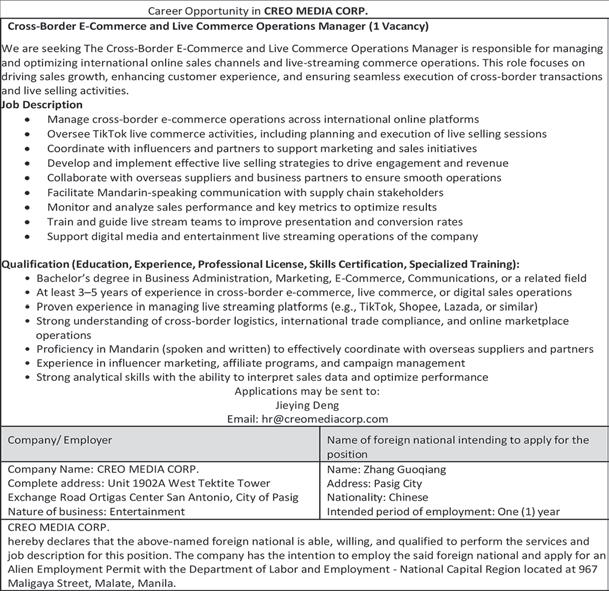
has been erased can now be used for your families. You can count on the continued delivery of DAR support services here in Region 8,” she said.
For his part, Martires encouraged farmers to work together through organizations. “Joining organizations serves as a bridge to wider opportunities. Through this, ARBs can more easily access programs not only from DAR but from the entire government,” he said.
Taduran reminded beneficiaries that owning land is both a privilege and a responsibility.
“Land is not just ownership— it is a symbol of dignity and the fruit of your sacrifices. Let us use it wisely and protect it for the next generation,” she said.
Beyond debt condonation, DAR also distributed 16,023 e-titles covering 20,301 hectares to 13,067 ARBs, accelerating land tenure security under the Comprehensive Agrarian Reform Program (CARP). Additionally, 151 land acquisition and distribution (LAD) titles were awarded to 149 ARBs, covering over 225 hectares.
For many recipients, the event marked the fulfillment of decadeslong struggles. Seventy-nine-yearold Lucresia Regis from Palo, Leyte received a COCROM covering 1.7297 hectares, freeing her family from a debt of over P659,000 incurred under her late husband’s name. Similarly, 84-year-old Teodoro Macaso of Biliran finally received his individual e-title—32 years after collective CLOAs were first issued—turning a lifelong dream into reality for his family. The event also featured the turnover of key rural infrastructure projects aimed at boosting agricultural productivity and improving market access—helping reduce transport costs, increase efficiency, and raise farmers’ incomes across the region. As Eastern Visayas farmers take full control of their land, the initiative underscores DAR’s continuing commitment to inclusive growth—where agrarian reform goes beyond ownership to building sustainable livelihoods and stronger rural communities. Jonathan. L. Mayuga

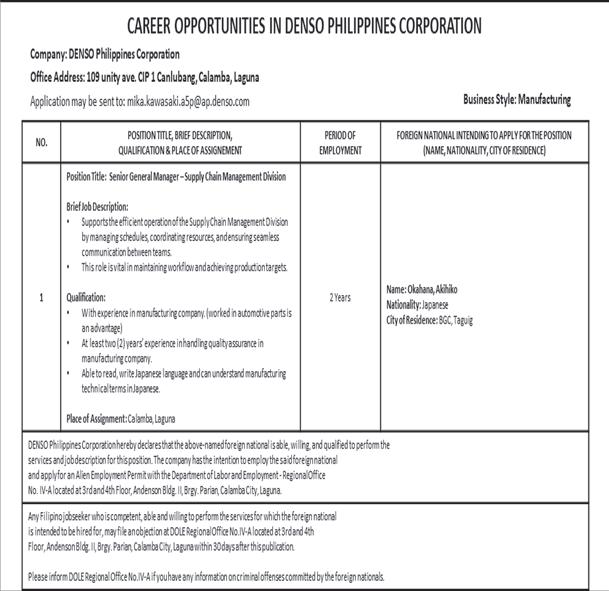
THE Congressional Policy and Budget Research Department has delivered an uncomfortable but necessary truth: the inflationary shock now coursing through the economy is not a passing storm but a fundamental realignment. Policymakers who continue reaching for band-aids will find them woefully insufficient. (Read the BusinessMirror story: “CPBRD urges long-term policy shift as oil shock seen keeping inflation elevated,” April 28, 2026)
For months, the prevailing hope has been that a de-escalation in the Middle East would swiftly restore price stability. The CPBRD’s latest analysis shatters that illusion. Even if the Strait of Hormuz reopens tomorrow, the economic damage has already been done—and the worst may still be ahead.
The think tank’s modeling should alarm every citizen watching their household budget stretch thinner. Transport costs, the canary in the coal mine, absorb the first blow from higher fuel prices. With recent oil shocks equivalent to four or five typical price spikes, double-digit increases in fares and logistics are fast becoming a reality. Non-food items—utilities, services, everyday goods—are already following suit. And while food prices have yet to fully reflect the crisis, the CPBRD warns that higher transport and fertilizer costs will soon reach farm gates and grocery shelves.
March’s 4.1 percent inflation—driven in part by nearly a 10 percent jump in transport costs—is a glimpse of what’s ahead.
The instinct to respond with short-term relief—subsidies, cash transfers, temporary price caps—is understandable. But the CPBRD is correct that these measures, however compassionate, do not address the underlying vulnerability. Worse, they risk becoming expensive habits that drain fiscal space without building resilience.
What the moment demands is structural thinking.
First, a serious review of the tax burden on local businesses is overdue. Margins are being crushed between rising input costs and softening demand. Temporary tax relief is not a giveaway; it is an investment in sustaining production, protecting jobs, and preventing a cascade of closures that would deepen the downturn.
Second, household spending power cannot be left to erode quietly. The report correctly notes that prolonged inflation saps demand across all income groups, not only the poorest. A broader strategy—whether through wage adjustments, targeted income support, or cost-of-living offsets—must be part of the conversation.
But the most urgent long-term prescription is energy independence. The CPBRD puts it plainly: the government must reduce the country’s vulnerability to external shocks by diversifying energy sources and strengthening domestic production. That means investments in renewables, grid resilience, and efficiency. It means treating energy security as a national priority, not an environmental afterthought. Agriculture, too, cannot be left behind. Modern farming technologies, improved logistics, and reduced import dependence are no longer aspirational goals. They are economic necessities. Every ton of food that must be shipped through contested waters is a bet against stability.
The CPBRD delivers a firm yet constructive message. We have deployed short-term strategies before, and they have failed to deliver lasting results. Repeating them in the face of a fundamentally different shock is not pragmatism—it is denial.
Policymakers have relied on strategies that have repeatedly failed to deliver lasting results. The CPBRD’s report is an opportunity to admit that and pivot. The present crisis will not wait for political convenience. Band-aids are exhausted. It is time for surgery.


UALIFIERS from Indigenous Peoples (IP) communities for the University of the Philippines College Admission Test (UPCAT) increased by 16 percent from last year, comprising 439 qualifiers, or 2.4 percent of the total.
In the recently released UPCAT results for Academic Year 2026–2027, out of 147,437 applicants, 18,350 have qualified for admission. UPCAT 2026, administered in August 2025 in 117 testing centers nationwide, posted a higher number of applicants and qualifiers than UPCAT 2025, where there were 17,996 successful examinees out of 135,236 applicants.
For the 439 IP qualifiers, the Cordillera Administrative Region had 78 qualifiers, while the Bangsamoro Autonomous Region in Muslim Mindanao had 59, Northern Mindanao had 49, Cagayan Valley had 47, National Capital Region (NCR) had 39, SOCKSARGEN had 35, Zamboanga Peninsula had 31, Davao Region had 30, MIMAROPA had 12, CARAGA and Central Luzon had 11 each, Calabarzon had 10, Ilocos region had 9, Western Visayas had 7, Central Visayas and Middle East had 3 each, Negros island had 1.
UP President Angelo Jimenez has deep roots in Mindanao and was named a tribal datu by city elders in Butuan, receiving the title Datu Mankalagan (“Great Spirit”). He is a Manobo and a Christian lowlander
at the same time.
Every iskolar ng bayan will have to hurdle first the UPCAT, which has earned a nationwide reputation as the most competitive college entrance exam in the country.
The UPCAT consists of four subtests: Language Proficiency (in English and Filipino), Reading Comprehension (in English and Filipino), Science, and Mathematics. Standardized UPCAT scores are combined with the composite of final grades in Grades 8 to 11 to determine the admission score.
Selection for admission to a campus is based on the applicant’s rank, campus quota and/or cut-off grade.
The successful applicants for a given campus are ranked according to grade predictors and quotas of their chosen degree programs. Some degree programs are more competitive due to high demand.
If an applicant is not successful at their first-choice campus, the application will be considered next in order of priority among the remaining campus choices.
The UPCAT differs from the other entrance tests because it deducts 0.25 (or one-fourth) of a point for each in-
Eduardo



Acorrect answer. In effect, applicants are slightly penalized for answering questions incorrectly. But one does not receive a deduction if an item is left blank. So guessing the correct answer doesn’t always help.
The number of students who took the exams in 2015 and 2016 dropped due to the implementation of the K-12 program, which added two years in basic education.
For the past 10 years, the number of qualifiers has been increasing:1,558 (26.51 percent) in 2016; 1,591 (17.50 percent) in 2017; 12,900 (12.50 percent) in 2018; 11,821 (13.00 percent) in 2019; 12,802 (13.80 percent) in 2020; 16,859 (16.15 percent) in 2024; 17,996 (13.00 percent) in 2025; and 18,350 (12.45percent) in 2026.
UPCAT was not administered for two academic years (2021-2023) due to Covid-19.
NCR has the highest number of qualifiers (29.68 percent), followed by Calabarzon (18.77 percent), Central Luzon (11.24 percent), Central Visayas (5.28 percent), Western Visayas (4.68 percent), Eastern Visayas (4.64 percent), Bicol (3.53 percent), Davao (3.15 percent), Ilocos (2.87 percent), SOCSARGEN (2.69 percent), Northern Mindanao ( 2.54 percent), Negros (2.14 percent), Cagayan (1.98 percent), Zamboanga Peninsula (1.54 percent), and Caraga (1.44 percent).
The percentage of qualifiers from public schools also climbed up to 57.1 percent from the previous 55 percent—continuing a trend of more public-school qualifiers in the UPCAT since 2023.
Sixty percent are female (10,920) while 40 percent are male (7,430).
The Diliman campus was my sol-
ace for a decade as a student at the UP School of Economics from 1987 to 1991 and later at the UP College of Law from 1992 to 1998. The number of first-generation college students who successfully passed UPCAT reached 2,323, almost the same number last year. In 1987, I was among those first generation. To implement the policy of democratization to make the UP studentry more representative of the nation’s population, socio-economic and geographic considerations are now factored in the selection of campus qualifiers.
One of the lines from the 2014 film “That Thing Called Tadhana,” which starred Angelica Panganiban and JM de Guzman best describe my stay in UP. “Nung high school, sobrang galing ko. Lahat ng competitions na sinalihan ko, panalo ako. Tangina! Nu’ng pagdating ko ng UP, ang gagaling ng mga kaklase ko! May mga Malang, may Abueva. Akala ko magaling na ’ko e. Marunong lang pala,” de Guzman said. UP was founded on June 18, 1908, or 117 years ago, through Act No. 1870 of the Philippine Assembly “to fill the need to meet the increasing demands for instruction in the higher levels of learning and provide professional studies in medicine, law, engineering or applied sciences.”
To the new Iskolars ng Bayan, the university will be your home during your adolescent lives when you pursue both academic excellence and progressive thinking.
Peyups is the moniker of the University of the Philippines. Atty. Dennis R. Gorecho heads the Seafarers’ Division of the Sapalo Velez Bundang Bulilan Law Offices. For comments, e-mail info@ sapalovelez.com, or call 0908-8665786.
FACEBOOK post by Behind Asia makes a thought-provoking assertion: “From a macroeconomic perspective, the Philippine middle class is an absolute illusion. Why? It is because true wealth is not measured by your car; it is measured by your safety net. Welcome to the terror of out-of-pocket healthcare.
I n developed economies (like Canada or the United Kingdom), if you get cancer or have a massive stroke, the government’s universal healthcare system absorbs the multimillion-dollar blow. You get sick. You get treated. Your bank account stays intact. However, in the Philippines, an unexpected medical emergency is a financial death sentence. It takes
10 years of hard work, overtime, and saving to build a middle-class life in the Philippines, and yet it takes exactly three weeks in a private hospital intensive care unit to completely erase it, sending the entire family back into generational poverty.”
In response to that post, Dr. Jose Ramon G. Albert of the Philippine Institute for Development Studies
One, a large portion of healthcare costs is paid directly by patients instead of being fully covered by insurance. Even with PhilHealth, coverage is often partial, so people still shoulder significant expenses for hospital stays, diagnostics, and medicines. Two, government spending on healthcare is relatively low compared to many countries. Public hospitals are cheaper, but they are often overcrowded and under-resourced. This pushes many people toward private hospitals, which are much more expensive.
Three, drugs and medical equipment are often imported, making See “Eagle Watch,”
(PIDS) makes an equally thoughtful clarification: “The concern is real, but the conclusion that the middle class is an illusion is too absolute. What the evidence actually shows is something more precise. A large share of Filipinos who are above the poverty line remain economically vulnerable because risks—especially health shocks—are not fully insured. That is exactly why the policy direction should be to progressively build universal social protection, in line with fiscal space. First, the diagnosis is correct. In the Philippines, high out-of-pocket health spending means that a serious illness can trigger what economists call ‘medical impoverishment.’ Many households in the P50,000–P80,000 monthly income range are not poor, but they are one shock away from poverty. This is not an illusion; it is incomplete risk protection.” Indeed, medical impoverishment is not just about healthcare being expensive. It is about lack of financial protection. Even a single illness can reshape the entire economic future of a family. Healthcare in the Philippines tends to be expensive for a mix of structural, economic, and policy reasons, which are worth spelling out here.
By Madlin Mekelburg & Isaiah Poritz
ELON MUSK became visibly irritated on the witness stand Wednesday as an attorney for OpenAI questioned whether the billionaire backed off his financial commitment to the startup in its early years.
In his second day testifying at a closely watched trial over his claims that OpenAI betrayed its altruistic mission in pursuit of profit, the world’s richest person was put on the defensive about how much he supported the startup since its founding. He had several heated exchanges with William Savitt, who represents OpenAI, about the clarity of the lawyer’s questions, calling them “unfair” and “misleading” at various points.
Savitt repeatedly posed what he described as “simple” yes or no questions to Musk, to which Musk would reply that they could not be answered so easily.
‘Trick me’
“ YOUR questions are not simple,” Musk said at one point. “They are designed to trick me, essentially.”
In the lawsuit he filed in 2024, Musk alleged that Sam Altman, OpenAI’s chief executive officer, and Greg Brockman, its president, have enriched themselves by converting the company to a for-profit business with billions of dollars in support from Microsoft Corp.
OpenAI and Altman have accused Musk of harassment and say the real goal of the lawsuit is to undercut competition with his own startup that he co-founded in 2023, xAI.
Savitt pressed Musk on how much money he had actually contributed to OpenAI in its early years. Musk had been making quarterly donations and paid the rent on an office building for OpenAI, before he said he “lost confidence” in its leadership.
During that time, Musk and OpenAI made different representations about the scope of his financial support for the nonprofit that he cofounded with Altman, Brockman and Ilya Sutskever.
When announcing its launch in 2015, the nonprofit said Musk committed to eventually donating as much as $1 billion to its mission to develop artificial intelligence for the “benefit of humanity.” In a post on X in 2023, Musk wrote that he had donated $100 million.
‘Did you?’
“AT the end of it, you didn’t contribute a billion dollars to OpenAI, did you?” Savitt asked Musk. Musk replied that he had been growing concerned with the direction of OpenAI around 2017, and started losing trust in the team. Savitt interjected.
“My question to you was simple,” he said, repeating it. Musk sidestepped again, and said he contributed his reputation, his ideas and other assets that had non-monetary value: “Without me, it would not exist.”
US District Judge Yvonne Gonzalez Rogers intervened and told Musk to answer Savitt’s question, which Musk asked to be repeated.
“My question was: You didn’t contribute anywhere near $1 billion to OpenAI, yes or no?” Savitt said.
$38 million
“IN strict monetary terms, I contributed $38 million,” Musk said.
The two have been courtroom rivals before. Savitt, one of the country’s leading corporate litigators, represented Twitter Inc. in its lawsuit to force Musk to follow through on his bid to buy the social media company for $44 billion when he tried to back of the deal in 2022. Musk ultimately conceded before that case reached a trial.
The stakes in the Oakland trial are high—maybe even existential— for OpenAI because of what Musk is seeking: As much as $134 billion in damages and removal of Altman
CHINESE construction activity suffered its biggest slump since the early stages of the Covid pandemic and the services sector fell back into contraction, even as exports kept factories humming despite the disruptions caused by the war in Iran.
struction is intensifying in a sign of a continued decline in property building, which the government has failed to offset with faster spending on infrastructure in 2026.
and Brockman from their leadership roles, as well as the unwinding of OpenAI’s for-profit conversion that was completed in October.
Much of Musk’s testimony so far has been about his falling out with OpenAI’s leaders as they explored strategies to line up sufficient funding to compete with Alphabet Inc.’s Google and other pioneers in the AI space that were operating as for-profits.
In 2017, he and the other OpenAI co-founders were considering creating a for-profit subsidiary to support research. They contemplated giving Musk a majority interest in the subsidiary, and virtually unequivocal control over its operations.
He would have had the power to appoint four seats to a 12-member board, while Altman, Brockman and Sutskever would have each received one seat. Musk told jurors the intention was for his majority interest to quickly dilute over time, as more investors were recruited.
‘Final straw’
BUT Musk said the “final straw” in his rift with the co-founders came when they seemed to turn on him and voice concerns about the proposal, which never came to fruition.
“They had gone back on what they had agreed on previously,” Musk said. “I felt this was somewhat disingenuous and what they really wanted to do was create a for-profit where they had as much shareholder ownership as possible.”
Savitt showed jurors a 2017 email exchange between Musk, Sutskever, Brockman and a few others at OpenAI about these discussions. In the email, Musk expressed a need to “change course” to keep up with business demands. In that same message thread, Musk offered to give free Teslas to Sutskever and others at OpenAI.
‘Full price’ “TO be fair, I paid full price for the Teslas,” the longtime chief executive officer of the electric car maker said to laughter in the courtroom. “I don’t get a discount or anything.”
Five years after he left OpenAI’s board in 2018, Musk founded xAI as a for-profit company. It was recently acquired by SpaceX as Musk’s rocket maker moves toward an initial public offering. OpenAI is also poised for an IPO as its valuation approaches $1 trillion.
Musk told jurors that OpenAI was established as a nonprofit because he was concerned about the safety of AI and ensuring that the future of the technology would not be controlled solely by companies like Google.
‘Some safety risk’ SAVITT asked Musk on Wednesday whether he considered it to be a safety risk for an AI company to operate as a for-profit. Musk said he believes it “creates some safety risk.”
“So xAI suffers from that safety risk?” Savitt asked.
“Yes,” Musk replied. Musk repeated throughout his testimony that he was not against the idea of a for-profit AI company, but stated his objection to turning a nonprofit into a for-profit enterprise.
“That’s having your cake and eating it too,” he said. Savitt posed a number of questions about Musk’s competing loyalties as both an OpenAI board member and his roles at Tesla and Neuralink, both of which are heavily invested in AI.
The lawyer suggested during questioning that despite Musk’s fiduciary duties to OpenAI, in 2017 he was actually attempting to hire top researchers away from the nonprofit to his other companies. Bloomberg
Powered by demand overseas, the official manufacturing purchasing managers’ index fared better than forecast in April but slipped to 50.3, remaining above the threshold that separates contraction from growth, the National Bureau of Statistics said Thursday.
By contrast, the official measure of activity in construction and services dropped more than forecast to 49.4 from 50.1 last month, the statistics office said. The subindex of construction fell to 48, the lowest level on record excluding February 2020, when the initial Covid outbreak hit.
And in further evidence of resilience among factories, a private gauge of activity at export-oriented firms improved far more than forecast in April to reach the highest since December 2020. The RatingDog China manufacturing PMI jumped to 52.2 this month from 50.8 in March, according to a statement.
The discrepancy in economic performance may call into question the confidence in growth that China’s leadership expressed at a meeting of the Communist Party’s decisionmaking Politburo this week. With
cost pressures already mounting and domestic spending stuck in stagnation, the lopsided gains for exporters may not last if the conflict in the Middle East weakens foreign demand by pushing up oil prices.
“The PMIs suggest that the supply shock from the Iran war led to a further rise in price pressures in April but that manufacturing output continued to accelerate,” said Julian Evans-Pritchard, head of China economics at Capital Economics. “This appears to have been largely driven by exports, however, and the surveys point to a renewed slowdown in domestic demand.”
A sub-index of new export orders for factories expanded for the first time in two years, showing the war in Iran has done little so far to hold back overseas sales. But overall orders slowed, indicating a drag from softer domestic sales and pointing to weak consumer spending at home.
The PMI for manufacturing industries with high energy consumption fell by a percentage point from a month earlier to 47.9 in April, according to the NBS.
Meanwhile the slump facing con-
“The latest PMI surveys confirm that external demand has become the primary engine of China’s recovery. However, the domestic landscape remains challenging.
The split is stark: while factories are busy filling export orders, domestic manufacturing orders are softer, and momentum in services and construction is cooling,” said Bloomberg economists Chang Shu and Eric Zhu.
While the economy has gotten off to a strong start this year, Chinese factories have been jolted by the spiking oil prices stemming from the war. At the same time, Beijing’s strategic oil reserves and investments in renewable energy are cushioning the fallout from the conflict on the broader economy.
Trade volumes have held up well so far, with the flow of containers through Chinese ports mostly exceeding last year’s record levels despite slowing in weekly terms at the end of April. Though export growth weakened last month, global demand linked to artificial intelligence has helped buoy shipments.
“The expansionary manufacturing PMIs—driven by exports –
alongside contraction readings for services and construction reinforce a two-speed growth outlook,” Barclays Plc analysts led by Yingke Zhou said in a report. “Ongoing energy shocks have supported China’s green-tech exports, while robust global AI capex underpins demand for China’s AI-related exports.” Even so, disparities are becoming more apparent as sectors buoyed by higher prices for oil, metals and chips are thriving while the rest suffer from rising raw material costs. The Chinese industrial hub of Guangdong, for example, has seen some electricity prices almost double due in part to constraints on the supply of natural gas from the Middle East.
The increasing risk is that profitability will come under more strain. In April, input prices in non-manufacturing grew for the sixth straight month even as their decline moderated slightly. But the PMI’s sales price component remained in contraction, where it’s been since mid-2023.
“Price pressures haven’t been transmitted to customers yet,” said Lynn Song, chief economist for Greater China at ING Bank. “As China’s services sector tends to be more domestically oriented than its manufacturing sector, it has started to underperform in recent months.” Bloomberg
By Christopher Rugaber | AP Economics Writer
WASHINGTON—Jerome Powell said Wednesday he plans to remain on the board of the Federal Reserve after his term as chair ends next month “for a period of time, to be determined,” saying the “unprecedented” legal attacks by the Trump administration have put the independence of the nation’s central bank at risk.
“I worry these attacks are battering this institution and putting at risk the things that really matter to the public,” Powell said in remarks at a press conference after the Fed announced its decision to keep its benchmark interest rate unchanged.
Powell’s decision to stay—the first time a Fed chair will remain on the board as a governor since 1948—denies President Donald Trump a chance to fill a seat on the central bank’s seven-member governing board with his own appointee. The Senate Banking Committee earlier approved Powell’s successor as chair, Trump appointee Kevin Warsh, on a party-line vote. Powell will continue as a Fed governor, possibly until January 2028. Warsh, if confirmed, will take a seat currently held by Stephen Miran, a previous Trump appointee, whose term ended in January.
Powell’s move could make it a bit harder for Warsh to engineer the rate cuts that Trump has demanded, and Warsh advocated for last year, economists say.
“It probably means it will take Warsh a little bit longer to build the consensus he is trying to build,”
them vulnerable to exchange rates, tariffs, and supply chain costs. This raises prices for common treatments, especially for chronic illnesses.
Four, urban centers like Metro Manila have better hospitals, but rural areas have fewer options. This forces patients to travel, so transportation, lodging, and lost income are added to the total cost of care.
Five, a large share of hospitals and clinics are privately owned. These facilities operate like businesses, so fees for consultations, procedures, and rooms can be high, especially in top-tier hospitals.
said David Seif, chief economist for developed markets at Nomura, an investment bank.
US Attorney for the District of Columbia Jeanine Pirro said on X Friday that her office was ending its probe into the Fed’s extensive building renovations because the Fed’s inspector general would scrutinize them instead. But she added that her office could reopen the investigation if “the facts warrant doing so.” And Pirro had said previously that she would appeal a court ruling that threw out subpoenas her office had issued.
Powell said Wednesday he had been assured by the Justice Department that the appeal wouldn’t result in a reopening of the probe unless a separate investigation by the Fed’s inspector general finds evidence of criminal activity.
Apparently, that didn’t bring Powell the closure he felt is needed.
“I’m waiting for the investigation to be well and truly over with finality and transparency,” he said. “I’m waiting for that and I will leave when I think it appropriate to do so.”
The Fed Wednesday left its benchmark interest rate unchanged for the third straight meeting but signaled
Six, many Filipino doctors and nurses move abroad for better pay. This creates shortages locally, which can increase labor costs and reduce competition, which could indirectly increase prices.
Last, even with reforms like the Universal Health Care Act, implementation challenges remain. Not all services are covered, and reimbursement processes can be slow or incomplete.
All told, healthcare in the Philippines feels expensive because patients often pay a large share themselves, while the public system struggles to fully absorb demand. Private providers fill the gap, but at a higher price. Costs could be moderate globally, but because
it could still cut rates in the coming months, moves that attracted the most dissents since October 1992.
Three officials dissented in favor of removing the reference to a future cut, while a fourth, Miran, dissented in favor of an immediate rate cut.
The dissents underscore the level of division on the Fed’s 12-member rate-setting committee ahead of t he end of Powell’s term as chair on May 15.
“Developments in the Middle East are contributing to a high level of uncertainty about the economic outlook,” the Fed said in a statement after its two-day meeting. “Inflation is elevated, in part reflecting the recent increase in global energy prices.”
Trump responded to Powell’s decision late Wednesday on his social media website: “Jerome ‘Too Late’ Powell wants to stay at the Fed because he can’t get a job anywhere else—Nobody wants him,” Trump posted, using his nickname for the Fed chair.
Warsh has promised “regime change” at the central bank and may make sweeping changes to its economic models, communications strategies, and balance sheet. He has argued in favor of rate cuts, as Trump has demanded, but he will likely find it harder to implement them with inflation topping 3 percent, above the Fed’s target of 2 percent.
When asked if he believed Warsh would stand up to political pressure from Trump, Powell answered, “He testified very strongly at his hearing, and I take him at his word.”
The three officials who dissented
financial protection here is weak, patients are forced to absorb the shock directly.
Dr. Albert of PIDS says that the policy response should not be an immediate, fully generous universal system overnight. That would be fiscally unrealistic. Instead, the global and Philippine experience points to a phased, progressive pathway.
against hinting that the Fed may reduce borrowing costs were Beth Hammack, president of the Federal Reserve Bank of Cleveland; Neel Kashkari, president of the Minneapolis Fed; and Lorie Logan, president of the Dallas Fed. The regional Fed bank presidents have historically been more likely to dissent, while the Washington-based governors more often support the chair. The dissents could renew tension between the Trump administration and the bank presidents, who White House officials have previously criticized.
Beth Ann Bovino, chief economist at US Bank, said the dissents demonstrated that Fed policymakers are “very independent” and will likely be on hold for months longer. She has forecast a rate cut in December but now isn’t sure. Wall Street investors on average don’t expect a reduction until well into next year, according to futures pricing.
Powell’s decision to stay on could worsen tensions with the Trump administration and would create what some analysts refer to as a “two Popes” scenario, with a chair and former chair both on the Fed’s board. In that case, divisions among policymakers could increase, if some decided to follow Powell’s lead rather than Warsh’s.
Powell dismissed the notion that his staying on could cause dissension, saying, “My intention is not to interfere,” later adding that, “I’m not looking to be a high-profile dissident or anything like that.” AP Writer Alex Veiga contributed to this report.
One, the Philippines should start with universal health coverage, and then gradually deepen the benefits. Two, protection against catastrophic shocks should be prioritized. Three, targeted subsidies should be used within a universal framework. Four, fiscal space should be expanded deliberately. Last, health should be integrated with broader social protection. Indeed, making healthcare cheaper in the Philippines is not about one fix. It takes coordinated changes across policy, hospitals, and insurance. The biggest constraints are budget and political will. After all, expanding coverage and public hospitals costs billions. However, the most impactful combination is a better-funded public system, stronger insurance (PhilHealth), and lower drug prices. This trio could significantly reduce what people pay out of pocket.
By Samuel P. Medenilla @sam_medenilla
WITH the war in the Middle East now lasting beyond two months, the Department of Budget and Management (DBM) said the government is now eyeing at least P155 billion to augment its response to sectors, which were affected by the conflict.
DBM Undersecretary Goddess
O. Libiran disclosed the figure was based on the preliminary es timates from Office of the Exec utive Secretary on the proposed additional interventions of the Unified Package for Livelihoods, Industry, Food, and Transport (UPLIFT) Committee.
The figure, she said, may still be adjusted based on how much the concerned government agen cies can realign, repurpose or defer from their existing appro priation to fund the targeted in tervention addressing the Mid dle East crisis.
“So, in other words, we are not looking at entirely new spend
ing, but rather a strategic repri oritization within the current fiscal phase consistent with pru dent fiscal management and in line with our full government efforts,” Libiran said in a press briefing on Thursday. “So, further refinements to funding requirements are ex pected as agencies finalize their respective proposals as also re flected in the discussion and ma terials presented by the Depart ment of Economy Planning and Development during the recent inter a gency briefing,” she add ed. DepDev earlier reported that of the P238 billion identified
by DBM, which can be used for the government Middle East re sponse, P125.2 billion was re leased to concerned agencies as of April 1.
It estimated the government may need P429 billion to con tinue its ongoing interventions if the Middle East conflict will persist until the end of the year.
Created by President Ferdi nand Marcos through Execu tive Order No. 110, the UPLIFT Committee is tasked to mitigate the socioeconomic impact of the Middle East tension. Its five pri orities include protecting Filipi nos in the said region, ensuring sufficient supply of fuel, assist ing sectors in need, keeping food prices affordable and ensuring supply of electricity.
The conflict in the Middle East started February 28 after the United States and Israel attacked Iran, which disrupted global sup ply chains, triggering a spike in global pump prices.
To provide the government with additional funding this year, President Ferdinand Mar cos is currently pushing for a bill, which will give the govern ment greater flexibility in using savings as well as unreleased and unobligated appropriations.
Once passed into law, the bill will remove the two y ear ban

THE Indian market is becoming more vibrant, with a destination management company (DMC) expressing confidence that more will arrive by the second half of the year.
on including declared savings in the proposed national budget, as well as allow the utilization of unreleased appropriations and unobligated allotments from the fiscal year 2025 General Appro priations Act (GAA) and the un released appropriations from the fiscal year 2026 GAA.
The proposed piece of legisla tion will also include a list of programs, activities and projects that can be funded from the said savings.
Libiran said they are still con solidating data on how much ad ditional funds the government will be able to use with the pas sage of the UPLIFT bill.
The DBM chief said their new UPLIFT mircosite, which can be accessed at https://uplift.gov. ph/ will provide the public access to government programs related to the Middle East conflict.
“So people need to see that help is real, that it is ongoing and that is reaching them. Because even the most extensive govern ment action means little if peo ple cannot understand or access it. So, UPLIFT microsite solves this gap,” Libiran said.
She said the website can also used to prevent corruption or irregularities in spending the funds for the programs under the UPLIFT.
Arjun Shroff, managing director of Shroff International Travel Care Inc., told the BusinessMirror, “We are getting our customers and they are coming in. There is no problem with the groups. We are getting tourists from India, from Nepal, from Bangladesh.”
Except for Bangladesh, tourists from India and Nepal don’t need a visa to travel to the Philippines. Shroff spoke to this paper on the sidelines of the Industry Dialogue on Tourism Constraints hosted by the Tourism Congress of the Philippines and Management Association of the Philippines on Wednesday at Dusit Thani Manila.
Data from the Department of Tourism (DOT) showed that Indian tourists reached 49,592 from January to April 27, a substantial 68.42 percent increase from January to April 30, 2025. He said many of his clients go to Manila, Clark, Palawan, and Boracay.
“I am getting a lot of queries...Clients call, and we are so thankful that [the energy crisis] has not affected our sector much,” said Shroff, who was the immediate past president of the Philippine Tour Operators Assocation. There has been a slight lull in arrivals, but “at least June-August should go good, depends on the rainy season here, then they will back September to December, we should have more groups.”
‘Nat’l emergency’ a tourist turnoff HE expressed some concern, though, about the message being put out by the government about the energy crisis, which affects the perception of tourists
By Malou Talosig-Bartolome
THE Association of South east Asian Nations has pressed the UN Security Council to uphold freedom of navi gation and protect seafarers, as a high‑level debate on maritime security was dominated by warn ings over escalating tensions in the Strait of Hormuz and the Red Sea.
The Strait of Hormuz—the world’s most critical oil chokepoint, with about 20 percent of global crude and petroleum products passing through daily—loomed large over the discussions. Several Southeast Asian economies, in cluding the Philippines, Vietnam, Thailand, and Singapore, source the bulk of their oil imports from the Gulf, making them highly vul nerable to disruptions.
World Bank and the Economic Research Institute for Asean and East Asia warn that prolonged in stability in Hormuz could shave up to one percentage point off Asean’s GDP growth, as rising fuel costs ripple into inflation, food prices, and fiscal strain.
Philippine Ambassador Enrique Manalo, speaking for Asean, reaf firmed on April 27 the 1982 UN Convention on the Law of the Sea (Unclos) as the legal bedrock for maritime order.
“Safe, unimpeded and continu ous transit passage through straits used for international navigation must be maintained,” he said, urg ing restraint and diplomacy.
Asean also stressed its role as a major supplier of the global mari time workforce, calling for stronger protection of crews.
Chaired by Bahrain’s Foreign Minister Abdullatif bin Rashid Al Zayani, the debate featured stark briefings.
UN Secretary‑General António Guterres warned that the Hormuz crisis has “struck at global energy security, food supplies and trade,”
of the Philippines. “One of my clients called and told me the Philippines has released a message that there is a disaster. [That] we are in a crisis. So he said, ‘I heard there is no gas, there are no restaurants running. So I told them that my job as a tour operator is to make sure get the gas cylinder, carry it to the restaurant and feed your guests. That’s what I told him, and he was so excited to come here,” he said.
President Ferdinand R. Marcos Jr. declared a state of national energy emergency on March 24, arising from potential oil supply problems due the war between the United States-Israel and Iran. He admitted that a few tour suppliers have slightly increased their rates, echoing similar experiences by other DMCs, “But we did not charge it to our customers yet. We managed to keep the prices same and managed to stay within the buffer that we keep usually in our local transportation. Even the airfares, we handled it before the crisis happened.” (See, “Fuel price surge swells PHL travel cost despite favorable forex rate,” in the BusinessMirror, April 14, 2026.) He also noted the strategic location of the Philippines, with easy access from members of the Association of Southeast Asian Nations, Japan, South Korea, Hong Kong, and Guam. “We should focus our ability to capture tourists from these places, attend all the road shows, go for all the tourism events, so we can keep attracting the people. The private sector has to do a lot of engagement along with the support from the government.”
Chinese arrivals up 95% IN her remarks at same event, Tourism Secretary-designate Ma. Bernadita Angara-Mathay
‘Czech Republic, France must not be havens for fugitives’
with ripple effects into hunger and poverty.
IMO Secretary‑General Arsenio Dominguez reported that 20,000 seafarers and nearly 2,000 vessels remain stranded in the Persian Gulf, stressing that freedom of navigation “is not negotiable” and announcing plans for an evacua tion framework.
Asean nations together supply more than half a million seafarers to the global fleet, with the Philip pines alone accounting for about one in four worldwide—underscor ing why the bloc’s call for maritime safety carries significant weight in UN debates.
Southeast Asian voices
SINGAPORE: Stressed that tran sit passage is a legal right, not a privilege, noting the vulnerability of chokepoints such as the Straits of Malacca and Singapore, which carry more oil daily than Hormuz. Singapore praised the 2007 Coop erative Mechanism for keeping the straits open and clean.
Malaysia: Asserted that sover eignty cannot be ceded under co ercion, citing the Malacca Straits Patrol and Trilateral Cooperative Arrangement as models of practi cal cooperation and intelligence sharing.
Cambodia: Echoed Asean’s call, stressing that secure waterways are essential for peace and sustainable development. Phnom Penh urged capacity building for coastal states and preventive Security Council ac tion, reaffirmed its commitment to Unclos, and welcomed friendly for eign ships to its modernized naval base for joint exercises.
Timor‑Leste: Speaking as a Small Island Developing State, emphasized that maritime secu rity is inseparable from human security. Disruptions, it warned, drive up costs of essentials, forc ing vulnerable families into im
PRESIDENT Ferdinand Marcos Jr. has urged France and Czech Republic not to become a refuge for Filipino fugitives after both countries declined to give additional information on former congressman Elizaldy “Zaldy” Co, who is currently seeking asylum in Paris to evade charges on flood control anomalies.
The chief executive made the appeal when he met with French Ambassador to the Philippines Maria Fontanel and Chargé d’Affaires of the Embassy of the Czech Republic, Eva Tenzin in Malacañang on Wednesday.
During the meeting, Marcos requested for additional information related to Co.
“The President called for clarity and explanation, insisting that other countries should not become havens for those fleeing the law in the Philippines,” Palace Press Officer (PCO) Claire Castro said in Filipino in a press briefing last Thursday. She reiterated that the President was disappointed and dismayed after both diplomats declined to give additional information on how Co fled the Czech Republic and entered France. Tenzin was unable to grant the request of the President, citing “international law, European and national laws.” As for Fontanel, she said she still lacks authorization to release such information. Castro said Marcos understands the situation of both diplomats and said he does not want France and the Czech Republic to violate any law in assisting Manila in bringing Co home. The President, she said, also stressed that his administration is ready to fast-track the signing of an extradition agreement with both countries to facilitate the said repatriation.
“The President reaffirmed that the government will do all legal and diplomatic means to bring fugitive Zaldy Co back to the Philippines to face the graft and malversation cases filed against him,” Castro said. Co
Editor: Jennifer A. Ng

By VG Cabuag @villygc
PROPERTY developer Ayala Land Inc. on Thursday said it is cutting its 2026 capital expenditures (capex) to P50 billion, lower than its initial target of around P70 billion.
Anna Ma. Margarita B. Dy, the company’s president and CEO, said the company is reviewing its project launches for the year. The company has already canceled its Avida Katipunan Heights in Quezon City and paused its Laurean Residences project in Makati.
She said these were “well-received” projects in strong locations, but because construction had not yet begun, Ayala Land acted early to “minimize disruption.”
“And we will revisit opportunities when cost visibility and market conditions improve, we have a busy year ahead in property development,” Dy said. “So, we will need to prioritize projects that are going to be turned over this year next year, and malls
that are opening this year next year.”
“We are actively reshaping our portfolio—scaling recurring income, delivering our existing projects, and positioning the business to emerge stronger and more balanced through the cycle.”
The company’s net income fell 23 percent to P5.36 billion in the first quarter from the previous year’s P6.94 billion on weak residential sales.
Dy said in property development, residential presales for the period were down 22 percent while revenues were also down 27 percent to P20.34 billion from P27.83 billion last year. This, she said, reflected weaker buyer sentiment and macro economic uncertainty.
“We started the year with a launch target of P30 billion. Given current conditions, we are reviewing launches carefully as the operating environment becomes clearer, we remain optimistic that we can proceed with selected horizontal launches by the second half of the year, uncertainties around cost and execution drove us to” Dy said.
The company still has about P130 billion worth of inventory that it will monetize.
Ayala Land said it will deliver some 13,000 residential units in 40 projects to buyers.
Total revenues for the period was down by 14 percent to P37.84 billion from the previous year’s P43.55 billion, as the company saw lower bookings across residential, commercial and industrial products.
Leasing and hospitality revenues increased 9 percent to P12.59 billion from the previous P11.6 billion, supported by improving occupancy, higher tenant sales, and the contribution of newly opened and redeveloped assets across its mall, office, and hotel portfolio.
Shopping center revenues reached P5.82 billion a mere 2-per -
cent increase from the previous P5.7 billion, benefiting from improved mall traffic and the renovation of flagship assets such as TriNoma in Quezon City and Ayala Center Cebu, alongside the opening of Ayala Malls Arca South in Taguig, which added 17,500 square meters of gross leasable area.
The hospitality segment posted a 30-percent increase in revenues to P3.4 billion, driven by new capacity from New World Makati Hotel and stronger performance from renovated properties, including Seda hotels, Holiday Inn, and Lagen Resort in El Nido.
Office leasing revenues were flat at P3 billion, with occupancy levels continuing to outperform industry benchmarks.
Ayala Land is accelerating the expansion of its recurring income base, with plans to deliver over 270,000 square meters of new mall and office space, alongside the re-opening of the five-star Mandarin Hotel.
Its capex for the quarter reached P23 billion, with spending for leasing assets jumping by more than half to P6.1 billion for the expansion and reinvention of the portfolio.
PBy Lenie Lectura @llectura

ANGILINAN-LED PXP Energy Corp. (PXP) ended the first quarter with a higher core net loss of P11.7 million compared with last year’s P9.2 million, mainly due to higher interest charges.
Net financing costs went up to P5.9 million, reflecting a higher net interest expense of P2 million and foreign exchange loss of P3.8 million due to the weakening of the peso. Consolidated net loss attributable to equity holders of the parent company reached P15.6 million, also higher than the P9.4 million it posted
ONVERGE ICT Solutions Inc.
Csaid on Thursday it is providing high-speed fiber connectivity of up to 5 gigabits per second (Gbps) to key venues hosting Association of Southeast Asian Nations (Asean) meetings across the Philippines.
The Department of Information and Communications Technology (DICT) tapped Converge as an official connectivity partner for the country’s Asean chairmanship.
Already, the company has powered up 11 sites across Metro Manila and Cebu, supplying 1-Gbps to 5-Gbps connections to meeting venues and key locations nationwide.
Its highest-speed deployment— 5-Gbps of uninterrupted connectivity—will support the 48th Asean Summit at the newly opened Mactan Expo Center in Cebu this May, where heads of state from all 11 member nations are expected to convene in person. Lorenz S. Marasigan

SM Prime: Laguna mall will open doors by Q4

SHOPPING mall operator
SM Prime Holdings Inc. on Thursday said it is on track to open SM Nuvali in Sta. Rosa, Laguna in the fourth quarter.
SM Nuvali will be the fifth and largest SM mall in the province, the company said.
“SM Nuvali marks the first of five flagship malls we plan to open annually from 2026 to 2030,” Jeffrey C. Lim, the company’s president, said.
in the same period a year ago.
Meanwhile, consolidated petroleum revenues rose by 2.4 percent to P20.9 million mainly due to the increase in its participating interest in Galoc to 4.69 percent under Service Contract (SC) 88. This was partly offset by a 0.3-percent decline in volume sold, and a 17.2 percent decline in effective average crude price to $62.9 per barrel.
Petroleum production costs expanded to P18.9 million, while general and administrative expenses fell slightly to P12.1 million.
“The company remains focused on maintaining operational readiness and managing its portfolio with
‘Hiring
financial discipline. With Galoc production approaching the end of field life, PXP continues to assess opportunities that may provide earlier cash flow while maintaining exposure to longer-term exploration upside.”
Just recently, the Department of Energy (DOE) executed petroleum SC 91 in the Northwest Palawan Basin with the consortium composed of Nido Petroleum Philippines Pty. Ltd., The Philodrill Corp., Oriental Petroleum and Minerals Corp., Alcorn Petroleum and Minerals Corp., and PXP’s subsidiary, Forum Energy Philippines Corp.
SC 91 further strengthens the company’s upstream portfolio in
Northwest Palawan, a proven petroleum province where PXP and its subsidiaries continue to maintain strategic exposure. SC 91 has a 10-year term, aligned with the estimated timeframe required to appraise, develop, and produce the Cadlao Field, which has estimated Contingent Resources of 6.2 million barrels of oil.
“The company also continues to maintain its position in SC 72 and SC 75, which remain under force majeure, and will pursue activities across its service contract portfolio in accordance with government-approved work programs and regulatory requirements.”
By Bless Aubrey Ogerio @blessogerio
ORKFORCE turnover re-
Wmains a persistent issue for Philippine employers despite continued investment in recruitment and training, according to a CIBI Information Inc. report and industry data.
The report noted that companies across sectors continue to face early resignations, mismatched job placements, and inconsistent performance shortly after hiring.
While these concerns are often managed after onboarding, the findings suggest that some of the problems may originate earlier in the recruitment process, where decisions are still largely based on CVs and interviews.
“Most workforce decisions are still made with incomplete information,” CIBI Information Inc. vice president for service and industrials Ivy Ramirez said in an industry discussion cited in the report.
“We hire based on CVs (curriculum vitae) and validate through interviews, but we have very little visibility into behavior, risk, or realworld context.”
Further, Ramirez said improvements in training systems have not

been matched by similar advances in hiring decisions.
“We’ve optimized how we develop people, but not how we decide who to develop—that’s where the disconnect lies.” The CIBI report cited Aon’s 2025 Salary Increase and Turnover Study, which projected about an attrition rate of 20 percent in the Philippines, making the country one of the countries in Southeast Asia with high turnover rates.
Moreover, the report indicated continued challenges in retention and raised concerns about how well current hiring practices identify long-term job fit.
For CIBI, shifting workforce expectations, cost pressures and increased job mobility are making traditional screening tools less sufficient on their own.
In response, the report observed a gradual shift among employers toward broader use of data-driven hiring tools, including background checks, identity verification and education and employment validation.
It also noted that employers using more comprehensive data inputs are increasingly able to supplement interviews and CV screening with additional risk and credibility checks before hiring decisions are made.
“This reflects our confidence in high-growth regional markets and our commitment to building integrated destinations that support long-term value creation.”
SM Nuvali is positioning itself as a premier mall with sustainability integrated into its design and operations.
The development will feature solar panels, water recycling systems and energy-efficient lighting to support the operation of more than 82,000 square meters of gross leasable area.
The new lifestyle mall will also feature 24 electric vehicle charging stations, a Trash-to-Cash recycling program and an e-waste collection facility.
To complement the area’s ecocommunity master plan and laidback lifestyle, SM Nuvali will also
include large non-retail spaces, including open-air promenades, green zones and lifestyle areas.
“We believe SM Nuvali can bring meaningful value to the Nuvali estate,” Lim said. “Its experiential attractions and tenant mix will help generate economic activity, create jobs and attract more investment into the region.”
SM Nuvali will feature a onehectare air-conditioned indoor garden that will have playgrounds and park for pets, larger natureinspired spaces such as Sky pods, premium restaurants and a number of global brands.
A footbridge will connect the mall to Park Inn by Radisson and SMX Trade Hall, which are currently being developed by SM Hotels and Conventions Corp. The development of the NV Towers, an SM Offices project, is also underway. SM Nuvali will be SM Prime’s 91st mall.
The investment is part of the company’s broader strategy to deploy capital in high-growth regional markets, where rising incomes, stronger connectivity and expanding urban centers continue to support demand for integrated retail, lifestyle and leisure destinations, the company said. VG Cabuag

HE Bureau of Internal Rev -
Tenue (BIR) has ordered online sellers and content creators to display a “BIR Registration Seal Badge” on their platforms to prove their tax compliance and allow the public to verify their business legitimacy.
The order is etched in Revenue Memorandum Circular 038-2026 that requires online businesses, sellers or merchants and service providers to display “conspicuously” their proof of registration.
“This requirement applies not only to online sellers of goods but also to persons engaged in providing services through digital or electronic means or with online presence,” the circular read.
The requirement covers not only online sellers but also freelancers, bloggers, vloggers, influencers, live streamers, content creators, and individuals earning through online views, advertisements, affiliate commissions, brand sponsorships, or similar monetized digital activities.
According to the BIR, the seal badge serves as proof of registration for businesses engaged in online selling of goods or services and e-commerce activities.
It is issued alongside the BIR Certificate of Registration (COR) or Electronic Certificate of Registration (eCOR) and is intended to be posted on the taxpayer’s website, online store or platform, mobile application, social media business page or e-commerce seller profile in lieu of the BIR COR/eCOR. Specifically, the badge must be displayed on any page or link in the
taxpayer’s website or own mobile application under tabs or sections showing the “About Us” page, the “About the Company,” “Government Compliance” or “Business Permits.” For e-commerce platforms and mobile applications, the seal must be posted at the “Support” page, “About,” “App Setting,” and/or under links such as “Government Compliance” or “Business Permits.”
Sellers, merchants or service providers with accounts or doing business or with sales transactions on e-commerce platforms or mobile applications or websites must also post the seal under the Seller’s or Merchant’s page, profile, store or shop details, marketplace or business page.
Both the seal badge and the COR/ eCOR carry QR codes for public verification of a taxpayer’s registration.
The seal badge can be obtained at a Revenue District Office where the taxpayer is registered. The badge can be also secured electronically via the online registration and update system of the BIR. The latter could be accomplished by updating the registration information and paying the P30 loose documentary stamp tax.
The BIR imposes a 1-percent withholding tax on the gross remittance of electronic marketplace operators and digital financial services providers to online sellers.
And as mandated by Republic Act 12023, known as the “VAT on Digital Services Act,” the government also imposed a 12-percent value-added tax on digital services consumed within the country.
Reine Juvierre S. Alberto
TBy Samuel P. Medenilla

@sam_medenilla
HE government’s Executive Branch has taken the stance of the Department of Economy, Planning and Development (DEPDev) in stabilizing the peso: it’s the central bank’s job.
“It is the BSP [Bangko Sentral ng Pilipinas], our central bank that has the institutional mandate to stabilize the peso and prevent excessive volatility,” Palace Press Officer Claire A. Castro said, quoting DEPDev Secretary Arsenio M. Balisacan. “Its ammunition is sufficient to prevent excessive volatility.”
The Presidential Communications Office (PCO) Undersecretary issued her statement in a news briefing last Thursday as the value of the local tender further dropped a day earlier to P61.567 against the greenback, or 26 centavos weaker than its previous finish of P61.3 on April 28. The weakened peso triggered concerns on its possible effects on serving foreign exchange-denominated debt as well as uncertainty for firms in terms of price contracts, managing cash flows and plan production.
The DEPDev purportedly attributed the weakening of the peso to two major external factors: the unusually strong US dollar, which is pulling capital toward US assets, and the sharp global oil price spikes.
“In short, the peso depreciation reflects the rise of the demand for dollars faster than the supply of dollars,” Balisacan said. Castro, however, said the government has anticipated the said developments that, she added, stemmed from the Middle East crisis, which disrupted international supply chains since it started last February and caused a spike in global oil prices.
According to Philippine Institute for Development Studies (PIDS) Senior Research Fellow John Paolo R. Rivera, while a “gradual and orderly depreciation [of the peso] is acceptable, sustained or disorderly weakness could become a concern.”
Rivera told the BusinessMirror last Wednesday that the current level of depreciation is “still generally tolerable but it is approaching levels where risks become more pronounced.” (See https://businessmirror.com.ph/2026/04/29/ peso-plunge-puts-phl-near-levels-difficult-to-manage/)
By Reine Juvierre Alberto @reine_alberto
INFRASTRUCTURE spending is likely to stay weak in the first semester after plunging by 40 percent in the first two months of the year, dragged by slower payment processing and high base effects from last year’s disbursements.
Latest data from the Department of Budget and Management (DBM) showed the infrastructure spending and other capital outlays sank by 40.1 percent to P88.7 billion from January to February from P148.3 billion in the same period last year.
The DBM attributed the decline to the ongoing completion of projects funded under last year’s budget and delays in progress billing as agencies begin implementing the current year’s spending program.
“Infrastructure disbursements during the first quarter of 2025 were relatively higher due to the frontloading of some expenditures
and settlements of accounts payable ahead of the election ban during the time,” it added.
As a result, infrastructure spending is expected to remain “soft” in the first half of the year, weighed down by these base effects and the continued rollout of carryover projects.
“Nonetheless, the quality of infrastructure spending may benefit from the continuous implementation of strict review and validation process for payment claims, the tighter monitoring of project implementation or completion status, and the acceleration of projects affected by unintended delays last year,” the DBM said.
‘Much more aggressive’ rate hike a must—BPI
By Andrea Louise San Juan
MONETARY authorities may need to hike “much more aggressively” to temper the speed of rise in prices, which in April is expected by the Bank of the Philippine Islands (BPI) to hit an inflation print higher than March’s 4.1 percent.
The Bangko Sentral ng Pilipinas (BSP) “will need to hike much more aggressively, maybe as much as 50 bps [basis points] at a time to temper inflation expectations,” Lead Economist Emilio S. Neri Jr. told the BusinessMirror last Thursday.
Neri said the bank is seeing April inflation print at 5.7 percent. This view came after the central bank released its month-ahead inflation forecast for April, with the BSP seeing inflation to be within the range of 5.6 percent to 6.4 percent.
According to the central bank, inflation risks have intensified amid upward price pressures from “significantly” higher domestic petroleum prices, rising prices of key food items such as rice, fish, and meat, increased electricity charges, and the depreciation of the peso.
Meanwhile, Jonathan L. Ravelas, senior adviser at Reyes Tacandong & Co., said his April headline inflation forecast is at 5 percent, which reflects “continued pressure” from food prices especially rice and meat, higher transport costs from firmer oil prices, and seasonal demand tied to summer activity.
Ravelas added that the recent 25bps hike by the Monetary Board “is best seen as a signal move” as doing so “helps anchor inflation expectations and curb second-round effects.”
However, he said “the real impact will
be felt with a lag.”
Ravelas added he expects inflation to stay above the upper end of the BSP’s target in the coming months.
Hence, “we may see a series of rate hikes,” a sentiment echoed by Neri. Ravelas also echoed central bank officials tack that further policy action will be data-dependent, mainly hinging on food prices, oil, and inflation expectations.
At a briefing held earlier this week, HSBC Senior Asean Economist Aris D. Dacanay told reporters that given the BSP’s mandate of price stability, the central bank can raise rates up to 6 percent if the Middle East conflict persists beyond May of this year. (See: https:// businessmirror.com.ph/2026/04/29/ war-beyond-may-seen-to-push-keyrate-to-6/)
Dacanay said this against the backdrop of a food shock that is yet to jolt the Philippines.
“I do believe that we are not the most vulnerable country when it comes to the oil shock. But we are the most vulnerable when it comes to the food shock that’s incoming,” Dacanay said.
(See: https://businessmirror.com. ph/2026/04/29/2nd-shock-fromurea-prices-may-hit-phl-harderexpert/)
The MB, the highest policymaking body of the BSP, raised the target reverse repurchase (RRP) Rate by 25 basis points to 4.5 percent last April 23.
“The reason is clear. The inflation outlook has deteriorated amid the ongoing conflict in the Middle East,” BSP Governor Eli M. Remolona Jr. said, with elevated oil and fertilizer costs expected to spill over to food prices and services.
STATE-RUN Land Bank of the Philippines (LandBank) assured that it remains financially sound and committed to supporting key sectors despite Fitch Ratings’ decision to revise its outlook to “negative.” LandBank President and CEO Lynette V. Ortiz said in a statement on Thursday that the bank remains a “strong” and “dependable” partner of the government.
“Our investment-grade rating was affirmed because our fundamentals are sound, our governance is strong, and our mandate remains clear,” Ortiz said. “We will continue to support our clients, advance financial inclusion, and contribute to countryside and national development.” This comes after credit rater
Fitch Ratings revised its outlook for Landbank’s ‘BBB’ long-term issuer default ratings (IDRs) to “negative” from “stable,” while affirming its government support rating (GSR) at ‘bbb’ and its short-term IDR at ‘F2’ (See: https://businessmirror.com. ph/2026/04/28/fitch-outlook-onlandbank-negative/).
Fitch’s outlook for LandBank was revised as it is “equalized” with the Philippines’s sovereign rating of ‘BBB/Negative’ due to disruptions in public investments and exposure to the ongoing global energy shock.
“The outlook revision is sovereign-d riven, reflecting current national economic conditions and the close linkage between the bank’s credit ratings and the country’s sov-
ereign credit profile,” LandBank said in a statement. If a “material dilution” in the state’s ownership of the bank, or if the bank’s policy roles were to diminish materially or be transferred to other institutions, then a downgrade would be possible. “However, we believe both scenarios are unlikely to occur in the near term,” Fitch said.
Still, Fitch said the government has a strong capacity and propensity to prioritize any required state support for LandBank. Fitch said LandBank is a wholly state-owned policy institution with an increasingly important policy function and high systemic importance, given its approximately 14 percent share of system deposits.
It also underscored LandBank’s
policy mandate to serve and support the agriculture and fisheries sectors, rural development, and priority sectors, including farmers, fishers, agrarian reform beneficiaries, and micro, small and medium enterprises.
“We believe these remain highly relevant policy priorities for the Philippines today, and its broader remit of enhancing financial inclusion to micro, small and medium enterprises take on increased importance during periods of slower economic growth,” Fitch said.
LandBank’s net income rose by 24 percent to
About P2.442 trillion remains in the balance of the P6.793-trillion budget for this year.
Much of the agency-specific budgets are mostly for infrastructure projects of the Department of Public Works and Highways (DPWH), which have not been released yet as they require a Special Allotment Release Order before disbursement.
The release of these funds is subject to several conditions, including certification that projects are implementation-ready and aligned with regional priorities, commitments from recipient agencies or local governments to fund maintenance, confirmation that projects are not double-funded and approval from the Office of the President.
Tempered
THE DBM said the “significant contraction” in infrastructure spending “heavily” tempered the growth of disbursements in the first two months of the year, which only grew by 1.7 percent to P836 billion from P822 billion in the same period in 2025. This was further dampened by the 79.1-percent year-on-year drop in tax expenditures to P1.9 billion from P9.2 billion and the 27.3-per-
Turning
WE were recently in conversation with Karen Yue, Group Editor of TTG Travel Trade Publishing of the Singapore-based TTG Asia Media, on our PCAAE podcast “Association Matters.” One insight stood out immediately: many associations underestimate the true power of their publications. What is often treated as a routine newsletter or occasional magazine can, in fact, become a strategic engine for engagement, influence, and even revenue. This column distills key takeaways from this conversation, which are practical, grounded, and highly relevant for association leaders today.
At its core, a publication is a communication tool. But as Karen emphasized, it is far more than just a channel for updates. When designed strategically, it becomes a bridge, connecting the association to its members, partners, sponsors, and the broader public. It reinforces the organization’s purpose while shaping how it is perceived externally.
A useful way to think about content is through three categories. First is news. This includes industry developments and updates on association activities. Done well, this signals that the association is not only informed but actively engaged with its ecosystem. Second is leadership profiles. Featuring association leaders and industry voices positions the organization as a thought leader and gives members insight into the bigger picture shaping their profession. Third is special features—from case studies to opinion pieces and investigative reports—that deepen understanding and add real value. Together, these categories transform a publication from informational to influential. But content alone is not enough. Trust is the currency of any publication. Editorial integrity, grounded in accuracy, balance, and transparency, is essential. Associations that rely on advertising or sponsorship must carefully manage this balance, ensuring that commercial interests do not erode credibility. One practical approach is to clearly delineate sponsored content from editorial material, preserving the publication’s authority.
The next question many associations face is format: digital or print? Open or member-only? Here, the answer is not either-or,
cent decline in subsidies to government corporations worth P8.7 billion from P12 billion.
Despite this, other spending components recorded increases during the two-month period.
Interest payments grew by 15.6 percent year-on-year to P176.7 billion from P152.9 billion due to higher borrowings, exacerbated by the combined impact of higher rates and foreign exchange fluctuations. Personnel service expenditures also jumped by 11.5 percent to P210.9 billion from P189.3 billion a year ago, on account


but purpose-driven. Digital publications offer speed, accessibility, and lower production costs. They are ideal for timely updates and frequent engagement, especially when paired with a regularly updated website. Print, on the other hand, delivers something digital cannot fully replicate: tactile experience, prestige, and focused attention. A well-produced print publication can elevate an association’s brand and create a lasting impression.
Access models also matter. Openaccess content expands reach and visibility, making it a powerful tool for advocacy and awareness. Memberonly or subscription-based content, meanwhile, works best for highvalue insights such as research and deep analysis. Increasingly, a hybrid model, free general content with premium gated features, offers the best of both worlds.
Finally, publications are not just a cost center; they can be a revenue driver. Traditional models like advertising and subscriptions remain relevant but are becoming more challenging. Associations must now demonstrate clear value to both readers and advertisers. Beyond these, new opportunities are emerging: advertorials, native content, sponsored columns, and cross-platform partnerships that bundle publication exposure with events and programs. These integrated approaches not only generate income but also strengthen relationships with partners. The message is clear. Publications, when treated strategically, can evolve from a routine output into a powerful engagement engine. For associations seeking to remain relevant and impactful, this is not just an option, it is an opportunity waiting to be fully realized.
Octavio Peralta is founder and volunteer CEO of the Philippine Council of Associations and Associa-

CAPTURED or arrested?
Palace Press Officer Claire Castro
valiantly tried to defend President Marcos Jr. that in announcing “nahuli na si Zaldy Co,” he didn’t mean the fugitive lawmaker was arrested. What the President actually meant was that Co had just been detained by Czech authorities.
(It was a truly masterful performance from Anteh Kler, who remains my spirit animal despite the unbelievable spin she tried to foist on media. But this snafu truly has made for a couple of hilariousannoying days.)
But as far as presidential announcements go, this is nowhere in the realm of Obama’s “The United States has conducted an operation that killed Osama bin Laden...” but more like Bush Two’s misinformed “mission accomplished.”
Frankly, this is why a President shouldn’t be making announcements of this nature, especially when there is faulty intel to begin with. The info didn’t seem to have been double checked and no one appears to be calling the actual shots. Was it the Department of Justice or the Department of Foreign Affairs? And as one pundit asked, “Don’t they have a chat group so they can exchange information and validate these easily?”
Na-excite siguro. Well, I don’t blame the President. After all, we also rejoiced at the prospect the fugitive Co will eventually be brought home to face the charges against him over the multibillion-peso flood-control scandal. Whoever fed him that poor intel about Co ought to be fired. It embarrassed the President, period.
Now we are told that Co is now in the custody of French authorities waiting for his petition for political asylum to be granted. The administration must now work double time and negotiate with the French authorities for the Philippines be allowed to secure custody over the fugitive and bring him back to the country.
Co is allegedly accompanied by his son Michael, but I’m curious on the whereabouts of his wife, Mylene Recinto, and their three other children. Is the Marcos administration pursuing them, too? Mylene is famous for her high-flying lifestyle, that perhaps was partly supported by income from the couple’s once popular Misibis Bay Resort on Cagraray Island.
As they said in the iconic film All the President’s Men: “Follow the money.” ■■■
SPEAKING of money, a lot of funds are being invested by San Miguel Holdings Corp. into building a bridge no one wants. The nearly P8 billion infrastructure project that will connect the Aklan mainland to Boracay Island was recently approved by the Department of Public Works and Highways (DPWH) under suspicious circumstances.
Are DPWH officials trying to pull a fast one on Acting Secretary Vince Dizon? I don’t want to cast aspersions on the character of Dizon’s people, but it kind of makes many people wonder why, of all pending infra projects, DPWH chose to approve the
bridge project. No one wants it. (How about a hospital instead?) No environmental impact studies have been made. Who has actually weighed the consequences of building the bridge versus the impact on the livelihood of the boatmen and tourism workers?

businessman who can sniff out opportunities to make money. That is his nature. He has also said a bridge will help boost the island’s economy and keep it clean. in the world, and the recipient of awards from international travel publications and platforms. It was closed for six months in 2018 for its cleanup and rehabilitation, from which the Philippines received world-wide recognition.
Perhaps Boracay’s present action as an ideal tourism destination can be Marcos Jr.’s legacy. The administration can invest in a more expansive study how to preserve its beauty and fragile environment, help maintain its carrying capacity for tourists, and what infrastructure projects can be accommodated in keeping with the island’s sustainability. This can only serve to strengthen the Philippines’ marketability on the global tourism map.
■■■
FORMER Bangko Sentral ng Pilipinas Gov. Say Tetangco is one proud Papa these days.
His No. 1 apo Zara Keiko Tetangco won, along with other schoolmates from Poveda, first place in the Open Hip Hop category of the International All Star Federation (IASF) event in Coronado Springs, Disney in Orlando from April 25 to 27.
The dance group, called Team Pilipinas Enciende, topped 20 other competitors from other countries. They beat the defending champs Footnotes Fusion Priority of the United States.
The poplocking group of teens are members of Saint Pedro Poveda College’s varsity dance team, which won the 2025 National Dance Championship in March 2025 at the PhilSports Arena. This qualified


In both competitions, the team’s groovy kneeknocking dance moves were choreographed by Von and Chinky Asilo. Von, head coach of Poveda Enciende, has had a long distinguished background founding and dancing with a few street dancing groups.
Of course, the proud Papa Say shared to our Viber group Team Pilipinas’s performance at the ICU, where they bounced and two-stepped to a medley of kicking tunes by Drake, Nikki Minaj, DJ Unk, Bruno Mars, Anderson Paak, Silk Sonic, and Todrick Hall. Quite enjoyable, even if I felt my age watching it, hahaha. (Never a hip-hopper, but disco forevah!)
All the more that I felt ancient as I remember watching the super cute Zara, who was maybe around six years old, dancing to Maroon 5’s “Sugar” during Gov. Say’s retirement party at the Manila Hotel in 2017. (See“Arousingsend-offforSay,”in BusinessMirror,June8,2017.)
For sure, Zara picked up this dancing talent from her Mama Elma, aka “the Dancing Queen”, and Gov. Say’s ever-luminous wife. After all, Mama Elma is known for having mounted choreographed dances with the wives of Monetary Board Members during BSP’s Christmas parties of yore.
So, congratulations to Team Pilipinas and Poveda Enciende for these recent remarkable wins. These have put the Philippines firmly on the world street dance/hip-hop map.
VIRGO (Aug. 23-Sept. 22): Let your intuition lead the way and focus more on what you say than how you look. Set boundaries where necessary, and start discussions with those who have insight and connections that can help you reach your objective. Beware of anyone trying to coerce you into spending on something you don’t need or buying into a dubious scam. ★★★★
LIBRA (Sept. 23-Oct. 22): Approach situations with grace and a set budget. Opportunities are endless, but not all will be equal. Use charm and knowledge, ask questions and decipher the best fit. Home improvements or a move that offers greater financial or professional flexibility will be in your best interests. A trip, activity or event will lead to a change of heart. ★★★
SCORPIO (Oct. 23-Nov. 21): Open discussions and negotiations are favored if you are willing to meet in the middle. Choose intelligence over force plays. Partnerships, travel and research will give you the advantage you need to win support and positive feedback. Take a disciplined approach when dealing with your health and wellbeing. Social events will lead to interesting encounters. ★★★
SAGITTARIUS (Nov. 22-Dec. 21): Make a list and proceed. Execute your plans with confidence, but stay within budget. Refuse to let anyone pressure you into something you don’t want or can’t afford. Home improvement projects and personal relationships will get a boost. You can take whatever you are immersed in to the next level. Romance is in the stars. ★★★
CAPRICORN (Dec. 22-Jan. 19): Caution is necessary when dealing with touchy issues. Expect situations to get blown out of proportion and for tempers to escalate more quickly than usual. Bide your time, let the dust settle, assess, and prepare to hit the reset button and to offer compassion and understanding. Being a good listener will buy you time and favors. ★★★★
AQUARIUS (Jan. 20-Feb. 18): Put emotions and ego aside, and focus on getting things done. Revisit your long-term plans, and do the math. A budgetfriendly agenda will put your mind at ease and give you a fighting chance to reach your objective. Excess is the enemy; avoid overspending, offering more than you can deliver and purchases that aren’t within your income bracket. ★★
PISCES (Feb. 19-March 20): Pay attention to your needs. Sign up for the activities that bring you pleasure or stimulate your mind. Refrain from making spontaneous decisions when research and preparation are necessary. It’s more difficult to backtrack than it is to do your due diligence. Choose discipline and moderation over being lazy and indulgent. Recognize and say no to emotional manipulation. ★★★★★
BIRTHDAY BABY: You are profound, immaculate and outspoken. You are influential and persevering.

www.businessmirror.com.ph

GMA CLIMBS TO NO. 24 IN TUBULAR RANKING FOR MARCH 2026; ‘58TH’ GOES TO ANNECY INTERNATIONAL FILMFEST
GMA Network, the country's leading media company, reinforces its dominance of the digital space. Based on data from global analytics company Tubular Labs, the network advanced to No. 24 in the Tubular Leadership Worldwide Ranking for March 2026, up from No. 26. GMA Network’s latest ranking further cements its position as the highest-ranking media company in Southeast Asia under the Entertainment and Media category and underscores its commitment to being at the forefront of digital innovation.
In March 2026, the network’s official online properties recorded over 6.67 billion video views: 3.09 billion (Facebook), 289.49 million (Instagram), 2.53 billion (TikTok), and 756.81 million (YouTube). By showcasing Filipino narratives across multiple online platforms, GMA Network solidifies its position as a digital powerhouse producing engaging content for global audiences.
Meanwhile, GMA Public Affairs and GMA Pictures’ animated documentary film 58th has been selected for the Annecy International Animation Film Festival 2026, widely regarded as the world’s most prestigious animation festival.
During a press conference held in Annecy, France, on April 28, 2026, the organizers presented the films in competition under the Contrechamp Feature Films category, which includes 58th. This milestone marks a significant achievement for the film, putting 58th alongside some of the most outstanding animated works from across the globe.
58th honors the victims of the Maguindanao Massacre, one of the darkest chapters in Philippine history, and sheds light on the story of Reynaldo “Bebot” Momay, the 58th victim of the massacre.
The selection marks the first time a GMA Network film has been chosen for screening at the said festival. It also underscores the growing presence of Filipino talent on the international stage, as well as the continued evolution of local animation as a powerful medium for storytelling.
58th is a documentary that combines animation and archival footage in its storytelling. It is directed by awardwinning filmmaker Carl Joseph Papa, who will make his third appearance at Annecy following Iti Mapukpukaw (The Missing) in 2024 and Manang Biring in 2016. The film also holds special significance as the final work of the late Ricky Davao, who portrayed Reynaldo Momay. The cast is led by Glaiza De Castro, with Mikoy Morales, Marco Masa, Zyren Dela Cruz, and Biboy Ramirez.
The Annecy International Animation Film Festival will take place in June 2026 in Annecy, France, where 58th will be screened as part of the official competition lineup. More information cam be found at www.gmanetwork.com.


THE April moon cast a gentle light on this small garden, its perimeter fence of slim bamboos (are they Japanese?) firming up the Oriental identity of the surrounding. Everyone seemed convinced of the truth in design, truth being a prerequisite for young filmmakers to gather once more in the name of cinema. It was April 26, 2026, and, after a sad, long hiatus, a serious film
LOVE AND BETRAYAL IN JOSHUA GARCIA AND IVANA ALAWI’S NEW SERIES
By Patrick Villanueva
BLENDING romance and suspense, ABS-CBN stars
Joshua Garcia and Ivana Alawi will work together for the first time for the new Love is Never Gone, an action- and intimacy-filled Filipino series set in Morocco.
Devoted son Teo (Joshua Garcia) flew to Morocco to become an OFW mechanic. Upon landing, he falls victim to notorious thief Yana, also known as “Chameleon” (Ivana Alawi). An unconventional meeting turns into love when Teo learns why Yana pursued a difficult and dangerous job.
However, not all good things last as Yana leaves Teo devastated when she decides to abandon all things to become free of her criminal life, Teo believing that she had used and framed him for a crime he did not commit. Years later, Teo meets Yana again, and this time she has a new identity.
Love is Never Gone features a diverse ensemble, joined by Jameson Blake, Jane Oineza, Michael de Mesa, Epy Quizon, Fyang Smith, JM Ibarra, and Dina Bonnevie. It is directed by Jojo Saguin and Emmanuel Palo.
In this new series, the directors adapted new styles, moreso in filming and cinematography, to better fit the narrative and audience demands of streaming platforms.
Dati may mga serye tayo sa sa Africa, dubbed in their local dialect. filmed siya actually in Africa, more specifically in Morocco,” director Emmanuel Palo said.
Meanwhile, Ivana shared her preparations for the series, saying she had to learn multiple languages needed for her character. “Inaaral ko sa hotel mga tatlong araw. So inaral ko talaga kasi ayoko talagang mapagalitan on the first day. It’s very hard kasi iba-ibang characters ’yung kailangan kong ipakita,” she shared, noting that she had to learn
festival run by a serious festival director was once more running in this part of the region, Iriga City. This was almost five years after Shotlist was built.
There are many things going on in this city. While it is part of the major province of Camarines Sur, it has a character of its own. Add to this is the geographical fact that it is tucked between two important cities, Naga and Legazpi. Both are significant areas of cultures and education, with Naga a mere 37.9 kilometers away.
To provide a context, Naga has always been the default site of cultural events, with the said city expected to provide a ready audience. To have therefore a film festival in Iriga is a daring and astute decision, as it follows the highly political move to decenter cultural movements. Even as I speak, I recently came from the Bicol University to conduct a film literacy workshop—with the same purpose of developing filmmakers and forming audiences. The aim of this is to have a film festival that will not only be school-based but province-wide. Given the talents in the university, we remain hopeful about the future.
Lest we forget, the city of Iriga is the birthplace of a National Artist for Cinema, the great Nora Aunor. It has therefore an icon, a symbol, and a wellspring of inspiration from which local artists can draw inspiration.
For all this, the man behind this festival, Hubert Tibi, will be the first to tell you that it was not easy organizing a festival away from the so-called “centers.” Before the First Shotlist Film Festival got underway, there was much brainstorming and planning. In between these, he began setting up screenings in that garden, which was adjacent to his cafe. Perhaps, I should have titled this: À Filmfest in a Cafe. Because that business supported his dreams and

From the start, Hubert had formal and informal workshops, tapping his friends and professional linkages in Manila. He was, after all, based in Manila once. An award-winning independent filmmaker, Hubert is a director, writer, cinematographer, editor and producer. He has done critically acclaimed short Pabasa kan Pasyon, which won for him Best Screenplay from the Cinemalaya Independent Film Parang Pelikula. His first full-length feature film 1957 has won awards in various film
That night therefore in his garden, local filmmakers and film educators shared in the triumph of Hubert. With no external funding, he has brought back to the region a film festival. It may not be as big as the festivals held in Naga City, but the audience appeared happy with the results. I, who was one of the jurors, was definitely happy that I did not have to say “no winners.” Offhand, I saw three daring ventures into the world of short films.
The festival expected more participants but, in the end, there were six competing films, each with a
running time of from 4 to 5 minutes. The films were:
n 50/50, director: John Pistol Carmen
n Dalagan (To Run), director: Drew Patal
n Koro kan Saldang (A Choir of Sunshine), director: Xavier Roscenvalles
n Lado Lokal (On the Local Side), director: Junie Linsioco
n Sarong Banggi (One Night), director: Rustom Pujado
n The Architecture of Enough, director: Leona Targum Awarded as winners were the following: Dalagan Best Short Film; Xavier Roscenvalles, Best Director; The Architecture of Enough, Best Screenplay; Lado Lokal, Jury Prize; Sarong Banggi, Shotlist Choice Award. As always, film buffs ask : what bothers Bikol filmmakers. If we are to look at the winners, we see a recurring obsession. Three films (Koro, Dalagan, The Architectur...) are confessionals. What saves them from a generational narcissism is their handling of film language—clever use of sound, mature editing, creative use of color, and screenplay that is brave and not boring. Lado Lokal’s attempt at montage is interesting in the light of the short film trying to ease out of the modern. 50/50 stays with the traditional narrative but one senses a darker element hidden. Sarong Banggi is wild and insane. If one thinks the filmmakers are still romanticizing identity, you are wrong. In my notes, I wrote how the old song never leaves the screen even when the tenderness has been supplanted by violence.
Composing the board of jurors were: Keith Sicat, Zig Dulay, Carlo Valenzona, Hubert Tibi, and this columnist.
Outside of the competing films, there were films exhibited. One of these films is Roxlee’s Birdman’s Anino, which is part macabre, part folklore, part theater. In other words, this is Roxlee, the animator, artist, and recipient of Natatanging Gawad Urian, lost in reverie and nightmare. What is a film festival in Iriga without the image of Nora Aunor haunting it? The contribution came from Christian Ibias with his documentary Boses kan Bituon: An Pamana ni Nora (The Voice of the Star: The Legacy of Nora Aunor). Christian admitted they (it was a group effort, although he was responsible for writing the initial screenplay and directing it) did not have any training at all. When I asked him, “Why do a docu on Nora?”, his response astounded me: “If Nora was not the subject of the filmmaking contest, we would not be able to make the film.” In the course of the contest, he met a certain Josie Revina. In that short conversation, he listened to the connection of this woman with Nora and he was carried along. For Christian, he felt the essence of a Nora Aunor radiating from someone who had known the star. From there, it was a journey through some of the most memorable films of Nora Aunor. With Nora as a heavenly muse, how can Shotlist go wrong?
COTABATO CITY — Philippine Veterans Bank (PVB) and the Bangsamoro Autonomous Region in Muslim Mindanao (BARMM) have formally signed a Memorandum of Agreement (MOA) that will provide financial assistance disbursement services to the beneficiaries of the Office of the Bangsamoro Mujahideen Under Special Circumstance (OBMUSC) and install an offsite Automated Teller Machine (ATM) within the BARMM Compound.
This initiative underscores Veterans Bank’s commitment to financial inclusion and accessibility, ensuring that members of the Mujahideen Under Special Circumstances, defined under Section 5 of the Bangsamoro Autonomy Act No. 57 as male and female members of the MILF and MNLF who are senior citizens and/or persons with permanent or partial disability, can conveniently access their financial assistance through ATM services.
“This partnership reflects our shared mission to serve communities with dignity and efficiency, especially those who have contributed greatly to our nation’s history,” said Veterans Bank President Eulogio Catabran III. “By bringing banking services

Atty.
MOA signatories and witnesses include, from
Assistant II), Atty. Faharodin M. Sulaiman (BARMM

IN a unified effort to support environmental protection, disaster resilience, and future community livelihood, Shincheonji Volunteers (SCJ Volunteers) Manila led the multi-sector “Go Green, Grow Together” tree planting drive along the riverside in Barandal, Barangay Sta. Ana, San Mateo, Rizal, mobilizing 85 volunteers from government, civic, and community partners in celebration of Earth Month.
bamboo’s critical role in climate action. With its fast growth and high carbon absorption capacity, bamboo helps restore degraded land, prevent soil erosion, and reduce the impacts of flooding and heavy rainfall.
Bank Cotabato Branch Manager), Atty. Asnin Pendatun (BARMM Cabinet Secretary and Spokesperson), Veterans Bank directors VAdm. Alberto Carlos (Ret.) and PLtGen. Reynaldo Velasco (Ret.), Veterans Bank Chairman Emmanuel Herbosa, BARMM Chief Minister Abdulraof Macacua, Veterans Bank President Eulogio V. Catabran III, SVP Edwin T. Amahan (Veterans Bank Branch Banking Sector Head), Ariel Hernandez (Veterans Bank Institutional Branch Sales Consultant), Bangsamoro Treasurer Naila Dimaraw, OBMUSC Director Atty. Nabila E. Mohamad, and OBMUSC Administrative Officer Bai Zaida L. Abid. closer to the beneficiaries, we are helping ensure that financial aid reaches them securely and on time.”
BARMM officials welcomed the collaboration, noting that the installation of the ATM and the streamlined disbursement service will ease the process for beneficiaries and strengthen institutional support for the Mujahideen under special circumstances.
In an online post, BARMM Chief Minister Abdulraof Macacua said that the MOA with Veterans Bank will make the process of distributing assistance faster,
direct, transparent and more impactful to all BARMM constituents.
The signing ceremony was attended by key representatives from both Veterans Bank and the BARMM led by Veterans Bank Chairman Emmanuel Herbosa and Chief Minister Macacua.
As part of its continuing expansion, Philippine Veterans Bank will also open a new branch in Cotabato City next week to be headed by Ms. Marichu Tad-y, further strengthening its presence in the region and reinforcing its commitment to serving Bangsamoro communities.
Richmonde Hotels celebrates moms with the gift of time, togetherness

Richmonde Hotel Ortigas’ Mother’s Day Room Package
Mhours on the road or settling for the usual celebrations at home, families can enjoy a thoughtfully prepared staycation experience where every detail is designed to make mom feel cherished. Richmonde Hotel Ortigas: A Gathering Place for the Whole Family AT Richmonde Hotel Ortigas, Mother’s Day is made for families who want to slow down and reconnect. From grandparents to grandchildren, everyone can settle into a relaxing weekend with the hotel’s special Richmonde Exclusives room offer available from May 8 to 10, 2026 at room only rates starting at P3,900 nett, complete with perks for mom that include a welcome amenity, discounts on inroom massage and food and beverage orders, and coupons for discounts on beauty treatments and complimentary
Photo Activated Light Therapy service from Vine Aesthetics at Rockwell Ortigas.
The celebration continues at Richmonde Café’s Flavors of Asia Mother’s Day Lunch Buffet on May 10, where a vibrant spread of well-loved dishes and live cooking stations creates the perfect setting for a leisurely family feast. It is a table where lolos and lolas, parents, and little ones can all find something to love, making the meal itself a shared experience across generations. Reasonably priced at P1,388 nett with discounts applicable for seniors and kids, the buffet is an indulgent treat for everyone that won’t break the bank.
“As a mother myself, I truly believe that what moms cherish most are the moments when the whole family is together—no distractions, no rush, just genuine time shared with the people we love,” says Tina Lazaro, Director of Sales and Marketing for Richmonde Hotel Ortigas and Eastwood Richmonde Hotel. “At Richmonde, we wanted to create an experience where families can simply enjoy being with one another and turn Mother’s Day into a memory that stays with them.”
Eastwood Richmonde Hotel: Easy Celebrations, Meaningful Moments FOR families who want a celebration that is both effortless and memorable, Eastwood Richmonde Hotel offers the perfect setting. With direct access to the mall, the hotel makes it easy to turn Mother’s Day into a full day of bonding, whether it’s a relaxed lunch, a little shopping for mom, or a cinema date with the kids.
Its Richmonde Exclusives for Mom room package, also available from May 8 to 10, 2026, starts at P4,500 nett and comes with thoughtful inclusions such as a meaningful token from Project Payatas, hotel dining & massage discounts, marked-down spa services from Lumiere Skin & Spa, plus the welcome bonus of a late check-out so the family can linger a little longer.
At Eastwood Café+Bar, the hotel’s all-day dining
restaurant, a Filipino Fiesta is served in honor of mom on May 10t, bringing families together over a lunch buffet spread of well-loved local dishes priced at a budget-friendly rate of P1,200 nett, with special group offers of 20 percent off also available for families of four or more.
“Sometimes the best celebrations are the simplest ones—the kind where everyone is together and no one has to worry about the logistics,” Lazaro adds. “That’s what we hope to give families here: the gift of a day that flows naturally from one beautiful moment to the next.”
Richmonde Hotel Iloilo: Spacious Stays and Memories Made with Love
AT Richmonde Hotel Iloilo, Mother’s Day unfolds at a more leisurely pace. Spacious rooms, the refreshing pool, and the hotel’s prime location within Iloilo Business Park make it an ideal escape for families looking to spend uninterrupted quality time together. Just for the weekend of May 8 to 10, 2026, a room package “Made for Moms” includes a sumptuous breakfast buffet for two, complimentary massage and token for mom and priced starting at P6,300 nett.
At The Granary, the Daha: From Mom’s Recipes to Your Table buffet pays tribute to mothers through food and family tradition. Inspired by heirloom recipes from the chefs’ own nanays, each dish tells a story of love passed down through generations. Interactive stations—from freshly prepared ukoy to hands-on pancit molo and a delightful DIY cupcake corner—bring an element of storytelling and shared experience to the table.
“There is something deeply special about memories made around the table,” shares Czarina Galano, Director of Sales and Marketing of Richmonde Hotel Iloilo. “As mothers, we hold close the moments when our families are complete—sharing stories, enjoying a meal, and simply being together. This Mother’s Day, we want to give families a space where those moments can happen beautifully and effortlessly.”
CLOUDS are among the most challenging, and rewarding, subjects to capture in watercolor. Their ever-changing forms, subtle tonal shifts, and interaction with light demand keen observation, thoughtful planning, and confident handling of the medium.
Sunshine Place offers a six-session Watercolor Masterclass Series: All About Clouds workshop to be conducted by Jen Consumido. The workshop is scheduled every Saturday from 2 pm to 5 pm starting May 9 until June 13, 2026.
In this masterclass, participants will develop the skills needed to paint a wide range of cloud formations under different lighting and weather
conditions. Through guided exercises and structured projects, the workshop emphasizes technique, control, and expressive interpretation.
The sessions will tackle the following: Exploring and practicing various cloud types (Session 1); Landscape painting featuring a morning sky (Session 2); Midday scene with a heavy, overcast sky (Session 3); Dramatic cloudscape with streaks of sunlight breaking through (Session 4); Early afternoon scene (Session 5); and Sunset scene (Session 6) Ideal for watercolor enthusiasts looking to refine their technique, this workshop offers a focused and immersive approach to mastering the art of painting skies and clouds. Consumido is a self-taught artist
who does his work in every medium available but is presently seriously attached into watercolor painting. He takes part in promoting watercolor as a fine art medium. For more information and to enroll, please contact M. (0917) 5155656 or email hello@sunshineplaceph.com. Follow Sunshine Place online http://www.sunshineplaceph.com/ , FB @SunshinePlace56Jupiter, IG @ sunshineplaceph, Youtube: Sunshine Place: Senior Recreation Center and Hashtags #sunshineplacephonline #sunshineneverstopshining
#SunshineBelieveinYourself
#SunshineDontGiveUp
#SunshineIamFittoFight
#SunshineHealthyAlltheWay
The initiative brought together the Philippine Army’s 2nd Civil-Military Operations Battalion, CivilMilitary Operations Regiment (2CMOBn, CMOR, PA), the Department of Agriculture Bureau of Plant Industry (DA-BPI), the Rotary Club of San Mateo, the San Mateo Business Club, and the local government units (LGUs) of Barangay Sta. Ana and the Municipality of San Mateo, represented by Councilor Joey Briones, the Municipal Agriculture Office (MAO), and the Municipal Environment and Natural Resources Office (MENRO). The collaboration highlights a shared commitment to sustainability and community-driven environmental action.
A total of 300 seedlings, consisting of 100 bamboo and 200 assorted fruit-bearing trees provided by DA-BPI, were planted across the designated site. The Municipal Agriculture Office led the technical orientation, while DOLE-TUPAD workers under the LGU of San Mateo supported site preparation. Volunteers worked hand in hand from clearing to planting, demonstrating how coordinated efforts can deliver tangible environmental impact.
Alexis Santos, Officer-in-Charge of the Municipal Agriculture Office of San Mateo, said the initiative highlights the value of collaboration in addressing environmental challenges.
“This initiative proves that when communities, government, and organizations work together, we can build solutions that protect both people and the environment. Bamboo planting is not just for today. It is an investment in climate resilience, sustainable livelihoods, and the future of our communities,” Santos said.
More than a tree planting effort, the activity underscores
THIS summer, shopping at SM Store just got more refreshing. The Coffee Bean & Tea Leaf is bringing back a crowd favorite—the Chocolate Cloud Ice Blended—for a limited time, exclusively at their cafes inside SM Store branches nationwide.
Perfectly timed for the warmer months, the limitededition drink is the ultimate treat when you need a cool break from browsing aisles and checking off your shopping list.
Every sip delivers a creamy, dreamy indulgence: dive into a luxuriously rich chocolate ice blended treat, topped with a cloud of smooth, chocolatey whipped cream. With or without coffee, it’s the perfect indulgence to cool you down and lift you up.
Available from May 8 to July
For residents along the Sta. Ana riverside, the initiative also carries long-term benefits for disaster mitigation and potential livelihood opportunities, as mature bamboo plantations may serve as a sustainable source of income. The inclusion of fruit-bearing trees further supports food security and additional income sources for the community. Together, these serve as practical, nature-based solutions that support both environmental resilience and community development.
To ensure sustainability, local residents will take an active role in monitoring and maintaining the site. This includes regular watering, replanting when necessary, and organizing follow-up activities to support the survival and growth of the planted trees.
Rooted in faith and service, SCJ Volunteers Manila emphasized that caring for the environment reflects a deeper spiritual responsibility. The group underscored the importance of living out faith through meaningful actions that benefit others and honor creation, drawing inspiration from Matthew 5:16. Through this initiative, volunteers aim to serve both people and the planet.
With “Go Green, Grow Together,” SCJ Volunteers Manila and its partners demonstrate that environmental stewardship becomes more impactful when communities unite with purpose, partnership, and a shared vision for a greener and more resilient future.
SCJ Volunteers is a global non-government organization affiliated with the Shincheonji Church of Jesus, dedicated to advancing community welfare through volunteerism. Its programs focus on environmental protection, livelihood support, and educational and social development initiatives. For updates on upcoming activities, the public may visit the Shincheonji Volunteers PH Facebook page at fb.com/ shincheonjivolunteersph.







IText & photo by
Randy S. Peregrino
N the ever‑shifting landscape of electrified mobility, Geely Philippines has taken another decisive step forward. Following the debut of its all‑electric EX5, the brand now introduces the EX5 EM‑i plug‑in hybrid (PHEV).
Built on Geely’s Global Intelligent Electric Architecture (GEA), the EX5 EM‑i embodies the company’s “one architecture, infinite possibilities” mantra, promising adaptability across energy forms and vehicle categories. Geely is positioning itself as a serious contender in the Filipino electrification story, with a product that blends bold design, digital immersion, and technical ambition.
SCULPTED MOTION AND DIGITAL IMMERSION
THE EX5 EM‑i’s exterior speaks the language of electrification. Its closed‑off grille, flanked by sharp LED headlamps, immediately declares its plug‑in identity. A coupe‑like roofline and pronounced
body creases inject dynamism, while sleek LED taillights echo the futuristic front fascia. Wheel options—up to 19‑inch alloys with beefier tire profiles—add assertiveness to its stance. This is not a design that hides behind convention. It is progressive, distinctive, and unapologetically modern, projecting the lifestyle of a plug‑in crossover that wants to stand out rather than blend in.
Step inside, and the EX5 EM‑i makes an even louder statement. A massive 15.4‑inch floating infotainment touchscreen dominates the dashboard, paired with a 10.25‑inch digital instrument cluster.
The minimalist layout leans heavily on touch‑based controls, emphasizing tech immersion over traditional continuity. Connectivity is comprehensive: wireless Apple CarPlay, Android Auto, and Geely’s GKUI smart ecosystem.
Cabin materials, offered in youthful two‑tone options, are complemented by ambient lighting and a flat‑bottom steering wheel. The result is a space that feels premium yet playful—designed less to follow expectations and more to redefine them.
THIS week marks the third straight week that fossil fuel prices have gone down significantly to the delight of our motorists, specifically our public utility customers grappling miserably, desperately, with the high costs of living brought about by the Middle East conflict between US Israel and Iran starting on February 28 this year.
We all know that the country relies heavily on Gulf state oil so that any disturbance happening over there, such as the ongoing Iran War, will definitely affect our dependence on imported fuel for survival. The lowered prices anew recently of fuel is a relief, indeed, although it didn’t really amount to something big as to substantially ease the costs of essential needs for our eternally toiling folk. Still, better than nothing.
ATIENZA BELIEF
LIKEWISE, the stark reality of fossil fuel suddenly becoming too costly has seemingly, drastically, changed the buying habits of our car enthusiasts as to force them now to shift their focus seriously from ICE (internal combustion engine) cars to hybrid and electric vehicles (HEV EVs).
Interestingly, sales of various Electrified Vehicles (xEV) in March continued to show its strong growth momentum as per data from the Chamber of
Moreover, the EX5 EM‑i benefits from GEA’s industry‑leading battery‑body integration. This layout enhances protection while optimizing interior space, allowing C‑segment dimensions to deliver D‑class spaciousness. Acoustic performance is equally impressive, creating a cabin quiet enough to rival luxury SUVs.
GEELY EM-I SUPER HYBRID SYSTEM
At the core lies a 1.5‑liter gasoline engine paired with a front‑mounted electric motor, producing 214 hp and 262 Nm of torque.
A 19.1 kWh lithium‑ion battery enables up to 100 km of pure electric driving under ideal conditions. Unlike Toyota’s self‑charging hybrids, Geely’s system requires plugging in, rewarding disciplined users with extended EV range and reduced fuel dependency.
The drivetrain is powered by Geely’s DHT Pro hybrid transmission, which seamlessly balances combustion and electric power. The engine itself achieves a remarkable 46.5 percent thermal efficiency—a global benchmark for mass‑produced engines.

Automotive Manufacturers of the Philippines, Inc. (CAMPI) and Truck Manufacturers Association (TMA).
CAMPI president Jose Maria Atienza believes this shift has become more pronounced, in light of the state of national energy emergency declared in late March by President Bongbong Marcos.
EV ADOPTION
“THIS continues the rising trend we have been observing the past few years. EV adoption is mainly driven by users’ growing understanding and acceptance of electrified technologies. We expect this to grow further because of the country’s need for various energy efficient vehicles,” said Atienza in a
statement.
Meanwhile, the integrated E‑DHT 11‑in‑1 hybrid drive unit reduces weight by 13.5 percent while delivering motor efficiency of 98.02 percent.
ULTIMATE SAFETY PROTECTION ARCHITECTURE
SAFETY remains central to Geely’s DNA.
The EX5 EM‑i employs a five‑channel layout that isolates fuel, electric, and gas systems, ensuring safer coexistence. Its “6‑horizontal 4‑vertical” compartment design provides 360‑degree protection, while a 140 mm safety distance between the battery and fuel tank exceeds industry norms. Collision protection rings around the chassis absorb energy through controlled deformation, safeguarding structural integrity.
On the driver‑assist front, the EX5 EM‑i offers adaptive cruise control, lane keeping assist, blind‑spot detection, rear cross‑traffic alert, and autonomous emergency braking.
The system is paired with a 360‑degree camera and parking sensors, creating a more immersive safety net. Convenience features lean heavily on tech integration: wireless charging, a smart
“Rising oil prices will surely influence the Filipino motorists’ driving and vehicle purchase behavior. This will not only accelerate the preference for electrified vehicles but may also highlight the practicality of energy efficient vehicles like smaller and lower displacement cars. The auto industry will evolve based on the market’s requirement,” Atienza said.
From 3,098 units of Battery, Hybrid, and Plug In Hybrid Electric Vehicles in February, CAMPI TMA members posted a total of 6,148 xEV units sold in March. This represents approximately 17 percent of the total motor vehicle market, supporting the continuous expansion of consumer options when it comes to fuel efficient and energy saving cars.
MARCH SALES EXCEED 39K
THE total automotive industry sales in March have exceeded 39,000, higher than February’s estimated total industry sales of more than 37,700 units. This pegs first quarter total industry performance at around 112,500 units sold.
Of the total industry March sales figures alone, CAMPI and TMA members contributed 36,104 units, marking a 0.7 percent increase from February 2026
key system, and voice‑activated controls tied to its GKUI ecosystem.
PRICING AND COLOR
AVAILABLE in two variants, the Geely EX5 EM i Pro retails at P1.288 million, while the top spec Geely EX5 EM i Max is at P1.468 million. Color choices include Alpine White, Cloudveil Silver, Volcanic Grey, Polar Black, Glacier Blue, and Jungle Green. Interior options extend to Sapphire Blue and Amber Brown (exclusive to the Max variant).
GUINNESS-LEVEL EFFICIENCY
MEANWHILE, in a Sydney‑to‑Melbourne drive, the EX5 EM‑i achieved a Guinness World Record fuel consumption of 3.83 liters per 100 km. This milestone underscores Geely’s advanced energy management and optimization.
Supporting this achievement is Geely’s Safety Testing Center, itself recognized with multiple Guinness World Records. From crash simulations to extreme weather trials, the brand’s R&D investment ensures that safety and performance aren’t compromised in pursuit of efficiency.
CAMPI TMA sales number of 35,842. The March figures also maintained a continued growth trend since January—bringing year to date CAMPI TMA sales to 105,642 by the end of the first quarter. Among CAMPI TMA members, Toyota Motor Philippines Corp. (TMPC) leads March 2026 in terms of sales volume and market share at 17,622 units sold (49 percent share). Mitsubishi Motors Philippines Corp. (MMPC) follows at 6,239 (17 percent). Rounding up the Top 5 are Suzuki Philippines Inc. (SPI) with 1,694 units (4.7
B8 Friday, May 1, 2026

NEW Clark City— Seoul Cycling Team put strength and synchronicity into one high-speed package to rule Stage 2 of the MPTC Tour of Luzon 2026—the only team time trial race of the 14-stage cycling extravaganza.
We really prepared very hard for this,” said Lee Jung Hoon, one of Seoul’s riders who submitted the best time of 56 minutes and 35 seconds in the 43.40-km stage that started from the Clark Parade Grounds and finished just in front of the New Clark City Stadium marker for the Philippines 2019 Southeast Asian Games hosting. The Excellent Noodles Cycling Team finished 33 seconds behind and Standard Insurance Philippines by 55 seconds to complete the podium—and prevent another foreign domination— in the race presented by the Philippines Sports Commission headed by chairman Patrick Gregorio and the Metro Pacific Tollways Corp., MVP
Group and the Philippine Amusement and Gaming Corp. It’s really a great honor to compete here,” Lee said. “The weather is also so hot here, but we will adjust to the weather and route.”
W ith Hoon are Jung Wo Hoo, Lee Ui Min, Lee Jin Gu and Cha Seom.
L CW UAE Cycle, whose 19-year-old young rider Yousef Ibrahiem Alrefai scooped all five jerseys with a dominant ride in Stage 1 on Wednesday, checked in fourth in fourth (1:05 behind), followed by MPT DriveHub (1:20). G o For Gold was flagged off last as the best team on Wednesday, but couldn’t keep up and after finishing sixth in the time trial, dropped to third in the team general classification behind Excellent Noodles and Standard Insurance.
7-Eleven Cliqq Roadbike Philippines was at the slipstream of the Go For Gold Riders in the overall team race of the event sanctioned by the national federation PhilCycling.

Team captain Ryan Tugawin said Excellent Noodles, like all other domestic teams, have all the opportunities to wrest the lead from the foreign riders.
“ This is only the second stage and we believe that changes can still happen because we have not experienced yet the difficult stages,” Tugawin said. “Much still depends on the condition of your team.”
I believe team effort will be the key here,” said Ronald Oranza of Standard Insurance. “This year’s race is more difficult than last year and anything can still happen.”
Stage Three is a 145.4-kilometer ride from here to Palayan City in Nueva Ecija.
Syria’s Yousef Ibrahiem Alrefai led a 1-2-3 sweep of foreign riders in Stage 1—he and LCW UAE teammate Nikita Shulchenko and Great Britain’s Douglas Tyler Hannay of Excellent Noodles completed the podium in the CalataganTagaytay City race on Wednesday. Josef Ramos
NEW Clark City—It’s so far so good after two stages of the MPTC Tour of Luzon 2026, according to Arrey Perez.
“ The race is progressing from time to time and keeping its international level. We are happy with the results of our hosting,” Perez—the Tour’s Chief Organizer—told reporters after Stage 2’s team time trial race at the New Clark City Stadium.
But Perez is hoping for the Filipino riders to get into the groover after Syria’s Yousef Ibrahiem Alrefai of Life Cycles (LCW) UAW and Russian teammate Nikita Shulchenko and Great
Britain’s Douglas Tyler Hannay of Excellent Noodles Cycling finished 1-2-3 in the CalataganTagaytay City Stage 1 and the Seoul Cycling team ruled the team time trial Stage 2. “I hope our Filipino take charge because the cycling fan base is growing nationwide since last year…people from different parts of the country are starting to love our riders and we are thankful for their suggestions in our comment sections,” Perez said. Perez thanked the sponsors headed by the MVP Group of Companies, the Philippines Sports Commission headed by

Chairman Patrick Gregorio and the fans for helping them for the twoweek race. Josef Ramos

Mona seals victory with sizzling 64

M
ONA SARINES unleashed a blistering five-under 64 to rout twin sister Lisa by 11 strokes in the girls’ 15-18 division of the International Container Terminal Services Inc. John Hay Junior Philippine Golf Tour (JPGT) Championship in Baguio City on Thursday. W hat had shaped up to be a tight final-round duel quickly became a one-sided match as Mona delivered a near-flawless performance at the John Hay Golf Club—she mixed four birdies with a spectacular eagle on the parfive 17th, overpowering the field and finishing with a 54-hole total of 210.
I’m very proud of myself for winning—my first of the season—and I’m a lso proud of scoring a 64 today,” said Mona, 14, whose key to victory was rediscovering her swing, which had been m issing at Mount Malarayat. I was also able to play smarter this week and I didn’t really mind my score and just made sure to execute my swing properly,” she added, highlighting her explosive finish with an eagle, set up by a solid drive and a superb 5-wood approach that landed just 9 feet from the pin. L isa, who defeated Mona by three at Mount Malarayat, carded a 72 for second at 221, while Levonne Talion shot a 73 to finish third at 234. I n the boys’ premier division, Tristan Padilla showcased grit under pressure, overcoming a mid-round stumble to secure a six-stroke victory with a second straight 69 and a wire-towire five-under 202 total over 54 holes. My round was very erratic. I had three double bogeys and six birdies, so it was really an up-and-down kind of game,” said Padilla, 17, of Manila Southwoods, who also highlighted his growing affinity for winning in Baguio after claiming a breakthrough victory at Pinewoods two years ago.
Padilla, who finished 21 strokes behind Shinichi Suzuki in a joint runner-up finish with Patrick Tambalque in the opening leg of the Luzon Series at Mount Malarayat. I started out well, which gave me a good opportunity,” said Padilla, who opened with a 64 to seize early control. “I just made sure to build on that by staying consistent throughout the round.”
Serdenia also closed out with a 69 for second at 208, Geoffrey Tan finished third at 212 after a 75, while Suzuki pooled a 215 for fourth after a 71. I n Bukidnon, Ethan Lago continued to stamp his dominance in the VisayasMindanao Series, delivering yet another commanding performance to seal a third straight victory in the boys’ 7-10 division with a 141 after a 69.
UST gets back at Adamson U University of Santo Tomas’s (UST) Reg Jurado smashes through the defense put up by Adamson University’s Shaina Nitura and Eloisa Dote as the Golden Tigresses dominate their eliminationround tormentors, 25-16, 25-18, 25-19, to advance to the next phase of the stepladder semifinals of the University Athletic Association of the Philippines Season 88 women’s volleyball tournament on Wednesday at the Smart Araneta Coliseum. UST faces second-ranked National University in the next phase of the stepladder on Saturday at 3 p.m. also at the Big Dome. De La Salle is waiting in the wings after completing a 14-0 elimination round sweep. The best-of-three championship series is set on May 6. UAAP PHOTO





UNIVERSITY of Santo Tomas (UST) dug deep in its bag of tricks to dethrone National University Nazareth School (NUNS) and book a championship seat in a come-from-behind, 25-22, 19-25, 17-25, 25-19, 15-11,
TKianna Dy, and Mika Reyes of PLDT leading the charge. They are joined by Kath Arado (PLDT), Bernadeth Pons (Creamline), Eya Laure (Choco Mucho) and Fifi Sharma (Akari), under the guidance of Rommel Abella, who takes over the coaching chores from Shaq delos Santos. T heir bench is just as deep, featuring Brooke Van Sickle (Nxled) and Tots Carlos (Creamline), along with Alohi Robins-Hardy (Farm Fresh), Ivy Lacsina (Akari), Jackie Acuña
Alyssa Eroa (ZUS Coffee) and Bea De Leon (Creamline), ensuring a relentless pace and highlevel play throughout the match.