

By Andrea San Juan @andreasanjuan
By Andrea San Juan @andreasanjuan
offer a troika of policies that could help the Philippines recover from a drop in foreign direct investments (FDI) last year, when investors became pensive as the country wrestled with economic and political headwinds.
Preliminary data from the Bangko Sentral ng Pilipinas (BSP) showed that net FDI inflows dropped by 17.1 percent to $7.8 billion in the January-to-December 2025 period from the $9.4 billion in the same period in 2024.
The drop in the FDI was pinned by Philippine Institute for Development Studies (PIDS) Senior Research Fellow John Paolo R. Rivera on tighter global financial conditions, geopolitical uncertainty and “domestic constraints.” The latter includes slower growth, infrastructure delays and investment climate concerns, he explained.
Rivera added that the Philippines may
NBy Troi Santos
EW YORK—President Fer-
dinand Marcos Jr. on Tuesday held an informal “kapihan” with Filipino journalists at The Pierre hotel in Manhattan, using the tail end of his working visit to the United Nations to promote the Philippines’s bid for a Security Council seat while fielding questions on gender equality, overseas workers and rising oil prices. A few dozen reporters sat around a long conference table as Marcos opened with a prepared statement summarizing his three-day trip. The visit included an address to the UN General Assembly, a speech at the 70th session of the Commission on the Status of Women and meetings with Secretary General António Guterres, diplomats and
By Justine Xyrah Garcia
THE country’s push to improve its ease of doing business could face setbacks as the public sector shifts to a fourday workweek, with economists warning that the compressed schedule may complicate transactions between businesses and government offices.
The concern comes as several government agencies began implementing a four-day workweek this week, following a directive by President Ferdinand Marcos Jr. to adopt the compressed schedule as part of efforts to conserve energy
and reduce fuel consumption amid rising global oil prices triggered by tensions in the Middle East.
Former Socioeconomic Planning Secretary Dante B. Canlas said the arrangement may prove disruptive, particularly if the private sector continues operating on the traditional five-day workweek.
“The private sector has many dealings with [government], such as, matters of regulation and other forms of legal and soft capital that the government is in charge of. Taking out one day over transactions like those results in inefficient outcomes,” Canlas told the BusinessMirror
Under Memorandum Circular No. 114, series of 2026, national government agencies, governmentowned or -controlled corporations (GOCCs), local government units (LGUs), constitutional bodies, state universities and colleges, and other government instrumentalities are directed to adopt flexible work arrangements to help reduce building energy load and transport fuel consumption. Government employees may either compress their standard 40hour workweek into four days or adopt a hybrid arrangement where one day is spent working from home, depending on the agency.
Malacañang has clarified that agencies delivering “essential, basic, and vital” services must ensure that operations remain uninterrupted. These include offices responsible for health services, public safety, and emergency preparedness and response.
Still, Canlas said the government may need to prioritize arrangements that keep offices accessible to the public, particularly for transactions involving businesses. He said agencies could consider maintaining the traditional fiveday office schedule while allowing




business leaders. He said he came to call for peace amid tensions in the Middle East and elsewhere, reaffirm commitment to multilateralism and the rule of law, and lobby for a non- permanent Security Council seat for the 2027–28 term. On the economic front, Marcos said he met with executives of a USbased medical glove company that plans to build a manufacturing facility in the Philippines. The first phase is already being prepared, with a site and local partner identified, he said. The initial investment is estimated at about $200 million and could create more than 2,000 jobs, with the longer-term goal of serving both domestic and export markets.
Pressed for details on the medical glove project, Marcos said company representatives have begun work in the Philippines and that
construction of the initial facility was under way. Once the building is complete and the machinery arrives, the plant could be operational “within 48 hours,” he said, adding that the project would help secure the country’s supply of gloves for health workers, the military and other sectors and could eventually support exports.
In a separate meeting with senior officials of JPMorgan, he said discussions focused on how geopolitical tensions are affecting global oil prices and financial markets, and on the need to prepare for rapid advances in artificial intelligence.
At the women’s conference, Marcos said, he presented national progress as tied to the status of women, highlighting education, protection from violence and the presence of women “wherever decisions are made,” in-
cluding government, business and peace negotiations. He described his meeting with Mr. Guterres as a continuation of talks that began in 2022 and said he had conveyed the Philippines’ “enduring commitment” to the UN system.
Marcos told reporters he used his General Assembly speech to stress the UN Charter, the peaceful settlement of disputes and what he called the “intertwined destiny” of the Philippines and the United Nations. He again sought support for Manila’s Security Council bid, casting the country as a voice for the Indo -Pacific, developing and climate -v ulnerable states and middle -income economies. He also hosted a diplomatic reception at the UN to drum up backing for the candidacy and to
PBy VG Cabuag

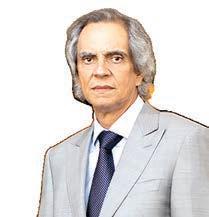

Tycoon Lucio Tan, 91, is now the country’s third richest with $3.5 billion, up from last year’s $3 billion. Tan made his fortunes on banking, airline and tobacco.
Also on the list are the Sy siblings of the SM group, which had its fortunes made mainly on shopping mall operations, retail, banking, among other smaller businesses.
Henry Sy Jr., 72, was ranked 1,676th on the list with $2.5 billion in wealth; Hans Sy, 70, with $1.8 billion; Herbert Sy, 69, also with $1.8 billion; Harley Sy, 66, with $1.7 billion; Teresita Sy-Coson, 75, with $1.6 billion; and Elizabeth Sy, 73, with $1.5 billion.
Couple Lucio and Susan Co, known for building a chain of grocery stores Puregold in the country, was also on the list with their wealth increasing to $1.6 billion and $1.5 billion, respectively.
Andrew Tan, who is known for building facilities for the business process outsourcing firms, was at 2,386th position with a wealth of $1.7 billion, while Jollibee Foods Corp.’s chairman Tony Tan Caktiong, 73, saw his fortunes dwindle to $1.1 billion.
Eusebio Tanco, who owns a chain of schools and chairs a port operator and online gambling firm, was at 3332nd position with $1 billion.
Elon Musk tops the billionaires’ list for the second year in a row and is the richest person ever recorded, worth an estimated $839 billion. His net worth skyrocketed by half of a trillion dollars from last year, thanks to a rise in the value of Tesla, and SpaceX which is aiming to go public in 2026, Forbes said.
Musk is the first person ever recorded to reach the $800-billion mark, as he moves toward becoming the world’s first trillionaire.
Larry Page, cofounder of Google, follows far behind Musk, at second with an estimated net worth of $257 billion, followed by his cofounder Sergey Brin at third with $237 billion.
Amazon’s Jeff Bezos landed fourth with $224 billion and Meta’s Mark Zuckerberg at fifth with $222 billion.
By Andrea E. San Juan @andreasanjuan
THEPhilippine peso slid back to the 59-level on Wednesday, just a day after it broke its eight-day losing streak against the dollar due to a combination of higher oil prices and renewed investor caution fueled by geopolitical tensions.
Data from the Bankers’ Association of the Philippines (BAP) showed the peso closed at P59.17 per $1 on Wednesday.
This is 27 centavos weaker than its
Continued from A14
responsibility from the beginning of operations through proper closure and rehabilitation. It also affirms how the Rapu-Rapu project stands as an
previous finish of P58.896 on Tuesday, March 10, 2026.
“The peso slipped back to the 59-level due to a combination of higher oil prices, a stronger US dollar, and
example that mined areas can be restored in an environmentally safe and socially responsible manner.
Cuna, who served as the DENR’s Supervising Undersecretary for Mining in Luzon and Visayas before his appointment to the agency’s top post, said he considers the citation as “a strong reminder of the depart-

renewed investor caution driven by geopolitical tensions,” Jonathan L. Ravelas, senior adviser at Reyes Tacandong & Co. said in a Viber message on Wednesday. According to Ravelas, rising energy costs revive inflation and trade deficit concerns, while global uncertainty pushes funds into safe havens like the dollar.
Rizal Commercial Banking Corp. (RCBC) chief economist Michael L. Ricafort noted that the weakening of the local currency on Wednesday may be attributed to “mixed signals from the Trump administration” alongside the release of the latest foreign direct investments data.
Preliminary data from the Bangko Sentral ng Pilipinas (BSP) showed net FDI inflows amounted to $7.8 billion in the Janu-
ment’s commitment to ensuring that mining operations in the Philippines adhere to a full-cycle management—from responsible extraction of resources to proper, verified, and environmentally sound closure.”
Mining operations at Rapu-Rapu ran from 2005 to 2013 under valid government permits and in compliance with the Philippine Mining Act of 1995. The site has since undergone extensive rehabilitation, restoring former mining areas to safe and stable conditions. The program exceeded the approved rehabilitation budget and was validated through a third-party environmental audit.
LX International has managed the project through the different stages of development since acquiring the mine in 2008. In 2018, it began full-scale rehabilitation efforts focused on stabilizing the soil, restoring the environment, and improving water quality.
Continued from A14
Recently, the ERC met with the Independent Electricity Market Operator of the Philippines (IEMOP) to review market simulations assessing possible scenarios involving higher fuel prices and potential supply constraints.
Emergency measure
APPROVED under House Bill No. 8418, the measure that hurdled House second reading authorizes the President to suspend or reduce excise taxes on petroleum products during national or global economic emergencies. It amends Section 148 of the National Internal Revenue Code of 1997 to allow the government to provide immediate relief without waiting months for new legislation during a crisis.
Lawmakers said the proposal prepares the government for possible price shocks linked to global developments, including geopolitical conflicts that disrupt oil supply and drive up domestic fuel prices and the cost of basic goods.
Quimbo defended the measure in plenary and stressed that the authority being granted to the President is limited and subject to strict safeguards.
Under the bill, the President may exercise the authority only upon the recommendation of the Development Budget Coordination Committee and in coordination with the Secretary of Energy. The power can only be invoked if specific conditions are met.
One trigger is when the price of Dubai crude oil, based on the Mean of Platts Singapore, reaches or exceeds $80 per barrel for one
ary to December 2025 period, a 17.1-percent drop from the $9.4 billion in the same period in 2024.
Bank of the Philippine Islands’ (BPI) Lead Economist Emilio S. Neri Jr. told the BusinessMirror: “It’s hard to tell exactly what caused the decline towards the end of trading. Global oil prices were pretty steady most of the day.”
However, Neri said “it’s very possible that a big import requirement of some local companies led to it, but then again it’s hard to confirm that.” Ravelas said in the near term, the volatility of the local currency is expected to persist within the 59 to 59.50 level.
“The peso’s direction will hinge on oil prices, US policy signals, and how global conflicts evolve,” added Ravelas.
Cuna said the forum also provided an opportunity to strengthen industrial cooperation between the Philippines and South Korea. “We aim to expand collaboration in critical minerals development and promote environmentally responsible mining practices,” he said.
Meanwhile, outgoing DENR Secretary Raphael P.M. Lotilla also attended the forum in support of stronger Philippines-Korea cooperation in responsible mining, sustainable resource management, and long-term partnerships.
The event saw the signing of key Memoranda of Understanding between the Philippines’s Department of Trade and Industry and South Korea’s Ministry of Trade, Industry, and Resources, as well as bilateral discussions and sectoral presentations across critical industries such as minerals, manufacturing, infrastructure, and consumer goods.
month prior to the issuance of the order. The other trigger applies when a national emergency or calamity leads to extraordinary increases in domestic pump prices, as certified by the Department of Energy.
The proposed authority would allow the President to suspend or reduce excise taxes on specific petroleum products, either fully or partially, depending on the severity of the price surge and the level of relief needed.
To safeguard government revenues, the measure limits the suspension or reduction to a maximum of six months for each implementation, unless Congress decides earlier to extend or terminate it through a joint resolution. The total period of suspension in a year may not exceed one calendar year.
The bill also states that once the extraordinary conditions no longer exist, the excise tax rates will automatically be reinstated.
For transparency, the President, through the Secretary of Finance, must submit a report to both chambers of Congress within 15 days from issuing the order and every month thereafter. The report must detail the factual basis for the decision, the estimated revenue losses, and the expected impact on inflation, fuel prices, and overall economic activity.
The measure requires the Departments of Finance, of Budget and Management, of Energy, of Economy, Planning and Development, and the Bangko Sentral ng Pilipinas to issue implementing rules within 15 days after the law takes effect. These rules will be drafted in coordination with the Bureau of Internal Revenue and the Bureau of Customs to ensure consistent enforcement.
Continued from A1
hybrid or work-from-home arrangements to meet the government’s energy-saving objectives.
“The government may also maintain the [five-day] workweek with skeletal staffing on some days,” he added.
Challenge: Accessible services FOR his part, Philippine Institute for Development Studies (PIDS) Senior Research Fellow John Paolo R. Rivera echoed the concern, saying the shift to a four-day workweek could only work if the total number of working hours stays the same and government offices ensure services remain available through staggered schedules or digital platforms.
He said the challenge lies in maintaining the accessibility of government services, especially since many of the regulatory and administrative processes needed by businesses are handled by public offices.
“If the public sector shifts to a [four-day schedule] while most of the private sector continues operating five days a week, coordination gaps may emerge. Businesses may face delays in processing permits, licenses, and regulatory approvals when government offices are closed, which could temporarily affect [ease of doing businesses],” Rivera told the BusinessMirror Rivera said the policy’s success will ultimately depend on how effectively agencies maintain service availability even with fewer operating days.
“To mitigate this, agencies would need strong digitalization, extended service hours on working days, or rotating personnel schedules to maintain continuity of services,” he also said.
Ease of doing business has been among the key reforms being pursued by the government to improve the country’s business climate and restore investor confidence, especially after the economy expanded by a slower-than-expected 4.4 percent in 2025.
With growth falling short of the government’s targets last year, economic managers have been rallying behind reforms that could attract more investments and accelerate economic activity in 2026.
In an earlier report, the Organisation for Economic Co-operation and Development (OECD) said the Philippines needs to further improve the ease of doing business to attract more foreign investments. This, the Paris-based body said, will help the country move closer to its long-term goal of achieving a higher income classification.
Compressed workweek should be voluntary MEANWHILE , labor coalition Nagkaisa said compressed workweek arrangements should not be made mandatory.
“Nagkaisa stressed that compressed workweek arrangements should remain voluntary, and that policy discussions must be grounded not only on logistical benefits but also on evidence of real productivity gains,” the group said.
Nagkaisa clarified that it does not oppose innovations in work schedules, including compressed workweeks, noting that such arrangements could help reduce transport costs, traffic-related stress, and other daily expenses faced by workers.
The coalition also suggested that policymakers explore pilot programs for shorter working hours—such as six-hour workdays or shorter workweeks—to determine which arrangements are most effective for workers.
For its part, the Department of Labor and Employment (DOLE) said adopting a four-day workweek in the private sector remains a prerogative of employers.
The agency said companies may either extend daily work hours beyond eight hours to complete the standard 40-hour workweek or shift to workfrom-home or hybrid arrangements on Fridays.
Such arrangements, the agency added, should apply to all workers regardless of employment status.
By Malou Talosig-Bartolome @maloutalosig
LORIDA businessman
FLee Lipton, nominee for US Ambassador to the Philippines, pledged to confront Chinese aggression and reinforce Manila’s security and economic resilience during his Senate confirmation hearing, underscoring Washington’s “ironclad alliance” with its oldest treaty partner in Asia.
D uring the US Senate Foreign Relations Committee hearing on March 5, he said, “My goal would be to confront China’s unlawful expansion and aggressive behavior. We must compete with China from a position of strength.”
He pointed to US investments in the Luzon Economic Corridor as a strategic counterweight to Beijing’s influence.
C ommittee Chairman Pete Ricketts underscored the stakes: “The Philippines is our oldest treaty ally in the region… Yet communist China continues its illegal, coercive, aggressive, and deceptive activities within the Philippines’ exclusive economic zone.”
L ipton’s nomination stands out: he is not a career foreign service officer. If confirmed, he would be the first political ambassador to serve in Manila – widely regarded as one of America’s most crucial diplomatic posts in Asia.
US media reports have described him as a loyal friend of President Trump and a member of the exclusive Mar-a-Lago club in Lake Worth Beach, Florida.
Military financing, cyber cefense
PRESSED on the Philippines Enhanced Resilience Act (Pera), which authorizes US$500 million in grants and US$1 billion in loans, Lipton said implementing the measure would be a personal priority.
“ It would actually be one of my pets because I want to learn much
more about military situations, and I would absolutely want to help negotiate and teach the Filipino military how to spend that money,” he said.
On digital threats, Lipton warned of state-sponsored cyberattacks and artificial intelligence (AI)-driven disinformation ahead of Manila’s 2028 elections.
He pledged close coordination with US agencies, affirming that the alliance on cyber issues would remain “ironclad.”
A cknowledging the Philippines’ high electricity costs, Lipton said nuclear energy holds “significant potential.”
I understand electricity costs are high and oil is hard to come by,” he told senators.
“ I believe nuclear energy has a lot of potential in the Philippines. If confirmed, I’d look to American energy suppliers to partner with the Philippines.”
R anking US Senate Foreign Relations Committee member Chris Coons urged Lipton to honor Filipino sacrifices at the World War II memorial in Manila and flagged immigration enforcement risks for the Filipino-American community.
There is a very large Filipino diaspora community in the United States,” Coons said. “Some of the current difficulties around immigration will be borne particularly heavily by the FilipinoAmerican community, and a lot of your work as ambassador will be making sure that we are not mistakenly or inappropriately arresting or deporting people who are here legally.”
L ipton agreed the issue would demand careful navigation, noting that the diaspora is a vital bridge between the two nations.
TheCommitteehasyettoschedule a meeting to determine whether to advance the nomination of Lipton to full US Senate confirmation votes.
By Jovee Marie N. Dela Cruz @joveemarie
SOME overseas Filipino workers (OFWs) affected by the ongoing conflict in parts of the Middle East have started showing signs of trauma after experiencing missile and drone attacks, prompting the government to prepare psychosocial assistance and employment support for those returning home.
D uring a joint briefing of the House Committees on Foreign Affairs and Overseas Workers Affairs, Migrant Workers
Secretary Hans Leo Cacdac said several OFWs who recently arrived in the country recounted distressing experiences from the conflict areas.
C acdac said that based on their conversations with the returning workers, some appear to be manifesting signs of psychological trauma.
“ Last night [Tuesday], when we welcomed some of them at the airport, I noticed that some may actually need counseling. When they narrated their experiences to us, the way they told their stories suggested that they may be manifesting some form of trauma,” Cacdac said.
H e noted that the dangers faced by Filipinos in the region are not limited to direct missile or drone attacks but also include falling debris and shrapnel from intercepted rockets.
The current danger is not just the missile, rocket, and drone attacks themselves but also the debris, shrapnel, and projectiles
By Troi Santos
NATIONS,
York—At a little after 11 a.m. in the United Nations General Assembly Plenary Hall, President Marcos of the Philippines formally presented his country’s bid for a nonpermanent seat on the United Nations Security Council for the 2027–28 term.
Speaking at a special plenary meeting, Marcos described a nonpermanent Council seat as “not a right of any state, but a privilege earned,” and said the Philippines was ready “to be part of the solution” as the UN confronts multiple, overlapping crises.
Marcos said the world was living through “a time of profound global action,” citing conflicts in Gaza, Ukraine, the Sudan, Myanmar and other parts of the Middle East and Africa. These wars, he said, had tested “the institutions designed for peace” and underscored the need for a Security Council that “not only reflects responsibility and power” but also “reflects respect,” including for regions such as Asia and the Pacific that he noted are home to more than half of humanity and central to global commerce.
The President cast the Philippines
as “an independent, trusted partner, an innovative pathfinder” with a long record in UN peacekeeping and diplomacy. He recalled that Filipino troops were among the first to deploy under UN command during the Korean War, where 112 Filipino soldiers died “for the cause of peace.”
He also cited a 1963 Philippine Air Force deployment, known as Libus 1, which was sent to the Congo to help secure the country’s airspace and carried out civic-action activities with local communities. Since that mission, he said, the Philippines has deployed 15,000 troops to 22 UN peacekeeping operations in Africa, the Middle East, the Caribbean and the Asia-Pacific.
M arcos pointed to the peace process in the Bangsamoro region of Muslim Mindanao, in the Southern Philippines, as evidence that his country could help the Council address long-running conflicts. He
said the now “peaceful and growing” Bangsamoro Autonomous Region showed that “peace is possible” after decades of violence, and he credited women’s participation in the talks. In his speech, Marcos said the Bangsamoro experience “stands as a living testament to the transformative power of women to build enduring peace,” casting Filipino women not only as participants but as central actors in sustaining the settlement. He highlighted the role of Miriam Coronel-Ferrer, who led the government panel in negotiations that culminated in the 2014 Comprehensive Agreement on the Bangsamoro and whom he described as the only woman to have led and signed a major peace agreement of that type.
O n women, peace and security, Marcos underlined the Philippines’ efforts to implement and promote relevant Security Council resolutions. He said the Bangsamoro process had helped operationalize the Council’s women, peace and security agenda and noted that the Philippines hosted an International Conference on Women, Peace and Security in 2024 that drew 1,735 participants from 75 countries. He added that the Philippines’ National Action Plan on Women, Peace and Security—the first in Asia—is now in its fourth iteration.
M arcos also emphasized the Philippines’ long involvement in UN work on women’s rights more broadly. He said the Philippines prepared the first draft that became the Convention on the Elimination of All Forms of Discrimination Against Women as a basic working paper for
the United Nations, and recalled that a Filipino chairperson presided over the 1995 Beijing conference that produced the Beijing Declaration and Platform for Action.
H e added that Filipinos had actively supported the United Nations Declaration on the Rights of Indigenous Peoples, whose provisions he said echo the Philippines’ own Indigenous Peoples’ Rights Act, enacted a decade earlier. Turning to climate change, Marcos called it “the greatest existential test for all.” He said recurring typhoons, floods and droughts in the Philippines had left not only physical damage but also “trauma in the minds of our children,” and cited a 2022 survey showing that young people in the Philippines reported the highest vulnerability to climate anxiety among respondents. He said that in 2025, the Philippines allocated 18 percent of its national budget to climate-related expenditure and put in place a Climate Change Expenditure Tagging System to align spending with the National Climate Change Action Plan. Marcos noted that the Philippines has been selected to host the board of a new fund for responding to climate-related loss and damage, and said Manila was committed to ensuring that the fund’s governance would be equitable, transparent and based on needs. He urged developed and industrialized countries to fulfill commitments to cut greenhouse gas emissions and to provide new and additional financing for climate adaptation and loss and damage.
See “Marcos,” A4
Tfalling out of the sky,” he explained.
Counseling
TO address the mental health needs of affected workers, Cacdac said psychosocial counseling will be made available through the Department of Health (DOH), social workers stationed in Philippine posts abroad, and locally hired clinics and counselors. So far, he said the government has already assisted around 4,600 OFWs through various forms of support, including temporary shelter, food, financial assistance, and repatriation.
C acdac said 885 OFWs were assisted in pre-departure and transit stages, while 526 others were helped in transit hubs after being stranded owing to canceled flights bound for destinations such as Dubai and Doha.
Some of these stranded workers are currently in locations including Hong Kong, Singapore, Malaysia, Manchester in the United Kingdom, and Ethiopia.
T he DMW is also assisting Filipino tourists who were caught in the disruption while vacationing abroad, including some in Azerbaijan and Georgia.
He said the DMW is coordinating with the Department of Foreign Affairs (DFA) to provide temporary financial assistance to stranded Filipinos while they arrange their flights back to the Philippines. Meanwhile, the government is preparing to repatriate at least 380 OFWs who have requested to return home due to the conflict.
HE Supreme Court (SC) has unanimously affirmed the validity of a circular issued by the Department of Justice (DOJ) in 2024 which compels prosecutors to establish “reasonable certainty of conviction” instead of mere “probable cause” prior to the filing of criminal cases in courts.
I n a six-page en banc decision written by Associate Justice Japar B. Dimaampao, the Court reiterated that preliminary investigation is an executive, not a judicial function.
Thus, it held that Department Circular 15, series of 2024, or the 2024 DOJ National Prosecution Service Rules on Preliminary Investigation
and Inquest Proceedings (DOJ Rules), is a valid exercise of the DOJ’s authority over prosecutorial processes.
Under the DOJ Rules’ new standard of proof in preliminary investigations and inquest, prosecutors must ensure that the evidence to charge a person with a crime must sufficiently establish all the elements and consequently warrant a conviction.
Fu rthermore, the Court said it had already recognized that authority to conduct preliminary investigation has been vested in the exclusive domain of the public prosecutors when it Revised the Rules of Criminal Procedure in 2025.
This harmonizes the DOJ’s
rule-making authority within the executive sphere and the Court’s constitutional rule-making power within the judicial sphere, and forecloses Atty. [Hazel] Meking’s encroachment claim,” the Court explained.
H owever, the Court stressed that that the power to promulgate rules of pleading, practice, and procedure remains within the Court’s exclusive domain.
“ This Court’s constitutional rule-making authority remains supreme over judicial proceedings, and its power to correct, on grave abuse of discretion, any prosecutorial rule or action that impairs constitutional rights, is
retained,” the SC pointed out. The SC ruling denied the petition filed by Meking seeking to invalidate the circular issued by then Justice Secretary and now Ombudsman Jesus Crispin Remulla.
Meking argued that Remulla committed grave abuse of discretion in issuing the said circular.
T he lawyer particularly assailed Section 5 of the circular which states: “ The quantum of evidence for preliminary investigation and inquest proceedings is prima facie evidence with reasonable certainty of conviction.”
See “SC,” A4
TBy Joel R. San Juan @jrsanjuan1573
HE Office of the Solicitor General (OSG) has asked the Supreme Court to set aside the rulings issued by the Regional Trial Court in Manila and the Court of Appeals which found Rappler executive Maria Ressa and former Rappler reporter Reynaldo Santos guilty of cyber libel.
I n a statement, the OSG, headed by Solicitor General Darlene Berberabe, said it has invoked its role as the “People’s Tribune” in recommending the acquittal of Ressa and Santos.
T he OSG made the recommendation in a manifestation and motion filed with the Court on March 9.
It may be recalled that on June 15, 2020, the RTC in Manila issued a decision convicting Ressa and Santos in the cyber libel case filed by businessman Wilfredo Keng and were meted out with a jail term from a minimum of six
months and one day to a maximum of six years, eight months and 20 days.
T he CA affirmed the trial court’s ruling, saying that =Ressa and Santos failed raise new arguments that would warrant the reversal of the decision.
The OSG anchored its new position in the 2023 ruling of the Court in Berteni Cataluña Causing which shortened the prescription period for cyber libel offenses to one year.
P rescription period is the legal time limit within which a criminal information must be filed. Once that period lapses, the OSG said, “the State can no longer prosecute.”
Applying this doctrine, the filing of the criminal information against Ressa and Santos in early 2019 for the article re-published in 2014 and discovered by the complainant in 2016 is timebarred,” the OSG said.
In Causing’s case, the OSG said the Court adopted a limiting principle that fixes a definite, predictable period,
reckoned from discovery by the offended party, the authorities, or their agents.
The Court held that cyber libel prescribes in one year, consistent with Articles 90 and 91 of the Revised Penal Code,” the OSG pointed out.
W hile it acknowledged that it previously sought the Court’s reconsideration of its ruling in Causing case, the OSG said it manifested in the filing made on March 9 that the government now accepts the Court’s decision as it “supplies a workable, predictable limiting principle on prescription.”
On this basis, the OSG sought to apply the Causing ruling to the case of Ressa and Santos,” it added.
The OSG also admitted that cyber libel is not protected speech and that penal sanction under existing law must remain, particularly in the digital environment where reputational injury, invasions of privacy, and harm to dignity may be amplified in reach and velocity.
Still, the OSG emphasized “that the government now recognizes that the Court’s clarification in Causing is more in accord with the text of the Revised Penal Code and the Cybercrime Prevention Act, and helps balance the State’s interest in protecting reputation, privacy, and dignity, with the constitutional guarantees of speech, expression, and press freedom.” It stated that the government’s recommendation to acquit Ressa and Santos is grounded in law and duty. T he case stemmed from an article written by Santos claiming that Keng allegedly lent his sports utility vehicle to then Chief Justice Renato Corona. A part from this, the story also cited an intelligence report that said Keng had been under surveillance
AS the plenary debate on the Anti-Political Dynasty bill is set to start on Monday, the chairperson of the House of Representatives Committee on Suffrage and Electoral Reforms said the measure could displace more than 5,000 dynastic officials nationwide.
L anao del Sur Rep. Zia Alonto Adiong, the panel chairman, presented data demonstrating the significant impact of House Bill 8389, “An Act Prohibiting Political Dynasties in National and Local Elective Offices.” To ensure the committee’s version is based on solid evidence,
Adiong said the panel worked closely with the Socioeconomic Research Bureau (SERB) under the Congressional Policy and Budget Research Department (CPBRD) of the House of Representatives. SERB studied official election data from the Commission on Elections (Comelec) covering provincial,
district, and municipal positions.
The numbers speak for themselves—and they say the Anti-Political Dynasty Bill will change the landscape of Philippine politics and governance.”
A diong said preliminary findings indicate that 9,852 out of 17,983 local-level positions (54.8 percent) are held by potential dynasts from roughly 4,239 dynastic families.
The data clearly shows that the committee version—with the second-degree consanguinity/ affinity limitation—will have a significant impact on political dynasties. Projections indicate that over 5,000 elective positions could be vacated by individuals from political dynasties once the measure takes effect,” said Adiong.
The CPBRD is expected to release their full paper in the coming days, but the preliminary findings submitted to us already confirm the substantial reach and feasibility of
this approach. We have emphasized this in our media briefings and public hearings: the 2nd-degree limit is both implementable and meaningful,” he said.
The lawmaker said these findings align with a recent survey by the League of Municipalities of the Philippines (LMP), which included responses from mayors in 1,493 municipalities. The survey found that around 917 mayors (61 percent) serve in areas where immediate or extended family members have held elective office, leaving only 39 percent from non-dynastic backgrounds.
“Given the data we have, we can see that it is inaccurate to say that the committee version will not have an impact. The numbers say otherwise. The evidence proves that the seconddegree provision strikes the right balance: it is stringent enough to open real opportunities for new leaders while remaining implementable,” he added.
Jovee Marie N. dela Cruz
Govt adopts ‘one-country team approach’ to ensure Pinoy’s safety, protection in ME
By Jovee Marie N. Dela Cruz @joveemarie
THE government is implementing a “one-country team approach” to ensure the safety and protection of Filipinos in the Middle East as tensions continue following the conflict involving Iran, the United States, and Israel, an official of the Department of Foreign Affairs (DFA) told lawmakers on Wednesday.
D uring a joint briefing of the House Committee on Foreign Affairs and the Committee on Overseas Workers Affairs, Ezzedin Tago, officerin-charge of the DFA’s Office of the Undersecretary for Migrant Affairs, said the government is coordinating closely with host governments and other Philippine agencies to ensure the safe movement of Filipinos in affected areas.
Tago said the approach allows Philippine embassies and government agencies to work together in responding quickly to the needs of overseas Filipinos as the situation in the region continues to evolve.
The government is guided by the one-country team approach, ensuring a unified whole-of-government response to protect every Filipino overseas,” Tago told lawmakers.
Under the strategy, Philippine embassies in affected countries are coordinating with host government authorities to secure approvals and ensure safe passage when Filipinos need to travel or relocate.
The President had instructed us to make sure that we get approval and inform the host governments when there are any movements to make sure that all movements are safe,” Tago said, referring to directives from President Marcos.
T ago added that Philippine ambassadors are maintaining communication with local immigration offices and other authorities to monitor possible risks that Filipinos could face while traveling between countries or transiting through airports.
Philippine foreign service posts, Tago said, remain on alert and are closely coordinating with labor attachés, Migrant Workers Offices (MWOs), and defense attachés to monitor developments and provide assistance to Filipinos.
The DFA has also deployed rapid response teams from the Department of Migrant Workers to key areas in the region, including locations near the Israel border and other strategic points where Filipinos may need assistance.
Airspace condition
TAGO said the DFA is also monitoring airspace conditions across the Gulf region to determine possible evacuation routes for Filipinos who want to leave.
H e said Emirates and Etihad Airways have resumed operations, while Philippine Airlines is expected to resume flights on March 16.
T he official said airspaces in
Saudi Arabia and Oman remain open, while those in Kuwait and Bahrain are currently closed.
P otential regional exit points for Filipinos have been identified in Egypt, Jordan, and Istanbul, he added.
I n addition, the DFA has approved standby funds for embassies to ensure immediate assistance for Filipinos who may require shelter, accommodation, or help with repatriation.
Philippine embassies have also issued advisories in both English and Filipino, urging Filipinos to shelter in place when necessary, follow instructions from host governments, and avoid unnecessary movements.
Tago said hotlines and messaging platforms such as WhatsApp have also been set up by several embassies to provide real-time updates and guidance to Filipinos in affected areas.
A s of March 10, Tago said the DFA reported that 188 Filipinos have already been repatriated or assisted out of the 327 individuals who requested assistance, including tourists, students, and other nonoverseas Filipino workers.
Readiness
THE House of Representatives convened the joint meeting with key government agencies and Philippine diplomatic posts to assess the country’s preparedness to protect OFWs as hostilities escalate in parts of the Middle East.
Speaker Faustino G. Dy III reiterated
NBy Joel R. San Juan @jrsanjuan1573
ATIONAL Security Advisor
Eduardo Año on Wednesday filed perjury and cyber libel complaints before the Department of Justice (DOJ) against the 18 alleged former marines and their lawyer for implicating him in the alleged multi-billion illegal cash delivery scheme.
L ast week, Año filed a complaint for Unlawful Use of Means of Publication and Unlawful Utterances under Article 154 of the Revised Penal Code, in relation to Section 6 of Republic Act 10175 or the Cybercrime Prevention Act. Also against the respondents.
The 18 former “marines” were identified as Belnard E. Tube, Rosebert M. Waupan, Benny S. Bulonte, Johnny A. Buduan, Rodante P. Orbillo, Reyneboy O. Julian, Christopher T. Esquivel, George O. Villalon Jr., Romeo Rommel Bobares, Gil Navidad Jr., Anselmo Taberdo, Walter Manalansan, Joely Cadiao, Rommel C. Galapon, Cecilio Larroder Jr., Bernard Gumban, Crisanie Dado, and Fidel Corpuz.
L awyer Levito Baligod, who serves as their counsel, was also named as respondents in both complaints.
for either allegedly orchestrating or benefitting from the illegal cash delivery scheme.
In their joint affidavit, the 18 former “marines” claimed that they previously worked as personal assistants or security consultants of resigned Party List Rep. Zaldy Co of Ako Bicol, one of the alleged masterminds of the multi-billion corruption scandal involving the government’s flood control projects.
T hey added that part of their duties were to escort Co’s executive assistants in delivering numerous luggage, paper bags, envelopes full of cash to several political figures, including the President and Romualdez.
M eking said the circular in effect modified the quantum of evidence necessary for the prosecution of criminal cases as defined by the Revised Penal Code and other special penal laws. She said the power to promulgate rules in pleading and practice is solely vested to the Supreme Court.
T he petitioner pointed out that under the Rules of Court, the prosecutor has the power only to determine the probable cause. Furthermore, the petitioner said the circular also encroached into the constitutional mandate of the courts to hear and decide criminal cases after presentation of evidence and witnesses during trial.
Joel R. San Juan
The President framed these efforts as part of a broader Global South agenda. He described the Philippines as an “active and responsible” member of the Group of 77 and chair of a like-minded group of middle-income countries, which he said are home to roughly 75 percent of the world’s population and a third of global production. He voiced support for Africa’s call for fundamental reform of global governance, including permanent African representation on the Security Council, and backed efforts to rebalance decision-making power in international financial institutions so that developing countries become “co-architects” of rules on allocation and eligibility.
O n humanitarian issues and migration, President Marcos said the Philippines remains a partner
of UN humanitarian agencies and contributes to pooled funds such as the Central Emergency Response Fund. He said the Philippines has maintained an “open-door policy” for refugees, pointing to past arrivals of White Russians in 1949 and Vietnamese in the 1970s and 1980s, and added that Manila, in cooperation with the UN refugee agency, now offers higher-education opportunities to Rohingya youth.
He described migration as “a force for good,” saying migrants contribute to sustainable development in their countries of origin, transit and destination, and reaffirmed the Philippines’ support for the Global Compact for Safe, Orderly and Regular Migration.
On governance and rights, Marcos said the Philippines has a “resolute
the House’s commitment to advancing measures that safeguard Filipinos during global crises.
Pangasinan Rep. Maria Rachel Arenas, chairperson of the Foreign Affairs committee, said the escalating conflict poses a serious humanitarian concern for the Philippines, noting that around 2.5 million Filipinos are currently in the region.
“For the Philippines, these hostilities are not mere peripheral events. They pose a clear and present danger to our nationals,” Arenas said.
T he briefing also reviewed contingency plans, including the use of the government’s P2-billion action fund, possible evacuation routes by land or sea amid potential airspace restrictions, and welfare support for Filipinos who remain in their host countries.
P arty-list Rep. Bryan Revilla of Agimate, chairperson of the Overseas Workers Affairs committee, underscored the urgency of swift government action to ensure the safety of OFWs who may be caught in the conflict.
“Our duty to our OFWs is urgent, immediate, and non-negotiable,” Revilla said, stressing the need for accountability and decisive measures to protect Filipinos abroad.
Caught in the midst of artillery crossfire and drone warfare, it is our heroes who now need rescuing,” he said. “Our duty to our OFWs is not only paramount—it is urgent, immediate, and non-negotiable.”
commitment to the rule of law and the promotion, protection, and respect of human rights.” He said Manila adheres to multilateralism, upholds the U.N. Charter and the sovereign equality of all states, and argued that human rights should be “a unifying principle, not a divisive tool.”
He also noted concern over the UN’s current liquidity situation and said the Philippines had paid its regular assessed contributions in full within the 30-day due period in January, earning inclusion on the United Nations Honor Roll this year.
Concluding his address, Marcos said the Philippines’ contributions across peacekeeping, human rights, development, climate action and humanitarian work showed that it was “ready to be part of the solution” on the Security Council and stood ready “to help calm voices and divisions” and provide “a voice of balance” on the 15-member body during the 2027–28 term, if elected by the General Assembly.
Attorney Baligod admitted in public that he made the manipulation of the contents of the affidavit, right? He also admitted that it’s an oversight or error on his part. So, my legal counsel told me that constitutes perjury,” Año told reporters.
The Palace official was referring to the joint complaint affidavit filed by the 18 former “marines” before the office of the Ombudsman seeking the investigation of several lawmakers and government officials, including President Marcos and former Speaker Martin Romualdez,
C acdac said charter flights announced by President Marcos are also being finalized to accelerate the evacuation of Filipinos from affected areas.
Upon arrival in the Philippines, returning OFWs will be assisted in finding employment or livelihood opportunities.
C acdac said employment facilitation will be provided through the Department of Labor and Employment (Dole) and Public Employment Service Offices (Peso) for local job opportunities.
For those who wish to continue working overseas, he said the DMW typically organizes special job fairs specifically for returning workers from crisis areas.
T he government has also partnered with several agencies to provide livelihood support, including the Department of Trade and Industry (DTI), Small Business Corporation, Department of Tourism (DOT), and the Department of Agriculture (DA).
I n addition, skills training and reskilling vouchers will be made available through the Technical Education and Skills Development Authority (Tesda) to help returning OFWs acquire new skills and start new careers.
“ Once they arrive in the Philippines, there will be employment facilitation, livelihood assistance, and skills training to help them rebuild their lives,” Cacdac said.
Repatriation funds
FOR its part, the Overseas Workers Welfare Administration (Owwa) has deployed rapid response teams and activated emergency repatriation funds to assist OFWs in the Middle East amid escalating tensions in the region.
T hey also claimed that Año received a paper bag after his meeting with Co, Romualdez and Party List Rep. Leila de Lima of Mamayang Liberal at the Manila Polo Club Townhouse in Makati City. “ I want to make it clear, I don’t care about their other allegations. I am only concerned about the malicious imputations and publications directed against me,” Año said. A side from Año, other individuals who filed criminal charges against the former “marines” werede Lima, Fr. Flaviano Villanueva, former senator Antonio Trillanes IV and Bureau of Corrections (BuCor) Director General Gregorio Catapang. De Lima and Villanueva filed perjury charges against the 18 before the DOJ.
T hey also filed a cyber libel complaint against the former soldiers and Baligod before the National Bureau of Investigation (NBI). Trillanes also filed perjury and cyberl libel complaint before the DOJ was well as Catapang. C atapang also filed a disbarment case against Baligod.
D uring the same briefing, OWWA Administrator Patricia Yvonne Caunan said experienced welfare officers were sent to critical areas as early as March 2 to prepare for possible repatriation operations.
C aunan said the rapid response teams include welfare officers who have previously handled conflict situations and large-scale repatriation missions.
As early as March 2, members of our rapid response teams and welfare officers with past experience in war zones and repatriation efforts were already deployed and positioned in critical areas,” Caunan said. She added that the agency also released emergency repatriation funds on the same day to the deployed teams and to all migrant worker offices across Philippine posts in the Middle East.
A ccording to Caunan, the fund is crucial in ensuring that the government can immediately assist distressed OFWs and facilitate their return to the Philippines if necessary. This fund is intended for emergency repatriation, including chartering flights, purchasing airline tickets, paying for land transportation, covering visa costs, hotel accommodations, and other logistical requirements,” she explained.
C aunan also said Owwa continues to deploy augmentation teams to strengthen its ongoing operations in the Middle East as the situation evolves. To further enhance its response capability, the agency sought approval from the Department of Budget and Management as early as February 28 for the emergency hiring of additional personnel
Asean digital pact seen easing cross-border trade for MSMEs
APROPOSED regional digital agreement is expected to make it easier for micro, small and medium enterprises (MSMEs) to expand across Southeast Asia by simplifying online transactions and aligning digital rules among Association of Southeast Asian Nations (Asean) member states, the Department of Trade and Industry’s Bureau of International Trade Relations (BITR) said.
T he Asean Digital Economy Framework Agreement (Defa), one of the Philippines’ Priority Economic Deliverables under its Asean chairmanship, seeks to harmonize regulations governing digital trade across the region, helping businesses operate more efficiently across borders.
B ITR Director Marie Sherylyn Aquia said the agreement is designed to deliver practical benefits for businesses and consumers as the region accelerates its digital transformation.
In the short term, digital transformation cuts paperwork and costs by moving processes online, makes payments faster and safer, helps small businesses reach more customers, and reduces paper use,” Aquia told the BusinessMirror in a message.
Over time, it creates more job opportunities, helps workers learn new digital skills, and strengthens online safety and fair competition,” Aquia said.
“ In the long run, it allows businesses to operate more easily across borders, attracts more investment, protects personal data, expands internet access to underserved communities, and supports a greener future by reducing the need for paper,” she added.
Negotiators across Asean are working to conclude talks on the agreement by the first half of the year, with the signing targeted on the sidelines of the Asean Summit in November.
D uring an Asean event on Tuesday in Taguig City, Aquia said the document is currently undergoing a legal review process to ensure that the text is clear and ready for adoption.
“ Here, the experts are undertaking the legal scrubbing of the DEFA agreement. They will review the agreed provisions to ensure clarity, consistency, and readiness of the text before it is signed in November at the sidelines of the ASEAN Summit,” Aquia said in her opening statement.
O nce signed, the agreement will go through domestic ratification procedures among ASEAN member states. In the Philippines, the framework will need to undergo the appropriate approval process before it can take effect.
A quia explained that differences in national regulations on data governance, cybersecurity, and consumer protection currently create hurdles for smaller firms engaged in cross-border digital trade.
U nder Defa, Asean aims to establish a digital environment that is open, secure, interoperable, competitive and inclusive.
M easures being discussed include stronger online consumer protection, personal data safeguards, cybersecurity cooperation and mechanisms to address online scams.
Regional studies estimate that ASEAN’s digital economy could grow to as much as $2 trillion by 2030.
W ith negotiations now entering a critical phase, the Philippines said it will continue working with other Asean member states to finalize the agreement and bring it to signing within the year as part of efforts to deepen regional digital integration.
Bless Aubrey Ogerio
By Jovee Marie N. Dela Cruz | @joveemarie
TRANSPORT groups representing jeepney drivers and operators assured the House of Representatives on Wednesday that they would keep fares unchanged despite the recent spike in fuel prices, provided that government support such as fuel subsidy is granted and the proposed suspension of the excise tax on fuel products is approved.
Officials of Samahang Manibela, Mananakay at Nagkakaisang Terminal ng Transportation (Manibela) and Liga ng Transportasyon at Operators (Leop) made the commitment during a hearing of the House Committee on
Transportation, chaired by Quezon City Rep. Franz Pumaren. T he Department of Transportation (DOTr) briefed the panel on the government’s fuel subsidy program for public transport and the Libreng Sakay
initiative providing free rides for commuters.
M ar Valbuena, founder and president of Manibela, said jeepney drivers are now losing at least P400 of their daily P800 income, owing to higher fuel costs.
However, he emphasized that fare increases would only be a “last resort” if government support, such as a fuel subsidy, is not provided.
W ithout assistance, he added, drivers would be forced to petition the Land Transportation Franchising and Regulatory Board (LTFRB) for a P2 increase in the minimum fare, from P13 to P15.
L TOP President Orlando Marquez Sr. echoed the sentiment. “We agree. A fare increase is only the last option,” he said.
Valbuena also said drivers hope President Marcos will soon suspend excise taxes on oil products once Congress grants him the authority.
On Tuesday, the House Committee on Ways and Means consolidated 17 measures on excise taxes and endorsed a substitute bill allowing the President to suspend or reduce
Reine Juvierre S. Alberto
REVENUE authorities seized P382 million worth of cigarette manufacturing materials and fake tax stamps from a w arehouse in Apalit, Pampanga, in their bid to step up enforcement against illegal tobacco operations.
The Bureau of Internal Revenue (BIR) and the Bureau of Customs (BOC) said on Wednesday that they conducted a joint enforcement operation on March 5 and 6, following i ntelligence reports of suspected illegal cigarette activities in Barangay Balucuc, Apalit, Pampanga. C igarette packaging materials, tipping paper and other raw inputs used in cigarette production valued at approximately P382 million, based on BOC valuation, were confiscated by authorities.
T he BOC said the tipping paper rolls bear the brands such Chesterfield, Camel, Mighty, Fortune, Carnival, Fort, Commando,
ABy Rizal Raoul Reyes
COALITION composed of government representatives, as well as the private sector, led by the Philippine Chamber of Commerce and Industry (PCCI), Employers Confederation of the Philippines (ECOP), Philippine Exporters Confederation Inc (PHILEXPORT), and the Ease.PH Foundation urged the formation of the “Red Carpet Lane” to provide micro, small, medium enterprises (MSMEs) employing 50 to 100 workers, a fast-track registration and permitting system. M odeled after the Board of Investments’ “Green Lane,” it draws its power from Republic Act 11032 (the Ease of Doing Business Act). Investment doesn’t wait for bureaucracy to catch up. We’re giving it no reason to wait,” said Roberto Alvarez, Ease.PH president.
U nlike their counterparts in New Zealand and Singapore, Alvarez said local MSMEs are forced to navigate a labyrinth of 13 to 20 separate procedures before they can even earn their first peso.
T hunder, H&P, King and Cannon Menthol, among others.
More than 4.8 million BIR excise stamps, including counterfeit s tamps bearing identical serial numbers, were also recovered.
A ccording to BIR’s preliminary estimates, the counterfeit stamps could have been used to produce untaxed cigarettes that would have resulted in about P93.77 million in excise tax losses to the government.
I nitial verification by the BIR showed that the warehouse was not registered with Revenue District Office No. 21B – South Pampanga, which has jurisdiction over the area.
T he absence of registration raised further compliance concerns under the National Internal Revenue Code, the BIR said. Meanwhile, the warehouse was secured and sealed while authorities continue investigating the ownership of the facility and the possible individuals involved in the operation.
The BIR will continue to
Al varez said this isn’t just an inconvenience—it’s a systemic barrier to survival.
D espite these hurdles, MSMEs remain the undisputed engine of the Philippine economy. The sheer scale of their contribution highlights exactly why the current “compliance architecture” is so damaging.
A ccording to the Anti-Red Tape Authority (Arta), the gap has a cost. Philippine MSMEs represent 99.5 percent of all registered businesses, employ 63 percent of the national workforce, and generate 36 percent of gross value added. They are, by any measure, the engine of the Philippine economy. Yet they operate inside a compliance architecture designed for no one—least of all them.
I n response to the call, the PCCI is activating its network of 126 local chambers to serve as decentralized “onestop shops.” Furthermore, the PCCI is also implementing real-time monitoring. Moreover, Alvarez said the “Red Carpet” policy will be MSME-centric, shifting the focus from government gatekeeping to
strengthen enforcement against illicit cigarette operations that undermine legitimate businesses and deprive the government of muchneeded revenues for public services,” Internal Revenue Commissioner Charlito Martin R. Mendoza said.
For his part, Customs Commissioner Ariel F. Nepomuceno said t he BOC remains committed to dismantling smuggling schemes and disrupting illegal supply chains that undermine legitimate industries.
Nepomuceno added that sustained intelligence-driven operations and interagency cooperation are needed to advance the President’s directive to safeguard government revenues and ensure fair market conditions.
Personnel from the BIR’s National Investigation Division and Excise Tax Large Taxpayers Service joined the operation, along with members of the BOC’s Customs Intelligence and Investigation Service and law enforcement units from the Philippine National Police.
entrepreneur enablement.
PCCI President Perry Ferrer said that this system puts small businesses at the center of reform, rather than the margins.
By working directly with the Anti-Red Tape Authority (Arta), the coalition aims to give a voice to the 99 percent of businesses that have historically been drowned out by bureaucracy.
The argument for reform is rooted in hard data. When the Philippines implemented meaningful changes between 2018 and 2019, its World Bank Ease of Doing Business ranking skyrocketed 29 positions in a single year (from 124th to 95th).
However, in the hyper-competitive Asean (Association of Southeast Asian Nations) landscape, time is the ultimate currency. Every month a Filipino entrepreneur spends chasing a local permit is a month a competitor in Vietnam or Singapore spends scaling up their operations and capturing the market.
Ul timately, as Alvarez points out, simplifying the cost of entry for small businesses isn’t just a minor administrative fix – it is essential macroeconomic policy.
fuel levies amid rising domestic and global oil prices.
The proposed suspension could lower pump prices by P6 per liter for diesel and P10 per liter for gasoline, with other oil products seeing proportional reductions.
Subsidy program
IN the same briefing, Transportation Undersecretary Ramon G. Reyes said the government is finalizing a comprehensive fuel subsidy program to ease the impact of rising fuel prices on public transport operators and commuters.
“ This program is designed to manage fuel costs while preventing significant fare hikes for commuters,” Reyes said.
Funding for this year’s subsidy comes from the 2025 General Appropriations Act, which has a remaining allocation of P2.5 billion. Subsidies will be released after the Department of Energy certifies that the one-month average Dubai crude oil price has reached around $80 per barrel.
D istribution channels include
fuel cards, the Pantawid Pasada program, bank transfers, e-wallets for tricycle drivers, and over-thecounter assistance for those who prefer in-person collection.
The program covers modern and traditional jeepneys, UV Express units, public utility buses, minibuses, taxis, school transport vehicles, Transport Network Vehicle Service (TNVS) operators, motorcycle taxis, delivery riders, and tricycle operators – benefiting over 1.1 million units in total.
The P2.5-billion budget will be allocated as follows: P1.3 billion for jeepneys and UV Express vehicles under the LTFRB, P270 million for delivery service riders under the DICT, and P832 million for tricycle operators under the DILG. R eyes said the DOTr is coordinating with the Office of the President for additional funds if the fuel situation worsens.
“Our teams are actively preparing to implement this program and mitigate the effects of the ongoing fuel crisis on our transportation industry,” he added.
By Bless Aubrey Ogerio
THE Board of Investments (BOI) and the city government of General Santos City have formalized a partnership aimed at strengthening investment promotion and improving services for investors at the local level.
Un der a Memorandum of Agreement (MOA) signed by both parties, the national investment promotion agency and the local government will work more closely to streamline investment facilitation, coordinate policies, and align national development goals with local initiatives.
This partnership reinforces our shared commitment to improving the way we support investors— from facilitating their entry into the market to assisting them throughout the life cycle of their investments,” BOI executive director Bobby Fondevilla said. Through stronger coordination with our local government partners, we can ensure a more seamless process for investors and create an environment where investments are able to grow, generate jobs, and contribute to local economic development,” he added.
For her part, General Santos Mayor Lorelie Pacquiao said the agreement underscores the city’s push to attract more investments
and expand business opportunities.
[The signing] sends a strong message that we are serious in strengthening investments, expanding business opportunities, and, most importantly, creating more jobs for the Generals,” Pacquiao said.
The BOI said the agreement also supports the implementation of the government’s Green Lanes for Strategic Investments program, which aims to fast-track the processing of permits and licenses for qualified investment projects.
G eneral Santos City, known as the country’s “Tuna Capital,” remains a key hub for the fisheries industry. It is the largest producer of sashimi-grade tuna in the Philippines and one of the top contributors to the nation’s fish catch. Its fisheries sector supports a wide network of workers and businesses along the value chain, from fishing and processing to export.
B eyond fisheries, the city has also been attracting investments in hospitality, wholesale and retail trade, real estate, manufacturing, and information and communications technology, supported by modern telecommunications infrastructure and strong connectivity by air, land, and sea.
A t present, the agency has similar agreements with 40 local governments all over the country.

A6 Thursday, March 12, 2026
Editor: Angel R. Calso
By Jon Gambrell & David Rising
The Associated Press
UBAI, United Arab Emirates—
DIsrael and Iran exchanged fire early Wednesday as Tehran kept up pressure on the region’s oil industry and targeted infrastructure as global energy concerns mounted and the war in the Middle East showed no signs of abating.
Iran has effectively stopped cargo traffic in the narrow strait through which about a fifth of all oil is shipped from the Persian Gulf toward the Indian Ocean. It has also targeted oil fields and refineries in Gulf Arab nations as part of a strategy apparently aimed at generating enough global economic pain to pressure the United States and Israel to end their strikes.
Early Wednesday, a projectile hit a container ship off the coast of Oman in the Strait of Hormuz, setting it ablaze and forcing the crew to abandon the vessel. Kuwait said its defenses downed eight Iranian drones and Saudi Arabia said it intercepted five drones heading toward the kingdom’s Shaybah oil field.
The U.N. Security Council was to vote later in the day on a resolution sponsored by the Gulf Cooperation Council demanding Iran stop attacking its Arab neighbors.
Israel, which launched the war with the United States on Feb. 28, said it had renewed attacks on Tehran, following multiple strikes the day before that residents described as some of the heaviest during the war. Explosions were also heard in Beirut and in southern Lebanon after Israel said it had started a new assault on targets related to the Iran-linked militia Hezbollah.
Israel pounds Lebanon with new wave of attack
THE attacks set a building ablaze in central Beirut in the densely populated Aicha Bakkar area, engulfing the top two floors of the multistory structure. There were no immediate reports of casualties from the strike, which came without warning.
An earlier Israeli strike killed five people in the Nabatieh district in southern Lebanon, while two more were killed in strikes in the Tyre and Bint Jbeil districts, Lebanon’s Health Ministry said. A Red Cross worker also died Wednesday of wounds sustained Monday, when his team was hit by an Israeli strike while they were rescuing people from an earlier attack. Nearly 500 people have been killed so far in Lebanon since Hezbollah triggered the latest round of fighting with Israel when it fired rockets into the country’s north after the American and Israeli attacks on Iran started.



Iran launches multiple salvoes at Israel and Gulf Arab nations
ISRAEL warned of three Iranian attacks early Wednesday, with sirens heard in Tel Aviv and elsewhere but no immediate reports of casualties.
In addition to Iranian attacks targeting Saudi Arabia’s oil fields, the kingdom’s defense ministry said it had destroyed six ballistic missiles launched toward Prince Sultan Air Base, a major US- and Saudi-operated air facility in eastern
Saudi Arabia. The ministry also said it intercepted and destroyed two drones over the eastern city of Hafar al-Batin.
In the Strait of Hormuz north of Oman, a cargo ship was hit with a projectile and set on fire, according to the United Kingdom Maritime Trade Operations center, run by the British military. Iran did not immediately claim the attack though it has been targeting ships in and around the strait.
The UKMTO earlier reported on another attack

targeting a container ship off Ras al-Khaimah in the United Arab Emirates. In that case, it said the “extent of the damage is currently unknown but under investigation by the crew.”
The United Arab Emirates said early Wednesday that its air defenses were working to intercept incoming Iranian fire. The wealthy nation—home to the business and travel hub of Dubai—said Iranian attacks have killed six people and wounded 122 others there.
Bahrain sounded sirens early Wednesday, warning of an incoming Iranian attack. The warnings came a day after an Iranian attack hit a residential building in the capital, Manama, and killed a 29-year-old woman and wounding eight people.
At the United Nations, the Security Council was to vote Wednesday afternoon on the Gulf Cooperation Council resolution, according to three diplomats speaking on condition of anonymity ahead of an official announcement.
The council, a six-nation regional bloc, said its own facilities were targeted in an Iranian attack last week on Bahrain.
The draft resolution, obtained by The Associated Press, condemns Iran’s attacks on Bahrain, Kuwait, Oman, Qatar, Saudi Arabia, the United Arab Emirates and Jordan. The measure calls for an immediate end to all strikes and threats against neighboring states, including through proxies.
It would be the first Security Council resolution considered since the start of the war.
Oil prices stay high on fears of prolonged shipping disruption
OIL prices remained well below the peaks Monday but the price of Brent crude, the international standard, was still up some 20% Wednesday from when the war began, and consumers around the world are already feeling the pain at the pump.
The spike in oil prices has been rocking financial markets worldwide because of worries that the war could block the global flow of oil and natural gas for a long time.
The US military said Tuesday it had destroyed 16 Iranian minelayers near the Strait of Hormuz, though US President Donald Trump said in social media posts that there were no reports yet of Iran mining the passage, a prospect that experts warned of preceding the war.
If the strait is mined, it could take at least weeks to clean it up once the conflict is over.
Some tankers, believed linked to Iran, are
continuing to get through the strait making so-called “dark” transits—meaning they aren’t turning on their Automatic Identification System tracks, which show where vessels are. Vessels carrying sanctioned Iranian crude often turn off their AIS trackers.
The security firm Neptune P2P Group said Wednesday there had been seven ships pass through the strait since March 8. Of them, five were linked to Iranian-associated shipping, it said. In ordinary times the strait typically sees 100 ships or more transit daily from the Persian Gulf into the Gulf of Oman.
Meanwhile, the commodity-tracking firm Kpler said Iran has restarted crude exports through its Jask oil terminal on the Gulf of Oman. A tanker loaded roughly 2 million barrels at Jask on March 7, it said.
Speculation over health of Iran’s new supreme leader grows MEANWHILE, concerns grew over the health of Iran’s new Supreme Leader Ayatollah Mojtaba Khamenei after comments about him “being injured.”
The 56-year-old Khamenei—the son of the late Supreme Leader Ayatollah Ali Khamenei— has not been seen since since becoming supreme leader on Monday. His father and wife both were killed in an Israeli airstrike Feb. 28 that started the war.
Foreign nationals flee region as death tolls rise IN addition to the nearly 500 people killed in Lebanon, Iran has said more than 1,300 people have been killed there and Israel has reported 12 people dead.
The US has lost seven soldiers while another eight have suffered severe injuries. Many foreign nationals have been getting out of the Persian Gulf region since the war began, including over 45,000 U.K. citizens, the British Foreign Office said. Some 40,000 people returned to the United States, according to the State Department.
Magdy reported from Cairo, and Rising from Bangkok. Associated Press writers Sally Abou AIJoud in Beirut, Giovanna Dell’Orto in Miami, Julie Watson in San Diego, and Edith M. Lederer at the United Nations contributed to this story.
By Jon Gambrell, Julie Watson & Samy Magdy The Associated Press
DUBAI, United Arab Emirates—
The US said it took out more than a dozen mine-laying Iranian vessels Tuesday, and the Islamic Republic vowed to block the region’s oil exports, saying it would not allow “even a single liter” to be shipped to its enemies.
As concerns grew about the war’s effect on a strategic waterway, the American military said it destroyed 16 minelayers, though President Donald Trump said in social media posts that there were no reports of Iran planting explosives in the Strait of Hormuz, through which 20% of the world’s oil is shipped.
The American military released the figure, along with unclassified footage of some of the vessels, after Trump threatened to hit Iran at “a level never seen before” if the country failed to immediately remove any mines it might have deployed in the channel.
Both sides sharpened their rhetoric as the war entered its 11th day. US Defense Secretary Pete Hegseth promised the most intense strikes yet while the Pentagon detailed the broader toll of injuries sustained by US troops.
The conflict’s effects rippled across the Middle East and beyond.
Iranian leaders ruled out talks, threatened Trump and launched new attacks against Israel and Gulf Arab countries.
In Iran, residents of Tehran said they experienced some of the war’s heaviest strikes. A woman said she saw a residential building get hit. She and others reached by The Associated Press spoke on condition of anonymity to prevent reprisals. Tens of thousands of Iranians have sought shelter in the countryside.
Lebanon reports more deaths
MULTIPLE Israeli strikes across southern Lebanon killed seven people, the Lebanese Health Ministry said early Wednesday.
Other deaths included a Red Cross member who died early Wednesday after an Israeli strike targeted his team Monday while
have also felt the blow of stronger competition from its Asean neighbors.
Jonathan L. Ravelas, senior adviser at Reyes Tacandong & Co., meanwhile, believes global investors turned more cautious last year amid high interest rates and geopolitical tensions. Meanwhile, “some large inflows seen earlier didn’t recur—creating a high base effect,” Ravelas added.
Timing
they were rescuing people following an earlier attack, the health ministry said. On Tuesday, Israeli airstrikes killed four people, including a paramedic who worked for the Hezbollah-affiliated Islamic Health Authority who was treating the wounded.
Also Tuesday, an Israeli strike killed a Lebanese soldier, the Lebanese army said, bringing the number of troops killed there to five since the conflict began.
Israel said it was working to intercept missiles from Iran and Hezbollah, which began firing on Israel after the start of the war.
Saudi Arabia’s Defense Ministry said early Wednesday that it intercepted multiple missiles launched toward several sites, including Prince Sultan Air Base, a major US- and Saudi-operated air facility. The ministry said it also destroyed drones near two major cities and more headed toward the kingdom’s vast Shaybah oil field in the Empty Quarter desert.
In Iraq, drones targeted military bases inside Baghdad International Airport late Tuesday, two security officials told AP on condition of anonymity because they were not authorized to speak to the press. Some drones fell near Iraqi security positions, while others landed near logistical support sites used by US-led coalition forces, one official said.
The United Arab Emirates said early Wednesday that its air defenses were firing at incoming Iranian fire. The wealthy Gulf nation—home to the business and travel hub of Dubai—said Iranian attacks have killed six people and wounded 122 others.
Bahrain sounded sirens early Wednesday, warning of an incoming Iranian attack. The warnings came a day after an Iranian at -
FDI inflows, nonetheless, improved in December last year, amounting to $560 million, which is a 31.15-percent increase from $427 million in December 2024. Investments booked in the last month of 2025, however, saw a 37.36-percent drop from the $894 million in November 2025. Investments secured in December hit the lowest level since September 2025. Analysts treated the monthly drop as an issue of timing.
Robert Dan J. Roces, Group Economist at SM Investments Corp. (SMIC), explained that the “softer inflows” in December likely reflect “yearend seasonality and deferred investment decisions.”
Apart from the investments booked in December stemming from “yearend timing effects,” Rivera said this trend may also be attributed to profit repatriation and cautious investor sentiment amid peso volatility and global uncertainty. Ravelas noted that the December dip “looks more like timing than a loss of interest,” since inflows were still higher than a year ago.
Rebound MOVING forward, Ravelas said the country should “expect some volatility.”
“But FDI can rebound if inflation stays contained, rates ease and the government delivers faster on reforms, infrastructure and policy clarity,” he added. Nonetheless, Ravelas believes that “investors are still interested” in betting

tack hit a residential building in the capital, Manama, and killed a 29-year-old woman and wounding eight people.
Pentagon says 140 US troops wounded since war began GEN . Dan Caine, chairman of the Joint Chiefs of Staff, said US forces hit more than 5,000 targets.
The Pentagon separately said Tuesday that about 140 US service members have been wounded in the war, and the “vast majority” of the injuries were minor, with 108 service members already back on duty. Eight US service members suffered severe injuries, and seven have been killed.
In Iran, at least 1,230 people have been killed, while the death toll is more than 480 in Lebanon and 12 in Israel, according to officials.
Iran’s leaders have remained defiant after days of heavy strikes targeting the country’s leadership, military, ballistic missiles and its disputed nuclear program. Iran’s parliament speaker, Mohammad Bagher Qalibaf, said on X that Iran was “definitely not looking for a ceasefire.”
“We believe that the aggressor should be punched in the mouth so that he learns a lesson so that he will never think of attacking our beloved Iran again,” he said.
A top Iranian security official, Ali Larijani, posted a warning to Trump, writing on X that “Even those bigger than you couldn’t eliminate Iran. Be careful not to get eliminated yourself.” Iran has been accused of plotting attempts
on the Philippines.
“They just want stronger execution,” he noted.
For Rivera, recovery in FDI inflows is relative to improved investor confidence, stronger infrastructure execution and reforms that enhance ease of doing business.
“Manufacturing diversification, digital economy investments and RE projects could drive inflows if global conditions stabilize,” the PIDS senior research fellow added.
Still, Roces said the conflict in the Middle East adds uncertainty as oil prices see-saw and the market remains volatile.
Yet, he remains optimistic.
“We still expect FDI to gradually recover in 2026, particularly in manufacturing, renewable energy and logistics, as global financial conditions ease and supply-chain diversification continues,” Roces said.
Debt instruments
BSP data showed nonresidents’ net investments in debt instruments declined by 27.03 percent to $5.269 billion in the
to kill Trump in the past.
The Trump administration, meanwhile, faced growing scrutiny at home about the war.
“I’m not sure what the end game is, or what their plans are,”
Democratic Sen. Jacky Rosen of Nevada said after a classified briefing that the Trump administration held Tuesday for some lawmakers.
Saudi Arabia’s oil giant says tankers being rerouted to avoid Strait of Hormuz IRAN has repeatedly targeted energy infrastructure with attacks that appear aimed at generating enough global economic pain to pressure the US and Israel to end their strikes. It has also fired on Israel and US military bases in the region.
The US stock market held steadier Tuesday as Wall Street waited for the next clue on when the war with Iran may end.
Oil prices, meanwhile, remained well below their peaks hit on Monday. Such spikes have been rocking financial markets worldwide because of worries that the war could block the global flow of oil and natural gas for a long time.
Iran’s paramilitary Revolutionary Guard said it “will not allow the export of even a single liter of oil from the region to the hostile side and its partners until further notice.”
Amin Nasser, the president and CEO of Saudi Arabia’s oil giant Aramco, said tankers were being rerouted to avoid the strait, and that
January to December 2025 period from $7.221 billion.
Net investments in bonds and securities consist mainly of intercompany borrowing between foreign direct investors and their subsidiaries or affiliates in the Philippines. The remaining portion of net investments in debt instruments are investments made by nonresident subsidiaries or associates in their resident direct investors, such as reverse instruments.
Meanwhile, investments in equity and investment fund shares saw a 15.89-percent jump to $2.523 billion in the January to December 2025 period from $2.177 billion in the same period in 2024. Nonresidents’ net equity placements other than reinvestment of earnings also increased by 31.4 percent to $1.324 billion in the January to December 2025 period, from the $1.008 billion recorded in the same period in 2024.
Reinvestment of earnings went up by 2.5 percent to $1.324 billion in the January to December 2025 period from $1.008 billion in the same period in 2024.
the company’s east-west pipeline would reach its full capacity this week of 7 million barrels a day being brought to the Red Sea port of the Yanbu.
“The situation at the Strait of Hormuz is blocking sizable volumes of oil from the whole region,” he said. “If this takes a long time, that will have serious impact on the global economy.”
Foreign nationals get out of region
THE U.N. refugee agency said Tuesday that more than 667,000 people in Lebanon had registered as displaced—an increase of over 100,000 since a day earlier—and more than 85,000 people from Lebanon, mostly Syrians, had entered neighboring Syria.
The British government said the number of commercial flights from the UAE to the U.K. is returning to normal levels, with
32 flights operated Monday from Dubai to Britain and another 36 scheduled Tuesday. British Airways, however, said it suspended flights to and from Jordan, Bahrain, Qatar, Dubai and Tel Aviv until later this month. Many foreign nationals have been getting out of the Persian Gulf region since the war began, including over 45,000 U.K. citizens, the British Foreign Office said. Some 40,000 people returned to the United States, according to the State Department.
Magdy reported from Cairo, and Watson reported from San Diego. Associated Press writers Sally Abou AIJoud in Beirut, Giovanna Dell’Orto in Miami, Qassim Abdul-Zahra in Baghdad, Melanie Lidman in Tel Aviv, Israel, and Aamer Madhani, Michelle L. Price, Stephen Groves and Lisa Mascaro in Washington contributed to this story.

A8 Thursday, March 12, 2026
By Bless Aubrey Ogerio
DRIVERS may find themselves steer -
ing toward electric vehicles (EVs) with the rising oil prices across the Philippines triggered by geopolitical tensions, according to the Philippine Parts Makers Association (PPMA).
“Definitely there will be a surge in EV sales as people will realize the great benefits of driving EVs,” Raquelsantos said on Tuesday.
Beyond fuel savings, he noted that driv -
ers who try electric vehicles often discover advantages in performance and ease of use.
“What’s more exciting is that when new
PPMA President Ferdi Raquelsantos said higher fuel costs may prompt motorists to consider electric vehicles as a more practical alternative to conventional gasoline-and diesel-powered cars.
drivers experience the drive handling of EVs, they will see other benefits like the ease of driving and the agility it provides in acceleration and less foot braking due to regenerative braking that automatically slows down the vehicle when you release your foot on the accelerator pedal,” he explained.
Operating costs remain a key factor that could push more consumers to shift to electric mobility, Raquelsantos said.
“With the expected increase in fuel, there will be an 87 percent savings in using electric vehicles compared to combustion engines,” he said, noting that EVs also require less maintenance since they do not need tune-ups, oil changes or timing belt replacements.
Industry sales data also point to growing interest in electrified vehicles. Despite an overall decline in car sales in January, the Chamber of Automotive Manufacturers of
ACLASS suit seeking accountability for the 2023 oil spill in the Verde Island Passage is finally moving forward.
The Regional Trial Court (RTC) in Pinamalayan granted the petitioner’s motion for reconsideration of an earlier court order mandating payment of fil-
ing fees amounting to over half a million pesos. This, in effect, defers the collection of the huge amount from the victims of the oil spill, who are seeking compensation from proponents of the ill-fated vessel that spilt oil in Mindoro back in February 2023.
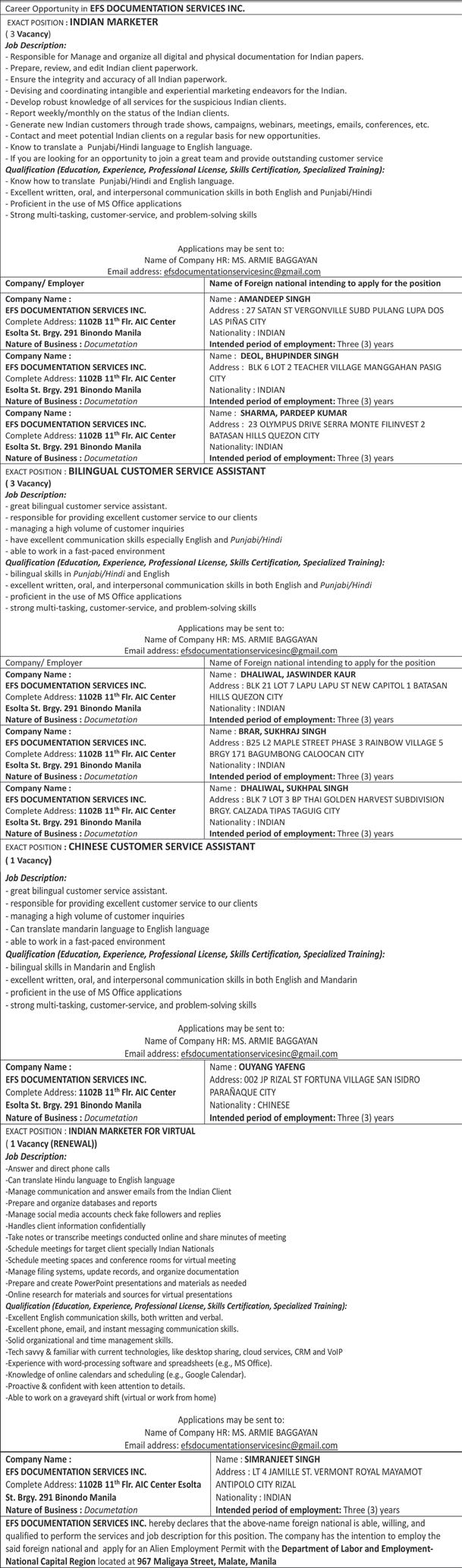
The class suit filed last December 9, 2025 sees dozens of fisherfolk from Calapan, Pinamalayan, and Pola seeking compensation that reflects the true extent of damages to the livelihood and long-term ecological impact of the oil spill to the affected communities from MT Princess Empress shipowner RDC Reield Marine Services, Inc, San Miguel Corporation subsidiary SL Harbor Bulk Terminal Corporation, the Shipowners’ Mutual Indemnity and Protection Association, and the International Oil Pollution Compensation Funds.
Originally allowed to be filed without fees due to its environmental nature, a January 5 order from the same court retracted this and mandated petitioners to pay “in consideration of the fact that this is a case for collection of actual and compensatory damages.”
“It is disheartening that fisherfolk had to file a Motion for Reconsideration just for our pleas to be heard. Three years after the oil spill, many of us are still trying to recover while sinking deeper into debt. If we were forced to pay half a million pesos just to defend our rights, it would be the same as denying us justice,” Aldrin Villanueva, fisherfolk and president of Koalisyon ng mga Mangingisdang Apektado ng Oil Spill (KMAOS) said in a statement.
In their motion, the fisherfolk petitioners argued that the payment of filing fees should be deferred, noting that the case falls under environmental litigation as it invokes the Oil Pollution Compensation Act of 2007, a key Philippine environmental law. Under the Rules of Procedure for Environmental Cases, the payment of fees in such cases may be deferred. The court granted the request after finding the motion meritorious.
“The outcome of the hearing is a victory from the collective efforts of fisherfolk. Our fit continues to hold those responsible for the oil spill accountable and to defend our seas. This kind of disaster must never happen again in Mindoro and across the Verde Island Passage,” said Villanueva.
Continued from A1
underscore what he described as the Philippines’ long record as a UN partner, citing peacekeeping missions and advocacy on social, women’s and climate issues.
A Security Council seat would, he said, give the Philippines a voice equal to that of “rich and powerful nations” in the UN main decision-making body on international peace and security. He framed the bid as an extension of a longstanding partnership with the UN, saying the Philippines would speak not only for itself but also for middle - income and developing countries in the Indo - Pacific, “now the driver of a great deal of the global economy and geopolitics.”
Pressed on the country’s chances against Kyrgyzstan in seeking a seat in the same regional group, Marcos cited what he called a “very strong record of partnership” with the UN, including peacekeeping deployments and Philippine initiatives on social, women’s and climate issues. He said there were “solid expressions of support” from other states but noted that the vote is by secret ballot.
A journalist asked how his government plans to address persistent problems such as gender-based violence and the underrepresentation of women in leadership roles. Marcos replied that Filipino women have long been recognized as equal partners in government and business and said the country is often cited as relatively advanced on gender equality, while acknowledging that violence and unequal access to economic opportunities remain.
Emergency powers
QUESTIONS then shifted to proposed emergency powers to address the impact of rising oil prices. Marcos had told
While the court’s acceptance of the Motion for Reconsideration allows the case to move forward, the petitioners and environmental advocates said the situation exposes how difficult it remains for marginalized communities to access justice.
“The court’s decision to accept the Motion for Reconsideration to allow the deferment of filing fees is an important step, but it also reveals deeper inequalities in our justice system,” said Fr. Edwin Gariguez, lead convenor of Protect VIP. “Fisherfolk who already are victims of an environmental disaster should not appeal just to be heard in court while large corporations have the resources to avoid accountability.”
Despite compensation disbursed by the IOPC, fisherfolk petitioners and their supporters say the amount remains far from sufficient to address the scale of damages to livelihoods, coastal communities, and marine ecosystems in the VIP, a marine corridor scientifically recognized as the “center of the center” of global marine shorefish biodiversity.
“The communities affected by the oil spill continue to bear the burden of an environmental disaster they did not cause,” said Gerry Arances, Executive Director of the Center for Energy, Ecology and Development (CEED).“The justice system must ensure that those responsible for environmental destruction are held fully accountable and not make it harder for affected communities to bring their case forward.”
The motion for reconsideration and the class suit itself represent a crucial moment in the fight of Filipino fisherfolk and coastal communities to hold polluters accountable and demand genuine rehabilitation of the Verde Island Passage.
“For the fisherfolk of Mindoro, this case is more than compensation. It is about dignity and justice,” Gariguez said. “The communities whose livelihoods were destroyed deserve a justice system that works for them.”
Jonathan L. Mayuga
congressional leaders he would certify the measure as urgent once the relevant committee report was completed, explaining that the urgency designation mainly affects the timetable for plenary debates and voting. He described the request as “very simple”: authority that could be exercised if the average global oil price exceeds $80 per barrel for a month, without guaranteeing that it would automatically be used.
Asked what he would say to Filipinos worried about fuel and food prices, Marcos said the country remains in “good shape” in terms of oil supply, with inventory on hand and additional shipments in transit, while the government talks to potential new suppliers beyond its usual sources. But he said uncertainty over the duration and outcome of the conflict makes planning difficult, noting that international prices had briefly risen above $100 per barrel before easing back below $90, still well above the roughly $72 level earlier in the year.
The final questions touched on corruption concerns and a high-profile legal case. Asked what image of the Philippines he wanted UN member states to have, Marcos pointed to the country’s historic ties with the organization and said the Philippines had “always been ready to help” when the UN called. The Independent Commission on Infrastructure, created to investigate alleged irregularities in public works projects, is finalizing its work and will transmit cases to the Department of Justice or the Office of the Ombudsman.
In response to a question on why the government has not yet brought home a former congressman facing criminal charges and believed to be in Portugal, Marcos said Philippine authorities have requested assistance from Portuguese authorities and issued a Red Notice through Interpol, but cannot send their own police officers to carry out an arrest abroad.
the Philippines Inc. (Campi) said electrified vehicles remained a “key bright spot.”
A total of 2,610 electrified vehicles were sold in January, up from 1,600 units in the same month last year. These vehicles accounted for 7.75 percent of total sales reported by Campi and the Truck Manufacturers Association.
Battery electric vehicle sales rose to 261 units from 146 a year earlier, while plug-in hybrid electric vehicle sales surged to
THE Department of Agrarian Reform (DAR) has turned over new farm machinery and equipment (FMEs) to agrarian reform beneficiaries in Quezon to promote their resiliency to climate change.
At the same time, DAR officials in the Calabarzon (Cavite-LagunaBatangas-Rizal-Quezon) inspected key rural infrastructure projects that aim to strengthen food production and improve farmers’ access to markets in the province.
T hrough the Climate-Resilient Farm Productivity Support Program, DAR Calabarzon awarded a four-wheeldrive tractor (4WD) with complete implements to the Umiray Agrarian Reform Beneficiaries Multi-Purpose Cooperative in Barangay Umiray. The cooperative is composed of 1,245 farmermembers, including 375 Agrarian Reform Beneficiaries (ARBs).
DAR Regional Director Cupido Gerry Asuncion, together with officials of the Municipal Government of General Nakar and personnel from the DAR Provincial Office of Quezon, led the turnover ceremony.
The new FMEs are expected to help farmers prepare their land more efficiently, reduce operational costs, and increase crop production. The support is part of DAR’s nationwide effort to equip agrarian reform communities with modern tools that enable them to adapt to climate-related challenges and remain productive.
As one of the active Agrarian Reform Beneficiary Organizations (ARBOs)
in Quezon, the Umiray Cooperative was expected to greatly benefit from the assistance. With improved mechanization, members can enhance their farming operations and contribute more effectively to both local and national food supply.
Beyond farm machinery support, DAR also conducted an on-site inspection of the proposed Idyang Bridge and three Farm-to-Market Road projects in Sitios Idyang, Lapdok, and Campo. Once completed, these infrastructure projects are expected to make it easier for farmers to transport their produce, improve mobility in remote areas, and strengthen market access. The Climate-Resilient Farm Productivity Support Program is being rolled out across various regions as part of DAR’s integrated support services approach. The program combines mechanization, infrastructure development, farm inputs, and capacitybuilding to help ensure sustainable agricultural productivity.
Secretary Conrado M. Estrella III highlighted the importance of farm modernization and rural infrastructure in transforming agrarian reform communities into strong contributors to national development. Under his guidance, DAR remains focused on delivering practical and responsive interventions that support food sufficiency, uplift rural livelihoods, and build long-term agricultural resilience.
Jonathan L. Mayuga
DILG launches ‘26 child-friendly governance audit for LGUs
THE Department of the Interior and Local Government (DILG) is calling on cities and municipalities across the country to strengthen further programs and services that protect and promote the welfare of Filipino children as it launches the 2026 Child-Friendly Governance Audit for local government units (LGU).
The initiative aligns with President Ferdinand R. Marcos Jr.’s directive to prioritize the health, education, safety, and overall development of the country’s youth to secure the country’s long-term development.
In a memorandum circular, the DILG said LGUs will be assessed across five key areas: survival, development, protection, participation, and governance. These cover programs supporting children’s health and nutrition, access to quality education, child protection systems, youth participation, and local policies that uphold children’s rights.
from A14
also working with the Asian Development Bank (ADB) to support regional initiatives such as the Ascend program, which aims to help implement the Asean Semiconductor Roadmap and strengthen the region’s role in high-tech manufacturing.
Results of the audit will determine which LGUs qualify for the Seal of Child-Friendly Local Governance (SCFLG), conferred by the Council for the Welfare of Children.
DILG Secretary Jonvic Remulla said the audit reflects the government’s commitment to ensuring that every Filipino child grows up in a safe, nurturing, and supportive environment.
“When local governments invest in children, they are investing in the future of their communities. Child-friendly governance means ensuring that every child is healthy, protected, educated, and given the opportunity to participate in shaping the communities they will one day lead,” Remulla said. Jonathan L. Mayuga
To pass the audit, LGUs must score at least 80 percent in each category and achieve an overall rating of 80 percent or higher. Evaluations will be based on programs implemented in 2025, with data submitted through the Seal of Child-Friendly Local Governance Knowledge Management System from March to April 2026, followed by validation at the provincial, regional, and national levels.
“ADB remains a vital partner in driving the regulatory reforms and digital transformation of our region that needs, as we said, that needs to stay ahead,” Roque said, referring to discussions with ADB Vice President Scott Morris. Another initiative, the Prosper Project, also supported by ADB, seeks to accelerate the digital transformation of micro, small and medium enterprises (MSMEs) by helping them adopt digital tools and participate in global and domestic value chains.
“Because we also have a local market that is actually very strong and actually very attractive for the foreign investors,” Roque said. “So we want them to adopt digital tools and, of course, onboard the e-commerce platform.” The ABEF 2026, a side event ahead of the Asean Economic Ministers’ Retreat, gathered government officials and industry stakeholders to discuss strengthening the region’s investment and business environment.
By Manuel T. Cayon @awimailbox

DAVAO CITY—A statement circulating around the Bangsamoro region is calling on Malacañang to exercise “decisive” leadership, saying it has also affected the long-running peace process in Mindanao which may pose risk to the perpetuity of peace in southern Philippines.
The statement will serve as a petition as it asked recipients of the message to affix the name of their organization at the end of the three-page statement which was titled “Safeguarding the Bangsamoro Peace Process: A Multisectoral Call to President Ferdinand Marcos Jr. for Decisive Leadership.”
“Leaders from civil society, business, faith communities, and partners from the academe from the Bangsamoro and beyond, urge urgent action to restore confidence in the Bangsamoro peace process and secure a historic peace agreement before the end of this administration,” the unsigned statement said on March 10. The third page is marked with blanks intended for those who will affix their organizations to the statement.
The statement said that “at a moment when the Philippines is ironically presenting itself to the world as a champion of peace, dialogue, and inclusive governance, the growing dysfunction affecting the Bangsamoro peace process demands urgent and decisive leadership.”
“Recent developments point to troubling dysfunction in the governance and institutional coordination of the peace process, and backtracking by the government on Bangsamoro autonomy that is at the heart of the agreement. If left unaddressed, these governance challenges risk eroding the trust painstakingly built over decades among key stakeholders, including the Moro Islamic Liberation Front [MILF], local communities, and national institutions,” it said.
The statement cum petition said it was “particularly concerned about emerging uncertainties surrounding the implementation of key commitments under the peace agreements, including developments affecting the normalization track and the broader political transition in the Bangsamoro Autonomous Region in Muslim Mindanao.”
These challenges arise at a critical moment as the Bangsamoro transition approaches its next phase, including preparations for democratic elections and the consolidation of autonomous institutions, it added.
“We therefore respectfully urge your
administration to take immediate and decisive steps to restore confidence in the peace process,” it added.
In particular, the statement said, “we call for the immediate reconstitution of the leadership responsible for managing the national government’s peace process, in order to restore credibility, trust, and effective stewardship of the process; the full empowerment of the Government’s Implementing Peace Panel, ensuring that it has the authority, mandate, and institutional backing necessary to effectively engage with its counterparts and oversee the implementation of commitments under the peace agreements with clarity, authority, and, consistency;
Concrete steps to rebuild the trust and confidence of the Moro Islamic Liberation Front, including directly addressing the concerns they have raised regarding the governance and implementation of the Bangsamoro transition; a clear reaffirmation of the national government’s commitment to fully implement all signed peace agreements and normalization commitments, in both letter and spirit; and regular high-level dialogue between the national government and Bangsamoro leadership, in order to prevent further erosion of trust and ensure that the transition remains on track.
“Your leadership on this matter would also reinforce the Philippines’ broader diplomatic commitments, including the country’s bid to secure a non-permanent seat in the United Nations Security Council for the 2027–2028 term,” it said.
It said that “safeguarding and successfully concluding this historic peace process would stand as one of the defining achievements of your administration. By ensuring that the transition remains credible and that the commitments of the peace agreements are faithfully carried through, your leadership can secure a lasting peace in Mindanao and reinforce the Philippines’ standing as a global advocate for dialogue, inclusion, and conflict resolution.”
“We, leaders and representatives from civil society, the business sector, faith communities, labor, and partners from the academe—sectors that have long supported and contributed to sustaining peace in Mindanao—write to express our gravest concern over the current situation affecting the Bangsamoro peace process,” it added.
It cannot be immediately ascertained how many organizations of personalities have affixed their names in the statement cum petition.
By Rex Anthony Naval
AS the country strives to adjust amid the looming oil crisis, the Philippine National Police (PNP) on Wednesday announced that it will be adopting a set of energy conservation protocols across all offices and units nationwide.
PNP chief Gen. Jose Melencio Nartatez Jr. said that this is part of their commitment to responsible resource management and efficient government operations.
Through a memorandum issued by the PNP national headquarters in Camp Crame, Quezon City, all police units are directed to sustain and further reinforce practical measures aimed at reducing electricity and fuel consumption while ensuring that police services remain fully operational at all times. These initiatives build on long-standing practices within the organization to promote efficiency and responsible use of government resources, while supporting the broader efforts of the national government to encourage energy conservation.
The reinforcement of these protocols also comes in view of ongoing geopolitical developments affecting global energy markets, which have influenced fuel prices and highlighted the importance of prudent and efficient energy use across government institutions.
Among the key measures are switching off non-essential lights and electrical equipment during lunch breaks and after office
By Lenie Lectura @llectura
THE government will start distributing a P5,000 fuel subsidy to public utility vehicle (PUV) drivers in Metro Manila starting Tuesday, March 17.
The announcement from the transportation department came after President Ferdinand Marcos Jr. ordered to provide immediate assistance to the most affected sectors to ease the impact of the big time oil price hike caused by the ongoing unrest in the Middle East.
The Department of Transportation (DOTr) said on Wednesday it is already collaborating with the Department of Social Welfare and Development (DSWD) and local governments for the fuel subsidy rollout.
DOTR Secretary Giovanni Lopez said tricycle drivers in Metro Manila will receive the subsidy first, followed by jeepney, taxi, Transport Network Vehicle Service (TNVS), and bus drivers.
“Our President has ordered us not to let the situation get worse and that a whole-of-government approach is needed, and that is what he ordered the Office of the Executive Secretary to do, which is why we had a meeting earlier,” he said.
The Land Transportation Franchising and Regulatory
Board (LTFRB), Department of Information and Communications Technology (DICT), and Department of Interior and Local Government (DILG) will assist the DOTr and DSWD in validating the program’s beneficiaries.
Lopez added that toll operators will provide discounts to Class 3 vehicles—buses and trucks—to reduce their costs and offset the impact of the increase in diesel and gasoline prices.
Moreover, Lopez affirmed that there will be a fare adjustment.
This, however, is still being evaluated by the LTFRB.
The DOTr is also in talks with the Civil Aviation Authority of the Philippines for the possible reduction of landing and take-off fees.
Meanwhile, Senator Sherwin Gatchalian urged the government to accelerate the country’s adoption of electric vehicles (EVs) to help insulate the local economy from fuel price shocks.
“The ongoing hostilities in the Middle East should serve
By Samuel P. Medenilla @sam_medenilla
RESIDENT Ferdinand Mar -
Pcos has announced another chartered flight which will help in repatriating Filipinos, who were affected by the armed conflict in the Middle East. In a press conference in New York last Wednesday (Philippine time), the Chief Executive disclosed there will also be a char -
tered flight in the United Arab Emirates (UAE) for Filipinos, who want to flee the ongoing crisis in the Middle East.
“The other [charted light] out will be out of Fujairah in the UAE to transport OFWs [overseas Filipino workers] in Dubai,” he said.
“Now that the Emirates has decided that it is safe enough for them to allow flights and it should be safe enough also for us to charter airplanes so that other
Filipinos who want to go home can be flown,” he added. This is on top of the earlier chartered flight, which was announced by Palace Press Officer Claire Castro, which will be sent to Riyadh in the Kingdom of Saudi Arabia (KSA) to bring home Filipinos in the said Arab country as well as those from Kuwait and Bahrain.
See “Marcos,” A10
as a wake-up call. We desperately need to reduce the country’s vulnerability to oil price volatility. Paulit-ulit na lang na pinapasan ng mga Pilipino ang bigat ng pagtaas ng presyo ng langis, ” Gatchalian said. The Philippines imports about 96% to 99% of its oil requirements.
Gatchalian said the government needs to accelerate the establishment of the necessary infrastructure support, such as charging stations, to encourage more organizations and individuals to adopt EVs.
Under the Comprehensive Roadmap for the Electric Vehicle Industry (CREVI), the government has a conservative target for the country to have 7,300 vehicle charging stations by 2028, compared with a more ambitious goal of 66,500. CREVI was adopted following the May 2022 enactment of the Electric Vehicle Industry Development Act (EVIDA), authored by Gatchalian, to support EV adoption nationwide.
‘Alis galis’: BuCor denies scabies outbreak inside prison facilities
THE Bureau of Corrections (BuCor) on Wednesday denied claims of a possible outbreak of scabies inside the New Bilibid Prisons (NBP) or any other prisons facilities in the country.
Corrections Technical Superintendent Ma Cecilia V. Villanueva, acting Director for Health and Welfare Services (DHS), said the last recorded scabies outbreak within their facilities happened
See “Alis galis,” A10
hours, setting air-conditioning units to a standard temperature of 24°C, maximizing natural lighting and ventilation whenever possible, and encouraging the use of virtual meetings when practical.
Elevator use is also limited to senior citizens, pregnant women, and persons with disabilities to further reduce energy consumption.
Fuel conservation measures are, likewise, included in the directive, such as limiting official travel to essential activities, consolidating trips to maximize the use of government vehicles, avoiding unnecessary engine idling, and strengthening regular vehicle maintenance to ensure efficiency.
Nartatez said the initiative reflects the organization’s commitment to responsible governance while continuing to deliver effective police service to the public.
“Simple measures like turning off unused equipment, managing electricity consumption, and planning official travel wisely can make a meaningful difference in conserving energy and public funds,” he added.
He assured the public that the implementation of these protocols will not in any way affect police operations and frontline services.
“Our personnel remain on duty 24/7 to protect our communities. Tuloy-tuloy ang ating serbisyo—what we are improving is how we manage our resources so that we can operate more efficiently as an organization,” he added.

By Carmel Pedroza
CEBU CITY
— Power supply across the franchise area of Visayan Electric in Cebu remains sufficient to meet projected demand during the upcoming summer months, even as global developments may place upward pressure on electricity prices.
The distribution utility said it is closely monitoring global energy developments following ongoing geopolitical tensions in the Middle East, which could influence electricity prices in the coming months.
These developments coincide with the approaching Philippine summer, when electricity demand typically rises due to warmer temperatures and increased energy consumption.
According to Visayan Electric in a statement released to the media, electricity prices are largely influenced by the generation charge, which reflects the cost of producing electricity from power suppliers.
A portion of the country’s power generation relies on imported fuels such as coal and oil.
When global fuel prices increase due to supply disruptions or geopolitical tensions, these higher costs affect generation prices in the electricity market and are eventually reflected in consumer electricity bills.
Despite the potential impact of global market movements on electricity prices, Visayan Electric emphasized that power supply within its franchise area remains
Continued from A9
The President said he is considering the deployment of personnel from the Department of National Defense and the Civil Aviation Authority of the Philippines to assist in the said repatriation efforts.
He said he also instructed DMW Secretary Hans J. Cacdac to oversee the ongoing repatriation efforts in the Middle East.
“In fact, I know that Secretary Hans Cacdac is taking the flight to Dubai. I told him, to take the flight so he can properly report on the situation there - he will be doing that,” he said. Last week, DMW reported over a thousand OFWs are requesting for repatriation after the United States and Israel launched a joint attack against Iran. Tehran retaliated by attacking its neighboring countries with US bases.
Aside from the chartered flights, DMW has been using commercial flights to bring home Filipinos. It reported from March 3 to 9, it already repatriated 400 OFWs and their dependents.
Another 16 Filipinos from Israel are scheduled to arrive on Friday or Saturday.
“The target date of departure from Fujairah and the UAE is March 13, ETA [estimated time of arrival] Manila, in the evening of March 13 or early morning of the 14th,” Marcos said.
Pending their repatriation, the affected Filipinos are being kept safe by their host countries in the Middle East amid the ongoing tension in the region, according to Marcos.
“They are being kept safe by the governments, the countries where they have been working,” he said.
Continued from A9
adequate to support expected demand during the summer season.
“While global events may influence electricity prices, our priority remains ensuring reliable service for our customers while keeping them informed and empowered to manage their energy use,” said Mark Anthony B. Kindica, president and general manager of Visayan Electric.
“At the same time, we encourage households and businesses to practice energy efficiency. Every kilowatt-hour saved helps reduce demand on the system and can help manage electricity costs during periods of global price volatility,” Kindica said.
Visayan Electric said it will continue to provide timely updates to its residential, commercial, and industrial customers as generation costs are finalized for each billing cycle.
Meanwhile, a study by the Independent Electricity Market Operator of the Philippines (IEMOP) has identified forced outages of major power plants as a key factor that could intensify electricity price spikes in the Wholesale Electricity Spot Market (WESM) amid rising global fuel prices, prompting the Energy Regulatory Commission (ERC) to order stricter monitoring of market activities.
The assessment was presented during a coordination meeting between the ERC and IEMOP on 4 March 2026, where electricity market simulations examined how escalating geopolitical tensions in the Middle East could affect Philippine power prices.
According to IEMOP’s analysis, rising global prices of coal, oil, and liquefied natural gas (LNG) could place upward pressure on electricity prices as power generators reflect higher fuel costs in their market offers. The study noted that price pressures could intensify if large generating units experience forced outages, which may tighten available power supply.
A forced outage refers to the unexpected shutdown of a power plant due to technical problems or operational issues. When supply is reduced, more expensive generators may be dispatched to meet demand, potentially pushing market prices higher.
ERC Chairperson and Chief Executive Officer Atty. Francis Saturnino Juan said the simulations form part of the Commission’s proactive measures to assess risks that may affect electricity consumers.
“This is part of our proactive approach,” Juan said.
He explained that they conduct stress tests to understand possible risks early and ensure that consumer protection mechanisms are in place should global fuel volatility persist.
Global energy markets have recently experienced volatility due to heightened geopolitical tensions affecting key fuel supply routes, including developments near the Strait of Hormuz, a major maritime corridor through which about one-fifth of the world’s oil and LNG shipments pass.
The Philippines remains vulnerable to such developments due to its reliance on
imported coal and LNG for a significant portion of its power generation mix.
In response to the potential risks, the ERC directed IEMOP and the Commission’s Market Operations Service (MOS) to intensify monitoring of market activities and immediately report any unusual or suspicious behavior that could indicate possible abuse of market power.
This directive aims to ensure that no market participant takes advantage of volatile market conditions or engages in practices that could further drive up electricity prices.
The ERC also emphasized that existing regulatory safeguards remain in place, including the Secondary Price Cap (SPC) mechanism, which is automatically triggered if sustained price spikes breach regulatory thresholds.
According to the Commission, early assessment of possible market scenarios allows regulators to prepare contingency measures that could help cushion the impact of external shocks on electricity consumers.
“Our priority is to protect consumers from undue price volatility while ensuring a stable and reliable power supply. Preparedness remains important given the Philippines’ exposure to global energy markets,” Juan said.
The ERC said it will continue coordinating with market operators and industry stakeholders as developments in global fuel markets unfold.
TBy Mj Jadormio
HE Commission on Elections (Comelec) will not adopt a four-day workweek despite the government’s push for energy-saving measures, citing its ongoing preparations for several upcoming elections.
Comelec Chairman George Erwin M. Garcia said the poll body could not reduce workdays as it is currently preparing for multiple electoral exercises this year.
Garcia noted that the commission is handling preparations for the Antipolo special elections, the barangay and Sangguniang Kabataan elections, as well as the
Bangsamoro parliamentary polls.
Because of these activities, the poll body said it must maintain regular operations to ensure that election-related work will not be delayed.
Instead of shortening the workweek, Garcia said the commission has implemented internal energy-saving measures in its offices.
Among these is the carpooling of service vehicles and buses used to transport Comelec personnel.
The poll body is also conserving electricity by switching off lights and appliances when they are not in use.
Garcia said these measures are part of
the commission’s efforts to support the government’s energy conservation campaign without affecting its election preparations.
Several government offices and local government units have started adopting a compressed four-day workweek as part of efforts to reduce electricity consumption and fuel use.
The move follows the government’s call for energy conservation amid concerns over rising fuel prices linked to tensions in the Middle East.
Garcia said that while the Comelec supports energy-saving initiatives, the commission must prioritize its mandate to conduct elections.
By Samuel P. Medenilla @sam_medenilla
PRESIDENT Ferdinand Marcos Jr. said the Philippines can serve as a model for other countries when it comes to empowering women, as the country continues to be among the global leaders in implementing gender equality policies.
The Chief Executive made the statement when asked in a press conference last Wednesday (Philippine time) how he intends to contribute to the initiative of the Conference of the Status of Women (CSW) of the United Nations (UN) to accelerate gender equality by 2030.
“The way I framed it was in the Philippine context where in especially – well, women have always been recognized as
It also alleged that they have encountered difficulties with BuCor and NBP regarding this
equal partners to men in many ways, in government, in business, in all the decisionmaking areas. So, it’s a very good example to hold up,” Marcos said partly in Filipino referring to his speech during the 70th anniversary of the CSW.
In the said speech, Marcos highlighted the need for a “cultural shift” to provide a bigger role to women in institutions, which set policies.
“But beyond laws and institutions, we must also address the attitudes and assumptions that continue to limit women’s roles in many parts of the world,” Marcos said.
“True equality requires not only policy change, but cultural change,” he added.
To facilitate such reforms, he said countries must ensure women and girls
cols to follow for those who intend to bring in medicines to persons deprived of liberty (DPLs) to ensure accountability and safety while preventing the entry of contraband. She said all medicines must be first deposited to DHS before they are turned-over to pharmacy or camp infirmaries to be given to PDL concerned.
Relatives must also provide an itemized list of the medications along with containers labeled with the PDL’s name.
BOC seizes
₧1.2 billion worth

By Reine Juvierre S. Alberto @reine_alberto
ABOUT P1.2 billion worth of marijuana from Thailand was intercepted by the Bureau of Customs (BOC) at the Manila International Container Port (MICP) last March 7.
In a statement on Wednesday, the BOC said the seized illegal drugs weighed 800 kilograms and came from a shipment in Thailand declared as containing rubber mats and plastic wares.
The shipment was flagged for verification by the Intelligence Group’s Risk Management Office after undergoing risk assessment, the BOC said.
A full physical inspection of the subject shipment revealed 80 boxes containing vacuum - sealed transparent packs of suspected marijuana.
An individual who identified himself as the broker’s representative was also apprehended during the operation. The BOC said the seized drugs were turned over to the Philippine Drug Enforcement Agency (PDEA) for further investigation. Meanwhile, the apprehended individual was placed in custody for inquest proceedings.
Customs Commissioner Ariel F. Nepomuceno said the interception resulted from tighter inspection procedures and improved risk profiling at the country’s ports. “This interdiction is the result of careful risk assessment, intelligence coordination, and the diligence of our frontline personnel,” Nepomuceno said. The operation was conducted in coordination with PDEA and the Philippine Coast Guard.
As PHL scrambles for cheap energy, Win prods govt to ramp up EV transition
By Butch Fernandez @butchfBM
AS the country scrambles for
cheaper alternative sources of oil to procure in the wake of the Middle East war, Senator Win Gatchalian said the government needs to accelerate the country’s adoption of electric vehicles (EVs) to mitigate the impact of higher oil prices.
“The ongoing hostilities in the Middle East should serve as a wake-up call. We desperately need to reduce the country’s vulnerability to oil price volatility. Paulit-ulit na lang na pinapasan ng mga Pilipino ang bigatngpagtaasngpresyonglangis [The people have repeatedly borne the brunt of oil price increases],” Gatchalian said.
Accelerating our transition to the adop -
are provided education since it makes them more independent and provides them with economic empowerment and protection against violence.
The President said such policies are already integrated in the country’s laws and regulations, which was recognized globally.
“I felt that we could speak with authority on those subjects because the Philippines has been adjudged by many international surveys or studies as being one of the most advanced when it comes to gender equality so that is where it is based. Our experience in the Philippines,” Marcos said.
In the 2025 Global Gender Gap report of the World Economic Forum, the Philippines was ranked 20th among 148 countries when it comes to gender equality initiatives.
be considered for approval.
tion of EVs would help insulate the local economy from fuel shocks,” he added. The Philippines imports about 96% to 99% of its oil requirements. Gatchalian said the government needs to accelerate the establishment of the necessary infrastructure support, such as charging stations, to encourage more organizations and individuals to adopt EVs. Under the Comprehensive Roadmap for the Electric Vehicle Industry (CREVI), the government has a conservative target for the country to have 7,300 vehicle charging stations by 2028, compared with a more ambitious goal of 66,500. CREVI was adopted following the May 2022 enactment of the Electric Vehicle Industry Development Act (EVIDA), authored by Gatchalian, to support EV adoption nationwide.
Caritas PHL calls energy transition a path to peace
CARITAS Philippines urged governments to accelerate the shift to renewable energy, calling the transition a strategy for peace and justice amid escalating global conflicts tied to fossil fuel dependence.
The Catholic Church’s social action arm said the worsening tensions in the Middle East highlight how the global fossil fuel system remains deeply connected to geopolitical instability.
San Carlos Bishop Gerardo Alminaza, president of Caritas Philippines, said the crisis exposes a deeper problem in the global energy system.
farmers, fisherfolk and the urban poor,” he said.
Caritas Philippines said the country imports most of the coal, oil and natural gas used to power its economy, leaving it exposed to supply disruptions and price volatility linked to global crises.
The group warned that the global fossil fuel system not only contributes to climate change but also deepens inequality and economic instability.
“The fossil fuel system does not only warm the planet; it also fuels conflict and deepens economic vulnerability,” Alminaza said.
“This crisis also reveals a deeper and often ignored reality: the fossil fuel economy continues to shape geopolitical conflict,” Alminaza said.
Caritas Philippines urged the government to prioritize investments in renewable energy sources such as solar, wind, and geothermal power.
She added that medical officers or pharmacists have the authority to examine the medicines brought in and decide their disposition.
“The BuCor assured both the public and the families of persons deprived of liberty that it can respond effectively to any health-related issues that may arise inside the correction facilities,” the BuCor said.
The DOJ has yet to respond to Kapatid’s letter but said it would defer to BuCor’s statement on the matter. Joel R. San Juan Alis galis. .
Villanueva reiterated that there are proto-
Villanueva added that medications must be accompanied by a valid doctor’s prescription to
He noted that countries heavily dependent on imported fuel, including the Philippines, are among the most vulnerable whenever conflicts disrupt global energy supply.
Each escalation in the Middle East, Alminaza said, often leads to higher oil prices that ripple across global markets and affect economies dependent on imported fuel.
“The burden falls heaviest on workers,
Developing local renewable resources, the group said, would help protect the country from global fuel price shocks while strengthening national energy security. Alminaza also cautioned against relying on expanded oil and gas exploration as a long-term solution to the country’s energy needs.
“Renewable energy is a peace strategy, a justice strategy, and a national survival strategy,” he said. MJ Jadormio
TBy Ada Pelonia @adapelonia
HE sugar industry is calling on the government to put in place a buying program that will set a floor price as a way of preventing the locally produced sweetener from nosediving.
Confederation of Sugar Producers Associations (Confed), through former Sugar Regulatory Administration (SRA) Administrator Rafael Coscolluela, made this proposal during a previous public hearing where he said that the government program should purchase a 50-kilo bag at a minimum of P2,300.
In response, SRA Administrator
Pablo Luis Azcona said a mandated flood price would ensure that planters will remain profitable throughout the sugar crop year. Azcona, however, raised a caveat that implementing a buying program would entail a “big budget” as sugar traded in the milling season reached P2.65 billion on a weekly basis. Thus, the proposed program
THE Department of Agriculture (DA) wants to tap biofertilizers to cushion the impact of rising prices of imported fertilizers, a critical farm input, on Filipino farmers.
Agriculture Assistant Secretary Arnel de Mesa said the DA has created a team that would assess the alternatives to synthetic fertilizers and explore government-to-government transactions for the procurement of cheaper variants of the farm input.
“Secretary (Francisco Tiu Laurel Jr.) is looking at organic fertilizers and biofertilizers which can reportedly replace up to 50 percent of the synthetic ones,” De Mesa told reporters on Wednesday.
“We can also look at the provision to engage in G2G arrangement for fertilizer, but the Secretary is taking into consideration all options to help farmers.”
De Mesa said the agency wants to prevent the decline in farmers’ productivity caused by the surge in fertilizer prices.
“Two things tend to happen when a price surge occurs. If farmers reduce the recommended fertilizer requirement, the productivity per hectare will decrease,” he said.
“If the farmer maintains their level of fertilizer usage, the production cost will increase, and their income will suffer. So, we don’t want that to happen.”
He said Agriculture Undersecretary Roger Navarro will lead the team, with three other members including the Planters Products Inc. (PPI).
MEANWHILE , De Mesa said the implementing agencies will begin the disbursement of P100 million for fuel subsidy to farmers and fishers in two weeks.
The agency will also request the immediate release of the remaining P50 million earmarked for fuel assistance.
For this year, the government allocated P150 million to the agency. Of this, only P100 million has been released to the DA.
The beneficiaries will receive the fuel assistance in their Interventions Monitoring Card (IMC), which they can use in certain fuel stations.
De Mesa also said the agency will tap previously unused funds from fuel assistance programs to augment the budget to be disbursed to the farm sector.
He said the DA is looking at nearly P100 million in unused funds from the previous fuel subsidy programs currently lodged with the Development Bank of the Philippines (DBP).
“We’re looking at funds previously released for fuel subsidy that hasn’t been used yet, which is currently in the DBP, and instead of returning it to the treasury, we can have it retained in the DA so it can be released to our farmers and fishermen.”
Ada Pelonia
requires further study.
“If we come up with a mechanism to establish a (floor) price, it will make the lives of the farmers a lot easier because the price— no matter how high or low it will be—if it’s pre-set, we can all adjust our operations to be profitable at that price.”
Azcona noted that rich sugarproducing countries hold a tripartite meeting to establish a fixed price for the sweetener the entire year. This will be agreed upon by millers, farmers, and the government.
Sugar stakeholders recently met with the SRA board to discuss possible solutions to the problems that beset the industry.
The group urged the government to implement changes to the government buying program from 2 years ago, where the former will purchase a certain portion of the farmer’s and miller’s produce at a

predetermined price.
At that time, President Marcos approved the P5-billion budget requested by Agriculture Secre -
tary Francisco Tiu Laurel Jr. and Azcona.
The meeting also focused on suggestions for establishing a
government-mandated floor price for the farmer’s and miller’s sugar. The stakeholders urged the government to control the entry of artificial sweeteners and sugar substitutes, which dampen demand for locally produced cane sugar. The Department of Agriculture (DA) chief said raising tariffs on artificial sweeteners is “on the table” to boost demand for domestic sugar. Last month, lawmakers in the House of Representatives are reviewing potential amendments to existing laws and policies to address the sharp drop in mill gate prices of locally produced sugar and its effects on farmers and industry workers.
Quezon Rep. Mark Enverga, chairman of the House Committee on Agriculture, said current mill gate prices of P2,000 to P2,100 per 50-kilogram bag are below the estimated production cost of P2,500, prompting a legislative review.
By Jovee Marie N. Dela Cruz @joveemarie
THE House of Representatives has endorsed for Senate approval two measures aimed at strengthening food security and reducing food waste in the country.
House Majority Leader Ferdinand Alexander A. Marcos of Ilocos Norte said House Bill 8042, or the proposed National Food Security Day Act, was approved by the chamber with 248 votes in favor, zero against, and one abstention last Tuesday.
The measure seeks to declare October 16 of every year as National Food Security Day, in line with the global celebration of World Food Day.
“A National Food Security Day is a clear signal that the fight against hunger and high food prices has to stay on the national agenda, with real work behind it, from farm productivity to nutrition and less food waste,” Marcos said.
He said the annual observance aims to keep both government and the public focused on ensuring that food remains available, affordable, and safe, especially as disruptions in weather, supply chains, or global prices quickly affect local markets.
Under the measure, the state commits to ensuring food security, promoting sustainable agriculture, and eradicating hunger while recognizing every individual’s right to adequate, safe, and nutritious food.
The bill designates the Department of Agriculture as the lead agency for the annual observance, in coordination with the Department of Education, Commission on Higher Education, Department of the Interior and Local Government, and the National Nutrition Council.
The agencies will lead activities and information campaigns promoting food security, sustainable agriculture, reduced food waste, nutrition awareness, and
recognition of the role of farmers and fisherfolk in the food system.
Food waste
MEANWHILE , the chamber also approved on third and final reading House Bill 8043, or the Food Waste Reduction and Prevention Act, with 247 votes in favor, none against, and one abstention.
The measure requires certain establishments to donate safe and edible surplus food to accredited food banks instead of discarding it.
Marcos said the proposal aims to bridge the gap between edible food that is wasted and families who continue to face food insecurity.
Under the bill, food manufacturers, restaurants, hotels, fastfood chains, supermarkets with at least 500 square meters of selling space, and culinary schools with at least 50 students will be required to donate safe and edible food surplus to accredited food banks.
The measure also directs the Department of Social Welfare and
Development to coordinate with local government units in identifying food-insecure individuals who may benefit from the donations. It further mandates public awareness campaigns on food waste, improved food labeling, and lessons in schools on reducing food waste.
To encourage compliance, businesses that achieve at least a 20-percent annual reduction in edible food surplus may receive a 150-percent tax deduction on documented prevention investments. The measure also provides legal protection for good-faith donors and penalizes establishments that intentionally render edible surplus unfit for consumption or obstruct redistribution.
Lawmakers said the bill aims to cut food waste while helping address hunger, with a national target of reducing food waste by at least 50 percent by 2030. The two bills have already been transmitted to the Senate for deliberations.
SUGAR millers urged the government to ramp up support for locally produced biofuels that will help cut the country’s purchases of expensive imported oil.
The Philippine Sugar Millers Association (PSMA) made the pronouncement after rapid spikes in international oil prices driven by the ongoing conflict in the Middle East, a powerhouse in global oil trade.
The PSMA said using domestic bioethanol in gasoline blending reduces the country’s reliance on imported petroleum, helping stabilize pump prices while maintaining fuel expenditures
circulating within the economy.
“Every liter of locally produced bioethanol blended into gasoline displaces a liter of imported oil exposed to geopolitical risks,” PSMA Executive Director Jesus Barrera said.
“This provides an immediate and practical buffer that helps protect Filipino motorists and the broader economy from global supply disruptions.”
Citing industry data, the group noted that gasoline blending prices in 2025 remained within normal global market behavior.
The landed cost of imported gasoline, PSMA said, has been
volatile and recently increased amid supply concerns linked to geopolitical tensions.
The group said bioethanol also improves gasoline quality, serving as an oxygenate and octane enhancer that promotes cleaner combustion and better engine performance.
Compared with imported synthetic additives, the PSMA said bioethanol remains a cleaner and more cost-effective solution.
For the sugar sector, the biofuels program provides a crucial economic anchor for rural communities.
SOME urea producers in India and Bangladesh have shut down plants or moved up annual maintenance after Qatari supplies of liquefied natural gas (LNG), a key feedstock, were suspended due to the Iran war.
Manufacturers, including top producer Indian Farmers Fertiliser Cooperative Ltd., have either halted some of their facilities or started routine upkeep, according to people familiar with the matter.
Restarting a paused plant could take as long as a month, provided
LNG supplies resume, they added, asking not to be named because the matter is private. LNG is the primary feedstock for urea production, serving as an energy source and a key input in making the world’s most widely used fertilizer. Gas supplies to India’s fertilizer industry are currently about 70 percent of their requirement, the people added.
Any long-drawn halt to LNG supplies could force India—the world’s top importer of urea—to ramp up purchases, pushing up
global prices and hampering government efforts to trim its subsidy burden. Fertilizer demand peaks during the monsoon season that begins in June.
Higher farm input costs in the South Asian nation would also have implications for crop prices—and broader inflation—as the country is the world’s biggest grower and exporter of rice and the No. 2 producer of wheat, cotton and sugar.
The government has taken measures to ensure that at least 70 percent of the average LNG needs
of fertilizer makers are met while the Middle East conflict snarls supply, a spokesperson for the fertilizer ministry said. Stockpiles of fertilizer, including urea, were about 18 million tons as of March 10, up almost 37 percent from a year earlier, ministry data show.
A senior official at fertilizer maker IFFCO didn’t immediately respond to an email sent after office hours.
Thailand, Bangladesh, India and Vietnam are dipping into the spot market to secure near-term
“Maintaining the domestic bioethanol blending mandate ensures that fuel expenditures stay within the local economy while sustaining the livelihoods of farmers and workers across the country,” Valderrama said.
The PSMA said enhancing the country’s biofuels program supports energy security and rural economic stability, particularly at a time when global energy markets remain vulnerable to geopolitical shocks. Ada Pelonia
Aurelio Valderrama, president of the Confederation of Sugar Producers Associations (Confed), said the industry creates a stable market for sugarcane-derived products while supporting farmers and workers nationwide.
LNG supplies, but some tenders for this month—from India’s Gail and GSPC—have gone unawarded, indicating a shortage of immediately available fuel.
Bangladesh Chemical Industries Corporation (BCIC) has shut four of its five urea factories due to gas rationing, according to Mohammad Moniruzzaman, a director at the state-owned company.
India’s fertilizer sector relies heavily on LNG imports, with a significant share sourced from the Middle East, according to the
Fertiliser Association of India. The industry is working with the government to prioritize allocations for urea output, the group added. India’s fertilizer production and imports—including urea, di-ammonium phosphate and potash—rose to 65 million tons in the 10 months ended January 31, up from 57 million tons a year earlier, the industry group said. So far, strong domestic production and timely imports have ensured that supplies will meet farmers’ demand, it added. Bloomberg News
AS global attention stays fixed on the escalating conflict in the Middle East—with oil prices now surging past $100 per barrel—the government must look beyond immediate diplomatic concerns and prepare for an economic shock that threatens to undo years of progress in employment generation. Economists warn that a prolonged Middle East crisis would do more than raise fuel prices—it would unleash economic fallout that ultimately hurts ordinary Filipino workers the most. (Read the BusinessMirror story: “With war gouging business, analysts project jobs in peril,” March 10, 2026).
Here are the statistics that should worry our policymakers: the country added just 172,000 jobs last year—the weakest annual gain in recent memory, and a steep drop from 1.29 million in 2023. The employment rate has slipped to 95.8 percent, leaving over 2.14 million Filipinos jobless. That’s the fragile state now bracing for another economic shock.
The mechanism of damage is clear enough. Higher oil prices raise production and transportation costs across virtually every sector of the economy. Businesses, facing squeezed profit margins and weakening consumer demand, will scale back operations and delay investment. Consumers, grappling with higher prices for basic goods, will reduce spending. And as economist Calixto Chikiamco correctly notes, lower spending will inevitably lead to layoffs and a freeze on hiring. But the true face of this crisis will be seen not in macroeconomic statistics but in the daily struggle of specific groups of Filipinos. The jeepney driver whose take-home pay is eaten up by skyrocketing fuel costs. The fisherfolk who cannot venture out to sea because diesel is now prohibitively expensive. The delivery rider whose slim margins vanish entirely with each price hike. The factory worker in manufacturing who faces reduced hours or outright dismissal as companies cut costs.
As IBON Foundation Executive Director Jose Enrique Africa points out, many of these workers have barely any savings to fall back on. They live at the edge of poverty, and an extended period of high oil prices will push countless families over that edge.
Then there is the OFW dimension. The Middle East has long been a primary destination for Filipinos seeking better opportunities abroad. A prolonged conflict does not merely threaten those already working there—though their safety is certainly at risk—but will likely freeze new deployments entirely. Lower remittances mean less money flowing back to families who depend on them, further depressing domestic consumption and economic activity.
Ateneo de Manila University economist Ser Percival Peña-Reyes correctly identifies the sectors most at risk: transportation and logistics, agriculture and fisheries, manufacturing, construction, and the small and medium enterprises that form the backbone of our economy. These are not abstract categories. They represent the livelihoods of millions of Filipino families.
What’s most concerning is that this employment crisis is already visible in official figures, with job growth slowing sharply over the past two years. The economy was already struggling to keep up with a growing workforce—now the Middle East conflict risks pushing it into intensive care.
The government cannot control global oil prices. It cannot prevent conflicts in distant regions. But it can prepare for the consequences.
What’s needed now is a comprehensive contingency plan that addresses multiple fronts: targeted subsidies for vulnerable sectors like transport drivers and fisherfolk; expanded social protection for workers facing reduced hours or job loss; business incentives to preserve jobs; and accelerated diversification of our energy sources and overseas labor markets.
The Middle East crisis highlights the economy’s vulnerability to external shocks—imported oil, remittances, and overseas jobs. For millions of Filipinos, this threatens families’ food, education, and living standards. The warning is clear; now leaders must move beyond rhetoric to protect those least able to withstand another economic shock.


TJohn Mangun
HERE is comedy in watching stock market participants explain their own behavior. Ask an investor why he bought at the top, and he will tell you, with total seriousness, that the fundamentals were compelling. Ask him why he sold at the bottom, and he will say with equal conviction, that the risks became unacceptable. He is not lying. He genuinely believes both and that is precisely the problem.
All animals, from the tiny Brazilian gold frog to the massive blue whale, have a profound fear which, when confronted for example by a predator, triggers a “fight or flight” response. Humans, including stock market players, are not different. We invented a term for buying because “the fundamentals (or whatever) were compelling”: FOMO or the Fear Of Missing Out. That is the “fight” response. On the other side is the Fear Of Losing Money and selling a position or “flight.”
There is, however, a huge difference between us humans and the rest of the animal kingdom with only a very few exceptions. Other animals fight for survival, in order to eat or to protect themselves.
Humans fight not only to survive but to satisfy our greed, and the financial and asset markets offer a great example. The Fear/Greed Cycle
T.
Pelayo Ruben M. Cruz Jr. Eduardo A. Davad Nonilon G. Reyes
D. Edgard A. Cabangon Benjamin V. Ramos Aldwin Maralit Tolosa Rolando M. Manangan


is a human-specific psychological pattern where our emotions drive market behavior.
This cycle of behavior is like the child’s game of “She Loves me, she loves me not, she loves…,” with emotions going back and forth almost as quickly as you can pluck the petals off a flower.
Greed fuels bubbles, overbuying, and risk-taking like snatching a steak from a hungry lion’s jaw, while fear triggers panic selling, market crashes, and a frantic leap from the 10th floor of a burning building. This creates cyclical booms and busts and swings between extremes of optimism and pessimism.
Maybe I am wrong. Maybe the financial journalists are accurate with their “bargain hunting” and “profit taking” mantras. Actually though, I am not wrong. People buy at the bottom, middle, or top, motivated
Humans fight not only to survive but to satisfy our greed, and the financial and asset markets offer a great example. The Fear/Greed Cycle is a human-specific psychological pattern where our emotions drive market behavior.
by greed. Some buyers, the “bottom hunters” are just smarter. The sellers, again at the bottom, middle, or top of the price movement, are using their feelings of fear to get out with profit or hopefully, minimal losses.
Here is the problem. This Fear/ Greed Cycle is so ingrained in human behavior, and therefore so predictable, that it is difficult to manage it and win.
Warren Buffett’s line about being fearful when others are greedy and greedy when others are fearful has been quoted so many times that it has stopped meaning anything to the people who repeat it most often. It is the application that is the hard part.
The new experts who you find preaching when prices go down offer this advice. “Get more tolerance for “paper-losses” and wait patiently for the price to go back up”. Do nothing. And “Don’t worry be happy” like the song says.
All that advice is useless when the pendulum swings with the violence of a wrecking ball. It is easy to be philosophical about patience when the price chart moves in a straight line. Patience may even be counterproductive in a long downtrend. And
it is both impossible and foolish when the market is having a seizure. Consider the movement of Brent crude oil this Monday. In a single trading period, the price embarked on a psychological journey that would and should break most investors. It opened around 93. Driven by a sudden spike in greed based on ongoing events, it rocketed to 120. At 120, the air was thick with FOMO. The “fight” response was in full effect; buyers were convinced the fundamentals justified a new era of pricing. Then, the stampede for the exits began. The price did not just correct; it collapsed to 84. In the span of hours, the narrative shifted from “shortage” to “demand destruction.” The “flight” response was triggered. The market hit stop-losses and margin calls went out. Finally, as the dust settled, it clawed its way back to close at 99.
In one day, the market went from overvalued to undervalued and back to “fair” value, without a single barrel of oil actually being consumed or produced differently than the day before. The fundamentals did not change that drastically. The humans changed as the Fear/Greed Cycle kicked in like a shot of adrenaline to the heart.
The price movement was never really about oil. It was about fear and greed.
E-mail me at mangun@gmail.com. Follow me on Twitter @mangunonmarkets. PSE stock-market information and technical analysis provided by AAA Southeast Equities Inc.
Charity using tobacco’s blood money is a disservice to women
By Dr. Mary Assunta & Atty. Faith Laperal Conclusion
THIS month, the Philippines Commission on Women (PCW) called for “Protection and Justice for All Women Worldwide!” That call deserves to be taken seriously, especially in sectors where women continue to bear disproportionate harm.
As part of an inter-agency effort, the National Tobacco Administration (NTA) has marked Women’s Month on its social media, affirming support for gender equality. But NTA cannot genuinely advance gender equality while women farmers remain tied to tobacco cultivation. In these tobacco-growing communities, women suffer from green tobacco sickness, endure daily exposure to toxic pesticides and herbicides, absorb income losses from unstable harvests, and have little to no control over the prices set for their tobacco leaves.
Despite the Philippines’s obligations under the WHO FCTC to pro -
vide alternative livelihoods, the NTA has not been focusing on reducing the dependence of women farmers to tobacco growing and cultivation. In the spirit of PCW’s call for “Protection and Justice for All Women,” the agency has largely failed to protect and deliver justice to the women who are most vulnerable in the tobacco sector. Genuine empowerment requires expanding safe, sustainable livelihood opportunities that allow women farmers to move beyond the risks inherent in tobacco production. Exposure to tobacco harm extends beyond those who smoke or work in tobacco cultivation. In 2021, 21.8 percent of Filipino adults, in-
cluding women, were exposed to tobacco smoke inside their homes while 12.9 percent were exposed at work. In public spaces, 62.3 percent reported exposures in bars and clubs, 9.2 percent in restaurants, and 12.2 percent in public transportation.
Among daily smokers, women consume an average of 6.7 cigarettes per day, spending around P963.6 per month on manufactured cigarettes.
When women fall ill from these legally sold and aggressively promoted products, they pay their own bills while the tobacco industry continues to profit by simply moving on to targeting its next victims.
These are not isolated gaps, but rather predictable consequences of a system that prioritizes corporate gain over women’s health, safety, and economic security.
Existing laws cover both women’s rights and tobacco interference, but they will only protect women if fully enforced. This means: n Banning tobacco-related CSR in the Philippines;
n Charge the tobacco industry to be liable for the harm they cause to women and girls; n NTA must shift farmers away from toxic tobacco to safer alternate livelihoods.
Women’s empowerment cannot be built on an industry that profits from addiction and illness. If we are serious about justice for women, we must stop allowing tobacco companies to launder their image through charity, hold them accountable for the harms they cause, and support women farmers in transitioning to
Dr.
building
By Dina Bass and Shirin Ghaffary
FOR months, OpenAI’s Sam Altman has been talking up plans to spend trillions of dollars on an unprecedented buildout of data centers stocked with advanced chips to power AI.
The task of turning that ambition into a reality now falls in part on Sachin Katti, a recent hire at OpenAI who spent much of his career in academia and likes to say he didn’t have a real job until he started working at Intel Corp. more than four years ago.
Katti, previously Intel’s chief technology and AI officer, joined the ChatGPT maker in November to serve as its head of industrial compute. In that role, Katti reports to OpenAI President Greg Brockman and oversees its industrial partnerships, engineering, and delivery and operations teams.
Katti, who spent more than 15 years as a Stanford professor, now works on finding additional data center capacity and lining up ways to get more components like AI chips and memory. And he’s doing so at a time when data center operators are contending with power grid constraints, memory chip shortages and growing pushback from local communities.
“We are very paranoid about the surprises that might be ahead of us,” he said in an interview with Bloomberg News, referring to the risks of everything from supply chain shortages to geopolitics. At the moment, he said, OpenAI is happy with its progress on infrastructure.
To ensure it stays happy, Katti and the company are pushing aggressively to broaden the mix of suppliers OpenAI relies on and the geographic regions where it has a data center footprint, with the aim of moving as quickly as possible in its infrastructure expansion.
OpenAI previously said its computing capacity more than tripled in 2025 to roughly 1.9 gigawatts. By comparison, a single gigawatt is enough to power about 750,000 US homes at any given time. Altman, for his part, has said his goal is to eventually “produce a gigawatt of new AI infrastructure every week.”
To get there, OpenAI is working with partners on data centers in several US states, as well as in Europe, the Middle East and South America. It recently opted not to lease an expansion to its massive Stargatebranded data center in Abilene, Texas, built by Crusoe. Part of the reason, the company said, is because
it had better options in other states like Wisconsin that enabled a more rapid expansion of capacity using the newest Nvidia Corp. chips.
OpenAI has also struck multibillion-dollar agreements with multiple chipmakers, including Cerebras Systems Inc. for running AI models after they’ve been trained, and Amazon Web Services for extra supply. “One of the attractive things about that is, frankly, the supply diversification,” he said of a recent deal to tap 2 gigawatts of capacity from Amazon.com Inc.’s Trainium chips.
The AI developer is also making its own chips through a partnership with Broadcom Inc. OpenAI’s chip is on schedule to be deployed widely next year, Katti said, confirming recent comments from Broadcom Chief Executive Officer Hock Tan. Katti also said Tan’s prediction that deployments of the processor would reach 1 gigawatt of capacity next year is “in the right zip code.”
Still, OpenAI continues to rely on market leader Nvidia for the hardware used to train its cutting-edge AI models. OpenAI plans to deploy about 1 gigawatt of computing using Nvidia’s forthcoming Vera Rubin AI accelerators later this year. “It’s at that scale, probably even larger over time,” he said.
In the chip wafer and memory area, OpenAI is trying to help convince manufacturers to invest in new plants by assuring them there will be strong demand for years to come. Memory makers are wary of over-expanding and getting burned by a glut as happened to Micron Technology Inc. and SK Hynix Inc. after the pandemic ended.
“They don’t want to go into a boom-and-bust cycle,” Katti said. “They are very conservative on how they want to invest, and understandably so.”
Katti and the company are also keeping their eyes open for good acquisition opportunities that could further speed up their infrastructure efforts.
“If you think about the physical world, it’s still largely unchanged in terms of how quickly things can get built,” he said. “It’s a three-year cycle. But our needs are changing every three months.” Bloomberg
Thailand’s oil fund burns $32 million a day to cap diesel prices
By Randy Thanthong-Knight
THE Thai government is widening efforts to curb demand for fuel, as it bleeds cash fighting to keep domestic diesel prices artificially low amid surging global energy costs. The state-run oil fuel fund, which is now being used to subsidize diesel, is now losing more than 1 billion baht ($32 million) a day, Energy Minister Auttapol Rerkpiboon told local broadcaster MCOT on Wednesday. The government estimates accumulated losses may reach 10 billion baht by March 18, according to cabinet documents released Tuesday.
“The government will reassess the situation, taking into account the fund’s position and global prices, to determine the most appropriate next steps,” Auttapol said. But it will continue to subsidize fuel for now, he added, noting that the fund managed debt levels of up to 120 billion baht during the early stages of the Russia-Ukraine war.
Thailand relies heavily on imports for its energy needs, and roughly half of its oil shipments come from the Middle East, leaving the country exposed to shortages if the conflict deteriorates or
CHINA’S export growth accelerated far faster than expected in the first two months of the year, putting shipments on a record path before US and Israeli strikes on Iran disrupted global trade.
Exports soared almost 22 percent from a year earlier, compared with a 7.2 percent median estimate in a Bloomberg survey of economists. Imports jumped nearly 20 percent, according to a statement released by the General Administration of Customs on Tuesday, leaving a surplus of $214 billion—an all-time high for the period.
The torrid start to the year means China’s sales abroad were still gaining momentum before the Iran war broke out at the end of last month. The escalating crisis in the Middle East now poses new risks for the world’s largest exporter as the economic fallout from the war spreads outside the region.
For Beijing, the possibility of a global demand shock from the hostilities could emerge as a major threat to its ambitions for growth this year, even after setting the most modest target since 1991. China last year relied on outbound shipments to drive the economy, with net exports contributing almost a third to the overall expansion in gross domestic product—the most in decades.
“An extended conflict in an oilproducing region will fuel inflation, reduce room for monetary easing, and negatively affect global growth outlook—that, in turn, will affect China’s exports,” said Ding Shuang, chief economist for Greater China and North Asia for Standard Chartered Plc. “Given the uncertainty about how long the war will last, I think it is too early to think about stimulus. In fact, the growth target for 2026 was lowered partly to deal
with an unpredictable situation like this.”
Already, the world’s largest container carriers are rerouting ships to avoid the Persian Gulf, while major e-commerce platforms are warning of longer delivery times to the Middle East. The Strait of Hormuz, through which about a fifth of the world’s energy exports transit, remains all but closed.
In a severe scenario where China’s exports drop by 10 percent, such a downturn would shave off 0.31 percentage point from GDP growth, Bloomberg Economics estimates.
The first official trade figures for the year come just weeks before a summit between Chinese leader Xi Jinping and US President Donald Trump to discuss their tariff truce.
The US was the only major region to see a decline in Chinese exports in January-February, according to the latest data, with sales down 11 percent. Shipments to Africa surged nearly 50 percent during the period—the fastest increase globally—followed by a jump of over 29 percent to the Southeast Asian nations in the Asean group and a nearly 28 percent gain to the European Union.
“The surge in China’s export growth in the first two months provides an offset to weakness in domestic demand and—so far— helps to keep the economy on track for the government’s target of a 4.5 percent to 5.0 percent expansion this year. With shipments to the US extending declines, other markets are playing a larger role in fueling
Exports soared almost 22 percent from a year earlier, compared with a 7.2 percent median estimate in a Bloomberg survey of economists. Imports jumped nearly 20 percent, according to a statement released by the General Administration of Customs on Tuesday, leaving a surplus of $214 billion—an all-time high for the period.
the export machine,” said Bloomberg economist Eric Zhu.
While China usually first publishes only combined trade figures for January and February to smooth out distortions caused by the irregular timing of the Lunar New Year holiday, this time it separately broke out the monthly total for February.
The total value of exports in January was almost $357 billion—the second highest tally for a single month on record, according to Bloomberg calculations based on official data. At the same time, the pullback in February was much less than is usual during the Lunar New Year break.
Similarly to nearby South Korea and Taiwan, the surging trade volumes in China likely reflect demand for tech products driven by a global boom in artificial intelligence, according to Societe Generale SA economist Michelle Lam.
“China should also benefit from AI supply chain-related goods,” she said. “That supports our view that there is no major growth risks despite modest stimulus this year, helped by export demand, with US-Iran situation risks to watch.”
Exports of mechanical and electrical products soared more than 27 percent in the first two months, including a nearly 73 percent spike
in sales of integrated circuits and a 67 percent increase in cars.
Imports of crude and refined products by volume rose almost 16 percent and over 43 percent, respectively, although the value of oil purchases slipped more than 5 percent.
China’s export growth probably benefited from a US Supreme Court ruling in February that struck down Trump’s reciprocal tariffs, according to Ding at Standard Chartered, because the verdict might have prompted companies to front-load orders in anticipation of other levies from the White House.
Imports of crude oil rose sharply, possibly triggered by the escalation in geopolitical tensions, he added.
China’s reduction in tax incentives for exporters from April 1 might be among factors prompting companies to rush goods out of the country, according to a leading solar panel manufacturer. The change is meant to promote industry consolidation and reassure trade partners concerned about surging Chinese exports.
China’s export boom last year generated a record $1.2 trillion trade surplus despite the tariff war with t he US, helping the economy overcome a domestic slowdown. But such growth will be harder to sustain in an era of rising protectionism across the world.
“China exports will likely remain quite resilient and stay as an important growth driver for China in 2026,” said Xiaojia Zhi, economist at Credit Agricole CIB in Hong Kong. Even so, “the latest Iran conflict and disruptions to global supply of energy and chemicals could negatively affect global trade flows, particularly related to Asia, in turn creating some headwinds for China in the next couple of months.” With assistance from Yujing Liu /Bloomberg
By Danny Lee
AIRLINES around Asia are increasing fares and hiking fuel surcharges as the Iran war sends oil prices swinging wildly and stokes fears of jet fuel shortages if the conflict worsens.
Demand for alternative routes to Europe that bypass the Middle East is also surging, pushing up ticket prices. More than 43,000 flights scheduled in and out of the Middle East were canceled between Feb. 28 and March 10, according to data from analytics firm Cirium Ltd. Here is a list of airlines that have announced increases to fares and fuel surcharges: AirAsia
Southeast Asia’s biggest budget carrier has raised fares and adjusted fuel surcharges, but without specifying by how much. The airline said it will “dynamically monitor market conditions and react proactively as and when needed.”
prolongs. While subsidies have shielded consumers from full-price diesel and cooking gas, other fuel costs are already rising, squeezing household budgets.
Officials today again called for calm as some farmers and others in rural areas have begun hoarding fuel, despite repeated assurances that supplies remain adequate.
“There’s no need to panic,” Commerce Minister Suphajee Suthumpun told reporters at an event Wednesday.
“If the situation drags on, we’ll roll out additional measures. We’re following the situation closely.”
The government has suspended most oil exports to prioritize domestic needs, raised the ratio of biofuel blends to reduce crude oil demand, and mandated state workers to work from home. The Bank of Thailand and the armed forces have also adopted remote work policies for some staff. In terms of the fuel fund, Auttapol didn’t elaborate on what action the government may take if losses swell. Potential measures may include gradually raising diesel prices and increasing the fund’s borrowing limit. With assistance from Patpicha Tanakasempipat and Suttinee Yuvejwattana/Bloomberg
IAir India Air India and Air India Express will phase in fuel surcharges across domestic and international routes from March 12.
From March 12 a surcharge of 399 rupees ($4.35) will be added to domestic flights and services to South Asia, West Asia and the Middle East. Surcharges to Southeast Asia will rise to $60 from $40, and for Africa to $90 from $60.
From March 18, the surcharge for Europe will rise $25 to $125, and to North America and Australia by $50 to $200.
Surcharges to Hong Kong, Japan and South Korea to be announced later.
By Rakesh Sharma
NDIA has invoked emergency powers to redirect supplies of liquefied petroleum gas away from industrial users to households, as it seeks to shield ordinary people from the impact of the Middle East war.
An oil ministry notification on Tuesday barred refiners—including Reliance Industries Ltd.’s exportoriented unit—and petrochemical plants from using the fuel as a feedstock, while also ordering them to maximize LPG output. That was an expansion of a previous measure targeting other processors.
LPG cylinders are still found in most Indian kitchens, and industries use the fuel as feedstock for plastic production.
The move comes as the crisis in the Middle East, from where India sources most of its LPG and two
thirds of its liquefied natural gas, shows no signs of easing. Fuel shipments through the Strait of Hormuz, a key chokepoint, are all but halted, and India is now extending measures to protect the more than 300 million households that use LPG.
Households accounted for roughly 86 percent of India’s LPG consumption in the 10 months through January, according to oil ministry data. The government raised cooking gas prices on Saturday for the first time in a year and extended the minimum interval between subsidized refills to 25 from 21 days to modu-
Air New Zealand
The airline said March 10 it will raise fares by an unspecified amount, and may need to take further pricing action and adjust its network and schedule if fuel costs remain elevated. The company also suspended its earnings guidance, saying assumptions on fuel costs announced late last month are no longer valid.
Hong Kong Airlines
Hong Kong Airlines increased fuel surcharges, starting March 12, on a range of routes, including a 35 percent increase, or HK$100 ($12.80), to the Maldives, Nepal and Bangladesh. The levy on long-haul destinations including Australia and North America will rise HK$150 to HK$739.
Japan Airlines
JAL, which already applies a fuel surcharge on international routes, said it has no plans to bring forward changes to levies before April 1.
Households accounted for roughly 86 percent of India’s LPG consumption in the 10 months through January, according to oil ministry data. The government raised cooking gas prices on Saturday for the first time in a year and extended the minimum interval between subsidized refills to 25 from 21 days to modulate demand.
late demand.
The shortages are already showing up on the ground. Restaurants in parts of the country have halted operations, while a crematorium in the western state of Maharashtra curtailed LPG-based incinerations due to fuel shortage.
The government has sourced around one million tons of LPG,
Qantas
Australia’s largest carrier is raising fares on international routes by around 5 percent on average. Jet fuel prices have risen by as much as 150 percent in the past two weeks, which is driving up costs across the business, Qantas said. Flights on European routes, including PerthLondon, Perth-Paris and services via Singapore, are more than 90 percent full this month, up from a typical load factor of 75 percent at this time of year.
SpiceJet
Founder Ajay Singh said carriers will have “no choice” but to impose a fuel surcharge. He is looking for the government to lower jet fuel taxes, warning that even $90 a barrel oil is “completely unsustainable.” Singh said SpiceJet has considered grounding planes if high oil prices persist and that airlines may have to rethink their expansion plans in such an environment. Bloomberg
mostly from the US, to help plug the fuel gap, The Hindu Businessline reported without citing its sources. To preserve essential services reliant on LNG, after major supplier Qatar halted production, the government is safeguarding households receiving piped natural gas and the transport sector. Provisions to industries such as fertilizers and manufacturing have also been capped. Supplies to petrochemical plants operated by Oil and Natural Gas Corp., GAIL, Reliance, as well as to power plants, will be curtailed or halted altogether. The government has also directed gas producers and importers, including ONGC, Reliance and Oil India Ltd., to disclose detailed information on stock levels and allocations, as New Delhi tightens oversight to manage one of its most severe energy disruptions in years. Bloomberg
Thursday, March 12, 2026
By Jonathan L. Mayuga
NEWLY-APPOINTED Department of Environment and Natural Resources (DENR) Secretary Juan Miguel Cuna has affirmed the Marcos administration’s commitment to responsible mining at a recent business forum in Quezon City.
“Responsible mining is not just a policy requirement—it is a national obligation. Our role at the DENR is to ensure that every mining operation in the Philippines follows a full-life cycle approach, where environmental protection, community welfare, and long-term rehabilitation are built into every stage of the project,” Cuna said in a statement.
Cuna spoke at the recent Philippine-Korea Business Forum, wherein government officials and industry leaders emphasized the role of strong environmental regulation, responsible operations, and proper mine rehabilitation in shaping a more sustainable mining sector. The forum gathered government officials, industry leaders, and business executives from the Philippines and South Korea to strengthen cooperation in sustainable resource development and economic growth. President
Ferdinand R. Marcos Jr. of the Philippines and President Lee Jae Myung of the Republic of Korea graced the opening ceremony, underscoring the importance of partnership in advancing shared priorities for development.
In his address, President Marcos said, “Progress finds meaning only when it improves lives. Every policy that we craft, every agreement that we sign, must ultimately serve our people.” He stressed the importance of strategic measures that “open doors of opportunity, nurture aspirations, and empower our citizens to thrive.”
A highlight of the forum was the conferment of a Special Citation on Rapu-Rapu Minerals, Inc. (RRMI) and Rapu-Rapu Processing, Inc. (RRPI) for the successful completion of the Final Mine Rehabilitation and Decommissioning Plan of the Rapu-Rapu Polymetallic Project in Albay.
Cuna led the awarding of the Citation, which was received by LX International CEO/Executive Vice President Koo Hyek Seo and RRPI Chief Operating Officer Lee Joon Taek. The Special Citation underscores the DENR’s policy that mining companies must take
By Lenie Lectura & Jovee Marie N. dela Cruz
THEEnergy Regulatory Commission (ERC) and the Philippine Independent Power Producers Association (PIPPA) discussed measures on how to mitigate potential risks affecting the power sector amid rising global fuel prices.
Also on Wednesday, the House of Representatives approved on second reading a bill that would allow President Ferdinand Marcos Jr. to temporarily suspend or reduce excise taxes on petroleum products during extraordinary situations that cause sharp spikes in fuel prices.
House Majority Leader Ferdinand Alexander “Sandro” Marcos of Ilocos Norte, one of the bill’s principal authors together with Speaker Faustino ‘Bojie’ Dy III and House Committee on Ways and Means Chairman Miro Quimbo, said the measure is designed to help the

government respond quickly when global disruptions lead to sudden increases in fuel costs that affect transportation, food prices, and household expenses.
“This bill gives the President a measured tool to cushion that shock, with clear triggers, clear limits and clear reporting when the prices of fuel and basic commodities get too high. It serves as protection for the public against sudden increases in the prices of essential goods,” Marcos said.
Marcos added that the House is pushing the bill with urgency to ensure that policy tools are ready
when global developments trigger price shocks that quickly affect Filipino families.
Stakeholders’ issues
THE ERC, meanwhile, said on Wednesday that stakeholders, during their meeting with PIPPA, raised the developments related to gas supply from the Malampaya gas field, including the issuance of certificates of use that allow power plants to access gas from the offshore facility.
Industry officials said there may be available pipeline capacity that could supply gas-fired power facilities.
ERC Chairperson Atty. Francis Saturnino C. Juan emphasized the importance of maximizing indigenous energy resources to help cushion the impact from possible volatility in imported fuel supply.
“We should maximize the use of our indigenous energy resources, particularly Malampaya gas, especially in the coming months when LNG supply from abroad may be uncertain and global prices may not be favorable,” Juan said.
The meeting also discussed the potential role of domestic coal supply from Semirara Mining and Pow-
er Corporation in supporting certain coal-fired power plants should international coal supply tighten. Semirara has the capacity to supply coal to plants that utilize lower-calorific value (CV) coal, such as circulating fluidized bed (CFB) plants.
Representatives from power generation companies likewise shared updates on additional generation capacity expected to enter the grid in the coming weeks, including the Terra Solar project of Meralco PowerGen Corp., which is projected to contribute around 200 to 250 megawatts of new capacity beginning in mid-March.
“What we need now is constant dialogue with industry stakeholders. Developments can change quickly, so the ERC remains open to suggestions on how we can address or mitigate potential risks. Our goal is to ensure that any regulatory action is carefully considered and in the best interest of the country,” he said.
The ERC said it will continue engaging with power producers and other industry stakeholders to monitor supply conditions and discuss contingency measures.

By Bless Aubrey Ogerio @blessogerio
THE Philippines is stepping up negotiations with major economies as it targets a total of 20 free trade agreements by the end of the administration of President Ferdinand Marcos Jr. Trade Secretary Ma. Cristina Roque on Wednesday said the target would mark the largest number of trade agreements secured under a single administration.
In August 2025, Trade Undersecretary Allan Gepty said the country may have around 13 free trade agreements under the current administration if ongoing negotiations with various partners are finalized.
Roque said negotiations with several key partners are expected to move forward this year, including a proposed trade pact with the European Union (EU).
“By this year, we will be able to conclude, hopefully by June or July, the EU FTA and will be signed by next year,” Roque said in her opening statement in the Asean Business Environment Fo -
rum (ABEF) in Taguig City. “So this will be a game-changer for a lot of the industries in the Philippines.”
The fifth round of negotiations between the Philippines and the EU was held last week in Brussels, Belgium.
Earlier in February, visiting members of the European Parliament confirmed that the Trade and Sustainable Development chapter is among nine provisions already “provisionally closed,” a development seen as a breakthrough in the talks.
The country’s preferential trade access under the Generalized Scheme of Preferences Plus (GSP+) is set to expire in 2027. Under the scheme, Philippine exporters currently enjoy zero tariffs on a wide range of products entering the EU market.
The Philippines is the secondlargest beneficiary of the program globally, exporting around €2.3 billion (about P158 billion) worth of tariff-free goods to the EU in 2024. Moreover, the government is also working to finalize trade ne -
gotiations with Chile, which could open opportunities for Philippine exporters in South America.
“For Chile, we might be able to sign it this year,” she said. Chile remains a relatively untapped market for Philippine businesses. Data from the Department of Trade and Industry’s Export Marketing Bureau showed bilateral trade between the Philippines and Chile reached $141.24 million in 2023.
Negotiations with Canada are also under way. Roque said the two countries have already completed the first round of talks during the second week of February. In 2024, trade between the Philippines and Canada reached a total $3.2 billion, while Canadian direct investments in the Philippines reached $844 million. According to the DTI head, more than 70 percent of Philippine exports already enter foreign markets through existing trade agreements, giving local products wider access to international markets. Beyond trade deals, the DTI is
Editor: Jennifer A. Ng

By Lenie Lectura @llectura
SEMIRARA Mining and Power Corp.’s (SMPC) net income in the last quarter of 2025 fell by 19 percent to P3.2 billion from the same period a year ago, bringing its fullyear income to P13.1 billion, 33 percent lower than the P19.6 billion recorded in 2024.
The Consunji-led firm cited a decline in coal shipments, reduced electricity sales, and softer energy prices as key factors that weighed on both the coal and power segments.
“Prices were softer this year, but our operations still delivered record coal production and electricity sales. We’re also working to broaden our markets while keeping our mines and power plants running well,” said SMPC President, Chief Operating Officer and Chief Sustainability Officer Maria Cristina C. Gotianun.
From January to December, the average Newcastle Index (NEWC) slid 22 percent to $105.6, from the $135.2 recorded in 2024, while the Indonesian Coal Index 4 (ICI4) eased 15 percent to $46.1, from $53.9. Average spot electricity prices in the Luzon-Visayas grid likewise retreated 27 percent to P3.73/kWh, from P5.14/kWh, amid wider supply margins in the Wholesale Electricity Spot Market (WESM). Coal production expanded 24 percent to a record 19.9 million
metric tons (MMT) in 2025, from 16 MMT last year, following improved access to coal seams at the Narra mine and the approval of the Environmental Compliance Certificate (ECC) for 20 MMT annual capacity in May.
The company also continued to broaden its market reach, supported by stronger domestic sales and the development of new export destinations, including initial shipments to Indonesia.
Total shipments eased 7 percent to 15.4 MMT, from 16.5 MMT, mainly due to the timing of export shipments and softer demand for some lower-calorific shipments during the period.
Average selling price (ASP) for Semirara coal settled 19 percent lower at P2,302 per metric ton, from P2,853, reflecting softer global coal benchmarks and a higher share of lower-calorific shipments.
Total power sales reached a record 5,296 gigawatt-hours (GWh), up 7 percent from 4,945 GWh in the previous year, supported by improved plant reliability.
Gross power generation likewise expanded 6 percent to 5,695 GWh, from 5,358 GWh in 2024.
Of the total electricity sold, 54 percent was dispatched to the spot market, while 46 percent was delivered under bilateral contract quantities (BCQs).
Average electricity selling price slipped eight percent to P4.38/kWh, from P4.75/kWh, reflecting wider supply margins in the Wholesale Electricity Spot Market (WESM).
As of end-2025, 42 percent of SMPC’s 860 megawatt (MW) dependable capacity was contracted, with 422.3 MW available for spot market sales after accounting for station service requirements.
SMPC is the largest and most modern coal producer in the Philippines. It is a vertically integrated power generation company that runs on its own fuel. Its two wholly-owned operating subsidiaries—Sem-Calaca Power Corp. (SCPC) and Southwest Luzon Power Generation Corp. (SLPGC)—provide baseload power to the national grid through BCQ and the WESM.
ALTERNERGY Holdings Corp. said on Wednesday its board approved the filing of a 5-year shelf registration of up to P5 billion for the future public offering of its green perpetual preferred shares.
Alternergy said it will file with the Securities and Exchange Commission (SEC) a shelf registration of up to 50 million perpetual preferred shares to be issued in one or more series per tranche over a period of 5 years to be taken from the unissued capital stock. The proposed
DITO Telecommunity Corp. said it has beefed up its security services with the deployment of Silent Network Authentication (SNA).
The SNA allows platforms to verify users automatically through the mobile network, removing the need for manual code entry while enhancing protection against fraud and SIM-swap attacks. This also reduces reliance on traditional authentication methods such as SMS one-time passwords (OTPs).
Dito collaborated with Shush and Twilio for the commercial deployment of SNA, marking the first implementation of its kind by a telecommunications operator in the country.
The deployment was highlighted during the Mobile World Congress 2026 in Barcelona as part of the session “Network APIs, from 1 to 47: How Dito, Twilio and Shush are Delivering Real Results.”
“Fraudsters today exploit weaknesses in legacy authentication methods” said Adel Tamano, chief commercial officer of Dito. “With Silent Network Authentication, verification happens directly through the Dito mobile network. This represents a major step forward in protecting subscribers and securing mobile transactions.” Lenie Lectura
issue price of P100 per share could raise up to P5 billion in proceeds over five years.
Alternergy President Gerry Magbanua said a shelf registration will provide flexibility in future capital raising. In a nutshell, a shelf registration allows a company to sell securities over a future period, without separate registration for each offering, when market conditions are favorable.
“Alternergy board decision to proceed with a shelf registration is a pivotal move given current mar-
ket volatility brought about by the Middle East conflict,” said Magbanua. “We believe this is a prudent approach than a full public offering in the near term.”
Proceeds from any public offering under the shelf registration will be used to raise capital for Alternergy’s new pipeline of projects won under the Green Energy Auction 4 Program (GEA 4).
The five GEA 4 projects have a combined capacity of up to 500 megawatts (MW) and located across Luzon, Visayas and Mindanao regions.
These are the Liberty Floating Solar Phase A and Phase B, Kalandagan Solar + battery energy storage system, Alegria wind and Tayabas North Wind projects. The company is aiming to have a portfolio of one green gigawatts by 2030.
Three more projects are set for commercial operations this year. These are the 4.6-MW Dupinga run-of-river, 64-MW Alabat wind and 128-MW Tanay wind projects. Last month, the 28-MW Balsik solar started commercial operations. Lenie Lectura
FIRST Gen Corp. has broken ground on the site of its first utility-scale solar power project in Batangas.
The 54-megawatt (MW) Inara solar power plant project in Brgy. Bilog-bilog, Tanauan City, Batangas is targeted for completion by next year.
The P2.1-billion Inara project forms part of the First Gen Group’s program to expand its capacity to 13,000 MW or by roughly another 9,000 MW by year 2030.
The Inara project will occupy a 36-hectare property in Tanauan, which includes space designated for its expansion to 100 MW as well as the integration in the future of a battery energy storage system for operational flexibility and grid stability.
Batangas Gov. Vilma SantosRecto and other local government officials joined First Gen President Francis Giles Puno and other company officers in the groundbreaking held on Wednesday.
“Solar brings accessibility, scalability, and abundance - allowing clean energy to be deployed more rapidly and across many locations. Through this project, we aim to expand renewable energy in a way that continues to create opportunities for both communities and industries,” Puno said.
First Gen also plans to incorporate into Inara’s project design a provision for agrivoltaics, or agriphotovoltaics (agri-PV), which colocates the planting of agricultural

crops within the solar photovoltaic energy generation site.
“This means farmers can continue cultivating crops even as solar panels generate electricity above,” Puno said. “Energy production does not have to displace agriculture; the two can work together, allowing the same land to support both food production and clean energy.”
The solar project will likewise help improve the quality and reliability of services being offered by the Batangas Electric Cooperative (Batelec) II by embedding the project in the electric co-op’s distribution system. It is also expected to provide electricity to First Philippine Industrial Park (FPIP), a First Gen sister company operating the 520-hectare economic zone just 11 kilometers away and where more than 150 locators operate. “The Inara project is economically significant because it will help augment the rising energy demands of our growing industries and households. More supply of renewable energy means that Batangas becomes an even more attractive investment destination for industries and locators,” said Recto.
March 12, 2026
B1
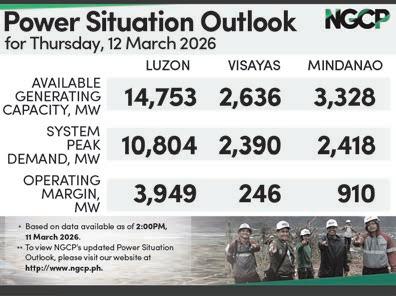

By VG Cabuag @villygc

ONGLOMERATE Metro
CPacific Investments Corp. (MPIC) on Wednesday said its core net income last year went up by 15 percent to P27.1 billion from the P23.6 billion it posted in 2024.
The company attributed this to the robust growth in Manila Electric Co.’s power generation business, the implementation of higher tariffs at Maynilad Water Services Inc.’s and rising patient volumes across the Metro Pacific Hospitals network.
Reported net income grew at a slower pace at 5 percent as the prior year included a one-time gain from a subsidiary, which tempered yearon-year comparisons despite strong underlying performance, MPIC said.
“Our results in 2025 reflect the steady demand for reliable infrastructure and the consistent work of our teams across the group. Power, water, mobility and healthcare are essential services, and our focus has always been on improving how we deliver them to the communities we serve,” MPIC Chairman, President and CEO Manuel V. Pangilinan said.
“The global environment remains uncertain, with ongoing geopolitical conflict in the Middle East and other external pressures affecting energy markets and investor sentiment.
“In times like this, our approach is to stay disciplined-manage our balance sheet carefully, focus on operational efficiency, and continue investing where the country needs infrastructure the most,” he said.
Among the company’s core businesses, power continued to contribute the largest share at P22.1 billion or 69 percent of net operating income. Water and toll roads contributed P7.2 billion and P6.1 billion, respectively, together totaling 42 percent of operating income.
Last November, MPIC said it is considering divesting its stake in Light Rail Manila Corp. (LRMC), the private operator of the LRT 1 system, citing persistent losses from the rail line.
“We are considering divesting from LRT 1,” Pangilinan told reporters. “We’re still losing on LRT 1 in part because of Covid. Ridership went down and it has not fully recovered.”
First Gen has 1,700 MW of generating capacity from 30 hydro, geothermal, solar and wind facilities nationwide.
The bulk of the First Gen Group’s expansion capacity will consist of power plants running on RE, such as solar, in support of government’s goal to increase RE’s share in the country’s energy mix to 35 percent by 2030 and to 50 percent by 2040.
The First Gen Group is acquiring a 33 percent stake in the pumped storage hydropower (PSH) portfolio of Prime Infrastructure Capital (Prime Infra), which covers the 600 MW Wawa PSH project in Rizal, and the 1,400MW Ahunan PSH project in Laguna—both certified by the national government as “energy projects of national significance.”
First Gen also partnered with Prime Infra through a 40-percent stake in four gas-fired power plants with a combined capacity of 2,017 MW. These gas facilities support baseload requirements and help offset the intermittency of renewable sources, thereby contributing to a more stable and secure power supply.
In addition, the First Gen Group also has a joint venture with PT DSSR Daya Mas Sakti (DSSR), a subsidiary of PT Dian Swastatika Sentosa Tbk (DSSA), to jointly develop six geothermal power projects with a combined potential of 440 MW.
DSSA is a part of Sinar Mas, one of the largest conglomerates in Indonesia. Lenie Lectura

THE Philippine Stock Exchange Inc. (PSE) marked its tenth consecutive year of participation in the Ring the Bell for Gender Equality initiative. This year, officers of the PSE, Philippine Dealing and Exchange Corp. (PDEx), Philippine Depository and Trust Corp. (PDTC), United Nations (UN), and UN Women led the bell ringing event last March 10.
The global Ring the Bell for Gender Equality program advocates gender equality and women’s empowerment in the marketplace, workplace, and community.
In his welcome message, PSE COO Roel A. Refran cited gender equality as a catalyst for enterprise growth and driver of sustainable development as among the reasons why PSE continues to support this global initiative.
“We see significant opportunities for the Philippines to champion gender equality in the region and the world. In several ways, we have begun this journey. According to a study published by the UN Sustainable Stock Exchanges Initiative just last week, the Philippines is second in Southeast Asia in terms of board seats held by women, at 22 percent. This is a two percent increase from 2023. The same study showed that we rank second globally in terms of CFO roles held by women, at 37 percent.” Refran also mentioned PSE’s partici-
pation last November 2025 in the Asia Pacific Sustainable Finance Systems Lab, under the broader Gender Action Lab of UN Women, International Finance Corporation (IFC), Sustainable Stock Exchanges Initiative (SSE), and World Federation of Exchanges (WFE). “This initiative aims to push for real and tangible action on gender equality. The
MANY people think that rising fuel cost is only the problem of those people who can afford to buy a car. The sad truth is that even if you do not own a vehicle, fuel price increases, particularly the big jumps, will affect everyone. Anyone who makes use of the public transport system, rides on a ship or a plane, buys from Shopee or Lazada, orders food from a delivery service, or anyone who eats, drinks and makes use of electricity will eventually feel the increase in prices, sooner than later.
To help the system reduce to price of fuel, the government can simply reduce the excise taxes and value-added tax it imposes of gasoline and diesel. However, this reduction is not likely to happen due to the convenient excuse that these collections are used to fund necessary infrastructure projects, needed expenditures to help the less fortunate, and these funds have already been allocated to priority departments like education, health and so on. It would seem that a solution through a reduction in taxes is unlikely. This leaves the actual users of fuel to come up with their own solutions to alleviate the rising cost of fuel. Possible measures will come in the form of reduced wastage and pilferage, improving fuel efficiency and better capacity utilization. Hopefully this reduces their cost of fuel to hold off a price increase or at the very least reduce the amount of price increase of their products and services. While reducing wastage and pilferage should have been done even during times of normal fuel prices, the urgency to do this becomes more necessary. Simple things like making sure there are no leaks in the fuel tanks and lines, avoiding contaminants, proper control procedures to record fuel deliveries and usage so there is proper accountability and no pilferage or theft. Improving fuel efficiency can be done through several ways. Keeping the vehicles, machinery and equipment within specs through proper maintenance should help. This includes keeping tire

George S. Chua
pressures inflated properly, doing the correct preventive maintenance service. It is important to educate your drivers and operators on the proper usage and most efficient operating range to achieve maximum efficiency.
The other way of ensuring fuel efficiency is by checking the quality of fuel you are using and that you are getting the correct specifications and amount from your suppliers. There are also fuel enhancers such as Eco Power Pill Carbon3, that make use existing nano technologies that improve the efficiency of fuel combustion to increase power output, reduce pollution and bring down fuel combustion by as much as 20 percent. Better capacity utilization means having a better scheduling and route planning so that the vehicles maximize their load, optimize their route plan and schedule. Even when fuel prices calm down, doing all of these enhancements will lead to reduced costs and increased profitability. It is up to you to take measures that will help alleviate the effects of rising fuel cost; you should: after all, it is your money.
The views and comments of Dr. George S. Chua are his own and not of the B usiness M irror or the Financial Executives Institute of the Philippines (Finex). The author was 2016 Finex President and a life member, 2010 to 2020 Federation of Philippine Industries President, an active entrepreneur in fintech, broadcast, media, telecommunications, and properties. Dr. Chua is a Fellow at the Institute of Corporate Directors, a Professorial Lecturer 2 at the University of the Philippines Diliman and BGC Campus and Vice Chairman of the Market Governance Board of the Philippine Dealing and Exchange Corporation. Comments may be sent to georgechuaph@yahoo.com or gschua@up.edu.ph.
PCIC eyes private firms for flood surveil tools
TBy Ada Pelonia
HE Philippine Crop Insur-
ance Corp. (PCIC) is eyeing partnerships with the private sector for flood monitoring tools to expedite claims processing.
According to PCIC President Jovy C. Bernabe, their parametric insurance uses satellite-based mapping and based on the wind speed, which covers the estimated damage on local plantations.
Satellite images, which capture the extent of agricultural damage on respective farmlands, could estimate claims in the event of crop losses. The tool was initially implemented for rice farms last year.
By Andrea San Juan
THE surge in cyber fraud cases, particularly the rise in mule accounts in the Philippines, is “very alarming`” and may even worsen due to the potential economic consequences of the ongoing war in the Middle East, according to Fintech Alliance, the country’s largest digital industry association.
According to the group’s founding chairman, “the volume or value of cyber fraud reported for 2025 would already be equivalent to the first quarter of 2026.”
“The surge in terms of cyber fraud is very alarming,” Angelito M. Villanueva said on the sidelines of the launch of the “Fraud Intelligence Data Sharing,” or “Fids,” network last Wednesday.
Villanueva added that because of economic conditions, especially with the crisis in the Middle East, people may become desperate.
Kapit sa patalim pa na parang at the end of the day, kailangan ko kumain, kailangan namin kumain ng pamilya ko,” he said during the briefing after the
By Jovee Marie N. dela Cruz @joveemarie

Mlaunch. So some would sell their account “without knowing that if caught, they will be part of the criminal” act. Villanueva raised this concern as cybercriminals are now asking consumers to sell their legitimate accounts for as low as P4,000 to as much as P10,000.
He said these are all legitimate e-KYC or “know-your-customer” accounts being sold to fraudsters. Villanueva said there are also consumers offering accounts for rent for as low as P500 to as much as P1,000.
“Imagine, these incidents are the ones that would really hurt the digital payments landscape because again, if there’s one thing amongst competitors na kung saan united kami, it’s
want to travel for work, family, or opportunity,” Marcos said.
all about having to keep that digital trust intact,” added Villanueva.
Explaining the consequence of these incidents, the Fintech group’s founding chairman said the success of the e-payments landscape is anchored on winning the trust of the public and consumers.
“If the faith of confidence of the public will be diminished because of this cyber fraud, cybercrime, cyberattacks, then the future of digitalization will be futile,” he said.
Illustrating the “magnitude of the problem,” CIBI Information Inc. Head of Products Jasmine AlansalonGonzales said the top fraud modus operandi right now in the country involves mule accounts.
“There are two types: You’re a willing victim or you’re a real victim. The willing victim is where they pay you whether for rent or for sale and they can let you use the account because they know for a fact, meaning the fraudsters, when they go to a bank and open an account, they couldn’t because they don’t have the right credentials to open a checking savings account (Casa),” Gonzales explained.
“But if they tap a person who has a legitimate account, not maybe using it actively, they just tap you and they know na may pangangailangan ka [you’re in dire strait], then they just offer the payment and to that effect, the account can be used as a gateway for money in and money out and that’s where the mule account
currently used to support tourism, education, and cultural programs.
started,” she added.
The official working for the country’s credit reporting agency pointed out that banks are having a hard time cornering fraudsters of this type because a legitimate account is being used as a channel to carry out such illicit activities.
“It’s a legit account so now it’s hard to detect who’s legit and who’s not,” Gonzales said, adding: “So that’s where banks are having a hard time really pinning down because it has to come from someone to complain ‘oh I’ve been defrauded or my account has been used.’”
CIBI and Fintech Alliance believes the Fids network could curb these nefarious activities.
According to documents provided during the launch, the network aims to gather banks and financial institutions to flag mule accounts and deter other fraudulent actions to give more teeth to the implementation of the Anti-Financial Account Scamming (Afasa) law or Republic Act 12010. Members of this network can contribute “verified” fraud information, including confirmed and suspicious activities, to a shared intelligence database. This initiative also aims to provide real-time alerts. Through this consortium, members can check new applications through the Fids network and receive alerts if the applicant information has been flagged elsewhere in the network.
nomic managers of their commitment to help bridge the funding gap once the tax is abolished.
“But that’s only for wind speed […] We’re trying to look for a good partner that would provide us with flooding data so we don’t have to go there to check.”
Bernabe said they asking the Philippine Rice Research Institute (PhilRice) if the PCIC can use the Philippine Rice Information System (PRiSM).
“If not, we have to tap the private [sector], but we need to subscribe [on their tools]. We’re still scouting for the right technology.” Bernabe also said the agency will extend the use of satellite-based mapping on corn plantations this year.
“With the parametric insurance, the payout is immediate when a typhoon hits the country. We don’t have to go to the actual place,” Bernabe recently told reporters.
THE state-run Government Service Insurance System (GSIS) announced it will soon allow government employees to borrow as much as half a million to install solar panels in their homes.
A statement issued by the GSIS last Wednesday read that it will soon launch its “Ginhawa Solar Energy Loan,” or “GSEL,” as part of its efforts to promote energy conservation amid rising global fuel prices, putting pressure on electricity costs due to the Middle East war.
“The program is a green loan initiative that promotes the use of renewable energy, helping government employees reduce their carbon footprint while lowering household electricity costs,” read the statement.
According to the GSIS, the loan will carry an annual interest rate of 5 percent and will be payable over five years in 60 equal monthly installments, with no service fee charged to borrowers.
A member who avails of the maximum P500,000 loan will pay a monthly amortization of P10,416.67, the staterun pension fund manager added. The loan also comes with a threeyear insurance protection against fire, earthquake, lightning and typhoon at no cost to the borrower once the solar panels are completely installed and reported to GSIS.
The GSIS Board of Trustees has approved P12.5 billion in funding for the loan facility and P60 million to cover insurance protection for solar installations.
Moreover, borrowers who install solar panels may also benefit from the government’s Net Metering Program, which allows households to sell excess electricity generated by their systems back to the power grid.
Interested members may apply through the GSIS Touch mobile application, where they can upload sup -
EMBERS of the House Committee on Appropriations approved last Wednesday a measure abolishing the decades-old travel tax, bringing the proposal closer to plenary deliberations while securing assurances from economic managers that programs currently funded by the levy will continue to receive government support.
The measure is anchored on House Bill 7443, authored by House Majority Leader and Ilocos Norte Rep. Ferdinand Alexander A. Marcos, which seeks to repeal the travel tax to reduce travel costs for Filipinos and remove what he described as an outdated financial burden on passengers.
“The travel tax was created in a very different economic context. Today, it has become an added cost that restricts mobility and weighs heavily on ordinary Filipinos who simply
The travel tax, imposed under Presidential Decree 1183 and by related provisions of the Tourism Act of 2009, currently generates about P8 billion annually.
Its proceeds fund several government programs, including those of the Tourism Infrastructure and Enterprise Zone Authority (TIEZA), the Commission on Higher Education (CHEd) through the Higher Education Development Fund (HEDF), and the National Commission for Culture and the Arts.
The proposal reached the Appropriations panel after the House Committee on Tourism, chaired by Romblon Rep. Eleandro Jesus F. Madrona, and the House Committee on Ways and Means, led by Marikina City Rep. Romero Federico “Miro” S. Quimbo, earlier approved a consolidated bill abolishing the tax.
However, lawmakers asked fiscal agencies to determine how the government would replace the revenues
Tplier quotations, installation contracts or official receipts if they are applying for reimbursement.
Eligible borrowers include active GSIS members with permanent, regular, or non-career status who have been in government service for at least three years.
GSIS President and General Manager Wick Veloso said the loan program provides members a practical way to cope with rising electricity prices.
“This loan allows our members to invest in solar energy for their homes and generate substantial savings on their electricity bills while paying it back over five years at a competitive interest rate,” Veloso was quoted as saying.
The financing program will run for an initial three-year period, after which GSIS will assess its performance to determine whether the program should be extended.
Alberto
Reine Juvierre S.
HE non-life insurer Oriental Assurance Corp. (OAC) was placed under receivership by the Insurance Commission (IC) to take control of its operations after determining it was facing liquidity problems.
In a notice to the public, Insurance Commissioner Reynaldo A. Regalado said the regulator has placed OAC under receivership effective March 9, 2026, and assigned lawyer John A. Apatan as interim ex-officio receiver of the company.
The IC’s order came after the regulator determined that OAC was “suffering” from liquidity problems, which resulted in continuous delay and difficulty in paying all its obligations, based on the evaluation of the current state of liquidity and solvency of the company.
The OAC may still submit a proposal for rehabilitation within the receivership period, the IC added. Consequently, the IC also is-
During the hearing, Appropriations Committee chairperson and Nueva Ecija Rep. Mikaela Angela B. Suansing said the panel supports removing the tax but wants to ensure that any funding gap will be properly addressed.
“I’m not saying that we shouldn’t fill the vacuum. I’m not saying that at all. I am very much supportive, and that’s why we’ve been working with the Department of Finance (DOF) and the Department of Budget and Management (DBM) to make sure the funding vacuum is filled,” she added.
She added that lawmakers want to ensure that replacement funding will match the actual needs of the concerned agencies.
“I just want to make sure that whichever vacuum we’re filling is the amount that the agencies really need and will utilize,” she said.
Before the panel approved the measure, Suansing reminded eco -
sued a notice of stay order to consolidate, preserve and protect the assets of the company for the benefit of the policyholders and creditors while undergoing receivership proceedings.
As such, all payments of claims to policyholders are stayed or suspended until further notice.
Legal cases and enforcement actions—whether in court or before the IC—for the enforcement of all claims are also paused. Any attempt to enforce judgments, attachments or similar legal remedies is halted.
Moreover, OAC is prohibited from selling, transferring or encumbering its assets unless it is in the ordinary course of business, or the receiver and IC approve it. Payments of existing liabilities are likewise prohibited, unless approved by the IC, except for administrative expenses.
The OAC is also directed to pay in full all approved administrative
“Before we end the discussion on this, again to the DOF and the DBM—we are able to pass this measure with the strong commitment of the DOF and the DBM to help the three agencies bridge the gap in terms of the funding vacuum,” she said.
“Please, please, please hold up your end of the bargain. Please work very hard with the three agencies to ensure that the necessary funding is supplied,” Suansing added. Representatives of the DOF and DBM assured lawmakers they would coordinate with the concerned agencies to address their funding requirements once the tax is abolished.
The Tieza maintains that the tax accounts for the bulk of the agency’s operating budget and helps fund tourism infrastructure projects across the country. The CHED’s HEDF relies heavily on travel tax collections to support scholarships, research, and institutional upgrading.
expenses incurred after the date of issuance of the stay order. Furthermore, policyholders cannot file new cases for delayed claims during the stay order to prevent unnecessary litigation expenses.
The IC said the stay order shall be temporary and may be revoked as soon as OAC becomes liquid again and has sufficient assets, properties or means to satisfy the claims of its policyholders and creditors.
The OAC did not submit its unaudited enhanced quarterly report on selected financial statistics and annual statement to the IC in 2025 and 2024. However, OAC posted a P167.173-million net income in 2023, based
By Anne Ruth Dela Cruz
NEARLY four in 10 Filipino adults are now overweight or obese, a growing public health crisis that is costing the Philippine economy nearly P1.9 trillion each year, according to a new study.
Researchers warn that if current trends continue, the number of affected adults could rise from about 29 million today to nearly 44 million by 2040. Beyond its health impact, obesity is also placing a heavy economic burden on the country. The direct medical cost of obesity in the Philippines is estimated at P551 billion annually, while productivity losses linked to the condition reach P1.17 trillion. Together with other non-medical expenses such as transportation and caregiving, the total cost is estimated at around P1.9 trillion a year, equivalent to about 7.3 percent of the country’s gross domestic product.
Multi-sectoral forum
THESE findings were presented during a multi-sectoral forum at the EDSA Shangri-La Hotel on March
9, 2026, where researchers unveiled the study “Epidemiological Burden and Cost of Obesity in the Philippines” (EpiCOb-PH). The event was organized by metaHealth Insights and Innovations Inc. in partnership with Novo Nordisk Pharmaceuticals (Philippines) Inc. and the Pharmaceutical and Healthcare Association of the Philippines.
“Obesity is no longer just a lifestyle issue. It is a major public health and economic challenge that affects millions of Filipinos,” said health economist Dr. Madeleine de Rosas-Valera, who led the study. “The health consequences and economic costs associated with obesity are substantial and will continue to grow if comprehensive prevention and treatment strategies are not implemented.”
Using national data from the National Nutrition Survey and the Expanded National Nutrition Survey covering the period from 1993 to 2023, researchers analyzed obesity trends and projected their impact through 2040.
Chronic conditions THE study estimates that by 2025,
around 29.5 million Filipino adults, or about 41 percent of the adult population, will be classified as overweight or obese based on Asia-Pacific BMI thresholds. This places millions at increased risk of chronic conditions such as diabetes, cardiovascular disease and chronic kidney disease.
Researchers also found that only about 10 percent of individuals living with obesity may remain free from related complications over their lifetime, while the majority are likely to develop at least one chronic condition associated with the disease.
The health burden is equally significant. The study estimates that obesity alone will result in 5.3 million disability-adjusted life years (DALYs) lost annually by 2025, a measure that reflects both years of life lost due to premature death and years lived with disability.
Total burden
WHEN obesity-related diseases such as diabetes and heart disease are included, the total burden rises to 13.6 million DALYs lost each year.
Without stronger interventions, the number of Filipino adults affected
could climb to 44.8 million by 2040, underscoring the urgency of stronger national action.
“Quantifying the epidemiological and economic burden of obesity allows policymakers to understand the scale of the challenge,” said Dr. John Paul Caesar R. delos Trinos, chief scientific officer of metaHealth Insights and Innovations. “Evidencebased policies and coordinated action across sectors will be critical to preventing further escalation of the disease burden in the coming decades.”
The study recommends strengthening prevention policies that promote healthier diets and physical activity, improving early risk detection, and ensuring structured care pathways for obesity management.
Experts also emphasized the importance of collaboration across sectors—including health, education, agriculture, urban planning and economic policy—to address the growing burden of obesity in the Philippines.
“Without coordinated action, this burden is expected to grow substantially in the coming decades,” the report concluded.
By Claudeth Mocon-Ciriaco Contributor
MEASLES remains one of the most contagious diseases and can cause serious complications and even death, particularly among children.
In the Bangsamoro Autonomous Region in Muslim Mindanao (BARMM), vaccination efforts were prioritized ahead of Ramadan to ensure children were protected before the holy month.
The BARMM, through the leadership of the national-level Department of Health (DOH) and regional-level Ministry of Health and support of UNICEF, World Health Organization (WHO), and other partners, achieved a 90 percent coverage under Phase 1 of the Measles-Rubella Supplemental Immunization Activity (MR-SIA) in Mindanao.
Parents, caregivers, and communities across the country, who have yet to vaccinate their children under five years old were urged to bring their child to health clinics as part of their routine vaccination, as the MR-SIA
ends, noting that every missed child increases the risk of transmission, while every vaccinated child brings the Philippines closer to ending the measles outbreak.
Nationwide drive THE DOH earlier announced that it would be implementing a nationwide MR-SIA in two phases to combat the rising cases of measles. Phase 1 in Mindanao concluded on February 20, while Phase 2 will be conducted in Luzon and Visayas in June 2026. BARMM surpassed the Mindanao wide average of 82 percent, reflecting a strong improvement in immunization performance after a total of 523,324 children were vaccinated out of 577,230 targeted children as of February 24, 2026. Although BARMM has yet to reach the 95 percent herd immunity threshold, its progress marks a significant turnaround for a region that once had one of the lowest routine immunization rates in the country. Its Ministry of Health said more children were vaccinated through strong coordination among govern -
ment agencies and active community engagement.
“Protecting children from disease is a shared responsibility. Through the leadership of BARMM government agencies and the active engagement of Muslim religious leaders, partners and the whole community, we are helping families understand that vaccination safeguards both individual children and the wider community,” said Dr. Kadil M. Sinolinding, Jr., BARMM Minister of Health.
Full support
THE MR-SIA was also supported by the region’s Chief Minister and the Bangsamoro Darul Ifta, the region’s highest religious authority, providing guidance on matters of Islamic law, jurisprudence, and religious practices.
“Immunization is not optional. It is every child’s right and one of the most effective public health interventions to save lives. While vaccination rate reflects immunization performance in the region, sustained efforts are still needed to reach every child. We remain committed to supporting BARMM and the rest of the Philippines to ensure
that every child, especially those in vulnerable and hard-to-reach communities, is protected against preventable diseases,” said Kyungsun Kim, UNICEF Philippines.
UNICEF has supported the immunization program in the Philippines for decades, working alongside the DOH and the BARMM Ministry of Health.
As part of these efforts, UNICEF supports trainings on basic immunization, cold chain management, and Interpersonal Communication for Immunization, and provides vaccine equipment and mobilization assistance to help health workers address vaccine hesitancy and strengthen community demand for vaccination.
One million doses of UNICEF-donated measles-rubella vaccine doses, which arrived mid-February, will help sustain Phase 2 activities in Luzon and Visayas scheduled in June to expand protection for children who may have missed routine immunization.
UNICEF reiterated that every missed child increases the risk of transmission, while every vaccinated child brings the Philippines closer to ending the measles outbreak.
By Rizal Raoul S. Reyes Contributor
I N response to the worsening health situation caused by tobacco and related products, public health groups recently urged the government to impose an outright ban on e-cigarettes, heated tobacco products (HTPs), and other nicotine delivery products, stressing their health harms and increasing accessibility, particularly to the youth. The directive was made after Myanmar officially became the eighth ASEAN country to implement a vape ban, and amid current deliberations in the Philippine Congress regarding tobacco and vape taxes.
“While our legislators are still debating tax rates for vapes and other nicotine delivery products, Myanmar has joined seven other ASEAN countries in implementing a total vape ban. While we support calls for higher and uniform taxes for all tobacco products as a step towards restricting these products, we also stand firm in pushing for a comprehensive ban. Such a measure will provide the strongest protection for public health and ensure administrative and regulatory clarity,” said Dr. Jaime Galvez Tan, Board Member of HealthJustice and former Health Secretary. Rapid proliferation SOUTHEAST Asia is confronting a rapid
proliferation of vape products, particularly among the youth. In response, eight ASEA member states, with Myanmar as the latest, have already implemented vape bans.
Galvez Tan emphasized that the Philippines can follow the lead of the former British colony in curbing the vape menace.
“We commend Myanmar for showing that our region is taking steps to combat the growing ‘vapedemic.’ If Myanmar, Brunei, Cambodia, Lao PDR, Singapore, Thailand, Timor Leste, and Vietnam have already implemented a comprehensive vape ban, the Philippines can too. This is the ideal step our government must undertake to prevent illnesses and deaths related to tobacco or vape use,” Galvez Tan added. According to the data from the Institute for Global Tobacco Control, in 2019 and 2021, about 14 percent (1.21 million) of the Filipino youth and two percent (1.63 million) of adults use e-cigarettes. Alarmingly, 70 percent of surveyed youth believe e-cigarettes are less harmful than conventional cigarettes, while nearly 51 percent reported using e-cigarettes to reduce or quit smoking.
First death IN 2024, the Philippines recorded its first death linked to E-cigarette or Vaping UseAssociated Lung Injury (EVALI), that of a 22-year-old male with no prior smoking history but with two years of consistent vape use.
“E-cigarettes are falsely marketed as harm-reduction and smoking cessation tools. In reality, e-cigarette liquids and aerosols are toxic. Nicotine can raise blood pressure and heart rate, suppress the immune response, and promote cancer development, increasing the risk of cardiovascular diseases and cancer. Propylene glycol, vegetable glycerin, and flavorings, when inhaled, irritate the airways and damage lung tissue, causing chronic respiratory diseases,” said Dr. Ulysses Dorotheo, Executive Director of Southeast Asia Tobacco Control Alliance (SEATCA).
The Philippines is a party to the WHO Framework Convention on Tobacco Control (WHO FCTC) which encourages parties to adopt stricter measures beyond the treaty’s obligations, which the groups emphasize include a total ban.
“Higher taxes on harmful products can discourage consumption but if we truly want to protect public health, a total ban is the strongest measure the government can take to stop this worsening tobacco and vape epidemic,” he added.
Total ban
BY imposing a total ban, the groups stressed that it will also avoid tax administration challenges raised by government agencies, and efforts can be focused on countering illicit trade. In 2025, the Department of Health
Cebu Provincial Hospital opens first interventional pain clinic in the Visayas
By Carmel Pedroza Contributor
CEBU CITY—The Cebu Provincial Government has launched the first Interventional Pain Clinic in Cebu and the Visayas at Cebu Provincial Hospital–Balamban (CPH-Balamban), expanding specialized treatment options for patients suffering from chronic and cancer-related pain.
The clinic offers advanced interventional pain management services, including minimally invasive procedures designed to reduce or interrupt pain signals. Among the key procedures available is Radiofrequency (RF) Ablation, a technique that targets specific pain-transmitting nerves to provide longer-term relief.
Dr. Elisse Nicole Catalan, consultant for health of the Cebu Provincial Government, said the opening of the clinic represents a significant step forward in improving access to specialized healthcare for Cebuanos.
“The establishment of the Interventional Pain Clinic at CPH-Balamban marks a milestone in strengthening healthcare services in Cebu. This allows patients suffering from chronic and cancer-related pain to access advanced, minimally invasive treatment options closer to home,” Catalan said.
Quality of life
SHE added that effective pain management can greatly improve the quality of life of patients who have long struggled with debilitating conditions.
“For many patients living with chronic
pain, these interventions can mean regaining mobility, dignity, and a better quality of life,” she said. The clinic’s establishment was also inspired by a personal experience within the hospital leadership.
The service was made possible through the initiative of pain specialist Dr. Kirby Ardiente, with the support of CPH-Balamban Chief of Hospital Dr. Olivia Dandan.
When Ardiente returned to Cebu after completing his training, his first pain management patient at CPH-Balamban was Dandan’s mother, who was then in the final stage of her life. At the time, the hospital faced challenges including limited resources and medicine shortages.
DESPITE these difficulties, the medical team was able to help ease her suffering and provide comfort during her final days through pain management interventions.
Catalan said the experience underscored the importance of accessible pain management services, eventually leading to the creation of a dedicated interventional pain clinic at the hospital.
She added that the facility is expected to benefit patients from Cebu and neighboring provinces who require specialized treatment for chronic and cancer-related pain.
Catalan also commended Ardiente, Dandan, and the CPH-Balamban medical team for making the new service possible.
“This initiative shows how small beginnings can lead to meaningful impact for the people of Cebu,” she said.
Ear acupuncture offers relief from stress, emotional distress
By Maridol Ranoa-Bismark Contributor
THE ear is one of the body’s most overlooked organs. Depending on your genes, the lobes curl inward, outward, or stand straight on either side of your head.
The outer ear’s circles and semi-circles are irregular, even haphazard.
But don’t be fooled. The ears do more t han control hearing and balance. They are also a mini wellness powerhouse that may help reduce addictions, stress, anxiety, fear, phobias and other emotional disturbances.
Dr. Romeo P. Balderrama Jr., president of National Acupuncture Detoxification Association (NADA) Philippines, says the NADA protocol, or ear acupuncture, helps fight stress by targeting five specific points in the ear.
The sympathetic point regulates the nervous system to calm the body and prevent stress. It reins in the fight-or-flight hormone cortisol, which surges when danger strikes. The Shen Men point, or Spirit Gate, located in the ear’s upper shell, addresses the mind or psyche.
The kidney point at the back of the ear boosts the function of this organ, which filters toxic wastes from food and drink.

the procedure seeks to balance. When done properly, however, acupuncture relaxes the patient. Some even fall asleep.
Balderrama recalls seeing patients snore peacefully in the middle of a crowded provincial outreach activity.
Needles vs. ear beads
(DOH) already called for a nationwide total ban on vape products, citing its link to cardiovascular disease, cancer, and other lung illnesses.
“The DOH agrees with an e-cigarette ban. As the country’s foremost health authority, its recommendations must guide national health policies and translate into concrete action to stop the growing ‘vapedemic,’ following the lead of fellow ASEAN member states that have already banned e-cigarettes. Governments should maximize this opportunity to avoid repeating the historical mistake made with conventional cigarettes. In doing so, it can reaffirm our country’s leadership in global tobacco control and uphold its obligations as a committed Party to the WHO FCTC,” Dorotheo concluded.
Meanwhile, the Child Rights Network (CRN) Philippines pointed out that in the current tobacco tax debates, the tobacco industry is falsely linking widespread smuggling to the high cost of cigarettes. It said the narrative is meant to weaken tobacco taxes that are proven to prevent children and young people from starting to smoke.
“Let us be clear: smuggling is driven by weak enforcement of laws and policies, not by higher taxes,” CRN said.
“The industry’s argument is simply its attempt to legitimize products that kill thousands of Filipinos every year,” it added.
The fourth acupuncture point targets the liver, which detoxifies alcohol, drugs and other harmful substances. Finally, there is the lung point near the ear canal opening, which supports breathing. This vital organ also shields the body daily from pollution.
Caveats
“OUR ears carry imprints a fetus leaves behind after mitosis, or cell division,” Balderrama, a Philippine Board of Anesthesiology diplomate and Acupuncture Detoxification Specialist (ADS), explained. Because of this, the ear is sometimes called a homunculus, or “little person.” ADS practitioners carefully insert tiny, sterile needles into specific points in the ear and observe the patient’s response. If the patient complains of stomach issues, rapid heartbeat, dizziness or weakness during the 20 to 30 minutes the needles remain in place, the practitioner may have to remove them. Patients are also advised to use the restroom before an acupuncture session. Balderrama notes that walking during treatment is prohibited because the needles might fall off or, worse, pierce and injure the patient.
Undergoing acupuncture while hungry, intoxicated, sleep-deprived, or after overeating is also discouraged. These conditions may negate the benefits of ear acupuncture and disrupt the body’s energy, or qi, which
SINCE ear acupuncture was introduced in the Philippines in 2010, NADA has treated thousands of drug dependents, EJK (extrajudicial killing) victims, and others suffering from PTSD (post-traumatic stress disorder), including survivors of Typhoon Yolanda, the Marawi siege, and the Taal Volcano eruption.
“We get parental consent to treat children,” Balderrama adds. Many children cry or cringe at the sight of needles, making parental cooperation essential. In such cases, Balderrama and his colleagues use ear beads or ear seeds instead. These small stainless steel or magnetic beads are secured with adhesive tape on specific ear points to help relieve stress, pain and anxiety.
Ear beads or seeds are not sharp and are generally safer. Patients simply massage them gently from time to time to activate their effect. They do not need to remove them while showering or sleeping.
Patients can go home wearing the ear beads, and there is no risk of overdose. Treatments may be repeated as needed.
Which works better—acupuncture needles or ear beads?
“NEEDLES are better. They go straight to the acupuncture point,” Balderrama said. He also warns untrained individuals against using disposable needles or ear beads/seeds that are widely available online. Acupuncture is a medical procedure that should not be attempted without proper training.
AT the 62nd Munich Security Conference (MSC), Secretary of Foreign Affairs (SFA) Ma. Theresa P. Lazaro emphasized the importance of a rules-based order governed by international law for a secure and stable maritime domain.
The SFA was a lead discussant in the MSC’s roundtable discussion “All Hands on Deck: Upholding Maritime Security in the Indo-Pacific. An Update on Safeguarding Domestic Waters and Securing Global Trade,” organized by the Deutsche Gesellschaft für Internationale Zusammenarbeit (GIZ) GmbH
Lazaro emphasized that regional tensions and disregard for established norms directly impact freedom of navigation and international trade. She called for full respect of international law, which remains the strongest stabilizing force.
The secretary also stated that the Philippines—as Asean Chair in 2026—has placed maritime secu -

Arity at the forefront of its regional agenda. She provided updates on the progress toward an AseanChina Code of Conduct on the South China Sea, which the region’s member states are endeavoring to conclude in 2026, as its foreign ministers had mandated.
Lazaro conveyed pragmatic optimism, as she cited the increased frequency of meetings with monthly face-to-face negotiations at the technical level.
The SFA added that the United Nations Convention on the Law of the Sea, or UNCLOS, provides the comprehensive framework that governs maritime entitlements, navigational rights, marine resources, and peaceful dispute settlement, and that the 2016 South China Sea Arbitral Award reaffirmed these entitlements.
Other panelists and participants
echoed the secretary’s points during the discussion.
On the conference’s sidelines, Lazaro also conducted a series of bilateral meetings with foreign ministers and other high-level officials. In each, she reiterated the Philippines’ principled position on the rule of law, an international rulesbased order, and the importance of multilateralism.
Lazaro was among the conference’s 68 participating foreign ministers, where they tackled the most relevant and consequential security issues of our time. Her engagements at the premier international security forum also included bilateral meetings with over a dozen of her counterparts, an interview with German broadcaster Deutsche Welle, and as a speaker in two specially organized events on maritime security cooperation.
EU offers ₧125-million grant to help Filipino MSMEs ‘go green’
By Malou Talosig-Bartolome
Thas a great return on investment will inspire other MSMEs to embrace the green transition.”

MBASSADOR Kazuya Endo attended the handover ceremony for coastal radar systems with Defense Secretary Gilberto C. Teodoro Jr. on February 11. During former prime minister Fumio Kishida’s official visit in November 2023, Japan and the Philippines signed and exchanged notes for ¥600 million in official security assistance (OSA) for the provision of coastal radar systems to the Philippine Navy, marking the first-ever project of its kind. The ceremony followed the recent arrival of the radar systems in the country. In his remarks, Ambassador Endo highlighted that the systems are expected to enhance Philippine coastal surveillance and maritime domain awareness capabilities, contributing to stability in the Indo-Pacific region, as he also welcomed the steady deepening of security cooperation between the two countries. On the other hand, Teodoro ex-
pressed his gratitude for Japan’s support in modernizing the Armed Forces of the Philippines, and emphasized his commitment to continue close coordination with Japan in the security field. According to the Embassy of Japan, OSA is a grant aid cooperation framework which provides equipment and supplies, as well as assistance for the development of infrastructures to the armed forces and other related organizations of recipient countries. By enhancing their security and deterrence capabilities, the assistance aims to strengthen Japan’s security cooperation with the recipient countries, create a desirable security environment for the East Asian nation, and contribute to maintaining and strengthening international peace and security.
MARKING the month internationally devoted to women, Instituto Cervantes de Manila will hold a new edition of “Espacio femenino”—a yearly showcase dedicated to cinema made by and about women.
Curated by the platform Filmtopia, the 2026 program focuses on adolescence as “a territory of transformation, uncertainty, and identity formation.” Through four films from Spain and Latin America, the series explores the emotional intensity, contradictions, and discoveries that mark the passage from childhood to adulthood. Historically, adolescence has occupied a powerful space in cinema—a moment of rupture, excess, and beginnings. The film series approaches this stage of life from distinctly female and diverse perspectives, steering away from traditional clichés that reduce youth to simple tales of romance, rebellion, or trauma.
Within the movies, adolescence becomes a space of identity-making, desire, and negotiation with the norms imposed by the adult world. The selected films reflect vulnerability and instinctive strength, capturing in-between moments when bodies change, social pressures intensify, and the world seems ready to be confronted. Through intimate, nuanced portrayals, the program highlights stories of growth, resistance, and the constant reshaping of the self—stories that echo the ever-shifting nature of adolescence itself.
The series continues this March with the following films:
“L’edat imminent” (Spain, 2024, 74 minutes, directed by Colectivo Vigilia, languages: Catalan and Spanish, suitable for all audiences) on March 17 at 2 p.m. This tender and precise portrait explores the bond between a grandmother and her teenage grandson during a decisive rite-of-passage moment.
As Bruno juggles work, youth, and the responsibility of caring for his grandmother Nati, he must face the emotional challenge of letting go when she is finally granted a place in a public care home.
Interested viewers may reserve seats via https://forms.office.com/e/ AXenS5q14e.
“Tengo sueños eléctricos” (Costa Rica/France/Belgium, 2022, 103 mins., directed by Valentina Maurel, languages: Spanish and English, not recommended for children under 16) on March 24, also at 2 p.m.
Maurel’s acclaimed first feature depicts adolescence as a storm of forbidden desires, emotional rupture, and simmering rage. Eva, caught between her parents after their divorce, follows her father—himself trapped in a kind of second adolescence—as she tries to find her own voice, her artistic ambition, and a way to navigate the anger she has unknowingly inherited.
Those interested may reserve seats through https://forms.office.com/e/ Z4vwC2BTZN.
The film series is presented by the

HE European Union is inviting project proposals to help micro, small, and medium enterprises (MSMEs) transition to eco-friendly practices through a new P125-million grant under the EU–Philippine Green Economy Partnership.
The “Green Up to Scale Up: MSME Transformation Grant” will provide €1.8 million (P125 million) in financial assistance and technical support to MSMEs adopting circular business models.
The program is part of the EU’s €60 million (P3.67 billion) partnership with the Philippines to accelerate the country’s shift toward a greener economy.
Managed by Expertise France in collaboration with the Department of Trade and Industry, the grant will target priority industries—including agriculture and fisheries, tourism and hospitality, food, and textiles. Projects are expected to reduce organic, plastic, and textile waste while boosting economic and climate resilience. Driving circular transformation
“THE EU supports the green transition as part of its mission to build stronger economic linkages between the EU and the Philippines,” said Ambassador Massimo Santoro of the EU. “Showing that the circular economy
Trade Secretary Cristina A. Roque added that “the Philippines’ transition to an inclusive green economy can only happen if we provide an enabling business environment for MSMEs to thrive by adopting circular practices.”
These sectors generate significant organic, plastic, and textile waste and have strong potential for circular economy practices. MSMEs operating in or connected to these industries can benefit directly or indirectly from the EU grant: Farmers and fisherfolk cooperatives: adopting sustainable production, waste reduction, and ecofriendly packaging; Tourism operators, hotels, and homestays: integrating green practices like energy efficiency, waste segregation, and eco-tourism services; Food processors and restaurants: reducing food waste, shifting to composting, and using recyclable packaging; Textile and garment producers: recycling fabrics, adopting sustainable materials, and minimizing production waste.
The deadline for applications is on April 21, 2026. Guidelines and registration forms are available at: https://bit.ly/GreenUpToScaleUpMSMETransformation.
Phil. Embassy in Colombia presents key priorities of 2026 Asean Chairship

THE Philippine Embassy in Colombia hosted a briefing with the host country’s Ministry of Foreign Affairs, representatives of Asean Dialogue Partners with resident missions in Bogota, and Indonesia—the only other Asean member state with a diplomatic presence in the South American country.
The briefing highlighted the Philippines’ Asean Chairship priorities, deliverables and key outcome documents in each of the three pillars of the Asean Community, and high-level Asean meetings to be hosted by the Philippines throughout the year.
Ambassador Adrian Bernie Candolada emphasized the significance
of continued dialogues among Asean and its external partners to enable greater strides in regional cooperation. At the question-and-answer portion following the presentation, the participants expressed their renewed interest in finding ways to enhance cooperation with Colombia and the wider Latin American region. Aside from Colombia, the briefing was also attended by the respective Ambassadors of Russia, Australia, and Indonesia; the Deputy Chiefs of Mission of the Embassies of Canada, the United Kingdom, and New Zealand; as well as the Political Officers of India, the Republic of Korea, and the United States.
Lenovo has partnered with Asian Hospital and Medical Center to enhance clinical efficiency and accelerate the hospital’s digital transformation by standardizing endpoint devices across the institution. As part of the Metro Pacific Hospital (MPH) Group, which operates nearly 30 hospitals nationwide, Asian Hospital has been at the forefront of MPH’s initiative to unify and modernize PC infrastructure across its network.
Asian Hospital, a premier tertiary institution located in the southern part of Metro Manila, is recognized as one of the group’s largest and most advanced facilities. Leading this effort is Frank N. Vibar, Chief Information Officer (CIO), who oversees hospital information systems (HIS), electronic medical records (EMR), network and data center infrastructure, and all enduser computing devices.
“Our mandate is not just to digitize,” says Vibar. “Our mandate is to ensure that every piece of technology we deploy ultimately makes it easier for our clinicians to deliver safe, efficient, and high-quality patient care.”
Prior to standardizing with Lenovo, Asian Hospital was using a wide mix of devices from multiple brands, resulting in inconsistencies in performance and reliability. Slowdowns, crashes, and unexpected shutdowns frequently disrupted clinical workflows, including medical record access and documentation. Device-related concerns were averaging over 200 support calls per month, often requiring urgent interventions from IT staff to keep care activities running.
“In a hospital context, a failing laptop is not just an inconvenience— it has a direct impact on patient care,” explains Vibar. “If a doctor is recording diagnoses or reviewing patient data and the device slows down or crashes, it disrupts the entire care process

EMPERADOR, Inc. is seeing strong validation of its premiumization growth strategy, with Fundador emerging as a central driver in the rapid expansion of imported spirits in the Philippine liquor market.
When Emperador acquired Fundador several years ago, imported spirits accounted for only a small share of the overall category. Today, that segment has grown to represent more than ten percent of total spirits, reflecting a structural shift in consumer behavior toward more premium offerings. Industry outlooks continue to point to sustained double-digit growth in the coming years, highlighting a long runway ahead for the segment. Fundador has been at the forefront of this expansion, delivering double-digit growth over the past three years. This momentum has further accelerated with the introduction of Fundador Super Special, which has broadened the brand’s reach and deepened engagement with a younger, more

and creates frustration for both clinician and patient.”
This environment prompted Asian Hospital to seek a partner capable of delivering predictable, stable, and reliable end-user devices designed to support lifecritical healthcare operations.
Asian Hospital selected Lenovo for its strong reputation for reliability, enterprisegrade support, and robust product development.
“We needed a partner that could provide stability, consistency, and reliability—both in the devices themselves and in the support behind them,” says Vibar. “Lenovo gave us confidence that we could standardize without sacrificing performance or availability.”
Through close coordination, Lenovo and Asian Hospital aligned device categories to specific user workflows—for finance, HR, mobile users, nurse stations, ER units, and clinical areas requiring barcode-scanning for closed-loop medication workflows.
“We know our workflow and Lenovo knows its products,” Vibar shares.
“By collaborating on user profiles and device types, we were able to match our requirements with the right endpoints and ensure that every device deployed delivers real value to the user.”
The transition to Lenovo devices has produced measurable improvements across Asian Hospital. As legacy devices were replaced with Lenovo units, monthly incident reports dropped from over 200 tickets to almost zero in Lenovo-equipped areas.
“As we gradually replaced legacy devices with Lenovo, complaints about performance and breakdowns from our doctors and nurses went from over 200 tickets a month to almost zero,” says Vibar. “That translates directly into smoother access to our hospital information system and electronic medical records, and ultimately, better continuity of patient care.”
The hospital also observed dramatically improved system performance, as doctors and nurses reported faster workflows and more stable access to HIS and EMR systems.
With endpoint issues nearly eliminated and more efficient IT operations, IT staff are now able to focus on upskilling in cybersecurity, networking, data analytics and AI integration.
Additionally, with expanded availability of devices in critical areas, workflow analyses led to the deployment of additional Lenovo units in high-demand areas such as the Emergency Room. Signifying strong clinician satisfaction, users in Lenovo-enabled areas are now proactively requesting replacement of older units, signaling clear preference and confidence in the new standardized devices.
As part of the MPH Group, Asian Hospital is pursuing its vision of becoming a flagship smart hospital both within the organization and across the Philippine healthcare sector.
“Asian Hospital aims to be a flagship smart hospital for our group and for the Philippines,” Vibar affirms. “We want to keep Filipino patients from having to go abroad for care, and at the same time attract patients from other countries.”
With Lenovo as a long-term strategic partner, the hospital is ready to pilot new healthcare use cases, technologies, and innovations proven in hospitals abroad.
“If Lenovo has hospital use cases that are already tried and tested elsewhere, bring them here and we will help test them,” says Vibar. “If we see that a technology can improve healthcare delivery and patient care, we are ready to adopt it.”
Asian Hospital’s partnership with Lenovo underscores its commitment to advancing digital healthcare and delivering reliable, patient-centered services supported by smart, standardized technology.
PAGCOR rolls out ‘P1K-for-P2M’ nationwide linked bingo event
THE Philippine Amusement and Gaming Corporation (PAGCOR) is bringing back its popular nationwide linked bingo event on March 29, 2026, offering a total of ₱2.9 million in tax-free prizes to bingo enthusiasts.
The ₱1K for P2M Nationwide Linked Bingo Games will be hosted by Casino Filipino Angeles and will be played simultaneously at participating Casino Filipino sites in Bacolod, Cebu, Fuente, Grand Regal, Ilocos Norte, Iloilo, Mactan, Olongapo and Tagaytay, linking players from Luzon to Mindanao in one exciting event.
For just P1,000 per ticket, participants will receive four bingo cards per game,
aspirational consumer base. In 2025, imported brandy has emerged as the fastest-growing segment in the liquor industry, with Fundador Super Special driving growth within the imported category.
This performance reflects a broader premiumization dynamic unfolding across the market. Among major spirits segments, brandy stands out as the clearest pathway for consumers trading up. As drinkers seek better quality, improved taste, and more premium experiences, imported brandy has naturally become the destination. Emperador’s portfolio, led by Fundador, is strategically positioned to benefit from this shift. Fundador Super Special plays a critical role in this evolution. Positioned as attainable luxury, it combines premium packaging, a smooth and enjoyable taste profile, and strong contemporary appeal. It resonates particularly well with younger millennials and older Gen Z consumers who are entering higher-value
Explore new trails with the Suzuki DR-Z series, now in the Philippines
SUZUKI Philippines welcomes the summer season with the arrival of the most anticipated all-new DR-Z4S and DR-Z4SM. After generating excitement among global and local riders since their international debut, the newest generation of Suzuki’s dual-sport and supermoto machines is now available in the Philippine market. The DR-Z Series comes in a range of striking color options with pricing set at ₱589,000 for both variants.
The DR-Z4S and DR-Z4SM represent the latest evolution of Suzuki’s celebrated DR-Z lineage, built on 25 years of trusted performance and engineering excellence. Inspired by the enduring legacy of the DR-Z400S launched in 2000 and the street-ready DRZ400SM introduced in 2005, these next-generation models bring modern power, refined control and upgraded agility to meet the demands of today’s diverse riding styles. Both motorcycles were developed to elevate Suzuki’s tradition of rugged durability while integrating advanced features that suit riders who want both adventure and everyday usability.
Designed for riders who crave off-road versatility, the DR-Z4S features a newly engineered pipesteel twin-spar frame that improves stability and responsiveness on challenging terrain. Paired with IRC dualpurpose tires, the bike delivers confident traction whether navigating trails or cruising on paved roads.
Its upright riding position and optimized chassis geometry also offer enhanced comfort and control, especially on long-distance rides and technical routes.
Meanwhile, the DR-Z4SM brings the excitement of supermoto performance to the streets. Equipped with 17-inch wheels and IRC street tires, it promises sharp cornering ability, strong grip and impressive precision perfect for city riding and track-style handling. With its street-tuned dynamics and agile design, the DR-Z4SM is ideal for riders who want a high-energy motorcycle that thrives in urban environments.
Both variants are equipped with the Suzuki Intelligent Ride System (S.I.R.S.), integrating

advanced technology features such as the Suzuki Drive Mode Selector (SDMS) and Suzuki Traction Control System (STCS), which includes a Gravel mode for off-road riding. The Ride-by-Wire electronic throttle system ensures smooth and responsive acceleration. Additional safety and convenience features include front and rear disc brakes with switchable ABS, LED projector headlight for improved visibility and modern bodywork that showcases their aggressive, updated styling. The DR-Z4S is available in the iconic Champion Yellow color as well as Solid Iron Gray while the DRZ4SM comes in Solid White and Sky Gray. With their official arrival this summer season, the DR-Z4S and DRZ4SM mark another milestone for Suzuki Philippines as the brand continues to bring world-class motorcycles to Filipino riders. Ready for adventure, built for performance and crafted for everyday thrill, the DR-Z Series reflects Suzuki’s commitment to deliver machines that support every rider’s journey; proof that wherever your path leads, Suzuki is there to power your next ride – always, By Your Side.
fever relief for kids, gentle even on an empty stomach

In moments that call for extra care, Paracetamol (Tempra) helps parents give fever relief with ease and confidence.
MOST have heard this time and time again from their mothers, aunts, or grandmothers - that you shouldn’t drink medicine on an empty stomach. This is true for certain medicines such as Aspirin, but is it not for Paracetamol?
In a 1976 study, gastroenterologists
valid for 10 action-packed games.
The first nine games each carry a P100,000 prize, while the 10th and final round offers a guaranteed P2 million “must-go” jackpot prize.
The linked bingo series is part of PAGCOR’s continuing push to deliver thrilling yet responsibly managed gaming experiences, while making bingo more accessible and rewarding for players nationwide.
Interested players may call 0906-5741935, 0927-804-0304, or 0917-843-0970 for details.
For more information, visit www. casinofilipino.ph or follow the official Casino Filipino Facebook page.
consumption stages and actively seeking brands that reflect progress and aspiration.
The recently concluded Fundador Super Special Promo further reinforced this trajectory. Designed as a large-scale nationwide campaign, it generated strong consumer participation and awarded multiple Tesla Model Y units and a significant pool of hybrid motorcycles across the country.
Beyond participation, the campaign achieved broad market visibility across digital platforms, onground activations, and key out-of-home placements, contributing to heightened consumer interest during a critical growth period. Notably, retail partners responded with expanded displays and enhanced merchandising executions across key accounts, reflecting the strong sell-through performance and increasing demand for Fundador Super Special at the store level. Rather than serving as a standalone sales driver,
K.J Ivey and P. Setree concluded that while Aspirin did in fact have a negative effect on the stomach, Paracetamol did not. Paracetamol acts this way because unlike other painkillers that may irritate the stomach, Paracetamol is absorbed rapidly by our bodies and it generally doesn’t cause stomach problems.
This important difference explains why Paracetamol is well tolerated and often recommended for children. It’s gentle enough to be taken even without food intake, making it a safe and effective option for fever relief even when your child has little or no appetite. In addition, when taking Paracetamol, it is important that a parent or a caregiver should know the dosing and frequency of giving the drug. For dosing, most medication boxes have a guide for the dose to be given based on age or body weight
the campaign functioned as a catalyst within a category that is structurally expanding. The alignment between consumer pull and retail execution underscores that growth in imported brandy is being driven by deeper premiumization trends rather than short-term promotional mechanics.
“When we acquired Fundador, we did so with a clear view of where consumer preferences were headed,” said Winston Co, Chairman of Emperador, Inc. “What we are seeing today confirms that direction. Imported spirits are gaining meaningful share, brandy is emerging as the natural premium pathway, and Fundador is well positioned at the center of that growth. With Fundador Super Special accelerating momentum, we believe this is still the early stage of a much larger opportunity.”
As imported brandy continues to gain share and premiumization accelerates, Emperador’s investment in Fundador is proving to be a decisive move. With Fundador Super Special further strengthening the brand’s growth trajectory, the company is increasingly well positioned to lead the next phase of expansion in the evolving liquor landscape.
of the child. Same goes for frequency. It’s recommended to take Paracetamol only every four to six hours.
Other factors also include being aware of other medications that the child is currently taking, as some medications may also contain Paracetamol which can potentially result in overdosing if undetected. Understanding when and how much Paracetamol to give a child is also the key for effective pain and discomfort management.
With these considerations in mind, it becomes clear why parents trust Paracetamol (Tempra), a reliable fever-relief solution with its 100 percent dissolved Paracetamol No Shake Formula, for consistent dosing every time it is taken. It’s also Mabait sa Tummy, gentle enough that it can be taken even on an empty stomach, providing comfort and relief when children need it most.
Still, responsible care goes hand in hand with professional guidance. As with everything, when in doubt or if symptoms persist, consult a healthcare professional. If a child’s fever lasts for three days or more despite medication, it is important to seek medical advice, as the fever may be a sign of a more serious illness.
Every parent wants the best for their child, and being extra careful is part of loving and protecting our little ones. To take your care a step further, staying informed with the latest studies and expert guidance helps you make confident decisions, such as choosing Paracetamol (Tempra) Mabait sa Tummy and ok to take on empty stomach, for a gentle and reliable fever relief during your child’s vulnerable times.


GH Mall celebartes Women’s Month with ‘Her Power, Her Moment’


POPULAR leisure destination GH Mall spotlights its month-long celebration of Women’s Month with Her Power, Her Moment. Designed to honor the multifaceted lives of women, this series of events blends wellness, artistic expression, and insightful masterclasses to create a space where every woman can reflect, recharge and shine. Experience an immersive journey featuring everything from art therapy and high-energy fitness to beauty workshops and a grand fashion show. More information on Her Power, Her Moment activities at GH Mall can be found via the Ortigas Malls app, Ortigas Malls on Facebook, or @greenhillsph on Instagram.

HOKA celebrates Women’s Month with 2026 FCC Women’s Run PH
THIS International Women’s Day, strength meets speed. Women runners laced up for the 2026 FCC Women’s Run PH on March 8 at SM Mall of Asia, where a total of 16,120 participants joined the soldout event, making it one of the most anticipated gatherings celebrating women’s strength, resilience and achievement.
With race categories spanning 16K, 10K, 5K, and 1K (Kids), the Women’s Run continued to serve as a powerful platform for empowerment, uniting women, companies, and brands that champion progress and equality.
Timed with this significant celebration, HOKA stepped forward as the Official Shoe Partner and unveiled the Mach 7, designed for runners chasing faster goals and stronger finishes.
The Mach 7 is a snappy, lightweight trainer created for women who are ready to push the pace and pursue bigger goals. A tried-and-true silhouette refined with speed-focused design details throughout, it delivers light-on-your-feet cushioning powered by high-energy foam for a responsive ride. Engineered for both performance and comfort, the shoe features a creel jacquard upper with zonal breathability and an internal gusset that provides a secure, locked-in fit.
To learn more about HOKA and stay updated on upcoming activities, follow the official accounts on Facebook (hokaphilippines), Instagram (@hoka_ philippines), or join HOKA’s Viber community.



to family life. Parenting today can sometimes feel like a constant race to keep up: with school expectations, social comparisons, and endless advice online. But parenting well is not about doing more. It’s about seeing our children more clearly. One of the most important shifts parents—and educators—can make is to see a child’s learning beyond the four walls
In classrooms and homes alike, some of the most common concerns adults express about children include lack of focus, difficulty following instructions, short attention spans, impulsive behavior, or challenges completing tasks. These issues often show up as what adults label “behavior problems.”
A child may appear lazy. Another may seem disobedient. Someone else may be described as distracted, or careless. But what if the behavior we see is not the real problem?
Over the years, researchers and learning specialists have increasingly recognized that many behavioral challenges may actually stem from underlying cognitive skill weaknesses. Skills such as attention, working memory, processing speed, and executive function all play a role in how a child listens, follows instructions, organizes work, regulates emotions, and completes tasks. When these cognitive skills are underdeveloped, children may struggle in ways that are often misunderstood.
For example, a student who doesn’t follow multistep instructions may not be refusing to cooperate. The child may have difficulty holding several pieces of information in working memory. A child who appears disengaged during lessons may be experiencing
cognitive overload rather than boredom. The key question then becomes: How do we discern the difference?
This is where educators—and parents— benefit from learning to “unpack” behavior more thoughtfully. Instead of immediately concluding that a child is being lazy, we can begin asking deeper questions.
For example, a teacher who notices students struggling with long verbal instructions may break directions into shorter steps and check for understanding. A child who has difficulty staying focused during extended seatwork may benefit from shorter work intervals with movement breaks. Students who struggle with organization may respond well to visual schedules or structured routines. When educators shift from judging behavior to understanding the cognitive processes behind it, the classroom environment can change dramatically—not just for students, but for teachers as well. In fact, supporting teachers themselves is becoming an increasingly important conversation.
On March 21, in celebration of Brain Awareness Week, an upcoming learning event will explore these ideas more deeply. Titled “The Empowered Classroom: Bridging Student Learning Gaps and Teacher Wellbeing,” the session aims to equip educators, guidance counselors, and allied professionals with a fresh perspective on student learning and behavior.
Participants will learn how to identify common classroom challenges that may be linked to cognitive
skill weaknesses, and how educators can begin discerning the difference between behavioral issues and learning gaps. The goal is not to add more to teachers’ already full plates, but to empower them with tools that can make teaching and learning more effective and less stressful.
The session will include lectures, interactive discussions, reflection exercises, worksheets, and a Q&A. One reflective segment will use the Hero’s Journey framework, inviting educators to consider their own growth and challenges in the noble vocation of teaching.
While the event is designed primarily for educators working with students from kindergarten through high school, this event would also be great for parents who are interested in understanding how children learn. The event will happen on March 21, from 9:30 am to 12 pm, at The Yard, 8th Floor, Menarco Tower, 32nd Street, BGC, Taguig. Those interested may register at forms.gle/qk85gz1NcT1d9qLs8 For inquiries, you may contact 0917-7103479 or e-mail hello@brainrxph.com.
As parents, we often worry about helping our children succeed in school and in life. But one of the greatest gifts we can give them is actually to be adults who are curious enough to understand them before judging them.
In the coming weeks, I will share more tools to help us do exactly that. Because when we learn to see our children more clearly, we are able to discover their uniqueness and guide them far better in life.
INSTAGRAM SAYS IT WILL NOTIFY PARENTS IF TEENS ‘REPEATEDLY’ SEARCH FOR TERMS RELATED TO SUICIDE
BY BARBARA O�TUTAY The Associated Press
INSTAGRAM said on Thursday it will start alerting parents if their kids repeatedly search for terms clearly associated with suicide or selfharm. The alerts will only go to parents who are enrolled in Instagram’s parental supervision program.
Instagram says it already blocks such content from showing up in teen accounts’ search results and directs people to helplines instead. The announcement comes as Meta is in the midst of two trials over harms to children. A trial underway in Los Angeles questions whether Meta’s platforms deliberately addict and harm minors. Another, in New Mexico, seeks to determine whether Meta failed to protect kids from sexual exploitation on its platforms. Thousands of families—along with school districts and government entities—have sued Meta and other social media companies claiming they deliberately design their platforms to be addictive and fail to protect kids from content that can lead to depression, eating disorders and suicide.

Meta executives including CEO Mark Zuckerberg have disputed that the platforms cause addiction. During questioning by the plaintiff’s lawyer, in Los Angeles, Zuckerberg said he still agrees with a previous statement he made that the existing body of scientific work has not proved that social media causes mental health harms.
The alerts will be sent via e-mail, text or WhatsApp, depending on the parent’s contact information available, as well as a notification through the parent’s Instagram account.
“Our goal is to empower parents to step in if their teen’s searches suggest they may need support. We also want to avoid sending these notifications unnecessarily, which, if done too
much, could make the notifications less useful overall,” Meta said in a blog post.
Josh Golin, executive director of the nonprofit Fairplay, was skeptical of the new tool, saying Instagram “is clearly making this move now because the company is currently on trial in two different states for addicting and harming kids.”
“Once again, Meta is shifting the burden to parents rather than fixing the dangerous flaws in how it designs its algorithms and platforms,” Golin said.
“And all children deserve to be protected, regardless of whether their parents have enrolled in and utilize Meta’s supervision tools. If a product is not safe for teens to use without parental intervention, it shouldn’t be marketed to teens at all.”
Meta said it is also working on similar notifications to parents about their kids’ interactions with artificial intelligence.
These will notify parents if a teen attempts to engage in certain types of conversations related to suicide or selfharm with our AI,” Meta said. “This is important work and we’ll have more to share in the coming months.”
By Tim Reynolds The Associated Press
MIAMI—It’s Wilt, then Bam. Bam Adebayo had a night for all time on Tuesday, with a point total second to only Wilt Chamberlain in the National Basketball Association (NBA) record books.
A debayo scored 83 points, setting league marks for free throws made and attempted in a game for the Miami Heat in a 150-129 win over the Washington Wizards.
An absolutely surreal night,” Heat coach Erik Spoelstra said. “Obviously, we’ve been blessed to have been part of a lot of big moments in this arena. This one, it just happened. Moments happen and I’m grateful that we’re all able to be a part of it and witness it.”

C hamberlain’s record of 100 points has stood since 1962. Kobe Bryant—one of Adebayo’s basketball heroes—was No. 2 on the list with 81.
A debayo never thought he’d be in that club.
A nd then came a night he’ll never forget. Wilt, me, then Kobe,” Adebayo said. “It sounds crazy.”
A debayo’s final numbers: 20 of 43 from the field, 36 of 43 from the foul line, 7 for 22 from three-point range.
He was in tears as he hugged his mother, Marilyn Blount, before leaving the floor after the game. Emotions were kept in check, until then.
For me, it was just remaining calm, remaining locked in and understanding that I can go for something special,” Adebayo said. “I didn’t think it was going to be 83. But to have this moment is surreal, because like I said, man, to be able to do it at

Vhome, in front of my mom, in front of my people, in front of the home fans, this is a mark in history that will forever be remembered.”
A debayo’s career high, before Monday, was 41. That was passed by halftime.
“I looked at the stat sheet. It was pretty crazy: 40 shots, 40 free

ICTORIA Sports Pro Cycling (VSPC) marked its fourth high-octane season recently with an official presentation of its 2026 roster—a blend of seasoned champions and explosive young talents who share the same grit and determination to excel in the sport. VSPC’s founder Pako Ochoa reflected on the team’s journey and evolution, emphasizing their international presence as both a privilege and a duty to showcase Filipino excellence to the world. In our four years, we’ve covered roughly 40,000 kms over 250 race days in more than 20 countries,” Ochoa said. “From multiple national titles to major wins in Oman, Japan, Indonesia and China, VSPC has competed with top teams—including UAE Team Emirates, Movistar, EF (Education First-EasyPost) and others.”
What defines this team is the shared drive to represent the Filipino spirit at the highest level of the s port,” he added during the presentation at the Las Casas Filipinas de A cuzar in Quezon City.
VSPC—fresh from dominating the recent 2026 PhilCycling National Championships in Tagaytay City—is an International Cycling Union (UCI) Continental team boasting of a new lineup of homegrown and international riders.
The team is composed of Ochoa, Ismael Grospe Jr., Edson Corbadora, Daniel Ven Cariño, Ean Cajucom, Mark Alex Barluelo, Jude Francisco, Darius John Villaseñor, Alexis Pagara, Nichol Pareja, Marcelo Felipe and Rush Camingao and team management staff Lino Sembrano, Vanjoe Calimlim, Michael Reyes and former Tour Pilipinas champion Rhyan Tanguilig. Francisco is the reigning national

ONE week into his appointment as the new head coach of the University of the Philippines (UP) women’s basketball team, Eric Altamirano has been getting back the feel of his home university.
He’s drunk up the familiar sylvan setting, the flavor and vibe of the Iskolars ng Bayan and the new sports infrastructures that have gone up on campus that were totally not there when he and his generation of Fighting

best this season was 56, by Nikola Jokic for Denver against Minnesota on Christmas night. The last player to have 62 points through three quarters was Bryant, who had exactly that many going into the fourth for the Los Angeles Lakers against Dallas on December 20, 2005.
Adebayo got to the line 16 times in the fourth, and the game had some comical moments. The Heat made clear they kept wanting Adebayo to get the ball and get to the line, even in a blowout. The Wizards tried to foul others—but couldn’t stop the scoring onslaught.


throws, 20 3s, that takes a lot of stamina, man,” Houston star and Adebayo’s USA Basketball teammate Kevin Durant said.
“It takes a lot of energy to go out there and put those shots up and also make them, set a record, surpass Kobe as the second highest-scoring player in the history of the game. I mean, damn. Congrats to him. Huge, huge accomplishment, something we’re going to be talking about forever.”
Adebayo started with a 31-point first quarter and never stopped rolling. He was up to 43 at halftime, 62 by the end of the third quarter. And then came the fourth, when the milestones kept falling despite facing double-, tripleand what once appeared to be a quadruple-team from a Wizards defense that kept sending him to the foul line.
“BAM BAM BAM,” former Heat forward
LeBron James posted on social media. James had the Heat single-game record of 61 points, set on March 3, 2014. He’s now No. 2 on the team list— by a wide margin. The NBA’s previous
“You’ve got to give him credit,” Wizards coach Brian Keefe said. “In the first half he shot the ball terrific, he scored the ball really well. Obviously, he came out and had a little bit in the third, too. They obviously kept him in the game, and there was a lot of fouls called—16 free throws in the fourth quarter. I was trying to take the ball out of his hands, he still got some free throws 40 feet from the rim. I can’t explain some of those calls. That’s all I got to say on that.”


criterium champion and Baruelo the Road Race king in the Under-23 category of the national championships two weeks ago with Corbadora crite -
Maroons waged their battles in the University Athletic Association of the Philippines (UAAP).
He last donned the Maroon and Green as one of the heroes of the 1986 championship team. He became head coach of the men’s team in 1995 and 1996 (Seasons 58 and 56). Since then, he has made an even bigger name for himself in the Philippine Basketball Association as head coach of Mobiline, Purefoods and Coca Cola.
I n 2004, he put up his own basketball school, Coach E, the only personalized basketball training school in Asia distinguished by extensive laboratory skill-based basketball training. He founded the National Basketball Training Center (NBTC), the official grassroots basketball program of the Samahang Basketbol ng Pilipinas.
W hen he joined National University as its head coach, he brought the Bulldogs to only their second UAAP men’s basketball championship in Season 77, a crown they first won in 1954 (Season 17) behind their revered legend, Olympian Narciso Bernardo.
Now he’s officially back in Diliman and has started practicing with the team on Thursday, March 5.
Gilas Pilipinas Women players Louna Ozar and Camille Nolasco, sweet shooter Kaye Pesquera, tough as nails Achrissa Maw and the team are going to experience the Eric Altamirano basketball magic—a combination of kind, mindful, gentle
rium silver), Baruelo (bronze criterium), Nichol Pareja (bronze Individual Time Trial) and Grospe (silver Road Race) also making the podium.
By Josef Ramos
keep the rallies under control,” said the 21-year-old Noskova, ranked No. 14 in the world. Eala, who rose to world
THE Ironman 70.3 Davao— widely-regarded as one of the toughest on the Philippine circuit—returns on March 22 with a redesigned bike course, sweltering race conditions and a pathway to the world championship.
Now on its milestone fifth staging, athletes will tackle the classic Ironman
70.3 distance—1.9-km swim, 90-km bike and a 21.1-km run in the race organized by Sunrise Events Inc.
The race is part of the National Sports Tourism–Inter-Agency Council’s initiative to position the Philippines as a premier global destination for endurance sports.
L ed by the Philippine Sports Commission and supported by the Tourism Infrastructure and Enterprise Zone Authority, the race offers qualifying slots to the Ironman
coaching mixed with focused, exacting, precise methods that result in highly efficient basketball moves.
I’ve come full circle. This is my way of giving back sa school that gave me the opportunity to start my playing career and coaching career,” said Altamirano, who helped lead State U to the UAAP championship in 1986.
Now, Coach E is taking over from Coach Paul Ramos and hopes to build the momentum that Coach Paul has built with the team for the last seven years.
There’s this certain challenge to help women’s basketball continue its rise, most especially, for my alma mater,” said Coach E, a consultant for Gilas Pilipinas 3x3 Women since 2023 and the Pilipinas Aguilas in the Women’s Maharlika Pilipinas Basketball League since 2025.
T he long-term plan is to bring UP to the mountaintop, he added, but “for now, we have to continue taking these many steps to get there. For now, what we want is sustainable competitiveness.”
W hat does he see as the biggest challenge in coaching the WBT?
“ It’s helping the team build a strong culture of consistency, discipline and confidence. The UAAP is a very competitive league and every program continues to improve each season,” he said. “My role is to guide the players in preparing the right way so that we can compete at a higher level. I believe
70.3 World Championship in Nice, France, in September. The Netherlands’ Eric van der Linden and Lanao del Norte’s Leyann Ramo captured the overall championship in the 2024 edition which drew more than 1,000 triathletes.
The race underscores Davao’s renewed prominence on the global triathlon map with organizers expecting to draw a stellar international and local field, with elite professionals and age-group standouts battling for podium honors.
A dding intrigue to this year’s edition is a modified bike course, expected to introduce fresh tactical challenges and greater difficulty. The revamped route will test pacing, technical execution and race strategy as athletes balance speed with endurance under Davao’s demanding conditions.
the players have potential, and with the right structure and mindset, we can gradually raise the standard of the program.” He noted positive things working in the team’s favor. One very positive thing is that the players are willing to work and improve. That openness to learn is very important in building a team. UP also provides a strong academic environment and a culture that values character, discipline, and leadership,” he said. “Those are