ASthe government braces for the economic impact of the volatile Middle East situation, President Ferdinand Marcos Jr. announced he is considering asking Congress for “special powers” to temporarily adjust fuel excise taxes and implementing targeted fuel subsidies.
By Reine Juvierre S. Alberto
THE Bangko Sentral ng Pilipinas (BSP) raised the threshold for cash withdrawals that would trigger enhanced due diligence (EDD) to P1 million.
In a statement on Tuesday, the central bank said this is “designed to focus on higher-risk activity while streamlining the process for legitimate and normal cash transactions, including recurring ones.” Under BSP Circular No. 1230, issued on February 27, 2026, the threshold was raised to P1 million from P500,000. BSP said the increase follows consultations with banks and industries, which showed a large number of legitimate cash transactions above the original threshold.
offset by spending restraint. Compared against the country’s gross domestic product (GDP), the deficit-to-GDP ratio stood at 5.63 percent—an improvement from the previous year’s 5.70 percent.
“[The government] underperformed even if they kept within the budget,” Ateneo de Manila University economist Leonardo A. Lanzona told the BusinessMirror Lanzona said the government was expected to deliver public goods intended to grow the economy and provide services to raise welfare. “But because of the need to reassess the institutions, they failed in doing their obligations.”
Moreover, the issue with revenues is that it is not spent for its intended objectives. “In effect, people are paying taxes for nothing,” Lanzona added.
shortfall in revenue collections was partly
Revenues up but below target ON one hand, the revenues collected posted a marginal increase of 0.78 percent to P4.453 trillion from P4.419 trillion in 2024. Of the amount, P4.077 trillion were tax revenues, which increased by 7.27 percent year-on-year, while non-tax
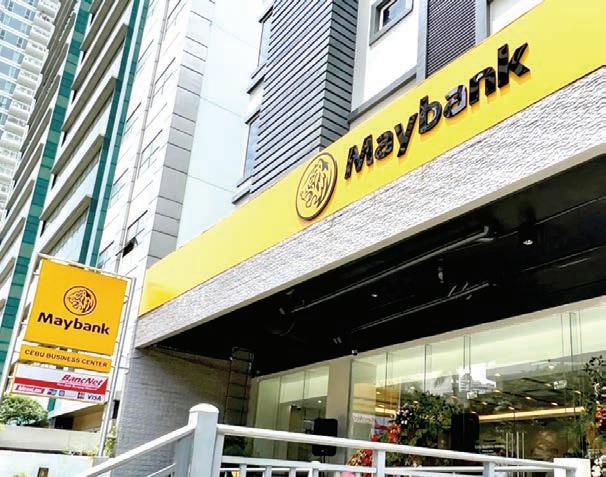
THE continued resilience of the Philippines’s electronics shipments alongside diversified market exposure could help cushion the impact of global trade volatility, according to Maybank.
The Malaysian bank said this as it expects the Philippines’s outbound shipments to grow by 8.4 percent this year while imports are seen to jump by 5.1 percent.
This, it expects, even as exports grew moderately by 7.9 percent year-on-year in January 2026, compared to the 23.9 percent growth of outbound shipments in December 2025.
“Continued electronics strength and diversified market exposure should help cushion against global trade volatility. Hence, we maintain our expectation for exports to grow by 8.4 percent and imports by 5.1 percent in 2026,” said Maybank. As such, it expects the country’s trade gap narrowing slightly further to -US$48.9 billion. In the January to December 2025 period, trade deficit was at -$49.17 billion.
Maybank said the “improved” external balance
and ongoing supply chain diversification provide a firmer footing for the year ahead, despite global growth and policy uncertainties.
Latest data from the Philippine Statistics Authority (PSA) showed that electronic products continued to dominate the country’s pie of outbound shipments.
PSA data noted that electronics shipments amounted to $4.01 billion in January 2026, cornering 56.5 percent of the $7.09-billion exports pie in the said period.
In January 2026, exports of electronic products grew by 18.8 percent.
In 2025, Philippine electronics exports reached $45.96 billion or 54.44 percent of the country’s $84.4- billion exports in the January to December 2025 period.
The Semiconductor and Electronics Industries in the Philippines Foundation Inc. (Seipi) said the country may be on track to reach nearly $50 billion in electronics exports in 2026. (See: https://businessmirror.com.ph/2026/01/01/semicon-exportscould-near-50b-in-2026-seipi/)
By Samuel P. Medenilla & Reine Juvierre S. Alberto
Finance Secretary Frederick D. Go confirmed separately that the administration’s economic team is moving to work with Congress to secure authority for the President to implement the measure, even if it means losing much-needed revenues.
Rising oil prices may derail BSP’s easing path–experts
By Andrea E. San Juan @andreasanjuan
RISINGoil prices could get in the way of the central bank’s easing path this year as the uptick in fuel costs is seen to broaden inflationary pressures beyond food and fuel.
“If WTI oil holds near $80/bbl through June or monthly rice inflation continues to accelerate, the policy space for further easing could narrow materially, potentially limiting the BSP’s ability to implement further rate reductions this year,” Bank of the Philippine Islands (BPI) Lead Economist Emilio S. Neri Jr. said in a statement.
Neri illustrated how the escalating conflict between the United States and Israel on one side and Iran introduces a “renewed” geopolitical risk premium into global markets, primarily via oil, which is seen to redound to inflation. For the Philippines, the BPI lead economist said higher energy prices compound already elevated ricedriven inflation risks, potentially pushing headline inflation toward 4 percent in the coming months. He said the BPI’s in-house estimate points to an acceleration in the headline print to 3 percent year-on-year in February 2026. Given these forecasts, Neri said the
These covered payouts, such as payroll, loans, and project-based disbursements.
Continued from A1
According to the BSP, the increase
bank’s full-year estimate currently stands at 3.7 percent which may be revised after the release of Thursday’s inflation data.
“A renewed leg higher in global oil prices would amplify second-round effects through transport, electricity, and logistics costs, potentially broadening inflationary pressures beyond food and fuel,” Neri said.
In an e-mail sent to the BusinessMirror on Monday, Moody’s Analytics economist Sarah Tan also pointed out that the ongoing conflict in the Middle East has introduced “renewed uncertainty” into the Philippines’s economic outlook, particularly through higher oil and energy prices.
“For the Philippines, which imports more than 50 percent of its domestic energy needs, rising global commodity prices pose a significant risk,” Tan told this newspaper.
She explained that higher oil and energy prices would likely push up both consumer and producer inflation, increasing import costs and widening the trade deficit.
also follows the results of the latest anti-money laundering National Risk Assessment and surveillance monitoring, recognizing that “robust” risk-based
“As imports become more costly, greater financial outflows would weaken the peso as well,” added Tan.
Neri said amid the foregoing developments, BPI maintains its “depreciation bias” on the Peso, with its year-end forecast set at P59.70.
Data from the Bankers Association of the Philippines (BAP) showed that the peso closed at P58.435 per $1. This is 23 centavos weaker than its previous finish of P58.2 on Monday. (See: https://businessmirror.com. ph/2026/03/02/pesos-sharpdrop-vs-dollar-reflects-a-perfect-storm/)
Tan shared the same sentiment, telling this newspaper that the heightened uncertainty could prompt the Philippines’ central bank to adopt a “more cautious” stance.
“For now, we still anticipate at least one more rate cut by the end of the year,” added Tan.
safeguards over cash transactions remain essential to protecting financial system integrity.
The central bank noted that for individuals and businesses with regular large transactions, the EDD will be done on a per-customer basis, not per transaction. As such, it should not hamper regular transactions.
Based on the circular, depositors can withdraw up to P1 million without EDD.
Above P1 million, they will have to provide information proving their transactions are legitimate.
The circular issued by the central bank said the P1 million threshold may be carried out in a single transaction or in series of transactions within one banking day.
“lf the threshold is met, EDD shall be performed at the customer level. EDD need not be performed separately for each transaction, provided the customer has already been subjected to appropriate EDD measures,” the circular also noted.
Nevertheless, consistent with risk-based customer due diligence principles, BSP-supervised financial institutions (BSFIs) may adopt lower thresholds based on their own risk assessments, the central bank said.
The BSP said it imposed the P500,000 threshold in September to help curtail money laundering and ensure the financial system is not used to facilitate illicit activities.
If the BSP-supervised financial institution (BSFI) fails to complete the EDD procedures, or “reasonably believes” that performing the EDD process will tip off the customer, the central bank mandates the BSFI to file a suspicious transaction report (STR) and closely monitor the account and review the business relationship.
“The BSFI shall also consider the alerts, red flags, and suspicious indicators, as well as typologies noted/ reported by relevant government agencies, involving large or unusual cash transactions in filing STR,” the BSP circular also noted.
Meanwhile, there remains to be no cap on non-cash withdrawals.
The new circular amends BSP Circular No. 1218 issued in September 2025. Andrea E. San Juan
Continued from A1
This, as the chairman of the House Committee on Ways and Means filed House Bill 8257, seeking to grant the President authority to temporarily suspend or reduce excise taxes on petroleum products during national or global economic emergencies.
Marikina Rep. Miro S. Quimbo, the panel chairman, said the measure would amend Section 148 of the National Internal Revenue Code of 1997 to establish a lawful and conditional mechanism for suspending fuel excise taxes when extraordinary circumstances arise.
In his explanatory note, Quimbo underscored that the Constitution vests in Congress the exclusive power to impose and adjust taxes, including excise taxes on petroleum products. However, he noted that Congress has historically crafted mechanisms during times of crisis to allow the government to respond swiftly in order to protect consumers and preserve macroeconomic stability.
According to the President, while his administration considers the safety of the estimated 2.5 million Filipinos in the Middle East as its paramount concern, they are also preparing for the potential impact of the crisis on oil prices and cash remittances, which can dampen growth.
The chief executive made the announcement in a press conference in Malacañang on Tuesday after holding a Cabinet meeting to discuss government interventions on the effects of the joint air strikes of the United States and Israel against Iran during the weekend.
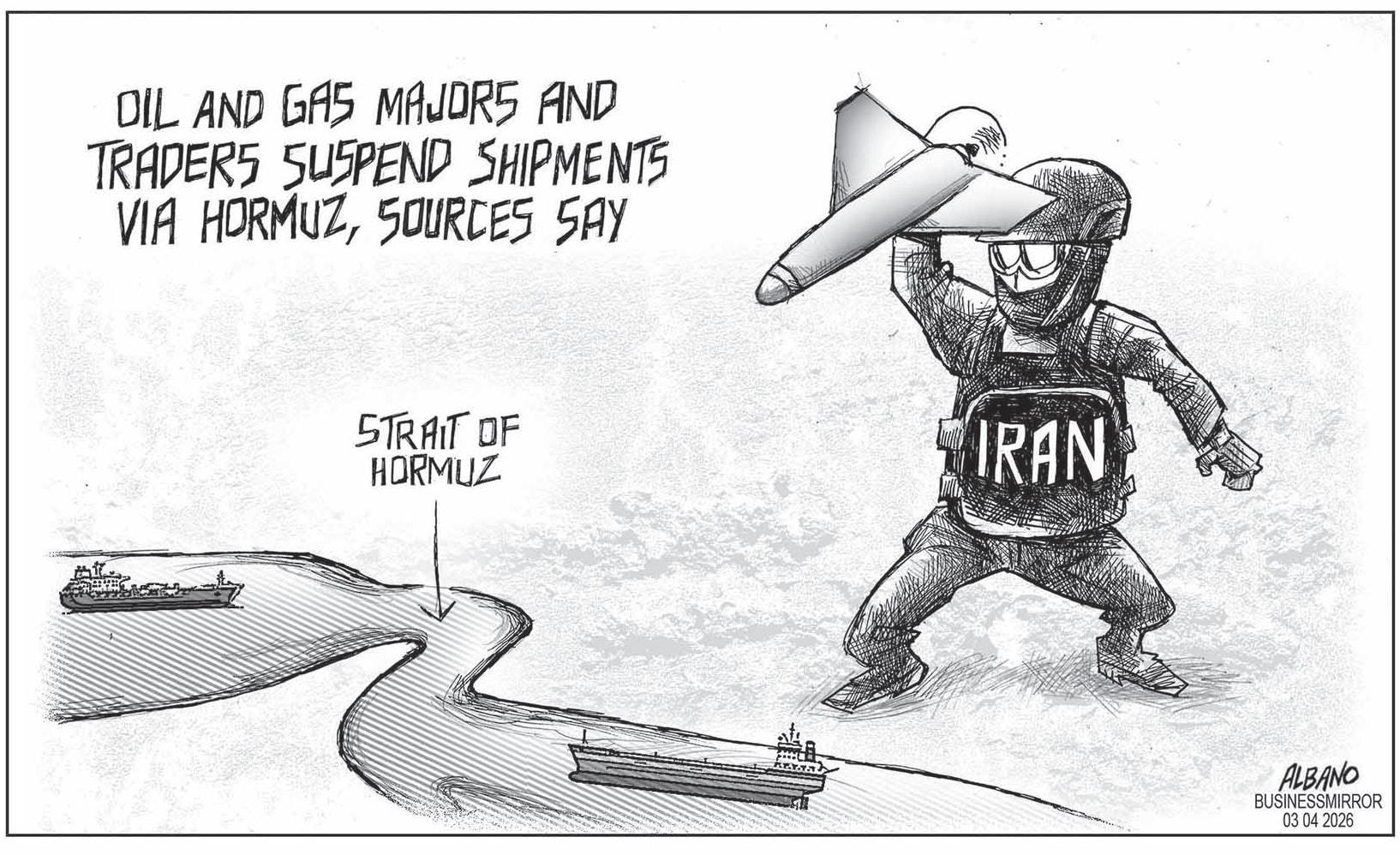
Iran retaliated by launching attacks on neighboring countries that host US military bases and threatening to put a blockade at the Strait of Hormuz, an important waterway for global oil trade.
“The other aspect that we met about today was about the economic impact that this will have on us,” Marcos said.
Immediately after the attack happened, Marcos noted, global oil prices soared to US$82 per barrel before later closing to US$76.50.
Finance Secretary Go said the economic team will ask Congress to give the President the flexibility to reduce taxes should the price of Dubai crude oil exceed $80 per barrel.
“That only gives the President flexibility to do so. We did not say that we will,” Go told reporters in a chance interview in Malacañang on Tuesday.
In a separate statement, Go clarified that the authority will not be automatically exercised by the President.
“Because if the price of oil reached $80 in one day, then the next day it reaches $77, why should we react?” Go said, noting that the price of Dubai oil is currently at around $77 to $78 per barrel.
“It is a precautionary measure—a ready policy tool that the President may use, if necessary, to act swiftly in protecting Filipino consumers and safeguarding the broader economy,” Go reiterated.
The economic impact of rising oil prices depends on a range of factors, including the level of crude prices and how long they stay elevated. “It’s a very hard question to answer,” the Finance chief said.
“We’re all hoping this will be as short as possible, but we don’t know,” he added.
Mr. Marcos had told reporters he expected the conflict to last for 4-5 weeks.
Meanwhile, per estimates cited by Finance Committee chairman Senator Sherwin T. Gatchalian, the government could lose around P300 billion if excise taxes on fuel were suspended for a year.
The government has assured the public that the Philippines maintains an adequate oil buffer equivalent to approximately 50 to 60 days of national demand, providing a cushion against short-term price volatility.
Oil supply is also secure, given the country’s flexibility to source from multiple oil-producing states.
Fuel subsidies ONCE the price of Dubai crude comes between US$80 and US$90 and lasts for two months, the government will implement targeted fuel subsidies for public transportation, farmers as well as
fisherfolks.
“And of course, we are now going to look for whatever subsidies we will need to provide so that the working public will not feel much about this incident,” Marcos said.
To minimize the impact of the higher pump prices commuters, the government is also considering deploying nofare bus rides along major routes and keeping fares of public transport facilities on hold.
The Department of Energy (DOE) is also working with oil firms to ensure that oil price increases will be implemented in a staggered manner.
Mideast volatility IN Congress, Quimbo cited ongoing geopolitical tensions in the Middle East, warning that volatility in global oil markets could drive up crude prices. He said sudden spikes in oil prices often translate into higher fuel, transport, electricity, and food costs, placing a heavy burden on Filipino families and potentially slowing economic activity. At the same time, Quimbo emphasized the need for fiscal prudence, stressing that any intervention affecting excise tax collections must be temporary, conditional, and carefully designed to safeguard revenue stability and long-term fiscal sustainability. Under the bill, the President may, upon recommendation of the Secretary of Finance, suspend the imposition of excise taxes on fuel if either of two conditions is met: first, if the average Dubai crude oil price reaches or exceeds $80 per barrel for at least three consecutive months prior to the issuance of a suspension order; or second, if a state of national emergency or calamity has been declared and has resulted in extraordinary increases in domestic pump prices, as certified by the Secretary of Energy.
The proposed suspension may apply to specific petroleum products and may take the form of either a full suspension or a partial reduction of excise tax rates, depending on prevailing conditions.
OFW protection
ASIDE from oil prices, the chief executive said they are also closely monitoring the impact of the Middle East crisis on the safety and remittances of Filipinos abroad. He reiterated the government’s readiness to evacuate and repatriate the OFWs in the Middle East.
As of Tuesday, a total of 1,416 Filipino nationals are seeking repatriation from the Middle East—297 from Israel, 22 from Jordan, 231 from Bahrain, 586 from Dubai, and 270 from Abu Dhabi. Marcos said they are coordinating with the US, Israel, and other countries in the Middle East to ensure the safety of Filipinos and to bring them home later.
While waiting for their evacuation or repatriation, Filipinos in the Middle East were urged to stay at home or a safe area such as bomb shelters until they can be transported by government to a safe area.
“So, we have a best-case scenario, we have a worst-case scenario. We have planned how we can help our compatriots abroad, especially in the Gulf countries,” Marcos said.
Impact on remittances
GOVERNMENT economic managers are also currently closely monitoring the possible reduction in remittances of Filipinos abroad once it starts affecting their employment and the exchange rate.
“Because if the peso goes up, remittances go up. But if the actual dollars sent here go down, it won’t go down. We don’t know where that balance is going to end as of now. So, we are watching it very closely,” Marcos said, partly in Filipino.
“”The peso [exchange rate] is not moving as of now. But we are also looking at the dollar because our remittances are being sent to the Philippines in dollars,” he added.
Department of Migrant Workers (DMW) Secretary Hans J. Cacdac said they expect the Middle East crisis to have minimal impact on remittances, since 80 to 85 percent of overseas Filipino workers (OFW) in the region are still able to report to work.
Citing US estimates, Marcos said they hope the Middle East situation normalizes after a month, and oil production restored to usual levels.
“Hopefully, before the four to five weeks, the level of intensity of the fighting will come down. In other words, that commerce will proceed in a more or less normal way, number one,” Marcos said. With Jovee Marie N. Dela Cruz
Teodoro: No direct military threat to PHL from Middle East conflict
NATIONAL Defense Secretary
Gilberto Teodoro Jr. on Tuesday dismissed concerns that the Philippines could be dragged into the escalating conflict in the Middle East owing to its alliance with the United States (US), saying such fears are unfounded.
“That is unfounded dahil hindi natin maihahambing ang sitwasyon sa Middle East dito sa Pilipinas [because we cannot really compare the situation of the Middle East to our situation here in the Philippines],” Teodoro said in an interview following President Marcos’s news conference at Malacañang in Manila.
Teodoro stressed that the Philippines’ bilateral and multilateral alliances are strictly for defensive and deterrent purposes.
He added that strengthening alliances enhances the country’s defensive posture and should not be misconstrued as involvement
in external conflicts.
“So, para ihambing ang sitwasyon sa Middle East dito sa Indo-Pacific [To compare the situation in the Middle East to here in the Indo-Pacific]...that’s based on a false premise,” Teodoro said. The Armed Forces (AFP) earlier stated there is no direct military threat to national security arising from the hostilities.
Teodoro, also the chair of the National Disaster Risk Reduction and Management Council, said the DND is working with the Department of Migrant Workers, Department of Foreign Affairs and other agencies to support repatriation efforts. A 32-year-old female Filipino caregiver in Israel died from injuries when Iranian missiles hit Tel Aviv on February 28, the first day of US-Israel attacks.
Opapru hails Senate for BARMM poll reset
By Rex Anthony Naval
THE Office of the Presidential Adviser on Peace, Reconciliation and Unity (Opapru) on Tuesday lauded the Senate for approving the bill resetting the first regular elections in the Bangsamoro Autonomous Region in Muslim Mindanao (BARMM) to September this year.
“We express our profound gratitude to the Senate, under the leadership of Senate President Vicente Sotto III, for the approval of the bill,” Opapru Secretary Carlito Galvez Jr. said in a statement.
Likewise, Galvez said the agency is also thanking Sen. Juan Miguel “Migz” Zubiri, the principal author of this measure, Senate Bill 1823, for his unwavering commitment to the Bangsamoro peace process.
“His leadership in ensuring that the transition remains on track is a testament to our shared vision of a stable and flourishing BARMM,” he added.
Galvez also said the resetting of the elections is a strategic move to ensure that
the transition process is inclusive, legally sound, and fully prepared for the historic exercise of democracy.
“At the heart of the Comprehensive Agreement on the Bangsamoro [CAB] is the promise of self-governance. It is a fundamental deliverable of the peace agreement that the people of BARMM be given the opportunity to elect their own leaders through a peaceful, orderly, and credible parliamentary election,” Galvez said.
“And with the bill’s approval, we are providing the necessary time to resolve crucial voter registration requirements and other preparations, ensuring that no Bangsamoro voice is left behind.”
“Pursuing these elections is vital to the legitimacy and long-term stability of the Bangsamoro government. This milestone brings us one step closer to fulfilling the aspirations of our brothers and sisters in the BARMM to determine their own future and strengthen the foundations of lasting peace in Mindanao,” Galvez said.
Lawmakers rebuke fellow legislator over lewd remark
LAWMAKERS rebuked Quezon City Rep. Bong Suntay on Tuesday after he made lewd remarks about actress Anne Curtis during a House hearing on the impeachment complaints against Vice President Sara Duterte. Suntay made the comments while defending Duterte’s previous statements about being a “designated survivor,” arguing that a person cannot be penalized for mere thoughts or unenforceable statements.
Days before last year’s State of the Nation Address (Sona), Duterte said she would skip the event, quipping, “No, I will not attend the Sona. I’m appointing myself as the designated survivor.”
The issue forms part of the third impeachment complaint, which alleges that Duterte committed acts of political destabilization, sedition, and insurrection.
To illustrate his point, Suntay recounted seeing Curtis at a mall and said he imagined certain scenarios but stressed that they remained only in his thoughts.
“Lastly, alamniyominsan,nasa Shangri-La ako; nakita ko si Anne Curtis, ang ganda-gandapalaniya You know, may desire saloobkonanag-inittalaga;naimagine konalangkungano’ngpwedengmangyari,perosiyemprehanggang imagination nalangiyon.Pero‘dinamansiguroakopwedengkasuhankunganoang na-imagine ko eh,” Suntay said.
The remarks drew immediate objection from committee vice chairperson and San Juan Rep. Ysabel Maria Zamora, who moved to have Suntay’s statements stricken from the record.
“It is just the start of Women’s Month. And don’t think that we should be hearing such comments from our dear colleagues,” Zamora said.
“We are not censuring anything, but we are reminding them that in fact, we should support women by not saying these statements,” she added, noting that she would be attending the United Nations Conference for the 70th Commission on the Status of Women the following week.
“And this is about removing structural barriers to women’s empowerment. And things like this do not empower women,” Zamora said.
Suntay objected to the motion, maintaining that there was nothing sexual or immoral about his remarks.
“There is nothing sexual do’n sa sinabi ko nothing immoral. I said may naimagine ako. think there is nothing wrong,” he said.
Manila Rep. Bienvenido Abante Jr. nevertheless asked the committee to have the statement deleted from the record. Jovee Marie N. dela Cruz
Legislator defends validity of third impeach complaint
By Jovee Marie N. dela Cruz @joveemarie
AN endorsing lawmaker on Tuesday defended the validity of the third impeachment complaint against Vice President Sara Z. Duterte, pointing to documentary evidence, House records, and Commission on Audit (COA) findings to substantiate claims of irregular use of confidential funds, emphasizing that the Vice President is the “ultimate responsible officer” for these allocations.
The complaint, filed by priests, nuns, and lawyers and endorsed by Party-list Rep. Leila de Lima of Mamamayang Liberal, alleged the misuse of about P612 million in confidential funds and claims of corruption in the Department of Education during Duterte’s term as secretary. It also revives accusations that she threatened President Marcos, First Lady Liza Araneta Marcos, and former Speaker Ferdinand Martin G. Romualdez.
“Although I wish to state first at the outset that in dealing with the issue on sufficiency in substance, we do not really inquire first into the evidence, but of course, in terms of really substantiating the essential grounds, the essential facts as pleaded, we can always check whether there is supporting evidence or annexes as submitted, as attached to the complaint, and later to be supplemented by other evidence in the proper time, and the proper time is during the evidentiary hearings,” de Lima told the House Committee on Justice deliberating on the sufficiency in substance of the third and fourth complaints against the Vice President.
De Lima enumerated attachments ranging from liquidation reports and Office of the Vice President accomplishment reports to COA notices of disallowance, certifications, letters, payment documents, and audit observation memoranda. “Photocopies suffice at this stage,” she said, adding that certified copies from House records could also be presented later.
De Lima cited specific annexes indicating that funds intended for confidential purposes were instead spent on “safe houses, tables and chairs, laptops,” and other items beyond authorized uses. She also alleged obstruction of oversight, with Duterte’s Chief of Staff allegedly blocking COA requests.
Ultimate responsible officer
DE LIMA said that Duterte is the “ultimate responsible officer” for the alleged misuse of P612.5 million allocated to the OVP and the Department of Education for fiscal years 2022 and 2023. The alleged misappropriation includes personal gain and expenditures for office furniture, laptops, and safe houses.
“The VP herself is the accountable officer for all these expenses and disbursements,” de Lima said. She cited audit findings and certifications attached to the complaint, which indicate that funds were wrongly disbursed to unintended recipients rather than used for legitimate confidential or intelligence operations.
She argued that if the allegations are considered true, they constitute culpable violation of the Constitution, plunder, malversation, graft, corruption, and betrayal of public trust.
Affidavit claims
MANILA Rep. Joel Chua on Tuesday referenced the affidavit of Ramil Madriaga, identified as a bagman for Duterte, detailing claims that millions in confidential funds were allegedly delivered to security personnel and other individuals rather than for official purposes.
Chua read excerpts from the affidavit indicating that duffel bags containing millions of pesos were reportedly delivered to a mayor in Laguna, a comedy bar in Quezon City, and a vehicle at the Office of the Ombudsman compound.
“According to this, the cash was placed into four traveling bags and brought to the OVP on the same day. Thereafter, VP Sara instructed [Special Disbursing Officer Gina] Acosta to release P125 million to Col. [Raymund] Lachica, head of the VP’s security group,” Chua said.
She explained that, as head of the OVP, Duterte controlled disbursements, approved liquidations, and signed accomplishment reports, establishing a “clear nexus” to the alleged misuse. Even when some documents were unsigned by Duterte, the disbursements occurred under her authority. “VP Sara was the accountable officer for over P500 million. No disbursement could occur without her approval,” she said.
He added, quoting the affidavit: “Acosta, following the VP’s instructions, personally gave Col. Lachica the full amount of P125 million.”
Chua raised a critical question: “Acosta is the SDO. What was Col. Lachica’s role in handling the P125 million? This was done under the VP’s instruction. Shouldn’t we see a discrepancy here?”
He noted that during prior hearings, lawmakers repeatedly asked what happened after the funds were turned over to Lachica.
Chua cited Madriaga’s affidavit, attached as Annex A to the complaint, recounting how security officer Col. Dennis Nolasco allegedly sent Madriaga a message instructing him to meet at Ultra in Pasig City, where they waited for Lachica.
Not ministerial act
PARTY-LIST Rep. Terry Ridon of Bicol Saro, a Justice committee member, argued that signing disbursement documents is not a mere ministerial act and cannot be used as a defense.
He cited COA findings, including Audit Observation Memoranda and Notices of Disallowance, as critical evidence in impeachment proceedings, emphasizing that the use of confidential funds for team-building activities and “safe houses” totaling around P16 million, including P1.36 million per month in rent, appeared improper.
“If these safe houses are not in high-end locations, then the use of confidential funds seems irregular,” Ridon said.
Threats
DE LIMA asserted that Duterte does not deserve to remain in office for threatening Marcos during her November 2024 televised media meltdown.
De Lima said Duterte’s threat against the President, the First Lady Liza Araneta Marcos, and former Speaker Romualdez constitutes impeachable offenses, including “betrayal of public trust, culpable violation of the Constitution, and other high crimes.”
“Why betrayal of public trust? If the respondent truly intended to use violence to silence or remove the country’s top leaders, that is a clear violation of our constitutional order,” de Lima said.
THE House Committee on Suffrage and Electoral Reforms on Tuesday approved the long-awaited consolidated anti-political dynasty bill, anchored on a second-degree prohibition.
In a news conference, Lanao del Sur Rep. Zia Alonto Adiong, committee chairman, said the bill reflects extensive nationwide public consultations. These included sessions in Carmona, Cavite, for Luzon; at the University of the Philippines Cebu for the
Visayas; and in Cagayan de Oro for Mindanao. The committee also conducted four formal hearings and three public consultations, reviewing a total of 25 filed versions addressing political dynasties.
“Earlier today, we adopted the committee report, and by next week, we aim to deliver it to the plenary to kick off debates and work toward approval on the House floor,” Adiong said. The measure seeks to curb the concen -
De Lima further explained that the assassination threat falls under “other high crimes” because it aimed to disrupt constitutional succession, endanger national security, and destabilize government operations.
“There is perhaps no clearer example of an offense that strikes at the orderly working of government. Even without a criminal conviction, such an allegation, if admitted squarely, falls within the constitutional concept of other high crimes,” she added.
De Lima pointed out that the video evidence against the Vice President cannot be disputed.
“Assuming the allegations are true— and how can that be disputed? There is a video, there are clippings, and there is a video duly authenticated by the NBI [National Bureau of Investigation], which formed the basis for the filing of cases for inciting sedition—so this is clear. This constitutes high crimes and betrayal of public trust of the gravest constitutional magnitude,” she stressed.
De Lima said the threat also constitutes “culpable violation of the Constitution” on Duterte’s part.
“So why is this a culpable violation of the Constitution? Conspiring to assassinate the President, the first lady, and the former Speaker is not just simple political rhetoric… This is a willful breach of her duty. That is the very definition of willful constitutional betrayal,” she said. At present, two impeachment complaints remain pending against Duterte. The third complaint accuses her of misusing approximately P612 million in confidential funds and alleges corruption within the Department of Education during her tenure as secretary.
The fourth complaint focuses on alleged omissions in Duterte’s Statements of Assets Liabilities and Net Worth and claims of unexplained wealth that appear disproportionate to her lawful income. The House Committee on Justice previously set aside the first impeachment complaint, citing a violation of the constitutional one-year bar, and approved the withdrawal of the second complaint, leaving only these two cases active.
“This represents betrayal of public trust in its most severe form. Someone who thinks this way should no longer remain in office,” she added.
House panel okays anti-political dynasty bill
tration of political power among families, a move supporters see as essential for fair elections and broader political participation across the country.
Speaker Faustino G. Dy III hailed the committee’s action as a decisive step toward enforcing a long-standing constitutional mandate. “For nearly four decades, the Constitution has directed Congress to prohibit political dynasties. Today, we move closer to fulfilling that mandate,” he said.
The approved House Bill 6671, principally authored by Dy and Majority Leader Ferdinand Alexander A. Marcos, bars politi
Wednesday, March 4, 2026
Mideast war. . .
Continued from A1
In its latest report, BMI holds that the conflict poses “little direct risk” to global food trade, citing “minimal price response seen as the threat of conflict increased and since the military campaign launched on 28 February.”
“Whilst the rise in oil prices will provide some temporary price support, our Oil and Gas team expects prices to retreat sharply once the conflict is resolved, meaning any upside will be short-lived,” BMI said.
While the strait plays a crucial role for regional food imports, the international firm expects the conflict to continue up to four weeks.
Such a “limited duration” will ensure that any temporary trade disruptions “pose little threat” to regional food security, it added.
“We assess the direct impact on global agriculture to be minimal, with the primary risks centered on temporary disruptions to fertilizer trade and oil price-driven cost pressures,” the BMI said.
“Both risks are mitigated by the expected short duration of the conflict and the fortuitous timing relative to key agricultural markets’ demand cycles. We are closely monitoring developments in the region and will update our views should the situation escalate or become more prolonged than currently anticipated.”
SC asked to declare unconstitutional inclusion of ₧1.19-T NTA in GAA
TBy Joel R. San Juan @jrsanjuan1573
HE Philippine Councilors League (PCL) on Tuesday filed a petition before the Supreme Court (SC) seeking to declare as unconstitutional the inclusion of the P1.19 trillion National Tax Allotment (NTA) for local governments (LGU) as part of the 2026 General Appropriations Act
In a 31-page petition, the PCL, together with Batangas Vice Governor Hermilando Mandanas, argued that the NTA is not a national expenditure subject to legislative appropriation, but rather a constitutionally mandated share that must be automatically released to LGUs.
“Treating the National Tax Allotment as an appropriation negates and violates the declared policy of the State to ensure local autonomy, as it subjects the LGUs just share to Executive veto, constitutional reenactment, and budget execution controls, thereby defeating the mechanical,
Cebu fast becoming ESL hub
By Carmel Pedroza
CEBU CITY—Cebu is fast strengthening its position as one of Asia’s emerging English-as-a-SecondLanguage (ESL) hubs, as nearly 30 new weekly international flights have been added to the schedule of Mactan-Cebu International Airport (MCIA), boosting access to the province’s leisure, heritage and education sectors.
The enhanced connectivity is particularly significant for Cebu’s ESL industry, which draws students from across Asia and beyond for both short-term and long-term English language programs.
Direct international flights simplify travel arrangements, allowing students to enroll in intensive courses while immersing themselves in Cebu’s vibrant culture and island lifestyle.
“With direct flights to and from Cebu, travelers will have more time to explore its beaches, dive sites, heritage landmarks and culinary offerings,” said Gelena AsisDimpas, Central Visayas director of the Department of Tourism. Tourism officials in Central Visayas
welcomed the expanded international connectivity, saying the additional direct routes not only enhance travel convenience but also reinforce Cebu’s growing appeal as a destination for language learning, medical tourism and business travel.
With the new services, total international arrivals and departures at MCIA now exceed 100 weekly flights, marking a significant leap in global accessibility for the region.
One of the newly introduced routes is a historic direct link between Cebu and Guam, inaugurated on December 16, 2025 by Philippine Airlines. The service runs three times a week, with flights operated using an Airbus A321, marking the first nonstop connection between the two destinations. Malaysia-based Firefly Airlines inaugurated its Kuala Lumpur–Cebu service on December 2, operating five times a week, while Vietnam Airlines mounted direct Hanoi–Cebu flights three times weekly with return services on alternating days. Cebu now also enjoys a direct air connection to Australia following the launch
See “ESL,” A8
perfunctory, and unconditional nature of automatic release mandated by the Constitution and the Local Government Code,” the petition read.
The petitioners named Executive Secretary Ralph Recto, Finance Secretary Frederic Go, Acting Budget and Management Secretary Rolando Toledo, National Treasurer Sharn Almanza, and Department of Economy, Planning and Development Secretary Arsenio Balicasan as respondents. The petition sought the Court’s ruling on whether the respondents committed grave abuse of discretion in disregarding Section 6, Article X of the 1987 Constitution.
The said provision states: “Local government units shall have a just share, as determined by law, in the national taxes which shall be automatically released to them. which gives LGUs a just share in the national taxes.”
The petitioners said the respondents violated the said constitutional provision when they coursed LGUs share in the GAA, which resulted in the
unconstitutional reduction of the share.
“Accordingly, subjecting the LGUs just share to GAA-based appropriation mechanisms and exposing it to veto or reenactment does not merely inconvenience local governments, but inflicts concrete and time-sensitive harm that defeats the very purpose of local and fiscal autonomy,” the petitioners said.
Furthermore, the SC said the respondents committed grave abuse of discretion in misapplying Section 29 (1), Article VI of the Constitution to the NTA, despite Section 283 of the National Internal Revenue Code (NIRC) which states LGU’s share in national taxes does not accrue to the National Treasury.
Section 29, Article VI of the Constitution provides that “no money shall be paid out of the Treasury except in pursuance of an appropriation made by law.”
The petitioners said Section 29 (3), Article VI provides an exception as it mandates that “money collected for a special
purpose shall be treated as a special fund and paid out for such purpose only.”
This constitutional provision, according to the petitioners, is reinforced by Section 283 of the NIRC.
“By statutory command, the Local Government Units’ share in national taxes is excluded from the National Treasury and is otherwise specially disposed of by law, confirming that such share never becomes part of the general funds of the National Government subject to appropriation or discretionary budgetary control,” the petition read.
Furthermore, the petitioners argued that if the NTA is treated as an appropriation item under the GAA, it becomes subject to the President’s veto power.
“Such treatment is fundamentally incompatible with Section 6, Article X of the Constitution, which commands that the Local Government Units’ just share in national taxes shall be automatically released,” the petition added.
BAI strengthens campaign vs rabies
TDepEd renews leadership training for execs
By Claudeth Mocon-Ciriaco @claudethmc3
THE Department of Education (DepEd) has revitalized leadership training for education officials to strengthen the agency’s internal capacity to sustain long-term reforms by partnering with the Development Academy of the Philippines (DAP) and the Asian Institute of Management (AIM) to undertake leadership courses for educators.
Education Secretary Juan Edgardo Angara said that the partnership is in line with efforts to accelerate learning recovery.
“This program answers a very felt need in the Department to enhance professionalism and empower school leaders to make informed, data-driven decisions,” Angara said. Through the signing of the Memorandum of Agreement (MOA) with DAP and AIM, DepEd, represented by the National Educators Academy of the Philippines (Neap) launched its EdLead 360: Public Education Leadership Lab initiative to strengthen school and system leadership in addressing the country’s learning crisis.
By Ada Pelonia @adapelonia
HE Bureau of Animal Industry (BAI) has forged a partnership with the Philippine Veterinary Medical Association (PVMA) to bolster efforts in preventing rabies, which remains a critical health concern in the country.
The move forms part of the government’s efforts to eliminate rabies by implementing a simultaneous rabies vaccination drive and national spay and neuter day nationwide to be held on March 11 and March 19, respectively.
BAI Assistant Director Anthony Bucad said these initiatives would help build a reliable animal management information system, while moving from reactive impounding to proactive humane population management.
“Every vaccinated pet strengthens our surveillance. Every accurate report sharpens our response. Data allows us to act early, act smarter, and act decisively,” Bucad said during the Rabies Summit 2026 in Quezon City on Tuesday.
“Stray management remains a critical gap in many areas […] Responsible control today prevents outbreaks tomorrow,” he said.
BAI said the activities will be implemented in collaboration with local governments (LGU) and members of the Provincial, Municipal, and City Veterinarians League of the Philippines (PCMVLP) to expand vaccination coverage, promote responsible pet ownership, and support animal population management.
The agency aims to achieve a 70 percent vaccination benchmark through these initiatives, which currently hovers around
40 to 50 percent. Sustaining the 70 percent rate for three years means the country has achieved herd immunity against rabies.
BAI said the campaign “A Rabies-Free Future Starts with Me” aligns with the global Zero by 30 initiative of the World Organization for Animal Health (Woah), which aims to eliminate human deaths caused by dog-mediated rabies by 2030. Woah said some 99 percent of human rabies cases are due to bites from infected dogs.
With rabies remaining a fatal yet preventable disease, BAI said sustained vaccination and community participation are crucial in protecting animal and human health.
“Let us remember that rabies is 100 percent preventable. No Filipino should lose his life to a disease we already know how to stop,” Bucad said.
Port bottlenecks persist, Philexport says
By Bless Aubrey Ogerio
PORT congestion continues to weigh on exporters and logistics players despite official data suggesting otherwise, prompting the Philippine Exporters Confederation Inc. (Philexport) to seek fresh government action to ease recurring bottlenecks at key terminals.
In February, the Association of International Shipping Lines, Inc. told the B usinessM irror that for every four laden containers entering the country, only one leaves filled with export cargo—an imbalance that clogs yards and limits space for outbound shipments. (See:https://businessmirror. com.ph/2026/02/20/wanted-differentapproach-to-port-utilization-problems/)
“There are issues that we have to ad -
dress at the level of government and at the level of the private sector. Discussions are ongoing, and we are submitting a position paper to propose measures to help address the problem,” Philexport vice president Liza Leong told reporters on Friday in Makati City.
“If you ask the government, they say there is no port congestion. But unfortunately, the private sector is feeling it. This has been happening and there are recurring issues connected to it,” she added.
The position paper, jointly supported by Philexport, the Philippine Chamber of Commerce and Industry (PCCI) and other port user and logistics groups, will be submitted to the Bureau of Customs following consultations with industry stakeholders.
The MOA commits DepEd, through the Neap, to implement structured and careeraligned leadership programs, in line with Republic Act 11713 or the Excellence in Teacher Education Act and DepEd’s reform agenda. EdLead 360 was crafted based on the findings of congressional Educational Commission II (Edcom II) and other studies that the effectiveness of school and system leaders is decisive for improving learning outcomes.
“Ayonsamgaulatnaito,mahalagasa pag-unlad ng sektor ng edukasyon ang teacher quality at continuous development kayatututukanatpalalakasinnatin ito. We are inspired by the leadership of President Ferdinand Marcos to really prioritize our people, especially our teachers,” Angara said.
DepEd-Neap partnered with the DAP–Graduate School of Public and Development Management to revive the Superintendents’ Leadership Program.
This includes an Executive Course on Leadership and Public Finance Management for Schools Division Superintendents and Assistant Superintendents, reinforcing DepEd’s coherent, system-wide strategy to develop reform-ready leaders who can improve governance and learning outcomes.
“We raised this in the meeting with [Customs Commissioner Ariel Nepomuceno], and we’re happy that he was open to the suggestions of the private sector,” Leong said, adding that the submission was expected within the week.
While Philexport members themselves have not been the loudest voices, Leong said congestion concerns are strongly felt by brokers, freight forwarders, truckers and logistics service providers who operate at the frontlines of cargo movement.
Complaints from these groups have already prompted multiple meetings with Customs, including one held on February 13, she noted.
Proposed intervention, Leong said, is a “low-hanging fruit,” as the policy framework is already in place and only requires stricter implementation.
The port situation is unfolding alongside fresh uncertainty in global trade, particularly for exporters shipping to the United States (US). Leong said the short window created by shifting US tariff signals has complicated planning for exporters.
See “Philexport,” A8
Meanwhile, through its partnership with the AIM, DepEd-Neap will offer a four-week Postgraduate Certificate in Literacy Reform and Education Policy Leadership to 30 to 35 Division Chiefs and third-level officials. The program aims to develop strategic leadership, systems and futures thinking, and evidence-based policy formulation, directly responding to persistent literacy challenges and governance gaps highlighted by national and international assessments and policy reviews.
The leadership skills enhancement is part of the DepEd’s overall efforts to promote the welfare of public school teachers, which includes increased allowances, reduced administrative workload, and professional advancement under the Expanded Career Progression (ECP) system.
Joining Angara during the MOA signing were Education Undersecretary for Operations Malcolm Garma, Neap Director Michael Joseph Cabauatan, DAP Acting President and Chief Executive Officer Leocadio Sebastian who is also the concurrent head of th the AIM School of Executive Education and Lifelong Learning.
DILG, PCW move to strengthen law against digital sexual harassment
By Jonathan L. Mayuga @jonlmayuga
THE Department of the Interior and Local Government (DILG), together with the Philippine Commission on Women, is pushing for amendments to Republic Act No. 11313, or the Safe Spaces Act, to close gaps and strengthen protection against emerging and evolving forms of gender-based sexual harassment.
During the DILG Kapihan on Friday, PCW emphasized that abuse is evolving, with many cases now occurring through digital platforms. These realities, the Commission said, require clearer and more comprehensive legal provisions.
The proposed amendments to the Safe Spaces Act, also known as the Bawal Bastos Law, aim to explicitly address technologyfacilitated gender-based violence and expand coverage to groups not clearly protected under the current law, including student interns and trainees.
Republic Act No. 11313 significantly expanded protection against sexual harassment by covering acts committed not only by persons in authority but also by peers, colleagues, and strangers. It recognized that harassment can occur in public spaces, transportation systems, workplaces, schools, and online platforms. PCW confirmed that the proposed amendments to RA 11313 have been included in the Women’s Priority Legislative Agenda for the 20th and 21st Congresses, signaling renewed urgency to update the landmark law enacted in 2019. The Commission underscored the need for Congress to prioritize measures that respond to present-day threats faced by women and girls.
IBPAP cites talent pipeline push in school device turnover
By Bless Aubrey Ogerio
EXPANDING the country’s talent pipeline for “highvalue, technology-enabled” jobs took center stage during the turnover of 378 digital devices to four public schools in Valenzuela City, as industry and education officials underscored the need to prepare students for an increasingly digital economy.
The devices were donated through a partnership between the IT and Business Process Association of the Philippines (IBPAP) and the Department of Education (DepEd), under IBPAP’s digital inclusion program, Byte the Gap.
“We must expand our talent pipeline so more Filipinos are prepared for high-value, technology-enabled careers,” said IBPAP president and chief executive Jack Madrid. He added that strengthening digital foundations is necessary for learners to develop the capability to thrive in an AI-driven world. Madrid also stressed the need for closer coordination among industry, government and local communities to translate innovation into inclusive growth.
The 378 units included 200 laptops donated by Ascendion, 100 laptops from EY Global Delivery Services and 78 desktop units from Shearwater.
Namfrel pushes for anti-dynasty ban up to 4th degree of consanguinity
By Justine Xyrah Garcia
POLL watchdog National Citizens’ Movement for Free Elections (Namfrel) is urging lawmakers to impose a ban on political dynasties up to the fourth degree of consanguinity and affinity, saying electoral reform cannot succeed without firm limits on entrenched family control.
In a position paper submitted to the Senate Committee on Electoral Reforms and People’s Participation (CERPP), Namfrel said the proposed safeguard should be incorporated into a consolidated substitute bill merging Senate
Bills 1656, 1559 and 1907, which are currently under deliberation.
The group said the consolidation process presents an opportunity to adopt what it described as the strongest provisions of the pending measures, including robust anti-dynasty restrictions.
Beyond the fourth-degree ban, Namfrel proposed prohibiting government contractors from serving as nominees, citing potential conflicts of interest.
It also called for the removal of the existing three-seat cap in favor of a “true proportional seat allocation formula.”
The watchdog further recommended banning the use of names associated with celebrities, media programs, government assistance initiatives such as Tulong Panghanapbuhay sa Ating Disadvantaged/Displaced Workers (TUPAD) and Assistance to Individuals in Crisis Situations (AICS), and sitting public officials in party-list branding.
“Organizations should be prohibited from using names of celebrities, media programs, government assistance programs, or sitting public officials to gain unfair name-recall advantages over genuinely marginalized groups,” it said.
DSWD activates crisis response, offers aid to family of Filipina caregiver killed in Tel Aviv strike
By Jovee Marie N. Dela Cruz @joveemarie
THE Department of Social Welfare and Development
(DSWD) has activated its crisis response mechanisms to assist the family of a Filipina caregiver who was killed in a recent missile attack in Tel Aviv, Israel. Through its Crisis Intervention Program (CIP), the DSWD said its Field Office 1-Ilocos Region is now coordinating with the local government of Basista, Pangasinan, to ensure immediate support for the family of Mary Anne Velazquez De Vera, an overseas Filipino worker (OFW) who had been working in Israel since 2019. De Vera lost her life while helping her employer reach safety amid the hostilities in Israel.
DSWD spokesperson Assistant Secretary Irene Dumlao said the agency will extend financial assistance under its Assistance to Individuals in Crisis Situation (AICS) program, along with psy -
chosocial support to help the bereaved family cope with their loss.
De Vera died after being hit by shrapnel during an airstrike over the weekend. Her remains were identified through biometric records at the Abu Kabir Forensic Institute and later confirmed by her husband, who is also working in Israel as a caregiver.
Beyond immediate financial aid, the DSWD is also studying possible livelihood support for the family through its Sustainable Livelihood Program (SLP) to help them recover in the long term.
The agency is coordinating with the Department of Migrant Workers and the Department of Foreign Affairs regarding the repatriation of Mary Anne’s remains, as well as monitoring the situation of other OFWs who may wish to return home amid rising tensions in the region.
Dumlao added that President Ferdinand R. Marcos Jr. has ordered concerned agencies to en -
sure the safety and welfare of Filipinos in the Middle East, assuring affected families that government assistance will be readily available.
Meanwhile, House Committee on Overseas Workers Affairs Chairman and AGIMAT partylist Rep. Bryan Revilla said the chamber mourned the death of De Vera. She is considered the first reported Filipino casualty in the recent crisis.
“It is with heavy hearts that we mourn the loss of Mary Ann Velasquez De Vera. Her courage, selflessness, and dedication to protecting another in the face of danger exemplify true heroism,” Revilla said, noting that her sacrifice reflects the bravery and resilience of overseas Filipino workers.
He said that the first hours of any crisis are crucial for emergency resource mobilization, particularly as Philippine embassies and consulates continue to gather verified information on the ground.
Good news for commuters: Free ‘Love Bus’ service launching soon in Metro Manila
By Claudeth Mocon-Ciriaco @claudethmc3
THE iconic ‘Love Bus’ will soon be available to provide free rides to commuters in select areas in Metro Manila.
To be launched in the last week of April or during the first week of May, Metropolitan Manila Development Authority (MMDA) Chairman Romando Artes said that the Love Bus is expected to help improve urban mobility infrastructure after the agency sealed an agreement with Global Electric Transport Philippines (GET Philippines).
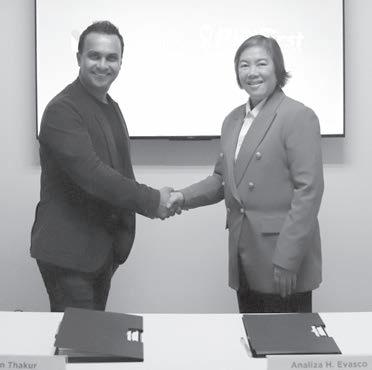
MMDA Chairman Atty. Don Artes and Global Electric Transport (GET) Philippines President Sigfrido Tinga led the signing of the memorandum of agreement at the MMDA Head Office in Pasig City earlier for the Love Bus with 30-passenger capacity.
Artes emphasized that the initiative supports the vision of President Ferdinand R. Marcos Jr. for a safe, reliable, and accessible public transportation system. The iconic “Love Bus” forms part of the administration’s efforts to reduce the financial and time burdens of daily commuting, particularly in metropolitan areas.
“Through this partnership, we are introducing fully electric buses that are cleaner, quieter, and more modern. These buses will help reduce pollution, ease congestion along key routes, and provide a more comfortable riding experience for passengers,” Artes said.
He added that with the support of corporate sponsors, the MMDA will be able to sustain and further expand its free public transportation services.
Under the agreement, the MMDA will oversee route management, enforcement support, infrastructure assistance, and alignment with public service goals, while GET Philippines will be responsible for the operations and maintenance of the electric buses.
The corporate sponsors include Robinsons Land Corporation (RLC), Megaworld Corporation, Ortigas Land, and International Solid Waste Integrated Management Specialist, Inc. (ISWIMS).
“We will make public transport palatable, enjoyable, safe, and environmentally friendly for everyone. The MMDA has come in to support the Love Bus program and make sure it happens,” Tinga said.
For her part, Mybelle Aragon-Gobio, President and Chief Executive Officer of RLC, expressed her gratitude for being part of the meaningful collaboration, emphasizing that mobility and urban development must move forward together.
“By linking Robinsons Galleria, Bridgetowne, and the other nearby business districts along the C5 corridor, we are helping strengthen the connections that already exist within this vibrant economic zone. This partnership also demonstrates what is possible when government leadership and private enterprise align behind a shared vision,”
she said.
The Love Bus, will soon ply the following routes, as approved by the Land Transportation Franchising and Regulatory Board:
Eastbound:
Robinsons Galleria
Estancia Mall
MMDA
Arcovia
Opus Mall
Arcovia Mall
Eastwood City
Westbound:
Eastwood City
C5–Eastwood Footbridge
C5–Green Meadows Footbridge
C5–Green Meadows Gate
Tiendesitas
C5–Julia Vargas
MMDA
Estancia Mall
Robinsons Galleria
The MMDA chief mentioned that 10 Love Bus units will be deployed in the area, with each bus making an average of five to six trips per day. Furthermore, the agency plans to operate the Love Bus along the aforementioned routes from 6:00 a.m. to 9:00
To strengthen oversight, Namfrel also proposed extending the Commission on Elections’ (Comelec) vetting period for party-list applicants to at least 120 days to allow for thorough background checks and evidentiary public hearings.
At the same time, it cautioned lawmakers against crafting compliance rules so burdensome that they effectively shut out legitimate but resource-constrained grassroots organizations while wealthier groups with professional legal teams easily navigate the system.
Namfrel also stressed that any amendments must withstand constitutional scrutiny, particularly in light of the Supreme Court’s Atong Paglaum ruling, and urged lawmakers to ensure that reforms are carefully aligned with existing jurisprudence. The watchdog’s proposals come as the Congress continues to review measures seeking to curb political dynasties and overhaul the party-list system.
Earlier this year, President Marcos included the Anti-Political Dynasty Bill and the Partylist System Reform Act among the priority measures of the 20th Congress, saying these are meant to strengthen transparency and promote genuine representation.
US envoy breathes back harmony with Davao
By Manuel T. Cayon @awimailbox
DAVAO CITY – United States Embassy Chargé d’Affaires, a.i., Y. Robert Ewing honored Filipino war veterans at a Congressional Gold Medal awarding ceremony in Davao del Norte’s capital city this week as both countries celebrated 80 years of diplomatic ties.
His tour in the two cities of Tagum and Davao breathed life anew to what significantly was slighted during the term of former President Rodrigo Duterte, who spun off from decades of UScentered foreign policy to what the latter said was his independent foreign policy yet tilting toward leniency with China.
The US embassy said Ewing’s holding the awarding ceremony in Tagum “was the first of its kind in Tagum and second time in Mindanao.”
In Tagum City, Chargé d’Affaires Ewing joined Philippine Defense Undersecretary Pablo Lorenzo, Philippine Veterans Affairs Office Administrator Reynaldo Mapagu, and Davao del Norte Governor Edwin Jubahib at the 45th presentation of the Filipino Veterans of World War II Congressional Gold Medal.
The embassy said it was the highest civilian honor conferred by the U.S. Congress. “The awards delivered in Tagum were signed into law with the Filipino Veterans of World War II Congressional Gold Medal Act of 2015,” the embassy said.
“These Congressional Gold Medals recognize the valor and sacrifice of Filipino veterans who fought shoulder-to-shoulder with U.S. forces to turn the tide in the Pacific during World War II. The first-ever Congressional Gold Medal was approved by the Continental Congress in 1776 and awarded to George Washington, a remarkable example of the deeply interwoven history of the United States and the Philippines as we celebrate America’s 250th anniversary in 2026,” it said.
“When their nation called, they stepped forward. They answered,” Ewing said. “And in doing so, they not only shaped the course of history but also forged the enduring friendship between the Philippines and the United States, a relationship built on shared sacrifice, mutual trust, and deeply held values.”
Mapagu said the number of living Filipino World War II veterans continued to decline with
each passing day, “but through commemoration activities and recognition such as the awarding of the U.S. Congressional Gold Medal for Filipino World War II veterans, their heroic legacy will live on.”
In Davao City, the embassy said Ewing “deepened economic and people-to-people ties in meetings with public and private sector leaders, as well as students.” Ewing toured the National Museum of the PhilippinesDavao in the People’s Park with Davao City Councilors Rachel Zozobrado and Ragde Niño Ibuyan, City Investment Promotion Center Officer in Charge April Marie Dayap, and a group of Philippine alumni of US government exchange programs. The embassy said the visit “was an opportunity to gain a greater understanding of the rich heritage and natural resources of Davao City and Mindanao while also discussing partnership opportunities to promote U.S.-Philippines prosperity.”
It added that the Davao City officials expressed interest in exploring trade and investment opportunities, education and exchange programs, and revitalizing sister city relationships.
“Chargé d’Affaires Ewing also took a moment for a group photo with the City Councilors in front of the iconic Davao City Hall, which celebrates its 100th anniversary, sharing a connection with the U.S. Embassy in Manila, as both buildings were designed by renowned Filipino architect Juan M. Arellano,” it said
At a General Membership Meeting of the Mindanao chapter of the American Chamber of Commerce, “Chargé d’Affaires Ewing spoke about efforts to enhance supply chain resilience and expand energy cooperation, and underscored opportunities for two-way trade and investment including the upcoming SelectUSA Investment Summit, a Trump Administration priority initiative to promote investment into the United States.”
The embassy said “Chargé d’Affaires Ewing placed a spotlight on U.S-Philippines education partnerships when visiting Filipino participants in the U.S. Embassy’s English Access Scholarship Program, a two-year, intensive after-school program that enhances academic and employment opportunities for public school students aged 13 to 15 through American excellence in English language instruction.”
A6 Wednesday, March 4, 2026
Editor: Angel R. Calso
As Mideast conflict widens, US says attacks on Iran to intensify for weeks
By Jon Gambrell, Melanie Lidman & Samy Magdy
The Associated Press
DUBAI, United Arab Emirates— Israeli and US airstrikes pounded Iran in an escalating campaign that US President Donald Trump said Monday would likely take several weeks. Tehran and its allies retaliated across the region, striking Israel and a variety of targets inside Gulf states, including energy facilities in Qatar and the American Embassy in Saudi Arabia.
The intensity of the attacks, the killing of Iranian Supreme Leader Ayatollah Ali Khamenei and the lack of any apparent exit plan set the stage for a prolonged conflict with far-reaching consequences. Places deemed safe havens in the Mideast like Dubai have seen incoming fire; energy prices shot up; and US allies pledged to help stop Iranian missiles and drones.
Trump said operations are likely to last four to five weeks but that he was prepared “to go far longer than that.”
As the conflict spiraled, the State Department urged US citizens to leave more than a dozen Middle Eastern countries due to
safety risks.
“The hardest hits are yet to come from the US military,” Secretary of State Marco Rubio told reporters before briefing members of Congress about the Iran operation. Trump said the military campaign’s objectives are to destroy Iran’s missile capabilities, wipe out its navy, prevent it from obtaining a nuclear weapon and ensure that it cannot continue to support allied groups like Lebanon’s Hezbollah, which fired missiles at Israel on Monday.
Iran has said it has not enriched uranium since June, though it has maintained its right to do so and says its nuclear program is peaceful.
As several airstrikes hit Iran’s capital, Tehran, the top security official Ali Larijani vowed on X: “We will not negotiate with the United States.”
Iran expands attacks across the region WORLD markets were rattled as the fighting expanded across a region vital to energy supplies.
Saudi Arabia said early Tuesday that the US Embassy in Riyadh came under attack from two drones, causing a “limited fire” and
minor damage. On Monday, the US Embassy compound in Kuwait was struck.
Saudi Arabia’s Ras Tanura oil refinery also came under attack from drones, but its defenses downed the aircraft, a military spokesman told the state-run Saudi Press Agency. The refinery has a capacity of over half a million barrels of crude oil a day.
The refinery attack “marks a significant escalation, with Gulf energy infrastructure now squarely in Iran’s sights,” said Torbjorn Soltvedt, an analyst at the risk intelligence company Verisk Maplecroft.
After two of its facilities were struck, QatarEnergy said it would stop producing liquefied natural gas indefinitely, taking one of the world’s top suppliers off the market. European natural gas prices surged by 40% in response.
Several ships have been attacked in the Strait of Hormuz, the narrow mouth of the Persian Gulf through which a fifth of all oil traded passes and where Iran has threatened attacks.
Iran says nuclear site was targeted REZA NAJAFI , Iran’s ambassador to the International Atomic Energy Agency, told
reporters that airstrikes targeted the Natanz nuclear enrichment site Sunday.
“Their justification that Iran wants to develop nuclear weapons is simply a big lie,” he said.
Israel and the US have not acknowledged strikes at the site, which the US bombed in the 12-day war between Iran and Israel in June.
Israeli Prime Minister Benjamin Netanyahu said Iran was rebuilding “new sites, new places” underground for making atomic bombs in an interview broadcast late Monday on Fox News Channel’s Hannity.
“We had to take the action now and we did,” said Netanyahu, who offered no evidence to support his claim.
Satellite photos analyzed by The Associated Press showed limited activity at two nuclear sites in Iran before the war. Analysts said Tehran was likely assessing damage from the 2025 US strikes and possibly salvaging what remained.
The death toll grew on all sides
THE Iranian Red Crescent Society said the US-Israeli operation has killed at least 555 people. In Israel, where several locations were hit by Iranian missiles, 11 people were killed. Israel’s retaliatory strikes against Hezbollah
killed dozens of people in Lebanon.
The US military announced that two previously unaccounted for American service members have been confirmed dead, bringing the total to six. All six were Army soldiers and part of the same logistics unit in Kuwait, according to a US official who was not authorized to comment publicly and spoke on condition of anonymity.
Three people were reported killed in the United Arab Emirates, and one each in Kuwait and Bahrain.
Iran’s top diplomat on Monday shared an aerial photo showing rows of graves that he said were for more than 160 girls killed during a US-Israeli strike on an elementary school in Minab. “Their bodies were torn to shreds,” Abbas Araghchi, the country’s foreign minister, said on X.
In Israel, three young siblings killed by an Iranian strike were being laid to rest at the Mount of Olives in Jerusalem on Monday night.
The chaos of the conflict became apparent when the US military said Kuwait had “mistakenly shot down” three American fighter jets while Iran was attacking it with aircraft, ballistic missiles and drones. US Central Command said all six pilots ejected safely.
Hezbollah fires on Israel, prompting massive response
HEZBOLLAH said it fired missiles on Israel on Monday, the first time in more than a year the militant group has claimed an attack. There were no reports of injuries or damage.
Israel retaliated with strikes on Lebanon.
The country’s Health Ministry reported at least 52 people were killed and 154 wounded in overnight strikes in the Beirut suburbs and southern Lebanon.
An Israeli military spokesman, Brig. Gen. Effie Defrin, said Israel is keeping “all options on the table,” including a potential ground invasion of Lebanon.
The Israeli military said it launched strikes targeting branches of al-Qard al-Hasan, a charity operating outside the Lebanese financial system that Israel says is used to fund Hezbollah’s military wing.
Israel also struck a building housing AlManar channel studios in Beirut’s southern suburbs following an evacuation warning, the channel said. No details on casualties were available.
No end in sight to the US-Israeli campaign
THE US military, which has used B-2 stealth bombers to strike Iran’s ballistic missile facilities, said Monday that it had taken out 11 Iranian warships. Trump has said the Iranian navy’s headquarters had been “largely destroyed.”
While Danny Danon, the Israeli ambassador to the U.N., said the conflict would continue “as long as it takes,” Defense Secretary Pete Hegseth told reporters Monday that the US is not engaged in a nation-building effort, saying, “This is not Iraq. This is not endless.” Trump sought to more clearly define the administration’s objectives on Monday following an earlier statement—as the attack was unfolding Saturday—in which he listed various grievances dating to Iran’s 1979 Islamic Revolution and urged Iranians to “take over” their government.
There have been no signs yet of any such uprising.
Trump has also signaled an openness to dialogue with Iran’s new leadership, which could be chosen soon.
Tehran’s streets are deserted TEHRAN’S streets have been largely deserted with people sheltering during airstrikes. The paramilitary Basij force, which has played a central role in crushing recent nationwide protests, set up checkpoints across the city, witnesses said.
In the northern Iranian city of Babol, a student, speaking anonymously over concerns of retribution, told the AP that armed riot police were on the streets Saturday night and into the early hours of Sunday after the death of Khamenei.
“We don’t know whether to be happy about the elimination of the criminals who oppress us or to remain silent in the face of the US and Israel’s war against the country and its interests and the terror that is taking place,” he said.
Lidman reported from Tel Aviv, Israel, and Magdy from Cairo. Associated Press writers Bassem Mroue and Sally Abou AlJoud in Beirut, Suzan Fraser in Ankara, Turkey, Farnoush Amiri in New York, Giovanna Dell’Orto in Miami, and Konstantin Toropin, Lisa Mascaro, Mary Clare Jalonick and Matt Lee in Washington contributed to this report.
Wednesday, March 4, 2026
US Embassy in Saudi Arabia hit by Iranian drones as Israeli military ramps up operations in Lebanon
By Jon Gambrell, David Rising & Samy Magdy The Associated Press
DUBAI, United Arab Emirates—The US State Department evacuations of non-emergency personnel and family reached six nations Tuesday with the inclusion of the United Arab Emirates. The UAE, home to Dubai and Abu Dhabi and long considered a safe corner of the Middle East, has been dragged into the Iran war with interceptions and attacks.
The other countries include Bahrain, Iraq, Jordan. Kuwait and Qatar. Airstrikes targeting an air base in southeastern Iran killed at least 13 Iranian troops there, local media reported.
The semiofficial Tasnim news agency and the Hammihan daily newspaper reported the strike in Kerman, 800 kilometers (500 miles) southeast from Iran’s capital, Tehran. The Kerman Air Base is known to house military helicopters.
Earlier, Iran struck the US Embassy in Saudi Arabia’s capital with a drone early Tuesday as it kept hitting targets around the region, while the United States and Israel pounded Iran with airstrikes in what US President Donald Trump suggested was just the start of a relentless campaign that could last more than a month.
The attack from two drones on the US Embassy in Riyadh caused a “limited fire” and minor damage, according to Saudi Arabia’s Defense Ministry, and the embassy urged Americans to avoid the compound. It followed an attack on the US Embassy in Kuwait, which announced Tuesday it had been closed until further notice. The US State Department also ordered the evacuation of non-emergency personnel and family in Kuwait, as well as Bahrain, Iraq, Qatar and Jordan as a precaution.
Across Iran’s capital, explosions rang out throughout the night into the early morning, with witnesses describing hearing aircraft overhead. It was not immediately clear what had been hit. And in Lebanon, Israel launched more strikes on Hezbollah, the Iran-backed militia group, and said its soldiers are “operating in southern Lebanon.” Explosions could be heard and smoke seen in a southern suburb of Beirut.
The expansion of Iranian retaliation across the Gulf and the intensity of the Israeli and American attacks, the killing of Iranian Supreme Leader Ayatollah Ali Khamenei and the lack of any apparent exit plan portend a possibly prolonged conflict with far-reaching consequences.
Many countries deemed safe havens in the Mideast have been hit by Iran in retaliation for the US and Israeli strikes, with recent targets including two Amazon data centers in the United Arab Emirates and a drone impact near another in Bahrain that caused damage, the company said Tuesday. Iran has also hit energy facilities in Qatar and Saudi Arabia, and attacked several ships Strait of Hormuz, the narrow mouth of the Persian Gulf through which a fifth of all oil traded passes, sending global oil and natural gas prices soaring.
“The Strait of Hormuz is closed,” declared Iranian Brig. Gen. Ebrahim Jabbari, an adviser to the paramilitary Revolutionary Guard, threatening to set fire to any ships attempting to transit. “Don’t come to this region.”
The US State Department urged US citizens to leave more than a dozen Middle Eastern countries due to safety risks, as have many other countries, though with much of the airspace closed many remain stranded.
Trump said operations are likely to last four to five weeks but that he was prepared “to go far longer than that.”
He later added on social media that the US had a “virtually unlimited supply” of munitions and pre-positioned “high grade weaponry.”
“Wars can be fought ‘forever,’ and very successfully, using just these supplies,” he wrote.
Hundreds dead in Iran and dozens in Lebanon along with 11 in Israel
THE Iranian Red Crescent Society said the US-Israeli operation has killed at least 555 people. In Israel, where several locations were hit by Iranian missiles, 11 people were killed. Israel’s retaliatory strikes against Hezbollah killed 52 people in Lebanon.
“Military escalation would force more families from their homes and hit civilians hard,” said Amy Pope, director general of the International Organization on Migration as she called Tuesday for the international community to press for de-escalation.
“Millions are already displaced in the region,” she said.
The US military has confirmed six deaths of American service members. All six were Army soldiers in a logistics unit in Kuwait, according to a US official who was not authorized to comment publicly and spoke on condition of anonymity.
Three people were killed in the United Arab Emirates, and one each in Kuwait and Bahrain.
The chaos of the conflict became apparent when the US military said Kuwait had “mistakenly shot down” three American fighter jets while Iran was attacking it with aircraft, ballistic missiles and drones. US Central Command said all six pilots ejected safely.
Israel and US target nuclear facilities and missile infrastructure
IRANIAN state TV said strikes caused two explosions early Tuesday at a broadcasting facility in Tehran, but said no one was injured.
Reza Najafi, Iran’s ambassador to the International Atomic Energy Agency, told reporters that airstrikes targeted the Natanz nuclear enrichment site on Sunday.
“Their justification that Iran wants to develop nuclear weapons is simply a big lie,” he said.
Israel and the US have not acknowledged strikes at the site, which the US bombed in the 12-day war between Iran and Israel in June. Israel has said it is targeting the “leadership and nuclear infrastructure.”
Trump said the military campaign’s objectives are to destroy Iran’s missile capabilities, wipe out its navy, prevent it from obtaining a nuclear
“Embassy,”
A8 Wednesday, March 4, 2026
How Trump’s and his administration’s statements on Iran evolved, conflicted
By Michelle L. Price, Ben Finley & Will Weissert The Associated Press
ASHINGTON—When
WPresident Donald Trump ordered strikes on Iran last summer, he and his administration repeatedly declared that the attacks had obliterated the Middle Eastern country’s nuclear program and set back its ability to make a nuclear weapon for years.
In the immediate runup to Saturday’s strikes with Israel on Iran, however, Trump and members of his administration began issuing more urgent warnings about Iran’s nuclear ambitions. It was among the shifting—and often openly contradictory—messages sent on Iran. After widespread protests erupted in Iran in January, for example, Trump repeatedly threatened military strikes—only to back off after he said he was assured Tehran had halted killing protesters and not carried out planned executions—except international observers say the death toll from a crackdown over the protests exceeded 7,000. At the same time, following years of scoffing at, and openly campaigning against, the idea that previous conservative administrations had been advocates for “regime change” missions, Trump seemed to change his mind and warm to the idea.
In the aftermath of Saturday’s attacks, the president and other officials have offered multiple reasons they said the latest strikes on Iran were necessary—some of which conflict with what they said over the past eight months.
After the strikes last summer “THE NUCLEAR SITES IN IRAN ARE COMPLETELY DESTROYED!”—Trump in a June 24, 2025, post on Truth Social.
“Based on everything we have seen—and I’ve seen it all—our bombing campaign obliterated Iran’s ability to create nuclear weapons.”—Defense Secretary Pete Hegseth to CNN in a June 25, 2025, story.
“The precision strikes perfectly hit their targets and destroyed Iran’s nuclear facilities, resulting in the total obliteration of Iran’s ability to create a nuclear weapon.”—The White House in a June 25,
the provincial board in the same province. Dy emphasized that the seconddegree coverage reflects the results of consultations across Luzon, Visayas, and Mindanao.
“The second-degree coverage is the product of listening, careful study, and efforts to find common ground. “It reflects a balanced approach, instituting this long-overdue reform; firm enough to give real meaning to the constitutional ban, yet measured enough to ensure fairness and practical implementation,” the Speaker said.
Under the bill, spouses and relatives within the second civil degree—whether legitimate, illegitimate, full, or halfblood—are barred from simultaneously holding national or local elective positions. The prohibition covers the President, Vice President, and senators at the national level, and provincial, city, municipal, and barangay positions locally. If enacted, the law would take effect in the next election cycle and subsequent elections.
To ensure compliance, candidates must file a sworn statement with the Commission on Elections (Comelec) declaring that their candidacy will not create a prohibited
2025, press release.
“That is a false story and it’s one that really shouldn’t be re-reported.”—
Secretary of State Marco Rubio in a June 25, 2025, interview with Politico commenting on news reports that a US intelligence report suggested Iran’s nuclear program had only been set back a few months.
“They’ve been trying it for 25 years. The last thing they’re going to do is nuclear. We had to hit them, though. They were close to getting a nuclear bomb. Absolutely.”—Trump to Fox News on June 30, 2025.
“All three nuclear sites in Iran were completely destroyed and/or OBLITERATED. It would take years to bring them back into service and, if Iran wanted to do so, they would be much better off starting anew, in three different locations, prior to those sites being obliterated, should they decide to do so.”—Trump in a July 19, 2025, post on Truth Social.
“They’ve rejected every opportunity to renounce their nuclear ambitions, and we can’t take it anymore.”—Trump during his Feb. 24 State of the Union.
“They have to say ‘we’re not going to have a nuclear weapon, and they just can’t quite get there,” Trump on Feb. 27, 2026, telling reporters while visiting Texas that he wasn’t happy with the negotiations with Iran.
Regime change in Iran
IT’S not politically correct to use the term, ‘Regime Change,’ but if the current Iranian Regime is unable to MAKE IRAN GREAT AGAIN, why wouldn’t there be a Regime change??? MIGA!!!”—Trump in a June 22, 2025 post on Truth Social, modifying his political campaign slogan to signify “Make Iran Great Again.”
“Our view has been very clear that we don’t want to regime change. We do not want to protract this or build this out any more than it’s already been built out. We want to end their nuclear program, and then we want to talk to the Iranians about a long-term settlement here. We believe very strongly that there are two pathways. There’s a pathway where Iran continues to fund terrorism, continues to try to build a nuclear program, attacks American troops. That’s the bad pathway for Iran, and it will be met with overwhelming force.”—Vice
political dynasty. Any emerging conflict must be reported within five days, after which affected candidates have 48 hours to decide who will assume office. If no agreement is reached, the Comelec will conduct a drawing of lots.
The Makabayan bloc—comprising Party-list Reps. Antonio Tinio of ACT Teachers, Sarah Jane Elago of Gabriela, and Renee Louise Co Kabataan—has withdrawn support for the substitute bill.
In a press statement, the bloc criticized the measure as a “regulation,” not a “prohibition,” arguing that it falls short of the Constitution’s mandate under Article II, Section 26 of the 1987 Constitution, which explicitly commands the prohibition of political dynasties.
“Any enabling law that falls short of outright prohibition is not reform—it is a mockery of the Constitution, and we refuse to be party to it,” the bloc said.
The Makabayan legislators accused the substitute bill of protecting powerful families and preserving the status quo, calling instead for support of HB No. 209 and HB 4784, which they describe as genuine anti-dynasty measures. “The people deserve real democracy, not a regulated oligarchy with a reform label slapped on it,” the statement read. Jovee Marie N. dela Cruz
President JD Vance to NBC News on June 22, 2025.
“I SAVED HIM FROM A VERY UGLY AND IGNOMINIOUS DEATH, and he does not have to say, ‘THANK YOU, PRESIDENT TRUMP!’”— Trump on June 27, 2025, on Truth Social, after saying that he knew exactly where Iran’s Supreme Leader Ayatollah Ali Khamenei was sheltered during the June strikes. Khamenei was killed in Saturday’s strikes.
“Seems like that would be the best thing that could happen. For 47 years, they’ve been talking and talking and talking. In the meantime, we’ve lost a lot of lives while they talk. Legs blown off, arms blown off, faces blown off.”—Trump to reporters on Feb. 13 when asked about regime change.
“There might be, and there might not be.”—Trump on Friday to reporters when asked if using the military right now could mean regime change. He added: “It would be nice if we could do it without, but sometimes you have to do it with.”
“He was unable to avoid our Intelligence and Highly Sophisticated Tracking Systems and, working closely with Israel, there was not a thing he, or the other leaders that have been killed along with him, could do. This is the single greatest chance for the Iranian people to take back their Country.” in a Feb. 28 Truth Social post that implied that taking out Khamenei and regime change was the goal of the latest strikes.
“Our objective is to defend the American people by eliminating imminent threats from the Iranian regime, a vicious group of very hard, terrible people.”—Trump in a video message on Feb. 28.
“I call upon all Iranian patriots who yearn for freedom to seize this moment—to be brave, be bold, be heroic, and take back your country.”—Trump in a video statement on Sunday in which he also urged members of Iran’s paramilitary Revolutionary Guard and military police to lay down their arms.
“This is not a so-called regime change war, but the regime sure did change.”—Hegseth at a March 2 briefing with reporters at the Pentagon.
The threat of ballistic missiles
“ IRAN possesses a very large number of ballistic missiles, particularly short-range ballistic missiles, that threaten the United
States and our bases in the region, and our partners in the region, and all of our bases in the U.A.E. and Qatar and Bahrain.”— Secretary of State Marco Rubio to reporters on Feb. 25.
“The regime already had missiles capable of hitting Europe and our bases— both local and overseas—and would soon have had missiles capable of reaching our beautiful America.”—Trump during a Medal of Honor ceremony at the White House on March 2.
“Iran was building powerful missiles and drones to create a conventional shield for their nuclear blackmail ambitions.”—Hegseth during the Monday Pentagon briefing.
Protecting the lives of protesters
“IF Iran shoots and violently kills peaceful protesters, which is their custom, the United States of America will come to their rescue. We are locked and loaded and ready to go.”— Trump on Truth Social Jan. 2.
“Iran is looking at FREEDOM, perhaps like never before. The USA stands ready to help!!!”—Trump on Truth Social on Jan. 10.
“Iranian Patriots, KEEP PROTESTING— TAKE OVER YOUR INSTITUTIONS!!! Save the names of the killers and abusers. They will pay a big price. have cancelled all meetings with Iranian Officials until the senseless killing of protesters STOPS. HELP IS ON ITS WAY. MIGA!!!”—Trump on Truth Social on Jan. 13.
“We’ve been told that the killing in Iran is stopping—it’s stopped, it’s stopping. And there’s no plan for executions, or an execution, or executions—so I’ve been told that on good authority.”—Trump on Jan. 14 at the White House.
“You had yesterday scheduled over 800 hangings. They didn’t hang anyone. They canceled the hangings. That had a big impact.”—Trump to reporters while leaving the White House on Jan. 16.
“This was our last, best chance to strike—what we’re doing right now—and eliminate the intolerable threats posed by this sick and sinister regime. And they are indeed sick and sinister.”—Trump, striking an entirely different tone at the Medal of Honor ceremony Monday. He also said he’d come to the conclusion: “You can’t deal with these people. You got to do it the right way.’”
Still, full-year non-tax collections surpassed the revised target of P306.5 billion by 22.77 percent.
Customs collection
MEANWHILE , the Bureau of Customs (BOC) collected P932.7 billion, higher by 1.75 percent than the P916.7 billion it generated in 2024.
The Treasury attributed this to strengthened enforcement measures, better monitoring of import declarations and continued efforts to ensure that duties and taxes are properly assessed and collected.
Value-added tax continued to be the main driver of growth, while the excise tax collections likewise increased yearon-year, mitigating the significant effect of the decline in collections from import duties.
Notably, the weaker peso slightly increased the peso value of imports, as it averaged at P57.51 per US dollar in 2025.
Despite these gains, the BOC failed to meet its revised target of P958.7 billion by 2.72 percent due to weaker import volumes, rice importation suspension and lower global oil and commodity prices.
Moreover, non-tax revenues dropped by 39.15 percent to P376.3 billion from P618.3 billion in the previous year because of the absence of one-time remittances received in 2024.
The Treasury’s income also declined by 17.70 percent year-on-year to P233.2 billion from P283.4 billion as a consequence of the impact of interest rate cuts on income from investments and deposit earnings.
However, the Treasury exceeded its fullyear target of P179.2 billion by 30.11 percent, on the back of strong dividend remittances, income from managed funds, higher interest income on government deposits and guarantee fee collections.
The government’s share from the profits of the Philippine Amusement and Gaming Corporation and the Manila International Airport Authority, as well as terminal fees, contributed to the Treasury’s income.
Spending also up and tight
ON the other hand, the government spent P6.030 trillion in 2025, up by 1.77 percent from the previous year’s P5.925 trillion.
This was driven by higher allocations for the National Tax Allotment to Local Government Units, interest payments and personnel services expenditures due to the implementation of the second tranche of the salary adjustment of qualified civilian government employees.
Broken down, P5.162 trillion were allotted for primary expenditures, a marginal increase of 0.08 percent yearon-year, while P864.1 billion were for
and weapons storage facilities.” Hezbollah also said it launched drones targeting an Israeli air base. The Israeli military said it downed two drones. An Iranian-linked militant in Iraq has also claimed strikes on US military facilities there. The Israeli military said its troops operating in southern Lebanon were positioned at several points near the border in what it described as a “forward defense posture.”
On Monday, US forces said it struck Iran’s military command centers, ballistic missile sites and naval assets in the first 48 hours of “Operation Epic Fury,” according to an Anadolu news agency report.
US President Donald Trump claimed that 49 Iranian leaders have been killed, including Supreme Leader Ayatollah Ali Khamenei.
Anadolu also reported that at least six US service members have been killed and 18 others seriously wounded since operations began.
A ranking naval official meanwhile said that the conflict in the Middle East is a regional one and will not affect Philippine security.
“The conflict in the Middle East is a regional conflict. The largest missile system of the IRGC [Islamic Revolutionary Guard Corp] would only reach up to 2,000 km. We are 7,500 km away,” PN spokesperson for the West Philippine Sea (WPS) Rear Admiral Roy Vincent Trinidad said.
He added that Iran and its IRGC does not have any state or non-state proxy in this part of the globe that could be used to threaten the Philippines.
“Hence, we are not under any threat from them,” Trinidad said.
Likewise, Trinidad said US support for the Philippines, especially in the WPS, has not been affected by the ongoing conflict with Iran.
“There’s been no marked observed downscale in the support of our treaty ally or even other like-minded nations when it comes to WPS activities especially MMCAs [multilateral maritime cooperative activities], even maybe forthcoming exercises,” he added.
“The MMCA recently conducted is a classic example of that. So there’s been no marked dip in the support of our treaty ally,” Trinidad stressed.
The PN official was referring the 15th MMCA that took place from February 20 to 26 in the WPS and involved naval and air units from the Philippines, Japan and the United States
“We don’t want to speculate on any further action because of what is happening in the Middle East region, which is quite far from us. Rest assured that the AFP is on top of the situation when it comes to our maritime domain awareness monitoring, the conduct of our comprehensive archipelagic defense operations and all our efforts to ensure the integrity of our territory,” he added.
Earlier, National Security Advisor Eduardo Año said American presence in the Enhanced
interest payments.
Interest payments jumped by 13.21 percent to P864.1 billion in 2025 from P763.3 billion in 2024, due to the additional debt incurred to support the deficit program and the repricing of matured pandemic debt at higher prevailing rates.
Full-year expenditures were lower than the government’s target of P6.082 trillion, thanks to stricter oversight on infrastructure projects linked to corruption scandals.
2026 deficit target: P1.646T
AS the government aims to keep its budget deficit at P1.646 trillion this year, Lanzona said the target will face significant headwinds from both sides of the ledger.
On the revenue side, Lanzona said achieving targets will depend heavily on economic growth holding up and tax collection efficiency. “If growth slows or tax administration falters, revenues will underperform.”
Meanwhile, there is a contradictory pressure on the part of government spending: tighter scrutiny on infrastructure, which should reduce spending, versus potential demands for stimulus or social spending if economic conditions weaken.
“The real risk is ending up in the worst scenario—missing revenue targets due to slower growth while being unable to cut spending enough due to economic or political pressures, causing the deficit to overshoot rather than meet the target,” Lanzona said.
It said the deployment is part of a broader effort to increase security for residents in northern Israel near the border with Lebanon. It has also beefed up troops and air defenses in the area. The army said there are no plans to evacuate Israeli residents of border areas.
Melanie Lidman in Tel Aviv, Israel, Hallie Golden in Seattle, Washington and Giovanna Dell’Orto in Miami contributed to this report. Rising reported from Bangkok and Magdy from Cairo.
www.businessmirror.com.ph
Defense Cooperation Agreement (Edca) sites are rotational and not permanent.
“The US presence in the sites is not permanent but rotational and serves to strengthen the capabilities of the AFP [Armed Forces of the Philippines] and advance the modernization program,” he said. Año made this comment after some groups, in various social media, continue to argue that existence of these sites will make the Philippines a target to US enemies following its joint strike with Israel against Iran over the weekend.
“Recent public commentary has suggested that facilities under the Enhanced Defense Cooperation Agreement [Edca] also known as ‘Edca sites’ could make our country a potential target. These claims mischaracterize the current security situation and the nature of Edca,” he added.
Año also emphasized that the Philippines is not a party or a belligerent to the current hostilities.
“Moreover, the conflict is confined to the Middle East which is another part of the globe,” he added. Also, the NSA said Edca sites are not US military bases but Philippine military bases.
“They do not operate independently of Philippine authority. They do not transfer sovereignty to any other state. They remain under the full ownership of the Republic of the Philippines and under the command and control of the AFP,” he stressed. Under Edca, the United States is just granted access to facilities located inside Philippine military bases for joint training, interoperability, humanitarian assistance and disaster response, and capability development.
Año also said that the National Security Council is closely and continuously monitoring developments in the Middle East.
“Based on current intelligence assessments, there is no verified or credible direct threat to Philippine territory, including our military installations and surrounding communities. Security agencies remain vigilant and maintain appropriate preparedness measures to ensure early detection of any emerging security threats,” he added. He added that they recognized that heightened geopolitical tensions can generate uncertainty.
“At such times, it is essential that public discourse be grounded in verified information rather than speculation. Fear-based narratives, particularly those that misrepresent existing agreements or exaggerate risks, are counter-productive,” Año said. Rex Anthony Naval and PNA
of a seasonal Brisbane service by Jetstar Airways. The route operates three times weekly and will run through May 2026. The nonstop flights significantly shorten travel time—by roughly half—while introducing thousands of additional budgetfriendly seats each year, providing greater convenience for Australian visitors as well as Filipinos based in Queensland.
“These new direct flights bring Cebu and neighboring provinces closer to residents of Guam, Malaysia, Vietnam and Australia,” Dimpas said.
The US Supreme Court found that US President Donald Trump overstepped his authority by invoking emergency powers to impose reciprocal tariffs worldwide. Philippine exports were initially hit with a 20-percent reciprocal tariff that was later trimmed to 19 percent after negotiations, but after the ruling, Trump imposed a blanket 10-percent tariff on foreign goods, which was subsequently raised to 15 percent.
“We have a 150-day window, and that’s not enough time to plan so there’s a big uncertainty,” she said. “Exporters to the US will either have to front-load shipments or stop and wait.”
“They don’t know how to price—whether at 10 percent or 15 percent—so there’s a lot of uncertainty,” she added. Latest data from S&P Global Market Intelligence showed that increased purchasing activity, poor weather and congestion at ports further strained logistics in February, with average delivery times lengthening for a third straight month—the sharpest incidence of delays in 14 months.
Subic inks sister-port pact with Kaohsiung, Taiwan
By Henry Empeño
SUBIC BAY FREEPORT—The Port of Subic has signed a sister-port agree -
ment with the Port of Kaohsiung in Taiwan, the third such arrangement made by the Subic Bay Metropolitan Authority (SBMA) to strengthen its global network in maritime trade and port development.
SBMA Senior Deputy Administrator for Port Operations Ronnie Yambao said the sister-port agreement was signed last February 25 at the Port of Kaohsiung Cruise Terminal by Taiwan International Ports Corp. (TIPC) Chairman Chou Yung-hui and SBMA Director Patrick Jean O. Gonzales, representing SBMA Chairman and Administrator
Eduardo Jose L. Aliño.
Kaohsiung Mayor Chen Chi-Mai and SBMA Port Operations Deputy Administrator Kris Roman witnessed the agreement.
“Subic is expanding its global network, building strong trade corridors with strategic partners, and sharing expertise with world-class ports across the globe,” Yambao told The B usiness M irror on Tuesday.
He said the Subic-Kaohsiung port agreement covers several areas of cooperation, including trade and commerce development, and green technology exchange, and cruise ship development.
“We hope to further develop trade and commerce between Subic and Kaohsiung, as well as to increase the frequency of shipping
DMW-7 aids four stranded OFWs in Cebu
By Carmel Pedroza
FOUR overseas Filipino workers
(OFWs) bound for the Middle East were stranded at the Mactan-Cebu International Airport (MCIA) and have since been assisted by the Department of Migrant Workers in Central Visayas (DMW7) amid the escalating crisis in the region.
Atty. Rex Tadena, assistant regional director of DMW-7, said the four workers sought help primarily for flight rebooking concerns, while one requested a refund of rebooking fees.
As of March 2, these were the only Middle East-bound OFWs monitored and assisted at MCIA.
Tadena, speaking during the Open Line forum of MyTV Cebu on Tuesday, March 3, 2026, said their office is still consolidating data on the total number of Cebuano OFWs affected by the ongoing tensions in the Middle East.
He explained that comprehensive figures are currently being gathered by their Central Office, noting that affected workers exited through various airports nationwide, including NAIA, Davao, and Iloilo.
“When the crisis erupted, we did not yet have complete data,” Tadena said, adding that a number of OFWs and their families have already reached out through official hotlines and even through his personal channels.
Among those affected are seafarers who were in transit in Middle Eastern airports en route to join their vessels but were caught off guard by sudden airspace closures and no-fly zone declarations.
Some of these seafarers are now unable to leave their hotels and are anxious about missing their deployment schedules.
Families in Cebu have also been contacting DMW-7, worried about the safety and situation of their loved ones abroad.
According to Tadena, many messages they receive reflect fear and uncertainty over how the crisis might unfold.
On a national scale, around 80 OFWs from Dubai have requested assistance for repatriation.
However, mass repatriation cannot yet be carried out due to ongoing airspace restrictions.
Tadena emphasized that large-scale repatriation efforts are dependent on alert levels declared by the Department of Foreign Affairs (DFA), with mandatory repatriation triggered only under Alert Level 4. At present, the United Arab Emirates, Bahrain, Kuwait, Qatar, and Israel are under Alert Level 2, which imposes travel restrictions and advises Filipinos to avoid high-risk areas. Lebanon is under Alert Level 3, or voluntary repatriation, while Jordan remains under Alert Level 1.
Tadena clarified that there has been no declaration of mass repatriation so far.
He reported no casualties among OFWs from Central Visayas.
Nationally, one OFW reportedly died while protecting her elderly ward from Pangasinan, while another worker in Kuwait sustained minor injuries and has since been discharged from the hospital.
So far, no assistance requests have come from areas considered high-risk.
For those needing help on the ground abroad, Tadena said assistance begins
with in-country support through Migrant Workers Offices (MWOs).
This includes provision of food and water, transport to safer areas when necessary, and access to shelters—either those provided by host governments or dedicated MWO facilities.
A 24/7 DMW hotline (1348) remains open to handle inquiries and emergency calls.
In Cebu and other parts of Central Visayas, support is also being extended to stranded workers.
The Overseas Workers Welfare Administration (OWWA) can provide temporary accommodation and shoulder transportation expenses for those who choose to return to their home provinces.
Just recently, Tadena revealed that 768 stranded OFWs at NAIA—most from the Visayas and Mindanao—were assisted by OWWA and DMW.
Airlines have, likewise, extended varying forms of assistance, including rebooking options, travel funds, and in some cases, rebooking privileges valid until May, depending on company policy. Meanwhile, OWWA in Central Visayas said it is closely tracking around 34,000 OFWs from the region deployed across the Middle East.
The agency has activated contingency measures in coordination with DMW-7 to ensure preparedness should the situation worsen.
As of March 2, OWWA-7 reported no casualties and no formal requests for assistance from Central Visayas-based workers in affected countries.
Still, officials remain on heightened alert given the large concentration of workers in the region.
The agency has strengthened coordination with Migrant Workers Offices and OWWA posts abroad to secure up-to-date information and monitor developments in countries under various DFA alert levels.
A joint OWWA-7 and DMW-7 team has also been placed on standby at MCIA to provide airport reception, profiling, temporary shelter, food assistance, and transportation for returning or stranded OFWs.
Authorities are urging workers bound for the Middle East to double-check flight schedules with airlines before heading to airports to avoid inconvenience due to sudden cancellations or route changes, especially since some flights—despite originating from countries without restrictions such as Oman and Saudi Arabia—may still be affected if they transit through restricted airspaces like the UAE.
All concerned government agencies are now operating under a “One Window Bayanihan” initiative, a coordination mechanism aimed at streamlining data sharing and response efforts among national agencies and local government units (LGUs).
As of March 3, DMW-7 has received numerous inquiries from LGUs seeking updates on the number of affected OFWs from their respective localities.
Tadena assured the public that assisting distressed OFWs remains their foremost mandate.
“Our lines are open. We are ready to respond and help our OFWs and their families in any way we can,” he said.
line service between the two ports with this agreement,” Yambao said.
The Port of Kaohsiung, which was established in 1858, has an annual throughput of from 10 to 12 million TEUs (twenty-foot equivalent units) and provides services for container, bulk and liquid cargoes, as well as cruise and logistics.
Operated by TIPC, the Port of Kaohsiung has an EcoPort certification, a Europeanbased program that recognizes excellence in environmental management and port sustainability, and has made significant green infrastructure investments.
On the other hand, Yambao said Subic is investing on a shore power connection project to become a carbon-neutral port, and working on a port expansion plan to build a multipurpose port at the Lower Mau area, a port terminal at the Redondo Peninsula, and a cruise ship terminal along Waterfront Road.
“We can surely learn a lot from Kaohsiung in terms of port development and sustainability,” Yambao said. As of now, Subic has existing sister-port agreements with the Port of Virginia in the United States, and the Port of Eilat in Israel. Following its agreement with Kaohsiung, Subic intends to further expand its global network with the Port of San Diego, USA; Port of Bangkok in Thailand; Port Klang in Malaysia; and Port of
Sentro seeks clarification in national wage bill
ALABOR group on Tuesday urged lawmakers to clearly define which sectors will be covered under the proposed National Minimum Wage Bill, as Congress moves to overhaul the country’s wage-setting framework.
Sentro ng mga Nagkakaisa at Progresibong Manggagawa (Sentro) said that while it supports the bill’s core provisions, its language must clearly specify whether domestic workers and other “historically excluded sectors” will be guaranteed the same national minimum wage rate once the reform is implemented.
“To further strengthen the measure, we call for greater clarity on its coverage. While the bill refers to agricultural and non-agricultural workers, it must clearly state whether these workers—as well as domestic workers and other historically excluded sectors—will be guaranteed the same national minimum wage rate,” Sentro said.
Last week, the House of Representatives said it would fast-track the passage of House Bill No. 8081 or the proposed National Minimum Wage Act, which is a consolidated bill merging several pending labor measures.
Under HB 8081, the National Wages and Productivity Commission (NWPC) will determine the initial national minimum wage.
The rate must be “equivalent to the highest prevailing statutory minimum wage among all regions” at the time the law takes effect and should not be “lower than the prevailing minimum wage in the National Capital Region [NCR].”
Sentro backed the bill’s key features, including the scrapping of regional wage boards, the creation of a uniform wage floor nationwide, a three-year transition period, and the imposition of penalties for non-compliance.
However, it noted that lawmakers may
Sandiganbayan issues PHDO against Yap siblings over graft, malversation complaints
of preliminary investigation.”
Tneed to clarify whether wage adjustments in the NCR can still be implemented during the transition period.
The group said a clearly defined and enforceable national wage framework would help address structural disparities created under the current system, particularly amid rising prices and uneven regional income levels.
“In a time of rising prices, economic uncertainty, and widening inequality, a strong national minimum wage system is essential to restoring dignity, fairness, and purchasing power to Filipino workers,” it added. Currently, the daily minimum wage in Metro Manila stands at P695, the highest in the country, while the lowest is in the Bangsamoro Autonomous Region in Muslim Mindanao (BARMM) at P411. Justine Xyrah Garcia
By Joel R. San Juan @jrsanjuan1573
HE Office of the Ombudsman
on Tuesday announced that the Sandiganbayan has granted its request for the issuance of a preliminary hold departure order (PHOD) against former ACT-CIS Party-list Rep. Edvic Yap and his brother, Benguet Rep. Eric Yap who are under investigation for graft, malversation and falsification of public documents in connection with the flood control scandal.-
The request for PHDO was made by the Office of the Special Prosecutor (OSP) on behalf of the Ombudsman pending the result of its ongoing preliminary investigation on the complaint-affidavit filed by the Department of Public Works and Highways (DPWH) and the Independent Commission for Infrastructure (ICI) on October 23, 2025.
“A PHDO is requested during the preliminary investigation stage to ensure that the respondents, who are considered flight risks, do not leave the jurisdiction. It is precautionary,” Assistant Ombudsman Jose Dominic Clavano IV explained.
The Sandiganbayan stressed that the PHDO “shall be without prejudice to any resolution or finding of the OSP in the course
DILG PCW. . .
Continued from A5
Alongside legislative reforms, PCW also recommended that any dedicated Bawal Bastos Awareness Month be observed in April instead of March, to align with the enactment of RA 11313 on April 17, 2019.
IBPAP. . .
Continued from A5
The DPWH has sought the indictment of the siblings in connection with the flood control projects implemented by DPWH-La Union 2nd District Engineering Office and awarded to Silverwolves, which were falsely reported as 100 percent completed despite full payment of the contract price.
President Marcos earlier announced that a freeze order has been issued covering the assets and bank accounts of Yap siblings and Silverwolves.
Benguet Rep. Yap has been tagged by Ombudsman Jesus Crispin Remulla as a “person of interest” as investigation showed that he is the beneficial owner of the Silverwolves.
Edvic Yap resigned as member of the House in February this year amid the flood control probe.
“He divested from it a few years ago, supposedly, but there is reason to suspect that he is still the beneficial owner of the company. So, there’s a clear case of conflict of interest also, punishable under Republic Act No. 3019 (Anti-Graft and Corrupt Practices Act),” Remulla earlier said.
“Congressmen should not partake of contracts, should not even be related to the people doing contracts,” he added.
The DILG stressed that strengthening the Safe Spaces Act is part of the government’s broader commitment to gender equality and inclusive governance. By updating the law to reflect current realities, the government aims to ensure that protection against sexual harassment remains effective, enforceable, and accessible in every space, whether physical or digital.
of nearly 2,000 laptops and desktop units nationwide in 2025 alone through the
program. For his part, Education Secretary Sonny Angara said the government is increasing its allocation for school computerization next year.
“For 2026, our budget for computerization is doubled,” Angara said in
Costly inputs, uncertain harvest: The squeeze on Philippine agriculture
COUNTRIES that depend on imported fertilizers—such as the Philippines—faced higher costs for these essential agricultural inputs last year, according to a 2025 report from the World Bank, the US-based multilateral development bank. The report showed that the average prices of key fertilizers, including DAP and urea, increased during the year. (See, “Imported fertilizers, coffee costlier in 2025—World Bank,” in the BusinessMirror, January 7, 2026). The average price of DAP went up by 21.55 percent to $685.2 per metric ton (MT) from $563.7 per MT in 2024, while urea rose by nearly a quarter to $422.7 per MT from $338.3 per MT in the previous year.
DAP and urea are two of the most commonly used fertilizers in the Philippines, which buys most of its fertilizer requirements from abroad. The double-digit price increases for this critical farm input exerted upward pressure on production costs last year. For planters who use fertilizer extensively, costly inputs would cut their earnings especially if they did not get a fair quotation for their produce.
In a report by the American Farm Bureau Federation last September, it said that the upward trajectory of fertilizer prices was largely influenced by global trade policies. It noted that in July 2025, the European Union began applying tariffs on Russian fertilizer imports, which redirected Russian supplies toward other markets such as Brazil, India and potentially the United States. This shift tightened availability in other markets and supported global prices.
US tariffs had also affected wholesale values of potash, which the US sources from its neighbor Canada. China also played a role, according to the group, as it restricted phosphate and urea exports to protect domestic supplies in early 2025. Despite allowing exports in July, the group said China’s propensity to change its export rules with little notice, created uncertainty in the international fertilizer market. The increases in fertilizer prices, however, were not as sharp as those seen right after Russia attacked Ukraine in 2022. Russia’s invasion of Ukraine caused huge ripples in the international market and drove surges in the prices of commodities that the Philippines imports. The volatility in input costs resulted in the contraction of farm production in 2022. (See, “For 3rd consecutive year, farm output shrinks,” in the BusinessMirror , January 26, 2023).
The war in the Middle East, particularly if it does not end soon, is threatening to upend the international commodities market and cause surges in prices. And these geopolitical tensions, which seem to be increasing in frequency, could make it harder for the state to further reduce the number of planters living in poverty. A prolonged war between Iran and the US and Israel would be disastrous to planters who continue to grapple not only with rising costs of inputs, such as fertilizer, and thin margins but also with tenure insecurity. (See, “FAO report: More than half of Pinoys fear losing land, home,” in the BusinessMirror , March 2, 2026).
Infrastructure part of our ASEAN legacy
IMark Villar
THE BUILDER
NFRASTRUCTURE serves as the first impression and the lasting legacy of a nation’s economic health. As we welcome our ASEAN neighbors, the government is showcasing a country that is both integrated and resilient.
I am glad to learn that the government continues to prioritize infrastructure development as a key growth driver. Infrastructure draws investments and tourists.
As the Philippines hosts the ASEAN meetings this year, it is an opportune time to showcase our infrastructure networks and ongoing projects to the rest of the world. Projects such as airports and roads are the first things that will greet our ASEAN guests and leave a lasting impression on them.
No less than Finance Secretary Frederick Go underscored the importance of the Philippines’ role as ASEAN Chair this year. The Philippines, he says, aims to lead by example, demonstrating how regional integration and sound domestic policy create measurable outcomes.
Secretary Go says that to position the country as an “investment-ready gateway,” the government has implemented several high-impact reforms. These include the enactment of the CREATE MORE Act, which enhances tax incentives and the ease of doing business; streamlining approvals for strategic and high-value investments; the PPP Code which strength-
Sens public-private partnerships; and the acceleration of right-of-way processes to eliminate bottlenecks.
He highlighted several factors that make the Philippines a critical hub within the ASEAN growth story, including a prime location connecting Southeast Asia to the broader Asia-Pacific, significant reserves of critical minerals essential for the global clean energy transition, a young, skilled workforce and a massive domestic consumer base.
As chair, the Philippines intends to focus on stability, connectivity and prosperity corridors. The ultimate goal is to ensure that regional cooperation results in “shared prosperity” and concrete growth across all member states.
Infrastructure therefore plays a crucial role in these priorities. We have built world-class roads such as the Skyways and remarkable hubs like the Mactan-Cebu International Airport. Major projects are also underway, such as the Metro Manila Subway and the North-South Commuter Railway (NSCR). These projects will enable us to match or even surpass developments in other parts
By Paul Wallace & Christine Burke
AUDI Arabia and the United Arab Emirates stepped up criticism of Iran’s attacks across the region, while they and other Gulf states coordinate to try to halt what they’ve called “treacherous” and “heinous” actions by Tehran.
Ministers from the Gulf Cooperation Council held an extraordinary meeting on Sunday to consider steps to restore stability and peace in the Middle East, according to a statement from state-run Saudi Press Agency.
“Return to your senses, to your surroundings, and deal with your neighbors with reason and responsibility before the circle of isolation and escalation widens,” Anwar Gargash, a senior foreign policy advisor to the UAE’s president, Mohammed bin Zayed, said on X hours before the meeting.
“Your war is not with your neighbors, and through this escalation,
you confirm the narrative of those who see Iran as the region’s primary source of danger,” Gargash said. The GCC states affirmed their right to respond to Iran in “selfdefense, either individually or collectively.” Members “will take all necessary measures to defend their security and stability and to protect their territories, citizens, and residents,” the six-nation grouping said. Saudi Arabia’s foreign ministry said Iran’s attacks—a response to US-Israeli strikes that started on Saturday—needed a “firm” international response. Qatar described an Iranian attack on the port of Duqm in Oman over the weekend
of Southeast Asia.
Building our infrastructure is a sustainable way to achieve our growth ambition. It serves as a primary engine for economic development by addressing long-standing bottlenecks in the movement of people, goods and services.
The government remains committed to maintaining infrastructure spending at about 4 percent to 6 percent of our gross domestic product (GDP), reflecting a strategic shift from consumption-led to investment-led growth.
By modernizing transport networks—such as the ongoing expansion of the NSCR and the construction of inter-island bridges—the country reduces logistics costs. This enhances connectivity to boost domestic trade and productivity. It also increases the country’s attractiveness to foreign direct investors and tourists.
Modern infrastructure is the cornerstone of long-term sustainability and climate resilience. Given the country’s high vulnerability to extreme weather events, recent policy shifts have integrated “green” and resilient criteria into the Build Better More program.
By investing in “adaptive infrastructure,” the Philippines aims to protect its economic progress from the losses typically caused by natural disasters, ensuring growth is durable and inclusive.
Per the Department of Economy, Planning and Development (DEPDev), the government is prioritizing projects that promote inclusive growth and enhance local connectivity. The emphasis was renewed during President Ferdinand Marcos Jr.’s visit to the Zamboanga Penin-
sula on February 12, 2026. National and local leaders pledged to improve coordination to ensure development programs stay on schedule.
DEPDev Secretary Arsenio Balisacan noted that these initiatives aim to boost local productivity. During the visit, officials highlighted milestones completed by December 2025, including the Veterans Avenue Flyover and the Governor CaminsMaria Clara Lorenzo Lobregat Highway in Zamboanga City. The President also inaugurated the newly-rehabilitated Mahayag Dam, which is vital for regional crop production. DEPDev confirmed that progress continues on the Zamboanga Fish Port Complex and various Mindanao road corridors, while longterm goals like the New Zamboanga Airport and the San Ramon New Port remain top priorities. I believe that infrastructure development should be sustained and ramped up across the country as we take on bigger role in the global economy. By transitioning from a consumption-based economy to one fueled by strategic investments, the Philippines is addressing the structural bottlenecks that have historically hindered progress. As we look beyond our ASEAN Chairmanship, the completion of these infrastructure projects will stand as a testament to our strong resolve. Infrastructure development should remain a non-negotiable priority if we are to transform our “investment-ready” status into shared prosperity.
For feedback e-mail to senatormarkvillar@ gmail.com or visit our web site: https://markvillar. com.ph
as “cowardly.”
The statements signal Iran’s growing isolation as it retaliates against the American and Israeli bombardment by striking targets in Israel and neighboring Arab states. The conflict continued on Monday, with reports of blasts and sirens across Dubai, Abu Dhabi, Doha and Bahrain. Tehran’s attack on Oman shows how widely the Islamic Republic is lashing out. Oman was the main mediator in recent nuclear talks between Iran and the US and had urged Washington to continue diplomacy.
The GCC, which includes Saudi Arabia, Qatar, the UAE, Bahrain, Kuwait and Oman, added that its members had previously assured Iran the US would not be allowed to use their territories or airspace for any military operations against the Islamic Republic. The UAE’s main cities of Dubai and Abu Dhabi have faced consistent missile and drone attacks from Iran since Saturday morning. Most have been intercepted. But there have been several casualties. The strikes are causing panic among residents and pose a threat to the UAE’s economy and status as a stable financial, logistics and tourism hub. Saudi Arabia confirmed only a few attempted attacks by Iran on Saturday and Sunday. But on Monday it halted the Ras Tanura refinery, the kingdom’s largest such
Shaping a human-centric future for AI—AI Impact Summit 2026
By Narendra Modi | Prime Minister of India
AT a defining moment in human history, the world gathered at the AI Impact Summit 2026 in New Delhi. For us in India, it was a moment of immense pride and joy to welcome Heads of State, Heads of Government, delegates and innovators from across the world.
India brings scale and energy to everything it does and this Summit was no exception. Representatives from over 100 nations came together. Innovators showcased cutting-edge AI products and services. Thousands of young people could be seen in the exhibition halls, asking questions and imagining possibilities. Their curiosity made this the largest and most democratized AI summit in the world. I see this as an important moment in India’s development journey, because a mass movement for AI innovation and adoption has truly taken off.
Human history has witnessed many technological shifts that changed the course of civilization. Artificial Intelligence belongs in the same league as fire, writing, electricity and the internet. But with AI, changes that once took decades can unfold within weeks and impact the entire planet.
AI is making machines intelligent, but it is even more a force multiplier for human intent. Making AI human-centric instead of machinecentric is vital. At this Summit, we placed human well-being at the heart of the global AI conversation, with the principle of “Sarvajana Hitaya, Sarvajana Sukhaya” (Welfare for All, Happiness of All).
I have always believed that technology must serve people, not the other way around. Whether it is digital payments through UPI or Covid vaccination, we have ensured that Digital Public Infrastructure reaches everyone, leaving none behind. I could see the same spirit in the Summit, in the work of our innovators in domains like agriculture, security, assistance for Divyangjan and tools for multilingual populations.
There are already examples of the empowering potential of AI in India. Recently, “Sarlaben,” an AI powered digital assistant launched by Indian dairy cooperative AMUL, is providing real-time guidance to 3.6 million dairy farmers, mostly women, about cattle health and productivity in their own language. Similarly, an AI-based platform called Bharat VISTAAR gives multilingual inputs to farmers, empowering them with information about everything from weather to market prices.
Humans must never become mere data points or raw material for machines. Instead, AI must become a tool for global good, opening new doors of progress for the Global South. To translate this vision into action, India presented the MANAV framework for human-centric AI governance.
M—Moral and Ethical Systems: AI should be based on ethical guidelines.
A—Accountable Governance: Transparent rules and robust oversight.
N—National Sovereignty: Respect for national rights over data.
A—Accessible and Inclusive: AI should not be a monopoly.
V—Valid and Legitimate: AI must adhere to laws and be verifiable. MANAV, which means “human,”
offers principles that anchor AI in human values in the 21st century. Trust is the foundation upon which AI’s future rests. As generative systems flood the world with content, democratic societies face risks from deepfakes and disinformation. Just as food carries nutrition labels, digital content must carry authenticity labels. I urge the global community to come together to create shared standards for watermarking and source verification. India has already taken a step in this direction by legally requiring clear labelling of synthetically generated content.
The welfare of our children is a matter close to our hearts. AI systems must be built with safeguards that encourage responsible, familyguided engagement, reflecting the same care we bring to education systems worldwide. Technology yields its greatest benefit when shared, rather than guarded as a strategic asset. Open platforms can help millions of youth contribute to making technology safer and more human-centric. This collective intelligence is humanity’s greatest strength. AI must evolve as a global common good. We are entering an era where humans and intelligent systems will co-create, co-work and co-evolve. Entirely new professions will emerge. When the internet began, no one could imagine the possibilities. It ended up creating a huge number of new opportunities and so will AI. I am confident that our empowered youth will be the true drivers of the AI age. We are encouraging skilling, reskilling and lifelong learning by running some of the largest and most diverse skilling programs in the world.
India is home to one of the world’s largest youth populations and technology talent. With our energy capacity and policy clarity, we are uniquely positioned to harness AI’s full potential. At this Summit, I was proud to see Indian companies launch indigenous AI models and applications, reflecting the technological depth of our young innovation community.
To fuel the growth of our AI ecosystem, we are building a robust infrastructure foundation. Under the India AI Mission, we have deployed thousands of GPUs and are set to deploy more soon. By accessing worldclass computing power at highly affordable rates, even the smallest startups can become global players. Further, we have established a national AI Repository, democratizing access to datasets and AI models. From semiconductors and data infrastructure to vibrant startups and applied research, we are focusing on t he complete value chain. India’s diversity, democracy and demographic dynamism provide the right atmosphere for inclusive innovation. Solutions that succeed in India can serve humanity everywhere. That is why our invitation to the world is: Design and develop in India. Deliver to the world. Deliver to humanity.
BOC’s big busts: Turning cigarette seizures into lasting wins for revenue, health and rule of law
TDr. Jesus Lim Arranza
MAKE SENSE
HE Bureau of Customs’ recent takedown of a multi-billion-peso illicit tobacco manufacturing and smuggling operation brings to mind the Senate hearings I attended on imposing tobacco sin taxes. I was earnestly urging our senators not to drive cigarette taxes too high, warning that it would foster smuggling and illegal production. I explained that moderate taxation can reduce consumption and fund health programs, but taxes pushed to very high levels can produce unintended and harmful side effects. One of the most important consequences is the creation of incentives for smuggling and illicit manufacturing of cigarettes. The recent crackdowns on cigarette smuggling and the closure of illegal production facilities validate the issues I highlighted in the Senate hearings.
The recent seizures of smuggled cigarettes and the closure of clandestine factories over the past two months represent a significant and commendable accomplishment. The Bureau of Customs has shown concrete results—from maritime interceptions in Zamboanga and buried caches in Maguindanao del Norte to container busts in Manila and factory raids in Pampanga. Taken together, these actions deserve both recognition and a candid assessment of what must come next. First, the numbers matter. The seizures recounted in January and February 2026—including thousands of master cases worth tens and even hundreds of millions of pesos—represent a material dent in the illicit cigarette market. The Zamboanga maritime interception (280 master cases valued at P16 million), the Maguindanao discovery (2,483 master cases, P106 million), the Bataan seizure (1,030 master cases, P105 million), and the Manila container interception (P39.3 million) are pattern evidence of a sustained enforcement effort.
Second, the combination of measures—seaborne patrols, port inspections, intelligence-driven operations, and on-the-ground raids—is executed in a tightly coordinated manner. BOC’s multipronged operations functioned as an effective dragnet: patrols to stop shipments at sea, forensic inspections at ports to detect fraud in paperwork and classification, and coordinated raids to shut down domestic manufacturing lines that transform contraband into “legalappearing” product.
Third, it’s encouraging to see op -
erations carried out collaboratively by several agencies. These operations, characterized by highly effective intelligence-driven, multiagency collaboration involving the BOC working with the PNP, the Coast Guard, the Department of the Interior and Local Government, the Bureau of Internal Revenue, and regional units increase reach and widen coverage. Illegal cigarette syndicates flourish where enforcement is fragmented; joint actions reduce transactional friction and raise the cost for smugglers.
Given the multi-agency nature of these operations, the BOC has delivered transformative results aligned with President Ferdinand Marcos Jr.’s directives for enhanced border security, revenue integrity, and trade modernization.
I would like to extend my congratulations to Commissioner Ariel Nepomuceno and the entire BOC team. My gratitude also goes to DILG Secretary Juanito Victor ‘Jonvic’ C. Remulla Jr., PNP Chief PGEN Jose Melencio C. Nartatez Jr., CIDG Chief Maj. Gen. Robert Alexander Morico II, and HPG Chief Brig. Gen. Hansel M. Marantan. Furthermore, I recognize the vital contributions of the Philippine Navy Western Mindanao Naval Command, the Philippine Coast Guard, and the Bangsamoro Ports Management Authority.
Why these wins matter beyond seizures REVENUE protection. The government’s fiscal losses from untaxed and counterfeit cigarettes are real and recurring. Each master case diverted from the black market
The recent seizures of smuggled cigarettes and the closure of clandestine factories over the past two months represent a significant and commendable accomplishment. The Bureau of Customs has shown concrete results—from maritime interceptions in Zamboanga and buried caches in Maguindanao del Norte to container busts in Manila and factory raids in Pampanga. Taken together, these actions deserve both recognition and a candid assessment of what must come next.
into official channels represents potential tax revenue for schools, health services, and infrastructure. Seizures reduce immediate revenue loss and—if followed by prosecutions and penalties—help deter future offenses.
Protection of our manufacturers. Cigarette smuggling and illicit manufacturing undermine local industry by diverting legitimate sales, eroding tax revenues, and creating unfair competition that pressures compliant manufacturers and retailers to cut costs or exit the market; this reduces investment, jobs, and innovation in the domestic tobacco sector and related supply chains (packaging, distribution, retail).
The availability of cheaper, untaxed contraband also shifts consumer demand away from regulated products, weakening brand loyalty and forcing legal firms to spend more on anti-counterfeiting measures and litigation. Moreover, the informal networks that support illicit trade foster corruption and insecurity, deter new entrants, and distort market signals, making it harder for policymakers and businesses to plan, enforce standards, and sustain longterm industry growth.
Public health. Illicit and locally manufactured counterfeit cigarettes often bypass health regulations and tax stamps and can contain more harmful additives. Preventing illegal product from reaching consumers protects public health and preserves the integrity of regulatory frameworks (like health warnings and youth-protection measures). As I currently see it, there are three important gaps to address.
Prosecutions and transparency.
Seizures are only the first step. The long-term deterrent is a legal system that consistently prosecutes offend-
ers, confiscates assets, and publishes outcomes. The public need assurance that seizures lead to meaningful penalties and that seized contraband is disposed of transparently. Clearer public reporting on case outcomes— arraignments, convictions, asset forfeitures—would turn tactical victories into strategic disincentives. Supply-chain disruption, not just intercepts. The BOC has shown it can seize product at multiple points. The next step is to more aggressively follow the money and logistics: tracking origin points, shipping networks, and corrupt facilitation channels. That means stronger intelligence collaboration with foreign customs and ports, financial investigations to freeze proceeds, and targeted measures to disrupt the machinery of local illicit manufacture (including supply of machinery, parts, and raw materials).
Community and consumer-side measures. Enforcement alone will not eliminate demand for cheaper illicit cigarettes. Public education campaigns about the health risks of illicit tobacco, combined with policies that reduce incentives for illegal purchase are necessary complements. Where local manufacturing exploits poverty and informal labor, social interventions are needed to remove the economic rationale that drives people into illegal production.
We must applaud and support the men and women in the BOC and partner agencies who conducted risky seaborne patrols, painstaking port inspections, and midnight raids to disrupt networks that drain public coffers and endanger health. Their operational successes demonstrate capability and resolve. Yet applause should be paired with accountability. The public must insist that seizures produce prosecutions, that seized assets are handled with transparency, and that the policy response addresses both supply and demand. This is not merely about cigarettes; it is about whether institutions can translate tactical victories into sustained governance gains. In the end, the recent interceptions and raids are a real win for law enforcement and the public. The next step is to build on that success: turn arrests into convictions and seizures into long-term disruption of the networks that profit from illegal activity.
Dr. Jesus Lim Arranza is the Chairman Emeritus of the Federation of Philippine Industries and concurrent Chairman of the Anti-Smuggling and AntiIllicit Trade Committee.
Saudi Arabia pulled deeper into war after fresh Iran attacks
By Christine Burke
FOR almost three days, there was little sign of a new war raging in the Gulf if you were based in Saudi Arabia. Most schools were business as usual on Monday morning, Saudis and foreigners reported heading to the office and carrying on with meetings, and flights continued to operate.
That now has the potential to shift after an area housing the country’s largest oil refinery suffered a drone strike and the kingdom reported intercepting multiple drones heading for Riyadh.
Saudi Aramco has since shut the Ras Tanura plant on the Persian Gulf while it assesses damages, Bloomberg reported. The kingdom confirmed some units are down and said a fire at the site was caused by debris from the interception of two drones aiming for the refinery.
An Iranian military source told the semi-official Mehr news agency that regional oil facilities are not the target of Tehran’s attacks.
Even so, the action around Ras Tanura stands to alter the calculus for Saudi Arabia. It’s the first major impact with possible fallouts for the kingdom’s $1.3 trillion economy since Iran began attacking Gulf states on Saturday in response to the Israel-US bombardment.
Any direct threat to prized oil as-
sets may be somewhat of a red line for Saudi Crown Prince Mohammed bin Salman, who has in recent years tried to remain neutral in regional conflicts to avoid setbacks to his economic diversification agenda. MBS, as the de-facto leader is known, has denied US warplanes the option to use Saudi airspace to strike Iran.
“The attack on Saudi Arabia’s Ras Tanura refinery marks a significant escalation, with Gulf energy infrastructure now squarely in Iran’s sights,” said Torbjorn Soltvedt, principal Middle East analyst at risk intelligence company Verisk Maplecroft. “The attack is also likely to move Saudi Arabia and neighboring Gulf states closer to joining US and Israeli military operations against Iran.”
Up until a few years ago, it wasn’t uncommon for Saudi oil installations to be the target of attacks. In 2022, Yemen’s Houthi rebels targeted an Aramco oil depot in Jeddah, prompting retaliation by a Saudi-led coalition in Yemen.
For almost three days, there was little sign of a new war raging in the Gulf if you were based in Saudi Arabia. Most schools were business as usual on Monday morning, Saudis and foreigners reported heading to the office and carrying on with meetings, and flights continued to operate. That now has the potential to shift after an area housing the country’s largest oil refinery suffered a drone strike and the kingdom reported intercepting multiple drones heading for Riyadh.
The kingdom’s frustration with Iran had already appeared to be growing in the advance of Monday’s attack. On Sunday, it warned of consequences to Iranian actions, called on the international community for a firm response and summoned the Iranian envoy to the kingdom.
Ministers from Gulf Cooperation Council countries also gathered to discuss the possibility of coordinating steps to halt what they’ve called “treacherous” and “heinous” actions by Tehran. Saudi Arabia confirmed the interception of five drones targeting as-
sets in Riyadh on Monday, including the Prince Sultan US air base about 60 miles outside the capital. Air traffic in Riyadh continued with limited disruption as of this afternoon but flights have slowed from the King Fahd International Airport near Aramco’s biggest oil fields since this morning. Travel is less than usual as the holy month of Ramadan is underway in the kingdom. Saudi Arabian equities closed little changed after suffering their steepest drop in almost a year on Sunday. Shares of Aramco rose to the highest since May. As Monday night approached in the region, there was no sign of letup in the war.
The conflict continued to reverberate across the Middle East, with blasts heard across Israel, Qatar and the United Arab Emirates, as states intercepted Iranian missiles. In Lebanon, Israel bombed Beirut, opening a new front in the conflict. Three warplanes crashed in Kuwait after being mistakenly shot down by local air defenses, the US said. US President Donald Trump said a bombing campaign against Iran— which began in alliance with Israel on Saturday after what he called Iran’s refusal to renounce nuclear weapons—will continue, perhaps for weeks. Bloomberg
Wednesday, March 4, 2026
2nd Front Page
BusinessMirror
DESPITE AMPLE SUPPLY, DOE SAYS PREPARING FOR WORST
By Lenie Lectura
WHILE maintaining optimism, Energy chief Sharon Garin on Tuesday said her office is preparing for the worst by drawing up contingency measures should the US-Israel conflict with Iran worsens.
In a news conference, Garin said oil companies were asked to submit their respective contingency plans that will include staggered price adjustments. “I would like to stress that even though the Strait of Hormuz is closed, even for two weeks, the Philippines has enough supply. We just have to make sure that all the contingencies are there. We are preparing for the worst...This is an essential commodity,” Garin said. The strait carries about 20 percent of the world’s oil and gas.
Another meeting with the oil firms is expected to happen on Wednesday, March 4. The main agenda, according to Department of Energy-Oil Industry Management Bureau Director Atty. Rino Abad, is the implementation of a staggered increase in pump prices.
“The meeting is set tomorrow on the possible staggered payment instead of one time. We already did this last year. Also, price discount programs should continue to be offered. Ongoing discounts now range from P1 to as much as P5 per liter. This is big relief to the motorists. Third, is the option to explore stopgap measures. Let’s research other fuel sources away from Middle East,” Abad said.
Garin stressed that the staggered implementation must be carried out “even if it’s just P2” per liter increase. “We are asking them to stagger it so the impact will not be that big of a burden.”
The DOE once again affirmed that the country has adequate supply. “The DOE would like to emphasize that latest inventory is triple the minimum inventory for oil companies. On average, 45 days. Some even have up to 60 days of supply. This means we are way beyond what is required for businesses,” Garin said. Oil companies are currently mandated to maintain at least a 30-day inventory of crude oil and a 15-day inventory of finished petroleum products.
On price impact, the DOE has yet to come up with final numbers since there are four more trading days left for the week. However, a barrel of crude oil has gone up by more than $8. “Last week, crude oil was priced at around $72 per barrel and today it’s around $80. So, that’s a big jump that will be reflected as part of the total estimate increase for next week. Let’s just wait for a few more days,” added Garin. “What is definite here is that there is going to be an increase because of the closure of the strait as well as impact on logistics cost. Let us expect an increase,” Garin said. Based on DOE figures, Garin said 65 percent of the country’s petroleum products are consumed by the transportation sector and only three percent is utilized for electricity. However, the agency is in discussions with the National Power Corporation (NPC) to address possible impact on electricity rates for off-grid areas. “We discussed that with Napocor. There will be A possible impact not on the supply but on price adjustment. Napocor will be affected by diesel price increase. They are talking with suppliers because it may affect the prices in the off-grid area. It is still under discussion,” she said.
DA warns of Mideast war’s impact on PHL farm sector
By Ada Pelonia
PROLONGED
escalation of Middle East tensions following a United States airstrike on Iran could ripple through the Philippine farm sector, putting pressure on prices of imported commodities, the Department of Agriculture (DA) warned.
The same sentiments were aired by economists and local farm groups, with potential price increases in key farm inputs hinging on the conflict’s duration, domestic stockpiles, and firms’ capacity to scour alternative routes.
This, after Iranian media reported that the Strait of Hormuz—a critical chokepoint for global oil trade—has ground to a halt.
The DA said any disruption along this corridor has historically triggered spikes in global crude prices, tightening energy markets and amplifying volatility across commodity supply chains.
“We are concerned about the in-
tensifying conflict between the US and Iran as it might increase oil prices over an extended period, affecting petroleum-based fertilizers, freight costs, and the fuel that powers the machinery our farmers use and the boats our fishermen rely on,” Agriculture Secretary Francisco Tiu Laurel Jr. said.
As a net importing nation, with fertilizer among the country’s major inbound shipments, the DA stressed that “a sustained rally in oil prices would likely drive up farm input costs.”
This would coincide at a time when producers are striving to stabilize output and manage weather
By Lorenz S. Marasigan
GOVERNMENT transport agencies have begun preparing the release of a P2.5billion fuel subsidy for public utility vehicle (PUV) operators and drivers as global oil prices threaten to climb back to $80 per barrel amid renewed tensions in the Middle East.
Department of Transportation (DOTr) Secretary Giovanni Lopez said the agency, together with the Land Transportation Franchising and Regulatory Board (LTFRB), has started organizing the necessary documentation to ensure the immediate rollout of fuel assistance once the benchmark is met.
“I instructed the road sector to start the documentation, the processing of the fuel subsidy so that, if
we meet the threshold that is set at $80 per barrel, what we will do is just basically to give the subsidy,” Lopez said. Under the plan, some P2.5 billion has been earmarked for distribution to qualified PUV operators and drivers. The subsidy is designed to cushion the impact of higher diesel prices, which directly affect jeepneys, buses and other public transport vehicles.
While the government prepares the rollout of the subsidy, the LTFRB confirmed it is evaluating pending petitions seeking fare adjustments for various PUV modes.
“Even without the problem now in the Middle East, the LTFRB is studying the possibility of a fare hike. They have a pending petition with that,” said Lopez, partly in Filipino.
Three major transport groups filed
the most recent petitions in October 2024, seeking to make permanent the P1 provisional fare increase granted in October 2023, while adding another P2 to the minimum fare. If approved, the minimum fare for traditional jeepneys would rise from P13 to P15, while modern jeepneys would go from P15 to P17. The petitions also seek an increase in the perkilometer charge beyond the initial four-kilometer coverage under the minimum fare.
Aside from jeepney operators, bus and taxi groups are also seeking fare adjustments.
The agency has yet to announce the exact amount that each qualified beneficiary will receive, pending final validation of eligible units and drivers.
liter, and kerosene by P1.50 per liter. This is the eighth straight week of increases for gasoline, and the 10th for both diesel and kerosene. The new pump prices took effect Tuesday, March 3.
The adjustment does not yet include the global impact of ongoing strikes between the US and Iran.
Analysts warn that unless the socalled joint “preemptive strikes” by the United States and Israel and Iran’s retaliatory counterattacks end quickly, the strategically crucial Strait of Hormuz could remain closed, further disrupting oil supplies and pushing Brent crude prices—the international benchmark—to $90 or more from $61 at the start of 2026.
Continued crude price hikes could accelerate inflation, affecting the prices of fish, meat, vegetables, electricity, and other utilities and transportation.
Furthermore, the agency explained that freight presents another pressure point. Higher bunker fuel costs can raise shipping rates, increasing the landed cost of imported commodities such as wheat and animal feed.
In turn, this could trickle into retail prices of bread, poultry, and pork, complicating efforts to contain food inflation.
“We have seen this during past oil shocks, and we are now looking at ways to manage the impact on our food systems and on the country’s food security,” Tiu Laurel said. “We have to balance fiscal prudence with the welfare of our food producers and consumers.”
Price, OFW woes
FOR Philippine Institute for Development Studies (PIDS) Senior Research Fellow Roehlano Briones, the closure of the strait would exert an upward pressure on fertilizer and other farm goods.
“How much price increases depends on your time frame, available inventory, and ability of logistics companies to find alternative routes,” Briones told the BusinessMirror on Tuesday.
For her part, University of Asia and the Pacific (UA&P) Center for Food and Agribusiness (CFA) Executive Director Marie Annette GalvezDacul said, “If the Strait of Hormuz is closed, fertilizer and other products in the country may get more expensive. Delays and increased fuel prices affect the entire supply chain.”
Philippine Chamber of Agriculture and Food Inc. (PCAFI) President Danilo Fausto said the conflict would increase prices of fuel and cost of living, while also affecting overseas Filipino workers (OFWs) in the region.
“We should expect that some jobs of our OFWs in the Middle East will also be affected resulting in the reduction of OFW remittances that is keeping the Philippine economy,” Fausto told this newspaper.
“In agriculture, the trouble in the Middle East will likely increase agricultural inputs especially inorganic fertilizers as a by-product of oil,” he added.
‘Minimal impact’ DESPITE this, international research firm BMI expects the US-Iran conflict to have “minimal impact” on the global agriculture sector.
See “Mideast war,” A4
Israeli envoy
By Malou Talosig-Bartolome
SRAELI Ambassador to the Philippines
IDana Kursh has expressed uncertainty regarding the basis for President Ferdinand R. Marcos Jr.’s recent projection that the Middle East conflict would conclude within six months, maintaining that military objectives—not calendars—will dictate the end of hostilities.
The envoy’s remarks come as analysts warn that a shift from air strikes to a ground invasion could drag the Philippines into a humanitarian and economic quagmire involving millions of overseas Filipino workers (OFWs).
Addressing the President’s optimistic fiveto-six-month timeline during a recent press briefing, Kursh noted she was not privy to the specific intelligence informing the Chief Executive’s remarks.
“I imagine that I am sure that President Marcos, if he gave any assessment, he doesn’t need to rely upon either the [US Department of Defense] or the [National Security Agency] or the partnership that we have with Israel,” Kursh remarked, suggesting the President may have independent information sources.
The Ambassador declined to provide a definitive expiration date for “Operation Roaring Lion,” the joint US-Israel campaign targeting Iranian military infrastructure. Invoking a Hebrew proverb, she told reporters that “prophecy was given to fools,” emphasizing that Israel does not “put a clock” on sovereign security operations.
“I don’t want to say X amount of days,” Kursh explained. “I can reassure you that I pray every night and every morning that it will end as soon as possible. Because none of us want tragedy.”
The ‘Ground War’ risk HOWEVER , veteran diplomats suggest the “short war” envisioned by the administration may be a miscalculation.
In a text message to BusinessMirror former Philippine Ambassador to Saudi Arabia Adnan Alonto warned that the duration of the conflict hinges entirely on the nature of the engagement.
“The only clear interest advanced in this new war is that of Israel, which has long considered Iran as an existential threat,” he added.
Three pillars for cessation
DESPITE the diplomatic skepticism, Kursh outlined three non-negotiable security benchmarks required before Israel considers a ceasefire:
n Dismantling the Nuclear Program: Neutralizing Iran’s 60-percent uranium enrichment and deep-buried facilities.
n Neutralizing Ballistic Capabilities: Eliminating an arsenal of approximately 2,500 long-range missiles.
n Severing Proxy Ties: Ending the funding of Hamas, Hezbollah, and the Houthi rebels.
“Only once those three criteria are met... only then we can stop this operation,” Kursh stated.
The 2-Million OFW factor FOR the Philippines, the stakes extend far beyond the battlefield. Alonto emphasized that a prolonged conflict poses a direct threat to the country’s economic stability.
With the 2.4 million OFWs currently in the Middle East, Alonto warned that even a partial repatriation effort would be “disastrous.”
“The real danger...is that a prolonged war will result in widespread displacement of our OFWs,” Alonto said. “Repatriation of even a fourth of this number would be disastrous to our current situation.”
While Kursh assured the public that forces are working to achieve their goals “as quickly as possible and with minimum damage,” the prospect of a protracted regional conflict continues to cast a long shadow over the Philippine economy.
“It would depend on whether the US-Israel would allow this war to be a ground war,” Alonto said. “I’m not sure if air power will result in regime change in Iran...forcing them to enter Iran with ground troops. If this happens, the war could last for a long time.” Alonto further questioned the timing of the offensive, noting that the attack by the US remains “unclear” given that nuclear talks were ongoing when the bombings began.
CRASH LANDING Police officers cordon off the crash site of a civilian Bell 505 helicopter in Upper Barak, Barangay Quisao, Pililla, Rizal on Tuesday morning, March 3, 2026, after the aircraft made a forced landing while en route from Manila to Quezon. Authorities reported two people were killed and three others injured, including the pilot and two foreign nationals; the survivors were rushed to Rizal Provincial Hospital in Morong for treatment. The Civil Aviation Authority of the Philippines has launched an investigation into the cause of the incident. NONOY LACZA
ISRAELI Ambassador to the Philippines Dana Kursh
Editor: Jennifer A. Ng
Petron profit jumps despite headwinds in 2025—exec
By Lenie Lectura @llectura
PETRON Corp.’s net income surged 84 percent to P15.6 billion last year from P8.25 billion in 2024, driven by sustained domestic volume growth and improved productivity at the company’s refineries in the Philippines and Malaysia.
tive working capital management. The homegrown oil leader, which operates the only remaining refinery in the Philippines, was able to optimize its plant utilization and benefit from favorable refining economics during the year.
dictable market,” Petron President and CEO Ramon S. Ang said.
HE Manila Electric Co.’s
TTotal volumes in the Philippines and Malaysia reached 113.4 million barrels, 3-percent higher than 2024’s 110 million barrels. Petron continued its dominance in the local market amid tough competition, while volumes in Malaysia remained steady despite the demand correction following the change in the government-regulated pricing mechanism for fuels.
Geopolitical events and policy changes kept the average price of Dubai crude, the regional benchmark, soft at $69 per barrel for 2025, marking a 13-percent decline compared to the previous year. While revenues for 2025 fell 7 percent to P810 billion from P868 billion in the previous year due to lower international prices, operating income stood strong at P37.3 billion, 28 percent higher than 2024’s P29.2 billion.
Petron also attributed its strong performance to the savings incurred on financing cost alongside its effec-
“Despite external challenges, we achieved growth across the business and emerged stronger in an unpre-
“Our historic performance in 2025 highlights the resilience of our strategy, which not only sustains our growth but also defies industry trends. We will continue to strengthen our supply chain, strategically expand our footprint, and make a more meaningful contribution to nation-building as we continue to solidify our leadership position in the industry.”
According to the latest figures from the Department of Energy (DOE), Petron grew its market share as the leading oil company in the Philippines to 27.8 percent in the first half of 2025, faster than the 25 percent recorded in 2024. Petron also retained its dominant position in the LPG sector, capturing 25.1 percent of the market.
EEI bags major construction deals
By VG Cabuag @villygc
EEI Corp. on Tuesday said it was awarded major real estate construction projects with a combined total of P1.6 billion.
The projects were awarded during the first two months of the year, indicating a strong start for EEI.
EEI President and CEO Henry D. Antonio said the new projects bring the company closer to meeting its 2026 order book targets and reinforce its presence in the high-growth residential and hospitality construction segments.
Vivant unit hikes stake in FLOWs
VIVANT Hydrocore Holdings Inc. (VHHI), a subsidiary of Vivant Infracore Holdings Inc. (Vivant Water) is acquiring an additional 45-percent equity stake in Faith Lived Out Visions 2 Ventures Holdings Inc. (FLOWs).
FLOWs serves as the private sector partner of the local government of Puerto Princesa in Puerto Princesa Wastewater Reclamation and Learning Center Inc. (PPWRLC), the city’s sole wastewater and septage treatment facility.
Following the transaction, Vivant Water’s ownership in FLOWs increases to 90 percent, in line with the management and operational transition of the treatment plant under the new management.
Located in Puerto Princesa Bay, Palawan, PPWRLC has a contracted capacity of 2 million liters per day (MLD) of wastewater treatment including 70 cubic meters daily (CMD) of septage, servicing households and businesses within the city. The plant started operations in January 2022 and played a key role in rehabilitating the Puerto Princesa Bay.
“Wastewater management is just as important as water supply in protecting the environment and meeting future needs,” said Jess Garcia, president of Vivant Water. “We see wastewater treatment as part of a circular system that recovers resources, protects ecosystems, and ensures a sustainable water supply for communities.” Lenie Lectura
“This is a positive development to start 2026. With these residential and hospitality projects, we push our diversified portfolio further to regional markets and expand our capabilities to build sustainable communities throughout the country. This will not only fuel the industry with more jobs but will also help our real estate partners build spaces that elevate the lives of people through innovation,” Antonio said. EEI was tapped for the construction of Torre Lorenzo Development Corp.’s Crown Residences, a 21-storey residential tower, and
Crest Suites, a 21-storey mixed-use development tower, both located in Tierra Davao.
Crown Residences is set to have expansive wellness facilities along with 322 residential units. Crest Suites, a hospitality investment property, will have 16 floors of condominium-hotel units and three floors of residential condominium units, with a combined count of 260 units.
Propelled by a growing pipeline of projects, EEI said it expects to see a year of steady financial performance and successful partnerships with companies in various sectors.
Last December, the company announced that its board of directors had approved the consolidation of two of its wholly owned units EEI Ltd. and EEI Realty Corp.
The said firms will be placed under EEI Ventures Inc. (EVI), the company’s designated investment and holding company for its real estate and emerging businesses.
Under the agreement, a share swap will be conducted in which EVI will issue 300 million shares to EEI in exchange for 100 percent of the two units, or 3.36 million in EEI Realty and 1.68 million shares in EEI Ltd.
Camiguin’s Nouveau Resort faces closure
NResort, a luxury resort in Camiguin island,
Camiguin Noveau Resort and Villas, faces
show cause orders from both the Environmental Management Bureau (EMB)-Region 10 and the municipal government of Mahinog, Camiguin.
The local government of Mahinog, Camiguin initiated the proceedings to suspend or revoke the local business permits of the resort.
Camiguin Governor Xavier Jesus Romualdo said they were “disappointed” by the findings.
“From the very beginning, we
made it clear that opening Camiguin to larger-scale tourism would require strict compliance with environmental laws and standards,” Romualdo said.
“Camiguin is small, fragile and highly dependent on its natural environment. Our responsibility is to ensure that development strengthens our island while protecting what makes it unique.”
(Meralco) energy sales in the first quarter could be relatively flat versus the same period a year ago, driven by the lingering cooler temperatures, according to a company official.
“I think we alluded that the first quarter was a bit of a challenge. As early as last year we had a forecast because the first quarter last year was like the tail end of El Niño. And right now, it’s the tail end of La Niña. It’s almost flattish,” said Meralco Senior Vice President and Chief Revenue Officer Ferdinand Geluz.
As the hot dry season begins, electricity sales generally improve due to a surge in demand. “So, we’re anticipating a recovery starting second quarter as warmer weather sets in,” said Geluz.
For 2026, Meralco may post a slight improvement in sales volume.
“We forecast a 3-percent increase.”
Meralco’s distribution utility sales volume was flat at 53,997 gigawatt hours (GWh) at end-2025 versus the record-high El Niño year volume of 54,325 GWh in 2024.
Its volumes declined by 0.7 percent as organic demand contracted
due to extreme weather shifts, increasing solar rooftop adoption and economic slowdown. At end-2025 Meralco customers reached 8.2 million.
The utility firm is hopeful that economy will improve this year. Geluz said an improving economy will drive consuming spending and consequently boost demand from industrial and commercial sectors.
“We anticipate that whatever vacancy left by POGO [Philippine offshore gaming operations] will gradually be occupied. The impact on real estate is huge. And not only real estate, including residential condominiums. We’re anticipating somehow there will be a slight recovery. They’re gradually being occupied although still quite slow.”
Geluz said any disruption in classes and work would also have an impact on Meralco’s sales. “We’ll see if this economy picks up. I also hope there is no more massive suspension of classes and work in the government. Because when the government suspends, some non-essential private offices follow.” Lenie Lectura
By VG Cabuag @villygc
SMX Convention Center, the meetings and exhibitions arm of shopping mall operator SM Prime Holdings Inc., on Tuesday said it hosted a record number of events and visitors last year, reinforcing its position as the top destination for large-scale events in the country.
Across its eight properties, SMX booked 1,632 events, up 10 percent from 1,480 in 2024. Booked events during the year were almost evenly divided between Metro Manila and regional venues, reflecting the rising popularity of provincial destinations such as Clark, Bacolod, Davao and Olongapo.
Visitor traffic climbed 34 percent to 8.54 million from 6.37 million as the expanded lineup of booked events and their strong audience pull translated into higher foot traffic.
“Since the pandemic reopening, we have seen sustained demand not only in Metro Manila but also in key regional destinations,” said Peggy Angeles, executive vice president of SM Hotels and Conventions Corp.
“The accessible locations of our venues also encouraged walk-in visitors, particularly for exhibitions and consumer shows open to the public.”
Major events staged at SMX venues last year included flagship trade exhibitions and consumer shows such as PhilConstruct, WOFEX, SIGMA, the Manila International Auto Show and the Travel Tour Expo,
Camiguin’s Nouveau Resort faces closure
Continued from B1
According to the EMB notice dated February 10, inspectors found the construction of 150 guest rooms, despite the project’s approved environmental study covering only 54 guest rooms.
Authorities flagged the construction of four function rooms, a yacht berth with a floating pontoon dock, a 130-meter sea reclamation structure serving as a breakwater and a helipad.
All of these were not included in the original environmental assessment, the report said.
Authorities also cited wastewater discharge exceeding national standards. A separate notice of violation showed that Noveau’s wastewater treatment facility discharge contained fecal coliform levels of 790 MPN per 100 ml, nearly double the allowable 400 MPN per 100 ml.
The EMB cited Noveau’s failure to secure permits for its standby diesel generator sets and fuel storage tanks; submit periodic compliance monitoring and self-monitoring reports; and secure EMB accreditation for designated pollution control officers.
The resort is considered the premier luxury destination on Camiguin Island. Located on a 400-meter shoreline in Mahinog, the resort faces Mantigue Island and offers a high-end retreat with the view of the island’s famous volcanoes.
“We want investors to succeed, but success must be sustainable. Development that harms the environment is not development—it is a shortterm gain that creates long-term damage,” Romualdo said. VG Cabuag
along with bridal fairs and large-scale cosplay conventions.
“We are scaling capacity in step with demand, while focusing on developments that complement our current portfolio. This allows us to extend growth beyond the capital and strengthen our presence in key provincial markets,” Angeles said.
In Cebu, SMX Convention Center Seaside Cebu will soon rise. It is poised to become the largest con-
vention center in the Philippines, scheduled to open in the fourth quarter of 2026.
In Pasay, SMXCITE, or the SMX Center for International Trade and Exhibitions, is under construction within the SM Mall of Asia Complex. The 18,000-square-meter facility is set to open in early 2027 and will be the country’s largest international exhibition venue.
Last month, SM Prime reported that its net income expanded to P48.8 billion in 2025, 7 percent, higher than the P45.6 billion recorded in 2004 despite recording flat growth in the fourth quarter. Consolidated revenues for the year reached P141.1 billion, slightly higher than the P140.4 billion booked the previous year. For the fourth quarter alone, SM Prime’s net income was flat at P11.6 billion, as lower real estate revenues were offset by reduced costs. Revenues declined by 7 percent to P37.7 billion, while costs and expenses fell nearly 12 percent to P17.9 billion.
Banking&Finance
MSMEs underfunded as bank loans rise
By Andrea San Juan
LOANS extended by Philippine banks to micro, small and medium enterprises (MSMEs) may have grown but, according to economists, small merchants in the country still suffer from chronic underfunding.
IBy Reine Juvierre Alberto @reine_alberto
NSURED bank deposits surged to P5.1 trillion as of the end of September last year following the increase in deposit insurance coverage of the Philippine Deposit Insurance Corp. (PDIC).
The state deposit insurer reported that estimated insured deposits jumped by 42.1 percent to P5.1 trillion as of end-September 2025 from P3.6 trillion in the same period in 2024.
Fully insured deposits climbed by 59.3 percent year-on-year to P3.1 trillion, while partially insured deposits grew 22 percent to P2.0 trillion.
The scale up came after the PDIC increased maximum deposit insurance coverage (MDIC) to P1 million per depositor per bank in March 2025, expanding protection for most savers and encouraged more deposit placements.
The number of deposit accounts also expanded by 28.3 million, or 20.4 percent, to 166.6 million as of September 2025 from 138.3 million a year earlier.
As such, 98.8 percent of all deposit accounts are now fully insured under the new ceiling, up from 97.6 percent in September 2024.
Fully insured accounts also increased by 29.6 million, or 21.9 percent, to 164.6 million.
The PDIC has raised the deposit insurance coverage six times since its creation in 1963. The coverage started from P10,000 to the current P1 million.
“The adjustment of the MDIC in March 2025 marked a milestone, as it was the first time the Corporation exercised its enhanced authority under the amended PDIC Charter to increase the MDIC without the need for legislation,” according to the state insurer.
Total deposit liabilities of the banking system went up by 7.3 percent to P20.9 trillion as of end-September 2025 from P19.5 trillion in the same period a year earlier.
Individual depositors remained the main driver of deposit growth, contributing P764.2 billion, or 53.4 percent of the total increase. Individual deposits rose 8.1 percent to P10.2 trillion from P9.5 trillion in 2024.
Private corporations also posted solid gains, with corporate deposits increasing by P422.9 billion, or 6.9 percent, to P6.6 trillion. The remaining P244.5 billion came from other sources, including government deposits.
TBy Rizal Raoul S. Reyes @brownindio
RUSTING Social AI Philippines Inc. and Welcome Bank (Rural Bank) Inc. announced last Monday its executives signed a deal to launch the first combination of eKYC and esignature technology in the Philippine rural banking sector.
“This pioneering solution effectively eliminates the traditional barriers to credit that have long hindered financial inclusion for consumers and provincial communities,” read a statement issued by Trusting Social.
For many first-time borrowers and individuals, from young professionals seeking salary loans to families applying for auto or condominium financing, time and accessibility are the primary
Analysts raised concerns that while MSMEs constitute the “vast majority” of Philippine businesses and occupy a huge chunk of the workforce, there seems to be a “persistent” and “deliberate” institutional preference for larger corporate and consumer borrowers.
Experts highlighted this as the latest data released by the Bangko Sentral ng Pilipinas (BSP) showed bank lending for MSMEs grew by 5.23 percent year-on-year to P574.8 billion as of end-December 2025 from P546.22 billion as of end-De-
cember 2024.
The amount corresponded to only 4.73 percent of the P12.143 trillion total loan portfolio of all banks in the country, still less than half of the 10 percent mandated by the Magna Carta for MSMEs.
“The data show that banks are lending more to MSMEs, which is a positive sign, but the bigger message is that MSMEs are still underfinanced,” Jonathan L. Ravelas, senior adviser at Reyes Tacandong & Co., said last Tuesday.
“At just 4.73 percent of total bank
loans, this is far below their importance to jobs and growth,” Ravelas added.
Ateneo De Manila University (ADMU) Professor of Economics Leonardo A. Lanzona Jr. told the BusinessMirror that this gap is “particularly significant” given that MSMEs “constitute the vast majority of Philippine businesses and employ a large share of the workforce.”
“The fact that overall bank lending is expanding far faster than MSME lending suggests a persistent and deliberate institutional preference for larger corporate and consumer borrowers over the MSME sector,” Lanzona told the BusinessMirror last Monday.
He added this disparity reflects that financial inclusion remains an “unresolved policy challenge.”
BSP data showed micro and small enterprises were loaned a total of P238.45 billion as of December 2025, which accounts for 1.96 percent of the Philippine banking system’s loan books.
The amount loaned to micro and small merchants as of December 2025 is 9.82 percent higher than
the P217.12 billion loans extended by the Philippine banks as of endDecember 2024.
Meanwhile, loans to medium businesses were slightly higher at P336.35 billion, or 2.77 percent of all banks’ loan portfolios. The loans extended to medium enterprises as of December 2025 is 2.20 percent higher than the P329.10 billion loans extended by the Philippine banks as of end-December 2024.
Under the Magna Carta for MSMEs, all lending institutions, whether public or private, are required to set aside at least 8 percent for micro and small enterprises and at least 2 percent for medium enterprises of their total loan portfolio.
Barriers
RAVELAS and Lanzona cited different structural and commercial barriers that lending institutions face to comply with the 10-percent requirement of the Magna Carta for SMEs.
“We need better credit information, more digital tools, and stronger risk-sharing mechanisms, so banks
Middle East conflict spooks bond traders
INVESTORS were reluctant to park funds in 5-year Treasury bonds (Tbonds) amid geopolitical risks in the Middle East.
During Tuesday’s public auction, the Bureau of the Treasury (BTr) faced soured demand for government securities, with total tenders amounting to P47.769 billion, or 1.6 times oversubscribed the P30-billion offer. This was lower compared to the P164.808 billion tendered for the same tenor previously auctioned last February 3.
Nonetheless, the Treasury managed to fully award the P30 billion offer, despite the recent issuance of the 10-year Treasury notes that generated P297 billion for the government.
“There was less demand now for the 5-year re-issued bond,” Sun Life Investment Management and Trust Corp. President Mike D. Enriquez said. “This prompted the [Treasury] to accept even the slightly higher bids.”
Michael L. Ricafort, chief economist at Rizal Commercial Banking Corp., flagged
THE Department of Finance (DOF) announced last Tuesday that the government secured an P8.2-billion funding from Japan to rehabilitate the Metro Rail Transit Line 3 (MRT 3) to bring back the system’s original condition and improve commuter services. A statement issued by the DOF read that the Japan International Cooperation Agency (JICA) is providing the third tranche loan through a financing agreement.
The project will enhance train performance, reduce disruptions and prepare the railway for future expansion through major repairs and upgrades, the DOF explained through the statement. All parts of the system will be repaired, renewed
hurdles to formal credit, the company’s statement read. Traditionally, securing a loan meant navigating a hybrid process: while an application might start online, it often ended in exhaustive manual paperwork, physical branch visits, and wet-ink signatures that could delay critical funding for days or weeks. By integrating Trusting Social’s eKYC and eMudhra Ltd.’s e-signing platform, Welcome Bank customers can now complete loan applications in minutes via their smartphones, read the statement. Critically, the system eliminates the need for scheduled video calls. Unlike traditional onboarding that requires booking a live agent—a process prone to delays and drop-offs—this automated, 24/7 solution allows borrowers to verify their identity and sign documents instantly, without waiting in
a fair market hesitancy on longer-end tenors due to geopolitical risks in the Middle East.
Higher oil prices and a stronger dollar can increase inflation expectations and import costs, reducing the odds of future rate cuts, Ricafort explained.
Still, Enriquez emphasized that government securities remain safe-haven assets, especially the shorter-dated ones.
Long-term yields in some developed countries have also been relatively higher in recent weeks amid inflation concerns on bets that the US Federal Reserve becomes more aggressive in cutting rates in the coming months, Ricafort said.
The similar 5-year US Treasury yield hovered near 1-week highs, but remained low amid elevated oil prices amid risk of potential disruption in global oil supply chains in the Middle East, he added.
Edged higher
THE Treasury saw the average yield for the re-issued 5-year tenor edge higher to 5.717 percent, up by 16 basis points
or upgraded, including tracks, signaling, power supply, communications and station equipment, it added.
The project also includes transitioning to use of four-car trains, allowing each train to carry 394 more passengers. By doing so, project proponents expect congestion would further ease during peak hours
Finance Secretary Frederick D. Go added they expect the rehabilitation will result in fewer delays, shorter waiting times and a more comfortable and predictable ride for passengers.
from the previous rate of 5.557 percent.
Awarded yields ranged from a low of 5.6 percent to as high as 5.740 percent.
The average rate of the debt papers was also higher by 10.1 basis points than the secondary market rate of 5.616 percent for a 5-year bond.
The government security has a remaining life of four years and nine months and a coupon rate of 6.125 percent.
Last Monday, yields of Treasury bills (T-bills) increased, ending a seven-week decline, as investors asked for higher yields as tensions in the Middle East intensified.
This March, the Treasury plans to borrow as much as P308 billion from the sale of government securities. The amount covers P108 worth of T-bills and up to P200 billion in T-bonds.
For the whole year, the government will raise a total of P2.682 trillion, of which 77 percent will be sourced locally while the remaining 23 percent will come from foreign sources. Reine Juvierre S. Alberto
JICA Chief Representative Baba Takashi said the agreement reflects the strong partnership between Tokyo and Manila in delivering quality transport infrastructure.
“The progress we celebrate today is a testament to the stakes of our vital partnership and shared commitment to delivering safe, efficient and high-quality infrastructure transportation for the people of the Philippines,” Takashi said. Go was quoted in the statement as saying the DOF “treat[s] projects like [the] MRT-3 as strategic investments in productivity, mobility, and opportunity.”
“When commuters save even 20 minutes a day, that is more time for family and rest. When employees arrive on time, productivity improves. When transportation is reliable, businesses grow and jobs are created,” the Finance chief added. Reine Juvierre S. Alberto
virtual queues.
According to Trusting Social, the integration also provides the technical framework required for Welcome Bank to mitigate sophisticated risks, including deepfake identity spoofing and high-level phishing.
Welcome Bank President Suk Sub Shim was quoted in the statement as saying that their “real goal is to earn the trust and love of the families we serve by being a bridge to their success.”
“We’re cutting out the paperwork because a dream is too important to keep waiting. This is just the beginning of how we’re working to bring better, simpler banking to everyone,” Sub Shim added.
The new process utilizes Trusting Social’s AI-powered stack to automate what was once a manual burden. Borrowers simply take a photo of their gov-
ernment ID and a “selfie” for liveness detection. The engine verifies identity with bank-grade precision, followed by an encrypted signing flow that is secure, legal, and tamper-proof.
“Every delay in a loan application is a lost chance for a business to grow or a family to achieve a milestone,” Trusting Social CEO Juan Miguel L. Escaler was quoted in the statement as saying. “By streamlining the journey from identity to signature, we are helping Welcome Bank put power back into the hands of the borrower. We win when we bridge the gap between consumers and the life-changing opportunities they deserve.”
Escaler added he considers the agreement as “proof that we can use our tools to protect people, simplify their lives, and drive true inclusion.”
can lend with confidence and MSMEs can grow faster,” Ravelas said. Lanzona told the BusinessMirror that chief among the barriers for compliance is high credit risk. The latter, he added, stems from poor financial documentation and lack of credit histories among MSMEs as well as the absence of acceptable collateral since many small business owners cannot offer titled real property.
Beyond risk considerations, he explained that the high transaction costs of processing small-ticket loans relative to thin margins make MSME lending “commercially unattractive.”
Further, Lanzona said regulatory provisioning requirements for a segment with “historically higher” non-performing loan ratios further reduce the incentive.
“Compounding this is a legal loophole that allows banks to park funds with government financial institutions as an alternative to direct MSME lending, effectively softening the bite of the 10-percent mandate without genuinely expanding credit access to the sector,” Lanzona added.
The Woes of a RiceEating Nation
EIGHTY percent or 110 million Filipinos eat three cups of rice a day, making it the major staple. A report in a newspaper (not the BusinessMirror) read that 83 percent of Filipinos spend 83 percent of their food budget on rice, making its price a major existential game-changer.
The country, however, has many rice woes and cannot produce enough, that per Worlddostats (2025), the Philippines ranked the third highest rice importer at 861,000 tonnes, just behind China (9,187,000) and Belgium (6,756,000).
Vietnam, which in the past learned rice technology from the International Rice Research Institute, now has 15 million rice farmers growing kilometers of rice fields along the Mekong River. It has good weather compared to the Philippines, which has at least 20 storms every year. Rice technology has helped Vietnam reduce those below the poverty line to 5.71 percent; compared to the Philippines’s 2023 figure of 15.5 percent or 17.5 million Filipinos. In fact, the Philippines buys a lot of rice from Vietnam, in stark irony.
The government earlier reduced rice tariffs from 40 percent to 35 percent to align with the Asean (Executive Order 135). The apparent obsession of President Ferdinand R. Marcos Jr. on bringing down the price of rice, reduced the tax further to 15 percent last year. In the “Welfare Economics” mode, Marcos prefers to protect the 110 million rice-eating Filipinos from the mere 2.4 million rice farmers who will suffer from the tariff cut.
Rice industry woes
LET’S start with bad weather and the corrupted flood control system, for one. Our agricultural farmers are aging —their children prefer office work, delivery systems and call centers to the back-breaking field work. Agriculture is backward, contributing only at a high of only 15 percent annually to the country’s gross domestic product.
According to an educator, teaching farming in the country has largely been centered on pests, soil, and seed control on an inefficient one-hectare land instead of educating students on a bigger-farms business model. Industry experts also lament that the Department of Agriculture support has focused 50 percent of the time on seeds and fertilizer distribution, and little on finance support, but seems oblivious that the supply chain is largely broken. This means excess rice and high-value crops during harvest seasons, depressing prices. Irrigation, a key factor, will only be “self-sufficient” for the country by 2028, according to the National Irrigation Authority itself, acknowledging a shortage of dams. Currently, there are only 438 major (Angat, Ipo, San Roque, Libtong, and Jalaur River) dams and 423 smaller dams. Thus, only 47 percent of the 3.16 million hectares of potentially irrigable areas are serviced by the dams. There are worse facts.
While the NIA measures its success by the number of dams built, the sad fact is, according to industry observers, only 66 percent of the dam canals are functioning. Not counting the shady diversion of some dam water by residents for other commercial purposes.
All these are contributory, perhaps to the sad statistics that 50 percent of the populace still consider themselves poor since their staple food is sometimes beyond reach, forcing many of the poor (family of four) to settle for one- or two-day meals instead of three.
Given that, one is dismayed that so much confidential funds and hijacked GAA (national budget) money could not be used to subsidize rice prices, which has become an existential issue for the many who are poor.
Zoilo “Bingo” P. Dejaresco III, a former banker, is a financial consultant and media practitioner. He is a Life and Media member of Finex.
NEW LIFE
THE young actor’s career has gotten some new wind, thanks to his joining a reality show where he became popular. Before the reality show, the actor’s management already planned to let him go because nothing was happening to his career. Well, the young actor is now hot property with a log of projects lined up. This is good because he is a really nice guy who deserves so much more. His story is proof that when it comes to fame, it’s all about timing.
WANTED:
STYLIST WITH PANACHE
THE famous celebrity needs a new fashion stylist because her current one isn’t properly fulfilling their duty to make her look good. The celebrity had received a lot of criticism for her recent looks and while we think they are not that atrocious, what we think is lacking are polish and refinement. The celebrity sometimes looks like she is wearing old clothes when everyone knows for a fact that she has many clothes, some of which are really good pieces. It seems that her current stylist does not have the fashion depth to elevate her look.
HIDDEN CHILD
A FEMALE starlet who is known for her sexy roles is said to be the mother of a child and the father is none other than a philandering politician who has had kids with several showbiz personalities. The starlet has cultivated a somewhat good image for herself, despite her doing sexy roles. Thus, she is not keen on admitting that she had an affair with a married man. She has learned her lesson, meaning she takes money from him for her kid but that’s about it. She doesn’t want a relationship with him nor does she want people to know he is the father of her kid.
INFLUENTIAL
MAN AND 2 LADIES
HOW true is the rumor that a starlet with a sexy image just had a baby and the father is an influential man? However, they are no longer together. The influential man is said to dating a young actress with a kontrabida image. The young actress doesn’t know the starlet had a baby. She is also unaware that the influential man is still in contact with the starlet. The starlet is considered the influential man’s one true love except that he can’t show her off, unlike the young actress who has already achieved so many things. The starlet is simply sexy.
Show BusinessMirror
‘Scream 7’ opens with a franchise-best $64.1 million in box-office win for Paramount
NEW YORK—Scream is still making a killing. Thirty years after the original slasher movie opened in theaters, Scream 7 debuted with a franchise-best $64.1 million, according to studio estimates on Sunday. The bigger-than-expected opening is a win for Paramount, which on Friday announced its acquisition of Warner Bros. Discovery.
In a so-far sluggish 2026 at the box office, Scream 7 managed the best debut of the year, easily displacing last weekend’s champ, the Stephen Curry-produced animated film GOAT, from Sony Pictures.
Scream 7, which cost $45 million to make, got a boost from the return of Neve Campbell as Sidney Prescott. The actor sat out 2023’s Scream VI, but was drawn back for the seventh film by a reported $7 million payday.
Original cast members Courteney Cox, David Arquette and Matthew Lillard also co-star.
Scream VI had set a new high (not accounting for inflation) for the franchise with a $44.4 million launch. That film starred Melissa Barrera and Jenna Ortega, along with series regulars. But in 2023, Barrera was dropped from the seventh film by the film’s production company, Spyglass Media Group, after making comments on the Israel-Hamas war that some deemed antisemitic. Ortega subsequently dropped out of the film.
Kevin Williamson, who wrote the 1996 original and many of the following chapters, stepped into direct, retooling the film around Campbell and company. In the film, Sidney and her 17-year-old daughter are haunted by Ghostface in the suburban community of Pine Grove.
Reviews were poor (34 percent fresh on Rotten
Tomatoes) and audience scores (a “B-” CinemaScore) also weren’t great.
For Josh Goldstine, president of global marketing and distribution at Paramount, the launch of Scream 7 signaled a new beginning for Paramount, which last year completed an $8 billion merger with David Ellison’s Skydance. Following that merger, Dana Goldberg and Josh Greenstein, co-chairs, took the reigns of Paramount Pictures.
“This is the first time that the new Paramount team has gotten their arms around a movie, not necessarily from the production side but from the marketing and distribution side,” said Goldstine. “It’s really an exciting time for the new Paramount.”
Goldstine declined to address the merger with Warner Bros. But he attributed the success of Scream 7—the rare franchise to keep growing so many films in—to the studio’s commitment to exhibition. In opposing Netflix’s bid for Warner Bros. Discovery, Ellison trumpeted the studio’s dedication to theatrical, pledging a minimum 45-day theatrical window for films.
“It’s really about the passion for the theatrical marketplace that exists at Paramount right now and the desire that we wanted to show the culture and the world why we love, and what we can do, with theatrical movies,” Goldstine said of the Scream 7 opening. AP
ERRATUM
AN old entry of Ricky Gallardo’s All Access was inadvertently used in yesterday’s issue. We apologize for the error. The correct column entry will appear on Friday.
‘Family Feud’ celebrates 4th anniversary with star-studded episodes this March
Hosted by GMA primetime star Dingdong Dantes, Family Feud welcomes some of the brightest stars in the industry of television, content creation, the arts and athletes, and more for its anniversary special.
The hosts of the noontime show It’s Showtime are going back to the studio for a fun game. Leading the riotous teams is Vice Ganda, together with Jhong Hilario, Vhong Navarro, Darren Espanto, Ryan Bang, Cianne Domingo, Jackie Gonzaga, and Amy Perez. Family Feud is also bringing in fan favorites from Sexbomb moms to the PBB Celebrity Collab 2.0 winners, and lovebirds Shuvee Etrata and Anthony Constantino, with their friends in the modeling industry.
The high energy continues with the rare appearance of cinema icons
and Sisa stars Hilda Koronel and Eugene Domingo, alongside Dina Bonnevie, Carmi Martin, Bembol Roco, and Rez Cortez. Meanwhile, social media personality Small Laude and her sons PJ, Michael and Tim face off against the hilarious Beks Battalion: Chad Kinis, MC Muah, Lassy and Beki Velo. Representing high art and athletes, on the other hand, is the talented team of prima ballerina Lisa Macuja, who is going to battle their brains out against the league of basketball heartthrob Ricci Rivero.
Avid fans of the show must also watch out for a special kiddie episode featuring some of the most precious little beauty queens.
In deep appreciation of its loyal viewers, Family Feud is expanding its “Guess More, Win More Promo.” Viewers of GMA’s
afternoon and primetime blocks also have a chance to win big by simply answering questions that appear during commercial breaks.
Lucky participants can take home a share of half a million pesos every week.
Moreover, studio audiences are in for a treat this month with a game designed just for them. Aside from the thrill of being part of the live taping, attendees can expect surprise cash prizes, gift packs, and exclusive giveaways as a “thank you” for their infectious energy.
As the celebration kicks off this March, GMA Network invites everyone to join the fun, answer the survey, and prove that when it comes to joy and winning, the bond of the Filipino viewer is truly “four-ever.”
Family Feud airs Mondays to Fridays at 5:40 pm on GMA.
Eugenia Last
and rewards will follow. Participating in an event that lets you connect with people striving for similar outcomes will encourage partnerships. ★★★
LIBRA (Sept. 23-Oct. 22): Emotions will spark your imagination, allowing you to articulate what you want in an elegant manner that is sure to attract attention. Consider some of the suggestions you receive, and offer your input to those you feel comfortable working with. If you mix business with pleasure, positive options and an acceptable offer will unfold. ★★★
SCORPIO (Oct. 23-Nov. 21): Attend functions that allow you to further your interests. Communication and learning are on the rise and will help you fine-tune your skills to fill fast-growing needs. An opportunity to move or redesign your space to accommodate your plans will put your mind at ease and clear the path forward. ★★★
SAGITTARIUS (Nov. 22-Dec. 21): Be careful what you share with whom. Someone will be eager to twist your words and put you in a precarious position. Clear your mind, and take the initiative to do something physical. It will prompt you to hit the reset button on your daily routine. Strive for better health, less worry and a simpler lifestyle. ★★
CAPRICORN (Dec. 22-Jan. 19): You’ve got more going for you than you realize. Take advantage of whatever comes your way, and shoot for the stars regarding your dreams and desires. Speak up, share your intentions and make plans that point you toward greater security. Home and self-improvements are on the rise and will give your life a positive spin.
AQUARIUS (Jan. 20-Feb. 18): Size up your situation, budget and the changes necessary to relinquish any doubt you have about your lifestyle and prospects. A change that helps declutter your life and space will clear the path for new opportunities. Launch a plan that enables you to grow personally, financially and emotionally. Invest in yourself, your health and your wealth. ★★★ PISCES (Feb. 19-March 20): Let kind gestures be your calling card.
SELF-EXPRESSION CAMPAIGN WINS
SILVER IN ANVIL AWARDS
A CAMPAIGN line which celebrates individuality, “Free to Be Like No Other” inspires self-expression, and promotes a sense of belonging within the community, and it garnered silver citations for Best Public Relations Program (PR) in Inclusion and Diversity and Best PR Program in Corporate Branding at the recently concluded 61st Anvil Awards: Gabi ng Parangal.
Considered as the “Oscars of Public Relations,” the Anvil Awards is the highest symbol of PR excellence in the local industry. It is presented by the Public Relations Society of the Philippines, a premier professional organization for public relations practitioners in the Philippines.
For over six decades, it has recognized the most outstanding PR programs and tools which shaped public opinion and drove meaningful change in the country. Winners are chosen by a distinguished multi-sectoral jury drawn from the industry, academe and government. The panel meticulously screens the entries based on criteria such as planning, research, originality, ethical practice, execution, and evaluation.
Themed Pushing Past Possibilities, the 61st Anvil Awards challenged communicators to surpass conventional norms and go beyond what is expected as they continue to navigate the complex intersection of purpose-driven storytelling, technology, and public sentiment. It underscored the evolving nature of communication in an age where relevance, speed, and impact are more intertwined than ever before.
The influential award-giving body received over 620 entries submitted by various agencies, companies, nongovernment organizations, and institutions nationwide.
Among the standout submissions was the “Free To Be Like No Other” campaign of the De La Salle-College of Saint Benilde, which received Silver Anvils for Best Public Relations Program in Inclusion and Diversity and Best PR Program in Corporate Branding.
Benilde is known for its pioneering industry-focused programs in the arts, design, fashion, business, diplomacy, cybersecurity, culinary and hospitality, and Deaf education. Through its “Free To Be Like No Other” campaign, the college amplifies its mission to encourage students to embrace their unique talents, passions and perspectives as they discover their true potential.
Through an innovative, inclusive and values-driven education which fosters creativity, critical thinking, and a commitment to social responsibility, learners are empowered to become transformative leaders who can pivot through the complexities of a rapidly changing world.
Benilde chancellor Benhur Ong, vice chancellor for academics Angelo Marco Lacson, Center for Institutional Communications director David Leaño, Benilde Marketing Center director Marco Santiago, and special assistant to the chancellor Steve Moore Jr. represented the college at the 61st Anvil Awards: Gabi ng Parangal, which was held at Solaire Resort North in Quezon City.
Too many choices, too little energy
YOU wake up with good intentions. You plan
to eat better, respond calmly, and finally start that task you have been avoiding.
But by midday, you feel oddly drained, impatient and unfocused. Somehow, small choices suddenly feel heavy, and big choices seem impossible. This experience is not a personal failure. It is decision fatigue, and it affects almost everyone.
Decision fatigue happens when your mental energy gets worn down by making too many choices. Every decision, even small ones, uses a bit of attention and self-control. Choosing what to wear, what to eat, which message to answer first, and how to respond in a meeting all add up. By the time the day progresses, your brain looks for shortcuts. Then you start to procrastinate, snap at someone, or default to the easiest option instead of the best one.
You see this play out in ordinary life. You might feel patient and thoughtful in the morning, then irritated by minor inconveniences in the afternoon. You might promise yourself to cook dinner, then order takeout because deciding feels exhausting. This does not mean you lack discipline. It means your brain is trying to conserve energy. One helpful change to stop feeling decision fatigue is to stop treating every
choice as equally important. Not all decisions deserve the same amount of attention. When you give small choices too much weight, you drain energy meant for decisions that truly matter. You can reduce this drain by simplifying routine parts of your day. Wearing a small rotation of outfits, eating similar breakfasts, or setting fixed times for certain tasks removes repeated decision-making. You are not limiting freedom. You are protecting clarity.
Another powerful way to manage decision fatigue is choosing in advance. When you plan during a calm moment, you spare yourself from deciding under pressure. You might choose ahead how you will handle common situations, such as unexpected work requests or social invitations on busy days. When the moment arrives, you act on a plan instead of negotiating with yourself. This reduces mental friction and emotional fatigue.
Decision fatigue also thrives when everything feels urgent. When every request feels immediate, your brain stays in constant alert mode. You can counter this by creating pauses before responding. Giving yourself even a short moment to breathe and assess helps you respond intentionally rather than reactively. Saying that you will get back to someone later is a valid choice, not a weakness.
You also need to recognize how physical needs affect mental stamina. Lack of sleep, hunger, and dehydration magnify decision fatigue. When your body is depleted, your mind struggles to evaluate options clearly. Eating regularly, resting when possible, and stepping away from constant noise all support better decision-making. These basics are not luxuries. They are foundations.
Another overlooked source of fatigue is emotional decision-making. When you spend energy worrying about how others will react or whether you will
What to know before asking an AI chatbot for health advice
By Matthew Perrone The Associated Press
WASHINGTON—With hundreds of millions of people turning to chatbots for advice, it was only a matter of time before tech companies began offering programs specifically designed to answer health questions.
In January, OpenAI introduced ChatGPT Health, a new version of its chatbot that the company says can analyze users’ medical records, wellness apps and wearable device data to answer health and medical questions. Currently, there’s a waiting list for the program. Anthropic, a rival AI company, offers similar features for some users of its Claude chatbot. Both companies say their programs, known as large language models, aren’t a substitute for professional care and shouldn’t be used to diagnose medical conditions. Instead, they say the chatbots can summarize and explain complicated test results, help prepare for a doctor’s visit or analyze important health trends buried in medical records and app metrics.
Here are some things to consider before talking to a chatbot about your health: n Chatbots can offer more personalized information than a Google search. Some doctors and researchers who have worked with ChatGPT Health and similar programs see them as an improvement over the status quo.
AI platforms are not perfect—they can sometimes hallucinate or provide bad advice—but the information they produce is more likely to be personalized and specific than what patients might find through a Google search.
“The alternative often is nothing, or the patient winging it,” said Dr. Robert Wachter, a medical technology expert at University of California, San Francisco. “And so I think that if you use these tools responsibly, I think you can get useful information.”
One advantage of the latest chatbots is that they answer users’ questions with context from their medical history, including prescriptions, age and doctor’s notes.
Even if you haven’t given AI access to your medical information, Wachter and others recommend giving the chatbots as many details as possible to improve responses.
n If you’re having worrisome symptoms, skip AI. Wachter and others stress that there are situations when people should skip the chatbot and seek immediate medical attention. Symptoms such as shortness of breath, chest pain or a severe headache could signal a medical emergency.
Even during less urgent situations, patients and doctors should approach AI programs with “a degree of healthy skepticism,” said Dr. Lloyd Minor of Stanford University.
“If you’re talking about a major medical decision, or even a smaller decision about your health, you
should never be relying just on what you’re getting out of a large language model,” said Minor, who is the dean of Stanford’s medical school.
n Consider your privacy before uploading any health data. Many benefits offered by AI bots stem from users sharing personal medical information. But it’s important to understand that anything shared with an AI company isn’t protected by the federal privacy law that normally governs sensitive medical information.
Commonly known as HIPAA, the law allows for fines and even prison time for doctors, hospitals, insurers or other health services that disclose medical records. But the law doesn’t apply to companies that design chatbots.
“When someone is uploading their medical chart into a large language model, that is very different than handing it to a new doctor,” said Minor. “Consumers need to understand that they’re completely different privacy standards.”
n Testing shows chatbots can stumble. Despite excitement surrounding AI, independent testing of the technology is in its infancy. Early studies suggest programs like ChatGPT can ace high-level medical exams but often stumble when interacting with humans.
disappoint someone, choices feel heavier. You can ease this by clarifying your values. When you know what matters most, many decisions become simpler. You are not choosing from endless options. You are choosing in alignment with what you already decided matters. You can also limit the number of open decisions you carry. Unfinished choices linger in your mind and quietly drain energy because your brain keeps returning to them in the background. The more unresolved matters you hold, the heavier your thoughts begin to feel. Writing them down, assigning a clear next step, scheduling a time to address them, or consciously deciding to let them wait can free up mental space. Even telling yourself that this decision will be reviewed on a specific date creates a sense of structure. Closure, even temporary closure, is energizing because it signals to your mind that it can rest.
Reducing decision fatigue does not mean avoiding responsibility or becoming rigid. It means being intentional with where you spend your mental energy. When you simplify the trivial, plan ahead for the predictable, and care for your basic needs, you preserve focus for what deserves your best thinking. When you feel less drained by choices, you show up more patient, more thoughtful, and more present at work and in your personal life. You have more emotional bandwidth to listen, respond calmly, and think clearly instead of reacting from exhaustion.
From there, you begin designing days that support clearer decisions through simpler routines, clearer boundaries, and better planning. The goal is not to make perfect choices or control every outcome.
The goal is to make fewer unnecessary ones so your energy is saved for what truly matters, allowing you to move through life with more ease and confidence.
A 1,300-participant study by Oxford University recently found that people using AI chatbots to research hypothetical health conditions didn’t make better decisions than people using online searches or personal judgment.
AI chatbots presented with medical scenarios in a comprehensive, written form correctly identified the underlying condition 95% of the time.
“That was not the problem,” said lead author Adam Mahdi of the Oxford Internet Institute. “The place where things fell apart was during the interaction with the real participants.”
Mahdi and his team found several communication problems. People often didn’t give the chatbots the necessary information to correctly identify the health issue. Conversely, the AI systems often responded with a combination of good and bad information, and users had trouble distinguishing between the two.
n A second AI opinion can be helpful. The ability for chatbots to ask follow-up questions and elicit key details from users is one area where Wachter sees room for improvement.
“I think that’s when this will get really good, when the tools become a little bit more doctor-ish in the way they go back and forth” with patients, Wachter said.
For now, one way to feel more confident about the information you’re getting is to consult multiple chatbots—similar to getting a second opinion from another doctor.
“I will sometimes put information into ChatGPT and information into Gemini,” Wachter said, referencing Google’s AI tool. “And when they both agree, I feel a little bit more secure that that’s the right answer.”
DE La Salle-College of Saint Benilde (DLS-CSB) Center for Institutional Communications (CIC) director David Leaño, chancellor Benhur Ong, vice chancellor for academics Angelo Marco Lacson, and Benilde Marketing Center (BMC) director Marco Santiago with the two Silver Anvil Awards for Best Public Relations Program (PR) in Inclusion and Diversity and Best PR Program in Corporate Branding at the recently concluded 61st Anvil Awards: Gabi ng Parangal
MIAS 2026 expands footprint with the return of PTTC as additional venue
The Manila International Auto Show (MIAS) is set to become even bigger in 2026 as it officially announces the return of the Philippine Trade Training Center (PTTC) as an additional and connected exhibition venue. The country’s premier motoring event will take place from April 9 to 12, 2026, with its main exhibition continuing at the World Trade Center Metro Manila (WTCMM) while expanding into the PTTC for the first time after eight years.
The inclusion of PTTC marks a meaningful milestone for MIAS, rekindling a long-standing partnership between the two venues. The last time PTTC served as a secondary exhibition space was during MIAS 2018, held from April 5 to 8. Since then, the facility underwent repurposing and redevelopment into a design hub. Its reopening as part of MIAS 2026 signals a symbolic homecoming for motoring
enthusiasts and long-time MIAS visitors who fondly remember the venue as part of the show’s earlier expansions. With PTTC back in the event footprint, MIAS 2026 significantly increases its exhibition capacity. The additional venue contributes over 3,000 square meters of exhibition floor space, allowing for nearly 100 additional vehicle display slots. The expansion will also house a dedicated food court and several special exhibits designed to further enhance the visitor experience. To ensure seamless visitor movement between venues, organizers will install a custom-built, fully air-conditioned linkway that directly connects the East Wing Annex tent of the World Trade Center to the PTTC building. The PTTC, strategically located at the corner of Roxas Boulevard and Sen. Gil Puyat Avenue
(formerly Buendia Avenue), will also serve as a convenient access point for guests. Visitors exiting PTTC can take advantage of a free shuttle service that will transport them either back to the World Trade Center entrance driveway or to designated nearby parking facilities.
The addition of PTTC brings the total MIAS 2026 exhibition footprint to approximately 22,500 square meters of combined indoor and outdoor display space, reinforcing MIAS’ position as the largest and most anticipated automotive event in the Philippines. The expanded venue capacity allows organizers to accommodate more participating brands, technology showcases, aftermarket exhibitors, and interactive experiences for visitors.
MIAS continues to evolve alongside the rapidly transforming automotive landscape, providing a comprehensive platform for manufacturers, distributors, and industry stakeholders to showcase innovations ranging from electrified mobility and advanced automotive technologies to lifestyle and performance segments.
As MIAS prepares for its 2026 edition, the return of PTTC underscores the show’s commitment to growth, accessibility, and delivering a world-class automotive experience to Filipino car enthusiasts.
Further announcements regarding exhibitors, feature attractions, and ticketing details will be released in the coming months.
Kitchen City offers a new standard in PHL food service
THE steady hum of machinery and the gleam of stainless steel marked more than the completion of a building; they signaled a defining moment for Philippine food service. After nearly a year of construction, Kitchen City officially unveiled its largest and most advanced commissary to date, strengthening its role in feeding institutions, businesses, and communities nationwide.
The new facility rises as a testament to long-term vision. For Kitchen City President Ricardo Abelardo Jr., the expansion represents more than operational growth. It reflects a commitment to raising standards across the country’s food supply
chain, ensuring that meals are prepared with efficiency, delivered with care, and produced with uncompromising attention to safety and quality. He emphasized that the commissary is designed not only to meet today’s demand but to anticipate tomorrow’s opportunities, including expansion into new segments such as fastfood services.
Scale defines the structure. Built to produce up to 500,000 meals daily, the commissary integrates an advanced cold chain system that protects freshness from kitchen to client. Every stage, from sourcing and preparation to packaging and transport, has been engineered for
precision. Sustainability also plays a central role. Solar panels help reduce the facility’s environmental footprint, while a modern wastewater management system supports responsible resource use. These features underscore a broader shift toward resilient, future-ready food production.
The commissary’s design also ensures operational continuity during natural disruptions. Equipped with high-capacity generators and modern automation systems, the facility can maintain service even during emergencies, an essential capability in a country frequently affected by extreme weather events. In times when reliable food access becomes critical, the infrastructure is built to respond.
Beyond institutional catering, the new hub enhances Kitchen City’s growing bakery operations. With dedicated spaces for high-volume baking, the facility opens doors to expanded product lines and wider market reach. Its strategic location in Alabang allows seamless distribution to Metro Manila, South Luzon, and North Luzon, strengthening logistical efficiency and responsiveness.
As guests toured the expansive interiors during the inauguration, the message was clear: this is not simply a larger kitchen. It is a blueprint for how innovation, sustainability, and scale can converge to serve a nation in motion— one meal at a time.
MG achieves 1M European sales milestone, reinforcing global momentum for PHL market
MG Motor has delivered its one millionth vehicle in Europe, marking a significant milestone in the brand’s continued global growth and resurgence.
Since 2011, MG has steadily expanded across the region and is now present in 34 European countries with more than 1,300 dealer partners. This achievement reflects strong consumer demand and MG’s ability to deliver accessible, welldesigned vehicles built around advanced technology and electrification.
Electrified mobility has been a key driver of MG’s success in Europe. To date, the brand has delivered over 317,000 electric vehicles in the region, with models such as the MG4 EV earning recognition for their balance of performance, practicality, and value. MG continues to strengthen and expand its EV lineup to meet evolving market needs.
Hybrid models have also contributed significantly to the brand’s growth, with 139,000 Hybrid+ deliveries recorded in 2025 alone.
and
Sagip CPR Expands Lifesaving Mission to Transport Frontliners
Anationwide push to train one million Filipinos in Hands-Only CPR 0 lifesaving skills reached a major public transport hub recently as Sagip CPR, the flagship advocacy of Bell-Kenz Pharma, conducted hands-on cardiopulmonary resuscitation (CPR) training at Offix 3 in the Parañaque Integrated Terminal Exchange (PITX).
The initiative, held in partnership with the Department of Transportation – Special Action and Intelligence Committee for Transportation (DOTrSAICT) and other stakeholders, brought together bus drivers, conductors, and transport enforcers for practical instruction in hands-only CPR. The expansion into transport terminals underscores the campaign’s focus on high-traffic areas where immediate professional medical care may not always be readily available.
Sagip CPR aims to equip ordinary citizens with basic life support techniques, particularly for sudden cardiac arrest cases. According to Patrick Larraga, Head of Corporate Branding & Public Affairs of BellKenz Pharma, the advocacy recognizes the importance of empowering transport frontliners who regularly interact with large numbers of people.
“Our goal is to build a nationwide network of everyday lifesavers,” Larraga said. “By training transport frontliners, especially those assigned along major commuter routes like EDSA, we ensure that in moments of emergency, intervention can begin even before medical professionals arrive.”
Larraga noted that the campaign initially concentrated on senior high school students to harness the “multiplier effect” of youth engagement. To date, more than 18 institutions have been reached through nationwide school activations, aligning with the legal mandate to integrate CPR training into the K to 12 curriculum. He cited data showing that eight out of ten cardiac arrests occur outside hospital settings, often at home, underscoring the urgency of widespread public training.
Dr. Luis Raymond T. Go, Medical Director of BellKenz Pharma, said the transport-focused expansion is
part of the company’s broader Kaagapay Project and its GPCPR initiative.
“While we are committed to providing affordable and high-quality medicines, we also recognize our responsibility toward public safety,” Dr. Go explained. “More than a million Filipinos pass through transport systems daily. Strengthening preparedness among enforcers, drivers, and conductors can significantly improve outcomes during cardiac-related emergencies.”
He emphasized that currently only about two out of ten Filipinos know how to perform CPR. Without immediate intervention, survival rates drop dramatically within minutes. When combined with the use of an automated external defibrillator (AED), CPR can substantially increase the chances of survival.
“With peak travel seasons like Holy Week, when millions are on the move, having trained responders on-site provides an added layer of security for commuters,” Dr. Go added.
Dr. James Cayetano, President of the Bell-Kenz Pharma Foundation, described the initiative as a longterm public health strategy rooted in urgency. He pointed to the critical five-minute window before brain injury can occur during cardiac arrest, highlighting the importance of immediate bystander response.
“Millions pass through transport hubs every day. Training those who are already on the ground— drivers, conductors, enforcers—ensures that help is available in those first crucial minutes,” Cayetano said. Beyond transport hubs, the foundation continues to expand its reach to schools nationwide, with 8,000 to 9,000 students already trained. Through sustained collaboration with government agencies and private partners, Sagip CPR aims to transform hands-only CPR into a common life skill among Filipinos.
As the campaign moves closer to its one-million target, organizers hope that widespread training will foster a culture of readiness—where ordinary citizens are empowered to act decisively and save lives when every second counts.
PhilFirst, Moneymax partner to expand access to travel, motor insurance
PHILFIRST , a pioneer in the Philippine non-life insurance industry and a member of the Philippines First Insurance Group, has officially partnered with leading personal finance platform Moneymax to give greater access to nonlife insurance products designed to protect Filipinos wherever life takes them, on the road or around the world.
The partnership comes at a critical time as Filipino consumer sentiment is steadily shifting toward proactive protection. Data from the “PhilLife Meter: Feeling the Insurance Pulse of Pinoy Gen Y and Z” study reveals that 44 percent of young Filipinos now consider travel-related incidents as a top unforeseen event they want protection for over the next three years. In addition, although car insurance currently ranks 6th among preferred insurance types, 13.2 percent of higher-income respondents have secured a motor protection plan.
“Insurance is a critical part of financial security, yet many Filipinos find it difficult to explore or compare options,” said PhilFirst President Joseph Augustin L. Tanco. “Through this partnership with Moneymax, we aim to simplify access, making it easier for customers to protect themselves and their loved ones.”
AutoFirst is PhilFirst’s premier motor vehicle insurance solution made to safeguard private vehicle owners against accidents, loss, and unexpected repairs. It offers a holistic protection package, with features that include third-party liability, acts of nature coverage, and roadside assistance. AutoFirst helps motorists drive with confidence, knowing they are protected against everyday risks on the road.
For today’s travelers, PhilFirst offers TravelFirst. It provides essential protection for both local and international travelers, covering common concerns such as trip disruptions, medical emergencies, and unforeseen incidents abroad. Whether for business or leisure, TravelFirst ensures that
travelers can focus on their journey, not the “what ifs.”
“Our insurance solutions respond to the evolving needs of modern Filipinos who are constantly on the move and need protection that keeps up with their lifestyle,” Tanco said.
“These products are about giving our clients confidence, clarity, and peace of mind, whether they’re driving to work or flying overseas. With both products available in Moneymax, customers can now explore, compare, and obtain them conveniently.”
PhilFirst launched in 1906 by offering families dependable insurance solutions against life’s most challenging uncertainties like fires and accidents. Driven by a passion for serving Filipinos, PhilFirst eventually came up with solutions for every stage of life. Together with its affiliates PhilCare, PhilLife, and PhilPlans, PhilFirst forms the Philippines First Insurance Group — a powerhouse family committed to providing Filipinos financial freedom,
PhilFirst COO Analiza Evasco and MoneyHero Group COO Shravan Thakur during the MOA signing.
Editor: Tet Andolong
Living Zen in Laguna
By Rizal Raoul S. Reyes @brownindio
IN the heart of Cabuyao, Laguna, a Japanese-inspired residential living is coming into fruition.
Under Chan Toei Properties’ (CTP) leadership, Filipinos will now be able to experience the comfort and tranquility in living in Japanese-quality ready-built homes that is expected to set new standards for premium residential developments just south of Metro Manila.
Born from the partnership of Prime Eastern Spring Holdings and TOEI Housing Corporation, Hana Garden Villas represents a dialogue between two cultures. It harmonizes Japanese building discipline with a deep understanding of Filipino spatial aesthetics and daily functionality.
To date, an impray’s mainstream
real estate market.
Hana Garden Villas is at par with other developers as it offers modern homes for today’s generation of growing families. The response of the market has been optimistic as 92 percent of the project’s 126 house-and-lot units has been sold. Turnover of homes will begin soon, with the first batch of homeowners expected to move in within the first half of 2026.
In January this year, CTP launched two model units within Hana Garden Villas. According to the group’s chairman Jose Mari Chan, this was not so much to aid sales but to showcase the design and construction quality
of CTP’s maiden offering.
“We put up these showcase homes to serve as a testament, not only to the talent, hard work and synergy of our teams, but to the exciting potential that this kind of meticulously conceptualized residential community possesses for future developments,” Chan explained.
This “proof of concept” also demonstrates how CTP has pushed boundaries in innovation to provide utmost value for Filipino homeowners—highquality homes that deliver thoughtful, everyday practicality in the fastest time possible for the immediate enjoyment of real estate investors.
“CTP is very proud of how Hana Garden Villas has come to fore, and we would like more Filipino families to take a peek into this community, to discover exciting possibilities for sustainable property development in the future,” enthused Mr. Chan.
For its part, “TOEI Housing’s phi -
Keeping an eye on Ortigas Center’s redefined skyline
FOR today’s piece we will focus on the residential market of Ortigas Center. Metro Manila’s secondary condominium market vacancy remains elevated. As of end-2025, average vacancy in the capital region rose to 24.7 percent from 23.9 percent in 2024. However, the situation varies across submarkets, with vacancies in Makati CBD, Fort Bonifacio, Ortigas Center, Rockwell Center, and C5 Corridor lower than the Metro Manila-wide vacancy rate. Residential vacancy in Ortigas Center remains competitive. The submarket ended 2025 with a vacancy 6.4 percent, one of the lowest secondary residential market vacancies across Metro Manila. Condominium projects in Ortigas Center remain attractive particularly among expats and local employees that’s why we are confident that sustained take up of office space in the business hub will have positive effect s on condominium take up moving forward.
We believe that these premium condominium developments should help redefine Ortigas Center’s residential market.
Overall, we have seen large residential cuts in Ortigas Center being among the preferred residences of foreign employees. Colliers Philippines believes that sustained take up of office space in the CBD will have positive spillover effects on the business district’s residential and retail segments.
Infrastructure to stoke Ortigas Center’s attractiveness
losophy is to create homes that make people happy,” said its president, Chihiro Sato, in a statement.
“Through this joint venture, we hope to embody the spirit of Japan’s home making in a form optimized for the Filipino lifestyle. We planned Hana Garden Villas to give greater value to homes in the Philippines with Japanese quality, safety, durability and comfort. I believe you see and feel that in our model units.”
Hana Garden Villas also benefited from the collaborative work of designers and consultants, whose work is renowned both locally and internationally. The overall master plan was conceived by Joel Luna Planning and Design, with landscaping by CLARQ Design Studio. The village clubhouse was designed by Jorge Yulo Architects and Associates.
The villas themselves come in three- and four-bedroom configurations, featuring custom design con -
cepts by Leandro V. Locsin Partners, TOEI and Fedore O. Yap Architects.
“These model homes embody Japanese design principles thoughtfully adapted to the Filipino lifestyle— where function meets design, comfort meets craftsmanship, and cultures come together beautifully,” concluded Chan. “True to the vision of CTP, the development reflects a commitment to delivering Japanese-quality readybuilt homes that bring comfort, joy and lasting value to families.”
The evolution THE influence of Japanese design on Philippine construction is a fascinating blend of high-tech efficiency and “Zen” aesthetics. While the two countries have vastly different climatesthe, Philippines and Japan's shared reality of being in the Pacific Ring of Fire has made Japanese engineering a cornerstone of modern Filipino building.
Meanwhile, Japandi is the trendy architectural and interior design lovechild of Japanese minimalism and Scandinavian functionality (Scandi + Japan = Japandi).
While these two regions are thousands of miles apart, they share a deep-rooted respect for nature, craftsmanship, and the idea that “less is more.” In the Philippines, this style has exploded in popularity because it offers a “breath of fresh air” in cramped, humid urban environments.
The cultural ‘Zen’ shift THROUGH the years, Filipinos have increasingly embraced Japanese aesthetics as a reaction to the chaos of dense urban living in Manila and Cebu.
The philosophy of Wabi-sabi (finding beauty in imperfection) and the focus on “pocket gardens” resonate with urban dwellers looking for tranquility amid city traffic.
Century Properties Group launches Cerulean Residences in General Trias, Cavite
CENTURY Properties Group (CPG) has announced the launch of Cerulean Residences, a 25-hectare masterplanned house-and-lot development in General Trias, Cavite. The project marks the company’s continued expansion in growth corridors outside Metro Manila and signals the evolution of its brand promise of building New Generation Real Estate and empowering Filipino families to “Move Up, Live Better.”
New residential developments FROM 2026 to 2029, we expect the delivery of over 5,000 condominium units in Ortigas Center. The upscale to luxury segments (at least P12 million per unit) will likely account for more than half of new supply in the submarket during the period.
Among the projects in the pipeline include Ortigas Land’s Residences at The Galleon and Empress at Capitol Commons; Federal Land and Orix Corp.’s The Grand Midori at Ortigas Tower 2; Megaworld’s The Fifth in Renaissance Ortigas; RLC Residences’ Sapphire Bloc South Tower; and Alveo Land and Mitsubishi Corp.’s The Ametrine at Portico. These projects are priced from P13 million to about P38 million (USD224,000 to USD655,000) per unit, with an average take up of 60 percent as of Q4 2025.
One of the primary residential hubs in Metro Manila AS of end-2025, Ortigas Center’s condominium stock reached 22,300 units. Before the emergence of the Bay Area, Ortigas Center was the third-largest residential hub in the capital region, trailing Makati CBD and Fort Bonifacio. The business hub houses several condominium developments such as Shang Properties’ One Shangri-La Place and St. Francis Shangri-La Place; RLC Residences’ The Residences at Westin Manila Sonata Place and Sapphire Bloc; Vista Land’s The Currency; and Eton Properties’ Eton Emerald Lofts. It also houses mixed-use developments such as the Capitol Commons and The Galleon which feature several condominium towers.
COLLIERS Philippines believes that Ortigas Center’s attractiveness as a business hub is likely to be stoked further by the completion of crucial infrastructure projects that will connect it with other districts across Metro Manila.
Among the upcoming infrastructure projects which will likely benefit Ortigas Center are MRT 4, Southeast Metro Manila Expressway, and the Metro Manila subway. The latter is one of the biggest infrastructure projects approved by the Philippine government for implementation and will definitely help improve mass transportation within the capital region.
In our view, these public projects are likely to raise land and property prices. We see Ortigas Center benefiting from the current administration’s thrust of building more infrastructure projects and promise of easing commuters’ traffic concerns.
Developed under CPG’s premium residential segment under its subsidiary, Century Limitless Corp., Cerulean Residences is envisioned as a vibrant lifestyle estate –a community that combines beach-inspired leisure amenities, active living components, expansive green spaces, and a commercial park integrated into a cohesive residential environment.
Building on a legacy of innovation FOR four decades, Century Properties has been recognized for pioneering innovative residential concepts in the Philippines. From hyper-amenitized vertical communities to lifestyle-driven master plans, the company has consistently introduced developments that redefine urban and suburban living.
Cerulean Residences draws inspiration from the company’s award-winning resortinspired and water-infused communities such as Azure Urban Resort Residences in Parañaque City, Azure North Estate in San Fernando, Pampanga, as well as Acqua Private Residences in Mandaluyong City, blending their successful elements into a horizontal estate format. The result is a fresh residential offering that merges contemporary home design with immersive leisure features and practical everyday functionality.
Named after the serene blue of the sea, Cerulean reflects a calm yet aspirational lifestyle—one that resonates with upwardly mobile Filipino families seeking both comfort and long-term value.
ARTIST’S perspective of Cerulean Residences showcasing its central amenity—a resort-inspired master-planned community rising at the heart of General Trias, Cavite.
A Strategic Growth Location
CERULEAN Residences rises in Barangay San Francisco, General Trias, Cavite, strategically positioned along Arnaldo Highway.
The site is approximately 2 kilometers from Governor’s Drive and 3 kilometers from Aguinaldo Highway with proximity to the upcoming Cavite-Laguna Expressway (CALAX) tollway, offering convenient connectivity to major thoroughfares and expressways.
The development benefits from its proximity to established industrial and commercial hubs in General Trias and neighboring municipalities such as Dasmariñas, Tanza, Trece Martires, and Carmona. General Trias is home to key economic drivers including Gateway Business Park and the New Cavite Industrial City, reinforcing the area’s strength as a residential and employment corridor.
With access to Cavite-Laguna Expressway (CALAX), CAVITEX, and major routes leading to Laguna, Muntinlupa, and Parañaque, the project is positioned to capture demand from professionals and business owners working within and beyond Cavite.
A holistic estate concept for the modern Filipino family CERULEAN Residences’ central amenity
zone will feature themed areas dedicated to active pursuits, meditative green spaces, and immersive water attractions. Complementing the residential enclave is a commercial component designed to provide accessible retail and service establishments for residents and nearby communities. This development will offer over 1,200 homes across various 2-story typologies, all characterized by contemporary architecture, modern minimalist aesthetics, and practical layouts suited to growing families.
“As we introduce Cerulean Residences, we reaffirm Century Properties Group’s commitment to building what we call New Generation Real Estate—homes that evolve with the needs of today’s families, thoughtfully blending lifestyle, functionality, and long-term value. The sustained demand for horizontal communities in high-growth provincial areas shows that more Filipinos are ready to move forward in their homeownership journey. With welldesigned spaces, integrated amenities, and a strategic location, we are creating more than just houses—we are giving families the opportunity to truly move up and live better,” said Julienne Cruz, Group Head and VP for Corporate Communications & Marketing.
CABUYAO City Mayor Dennis Felipe C. Hain (6th from right), along with Cabuyao City’s Head of City
units at Hana Garden Villas. From left:
Rafael Chan, Marie Angelica Chan, Elizabeth Ann Chan-Parpan, Mary Ann Chan, Lily Zenaida Chan, Francis Benjamin Jerome Albert, Jose Mari Chan, Katsumi Osawa, Tomokazu Aoyama, Takamasa Sashida, and Michael Philip Ciprian Chan.
INTERIORS of the four-bedroom model unit.
GARDEN Villas’ three-bedroom villa (left) was designed by Toei while the four-bedroom villa (right) was designed by Leandro V. Locsin Partners.
B8 Wednesday, March 4, 2026
IONEL MESSI, Cristiano
LRonaldo and Lewis Hamilton are among the sports stars whose schedules are in doubt because of the spreading war in the Middle East.
C ancellations and travel shutdowns are already affecting events since the United States and Israel launched a wave of strikes on Iran on Saturday. Organizers of Formula 1 and major soccer games will face decisions soon on whether the competitions can go ahead as scheduled.
M iddle Eastern nations have become crucial to the world sports landscape over the last decade as event hosts, financial backers and employers for some of the world’s top athletes.
Upcoming events
THE clock is ticking for a decision on whether to cancel or move the Finalissima soccer game on March 27 in Qatar between Spain and Argentina, the champions of Europe and South America. That match would offer Messi a chance to win yet another trophy in a glittering career. Qatar suspended all football games until further notice Sunday. Argentina was also scheduled to play Qatar in a friendly March 31.
UEFA is monitoring and carefully assessing all developments of the situation in cooperation with [South American soccer body] CONMEBOL and the [local organizing committee],” European soccer body UEFA told The Associated Press on Monday.
R onaldo’s team, Saudi club AlNassr, has already been affected by a wave of cancellations of Asian Champions League games. His team was scheduled to play Wednesday in Dubai.
1 has races in Bahrain and
Stoppage time for sports?
to fly in staff and freight weeks in advance, limiting the time to make a decision on whether to go ahead.
Governing body FIA says its priority is “safety and well-being.”
The men’s and women’s tennis tours and golf’s European tour have just finished their Middle East tournament swings and aren’t due back for months. The LPGA Tour is playing a golf tournament in China this week, then most of the players will head east back to North America so their travel should be unaffected.
F1 races in the Middle East
THE president of Formula 1’s governing body, the FIA, says it will prioritize “safety and wellbeing” as it decides what to do about upcoming races in the Middle East amid increasingly widespread conflict in the region.
F1 is scheduled to race next month in Bahrain and Saudi Arabia, which have both been hit by attacks in recent days following joint strikes on Iran by the United States and Israel.
T he FIA statement also mentioned the World Endurance Championship, a leading sportscar series that opens its season in Qatar at the end of this month.
“ We are in close contact with our member clubs, championship promoters, teams and colleagues on the ground as we monitor developments carefully and responsibly,” FIA President Mohammed Ben Sulayem posted on Instagram on Monday.
“Safety and well-being will guide
THE country’s top young weightlifters under the Alsons Power—Hidilyn Diaz (APHD) Scholarship Program gear up for an intensive international competition slate in 2026.
J hodie Peralta, who dominated the youth circuit last season and was the youngest member of the Philippine weightlifting team in the Southeast Asian Games, heads the APHD pool determined to surpass its stellar 2025 showing. The APHD pool in 2025 collected a total of 49 medals across international, regional, and national competitions.
The 16-year-old Peralta, triplegold medalist in the women’s 55kg Youth category at the International Weightlifting Federation Youth and Junior World Championships in Lima, Peru, leads the team looking to make waves in this year’s big events such as the Youth Olympics and Asian Games.
I mplemented through Alsons Power’s Zamboanga-based subsidiary, the Western Mindanao Power Corporation (WMPC), the APHD Program supported 12 scholars by the end of 2025 and is set to expand its
international exposure efforts this year.
T he 2026 season begins with the Asian Weightlifting Championships in Ahmedabad, India from April 1 to 10, where sisters Rosegie and Rose Jean Ramos will open the Philippine campaign.
I n April, Peralta competes in the IWF Junior World Championships in Egypt, followed by the IWF Youth World Championships in Bogota, Colombia in June, where she will be joined by Alexsandra Ann Diaz. In August, Peralta and Diaz will team up with Princess Jay Ann Diaz for the Asian Youth and Junior Championships in Tashkent, Uzbekistan. Peralta and the Ramos sisters set sights on the 20th Asian Games in Aichi–Nagoya, Japan in September. Peralta and Rosegie Ramos are also set to compete in the IWF World Championships in Ningbo, China from October 27 to November 8.
Peralta and Alexsandra Ann Diaz also seek spots to the 2026 Youth Olympic Games in Dakar, Senegal from October 31 to November 13 National team coach Allen Diaz
Pacquiao
and the FIA Formula One World Championship. Our organization is built on unity and shared purpose. That unity matters now more than ever.”
Ben Sulayem, who is from Dubai in the United Arab Emirates, said “we are deeply saddened by the loss of life and stand with the families and communities impacted,” adding that the FIA hopes for “calm, safety and a swift return to stability.”
Following preseason testing in Bahrain last month, F1 teams and staff are heading to Melbourne for this week’s season-opening Australian Grand Prix, despite disruptions to travel.
F 1 races in China and Japan later this month before the Bahrain Grand Prix, which is scheduled for April 12, and the Saudi Arabian Grand Prix one week later.
Tennis stars in Dubai, Paralympians face travel issues
FORMER US Open tennis champion
Daniil Medvedev has indicated he’s one of what the ATP Tour calls “a small number of players and team members” it is trying to help leave Dubai as the war in the Middle East causes a widespread travel shutdown that has also caused issues for athletes heading to the Paralympics.
conditions turned each heat into a tactical battle on the water.
Da cudao dominated the women’s Foil Racing division, expertly navigating wind shifts and buoy turns, maintaining speed through lulls and capitalizing on gusts to defeat Trina Trei from Estonia.
CMedvedev’s Instagram account reposted on Monday a report from a Russian-language tennis outlet, Bolshe, which said he was safe and staying at a friend’s apartment in Dubai, amid flight cancellations after winning the ATP event there last week.
“ The health, safety and well-being of our players, staff and tournament personnel is our priority. We can confirm that a small number of players and team members remain in Dubai following the conclusion of the recent ATP 500 event,” the ATP Tour said in a statement Monday.
They and their teams are being accommodated in the tournament’s official hotels, where their immediate needs are being fully supported.” AP
MAX VERSTAPPEN drives during testing in the Bahrain International Circuit in February, F1 is set to return to the same track in April. AP
credited the medal surge to years of disciplined preparation and exposure to high-level competition.
This is the result of systematic training and learning how to perform under pressure,” Diaz said, noting that Alsons Power Group’s support covering
YRIL DACUDAO emerged victorious in the second leg of the Philippine Kiteboarding Tour Season 11 recently on Cagbalete Island in Mauban, Quezon. I t was a dramatic showcase of elite kiteboarding, as tricky wind
Trei struck back in the Twin Tip Racing event, edging Dacudao in a discipline that emphasizes explosive power.
Maria Lyn Montanez, Another local standout, secured third place, underscoring the increasing depth of the Philippines women’s field.
T he three-day event sponsored by International Container Terminal Services Inc. drew a vibrant mix of international and homegrown talents.
T hailand’s Naprichit Pudla and Trei reasserted their dominance in the Freestyle division, duplicating their triumphs from the opening leg in Calatagan and reaffirming their supremacy in the discipline that highlights high-difficulty aerial tricks,
rotations and handle-passes.
Filipinos Rey Sastre and Southeast Asian Games bronze medalist Warner Janoya finished second and third, respectively, in the men’s division.
Germany’s Madlin Potratz and Dacudao rounded out the podium in the women’s side. In the Master’s Twin Tip Racing division, multi-titled veteran and Doque de los Santos defeated compatriot Derek Sacapano and Estonia’s Tooms Krivonogov.
E xercising restraint in overpowering conditions, delos Santos timed his accelerations and conserved energy across heats.
In men’s Foil Racing, Thailand’s Joseph Weston claimed the title, while Janoya placed second, followed by Northern Ireland’s Stefan Vance. Pudla asserted dominance by winning the men’s Twin Tip Racing, holding off Vance and Janoya in another tight battle. Philippine Kiteboarding Association president Jay Ortiz, on the other hand, captured the Grand Master’s Racing crown, overcoming Northern Ireland’s Warren Vance and local bet Eddie Pacia Gracia.
The tour grand finale is set in Boracay from March 13 to 15.
Tell me it isn’t true, that it is a lie like the lie that President Marcos Jr. has colon cancer?
But then, after double-checking the news—triple-checking it even—it seems so true. As true as Trump ordering the missile attack on Tehran last weekend that killed Ayatollah Ali Khamenei, the 86-year-old Supreme Leader of Iran for decades. Even the authoritative Associated Press (AP) had reported it. Their second fight will be held September 19 [September 20, PHL time] in La Vegas [Nevada, USA],” said AP.
A P added that no less than the boxing icons confirmed the holding of the rematch of their historic but otherwise stained 2015 bout that didn’t live up to expectations.
M ayweather easily took a unanimous 12-round win in that boring bout because Pacquiao fought with an injured shoulder that was only revealed after the fight.
I already fought and beat Manny once,” Mayweather said in a statement. “This time will be the same result.” The fans have waited long enough—they deserve this rematch,” Pacquiao said. “I want Floyd to live with the one loss on
ANGEL CANINO has been voted Collegiate Press Corps Player of the Week for powering L a Salle through a tough stretch in the University Athletic Association of the Philippines women’s volleyball tournament.
The Lady Spikers remained unbeaten despite the absence of ace spiker Shevana Laput due to illness, as Canino came up with fine performances against University of the Philippines and Ateneo.
C anino won the vote over teammate Amie Provido, University of Santo Tomas’ Angge Poyos and Reg Jurado, and UP’s Casiey Dongallo for the weekly citation for the period of February 25 to March 1 from print and online media covering the beat.
Canino tallied 12 points, five excellent digs and six excellent receptions in the Lady Spikers’ 25-12, 25-15, 25-19 win over the Maroons. That was UP’s first loss after three wins.
The 22-year-old Canino stayed composed even after La Salle dropped its first set of Season 88 against
his professional record and always remember who gave it to him.”
M ayweather, who has just turned 49, is unbeaten in 50 fights and is unretiring after nine years. Pacquiao, 47, ended his own four-year retirement last year, earning a draw against Mario Barrios.
M ayweather has yet to finalize an exhibition match against former world heavyweight champion Mike Tyson, 59, while Pacquiao is scheduled to face Ruslan Provodnikov on April 18.
T he Pacquiao-Mayweather fight would be nothing but a virtual showdown between over-the-hill boxers simply fighting for the “funds” of it. Still, fans would show up as it is in boxing, being the red light district of sports as Jimmy Cannon had so aptly put it, that suckers are born every minute. Oh, la-la-la! Say magnifica!
longtime rival Ateneo. She led the Lady Spikers to a 25-14, 21-25, 25-15, 25-17 victory, scoring 21 points. We have a lot of seniors, and there are also a lot of younger players who are willing to step up so it’s easy for me because I really know when it comes to playing, I’m not the only one who should be relied on,” Canino said after their win over Ateneo. We worked hard for everything. So we always really trusted what we were training for. The results are really good, and you can really praise the younger players,” she added. I n the men’s division, Josh Ybañez of UST was voted Player of the Week over Eastern University’s Amet Bituin and Lirick Mendoza, National University’s Budds Buddin and Leo Ordiales, and UP’s Olayemi Raheem for the weekly award.
The two-time MVP had 29 points, in UST’s 19-25, 26-24, 21-25, 26-24, 16-11, win over Ateneo. Y banez had 13 points in a 25-18, 25-22, 25-22 victory over University of the East.
THAT’S IT Unless we make a radical approach to our preparation for the Fiba qualifiers for the 2027 World Basketball Cup, failure lurks menacingly. We lost to New Zealand and Australia because our team had barely two weeks to prepare as a
ALEXSANDRA ANN DIAZ, Jhodie Peralta and Princess Jay Ann Diaz proudly display their medals from the Asian Youth Games in Bahrain alongside Coach Allen Diaz and Alsons Power executives led by Chief Executive Officer Antonio Miguel Alcantara and President and CEO of Alsons Insurance and Reinsurance Brokerage Corporation Marco Alcantara. APHD SCHOLARSHIP PROGRAM
Canino voted UAAP Player of the Week
ANGEL CANINO gets the nod from the scribes. UAAP
CYRIL DACUDAO comes up with a solid performance in tough conditions. PKT