


By Andrea E. San Juan
THE high cost of food and fuel due to the Middle East conflict, alongside “insufficient” government policies to cushion the impact of rising prices, have made Filipino consumers more pessimistic in the second quarter of the year, according to data from the Bangko Sentral ng Pilipinas (BSP).
BSP says ready to take ‘appropriate’ action on Fitch ‘deteriorating’ outlook on banks
By Andrea E. San Juan
FOLLOWING Fitch Ratings’ re-
vision of the Philippine banking sector’s 2026 outlook to “deteriorating” from “neutral,” the Bangko Sentral ng Pilipinas (BSP) assured the public that it stands ready to take “appropriate” supervisory action as needed to preserve financial stability.
In a statement on Friday, the Central Bank said: “The BSP notes Fitch’s assessment and continues to closely monitor risks to credit quality, profitability, liquidity, and capital adequacy.”

(CES), the overall consumer confidence index (CI) dropped to -42 percent in the second quarter of 2026—the lowest confidence index since the fourth quarter of 2020 when the index was at -47.9 percent.

TBy Malou TalosigBartolome
HE United Nations Population Fund (UNFPA) has warned that the lives and safety of women and girls in Mindanao are at risk following the magnitude 7.8 earthquake that struck the region on June 10. In a situation report released June 24, UNFPA said damaged health facilities and overcrowded evacuation centers have left pregnant women, adolescent girls, and displaced families at heightened risk. At Sarangani Provincial Hospital in Alabel, maternity wards were forced into makeshift outdoor tents after permanent facilities collapsed.



The BSP said Philippine banks remain “well positioned” to withstand potential shocks, supported by ample liquidity, adequate capital buffers, and manageable asset quality.
“While some pressure may emerge in specific borrower segments, risks remain contained, with


“The


By Malou TalosigBartolome
FEDERAL prosecutors in Houston, Texas, have charged Filipino-American nurse practitioner Marizel Cambri Yukee, 49, with allegedly masterminding a US$906 -million healthcare fraud scheme that exploited Medicare and TRICARE, two major US government health programs. Medicare is the US national health insurance program for senior citizens and certain disabled individuals, while TRICARE covers members of the military and their families. Both are taxpayer-funded, making fraud against them a direct loss to the public. Yukee was indicted in the Southern District of Texas



BY all appearances, a vehicle born in the Philippines has once again found itself at the center of a historic moment in the life of the Catholic Church.
In some of Pope Leo XIV’s travels during his Apostolic Journey to Spain, the Popemobile was seen accompanying him in various public engagements, allowing the Holy Father to greet the faithful gathered along his route. Its presence became part of several moments where the Pope moved among large crowds during his visit.
Its most notable appearance came on June 10, 2026, when Pope Leo XIV traveled through the streets of Barcelona aboard the Popemobile en route to the Basilica of the Sagrada Família. Thousands of faithful lined the roads leading to the iconic basilica to greet the Holy Father and witness a historic moment.
The Pope rode in the Popemobile as he made his way to one of the most significant events of his pontificate: the inauguration and blessing of the Tower of Jesus Christ, the final and tallest central tower of Antoni Gaudí’s masterpiece.
After celebrating Mass inside the basilica, Pope Leo XIV blessed the newly completed tower, marking the centenary of Gaudí's death

Continued from A1
no evidence of broad based deterio ration,” the BSP underscored.
The BSP expects banks to maintain “prudent” credit stan dards, adequate provisioning, strong governance, and sufficient capital and liquidity buffers.
“The BSP stands ready to take appropriate supervisory action, as needed, to preserve financial sta bility and protect the public,” the Central Bank said.
This came a day after Fitch Rat ings noted that it revised the bank ing sector’s 2026 outlook to “dete riorating” from “neutral” as it sees higher credit impairments and lower profitability among banks in 2026.
“This takes into consideration our projections of higher credit impairments associated with a significant slowdown in economic growth, as well as the impact of higher inflation on household fi nances and debt servicing capac ity,” the credit rating agency said.
According to Fitch, banks’ rapid expansion in unsecured credit card receivables is a “vulnerability” due to the higher intrinsic risks of the product, which has risen to around 8 percent of total lending system.
“Credit deterioration is more likely to manifest through higher credit costs than in reported im paired loan ratios, in our view, due to regulatory loan relief and be cause impaired consumer loans are likely to be written off relatively quickly,” Fitch Ratings said, adding that higher credit costs are likely to weigh on bank profitability as banks ramp up provisions.
However, the credit rating agency said Philippine banks’ fi nancial performance should re cover gradually in 2027 as the country’s medium term economic prospects remain “intact.”
This means that Filipinos were more pessimistic compared to the previous quarter when the CI dropped to 15.8 percent and in the second quarter of 2025 when the index reached 10.9 percent.
The BSP explained that a posi tive CI means more respondents are optimistic than pessimistic about the country’s economic con dition, family financial situation, and family income.
According to the central bank, respondents were more pessimistic in the second quarter of 2026 due to their concerns over higher fuel and food inflation as a result of the Middle East conflict and graft and corruption in the government.
Filipino consumers also raised concern over insufficient govern ment policies and programs to cushion the impact of rising prices.
Households’ financial activities
THE survey noted that more house holds would put off the purchase of big ticket items such as consumer durables, motor vehicles, and house and lot in the next 12 months amid weaker economic conditions.
However, the spending out look of households on essential goods and services for the third quarter of 2026 was more upbeat, the BSP noted.
In the second quarter of 2026, the central bank said consumers were less likely to save, possibly be cause rising prices are prompting them to allocate a larger share of their income on expenditures.
Households also appear to

be more cautious as they are less inclined to borrow in the next 12 months while still expecting high er spending on basic needs.
“With expectations of rising unemployment during the same period, they may find it more dif ficult to manage additional debt,” the central bank said.
BSP said these results indicate that households are prioritizing essential goods while cutting back on discretionary purchases as they become less optimistic about their financial situation.
The BSP said it continues to closely monitor the impact of the Middle East conflict on domestic prices and the broader economy.
The CES is a “key economic surveillance” tool of the BSP. Its results are among the forward looking indicators considered in monetary policy formulation, the central bank noted.

‘W
ith expectations of rising unemployment during the same period, they may find it more difficult to manage additional debt.”
Continued from A1
Multistate clinics as fronts
US authorities said Yukee set up four mobile wound care clinics— Wound Medic (Texas), My Best Health First (Nevada), AllCare Mobile Wound Treatment (Califor nia), and Oracle Wound Treatment (Hawaii).
By registering them as Medi care providers, she gained direct access to federal reimbursements.
Targeting vulnerable patients AT the center of the case are am niotic wound allografts, bioengi neered skin substitutes made from human placental tissue.
These are applied to wounds to help them close and heal.
They are among the most ex pensive medical materials in US health care—Medicare reimburse ment rates for some exceeded $2,000 per square centimeter.
Under Medicare rules, these costly treatments are only covered if medically necessary and used after conservative wound care has failed.
Prosecutors allege Yukee by passed these safeguards to maxi mize profits, applying allografts to wounds that were already healed, actively infected, or unresponsive.
“The scheme allegedly caused unnecessary and expensive al lografts to be applied to these vul nerable patients’ wounds without attempting, completing or con firming conservative wound care treatment,” the US DOJ said in a statement.
Prosecutors added: “Yukee caused allografts to be applied to infected wounds, to wounds that had already healed and to wounds that were not responding to the al lografts.”
TO bypass Medicare’s rules, Yukee allegedly ordered staff to falsify pa tient charts.
In one October 2025 email, she wrote: “[Please] add conserva tive [treatment] to all of them who don’t have.”
Prosecutors said Yukee ran a two‑way kickback system: Patient referrals: A Las Ve gas medical facility administrator allegedly texted her in February 2024: “Once I get that I will give u your first 3 to 5 patients.”
Supply chain: A Las Vegas shell company tied to a family member allegedly received $15.9 million in kickbacks from allograft distribu tors between January 2024 and January 2025, disguised as “com missions.”
Sham invoices
YUKEE allegedly instructed her billing company to inflate claims, writing in February 2025: “invoice price 1600 charge 3900.”
She also emailed her distribu tor in August 2024, requesting “in voices needed by Medicare” that falsely reflected higher prices.
The indictment notes provid ers were required to report the net amount paid for allografts, “tak ing into account ALL discounts, rebates, refunds, or other adjust ments.”
Lavish payouts OF the US$906 million billed, Medicare and TRICARE paid out US$297 million.
Prosecutors said Yukee di verted tens of millions into luxury assets, including a US$4.6‑mil lion resort in the Philippines, a US$594,000 Ferrari 296 GTS, an US$865,000 Bulgari necklace, and at least five Las Vegas properties now subject to forfeiture.
Award revoked
YUKEE was once honored by The Outstanding Filipino Awards (TOFA) in Las Vegas. The group later clarified:
“Ms. Yukee was nominated by respected leaders in the Filipino American community in Nevada, and her recognition was based on her publicly documented achieve ments and positive impact at the time she was honored.”
“Her indictment was an nounced in June 2026, several months after the award was con ferred in 2025. She is no longer on the roster of TOFA awardees.”
“We recognize the serious impact that health care fraud can have on individuals, families and communities. As this matter proceeds through the appropriate legal channels, we respect the process and trust that it will be addressed thor oughly under US law,” El ton Lugay, TOFA founder posted on Instagram.


Continued from A1
“Front‑line medical teams are currently assisting deliveries, managing incubators and monitor ing newborns entirely within can vas emergency tents under severe operational and human resource constraints,” UNFPA reported.
With rural health units shut down, the hospital has become the sole referral center, where 70 per cent of admissions are obstetric cases — handling 10 to 15 deliver ies daily, nearly a third involving adolescent mothers.
UNFPA also flagged protection risks in evacuation sites, citing overcrowding, inadequate privacy, poorly lit and non‑segregated hy giene facilities, and the absence of safe spaces.
These conditions, it said, “un dermine privacy and access to sup port services” and heighten risks of rape and gender‑based violence.
To address urgent sexual and reproductive health (SRH) and GBV needs, UNFPA estimates US$7 million is required.
As of June 17, only US$2.2 million has been secured, leaving a US$4.8 million funding gap.
Despite constraints, UNFPA deployed a fully equipped Emer gency Maternity Tent Facility on June 15, inaugurated in the pres ence of President Ferdinand Mar cos Jr. and Health Secretary Teo doro Herbosa.
Within three days, 22 safe de liveries were recorded.
Dignity kits, maternity packs, and reproductive health supplies have reached 5,428 pregnant and breastfeeding women, while safety audits continue to monitor GBV risks.
The UNFPA also provided a portable ultrasound machine, to strengthen Sarangani hospital’s capacity to deliver antenatal care.
According to the National Disaster Coordinating Council (NDCC), as of June 25, there are 5,846 families or 25,503 persons temporarily sheltered in 63 evacu ation centers in Davao and Soccsk sargen regions.
The story of the Filipino made Popemobile began in 2014 when preparations were underway for Pope Francis’s visit to the Philip pines. Responding to a request from Church organizers, Isuzu Gencars, led by businessman Amb. Antonio L. Cabangon Chua and his son D. Edgard A. Cabangon, un dertook the challenge of creating a vehicle that reflected both the Pope’s desire for accessibility and the warmth of Filipino hospitality. Built on an Isuzu D MAX platform, the vehicle featured an elevated papal chair, open air visibility for the faithful, and de sign elements inspired by Fili pino craftsmanship. During Pope Francis’s visit in January 2015, the Popemobile became one of the most recognizable symbols of the journey, carrying the pontiff through Manila’s crowded streets and even through heavy rain dur ing some of the visit’s most memo rable moments.
The vehicle’s story did not end when the papal visit concluded. A second unit was subsequently de livered to the Vatican as a gift from Isuzu Gencars and the Filipino people. Since then, the Philippine built Popemobile has been associ ated with several Vatican and in ternational papal events.
Federal scope
THE DOJ emphasized the broader crackdown: “The takedown represents a new era in federal, state and international coop eration to combat health care fraud.”
The US pros ecutors clarified though that the indictment is “merely an allegation,” and stressed that all de fendants are presumed innocent until proven guilty beyond a reason able doubt in a court of law.
The Filipino made Popemobile’s presence in globally significant mo ments such as the recent apostolic journey to Spain speaks to the enduring legacy of Filipino crafts manship. More than a vehicle, it represents a contribution from the Philippines to the universal Church, a symbol of faith, service, and national pride that continues to travel wherever the Successor of Saint Peter meets the faithful.
From the streets of the Philip pines to the avenues of Barcelona, it remains a quiet witness to his tory, carrying not only a pope but also a story of Filipino ingenuity and devotion that has reached the world stage.
NON-FINANCIAL corpora -
tions accounted for the bulk of the country’s savings in 2025, helping push the country’s gross saving to a record P8.40 trillion even as the government posted a dissaving position, according to data released by the Philippine Statistics Authority (PSA).
The PSA said the total gross saving of P8.40 trillion was supported largely by non-financial corporations, which generated P5.16 trillion in savings.
Financial corporations contributed P2.29 trillion, while households, including non-profit institutions serving households (NPISHs), recorded gross saving of P973.14 billion.
In contrast, the general government sector posted a dissaving of P23.61 billion, indicating that its expenditures exceeded disposable income during the year.
The country’s gross saving was derived from a Gross National Disposable Income (GNDI) of P34.04 trillion in 2025, up 7.5 percent from the previous year.
Household final consumption expenditure amounted to P21.40 trillion, while government final consumption expenditure reached P4.24 trillion.
After accounting for consumption spending, the economy generated P8.40 trillion in gross saving, which serves as a key source of
funds for investment and capital formation.
The PSA also reported that gross capital formation, a measure of investments in fixed assets and inventories, reached P6.20 trillion in 2025.
As savings exceeded investment requirements, the Philippines posted a net lending position of P2.20 trillion during the year.
A net lending position indicates that the economy generated more savings than were needed to finance domestic investments, leaving surplus funds available for lending to other sectors or the rest of the world.
Data from the Income and Outlay Accounts showed that corporations remained the primary source of savings in the economy, with non-financial firms accounting for more than 60 percent of total gross saving.
The figures form part of the PSA’s Consolidated Accounts and Income and Outlay Accounts, which track production, consumption, income generation, capital accumulation, and economic transactions with the rest of the world.
The accounts also provide a breakdown of economic activity across four institutional sectors: non-financial corporations, financial corporations, general government, and households, including NPISHs.
All estimates were measured at current prices. Bless Aubrey Ogerio
By Carmel Pedroza
CEBU CITY—The Regional Development Council in Central Visayas (RDC 7) is pressing the national government to immediately release more than P6.6 billion in rehabilitation funds to help Cebu recover from the widespread destruction caused by a powerful earthquake and Typhoon Tino in 2025.
This call was formalized through a resolution approved during the RDC’s second-quarter full council meeting on June 24 at the Danao City Civic Center.
To restore infrastructure damaged by the earthquake, the Department of Public Works and Highways (DPWH) in Central Visayas proposed 148 rehabilitation projects valued at around P4.5 billion under its Quick Response Fund (QRF). These include the repair of roads, bridges, and school buildings across the province.
However, only about P856 million has been released, leaving approximately P3.6 billion still awaiting approval. Through its resolution, the RDC urged the DPWH Central Office to prioritize the release of the remaining funds so rehabilitation work can proceed without further delays.
The council likewise appealed to the Department of National Defense to expedite the approval of allocations from the National Disaster Risk Reduction and Management Fund (NDRRMF).
Among the priority requests is P2.9 billion for the Disaster Rehabilitation and Recovery Assistance Program (DRRAP), to support 14 local government units affected by Typhoon Tino.
These are the municipalities of Consolacion, Liloan, Compostela, Balamban, Asturias, and the Camotes towns of Poro, San Francisco, Pilar, and Tudela, as well as the cities of Danao, Cebu, Mandaue, Talisay, and Toledo.
In addition, RDC 7 sought the release of around P105.6 million in NDRRMF assistance that DPWH 7 had sought to construct temporary tent cities; and the rehabilitation of additional earthquake-damaged government buildings.
The meeting was chaired by Cebu Governor Pamela Baricuatro, who also serves as RDC 7 chairperson, with regional heads of national government agencies, local officials, and representatives from the private sector in attendance.
Baricuatro underscored the urgency of making the funds available, saying the financial support is vital for rebuilding damaged public infrastructure, restoring essential government services, and helping affected communities recover from last year’s disasters.
The council stressed that prompt funding is necessary to speed up reconstruction efforts and improve Cebu’s preparedness against future calamities.
Cebu suffered significant losses in 2025 after a magnitude 6.9 earthquake struck the northern part of the province on Sept. 30, followed by Typhoon Tino on Nov. 4. The twin disasters left extensive damage to roads, bridges, schools, and other government facilities.
The approved resolution will be forwarded to the concerned national government agencies to facilitate the approval and release of the requested disaster rehabilitation funds.
By Andrea E. San Juan
BUSINESSES turned more optimistic for the year ahead, but they expect inflation to stay above the central bank’s 4-percent tolerance ceiling, according to data from the Bangko Sentral ng Pilipinas (BSP).
Based on the results of the BSP’s Business Expectations Survey (BES), business sentiment was less pessimistic with firms’ confidence index (CI) at -25.2 percent for May, compared to the -35.8 percent in April.
The central bank noted that Philippine business sentiment improved in May on expectations that consumer spending will pick up to support corporate earnings.
Firms turned more optimistic both over the three- and 12-month horizons as they expect oil prices
to decline, with the hope that the conflict in the Middle East would be resolved, the survey indicated.
Data affirmed that Philippine businesses are more optimistic in the next three months as the index improved to 0.6 percent in May 2026 from the -7.5 percent in April 2026.
According to the BSP survey, firms were optimistic in August 2026 about better business growth prospects in manufacturing, construction, and business process outsourcing sectors.
They also expect declining oil
prices and higher public works spending in the next three months.
Meanwhile, in the next 12 months, firms were also more optimistic for the year ahead with the index at 27.8 percent, better than the 19.5 percent in April, the survey showed.
The central bank explained that the year-ahead outlook was more positive due to: easing inflation and oil price pressures, possible resolution of the Middle East conflict and recovery in investor confidence.
According to the BSP, firms also reported that they intend to hire more workers over the next three and 12 months as they expect business activities to increase over the same period.
However, the share of industry firms intending to expand operations declined amid continued uncertainty.
Higher inflation expectations DESPITE turning more optimistic, Philippine businesses expect the rise in the prices of goods and services to quicken to 5.9 percent in the next 12 months, higher than their 4.2 percent year-ahead
inflation expectation in April.
This exceeds the BSP’s 4-percent tolerance ceiling.
The survey noted that businesses that expect higher inflation were concerned about the ongoing Middle East conflict and the closure of the Strait of Hormuz.
Firms also expressed concern on higher energy cost and supply constraints as well as the depreciation of the Philippine peso.
The May 2026 BES was conducted from 5 to 31 May 2026. There were 502 firms surveyed nationwide, consisting of 196 companies in the National Capital Region (NCR) and 306 firms in areas outside the NCR, covering all 18 regions across the country. The BSP said it continues to closely monitor the impact of the Middle East conflict on domestic prices, broader economy, and consumer and business expectations.
The shift to a monthly BES in January 2026, it underscored, provides a “timelier” assessment of business confidence and enables the BSP to respond “more proactively” to evolving domestic and global developments.
By Bless Aubrey Ogerio
THE Philippines has made progress in lowering trade barriers and attracting investments over the past several years, but sustaining those gains will require deeper reforms to reduce logistics costs and improve the flow of goods, according to the World Trade Organization (WTO).
In its sixth review of the Philippines’ trade policies and practices, the WTO Secretariat said the country had undertaken a series of economic reforms between 2018 and 2025.
This includes investments in infrastructure, the easing of foreign ownership restrictions in selected sectors, streamlined trade procedures, rice trade liberalization measures, and competition and procurement reforms.
However, the Secretariat noted that structural challenges continue to weigh on the country’s competitiveness, particularly high logistics expenses and regulatory bottlenecks.
“To maintain this momentum, it is essential to advance trade facilitation reforms, such as improving the onboarding of the National Single Window, establishing nonpreferential rules of origin, and reviving the Unified Logistic Pass initiative,” the WTO Secretariat said in its report.
“These actions would further strengthen the trade regime, reduce trade costs, enhance competition, and enable the Philippines to fully realize the benefits of trade,” it added.
The review, conducted on June 24 and 26, was based on separate reports prepared by the WTO Secretariat and the Philippine government.
According to the WTO, international trade remains a major pillar of the Philippine economy, with trade in goods and services accounting for more than 60 percent of gross domestic product during most of the review period.
Further, during the review period, the Philippine economy grew by an average of about 5
percent annually, with GDP per capita rising to $4,279 in 2025 from $3,280 in 2018, bringing the country closer to the World Bank’s upper-middle-income threshold.
Yet, the country’s geography continues to pose challenges, with the Secretariat noting that logistics costs account for an estimated 27 percent of retail prices in the Philippines.
Citing data from the United Nations Economic and Social Commission for Asia and the Pacific and the World Bank, it added that Philippine trade costs are about 20 percent higher than the Asean average. The WTO attributed these costs largely to infrastructure constraints and regulatory inefficiencies.
The report also pointed out that the Philippines remains vulnerable to external shocks because it relies heavily on imported food and energy, making domestic prices sensitive to developments in global commodity markets.
DOT seeks tougher accreditation rules after drowning, zipline fall in resorts
By Ma. Stella F. Arnaldo Special to the BusinessMirror
THE Department of Tourism (DOT) is looking at amending the 17-year-old law that restructured the agency in a bid to strengthen its mandate to accredit tourism establishments and services.
In a Viber message, DOT Undersecretary for Tourism Standards, Regulation, and Human Capital Development Ma. Rica C. Bueno told the BusinessMirror, “With the proposed amendment of Republic Act 9593 [Tourism Act of 2009], [accreditation] is one aspect we would like to revisit to strengthen the regulatory and enforcement mandate of the DOT.”
This developed as an Indian tourist was recently hospitalized after the zipline cable he was using snapped, causing him to fall close to some 40 feet in a resort in Bukidnon. The accident happened in the upscale Greek Hills Resort, which DOT Region 10 (Northern Mindanao) has said was not an accredited
tourism establishment. The resort, however, has a license to operate from the local government unit (LGU) of Kitaotao, and since the said accident, is now temporarily closed.
The problems with DOT accreditation were earlier raised after it was learned that the Hermanos Leisure Resort, which hosted the team-building event of the Ateneo men’s varsity basketball team, was also not accredited with the government agency. Two of its players fatefully drowned after being overwhelmed by the tall waves and massive undertow of the beach waters. (See, “Ateneo drowning highlights gaps in DOT accreditation,” in the BusinessMirror, June 15, 2026.)
A DOT accreditation assures guests that a hotel or resort complies with minimum standards for safe, reliable, and high-quality operations.
A memorandum circular from the Department of Interior and Local Government has reiterated the need for a DOT accreditation before LGUs issue permits and licenses to primary
tourism enterprises or PTEs (e.g. accommodation establishments, travel and tour services, tourist transport operators, organizers or venues for MICE or Meetings Incentives Conventions Exhibition), adventure/sports and ecotourism facilities, and tour guides.). However, very few LGUs actually follow this rule even if they are legally bound to do so under RA 9593.
Bueno said the agency has been conducting focus groups discussions on the formulation of standards with LGUs, and among the suggestions is the imposition of penalties to make it illegal to open a PTE without DOT accreditation. “We will also study if a DOT document is better required when a building occupancy permit is to be issued,” she added. She emphasized that nothing was final yet as to the possible solutions to the accreditation issue, which will form part of the proposed amendments to RA 9593, as consultations with stakeholders are still ongoing.
Despite these challenges, the WTO said authorities have pursued supply-side reforms aimed at improving market efficiency and supporting economic growth. Among the measures cited were increased investments in connectivity infrastructure, the removal of quantitative restrictions on rice imports, reforms in government procurement and efforts to simplify certain trade procedures. These complement the Philippine Development Plan 20232028, which aims to drive economic growth through trade and investment.
The WTO said further progress in trade facilitation would help strengthen competition, lower business costs, and improve the country’s ability to capitalize on trade opportunities.
The latest assessment marks the Philippines’ sixth trade policy review under the WTO framework. The previous review, which covered developments from 2012 to 2017, was conducted in Geneva in 2018.
By Justine Xyrah Garcia
By Butch Fernandez & Rex Anthony Naval
THE Philippine National Police (PNP) on Friday vowed full support for a thorough review of violent video games amid concerns that prolonged exposure to such content may contribute to copycat behavior among vulnerable minors.
The commitment, expressed by Philippine National Police (PNP) chief Gen. Jose Melencio Nartatez Jr., comes a day after Interior and Local Government Secretary Jonvic Remulla announced the foiling of a possible “copycat” attack in Tolosa, Leyte, as authorities tracked down a 14-year old student who posted threats of violence online. Leyte was also the site of the June 22 school shooting that killed three people and injured several others. Two shooters, one aged 14 and the other 15, were taken into custody following the June 22 attack, initially linked to their penchant for GoreBox, a sandbox game promoting violence.
GoreBox developer snubs Senate
THE planned Senate inquiry into the issues of school violence and child safety, arising from the Leyte school shooting that killed three, has hit a snag with the refusal of the Germany-based developer of Gorebox—the video game linked by authorities to the shooting—to attend the Senate hearing.
The hearing was earlier set for July 1 by the Senate Committee on Women, Children, Family Relations, and Gender Equality, chaired by Sen. Risa Hontiveros.
In light of the Gorebox developer’s stance, Hontiveros said on Friday she will seek the assistance of the German Embassy in the Philippines to facilitate the
participation of developer Felix Filip in the Senate inquiry.
“ Nakakadismaya na pinili ni Mr. Filip na huwag dumalo sa darating na hearing namin lalo na’t marami sana akong gustong malaman mula sa kanya mismo [It’s dismaying that Mr. Filip chose to snub our hearing, considering we wanted to find out a lot of things from him firsthand],” Hontiveros said.
“My committee remains open to facilitate his attendance and participation in our investigation in case he changes his mind. Hindi dito nagtatapos ang aming pagnanais na marinig siya [Our wish to hear him does not end here],” she added.
Filip, who identified himself as a Germany-based independent game developer, informed the Committee Secretariat through email that he would not attend the hearing, either in person or through Zoom.
Hontiveros, who chairs the panel, was hoping to directly ask Felix Filip about Gorebox’s guardrails, especially its age safeguards, content moderation, and possible exposure of young users to harmful online communities or behavior.
CICC blocks GoreBox
THE Cybercrime Investigation and Coordinating Center (CICC) earlier blocked access to GoreBox in the Philippines, with the ban set to remain in effect until the game’s developer meets a set of child safety requirements.
Hontiveros said the issue goes beyond one developer or one game, but about setting a clear standard.
Hontiveros warned that foreign-based developers and online platforms cannot be allowed to freely operate in the Philippines
while evading accountability on serious child safety concerns.
“Any developer or online company that wants to operate here, profit from Filipino users, and reach Filipino children must respect our laws and our institutions. This should be the bare minimum for them to do business here. Kung ayaw nilang kilalanin, mananagot rin sila ,” Hontiveros said.
On July 1, the Senate hopes to examine the broader chain of failures that may have contributed to the June 22 shooting, including possible grooming, radicalization, and normalization of violence in online platforms.
GoreBox was developed by F2Games, which describes the game as “a physics-driven sandbox game where creativity meets unrestrained destruction.”
It allows players to experiment with various weapons and is known for its graphic depictions of violence.
The CICC is invoking Republic Act 10175 or the Cybercrime Prevention Act, the law that gives the government authority to keep the internet safe, as its legal basis for the action.
Video games’ effect
NARTATEZ said on Friday the PNP recognizes the need to examine the possible effects of violent video games on children and adolescents, particularly following recent incidents of youth violence that have alarmed the public.
“The PNP supports a thorough and evidence-based study of the possible effects of violent video games on children and adolescents. We believe any proposal, including restrictions or a ban, should be carefully evaluated by Congress and relevant agencies to ensure that policies are grounded
in research and the best interests of our youth,” Nartatez said.
Earlier, DILG Secretary Remulla called for Congress and concerned government agencies to study possible measures against violent video games.
Remulla raised concerns that repeated exposure to violent content may desensitize young people to violence and death.
Nartatez said the PNP remains cautious about drawing conclusions on the causes of violent behavior but acknowledged concerns that certain forms of content may influence vulnerable individuals.
“The PNP recognizes concerns that repeated exposure to violent content may influence some vulnerable individuals, particularly minors,” he said.
“While violent behavior is often driven by multiple factors, we cannot ignore the possibility that certain forms of content may contribute to the normalization of violence and increase the risk of imitation or copycat behavior,” Nartatez added.
To support these efforts, the PNP chief directed all Police Regional Offices and local police units to strengthen coordination with schools, school administrators, and local government units on campus safety and threat monitoring.
He also tasked the PNP AntiCybercrime Group to monitor publicly accessible online spaces where school violence, copycat attacks, or violent extremist content may be glorified.
The PNP chief ordered all police units nationwide to actively support the Department of Education’s (DepEd) strengthened school safety measures following the recent incident at the San Jose National High School in Tacloban City. With earlier report by Lorenz Marasigan
THE Impeachment Court trying the case of Vice President Sara DuterteCarpio should consider advising both the prosecution and defense panels to refrain from openly commenting on the merits of the case, Sen. Panfilo Lacson said on Friday. Lacson, who will serve as one of the senator-judges in the impeachment trial set to begin on July 6, stressed the need to protect the integrity of the proceedings and prevent the case from being litigated in the court of public opinion.
“Even before the impeachment trial begins on July 6, a separate trial before the bar of public opinion is already ongoing. The impeachment court should advise both the prosecution and defense panels to refrain from openly commenting on the merits of the case at bar,” he said on X. He clarified, though, that his concern is limited to commentary on the merits of the case, and not to discussions on procedural
CEBU CITY—Overseas Filipino workers (OFWs) departing from and arriving in Cebu now have easier access to government services and a dedicated space for rest and assistance following the inauguration of the OFW Lounge and OFW Facilitation Center at the Mactan-Cebu International Airport (MCIA) on Friday, June 26. The center is a project aimed at improving the travel experience and welfare of Filipino migrant workers.
Department of Migrant Workers (DMW)
Secretary Hans Leo Cacdac said the newly opened facilities underscore the government’s commitment to making public services more accessible, efficient, and responsive to the needs of OFWs and their families.
“The OFW Lounge and Facilitation Center will serve as a one-stop space where our migrant workers and their families can seek assistance, process documents, and enjoy a comfortable environment as they prepare for their journey,” Cacdac said.
issues and other issues that may help public understanding of the impeachment process.
“(My only concern is the merits of the case) nothing to do with the process and other similar points of information that the public may appreciate,” he said.
Impeachment pretrial proceedings concluded on Thursday, during which the House prosecution panel, the Vice President’s defense team and the Impeachment Clerk of Court marked evidence and identified
witnesses for the trial.
Senate Secretary and Impeachment Clerk of Court Renato Bantug Jr. was quoted in reports as saying the presentation of evidence in the trial may take 92 trial days, with the prosecution expecting to finish its presentation in 62 trial days, and the defense in 30 trial days.
Bantug said the impeachment trial is to be conducted every Monday through Wednesday. Butch Fernandez.
contributions to our nation,” Caunan said.
By Ashley J. Manabat
ANGELES CITY—One month after a building under construction collapsed in Barangay Balibago and killed 30 people, investigators are nearing the release of their findings. But the question of who should be held accountable remains unresolved.
The Angeles City Fact Finding Task Force remains in the evidence-gathering stage, conducting laboratory tests, structural assessments, and document validation before identifying the cause of the collapse and determining liability, city officials said during a press briefing Wednesday, June 24.
City Legal Counsel Darwin Reyes said they are working within a 60-day timeline and expect to release their findings by July.
“The results will be released soon. At this time no final conclusions can be made.
Comprehensive findings must be based on evidence. We cannot jump into conclusion without evidence,” Reyes told reporters during the city’s second formal briefing on the disaster.
“So far as the task force [is concerned] we are in the phase of testing the samples in order to have a solid basis for our task force,” he added, partly in Filipino.
The May 24 collapse has triggered multiple legal actions. Reyes said five criminal complaints involving about eight or nine individuals have been filed.
Separate labor cases have also been lodged by workers against the building owner, Ernest Jackson Lim, and contractor, Golden Years Construction and Steelworks Corp., for alleged labor standards violations.
A nearby property owner has likewise filed a complaint for reckless imprudence resulting in damage to property.
While authorities have yet to identify those responsible, the building collapse and a growing number of cases has brought renewed attention to how Philippine law assigns liability in building failures.
Independent lawyer Simoun Salinas said provisions of the Civil Code and existing jurisprudence generally place primary responsibility for defective construction and structural failures on contractors and design professionals rather than property owners.
“Constructing a building involves highly technical matters, and mostly or usually, owners do not have such a level of knowledge or experience,” Salinas said.
He cited the Supreme Court’s ruling in Nakpil vs. Court of Appeals, a landmark case
Continued from A3
While not referring specifically to accreditation provisions, Acting Tourism Secretary Ma. Bernadita Angara-Mathay said she was open to amending said law. “I hope we can [amend it], because any kind of law that hasn’t evolved with the times there’s bound to be change that’s needed. The law is a living document, and anything that is not attuned to the times and does not meet the target it’s supposed to meet means it’s no longer effective.”
Continued from A3
involving a collapsed building, in which the court rejected arguments that the owner should have exercised continuous supervision over construction work.
“But the Supreme Court held that this position had no basis in law and fact, and was directly contrary to the ordinary practice that constructing a building involved highly technical matters, and beyond the ordinary experience of the owners,” Salinas said. Salinas also pointed to provisions of the National Building Code requiring building plans and structural designs to be prepared and certified by licensed professionals.
“This presents the property owner’s reliance on licensed professionals to build the structure. The law recognizes that an owner generally lacks technical expertise,” Salinas said.
“Therefore, if the building suffers a structural failure or collapses due to design flaws or poor engineering, the civil liability shifts away from the owner and squarely onto the professionals via Article 1723 of the Civil Code.” Salinas stressed, however, that liability ultimately depends on the facts established by investigators and the courts. The city’s task force has yet to identify any individual or entity as responsible for the collapse.
“The primary purpose of the investigation is to determine who’s at fault or what caused the collapse. It’s easy to say who is at fault. So at this point, if there are samples and tests that will justify our findings and [allow us] to have an intelligent conclusion,” Reyes said, the inquiry can be deemed concluded. For the families of the 30 victims, however, the focus remains on obtaining answers and justice as investigators enter what officials described as the final phase of their probe.
City Administrator Noel Luzung said affected families may seek assistance from the local government if they intend to pursue legal action.
“Those who were affected may come to us. Through the fact finding, if they wish to file a case, they can use the facts, information, or evidence that the fact finding team can collect,” Luzung said.
Mayor Jon Lazatin said the city remains committed to ensuring accountability while allowing the investigation to proceed based on evidence and due process.
Lazatin said they have also begun assessing abandoned, unfinished, and other structures throughout Angeles City as part of broader efforts to prevent similar tragedies.
The House of Representatives in 2023 was supposed to introduce amendments to RA 9593 to allow it more control on how to spend tourism infrastructure funds.
A government corporation under the DOT, the Tourism Infrastructure and Enterprise Zone Authority (Tieza) had also urged an amendment to the law to allow it to retain the proceeds from the sale of its assets instead of turning these over to the Tourism Promotions Board, the DOT’s marketing arm. (See, “Tieza eyes change in Tourism Act to keep asset sale proceeds,” in the BusinessMirror, July 11, 2022.)
slipped by 0.1 percent. His remarks also come as the Philippines continues to face challenges in keeping children in school.
Cacdac also thanked the agencies and private sector partners that collaborated on the initiative, saying the facility reflects what can be achieved through strong government and industry partnerships in delivering better services to migrant workers.
The OFW Lounge and Facilitation Center was established through the joint efforts of the DMW, the Overseas Workers Welfare Administration (OWWA), Aboitiz Infra Capital, the Mactan-Cebu International Airport Authority (MCIAA), Cebu Pacific, and other government agencies and stakeholders.
Located at MCIA Terminal 2, the OFW Lounge is the third international airport lounge established by OWWA under its Alagang OWWA program, following the opening of similar facilities at Ninoy Aquino International Airport (NAIA) Terminals 1 and 3. Designed to provide a more convenient airport experience for OFWs traveling through Cebu and the Visayas, the lounge has a seating capacity of 80 and offers complimentary food and beverages, comfortable resting areas, free Wi-Fi, charging stations, and dedicated assistance desks.
He said the project demonstrates the government’s continuing recognition of the invaluable contributions of overseas Filipino workers to the country’s economy while ensuring they receive quality public service before departing for work abroad or upon their return home.
The facility also houses OWWA frontline services, including membership registration and renewal, OWWA E-Card issuance, and access to welfare and social protection programs.
Meanwhile, the DMW’s OFW Facilitation Center provides immediate assistance on Overseas Employment Certificates (OECs), travel documents, and other migrationrelated concerns.
During the event, OWWA also launched its partnership with SSP Mactan Cebu, giving OWWA E-Card holders exclusive dining and retail discounts at participating establishments inside the airport.
The initial partner establishments include Burger King, Ritazza, Asian Kitchen, Nippon Ramen, The Coffee Bean & Tea Leaf, BonChon, and Cabin Kitchen + Bar.
OWWA Administrator Patricia Yvonne “PY” Caunan said the new facility forms part of the government’s continuing efforts to strengthen social protection programs for Filipino migrant workers.
“We believe our OFWs deserve a lounge of their own in one of the country’s finest international airports here in Cebu. It is a simple but meaningful way of honoring their sacrifices and recognizing their invaluable
“Through this OFW Lounge, we are bringing OWWA and DMW services closer to our migrant workers, ensuring they receive the care, protection, and support they deserve at every stage of their migration journey. This partnership also shows what is possible when government and the private sector work together to give back to the modern-day heroes who continue to build our nation,” she added.
Lapu-Lapu City Mayor Cindi King-Chan welcomed the opening of the facility, describing it as a meaningful tribute to overseas Filipino workers whose sacrifices continue to strengthen Filipino families and drive the country’s economic growth.
“May this new facility continue to serve as a place of comfort, support, and appreciation for every OFW who passes through our gateway, reminding them that their dedication and sacrifices are recognized and deeply valued,” Chan said.
She also commended the DMW, OWWA, MCIAA, Aboitiz Infra Capital, and other partner agencies for making the project a reality through their shared commitment to improving services for migrant workers.
to improve their economic prospects.
“Give the chance for the children to be educated, and then you fundamentally change the whole family’s future. But if without education, you just recycle,” he added.
Wang cited China’s investment in education as one of the country’s key development experiences, noting that compulsory education is largely funded by the government while scholarships help students from low-income families pursue higher education.
The Chinese academic made the remarks as the Philippine economy continues to post modest growth.
Preliminary data from the Philippine Statistics Authority (PSA) showed gross domestic product (GDP) expanded by 2.8 percent in the first quarter of 2026, the slowest pace since the pandemic and, excluding those years, the weakest growth since the fourth quarter of 2009.
The latest GDP report also showed the economy remained services-led.
The services sector expanded by 4.5 percent in the first quarter, accounting for the country’s entire economic growth during the period. Agriculture, forestry and fishing contracted by 0.2 percent, while industry
Findings from the Longitudinal Cohort Study on Filipino Children (LCSFC) showed that while school enrollment stood at 91 percent at age 10, only 76 percent of children remained on track by age 18.
The study found that roughly one in four Filipino children had fallen behind the expected grade level because of late school entry, grade repetition or missed school years.
It also identified poverty, disability, stunting, child labor, behavioral and emotional problems, and belonging to Indigenous Peoples communities as factors associated with poor schooling outcomes.
Despite citing China’s education policies as one of the country’s development experiences, Wang said countries should not seek to replicate China’s development model.
Instead, he said every nation should pursue a development path suited to its own circumstances, with China sharing its experiences rather than prescribing a template for others. Wang also said the Philippines should pursue what he described as “real sovereignty,” arguing that governments should not allow powerful countries such as the United States to influence their policies.
We all need an internal GPS to get back on the right path

ABOUT five years ago when I still had the stamina to take long drives, we nearly got lost trying to use what was supposed to be a shorter route to our destination.
After several misses and wrong turns, thanks to my daughter’s GPS app (was it Google map?) we somehow found our way. That’s how I realized its usefulness for the first time.
I’m sure everyone who has a smartphone knows what GPS stands for: Global Positioning System.
Thanks to a GPS app, you can’t get lost anymore because it picks up radio signals transmitted by a satellite-based navigation system that provides turnby-turn directions. It can map out the best routes for your trip. You can use it to guide you to places where we’ve never been before. In fact, when we visited Osaka, Japan, we successfully navigated our way through the city’s various alleyways without the need to ask directions from the local Japanese residents, most of whom can’t speak English anyway. The GPS app on my daughter’s phone was our “guiding angel.”
When my son takes the wheel on long drives, I always tell him to use the GPS. Even for places we’ve been before. There’s something comforting about the calm voice that says, “Turn left in 500 feet.” And there’s also something assuring about hearing, “Recalculating…” when we miss a turn.
There was one time on a trip to the province for a family reunion when we made a wrong turn and ended up on a road that would have taken us miles out of the way. My son was frustrated as he was being blamed by us—until the GPS calmly advised us, “Make a U-turn when possible.” No judgment. No yelling. Just here’s how to get back.
GPS systems have now become so sophisticated that they can be used for guiding users not just outside on the road but even inside buildings. They are now commonly used by government law enforcers to track suspected criminals. There’s even one GPS app now being developed that could help surgeons and disease trackers navigate their way inside human bodies. We’re now entering science fiction territory, as depicted in that classic movie “Fantastic Voyage.”
Wouldn’t it be awesome to be able to navigate life as easily as a GPS helps us navigate the streets and roads of our towns and cities?
As we all know, in life, we all take wrong turns. Sometimes small as well as big decisions, choices made on impulse can lead us away from who we want to
be. In fact, even at this stage in our life as seniors, we could be moving on the wrong path. No road is final.
I wish we had a GPS to guide us and help us recalculate, reroute and find our way back, no matter how many wrong turns we’ve taken. Even animals have it.
Take the case of salmon fish. A study suggests that Pacific salmon are born with an in-built “magnetic map” that helps them to migrate over thousands of kilometers. Scientists believe that salmon navigate by using the earth’s magnetic field like a compass. When they find the river they came from, they start using smell. Using an inherited magnetic GPS, young salmon can find favorable feeding grounds that generations of salmon have frequented.
The truth is every one of us has a builtin system that allows you and me to turn back at any point when we get lost internally. We used to call it “moral compass.”
Our Christian faith calls it “conscience.”
Our ancestors called it “budhi.”
Unfortunately, this compass seems to have been broken and non-functioning for a long time now. Unworthy, undeserving and depraved leaders took advantage of our moral and ethical lapses and weaknesses and have led us astray. Political divide, misinformation, complacency have pulled us from our true North. Thus, we find our people ethically adrift. We have forgotten which way is true North. We are now far from the guiding values our nation has long abided by: katapatan, pakikipag-kapwa, hiya, utang na loob, kalinisang budhi, and so on.
We need to rediscover our innate inner sense of right and wrong. Every day gives us a new chance to recalculate. We just need to stop and reflect. Without that pause, we’d just keep driving faster in the wrong direction.
This internal GPS may have been dormant but it can be made to work again.
Like the one in our cellphone, this internal GPS never says, “Too late — you’re lost forever.” It simply says, “Recalculating.” Provided we listen to it, it will still find a way to guide us home.
As a nation, we need to think of our mistakes in a new light. Let’s get hold of our bearings and regain a new sense of direction and purpose, to enable us to make decisions that reflect our true selves. Instead of blaming each other for every wrong turn, let’s try to hear that calm, GPS-like voice: “You’ve gone off track. Make a U-turn when possible.”
Just as salmon rely on their innate magnetic map to navigate home, our internal GPS will surely guide us back to the right destination.

TBy Wilnard Bacelonia
HE National Commission of Senior Citizens (NCSC) is transitioning to digital fund transfers for government cash gifts to elderly Filipinos, a move aimed at speeding up the release of benefits under the Expanded Centenarians Act.
NCSC Chairperson Ma. Merceditas Gutierrez on Monday said qualified beneficiaries would now be able to receive their cash gifts through bank accounts, GCash virtual wallet or Palawan remittance services as part of the government’s broader e-governance initiative.
“Beneficiaries will no longer receive their cash gifts through individual manual distribution,” Gutierrez said during the Bagong Pilipinas Ngayon public briefing.
The digital payout system covers the benefits provided under Republic Act (RA) 11982 or the Expanded Centenarians Act, which grants P10,000 cash gifts to
the elderly aged 80, 85, 90 and 95. Under the Expanded Centenarians Act (RA 11982), Filipino centenarians whether they reside in the Philippines or abroad receive a one-time cash gift of P100,000 from the national government, a letter of felicitation from the President, and additional cash incentives and plaques of recognition from their respective local government units. Gutierrez said the shift is expected to make fund releases more efficient, accessible, and secure from fraud and misuse.
“May kasama ng built-in mechanism para sa identity verification, data validation at saka may audit mechanism (There are built-in

mechanisms for identity verification, data validation and audit mechanism),” she said.
To help elderly Filipinos adapt to the new system, the NCSC’s 16 regional offices are conducting digital literacy training and coordinating with Office for Senior Citizens Affairs nationwide.
LandBank of the Philippines has also established senior citizen assistance counters to guide elderly clients in opening accounts and accessing digital services.
Under the program, beneficiaries may designate authorized
relatives to assist them with applications and account-related requirements.
Applicants must submit proof of age through a Philippine Statistics Authority-issued birth certificate and indicate their preferred mode of payment in their application forms.
Once requirements are verified, the NCSC said cash gifts can be transferred directly to beneficiaries through their chosen digital platform, reducing processing time and minimizing the need for physical payouts. PNA
By Jona C. Redondo
AS we cross the threshold of 60 years old, our bodies undergo significant physiological shifts that directly impact nutritional requirements. Metabolism slows, muscle mass declines (a condition known as sarcopenia), bone density decreases, and nutrient absorption can become less efficient. Appetite and thirst sensations often diminish, while chronic conditions or medications may further complicate intake. The result? Fewer calories are needed overall, but nutrient density becomes paramount—making every bite count for maintaining energy, strength, mobility, and disease prevention.
There are no official guidelines being followed for elderly Filipinos, but in the US, the Federal Dietary Guidelines for Americans (defining older adults as 60+) emphasize this shift: women typically require 1,600–2,200 calories daily, and men 2,000–2,600, down from higher needs in younger adulthood. The focus is on nutrientdense foods rich in protein, fiber, vitamins (especially B12 and D), minerals (calcium, potassium), while minimizing empty calories from added sugars, refined grains, saturated fats, and sodium.
Key changes and why they matter MUSCLE loss accelerates after 60, increasing frailty risk and reducing metabolic rate. Bone thinning raises osteoporosis and fracture risks. Reduced kidney function and thirst perception heighten dehydration chances. Digestive efficiency drops, affecting absorption of key nutrients like vitamin B12 and calcium. These changes underscore
the need for targeted adjustments rather than a one-sizefits-all diet.
Dr. Sarah Booth, director at the Jean Mayer USDA Human Nutrition Research Center on Aging at Tufts University, highlights that older adults need high-protein, vitamin- and mineral-rich foods with fewer calories because energy demands decline while nutrient needs stay the same or rise.
What to eat more of: Expertbacked priorities
1. Protein for muscle preservation—Experts universally recommend increasing protein intake to combat sarcopenia. Aim for 0.5–0.9 grams per pound of body weight (or roughly 1.0–1.2 g/kg for many over 65), distributed across meals. Sources: lean meats, poultry, seafood, eggs, low-fat dairy, beans, lentils, nuts, and seeds. For a 150-pound person or 68 kilograms, this could mean 75–135 grams daily— more than standard RDA for some.
Registered dietitian Tiana Barker (Intermountain Health) stresses protein, potassium, and fiber boosts for those over 60. Geriatrician Dr. Leslie Kernisan, MD MPH, in her video “Protein, Metabolism & Aging: Nutrition Tips for Longevity,” explains protein’s role in maintaining muscle, metabolic health, and preventing frailty, while addressing common misconceptions.
2. Calcium and vitamin D for bone health—Women over 50 (and men over 70) need about 1,200 mg calcium daily; vitamin D needs rise to 20 mcg (800 IU) after 70. Prioritize low-fat dairy, fortified plant milks/orange juice, leafy greens, and fatty fish. Supplements may help if dietary intake falls short, but food
sources are preferred.
3. Fiber-rich foods for digestion and chronic disease prevention—Target 22 grams to 28 grams daily from vegetables, fruits (especially berries), whole grains (oats, brown rice), beans, and nuts. Fiber aids digestion, blood sugar control, cholesterol management, and satiety.
4. Potassium and hydration—Potassium (from bananas, spinach, potatoes, beans) supports blood pressure. Drink water and unsweetened beverages regularly, as thirst sensation weakens.
5. Vitamin B12 sources—Absorption declines with age and certain medications. Focus on fortified cereals, seafood, meat, dairy, or eggs; supplements or fortified foods are often necessary.
What to eat less of or limit EMPTY calories and added sugars: Chips, candy, soda, baked goods— minimize to avoid weight gain and nutrient displacement.
Saturated fats and sodium: Limit processed meats, full-fat dairy, and salty snacks to protect heart health. Refined grains: Swap white bread/rice for whole grains. Alcohol: Moderation or avoidance, as it can interfere with nutrient absorption and increase dehydration risk.
Dr. Kernisan and sources like the American Heart Association stress nutrient-dense patterns like Mediterranean or DASH diets: plenty of vegetables, fruits, whole grains, lean proteins, healthy fats (olive oil, nuts), and legumes.
Practical tips from experts
USE the MyPlate model: fill half your plate with fruits and vegetables, a quarter with whole
grains, and a quarter with protein, plus dairy or fortified alternatives. Eat smaller, frequent meals if appetite is low. Add herbs, spices, and colors for flavor and appeal. Combine with physical activity (especially resistance training) to maximize benefits. Consult a registered dietitian for personalization, especially with conditions or medications.
Expert videos for deeper insights
“ TOP Nutrition Tips for Adults Over 60” by Intermountain Health (Tiana Barker, RD): Covers protein needs, potassium, fiber, and MyPlate application for energy and muscle health. (youtube.com)
“Protein, Metabolism & Aging: Nutrition Tips for Longevity” by Dr. Leslie Kernisan: Geriatrician’s practical, evidencebased advice on diet for strength and metabolic health. (youtube. com) Alliance for Aging Research videos and SilverSneakers resources offer additional seniorfocused guidance on lean proteins, hydration, and balanced plates. (youtube.com)
It’s never too late ADOPTING these changes can reduce risks of osteoporosis, heart disease, diabetes, and frailty while boosting vitality. Focus on quality over quantity, stay consistent, and seek professional advice. As Dueñas-Tanbonliong notes, improvements yield benefits at any age. By prioritizing protein, colorful produce, whole foods, and smart hydration while curbing empties, adults over 60 can thrive. Nutrition isn’t just about living longer—it’s about living stronger and more independently.






Editor: Gerard S. Ramos










ANDREW GARFIELD debuted as SpiderMan in the film The Amazing Spider-Man in 2012. I was so happy to see that we had the same phone. I’m not a big Andrew Garfield or Spider-Man fan but it’s so exciting to see a superhero using the same phone that you are. And Peter Parker and I will again be using the same phone. For Sony Pictures’ Spider-Man: Brand New Day, showing in theaters July 31, the Samsung Galaxy Z series foldables and Galaxy Watch will be featured.
“Incorporating Galaxy technology into such
a beloved Spider-Man storytelling world gives us a chance to showcase how even your friendly neighborhood hero relies only on Samsung Galaxy,” said Keena Grigsby, Chief Marketing Officer and Vice President Mobile eXperience at Samsung Electronics America. “This is the perfect opportunity to double down on our belief that Galaxy devices are designed to help everyone stay connected—whether you’re taking photos with friends, keeping up with loved ones, or saving New York.”
The movie sees the launch of the Spidey Tracker, an interactive experience powered by Samsung Galaxy. Developed in the film by Ned Leeds, (the character played by Jacob Batalon) on a Samsung Galaxy device to track Spider-Man’s whereabouts, the tracker is being brought to life as a custom website for fans of the franchise.
The experience will share with fans special moments that include cast appearances and interviews, spotlighting live activations, content drops, hidden Easter eggs, and fan-submitted sightings. Fans can join in on the interactive campaign, follow Spider-Man sightings and engage
with the story in real time, while connecting to a shared community experience at SpideyTracker. com and on X @SpideyTracker. The Spidey Tracker is available in 35 countries worldwide.
“Spider-Man has always been a hero defined by his connection to his community. Teaming up with Samsung helped bring that spirit to life both onscreen and beyond, integrating the technology people use every day into Spider-Man’s world while also bringing innovative and fun new ways for fans to engage through the Spidey Tracker,” said Jeffrey Godsick, executive vice president, Global Partnerships, Sony Pictures Entertainment.
“Teaming up with Samsung helped bring that spirit to life both onscreen and beyond, integrating the technology people use every day into SpiderMan’s world while also bringing innovative and fun new ways for fans to engage through the Spidey Tracker.”
The movie Spider-Man: Brand New Day is set four years after Spider-Man: No Way Home, and follows an adult Peter Parker who is now a full-time Spider-Man in a New York that no longer knows his name.



BY PATRICK VILLANUEVA
ONE of the most anticipated consoles in the modern era of gaming may be in trouble, as its high price point does not match the standard it should have.
After a long wait, gaming giant Valve finally announced the price for its upcoming hardware Steam Machine that is said to compete versus the PlayStation and Xbox. However, it was not what fans were expecting as it apparently is not a “competitive product.”
Priced at $1,049 for the 512GB model, while the 2TB version is priced at $1,349, the Steam Machine is almost double the price of the Digital Edition of both PlayStation 5 and Xbox Series X. However, despite the higher price, the consoles seemed to perform better in graphics, as Digital Foundry, a tech
analysis for video games and hardware, ballparked the hardware to have an “entrylevel performance for a mainstream PC capable of running the latest titles at decent resolutions.”
Digital Foundry also likened its graphics processing unit (GPU) to Radeon RX 7600 with cutbacks, a GPU priced at around $200.
Users from the online platform Reddit tore down the Steam Machine, claiming that its current benchmarks does not even surpass that of PlayStation 5, a console that was released nearly six years ago.
After all, the over $1,000 price tag was compared to having the same performance as that of a $650 built PC. Moreso, despite that huge price, the controller is still not part of the cost and will have to be bought separately or in a bundle. Currently, the only advantage the
CYBERSECURITY remains to be a threat in the Philippines, with the recent report from the Philippine Statistics Authority that two out of three, or 62.5 percent of Filipinos experienced cybersecurity incidents in 2024. However, in a recent cyber attack summit, an expert maintained that the Philippines is holding its own against these attacks.
Speaking at the Cyber Revolution Summit held at Novotel Manila, Gladys S. De Ocampo, deputy division chief, CIECSD-Cybersecurity Bureau from the Department of Information and Communications Technology (DICT), recognized that the threats
risking safety in cyberspace include not only breach of data but also disruptions of operations.
As such, she maintained that efforts regarding cyberspace attacks have become proactive when it comes to fighting against cyber attacks. “In terms of the government, we are the host of the National Computer Emergency Response Team, and we are connecting everyone, all the CERTs in the government and all the critical information infrastructure,” Gladys said, as she mentioned that they are also providing cybersecurity awareness and training. On AI, Gladys mentioned they are still adopting its
machine has is that its consumers are those who have games in the Steam Library. Apart from that, netizens just don’t see it as a better option for gaming.
“I really felt like I was the exact target market for the Steam Machine. Genuinely hoped that this would be the easiest way to step into PC gaming, as I’ve been dying to play a fair few Steam-exclusive indies. The Steam Machine would’ve made that transition incredibly easy,” a user said.
“That price is just ridiculous. And the frustrating thing is that it’ll sell out by virtue of being Valve. But there’s no way there [will be] long-term demand for this,” the user added.
The boom of AI spiked up its price, as shortage of ram and other components delayed its production. Still, even with that explanation, gamers cannot see the justification behind the massive price tag.
usage for the government body, stating that they are soon to release a Joint Memorandum Circular (JMC) with the Civil Service Commission as their first step.
“We are to release policies on the minimum standards on what the government agencies should implement when they procure or acquire AI as a tool in the offices,” said Gladys regarding AI in the Philippine government.
“We’ve been using AI. We have those in our monitoring, security operation centers. But then again, it’s not just the tools. That’s why we are focusing more on the frameworks and policies, the protocols
Deploying AI platform not enough to transform business, says Ascendion
BY RIZAL RAOUL REYES
AS artificial intelligence (AI) continues to dominate boardroom discussions worldwide, many enterprises remain trapped in a common misconception— that deploying the latest AI platform is enough to transform their business.
In a recent interview with BUSINESSMIRROR, Dharam Gurbani, chief growth officer of Ascendion, said technology is only one piece of the puzzle.
“The biggest barrier to scaling AI is not the technology itself,” Gurbani said in an interview. “The real challenge is the operating model. Companies cannot simply throw technology at a problem and expect AI to deliver results.”
According to Gurbani, organizations hoping to unlock AI’s full potential must focus on three interconnected pillars: people, process, and technology.
“Most enterprises are investing heavily in technology, but they are forgetting the people and process side,” he said. “You need all three working together to achieve the desired outcome.”
Instead of planning to deploy AI, Gurbani said executives should first identify the business problems they want to solve. “Productivity improvements through AI are already table stakes,” he explained. “The real question is what business outcome are you trying to achieve? Once you understand that, you can redesign processes, align technology, and equip people with the right skills.”
He said the importance of this approach became evident in one of Ascendion’s largest healthcare projects in the United States. The company deployed more than 650 AI agents supporting healthcare services across 15 states and serving approximately 39 million Americans.
“The results were significant: customer satisfaction improved by 25 percent, support volumes declined by 30 percent, time-to-market accelerated by 60 percent, and operating costs dropped by between 20 and 40 percent,” Gurbani explained.
Nonetheless, Gurbani emphasized that technology modernization alone did not drive those outcomes.
“We first assessed their entire business value chain, redesigned processes, modernized the technology stack, and trained both business and technology teams,” he said. “The outcome wasn’t just cost savings. We are helping save lives by making critical healthcare services more accessible.”
For Philippine business leaders, Gurbani emphasized that successful AI transformation requires more than technology investments. He added it demands a holistic strategy that aligns people, processes and platforms around measurable business goals.
“Every company is different,” Gurbani said. “There is no silver bullet. The organizations that succeed will be those that understand their desired outcomes and invest equally in people, process and technology.”
As AI adoption accelerates across industries, that balanced approach may ultimately separate the enterprises that merely experiment with AI from those that truly transform through it.
Ascendion, a New Jersey-headquartered AI-native software engineering company, has become one of the fastest-growing players in the enterprise AI space. The company operates in 12 countries, employs more than 11,000 engineers globally, and serves over onethird of Fortune 500 companies.
Its AI business grew by 175 percent year-on-year, while more than 60 percent of its current pipeline involves AI-related projects.
on the usage, and then empowering the people,” she added. These efforts led the Philippines to be on Tier 2, or Advancing, of the Global Cybersecurity Index in 2024, with them hoping that the Philippines will enter Tier 1 or Role-Modelling for the next GCI. “We are hoping to reach Tier 1 because for this one, we are like 0.7 missing to get to Tier 1. That’s how confident we are,” Gladys said. However, she recognized that the country has to do more to increase the score and ranking.

• businessmirror.lifestyle@gmail.com

smartphone problems you won’t have to worry about with OPPO
A SMARTPHONE can be one of the most useful tools in your daily routine, but it can also be a source of frustration when it falls short at the wrong moment. Running low on battery before the day is over, dealing with lag during a casual gaming session, worrying about rain damaging your device, or spending extra time editing photos are challenges many users know all too well.
The Oppo A6s 5G takes aim at these everyday pain points with features designed around how people actually use their smartphones. From staying powered throughout busy days to delivering smoother performance and smarter photo enhancements, here’s how the Oppo A6s 5G handles them with ease.
1. PHONES THAT CAN’T HANDLE EVERYDAY MISHAPS—A smartphone can face plenty of hazards throughout the day. From getting caught in an unexpected downpour during your commute, to using your device with wet hands after a workout, accidents can happen when you least expect them. For users who spend time outdoors, dust and unpredictable weather can add another layer of concern.
The Oppo A6s 5G features IP69 Water and Dust Resistance, designed to help safeguard your device against the elements. Combined with Splash Touch and Glove Touch, you can stay connected and in control even with wet hands or while wearing gloves. Wherever the day takes you, the Oppo A6s 5G delivers durability you can count on.
2. BATTERY LIFE THAT DOESN’T LAST—Running out of battery before the day ends remains one of the most common frustrations among smartphone users. A typical day filled with work, school, entertainment, and social media can put a constant strain on battery life, making frequent charging part of the routine. As devices age, that challenge often becomes even more noticeable as battery performance gradually declines.
From attending online classes and managing work tasks, to scrolling through social media and catching up with friends over mobile games, the Oppo A6s 5G is equipped with a massive 7000mAh Large Battery designed to keep pace with busy days. Beyond impressive capacity, the battery is engineered for long-term durability, offering up to 5 Years Durable Battery performance to help maintain reliable power over time. Paired with 60-Month Fluency Protection, the Oppo A6s 5G is built to deliver a smooth and consistent experience year after year, making it a dependable companion designed with longevity in mind.
3. SLOWDOWNS THAT DISRUPT ENTERTAINMENT—A great smartphone experience goes beyond performance; it should look smooth, sound immersive, and stay responsive when it matters most. The Oppo A6s 5G delivers on all fronts with a 120Hz Ultra Bright Display that provides fluid visuals and enhanced visibility even under bright outdoor conditions. Complementing the display are Dual Stereo Speakers, creating a fuller and more immersive audio experience for everyday content.
For users who demand sustained performance, the SuperCool VC System helps manage heat efficiently, while AI GameBoost 2.0 optimizes system resources to support smoother, more responsive gameplay during extended sessions. Together, these features help ensure a consistently enjoyable experience whether you’re watching, browsing, or gaming.
4. PHOTOS THAT NEED TOO MUCH FIXING—Advanced photo editing is no longer limited to professional software. With the Oppo A6s 5G, a range of intelligent imaging tools makes it easier to enhance photos directly on your smartphone. It includes AI Eraser 2.0 for removing unwanted elements, AI Unblur for improving image sharpness, and AI Clarity Enhancer for bringing out greater detail. Complementing these are creative tools such as AI Perfect Shot, AI Recompose, and AI Studio, which provide additional flexibility for refining and reimagining photos. Together, they help users achieve polished results quickly and intuitively.
The Oppo A6 is ideal for users looking for dependable performance and generous storage. It comes in Sakura Pink, Sapphire Blue, and Aurora Gold, and is available in 4GB + 256GB for P17,999 and 8GB + 256GB for P20,999. Users who want the added benefits of 5G connectivity can opt for the Oppo A6s 5G, available in Ice White and Cappuccino Brown. It comes in a 6GB + 128GB variant priced at P22,999 and an 8GB + 256GB variant priced at P25,999. More information about the Oppo A6s 5G by visiting Oppo Philippines’ official website at www.Oppo.com.ph or the brand’s official social media pages on Facebook, YouTube, and TikTok.


BESIDES toys, I probably own more wireless earbuds than any sane person should. They’re scattered around my room, tucked inside bags, and occupying far too many drawers. But none of them come with a Guinness World Records recognition, unlike the Soundcore
Liberty 5 Pro.
If this is the first time you’ve heard of Soundcore, it’s actually the audio brand of Anker, a company better known for their excellent power banks and charging accessories that seem to survive every trip and every gadget bag. Over the years, Soundcore has also built a reputation of its own, producing speakers, headphones, and earbuds that often deliver sound quality that exceeds what their price tags would suggest. The Liberty 5 Pro Series represents Soundcore’s premium earbud lineup, and it arrives carrying a Guinness World Records recognition for achieving the highest speech quality score for true wireless earbuds.
While most brands continue to emphasize noise cancellation and sound quality, the Liberty 5 Pro puts one feature front and center: call quality.
And if you’re someone who talks more than swipes on your phone, these are the earbuds you should be paying attention to. But that’s both a blessing and a problem. A world-record claim creates expectations that most products would rather avoid. Once you attach a Guinness distinction to a pair of earbuds, people naturally expect them to excel at everything. The pressure becomes even greater when you’re competing against established names from JBL, Sony, Bose, Apple and others. The bigger surprise is that it manages to deliver excellent call quality while also offering strong ANC, noticeable spatial audio, enjoyable sound quality, and enough features to make its P9,995 asking price feel very reasonable.
GO PRO: THE BETTER BUY?
THE Liberty 5 Pro arrives alongside the more expensive Liberty 5 Pro Max. On paper, the Pro Max naturally attracts more attention. It gets the larger smart display, AI note-taking features, real-time transcription, speaker identification, summaries, and productivity tools. The regular Pro doesn’t come with all those extras, and initially I assumed it would be quite the compromise.
Good thing it isn’t.
The longer I used the Liberty 5 Pro, the more I realized that the features that actually define the listening experience—sound quality, ANC, call performance, and comfort—are already here. What the Pro Max adds are productivity features that, while interesting, may not necessarily appeal to every user.
So unless you really need AI transcription or notetaking functions, the Liberty 5 Pro may actually be the smarter purchase.
THE BRAIN BEHIND THE BUDS
ONE of the more interesting features of the Liberty 5 Pro is something you don’t actually see. The earbuds are powered by Thus, Anker’s first neural-network AI platform, which serves as the foundation for many of the Liberty 5 Pro’s intelligent features.
The AI continuously analyzes environmental noise, processes voice data, adjusts noise cancellation, and helps personalize the listening experience. Thus AI quietly works behind the scenes to make the
earbuds feel smarter. And nowhere does that become more obvious than during calls.
SETTING Guinness World



Records is nothing new for smartphone brands, but for a pair of wireless earbuds, this may be a first. And with that distinction comes a certain level of expectation.


The Liberty 5 Pro Series earned recognition for achieving the highest speech quality score for true wireless earbuds, immediately putting the microphones and call performance under scrutiny.

And this is one area where the Liberty 5 Pro genuinely impressed me.
These days, I probably use earbuds for calls just as much as I use them for music, and I often hear complaints especially when I am outdoors.
These earbuds combine eight microphones and two bone-conduction sensors that work together to isolate the user’s voice from surrounding noise. The system doesn’t simply listen to what you’re saying. It also analyzes vibrations from your speech, helping separate your voice from background sounds.
The result is one of the clearest call experiences I’ve encountered from a pair of wireless earbuds.
Several people I spoke with during testing immediately commented on how clear my voice sounded. Calls remained intelligible even in environments that would normally challenge wireless earbuds, including coffee shops, outdoor settings, and areas with air conditioners, electric fans, and traffic noise.
What surprised me most was how natural my voice sounded.
Some earbuds aggressively filter noise but leave voices sounding compressed or artificial. The Liberty 5 Pro largely avoids that problem, preserving vocal clarity while reducing distractions around you.
If you’re someone who spends more time on calls, meetings, Messenger voice chats, Teams, Zoom, or video conferences than simply listening to playlists, these earbuds may actually make a stronger case for themselves than products that emphasize sound quality alone.
THE Liberty 5 Pro doesn’t attempt to reinvent the wireless earbud formula, and that’s perfectly fine. If you prefer compact stemless earbuds that sit discreetly inside the ear rather than the increasingly common stem-style designs, the Liberty 5 Pro will probably feel familiar and more comfortable.
The rounded housing remains relatively lowprofile while providing a secure fit. During my use, the earbuds stayed comfortably in place while walking, commuting, and moving around throughout the day. Soundcore also included multiple ear tip sizes and interchangeable ear fins, allowing users to finetune both comfort and stability.
Between phone calls, music, videos, and extended ANC use, I often found myself wearing the earbuds for several hours at a time without experiencing significant discomfort. The IP55 dust and water resistance rating also provides some peace of mind for workouts, outdoor use, and the occasional unexpected rain. What makes the Liberty 5 Pro stand out from many competitors is its charging case. The sliding cover design gives it a distinctive appearance, while a small touch display built into the case provides quick access to several functions.
Soundcore calls the feature Control at a Glance, allowing users to switch ANC modes, adjust settings, locate the earbuds, and even use the case as a remote camera shutter without opening the smartphone app. That said, I do wish Soundcore had included basic
playback and volume controls directly on the case itself just like on the Liberty 5 Pro Max version.
SOUND QUALITY: WARM, ENJOYABLE, SURPRISINGLY
THE Liberty 5 Pro is not trying to be an analytical audiophile earbud. Instead, it focuses on delivering a sound signature that most listeners will probably enjoy immediately.
Bass carries good weight without becoming overwhelming. Low frequencies have enough presence to give modern pop, electronic music, and movies some impact while still allowing vocals to remain clear.
The mids are clean and natural, while vocals sit comfortably within the mix, making podcasts, YouTube videos, and vocal-heavy tracks easy to enjoy.
Treble remains controlled and avoids becoming harsh even at higher volumes.
Spatial audio has become one of those features that companies frequently include simply because competitors do. Unfortunately, many implementations either sound artificial or produce differences that are difficult to hear. The Liberty 5 Pro surprised me here. The effect was immediately noticeable and, more importantly, distinguishable.
Movies gained a greater sense of space. Live recordings felt larger. Certain music tracks benefited from the additional sense of width and immersion.
Finally, there’s Adaptive ANC 4.0.
Coffee shops became quieter. Air conditioners faded into the background. Electric fans became less noticeable. Commuting noise was significantly reduced—all without that feeling that you are inside a bubble. The Liberty 5 Pro may not completely erase the outside world the way some of the most expensive ANC headphones can, but the overall performance feels remarkably close to products that cost substantially more.
Also worth mentioning is Easy Chat, which automatically switches the earbuds to Transparency mode and lowers the music volume whenever you start speaking. I found it surprisingly useful during quick conversations without having to remove the earbuds or manually switch modes.
FINAL WORD: With earbuds becoming more expensive, buyers also have to become more critical when choosing their next pair.
There are certainly more expensive earbuds that deliver greater detail, wider soundstages, or more technical performance. But at P9,995, the Liberty 5 Pro gets the fundamentals right.
The calls are exceptionally clear. The ANC works remarkably well. The spatial audio is genuinely enjoyable.
And the overall listening experience feels far closer to flagship earbuds than its price would suggest.
The Guinness World Records recognition may be the marketing anchor to get attention. But after living with the Liberty 5 Pro, I suspect most buyers will remember something much simpler: These earbuds simply work. Clearly.
Editor: Mike Policarpio
THE United States Embassy’s Regional English Language Office (RELO) hosted the “Asean English Leadership Forum” to advance policies on English Medium Instruction (EMI), or the use of English language to teach academic subjects.
Those policies leverage American artificial intelligence (AI) to improve K-12 and higher education systems in the region.
Designed by the Regional English Language Offices at the US embassies in Manila, Jakarta, Bangkok, and Hanoi, the forum from June 3 to 7 convened 34 academic and government officials who shape curriculum and language policy in schools and higher education institutions in all 11 Asean member states.
With the guidance of Dr. Martha Bigelow who is a professor of Second Language Education at the University of Minnesota, each participating delegation formulated an institutional strategic plan on advancing EMI that will be presented to their home university, school system, or education ministry.
“As Asean Chair, the Philippines is shaping regional cooperation. The Asean English Leadership Forum showed what the US-Philippines partnership produces when we work

toward a shared goal,” said RELO’s Jeff McIlvenna. “Every participant built their own plan, grounded in their own institution, and left with something they can act on. That is American engagement [producing] real results.”
Participants visited the Philippine Normal University and the University of Makati to examine how these institutions prepare students to work in an English-speaking professional environment—a challenge faced by education leaders across the region.
By reviewing curriculum standards developed through US collaboration programs, leaders explored practical ways to integrate
professional language into technical degree programs in the region.
AI was a central theme throughout the forum. Microsoft Philippines led a session showcasing the way American technology is setting the standard for measuring and delivering educational outcomes in schools across Southeast Asia. Participants learned to apply AI tools from the US for improved teaching and learning, such as the use of Microsoft Teams as an AI-powered language tutor that provides students with customized feedback and real-time interaction.
McIlvenna followed with a workshop on how universities can integrate AI as a genuine
learning tool while ensuring assessments are able to measure real student ability. Participants explored oral defenses and project-based evaluation as methods that keep human learning at the center of their programs.
The forum’s notable outcome was the development of the “Institutional Leadership Playbook”—a practical, step-by-step strategy document that provides academic leaders with a blueprint for updating degree programs, setting teaching standards for technical staff, and securing approval from senior leadership.
“Under our national curriculum framework, achieving a high level of English proficiency is our immediate, vital benchmark for educators,” said Dr. Vichheka Khuon who was a forum participant from Cambodia. “While EMI is not yet active in our teacher education institutions, the [playbook] developed through this forum allows us to look toward the future. It provides a realistic framework to lay the groundwork today, ensuring that as we chart a long-term horizon toward EMI, we are steadily cultivating the faculty capacity and institutional standards necessary for enduring success.”
The RELO in Manila advances US interests in the Philippines and the region by promoting English language teaching and learning programs that strengthen people-to-people ties between the US and the Philippines. Through teacher training, curriculum development, and educational resources, the office empowers educators and institutions to enhance English language instruction, creating opportunities for Filipinos to engage with American culture, values, and innovation.
FFCCCII turns to TikTok in promoting its philanthropy
TThe FFCCCII remains dedicated to advocating for sustainable and inclusive economic growth. The video competition serves as a modern platform to bridge the organization's history of philanthropy with the dynamic creativity of today's digital storytellers.
The FFCCCII actively engages in economic programs and civic projects, with the “Operation Barrio Schools” project being one of its most significant and enduring contributions to Philippine society. Interested participants are encouraged to create TikTok videos that capture the spirit and impact of the Operation Barrio Schools project. Rizal Raoul S. Reyes
AFTER college graduation, thousands of applicants enter the workforce each year—among them, SM scholar graduates.
For those who completed degrees requiring licenses from the Professional Regulation Commission, they aspire to hurdle the licensure examinations and devote time to review for the testing. After all, a license gives them an edge over other applicants in their chosen profession.
In the recent Certified Public Accountants Licensure Examinations (CPALE) held last May, three SM scholar graduates ranked among the top-notchers: Angle Jean G. Bagacay (sixth), Steven Brielle David (eighth), and Fermina Kassandra Dela Cruz (12th).
For the three new CPAs, the lessons they learned as SM scholars helped them prepare and in their eventual passing of the board examinations.

hails from Tampakan, South Cotabato, graduated in 2025 from the Mindanao State University-General Santos City with a degree in Bachelor of Science (BS) in Accountancy.
She shared that her stint as an SM scholar inspired her to dream bigger: “With SMFI believing in my potential and investing in my future, I have learned to be more confident in my abilities because I became part of a community that empowers financially challenged yet deserving students to achieve their dreams. I car -
ried this lesson with me throughout my CPALE journey as a form of self-affirmation whenever I felt anxious.”
She admitted that, “Of course, there was always pressure to perform well; but over time, I learned to see the brighter side of it: that pressure is a privilege, because it comes to those who earned it.”
Passing the CPALE and being among the top passers was surreal for Bagacay: “I kept refreshing the site just to make sure it was real.”
For her, the experience was gratifying and humbling, as she was relieved to know that all the hard work, sleepless nights, and her parents’ sacrifices paid off.
It also led to offers from various auditing firms nationwide, including those she had dreamed of joining since her college days.
“I was honestly surprised to realize that I now have many paths to choose from depending on the career I want to pursue,” she shared, and that beyond the career opportunities, “this achievement also gave my family a stronger sense of security and hope for the future.”
Bagacay intends to join an audit firm and explore opportunities to pursue further studies or contribute to the academe.
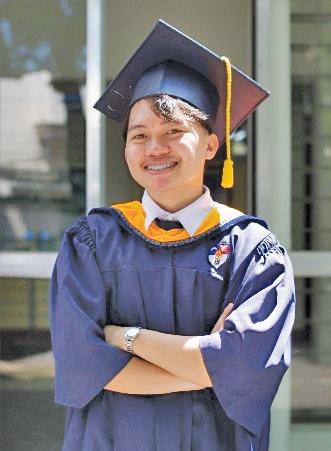

cum laude from Xavier University-Ateneo de Cagayan also in 2025.
“My SM scholarship inspired me to work harder, persevere through challenges, and strive for excellence in everything I do,” he said.
The newly minted CPA admitted he encountered challenges pursuing his college degree and formal review for the licensure exam. But he wasn’t disheartened and considered these setbacks as stepping stones to achieve his dreams:
“I am blessed to have received support from SM Foundation, and I always use that support to rekindle my passion and keep myself focused on my goals.”
On passing the boards and being one of the top-notchers, David shared that “I burst into tears and was comforted by the embrace of my parents and siblings. Those tears signified the culmination of my academic journey and the realization that I could finally move on to a new chapter of my life—as a professional. I am very grateful to God for hearing my prayers and being with me throughout college, during my review phase, and during the actual board examination. It feels surreal because I used to daydream that maybe, someday, I could also become a topnotcher, and now I am living that dream. I cannot stress enough my gratitude to my parents, family and friends, professors and lecturers, and the SM Foundation for helping me realize this dream. I am especially thankful to the foundation for seeing my potential and
trusting in my capabilities.”
Aside from the recognition of being a board passer, David sees this achievement as an inspiration to uphold excellence and integrity as he begins his journey as a professional. He hopes to take on leadership roles and mentor aspiring accountants as one of the means of paying it forward: “I want to build a career that is founded on excellence, integrity and service while creating a good impact on the people and communities.”

Sacrifices paid off MEANWHILE , the scholarship instilled a strong sense of responsibility, discipline, perseverance, and gratitude for Dela Cruz who comes from Malolos City. A 2025 summa cum laude graduate from National University-Baliwag with a degree in Accountancy, she said SM scholars are always
reminded to do things for social good and to make the most of every opportunity entrusted to them.
“I saw preparing for and eventually passing the board exam as my way of giving back and honoring the people and institutions that carried me through my journey, and that includes SM Foundation,” said Dela Cruz. “The review process was demanding and filled with challenges, but the resilience and determination I cultivated as an SM Scholar enabled me to remain consistent, adapt to setbacks, and stay focused on my goals.”
Among the top-performing examinees, she said the review season was not easy and there were moments of exhaustion, selfdoubt, and unexpected challenges: “But because I knew that my success was never just for myself, I kept going. The values I learned as an SM Scholar reminded me to remain committed, persevere through difficulties, and maximize the opportunities that came my way.”
In many ways, passing the boards for her was not only a personal achievement, but also “my expression of gratitude to everyone who believed in me.”
She was overwhelmed and speechless when she learned she passed the board exams: “I couldn't fully process what I was feeling at that moment. Unlike the reaction videos I often see online, I didn't have an emotional breakdown or a crying moment. I think it was because I was experiencing so many emotions all at once— overwhelmed, [thankful and elated, while realizing] that every sacrifice and hardship had been worth it.”
More than anything else, Dela Cruz said that hurdling the CPALE was the result of countless prayers, sacrifices, and the unwavering support of the people who believed in her. It was a humbling reminder that no achievement is ever accomplished alone.
Like Bagacay and David, being a board passer has opened numerous opportunities for Dela Cruz: “I see it as motivation to continuously strive for excellence, uphold integrity, and remain committed to lifelong learning. I also hope to use this achievement as a platform to inspire and mentor aspiring accountants, showing them that success is attainable through hard work, determination, and faith.”
Tourism Editor: Edwin P. Sallan

Photos by Edwin P. Sallan
EASILY one of the most popular tourist destinations in Palawan, Coron is known for its breathtaking scenery, crystal blue waters, World War II wreckage, and towering limestone formations.
It’s no surprise that it’s also teeming with resorts and has seen an uptick in hospitality development in recent years. While there are concerns that such “progress” may come at the cost of compromising the island paradise’s ecosystem and biodiversity, that is thankfully not the case here, as tourism stakeholders are increasingly discussing sustainability not simply as an environmental responsibility, but as a business imperative.
One of those stakeholders is the Araw Hospitality Group. Inspired by a desire “to redefine the travel experience as well as hospitality management,” the group, under the stewardship of PJ Lhuillier, Inc. Chief Enlightener and CEO Jean Henri Lhuillier, now manages several properties in key tourism destinations in the Philippines, including the recently relaunched Bacau Bay Coron.
In addition to refreshed accommodations, three new dining concepts, and a revitalized wellness offering, the resort vows to continue to evolve with changing traveler expectations and deliver distinctly localized experiences in Coron.
“Coron is one of the world’s most breathtaking destinations. Its true value lies beyond its scenery. It lies in its culture, its people, and its fragile ecosystem,” Lhuillier told B usiness M irror and other media during the relaunch event.
“Bacau Bay was a natural fit because its identity is inseparable from its location. Named after the bakawan trees that surround it, the property already had a powerful story rooted in place. Our role was to amplify that story and create an experience where luxury, local culture, and environmental consciousness coexist,” he further noted.
Beyond island-hopping ISLAND hopping in Coron is often considered the highlight of every visit here, and my recent experience is no exception. While I was only able to experience it for only half a day during my first visit here last year, experiencing it for the better part of the morning and afternoon makes for an even more rewarding experience.
Bacau Bay’s island-hopping experience kicks off at the resort’s picturesque Sirena Pier dockyard, which also doubles as a bar by sunset. Then it was off to Kayangan Lake, dubbed the country’s cleanest lake with


its crystal-clear blue waters often sandwiched by tall limestone cliffs.
By lunchtime, it was off to Atwayan Beach, a popular stopover where our group had our lunch. Like the shoreline of Kayangan, there are also sari-sari stores to buy food and snacks in between swimming and snorkeling activities. The rest of the afternoon was spent at the Twin Lagoon, where more swimming, snorkeling, and kayaking were done while exploring the mystical lagoons.
Returning to Bacau Bay, we were treated to Sundown Sessions at Sirena Pier Bar with drinks and cocktails that included kebabs and chicken satay. The jaw-dropping sunset view was the perfect exclamation point to an eventful day exploring the islands.
‘Gateway to nature’s wonders’
THAT’S the tagline that greets visitors of Bacau Bay Coron’s official website, and as hype as it sounds, the resort pretty much delivers on this promise.
The need to balance growth with preservation is something that’s not lost on Lhuillier and the rest of his Bacau Bay team. That means embracing a model that prioritizes quality of experience over volume at this resort.
“We [at Araw Hospitality] didn’t just change the management; we heavily reinvested in the asset to deliver a complete premium ecosystem,” Lhuillier said during the relaunch.
The investment is reflective of Araw’s growing confidence in Coron as a destination capable of supporting

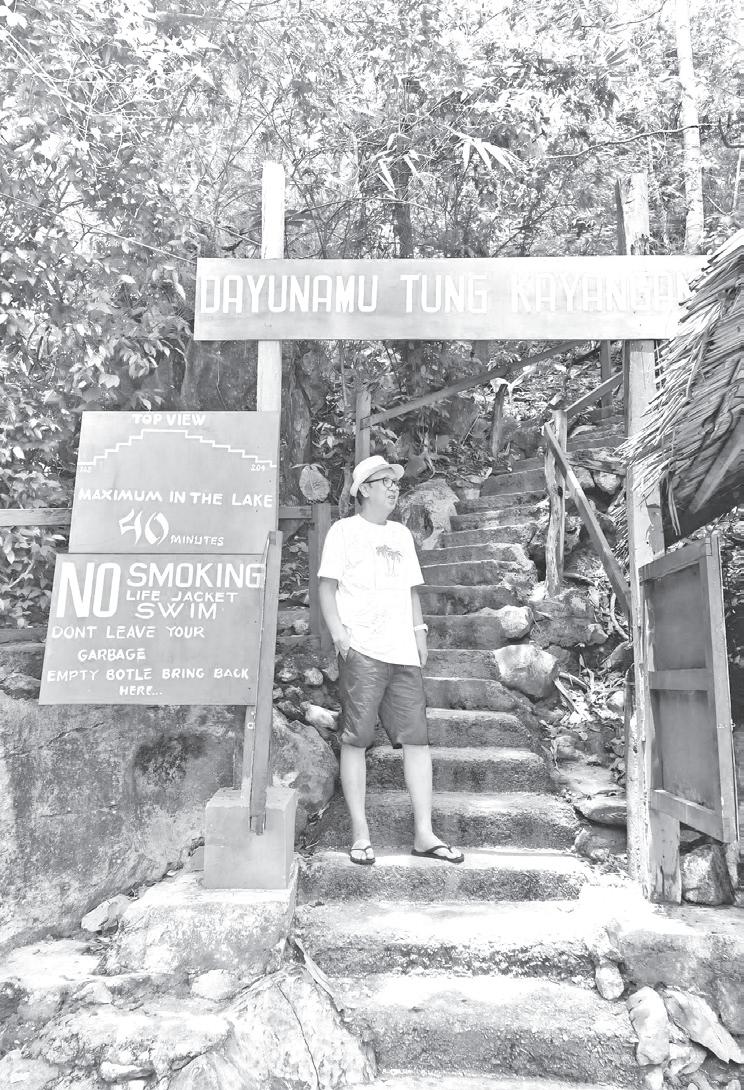
higher-value tourism experiences. It also signals a belief that hospitality properties can play a more active role in shaping the future of local tourism economies.
As part of its transformation, Bacau Bay is positioning itself not only as a resort but as a platform for showcasing local culture, supporting community participation, and encouraging more thoughtful travel experiences.
Premium conveniences
EVEN as Bacau Bay Coron provides enough of an escape from the usual daily grind, the resort also has more than enough amenities that will not make visitors miss the lifestyle they momentarily left behind.
This includes a pool and a fitness center to stay in shape, and the Alon Spa for relaxing, signature massages, and other pampering treatments.
As for dining options, we were able to experience the Amihan Restaurant, where local culinary tradition
Kelly Austria
IKNOW Cubao. I have spent many nights in Cubao Expo, its bohemian enclave of cafés and bars, vintage shops, and creative spaces. As someone who frequently travels, I have passed through its bus terminals many times on my way to different parts of the country. And for ten days every November, Cubao becomes home during the QCinema International Film Festival, which I help organize.
With all these memories, I’ve always had a soft spot for Cubao. So, when I received an invitation to join a tour of Cubao through the lens of a spirit questor, Filipino playwright, and novelist known for his “Cubao” book series, I immediately said yes.
On a Saturday afternoon, running on barely enough sleep after an early trail running event at Timberland Heights hosted by HOKA, I found myself walking the streets once again. This time, it was for the LiteraTOUR: Ang Cubao ni Tony Perez, a tour that blends place, imagination, and literature into a richer way
of seeing the city.
The tour was organized by Pinoy Reads Pinoy Books, a community that champions Filipino authors and encourages conversations around local literature, and was guided by Jayson Vega, who helped conceptualize the tour.
The program was organized as part of the initiatives of the National Commission for Culture and the Arts in celebration of National Literature Month.
We started at the Smart Araneta Coliseum, which, in Tony Perez’s mythos, serves as the center of the mythical kingdom called Berbanya. In his paranormal fiction series Cubao Ilalim, the “Big Dome” functions as the epicenter of a supernatural conflict, where the protagonist investigates the disappearance of young men linked to modern incarnations of mythical characters from the Ibong Adarna epic.
From there, we walked to the Farmers Market.
While famous today for paluto and fresh seafood, Perez presents a seedier side of the area in his short story “Ang Mga Manananggal” from the anthology Eros, Thanatos, Cubao (1994).

In the story, the character Dale becomes obsessed with the Manayon sisters. He follows them into the dark backways of the public market, witnessing them shed their modest daytime personas for a secretive, erotic life, revealing a stark contrast between their public and private selves.
From the market, we crossed the street and stopped in front of several of Cubao’s motels.
Cubao has long been home to many motels and bars that serve the LGBTQ+ community. Many years ago, I would often meet friends from Guys4Mountains, an outdoor group mostly composed of LGBTQ+ mountaineers, in one of the many videoke bars in the area, places also frequented by members of the community.
As a transit hub, Cubao has long been a place of movement and anonymity, making motels natural settings for stories shaped by secrecy and hidden desire.
These motels and bars are central to Perez’s exploration of LGBTQ+ experiences.
In his story “Ang Tikbalang,” (also from story collection: Cubao pagkagat ng Dilim) Perez uses the





and modern reinvention conspire to enhance traditional Filipino favorites or classic continental fare with a fresh contemporary twist.
There’s the Pugon Beachside Pizzeria, which, as its name suggests, specializes in wood-fired pizzas and Italian-inspired pasta dishes. And then there’s Kaigan Teppanyaki Bar, a coastal Japanese resto that highlights live cooking entertainment of popular Japanese favorites.
Yes, entertainment is a big part of the dining experience at Bacau Bay Coron. There are acoustic singers at both Amihan and Pugon, which also paraded fire dancers for our visual treat.
There’s also Isla Pool Bar for cool cocktails and fresh shakes. It’s open air lounge also serves as an ideal hangout for nightcaps.
The future of tourism AS destinations mature and traveler preferences
evolve, Lhuillier hopes that Araw’s approach in managing Bacau Bay Coron “will set the benchmark for sustainable, premium hospitality in the region.”
“The future of tourism in destinations as popular as Coron cannot rely on mass models; it must shift toward value, cultural preservation, and environmental stewardship,” he pointed out.
Araw’s philosophy mirrors an emerging trend as more travelers are setting their sights on meaningful experiences, wellness, local culture, and environmental responsibility. In this regard, Lhuillier sees hospitality operators as key contributors to that future.
“By proving that a resort can offer world-class, multi-concept dining and high-end wellness while remaining loyal to its community and eco-roots, we hope to inspire a more mindful, sophisticated, and sustainable trajectory for Coron’s tourism industry,” he concluded.

mythical horse-headed trickster not as a monster, but as a metaphor for the “urban satyr,” a figure representing the primal and hidden desires of those living in the city’s underbelly. Our walk continued to the newly built Barangay Hall of Barangay Kaunlaran. Inside, a welcome cool from the scorching heat outside, we heard more stories from Tony Perez. Jayson also shared stories from Perez’s collection two-volume Sitio Catacutan stories, of which the story Traysikel, is about a tricycle driver whose soul wanders Cubao after a violent death; while Ang Damit ng Bakla, a psychological horror story about a cursed garment that brings misfortune to those who wear it. From the Barangay Hall, I took a more comfortable route by van while the other participants continued the walking tour along the streets of Cubao. They walked the stretch of P. Tuazon, the setting of “Ang mga Lamanlupa,” a story about engkantos whose home was disturbed by the construction of the P. Tuazon underpass, leading them to unleash
havoc on the barangay. They also passed by Ponciano Bernardo High School, a school mentioned in some of Perez’s stories, before visiting the Planas II and Planas III area, including the basketball court that served as the setting of the barangay gay beauty pageant in “Ang Diwata” from Cubao Pagkagat ng Dilim. The story follows a nature spirit struggling to survive within Cubao’s polluted urban landscape.
According to Vega, he chose the works of Perez because “the spirit of place, that is Cubao, is very powerful and palpable in his stories,” explaining that Cubao in Perez’s works is not merely a backdrop, but “a character that shapes and informs the lives of the
made even more meaningful as the tour took place close to the first anniversary of his passing.
A10 Saturday, June 27, 2026
Editor: Angel R. Calso
By Jon Gambrell, Matthew Lee & Konstantin Toropin
The Associated Press
UBAI, United Arab Emir -
Dates—A United Nations agency paused the evacuation of ships through the Strait of Hormuz on Thursday after the British military said a vessel was hit by a projectile off the coast of Oman following the passage of several tankers that used a route backed by the U.N.
The head of the International Maritime Organization said the plan to move stranded ships out of the Persian Gulf through the strait will be on hold until the agency can confirm safety guarantees for the ships on the evacuation list and in the region.
The report of a strike came hours after Iran threatened vessels to stop using the route through the strait without Tehran’s permission. The vessel that was attacked was not part of the evacuation effort, said Arsenio Dominguez, the U.N. agency’s secretary-general.
A US official told The Associated Press that the vessel was hit by an Iranian drone.
The official, who spoke on condition of anonymity to discuss a sensitive situation, said the merchant vessel Ever Lovely was attacked by a drone being flown by the Iran’s paramilitary Revolutionary Guard.
Following reports of the attack, Iran’s Persian Gulf Strait Authority—a new government agency established to control shipping in the strait—wrote on X that transit outside its own designated routes “will not be covered by the guarantee of safe passage.”
The United Kingdom Maritime Trade Operations center said the vessel sustained damage, but it reported no injuries or environmental effects from the attack off the coast of Oman.
An alternative passage would relieve pressure on economy
THE opening of an alternative passage through the vital waterway would relieve pressure on the world economy and remove Iran’s

main source of leverage in ongoing peace talks with the United States.
US Secretary of State Marco Rubio, on a visit to the Gulf to reassure American allies, said Washington was committed to the new route and ensuring that ships are able to transit the strait.
“If that stops, then we’re going to have a problem,” Rubio said Thursday before the report of the strike on the ship.
Traffic through the strait increased in recent days but was still well below prewar levels. Oil on Thursday briefly dipped below its last prewar price of just under $73 per barrel, a sign that the market believes the situation is improving.
The US and Iran are still debating terms of an interim peace deal, including issues such as getting ships through the narrow mouth of the Persian Gulf and addressing the future of Iran’s stockpile of highly enriched uranium.
Under the memorandum of understanding signed last week, the US and Iran have 60 days to iron out the details. As talks are held behind closed doors, US President Donald Trump and Iranian leaders have seemed to negotiate in public, trading threats and claiming concessions the other side denies. Meanwhile, a flare-up of fighting in Lebanon between Israel and Iranian-backed Hezbollah militants threatened the wider truce. Lebanon says five people have been killed by Israeli strikes

over the past two days. Iran says the tentative deal to end the war would require Israel to withdraw from Lebanon—a condition Israel has rejected.
More ships pass through the strait, but far fewer than before the war OIL tankers, led by the Stoic Warrior vessel, sailed along the United Arab Emirates and then Oman early Thursday, passing by Oman’s Musandam Peninsula fairly close to the shore. The route was laid out by Oman and the International Maritime Organization.
North of the route is a corridor in the center of the strait where ships moved freely before the war, transporting about a fifth of all the world’s oil and natural gas.
Iran said it mined that passage after the US and Israel attacked it on Feb. 28. At least one mine has been sighted there.
Though some ships had been getting out of the strait, with US military support, the U.N. agency’s effort was the latest to free trapped vessels. The shipping company Maersk said its container ship, the Maersk Baltimore, and another chartered vessel made it out on Thursday.
Last week, 125 vessels crossed the strait, up from 33 the week before, according to marine data and analysis firm Lloyd’s List Intelligence.
According to S&P Global, Wednesday saw 78 transits, the most since the war began, but still below the daily prewar average of 130 or more.
Iran says the new shipping route is ‘unacceptable’
THE naval arm of the Revolutionary Guard issued a warning Thursday against using the new route.
In a statement carried by Iran’s state-run IRNA news agency, naval officials said the route was
established without notice or coordination with Iran, calling it “unacceptable and completely dangerous.”
“The only authorized route for passing through the Strait of Hormuz is the one declared by the Islamic Republic of Iran,” the Iranian force said. “Vessel traffic outside these routes is extremely dangerous and prohibited.”
“Violators will be dealt with,” it added, without elaborating.
On Wednesday, the Guard threatened one tanker over the radio, with a soldier warning, “You are in range of my missiles and maybe (I) fire on you,” according to the private security firm Ambrey.
Rubio says the US will ensure there are no tolls on ships RUBIO met with foreign ministers from the six-nation Gulf Cooperation Council to assure them that their interests would be protected in any agreement with Iran.
Those countries, including major energy producers reliant on the strait for exports, came under attack by Iran after the start of the war.
“There is no part in this deal that’s undertaken that in any way undermines the security, the stability or the prosperity of any of our partners in the Gulf region,” Rubio said at the meeting in Bahrain.
Bahrain’s foreign minister, Abdullatif bin Rashid al-Zayani, said the agreement brought a glimmer of hope but stressed that it was “critically important that Iran adheres to its obligations.”
Lebanon remains a flashpoint
A LULL in fire between Israeli forces and Hezbollah that started Sunday began to show cracks after Israel said it targeted Hezbollah militants.
Lebanon’s health ministry said Thursday that three people were killed by an Israeli strike on a car in southern Lebanon.
Hezbollah has called the recent strikes a ceasefire violation but has not retaliated. The Israeli military said Thursday that it fired on two separate groups it suspected of being Hezbollah members. The strikes came as Lebanese and Israeli officials were in Washington discussing a proposed phased withdrawal of Israeli troops from southern Lebanon.
Israel’s military also said Thursday that a reservist soldier was killed in southern Lebanon.
Lee reported from Manama, Bahrain. Associated Press writers David McHugh in Frankfurt, Germany, and Julia Frankel in Jerusalem contributed to this report.

Despite rosy joint statement, Gulf states voice concerns about Iran deal process
By Matthew Lee AP Diplomatic Writer
MANAMA, Bahrain—US Secretary of State Marco Rubio said Thursday that relations between the United States and its Gulf Arab partners are rock solid, despite fears by some of them that they might be left out of discussions aimed at ending the war with Iran.
Rubio used a three-day, three-nation trip to the United Arab Emirates, Kuwait and Bahrain this week to try to convince all the members of the Gulf Cooperation Council that the Trump administration does indeed have their backs in negotiations to end the war President Donald Trump and Israel launched on Feb. 28.
That conflict sharply curtailed the region’s oil exports and saw several Gulf countries take direct retaliatory Iranian missile and drone hits.
“They’ve shared with us some very concrete concerns, ideas,” Rubio said in Bahrain, the last stop on the trip. “And when I say concern, the biggest concern is that they really just want to be informed every step along the way as we enter these negotiations at both the technical and political levels.”
“We want them to be involved and we want the views of all these countries to be reflected,” he said. “We don’t want to and will not be making any decisions or commitments that in any way undermines the prosperity, stability or security of our Gulf partners.”
While the US and the Gulf council members—Bahrain, Kuwait, Oman, Qatar, Saudi Arabia, and the United Arab Emirates—eventually released a joint statement after the meeting that extolled areas of agreement about the end goals of the Iran agreement, there were small signs of potential discontent.
The joint statement said the two sides “stressed the need to maintain momentum and unity as negotiations proceed toward a more permanent end
to hostilities and the shared objective of preventing Iran from ever developing or otherwise acquiring a nuclear weapon.” They also expressed opposition to any attempt by Iran to impose tolls, fees, or assert control over the Strait of Hormuz. They welcomed an Omani initiative to create a safe lane to evacuate stranded sailors from the waterway and stressed that any economic benefit Iran might realize “is conditional and reversible, contingent on Iran’s compliance” with the temporary agreement and a final deal.
The joint statement painted a rosy picture, yet the council secretary, General Jasem Mohamed Albudaiwi, suggested in a statement that doubts remain. He said it was emphasized during the meeting that any future understandings or arrangements must incorporate the requirements of the Gulf council countries to safeguard their interests and ensure “their security and stability.” His statement, released by the group, hinted that the Guld council members felt snubbed in the earlier talks.
“Such arrangements must be based on the principles of international law, respect for state sovereignty, good neighborliness, and non-interference in internal affairs, thereby contributing to the consolidation of regional security and stability,” he said.
Before Rubio spoke to the group, the meeting host, Bahraini Foreign Minister Abdullatif bin Rashid Al Zayani, said that while the memorandum of understanding is welcome, many questions remain outstanding.
“While this progress is encouraging, it is critically important that Iran fully adheres to its obligations,” including under the memorandum, he said.
He said that means preventing Iran from getting a nuclear weapon, preserving freedom of navigation, ending all missile and drone attacks, halting support for proxy groups and abandoning attempts to interfere with Iran’s neighbors.
Russia reports one of the biggest Ukrainian drone attacks on its soil and annexed Crimea
By The Associated Press
RUSSIAN air defenses intercepted 660 Ukrainian drones in a major nighttime attack on 12 Russian regions as well as the Russia-held Crimean peninsula, the Black Sea and the Azov Sea, Russia’s Defense Ministry said Friday. It appeared to be one of the biggest drone attacks on Russia and the illegally annexed Crimea since Russia’s full-scale invasion of Ukraine more than four years ago. The previous biggest Ukrainian attack over the past year was 556 drones on May 17. In an effort to turn the tables on Russia’s grinding war of attrition, Ukrainian long-range drones have for months been battering targets, including oil production and energy facilities, behind the front line and deep inside Russia. The campaign has

By Megan Janetsky, Andry Rincón & Juan Pablo Arraez The Associated Press
LA GUAIRA, Venezuela—
Venezuelans searched for survivors beneath collapsed buildings Thursday and rescue teams raced to northern areas rocked by a pair of powerful earthquakes that officials say killed around 235 people and left at least 4,300 people injured.
“Unfortunately, we have received around 235 patients who arrive without vital signs or die when they arrive at our health facilities,”
Health Minister Carlos Alvarado told state media Thursday.
The number of dead and injured is expected to rise with thousands reported missing after the 7.2- and 7.5-magnitude earthquakes that struck Wednesday evening, which was among the strongest in Venezuela in more than a century and was felt throughout the region.
Thousands were reported missing and buildings were evacuated as far away as Brazil’s Amazon.
In response to the devastation, the US Treasury on Thursday moved to waive some sanctions until Oct. 23 to allow transactions related to earthquake relief efforts in Venezuela that would otherwise be prohibited.
Meanwhile, in cities across northern Venezuela, panicked residents poured into the streets and searched for the missing in the debris.
The injured were pulled out of the rubble covered in dust and blood, among them children and animals. Venezuelan state TV showed dramatic images of rescues, including a woman who was trapped under a cement slab, only a barefoot poking out before crews managed to get her out alive. But few government search teams were
Continued from A10
choked Russian fuel supplies and military deliveries, stalling Russia’s efforts on the battlefield, Western officials and analysts say, and heaped pressure on Russian President Vladimir Putin.
Initial damage reports from Russia after the overnight attack provided scant information. Russia’s Defense Ministry usually doesn’t say what was targeted in Ukraine’s drone attacks, nor does it detail any damage.
Successful drone attacks
hearten Ukraine
THE major attack came hours after Ukrainian President Volodymyr Zelenskyy said on X that he had ordered “a 40-day influence operation,” believed to mean an escalation of attacks, aimed at “compelling (Russia) to end the war” after US peace efforts over the past year yielded no breakthrough.
The successful strikes, including hitting targets in Moscow and St. Petersburg, have buoyed Ukraine.
Zelenskyy said he got further promises of foreign support when he attended a recent summit of G7 leaders, including from US President Donald Trump, and that the promised aid will help Ukraine step up its effort to force Putin to the negotiating table.
A NATO summit next month could be another key moment in beefing up Ukraine’s military.
A Russian chemical plant is reportedly hit IN the Tula region just south of Moscow, a
seen outside Caracas.
In the capital, Dayana Delgado, mother of three children, asked where the heavy machinery was that government officials had promised, pointing out that neighbors were the ones digging through the rubble.
“I want to know where my child is, if he’s trapped or in a shelter,” she said of her 8-year-old son who was missing.
One mother sobbed and collapsed in grief as the bodies of her 3- and 10-year-old children were wrapped in blankets and carried away. Others screamed the names of missing loved ones. Some stood in silent shock.
The coastal region of La Guaira—north of the capital, Caracas—suffered some of the heaviest damage and casualties. The country’s main airport is there and was closed due to damage, complicating aid efforts.
Retired schoolteacher Juan Alberto Mendaño climbed through wreckage in La Guaira and past a dead body when he spotted a woman who was trapped and signaling with her hand for help.
“May God rescue her as quickly as possible,” said Mendaño. “When we heard the scream, there was nothing we could do.”
Offers to send aid and supplies poured in from around the world, including from the United States,
private house was damaged by the attack and a woman was wounded, Tula Gov. Dmitry Milyaev said in an online statement as reports of damage caused by the attack began to emerge.
He also said a power line was damaged and an unspecified industrial facility in the city of Novomoskovsk.
Russian independent online outlet
Astra reported that a chemical plant and a hydroelectric plant in Novomoskovsk were attacked and caught fire. The Associated Press couldn’t independently verify the report, and there was no official confirmation.
Moscow Mayor Sergei Sobyanin also reported that 47 Ukrainian drones were downed as they flew toward the Russian capital. He did not report any casualties or damage.
Ukraine says 2 civilians were killed in Russian attacks
TWO people were killed and seven others injured in Russian attacks on the northeastern Kharkiv region over the previous 24 hours, regional head Oleh Syniehubov said Friday.
Russian forces struck the city of Kharkiv and 16 other settlements across the region using guided aerial bombs and drones of various types, Syniehubov said.
Ukraine’s Defense Forces overnight stopped 174 of 189 Russian drones, the Ukrainian air force said. However, four of seven Iskander-M ballistic missiles that were fired got through air defenses and struck various locations, it said.
Ukrainian officials reported damage to energy facilities, homes and other civilian infrastructure in the capital, Kyiv, the southern Odesa region and Sumy in the northeast.

which seized Venezuela’s thenpresident Nicolas Maduro at the beginning of the year in a surprise military operation.
The natural disaster is just the latest challenge for acting President Delcy Rodríguez, the former vice president who took office in January after Maduro’s capture. Venezuela has been facing economic disarray for more than a decade, and many people reject the legitimacy of the political movement Rodríguez represents.
Rescue teams head to heavily damaged coastal region
VENEZUELAN authorities said they were diverting rescue teams from other parts of the country to La Guaira, which is no stranger to natural disasters: a 1999 mudslide killed thousands in what is considered one of the country’s worst natural disasters.
Rodríguez appealed to businesses Thursday to make heavy construction equipment available for rescue operations.
“We hope to rescue as many living people as possible,” said
Rodríguez, who referred to La Guaira as a “disaster zone.”
She said the first rescuers from the Dominican Republic were about to land and more from other countries were expected to arrive in the coming hours.
While Venezuela sits near multiple fault lines, its position straddling the South American and Caribbean plates makes strong earthquakes much less common than in other parts of Latin America.
The US Geological Survey said the first earthquake, with a magnitude of 7.2, hit west of Moron on the Caribbean coast, about 170 kilometers (105 miles) west of Caracas. It had a depth of 22 kilometers (about 14 miles). Just a minute later, USGS reported a second 7.5 magnitude earthquake, with a depth of 10 kilometers (about 6 miles) and an epicenter 16 kilometers (10 miles) southwest of Moron.
The one-two punch of the quakes, combined with the shallow seismic movements, amplified the destruction, said Marcos Ferreira, a geophysicist and researcher at
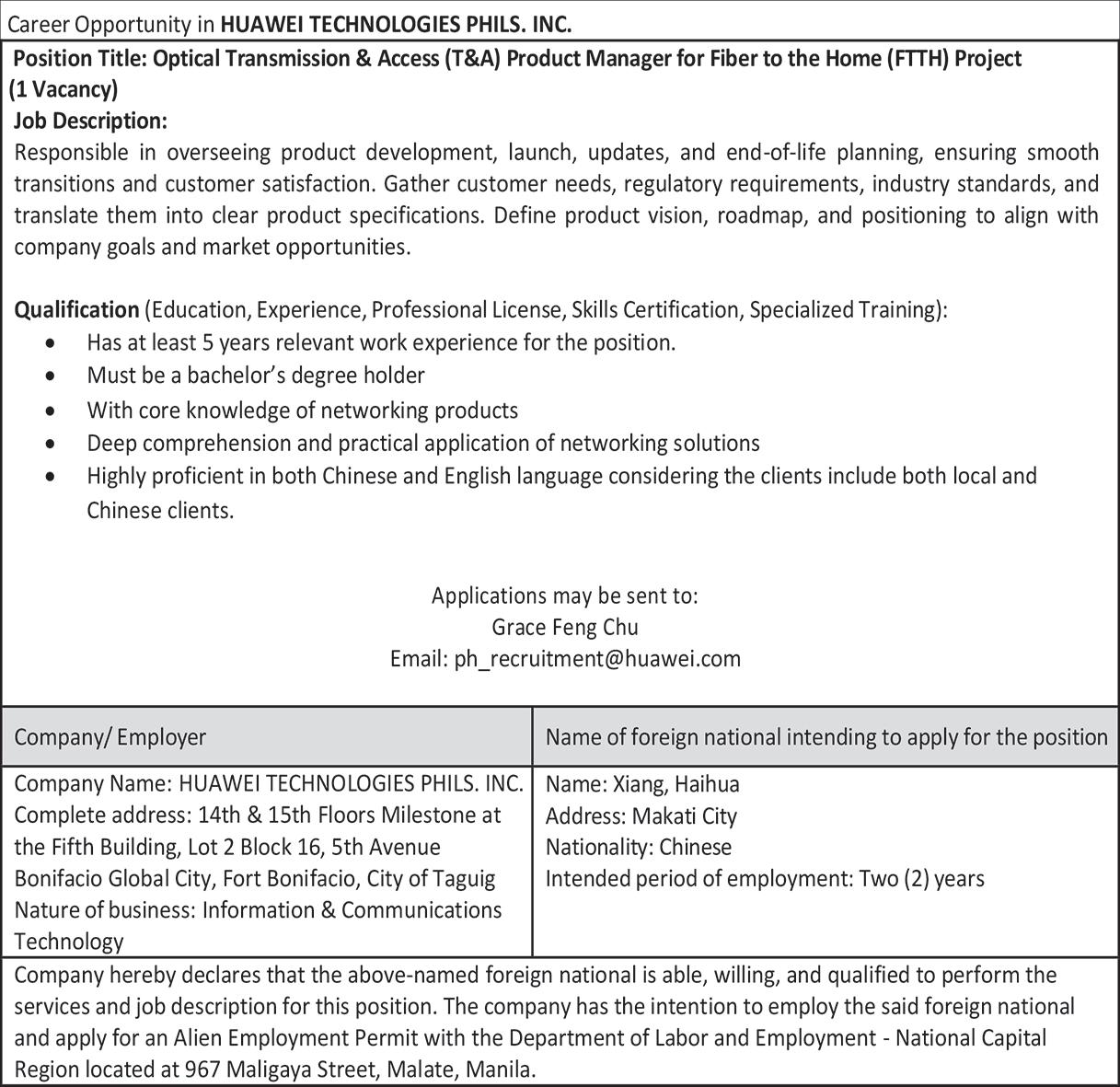

the Geological Survey of Brazil.
“It is as if I am screaming and then someone starts screaming, too. That amplifies the vibration and adds to the potential hazard,” Ferreira said.
Venezuela residents reeling from quakes
DURING the quakes, people ran from swaying buildings. Many were stunned Thursday morning as they saw buildings reduced to skeletons, furniture hanging out of windows and helicopters circling overhead.
In La Guaira, Cristian Carreño stared at his charred apartment building tilting precariously to one side.
“I lost everything,” he said.
“There are people still inside, I imagine, that couldn’t get out. It’s incredibly devastating.”
In downtown Caracas, hundreds spent the night huddled in parks, parking lots and other open spaces.
“We were afraid the buildings would collapse on us,” said María Cristina Díaz, a 41-year-old janitor. “My mother, my daughter and I were cold. We didn’t sleep a wink.”
Parts of the capital lost power and cellphone service, Rodríguez said. Subway services were suspended and natural gas was shut off, she said. Classes will also be canceled for several days, and the Ministry of Education said some school buildings would be used as shelters and donation centers.
Families began posting missing-person flyers with photos of loved ones, while others shared handwritten lists of names as they searched for loved ones. Venezuelans living abroad struggled to make contact with relatives.
Shortly after United Nations officials in Venezuela called on the
government to lift social media restrictions so people can get potentially life-saving information, Venezuelans in the country were able to access X. The site had been blocked by Maduro since August 2024, in an attempt to suppress the exchange of information among those who rejected his claim of victory in the July presidential election.
Several governments offered assistance RODRÍGUEZ declared a state of emergency in an address to the nation late Wednesday. She said the government was creating a $200 million reconstruction fund for damaged hospitals and homes.
Leaders from Mexico, Qatar, Brazil, Spain, Portugal, Canada vowed to send aid. A number of shipments were already on the way Thursday. Aid included emergency and military personnel, canine and search teams, medical supplies, water purifiers, airplanes and drones.
US Secretary of State Marco Rubio, who spoke to Rodríguez following the quake, said the United States was “immediately” deploying search and rescue teams, medical resources other assistance, though he acknowledged the closure of Venezuela’s main airport created logistical challenges.
“We have a whole-of-government response. It’ll be big; it’ll be fast; and it’ll be effective,” Rubio said.
Janetsky reported from Mexico City. Associated Press journalists Regina Garcia Cano, Mauricio Savarese, AnnaCatherine Brigida, Danica Coto, Clara Preve and Alexandra Olson contributed to this report.
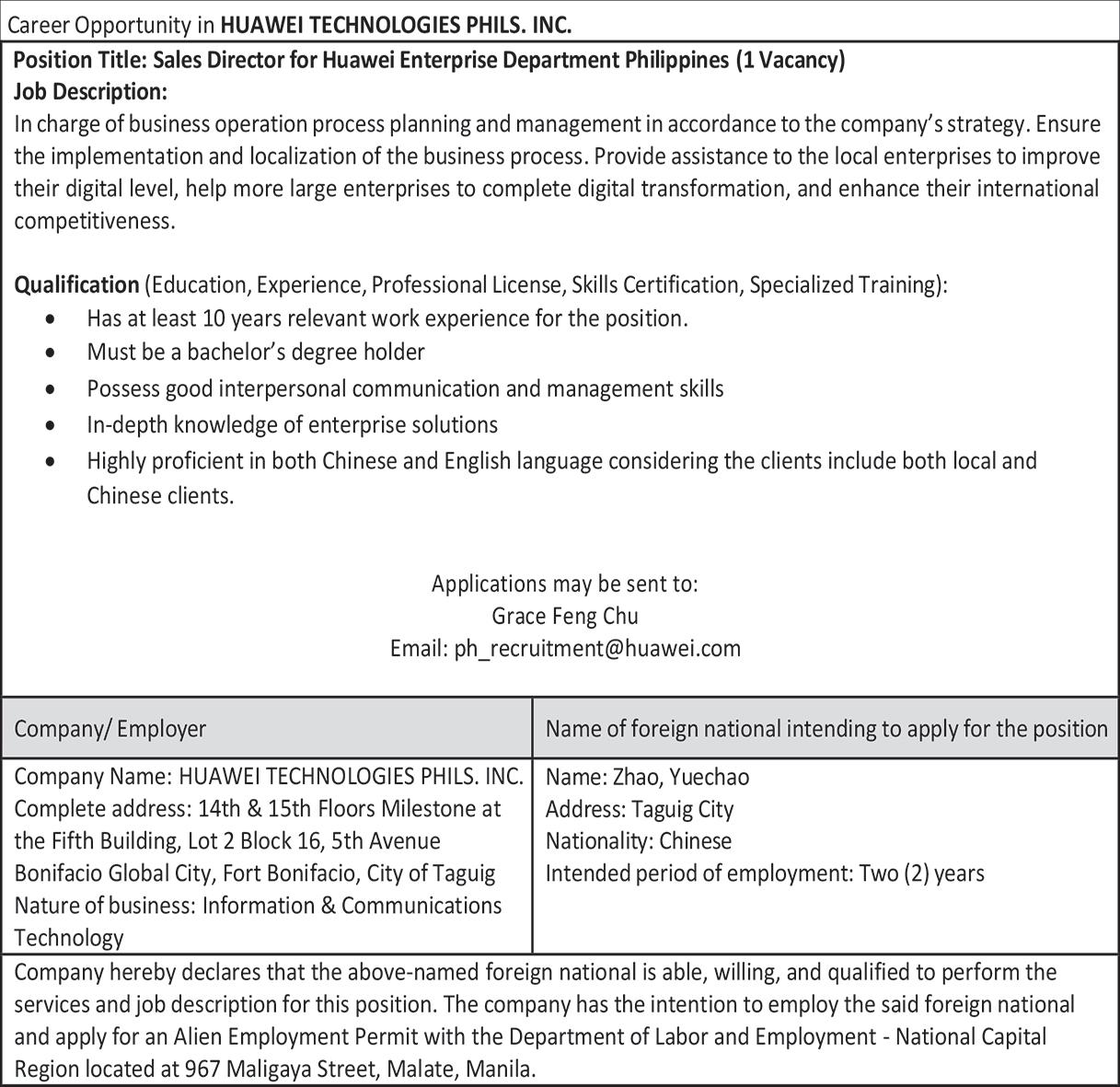



THE Wimbledon Championships gets underway, with Alexandra Eala taking the spotlight as basketball-crazy Philippines shifts gaze once more to tennis. Armed with more experience and a growing resume on the pro tour highlighted this year with a grasscourt title, Eala eyes a deep run in one of the grandest stages in tennis.
The third Grand Slam tournament of the season gets going on Monday.
Filipino sports fans, amid a surge of new tennis followers, are pinning their hopes on the emerging Filipina star to find consistency at the sport’s top tier as she begins her campaign at the All England Lawn Tennis and Croquet Club.
Eala takes on world No. 76 Renata Zarazua of Mexico in the first round, and a potential Round of 64 clash looms against seven-time Wimbledon champion Serena Williams.
The 21-year-old Eala displayed brilliance with impressive victories on the way to the top of the Women’s Tennis Association 25 Birmingham Open in England for her first career grasscourt title, and following it up with a semifinal appearance in the WTA 500 Berlin Open. However, the world No. 30 failed to replicate her form at the WTA 500 Bad Homburg Open in Germany, falling at the first hurdle against Elise Mertens.
Eala is also looking to do better after an early exit from her Wimbledon singles main draw debut last year when Barbora Krejčíková of Czechia beat her in the first round.
The Philippines has its first ever seeded player in Wimbledon, with Eala listed at No. 29.
That means Eala avoids the big guns early in the tournament. It doesn’t assure a breezy way past the Round of 128 and beyond.
The 30-year-old Zarazua is an Olympian and also a WTA 125 winner.
Top-ranked Aryna Sabalenka of Belarus will battle 18-year-old Teodora Kostovic of Serbia, while No. 2 Elena Rybakina of Kazakhstan faces Lois Boisson of France.
Williams plays as a wild card in her first WTA singles match in four years, the 44-year-old battling world No. 53 Maya Joint, 20, of Australia. World No. 23 Leylah Fernandez of Canada squares off with Janice Tjen of Indonesia.

By Andrew Dampf The Associated Press
SERENA WILLIAMS keeps on commenting half-jokingly about how “it’s summer” and “the kids aren’t in school” as the reasoning for her tennis comeback at age 44. Turns out family might really be the biggest factor behind Williams’s decision to return to the pro game after nearly four years away.
Her two daughters, eight-year-old Olympia and Adira, who is almost three, have been with her every step of the way as she played two doubles warmup matches before accepting wild card invitations to both the singles and doubles (with older sister Venus) competitions at Wimbledon, which starts Monday.
“Just finished a mean game of duck duck goose,” Williams said on X shortly after her singles wild card was announced last weekend.
A big hint about Williams’s return came when she posted a video of a training session last month with Adira on court helping with a resistance band.
“Rumor has it…I got a new
TEAM Philippines pulled off one of the biggest upsets of the Beach Handball World Championships, defeating three-time women’s champion Brazil, 2-1, to open the main round on Thursday in Zagreb, Croatia.
Au Adriano, Zhalyn Mateo and Josephine Ong shone as the Philippine women’s team, known in international handball as the Amigas, sealed the victory, 7-6, in the extra period.
trainer,” Williams said in her Instagram caption.
Christopher Eubanks, a recently retired pro turned Tennis Channel commentator, saw up close how Williams interacted with her family at her first tournament back at Queen’s Club, where he performed an on-court interview with the American great and doubles partner Victoria Mboko.
“There’s no changes to her legacy that will come as a result of this return. I don’t see anyone changing their mind about where Serena Williams stands all-time,” Eubanks told The Associated Press on Thursday of the 23-time Grand Slam singles champion.
“This is about more than just records. At this point, it’s more about family,” said Eubanks, who will be working for ESPN at Wimbledon. “Not just playing in front of her daughters, but having her daughters sit there and watch her train every day and have to wake up and put in the long, hard yards

Jay Adalem.
and felt like her ball striking was “as good as it’s ever looked.” He was also “really impressed with her serve.”
“A lot of times that can be a very difficult thing to get back after having an extended time off and her serve looked great,” Eubanks said. “She had one serve up near 120 mph. And the purity with which the ball comes off of her strings off the ground on both the forehand and the backhand side looks as dialed in as I’ve seen.”
Decelerating difficulties
THE biggest challenge for Serena Williams in singles will likely be her fitness and movement, which on grass is more nuanced than on other surfaces.
“The hardest part for me I always felt was the decelerating and the stopping because you have to take extra steps in order to come to a stop,” said Christopher Eubanks, who reached the Wimbledon quarterfinals in 2023 and a career-high ranking of No. 29 that year.
Williams won the last of her seven Wimbledon singles titles a decade ago.
“Whereas on a hard court you can kind of plant your foot, you can slide, you can decelerate a lot easier,” Eubanks said. “But on the grass it takes a lot more steps and a lot more pounding on the body before you can change direction. So that’s going to be the biggest thing to watch: Her ability to decelerate and stop out of the corners in order to change direction.” Williams might come forward to the net more and attempt to end points more quickly than she used to—kind of how Novak Djokovic has used his volleying skills more in recent years.
“That would be,” Eubanks said, “what I would expect to see.”
After dropping the first period, 14-26, the Filipinas rallied to edge Brazil, 23-22, and force the shootout. It was the Philippines’s first win in the main round of the Beach Handball World Championships.
“Our Philippine team showed so much pride today,” said Philippine Handball Federation president Ernesto
FILIPINO rookie Sophia Nicole Novino gallantly held her own for nearly four minutes before tapping out in losing to Kazakhstan’s Karakat Rakhybay in the women’s youth -47-kilogram final of the 11th Asia-Oceania Sambo Championships presented by the Philippine Sports Commission opn Wednesday night. Appearing in her first major international meet, Novino was fearless against Rakhybay, a two-time world silver medalist, fighting to a 1-all standoff early in


the match before finally succumbing to her more experienced rival at the Ninoy Aquino Stadium. A back-to-back silver medalist in the world youth meet in the 2024 and 2025 editions held in Larnaca (Cyprus) and Bogor (Indonesia), respectively, the Kazakhstani pinned her foe down with 24 second left in the four-minute bout, forcing Novino to surrender. Still, Novino’s silver medal was the best performance for the hosts, who had earlier secured three bronze medals in the opening day of the competition held organized by the Pilipinas Sambo Federation Inc.
Three more bronzes were added to the Philippine medal collection yesterday from Johan Matthew San Miguel, Daniel Justin Virtudazo and Julian Henry Flores in junior men’s combat sambo in the -58kg, -88kg and -98kg classes, respectively.
“This won’t be a big news for me, but a major learning experience,” said Novino, who sobbed after the loss, unaware at first that she battled a world-class grappler in the meet also held under the aegis of the National Sports Tourism Inter-agency Committee led by PSC chairman Patrick Gregorio.
“The crowd here and even the officials were glued to the court because they were delightfully surprised with how tough we played against the three-time world champions. This is how we gain respect in the international scene,” he added.
The Philippines, which dropped a 2-0 decision to Greece last week, will next face Norway in Group 2 of the main round, hoping to improve on its 12th-place finish two years ago in China.
Head coach Jana Franquelli said the challenge only gets tougher from here.
“There are no easy teams here,” Franquelli said.
The Philippines advanced to the 12-team main round after finishing the preliminary stage with a 1-2 record, beating Benin while falling to Sweden and Argentina.
“But I got a point from a strong opponent, this is the first step for me to strive for higher goals,” added the 17-year-old University of the East judo varsity team campaigner.
“This is her first major sambo international tournament but Sophia did very well,” national sambo team coach Jerry Legaspi Maganda said. “She put on a good show so I am proud of her.”
Scheduled to see action Saturday is top gold medal bet and defending women’s sport sambo +80kg divison champion Sydney Sy in the four-day tournament backed by Victory Liner.
Malacañang’s imprimatur left for Benny Boatwright to complete his naturalization process.
“We’re waiting for the President’s approval for Benny to become a naturalized Filipino,” Samahang Basketbol ng Pilipinas Erika Dy said on
was San Miguel Beer’s import when the Beermen won the Philippine Basketball Association Commissioner’s Cup three years ago and returned to help the Beermen in the same conference this year. Dy said Gilas Pilipinas—currently on the road for games against Australia and New Zealand in the second window of the FIBA 2027 World Cup Asia Qualifiers—could field multiple naturalized players in the Asian Games, much unlike in the FIBA which limits foreign reinforcement to only one.
“It’s no different from when we used Ange Kouame and JB [Justin Brownlee] in the 2023 Hangzhou Asian Games,” Dy said. “Hopefully, we can get the two to play together in Japan, it will be exciting to see them together.” Boatwright, according to Dy, has also satisfied residency requirements for naturalized players.
National Basketball Association star Jordan Clarkson,