

Govt to borrow ₧1.12T from local market in Q3
By Reine Juvierre S. Alberto
mestic debt market in the third quarter, as it shores up funding amid persistent financing requirements and expectations of higher interest rates.
The schedule of government securities offering the Bureau of the Treasury released on Tuesday revealed the government seeks to raise up to P700 billion in Treasury bonds (T-bonds) and up to P420 billion in Treasury bills (Tbills).
National Treasurer Sharon P. Al-

THEPhilippine economy is seen to remain sluggish this year compared to its peers in Asia as its growth pace could be hampered by weak household and business confidence, elevated inflation, and higher interest rates.
In its latest quarterly report, ANZ Research slashed its 2026 and 2027 gross domestic product (GDP) forecasts for the Philippines.
For 2026, ANZ Research slashed its growth forecast for the Philippines to 3.9 percent from 4.7 percent.
For 2027, it shaved off 0.6 percentage points from its initial 5.6 percent GDP forecast, bringing down its revised growth forecast for the Philippines to only 5 percent for next year.
For 2028, meanwhile, ANZ Research pegged the Philippines’s growth rate at 5.5 percent.
“The Philippines’s outlook is more constrained by weak household and business confidence, elevated inflation, and higher interest rates,” ANZ Research, the research arm of Australia-based ANZ Banking Group Limited, underscored in its latest quarterly report.
It also noted that public spending, which “likely bottomed” in
the first quarter of 2026, won’t likely see a material recovery until governance issues surrounding infrastructure projects are fully resolved.
Among the Asian economies scrutinized by ANZ Research, only the macro situation in Indonesia and the Philippines are expected to be “less sanguine,” which it attributed to weak growth and external positions. Moreover, it pointed out that monetary tightening will further “impede” growth in these two economies.
Broader Asian economy
SANJAY MATHUR , the ANZ Research’s Chief Economist for Southeast Asia and India, said that with the global tech super cycle “more than offsetting” the fallout from the Middle East conflict—which he said also appears to have concluded—“We are raising our 2026 GDP growth forecast for Asia [ex-China, India] to 4.7
By Bless Aubrey Ogerio
THE Philippines is among 22 countries identified by the Food and Agriculture Organization of the United Nations (FAO) and World Food Programme (WFP) as vulnerable to a possible strong El Niño event in late 2026, prompting the agencies to launch a $202-million appeal for early interventions to protect food security, agricultural production, and livelihoods.
The Joint Anticipatory Action Appeal, the first of its kind launched by FAO and WFP, seeks flexible funding to allow governments and humanitarian orga-
nizations to act before climaterelated disruptions escalate.
The appeal targets nearly nine million people across 22 priority countries, including the Philippines, Afghanistan, Pakistan, and Timor-Leste in the AsiaPacific region.
According to FAO and WFP, El Niño is expected to strengthen during the forecast period, increasing the likelihood of climate disruptions such as drought, floods, and storms across parts of Asia, the Pacific, Africa, and Latin America. In the Philippines and other parts of Southeast Asia, drierthan-normal conditions are
manza said this is the maximum amount the government is willing to borrow, providing them “flexibility” on the actual volume to be issued, which they could adjust accordingly depending on market conditions.
Almanza added the borrowing target was set after consultations with primary dealers to provide guidance on the maximum volume the Treasury may raise for a given month, guided by the government’s financing requirement for the year.
The national government seeks to borrow a total of P2.682 trillion this year, of which P2.054 trillion will come from domestic sources.
Broken down, P250 billion is programmed for the auction of T-bills, with tenors of 91-day, 182day and 366-day, every Monday for the month of June.
As much as P200 billion is planned for T-bill auctions in August, while up to P250 billion is targeted for September.
The Treasury said it reserves the right to change the final issuance volume, which will be determined upon the release of the Notice of Public Offering in the days leading up to the auction date.
The total volume of up to P700 billion does not include the potential issuance of cash management bills, or ultra-short-term debt pa-
pers used for managing liquidity. Meanwhile, the Treasury will also offer T-bonds with maturities ranging from three to 20 years every Tuesday. Up to P160 billion will be raised in July, as much as P130 billion in August and a maximum of P120 billion in September.
The Treasury noted that it reserves the right to revise the tenors and total volume to be issued, which will be determined upon the release of the Notice of Public Offering in the days prior to the auction date.
According to John Paolo R. Rivera, senior research fellow at the




TBy Lenie Lectura
HE Department of Energy (DOE) is soliciting stakeholder feedback on a draft circular that aims to auction nuclear energy capacity for staggered delivery beginning 2038 and spanning a 10-year period.
“The DOE is requesting parties to submit their comments on the proposed department circular on the “Guidelines for the Conduct of the Nuclear Power Generation Capacity Tender for the Nuclear Power Plant and Succeeding Nuclear Power Plants,” the draft circular stated. The comments should be submitted on or before June 30.
Once the circular takes effect, it will take six months before the terms of reference (TOR) and generic site selection parameters are issued.
“The tender capacity shall be designed for staggered delivery beginning 2038 onwards, unless otherwise modified by the DOE in the TOR....The initial staggered delivery program shall cover a 10year delivery horizon beginning 2038 and ending 2047, unless otherwise provided in the TOR,” the draft circular stated.
Thereafter, the bid invites will be made public followed by bidder registration and pre-bid conference. The auction proper is expected to take place in June 2027
while the notice of award is seen to happen by end of 2027.
The winning bidder has four years to construct its nuclear power facility, with first target delivery date in 2038 and second target delivery in 2040. The subsequent delivery tranches is from 2041 to 2047.
“The full staggered delivery horizon is from 2038 to 2047,” the DOE said, adding that it may revise the delivery schedule in the TOR to reflect the results of grid studies, generic site selection, licensing pathway assessment, market demand, technology readiness, investor feedback, or public consultation.
The DOE emphasized that the
construction of a nuclear power plant will commence once authorization from Philatom is secured. Likewise, the DOE will form a nuclear tender committee to supervise, administer, and conduct the bidding. The agency will also determine the nuclear capacity to be tendered for a specified delivery period. In the past, the agency said it was targeting to integrate nuclear power into the national mix by 2032, aiming for at least 1,200 megawatts (MW) of capacity by that year and 4,800 MW by 2050. The strategy includes exploring Small Modular Reactors (SMRs) and potentially rehabilitating the existing BNPP.
By Andrea E. San Juan @andreasanjuan
ROAD TO RELIEF Motorists queue at a fuel station to fill up their tanks following significant fuel price rollbacks implemented nationwide on Tuesday, June 23, 2026. The reductions in gasoline, diesel and kerosene prices, driven by softer global oil market movements, are expected to ease transportation and household costs, albeit temporarily. NONOY LACZA
state-run think tank Philippine Institute for Development Studies, the third-quarter borrowing plan reflects the government’s preference to rely more on domestic financing amid global uncertainty, peso volatility, and higher external borrowing costs.
The P1-trillion third-quarter borrowing target is “not necessarily concerning,” Rivera said, “as long as borrowings are matched by efficient budget execution and productive spending.”
This comes amid expectations of higher interest rates after the Bangko Sentral ng Pilipinas (BSP) hiked interest rates last Thursday and signaled that borrowing costs could still be raised to keep inflation in check.
The BSP raised the key policy rate by 25 basis points, sending the Target Reverse Repurchase (RRP) Rate to 4.75 percent. Interest rates on the overnight deposit and lending facilities were adjusted to 4.25 percent and 5.25 percent, respectively.
BSP Governor Eli M. Remolona Jr. said the central bank has “a lot” of room for further monetary tightening amid the uncertainty still surrounding the Middle East conflict.
PHL, Pakistan eyeing major rice pact, broaden trade ties
By Malou Talosig-Bartolome
THEPhilippines is negotiating a government-to-government memorandum of understanding with Pakistan for the supply of up to 1 million metric tons of rice, a move aimed at strengthening national food security and deepening bilateral economic cooperation.
Speaking at the 23rd Ambassadors’ Lecture Series of the Foreign Service Institute, Pakistan’s Ambassador to the Philippines Dr. Asima Rabbani underscored the historical significance of the deal. She recalled that in the 1960s, the Philippines gifted
Pakistan with an IRRI rice variety, which has since become a staple in Pakistan’s production.
“Today, the Philippines imports that rice,” she noted, framing the agreement as a full-circle partnership.
Rabbani said Pakistan is prepared
$202-M UN appeal flags PHL among at risk…
expected, while some areas may also face heightened risks from storms and flooding.
Per the UN agencies, the Philip -
Continued from A1
pines’s exposure to multiple climate hazards makes early preparation critical, noting that previous El Niño events showed how droughts, cy-
clones, and floods could occur close together and heavily affect vulnerable communities.
The potential climate shock comes

to be a reliable partner in the Philippines’s food security journey, offering rice at competitive prices. She pointed out that during recent supply constraints, Pakistani rice was among the most sought after by Philippine importers due to its affordability.
Beyond agriculture, the envoy highlighted expanding Pakistani investments in the Philippines.
These include trucking and logistics operations in Subic, Cebu, and Davao, as well as growing participation in the pharmaceutical sector, with about a dozen investors active.
Pakistan has also introduced three-wheeler vehicles to the local market, with assembly plants being set up through Pakistani capital.
The two countries convened their Joint Economic Commis-
as countries continue to face existing food security pressures caused by conflicts, economic instability, displacement, and weather-related disruptions.
The appeal was developed based on several factors, including weather forecasts, historical climate patterns, agricultural calendars, existing levels of food insecurity, and the ability of agencies to immediately implement response measures.
FAO and WFP said they are already prepared to provide anticipatory support to 1.2 million people expected to be affected by El Niño.
With an additional $167 million in funding, the agencies aim to expand assistance to another 7.6 million people across the 22 priority countries.
The funding will support measures tailored to local conditions, including cash assistance, distribution of drought- and floodresistant seeds, livestock protection, water storage systems, flood protection measures, agricultural advisories, and early warning information.
FAO deputy director-general Beth Bechdol said early action allows governments and communities to reduce losses before a crisis fully develops.
“We have the data, the tools and the evidence to identify risks before they become emergencies.
sion (JEC) in February to address trade and market access issues, particularly tariff challenges faced by Pakistan as a non-Asean member.
The JEC established new mechanisms to advance cooperation, including joint working groups on trade, agriculture, banking, and higher education, alongside a steering committee on agriculture and plans for a bilateral business council.
Looking ahead, Manila and Islamabad are targeting collaboration in agriculture, fisheries, halal certification, and financial services.
Pakistan is also keen to tap into the Philippines’s expertise in education and healthcare, citing interest in partnerships with nursing programs and Tesda’s technical training.
The challenge is ensuring that financing is available early enough to act,” Bechdol said. She added that having resources available before risks reach critical levels can help protect food production, reduce humanitarian needs, and allow families to safeguard their livelihoods.
For his part, WFP acting executive director Carl Skau said the world cannot afford another food crisis and emphasized the limited window to prepare before the possible El Niño impacts.
“With El Niño on the horizon, we have a narrow window to act so families are not forced into impossible choices later,” Skau said.
The agencies said every dollar invested in anticipatory action could generate up to $7 in avoided losses and response costs, based on previous experiences.
During the 2023-2024 El Niño event, FAO and WFP provided anticipatory assistance to more than 3 million people months before peak climate impacts occurred.
However, the agencies said current coverage remains below identified needs, underscoring the need for additional financing and preparation ahead of the 2026 forecast.
FAO and WFP said the systems, partnerships, and operational plans needed for early action are already in place, but additional funding is needed to deliver support at the scale required.


percent from 4.2 percent.” Mathur said upward growth revisions are concentrated in economies with “significant” exposure to the tech cycle—which are Malaysia, Singapore, South Korea and Taiwan, where tech exports are not only growing at an “unprecedented pace” but are also starting to lift plant and equipment investment.
In contrast, Mathur underscored that ANZ Research downgraded Indonesia and the Philippines’s growth forecasts.
Inflation ANZ Research underscored that only inflation rates in Philippines, South Korea and Vietnam, have so far exceeded official targets. Moreover, it noted that an uptrend is likely to “intensify” in the coming months due to emerging food price pressures driven by higher fertilizer prices and El Niño-related dry weather conditions, ANZ Research underscored.
“Second-round effects of higher energy prices will also take time to unwind, despite the recent moderation in crude oil prices,” it added.
Fiscal and monetary policy ON fiscal policy, ANZ Research flagged the Philippines as it “stands out with negligible fiscal support, reflecting tight fiscal constraints and legal rigidities in fuel and utility pricing.” On monetary policy, it underscored that Indonesia and the Philippines are “unique” in the current tightening cycle as their monetary policy dynamics are “not backed by strong growth.”
“The Philippines’s central bank is squarely focused on alleviating inflation despite subpar growth of 2.8 percent year-on-year in Q1 2026. We expect two more rate hikes of 25bp each, translating into a cumulative trough to peak tightening of 100bp,” ANZ Research said.
PH govt slashes growth outlook IN a televised interview on Monday, Department of Economy, Planning, and Development (DEPDev) Secretary Arsenio Balisacan disclosed that the Development Budget Coordination Committee (DBCC) is aiming to achieve at least 3.5 percent to 4.5 percent economic growth this year following adjustments in government spending and changing economic conditions.
“We hope to achieve at least in 2026, 3.5 to 4.5 with all these changes,” Balisacan said. The latest outlook came after the DBCC revised its 2026 gross domestic product (GDP) growth target to 5 percent to 6 percent from the previous 6 percent to 7 percent projection. (See: https://businessmirror. com.ph/2026/06/22/phl-lowersgrowth-hopes-sees-rosy-h2/)
Continued
April 2026, they expect the pace of growth to be steady. “From here, I’d expect steady but more calibrated growth. The key drivers will be the interest rate path, strength of credit demand, and capital market activity. If rates start to ease, that could re-energize expansion,” Ravelas pointed out.
While the latest data points to “resilient” domestic fundamentals and ongoing “financial deepening,” Asuncion underscored: “The pace of growth may not be sustained at recent highs as monetary conditions normalize and external uncertainties, including global financial volatility and commodity price pressures, remain.”
Going forward, the chief economist of Union Bank of the Philippines said maintaining balance sheet quality and prudent risk management will be key as the system continues to support economic activity.
Explaining the current state of the country’s financial system, Ravelas said it remains “stable, resilient and still growing.”
“But we’re clearly shifting from rapid expansion to a more sustainable, disciplined pace—which is actually a healthy sign for long-term growth,” he also noted.
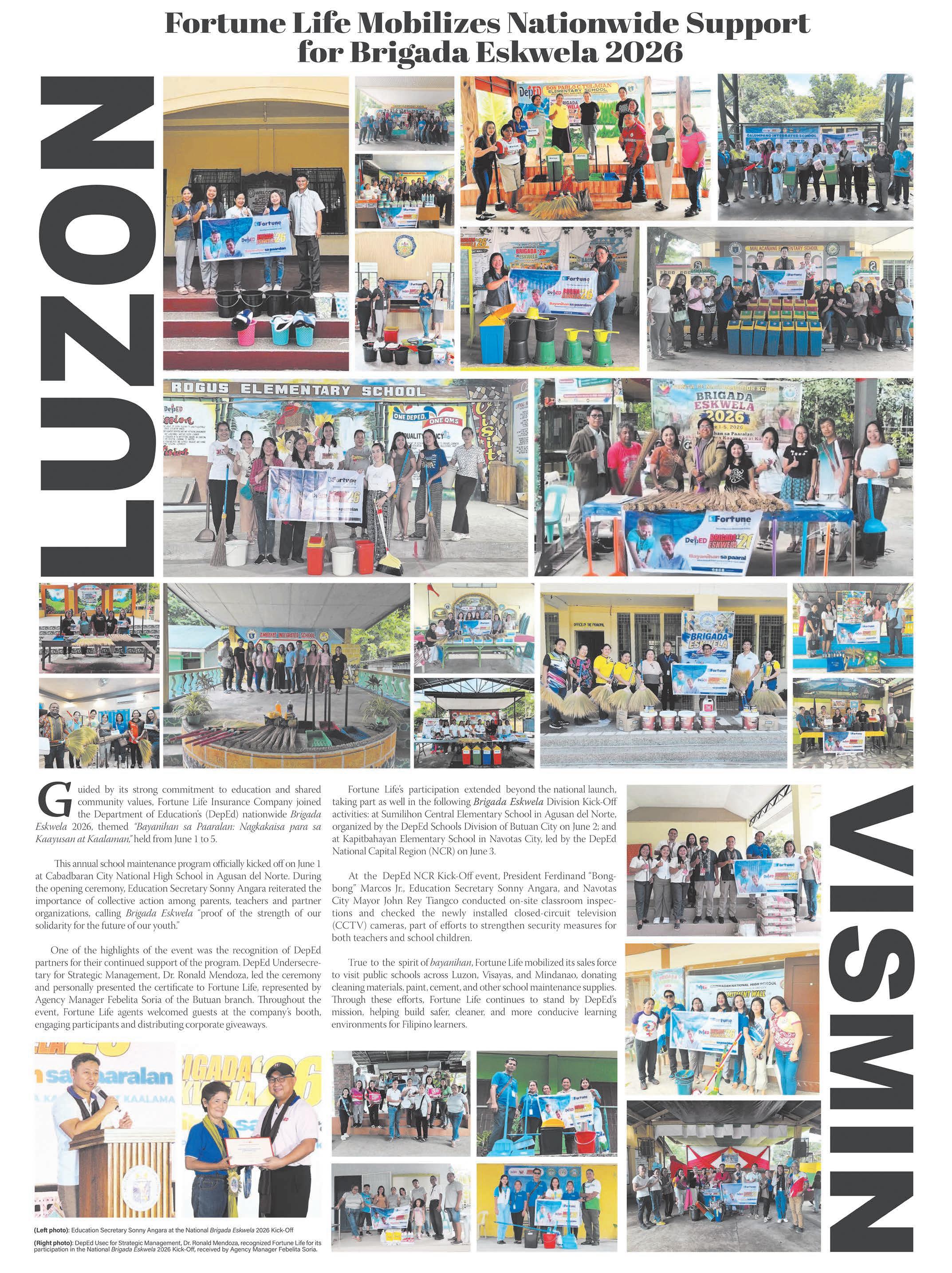
Brigada Eskwela 2026
DOTr ordered to resolve LRT Cavite-build issues
By Jovee Marie N. Dela Cruz @joveemarie

PRESIDENT Ferdinand R. Marcos Jr. has ordered the Department of Transportation (DOTr) to immediately resolve the issues delaying the Cavite segment of the Light Rail Transit Line 1 (LRT-1) Extension Project.
The directive came after Las Piñas Rep. Mark Anthony G. Santos raised concerns over the prolonged setbacks hounding the multibillion-peso infrastructure project.
Marcos instructed DOTr Secretary Giovanni Z. Lopez to coordinate closely with concerned agencies and stakeholders to remove bottlenecks, settle pending issues, and ensure the uninterrupted implementation of the long-delayed project.
The LRT-1 Cavite Extension, with a total cost of P64.915 billion, is funded through a hybrid scheme: P17.80 billion in official development assistance from the Japan International Cooperation Agency (JICA), P39.57 billion from private operator Light Rail Manila Corp. (LRMC), and P7.55 billion from the national government.
In his letter, Santos pointed to the C-5 Quirino Flyover in Las Piñas City as a major source of delay, saying it obstructs the alignment of the LRT-1 extension.
The P300.39-million flyover, completed by the Department of Public Works and Highways (DPWH) in April 2024, was constructed along the project’s original right-of-way during the tenure of then-DPWH Secretary and now Senator Mark A. Villar.
The lawmaker said this has contributed to years of delay in Phase 2 of the project and pushed the target completion of the Las Piñas and Zapote stations to 2028. The lawmaker also cited poor coordination between the DPWH and the DOTr, saying the alignment conflict should have been resolved before construction of the flyover.
Santos also raised concerns that proposals to link Metro Manila to the 3,500-hectare Villar City may have influenced discussions on the project’s alignment.
In August last year, Santos filed House Resolution 19 urging the House Committee on Transportation to investigate the issue and consider dismantling a portion of the flyover.
He argued that partially removing the structure would be more cost-effective than spending an additional P1 billion to redesign and realign the remaining stations.
Santos noted that Phase 2 of the project, which includes the Las Piñas and Zapote stations, “has been stalled for years and remains at a standstill.”
Despite the setbacks, progress has been made in earlier phases. In November 2024, the DOTr opened five new stations—Redemptorist-Aseana, MIA Road, PITX, Ninoy Aquino, and Dr. Santos—extending the LRT-1 line beyond Baclaran. The succeeding phases aim to extend the line through Las Piñas and eventually to Bacoor, Cavite, improving connectivity and mobility across southern Metro Manila.
Wage commission backs wage progression model
By Mary Jade Gale Jadormio
AS wage boards continue to deliberate on petitions seeking higher minimum wages, the National Wages and Productivity Commission (NWPC) announced it has endorsed a wage progression framework for lowpaid construction workers, which it expects helping improve productivity in one of the country’s largest employment generators.
In an advisory the commission issued, the NWPC encourages employers to adopt a “progressive wage model” (PWM) covering selected occupations in the construction industry.
The commission’s announcement came amid deliberations on workers’ petition to increase the minimum wage amid spikes in prices and a sluggish economy. The petitions include those from labor groups in Metro Manila for a P200 across-the-board increase. However, the commission’s advisory read that the “progressive wage model” it wants employers to adopt is “voluntary.”
The advisory added that the “structured wage-setting framework designed to ensure that covered lower-wage workers receive at least the applicable minimum wage, while providing clear and predictable pathways for wage progression.”
The framework for voluntary adoption covers carpenter helpers, mason helpers, painter helpers, tile setter helpers and plumber helpers.
According to the NWPC, the measure it wants employers to voluntarily adopt if they want to “seeks to address situations where workers remain at minimum wage levels despite acquiring additional skills and competencies.”
The construction sector accounted for 7.2 percent of the country’s gross domestic product in 2025 and ranked third among major industry groups in terms of employment as of February 2026. Moreover, employment in the sector expanded at an average annual rate of 4.3 percent from 2016 to 2025.

DA rides on ube virality, sets aside ₧2.6M into farm areas
By Bless Aubrey Ogerio & Butch Fernandez @butchfBM
THE Department of Agriculture (DA) announced it has invested nearly P2.6 million to expand ube production in key growing areas in the Visayas as the root crop recently gained popularity in the international scene and as demand is peaking way beyond supply.
A statement the DA issued last Tuesday read that the funding involved distributing more than 60,000 purple yam planting materials to 900 farmers across Leyte and Bohol, marking the first time the Bureau of Plant Industry (BPI) has undertaken a large-scale ube planting-material distribution program.
The project covered more than 60 farmer groups in major ubeproducing communities.
Beneficiaries in Bohol came from the towns of Dagohoy, San Isidro, Lila, Cortes, and Albuquerque, while recipients in Leyte were in Abuyog, Tacloban, Baybay, Bato, Maasin, Ormoc, Carigara, Mayorga, Palompon, Naval, Mahaplag, Kananga, Burauen, Calubian, and Inopacan.
The expansion effort comes as global demand for ube-based products continues to grow, with purple yam increasingly finding its way into ice cream, pastries, beverages and other food products sold in North America, Europe and
parts of Asia.
Per the agriculture department, increasing production is becoming more urgent as domestic supply has declined over the years despite rising international interest in the crop.
Data from the Philippine Statistics Authority showed that the Philippines exported about 1.7 million kilograms of ube worth $3.2 million in 2025, reflecting a roughly 20-percent increase from the previous year. Meanwhile, Bohol remains the country’s largest producer of ube.
Solon’s vow
THE popularity of the purple yam caught the eye of Senator Francis Pancratius “Kiko” N. Pangilinan who said last Tuesday that he is looking to boost the funding for its local production under next year’s budget.
In a panel interview in Naga City over the weekend, the senator vowed to provide more support for the production of ube, a naturally sweet, starchy vegetable grown by Filipino farmers.
“So, now what we’re doing is we’re preparing for the next budget cycle and look into how we can provide additional funding for the high-value crops program but also focus this time on ube,” Pangilinan said.
According to the solon, the DA’s high-value crop program provides essential support to localized
farming sectors having. allocated P500 million for cacao and coffee in the 2026 budget.
Panglinan, who also chairs the Senate Committee on Agriculture, Food and Agrarian Reform, said promised to focus on boosting the budgets of the DA and its attached agencies to “provide them the necessary tools to empower farmers and fisherfolk, strengthen the agriculture and fisheries sectors, and address current and looming challenges in the country’s food security.”
He also hopes to bank on opportunities created by the global interest in the country’s highvalue food products, such as ube and mango.
Pangilinan added he will still “figure out how to source the funds and make it happen.”
Meanwhile, BPI Director Gerald Glenn F. Panganiban said the funding allocation for ube production is intended to help farmers benefit from its “growing global popularity.”
“As ube gains worldwide recognition, we must ensure Filipino farmers are positioned to take advantage of the opportunities it creates,” Panganiban said.
According to the BPI, the funding for ube production initiative is part of government’s tack to identify agricultural products with strong export potential that can generate higher incomes for farmers while helping narrow the country’s agri-
cultural trade deficit.
Data from the Philippine Statistics Authority (PSA) showed that ube exports from the Philippines have risen in recent years, with the country shipping around $3.25 million, or nearly 1.7 million kilos, worth of ube in 2025 from $2.7 million in 2024.
The statistics agency also reported that the country’s agricultural trade deficit in April narrowed by 34.7 percent to $600 million in April from $919.64 million a year earlier, as exports jumped 33.2 percent to $1.029 billion from $772.68 million.
Agriculture Secretary Francisco Tiu Laurel Jr. said the government is looking to develop more high-value agricultural products capable of competing in overseas markets.
“With ube now enjoying global recognition, we see an opportunity to expand production, increase exports, and help reduce the country’s more than $10-billion annual agricultural trade deficit,” Laurel said.
The DA, however, has to face several challenges in ube production like limited access to resources, pests and diseases, lack of mechanization, and predominance of small-scale farming systems, according to a research paper by the Philippine Root Crop Research and Training Center, an institution integrated into the Visayas State University.
DAR condones debt, grants land titles to Davao ARBs
By Jonathan L. Mayuga @jonlmayuga
THE Department of Agrarian Reform (DAR) announced the condonation of P178.3 million in agrarian debt of 3,161 agrarian reform beneficiaries during a forum for ARBs from Davao City, Davao del Sur, and Davao Occidental last Monday.
According to the DAR, its officials also distributed 104 electronic land titles covering 196.0525 hectares to 239 farmers.
The debt relief was granted through the distribution of 1,501
“Certificates of Condonation with Release of Mortgage,” or “CoCRoMs.” under the New Agrarian Emancipation Act. The condonation covered 4,474 hectares of agrarian reform land and freed ARBs from unpaid land amortizations, accrued interests, and other obligations related to their awarded lands.
According to the DAR, its move “strengthened farmers’ security of tenure while easing the financial burdens that had long weighed on farming families across the three provinces.”
Held at the Digos City Hall Gym, the forum also featured the
distribution of individual electronic titles (e-titles) generated to ARBs parcelled from 16 collective “Certificates of Land Ownership Award,” or “CCloas.” The titles were awarded to 239 ARBs from Davao City and Davao del Sur, providing them with clearer, more secure ownership of the land they cultivate.
Filomeno Villegas, 62 of Davao del Sur said receiving a land title brought peace of mind. He said the title affirmed that the land he tills is now legally his and can be passed on to his children.
Aside from land titles and debt condonation, DAR also extended
additional support to ARBs and their organizations in the South Davao area. These included P1.7 million in organizational loans for farmer cooperatives, P125,400 in individual credit assistance for an ARB from Davao City, and P4.5 million worth of farm machinery and equipment for seven organizations in Davao del Sur. The department also released P1.38 million in relief assistance to 858 members of ARB organizations affected by an earthquake that struck offshore Sarangani and caused damage in several parts of Mindanao, including Davao Occidental, early June.
DOE backs Visayas LGUs declaring energy emergency
By Carmel Pedroza
CEBU City—The chief of the Department of Energy (DOE) expressed support to local government officials who opt to declare an energy emergency amid the frequency of yellow and red alerts in the Visayas power grid.
In a news briefing last Monday, Energy Secretary Sharon S. Garin said the DOE promises to immediately address the recurring power supply issues affecting the region, which have disrupted businesses and households alike.
“We do understand na marami po talagang yellow tsaka red alert and it is affecting hindi lang po sa negosyo kundi pati po ang household natin ; day-to-day lives of our consumers,” Garin said. (We understand that there have been many yellow and red alerts, and these are affecting not only businesses but also households and the dayto-day lives of our consumers.)
She noted that while the DOE is open to supporting local government units (LGUs) should they determine that declaring an energy emergency would help address local concerns, the decision ultimately
rests on their assessment of the situation.
“ Kung sa palagay po ng local government makakatulong po ang pag -declare ng energy emergency or emergency powers nila then we can support that activity, pero depende po yan kung anong assessment ng LGU.”
The energy chief added that the national government is already implementing measures to improve grid reliability and is not waiting for any emergency declaration before taking action.
Nainstraksyonan na kami ng presidente na we have some deliverables. Within one month kailangan maayos na yan or at least mabawasan na yung red tsaka yellow alert. We are hard at work with that,” Garin said. (The President has instructed us to deliver results. Within one month, the situation must be addressed or, at the very least, the number of red and yellow alerts must be reduced. We are working hard to achieve that.)
She explained that the DOE is coordinating with the National Grid Corporation of the Philippines (NGCP), the Energy Regulatory Commission (ERC),
the National Electrification Administration (NEA), and power generation companies capable of bringing additional capacity into the Visayas grid in the coming weeks.
DOE Undersecretary Mario C. Marasigan said the agency remains optimistic that supply conditions will improve as several power plants return to service and additional generation technologies are deployed.
However, yellow alerts have persisted due to the continued outage of several major generating units.
Marasigan said the DOE is awaiting the return to operation of three key power plant units—TVI Units 1 and 2 and PEDC Unit 3—that are expected to provide much-needed capacity to the grid.
He noted that Kepco Unit 3 has already resumed operations, providing some relief to the region’s supply situation.
As part of the government’s short-term response, Marasigan said the DOE is also pursuing alternative technologies that could inject an additional 260 MW into the Visayas grid. We have additional technologies
that can provide 260 megawatts of capacity to the Visayas, which will help us avoid yellow alerts in the power grid, he explained. The return of major generating units is expected to further strengthen reserves in the coming months. PEDC Unit 3 is now scheduled to return to service on July 6, slightly later than its earlier July 4 target. Meanwhile, PEDC Unit 2 is expected to resume operations by August 22, while Unit 1 is targeted to come back online by August 30.
Garin expressed confidence that the combined impact of returning power plants and additional generation capacity will help ease supply constraints and lessen the disruptions caused by recurring grid alerts. According to her, the DOE will not wait for an emergency declaration in the Visayas. We are already working on solutions, and hopefully the alerts can be reduced, even if they cannot be completely eliminated. At the very least, they should be limited so that businesses in the region will not be disrupted,” Garin said.
China taunts Philippines on arbitral ruling’s 10th year; DFA hits back
By Malou Talosig-Bartolome
THE Chinese Embassy in Manila has de rided the 2016 South China Sea Arbitral Award as “a political farce disguised in legal clothing,” taunting the Philippines to show what it has gained in the decade since the ruling was handed down.
Deputy Spokesperson Guo Wei questioned whether relations between Manila and Beijing had improved or deteriorated, whether the maritime situation had become more stable or more tense, and accused Philippine officials of “provoking China” despite President Ferdinand Marcos Jr.’s call to reset ties. He reiterated Beijing’s position that disputes should be resolved only through negotiations and consultations.
“China will firmly safeguard its territorial sovereignty and maritime rights and interests in the South China Sea, while remaining committed to resolving relevant disputes through negotia tions,” Guo said, urging the Philippines to “stop hyping up issues and engaging in provocations.”
The Department of Foreign Affairs (DFA) swiftly rejected the Embassy’s assertions, stress ing that the arbitral award was rendered by a tribunal constituted under Annex VII of the UN Convention on the Law of the Sea (UNCLOS), to which both countries are parties.
“The Award is final and binding and has become an unassailable part of the corpus of
international law,” DFA spokesman for maritime affairs Rogelio Villanueva Jr. said. “It is not and will never be illegal, null and void.”
Villanueva noted that the tribunal had dismissed China’s objections to jurisdiction, clarifying that the case concerned the interpreta tion and application of UNCLOS — including the legal status of maritime features, entitlements under the Convention, and the compatibility of certain claims with international law.
The DFA stressed that the Philippines acted within its rights as an UNCLOS State Party after years of fruitless dialogue with Beijing. It un derscored that the award has since been cited in other international decisions and judgments, and highlighted its findings on marine environmental protection, including obligations to safeguard coral reef ecosystems and biodiversity.
“As we commemorate the Award’s 10th an niversary this July, we highlight its resounding affirmation of UNCLOS and of the Convention’s dispute‑settlement mechanisms,” Villanueva said. “Respect for these rulings is essential to preserving the integrity, credibility, and uni versality of the Convention and the rules‑based order it embodies.”
The DFA added that the award stands as a guidepost for all States on the invalidity of exces sive or historical claims, the proper assessment of maritime features, and the obligations of States Parties to protect the marine environment.
Impeach prosecution to start with assassination plot, grave threats
THE House prosecution panel has submitted to the Senate impeach ment court its proposed sequence for presenting evidence in the impeachment trial of Vice President Sara Z. Duterte, placing the article on the alleged assassination plot, grave threats, and inciting to sedition at the forefront.
House trial spokesperson and Lanao del Sur Rep. Zia Alonto Adiong said the proposed order forms part of the panel’s June 22 submis sion but emphasized that it remains subject to the approval and possible modification of the impeachment court.
Adiong said the order was “carefully con sidered” based on both legal strategy and the need for public comprehension, noting that the proceedings are not only for the senator judges but also for the Filipino people.
“The sequence, according to the presenta tion of evidence, Article 4, assassination plots, grave threats, and inciting sedition against the government. Article 1: misuse of and misap propriation of confidential funds. Article 3, bribery and corruption within the Department of Education, and last is Article 2, unexplained wealth, false SALN, and continued business interest,” Adiong said.
The House trial spokesperson said that begin ning with the article on alleged threats would help the public immediately follow the opening part of the case, given the video footage already widely discussed in public.
Atty. Benjamin S. Tolosa Jr., legal spokesper son for the private prosecution team, described the grave threats article as the least complicated to present in terms of factual issues.
“For the grave threats, that’s the least contentious article, at least with respect to the facts,” Tolosa said.
He noted that the remaining articles may require additional legal processes, including requests for subpoenas, as the prosecution expects to call hostile witnesses whose at tendance may need to be compelled by the impeachment court.
“For the others, there’s a need for [a] request for issuance of [a] subpoena from the impeachment court,” Tolosa said.
The prosecution also explained that the unexplained wealth article is placed toward the latter part of the proposed sequence because of the volume of documents involved.
Adiong said the prosecution intends to reserve that article for later presentation because of the documentary load.
Despite outlining a preferred order, Tolosa stressed that the sequence is not final and may still be adjusted by the court as deemed appropriate.
“But of course, this is still subject to modifica tions as may be allowed and may be found to be appropriate by the impeachment court,” he said.
The House prosecution panel said the proposed structure aims to present the case in a logical and accessible manner—beginning with the most immediately understandable allegations, followed by those involving public funds, corruption, and more extensive documentary evidence.
‘Voluminous’ evidence
HOUSE impeachment lead prosecutor Gerville
Bill seeks to bar dynasties from using party-list route
By Jovee Marie N. Dela Cruz @joveemarie
LAWMAKERS, led by House Speaker Faustino G. Dy III, have filed a measure seeking to impose stricter safeguards against political dynasties, conflicts of interest, and undue political influence within the party-list system as part of broader efforts to modernize the country’s electoral framework and strengthen democratic representation.
Luistro and House prosecutor Joel Chua on Tuesday said the prosecution panel is looking for faster ways to complete the marking of “voluminous” documentary evidence in the impeachment case against Duterte.
In a press briefing, Luistro and Chua provid ed updates on the ongoing pre trial conference, where both prosecution and defense teams are marking exhibits and resolving procedural issues ahead of the July 6 trial date.
Luistro said the immediate challenge is the sheer volume of documents, particularly those related to the confidential funds article.
“I wish to share that, indeed, the documents for the confidential fund are really voluminous,” Luistro said.
She noted that the prosecution is assessing whether the marking of exhibits can still be completed by Thursday under the current setup.
The panel has already coordinated with Senate officials to explore ways to speed up the process.
Luistro said the prosecution wants to push through with the original July 6 timeline announced during the pre trial conference, making faster evidence marking necessary.
At present, four teams are handling the marking of exhibits—one team for unex plained wealth and three for confidential funds. Despite this arrangement, both public and private prosecutors have expressed uncertainty over whether the process can be finished within the target schedule.
Chua said the panel is also considering adding more teams and extending workdays, including possible sessions on days when the Senate is not normally in session. Fridays and Saturdays are likewise being considered, pending approval.
Luistro said documents from the Depart ment of Education involve about 1,900 records, while those from the Office of the Vice President exceed 2,000.
She added that the process is taking longer because the defense is also marking its own set of documents, requiring side by side comparison before final tagging.
Beyond exhibit marking, Luistro said the prosecution is still finalizing positions on several procedural matters that may be raised before the impeachment court. These include the possible requirement to disclose witnesses at least three days before presentation, participation rules for public and private prosecutors in witness examina tions, and the potential early opening of the BIR box, subject to court approval.
Asked if these concerns were included in earlier submissions, Luistro said the panel is still consolidating its position.
“We will be finalizing our position regarding those matters, and whatever will be the decision of the team, we might be filing a manifestation tomorrow,” Luistro said.
Luistro also said the prosecution continues to seek clearer descriptions from the defense on the purpose of its witnesses.
“Our comment on their purposes for which the witnesses are being presented is very general,” Luistro said.
Luistro said this is why the prosecution is asking for a more specific statement of purpose for witness presentation.
Jovee Marie N. Dela Cruz
House Bill (HB) No. 9906, or the New Party-List System Act, was filed on Monday. It includes provisions prohibiting individuals closely related to incumbent members of Congress, government contractors, and certain former elective officials from serving as party-list nominees.
The bill has been identified as a priority measure under the Legislative-Executive Development Advisory Council (LEDAC) and forms part of the administration’s key legislative reform agenda.
It was filed by Dy alongside members of the Party-List Coalition Foundation Inc. (PCFI), including Representatives Jose Teves Jr. (TGP), Jude Acidre (Tingog), Raymond Democrito Mendoza (TUCP), Terry Ridon (Bicol Saro), Brian Poe (FPJ Panday Bayanihan), JC Abalos (4Ps), and Minority Leader Marcelino Libanan (4Ps).
“The party-list system was created to expand representation, not to concentrate power in the hands of a few families,” he said.
“If we are truly committed to a more open, fair, and inclusive democracy, we must ensure that the party-list system remains faithful to its original purpose— giving underrepresented sectors and communities a genuine voice in lawmaking,” he added.
Under the proposed measure, individuals related within the second degree of consanguinity or affinity to sitting members of the Senate or House of Representatives would be disqualified from nomination or service as party-list representatives.
The bill also disqualifies incumbent elective officials and individuals who have obtained
government contracts, concessions, franchises, or public-private partnership agreements within five years prior to an election. Officers and controlling shareholders of corporations engaged in government contracts would likewise be barred.
Authors of the bill said former elective officials and candidates would be required to observe a one-election-cycle “cooling-off” period before they can qualify as party-list nominees.
They added party-list organizations must certify that they are neither directly nor indirectly established by political dynasties and are not linked to individuals with vested interests in government contracts.
The measure’s explanatory note highlights concerns that some party-list groups have become vulnerable to capture by traditional political interests, allowing individuals tied to dynasties or conventional electoral politics to use the system as an alternative route to legislative office.
Dy emphasized that the proposal is part of a broader package of electoral and political reforms being advanced in the House of Representatives to strengthen democratic institutions, enhance public trust, and expand meaningful participation in governance.
The bill complements the Anti-Political Dynasty Act, recently approved on third reading in the House. Together, these measures aim to promote a more open, representative, and accountable political system.
The bill also strengthens transparency requirements by mandating party-list organizations to maintain financial records, submit annual

reports, and disclose significant contributions. The Commission on Elections would be empowered to conduct audits and impose sanctions for noncompliance.
According to Dy, the reforms are designed to protect the integrity of the party-list system and restore public confidence in one of the Constitution’s key mechanisms for democratic representation.
“Public trust depends on the belief that representatives genuinely serve their sectors—not their personal interests. This is what we seek to guarantee through this measure,” he said.
‘Innovation’
THE 1987 Constitution introduced the party-list system under Article VI, Section 5(2), as a major institutional innovation aimed at broadening access to political power. It envisioned the system as a platform for marginalized sectors, civic organizations, and emerging social movements to participate meaningfully in national legislation.
Through proportional representation, the system was intended to ensure that governance would not be limited to those capable of winning territorial elections.
RA 7941, or the Party-List System Act, was enacted to implement this constitutional mandate.
Over the past three decades, it has enabled sectors such as workers, farmers, teachers, women, youth, and indigenous peoples to gain
representation in Congress and contribute to policymaking.
However, lawmakers said the system has also revealed structural weaknesses that have undermined public confidence. They added that another concern is the timing of accreditation. Disputes over registration often arise close to election periods, causing uncertainty and legal challenges that strain the electoral process.
The lack of clear standards for internal democratic governance has also raised accountability concerns, as some organizations operate with minimal participation from their members, they said.
The lawmakers said the system has, likewise, been criticized for being susceptible to traditional political influence. Individuals linked to political dynasties or recent electoral candidates have used the party-list route as an alternative path to office. Concerns have also been raised about nominees with financial interests in government contracts. They added that financial transparency is another major issue, as the absence of comprehensive disclosure mechanisms has raised questions about funding sources and accountability. Additionally, the solons said controversies over the formula for allocating party-list seats have led to repeated litigation, highlighting the need for a clearer and more consistent system.
Digital ID for local delivery riders launched
By Lorenz S. Marasigan @lorenzmarasigan
THE Department of Information and Communications Technology (DICT) said on Tuesday it has launched a digital identification system for delivery riders nationwide, moving to plug longstanding gaps in accountability and consumer protection in the courier sector. On Tuesday, the department launched the Phase 2 of the Private Express and Messengerial Delivery Service (Pemedes) Licensing Portal alongside the Messenger Work License (MWL) Virtual ID at the agency’s central office in Quezon City.
The portal, developed by the DICT Management Information Systems Service (MISS), serves as the government’s official platform for regulating delivery services. It allows riders and operators to register online, submit documentary requirements, undergo identity verification, and obtain a digital ID—with real-time approval once all requirements are satisfied.
The system integrates the Philippine Statistics Authority (PSA) e-Verify system, enabling National ID verification and facial recognition. It also features automated document processing, artificial intelligence-assisted data extraction, and QR-enabled identification.
DICT Secretary Henry R. Aguda said the initiative professionalizes a workforce that has become integral to the country’s digital economy but has operated without uniform standards for accreditation and identification.
“Every delivery matters. Every rider deserves recognition. Through the Pemedes Licensing portal, we are making delivery services more professional, more accountable, and more secure for everyone,” Aguda said.
The courier and delivery sector has historically operated under varying accreditation and compliance standards, creating vulner -
abilities in fraud prevention and consumer protection, Aguda said. He explained that the MWL Virtual ID is intended to give messengers an officially recognized and verified digital identity while giving operators a standardized mechanism for confirming rider credentials.
The launch drew representatives from major courier, logistics, and delivery platforms, including the Private Express and Messengerial Association of the Philippines (PEMAP), LBC Express, Foodpanda, Angkas Padala, Flash Express, JoyRide, PH Global Jet Express, Inc., Go21, PureRide, Fastrust, Exmer Inc., and STO Express.
PHOTO from the Facebook page of the House of Representatives
A6 Wednesday, June 24, 2026
Editor: Angel R. Calso
Vance says talks with Iranian officials set ‘good foundation’ for a deal to end war
By Aamer Madhani, Jamey Keaten, Seung Min Kim & Josh Boak The Associated Press
OBBUERGEN, Switzerland—
Vice President JD Vance on Monday said his lengthy talks with senior Iranian officials in Switzerland created a “good foundation for a successful final deal” as they seek a permanent end to the war that the US and Israel began in late February.
Vance and US officials claimed progress on multiple fronts, including the establishment of “mechanisms” to ensure the Strait of Hormuz, a vital waterway for global energy shipments, stays open and to address fighting between Israel and Iranian-backed Hezbollah militants in southern Lebanon, where a ceasefire appeared to be holding.
The interim deal to end the fighting in Iran, signed last week by the leaders of the US and Iran, sets a 60-day period for negotiations on key issues, including the future of Tehran’s nuclear program amid concerns that Iran wants to use it for military purposes, a claim the country denies.
The vice president departed Switzerland as technical teams were still negotiating, and US President Donald Trump talked up the efforts to keep the strait open to create “an oil gusher” as he stressed that the key to resolving
the war was “respect” from Iran.
“As long as they respect us, I don’t want to use the word fear because that’s an inappropriate word, but as long as they respect us, we’re not going to have any trouble,” Trump said from the Oval Office.
Iran effectively closed the strait after the US and Israel attacked on Feb. 28, causing fuel prices to skyrocket far beyond the region. The interim agreement to end the war was supposed to reopen the channel. Dozens of ships passed through it over the weekend, even though the main route is still mined and closed.
The lead negotiator of the Iranian delegation, Iran’s parliamentary speaker, Mohammad Bagher Qalibaf, insisted on Monday that the Strait of Hormuz will be managed by Iran, but following international laws.
“Hopefully we can activate the strait again, in terms of passage,



and bring prosperity back to regional and global economy,” Qalibaf told Iranian state media on the plane on his way back from Switzerland.
Qalibaf and the Foreign Minister, Abbas Araghchi, arrived on Monday night in Oman where they met with the country’s Foreign Minister Badr al Busaidi to discuss the peace efforts and ensure safe navigation in the Strait of Hormuz.
The US Treasury issued a 60-day license on Monday waiving sanctions on Iranian oil as part of the interim agreement. Notably, the license allows Iranian oil to be imported into the US, which has not imported significant amounts of Iranian oil since the 1990s.
Tanker traffic continued to pick up through the Strait of Hormuz.
According to data and analytics firm Kpler, there were 71 confirmed transits over the weekend, with a peak of 35 crossings on Saturday. Before the war, 100 to 130 vessels passed through the strait each day.
Ships have been avoiding the central route to steer clear of mines, choosing instead to use the smaller northern route, which goes through Iranian waters, and the southern route, which goes through Omani waters. In the markets, Brent crude oil fell 3.2% to $77.52 per barrel, closer to its roughly $70 price from before the war. Benchmark US crude oil fell 2.6% to $73.86 per barrel.
Trump was not in Switzerland but loomed large over talks TRUMP did not attend what was


dubbed the “Lake Lucerne Summit,” but his presence certainly loomed large. The talks were jolted by statements from Trump, who, from thousands of miles away, fired off comments that offended the Iranians. But the mediation effort in Switzerland started Sunday and stretched into early Monday.
“We haven’t built the house, but we’ve laid a successful foundation to get to a good place for the American people,” Vance told reporters.
The vice president suggested that the US could agree to unfreeze Iranian assets for purchases of US soy, corn and wheat. He said Jared Kushner, Trump’s son-in-law and one of the lead US negotiators, came up with the idea with officials from Qatar.
Vance said Qatar would have approval over the process, and Iranian money that would be accessible as sanctions were lifted would buy American products “for the benefit of the Iranian people.”
Iran, which has pressed for the unfreezing of billions of dollars in assets, has not commented on the idea. The assets have been frozen over years of sanctions, banking restrictions and legal disputes imposed by the US and international community.
Iranians agree there was progress on their top issue
SHORTLY after the Iran war began on Feb. 28, Hezbollah and Israel also went to war, with Hezbollah firing rockets and drones at civilian communities in northern Israel and Israel seizing large swaths of
southern Lebanon. Iran has insisted that addressing the fighting in Lebanon is a critical component of any deal to end the wider conflict. Iran noted “major progress” to end the fighting in Lebanon and called that the first real test of the negotiations.
Foreign Minister Araghchi wrote on X that mediators delivered “major progress to end the Lebanon War.” But he said the first “real test” of negotiations would be whether the mechanism succeeds in halting the fighting between Israel and Hezbollah.
Neither Israel nor Hezbollah is a signatory to the US-Iran deal.
But as of Monday evening in the Middle East, the ceasefire between Israel and Hezbollah appeared to be holding.
“We have not detected trajectories from either side since yesterday,” said Tilak Pokharel, a spokesperson for the U.N. peacekeeping force in southern Lebanon known as UNIFIL.
Airspace violations and Israeli military movements continued, Pokharel said.
Hezbollah has not announced any attacks on Israeli forces since Saturday.
The lull in fighting in Lebanon is the longest since the latest IsraelHezbollah war began on March 2.
Kim and Boak reported from Washington. Associated Press reporters Abby Sewell in Beirut, David Rising in Bangkok, Fatima Hussein and Will Weissert in Washington, Mae Anderson in New York, Jon Gambrell in Dubai, United Arab Emirates, and Melanie Lidman in Tel Aviv, Israel, contributed to this story.
Pope Leo warns wars are ‘fed’ faster than people as aid money dries up
By Giada Zampano The Associated Press
ROME—Pope Leo XIV said Monday that wars are being sustained more easily than people are fed, urging governments to strengthen resources to combat hunger after a severe funding shortfall by the United States and other countries.
Addressing the governing body of the U.N. World Food Program in Rome, Leo pressed governments to cut red tape and tear down obstacles that prevent assistance from reaching those in need.
Echoing a warning first voiced by late Pope Francis during a WFP visit a decade ago, Leo criticized political and administrative barriers that slow humanitarian aid while military spending continues unhindered.
“Whereas forms of aid and development projects are obstructed by involved and incomprehensible political decisions, skewed ideological visions and impenetrable customs barriers, weaponry is not,” he said. “In effect, conflicts are ‘fed’ more readily than people are nourished.”
The appeal comes as funding for food assistance has dropped sharply—by about 59% since 2022—even as needs have surged, according to a recent WFP report.
There was some positive news on funding last week, with the United States pledging $800
million to the WFP. The agency said the contribution will help more than 38 million people in at least 37 countries at a time of unprecedented global need.
Still, the WFP’s more than $10 billion appeal for 2026 remains severely underfunded. For years, the US Agency for International Development was the backbone of humanitarian aid worldwide. But last year, the Trump administration abolished the agency, cutting $60 billion in overall assistance. Under a reset in December, the US has restored funding to the WFP and announced $218 million in assistance to UNICEF.
Leo warned that today’s crises—from conflict to climate and economic strain—have become “persistent realities,” arguing that the global system is no longer simply failing but reproducing the conditions behind hunger.
He described a fractured international order marked by mistrust, with countries prioritizing national interests over cooperation even as hunger fuels instability, migration and conflict.
Warning that the stakes go beyond humanitarian relief, the pope urged leaders to place human dignity at the center of decision-making.
“Every human person possesses an inherent and inalienable dignity that remains intact regardless of circumstance, condition or social status,” he said.
VICE President JD Vance speaks to members of the media after the US and Iran held high-level talks at the Bürgenstock Resort in Obbuergen, near Lucerne, in Switzerland, Monday, June 22, 2026. NATHAN HOWARD/POOL PHOTO VIA AP
China hits back at US sanctions on tech giants, restricting exports to American defense firms
BEIJING—China on Monday announced sanctions on 10 American military-related companies in response to a recent US move that bars some leading Chinese tech companies from defense contracts.
The Commerce Ministry said that Chinese companies would be blocked from exporting “dual-use” items to the 10 companies, which include military drone makers and some involved in rare earth mining. Dual use refers to goods that can have military as well as nonmilitary applications.
The ministry said the export ban was both to safeguard China’s national security and in response to what it called the US government’s “wrongful expansion of its so-called List of Chinese Military Companies.”
George Chen, partner for Greater China at the advisory firm The Asia Group, said the ban was an unsurprising and proportionate response to the US restrictions.
“Most of them are US defense
industry players or they have close connections with the US government for contracts and other reasons,” he said. “Those companies are not going to do business in China, so the impact will be quite symbolic.”
Separately, the Finance Ministry said that government entities would be prohibited from buying products from 46 American companies including multiple units of Lockheed Martin, Raytheon and General Dynamics. A brief statement did not give any reason for the prohibition.
Earlier this month, the US Defense Department added several tech companies including Alibaba and Baidu to its list of firms that it says have links to the Chinese military. Baidu said the sugges -

tion that it is a military company is “totally baseless.”
The designation prevents them from getting US military contracts.
The Commerce Ministry said at the time that the American sanctions run counter to the consensus that Chinese leader Xi Jinping and US President Donald Trump reached during Trump’s visit to China in May.
In Monday’s announcement, the ministry said that companies or individuals in third countries are prohibited from transferring dual-use items from China to the
sanctioned American firms. It also said that Chinese companies could apply for export approval for goods that are “genuinely necessary.”
The 10 companies are AVEOX in Simi Valley, California; Red Cat Holdings and Teal Drones, both in South Salt Lake, Utah; IMSAR in Springville, Utah; Jaia Robotics in Bristol, Rhode Island; Ball Aerospace & Technologies in Broomfield, Colorado; Oshkosh Defense in Oshkosh, Wisconsin; L3Harris Maritime Services in Norfolk, Virginia; MP Materials in Las Vegas; and USA Rare Earth in Stillwater, Oklahoma. AP
Strait of Hormuz’s future is unsettled even as more ships venture through
By Wyatte Grantham-Philips & Mae Anderson
NAp Business Writers
EW YORK—Ship traffic has picked up in the Strait of Hormuz since Iran and the US signed an interim deal to end a war that constricted global oil supplies and fueled inflation, but questions surrounding control of the vital waterway and whether vessels will be charged tolls to cross it could interfere with negotiations to forge a lasting peace. Tehran and Washington clashed over the Strait of Hormuz again this past weekend. Citing Israel’s latest attacks on Lebanon, Iran declared that it reclosed the strait. The US was quick to contest that. Maritime tracking data showed that dozens of ships passed through on Saturday and Sunday, though far fewer than the daily average before the war.
President Donald Trump suggested the US might impose its own tolls on strait crossings if a final deal with Iran was not reached during the countries’ 60-day negotiating period. Passage was free before the war, but Iran last month established a new governmental authority to collect money from ships and has said it still expects vessels to register with the Persian Gulf Strait Authority.
No one country owns the Strait of Hormuz, which borders both Iran and Oman. Last week’s memorandum of understanding allowed Iran to manage the strait for now while holding discussions with Oman and six other Gulf states “to define the future administration and maritime services” of the waterway. Iran agreed not to charge transiting vessels tolls for 60 days.
Legal experts and maritime associations have repeatedly stressed that a toll regime would upend decades of international trade precedent involving the world’s waters. If the US and Iran cement a final deal, analysts say it could take months for the flow of oil, natural gas, fertilizer and other commodities to return to prewar levels.
Here’s a closer look at the status of the Strait of Hormuz:
Ships are moving but not at the prewar pace DATA and analytics company Kpler said its tracking confirmed 71 ships traveled through the strait between Friday and Sunday, with a peak of 35 crossings Saturday. In contrast, about 100 to 130 vessels a day made the journey before the U.S. and Israel launched strikes on Iran in late February, and Tehran responded with its own attacks and effective closure of the waterway.
As part of the provisional Iran-US framework, Iran said it would conduct demining work within 30 days and remove “technical and military obstacles” to shipping. Iran’s lead negotiator and parliament speaker, Mohammad Bagher Qalibaf, told Iranian state media Monday that his country would manage the strait in accordance with international maritime law.
The main central route of the Strait of Hormuz is still mined and remains closed. Ships have been using the smaller northern route, which goes through Iranian waters, and the southern route, which goes through Omani waters. But “caution is still clear” in the many vessels either sticking to Iran’s prescribed route or trying to conceal their positions and identities by keeping their transponders off, Kpler said.
Both Iran and US have threatened tolls EARLY in the war, Iran threatened to attack ships that tried to use the Strait of Hormuz without its approval and began vetting vessels in a pay-to-pass scheme that shipping analysts dubbed the “tollbooth.” Iran also demanded in early April the right to collect tolls as a precondition for relinquishing its chokehold on the strait.
Although the Trump administration imposed sanctions on the Persian Gulf Strait Authority late last month to oppose what Treasury Secretary Scott Bessent described as Tehran’s attempt to extort global maritime trade, the
president on Saturday suggested the US could impose its own tolls for “services rendered as the Guardian Angel to the countries of the Middle East.”
The administration has not provided details on how the US would apply any charges on ships if talks with Iran do not yield a completed agreement. Shipping analysts have expressed surprise at how much control over the strait the initial agreement gave Iran.
“Almost all the power goes into Iran to determine the arrangements going forward in the future. This is what we really need clarity on,” said Philip Belcher, marine director of Intertanko, a trade group for independent tanker owners, said Thursday.
Experts say tolls would violate maritime law COLLECTING tolls in the strait could violate an enduring principle of international maritime trade: freedom of peaceful navigation. The concept was codified by the United Nations’ Convention on the Law of the Sea, which took effect in 1994.
The treaty provides ships the right of unimpeded “transit passage” through more than 100 straits worldwide, including the Strait of Hormuz. It only applies to natural waterways, so authorities can charge fees for ships to traverse man-made waterways such as the Panama Canal and the Suez Canal.
Oman is among the more than 170 countries that have ratified the U.N. convention, but the US and Iran are not. Maritime associations have argued that all nations remain subject to the treaty’s provisions.
James Kraska, a US Naval War College professor of international maritime law, notes that the US and Iran are both members of the International Maritime Organization, the U.N. agency that oversees safety and security measures in international shipping. Both countries also are parties to the International Convention for the Safety of Life at Sea, a treaty
that governs standards for building and operating ships.
In straits like Hormuz, fees can only be applied at established ports of entry or for services specifically requested by a ship, such as specialized navigation aid through hazardous areas, according to Kraska, who is also a visiting professor at Harvard Law School.
“If Iran wants to apply those to everybody, then it has to adjust the traffic separation scheme rules, and that can only be done through the member states of the International Maritime Organization,” he said.
“You can’t impose fees for a ship exercising its right of transit passage,” Kraska added. “So, the bottom line is, no—fees in this context are just not lawful.”
Countries sometimes have joined forces to share the costs of maintaining of a strait, he noted.
For example, Indonesia, Malaysia, and Singapore worked with the International Maritime Organization and later other countries to develop such an agreement for the Strait of Malacca, but it involved negotiated contributions from the states using the passage, not fees on individual ships.
Disruptions could continue for months ahead
CONDITIONS in the Strait of Hormuz have escalated or deteriorated quickly over the course of the war. While the outlook for shipping has improved since the US and Iran pledged to extend their ceasefire, “there is a degree of nervousness around the situation,” said Marcus Baker, the global head of marine, cargo and logistics at insurance brokerage and risk management company Marsh.
“As far as the insurance position is concerned, there’s a good deal of support for ship owners that are trying to move out” during this period, but the interim deal between Iran and the US does not include language for keeping the strait toll-free beyond the negotiating window, Baker said.
“We’ll see what the next six weeks brings us,” he said.
How Starmer went from Labour Party hero to calling it quits within 2 years
By Brian Melley The Associated Press
LONDON—British Prime Minister Keir Starmer won his job after leading his party to a massive victory in 2024. Less than two years later, he resigned as his party rebelled in the wake of widespread losses in local elections. Starmer’s popularity plunged amid a struggling economy, a series of policy missteps, one particularly poor appointment and a perceived lack of vision.
The combination of challenges led to a thrashing for his Labour Party in local elections this spring and calls to step down that cleared a path for a would-be challenger to step forward and ultimately force him aside Monday.
This is a look at how his short-lived premiership unraveled.
Victory put Labour Party in power after 14 years of Conservative rule
Starmer’s coronation on July 4, 2024 ushered in an optimism for Labour as it captured 411 of 650 seats in Parliament and drove out the Conservative Party after 14 years of rule. It was a massive turnaround from historic losses in the previous election.
Home Secretary Shabana Mahmood said Starmer would never be forgotten for leading the “party from the brink, back to power.”
In his victory speech, Starmer spoke of national renewal and change that would restore government to support “working people.”
“And now we can look forward,” he said. “Walk into the morning, the sunlight of hope, pale at first but getting stronger through the day, shining once again, on a country with the opportunity after 14 years to get its future back.”
It didn’t take long for storm clouds to appear.
Starmer inherited a lagging economy and had to reverse unpopular changes
With Britain’s public finances battered by the Covid-19 pandemic and the repercussions of Russia’s full-blown invasion of Ukraine, his government didn’t exactly have much room for big giveaways.
Voters struggling to pay their bills had tossed out the Tories, but initial efforts by Labour to turn the economy around failed to bring major change.
If anything, Starmer and his Treasury chief, Rachel Reeves, made things worse by being overly pessimistic about their inheritance. Their downbeat comments weighed on confidence and prompted businesses and consumers to further retrench. Their initial policy actions didn’t help either.
Labour’s election manifesto specifically ruled out increases in the major revenue earners of income tax and sales tax. Needing to plug a hole in the public finances, they opted to increase a tax that businesses pay on their staff.
That proved unpopular and many companies opted to cut back on hiring.
Several other policy changes led to blowback from the public and Starmer was forced to make a series of embarrassing U-turns that provided political capital for opponents and fed beliefs that the prime minister didn’t stand for much.
The government dropped a plan to end winter home heating subsidies for millions of retirees, reversed itself on tough plans to cut welfare spending and eased a new agricultural inheritance tax after angry farmers protested and clogged the streets of London with tractors.
Outside of the economy, there were further flip flops, not least in Starmer’s decision to launch a national inquiry into organized child sexual abuse after pressure from opposition politicians—and Elon Musk.
Appointment of Jeffrey Epstein pal as US ambassador backfired
Starmer’s decision to appoint controversial Labour member Peter Mandelson as US ambassador—despite knowing he had been friends with convicted sex offender Jeffrey Epstein—backfired badly.
Initially, the decision to send a man dubbed “Prince of Darkness” for his ruthless spin doctoring seemed like a genius stroke in winning over the unpredictable US President Donald Trump. Mandelson’s trade experience and ease schmoozing with billionaires helped secure a US trade deal with favorably lower tariffs for Britain than many other countries.
But when revelations emerged in September 2025 that Mandelson had been much closer to the late financier Epstein than he had led on, Starmer fired him.
The appointment, though, has repeatedly haunted Starmer.
Starmer’s judgment was further questioned when internal government files showed Mandelson was named to the post despite being labeled a “reputational risk.” Additional developments showed Mandelson failed a security background check before his appointment and was being investigated on allegations he passed sensitive government information to Epstein when he was a Cabinet minister more than 15 years ago.
Mandelson has denied any wrongdoing.
Rivals emerged as Labour took battering at polls
STARMER’S popularity was in the tank when center-left Labour took a disastrous beating in local government elections last month and set in motion political maneuvering that ultimately led to his demise some six weeks later.
More than 100 Labour members of Parliament called for Starmer to step down after Reform UK, a relatively new anti-immigration and hard-right party, won the largest number of local seats and the rising Green Party siphoned voters from the left.
Several government ministers, including Health Secretary Wes Streeting, quit in protest, fueling speculation he would challenge his former boss.
A member of Parliament stepped down to make way for Andy Burnham, the popular Mayor of Greater Manchester, to return to London and take on Starmer.
With Burnham’s victory last week, Starmer holed up in the prime minister’s country estate over the weekend to consider his options as some party insiders urged him to set a timetable for his resignation.
An emotional Starmer announced on Monday morning that he would resign. Burnham was sworn in later in the day in the House of Commons, where he received a hero’s welcome.
It remains to be seen if anyone other than Burnham steps forward when Labour’s national executive committee open nominations July 9 to replace Starmer.
The Associated Press Writer Pan Pylas contributed to this report.
THE US and Chinese flag at the Great Hall of the People prior to the state dinner of President Donald Trump and Chinese President Xi Jinping on May 14, 2026, in Beijing. AP/MARK SCHIEFELBEIN
A8 Wednesday, June 24, 2026
Wimbledon investors cash in with VIP seats costing over $500,000
By Jacob Reid & Jamie Nimmo
ANICHE financial instrument that grants the holder some of the best seats at Wimbledon are now changing hands for more than $500,000.
Wimbledon debenture prices have more than tripled in two years. The debentures, a type of bond guaranteeing a seat on Center Court for five years from 2026, sold for as much as £380,000 ($510,000) in April, according to Dowgate Capital, the official broker for Wimbledon.
The current prices to attend arguably the world’s most prestigious tennis tournament are more than triple the £116,000 issue price in April 2024, and almost double the level they were trading at last year.
Demand has been driven by growing rivalry between Italy’s Jannik Sinner and Spain’s Carlos Alcaraz, along with the expectation that high-level sporting events will continue to become a form of luxury entertainment.
“For the last 18 months, it’s been non-stop buying interest from people globally wanting to get Wimbledon debentures,” said Tim Webb, Dowgate’s head of trading. Demand has risen in India and the Middle East, but remains dominated by the US, he added.
For the All England Lawn Tennis Club, which manages Wimbledon, debentures are a vital source of funding, helping pay for maintenance and expansion since they were first sold more than a century
ago. Proceeds are expected to help finance a plan to add 39 courts and an 8,000-seat stadium. In return, holders get prime seats as well as access to VIP lounges and restaurants at the tournament, which starts next Monday. For investors, they’re a highly lucrative asset. That’s because these are the only tradeable tickets at Wimbledon, allowing owners to sell the seats for individual days—or the whole debenture. At £380,000 for a five-year debenture, a buyer is paying the equivalent of more than £5,400 for each day’s play given the tournament lasts a fortnight.
Hot seats
MOST fans hoping to attend Wimbledon enter the public ballot for tickets costing a few hundred pounds. Those who miss out or want a cheaper option can join the queue, often waiting for hours or overnight for a chance to buy a day pass to the outside courts. The wealthy, however, can buy their way in. The cheapest daily rate on Wimbledon Debenture Holders, a reseller, is currently £2,390 for two seats on No. 1 Court, the second arena. A pair of debenture seats for the men’s final on Centre Court are changing hands for almost £23,000.

Access to the debentures themselves is far more limited. Anyone with the money can apply but there are only 2,520 on Centre Court, and 1,250 on No 1. Court. Priority goes to existing holders who want to renew. Many have been in families for generations. That helps to explain why the latest issue has tripled in value.
“Unless you’ve had your debentures forever, you need to pay a premium to be on the register,” said Natasha Bhatia, who founded Wimbledon debenture marketplace Green & Purple. “People see the primary issue price of £116,000 and think that it’s a bargain, but you can’t buy at that price unless you’re already in the game.”
Some holders attend most of the tournament and sell tickets for the most popular days to offset the cost, she said. Selling the debenture doesn’t attract capital gains tax because it’s structured as a type of corporate bond.
The resale market did soften slightly after Alcaraz withdrew
from this year’s tournament with a wrist injury.
“People who hedged their bets on buying a men’s final or semifinal ticket hoping to see Alcaraz and Sinner were obviously disappointed,” said James Terry of Wimbledon Debenture Owners, another reseller. Travel uncertainty linked to the Iran conflict has also dampened sales, he added.
The appeal isn’t just the tennis but the tradition of Wimbledon. “There are so many quirky bits and pieces that surround Wimbledon that the other Grand Slams just haven’t got,” Terry said, citing the grass courts, all-white dress code for players, and strawberries and cream. The most sought-after seats are next to the Royal Box, which hosts members of the monarchy as well as celebrities.
Despite the exorbitant debenture price rises, Wimbledon retains its charm, according to Bhatia. “The US and Australian Open are much more commercial,” she said. Bloomberg News
Chart-topping Pacific Ocean heat augurs unusually strong El Niño
By Mary Hui & Ishika Mookerjee
EXCEPTIONALLY warm sea surface temperatures in the Pacific Ocean are setting the stage for a potential “super” El Niño of record-breaking intensity.
Temperatures in a part of the equatorial Pacific that’s closely monitored to define El Niño and La Niña events are currently at 29.4C (84.9F), or 1.7C above the 30-year average, according to the latest data from US National Oceanic and Atmospheric Administration. That’s on track to be the largest warm deviation from the historical average for June since 1981, the data show. El Niño is a naturally occurring climate phenomenon that can cause drenching rains in one part of the world and drought in another. Scientists identify it by looking at deviations in temperature levels in the Pacific Ocean, most commonly in a region known as Niño 3.4.
NOAA defines a strong El Niño as one in which the temperature is at least 1.5C above the long-term average, and a very strong or “super” El Niño as one in which the temperature difference is at least 2C. While 2C may not seem like a lot, a huge amount of energy is needed to heat up such a large volume of open water.
“The data show these incredibly warm temperatures,” said Benjamin Horton, chair professor of earth science at the City University of Hong Kong, referring to the Niño 3.4 region. Even more worrying, he said, is how quickly temperatures in the equatorial Pacific have risen to abnormally warm levels from below normal temperatures just earlier this year. Scientists “have seen water temperatures like this before, but they have never seen the intensification, the rate of change, as we moved out of La Niña” earlier this year, Horton said.
The US Climate Prediction Center, part of NOAA, currently predicts an 89% chance of El Niño reaching at least strong intensity by December, and a 62% that it will be very strong by that time.
While a strong El Niño makes severe weather impacts more likely, the correlation is not a certain one. Another consideration is how long the El Niño lasts, and current forecasts do not provide much guidance beyond early 2027. A minor, short-lived El Niño will not break global temperature records, Horton said, while a minor and long-lived one will.
“And if you have a major one that’s moderate to long-lived, we’ll smash them,” he said.
“Long El Niño can last up to 18 months,” Horton said. “But maybe we’ll stay in it for 24 months. You don’t know.” Bloomberg News
Alan Greenspan, the Fed chair who could move markets with obfuscation, dies at 100
By Paul Wiseman & Christopher Rugaber AP Economics Writers
ASHINGTON—Alan Greens -
Wpan, the jazz-playing US Federal Reserve chair who was celebrated for engineering a decade of prosperity but later shared the blame for a devastating financial crisis, died Monday. He was 100.
Greenspan died from complications of Parkinson’s disease, said his wife of 29 years, NBC News correspondent Andrea Mitchell.
“To me he was my husband, who shaped my life from our very first date in 1984,” Mitchell wrote. “He had ‘irrational exuberance’ for baseball, the Washington Commanders, tennis, golf, and music, especially jazz. He will be remembered for his brilliance and his kindness. Being his life partner was the joy of my life.”
The Fed said Greenspan helped to cement trust in the Fed during a time of economic uncertainty.
“Under his leadership, the Federal Reserve achieved a sustained era of price stability that supported economic growth and helped anchor the public’s confidence in the institution,” the central bank said in a statement Monday.
Greenspan was hailed as “Maestro’’— before crisis hit
In 18 1/2 years at the Fed, Greenspan presided over a breathtaking surge in stock prices and a 10-year economic boom that started in March 1991. He was celebrated as “Maestro’’ and “Oracle’’—an economic virtuoso whose every utterance was dissected for clues on where interest rates and the economy were headed.
But his reputation began to suffer almost as soon as he left the Fed in 2006.
American housing prices tumbled rapidly, causing huge losses for banks that had repackaged mortgage loans into a dizzying array of complex securities. The growing financial crisis pushed the US economy into the Great Recession of 2007-2009—the deepest downturn since the 1930s. Critics blamed the devastation on Greenspan’s easy money policies and his support for deregulated financial markets. Greenspan himself later acknowledged “I made a mistake’’ in assuming that banks could essentially regulate themselves.
Greenspan became the authoritative voice on the US economy FOR almost two decades, it seemed that Greenspan could do no wrong. Not only in the United States but across the world, he was regarded with a mixture of reverence and awe. Many openly dreaded the day when he would leave the Fed. Investors hung on his sometimes inscrutable observations. In the most well-known such remark, Greenspan sent financial markets reeling on Dec. 5, 1996, when he suggested with just two words— “irrational exuberance”—that stock prices were too high.
Mindful of his power to move markets, Greenspan typically resorted to obfuscation. At times, he even joked about his habit of doing so. “I know you believe you understand what you think I said, but I am not sure you realize that what you heard is not what I meant,” Greenspan once told a befuddled congressional committee.
Greenspan was one of the few Fed chairs that Kevin Warsh, chosen by Trump to lead the Fed, praised at his swearing-in last month. Warsh has said one of his goals
The intense scrutiny of Greenspan’s intentions gave birth to new Fed folklore: the “Briefcase Indicator.” A stuffed briefcase carried into Fed meetings implied changes might be afoot because Greenspan carried with him charts and research to make his point.
is to dial back the Fed’s communications, particularly the guidance it gives financial markets, an approach closer to Greenspan’s than to Warsh’s immediate predecessors as chair.
Yet for all his circumspect comments, Greenspan did make the Fed more transparent. He was the first chair to issue a statement explaining the Fed’s interest-rate decisions. Before Greenspan, investors had to divine the Fed’s intentions from market changes. Greenspan also began to release minutes and even full transcripts of meetings, though those changes were in response to pressure from Congress.
A protégé is born
Born in the Washington Heights neighborhood of Manhattan, the young Greenspan was a math whiz who was trotted out by his mother to show off for visitors.
“I was a prop at parties,’’ he said in a 2007 interview with PBS NewsHour. A Julliard School dropout, he worked as a professional musician in his teens, playing clarinet and saxophone alongside the future jazz great Stan Getz. It was a humbling experience that persuaded the young Greenspan to seek another line of work.
He pursued undergraduate and graduate study in economics at New York University, eventually earning a doctorate there. For most of three decades, he ran an economic consulting firm. During the 1950s, he became a disciple of the libertarian philosopher Ayn Rand, who stuck him with the nickname the “Undertaker’’ for his dark clothes and quiet bearing. When Greenspan was sworn in as President Gerald Ford’s chief economic adviser in 1974, Rand stood beside him.
An early trial for a new Fed chair
PRESIDENT Ronald Reagan tapped Greenspan to run the Fed in 1987. He was tested almost immediately. On Oct.
19, 1987, which came to be known as “Black Monday,” the stock market suffered the worst one-day percentage loss in American history just two months into his term. The Dow Jones Industrial Average plunged 22.6% for reasons that remain opaque to this day.
Greenspan was credited for helping restore stability. He assured Wall Street that the Fed would supply as much money to the financial system as was needed to restore calm. Stocks recovered, and the American economy emerged unscathed by the market crash.
During his tenure at the Fed, Greenspan drew praise for presiding over what was at the time the longest economic expansion in American history. (It was later surpassed by a 128-month expansion that ran from June 2009 through February 2020.) During Greenspan’s tenure at the Fed, the nation’s unemployment rate briefly dropped below 4% for the first time since 1970.
And inflation, which had bedeviled the United States and much of the global economy during the 1970s, was remarkably dormant during Greenspan’s chairmanship, something many economists thought impossible for so long a period.
During the long boom, Greenspan argued that improvements in technology had made the economy so efficient that it could run faster and at lower rates of unemployment, without unleashing inflation. As a consequence, the theory went, the Fed could keep interest rates low even when the economy was roaring.
The economy soared in the late 1990s, expanding by 4% or more for four straight years, and Greenspan was credited with holding off on rate hikes and allowing the boom to run.
Warsh has said that AI could reproduce the 1990s experience of high growth with low inflation, though economists are skeptical it will play out the same way.
A passion for numbers and life
AS Fed chair, Greenspan relished poring over obscure economic data, from monthly boxcar loadings to steel production, all in a bid to assess where the economy was going.
He would often phone economists at other government agencies to discuss details. He would rise early each morning for a twohour soak in his bathtub, time that he used to review statistics and Fed staff memos.
Improbably, Greenspan also made the gossip pages as an unlikely ladies’ man. He dated the television journalist Barbara Walters and later married Mitchell after a 12-year courtship. They had no children.
Greenspan dated Walters while working as an adviser to President Gerald Ford. According to a biography of Greenspan, “The Man Who Knew” by Sebastian Mallaby, when Ford read a newspaper item about the pair, he cut it out and sent it to his chief of staff, Dick Cheney, with a note that said, “I don’t believe it.”
A strong faith in self-regulating markets is challenged
All along, Greenspan held fast to the belief that financial markets could largely regulate themselves. With officials from President Bill Clinton’s White House, he helped block efforts by Brooksley Born, the nation’s top commodities regulator, to bring federal oversight in the late 1990s to the shadowy market in over-the-counter derivatives. The derivatives allowed speculators to make bets on everything from the price of oil to high-risk mortgages.
Eventually, history would vindicate Born, not the Maestro.
The low interest rates Greenspan had engineered helped swell housing prices into a dangerous bubble. And the financial deregulation he supported allowed banks and other financial firms to pile up huge risks, often hidden from government supervision. Bad derivatives bets helped sink insurance
giant American International Group, which required a $180 billion taxpayer bailout. Vaunted investment firms Bear Stearns and Lehman Brothers failed and US financial markets nearly collapsed.
The Financial Crisis Inquiry Commission, which was assigned to investigate the debacle by Congress, concluded:
“More than 30 years of deregulation and reliance on self-regulation by financial institutions, championed by former Federal Reserve chairman Alan Greenspan and others ... had stripped away key safeguards, which could have helped avoid catastrophe.”
Life after the Fed In the years after stepping down as Fed chairman in 2006 just shy of his 80th birthday, Greenspan kept busy doing what he loved to do most—following the economic data. He ran his own consulting firm, Greenspan Associates, through which he dispensed advice to Wall Street clients and collected handsome speaking fees. He kept up a busy schedule well into his 90s, writing his memoir and two other books on the economy, as well as opining on the latest economic developments on television news shows.
He also signed onto opinion articles and statements defending the Federal Reserve’s political independence from President Donald Trump’s ongoing attacks. In January 2026 he signed a statement criticizing the Trump administration’s investigation of Fed Chair Jerome Powell. The statement, which was also signed by two other former Fed chairs and five former Treasury secretaries, called the investigation “an unprecedented attempt to use prosecutorial attacks to undermine” the Fed’s independence and warned it would have “highly negative consequences for inflation.”
AP Economics Writers Martin Crutsinger contributed to this report.
Speaker Dy vows stronger school safety measures after fatal Tacloban shooting
By Jovee Marie N. Dela Cruz @joveemarie
SPEAKER Faustino “Bojie” G. Dy III on Monday vowed to push for stronger measures to prevent violence and ensure the safety of schools, as he joined the nation in mourning the victims of the fatal shooting at San Jose National High School in Tacloban City.
“The House of Representatives joins the nation in mourning the students who lost their lives in this tragic incident. We extend our deepest sympathies to their families and loved ones, and we pray for the recovery of those who were injured,” said the Speaker. He stressed that any act of violence within school premises is a serious concern, emphasizing that schools must remain safe spaces for learning and growth.
Three students were killed while seven others were injured in the shooting, which took place Monday morning inside the school campus. Police have taken into custody two Grade 9 students in connection with the incident.
Dy said the tragedy highlights the urgent need for government institutions, schools, families and communities to work together to prevent violence and better protect children.
“The school should be a refuge of knowledge and hope, not a breeding ground for fear and violence. It is a place where dreams are formed, not where they end. When a child is hurt or loses their life inside the classroom, it is not just one life that is lost—part of our nation’s future is lost with them,” he said.
Cebu Capitol pours at least ₧30 million into hospital upgrades, expands healthcare services
By Carmel Pedroza
CEBU CITY—The Cebu Provincial Government has invested at least P30 million in hospital infrastructure upgrades alone as it accelerates efforts to modernize healthcare facilities and improve medical services across the province’s network of Capitol-run hospitals. Among the recent major projects are the ongoing P15.442-million renovation of the Oslob District Hospital and the P12.493million rehabilitation and improvement of Dr. Jose Ma. V. Borromeo Memorial Hospital in Pinamungajan, bringing total investments for the two projects to nearly P28 million. The province has also committed P20 million as startup funding for the construction of the Madridejos Hospital on Bantayan Island, further boosting healthcare access in underserved communities.
These investments form part of the healthcare modernization program being implemented under the administration of Gov. Pamela Baricuatro, which focuses on upgrading the province’s 16 Capitol-run hospitals through facility improvements, equipment acquisitions, expanded services, and workforce development. At Oslob District Hospital, the P15.442million project includes the renovation of the emergency room, replacement of interior ceilings, repainting works, and the construction of an ambulance and maintenance building.
Meanwhile, at Dr. Jose Ma. V. Borromeo Memorial Hospital in Pinamungajan, the P12.493-million rehabilitation project covers the construction of a hazardous waste building, perimeter fence, ambulance park and maintenance facility, as well as repairs and repainting of several hospital structures.
Provincial officials said the infrastructure projects are intended to create safer and more efficient healthcare environments for patients and medical personnel.
“Better facilities mean better care, greater dignity, and a safer healing environment for every Cebuano,” said Capitol Piso Health Consultant Dr. Nikki Catalan.
Beyond infrastructure development, the provincial government has intensified efforts to equip hospitals with modern medical technology.
The Speaker also expressed support for a thorough and impartial investigation into the incident.
“The House supports efforts to establish the facts, ensure accountability under the law, and determine what measures may be necessary to prevent similar incidents in the future,” Dy said.
He noted that the reported involvement of minors underscores the importance of strengthening programs and support systems for young people.
“It is not enough to determine who is at fault. We must also examine the warning signs we failed to notice and how we can strengthen the systems that protect our youth before they are led down the path of violence,” he said.
Dy called on concerned government agencies, educators, parents, and local communities to intensify efforts on student welfare, mental health support, conflict resolution, and early intervention programs.
“This tragedy should compel all sectors to work together to strengthen school safety, promote the well-being of our youth, and address the conditions that can lead to violence. The House of Representatives stands ready to support policies and programs that advance these goals,” he added.
Female cop now under restrictive custody
PHILIPPINE National Police (PNP) chief Gen. Jose Melencio Nartatez Jr. on Tuesday said the female police officer whose service
firearm was allegedly used in the San Jose National High School shooting that killed three students and wounded 20 others in Tacloban City last June 22, is now placed under restrictive custody.
This same female police officer is said to be the owner of the 9mm Glock pistol used by the 14-year-old minor in the attack.
Likewise, administrative charges are now being prepared against this lady officer who is said to be the latter’s aunt.
Nartatez also ordered PNP investigators to build strong cases against all those who made the firearms accessible to the two minors involved in the incident.
“With all the pieces of evidence available, I expect a solid case that can stand in court. Let this serve as a warning to all registered gun owners on the responsibility—and accountability—that comes with the privilege of owning firearms,” the PNP chief added.
He also added that all PNP officers and members of other law enforcement agencies must know better since the subject matter is part of their training program.
And while the PNP understands the mounting calls for justice, Nartatez said the incident is a sensitive legal issue since the attackers are minors aged 14 to 15.
He said there are some legal procedures that must be strictly followed in accordance with the existing laws.
Nartatez added that they will coordinate with the Department of Justice on this matter.
“Part of the investigation, however, is the determination of the accountability of
the parents or guardians in relation to this unfortunate incident,” he added.
In a separate interview, Eastern Visayas Police Regional Office (PRO)-8 chief Brig. Gen. Jason Capoy said that there are indications that the two minors involved in the incident planned the crime for more than a month.
Planning took place as early as May 1, he added.
Capoy said that the majority of the bullets fired by the suspect came from the Glock 9mm Glock pistol.
He also said the 14-year-old suspect is allegedly addicted to a mobile game called “Gorbox” which is highly graphic and shows intense violence.
Barangay para sa Bata
THE DILG has recently launched Barangay para sa Bata, an initiative to deploy barangay tanods in every school nationwide to strengthen school safety.
“We extend our deepest condolences to the families of the victims and pray for the swift recovery of those who were injured,” the DILG said.
Coming in the wake of two separate stabbing incidents involving students in schools in Cavite, this tragedy is a sobering reminder of the need to strengthen school safety, enhance early intervention mechanisms, and reinforce community-based efforts to prevent violence before it occurs, the DILG said.
“No learner, teacher, or school personnel should have to fear for their safety inside an institution dedicated to education and
US Embassy gifts AFP ₧745-million Triton drones for marine surveillance
By Henry Empeño
AVAL OPERATING BASE SUBIC —
NThe United States transferred four Ocean Aero Triton autonomous underwater and surface vehicles (AUSVs) worth P745 million ($13 million) to the Armed Forces of the Philippines (AFP) on Monday, June 22, to enhance the latter’s capability, speed and reach in maritime operations.
The delivery of the AUSVs, the US Embassy in Manila said in a statement, “demonstrates the United States’ commitment to the U.S.-Philippines Alliance and to a free and open Indo-Pacific by enhancing the Philippines’ ability to detect and respond to maritime challenges and illegal maritime activities.”
US Embassy Chargé d’Affaires Bridgette Walker and U.S. Embassy Senior Defense Official and Chief of the Joint U.S. Military Assistance Group-Philippines Colonel Daniel
Oh turned over the drones to Philippine Fleet Commander Rear Admiral Joe Anthony Cabahug-Orbe and Philippine Navy Unmanned Surface Vessel Unit Acting Commander Lt. Cmdr. Aldwin Pasicolan at the Naval Operating Base here.
The solar-powered underwater and surface vehicles, said the Embassy, are capable of collecting data above and below the ocean’s surface through a resilient mesh network.
Each unit can operate for up to 30 days for improved decision-making at the tactical and operational levels, the Embassy also stated.
“The four Ocean Aero Triton AUSVs we are transferring today represent something important: the future of maritime security is not just about platforms—it is about capability, speed, and reach,” Walker said during the turnover.
She noted that the Philippines sits squarely at the Indo-Pacific’s maritime
domain, which she described as “vast, contested, and critical.”
“The ability to monitor and respond to maritime challenges—illegal fishing, gray zone activities, and threats to freedom of navigation—requires persistent, longendurance awareness that no single ship or aircraft can provide alone,” Walker also said. “The Triton fills that gap by expanding the capabilities of the Philippine Navy into critical waterways.”
Oh, meanwhile, said the equipment transfer shows how the U.S. commits to stand with the Philippines and invest in alliance modernization that supports the bilateral Philippines-U.S. security objectives.
“These unmanned capabilities support the AFP’s transition to territorial defense and improve awareness in critical waterways. The next step is to assist the Philippines integrate these new capabilities in their employment and sustainment concepts,” Oh added.
Morong declares BNPP area ‘non-nuclear zone’
BAY FREEPORT—The municipality of Morong, Bataan has declared the location of the Bataan Nuclear Power Plant (BNPP) as a nuclear-free zone, a move seen to thwart the planned revival of the facility that has been mothballed since its completion in 1984.
According to the Nuclear-Free Bataan Movement (NFBM), a provincewide network espousing community rights against the perils of nuclear energy, the Sangguniang Bayan of Morong has passed a “Non-Nuclear Zone” ordinance covering the town of Morong on its third and final reading on Monday, June 22.
The ordinance disallowed the construction, operation, and storage of nuclear power facilities and radioactive materials within the municipality.
“The approval of this ordinance marks Morong’s commitment to a future anchored in community safety, environmental protection, and meaningful people’s participation,” the NFBM said.
“This victory does not mark the end of the struggle—but it is an important step forward in advancing a nuclear-free future,” it added. Morong passed the landmark non-
nuclear zone ordinance after environmental advocates, youth and community groups from the Philippines, South Korea, Taiwan, Japan, India, and Australia commemorated the June 1985 Welga ng Bayan Laban sa Plantang Nukleyar during the 33rd No Nukes Asia Forum (NNAF) held in Quezon City and Bataan.
The Welga ng Bayan, which drew over 33,000 participants, was marked by a protest march from Dinalupihan town to Balanga City and culminated in protest caravan to Morong on June 18 to 20, 1985.
The three-day protest paralyzed Bataan and highlighted public outcry over safety concerns, massive foreign debt, as well as alleged corruption issues that hounded the 621-megawatt power project built by Westinghouse during the Marcos dictatorship.
Following the Chernobyl nuclear plant disaster and the ouster of Marcos Sr. in 1986, then President Corazon Aquino officially shut down the controversial project.
However, the Philippine government lately said it is now exploring options to use nuclear energy to address growing power demands, including bringing the BNPP back online.
In 2024, the Department of Energy
unveiled plans for a nuclear energy program, setting a goal of 2,400-megawatt nuclear power capability by 2032.
Pangasinan 2nd District Representative Mark Cojaungco has also pushed a shift to nuclear power, and has pushed for the revival of the mothballed Bataan plant and the construction of a 1,000-megawatt nuclear power plant in Labrador, Pangasinan.
Still, the NFBM vowed to out up “intense resistance” to plans for BNPP revival, as well as the establishment of a nuclear program through the Republic Act 12305, or the Philippine National Nuclear Energy Safety Act.
The NFDM pointed out that the reviving the BNPP would cost taxpayers up to P180 billion, despite structural vulnerabilities and geographical risks associated with the plant’s location.
“The Philippines is not suited to host a nuclear plant, as we have frequent earthquakes and typhoons,” said CFBM national coordinator DJ Janier during the No Nukes Asia Forum.
“This
personal development. Schools must remain places of learning, opportunity, and hope— not venues of violence.” The DILG has directed the Philippine National Police to conduct a thorough and impartial investigation into the incident and to coordinate closely with the Department of Education and local government units in reviewing and strengthening security measures in schools.
“We stand in solidarity with the victims, their families, and the entire school community during this difficult time. The DILG remains committed to working with all concerned agencies and local governments to help ensure that our schools remain safe, secure, and conducive environments for learning.”
NVE angle
THE Department of Justice (DOJ) is not discounting the possibility that the deadly shooting incident at a high school in Tacloban City on Monday involving two minors is a form of nihilistic violent extremism (NVE).
DOJ spokesman Polo Martinez said the incident which left three students killed and seven others wounded should not be downplayed as mere bullying as allegedly claimed by the suspects.
“The DOJ is also looking into the possibility that this was not a simple bullying incident. They also point to a larger trend or pattern of extremism. I think to downplay the discourse to just a simple bullying incident would be to downplay the issue entirely,” Martinez said.
“These are all possibilities that we are
looking into, if it is a form of extremism, specifically nihilistic violent extremism. The nuances of the issue that the DOJ is looking into,” he added.
Martinez's statement came following reports that the US Federal Bureau of Investigation together with Philippine law enforcement agencies have rescued 21 Filipino minors from the escalating threat of NVE, a cult-like digital movement with satanistic undertones that pushes vulnerable youth toward suicide and violence.
Reports said the FBI considers NVE networks as a top-tier domestic terrorism priority. Martinez warned the children can be radicalized online, citing for example the 1999 Columbine shooting incident which is considered one of the deadliest school shootings in US history.
“Children are very impressionable, like what they see online. They could be radicalized by example, the Columbine shooting in the states. You can be radicalized by that. You want to look after the welfare of children. See what the best interest may be of these children. So we need to look at the patterns of behavior,” the DOJ spokesman added. However, Martinez stressed that the justice department would allow police authorities to continue their investigation and determine the facts surrounding the shooting incident, including the actual ages of the shooters. The two suspects, according to reports, are aged 14 and 15 years old. With Jonathan L. Mayuga, Rex Anthony Naval and Joel R. San Juan
Malacañang supports PNP's proposal to lower criminal age threshold to 12 years old
MALACAÑANG backed the proposal for the lowering of the age of criminal responsibility and banning apps with violent content following the shooting incident at the San Jose National High School in Tacloban, Leyte, which resulted to the death of three students and injured several others earlier this week.
Palace Press Officer Claire Castro made the statement after the Philippine National Police (PNP) pushed for adjusting the said age threshold for a minor to face charges from 15 years old to 12 years old.
“Right now, the President has no position on what age, but if they are suggesting twelve years old, it is a reasonable age,” she said in Filipino in a press briefing last Tuesday.
This was slightly higher than the suggestion of Senator Robinhood “Robin” C. Padilla to lower the age of criminal liability 10 years old.
The proposal was opposed by Senator Francis “Kiko” N. Pangilinan, the principal author of Republic Act (RA) No. 9344 or the Juvenile Justice and Welfare Act of 2006, who said Padilla’s proposed new age for criminal liability is too low. Under RA 9344, the minimum age of criminal responsibility is 15 years old.
Castro said Marcos is also open to allocating funds for the retraining of security in public schools prohibiting the use of apps and violent online games.
“So it was discussed that those kinds of apps should be banned in the Philippines. So that’s a good suggestion and hope the President can enact a law soon and be open to such proposals,” she said.
CICL trends
IN a press briefing in Malacañang last Tuesday, PNP Spokesperson Allen Rae F. Co said their proposal for a lower age for criminal liability is based on their statistics, which showed there was a rising number of Children in Conflict with the Law (CICL).
“As a matter of fact, we studied the data, our statistics show that the number of CICLs or Children in Conflict with the Law, is increasing quite a bit,” he said in Filipino.
Data from the Crime Information Reporting and Analysis System (CIRAS) from
2020 to June 2025, there was total of 7,754 incidents of heinous offenses including rape, murder, parricide, infanticide, kidnapping with serious illegal detention, by minors. Of which, 4,896 were committed by 16 to 17 years old, while 2,858 involved 15 years old and below.
However, based on a report by the Juvenile Justice and Welfare Council (JJWC), there were fewer children entering the justice system in the last decade.
From 24,683 CICL in 2016, it briefly rose to 26,850 in 2017 before going on a downward trend from 2018 (23,767) to 2022 (6,185). It rose to 10,035 in 2023 before dropping to 4,383 in 2024. CICL incidents started to rise during the first half of 2025 at 5,698.
Tacloban incident
THE debate for lowering the age of criminal liability once again made it to the headlines following the shooting incident in Tacloban City, which were perpetrated by a 15-year old Grade 9 student, who was given alias “Rod” by PNP and a 14-year old Grade 10 student, who was given the alias “Nash.” Both opened fire at their fellow students in their school last Monday, which killed 3 and injured 20 others and was caught on video. Based on the initial investigation of PNP, 34 bullets were fired from the incident. Rod used a caliber 38 Armscor gun owned by a security agency operating in Cebu City, while Nash used a 9mm Glock 17 owned by a policewoman.
The said policewoman surrendered to authorities and will face summary dismissal proceedings as well as criminal and civil charges, according to Co. The PNP spokesperson said their investigation on what drove the two minors to commit the violent crime is still ongoing. Aside from alleged bullying, they are also looking into the possibility that incident might be triggered by their exposure to violent online content and groups. To prevent similar incidents, PNP will coordinate with the Department of Education to conduct a comprehensive review of security protocols and safety measures, control and entry procedures, and anti-bullying policies. Samuel P. Medenilla
The missing link in the country’s AI roadmap: Nutrition
THE Philippines is aiming to become a semiconductor and artificial intelligence (AI) hub in Asia and is currently preparing an incentives package that will entice investors to set up shop in the country. A Philippine News Agency report said the government wants “more breakthroughs and innovations” and more Filipino engineers and researchers to stay in the country to help the Philippines become an AI powerhouse. This aspiration, however, will remain a pipe dream if the country’s learners and future workers will continue to eat unhealthy food or go to school hungry.
The Second Congressional Commission on Education (EDCOM 2) recently issued a statement expressing “grave concern” over the alarming findings of the 2025 Updating Survey Results released by the DOST-Food and Nutrition Research Institute (DOST-FNRI). It noted that the stunting rate among under-five children, especially those aged 0 to 59 months, has reached 25.3 percent, equivalent to roughly one in four children. This represents a 1.7 percent increase from 2023. EDCOM2 said this is the first jump in the country’s stunting rate since 2015.Citing the results of the survey, EDCOM2 noted that the most vulnerable populations are bearing the brunt of the crisis. Stunting rates are significantly higher in rural areas at 27.8 percent compared to 23.2 percent in urban areas. Regionally, the numbers are even more devastating, with the highest stunting prevalences recorded in the Bangsamoro Autonomous Region in Muslim Mindanao (BARMM) at 36 percent; the Zamboanga Peninsula, 34.6 percent; the Negros Island Region (NIR), 30.9 percent, and Mimaropa at 30.3 percent.
These regions that had the highest stunting rates are considered major food producers; NIR, for one, is regarded as the sugar bowl of the country, while the sardine capital of the Philippines is in the Zamboanga Peninsula. Of the four regions, three also recorded the highest poverty incidence among families based on data from the Philippine Statistics Authority (PSA). Region 9 or the Zamboanga Peninsula had the highest poverty incidence among families at 24.2 percent, followed by BARMM at 23.5 percent, and NIR at 22.6 percent.
EDCOM said its research has repeatedly shown that children who enter school malnourished face significant disadvantages in literacy, numeracy, and overall learning achievement. Nutritional deprivation in the early years has lasting consequences that are difficult and costly to reverse later in life, it noted. The learning crisis that the Philippines is currently grappling with was also a result of the lack of access to affordable and nutritious food.
Citing the data from DOST-FNRI, EDCOM said nearly a third of Filipinos experience moderate-to-severe food insecurity. Nearly 65 percent of food-insecure households purchase food on credit particularly from sarisari stores and more than 68 percent borrow money from relatives just to put food on their table. Expectant mothers that experience hunger make them highly susceptible to pregnancy complications and delivering lowbirth-weight infants.
If this situation is not addressed immediately, the Philippines will not be able to produce the workers it requires to become an AI hub in Asia. Incentive packages will mean nothing if foreign investors cannot find enough skilled employees that will allow them to run their enterprises efficiently. Alongside the fiscal perks being dangled by the government, it should also fast-track reforms in the agri-food sector to cut the number of Filipinos experiencing hunger and malnourished children.

Seizing the post-conflict momentum

TTHE BUILDER
HE peace deal between the United States and Iran announced by President Donald Trump is a turning point for the global economy. It also offers an opportunity for the Philippines to revive our growth momentum.
For several weeks, the conflict in the Middle East has caused human suffering and heavy economic damage.
In the Philippines, regular families felt this pain directly at the dinner table and the gas pump. Rising costs squeezed household budgets and drove consumer prices to worrying levels.
Now that a formal peace deal is on the table, our economic managers and business leaders should act fast to stabilize prices, encourage spending and recharge our economy.
We cannot afford to be complacent. We should use the momentum to fight inflation and fix the longstanding weaknesses in our system.
We have to review how much the conflict hurt us. The Strait of Hormuz is the world’s most important shipping route for energy. Roughly a fifth of the world’s oil and liquefied natural gas (LNG) passes through this narrow waterway.
Antonio L. Cabangon Chua
T. Anthony C. Cabangon
Lourdes M. Fernandez
Jennifer A. Ng Vittorio V. Vitug
Lorenzo M. Lomibao Jr., Gerard S. Ramos
Lyn B. Resurreccion, Dennis D. Estopace Angel R. Calso, Dionisio L. Pelayo
Ruben M. Cruz Jr.
Eduardo A. Davad
Nonilon G. Reyes
D. Edgard A. Cabangon
Benjamin V. Ramos
Aldwin Maralit Tolosa
Rolando M. Manangan
BusinessMirror is published daily by the Philippine Business Daily Mirror Publishing, Inc., with offices on the 3rd floor of Dominga Building III 2113 Chino Roces Avenue corner De La Rosa Street, Makati City, Philippines. Tel. Nos. (Editorial) 817-9467; 813-0725. Fax line: 813-7025. (Advertising Sales) 893-2019; 817-1351, 817-2807. (Circulation) 893-1662; 814-0134 to 36. E-mail: news.businessmirror@gmail.com www.businessmirror.com.ph


When hostilities forced the strait to close for more than 100 days, the global supply chain suffered a sudden and violent shock.
Global Brent crude oil jumped from $70 per barrel to $120 per barrel. Domestic diesel prices soared to as high as P130 per liter, making transport and logistics incredibly expensive. Higher import costs also put heavy pressure on our currency, causing the Philippine peso to plummet to 61 against the US dollar.
These high oil prices and the weak peso trickled down to local industries. Tourism, transportation, real estate, retail and food businesses all felt the squeeze.
As the cost of moving goods went up, food manufacturers and stores had no choice but to pass those costs to consumers. This stopped what should have been a strong recovery in household spending.
The agriculture sector, which relies on imported fertilizers and fuel,
was also hit hard. The Department of Agriculture (DA) warned that longterm shipping delays would ruin farm yields and keep food prices high.
Thankfully, the reopening of the Strait of Hormuz removes a major risk just as the country prepares for the rice planting season. A peaceful Middle East also reopens a vital export market. The Middle East is a top buyer of Philippine farm products.
Business leaders, however, warn that this is not a permanent cure for our local problems. The Federation of Philippine Industries (FPI) pointed out that while the global situation has improved, the crisis exposed deep weaknesses at home. It highlights how exposed our country compared with our Southeast Asian neighbors.
To make the most of this moment and attract foreign direct investments (FDIs), the FPI asked the government to push for reforms. The country cannot just rely on steady inflows from overseas Filipino workers (OFWs). To truly transform our investment climate, the government should speed up concrete policy changes.
The Department of Economy, Planning and Development (DEPDev), though, believes that the core foundation of the Philippine economy remains strong. It said that steady economic policies, strong local demand and a growing services sector have put the country in a safer position than in past decades.
I agree with DEPDev Secretary Arsenio Balisacan that true economic
strength requires looking beyond our traditional strong suits. We should expand our growth by focusing on higher investments, better innovation, increased productivity and industrial transformation. The medium-term goal is not just to get the economy growing again, but to ensure that the expansion creates good jobs and protects us from future global shocks. This requires a “whole-of-government” strategy to keep prices stable, build high-impact infrastructure projects faster and improve governance to keep investor confidence high, per the DEPDev. Our young, working-middleclass population is our greatest economic asset. However, DEPDev cautioned that a young population is only an advantage if our youth are healthy, well-educated, productive and connected to actual job opportunities. This means we should invest heavily in human resources now. The US-Iran peace agreement has given the Philippines a good opportunity to regain our economic momentum. By stabilizing oil markets and reopening vital shipping lanes, it provides the spark our domestic market needs to recharge.
To avoid falling into the same trap in the future, we should build a stronger, self-reliant economy. Only then can every Filipino truly share in and benefit from the country’s progress.
For feedback e-mail to senatormarkvillar@ gmail.com or visit our web site: https://markvillar. com.ph
Why Beijing engages Manila’s Chinese press
By Rommel Banlaoi
ARECENT article frames Beijing’s outreach to Manila’s Chinese-language press as a propaganda offensive, arguing that seminars, tours, and cultural exchanges have become channels for official narratives. It highlights synchronized columns and embassy-driven messaging as evidence of coordination, portraying Filipino-Chinese outlets as echo chambers for China’s positions on issues such as the South China Sea.
Yet treating every exchange as manipulation oversimplifies the environment in which diaspora media operate. These outlets also cover community service, cultural preservation, and commerce. Reducing them solely to propaganda conduits flattens a nuanced reality.
China’s engagement is best understood as a layered mix of cultural diplomacy and political messaging. Coverage of festivals, education, and heritage projects softens Beijing’s image while reinforcing diaspora ties, but these same stories often carry trade, security, and territorial narratives.
In the Philippines’ pluralistic media environment, influence is contested: editors, readers, and rival voices reshape messaging, turning
what might appear coordinated into a negotiated process where outreach, soft power, and geopolitics blur.
Media engagement and diaspora resonance
THE Chinese Embassy in Manila has cultivated close ties with local outlets. This practice is not unique, as other foreign embassies also engage in similar outreach to shape narratives and strengthen cultural diplomacy.
Ambassador Jing Quan’s newsroom visits, framed as solidarity, urge editors to “carry forward patriotism and love for the homeland.”
For Chinese-Filipino communities, such appeals resonate with heritage but also signal Beijing’s intent to embed narratives abroad. Embassy-
authored articles appearing verbatim across outlets highlight porous boundaries between cultural solidarity and political messaging, raising questions about editorial autonomy.
China News Service (CNS), reportedly tied to the United Front Work Department, draws overseas journalists into tours and training programs that mix official perspectives with genuine cultural exchange. For many, these are rare chances to reconnect with heritage, build networks, and sharpen skills. Narratives like the Maritime Silk Road reflect Beijing’s framing but also resonate with diaspora communities seeking continuity.
To dismiss these engagements as pure control misses the point: diaspora journalists adapt and balance official narratives with lived realities. What emerges is negotiation, not imposition.
In the Philippines, Chinese-language media openly document ties with Beijing, but skepticism and a diverse press limit China’s ability to dominate. Despite this pluralism, the Philippines remains a prime target for influence operations due to its strategic role in the South China Sea. Vigilance is essential to safe-
guard editorial independence while respecting cultural connections.
Risks and safeguards
CONCERNS about independence are legitimate, especially when embassy-authored content is published without scrutiny. This raises risks of manipulation if messaging aligns with Beijing’s geopolitical interests. Reports elsewhere show journalists on sponsored trips may face pressure to echo official narratives, fueling fears Manila could encounter similar coercion. Safeguards are crucial to prevent diaspora media from becoming mouthpieces. But not all engagement is sinister. Many Chinese-Filipino communities value cultural ties, and participation in tours often reflects identity-building rather than propaganda. These exchanges can deepen understanding and strengthen relations, while audiences and editors actively interpret narratives. The Philippines’ pluralistic media ensures Beijing’s messaging competes with independent voices, and treating all activity as monolithic “influence” risks alienating diaspora groups whose See “Beijing,” A11
Mark Villar
Billionaire sex-for-visa claim at WiseTech tests investor limits
By Angus Whitley & Amy Bainbridge
ALLEGATIONS that WiseTech Global Ltd.’s billionaire chairman, Richard White, took advantage of a woman’s immigration status for sex are testing the patience of the Australian software company’s shareholders.
WiseTech on Tuesday said White denies any involvement in human trafficking. A day earlier, the Sydney Morning Herald had reported that White made up a reason to hire a woman and gave false information in order to get her a visa. The newspaper said the Australian Federal Police’s human exploitation taskforce had started investigating White.
WiseTech said neither the company nor White is aware of such a probe.
The claims are just the latest in a drip-feed of drama that has wiped A$37 billion ($26 billion) from WiseTech’s market value in less than two years. Until the company started to unravel in 2024, White was its beating heart, a handson founder who was personally responsible for one of Australia’s biggest technology successes of the past half century. Now he is at the center of a new governance crisis, and the stock is losing more ground. Instead of clamoring for White to stay, some investors are keen to know how he’s going to hand over control.
After cratering 18 percent on Monday, WiseTech shares were down a further 4.1 percent in Tuesday afternoon trading, leaving WiseTech with a market capitalization of A$9.7 billion.
WiseTech directors need to lay out the succession plan for White, said Rachel Waterhouse, chief executive officer of the Australian Shareholders’ Association, an organization that represents retail investors. The board should provide more information about how it addressed the latest allegations with White, and commission an independent report into the claims, she said.
“We don’t see that there’s enough independent oversight across the organization,” said Waterhouse.
According to the Sydney Morning Herald, White allegedly coerced a former cleaner for WiseTech into a sexual relationship. The newspaper cited a police report in which the former head of Kyckr, another firm that White controls, claimed White had made up a reason to hire the woman. White gave false information to get her a visa, the report said.
In its statement, WiseTech said that White “confirmed that he emphatically and unequivocally denies any involvement in or with human trafficking.” The company said the reported police investigation relates to White in a personal capacity and there’s no suggestion of a probe into the company itself.
Yet to many investors, White remains synonymous with WiseTech. The firm automates the global logistics industry, from warehousing and border compliance to vessel bookings and trucking. White is the founder, executive chairman and the largest
shareholder. He also holds the title of chief innovation officer.
At one point late last year, White was considered so integral to the business that analysts estimated his departure could wipe almost A$10 billion off WiseTech’s value.
WiseTech’s crisis detonated in October 2024, with reports that then-CEO White had paid millions of dollars to a former sexual partner to settle allegations of inappropriate behavior. He stepped down the same month, switching to a consulting role.
Four months later, he dramatically retook the helm as executive chairman after a boardroom purge—with promises that the company would be run properly. “I can assure you the governance of the company will be top quality,” he told investors as he returned to the public stage.
While an outside investigation into his earlier conduct found he failed to fully disclose personal relationships with an employee and a supplier, the board decided to take no action, instead citing “the exceptional knowledge and value” White brings to the company.
Regulatory probe THE appointment of Zubin Appoo as WiseTech’s CEO in July 2025 has failed to quell shareholder concerns. White is also being investigated by Australia’s securities regulator over share sales he allegedly made when he had relinquished executive duties.
The Australian Council of Superannuation Investors, whose members have more than A$1.9 trillion in funds under management, said it wants WiseTech’s board to come up with a plan to restore investor confidence.
“Investors have been paying the price for governance turmoil at WiseTech for more than a year,” said Louise Davidson, the council’s CEO. “While changes have been made at board level, they continue to be overshadowed by emerging issues.”
Spokespeople for WiseTech didn’t reply to an email seeking comment on the investors’ demands after the latest allegations.
The A$100 billion Australian pension fund Hesta, a WiseTech shareholder, said Tuesday it wants to know how the company will manage White’s role in light of the fresh claims.
“These latest allegations are deeply concerning and, if proven, compound the risks from serious governance and leadership issues we have raised about WiseTech for more than a year,” said Hesta CEO Debby Blakey.
“We have consistently urged the board of WiseTech to confront the uncertainty around leadership and succession proactively and transparently,” Blakey said. Bloomberg
The ex-Marines’ list and the man who wouldn’t crumble: My friend Pepito

IDr. Jesus Lim Arranza MAKE SENSE
HAVE known Congressman Jose “Pepito” Alvarez of Palawan for a long time. Our paths crossed frequently during my tenure as Chairman of the Federation of Philippine Industries, when he represented his company as a valued member. In all those years of working together, I came to know him as a decent man—courteous, principled, and steady in his convictions. But as I have often told friends, Pepito is better as your friend than your enemy. And in recent weeks, I have been reminded exactly why.
The news broke like a thunderclap. During a non-official Senate Blue Ribbon Committee hearing, a group calling themselves the “18 Maleta Boys” or “18 ex-Marines” testified that they had been used as bagmen, delivering suitcases stuffed with kickback money to various government officials and lawmakers. Among those named was my friend, Rep. Pepito Alvarez. The funds were allegedly sourced from former Ako Bicol Party-list Rep. Elizaldy “Zaldy” Co—a man now entangled in the flood control projects corruption scandal.When I heard the news, my first reaction was not shock but anger. Anger that my friend’s name— a name I had known and trusted for
years—was being dragged through the mud by individuals whose own credibility was already crumbling. The Philippine Navy itself had clarified that four of the so-called “Marines” were never actually members of the service, and that the majority had been dishonorably discharged. These were not heroes bearing witness; they were men with axes to grind and reputations already in tatters.
But Pepito did not wait for others to defend him. At 81 years old, this veteran lawmaker literally rushed to the Senate in Pasay City on June 4, demanding to be heard. He did not hide behind lawyers or issue carefully crafted press releases. He showed
Alvarez
up. In person. And declared before the nation’s press, “I did not receive any money, nor did they bring me any suitcase.”
It was not enough for him to simply deny the allegation, though that alone would have been sufficient. No, Pepito went further. He laid bare what he believed was the real motive behind his inclusion in that infamous list a motive that reveals something far more important than the absence of a bribe. It reveals the presence of character. He recounted receiving a message from a certain “Margarette,” writing on behalf of former congressman Mike Defensor, requesting his endorsement of an impeachment complaint against President Ferdinand Marcos Jr. The message was flattering, as these things always are: “Your principled stance on accountability makes you an ideal endorser.” But Pepito’s response was swift and unequivocal: “No, sorry. I haven’t read the complaint and yet they immediately want me to endorse it?”
He refused. He said no.
And then—almost immediately—his name appeared on the Marines’ list.But here is what I admire most about my friend: He did not crumble. He did not whimper. He stood his ground with the fierce dignity of a man who has lived long enough to know that the truth, how-
ever inconvenient, is the only thing worth defending.
The other lawmakers named in that hearing have also denied the allegations. Rep. Leila de Lima called them “blatant lies” and filed libel complaints. Rep. Gerville Luistro, who heads the House prosecution team for Vice President Sara Duterte’s impeachment trial, dismissed them as attempts to destroy her credibility. Rep. Terry Ridon pointed out the lack of credibility of the accusers themselves. Rep. Zia Alonto Adiong called the hearing “political theater” designed to distract from their constitutional duties. They are all right. But Pepito did something more than just deny. He went immediately to the Senate and explained. He connected the dots. He showed the nation exactly how these things work—how a refusal to play ball can suddenly make you a target. In doing so, he demonstrated not just his innocence but his courage. I have known Pepito as a colleague, a friend, and a man of principle. We need more people with guts like Pepito Alvarez. Because guts, in the end, are what separate the politicians from the statesmen. And I am proud to call him my friend.
Dr. Jesus Lim Arranza is the Chairman Emeritus of the Federation of Philippine Industries and concurrent Chairman of the Anti-Smuggling and AntiIllicit Trade Committee.
India’s biggest equity fund makes contrarian IT stocks bet
By Malavika Kaur Makol
INDIA’S largest actively managed equity fund is betting against investor fears over artificial intelligence’s impact on the outsourcing industry as it snaps up the nation’s beaten-down IT stocks.
PPFAS Mutual Fund’s $14.9 billion Flexi Cap Fund has added exposure to IT services companies over the past three months to May as valuations cooled sharply. The fund has also been buying stocks in sectors including financials, utilities and coal mining while deploying cash that had previously been parked in debt and money-market instruments, according to Chief Investment Officer for equities Rajeev Thakkar.
“This whole pessimism that everything will be brought back inhouse and no one will outsource any work, or these models will be so efficient that end-to-end everything will be done by the models and no humans will be required—I don’t see that pessimism as being realistic,”
Beijing. . .
continued from A10
connections are genuine.
Policy recommendations
A BALANCED response requires transparency and accountability.
Embassy-authored articles and CNSsponsored content should carry clear labels distinguishing official messaging from independent reporting. Media literacy programs, especially diaspora-focused, can help audiences
he said in an interview on June 11. Thakkar’s optimism on IT services runs against prevailing market sentiment. The NSE Nifty IT Index, which includes Tata Consultancy Services Ltd. and Infosys Ltd., is headed for its worst annual performance since 2008 as investors fret that AI may erode demand for traditional outsourcing work. The tech stocks stabilized Monday after Accenture Plc’s dour forecast sparked a selloff Friday. The index is down about 28 percent this year, driving a sharp compression in valuations. The gauge trades at 15.7 times 2026 estimated price to earnings, down from 21.2 times a year ago.
Thakkar argues the market has become overly pessimistic. While
critically evaluate information without weakening cultural ties. Independent journalism needs support through grants, training, and partnerships for outlets committed to editorial freedom, reducing reliance on foreign-sponsored narratives. Diplomacy must welcome cultural exchange but draw firm lines against overt propaganda, with ASEAN cooperation offering a platform for regional transparency standards. Legal safeguards should emphasize disclosure and independence without sliding into censorship. Com-
AI may automate some softwaredevelopment tasks, he believes IT services firms stand to benefit from productivity gains and cost savings, some of which can be retained by the companies themselves.
The fund has nearly 19 percent allocated to the technology sector, with HCL Technologies Ltd. and Infosys among the top 10 bets in core equity, according to the latest factsheet. Of the 19 percent, about half is invested in IT services stocks, while the remainder is allocated to overseas tech companies such as Alphabet Inc. and Amazon.com Inc., Thakkar added.
Despite its recent underperformance relative to most flexi-cap peers, PPFAS’s flagship fund remains among the category’s top long-term performers, ranking second over the past decade, according to the Association of Mutual Funds in India. The fund is down about 0.8 percent over the past year, but has returned nearly 17.8 percemt over the past decade.
The fund has reduced its allo-
munity dialogue is also vital: forums for Chinese-Filipino groups to discuss embassy engagement can ground policy in diaspora voices, preventing alienation and building trust.
Conclusion
Beijing’s reach into Manila’s Chinese-language press is not simply propaganda but a blend of cultural diplomacy and strategic influence, reflecting both diaspora communities’ need for connection and Beijing’s political aims. The Philippines can safeguard national interests
Iran rushes to woo Asia’s largest oil importers after US waiver
By Yongchang Chin
IRAN is racing to court some of Asia’s largest oil buyers as a 60day US sanctions waiver takes effect, a temporary lifeline that should allow Tehran to resume exports and begin clearing a backlog of cargoes on the water, even as peace talks continue.
Sellers including middlemen and representatives from the National Iranian Oil Co. made contact with refiners in India, Japan, South Korea and elsewhere even before the license was officially granted, according to traders involved in the discussions, who asked not to be named as the
talks are not public. That urgency has since increased, they said. Iran—which has long sold its shipments primarily to China, due to sanctions constraints—is eager to find a wider range of buyers and to clear oil currently in tankers. According to data from analytics firm Vortexa and Bloomberg calculations, approximately 68 million barrels of crude and condensate were on the water as of June 22. At least 80 percent of this volume does not have a clear destination and so could be available to buyers.
Conversations have also covered longer-term deals, the traders said, as Iran seeks to ramp up output.
Asia’s buyers, however, are not in a rush, they added. Most are wellsupplied, having already secured alternative shipments to work around months-long blockades of the Strait of Hormuz. There are lingering concerns over the Trump administration’s vacillations, plus EU and UK restrictions remain in place, complicating financing and insurance. Not all ports, meanwhile, will take tankers from the so-called dark fleet still ferrying Iran’s oil.
“Asia is unlikely to commit to Iranian crude imports while US policy on sanctions continues to flip-flop and the geopolitical situation remains highly fluid,” said Sumit Rito -
lia, lead analyst for refining supply and modeling at data intelligence firm Kpler. “Most importantly, refiners in Asia ex-China have already lined up increasing volumes of crude to secure their energy needs.”
He added Indian refiners—major oil importers—had secured crude arrivals until August.
Indian refiners typically shy away from sanctioned crude, but its geographic position means its buyers can take prompt supplies quickly, potentially a negotiating advantage, given Iran’s urgency and the shortterm nature of the current waiver. Some shipments can reach Indian processors within just two or three
days, giving them ample time within the permitted period.
“The more realistic areas for engagement are LPG, petrochemicals, fertilizers, and broader energy cooperation, but even there I’d be cautious about expecting concrete outcomes given the uncertainty around sanctions relief and Washington’s policy stance,” Ritolia said.
An even bigger headache for Iran, however, may be supply. Even after months of disruption, Asia is not currently short of crude, providing little incentive for refiners to take risks—unless discounts are deep. Benchmark Middle East grades like Dubai and Abu Dhabi’s Murban are
cation to debt and money-market instruments to 14.03 percent as of May, according to the factsheet, after deploying cash through March, April and May. Debt holdings had doubled in April last year to 23.77 percent from 11.85 percent in March 2025. “Our mandate is to invest in equities,” Thakkar said. “Whenever valuations don’t look attractive enough to find opportunities, remaining money stays in debt and moneymarket instruments.” About 70 percent of the fund is in core equities as of May, compared with 67.30 percent a year ago, the factsheet shows. The shift comes amid a difficult period for Indian equities. Foreign investors have withdrawn nearly $30 billion from Indian stocks as of June 18, according to official data. Indian stocks are on track to lag many Asian peers this year, in contrast to South Korea’s benchmark Kospi Index, which has surged about 101 percent in 2026. With assistance from Alex Gabriel Simon and Santosh Nair/Bloomberg
while allowing diaspora groups to thrive by enforcing transparency, supporting independent journalism, and encouraging dialogue. The challenge lies in navigating the fine line where diplomacy ends and propaganda begins avoiding alarmism or conspiracy.
Rommel C. Banlaoi, PhD, is the Director of the Philippines-China Studies Center at Diliman College and President of the Philippine Society for International Security Studies. He is also the Chairman of the Board of Advisers of the China Studies Center at New Era University.
already in a contango structure, meaning nearer contracts trade at discounts to later-dated ones, suggesting a short-term oversupply.
“The waiver does open more doors for Iran to sell into Asia, rather than relying almost exclusively on China,” said Warren Patterson, the head of commodities strategy for ING Groep NV in Singapore, pointing to the potential for narrower discounts on Iranian crude.
“To see more meaningful upside in Iranian oil supply, sanctions relief would need to be more permanent.” With assistance from Rong Wei Neo, Tsuyoshi Inajima, Nicholas Lua and Yasufumi Sait /Bloomberg
Wednesday, June 24, 2026
PHL FIRMS FACE EU CUSTOMS SHIFT AMID READINESS GAP
By Bless Aubrey Ogerio
PHILIPPINE businesses are among those preparing for tighter European Union import rules, but a readiness gap remains across Asia Pacific as companies adjust to new customs requirements that could affect cross-border trade, according to Federal Express Corporation (FedEx).
In its latest release, FedEx said that only 59 percent of businesses surveyed across the region said they are fully or mostly prepared for the EU’s removal of the de minimis duty exemption on July 1, while 41 percent remain in the early stages of preparation or are not yet ready. FedEx gathered insights from more than 5,000 businesses across 12 Asia Pacific markets, including the Philippines, through customer webinars conducted in April and May. Also, more than 500 survey responses were collected from businesses of various sizes and industries.
The EU policy change will introduce new customs requirements and additional cost considerations for shipments entering Europe, requiring businesses to adjust to updated product data requirements, documentation standards, product identifiers and import procedures.
“Businesses that are not fully prepared for new product data requirements, product identifiers, EU-wide handling fees, and stricter documentation standards may face delays at EU borders once the changes take effect,” FedEx said.
Further, the survey showed that while awareness of the upcoming changes is high, many businesses continue to face challenges in implementation.
Among the key barriers identified were limited access to clear guidance on compliance
requirements (27 percent), lack of internal expertise on EU customs regulations (24 percent) and difficulty keeping up with changing rules and timelines (22 percent).
For Philippine exporters, the changes come as businesses continue to rely on global markets and supply chains.
According to FedEx, rising compliance requirements and cost pressures are prompting companies across the region to reassess their strategies for the European market.
About 45 percent of respondents cited EU customs regulations as a constraint to growth, mainly due to higher landed costs (24 percent) and increased compliance burdens (23 percent).
More than one-third, or 36 percent, said they have already adjusted or are planning to adjust their pricing for EU markets. Meanwhile, half of the respondents said the regulatory changes are affecting their trade corridor strategies, leading them to reconsider market priorities.
For businesses exploring alternatives, intraAsia trade emerged as the top option at 28 percent, followed by the United States at 23 percent, highlighting the importance of regional and global logistics networks.
FedEx said it is expanding support for businesses navigating the transition through digital shipping, invoicing and clearance systems aligned with updated EU processes.
For instance, the company expanded its Asia-Europe connectivity by adding five weekly flights over the past year, bringing total Asia Pacific-Europe flight capacity to 26 weekly flights.
“As global trade continues to evolve, businesses across Asia Pacific are navigating increasing regulatory complexity while pursuing growth across key markets,” FedEx Asia Pacific President Salil Chari said.
BusinessMirror
Financial system resources up to ₧37.3T as of end-Apr
By Andrea E. San Juan
FRONT-LOADING
of loans before interest rates went up, continued deposit mobilization and improved liquidity conditions following the central bank’s earlier rate cuts propelled the total resources held by the Philippine financial system to P37.31 trillion as of end-April 2026.
Analysts explained the various drivers of growth of the country’s financial resources despite the conflict in the Middle East which caused the rising prices of oil and commodities. Data from the Bangko Sentral ng Pilipinas (BSP) showed that the combined funds and assets of banks (excluding the central bank) and non-bank financial institutions (NBFIs) increased by 10.58 percent to P37.31 trillion as of April 2026, from P33.74 trillion during the same period in 2025.
Historical data from the BSP in-
dicates this is the fastest year-onyear growth rate of the Philippine financial system’s total resources in 21 months or since July 2024, when the pace of growth of total resources was at 11.23 percent.
Front-loading borrowing
MICHAEL L. RICAFORT, chief economist at Rizal Commercial Banking Corporation (RCBC) explained the double-digit growth “largely reflected” and is consistent with the double-digit growth in banks’ loans in recent months despite the conflict

in the Middle East.
Ricafort further explained the year-on-year growth in the total resources could be pointed to “some hedging activities to lock in financing/borrowings and also frontload various purchases financed by credit before prices and interest rates go up further as a matter of prudence.”
Ruben Carlo Asuncion, chief economist at Union Bank of the Philippines (UBP), said the acceleration in the growth of the Philippine financial system’s total resources reflects “continued deposit mobilization, steady—though measured—credit expansion, and improved liquidity conditions following the BSP’s earlier rate cuts.”
Slight month-on-month decline
ON a month-on-month basis, BSP data showed total resources held by the country’s financial system saw a 0.45 percent contraction from the P37.48 trillion as of end-March 2026.
Jonathan L. Ravelas, senior adviser at Reyes Tacandong & Co. said the flat month-on-month reading “suggests we’re seeing a natural pause, with tighter financial conditions prompting both banks and borrowers to be more measured.”
Breakdown of total resources
BSP data showed banks accounted for the bulk, or 83 percent of total resources, while NBFIs held the remaining 17 percent. Resources held by banks climbed 11.60 percent to P30.965 trillion from P27.75 trillion in April 2025. Broken down, universal and commercial banks (UKBs) continued to dominate the sector, holding 92.72 percent of total banking resources, or P28.710 trillion. This is higher by 10.94 percent from P25.878 trillion as of April 2025.
Thrift banks accounted for 4.75 percent of all resources in Philippine banks, at P1.472 trillion, posting a 23.49-percent increase from the P1.192 trillion recorded in the same period in 2025. Resources of rural and cooperative banks also grew 8.06 percent to P587 billion as of April 2026, representing 1.90 percent of the banking system’s assets, from P543.2 billion in the same period in 2025.
Outlook ANALYSTS said despite the doubledigit year-on-year expansion in the Philippine financial system as of
See “Financial,” A2
PIDS: Services firms innovate, but funding gaps still persist
THE Philippine services sector has been adopting new ways to improve operations, reach customers, and deliver services, but innovation remains uneven across industries as businesses continue to struggle with high costs and limited financing, according to a study by the Philippine Institute for Development Studies (PIDS).
The study, titled “A Snapshot of Innovation in the Philippine Services Sector: Findings from the 2021 Survey on Innovation Activities of Establishments,” highlighted the need for sector-specific policies as services industries differ in their capacity and approach to innovation.
Among services subsectors, Information and Communication; Financial and Insurance Activities; and Professional, Scientific and Technical Services emerged as the most innovation-active industries.
The Education sector also showed strong innovation activity, with establishments introducing at least one form of innovation in products, processes, organization, or marketing.
Organizational innovation was the most common type adopted across most services subsectors, followed by marketing, process and product innovation.
The researchers, Ramonette Serafica and Queen Cel Oren, noted that the shift may have been influenced by the pandemic, when businesses were forced to adjust operations amid mobility restrictions.
Common organizational changes included increasing employee decision-making, improving knowledge management systems, and adopting better management systems for production or supply operations.
in the statement.
By Reine Juvierre S. Alberto
THE Bureau of Internal Revenue (BIR) and the Bureau of Customs (BOC) seized P1.716 billion worth of illicit cigarettes from Cebu at a private wharf in Tondo, Manila.
A joint statement issued by the BIR and the BOC on Tuesday reported that an anti-smuggling operation with members of the National Bureau of Investigation (NBI) and the Philippine Coast Guard (PCG) intercepted 23 container vans storing about 29,900 master cases of cigarettes without the required tax stamps. The smuggled cigarettes bear the brands of “Modern,” “Dani,” “Nise Baisha,” “H&P Aqua Blue,” “H&P Gold,” “H&P Red,” “BRO Red,” and “D&J Premium.” The containers were misdeclared as consumer goods and loaded onto the vessel “ASC Big Boy” at Pier 7, a private wharf in Cebu, before being transported to Tondo, Manila, under the same operator. Of the 24 container vans, 16 were located at a private shipping facility in Tondo, Manila, while four were found aboard “ASC Big Boy.”
Of the four containers that had already been dispatched to various warehouses, three were successfully retrieved, while the remaining one is still being located.
The vessel “ASC Big Boy” is now in the custody of the Philippine Coast Guard (PCG), according to the BOC.
“We will continue to intensify enforcement operations and work closely with the NBI, the BOC, and other partner agencies to stop the illicit cigarette trade,” Internal Revenue Commissioner Charlito Martin R. Mendoza was quoted as saying
“These coordinated efforts are necessary to protect revenues, support legitimate businesses, and uphold compliance with our tax laws,” he added.
The container vans will be constructively sealed and secured in a designated area pending further verification and inventory in coordination with the BOC.
The PCG will also be requested to provide security and maintain custody of the containers until the scheduled joint inventory and counting by representatives of the BIR, BOC and the NBI.
Marketing innovations were also widely adopted, particularly through efforts to reach new customer groups, use digital platforms for promotions, and introduce new pricing strategies.
Meanwhile, process innovation was commonly seen through improved supporting activities, while product innovation focused largely on developing new or significantly improved services. These innovations resulted in improvements in service quality, communication, customer satisfaction, and stronger relationships with clients, the study said. However, financial constraints
remain a major hurdle for businesses seeking to innovate. The most cited barriers were the high cost of innovation, lack of internal funds, and limited access to external financing. Furthermore, the study also found that government innovation support programs have yet to reach many establishments.
Only 26 percent of services firms were aware of government innovation policies, while just 10 percent had utilized them. Among available interventions, tax deductions were viewed as one of the most important forms of government support. The researchers also noted differences in the characteristics of services firms. Unlike agriculture and industry, where men make up the majority of workers, the services sector employs a larger share of women.
Most workers across subsectors belong to the 25-to-34 age group, with bachelor’s degree holders comprising the largest portion of employees. On the other hand, Information and Communication and Administrative and Support Services recorded the highest share of establishments with foreign sales and majority foreign ownership, while Other Services Activities and Human Health and Social Work Activities had lower levels of international exposure.
Digital platforms have also become increasingly important for services firms, with businesses mainly using online channels to advertise their products and services, followed by selling through these platforms.
For firms adopting international standards, ISO certification was commonly used to improve efficiency and standardize work practices. However, some businesses cited limited awareness and the cost of obtaining and maintaining certification as challenges.
The researchers said the findings underscore the need for more targeted innovation strategies under the Philippine Innovation Act, which aims to address barriers related to cost, knowledge, markets, and regulations.
“Given the diversity of services, a one-size-fits-all strategy will not be effective,” the study noted, emphasizing the need for industry-specific innovation roadmaps. Bless Aubrey Ogerio
Editor: Jennifer A. Ng
RLC infuses 6 malls into REIT

By VG Cabuag @villygc
GOKONGWEI-led Robinsons Land Corp. (RLC) has announced that six of its shopping malls worth about P10.62 billion will expand the portfolio of its real estate investment trust (REIT).
Its disclosure indicated that the board of RL Commercial REIT Inc. (RCR) approved the property-forshare swap transaction between RLC and RCR.
ported by an appraiser accredited by the Securities and Exchange Commission and the Philippine Stock Exchange and third-party fairness opinion.
The transaction has been approved by the board of RL Fund Management Inc., the fund manager of RCR, and the related party transaction committee of RCR.
followed, but the strength of RCR is largely attributable to the solid track record and performance of our sponsor,” Go said.
At the moment, the ratio is about 53 percent on malls and 47 percent on office.
June 24, 2026
B1

DMCI: Batangas resort to open doors in 2027
D“I think the ratio of malls will be higher than offices, only because of the sponsors’ part. Malls is a bigger component than offices. Malls is about 40 percent of the revenues of the sponsors.”
The transaction is comprised of six mall assets totaling 160,269 square meters of gross leasable area. These malls are Robinsons Dumaguete, Robinsons Tagaytay, Robinsons Iligan, Robinsons Galleria South, Robinson La Union and Robinsons Naga.
Jericho P. Go, RCR’s president and CEO said the company’s focus is to acquire more mall spaces from its sponsor, despite its lower share to revenues compared to office space rental.
RLC will subscribe to 1.28 billion common shares of RCR at P8.25 apiece, equivalent to a total valuation of P10.62 billion.
The amount, it said, is sup -
For mall assets, RLC still has over 1.1 million square meters and 250,000 square meters for office space.
“We’ve not yet begun to include logistics, as well as hotels. Of course, there’s a process that needs to be
RLC, he said, will infuse 50 percent more of its mall spaces to 2.4 million square meters from 1.6 million square meters by 2030 and up to 1.2 million square meters of office space from the current 800,000 square meters.
Go said RLC will double its logistics size by then, and hotels by another 25 percent in terms of room keys.
AI firm upbeat on business prospects in PHL
MCI Homes Inc. on Tuesday said it is opening its resort in San Juan in Batangas by February next year, positioning it as a beachfront destination that brings together leisure amenities and facilities for business and social events within a single integrated resort.
Located within Solmera Coast, the company’s 7.5-hectare beachfront estate, the resort is envisioned to be the country’s leading beach park resort.
The resort is designed to serve both leisure travelers and organized groups in a thriving tourism hotspot known for its scenic coastline and accessibility from Metro Manila.
Solmera Beach Park Resort will be managed by DMCI Hospitality and Leisure Inc., the company’s newly formed hospitality arm, operating under the DMCI Resorts brand.
“Our immediate priority is to put the right operating systems and people in place to ensure consistent service delivery, efficient property management, and reliable guest experiences.” He added that the scale and integrated concept of Solmera Beach Park Resort make it a strong platform for building a capable hospitality team. A standout feature of the resort is a pool complex spanning more than 4,000 square meters. It includes a lap pool, kiddie pool, and a pool pavilion designed for relaxation and group use. At the Matahari Building, elevated amenities such as a Sky Deck Pool and Sky Promenade provide additional spaces to unwind while taking in views of the surrounding coastline and mountains.

By Lorenz S. Marasigan @lorenzmarasigan
NMBLR.ai, an enterprise artificial intelligence (AI) orchestration company with operations in the United States and the Philippines, is targeting
growth of more than 50 percent this year, building on a similar expansion rate it posted in 2025 and sustained profitability it has maintained since 2024.
Winston Damarillo, CEO and founder of NMBLR.ai, said in a press briefing on Tuesday that the compa-
ny grew by just over 50 percent between 2024 and 2025 and expects to match or exceed that in 2026, driven largely by accelerating demand from Philippine enterprises.
“We think we’re going to grow this year another 50 percent, and especially now that we started most

of our first clients actually in the US, but now we’ve started to grow quite large here in the Philippines, so this year we anticipate a bigger growth than 50 percent from last year,” Damarillo said.
Continued on B2
The setup is intended to ensure consistent service standards and professional management across all resort services.
DMCI Homes President Alfredo Austria said the company is focused on building a “strong operational foundation” for the property.
Dining and leisure offerings are located across several areas within the estate. Guests can choose from an all-day dining restaurant serving Filipino and international cuisine, a flexible roof deck function room that also operates as a restaurant with breakfast and bar offerings and a specialty restaurant featuring Filipino classics and fusion dishes. VG Cabuag
THE Bureau of the Treasury successfully raised a total of P45 billion in Treasury bonds (T-bonds) at lower borrowing costs, driven by strong demand after the recent global bond selloff.
Yields on the 4-year and 10year securities fell on Tuesday’s auction, which was 1.8 times oversubscribed as combined tenders reached P75.265 billion.
Rizal Commercial Banking Corp. Chief Economist Michael L. Ricafort explained that the decline in T-bond yields was driven by the recent global bond selloff since May, as investors waited for bond yields to peak before taking investment positions to maximize returns amid higher inflation.
For Ruben Carlo O. Asuncion, chief economist at UnionBank of the Philippines, the drop in yields was die to investors who bid aggressively, likely reflecting catch-up positioning after the recent bond selloff, their expectations of a pause or eventual easing in policy and their continued preference for safe assets amid global uncertainty.
“The magnitude of the move suggests auction-specific dynamics also played a role, including pricing below secondary market benchmarks and active rate management by the Treasury,” Asuncion added.
The 4-year T-bonds edged lower by 61.1 basis points to 6.816 percent from 7.430 percent in the previous auction last May 26.
Accepted yields ranged from a low of 6.740 percent to a high of 6.840 percent.
The Treasury secured P30 billion, as planned, from the reissued bonds with a remaining term of four years and one month.
The tenor attracted total bids of P48.915 billion, resulting in a bid-to-cover ratio of 1.6 times.
Meanwhile, the 10-year yield is at 7.052 percent, down by 55 basis points from 7.602 percent in the last auction for the tenor.
The Treasury awarded yields of 6.975 percent to 7.090 percent.
The acceptance of bids for the 10-year was upsized to P15 billion from the original offering of P10 billion due to strong market demand.
With a remaining maturity of nine years and eight months, the bond was 1.8 times oversubscribed with total tenders of P26.350 billion.
Next week, the Treasury is set to auction 91-day, 182-day and 364-day Treasury bills and 3-year T-bonds.
The government seeks to borrow P2.682 trillion this year, of which 77 percent will come from domestic sources and 23 percent from foreign financiers.
The outstanding debt of the national government reached P18.740 trillion as of end-April, 10.25 percent higher year-onyear. Reine Juvierre S. Alberto
Banking&Finance
War or no war, insurance demand tepid

By Reine Juvierre Alberto @reine_alberto
NEITHER the war in the Mid-
dle East nor the national energy emergency have had an impact on the demand for life insurance products, as the industry’s longstanding challenge remains persuading Filipinos to buy coverage, according to industry leaders.
In a news briefing last Tuesday, Life Underwriters Association of the Philippines (LUAP) National President Christine Angela A. Manalaysay
By VG Cabuag @villygc
THE Securities and Exchange Commission (SEC) has cancelled Delisha Lending Investor and Trading’s corporate registration and certificate of authority to operate as a lending company for its noncompliance with various regulatory requirements and failure to disclose the operation of several online lending platforms.
In an order, the Financing and Lending Companies Department found Delisha Lending liable for violating the implementing rules and regulations of the Lending Company Regulation law. The SEC FLCD also penalized seven of Delisha Lending officers and directors with P50,000 each for a total of P350,000.
Penalized officers include Delisha Land Chairman and President Maria Ivy G. Galang and Secretary and
WHENEVER we are faced with a choice, we are oftentimes compelled to make a decision or take action immediately, otherwise we are afraid of being criticized as being undecisive and being viewed in a negative manner. However, another legitimate option is to do nothing! While doing nothing may seem to be dangerously close to looking like neglect, incompetence or laziness, it is not necessarily so.
Sometimes it is necessary to wait to gather and verify information to make a sound decision, explore and consider other options and alternatives, wait for the right time or opportunity, test the water before taking the plunge and take into account that not doing anything may be the best course of action. There are a number of situations that come into mind when waiting is a more suitable plan of action, such as when you are only an alternate or your term is ending, investing during volatile times and when the situation is unclear or the details are not available. In cases when you are only left temporarily in charge such as when you are an alternate or when your term is ending shortly or you are about to retire, it would be best to defer a decision with long term repercussions. Situations like hiring a permanent employee in an important position when you were only taking over the job of the person who would normally do that, only on the day that he was sick! It also does not make sense that you would sign a long term, five year contract, on the day you
said that the demand for life insurance remained at the level it was even after violence broke out in Iran and the government declared a “state of
Board Member Realyn Joy Ulla. Other officers penalized are the following members of Delisha Lending’s board: Jocelyn Cordovales; Jay De Guzman; Steven Kumar; Jasweer Kumar; and, Mina Komari Gohal.
The SEC said it found that Delisha Lending failed to submit reportorial requirements for various years, including its general information sheet, audited financial statements as well as the corresponding special forms and interim semi-annual financial statements, plus the non-payment of annual fees for lending firms from 2014 to 2025.
Delisha Lending also failed to disclose the operation of several platforms, including “Peso Cow-Mabilis Pera Loan,” “Peso Cow,” “Bingo Peso: Philippine Cash Loan” and “Kapit Cash-Online Quick Loan.”
It also continued the operations of the undisclosed lending applications,
national energy emergency.”
“Insurance penetration remains difficult; so nothing much has changed. It’s still difficult,” Manalaysay said. “[The war] was more of a challenge.”
Her remark is not off the mark as the Philippines’s insurance penetration rate, or the industry’s contribution to the overall economy, reached 2.04 percent in the first quarter of 2026, barely surpassing the government’s 2-percent target.
Nonetheless, Manalaysay said the backbone of financial advisors remains “as strong as steel.”
“We chase and run after clients just to make sure that their families are protected,” she added.
People usually buy insurance only after talking to underwriters, former LUAP President Nonna D.
despite the implementation of a memorandum circular that imposes a moratorium against new and unrecorded online lending platforms.
Delisha Lending also failed to provide its contact information the SEC required, according to the regulator. The company also failed to submit its impact evaluation report for 2023 and 2024, and it s business plan in 2022, the SEC said.
“In view of the multiplicity, duration, seriousness and continuing character of [Delisha Lending’s] violations, and in light of its failure to heed the Commission’s notices and directives, the [SEC] finds that revocation is not only authorized by law but compelled by the circumstances,” the order read.
“The violations are substantial, systemic, and deliberate. The record shows no genuine effort at correction, only repeated default and regulatory defiance,” the order further read.

George S. Chua
FINEX FREE ENTERPRISE
were ending your term as president of the company.
Find a way to do a short-term engagement like asking for a brief extension. That would be the proper and honest thing to do, but then again not all people are honorable. Making investments or taking a position during difficult times or volatile periods require a more cautious approach, and awareness of the time horizon matching your liquidity requirements as well as your risk profile. It might be a good idea to match your requirements with your needs and the kind of risks you can afford to take in terms of liquidity, credit and market. You might be better off just investing in short term fixed income instruments such as US Treasuries and sovereign government bonds than in the equit ies market. You certainly will need to match your education and experience with the instruments you invest in and the amount of leverage you take. Don’t pretend to be smarter than you really are, do your homework and seek professional advise as needed. When in doubt it might be best to just wait.
saying the request would have to undergo ADB’s standard review process.
or “Uplift,” framework is the government’s response to the ripple effects of the Middle East conflict involving the United States and Iran. Go said the measures include assistance to vulnerable sectors to cushion the impact of oil supply disruptions and other shocks.
The Finance chief did not provide a timetable for the approval of the facility,
A month ago, ADB President Masato Kanda met with President Ferdinand R. Marcos Jr. and expressed the bank’s intent to lend up to $1.75 billion to the Philippines to manage the economic impact of the Middle East conflict. This is on top of about $2 billion in policy-based loans that the lender is already preparing for the Philippines this year.
Aside from countercyclical lending and trade finance, ADB officials said they are also working with government agencies
Medina chimed in. Manalaysay explained that insurance is “a different product; a different animal” and, hence, external factors like the increase in oil prices due to the conflict in the Middle East, “don’t really matter much to us anymore.”
However, Medina said operating expenses have gone up since oil prices increased due to the conflict, while prices of premiums have remained the same.
Aiming to sustain
MEANWHILE, Insurance Commission (IC) Deputy Commissioner Ermar U. Benitez said that to sustain the insurance penetration rate, the industry must be developed.
The IC is also looking to revisit and amend certain provisions in the
Insurance Code to improve the insurance penetration rate in the country and strengthen enforcement and monitoring, Benitez said.
Against this backdrop, industry leaders are preparing for the 2027 “Asian Pacific Life Insurance Congress,” the largest gathering of life insurance advisors across the region. Manalaysay, who also serves as chairwoman of the 2027 APLIC, said the congress seeks to strengthen professionalism in the industry and promote ethical selling of insurance products.
More than 5,000 delegates from Australia, China, Hong Kong, India, Indonesia, Macau, Malaysia, Singapore, South Korea, Taiwan, Thailand, Vietnam and the Philippines are expected to attend the insurance congress.
SSS pins monetary policy on low investment yields
THE Social Security System (SSS) linked the lower return on investment in its retirement savings program on the central bank’s shifts in monetary policy.
A statement issued by the SSS last Tuesday read that the staterun pension fund’s voluntary retirement savings program delivered a lower return on investment from January to May, slightly below the 6.83 percent return recorded in 2025.
Still, the SSS’s “Pension Booster Program” (PBP) generated a 6.2-percent return year-to-date, outperforming short-term government securities despite a challenging interest rate environment.
The PBP’s investment portfolio includes government securities, corporate bonds, fixed-income instruments, equities and moneymarket assets.
Entering into any contract where there are missing provisions, vagueness in the language, not understanding parts of the deal you are entering into and other documentation issues requires that all these things are sorted out before you bind or legally commit yourself or your company. If you need to wait for correcting erroneous provisions, improving the language and satisfying documentation deficiencies, then so be it.
Don’t rush into getting yourself in trouble. A good deal could easily turn into a nightmare when you rush things! It is during these situations when waiting is a better option.
Waiting for a better deal, a better economic environment, or having a more competent team could mean the difference between success and failure. Don’t allow yourself to be unduly pressured to make any decision quickly, on the contrary, when I feel the pressure, the more I would back off and wait. Remember, a lost opportunity is always better than a certain loss!
The views and comments of Dr. George S. Chua are his own and not of the BusinessMirror or the Financial Executives Institute of the Philippines (Finex). The author was 2016 Finex President and a Life Member, 2010 to 2020 Federation of Philippine Industries president, and an entrepreneur. He is a Fellow at the Institute of Corporate Directors, a Professorial Lecturer 2 at the University of the Philippines Diliman and BGC Campus and Vice Chairman of the Market Governance Board of the Philippine Dealing and Exchange Corporation. Comments may be sent to georgechuaph@yahoo. com or gschua@up.edu.ph.
on measures to strengthen long-term resilience. This includes support for domestic fertilizer security, social protection programs and investments in energy security and mass transit. In its latest analysis, the ADB said disruptions to shipping routes have already increased costs and
Earnings are credited proportionately to members’ accounts and are exempt from taxes.
Despite the lower outturn, the pension fund said the return remains “competitive” and exceeded
the year-to-date average yield of about 4.77 percent on 91-day Treasury bills.
The PBP has also attracted growing participation among members, with contributions increasing by 21.8 percent to P699 million in 2025 from P574 million in 2024. To boost returns, SSS waived the program’s 1 percent management fee from 2025 through 2028, allowing members to retain the full gains generated by their investments.
SSS members may enroll in the Pension Booster Program online through their My.SSS account. It allows individuals to save starting at P500, with no maximum contribution limit.
SSS President and CEO Robert Joseph M. de Claro was quoted as saying in the statement that the program reflects prudent investment management and long-term value creation.
“Planning and saving for retirement should begin early. The longer the members stay invested, the greater their potential returns,” De Claro said. Reine Juvierre S.

Show BusinessMirror
‘Obsession’ is a sensation. Everyone, including Curry Barker, is trying to figure out what it means

CORDIAL
THE actor, who is now married (hopefully happily), used to be in a relationship with a very rich entrepreneur. The relationship was long-term. It ended when the actor met his now wife. The separation was amicable and the entrepreneur, who was under no illusion that the actor was in love with him, even gave him a generous settlement. That’s because throughout their relationship, the actor was always honest with him. Even when the actor fell in love with a girl, he was still honest. Up until recently, the entrepreneur still extends financial aid to the aid if and when it is need.
SECRETLY KIND
THE showbiz figure is feared by many but as an in-law and a parent, she’s actually a kind person. Even her ex in-laws only have good things to say about her. They say she isn’t perfect but she is kind and generous. She even speaks out when she feels that her ex-laws are trampled open by others and seriously feels bad for them. She is said to be not a meddling mother-in-law. She likes to have a say over everything but in the end, it’s her kids and in-laws who have the final say.
ATE CHONA
HER home studio can no longer hide the attitude problem of the young actress. She is rude and always sulky. There are so many blind items about her but her home studio tries to have them taken down and they’ve been successful up until recently when the young actress appeared on a TV show and was rude to someone older than her. Her fans, of course, said there’s nothing wrong with that but it’s not really something that is pleasant to watch. We know that stars are human and they are sometimes not in the mood, but they also need to put on a public face because they’re paid for it.
REINVENTING HERSELF
IF there is one young actress who could be the poster girl for reinvention, it’s this former controversial star who was much maligned on social media. The truth is the young actress, at the time, was innocent about showbiz and didn’t know her way around. She would sometimes reply to interview questions in a way that seemed rude. But she really is a nice girl. She went through acting workshops, too, and now she is considered a promising actress.

BY JAKE COYLE The Associated Press
NEW YORK—Days before Obsession opened in theaters, its 26-year-old director, Curry Barker, made a bet with his manager and agent. They said if the movie opened above $20 million, they would all get tattoos.
Obsession fell just short. It debuted with $17 million. They were still thrilled. Barker made the horror film with just $750,000. It was enormously successful. But then something unexpected happened. The following weekend, Obsession easily cleared $20 million. And then it did again and again and almost a fourth time— an almost unheard-of staying power.
“It was just like: Holy cow. I didn’t think that was an option,” Barker says. “Now we’ve said if it hits $300 million, we’ll all get the tattoo. We had to make a new milestone. And I think we’ll reach it.”
Over the last month, Obsession has sent shock waves through Hollywood. Barker’s microbudget thriller has grossed $286 million worldwide, and it’s still going. On its fifth weekend in theaters, it was second only to Steven Spielberg’s Disclosure Day, with $19 million. In North America, it has outgrossed Star Wars: The Mandalorian and Grogu It’s the biggest hit in the 24-year existence of Focus Features, which has had to postpone the video-ondemand release. It ranks among the most profitable
movies ever made.
Barker, who built a following making sketches and short films on YouTube, is living out the dream of every aspiring filmmaker. Life, he granted in a recent interview, is different now.
“My day to day is pretty much the same. It’s just that when I go out in public, it’s a lot different,” he says, laughing. “I actually feel a little unsafe sometimes.”
That’s an ironic development for someone whose twist on an old Monkey Paw story has frightened moviegoers. In Obsession, Bear Bailey (Michael Johnston) wishes on an antique toy called a One Wish Willow that his crush, Nikki (Inde Navarrette), loved him. The spell—loosely inspired by an old Simpsons Halloween episode works disturbingly well.
The astonishing success of Obsession has been hotly debated throughout the industry. Coupled with the A24 hit Backrooms, by 20-year-old Kane Parsons, it’s been a coming-out party for YouTube as a breeding ground for the next generation of filmmakers.
It’s also brought waves of Gen Z moviegoers—who already make up a promisingly robust percentage of frequent ticket buyers—into theaters. Summer has historically been dominated by legacy franchises, but Obsession may represent a sea change.
“If there’s a lesson from Obsession, I think it’s about
GMA Kapuso Foundation mobilizes relief operations for earthquake-affected communities
FOLLOWING the powerful earthquake that struck parts of Mindanao, GMA Kapuso Foundation (GMAKF), the socio-civic arm of GMA Network, immediately launched relief operations to provide urgent and much-needed assistance to affected communities.
On June 8, 2026, a magnitude 7.8 earthquake struck communities in General Santos City, South Cotabato, Sarangani, and Davao Occidental.
Considered one of the strongest earthquakes to hit Mindanao in recent years, the quake left a devastating aftermath,
displacing families and disrupting livelihoods across the region.
Guided by its longstanding commitment to public service, GMAKF swiftly launched relief efforts to address the immediate needs of the earthquake survivors. Through its Operation Bayanihan project, the Kapuso Foundation organized repacking activities for food packs and other essential supplies at the GMA Regional Station in General Santos City, South Cotabato. These were followed by relief distribution operations that benefited 5,000 families in General Santos City and the municipalities of Glan and

Malapatan in Sarangani.
GMAKF’s Operation Bayanihan relief efforts were made possible through the generous support of its partners and sponsors Gardenia Loaf Bread, Absolute Distilled Water, Healthy & Pure Brand, and JC Cares; service partners Marchael Ventures Corp. (shipping), Universal Guardian’s Brotherhood RGI Alakdan General Santos City and FGBI Kabalikat Base R12, Philippine Army’s 10th Infantry Division, 1002nd Infantry Brigade, 73rd Infantry Battalion, and 28th Infantry Batallion; and volunteers from General
Santos Doctors’ Medical School Foundation Inc., General Santos Foundation College Inc., STI College-General Santos, and Mindanao State University-General Santos. As communities continue to recover from the effects of the Mindanao earthquake, GMAKF remains committed to helping affected families rebuild their lives. Every act of generosity brings hope and healing, and both monetary and in-kind donations are much welcome.
More details on how to be a part of GMAKF’s humanitarian mission can be found at www.gmanetwork.com/donate.
By Eugenia Last

23-Aug. 22): Stay on top of your responsibilities. If you fall short, criticism will follow. Work diligently behind the scenes, finetuning what you can do and how you can help and make a difference. It’s what you do, not what you say, that will pay off in the end. Discipline, ingenuity and charm will lead to positive feedback and prospects. ★★
VIRGO (Aug. 23-Sept. 22): Tuck your emotions somewhere safe. Concentrate on putting your energy and intellect into developing an infrastructure that encourages positive change. Use your strengths to make a difference to what concerns you, your household or your community. Volunteer your time, not your cash. An articulate presentation will grab attention and respect—and help. ★★★★
LIBRA (Sept. 23-Oct. 22): Pay attention to money flow. Save for something meaningful. A partnership will play a role in how much you accomplish. Weigh the pros and cons, and maintain equality in all your dealings to ensure good results. Look at change as progress; adjust and go about your business. Improvements to your appearance or living space are favored. ★★★
SCORPIO (Oct. 23-Nov. 21): Put ego aside when dealing with emotional situations, relationships or no-win discussions or situations. Listen, observe and offer solutions that benefit everyone. Rely on your experience and expertise, not aggression, to turn a negative into a positive. Make life decisions that encourage you to treat yourself and those around you with love and respect. Avoid risky situations and surroundings. ★★★
SAGITTARIUS (Nov. 22-Dec. 21): Look for additional income. A small home-based business will lead to learning, experience and prospects you never thought possible. Let your entrepreneurial talents rise and shine. A change you make or something you love to do will spark your imagination and encourage you to expand your interests, friendships and possibilities. ★★★
CAPRICORN (Dec. 22-Jan. 19): Mixed emotions can lead to trouble when representing yourself and your beliefs. Take a moment, read the room and take an intellectual approach regarding who you are, what you want and where you feel your time and energy will have the best impact. A job interview will require honesty. ★★★★
AQUARIUS (Jan. 20-Feb. 18): Put your energy into making your space convenient and comfortable. Set the atmosphere to suit your

MICHAEL JOHNSTON (left) and Inde Navarrette in Obsession, the microbudget thriller that has emerged as the massive hit of 2026.
‘Obsession’...
audiences,” says Peter Kujawski, chairman of Focus Features. “We have a generation that grew up online, approaches culture with enormous curiosity and playfulness, and is far less concerned with where a filmmaker comes from than whether the story connects. They’re engaged, incredibly film-literate and eager to champion new voices and original stories.”
FROM YOUTUBE TO THE MULTIPLEX
BARKER, who grew up in Mobile, Alabama, before moving to Los Angeles at 18, says he feels as though he’s writing for his generation. The response to Obsession, he says, taps into a collective need.
“I get it because I think we’re a little tired of being at home. Our generation is the Covid generation,” says Barker. “I was fortunate enough to have all four years of high school experience. My brother, Riley, lost two years of that. We’re sick of the phones.” Barker wanted to be an actor before he wanted to be a filmmaker. And while his early exposure to The Texas Chainsaw Massacre, at age 11, helped set him on a horror path, he didn’t begin that way. “I was a huge Harry Potter fan growing up. Huge. I was obsessed,” Barker says, smiling. “I had all the wands. I would dress up.” Barker attended film school in Los Angeles for a year, where he met Cooper Tomlinson, a co-star and producer on Obsession. The two soon forged their own path, though, on YouTube and TikTok. Their comedy sketch series, “That’s a Bad Idea,” found a footing online.
Barker wrote and directed the 2023 short The Chair, which attracted the interest of Tea Shop Productions. Producer James Harris approached Barker about a feature of The Chair, but he instead wanted to make a film—Obsession—that drew on many of the same ideas. Meanwhile, Barker also made an $800 foundfootage horror film, Milk & Serial. After failing to secure distribution, he simply uploaded to YouTube. It went viral and landed him an agent.
Obsession was selected to premiere at the Toronto International Film Festival last year, giving it an enviable platform. After a bidding war, Kujawski and Focus acquired it for $15 million.
“What stands out about Curry is that he isn’t working from an inherited playbook,” says Kujawski. “Whether you look at his earlier work or Obsession there’s a consistency of vision and a confidence in his storytelling that immediately sets him apart. He knows exactly what he wants to say while being absolutely committed to making every minute of his work as entertaining as possible, and he’s willing to take real risks in service of that vision.”
MORE ‘OBSESSION,’ BUT OTHER PROJECTS FIRST
BARKER’S swift but hard-earned rise has made him the poster boy for a new brand of filmmaker, one who has honed his craft as a digital creator and arrives with an established fan base. Jason Blum, the chief executive of Blumhouse Productions, has compared Barker and company to the 1970s wave of American auteurs, “making edgy movies that are connecting in theaters in a crazy way.”
“When you really step back, my journey is not really that different than Christopher Nolan or David Fincher or Steven Spielberg,” Barker says. “You can watch their early short films and see their work before they were given a chance. I think YouTube is just a path, a platform we can use now to show the industry what we’ve got.” Now, Barker is one of the most in-demand filmmakers in Hollywood. He has already shot his next feature, Anything But Ghosts, starring Aaron Paul and Bryce Dallas Howard, for Blumhouse. Two months ago, A24 announced that he will write and direct a reboot of The Texas Chainsaw Massacre.
All the attention has taken some getting used to. Filmmakers like Ari Aster and Zach Cregger and even Spielberg have reached out to compliment Barker on his film. “That’s when you start to feel this impostor syndrome of like: What? It’s not that good,” Barker says, laughing. “All I see when I watch Obsession is the problems.” An Obsession sequel is, naturally, a certainty. “A sequel isn’t hard for this movie,” grants Barker. He sketches out how new wishes by other characters on One Wish Willows could lead to entirely different stories, all revolving around some new vice: greed, fame, whatever.
But as much as it’s tempting to see Obsession as the product of Barker’s own wish, it’s more like the opposite. In the film, Bear’s profound mistake is putting off confessing his feelings to Nikki, thinking there’s plenty of time to do it. (The movie immediately cuts to a dead cat.) Barker, on the other hand, had no timidity about realizing his dreams. He wanted to make movies, so he did.
“Anyone that asks what advice you have for young filmmakers, I always say the same thing,” says Barker. “I went to a film school for a year out in LA and I watched people paralyze themselves with the pressure of: I’ve told people I’m a director so now I have to direct something that has to be good. If it’s not good, everyone’s going to judge me. The result of that thinking is two years on one short film.”
“You can’t put too much pressure on an idea,” adds Barker. “You just got to make it.”
Image
Choosing change

YOU wake up already behind. Before your eyes are fully open, your hand has found your phone, and your thumb is moving on its own through emails you will not answer, group chats you will leave on read, and posts from people whose lives somehow look easier than yours. Twenty minutes pass. Then 40. The coffee you brought up last night sits cold on the nightstand, next to the book you keep meaning to start reading. You tell yourself tomorrow you will get up when the alarm goes off, that you will stretch, drink water, maybe even open the curtains before you open an app. But you have been telling yourself that for weeks now, and somewhere underneath the promise, you already know exactly how tomorrow morning is going to start.
Habits form because your brain is efficient. Every time you repeat a behavior, especially one that brings even a small reward, your brain builds a shortcut. Over time, that shortcut settles into something automatic. This is useful when the habit involves brushing your teeth or checking the door before you leave. It becomes a problem when the shortcut leads to something that gradually drains you. When you reach for your phone the moment you feel bored, snap at a coworker when you are tired, or skip exercise after a long day at work, these are not signs of weakness. They are signs that your brain has learned a pattern, and patterns, once established, do not simply vanish because you have decided you want them gone. This is why telling yourself to stop rarely works on its own. You are not fighting laziness or lack of willpower. You are asking your brain to abandon a path it has traveled hundreds of times without offering it a new one to take. Research has shown that habits are not erased so much as they are replaced. The brain retains the old pattern even after you build a new one. What changes is which pattern gets used more often. Instead of treating yourself like someone who needs to be punished into better behavior, you treat yourself like someone who simply needs a better route.
The first useful step is understanding what causes the habit in the first place. Every habit follows a predictable cycle. A trigger starts it, a behavior



follows, and a reward reinforces the whole sequence. You feel anxious, so you reach for a snack. You feel bored, so you open your phone. You feel overwhelmed, so you delay the task in front of you. The trigger is not always obvious. For some people, it is a time of day. For others, it is a particular person, a certain mood, or even a physical sensation like hunger or restlessness. Spend a few days simply noticing. Do not try to change anything yet. Just observe. You might find that your habit of scrolling late at night tends to happen after a particularly draining conversation, or when you are sitting in a specific spot. That observation is more useful than any burst of motivation.
Once you understand the trigger, the next step is not to remove the reward but to change how you obtain that reward. If the habit gives you a break from stress, find a different way to take that break. If it gives you a sense of comfort, find something that offers comfort without the cost. A colleague who used to smoke during her lunch break realized the habit was less about cigarettes and more about stepping outside and having a few quiet minutes alone. She still takes those minutes outside. She simply does not smoke anymore. The behavior changed, but the underlying need was still honored. This kind of substitution works far better than simple deprivation, because it does not leave a gap. Gaps in a routine tend to pull you back toward familiar behaviors. Your environment plays a larger role than most people expect. It is much easier to avoid a bag of chips you did not buy than to resist one sitting on your kitchen counter. It is much easier to go for a walk when

your shoes are already near the door. Small changes to your surroundings can reduce the effort needed to choose differently. Move the distraction further away. Put the healthier option where you can see it. You do not have to rely on motivation, which tends to be unreliable, when the better choice is also the easier one. A friend who wanted to stop watching television late at night simply moved the remote control to a drawer across the room. That small distance was enough to interrupt the automatic reach.
Setbacks are part of the process, not proof that you have failed. Most people who successfully change a longstanding habit do not do it in one smooth arc. They slip, they notice the slip, and they continue anyway. The danger is not the slip itself but the story you tell yourself afterward. Treating one bad day as the end of all your effort is one of the fastest ways to undo real progress. A more useful response is curiosity. What happened? What was the trigger? What might you do differently next time? This kind of honest reflection, without punishing yourself, builds the kind of awareness that changes behavior over a longer stretch of time.
You already know more about yourself than you give yourself credit for. You know when the urge is coming. You know what the habit costs you. And somewhere in that knowledge is the beginning of something better. Change does not ask you to be perfect or consistent from the very first attempt. It asks you to keep choosing, one ordinary moment at a time, until the new path becomes the one your brain reaches toward first.
REYTECH HIGHLIGHTS PEBS AND EFFICIENT STRUCTURAL
SOLUTIONS AT PHILCONSTRUCT MANILA 2026
REYTECH Construction and Development Corp. returns to the country’s largest construction expo, Philconstruct Manila 2026 at the SMX Convention Center, with a dynamic and engaging booth experience highlighting Pre-Engineered Buildings (PEBs).
From June 25 to 28, Reytech (www.reytech. ph) showcases fast, efficient, and cost-effective structural solutions through pre-engineered building structural components that emphasize reduced build time, enhanced quality control, and design flexibility.
The company, which has been in the business for over 31 years, continues to strengthen its presence in the industry and build on its capabilities, offering new insights and innovations that consistently deliver and adapt to a wide range of client needs. Reytech has a 100 percent completion rate and is trusted by leading brands across the commercial, industrial and residential sectors with over 200 completed projects.
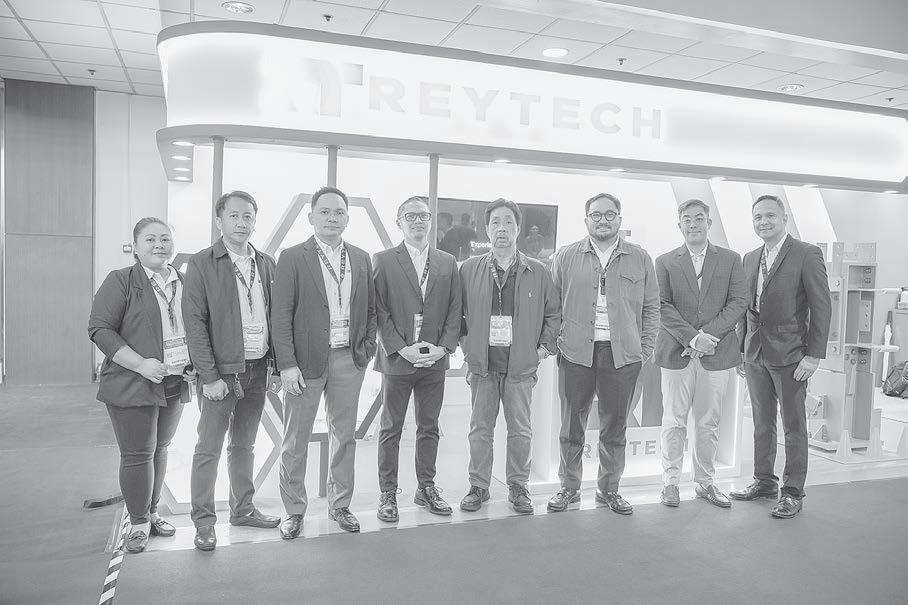
Aside from its extensive construction solutions and diverse client portfolio, Reytech raised the benchmark for the Philippine construction industry not only through multiple ISO certifications in quality, health and safety, and sustainability, but also in project management.
After last year’s successful showing at Philconstruct, which featured over 1,500 brands and attracted over 40,000 trade visitors, Reytech is back to support the exposition’s call for “Resp0nsible Construction for a Resilient Philippines,” and underline the need for modern construction to “balance productivity with structural integrity and sustainability”.
Check out the Reytech Construction & Development Corp. booth at Philconstruct Manila 2026, SMX Convention Center Manila, on June 25 to 28, 2026.

SIA to add services across Europe, launch new flights to Madrid
SINGAPORE Airlines (SIA) will progressively increase the frequencies on flights between Singapore and Manchester, Milan, Munich, and London Gatwick in the coming months to meet the strong demand on these routes, and enhance connectivity options at its Singapore hub.
The airline will also launch five-times-weekly services to Madrid via Barcelona on October 26, 2026, subject to regulatory approvals. It will restructure its current twice-weekly Singapore-Barcelona services, SQ388 and SQ387, to operate on the route, making Madrid SIA’s 15th destination in Europe and its second in Spain.
Dai Haoyu, senior vice president marketing planning, Singapore Airlines, said: “Europe is an important market for Singapore Airlines, and these adjustments reflect our commitment to it. We are seeing strong demand for travel to Europe, and increasing frequencies to key destinations such as Manchester, Milan, Munich, and London Gatwick in response. Madrid is also an increasingly popular tourist destination, as well as a financial and business hub. These new services will give our customers more choice and greater value when planning their travel.”
From July 13, 2026, SIA’s Singapore-Manchester services, SQ302 and SQ301, will increase from five-times weekly to daily. SIA’s current threetimes-weekly Singapore-London Gatwick services, SQ314 and SQ313, will increase to daily from October 25, 2026. This will give SIA two daily services to the airport, and six flights a day to London after including the four daily services to London Heathrow.
The airline’s Singapore-Milan services, SQ356 and SQ355, will increase from four-times weekly to daily from October 25, 2026. The three-times weekly Singapore-Milan-Barcelona services, SQ378 and SQ377, will be cancelled from October 27, 2026 following the launch of the new SingaporeBarcelona-Madrid service. SIA will launch a new three-times weekly Singapore-Munich service, SQ340 and SQ339, from October 26, 2026, bringing its total to 10 weekly services to the German city. All flights are subject to regulatory approvals and aircraft deployment may vary due to operational reasons.

PHOTO FROM JAPHETH MAST ON UNSPLASH. COM
EXECUTIVES from Reyetch Construction at Philconstruct, from left: Judith Villaflor (admin manager), Raymund Dela Cruz (operations manager), Karl Irineo (finance director), Wesley Pantangco (general manager), Hector Reyes (founder), Francis Reyes (president), Jay Pantangco (commercial director), and Allan Hormillo (COO)
HECTOR REYES, founder of Reytech Construction, at last year’s PhilConstruct
PUERTA DEL SOL, Madrid
Okada Manila bags dual top 3 honors at Travel + Leisure Luxury Awards Asia Pacific 2026
Okada Manila has earned dual Top 3 distinctions at the Travel + Leisure Luxury Awards Asia Pacific 2026, ranking among Asia Pacific’s Top 3 Best Integrated Resorts and the Philippines’ Top 2 Best City Hotels. The achievement reinforces Okada Manila’s standing as one of Asia Pacific’s premier integrated resort destinations, offering exceptional hospitality, dining, wellness, entertainment, retail, and gaming under one roof.
Selected from distinguished properties across Asia Pacific, the honors were based on both editorial curation and traveler preference. Nominees were curated by Travel + Leisure Southeast Asia editors and expert contributors, while winners were determined through reader voting. The annual program has become a trusted benchmark for identifying the region’s finest travel experiences. Its recognition in the Region-wide Best Integrated Resort category highlights the resort’s ability to bring together awardwinning dining, wellness, entertainment, retail, gaming, and luxury accommodations within a single destination. Guests can stay, dine, unwind, shop, and celebrate—all within one integrated resort. The resort’s more than 40 dining destinations, including the

Shirley Tam (right), Okada Manila’s Executive Vice President and Chief Marketing Officer for Integrated Sales and Marketing, and Van Manansala (left), Manager for Brand and Product Marketing, receive the Travel + Leisure Luxury Awards Asia Pacific 2026 recognition as Top 3 Best Integrated Resorts and the Philippines’ Top 2 Best City Hotels.
MICHELIN-selected Ginza Nagaoka, along with the Forbes Five-Star The Retreat Spa, signature entertainment, luxury retail, and premium gaming offerings continue to draw guests from the Philippines and around the world.
In the Philippines Best City Hotel category, Okada Manila was recognized for seamlessly combining luxury, accessibility, and attentive service in a vibrant urban
setting. Located approximately 15 minutes from Ninoy Aquino International Airport, the property offers spacious accommodations, exceptional amenities, and convenient access to acclaimed restaurants, its Forbes Five-Star spa, shopping destinations, and entertainment venues, making it an ideal choice for business and leisure travelers, families, and those celebrating life’s special occasions.
“This is a proud moment for Okada Manila and for Philippine hospitality,” said Sato Nobuki, President and Chief Operating Officer of Okada Manila. “These honors reflect the trust of our guests, the dedication of our team members, and our commitment to creating unforgettable experiences that stand among the finest in Asia Pacific.”
These latest distinctions further reinforce Okada Manila’s position as one of the region’s leading integrated resort destinations, distinguished by its unique blend of Japanese excellence and Filipino warmth. Guests experience this signature blend through personalized arrivals, intuitive service, thoughtfully curated dining, and memorable entertainment and celebration offerings.
Built on its Forbes Five-Star standards, Okada Manila remains committed to elevating luxury hospitality through exceptional attention to detail, genuine care, and meaningful guest experiences.
The Travel + Leisure Luxury Awards Asia Pacific recognizes the hotels, resorts, restaurants, spas, airlines, and travel experiences shaping the future of luxury travel across the region. The recognition adds to Okada Manila’s growing list of international achievements, including seven consecutive years of Forbes Travel Guide Five-Star Awards.
Discover Okada Manila’s award-winning experiences at www.okadamanila.com.
As PHL honors independence, ZCMC highlights freedom through faith

AS Filipinos commemorated Independence Day and reflected on the value of freedom, Zion Christian Mission Center (ZCMC), an international provider of free Bible education, marked its 36th founding anniversary with gatherings in 27 locations nationwide. Nearly 2,000 pastors, instructors, students, alumni, volunteers, and guests participated in the celebration, with major events held in Pasig City, Cavite, Pampanga, Cebu, and Davao.
The event highlighted the role of faith, biblical education, and evangelism in helping people discover truth, purpose, and hope through God’s Word.
Held under the theme “One Faith, One Light, We Rise and Shine,” the gathering served as a thanksgiving for the institution’s 36 years of providing free and accessible Bible education. Organizers said the theme reflects the light found in God’s Word, a truth that leads to life and inspires believers to share that light with others. Activities held across the country likewise
reflected the organization’s continued growth, unity, and expanding outreach.
The celebration drew parallels between the nation’s commemoration of Independence Day and the biblical understanding of freedom, emphasizing that lasting freedom is found through true faith, knowing God’s truth and fulfilling His purpose.
“As the Philippines celebrates Independence Day, we are reminded that freedom is one of humanity’s most cherished blessings,” said Abigail Saguid, president of ZCMC Philippines. “While many define freedom as the ability to do whatever they want, true freedom comes from knowing God’s truth and living according to His purpose. It is experienced when people are freed from spiritual confusion and guided by the light of God’s Word. Through evangelism and Bible education, we help people discover that truth, as well as the hope and salvation God has promised to all.”
Participants reflected on how studying the Bible has strengthened their faith and deepened their understanding of God’s promises. Organizers said the event was not only an opportunity to celebrate the institution’s accomplishments but also to renew its commitment to sharing God’s Word and helping more people grow spiritually.
The event also underscored the importance of unity among believers, highlighting how people from different backgrounds can come together through a shared faith and a common mission of truth. Organizers said the theme reflects this vision of believers becoming a light to their communities through faith and service.
Founded in 1990, ZCMC has grown into an international theological institution dedicated to helping people gain a deeper understanding of the Bible through systematic study. Central to its teachings is the fulfillment of the Book of Revelation, which it presents as key to unlocking God’s plan and promises. Over the years, it has reached learners from diverse backgrounds through its onsite, online, and self-paced learning programs.
As ZCMC enters its 37th year, it reaffirms its commitment to making biblical education more accessible to learners around the world. Through its various learning platforms, the institution continues to equip individuals with a deeper understanding of Scripture and inspire lives shaped by faith, purpose, and service.
ZCMC offers free theology courses in multiple formats, including onsite, online, and self-paced study options. Interested individuals may reserve a slot through forms.gle/A2iPWiBCaSg73QTs5, access the ZCMC SPS (Self-Paced Study) mobile app, or register directly at zcmc-edu.com/app/?type=8. For updates and learning opportunities, follow Self-Paced Bible Study - SPS and Zion Christian Mission Center PH on Facebook.
Mabuhay Germany Ambassador’s Cup 2026 strengthens ties through sport and business
THE German-Philippine Chamber of Commerce and Industry (GPCCI), under the patronage of German Ambassador to the Philippines Andreas Pfaffernoschke, successfully held the Mabuhay Germany Ambassador’s Cup (MGAC) 2026 on June 5, 2026, at Mt. Malarayat Golf and Country Club in Lipa, Batangas. Since 2003, the tournament has brought together members of the German-Philippine business community, government representatives, diplomats, and golf enthusiasts for a day of friendly competition and networking.
This year, players took to the fairways of Mt. Malarayat, enjoying a day of golf amid the club’s scenic surroundings. The tournament officially commenced with a ceremonial tee-off led by German Embassy Head of Administration Alexander Thielitz, GPCCI Board Director Holger Beck, PPI Pazifik Power representative Jann Altavano, and GPCCI Golf Director Klaus Schroeder. Beyond the competition, MGAC 2026 continued to provide opportunities for participants to reconnect and strengthen ties within the German-Philippine business community. Following the tournament, players and guests
gathered for a post-round reception and awarding ceremony, where GPCCI President Dr. Christian Scheld welcomed attendees and celebrated the day’s success. During the program, Chairperson Mayan Quebral of the Haribon Foundation shared the organization’s mission and ongoing initiatives. The Foundation was this year’s designated beneficiary, reflecting the tournament’s continued support for meaningful community and environmental initiatives.
GPCCI likewise extends its sincere appreciation to all sponsors and partners whose invaluable support contributed to another successful edition of the tournament. Through the years, the Mabuhay Germany Ambassador’s Cup has remained a valued platform for strengthening German-Philippine friendship, fostering business connections, and bringing together a vibrant community both on and off the course. GPCCI looks forward to welcoming the community once again for the next Mabuhay Germany Ambassador’s Cup in 2028.
To read more about the tournament and upcoming events, please visit https://philippinen.ahk.de/en/.

Robinsons Hotels and Resorts unlocks discounts for Duty Free Philippines loyalty members
Rgrowing nationwide portfolio.
“At Robinsons Hotels and Resorts, we continuously seek meaningful partnerships that support the growth of tourism while enabling us to offer more targeted value, including special perks for Duty Free Philippines loyalty members,”

Beyond the signage: How PhilPlans, accredited mortuaries care for
Filipino families together
IN moments of loss, Filipino families need more than a service provider. They need assurance, guidance, and people they can trust to help them through one of life’s most difficult transitions.
This is the commitment behind PhilPlans’ partnership with the best accredited mortuaries nationwide.
Across the country, PhilPlans-accredited mortuary signages do more than identify service locations. Each signage represents a working partnership, one built on trust, preparedness, professionalism, and a shared responsibility to care for Filipino families with dignity and compassion.
The signage likewise is a visible assurance that families can turn to a recognized local partner who works hand in hand with PhilPlans to deliver the memorial services promised to planholders.
PhilPlans provides memorial plans that help families prepare ahead for funeral needs, including funeral arrangement full body wake or cremation services.
But preparedness does not end with the plan. It must be supported by reliable execution.
This is where PhilPlans’ accredited mortuaries play an important role. As trusted local care partners, they help bring each memorial plan to life by providing the actual services families need when the time comes.
“This partnership is about more than delivering
services. It is about empowering our accredited mortuaries to grow alongside us while ensuring Filipino families receive the quality care and support they deserve,” said Atty. Monico V. Jacob, President and CEO of PhilPlans. “Our partners play a critical role in fulfilling the promises we make to our planholders, and we are committed to helping elevate their presence and credibility in the communities they serve.”
The installation of PhilPlans-accredited mortuary signages is a meaningful step in making this partnership more visible to the public.
For families, the signage serves as a point of assurance. It helps them identify where they can seek assistance from a recognized PhilPlans partner.
For accredited mortuaries, it affirms their role as part of a professional nationwide memorial care network. It also helps strengthen their visibility and credibility within the communities they serve.
“More than a marker on a wall, every PhilPlans signage represents a partnership built on trust, professionalism, and shared responsibility,” said Jacob. “By helping elevate the profile of accredited mortuaries while strengthening access to quality memorial services nationwide, PhilPlans continues to invest in a network that benefits both its partners and the families they serve. This reflects PhilPlans’ broader mission of building long-term partnerships that create value beyond transactions.”

From left, RHR Director of Marketing Genny Puno; RHR Senior Vice-President and Business Unit General Manager Barun Jolly; DFP Chief Operating Officer Joel M. Cinco; and Atty. Richard Clarin, DFP Deputy Chief Operating Officer at the contract signing between Robinsons Hotels and Resorts and Duty Free Philippines
Participants gather for souvenir photos during Zion Christian Mission Center’s 36th Founding Anniversary celebrations in Cavite.
Editor: Tet Andolong

‘Flight to the South’ benefits green developer Arthaland

By Rizal Raoul S. Reyes @brownindio
THE “flight to the south” is benefiting the growth of Arthaland’s Una Apartments at Sevina Park, Biñan, Laguna.
In an event officially marking the structural completion of Una Apartments Tower 2 at Sevina Park with a formal topping-off ceremony, Leandro Locsin Jr, design consultant and administrator of Leandro Locsin Partners points out that Metro Laguna has experienced significant economic and development growth due to its strategic location within the Calabarzon region.
The event also celebrated a major milestone achieved well ahead of its original October 2026 schedule.
“We all did our part to produce something with a good return, solid specifications, high performance, connectivity and an attempt to create something which our buyers would find delight with. Building community, good design for all,” says Locsin.
Locsin points out that Arthaland puts importance on people and carries its tasks out correctly and performs that with intent. Once completed, Una Tower 2 will provide a beautiful environment, a balanced life, security and buildings and amenities of excellent taste that work to delight the senses with the future residents will be the best advocates.
Locsin recalls the project was launched in October 2020 during the
middle of the pandemic. He adds it was a time of uncertainty and “things were really sort of a sense of walking into the unknown.”
Things became optimistic when Arthaland had a topping-off of Una Tower 1 in November of 2024.
For Locsin, the most important lesson during challenging times is to be flexible and agile. He says people should always bear in mind that nothing is really ever guaranteed.
“We need to recognize that things move and it’s important for all of us to be nimble as we move through the changing of times,” says Locsin.
As the country’s foremost green developer, Arthaland vice chairperson and president Jaime C. Gonzalez says sustainability remains a longterm commitment regardless of market cycles.
As of 2025, 54 percent energy savings across all developments; 39 percent water saving across all developments.
Gonzalez says the structural completion of Tower 2 stands as a testament to strict discipline and exceptional project management. The construction update revealed that the final casting of the 997-square-meter roof deck was completed on March 29.



The technical execution of the final pour underscores the efficiency of the project team. Pouring of 365 cubic meters of heavy-duty 5,000 PSI con -
PHL property: Cycling through risks, anchoring on resilience

THE Philippine property market has always moved in cycles— rising with confidence, correcting with caution, and recalibrating in the face of external shocks. Over the past three decades, average capital values have broadly tracked GDP growth swings.
From the Asian Financial Crisis and Global Financial Crisis to Covid-19, the pattern is consistent: volatility is inevitable, but dislocation is temporary. This year, the Department of Budget and Coordination Committee (DBCC) is projecting economic growth to be between 5.0 percent and 6.0 percent, signaling a softer yet still positive expansion environment for Philippine real estate. The question today is not whether disruption will occur—but how deep and prolonged it will be.
One of the most immediate transmission channels of a Middle East conflict to the Philippine property sector is through remittances. In 2025, remittances from Middle East countries reached approximately USD 6.5 billion, accounting for about 18 percent of total inflows. These flows have grown at a steady 3.9 percent CAGR from 2020 to 2025, highlighting the sustained dependence of Filipino households on overseas income. Saudi Arabia, the UAE, and Qatar remain the largest contributors, collectively accounting for a substantial share of these inflows. Any escalation in regional tensions could disrupt employment
conditions, remittance flows, and ultimately housing demand—particularly in end-user driven markets.
Pricing dynamics in the residential sector reveal an emerging imbalance. Colliers Philippines has noted that pre-selling condominium prices have increased by an average of 8 percent annually, outpacing both personal income growth at 5 percent and remittance growth at 3 percent over the same period, according to latest government data. This widening affordability gap suggests that even in the absence of external shocks, demand could begin to normalize. Historical data shows pre-selling prices rising from about 101,000 per sqm in 2017 to nearly 190,000 per sqm by 2025, underscoring the sharp escalation in entry-level costs. A potential slowdown in remittance inflows could therefore accelerate a correction in take-up, particularly among OFWdependent buyers.
On the supply side, construction costs are once again under pressure, largely driven by movements in global oil prices. Developers and contractors are feeling the pinch of elevated construction material prices. All over the market we see residential projects being put on hold as surging prices are
squeezing contractors’ profits.
From oil shocks to mortgage rate spikes, the Philippine property cycle is once again being stress-tested. History reminds us that while volatility can dent sentiment, it doesn’t exactly hamper structural demand anchored on urbanization, demographic growth, and sustained capital formation. Colliers Philippines believes that what we may be entering is not a downturn, but a disciplined phase—where buyers become more selective, developers more strategic, and pricing more reflective of real purchasing power and end-user demand.
For developers and investors, this is a moment to recalibrate—not retreat. Product mix diversification, right-sized unit offerings, and flexible payment schemes will be critical levers to sustain take-up across the Philippines. Meanwhile, markets outside the traditional core—particularly those supported by infrastructure and domestic employment hubs—may provide pockets of resilience. As we highlight at Colliers Philippines, the property sector is unlikely to collapse under pressure; instead, it will adjust, reprice, and regain equilibrium. Cycles may bend confidence, but they rarely break conviction.

crete was completed in a swift 14,85 hours at an average casting rate of 24.36 cubic meters per hour.
“Crucially, this rapid pace did not
CAVITE , Philippines—The energy in Metro Manila is undeniably fast-paced, vibrant, and constantly in motion, alongside the demands of congestion and busy routines. As urban pressures continue to mount, more people are now looking for a new environment that provides breathing room while still bringing the city vibes.
Outside the metro, Naic, Cavite becomes an emerging destination for quick escapes and a promising place for long-term residential living. The rising community features a mix of natural destinations and cityscapes, offering a promising venue that individuals and families would visit and enjoy.
A place built for adventure and getaways
NAIC is known for its beaches, campsites, heritage attractions, and food trip destinations, making it an ideal place for quick getaways and weekend escapes. Its coastal charm offers families and friends a refreshing break from the busy pace of the city, while its outdoor spaces provide opportunities to relax, reconnect, and enjoy nature.
A trip to Naic can begin with a quiet escape into nature at Segundo Camp & Hike, where scenic walking trails and open spaces create a relaxing setting for light outdoor activities and meaningful bonding moments.
The calm environment allows visitors to slow down, reflect, and appreciate the simplicity of spending time outdoors.
After exploring the town’s natural attractions, visitors can continue the experience through Naic’s growing food scene.
Local restaurants such as Lolo Claro’s Restaurant serve comforting Filipino dishes, while Handaan Cavite offers hometown specialties that showcase local flavors. Those looking to unwind can also stop by Pan Grill Resto & Cafe Naic to enjoy coffee and a cozy rooftop dining experience.
Beyond its leisure and dining spots, Naic also carries a rich sense of history and culture. Visitors can explore the historic Casa Hacienda de Naic and admire its preserved architecture while learning more about the town’s heritage. Just nearby, the Diocesan Shrine and Parish of Immaculate Conception
compromise on-site well-being. The project logged an outstanding safety record, achieving 760,858 safety man-hours for the superstructure and 87,572 safety man-hours for the substructure with only two minor incidents recorded,” says Arthaland.
During the ceremony, Gonzalez reflected on the journey of Sevina Park, tracing its evolution from its earliest days as a boutique student facility to a thriving, multi-circuit green community.
“From a single building to a thriving multi-circuit community is a rewarding journey that speaks to the foresight and commitment of the entire Arthaland team,” Gonzalez stated. “While Tower 2 stands firmly on the foundation and success of Tower 1, it represents its own unique achievement.”
To highlight the collaborative spir -
it behind the building, the ceremony featured the symbolic assembly of seven distinct pieces. Each piece was placed by a representative embodying a core value of the development, serving as a reminder that a true sustainable community relies on the seamless convergence of master planning, architecture, engineering, finance, and craftsmanship.
Reflecting on how Tower 1 was topped off during the shifting market of late 2024, he noted that the current global landscape demands adaptability and long-term thinking. Locsin commends Arthaland’s unwavering commitment to everyday livability and democratic design. It champions sustainable integration as its buildings are engineered for high performance, energy efficiency, and modern connectivity. In every project, Arthaland promotes inclusive quality believing that a good design is a fundamental right deserved by everyone across the economic spectrum.
It also provides a human-centric focus, elevating the daily sensory experience through beautiful environments, security, and curated amenities. Moreover, the strategic positioning has fueled industrial growth, making it an attractive destination for manufacturing, logistics, and residential developments.
“Our values are in the right place, our foundations are solid, and we operate with equally committed, resilient neighbors who think longterm,” Locsin explains, drawing an inspiring parallel to global beacons of hope and architectural community-building.”

offers a peaceful space for reflection, adding a more meaningful and cultural dimension to the visit.
The experience continues with recreational destinations that cater to families and groups looking for more active escapes. Visitors can enjoy outdoor activities at Paraiso de June Quixote or explore the world-themed mini landmarks at Torres Farm Hotel and Resort. With its mix of nature, local food, heritage sites, and leisure attractions, Naic continues to establish itself as an ideal destination for memorable adventures and relaxing getaways.
Connected through growing road networks
NAIC has become increasingly accessible to Metro Manila through established major road networks, specifically the CAVITEX, Centennial Road, and Antero Soriano Highway. Travel to the municipality is also expected to become more convenient with the ongoing development of the Trece Martires–Naic–Indang Diversion Road. Public transportation also makes traveling to Naic more manageable, as visitors from Manila can take the PITX bus bound for Ternate, which passes through Naic. With these developments, what was once considered a long trip has become a more convenient
A RENDER of Una Apartments, Tower 2 TOWER 1 and Tower 2 man’s eye view
TOPPING-OFF ceremony of Una Apartments Tower 2 (From left) Oliver L. Chan, ExecutiveVice President of Arthaland; Leandro Locsin, Jr., Administrator and Consultant of Leandro V. Locsin Partners; Marivic S. Victoria, Chief Finance Officer of Arthaland; Jaime C. González, Vice Chairperson & President of Arthaland; Cornelio S. Mapa, Treasurer & Executive Vice President of Arthaland; Leilani G. Kanapi, Vice President of Arthaland and Gerry Esquivel, President of ASEC Development and Construction Corporation.
500 kids in sports highlight Olympic Day celebration

Batang Pinoy returns to roots—Bacolod City
THE Batang Pinoy—the Philippine Sports Commission’s (PSC) flagship p rogram for children athletes—returns to its roots for the 2026 edition in Bacolod City from December 12 to 18. K nown as the City of Smiles and the world-famous Maskara Festival and chicken inasal, Bacolod City guaranteed a successful hosting of the multi-sports that was born in the Negros Occidental capital in 1999. We thank the PSC for allowing us to host this year and Bacolod City is prepared,” Bacolod City Mayor Greg Gasataya during Tuesday’s Philippine Sportswriters Association Forum at the PSC Media Room.
Gasataya said the city is ready to host at least 20,000 athletes with more than 4,000 hotel rooms ready to accommodate the delegates, as well as public schools that will be utilized as billeting facilities. Competition venues, he added, are all set for the event.
PSC chairman Patrick Gregorio is confident of a smooth hosting by Bacolod City, which will open its doors to t he athletes and officials from 188 local government units.

Commission
PSC commissioner Olivia “Bong” Coo, Department of Education Director Miguel Mantaring, Bacolod City Mayor Greg Gasataya, Department of the Interior and Local Government Undersecretary Rolando Puno and Bacolod City Administrator Atty. Mark Mayo. PSA PHOTO
“ What are the criteria for hosting?
The most important is for the mayor to be involved and there’s the commitment,” Gregorio said. From the 18-and-under age limit in previous years, the PSC lowered the Batang Pinoy to its original age group of eight to 15 years old. Gregorio said the PSC decided to limit the participation to 8 to 15 years old, and let athletes aged 16 or 17 years old to display their wares in the annual Palarong Pambansa.
In the Batang Pinoy, the athletes
are aged eight to 15 years old, they are the superstars,” Gregorio said.
PSC commissioner and Batang Pinoy project director Olivia “Bong” Coo, Department of Education Director Miguel Mantaring, Department of the Interior and Local Government Undersecretary Rolando Puno and Bacolod C ity Administrator Atty. Mark Mayo also graced the forum.
B owling legend Coo said 30 sports—an increase from 27 last year with the addition of golf, skateboarding and bowling—are in this year’s
Messi sets World Cup scoring record as Argentina wins
birthday and with an ailing father back home , Messi celebrated twice with teammates to the delight of the decidedly pro-Argentine crowd at the sold-out home of the National
‘Magnificent 7’ in Sports Hall of Fame
TEARS of joy marked the enshrinement of seven athletes to the Philippine Sports Hall of Fame last weekend at the Philippine Sports Commission (PSC) hosted by PSC Chairman Pató Gregorio, resplendently clad in a crisp Barong Tagalog just like Senator Bong Go, the guest of honor. M ansueto “Onyok” Velasco shed the most tears while recalling his boyhood days in his extemporaneous speech, saying he became a boxer to escape hunger and poverty in his native Bago City, Negros Occidental. I am the youngest in a brood of nine [7 boys and 2 girls],” he said in Filipino. “Without boxing, I wouldn’t be where I am now.” He won a boxing silver in the 1996 Atlanta Olympics, earning him a much-coveted Hall of Fame award like Bea Lucero (gymnastics and taekwondo), Adeline Dumapong (paralympian power lifter), Isidro del Prado (400-meter marvel), Cecile Mamiit (tennis), Eddie Pacheco (posthumous in football/basketball) and Ramon Fernandez (basketball). D ubbed the “Magnificent Seven” by Gregorio in the glittering

TPinoy program.
T he other sports are aquatics, archery, arnis, athletics, badminton, baseball, basketball, boxing, c hess, cycling, dancesport, futsal, gymnastics, j iujitsu, judo, karate, kickboxing, muay, pencak silat, sepak takraw, table tennis, taekwondo, tennis, volleyball, weightlifting, wrestling and wushu.
“ We are hoping for a prosperous and successful Batang Pinoy in D ecember,” added Coo in the forum presented by San Miguel Corp., PSC, Philippine Olympic Committee, Milo and the c ountry’s 24/7 sports app ArenaPlus.
Football League’s Dallas Cowboys. Most of those fans were wearing Messi’s familiar No. 10 jersey with white and blue stripes, dwarfing the small pockets of red-clad Austrian supporters under the retractable roof that offered air-conditioned comfort on the second day of what is sure to be another hot Texas summer. AP
Coach Tim, Gilas out to shoot down big guns

THE men’s national team flew to Brisbane at noon Tuesday hoping to make the most out of the next 10 days to be in harness against Australia and New Zealand for the second window of the FIBA 2027 World

We must leave early to acclimatize with the chilly weather onditions,” said Gilas Pilipinas head coach Tim Cone.
“We’ll be in Brisbane for four days before we fly to New Zealand for our early preparaone said they’ll be training at the Australia National Basketball eague team Brisbane Bullets’ High Performance The Philippines faces New Zealand in Auckland on July 3 and Australia in Perth on July 6 with the hope of notch -

more than a dream and a love for the game.
“ For any athlete, this is the summit. To stand here tonight among the greatest names in Philippine sports is both humbling and deeply meaningful.
This recognition is not simply about championships, trophies, records or awards. It is a reminder that the years of hard work, sacrifice, discipline, perseverance and service to the game truly mattered.
No athlete reaches this stage alone. I share this honor with the coaches who guided me, the teammates who battled beside me, the opponents who challenged me, the fans who supported me, and the many friends and family members who stood by me throughout my journey.
Most especially, I dedicate this recognition to my wife, Karla, my number one supporter, who is here with me tonight. Thank you for your unwavering love, encouragement and faith in me. Whatever legacy I leave behind has become richer and more meaningful because you have shared your life and the rest of this journey with me.
To the young athletes of today, allow me to leave you with a simple message: Talent may open the door. But character, discipline, humility and consistency will determine how far you go. Respect the game. Respect the people who help you. Never stop learning and never take shortcuts.
“ Excellence is not built in one great performance. It is built in the choices you make every single day. If my story proves anything, it is that a young probinsyano can dream big, work hard, honor God, stay the course and make it. Over the years, basketball gave me more than I ever
ing morale- and confidence boosting victories for the next round. At 2-2 won-lost, the Philippines is already qualified for the next round with Australia (4-0) and New Zealand (2-2)—the top three teams in each of the four groups of the qualifiers get to the next round.
We are going to take full advantage of this opportunity,” he said.
A fter Brisbane, Gilas Pilipinas will have tuneup games against New Zealand pro teams Manawatu Jets and Franklin Bulls on June 28 and 29, respectively, in Auckland.
G ilas Pilipinas feted fans to a pre-departure public scrimmage on Monday at The Arena in San Juan City with Cone and the players hoping to play inspired in the second window.
It’s going to be tough, but we look forward to it,” Cone said. “We have been a team that has pulled off surprises before and I will not be surprised if we pull of another one.”
The Philippines stunned Latvia in its turf and New Zealand in the Paris 2024 Olympic Qualifying Tournament and also host China in the Hangzhou 2023 Asian Games.
The holdovers in the team are naturalized player Justin Brownlee, June Mar Fajardo, Carl Tamayo, Dwight Ramos, RJ Abarrientos, 6AJ Edu, Kevin Quiambao and Chris Newsome.
C ompleting the pool are Juan Gomez de Liaño for the injured Scottie Thompson (hamstring), 6-foot-8 M ike Philips, 6-foot-7 Justin Baltazar and Troy Rosario. The Philippines is coming off consecutive losses last February to New Zealand, 66-69, and last March to Australia, 66-93, for a 2-2 won-lost record i n Group A of the qualifiers. A ustralia is unbeaten in four games, New Zealand is also 2-2 and Guam is 0-4.
A lso already qualified for the next round are Japan, South Korea and China in Group B; Jordan, Iran and Syria in Group C; and Lebanon, Qatar and Saudi Arabia in Group D. T he FIBA 2027 World Cup is set August 27 to September 12 in Qatar. Josef Ramos
dreamed possible. It gave me the privilege of wearing Numbers 10 and 19.
PHILIPPINE Olympic
PHILIPPINE Sports
(PSC) chairman Patrick “Pató” Gregorio (center) with (from left)
Batang
CONE
LIONEL MESSI: Beyond anything I’m so happy for the win. AP
Araw ng Maynila 2026
The city that remains: Manila marks 455 years of resilience
This year’s anniversary celebration mirrors the city’s journey through a month-long series of activities that revisit Manila’s history, honor its people, and recognize those who continue to contribute to its
By John Eiron R. Francisco
CITIES, much like people, are shaped by the years they endure. Their stories are written not only through triumphs and celebrations but also through the challenges they overcome and the lessons they carry forward.


Manila Mayor Isko Moreno joins PLM officials in honoring Dr. Jose Rizal
Araw ng Maynila
Dia de Manila 2026: Preserving heritage and culture through public history
As the Día de Manila comes to an end, the message stands firm and clear: the fight for heritage and its preservation should be a top priority for a city that holds shared memories of the past.
By Vincent Peter Rivera
‘Iwoven into the consciousness of every generation.
And that is exactly the mission of this year’s event.
Día de Manila is an annual regional celebration focusing on the capital’s history, culture, and traditions. The event was organized by Nilad Community, an umbrella organization of Manila-based heritage groups, including Renacimiento Manila and Manileños for Heritage.
For its 455th anniversary, Araw ng Maynila has the poignant theme: “Celebrate What Remains.” In a time when ancestral houses in Manila are being flattened to make way for commercial buildings, the event served as both a quiet protest and an act of defiance, using public history to push back against the erasure of the city’s identity.

of Binondo, navigating the bustling streets that directly shaped the 19th-century worlds of Noli Me Tángere and El Filibusterismo. Standing by the Roman Ongpin Monument and passing through Plaza Yuchengco toward the fading Art Deco grandeur of Escolta, the tour relived how Rizal’s life revolved around that very same place.
Saturday, June 20, began with the “Tutuban Railway Station Clean-up & Marker Restoration.” Organized by Manileños for Heritage (M4H) in partnership with the Tutuban Center management, a brigade of volunteers showcased the essence of “bayanihan” at the historic 1892 terminal—originally the grand Manila-Dagupan terminus of the Manila Railroad Company.
Beyond cleaning the station’s surviving iron columns, volunteers restored the site’s National Historical Commission marker.
The final day served as a mini convention, packing the venue with art markets, historical exhibits, and localized panels that provided insightful discussions.
The final day officially commenced with an address from the Department of Tourism, Culture, and the Arts of Manila (DTCAM) Director Cristal Bagatsing, who underscored the local government’s role in balancing urban development with cultural preservation.
In her speech, Bagatsing emphasized the vital importance of maintaining and honoring Manila’s legacy while actively promoting programs that uplift the capital’s arts, tourism, and culture.
Jefferson Estela of IlogPasiglahin delivered a talk titled, “Metro Manila at a Crossroads: Reclaiming Philippine Cities through Public Spaces and People-Centered Mobility.”
Meanwhile, representatives from Postcrossing Philippines hosted “Postcards: History and Communities,” showing how physical, analog correspondence continues to forge tangible human connections.
The day’s competitive spirit peaked during the Pamana at Pautakan, an intense Manila arts, history, and culture quiz contest mounted by Renacimiento Manila, testing the historical grit of the attendees.
Advocacy group Manileños for Heritage (M4H) staged a critical focus group discussion titled, “Towards an Ideal Manila Heritage Preservation
Dr. Chua noted that public history is essential to this fight: “Simply put, it (public history) is the telling of history using public platforms and the most current technologies of a certain era.”
Armed with this philosophy, Dìa de Manila transformed the capital into a living cradle of public history through a series of festivities meant to remember and honor Manila’s history.
Reclaiming the spaces
Over the first three days of the event, a series of socially led, community-driven tours and preservation efforts transformed historical curiosity
We have a heritage law so gloriously toothless it can watch a century-old house collapse and still congratulate itself for existing,” a copy from a Facebook post by the Nilad Community. “It is remarkable how quickly a city can be taught to forget itself once every trace of memory is bulldozed, fenced off, or reduced to a sanitized paragraph fit for bureaucrats and developers.”
into physical reclamation, guiding advocates through the very streets that birthed the nation.
The experiential journey began on Thursday, June 18, with “Shadows of the Past: A San Nicolas Photowalk.” Co-presented by Wander Manila and Visual Storytellers PH, the walk gathered lens-bearers into the centuries-old mercantile district of San Nicolas.
The focus shifted from architecture to literature on Friday, June 19, marking the national hero’s birth anniversary with the “Rizal’s Birthday Tour by Ramada Manila.” Led by prominent heritage advocate Diego Torres and co-organized by the Nilad Community, the walking tour functioned as a living literary map. Participants traced the historic pathways

From the industrial birthplace of local rail, the day transitioned to a walk-through at “The Manila Hotel Heritage Tour.” Known affectionately since its 1912 opening as the “Grand Dame of the Philippines,” the hotel opened its halls to the public. Free guided tours took visitors deep into the Manila Hotel’s Heritage Museum, showcasing a treasure trove of archival photos and artifacts.
Closing the weekend’s recreational circuit, Renacimiento Manila mounted “Ang Mundo nila Ibarra at Maria Clara—A Noli and El Fili Tour by Renacimiento Manila.”
Call for wisdom and action
The highlight of Día de Manila 2026 culminated on Sunday, June 21, at the Centro de Turismo.
Estela tackled the looming threat of overdevelopment amidst the battle of protecting natural and heritage structures.
Offering a regional lens, PJ Hernandez of The Traveling Salakot presented “All Roads Lead to Intramuros (Manila).”
Hernandez provided an “outsider” perspective, mapping out the deep historical interconnections between Manila and the neighboring province of Bulacan, while analyzing how those living outside the capital perceive the rapid shifts in Manila’s urban identity.
The festival also highlighted how history can adapt to modern lifestyles. Hans Fernandez of Gaming Library took the stage for “Connecting Art and Gaming,” detailing the creative process behind adapting Reiner Knizia’s famous
Rizal Park Luneta retells the story of Dr. Jose Rizal through an Interactive AR Experience
MANILA, Philippines—Visitors to Rizal Park can now explore one of the most significant moments in Philippine history through a new digital experience that retells the story of Dr. Jose Rizal to modern audiences.
As part of the commemoration of our National Hero’s 165th Birth Anniversary, the National Parks Development Committee (NPDC) officially launched a web-based Augmented Reality (AR) self-guided tour on the Martyrdom of Dr. Jose Rizal in Rizal Park Luneta on 19 June.
The launch was led by NPDC Executive Director Cecille A. Lorenzana, NPDC Deputy Executive Director Jezreel Gaius A. Apelar, and Scarletbox Founder and Chief Executive Officer Sheree Gotuaco.
In E xecutive Director Lorenzana’s welcome remarks, she highlighted Rizal’s enduring commitment to progress and innovation, describing him as “a man who constantly sought new ways to advance society while serving his fellow Filipinos.” She noted that the integration of technology into heritage sites reflects the same spirit, helping bring Filipinos closer to the life, ideals, and legacy of our National Hero.

Guests

Maynila 2026
The city that remains: Manila marks 455 years of resilience


Continued from C1
Theater, a nod to one of the most iconic television portrayals of everyday life in the capital. Days later, the city paid tribute to the bravery of Filipino heroes during the Kagitingan sa Bangkusay commemoration at Plaza Moriones in Tondo, recalling a chapter of resistance that predates even the city’s colonial past.
Manila also joined the nation in celebrating the 128th Independence Day on June 12 through the traditional Araw ng Kalayaan rites and the Parada ng Kalayaan, highlighting the city’s enduring role in the country’s pursuit of freedom and nationhood.
Beyond historical commemorations, the anniversary activities have also focused on the people who form the backbone of the city.
A Kasalang Bayan brought together couples in a collective celebration of marriage, while the Outstanding Barangay Awards, Outstanding Sangguniang Kabataan Awards, and Gawad Manileño recognized individuals and communities whose service continues to shape local governance and civic life.
The city likewise observed the 165th birth anniversary of Dr. Jose Rizal on June 19, honoring the national hero whose ideas and writings continue to resonate in contemporary society.
The anniversary program also coincided with the 61st founding anniversary of the Pamantasang Lungsod ng Maynila (PLM) of the city’s longstanding public institutions.
On June 23, Manila turned its attention to public servants through the City Service Loyalty Awards, recognizing employees whose years of dedication have helped sustain the daily functions of the local government. The celebration reaches its symbolic peak on June 24,
the city’s founding day, with a wreath-laying ceremony, the inauguration of a pet park, and the State of the City Address of Mayor Isko Moreno Domagoso, where the city’s accomplishments, challenges, and future plans are expected to be highlighted.
Even as the anniversary nears its conclusion, activities remain lined up in the coming days, including the Miss Manila pageant on June 26 and the Gran Copa de Manila on June 28, underscoring the city’s blend of heritage, culture, and community engagement.
Yet beyond the ceremonies and festivities, the anniversary theme points to a larger story.
For 455 years, Manila has been repeatedly tested by circumstances beyond its control. It has survived wars that reduced entire districts to ruins, natural disasters that altered its landscape, and social and economic challenges that continue to accompany life in a densely populated urban center. Each generation has faced its own set of obstacles, and each has left its mark on the city. Today, traces of that history remain visible across Manila. Centuries-old churches stand alongside modern buildings, while communities continue to thrive in neighborhoods that have witnessed generations of change.
The city remains imperfect and continues to confront issues ranging from congestion and flooding to housing and infrastructure concerns. Yet these realities also reflect Manila’s ongoing effort to evolve while preserving the character forged through centuries of experience.
Its strength lies not only in its historic landmarks or institutions, but in the collective resilience of the people who continue to live, work, and build their future within its streets, a city tested by challenges, and strengthened by time.



Manila City honors its outstanding citizens, institutions, taxpayers, employers, and public servants during the Gawad Manileño 2026 awards. The awardees embody the excellence, dedication, and public service that continue to bring pride and honor to the City of Manila. PHOTOS FROM MANILA PUBLIC INFORMATION OFFICE
The City of Manila recognized its Top 10 Outstanding Sangguniang Kabataan leaders for their exemplary service, leadership, and contributions to youth development in their respective communities.
THE FADING GLORY OF OLD MANILA
The
Text and Photos
By Joel C. Paredes
WITNESSING
once
as a “crown
of Philippine Art Deco architecture. Designed by Juan Nakpil, the country’s first National Artist for Architecture, Capitol Theater rose along Escolta, once hailed as the “Queen of Manila’s Streets” and remembered as the city’s own Wall Street. In its heyday, finance, high fashion, luxury retail, entertainment, and modern urban life converged there. Nakpil even adorned the theater’s interiors, wrought-iron staircases, and majestic proscenium arch with stylized sampaguita motifs, a graceful tribute to the national flower. A family memory of the Old City
What stayed with me most, however, was knowing that it had been the favorite movie house of my late grandfather, who managed a family-led law firm in the old PerezSamanillo Building. That same building once housed Berg’s Department Store, while Syvel’s, Heacock’s, Botica Boie, and Soriente-Santos stood nearby, together forming part of the elegant shopping district of Manila’s old elite.
By the time the National Commission for Culture and the Arts issued an emergency cease-and-desist order in August 2022, it was already too late. The tragedy of the Capitol Theater became a stark reminder of the cost of bureaucratic delays in heritage preservation.
But the Capitol Theater was not an isolated loss. Its fate reflected the larger sorrow of Old Manila, a city that has been steadily losing the stature it once held as the center of commerce, culture, leisure, and modern life.
Nearby, the Lyric Theater, another popular movie house known for English-language films, had already been torn down decades earlier. Few may realize it now, but the movie houses that once flourished in the old city helped define Manila’s mental map long before GPS existed. They served as landmarks for destinations—restaurants, retail stores, offices, and meeting places along the main roads—at a time when cinemas competed not with giant malls, but with one another for the attention of a vibrant urban crowd.
I remember that my favorite theater was Odeon, located at the corner of Claro M. Recto and Rizal Avenues. Once its doors opened, the cold air from the air conditioners spilled out into the street, making it an ideal place for us to wait for my father, a journalist with the old Manila Chronicle along Magallanes Drive near Intramuros. On nights out with my parents and my five siblings, Odeon became more than a theater; it was a familiar meeting point of our family life. My mother—a social worker whose office at the Social Welfare Administration along Legarda Street, right at the edge of Manila’s “University Belt,” was only a few jeepney stops away—also knew that part of the city as an everyday route. Escolta and Binondo: The commercial heart of Old Manila Now, even the heritage barbershops and haberdasheries that once helped shape the district’s character have either closed or moved elsewhere. Only a few traces remain of the old “gupit





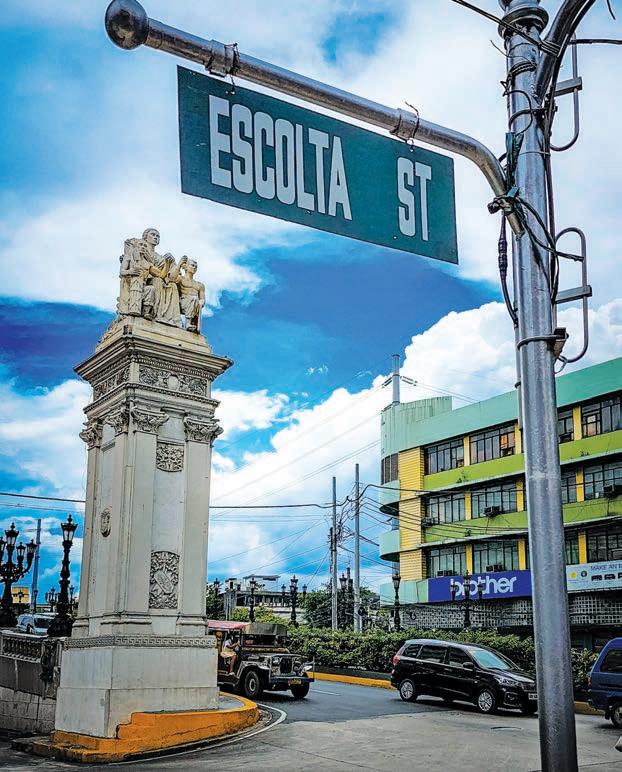



View from Pasig River. Manila’s towering buildings and the Binondo-Intramuros bridge.
Escolta Street, once regarded as the “Wall Street” of Old Manila.