




By Andrea E. San Juan

By Andrea E. San Juan
view the recent spike in core inflation, which has breached the upper end of the central bank’s target band for the first time in over two years, as a sign of second-round effects requiring vigilance.
Data from the Philippine Statis tics Authority (PSA) revealed that while headline inflation eased to 6.8 percent in May, core inflation accelerated to 4.1 percent, the fast est in 2 years and 4 months. Core inflation, as defined by PSA, is an indicator of the un derlying movement in consumer prices since it takes out the effect of temporary disturbances and shocks that cause prices to surge or decline.
“Measuring core inflation helps policymakers determine whether current movements in consumer prices represent short l ived distur bances or are part of a permanent trend,” the data arm of the govern ment said, adding that such knowl edge is important to the formula tion of economic policy, particularly monetary policy.
By Malou Talosig-Bartolome
S(First of two parts)
EOUL —From K‑pop to K‑beauty, South Korea’s newest cultural wave is stock investing. The Korea Ex change (KRX) is dismantling decades of red tape to attract foreign inflows, including from the Philippines, as its bench mark index surges past historic milestones.
“These days, it’s hard to go through a day without hearing people talking about stock in vesting,” KRX Senior PR Man
ager Junhyun Park said during a briefing for visiting foreign journalists including from the BusinessMirror Park noted that equity trading has permeated daily life in South Korea. Conversations about stocks, he said, are no longer confined to trading floors or analyst reports.
“You hear it in coffee shops, on YouTube, on television, and even at family gatherings,” he added, underscoring how investing has be come one of the most popular top ics in the country’s social fabric.
This enthusiasm coincides with a record rally.
By Bless Aubrey Ogerio
THE recent slowdown in inflation offers temporary relief, but underlying price pressures continue to spread across the economy, according to the Federation of Philippine Industries (FPI).
Recent data from the Philippine Statistics Authority (PSA) showed that inflation eased to 6.8 percent in May, supported by a sharp deceleration in transport costs, which slowed to 16.2 percent. However, core inflation rose to 4.1 percent. For FPI, the mixed data points to a fragile easing rather than a broad-based improvement.
“The
By Jonathan L. Mayuga
teams arrived in Davao City around 4 p.m. while an operation center in General Santos was set up. The OCD reported that the General Santos International Airport was also damaged, along with several buildings and bridges, including
schools. The devastation in schools was telling, as June 8 was the first day of classes for the 2026-2027 calendar.
The NDRRMC’s quick response teams have been deployed for search and rescue, especially in damaged schools. Around 3 million students are in the affected areas.
President Ferdinand Marcos Jr. immediately suspended all classes in the affected areas.
Reports said that at least 5 regions in Mindanao were devastated by the offshore earthquake, the strongest since the 1976 Moro Gulf earthquake and tsunamis.
OCD Spokesman Junie Castillo said critical facilities in Regions 9, 10, 11, and 12, including the Bangsamoro Autonomous Region in Muslim Mindanao, were damaged. The earthquake also triggered tsunami waves in several coastal areas. According to Castillo, the strongest inten-
sity felt in Sarangani peaked at Intensity VIII. Phivolcs said the earthquake, initially reported as a magnitude 7 earthquake, was strongly felt in at least five regions.
The quake epicenter was traced approximately 32 kilometers south-southwest of the town of Maasim in Sarangani Province and about 13 kilometers southwest of General Santos City. It has a depth of 10 km.
Movements in the Cotabato Trench triggered the earthquake, said Winchelle Ian G. Sevilla, chief of the Seismological Observation and Earthquake Prediction Division at the Philippine Institute of Volcanology and Seismology (Phivolcs).
Sevilla said the Cotabato Trench can generate a strong earthquake that could trigger tsunami waves as high as 9 meters.
The Tsunami Alert was raised in 9 provinces—Sarangani, Davao Oriental, Tawi-Tawi, Sulu, Basilan, Zamboanga del Sur, Zamboanga
Sibugay, Sultan Kudarat, and South Cotabato. As of 11 a.m., Sevilla said Phivolcs recorded a total of 138 aftershocks.
The Pacific Tsunami Warning Center said the threat of a tsunami had largely passed about five hours after the quake struck the southern region of Mindanao. There have been no reports of damage or casualties from the tsunami, Teresito Bacolcol, the director of the Philippine Institute of Volcanology and Seismology, said.
“It’s a major earthquake and we’re expecting damage and we’ve already some damaged buildings based on videos we’ve seen,” Bacolcol told The Associated Press.
The strongest quake to strike the Philippines this year was centered at sea at a depth of 33 kilometers (20 miles), about 32 kilometers (20 miles) southwest of Maasim town in Sarangani province, according to the Philippine institute.


navigate the current difficulties ex perienced by the tourism stakehold ers due to the ongoing Middle East conflict, which has jacked up fuel prices. Aside from these, “Travel sen timent is low and our biggest source of tourists is dropping,” she acknowl edged.
At the end of 2025, tourists from South Korea dropped by 18.5 percent to 1.35 million, although it was still the top source of foreign visitors for the Philippines.
From the private sector
MEANWHILE, Buensuceso remains Undersecretary for Tourism Develop ment Planning, having been appoint ed to the position by the President under the term of Tourism Secretary Christina Garcia Frasco.
Sapitan, who was formerly with the Office of Secretary Jimenez, has been tasked to handle Branding, having spent considerable years as a producer at the award winning travel market ing company Beautiful Destinations, founded by digital entrepreneur Jer emy Jauncey.
Aquino was past Chairperson of the Tourism Industry Board Foundation and Associate Board Member of the Hotel and Restaurant Association of the Philippines.
Caguioa is a law graduate at At eneo de Manila University, and the nephew of Supreme Court Associate Justice Alfredo Benjamin Caguioa.
The younger Caguioa was in private law practice until his appointment to the DOT, and served in the office of President Benigno S. Aquino III as Technical Assistant.
General Santos, a southern port city of more than 700,000 people that is a hub for the tuna export industry and other commerce, was among the hardest hit. On August 17, 1976, an 8.1 magnitude Moro Gulf earthquake resulted in massive tsunamis in several areas. The deadliest tsunami disaster in the country’s history killed 5,000 to 8,000 people, with more than 10,000 others injured. It also displaced approximately 90,000 people.
Marcos: We won’t leave Mindanao behind PHILIPPINE President Ferdinand Marcos Jr. said “the national government is moving and we will not leave Mindanao behind.”
The President, however, deferred any visit to the quake-hit areas for now to allow concerned government agencies to provide immediate relief to affected populations, according to Malacañang.
“The President avoids going into such chaotic situations [after a disaster] since he will get the attention [of the said agencies]. The President doesn’t want that,” Palace Press Officer Claire Castro said in Filipino in a press briefing.
“The President has already ordered that all agencies involved must respond, and we know that the current funding is sufficient to carry out rescue and relief efforts and to alleviate the impact of the disaster that occurred today,” she said.
The Department of Budget and Management (DBM) reported that as of June 5, 2026, the QRF was at P13.4 billion, while the National Disaster Risk Reduction and Management Fund was at P34.23 billion.
It noted government agencies may request for additional QRF once they utilize half of it.
At least seven people were killed and about 130 others injured in General Santos, where a few small
buildings partially collapsed and several structures, including a key access bridge, sustained dangerous cracks, Rod Sosmeña, regional director of the Office of Civil Defense, told The AP.
Five other people were killed in the southern provinces of South Cotabato and Davao Occidental province, and on Balut Island, Sosmeña and another official, Ednar Dayanghirang, said.
Sosmeña said authorities were checking reports of some students being trapped in a two-story school that collapsed in General Santos. He could not immediately provide details but the national police said at least seven people were missing in General Santos.
Public schools had reopened nationwide Monday after the summer break. Dayanghirang said more than 100 students attending morning flag-raising ceremonies sustained bruises and some fainted in panic.
GenSan airport shut
THE international airport in General Santos was temporarily shut, and 17 domestic flights were canceled, civil aviation officials said.
Caap restricted landing and takeoff operations to government, military, and humanitarian flights. A Notice to Airmen (Notam) is in effect from 3pm Monday through June 11 at 6pm. Passengers were advised to coordinate directly with their airlines for flight status updates.
Infra checked
ROAD closures, port safety measures and flight restrictions are in effect across affected areas in Mindanao, with the Department of Public Works and Highways (DPWH), the Philippine Ports Authority (PPA), and the Civil Aviation Authority of the Philippines (Caap) each activating emergency response protocols.
DPWH Secretary Vince Dizon flew to General Santos City on Monday afternoon to personally lead an onground assessment of damaged infrastructure.
Dizon ordered the immediate deployment of assessment teams to inspect the structural integ-
“Industry is operating in a tight environment marked by elevated costs and cooling demand. Stability and clear reforms will determine whether we can turn these pressures into a more competitive industrial

rity of critical infrastructure, including hospitals, schools, and public buildings in affected areas. All available heavy equipment were mobilized to clear debris from collapsed structures and make damaged roads and bridges passable, if this is possible.
In Surigao del Sur, DPWH temporarily closed the Gamut Bridge in Barangay Gamut, Tago for 24 hours as a precaution against potential aftershocks.
Meanwhile, Philippine Ports Authority (PPA) General Manager Jay Santiago directed Port Management Offices (PMOs) in affected regions to activate established emergency protocols and suspend non-essential port activities.
Initial reports from the local port office indicated minor structural damage at some facilities, including wall cracks from the ground shaking. Assessment teams were dispatched to the Port of Malalag. Inspections at the Ports of Sasa, Mati, and Babak showed no damage to port infrastructure.
Cebu’s solidarity act
THE Cebu Provincial Government will extend P10 million in financial assistance to General Santos City after the Provincial Board unanimously approved the release of emergency aid.
The measure was approved by the 17th Sangguniang Panlalawigan during a session presided over by Vice Governor Glenn Anthony Soco.
This resolution, authored by Provincial Board Member Red Duterte, was endorsed for immediate consideration after Governor Pam Baricuatro certified it as urgent.
The gesture also echoes a previous act of solidarity from General Santos City.
Following the magnitude 6.9 earthquake that affected Bogo City and several areas in northern Cebu on September 30, 2025, General Santos City provided P8 million in humanitarian
base,” Lee said.
On the other hand, the FPI also called for policy continuity amid recent changes in Senate leadership, stressing that economic priorities should remain insulated from political shifts.
“Political realignments happen. What businesses need is continuity in economic policy,” Lee said. “Clear priorities on energy, logistics, and competitiveness will reassure both local industry and foreign investors.”
Despite current headwinds, the group said the country retains strong long-term invest-
Japan-based think tank Nomura said: “We think core inflation will continue to increase gradually before peaking by fourth quarter, reflecting lagged pass-through effects from still-elevated energy prices.”
As such, the think tank said the Bangko Sentral ng Pilipinas (BSP) will view any further increase in core inflation as a sign of second-round effects that require vigilance.
Meanwhile, HSBC Senior Asean Economist Aris Dacanay said core inflation breaching the BSP’s 2 to 4 percent target band at 4.1 percent showcases the need to manage the spillover effects of the energy shock.
“Core inflation in May accelerated to 4.1 percent year-on-year from 3.9 percent in the previous month. This is the first time core inflation has breached the upper end of the BSP’s target band since December 2023,” Dacanay said in a commentary on Monday.
While Nomura and HSBC Senior Asean Economist Aris Dacanay expressed the same concern on the rising core inflation, they have different forecasts in terms of how aggressive the central bank would act in its upcoming rate-setting meeting on June 18.
Nomura sees the BSP delivering a quarterpoint rate hike next week while HSBC continues to believe that a “jumbo” 50-basis point policy rate hike to 5 percent is still on the table during the central bank’s scheduled rate-setting meeting.
“We continue to forecast another 75 basis points of BSP policy rate hikes this year, starting with a 25 basis points hike in June, before reversing course and cutting by 75 basis points in the second half of 2027,” Nomura said.
For HSBC’s part, Dacanay said: “We continue to believe that a jumbo 50 basis-point policy rate hike to 5 percent is still on the table during the BSP’s scheduled rate-setting meeting.”
assistance to the Cebu Provincial Government.
Energy facilities
POWER industry stakeholders mobilized rapid response teams to assess energy infrastructure and advance power restoration efforts.
Based on initial reports, power interruptions are being experienced in the franchise areas of the South Cotabato II Electric Cooperative (Socoteco II), South Cotabato I Electric Cooperative (Socoteco I), Sultan Kudarat Electric Cooperative (Sukelco), Northern Davao Electric Cooperative (Nordeco), Davao Light and Power Company (DLPC), Cotabato Light and Power Company (CLPC), and neighboring localities, affecting an estimated 864,000 households.
The Department of Energy (DOE), the National Electrification Administration (NEA) and the National Power Corporation (NPC) are assessing the damage and doing system inspections.
The DOE coordinated with the NEA, NPC, National Transmission Corporation (TransCo), National Grid Corporation of the Philippines (NGCP), electric cooperatives (ECs), distribution utilities (DUs), and generation companies (gencos).
Aboitiz Renewables Inc., which oversees Aboitiz Power Corp.’s hydropower facilities in Mindanao, said the earthquake caused a localized line tripping, but affected units were restored to normal operations following safety checks.
On the distribution side, there were temporary service disruptions. However, power service has been fully restored to all affected areas under Cotabato Light as of 1:14pm on Monday. For Davao Light, field teams are also conducting inspections and managing service restorations to affected households to ensure the continued safety and reliability of the electrical system. As of 2pm, all major lines and substations are energized.
See “Quake,” A13
ment fundamentals, provided reforms are sustained and implementation is consistent.
“We have the fundamentals and the talent. With stability and steady execution, we can turn today’s challenges into tomorrow’s momentum,” Lee said.
“But we need to get our act together as a country and stay focused on the path forward to prevent conditions from worsening. The opportunity is still within reach—we just need to move with clarity, discipline, and urgency,” she added.
On top of the economist’s three reasons is the sustained increase in the core inflation, breaching the BSP’s upper end of target band.
“This implies that the spillover effects from the initial surge in inflation still need to be managed, more so with food inflation expected to increase,” Dacanay pointed out, adding that recreational durables, restaurant services, and personal care [consumer price index] CPIs continued to accelerate.
Dacanay also cited the continued easing of the real policy rate. He said with the BSP forecasting headline inflation to be 4.3 percent in 2027, keeping the policy rate at above 5.50 percent at the least may be appropriate to keep the real policy rate at appropriate levels.
“The BSP has four meetings left in the year, which means one meeting may need to be an outsized 50bp rate hike,” Dacanay noted.
The HSBC Senior Asean Economist also cited the need to manage foreign exchangeinduced inflation by hiking rates.
“The BSP has been intervening in the FX market in May to, perhaps, stem the risk of FX-induced inflation. Though the downside surprise in inflation is a relief to the PHP, hiking by 25bp and not 50bp risks bringing the pressure back in managing FX-induced inflation, especially with the trade deficit in April widening to a three-year high. Hiking by 50bps may be the safer choice,” said Dacanay.
At the Monetary Board’s policy meeting last April 23, BSP Governor Eli M. Remolona Jr. said rising core inflation highlights the risk of demand-driven inflation.
The central bank, in its statement over the weekend, said the inflation environment continues to be challenging with the BSP projections indicating an “elevated” inflation path.
“Average headline inflation is seen to breach the 4-percent tolerance ceiling for both 2026 and 2027. Inflation expectations have also risen further, heightening the risk of de-anchoring from the 3-percent target due to more persistent inflation pressures and broadening price pressures,” BSP said.

Moving forward, the Monetary Board said it will continue to be guided by incoming data during its June 2026 monetary policy meeting.
“The BSP will reassess the macroeconomic outlook to incorporate the May 2026 CPI, Q1 2026 national accounts, and key domestic and international developments that have impact on the country’s inflation outlook and growth prospects,” the central bank underscored.
Continued from A1
The benchmark KOSPI surged more than 75 percent last year—the strongest among G20 markets—and breached 8,000 points, doubling from 4,000 in less than a year. Analysts say the speed of this climb has rewritten historical charts, high lighting the depth of liquidity and in vestor confidence in Seoul.
Financial literacy, YouTube learning UNLIKE many emerging markets, Korea’s resilience is powered by retail investors who are increasingly finan cially literate.
Yeon‑Ju Park, Head of Research at Mirae Asset Securities, observed that ordinary citizens are sourcing stock tips and market education online.
“You can learn about Hynix and Samsung with YouTube every day. Everybody comes to YouTube and ex plains everything to you,” she noted. This democratization of knowledge has created a more educated retail base.
Analysts who once catered only to professionals now find their insights widely accessible, while influencers and educators on digital platforms break down complex market trends for everyday viewers.
The country’s compulsory education system is also embedding financial in vestment classes into its curriculum, ensuring that future generations view equities as a mainstream vehicle for wealth creation.
Case study: Kim Hyun‑woo THE retail fervor is best illustrated by Kim Hyun‑woo, a 30‑year‑old photog rapher (name changed for privacy). After losing his savings in bitcoin, Kim pivoted to regulated equity trad ing via the KB M‑Able mobile app. Starting with US$600 in January, his portfolio doubled to US$1,200 within months. He now invests in Exchange‑Traded Funds (ETFs) focused on semiconduc tors and artificial intelligence. His only paper loss was tied to the “general market,” which he believes is tempo rary due to local elections. Kim’s story reflects a broader trend: retail investors are not only participating but shaping Korea’s market direction. Their appetite for technolo gy‑linked assets has aligned with global demand for semiconductors and AI, reinforcing the country’s in dustrial competitiveness.
Institutional funds join the shift HOWEVER, it is not just everyday re tail investors who are fundamentally shifting their wealth; massive institu tional funds are also making aggres sive pivots into the stock market. Historically, South Korean pension money was conservatively parked in fixed‑income assets, considered a sta ble area.
But as yields depreciated over the last three to four years, these colossal funds shifted strategies.
Today, there is a continuous, highly aggressive trend of pension money flowing directly into the Ex change‑Traded Fund (ETF) market.
In a recent briefing, it was noted that the National Pension Service (NPS) has recorded the highest returns among global pension funds, with eq uities now comprising approximately 29 percent of its overall portfolio—an allocation experts describe as unusu ally aggressive.
Despite this influx, Yeon‑Ju Park ob served that the portion of Korean pen sion funds in equities is still lower than in the United States, meaning, the local market has significant room to grow.
Shifting wealth allocation FOR decades, Korean household wealth was locked into property, creat ing uneven distribution.
“In the US, when the stock mar ket grows, everybody can benefit,” Yeon‑Ju Park explained. “In Korea, the old model meant only a select few could enjoy the property boom.” Now, retail wealth is being allocated to productive firms, particularly in semiconductors and AI, allowing com panies to reinvest massive revenues into new factories and R&D. This shift is seen as a long‑term driver of Korea’s economy, transforming dormant sav ings into active capital.
(Part 2: How Korea transformed into the world’s hottest equity market and how the Philippines can learn or benefit from it)
By Butch Fernandez @butchfBM
HESenateBlue-Ribboncom-
Tmittee as constituted under the new, post-June 3 Senate leadership on Monday pushed through with what it called an “organizational meeting,” but summoned resource persons, just the same, to put in context the “testimonies” of the so-called “18 Marines” surfaced by former Quezon City Rep. Michael Defensor and lawyer Levito Baligod, who hogged attention at the “committee hearing” called by the former Blue-Ribbon chairwoman on June 4.
Most senators present at the hearing presided by the new chairman, Sen. Erwin Tulfo agreed to stop calling them
“18 ex-Marines” since four were found to have never served in the force, while most of the rest were dishonorably discharged and had long been booted out of the service.
A nd, since most of them had served for years as bodyguards and drivers of former Rep. Zaldy Co – a key figure in the flood-control fund mess – senators opted to call them the “18 bodyguards” or “porters” or “ kargador.”
Director Melvin Matibag of the National Bureau of Investigation, who was invited as resource person, explained that when the NBI first looked into the 18 men’s allegations as part of its factfinding in the flood fund scandal, it had quickly noted one major anomaly: their lawyer Levito Baligod had apparently sewn together details supposedly known
Sara’s ‘non-answer’
By Jovee Marie N. Dela Cruz @joveemarie
HE 11-member House of Representa-
Ttives prosecution panel on Monday opted to file a manifestation instead of a reply to Vice President Sara Z. Duterte’s answer to the Articles of Impeachment, arguing t hat her submission “raised no factual issues requiring a substantive response.”
House Secretary General Cheloy Garafil submitted the manifestation to the Senate, where it was received by Senate Secretary General Renato Bantug Jr. on Monday. Copies were also furnished to the Office of the V ice President and the law firm she tapped to defend her, Fortun Narvasa & Salazar.
In the five-page filing, the prosecution said Duterte again raised procedural, jurisdictional, and constitutional objections before the Senate Impeachment Court instead of presenting factual arguments addressing the charges.
“ Under the applicable rules, the allegations and defenses in the answer are deemed c ontroverted even without a reply,” the manifestation read.
More fundamentally, the answer raises no material factual issue that requires a responsive pleading. It does not meaningfully engage the factual allegations in the articles of impeachment, but instead concentrates on procedural, jurisdictional, and constitutional objections directed against the continuation of the proceedings,” it added.
D uterte faces four Articles of Impeachment over the alleged misuse of P612.5 million i n confidential funds, bribery, unexplained wealth, and alleged grave threats against
by each man, and produced a “collective narrative” that by itself is not admissible, because some details are known only to one or two, and it is impossible for all 18 men to have personal knowledge of the same set of information. The NBI chief said they sought in vain to get individual affidavits of the 18 men.
‘Non-hearing’
IN his opening statement, Sen. Francis Pangilinan, a vice chairman of the BRC, reiterated “that the so-called BlueRibbon committee hearing conducted last Thursday, June 4, was illegal, void ab initio” with no binding effect. Monday’s proceedings were cast, he explained, “as a consultation and organizational meeting rather than a hearing of the committee,” in order
to facilitate the orderly transition and continuity of the committee’s work pending the completion of its reorganization and membership and formal constitution of the committee.”
At the same time, Pangilinan asked that the following be placed on record: 1. The June 3 session convened by 12 senators was in compliance with the Constitution, the rules of the Senate and jurisprudence, and 12 being a quorum, all acts pertaining to the official business of the Senate in plenary on June 3 are deemed lawful, consistent with the Constitution including the motion to declare all elected positions vacant, including the position of Senate President. “The election of Sen. Sherwin Gatchalian as president pro tempore to address the vacancy
in the position of Senate president is also lawful and consistent with the Constitution.”
2 . Sen. Erwin Tulfo’s election as BRC chief “is likewise lawful and consistent with our rules.”
Pangilinan noted that the “official acts of the Senate in plenary last June 3 has been recognized as lawful and consistent with the Constitution by the Office of the President, the House of Representatives, several retired Supreme Court justices, deans and eminent professors of law of various law schools nationwide, five former Senate presidents, and no less than the Integrated Bar of the Philippines – the largest organization of l awyers in the country.”
Fully impartial probe
President Marcos, First Lady Liza AranetaMarcos, and former Speaker Ferdinand Martin G. Romualdez.
The prosecution said her answer did not directly address the accusations or explain why she should not be held liable for the impeachable offenses cited.
This is evident across all four articles, where the respondent repeatedly asserts that she committed no impeachable offense,” the manifestation read.
“ Yes, beyond these general denials, the Answer offers no coherent factual narrative that directly refutes the charges set forth in the Articles of Impeachment,” it added.
For each article, prosecutors noted that Duterte did not present her own version of events or provide explanations on the questioned transactions, including alleged nond isclosure of cash holdings in her Statements of Assets, Liabilities and Net Worth (SALNs).
GIVEN what it described as a lack of countervailing evidence, the prosecution said Duterte appears to be seeking dismissal of the case even before trial begins.
In substance, therefore, the answer does not function as a genuine response to the charges but as an attempt to secure the outright dismissal of the impeachment case on threshold constitutional and procedural grounds,” the manifestation read.
The prosecution maintained, however, that neither the Constitution nor Senate Rules on Impeachment Trials allow for the outright dismissal of an impeachment complaint prior to a trial.
It added that the only basis for termi -
House impeachment prosecution team recognizes only Gatchalian
THE 11-member House prosecution panel on Monday said it will recognize only notices and orders issued under the leadership of acting Senate President Sherwin Gatchalian, aligning with the position of the House of Representatives amid the ongoing leadership dispute in the Senate.
Lead House prosecutor Batangas Rep. Gerville
Luistro said that the prosecution team considers the recognition of a single Senate authority essential to the orderly conduct of the impeachment proceedings, stressing that the Senate cannot operate with two presidents, two secretaries, or two clerks of court for the impeachment court.
T he clarification comes amid a continuing standoff between competing Senate blocs claiming authority over the upper chamber and its committees, including matters related to the impeachment court.
Luistro said the House prosecution panel, as part of its institutional mandate, will follow the leadership recognized by the House in relation to impeachment proceedings, including official notices, schedules, and orders issued by the Senate sitting as an impeachment court under Gatchalian’s leadership.
In other words, if the position of the House of Representatives is in favor of the legitimacy of the leadership of acting SP Gatchalian, then it follows that we will also follow as far as notices and orders are concerned. We will also appear in the notices of proceedings that they will issue,” she said during a press briefing.
She warned, however, that conflicting notices from rival Senate factions could create procedural complications and potentially delay the impeachment trial, although she expressed confidence that the previously announced timeline under unseated Senate President Alan Peter Cayetano would still be followed.
That may cause delay if there are two sets of notices, but I am positive that the timeline will still be followed,” Luistro said, noting Gatchalian’s earlier pronouncement that he is inclined to respect
the agreed schedule among senator-judges.
“Because of that statement from acting SP Win, we believe there will be no changes in the dates included in that schedule,” she added.
The prosecution panel said it remains ready to proceed regardless of any schedule adjustments.
Under the tentative timetable, it is preparing for a possible June 15 deadline for the submission of pretrial briefs, a June 18 start of the pre-trial conference, and a July 6 trial date.
H ouse prosecutor and Party-list Rep. Jose Manuel Tadeo Icasiano Diokno of Akbayan said institutional alignment between the Senate and the House is necessary for the impeachment process to move forward, urging the upper chamber to resolve its internal dispute.
Diokno added that the House, as an institution, should also respect resolutions previously recognized by both chambers, including those related to the adjournment sine die on June 3, when Senate seats were declared vacant and Gatchalian was elected Senate President Pro Tempore with a quorum of 12. House trial spokesperson and Party-list Rep. Renee Co of Kabataan said any disruption in the timeline could affect public expectations, noting that citizens are closely monitoring the impeachment proceedings.
The schedule has already been released to the public, and it would be disappointing if it is not followed,” Co said.
“For the sake of accountability, whatever dates have been set, and with commitments from both houses and the prosecution panel, we need to continue the process,” she added, stressing, “Start the process, start the trial.”
Luistro emphasized that the issuance of official notices is critical for the proper conduct of proceedings, adding that the impeachment court must ultimately clarify administrative arrangements.
nating impeachment proceedings is an acquittal after full trial on the merits.
The House prosecutors also said the Senate should not rule on Duterte’s jurisdictional and constitutional objections, noting that similar issues are already pending before the Supreme Court.
To the extent that these matters have been elevated for judicial determination, the Senate, sitting as an impeachment court, cannot be placed in the position
of reviewing or pre-empting issues currently pending before the Supreme Court,” the manifestation read.
A part from the petition, the House prosecutors also asserted that the Senate should not pass judgement on the House’s impeachment proceedings, a s the Constitution vests the exclusive power to initiate such proceedings in the House, including the authority to enforce its own rules.
At the same time, these objections go into the very
FOR his part, Sen. Paolo Benigno Aquino appealed to the Department of Justice, NBI and the Office of Ombudsman to make sure the flood control i ssue is soon resolved satiefactorily. It has been almost a year, Aquino noted, since the President was prompted to blurt out a dismayed comment, “Mahiya naman kayo [Shame on you],” as he shared with the public information about how the flood funds were plundered, amid the heartbreaking communities being inundated and public infrastructure being destroyed, while dozens died in floods. The President aired his disgust at the 2025 State of the Nation (Sona) address in July.
“ That’s why it is important to proceed with the hearing, pursue the investigation and resolve things before the oneyear anniversary comes,” he said.
core of the House’s exclusive power to initiate impeachment proceedings. This power cannot be subjected to review, revision, or nullification by the Senate acting as an impeachment court, without effectively disturbing the constitutional allocation of powers between the two houses of Congress,” it added.
Concluding its manifestation, the prosecution panel urged the Senate impeachment court to proceed with the trial, saying that further pleadings and paper submissions would only serve to delay what the Constitution requires to be conducted “forthwith.”

By Bless Aubrey Ogerio
THE government must strengthen legal protection for job-order and contract-ofservice workers in the public sector, according to a labor group leader, who said thousands of workers remain vulnerable despite performing essential functions across government agencies.
Speaking during a labor gathering, Public Services Labor Independent Confederation (PSLINK) President Annie Enriquez-Geron urged the Department of Labor and Employment (Dole) to reinforce existing mechanisms that protect workers’ rights in government. The labor leader also pushed for stronger implementation of Executive Order 180, which sets guidelines for public-sector employees to exercise their right to organize, and for the creation of the Public Sector LaborManagement Council.
I hope that under your leadership, you will issue a department order to provide protection and safeguard the rights of job orders and contracts of service,” Enriquez-Geron said, adressing t he newly appointed Labor secretary, Francis Tolentino.
She noted that many job-order and contract-of-service workers continue to face uncertainty in terms of job security and labor protections despite serving in various government offices.
E nriquez-Geron, likewise, highlighted the role of the labor department



in advancing tripartism, or the collaboration among government, employers a nd workers, describing it as a core part of the department’s mandate.
“ There is no agency that truly and in the DNA of the department promotes tripartism. This is the department that no matter what is done, especially in the labor sector, we honestly don’t want to weaken,” she explained.
“ What we want is a stronger Dole because at the end of the day, there is no other agency that always, constantly promotes tripartism, has a heart in the right place, has dedication, and has a long, long patience,” she added.
For his part, Tolentino said the department remains open to recommendations from public-sector workers and l abor organizations, while continuing to work with tripartite partners on labor-related concerns.
“ You can count on us within the limits provided by law, and if there are new Supreme Court decisions, please send them to me. Our office remains open to suggestions, espe -
cially those coming from the public s ector,” Tolentino said.
Yet, recently, the Philippines has faced renewed international scrutiny over labor rights issues. An official document from the International Labor Organization (ILO) showed that the country has been included in the provisional working schedule of the International Labor Conference for discussions on its compliance with ILO Convention 98, which covers the right to organize and collective bargaining.
I n May, Tolentino said the department’s immediate priorities include a ssisting workers displaced by the ongoing Middle East crisis and expanding employment opportunities for young Filipinos.
H e acknowledged that the tasks ahead would be challenging given prevailing economic conditions but said the government remains committed to addressing labor concerns w hile strengthening the country’s engagement in the international labor community.



Why having a ‘Sense of Purpose’ is so important?
By Henry J. Schumacher
BEFORE Corona and the Ukraine war, in the years that seem good to us today, it was the latest trend in management fads: companies should formulate a higher purpose for themselves. Because employees who believe in the sense of their own actions are more motivated than those who only count down the days until retirement - an important competitive advantage.

pretty boring, huh? But when you break it down, it turns out, purpose is pretty important—to your physical, mental and emotional health. It’s that big.
A t the moment, of course, more tangible competitive advantages are decisive for companies: Can I get cheap energy somehow? How quickly can I decarbonize my business model? And how do I get the missing parts from China to my factory?
The current crisis has also led to interesting shifts in terms of purpose. This is shown by a yet unpublished study by the management consultancy Globeone, which specializes in the subject. More than 4,300 consumers were asked how they judge corporate brands in terms of sustainability, authenticity, honesty, profit orientation and future viability. The result is a ranking based on the calculated “Purpose Readiness Index” Companies that consumers regularly encounter in everyday life land in the top places.
It is obvious that for many companies it is no longer enough to earn money, they want a purpose!
About The Power of Purpose PURPOSE is an active expression of our values and our compassion for others —it makes us want to get up in the morning and add value to the world. The Power of Purpose details a graceful, practical, and ultimately spiritual process for making it central to your life.
Why Having a Sense of Purpose is Important?
The dictionary defines “purpose” as the reason for which something exists or is done, made or used. Sounds
So, what is your purpose? According to researcher William Damon, who wrote A Path to Purpose, it is “a stable and generalized intention to accomplish something that is at the same time meaningful to the self and consequential for the world beyond the self.” In fact, that meaningful intention can help you stay focused on the things that matter most to you like family, friends, faith, career, integrity and more. It helps you prioritize your life – allowing you to walk away from certain people or activities that don’t serve your purpose. It’s a main driver to stay motivated when things get tough, so you can set and meet short- and long-term goals. And maybe most of all, it makes you feel like you are making a difference in the world.
B e Purposeful: You have found something that is personally meaningful to you and that contributes to the greater good. You’ve sustained interest over a long period of time, and you can clearly articulate your “why.” T here is no doubt in my mind that our ‘purpose’ as businesspeople requires us to get ready for the future, including the future of wellness, the future of our digital strategy, the future of data partnerships, the future of integrity, among many other ‘futures’.
L et’s also understand that passion, purpose and curiosity belong together: Purpose provides direction, while curiosity drives progress. Together they empower individuals to adapt in a rapidly changing world. Passion is personal enjoyment; purpose is enjoyment that also benefits others.
L et’s be purposeful and commit to the creation of a great future! I f you have ideas regarding today’s subject, send it to me at hjschumacher59@gmail.com


www.businessmirror.com.ph


For Biñan, the Puto Latik Festival is not only a yearly event but a continuing expression of community, memory, and identity that connects generations through shared tradition.


By Mary Jade Jadormio
THE scent of freshly steamed rice cakes, the steady beat of drums echoing through main thoroughfares, and the bursts of color from elaborate street costumes marked the 16th Puto Latik Festival in Biñan City on May 15 to 23 this year. Once again, the thriving city transformed into a vibrant stage of faith, culture, and community expression.
Throughout the nine-day celebration, thousands of residents, visitors, and returning Biñanenses filled streets, plazas, the Pavilion Mall Biñan, Southwoods Mall, and festival grounds, reaffirming the city’s position as one of Laguna’s key cultural and tourism destinations.
From early morning religious processions to late-night performances and competitions, the festival seamlessly transformed Biñan into a living stage of faith, food, music, and movement. This dynamic celebration underscored how deeply tradition remains embedded in the city’s identity amid rapid urban growth.
Held in honor of San Isidro Labrador, patron saint of farmers, the festival continues to reflect Biñan’s agricultural roots while showcasing its evolving creative industries, youth talent, and community participation.
For many Biñanenses, the Puto Latik Festival is more than an annual event—it is a reunion of heritage and modern life, where barangays compete, families gather, and traditions are retold through performance and shared experience. Rooted in history, the celebration traces its origins to Biñan’s agricultural past, when the area was known during the Spanish colonial period as the Hacienda de San Isidro Labrador de Biñan.
The farming community has evolved into a highly urbanized city, yet its cultural memory remains expressed through festivals such as Puto Latik. Today, the festival serves as both a cultural preservation effort and a driver of tourism, bringing together all barangays through competitions, exhibitions, and public events highlighting the city’s identity.
Faith opens the celebration Faith and tradition once again set the tone for this year’s festivities, with religious observances woven into the opening activities of the festival.
The celebration formally opened with the Karakol ng Reyna ng Biñan, a devotional procession that remains one of the festival’s most symbolic traditions.
Male devotees carried the image of the Nuestra Señora de la Paz y Buen Viaje from the Parish in Barangay Dela Paz to the San Isidro Labrador Catholic Church in Barangay Poblacion, as residents lined the streets to witness
and participate in a prayerful celebration.
The image, declared the Honorary Queen of Biñan through City Resolution No. 19-2018, was greeted with ringing church bells and open doors upon arrival to greet the image of San Isidro Labrador, patron saint of Biñan, whose feast is being celebrated on the day.
According to Dr. Bryan Jayson “BJ” Borja, head of the Biñan City Culture, History, Arts and Tourism Office (BCHATO): “The procession reflects Biñan’s enduring devotion and the continued role of faith in shaping civic life and community identity.”
After the religious rites, the festival officially transitioned into its cultural programming, starting the week of competitions and performances.
Street dancing, drumbeats, and barangay pride Across Biñan, festival grounds and streets became vibrant spaces for cultural expression as barangays showcased performances in dance, music, and visual storytelling.
One of the most anticipated segments was the Costume Parade and Competition, where barangays showcased elaborate designs that reflected heritage and creativity.
Barangay Canlalay emerged as Champion, their ensembles standing out for their meticulous craftsmanship and innovative use of indigenous materials that mirrored the textures of rice cakes and coconut husks.
Barangay Loma followed as 1st RunnerUp, while Barangay Sto. Domingo secured the 2nd Runner-Up spot with their vibrant, culturally resonant attire.
The Drumbeating Competition brought rhythmic intensity to the festival, with groups delivering synchronized percussion routines that energized spectators.
The Balumpare Drumbeaters took the Champion title, commanding the streets with a flawless, pulsating rhythm that kept the crowd on its feet.
The Hilaris Tribe settled for 1st Runner-Up with their deeply grounded beats, while the Pandaryo Tribe rounded out the top three as 2nd Runner-Up.
The Street dancing Competition, considered one of the festival’s centerpiece events, featured choreographed performances inspired

by Biñan’s cultural heritage, agricultural identity, and folk traditions.
After a grueling showdown of stamina and precision, Barangay Malaban was declared Champion, their routine distinguished by powerful formations and seamless storytelling.
Barangay Sto. Domingo proved their versatility across festival categories, clinching the 1st Runner-Up position, while Barangay Canlalay claimed the 2nd Runner-Up spot with an explosive, high-energy performance.
C rowds lined the streets throughout the performances, as barangay contingents combined movement, music, and costume design into storytelling pieces that reflected both tradition and modern interpretation. Organizers noted that these competitions continue to strengthen community pride while encouraging youth engagement in cultural preservation.
For Mesana, one of the festival’s greatest strengths is the active involvement of young performers, who serve not only as competitors but also as stewards of local culture.
“ Its youth performers carry the festival with discipline, pride, and fighting spirit. They are not just competitors. They are cultural bearers,” he said.
Mesana noted that the continued participation of younger generations helps ensure that traditions such as the Maglalatik dance and other cultural performances remain relevant and accessible, allowing heritage to be passed on through practice rather than memory alone.
Culinary innovation and the evolution of Puto Biñan
Culinary innovation and the evolution of Puto Biñan also took center stage through the Puto Biñan 2.0: The Biñan Cook-Off Challenge, which highlighted how local delicacies can evolve while preserving cultural identity.
Emerging as this year’s Champion was Barangay Biñan with its entry “Puto Fiesta Royal,” a decadent tribute to the city’s festive banquet culture that blended traditional flavors with an elevated presentation.
Meanwhile, Barangay Langkiwa earned the 1st Runner-Up title for “Biñan Chewy Puto,” a textural reinterpretation of the traditional rice cake that impressed judges with its chewy consistency and modern flavor profile.
Rounding out the winners was Barangay Canlalay, which secured the 2nd Runner-Up spot through “Tres Crema Chicken Potato Pie,” a savory reinvention that utilized puto as a base for a rich and creamy filling.
The competition showcased how Puto Biñan—one of the city’s most recognized delicacies—continues to inspire culinary creativity among residents, entrepreneurs, and home cooks, ensuring its relevance in a competitive modern market.
For Philippine festivals expert Janjan Mesana, the continued evolution of Puto Biñan demonstrates how cultural traditions can
remain relevant in a rapidly changing environment without losing their roots.
Puto Latik Festival showed what happens when a city understands that a festival is more than color, crowd, and competition. A true cultural festival must carry memory, identity, discipline, artistry, and people,” said Mesana, who chaired the panel of judges that recognized the festival as Best Cultural Festival (City Category) at the 2025 ATOP National Tourism Pearl Awards.
According to Mesana, one of the festival’s strengths lies in its ability to transform a local delicacy into a broader cultural experience, where food becomes a source of storytelling expressed through music, dance, costumes, and community participation.
“Puto and latik are not simply mentioned. They are carefully translated into movement, music, costume, performance, and storytelling,” he said.
Festival grounds were also filled with food stalls, product displays, and local exhibitors, drawing steady crowds throughout the week. Vendors reported increased sales and visibility as visitors from nearby towns and cities flocked to Biñan. For many small entrepreneurs, the festival serves not only as a cultural celebration but also as an important platform for livelihood and market expansion.
Music, youth competitions, and modern entertainment
The festival also placed a strong emphasis on youth participation through music, dance, and talent competitions held across multiple venues.
In the Biñan Singing Idol competition, vocal prowess took center stage.
Ramiya Krista Aparente of Barangay Sto. Niño was named Champion in the Biñan Singing Idol competition, following a performance that stood out for its vocal control and stage presence.
Coming in as 1st Runner-Up was Barangay San Vicente’s Paolo Bongulto, while Barangay Sto. Domingo’s Jenson Albert Buendia completed the winners’ circle as 2nd Runner-Up.
The Biñan Modern Dance Showdown showcased contemporary choreography infused with energy and creativity.
Barangay Poblacion’s Exalted emerged as Champion in the Biñan Modern Dance Showdown, impressing with tightly synchronized routines and strong stage presence that anchored the group’s overall performance.
Not far behind, Barangay Sto. Tomas’ The Ricochet secured the 1st Runner-Up spot with explosive, acrobatic choreography that drew loud reactions from the crowd.
Completing the winners’ circle was Barangay Sto. Niño’s Daft Punk Icon, which placed 2nd Runner-Up, had musically intricate routines marked by precision, energy, and control.
Younger participants also took the spotlight through the Little Mr. and Ms. Biñan pageant, which highlighted confi -


dence, talent, and cultural representation among child contestants.
T he Champion pair was Kirsten Cerillo of Barangay Malaban and Xavier Park of Barangay Platero, who charmed the audience with their poise.
Zabrina Rellorosa of Barangay Malamig and Roman Tatlonghari of Barangay Malaban took the 1st Runner-Up honors.
Meanwhile, the pair of Elisha Edoria of Barangay Mamplasan and Zues An of Barangay Dela Paz were named 2nd Runner-Up.
Land floats and visual storytelling
The Land Float Competition transformed Biñan’s streets into moving exhibitions of creativity, as barangays showcased floats inspired by agriculture, culture, and local identity.
Barangay Timbao emerged as Champion, its float standing out for its structural ingenuity and cohesive visual narrative. Barangay Loma followed as 1st Runner-Up, while Barangay Tubigan secured the 2nd Runner-Up position.
Each float reflected a combination of craftsmanship and storytelling, reinforcing how festivals serve as platforms for visual culture and community expression.
Pageantry and cultural representation
Pageantry remained a major highlight of the festival, celebrating not only beauty but also advocacy, confidence, and cultural pride.
In the Mister and Ms. Biñan competition, Zylene Pavon of Barangay San Vicente and Carl Aleonar of Barangay Dela Paz were crowned the Champions, standing out with their strong stage presence and composed responses throughout the competition.
The 1st Runner-Up pair was Jan Cordova of Barangay Sto. Tomas and Andrei Belicina of Barangay Langkiwa.
Meanwhile, Sahmer Perez of Barangay Canlalay and Mikko Sorio of Barangay San Antonio completed the royal court as 2nd Runner-Up.
Organizers noted that these pageants serve as platforms for cultural ambassadorship, with the winners expected to represent the city’s tourism and community initiatives throughout their reign.
Community impact and economic activity
Throughout the nine-day celebration, thousands of residents and visitors participated in activities that blended entertainment, cultural preservation, and civic engagement.
Schools, barangays, and local organizations collaborated in preparing performances and entries, strengthening community participation across all sectors.
Local businesses, transport operators, and food vendors also benefited from the influx of festival-goers, with increased economic activity recorded across the city. The festival continues to function as a key
driver of local tourism, supporting microenterprises and reinforcing Biñan’s identity as a cultural destination.
Tradition in a modern city
As urban development continues to reshape Biñan, the Puto Latik Festival remains a reminder of the city’s cultural roots and shared heritage. Despite modernization and changing lifestyles, traditions remain visible in every performance, procession, and culinary showcase that defines the festival.
City organizers continue to emphasize the importance of balancing innovation with preservation, ensuring that cultural identity remains at the center of future celebrations.
For Biñan, the Puto Latik Festival is not only a yearly event but a continuing expression of community, memory, and identity that connects generations through shared tradition.
Looking ahead
As the week-long celebration came to a close, Mayor Gel Alonte thanked the thousands of residents, performers, volunteers, sponsors, workers, barangay officials, and community partners who helped make the 16th Puto Latik Festival a success.
“Tayo ang tagumpay ng 16th Biñan Puto Latik Festival. Tayo ang kuwento nito—ang mga taong nagbibigay-buhay sa ating kultura, tradisyon at pagkakaisa. Atin ang Puto Latik. Atin ang pagmamahal sa Biñan,” Alonte said. The mayor also expressed appreciation to every Biñanense who participated in the celebration, emphasizing that the festival’s success was the result of a collective effort from communities across the city.
“Mula sa bawat barangay, kalahok, partners, manggagawa, volunteers, performers, sponsors, at bawat Biñanense, alay ng Pamahalaang Lungsod ang pagkilala at pasasalamat sa inyong suporta at pakikiisa. Sama-sama nating pinatunayan na buhay na buhay ang kultura ng Biñan,” he added.
Looking ahead, city officials are preparing for another milestone as Biñan gears up for its 280th Foundation Anniversary next year. The celebration, which will culminate during the Araw ng Biñan festivities in February, is expected to highlight the city’s rich history, cultural legacy, and continuing transformation as one of Laguna’s leading urban centers. The Biñan Culture, History, Arts, and Tourism BCHATO Office also encouraged residents and visitors to stay connected through its official Facebook




Editor: Angel R. Calso
By Jon Gambrell The Associated Press
DUBAI, United Arab Emirates—Israel and Iran traded fire early Monday in retaliatory strikes that threatened to drag the wider Middle East back into a full-scale regional war, while Yemen’s Houthi rebels also fired at Israel and warned they would target Israel-affiliated ships in the Red Sea, further escalating tension.
Israel launched strikes on central and western Iran early Monday in response to missile fire from Tehran and Iran retaliated with waves of attacks, in the most serious crossfire since an April 8 ceasefire was reached.
Explosions could be heard in central Israel as air defenses sought to intercept incoming Iranian fire. Missile sirens also sounded across neighboring Jordan.
Iran’s paramilitary Revolutionary Guard said it had targeted two military bases in Israel, describing the attacks as being part of Operation Nasr, or “Victory.” The Guard said it launched the missiles after Israel targeted radar sites in three areas of Iran.
Tehran warned of retaliation on Sunday after Israel struck Beirut’s southern suburbs without warning in defiance of Washington’s request days ago to stand down.
Monday marked the 100th day of the Iran war, launched Feb. 28 when Israel and the United States killed Supreme Leader Ayatollah Ali Khamenei and other senior Iranian leaders.
The war raged until the two sides reached a ceasefire on April 8, but efforts at a permanent end to the hostilities have been challenged by Iran’s chokehold on the Strait of Hormuz, through which a fifth of all traded oil and natural gas once passed in peacetime, as well as fighting between Israel and the Lebanese Shiite militia Hezbollah.
With global energy supplies threatened, Iran still holding a vast stockpile of highly enriched uranium and Yemen’s Houthi rebels getting involved in the fighting Monday, the risk of the war fully erupting again appears to be rising.
Diplomats race to save ceasefire TWO regional officials said

concerted diplomatic efforts were underway Monday to salvage the ceasefire between Iran and the United States after the exchange of strikes between Israel and Iran.
Officials from Egypt, Saudi Arabia, Turkey, Pakistan and Qatar, have urged the US administration to pressure Israel to rein in its strikes on Iran and Beirut. They have also urged Iranian officials to stop attacks on Israel, they said. Both officials spoke on condition of anonymity because they were not authorized to speak to reporters.
One of the officials, who is involved in mediation efforts between Iran and the US, said the Pakistan-led mediators were furious about the Israeli strike on Beirut’s southern suburbs, which came while Pakistan’s interior minister was in Tehran in a fresh bid to push US-Iranian negotiations forward.
The mediators told the US administration that the Israeli strike on Beirut meant “to disrupt our efforts to reach a deal” and that “Trump has to stop Netanyahu’s reckless maneuvers.”
Trump says ‘I call the shots,’ not Israel THE White House did not respond to messages about the Israeli strikes and whether they were done in coordination with the US.
A senior US official on Sunday said US President Donald Trump had called Israeli Prime Minister Benjamin Netanyahu to urge him not to retaliate immediately for the Iranian missile attack. The
official, who spoke on condition of anonymity to describe a private phone call, said that Trump believed he had convinced Netanyahu to wait.
Trump “got Bibi to hold off for the time being,” the official said. The official would not offer any other details of the call, and there was no immediate comment from Netanyahu’s office.
Trump earlier told a Fox News Channel reporter that he wanted the Iranians to stop firing missiles and return to the negotiating table. He also said that Israel’s strikes in Lebanon earlier Sunday were not coordinated with the US and “I’m not happy about it.”
Speaking to The Financial Times before the Israeli strikes on Iran, Trump insisted he dictated terms to Netanyahu on how the war should be prosecuted.
“He won’t have any choice,” Trump told the newspaper in a telephone interview. “I call the shots. I call all the shots. He (Netanyahu) doesn’t call the shots.”
Houthis claim attack on Israel
YEMEN’S Iran-backed Houthi rebels claimed an attack on Israel and said Israel-affiliated vessels would again be a target in the Red Sea, putting the Red Sea, the Gulf of Aden and the narrow Bab el-Mandeb Strait connected them in danger.
The statement from Brig. Gen. Yahya Saree was broadcast on the Houthis’ al-Masirah satellite news channel. During the Israel-Hamas war in the Gaza Strip, the Houthis killed at least nine mariners and sunk four ships in over 100 attacks,
often targeting vessels with tangential or no ties at all to Israel. The assaults upended shipping in the Red Sea, through which about $1 trillion of goods passed each year before the war. They also greatly disrupted transits through Egypt’s Suez Canal, which links the Red Sea to the Mediterranean. The canal remains one of the top providers of hard currency for Egypt, providing it $10 billion in 2023 as its wider economy struggles. The Houthis’ renewed threat also comes as Saudi Arabia is relying on its East-West Pipeline to export oil out through the Red Sea as an alternative to the Strait of Hormuz.
Israel strikes Iran IRANIAN state television reported the sound of explosions being heard in Isfahan, Karaj, Tabriz and Tehran, without immediately elaborating. A witness in Tehran described hearing at least one large blast somewhere to the west of the country’s capital city. Iran closed the airspace around Tehran’s Imam Khomeini International Airport, the country’s main airfield, after the Israeli attack.
Officials offered no details on what had been struck, nor any damage information. Iran’s paramilitary Revolutionary Guard said that Israel used air-launched ballistic missiles in its attack Monday morning, without elaborating. The semiofficial Fars and Mehr news agencies said Israeli strikes had hit a petrochemical factory in city of Mahshahr in Khuzestan province. It did not elaborate on damage.
The Israeli military later confirmed the strike on the petrochemical plant. In Saudi Arabia, missile alert sirens sounded Monday morning in an area home to an air base that hosts US forces. Saudi state media reported the alert around its Al Kharj governorate, home to Prince Sultan Air Base. The alert came after Israel’s strikes on Iran. Saudi Arabia shortly after said the missile danger in the area had passed, without elaborating.
The Associated Press writers Matthew Lee in Washington; Michelle L. Price in Bridgewater, New Jersey; Elena Becatoros in Athens, Greece; and Samy Magdy in Cairo contributed to this report.
By Nicholas Lua & Lucia Kassai
OIL surged after Iran and Israel exchanged fire, threatening a fragile ceasefire in the Middle East as talks to end the war falter.
Brent soared as much as 5% to $97.75 a barrel, while West Texas Intermediate jumped to near $95. Israel said it struck military targets in Iran, retaliating against earlier missile attacks by Tehran despite President Donald Trump’s call for Prime Minister Benjamin Netanyahu to refrain from hitting back.
The Islamic Republic launched fresh strikes targeting key facilities at Israel’s Nevatim and Tel Nof airbases in retaliation for attacks targeting multiple cities inside Iran earlier on Monday, the semi-official Fars news agency reported, citing a statement from the Islamic Revolutionary Guard Corps. Trump had earlier urged Iran to return to talks after the Israeli strikes, and had criticized Israel for attacking Beirut on Sunday, Fox News reported. He separately told Axios he would press Netanyahu not to retaliate.
There’s been a flare up in hostilities over the past week across the Middle East that’s threatening to derail the truce and complicate negotiations to end the war. The conflict has
led to the near-closure of the crucial Strait of Hormuz, choking off supplies of crude, fuels and natural gas to global customers.
“This weekend’s escalation between Israel and Iran shows us once again how fragile the ceasefire is,” said Andy Lipow, president of Lipow Oil Associates. “Increased hostilities result in a greater geopolitical risk that the strait could be closed longer than expected, while raising the odds that Iran could take additional steps to restrict shipping in the Red Sea.”
On Sunday, US Central Command said it downed two Iranian attack drones that threatened international maritime traffic in Hormuz, which followed six ballistic missiles fired at Bahrain and Kuwait on Friday. Those
were intercepted, while the US struck Iranian coastal surveillance radar sites.
Europe’s natural gas benchmark also jumped on Monday as the risk of a prolonged conflict threatens to choke global liquefied natural gas exports at a time when the region should be refilling inventories.
Several sticking points remain to progressing a peace deal, including a parallel ceasefire between Israel and Lebanon. Iran has demanded a truce there before an accord can be reached, and an adviser to Supreme Leader Ayatollah Mojtaba Khamenei recently told CNN that “the ball is in Trump’s court.”
The US president told the Financial Times that his Israeli counterpart would have to accept any deal the US strikes with Iran. “I

call the shots. I call all the shots,” he said. Netanyahu “doesn’t call the shots.”
Last week, Israel and Lebanon agreed to a truce, which hinged on Hezbollah halting hostilities, but the Iran-backed militia rejected the ceasefire. Fighting between Israeli troops and Hezbollah continued over the weekend.
“The market was underestimating how far apart the parties involved still really were,” said Haris Khurshid, chief investment officer at Chicago-based Karobaar Capital LP. “The market keeps oscillating between pricing a deal and pricing the reality that neither side has really changed its core position. Every time optimism gets a little too far ahead of the facts, oil snaps back.”
Even if a US-Iran peace deal is agreed, multiple hurdles will impede normal resumption of oil flows. Among them, mines in Hormuz must be removed, shut-in fields may take months to restart, and damage to energy infrastructure from drone and missile strikes needs to be repaired. Separately, OPEC+ agreed to another increase to their oil
By Claudeth Mocon-Ciriaco @claudethmc3
PHILIPPINE Red Cross RC143 volunteers equipped with ambulances have launched search and rescue operations in North Cotabato, South Cotabato, and Gingoog City, as well as other areas affected by the 7.8 magnitude earthquake that shook the area on Monday morning.
PRC Chairman and Chief Executive Officer Richard J. Gordon, said that PRC personnel also provided medical assistance to students who experienced hyperventilation following t he strong ground shaking.
Health and Welfare Services teams are currently assessing hospitals and healthcare facilities, while chapter responders continue monitoring communities that may be affected by aftershocks, displacement, and possible tsunami impacts.
T he Department of Health (DOH), on the other hand, said that it immediately activated it crisis protocol i n the its hospitals and Centers for Health Development (CHDs) regional offices in affected areas.
Ang mga health emergency response team [HERT] sa mga ospital ng DOH at sa mga CHD ay ide -deploy b atay sa ground operations. Ang lahat ng tatlong World Health Organization-recognized Philippine Emergency Medical Assistance Teams [Pemat] mula sa Luzon at Visayas ay naka -standby upang magtatag ng mga field hospital. Pinapaalalahan po ang lahat sa lugar na pinangyarihan na mag - ingat sa mga aftershocks, at dinggin ang umiiral na tsunami warning,” s aid Health Undersecretary Albert Domingo.
To ensure readiness for further developments, PRC, meanwhile, has placed emergency response assets on standby across Regions XI and XII,
including six ambulances, three food trucks, four water tankers, two Volunteer Emergency Response Vehicles ( VERVs), a rescue boat, a Humvee, and cargo vehicles ready for deployment.
“O ur teams are already on the ground conducting assessments, providing emergency medical assistance, a nd coordinating with local authorities in affected areas,” said PRC Secretary General Gwendolyn Pang.
“ The situation remains fluid, particularly with the tsunami warning a nd continuing aftershocks. We are calling on the public and our partners to support the Philippine Red Cross Emergency Appeal so we can immediately provide relief, safe water, healthcare, and other critical assistance to communities that may be affected in the coming days, Pang added.
G ordon emphasized the importance of acting quickly to meet e merging humanitarian needs, “When disasters strike, the speed of humanitarian response can make a significant difference for affected families. The PRC is mobilizing its volunteers, ambulances, food trucks, and emergency assets to ensure assistance reaches communities as quickly as possible.
We appeal to the public, our donors, and partners to help us sustain these efforts and prepare for the needs that may arise in the coming days,” he said.
A s assessments continue, the PRC is preparing to expand emergency
medical services, relief distributions, safe water provision, psychosocial support, shelter assistance, and recovery i nterventions in affected communities.
Donations to the PRC Emergency Appeal will help ensure that vulnerable families receive timely and lifesaving humanitarian assistance as response operations continue.
The PRC remains on full alert and stands ready to scale up its response in coordination with local government units, national agencies, and humanitarian partners.
To support the emergency fund campaign, donations may be made through the following channels:
n METROBANK
Account Name: Philippine Red Cross
Bank Address: Port Area, Manila Peso Account No.: 151-3-04163122-8
Dollar Account No.: 151-2-15100218-2
SWIFT Code: MBTCPHMM
n PHILIPPINE NATIONAL BANK (PNB)
Account Name: Philippine Red Cross
Bank Address: Escolta, Manila Peso Account No.: 1607-1020-0331
Dollar Account No.: 1607-6020-0347
SWIFT Code: PNBMPHMM
n BANCO DE ORO (BDO)
Account Name: Philippine Red Cross
Bank Address: Port Area, Manila Peso Account No.: 0045-3019-0938
Dollar Account No.: 1045-3003-9482
SWIFT Code: BNORPHMM
‘Garbage dumping outside Davao DENR office a disrespect of law’
MALACAÑANG on Monday condemned the dumping of garbage in front of the Department of Environment and Natural Resources (DENR) office in Davao City, calling it a violation of environmental laws and a distraction from efforts to address public safety concerns arising from a recent landfill tragedy.
Palace Press Officer Claire Castro said respect for the law and due process should prevail amid the ongoing controversy surrounding the temporary closure of the Davao City Sanitary Landfill.
Ang tahasang pagpapakita ng kawalan ng galang sa batas, proseso at rule of law ang siyang dapat na ituring na ugaling basura [The blatant disrespect for the law, process, and rule of law is what should be considered trash behavior],” Castro said in a Palace briefing.
“Ito ang dapat na itapon ng mga abusadong lider na imbes na sumunod sa proseso para sa kapakanan ng komunidad ay maninisi pa sa mahigpit na pagpapatupad ng mga panuntunan [This is what should be discarded by abusive leaders who instead of following the process for the benefit of the community but put the blame blame to the strict implementation of the rules instead],” she added.
S he stressed that government regulations are meant to protect public welfare, particularly after the May 20 trash slide at the landfill that buried several houses and claimed two lives.
T he Palace’s statement came after the Environmental Management
By Jonathan L. Mayuga @jonlmayuga
THE city government of San Jose del Monte, Bulacan, has
assailed the Villar-owned PrimeWater Infrastructure Corp.’s latest petition seeking injunctive relief against tits effort to resolve the
continuing water crisis. In a statement on Monday, the San Jose del Monte LGU confirmed that it has received the resolution issued by the Regional Trial Court in Las Piñas City in relation to PrimeWater Infrastructure Corp.’s latest petition. PrimeWater is owned by the Las Piñas-based Villar family which has two


sitting senators in its folds and is headed by former Senate president and losing presidential candidate Manuel Villar.
“This is already the third time PrimeWater has attempted to stop the City Government from providing solutions to San Jose del Monte’s water distribution problems. Its first two petitions before the Regional Trial Courts in Bulacan
and Las Piñas were dismissed, with the courts recognizing that the public injury caused by the continuing water problem carries greater weight than PrimeWater’s contractual claims under its joint venture agreement,” it said.
A ccording to the San Jose del Monte LGU, instead of working with the City Government to respond to


Bureau (EMB) criticized the dumping of garbage outside the DENR office in Davao City, an area designated by the city government headed by Mayor Sebastian Duterte as one of its temporary waste collection points following the suspension of landfill operations.
T he DENR earlier ordered the temporary closure of the New Carmen Sanitary Landfill after the trash slide incident to allow retrieval operations, geotechnical assessments, and the implementation of corrective safety measures. The EMB said the dumping of waste in front of the DENR office violated the Ecological Solid Waste Management Act of 2000 and posed potential health and environmental risks.
C astro said local government officials should focus on resolving waste management concerns rather than blaming agencies enforcing environmental regulations.
S he described the dumping of garbage outside a government office as an irresponsible act that should not be emulated by other local governments. The Palace also reiterated that the DENR’s decision to suspend landfill operations was based on technical and safety considerations.
“Para sa mga LGU, linisin ninyo ang inyong mga bakuran, magtrabaho kayo para sa inyong bayan Huwag pamarisan ang mga maling gawain na ikapapahamak ng taumbayan [To our LGUs, clean up your act, work for your people. Do not imitate the wrongdoings that will harm the people],” Castro said. Sam Medenilla with PNA the public and restore reliable water service,” the statement read.
the long-standing complaints of San Joseños, PrimeWater has chosen to pursue repeated legal actions to block urgent measures for the public.
However, we assure San Joseños that our interim management of local water operations will continue in partnership with Metro Pacific Water, consistent with our duty to protect
“ We will pursue all available legal remedies to defend the validity of our actions, uphold the authority of the local government, and protect the interests of every San Joseño.”
“Our priority remains unchanged: stabilize water services, correct longstanding problems in the system, and ensure that San Joseños receive the safe, reliable, and dependable water service they deserve.”


By Nicole Winfield & Suman Naishadham
The Associated Press
MADRID—Pope Leo XIV challenged Europe to acknowledge Christianity’s contributions to its cultural identity Sunday, as he presided over a Mass in Madrid attended by more than a million people and honored Spain’s centuries-old traditions of religious devotion and culture.
Leo celebrated Spain’s Christian roots and culture with the huge morning Mass in downtown Madrid and an evening spectacle that featured flamenco dancers, classical guitar and a moving meditation by Spanish actor Antonio Banderas on art, faith and beauty.
In his remarks, Leo challenged Europe to consider what the continent’s identity would be without the influence of Christianity. He cited its art, culture and the role played by Christians—“motivated by their faith”—to build its schools, hospitals and other institutions.
“Is it seriously possible to believe that Europe—which we deeply love—would be the same without the influence of faith?”
Leo asked, in demanding that religious expression be allowed to keep its place in the public sphere.
A morning Mass and procession on floral carpets
LEO, who arrived in Spain on Saturday at the start of his weeklong visit, has been keen to highlight the long tradition of Christian culture and devotion here to encourage especially young generations to find their faith. It’s a tall order in a once-staunchly Catholic country where religious observance has largely been on the wane.
Sunday fell on the Catholic Corpus Domini feast day, which often features processions of faithful through towns and cities led by a priest carrying the Eucharist. In Spain, as in other predominantly Catholic countries, the processions often feature elaborate floral carpets arranged along the route.
During Sunday’s Mass, Leo said that the floral carpets express the “spiritual sentiments of this country” through “altars erected in the streets.”
“This is not an exhibition, a remnant of folklore or a simple display of beauty,” he said.
“It is a profession of faith in the presence of the risen Lord, who is alive and continues to walk among us.”
He said that the continued observance of such devotional practices points to what Spain can and should be for the world.
“Herein lies the task of Spain today and in the future: to ensure that the religiosity which has shaped and defined this country for centuries is not a museum of the past to be visited, but a school of faith from which to draw even today,” he said. At the end of the Mass, Leo carried a gilded monstrance, or container, holding a Eucharistic host and walked over some of the 16 floral carpets that decorated the half-kilometer (less than half-mile) procession route, as children dropped additional petals before him and the crowd tossed petals from behind the barricades.
Huge crowds greet the American pope
LEO’S visit to the country of 50 million has drawn huge crowds, with a vigil service Saturday night. drawing an estimated 600,000 young Spaniards. They knelt for several minutes in silent prayer alongside Leo, suggesting that there is indeed interest in the

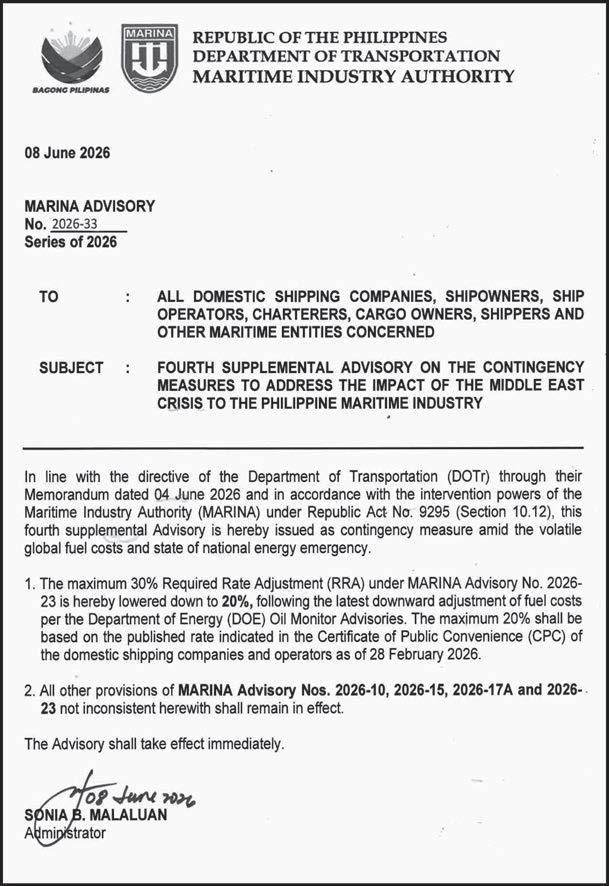
faith among young people, despite Spain’s heavily secularized society.
On Sunday, their numbers doubled: Organizers said that 1.2 million people had turned out on a brilliant spring morning for Leo’s Mass at Madrid’s iconic Plaza de Cibeles and surrounding streets, with more trying to get in.
“It’s spectacular,” said Julián Tapiador, a consultant who came to the Mass. “I’m so proud that the pope is in Spain after 15 years. Hopefully he comes again and we can all see him again.”
Octavio Puche, a retiree, thanked Leo for making the trip.
“Apparently society is not as secularized as it seems, because there are a million people here in Madrid, and I think he has shown a very human face of Christ, very close to the people, to their suffering,” he said.
Sex abuse scandal hangs over visit
DESPITE the warm welcome, the clergy sexual abuse scandal, which has erupted belatedly in Spain in recent years, has loomed over Leo’s trip. The Catholic hierarchy has begun to reckon with its legacy after reporting in the local media.
Leo is expected to meet survivors while in Spain, but several victims’ groups have complained that they have been left in the dark about when the meeting is taking place and whether they are invited.
Miguel Hurtado, a prominent survivor who accused a monk at Montserrat Abbey outside Barcelona of sexually assaulting him more than two decades ago, protested outside the Vatican’s embassy in Madrid on Sunday. He said that he wrote to the Vatican requesting a meeting with Leo and for the pope to cancel his planned Wednesday visit to the 1,000-year-old Benedictine monastery.
“I understand you can’t meet with all of us
victims, because we are more than 400,000,” Hurtado said, speaking to a cardboard photo of Leo.
As he spoke, a crowd of nuns and others lined the street outside the Vatican embassy, waving Spanish flags and chanting slogans in favor of former dictator Gen. Francisco Franco, who ruled Spain with an iron grip for nearly four decades after the 1936-39 civil war.
The Catholic Church was a pillar of Franco’s dictatorship, and at least until the 1960s, the church enjoyed broad control and influence over Spanish society that waned after democracy took root.
“Spain is Christian and not Muslim!” the crowd yelled.
A form of popular piety dating back centuries
THE tradition of laying flower carpets—and destroying them when the procession tramples them—dates back two centuries and is popular also in Latin America, where elaborate sand designs are also made. The painstaking displays are considered an offering to the Eucharist.
According to Spanish organizers, the 16 flower carpets decorating Sunday’s procession route off Plaza de Cibeles were prepared by a Spanish florists’ association from the northern region of Galicia. Florists used more than 30,000 flowers, most the yellow and white colors of the Holy See flag, for the carpets that feature decorations such as the Holy See keys.
Poland has already had its tradition of Corpus Domini flower carpets recognized by UNESCO, and Galicia is trying to have its tradition listed along with other countries as part of the world’s intangible cultural heritage.
Wildly popular religious processions, pilgrimages and feasts continue to be held in most Spanish regions. The most recognizable

are Semana Santa, or Holy Week, processions during the final week of Lent where brotherhoods and robed penitents parade ornate statues of Christ and the Virgin Mary through cities, towns and villages alongside marching bands. Such

Tuesday, June 9, 2026
‘Holistic human settlements approach, not just housing units, key to solving
EBy Rizal Raoul Reyes @brownindio

STABLISHING a holistic human settle -
ments approach instead of simply building individual housing units is the key to address the country’s housing problem, according to a prominent urban planner.
In an email interview with the BusinessMirror
Dr. Nathaniel von Einsiedel, Chairperson and Principal Planner of Consultants for Comprehensive Environmental Planning, Inc. (Concep Inc), emphasized that constantly adjusting price ceilings and chasing rising material costs is an endless exercise, especially when socialized housing is treated as a commercial trade commodity rather than a welfare item.
“The only way the poorest of the poor can access decent housing near job and livelihood
centers is through rental agreements or longterm leases,” he said. “This was one of the key recommendations of the 2018 Housing Summit that the government adopted, and it is working. But we need more of it.”
Furthermore, Einsiedel urged the government to stop declaring public lands as “alienable and disposable,” recommending instead that they be strictly reserved. He also argued that the government should adopt a policy requiring the integration of socialized housing within former military bases bid out for development into townships.
“The average daily wage earner simply cannot afford to live within the likes of BGC, Newport City, Filinvest City, or the Clark Freeport Zone,” he stressed. Moreover, he noted that many former informal settlements have been presidentially
proclaimed and granted security of tenure, yet their living conditions remain deplorable. Furthermore, their do-it-yourself (DIY) structural improvements expose occupants to severe natural hazards. For instance, some residents in the Enlisted Men’s Barrio (EMBO) areas—which are traversed by the West Valley Fault—have added upper floors to their homes without securing Building Permits.
“Shouldn’t these structures be upgraded, retrofitted, and included in the government’s 4PH program?” Einsiedel asked in an email interview.
As the first Commissioner for Planning of the Metro Manila Commission, Einsiedel emphasized that local government units (LGUs) must actively land-bank for their socialized housing needs.
“The lack of land in areas where jobs and
livelihood opportunities are concentrated remains one of the major drivers of the housing backlog,” he explained.
Aside from preparing local shelter plans, he noted that LGUs should establish continuous land-banking systems specifically for socialized housing. A good place to start, he suggested, would be with properties that have delinquent real property taxes and are subject to public auction.
He also pointed out that offering zoning incentives is low-hanging fruit, since LGUs possess the legislative flexibility to amend existing regulations to encourage private sector investment. By allowing additional floors, building permissions, and discarding mandatory parking requirements for structures within Transit-Oriented Development (TOD) districts, the private sector would be
ABOUT 71 percent of adult Filipinos think that joint military exercises or patrols with allied nations help improve the security of the West Philippine Sea (WPS), while 14 percent think that these may be harmful or cause trouble, according to the Tugon ng Masa (TNM) nationwide survey.
The TNM survey results reported are focused on Public Perceptions of Joint Military Exercises and Security in the WPS.
The survey reported here was commissioned by the Armed Forces of the Philippines (AFP). These findings are released to the public upon the AFP’s request.
The survey, conducted from March 19 to 25, 2026, using face-to-face interviews with a total of 1,200 probability respondents aged 18 and above, both male and female, seven in ten adult Filipinos (71 percent) believe joint military exercises and naval patrols with allied nations—such as the annual Balikatan exercises and regular joint patrols in the WPS—help improve security in the West Philippine Sea. This represents a decisive and broad expression of public support
Continued from A3
that cuts across major geographic areas and demographic groups.
Across major areas, the perception that joint activities help is highest in National Capital Region (74 percent) and Mindanao (73 percent), while the lowest level is recorded in the Visayas (70 percent) and Balance Luzon (70 percent).
Further, the share of adult Filipinos who think joint activities may be harmful is highest in Mindanao (17 percent).
By socioeconomic class, the perception that these activities help is highest among Class ABC (79 percent), while the lowest level is observed among Class E (69 percent).
Across regions, the highest proportions of adult Filipinos who think these joint activities help are found in MIMAROPA (100), SOCCSKSARGEN (90 percent), Western Visayas (87 percent), Bicol Region (84) percent), and Caraga (76 percent).
The lowest levels are recorded in the Bangsamoro Autonomous Region in Muslim Mindanao (50 percent), Cagayan Valley (55 percent), and Central Visayas (57 percent).
“We need the impeachment court because all the guidelines, including the notices, will be coming from the impeachment court through their designated clerk of court,” she said. She added that the Senate secretary general may also play a role in issuing official notices if designated as clerk of court for the impeachment proceedings, noting that the prosecution has yet to receive the formal notice for the pre-trial conference.


Further, higher shares of adult Filipinos who think these may be harmful are observed in Cagayan Valley (33 percent), the BARMM (35 percent), Northern Mindanao (25 percent), and Central Visayas (21 percent).
Across age groups, the perception that these activities help is highest among adult Filipinos aged 18 to 24 (78 percent) and 65 to 74 (77 percent).
The lowest levels are observed among those aged 25 to 34 (66 percent) and 35 to 44 (66 percent).
By locale, adult Filipinos in urban areas (76 percent) are more likely than adult Filipinos in rural areas (68 percent) to think that these activities help improve the security of the West Philippine Sea.
By gender, males report a higher at 74 percent share than females (69 percent).
Across educational levels, the perception that these activities help is highest among adult Filipinos with college or postgraduate education (75 percent), while the lowest level is observed among those with no formal or only elementary education (68 percent).
If the leadership dispute persists, Luistro said the impeachment court cannot operate with two presiding officers or two clerks of court, reiterating that the Constitution does not contemplate dual leadership in the Senate.
“The Constitution does not provide for
“The finding that seven in ten adult Filipinos view joint military exercises and naval patrols with allied nations as beneficial for West Philippine Sea security carries notable implications for Philippine defense policy and public communication,” read the the independent and non-partisan poll conducted regularly by OCTA Research.
Activities such as the annual Balikatan exercises—the most recent of which, Balikatan 2026, involved forces from the United States, Japan, Australia, Canada, France, and New Zealand—as well as regular joint naval patrols conducted by the Philippine Navy alongside allied vessels in the WPS, represent the types of cooperative security engagements reflected in the commissioned by the AFP.
Likewise, the survey data suggests that a substantial portion of the public views such activities as contributing to regional stability, which may be a relevant consideration as policymakers evaluate the scope and direction of existing defense arrangements.
Claudeth Mocon-Ciriaco
an interim administration. It is also difficult to conceive of having two Senate presidents, two Senate secretaries, and two clerks of court,” she said.
“There has to be only one, because that is what the Constitution provides. And with respect to the 11 prosecutors,


highly incentivized.
Einsiedel envisions a future where LGUs adopt programs that blend socialized housing units directly with market-oriented units— instead of isolating them in separate buildings or sites—within TOD districts to foster more inclusive communities.
“The inclusion of socialized housing units within TOD districts can easily be offset by the higher pricing of economic and open-market housing units, as well as the commercial spaces,” he said.
Reflecting on the national strategy, Einsiedel stated that the government’s original target of building six million housing units between 2022 and 2028 was unrealistic from the start, given historical track records and the severely limited budget allocated to the housing sector. Crucially, he noted that the original target market excluded those who need shelter the most: the poorest of the poor. He criticized the approach of focusing almost exclusively on Pag-IBIG Fund members as severely limited.
SEAOIL Philippines announced on Monday a sharp increase in diesel and keroene prices this week.
As of press time, Seaoil said it will increase diesel prices by P5.77 per liter, gasoline by P0.30 per liter, and kerosene by P8.10 per liter. Other oil companies have yet to announce their price adjustment.
Seaoil said it will implement the new prices at 6:00 a.m. of June 9. Last week, pump prices went down by P4.75 per liter for gasoline, P9.26 per liter for diesel, and P10.86 per liter for kerosene.
Oil companies adjust their prices every week to reflect movements in the world oil market.
Meanwhile, liquefied petroleum gas (LPG) manufacturer Regasco said it will reduce prices by P1 per kilo starting June 9, partly due to a reduction in shipping cost.
we have already manifested our position: wherever the House stands, we will stand as well. If the House recognizes the leadership of Acting Senate President Win, then we likewise recognize that same leadership,” Luistro added.
The House prosecution panel on Monday
MBy Henry Empeño
ARIVELES, Bataan—A major franchise operator of quick-service restaurants (QSRs) is set to establish its presence at the free port zone here, the Authority of the Freeport Area of Bataan (AFAB) announced on Thursday, June 4.
The De Guzman Group of Companies, a master franchise operator for Jollibee Foods Corporation in North Luzon, will build “some of the country’s well-loved restaurants in the Freeport Area of Bataan,” AFAB said.
These include iconic brands Jollibee, Chowking, and Greenwich that are expected to expand dining options while creating new economic opportunities and employment for the FAB community, it added.
AFAB said the project falls in line with its vision of transforming the Freeport Area of Bataan into a dynamic investment hub for diverse industries and sustainable employment.
“The project reflects growing investor
“Furthermore, the unavailability of land was and still remains a major constraint. The freehold—or ownership—approach is simply unaffordable to a large majority of those who need housing most,” he said. Launched with the ambitious goal of building 6 million homes by 2028, the Pambansang Pabahay Para sa Pilipino (4PH) Program has faced severe roadblocks. Realizing the initial target was unattainable, the government formally slashed the goal down to 3.2 million units, and has since scaled it back further to an actual completion target of just 1.2 million units by 2028.
Meanwhile, the Department of Energy (DOE) released on Monday evening this week’s estimated oil price adjustment. For gasoline products, the agency said a liter may go down by P1.70 or may go up
submitted a manifestation before the Senate impeachment court in response to Duterte’s answer to the articles of impeachment, opting not to file a formal reply after she issued a general denial and raised no new factual matters requiring a response. Jovee Marie N. Dela Cruz
confidence in the FAB and contributes to the continued economic growth of Mariveles, as well as its neighboring communities,” AFAB stressed. “Through these developments, AFAB continues to build a vibrant community that shares in the benefits of the Freeport’s long history of economic growth and development,” AFAB also said.
The De Guzman Group, also known as De Guzman Foods Group, was founded by the late Consul Eduardo de Guzman, a highly respected businessman in Bataan.
The group operates under subsidiaries like Kathea G Foods Corporation, which operates multiple QSRs in Balanga City, Dinalupihan, Mariveles, Orani, and Orion. The group recently inaugurated a Mang Inasal branch in Mariveles.
AFAB said the group’s expansion projects at the Bataan Freeport are expected to create greater livelihood opportunities in the area and enhance the quality of life in Mariveles and Bataan as a whole.

ABy Joel R. San Juan @jrsanjuan1573
GROUP of health workers has asked the Office of the Ombudsman to investigate Department of Health (DOH) Secretary Teodoro Herbosa and Undersecretary Albert Francis Domingo for alleged misuse of public funds for personal luxury during their trip to Geneva, Switzerland to attend the 79th World Health Assembly from May 17 to May 23.
In their complaint, the Alliance of Health Workers said Herbosa issued Department Personnel Order No. 2026-2590 to upgrade
The Senate, however, has yet to resolve its internal leadership dispute before commencing the trial, which initial reports say could take place in July.
Next stages
THE House prosecution panel also on Monday said it is now preparing for the next stages of the impeachment proceedings after submitting its manifestation before the Senate impeachment court, stressing that the 11-member team remains ready to proceed to pre-trial and trial despite unresolved internal issues in the upper chamber.
Lead prosecutor Batangas Rep. Gerville Luistro, House trial spokesperson Party-list Rep. Renee Co of Kabataan, and prosecutor Party-list Rep. Jose Manuel Tadeo Icasiano Diokno of Akbayan said the filing marks the end of the panel’s response to Duterte’s answer to the Articles of Impeachment and the start of preparations for pre-trial proceedings.
“Despite the commotions and irregularities taking place in the Senate of the Republic of the Philippines, the 11 prosecutors remain unwavering and are ready to face the upcoming impeachment trial,” Luistro said at a press conference.
She added that the prosecution is working within the previously publicized timeline set under the former Senate leadership of Sen. Alan Peter Cayetano, anticipating the pre-trial conference and initial trial dates in June and July.
“We anticipate that on June 18, the 11 prosecutors will appear before the impeachment court for the first day of the pre-trial conference, and on July 6 for the first scheduled day of the trial,” she said.
Luistro said preparations are already in full swing, with the pre-trial brief completed and ready for submission by June 15, in line with the earlier schedule. The brief contains the stipulation of facts, list of witnesses, pieces of evidence, and testimonies to be presented during the trial.
“June 15 is the deadline for the filing of the pre-trial brief,” she said. “After that, we will appear before the impeachment court for the pre-trial conference on June 18.”
However, she noted that no formal notices have yet been issued by the Senate Impeachment Court despite the approaching pre-trial
Meanwhile, NEA Administrator Antonio Mariano Almeda convened an emergency meeting with the ECs of the Association of Mindanao Rural Electric Cooperatives (AMRECO) to assess the power situation across Mindanao.
The DOE and NEA mobilized emergency Task Force Kapatid, which deploys line workers from non-affected ECs to strengthen restoration efforts in affected areas.
AFP, PNP quake response
THE Armed Forces of the Philippines (AFP) on Monday activated its “humanitarian assistance and disaster response” (HADR) protocols following the strong earthquake that rocked Maasim, Sarangani and other nearby provinces.
“Even as coordination with the Office of Civil Defense [OCD], the NDRRMC [National Disaster Risk Reduction and Management Council] and concerned local government units continues, AFP units in the affected areas have already been directed to undertake preparedness and response measures,” AFP spokesperson Col. Francel Margareth Padilla said.
“Ground units, including our Unified Commands, Major Services, and reserve assets
Domingo’s travel entitlement from an international round-trip economy airfare to business class airfare without justifiable reason.
“This is a textbook example of a public official bleeding the government dry for personal comfort. There is no operational necessity for an Undersecretary to be pampered in business class. An economy seat does not diminish a bureaucrat’s capacity to sit through a conference or represent the country,” the complaint read. The health workers said the decision to use public funds on luxury travel is not just a violation of administrative rules but also “an insult to every struggling Filipino, especially in this time of crisis.”
schedule, amid continuing uncertainty caused by tensions between the blocs of acting Senate President Sherwin Gatchalian and Cayetano.
Prosecution team remains prepared
REGARDLESS of whether the Senate Impeachment Court adjusts the tentative schedule, Luistro said the prosecution remains prepared and aligned with the publicly released timeline.
“Nonetheless, our preparation is aligned to the timeline that was publicized by the Senate,” Luistro said.
Co said the next phase of the process is crucial in allowing both sides to present their positions before the impeachment court.
She said the proceedings will give the public a clearer view of the evidence and the defense, which she said is necessary to achieve closure on long-standing allegations against the Vice President.
“Simple enough, our call is this: to move forward, we need closure,” Co said. “And to achieve closure, we need answers.”
“It is not normal, and it should not be treated as normal, for there to be no answers. So we are waiting for the trial so that we can finally see the defenses and, of course, how we can move forward in the process of accountability,” she added.
For his part, Diokno said the 11-member prosecution team saw no need to respond point-by-point because the answer did not raise new factual matters and instead sought dismissal of the case by repeating procedural, constitutional, and jurisdictional arguments.
“If we look at the Vice President’s response, it seems she wants the case to be dismissed immediately. That is not possible because, of course, the trial must come first before any judgement or decision is made by the Senate acting as an impeachment court,” he stressed.
He said the proper venue for evaluating the allegations is the impeachment trial, where evidence can be formally presented and examined.
“What is needed now is for this case to be tried immediately,” Diokno said. “We in the prosecution are fully prepared to present evidence.”
Luistro said the prosecution remains optimistic that the Senate impeachment court will issue an official notice within the week after Gatchalian signaled he would follow the original timeline released by the Senate.
in Mindanao, are on heightened alert and are prepared to support Search, Rescue, and Retrieval Rapid Damage Assessment and Needs Analysis, evacuation assistance, engineering support, transportation, communications, medical response, and the delivery of relief supplies as may be required by the situation,” she added.
The Philippine National Police (PNP) said it is closely coordinating with the OCD and the NDRRMC along with local government units. PNP chief Gen. Jose Melencio Nartatez Jr. said police personnel across Mindanao are on heightened alert to assist in evacuation efforts, secure critical infrastructure, and support relief operations.
“The police are ensuring that roads and access routes are clear for rescue teams and that evacuation centers are safe and orderly for displaced residents, particularly in coastal communities under the tsunami warning,” he added.
DSWD response
THE Department of Social Welfare and Development (DSWD) has escalated its response to a national level following the earthquake, with DSWD Secretary Rex Gatchalian directing all regional field offices to activate emergency coordination and rapid aid deployment.
Gatchalian said DSWD field offices across
The respondents’ acts, according to the complainants, are prohibited under Article 25 of the Civil Code.
The said provision specifically states: “Thoughtless extravagance in expenses for pleasure or display during a period of acute public want or emergency may be stopped by order of the courts at the instance of any government or private charitable institution.”
The complainants also noted that Section 4(h) of R.A. 6713 or the Code of Conduct and Ethical Standards for Public Officials and Employees strictly commands public officials to “lead modest lives” and “not indulge in extravagant or ostentatious
displays of wealth.”
Furthermore, the group said Domingo and Herbosa may also be held liable for violation of Section 3 (3) of Anti-Graft and Corrupt Practices Act by demanding and receiving a luxury flight upgrade which caused financial injury to the government.
“Flying business class on the taxpayer’s money while public hospitals run out of basic medical supplies and paracetamol is a clear, punishable breach of this statutory duty,” the group added.
They stressed that many poor Filipinos are dying of preventable illnesses without seeing a doctor or stepping foot in a functional clinic
due to the high cost of hospitalization and skyrocketing prices of medicines.
“While patients beg for medicine, Herbosa and Domingo shamelessly attend a junket abroad fully funded by taxpayers,” the complainants said.
The group added that Herbosa and Domingo may also be held liable for direct violation of Executive Order No. 77 which direct that all official flights of government personnel must be restricted to economy class; defiance of EO No. 110, Series of 2026 which strictly orders all agencies to slash operational and fuel expenses by at least 10 percent following the declaration of a State of National Energy Emergency; and contempt of office of the President Memorandum Circular No. 114 and Department of Budget
TThis was disclosed by lawyer Levito Baligod, legal counsel of the former soldiers, during an ambush interview at the Department of Justice (DOJ), which is conducting the preliminary investigation on the perjury, cyber libel and other criminal charges filed against them.
Baligod said they recently received a call from the Office of the Ombudsman asking to schedule their appearance before the anti-graft body.
He added that they are set to appear before the Ombudsman on June 11, 15, 16 and onwards.
“The Ombudsman investigation, I think that is the proper venue, right? So, everything will be scrutinized, one by one. There is a panel of investigators, and that’s where they will hand over everything – the pictures, the videos, everything,” Baligod pointed out.
When asked if the Ombudsman is set to start a fact-finding investigation on the joint complaint filed by the former Marines, Baligod answered : “Yes.”
Assistant Ombudsman Jose Dominic Clavano IV also confirmed that the agency has summoned the former soldiers on the said dates.
“Yes, that’s the schedule. In fact, we have been regularly interviewing them even before. It’s part of the effort of the office not to leave any stone unturned. We will go where the evidence takes us,” Clavano stressed.
In their joint affidavit submitted to the Ombudsman last February, the former soldiers claimed that they previously worked as personal assistants or security consultants of resigned Ako Bicol Party List Rep. Zaldy Co.
They added that part of their duties were to escort Co’s executive assistants in delivering numerous luggage, paper bags, envelopes full of cash to several
Mindanao were working closely with local government units (LGUs), particularly in hardhit and coastal areas.
The DSWD confirmed it has more than 1.1 million boxes of family food packs (FFPs) prepositioned in Mindanao alone, ready for immediate distribution to displaced and affected families.
In line with President Marcos’ directive, the DSWD said all field offices have been instructed to prepare logistics, manpower, and deployment assets, reinforcing a wholeof-government response.
Vigilance
SPEAKER Faustino “Bojie” G. Dy III said the scale of the disaster underscores the need for close coordination across all levels of government.
“In situations like this, swift coordination and cooperation are crucial. We call on all LGUs, emergency responders, volunteers, and community leaders to enwwsure the safety of our people and to properly respond to any needs in the affected areas,” he said.
Dy also appealed to the public to remain calm, stay alert for official advisories, and avoid spreading unverified information that could fuel panic, stressing that accurate information is critical during emergencies. With reports from Associated Press, Samuel Medenilla, Lenie Lectura, Reine Alberto and Carmel Pedroza
political figures as alleged kickbacks from flood control and other infrastructure projects of the government.
From 2022 to 2025, the former soldiers claimed to have delivered several suitcases amounting to more than P800 billion in various occasions to several lawmakers and government officials, including President Marcos, House Speaker Martin Romualdez, Senator Vicente “Tito” Sotto, Senator Erwin Tulfo and former senator Antonio Trillanes IV.
The money delivered to Trillanes, according to the former soldiers, were intended to fund the hotel accommodations of investigators from the International Criminal Court (ICC) who were then gathering evidence against former President Duterte and other accused in the
crimes against humanity in connection with their war on drugs campaign.
The other personalities accused of receiving money from Co were Rep. Leila de Lima, National Security Adviser Eduardo Año, former Kabataan party-list Rep. Raoul Manuel, House deputy Speaker Paolo Ortega, Commission on Elections chairperson George Erwin Garcia, Lanao del Sur Rep. Zia Alonto Adiong, former Surigao del Norte Rep. Robert Ace Barbers. Fr. Flaviano “Flavie” Villanueva, and Bureau of Corrections Director General Gregorio Catapang. De Lima, Año, Trillanes, Villanueva, Catapang and several others have filed perjury, cyber libel and other criminal charges before the DOJ against the exMarines for implicating them in the corruption scheme.
It may be recalled that Ombudsman Jesus Crispin Remulla earlier challenged Baligod to have his clients submit 18 separate affidavits detailing their personal knowledge on the alleged illegal cash distribution scam. “It seems like their stories were stitched together and turned into a single affidavit. An affidavit should not be like that. In an affidavit, you swear to tell the truth, the whole truth, and nothing but the truth, based on your own personal knowledge…,” Remulla
The

INFRASTRUCTURE is the skeleton upon which a thriving economy is built. For Cebu, that skeleton is showing signs of strain.
The message from this year’s Investment and Entrepreneurship Summit, held as part of Cebu Business Month 2026, was as urgent as it was clear: Cebu cannot grow its way out of congestion, flooding, and water scarcity using public funds alone. The call by Aboitiz InfraCapital Vice President Eduardo Aboitiz for deeper investments in public-private partnerships (PPPs) is not merely a business pitch—it is a necessary prescription for survival. (Read the BusinessMirror story: “Cebu’s growing infra needs merit more PPP investments,” June 4, 2026).
Consider the evidence. Central Visayas remains the country’s fourthlargest regional economy, with a gross regional domestic product of P1.32 trillion in 2025. Yet that same economy grew by only 3.7 percent—below the national average—hamstrung by typhoons, tariff shocks, and the lingering distrust from a flood control scandal. More tellingly, inflation in the region hit a staggering 10.8 percent, far above the national figure, exposing the vulnerability of an island economy dependent on shipping and fuel. The numbers tell a story of paradox: Cebu is a powerhouse, but its engines are overheating. Traffic worsens. Water concerns mount. Flooding and waste management lag. As DepDev-7 Assistant Director Evelyn Nacario-Castro rightly noted, rapid urbanization is creating congestion and infrastructure gaps that could limit productivity if left unresolved. Against this backdrop, the PPP model is not a luxury—it is a lifeline.
The Mactan-Cebu International Airport stands as the shining example. By marrying government oversight with private-sector capital and operational expertise, MCIA expanded to serve 12 million passengers annually, generating ripple effects that reach market vendors and small transport operators far beyond tourism. The Davao City Bulk Water Supply Project, delivering 300 million liters daily to over a million residents, proves that long-term water security is achievable through sustained collaboration. Cebu can—and must—replicate these successes.
But partnerships require more than handshake agreements. As Aboitiz emphasized, water security and infrastructure resilience demand long-term planning, policy consistency, regulatory predictability, and political will. These are not technical hurdles; they are governance challenges. Investors will not pour capital into projects where rules shift with every election or where permitting remains a labyrinth of delays.
The warning from Castro is equally sobering: Central Visayas’ openness to global markets is a double-edged sword. Downturns in tourism, remittances, and trade hit the region hard. Meanwhile, manufacturing—a critical pillar—contracted by 0.9 percent last year. Without modern logistics, reliable power, and resilient water systems, Cebu risks pricing itself out of competitiveness.
There’s an urgent need for business leaders and government to work together beyond rhetoric. Deepening PPPs means streamlining approval processes, ensuring transparent bidding, and protecting contracts from political interference. It means prioritizing shovel-ready projects in water security, flood control, and sustainable transport over ribbon-cutting for less critical endeavors. And it means acknowledging that the private sector is not a substitute for public accountability but a partner in shared risk and reward.
The summit’s theme—“PPPs as a catalyst for Cebu’s economy”—must become reality, not just a talking point. Cebu’s quality of life, its ability to attract investments, and its standing as the South’s premier economic hub depend on infrastructure that keeps pace with ambition.


AJohn Mangun
NCIENT Mesopotamian farmers borrowed grain, the terms recorded on clay tablets and repaid at harvest. The logic has not changed in 4,000 years: consume today, settle the bill tomorrow. What has changed is the scale, the sophistication of the instruments, and the remarkable creativity with which governments explain why this particular debt, at this particular moment, is entirely manageable.
The Philippines is currently performing that explanation with energy.
National government debt hit a 21-year high at end-March—65.2 percent of gross domestic product, P18.5 trillion, headed for P19 trillion by December. The government’s response has been consistent: the debt is sustainable, trajectory is downward, ratings agencies agree, pandemic made everyone do it. All of that is broadly true but none of it is the complete picture.
The complete picture includes debt service. The government will spend roughly P2 trillion this year on principal and interest payments combined—approximately 30 percent of the entire national budget. Interest payments alone are projected at nearly a trillion pesos for 2026. Fitch Ratings estimates the interest costto-government revenue ratio will reach 13 percent this year, against a 9 percent median for the Philippines’
Antonio L.
to 36. E-mail: news.businessmirror@gmail.com www.businessmirror.com.ph


BBB-rated peers. The government is not in crisis. It is, however, spending one peso for every eight of revenue simply to service the cost of past borrowing decisions, before a single classroom gets repaired or a single kilometer of road gets built. This is the debt trap’s quiet mechanism. It does not announce itself. It works through subtraction—slowly reducing the share of the budget available for anything productive, compressing fiscal space year by year, until the government finds itself borrowing to service borrowing. The Philippines has not reached that point. But the direction is clear.
Debt divides cleanly into two categories regardless of the borrower. Investment debt plants something— a factory, a bridge, a grid connection that generates returns exceeding the cost of the money. Consumption debt buys the meal you have already eaten.
The Philippine record on that distinction is mixed at best. Capital
Debt divides cleanly into two categories regardless of the borrower. Investment debt plants something—a factory, a bridge, a grid connection that generates returns exceeding the cost of the money. Consumption debt buys the meal you have already eaten.
outlays—infrastructure, productive investment—have been falling as a share of the budget since the Duterte years and contracted a further 9 percent in 2026. The increases in government spending over the same period came almost entirely from two sources: debt servicing and personnel costs. The country borrowed aggressively during and after the pandemic. The returns on that borrowing, measured in durable productive capacity, are less obvious than the headline growth numbers suggest.
The economy expanded 2.8 percent in the first quarter of 2026, the weakest performance since the pandemic, as the oil shock drained consumer spending and fueled inflation.
Growth at that pace does not reduce a 65 percent debt-to-GDP ratio. It holds it in place while the interest clock runs.
None of this is alarming yet. The World Bank calls the debt sustainable. AMRO, the ASEAN+3 Macroeconomic Research Office, projects the debt ratio declining through 2030. The ratings are stable if cautious. The government’s 77-to-23 domestic-to-foreign borrowing ratio limits direct currency exposure.
These are genuine stabilizers, not public relations. The Philippines has
navigated worse debt positions—the ratio touched above 72 percent in the early 2000s and came down. It can do so again.
Fiscal health requires either collecting more revenue or cutting spending—without gutting the infrastructure budget that remains the only credible path to the growth rate that makes the math work.
The Mesopotamian farmer who borrowed grain had a simple accountability mechanism. The harvest either came or it did not. There was no rolling the debt over onto a new clay tablet, no budget realignment, no supplemental appropriation. The lender and the borrower lived in the same village and faced the same season.
Modern sovereign debt does not work that way. The officials who borrow and the citizens who pay live in different worlds entirely. Governments never pay off their loans; people have to. That nonsense is not unique to the Philippines. It is the defining feature of public finance everywhere. What distinguishes the countries that navigate it from those which default on their debt is the discipline to treat investment debt and consumption debt as two different things. The harvest still comes and so does the debt payment. The only question is whether the country planted anything with the money it borrowed.
E-mail me at mangun@gmail.com. Follow me on Twitter @mangunonmarkets. PSE stock-market information and technical analysis provided by AAA Southeast Equities Inc.
By Jera Sison
AS a proud Pinoy glued to my screen late into the night, I witnessed history unfold once again for Philippine tennis. Our very own Alexandra Eala, the pride of the Philippines, captured the WTA 125 Lexus Birmingham Open title in 2026. What a journey it was—watching her battle through the grass courts of England, showing that unbeatable Filipino spirit, resilience, and class that makes us all beam with pride from thousands of miles away.
From the very first round, Alex dominated. She kicked things off with a commanding 6-0, 6-2 win over Priscilla Hon. Then came the comeback queen moment against Alina Charaeva, where she rallied from a 2-5 deficit in the second set to win 6-2, 7-5. Quarterfinals? Straight sets over Thailand’s Mananchaya Sawangkaew, 6-3, 6-2. Semifinals brought drama with rain delays and a tough three-setter against Rebeka Masarova (6-2, 4-6, 6-3), but our girl powered through with a bandaged leg and all. And in the final against Nikola Bartunkova, she found a way to win in a dramatic match that had us all on the edge of our seats.
This isn’t just another title for Alex—it’s her second WTA 125
crown, a massive boost heading into Wimbledon, and another milestone that cements her as the Philippines’ brightest tennis star.
We’ve always dreamed of moments like this. Seeing a kababayan lift that trophy on international soil fills the heart with so much joy and hope for the future of Philippine sports. Alex is not only talented; she’s a fighter who represents the bayanihan spirit—lifting herself and inspiring an entire nation.
What made it even more special was tuning in online, joining fellow Pinoys in live chats, flooding social media with #GoAlexEala and #ProudlyFilipino. Every point she won felt like a collective victory. Even with the time difference, the
From the very first round, Alex dominated. She kicked things off with a commanding 6-0, 6-2 win over Priscilla Hon. Then came the comeback queen moment against Alina Charaeva, where she rallied from a 2-5 deficit in the second set to win 6-2, 7-5. Quarterfinals? Straight sets over Thailand’s Mananchaya Sawangkaew, 6-3, 6-2. Semifinals brought drama with rain delays and a tough three-setter against Rebeka Masarova (6-2, 4-6, 6-3), but our girl powered through with a bandaged leg and all. And in the final against Nikola Bartunkova, she found a way to win in a dramatic match that had us all on the edge of our seats.
community was alive—cheering,
the awarding ceremony, Alex was her usual humble and gracious self in the on-court interview. She shared heartfelt thoughts that
perfectly captured her journey: “I’m really happy with the win today... This means so much, especially on grass. I’m just grateful to everyone who’s supported me—the team, my family back home, and all the Filipinos cheering from afar. It wasn’t easy with the rain and everything, but I told myself to keep fighting. This one’s for the Philippines!” She also touched on her growth: “I feel like I’ve improved a lot since last year. Grass is tricky, but I’m really starting to enjoy it. To all the young players out there, keep working hard. Dreams do come true if you believe and put in the work.”
Her words brought some tennis fans to tears. In a sport where individual excellence shines, Alex always remembers her roots. She’s paving the way for the next generation of Filipino athletes, showing that with dedication, we can compete—and win—at the highest levels.
To Alex: Maraming salamat for making us proud once more! Your victories are ours too. The Philippines is behind you all the way as you take on Wimbledon and beyond.
By Philip J. Heijmans & Rosalind Mathieson
CAMBODIA has failed to dismantle much of its online scam industry despite a yearlong crackdown that authorities said would eliminate it, according to an Amnesty International report that challenges official claims of success.
The London-based rights group said it identified 86 scam compounds operating across Cambodia as of April, up from 53 a year earlier, and found evidence of state intervention at only 24 sites during the government’s campaign. That contrasts with official statements that authorities had taken action against more than 250 scam centers nationwide.
The findings cast doubt on government assertions that the industry had been significantly weakened. Senior Minister Chhay Sinarith told Bloomberg in February that online scam activity had been reduced by half and the problem would be resolved by April. Officials later reported thousands of arrests, prosecutions and deportations linked to the crackdown.
“Cambodia’s crackdown has failed in key areas, both in investigating and shuttering some of the most well-known compounds across the country and in protecting and assisting the victims who escaped,” Amnesty said in its report, released Monday.
Chhay Sinarith, who is also chairman of the Secretariat of the Commission for Combating Technology Crimes, did not immediately respond to a request for comment.
The effort targets a cyberfraud industry that has turned parts of Southeast Asia into hubs for online scams generating billions of dollars annually. Cambodia, alongside Myanmar and Laos, has become a hub for scam compounds where trafficked workers are often forced to carry out fraud schemes targeting victims around the world.
“We’re still understanding most of their crackdowns as being quite performative, where they’re perhaps alerting the key people within the scam centers before a raid, so they’re not actually taking down the key actors,” said Julia Dickson, an associate fellow in the Intelligence, National Security and Technology Program at the Center for Strategic and International Studies.
“We have seen a lot of movement within Cambodia, perhaps shifting more from these big compounds in border zones to smaller compounds that are harder to track within urban areas or simply relocating elsewhere.”
While Amnesty acknowledged that thousands of people appear to have escaped or been released
The London-based rights group said it identified 86 scam compounds operating across Cambodia as of April, up from 53 a year earlier, and found evidence of state intervention at only 24 sites during the government’s campaign. That contrasts with official statements that authorities had taken action against more than 250 scam centers nationwide.
during the campaign, it said many were subsequently treated as immigration offenders rather than victims. The group said survivors frequently relied on charities, local residents and foreign embassies for food, shelter and assistance in leaving the country.
Prime Minister Hun Manet launched the nationwide campaign in July, describing scam networks as a threat to Cambodia’s legitimate economy. Amnesty said the effort produced some results, but concluded that systemic failures, inadequate investigations and weak victim protection allowed much of the industry to survive.
There are also signs that some people who escaped the compounds or were released are being re-trafficked inside Cambodia, Dickson said. “You’ve seen people flood the streets in Cambodia as the raids are happening, all these people don’t have anywhere to go, don’t have any way to get back, so they end up, some willingly, often not willingly in another compound.”
Stephanie Baroud, a criminal intelligence analyst with the human trafficking and migrant smuggling unit at Interpol in Lyon, France, said there were signs Cambodia’s scam compounds were splintering into smaller operations, including in residential areas.
“Has the crackdown led to an end? It does not appear so,” she said. “The scam centers are still around. They’re popping up in other places.”
“Shutting down a scam center does not necessarily entail a dismantling of the infrastructure that is behind it,” she added. “The risk of revictimization and being trafficked again is there, especially in the context of crackdowns like this.” Bloomberg

TAtty. Rodel C. Unciano
HE approval of the 2026 Strategic Investment Priority Plan (SIPP) through Memorandum Order No. 47 signed by President Ferdinand Marcos Jr. on May 21, 2026 marks an important step in the government’s continuing effort to attract investments in the Philippines through the grant of the investment incentive system under the Corporate Recovery and Tax Incentives for Enterprises (CREATE MORE) Act.
If an industry or project falls under the SIPP list, it may be eligible for registration with Investment Promotion Agencies (IPAs) such as the Board of Investments (BOI), the Philippine Economic Zone Authority (PEZA), and other investment promotion bodies. Once registered and approved, enterprises may avail themselves of incentives under the Tax Code, subject to compliance with CREATE MORE rules and requirements of the concerned IPAs.
Under the Tax Code, as amended, the Fiscal Incentives Review Board (FIRB) and IPAs may grant tax incentives only to the extent that a registered project or activity is included in the duly approved SIPP. Eligibility for incentives is directly tied to national priority activities and other policy considerations such as capital investment and job creation. The SIPP serves as the central reference point in determining which economic activities may qualify for available tax incentives as provided under the Tax Code, as amended. Proj -
ects or activities not listed in the SIPP shall be automatically disapproved.
The 2026 SIPP retains the usual three-tier structure but its content shows a clearer shift toward longterm economic transformation and more targeted industrial policy.
Tier I continues to cover foundational and enabling sectors including modern agriculture, manufacturing, information technology, healthcare services, disaster risk reduction and management services, telecommunications sector, pharmaceuticals, semiconductors and electronics, shipbuilding, housing, and air, water, and land transport. It also includes sustainability-driven industries such as industrial and hazardous waste treatment, bulk water treatment and supply, wastewater treatment and related projects.
The continued inclusion of agriculture is particularly important as we are still facing scarcity of food supply and rising prices of basic commodities. Despite being an agricultural economy, we still
import significant volumes of basic food products such as rice, corn, meat, and other agricultural goods. By keeping agriculture within Tier I, the SIPP highlights the need to improve productivity, modernize farming systems, and strengthen food security. It likewise signals government support for investments in farm mechanization, irrigation systems, post-harvest facilities, and agribusiness value chains that can help reduce dependence on imports. Fisheries and aquaculture carry the same importance. As an archipelagic nation, the Philippines has vast marine resources, yet the fishery and aquaculture industry remains underdeveloped in terms of production capabilities, processing, cold chain logistics, and export competitiveness. The inclusion of fishery and aquaculture activities creates room for investments in fish processing facilities, cold storage systems, and export-oriented aquaculture operations that can raise income in coastal communities and improve our country’s food supply. The inflow of investments in our coastal communities will certainly help improve the lives of our marginalized fishing communities. The Philippines has one of the longest coastlines in the world, so it makes sense to attract more investments in the aquaculture sector.
Tier II shifts the focus to strategic industries including defenserelated services, desalination technologies, electric vehicle infrastructure, crude oil refining, renewable energy, sustainable aviation fuel, and health and food security-related services.
The inclusion of renewable en -
ergy and electric vehicle infrastructure is particularly significant as it reflects the government’s effort to reduce pollution, lower dependence on imported fuel, and support the transition to cleaner transport systems. Crude oil refining and desalination technologies also highlight practical economic concerns as energy security and water security remain key constraints in many parts of the country particularly in the urban areas.
Tier III focuses on frontier and high-technology sectors such as artificial intelligence, cybersecurity, quantum computing, hydrogen energy, nuclear-related technologies, advanced research and development, aerospace, modern biotechnology, and the production and adoption of new hybrid seeds, among others. The Philippines truly needs to develop these sectors to keep pace with global progress and development.
In fine, the 2026 SIPP is a positive development as it clearly identifies priority sectors that investors may consider in doing business into the Philippine soil. Clear policy direction is important as it allows investors to align their long-term plans with government priorities.
The author is a partner of Du-Baladad and Associates Law Offices (BDB Law) (www.bdblaw. com.ph).
The article is for general information only and is not intended, nor should be construed as a substitute for tax, legal, or financial advice on any specific matter. Applicability of this article to any actual or particular tax or legal issue should be supported, therefore, by a professional study or advice. If you have any comments or questions concerning the article, you may e-mail the author at rodel.unciano@bdblaw.com.ph or call 8403-2001 local 380.
IMF chief warns world isn’t ready for shocks that are
By Jorgelina do Rosario & Francine Lacqua
INTERNATIONAL Monetary Fund Managing Director Kristalina Georgieva said that after facing crisis upon crisis in recent years, the world needs to build foundations that can withstand shocks that have become more frequent.
“I am worried that we are not completely internalizing yet that this is how the world is going to be,” Georgieva said on Bloomberg’s podcast Leaders with Francine Lacqua. “We are not going to get to a place where shocks are gone.”
Georgieva, who’s been at the helm of the Washington-based lender since 2019, has been through the Covid pandemic, the war in Ukraine, the tariffs turmoil and now the conflict in the Middle East. The IMF has a lending capacity of just under $1 trillion dollar and her job—as she described it—is keeping the fund’s
191 members focused on working together for the greater good of the world economy.
“The best ammunition we have is objective analysis,” she said.
One major transformation underway is the spread of artificial intelligence and its impact on labor markets and local economies. Georgieva said organizations including hers failed to recognize inequalities arising from globalization and she wants to make sure it won’t happen with AI.
“We collectively, including the fund, did not appreciate the backlash
against globalization that came from the fact that, yes, the world economy is doing better as a whole, but many communities were hollowed out because their jobs disappeared and there was not enough attention to them,” she said. “I’ll tell you what I’m very keen not to see repeated is the same with artificial intelligence.”
The fund will update its outlook for the global economy in July, after downgrading its growth projection for the year in April amid the war in the Middle East. The lender also performs annual economic revisions of member countries, among other reports under its surveillance mandate.
Russia assessment
IN 2024, two years after Russia invaded Ukraine, the IMF announced it would restart its annual review of Russia’s economy—the so-called Article IV—for the first time since
By Prima Wirayani & Grace Sihombing
THE rout in Indonesian markets deepened on Monday with the nation’s bonds, stocks and currency tumbling.
The nation’s 10-year government bond yield jumped 33 basis points to the highest in more than a year. The benchmark stock index plunged 4 percent before paring losses, while the rupiah fell as much as 0.8 percent to a record low.
Indonesia is facing growing calls to move beyond assurances and spell out more concrete measures to stem the selloff, with investors looking for stronger signals of policy discipline and market support. Mounting concerns over the government’s economic management, confusion over new commodity export rules and renewed scrutiny of Indonesia’s sovereign credit profile have hit investor sentiment.
the start of the war.
The plan was met with backlash from several European Union countries who challenged Georgieva over the decision. They said engaging Russia on economic issues would legitimize Kremlin efforts to evade sanctions.
“It was a very tricky moment because bombing was going in both directions. We decided to delay,” she said. “We need to collect data on trade, import, export. Russia was very reluctant to provide this data.” She added that “at some point we will have the regular assessment restarted,” without providing details on timing.
The fund has been supporting Kyiv with financing tied to key reforms since Russia’s invasion, with two programs for $15.6 billion in 2023 and $8.1 billion this year. Bloomberg
al gauges tracked by Bloomberg. The rupiah has weakened about 8 percent, the worst performance in Asia this year, and breached the psychological level of 18,000 per dollar last week.
Bank Indonesia Governor Perry Warjiyo and Finance Minister Purbaya Yudhi Sadewa held a joint briefing at the Parliament on Saturday, pledging to maintain sufficient liquidity in the market and work together to boost bond yields to lure more inflows. The central bank will also increase the interest rate on government cash placed with it, Warjiyo said.
“The statement on Saturday can be a start to reduce market pressures, but it’s still not enough to sustainably turn the market direction,” said Josua Pardede, chief economist at PT Bank Permata in Jakarta.
Just five months after hitting a record high, the benchmark stock index has tumbled nearly 39 percent to become the worst performer this year among more than 90 glob -
“The next two weeks are critical,” said Mohit Mirpuri, a partner at SGMC Capital Pte in Singapore. “The market is looking for clear signs of fiscal discipline, policy consistency and a strong commitment to macroeconomic stability.” Sentiment will likely remain bearish ahead of Bank Indonesia’s interest-rate decision and MSCI Inc.’s review of the country’s investability this month, analysts said. Speculation over a possible reshuffle of economic policymakers is adding to the unease, even after the finance ministry and central bank unveiled another measure over the weekend to support bond yields and attract inflows.
Authorities need to provide details on the remuneration rate, the scale of government deposits and the implications for BI’s costs and the government’s bond issuance,
Indonesia is facing growing calls to move beyond assurances and spell out more concrete measures to stem the selloff, with investors looking for stronger signals of policy discipline and market support. Mounting concerns over the government’s economic management, confusion over new commodity export rules and renewed scrutiny of Indonesia’s sovereign credit profile have hit investor sentiment.
Pardede said.
“Otherwise, markets could interpret it as a blurring line between fiscal and monetary policy, limiting any positive impact on the rupiah,” he said.
Global investors are increasingly losing confidence in Prabowo’s more populist and interventionist agenda. They have pulled out a net $3.6 billion from local stocks this year, already
exceeding equity outflows in 2020 during the pandemic. The Iran war has compounded the pressure as elevated oil prices increase Indonesia’s energy subsidy bill.
For now, investors are watching whether policymakers can lift bond yields enough to attract inflows without adding strain to the state budget. Bank Indonesia will also need to raise rates more aggressively to lure funds back into rupiah assets, said Lionel Priyadi, a macro strategist at PT Mega Capital Sekuritas in Jakarta.
“For the rupiah to strengthen back to below 18,000 levels, BI would need to hike interest rate by more than 50 basis points,” Priyadi added, expecting a 75-basis-point increase on June 18.
The plan to pay higher remuneration on government deposits marks the latest sign of deeper coordination between monetary and fiscal authorities. By increasing returns on cash parked at the central bank, the measure could help offset
some of the government’s rising debt costs.
“If we increase the remuneration to the government, the government’s net interest burden will be better managed,” Warjiyo said. “This also simultaneously addresses the concerns of one of the ratings agencies regarding the government’s increasing interest payments.”
Any increase in yields needs to be gradual to avoid unsettling domestic investors, said Aldo Perkasa, head of research at PT Trimegah Sekuritas Indonesia in Jakarta.
Pardede said the government’s “optimistic narrative” needs to be backed by a more detailed policy response.
“Pressures are beyond just exchange-rate volatility, but are related to risk perception toward Indonesia,” he said. “Investors are not only attracted by high returns, but also by their belief that Indonesia’s economic outlook remains credible.” With assistance from Karl Lester M. Yap/Bloomberg
Tuesday, June 9, 2026
By Samuel P. Medenilla
M@sam_medenilla
ALACAÑANG said the gov -
ernment is now considering deploying a team to Washington to assert the country’s position that it is not tolerating forced labor, which the United States Trade Representative (USTR) claimed is giving unfair advantage to goods coming from the Philippines.
Last week, it was reported that the USTR had proposed slapping tariffs from between 10 and 12.5 percent on imports from 60 economies, including the Philippines, after its investigation showed their supposed failure to curb forced labor allowed them to produce goods cheaper than what is manufactured in the US.
USTR noted that Washington is allowed to impose such tariffs under Section 301 of the US Trade Act of 1974. It is now set to conduct public hearings on the results of its report on July 7, 2026.
Palace Press Officer Claire Castro said the Palace recognized the right of the US government to impose the tariff.
However, she said the Marcos administration is now studying on whether or not to deploy another delegation to the US to reiterate its ongoing efforts against forced labor.
“That may be done. We are now analyzing what can be done to prove that we have not committed violations of forced labor,” she said in Filipino in a press
briefing on Monday. Last year, a team led by Finance Secretary Frederick D. Go, who was then Special Assistant to the President for Investment and Economic Affairs, was tasked to negotiate for the lowering of the “Liberation Day” tariffs imposed by the Trump administration last year.
The Department of Trade and Industry (DTI) earlier said that the government can justify the country’s exclusion from the forced labor enforcement probe of the USTR.
The US Department of State has given the Philippines a Tier 1 ranking in its Trafficking in Persons report for the 10th consecutive year in 2025 for its consistent protection of victims of human trafficking, which is a form of forced labor through the efforts of the Interagency Council Against Trafficking ( IACAT ).
“The government is taking this issue [of forced labor] seriously. The government emphasizes its long-standing stance against forced labor and the existing law against it,” Castro said.
“The USTR report is currently being reviewed and we will be liaising with US officials in the appropriate manner. So, we can defend that we are not breaking the law and that we condemn forced labor,” she added.
The International Labor Organization (ILO) defines labor as “all work or service which is exacted from any person under the threat of penalty and for which the person has not offered himself or herself voluntarily.” It estimated there were 28 million under forced labor in 2021.
By Andrea E. San Juan
THE interagency body tasked to monitor the health of the Philippine financial system has flagged pockets of risks in the system that warrant close monitoring.
FSCC is an interagency council composed of the Bangko Sentral ng Pilipinas, Department of Finance (DOF), Insurance Commission, Philippine Deposit Insurance Corporation, and Securities and Exchange Commission (SEC).
The five-member Council said overall, macroeconomic fundamentals remained sound, although continued vigilance is warranted given evolving domestic and external risks.
The council highlighted three structural factors requiring close monitoring: rising leverage in household and corporate sectors; elevated property prices and uneven demand amid high vacancy rates; and concentrated exposures within the financial sector, including unsecured consumer credit and conglomerate borrowings.
For one, the report noted that expansion in consumer loans outpaced household income. From 2021 to 2025, consumer loans grew at a yearly pace of 15.7 percent, with unsecured credit rising even faster at 27.7 percent.
In contrast, household final con-
sumption expenditure only grew by 5.8 percent over the same period.
Apart from demographic factors such as a young working class, the uptrend in unsecured lending segment reflects banks’ shift toward higher-yield products, likely to support interest income amid the accommodative monetary policy environment.
While this signals “genuine” financial inclusion gains, the Council said it also introduces new debt-servicing vulnerabilities that require monitoring.
It remains to be seen whether the significantly faster pace of loan growth relative to income will result in deterioration of asset quality,” FSCC said. If left unchecked, this imbalance could heighten households’ sensitivity to economic shocks and increase the likelihood of spillovers to the banking system.
The report also cited corporate credit among the factors that require close monitoring.
“As of Q3 2025, non-financial corporations [NFC] leveraged exposures reached P4.8 trillion, equivalent to 60 percent of total NFC debt and 21.2 percent of nominal GDP,” the report said. These exposures are highly concentrated among major conglomerates with business segments in key sectors, the report added.

By Ma. Stella F. Arnaldo
Special to the BusinessMirror
AMIX of the old hands, and new faces.
Acting Tourism Secretary Ma. Bernadita Angara-Mathay is building a formidable team that will help her achieve the Department of Tourism’s goals under its National Tourism Development Plan of 20232028. A few of them are experts from the private sector, while others are well-respected government officials. New undersecretaries who took their oath of office early Monday afternoon were: lawyer Ma. Victoria Jasmin, who was a former DOT Undersecretary under Tourism Secetary Ramon Jimenez Jr.; former Philippine Airlines president Stanley Ng; and lawyer Ma. Dionisia A. RiveraGuillermo, formerly Director-General of the Government Procurement Policy Board-Technical Support Of-
fice, an attached agency of the Department of Budget and Management (DBM). Jasmin’s appointment is vice undersecretary for Special Projects Ferdinand C. Jumapao, Ng replaces former undersecretary Halal Tourism and Muslim Concerns Myra Paz Valderrosa-Abubakar, while RiveraGuillermo takes the place of longresigned undersecretary for Finance and Administration Shereen Gail C. Yu-Pamintuan.
‘Best in their fields’ IN an interview with the BusinessMirror, Angara-Mathay said she wanted to choose “like-minded” people, who will “share the same vision, like for instance, the switch to eco-tourism-led, investment-led infrastructure-supported tourism development, data-driven tourism planning, and also the judicious use of government funds.”
She added: “So I got the best that I know in the different fields, and they’ve established themselves in their own lives.” In the case of Jasmin, who was Jimenez’s Undersecretary for Tourism Regulation, Coordination, and Resource Generation from 2011 to 2016, “she’s known to have a firm hand and a disciplinarian in terms of overseeing the regions. So she already has that relationship with them, it will help me concentrate on the things I have to deliver.”
In the case of Ng, Angara-Mathay said she needed someone who is “very good in route development, increasing charter flights, refleeting.”
She added that he will also be able to assist the DOT is increasing arrivals from mainland China. Last year, just 267,660 visitors came from China, 14.72 percent less than in 2024.
As for Rivera-Guillermo, “we had to court her incessantly,” said the DOT chief, having heard of the for-
mer’s excellent leadership at her DBM unit. Rivera-Guillermo was responsible for modernizing government procurement and implementing its key reforms, such as the digitization of the Philippine Goverment Electronic Procurement System (PhilGEPS).
A common vision OTHER new appointees include Assistant Secretary Armand Lorenze Valerio Sapitan vice Sharlene Z. Batin, Assistant Secretary Ma. Christina Gaerlan Aquino vice Ronald P. Conopio, Assistant Secretary Francis Carlos Crucena Caguioa vice Verna Esmeralda Buensuceso, and Director IV Ferdinand Jose Quimosing Bagcal vice Alvin T. Talisic, who has long resigned from the DOT.
“I feel confident they will be able to serve well and contribute to the team,” said Angara-Mathay of her key officials, having had time to interview them, and discuss a “common vision” for the
She
Real estate accounts for the largest share at around 27.8 percent of total conglomerates’ leveraged exposures, followed by power, energy, and oil at about 24.3 percent, while information, communication, and technology contribute another 18.1 percent.
The remaining exposure is distributed across manufacturing, construction, retail trade, and other sectors.
Given this concentration, the Council warned a “significant adverse development” in any of these major sectors could heighten corporate vulnerabilities and transmit pressures more broadly to the financial system.
The report also cited additional risks such as cyber threats and geopolitical tensions such as the conflict in the Middle East.
FSCC Chairman and BSP Governor Eli M. Remolona Jr. said financial regulators will continue to enhance coordination to manage these risks.
“We will sharpen our coordination by defining when to escalate issues and by clearly communicating our assessment of our respective regulated entities,” Remolona said in a statement on Monday.
“These risks underscore the need for vigilance and coordinated oversight among regulators,” the FSCC Chairman and BSP Governor added.
To address emerging vulnerabili-
ties, the FSCC outlined measures to strengthen the financial system’s safeguards against risks.
These measures include activating a tool for banks to set aside additional capital during good times, strengthening oversight of nonfinancial corporations (especially complex conglomerates), expanding data coverage for nonbank financial institutions, and operationalizing a systemic crisis management playbook.
Meanwhile, the Council also flagged the Middle East conflict as a near-term risk to the financial system. However, it noted that the extent of spillovers depends largely on how long the conflict persists.
“A prolonged Strait of Hormuz closure could push oil prices to US$200/ bbl, risking recessions in major advanced economies and triggering second-round effects on Asian exports and capital flows,” the report noted. Foreign reserves and “prudent” FX intervention serve as important buffers. The key uncertainty for financial stability is how macrofinancial pressures—compressed real incomes, tighter external balances, and heightened uncertainty—ultimately transmit to the balance sheets of banks, corporates, and households,” the interagency council underscored.
PHL embarks on ‘FTA spree,’ eyes EU trade pact by mid-year
By Malou Talosig-Bartolome
THE Philippines is accelerating efforts to broaden its global economic footprint, with Foreign Affairs Secretary Maria Theresa Lazaro disclosing that Manila is on track to conclude a long-awaited Free Trade Agreement (FTA) with the European Union by mid-2026.
Speaking at the Center for Strategic and International Studies (CSIS) in Washington D.C. on June 5, Lazaro described the government’s aggressive trade strategy as an “FTA spree,” citing the rapid succession of deals being negotiated across multiple regions.
“The most important is that of the FTA between the Philippines and EU, which I heard from reliable sources will be finished by the middle of this year,” Lazaro said.
Background on talks THE EU pact has been years in the making.
Initial negotiations began in 2016 but were suspended in 2017 amid Brussels’ human rights concerns over the Duterte administration’s anti-drug campaign. Talks resumed in 2024, driven by the urgency to secure a comprehensive agreement before the expiry of the EU’s Generalized Scheme of Preferences Plus (GSP+), which currently grants duty-free access for more than 6,000 Philippine products.
Analysts note that a finalized FTA would deliver significant dividends for local manufacturing, particularly garments and wearables.
Industry stakeholders have long pressed for liberalized “rules of origin” and the removal of tariffs averaging 12 percent on apparel—measures that would restore Philippine competitiveness against regional rivals such as Vietnam, which already enjoys preferential EU market access.
Negotiators are also grappling with modern trade requirements, including carbon emission stan -
dards and labor rights provisions, underscoring the geopolitical weight of the agreement.
Expanding the global footprint
THE EU deal follows Manila’s recently signed trade pact with the United Arab Emirates and ongoing negotiations in South America, with Chile and Peru identified as priority partners.
Closer to home, the Philippines and Vietnam elevated ties to a comprehensive strategic partnership during General Secretary To Lam’s recent visit.
Both sides set a rare quantitative target of $10 billion in bilateral trade—a benchmark Lazaro underscored as a concrete measure of economic ambition.
Economic vitality as security
THE Marcos administration has framed this flurry of trade diplomacy as central to its blueprint for a “strong, resilient, and modern Philippines.” Lazaro stressed that economic vitality now forms a critical pillar of national defense.
“Historically, alliances were measured primarily by troop numbers and military hardware,” she said. “Today, the frontlines of security are also found in supply chains, microchips, and energy grids.”
By diversifying trade partnerships across Europe, the Middle East, the Americas, and Asia, Manila aims to shield the economy from external shocks such as inflation and fuel price volatility.
Beyond traditional FTAs, the Philippines is also courting investments in infrastructure and high-tech sectors.
Flagship projects like the Luzon Economic Corridor and participation in the US-led Pax Silica semiconductor initiative highlight Manila’s bid to secure digital and industrial resilience.
Lazaro’s message to partners was unequivocal: “When you invest in the Philippine economy, you are directly reinforcing our national security.”
Editor: Jennifer A. Ng
CBy Andrea E. San Juan @andreasanjuan


lars, including $1.4 billion in aircraft lease liabilities and assetbacked securities.

By VG Cabuag @villygc
HEMICAL manufacturer D&L Industries Inc. is more optimistic about business prospects in the succeeding quarters as the prices of crude and coconut oil have retreated.
Alvin Lao, D&L president and CEO, said the average price of coconut oil have fallen by about 30 percent to $2,100 per metric ton (MT) from $3,000 per MT since August last year amid the ongoing conflict in the Middle East.
“It’s hard to predict, but I think the worst is over (also) because of the lower price of crude oil,” Lao said in a media briefing after D&L’s annual stockholders’ meeting. He also cited the lower-thanexpected inflation rate for May as “a sign of improvement.”
“So, in that sense, we’re comfortable. If we could survive at $3,000 a
ton (of coconut oil), we’re definitely okay at $2,100 a ton.” Coconut oil accounts for about 39 percent of D&L’s expenditure for raw materials.
Lao noted, however, that the prices of D&L food products are declining as consumers are scrimping on food.
“Thankfully we have our nonfood side, which was up by a lot, and that growth more than offset the weakness or drop in the food side.”
This is primarily because a lot of their customers engaged in the manufacturing of plastics, packaging, and construction materials,
including paints, are stocking up more raw materials than usual in anticipation of the supply disruptions that the Middle East conflict may create.
D&L’s non-food revenues account for 46 percent of total revenues.
Lao also noted said that while there is a strong shift to electric vehicles based on the latest car sales data, there is “minimal impact” on demand for biodiesel since diesel is used mostly by public transportation and trucks while private vehicles comprise only a small percentage of its market.
He said the company remains confident in its ability to emerge stronger through each business cycle.
Meanwhile, D&L elected two new independent directors to its board. These were former Pilipinas Shell Petroleum Corp. President and CEO Cesar G. Romero and former Energy Development Corp. President and CEO Richard Raymond B. Tantoco.
“Both bring a wealth of experi -
ence gained from leading some of the country’s most respected organizations and from working across diverse industries and global markets. Their perspectives, strategic insight, and commitment to good governance will further strengthen our Board as we continue to pursue sustainable growth and create long-term value for our stakeholders,” Lao said.
Romero and Tantoco succeed Lydia Balatbat-Echauz and Corazon de la Paz-Bernardo, who served as independent directors of DNL from 2017 to 2026, completing the nine-year term limit for independent directors prescribed by the Securities and Exchange Commission (SEC).
Also, because of the term limit, former independent director Mercedita S. Nolledo has been elected as a regular director.
Karl Kendrick T. Chua is the third independent director.
Lao family directors, Alvin; Yin Yong L. Lao, chairman; and John L. Lao, vice chairman complete the seven-man board.
TAN-LED Eton Properties Philippines Inc. (EPPI) and Fly Ace Corp. (Fly Ace) have chosen First Gen Corp. as their renewable energy (RE) supplier.
The real estate arm of the Lucio Tan (LT) Group has completed a portfolio-wide transition to 100-percent geothermal energy across 14 developments spanning residential, commercial, and office asset classes. Their partnership was formalized Monday through a handover ceremony with First Gen at Eton’s head office in Makati City. For its first tranche of six developments, Eton was previously supplied by traditional fossil-fuel aggregators. It then sought out 100 percent renewable energy, transitioning these facilities under the Retail Competition and Open Access (RCOA) framework with a total
contracted demand of 8.7 megawatts (MW), all powered by the Tongonan Geothermal Power Plant of Energy Development Corp., a subsidiary of First Gen.
Those developments include Eton Centris Cyberpod Five, Eton Centris Cyberpod One, Eton Centris Cyberpod Three and Four, Eton Centris Walk, Eton Cyberpod Corinthian, and Eton WestEnd Square.
Thereafter, eight additional developments joined the program under the Green Energy Option Program (GEOP). These properties, now powered by the Unified Leyte Geothermal Power Plant, add 2.45 MW of contracted demand and extend clean energy across Eton’s residential and mixed-use assets for the first time.
The eight developments are Eton Residences Greenbelt, 8 Adriatico, Eton Tower Makati, One Archers Place, Eton Centris Cyberpod Two,
CITICORE Energy REIT Corp. (CREIT) said it expects its next asset infusion to be completed within the year as it expands its portfolio.
CREIT President and CEO Oliver Tan said the company is lining up several new solar asset infusions.
“As we speak, we’re already seeking regulatory approvals,” Tan said.
He said the company expects to complete its next asset infusion within the year, or as soon as the transaction secures approval from the country’s regulators.
The real estate investment trust of Citicore Renewable Energy Corp. (CREC) said the country’s shift to renewable energy will create more acquisition opportunities.
As part of its growth roadmap, CREIT’s board approved last month the proposed asset-for-share swap transaction with its sponsor CREC and its subsidiaries.
The proposed transaction is expected to infuse about 1.7 million square meters of land and 860 MWp of solar assets in Pangasinan, Pampanga, Batangas, Quezon and Negros Occidental.
This will enable the company to expand beyond its current portfolio by about 20 percent new leasable land assets, as well as stabilized, income-generating solar assets.
Upon completion, the company’s total gross leasable area is expected to expand to 8.8 million square meters.
This will make the company as the largest REIT in the Philippines.
“This transaction reflects how CREIT’s platform is built for long-term growth, allowing us to acquire stabilized, incomegenerating assets while deepening strategic alignment with our sponsor,” Tan said. VG Cabuag
Eton Centris Station, Blakes Tower, and Eton Square Ortigas.
Combined, 14 Eton facilities and over 11 megawatts of power now draw from renewables.
“Our shift to 100 percent renewable energy across all our properties in Metro Manila reflects both our belief in sustainability and more importantly our commitment to helping restore a greener earth. This will not only help our bottom line but also that of our tenants and homeowners as we flow the savings with them,” said Eton Properties Chief Finance Officer Che Mutuc.
Meanwhile, Fly Ace Corp. will source renewable energy from First Gen for its electricity needs.
Under the agreement, Fly Ace will source around 1,420 kilowatts (kW) of power demand for its corporate offices in Pasay City and other company sites in Manila and Sta.Rosa,
Laguna with First Gen, and directly source power supply from First Gen’s Unified Leyte Geothermal Plants.
“Our partnership with First Gen will enable us to expand our business while reducing our carbon footprint and optimizing our power consumption in the process,” said Fly Ace President Lucio Cochanco Jr. Fly Ace has become a key player in the Philippine consumer goods industry through leading brands, such as Jolly, Doña Elena, Jolly Heart Mate and Good Life. Fly Ace has also expanded into emerging categories such as frozen goods and pet care.
Lenie Lectura

TWO rated companies in the Philippines are among the firms in Southeast and South Asia that are exposed to foreign exchange fluctuations, according to Moody’s Ratings.
In a commentary on Monday, the credit rating agency said the US dollar’s strength will weigh on the credit quality for a “subset of rated companies with structural currency mismatches.”
Local companies flagged by Moody’s are conglomerate First Pacific Co. Ltd. and Philippine Airlines Inc. (PAL).
The credit rating agency said First Pacific relies on dividends from key operating companies in Indonesia and the Philippines, countries that have experienced currency weakness against the US dollar. These include Indofood, PLDT and Metro Pacific Investments Corp. (MPIC).
“At the holding company level, First Pacific has $1.5 billion of debt ($1.3 billion net debt), all denominated in US dollars.”
While First Pacific receives “meaningful” dividends from PacificLight Power (PLP), a Singapore-based power generator, the credit rating agency said it expects a substantial portion of this dividend to be reinvested as equity contributions to fund PLP’s expansion over the next two years.
The credit rating agency said, however, that while PLDT Inc. has 14 percent of its debt denominated in US dollars, the company actively hedges currency exposure, reducing the unhedged portion to around 5 percent of total debt.
Meanwhile, PAL’s debt of $1.8 billion is denominated in US dol -
“Jet fuel, around 31 percent of operating expenses, is also priced in US dollars and the company does not hedge fuel costs, leaving it exposed to volatility in both oil prices and exchange rates.”
It said the Philippines, Indonesia and India are three countries that have seen the steepest currency depreciation.
“Indonesia’s rupiah and India’s rupee have fallen to record lows against the US dollar, while the Philippine peso has also depreciated significantly,” the credit rating agency said, adding that all three currencies fell by 10 percent to 12 percent over the past year. Of the 41 rated companies in these three countries, only seven firms are exposed to the effects of the record dollar strength, Moody’s said.
The remaining 34 companies, it noted, are either not exposed to foreign exchange fluctuations or have sufficient buffers to withstand further weakening of the local currency against the US dollar.
According to Moody’s, the credit effects of currency depreciation reflect differences in revenue and cost currency profiles.
“Sectors with significant US dollar-denominated costs and predominantly local-currency revenues—notably airlines and Indian oil marketing companies — face the greatest pressure given limited natural hedges.”
In contrast, it noted that US dollar-linked revenues provide a “natural hedge” for mining, commodity and IT services companies, supporting local-currency profit margins during periods of depreciation.

By Reine Juvierre Alberto @reine_alberto
THE Congressional Policy and Budget Research Department (CPBRD) has flagged the tax perks dangled to foreign investors would become stale once the global minimum effective tax rate that Manila agreed to in 2023.
In a discussion paper, the CPBRD argued that the Philippines’s traditional tax incentives may become less effective once Pillar Two of the Inclusive Framework on Base Erosion and Profit Shifting (BEPS) by the Organization for Economic Cooperation and Development (OECD)/ G20 is implemented.
Income-based tax incentives, such as the income tax holiday and the special corporate income tax, may reduce effective tax rates below the 15-percent global minimum corporate tax for multinational enterprises (MNEs), triggering top-up taxes in foreign jurisdictions and diminishing the intended benefits
of such incentives.
Hence, the fiscal think tank of the House of Representatives says Manila is facing an “incentive paradox.”
Grant Thornton Philippines explained that the OECD/G20 TwoPillar Solution is a global framework designed to stop MNEs from shifting profits to low-tax jurisdictions. Pillar One reallocates taxing rights to market countries, while Pillar Two establishes a Global Minimum Tax (GMT) to ensure large corporations pay at least a 15-percent effective tax rate.
The CPBRD cited estimates by the Department of Finance (DOF) that approximately P162.9 billion in potential revenues may have been foregone in the absence of a GMT framework, following the 2021 agreement.
In 2025, the DOF pushed for a domestic top-up tax on MNEs who enjoy fiscal incentives under the Create More law, which lowers their effec-
tive tax rate to as little as 5 percent.
Had the Philippines implemented Pillar Two since 2021, the government could have raised an additional P54.3 billion every year on average from its imposition of a domestic top-up tax. However, the Philippines only joined the OECD/ G20 Inclusive Framework on BEPS, an international collaboration with over 140 member countries and jurisdictions, in 2023. (See https://www.oecd.org/en/about/ news/announcements/2023/11/ the-philippines-joins-the-inclusive-framework-on-beps-andparticipates-in-the-agreementto-address-the-tax-challengesarising-from-the-digitalisationof-the-economy.html)
According to the CPBRD, Manila must addressed the “incentives paradox” through the enactment of a “qualified domestic minimum top-up tax” to reconcile the Pillar Two solu-
MOST Treasury bill (T-bill) yields went up on Monday, with the 364-day hitting a new 2.7-year high, as investors continued to price in higher interest rates despite the slower-thanexpected inflation print in May.
According to Michael L. Ricafort, chief economist at Rizal Commercial Banking Corp., T-bill yields rose for a seventh consecutive week after inflation hit 6.8 percent that, while having eased, is still way above the central bank’s 2-percent to 4-percent target range.
“The inflation environment continues to be challenging with the [Bangko Sentral ng Pilipinas] projections indicating an elevated inflation path,” the central bank said, noting that average inflation is seen to move past the 4-percent tolerance ceiling for 2026 and 2027.
Yields also rose after the Philippine peso traded near record lows,
which makes imports more expensive and could force the BSP to further hike interest rates.
“Also after an elusive US-Iran deal to extend the ceasefire and reopen the Strait of Hormuz,” Ricafort added.
Moreover, he said, the strongerthan-expected US employment figures increased expectations that the US Federal Reserve could still raise rates by another 25 basis points by the end of 2026.
The 91-day T-bills capped at an average yield of 5.188 percent, higher by 4.5 basis points than the 5.143 percent in the previous auction. Yields for the 91-day tenor ranged from a low of 5 percent to a high of 5.249 percent.
Investors’ asking yields for the 182-day securities averaged at 5.679 percent, up by 5.5 basis points from 5.624 percent previously. The 182-day tenor fetched
yields ranging from 5.453 percent to 5.8 percent.
Meanwhile, the 364-day debt papers slipped by 0.2 basis point to 6.267 percent from 6.269 percent in the last auction. Accepted yields for the tenor were from 6.1 percent to 6.301 percent.
Yields on all three tenors were higher than the secondary market rates. The Philippine Bloomberg Valuation (PHP BVAL) yields were as follows: 4.956 percent for the three-month, 5.365 percent for the six-month and 6.064 percent for the one-year.
The T-bills auction was 1.36 times oversubscribed as the three tenors fetched a total of P81.980 billion in bids.
Despite the oversubscription, results were mixed during the auction. The Bureau of the Treasury’s auction committee made a partial award of the 91-day tenor, while fully award-
ing bids for the 182-day and 364-day securities.
Only P26 billion was awarded out of the P30-billion offering for the 91-day T-bills, while P20 billion and P10 billion were raised through the 182-day and 364-day debt papers, respectively.
The 91-day tenor attracted the highest bids at P35.143 billion, while tenders for the 182-day and 364-day tenors stood at P29.592 billion and P17.245 billion, respectively.
For the month of June, the Treasury aims to raise as much as P128 billion through T-bills and up to P140 billion from the issuance of Treasury bonds.
This year, the borrowing program is set at P2.682 trillion, and will follow a 77:23 financing mix, in favor of domestic sources.
As of end-April, the government’s outstanding debt climbed to P18.470 trillion. Reine Juvierre S. Alberto
MARKETS have a way of reminding us that uncertainty is part of the investment journey. Over the past several months, both local and global markets have experienced periods of volatility brought about by various factors.
Geopolitical tensions, movements in oil prices, inflation concerns, policy decisions of central banks, and shifting investor sentiment have all contributed to fluctuations across financial markets. What makes investing even more complex is that every market behaves differently and responds to different economic forces.
The Philippine market, for example, may be heavily influenced by local inflation, government spending, economic growth, and currency movements. Meanwhile, the US market may react more strongly to technological innovation, consumer spending, interest rate expectations, and broader global developments.
These differences remind us that markets do not always move together and understanding this reality is important for investors Before discussing global investing opportunities, it is worth remembering that investing should only come after building a solid financial foundation. Many individuals become excited about pursuing investment returns but overlook the fundamentals of personal finance. A strong financial plan starts with managing cash flow responsibly, building an emergency fund, controlling debt, and ensuring that protection needs are addressed. Financial goals also matter because investing without a purpose can easily become emotional and reactive. Here are some perspectives as you build your investment portfolio.
1. Periods of volatility can


make investors uneasy. Headlines often create fear and uncertainty, leading many to question whether they should continue investing or wait on the sidelines. However, market volatility also reinforces an important lesson in personal finance: successful investing is rarely about predicting what happens next. More often, it is about preparing for uncertainty and building a strategy that can withstand it.
2. Investing should ultimately support life goals rather than become a source of stress. Whether the objective is retirement, education, business expansion, or creating long-term financial independence, investments should fit within a broader plan. Once this foundation is established, investors may then consider opportunities beyond their home market.
3. One of the most important principles in investing is diversification. Simply put, diversification means avoiding dependence on a single investment, asset class, or market. Different investments behave differently during various market environments. There are times when local equities perform strongly while global markets slow down, and there are also periods when international markets outperform domestic investments. A diversified portfolio seeks to create resilience—not by eliminating volatility altogether, but by reducing reliance on one source of returns.
4. For long-term investors,
one area worth understanding is global investing, particularly exposure to the US market through the S&P 500. The S&P 500 is one of the most widely followed stock market indices in the world. It consists of approximately 500 of the largest publicly traded companies in the United States and serves as a benchmark that reflects a substantial portion of the US economy. Rather than investing in a single company, investors gain exposure to a collection of businesses operating across multiple industries and sectors.
While technology represents a meaningful portion of the index, the S&P 500 is far more diversified than many realize. It captures a broad range of industries that collectively drive economic activity.
Technology remains one of the largest sectors represented in the index. Companies involved in software, semiconductors, artificial intelligence, cloud computing, and digital infrastructure continue to shape how people live and work. At the same time, financial institutions such as banks, insurance companies, and asset managers also make up a meaningful portion of the index and play an important role in supporting economic activity.
Healthcare is another major component, representing businesses involved in pharmaceuticals, biotechnology, medical equipment, and healthcare services. Consumerrelated sectors also carry substantial weight, including companies involved in retail, travel, entertainment, and e-commerce. Communication services, industrial firms, energy companies, consumer staples, utilities, and real estate businesses are likewise represented.
This broad industry exposure is
tion with domestic fiscal incentives.
“Adopting this rule gives a country the primary right to collect the tax where the income is earned instead of another country,” the think tank said.
Over the medium-term, the CPBRD said the government should consider veering away from incomebased tax incentives toward qualified refundable tax credits (QRTCs), particularly in research and development, green energy investment, digital transformation and skills development.
QRTCs provide direct, performance-based support that is less likely to reduce effective tax rates below the 15 percent threshold, the think tank said.
Manila should likewise shift toward non-tax competitiveness measures in the future. This includes improving infrastructure and logistics, energy security and pricing stability,
and regulatory efficiency and rule of law, and workforce development programs, CPBRD said.
“The Philippines should reposition its incentive regime toward instruments that are more targeted, transparent, performance-based, and consistent with global tax rules, so that incentives continue to generate investment and real economic growth under Pillar Two,” the think tank said.
Data analysis by CPBRD showed that the fiscal cost of incentives continues to outweigh immediate revenue gains, as total tax incentives increased to P382 billion in 2024, while tax collections amounted to P235.2 billion.
Foregone revenues from investment tax incentives also reached P462.9 billion in 2023, with the manufacturing sector cornering the lion’s share, followed by the services and energy sectors.
THE Philippines is steering fiscal incentives toward high-tech industries to drive growth under the newly-approved 2026 Strategic Investment Priority Plan (SIPP).
In its statement last Monday, the Fiscal Incentives Review Board (FIRB) said it remains committed to supporting eligible projects and ensuring the efficient and transparent administration of the country’s incentives regime.
The FIRB has the authority to approve the grant of tax incentives or tax subsidies for registered business enterprises and state-run corporations. It also formulates place-specific strategic investment plans and recommends the grant of non-fiscal incentives for highly desirable projects.
FIRB said the 2026 SIPP will prioritize “sophisticated, high-value projects” supported by advanced technologies and the digital economy, including cybersecurity, artificial intelligence and data center infrastructure.
one reason many investors consider the S&P 500 attractive. Instead of relying on the success of a single company or sector, investors participate in multiple drivers of growth. Innovation, consumer spending, healthcare demand, infrastructure development, and financial activity can all contribute to long-term returns.
For Filipino investors, global investing opportunities today are significantly more accessible than they were years ago. Access to international investments was once largely limited to institutions and high-networth individuals. Today, investors have greater access through various investment vehicles such as feeder funds, UITFS, mutual funds, and other products that provide exposure to global markets. Ultimately, investing globally is not about chasing whichever market is performing best at a given moment. It is about building a portfolio aligned with long-term goals, risk tolerance, and personal circumstances. Markets will always experience periods of uncertainty, and headlines will always create noise. But a disciplined approach grounded in sound financial planning and diversification can help investors remain focused on what truly matters over the long run. This type of investment is now accessible through financial institutions in the Philippines who are offering global funds investing such as banks, insurance companies and investment brokerage firms.
Karlo Biglang-awa is a
“The 2026 SIPP also strengthens support for industries that will drive long-term structural transformation by promoting sustainability, innovation, and research and development,” it added.
The board said the updated investment priority plan remains aligned with the objectives and framework of the 2022 SIPP while
reflecting the changing needs and priorities of the Philippine economy. Both versions aim to generate employment opportunities for Filipinos and attract high-quality, labor-intensive investments, it noted.
President Ferdinand R. Marcos Jr. approved the 2026 SIPP, which serves as the government’s blueprint for identifying priority economic activities eligible for fiscal incentives under the “Create Act” and the “Create More” law. Under Section 300 of the National Internal Revenue Code of 1997, as amended by the Create Act, the Board of Investments (BOI) prepares the SIPP in consultation with the FIRB, investment promotion agencies, other government bodies administering incentives, and the private sector before it is submitted for presidential approval. The FIRB adopted the proposed 2026 SIPP through Resolution 01525 on December 15, 2025, and recommended its approval to the President through the BOI.
The BOI later approved the submission of the proposal through Board Resolution 10-03 dated April 10, 2026, incorporating revisions recommended by the FIRB. Following the President’s approval, government agencies are expected to issue implementing guidelines to facilitate the coordinated rollout of the 2026 SIPP. Reine Juvierre S. Alberto
➔ Maya, CFO ink deal
MAYA Philippines Inc. announced last Monday of having partnered with the Commission on Filipinos Overseas (CFO) allowing overseas Filipinos and their families to pay for CFO services through cards, QR payments, and digital wallets. According to CFO Secretary Dante Ang II, more than six million non-resident Filipinos around the world belong to the Commission’s constituency. “This partnership with Maya will help us make our services more efficient, accessible and convenient while opening opportunities to further engage non-resident Filipinos as partners in national development,” Ang said. He added the CFO and Maya also see “potential” to explore further collaboration “beyond payments.” Lorenz S. Marasigan
➔ GoTyme rolls out remittance business
GoTyme bank announced the launch of a business segment that allows customers to send money to more than 170 countries abroad through its application. According to the bank the segment supports eight currencies, including the Australian dollar, the British pound, the Chinese yuan, the Japanese yen, the South Korean won, the Singaporean dollar and the US dollar. The bank claims its fees will be transparent with real mid-market exchange rates and visibility on exactly how much recipients will receive. According to the lender, it went into the remittance business as it sees growing demand for international financial connectivity as more customers manage cross-border payments for education, healthcare, travel, business and family support. VG Cabuag
➔ LandBank cites activities in Mindanao
KABACAN, North Cotabato—The Land Bank of the Philippines (LandBank) announced recently it gathered over 1,400 people to participate in its lending program and the “Uswag MSME Fair” last Thursday. The state-run lender’s statement read the participants were composed of around 1,200 farmers and fishers—600 of whom are USM agri-graduates—as well as 200 micro, small, and medium enterprise (MSME) owners. These efforts underscore LandBank’s continuous push to create economic opportunities in Mindanao’s key food-producing and commercial provinces, in close collaboration with local and national stakeholders, led by Cotabato Governor Emmylou Taliño-Mendoza and

‘Big�er,


THE Modern and Contemporary Art Festival (MoCAF) returns for its fifth year this July with the promise of becoming the biggest edition to date, featuring a broadened lineup of galleries and expanded programs.
What began as a 19-gallery showcase in 2022 is set to present over 50 local and international galleries, representing hundreds of visual artists, handcrafters, artisans, and other creatives, to go with a bevy of programs and partnerships. The festival is set from July 3 to 5 at Marquis Events Place in Bonifacio Global City, Taguig, with regular tickets priced at P380, available through Klook.
According to MoCAF festival director Coleen Wong, “audiences can expect MoCAF 2026 to be bigger, more exciting, and even more engaging this year.”
“We’re bringing in a stronger lineup of galleries, artists, and creatives, including both returning names and new participants joining us for the first time,” she said, adding the journey thus far has felt “surreal.”
“Seeing how much [the festival] has grown, not just in size but also in reach, identity and community, makes me feel very grateful.”
“It is not just growing as a festival,” Wong added, “it is growing with the art community itself.”
MoCAF 2026 welcomes several international galleries into its roster of presenters, namely, Shikisaisha Gallery and Gallery Kogure from Japan, White Space Art Asia from Singapore, and Kate Contemporary Madrid from Spain.
Meanwhile, local counterparts include Ysobel Art Gallery, Fundacion Sansó, Art Underground, and White Walls Gallery.
This year’s edition will also present special exhibits. Jerika See and Sheila Go will be headlining presentations, along with the two-man showcase between Toym Imao and Tarantadong Kalbo, plus a feature on Jappy Agoncillo. Also lined up is a major collaborative exhibition with Chinabank, featuring 100 artworks by 100 artists.
MoCAF XTN (Extended) marks its comeback as well to open additional exhibition spaces, creating more opportunities for galleries and artists to present their works. It’s one of the several programs designed to “reflect the festival’s commitment to inclusivity, young talent, and the full breadth of the contemporary creative community.”
Another program highlight this year is an “evolution” of MoCAF Discoveries, the festival’s dedicated platform for young artists. Discoveries has already featured more than 200 young artists over the past four years. This July, selected alumni from previous batches, including participants from the
inaugural 2022 edition, will return to showcase how their practice has grown, testifying to the platform’s lasting impact on the careers it helped launch.
MoCAF 2026 will also feature digital artists and illustrators for the first time, with works printed and framed in collaboration with Art Caravan. The initiative spotlights digital creativity as an art form, bringing screen-native works into the physical exhibition space.
The festival will also offer hands-on creative experiences through workshops following strong audience response in previous editions.
Beyond its exhibitions, MoCAF also provides hands-on exposure to the arts for students and young professionals who join the ground crew each year, “reinforcing MoCAF’s role as a community-building institution as much as an art event.” The festival also celebrates inclusivity and access, with MoCAF Gives Back returning to support initiatives that uplift communities beyond the festival space. The program continues its assistance to ScholarSip by Fundacion Sansó, which helps fund the tertiary education of art scholars, and to the Mbrace Project, which extends care and meaningful support to Filipino children in need.
“MoCAF has always been envisioned as a space that feels welcoming and safe, not just for artists and creatives, but also for the public,” Wong said. “Whether you’re a collector, an artist, or someone simply curious about art, there will be something to see, experience, and take part in.”
More information on MoCAF and upcoming MoCAF XP activities is available at www.mocaf.net.
OVER 60 Deaf volunteer students and marginalized children gathered in celebration of unity, inclusion, and personal growth at the 15th Deaf and Hearing Camp in Puerto Galera, Oriental Mindoro.
Established in 2009, the fellowship event is an annual collaborative project between the lauded Stairway Foundation Inc. (SFI), a non-government organization which provides a safe environment for street children in the country, and the De La Salle-College of Saint Benilde School of Deaf Education and Applied Studies (SDEAS). Held at the SFI compound in Barangay Aninuan in Puerto Galera, the program aimed to foster understanding and respect among persons with diverse abilities and backgrounds. It also promoted meaningful
engagement between the Deaf and hearing communities.
In 2025, it was recognized by the National Council for Disability Affairs (NCDA) as the National Champion for Rights Promotion and Advocacy Award at the NCDA Partners’ Pinnacle (Partners in Inclusion, National NCDA Awards for Championing Lasting Excellence) Awards Recognition. Themed Every Contribution Matters, it included trainings and seminars on personal safety, Deaf awareness, and personal-scale income-generating projects.
William Sidayon Jr., SDEAS Center for Deaf Esteem and Formation Social Responsibility and Outreach Program Coordinator, highlighted how the initiative amplifies the school’s goal to strengthen

volunteer work among students.
The week-long event commenced with an orientation to introduce the unique Deaf culture and the fundamentals of Filipino Sign Language to bridge gaps and guide the hearing members to communicate and establish genuine connections with their Deaf fellows.
Interactive activities followed, to include a friendship bracelet-making workshop which allowed the participants to get to know each other. The camp likewise served as a platform for the youth to realize their talents and unleash their imaginations as they built their own mandalas and dream catchers.
In line with SFI’s advocacy to fight child abuse and exploitation, SFI-produced
animated works For Your Eyes Only, Daughter, and A Good Boy were screened to depict tangible and accurate representations of the issues. Cracked Mirrors, a musical and theatrical performance, was also showcased as it provided glimpses into the lives of the victims.
“The participants learned their rights as a person and understood the importance of child sexual abuse prevention,” Sidayon explained. “They need to know the different issues that have effects on them, whether directly or indirectly.”
Sidayon reiterated that beyond fellowship, the event served as an advocacy and proof that the Deaf have gifts and talents that can be a source of future contribution to the community and the world.

and
Dealing with
agencies will be
if you haven’t done your research. A change of attitude regarding someone or something you want to pursue will help you adjust how you do things to ensure you get good feedback. ★★★★★
VIRGO (Aug. 23-Sept. 22): Be reluctant to follow the crowd. It’s best to rely on your intelligence, experience and intuition, especially when dealing with financial, medical or legal matters. Keep your money and possessions in a safe place, and avoid shared expenses or business partnerships with people who don’t share the same values. Distance yourself from those who are frivolous or misleading.
LIBRA (Sept. 23-Oct. 22): Bounce your ideas, projections and offers by an expert before you make a commitment. Someone you deal with will alter facts or figures, backing you into a vulnerable position. When in doubt, decline and look elsewhere. An event that favors networking or socializing looks promising in terms of who you meet and the information you gather. ★★★
SCORPIO (Oct. 23-Nov. 21): An open conversation will clear up any mixed messages you’ve been receiving. Be bold and direct, and offer sound advice and solutions. Skirting around issues will not solve problems. Self-care, spending time with someone who brings out the best in you and taking time to rethink your next move will help you make better decisions. ★★★
SAGITTARIUS (Nov. 22-Dec. 21): More time spent at home or with someone who brightens your day will be uplifting. Home improvements will require a tight budget that allows for mistakes or hidden costs. Don’t take a financial or health risk or exaggerate the extent of what you can do. A minimalist attitude will help you avoid temptation.
CAPRICORN (Dec. 22-Jan. 19): Wait, watch and keep your secrets, intentions and thoughts to yourself. Someone will take advantage of you if you reveal or put yourself in a vulnerable position. Your best efforts will be from nurturing meaningful relationships and fixing up your space to make your life more efficient and less expensive. A personal change will require discipline and patience.


‘Scary Movie’ tops box office, slaying ‘Masters of the Universe’ and adding to low-budget streak
By Jake Coyle The Associated Press
NEW YORK—The summer box office is booming— but not because of the usual suspects.
After three weeks of indie horror dominance at the box office, the slasher spoof Scary Movie topped ticket sales with $55 million over the weekend, according to studio estimates on Sunday, easily besting the farfrom-mighty Masters of the Universe.
A new order has lately come to movie theaters, which have seen Gen Z ticket buyers flock to the horror hits Obsession and Backrooms, both made by YouTubers-turned-filmmakers. Those movies have even outshone The Walt Disney Co.’s Star Wars: The Mandalorian and Grogu.
This weekend, comedy was the underdog champ. Though the genre has been all but left for dead in theaters, the sixth Scary Movie notched a franchisebest $105.5 million global launch. The Wayans brother comedy even outdid its primary satirical target, the Scream franchise. Earlier this year, Scream 7 debuted with $97 million worldwide.
Both franchises are distributed by Paramount Pictures, though Miramax produced the new Scary Movie. Co-written by Marlon, Shawn, Keenan and Craig Wayans, the sequel marks the Wayans’ return to the franchise after their departure over creative differences following 2001’s Scary Movie 2
“This is an outstanding opening for a comedy sequel this far into the series,” said David A. Gross, who runs the movie consulting firm FranchiseRe. “It’s a huge bounceback after the last episode crashed in 2013 when Anna Faris and Regina Hall were excluded. The weekend figure is triple the average for the genre.” Reviews weren’t good (26 percent fresh on Rotten Tomatoes) and audience scores (a “B” CinemaScore) were so-so. But that didn’t stop the $30-million Scary Movie from dominating its much bigger budget competition.
Masters of the Universe, a sword and sorcery action adventure based on the 1980s animated series and Mattel toys, failed to revive the dormant franchise. The Amazon MGM release, the second Masters of the Universe film following a 1987 movie of the same title, opened with $29.3 million domestically.
Masters of the Universe, starring Nicholas Galitzine as He-Man, added $25 million overseas. But for a film that cost nearly $200 million to produce, a much higher launch was needed to make profitability likely.
It’s Mattel Studios’ first release since 2023’s Barbie But after the extraordinary $1.45 billion success of that film, Masters of the Universe will be closer to a flop for the toy company.
A24’s Backrooms, last weekend’s top release, slid steeply on its second weekend, dropping 68 percent with $25.9 million. But Backrooms, a $10 million movie based on 20-year-old Kane Parson’s YouTube series remains a record-breaking phenomenon. It’s now A24’s highest grossing film ever with $212 million worldwide, moving ahead of Marty Supreme. In a near tie for third place, Focus Features’ Obsession grossed $25.6 million in its fourth weekend. That marked a paltry 7 percent drop from the previous weekend for 26-year-old Curry Barker’s horror sensation. Not accounting for inflation, no horror movie has ever had a better fourth weekend. Obsession, about a man who wishes his crush returned his affections, was made for less than $1 million. It’s now grossed $152.1 million domestically and $224.8 million worldwide—a record for Focus.
In its third weekend, The Mandalorian and Grogu fell all the way to sixth place with $10 million. It was even bested by Fathom Entertainment’s The Amazing Digital Circus: The Last Act, a combination of the last two episodes of the animated series. It collected $12.7 million. A few other movies hit milestones.
Lionsgate’s Michael Jackson biopic Michael became the studio’s highest grossing film ever with $898 million globally. That puts it ahead, not accounting for inflation, both the highest grossing entries in the studio’s Twilight and Hunger Games franchises. And 2026 got its first billion-dollar movie. The Super Mario Galaxy Movie crossed $1 billion worldwide for Universal. The weekend overall was up a remarkable 63 percent from the same weekend last year, according to Comscore. Ticket sales on the year are up more than 13 percent. Next weekend, Steven Spielberg’s Disclosure Day debuts.

WORKING alongside your siblings might sound like something many normally would not want to do, but for showbiz sisters Angela Morena, Stephanie Raz and Micaella Raz, it is something they are truly happy about.
Recently, I met these three sisters who are all contract artists of the Viva entertainment camp, and under the tutelage of well-loved veteran showbiz personality Aster Amoyo. The sisters are in the thick of promoting their new VMX project, aptly titled Triple Threat.
Directed by actor-filmmaker Christian Paolo Lat, Triple Threat is a documentary-feature about these three actresses and their colorful journey in the pursuit of their respective careers.
More like a special interest content project, it will dig deeper into the lives of the sisters and showcase the projects and films they have been part of, with exclusive behind-the-scenes footages never seen before.
Many will probably ask why Angela has a different surname from her two younger sisters. Aside from being the first one to explore acting on the big screen, Angela opted to use her aunt’s surname. Her aunt is Lara Morena, a former sexy actress who is very close to the top honcho of Viva, and who still does part time acting. Lara is also known as the longtime partner of former host and news anchor Paolo Bediones.
At the time Angela’s younger sisters were also lured into the acting business, both decided to use their real surnames. The two are all praises for their older sister Angela, who sacrificed a lot and used her income from show business to glue the siblings together especially when their parents went on their separate ways.
“Angela is our anchor, and she is the most resilient one among us. It was also easier for us to enter showbiz with her guidance because she came in

ahead and was more experienced, and she would give us really helpful advise when it comes to anything about show business,” remarked Stephanie, who is described as the most shy among the three.
Micaella, the vociferous one, shared that Angela is selfless and guides them every step of the way. “She is our ‘go to’ person, and she wouldn’t mince words and tell us bluntly what she feels because she knows it is for our good. She is also our financial advisor and helps us especially with the complicated tax system for actors.”
Ideally, there should be a clear boundary where work ends and family time begins. And because the three sisters are maturing quite well and have fully settled in and adjusted to the lifestyle of being in show business, I don’t think it will be difficult for them to give each other the individual spaces that they need in order to build independent professional reputations

AS summer sizzles across the country, GMA Regional TV turns up the heat even more by bringing the network’s stars closer to audiences through a series of exciting regional events, making May a truly unforgettable month for fans nationwide.
The month-long celebration kicked off with the highly anticipated Antipolo Cityhood-Maytime Festival Grand Parade on May 2. Born to Shine stars Zephanie, Olive May, Gaea Mischa, Chloe Redondo, Naya Ambi, and Michael Sager spread smiles and positive energy aboard the
rather than operating as a “package deal.” Truth be told, it is expected that their individual careers would not always be at the same pace every time. There will always be one who would reach success faster, and there will always be one whose


colorful and vibrant Kapuso float as they made their way from Sumulong Park to Ynares Center.
The festivities continued later that evening with the Kapuso Spotlight event at the Ynares Center, with Sparkle stars Lee Victor, Allen Ansay, and Sofia Pablo.
From Rizal, GMA Regional TV brought the excitement to the City of Smiles, Bacolod City, on May 14. Sparkle stars Shaira Diaz and EA Guzman joined fellow pickleball enthusiasts for a fun-filled Kapuso Spotlight event at Paddle City along Magsaysay Avenue.
ABOARD THE PAPAL PLANE—Pope Leo XIV ackowledged Saturday he is competing for attention with another VIP in Madrid this weekend, and the pontiff declared his preference in Spain’s biggest soccer rivalry. Puerto Rican sensation Bad Bunny is performing two shows of his 10-concert Spanish tour in the capital. Speaking to reporters aboard the papal plane before his arrival in Madrid on Saturday morning, Leo acknowledged the appeal of Bad Bunny when he referred to anecdotal reports of a newfound spiritual awakening, especially among young people in Spain. The American pope said he understood that young adults are sensing a lack of meaning in their
Next stop was at Negros Occidental, where Apoy sa Dugo stars Larkin Castor, Derrick Monasterio, Ashley Ortega and Elle Villanueva joined the festivities of the 13th Binalbagan Festival through a fun-filled Kapuso Fiesta held along Don Pedro Yulo Street on May 15.
The excitement continued on May 16 as Pangasinenses warmly welcomed members of the cast of Kamao during a spirited Kapuso Mall Show at San Carlos Town Center in San Carlos City. On hand were Tito Marsy, Tito Abdul, Therese Malvar, Bruce Roeland, Chanty
lives and mused that his visit might help “awaken” something in them.
“If they are confronted with the question ‘Do you want to go see Bad Bunny or do you want to go to see the pope?’ I think many will see Bad Bunny,” Leo said. “But I think there will also be a few here to see the pope. And that says something, you know.” He’s wasn’t wrong: About 500,000 people, many of them young Spaniards, poured into a Madrid plaza for an evening prayer vigil on Saturday. They shouted “This is the youth of the pope!” as Leo zoomed around in his popemobile, and then jammed to a Spanish rendition of the 1970s American musical Godspell
Videla, and Anton Vinzon. The month-long GMA activities concluded on a high note in Bacolod City on May 31, where The Master Cutter stars Max Collins, Charlie Fleming, and Prince Carlos joined the Kapuso Spotlight event for the Bacolod Chicken Inasal Festival at SM City Bacolod, creating more unforgettable memories for foodlovers. Catch on GMA Born to Shine, Monday to Saturday at 2:30 pm; Kamao, Monday to Friday at 3:20 pm; and The Master Cutter, Monday to Friday at 8 pm.
Leo is opening a weeklong visit to Spain on Saturday. After Madrid, the trip will also take him to Barcelona and the Canary Islands. He’s hoping to bring a message of unity in a country polarized with political and church scandals.
Leo was also asked about news that plans are moving ahead for his beloved Chicago Bears to move to Hammond, Indiana. The board of the team voted this week to move forward with a stadium development project in Hammond.
Asked if he had any words of consolation for Illinois, the Chicago-born pope quipped: “That’s out of my pay [scale].” AP
Cancer cases in Pampanga, have been steadily rising, with breast, lung, and colorectal cancers among the most common. The Department of Health (DOH) and Philippine Cancer Society report that Pampanga contributes significantly to Central Luzon’s cancer burden, with hundreds of new cases annually and mortality rates reflecting national trends. Health advocates warn that Filipino cancer patients continue to face severe disadvantages in diagnosis, treatment, and long-term care, conditions that demand stronger national action and sustained investment in equitable cancer services.
Despite the passage of the National Integrated Cancer Control Act (NICCA), many patients continue to struggle with late diagnosis, limited access to specialized care, and high out‑of‑pocket expenses.
Chemotherapy alone can cost up to P120,000 per cycle, with total treatment reaching P5 million or more, pushing families into debt, asset liquidation, or treatment abandonment. With thousands of patients delaying or abandoning treatment due to cost, We Hope Medical Group is here to operate specialized medical facilities and programs that make treatments accessible, affordable, and sustainable through strong partnerships with local government units, national

government, and communities.
PTG Angeles Chemotherapy Center, a subsidiary of We Hope Medical Group located at Stotsenberg Center along Arayat Boulevard is designed to provide a safe, compassionate and patient c entered environment, staffed by licensed oncology doctors, equipped with modern treatment facilities.
Services include free chemotherapy sessions for qualified residents covered by PhilHealth, Cancer assistance fund and other LGU programs. The center also provides oncologist consultations, cancer screening, patient education, and wellness programs, empowering families throughout their healing journey.
Patients who wish to avail the services could visit the centers and present their valid ID and Philhealth MDR.
“Our mission is simple but powerful.
No Filipino should ever have to choose between financial survival and life saving
cancer treatment,” said Dr. John Paul Aclan DBA. “We Hope Medical Group proudly highlights the visionary leadership of the Chairman and CEO, whose bold vision and unwavering commitment to accessible healthcare have redefined cancer care for Filipino families. We Hope Medical Group believes that every Filipino deserves access to quality healthcare.”
The organization’s rapid growth reflects a deep commitment to public health innovation, community partnership, and sustainable healthcare delivery. By targeting 100 operational centers by year end, We Hope Medical Group is setting a new national standard, one where compassion meets innovation, and where healthcare systems are built around the needs of the people. The launch of these centers marks a historic milestone ensuring that financial barriers no longer stand between patients and life saving treatment.
JUNE gets more fun as comedian musician Tom Franek makes his way back to the Philippines for an exhilarating evening of laughter, performances, and more. Quezon City’s first and only five star luxury intergrated resort lights up as the three time Grammy nominated entertainer brings his signature piano comedy performance blending his unique musicianship with stand up comedy all the way to Quezon Club at Solaire Resort North for two weeks of fun starting June 11, 2026.
Previously featured as headliner for Disney, Princess Cruises, and known for live appearances on primetime television internationally, Franek shares a new act to look forward to at Solaire Resort North for a memorable experience. Welcome a night of melodical and comical antics as Quezon Club opens its doors for patrons and guests to catch the exclusive shows this June 11, 13, 18, and 19. Fuel the energy of the night with Quezon Club’s Western inspired dishes for a savory touch to the evening. Indulge in a delicious meal perfectly paired with expertly crafted cocktails to complete the experience at the luxury integrated resort’s premier entertainment hub, and don’t miss an exciting sneak peek into the entertainer’s unforgettable set at the Solaire Resort North Lobby starting June 10. Join the fun and be part of this exclusive comedic musical event at Solaire Resort North this June. Reserve your table at quezonclub.com, call +632 8888 8888, or email snrestaurantevents@solaireresort.com. Admission is complimentary.

SM Hotels appoints Janytte Siega as GM of upcoming SMX Convention Center Seaside Cebu
SM Hotels and Conventions Corporation (SMHCC)
announces the appointment of Janytte Siega as General Manager of SMX Convention Center Seaside Cebu, the country’s largest upcoming convention and exhibition venue located within the SM Seaside Cebu complex, set to open in November 2026. Janytte is a seasoned hospitality professional with over two decades of expertise in the hotel, banquet, and MICE industries. She brings a strong background in operations leadership, guest experience, and large-scale convention management. Prior to her appointment as General Manager, Siega served as Director of Banquets and Event Services and Officer-in-Charge for Operations at SMX Convention Center Manila, where she played key roles in overseeing high-volume tactical implementation and elevating service standards within one of the country’s premier MICE venues.
Throughout her career, Siega has built extensive expertise across the Philippines and the Middle East, particularly in renowned luxury hotels and globally recognized hospitality brands in Cebu, Dubai, and Ras Al Khaimah, handling high-profile corporate, government, and social engagements attended by international dignitaries and delegates.
Known for her collaborative leadership style and hands-on approach, Siega will lead SMX Convention Center Seaside Cebu through its pre-opening phase, focusing on operational readiness, talent development, strategic partnerships, and delivering world-class experiences aligned with the SMX brand.
Siega shared, “I am honored to take on this new role and be part of bringing SMX Convention Center Seaside Cebu to life. Cebu continues to be a vital hub for tourism, business functions, and international gatherings, and look forward to working alongside our team and partners in establishing the venue as a premier destination for meetings, conventions, exhibitions, and large-scale activations in the Philippines and the Asia-Pacific region.”
Located within the SM Seaside Cebu complex, SMX Convention Center Seaside Cebu will feature over 21,000 square meters of leasable space across six levels
Pack your bags: The great BDO Travel Sale returns this June

Janytte Siega assumes the role of General Manager of SMX Convention Center Seaside Cebu, bringing over two decades of hospitality and events leadership experience in both local and international markets. and will be directly connected to the SM Seaside Arena and SM Seaside Cebu Mall, creating a fully integrated destination for exhibitions, conventions, entertainment, and hospitality.
“With Janytte’’s appointment, SM Hotels and Conventions Corporation further reinforces its commitment to expanding world-class MICE destinations across the country and supporting the continued growth of Cebu and the Philippines as leading hubs for business events and tourism in the region,” said SMHCC Executive Vice President Peggy Angeles.
The ultimate travel event of the season is back, and it’s bringing a major upgrade to how you plan your next vacation. BDO is kicking off the highly anticipated mid -year run of The Great BDO Travel Sale 2026, offering cardholders unbeatable discounts on international and domestic flights, curated travel packages, and holiday tours.
TWhether you are looking to explore the bustling streets of Tokyo, take a scenic cruise through Europe, or unwind on a tropical beach closer to home, this event serves as your literal passport to massive savings. But this year, BDO is doing more than slashing prices they are eliminating the anxiety of planning your next getaway.
Beyond the exclusive seat sales and installment offers, the on -ground event acts as a true one-stop shop, offering seamless, hassle-free visa application services for Japan, South Korea, select Schengen countries and more, right on the event floor

Throughout June, BDO Credit and Debit Cardholders can gain exclusive access to special rates from world-class airline partners and top-tier travel agencies, while checking major travel requirements off their to -do list: ● On-Ground Visa Assistance: Skip the usual logistical headache of visiting multiple external offices. You can process your visa applications directly at the event for your Japan and select Schengen countries with VFS Global, and Korea with W Express.
HE ultimate travel event of the season is back, and it’s bringing a major upgrade to how you plan your next vacation. BDO is kicking off the highly anticipated mid-year run of The Great BDO Travel Sale 2026, offering cardholders unbeatable discounts on international and domestic flights, curated travel packages, and holiday tours. Whether you are looking to explore the bustling streets of Tokyo, take a scenic cruise through Europe, or unwind on a tropical beach closer to home, this event serves as your literal passport to massive savings. But this year, BDO is doing more than slashing prices— they are eliminating the anxiety of planning your next getaway. Beyond the exclusive seat sales and installment offers, the on-ground event acts as a true one-stop shop, offering seamless, hassle-free visa application services for Japan, South Korea, select Schengen countries and more, right on the event floor. Throughout June, BDO Credit and Debit Cardholders can gain exclusive access to special rates from worldclass airline partners and top-tier travel agencies, while checking major travel requirements off their to-do list: • On-Ground Visa Assistance: Skip the usual logistical
● Fly Now, Pay Later Flexibility: Keep your savings intact. Secure your travel bookings at the on-ground event using 0% interest on a
-month installment plan, with your first payment deferred for three months.
To make sure you don't miss out on these exclusive deals and on -ground visa services,

By Garance Burke & Sonia Pérez D. The Associated Press
ELEVEN-YEAR-OLD Ederson
Galicia Alva had just stepped off the plane and into the Miami airport’s dim hallways when federal agents pulled his mother aside for questioning. Again.
Panic welled up. His excitement at soon being back at recess with his Florida classmates fell away. Would the government take her away again?
This was not his first trauma. In 2018, when he was just 3 years old, Ederson was taken from his mother’s arms at the US-Mexico border under the first Trump administration’s family separation policy and kept apart from her in a government facility for months. They were finally reunited after lawyers intervened. Then, in June of last year, he and his mother were separated a second time, despite legal protections meant to keep them and families like theirs together.
He later joined his mother in Guatemala. After a destitute, torturous 11 months in the indigenous highlands, Ederson’s family was allowed to return to Florida last week, following a federal judge’s order that the government had acted illegally.
Now, eight years after President Donald Trump’s forcible border separations came to an official halt following global outrage, an Associated Press investigation has found that the government has reseparated dozens of children from their families, despite a landmark legal settlement meant to reunify them. Some of their parents have been locked in immigration detention facilities for months, others deported back to their home countries after being taken from their families once again. In some cases, immigration officials conducting interior arrests deported people despite discovering they were legally off limits for removal, according to emails obtained by AP.
“Not only has the government refused to acknowledge the horror of the initial separations during Trump I, but it is now detaining and deporting these same families,” said Lee Gelernt, an attorney for the American Civil Liberties Union and lead counsel in the lawsuit that ended the policy. “These children have suffered enough without retraumatizing them.”
Trump successfully ran for reelection on an anti-immigration platform. Under his second term, the administration has vowed to deport more than 1 million people per year. Federal agents have been plucking people from their communities so swiftly that, according to the Brookings Institution, now the parents of tens of thousands of children have been detained.
This time, family separations often look different from Trump’s first term. In 2018, Ederson and other children at the border were taken from their parents, who were detained separately and overwhelmingly charged criminally with illegal entry. Then, the government was unable to reunite them for months because adults and children’s information was kept in different computer systems. A judge barred the government from separating most families at the border and ordered the government to bring the families back together
after the ACLU filed a class action lawsuit. Later, a court settlement banned most family separations to deter immigration until December 2031.
Today, if parents are arrested or deported under the president’s push for mass deportations, they are being made to choose whether to leave their children behind in the United States.
“DHS complies with all court orders, even as radical NGOs shop for the most favorable forum and activist judges seek to thwart our operations,” acting Assistant Secretary Lauren Bis, a Department of Homeland Security spokesperson, said in response to AP requests for comment about the government’s policies toward separated families.
Government attorneys have argued in recent court filings that there are no legal restrictions on “the government’s statutory authority to execute orders of removal.” Bis added that enforcing immigration law was “not optional,” and that “every removal of an illegal alien helps restore order and reinforce the rule of law.”
Ederson’s family recently was allowed to return, but their status is still on shaky ground.
Separated at the border, then again in Florida AFTER being taken from his mother, Mirsy Maricela Alva López, and confined to a government shelter in Arizona as a toddler for four and a half months, Ederson barely recognized her once they were reunited, she said. Vivid nightmares haunted him throughout his time in elementary school, where he learned to read in English in classrooms amid lush lawns and palm trees less than 10 miles from Mar-a-Lago, Trump’s Winter White House.
Once a federal judge approved a settlement to the class action suit under the Biden administration, Ederson’s family and those like his got legal status to stay in the US, with pathways for residency and asylum, and his mother got a work permit. And after months of mental health services to address his ongoing fear that his mother would never return, in early June last year—about five months after the beginning of Trump’s second administration and the president’s resumed antiimmigration push—his therapist finally said he had made so much progress he could put his weekly sessions on pause.
Two weeks later, Alva López was stopped by federal agents as she and co-workers were en route to a landscaping job near Mar-aLago. The agents, wearing brown uniforms, never gave a reason for the stop or identified themselves before transferring Alva López to two Florida jails, then to ICE custody in Louisiana, and finally to a plane full of shackled deportees heading to Guatemala City, she said.
“I felt the very same thing I went through the first time,” Alva López said, weeping. “I was living it all over again.”
Alva López was separated from
Ederson and his older sister, Briseidy, for a week, and not given the chance to speak with an immigration official about her status or legal protections, said Kelly Kribs, an attorney with the Young Center for Immigrant Children’s Rights, which has supported Alva López’s family’s return to the US.
When she finally managed to call Ederson and Briseidy, they couldn’t stop sobbing. Alva López said she asked her sister to buy airplane tickets to send them to Guatemala City. She met them the next day at the airport and traveled with them nine more hours down highways and rutted roads to reach San Martín Cuchumatán, a hamlet in the highlands where the children were born.
The three of them shared a tiny bedroom with a dusty floor with Alva López’s parents and brother in an adobe brick home with a sheet metal roof, nothing like the leafy cul-de-sacs of South Florida. The school, where all lessons are in Spanish, was a mile’s walk, and none of the children in town spoke English, Ederson said.
Instead of clocking in to trim the gardens of West Palm Beach estates, each day Alva López fed the chickens and ducks in a small coop behind the house, washed the family’s laundry by hand and cooked meals on an open fire.
And Ederson was back to waking up at night fearing his future. At Northmore Elementary School, he had been doing well in fifth grade. In Guatemala, he repeated fourth grade, this time in Spanish, and was quizzed on the history and culture of a country he barely knew. His friendships weren’t as close as in West Palm Beach. Sometimes when he felt sad, he watched the school’s online videos to see his old friends.
“We used to play and chat.
Sometimes they would help me when I didn’t understand the lesson, and I would help them with math,” he said, fighting back tears. “I have very few friends here.”
Ederson still doesn’t want to talk about the separations, and he can’t stop asking his mother why she went to work that day. But he is clear on one thing: he never wants to be apart from his mother again.
‘Lasting, excruciating harm’ IN late 2017, immigration officials began forcibly separating parents and children at the US-Mexico border, under a policy championed by Stephen Miller, Trump’s thensenior policy advisor who is now White House deputy chief of staff. After advocates got word, the ACLU filed a lawsuit in February 2018 to halt the practice called Ms. L v. US Customs and Immigration Enforcement, on behalf of a Congolese mother the Trump administration separated from her 7-year-old daughter for four months. It later became a class action suit.
It wasn’t until thousands of families were torn apart that a judge ordered the government to end separations, saying it caused “lasting, excruciating harm.” According to the ACLU’s most recent accounting, the number of separated parents and children, and their impacted family members covered by the settlement is far greater than had been previously reported—over 11,800—and because the government deported so many people before the practice was banned, the full scope may never be known. The ACLU also provided AP with new information surrounding Ms. L class members who have been detained and deported during the second Trump administration,

including that dozens of children were re-separated. Legal filings in the Ms. L case and other immigration attorneys working with separated families also detailed the reseparations of children.
Under a 2023 settlement agreement signed by the Biden administration, Ms. L class members—including separated parents, children and other close relatives—received special legal protections, pathways toward asylum and access to attorneys, work permits and support services. And over eight years, advocates and attorneys have been trying to help the families reunite and recover, traveling to the Guatemala rainforest and remote Honduran villages to inform class members of their rights, and offering them to apply for everything from humanitarian parole to work authorization permits to psychological counseling, benefits meant “to prevent any ongoing harm caused by the initial separation,” according to the settlement.
That changed when Trump began his second term. Support for separated families was never encoded by an act of Congress, and soon it started shrinking.
First, funding for legal services temporarily ended. Instead, the Trump administration said it would charge families $1,000 each to enter or stay in the country. Then, attorneys said, some parents were told to appear for more frequent ICE check-ins, and ordered to wear ankle monitors to record their movements. Many class members lost access to counseling.
By late last year, emails show the government had deported some protected family members even after being told by the ACLU that they were off limits as protected Ms. L class members.
Seven days before Christmas, ACLU attorney Natalie Behr wrote an urgent email to Department of Justice contacts, saying her team had learned that a protected relative was once again in ICE custody.
“We ask that you tell us why we were not notified of this class member’s detention within 24 hours. … this class member should not be removed,” Behr wrote.
A Washington DOJ trial attorney emailed back, saying he would ask ICE. ACLU attorneys followed up. By the day after Christmas, it was already too late. He had been deported.
The problem is still surfacing. While the government is required by judge’s orders to immediately tell the ACLU when Ms. L class members are detained and to return re-separated families who have been deported, the Trump administration only disclosed in April that it had deported another
protected person to Guatemala back in September, court filings show.
The same thing nearly happened to one of Alva López’s neighbors, who was picked up in West Palm Beach a few months after her deportation. The father also had done landscaping near Mar-a-Lago and had been separated at the USMexico border in 2017 from his daughter. Under the first Trump administration, he was swiftly returned to Guatemala. As ACLU attorneys and government lawyers hashed out what separated families were due, he came back to Florida in 2021 to reunite with his children, one of whom had been released after spending months in a government detention facility.
In October, the government locked him up, first in Alligator Alcatraz, an immigration detention center in the Florida Everglades, then inside Camp East Montana in Texas, Kribs said.
At Camp East Montana, he was fed moldy food with worms, berated by guards and learned that a fellow detainee died after being mistreated by ICE officials, he said, speaking on condition of anonymity for fear of government reprisal. ICE said the detainee died after experiencing “onsite medical distress,” and the El Paso medical examiner’s office later ruled the detainee experienced “asphyxia due to neck and torso compression.” Christmas and New Year’s Eve came and went, and by January he found it hard to keep up his hopes when his children called.
The ACLU filed a motion about Ms. L parents being detained, and the father was released from government detention in April.
While he’s grateful to be back home in Florida with his children, he told AP he feels like he is still being tracked through his ankle monitor and the ICE check-ins he’s required to do every two weeks. His children still worry he won’t be there when they get out of school, he said.
Bis said DHS could impose conditions on parole, including electronic monitoring, regular reporting requirements, and even detention.
‘A place where we can all be safe’ SINRI BALTAZAR , a mother from Honduras who was first separated from her then-5-year-old daughter in 2018, also was allowed under a judge’s order in April to return to Louisiana with her three children, including her youngest, a US citizen. It has not been easy. Baltazar, a member of the Afro-indigenous Garifuna community that faces discrimination in Honduras, was deported with her children last year after she said immigration officials told her to sign a document they said would permit her to keep her family together—only if they all
left. Back in New Orleans, she said she was grateful her children could seek a better life, but they have been struggling to get by while living with an acquaintance from church.
“The only thing my children say is that they want to be home, in their own house,” Baltazar said. “I’m just trying to get us to a place where we can all be safe, and I hope for that for all the other families.”
As deportations have risen in the last year and a half, attorneys say separated families have become increasingly fearful about filling out government paperwork and many don’t know they can apply for asylum, a key benefit of the settlement that expires in December. The administration also hasn’t said whether it will extend a current, trimmed-back legal services contract for families that ends in August. Another deadline is looming as well: thousands of separated families need to request for any pending removal orders to be cancelled by December, or lose their ability to stay in the US legally.
“There was never enough funding to keep up with the need,” said Anilú Chadwick, an attorney and senior director at the legal nonprofit Together & Free, which she said has supported 15 families that have been re-separated, including Baltazar’s. “Now we have to see if the government awards a new contract, and I gotta say as someone who has been on the clock to find and locate services, that is not enough time even in the best of circumstances.”
For separated families who are waiting for loved ones to be released from detention, or for paperwork to return to the US, however, time has been moving at a glacial pace. Ever since Alva López was deported back to Guatemala nearly a year ago, she checked her phone each morning for word of when she and her children could return. Money started drying up. The children began forgetting their English slang. Briseidy, now 14, worried she would drift away from her American friends. Finally, two weeks ago, there was news: the government would bring her and her children back to Florida on an American Airlines flight, under a judge’s order.
The puppies she had bought Ederson to lighten his mood had died, and there were few friends and relatives to say goodbye to. So, she packed up the siblings and their few possessions, their clothes now loose on their frames after losing weight since returning to Todos Santos Cuchumatán.
And finally, in the last week of May, passports and travel documents in hand, the family flew to Miami. Ederson said it felt like a miracle. But soon after landing, immigration officials pulled Alva López in for questioning, taking her photo and fingerprints all over again and re-examining every document she held. Their stay in the US may be short. An immigration official granted her just two weeks’ humanitarian parole. The government declined to comment specifically on Alva López’s case.
“I still haven’t told the children” about the two weeks’ parole, Alva López said the first day she woke up back in the family’s old neighborhood in West Palm Beach. “They’re going to worry that the same thing will happen again,” she said.
Burke reported from San Francisco. Pérez reported from San Martín Cuchumatán, Guatemala. AP photographer Rebecca Blackwell in Miami contributed reporting.
By Aldrin Quinto
Sports Commission (PSC) chairman Patrick “Pató” Gregorio and Candon City Mayor Eric D. Singson at courtside, Alas Pilipinas put on an undaunted performance and pushed forward in the Asian Volleyball Confederation (AVC) Women’s Volleyball Cup. A mid the uncertainty surrounding the Philippine National Volleyball Federation, Alas Pilipinas got back on track with a dominant win over Kyrgyzstan 25-9, 25-11, 25-17, drawing huge cheers from the jubilant Monday crowd at the Candon City Arena. Gregorio praised the athletes for the valiant effort — the Philippines bounced back from a loss in a grueling marathon match with Australia the day before, improving its win-loss record to 2-1 and fortifying its bid to reach the semifinals of the tournament presented by the PSC and the City of Candon. For us in the PSC, we want the focus to always be on the national team program. When hosting events like these, the government spends money, the province spends money, and many sponsors spend money, so we don’t want any conflict, especially if the conflict is just about personalities.”
A las Pilipinas presses on in the 12-nation event despite the suspension of the Philippine National Volleyball Federation over governance and ethics concerns. The world governing body for volleyball FIVB has stepped in last week, forming an ad hoc committee to oversee the PNVF’s affairs, and over the weekend nine board members of the national federation withdrew support for its president Tony Boy Liao.
“ We are hosting the FIVB Women’s Volleyball World championship in 2029, before you know it, it’s 2029. We need to focus our support on the development of athletes. I believe that the FIVB, together with the Asian Volleyball Confederation will soon resolve the issue on the Philippine federation.”
“ You see, we’re still here, we’re continuing this. Because this is not about the federation. This is about your national team.” Thea Gagate had 11 points on eight attacks, two blocks and an ace, while Jovelyn Gonzaga scored 10 on eight attacks and two blocks as the Philippines dealt Kyrgyzstan its third loss in as many matches.
K orea has a 2-0 record in Pool A, while Chinese Taipei and Australia seeking their second consecutive wins.
The top two from each pool move on to the semifinals of the tournament presented by the PSC, FIVB, Volleyball World, Asian Volleyball Confederation and Candon City. Hopefully the team sustains its winning form, we know we have a crucial match tomorrow [vs South Korea] … we hope to get the top two seeding,” Gregorio said.
Premier sports destination
PSC chairman Patrick Gregorio underscored the importance of able hosts for these kinds of events.
“ We expected this, it’s a very beautiful hosting. Candon City is well-experienced, and Mayor Singson is very seasoned in hosting international events.
Candon is a premier sports destination … Everybody knows Candon now, when you talk about sports hosting, it’s Candon City,
SBy Josef Ramos
TEPHEN HOLT was firing on all cylinders in Game 3 on Sunday night that gave Barangay Ginebra San Miguel a 116-102 triumph over Tropang 5G in Game 3 and a 2-1 lead in the Philippine Basketball Association Commissioner’s Cup at the SM Mall of Asia Arena. A nd Ginebra coach Tim Cone is nothing less than impressed.
It was impactful,” said Cone of Holt who—after going scoreless in Game 1 and only a split charities in Game 2—scored 15 of his 23 points in the first quarter where the Gin Kings laid the foundation of their rout and also hauled fown four rebounds, dished out two assists and made two steals in 41 minutes on the floor. He [has been playing] very great and he just was not looking for his shot, but tonight, he came out looking for his shot,” Cone said. “Stephen is such a tremendous leader on the court.”
B efore a crowd of 18, 607 inside the Pasay City facility, Holt—34, who was undrafted in the

congratulations to the people of Candon,” Gregorio said. Singson expressed satisfaction with the tournament’s progress, citing both the high level of play and the economic gains of the city.
The townspeople are so happy, and our shops are earning. We are excited to have this kind of event. Thank you to chairman for giving us the opportunity. This is not an easy task, I really did a lot of thinking about how to make it happen, with 12 nations coming.”


IN a profession often dominated by loud personalities and oversized egos, Rick Adelman built a Hall of Fame coaching career by doing something remarkably uncommon: he trusted the game. For more than two decades on National BA sidelines, Adelman became one of basketball’s most respected minds, not because he sought the spotlight, but because his teams consistently reflected his intelligence, creativity, and belief in teamwork. While many coaches were known for rigid systems and authoritarian styles, Adelman preferred flow over force, movement over isolation and collaboration over control.
National Basketball Association in 2014 but made the rounds of the NBA Summer League and European and Asian leagues before getting drafter by Terrafirma in 2023—ably supported Justin Brownlee’s 41 points, seven rebounds and seven assists in the Game 3 win.
“Whether it’s rebounding and defending… and he was the one defending [Calvin] Oftana, and Roger Pogoy every night,” Cone said.
“He’s contributing to the wins—just because you do not score … doesn’t mean you are not contributing to winning.”
Holt’s tight defense in Game 3 held TNT’s leading local scorer Oftana to a low two points on 1 of 8 shooting—he nailed a game-high 31 points in TNT’s 101-94 Game 2 win.
For the 6-foot-3 Holt, he’s goal is to help Ginebra to its 16th PBA championship.
“I’m one of the main leaders of the team, I just have to keep working, keep uplifting everybody,” he said. “It’s really a life lesson, I could not feel sorry for myself, I just have to keep working and stay ready.”
GINEBRA’S Stephen Holt dribbles past TNT Tropang 5G veteran guard Jayson Castro. PBA IMAGES
H is influence on modern basketball remains greater than many casual fans realize.
B orn in Lynwood, California, in 1946, Adelman’s basketball journey began as a player. After starring at Loyola University, he enjoyed a modest professional career that included stops in the NBA and the old ABA (American Basketball Association).
Although he never became a household name as a player, the experience gave him a deep understanding of the game from the floor level—a perspective that would later shape his coaching philosophy.
A delman’s coaching career gained momentum with the Portland Trail Blazers. Taking over during the 1988-89 season, he quickly transformed Portland into one of the NBA’s elite teams. Led by Clyde Drexler, Terry Porter, Jerome Kersey and Buck Williams, the Blazers became a perennial contender.
Under Adelman, Portland reached the NBA Finals twice, in 1990 and 1992. While Michael Jordan’s Chicago Bulls ultimately denied them a championship, those Trail Blazers teams were among the most complete and entertaining squads of their era. They defended aggressively, pushed the pace, and played with a cohesion that reflected their coach’s vision.
Yet perhaps Adelman’s most memorable work came in Sacramento.
W hen he arrived to coach the Kings in 1998, the franchise had long been associated with losing seasons and empty expectations. What followed was one of the most remarkable



MARQAELA DY and Vanya Go led the charge at the start of the International Container Terminal Services Inc. Negros Occidental Junior Philippine Golf Tour Championship on Monday as the race for the remaining slots to the North vs. South Elite Junior Finals berths reached fever pitch. Cebuana rising star Dy—returning to the series after sweeping the Mactan and Alta Vista legs—carded a four-over 74 for a slim one-stroke lead over Andrea Borromeo (75) in the girls’ 11-14 division. Currently sitting at No. 3 in the standings with 30 points behind early qualifiers Brittany Tamayo

transformations in NBA history.
A delman helped orchestrate a basketball renaissance in California’s capital city. The Kings became must-watch television, featuring dazzling ball movement, selfless offense, and an international flavor that was ahead of its time. Players like Chris Webber, Vlade Divac, Peja Stojaković, Mike Bibby and Doug Christie thrived in a system that emphasized passing, spacing, and decision-making.
M any observers now view those Sacramento teams as prototypes for the style of basketball that would later define the NBA.
Th e 2001-02 Kings remain one of the greatest teams never to win a championship. Sacramento finished with 61 victories and appeared poised to capture the franchise’s first NBA title before a dramatic Western Conference Finals loss to the Los Angeles Lakers. More than two decades later, debates about that series continue, but what remains undisputed is the quality of Adelman’s team.
Those Kings played basketball as art.
A delman later brought his philosophy to Houston and Minnesota, continuing to earn praise from players and peers alike. His Houston Rockets teams consistently overachieved despite injuries, while his Minnesota Timberwolves clubs helped nurture the development of future stars.
W hat separated Adelman from many of his contemporaries was his ability to adapt. Rather than forcing players into
predetermined roles, he built systems around their strengths. Veterans appreciated the freedom he provided. Young players benefited from the confidence he instilled.
H is coaching record speaks for itself: more than 1,000 regular-season victories, numerous playoff appearances, and induction into the Naismith Memorial Basketball Hall of