

Revenue growth 18% higher for automated cities
By Justine Xyrah Garcia
CITIES with fully automated business permitting systems recorded local business tax revenue growth that was 18.16 percentage points higher than those that had yet to complete the shift to digital processing, according to the state think tank Philippine Institute for Development Studies (PIDS).
The finding was based on a study of 138 cities that examined the impact of fully automated Business Permits and Licensing Systems (BPLS), which allow businesses to submit applications, pay

fees, receive electronic official receipts and, in some cases, obtain permits without repeatedly visiting city halls.
PIDS said digitalizing the permitting process could strengthen tax administration by reducing processing time, improving taxpayer data management, and making revenue collection more efficient.
The study added that automation could also make it easier for businesses to comply with local government requirements.
The think tank also found that cities with fully automated BPLS had a higher number of active business establishments than those
with less-developed systems. Despite these gains, PIDS said many local governments continue to face obstacles in adopting fully automated permitting systems.
“The lack of ICT infrastructure is a key problem since this impedes the use of digital technologies at the organizational level and the general public,” the study said.
The study found that cities with stronger internet capability were significantly more likely to implement fully automated permitting systems.
However, PIDS noted that internet access alone was not enough to drive the use of digital govern-
ment services. In 2021, 90.83 percent of formal-sector establishments used computers and communications equipment, while 80.96 percent had internet access. Only 38.39 percent, however, used the internet to make payments to government agencies. Beyond ICT infrastructure, the study identified funding constraints, a shortage of personnel with advanced technical expertise, resistance to organizational change, and the continued preference of some taxpayers for faceto-face transactions as among the barriers to automation.



By Justine Xyrah
THEcountry may be headed back to above7-percent inflation in the third quarter as a “triple threat” threatens to reverse the recent easing in consumer prices, according to the University of Asia and the Pacific (UA&P).
In its latest The Market Call report, UA&P economists said consumer prices could accelerate anew if renewed tensions in the Middle East push crude oil prices above $80 per barrel. They also cited the implementation of the historic P85 daily minimum wage increase in Metro Manila and the expected arrival of a Super El Niño, which could drive up food prices.
“New inflation risks have materialized on a triple front: return of Middle East tensions, the outsized NCR minimum wage hike, and the aggressive El Niño season which may lodge inflation above 7 percent,” the economists said.
If realized, the forecast would push inflation back above 7 percent just months after it hit 7.2 percent in April. Before then, inflation last exceeded 7 percent in March 2023, when it reached 7.6 percent. Headline inflation already eased to 6.4 percent in June from 6.8 percent in May as slower increases in food and transport costs offset mounting domestic price pressures. However, UA&P said underlying price pressures continued to build, with core inflation accelerating to 4.4 percent from 4.2 percent, its highest level in 31 months.
It noted that inflation in restaurants and accommodation services quickened to 7 percent, while prices of education and recreation, sports and culture rose by 3.9 percent and 5.2 percent, respectively. These contributed to the increase in core inflation, indicating that price pressures were spreading across more commodity groups. The report also noted that the inflation burden remained uneven across income groups.
Inflation experienced by households belonging to the bottom 30 percent of the income distribution rose to 8 percent in June from 7.8 percent in May, reflecting the heavier impact of higher food and electricity costs on lower-income families. Against this backdrop, UA&P expects the Bangko Sentral ng Pilipinas (BSP) to maintain a “cautious policy stance,” with 50 basis points worth of rate increases in
By Malou Talosig-Bartolome
THE Philippines formally asked a United Nations panel on Wednesday to recognize its claim to a vast stretch of resource-rich seabed in the West Philippine Sea, marking a major legal push to assert its maritime rights in a highly contested region.
The submission to the 21-member UN Commission on the Limits of the Continental Shelf (CLCS) specifically targets the deeper seabed off western Palawan. The formal presentation was led by Philippine UN Ambassador Enrique A. Manalo and National Mapping and Resource Information Authority (Namria) Administrator Peter N. Tiangco.
The Department of Foreign Affairs said the move demonstrates Manila’s commitment to a rulesbased maritime order and securing a peaceful South China Sea.
The Philippines also explicitly engineered the claim to be
“without prejudice” to future boundary talks with neighbors.
While Philippine-controlled features like the Kalayaan Island Group and Reed Bank sit mostly within the initial 200-mile zone, this new claim covers the deeper seabed located further out.
The official area of submission covers the seabed and subsoil enclosed by the coordinates 108° 30’ E to 121° 00’ E longitude and 6° 05’ N to 14° 37’ N latitude.
Based on these coordinates, the proposed extended continental shelf encompasses the deeper seabed surrounding Philippine-occupied Pag-asa Island, as well as highly contested features such as China-held Mischief Reef, Taiwan-controlled Itu Aba, and various reefs occupied by Malaysia and Vietnam.
The Department of Foreign Affairs has yet to respond to requests for comment confirming the exact overlap with these specific features.

IBy Andrea E. San Juan
NFLATION management cannot rest on the shoulders of the central bank alone as it is a
“shared national responsibility,” according to former Bangko Sentral ng Pilipinas (BSP) Deputy Governor Diwa Guinigundo.
At the BSP and the Philippine Economic Society (PES) Knowledge Sharing Event (KSE) on Tuesday, the inaugural forum which brought together economists, policymakers and researchers, Guinigundo highlighted, among others, the importance of price stability alongside the respective roles that should be played by different sectors in fighting inflation.
According to the former BSP deputy governor, price stability “ultimately requires” responsible fiscal policy, competitive markets, productive agriculture, reliable infrastructure, sound governance, responsible business leadership, and an informed citizenry.
“Inflation management is there -
fore a shared national responsibility,” Guinigundo said. The former deputy governor emphasized that price stability is about protecting people. As central bankers, he said: “We devote enormous effort to controlling inflation.”
Diving deeper into how inflation affects the different units of society, Guinigundo pointed out that inflation should not be tackled as “merely another macroeconomic variable.”
“It is much more than that,” the former BSP deputy governor for the Monetary and Economics Sector pointed out.
For one, he said inflation is “the mother stretching an already limited household budget.”
“It is the worker discovering that today’s salary buys less than it did yesterday. It is the retiree whose pension loses purchasing power. It is the small entrepreneur struggling with rising costs,” Guinigundo said. Behind every inflation statistic,
Garcia
Tax relief for workers, small biz to cost govt P66B–DOF
By Reine Juvierre S. Alberto
THEproposed income tax relief for employees and small businesses could cost the government about P66 billion in foregone revenues, according to the Department of Finance (DOF).
During a press briefing at the Bureau of Customs on Wednesday, Finance Secretary Frederick D. Go said on Wednesday that the government could lose around P66 billion in revenues every year if the proposed tax relief of President Ferdinand R. Marcos Jr. pushes through. Raising the personal income tax exemption threshold will spell P60 billion in foregone revenues, while exempting micro and small enterprises (MSEs) from minimum corporate income tax (MCIT) could result in P6 billion in revenue losses, Go said.
To counterbalance the losses, Go said the government could impose excise and health taxes.
House Committee on Ways and Means Chairperson and Marikina City Rep. Romero Quimbo said earlier that higher excise taxes on vape liquids, heated tobacco products and vaping devices are being considered. Lawmakers are also studying the expansion of the sugar-sweetened beverage tax to cover products that are currently exempt.
“The [DOF] fully supports all the reforms and measures mentioned by President Bongbong Marcos at the State of the Nation Address (Sona),” the Finance chief said.
In his fifth Sona, Marcos pushed for three major measures: a higher
from A1
he said, are “real families making real sacrifices.”
“That is why price stability is not
simply an economic objective. It is a moral responsibility,” added the former BSP deputy governor. By preserving the purchasing power of money, the central bank has the mandate to protect the value of every Filipino’s hard-earned income. Yet, he emphasized that inflation
personal income-tax exemption, the removal of corporate income tax for qualified small businesses, and a tax amnesty covering several types of unpaid national taxes and their corresponding penalties.
Marcos proposed to increase the personal income tax exemption threshold from P250,000 to P350,000 annually, which Go said would increase workers’ net takehome pay.
Those earning between P250,000 and P350,000 annually will enjoy up to P15,000 in additional annual net income, while workers earning P350,000 and above will receive a maximum of P17,500 increase in annual take-home pay.
“This is a timely and meaningful tax reform that puts more money in the pockets of millions of Filipinos,” Go said.
The proposal will increase the total number of tax-exempt workers to 6.3 million from at least 5.1 million.
Meanwhile, exempting small businesses from MCIT will provide relief to more than 78,000 taxpaying MSEs.
management cannot rest on the shoulders of the BSP alone.
“Central banks cannot produce rice. They cannot generate electricity. They cannot build ports and bridges. They cannot educate children. They cannot eliminate supply bottlenecks,” Guinigundo pointed out.

Currently, MSEs pay either the 2 percent MCIT based on gross income or the regular 20 percent corporate income tax based on net taxable income, whichever is higher.
Through this reform, businesses operating at a loss will no longer have to pay a minimum corporate income tax.
Go said this measure would encourage more Filipinos to start and sustain their own enterprises, as well as enable entrepreneurs to reinvest in expanding their operations.
Marcos also proposed to give relief to taxpayers on their unpaid taxes by means of a tax amnesty, which will cover income tax, donor’s tax and value-added tax.
Go said the DOF supports the President’s objective, including the proposed extension of the estate tax amnesty.
Marcos’s proposed tax relief package is seen as a “fiscal suicide” for the government as sources of funding for the government’s expenditures remain uncertain, according to economists. It could also make the government’s defi-
During the forum, topics concerning labor, price movements, and the relationship between the two were discussed.
According to BSP, in the audience were mostly science senior high school and college students, as the event seeks to promote economic literacy and inspire the youth to pursue studies and careers in economics, mathematics, statistics, data science, public policy, economic research, and central banking.
For his part, BSP Governor Eli M. Remolona Jr. stressed the need for economists who understand incentives and human behavior.
“We need economists who can model complex systems. We need economists who can fit our concepts to the data. The secret sauce in all this is strong mathematical skills,” added Remolona.
Most of all, the central bank chief said the BSP is in need of curious people who are willing to ask the “difficult questions” that need to be asked.
“I hope today’s event sparks that curiosity. And perhaps, one day, we will welcome some of you as colleagues here at the BSP,” added Remolona.
Inflation…
store this year.
The university also trimmed its second quarter economic growth forecast by 0.1 percentage point to 2.5 percent from its earlier projection of 2.6 percent. If realized, the forecast would be slower than the weaker-thanexpected 2.8 percent expansion recorded in the first quarter and would mark the country’s weakest quarterly growth in five years.
“Some soft recovery is under way, though persistent abovetarget inflation and subdued business optimism may undermine the recovery narrative,” the report noted.
The growth downgrade is consistent with an earlier warning from UA&P economist Ronilo M. Balbieran that the Philippine economy is unlikely to stage a meaningful recovery during the remaining months of 2026 (See: https://businessmirror. com.ph/2026/07/23/economic-recovery-not-likely-forrest-of-the-year/).
“We’re naturally optimistic at the university, but over the next five and a half months, there won’t be any recovery. If the economy grows by 3 percent, we’d already be very happy with that,” Balbieran said in an interview last week.
cit targets more difficult to meet
(See: https://businessmirror.com. ph/2026/07/27/tax-relief-package-in-sona-could-risk-a-fiscalsuicide/).
The budget deficit is seen to widen to P1.658 trillion, equivalent to 5.4 percent of gross domestic product, this year. This will stretch until 2028—P1.695 trillion in 2027 and
P1.722 trillion in 2028—before contracting in 2029 and 2030. This year’s revenue target is lowered to P4.807 trillion compared to the previous target of P4.824 trillion. However, spending is higher at P6.465 trillion—up from the P6.434-trillion target earlier—to prioritize infrastructure, human capital and agriculture.
Pag-IBIG Fund gains under Expanded 4PH as housing program delivers over 500,000 homes for Filipinos
PRESIDENT Ferdinand R. Marcos Jr. highlighted the gains achieved by the Department of Human Settlements and Urban Development and Pag-IBIG Fund under the Expanded Pambansang Pabahay para sa Pilipino Program during his 2026 State of the Nation Address, reporting that more than 500,000 homes have been built or financed under the administration’s flagship housing program.
Pag-IBIG Fund contributed to this accomplishment by providing affordable home financing to qualified members. Under the Marcos Administration, Pag-IBIG Fund has so far released P517.45 billion in home loans that financed 379,294 housing units, based on its latest available data. It has also advanced Expanded 4PH by broadening its partnerships with private developers and government agencies to increase the supply of homes suited to members’ needs, offering Pag-IBIG Fund Acquired Assets as an additional affordable homeownership option, and lowering financing rates to reduce monthly amortizations and make homeownership more attainable for more Filipino families.
“Sa ating programang pabahay, higit limang daang libong bahay ang ating naitayo na at napondohan, kasama ang higit isang daang libong bahay na naidagdag natin sa loob lamang ng isang taon sa ilalim ng pinalawig natin na 4PH program,” President Marcos said.
“Nariyan ang DHSUD at mga ahensyang kasapi sa sistema ng pabahay upang matupad ang pinapangarap na tahanan ng Pilipino. Katuwang ang pribadong sektor at lokal na pamahalaan, puspusan nating pinupuno ang kakulangan sa pabahay sa buong bansa. Ito ay ginagawa natin sa pamamagitan ng mga bagong komunidad, mga acquired assets ng Pag-IBIG Fund, Community Mortgage Program, resettlements, at pati na mga paupahan,” he also said.
The President also underscored the central role of affordable financing in turning available housing into homes that Filipino families can own.
“Susi sa lahat ng ito ang magandang sistema ng pautang, upang gawing mas abot-kaya ang mga pabahay para sa mga Pilipino. Isa na rito ang Pag-IBIG Fund. Ang kanyang labimpitong milyong miyembro ngayon ay patuloy pang dumadami, kung kaya ang pinupundar ng mga miyembro ay patuloy ding lumalago,” Marcos emphasized.
“Ngayon, itinaas natin sa sampung milyong piso ang limit sa pautang para sa pabahay. Halimbawa, dahil dito, ang mag-asawa ay mas may kakayahang bumili ng pinapangarap nilang bahay para sa kanilang pamilya,” he added.
Under Expanded 4PH, Pag-IBIG Fund continues to offer a subsidized 3% rate for socialized housing loans, helping minimum-wage and lowincome earners afford their own homes. To further serve members from the middle class, the maximum housing loan amount has been raised to P10 million, giving them access to a broader range of homes suited to their household needs. Pag-IBIG
Fund is also offering promotional rates of 4.5% for loans above the socialized housing limit up to P4.9 million and 5.75% for loans above P4.9 million until year-end. Together, these measures broaden access to homeownership by providing more affordable financing options for members across income segments.
President Marcos likewise emphasized the importance of socialprotection institutions such as PagIBIG Fund in providing long-term security to Filipino workers. He said Pag-IBIG Fund, together with SSS and GSIS, enables workers to save for their future, receive assistance during emergencies, calamities and other periods of need, and build toward owning an affordable home under Expanded 4PH.
DHSUD Secretary Jose Ramon P. Aliling said the President’s recognition affirms that the directives pursued under Expanded 4PH are translating into more homes, stronger private-sector partnerships and more affordable housing financing through Pag-IBIG Fund for Filipino families.
“Ang mahigit limang daang libong tahanang naitayo o napondohan sa ilalim ng programang pabahay ng Marcos Administration nitong nakaraang apat na taon ay hindi lamang bilang. Nangangahulugan ito na mas maraming pamilyang Pilipino ang nabigyan ng pagkakataong magkaroon ng sariling tahanan at bumuo ng mas maayos, mas ligtas at mas matatag na kinabukasan sa ilalim ng Expanded 4PH. Alinsunod sa mga direktiba ng Pangulo, patuloy nating patitibayin ang pakikipagtulungan sa pribadong sektor at mga kapwa ahensya sa pamahalaan, palalawakin ang mga programang tumutugon sa pangangailangan sa pabahay ng ating mga kababayan, at pananatilihing abot-kaya ang pautang para sa pabahay upang mas marami pang pamilyang Pilipino ang makamit ang pangarap na magkaroon ng sariling tahanan,” Aliling said.
Pag-IBIG Fund Chief Executive Officer Marilene C. Acosta said the President’s recognition reflects how members’ continued trust, together with prudent and responsible management, has strengthened Pag-IBIG Fund and enabled it to keep housing financing affordable while helping more Filipino families achieve homeownership.
“Lubos kaming nagpapasalamat kay Pangulong Marcos sa kanyang pagkilala sa mahalagang papel ng Pag-IBIG Fund sa pagtulong sa mga manggagawang Pilipino na makapag-ipon at magkaroon ng sariling tahanan. Nagagawa natin ito dahil sa patuloy na tiwala at pakikibahagi ng ating mga miyembro at sa matatag na kalagayang pinansyal ng Pag-IBIG Fund,” she said.
“Makakaasa po ang ating Pangulo at lahat ng ating mga miyembro na patuloy naming pamamahalaan nang maingat at responsable ang Pag-IBIG Fund upang mapangalagaan at mapalago
Impeachment Court summons COA intelligence fund auditors
TBy Jovee Marie N. Dela Cruz \ @joveemarie
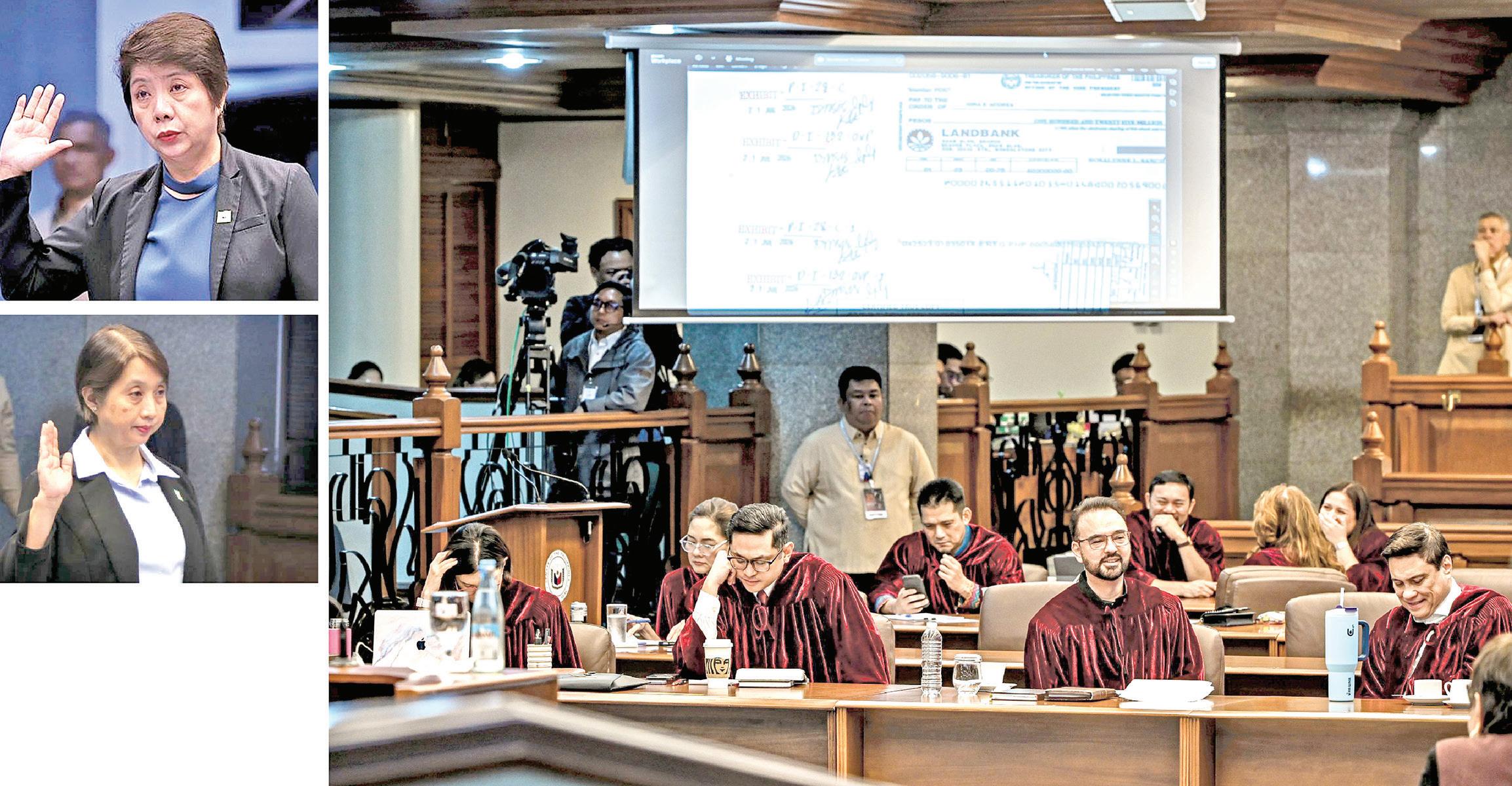
HE Senate Impeachment Court on Wednesday ordered two Commission on Audit (COA) auditors and a House of Representatives official to testify in the impeachment trial of Vice President Sara Z. Duterte.
Presiding officer Senator-Judge Francis Escudero directed the clerk of court to issue subpoenae ad
testificandum et duces tecum to the three witnesses upon the request of lead House of Representatives prosecutor
Padilla tops survey despite controversies
By Rizal Raoul Reyes
CONTROVERSIAL Sen. Robinhood Padilla emerged as the leader in OCTA Research’s latest nationwide survey on voter preferences for the 2028 senatorial elections.
Nevertheless, the polling firm emphasized that the findings provide only an early snapshot of public sentiment, with the elections still more than two years away.
According to the Q2 2026 Tugon ng Masa survey, Padilla received a 53.9 percent voting preference, making him the only prospective candidate with a clear first-place ranking.
Sen. Raffy Tulfo followed with 47.4 percent, while former Senate President Alan Peter Cayetano obtained 45.4 percent. Former senator Grace Poe registered 44.5 percent, and Pasig City Mayor Vico Sotto garnered 42 percent, forming a closely grouped second tier of contenders.
Sen. Loren Legarda, one of the members of the current minority group in the Senate, ranked next with 39 percent, followed by former senator Manny Pacquiao with 34.5 percent and Davao City Rep. Paolo Duterte with 34.3 percent.
Broadcaster Ben Tulfo received 31 percent, while former Makati Mayor Abby Binay, detained Sen. Jose Pimentel Ejercito alias Jinggoy Estrada, and Mark Lapid rounded out the candidates positioned within or near the preliminary Magic 12. O CTA said the relatively nar -
TBy Lorenz S. Marasigan @lorenzmarasigan
HE Parañaque Integrated Terminal Exchange (PITX) served 32.45 million passengers in the first half of 2026, lifting its cumulative foot traffic since 2018 to 271.67 million and cementing the landport’s position as the country’s busiest intermodal transport gateway. T he terminal now serves an average of 180,000 passengers daily across 32 city routes and 80 provincial routes, according to operator MWM Terminals. It facilitated 6.52 million vehicle departures as of June 2026. These milestones demonstrate the growing confidence of commuters and transport operators in PITX as the country’s premier transport gateway,” PITX Chief Operating Officer Mohit Malhi said. “As passenger demand continues to grow, we remain committed to delivering a world-class transport experience while supporting the country’s goals of improving mobility, strengthening regional connectivity, and driving inclusive economic growth.”
The first half also saw PITX open three new provincial routes, all serving Northern Luzon: Laoag in Ilocos Norte, Lagangilang in Abra, and Sta. Ana in Cagayan.
row gaps among many prospective candidates suggest that the race for the remaining Senate seats remains highly competitive. It added that because several candidates’ ratings fall within the survey’s margin of error, their rankings should be considered statistically tied rather than fixed.
The findings should not be interpreted as a forecast of the 2028 senatorial election,” OCTA said, noting that the official filing of candidacies remains more than two years away and that political alliances, campaign dynamics, and voter preferences could still shift significantly before election day. The research firm also pointed out that some individuals initially considered for inclusion requested to be removed from the survey, while candidates who received 1 percent or less were excluded from the published results.
The survey was conducted from July 4 to 11 through face-to-face interviews with 1,200 Filipino adults nationwide using probability-based sampling. It has a ±3 percentage-point margin of error at the 95 percent confidence level.
The latest poll provides one of the earliest nationwide gauges of public sentiment ahead of the 2028 elections, offering an initial measure of the name recognition and voter appeal of prospective candidates. However, OCTA emphasized that the figures reflect only current preferences under a hypothetical candidate list and should not be construed as a prediction of the eventual election outcome.
The additions extend the terminal’s reach into provinces that have historically relied on scattered private terminals along Metro Manila’s northern corridors, and are expected to support tourism traffic and trade between the capital and regional centers. PITX said its integration with city buses, provincial buses, modern jeepneys, and rail— including the Light Rail Transit Line 1 (LRT 1) through the recently opened PITX Station—has allowed it to function as a mobility hub rather than a conventional bus terminal, with retail, dining, and government service outlets on site. Malhi noted that the passenger numbers underpin the expansion plans of parent firm Megawide Construction Corp., which is developing integrated transport projects in Baguio and in Carmona, Cavite, modeled on the PITX template of pairing mobility infrastructure with commercial and community space.
“PITX has shown that transport infrastructure can do more than move people efficiently—it can become a catalyst for investment, tourism, and inclusive growth,” Malhi added. “As we expand our transportoriented developments, we are committed to creating gateways that not only improve the commuting experience but also contribute to the long-term development of the communities they serve.”
Batangas Rep. Gerville Luistro.
The clerk of court is directed to issue the corresponding subpoena ad testificandum subpoena duces tecum to the aforementioned witnesses at the afore-stated addresses of the witnesses mentioned by the lead prosecutor, so ordered,” Escudero said.
T he witnesses are former COA Intelligence and Confidential Funds Audit Office state auditor Roderick C. Wamil and incumbent state auditor Celine May L. del Campo. Both were listed at the COA central office on Commonwealth Avenue in Quezon City.
A lso subpoenaed was Marivic Pareja, director of the House
Legislative Information Resources Management Department, based at the Batasang Pambansa Complex in Quezon City.
L uistro said the prosecution intends to present the three witnesses during the trial hearings scheduled for August 3, 4, and 5, respectively.
E scudero issued the order at the close of Wednesday’s first day of the prosecution’s presentation of evidence concerning the alleged misuse of P612.5 million in confidential and intelligence funds released to the Office of the Vice President (OVP) and the Department of Education (DepEd) during Duterte’s tenure
‘Spliced’ video gets senator in trouble
as Education secretary.
O f the total amount, P500 million was allocated to the OVP, while P112.5 million was released to DepEd.
COA reported that DepEd spent the P112.5-million allocation within 11 days. Of this amount, the audit body issued a final disallowance covering P73 million and required the Vice President and two other responsible officials to return the amount to the government.
T he prosecution is expected to use the testimonies and records of Wamil, del Campo, and Pareja to support its evidence concerning the handling and use of the confidential funds.
DILG warns ‘solicitors’: No soliciting
By Jonathan L. Mayuga @jonlmayuga
SOLICITING or accepting gifts, favors, gratuities, and other things of monetary value in connection with official duties is strictly prohibited and punishable under existing laws.
T he policy was reiterated by the Department of the Interior and Local Government (DILG) to remind its officials and employees to shun the practice.
In a memorandum, the Department said it has received reports of some personnel allegedly using their positions to solicit money, gifts, favors, and other forms of consideration from private individuals, national government agencies, and local governments (LGU).
T he DILG emphasized that public office is a public trust and that integrity, accountability, and professionalism must remain at the
core of public service.
The Department reiterated that Section 7 of Republic Act 6713, or the Code of Conduct and Ethical Standards for Public Officials and Employees, expressly prohibits public officials and employees from soliciting or accepting, directly or indirectly, any gift, gratuity, favor, entertainment, loan, or anything of monetary value in the course of their official duties or in connection with any transaction that may be affected by the functions of their office.
The DILG further stressed that violations of RA 6713, after due administrative proceedings, may result in removal or dismissal from the service even in the absence of criminal prosecution.
T hose found liable may, likewise, face imprisonment of up to five years, a fine of up to P5,000, or both, as well as disqualification from holding public office, at the discretion of the court.
The Department also reminded its personnel that Republic Act 3019, or the Anti-Graft and Corrupt Practices Act, considers the receipt of gifts or benefits in connection with government transactions as a corrupt practice punishable by law.
V iolations of RA 3019 carry penalties of imprisonment ranging from one to ten years, perpetual disqualification from public office, and the confiscation or forfeiture in favor of the government of any prohibited interest and unexplained wealth manifestly disproportionate to a public official’s lawful income.
T he DILG said it will continue to uphold the highest standards of integrity and ethical conduct across the organization, ensuring that its officials and employees remain matino, mahusay, at maaasahan public servants committed to serving the Filipino people with honesty, accountability, and professionalism.
Palace vows responsible, safety-first approach in nuclear energy push
MALACAÑANG on Wednesday assured the public that the government will not pursue nuclear energy unless it fully meets international safety, security, and regulatory standards, following renewed debate after President Marcos revived plans to include nuclear power in the country’s long-term energy mix during his fifth State of the Nation Address (Sona).
P alace Press Officer Claire Castro acknowledged public concerns over nuclear energy and stressed that safety remains the administration’s top priority.
C astro said the President had also raised the issue during his bilateral meeting with Russian President Vladimir Putin, noting that explaining nuclear energy safety is not easy.
“Hindi madali na ipaliwanag ang safety ng nuclear energy. At sinisigu-
CBy Carmel Pedroza
EBU CITY—Cebu City has begun addressing key bottlenecks in the Cebu Bus Rapid Transit (CBRT) Project following a meeting between the city government, the Regional Project Monitoring Team of the Regional Development Council (RDC)-7, and the project’s management team, with right-ofway (ROW) acquisition emerging as the top priority to keep the flagship transport system on track.
Cebu City Mayor Nestor Archival
rado naman po na kapag ito ay pinasok natin, ang pag-aaral na ito ay dapat na kumpleto at ang mga patakaran na gagamitin dito ay hindi po itatago sa inyo [It is not easy to explain the safety of nuclear energy. But if we pursue it, we will ensure that the necessary studies are complete and that the policies governing it will be transparent and not hidden from the public],” Castro said in a Palace briefing.
S he said the Department of Energy (DOE), through the Nuclear Energy Program Inter-Agency Committee (NEP-IAC), continues a whole-of-government approach to prepare the country for possible nuclear power development.
C astro added that the government will ensure full compliance with the International Atomic Energy Agency’s safety, security, and safeguards requirements.
Sr. said discussions centered on the progress of the project and the steps needed to expedite the acquisition of properties along the BRT corridor. The most important portion of our discussion is about the acquisition of the road right-ofway,” Archival said. He said the national government has allocated P900 million for the acquisition of properties in the Vestil area, a critical section that will serve as the gateway to the South Road Properties (SRP). The funds have already been downloaded to
“So, hindi po susuong ang ating pamahalaan, ang administrasyon, kung ito po ay magpu-put in danger sa ating mga kababayan kasi ang inuuna po ng Pangulo at ng administrasyon ay ang safety ng ating mga kababayan [The government will not pursue this if it will put our people in danger, because the President and this administration always put the safety of Filipinos first],” she said.
The assurance followed concerns from some lawmakers and netizens over the administration’s renewed push for nuclear energy, citing past nuclear accidents and the potential cost of developing nuclear facilities.
In his Sona on Monday, Marcos identified nuclear power as a longterm solution to ensure a stable and affordable energy supply amid rising electricity demand, economic growth, and the country’s reliance on imported oil. Sam Medenilla with PNA
the city government, but the payment process has slowed owing to documentary requirements.
A rchival said some of the documents remain under the name of the previous city administration and must first be updated before payments can be released to affected property owners.
T he mayor added that negotiations also remain a challenge, noting that only a portion of the 55 affected property owners have agreed to sell their properties. Those who decline may have to undergo
By Butch Fernandez @butchfBM
WOMEN’S rights advocates, academics, and feminists, led by former Commission on Higher Education (CHED) Chairperson Patricia Licuanan, on Wednesday formally asked the Senate Committee on Ethics and Privileges to investigate Senator Pilar Juliana Cayetano for allegedly posting a spliced and misleading video while serving as a senator-judge in the impeachment trial of Vice President Sara Duterte. In a complaint filed before the Senate Ethics committee chairperson, Sen. Vicente Sotto III, the complainants said Cayetano shared an edited video that falsely portrayed House of Representatives prosecutor and Party-list Rep. Jose Manuel Diokno of Akbayan as admitting that the prosecution was pursuing Vice President Duterte without evidence.
T hey said the video omitted Diokno’s explanation that a “fishing expedition” exists only when subpoenas are sought without any evidentiary basis, creating the false impression that the House prosecution was seeking Duterte’s bank, tax, and Anti-Money Laundering Council (AMLC) records without supporting evidence. The complainants are, besides Licuanan, University of the Philippines-Diliman professor Jean Franco, who is also co-convener of Everywoman; Maria Cristy Balleras, Jocelyn Gerldino, Janette Balanguit and Estrella Soriana of the Parents Initiative and Social Awareness Mainstreaming Advocacy (Pinasama), Hammimah Sarip Kalaw of the Sanctuary Network, Joahna Marie dela Cruz, Student Council president of the Pamantasan Lungsod ng Maynila (PLM)-College of Public Administration, Edrianna Villaruz of the Student Council Alliance of the Philippines (SCAP), Joanna Marie Caumeran of Everywoman, Oliva Solis of the District Wide Advocates Quezon City (DIWA), abd Lourdes Magtibay of the Pandayan Para sa Sosyalistang Pilipinas (Pandayan). The deliberate editing of official impeachment proceedings to mislead the public is not merely a political act, it is a serious ethical issue that strikes at the integrity of the Senate as an impeachment court,” the complainants said. The complaint argued that Cayetano’s actions violated the Code of Professional Responsibility and Accountability, which bars lawyers from dishonest or deceitful conduct, and breached the constitutional oath of senator-judges to render “impartial justice according to the Constitution and laws of the Philippines.” I t also stressed that senator-judges must not only remain impartial but avoid actions that create the appearance of bias. By allegedly amplifying a false narrative favorable to the Vice President, Cayetano, they said, undermined public confidence in the neutrality expected of the Impeachment Court and risked eroding trust in both the Senate and the impeachment process. The complainants urged the Senate Ethics Committee to immediately investigate Cayetano and impose appropriate disciplinary sanctions, stressing that the complaint was filed not out of partisan interest but in defense of constitutional governance, judicial impartiality, and public trust in democratic institutions.
expropriation proceedings to allow the project to proceed. A side from the Vestil area, Archival said the city is also processing right-of-way requirements in Talamban, where additional properties are needed for the BRT alignment.
H e said the Department of Transportation (DOTr) and the city’s technical teams have been tasked to speed up the completion of documentary requirements to avoid further delays.
House bills give relief to workers, corporations
By Jovee Marie N. Dela Cruz @joveemarie
WORKERS would keep more of their earnings, while domestic corporations would be freed from the minimum corporate income tax (MCIT) beginning in 2027 under two bills filed by the leadership of the House of Representatives following President Marcos’ fifth State of the Nation Address (Sona).
House Majority Leader Ferdinand Alexander A. Marcos and Speaker Faustino G. Dy III filed House Bills (HB) 10345 and 10346 on Tuesday as part of the Chamber’s response to the President’s call for tax relief for workers, families, and businesses.
H B 10345 seeks to raise the annual tax-free income ceiling from P250,000 to P350,000, while HB 10346 proposes to abolish the MCIT imposed on domestic corporations beginning January 1, 2027.
President Marcos’ SONA placed tax relief where families will feel it, in the pay they bring home after every cutoff, and Speaker Bojie Dy has made sure the House responds
with a bill rather than applause alone,” said Marcos. Raising the tax-free ceiling to P350,000 gives workers more room for food, tuition, medicine, and the bills that do not wait,” Marcos added.
HB 10345 would amend Section 24 of the National Internal Revenue Code by restructuring the graduated income tax rates imposed on Filipino citizens and resident aliens. Under the Tax Reform for Acceleration and Inclusion or TRAIN law, individuals earning no more than P250,000 in annual taxable income have been exempt from income tax since 2018.
T he bill proposes to increase the exemption threshold by P100,000 and impose a 15 percent tax rate on annual taxable income above P350,000 but not exceeding P400,000.
T he succeeding marginal rates of 20 percent, 25 percent, 30 percent, and 35 percent would be retained. Existing base taxes and graduated rates for income exceeding the P400,000, P800,000, P2 million, and P8 million thresholds would also remain.
M arried individuals would continue to compute their income taxes separately.
Income that cannot be attributed exclusively to either spouse would be divided equally between them.
Minimum wage earners would remain exempt from income tax on their taxable income, holiday pay, overtime pay, night shift differential, and hazard pay.
Q ualified self-employed individuals and professionals could also choose an 8 percent tax on gross sales, receipts, and non-operating income exceeding the proposed P350,000 threshold instead of paying graduated income and percentage taxes.
M ixed-income earners would remain subject to graduated rates on compensation income and either the applicable graduated rates or the optional 8 percent tax on income from business or professional practice.
The President’s SONA gave us a clear standard: tax policy must remain responsible while recognizing how much the cost of living has changed, and Speaker Bojie Dy shares that practical approach. This measure updates the brackets for workers, professionals, and small entrepreneurs so the tax code reflects present realities,” Marcos added.
Meanwhile, HB 10346 would amend Section 27 of the Tax Code and end the imposition of the MCIT on domestic corporations beginning January 1, 2027.
Under an existing law, a domestic corporation generally pays an MCIT equivalent to 2 percent of gross income beginning in its fourth taxable year whenever the amount exceeds its regular corporate income tax.
The bill would retain the existing MCIT until December 31, 2026, providing businesses and tax authorities with a transition period before its abolition.
B eginning in 2027, covered corporations would pay only the regular corporate income tax based on taxable income. The regular rate is generally 25 percent, while qualified domestic corporations with net taxable income not exceeding P5 million and total assets not exceeding P100 million are subject to a 20 percent rate.
T he bill would allow excess MCIT previously paid to be carried forward and credited against
Relocation of mangroves in transport projects set
By Lorenz S. Marasigan
@lorenzmarasigan
THE Department of Transportation (DOTr) said on Wednesday it signed an agreement with the Ecosystems Research and Development Bureau
(ERDB) of the Department of Environment and Natural Resources (DENR) to uproot and relocate mangroves that stand in the way of transport projects. U nder the agreement, the agencies will jointly implement and monitor the project called


“Development of Science-based Procedure for Earth-balling of Mangroves” in Leyte, which covers the relocation of mangroves affected by the airport works.
Earth-balling is the practice of extracting a tree with its root system and surrounding soil intact so it can be replanted elsewhere.
Transportation Undersecretary for Aviation and Airports Jim Sydiongco said clearing the stands within the airport’s vicinity is critical to reducing the risk of bird strikes.
Balancing airport capacity with environmental sustainability requires inter-agency cooperation, which is why we coordinated with the DENR on how we can proceed with the expansion without sacrificing the environment. With careful planning and investment, we can complement airport development with environmental sustainability,” he said.

The DOTr and the DENR will also jointly undertake further studies covering both man -
grove conservation and the operational capacity of the New Cebu International Container Port.
Transportation Assistant Secretary for Maritime Villamor Plan said the arrangement is meant to ensure that mangroves displaced by the port’s construction are moved to coastal sites where they can survive.
This is a significant step to balance infrastructure development with environmental protection. The mangrove earth balling activity for the New Cebu International Container Port Project demonstrates our shared responsibility to protect our coastal and marine ecosystems, while pursuing the development of vital infrastructure for our country,” he said.
DENR-ERDB Director Lormelyn Claudio said reconciling infrastructure expansion with conservation requires a whole-of-nation approach, and that earth-balling is the legally sanctioned method for handling affected mangroves.
“ Under this administration, whole-of-nation approach ang gusto natin so we need to work now. The best thing that we should do is earth balling, which is the right procedure and is allowed by law. But there has to be a right way to do it [for both the economy and environment],” she said.

the regular corporate income tax for the three immediately succeeding taxable years.
Until its abolition, the Finance secretary could suspend the MCIT for corporations suffering losses because of prolonged labor disputes, force majeure, or legitimate business reverses.
H B 10346 would also retain the existing definitions and direct costs used in computing the gross income of trading, manufacturing, and service enterprises.
F or both measures, the Department of Finance, upon the recommendation of the Bureau of Internal Revenue commissioner, would issue implementing regulations within 90 days.
A longside the proposed tax reforms, the House Committee on Energy chairman, Palawan Rep. Jose C. Alvarez, pledged swift action on the President’s priority measures aimed at reducing electricity costs and expanding access to reliable and affordable power.
The President has laid down a clear and compelling direction—to make electricity more affordable and ensure that more Filipino families have access to reliable and sustainable energy,” Alvarez said.
“ The House Committee on Energy fully supports this agenda and stands ready to translate these priorities into concrete legislation,” he added.
A lvarez said the committee would pursue the fastest available
legislative route for the president’s energy measures. He cited several administration-backed bills already approved by the House on third reading, including the proposed Waste-to-Energy Act, Energy Storage Systems Act, Energy Regulatory Commission Restructuring Act, and amendments to the Biofuels Act.
T he energy panel chief also supported the proposed elimination of system loss charges passed on to electricity consumers, saying Filipinos should not be required to shoulder expenses beyond their control.
S everal measures addressing system loss charges have already been referred to the committee and are scheduled for deliberation, Alvarez said.
T he committee is also consolidating and drafting a comprehensive version of the proposed Sariling Kuryente Act, which seeks to remove regulatory and administrative barriers to the installation of rooftop solar panels and battery energy storage systems.
T he proposal is intended to make it easier for households and businesses to generate their own clean and affordable electricity. Affordable electricity is not merely an economic issue. It is a matter of improving the quality of life of every Filipino family, strengthening our industries, and securing the country’s long-term energy future,” Alvarez said.
RSSI-hit Negros sugarcane farmers get relief from DSWD
By Ada Pelonia
THE Department of Social Welfare and Development (DSWD) will lead the distribution of around P10,000 financial assistance to every sugarcane farmer in Negros affected by a pest disease.
Social Welfare Secretary Rex Gatchalian oversaw the payout of the P10,325 emergency cash transfer (ECT) for sugarcane farmers affected by the red-striped soft scale insects (RSSI) during a visit in Talisay City, Negros Occidental.
“ We’re always ready, in fact, the instruction from our President is to do it immediately, so the soonest we get the list from each local government, we’ll keep on scheduling [the distribution]. We won’t wait for everybody to complete,” Gatchalian said.
The DSWD forged a partnership with the Department of Agriculture (DA) to address the pest outbreak and the socioeconomic needs of affected communities.
Under this initiative, the DA focuses on technical interventions to curb the spread of RSSI in the major sugar-producing region, while the DSWD handles direct financial assistance.
The agency added that it is working closely with LGUs to expedite aid distribution. nitial figures showed that around 11,000 farmers and farm laborers across Negros Oc-
cidental and Negros Oriental are affected by the infestation, with the figures expected to increase as validation continues. To ensure swift payouts, the DSWD said it is cross-checking beneficiary lists with the Sugar Regulatory Administration (SRA) and LGU agriculture offices certified by local chief executives.
“So, we will now work with the SRA, cross tabulate it or cross-check it with the list from the LGUs, since the more hands trying to figure out the number of affected farmers, the faster it is,” Gatchalian said. The DSWD said it continues to monitor affected areas in Negros Island Region (NIR) to evaluate if additional financial interventions will be needed following initial payouts as Bacolod City placed itself under state of calamity owing to the infestation.
R SSI has been reported to cause severe damage to sugarcane, stunting plant growth and reducing both cane yield and sugar content.
O f the 421,606 hectares planted to sugarcane this crop year, the DA said 93,898 hectares have been affected by the sugarcane pest.
It added that 92,295 hectares are situated in the Visayas, particularly Negros Island and Western Visayas. More than 12,700 farmers have already been identified as affected.

Cebu Provincial govt boosts healthcare in island towns
By Carmel Pedroza
CITY — The
EBU
CCebu Provincial Government is accelerating efforts to bring quality healthcare closer to residents of its island communities, expanding medical services, upgrading hospital facilities, and deploying new equipment in Camotes and Bantayan to reduce the need for patients to travel to mainland Cebu for treatment.
At the forefront of these initiatives is the Ricardo L. Maningo Memorial Hospital (RLMMH) in San Francisco, Camotes Islands, which has significantly expanded its medical workforce and upgraded its facilities.
Provincial health officials said RLMMH now has 20 doctors on staff, including specialists and resident physicians. The roster includes two surgeons, two anesthesiologists, one obstetrician-gynecologist, two pediatricians, four internal medicine specialists, and nine resident doctors. The additional manpower is expected to lessen the need for patients to travel to mainland Cebu for consultations and treatment.
According to the Cebu Capitol Provincial Information Office, when Gov. Pamela Baricuatro assumed office last year, she identified the shortage of healthcare workers and the lack of medical supplies in Capitol-run hospitals as among the most urgent concerns confronting the province’s healthcare system.
The expansion of services in Camotes forms part of the provincial government’s broader healthcare modernization program, particularly for geographically isolated communities.
Capitol Health Consultant Dr. Nikki Catalan, who has been tasked to oversee the province’s healthcare reforms, said more improvements are underway.
“There is still much work ahead, but we are steadily getting there,” Catalan said.
In recent months, RLMMH has received two electrocautery machines to strengthen its surgical capabilities and is set to receive a Mindray Laparoscopy Tower System, allowing surgeons to perform minimally invasive procedures closer to patients’ homes. Hospital infrastructure is also being enhanced.
The provincial government has begun implementing projects that include the repair and expansion of the hospital’s emergency room and the construction of an P8.48-million sewage treatment plant to improve wastewater management and
ensure compliance with public health and environmental standards.
“These investments are part of our continuing efforts to improve healthcare facilities and ensure safer, more comfortable, and more efficient services for patients in Camotes,” Catalan said.
RLMMH has, likewise, opened the Capitol’s first dedicated Breast Clinic among its provincial and district hospitals, providing early detection, treatment, and referral services for patients with breast conditions.
Health officials also reported that the hospital pharmacy remains adequately stocked with medicines under the Philippine National Formulary.
The province’s healthcare push has also reached Bantayan Island, where Bantayan District Hospital recently achieved a milestone by activating its operating room and expanding its surgical services.
Within just three days of becoming fully operational, the hospital completed eight procedures, including minor surgeries, an emergency appendectomy, a dilation and curettage (D&C), and a mesh hernioplasty— allowing residents to receive treatment on the island instead of traveling to Cebu City.
“This is an important milestone for the hospital and the island, demonstrating its growing ability to respond to urgent surgical cases without immediately requiring patients to travel to the mainland,” said Catalan.
Among the procedures performed were the excision of forehead and foot masses, wound debridement procedures, and Bantayan’s first emergency appendectomy, led by surgeon Dr. Delvin Marquez with anesthesiologist Dr. Pascual Gongon and first assistant Dr. Jochico. The hospital also successfully conducted a D&C procedure under obstetrician-gynecologist Dr. Anna Maureen Sios-e and later completed a mesh hernioplasty.
The provincial government has also equipped Bantayan District Hospital with new anesthesia machines and included it among the six Capitol-run hospitals set to receive Mindray Laparoscopy Tower Systems, which will allow surgeons to perform minimally invasive procedures with smaller incisions, less pain, and shorter recovery periods.
During a recent visit to Bantayan, Baricuatro inspected the hospital’s newly acquired equipment and ongoing facility improvements, including its sewage treatment plant.
“I’m happy to see changes,” the governor said, noting the visible improvements in healthcare services on the island.
PNPA renews deal for ARBs’ stable, expanded market in Cavite
THE Department of Agrarian Reform (DAR) has facilitated the renewal and expansion of a marketing agreement between the Philippine National Police Academy (PNPA) and three agrarian reform beneficiaries’ organizations (ARBOs) in Cavite Province.
Implemented under the Partnership Against Hunger and Poverty (PAHP) Program, the initiative links ARBOs and farmers’ groups with institutional buyers, creating sustainable market opportunities that help improve food security while reducing hunger and poverty.
The agreement ensures that the PNPA will continue purchasing fresh agricultural products directly from partner ARBOs for its Cadets’ Mess Hall. By sourcing produce straight from farmers instead of public markets, the partnership provides ARBs with a reliable institutional buyer while ensuring the academy’s steady supply of fresh, highquality food.
The renewed agreement covers the Tres Cruses Agrarian Reform Beneficiaries Farmers Association, Inc. and Daine 1 & 2 Farmers Association, Inc., reflecting the PNPA’s continued trust in the quality, consistency, and reliability of their products.
House commemorates decade of historic 2016 Hague victory in West Philippine Sea
By Jovee Marie N. Dela Cruz @joveemarie

THE House of Representatives on Wednesday adopted a resolution commemorating the 10th anniversary of the landmark 2016 Arbitral Award on the South China Sea, reaffirming the Philippines’ commitment to the rule of law, the United Nations Convention on the Law of the Sea (UNCLOS), and the peaceful settlement of disputes.
House Resolution No. 1013, principally authored by Malabon Rep. Antolin A. Oreta III, recognizes the ruling as a significant
legal and diplomatic victory for the Philippines. The Special Committee on the West Philippine Sea endorsed the measure through Committee Report No. 434 and recommended its approval without amendment.
The resolution commemorates the unanimous and final ruling issued on July 12, 2016, by an Arbitral Tribunal constituted under Annex VII of UNCLOS in the case filed by the Philippines against China.
It describes the award’s 10th anniversary on July 12, 2026, as a historic opportunity to honor the Filipino people and institutions that contributed to the legal victory and to reaffirm the country’s support for a rules-based international order.
The ruling established that UNCLOS comprehensively defines
states’ rights over maritime areas and found no legal basis for China’s claims of historic rights within the so-called “nine-dash line.”
The award also upheld the Philippines’ sovereign rights within its exclusive economic zone, particularly with respect to the exploration and utilization of marine resources, and underscored the obligation of states to protect and preserve the marine environment.
The House thus resolved “to commemorate the tenth anniversary of the 12 July 2016 Arbitral Award on the South China Sea Arbitration, honoring the Philippine legal and diplomatic victory, and reaffirming the country’s commitment to the rule of law, the United Nations Convention on the Law of the Sea, and the peaceful settlement of disputes.”
No OFW hurt in deadly Japan earthquake, DMW confirms
By Samuel P. Medenilla @sam_medenilla
NO overseas Filipino workers (OFW) were hurt in the magnitude 7.1 earthquake, which rocked Kumamoto in southern Japan killing at least 13 people last Tuesday, according to the Department of Migrant Workers (DMW).
In an advisory, DMW said it has yet to receive any report of Filipino casualties from the
said disaster, which happened at 4:27 p.m. on July 29, 2028, as of press time.
The 7.1-magnitude earthquake caused widespread damage to structures in Kumamoto.
DMW said it is closely monitoring the status of the OFWs in the quake-hit areas.
“The MWO [Migrant Workers Office] and the Overseas Workers Welfare Administration [OWWA] in Osaka are coordinating with the Philippine
Consulate General in Osaka and the Filipino community to verify the safety and welfare of OFWs in the affected areas,” according to DMW.
The agency advised Filipinos in Kyushu and surrounding areas to brace for possible aftershocks.
It also urged them to follow official updates from local authorities and the Japan Meteorological Agency and seek aid from the MWO or the Philippine Consulate
General (PCG) in Osaka. The agency said the affected OFWs may seek aid from MWO and PCG through the following contact details: +81 6-6575-7593; +81 70-2275-6082; +81 70-24474016; +81 90-4036-7984; and atn@pcgosaka.org.
It said they may also contact the DMW at the following hotline numbers: 1348 (within the National Capital Region); (02) 1348 (outside Metro Manila); and +63 2 1348 (for callers overseas).
LGU fund fraud: Malacañang fires warning, pledges legal action
MALACAÑANG said it will file charges against individuals using the Local Government Support Fund (LGSF) and Socio-Civic Projects Fund (SCPF) to scam local government units (LGUs) seeking financial support from the national government.
Both funds are being tapped for the implementation of the Bawat Bayan Makikinabang initiative for barangays of the Marcos administration, which includes the
Bagong Pilipinas Rice Program and the presidential scholars.
In an advisory, the Office of the Executive Secretary (OES) said it received reports of some unscrupulous group, who are illegally collecting fees from LGUs, who want to be covered by the Bawat Bayan Makikinabang programs.
The erring parties were also allegedly holding meetings with victims, giving false promises, impersonating as people of au -
thority, and illegally using government logos.
The said activities, the OES said, which aims to deceive the public undermine the integrity of Malacañang.
“We will not hesitate to file appropriate legal charges against anyone proven to be involved in these fraudulent activities,” the OES said.
Among the said incidents, it said, was misinformation involving a fake document inviting
barangay officials in Albay for a meeting.
“Please note that no official meeting has been called regarding this,” the OES said, referring to the reported incident in Albay. The OES reminded the public and local officials to remain vigilant of the said scam.
“Ensure that any information is verified solely through your Local Chief Executive or our official and authorized office,” the OES said. Samuel P. Medenilla
Provincial Agrarian Reform Program Officer II James Arthur T. Dubongco led the facilitation of the agreement, emphasizing DAR’s continuing commitment to linking ARBs with institutional buyers and creating sustainable market opportunities that help increase farmers’ incomes.
Representing the farmer organizations during the signing were Danilo M. Arnes, president of the Tres Cruses Agrarian Reform Beneficiaries Farmers Association, Inc.; Noriel B. Bergonio, representative of Daine 1 & 2 Farmers Association, Inc.; and Mario Mendoza, president of the Barangay Tua Farmers Agriculture Cooperative. The agreement was signed by representatives of the Philippine National Police Academy, headed by Acting Director PBGen. Redrico A. Maranan.
The initiative forms part of DAR’s market-driven support services under the directive of Agrarian Reform Secretary Conrado M. Estrella III to strengthen institutional partnerships that provide ARBs with assured markets, better incomes, and sustainable livelihood opportunities alongside land ownership. Jonathan L. Mayuga
The partnership also welcomed the Barangay Tua Farmers Agriculture Cooperative, giving more agrarian reform beneficiaries in Cavite access to a dependable market for their harvests.
SC junks cyber libel case filed by a former mayor; Leonen maintains stance vs libel
SDMW pushes for more safeguards as Uzbekistan seeks Filipino teachers
By Joel R. San Juan @jrsanjuan1573
UPREME Court Senior Associate Justice Marvic Leonen has reiterated his stance that criminal prosecution for libel may be unconstitutional, more so if it pertains to criticisms against public affairs and conduct of public officials.
In his eight-page separate concurring opinion, Leonen voted with the members of the Second Division to grant the petition and acquit Jade Karla Tan from the crime of cyber libel, as defined under Section 4(c)(4) of Republic Act No.10175 or the Cybercrime Prevention Act of 2012.
“I remain firm in my view of the doubtful constitutionality of libel, more so if it involves criticism of public officers in the discharge of their official functions,” Leonen said.
“There can be no enlightened citizenry if citizens live with the fear of prosecution whenever they gain the courage to call out government wrongs,” he added.
Tan was charged with cyber libel in connection with Tan’s 2016 Facebook posts accusing then incumbent municipal mayor-lawyer Ramon A. Orfanel of Catanauan, Quezon of being corrupt for asking grease money in exchange of approving their family’s application for permit to open a popular fast-food chain in the area.
The petitioner later on posted an apology on Facebook and admitted during the trial of the case that she was not involved in the in the discussions regarding the proposed building of the fast-food chain and whether there were any delays in the approval of the necessary permits.
In a ruling issued on May 14, 2022, the Regional Trial Court (RTC) of Catanauan, Quezon found Tan guilt beyond reasonable doubt for cyber libel and sentenced her to a prison term of four years as minimum to eight years as maximum.
The petitioner was likewise ordered to pay a fine in the amount of P40,000.
In convicting Tan, the trial court found that all the elements of the crime were present, as her posts alleging that Orfanel was a corrupt public official was made through Facebook and were seen by several other persons.
It also held that Orfanel was identifiable based on the words used by Tan, as she referred to him as the person sitting in the highest position from where she lived, which was Catanauan, Quezon.
Tan subsequently elevated the case before the Court of Appeals (CA) but affirmed the RTC’s decision.
The CA also held that Tan’s apologies do not negate the responsibility for the publication of a defamatory statement.
Tan then questioned the trial court and the CA’s ruling before the SC.
In a ruling made public yesterday, the Court granted Tan’s petition to reverse and aside the trial court and CA decisions for failure of the prosecution to prove the element of actual malice
The SC explained that actual malice is present when statements are made “with knowledge that it was false or with reckless disregard of whether it was false or not.”
“In the present case, while the statements may be offensive, petitioner should be acquitted of the charge of cyber libel for failure to prove the element of actual malice beyond reasonable doubt,” the SC said in a 16-page decision penned by Associate Justice Antonio Kho Jr. Kho noted that in “Tulfo v. People”, the Court through Leonen, acknowledged that “criminal prosecutions for libel must ensure that the right to free expression and the press are not violated, and added that “libel laws must not be broadly construed as to deter comments on public affairs and the conduct of public officials.”
Further, in Daquer v. People, the Court again through Leonen, held that “ the fundamental right of freedom of expression tempers the law on libel, and that in cases for criminal libel where the complainant is .a public officer, the burden to prove actual malice rests on the prosecution and, consequently, there is no burden on the accused to disprove actual malice.”
THE Department of Migrant Workers (DMW) is now eyeing putting more safeguards for overseas Filipino workers (OFW) bound for Uzbekistan as the Central Asian country opens its doors to more migrant workers to address the labor shortage in its public schools.
Last Tuesday, honorary Consul of the Philippines to Uzbekistan Bekhbat Sodnom and Selenge Lkhagvasuren met with DMW Undersecretary Jainal T. Rasul, Jr. in Mandaluyong City to discuss employment standards in Uzbekistan.
“DMW Undersecretary Jainal T. Rasul, Jr. emphasized the need to ensure that OFWs in Uzbekistan receive adequate protection and that their employment concerns are properly addressed as labor discussions between the Philippines and Uzbekistan continue,” DMW said in a statement. They also talked about the new demand for English teachers in Uzbekistan’s education sector. DMW said Uzbekistan is planning to expand the 10,000 workforce of its public schools by hiring additional 600 teachers, with a reported monthly salary of US$ 2,000. Uzbekistan is currently among the countries with the lowest number of deployed OFWs in Asia. As of June, DMW reported 93 OFWs, which were deployed in the Central Asian country, which was higher compared to 86 in the same period last year. Samuel P. Medenilla

Jordan intercepts, destroys Iranian missiles; US and Saudi Arabia strike militia sites in Iraq
By Samy Magdy & Elena Becatoros The Associated Press
CAIRO—Jordan’s air defenses intercepted five missiles launched from Iran early Wednesday, the country’s military said, hours after the US military said it had knocked down an Iranian missile barrage launched against American forces in the Middle East, shattering a brief pause in fighting.
The Jordanian military said the missiles had been “intercepted and destroyed.” Iran’s staterun IRNA news agency carried a statement from the paramilitary Revolutionary Guard saying the Guard’s Aerospace Force fired ballistic missiles at the Muwaffaq Salti Air Base and the headquarters of the US military’s Central Command in Jordan.
Hours earlier, the US Central Command said its forces “remain vigilant and at a high state of readiness,” and that they had also worked with Saudi Arabia’s forces to strike sites in Iraq that Tehranbacked militias have used to launch attacks in recent days.
In announcing the strikes in Iraq, the US warned that further attacks on American troops or Saudi Arabia ‘s energy infrastructure risked additional action.
Iraqi Prime Minister Ali al-Zaidi called an emergency meeting of the country’s National Security Council Wednesday to discuss the strikes.
The United States and Iran had experienced a period of calm, during which neither announced attacks for about three days following weeks of escalation over the strategic Strait of Hormuz, the Persian Gulf waterway and narrow chokepoint through which 20% of the world’s traded oil normally flows.
The fighting flared at the end of a month packed with multiple pressure points on US President Donald Trump. In recent weeks, four US troops died during the fighting, while the Pentagon asked an increasingly skeptical Congress for money to cover the conflict’s ballooning costs.
Saudi Arabia and US strike Iran-backed militias in Iraq
“US and Saudi fighter aircraft struck multiple terrorist logistics and weapons sites across eastern Iraq in a strong response to over 30 IRGC-directed aerial drone attacks in the last 72 hours,” US Central Command said, using an acronym for Iran’s paramilitary Revolutionary Guard.
It said the Revolutionary Guard “and its terrorist proxies must cease these attacks to avoid further US military response.”
The Saudi Defense Ministry acknowledged the strikes in a post on social media, warning that “the Kingdom emphasizes that it does not seek escalation but will respond to any aggression it faces.”
The Popular Mobilization Forces, a coalition of primarily Shiite, Iran-backed armed groups that is officially under the command of the Iraqi military, said in a statement that at least 20 fighters were killed and 32 others wounded in the overnight strikes on its sites in several parts of Iraq.
The groups making up the PMF joined in the fight against the Islamic State group after it seized large sections of Iraq in 2014.
In 2016, the Iraqi government designated PMF as an “independent military formation” within the Iraqi armed forces, but in practice the member militias have continued to operate with significant autonomy. Some of them have launched attacks on US facilities.
Saudi Arabia said Tuesday that it shot down drones fired by Iranbacked militias in Iraq for a second day, while Iran-backed Houthi rebels in Yemen claimed to have forced a Saudi oil tanker to turn around as part of their announced blockade of the kingdom.
Al-Zaidi, the Iraqi leader, ordered security agencies to investigate after the Saudis alleged a similar attack on Monday. The Iraqi military said the country is committed to “preventing Iraqi territory from being used as a route or launching point for any attack targeting brotherly or friendly countries.”
The Iraqi militias have denied any role in the drone attacks. The Islamic Resistance in Iraq, an umbrella group of Iran-backed armed groups, called the Saudi claims “fabrications” and implied that Monday’s attacks were carried out by the Houthis, who had themselves claimed to have attacked Saudi oil facilities.
Iranian state-run media says tankers hit in the Strait of Hormuz IRAN’S state-run IRNA news agency reported Wednesday that the Revolutionary Guard’s Navy claimed it had struck and stopped three oil tankers in the Strait of Hormuz. It said the strikes came after the vessels allegedly ignored repeated warnings and continued sailing along what it described as an “unsafe and illegal route.” The report did not identify the tankers or the flags they were sailing under.
There was no immediate independent confirmation of any strikes on tankers in the Strait of Hormuz Wednesday.
On Tuesday, the Houthis claimed to have fired missiles at the Saudi oil tanker NCC Ghazal in the Red Sea, forcing it to turn back. There was no immediate comment from Saudi Arabia on the claim. Last week, the Houthis announced a blockade of Saudi shipping, putting another key Middle Eastern waterway— through the Bab el-Mandeb strait leading to the Red Sea—at risk.
The United Kingdom Maritime Trade Operations Center said late Tuesday that a tanker reported hearing explosions while traveling in the southern Red Sea the previous day. It did not name the tanker but said the crew and vessel were safe. It did not report strikes against tankers in the Strait of Hormuz on Wednesday.
The rebels fired on at least one Saudi tanker in the Red Sea last week.
Becatoros reported from Athens, Greece.The Associated Press writers Abby Sewell in Beirut and Konstantin Toropin in Washington contributed to this report.

A8 Thursday, July 30, 2026
Editor: Angel R. Calso
Japan earthquake: Death toll rises to 18 as rescue efforts continue
By Mari Yamaguchi The Associated Press
KUMAMOTO, Japan—Soldiers and emergency workers combed through a badly damaged shopping mall and collapsed houses looking for trapped survivors Wednesday after a powerful earthquake that killed at least 18 people in southwestern Japan.
The magnitude 7.1 earthquake that hit a day earlier in the Kumamoto area on the southern main island of Kyushu, also left at least 62 people injured, six of them seriously, the prefectural government said. The tally has been steadily growing, fanning fears it may continue to rise.
The sweltering weather heightened worries about the survivors as rescuers braved the heat. It remained unclear how many people might still be missing.
Some of the most serious damage was at the Aeon Mall shopping center in Kashima city, which was bustling with thousands of people when the quake happened. The company said some 3,000 customers were evacuated to a parking lot before a gas explosion happened in another part of the mall, where some people were still working. The mall’s second floor collapsed, trapping people. Witnesses said the explosion shook the area as much as did the quake.



Three people remained missing, while four deaths were confirmed at the mall site, according to Aeon.
“We take it seriously that an explosion happened and precious lives were lost,” Aeon President Akio Yoshida told a news conference in Kumamoto, where he bowed deeply along with two other executives.
Japanese media footage of the mall showed that part of a ceiling had caved in, and metal parts and other debris were scattered about as helmeted and masked rescue workers searched the area.
In nearby Yatsushino, a chimney collapse at a Nippon Paper Industries factory killed five people while seven others were rescued from the debris, according to the Kumamoto prefectural government disaster team.
Four people were still believed to be trapped there, it said.
Nearly 34,900 homes were still without electricity and some 15,000 homes were without running water, Kumamoto officials said. More than 8,800 people left their homes to stay in more than

400 shelters, where power sources were being added so the evacuation centers had air conditioning.
Aerial police footage showed some homes in residential areas were completely flattened, in -



helping with the effort, including firefighters from Taiwan.
“There are people who are still waiting to be rescued, and it’s a race against time,” Prime Minister Sanae Takaichi said. “We will go all out to find and rescue as many people as we can.”
Takaichi said the federal government was preparing to deliver food and other necessities to hard-hit areas. She also offered her condolences to the victims and sympathy to their relatives, while urging those affected by the quake to take care of themselves under the hot weather.
cluding a few that crumbled into a nearby river.
Japan’s Self Defense Forces are joining rescue workers in the search and rescue operations. Hundreds of professionals were
Bullet train services remained suspended. Although operations at Aso Kumamoto airport resumed Wednesday, some airlines canceled flights as a precautionary measure. Kumamoto was hit with a deadly quake in 2016 that killed at least 50 people. Japan is one of the most quake-prone nations in the world.
The Associated Press writer Yuri Kageyama in Tokyo contributed to this report.



THIS aerial image shows rescue operation at the Nippon Paper Industries Co.’s Yatsushiro factory, following an earthquake in Yatsushiro, Kumamoto Prefecture, Wednesday, July 29, 2026. NAOKI HIRAOKA/KYODO NEWS VIA AP
Seabed. . .
Continued from A1
However, the Philippine government’s executive summary explicitly legally isolates the seabed from the features above it.
The delegation stressed that the boundary delineation is strictly “without prejudice” to the territorial seas of individual high-tide features, ensuring the UN submission does not touch on the volatile sovereignty disputes over the islands, reefs, or shoals themselves.
Despite this conciliatory approach, the filing is expected to trigger immediate diplomatic pushback.
In 2024, when the Philippines sounded off its partial submission, China, Malaysia and Vietnam filed formal protests.
The three South China Sea claimants urged the UN to reject or hold off on reviewing the claim, citing overlapping maritime zones and sovereignty disputes. Manila has firmly rebuffed these objections—it is invoking international law including the landmark 2016 South China Sea Arbitral Awards, and maintained that it did not drop its claim over North Borneo (Sabah).
The legal and scientific basis UNDER the UN Convention on the Law of the Sea (Unclos), a coastal state is automatically granted rights to the seabed up to an ordinary 200-nautical-mile zone from its coast.
CBRT. . .
Continued from A3
Archival also cautioned that delays in utilizing the funds could affect the release of the remaining allocation from the national government.
“If we cannot pay those covered by the first 70 percent of the downloaded funds, the remaining amount will not be released,” he said.
The Cebu BRT was also highlighted during President Marcos’s fifth State of the Nation Address (Sona) on Monday, where he mentioned the project as among the administration’s ongoing infrastructure initiatives aimed at improving public transportation.
If a country can scientifically prove that the seabed further out is a natural geological extension of its landmass, it can claim exclusive rights to that seabed up to a legal ceiling of 350 nautical miles.
These sovereign rights strictly cover seabed resources such as oil, gas, and minerals, but do not grant ownership over islands or fishing rights in the water column above.
Following 15 years of hydrographic and geological surveys by Namria and its partners, the Philippines identified the “Palawan-Mindoro Microcontinent”.
The delegation argued that the seabed in the West Palawan Region is a continuous geomorphological prolongation of this underwater landmass.
In delineating the area, Manila traced a curving boundary line measuring roughly 470 nautical miles from north to south.
However, the outward reach of the claim was deliberately pulled back to fall short of the maximum 350 - mile legal ceiling.
The Philippine submission notes this was a deliberate choice to avoid crowding the overlapping 200-mile entitlements measured by Vietnam and Malaysia.
Precedent case: Philippine Rise THIS marks the Philippines’ second extended continental shelf submission.
In 2009, the country successfully filed a partial submission for the Philippine Rise (formerly Benham Rise) in the Pacific Ocean.
The CLCS validated that claim in 2012, successfully expanding the country’s seabed territory by 135,506 square kilometers.
Vietnam’s biggest company, Vingroup, expands overseas as home market slows
By Aniruddha Ghosal The Associated Press
HANOI, Vietnam—Vietnam’s biggest conglomerate, Vingroup, is moving into global markets as business at home slows, planning nearly two dozen projects in at least 15 countries, from a “Vietnam Town” in Uzbekistan to smart cities in India and a riverfront development in Congo.
Profits from Vingroup’s flagship real estate business have long funded its investments in diverse industries including automaking and technology. But Vietnam’s once sizzling property market is cooling, while its electric vehicle company VinFast is losing money.
of hundreds of millions. Disruptive technologies create immense opportunities, but also new divides,” he said in a speech at the Shangri-La Dialogue, Asia’s premier defense summit.
industries such as sugar and coffee.
Vingroup’s electric vehicle factory in the southern Indian state of Tamil Nadu leads its investments in India.
The company launched an electric taxi service in New Delhi in June and has signed agreements with state governments to develop smart cities, hospitals, schools, theme parks and zoos.
It is also building an EV factory in Indonesia and is operating an EV taxi service in the Philippines.
In Africa, Vingroup has signed an agreement with the Democratic Republic of Congo to build a 6,300-hectare (15,567-acre) riverfront city between the Congo River and Kinshasa’s international airport. Vinfast also plans to supply the DRC with electric vehicles and possibly electric buses, as the country plans to replace over 300,000 fossilfueled vehicles with EVs.
Vingroup and Ghana’s Jospong Group are distributing cars, scooters, bikes and buses made by its electric vehicle arm Vinfast across West Africa.
Vietnam remains Vingroup’s core market and global expansion will complement, rather than replace, its domestic business, it said. It said Vietnam’s real estate market still has “significant room for growth.” In other sectors, Automaker VinFast posted a $3.87 billion net loss in 2025. While it delivered a record 196,919 vehicles, more than double the previous year’s total and its highest annual figure to date, that cost it $5.13 billion, according to a filing with the US Securities and Exchange Commission. It showed VinFast wrote down the value of its delayed North Carolina factory by $236 million. The company had hoped to join the ranks of global automakers when it entered the US market in 2023 and listed on the Nasdaq. But weak sales in Western markets prompted it to shift its focus to emerging markets in Asia, where more motorcycle owners are buying their first cars.
“I would be very happy considering that this is Phase 1. More or less, 90 percent is already there,” the mayor said. He also expressed optimism that the remaining phases of the project would continue despite funding concerns.
“We hope that the projects of the DOTr amounting to about P27 billion will be implemented, although the funder is withdrawing some funds for the moment because Phases 2 and 3 are still ongoing. I hope this can still be appealed,” Archival said.
He added that completing the Cebu BRT remains crucial in addressing Cebu City’s long-standing traffic problem.
“If you look at our city, one of our biggest problems is traffic because we do not have an efficient public transport system,” he said.
Prior to the Sona, Archival expressed hope that the President would mention the Cebu BRT, emphasizing its importance in easing the city’s worsening traffic congestion.
Marcos. . .
Continued from B8
The chamber also cited the government’s continued pursuit of free trade agreements, investment facilitation through the Green Lanes initiative, infrastructure reforms, disaster resilience programs, and solid waste management initiatives as positive developments for the business sector.
In addition, CCCI welcomed the administration’s emphasis on artificial intelligence and workforce development, noting that the training of 1.8 million Filipinos for AI-related skills could help improve the country’s com -
Cebu. . .
Continued from B8
He pointed to Alabang, Muntinlupa City, as an example, noting that office rents there are now lower than those in Cebu Business Park—a reversal from previous years when Cebu enjoyed a substantial cost advantage.
As a result, occupiers are placing greater emphasis on talent availability, labor costs, and quality of life when evaluating expansion locations.
“Talent is more important than ever. Occupiers are looking at labor costs, cost of living, and access to skilled workers because rent is no longer the differentiator it once was,” Soria said.
P ampanga, meanwhile, continues to benefit from the Clark growth story, while Iloilo posted a stronger-thanexpected first half, with office demand already surpassing its full-year 2025 performance.
National developers are also continuing to build aggressively in Cebu, Clark, and Davao despite the current market
petitiveness in emerging industries.
The chamber said these national priorities complement Cebu’s own longterm development agenda, including the strengthening of the Metro Cebu Economic Hub, development of economic and tourism corridors, expansion of agri-industrial areas, and protection of key environmental conservation zones.
Despite expressing support for many of the President’s policy directions, Cebu’s business organizations shared a common message: the administration’s final two years should focus on delivering concrete outcomes that foster economic growth, improve governance, and create lasting benefits for Filipinos.
conditions, increasing pressure on local developers to modernize their offerings.
New era
INDUSTRY observers say the provincial market is entering a transition period.
For years, growth was largely driven by the IT-BPM sector’s appetite for large office spaces. Today, artificial intelligence, hybrid work arrangements, and cost optimization initiatives are reshaping demand patterns.
At the same time, provincial economies continue to benefit from tourism, remittances, and rising consumer spending, creating opportunities in hospitality, retail, and serviced residences.
The question now is whether these emerging sectors can offset slower office demand.
For Cebu, the answer may lie in its ability to adapt.
“Provincial markets still have the fundamentals—tourism, talent, and growing consumer bases. The challenge is ensuring that the product keeps pace with what occupiers are looking for today,” Soria said. Carmel Pedroza
As opportunities for large developments at home become harder to find, Vingroup, Vietnam’s largest privately owned company, is looking overseas to generate the money needed to fund its ambitions in EVs, artificial intelligence and robotics, industries central to Vietnam’s goal of becoming Asia’s next tiger economy. In Uzbekistan, Vingroup signed an agreement in December to build a “Vietnam Town” in its capital, the ancient Silk Road city of Tashkent. In Central Asia’s largest metropolis, it envisions a development modeled on its signature projects in Vietnam, combining homes, shopping centers, schools, hospitals and EV charging stations.
Other projects include tourism ventures like a zoo in India and smart-city projects in Africa to plans to develop motors and moving parts needed for robots in Germany.
Like China before it, Vietnam wants to build globally competitive companies now that the export-led model that has lifted the country out of poverty is, in the words of Communist Party General Secretary To Lam, under “unprecedented strain.”
“Growth is slowing. Public debt and the cost of capital are rising. Climate change is threatening the livelihoods
System-loss. . .
Continued from A11
Impeachment. . .
Continued from A11
She compared the management of public funds to how Filipino families carefully allocate their limited household income.
“When families prepare their budgets, they spend carefully because money is not unlimited. They set it aside for what is necessary and beneficial. Public funds must be managed with the same level of care,” she explained.
De Lima described confidential funds as allocations intended for sensitive and surveillance-related activities that support the mandates of civilian government agencies.
However, she emphasized that the constitutional principle that public office is a public trust applies to all officials, regardless of how government funds are classified.
“Public office is a public trust. That is what the Constitution declares. It applies to everyone in government and cannot be disregarded simply because the funds are classified as confidential,” she said.
Limits of confidentiality
DE LIMA clarified that confidentiality is meant to protect legitimate operations and informants—not fabricated identi -
Vingroup leads Vietnam’s overseas push
VIETNAM stepped up its expansion into other global markets after tariffs imposed by U.S. President Donald Trump exposed the risks of relying too heavily on a handful of export destinations. The US accounts for over 30% of Vietnam’s exports.
Central Asia has become one focus. Trade with Uzbekistan reached $202 million in 2024, up 26.5% from a year earlier, while Vietnam elevated ties with Kazakhstan to a strategic partnership in 2025.
Uzbekistan has been encouraging private enterprises and foreign investment since its authoritarian government loosened state controls in 2017. Central Asian countries also have been expanding their trade beyond Russia following its invasion of Ukraine, said Bhavna Dave, a senior lecturer on Central Asian politics at the SOAS University of London.
Chinese investment has grown, but Tashkent is eager to deepen ties across Asia, which it sees as the world’s “most dynamic economic region,” she said.
Beyond Central Asia, bilateral trade between India and Vietnam tripled to a record $16.4 billion in 2025 from $5.4 billion in 2016. Investment has also increased, with India investing in Vietnam’s energy, technology, and farm
“We believe it is important to recognize that system loss is not unique to any distribution utility but is a common operational aspect of the delivery of electricity—which
ties, falsified documents, or the diversion of public money.
“Confidentiality exists to protect legitimate operations and informants. It is not permission to invent names or documents, nor is it an excuse to pocket public funds,” she stressed.
“In fact, the confidential nature of the funds demands an even higher level of accountability,” she added.
Addressing the senator-judges, De Lima said the Constitution had entrusted the Impeachment Court with determining whether Duterte committed offenses warranting her removal from office.
“The Constitution entrusts this Court with the solemn duty to determine whether the respondent Vice President committed a culpable violation of the Constitution, graft and corruption, and betrayal of public trust. The evidence will show that she did,” de Lima asserted.
“This case is about P612.5 million in confidential funds entrusted to VP Sara Duterte, through the Office of the Vice President and the Department of Education,” she added.
Duterte’s defense counsel and spokesperson, Michael Poa, objected to remarks made by de Lima during the prosecution’s opening statement on the 10th day of the impeachment trial.
“Ghana is actually a smart play for Vinfast,” said Tom Courtright of the Africa E-Mobility Alliance, citing the country’s eight-year guarantee of EV tax incentives, population of more than 35 million and relatively large car market. In Ghana, he noted, there is limited competition from Chinese electric vehicle makers.
Growth is slowing at home for Vingroup PRESSURE on Vingroup has mounted as profit from Vinhomes, its property development arm, has slowed.
Home prices in Vietnam’s biggest cities have surged and there aren’t enough affordable homes since most new developments cater to wealthy buyers.
Construction has boomed outside major cities, but demand has failed to keep pace, leaving many apartments empty, said Le Hong Hiep, of the ISEAS–Yusof Ishak Institute in Singapore.
“They used to do very well. But it will not last forever,” he said.
In June, Vinhomes said it would stop expanding its domestic land bank and instead focus on developing existing projects in Vietnam.
Vingroup said in an emailed statement that its global expansion was a “natural step” in its long-term strategy and that its ability to deliver large urban projects quickly positions it to pursue opportunities in promising international markets.
affects the entire power industry.
Vingroup looks to replicate its Vietnam strategy abroad VINGROUP appears to be wagering that its formula for success in Vietnam can be replicated in other developing economies at a similar stage of growth. Its founder Pham Nhat Vuong started out making instant noodles in Ukraine in the 1990s and then began building large housing projects in Vietnam. Vingroup then added hospitals, schools and shopping malls, creating communities that needed other services and goods, such as EVs.
“They think they may be able to replicate their success in real estate business in those overseas markets,” said Hiep. But there will be obstacles. Courtright, the transport expert, noted that while investors in the DRC are often drawn by the size of its population of 124 million, similar to Japan’s, Vingroup may be overlooking why few foreign companies operate there. Outside North and South Africa, he said, ride-hailing is largely limited to cities such as Lagos and Nairobi because it depends on widespread smartphone use and adequate incomes.
Megaprojects like the one proposed on the banks of the Congo River, are common in the DRC, often end with signed agreements that never materialize.
“It doesn’t make a lot of sense,” he said.
While, distribution utilities like Meralco continue to invest in modernizing and upgrading facilities and deploying technologies
“Your Honors, I think we have to object to the statements being made by the Honorable De Lima, with all due respect,” Poa told the impeachment court. He argued that the prosecution should present its assertions through the formal submission and offer of evidence rather than include them in its opening statement.
Article-by-article trial format
MEANWHILE a proposed change in the order of evidence presentation in Duterte’s impeachment trial would affect only when the defense responds—not its right or opportunity to answer the prosecution, private prosecutor and House prosecution spokesperson Atty. Benjamin “Jay” Tolosa Jr. said.
Tolosa rejected claims that an articleby-article presentation would place the defense at a procedural disadvantage or violate Duterte’s right to due process.
“Our point is simple: the defense will still be able to respond. The proposed change affects only the timing of its presentation,” Tolosa said during a press conference Wednesday.
The defense has opposed the proposal, arguing that it would depart from the pretrial order and raise due-process concerns.
“I would like to respond point by point to the arguments raised by the defense,
but it may be inappropriate to do so before we have formally submitted our response,” Tolosa said.
“But basically, they were disagreeing, saying that it violates the orders stated in the pretrial order and due process considerations,” he added.
Under the existing arrangement, the prosecution would first complete its presentation of evidence on all Articles of Impeachment. The defense would then present its evidence on all the charges. Under the proposed format, the prosecution and defense would complete their respective presentations on one article of impeachment before proceeding to the next.
Also, he said the proposal to present evidence article by article in the impeachment trial of Duterte originated from the leadership of the Senate Impeachment Court—not from the House prosecution panel.
Tolosa said Senate President Sherwin Gatchalian and Presiding Officer Francis “Chiz” Escudero initially discussed the proposed format before it was presented to the prosecution and defense.
“The decision rests with the court, regardless of the parties’ preferences. We will respect whatever ruling the Impeachment Court reaches,” he added.
DepEd holds consultations on draft EO updating emergency class suspension rules
By Claudeth S. Mocon-Ciriaco @claudethmc3
TO protect learners and school personnel while ensuring learning continuity during emergencies, the Department of Education (DepEd) spearheaded a series of nationwide stakeholder consultations on a proposed Executive Order (EO) to update guidelines for class and work suspensions and resumptions in educational institutions and learning centers during emergencies.
The proposed policy addresses evolving environmental and disaster risks—including extreme heat, volcanic smog, heavy rainfall, and earthquakes—by establishing a framework governing when in-person classes and onsite work are suspended and when they safely resume.
This system features automatic suspensions and resumptions triggered by nationally prescribed technical agency thresholds, local -
ized suspensions and resumptions declared by local chief executives (LCEs), and granular suspensions and resumptions declared at the individual school level based on documented site-specific assessment.
“In line with the directive of President [Ferdinand] Bongbong Marcos to prioritize both learner safety and learning recovery, we are working closely with local leaders to build a clear, balanced
framework,” Education Secretary Juan Edgardo Angara said.
When extreme weather or hazards threaten our communities, Angara added, keeping learners and teachers safe will always be the top priority of DepEd.
“At the same time, we must prevent unnecessary disruptions to education... This proposed executive order empowers local authorities and school heads to act swiftly during real emergencies while ensuring learning continues safely,” he added.
Under the draft recommendations, in-person class and onsite work suspensions would automatically take effect upon specific triggers from state technical agencies, including a heat index of 40 degrees Celsius or higher, official rainfall warnings, and elevated air quality risks or volcanic smog.
In-person classes and onsite work will automatically resume once national agency advisories expire or are lifted, and required safety inspections are cleared. The proposal also outlines protocols for school heads to declare sitespecific granular suspensions and resumptions.
For public basic education schools, granular suspensions require concurrence from the Schools Division Superintendent
(SDS), while resumptions following a localized suspension require concurrence from the Local Chief Executive (LCE). Private basic education school heads may declare granular suspensions or resumptions subject to prompt coordination with the concerned LCE.
To safeguard instructional time, the proposed framework integrates flexible learning delivery modalities and self-learning resources when in-person classes cannot be safely conducted.
The consultation series has so far convened key stakeholders, including Schools Division Superintendents, Local Chief Executives (LCEs), representatives from the Bangsamoro Autonomous Region of Muslim Mindanao Ministry of Basic, Higher and Technical Education (MBHTE).
A multisectoral consultation further brought together the Department of the Interior and Local Government (DILG), the Department of Science and Technology (DOST), the Department of Health (DOH), the Philippine Atmospheric, Geophysical and Astronomical Services Administration (PAGASA), the Philippine Institute of Volcanology and Seismology (PHIVOLCS), the Department of Environment and Natural Resources (DENR), the Commis -
PHL retains ‘doing better’ rank in Asian philanthropy index
By Justine Xyrah Garcia
THE Philippines remained in the “Do -
ing Better” category of a regional philanthropy index, supported by strong corporate giving and high levels of trust in the social sector.
The biennial Doing Good Index of the Center for Asian Philanthropy and Society (CAPS) assesses whether an economy’s policies, tax rules, and wider operating environment help or hinder charities, nonprofits, and social enterprises.
The Philippines has stayed in the same category since the index was launched in 2018.
“The Philippines has remained in the Doing Better category from the start, but we see a lot of potential for the Philippines,” CAPS Director of Policy Engagement Kithmina Hewage said during a briefing on Wednesday.
Hewage said the country could eventually move into the higher “Doing Well” tier if the
government, donors, corporations, and social organizations worked more closely together.
Corporate support remains one of the country’s strongest cards.
Based on the report, funding from businesses accounted for 34 percent of the budgets of Philippine social delivery organizations (SDOs), almost twice the 19 percent Asian average.
It also found that 79 percent of surveyed organizations received corporate funding, while 68 percent benefited from corporate volunteers.
About 66 percent of Philippine SDOs said they were trusted by society, compared with the Asian average of 43 percent. The corresponding shares stood at 55 percent for government trust, against the regional average of 36 percent, and 70 percent for corporate trust, nearly double the 38 percent Asian average.
“Trust is essentially the cornerstone of a lot of other things that happen in the social
sector, most importantly the incentive to give,” Hewage explained. “If you don’t trust the organization that is asking for funding, you are not going to give funding to them.”
The strong showing, however, did not mean organizations were awash in resources.
Around 80 percent of SDOs in the Philippines still described domestic funding as inadequate, the report found.
Hewage noted that while funding had remained relatively consistent, the cost of delivering services and the demand for them had also increased, with about 62 percent of SDOs reported higher expenses.
“While funding is consistent, the expenses when it comes to deploying the services of the social sector have increased as well, and the demand for those services has increased as well,” he said.
These pressures have also made it harder for organizations to build their workforce.
The index showed that 71 percent struggled to recruit employees, while 60 percent found
it difficult to retain them.
Hewage said limited operational funding also prevented many organizations from offering competitive salaries and investing in staff, technology, and cybersecurity.
More than half of those surveyed also lacked an organizational cybersecurity plan despite the growing use of digital platforms.
Regulation was another mixed spot. Although SDO registration takes about 21 days and only three clearances—better than the Asian average—organizations still found the process difficult and social-sector laws hard to understand.
Hewage said clearer rules, more consistent implementation and easier access to tax incentives could further strengthen the country’s enabling environment.
“We feel that the Philippines can be a leader when it comes to corporate engagement in the social sector in the region in the future. This is an asset that can be leveraged a lot more,” he added.
Church warns offshore wind project could displace over 6,500 Ilocos fisherfolk
By Mary Jade Jadormio
Asion on Higher Education (CHED), the Technical Education and Skills Development Authority (TESDA), local leagues, and other government representatives.
Discussions centered on gathering local feedback regarding operational mechanisms, schoollevel decision-making parameters, a proposed one-hour response window for LGU concurrence on granular suspension and resumption requests, and learning continuity protocols.
Angara highlighted the importance of stakeholder feedback in shaping responsive and practical policy recommendations for government consideration.
“What we are building here with our stakeholders is a balanced, practical framework—one that trusts our local authorities to act fast when danger is at the doorstep, but also ensures that learning doesn’t simply ground to a halt the moment a weather advisory goes out,” he said.
DepEd will continue its consultations with teachers, parents, and students to further refine the proposed framework.
Outputs from the consultations will be compiled by DepEd to finalize the draft policy recommendations for submission to the Office of the President.
Palace warns against ‘special treatment’ for detained Senators Estrada, Marcoleta
MALACAÑANG said granting Senators Jose “Jinggoy” Pimentel Ejercito-Estrada, Jr. and Rodante D. Marcoleta “special treatment” by allowing them to post bail despite their plunder cases can open the floodgates for similar requests from other detainees.
Palace Press Officer (PCO) Claire Castro issued the warning after Marcoleta filed a manifestation before the Senate if he and Estrada can join the impeachment trial of Vice President Sara Duterte.
She noted if the Senate will grant the said request of both senators, it will be unfair to other detainees, who are prohibited from exercising their profession.
“So, if ever they will be allowed, they will be practicing their profession [as senators],” Castro said.
“So, if that happens—if they are allowed to do so and receive special treatment—then perhaps all incarcerated individuals who work might also be permitted to continue working while in detention,” she added in Filipino. Estrada was arrested for allegedly receiving P573-million worth of kickbacks from flood control projects in Metro Manila, and Oriental Mindoro in the 2025 national budget, while Marcoleta was charged for accepting P75 million campaign funds.
Castro also noted that the decision to allow both senators to attend the impeachment trial will be up to the Sandiganbayan and not the Senate.
“Whatever decision of the Senate regarding Senator Marcoleta’s manifestation, it will not prevail, because jurisdiction over Senator Jinggoy and Senator Marcoleta currently lies with the Sandiganbayan,” she said. Earlier this month, the Sandiganbayan already junked the request of Estrada to attend the impeachment trial. Samuel P. Medenilla
Cayetano: Living wage key to reducing forced labor migration
By Butch Fernandez @butchfBM
ALONG -term labor agenda, anchored on a living wage, is the indispensable key to ending decades of an unhealthy reliance on migrant workers to shore up the economy.
The government must once and for all strive to build an economy where Filipinos work abroad by choice rather than out of economic necessity.
This was the main point of Senate Minority Leader Alan Peter Cayetano’s Kontra-SONA privilege speech at the July 28, 2026 Senate session. According to Cayetano, while overseas employment should always remain an option for Filipinos seeking better opportunities or specialized careers abroad, no Filipino should feel compelled to leave home simply because they cannot earn a decent living in the Philippines.
yond a minimum wage and work toward a living wage that enables workers to provide for their families’ basic needs, including food, housing, education, and healthcare.
“We have a minimum wage, we do not have a living wage that the Constitution envisioned,” he said.
Cayetano cited Senate Bill No. 104, or the Executive-Legislative Labor Commission (LabCom) Act of 2025, which seeks to establish a commission that will formulate a National Labor Roadmap and recommend long-term reforms toward achieving a living wage for Filipino workers.
He recalled meeting a Filipino chef in Singapore who told him he would willingly return home even for half of his current salary if he could still provide for his family.
CATHOLIC bishop has called for a scientific review and broader consultations on a proposed P330billion offshore wind project in Ilocos Norte, warning that it could displace more than 6,500 municipal fisherfolk. Laoag Bishop Renato Mayugba said the planned BuhaWind offshore wind project should not move forward without ensuring that the livelihoods of coastal communities and the health of marine ecosystems are protected.
The project proposes to build offshore wind turbines in the waters of Pasuquin, Burgos, Bangui and Pagudpud, four towns along Ilocos Norte’s northern coastline. According to the Diocese of Laoag, the project’s proposed 50-meter no-sail zones during offshore construction could prevent thousands of municipal fisherfolk from accessing their traditional fishing grounds.
“We call for dialogue, scientific study, and development that prioritizes genuine human ecology over corporate greed,” Mayugba said.
The bishop also warned that underwater foundations and continuous construction noise could disturb marine habitats in Bangui Bay, raising concerns over the project’s longterm environmental impact.
Mayugba said the diocese has been misrepresented as opposing renewable energy, stressing that the Church supports
clean energy but rejects projects that burden vulnerable communities.
“We are not anti-development. We are for just and inclusive development,” he said. “We do not speak in opposition. We speak in solidarity with our fisherfolk, coastal communities, and future generations.”
He added that the transition to renewable energy should not come at the expense of poor communities or the degradation of the environment.
“Can we have a vision whether it’s five years, 10 years, 20 years, where a Philippine President can say, ‘wala nang Pilipino na OFW na napilitan lang magOFW dahil walang trabahong maganda sa Pilipinas’ [no Filipino has become an OFW by necessity and not be choice, because good jobs cannot be found in the Philippines] ?” he said.
Cayetano said achieving that vision requires long-term labor reforms that go beyond periodic wage adjustments and address the structural challenges facing Filipino workers.
The country, he added, must move be -
“’Sir, if my salary here is P110,000, I’d be okay in Manilla if I could just earn P55,000,” Cayetano quoted the man as saying. The minority leader said that the country’s goal is not to discourage overseas employment but to ensure that working abroad becomes a matter of opportunity rather than necessity.
“You will always have expats, you will always have OFWs who want to work somewhere. If artists love Europe, let them go to Europe. If you want to specialize in a certain branch of medicine and want to study in the US or London, you’re free,” he said.
“But our vision is simply, nobody must be forced to leave the country just because there is no good future here in the Philippines,” he added.
Defense waives cross-examination of LandBank witness, calls testimony ‘not damaging’
THE defense panel on Monday refused to cross-examine House prosecution panel’s witness former LandBank Shaw Boulevard branch’s department manager Violeta Constantino, believing that her testimony is not “damaging” nor “questionable” as the 10th day of the impeachment court tackled the Article I of the articles of impeachment against Vice President Sara Duterte.
“Nothing to cross from our end, your honor,” defense panel Michael Poa told the impeachment court.
In a press briefing after the trial, Poa explained that they don’t want to prolong the proceedings, and that they don’t want to be
“petty” in asking more questions. Poa said the defense is committed to not delaying the proceeding by not asking frivolous or petty questions of the witnesses.
“As you can see naman, I’m committed to not delaying the proceeding at kung di naman kailangan magtanong ng additional question, no need namannamagtanong.Saaminkung makakaya, di na kami magtatanong though alam namin sa COA (Commission on Audit) masalimuot ang isyu and we will have to react accordingly,” Poa explained.
‘Unusual’ MEANWHILE on the opinion of Constanino
that the multi-million-peso cash withdrawals made by the Office of the Vice President (OVP) and the Department of Education (DepEd) were “unusual,” Poa said it’s not also an issue. Constantino testified that there were four separate cash withdrawals of P125 million each, totaling to P500 million, made by the OVP, calling it unusual.
“Hindinamankinukwestyon‘yungvalidity noong encashment ba. So, I really thought it was petty for us to even dwell on that,” Poa said.
Fire exit
HOWEVER Poa questioned the witness, former Landbank branch manager Nenita Camposano,
on the withdrawals made by former DepEd official Edward Fajarda, noting that he, and a companion, would use the fire exit after every transaction made on February 22, April 26, and July 13, 2023, totaling P112.5 million.
“The only question I raised was bakit nag exit sa likod but again I cannot dwell on the merits of the case. This was just to dispel any insinuation, doubts or whatever bakit sa fire exit. You know our job is to elicit answers from the witnesses and clarify things,” he said.
“I just wanted to clarify kung bakit nga nag-exit [sa fire exit] ”Poa said. During the trial Camposano agreed to Poa that using
the fire exit is safer, avoiding the public area while carrying huge amount of money for the fire exit is connected to DepEd Main Complex in Pasig City. Constantino and Camposano were presented by the prosecution panel as their first and second witnesses for Article 1 of the impeachment complaint which focuses on Duterte’s alleged misuse of P612.5 in confidential funds when she was still the Education secretary.
Meanwhile, Poa said that the four P125 million checks presented by the prosecution are authentic. “Just to expedite the proceedings, your
honor, we are willing to stipulate that the witness has the ability to identify these checks. We are also not questioning the authenticity of such checks,” Poa said. Poa further stipulated that the said checks were drawn from the Philippine Treasury and encashed by Gina Acosta, disbursing officer of the Office Vice President from Land Bank Shaw Boulevard branch.
“Regular langnamannayungwitnesses ay nag identify ngmgatsekeatdinamannamin kini-question yun, so I did not want to prolong the proceedings by asking questions that are not really needed,” he reiterated. Claudeth Mocon-Ciriaco
PALAY OUTPUT SHRINKS IN H1; EL NINO IMPACT RAISING RISKS
By Ada Pelonia @adapelonia
THE country’s palay out -
put slightly dipped in the first half to 9.02 million metric tons (MMT), as yield per hectare and production area shrank.
Data from the Philippine Statistics Authority (PSA) showed that palay harvest in January to June slid by 0.6 percent, from the 9.08 MMT recorded in the same period last year.
Rainfed palay stood at 1.6 MMT, down by 4.34 percent from the previous year’s 1.68 MMT.
Despite this, irrigated palay inched up by 0.27 percent to 7.42 MMT in the reference period, from 7.4 MMT last year.
Area harvested contracted by 0.06 percent to 2.118 million hectares, from 2.120 million hectares in January to June 2025.
This resulted in yield per hectare dip i ng year-on-year to 4.26 metric tons (MT) from 4.29 MT.
Earlier, the Department of Agriculture (DA) projects a 700,000 MT plunge in palay output if a strong El Niño materializes this year, accounting for 3.5 percent of its annual production target.
Agriculture Assistant Secretary Arnel de Mesa said palay production this year could fall to a range of 18.6 MMT to 18.8 MMT if fertilizer and pump prices continue their upward momentum.
De Mesa cited a revised outlook from the National Rice Program, which initially projected an output of 20.28 MMT for this year prior to the price shocks.
Corn IN the same report, PSA data indicated that corn production also fell by 3.09 percent to 3.8 MMT in the reference period, from 3.9 MMT in the same period in 2026.
Yellow corn, which accounted for the majority of output, also declined by 3.9 percent to 3.05 MMT from 3.17 MMT.
The production of white corn, however, rose by 0.28 percent to 732,664 MT from 730,612 MT.
Industry sources said the hefty input costs and the potential impact of a dry spell on corn plantations could slash yield and affect this year’s production.
In anticipation of a potential supply crunch, the DA sought to expand the minimum access volume (MAV) for corn to 500,000 MT from the current 216,940 MT.
BusinessMirror
Impeachment prosecution bares ₧612.5-M bank trail
By Jovee Marie N. dela Cruz
THE House prosecution on Wednesday completed its presentation of the banking trail involving the P612.5 million in confidential funds at the center of the impeachment case against Vice President Sara Z. Duterte.
Former Land Bank of the Philippines DepEd Branch Manager Nenita Camposano took the witness stand and testified about the withdrawal of P112.5 million intended for the Department of Education (DepEd).
Camposano testified after retired LandBank Shaw Boulevard Branch Manager Violeta Constantino discussed the release of P500 million in confidential funds to the Office of the Vice President (OVP).
Together, the two former bank managers accounted for government checks totaling P612.5 million. These transactions form the basis of Article I of the impeachment complaint, which accuses Duterte of allegedly misusing confidential funds during her tenure as vice president and education secretary.
Before Camposano testified, the prosecution and defense agreed that the three LandBank checks presented before the Senate Impeachment Court were funded by the National Treasury for the account of the Office of the Secretary of Education.
House prosecutor and Manila Rep. Joel Chua established that the three checks, each worth P37.5 million, were dated February 20, April 19,
and July 11, 2023. All three were payable to Edward Fajarda, DepEd’s special disbursing officer.
Chua also established that Fajarda personally encashed the checks on February 22, April 26, and July 13, 2023, for a total of P112.5 million.
Camposano testified that the same procedure was followed for all three withdrawals. Each transaction began with an advance request from DepEd’s Cash Division asking the bank to prepare the required amount.
“The same procedure was followed for all three checks,” she told the Impeachment Court.
According to Camposano, the process began with a telephone call from Sonia De Leon, chief of DepEd’s Cash Division, because the branch did not have enough cash on hand to immediately cover a P37.5-million withdrawal.
“The first step was for DepEd’s Cash Division to call us and reserve the cash,” Camposano testified.
She identified De Leon as the official who regularly coordinated DepEd’s transactions with the branch.
When asked why an advance request was necessary, Camposano explained, “We did not have enough cash available to cover the checks. She therefore had to call us so that we could reserve the required amount.”
Camposano said she forwarded the request to the branch cashier, who then obtained the money from LandBank’s cash center.
Once the money arrived, the branch notified De Leon that it was ready for encashment.
“We would then call Ms. Sonia to inform her

Ibpap sees Metro Mla edge restored
By Bless Aubrey Ogerio
THE country’s information technology-business process management (IT-BPM) industry expects the reopening of Metro Manila to new IT economic zones to strengthen the Philippines’ competitiveness for new investments, saying the policy restores a key location option for global investors while complementing the continued expansion of the sector in regional hubs.
The IT & Business Process Association of the Philippines (IBPAP) stated this following the signing of Administrative Order (AO) 45 by President Ferdinand Marcos Jr. on July 23. This ended the seven-year moratorium on new IT parks and IT centers in the National Capital Region.
AO 45 amends key provisions of Administrative Order 18, issued in 2019, which suspended new econom-
ic zones in Metro Manila to encourage investments in the countryside.
Under the new order, the Philippine Economic Zone Authority (Peza) may once again process applications for new IT parks and IT centers in Metro Manila, while the moratorium remains in place for other ecozone categories.
Ibpap said Metro Manila continues to serve as the country’s largest concentration of digital talent, business infrastructure and global delivery operations, making the policy significant for investors seeking to expand in the Philippines.
“It restores an important location option for IT-BPM companies while giving both global investors and existing locators greater flexibility as they expand their operations in the country,” the industry group said in a recent statement.
The association added that it remains committed to accelerat-
ing the industry’s growth across emerging cities nationwide, stressing that the reopening applies only to IT parks and IT centers and does not alter the government’s broader regional development strategy.
Meanwhile, Trade Secretary Ma. Cristina Roque told reporters in a chance interview on Wednesday that several projects that had been awaiting policy approval are expected to move forward following the lifting of the moratorium.
The Department of Trade and Industry (DTI) identified five developments that stand to benefit from the policy change: Altaire, developed by MJ Landtrade Development Corp.; One Trium Tower, developed by Triumvariate Development Corp.; ARCA South 1 of Ayala Land Inc.; Parqal of Aseana Holdings Inc.; and The Yuchengco Centre of San Lorenzo Ruiz Investment Holdings and Services Inc.
On the other hand, real estate consultancy Colliers earlier estimated that around 681,000 square meters of office space currently under Peza processing or application could be added to the agency’s accredited office inventory once approved.
For his part, Ibpap President and Chief Executive Officer Jack Madrid said the policy gives investors greater confidence that the Philippines can respond more quickly to changing business requirements.
“In today’s highly competitive investment environment, speed and flexibility matter,” Madrid said, saying that the new order gives investors greater confidence that the country can respond to evolving business requirements.
“It strengthens our ability to attract new investments, support business expansion, and create more high-quality jobs for Filipinos,” he added.
that the money was available,” Camposano said. She testified that Fajarda would personally go to the branch, present the check and his identification card for verification, and wait for the transaction to be validated and approved.
According to Camposano, the cash was released in the branch’s backroom in the presence of bank employees, Fajarda, and an unidentified companion. After receiving the money, Fajarda placed it in two bags and left through the branch’s rear fire exit.
“Mr. Fajarda would place the money in the bags he brought. He and his companion would then leave through the fire exit at the back of the branch,” she testified.
Camposano said LandBank employees neither assisted nor accompanied Fajarda after the cash had been released because of the bank’s long-standing “hands-off” policy once money had been turned over to a client.
She explained that responsibility for the cash transferred to the client upon its release. When asked what happened after Fajarda left through the rear door, Camposano said she could no longer see where he went.
‘Unusual’ withdrawals
DURING the hearing, Camposano told SenatorJudge Francis Pangilinan that the three P37.5million cash withdrawals made by the DepEd were unusual and nearly four times larger than the branch’s typical cash transaction of approximately P10 million.
Pangilinan asked Camposano whether the
amount withdrawn in each transaction was unusual for the LandBank DepEd branch. Camposano confirmed that it was.
“For the LandBank DepEd branch, which serves government agencies, the amount withdrawn was unusual,” she said. After establishing that DepEd’s typical cash transaction at the branch was approximately P10 million, Pangilinan asked, “So, P37.5 million was almost four times the usual amount?”
“Yes, sir,” Camposano answered. Camposano clarified, however, that she had encountered large cash transactions involving other government agencies while managing different LandBank branches.
Transparency and accountability MEANWHILE, the confidential nature of the P612.5 million entrusted to Duterte does not exempt its use from transparency, scrutiny, and accountability, House prosecutor and Mamama-
‘System-loss charge ban to disrupt entire energy supply chain’
By Lenie Lectura
USINESSMAN
BManuel V. Pangilinan, chairman of the Manila Electric Company (Meralco), said removing system loss charges would create a multibillion-peso burden that private firms cannot survive or absorb on their own.
He said the financial damage would disrupt the entire energy supply chain, heavily impacting the power generation, transmission, and distribution sectors.
“It’s a big bill for the industry because it cuts across generation, transmission, and distribution. The bill is too big for the industry to absorb all of it. So, there’s got to be that discussion. It’s going to impact the entire power industry in this country.
It is not a small matter to simply [cut it] just because you can raise the bill, but the system loss is still there. It’s not going to disappear. So, who’s going to pay for that? The industry? It’s going to cost tens of billions of pesos. We will not survive,” Pangilinan said when asked if the said charges would be reflected in other components of an electricity bill should the system loss charges be scrapped entirely.
Meralco’s system loss rate stood at six percent at the end of June this year, which is lower than the 6.5-percent cap set by the Energy Regulatory Commission (ERC).
Early this week, President Ferdinand Marcos Jr. ordered the amendment of the Electric Power Industry Reform Act (Epira) to address or remove the system loss charge and its corresponding value-added tax (VAT) as soon as possible.
Top officials from the Department of Energy (DOE) and the Energy Regulatory Commission (ERC) met initially to discuss the parameters of the President’s directive.
DOE Secretary Sharon Garin said the agencies will meet soon with the National Electrification Administration (NEA), which supervises electric cooperatives (ECs) in the country. “So, we have some things
that can be immediately accomplished by the DOE while we work on long-term legislative reforms.”
DOE Undersecretary Rowena Guevara said it is possible that NEA may extend financial help regarding system loss charges.
“We need to talk to NEA because they need to provide loans—or long-term loans—so that the electric cooperatives can make improvements to the system. As you know, NEA provides soft loans to our electric coops, and all we have to do is convince other financial institutions… I think there are financial institutions, especially development partners, multilateral development banks, as well as local banks. NEA is the administrator of our electric co-ops,” said Guevara. Meanwhile, Meralco Senior Vice President and Head of Regulatory Management Atty. Jose Ronald Valles said there will be a process where all stakeholders will be heard, allowing Congress to weigh the consequences of such a removal—whether it applies to the total system loss or is limited to either technical or non-technical losses, such as pilferage.
“Distribution utilities like Meralco merely collect system losses for the generators because, in reality, system losses are actually part of generation costs. Hence, the entire supply chain is affected. But we trust in the wisdom of Congress to do what it thinks is best for electricity consumers and the entire power industry.
“Up to now, we don’t know what will come out of the final version of the amendment. So, until we see that, we cannot speculate. We cannot determine how much of an impact that will have on the operations of Meralco,” said Valles Meralco executive vice president and chief operating officer Ronnie Aperocho said the utility firm has consistently invested in system loss management initiatives, network modernization, and operational efficiencies—which enable it to maintain system loss well below the 6.5 percent cap set by the ERC.
FUTURE IN FOCUS From left: Monchito
ecosystems during the Asean
Summit 2026 at the
digital trade, interoperable payments, artificial intelligence, cybersecurity, data governance and other issues shaping the region’s digital economy. Senator Bam Aquino served as guest of honor at the event, themed “Asean’s Digital Future: Connectivity, AI Governance and Cyber Resilience.” NONIE REYES
12.5 percent: The price of legislative paralysis
TWELVE and a half percent. That is the cost of doing nothing, and it will be deducted from every dollar earned by Filipino exporters selling into the world’s largest consumer market. The United States’ new blanket tariff on Philippine goods is not the result of currency manipulation, dumping, or intellectual property theft. It is the consequence of a single, glaring omission: Manila’s failure to pass a law banning the import of goods produced by forced labor. (Read the BusinessMirror story: “How forced labor imports from China, Myanmar led to 12.5% U.S. tariffs on PHL,” July 27, 2026).
The mechanism matters here. By invoking Section 301 of the 1974 Trade Act, the US Trade Representative has weaponized absence itself. Washington’s argument is elegantly brutal in its simplicity—a country without legal prohibitions against importing forced-labor products effectively sanctions those imports, creating a backdoor for supply-chain laundering that undercuts American producers who play by the rules. The tariff is not punitive in the traditional sense; it is corrective, designed to force legislative action through economic pain.
What stings most is not the policy itself, but the predictability of it. When the USTR floated this three-tiered tariff structure in June, the playbook was clear: enact a ban, get the 10 percent rate; do nothing, face 12.5 percent. Cambodia understood. Guatemala understood. Honduras, India, Sri Lanka, and Trinidad and Tobago all understood. They moved with bureaucratic urgency rare in developing economies, passed the necessary legislation, and secured their place in the favorable tier. The Philippines, inexplicably, did not.
The Department of Foreign Affairs’ response—that the country already prohibits forced labor domestically—misses the point entirely. USTR is not accusing Manila of running sweatshops. The concern is transit, not origin. Without import screening, the Philippines becomes a laundering station for tainted goods: Xinjiang cotton spun into “Philippine” textiles, Chinese polysilicon assembled into “Philippine” solar panels. The 12.5 percent tariff applies not because Philippine bananas or furniture themselves involve forced labor, but because they share a flag of origin with supply chains that might. This is the cruelest aspect of the tariff’s design. It is indiscriminate by intent. A furniture maker in Cebu with a pristine supply chain pays the same penalty as a textile assembler using questionable inputs, not because Washington cannot tell the difference, but because Manila has not built the legal infrastructure to certify it. The exporter becomes collateral damage in a legislative negotiation.
The economic arithmetic is devastating. At 12.5 percent, Philippine goods face a competitive disadvantage against those from the 17 economies that secured the 10 percent rate, not to mention the zero-tariff treatment that remains the global norm. In sectors with thin margins—agriculture, garments, electronics assembly—this is often the difference between profit and loss, between contracts renewed and contracts cancelled.
Yet the path forward is obvious and well-trodden. The template exists in the laws rushed through by Cambodia and Guatemala. A simple prohibition on importing goods reasonably suspected of forced labor origin, backed by customs enforcement authority, would satisfy Washington’s complaint and immediately trigger a tariff reduction. It is neither complex nor controversial; it aligns Manila with emerging global norms on supply-chain ethics.
For our exporters, the message is clear: the government has the power to restore their competitiveness with a single legislative act. For Manila, the calculus should be equally plain. The cost of legislative paralysis is no longer theoretical. It is 12.5 percent, applied daily, to every container crossing the Pacific. The question is not whether the Philippines can afford to pass a forcedlabor import ban. It is whether it can afford not to.
BusinessMirror
Antonio L. Cabangon Chua
T. Anthony C. Cabangon
Lourdes M. Fernandez
Jennifer A. Ng Vittorio V. Vitug
Lorenzo M. Lomibao Jr., Gerard S. Ramos Lyn B. Resurreccion, Dennis D. Estopace
Angel R. Calso, Dionisio L. Pelayo Ruben M. Cruz Jr.
Eduardo A. Davad Nonilon G. Reyes
D. Edgard A. Cabangon Benjamin V. Ramos Aldwin Maralit Tolosa
Rolando M. Manangan
BusinessMirror is published daily by the Philippine Business Daily Mirror Publishing, Inc., with offices on the 3rd floor of Dominga Building III 2113 Chino Roces Avenue corner De La Rosa Street, Makati City, Philippines. Tel. Nos. (Editorial) 817-9467; 813-0725. Fax line: 813-7025. (Advertising Sales) 893-2019; 817-1351, 817-2807. (Circulation) 893-1662; 814-0134 to 36. E-mail: news.businessmirror@gmail.com www.businessmirror.com.ph


The overconfidence tax


WJohn Mangun
OUTSIDE THE BOX
HAT do you want first? The good news or the bad news? The Good. Low commissions, price data in real time easily available, instant order execution right in your pocket, quick access to public company regulatory filings. Now the bad. You probably are not going to make any money.
This is the reality. Retail traders underperform, a pattern that shows up everywhere anyone has bothered to measure it. Massachusetts-based research firm DALBAR’s 2025 study found the average American equity investor earned 16.5 percent in 2024 while the S&P 500 returned 25 percent, roughly 50 percent more profit for the index. Retail investors have trailed the benchmark for 15 straight years. Their guess-right-ratio, how often they timed entries and exits correctly, sat at just 25 percent last year, meaning three out of four market calls were wrong. Once upon a time when I started this business in the early 1970s, the stock market was a relatively exclusive club. Then commissions were allowed to be discounted and stockbrokers started showing up for work not wearing a necktie. The end of exclusivity came with the Dawn of the Day Trader in 1988, when Nasdaq made its Small Order Execution
System mandatory for market makers, letting individual traders bypass brokers and get instant fills for the first time.
The true mass dawn exploded in the late 1990s when high-speed internet and online brokerages fully democratized the markets. Access was thrown open at the exact moment the dot-com bubble was inflating, and retail money poured into internet stocks that would lose most of their value once the Nasdaq peaked in March 2000. The whales suddenly had millions of retail accounts, the shrimp, to feed on. Why retail traders consistently underperform over time is the real question.
Brad Barber and Terrance Odean found one answer in 2000, studying 66,465 United States brokerage accounts. More trades do not mean more profit, just more chances to be wrong. The most active traders earned 11.4 percent annually while
the market delivered 17.9 percent. Gross returns before fees were nearly identical between active and inactive traders across the whole study, meaning frequent traders were not measurably better or worse stock pickers than anyone else. The gap showed up only once trading costs were subtracted.
Even accounts that turned over only three-quarters of their holdings each year still underperformed a simple buy-and-hold approach by 1.5 percentage points after costs, despite gross returns nearly identical across every group. The damage came from paying to trade and from mistiming entries and exits, two costs that grow heavier the more often someone trades.
The pattern holds outside the US too. A study of 5.38 million trades on the Colombian Stock Exchange found the same result, with the most active traders posting the worst returns even before fees. But that still does not answer the why or name the root cause of the losing retail investor.
When I was training stockbrokers later in my career, this was the point I hammered home. What’s the worst thing that can happen as you start out? To lose a lot of money quickly. What’s the second worst thing? To make a lot of money quickly. Overconfidence is the poisonous thread running through every study, every market, and every trader.
Nobody selling you a trading account, a market letter, or a how-totrade book has any reason to talk
Buffett followers score a rare win for value investing in Spain
By Margaryta Kirakosian & Macarena Munoz Montijano
VALUE investors are a dying breed these days. That’s what makes the story of Francisco García Paramés and his ever-expanding band of acolytes in Spain so surprising.
Over a four-decade career, Paramés has reached legendary status in value circles by churning out top-tier returns year after year. His flagship €1.2 billion ($1.4 billion) Cobas Internacional fund achieved an average annual return of 20 percent in the past five years, after a run at asset manager Bestinver that earned him comparisons to Warren Buffett. Alongside his rise, other investors adopted his same “buy cheap and be patient” ethos, turning Madrid into something of a value investing hub in Europe. Fund managers at Azvalor Asset Management, A&G Global Investors and Magallanes Value Investors have all worked alongside Paramés or been influenced by his philosophy, and at least seven value shops have sprung up in the city in
the past decade.
“It is something unique to Spain, the fact that Paramés’s success opened the way for flourishing value boutiques,” said Francesco Paganelli, who researches fund managers for Morningstar Inc.
The emergence of Madrid’s value club stands out at a moment when Wall Street is enthralled with the speculative promise of AI, and when metrics like price-earnings ratios seem to matter less. And in Spain, stocks tend to be a hard sell. The majority of individual savers still prefer to put their cash in real estate or bank deposits.
But despite that, Paramés’s contrarian style of managing money has won him a devoted following. In conversations, his loyalists speak about value investing as a mindset as
Over a four-decade career, Paramés has reached legendary status in value circles by churning out top-tier returns year after year. His flagship €1.2 billion ($1.4 billion) Cobas Internacional fund achieved an average annual return of 20 percent in the past five years, after a run at asset manager Bestinver that earned him comparisons to Warren Buffett.
much as a way of picking stocks. They see it as a discipline of rejecting herd mentality and embracing the delayed gratification of bets that take a long time to pay off. More than 500 people turned up to Cobas’s investor conference this year.
“I’ve been in one of these and it’s like going to a soccer game full of fans,” said Marc Badia, an accounting professor at IESE Business School in Barcelona. “It’s not the same as Warren Buffett; this is not Omaha. But it had this kind of flavor.”
you out of that confidence. Certainly, never the stock exchange or the stockbrokers, because a confident trader is a busy one, and a busy one is exactly what pays their bills. Traders overestimate their own read on where a stock is headed next, so they act on it far more often than the facts justify. They see what they want to see. They buy into momentum after a stock has already run up, sell winners quickly to lock in the feeling of being right, and hold losers too long while waiting to be proven correct. Every one of those habits generates a trade, and every trade, whether it’s right or wrong, makes somebody else money. You need to follow rules that do not bend if you are going to refuse to pay the tax that overconfidence levies on your trading. Track trading results without mercy through detailed journals and hard numbers. Replace gut certainty with explicit risk and reward probabilities. Set your exit price, profit and loss, before the trade, not after, and do not move it. These three disciplines expose inflated confidence, shrink ego-driven bets, and make overconfidence costly rather than rewarding. That is the whole of it. Discipline does not make you smarter than the market, but it does stop you from paying to prove you are not that smart. E-mail me at mangun@gmail.com. Follow me on Twitter @mangunonmarkets. PSE stock-market information and technical analysis provided by AAA Southeast Equities Inc.
Paramés, 62, describes his strategy as buying cheap assets and being patient, saying that many of his best picks have been medium-sized, European companies that have less analyst coverage. He made his name during a more than two-decade run at Bestinver, where he delivered 16 percent annual returns. In 2014, he left the firm and launched Cobas in 2017.
“When I discovered Peter Lynch and later Warren Buffett, I found a solid intellectual framework for investing: buying assets below their intrinsic value and being patient,” Paramés said by email. “We are not trying to predict the future or make macroeconomic bets.” Peter Smith at Palm Harbour Capital is one of his disciples. He got his start fresh out of business school by pitching stock tips to Paramés at Cobas. After working at the firm as an analyst, he left to start his own firm in London with an investment from Paramés. “We basically look for the same kind of things. Things that are out of See “Buffett,” A13
For whom the bill tolls: A war abroad, a bill at home
By Atty. Laurence R. Rogero
Second of eight parts
THE Strait of Hormuz is roughly 7,000 kilometers from Manila. No missile launched there needs to reach the Philippines for the conflict to do damage here. Readers of this paper have already seen the more important map (“Missiles, Markets, and Misery,” March 20): the economics of war travel farther than missiles ever could—through oil markets, shipping lanes, insurance premiums, and currency desks—arriving at the neighborhood diesel pump within weeks. This installment follows the shock one step further: past the pump, through the power plant, and into the electricity bill.
Monday’s State of the Nation Address gave the subject its proper rank. Looking back on the preceding months, the President began his first lesson this way: “Una, ang kahalaga han ng seguridad at katatagan ng bansa pagdating sa enerhiya at sa pagkain”—before turning to foreign relations and the safety of Filipinos wherever they may be. This series proceeds from the same premise: electricity is not merely a technical sector or a line on the monthly bill. Its price and reliability are matters of household security and national resilience.
The bill has no line item for war. It does not need one. The war enters through the price utilities pay for power. Fuel is part of the cost of pro ducing that power, and generators seek to recover it through contract prices or the prices available in the spot market. When a utility’s cost of purchasing electricity rises, that increase eventually enters the gen eration charge on the household bill. Start with fuel. Coal and liquefied natural gas remain central to the Philippine dispatch stack. Both are priced substantially in US dollars, moved by international freight, and converted into pesos at the exchange rate prevailing when obligations are settled. When conflict closes or con stricts a chokepoint through which a fifth of the world’s oil flows, trad ers reprice risk across energy mar kets. LNG cargoes attract the same anxieties that move crude, while coal freight, shipping, and insurance rise with them. Philippine generators are exposed to those markets, either directly or through fuel contracts linked to them.
The first round effect is direct.
The fuel used to produce electricity costs more, as do its transport and insurance. For a plant whose fuel bill changes with the world market, the cost of producing the next kilowatt hour rises before any other input has moved.
That higher cost reaches the util ity by two principal routes. One is a bilateral power supply agreement, a contract between the utility and a generator. The other is WESM— the country’s rules based, comput er operated wholesale market. At its simplest, WESM brings together the price the sellers of power want to charge and, where demand bids are submitted, the price purchasers are willing to pay. Generators state how much electricity they can sup ply and at what prices. The market operator combines those offers, any demand bids, demand forecasts, and the physical limits of the grid to determine which plants run and the spot prices used for settlement.
In the simplified version, lower pr iced offers are scheduled before higher pr iced ones until demand is met, and the last unit needed helps set the price. In practice, transmis sion constraints, reserve require ments, and plant limitations alter that order, so prices can differ by location and interval. The monthly WESM component folded into the generation charge is the blended result.
In WESM, there is no automat ic fuel pass t hrough. A generator whose fuel becomes more expensive can raise its offer and risk not be ing dispatched, or hold it down and accept a thinner margin. Competi tion may force it to absorb part of the increase. But it can absorb only
One line did not move: Meralco’s distribution charge, unchanged since August 2022. The war has no direct path into it. That matters because the electricity bill is not one price but a collection of charges, each with a different legal and economic origin.
so much before selling power ceases to make commercial sense. When many plants face the same fuel or currency shock, higher costs migrate into their offers and eventually into spot prices. Competition can soften or delay the transmission; it cannot abolish the cost.
Under a power supply agreement, the contract determines the route. It may specify capacity payments, energy charges, fuel adjustments, foreign e xchange indexation, and how the parties share risk. Some agreements allow defined fuel and currency movements to be reflected in the price; others fix, cap, or share part of the exposure. The utility’s generation charge reflects the cost of its actual mix of contracted and spot market purchases. The mechanism is therefore not a single universal clause but a chain.
Then come the second round ef fects. More expensive diesel raises the cost of mining, trucking, port handling, and maintenance. Higher freight and insurance affect spare parts, lubricants, chemicals, and other operating supplies. Contrac tors and service providers eventu ally revise their own prices. These increases do not arrive through one fuel formula, and they may take lon ger to appear, but they raise the non f uel cost of keeping a plant available.
The pump and the bill also run on different clocks. Pump prices track international benchmarks more quickly; the electricity bill reprices monthly, in arrears, as each supply month’s purchases and adjustments are settled. The shock therefore ar rives on the bill not as one blow but as a schedule of installments. What the motorist pays at the pump to day may appear in the household’s electricity bill weeks or months later.
This year supplied the demonstra tion. The Strait closed in late Febru ary. By March 24, the President had
declared a state of national energy emergency under Executive Order No. 110—the first presidential declaration under Section 25 of the Department of Energy Act of 1992. The order is a serious instrument: it permits fuel and energy alloca tion plans, conservation measures, action against hoarding and profi teering, and direct state procure ment of fuel. It is also, read closely, a confession of the system’s shape. The order can manage availability, logistics, conservation, and timing. It cannot lower the dollar price of a cargo already on the water or require generators to sell electricity indefi nitely below cost.
The dollar is the second front. The same distinction between direct and indirect effects applies. The direct foreign e xchange effect falls on fuel and other charges denominated in dollars: when the peso weakens, ev ery barrel, ton, and cargo costs more in local currency even if the world price has not moved. The second round effect falls on imported spare parts, equipment, maintenance services, and other non f uel inputs whose prices are dollar l inked. The exchange rate therefore magnifies both the immediate fuel shock and the quieter costs that follow it.
The peso crossed 60 to the dollar in late March. Meralco said the de preciation affected about 99 percent of the costs of its major natural gas contracts and about 44 percent of its other dollar denominated sup ply deals. A weakening currency is therefore an electricity pr ice event layered on top of fuel already made expensive by war.
The regulatory record makes the lag visible. In May, Meralco told the Energy Regulatory Commission that its generation charge was initially projected to rise by P1.0277 per kilo watt hour, driven by higher power supply costs, global fuel prices, and the weakening peso. Earlier imple mentation of adjustments under ERC approved power supply agree ments reduced the projected imme diate increase to about P0.4350. The intervention reduced the immediate jump; it did not remove the underly ing exposure.
A domestic maintenance schedule then intensified the exposure. On June 15, the Malampaya gas facil
US risks broadening China tech clash with robot, inverter curbs
WASHINGTON risked widening its tech confrontation with China by restricting more foreign-made goods, including some humanoid robots and power inverters.
Citing possible “supply chain vul nerabilities” identified by national security officials, the Federal Com munications Commission said Tues day it was adding “advanced robotic devices” and connected inverters to its registry of communications related items it considers posing an “unacceptable risk.”
The announcement didn’t men tion China directly, saying only the curbs apply to foreign made prod ucts. However, given China’s domi nance in robotics, the move amounts to an effective ban. Companies can seek exemptions from the Department of Defense or Department of Homeland Security, the FCC said.
China’s Foreign Ministry and Commerce Ministry didn’t immedi ately reply to a request for comment.
The move will likely add to ten sions between the economic super powers over tech issues while offi cials try to maintain a fragile trade truce weeks before a meeting of their leaders. On Monday, the Commerce Ministry in Beijing warned Wash ington against sanctioning Chinese artificial intelligence companies.
The FCC earlier targeted foreign made drones—another industry in which China leads. It said in Decem ber last year that it would ban most foreign m ade drones and critical
continued from A12
favor, unloved and off beaten track,” said Smith. “You take the things where everybody just throws out ev erything and says, ‘we hate it and we are all chasing some other fad.’ And you’re just like, `wow, there’s plenty of things that the market is ignoring.’” Some of the other investors with links to Paramés: Alvaro Guzmán de Lázaro, Fernan do Bernad. They worked with Paramés at Bestinver, later co founding Azvalor Asset Management, where their Az valor Internacional fund has returned 22 percent annually over five years, beating 97 percent of peers.
Andrés Allende. He worked at Co
bas before joining A&G Global Inves tors. His Paradigma Value Catalyst Equity fund has returned 20 percent annually over the past three years.
Iván Martín. Co founded Ma gallanes Value Investors with Blanca Hernández, a long t ime investor with Paramés when he was at Best inver. Martín’s Magallanes European Equity fund is beating 87 percent of peers over five years.
Martín, who has traveled to Omaha, Nebraska, with Paramés for the Berkshire Hathaway Inc. an nual meeting, credits Paramés with reshaping Spain’s asset management industry. “Value is a way of living, it’s intrinsic to who you are,” Martin said. “It’s about investing for the long term, being very disciplined.’’ Still, it’s been a tough time to be
components for unmanned aircraft systems.
Chris McGuire, a senior fellow at the Council on Foreign Relations who served in the Trump and Biden administrations, said in a post on X that the move could be “transforma tional” for the US robotics industry by incentivizing reshoring of robot ics supply chains while preventing China from flooding the US market with cheap robots that also pose na tional security risks.
“This is a very, very big deal,” Mc Guire wrote. “Moving forward, new Chinese robots won’t be able to be sold in America.”
Shares of some Chinese inverter makers retreated. Industry leader Sungrow Power Supply Co. fell 7.8 percent. It dropped 14 percent on July 1 when news of a potential ban surfaced, while GoodWe Technolo
a value investor. While Cobas Inter nacional is up 21 percent this year, putting it in the 95th percentile of funds, all that many investors want to talk about is the wild moves in tech stocks, with an index of semiconduc tor shares up more than 50 percent even after a selloff in recent days.
Many value investors have strug gled to stay relevant against growth funds, and have seen their funds shrink. Managers who follow the strat egy oversee about 7.5 percent of equity assets, according to Morningstar. It’s down from 13 percent when the firm began tracking the data in 2008.
It’s part of the reason why Ma drid’s value crew is relatively un known, and assets under manage ment are still modest, compared with other star managers. Others say the
ity began a scheduled month long shutdown for maintenance. The Batangas plants it feeds switched to imported LNG, purchased when the Middle East crisis had already made gas dear. Charges from First Gas and Prime CoreGen rose by about P0.3613 per kilowatt hour to P10.6489 in the next billing cycle. The war affected the price of replace ment fuel; the maintenance calendar determined when that exposure be came unavoidable.
The July bill brought several pres sures together. Meralco’s overall residential rate rose by P0.3428 to P14.8261 per kilowatt hour. The gen eration charge increased by P0.1800 to P9.2504. Meralco’s average cost of electricity sourced from WESM rose to P8.0337 per kilowatt hour as record Luzon demand of 14,534 megawatts met tight supply. The figures did not describe one cause. They showed how fuel, foreign ex change, plant availability, demand, contracts, and the spot market can converge in a single billing month.
The grid had already supplied a warning. From May 13 to 15, Luzon and the Visayas spent three consecu tive days under red alerts, with ro tating interruptions in some areas as demand outran available capacity.
Higher prices were therefore arriv ing alongside a reliability problem: expensive fuel, unavailable plants, and a system with too little room for error.
One line did not move: Meralco’s distribution charge, unchanged since August 2022. The war has no direct path into it. That matters be cause the electricity bill is not one price but a collection of charges, each with a different legal and eco nomic origin. The President later turned from the cost of generation to a differ ent compartment of the bill: sys tem loss. He argued that consum ers should not pay for losses they did not cause and demanded the immediate amendment of EPIRA to prohibit charging them for sys tem loss and the value added tax imposed upon it. System loss in cludes both technical losses in the network and non technical losses such as pilferage or metering error. The proposal could reduce the total bill, but it would not lower the cost
gies Co. lost 3.2 percent. Sungrow is heavily reliant on inter national markets, with 60 percent of its revenue generated outside China last year. Some 30 percent to 40 percent of its gross profit from inverter sales came from the US in 2025, according to an estimate by Citigroup Inc. Chinese robotics firms’ shares were mixed. The Solactive China Humanoid Robotics Index slipped 0.4 percent. UBTech Robotics Corp. rose 1.3 percent.
UBTech Robotics, which has sales deals with Texas Instruments Inc., didn’t immediately respond to a re quest for comment. Unitree Robot ics, which provides robots used for research at universities, also didn’t respond to a request for comment. With assistance from Nectar Gan, Jing Jin, Kelly Li, Dan Murtaugh, Jing Li and Dong Lyu/ Bloomberg
small size allows the funds to stay nimble, making it easier to take a concentrated position and then exit it without fear of moving the market. And at a time when investors are worried that the AI frenzy has cre ated a bubble, one that’s beginning to lose altitude, value funds may look like an attractive alternative.
To Antonio Hidalgo, options pro fessor at LWS Academy, it’s unusual to find a group of investors so will ing to ignore the big US tech stocks owned by everyone else.
“What makes them particularly interesting is the contrast with Spain’s broader level of financial edu cation,” he said. “To use an analogy, it’s as if a country with no football tradition kept producing world class footballers year after year.” Bloomberg
of fuel or of power purchased by the utility. The losses would not disap pear; the amendment would change who bears them.
That is not an argument against relief. It is a reminder that every re form must identify the line through which the cost actually enters. The bill has compartments, which is precisely why no single villain can explain the whole of it. It is tempting to stop there and blame the war for everything. That is precisely the mistake. The war ex plains why the bill rose this year. It does not explain where the bill start ed. Vietnam and Indonesia buy fuel on the same ocean, insure cargoes through the same underwriters, and watched the same strait close; their households generally pay less than Philippine households. Part of their advantage, as the first installment noted, is subsidy paid through the national budget. Other differences lie in architecture: how much fuel is domestic, how contracts allocate risk, how much of the system is ex posed to the spot market, and who is left holding each cost. That is the proper use of a war: not as the sole villain of the bill, but as its diagnostician. A shock this large runs through every joint in the sys tem and shows which ones give. It distinguishes imported costs from homegrown ones, contractual risks from market risks, and vulnerabili ties the country inherited from those it chose. Nearly all these pressures eventually meet in the generation charge, the largest single component of the electricity bill—and the sub ject of the next installment. The war may be fought abroad. But the bill is paid at home.
Atty. Laurence R. Rogero is an infrastructure lawyer with three decades of experience in the Philippine and international power and water sectors. He held senior positions at Mirant Philippines and Manila Water and served as President and CEO of Metro Pacific Water. He has consulted for the ADB and the World Bank. He is Lead Independent Director of Vivant Corporation, which has interests in energy and water, and lectures at the Ateneo de Manila University, where he is pursuing postgraduate studies in economics. He graduated magna cum laude from the UP School of Economics, earned his law degree from UP, and obtained an LL.M. with Distinction from Georgetown University as a Fulbright Fellow.
Korean stocks plunge as much as 13% in burst of retail selling
By Youkyung Lee
SOUTH Korean stocks slumped as retail investors rushed to cut positions, with SK Hynix Inc.’s disappointing earnings worsening the already‑jittery sentiment around arti ficial intelligence.
The benchmark Kospi Index slid as much as 13 percent, triggering a cir cuit breaker for a second straight day, before trimming declines in afternoon trading to about 6 percent. The gauge is on course for a record monthly loss of about 33 percent, after a world beating rally earlier this year that relied almost entirely on two chipmakers: SK Hynix and Samsung Electronics Co.
The market is seeing optimism rapidly morph into fear as investors question the business case for the massive investment pouring into the industry. The recent technological advances seen by Chinese competitors added to the caution. Retail investors sold 1.8 trillion won ($1.3 bil lion) of Kospi stocks, a reversal from their steady pace of dip buying seen during the market’s earlier pullback. Buying by institutional investors gathered pace as the benchmark trimmed losses.
“People seem to be just running away,” said Yoon Joonwon, a fund manager at DS Asset Management. “It’s hard to understand such a level of selloff espe cially from retail investors. Technically or emotionally, this is irrational selling.” SK Hynix tumbled as much as 20 per cent after its earnings call with analysts ended with scant details on shareholder returns and its long term contracts with clients. The company, whose two d ay drop reached 30 percent at one point, said it would boost its capital spending to at least $31 billion after reporting a six fold surge in quarterly profit.
“SK Hynix is lifting capex to the high 40 trillion won range, while staying silent on shareholder returns and the pricing inside its long term contracts, and that’s left investors feeling uneasy,” said Josh Gilbert, lead


ASIAD ROSTER COULD STILL BE CHANGED—DY
By Josef Ramos
DWIGHT RAMOS and AJ Edu weren’t on the Samahang Basketbol ng Pilipinas’s (SBP) final 12 for
TAGAYTAY City is ready to roll out the red carpet for foreign visitors and participants of the 10th Senior Aerobic Gymnastics Asian Championships presented by the Philippine Sports Commission (PSC) from August 4 to 7 at the reconfigured Tagaytay CT Velodrome.
Philippine Olympic Committee president and former Tagaytay City Mayor Abraham “Bambol” Tolentino offered the Tagaytay CT Velodrome for the international event, according to Gymnastics Association Philippines (GAP) head Cynthia Carrion.
More than 400 athletes and officials from 11 countries will be taking part in the GAP-organized competition sanctioned by the Asian Gymnastics Union and also supported by the Tagaytay City government under Mayor Brent Tolentino.
Vying in the championships are top aerobic gymnasts from Cambodia, Chinese-Taipei, Hong Kong, Indonesia, India, Japan, South Korea, Mongolia, Thailand, Vietnam and host Philippines.
We would like to thank POC President Bambol, Mayor Brent and Vice Mayor Agnes [Tolentino] for their all-out support in the hosting of this big international gymnastics event,” Carrion said.
C arrion said that the city has organized hospitality packages and other events highlighting the numerous attractions of the city famous for its coconut pie and bulalo—steaming hot beef and bone marrow stew—for those who will see action in the competition.
“ The Tagaytay City government has also instructed commercial establishments like restaurants, cafes to give our participants with discounts and other privileges,” Carrion disclosed.
The ultra-modern Tagaytay CT Velodrome, the only UCI-certified cycling oval in the country and modified to accommodate a crowd of 3,000, was in itself a unique and picture-worthy arena for the tournament, she stressed.
Staging the championships outside of the metropolis, she added, was in line with PSC chairman Patrick Gregorio’s thrust in boosting local tourism through the hosting of international sporting events, realizing their huge incomegenerating potential for the country.
Esports is back!

the technical meeting least three days before the first games day—are Juan Gomez de Liaño, RJ Abarrientos, Justin Brownlee, Calvin Oftana, Carl Tamayo, Troy Rosario, Ange Kouame, Scottie Thompson, Quentin Milloria-Brown, June Mar Fajardo, Kevin Quiambao and Mike Philips. T he list was submitted last July 1 which was the deadline for


No way Macau Giant Pandas’ Jeffrey Ma forces Terrafirma’s Brent Paraiso to a kickout pass during the Philippine Basketball Association Governors’ Cup won by the visitors, 9692—their second win in four games, the same record as their opponents— on Wednesday night at the Ninoy Aquino Stadium. PBA IMAGES the submission of Entry By Names by the Philippine Olympic Committee. B ut Dy said Ramos and Edu could still be called for national team duties even though they have to play for the Levanga Hokkaido and Gunma Crane Tigers, respectively, in the September 9 and 10 exhibition games— the first time that the B.League is
Olympic medalist back to regain title in Lapu-Lapu
OLYMPIC bronze medalist Henri Schoeman returns to the Ironman 70.3 LapuLapu presented by Megaworld next month determined to prove that his breakthrough victory was no one-off.
A fter winning in his race debut in 2024, the South African sat out last year’s edition but is back for a second championship against what is arguably the strongest international professional field ever assembled for the country’s premier middle-distance triathlon.
S choeman’s commanding wireto-wire triumph in 2024 established him as one of the event’s standout champions.
The Ironman 70.3 Lapu-Lapu is set on August 9. Th is year, however, the 34-year-old faces an even sterner challenge on a
FOR those who think the University Athletic Association of the Philippines’ (UAAP) has dropped its esports tournament because it was not part of Season 88, don’t feel bad.
It’s back!
Practically the whole month of August is dedicated to UAAP esports and all eight member schools are participating—August 9 to 12 will be Mobile Legends, August 16 to 19 is reserved for Valorant and August 23 to 26 is dedicated to NBA 2K.
Th is time, however, NBA 2K has transitioned from a 1-on-1 to a 5-on-5 format. There’s true excitement there.
L ast held in May 2025, this highly popular sport that spells t-h-r-i-l-l on a whole new level saw De La Salle University (Viridis Arcus Esports) beating Valorant and Mobile Legends: Bang Bang. Ateneo de Manila (Loyola Gaming) was the first champion of NBA 2K.
course renowned not only for its worldclass setting but also for its punishing heat, humidity and demanding terrain that test even the sport’s most accomplished professionals.
He won the grueling 1.9-km swim, 90-km bike and 21-km run in four hours, two minutes and 31 seconds, beating New Zealand’s Sam Osborne (4:06:40) and Britain’s Tom Bishop (4:11:01).
W hat made the victory even more remarkable was that it came in Schoeman’s debut over the Ironman 70.3 distance.
W hile the Rio de Janeiro 2016 Olympic bronze medalist has since competed in several middledistance events around the world, including the Ironman 70.3 World Championship and Challenge Samarkand, his victory in Lapu-Lapu

in 2023. Ne w Zealand’s Brett Clifford also looms as a major threat after compiling an impressive string of podium finishes this season in South Korea and Taiwan. Japan’s Kenshin Mizushima brings an equally formidable résumé, having captured multiple elite overall championships in Ironman 70.3 competitions and regional triathlon circuits.
SOUTH AFRICAN Henri Schoeman is out to prove his victory in his race debut in 2024 is no fluke. SEI PHOTO
blown tournament. “This exposes grassroots leagues to a wider audience,” he says. “Except for Mobile Legends, esports leagues in the country are relatively small, so having an esports tournament in the UAAP lets the sport reach out to a wider audience.”
Niklas credits esports’ popularity both to “newness” and “accessibility.”
It’s easy to play,” says Niklas. “You can play anywhere, just so long as you have internet access or a mobile phone. You can watch or join wherever you are.”

demotions are just a few [of the inside-game lingo] that serious players or journos will have to learn.
“ What [will] separate esports journos [from other sports journos] would be the knowledge of the nitty-gritty of things to make games sound more enticing. Most of the people I’ve known to be esports journos were players in the past, and they have their way to explain why a certain play was cool, why it was difficult or what were the turning points of the game that was decided by a single item or action that would have been invisible to the naked eye.”
“Almost all of the pros now are around my age,” he notes. “Contrary to popular belief, a lot of teams, especially in South Korea, focus on getting players who are within the age range of 18 to 24, which is considered the “prime years” [of esports].”
“ The younger the age, the faster the reflexes”, explains Niklas. “Mabilis lang ang prime ng esports players compared to traditional sports. Here, players who are 30 years old and above are already considered too old for some teams.”
Highly popular because the game has no age or height limits, no venue requirement, no time slot specifications nor geographical boundaries, esports is the energetic and precocious child of the digital age. Young people are naturally drawn to it, because the games are fast and fantasy often becomes reality. Niklas Arriola, a young journalist and esports enthusiast from the University of the Philippines, says esports was the game he grew up with. “I was growing up when the [esports] leagues were just starting from the ground up,” says Niklas. He has followed them religiously “to where they are today.”
He likes that the UAAP has given esports a full-
“ Bata man or matanda, kaya nila sumubok as the basics are literally clicking or tapping the screen. The skill floor is very low, but the ceiling that separates casual and professional players is very high, which makes it challenging but still accessible for those who casually pick up the game or those who want to make a career out of it. The games the professionals play in esports can be tried by anyone, anywhere as long as they have a phone or a computer.”
Still, not everyone—player or media person who wants to specialize in covering the sport— will have an easy time with esports. “Compared to traditional sports, the mechanics and systems of esports tournaments have evolved and have their own style. Double elimination formats, swiss stages and league systems for promotions and
“ Since esports is new, someone has to bridge the gap of information by using words that readers can relate to. Actually, esports pros are just like athletes from other sports, with interesting stories to tell about their path to success. To record their journey well, traditional sports journalists need to fuse the skills they already have with the knowledge of new things that they will learn in this new arena of competition,” Niklas says.
I f you’ve never watched an esports tournament live, you should experience it at least once. For players, quick moves, split-second decisions, rapid finger skills and the fast voices of excited shoutcasters all help to manufacture
TAGAYTAY City Mayor Brent Tolentino welcomes athletes to the versatile and world-class venue. FB PHOTO
Editor: Jennifer A. Ng
PO-LED Century Pacific Food
Inc. (CNPF) on Wednesday
said it recovered the equivalent of 8 billion sachets worth of plastic waste, preventing this garbage f rom leaking into the environment.
The company said this means that it has “effectively recovered” all of its flexible plastic packaging waste footprint using an offset scheme with its partners, ahead of the Extended Producer Responsibility law.
“We recognize the responsibility that comes with feeding more homes across the Philippines. Offsetting our waste footprint isn’t perfect, but it is a solution that allows us to act now rather than wait,” said Greg Banzon, CNPF executive vice president and COO.
“ This is part of a longer journey, one that will take continued innovation and collaboration across government, communities, and the private sector to solve collectively.
That’s the kind of value we want to unlock, not just for the business, but for the planet and the communities we serve.”
As a plastic cleanup partner of
Plastic Credit Exchange, CNPF invests in plastic credits equivalent to its flexible plastic packaging waste footprint, effectively funding the recovery and processing of postconsumer plastic waste.
Plastic waste is collected across various communities, prevented from leaking into the environment and channeled back into the economy through recycling and conversion of waste to energy.
CNPF also partnered with La Union’s Department of Environment and Natural Resources to train hospitality groups on solid waste management and worked with the Provincial Government Environment and Natural Resources Office on enforcing the province’s s ingle-use plastics ban, reaching 49 groups in total. Through highprofile activations, volunteer mobilization, and local government engagement, the campaign u nderscored that tackling plastic pollution and building a circular economy requires shared responsibility across consumers, businesses, a nd government alike. VG Cabuag

By Lenie Lectura @llectura
THE Manila Electric Co. (Meralco) reported a net income of P26.3 billion in the first half, up 11 percent from the level recorded in the same period a year ago, buoyed by the strong performance of its distribution, generation, and retail electricity businesses.
Consolidated core net income (CCNI) at end-June also improved by 3.8 percent to P26.5 billion from P25.5 billion, driven by a 48-percent contribution from the distribution utility (DU) and growing power generation earnings. The company said it maintained
stability through a “diversified earnings mix and prudent cost management” amid global fuel pressures.
“While the DU remained a significant earnings contributor, the sustained growth of our power generation and RES [retail electricity businesses] helped provide greater


Oil price shock fails to dent Meralco profit in Jan-June Philex profit doubled in Apr-June
LISTED Philex Mining Corp. on Wednesday reported a consolidated net income of P392 million for the second quarter of 2026, more than double the P171 million it posted a year ago.
Its second-quarter results were a reversal of the P592-million net loss it posted in the first quarter.
Core net income reached P492 million in April to June, higher than the P65 million last year. The company attributed its performance in the second quarter to the normalization of the Padcal Mill Plant following the completion of the rehabilitation of the Secondary/Tertiary Crushing Plant, combined with contin -
ued sustained realized prices for Gold and Copper. Net revenues jumped 30 percent to P2.423 billion during the period from last year’s P1.86 billion and P1.078 billion in the first quarter.
EBITDA reached P974 million, higher than last year’s P325 million and a reversal of the negative P129 million in the prior quarter.
Tons milled at Padcal recovered to 1.56 million tons in the second quarter, higher than the 931,000 tons posted in January to March. Gold output rose to 4,011 ounces in April to June from 2,227 ounces the first quarter, while copper production also went up to 3.388 million pounds. Philex said realized
prices remained a key offsetting factor—gold averaged $4,136 per ounce in the second quarter, higher than the $2,504 recorded a year ago. However, the price was lower than the historic $4,960 per ounce seen in the first quarter. Copper, meanwhile, averaged $6.23 per pound, up from both $4.53 per pound in the first quarter and $4.09 per pound a year ago.
Core net income for the semester improved by 56 percent to P212 million in the first half from P136 million last year, while EBITDA rose 29 percent to P845 million from P654 million a year earlier. Reported net loss reached P200 million for the first six months of
2026, due mainly to unrealized foreign exchange losses from the restatement of dollar-denominated loans, at both Philex and, in particular, the Silangan Project level, using a higher foreign exchange rate, reversing from a P301-million net income in the same period of 2025.
“With the completion of the rehabilitation of the Secondary and Tertiary Crushing Plant at the Padcal Mill, the Company expects the operational momentum seen in the second quarter to continue through the remainder of 2026, against the backdrop of sustained higher levels of prices of gold and copper.” Jonathan L. Mayuga
stability across our business. Our diverse earnings mix strengthens our resilience and allows us to continue investing in our distribution network and clean energy capacity while creating sustainable value over the long-term,” Meralco Chairman Manuel V. Pangilinan said.
Pangilinan said the utility firm recognizes that the persistent conflict in the Middle East continues to exert pressure on global fuel supply and on prices and, consequently, electricity rates.
“While many of these are beyond our control, we remained focused on what we could manage-working closely with our fuel suppliers and exercising prudent sourcing strategies, strengthening our network, and pursuing efficiencies to contain costs.”
Meralco is expecting that the energy industry will continue to face uncertainty caused by geopolitical developments in the Middle East.
THE Securities and Exchange Commission (SEC) is introducing structured warrants into the Philippine capital market.
SEC Director Ela R. Xavier-Padilla said the commission approved last July 23 the memorandum circular providing for the rules and regulations governing the registration and trading of structured warrants.
A structured warrant is a financial product issued by a third-party financial institution that gives the holder the right to either buy or sell an underlying financial instrument at a predetermined price before its expiration. There are two types—the call and put warrants.
Call warrants allow an investor to buy the underlying asset at a set price, profiting if the asset’s price goes up.
Put warrants, meanwhile, allow an investor to sell the underlying asset at a set price, profitting if the
At end-June, Meralco customers reached 8.3 million.
Last February, the company said its net income reached a record-high of P51.13 billion in 2025, 11 percent higher than the P45.86 billion recorded in 2024, driven by the strong performance of its distribution and generation businesses.
“Meralco had another record year in 2025, marked by a double-digit growth in our CCNI and full-year profit that surpassed our target,” said Pangilinan.
At end-2025, Meralco also posted a 12-percent increase in its CCNI to P50.6 billion from P45.1 billion. Revenues went up 6 percent to P497.32 billion last year from P470.36 billion in 2024.
The share of the distribution business in the utility firm’s CCNI was the largest at 58 percent or P29.6 billion, while the power generation contributed 33 percent or P16.8 billion.
asset’s price goes down. Under the rules, only licensed broker-dealers and licensed investment houses or foreign corporations duly licensed to do business in the Philippines are qualified to act as issuers of structured warrants. An issuer or its guarantor must maintain a minimum unimpaired paid-up capital of P400 million. Eligible underlying financial instruments include single equities listed on a Philippine or foreign stock exchange; securities indices, whether local or foreign, as reference values; and exchange-traded funds, whether local and foreign. They may also include debt securities listed on a Philippine or foreign exchange; baskets of listed equities or listed debt securities, whether local or foreign; or such other assets or reference values as may be prescribed by the SEC. VG Cabuag

Looking in the CPA mirror—where reflections do not lie

WE begin our column today with the Business Mirror. It comes at an auspicious time in the critical challenges of our nation.
Business Mirror and the Philippine Institute of Certified Public Accountants (Picpa) signed a Memorandum of Agreement (MOA) on July 21 mainly providing for Picpa to write a column to be published twice a week in the business newspaper.
Wilma Miranda and I as chairman and Sub-Chair of the Committee on Publications and Media Relations, respectively, signed for Picpa while T. Anthony Cabangon and Lourdes Fernandez, President and Editor-in-Chief, respectively signed for BM.
I am honored to write this inaugural piece under the title “Picpa Mirror.” The immense mutual benefit this enterprise creates and enables is valuable in the pursuit of both our organization’s mission and purpose.
The BusinessMirror reports on “the broader look at today’s business”—on the economy, banking corporations, and national policies. Its core focus is on national and global economic trends, industry movements, corporate news, and financial markets.
The Picpa is the accredited professional organization of Certified Public Accountants (CPAs) by the Professional Regulation Commission to advance the science of accounting and promote high professional ethical standards. It envisions to be a responsive and globally relevant professional entity committed to service excellence and social conscience for the public interest.
CPAs are engaged in four specific sectors of their profession: education, commerce and industry, public practice, and government. Their varied reflections of their lived realities, opportunities and aspirations provide a platform for shared information and fresh insights that help people and organizations to discover, invent and to grow. To mimic the BusinessMirror’s tagline – it is a “broader look at today’s business in the mirror of the CPAs.”
Why “Picpa Mirror?”
“Looking in the mirror” is a rich metaphor—a positive act of reflection that enables change in human development and organizational growth.
It is a perspective of self-awareness and of honest self-examination. Business growth and human development begin to flourish by knowing one’s strengths and weaknesses. People and organizations cannot improve what they refuse to see. We cannot begin to change the “world” if we do not see ourselves more clearly.
The mirror reflects the truth and it does not lie. It is a neutral platform. It does not praise or criticize. It simply reveals what is already there, not what we wish were there. And yet, looking in the mirror once is not enough because continuing reflection must be a habit. In the world of diversity, chaos, and division, we should become “the change that we seek.”
Continuing reflection symbolizes progression—from seeing to understanding to accepting to do -
Banking&Finance Digital payments share may exceed 70% target by 2028
By Andrea E. San Juan
Ting—to produce effective change and meaningful development.
Our writers will use four mirrors to reflect on the state of things in their professional practice. Each of the writers will share their reflections depicting the challenges and realities of their sectors and inform the readers to make meaningful decisions.
CPAs in the education sector encounter many challenges and concerns. It is the direct feeder of graduates who are employed by all the sectors. The quality of education is therefore crucial. However, multifarious challenges abound— shortage of accountants, teacher education and training, accreditation, licensures and review, classroom instruction, and facilities. Similarly the gut economic issues particularly uncompetitive salaries and benefits, promotion and retention and the entire education eco-system engender hard and truthful reflection to make progress in the individual and organization lives.
CPAs in commerce and industry face complex problems in business economics, finance, competition, regulations and taxation, and high costs of operations. The internal and external stakeholders’ demands put additional pressures to maintain effective control systems and transparent reporting practices. In the midst of “volatility, uncertainty, complexity, and ambiguity,” corporations and their finance and accounting managers face strategic and ethical dilemmas. How to resolve these dilemmas requires a critical reflection to make the right decision.
CPAs in public accounting face continuing global challenges in accounting principles and practices and public demands for ethical behavior at all times. The economic instability brought about by VUCA compels public accountants to be extremely vigilant in performing their attest function so that corporate financial condition will enhance and strengthen the credibility of the financial markets.
CPAs in government have to contend with the challenges of ease of doing business, government wastes, corruption, and safeguard of government funds. They are most vulnerable to the pressures and dictates of politics prevalent in the system. How they navigate these endemic problems and still come out unscathed is a fascinating reflection to gain valuable lessons from.
We aspire for inclusive national development as our ultimate reason for being. Through Picpa, we give life to professionalism, integrity, competence, partnerships, advocacies, networking, and social conscience.
By this “Picpa Mirror,” we see the “glass” that reveals our souls in the service of the nation in clear indubitable line—“Our country is our profession’s business.”
Dr. Cesar Azurin Mansibang is a senior professional executive, graduate school professor and management consultant. He is currently Dean of the College of Accountancy of Dr. Yanga’s Colleges, Inc. He is the immediate past President and Chairman of the Board of a large corporation. The views and opinions he expressed herein do not necessarily represent the BusinessMirror
HE slashing of fees and the fullcommercial launch of facilities in fund transfers may push the share of digital payments to total retail transactions beyond the target set under the country’s economic blueprint, according to a central bank official.
“You see the volumes earlier, right? And they’re yet on pilot. They haven’t done a full commercial launch,” Mamerto E. Tangonan, BSP Deputy Governor said at a news briefing last Wednesday.
“So if you saw the volumes earlier on pilot, and I project that to what happens after full commercial launch, which is today, then I’m more confident now that we will hit the 2028 Philippine Development Plan (PDP) target of 70 percent,” Tangonan added during the launch of the “One Philippines, One Payment” event.
“And then we have the [Circular no.] 1238.It makes me doubly confident that we will reach that target and even exceed it,” he further said.
In July last year, the share of digital payments to total monthly retail transactions rose to 57.4 percent in terms of volume and 59 percent in terms of value in 2024, data from the BSP showed.
Based on the PDP, the baseline—at 30.3 percent in 2021—should increase to 50 percent in 2023; 52 percent to 54 percent in 2024; 54 percent to 58 percent in 2025; 56 percent to 62 percent in 2026; 58 percent to 66 percent in 2027; and 60 percent to 70 percent in 2028.
By Reine Juvierre Alberto @reine_alberto

THE Philippines’s gross gaming revenues (GGR) is seen to contract this year as the country faces regulatory tightening and weaker consumer spending, according to Standard and Poor’s (S&P) Global Ratings.
In a report, S&P forecasts the country’s GGR to decline by 7 percent before recovering slightly by 2 percent next year.
The contraction puts the Philippines behind other gaming markets in the Asia-Pacific region, such as Macao special administrative region (SAR) and Singapore—the region’s most at-
THE Bureau of Internal Revenue (BIR) filed three tax evasion cases worth nearly half-a-billion pesos in alleged tax deficiencies, including a case against a company linked to the country’s offshore gaming industry.
A statement issued by the BIR on Wednesday read that the largest case was filed against Zun Yuan Technology Inc. and its officers with P402.74 million in total tax liability.
The BIR said its investigation revealed that the company reported revenues from as a Philippine Offshore Gaming Operator, or “Pogo,” but failed to declare substantial taxable income from offshore gaming activities. According to the BIR, the failure resulted in significant deficiencies in income tax, value-added tax (VAT), and withholding taxes, prompting the agency to file criminal charges before the Department of Justice. In addition, the BIR filed criminal charges against AEP Construction and Services Inc. and its officers with an estimated tax liability of P6.02 million.
The construction company allegedly underdeclared its taxable income, resulting in income tax and VAT deficiencies.
‘InstaPay Cash-In’
LAST Wednesday, the BSP and the Philippine Payments Management Inc. (PPMI) launched three new digital payment initiatives to make payments “more accessible, convenient, and responsive” to the needs of Filipinos.
One of the three is the “InstaPay Cash-In,” that enables a user to send a request for funds to another user, who can then send the funds. Both users do this from their bank or e-wallet accounts, according to documents provided by the central bank.
“InstaPay Cash-In” is an overlay service integrated with the InstaPay Automated Clearing House (ACH).
“This initiative widens the network of cash-in services beyond the existing bilateral agreements of financial institutions, consequently increasing digital payments usage and bringing down the barriers to adoption,” the BSP explained.
Currently, “InstaPay Cash-In” is available through the following participating banks and electronic money issuers: AllBank (A Thrift Bank) Inc.; Bank of Philippine Islands; China Banking Corp.; GoTyme Bank Inc.; GCash
tractive markets—but ahead of New Zealand in terms of GGR growth.
The Philippines is now categorized as a “headwind market,” grouped with New Zealand and Australia, due to intensified regulation and lack of purchasing power among gamblers.
“There has been rapid growth in online gambling gross gaming revenue in the Philippines,” S&P said.
“However, it recently slowed due to a clampdown on e-wallet linkages.”
The ratings firm added that such shifts can cause “severe revenue erosion,” as seen with the dominant operator Digiplus Interactive Corp.
The country’s GGR is seen to fall from a range of P320 billion to P350
operator G-Xchange Inc.; MariBank Philippines Inc.; ShopeePay Philippines Inc.; and, the Union Bank of the Philippines (UBP).
‘InstaPay for Business’ ANOTHER digital payment initiative launched last Wednesday was “InstaPay for Business,” which the BSP said increases maximum transfers by registered business by 10 times from P50,000 to P500,000.
According to the BSP, “InstaPay for Business” (IFB), built on the InstaPay ACH rail, is a fund transfer facility that supports “higher value, real-time, interoperable cash disbursements for businesses, enabling seamless business-to-consumer and business-to-business payment transactions of participating financial institutions.”
The central bank said the IFB can be availed by businesses and enterprises with business or corporate accounts to transfer funds to the beneficiary accounts, which could either be an individual or business/ corporate account.
Currently, the IFB is available through the following participants: Philippine National Bank; Wise Pilipinas Inc.; DCPay Philippines Inc.; GoTyme Bank Corp.; and, the Rizal Commercial Banking Corp.
‘Direct Debit PH’
ANOTHER digital payment service launched last Wednesday was “Direct Debit PH.” According to the central bank, the latter “allows customers to authorize billers to automatically collect payments from their accounts on scheduled due dates.”
A document provided by the BSP explained that “Direct Debit PH”
billion this year from P396.14 billion last year, said Alejandro H. Tengco, president and chairman of state gaming regulator Philippine Amusement and Gaming Corp. (Pagcor)
Tengco pointed to the Middle East conflict affecting discretionary spending and the delinking of e-wallets in online gambling platforms as factors behind the slowdown.
Moreover, S&P said the downturn in the integrated resort business is likely to continue due to tough macro conditions and competition in the Philippines gaming market.
This comes after S&P cited the weak performance of the Philippine gaming business of Japan’s Universal
allows billers to collect payments directly from customers who have provided authorization through a formal mandate. Once approved, payments are processed automatically according to the agreed schedule, the document read.
Unlike traditional single-bank automatic debit arrangements, the BSP said Direct Debit PH allows customers to maintain an account in one bank while paying a biller that maintains its account in another participating bank.
Moreover, the BSP said this type of payment facility is suitable for recurring obligations such as: utilities, subscriptions, loan payments, insurance premiums, and other scheduled billing arrangements.
No exceptions
TANGONAN said the launch of the fund transfer facilities reaffirms the central bank’s “commitment to build a payment system for every Filipino, and every Filipino business; no exceptions.”
“This started with the National Retail Payment System Framework, which is the blueprint for a safer, faster, and more reliable and interoperable payment system,” added the head of the BSP’s Payments and Currency Management Sector. For his part, BSP Governor Eli M. Remolona Jr. said interoperability and lower fees do more than expand transactions.
“They bring in more people. This is what financial inclusion looks like: more Filipinos sending and receiving money digitally, more Filipinos making the network stronger for everyone already on it,” Remolona added.
Entertainment Corp., saying competition and macroeconomic conditions have weighed on earnings. In the first quarter, the country’s GGR dropped by 16 percent to P87.601 billion from P104.121 billion in the same period last year. The electronic games sector saw its earnings plunge by 22.42 percent year-on-year to P39.900 billion, while licensed casinos’ GGR declined by 9.64 percent to P44.525 billion.
“We remain hopeful that once the geopolitical tensions stabilize, consumer confidence and discretionary spending will also gradually recover, which should help support improved industry performance,” Tengco said earlier.
Moreover, two VAT-registered real estate sellers, with P7.31 million in tax liabilities, were charged for failing to pay taxes and filing inaccurate returns after treating property sales as subject to capital gains tax despite being engaged in the regular sale of real estate.
“Whether the violation involves underdeclared income, false tax filings, or misrepresentation of transactions, the Bureau will pursue every case supported by evidence. Honest taxpayers deserve a system that is fair, and that means holding accountable those who deliberately evade paying the correct taxes,” Commissioner Charlito Martin R. Mendoza was quoted in the statement as saying.
The country’s main tax-collecting agency has filed 269 criminal complaints nationwide in the first half of 2026 under its Run After Tax Evaders, or “Rate,” program.
The “Rate” program is one of the Bureau’s principal enforcement initiatives against tax evasion to protect compliant taxpayers, uphold fairness in the tax system and ensure that those who deliberately evade their obligations are held accountable. Reine Juvierre S. Alberto
By VG Cabuag @villygc
THE GoTyme Bank Corp. announced last Wednesday of it’s partnership with the Philippine Statistics Authority, becoming one of the first banks in the Philippines to integrate directly with the National ID Authentication Services at a system-level.
The digital bank, a joint venture between the Gokongweis and South African digital-only bank TymeBank Ltd., said it considers the agreement “will change how Filipinos access banking services” by allowing customers to open an account without the traditional requirement of scanning or uploading physical identity documents.
The digital lender added it considers the partnership as “marking another step” in its mission “to simplify and democratize banking.”
“With our direct integration into the National ID Authentication Services, GoTyme Bank can verify a customer’s identity against official government records in real time, making account opening simpler, faster and more secure,” Shern Teo, the bank’s chief strategy and proposition officer, was quoted as saying in a statement. “What this means is the ability to open a GoTyme Bank account in as little as five minutes, with fewer steps.
‘Costly oil makes Turkish flour uncompetitive’
LBy Ada Pelonia @adapelonia
OCAL traders said they will oppose any proposals to extend the anti-dumping duties slapped on Turkish wheat flour, which is set to expire in 2027.
Ernesto Chua, president of the Philippine-Turkish Business Council, said hefty logistics costs due to the Middle East war has made wheat flour from Turkey “less competitive” in the Philippine market. He added that importers currently buy their flour from Vietnam, where the Philippines can buy it duty-free under the Asean Trade in Goods Agreement (ATIGA).
“In Turkey, you will still pay a 3-percent duty when you import flour, even without the anti-dumping duties. In Vietnam, there’s no duty. You only pay VAT [valueadded tax],” Chua told reporters on the sidelines of a recent businessto-business event in Taguig City. “Unless the Turkish suppliers reduce their price, then that’s when they will become more competitive.”
Chua said lifting the antidumping duties imposed on Turkish flour would give producers additional choices.
“As far as I’m concerned now, they (Turkish flour producers) are not really that competitive anymore since the freight cost is higher due to the war in the Middle East. So, they should lift it to at least give people a choice.”
Chua said the Tariff Commission (TC) has not called for any formal meeting yet regarding the trade remedy.
”As soon as they send us an invitation, we will give our position paper together with the Turkish embassy and the Turkish manufacturers.”
Anti-dumping is a trade remedy permitted under World Trade Organization (WTO) agreements.
The measure allows a nation to levy additional duties on products that are being exported at a price

that is lower than the prevailing market price in the country of origin.
In 2023, the TC issued an order extending the anti-dumping duties on Turkish wheat flour until 2026.
This marked the second extension of the trade remedy by the Philippines following an extension in 2020 and the initial imposition in 2015.
Origin-based branding seen hiking farm export receipts
THE Department of Agriculture (DA) is banking on the assistance of the Intellectual Property Office of the Philippines (IPOPHL) for originbased branding in its bid to boost the value of agri-fishery products.
Central to the renewed partnership of the DA and IPOPHL on Wednesday under a new Memorandum of Understanding (MOU) is geographical indications (GIs), which aims to provide farmers and fisherfolk better pricing power while expanding domestic market opportunities.
The agency explained said if trademarks create corporate brands, GIs create origin-based brands.
Under its 2023 ruling, the Philippines imposes a weighted average dumping margin (expressed as a percentage of the export price) from a low of 2.87 percent to as much as 16.19 percent depending on the exporting company from Turkey.
In April 2014, the Department of Agriculture (DA) imposed a provisional anti-dumping duty on wheat flour sourced from Turkey. The agency slapped a temporary import levy ranging from 2.28 percent to 21.79 percent on hard flour used for making bread; 9.68 percent to 39.26 percent on biscuit type of flour; 7.18
on noodle type; and 7.36 percent to 35.21 percent on soft flour used for pastries and cookies. These rates are on top of the 7 percent regular import duty on flour and was imposed on a per transaction and per exporter basis.
With this, the agency aims to elevate Philippine products to achieve the same level of global recognition.
Priority products identified for GI protection include Cordillera Heirloom Rice, Davao Pomelo, Zambales Mangoes, Davao Cacao, Davao Durian, Bonuan Bangus, Quezon Lambanog, Camarines Norte Queen Pineapple, and Oriental Mindoro Calamansi.
The application for the GI registration of Bohol Ubi Kinampay has
“Think Champagne from France, Scotch Whisky from Scotland, Parmigiano Reggiano from Italy, or Kobe Beef from Japan. Their names command premium prices because consumers associate them with a specific place, heritage and quality,” the DA said.
already been filed with IPOPHL, which marked another significant milestone in the country’s efforts to protect and promote originbased products.
Agriculture Secretary Francisco Tiu Laurel Jr. said safeguarding products linked to their place of origin creates economic opportunities that extend beyond intellectual property.
“For generations, our farmers, fisherfolk and indigenous communities have cultivated products whose quality and identity are deeply rooted in their places of origin,” he said.
“Through geographical indications, we can protect these unique products, preserve their authenticity, enhance consumer confidence, and create greater
opportunities for our farming and fishing communities.”
The MOU created a joint technical working group that will develop a national GI roadmap, strengthen producer organizations, improve certification and traceability systems, and help local products penetrate higher-value domestic and export markets.
With competition in global food markets shifting to branding and authenticity, the DA expects the country’s next export advantage to stem from where a commodity is grown and harvested.
“By protecting origin, the Philippines hopes to protect value and ensure more of that value stays with the farmers, fisherfolk and communities that created it.”
Ada Pelonia
PHL invests in bioreactor to expand seaweed output
THE government is betting on biotechnology to raise seaweed output and ensure sustained growth for the country’s leading farm export.
The Department of Agriculture (DA) launched the country’s first seaweed bioreactor (SBR) worth P22 million to produce diseasefree planting materials year-round and raise productivity across the industry.
The automated 1250L bioreactor, which costs P10 million and additional modular seaweed bioreactors valued at P12 million, allow scientists to regulate the conditions needed for optimal seaweed growth, including light, nutrients and temperature.
Installed at the Bureau of Fisheries and Aquatic Resources’ (BFAR) National Seaweed Technology Development Center in
Wheat
WSorsogon, the DA said the facility replaces decades-old laboratory methods that relied on improvised bottles, manual aeration and less precise propagation techniques.
BFAR Chief Aquaculturist Ida Capacio noted that better planting materials would allow the industry, which supports coastal families and generates significant export earnings, to return to the high-growth path.
“We have been waiting for this for decades. Before, we relied on improvised systems. Now we can produce quality propagules much faster because of the SBRs. The dreams we have for the Philippine seaweed industry are finally becoming a reality.”
Capacio added that the project reflects a long-overdue investment in an industry that has grappled with limited funding despite its
futures
session as escalating attacks between Russia and Ukraine threaten export prospects from two of the world’s top suppliers. The conflict has increasingly spilled over to Black Sea shipping. Consultant SovEcon cut its Russian wheat export forecast for the current season by about 4 percent, citing navigation closures in the Sea of Azov,
economic importance.
The initial batches of propagules will be sent to major producing areas including Zamboanga, Palawan and the Bangsamoro Autonomous Region in Muslim Mindanao (BARMM), where demand for quality planting materials remains high.
Cebu, Iloilo, Camarines Sur, Camarines Norte and Masbate are also in the pipeline, according to the DA.
BFAR will train farmers before distributing the propagules to maximize survival rates and yields.
The planting materials will be distributed free to seaweed farmers nationwide, which the DA said would help improve harvests while reducing losses caused by poorquality or disease-prone seedlings.
The agency is also studying additional bioreactor facilities in
Palawan and Mindanao to expand production capacity while fasttracking research on new seaweed varieties for food, pharmaceuticals, industrial applications and even organic fertilizer.
Agriculture Secretary Francisco Tiu Laurel Jr. said the facility marks a “turning point” for an industry where the Philippines ranks as the world’s fourth-largest producer.
“This is the first facility of its kind in the Philippines. We can now produce seaweed propagules on demand instead of waiting for seasonal growth,” he said.
“Our goal is simple. We want to provide clean, disease-free planting materials from Luzon, Visayas and Mindanao and help regain the Philippines position as the world’s leading Kappaphycus seaweed producer.” Ada Pelonia
FAO global action plan for livestock sector gets nod
THE Food and Agriculture Organization of the United Nations (FAO) is urging members, including the Philippines, to build on a key global plan that aims to support the sustainable transformation of the livestock sector.
FAO made this pronouncement after the Global Plan of Action for Sustainable Livestock Transformation (GPA) it developed was recently approved when members of the 30th Session of FAO’s Committee on Agriculture (COAG) adopted the framework.
“Members are urged to build on the GPA and to develop or adapt national plans of action or equivalent policy instruments, designed to fit their contexts, needs and priorities,” it said in a statement.
The GPA includes 17 strategic priorities and articulates 85 actions to transform the livestock sector.
It represents the first globally negotiated framework dedicated to supporting the sustainable transformation of the livestock sector. It is a balanced and integrated framework that addresses the economic, social and environmental dimensions of sustainability in a mutually reinforcing manner.
Its objectives are to guide the sustainable transformation of the livestock sector globally through its four priorities areas:
n food security, nutrition and healthy diets;
n better livelihoods and inclusive economic growth;
n animal health through a One Health approach; and n natural resource use, climate action and biodiversity.
“This is a major achievement for FAO and all livestock stakeholders. Now is the time to act--together-transforming the Global Plan of Action for sustainable livestock transformation into concrete solutions and building a more efficient, inclusive and resilient future for the livestock systems,” Thanawat Tiensin, FAO Assistant Director-General, Chief Veterinarian and Director of the Animal Production and Health Division, said in a statement. COAG’s approval is a landmark success as the request for FAO to develop the GPA, in consultation with FAO Members, came just two years ago at the 2024 Session of the FAO SubCommittee on Livestock.
It is voluntary, non-binding and country-driven, and relevant to all stakeholders in the livestock sector.
FAO noted that terrestrial animal source food is a key source of protein and essential micronutrients, and the livestock sector has been one of the fastest growing sectors over recent years, as global consumption increases with incomes.
Raising livestock is an important activity for hundreds of millions of smallholders and can offer resilient and year-round income and food opportunities. At the same time, the livestock sector has come under scrutiny because of concerns related to zoonotic disease spread, antimicrobial resistance, biodiversity loss, greenhouse gas emissions, soil and water pollution and other issues.
To seize opportunities and face challenges, it is essential to optimize outcomes, foster synergies and address trade-offs, and this will be even more important in the future due to the projected increased demand for animal products.
climb for 2nd day as Black Sea exports falter
face a wave of bankruptcies unless the government addresses the suspension of maritime exports. The disruptions come as harvests gather pace across the region, threatening to slow shipments during the peak export season and raising the prospect that importers will seek alternative suppliers. The most-active wheat contract in Chicago rose as much as 1.5 percent on Wednesday.
The interruptions are estimated to result in “quite a few million metric tons less grain” being exported from the region between July and September, Rabobank
analysts including Carlos Mera said in a report. “Affected buyers will need to source grain elsewhere, pushing up cash prices—especially in the EU—but eventually the grain in conflict areas will move,” the note said.
The situation recently pushed Chicago wheat futures to a two-year high before the market pulled back. Even so, prices remain on track for a 14-percent monthly gain, the biggest since Russia’s full-scale invasion of Ukraine began in early 2022.
Durian export probe
VIETNAMESE police detained four people, including the deputy minister of agriculture and environment, on allegations of
accepting bribes as part of an expanding investigation into corruption linked to durian exports to China.
Deputy minister Hoang Trung is accused of abusing his position by issuing illegal policies, including allegedly creating “sub-licenses” to serve vested interests and generate “particularly large” illicit gains linked to durian exports, according to a statement on the Ministry of Public Security’s website. Nguyen Quang Hieu, deputy head of department of crop production and plant protection, was also accused of the same violations.
The alleged breaches caused “serious damage” to the legitimate rights and interests of durian growers and export
businesses, resulting in “exceptionally” large losses to the state budget and “negatively” impacting the reputation of the entire Vietnamese agricultural sector, the statement said.
Two other agricultural ministry officials were also detained for allegedly falsifying official documents, police said. Trung was expelled from the Communist Party on Tuesday, according to state media. The arrests mark the latest expansion in a probe centered on certification procedures for durian shipments to China involving the Center for Testing, Certification and Quality Services under the agriculture ministry, NhoNho Technology Co. and Thuy Fruit Co., according to the statement. Last year, Vietnamese police detained 8 people related to this investigation, according to news website VnExpress. The Agriculture Ministry, NhoNho Technology Co. and Thuy Fruit Co. didn’t immediately respond to requests for comment. The case comes as Vietnam seeks to preserve access to the Chinese market, its largest destination for durian exports, amid heightened scrutiny over export quality and phytosanitary compliance. During 20212025 period,
WHEAT growing in a field in Karapinar, Turkey. BLOOMBERG
EU & PHL level up relations to an ‘Enhanced Partnership’
HIGH REPRESENTATIVE
Kaja Kallas has reaffirmed the strength of European UnionPhilippine ties rooted in shared values of democracy, human rights, and the rule of law, anchored in their “Partnership and Cooperation Agreement.”
On the occasion of her participation at the Asean ministerial events in Metro Manila under the Philippines’ chairship, Kallas signed a joint statement with Secretary of Foreign Affairs Ma. Theresa P. Lazaro which reflects the upward trajectory in the EU-Philippines bilateral relations toward an Enhanced Partnership.
The partnership, according to the EU Delegation, will foster additional cooperation on foreign affairs and security issues, good governance, the rule of law, human rights, climate change, the green transition and digital initiatives under the “Global Gateway Strategy,” as well as peopleto-people exchanges.
They also discussed current geopolitical challenges, the fostering of further exchanges and cooperation in security and defense areas based on the fruitful outcomes of the “Security and Defence Dialogue” meetings in June 2025. These include maritime security, cybersecurity, hybrid threats, as well as foreign information manipulation and interference.
Both officials reaffirmed their support for a resilient, rules-based international order that upholds peace, stability, and security in the
Indo-Pacific region and beyond.
The EU and the Philippines reaffirmed their commitments to boost cooperation in response to evolving regional and global challenges. Kallas congratulated the country for its work as Asean chair, as she recalled its continued commitment to multilateralism, the United Nations Charter and the rule of law, especially its consistent support for all relevant UN General Assembly resolutions, notably on Ukraine.
Security, defense cooperation KALLAS and Secretary Gilberto C. Teodoro Jr. reaffirmed the strength of EU-Philippines partnership and exchanged views on current geopolitical challenges, as well as ways to further deepen security and defense cooperation.
The officials welcomed the positive outcomes of the Security and Defense Dialogue launched in June 2025, which has advanced collaboration on maritime security, cybersecurity, hybrid threats, and foreign information manipulation and interference. They also reaffirmed their shared commitment to a resilient, rules-based international order that upholds peace, stability and


security in the Indo-Pacific region and beyond.
Both welcomed the adoption by the Council of the European Union, following a proposal from the High Representative, of the first-ever assistance measure under the European Peace Facility for the Philippines. Appraised at about €15 million, the measure is the first to be implemented in the Indo-Pacific region and marks a major milestone in EU-Philippines security and defense linkages.
The assistance measure, according to the EU Delegation, will strengthen the maritime domain
awareness capabilities of the Armed Forces of the Philippines. It will improve the Philippine Navy’s ability to detect, monitor and analyze activities within the country’s maritime zones, develop a more comprehensive maritime picture, enhance early warning, and support more effective coordination and response by naval and maritime security forces.
More than an investment in capabilities, the assistance, said the delegation, is an investment in the EU-Philippines partnership, in mutual trust, in regional stability, and in a shared commitment to peace and security.
SFA, Japan foreign minister solidify ‘Comprehensive Strat. Partnership’
JAPAN intends to strengthen its bilateral relationship with the Philippines under the Comprehensive Strategic Partnership in a “sustained and multilayered manner.”
This unfolded during Foreign Affairs Minister Toshimitsu Motegi’s visit for the Asean Foreign Ministers Meetings, where he had a dialogue with Secretary of Foreign Affairs Ma. Theresa P. Lazaro.
The partnership, according to Motegi, will be important in “realizing an updated Free and Open Indo-Pacific.”

SECRETARY Ma. Theresa P. Lazaro and Minister Toshimitsu Motegi
Both officials exchanged views on future cooperation between Japan and Asean, as well as regional and international affairs, including issues concerning the South China Sea, and confirmed that they would continue coordinating closely.
In addition, they tackled the promotion of cooperation in the economic field and other matters.
Furthermore, they welcomed the exchange of diplomatic notes conducted earlier that day, for the entry into force of the agreement between their governments concerning the reciprocal provision of supplies and services between the self-defense forces of Japan and the Armed Forces of the Philippines under the “Acquisition and Cross-Servicing Agreement” or “ACSA.” Both confirmed that they would work together to ensure peace and stability in the re-
gion, drawing on Japan’s assistance through official development assistance or ODA, and official security assistance or OSA.
Lazaro expressed her gratitude for Motegi’s participation in the meetings chaired by the Philippines, and stated that she was pleased to hold the meeting on July 23—the very day marking the 70th anniversary of the normalization of diplomatic relations between the two countries. For his part, the foreign minister expressed his respect for his Filipino counterpart’s chairship.
Instituto Cervantes to host panel discussion on literary translation
INSTITUTO CERVANTES DE MANILA, the Embassy of Spain and AECID invite the public to the special panel discussion “Traducciones de ida y vuelta [Round Trip Translations]” today, July 30, at 5 p.m. at the Instituto Cervantes office in Intramuros. The event will bring together speakers, a distinguished panel of translators, scholars, and writers to reflect on the current landscape of literary translation between the Philippines and Spanish speaking nations. They will analyze both the practical challenges and new opportunities within this field, shedding light on the craft of bridging two distinct literary traditions. Throughout the session, the panelists will highlight translation projects that deepen the cultural dialogue between the two regions. They will also discuss the firsthand experiences of Filipino authors whose works have been translated into Spanish, examining how these literary cross currents help expand the reach of Philippine literature across the Hispanic world.
Dr. Marlon James Sales
PHL, NZ’s Comprehensive Partnership signals deeper Indo-Pacific alignment
By Carla Teng-Westergaard
THE Philippines and New Zealand have formally elevated their bilateral ties to a Comprehensive Partnership, as the two countries mark 60 years of diplomatic relations and signaling a shared ambition to expand cooperation.
Announced on the sidelines of the 59th Asean Foreign Ministers’ Meeting (AMM) in Manila, the partnership spans defense, maritime security, trade, education, renewable energy and people-to-people exchanges. More than a diplomatic upgrade, it reflects both countries’ increasing mutual perspectives as strategic partners in an Indo-Pacific facing growing geopolitical competition, economic uncertainty and evolving security challenges.
The announcement followed a bilateral meeting between Foreign Minister Winston Peters of New Zealand and Secretary of Foreign Affairs Ma. Theresa Lazaro, held before the AMM’s formal opening.
In their meeting, the officials signed a Memorandum of Cooperation on Education and renewed the Geothermal Energy Cooperation Arrangement, reinforcing two longstanding areas of collaboration while laying the groundwork for broader cooperation under the new partnership.
Peters also conveyed New Zealand’s support for the Philippines’ Asean Chairship during this milestone year marking six decades of diplomatic relations.
The Comprehensive Partnership fulfils a commitment first announced during Prime Minister Christopher Luxon’s visit to Manila in April 2024, when both governments agreed to strengthen two-way ties by 2026.
With the declaration signed, officials will begin developing a detailed Plan of Action to guide implementation across multiple sectors over the coming years.
“New Zealand and the Philippines are close friends and trusted partners on the world stage; [we now] turn this friendship into concrete action,” Peters said.
From friendship to strategic partnership
THE new framework institutionalizes cooperation between the two governments through regular foreign ministry consultations, expanded ministerial engagement and the establishment of a dedicated Maritime Dialogue.
While bilateral relations have steadily strengthened over recent years, the Comprehensive Partnership provides a more structured mechanism for coordinating policy across political, economic and security issues, ensuring cooperation be-

lation history, and early Philippine grammar texts. Joining him on the panel is Marga Ortigas: a former senior Al Jazeera English correspondent and author of the acclaimed Philippine novel The House on Calle Sombra, which has been translated into Spanish. With them is Dr. Alice Sun-Cua: a physician, poet, and translator whose works include travel narratives like Autumn in Madrid, translations of Carmen Laforet’s novel Nada, and Tagalog translations of Gil de Biedma’s Spanish poetry. They will share insights into literary translation and cross-cultural dialogue, while the discussion will be conducted in English.
The event will take place at Instituto Cervantes de Manila: 385 Calle Real, Plaza San Luis Complex, Intramuros. Admission is free and open to the public. Interested attendees may enlist via https://forms. cloud.microsoft/e/Q0nugDBAd8.
For further details, please visit the official website at manila.cervantes.es or follow Instituto Cervantes on Instagram: institutocervantesmanila and Facebook: www.facebook.com/InstitutoCervantesManila. This event is a project of Instituto Cervantes de Manila, the Embassy of Spain, and AECID, with the collaboration of Intramuros Administration.
comes more consistent rather than driven solely by high-level visits. One of its most significant elements is the expansion of defense and maritime cooperation. Both governments committed to deepen military-to-military links through increased joint exercises, professional exchanges and training while implementing the Status of Visiting Forces Agreement signed in April 2025. Peters described the upgraded relationship as recognition of “the importance we place on working together to support a stable, rules-based Indo-Pacific.”
Wellington has become increasingly active in Southeast Asia as the strategic importance of the Indo-Pacific continues to grow.
Expanding cooperation
ECONOMIC cooperation forms another pillar of the Comprehensive Partnership. The declaration sets an ambitious goal of increasing twoway trade by 50 percent by 2030, supported by the establishment of a Joint Economic Commission that will identify new opportunities for investment and commercial collaboration. The agreement also expands cooperation in agriculture, climate resilience, food security and exports while supporting the Philippines’ long-term aspiration to join the Comprehensive and Progressive Agreement for TransPacific Partnership.
For New Zealand, the Philippines represents one of Southeast Asia’s fastest-growing economies and an increasingly important trading partner. For Manila, closer economic engagement with the Oceanic country supports efforts to diversify trade relationships and attract investment in high-value sectors as global supply chains continue to evolve.
The renewed geothermal cooperation arrangement builds on decades of collaboration between two countries recognised internationally for their expertise in geothermal energy. As both governments pursue cleaner energy systems, the agreement supports knowledge-sharing on renewable energy technologies and sustainable development.
Despite the growing strategic focus, officials from both countries continue to emphasize that the relationship is ultimately built on people. Labor mobility initiatives, the Manaaki New Zealand Scholarships, tourism, educational exchanges and growing business links have helped transform what was once a relatively modest bilateral relationship into one supported by strong community connections. Improving air connectivity and expanding avenues for cultural and educational exchanges are also seen to strengthen those links further.
Sweden accedes to Asean Treaty of Amity, Cooperation during defense minister’s visit
SWEDEN has formally acceded to the “Treaty of Amity and Cooperation in Southeast Asia [TAC],” marking an important step in Sweden’s growing engagement with Asean and its member states.
Minister for Defense Pål Jonson signed the “Instrument of Accession” during a ceremony, underscoring Sweden’s support for Asean’s central role in promoting regional stability and rules-based cooperation.
As a new high contracting party to the TAC, Sweden congratulated the Philippines on its Asean Chairship in 2026, in the lead-up to next year’s 50th anniversary of Asean-European Union dialogue relations.
“We look forward to further engaging with Asean and its member states across areas of common interest, including trade, security, defense, the green and digital transitions, science and technology,” said Jonson. “You can count on Sweden as your long-term partner.” During the High-Level Conference marking the TAC’s 50th anniversary, the minister participated in the session on “Enhancing Maritime Security and Promoting

HIGH REPRESENTATIVE Kaja Kallas (right) and Secretary Ma. Theresa P. Lazaro
KALLAS and Defense Secretary Gilberto C. Teodoro Jr.
is an associate professor at University of the Philippines-Diliman whose published translations include Gonzalo Torrente Ballester’s “Ang Kuwento ng Haring Tulala,” Gabriel
Miró’s The Leprous Bishop and Our Father San Daniel, as well as the co-translation of short stories featured in “Mga Papel ni Benengeli.” Beyond literary translation, his research examines missionary linguistics, trans-
DBP, PHIVOLCS forge partnership on enhanced climate risk management
State-owned Development Bank of the Philippines (DBP) has signed an agreement with the premiere service institute of the Department of Science and Technology (DOST) to integrate hazard information into the Bank’s risk management, policies and processes, and optimize its lending and investment operations, a top official said.
DBP President and Chief Executive Officer Michael O. de Jesus said the agreement it signed with the Philippine Institute of Volcanology and Seismology (PHIVOLCS) would allow the Bank to access and harness the agency’s hazard information platform, GeoRiskPH, to ensure evidencebased credit evaluations and enable datadriven business decisions.
“We view this partnership with PHIVOLCS as a tangible manifestation of how government agencies can strengthen their collaboration and leverage shared expertise in advancing a safer, more resilient, and sustainable Philippines,” de Jesus said.
DBP is the ninth largest bank in the

Shown in photo during the MOA signing agreement between DBP and PHIVOLCS were DBP Senior Vice President Soraya F. Adiong and PHIVOLCS Director Teresito C. Bacolcol (third and fourth from left, respectively). Also present at the ceremony were DBP Vice President Rustico Noli D. Cruz (second from left), DBP Senior Vice President Ma.
and
representatives from DBP and PHIVOLCS.
country with total assets of P1.041 trillion and provides credit support to four priority sectors of the economy – infrastructure and logistics; micro, small and medium enterprises; the environment; and social services and community development.
GeoRiskPH, a science-based platform led by PHIVOLCS, is a centralized government initiative designed to provide real-time data and risk analysis to support geohazard mapping and vulnerability assessments, helping strengthen disaster preparedness across the country.
De Jesus said under the agreement, PHIVOLCS would provide DBP free access to the GeoRiskPH platform, including its HazardHunterPH Pro application, to enable the
Bank to manage the potential impact of natural hazards to its loan collaterals and investments, including acquired assets, as well as branch locations, and other bank facilities.
He said DBP and PHIVOLCS will conduct a bank-wide capacity building training on the use of GeoRiskPH platform and HazardHunterPH Pro, focusing primarily on key business areas such as lending, branch banking, special assets, and credit appraisal.
“We believe that this initiative not only contributes to the broader goal of disaster risk reduction but also strengthens the Bank’s institutional resilience, especially in financing projects that would generate economic activity particularly in the countryside,” de Jesus said.
AXA Week for Good 2026 mobilizes over 2,000 volunteers to support sustainable communities

AXA Philippines, one of the largest and fastest-growing insurance companies in the country, reaffirmed its commitment to create lasting social impact through AXA Week for Good (AWFG) 2026, bringing together over 2,000 employees nationwide under the theme “AXA on a Mission: Together We Move Forward.” This year’s celebration underscored the company’s belief that they can achieve more meaningful change when they work as one, while marking a shift toward long-term partnerships that empower communities to grow sustainably.
“When our employees come together, the impact multiplies. This year, we’re investing more into partnerships that can help communities thrive in the long run. We wanted volunteerism to go beyond participation and become part of a sustained journey with our partners through livelihood initiatives, skills sharing, and learning and sustainability programs,” said Sharon Hernandez, Chief Human Resources Officer of AXA Philippines.
A key milestone of this year’s AWFG
is the continued development of the Medinilla Café, a livelihood project in Siniloan, Laguna that grew from AXA’s tree-planting and forest restoration efforts last year in collaboration with Fostering Education and Environment for Development Inc. (FEED). Through the first-ever “Declutter for a Purpose” initiative, AXA employees raised cash donations by selling preloved items to help sustain the café’s operations and create livelihood opportunities for local residents. The unsold goods will be donated to partner communities to extend the initiative’s impact and minimize waste.
Building on the success of AXA Forest, the company is also expanding support to community gardens in partnership with Project PEARLS, a non-profit organization with a mission to help the poorest of the poor children have a better life by giving them PEARLS: Peace, Education, Aspiration, Respect, Love and Smiles through education, empowerment, nutrition, nourishment, and healthcare. The partnership aims to help improve
food security and create potential income sources for families.
Throughout the week, employees also deepened their understanding of social and environmental challenges through the “Impact for Action Podcast Series,” featuring experts and nonprofit partners who shared practical insights on literacy, sustainability, disaster preparedness, workplace safety, circular economy practices, and environmental stewardship.
Partner organizations included BINHI English Literacy Foundation, FEED Inc., Asia Society for Social Improvement and Sustainable Transformation (ASSIST), Humble Sustainability, Upstyle, The Soilmate Collective Inc., and AXA Foundation. The series also highlighted volunteer opportunities that extend beyond AWFG, encouraging year-round engagement.
Additionally, employees participated in a range of hands-on activities over the course of the week. An “e-Waste Collection Drive” promoted responsible disposal by collecting used electronic devices for refurbishment or recycling, with proceeds benefiting Project PEARLS.
Meanwhile, remote volunteers contributed through “Learning Buddies,” creating reading activity sheets for young learners, and “Love in Every Bite,” sharing nutritious, budget-friendly recipes with partner communities.
AXA Week for Good is the flagship annual celebration of AXA Hearts in Action, the company’s global employee volunteering program. With a focus on community partnerships, this year’s AXA Week for Good continues to show the impact of collective action, through volunteerism, skills sharing, and supporting livelihood initiatives, reflecting the company’s commitment to helping protect what matters and build more resilient communities.
For more information about AXA Philippines and its community initiatives, visit www.axa.com.ph

CITICORE Renewable Energy Corporation has inked a P4.05 billion project finance loan facility agreement with LANDBANK to accelerate the completion of its two solar projects under Citicore Solar Embedded, Inc. The loan will finance the development of two 41-megawatt-peak (MWp) solar power plants, complemented with 53 mega-watt-hour (MWh) battery energy storage systems embedded within the distribution utility companies in the provinces of Pampanga and Nueva Ecija. Upon completion, these projects will add a total of 82 MWp and 106 MWh to the Group’s combined installed capacity.
The Pampanga project will further strengthen CREC’s presence and investments in the province, following its 115-MW and 42-MW solar farms in Arayat-Mexico. Meanwhile, the Nueva Ecija project will serve as the Company’s first development in the province.
“Our vision to Power a First World Philippines aligns with LANDBANK’s commitment to sustainable nation-building, enabling us to accelerate the delivery of renewable energy projects that advance the country’s energy transition and create lasting value for Filipino communities,” said CREC President and CEO Oliver Tan.
“This collaboration also underscores the critical role of public-private partnerships in advancing the Department of Energy’s target of increasing renewable energy’s share in the country’s power generation mix to 50% by 2040,” he added.
For LANDBANK, the partnership highlights its continued support for investments that promote both economic growth and environmental sustainability. “Our partnership with CREC reflects LANDBANK’s commitment to financing transformative projects that expand access to reliable power, create opportunities, and accelerate the country’s green transition. We are fully committed to ensuring our rural communities benefit from a cleaner, more secure energy grid,” said LANDBANK President and CEO Lynette V. Ortiz. Through CS Embedded, CREC partnered with Pampanga I Electric Cooperative (PELCO I) and the San Jose City Electric Cooperative (SAJELCO), following a hybrid solar power project business model first introduced by the Company in 2025. These solar plants are embedded, or directly connected

Inasal delights Buddy Fiesta customers with specially designed reusable cups

AFiesta – All-Chicken or Combo of Paa and Pork BBQ with java rice and three small soft drinks –gives customers the chance to get a free, specially designed reusable Fiesta cup.
“The Special Mang Inasal Fiesta Cups come in three fun designs that depict the Fiesta spirit that customers have long associated with the IhawSarap meals and Unli-Saya dining experience that Mang Inasal offers,” said Mang Inasal president Mike V. Castro. The promo runs from July 15 to August 13, 2026, and is available for dine-in, takeout, drive-thru, or via Mang Inasal Delivery App and Delivery Website.
“For a novelty item enthusiast like me, the Mang Inasal Fiesta cup is a welcome treat. I like
that it comes with my favorite Mang Inasal Buddy Fiesta. This is definitely one promo that I will not let pass,” said food vlogger Marc Mascardo or The Lamon King. Momfluencer Heidie Mamauag shared her excitement over the Mang Inasal Fiesta cups’ fun design. “Not only will my kids enjoy using them, the fact the they are reusable allows me to teach them the value of recycling – doing our bit in protecting Mother Earth.” Want more Mang Inasal exclusives NOW? Visit https://manginasal.ph for the latest news, https://manginasaldelivery.com.ph for delivery deals, and follow Mang Inasal on social media for more Ihaw-Sarap and Unli-Saya updates!

Cristina C. Malab (leftmost), GeoRisk Officer-in-Charge Mabelline T. Cahulogan (second from right),
PHIVOLCS Felomina Cayabyab (rightmost), together with other
In its first run, the “Declutter for a Purpose” initiative saw AXA volunteers come together to raise funds supporting Medinilla Café’s operations and fostering long-term livelihood opportunities for local residents.
PART from the crave-worthy Ihaw-Sarap meals, Mang Inasal adds another reason for its customers to frequent its over 600 stores nationwide.
purchase of the Mang Inasal Buddy
Mang Inasal Fiesta Cups
CONFIDENCE IN EVERY CHAPTER:
Megan Young on embracing the beautiful imperfection of motherhood
DO YOU TOSS FOOD ONCE THE DATE ON THE LABEL HAS PASSED? EXPERTS SAY THAT’S OFTEN A WASTE
By Olga R. Rodriguez The Associated Press
SAN FRANCISCO—If you’ve ever tossed out a carton of milk or a container of yogurt solely because the date on the packaging had passed, you’re not alone. Many people throw away food simply because of the date printed on the label. But often it is still perfectly edible, according to experts.
With no federal regulations requiring standardized labels for dates on food except for baby formula, it’s no surprise that deciphering terms like “Best Before,” “Best By,” “Best If Used By,” “Enjoy By,” and “Sell By” can be mind-boggling.
What most people don’t realize is that those labels are more about how fresh something is—not how safe the food is to eat.
California is trying to bring some clarity with a new law that requires food manufacturers to use just two labels: one for quality and another for safety. Here are a few tips to help you understand food date labels and keep perfectly good food out of the trash even if you don’t live in California:
n More than 50 different date labels are used in the US. In the United States, more than 80% of consumers discard food approaching the package date label at least occasionally, a 2019 study by the Johns Hopkins Bloomberg School of Public Health found.
“The date labels guarantee quality up until that point,” said Donald Schaffner, a food safety expert at Rutgers University. “They are not about the safety of a product.”
Food date labels vary state by state and are determined by the food manufacturer. Researchers from the University of Maryland found that more than 50 different date labels are used across the United States.
“They’re based on when the manufacturer thinks that product will taste its best, when its quality will be at its peak,” said Rachel Zemser, a San Francisco Bay Area food scientist who helps food companies design, launch and market new food products.
n Food packaging helps determine how long food is safe to eat. Unopened canned food like beans, tomatoes, fruit, vegetables, and any shelf-stable food package in liquid, will last for years after the date stamped on its label. The same goes for boxes of soy milk or boxes of almond milk, or any food that’s been heat-treated and sealed to stay safe without refrigeration.
Dry goods, like cookies, crackers and cereal, also have a long shelf life because the low moisture in them doesn’t allow bacteria to grow.
But extra precautions should be taken with beef, chicken or fish. They can go bad even if it’s in your refrigerator, but wrapping them tight in plastic and freezing it before the “best by” date on its packaging could help it last longer.
The FoodKeeper, a website and free app developed by the Department of Agriculture, Cornell University, and the Food Marketing Institute, provides guidance on how long foods stay fresh and safe to eat.
n California is trying to clarify label confusion. California became the first state in the US to standardize food labels by banning “sell by” dates.
The law that went into effect July 1 requires manufacturers selling food in California to use two standardized labels: a “Best If Used By” label for peak quality and a “Use By” label for product safety. “Sell by” dates are used by stores to ensure products are being displayed for a reasonable amount of time before quality declines, said Nate Rose, a spokesperson for the California Grocers Association. n Most labels are about food quality, not safety. The only product legally required by the federal government to have an expiration date is infant formula. It should not be consumed past that date because its nutrients decline over time.
“Infant formula is the sole source of nutrition for the infant, and the concern is that the child could have a nutritional deficiency” if given expired formula, Schaffner said.
In general, people should use their own judgment and look for signs like mold, strange odors and unusual colors to decide whether or not to toss out food. And follow your taste buds.
“Practice your own food stock rotation, buy appropriate amounts of food, don’t buy giant amounts that you won’t be able to eat,” Schaffner said. “Because who wants to eat poor quality food?”

BY the time we become parents, many of us have already spent years trying to be the best version of ourselves. Then a baby arrives, and suddenly we realize we are trekking a new journey ahead.
There are no rehearsals for motherhood. No amount of books, videos, or advice can fully prepare us for the moment we hold our child for the first time. Yet somehow, we begin discovering a stronger version of ourselves.
This is exactly what actress and former Miss World Megan Young shared with me during our recent interview. Now embracing one of the most meaningful chapters of her life as a first-time mom to baby Leon, Megan spoke with refreshing honesty about the fears, lessons, and quiet victories that have shaped her parenting journey.
“I realized how much I could love another person,” she shared. “When Leon came into this world, I was just in awe that we had created this life together.”
Like many first-time mothers, Megan admitted she initially felt enormous pressure to be the “perfect mom.” As a public figure [she is the new celebrity ambassador of the personal care brand Lactacyd], she knew many people were watching, offering advice and opinions. Instead of pretending to have all the answers, she chose something far more powerful...to ask for help.
Whenever doubts surfaced, she turned to trusted experts, consulting her pediatrician and obstetrician instead of relying solely on information circulating online. She credits not only her doctors but also her husband, Mikael Daez, and their family for constantly reminding her that every parenting journey is unique.
That message is one every parent needs to hear.
In today’s social media world, it is easy to believe that everyone else has parenting figured out.
When Megan documented her breastfeeding and pumping journey, she didn’t hide the difficult days. Instead, she openly shared both the triumphs and frustrations. To her surprise, thousands of mothers reached out, saying they were experiencing exactly the same struggles.
Rather than chasing perfection, Megan discovered that authenticity creates connection.
“Everybody is different,” she reminded me. “I really had to focus on myself and take care of myself so that I could gain that confidence and embrace Megan as a mother.”
Perhaps that became the biggest turning point in our conversation.
Many parents believe self-care is something they can postpone until the children are older. Megan experienced that too. During Leon’s first months, she willingly devoted nearly all her time and energy for her




READY for a home glow-up? Australian home and lifestyle brand Anko brings the internet’s most viral trends straight into Filipino homes with its fresh, new Home collection. From standout decor accents to household essentials and modular, versatile pieces, this lineup proves you can add color and personality to your dream space all at affordable prices. The collection officially arrives in stores at TriNoma, Glorietta 2, Alabang Town Center, Ayala Malls Feliz, Ayala Malls Manila Bay, and Gateway Mall 1 starting July 30, with some
son while continuing to grow as a woman, a were—it reveals strengths we never knew we had.
Thursday, July 30, 2026
Emergency jobs reach 734K in H1
By Mary Jade Jadormio
MORE than 734,000 disadvantaged workers relied on emergency employment during the first half of 2026 as the Department of Labor and Employment (Dole) disbursed P6.25 billion under its livelihood and cash-for-work programs.
Dole said 734,364 workers received temporary jobs through the Tulong Panghanapbuhay sa Ating Disadvantaged Workers (Tupad) program, accounting for P5.55 billion of the total assistance released from January to June.
The department also extended livelihood grants amounting to P707.08 million to 33,072 beneficiaries under the Dole Integrated
Livelihood Program (DILP) to help them establish small businesses and other income-generating ventures.
Records show the continued reliance on short-term employment assistance as the government expands social protection programs for vulnerable and informal workers.
Labor Secretary Francis N.
Tolentino said the department is strengthening the delivery of employment and livelihood assistance to communities most affected by economic disruptions and other emergencies.
“We remain committed in ensuring that our labor programs translate into meaningful assistance by providing immediate income support, creating livelihood opportunities, and expanding access to services that improve workers’ well-being,” Tolentino said.
Among Tupad’s special components, the Tuloy Pasada program benefited 17,068 public transport workers, with total disbursements reaching P111.97 million.
DOLE also allotted P952.51 million under the Tupad Brigada Eskwela program, providing temporary employment to 146,441 beneficiaries who helped prepare public schools before the opening of classes.
To help workers move beyond emergency employment, the department referred 3,801 Tupad beneficiaries to Technical Education and Skills Development Authority (Tesda) training and scholarship programs.
A total of 247 beneficiaries have already completed skills training in courses such as baking, carpentry, construction, welding, tailoring and computer literacy.
Beyond employment assistance, the department continued implementing protection programs for vulnerable sectors, including monitoring 51,211 child laborers and profiling 39,819 children for government interventions.
The agency also processed maternity and death benefit claims for sugar workers and expanded workplace family welfare programs, which now cover 381 establishments employing 47,631 workers nationwide.
Weaker peso, ME war threaten meat imports

TBusiness leaders welcome Marcos’ economic, governance initiatives
By Carmel Pedroza
By Ada Pelonia @adapelonia
HE increase in salaries of Met-
ro Manila workers, as well as the delay in the issuance of clearances, are squeezing the margins of importers, posing a threat to the Philippines’ meat supply this year, according to the Meat Importers and Traders Association (Mita).
Mita president emeritus Jesus Cham made the statement after the latest government data showed that meat imports rose by 12 percent in the first half to
872,274 metric tons (MT), from the 778,100 MT recorded in the same period last year.
While this figure points to another record-high import trajectory, Cham stressed that the latest developments are complicating the buying decisions of traders who are now hardly making any money owing to the Middle East war, a weaker peso, and its effects on logistics.
“In the wholesale sector, we are seeing very depressed prices. Many importers are losing money,” he told reporters on the sidelines
of a recent business-to-business event in Taguig City.
“Many importers are cutting back and a lot of small importers probably will not be placing new orders, since the market is very depressed.”
Data from the Bureau of Animal Industry (BAI) showed that pork shipments continued to hold the lion’s share of meat imports in the January to June period.
Purchases went up by 11 percent to 455,381 MT, from the previous year’s 409,693 MT. Pork cuts accounted for a chunk of the
shipments at 204,183 MT, followed by offals at 131,378 MT.
The imported products will plug the supply shortfall caused by African swine fever (ASF), a disease that continues to crimp local hog production.
Chicken imports also soared by around 14 percent to 291,497 MT during the period, from 255,844 MT a year ago, based on BAI data.
Shipments of beef also went up by 4.5 percent to 95,769 MT from 91,649 MT, with beef cuts making up the bulk of imports at 62,141 MT, followed by fats at 18,599 MT.
Cebu still leading provincial office market but...
CEBU CITY—Cebu retained its position as the country’s top provincial office market in the second quarter of 2026, but industry analysts warn that a wave of incoming office supply, shifting occupier preferences, and heightened competition from Metro Manila are creating new challenges for regional business hubs.
Data from property consultant CBRE Philippines showed Cebu recorded 9,200 square meters (sqm) of office demand in the second quarter, the highest among Tier 1 provincial markets, followed by Pampanga, Iloilo, Davao, and Bacolod.
However, provincial office demand overall fell sharply, with first-half transactions down 37 percent compared to the same period last year.
“The performance of the provincial markets for the second quarter of 2026 was quite challenging, to say the least,” said Zeth Soria, Director for Office Leasing at CBRE Philippines during a presentation of their report in Cebu City.
“A lot of that has to do with the sentiment of occupiers during this current climate. They’re
more measured and cautious when approaching space takeup, mainly because artificial intelligence is disrupting their business considerations, especially when trying to determine their headcount moving forward,” Soria added.
Cebu’s performance, Soria said, illustrates both the strengths and vulnerabilities of the provincial market.
“Nine thousand two hundred square meters is already the best among the provincial markets, but it’s still relatively weak historically,” he said, noting that leasing activity in Cebu declined from approximately 11,000 sqm in the first quarter.
The slowdown comes as companies increasingly opt for smaller, “pilot-sized” office commitments ranging from 700 sqm to 2,500 sqm rather than the large-scale transactions that historically fueled growth in Cebu’s office sector.
“In previous years, Cebu had more mega-sized deals than Metro Manila. Today, occupiers are taking a more cautious approach when it comes to space take-up,” Soria said.
Rising vacancy
DESPITE remaining the strongest provincial market, Cebu is beginning to show signs of strain.
CBRE reported that Cebu’s office vacancy rate rose slightly to 13.9 percent in the second quarter from 13.7 percent in the previous quarter—the first increase recorded in five quarters. The rise was largely attributed to tenants surrendering office space and the emergence of “shadow stock,” or spaces that are currently occupied but have already been earmarked for turnover.
The market’s healthiest subdistrict remains Cebu Business Park, where vacancy has fallen to a single-digit rate of 9.1 percent. Cebu IT Park posted an 11.9 percent vacancy rate, while fringe locations and Mactan continue to experience elevated vacancies of 22.9 percent and 31 percent, respectively.
However, the outlook could become more challenging by year-end.
CBRE estimates that approximately 30,000 sqm of office space in Cebu IT Park alone will become available in the second half of the year. Combined with new developments entering the market, Cebu’s
vacancy rate could climb to as high as 18.2 percent by the end of 2026.
“What we’re seeing is that the fourth quarter of this year will be much more competitive. Developers have a short window to settle tenants whose leases are expiring because a significant amount of new supply is coming,” Soria said.
Among the major projects expected to add inventory is SM Prime’s City Cebu development in Mandaue, a 60,000-sqm office project that forms part of a broader pipeline expected to enter the market this year.
Under pressure
THE challenges extend beyond Cebu.
Provincial markets are increasingly competing against one another and against Metro Manila, where elevated vacancy levels have made rental rates more competitive.
“What we see is that rent, as an advantage, goes away. Rent arbitrage goes away because even Metro Manila districts are already competing with provincial locations in terms of rent,” Soria explained.
PCG issues warning against falling Chinese rocket debris
THE Coast Guard (PCG) on Wednesday issued a maritime advisory in connection with the scheduled launch of the People’s Republic of China’s Long March 6A rocket from the Taiyuan satellite launch center in Shanxi Province on July 30. The launch is expected to take place between 8:54 a.m. to 9:19 a.m. (Philippine time), it added.
“According to the Coast Guard District North Eastern Luzon, parts of the rocket may fall within a designated drop zone inside the Philippine Exclusive Economic Zone,
approximately 83 nautical miles from Dalupiri Island, Cagayan; 88 nautical miles from Babuyan Island; and 104 nautical miles from Burgos, Ilocos Norte,” the PCG said. With this, the PCG urged all vessel operators and fishermen to avoid the identified area during the launch window and
exercise extreme caution while navigating nearby waters.
The public is advised not to approach or retrieve any suspected rocket debris. Any sighting of suspicious objects should be immediately reported to the nearest Coast Guard unit, the advisory said. Rex Anthony Naval
CEBU CITY—Business leaders here welcomed the economic and governance initiatives outlined by President Marcos in his fifth State of the Nation Address (Sona), while emphasizing that the administration’s remaining two years in office must be marked by concrete implementation and measurable results.
The Talisay Chamber of Commerce and Industry (TCCI) said the President’s address presented “several positive directions,” but stressed that the commitments made should now be translated into decisive policies and effective implementation.
“As we enter the final two years of this administration, the business community is looking for clear, consistent action that strengthens the economy, restores investor confidence, and creates an environment where businesses can grow,” said TCCI president Carl Cabusas.
Cabusas noted that while plans are important, “the country’s economy now requires execution.”
“We hope to see sustained focus on economic priorities, with policies that move the country forward and deliver measurable results beyond statements and promises,” he added.
The Mandaue Chamber of Commerce and Industry (MCCI), meanwhile, described Marcos’ secondto-the-last SONA as “one of the most powerful and consequential” addresses of his presidency.
MCCI president Barbara Gothong-Tan commended the President for directly addressing the country’s flood control issues, including his remarks involving a relative, as well as his proposed economic reforms.
Among the measures welcomed by the chamber were tax abatement for micro-entrepreneurs, broader income tax exemptions for the middle class, the removal of corporate income taxes for small businesses, the removal of tariffs on electric vehicles, and the elimination of systems loss charges passed on to electricity consumers.
“We hope that Congress will take these directives seriously and pass the institutional reforms before the end of his term,” Gothong-Tan said.
However, she noted the absence of any significant discussion on tourism, which remains one of Cebu’s primary economic drivers.
“Economic growth must translate into better lives for ordinary families, and good governance remains non-negotiable,” GothongTan said, adding that the administration’s remaining term should serve as “a renewed covenant with the Filipino people.”
The Cebu Chamber of Commerce and Industry (CCCI) also welcomed the administration’s focus on governance, economic competitiveness, energy security, infrastructure, and technology, describing these as important signals for the country’s economic direction.
The chamber said the government’s continued pursuit of accountability, particularly through its investigation into flood control projects, reinforces the importance of transparency and responsible public spending.
It noted that the reported recovery, freezing, or preservation of some P25 billion, with savings redirected to education, food security, and healthcare, demonstrates how stronger governance can support national development while improving investor confidence.
On energy, CCCI welcomed plans to expand the country’s generating capacity, including nearly 10,000 megawatts of power projects through 2028, additional energy storage facilities, the extension of the Malampaya gas project, and continued investments in renewable energy, hydrogen, and possible nuclear power development.
The chamber said reliable and competitively priced electricity remains essential to sustaining Cebu’s manufacturing, tourism, information technology, and other key industries.
It also expressed support for the proposed Sariling Kuryente Act, saying it could strengthen energy resilience by encouraging households to adopt solar power and battery storage systems.
CCCI likewise welcomed proposed tax relief measures for the middle class, tax abatement for micro-entrepreneurs, and efforts to simplify business compliance, saying these could improve cash flow, encourage business formalization, and support expansion and job creation.
“These last two years should be an opportunity to restore public confidence by demonstrating decisive leadership, accountability, and a clear roadmap for the country’s future beyond the current administration,” she said. She added that while the Sona outlined aspirational and visionary goals, these must be translated into actions that address the everyday concerns of Filipinos, including the rising cost of living, job insecurity, corruption, and access to quality public services.
Editor: Anne Ruth Dela Cruz
AIA PHILIPPINES, MEDICARD LAUNCH INTEGRATED LIFE, HEALTH BENEFITS SOLUTION FOR EMPLOYEES
By Candy P. Dalizon Contributor
FORmany Filipino workers, staying healthy is about more than personal well-being; it is about protecting the family members who depend on them. Yet fulfilling that responsibility has become increasingly challenging amid rising healthcare costs and growing financial pressures.
According to the AIA Philippinescommissioned Rethink Healthy 2026 study, family remains at the center of Filipinos’ health decisions, with taking care of oneself viewed as an important way of taking care of loved ones. Among Gen X Filipinos, the generation that makes up much of today’s “sandwich generation,” 62 percent juggle the responsibility of caring for both their children and aging parents.
Despite these demands, many continue to prioritize their families over their own financial comfort, with 63 percent saying they take care of their health primarily for their family’s sake.
Financial pressures

benefits administration.
to help more Filipinos live Healthier, Longer, Better Lives,” Teo added. The integrated solution enables employers to provide broader protection for their workforce through a single provider relationship, one enrollment process, and one billing arrangement, simplifying benefits administration while maximizing the value of their employee benefits investment.
THIS sense of responsibility comes at a time when employees are facing rising financial pressures. According to the Philippine Statistics Authority (PSA), out-of-pocket healthcare spending reached P15,223 per Filipino in 2025, up 14 percent from the previous year. At the same time, AIA Philippines’s Rethink Healthy 2025 study found that 65 percent of Filipinos still rely on personal savings when unexpected events occur, underscoring how quickly a medical emergency can become a financial burden for employees and their families.
DRIVEN by its commitment to excellence, innovation, and compassionate care, Asian Hospital and Medical Center (AHMC) continues to make meaningful strides in healthcare.
From earning national recognition in specialized medical services and forging strategic healthcare partnerships to advancing clinical research and continuing medical education, the hospital remains at the forefront of initiatives that improve patient outcomes and help shape the future of healthcare in the Philippines.
Asian Institute of Respirology Receives Top Recognition for Excellence in Respiratory Care
THE Asian Institute of Respirology (AIR) achieved another significant milestone after being recognized as the Model Respiratory Therapy Department – Level 3 (Private Hospital, NCR) during the prestigious Ginintuang Puso’t Baga (Golden Heart and Lung) Awards of the Association of Respiratory Care Practitioners of the Philippines (ARCPP).
The award recognized AIR’s outstanding performance and excellence in respiratory therapy services, highlighting its dedication to delivering high-quality, patient-centered respiratory care.
The recognition reflects the institute’s unwavering commitment to evidence-based practice, improved patient outcomes, and expanded access to comprehensive cardiorespiratory services. It also acknowledges AIR’s continued efforts to promote lung health through community education and outreach initiatives, including the Ate Rose Community Caravans, which provide health education and preventive care to underserved communities.
The achievement was made possible through the collective dedication of AIR’s respiratory therapists, pulmonologists, nurses, allied healthcare professionals, and support staff, whose teamwork and commitment continue to uphold the highest standards of clinical excellence.
Although health maintenance organization (HMO) coverage has become a standard employee benefit, many workers remain financially vulnerable when life-changing events
such as death or permanent disability occur. This is particularly significant in the Philippines, where 88 percent of Filipinos identify themselves as either the sole or shared breadwinner of their household, highlighting the need for solutions that protect both employees’ health and their families’ financial security.
Responding to these realities, and to employers’ growing recognition that today’s workforce requires more than healthcare benefits alone, AIA Philippines, formerly Philam Life, together with its healthcare arm MediCard, has introduced Group Life + HMO.
Healthcare and life protection combination
THE integrated employee benefits solution combines healthcare and life protection into a single package, helping employers provide more comprehensive coverage while simplifying

The recognition further strengthens AIR’s mission to advance respiratory healthcare, inspire excellence among healthcare professionals, and improve the lives of patients through exceptional respiratory services.
Asian Hospital and Belo Medical Group Enter HEAL Partnership ASIAN Hospital and Medical Center officially welcomed Belo Medical Group as its newest Hospital Engagement and Alliance Linkage (HEAL) partner, reinforcing both institutions’ shared commitment to patientcentered healthcare through innovation and collaboration.
The partnership is designed to complement the services of both institutions, ensuring seamless continuity of care for Belo Medical Group patients while expanding access to specialized medical expertise and comprehensive healthcare solutions. Through the collaboration, both organizations reaffirm their commitment to delivering coordinated, high-quality care that responds to the evolving needs of the communities they serve.
Representing Asian Hospital during the partnership ceremony were Dr. Beaver Tamesis, President and Chief Executive Officer; Dr. Carmen Nievera, Chief Medical Officer; and Hennesy Miranda, Director of Marketing and Patient Experience. They

were joined by Dr. Jacqueline Luna, Medical Director of Belo Medical Group and dermatologist at Asian Hospital, reflecting the strong professional relationship between the two institutions.
The HEAL partnership expands access to specialized healthcare services while reinforcing both organizations’ shared mission of improving patient outcomes and delivering excellent, coordinated care.
Asian Hospital Formalizes HEAL Partnership with LuxeCare by LoveYourself Inc.
ASIAN Hospital and Medical Center formally established its Hospital Engagement and Alliance Linkage (HEAL) partnership with LuxeCare by LoveYourself Inc., marking another milestone in its commitment to providing accessible, inclusive, and patient-centered healthcare.
The partnership provides patients with access to comprehensive healthcare services, including consultations at the General Medicine Clinic, specialized treatment through the TB DOTS Center, inpatient care, and advanced pathology and laboratory services, including HIV testing. Through this collaboration, both institutions aim to deliver seamless, coordinated care while addressing the diverse healthcare needs of the community.
The partnership signing was attended by representatives from both organizations. Representing LuxeCare by LoveYourself Inc. were Dr. Ronivin Pagtakhan, Dr. Mark Ryan Costales, Dr. Angelo Rivera, Neithan Cebrano, and Mr. Kennedy Isip. Joining them from Asian Hospital were Dr. Beaver Tamesis, President and Chief Executive Officer; Dr. Carmen Nievera, Chief Medical Officer; and Ms. Hennesy Lou Miranda, Director of Marketing and Patient Experience.
The partnership reinforces both institutions’ shared commitment to expanding access to quality healthcare, promoting
Group Life + HMO brings together MediCard’s comprehensive healthcare coverage with AIA Philippines’ Yearly Renewable Term Life Insurance, Total and Permanent Disability protection, and Accidental Death, Dismemberment and Disability coverage, providing employees with broader health and financial protection.
“Healthcare has always been a fundamental part of employee care, but today’s workforce needs more than access to medical benefits alone,” said Julian Mengual, MediCard Chief Executive Officer.
“While PhilHealth and other healthcare programs continue to strengthen access to care for Filipinos, many families still face financial pressures and may pay out of pocket when unexpected health or life events arise. Employers want to know they’re supporting their people through life’s unforeseen moments. By helping pro -
tect employees from both medical costs and the wider financial impact of life’s uncertainties, employers can provide more meaningful support for their people and their families,” he said.
Holistic protection
AIA Philippines President and CEO
Melita Teo said the new offering reflects the company’s commitment to providing holistic protection for Filipinos.
“We are uniquely positioned to support people throughout their health journey, from prevention and early intervention to diagnosis, treatment, and recovery. Group Life + HMO demonstrates the power of bringing AIA’s life, health and financial protection expertise together with MediCard’s healthcare capabilities in one ecosystem.”
“It is an example of how we’re innovating beyond traditional insurance
The simplified approach is particularly valuable for the country’s micro, small, and medium enterprises (MSMEs). According to the PSA, MSMEs account for 99.5 percent of all business establishments and employ more than 60 percent of the Philippine workforce. For businesses with lean human resources teams and limited administrative resources, delivering comprehensive employee protection without adding operational complexity remains an ongoing challenge. Through the partnership, AIA Philippines and MediCard aim to help employers strengthen their employee value proposition by combining healthcare and financial protection in a single solution. As organizations seek to build more resilient workforces without increasing administrative complexity, integrated employee benefits are becoming an increasingly important component of modern workforce strategy.



inclusive medical services, and achieving better health outcomes for the communities they serve.
Asian Hospital Advances Neurological Education Through Postgraduate Course
THE Department of Neurosciences of Asian Hospital and Medical Center successfully conducted the postgraduate course “Neurology Across Borders: Resource-Sensitive Care and Future Directions,” bringing together distinguished faculty members, guest speakers, and healthcare professionals for a day of learning and collaboration. The program underscored the hospital’s commitment to advancing neurological care through continuous medical education and the exchange of knowledge among experts in the field.
Participants attended lectures, discussions, and evidence-based presentations that explored current practices, resourcesensitive approaches, and emerging trends in neurology. The course also provided a valuable platform for healthcare professionals to share clinical experiences, discuss innovative strategies, and strengthen multidisciplinary collaboration in managing neurological conditions.
Highlighting the significance of the program, Dr. Madeleine Grace Sosa, Head of the Department of Neuroscience, said, “Our theme, ‘Neurology Across Borders: Resource-Sensitive Care and Future Directions,’ reminds us that the greatest boundaries we must overcome are those of access, resources, and collaboration. This course reinforced that excellence in neurological care is not defined by advanced technology
alone, but by our ability to apply evidencebased knowledge with compassion, creativity, and a deep commitment to serving every patient, regardless of where we practice.”
The successful program reinforced the importance of lifelong learning in medicine while reflecting Asian Hospital’s dedication to maintaining high standards of clinical excellence. By fostering professional development and encouraging the exchange of best practices, the Department of Neurosciences continues to support healthcare professionals in delivering quality, patient-centered neurological care.
The event concluded with expressions of gratitude to the distinguished speakers, faculty members, organizers, and participants whose contributions made the program a success. The milestone further strengthened the hospital’s mission of promoting excellence in education, innovation, and compassionate healthcare while paving the way for future academic initiatives.
11 Years of Hope, Healing, and Unwavering Commitment
THE Asian Cancer Institute of Asian Hospital and Medical Center marked the start of its 11th anniversary celebration with a meaningful kick-off program that honored more than a decade of excellence in cancer care. The milestone celebrated eleven years of providing compassionate, comprehensive, and patient-centered care to individuals and families facing cancer. Throughout the years, the institute remained committed to combining medical expertise with innovation, ensuring that every patient received quality treatment and the support they needed throughout their journey. The celebration also paid tribute to the courage and resilience of patients, the unwavering support of their families, and the dedication of the multidisciplinary
REPRESENTATIVES from
FROM left to right: Ms. Hennesy Miranda, Director of Marketing and Patient Experience; Dr. Jacqueline Luna, Medical Director of Belo Medical Group and Dermatologist at Asian Hospital; Dr. Beaver Tamesis, President and Chief Executive Officer; and Dr. Carmen Nievera, Chief Medical Officer.
REPRESENTING LuxeCare by LoveYourself Inc. were Mr. Kennedy Isip, Senior Nurse; Dr. Angelo Rivera, Senior General Medicine Physician; Mr. Neithan Cebrano, Operations Head; and Dr. Mark Ryan Costales, Director for Operations. Joining them from Asian Hospital
FROM left to right: Mr. Arvin Mark Pascual, Director of Quality Management, Medical Records, and Compliance; Dr. Anna Purisima Peñalosa, Director of Commercial Operations and Strategic Business Units; Ms. Hennesy Lou Miranda, Director of Marketing and Patient Experience; Atty. Jose Celestino Torres, Human Resources Director; Dr. Jose Acuin, Director of
JULIAN MENGUAL, CEO of MediCard says today’s workforce needs more medical access.
Strong family bonds blunt social media’s mental health risks—study
By Rizal Raoul Reyes
ASUPPORTIVE family envi -
ronment may be one of the most effective ways to protect young people from the harmful effects of excessive social media use, according to a new study published in the journal “Scientific Reports.”
The study, “The Effects of Social Media Addiction on Depression and Anxiety Among University Students: The Mediating Role of Family Environment,” by researchers A. Jameel, H. Xu, W. Guo, S. Malik, and N. Sahito, found that while excessive social media use was associated with higher levels of anxiety and depression, strong family relationships could significantly lessen these negative effects.
The researchers surveyed 627 university students and found that those with higher levels of social media addiction also experienced higher levels of depression and anxiety. However,
Story
& photo by
John Eiron R. Francisco
HOME workouts are no longer limited
to a yoga mat and a pair of dumbbells.
As more Filipinos look for convenient ways to stay active without leaving home, fitness technology is evolving into connected ecosystems that combine smart equipment, personalized coaching, and data-driven wellness insights.
That shift toward home-based fitness took center stage during Technogym’s month-long “Wellness in Focus” activation at Power Plant Mall in Makati City, where the Italian fitness equipment manufacturer showcased how connected technology is changing the way people approach exercise and wellness.
Rather than presenting standalone machines, the brand demonstrated an integrated ecosystem that combines smart equipment, digital coaching, and health assessments to create workout programs tailored to each user’s fitness level and goals.
Leading the showcase was the Connected Dumbbells, a compact strength-training system designed for condominium and apartment living. Priced at P300,000 for the complete set, the adjustable dumbbells weigh up to 24 kilograms and connect directly to the Technogym app.
Work seamlessly
ACCORDING to Mikaela Labaguis, sales designer at Focus Global, the exclusive Philippine distributor of Technogym, the equipment is designed to work seamlessly with the company’s digital platform.
“We have the Technogym app, where users can first undergo a wellness test that measures body composition and balance,” Labaguis said during a press preview on July 17, 2026. “After the assessment, the system recommends workouts based on your body
BODY pain relief just got a major upgrade.
Trusted pain relief brand Alaxan has officially evolved into Alaxan XTRA, its most powerful formulation yet. Designed to work up to three times faster than the previous Alaxan FR formulation, Alaxan XTRA aims to help Filipinos overcome body pain faster so they can get back on their feet sooner, whether they’re powering through work, daily responsibilities, or an active lifestyle. The exciting product upgrade was officially unveiled at TriNoma, where mallgoers were among the first to experience Alaxan XTRA’s speed through an interactive launch filled with games, prizes, and surprises. The event transformed the mall’s activity center into a lively destination, giving visitors the chance to discover the product while enjoying exciting activities and receiving exclusive rewards.
Elevating the excitement was volleyball
students who reported strong family cohesion, open communication, and emotional support showed substantially lower levels of psychological distress, suggesting that a positive family environment can serve as a powerful protective factor against the adverse effects of problematic social media use.
Researchers described the family environment as a “full mediator,” meaning that nurturing family relationships helped weaken, and in many cases eliminated, the statistical association between excessive social media use and symptoms of anxiety and depression. The findings suggest that strengthening family relationships may be just as important as encouraging responsible digital habits in supporting young people’s mental well-being.
Supportive family relationships THE findings echo observations highlighted by Allona Hermosa of the Likhaan Center for Women’s Health,

composition, height, weight, and the equipment you have available.”
Unlike many fitness apps that offer standard workout routines, she said the Technogym app creates personalized training programs using data gathered from each user’s assessment.
For those looking for a more compact home setup, Technogym also featured the Technogym Bench, a multifunctional training bench priced at P150,000.
Resistance bands THE Bench combines dumbbells, resistance bands, and weighted knuckles in a single unit, supporting more than 200 full-body exercises. It allows users to perform strength, resistance, core, and Pilates-inspired workouts without dedicating an entire room to fitness equipment.
“It’s ideal for clients who have smaller
icon Alyssa Valdez, who made a special guest appearance to help unveil the new Alaxan XTRA to the public. As one of the country’s most celebrated athletes, Valdez shared how excited she is to learn more about the new Alaxan to help her recover from the physical demands of her sport, and in keeping her ready for the everyday moments that matter most.
Welcoming the brand’s newest innovation, she said, “I think the world we live in now is more fast-paced so I’m excited to see how Alaxan XTRA keeps up with our needs. Hindi na lang simpleng body pain relief kailangan natin [We need more than just simple body pain relief]. We need it to not just be effective; we need it to be EXTRA fast.”
With its improved formulation, Alaxan XTRA now works up to 3 times faster (absorbed vs. Alaxan FR) giving Filipinos a stronger ally against discomfort and helping them return to their day faster. It combines
who noted in her review of the study that supportive family relationships can buffer the mental health risks associated with excessive social media use. Hermosa emphasized that regular communication, emotional support, and a nurturing home environment can help young people build resilience as they navigate today’s increasingly digital world.
The study comes as concerns over the impact of social media on mental health continue to grow worldwide.
Previous research has estimated that 17 to 27 percent of young people exhibit signs of problematic social media use, with excessive engagement linked to emotional distress, social comparison, poor sleep quality, and symptoms of anxiety and depression.
For parents and caregivers, the research offers a hopeful message.
Spending quality time with children, maintaining open communication, and fostering a supportive home environ -
spaces but still want to perform many different types of exercises,” Labaguis said.
Although it is not a connected device like the Connected Dumbbells, the Bench integrates with the Technogym app, which recommends workout programs based on the equipment available to the user.
Ideal for homes
ITS compact design stores all accessories within the bench itself, making it ideal for homes where space is at a premium.
For cardio enthusiasts, Technogym showcased the Technogym Run, a connected treadmill priced at around P1 million that offers more than conventional walking and running workouts.
The treadmill automatically syncs workout data—including distance, calories burned, and training progress—with the Technogym app while also integrating with Apple Health and Samsung Health.
Labaguis said one of its standout features is the slat-belt running surface, which provides greater comfort during long-distance sessions while supporting strength-focused exercises through resistance-based training.
“It’s not just for cardio,” she said. “You also train your muscles. The platform includes different types of sessions, challenges, and even outdoor routes that simulate real environments.”
Guided programs
BEYOND running, the platform offers guided programs for hiking, cycling, skiing, paddle sports, and Hyrox-style competitions, with structured training plans lasting up to 12 weeks.
Despite the platform’s use of digital coaching and artificial intelligence, Labaguis emphasized that the technology is designed to complement fitness professionals rather than replace them.
“We get that question a lot,” she said
ment may help them better cope with the pressures of online life and reduce the emotional impact of problematic social media use.
The authors emphasized that interventions should extend beyond simply reducing screen time. Schools, mental health professionals, and policymakers are encouraged to adopt familycentered approaches that strengthen communication, emotional support, and healthy relationships at home alongside responsible digital habits.
The researchers noted, however, that the study was cross-sectional, meaning it identified associations rather than proving a direct cause-and-effect relationship. They also acknowledged that the findings were based on selfreported responses from university students in Saudi Arabia, suggesting that additional research in other countries and age groups would help determine whether similar results are observed in different cultural settings.
when asked whether users still need a personal trainer. “You still need a trainer. This is something that helps coaches by giving them data and structured programs. It doesn’t replace them.”
For users seeking a more comprehensive picture of their fitness, Technogym also demonstrated the Technogym Checkup, a standalone assessment station that evaluates body composition, balance, mobility, and other health indicators in about 30 to 40 minutes.
The results serve as the foundation for what the company calls “precision training,” enabling the app to recommend workouts and training intensity based on a user’s physical condition, fitness goals, and available equipment.
Personalized approach
LABAGUIS said this personalized approach is what makes the ecosystem a worthwhile investment for users committed to improving their health.
“I think it’s because of our ecosystem. Everything connects through the app. The materials are also different, and our clients always notice the quality,” she said.
“Plus the technology. I don’t think other brands offer sessions like these together with our assessment machine. It’s more personalized because the question isn’t just what workout you can do, but whether it’s the right workout for you.”
Throughout July, visitors to the pop-up explored the connected fitness ecosystem by trying the equipment, completing wellness assessments, and consulting with fitness specialists.
Although the Makati activation has ended, Focus Global said similar Technogym experiences are planned for other locations in the coming months as the company continues to expand its reach beyond commercial gyms and into Filipino homes.

Ibuprofen Sodium, a form of Ibuprofen that is absorbed more quickly by the body and works in tandem with Paracetamol to help relieve muscle pain, back pain, shoulder pain, sprains, and other everyday aches more quickly. Alaxan Brand Manager Angelica Salud shared, “As the lives of Filipinos continue to evolve, so do their needs, and we believe it’s our responsibility to evolve alongside them. Today’s world moves faster than ever, and people simply can’t afford to let body pain slow them down. That’s what inspired us to introduce Alaxan XTRA - with an upgraded formulation that now works up to 3x faster (absorbed vs. Alaxan FR) and with the same trusted relief they’ve come to expect from Alaxan.” The launch marks a new chapter for one of the country’s trusted pain relief brands, combining a more advanced formula with the same commitment to helping Filipinos move better, feel better, and do more every day. You can now purchase Alaxan XTRA online and in drugstores nationwide. Or learn more about it at https://www.unilab.com.ph/ products/alaxan-xtra.
Road deaths have declined globally since 1990 except in poorer countries, study finds
NEW YORK (AP)—Road deaths are declining in the US and worldwide, but lower-income countries aren’t experiencing much of the improvement, according to a study published earlier this week.
Global rates of road injuries and deaths each fell more than 30 percent between 1990 and 2023, according to the study published in Lancet Public Health, which noted the progress varied from country to country.
Pedestrian and vehicle occupant deaths rose over that time in six countries, including the United States. However, more recent data shows road deaths fell in the US in 2024 and 2025.
Traffic crashes
THE World Health Organization put out its own numbers, finding that road traffic deaths declined by 21 percent between 2011 and 2025. However, traffic crashes still claimed more than 1.1 million lives last year, and they remain the leading cause of death among children and youth aged five to 29 years, the WHO said.
Road deaths involve fatal injuries that happen to pedestrians, cyclists and people riding in cars, trucks and other vehicles. Complete data is lacking in some countries, so the researchers behind the new report made estimates based on what data is available.
The researchers, from the University of Washington’s Institute for Health Metrics and Evaluation, found that road injury rates are higher in high-income countries, but 90 precent of road deaths occur in low-income countries.
In many low-income countries, safety measures have not kept up with rapid growth in cities and use
of motorized vehicles. For example, seat belt mandates are more common in high-income countries, as are car safety features such as air bags.
“Road injury outcomes are shaped not only by crashes, but by the systems designed to prevent them and protect people when they occur,” said Liane Ong, the new paper’s senior author, in a statement.
Conflicting trends
HOWEVER , there have been conflicting trends in the US, including the proliferation of taller and larger passenger vehicles, the authors wrote. US officials also have said thousands of deaths each year can be attributed to “distracted driving,” including drivers looking at their phones.
In the US, motor vehicle traffic fatalities rose in the last decade and peaked at more than 43,000 in 2021 before beginning to decline, according to the National Highway Traffic Safety Administration. The agency estimated the count fell to about 36,600 last year.
Meanwhile, the Governors Highway Safety Association recently reported that U.S. drivers hit and killed seven percent fewer people walking on U.S. roads in 2025 compared with the year before. It was the largest annual reduction since pedestrian deaths began falling three years ago, but it was still higher than what the numbers were before the Covid-19 pandemic. The WHO identified road safety as an international public health priority more than two decades ago. The Lancet report’s release coincided with the start of a twoday United Nations high-level meeting on improving global road safety, being held in New York City. Mike Stobbe, AP
One tech tip: How to soothe thumb pain when texting and scrolling
NEW YORK (AP)—Do your hands hurt when you use your phone? All that texting and scrolling might be stressing out your fingers.
The term texting thumb can describe a wide range of phone-related pains caused by tired-out tendons and achy joints—like general stiffness, throbbing near the knuckle and a clicking sensation when bending the thumb. If left untreated, repetitive typing and swiping can lead to more serious issues like carpal tunnel and arthritis.
People have pecked away at devices for decades with warnings about overuse injuries—think BlackBerry thumb. Today’s smartphones have gotten larger and heavier, and the way we use them has also shifted. Beyond talking and texting, it’s common to doomscroll for hours, pay medical bills and even watch full-length movies and TV shows.
“Mobile devices are here to stay. So rather than saying ‘you can’t be on your device,’ we really just need to learn and think about ways to make the devices compatible with modern life,” said Dr. Maureen O’Shaughnessy with the University of Kentucky HealthCare Hand Center.
To avoid texter’s thumb, switch up your posture LOCKING wrists and elbows in the same position for hours can lead to soreness in places like the base of the thumb or wrist. Holding phones upright for long periods can also tire other fingers.
Dr. O’Shaughnessy said people tend to realize the painful effects when they’re not on their device as much, such as being on vacation. That is when phone-related irritation or dull aches go away.
Simple thumb and wrist stretches can offer relief IF your hands are throbbing after a long day of screen time, stretch them out daily. Flex the wrist by tilting your palm toward and away from you, pulling and pushing down with the other hand. Dr. O’Shaughnessy also recommended flexing each of the fingers and making small circles with your thumbs. For pain at the base of the thumb, you can place your hand on a flat surface and pull the thumb away from the other fingers, holding that for about 30 seconds. If the aches, numbing or tingling persist even after limiting screen time and using remedies like ibuprofen or ice, see a doctor to see if it could be something more serious.
Constant phone use can exacerbate thumb arthritis or cause De Quervain’s tenosynovitis—sharp pain or swelling at the base of the thumb and wrist. It can also lead to carpal tunnel, caused by a pinched nerve. Trigger thumb, a painful catching in the thumb when you bend it, is caused by an inflamed tendon. It’s easy to get trapped in an endless cycle of scrolling and swiping. Taking a quick, intentional break to adjust posture can still make a difference. “ Our hands were not designed to use phones all day long,” said Dr. Eugene Tsai, a surgeon at Cedars-Sinai Orthopaedics and Sports Medicine. “In order for us to use the phones, we have to be kind to our hands.” Adithi Ramakrishnan, AP
The simplest way to ease this pain is to go touch grass—that is, limit phone time or take short breaks in between scrolling spurts. But that’s easier said than done. If a detox feels difficult, try to mix up postures, switch hands to type and use the index or other fingers. Built-in accessibility features can also minimize thumb overuse. Try sending messages using the voice-to-text feature and enlarge the text size so you don’t have to hold the phone so close. There are also circle and ring-shaped grip accessories that attach to the back of the phone and more evenly distribute the weight across the hand. They can also double as a stand to prop up your phone to watch videos and TV.
VOLLEYBALL icon Alyssa Valdez
TECHNOGYM run
Fitness
Diabetes complications can be prevented with early action, experts say
By Candy P. Dalizon| Contributor
EARLY detection and proper blood sugar control are critical to preventing serious diabetes complications, experts said, stressing that it is uncontrolled diabetes—not the medication used to treat it—that leads to long-term health problems. With timely diagnosis and appropriate management, many complications can be prevented or significantly delayed.
“If you are prediabetic, it can be prevented and you can still live a life without diabetes. Even if you do have diabetes, the complications of diabetes can be prevented or very much delayed. You can be free from all the complications, kidney failure, amputations, blindness, and heart problems. These things can be prevented. As long as you maintain a healthy lifestyle,” said Dr. Lora May Tin Hay, Assistant Head of the Diabetes, Thyroid, and Endocrine Center at St. Luke’s Medical Center–Quezon City (SLMC-QC).
Dr. Tin Hay and Dr. Patricia Maningat, Head of the Center for Diabetes, Thyroid, and Endocrine Disorders at St. Luke’s Medical Center–Global City (SLMC-GC), discussed diabetes in a recent episode of “MD in Focus,” the hospital’s official educational video series hosted by Dr. Geraldine Zamora.
Managing diabetes requires a balanced approach that combines healthy eating, regular physical activity, and prescribed medication when needed. The experts emphasized that a healthy diet does not require severe food restrictions. Instead, nutritious meals can remain enjoyable and satisfying while supporting long-term health.
“The medications are there to help our patients and it’s not going to be destroying the body parts as so many people hear. But if once we get our blood sugars controlled, the complications can be avoided,” explained Dr. Tin Hay.
“It’s not the medications that cause the complications. It’s uncontrolled diabetes,” Dr. Maningat reiterated.
The “3 Ps” of diabetes DR . Tin Hay said diabetes affects an estimated seven to eight percent of the population, although many cases remain undiagnosed. Many people, often because of limited awareness or inadequate access to healthcare, have yet to receive a proper diagnosis.
Diabetes often develops silently without obvious symptoms. However, as blood sugar levels continue to rise, clear warning signs begin to appear.
Dr. Maningat urged the public to watch for the classic “3 Ps” of diabetes: polyuria (frequent urination), polydipsia (excessive thirst), and polyphagia (constant hunger).
Driven by high blood sugar (hyperglycemia), these symptoms often occur together, although they do not always appear at the same time. Another important warning sign is un -

explained weight loss, which may indicate that the body is no longer able to properly use glucose for energy.
Diabetes is diagnosed through several standard blood tests that measure blood glucose under different conditions. A diagnosis may be made if a patient has a fasting blood sugar level of 126 mg/dL or higher; a twohour blood sugar level of 200 mg/dL or higher during a 75-gram oral glucose tolerance test; a random blood sugar level of 200 mg/dL or higher in someone experiencing classic symptoms such as frequent urination or excessive thirst; or an HbA1c level of at least 6.5 percent, which reflects average blood sugar over the previous two to three months.
In people without obvious symptoms, standard medical guidelines generally recommend confirming the diagnosis with two abnormal test results obtained either from separate tests performed at the same time or from the same test repeated on another day.
Multiple risk factors
DR. Maningat explained that diabetes is influenced by multiple risk factors rather than a single cause. Genetically, it involves several contributing genes
rather than one isolated factor. Having a family history of diabetes can significantly increase a person’s risk of developing the disease.
Beyond genetics, lifestyle plays a central role. Major risk factors include physical inactivity, excessive carbohydrate intake, excess body fat, and being overweight or obese.
“Commonly, we think about diabetes as just elevated blood sugar, but it is more than that. It is not just about the number. When you have elevations in your blood sugar level, you are more prone to complications such as eye, kidney, and nerve problems. Additionally, your risk of having a heart attack or stroke is much higher once you have diabetes and your blood sugar goes out of range,” said Dr. Tin Hay.
Emphasizing the importance of early medical intervention, Dr. Maningat and Dr. Tin Hay highlighted St. Luke’s comprehensive approach to diabetes care. The hospital combines specialized endocrinology services with patient education, foot screening, and weight management programs.
A multidisciplinary team—including cardiologists, nephrologists, neurologists, and other specialists—works together to help prevent and manage diabetes-related complications.
Why more people are turning to fermented foods for better gut health
MORE people are paying attention to their gut health as high-fiber diets become mainstream, colorectal cancer cases rise among younger adults, and personalized microbiome treatments gain popularity.
Now, a food preservation method that spans generations and cultures is back in the spotlight: fermentation. The federal government’s latest dietary guidelines specifically encourage Americans to eat more fermented foods.
These foods have also been popularized by followers of Health Secretary Robert F. Kennedy Jr.’s Make America Healthy Again (MAHA) movement. While some diet trends championed by MAHA—such as unproven claims about raw milk and seed oils—have been questioned by health experts, there is scientific evidence supporting the benefits of fermented foods.
Fermented foods date back thousands of years, when people relied on preservation methods long before refrigeration became available.
Many cultures have their own traditional fermented foods, including yogurt, kimchi, sauerkraut, South Indian idli and dosa. Dietitians and doctors say these foods can be a healthy addition to most diets, although they caution against heavily processed products marketed as fermented or probiotic.
Here’s what to know.
NOT all fermented foods are created equal
Fermentation is a process in which naturally occurring microbes, including bacteria and yeast, break down and preserve food.
Fermented foods remain a hot topic of research, although many of their health benefits are already well established, experts say.
“We’ve been doing this for ages and we just found out more recently that it’s actually helped our gut health,” said Dr. Lisa
Ganjhu, a gastroenterologist with New York University Langone Health.
Still, just because a food is fermented does not automatically mean it is healthy.
“Beer and wine are fermented foods, but they’re not necessarily probiotics,” she said. “If anything, they influence our own microbiome in more of a negative way.” Barbara Olendzki, director of the University of Massachusetts Chan Medical School’s Center for Applied Nutrition, recommends focusing on whole fermented foods, such as fermented beets or green beans, in addition to yogurt, kefir, kimchi, sauerkraut and tempeh.
Fermented foods support gut health in two main ways
THE microbes in fermented foods help predigest food, breaking it down and changing the compounds available in it. The bacteria themselves also help keep the gut microbiome in balance by competing with less beneficial bacteria already living in the intestines.
“What is it that makes the fermented foods so healthy? The answer is we’re still
working on it,” said Dalia Perelman, a research dietitian at Stanford University.
Some fermented foods, such as yogurt, provide live probiotics while you’re eating them.
Others, like sourdough bread, contain few, if any, live microbes because baking and other processing methods kill them. Still, there is evidence that some fermented foods remain beneficial even without live microbes, Perelman said.
Beware of marketing hype
EXPERTS caution against sodas, chocolate and other processed foods that market themselves as containing probiotics. Even probiotic supplements are essentially trying to replicate the combinations of beneficial bacteria that naturally occur in many fermented foods, Perelman said.
“Consumers are getting excited about it and trying to choose products that are fermented with the idea that it’s very ‘gut healthy,’ which is not a clinical definition,” she said. “And then the marketing is running with this trend.”
Ganjhu also advises avoiding sugary

Healthy diet now costs 25% more; gov’t agency pushes stronger food security measures
By Claudeth Mocon-Ciriaco
THE cost of eating a healthy diet has risen by 25 percent worldwide over the past three years, highlighting growing concerns over food affordability and its impact on nutrition, particularly among lowincome households.
According to the United Nations Food and Agriculture Organization (FAO), the average cost of a healthy diet increased from the equivalent of P195 in 2021 to P242 in 2024.
In the Philippines, access to nutritious food remains a major challenge.
Data from the 2023 National Nutrition Survey conducted by the Department of Science and Technology–Food and Nutrition Research Institute (DOST-FNRI) showed that most Filipino families purchase food from sari-sari stores (73 percent), public markets (58 percent), and small neighborhood stalls or talipapa (49 percent), often working within modest food budgets of only P100 to P500 per shopping trip.
Resilient food system
FACED with rising food costs, the National Nutrition Council (NNC) is calling for a more resilient food system, stronger collaboration among government, the private sector, and communities, as well as measures that will protect the purchasing power of Filipino families to ensure access to safe and nutritious food.
“Families are affected by food prices. This is no longer just an issue of expenses, but of the nutrition and health of the people, especially children and other vulnerable sectors,” said Dr. Albert Domingo, Department of Health Undersecretary and Executive Director of the NNC.
He added that President Ferdinand Marcos Jr. has directed government agencies to strengthen food
security, recognizing its vital role in improving the health and well-being of Filipinos.
To address these challenges, the NNC continues to implement programs under the Philippine Plan of Action for Nutrition (PPAN) 2023–2028, which aims to improve nutrition outcomes while strengthening food security across the country. The council emphasized that achieving these goals requires the collective efforts of government agencies, local government units, the private sector, civil society organizations, and communities.
Community gardens AMONG the initiatives being promoted are school and community gardens, as well as campaigns encouraging the consumption of locally available, nutritious, and climate-resilient foods such as monggo, malunggay, eggs, sardines, and root crops. These measures not only improve access to healthy food but also support sustainable food systems and local agriculture. In line with the celebration of Nutrition Month 2026, themed “Nutrisyon at Kalikasan, Ating Pangalagaan!”, the NNC is urging all sectors to take concrete steps toward making nutritious food more sufficient, affordable, and accessible for every Filipino family.
Sa pamamagitan ng pagtutulungan, maisusulong natin ang mga layunin ng PPAN at matitiyak na ang bawat Pilipino ay may akses sa sapat at masustansyang pagkain ngayon at sa hinaharap. Sapagkat sa PPAN: s amasama tayo sa nutrisyong sapat para sa lahat [By working together, we can advance the goals of PPAN and ensure that every Filipino has access to sufficient and nutritious food now and in the future. Because in PPAN: we are together for adequate nutrition for all],” Domingo said.
In a sweet discovery, astronomers find sugar lurking in the space between stars
products. Excess sugar feeds less beneficial bacteria instead of supporting the healthy bacteria found in fermented foods.
When shopping, look for products labeled “live cultures,” rather than simply claiming to be probiotic.
“The best yogurt you can have is just plain, fermented milk with culture,” she said. “Let it do its business.”
Can fermented foods be risky?
ALTHOUGH fermented foods cover a broad range of products, experts say they are generally safe for most people. Beyond their potential health benefits, they also add interesting flavors and variety to meals.
Perelman said people with weakened immune systems and those with inflammatory bowel disease should consult their doctors before adding more fermented foods to their diets. Some individuals may react differently depending on the type of fermented food they consume.
Olendzki said some people may experience bloating, gas and other digestive discomfort when introducing more fermented foods, especially while their gut adjusts.
“If you feel good, keep drinking it. You don’t feel good? Stop,” Ganjhu said, noting that people respond differently to the same foods.
Eat a variety of fermented foods regularly
SO which fermented food is best? You would be hard-pressed to find scientific evidence ranking sauerkraut above kimchi or suggesting that one daily bowl of yogurt is enough.
Experts say the best approach is to enjoy a variety of fermented foods and make them a regular part of a balanced diet.
Ganjhu recommends thinking about fermented foods in categories, such as dairy-based options like yogurt and kefir, and fiber-rich fermented vegetables such as kimchi and sauerkraut. Devi Shastri,
NEW YORK (AP)—The space between stars just got a little sweeter.
Astronomers have detected a type of sugar in space that’s also found in raspberries and self-tanners. The sugar, called erythrulose, lurks in what’s called the interstellar medium: thin clouds of gas and dust littered between stars.
Sugar does more than sweeten tea and powder doughnuts. Different varieties fuel our cells and even make up DNA. Scientists are itching to know how sugars form because they’re a key ingredient for life as we know it.
Using two dish-shaped radio telescopes in Spain, researchers collected data from a large gas cloud near the center of the Milky Way. They identified the sugar in gas form by comparing telescope signals to samples in the lab. It’s the latest kind of sugar detected in space, in a region crossed by NASA’s twin Voyager, the farthest spacecraft to ever travel from Earth.
The results were published earlier this week in the journal Nature Astronomy.
Building blocks
SCIENTISTS have found interesting chemistry in our galaxy, including building blocks for genetic material and parts of the cell. They spotted a cousin to table sugar near the center of the Milky Way about 25 years ago, and black grains from asteroid Bennu retrieved by NASA’s Osiris-Rex spacecraft yielded other sugars, including a key DNA ingredient.

Finding them in one spot means they’re likely also hiding in distant corners of the galaxy along with other important bits, said study author Izaskun Jiménez-Serra, an astrophysicist at the Center for Astrobiology in Spain.
“The key ingredients for the origin of life could be present in other regions across the galaxy, opening the possibility for life to develop elsewhere in the universe,” Jiménez-Serra said. Adithi
The latest sugar isn’t essential for life, but can easily convert to a form that’s thought to be crucial to kickstarting life on Earth. And it’s one of the most complex sugars spotted so far, said astrophysicist Erika Hamden with the University of Arizona. It’s “a pristine example of the stuff that’s just floating out in the galaxy,” said Hamden, who had no role in the new research. These interstellar investigations are all about understanding how life got started. Did faraway comets or space rocks deliver the essential ingredients to us? Or were the essential components already here that eventually gave rise to our solar system? The new sugar lends evidence to the latter theory. Researchers want to look for more sugars in space and learn about how they convert to different forms.
NATALIA VAETKIVICH
PEXELS
Health&Fitness
Laws alone won’t prevent adolescent pregnancy, says women’s group
By Rizal Raoul S. Reyes Contributor
PREVENTING adolescent pregnancy requires more than stricter laws. The Philippines must adopt a balanced approach that combines legal protection, comprehensive sexuality education, and adolescent-friendly health services, according to women’s health advocacy group Likhaan Center for Women’s Health.
The recommendation comes as Congress deliberates on the proposed Adolescent Pregnancy Prevention (APP) bills. In its position paper, Likhaan argued that protecting adolescents from abuse must go hand in hand with ensuring they have access to accurate information, reproductive health services, and supportive environments that enable them to make informed decisions.
The organization said adolescence is a critical stage of physical, emotional, and social development, yet persistent stigma surrounding adolescent sexuality continues to undermine efforts to prevent unintended pregnancies, sexually transmitted infections (STIs), and HIV.
“Instead of equipping youth with protective information and skills, many adults suppress adolescent autonomy,” Likhaan said. “Evidence-based programs are often replaced by misinformation and political interference.”
Comprehensive sexuality education
LIKHAAN emphasized that comprehensive sexuality education (CSE) remains one of the most effective evidence-based interventions for reducing adolescent pregnancy.
Drawing on global research, the organization said CSE does not encourage early sexual activity. Instead, it equips adolescents with the knowledge and skills to make informed decisions, helping delay sexual initiation among those who are not yet sexually active, reduce risky sexual behaviors, and
DOH, ADB unveil ₧33.7-M infectious disease laboratory in Ilocos
THE Department of Health (DOH) in Ilocos R egion and the Ilocos Training and Regional Medical Center (ITRMC) have inaugurated a new Biosafety Level 2 (BSL-2) Infectious Disease Referral Laboratory in San Fernando City.
In a news release, DOH-Ilocos Region reported that the laboratory was constructed under the Health System Enhancement to Address and Limit (HEAL) Covid-19 Project, funded by the Asian Development Bank (ADB).
It is one of only two BSL-2 laboratories built nationwide under the project, which also funded 13 isolation wards to improve public health preparedness.
The project is supported by a US$125 million or approximately P6.3 billion ADB assistance package approved in 2020.
The initiative aims to upgrade the national health system through investments in healthcare infrastructure, medical equipment, laboratory services, infection prevention and workforce development. Vital investment
THE ITRMC laboratory was completed with a total project cost of P33.69 million.
DOH Center for Health Development–Ilocos Regional Director Helen Tobias said that the facility is a vital investment in national health security.
“The challenges brought by Covid-19 taught us that strong health systems save lives. This Biosafety Level 2 Infectious Disease Referral Laboratory reflects our commitment to providing every Filipino with quality, reliable, and timely laboratory services,” she said
“By strengthening our diagnostic capacity today, we are protecting generations to come.”
ITRMC Medical Center chief II Dr. Unity Cortez said that the facility will enhance the hospital’s service delivery.
“This facility is more than a building equipped with advanced technology. It is a promise that ITRMC will continue to provide safe, responsive, and highquality healthcare services,” he added.
“Every laboratory result supports timely clinical decisions, strengthens disease surveillance, and helps save lives.”
Designed to meet BSL-2 standards, the laboratory provides a secure environment for handling infectious disease specimens.
It aims to improve disease surveillance and support faster public health responses across the region and neighboring areas. Ma. Teresa Montemayor, PNA
increase the consistent use of contraceptives and condoms among sexually active young people.
However, Likhaan expressed concern over the Department of Education’s 2025 decision to replace its CSE- and human rights-based policy with a framework that places greater emphasis on parental rights and protection.
According to the organization, the policy shift moves away from evidence-based approaches that empower adolescents to make informed decisions about their sexual and reproductive health.
To support its position, Likhaan cited recommendations from the World Health Organization (WHO), which identified four evidence-based strategies for preventing early and coerced pregnancies:
Reduce marriage before age 18 by strengthening policies, changing community norms, and encouraging girls to pursue education and career opportunities.
Lower pregnancy rates among adolescents through comprehensive sexuality education and community support.
Increase access to contraceptive information and adolescent-friendly reproductive health services.
Prevent coerced sex by promoting gender equality, empowering girls, and engaging boys and men in preventing sexual violence.
Likhaan said achieving these goals requires coordinated action among schools, families, healthcare providers, local government units, civil society organizations, and communities.
Beyond legal protection
THE organization acknowledged that the Philippines has strengthened legal protections for young people through laws such as the Anti-Rape Law, the Anti-Violence Against Women and Their Children Act, and the Anti-Child Marriage Law.
However, it argued that legislation alone cannot solve adolescent pregnancy without complementary investments in education, reproductive healthcare, and community support.
What elite
athletes
Despite stricter laws against child marriage, births among unmarried women have steadily increased from fewer than 10 percent in the 1990s to around 60 percent in 2024, according to Likhaan’s position paper. The organization said the growing number of informal or live-in relationships, including among adolescents, has created new challenges that existing policies do not adequately address.
Likhaan also noted that sexually active adolescents, particularly girls, continue to face stigma and discrimination when seeking contraception and reproductive health services.
The group expressed concern that current legislative discussions often frame adolescent pregnancy primarily as a consequence of abuse or coercion. While recognizing the need to protect young people from sexual violence, it said policymakers should also address the reproductive health needs of adolescents who voluntarily seek contraception to prevent unintended pregnancies.
A shared responsibility
AS lawmakers deliberate on the proposed APP bills, Likhaan urged Congress to pass legislation that promotes both protection and empowerment.
The organization noted that a growing multisectoral movement involving adolescents, parents, teachers, healthcare professionals, government agencies, and faith-based organizations is already implementing community-based interventions to help reduce adolescent pregnancy.
“The strategies to help adolescents prevent early and coerced pregnancy are already known,” Likhaan said.
The organization urged lawmakers to move beyond punitive approaches by investing in comprehensive sexuality education, adolescent-friendly health services, gender equality initiatives, and community-based programs. According to Likhaan, these evidence-based interventions offer the best opportunity to protect the health, rights, and future of Filipino adolescents.
do on their rest days and why they should be copied
IF you asked most people to picture an elite athlete’s day, they would imagine a match, a training session, a weight room and maybe a dramatic-looking recovery shake.
But here is the truth. Dr. Luigi Gratton, VP of Health and Wellness at Herbalife, has learned in years of working with sports performance nutrition that, “The habits that make elite athletes elite are not the flashy ones. They are the small, repeatable things the best players in the world do on the days no one is watching.”
On a Tuesday. On an off-day. On the second week of the offseason. The repeat pillar of performance, the part that happens when you are not competing, is where most of the work gets done.
And the good news is that the habits that sustain a professional career are the same habits that can help support a healthy, energetic life for everyone. You do not need to train like a pro to eat and live like one.
Here are the habits Dr. Gratton sees elite athletes repeat, week in and week out and how to scale them to a normal life.
Habit 1: Protein at every meal
THE best athletes Dr. Gratton works with do not treat protein as a post-workout afterthought. Instead, they spread it across the day, roughly 20 to 40 grams every three to four hours, with a target of around 30 grams in the window around training. That might be eggs and Greek yogurt at breakfast, a chicken or fish lunch, a shake or a bar as a snack, and a protein-anchored dinner. Why does this matter? Because protein is not just about building muscle. It is about maintaining it as we age, supporting immune function, producing enzymes and hormones, and feeling full enough to make good food choices across the day. Spread it out, and you get all those benefits in a way that feels effortless.
Habit 2: Carbs that match the workload
ELITE athletes do not fear carbohydrates, but they also do not eat them randomly. They match intake to activity. After a hard training session, they target 50 to 75 grams of carbohydrates within the hour, often from simple everyday foods: a peanut butter and jelly sandwich, a bowl of cereal with milk, a flavored yogurt, chocolate milk or a granola bar. On lighter days, they scale the intake down.
For most people, the lesson is the same: your carbohydrate needs follow your activity level. A training day and a rest day are not the same day, and your plate should reflect that.
Habit 3: Hydration on a schedule HYDRATION is another habit elite athletes rarely leave to chance.
A simple rule Dr. Gratton teaches is drinking at least half of your body weight (in pounds) in ounces of fluid per day as a baseline. A 160-pound person targets 80 ounces. For every hour of sweat-heavy exercise, add another 20 to 30 ounces. This is not complicated math, and it is more reliable than waiting until you are thirsty, which is, by definition, waiting until you are already behind.
And if you are training hard or in heat, plain water is not enough. You need sodium, and ideally some potassium, to ac-

tually hold fluid in the body.
Habit 4: Sleep is not optional
OF all the habits elite athletes share, this is the one that is most often imitated poorly and most often ignored entirely.
Seven to nine hours. Every night. Not a suggestion but a non-negotiable part of the program.
Sleep is when the body releases growth hormone, when muscle tissue repairs, when the nervous system resets, and when the brain consolidates learning. Athletes who cut sleep to get more done end up performing worse, getting sick more often, and recovering more slowly. The same is true for everyone else.
Habit 5: Dark-colored fruits and vegetables, every day
NOT once a week. Every day. Berries, leafy greens, cherries, beets, red grapes, purple cabbage and dark-colored peppers. These foods deliver antioxidants that regulate inflammation, support immune function and provide the vitamins and minerals that restore energy. They are not a supplement or a hack. They are the floor.
Habit 6: Active recovery on rest days
“A REST day does not mean the couch,” said Dr. Gratton.
The elite athletes he works with use their rest days for walking, gentle cycling, yoga, stretching, foam rolling and other low-intensity movement. Active recovery improves blood circulation, which clears metabolic waste from the muscles while giving the body room to repair.
The most important thing rest days do is prevent overtraining, chronic fatigue and injury. They are not a pause in the program. They are part of it.
The real secret HERE is what no one tells you about elite performance nutrition: it is not a secret. It is not complicated. It is not expensive. It is protein at every meal, carbs that match your workload, daily hydration, eight hours of sleep, dark-colored produce and active recovery. Done consistently. Done on the days nobody is watching.
“Elite nutrition is not about what you do on match day. It is about what you never skip on a Tuesday,” said Dr. Gratton.
Takeda’s dengue vaccine becomes India’s first approved dengue vaccine
TAKEDA recently announced that India’s Drug Controller General of India (DCGI) has granted marketing authorization for Takeda’s dengue vaccine (TAK-003) for the prevention of dengue disease in individuals four to 60 years of age. TAK-003 is India’s first-ever approved dengue vaccine and was approved for use in individuals regardless of previous dengue exposure, without the need for pre-vaccination testing.
Like many countries in South and Southeast Asia, dengue transmission in India is no longer confined to monsoon season. Several states report sustained year-round dengue transmissions expanding across both urban and rural areas. Reported cases exceeded 233,000 in 2024, but modeling analyses suggest the dengue burden in India appears to be higher than reported, likely representing tens of millions of infections each year. With cases rising more than 11-fold in the past two decades and outbreaks growing more frequent and harder to predict, dengue is no longer a sporadic public health threat; it’s an accelerating global challenge.
“Dengue is a growing public health challenge, and India needs sustained, evidencebased prevention. The latest seven-year data for TAK-003 shows continued protection against dengue infection and hospitalization across all four serotypes; an important milestone for communities and health systems. Since its launch in 2022, TAK-003 has been approved in 43 countries, with more than 32 million doses distributed globally. This approval marks an important step forward in strengthening dengue prevention in India. Building on Takeda’s 245-year heritage and more than 70 years of vaccine expertise, we remain committed to working with public health authorities, healthcare professionals, and partners to support equitable and sustainable access,” said Dr. Mahender Nayak, Head of Intercontinental Markets, Takeda.
Extensive global clinical development
TAK-003’s approval in India is supported by an extensive global clinical development program, including a local Phase 3 study as well as data from the pivotal Phase 3 Tetravalent Immunization against Dengue Efficacy Study (TIDES), the largest and longest efficacy trial conducted for a dengue vaccine. In the TIDES trial, TAK-003 demonstrated sustained protection against dengue and denguerelated hospitalization and a favorable safety profile.
“Dengue is a shared regional challenge that requires collaboration across borders and sectors. Takeda is committed to working with governments, public health authorities, healthcare professionals and partners across South and Southeast Asia, not only to

support access to TAK-003, where approved and recommended, but also to strengthen broader dengue prevention efforts, including surveillance, awareness, vector control and community engagement. Our aim is to contribute to sustainable, evidence-based solutions that reflect the needs of each country,” said Peter Streibl, Cluster General Manager, Southeast Asia and India, Takeda. Since 2023, WHO’s Strategic Advisory Group of Experts on Immunization (SAGE) endorsed the use of TAK-003 without the need for pre-vaccination screening. Since then, TAK-003 has been recommended by the WHO for use in dengue-endemic settings, supporting its introduction in public immunization programs in areas with high transmission. The vaccine has also received WHO prequalification, confirming it meets global standards for quality, safety and efficacy, and enabling eligibility for procurement through international agencies such as UNICEF and PAHO to support wider access.
Continued collaboration FOLLOWING the approval by DCGI, Takeda will continue to collaborate with Indian regulatory authorities, public health stakeholders, and healthcare providers to support the planning, delivery, and availability, of TAK-003 in India.
In addition to India, TAK-003 is also approved in Indonesia, Thailand, Malaysia and Vietnam across the region. To date, TAK-003 has been distributed worldwide through public and private programs across Asia, Latin America and Europe, including Brazil’s National Immunization Program and public programs in Argentina, Colombia and Indonesia.
TAK-003 is a dengue vaccine that is based on a live-attenuated dengue serotype 2 virus, which provides the genetic “backbone” for all four dengue virus serotypes and is designed to help protect against any of these serotypes.
PhilHealth to cover more lab tests, special needs support in 2027
THE Philippine Health Insurance Corporation (PhilHealth) is set to expand its coverage to include additional laboratory tests and early disease detection programs starting next year.
In a Bagong Pilipinas Ngayon interview on Tuesday, PhilHealth President and Chief Executive Officer Edwin Mercado outlined the state insurer’s ongoing reforms and upcoming benefit enhancements aimed at streamlining patient care from primary health centers to hospital admissions.
Itinatahi namin mula doon sa primary care hanggang doon sa kapag ang pasyente po ay na-hospital, iyong mga uri ng laboratoryong mas magandang ma -cover natin dito po sa YAKAP [Yaman ng Kalusugan Program] (We are bridging services from primary care to hospital admission, ensuring that essential laboratory tests are covered under the YAKAP),” he said. The expanded blood tests will cover kidney, liver, thyroid diseases and hepatitis B. He noted that preventative interventions, such as smoking cessation medications, are being integrated to address root causes before conditions escalate into severe illnesses like lung cancer.
In response to President Ferdinand R. Marcos Jr.’s announcement to double the PhilHealth package for children with developmental disabilities, Mercado confirmed that maximum coverage for therapy sessions will increase significantly.
Sa aming tala, tumataas din iyong prevalence or iyong incidence ng mga developmental disabilities, kagaya po diyan iyong autism, iyon pong cerebral palsy,
iyong iba-iba pong mga global disability na maaari pong dulot ng pagbabago po dito sa ating environment. (Based on our data, the prevalence or incidence of developmental disabilities is increasing such as autism, cerebral palsy and various global disabilities that may stem from environmental changes),” Mercado noted.
To address this, PhilHealth is expanding coverage for occupational therapy, physical therapy, consultations with developmental pediatricians and child psychologists, and increasing therapy sessions from 90 to 150 maximum per year.
PhilHealth reported that beneficiary families grew from over five million in 2022 to more than 7.5 million recently,
To
and healthcare providers from 45 to 60 days, to current 15 to 18 days. Moving forward, the PhilHealth is engaging private hospitals to expand the no balance billing scheme by negotiating dedicated basic accommodation spaces so patients no longer have to pay out-ofpocket expenses.
Mercado urged active PhilHealth