





By Henry Empeño
IBA, Zambales — Government officials in Zambales have expressed optimism over natural hydrogen gas reserves found in the
and urged immediate preparations to explore and manage the
Zambales prepares for the development of its local geologic hydrogen reserve, said to be the highest gas seepage recorded globally. White hydrogen is much cheaper than “gray” or “green” hydrogen elsewhere, with zero carbon footprint to boot.
seeps that could provide
the Philippine government on Thursday, July 23, to explore for native hydrogen here. The US-based firm also received two service contracts from the government last October for natural hydrogen exploration in Central Luzon, and began a 2D seismic survey at the Los Fuegos Eternos natural gas seep site in Bugallon, Pangasinan, on July 10. Gov. Hermogenes Ebdane Jr. said the provincial government began pushing for the development of local hydrogen sources and as-
sessing long-term impacts of the project after the Department of Science and Technology’s Philippine Nuclear Research Institute (DOST-PNRI) identified significant hydrogen sources in San Antonio and Botolan towns in June last year.
The governor said local officials, including San Antonio Mayor Arvin Antipolo and Botolan Mayor Jun Omar Ebdane, see Zambales at the forefront of the government’s drive to develop alternative energy sources, as well as better economic prospects for the province, once the hydrogen reserves are tapped.
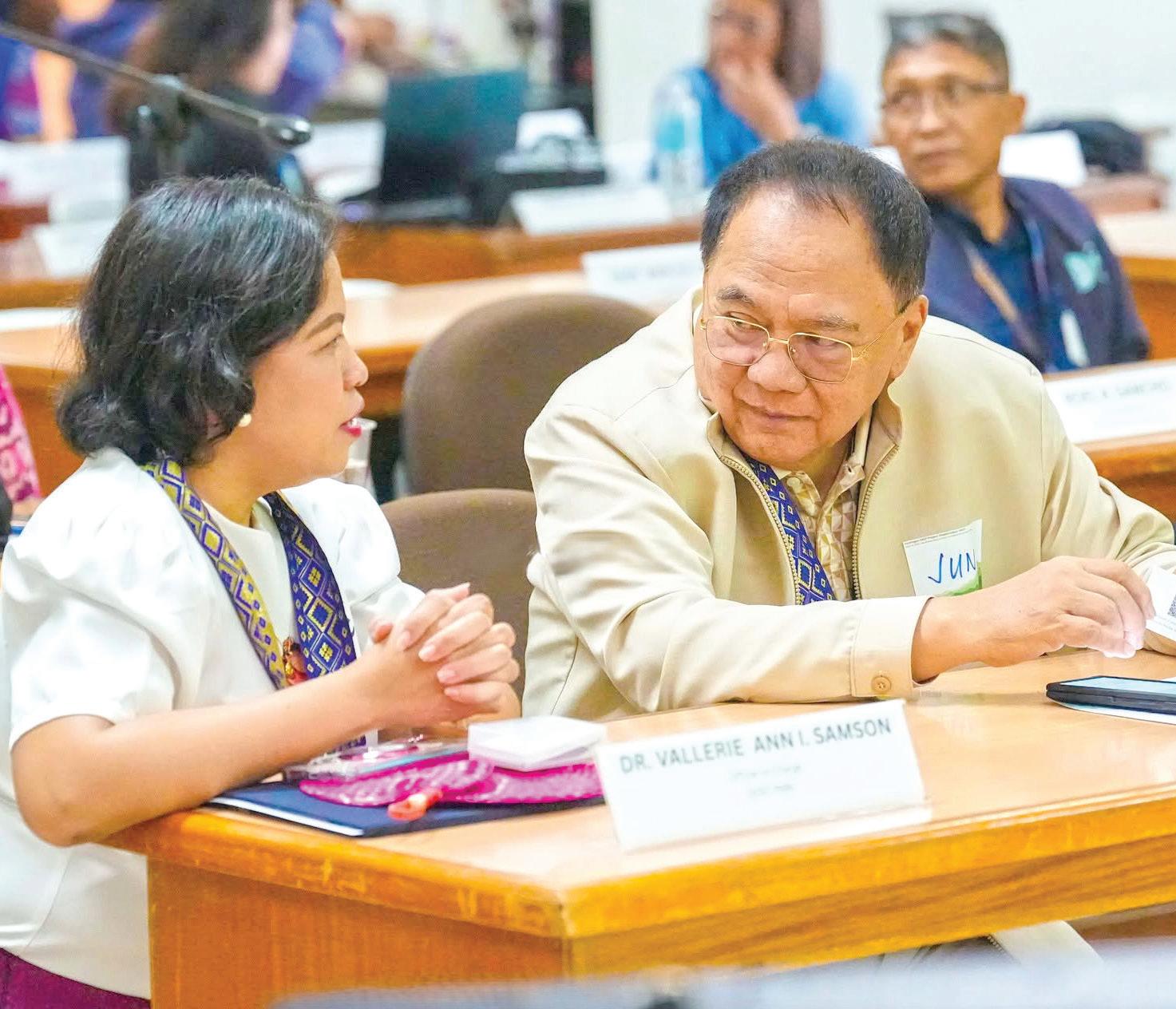

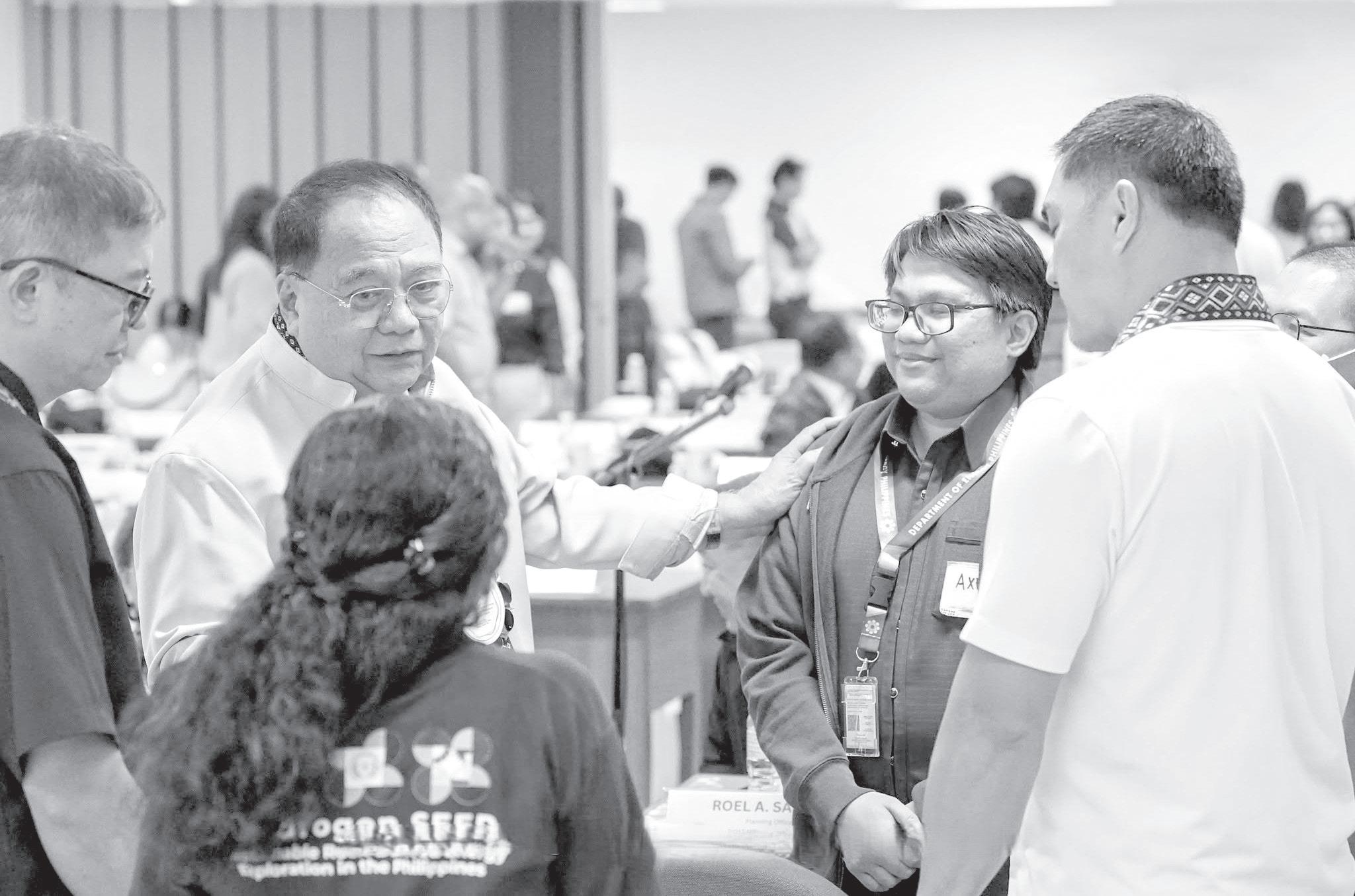
“If Saudi Arabia became a rich country [because of oil reserves], why can’t we with hydrogen, as long as we manage it properly?” the governor wondered aloud during a stakeholders’ meeting organized by DOST-PNRI on June 3 in San Antonio town.
“This is not just about discovering a resource. It is about preparing Zambales for a cleaner, smarter, and more sustainable future,” Ebdane added.
Highest outgassing in the world
THE local gas seeps, also known as “outgassing,” were identified in a groundbreaking study of native geologic hydrogen conducted by the DOST-PNRI under the Hydrogen SEEP, or Surface Exploration and Evaluation of Native Hydrogen Project.
Geologic hydrogen, also known as “white” hydrogen, refers to naturally occurring hydrogen trapped underground and formed through the interaction of water with iron-rich rocks in ophiolite belts.
Ophiolites, which are formed by the uplifting of the Earth’s crust, are known to act as “chemical reactors” for producing white hydrogen through serpentinization. This chemical reaction removes oxygen from the water and
locks it into the rock minerals, thus releasing hydrogen gas.
Dr. Karmina A. Aquino, a geological chemist and a Science and Technology fellow who leads the Hydrogen SEEP team, said they recorded at least 808 tons of natural surface outgassing per year from the Nagsasa seep in San Antonio alone.
The Nagsasa flow rate reportedly surpassed the previous outgassing record of 200 tons per year from the Bulqizë chromite mine in Albania, where geologists discovered 80 percent pure hydrogen gas bubbling from underground pools in 2024.
Even with its recorded flow rate of just 200 tons, the geologic fault under the Albanian mine may contain a massive reserve of 5,000 to 50,000 tons of hydrogen, scientists said.
At the outset, Aquino estimated that surface outgassing from the Nagsasa seep may generate from 12,861 to 15,185 megawatt-hour (MWh) per year, which is equivalent to 42 percent of the estimated 36,600 MWh demand of host town San Antonio.
Tapping this freely available energy resource would be beneficial for the communities near the seep, which is currently not connected to the grid, she also said.
Economic potential
THE discovery of white hydrogen reserves in Zambales sets the stage for the development of an indigenous clean energy program amid mounting calls to steer away from dirty fossil fuels and transition to energy sources without much carbon footprint.
As a naturally occurring resource, native geological hydrogen fits the bill. It is highly prized as a clean, primary energy source with production costs far cheaper than manufactured “green” or “gray” hydrogen.
Experts believe that natural “white” hydrogen, which is extracted directly from the ground and bypasses the industrial electrolysis or gasification stages, could potentially be produced at under $1 per kilogram.
Currently, “gray” hydrogen, which is the most widely used form
today, only costs from $1.50 to $2.50/kg to produce.
However, processing gray hydrogen by breaking down biomethane gas to yield a hydrogen-rich mixture of carbon monoxide and carbon dioxide leaves a staggering carbon footprint, as from 9 to 12 tons of carbon dioxide is released into the air for each ton of gray hydrogen produced.
“Green” hydrogen, on the other hand, is produced by splitting water into hydrogen and oxygen through electrolysis using renewable energy like solar or wind.
While no carbon emissions are generated in this process, production cost is usually high because it requires from 50 to 55 Kilowatthours of electricity to produce just one kilogram of green hydrogen.
According to data from Energy Solutions Intelligence (ESI), which monitors the energy market, green hydrogen is produced in the United States at a cost of from $4.50 to $6.50/kg and from $5.50 to $7.50/ kg in Europe.
In the Middle East and North Africa production is lower at $2.80 to $4.20/kg because of cheap solar power purchase agreements and subsidized capital, the ESI said.
White is way better: cheaper, zero carbon WITH cheaper production cost and zero carbon footprint, white hydrogen promises to be the energy source of the future.
According to estimates by the United States Geological Survey (USGS), there is approximately 5 million megatons of geologic hydrogen in the world.
Even if only 2 percent of this could be recovered, successful extraction would produce about 100,000 megatons, which could supply the projected global energy demands for more than 200 years, the USGS said.
Further study and exploration
WHILE the DOST-PNRI study identified several sources of geologic hydrogen in the Philippines, further exploration is needed to ascertain the commercial viability of tapping these energy sources, experts said.
Koloma, Inc., which is expand-
ing its hydrogen exploration program into Zambales, described the Philippines as having “some of the best-documented natural hydrogen data in the world, making it one of the most promising settings for exploration.”
“A discovery of commercialscale natural hydrogen would give the Philippines a domestic, primary energy source and position it as a regional energy hub,” Koloma said in a statement on Thursday.
The DOST-PNRI’s Hydrogen SEEP team first measured the outgassing rate of natural hydrogen in Zambales because it is more accessible than the other sites like Palawan.
“In the Philippines, there are known sites, and we know there is hydrogen there, but we don’t know how much we can get and if it’s worth pursuing and if it’s economical,” Aquino said following the release of the DOST-PNRI study last year.
“We knew this for so long. Actually, the Philippines is one of the original sites for geologic hydrogen, as early as 1980s or earlier,” Aquino added.
Another scientific study published by the USGS in 1989 had also identified Zambales as the location of the one of the world’s best-exposed and least-disturbed ophiolite belts.
The Zambales Ophiolite Complex (ZOC) is said to span about 160 kilometers from north to south of the province and is divided into three massifs, which, in geological terms, are distinct, independent sections of the Earth’s crust defined by faults.
These massifs, which contain large, solid blocks of highly compacted rock that are highly resistant to erosion and folding, are found in the towns of Masinloc, Cabangan, and Antonio.
Long-term preparations GIVEN the extensive studies required to finally exploit local hydrogen reserves, Gov. Ebdane has called for the development of local expertise in preparations for the scientific development of native hydrogen.
“If Zambales will play a major role in this field, we need local geologists, researchers, engineers, and professionals who can help us understand, protect, and develop this resource properly,” the governor pointed out.
San Antonio Mayor Arvin Antipolo, meanwhile, said the town government has coordinated with the Department of Energy (DOE) and the DOST to validate and study the hydrogen deposits at Nagsasa. In a media briefing in April, Antipolo said that developing the local hydrogen sources could reshape the municipality’s economic future.
For this, he said the LGU is also pushing for key hydrogen development infrastructure to be located within the town for the LGU to generate revenues through real property taxes and strengthen its Special Education Fund.
Antipolo also said they have also institutionalized preparations for the hydrogen project by creating the San Antonio Green and Renewable Energy Council (Sagrec) and the San Antonio Green and Renewable Energy Investment Board (Sagreib).
He said these bodies are expected to facilitate policy direction, attract investors, and ensure that infrastructure developments related to the development of the Nagsasa seep will directly benefit the host community.
Editor: Angel R. Calso
Sunday, July 26, 2026 A3

By Sara Sjolin & Evelina Youcefi
SOME of Denmark’s most powerful banking executives gathered for a hastily scheduled meeting at Finance Denmark’s headquarters, overlooking Copenhagen’s royal district, on May 1. Lars Gert Lose, the leader of the industry group, had summoned them to try to defuse a battle over the country’s $500 billion mortgage market that was spiraling into a public feud.
At the table with Lose sat Michael Rasmussen, head of Nykredit, Denmark’s largest mortgage lender, and chairman of Finance Denmark itself. In the weeks leading up to the talks, Rasmussen had been lobbying for tighter rules on priority loans — a fast-growing mortgage product used by rivals to poach customers from traditional providers. He argued he was trying to protect a historically egalitarian system that for years offered Danish homeowners some of the world’s cheapest borrowing costs.
Among those pushing back were Danske Bank A/S Chief Executive Officer Carsten Egeriis and Nordea Bank Abp Chief Risk Officer Mark Kandborg, according to people familiar with the meeting, who requested anonymity to discuss it freely, and local business daily Børsen. In the room, both men questioned why the chairman of the industry’s lobbying group was championing measures that would weaken some of the very banks he was elected to represent.
The four industry heavyweights failed to find a path forward. A week later, Rasmussen unexpectedly announced in a LinkedIn post that he would step down as Finance Denmark chair, while continuing as head of Nykredit. He framed his decision as an ethical one: he could not give up his concerns about priority loans, and had to pick sides.
“There are positions you can move away from, and positions you can’t,” Rasmussen wrote.
What began as a battle for mortgage customers morphed into a struggle over the future of Denmark’s housing finance system, underscoring how intensifying competition and dealmaking are reshaping the European banking
industry as lenders race to gain scale and defend market share. Danish political leaders have been drawn in, and experts worry about an outcome that could significantly change one of the world’s largest covered bond markets — and a mortgage model long regarded as a great Danish financial success story.
Built on a unique bond-issuance system, this model created a transparent, highly liquid and relatively low-risk market, where, unlike in many countries, borrowers are largely offered the same terms regardless of income, credit profile or where they live. Priority loans can be funded more flexibly, including through deposits, which allows banks to tailor loan terms. But critics argue that beneficiaries are largely affluent homeowners in the biggest cities, where competition is fiercest and property values are highest.
The scale of Denmark’s mortgage market reflects the central role of this bond-funded lending system.
In 2025, total outstanding mortgages stood at about €436 billion, exceeding Germany’s €297 billion, according to the European Covered Bond Fact Book, despite Denmark’s much smaller population.
“We as a society must protect the Danish mortgage system,” said Lars Krull, a banking researcher and senior adviser at Aalborg University. Of Nykredit, he added, “They already have significant scale advantages and are seeking too much protection from competition.”
Danske Bank, Nordea and Finance Denmark all declined to comment. Nykredit didn’t immediately respond to a request for comment.
Bold ambitions
ADMIRED by some and deeply unpopu-
lar with others, 61-year-old Rasmussen is one of the most recognizable figures in Danish banking.
A two-time chairman of Finance
Denmark, former Nordea country manager for Denmark and CEO of Nykredit since 2013, he has deep ties across the financial sector and knows virtually every key player in the industry. Even his rivals say he is a diligent, smart and strategic thinker determined to build one of Denmark’s largest banks.
Last year, Nykredit, long known as a mortgage specialist, acquired Spar Nord to become Denmark’s third-largest bank in a push to challenge Danske Bank, Nordea and Jyske Bank A/S as a full-service institution. Unlike its listed rivals, Nykredit is majority-owned by the customer association Forenet Kredit, giving it more flexibility to prioritize market share over short-term profitability.
The fight for corporate banking customers immediately intensified throughout Denmark and for retail clients in the Jutland region, where Spar Nord had been traditionally strong. The deal significantly expanded Nykredit’s deposit base, giving it a larger and more stable source of funding as lenders battled for customers. But the fiercest competition emerged in mortgages, where Nykredit, which already controls more than 50% of the market through Totalkredit, kicked off a price war by cutting fees. Rivals responded. In recent months, lenders including Danske Bank, Nordea, Jyske Bank and Sydbank A/S have all lowered fees, prompting further reductions from Nykredit to protect its market share.
“It was a little surprising how fast Nykredit moved to aggressively respond to the price cuts,” said Anders Haulund Vollesen, an analyst at Jyske Bank. “They signaled that they’re willing to race to the bottom, so to speak, in order to defend having the most attractive prices.”
Political concerns
IN a tent in June on Bornholm, at Denmark’s annual democracy festival, Folkemødet, a woman in her 50s gave central bank deputy governor Ulrik Nødgaard a hard time. She challenged him over a housing market that, in her view, increasingly requires family wealth to afford a home and wanted to know what he is planning to do about it.
Unhappy with his response, she kept pressing him, arguing that the system gives some people an “unfair advantage.”
Her frustration taps into a wider debate about Denmark’s housing market, where soaring prices have deepened the
Palestinian family split between Israel and Gaza reunites after years of war and loss
By Sam Metz & Sam Mednick
Associated Press
AZARETH, Israel—The last time
NMais al-Gharam saw her seven siblings was in the Gaza Strip two months before the war. That was before she left the Palestinian territory to go live in Israel and before an Israeli airstrike on the family’s home killed her parents and younger brother.
But on this day, she waited hopefully outside Israel’s Kerem Shalom crossing, scanning for a glimpse of her surviving brothers and sisters as they made their way through the gates and out of Gaza.
“We never stopped being a family,” said Mais, who is 23 and the eldest of eight siblings born to a father from Gaza and a mother who was a Palestinian citizen of Israel. “But every day I wondered whether I’d see them again.”
The family finally reunited this month following a yearslong effort by Mais and a team of lawyers to get her brothers and sisters out. They met outside the border crossing and then drove together to the city of Nazareth, where their mother’s extended family showered the siblings with hugs and homemade food.
The reunion carried joy, grief and a quiet disbelief: Despite the odds, Mais had secured Israeli passports for her Gaza-born siblings, ages 8 to 22, and arranged for them
to come live with her.
But while they had found one another again, they could never reclaim what they lost.“It’s like coming back from the grave,” Faraj al-Gharam, their maternal grandfather, said of his grandchildren. In Gaza, he said, “human life has no value.”
Hundreds of Palestinian families are split between Israel and Gaza
THE family’s story begins in 2002 when Murad al-Gharam, a native of Gaza, was working construction in Israel on a temporary job permit. There, he met and married Amal Karim, a Palestinian citizen of Israel who lived in Nazareth. Soon, they had a baby girl and named her Mais.
Decades ago, such marriages were common between Palestinians who lived in the West Bank, Gaza and Israel, before two Palestinian uprisings and Israel’s response closed off the occupied territories.
When Murad and Amal met, it was at the height of the Second Intifada. As violence raged, Israel clamped down on work permits for Palestinians, putting Murad’s status in Israel in jeopardy.
He and Amal moved to Gaza permanently, settling down with Mais in Nuseirat, a built-up refugee camp in the enclave’s central region. Murad began work as a taxi driver, and the couple had seven more
economic gap between home owners and those yet to get on the property ladder while fueling disparities in wealth across regions. Danish rates were lowest in the years around the European debt crisis, when central bank rates and short-term bonds went negative for a record 10 years. They have risen since then, encouraging some homeowners to refinance away from fixed-rate mortgages and move into the shorterterm priority loans that can be cheaper.
Over the past five years, house prices have rallied about 20% across the country, but gains have been uneven. In Copenhagen, prices are up 25% in the past year alone, raising concerns of a bubble and that ordinary people are being squeezed out of the capital.
The rapidly rising prices in the major cities have fueled the debate over priority loans. As homeowners accumulated more equity and property values climbed, banks like Danske Bank and Nordea used these loans to compete for affluent borrowers as they allow for more individualized pricing.
From 2020 to 2025, priority lending grew roughly 56% and now accounts for about 14% of new home lending, according to data from the Danish central bank.
To Rasmussen that growth represents more than tougher competition.
Nykredit argues the loans risk undermining Denmark’s long-standing mortgage model by drawing the most attractive borrowers away from the covered-bond system while concentrating competition in Copenhagen
and other affluent cities. If left unchecked, Rasmussen has said, the trend could drive house prices in the capital even higher while leaving rural areas increasingly behind.
In a report from February, the Danish Financial Supervisory Authority also warned that if the most creditworthy borrowers increasingly opt for priority loans over traditional mortgages, it could eventually weaken Denmark’s mortgage system.
“Priority loans offer borrower flexibility but may introduce risks related to borrower credit quality attracting the ‘best’ borrowers, leaving traditional mortgage banks with a weaker credit profile based on the remaining mortgage borrowers,” said Casper Andersen, analyst at S&P Global, in a note.
“It could also lower covered bond market liquidity, potentially reducing demand for traditional covered bonds and increasing mortgage borrowing costs,” he said, adding the dynamics currently are not affecting the creditworthiness of Denmark’s coveredbond market.
Rasmussen and Forenet Kredit, which controls about 79% of Nykredit, have taken that argument to lawmakers.
A memo written by Forenet Kredit seen by Bloomberg urges politicians to tighten the rules governing priority loans through stricter capital requirements and stronger consumer protections. Such measures could prevent “cherry picking” of customers and help ensure priority loans are not limited to the most financially robust
homeowners, the document said. The proposal would amount to a Danish tightening on top of the EU’s common capital framework.
Denmark’s central bank has rejected concerns that priority loans at current levels pose a threat to financial stability and warned against political intervention. Even so, the country’s newly elected Socialist-led government has established a working group to examine whether the loans risk undermining Denmark’s mortgage model and whether regulatory changes are warranted.
The unusually direct appeal for political intervention marked a rare public split within Denmark’s banking industry. Danske Bank, Nordea and Jyske Bank responded with a joint opinion piece in Børsen, accusing Rasmussen of promoting a “dramatic narrative” that “doesn’t hold up.”
“There are issues I feel strongly about. One of them is making sure we have healthy competition, and that the sector stands together to make the industry more competitive and simplify regulation,” Danske Bank’s Egeriis said in an interview. “I’m genuinely puzzled that they chose to come out with a message like that.”
While the latest round of price cuts may have little immediate impact on bank earnings, Krull said the underlying battle is likely to shape Denmark’s mortgage market for years.
He added, “This is a long-term issue, but a very defining issue.” With assistance from Sanne Wass, Slav Okov and Frances Schwartzkopff / Bloomberg
children—Zuhour, 22; Jwaher, 21; Sabreen, 20; Ghfran, 17, Fady, 16; Maisara, 11; and Arjwan, 8.
“We lived here together as a family ... and never lacked anything,” Zuhour said.
On Oct. 7, 2023, everything changed.
When Hamas-led militants from Gaza attacked southern Israel, killing about 1,200 people and taking 251 others hostage, the al-Gharams were one of what rights groups estimated to be more than 300 “divided families” with members on both sides of the border.
As Israel launched its retaliatory offensive, and prepared for a full-scale ground invasion, the family had to decide what to do.
Mais had already emigrated back to Nazareth, where she found a job and married. And while the seven children who were born in Gaza had the right to apply for Israeli citizenship through their mother, their father had no such option.
Israeli law generally bars the Palestinian spouses of Israeli citizens from obtaining permanent residency status. If the rest of the family wanted to leave, he would have to stay behind.
“We said, ‘Either we all leave together, or we all stay together,’” according to Zuhour.
So they braced for war.
“Palestinian,” A4

By Aamer Madhani, Collin Binkley & Michelle L. Price
The Associated Press
Donald Trump on Thursday appeared to add a condition to the newly signed agreement with Saudi Arabia for a civilian nuclear program, saying the deal would require the kingdom to normalize its relations with Israel through the Abraham Accords.
When the deal was announced Wednesday, neither the US Energy Department nor the Saudi government made any mention of it being contingent on the kingdom’s relations with Israel.
Trump’s social media post a day later asserting that the agreement was subject to the Saudis joining the accords was unexpected and almost certain to complicate any final approval. The accords approved in 2020 expanded the number of Arab and Muslim-majority nations with diplomatic ties with Israel.
Getting Saudi Arabia to join would be a monumental diplomatic achievement. The Saudis have previously made clear that normalizing relations with Israel would first require the establishment of a clear path for Palestinian statehood. Israeli Prime Minister Benjamin Netanyahu has rejected the idea
of Palestinian statehood as being untenable for his country’s security.
The Republican president also said the pact does not allow for enrichment of uranium. Nonproliferation experts have raised concerns that the deal fails to include guardrails to prevent enrichment of uranium to weapons-grade levels.
Trump said the agreement “will be approved, but is totally subject to Saudi Arabia joining the very respected and successful Abraham Accords.” He added that the US “is not opposed to Civil (Non-Enriched) Nuclear Facilities.” When asked by a reporter why the condition was not mentioned in the initial announcement, White House press secretary Karoline Leavitt said the president was the “final dealmaker” and has called on Saudi Arabia to join the accords “on numerous occasions.”
The Saudi Embassy in Washington declined to comment Thursday on Trump’s assertions about the deal.
Netanyahu’s office in a statement applauded the prospect of Saudi Arabia joining the accords as a “historic leap forward for peace in the Middle East.” The statement made no mention of the deal to bolster Saudi’s civil nuclear program.
President has sought to build on the accords
TRUMP has sought to build on the accords, which also formalized commercial ties between Israel and some Arab and Muslim-majority nations.
Saudi Arabia is the most important Arab power in the Middle East, and Trump believes the kingdom joining the accords is critical to establishing long-term stability in the region.
The new nuclear deal is expected to last 30 years and involve US firms in the program’s development. The agreement could allow for the building of a uranium-enrichment facility in Saudi Arabia following a joint US-Saudi study, according to a person familiar with the matter who was not authorized to comment publicly and spoke on the condition of anonymity.
The pact is to be submitted to Congress for review, according to the US and Saudi governments.
The deal does not include the International Atomic Energy Agency’s “additional protocol,” which would allow for more monitoring, inspections and verification, according to a second person familiar with the agreement.
The oil-rich kingdom’s Energy Ministry on Wednesday said the

agreement bolsters “efforts to diversify energy sources, advance cutting-edge technologies, and expand opportunities for cooperation and investment in ways that serve the mutual interests of the two friendly countries.”
Enrichment is not an automatic path to a nuclear weapon—a nation also must master other steps, including the use of synchronized high explosives, for instance. But it does open the door to weaponization, which has fueled concerns over Iran’s program.
Administration says deal is good for US firms
SECRETARY of State Marco Rubio told reporters Thursday in the Philippine capital of Manila that the agreement would make certain that Saudi Arabia works with American companies instead of “competitors” to build its civil nuclear program.
China, South Korea, France and Russia are among alternative partners that Riyadh could look to.
“We’re not the only show in town, but we’re the best show in town,” Rubio said. “We want to make sure that it’s our companies they’re picking.”
Trump has talked up his push to extend the accords, but the aftermath of Israel’s war in Gaza and the nearly 5-month-old US and Israel war against Iran have complicated his efforts.
The agreements have proven unpopular in certain signatory countries such as Morocco and Bahrain, sparking widespread protests.
Still, the Trump administration remains optimistic that an agreement with Saudi Arabia on joining the accords can be sealed by the end of Trump’s second term.
Deal faces early scrutiny from Congress, Israel and nuclear experts
The White House and Saudi Arabia have not made public the text of the nuclear cooperation agreement, known as a “123 agreement,” alongside what the Trump administration described as a “bilateral safe -
guards agreement” that was signed Wednesday by US Energy Secretary Chris Wright and Saudi Minister of Energy Abdulaziz bin Salman. But it already faces scrutiny from Congress, some Israeli officials and nuclear experts.
As details of the deal emerged Wednesday, opposition on Capitol Hill and elsewhere began to snowball, with Republicans and Democrats both questioning the wisdom of the agreement. In addition, conservative commentators who have generally supported Trump’s polices asked why the president would give Saudi Arabia such a deal without getting anything in return.
Then on Thursday, Trump abruptly announced that the deal is contingent on the Saudis joining the accords.
The United Arab Emirates, a neighbor to Saudi Arabia, signed a 123 agreement with the US to build its Barakah nuclear power plant with South Korean assistance. But the UAE did so without seeking enrichment, something nonproliferation experts have held up as the “gold standard” for nations wanting atomic power.
Rubio, as a Republican senator representing Florida, backed a bipartisan 2018 proposal that called for requiring Congress to approve any 123 agreement with Saudi Arabia. The bill was reintroduced by a group of Democratic lawmakers in March but has not passed into law.
Price reported from Manila, Philippines. Associated Press writers Sam Metz in Jerusalem and Matthew Daly, Seung Min Kim and Matthew Lee in Washington contributed to this report
Israel quietly building a miles-long earthen barrier inside Gaza, entrenching its division
By Lee Keath & Julia Frankel
CThe Associated Press
AIRO —The Israeli Military Is Quietly But Quickly Building A Giant Earthen Barrier Separating The Over 50% Of The Gaza Strip It Controls From The Rest Of The Territory, According To Satellite Imagery, Further Entrenching The Division Of The Tiny Palestinian Enclave. More Than 23 Kilometers (14 Miles) Have Been Constructed In Recent Months, Running Through Palestinian Communities Demolished By The Military. That Is Equivalent To More Than Half The Length Of The Coastal Strip, Which Is Some 40 Kilometers (25 Miles) Long And 11 Kilometers (7 Miles) Wide, And Home To Over 2 Million Palestinians. When Presented With The Satellite Images, Israel’s Military Confirmed To The Associated Press It Has Built A Physical Barrier In The Area Of The So-Called Yellow Line, The Boundary To Which Israeli Troops Withdrew Under The October Ceasefire Deal With Hamas. The Line Was Envisioned In The Us-Backed Agreement As A Temporary
Palestinian. . .
Continued from A3
A sister fears for her parents and siblings’ survival ABOUT 160 kilometers (100 miles) away,

Division Of The Territory Pending A Fuller Israeli Withdrawal.
But As The Truce Stagnates, It Appears Israel Is Digging In, Heightening Palestinian Fears That The Line Is Morphing Into A Border. Neither Us Central Command, Which Is Tasked with monitoring the ceasefire, nor the Board of Peace, the body led by US President Donald Trump meant to eventually oversee Gaza, would comment on the barrier.
Along with the barrier, the military told AP it has developed a “security zone” around the line, equipped with intelligence and technological assets. It declined to give details on the route of the barrier when asked how far it would be extended. It said the barrier aimed to prevent infiltration and protect Israeli troops and Israeli communities near Gaza.
Construction of the barrier is proceeding rapidly
SINCE the ceasefire deal took hold, Palestinians in Gaza have feared Israel would not return the area of Gaza it controls. But few appear to be aware of the berms now being
Mais waited anxiously each day for updates, which were infrequent after Israel cut off Gaza’s electricity and took out cellphone and internet networks. The al-Gharam family was displaced at least seven times in the first half of 2024, eventually landing in Rafah in southern


built around them—because of the danger of even approaching that area.
A portion of the berm network in southern Gaza was extended by more than 2 kilometers (1.2 miles) in two weeks this month, according to the satellite images provided by Planet Labs PBC.
The berm was about 500 meters (0.3 miles) long on July 1. By July 15, it was about 2.4 kilometers (1.5 miles), splicing the Israel-controlled ruins of the city of Rafah from Muwasi, site of some of the largest Palestinian tent camps.
If construction continues in its current direction, it will join up with the longest stretch of the barrier, which runs nearly unbroken for around 17 kilometers (10 miles) from the southern city of Khan Younis to near Gaza City, in the north.
Construction began on that stretch in February, and it appears work to extend it further south is continuing, according to the satellite images. More than a kilometer (0.6 miles) was added between June 21 and July 7, running close to an Israeli military base built on the ruins of the town of Bani Suheila, near Khan Younis.
Gaza, before Israel invaded there, too.
In the end, they returned to Nuseirat, about 10 kilometers (6 miles) south of Gaza City, and moved back into the home where the children grew up. The area was both a place of refuge and a site of regular airstrikes on schools and apartment buildings that

In the far north of Gaza, several unconnected stretches of berms run just outside the largely leveled town of Beit Lahia.
The height of the berms in each place remains unclear. In some places, the barriers appear to run outside the yellow line.
Israel has mostly destroyed and depopulated the half of Gaza it controls
GAZA’S population has been crowded into the coastal area west of the yellow line, most living in squalid tent camps and dependent on aid.
On the other side of the line, satellite imagery shows that Israeli forces have leveled the vast majority of buildings using bulldozers and explosives, virtually erasing several towns and Rafah, once home to more than a quarter million people.
They have carved new road networks and erected new bases on the ruins of Palestinian towns. Agricultural land has also been destroyed. The Israeli military says it is demolishing infrastructure used by Hamas.
The yellow line was never precisely defined, whether in the ceasefire deal or
Israel said were being used by Hamas.
At 6 a.m. on July 10, 2024, an airstrike tore into their home, collapsing walls and sending debris crashing through the ceiling.
Dazed and wounded, the siblings ran into the street screaming for help.
Jwaher said she was in such shock that she couldn’t even feel that her leg and fingers had been fractured.
They piled into cars and rushed westward to Al Aqsa Hospital in the city of Deir al-Balah, where doctors treated them and pronounced their mother, father and brother Maisara dead.
“Suddenly the burden fell on us,” Sabreen said.
Together, they cooked, cleaned and collected firewood to boil water and keep warm. They also made money by opening a bakery in their neighborhood, while relying on charity and funds sent by relatives in Nazareth.
by Israeli or US officials, and it has been inconsistently marked on the ground. The military told AP it is working to clearly mark the route of the yellow line to “reduce friction and prevent harm to uninvolved individuals.”
Israeli forces have killed Palestinians who came close to the line or crossed it.
The Israeli military says it fires on those believed to be militants threatening its troops. But those killed have included children and other civilians seemingly unaware of the line. Some soldiers have said they don’t always know who they are firing on and have orders to kill anyone crossing the boundary.
Israeli strikes have killed hundreds of Palestinians since the ceasefire
Israeli forces have killed more than 1,100 Palestinians since the ceasefire began, most in airstrikes and drone strikes around Gaza. The Israeli military says it is targeting militants. Militant attacks have killed five Israeli soldiers in the same period.
Under the ceasefire deal, Israel is eventually supposed to withdraw its troops further to the very edges of Gaza, to be
“We were forced—each of us—to take on a role that wasn’t ours,” Fady said. The Israeli military did not respond to a request for comment on the strike.
Israeli lawyers pushed the government to reunite family
AS her siblings kept the family afloat in Gaza, Mais sprang into action in Israel, determined to save them as conditions there rapidly deteriorated.
She contacted HaMoked, an Israeli rights group, on the day of the strike to start the paperwork and procedures required to reunite with her siblings and bring them to Nazareth. They began drafting letters to the Israeli Interior Ministry and COGAT, the military body that oversees crossings and humanitarian affairs in Gaza.
When she learned from her siblings that their parents and brother were dead, “it was the biggest shock I think I’ve ever
replaced by an international security force. But implementation of the deal has been stalled for months.
A former U.N. diplomat now in charge of coordinating the ceasefire has blamed Hamas’ failure to disarm. Sporadic talks to reach a formula for decommissioning its weapons appear to have made little progress, and Hamas accuses Israel in turn of violating the ceasefire.
The war began after Hamas-led militants attacked Israeli communities on Oct. 7, 2023, killing around 1,200 people, mostly civilians, and taking 251 others hostage. Israel responded with a punishing military offensive that has killed more than 73,000 people, according to the Gaza Health Ministry.
The ministry, which was part of the recently dissolved Hamas-run government, maintains detailed records viewed as generally reliable by U.N. agencies and international organizations. It does not distinguish between civilians and militants but says women and children make up around half of all fatalities. (Frankel reported from Jerusalem.)
gone through in my life,” she said. At the time, reuniting seemed impossible. Mais needed permits for them to enter Israel, a court order appointing Zuhour, the eldest sibling in Gaza, as legal guardian to the minor children, and six successful applications for Israeli citizenship.
According to HaMoked, the Israeli Interior Ministry initially rejected the request to apply for the divided family procedure to reunite the al-Gharams because their mother was dead.
The family then had to undergo DNA testing to prove the siblings’ relationship to Mais, an Israeli citizen. Once the test results were in, the siblings had to make another trip to Kerem Shalom to sign the paperwork for their Israeli passports.
They finally arrived in Israel on July 8, nearly two years to the date of the deadly strike on their home.

By Bless Aubrey Ogerio
CEBU CITY—The past year reminded Central Visayas that resilience cannot rely on response alone.
Following a series of destructive natural hazards that affected parts of Cebu and neighboring provinces, conversations have shifted toward preparedness not only through disaster response, but through science, technology and innovation that can help communities anticipate risks, strengthen industries and improve public services.
That vision took center stage during the 2026 Regional Science, Technology and Innovation Week (RSTW) in Cebu City on July 13, where government agencies, researchers, local governments, universities, startups and businesses gathered to showcase how scientific research can move beyond laboratories and into everyday life.
For Science Secretary Renato Solidum Jr., innovation is no longer simply about developing new technologies. It is about building communities that are ready for tomorrow.
“Let the 2026 RSTW in Central Visayas show that productivity, knowledge creation, and future readiness are parts of one national journey,” Solidum said during the opening ceremony.
“Let Central Visayas demonstrate how regions can lead
that journey—with enterprises willing to innovate, researchers willing to respond, institutions willing to collaborate, local governments willing to use evidence, and young people ready to create,” he added.
His message comes as the Department of Science and Technology (DOST) pushes for stronger regional innovation ecosystems, recognizing that solutions are often most effective when developed close to the communities they intend to serve.
‘Sa katawhan gihapon’ (for the people still) DOST Central Visayas Regional Director Tristan Abando explained how the annual science week represents something much larger than an exhibition of new technologies.
It is a gathering of the region’s entire science, technology and innovation ecosystem.
“RSTW is not merely a DOST event but a celebration of the entire science, technology and innovation ecosystem of the region,” Abando said.
He noted that many successful innovations begin with simple conversations among different sectors before evolving into technologies,
DOST scholar: Curcumin from local turmeric to boost seniors’ muscle health

THE humble local turmeric root crop (“luyang dilaw”) with its curcumin compound provides vital scientific evidence that could combat age-related muscle decline among older Filipinos, a study of a Filipino science scholar acknowledged. Department of Science and TechnologyPhilippine Council for Health Research and Development (DOST-PCHRD) scholar, Dr. Maria Grace A. de Guzman, a recent PhD in Health Research graduate from the University of Santo Tomas, dedicated her doctoral dissertation to exploring the potential of curcumin—a bioactive compound derived from turmeric—to manage sarcopenia.
Sarcopenia is a condition characterized by the progressive loss of muscle strength, mass, and function, which severely impacts mobility, independence, and overall quality of life in seniors.
Highlighting the relevance of de Guzman’s work, Science Secretary Renato U. Solidum Jr. emphasized the importance of proactive geriatric healthcare.
“Given the growing elderly population in the country, studies on muscle conditions like sarcopenia become increasingly relevant. With our scholarship grants through the DOST-PCHRD, we provide opportunities for physician-scientists to train and pursue research that addresses the tangible health concerns of Filipinos,” Solidum said. De Guzman’s dissertation has already garnered international recognition. Her findings were presented as a free paper at the XXVII World Congress of Neurology in Seoul, South Korea, with its abstract officially published in the prestigious Journal of the Neurological Sciences. The study provides vital scientific

enterprises and services that address local concerns.
“By bringing together key players from various sectors, RSTW provides a venue for building new partnerships and strengthening existing ones that can help address the region’s pressing development concerns.”
Among the technologies featured during the three-day event are the Fuel Cell Research and Development and Testing Center, Bamboo Octagonal Jointing System, Wood Identification Services, Automatic Weather Station, Radiosonde Transmitter, BANATECH, Smarter Pest Identification Technology (SPIDTech), AGOS Digital Signing App, and Payruler.
The exhibition also highlighted DOST-assisted enterprises, including Cebu-based bakery and food manufacturer Magic Melt, which integrated a solar photovoltaic system into its production facility through DOST support.
While the technologies vary widely, they point toward a common objective: using science to solve practical problems faced by
industries, communities and local governments.
‘Karon ug ugma’ (today and tomorrow)
CENTRAL Visayas is in a unique position to demonstrate how national science and innovation strategies can be translated into local action, Solidum said.
Among the initiatives he highlighted is the Smart and Sustainable Communities Roadmap, which encourages local governments to use data in planning and delivering public services.
Another is the Central Visayas Drone Industry Development Action Plan, which seeks to strengthen technical skills, regulation and public-service applications for drone technologies in the region.
The Science Discovery Center, meanwhile, aims to cultivate scientific curiosity among younger Filipinos and encourage greater participation in science and technology.
“These are not isolated projects; they are the building blocks of an innovation ecosystem felt by every citizen,” Solidum said.
He added that science-based interventions also have implications beyond research, particularly in strengthening food security.
According to the DOST chief, helping food processors, farmers, fisherfolk and agri-based enterprises improve productivity, reduce losses and strengthen supply chains could make communities more resilient to disruptions caused by natural hazards and changing market conditions.
“By enhancing the competitiveness of local industries, science and technology can help ensure a more stable and accessible food supply even amid disruptions caused by natural hazards and changing market conditions,” he said.
‘Tabang sa tinguha’ (assistance in achieving a goal) BEYOND showcasing technologies, DOST is also expanding assistance for micro, small and medium enterprises (MSMEs) seeking to adopt innovation.
During the RSTW opening news conference, Solidum said the agency continues to strengthen
its long-running Small Enterprise Technology Upgrading Program (SETUP), which provides qualified businesses with financial assistance of up to P5 million, alongside technical guidance throughout implementation.
Repayment begins only after one year and is spread over three years without interest.
For businesses requiring larger investments, DOST has partnered with LandBank to provide additional financing for qualified enterprises, with loans ranging from around P5 million to as much as P50 million or P100 million, depending on project requirements. The agency also administers the Startup Grant Fund, which supports research and development activities before technologies become commercially viable. Meanwhile, companies facing operational challenges but lacking in-house research capabilities may partner with universities through DOST-funded research collaborations, while researchintensive firms may receive assistance in acquiring specialized equipment.
Solidum said these initiatives are complemented by the country’s growing network of 84 innovation hubs, which provide technical mentoring, networking opportunities and business guidance for startups and MSMEs. The goal, he said, is to ensure innovators receive support from idea generation to commercialization. Really, the message of the RSTW in Central Visayas is clear: being andam ugma (ready tomorrow) begins with turning science into solutions that communities can use today.
MEDICINAL plants have long been a cornerstone of Philippine traditional medicine, dating back generations.
“Tawa-tawa,” a low-growing herb that thrives in open grasslands, is a valued supplementary treatment for dengue; the gel of the succulent aloe vera can help soothe a scraped knee; boiled guava leaves help disinfect wounds; tea from the “yerba buena” helps relieve minor aches and pains; and “ampalaya” (bitter gourd) helps with managing diabetes.
evidence that could reshape future clinical practices, inform health policy development, and pave the way for practical, safe, and evidence-based approaches to geriatric care in the Philippines.
The research focused on leveraging the well-known antioxidant, anti-inflammatory, and anti-aging properties of curcumin to support muscle function and reduce pain among older Filipino adults at risk of the condition. Curcumin helps combat age-related muscle loss and soreness by neutralizing free radicals, reducing inflammatory cytokines, and improving overall mobility, said a study at the National Institutes of Health in the United States.
According to Herbalgram.org studies suggest regular curcumin supplementation improves handgrip strength, gait speed, and overall physical performance.
De Guzman credited her academic and scientific breakthroughs directly to the government’s robust support.
“I am grateful to the DOST-PCHRD for funding my doctoral studies. This program equipped me with the skills to investigate conditions affecting physical capacity,” she said.
“I dedicate this research to helping older Filipino adults maintain their strength and quality of life as they age,” she added.
DOST continues to champion local researchers to drive national development.
“We are very proud of scholars like Doctor de Guzman who expand our understanding of health conditions affecting our people,” Solidum added. “Moving forward, we remain eager to forge partnerships with institutions like UST to support the training and development of more physician-scientists in the Philippines.”
These and many other medicinal plants have long been a part of the “albularyo” (Filipino folk healer’s) toolkit, their value and use passed down through oral traditions. Rooted as they are in word of mouth, it’s a surprise to many that Filipino folk medicine is grounded in hard science.
The remedies are familiar. The chemistry behind them, less so.
Researchers from the Ateneo de Manila University Department of Chemistry and Health Sciences Program are ingeniously addressing this gap by bringing Filipino medical herbal traditions into the science
Mclassroom via the educational card game, “Herbularyo.”
Folk traditions backed by science INSPIRED by Filipino albularyo traditions, the game incorporates familiar Filipino cultural concepts into its gameplay. Each player takes on the role of a traditional healer racing to cure illnesses using cards featuring medicinal herbs and their active compounds.
Special cards inspired by “binat” (relapse), “sumpa” (curse), and “himala” (miracle) add strategy and reflect beliefs that are deeply embedded in Philippine folk healing traditions.
As the game progresses, players match herbs with illnesses and identify the organic compounds found in each plant.
In the process, the gameplay reinforces organic chemistry concepts through interaction rather than mere rote memorization.
All the plants featured in the game were drawn from the “Encyclopedia of Common Medicinal Plants of the Philippines Volume 3,” a reference published through a project funded by the Philippine Institute of Traditional and Alternative Health Care (PITAHC).
The book documents medicinal plants
commonly used in the Philippines, along with scientific evidence supporting their therapeutic properties. Ateneo chemists Dr. Fabian M. Dayrit and Dr. Rene Angelo Macahig served as editors of the volume, helping bridge traditional knowledge and modern scientific research.
Rethinking science education
IN classroom testing with high school and college students, Herbularyo proved to be an effective learning tool. Kids who played the game showed significantly greater learning gains, and also described the experience as engaging and enjoyable.
Herbularyo makes chemistry feel less distant and more connected to everyday life.
This was a deliberate choice by its makers.
“We wanted to make a game that not only teaches organic chemistry and Filipino traditions, but also how these areas of knowledge can inform each other,” said Herbularyo co-developer Maryjane Magsino.
“We wanted to underscore the value of traditional Filipino medicine that has stood up to scientific testing yet is within easy reach practically in our own back yards,” she added.
Indeed, herbal medicine continues to play an important role in traditional and alternative healthcare for many Filipinos, particularly in rural and underserved communities, where traditional remedies continue to complement conventional medicine.
Through Herbularyo, the researchers demonstrate that meaningful science education can begin with what students already know. Sometimes it begins with the plants growing in our backyards and the remedies in our spice rack.
By uncovering the chemistry behind familiar medicinal plants, the game not only makes organic chemistry more accessible but also encourages a new generation to see the value of the medicinal knowledge that has long been part of Filipino life, and hopefully makes supplementary and complementary medical remedies more accessible to all.
Maryjane T. Magsino, Inah Marie Q. Rivera, Armando M. Guidote Jr., and Genejane M. Adarlo published their research, “Herbularyo: A Card Game for Learning Organic Compounds of Medicinal Herbs and Their Therapeutic Benefits,” in the May 2026 issue of the “Journal of Chemical Education.”
ILKFISH fry manual counting in local hatcheries is laborintensive, inaccurate, inefficient, and consume long hours.
To improve the fry counting process, the M-eye Fry Counter, a technology utilizing machine vision and automation, is being developed through a project being implemented by the Metals Industry Research and Development Center of the Department of Science and Technology (DOST-MIRDC).
Although the project is still in the research and development (R&D) phase, the team has designed and developed a working prototype and has already achieved significant accomplishments in providing a non-invasive, highly-accurate, faster, and cost-effective solution for counting milkfish fry.
Every year, the Philippines requires approximately 5 billion milkfish fry.
However, the project noted that existing manual counting methods remain laborintensive and have limited operational efficiency and technological advancement in hatchery operations.
Imported fry-counting technologies are available, but they are often expensive and lack local technical support.
To address these challenges, DOST-MIRDC is implementing the project, “M-Eye Fry Counter: An Innovative Machine Vision-based Precision Fry Counting Solution to Streamline Milkfish Fry Distribution.”
Funded by the DOST-Philippine Council for Agriculture, Aquatic and Natural Resources Research and Development (DOST-PCAARRD), the project aims to design and develop a machine vision-based milkfish fry counter that will help streamline hatchery operations and improve counting accuracy.
The project has reported significant progress in the development and testing of the automated fry counting system. Through different series of testing, the prototype has achieved an accuracy rate of over 95 percent. However, further refinements are still ongoing to achieve a better level of accuracy.
The project team said that accuracy evaluations were based on comparisons with manual counting methods, which can often result in errors that can affect the baseline reference used in evaluating system performance.
One of the key improvements observed in the updated versions of the system is the significant reduction in counting time, which demonstrates the M-Eye Fry Counter’s potential to enhance efficiency compared with traditional manual counting methods.
To further validate the reliability of the technology, additional stress tests and
experimental trials will be conducted for its field testing.
The team is also exploring opportunities to reduce production costs, particularly through local fabrication and bulk manufacturing. Despite these developments, the project still remains in the R&D stage. Further field validation across various milkfish-producing areas in the country is necessary to ensure the technology’s effectiveness, reliability, and adaptability under different hatchery conditions.
In line with its objective of automating fry counting, the project team emphasized that the technology is not intended to displace laborers. Instead, it is expected to enhance operational efficiency by allowing farm workers and operators to focus on other essential hatchery and farm management tasks. Rizza B. Ramoran/S&T
A6 Sunday, July 26, 2026

Editor: Lyn Resurreccion • www.businessmirror.com.ph
By Mary Jade Jadormio
IF a transgender man and transgender woman marry in church, wearing the attire of their original gender, but are to live together as “man and wife” in reversed roles, isn’t that something that could breach Canon Law, or could set a precedent”?
That question arises in light of the recent wedding of a transgender man and a transgender woman in Dapitan City, officiated by a Catholic priest, who reportedly agreed to wed them if they dress up in their original biological gender, i.e., the trans man (originally female) wears the wedding gown, and vice versa.

church officials described as the first such wedding in its history.
The Canon Law defines marriage as a covenant between a man and a woman, and requires both parties to possess the canonical capacity to marry and freely exchange valid matrimonial consent.
The Catholic Church does not allow same-sex marriage.
Still, the Commission said publicly identifying as transgender does not, by itself, create a canonical impediment to marriage.
“The Code of Canon Law does not establish a specific impediment merely because a person publicly identifies as transgender,” it said.
The CBCP Commission clarified that it has neither conducted nor been asked to conduct a canonical investigation into the wedding at Saint James the Greater Parish in Dapitan City.
Executive Secretary Rev. Msgr. Raul T. Go, on behalf of Commission Chairman Bishop Nolly
The Catholic Bishops’ Conference of the Philippines’ (CBCP) Episcopal Commission on Canon Law said the reported church wedding of a transgender man and a transgender woman in Dapitan City does not set a precedent, stressing that only a proper canonical process can determine whether a marriage is valid.
C. Buco, said their response was limited to explaining the applicable principles of the Code of Canon Law, the primary legal code of the Catholic Church, rather than judging the validity of the marriage.
“Such a determination belongs to the competent ecclesiastical
authority after a careful examination of the relevant facts and circumstances,” the Commission told the BusinessMirror.
Tisha Marie Amal, who publicly identifies as a transgender man, and Ronnie Enderez, who publicly identifies as a transgender woman, were married at the parish in what
POPE Leo XIV has appointed another Chinese bishop under the agreement on episcopal appointments reached between the Holy See and authorities in Beijing during the pontificate of Pope Francis.
Father Joseph Chang Yanfeng was ordained Wednesday as the new bishop of Chifeng in China’s Inner Mongolia region, the Vatican announced. Pope Leo approved the appointment June 15.
The Holy See said the appointment was made within the framework of the provisional agreement between the Holy See and the People’s Republic of China, under which the pope approved the candidate presented for the diocese.
Chang had overseen the local Church since October 2021, when he was appointed diocesan administrator.
Formation in China and South Korea
THE new bishop was born April 4, 1984, in Beizhen in China’s Liaoning province. He studied at the Shenyang Theological Seminary from 2000 to 2006.
After a period of pastoral work at Lindong Parish, he continued his academic formation at the Catholic University of Daejeon in South Korea, where he earned a degree in biblical theology.
He was ordained a priest for the Diocese of Chifeng on November 18, 2010.
During the early years of his ministry, he held several positions in the diocesan curia and served in a number of parishes.
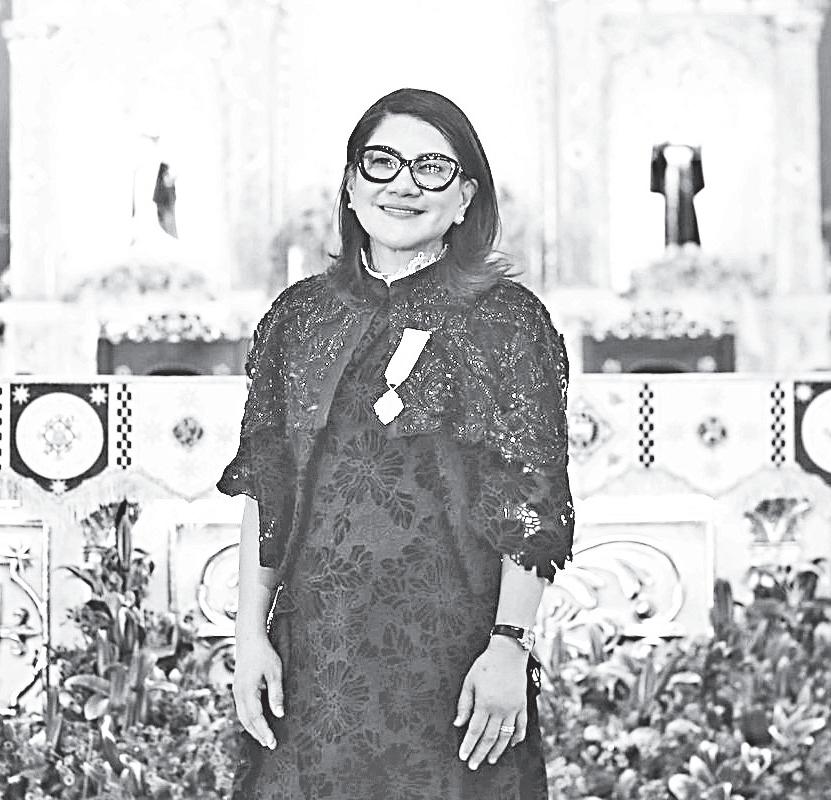
POPE Leo XIV has conferred the “Pro Ecclesia et Pontifice” medal on Our Lady of Manaoag devotee Darlene Zshornack, who received the honor during a Mass at the Minor Basilica of Our Lady of the Rosary of Manaoag in Pangasinan on July 18.
Archbishop Socrates Villegas of LingayenDagupan presided over the Mass, concelebrated by Bishop Rufino Sescon Jr. of Balanga and about 50 priests from various dioceses and religious congregations.
Also in attendance were members of the Missionaries of Charity, the Sisters of the Abandoned Elderly, the Oblates of St. Joseph, seminarians and beneficiaries of Zshornack’s charitable work.
In his homily, the archbishop said gratitude lies at the heart of Christian holiness. “Gratitude is holiness. That is why our Holy Church, our Holy Mother, recognizes with gratitude the generosity of one of her daughters,” Villegas said.
He said the greatest gift God offers the faithful is not a medal but the Body of Christ in the Eucharist, the fullest expression of God’s love and thanksgiving.
He was pastor of Chifeng Cathedral from 2013 to 2019 and later served at Lindong Parish from 2019 to 2021. He was appointed diocesan administrator of Chifeng on Oct. 15, 2021, a responsibility he held until his episcopal appointment.
Dialogue between Rome and Beijing
THE appointment was made through the continuing dialogue over the implementation of the Holy See-China agreement, signed in 2018 to establish a mutually accepted process for selecting bishops.
The appointment of bishops belongs to the pope, while Beijing had for decades regarded papal appointments as interference in China’s internal affairs.
The Holy See and China have not maintained diplomatic relations since 1951, following the establishment of Mao Zedong’s communist government.
Chinese Catholics subsequently became divided between communities registered with the state-controlled Catholic Patriotic Association and underground communities that remained loyal to Rome.
The full text of the 2018 agreement has never been made public. It was renewed every two years until 2024, when the two sides extended it for another four years, through 2028.
Under the terms that have become publicly known, the pope retains final authority over episcopal appointments in China and
can reject candidates proposed by Beijing. The Holy See, for its part, has agreed not to make episcopal appointments without first obtaining the Chinese government’s approval.
Tensions during the papal interregnum
DURING the interregnum between the death of Pope Francis and the election of Pope Leo XIV, Chinese authorities proceeded unilaterally with the selection of two bishops, including one for a jurisdiction already led by a prelate recognized by the Vatican.
On April 28, 2025, Father Ignatius Wu Jianlin was elected auxiliary bishop of Shanghai by state-controlled Church bodies. The following day, Father Francis Li Jianlin was selected to lead Xinxiang in Henan province.
The latter decision caused controversy because the Holy See already recognized Bishop Joseph Zhang Weizhu as the legitimate bishop of that local Church.
Although the selections may have been planned before Francis’ death, their timing attracted attention. AsiaNews reported that the decisions conveyed the Chinese Communist Party’s position that a vacancy in the Apostolic See would not interrupt the operation of the Catholic Church in China.
With Chang’s appointment and episcopal ordination, 15 Catholic bishops have now been ordained under the provisional agreement signed by China and the Holy See during the pontificate of Francis.
Chinese appointments under Pope Leo XIV
THE process leading to Chang’s appointment and ordination took place entirely during the pontificate of Leo XIV, providing another indication that the pope intends to continue the path of dialogue between Rome and Beijing.
Since the beginning of his pontificate, Leo has made several episcopal appointments in China and assigned new responsibilities to bishops who had already been ordained.
On June 11, 2025, the Vatican announced the civil recognition and installation of Bishop Joseph Lin Yuntuan as auxiliary bishop of Fuzhou in Fujian province. Leo had appointed him June 5.
On July 8, 2025, the pope suppressed the dioceses of Xuanhua and Xiwanzi, which Pope Pius XII had established in 1946, and created the new Diocese of Zhangjiakou as a suffragan see of Beijing.
Two months later, on September 10, Father Joseph Wang Zhengui, whom the pope had appointed to lead the new diocese, was ordained a bishop.
Father Ignatius Wu Jianlin was ordained auxiliary bishop of Shanghai on October 15, 2025, after Leo appointed him on August 11.
Father Francis Li Jianlin was ordained to lead the Apostolic Prefecture of Xinxiang on December 5, 2025, following his appointment by the pope on August 11. Victoria Cardiel/EWTN News via CBCP New
“If, in fact, the parties are a biological man and a biological woman, the requirement that marriage be between a man and a woman is, at least, prima facie satisfied,” it said.
Zshornack, a Manila resident who is also devoted to the Black Nazarene in Quiapo Church, said her devotion to Our Lady of Manaoag grew through her faith and inspired her commitment to serving the Church and the poor.
Thanking the pope and the archbishop, she said she regarded the medal not simply as a recognition but as a renewed call to serve God’s people with greater love.
The Zshornack family has supported churches and religious congregations across the Philippines through various charitable projects, including preparations for the April 22 centennial of the canonical coronation of Our Lady of the Rosary of Manaoag.
The Pro Ecclesia et Pontifice medal, Latin for “For the Church and the Pope,” is one of the distinguished papal honors that can be conferred on clergy and laypeople for distinguished service to the Catholic Church.
Pope Leo XIII established the award in 1888 to recognize those who
of his
the
The Commission also rejected the view that the Dapitan City wedding could serve as a precedent for similar marriages.
“Unlike some civil legal systems, the Canon Law does not treat the celebration of one marriage as creating a binding precedent for future cases,” the Commission said. Instead, each proposed marriage is evaluated individually under the universal law of the Church and according to the circumstances of the parties involved. While the Canon Law already provides the Church’s legal framework on marriage, the Commission said any future pastoral guidance would only help pastors apply existing norms consistently and “would not alter the Church’s doctrine on marriage.”
Rather than focusing on a person’s public self-identification, the Commission said the Catholic Church’s law examines whether either party has the legal capacity to contract marriage and assume its essential obligations. It said questions involving a person’s capacity cannot be settled through media reports alone but requires evidence and, when appropriate, the assistance of qualified psychological or psychiatric experts.

New study examines growing interest in Catholic faith
ANEW national study of more than 2,100 participants in the Order of Christian Initiation of Adults (OCIA) across 20 Catholic dioceses in the United States points to a growing interest in the Catholic faith, particularly among young adults seeking truth, meaning and spiritual depth.
Published on June 18 by the Archdiocese of Chicago in collaboration with 19 other dioceses, the survey examined the experiences of 2,127 people who participated in OCIA between February and May 2026.
The dioceses involved reported record levels of participation in adult faith formation programs.
The study found that those entering the Church were motivated primarily by two broad factors: a personal search for goodness, truth, inner peace and purpose, and an attraction to the Catholic Church’s liturgy, teachings and 2,000-year tradition.
Among the respondents, 28 percent said they had no prior religious affiliation before beginning their journey toward the Catholic faith, while others came from Protestant communities or were Catholics completing their sacramental initiation.
Desire to grow in virtue
RESEARCHERS noted that spiritual motivations ranked far above political or social considerations. Seventy-seven percent
of participants cited a desire to grow in virtue, 76 percent sought a deeper understanding of truth, and 72 percent reported a search for greater inner peace. The study also highlighted the growing role of digital evangelisation.
Many respondents credited online resources, such as prayer apps, podcasts, videos and social media content, for helping them explore Catholicism.
At the same time, participants identified several obstacles to entering the Church, especially among members of Generation Z. Common concerns included feeling spiritually unprepared, uncertainty about acceptance within parish communities, and anxiety about participating in the liturgy.
The report concludes that dioceses and parishes should focus on personal accompaniment, clearer pathways for faith exploration, and continued formation after reception into the Church. It also emphasises the importance of creating welcoming communities capable of accompanying those who are taking their first steps in faith.
According to the authors, the findings suggest that many people today are approaching the Catholic Church not primarily through family tradition or marriage, but through a personal search for meaning, truth and a deeper relationship with God.

Editor: Lyn Resurreccion

ASTUDY in selected watersheds of Cebu reported the presence of diverse but threatened anurans (amphibian group of frogs and toads), further highlighting the need to conserve these ecologically important species and their critical habitat.
This was reported in a recently completed comprehensive study, “Diversity, Distribution, and Conservation Status of Anuran Species in Mananga and Kotkot Watersheds, Cebu, Philippines.”
The project was implemented by the Cebu Technological University and supported by the Philippine Council for Agriculture, Aquatic and Natural Resources Research and Development of the Department of Science and Technology (DOST-PCAARRD).
About nine species of anurans were recorded in Mananga Watershed Forest Reserve in Talisay
City, Minglanilla, while eight species were identified in Kotkot Watershed Forest Reserve in Liloan, Compostela.
Among the species is the nearthreatened Philippine wart frog (Limnonectes visayanus Inger, 1954) that is found only in the remaining forests of the islands of Cebu, Negros, Masbate, Panay, and Siquijor.
Another species endemic to the Visayas and Cebu, the Leyte wart frog (Limnonectes leytensis Boettger, 1893), was recorded at the project sites. Besides their limited distribu -

tion and threatened conservation status, the species, along with other anurans, face risks from human-caused disturbances— such as logging, excavation, coal mining, construction, improper waste disposal, agriculture, sand and gravel extraction, and in some areas, consumption for food.
In addition, the sites are reported to be threatened by invasive anuran species, including the South American cane toad (Rhinellamarina Linnaeus, 1758)
and the Malaysian narrow mouth toad (Kaloula pulchra Gray, 1831). These species spread quickly and compete with native species for food and habitat.
To date, the project team has produced baseline distribution maps for monitoring studies and information, education, and communication campaign materials to raise awareness among the local community.
The team is in close coordination with local government units and other stakeholders
War, economic crisis hamper efforts to protect Iran’s rich but endangered wildlife
CAIRO—A few days after the US and Israel launched a war on Iran, Reza Kiamarzi decided to trek into the mountains outside his home city of Isfahan in southern Iran. A veterinarian and researcher on birds of prey, his mission was to find nests of endangered falcons high up in the cliffs.
The bombardment during the war on Iran earlier this year coincided with the breeding season for Iran’s cherished Saker and rednaped Shaheen falcons, some of the fastest flying birds in the world.
Kiamarzi knew of two nests near military bases that had been struck, and he wanted to know if the explosions, vibrations and noise affected birds laying eggs or raising chicks.
“It’s a long climb to the foot of the cliffs. And then we have to rock climb to reach the nests,” Kiamarzi said.
War and a deepening economic crisis are adding further challenges for conservationists trying to preserve Iran’s rich but endangered wildlife.
For years, they have struggled with climate crises that threaten the country’s fragile biodiversity, as well as economic pressures from decades of international sanctions.
Around two and a half times the size of Texas, Iran boasts of an astounding diversity of life in its wide range of climates.
Northern areas along the Caspian Sea are heavily forested and wet, while the Persian Gulf coast is dry and hot. In between, the country straddles two large mountain ranges: the Zagros and Alborz.
Iran lies in a critical corridor and stopover for migratory birds between Eurasia and Africa, lending conservation efforts international importance.
At least 86 animal species in the country are at risk of extinction, including the Asiatic cheetah, Persian fallow deer, brown bear, leopard, black bear, Persian onager, the great bustard and various birds of prey, according to a 2024 report by Iran’s Environment Department.
“It’s a big question how much longer we and other conservation NGOs [nongovernment organization] can keep working. We’re waiting every moment to see what happens,” said Iman Ebrahimi, founder of AvayeBoom, a conservation group based in Isfahan whose name is Persian for “The Earth’s Cry.”
The war gave a shock to Iran’s animal life
KIAMARZI said he succeeded in finding the falcon’s nests, and the birds were still present.

But he is still assessing his findings to determine the impact of the bombing on the falcons.
Smugglers have been the chief cause of declining falcon populations in Iran.
Before the war, Iran’s crashing currency— which has lost over half its value in the past year—spurred an illicit trade in these prized hunting birds, which are sold to Arab Gulf clients paying in valuable foreign currency, he said.
Ironically, in peacetime, military zones have been one of the few areas where falcons can breed safely.
“It’s a secure area no one dares get close to, not poachers and smugglers,” he said.
US-based Iranian wildlife expert Jamshid Parchizadeh says he fears US and Israeli airstrikes targeting military facilities in desert and mountain sites have harmed habitats critical to endangered cheetahs and other predators.
“These strikes in far-flung places are causing habitat degradation. Definitely this causes water and land pollution, soil contamination, destruction of land cover,” he said.
Parchizadeh, an expert on Iran’s large carnivores, studied the habitats and causes behind declining populations of Asiatic cheetahs, Persian leopards and the brown bear before leaving Iran in 2022. He now works at Michigan’s Department of Fisheries and Wildlife.
“Bombing causes wildlife disturbance for the bears, the leopards who live in the mountains—and that animal forever leaves that area from fear,” he said.
Even before the war, habitats were threatened
IRAN’S water-scarce climate is highly fragile, Parchizadeh said. In the past 20 years, Iran’s population has grown from roughly 73 million to over 93 million people, piling further pressure
on scant water sources afflicted by decades of mismanagement and yearslong drought.
With the war, access to key wildlife sites on islands in the Persian Gulf has become all but impossible.
Despite a preliminary deal to end the war, the US and Iran have continued to trade fire around the strategic area, which hosts Iran’s critical oil and energy industries.
“Unfortunately, two of the most important islands of the Persian Gulf for biodiversity are small islands along Iran’s key oil islands,” said AvayeBoom’s Ebrahimi.
He pointed out there were reports an oil slick reached at least one site on the tiny uninhabited island of Shidvar, a critical breeding site for turtles and tens of thousands of birds.
Iran has an active conservation movement
HISTORICALLY Iran’s culture had a deep connection with its wildlife. Carpet-weaving and traditional arts often featured animal motifs like the Persian lion, which has not been seen in the country in over 70 years.
Iran was one of the first countries in the world to form an environmental protection agency and established its Environment Department a year after the US opened its own agency in 1970.
But restrictions on development in protected areas—which are typically in poorer, rural areas—have often spurred tensions with locals.
The Arjan protected area, a vast territory encompassing important wetlands in the southern province of Fars, was set aside in the 1970s for a project to reintroduce the Persian lion into the wild.
But authorities abandoned the project
after the 1979 Islamic Revolution. Residents of the village of Dasht-e Arjan complained that protection status was hampering the local economy, Ebrahimi said.
They are trying to rebuild the public’s links to wildlife
FOUR years ago, AvayeBoom began a campaign to raise wildlife awareness among residents around Arjan, holding workshops and other activities with the community.
For the face of the campaign, it chose the ruddy shelduck, a water fowl with vivid orange plumage that’s well known among residents. A mural of the bird was painted in the street of a main town.
After the ceasefire in April, members of AvayeBoom returned to the village. They concluded that the campaign, including workshops and a street mural of the shelduck, had greatly increased recognition of the distinct bird and improved general environmental awareness.
“Despite the war, the majority of people considered the environment, the nearby wetlands they have and the wildlife there very important to them,” said Fateme Kazemi, the CEO of AvayeBoom.
But security and the economy are weighing on them
WAVES of anti-government protests in recent years and now the war have also led to tighter security restrictions. A wildlife photographer who studies birdlife on the Persian Gulf coast said she had stopped photographing out of security concerns in recent months.
“One of the real dangers for protecting the environment is people losing their connection with nature,”she said, speaking on the condition of anonymity out of security fears. She said she plans to return to photographing soon, if the US and Iran don’t return to all-out war.
AvayeBoom, founded more than a decade ago in Isfahan, has carried out projects ranging across Iran’s mountains, forests, deserts and vast wetlands.
But it relies on local funders who are being squeezed by Iran’s currency crisis. Sanctions effectively bar Iranian NGOs from taking funding from international donors, Ebrahimi said.
“The first thing we are worried about is that the economic situation will make protecting the environment not a priority,” he said.
But despite sanctions, security restrictions and war, he said, “our doors haven’t closed and we’ve continued with our work.” Amir-Hussein Radjy/Associated Press
to push for the conservation of the threatened species and their habitats by passing municipal ordinances.
Online information indicate that anurans are a diverse order of tailless amphibians encompassing over 7,700 species of frogs and toads, making up roughly 90 percent of all living amphibians. They range from the tiny thumbnail-sized cricket frog to the massive American bullfrog and play vital roles as ecosystem indicators.
The Philippines boasts of a high rate of endemism among its anurans. Local ecosystems—such as the Mananga and Kotkot watersheds in Cebu or riverine areas in Mindanao—support diverse populations of both native and endemic frogs.
Because of their highly permeable skin, anurans are incredibly vulnerable to water pollution, habitat loss, and climate change, the online information claims.
The study report was discussed during a recent project terminal review by project leader was Dr. Archiebald B. Malaki with project staff Dr. Esperanza Del Fierro and Ms. Jemaima Casas. The monitoring team from the Forestry and Environment Research Division of DOSTPCAARRD was headed by Director Dalisay E. Cabral, with Dr. Christine D. Santiago, S&T Program Manager for Biodiversity; and John Benrich M. Zuniga, FERD Program Monitoring and Evaluation section head. John Benrich M. Zuniga and Christine D. Santiago/S&T Media Services
Report reveals gaps in PHL extreme heat response; calls for passage of CLIMA Bill
GREENPEACE Philippines and the National Anti-Poverty CommissionVictims of Disasters and Calamities (NAPC-VDC) jointly launched “Here Comes the Sun: Climate Justice-based Recommendations for Protecting Communities from Extreme Heat” on Tuesday.
The new report identifies critical policy and governance gaps hindering the country’s response to extreme heat, and proposes pathways toward climate accountability, including but not limited to the immediate passage of House Bill 4420, or the Climate Accountability Bill (CLIMA Bill).1
The report’s findings, gathered through seven focus group discussions conducted in Navotas, Bataan, Laguna, Siargao, Eastern Samar, Tacloban City, and Cadiz City, were presented during a media forum in Quezon City.
It features a case study of 71 fisherfolk across Luzon, Visayas, and Mindanao. Fisherfolk consistently rank among the poorest of the 14 basic sectors, with a poverty incidence of around 27.4 percent to 30.6 percent, nearly double than the national baseline of 15.1 percent, according to the Philippine Statistics Authority.
The analysis highlights how worsening extreme heat is increasingly threatening the health, livelihoods, and overall wellbeing of fishing communities.
While the Philippine government has existing policies and programs that include heat as one of their triggers, the report finds that it lacks an overarching policy that addresses heat stress as a holistic phenomenon.
The report also notes that the country’s disaster response and climate financing policy architecture related to heat stress remains fragmented across sectors, limiting the government’s ability to respond effectively.
Critical gaps likewise persist in treating heat stress as a climate justice issue that requires coordinated, adequately funded responses.
The report also raises the important question of who should pay for the rising costs of heat-related loss and damage.
Currently, much of the financial burden still falls on the public and the Philippine government through growing, increasing the risk of worsening public debt, while allowing the world’s biggest climate polluters to evade accountability.
As the Philippines faces increasingly frequent and intense extreme heat driven by climate change, along with the effects of the ongoing El Niño phenomenon, the report calls on the government to urgently:
Fulfill its obligations under the International Court of Justice Advisory Opinion on the responsibility of states in respect of climate change. This includes the national government to urgently head the recently filed House Resolution 1074, developing a scientifically defined criteria for declaring a state of imminent disaster, and President Ferdinand Marcos Jr. to certify as urgent a climate-lensed Magna Carta of Workers in the Informal Economy Bill and CLIMA Bill to protect vulnerable sectors, with the latter aiming to make climate polluters pay.
Revamp sectoral integration mechanisms beyond “mainstreaming,” toward integrated governance mechanisms for addressing extreme heat.
Recenter human rights and human wellbeing as the primary organizing principles in sectoral responses to heat stress.
Pursue climate finance grounded in justice and reparations to address heat stress, ensuring that those most responsible for the climate crisis bear the costs of climate impacts.
Some Turkish politicians criticized a governor for wearing cycling tights during a public event promoting the sport and for posting the photos on social media.

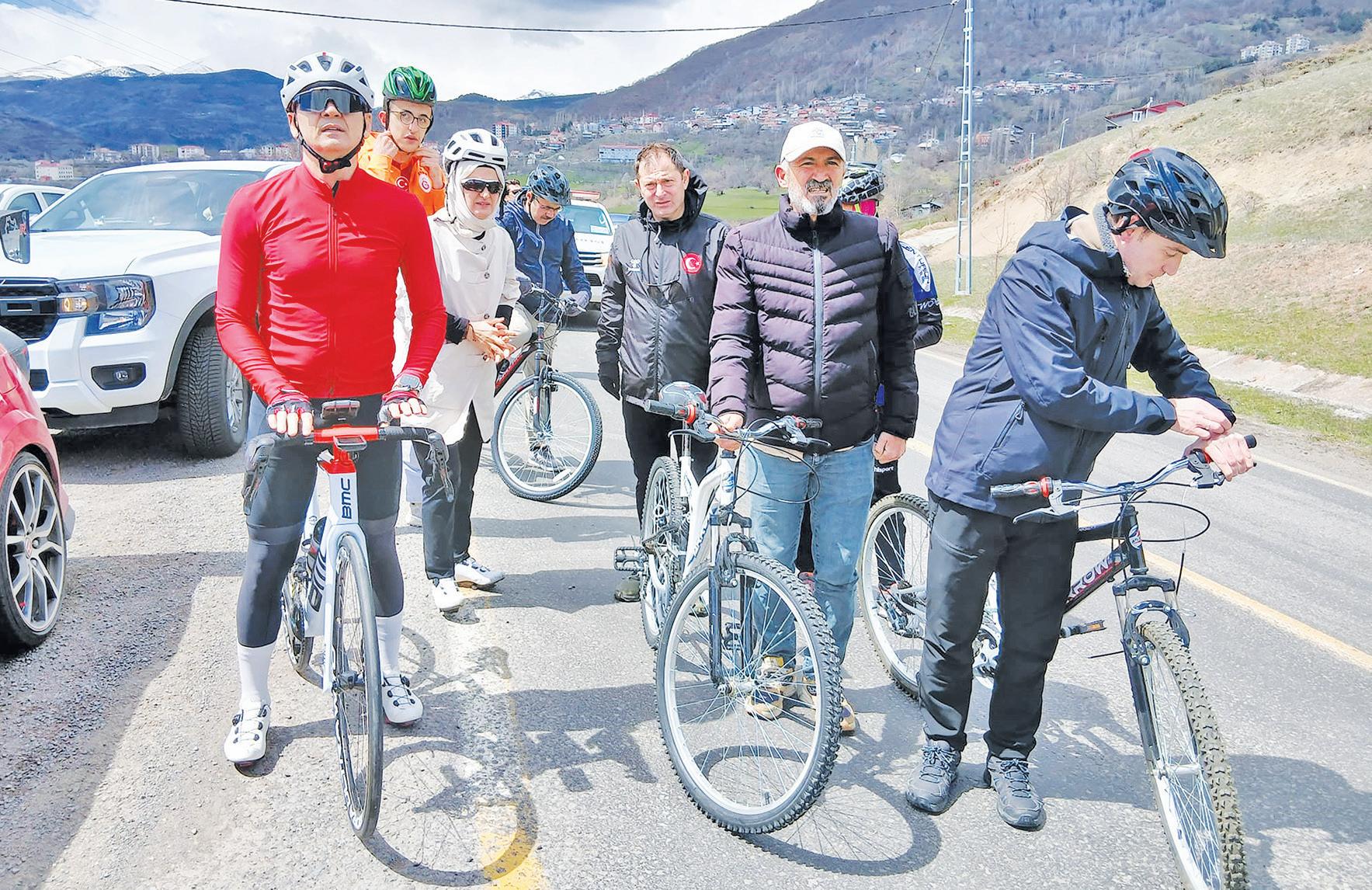
ANKARA, Turkey—A cycling-enthusiast governor rode into an unexpected political storm in Turkey when he found himself sacked after photos of him in snug cycling shorts went viral.
He has since also become the center of a campaign pressing for his return to office amid an outpouring of affection.
Mehmet Fatih Cicekli, the governor of Ardahan province in eastern Turkey, was removed from his post on July 17 by a presidential decree signed by President Recep Tayyip Erdogan.
While no reason was given for his dismissal, it came after some Turkish politicians criticized him for wearing cycling tights during a public event promoting the sport and for posting the photos on social media.
Inan Akgun Alp, a member of the main opposition

Republican People’s Party, accused Cicekli of allegedly prioritizing social media over official duties, adding the tight attire was inappropriate for a governor.
“He goes around in tights, spends all day cycling, with bodyguards in front of him, cycling in tights until the evening,” the T-24 news website quoted Alp as saying during a parliamentary debate last week. “A governor cannot wander around the city center like this.”
Samil Tayyar, a former legislator from Erdogan’s ruling party, which has roots in Turkey’s Islamic movement, said the attire was contrary to cultural norms, especially in a conservative, traditional province like Ardahan. He argued that other politicians wore sweatpants while cycling.
“People can wear whatever they want in their private lives, but a governor cannot visit the public in tights while on duty; it does not align with the seriousness of the state. In a traditional social setting like Ardahan, it is completely unacceptable,” Tayyar wrote on X.
Cicekli, who was appointed governor in January by Erdogan, defended himself by arguing that what he wore was normal cycling attire.
“[We will] keep pedaling. I am an athlete who practices sailing, rowing and cycling. The clothes I’m
DAY 2 I LEFT off last week’s article with the first round of The Open Championship in the books. Jackson Suber was in the lead, followed by a host of players. Day 2 saw a better round for crowd favourite Rory McIlroy. He followed up his first round +2 with a -3 day two to get to red numbers. The second day however belonged to two players—Lucas Herbert and Sam Burns. Both proved that great play makes it possible to shoot record scores, with the two scoring -8 62s. Bryson DeChambeau played another solid round to back-up his opening 67 with another under par round of 66. He finished the second round just shy of the lead…until he was informed of a penalty he was being assessed.
Bryson being Bryson, he wasn’t letting this go without a fight and a whole lot of drama. The penalty stems from his perceived improvement of his lie when his ball went into the deep stuff at hole 5. While looking at his lie and building a stance, he was deemed to have improved his lie when he trampled on tall grass behind his ball. This improved his swing path, “moving” the tall grass which would have been a hindrance to making a normal backswing. Opinions are mixed but a ruling was made and Bryson really had no choice.
Fox who came out firing. He recorded his own record-tying 62 and shot up the leaderboard.
Local darling Tommy Fleetwood plays another solid round and gets near the lead. Sam Burns takes outright lead with steady play, going 4-under in the front nine.
It seems like each day, someone can go low.
This shows the depth of the fields in professional golf nowadays. Consistency separates top players from rest but talent-wise, no one is dominating. As a result, everyone knows that with four good rounds, anyone has a chance to win. Gone are the days when top dogs can intimidate whole fields.
FINAL ROUND
SAM BURNS started at -10, two shots clear of Ryan Fox and Si Woo Kim. The chasing pack made moves early, led by Cam Young shooting a 5-under 29 on Royal Birkdale’s opening nine. As in previous rounds, the course played tough but scoreable. There were a number of record 62s, with frontrunners Burns and Fox both recording their own 62s in previous rounds. In my opinion, links golf is how the game was really meant to be played. Great rounds are rewarded, while sloppy play gets penalized.
The course plays difficult but low scores can still be had. Unlike some US Opens where growing the rough and baking out greens ‘til they’re rock hard is supposed to be a source of pride for being the “toughest test,” Open
wearing are sportswear,” T-24 quoted him as saying.
A petition campaign to try and get him reinstated has gathered more than 10,000 signatures, with supporters arguing that the governor was engaged in important work in Ardahan, promoting sports, youth activities and bicycle tourism, the opposition-leaning Halk TV reported.
In an emotional farewell to his supporters in Ardahan on Wednesday, Cicekli said: “I believe that I have not let down those who vouched for me and stood by me throughout my journey until now. I believe that this is the greatest honor of all.”
As he left Ardahan, a province that borders both Armenia and Georgia, local cyclists accompanied his vehicle to send him off as a show of support, Halk TV reported.
Nacho Sánchez Amor, a member of the European Parliament from Spain who serves as the rapporteur on Turkey, expressed support for Cicekli and suggested Alp was promoting the ruling party’s “Islamist conservative agenda.” AP
NEW YORK—Two-time defending champion Aryna Sabalenka and Wimbledon winner Jannik Sinner lead the fields for the US Open that begins next month.
The US Tennis Association announced the direct entry lists for the final Grand Slam tournament of the season—based on the July 20 rankings on the Women’s Tennis Association (WTA) and Association of Tennis Professionals (ATP) Tours, the cutoff was No. 102 for the women and No. 101 for the men. Alex Eala was also officially confirmed and is ranked No. 29, which is one rung down her highest WTA ranking which she achieved after reaching the fourth round of the Wimbledon Championships. It marks Eala’s second straight US Open appearance—she made history last year by beating 14th seed Clara Tauson of Denmark, 6-3, 2-6, 7-6 (13-11), in the first round, but lost in the second round to Spain’s Cristina Busca, 4-6, 3-6. Sabalenka tops the women’s rankings and will arrive in Flushing Meadows trying to become the first woman to win three straight US Open titles since Serena Williams from 2012-14.
Sinner will be trying to regain the title that Carlos
Alcaraz took from the 2024 champion when they met in last year’s final. The top-ranked Italian is coming off his fifth major championship, when he beat French Open champion Alexander Zverev in the Wimbledon final.
Alcaraz, who has missed the last two majors because of a wrist injury but hopes to return during the North American hard-court swing, is ranked No. 3 and entered in the field.
The US led the way with 14 men and 14 women earning direct entry. No. 102 Anastasia Zakharova was the last woman and Filip Misolic, who used a protected ranking at No. 101, rounded out the men’s list. Misolic was one of eight players (five women, three men) to use a special or protected ranking. The remainder of the 128-player fields will be filled through wild cards given by the US Tennis Association— Williams would be expected to get one if healthy and planning to play after the 44-year-old returned to tennis but injured her knee in a firstround loss at Wimbledon.
WTA tests genes for LA28 THE WTA is introducing oneoff mandatory gene-testing for all players effective last week a requirement to compete at the 2028 Los Angeles Olympics. The WTA updated its women’s eligibility policy to include gender screening “based on biological sex” last week “to preserve the integrity of women’s professional tennis and maintain fair competition conditions for all players.” The new policy



Championships are fairer tests where birdies can be made as are doubles and triples. I also like how the R&A keeps courses looking natural—brown when dry, green when it’s been raining before Open week. While the perfectly manicured surroundings of Augusta National is great on TV, we all know it’s artificial, like an airbrushed, edited, touched-up version of a golf course. Au naturel Open venues are a refreshing break from picture perfect courses. But going back to the golf, I think the most difficult thing in golf is keeping a lead. The mentality shifts from trying to score low to managing your round. Instead of attacking, leaders often get defensive, playing “commercial” shots, settling for pars. Sam Burns isn’t new to being in the driver’s seat on the final day of a major. At the 2025 US Open, he was leading until a bad break and and even worse call from officials caused his round to unravel and gave way to JJ Spaun. This time with the lead at Royal Birkdale, he started with a steady par at the first and a tidy birdie at the second. A good

start. But just after back-to-back bogeys on 4 and 5, Burns finds himself not only caught, but replaced by Korean Si Woo Kim at the top. By the home 9, it was Si Woo Kim on top at 10-under. Just a shot back and at the clubhouse was Cam Young after a 64 even with an unfortunate bogey on his 72nd hole. At another major venue, sitting at the clubhouse one shot back would mean the end of the week. But crazier things have happened at majors and bogeys and worse are scattered all over Royal Birkdale.
As it turned out, that was exactly what happened. After Cameron Young completed his round, Si Woo Kim slowly made mistakes one after the other and lost the lead, and then some. Sam Burns’ efforts just wouldn’t get repaid. Burns wasn’t hitting terrible shots. But his body language didn’t convey confidence or willingness to claw back. He looked dejected most of the day. He would have chances but just couldn’t seem to get over losing the lead early. Ryan Fox, the gritty Kiwi was the only one left to mount a charge. Fox isn’t one to back down and it showed. After narrowly missing the green on the par 3 14th, his ball ended up by the wall of the greenside pot bunker. With no stance and swing, he had to play sideways and back. With nerves of steel, he managed to save bogey and promptly birdied the 16th to get the lost shot back. On the par five 17th, tied for the lead, he again had a terrible break when his lay-up iron off the tee again trickled into a fairway bunker preventing him to go for the green. But he still had a makeable birdie that just slipped by.
Needing a birdie on the last to win or at least a par to force a playoff, Fox threaded his drive down the narrow landing area and had a great chance to stick his approach shot close. Burns, just one back of clubhouse


What science loses when T. rex becomes a trophy
JULY 26, 2026 | soundstrip.businessmirror@gmail.com
Story by Jingo Zapata
If life is full of surprises, this one is proof. Shortly after the members of Barbie’s Cradle announced their “One Night Only” concert at the Music Museum in a media conference — where the band also previewed its new single, “Emergency” — bassist Rommel dela Cruz was forced to beg off from joining the show on Aug. 1 to undergo a medical procedure.
He’s fine now and recovering, though there’s no word yet if he can play after all, or somebody else will take his place.
“Emergency” is a lovely tune, nonetheless, written by guitarist Kakoy Legaspi who sings about youthful existential crisis in counterpoint with Barbie Almalbis.
For Barbie — looking young and beautiful as ever — becoming a musician seemed destined.
In a past interview, she said: “Growing up as the only girl among cousins in my generation, I

Publisher :
T. Anthony C. Cabangon
Editor-In-Chief :
Lourdes M. Fernandez
Aldwin M. Tolosa
Concept :
Y2Z Editor :
SoundStrip Editor : Group Creative Director : Graphic Designers :
Jt Nisay
Edwin P. Sallan
Eduardo A. Davad
Chow Jarlego
Niggel Figueroa
Contributing Writers :
Tony M. Maghirang
Rick Olivares
Jingo Zapata
Reine Juvierre S. Alberto
John Eiron R. Francisco
Patrick Villanueva
Ana Zoe V. Davad
Justine Xyrah Garcia
Ginger Franz S. Ocampo
Trixzy Leigh Bonotan
Bless Aubrey Ogerio
Photographers :
Bernard P. Testa
Nonie Reyes
Y2Z & SOUNDSTRIP are published and distributed free every Sunday by the Philippine Business Daily Mirror Publishing Inc. as a project of the
The Philippine Business Mirror Publishing, Inc., with offices on the 3rd Floor of Dominga Building III 2113 Chino Roces Avenue corner
Dela Rosa Street, Makati City, Philippines. Tel. Nos. (Editorial) 817-9467; 813-0725.
Fax line: 813-7025
Advertising Sales: 893-2019; 817-1351,817-2807.
Circulation: 893-1662; 814-0134 to 36. www.businessmirror.com.ph
had a lot of alone time. So, my mom bought me an acoustic guitar. She and my lola taught me how to play it. Since I had no playmates, I would play the guitar every day. When I became a musician, my cousins wanted to be in my band.”
There’s no insecurity in being in the predominantly male world of rock ’n’ roll: “For the past 25 years, I’ve been in bands whose male members never treated me differently for being a woman. Although there’s still more men than women in the music industry, it’s no longer just about gender. It’s more about whether people like you as a musician, as a creative. Back in college, there were probably only three girls in the entire university who brought a guitar. But now, goto a mall and you’ll see a girl with her guitar.”
Barbie’s Cradle first came into the scene in 1998 — the tail end of the local alternative music boom.
At the presscon, Barbie, Rommel, Kakoy, and drummer Wendell Garcia recalled the artists they listened to before hooking up to play as a band.
“Cynthia Alexander, Sugar Hiccup, among other artists,” said Barbie. “There was depth in their music.”
“The Dawn concert at Claret in 1989. I told myself this is what I want to do,” said Rommel.
“Yano, Eraserheads, Wolfgang, Razorback, Teeth, Cynthia Alexander, Imago, Kiko Machine,” recounted Kakoy.
“I was trained with [Perf de Castro’s] TriAxis, [I also listened to] blues … Sampaguita, Indio I, Wolfgang… Side A, and The Dawn,” said Wendell.
In hindsight, we asked, was breaking up in 2005 a blessing in disguise — since each member went on to pursue successful individual careers?
Barbie, for instance, released a solo album, 2006’s “Parade,” and is still an active performing artist to this day while raising a family with husband Martin Honasan.
Rommel played for many years with Freestyle while doing session work with various artists.
Kakoi was once a member of Rivermaya and had also played with Bamboo. He’s a sought-after session musician and is currently a member of the band Dong Abay Music Organization.
Wendell joined Ely Buendia’s band Pupil, and is likewise a regular session artist for various acts. He’s currently a member of the group Bras Pas Pas Pas Pas.
“Music was our bond, we were then in our 20s, spent a lot of time in the studio, and treated each other like brothers and a sister. We may have our own preoccupations now, but we never really


broke up,” said Barbie. “Every time there’s an opportunity to play, we do it, though it’s seldom that we are complete. So now, we’re picking up where we left off.”
Wendell agreed, saying they didn’t really disband, that playing in other bands was a natural thing, a process they went through as part of growth. “Everything opened up for us,” he said.
For Rommel, the concert’s goal was there’s a new cycle. “We believe in the idea of getting back to create music. I look at it as a natural flow of things.”
While awaiting his return, it’s all systems go for the concert. Barbie’s Cradle performs Aug. 1 at the Music Museum.

Alt Rock band Crimson Daze releases debut album 30 years later
Suddenly, the 1990s are in vogue and making a comeback. Music especially. And the Philippines isn’t lagging behind the return of Oasis, Pulp, and Deftones among others. The Eraserheads, Wolfgang, and Teeth to name also but a few have made huge splashes in their return.
And there too are those bands from the 90s that after doing their club circuit have released their debut albums after some 30 years.
In recent years, we saw shoegaze band Sonnet 58 put out their debut album, Crossing Oceans. And early this 2026, New Wavers Crimson Daze have released their album Burning Cold to celebrate the band’s 30thAnniversary.
The original four-piece band – Jon Malamug on vocals and guitar, Ryan Nachura on guitar and vocals, Raymund Marcelo on bass and vocals, and Nikko Go on drums – played the club circuit (Brannigan’s in Greenhills and Asylum along West Avenue among others) with a mixture of original pieces and New Wave covers.
However, in one of life’s many twists and turns, Marcelo migrated to the United States while Nachura went to Canada, and the band was no
more. At least they thought so until 2025 when Marcelo and Jane Vega founded Common Denominator, Inc. (CDI) that was built around the idea of supporting music, culture, and creative communities.
“Our initial project was Record Rampage, a vinyl and live performance event that we held in Megamall last year,” related Marcelo.
Among the bands that performed were the Republicats, Karilyo, Sonorik Order, and in what was supposed to be a one-off reunion, Crimson Daze.
“But the reunion sparked something in the band as we were well-received,” shared Marcelo. “It is because of that reception and us seeing the growth of vinyl once more in the Philippines that we decided to put out our old songs.”
CDI provided the platform, support, resources, and production to
fully realize the old songs and finish old unused ones into an album.”
The old tracks, recorded at Shinji Tanaka’s Sound Creation Studios back in 2005 were pulled out. With the Republicats’ Renmin Nadela producing, the old songs were polished and the new tracks finished at Polysonic Studio last year.
Burning Cold with its nine tracks under the CDI label, was pressed in the US and released this past January. Despite a limited run of 200 copies, the album has almost sold out.
“I think that further gave us belief that Crimson Daze has a second life,” pointed out Marcelo.
The current line-up seems familiar and yet different. The original quartet remain but have added two new members in Melvin Sotto on keyboards and Allan Figueroa on guitars.
And there are plans for more new material and new shows.
“Sometimes, songs take years to be completed with opportunities arriving later than expected,” summed up Marcelo. “And sometimes, all it takes is one person or a company like CDI to believe in us and bring those songs to life.”
Copies of Crimson Daze’s Burning Cold can be purchased through the Facebook pages of Raymund Marcelo and Jane Vega.




OFFSHORE Music, an independent record label founded by Ely Buendia, has officially opened pre-orders for the repress of the Eraserheads’ ULTRAELECTROMAGNETICPOP! The 25th Anniversary Edition on premium white vinyl. The pre-order will run until August 1, 2026, with exclusive merchandise bundles also available via this link: bit.ly/ultrawhitevinyl
The new pressing is produced by Diggers Factory in France and mastered by the legendary master engineer Bernie Grundman. This reissue is to ensure an audiophilegrade listening experience while preserving the timeless sound of OPM’s most celebrated debut album of all time. Unlike the original anniversary pressing, which was limited to 2,500 copies and quickly became a sought-after collector’s item, the repressed version aims to make the album more accessible to the fans who were unable to secure a copy the first time around.
According to Offshore Music General Manager Audry Dionisio, the decision was made because of the high commercial demand and a desire to reward longtime supporters of the Eraserheads.
“There were only 2,500 copies printed in the first run,
and sadly because of the limited nature of the release, it prompted scalpers to resell it at ridiculous prices, which then alienated the true fans of the album,” Dionisio shares. “This time around, we wanted to give everybody a chance to own the album at a more affordable price. The timing couldn’t be more perfect since Offshore is celebrating its tenth-year anniversary. It’s our gift to the fans.”
More than three decades after its release, ULTRAELECTROMAGNETICPOP! continues to occupy a singular place in Pinoy pop culture. Its songs have become anthems of the everyday Filipino, with its rawness and enduring appeal resonating from one generation to another. To date, the album has sold more than 300,000 copies and was certified sextuple platinum (6x) by the Philippines Association of the Recording Industry (PARI).
For collectors still considering whether to place an order, Dionisio emphasizes that this edition represents far more than another repress or reprint. “This time it’s released on white vinyl. It’s more affordable, but more importantly, it’s an album you should own and pass on to your kids. Compared to the first release, this repressing is our gift to those who weren’t able to grab the first one.”
By Kristi Curry Rogers The Conversation
On July 14, 2026, “Gus,” one of the most complete specimens of Tyrannosaurus rex, went to an as yet unidentified buyer for US$50.1 million.
The auction at Sotheby’s set a record for most valuable fossil ever sold. Another dinosaur has entered the luxury collectibles market, a reminder that even Earth’s deepest history can be sold to the highest bidder.
To paleontologists like me, however, a fossil like “Gus”–excavated from the Hell Creek Formation in South Dakota over three years starting in 2021 by commercial collector Thomas Heitkamp and his team–is not a trophy or a work of art. It is an irreplaceable scientific archive. Fossils preserve evidence of evolution, extinction, growth, disease, injury and ancient ecosystems. They are finite, non-substitutable records of life’s history on Earth.
Science depends on independent verification of claims and healthy debate. Researchers must be able to revisit specimens, test earlier conclusions and ask new questions.
But once a scientifically important fossil enters a private collection, access for researchers is no longer guaranteed. Collectors typically sequester their fossils in their homes. Even when privately owned specimens are loaned to museums, the owners can change their minds, ending access at any time. This issue is especially of note when it comes to Tyrannosaurus rex—a 2025 study found that while there were 61 T. rex fossils in public trusts at that time, 71 were privately held.
That is why the Society of Vertebrate Paleontology, of which I’m a long-term member and president-elect, has long argued that scientifically significant vertebrate fossils belong in the public trust, curated in museums and universities that preserve them permanently, make them available for research and share them with the public.
Finding a fossil SUPPORTERS of commercial fossil sales often argue that without sales to private collectors, specimens like “Gus” would remain buried or erode away. They’re right about one thing: Discovery matters. Many extraordinary fossils have been found by ranchers, hikers, amateur collectors and commercial excavators. Paleontology is

“TO
accessible to everyone who has an eye for observing nature–you don’t need to be an expert with academic credentials to make an important discovery.
But discovery is only the beginning. A fossil’s scientific value depends on careful documentation of where it was found, the rocks surrounding it, and the plants and animals preserved alongside it. Those details allow scientists to reconstruct ancient ecosystems, understand how an animal lived and died, and interpret how its remains became fossilized. When that contextual information is incomplete or lost, much of the fossil’s scientific value is lost as well.
Yet, even discovery, excavation and publication barely scratch the surface of a fossil’s scientific importance. The greatest scientific value of a specimen often comes decades later, when researchers ask new questions and apply new technologies that earlier generations never imagined. A specimen that seems fully studied today may yield surprising new information tomorrow, but only if it is still available for study.
CONSIDER the iconic dinosaurs, including T. rex, Triceratops, Diplodocus and Stegosaurus, first collected more than a century ago. Early paleontologists could describe their shapes but had no way to dig deeper by peering inside the bones. Because those specimens were preserved in museum collections, later generations could revisit them with technologies that didn’t exist when they were discovered.
Paleontologist Larry Witmer and his collaborators at Ohio University started using CT imaging 20 years ago to reconstruct the internal anatomy of historic dinosaur fossils without damaging them, based on how X-rays travel through specimens. Brain cavities, inner ears, air spaces, nerves and blood vessels became visible for the first
time, revealing how dinosaurs balanced, heard, smelled and perceived their world.
Henry Fricke, Thomas Cullen and other geochemists have used isotopic signatures preserved in fossil teeth and eggshells to reconstruct dinosaur diets, migration patterns and body temperatures. This research has revealed how dinosaurs lived: what they ate, how they moved through ancient landscapes, and even how warm their bodies were.
More recently, molecular paleontologist Jasmina Wiemann and her collaborators have identified chemical traces preserved in fossil bone, eggshell and skin that reveal aspects of dinosaur biology unimaginable even a generation ago. Until now, paleontologists had no way to know details about metabolic rates and reproduction or the colors of skin, feathers and eggs.
continue to examine the original specimens.
Of course, sometimes dinosaur fossils are rescued from obscurity through purchase and immediate deposition or donation to natural history museums. Some of the world’s most important dinosaur fossils are accessible today because individuals, companies or organizations with the means to acquire extraordinary specimens recognized that they belong where scientists can continue to study them and where future generations can learn from them.
Purchasing a fossil in order to place it permanently in the public trust is fundamentally different from acquiring it as a private collectible: One expands access, the other leaves access uncertain.
‘Dinosaurs belong to our shared natural heritage.’
In my own research, I use microscopes to uncover the hidden stories preserved inside dinosaur bones and teeth. Thin sections of fossil bones reveal that dinosaurs grew more like mammals and birds than like oversized reptiles. Microscopic modifications to bones capture traces of ancient scavenging, and tiny signatures deep inside baby dinosaur bones indicate the moment of hatching.
None of these discoveries would have been possible if the original fossils had vanished into inaccessible private collections.
Shared natural heritage, on the auction block
FOSSILS are not static objects whose scientific value is exhausted once they are described. Their value grows as science advances, but only if future researchers can

But as fossil prices rise into the millions, museums increasingly cannot compete. The most significant fossils are no longer reliably entering public collections. Instead, they are becoming luxury assets whose market value supersedes their scientific value.
Dinosaurs belong to our shared natural heritage. They inspire wonder because they connect all of us to a world unimaginably older than our own. For me, the question raised by auctions like the one on July 14 of “Gus” is not who can afford to own these relics of the past. It is whether future generations have the chance to study and learn from them.
n The author is a DeWitt Wallace Professor of Biology and Geology at Macalester College and presidentelect of the Society of Vertebrate Paleontology.
n Cover photo by Ernesto Samaniego on Unsplash
By Anne Ruth Dela Cruz Photos by Bernard Testa
FOR office workers, lunchtime can be surprisingly complicated. One colleague craves Japanese food. Another wants Filipino comfort food. Someone settles for coffee while another insists on sushi after work.
At The Split in Bonifacio Global City, nobody has to compromise.
That everyday dilemma inspired one of the newest concepts from Raintree Hospitality Group— a dining destination where four distinct brands share one roof, allowing diners to satisfy different cravings without leaving the same table.
For Martin Wisniewski, Vice President of Raintree Hospitality Group, The Split is more than an innovative restaurant. It is his answer to a much bigger question: How do restaurants remain relevant when the way people work, socialize and dine has fundamentally changed?
“We really had to rethink everything,” Wisniewski says.
From two to one THE restaurant occupies what was once home to two Japanese dining concepts. Before the pandemic, the formula worked. Then Covid-19 reshaped not only the hospitality industry but also the rhythm of office life. Hybrid work replaced the predictable lunch and dinner crowds that restaurants once depended on.
“The building changed,” he explains. “People aren’t here every day anymore. We had to create something that reflected how people actually live and work today.”
The response was a restaurant designed around flexibility. Mornings welcome coffee drinkers and pastry lovers. Lunchtime caters to office workers looking for quality meals at reasonable prices. Evenings transform the space into a lively destination for cocktails, sushi, trivia nights and community events.
“The Split,” Wisniewski says, “is split concepts, split personalities and split dayparts.”
That philosophy becomes evident the moment the food arrives.
Four brands RATHER than limiting diners to one cuisine, The Split brings together four Raintree brands— Providore Bakery & Café, Friends & Family Upside Down, Saboten Express and Chotto Matte—allowing guests to mix and match according to their mood.
Our table quickly became proof of the concept. The refreshing It’s Giving Violet, made with strawberry purée, hibiscus syrup, lime juice and blue pea gulaman, opened the meal alongside the unexpectedly smooth Dirty Earl, a blend of Earl Grey tea and espresso.
Japanese favorites soon followed, from Chotto Matte’s Sizzling Salmon Aburi Cheezu to Saboten Express’ Tenderloin Katsu Set and Truffled US Steak Don. Across the table, Friends & Family Upside Down offered playful Filipino creations like the Crispy Salt and Vinegar Bagnet and Pansplit US Beef Spicy Mala, proving that familiar comfort food can still surprise.
Dessert was equally memorable. The Famous Buko Polvoron Pie delivered a nostalgic finish, while the creamy Thai Milk Tres Leches Cake rounded out a meal that celebrated variety without sacrificing quality.
Freedom of choice
MORE than the dishes themselves, what stood out was the freedom
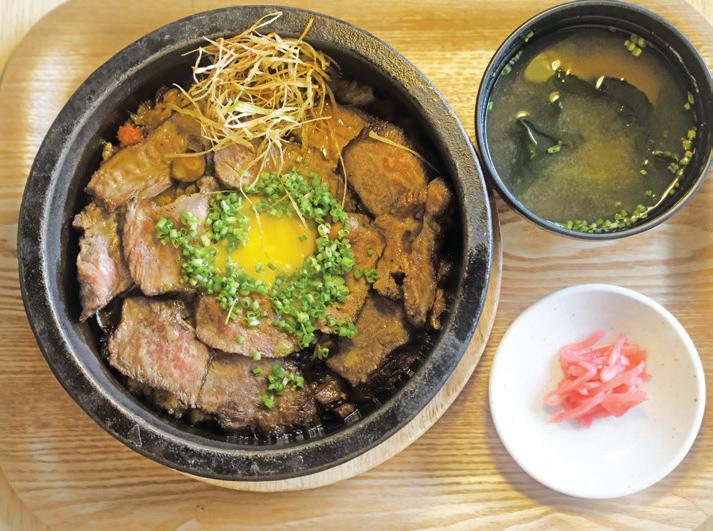
they represented.
No one had to negotiate where to eat. Japanese specialties comfortably shared the table with Filipino comfort food, while coffee naturally gave way to cocktails and dessert.
While the food impresses, Wisniewski remains more fascinated by people than by recipes.
Throughout the conversation, he speaks less about ingredients than about changing behavior. Of-




fice workers now rotate schedules instead of reporting daily. Younger diners discover restaurants through TikTok trends that can disappear as quickly as they emerge. Many now prefer one well-crafted cocktail or artisanal beer over a night of excess.
“The trends move so much faster now,” he says. “Before, you could have a trend that lasted six months or even a year. Today it feels like something changes every week.”

For restaurant operators, staying relevant means constantly adapting. Menus evolve more frequently, limited-time offerings appear and disappear, and customer preferences shift almost overnight. Yet Wisniewski believes growth should never come at the expense of identity.
No to overexpansion
HE points to Raintree’s acclaimed Farmer’s Table in Tagaytay as an example. Guests have long asked why it has never been replicated elsewhere. His answer is simple: much of its charm comes from its surroundings—the cool Tagaytay air, lush gardens and relaxed atmosphere. Remove those elements and the experience becomes something entirely different.
“If you overly expand,” he says, “you can ruin your own brand.”
That same philosophy explains why The Split has yet to be duplicated despite growing interest from prospective partners. Designed specifically for one of Metro Manila’s busiest business districts, it


reflects the changing rhythms of urban life.
More importantly, Wisniewski hopes it becomes what many cities increasingly lack—a “third place,” somewhere people can gather outside home and work. Trivia nights, vintage markets, sip-and-paint sessions, swing dancing and other community activities are all part of that vision.
“I also believe that when things become too systemized, you lose the soul,” he says. It is perhaps the most revealing insight of the afternoon. In an era of automation and QR-code ordering, Wisniewski believes diners still seek authenticity. They want stories behind the food, genuine hospitality and experiences worth returning for.
Despite rising costs and constantly changing consumer habits, he remains optimistic. Raintree Hospitality Group continues to expand its portfolio while remaining committed to creating restaurants with distinct personalities rather than simply multiplying locations.
Story and photos by
John Eiron R. Francisco
THERE’S usually one ramen lover in every group, the friend who’s already decided what to order before sitting down. But shared meals also come with different cravings, and not everyone is always in the mood for noodles.
At a time when group dining defines much of the Filipino food experience, restaurants are finding ways to make sure no one feels like the odd one out.
One of the country’s leading ramen destinations, Ramen Yushoken, has introduced its new Chibi Yudon sets, a collection of compact donburi rice bowls
designed for diners who want something different without feeling left out of the experience.
Derived from the Japanese words chibi, meaning “small,” and don, short for donburi or rice bowl, the Chibi Yudon line offers smaller, satisfying rice meals that complement, rather than compete with, the restaurant’s signature ramen.
“[Ramen] Yushoken being full service format, we could see that we were disappointing some people who wanted to order something else, but because we were a specialist ramen house and we will continue to be, that will still be our main and core product,” Ryan K. Cruz, president and chief executive officer of Nippon Hasha Inc., the
restaurant group behind Ramen Yushoken and Mendokoro Ramenba, told the BusinessMirror on July 15, 2026, during the launch of the brand’s newest offerings.
Ramen alternative CRUZ said that the new menu was born from the desire to better accommodate guests looking for an alternative to ramen.
The new lineup includes:
Kakuni Don – Tender pork belly slow-braised in a sweet soy glaze and served over Japanese rice, accompanied by a soft-boiled egg, shredded leeks, minced garlic, and mustard for a balance of richness and sharpness.
Titan Don – Grilled chicken coated in savory yakitori sauce paired with Japanese rice, a soymarinated egg, shredded leeks, and pickled ginger for a sweet-andsavory combination.
Ebi Tendon – Crisp tempura prawns, seasonal vegetables, and tamago tempura layered over Japanese rice and finished with a drizzle of sweet tendon sauce.
Beef Curry – Slow-simmered beef served in a rich, comforting Japanese curry over rice, complemented by fukujinzuke pickles and bird’s eye chili for an optional kick of heat.
Beyond the Chibi Yudon offerings, the expanded menu also features freshly prepared gyoza, karaage, and chahan.
Younger diners can opt for the new Okosama Sets, which come with a child-sized bowl of Shio or Shoyu ramen, chicken karaage, cheesy fries, steamed buns, and orange juice, all served in playful Darumathemed dinnerware.
New dessert offerings FOR dessert, Ramen Yushoken introduces three Japanese-inspired sweets:
Sesame Panna Cotta – A silky
Japanese-Italian dessert infused with roasted sesame for a rich, nutty finish.
Yuzu Tiramisu – A refreshing take on the Italian classic, combining creamy mascarpone and ladyfingers with the bright citrus notes of yuzu.
Yaki Imo Mochi – Grilled mochi filled with sweet potato, caramel miso, and Biscoff, then finished with black sesame for a smokysweet ending.
For Cruz, the expansion is less about keeping pace with trends than remaining committed to the principles that shaped the brand from the beginning.
Rather than trying to stay ahead of competitors, he said the company has focused on preserving what he described as its “purity of intention,” working closely with its chefs and continuously refining the dining experience.
He acknowledged that the restaurant business is demanding, with many establishments struggling to survive because of its many moving parts, adding that losing passion and becoming complacent can weaken even the strongest concepts.
“So, to be able to constantly work on the opportunities and
the challenges that come along, it takes a lot of commitment, not just from myself, but also the buy-in of everyone around me. It’s really easier said than done,” Cruz noted.
Growth plans THE same measured approach applies to the group’s growth plans. While Nippon Hasha now operates six Mendokoro Ramenba branches, four Ramen Yushoken locations, two Marudori outlets, as well as Kazunori, Kazun Café, and 1210, Cruz said the company has no immediate plans to expand its existing brands.
Instead, he said the group remains selective about new locations, preferring organic growth over aggressive expansion. Rather than rapidly increasing its footprint, the company continues to evaluate opportunities carefully and is more interested in developing new concepts when the timing feels right.
“We’ve never operated in a way where we forced our brands down people’s throats,” Cruz said, adding that genuine customer recommendations remain more valuable than heavy promotion because “people don’t really listen to sellers nowadays, they listen to users.”
Sunday, July 26, 2026
MANY may think that great cocktails are defined by spectacle, like billowing smoke, elaborate garnishes or ingredients that sound almost impossible to pronounce. For award-winning Italian mixologist Felice Capasso, however, the ultimate test is something far less dramatic. He expressed a belief that the real challenge begins when there is nowhere to hide.
The reigning 2025 Diageo World Class Global Bartender of the Year brought that philosophy to Manila during his first visit to the Philippines, headlining a one-night takeover at The Spirits Library in Poblacion before leading a masterclass with Filipino bartenders the following day. Behind the bar, there were no flashy theatrics. Instead, guests were introduced to a menu built around balance, restraint and technique.
The menu ONE of the night’s highlights was his signature Dry Martini. It is made with Tanqueray No. TEN, Cocchi Extra Dry and Castelvetrano olives. It was unapologetically
spirit-forward, a drink that left nowhere to hide behind sweetness or heavy mixers.
Other cocktails showed different sides of his approach. A Strawberry cocktail paired The Singleton of Dufftown 12 Years with nutritional yeast and strawberry bitters, balancing fruit with whisky in a way that softened both without overpowering either.
The refreshing Cloudberry, made with Don Julio Blanco, contrasted sharply with another creation that surprised many guests—a savory cocktail incorporating mushroom notes, proving that drinks need not always lean sweet or citrus-forward to feel complete.
Even the familiar Negroni, crafted with Tanqueray No. TEN, Campari and Cocchi Storico Vermouth di Torino, demonstrated why classics remain timeless when executed with precision.
Yet the drinks were only part of the evening. Felice spent much of the takeover chatting with guests, cracking jokes across the bar and engaging customers between cocktails, creating an atmosphere that felt more conversational.
The beauty of less ASKED during a media briefing to

describe himself through a cocktail, Felice answered without hesitation, “A dry martini,” and then he smiled, “You’re not going to ask me why?”
His explanation revealed more about his philosophy than about his personality. “A dry martini doesn’t lie,” he said.
“Some cocktails you can just fill with sugar, fruit and anise and people will love them. A dry martini only has two or three ingredients, so every ingredient needs to be of the highest quality.”
To explain further, Felice compared the drink to one of Italy’s simplest dishes: spaghetti aglio e olio. “It only has olive oil, garlic, chili and parsley,” he said. “But it’s also one of the hardest dishes to make because there are so few ingredients. Everything has to be right.”
The same principle, he said, applies behind the bar. With fewer components, there is little room to compensate for mistakes. Every measurement, every temperature and every ingredient matters.
By Anne Ruth Dela Cruz
FOR many travelers, the quickest way to understand a destination is through its food. Every bowl, every plate, and every familiar aroma tells a story of people, place, and tradition. In Singapore, where hawker centers are woven into everyday life, food is much more than sustenance; it is memory, community, and heritage served one dish at a time.
That same philosophy is what Tiong Bahru Singapore Flavours brings to Filipino diners.
Named after one of Singapore’s oldest heritage districts, the restaurant has earned a loyal following by staying true to authentic Singaporean cuisine. But beyond serving Hainanese Chicken Rice, Laksa, and Bak Kut Teh, its mission is to introduce diners to the stories and traditions behind every dish.
For Andrew Koh, Chief Operating Officer and Director, the journey began with homesickness.
Home cooking WHILE working in the Philippines in the early 2000s, he often found himself longing for the flavors of home. He began cooking Singaporean dishes at his condominium, inviting fellow Singaporeans to enjoy meals together. After every gathering came the same question: “When are you going to open a Singaporean restaurant?” Years later, that idea became Tiong Bahru Singapore Flavours.
One experience reminded Koh why he pursued that dream. During an ASEAN event, a guest who had not returned to Singapore for many years became emotional after discovering he was behind the restaurant. She shared that the food made her feel as though she had returned home.
For Koh, that moment affirmed the restaurant’s purpose— to bring comfort to Singaporeans abroad while introducing others to the country’s rich food culture.
Co-owner and Director Kathryna Yu-Pimentel shares the same vision.

Memories of Singapore SHE recalls her first visits to Singapore’s bustling hawker centers, where the aroma of broth, garlic, curry, and spices filled the air. Those memories inspired the atmosphere they hoped to recreate—not just through recipes but through the warmth and familiarity that make Singaporean dining so memorable.
“We want people to leave saying, ‘That felt different,’ even if they’ve never been to Singapore,” she says.
For first-time guests, Yu-Pimentel recommends three dishes that best introduce Singapore’s culinary identity.
First is Hainanese Chicken Rice, the country’s iconic national dish. Its seemingly simple presentation demands precision, from the silky poached chicken to the fragrant rice and balanced sauces. Next comes Laksa, a rich and aromatic noodle soup combining creamy coconut broth with layers of spice and seafood flavors.
Finally, there’s Bak Kut Teh, a comforting peppery pork rib soup that invites diners to slow down and savor every spoonful.
Together, she says, “those three dishes are Singapore on a table.”
Faithful to tradition MAINTAINING that authenticity has always been central to the restaurant’s identity. Rather than adapting recipes to changing trends, Tiong Bahru Singapore Flavours remains faithful to traditional cooking techniques, carefully prepared broths, fragrant rice, and signature sauces.
Consistency is equally important. Koh regularly visits branches to personally check food quality and welcomes honest feedback from loyal customers—particularly Singaporeans who know exactly how these dishes should taste.
Every comment, he says, is an opportunity to improve and ensure guests receive the same experience regardless of which branch they visit.
Beyond the food, the restaurant embraces the spirit of Singapore’s hawker culture, where meals are meant to bring people together.
Communal dining FAMILIES, friends, colleagues, and even solo diners are welcomed into a relaxed space that reflects the warmth of Singapore’s communal dining tradition.

Even his answer to a lighter question, “What ingredient deserves more attention in cocktails?” revealed the same curiosity. “Artichoke,” he said, describing an Italian bar that distills the vegetable into carbonated soda for an Americano variation.
Learning never stops HUMILITY has become one of Felice’s defining traits despite an accomplished career spanning multiple countries. Originally from Naples, Italy,
“Food is never just technique,” Yu-Pimentel says. “What we also preserve is the warmth, comfort, and joy of gathering around a table.”
That philosophy has guided the brand’s steady growth to 16 branches while staying true to its founding principles. For Koh, success is measured not simply by expansion but by the trust the restaurant continues to earn from its customers.
Looking ahead, Tiong Bahru Singapore Flavours plans to introduce more authentic Singaporean dishes while continuing to share the stories behind them. Every new addition to the menu is another opportunity for diners to experience Singapore’s diverse culinary heritage. After all, bringing a taste of Singapore to the Philippines has always been about more than satisfying an appetite.
It is about preserving traditions, creating connections, and proving that food has the remarkable ability to transport people across borders—sometimes to a cherished memory, and sometimes to an entirely new culture waiting to be discovered.
he began working in a neighborhood coffee bar before moving to London at 18, eventually building a career across England, Australia, Spain, the United Arab Emirates and Norway.
Along the way, he managed cocktail programs, became a global educator for international spirits brands, founded The Spirits Journal and Sesto Senso Academy, and was named Norway’s Industry Improver of the Year in 2023.
Two years later, he claimed one of bartending’s highest honors after winning the Diageo World Class Global Bartender of the Year 2025, emerging on top of thousands of competitors worldwide.
Yet even with those achievements, Felice appeared more interested in learning than projecting expertise.
His personal motto, which is “Learn. Improve. Inspire. Repeat.,” captures a mindset centered less on perfection than on constant growth.
It also explains why his first trip to the Philippines was not only about serving cocktails, but about exchanging ideas with local bartenders.
Felice may have arrived in Manila only a day before the event, but one thing immediately stood out. “The hospitality skills are amazing,” he said. “So is the English.” He also admitted he had not yet sampled enough local cocktails to comment on the country’s cocktail scene but said the warmth of Filipino bartenders left an immediate impression. “I love the sense of humor,” he said. “I love to walk into a bar and laugh.”
It was perhaps a fitting takeaway from his first trip to Manila. Long after the cocktails are finished, it is often the people behind the bar, and not just what’s in the glass, that leave the strongest impression.
Why the best memories are often made on rainy days
THERE is something about rainy days that has a way of slowing us down. The sound of raindrops against the window, the cool breeze that fills the air, and the familiar craving for something warm often remind us that some of life’s simplest moments can also be the most meaningful.
For many Filipinos, rainy days are not just about seeking shelter they are about finding comfort, reconnecting with loved ones, and creating memories over a warm meal.
Whether it’s sharing stories around the dining table, enjoying a quiet afternoon with a steaming bowl of noodle soup, or taking a welldeserved break from the daily rush, the rainy season invites us to pause and appreciate the little things that often go unnoticed.
Simple pleasures
AT Savoy Hotel Manila, these simple pleasures inspired this season’s dining and stay experiences. Recognizing that nothing comforts the soul quite like a bowl of hot noodles, Savoy Café introduces four comforting noodle soup creations designed to warm both the body and the heart. Guests can choose from the delicately smoked Smoked Sampaguita Chicken Mami, the rich and flavorful Pork La Paz Batchoy, the satisfying Beef Sukiyaki, or the wholesome Vegetarian Ramen; each thoughtfully prepared to provide comfort with every spoonful.
For those craving something best enjoyed with steaming rice, the hotel’s Claypot Series offers another delicious way to embrace the season. Served sizzling hot to preserve every layer of flavor, Guests can enjoy favorites such as Oriental Pork Slices, Beef with Ampalaya, Fish Fillet with Orange Sauce, Soy-Glazed Chicken with Mushroom, and Tofu and Eggplant Stir-Fry.
Every claypot is prepared to deliver the warmth and familiarity that rainy days often call for. Yet perhaps one of the greatest luxuries during the rainy season is simply not having to worry.
Opportunity to rest HEAVY traffic, unexpected downpours, and delayed flights have become familiar challenges during these months. Instead of rushing through flooded streets or navigating unpredictable weather, many travelers are choosing to turn inconvenience into an opportunity to rest.
For those arriving in Manila or looking for a quick escape near the airport, Savoy Hotel Manila’s Here Comes the Rain Room Package offers a comfortable retreat complete with a warm bowl of noodle soup at Savoy Café. More than just an overnight stay, it provides Guests with the chance to recharge, enjoy a comforting meal, and wake up refreshed—rain or shine.
“Rain has a unique way of bringing people together,” shares Den Navarro, General Manager of Savoy Hotel Manila. “Whether it’s over a bowl of noodles, a sizzling claypot meal, a hot drink, or simply spending quality time indoors with family and friends, we hope to provide a place where our Guests can find comfort, create meaningful moments, and experience the warmth of genuine Filipino hospitality.” As the rainy season continues, Savoy Hotel Manila reminds everyone that while we cannot control the weather, we can always choose how we experience it.
Sometimes, all it takes is a warm meal, a cozy room, and the company of the people who matter most to turn a rainy day into one worth remembering.
www.businessmirror.com.ph
Story and photos
by Vincent Peter Rivera
ILOILO CITY—For a city like Iloilo, recognized as a UNESCO Creative City of Gastronomy, it comes as no surprise that visitors build their trips around renowned local food spots. But what if your food crawl isn’t just a predetermined checklist? What if it unfolds and invents itself as you wander?
When I was invited on a three-day tour to explore Iloilo, I almost declined due to a prior commitment. But the chance to truly experience the “City of Love,” something I missed out on during my first visit, won me over. Our original itinerary included an islandhopping trip to Guimaras on the second day. However, bad weather forced us to call it off. What initially felt like a setback turned out to be a blessing in disguise. Driven by recommendations from my fellow media colleagues and content creators’ followers, a completely spontaneous—and unforgettable—food crawl was born.
Local staples, culinary classics OUR food crawl kicked off at Roberto’s, a legendary local spot famous for its giant, signature siopao that comes in four distinct sizes: Regular, Jumbo, King, and Queen. Stuffed to the brim with bacon, Chinese sausage, chicken-pork adobo, and a boiled egg, the Queen Siopao offers a balanced flavor profile where the savory adobo really shines. Massive and generously packed, a single Queen siopao is enough to make you full. For lunch, we finally headed to Tatoy’s Manokan and Seafoods, a personal priority after missing out on my first trip. Tatoy’s is famed for its native chicken, which is notably tender and flavorful compared to the thicker, crunchyskinned commercial broilers in Metro Manila. While the chicken lived up to its reputation, the seafood dishes were equal highlights of the meal. The absolute standout for me was the kinilaw, where the bright, sharp vinegar and fresh citrus juices met in a perfect middle ground on the palate. The grilled bangus was equally impressive—tender, light on salt, and smoky.
If you’re in the famous Molo Mansion and suddenly crave for something sweet, a stop at Happy Endings is essential. Located right outside the ancestral house, this sweet ice cream shop serves up creative local treats. Their mango graham flavor offers sweetness slightly bal-
anced by the tangy citrus flavor of fresh mango. Under-the-radar food hubs
BEYOND the famous ones, Iloilo’s quieter food spots offer incredible character and comfort. For light snacks and pasalubong, Mama’s Kitchen Food Products is a cozy, easy-on-thetummy stop. They specialize in crisp, circular baked treats like Cashew Crunchies, Mango Chewies, and Tsokolate Crunchies.
After tasting the chocolate crunchies, I immediately imagined it as a good pair alongside a hot cup of coffee, balancing deep chocolate sweetness with a subtle touch of saltiness.
If you prefer your meal served with a rich side of history, Agatona 1927 Café in Jaro is a must-visit. Built in 1927 by Doña Agatona Arguelles and Don Ruperto Jalandoni, this restored ancestral mansion now functions as both a heritage museum and a dining spot.
Guests can book guided or self-guided tours to view period furniture, family heirlooms, and a private oratory before sitting down for authentic Ilonggo heirloom dishes like Beef Salpicao, Dinuguan Con Chicharron, and Pan-Seared Salmon in Lemon Butter Sauce.
If you’re looking for a hotel stay that also delivers exceptional dining, Horizon Café at Injap Tower Hotel serves an impressively diverse spread. Their kinsa—a steaming, sour broth loaded with tender jackfruit and meat—proved instantly soothing against the rainy weather.
For something richer, the crispy pata arrived golden and crunchy on the outside with juicy meat inside, perfectly paired with a vinegar-forward soy dipping sauce.
The vegetable okoy quickly became a personal favorite, combining the sweet bite of sweet potato elevated by a dipping vinegar.
While the sinigang fried chicken proved to be a delightfully unexpected standout— coated in savory seasonings and sprinkled with chili flakes for a familiar yet uniquely tangy kick reminiscent of spicy Mang Juan snacks.
The great inasal hunt
IF there was a single core memory from this three-day adventure, it was our unplanned mission to find the best inasal in the city. With content creator Jason Go (popularly known as Bradley Tries, whose videos often feature chicken inasal rankings) joining us, curiosity naturally got the best of us, inspiring a quest to see which local joints best suited our own palates. Our first stop, Barrio Inasal, hit the bal-


anced saltiness and rich charcoal smokiness, serving meat tender enough to enjoy on its own without any condiments. Their egg, mayonnaise-free sisig was another major highlight— rich, smoky, and perfectly seasoned.
For a bolder, deeply charred flavor profile, C & T Bacolod Inasal delivered a salty, sour, and smoke-heavy style that feels instantly familiar to anyone accustomed to Metro Manila’s inasal spots.
We also made a quick pit stop at the firstever Mang Inasal store, a fun piece of Philippine fast-food culture that was recently modernized into a “future-ready” branch complete with a Takeout Express.
Finally, Jr. Rawit’s Native Lechon Manok offered a unique spin using native chicken; juicy and savory with a distinct smoky kick, its sig-

nature twist lies in the fragrant, unmistakable taste of tanglad (lemongrass) infused straight into the meat.
First-Time Batchoy Impressions
AS a first-timer to authentic La Paz batchoy, tasting this iconic Ilonggo noodle soup right at its birthplace was also a highlight of the trip.
At Alicia’s, the soup arrived as a bold, punchy bowl featuring a sharp, intense broth packed with a generous, bursting mix of toppings and seasonings.
In contrast, Deco’s—renowned as the home of the original La Paz batchoy—felt like a simpler, more classic approach. Their broth was gentle, rich, and straightforward, allowing the comforting, traditional elements of the recipe to shine through every bite.

FOR many Filipinos, Switzerland is synonymous with the Alps, luxury watches and world-famous chocolates. But for the Swiss, few dishes capture the country’s spirit quite like cheese fondue, a simple meal that brings people together around a shared pot of melted cheese. That tradition took center stage at the 1st SwissCham Fondue & Quiz Night, held at Chesa
Story and photos by
Justine Xyrah Garcia
THERE’S something satisfying about being trusted to cook your own steak. At House of Wagyu Stonegrill, diners don’t simply wait for their meal to arrive. Instead, slices of premium Wagyu are served alongside a volcanic stone heated to nearly 380 degrees Celsius, allowing guests to cook each piece to their preferred doneness. The familiar sizzle, rising aroma, and the simple act of turning every slice make the meal as interactive as it is indulgent. That signature dining

Bianca Swiss Restaurant in Makati, where guests enjoyed an evening that celebrated one of Switzerland’s most beloved culinary customs through authentic food, shared dining and warm hospitality. The evening opened with a taste of classic Swiss hors d’oeuvres. Guests were served Chäschüechli, a savory cheese quiche, and Schinkengipfeli, buttery ham croissants that are staples at cocktail gatherings in Swiss homes, alongside smoked salmon crostini.

Introduction to Swiss heritage
The meal continued with the Chesa Bianca platter featuring traditional air-dried beef, ham, dried sausage, Swiss marinated salad and wurzel bread—a hearty introduction to the country’s rich culinary heritage.
The highlight of the evening, however, was the Fondue Moitié-Moitié, the iconic Swiss cheese fondue made from equal parts Gruyère and Vacherin cheeses.
“The name means ‘half-half’ in French,” explained Hans-Christian Baumann, Deputy Head of Mission of the Embassy of Switzerland. “It’s half Gruyère and half Vacherin cheese. The Vacherin gives the fondue its creamy texture, and together they create what is probably the most popular fondue in Switzerland.”
Communal meal
WHILE fondue has become one of Switzerland’s

BETWEEN the heavy meals, Iloilo’s burgeoning cafe scene was a pleasant surprise.
At Neighbor Coffee in Atria, Ayala Park, the calm, bright, and cozy seating created an ideal spot to start and enjoy a slow morning. Their Horchata Latte offered a comforting, cinnamon-forward note that was refreshing and not overly sweet.
For a completely different vibe, Good Soul echoes a sleek, futuristic monochrome aesthetic filled with black, white, gray, and metallic accents. I had the signature Rafkah—a thick, smooth blend of cold milk, espresso, and cacao that delivered a rich, sweet chocolate body while preserving a clear espresso punch. Perhaps, ÑuWave Coffee has the most
inventive drink menu among the four, offering a relaxed, home-style environment. Some of their coffee includes unique creations like Orange Matcha and the matcha, guava-infused Esprava. I had their Black Sesame Oat Latte which is suited for coffee drinkers who prefer subtle sweetness paired with a strong, nutty, and roasty finish. Looking back, letting Iloilo’s culinary landscape reveal itself on its own terms was the best thing that happened during the trip. Stripping away the rigid itinerary replaced expectations with pure anticipation, allowing me to savor every bowl, every sip, and every unexpected turn. In a city celebrated as a capital of gastronomy, the most unforgettable meals aren’t always the ones you plan for; they’re the ones you wander into.
on the restaurant’s signature volcanic stone.
The live-fire technique also extends to seafood and vegetables, giving the menu more variety while keeping premium Wagyu at the center of the experience.
“The Stonegrill has always been the heart of House of Wagyu,” founder Corinne Castañeda said during the opening on July 14, 2026.
“The Pira simply gives us another way to express fire. Together, they create a dining experience where the kitchen begins the story and the guest completes it.”
The new branch also adds a touch of tableside theater. Caesar salad is prepared beside diners, Crêpe Suzette is flambéed before serving, while the restaurant’s Grade 10 Tomahawk
is finished with flames, fresh rosemary, and its signature cowboy butter.
A new chapter FOUNDED in 2008, House of Wagyu Stonegrill has built a loyal following for its premium Japanese Wagyu and interactive dining concept.
The move to Okada Manila marks the brand’s biggest milestone yet after the integrated resort invited the restaurant to become part of its growing lineup of dining destinations.
For Castañeda, the new flagship goes beyond offering premium cuts of beef.
“Receiving an invitation from Okada Manila was both an honor and a responsibility,” she said. “Every restaurant we’ve opened has helped shape House of Wagyu. Opening at Okada Manila allowed us to build on that journey while creating something unique for this remarkable setting.”
Designed by Castañeda herself, the restaurant takes inspiration from the movement of the sea, featuring an undulating ceiling installa-
tion, an onyx bar, and commissioned artworks from artist Dominik Haring. For more intimate occasions, guests can book one of the private dining rooms as well. The moodier Onyx Room is suited for smaller gatherings, while the Horizon Room opens up to views of Manila Bay, making it an easy choice for birthdays, anniversaries, and corporate dinners.
More than a meal
THE opening was attended by Japanese Ambassador Endo Kazuya, who noted that the occasion coincided with the 70th anniversary of diplomatic relations between Japan and the Philippines. He
bubbling mixture. Unlike courses that are plated individually, fondue encourages conversation, lingering over dinner and enjoying the company around the table.
“It’s really a great moment of sharing,” Baumann said. “People gather around the table, continue eating even after they’re full, and simply enjoy each other’s company.”
His wife, Livia Meisser, who also serves as Deputy Head of Mission in a job-sharing arrangement, echoed the sentiment.
“Sharing a meal, especially a fondue, is an experience that bonds people together,” she said.
Hearty fare
According to Baumann, authentic Swiss cheese begins with quality ingredients.
“The milk comes from local farmers in the Swiss Alps,” he said. “It’s only considered proper Swiss cheese when it’s made from local Swiss produce.” The evening concluded on a sweet note with a Swiss dessert sampler featuring Grand Cru Maracaibo chocolate mousse and apple fritters with
Swiss cooking is known for its hearty fare, artisanal cheeses, cured meats and freshly baked breads. Cheese, in particular, occupies a special place in Swiss gastronomy. Switzerland produces hundreds of varieties, many of them protected by tradition and regional identity. Among the most celebrated are Gruyère, Appenzeller, Emmental and Vacherin, each prized for its unique flavor and craftsmanship.
Sunday, July 26, 2026
Ludwig Kalambacal
FILIPINO comfort food often draws its appeal from familiarity. At Rekdi in Poblacion, Makati, those wellloved flavors remain at the heart of the menu, but they are reworked using live-fire cooking and unexpected pairings that bring new dimensions to classic dishes.
That balance between tradition and reinvention is reflected in the restaurant itself.
My two friends and I took our seats on Rekdi’s third floor, where the izakaya-style dining room is built around an open grill. Throughout the evening, the chef worked over glowing coals within view of the diners, making the preparation as much a part of the experience as the food itself. The aroma of charcoal and meat slowly caramelizing over the grill lingered in the dining room. It mingled with the hum of conversation and a mellow playlist, setting the tone for an evening centered on Filipino comfort food with subtle yet thoughtful reinterpretations.
Modern karinderya
REKDI is filmmaker Erik Matti’s take on the modern karinderya. The restaurant’s name is a play on “direk,” the Filipino nickname for a director, spelled backward. Opened in February this year, the threestory restaurant houses a bar on the ground floor, a dining area on the second, and the open grilling kitchen on the third floor.
The menu follows the same philosophy.
Grilled dishes take center stage, built on butter, chicken oil, lard, and tallow instead of olive oil. Paired with rice, noodles, or bread, they are designed for sharing, encouraging diners to order across the menu and build the meal together.
We started with the Rekdi BBQ, the restaurant’s signature dish.
Two hefty skewers of pork and beef belly arrived with lightly charred edges, glazed in a sweetand-savory barbecue sauce. The meat was tender, carrying just enough smokiness from the grill without overpowering its richness.
Distinct character
THE accompaniments gave the dish its distinct character. An anchovy, mushroom, and caper crumble added bursts of saltiness and earthy umami, while the kansi onion broth underneath brought a gentle tang that reminded me of my mom’s sinigang. Torched fontal cheese tied everything together with a creamy finish.
The dish stayed true to the essence of Filipino barbecue, yet each component subtly reshaped what I expected from a classic skewer.
Lighter contrast NEXT came the Honey Ginger Miso Blue Marlin, which offered a lighter contrast to the richness of the barbecue.
The fish remained moist beneath a glaze in which honey softened the fermented depth of the miso, while ginger added warmth without taking over the dish. Rather than masking the blue marlin, the glaze complemented its clean, meaty flavor.
A crisp carrot, squash, and kamote rosti okoy accompanied the fish, resting over a curried carrot-squash purée. The gentle sweetness of the vegetables balanced the savory notes of the fish. We paired both mains with the Butter Fried Rice.
Savory richness
COOKED generously in butter and topped with salted fish, mushrooms, and crumbled uga, the fried rice carried the kind of savory richness that made it satisfying

even on its own. The mushrooms contributed earthy notes, while the salted fish and dried uga added bursts of salinity and crunch. More than a side dish, it connected the smoky barbecue and the blue marlin, absorbing their sauces and bringing the meal together. The same balance of nostalgia and experimentation carried into


dessert.The Grilled Brown Butter Cake was warmed over charcoal before being served with a kesong puti cream sauce and batwanraspberry jam. The slight smokiness complemented the nutty flavor of the browned butter, while the tartness of the jam kept the dessert from becoming overly rich. But the Rekdissert lingered

with me the longest. Made with toasted mung beans using the French riz au lait technique, the dessert immediately reminded me of champorado because of its bittersweet chocolate mousse.
Childhood meals
BUT after a few spoonfuls, another


memory surfaced. It brought to mind my grandmother’s comforting ginataang monggo— not because it tasted exactly the same, but because the toasted mung beans carried the same warmth I associated with childhood meals. The candied dilis crisp sounded unconventional on paper, yet its sweet-and-salty
crunch added another layer of texture that unexpectedly worked.
To end the evening, we shared the Coconut Ice Cream, served with pineapple, lemongrass and ginger compote, coconut macaroon, torched Swiss meringue, and Parmesan crumble. Light and refreshing, it provided a welcome contrast after dishes shaped by smoke, butter, and deep umami. What stayed with me, however, was not just the food but the way Rekdi approached it. The open grill is more than a visual centerpiece; it shapes the flavor of nearly every dish that leaves the kitchen. Smoke is present throughout the menu, but never to the point of masking the ingredients. Instead, it quietly ties together Filipino classics while introducing thoughtful, sometimes unexpected, elements. As my friends and I made our way downstairs, the faint scent of charcoal lingered on our clothes. It felt like a fitting reminder of the evening. Rekdi doesn’t reinvent Filipino comfort food as much as it invites diners to see it from a different perspective.
Through careful grilling, thoughtful pairings, and a clear respect for tradition, the evening became less about discovering something entirely new than seeing well-loved Filipino dishes in a new light.
Greyhound Café’s new menu celebrates the natural connection between Thai and Filipino comfort food
Story and Photos by Nicole Paler
COMFORT food has a funny way of crossing borders. Usually, it comes in the form of a dish you’ve grown up eating. Other times, it’s a familiar flavor tucked inside something entirely new. Thai and Filipino cuisines may have their own signatures, but both understand that the best meals are built on bold flavors, balanced tastes, and dishes meant to be shared around the table. That shared love for comforting food is exactly what Greyhound Café Philippines explores with its new menu now available in all branches this July 2026. A Bangkokborn brand known for bringing a creative spin to traditional Thai fare, Greyhound reignites that spirit with their new menu featuring Thai flavors with a Filipino twist. Led by Executive Chef Aniwat Vadhanachai, better known as Chef Chay, the latest offerings reveal just how naturally the two cuisines complement each other.
“Thai and Filipino cuisine share many similarities, from our love for bold flavors to dishes that bring people together,” says Chef Chay. “With this menu, we wanted to celebrate those connections while staying true to the authenticity of Thai cooking.”

Familiar flavors THE idea comes across best when the dishes lean into flavors that already feel familiar. Greyhound Cafe’s Beef Pares, for instance, draws inspiration from Thailand’s own Kai Palo, a slow-braised pork dish but swaps in beef that’s braised for hours. You also have fried tofu and a hard-boiled egg, all simmered in a sweet-savory broth infused with Thai five-spice. It’s less sweet than the pares many Filipinos are used to, but fresh cilantro added a fragrant lift. When we had this, it was paired with their Bagoong Fried Rice, where crispy pork, bagoong, and a gentle kick of spice came together in every spoonful, and it’s the kind of combination that quietly convinces you to reach for another

serving of rice. That same familiar-but-different approach continues across the menu. The Ground Pork Omelette with Salted Egg is inspired by the Filipino Torta. Chef mentioned that it is fried in a pot instead of a pan, giving it an airy, almost soufflé-like texture before it’s finished with salted egg, crispy Thai basil, and served with Sriracha on the side. It almost feels like bibingka and torta had a Thai cousin. Meanwhile, the Fried Rice with Dried Beef took cues from tapsilog but replaced the usual beef with house-made dried beef that’s cured, dried like jerky, then fried for an addictive crunch. Instead of vinegar, it’s served with Thai fish sauce and chilies for a brighter finish.

Among my favorites was the Greyhound Café Seafood Spring Rolls. Filled with shrimp, squid, scallops, and asparagus, each roll is light and crisp, while the homemade Thai sweet chili sauce adds just enough sweetness, spice, and tang to let the seafood shine. And with each bite, the flavor evolves from a light
introduced his dish, Morning Glory with Shrimp Paste which reinterpreted ginisang kangkong sa bagoong using flash-fried morning glory with garlic and chili. It is reminiscent of Pak Bung Fai Daeng, a popular stir-fried morning glory dish in southern Thailand. The Sautéed Eggplant with Ground Pork follows a similar idea, pairing flash-fried eggplant with fragrant Thai basil, garlic, chili, and ground pork for a homey dish that echoes ginisang talong while carrying the unmistakable aroma of Thai basil.
Filipino celebrations wouldn’t quite be complete without crispy pata, and Greyhound’s version gives the classic a distinctly Thai personality. Marinated in Thai herbs before being broiled, the pork knuckle is dried for 24 hours and deep-fried for beautifully crisp skin and tender meat. Paired with rice, pickled vegetables, jaew sauce, and tamarind chili paste, every bite starts sweet before giving way to a lingering spicy kick, while the pickled vegetables keep the richness in check.
To end the meal, Greyhound’s Bua Loy offers a Thai take on the Filipino favorite ginataang bilo-bilo. Soft, chewy rice balls are filled with sweet potato and ube in others. It is served in mellow coconut milk with young coconut meat and sesame, creating a dessert that’s familiar, and quietly nostalgic without trying too hard to imitate the local favorite. Easily another standout from the menu. Perhaps that’s what makes Greyhound Café’s newest offerings feel less like fusion and more like familiarity. Instead of forcing two cuisines together, the menu simply reminds diners that Thai and Filipino cooking have always shared a love for bold flavors, generous portions, and meals meant to be enjoyed together. Available across Greyhound Café Philippines branches starting this July 2026, the new menu invites diners to rediscover familiar Filipino favorites through a distinctly Thai lens. Sometimes, all it takes is a fresh perspective to realize they were speaking the same language all along.


July 26, 2026
Edited by Jose F. Lacaba

By Psyche Roxas-Mendoza
THE Ad Sales Manager found himself in a fix. One of the major sponsors was having second thoughts about the amount of support for their upcoming event.
Over the years, clinching corpo -
sponsorships for literary awards
that enjoyed the widest possible audience.
It didn’t help that the country was experiencing an economic downturn. Consequently, the annual Nick Joaquin Literary Awards (NJLA),
which typically incurs a million-peso expense, might need to be scaled down for 2026. They may have to eliminate the livestreaming, which costs P50,000.
Perhaps they can forgo the Graphic Reader covers exhibit this year and reduce the guest list. However, despite these cutbacks, NJLA 2026 will definitely push through on August 27 at the Luxent Hotel in Quezon City.
BEST IN SHORT FICTION, POETRY MEDIA tycoon and “Komiks King” Don Ramon Roces founded the Graphic in 1927. Ownership passed to industrialist J. Antonio Araneta in 1965 until the magazine’s closure in 1972 during the time of martial law.
Its third owner, the late Ambassador Antonio L. Cabangon Chua—a business mogul and philanthropist—revived the Graphic in 1990. Under three different owners, the Graphic gave space to Philippine poetry and short fiction written in English, while providing coverage of critical issues. The publication also established several awards, including the Graphic Short Story Prizes (1927–1965) and the Graphic Weekly Literary Awards (1965–2004). Today, it continues this legacy with the Nick Joaquin Literary Awards (NJLA).
The NJLA is named in honor of Nick Joaquin, a National Artist for Literature and the first Editor-in-
Chief of the Philippines Graphic when it was revived in 1990, who passed away in 2004. Deeply committed to promoting Philippine Literature in English, the magazine lent brilliance to the then budding writing careers of soon-tobe literary greats like National Artists for Literature Jose Garcia Villa, NVM Gonzales, and Bienvenido Lumbera; Bienvenido N. Santos, Estrella Alfon, Sinai C. Hamada, Edilberto K. Tiempo, Gregorio Brillantes, and many more. Except for a two-year lull during the COVID-19 pandemic, the NJLA continues to give awards of recognition and cash prizes to the best short stories published in the magazine.
The annual awards added the
of
smith
in
the
in
. Its
Bicolano
GRAPHIC READER IN 2022, the Graphic released the Philippines Graphic Reader. Edited and curated by trilingual multi-awarded poet and essayist Marra PL. Lanot, the Graphic Reader is the only monthly magazine in the country today that is completely devoted to publishing short stories and poems written in English by budding and veteran Filipino writers and poets.
Continued on page 2
Sunday, July 26, 2026


Continued from page 1
Every month, it features in its pages four short stories and four poems selected from literary submissions to the magazine—matched by the colorful illustrations of visual artists that grace its covers, with support from Graphic Reader Creative Director Ed Davad and Creative Design Consultant Ces Cabangon.
In 2024, this marriage of creative

word and visual artistry was celebrated with an exhibit of all 12 Graphic Reader covers, rendered by talented illustrators Randy Constantino and Ardie Aquino. Noted visual artist Jimbo Albano executed the companion magazine’s inside illustrations.
GRAPHIC SALUTE, OUTREACH
IN 2023, the NJLA launched the Graphic Salute tradition. An essential part of the NJLA program, the
Graphic Salute formally introduced to the public the poets and short fictionists featured in the Graphic Reader.” T. Anthony C. Cabangon, publisher of the Philippines Graphic and the Philippines Graphic Reader explained it best. “Publication is the first hurdle of a writer who wants the public to read his or her work. Publication is the first level of the competition for public awareness. To breeze past the line-up of a hundred or more writers
n ALAMEDA, Nicias J.
n ALCANZARE, Edrie T.
n AMISTAD, Esmeraldo C.
n AMONCIO, Dane Isagani
n ANDRES, Michelle
n ARCENAL, Mark Alden
n BADAJOS, Maria Cristina I.
Canseco
n BALEÑA, Angel Beatrice
n BARILLO, Andrea Ricah
n BERIDA, Joshua
n BABAO, Cathy Sanchez
n BOMPING, Sean Uy
n BONABON, Mark P.
n BRAINARD, Cecilia Manguerra
n BROWN, Skarlet
n CABALQUINTO, Luis
n CALAÑAS, Arielle G.
n CARNICE, F. Jordan
n CASTILLO, Wayne Angelo
n CASTILLO, Kevin Angelo C.
n CIPRIASO, Frances Ashley
n CRUZ, Roel Sta. Romana
n CRUZ, Neni Sta. Romana
n CRUZ, Manna G. n CUA, Alice M. Sun
n CUARTERO, Nestor
n DAVID, Jeff
n DELA CRUZ, Mark Vincent
n DE LEON, Ma. Guia Lopez
n DE LOS SANTOS Edelio P.
n DEOSO, George Gonzaga
n DOYO, Ma. Ceres
n ELIGIO, Jennifer Eugalca
n FELIX, Nestor
n GONZALES Elvie Victonette B.
Razon n GUEVARRA, Earl Carlo n GIYE, Richard



who submitted their works; to have your work chosen for publication— that is no mean feat. That deserves a Graphic Salute.”
The following year, in April 2024, the Graphic launched its provincial outreach by way of the NJLA-Local Government Unit (LGU) Advocacy for English and Literature project.
The project aims to improve English proficiency and foster a love for reading among public

high school students through the Philippines Graphic Reader Among its early LGU partners: Mayor Arth Jhun Aguilar Marasigan, City of Sto. Tomas, Batangas; Mayor Angelo ‘Gel’ Alonte, Biñan City in Laguna; and Mayor Art Joseph Francis Mercado in San Pedro, Laguna. NJLA 2026
THIS year, the NJLA will fete 75 Graphic Salute Awardees, translat-
n NERY, Bianca Marie
n ILUSTRISIMO, Carmel
n ISO, Gemma Minda
n JASMIN, Sharee D.
n JOSE, Doreen dL
n KOONS, Fe P.
n LIM, Paulino Jr.
n LOLARGA, Babeth
n MACATANGAY, Laureez
Vittoria C.
n MAGPILE, Christine Marie Lim
n MANALO, Paolo
n MILANA, Julia Marie A.
n MONTESEÑA, Francisco A.
n NOVICIO, Homer B.
n OLAY, Jeric Tindoy
n OLITA, Lourdes Fiel Marie F.
n ORTEGA, Jude n ORTEGO, Carmie Flor Isanan
n PATRIARCA, Rick
n PEÑA, Kannika Claudine
n PRESTOZA, Mark Jhon R.
n REGINO, Nene
n ROCES, Ivan
n SARMIENTO, Menchu Aquino
n SICAM, Paulynn Paredes
ing to 47 short stories and 46 poems. It will give plaques and cash awards to the Poet of the Year (P15,000) and to the authors of the top short stories of the year: 1st prize (P50,000), 2nd prize (P30,000), and 3rd prize (P20,000). NJLA 2026 entries will be judged by award-winning literary writers Susan S. Lara (panel chair), Jose Wendell Capili (guest judge), and Marra PL. Lanot (judge and Graphic Reader Editor).
n SOLETA, Maria Evelyn Quilla
n TABISAURA, Lyan n TAER, Precious Ann Rahmea B. n TIJAM, Mia n TOLENTINO, Glenn Ford B. n TORRES, Maria Teresa Q. n TORRES, Reginald B. n URAYENZA, Ariane May n VILLANUEVA, Patrick n YBAÑEZ, Louise Katrina C. n YU, Hope Sabanpan n ZAMORA, Fe B. n ZARASPE,
By Bernardino Testa
IN the heart of Quiapo, Manila stands the historic Bahay NakpilBautista, a living witness to the nation’s struggle for independence, cultural identity, and collective memory.
something. Conservation is a higher level. It ensures that all aspects are maintained and sustained for the long term.”
Her distinction is significant. Preservation focuses on protecting an existing structure from deterioration. Conservation, meanwhile, encompasses a broader commitment to maintaining a property’s historical, cultural, educational, and social value for future generations.
“It applies to buildings, parks, and even intangible heritage,” Santos-Viola said. “You preserve in order to conserve.”
SUSTAINING HERITAGE
MAINTAINING a century-old heritage house is not an easy task. It requires constant repairs, technical expertise, and, perhaps most importantly, financial resources.

Yet Santos-Viola or simply Bobbi, believes that money alone is not enough.
“You need financing, yes,” she said. “But you also need love. If it’s only for money, it is different. Love makes you respect what you’re doing, and people will respect what you have done.”
That philosophy has guided the stewardship of Bahay Nakpil-Bautista for years. Once used as a restaurant, dormitory, and office space, the house was eventually restored as a heritage site under the care of Santos-Viola after her retirement from a career in New York.
Today, the house serves as an educational venue where visitors learn about revolutionary figures such as Julio Nakpil, Gregoria de Jesus, and Juan Nakpil.
The house itself tells a larger story about nationhood.
“Our mission is to keep the spirit of the house alive,” Santos-Viola said. “It is tied to education, culture, and social value.”
She emphasized that demolishing or neglecting heritage structures is akin to discarding the sacrifices and memories of previous generations.
“If we take it away, demolish it, or sell it to someone who will not continue its purpose, it is like throwing our ancestors into the trash,” she said.
EVERY OLD HOUSE HAS A STORY
DURING guided tours, visitors encounter physical remnants of Philippine history—from centuries-old piedra china stones used as balance in Spanish galleon ships to architectural elements that survived war, reconstruction, and modernization. Machuca tiles can be seen
just after the garage or zaguan and before the stairs to the entresuelo or mezzanine.
Volunteer guides often remind guests that every heritage structure carries a unique narrative.
“When you walk through old districts, you see many old houses,” one guide explained.
“Each one has its own story and its own importance.”
That observation highlights a reality often overlooked in urban planning discussions. Heritage structures are not merely aging buildings occupying valuable land. They are repositories of collective memory that connect present generations to the country’s past. When such structures disappear, entire chapters of local history can vanish with them. Continued

Continued from page 3
DEVELOPMENT VERSUS CONSERVATION
THE conversation becomes particularly relevant amid ongoing debates surrounding infrastructure projects and reports of tree-cutting activities linked to major road developments, including the proposed Southern Luzon Access Link Expressway.
Across the country, environmental advocates and heritage conservationists have raised concerns that development projects sometimes
prioritize speed and economic gain over long-term cultural and ecological sustainability. The challenge is not whether development should proceed. Roads, bridges, and transportation networks remain essential to national progress. The question is whether development can coexist with conservation. Bobbi believes it can.
She pointed to the growing awareness among Filipinos regarding the importance of protecting heritage sites and acknowledged the role of government institu -
tions such as the National Historical Commission of the Philippines in safeguarding cultural properties through legal protections and conservation guidelines.
“There are rules, resolutions, and legal backing,” she said. “People are now more aware that there is value.”
With its stamp mark, the developers know there will be legal obstacles.
The same principle can be applied beyond heritage houses and toward the country’s natural heritage.
Just as old trees cannot be re -
placed overnight, neither can historic structures be recreated once lost.
A newly planted sapling may take decades to become a mature forest canopy. Likewise, a reconstructed building can never fully replicate the authenticity of a structure that has witnessed history firsthand.
CONSERVATION AS NATIONAL RESPONSIBILITY
THE debate surrounding heritage conservation and environmental protection ultimately revolves around one question: what kind of
legacy will today’s generation leave behind?
For conservation advocates, the answer lies in sustainability.
A nation that values conservation recognizes that progress should not come at the cost of erasing its roots. Economic growth and infrastructure development must be balanced with the preservation of cultural landmarks, historic communities, and natural ecosystems.
The lesson from Bahay NakpilBautista is simple but profound:
preservation is about caring for what exists today; conservation is about ensuring it remains meaningful tomorrow.
As the Philippines continues to modernize, that distinction may become increasingly important. For when a heritage house is demolished, or an old-growth tree is cut down, something more than wood, stone, or land is lost.
A piece of memory disappears. And once memory is gone, no amount of development can bring it back. It’s lost and never coming back.