

Rising unemployment, lower LFPR bug jobs market
By Justine Xyrah Garcia
From
rate averaged 5.1 percent, up from 4 percent in the same period in 2025.
The labor force participation rate (LFPR) also declined to 63.8 percent in May from 65.8 percent a year earlier.
For Ateneo de Manila University economist Ser K. Peña-Reyes, the combination of higher unemployment and lower labor force participation

THEBy Andrea E. San Juan
country’s foreign reserves, its buffer against external shocks, recovered after three months of facing pressure from high oil prices and market volatility amid the conflict in the Middle East.
Preliminary data from the Bangko Sentral ng Pilipinas (BSP) showed gross international reserves (GIR) reached $104.8 billion as of end-June 2026, the highest in three months or since March 2026. The latest figure is 0.78 percent higher than the $103.987 billion recorded in end-May 2026. Year-onyear, however, the foreign reserves dipped by 1.13 percent from the $105.998 billion in end-June 2025. According to the central bank, the increase in reserves was mainly driven by the national government’s (NG) net foreign currency deposits with the BSP and the central bank’s net income from its investments abroad.
These were partly offset, however, by the downward valuation adjustments, primarily driven by changes in prices of the BSP’s gold holdings and foreign currencydenominated reserve assets and NG’s drawdowns on its foreign currency deposits with the BSP for external debt service.
Analysts’ take
JONATHAN L. RAVELAS, senior adviser at Reyes Tacandong & Co.,
explained that the month-onmonth rebound after three consecutive declines suggests that “external conditions have become more favorable, helped by improved foreign exchange inflows and a more stable market environment.”
“While I wouldn’t say volatility has completely disappeared, the recovery in reserves indicates that pressures seen in previous months have eased and investor sentiment has become more constructive,” Ravelas said. On the breakdown of the foreign reserves, Michael L. Ricafort explained that “other reserve assets” posted the biggest monthon-month increase of $2.321 billion or by 37.1 percent to $8.583 billion as of end-June 2026. This, he said, is consistent with the Philippine government’s latest $2.5-billion global bond issuance in June 2026. Foreign currency reserves in currency and deposits also posted significant growth of 176.3 percent to $2.298 billion as of end-June 2026 from the $831.7 million as of end-May 2026.


suggests that the economy is struggling to absorb workers already in the labor force.
“The simultaneous rise in unemployment and drop in LFPR shows that the economy is struggling to absorb even the existing labor force. Job losses are actively displacing workers faster than they can find new employment,” Peña-Reyes told the BusinessMirror
He added that the lower participation rate may also indicate that some Filipinos have stopped looking for work because they see limited employment opportunities.
Philippine Institute for Development Studies (PIDS) Senior Research Fellow John Paolo R. Rivera likewise said the figures indicate that the labor market remains under pressure, with employment opportunities unable to keep pace with labor demand.
“The lower participation rate also indicates that some individuals may have become discouraged or delayed entering the labor mar-
ket,” he told this newspaper. Data obtained by the BusinessMirror from the PSA showed that the number of unemployed Filipinos actively looking for work but could not find jobs increased to 1.57 million in May from 1.27 million a year earlier, an increase of 296,000.
Meanwhile, the number of discouraged workers, or those who stopped looking for work because they believed no jobs were available but said they were willing to work if given an opportunity, increased to 185,000 in May from 136,000 a year earlier, or by nearly 50,000.
Job quality
DESPITE the weaker labor market, the PSA reported that the underemployment rate eased to 12.2 percent in May from 15.2 percent in April and 13.1 percent a year earlier.
But IBON Foundation Executive Director Jose Enrique A. Africa cautioned against in-
terpreting the improvement as a sign that job quality has improved. He said the decline in underemployment may instead reflect the same discouragement seen among unemployed workers, with some employed Filipinos no longer seeking additional work because they see few opportunities.
“To conclude that job quality is improving, it would be good to see if wages and benefits are rising from sustained regular full-time employment,” Africa said. Africa added that the country’s recent elevation to upper middle-income status has yet to translate into enough decent and productive jobs, pointing instead to deeper structural weaknesses in the economy.
Beyond weather conditions
THE PSA attributed the increase in unemployment partly to adverse weather conditions,




CTA rules for
By Joel R. San Juan
THE Court of Tax Appeals (CA) has directed the Bureau of Internal Revenue (BIR) to refund Petron Corporation, the country’s largest oil company, the amount of P727.33 million representing erroneously paid excise taxes for its locally-produced unleaded gasoline duel and diesel fuel oil sold to Micro Dragon Petroleum Inc. from January to September 2018. In a 13-page decision, the CTA en
By Samuel P. Medenilla
RESIDENT Ferdinand Mar-
Pcos Jr. has committed to back the plan of Amazon Web Services (AWS) Inc. to invest US$5 billion or over P300 billion in the country to build digital infrastructure in the next 15 years, which are expected to generate more jobs, according to Malacañang.
“The President committed to support the plan of Amazon during
banc denied the petitions for review filed by the BIR assailing the August 15, 2024 decision and March 11, 2025 resolution promulgated by the CTA’s First Division which ordered the bureau to refund or issue tax credit certificate in favor of Petron.
The BIR argued that Petron is liable to pay excise tax on locallyproduced unleaded gasoline fuel and diesel fuel oil subsequently sold and delivered to MDPI.
The tax liability, according to the BIR, arises due to MDPI’s failure to
the meeting,” Palace Press Officer Claire Castro told reporters.
The meeting between the chief executive and officials of the cloud computing platform subsidiary of the e-commerce firm, Amazon, was held in Malacañang on Wednesday.
During their discussions, AWS presented its Digital Infrastructure Investment, which is expected to boost the country’s digital transformation initiatives.
“This investment will create
meet the conditions prescribed in its Certificate of Registration and Tax Exemption (CRTE) issued by the Subic Bay Metropolitan Authority (SBMA), considering that its sales within the customs territory exceeded the 30 percent threshold.
The BIR also argued that Petron cannot invoke Section 135 of the Tax Code in seeking the refund of the excise tax paid being the seller.
It stressed that Section 135 of the Tax Code does not grant exemption

many jobs for Filipinos. The President welcomes this and has pledged support for the said investment,” Castro said in Filipino in a press briefing.
Expected trend
THE Presidential Communications Office (PCO) undersecretary made the announcement after the Philippine Statistics Authority (PSA) reported that the unemployment rate
FRESH LEGAL SALVO Erwin Tulfo files a complaint before the Mandaluyong City Prosecutor’s Office on Wednesday, July 8, 2026, charging lawyer Levito Baligod, former congressman Mike Defensor, Jeron Valderama, Bernard Gumban, Ranulfo Ludovica, and lawyer Virgilio Garcia with
to sellers but only provides an enumeration wherein petroleum products when sold to international carriers and entities enumerated therein are exempt from excise tax.
However, the CTA held that BIR’s arguments lack merit and that it “misunderstands” Section 135 of the Tax Code.
The CTA noted that the issue has been settled in Pilipinas Shell Petroleum v. Commissioner of Internal Revenue where it has held that the tax exemption under Section 135 “must correspondingly benefit the one who actually bears the liability to pay the same, such as the importers or manufacturers of petroleum products sold to international carriers.”
“The Court’s decision on the matter cannot be simply overturned by a stubborn repetition of a particular set of arguments, especially considering that the prevailing jurisprudence settling the same issue upon which the CIR’s arguments rest was left unaddressed,” the CTA declared.
Furthermore, the CTA ruled that MDPI is entitled to exemption from excise taxes regardless of its compliance with the 30 percent income threshold. It explained that the condition stated in the SBMA-issued CRTE pertains only to Subic Bay Freeport Enterprise’s income.
“Nothing therein or in MDPI’s SBMA-issued CRTEs speaks that such condition and consequence of its violation extend to MDPI’s exemption from excise taxes ,” the CTA said.
“Thus, as correctly held by the Court in Division, petroleum products sold by petron to MDPI, a tax-exempt entity, are exempt from excise taxes pursuant to Section 135 [c] of the Tax Code.”
IMF cuts ’26 growth forecast for PHL from 4.1% to 3.9%
By Reine Juvierre S. Alberto
THEPhilippine economy is seen to grow below the average for Asean economies this year, with the International Monetary Fund (IMF) slashing its growth forecast after the weak firstquarter expansion and broader economic repercussions of the Middle East war.
According to its latest World Economic Outlook (WEO), the multilateral organization trimmed its growth outlook for the Philippines to 3.9 percent this year from its previous forecast of 4.1 percent.
While this is within the Philippine government’s GDP growth target of 3.5 to 4.5 percent this year, the IMF’s downward revision leaves the country
accelerated to 4.8 percent last May from 3.9 percent year-on-year.
trailing the broader region.
This year, the IMF expects Asean economies to grow 4.1 percent, while the growth rate for emerging and developing Asia is pegged at 5 percent.
“This reflects a weaker-than-expected outturn in first-quarter 2026 [2.8 percent] alongside a larger-than-expected effect of the war in the Middle East on prices and activity in the Philip-
During the period, employment rate also slowed down 95.2 percent, while underemployment also eased to 12.2 percent.
Citing the Department of Economy, Planning, and Development (DEPDev), Castro attributed the rise in the

pines,” an IMF spokesperson said.
The IMF also lowered its growth forecast for the Philippines to 5.5 percent for 2027 from 5.8 percent previously.
“The rebound in 2027 is driven mainly by favorable base effects, alongside a gradual pickup in investment as confidence improves and supply-side effects related to the war ease,” the IMF spokesperson said.
The DBCC admitted that growth is expected to moderate this year amid heightened domestic and external uncertainties.
This includes the lingering effects of governance-related issues, geopolitical tensions in the Middle East and other global developments affecting business and consumer confidence.
“While external developments continue to pose risks to economies around the world, the Philippines remains well-positioned to respond through sound fiscal
number of jobless Filipinos, which reached to around 2.5 million last May to the ongoing Middle East conflict.
The conflict, which started February 28 after the United States and Israel attacked Iran, disrupted global supply chains and led to a surge in global pump prices.
“We also spoke directly [with DepDev] about this matter, as a decline in the employment rate was indeed observed—a development that was actually anticipated, given that the global oil crisis was a contributing factor, [and] even affecting the agricultural sector,” Castro said.
She said the Marcos administration will continue to provide support to those, who were affected, which includes public
discipline, evidence-based policymaking, and sustained investments in the country’s long-term development priorities,” the DBCC said in a statement released on Wednesday.
On inflation, the IMF said risks are tilted to the upside, “reflecting the risk of renewed geopolitical tensions in the Middle East and higher food prices, de-anchoring of inflation expectations, tighter global monetary conditions and lower remittances.”
The DBCC projects inflation to average 6 to 7 percent in 2026, much higher than its earlier forecast of 2 to 4 percent, due to elevated global fuel prices, persistent supply-side pressures, and the emerging second-round effects of the ongoing Middle East conflict.
Inflation is anticipated to ease to 4 to 5 percent in 2027, then stabilize at 2 to 4 percent from 2028 to 2030.
utility drivers and operators, farmers, and fisherfolks, by the Middle East crisis through its United Package for Livelihoods, Industry, Food, and Transport (UPLIFT) initiatives.
UPLIFT interventions include fuel and rice subsidies as well as cash aid.
“Government agencies are constantly monitoring the situation and taking numerous measures. While the current impact is largely due to the oil crisis, the government continues to implement interventions to somehow alleviate the effects of the situation we are still facing,” Castro said.
“Rest assured, the government is not remiss in its efforts to provide assistance to our fellow citizens,” she added.
labor market’s ability to absorb displaced workers.
particularly their impact on agriculture.
Data showed agriculture and forestry recorded the biggest annual employment decline after shedding 905,000 jobs, including 734,000 in paddy rice farming and 428,000 in corn cultivation.
Africa said weather disruptions alone could not explain the sector’s volatility, arguing that years of inadequate public investment, weak rural infrastructure and limited support for farmers have left agriculture highly vulnerable to climate shocks.
“A supposedly priority sector shedding jobs at this scale indicates very inadequate interventions, or raises the question if budgets are going where they should, or both,” Africa said.
Other sectors that posted significant employment losses included other service activities (-442,000), public administration and defense; compulsory social security (-213,000), and wholesale and retail trade; repair of motor vehicles and motorcycles (-141,000).
Rivera likewise said adverse weather was only part of the story, noting that slower economic growth, weaker investment, and softer hiring in some industries also weighed on employment.
Peña-Reyes agreed, saying structural issues such as the prevalence of informal and low-productivity jobs, skills mismatches, and policy constraints continue to limit the
He added that while services continue to generate jobs, many displaced agricultural workers lack the skills needed to transition into these industries, making it harder for the economy to reallocate labor following climate-related disruptions.
Wage hike
THE labor market could face another headwind once the P85 daily minimum wage hike in Metro Manila takes effect.
For Ateneo de Manila University (ADMU) economist Leonardo A. Lanzona, businesses are likely to respond to the higher labor costs either by cutting jobs or passing the additional expenses on to consumers.
“With the wage hike, it is either a higher unemployment or higher inflation. Those are the two options,” Lanzona told the BusinessMirror
Peña-Reyes said the record wage adjustment is expected to provide immediate relief to workers but would also force firms to adjust to higher operating costs. He said the impact is likely to be felt most by micro, small and medium enterprises (MSMEs) and the informal sector, which have less room to absorb higher wages.
Rivera, for his part, said the wage increase should support workers’ purchasing power and household spending but acknowledged that it would also raise labor costs.
“To maximize the benefits, the wage adjustment should be complemented by measures that improve productivity, reduce business costs, and encourage job creation,” he added.
PHL case: Income lifted…
Continued from A13
Philippines’s competitiveness in several tradable services.
It said manufacturing remains essential because it provides higher-productivity jobs for workers without advanced skills and supports broader income growth. Despite successive industrial
These were offset, however, by lower gold holdings, which declined to $17.19 billion, down 11.76 percent from $19.48 billion as of end-May 2026.
Foreign currency reserves in securities also declined month-on-month to $72.087 billion in June, down 0.91 percent from the $72.75 billion recorded as of end-May 2026. John Paolo R. Rivera, Senior Research Fellow at Philippine Insitute for Development Studies (PIDS), said the rebound in the country’s foreign reserves after declining for three months “likely reflects a combination of BSP forex operations, income from reserve investments, and valuation gains as global financial markets stabilized.
“Easing of oil prices may also have reduced pressure on the country’s import bill and external payments,” Rivera explained.
Enhanced GIR composition RIVERA also explained why the BSP presented the composition of the foreign reserves in a different way compared to the previous months. In its statement issued in June, the central bank showed that GIR consists of Gold, (Special Drawing Rights) SDRs, Foreign Investments and Foreign Currency and Deposits. He said “it appears to align the disclosure more closely with internationally accepted reserve reporting frameworks, where foreign currency reserves are broken down into securities, deposits, and other reserve assets.”
“I would view this primarily as a transparency and reporting improvement rather than a policy shift,” the PIDS senior research fellow said.
Based on the central bank’s table, the GIR is now made up of these components: Gold, (Special Drawing Rights) SDRs, Foreign Currency Reserves which is composed of Securities and Currency and Deposits and “Other reserve assets.”
According to BSP, securities refer to “highly liquid” and marketable debt securities, excluding investments under the Asian Bond Fund (ABF) and Bank of International Settlements Investment Pool (BISIP). Currency and deposits include time deposits, demand deposits, and cash holdings.
The central bank said other reserve assets include overnight investment—repo pool, due from/to brokers, accrued interest receivables, and investments under ABF and BISIP. Moving forward, Rivera said GIR may remain “broadly stable” with a slight upward bias if oil prices remain moderate, remittance inflows stay resilient, and external financing conditions improve.
“The main risks remain renewed geopolitical tensions, a stronger USD and larger external financing needs,” Rivera also noted.
Ravelas said the bottom line is that a higher GIR gives policymakers more flexibility and provides investors with “added confidence” that the country’s external position remains “fundamentally strong.”
The central bank said end-June GIR level can cover up to 6.9 months’ worth of imports of goods and payments of services and primary income.
BSP said it can likewise cover about 3.7 times the country’s shortterm external debt based on residual maturity.
strategies identifying the reforms needed to escape the middleincome trap, the study said the country’s main challenge remains implementation.
It said previous industrial strategies had already identified the necessary reforms but were
hampered by weak coordination among government agencies and the private sector. The paper pointed to the Tatak Pinoy Strategy as an effort to strengthen coordination through a statutory council, dedicated sectoral units and local-content procurement. However, it said the strategy’s success would depend on whether these institutions are given sufficient authority, insulated from capture and held accountable. Justine Xyrah Garcia
Deterrence plan involves stand-off capability–DND
By Rex Anthony Naval
THE country is in the process of acquiring and installing a “stand-off capability,” or the ability to detect and engage targets at long range without being targeted in return, as part of its deterrence posture.
Defense Secretary Gilberto Teodoro Jr. said this late Tuesday when when asked on whether the agency is planning to install a “stand-off capability” on the 12 FA-50 “Fighting Eagle” Block 70 light fighter jets the country acquired from South Korea and will soon arrive in the country, as part of the efforts to beef up the country’s air defense capabilities.
“ Meron Nandiyan [ iyan] lagi sa ating [plano] kasi deterrence ’ yan. [There is. It is always part of our plan because of its deterrence capability],” he said.
T he DND chief, however, did not elaborate on what systems and platforms they are eyeing for this capability owing to security reasons.
On the other hand, he said the FA50 Block 70s are more advanced than the FA-50 Block 20s, acquired from 2015 to 2017, and stressed that their performance far outweighs their cost.
Earlier, the Air Force (PAF) said the first batch of South Korean-made Mach 1.5 capable FA-50 Block 70 fighter aircraft is scheduled to be delivered in 2028, with each delivery consisting of two aircraft.
“ With the signing of the contract for additional 12 FA-50s [Block 70] last June 3, 2025, the PAF is expecting deliveries to be completed by 2030,” the Air Force spokesperson, Col. Ma. Christina Basco, said. The contract for the 12 FA-50 Block 70 fighter aircraft, acquired from Korea Aerospace Industries Ltd. (KAI), is worth more than US$700 million. The comprehensive package includes mission equipment, integrated logistics support, and a training and logistics information system.
More deterrence capability
TEODORO said the Philippines still needs to look for more deterrent capabilities, whether it be in the form of a “multi-role fighter” (MRF) aircraft, and missiles.
Asked whether the DND has already secured funding for the MRF program, Teodoro said they are searching for funds, noting that costs have increased because these now include the life-cycle cost of the aircraft.
L ife-cycle cost refers to the total cost of the asset that goes beyond its initial price and includes planning, operating, and maintaining the aircraft. With PNA
Wing of Saudia plane clips
By Lorenz S. Marasigan @lorenzmarasigan
AN investigation is underway after a taxiing Saudia aircraft clipped a parked Philippine Airlines (PAL) plane at the Ninoy Aquino International Airport (Naia) late Tuesday night, leaving both aircraft damaged but causing no injuries, the airport’s private operator said Wednesday.
New Naia Infra Corp. (NNIC) said the incident occurred at 11:38 p.m. on July 7, when Saudia Flight SV871, which was taxiing for departure, came into contact with the parked PAL aircraft.
I nitial reports indicate that the wingtip of the Saudia aircraft struck the tail section of the parked PAL Airbus A320 at low speed. No injuries to passengers, crew, or ground personnel were reported.
A ll passengers aboard the departing flight were safely disembarked.
Saudia Flight SV871 was cancelled, and the aircraft was towed to a designated bay for inspection.
Detained senators’ participation in impeach trial hangs
By Butch Fernandez @butchfBM
THE Senate sitting as an Impeachment Court has to settle one other issue related to the threshold for conviction, after settling the matter of how many votes are needed to convict Vice President Sara Duterte.
With Impeachment Court Presiding Officer Francis Escudero’s response to the clarification sought by SenatorJudge Panfilo Lacson—that the Court will follow the constitutional mandate requiring 16 votes as a two-thirds vote of a 24-member Senate—the question now pending is whether embattled senators detained or facing charges or in hiding—will be allowed to participate in the proceedings.
Lacson, who raised the clarification with Escudero on the second day of trial last Tuesday, said the issue of the 16-vote threshold for conviction in the Vice President’s impeachment trial has now been clarified. Any party that believes the Impeachment Court committed grave abuse of discretion may question it before the Supreme Court, Lacson said.
L acson noted that the matter has become a justiciable controversy, or a dispute that the High Court may have legal authority to settle and resolve.
“Ngayong settled at maliwanag na, ang issue ay isa nang justiciable issue or controversy—kung merong party na gustong kwestyunin sa Korte Suprema kung sa tingin nila ay may ‘grave abuse of discretion’ ang Impeachment Court, malaya silang gawin iyon. [Now that it is settled and clear that the issue is a justiciable issue or controversy, any party that wishes to question it before the Supreme Court if they believe the Impeachment Court committed ‘grave
abuse of discretion’ can do so],” he said.
O n Tuesday, Lacson sought clarification on Escudero’s statement after he was elected as the court’s presiding officer—where he said a conviction requires the affirmative vote of at least 16 senator-judges. Escudero replied in the affirmative.
The Senate impeachment court has effectively settled that Vice President Duterte may be convicted only with at least 16 votes after no senator-judge challenged the ruling on the opening day of the trial, Senator-judge Alan Peter Cayetano said Tuesday. Lacson said he needed to clarify the matter—whether the threshold issue was Escudero’s legal opinion or whether it is a ruling by the impeachment court, especially because many people have asked him for clarification.
He also reiterated that he agrees with the view that 16 votes are needed for conviction because the Senate still has 24 members under the 20th Congress, including those who are detained—Jose Pimentel Ejercito alias Jinggoy Estrada and Rodante Marcoleta—as well as Ronald dela Rosa, who remains in hiding, after escaping from the Senate “protective custody” at dawn of May 14. Dela Rosa had surfaced in the Senate last May 11, after six months of absence since reports floated that the International Criminal Court (ICC) had issued a warrant for his ar -
rest as co-conspirator of ex-President Rodrigo Duterte in the crimes against humanity charge for which the latter is being tried in The Hague.
I agree with the view that 16 votes are needed to convict because even if there are senators who are detained and in hiding, they are still considered senators in the 20th Congress,” Lacson said.
Presiding Officer Escudero replied to Lacson’s query that his statement on Monday had already become the ruling of the impeachment court because no senator-judge objected to or appealed it.
C ayetano said this was also his understanding of the court’s position. He recalled that during the opening proceedings, he asked whether Escudero’s statement was merely the opinion of the presiding officer or an official ruling of the impeachment court.
C ayetano noted that while the required number of votes has now been clarified, another matter still needs to be resolved by the impeachment court, which is whether Marcoleta and Estrada should participate in voting on the verdict.
“ It is in that spirit that we ask and we’re preparing maybe a memoranda for all members to allow Senator Marcoleta and Senator Jinggoy since they are going to have a vote,” he said.
If they are not allowed to vote, then that will be counted as a vote for acquittal. And that might be favorable to the defense rather than a part of giving a fair trial,” he added.
Cayetano said constitutional questions may still be discussed as the trial moves forward but stressed that the court has already made its position clear on the voting requirement.
As of today it is very clear that as a court, we have decided that two-thirds of 24. There are 24 members of the Senate today. Twenty are present here today, but there are still 24 members and 16 ang number of senators needed to convict on any of the articles,” the senator said.
Govt agencies brace for super typhoon
By Jonathan L. Mayuga @jonlmayuga
THE Department of the Interior and Local Government ( DILG) has placed local governments (LGUs) in Northern Luzon due to the entry of Typhoon Inday into the Philippine Area of Responsibility (PAR). We are directing all LGUs to move early, activate their disaster response mechanisms, and ensure that communities in high-risk areas are ready should conditions worsen,” the DILG said in a statement.
T he Philippine Atmospheric, Geophysical and Astronomical Services Administration (Pagasa) said that as of 11 a.m. on Wednesday, Typhoon Inday slightly intensified while moving westnorthwestward over the Philippine Sea east of Northern Luzon.
S ignal 1 is currently up in Batanes, Cagayan including Babuyan Islands, Apayao, Kalinga, Isabela, the northern portion of Aurora (Dilasag, Casiguran), the northern and central portions of Catanduanes (Pandan, Caramoran, Bagamanoc, Panganiban, Viga, Gigmoto, Baras, San Miguel), the northeastern portion of Quirino (Maddela), the eastern portion of Ifugao (Aguinaldo, Alfonso Lista), Ilocos Norte, the eastern portion of Mountain Province (Natonin,
Paracelis) and the northern portion of Abra (Tineg, Lagayan, Danglas, San Juan, Lagangilang, Licuan-Baay, Malibcong, Lacub, Daguioman, Dolores, La Paz).
P acking maximum sustained winds of 195 kilometers per hour near the center and gustiness of up to 240 km, Inday was spotted at 1,270 km east of Northern Luzon.
W hile Inday is not expected to make landfall over the Philippine landmass, it will pass close to Batanes and Extreme Northern Luzon, and its wide circulation will significantly enhance the southwest monsoon or habagat , weather forecasters said.
The weather bureau warns that heavy rainfall and severe winds may still be experienced in localities outside the landfall point and the forecast confidence cone.
P resident Marcos earlier directed the adoption of a wholeof-government approach to mitigate the potential impact of the super typhoon, instructing national and regional disaster agencies to activate preparedness measures to protect lives, livelihoods, and property.
OCD on blue alert
OFFICE of Civil Defense (OCD) national and regional units, especially those in extreme Northern Luzon, have been on “blue alert” or
DFA raises concern over China’s launch of ballistic missile
THE Philippines, through the Department of Foreign Affairs, on Wednesday raised concerns over China’s ballistic missile test in the Pacific and called for restraint and transparency.
The Philippines notes with concern China’s launch of an unarmed ballistic missile from a submarine into the Pacific Ocean as part of its military exercise,” Foreign Affairs Spokesperson
Analyn Ratonel said in a text message to reporters.
“ We underscore the importance of maintaining a calm, secure and stable environment in the Indo-Pacific region. Actions that erode confidence are unhelpful in advancing dialogue, diplomacy and cooperation,” she added.
T he official then called on relevant parties “to exercise restraint, promote transparency, conduct their activities in accordance with international norms, and refrain from actions that heighten miscommunication and misunderstanding.”
R atonel said relevant Philippine authorities received prior notification of the launch on July 5.
A Chinese submarine test-launched an unarmed intercontinental-range ballistic missile that landed in the southern Pacific Ocean on July 6.
T he Department of National Defense earlier labeled the launch as “a reckless display of military power that shows little regard for smaller countries and the fragile ecological systems that sustain their people.”
The United States Department
of State, meanwhile, said the test runs opposite to the prevention of nuclear proliferation.
The US joined the Philippines in raising alarm over the ballistic missile launch of China in the Pacific, describing the act as “provocative.” In a statement, US Ambassador to the Philippines Lee Lipton said Washington shares the Philippines’s concerns about the launch and “remains committed to our oldest security Ally in the region.”
The ironclad US-Philippine Alliance has been a tremendous and transparent source of regional peace and stability for over seven decades,” he said.
“ Beijing’s provocative missile launch yesterday is further evidence of its rapid and secretive nuclear weapons development program, which runs counter to regional stability and is inconsistent with the pursuit of meaningful arms control discussions.”
I n a separate statement, US Department of State Spokesperson Thomas Pigott questioned the missile test, saying China’s act runs opposite to the prevention of nuclear proliferation.
“ We continue to urge China to engage in meaningful arms control discussions and commit to a regularized notification arrangement for all intercontinental-range ballistic missile and space launches consistent with commitments made by all other P5 [Five permanent members of the United Nations Security Council] members,” he said. PNA
DAR, Ifad to fast-track project to boost ARB’s livelihood
THE Department of Agrarian Reform (DAR) and the International Fund for Agricultural Development (Ifad) are accelerating the implementation of a six-year initiative designed to improve the livelihoods of agrarian reform beneficiaries (ARBs) through sustainable agriculture, enterprise development, and rural infrastructure.
“heightened monitoring” for the past few days in preparation for the possible impact of Typhoon Inday (international name Bavi).
I n a radio interview Wednesday, OCD spokesperson Junie Castillo said all OCD units in Region 1 (Ilocos Region), Region 2 (Cagayan), and the National Capital Region (NCR) have been closely monitoring the weather disturbance.
I lang araw na pong nakataas ang ‘blue alert’ status [‘Blue alert’ status has been up for several days already],” Castillo said when asked about OCD’s preparations for the super typhoon.
T he OCD spokesperson said they came out with preparedness measures as early as July 6 to ensure that they are in sync with the preparations of the Disaster Risk Reduction and Management Councils (DRRMCs) on the super typhoon’s path.
T hese measures include the preparation of evacuation centers and the prepositioning and stockpiling of food and non-food items that could be used in case of emergencies.
C astillo also said the DILG has already issued directives to LGUs to conduct preemptive evacuations, if needed, in flood- and landslideprone areas.
B oth agencies adopted a catch-up plan for the Valuechain Innovation for Sustainable Transformation in Agrarian Reform Communities (Vista) Project, to fast-track its rollout, during a meeting on July 6 at the DAR Central Office following the project’s first Supervision and Implementation Support Mission (SISM), which evaluated implementation progress in the Cordillera Administrative Region (CAR) and Soccsksargen (South Cotabato, Sultan Kudarat, Sarangani and General Santos City) or Region XII.
To accelerate implementation, DAR and Ifad committed to streamline processes, strengthening coordination among partner agencies, improving staffing, and closely monitoring priority activities. The ForeignAssisted and Special Projects Office (Faspo) and the Vista Central Project Management Office (CPMO) will lead the catchup plan and conduct monthly progress reviews to ensure timely implementation.
Running from 2025 to 2030, the Vista Project aims to improve the livelihoods of 70,000 smallholder households, or about 350,000 individuals, across 86 Agrarian Reform Communities and nearby areas. Farmers will benefit from sustainable coffee and cacao production support, farm
machinery, irrigation facilities, post-harvest infrastructure, entrepreneurship training through Farm Business Schools, and farmto-market roads that improve market access and strengthen their agricultural enterprises. Agrarian Reform Undersecretary Jesry T. Palmares said the mission provided valuable guidance to help ensure farmers receive the services and long-term support envisioned under the project.
The Supervision and Implementation Support Mission gave us a clearer picture of where we are and what we need to do moving forward. By acting on these recommendations and strengthening coordination among our partners, we can accelerate project implementation and ensure that farmers receive the services, opportunities, and long-term support envisioned under the Visra Project,” Palmares said.
A grarian Reform Secretary Conrado M. Estrella III continues to strengthen programs that provide agrarian reform beneficiaries (ARB) not only with land ownership but also with the support services needed to improve productivity, raise incomes, and build sustainable livelihoods.
A ligned with the administration of President Marcos, the Vista Project supports efforts to modernize Philippine agriculture, strengthen rural economies, enhance food security, and promote inclusive growth in upland and underserved farming communities. Implemented in partnership with Ifad and coordinated with national agencies and local government units, the project is expected to contribute significantly to sustainable agricultural development and inclusive economic growth nationwide. Jonathan L. Mayuga
US DFC sizes up PHL infra projects
By Bless Aubrey Ogerio
THE United States International Development Finance Corporation (DFC) is exploring potential investments in Philippine transport, energy, mining and digital infrastructure projects as it builds a pipeline of private sectorled ventures in the country.
C aroline Vik, the DFC’s chief policy officer, said discussions with Philippine government agencies and business groups during the agency’s June 19 to 25 visit to Southeast Asia identified a range of potential projects aligned with both countries’ priorities.
We talked about a range of projects, from transport infrastructure projects—ports, rail, airports—to potential mining projects, as well as a lot of discussion about both energy generation and grid modernization projects,” Vik said during a virtual press briefing on Wednesday.
Wedding market fuels P141M in MSME sales
THE Department of Trade and Industry’s (DTI) second Wedding Fair generated a combined P141 million in cash, booked and under-negotiation sales.
Held over three days at the SMX Convention Center in SM Aura Premier, the fair gathered 107 local micro, small and medium enterprises (MSME), surpassing the inaugural edition, which featured 80 exhibitors and recorded P113 million in sales.
O rganized by the DTI’s Competitiveness and Innovation Group (CIG), the event showcased a wide range of products and services from local wedding suppliers, providing engaged couples with a one-stop venue for wedding planning while expanding market opportunities for participating businesses.
The fair featured both traditional wedding services, including bridal gowns, jewelry, catering, photography and event styling, and newer offerings such as interactive “glambot” video booths that reflect evolving consumer preferences.
To help participating businesses expand beyond onsite sales, the event also included dedicated e-commerce pavilions and the DTI One Services Booth, where exhibitors and visitors were introduced to digital platforms and government programs designed to strengthen the online presence and competitiveness of MSMEs.
The DTI said the fair forms part of its broader efforts to provide local enterprises with greater market access while encouraging digital adoption and business growth through industry-focused trade events. Bless Aubrey Ogerio
The Philippines was one of six Southeast Asian countries visited by the DFC delegation, alongside Vietnam, Cambodia, Laos, Malaysia and Indonesia, as part of the agency’s regional business development mission.
D uring the visit, DFC officials met with representatives from the Maharlika Investment Fund, the National Security Council and the Bases Conversion and Development Authority to discuss infrastructure, energy and investment priorities.
T he delegation also held discussions with private sector representatives involved in minerals processing, subsea cable development, strategic transport corridors and other infrastructure projects.
V ik said the agency is also coordinating with other US government agencies on initiatives linked to the proposed Pax Silica economic zone and the Luzon Economic Corridor (LEC).
“ The DFC is also very excited to work closely with our interagency partners on other major initiatives, such as Pax Silica and the Luzon Economic Corridor, which we heard a lot of enthusiasm about in the Philippines,” she said.
A sked whether the agency had already identified projects under the LEC, Vik said several opportunities are now being evaluated.
“ In terms of the Luzon Corridor, I think we’ve identified a bunch of potential projects for financing and are looking for more. There’s a wide range,” she said.
She added that the DFC is likewise prepared to support projects under the proposed Pax Silica initiative once they are ready for financing.
In terms of Pax Silica, we’re working
closely with our State Department colleagues to support when the time is ready. The DFC stands ready to help the State Department advance the Pax Silica economic zone,” Vik said.
I n May, US Undersecretary of State for Economic Affairs Jacob Helberg said more than a dozen major companies had expressed interest in participating in the Pax Silica initiative and the proposed 4,000-hectare economic security zone in New Clark City.
T he initiative, however, has drawn criticism from the Ecumenical Institute for Labor Education and Research during the same period, which argued that Pax Silica could position the Philippines within broader geopolitical efforts to secure critical minerals and “trusted” supply chains despite being promoted as a platform for semiconductor and hightechnology manufacturing.
O n the other hand, Vik stressed that the DFC finances projects undertaken by private companies rather than governments. “Our investments are always with private sector entities. We don’t lend directly to governments,” she said.
W hile the agency aligns its investments with host government
priorities, she said financing decisions ultimately depend on whether proposed projects are commercially viable.
So provided we can find bankable deals that align with both of our governments’ priorities, there’s no cap to how much we can invest. It’s a high priority for us to engage very heavily, so we’re building out a strong pipeline,” she said.
A sked about discussions with the Maharlika Investment Fund, Vik said energy projects remained a major focus. “We talked about projects across all of our priority sectors, but with a strong focus on energy, energy generation and grid modernization,” she said.
T he DFC serves as the US government’s development finance institution, providing debt financing, equity investments, political risk insurance, loan guarantees and project development support for private sector projects.
A ccording to Vik, the agency currently has about $205 billion in financing capacity and is prioritizing investments in energy, critical minerals, transport infrastructure, digital infrastructure, financial services, healthcare and agriculture as it expands its presence in Southeast Asia.
DOST urges businesses to tap AI, smart techs
By Mary Jade Jadormio
THE Department of Science and Technology (DOST) is encouraging local businesses to tap government assistance in adopting artificial intelligence (AI) and other smart technologies to improve productivity and expand their operations.
S cience Secretary Renato U. Solidum Jr. said the department works directly with enterprises and cooperatives to determine what technologies best suit their needs instead of prescribing a onesize-fits-all solution.
“ We have a one-on-one discussion with the enterprise or
the cooperative to find out the best solution to their problem,” Solidum said during a press briefing on the sidelines of the 48th Annual Scientific Meeting of the National Academy of Science and Technology.
H e said the DOST assesses whether businesses need AI, robotics, automation or other smart technologies depending on their operations and challenges.
“ The goal is to make them more productive. Once productivity increases, businesses can grow and create more jobs,” he said.
To help firms adopt AI, Solidum said the department is implementing an “AI as a Service” program through the National AI Center for
Research and Innovation, allowing enterprises to access AI tools and expertise without having to develop their own systems.
He added that the DOST is also encouraging its regional offices, local governments (LGU) and academic institutions to develop their own AI road maps to widen access to the technology beyond Metro Manila.
When they require highperformance computing, they can access national facilities. We want to democratize the use of AI,” Solidum said.
The initiative forms part of the government’s National AI Strategy, which was approved by President Marcos in May 2025. According to
Solidum, the strategy identifies the agencies responsible for implementing various AI initiatives nationwide.
A part from AI, the DOST is promoting other advanced technologies such as analytics, Industry 4.0, quantum technology, smart agriculture, smart communities, biotechnology, and circular economy solutions, including green minerals and renewable energy, to help strengthen the country’s innovation ecosystem.
S olidum said the department’s goal is to make science and technology more accessible to businesses and communities so that innovation translates into higher productivity, stronger competitiveness and broader economic opportunities.
PHL, South Korea advance FTA rollout talks
THE Philippines and South Korea have begun discussions on the next phase of implementing their bilateral free trade agreement, including preparations for the convening of the agreement’s Joint Committee and its subcommittees that will oversee its execution.
I n a statement released Tuesday, the Philippine Trade and Investment Center in Seoul (PTIC-Seoul) said it facilitated a meeting on June 30 between officials of the Philippine Embassy in Korea and South Korea’s Ministry of Trade, Industry and Energy to review the implementation of the Philippines-Korea Free Trade Agreement (FTA).
Typhoon…
Continued from A3

T he meeting focused on implementation-related processes and the operationalization of the agreement’s institutional mechanisms, including preparations for the Joint Committee and its subcommittees, which are tasked with monitoring the agreement and addressing implementation concerns.
T he agreement, which entered into force in December 2024 after being signed in September 2023, provides for the gradual reduction or elimination of tariffs on a wide range of goods traded between the two countries.
A mong the Philippine exports expected to benefit from improved
E arlier, the Armed Forces (AFP) said it is closely monitoring the developments related to Inday and is undertaking all necessary preparations to ensure the safety and welfare of Filipinos who might be affected by the weather disturbance.
C ol. Francel Margareth Padilla, AFP spokesperson, said they are closely coordinating with the National Disaster Risk Reduction a nd Management Council, the regional DRRMCs, and local governments “to ensure a unified and timely response.”
AFP air, land, and naval assets are
Saudia…
Continued from A3
B oth aircraft sustained damage that is now undergoing technical assessment, NNIC said, adding that no airport infrastructure or ground equipment was damaged.
N NIC ground operations
market access are bananas and processed pineapples, while the agreement also includes provisions for cooperation in sectors such as critical minerals processing, electric vehicles and parts manufacturing.
O nce fully implemented, preferential market access for Philippine exports to Korea is expected to cover about 98 percent of total bilateral trade value, or roughly $4.5 billion, according to government estimates.
B eyond tariff commitments, the agreement also includes an Economic and Technical Cooperation chapter that provides a framework for collaboration in several areas.
likewise on standby for possible utilization in rescue, relief, transport, evacuation, and other disaster response operations. Appropriate directives are being issued to all concerned units to ensure preparedness, rapid mobilization, and effective coordination across all operational areas,” she said.
PNP on alert
THE National Police (PNP) has also activated its nationwide disaster preparedness measures, directing all police regional offices a nd field units to strengthen operational
and safety teams responded immediately after the incident was reported, securing the area and coordinating the repositioning of both aircraft. It added that the Civil Aviation Authority of the Philippines (Caap) was notified through established protocols.
Asean meetings fail to perk up CV tourist market
EBU
CT hese include industrial development, manufacturing, critical minerals, research and development, micro, small and medium enterprises, creative industries, intellectual property and e-commerce.
T he cooperation framework allows both governments to pursue technical assistance, information exchange, joint research and technology transfer initiatives in support of trade and investment.
P TIC-Seoul said Philippine and South Korean officials will continue coordinating on the implementation of the agreement as both sides prepare for the convening of its governing bodies and related implementation activities.
readiness and coordinate closely with local authorities to safeguard communities that may be affected.
Police units have also been directed to work closely with local DRRMCs, local governments, the OCD, the Bureau of Fire Protection, the Philippine Coast Guard, and other partner agencies to support pre-disaster preparations, evacuation efforts when necessary, traffic management, s ecurity in evacuation centers, and other public safety operations.
With Rex Anthony Naval and PNA
domestic tourist arrivals fell by 73 percent, while foreign arrivals declined 40 percent. Overseas Filipino visitors likewise decreased by 99 percent. Meanwhile, Cebu province—excluding the highly urbanized cities of Cebu, LapuLapu, and Mandaue—registered a 6-percent decrease in tourist
noted that East Asia remained the province’s primary international source market, led by South Korea, China, Japan, and Taiwan, followed by visitors from Europe, North America, and the Asean countries.
The report also showed weaker accommodation performance during the quarter. Occupied hotel rooms declined 14 percent, from 127,233 room nights in the first quarter of 2025 to 109,636 this year. At the same time, available rooms increased by 227 percent, while total guest nights dropped to 381,100, reflecting softer tourism demand.
Regional planners attributed the slowdown to several factors, including global geopolitical tensions that pushed up fuel prices and airfares, making travel more expensive and creating uncertainty among international travelers.
I ntensifying competition from neighboring destinations, changing travel b ehavior, national-level concerns, environmental pressures, and incomplete tourism data reporting also contributed to the weaker performance.
The decline came despite Central Visayas serving as host to a series of major international events leading up to the 48th Asean Summit in May. These included the Asean Foreign Ministers’ Retreat, Asean Tourism Forum, Asean Travel Exchange (Travex), and the 1st Asean Senior Economic Officials’ Meeting, all held across Cebu and Bohol in late January.
T he region likewise earned international recognition during the Asean Tourism Standards Awards, with bai Hotel Cebu and Shangri-La Mactan Cebu Resort and Spa receiving the Asean MICE Venue Award, while Chi, The Spa of Shangri-La won the Asean Spa Services Standard Award.
D espite the first-quarter slowdown, several developments underscored the sector’s long-term potential. The Bohol Sustainable Tourism Development Code was signed into law, with its implementing rules finalized during the quarter. Virgin Island in Bohol also reopened after a two-year closure.
A s tudy released by the Philippine Institute for Development Studies (PIDS) further highlighted Central Visayas’ enduring appeal, identifying it as the country’s most visited region by foreign travelers from 2000 to 2024, generating 31.5 million international arrivals over the period.
T he report noted that Central Visayas continues to strengthen its position as a Meetings, Incentives, Conferences and Exhibitions (MICE) destination, with a growing lineup of government, corporate, and sporting events scheduled t hroughout the year, as well as major regional and international gatherings planned for 2027 and 2028.
To support this, Cebu introduced the Cebu MICE Guide 2025, featuring destination experiences and nearly 300 MICE-ready establishments and service providers.
N NIC said it is “extending full cooperation” to the concerned airlines and aviation authorities “to ensure a thorough and objective review.”
A irport operations were not significantly affected, and Naia continues to operate normally.
T he ongoing investigation will determine the circumstances surrounding the incident, including a review of airside communications, aircraft movement records, and other relevant operational data.
T he Department of Tourism-Central Visayas also launched the “Cebu and Bohol Turista iWAS Scam” campaign in March after nearly 200 online travel scam cases were reported—183 involving 23 establishments in Cebu and 15 involving three e stablishments in Bohol—with travelers losing an estimated P1 million. Tourism stakeholders remain optimistic that the industry will recover in the coming months, driven by the expected opening of the SMX Seaside Cebu Arena and the SMX Convention Center Cebu, while Bohol continues to invest in geotourism, gastronomy, heritage trails, regenerative tourism, market diversification, and e xpanded MICE offerings.

DOLE pushes quality jobs; labor group questions employment gains
By Mary Jade Jadormio
THE Department of Labor and Employment (DOLE) said it will continue pushing for quality job creation after the latest labor force data showed mixed results, even as a labor group argued that the figures point to persistent weaknesses in the country’s job market.
Labor Secretary Francis N. Tolentino said the government’s focus is no longer just on creating more jobs but on ensuring Filipinos have access to decent and productive work.
“The challenge before us is no longer simply creating jobs. We must create quality jobs that provide decent incomes, encourage productivity, and prepare Filipinos for the jobs of tomorrow,” Tolentino said.
“This is the direction that the department is pursuing as we strengthen our education-to-employment pipeline and build a future-ready workforce,” he added.
DOLE maintained that the labor market remained resilient, citing the increase in employment to 49.63 million in May from 48.89 million in April and the decline in the underemployment rate to 12.2 percent from 15.2 percent.
The Department said it will sustain these gains by expanding labor education for graduating students, holding more Trabaho Agad job fairs, strengthening partnerships with the Technical Education and Skills Development Authority (TESDA), and integrating entrepreneurship support into the Tulong Panghanapbuhay sa Ating Disadvantaged/Displaced Workers (TUPAD) program.
See “DOLE,” A6
Palace: Abalos to lead revived Office of the Cabinet Secretary
PRESIDENT Ferdinand Marcos Jr. has appointed former Department of the Interior and Local Government (DILG) Secretary Benjamin “Benhur” DC. Abalos Jr. as his new Cabinet Secretary, a position he abolished in 2022.
He also named Philip Go as the new Secretary of the Office of the Presidential Assistant for the Visayas and Nesauro Firme as the new member of the Judicial and Bar Council.
“This afternoon, President Ferdinand Marcos Jr. designated former DILG Secretary Benjamin Abalos Jr. as Cabinet Secretary. Mr. Abalos served as secretary of DILG from 2022 to 2025. His oath-taking ceremony is scheduled this afternoon,” Palace Press Claire Castro said in Filipino in a press briefing last Wednesday.
Abalos resigned as Interior Secretary last year to run for senator as part of the administration-backed Alyansa para sa Bagong Pilipinas. He lost in the senatorial race and was covered by the one-year ban from being appointed in a government position. Marcos earlier said he wants to bring back Abalos in his Cabinet once the said ban lapsed last May. Abalos was initially rumored to replace Department of Justice (DOJ) Secretary Frederick A. Vida before the Palace announced his new position in the Cabinet.
As Cabinet Secretary, among Abalos’ responsibilities is providing the President with timely, relevant, and strategic advice on emerging national, local, and international issues affecting the political landscape.
See “Palace,” A10
Visayas grid placed under red alert due to insufficient power supply

By Lenie Lectura @llectura
THE Visayas power grid has been placed on red alert again. On Wednesday, the National Grid Corporation of the Philippines (NGCP) said Visayas will be on red alert form 3 p.m. to 9 p.m. and on yellow alert from 1 p.m. to 3 p.m. and from 9 p.m. to 11 p.m. A red alert status is issued when power supply is insufficient to meet consumer demand and the transmission grid’s regulating requirement. A yellow alert is issued when the operating margin is insufficient to meet the transmission grid’s contingency requirement. According to the NGCP, the Visayas grid’s available capacity stood at 2,397MW while peak demand stood at 2,492MW. There are 10 plants on forced outage this month, four plants since June, seven plants since May, one plant since March, three plants since 2025, three plants since 2024, two plants since 2023, and one plant since 2021, while 14 plants are running on derated capacities, for a total of 1,092.8MW unavailable to the grid.
See “Visayas,” A10

July 9, 2026
Better pay, work-life balance top workers’ priorities as burnout rises, survey finds
By Mary Jade Jadormio
BETTER pay, healthier worklife balance and clearer career opportunities are becoming increasingly important for Filipino workers as one in three employees already feel burned out halfway through the year, according to a survey by Agile Data Solutions Inc.
The nationwide survey of 1,111 working Filipinos found that 33 percent of respondents described themselves as generally or completely exhausted just six months into the year even as 84 percent said they remain satisfied with their careers, indicating that fatigue is setting in despite overall job satisfaction.
Six in 10 workers also believe their careers have stalled, while nearly onethird said they only started feeling stuck within the past month, suggesting that burnout is accelerating as the year progresses.
“Burnout is building well before the second half of the year has even begun,” the report said.
The study found that difficulty maintaining work-life balance emerged as the leading contributor to burnout, ranking ahead of compensation, workload, management issues and unclear direction from supervisors.
Nearly half of respondents said they experience physical symptoms such as headaches and body pain, while one in four admitted that work-
related thoughts regularly interfere with their sleep.
The findings suggest that many employees are not overwhelmed by work itself but by the lack of time and energy left for their families, hobbies and personal lives.
“Work isn’t the biggest problem. Having no room left for life is,” the report said.
The pattern cuts across experience levels, with workers employed for less than a year reporting nearly the same feeling of being stuck as those who have spent at least five years in their jobs, indicating that burnout is more closely linked to workplace conditions than tenure.
The desire to leave is also widespread with 79 percent of respondents, saying they have considered changing careers during the past six months and 45 percent already taking active steps toward making that move.
Rather than moving to another employer, many workers said they would rather start their own business, citing better career growth and healthier work-life balance as their
primary motivations.
Still, financial obligations remain the biggest obstacle, with more than one-third saying they could not pursue a career change because they need a stable source of income.
Burnout is also beginning to affect workplace behavior, as one in three workers admitted they sometimes do only the minimum required at work, while one in four said their level of effort has declined compared with the beginning of the year.
When asked what support would help them most, respondents placed better compensation and benefits at the top of the list, followed by clearer promotion opportunities and flexible work arrangements, while mental health programs ranked last, suggesting that employees see financial security and control over their time as the foundation of well-being.
Agile Data Solutions Chairman and Co-founder Jason Gaguan said employers need to rethink how they respond to burnout.
“Many conversations around burnout focus on workload, but our findings suggest the issue runs deeper,” Gaguan said.
“Filipino workers aren’t simply asking for less work—they’re asking for enough room to have a life outside of work. Employers who recognize that distinction will be in a stronger position to retain talent as the year progresses,” he added.
Labor groups said the findings reflect long-standing structural problems in the country’s labor market, arguing that burnout cannot be addressed through workplace wellness programs alone.
SENTRO chairperson Abdulani Lakibul said the survey confirms what workers have long experienced
Maynilad coastal cleanup yields 367 kilos of waste
AYNILAD Water Services Inc.
M(Maynilad) collected 367 kilograms of waste during a coastal cleanup activity at SM By the Bay in Pasay City as part of the company’s observance of World Ocean Day 2026.
In a statement, Maynilad said the activity gathered 67 Maynilad employee-volunteers who removed litter and debris from the coastal area, helping prevent waste from entering Manila Bay and nearby waterways.
The initiative forms part of Maynilad’s environmental sustainability efforts, which include programs that promote water resource protection, responsible waste management, and employee volunteerism.
“As a water and wastewater services provider, Maynilad recognizes that the protection of waterways requires collective action.
Through activities like this, we can engage our employees in environmental stewardship while helping protect coastal and marine environments,” said Maynilad Chief Sustainability Officer Atty. Roel S. Espiritu.
World Ocean Day is observed annually to promote the conservation and sustainable use of marine resources and to encourage action against pollution and other threats to ocean health.
Maynilad also continues to invest in wastewater treatment and infrastructure, and water resource management programs that support the protection of waterways
within its service area.
Maynilad operates the largest water concession by population served within a single concession area in the Philippines. It is a concessionaire of the Metropolitan Waterworks and Sewerage System (MWSS) for the West Zone of the Greater Manila Area, which is composed of the cities of Manila (certain portions), Quezon City (certain portions), Makati (west of South Super Highway), Caloocan, Pasay, Parañaque, Las Piñas, Muntinlupa, Valenzuela, Navotas and Malabon all in Metro Manila; the cities of Cavite, Bacoor and Imus, and the municipalities of Kawit, Noveleta and Rosario, all in Cavite Province. Jonathan L. Mayuga
Marcos: We’ve already given more than ₧200 in wage hikes
PRESIDENT Ferdinand Marcos Jr said the pay increases approved by the wage board in Metro Manila during his administration has already exceeded the P200 legislated minimum wage hike, which is being pushed by labor groups.
Since 2022, the five wage orders issued by the Regional Tripartite Wages and Productivity Board-National Capital Region (RTWPB-NCR) raised the daily minimum wage within its jurisdiction to P210.
This includes the P85 two-tranche hike, which was approved by the RTWPB-NCR last month in response to the surge in inflation rate after the start of the Middle East conflict last February.
P60 of the new wage order will take effect on 19 July 2026, while the remaining P25 will
THE Metropolitan Manila Development Authority (MMDA) has assured that the 73 pumping stations are all functional, as the Metro Manila Disaster Risk Reduction and Management Council (MMDRRMC) convened an emergency meeting on Wednesday to strengthen disaster preparedness and inter-agency coordination in anticipation of the possible effects of Super Typhoon Inday.
“All of our pumping stations are ready for the possibility of strong rains and flash floods,” MMDA Chairman Romando Artes said. Artes, who is also the concurrent MMDRRMC presided
be implemented on 20 January 2027.
In an interview with reporters in Bulacan last Wednesday, the Chief Executive noted the latest minimum wage hike in NCR was the highest in the country to date.
He also noted that the RTWPB-NCR was among the wage boards with the highest wages increases in the past four years.
Marcos said the regional wage boards in other regions are expected to come out with their new wage orders in the last half of the year.
“Next up are the regions, though that will take some time—likely around September or October. Once their [regional wage board] deliberations are concluded, we will release the results and the recommendations made by the tripartite wage boards for the various regions,” Marcos said.
over the meeting attended by representatives from various national government agencies, Metro Manila local disaster risk reduction and management officers, and response clusters to assess the latest weather developments, evaluate existing preparedness measures, and ensure the operational readiness of personnel, equipment, and emergency response assets. The meeting was held in line with President Ferdinand Marcos Jr.’s directive to ensure the readiness of Metro Manila and strengthen the government’s disaster preparedness and response measures ahead of the possible effects of Supertyphoon lnday.
despite remaining among the world’s most productive employees.
“The message is unmistakable: workers are doing their part,” Lakibul said. He said many employees continue to struggle because wages remain low while job security remains uncertain.
“The problem is an economy that keeps demanding sacrifice while denying workers a fair share of the prosperity they create,” he added.
Lakibul said improving workers’ well-being requires policies that provide living wages, secure jobs and genuine social dialogue, stressing that “economic security and collective voice are the strongest foundations of worker well-being.”
Partido Manggagawa chairman Rene Magtubo echoed the concern, saying workers continue to face multiple pressures beyond the workplace.
Yung sweldo, kulang pa rin para sa pang-araw-araw na pangangailangan ng pamilya ,” Magtubo said.
He added that long working hours, traffic, contractual employment and inadequate healthcare protection have left many workers under constant financial and emotional strain.
Magtubo urged the government to address what he described as the country’s “decent work deficit” by promoting regular employment, protecting labor rights, strengthening dialogue between employers and workers, and ensuring wages that can adequately support a family’s daily needs.
As more Filipino workers seek better pay, greater flexibility and clearer career prospects, the study suggests that addressing burnout has become not only a workplace concern but also an economic challenge that could shape employee retention and productivity in the months ahead.
DOLE. . .
Continued from A5
Tolentino also said the country’s recent attainment of upper middle-income status should translate into more quality employment, stronger workforce competitiveness and better livelihoods for Filipino workers.
Meanwhile, labor group SENTRO said the latest labor figures should not be judged by headline indicators alone, noting that the unemployment rate also increased to 4.8 percent in May from 3.9 percent in the same month last year. The group said many of the jobs generated were in accommodation and food services, administrative and support services, and construction, where contractual and project-based work remains widespread.
It also pointed out that the largest increase among classes of workers was recorded among unpaid family workers, which it described as among the most vulnerable forms of employment.
“We want to ensure we are providing meaningful assistance to our working citizens, as that is the most important thing of all,” he added.
Despite the P85 daily minimum wage hike from the RTWPB-NCR, the National Wage Coalition (NWC), a group of the country’s largest trade union federations, said the pay increase is still insufficient to provide for the needs of workers amid rising cost of living.
The NWC continue to demand for their P200 legislated wage hike, which is still pending in Congress.
Last year, Marcos expressed his reservation for the legislated wage increase since it might have a negative impact on business growth, jobs, and the economy. He said he wants a comprehensive study of the matter.
Medenilla
Samuel P.
DOST-PAGASA reported to the council that Supertyphoon Inday has entered the Philippine Area of Responsibility (PAR) early this morning, while maintaining its super typhoon category. Based on the latest forecast, the cyclone is expected to move northwestward, exit the PAR by Friday, July 10, and make landfall over mainland China by Saturday, July 11, with forecasts indicating that it may weaken into a typhoon before landfall. PAGASA also discussed the possible effects of the enhanced southwest monsoon, which
bring periods of moderate to heavy rainfall over Metro Manila and
“This is the same old story. The numbers may shift from month to month, but the structure of our labor market remains unchanged,” SENTRO Secretary General Josua Mata said.
“The economy continues to generate jobs that are insecure, low-quality, and unable to provide workers and their families with lasting economic security,” Mata added.
SENTRO said lower underemployment and longer working hours do not mask what it described as deeper structural problems, including insecure employment and weak job creation.
The labor group has called on the government to focus on job security, stronger public employment programs and an industrial policy that creates stable, productive and well-paying jobs instead of relying mainly on headline labor indicators.
areas. During the meeting, DPWH-NCR presented updates on identified flood-prone areas and the prepositioning of manpower and equipment, while DSWD-NCR discussed the availability of standby Family Food Packs (FFPs) and non-food relief items. The Mines and Geosciences Bureau (MGB) likewise presented updates on flood- and rain-induced landslide-prone areas and corresponding recommendations to mitigate the possible effects of heavy rainfall. Ar tes said the MMDA is prepared for possible flooding and assured the public that its pumping stations are fully operational.
See “MMDA,” A10

A8 Thursday, July 9, 2026
Editor: Angel R. Calso
Tehran hits Bahrain, Kuwait after US strikes as ceasefire hangs by a thread
By Jon Gambrell The Associated Press
DUBAI, United Arab Emirates—
The US military attacked Iran early Wednesday after it said Tehran struck three ships in the Strait of Hormuz, part of an American effort that also revoked the Islamic Republic’s ability to openly sell crude oil in the world market. Iran retaliated with strikes targeting Bahrain and Kuwait.
The regional crossfire raised the risks that an interim agreement to halt fighting in the war could break down, putting the Middle East again at risk of a wider conflict. However, the fire followed a pattern of similar attacks during the deal’s shaky ceasefire, and neither country immediately signaled they’d leave the negotiating table.
The attacks on shipping and the resulting strikes came during the dayslong funeral for Iran’s Supreme Leader Ayatollah Ali Khamenei, who was killed Feb. 28 in the war’s first moments at age 86. The funeral, which ends Thursday, had been thought to be a period of lower tensions—though mourners have repeatedly called for

the killings of U.S. President Donald Trump and Israeli Prime Minister Benjamin Netanyahu.
Negotiations to reach a final deal had been due to start after Khamenei’s burial and focus on the toughest matters, including fully reopening the strait and rolling back Tehran’s disputed nuclear program. But the new attacks threw that into question.
“The era of bullying and extortion is over,” Iran’s Parliament Speaker Mohammad Bagher Qalibaf wrote on X. “It leads nowhere. We don’t fold.”
Overnight US strikes target Iran
THE US military’s Central Command said American forces launched the strikes “to impose heavy costs for targeting and attacking commercial shipping crewed by innocent civilians in an international waterway.”
It said it hit Iranian targets including air defense systems, radars and over 60 small boats used by Iran’s paramilitary Revolutionary Guard. Those boats have been key in harassing ships in the strait.
The US military remains “postured and prepared to hold Iran accountable when the agreement is not adhered to or obeyed,” it added, saying this round of attacks had ended.
Iran acknowledged the strikes, but gave no word on any losses. Iranian state media reported explosions in Bandar Abbas, Qeshm and Sirik.
Wednesday morning, both Bahrain, home to the US Navy’s 5th Fleet, and
Kuwait, home to US Army forces, sounded missile alerts. The Guard issued a statement acknowledging targeting US military installations in both countries.
“The child-killing and terrorist US army...openly violated the ceasefire and violated the Islamabad understanding by launching an airstrike on a number of coastal bases and civilian stations on the coasts of Hormozgan and Mahshahr provinces,” it said, without addressing the attacks on ships.
Bahrain sounded its alert sirens a second and third time later Wednesday morning.
A similar spate of Iranian attacks on shipping and US retaliatory strikes occurred late last month—which similarly drew Iranian attacks on Bahrain and Kuwait. Wednesday’s strikes also came as Trump was in Turkey for a summit of the NATO military alliance.
Anwar Gargash, a senior diplomat in the United Arab Emirates, called Iran’s attacks on Bahrain and Kuwait “a clear indicator that Tehran remains incapable of committing to the requirements of de-escalation and turning the page on war.”
“The Gulf Arab states cannot remain a target for Iran’s wavering between the logic of escalation and the path of rationality, stability and peace,” he wrote.
US revokes license for the sale of Iranian oil
THE US also revoked a license that authorized the sale of Iranian oil as
part of the interim deal. That had allowed Iran for the first time in years to conduct oil sales openly for US dollars. Iran long had been suspected of selling sanctioned crude oil at belowmarket prices to China.
The decision came after the strikes on shipping. One tanker was traveling off the coast of Oman when it was hit and caught fire, the United Kingdom Maritime Trade Operations center said. Iranian state television said the liquefied natural gas tanker came under attack after ignoring warnings but did not directly claim the assault.
The other two ships sustained some damage, but no one was injured, and both continued on their way in the Strait of Hormuz, the U.K. agency said. Iran has maintained a chokehold on the Strait of Hormuz since the war, disrupting global energy markets. The ships attacked Tuesday all appeared to be using a route close to Oman’s shore, rather than one ordered by Tehran.
Tehran repeatedly has declared that only its approved route through the strait is safe and is suspected of attacking other ships that have used the Oman route.
Majed al-Ansari, a spokesperson for the Qatari Foreign Ministry, said the Qatari tanker Al Rekayyat was targeted in an “unacceptable attack” on international navigation and global energy security. He said Qatar, which has been a key mediator alongside Pakistan in the talks, holds Iran “fully legally responsible.”
Iran and the United States agreed as part of the interim deal to allow ships to pass without paying charges for 60 days. But Tehran insisted it must control the vessels’ routes and later charge fees for passage, which would upend decades of practice in the waterway.
The US and many Gulf Arab states say they will not agree to Iran charging for passage through the strait.
Mourners attend Khamenei funeral services in Iraq
FUNERAL ceremonies for Khamenei were held Wednesday in the Iraqi city of Najaf. Attending the services are Iranian President Masoud Pezeshkian and other Iranian as well as Iraqi officials including Prime Minister Ali Falah al-Zaidi. There will be funeral prayers later at the Imam Hussein shrine in Karbala as well. Khamenei’s son, Iran’s new Supreme Leader Ayatollah Mojtaba Khamenei, has yet to make an appearance at the ceremonies, which began Saturday in Tehran. He is believed to be in hiding after reportedly being wounded in the airstrike that killed his father. Khamenei will then be returned to Iran to be buried Thursday at the Imam Reza shrine in Mashhad, his birthplace.
The Associated Press writers Nasser Karimi in Tehran, Iran, and Qassim Abdul-Zahra in Najaf, Iraq, contributed to this report.
Some health workers in Congo’s Ebola outbreak go on strike over pay issues as deaths near 600
By Prosper Heri Ngorora The Associated Press
BUNIA, Congo—The healthcare workers at the epicenter of Congo’s Ebola outbreak are walking off their jobs to protest delays in their payments, threatening efforts to slow the outbreak that officials said continues to spread faster than the response.
In Ituri province, the hardest hit among the three provinces in eastern Congo affected by the outbreak, some of the health
professionals and other front-line workers told The Associated Press they’ve not been paid their wages and bonuses since the outbreak was declared on May 15. They also alleged they were working with limited gear, and were being treated unfairly by authorities as well as response teams.
“Since the Ebola virus disease outbreak was declared, we’ve been demanding payment for our work,” Dr. Biensi Kano, a member of the epidemiological surveillance committee in Ituri’s capital, Bunia, told The Associated Press.


The latest government data shows 1,708 recorded cases, including 580 deaths, and that the first month of this Ebola outbreak was already the worst on record, health authorities said. The strike comes at the start of enrollment for clinical trials for the treatment of the Bundibugyo virus that is responsible for this outbreak.
Treatment centers at near-full capacity
THE World Health Organization representative in Congo, Dr. Anne Ancia, said Tuesday that the virus continues to spread, fueled by population movements and insecurity, while some treatment centers are at near-full capacity. The non-payment of benefits “exposes us and our families to significant socio-economic difficulties and seriously undermines our living conditions,” said Kano.
In an official notice to national and provincial authorities over the weekend, front-line workers in Ituri threatened to strike if the wages were not paid in 24 hours.
See “Ebola,” A10


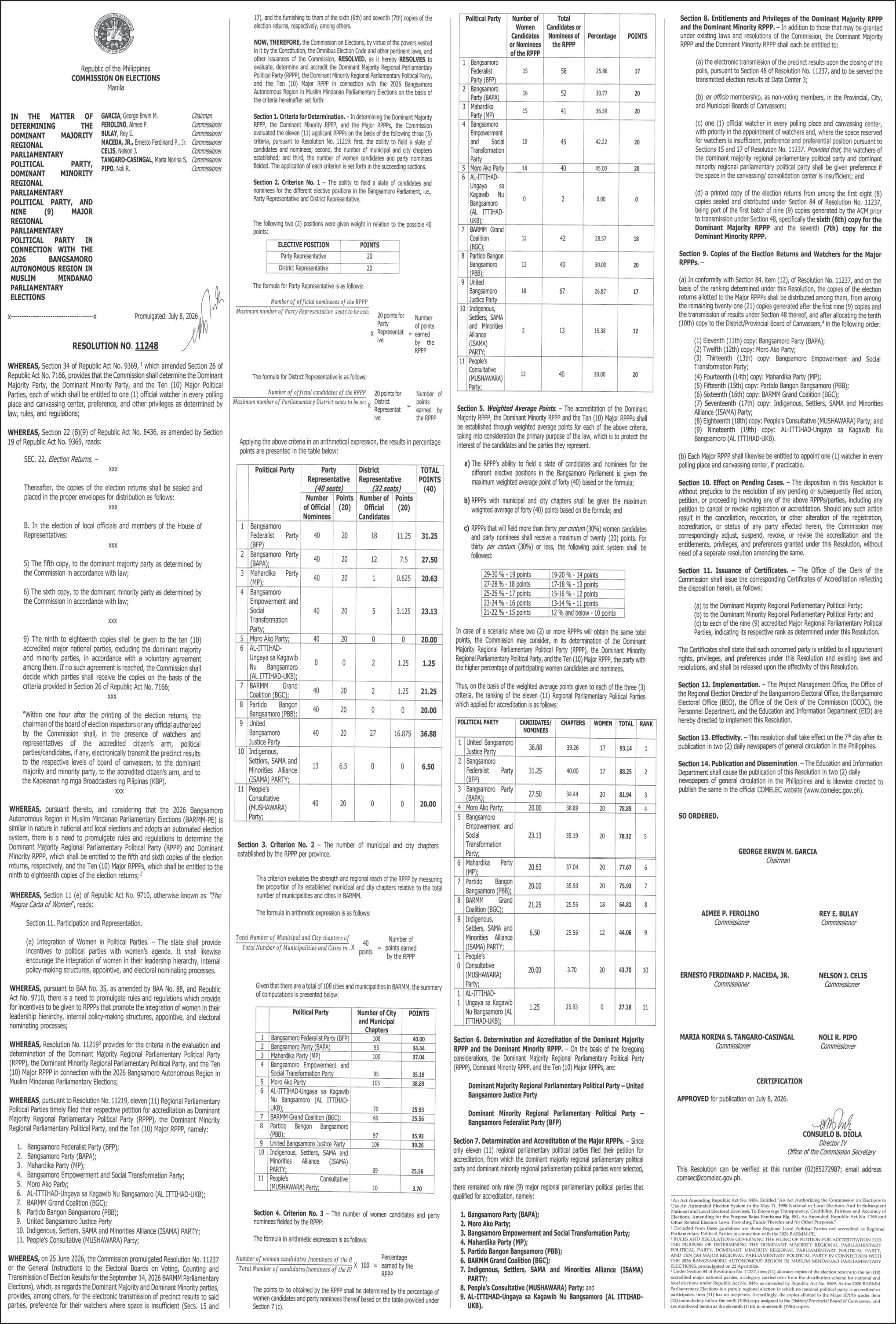
A10 Thursday, July 9, 2026
House prosecution say VP Sara’s ‘hitman’ admission is
By Jovee Marie N. Dela Cruz
ASPOKESPERSON
for the House prosecution panel said on Wednesday that Vice President Sara Z. Duterte’s alleged admission that she had arranged for someone to kill President Ferdinand R. Marcos Jr., in the event of her own death, already constitutes a betrayal of public trust.
House trial spokesperson Zia Alonto
Adiong said that such an admission, if taken at face value, amounts to
an impeachable offense, noting that betrayal of public trust is one of the constitutional grounds for removing



an impeachable official from office.
“The mere fact that she had that idea and made an understanding, an agreement with a person whose livelihood is sourced out from killing people, is already a betrayal of public trust,” Adiong said during a press briefing.
He added that, as a public official, Duterte is expected to uphold and promote the rule of law, including the principle that no individual should take justice into their own hands.
“The fact that she knew of a person capable of committing murder and failed to report this to the police or any government agency, and instead personally communicated with that individual, is already a violation of the oath she took upon assuming office as Vice President,” Adiong said.
The remarks came as House prosecutors continued presenting evidence before the Senate, sitting as an impeachment court, on Article IV of the Articles of Impeachment. The article accuses Duterte of making grave threats against the President, First Lady Liza Araneta-Marcos, and former Speaker Ferdinand Martin G. Romualdez.
Adiong emphasized that the prosecution’s case is not limited to establishing the authenticity of the video clips but also aims to highlight the seriousness and potential consequences of Duterte’s alleged statements.
“I think it’s not only about establishing the veracity and the authenticity of these video clips, but more important is what the effect of the threats that she made against the President to the whole nation,” he said.
He questioned whether such statements should be allowed without accountability, given their potential implications.
Adiong also pointed out that authorities were compelled to investigate the matter because the alleged threats were directed at the country’s head of state, head of government, and commander-in-chief.
“You cannot also expect that the agencies will not do anything to investigate because it was said in a manner by which it should be taken seriously,” Adiong said.
“The threat was done, directed not just for an individual, but it is directed against the head of state, head of
Continued from A5
government, and the commander-inchief. That’s why it is also a national security concern,” he added.
According to Adiong, the coordinated response by several government agencies underscores that the alleged threats were treated as a legitimate security issue.
“That’s why many agencies came in and investigated if there was indeed an agreement that was made and reached by the respondent and the hitman,” he said.
The prosecution’s first witness, National Bureau of Investigation (NBI) Senior Agent John Mark Calilung, authenticated Duterte’s Nov. 23, 2024 online media briefing, where she allegedly stated that she had contracted someone to kill Marcos, the First Lady, and Romualdez if she were killed.
Calilung also authenticated official statements from the Philippine National Police, Armed Forces of the Philippines, National Security Council, and other agencies, which indicated that the remarks prompted formal security assessments and investigations.
Material witness
THE House prosecution panel said the defense’s own cross-examination reinforced the prosecution’s argument that Atty. Zuleika Lopez is a material witness whose testimony should be heard by the Impeachment Court.
House impeachment adviser and spokesperson Robert Ace Barbers said much of the defense’s questioning focused on Lopez’s role, including her emotional reaction in video clips presented during the proceedings; her relationship with Vice President Sara Z. Duterte; and her interactions with Duterte in connection with the statements at the center of the impeachment case.
Barbers said the defense’s line of questioning highlighted the importance of Lopez’s firsthand knowledge of the circumstances surrounding the incident.
“Much of the cross-examination revolved around Atty. Zuleika Lopez—her reaction, her relationship with the vice president, and the events surrounding the statements that became central to this case,” Barbers said.
The NGCP also cited the tripping of Iloilo-Panay Energy DEVELOPMENT Corporation (PEDC) 138 kilovolt (kV) line 3 at 1:32pm and the emergency shutdown of Palm Concepcion Power Corp. (PCPC) at 2:06 pm due to possible boiler tube leak.
Last Monday, the Department of Energy (DOE) reported that PEDC unit 3 was restored.
The agency is closely coordinating the return to service of other major generating units currently undergoing scheduled maintenance, including Therma Visayas Units 1 and 2, each with a capacity of 169 MW, and KEPCO-SPC Unit 1 in Cebu. The two Therma Visayas units are expected to resume operations by the end of August.

‘betrayal of public trust’
He added that if the defense itself considered these matters significant enough to explore during trial, it further showed why Lopez should be allowed to testify before the impeachment court.
“By focusing on these issues, the defense itself demonstrated that Atty. Lopez has relevant personal knowledge of the events and should be heard as a material witness,” Barbers said.
Barbers stressed that it was the defense, not the prosecution, that placed Lopez at the center of the discussion during the proceedings.
“We did not put these matters at the center of the trial. The defense itself spent significant time questioning her role and her connection to the events,” he said.
He said repeated references to Lopez’s reactions, relationship with the vice president, and the circumstances surrounding the incident showed that she could provide important context to the proceedings.
“If the defense itself raised questions that only Atty. Lopez can answer based on her personal knowledge; it becomes even more necessary for the impeachment court to hear her testimony,” Barbers said.
‘As good as the original’ PHOTOCOPIES of documents presented in court may be treated “as good as the original” under the amended Rules of Evidence, a private prosecutor in the impeachment trial of Vice President Duterte said, amid questions raised during the proceedings.
Atty. Benjamin Tolosa Jr., a member of the prosecution panel, clarified on Wednesday that duplicates, such as photocopies are admissible in court provided there is no genuine issue as to their authenticity.
“Under the new Rules of Evidence, that is clear. There’s a rule that we call the original document rule. Under that rule, duplicates such as photocopies are considered as originals, provided that there’s no genuine issue regarding its authenticity,” Tolosa said during a press conference.
Tolosa issued the clarification following repeated objections from the defense panel during Day 2 of the Senate impeachment trial, particularly on
Continued from A5
He may also serve as a conduit of the President to national government agencies, local government units, political organizations, groups or parties, civil society organizations, and sectoral groups on matters of political concern, and as head of Strategic Action and Response Office of the Office of the President (OP).
“So these are some of the responsibilities of the
Continued from A6
Office of Civil Defense-NCR Regional Director George Keyser announced that the National Capital Region will be placed under Blue Alert beginning Thursday, with the Virtual Emergency Operations Center already activated while the Physical Emergency Operations Center will be activated from Friday to Saturday to ensure immediate coordination among concerned agencies.
Following the meeting, member agencies agreed to ensure close coordination, maintain
Continued from A8
By Tuesday, some had already stopped working although no official strike has been declared.
The aggrieved front-line workers also include safety and security teams, those that often embark on community outreach as well as those burying patients who died from Ebola.
Congo’s government did not immediately respond to a request for comment about the situation. Officials in Ituri, however, said they’ve met with the workers and their concerns are being addressed
“The fact that Bunia airport is closed is hampering the
photocopied documents identified in testimony by National Bureau of Investigation (NBI) Senior Agent John Mark Calilung.
Tolosa cited the 2019 amendments to the Rules of Evidence, which state that a duplicate is admissible to the same extent as an original unless a genuine question is raised about the authenticity of the original, or if admitting the duplicate would be unjust or inequitable.
He also addressed misconceptions circulating on social media, emphasizing that the rule applies strictly to court proceedings and not to everyday transactions.
“On social media, many have commented on that issue, asking whether a passport now means you can travel abroad carrying only a photocopy. That is not how it works,” Tolosa pointed out.
Focused
THE prosecution is not focused on securing the required number of votes for conviction in the impeachment trial of Vice President Duterte but on presenting strong evidence to prove the Articles of Impeachment.
House prosecution Tolosa made the statement after Senate President and impeachment court presiding officer Francis “Chiz” Escudero confirmed that 16 votes are needed to convict the Vice President, based on the court’s interpretation of the constitutional requirement for conviction.
The prosecution spokesperson said the panel has remained consistent in avoiding vote calculations and instead concentrating on building a compelling case.
“Our stand on this has been consistent from the very start. We don’t engage in vote counting,” Tolosa said during a press briefing.
He said the prosecution’s objective is to establish an airtight case supported by evidence, regardless of how the two-thirds voting requirement may ultimately be applied.
“Our focus here is to establish an airtight case backed by overwhelming evidence so that at the end of the day, no matter how this two-thirds threshold will be interpreted, we’ll be able to secure that necessary vote,” Tolosa said.
Secretary Benjamin Abalos, Jr.,” Castro said. The position, Cabinet Secretary, was abolished by Marcos under his Executive Order (EO) No. 1 days after his inauguration to streamline the operations of the OP.
As of press time, the Palace has yet to disclose if Marcos has made the new issuance reestablishing the Office of the Cabinet Secretary to be led by Abalos. Prior to its abolition, the last person to hold the position of Cabinet Secretary was Melvin A. Matibag, who is now the director of the National Bureau of Investigation (NBI). Samuel P. Medenilla
heightened operational readiness, continuously monitor weather developments, and immediately implement appropriate response measures whenever necessary to safeguard lives and property.
During the press conference, San Juan City Mayor Francis Zamora encouraged the public to remain vigilant and the local government units to make the necessary preparations ahead of the expected effects of Super Typhoon Inday.
“Let’s maintain the cleanliness of our waterways and drainage systems and ensure that our pumping stations are well maintained,” Zamora said. Claudeth Mocon-Ciriaco
very implementation of the response, particularly certain aspects of the flow of funds. This is one of the reasons that may account for the delay in payment,” Akilimali Pierre, incident manager at Congo’s National Institute of Public Health, told The Associated Press.
Some of the workers organized a protest Monday outside the Rwampara Ebola treatment center. They set tires alight, causing a brief panic in the vicinity before the police intervened to restore order.
Health workers face other challenges as well, including attacks from angry residents and skepticism about the virus.
AP writer Constant Same Bagalwa in Bunia contributed to this report.
JMF ON COURSE TO 10TH MVP TROPHY
By Josef Ramos
JUNE MAR FAJARDO is on course toward a hardto-match 10th season Most Valuable Player (MVP) award as he led the statistical race despite San Miguel Beer missing the Finals of the recent Philippine Basketball Association (PBA) Commissioner’s Cup. The 6-foot-11 behemoth from Cebu registered 29.8 statistical points (SPs) from the Philippine Cup (40 percent) and Commissioner’s Cup (30 percent) with NLEX combo guard Robert Bolick running second with 26.7 SPs.
Jahns waxes hot with another 68 to stay in control
KEANU JAHNS capitalized on another scoring opportunity at Pradera Verde Golf and Country Club, delivering a second straight 68 to seize control of the International Container Terminal Services Inc. Pradera Verde Championship and open a three-shot lead over Tony Lascuña at the halfway mark in Lubao on Wednesday.
N ot even a late-round downpour—accompanied by lightning and thunderstorms which forced a one-hour suspension of play—could derail Jahns’ charge back to the top of the leaderboard.
He calmly closed with a string of four pars for a pair of 34s and a 36-hole aggregate of 136 in a round that began under sweltering heat and ended amid stormy conditions.
My ball-striking was much better today. I hit more greens, made the same number of putts and cut my bogeys down to just one after making three in the opening round,” Jahns said.
C orpus matched Jahns with birdies on Nos. 10 and 12 to stay in command but stumbled with bogeys on Nos. 15 and 18.
A birdie on No. 1 briefly re-ignited his charge before a costly double bogey on the ninth led to a 73, dropping him into a tie for third at 140 alongside first-round co-leader Russell Bautista, who also hobbled with a one-over card.
Lascuña leaned on a sharp short game and steady putting to offset his lack of length off the tee, firing a 71 to take solo second at 139, just three shots behind Jahns and firmly in contention on a course where precision outweighs power. Fresh from his dominant Pinewoods victory, Lloyd Go rebounded from an opening 72 with a blistering backside 32 but settled for a 69 after a bogey on No. 2. At 141, Go shared fifth with Ira Alido, Albin Engino, who matched 70s, and Gab Manotoc, Collin Wheeler, and defending Pradera Verde-Pinatubo champion Angelo Que, who all shot 72s.
Z anieboy Gialon, who also opened with a 67, slipped with a 74 marred by a double bogey on the par-3 eighth, falling into the group at three-under overall.
T he 36-year-old 12-time PBA champion—fresh from his national team duties with Gilas Pilipinas in the FIBA Asia Cup Qualifiers against New Zealand and Australia—is again in familiar territory for the individual award.
I no longer think much about the individual award from the time I won my first MVP 12 years ago,” Fajardo told the BusinessMirror on Wednesday. “All I really want is to lead my team, help my team win a championship…that will not change.”
Fajardo averaged 17.0 points and with a league best 16.1 rebounds and 3.3 assists in 37 games in the Philippine
Cup and Commissioner’s Cup and only needs to do what he does best in the upcoming Governors’ Cup to snatch a 10th MVP trophy.
A fter a failed campaign in the last conference, Fajardo said they’ll do whatever it takes to deliver San Miguel Beer to the Governor’s Cup crown with import George King Jr.
We really need to bounce back and hoping to help my team again win the Governors’ Cup,” he said. “So far, I’m doing well, no injury.”
San Miguel Beer also won the allFilipino conference early this year.
B olick, meanwhile, is riding averages of 19.2 points, a league-lead -
ing 8.3 assists and 5.2 rebounds— h e missed being named the Best Player of the Commissioner’s Cup after the Road Warriors were eliminated in the quarterfinals.
C onverge rookie Juan Gomez de Liaño is running third on averages of 17.6 p oints, 6.5 rebounds and 5.9 assists for 23.6 SPs to also lead the



disciplined recovery play.
Despite playing through discomfort, the Davaoeña ace wasted little time asserting herself, birdieing Nos. 2 and 3 to pull clear of Constantino.


Forty-two players advanced to the weekend at 150, including James Ryan Lam (75), John Michael Uy (76), Jobim Carlos (78) and amateur Jed Dy (75). NOT even a late-round downpour that caused an hour delay could derail Keanu Jahns’s charge back to the top of the leaderboard. PGT PHOTO

The Green Run
THERE are fun runs and there are environmental runs. Have you ever been in one?
E nvironmental runs are advocacy runs where runners unite for a common cause. It makes the activity more meaningful because it’s anchored on something as noble as saving the planet.
R unning for the environment became immensely popular in the mid-2010s as awareness about climate change caused the sports community to align with the


global sustainability movement.
Plogging (jogging while picking up trash) became a thing and runs that focus on the environment resonated with the running community.
Massive races like the Pasig International Marathon— formerly known as the Pasig River Heritage Marathon because it called runners’ attention to the plight of the Pasig River as they crossed 11 bridges that straddled the Pasig—started making people more conscious about social and environmental problems.
The rise of runs like Takbo Para Sa Kalikasan, Run For A Million Trees, Ridge to Reef Environmental Run in Davao and the Earth Hour Night Run are all part of this intense, coming from the heart desire to raise awareness for the environment and make people do their share to save the planet.
T he pandemic put all that on hold from 2020 to the early part of 2022 as people stayed indoors and did their best to avoid getting Covid. The lockdown was brutal, especially for runners with itchy feet.
So when in June 2022, the Vermosa Green Run—a sustainability run initiated by Ayala Land’s Vermosa Estates— invited people to “lace up, mask up and run for a greener tomorrow,” the response was very enthusiastic.
It felt liberating to be outdoors and free again, to run like the wind for a podium finish or run with a trot just for fun.
Initially supporting just the Haribon Foundation, the Green Run—now five years old—has included sports development
A bogey on the fifth briefly slowed her momentum, but she quickly regained control with birdies on Nos. 10 and 12, capitalizing on the opportunities while Constantino struggled to convert scoring chances and settled for a frontside 36.
From there, Bisera relied on solid course management and steady putting, bouncing back from a miscue on the 17th with a birdie on the last to preserve another three-under card for a 36-hole aggregate of six-under 138, putting herself in prime position to capture her second Ladies Philippine Golf Tour title of the season.
The 18-hole leader now stands just one strong round away from adding another trophy to a solid start, having claimed the ICTSI Lakewood Championship in dramatic fashion via playoff last March.
I played much steadier yesterday. I didn’t make a single bogey,” said Bisera in Filipino as she compared her two rounds.
and animal welfare in its advocacies. It is actively supporting the young runners of Takbo Kabitenyo as part of its push for an active and healthy lifestyle, and the Pawssion Project, because animal welfare is a fundamental pillar of sustainability.
T his year participants in the five-tiered dawn run consisted of running enthusiasts, run club members, elite athletes, celebrities and fun runners as well as the media running community.
E dgardo Panopio and Lorely Magalona won gold in the 21K category, Jomm Lacanilao-Gay and Patrice Quiday ruled the 10K run, John Mark Balogo and Ira Alvaro finished first in 5K, Jessi Valentine and Danielle Sophia topped the 3K category, while Moises Calastravo and his dog, Onzi made their mark in the 1K Dog Run. Participants were encouraged to donate used plastic bottles and food containers as part of the Run. These were later turned over to the Makati Development Corporation for upcycling into eco-bricks that would support sustainable construction at Ayala Land and other projects.
The runners’ singlets, finisher shirts and dog bandanas were manufactured entirely from recycled PET bottles as well, turning plastic waste into premium sportswear.
“ We wanted our runners to experience sustainability both literally and symbolically. This year, we offered a discount for donating used PET bottles, and the community brought them by the truckload,” said Lani Tan, General Manager of the



the five-day competition. S arza made 15 points and hauled down 16 rebounds—including crucial plays down the stretch that quelled the Webmasters rally—earning him the Finals MVP honor. R omero—a former Gilas Youth member—typified the team’s defensive efforts, emerging as the crew’s designated import stopper alltournament long.
A nd he did it so with no
and
the Philippines, United States, Canada, Australia, New Zealand and Europe, providing a world-class stage for the next generation of basketball talent. Fully recovered from the injuries that derailed his dream of playing for the Green Archers, Romero hopes to finally get the nod to play in the coming University Athletic Association of
Vermosa Sports Hub, where the Run took place. We are absolutely thrilled with this year’s turnout!
www.businessmirror.com.ph
Rice imports jump as production costs soar
since the law took effect.
IBy Ada Pelonia @adapelonia
MPORTED rice arrivals in the first half surged to more than 2.7 million metric tons (MMT), due to the global oil crisis that jacked up input costs and concerns over the impact of a looming El Niño on local output.
Data from the Bureau of Plant Industry (BPI) showed that rice imports from January to June jumped by 20.1 percent to 2.75 MMT, from the 2.29 MMT posted
in the same period last year. Since liberalized importation began in 2019 following the Rice Tariffication Law (RTL), the latest first-half figure is the highest
Agriculture Assistant Secretary Arnel de Mesa said the spike in rice shipments during the period was a “natural response” from the market given the challenges that the local rice sector had to hurdle.
He said the damage on the Upper Pampanga River Irrigation System (UPRIS) during the first quarter affected more than 30,000 hectares of rice lands.
As these areas recovered, De Mesa noted that compounding factors, such as the hike in fertilizer and pump prices due to the United States-Iran war and concerns over the impact of El Niño affected production.
“These challenges posted an issue (on local production), which is why it’s important that the market is responding to (consumers’) needs,” he told reporters on Wednesday. “It’s a natural response from the market and will help ensure stable retail rice prices.”
To prevent a plunge in farmgate prices amid the surge in imports, he said the DA will take a “proactive stance” as the wet harvest season nears, including the increase in the National Food Authority’s (NFA) buying price.
De Mesa also noted that a possible decline in rice shipments could prevent farmgate prices of palay from nosediving, citing an
Marcos nod for extension of imported rice price cap sought
THE National Price Coordinating Council (NPCC) has adopted the Department of Agriculture’s (DA) recommendation to extend the P50 per kilo price ceiling on imported rice for 60 days.
Agriculture Assistant Secretary Arnel de Mesa said the NPCC has endorsed the resolution on the price cap to President Ferdinand Marcos Jr., the official extension of which is subject to his approval. This, as the P50 per kilo price ceiling on 5 percent broken imported rice imposed by the government lapsed last June 13.
“We’ve seen that the price cap had an effect on retail rice prices since inflation eased because of it. This is why the NPCC recommended extending it for another two months,” De Mesa told reporters on Wednesday.
“We have to wait for the review process of the Office of the

President.”
Data from the Philippine Statistics Authority (PSA) showed that headline inflation slowed to 6.4 percent in June from 6.8 percent in May. Food inflation slowed to 5.4
percent from 5.8 percent. Rice inflation eased to 15 percent from 15.6 percent, while fish inflation fell to 7.8 percent from 8.8 percent. Furthermore, inflation for the bottom 30 percent of income households slowed to 8 percent
in June from 8.4 percent in May.
Food and non-alcoholic beverages continued to be the biggest contributor to overall inflation, accounting for 2 percentage points of the June headline rate.
With this, Agriculture Secretary Francisco Tiu Laurel Jr. pushed for the price cap’s extension alongside measures to maintain sufficient inventories and enhance the movement of food from farms to markets.
“The latest inflation numbers show that keeping food affordable delivers real benefits to Filipino families, especially those who spend a large portion of their income on basic necessities,” he said.
“We must continue ensuring adequate supply, efficient distribution, and reasonable prices, particularly for rice, so inflation remains manageable while consumers and farmers alike are protected.” Ada Pelonia
‘Enact law allowing planting of GM crops approved by govt’
ONGRESS should enact
Ca measure that will allow the continued cultivation of genetically modified (GM) crops approved by the government even in the face of legal disputes, according to an international agri-biotech organization. International Service for the Acquisition of Agri-biotech Applications, Inc. (ISAAA) made this recommendation as the world is facing a “polycrisis” on production that threatens food security, including supply concerns and climate shocks. Given its policy advocacy strategy, ISAAA Global Knowledge Center on Biotechnology Manager Kristine Grace Tome said the passage of a measure that will ensure the adoption of government-approved GM crops is “crucial.”
“Our dream in ISAAA is to have a law that allows farmers to continue planting GM crops that already secured permits despite (legal disputes) to protect what our scientists have worked hard for since our farmers and consumers also need these crops,” Tome told reporters last Tuesday.
The Philippine government has approved the cultivation of four GM crops, namely Bt corn, Golden Rice (Malusog Rice), Bt eggplant, and Bt cotton.
The adoption of Golden Rice and BT corn, however, have been stalled due to pending court cases.
While a separate bill introducing biotechnology had been drafted to boost support for bio-based industries, Tome said a separate bill with stronger en -
forcement power would help.
“Hopefully, there will be another law that has more legal teeth,” she said.
She noted that the organization had been in dialogue with some lawmakers who agreed to lobby biotechnology concerns in Congress.
Gene-edited crops
MEANWHILE , Tome noted that several gene-edited crop varieties are on the pipeline for the domestic market.
This includes reduced browning in bananas, which helps marketability, high-GABA (gammaaminobutyric acid) tomato, and a gene-edited eggplant, which have secured government approval.
“Bananas that have even a slight bruise would be thrown
away and are no longer used in restaurants, while the high-GABA tomato developed in Japan would improve overall health.”
Industry sources said geneedited crops are easier to evaluate in terms of regulation, unlike GM crops that change their DNA.
The government defines nonGMOs or conventional products as those that do not contain a novel combination of genetic material, whereas GMOs comprise a genetic combination that would be impossible through conventional breeding.
Under the law, products determined as non-GMO would be issued a certificate of non-coverage (CNC) from the Bureau of Plant Industry (BPI), which exempts them from the GMO regulatory process. Ada Pelonia
DA: Circular hastens licensing of animal vaccines, biologics
THE Department of Agriculture (DA) has issued the transitory guidelines for regulating veterinary-related products and establishments, which could expedite licensing and product registration.
Agriculture Secretary Francisco Tiu Laurel Jr. signed Department Circular (DC) 33 which outlined the implementing guidelines allowing the Bureau of Animal Industry (BAI) to regulate establishments, veterinary drugs, biologics, and other related animal health products to safeguard animal health and ensure food safety.
The move was anchored on Republic Act (RA) 12308 or the Animal Industry Development and Competitiveness Act (Aidca),
which transferred the jurisdiction of veterinary-related products to the BAI from the Food and Drug Administration (FDA).
Under the circular, BAI has the jurisdiction to issue a license to operate (LTO) for veterinary establishments and Certificate of Veterinary Product Registration (CVPR) for veterinary drugs.
For Agriculture Assistant Secretary Arnel de Mesa, the move could fast-track the issuance of licenses and product registrations, including those for animal vaccines.
“We know that the FDA covers everything under their jurisdiction, not just animals,” De Mesa told reporters on Wednesday.
“Now that there’s a specific agency focusing on animal prod -
ucts and biologics, the processing (of licenses and product registration) will be faster.”
The LTO and CVPR are valid for two years for initial issuance and five years for renewal, subject to compliance with the stipulated standards and requirements.
All valid licenses, permits, product registrations, certificates, and other authorizations previously issued by the FDA covering veterinary products are valid until these expired, unless earlier revoked or suspended by competent authority.
agreement with stakeholders to halt the importation of 5 percent broken rice starting this month.
Agriculture Secretary Francisco Tiu Laurel Jr. said recently that the Department of Agriculture (DA) had asked importers to stop bringing in 5-percent broken rice starting this month, as it poses stiff competition to local palay. (See: https://businessmirror.com.ph/2026/07/02/dato-importers-stop-bringing-in5-broken-rice/)
With the proposed RICE Act— yet another amendment to the Rice Tariffication Law (RTL)— currently pending in Congress, the DA chief is banking on stakeholder cooperation to carry out the initiative.
“We will talk with rice stakeholders as much as we can. If the new RICE Act comes out, I won’t allow the entry of 5-percent broken rice, but for now we’ll settle with talking them through it,” he said in a recent interview.
The DA chief said he met with stakeholders across the supply chain, including farmers, millers, traders, and importers, all of which have “agreed in principle” to the measure.
“The key here is cooperation. The importer needs to help our farmers and our processors. If not, they will just lobby against each other and end up hurting themselves.”
Tencent inks first deal for carbon-removal credits outside China
TENCENT Holdings Ltd will buy 300,000 carbon removal credits from an agroforestry project in Indonesia, marking the first deal of its kind for the Chinese technology firm outside its domestic market.
Tencent has entered a 10-year agreement with Singapore-based carbon developer Thryve.Earth to purchase credits generated from a project on the island of Sulawesi, it said on Wednesday. Alphabet Inc.’s Google struck a separate 10-year offtake deal for 260,000 credits from the same project, while consulting firm McKinsey & Co. agreed to buy 75,000. The average price for agroforestry credits in Asia is currently around $21.40, according to carbon data company Sylvera.
Carbon removal will play a key role in Tencent’s commitment to achieve carbon neutrality in its own operations and supply chain by 2030, a company spokesperson said by email. While reducing emissions remains the top priority, high-quality carbon credits can help address residual emissions and deliver climate impacts, the spokesperson said.
Agroforestry projects, which combine agriculture with removing carbon by planting or increasing forest cover, have the potential to deliver up to 310 million tons of carbon-dioxide removal annually and could play an important role in efforts to limit global warming. The willingness of corporate buyers to keep doing such deals offers a counterpoint to news earlier this year that Microsoft Corp. was pulling back.
The Thryve.Earth project will restore degraded land in Sulawesi, an island in the center of the Indonesian archipelago on which tropical rainforests have been destroyed by agriculture, soil erosion and invasive species. The idea is to develop a “mixed crop farming system” that sequesters carbon, replenishes soils, increases biodiversity and provides income for local farmers.
The project envisages an upper tree canopy of sugar palm plants and timber trees, a mid-layer of papayas, avocado, coffee, and bananas, and ground-level annual crops such as chili and corn.
The layers are intended to optimize land productivity and provide income streams that are “significantly more valuable than the carbon revenues alone, aligning carbon sequestration benefits with economic incentives,” Thryve.Earth said.
Vinay Kulkarni, the company’s co-founder and CEO, said “naturerelated work, be it conservation, be it restoration, needs to happen at a whole different scale than what we are currently operating on now.”
Tencent is among the founding members of Action for a Resilient Climate Coalition, an initiative intended to bolster corporate demand for high-quality carbon credits. The tech company supports the full spectrum of carbon removal types, from nature-based projects that restore ecosystems to technology-based approaches, such as direct air capture.
Google and McKinsey made their commitments to offtake carbon removals via the Symbiosis Coalition, a buyers’ group for naturebased carbon that also includes Meta Platforms Inc. and Microsoft.
The coalition is aiming for collective purchases of 20 million tons of high-quality nature restoration carbon credits by 2030.
vaccine against African swine fever (ASF) could be approved within the third quarter.
“The secretary’s advice was that it will be released within the third quarter, but it won’t be on the latter part of that period.”
The DA official earlier noted that once released commercially, the vaccines can be sold through outlets, such as biologics stores and veterinary shops.
“It will become commercially available, but only through outlets that are registered with BAI.”
Local swine producers are also awaiting brands of ASF vaccine produced by other nations as the country continues to grapple with the lingering effects of the deadly hog disease.
Symbiosis identifies potential projects for its members, conducts due diligence and facilitates the structuring of offtake agreements, according to its executive director Julia Strong.
For Google, the Thryve.Earth deal represents its largest carbon removal offtake agreement to-date and comes on the heels of its participation in a new $915 million commitment for carbon dioxide removal technologies. With the Sulawesi project, Google now boasts a portfolio of over 1.6 million tons of carbon dioxide removal credits, said Randy Spock, Google’s head of carbon credits and removals.
“Even as we work to reduce our emissions as much as is feasible, we know there will be remaining emissions in our footprint,” Spock said. “That same dynamic applies to the planet, which will increasingly need solutions over and above decarbonization to remediate the atmosphere. That’s why we support a wide variety of projects around the world designed to counterbalance the warming impact of our remaining emissions.”
The Sulawesi transaction comes less than a year after the Indonesian government lifted a moratorium it imposed in 2021 to block sales of new carbon credits to foreign buyers. Bloomberg News
www.businessmirror.com.ph
2nd Front Page
BusinessMirror
S&T, INNOVATION MUST DRIVE NEXT PHASE OF DEVT–’ARSI’
By Justine Xyrah Garcia
THE Philippines can no longer rely on sim-
ply adding more workers and capital to sustain economic growth, with Department of Economy, Planning, and Development (DepDev) Secretary Arsenio M. Balisacan saying the country’s next phase of development must be driven by science, technology and innovation.
Speaking at the 48th Annual Scientific Meeting of the National Academy of Science and Technology on Wednesday, Balisacan said economies at the Philippines’s stage of development must increasingly depend on productivity gains rather than factor accumulation to achieve long-term growth.
“As countries develop, they can no longer rely primarily on factor accumulation—that is, simply adding more labor or more capital. Long-term growth increasingly depends on raising productivity. And productivity is driven by knowledge,” Balisacan said. He said science, technology, and innovation allow economies “not merely to grow faster, but to grow smarter, become more resilient, and generate solutions to increasingly complex development challenges.”
Balisacan explained that countries can initially raise output by using existing resources more efficiently through better governance, lower corruption, improved logistics, stronger labor market matching and closer collaboration among government, industry and academe.
However, he said sustained growth requires innovation that expands an economy’s productive capacity through technology development and adoption.
“In other words, innovation, technology adoption and development allow us to produce goods and services that previously could not be produced—or to produce existing goods far more efficiently,” he said.
The country’s chief economist made the remarks as the Philippines seeks to sustain its development following its recent transition to upper middle-income status.
He noted that while economic growth has enabled the country to make meaningful progress toward the United Nations Sustainable Development Goals (SDGs), growth alone will not be enough to meet the 2030 targets. Instead, he said the next stage of development must be anchored on higher productivity, stronger industrial competitiveness, and wider access to economic opportunities.
Balisacan also highlighted improvements in the country’s innovation ecosystem, noting that the Philippines climbed to 50th place among 139 economies in the 2025 Global Innovation Index from 59th out of 132 economies in 2022.
He added that the country’s innovation performance now exceeds what is typically expected for an economy at its current income level, reflecting gains from investments in research, digital transformation, entrepreneurship, and human capital.
The challenge, he said, is to translate these gains into faster productivity growth, stronger industrial competitiveness, and broader improvements in people’s welfare.
To accelerate innovation-led growth, Balisacan said the government must continue investing in science, technology, engineering and mathematics education, research and development, modern infrastructure and wider technology adoption while also strengthening partnerships among government, the private sector, academe and civil society.
“The experience of successful economies consistently demonstrates that sustained development is never the product of government acting alone. It is the outcome of enduring partnerships built on trust, shared purpose, and a common commitment to innovation,” he also said.
GOCCs remit ₧140B to NG, 29% higher than last year’s
By Reine Juvierre S. Alberto
GOVERNMENT-OWNED
and -controlled corporations (GOCCs) are set to contribute a record P147.15 billion in dividends this year, boosting state coffers through non-tax revenues without imposing new taxes.
During the GOCC Day held at Malacañang Palace on Wednesday, Finance Secretary Frederick D. Go said dividends collected from 50 GOCCs reached P140 billion as of July 8, with the balance to be remitted until December.
The amount collected so far is 29 percent higher compared to last year’s level, Go said, strengthening public finances and helping expand investments in infrastructure, education, healthcare, among others.
Since President Ferdinand R. Marcos Jr. took office, GOCC dividend collections have reached P501.43 billion, surpassing the P382.33 billion remitted during the Duterte administration by 31.15 percent.
“Every peso that you have remit-
ted strengthens the government’s capacity to deliver better services without imposing additional tax burdens on ordinary Filipinos,” Marcos said in his speech before officials of various GOCCs.
“It is proof that some governance and fiscal responsibility can create opportunities for our people while sparing them from bearing greater financial sacrifice,” Marcos said.
The Bangko Sentral ng Pilipinas (BSP) emerged as the biggest dividend contributor, remitting P62.39 billion to the national government. It also led the “Billionaires’ Club,” which recognizes GOCCs that remit at least P1 billion in dividends.
Trailing BSP were the Land Bank of the Philippines with P32.35

THE Philippines remains trapped in the middleincome bracket despite its recent elevation to upper-middleincome status, as its economy has yet to undergo structural transformation, according to a policy brief released by the University of the Philippines Center for Integrative and Development Studies (UPCIDS).
While the country has made gains in education, health, infrastructure, macroeconomic stability and poverty reduction, the paper said income has risen faster than the economy has transformed.
It said the Philippines continues to produce and export too little,
lacks a broad industrial base, and has yet to build the productive economy needed to sustain longterm growth.
“The roots of this disconnection are weak agricultural productivity and thin inter-sectoral linkages, which leave the domestic economy poorly wired to itself and make importing easier than building local supply chains,” the paper said. Without strong domestic suppliers, manufacturers struggle to move up the value chain, while productivity gains fail to spread across the broader economy, according to the study.
The paper said these structural weaknesses have resulted in two
forms of “exit” that continue to weaken the domestic economy.
Many of the country’s most capable workers leave for better-paying jobs overseas, while domestic demand increasingly flows abroad because firms find imported inputs cheaper and more reliable than buying from local suppliers.
“Placed side by side, the two are one problem in two forms,” the paper said. “The country lets two things leak away that it most needs to retain: it lets its ablest workers leave, which keeps good jobs scarce, and it lets its demand leak out through imports, which keeps local suppliers weak.”
The paper’s findings echo ear-
lier remarks by Socioeconomic Planning Secretary Arsenio M. Balisacan, who said creating more quality jobs remains one of the country’s biggest development challenges.
“The big challenge now is improving the quality of jobs that are available so people will not have to migrate outside the country to have a decent job. If investments can grow fast enough here, quality jobs could be generated,” Balisacan said.
The paper also questioned whether a services-led growth model alone could sustain the country’s long-term development despite the
billion in dividends, the Philippine Deposit Insurance Corporation with P9.69 billion, the Manila International Airport Authority (P7.59 billion) and the Philippine Amusement and Gaming Corporation (P5.670 billion).
Other GOCCs that remitted at least P1 billion were the Philippine Ports Authority (P5.33 billion), Power Sector Assets and Liabilities Management Corporation (P4.011 billion), Bases Conversion and Development Authority (P2.6 billion), Clark Development Corporation (P2.59 billion) and Philippine Guarantee Corporation (P1.86 billion).
The remaining are the Philippine Charity Sweepstakes Office (P1.61 billion), Philippine Economic Zone Authority (P1.43 billion), Maharlika Investment Corporation (P1.37 billion), Philippine National Oil Company (P1.33 billion) and Civil Aviation Authority of the Philippines (P1.2 billion).
“As our economy continues to grow, our GOCCs remain vital partners in turning national assets into national progress,” Go said. “Every dividend you remit strengthens the capacity of the government to invest in the future of the Filipino people.”
Go said the Department of Fi-
nance would continue supporting GOCCs to sustain their momentum in delivering results that improve the lives of Filipinos.
“While some GOCCs are created to generate revenue and ensure financial sustainability, may you never lose sight of the reason that you exist. Your foremost mandate is that of public service. Profit is never the end in itself. It is just a means to better serve our people,” Marcos said. He challenged every GOCC in the room to continue modernizing their systems and eliminate inefficiencies.
“At the same time, let us remain steadfast in practicing fiscal discipline,” Marcos said. “Public resources must never be treated as privileges to be spent, but as responsibilities to be managed wisely, transparently, and intentionally.”
Under Republic Act No. 7656 or the Dividend Law, all GOCCs, with some exemptions, are required to declare and remit at least 50 percent of their annual net earnings as dividends to the national government.
The DOF, through then Finance Secretary Ralph G. Recto, requested GOCCs to increase their remittances to 75 percent to maximize nontax revenues.
High inflation, airfares seen slowing domestic travel in the PHL
By Ma. Stella F. Arnaldo Special to the BusinessMirror
DOMESTIC travel is forecast to slow down for the rest of the year with the high inflation rate cutting discretionary spending of consumers, along with the costly airfares.
On the upside, the weak peso versus the greenback could attract an increasing number of foreign visitors, making the Philippines a more affordable destination, said Leechiu Property Consultants (LPC) Director for Hotels, Tourism, and Leisure Alfred Lay in a news briefing on Tuesday. “This could boost inbound arrivals and spending as travel becomes relatively cheaper,” he said, although “local operators still face higher costs on imported goods, squeezing margins despite stronger visitor despite stronger visitor numbers.”
From January to May, the Philippines received 2.74 million foreign visitors, up 7.5 percent year on year, “the strongest first five months performance in five years,” he noted. Except for South Korea, significant increases recorded from the Chinese and Indian markets, which now have visa-free privileges, as well as the United States, Japan, and China. (See, “D.O.T. to continue global tourism push amid Middle East crisis,” in the BusinessMirror, June 10, 2026.)
Still, each month’s performance actually showed a slowdown, year on year (yoy). From a 17-percent yoy high in February, inbound tourists have slumped to a one percent yoy low in May.
Tour operators have also said that the peso depreciation has been negated by the increase in room rates of the country’s hotels, along with higher local transport costs. The peso has averaged P61.475 to the US dollar this month from P56.752 a year ago.
‘Well-timed campaign but...’ HOWEVER, if the tensions in the Middle East further escalate and fuel prices continue to rise, this will likely offset the gains from the weaker peso, Lay acknowledged. “The outcome remains uncertain and will shape how strong the inbound rebound actually is,” he said.
To counter the possible slowdown in foreign visitor arrivals, the Depart-
ment of Tourism (DOT) has implemented a domestic tourism campaign dubbed “Discover More to Love” in partnership with hotels, airlines, and tour operators. (See, “PHL hotels, carriers, DMCs offer discounts to boost local travel,” in the BusinessMirror, June 24, 2026.)
“It’s a well-timed campaign from the DOT, since it will specifically counter the affordability squeeze we have been flagging, and the scale of the campaign across hotels and airlines is very meaningful,” Lay told the BusinessMirror
“Also the timing works well, since July to November is typically lean season, so we see that it will smooth the trough—which is crucial for the industry and stakeholders —but not necessarily spike demand,” he stressed.
Overall, the LPC official predicts a “pullback” in local travel as the 6.4-percent inflation rate in June “leaves Filipino travelers with less discretionary income for leisure trips.”
Hotel ADR, occupancy up ALSO, he sees fuel prices remaining high that leaves little space for airlines to maneuver their fares, while budget hotels which rely on domestic travelers will have little room to offer discounts due to their higher operating costs. Metro Manila hotels and other accommodation establishments have also said they were anticipating lower bookings, especially from the MICE (Meetings Incentives Conventions Exhibitions) segment, due to the government’s energy conservation measures. This has led municipal government units and government agencies to cancel their meetings and conferences. As per LPC research, in the five months to May 2026, the average daily rate of Metro Manila hotels rose slightly to P6,000 from P5,800 in the same period last year. Their occupancy rates also averaged 66 percent in the same five months this year, just a percentage point higher from a year ago.
“While inflation is quietly eating into rate gains nationally, Metro Manila’s corporate and MICE-driven demand continues to hold up, shielded from both household inflationary pressure and travel disruptions from the Iran crisis,” said Lay of the first five months of the year.
A victory for fair play in Boracay
FOR years, tourists and local visitors alike swam in the murky waters of Boracay’s scuba diving industry, unaware that the prices they were paying were not the result of a free market, but of an illegal cartel. The recent decision by the Philippine Competition Commission (PCC) to slap a P2.17 million fine on the Boracay Business Administration of Scuba Shops (BBASS) and 39 dive shops is a long-overdue breath of fresh air for one of the nation’s most vital tourism economies . (Read the BusinessMirror story: “Boracay dive cartel sinks in PCC ruling,” July 3, 2026).
This ruling is a resounding affirmation that consumer welfare must never be sacrificed for the convenience of industry collusion. The BBASS argued that its pricing scheme was about safety and protecting local livelihoods. However, the PCC rightfully saw through this smokescreen. While safety standards are non-negotiable, they do not require a minimum price tag of P3,000 for a single dive, nor do they justify a ban on complimentary items like T-shirts or underwater photos. When an association dictates that you cannot offer a free extra dive to a loyal customer, it ceases to be a trade group and becomes a price-fixing monopoly.
This case highlights a dangerous precedent that was allowed to fester at the local government level. The fact that BBASS operated with the “knowledge” of local authorities, and that businesses were required to secure association endorsements, points to a systemic failure in governance. The PCC’s clarification that local ordinances do not authorize private entities to dictate commercial prices is a crucial legal landmark. It sends a clear signal to local government units across the country: blind deference to industry associations is not a substitute for enforcing national competition policy.
However, while the fine represents a step in the right direction, the penalty of P2.17 million seems disproportionately small relative to the years of overcharges inflicted on millions of tourists. This raises a critical question: Is a fine of this magnitude sufficient to deter future anti-competitive behavior?
Furthermore, the ruling shines a light on the vulnerability of tourists. Unlike local consumers, tourists are often one-time visitors with limited time and knowledge of the local market. They are uniquely susceptible to price-fixing schemes. The PCC’s decision is a victory for these consumers, ensuring that they can now shop around for the best value rather than accepting a take-itor-leave-it rate imposed by a cartel.
But the real work begins now. The PCC must actively monitor Boracay to ensure that the end of the formal pricing agreement does not lead to more covert forms of collusion. Moreover, the Department of Tourism and the Department of Trade and Industry should collaborate to educate both consumers and businesses about their rights and responsibilities under the Philippine Competition Act. We must ensure that Boracay’s reputation as a world-class destination is not just about pristine waters, but also about fair, transparent, and competitive business practices.
This ruling is not an attack on the diving industry; it is its salvation. Competition breeds innovation, quality, and efficiency. By allowing dive shops to compete on price and service, the PCC has empowered businesses to differentiate themselves through excellence rather than through compliance with a fixed rate. Ultimately, this will raise the overall standard of diving services in Boracay, benefiting everyone—from the local operator who can now offer creative packages to the tourist who finally gets value for money.
The PCC has thrown down the gauntlet. It is now up to the industry and local governments to prove that they can foster a competitive environment without the crutch of price-fixing. For the integrity of our tourism sector, we must ensure that this ruling serves as a deterrent. The waters of Boracay should be free for all to navigate, not controlled by a select few.
BusinessMirror
T. Anthony C.
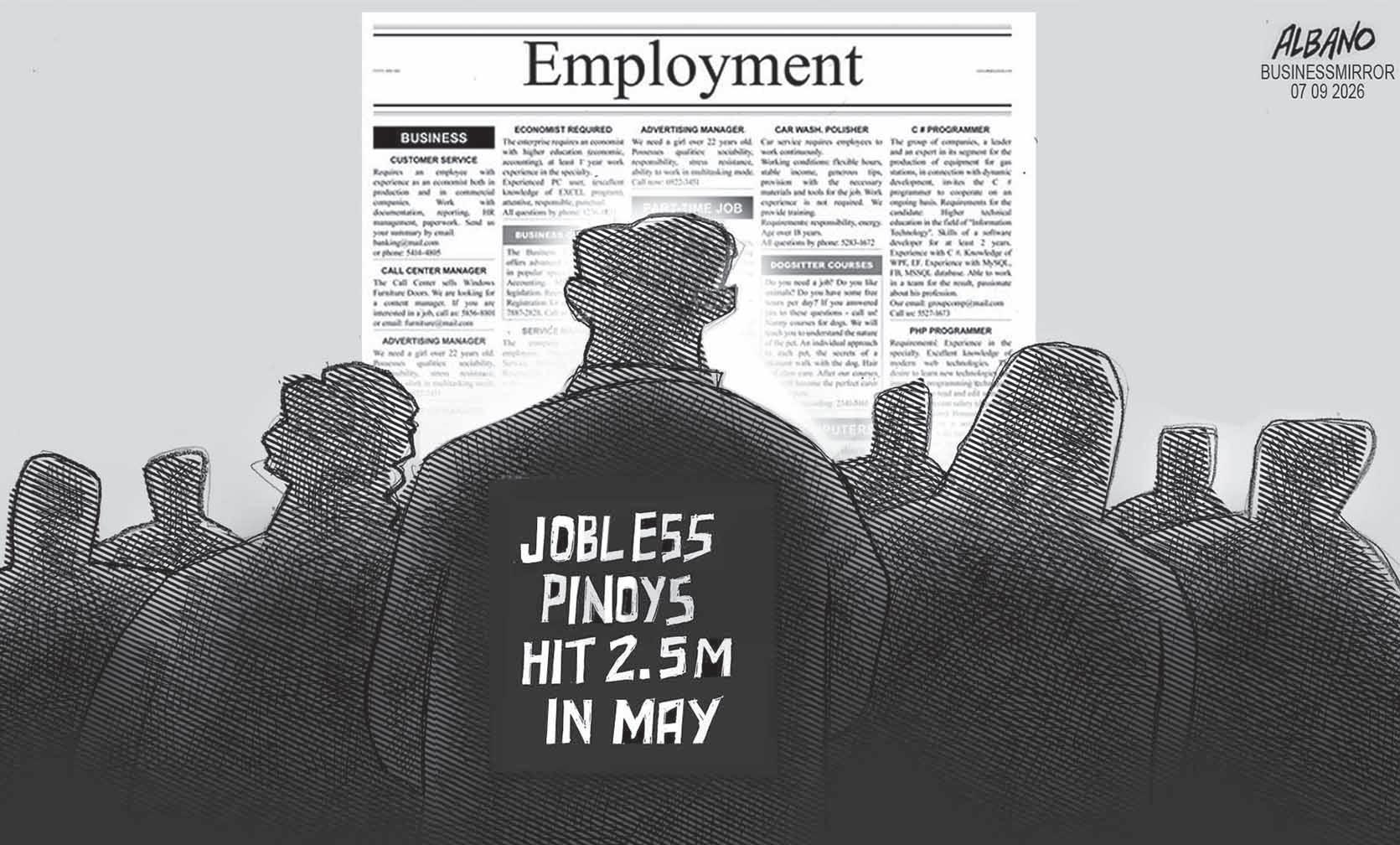
Running faster, standing still

IOUTSIDE THE BOX
N 1970, a dollar bought a little over six pesos. It now buys more than 60. No monetary authority sat down and designed that 50year slide. The peso weakness compounded one policy decision at a time, while everyone was looking at something else.
Let’s start with definitions, because the popular ones are wrong.
Inflation is an increase in the money supply, not simply paying a higher price for something. Print more money, and each unit buys less, not because goods became scarcer, but because the currency measuring them increased in supply. The money supply in every government currency system goes only one direction. So does the price of everything bought with the money.
None of this is new. Roman emperors cut the silver content of the denarius from near purity to a splinter over two centuries, while still demanding the coin be accepted at face value. The mechanism has not changed, only the tools. Rome needed furnaces, silver, and time to debase a coin. A modern central bank needs a keyboard.
Why would any government choose this. It lets the state spend beyond what taxes or honest borrowing would allow, without ever ask-
ing voters to approve a tax increase. Milton Friedman called inflation “the one form of taxation that can be imposed without legislation.” The government captures real purchasing power from everyone holding the currency, one peso at a time, and calls it monetary policy rather than a tax bill.
What most people mean by deflation is falling prices. Macroeconomists treat deflation as dangerous. Christine Lagarde, IMF Managing Director at the time, called it “the ogre that must be fought decisively.”
But falling prices caused by rising productivity are not a bad thing. They are the entire purpose of economic progress. A farmer who doubles his rice yield without doubling his costs should be able to sell rice more cheaply and still profit. That is what technology is supposed to do.
Lewis Carroll wrote a scene that should be read by economists. The Red Queen tells Alice that in her
country, it takes all the running a person can do just to stay in the same place. To get anywhere else, you would have to run twice as fast.
That describes what happened to wages after 1971, when the United States severed the dollar’s last tether to gold. Productivity kept climbing. Wages, adjusted for inflation, did not. Central banks were the ones moving the ground.
A gigabyte of hard drive storage cost roughly $5,000 in 1990. It can cost less than a peso today. Nobody filed that under economic catastrophe. The productivity gain was real but inflation absorbed it before it reached the person buying the drive.
The mechanism is not mysterious. Productivity gains should lower prices and raise real income. Central banks are mandated to prevent that from happening, targeting a steady rise in prices instead. Those gains flow to whoever already owns appreciating assets, property, equities, anything priced in a currency being deliberately debased. Wage earners run but are going nowhere. Asset holders stand still and get richer anyway.
The Philippines has its own version of this arithmetic. The BSP’s inflation target, two to four percent, is treated locally as discipline. It also guarantees, by design, that the peso in a Filipino worker’s pocket buys measurably less every year, even as call centers, agribusiness, and manufacturing post genuine productivity gains. Those gains are real. The
distribution of the benefits is the problem.
Instead, they land in the PSEi, thin and dominated by a handful of conglomerate-linked issues, with retail participation a fraction of regional neighbors. When the market rises on liquidity rather than earnings, the beneficiaries are the already-invested. Everyone else watches pesos buy less rice, less fuel, less tuition, while being told low inflation is a policy success.
Artificial intelligence is about to compress this cycle. If AI delivers the productivity gains its promoters claim, the deflationary force will be larger than anything the global postwar economy has produced. Central banks, the BSP included, will face the same instinct that has governed them since 1971: offset it, rather than let it reach wage earners as cheaper prices. None of this makes the Philippines a bystander. The BSP sets that inflation target every year, by choice. The PSEi’s thinness is not bad luck. It is decades of listing rules and familycontrolled conglomerates protecting themselves from dilution. Manila built this.
Rome blamed the barbarians for its economic downfall through two centuries before anyone looked at what the emperor was doing to the money.
E-mail me at mangun@gmail.com. Follow me on Twitter @mangunonmarkets. PSE stock-market information and technical analysis provided by AAA Southeast Equities Inc.
Chip worker shortfall endangers US factory revival
AEduardo A. Davad Nonilon G. Reyes
D. Edgard A. Cabangon


By Maggie Eastland & Lorelei Smillie
GROWING nationwide shortage of high-skilled workers threatens to delay construction of billions of dollars in new semiconductor plants across the US and constrain future chip production unless the industry pools resources and the government keeps up funding, according to a new report.
The deficit is expected to be most acute in states such as Texas, California, Arizona, New York and Ohio, where many of the new facilities are being planned, according to new analysis including a survey of employers from McKinsey & Co., the chip industry group SEMI and the National Science Foundation. Altogether, the skilled labor deficit is projected to reach as much as 157,000 full-time workers by 2030, the study released Tuesday found. The dearth of talent risks stalling plans by Taiwan Semiconductor Manufacturing Co. to invest as much as an estimated $265 billion in a dozen chipmaking and packaging facilities in Arizona, as well as Micron Technology Inc.’s vision to spend $100 billion on memory chip production in New York and
Samsung Electronics Co.’s logic chip facility in Texas. Even Intel Corp.’s delayed $28 billion investment in Ohio is set for shortages once production ramps up, the report said. The workforce challenges mark the latest hurdle for chipmakers seeking to expand their manufacturing footprint in the US and reverse the migration of production capacity to Asia that unfolded decades ago. Rising prices for a wide range of goods including copper, steel and cement threaten to increase the cost of construction for new facilities billed as a centerpiece of President Donald Trump’s economic agenda.
At the same time the chip industry expects to see a worker shortfall, the AI boom—and companies’ rush to invest in it—has also been
blamed for layoffs in other parts of the labor market, including in the tech industry. Challenger, Gray & Christmas, which tracks layoff plans, found almost 102,000 announced job cuts attributed to AI so far this year.
Unless addressed soon, the chip industry labor gap risks undermining not only the billions of dollars in planned investment by companies but also the federal grants aimed at boosting domestic production under the 2022 Chips and Science Act, according to the report. The authors recommended a range of solutions including, continued government funding, expanded curriculum on semiconductors and earlier exposure to chip industry careers.
“There’s just not enough talent to go around,” said Taylor Roundtree, a partner at McKinsey who helped with the analysis. “Folks are realizing that the potential gap is so large that they collectively do have to solve it.”
By 2030, about 74 percent of the semiconductor industry’s unfilled roles will be in manufacturing and 60 percent in engineering, the study
found. While Chips Act-funded programs have helped to increase the number of technicians available to work at new plants, those initiatives have hardly made a dent in addressing the need for manufacturing and hardware engineers. Already, nearly three-quarters of employers are reporting significant difficulty in hiring engineers, according to the survey, which canvassed semiconductor companies. The root of the problem is that few US engineering students—only about 3 percent—go on to work in the chip industry, with most opting for more lucrative software-related fields like artificial intelligence. The Chips Act provided the National Science Foundation with $200 million through 2027 for workforce development through programs that educate students and train new workers via an organization called the National Network for Microelectronics Education. The authors recommended keeping up the funding, though the report didn’t elaborate on extending those initiatives. With assistance from Maya Prakash /Bloomberg
John Mangun
Indonesia
faces possible cut to frontier market by S&P Dow Jones
By Ruth Carson & Bernadette Toh
INDONESIA’S stocks fell after S&P Dow Jones Indices signaled the country could eventually lose its emerging-market status if concerns over its equities market persist, dealing a setback to efforts to reassure global investors.
The move deepens skepticism over whether recent reforms have gone far enough to address longstanding investor complaints about transparency, liquidity and the limited amount of shares available for trading in some of Indonesia’s largest companies.
On Wednesday, the benchmark Jakarta Composite Index fell as much as 1.5 percent, underperforming the broader regional market. The gauge has tumbled about 32 percent this year, ranking it as the world’s worst-performing major equities market.
In its annual update, S&P DJI placed Indonesia on a list of markets facing possible reclassification, saying it may first introduce special treatment for Indonesian securities if circumstances worsen. A downgrade would not be imminent, however, as any review of the country’s status would only take place if the issues remain unresolved one calendar year from the date of introduction of the special measures.
The move will likely add to investor uncertainty that’s brewed over months after MSCI Inc. in January raised concerns about Indonesian stocks’ investability and flagged a potential downgrade to frontier market status. Concerns in particular around free float—shares available for public trading—have emerged as a flashpoint in recent years, as investors lament that the nation’s biggest companies are thinly traded and controlled by a handful of wealthy individuals.
“If Indonesia gets downgraded and does not heed what the index providers are saying, we are talking about billions of dollars of outflows,” said Ashwin Binwani, founder of Alpha Binwani Capital.
Indonesia is increasingly being seen by investors as a market where expansive fiscal policies, increasing state control and execution risks are eclipsing one of the developing world’s most compelling long-term growth narratives—a perception that has intensified since President Prabowo Subianto took office less than two years ago.
MSCI’s warning, which had triggered a market rout, prompted authorities to introduce a series of reforms. The index compiler last month postponed its review on Indonesian equities, already delayed from May, saying it needed more time to see whether recently announced transparency reforms are effective.
FTSE Russell said in May it would delay re-ranking Indonesia, including changes to free float and stock additions, until at least its Sep -
Indonesia is increasingly being seen by investors as a market where expansive fiscal policies, increasing state control and execution risks are eclipsing one of the developing world’s most compelling long-term growth narratives—a perception that has intensified since President Prabowo Subianto took office less than two years ago.
tember review to allow for further monitoring.
“S&P Dow Jones Indices has joined MSCI in reviewing Indonesia’s market framework, increasing the risk of further foreign equity outflows while creating a more limited headwind for the rupiah, given support from bond inflows,” said Andre de Silva, MLIV strategist.
S&P DJI’s warning piles more pressure on Indonesian authorities to accelerate reform initiatives, though its one-year runway before any reclassification gives the country more breathing room, according to Fabien Yip, market analyst at IG International.
“S&P DJI’s emerging market benchmarks also carry far less passive assets under management than MSCI’s. So the flow risk from this specific announcement is relatively lower,” Yip said.
Regulators have introduced a series of reforms in recent months, including raising minimum float. The installation of capital markets veteran Jeffrey Hendrik as chief executive officer of the stock exchange recently has also steadied some nerves.
In response to S&P DJI’s warning, Hendrik said the bourse, along with other stakeholders, will continue to implement measures to address the concerns flagged by the index provider. The platform is committed to improving transparency of local capital market to ensure fairness, order and efficiency, he said in a statement.
Uncertainty ahead of the index compilers’ decisions had pushed many market participants to the sidelines, with investors citing the overhang from potential outflows. The rupiah is also among the weakest emerging market currencies, down more than 7 percent against the US dollar, prompting the central bank to hike interest rates by a total of 100 basis points this year.
The risk of downgrade in market status alone can deter fresh capital flows into Indonesia, according to Win Thin, chief economist at Bank of Nassau 1982 in New York. Bloomberg
China’s ICBM tests point to new normal rattling the Pacific
CHINA’S test this week of a submarine-fired ballistic missile may mark the beginning of more regular Pacific launches as the country advances its arsenal for delivering nuclear warheads, unsettling governments already wary of Beijing’s military buildup.
President Xi Jinping has overseen what analysts describe as the world’s fastest expansion of a nuclear arsenal, relying on intercontinental ballistic missiles to put distant adversaries at risk. Although China has conducted fewer publicly known ICBM tests than other nucleararmed states, analysts expect that pace to increase as Xi expands the PLA Rocket Force and stamps out corruption in the service.
Monday’s launch was only the third publicly known Chinese flight of a long-range ballistic missile into the Pacific since the People’s Republic was founded in 1949. The People’s Liberation Army conducted its first such test in 1980 and didn’t repeat it until 2024, when an ICBM splashed down near Tahiti. By contrast, North Korea has carried out nine successful ICBM flight tests since 2017, underscoring how rarely Beijing has demonstrated its longest-range missiles over the Pacific.
“The key story here is that China’s military and nuclear modernization continues apace,” said Mike Hughes, director of the Defence Strategy Program at the Australian Strategic Policy Institute. “There should be no remaining doubt about China’s intent for dominance in the region.”
The first two known ICBM tests were conducted from land-based launch sites. The latest launch demonstrated the sea-based leg of China’s nuclear triad, complementing its land-based missile force as Beijing works to strengthen its airborne deterrent.
Analysts now expect the PLA to demonstrate the air leg of the triad with a nuclear-capable missile launched from a strategic bomber. China displayed a nuclear-capable,
air-launched ballistic missile called the JL-1 during a military parade last year.
“Some aspects of a missile’s performance, especially reentry, cannot be fully replicated at reduced ranges,” said Jeffrey Lewis, distinguished fellow at the Foreign Policy Research Institute based in Philadelphia, adding that it wasn’t surprising that China would conduct at least one longer range test for the system.
“This is a normal testing practice that should be done at least once, and ideally more often, to make sure the missiles perform as designed,” he said. “I suspect we may see more tests than in the past, but right now one per system is still extremely restrained.”
Still, Monday’s test already unnerved regional countries. Australia criticized the move as “destabilizing for the region,” while New Zealand warned against a potentially “recurring pattern by China.” The Philippines slammed the test as “a reckless display of military power that shows little regard for smaller countries.” The US State Department said it remains steadfast in defense commitments to allies and partners.
China’s neighbors are working hard to ensure they can keep tabs on the country’s ballistic missile subs. Japanese Defense Minister Shinjiro Koizumi has publicly mused about adding nuclear-powered submarines to his nation’s fleet, and Australia is collaborating on such boats with the US and UK as part of the AUKUS agreement. South Korea, too, has said it wants nuclear subs by the end of the 2030s, while India seems close to buying several advanced conventionally powered vessels from Germany.
In response, China reiterated it has always maintained its nuclear forces at the minimum level required for national security and does not engage in a nuclear arms race with any country, according to a statement from the Ministry of National Defense. The modernization of nuclear forces is to safeguard the country’s strategic security and maintain global strategic stability, the ministry added.
Beijing has long complained that the US conducts more ICBM tests than China and urged nations not to overinterpret Monday’s launch, saying it was a “routine practice” not targeted at any specific country. The US conducted its most recent operational test of an unarmed Minuteman III ICBM in May in California, with a splashdown in the Pacific Ocean.
It remains unclear whether China fired the older JL-2 or the newer JL-3 submarine-launched ballistic missile. The JL-2 has an estimated range of about 7,200 kilometers (4,500 miles), meaning Chinese ballistic missile submarines would likely have to operate beyond the first island chain—where they are more vulnerable to detection by the US and its allies—to strike much of the continental US.
A JL-3, with an estimated range of about 10,000 kilometers, would allow launches from waters much closer to China’s coast, enabling submarines to remain inside protected areas while still threatening the US mainland.
The exact location of the splashdown is also unclear. Starboard Maritime Intelligence data shows two Chinese satellite tracking ships near the Federated States of Micronesia, which were operating outside any nation’s exclusive economic zone at the time of the test.
“These vessels carry large satellite dishes used to track missile launches and other space activity, and are likely in the Pacific to collect data from the missile test,” said Mark
Douglas, maritime domain analyst at Starboard. “Both vessels left China around 25 June and were on station before China sent out diplomatic notifications of the test, showing that clearly this activity has been planned well in advance.”
Either way, SLBMs boost the PLA’s second-strike capability—the ability to respond to a nuclear attack with nuclear retaliation. Submarines are well suited to that role because their ability to remain submerged makes them more likely to survive a preemptive first strike.
“A test of this length is a major development and would indicate that China is moving toward a significantly more survivable and longerrange sea-based nuclear deterrent capability,” said Lyle Morris, senior fellow on foreign policy and national security at the Asia Society Policy Institute, a former Pentagon official who regularly dealt with issues involving the PLA.
“The launch appears intended to demonstrate an operational seabased nuclear deterrent and to show China is progressing with its nuclear triad,” he said.
Xi has made 2027 a deadline for the PLA to become a modern army. His graft crackdown since mid-2023 has so far taken out two vice military chairs, a former defense minister and at least a dozen senior generals who oversaw military commands.
“The SLBM program is likely more insulated from the ongoing purge” due to its importance, said Yang Zi, a research fellow at the S. Rajaratnam School of International Studies in Singapore, who studies China’s military.
While he expects more ICBM tests, he cautioned they are unlikely to become too frequent because that would diminish their deterrent value.
“These kinds of tests are only shocking and surprising when done once in a while,” he said. With assistance from Jing Li, Rebecca Choong Wilkins, Foster Wong, Cecile Vannucci and Philip Glamann/ Bloomberg
Iranian oil at sea left in limbo after US revokes 60-day waiver
By Yongchang Chin & Rong Wei Neo
TENS of millions of barrels of Iranian oil already on tankers have been left in limbo after the US walked back a waiver allowing the Islamic Republic to sell the crude.
There are around 63 million barrels of Iranian oil currently on the water, either in transit or idling, according to Bloomberg calculations based on Vortexa data. The crude is on vessels in the Persian Gulf and spread across Asian waters. Most of these ships are not indicating a clear destination or are signaling that they’re available for orders, meaning they haven’t found a buyer.
The US waiver, part of the interim peace deal between Washington and Tehran, was issued in late June and gave Iran 60 days to sell its oil without being subject to American sanctions. It was revoked in retalia-
tion for Iranian attacks on tankers in the Strait of Hormuz.
The waiver, together with the US lifting its blockade of Iranian ports, had prompted a surge in loading of Iranian crude. That oil will now be very difficult to sell, depriving the Islamic Republic of a much-needed source of revenue and also removing a key incentive intended to get Tehran to abide by a deal that calls for reopening the strait.
United Against Nuclear Iran, a nonprofit organization, said it has tracked at least 19 Iranian oil and petrochemical loadings since the interim deal was signed. UANI has
also identified at least 46 tankers laden with Iranian oil or fuel along the the country’s coastline.
Even before the waiver was revoked, Tehran was struggling to sell its oil. That was partly due to a deluge of non-Iranian crude coming out of the Persian Gulf, meaning the barrels were no longer trading at a discount to alternatives, and also because buyers were wary of various risks still involved in the trade.
Both state-owned National Iranian Oil Co. and middlemen hawking the country’s crude had been pushing to sell the supply in recent days, said traders with direct knowledge of the matter. Refiners in Japan, Taiwan and South Korea had all received offers, they said. Indian processors, meanwhile, were preparing to buy the oil, but only if the US extended the waiver beyond August.
There weren’t any recorded pur-
Tankers trickle through Hormuz after spate of Iran attacks
By Weilun Soon
AHANDFUL of oil carriers appeared to transit through the Strait of Hormuz early on Wednesday, even after a spate of strikes on ships rattled owners and prompted at least one supertanker to turn around midway through its crossing.
Six tankers were seen beginning or completing Hormuz crossings just hours after three vessels came under attack—the largest number of incidents since an interim USIran peace deal came into effect last month. Still, in a sign of prevailing uncertainty, at least one of the six—an India-flagged supertanker, Lila Vadinar—made it to the tip of the Musandam peninsula but then turned back. The stop-start nature of the Hormuz reopening has reduced transit numbers over recent days and weeks, after a spike seen after
the June agreement. Liquefied natural gas traffic has largely ground to a halt after Tuesday’s strikes, which included an attack on a Qatari tanker. In normal times, about a fifth of global LNG supply goes through Hormuz, and worries around fresh disruption in the strait have pushed European gas prices up about 10 percent over last two days.
Tuesday’s attacks mark the biggest threat to date to a fragile peace agreement, as the US retaliated with airstrikes and scrapped a waiver that had temporarily allowed the
sale of Iranian crude. Saudi Arabia has since named one Saudi-flagged tanker as the Wedyan.
As well as deciding whether or not to sail, shipowners now have to ponder which route to take, as the risk of angering either side rises.
The corridor that hugs the Omani coast is supported by the US military, but has increasingly come under attack by Iran as it continues to assert its dominance of the waterway.
The other option is a path that goes closer to the middle of the strait, a route which Tehran says it controls, but safe passage requires seeking the country’s approval. That exposes those who use it to compliance and secondary sanctions risks.
“Going forward, future tanker movements will increasingly reflect the prevailing security environment
The corridor that hugs the Omani coast is supported by the US military, but has increasingly come under attack by Iran as it continues to assert its dominance of the waterway.
rather than legacy cargo commitments,” maritime risk company Marisks said Wednesday in a note to clients.
One very large crude carrier on charter to ExxonMobil Holdings Corp., the fully laden Tenjun, pushed through overnight on a route that Iran claims to have control over—even after news of the attacks emerged.
U-turns have become increasingly common as shipowners grapple with a changing situation and fluctuating Iranian demands, with some resuming their journeys along
the Tehran-approved route. The Lila Vadinar had entered the Persian Gulf late June and picked up a cargo of Kuwaiti crude before attempting to leave on Wednesday. Bloomberg News couldn’t immediately determine the reason behind its about-face. Maritime database Equasis lists RFK Shipping IFSC Pvt Ltd in India as its owner, but provided no telephone or email contact details.
It was also unclear why the Tenjun took a route Iran claims to control. Exxon—which has taken the ship on time charter, according to brokers and tracking data—did not respond to emailed queries. A spokesperson for Japan’s NYK Line, listed as the ship’s beneficial owner, declined to comment.
The vessel transited the chokepoint at around the time when news of the third attack emerged, and is
chases of Iranian crude by Asian refiners outside of China since the waiver was issued, the traders said, although some sales may be kept under wraps due to their sensitivity. The trade faced a number of obstacles. European Union and UK restrictions remained in place, complicating insurance, and some ports may not have been willing to allow Iran’s dark-fleet ships to dock. Buyers were also wary of sudden changes in US policy.
One of the few remaining markets for the oil is China’s independent refiners, known as teapots, who were Iran’s main customers prior to the Middle East war. However, it’s likely Tehran would need to offer steep discounts to pique their interest, given they were scooping up Saudi Arabian and Iraqi crude earlier this month. With assistance from Yasufumi Saito /Bloomberg
now sailing in the Gulf of Oman, headed for Singapore. Behind Tenjun, a China-bound VLCC that earlier appeared to sail along the Omani coast is now taking the same route in the middle of the strait. Hours earlier, three laden supertankers exited the Persian Gulf and are now off Fujairah in the United Arab Emirates, though they did not turn on their transponders while sailing through the strait. Traffic along the Iranian side was relatively quiet on Wednesday morning. Two Iran-flagged crude tankers sailed into the Persian Gulf along the Tehran-backed route, with a bulk carrier claiming Chinese ownership behind them. With assistance from Stephen Stapczynski, Serene Cheong, Rakesh Sharma and Tsuyoshi Inajima /Bloomberg
A16
Thursday, July 9, 2026 | Editor: Jun Lomibao
DJOKO IN 5 HRS AND 15 MINUTES
LONDON—Side to side. Corner to corner. Novak
Djokovic kept pushing Felix
Auger-Aliassime back and forth along the Centre Court baseline at Wimbledon to retrieve one shot after another.
Finally, on the 22nd shot of a grueling rally deep in a fifth-set super tiebreaker, Auger-Aliassime had a forehand in the middle of the court. Under normal circumstances it might have been just the shot he was looking for. Not this time. Not after five hours of battling with the 39-year-old Djokovic.
Auger-Aliassime, a 25-year-old Canadian with one of the top-rated forehands on tour, had nothing left in his tank. He sprayed his forehand wide to give Djokovic a 9-4 lead. Then both players bent over in exhaustion and leaned on their rackets.
D jokovic, while he was bent over, still found energy to encourage the crowd to cheer louder, waving his right arm for more noise.
O ne point later, the longest quarterfinal in Wimbledon history— at five hours and 15 minutes—was finished. These,” Djokovic said, “are the kind of moments that I still play tennis for.”
D jokovic, the seven-time
Wimbledon champion, prevailed 7-6 (10), 3-6, 6-3, 6-7 (4), 7-6 (4) on Tuesday to set up a semifinal against defending champion Jannik Sinner. “ I’m still able to battle these young guys that have 15 years less than me,” Djokovic said. “I’m able to beat them at the tightest possible scoreline.... In a sense, it is really a nice surprise. But at the same time, I always have the highest expectations for myself.”
D jokovic continues to break records as he chases a 25th Grand Slam title. He’s reached a record-setting eighth consecutive Wimbledon final four—moving him one ahead of Roger Federer for most consecutive men’s singles semifinal appearances at the grass-court tournament. We know, because we’ve seen him so much, but it’s so impressive that he does it time and time again,” AugerAliassime said.
T he match ended just before the All England Club’s 11 p.m. curfew took effect.
To celebrate, Djokovic raised his arms high and wide and took in the applause as he walked to the net to shake hands with Auger-Aliassime. Then Djokovic performed a little elbows-to-knees dance. He often mentions that his daughter, who was watching in the players’ box, tries to
teach him moves.
L ater, Djokovic was asked to compare himself with another 39-yearold still performing at the highest of levels: Lionel Messi of Argentina. It would be nice to play 90 minutes like him,” Djokovic said of the soccer great.
Rematch with Sinner
JANNIK SINNER spent less than half the amount of time on court as Novak Djokovic did when he beat Jan-Lennard Struff, 7-5, 7-6 (4), 6-3, much earlier in the day on No. 1 Court.
Sinner beat Djokovic in straight sets in last year’s Wimbledon semifinals; and Djokovic outlasted the Italian over five sets in the last four of this year’s Australian Open.
“ I wish it was finals, so I don’t need to worry about how the body will feel tomorrow,” Djokovic said. “I was telling the kids to go to sleep after the fourth [set] but they didn’t want to listen. I’m glad they stayed because it was honestly one of the best matches I was part of on this court in my career.”

D jokovic does get two days off before Friday’s semifinals. AP


SBy Butch Fernandez
ENATORS heaped praise on Alex Eala on Wednesday for inspiring young Filipinos and “breaking long-standing barriers in international tennis” despite her fourth-round exit at the Wimbledon Championships.
One of them, Senator Joel Villanueva, filed proposed Senate Resolution No.

Editor: Jennifer A. Ng

Chinabank to get clean energy from Aboitiz power unit Canada’s OpenText keen on scaling up PHL operations
ADVENTENERGY, the retail electricity arm of AboitizPower, will supply 2 megawatts (MW) of renewable energy (RE) to over 30 percent of China Banking Corp.’s (Chinabank) branches, covering 153 locations across Luzon.
This partnership, enabled by the Energy Regulatory Commission’s (ERC) Retail Aggregation Program (RAP), advances the sustainability goals of the bank.
RAP allows eligible businesses and institutions to pool the demand of multiple facilities and participate in the competitive retail electricity market.
The partnership also extends a long-standing relationship between AdventEnergy and the SM Group, which holds majority ownership of Chinabank.
“In line with our commitment to support the development of renewable energy projects in the country, Chinabank believes that its own operational electricity should be sourced from renewable alternatives whenever possible,” said Chinabank President and CEO Romeo D. Uyan Jr.
“Our partnership with Ad-
Globe still in TIME list of green companies
By Lorenz S. Marasigan @lorenzmarasigan

GLOBE Telecom Inc. said it has secured a spot in TIME and Statista’s World’s Most Sustainable Companies ranking for the second consecutive year, emerging as the only Philippine telecommunications firm—and one of just two Philippine companies overall— to make the 2026 global list.
The ranking, which recognizes the top 750 companies worldwide, drew from a pool of more than 5,000 of the world’s largest and most influential corporations.
Organizations were evaluated across more than 20 key performance indicators in a four-step process covering sustainable business practices, commitment and ratings, reporting and transparency, and environmental and social stewardship.
“Earning a place on this global ranking shows that Philippine companies can meet the highest global standards for sustainability, transparency, and responsible governance,” said Carl Cruz, president and CEO of Globe. “Our sustainability practice continues to strengthen, it has become a measure of how we build trust, create long-term value, and remain competitive in a rapidly changing world.”
The Ayala-led telco posted a 15.13-percent year-on-year reduction in gross Scope 1 and 2 greenhouse gas emissions, outpacing its annual reduction target of 4.2 percent. Its gross Scope 3 emissions likewise fell 9.49 percent, well above its 2.5-percent goal. The company has also been ramping up its shift to renewable energy, transitioning around 700 sites as of end-May 2026. It is targeting at least 3,000 sites by 2028 as part of its broader sustainability agenda.
ventEnergy enables us to secure clean energy, reduce our carbon footprint, and actively build a more sustainable future.”
AdventEnergy Vice President for Retail Energy Sales and Services Catherine Del Villar-Pasilaban said the company is committed to deliver integrated and sustainable energy solutions.
The deal also reflects the continued expansion and adoption of the ERC’s customer choice programs, complementing the recent implementation of Phase IV of retail competition and open access (RCOA), which lowered the contestability threshold from 500 kilowatts in monthly peak demand to just 100.
“As contestability thresholds continue to lower under the ERC’s programs, and more eligible customers are able to enjoy the power of control and choice, we want to be the partner that institutions can count on to navigate this shift with confidence,” she said.
AdventEnergy already powers SM Group’s diverse operations-from malls, banks, schools, and retail establishments to its affiliated companies. Lenie Lectura
CBy Bless Aubrey Ogerio @blessogerio
ANADIAN software firm
OpenText is looking to expand its Philippine operations through investments in cloud computing, artificial intelligence (AI), cybersecurity and other digital technologies, alongside plans to deepen partnerships with both government and private sector clients.
Among the projects discussed was a proposed cloud transformation initiative with BDO Unibank valued at between $8 million and $10 million over the next five years.
OpenText also expressed interest in supporting the government’s digitalization efforts through AI-enabled citizen services, cybersecurity, secure cloud infrastructure, digital records modernization and digital forensics.
The company currently employs more than 1,300 professionals at its Makati office, which serves as one of its largest global delivery hubs.
Its Philippine operations provide software development, implementation, customer support, managed services, enterprise information management, cybersecurity and cloud solutions for clients across the Asia-Pacific region and other international markets.

Cosmopolitan Funeral Homes sees tieups as key to business longevity
By Carmel Pedroza
CEBU City—As it celebrates its 75th anniversary, Cosmopolitan Funeral Homes Inc. is looking beyond its long history and focusing on the future—strengthening partnerships, expanding access to pre-need memorial plans, and preparing the next generation to carry on a family legacy that spans almost a century.
For Cosmopolitan Funeral Homes President and CEO Renato Dychangco Jr., the company’s next chapter is about ensuring that the business his father built continues to thrive under future generations while adapting to the changing needs of Filipino families.
“We’ve seen businesses plateau or disappear because succeeding generations failed to continue the legacy,” he said in an interview with reporters. “That’s why I’ve been telling my daughters that this should become part of what they do—to continue what my father started and never stop from there.” A major part of that strategy is Cosmopolitan’s partnership with the cooperative sector through Cosmopolitan CLIMBS Lifeline Inc., a collaboration that Dychangco described as the first of its kind in the Philippines between a private funeral service provider and a cooperative insurance network.
The partnership, together with CCLPI Plans, markets Angelica Life Plans, allowing members of thousands of cooperatives nationwide to access licensed memorial plans backed by regulat-
ed trust funds and professional funeral services. CLIMBS, one of only two cooperative insurance organizations in the country, has around 4,700 cooperative affiliates nationwide, including major groups, such as the Armed Forces and Police Savings and Loan Association (ACDI).
“We’re very proud that we partnered with Cosmopolitan Funeral Homes as our main service provider of Angelica Life Plans,” said Mansueto dela Peña, president and CEO of CCLPI Plans. “This partnership creates synergy between quality funeral services and secure financial planning for Filipino families.”
Shifting attitudes
DYCHANGCO said Filipinos have become significantly more open to discussing death and preparing for it compared to previous generations. “Before, when you talked about death, people would shy away from the topic. Today, people have accepted that this is something everyone will eventually face. Preparing ahead eases the financial burden for the family that’s left behind.” The changing mindset has also transformed the pre-need industry, which has undergone sweeping regulatory reforms over the
Dychangco recalled that more than a hundred pre-need companies once operated in the country, but many collapsed due to poor investments and inadequate funding.

The Makati facility also functions as OpenText’s specialized cybersecurity hub. Established in 2024, it is designed to detect, monitor and respond to cyber threats in real time across the company’s global cloud networks.
For her part, Trade Secretary Ma. Cristina Roque said the company’s planned expansion is aligned with the government’s efforts to strengthen the country’s digital economy.
“OpenText’s plans align with our national agenda to build a robust, secure digital economy.
From AI-driven public services to critical banking infrastructure, this expansion shows how we work closely with global tech leaders,” Roque said. She added that the government remains ready to facilitate technology investments through available investment incentives and streamlined approval processes.
The discussions took place dur -
ing the Philippine government’s engagements with Canadian companies as it seeks to attract investments in digital infrastructure, advanced technologies and high-value services.
The Department of Trade and Industry (DTI) announced recently that Canadian telecommunications firm Telus Corp. and business process outsourcing firm NQX are also expanding their operations in the Philippines.
The DTI said Telus is scaling up AI-related services and healthcare operations in the Philippines while NQX is investing $10.3 million in countryside locations.
For one, DTI said NQX’s expansion will generate an additional 725 jobs. Part of the planned expansion includes establishing a new Philippine site in potential countryside locations including Laoag and Dagupan in North Luzon, and Legazpi in South Luzon, subject to final site selection.

High demand for capital, loans propel cash supply
By Andrea E. San Juan
THE higher demand for cash as well as expectations of rate hikes is fueling the similar demand for loans and thereby propelled money supply, according to analysts.
Rizal Commercial Banking Corp.
(RCBC) Chief Economist Michael L. Ricafort explained that as a matter of prudence, some local businesses have hedged some borrowing requirements or loans as they expect borrowing costs to go up further. Philippine Institute for Development Studies (PIDS) Senior Research Fellow John Paolo R. Rivera concurs. Rivera said that both bank lending and domestic liquidity accelerated due to “stronger working capital [demand], consumer borrowing, and firms securing financing ahead of possible further rate pressures.”
Ricafort and Rivera’s comments were sought after latest data from the Bangko Sentral ng Pilipinas (BSP) showed that loans from universal and commercial banks grew by 12.1 percent year-on-year in May—the fastest growth of bank lending in 15 months.
In the same vein, the amount of money circulating in the economy (domestic liquidity) expanded by 12.8 percent in May—the fastest in 5 years and 8 months or since August 2020.
The “strong” double-digit growth in both bank lending and domestic liquidity suggests that the BSP’s earlier rate cuts are now “gaining traction” in the real economy, Jonathan L. Ravelas, senior adviser at Reyes Tacandong & Co., said.
“Lower borrowing costs, improving business confidence, steady consumer spending, and continued government expenditures have encouraged more credit demand and increased liquidity in the financial system,” Ravelas added.
He further explained that lending growth is “broad-based” from businesses expanding operations to households spending and investing. This condition points to a “strengthening” domestic demand environment, he added.
Moving forward, Ravelas said the expansion in lending is a positive signal for economic growth. However, he emphasized that the central bank “will still need to balance this momentum against inflation and global uncertainties to ensure growth remains sustainable.
Activity expansion
A STATEMENT the central bank issued read that loans from universal and commercial banks jumped by 12.1 percent year-on-year in May, faster than the previous month’s 11.4 percent.
In peso value, data from the central bank showed loans outstanding for production and consumer loans amounted to P14.989 trillion.
Loans for business activities expanded by 11.7 percent in May, the data showed. In particular, lending rose for the following key industries: electricity, gas, steam and airconditioning supply (32.9 percent); real estate activities (7.3 percent); wholesale and retail trade, and repair of motor vehicles and motorcycles (10.1 percent); manufacturing (6.4 percent); and transportation and storage (21.4 percent).
Consumer loans to residents grew by 19 percent. BSP data indicated this is slightly slower than the previous month’s 19.6-percent growth, reflecting softer expansion in credit card and motor vehicle loans.
Notable increase
BSP data showed that the amount of money circulating in the economy (M3), grew by 12.8 percent year-onyear to P20.6 trillion in May.
Domestic liquidity grew by 12.8 percent to P20.6 trillion in May, faster than the 12.2 percent recorded in the previous month.
Historical data from BSP showed that this is the fastest growth of M3 since August 2020 or in 5 years
and 8 months, when the pace of the growth of domestic liquidity was at 13.7 percent.
According to the BSP, domestic liquidity growth was driven mainly by the sustained expansion in borrowings by both the private and public sectors.
Borrowings by the public and private sectors are captured under “domestic claims,” which grew by 13.3 percent year-on-year in May from 12.7 percent in April, the central bank noted.
“The increase in domestic liquidity supports economic activity by facilitating consumption, lending, and investment,” the central bank added.
M3 is a broad measure of money supply that includes currency in circulation, bank deposits, and other financial assets that are readily convertible to cash.
The BSP also noted that credit to production sectors and households, mainly in the form of bank loans, continued to grow and support economic activity.
“Loans to production sectors and households compose 97 percent of ‘Claims on Private Sector,’ which grew by 13.2 percent in May from 12.6 percent in April,” the central bank said.
Debt, withdrawals MEANWHILE, the National Government’s issuance of debt securities and withdrawal of deposits from the BSP and banks to finance its spending also contributed to growth in domestic liquidity, the BSP explained.
“These fall under ‘Net Claims on Central Government,’ which increased by 16.2 percent in May from 15.1 percent in the previous month,” according to the central bank.
Higher net foreign assets (NFAs) also contributed to M3 growth.
NFAs represent the difference between claims on nonresidents and liabilities to nonresidents of depository corporations.
The BSP’s NFA position expanded by 8.2 percent. Similarly, banks’ NFA grew, primarily on account of larger holdings of foreign currency-denominated debt securities.
The BSP said monetary authorities will continue to ensure that domestic liquidity and bank lending conditions remain aligned with the price and financial stability objectives of the central bank.
Inflation easing
UNION Bank of the Philippines (UBP) Chief Economist Ruben Carlo O. Asuncion said stronger credit creation, ample liquidity and continued demand for financing from businesses and households are supporting economic activity.
“While these developments are encouraging and should provide support to growth in the coming quarters, elevated inflation, geopolitical risks, and softer economic conditions could temper the transmission of these gains to the broader economy in the near term,” Asuncion also noted.
Rivera explained stronger credit expansion and continued liquidity are supportive of growth because credit liquidity helps finance consumption, business operations and investment.
“It shows the financial system is still supporting the economy despite headwinds,” the PIDS Senior Research Fellow said.
However, Rivera expects growth to moderate if inflation stays elevated, rates remain high, and banks become more cautious.
“Earlier easing may be starting to support credit activity, but the effect is gradual. This could help Q2 [second-quarter] growth improve modestly, but stronger GDP will still depend on consumption, public spending, good governance, investment, and inflation easing,” he also pointed out.
Meanwhile, Ravelas said he expects growth to recover in the second half of 2026, saying the second quarter of 2026 was “challenged by inflation and risk off themes.”
BIR re-imposes taxes on LPG, kerosene as crude prices dip

By Reine Juvierre Alberto @reine_alberto
THE government has resumed the imposition of excise taxes on kerosene and liquefied petroleum gas (LPG) as the one-month average Dubai crude price slipped below the $80-per-barrel threshold, according to the Bureau of Internal Revenue.
The main tax-collecting agency announced last Wednesday that excise taxes on the two petroleum products automatically returned to the rates set under Section 148 of the National Internal Revenue Code of 1997 starting July 8.
The BIR’s announcement came a day before Finance Secretary Frederick D. Go told reporters that the government’s economic team hasn’t made a decision on whether to maintain the moratorium on taxes on kerosene and liquefied petroleum gas
(LPG), as the relief will end on July 17. (See https://businessmirror. com.ph/2026/07/07/jury-stillout-on-petrol-tax-pause-afterfriday/ )
Under the Tax Code, kerosene is subject to an excise tax of P3 per liter, while LPG is taxed at P1 per kilogram.
This comes after the one-month average price of Dubai oil, based on the Mean of Platts Singapore (MOPS), stood at $79.45 per barrel from June 1 to 30.
This is below the $80-per-barrel trigger set under Executive Order (EO) No. 114, which temporarily suspended excise taxes on selected petroleum products for three months to cushion consumers from elevated global oil prices amid geopolitical tensions in the Middle East.
By VG Cabuag @villygc
AS the Securities and Exchange Commission is set to lift a moratorium against new online lending platforms (OLPs) starting August 1, it introduced a strict and comprehensive framework governing the operation of financing and lending companies in the country. Both actions are contained in SEC Memorandum Circular 20 (series of 2026), which provides for the “Guidelines Prescribing Prudential Disclosure and Market Conduct Requirements for Financing and Lending Companies” and which also lifts the moratorium on OLPs.
MC 20 applies to all newly registered, existing, and prospective financing companies that make use of digital applications, mobile apps
or web-based systems to offer credit to the public.
The guidelines primarily seek to strengthen consumer protection through enhanced disclosure requirements, responsible lending practices, fair collection standards and increased regulatory oversight of digital lending activities.
“As we open the doors to new OLPs, we are making it clear that the SEC welcomes and promotes financial innovation but will not tolerate the proliferation of predatory and unfair lending practices,” SEC Chairman Francis E. Lim said.
“Our goal is to foster a safe, transparent and competitive online lending environment where both legitimate businesses and Filipino consumers can thrive through necessary consumer safeguards and reporting mechanisms outlined in this new memorandum circular,”
This bodes well for the government as the tax relief would hurt its revenue collections.
According to estimates from the Bureau of Customs, the suspension of excise taxes on kerosene and LPG will result in a revenue loss of P500 million per month from LPG and P10 million per month from kerosene. Despite the suspension, the BOC managed to beat its revenue targets in the past three months, and even recorded P11.478 billion in excess collections.
The removal of the tax is equivalent to P3.36 per kilo of LPG, or almost a P37 reduction for every tank of LPG, and P5.60 for every liter of kerosene. However, the EO states that tax rates will revert to previous rates one week after the one-month average Dubai crude oil price based on MOPS falls below $80 per barrel, as certified by the Department of Energy, or upon the expiration of the three-month suspension period.
SEC to lift moratorium on new online lending platforms
Lim added.
The SEC imposed a moratorium on new online lenders on November 5, 2021.
However, the lifting of the moratorium does not mean the automatic or unconditional approval of any online lenders, according to the regulator. Only licensed financing and lending companies that comply with the requirements of MC 20 may operate borrower-facing online lending. New companies shall submit their business plan within 60 days from the date of issuance of its certificate of authority to operate as a financing or lending companies.
The SEC is also imposing new paid-up capital requirements for those seeking to expand its operations or open new physical branches. This seeks to align regulatory
New BOC-Cebu senior exec takes helm
By Carmel Pedroza
CEBU CITY—The Bureau of Customs– Port of Cebu (BOCPoC) has welcomed Atty.
Zsae Carrie C. De Guzman as its new district collector, ushering in a new chapter for one of the agency’s top-performing collection districts following the promotion of former district collector Alexandra YapLumontad to the Bureau’s Financial Management Office.
De Guzman formally assumed office on July 7, 2026, succeeding Yap-Lumontad. The latter was appointed service director of the BOC’s Financial Management Office after a tenure marked by record revenue collections and intensified antismuggling operations.
In her first address to officers and personnel, De Guzman outlined her vision of making the Port of Cebu “the friendliest port in the country.” She emphasized that a culture of respect, trust, integrity and genuine care among employees is key to delivering excellent public service.
“The true strength of the Port of Cebu lies not only in what we accomplish, but in how we accomplish it. When we treat one another with respect, work with integrity, and pursue excellence together, we create an organization where people are inspired to give their best every day. That is the kind of workplace I hope we will build together,” De Guzman said.
In her farewell message, Yap-Lumontad thanked customs personnel for their dedication and highlighted the importance of teamwork in the port’s achievements.
“These commendations recognize more than accomplishments—they honor the dedication, sacrifices, and teamwork behind every success we

the
achieve. I am proud of what we have accomplished together as One Team Cebu. May we continue to serve with integrity, excellence, and a strong commitment to our country and the Filipino people,” she said.
During the first half of 2026, the Port of Cebu emerged as one of the Bureau’s top-performing collection districts.
From January to June, the port generated P25.331 billion in revenues, exceeding its collection target by P376.274 million. In June alone, collections reached P4.75 billion, surpassing the month’s target by P585.029 million.
Beyond revenue generation, the Port of Cebu enhanced trade facilitation by streamlining customs procedures, improving cargo clearance efficiency, ensuring proper customs valuation and tariff classification, and strengthening compliance with customs laws and international
standards.
The port also intensified its antismuggling campaign, resulting in the seizure of 11 forty-foot containers and 25 twenty-foot containers loaded with illicit cigarettes valued at approximately P1.84 billion, while sustaining enforcement operations against misdeclared and undervalued shipments.
The Bureau likewise credited stronger collaboration with business groups, law enforcement agencies and other government offices for improving intelligence sharing and reinforcing border protection efforts.
Following the turnover ceremony, the new district collector attended a Holy Mass with port officials and personnel, underscoring her desire to begin her leadership with faith, humility and a steadfast commitment to public service.
She later convened her first meetings with key officials, urging the workforce to continue advancing the Bureau’s mandates with integrity, excellence and professionalism.
De Guzman also affirmed the Port of Cebu’s commitment to the directives of Customs Commissioner Ariel Nepomuceno, particularly in strengthening revenue collection, trade facilitation and border protection in support of national development and economic growth.
Her appointment comes as YapLumontad leaves behind a strong performance record at the Port of Cebu.
The leadership transition was formally marked during the Port of Cebu’s Awarding of Commendations on July 6, where customs personnel were recognized for surpassing the port’s June 2026 revenue collection target and for their role in a successful operation that intercepted smuggled cigarettes.
requirements with the operational scale and risks associated with digital lending operations. Financing companies that do not operate any online lending platform shall maintain a minimum paid-up capital of P15 million, while lending firms will be subject to P5 million. For those with one online lending platform, the minimum paid-up capital is P20 million: P40 million for two platforms, P60 million for three, P80 million for four and P100 million for five.
Lending firms are required to have a minimum paid-up capital of P10 million for one platform and an additional P10 million for every new platform, for up to five only. To limit systemic market risks and prevent excessive consumer debt exposure, the SEC has instituted a limit of five platforms for financing and lending companies.
CPA week to be led by PICPA
ETHICAL leadership and global excellence would be the twinfocus of this year’s Accountancy Week Celebration led by the Philippine Institute of Certified Public Accountants (Picpa).
A statement issued by Picpa last Tuesday read that this year’s “Accountancy Week Celebration,” to be held from July 12 to 18, will have the theme, “Empower: Elevate Filipino CPAs Towards Ethical Leadership and Global Excellence.”
“The theme reflects the profession’s commitment to developing competent, principled, and globally competitive Filipino CPAs who exemplify ethical leadership and professional excellence,” the statement read.
According to the 97-year-old the national professional organization of Certified Public Accountants (CPAs) in the Philippines, one of the week’s major highlights is the series of technical sessions showcasing the four sectors of the accountancy profession: commerce and industry; education; government; and, public practice.
Picpa said these specialized learning sessions will feature distinguished resource speakers and industry experts who will discuss current developments, emerging technologies, regulatory updates, and evolving professional standards shaping the accounting landscape. Through these sessions, Picpa aims to strengthen the continuing professional development of Filipino CPAs and equip them to meet the demands of an increasingly dynamic and interconnected global environment.
THIS photo courtesy of the Bureau of Customs-Port of Cebu shows Atty. Zsae Carrie C. De Guzman receiving the BOC flag from Alexandra Yap-Lumontad during turn-over ceremonies at
BOC-PoC headquarters.
Health&Fitness
Healthway brings the future of integrated healthcare to One Ayala
By Anne Ruth Dela Cruz
FOR many Filipinos, healthcare often becomes an afterthought—another errand squeezed between work deadlines, traffic and family responsibilities.
Healthway Medical Network hopes to change that.
Celebrating its 28th anniversary, the healthcare provider has opened its flagship Healthway Multi-Specialty Center at One Ayala, placing comprehensive outpatient healthcare inside one of Metro Manila’s busiest transport hubs. The move signals more than just the opening of another clinic. It reflects AC Health’s broader strategy of making healthcare easier to access by integrating consultations, diagnostics, treatment and pharmacy services into one seamless patient experience.
“Quality healthcare shouldn’t just be excellent; it should also be accessible and convenient,” said Dr. Beverly Ho, Chief Health Officer of AC Health.
Located at One Ayala, the 1,300-square-meter facility allows office workers, commuters and even entire families to receive medical care without making a separate trip to a hospital. Patients can consult with physicians, undergo laboratory tests and imaging, receive vaccinations, complete minor procedures, and even fill their prescriptions in one visit.
More than a clinic
HEALTHWAY One Ayala is the largest multi-specialty clinic in the Healthway network to date. Inside are 14 consultation rooms, an ambulatory surgery center, endoscopy services, a 12-chair dialysis unit, women’s imaging services including mammography, cardiac diagnostics, rehabilitation and physical therapy facilities, executive health screen -

ing, dental services, laboratory and imaging units, and more than 100 physicians representing multiple specialties.
Among its newest additions is the network’s second dialysis center, allowing patients not only to receive dialysis treatments but eventually undergo procedures such as arteriovenous fistula creation within the same facility. The center likewise houses a dedicated women’s health area offering breast ultrasound, obstetric ultrasound and mammography, services designed to support early disease detection.
The clinic also strengthens Healthway’s partnership with the Healthway Cancer Care Hospital in Arca South. Rather than simply referring patients elsewhere, the network has established a coordinated system where patient navigators help guide individuals from screening to diagnosis, specialist consultations and treatment. Cancer specialists affiliated with the hospital will also hold clinics at One Ayala, allowing patients to begin their care journey closer to where they live or work.
By Patrick Villanueva
WITH an estimated 2.6 million alcohol-related deaths recorded worldwide each year, the World Health Organization (WHO) is intensifying its efforts to address what it considers one of the most preventable yet often overlooked public health threats. In its latest report, “Implementing What Works in Alcohol Policy: Progress Report on the SAFER Initiative,” WHO outlined the progress made by its member states in implementing evidence-based alcohol control policies while identifying priorities for the initiative’s next phase.
Limited policies
Healthcare that follows the patient FOR AC Health executives, the flagship clinic represents a shift from episodic healthcare to what they describe as a “continuum of care.”
Edwin Magsino, Chief Operating Officer of Healthway Multi-Specialty Clinics, said the strength of the network lies in its integration, from more than 350 corporate clinics nationwide to multi-specialty centers, hospitals, cancer care facilities and pharmacy partners.
Patients can begin with preventive care or annual executive checkups, receive diagnostics at the clinic, consult specialists if needed, and be referred seamlessly for hospital-based care while remaining within the same healthcare ecosystem.
The clinic is likewise connected to St. Joseph Drug powered by SUGI, located beside the facility.
Patients may have their prescriptions transmitted directly to the pharmacy while they finish their consultation, allowing medications to be prepared before they arrive. A dedicated lane for Healthway patients further
shortens waiting time, an innovation inspired by healthcare systems commonly seen overseas.
Shifting healthcare toward prevention
HEALTHWAY executives noted that Filipinos have become increasingly conscious of preventive healthcare following the pandemic.
Beyond treating illness, the network is expanding services that encourage earlier screening for chronic diseases, particularly cancer, diabetes and hypertension.
Corporate clients are also offered onsite medical services, including laboratory tests, imaging, vaccinations and preventive screening, bringing healthcare directly into workplaces.
According to Dr. Ho, the goal is to remove barriers that prevent people from seeking medical attention.
“If you simply tell people to get checked, many still won’t find the time,” she explained. “By bringing services closer to where they work and making the healthcare journey more convenient, we’re encouraging people to seek care earlier rather than later.”
Expanding the network
HEALTHWAY currently operates seven hospitals, 18 multi-specialty clinics and more than 350 corporate clinics nationwide.
Following the opening of One Ayala, the network plans to expand further with new clinics in Lima Estate in Batangas and McKinley West as it works toward operating 20 multispecialty clinics by 2027.
As healthcare continues to evolve, Healthway’s newest flagship clinic reflects a growing emphasis not only on treating illness but on making healthcare fit naturally into people’s daily routines—bringing quality medical care closer to where Filipinos live, work and commute.
SBy Candy P. Dalizon Contributor
TEREOTACTIC radiosurgery
(SRS) has long been regarded as the gold standard for destroying tumors without invasive surgery. By delivering highly focused radiation with pinpoint precision, it can eliminate diseased cells while preserving the surrounding healthy tissue without requiring a single incision.
Now, Filipino patients have access to one of the world’s most advanced radiotherapy platforms with the installation of the country’s first TrueBeam Edge system at St. Luke’s Medical Center Quezon City. Hospital officials said the acquisition reinforces St. Luke’s commitment to providing world-class, technology-driven cancer care while expanding access to highly specialized treatment in the Philippines.
Developed by Varian, a Siemens Healthineers company, the TrueBeam Edge combines advanced imaging, radiation delivery, motion management, and patient positioning into a single platform capable of delivering submillimeter precision. The technology brings to the country capabilities previously available only in select cancer centers abroad.
For many patients, the arrival of the system changes what it means to face a cancer diagnosis. Access to advanced stereotactic radiation therapy within the Philippines reduces the need to travel overseas for specialized treatment, easing both the financial burden and the physical demands often associated with seeking care abroad.
The system’s precision allows radiation beams to target tumors while minimizing exposure to surrounding healthy organs and tissues. Its builtin RapidArc® technology also shortens treatment sessions, enabling patients to spend less time on the treatment table and making therapy more comfortable.
Expanding treatment possibilities FOR years, the Gamma Knife has been considered the benchmark for highly specialized intracranial radiosurgery. Using approximately 200 focused beams of Cobalt-60 radiation, it delivers exceptional accuracy for treating deep-seated brain lesions, vascular malformations, and certain neurological disorders.
to be delivered more comfortably and, when needed, spread safely across multiple sessions.
The system supports the treatment of a broad range of conditions, including single and multiple brain metastases, benign and malignant brain tumors such as acoustic neuromas, meningiomas, pituitary adenomas, and glioblastomas, as well as arteriovenous malformations and trigeminal neuralgia. It also enables stereotactic body radiation therapy (SBRT) for tumors in the spine, lungs, liver, pancreas, and prostate.
Shortens treatment course
RADIATION oncologist Dr. Frances Lily L. Peñano said the technology also shortens the overall course of radiation therapy.
“The delivery of radiation will be faster. The time spent in treatment will be shorter. And we can shorten the treatments. Let’s say, six weeks, we can shorten it to one to three weeks,” Dr. Peñano said. Safety is further enhanced through a sophisticated tracking system that continuously monitors tumor movement during treatment. Because tumors naturally shift as patients breathe, the system adjusts in real time to ensure radiation is delivered only when the target is precisely aligned, helping protect nearby healthy tissues.
St. Luke’s Medical Center Department of Radiation Oncology Head Dr. Kenneth Sy described the installation as a milestone for both the institution and cancer care in the country.
“This is a landmark achievement not only for St. Luke’s Medical Center but also for cancer care in the Philippines, as this is the first of its kind in the country. TrueBeam Edge represents one of the most advanced radiation therapy platforms available today,” Dr. Sy said.
Real-time image guidance
HE noted that the platform integrates real-time image guidance, six-dimensional tumor tracking, and respiratory monitoring to deliver highly accurate treatment even for complex cases.
The SAFER initiative was launched during the 2018 United Nations HighLevel Meeting on Noncommunicable Diseases and was later reinforced through the Global Alcohol Action Plan 2022–2030. It focuses on five key interventions: restricting the availability of alcohol, strengthening drink-driving countermeasures, expanding screening and treatment services, enforcing restrictions on alcohol marketing, and increasing prices through taxation. In the Philippines, several laws are aligned with the SAFER framework. These include the Sin Tax Reform Law of 2012, which raised excise taxes on alcohol and tobacco products; the 2020 law increasing excise taxes on alcohol and e-cigarettes; and the Anti-Drunk and Drugged Driving Act of 2013, which penalizes driving under the influence of alcohol or drugs.
WBy Rizal Raoul Reyes Contributor
ITH
in September 2026. Unlike the usual 21-day school feeding programs, the initiative will run for 100 days, allowing health and education
HOWEVER , policies governing the marketing of alcoholic beverages remain relatively limited. Existing regulations, such as FDA Circular No. 2019-006, primarily focus on preventing minors’ access to alcoholic drinks and requiring proper labeling rather
officials to better monitor improvements in children’s nutritional status. Organizers said the longer duration provides a more reliable basis for evaluating gains in growth and overall health.
ABI Pascual Foods board member and Asia Brewery Inc. President Michael Tan said supporting child nutrition and developing the local dairy industry should go hand in hand.
“When the National Dairy Authority launched its private sector-funded nutrition program, we saw an opportunity to invest in Filipino children and in the future of the Philippine dairy industry,” Tan said. “These two goals must go hand in hand.”
Yogurt manufacturing plant TO reinforce its commitment, ABI Pascual also announced plans to invest P1 billion in a yogurt manufacturing plant in Sta.
than imposing broader restrictions on alcohol advertising and promotion.
The Sin Tax Coalition said the country still faces significant challenges in reducing alcohol-related harm. According to data posted on its website, alcohol was linked to 17,088 deaths in the Philippines in 2023 and remains the leading risk factor for premature death among people aged 15 to 29. The coalition also reported that alcohol consumption among adolescents doubled in 2023, while alcohol-related harm resulted in an estimated P170.8 billion in indirect economic losses and P85.4 billion in direct healthcare costs.
Globally, WHO reported encouraging progress across its regions. In Africa, intercountry learning initiatives increased from seven to 15 between 2023 and 2025. The South-East Asia Region supported five member states in developing national delivery plans, while the European Region unani -
Rosa, Laguna. Scheduled for completion in the fourth quarter of 2027, the facility is expected to expand production capacity, generate jobs, and strengthen the country’s dairy ecosystem.
The initiative also addresses a longstanding challenge faced by local dairy farmers. NDA Administrator Atty. Marcus Antonius T. Andaya said the traditional 21day milk feeding programs leave farmers with few buyers even though their dairy animals continue producing milk for several months.
“What makes this initiative meaningful is how it connects nutrition with local production,” Andaya said. “By working with committed private sector partners, we are able to expand access to milk feeding programs while creating more stable opportunities for Filipino dairy farmers.”
mously endorsed the WHO European Framework for Action on Alcohol 2022–2025.
In the Region of the Americas, the Pan American Health Organization expanded its capacity-building efforts, while the Western Pacific Region, where the Philippines belongs, became the first WHO region to formally adopt the SAFER initiative as part of its regional organizing framework.
As the initiative enters its next phase, WHO said it will prioritize strengthening the leadership of health ministries and promoting a whole-ofgovernment approach to alcohol control. The organization also aims to integrate alcohol policies into national development and financing strategies, enhance enforcement and monitoring at the local level, establish safeguards against commercial interference in policymaking, and strengthen the role of civil society in promoting accountability.
The program will be implemented in coordination with DepEd and the City Government of Sta. Rosa.
“When children are properly nourished, we see improvements not only in attendance but also in their ability to focus and learn,” said Schools Division Superintendent Hereberto Jose D. Miranda.
Sta. Rosa Mayor Arlene Arcillas added that sustained nutrition programs strengthen both children and communities by ensuring learners receive consistent nutritional support.
If successful, organizers hope the initiative will demonstrate that addressing child malnutrition requires sustained interventions that benefit both Filipino children and local
However, Gamma Knife is designed exclusively for conditions involving the brain, skull base, and upper cervical spine.
The TrueBeam Edge expands those capabilities beyond the brain. As an advanced linear accelerator, it can treat tumors throughout the body, including those affecting the lungs, liver, spine, pancreas, and prostate, while maintaining exceptional precision. Its frameless design and real-time motion tracking also allow treatment
“Most importantly, these technological advances translate into meaningful benefits for patients—more accurate tumor targeting, better protection of healthy tissues, shorter treatment times for many procedures, and ultimately, an improved quality of life,” he added.
With its ability to treat complex and hard-to-reach tumors with greater precision, the TrueBeam Edge expands treatment options for Filipino patients while bringing world-class radiation therapy closer to home.
“Through this technology, we reaffirm our commitment to making worldclass cancer care more accessible to the patients that we serve,” Dr. Sy said.
By Claudeth Mocon-Ciriaco
MENOPAUSE is a natural stage in every woman’s life, but the age at which it occurs, and the symptoms that accompany it, can vary from one individual to another.
According to the Department of Health (DOH), menopause typically occurs between the ages of 45 and 55, with the average age being 51. It is officially diagnosed after a woman has gone 12 consecutive months without menstruating.
As women transition into menopause, they may experience a wide range of physical and emotional changes. Common symptoms include hot flashes, night sweats, heart palpitations, irregular menstrual cycles that eventually stop, vaginal dryness, pain during sexual intercourse, urinary incontinence, difficulty sleeping or insomnia, and mood changes such as anxiety and depression.
To help manage this stage of life, the DOH encourages women to maintain a healthy lifestyle through proper nutrition, regular physical activity, adequate rest, and regular consultations with healthcare professionals whenever symptoms become difficult to manage. Before menopause begins, women typi -
cally go through perimenopause, a transitional stage that can last several years, according to the World Health Organization (WHO).
Perimenopause WHO explained that perimenopause starts when the first signs of menopause appear and ends one year after a woman’s final menstrual period. During this time, women may experience physical, emotional, mental, and social changes that can affect their overall well-being. While menopause is a natural part of aging, WHO emphasized that women do not have to endure its symptoms without support. Both hormonal and non-hormonal treatments are available to help ease menopausal symptoms and improve quality of life. The global health agency advised women whose symptoms affect their health or daily activities to consult healthcare providers to discuss available treatment options. It said management should be based on an individual’s medical history, health needs, values, and personal preferences. Health experts stressed that understanding menopause and seeking appropriate care can help women navigate the transition more comfortably and maintain their overall health and well-being.
Editor: Anne Ruth Dela Cruz
LEADING the ribbon cutting ceremony were, from left, Edwin Magsino, Chief Operating Officer, Healthway Multi-Specialty Centers and Corporate Health Solutions; Dr. Nicole Bautista, Retail Head, Healthway MultiSpecialty Centers; Dr. Num Tanthuwanit, AC Health Board Director; and Paolo Borromeo, Ayala Corp. Chief Social Infrastructure Officer.
Envoys&Expats
PBBM expects deeper ties with US, receives new American ambassador
PRESIDENT Ferdinand R. Marcos Jr. expects to further deepen the Philippines-United States relations as he welcomed Ambassador Lee Lipton at Malacañang.
Lipton presented his credentials to the chief executive as Washington, D.C.’s new envoy to Manila.
In receiving Lipton’s credentials, Marcos Jr. said he was greatly honored to welcome the new American ambassador to the Philippines: “As I am sure you are aware [of the closeness between our two countries that has] endured over a hundred years, and that is something that we can continue to work on to bring us even closer and make our ties even deeper as we move forward into the next decade.”
He continued: “Our work together will be to promote the relation-
ship to bring us even further. Once again, welcome to the Philippines.”
For his part, the American ambassador said he would work to deepen the Philippine-US partnership, particularly in security, economic and commercial ties, as well as the “enduring friendship between our people.”
Lipton was named ambassador extraordinary and plenipotentiary to the country on February 9, 2026, and was confirmed by the US Senate on May 18, 2026.
The Philippines and the US formally established diplomatic relations on July 4, 1946, marking 80

Lotilla presents credentials to Pope Leo XIV at Vatican
By Malou Talosig-Bartolome
AMBASSADOR of the Philippines to the Holy See Raphael Perpetuo M. Lotilla formally presented his credentials to Pope Leo XIV at the Apostolic Palace, marking the official start of his mission to the Vatican.
The ceremony took place at the Third Loggia of the Apostolic Palace, where Lotilla was escorted by the Gentleman of His Holiness Corrado Ruggieri, together with members of the Papal Household. Upon arrival, he was welcomed by Archbishop Peter Rajič, Prefect of the Papal Household, Monsignor Luis Rodrigo Ewart, and Vice Regent F. Edward Daniang Daleng. The envoy handed over his credential letters and the letter of recall of his predecessor in a formal rite adjacent to the Pope’s Throne Room.
He then introduced the embassy officials, who performed the tradi-
PHL, Poland explore linkages in AI and digital governance
THE Philippine government, through the Department of Information and Communications Technology (DICT), is eyeing stronger ties with the Republic of Poland in the field of digital transformation. In a Facebook post, DICT chief Henry Aguda said a meeting was held that highlighted the value of stronger Philippines-Poland cooperation in building resilient digital infrastructure, expanding digital inclusion, and strengthening cybersecurity capabilities. Aguda met with Chargé d’Affaires a.i. and Ambassador-designate of Poland Katarzyna Wilkowiecka and First Secretary Paweł Nowacki at the DICT office in Quezon City. The secretary shared that “we exchanged insights on artificial intelligence, digital government, and cybersecurity, [then explored ways] both countries can learn from one another’s experiences.” He added that “through partnerships and knowledge-sharing, we can help create more opportunities for innovation and inclusive growth for our people.” The DICT chief expressed willingness to further strengthen the partnership between the two countries: “I look forward to further strengthening the partnership between the Philippines and Poland [by] fostering collaboration that supports our shared vision of a secure, innovative, and digitally empowered future.” Raymond Carl Dela Cruz/PNA

tional baciamano or “hand kiss” before the Holy Father. A photo opportunity followed, during which Pope Leo imparted his blessing on the ambassador and the embassy team. Each was pre -
sented with a limited edition papal medal commemorating the first year of Pope Leo XIV’s pontificate.
The ambassador later held a private tête‑à‑tête with the pontiff in his office. He conveyed President Ferdi-
nand R. Marcos Jr.’s best wishes, and discussed substantive matters on the Philippines-Holy See relations and future engagements.
Born in Sibalom, Antique, Lotilla is a seasoned public servant and academic. He previously served as Secretary of Energy (2005–2007, and 2022–2025), as well as Secretary of Environment and Natural Resources (2025–2026).
His career spans leadership roles at the Department of Economy, Planning, and Development; Power Sector Assets and Liabilities Management Corporation; and Partnerships in Environmental Management for the Seas of East Asia; alongside teaching law at the University of the Philippines and advising leaders of the Philippine Senate.
He holds degrees in Psychology, History, and Law from the University of the Philippines-Diliman, and a Master of Laws from the University of Michigan.
BCCP highlights market opportunities in the blue economy, urges passage of priority laws
THE British Chamber of Commerce Philippines (BCCP) renewed its call for the passage of the proposed “Blue Economy Act,” saying the measure can help unlock sustainable investments, strengthen marine resource management, and reinforce the country's broader economic reform agenda.
The renewed push comes as President Ferdinand R. Marcos Jr. expressed support in 2025 for another attempt to pass the measure. The legislation adopts a blue economy framework that recognizes marine resources as a pillar of national development while aligning the Philippines with global efforts to sustainably manage ocean resources.
“The Blue Economy Act is one of the priority measures we have consistently supported because it sends a strong signal that the Philippines remains committed to sustainable growth and long-term investment opportunities,” Executive Vice Chairman Chris Nelson of BCCP said.
The blue economy now contributes about $17.17 billion to the Philippine economy, accounting for 3.8 percent of its gross domestic product. The sector recently received a significant boost after the Asian Development Bank approved a $500-million policy-based loan to support the country's blue economy agenda.
Clearer framework
NELSON noted that passing the proposed
years of formal diplomatic relations this year.
As of 2025, the North American country is the Philippines’ thirdlargest trading partner, top export market, and fifth-largest import supplier.
There are more than 4 million Filipinos and Americans of Filipino descent in the US, and an estimated
measure would help provide a clearer framework for both domestic and international investors seeking opportunities in marine conservation, sustainable fisheries, renewable energy, maritime infrastructure, tourism, and other oceanrelated industries.
He said that “even after legislation is passed, implementing rules and regulations must follow. So it's not just about passing the law; it's about creating a clear and predictable investment environment.”
The chamber also highlighted opportunities for collaboration with the United Kingdom through its “Blue Planet Fund”—a £500-million initiative that supports marine conservation, climate resilience, sustainable livelihoods, and the protection of vulnerable coastal ecosystems in developing countries.
"The Philippines is well positioned to benefit from increased cooperation in areas such as marine conservation, coastal resilience, sustainable fisheries, and blue economy development," the BCCP official said.
Other proposed legislation
THE chamber emphasized that the Blue Economy Act forms part of a broader package of priority reforms that can strengthen the country’s competitiveness and investment attractiveness.
Alongside the proposed act, BCCP continues to advocate for the passage of the
“Cybersecurity Act,” “Open Finance Act,” and “Digital Payments Act.”
"The Cybersecurity Act is particularly important. The UK has significant strengths in cybersecurity, and several of our members operate in that space," Nelson shared.
He added that the Open Finance Act can help expand access to credit and financial services, while the Digital Payments Act can accelerate the country's transition toward a more efficient and inclusive digital economy.
The Chamber noted that recent cybersecurity incidents involving government websites underscore the urgency of strengthening the country's cyber resilience framework, while ongoing efforts to expand digital payments and open finance systems can support financial inclusion and innovation.
Marcos Jr. recently called Congress to a special session to discuss priority legislative measures. While the Blue Economy Act and the chamber's other priority reforms are not among the measures included in the proclamation, Nelson expressed hope that momentum for economic reform will continue.
“Has sentiment changed? No. The longterm outlook remains positive," he remarked. “However, passing these priority bills would send a strong signal to investors that the Philippines is moving forward.”
Sweden brings transpo expertise to Davao City

briefing with the Department of Transportation, Davao City
Business Sweden, Consat Telematics and Kapsch TrafficCom
THE Embassy of Sweden in the Philippines, together with Business Sweden, recently conducted a high-level mission to Davao City.
THE delegation, led by Ambassador Anna Ferry and Swedish Trade Commissioner to the Philippines Johan Lennefalk, engaged with senior government officials, city leadership, and Swedish-origin companies operating in Davao City. Both paid a courtesy visit to Acting Mayor Sebastian Duterte and presented the Swedish business footprint in Davao City and learned about the city’s plans and investment opportunities.
The delegation also visited Swedish software developer Netzon Group and Transcom—the largest Swedish firm in Davao City in terms of the number of employees with around 3,000 engaging in business process outsourcing services.
Other Swedish companies with a branch in Davao City include H&M, Atlas Copco, Cibes Lift, and SKF.
Team Sweden held meetings related to the Davao Public Transport Modernization Project (DPTMP)—the city’s advanced public transportation initiative where procurement is ongoing. The mission underscores Sweden’s commitment to being a long-term, trusted partner in the Philippines’ public transport transformation.
To appreciate the history and culture of Davao City and Mindanao, the ambassador with her team also experienced a guided tour of the Museo Dabawenyo, which featured the 11 different tribes in the region and wellknown contemporary artists like Kublai (Rey Mudjahid Ponce Millan) and Maricris F. Brias. They also tasted Davao’s tropical fruits, chocolates and coffee—globally recognized for their delicious flavors and high-quality.
Ready to contribute to DPTMP
THE mission highlighted the Swedish companies’ capabilities whose solutions are directly relevant to the DPTMP’s goals of safety, efficiency, and long-term sustainability: Consat Telematics: Delivers intelligent fleet management and connected mobility solutions that help public transport operators improve safety, operational efficiency and passenger ser-
vice. With extensive experience supporting transit agencies in Europe, America and Asia Pacific, it provides scalable, data-driven platforms for fleet monitoring, driver support and real-time operations, enabling reliable and future-ready public transport systems.
Kapsch TrafficCom AB: Globally recognized for delivering intelligent transportation systems, tolling solutions, and smart mobility services. With decades of experience partnering with governments worldwide, it brings roadside infrastructure expertise and integrated data-driven solutions that will enable Davao City to manage a modern, safe, and efficient mixed-fleet operation.
“Sweden has a long history of supporting sustainable, people-centered transport in the Philippines,” shared Ferry. “This mission to Davao represents our commitment to bringing that same expertise and partnership spirit to one of the country’s most exciting infrastructure projects. We are confident that Swedish solutions built on innovation, safety, and reliability can make a
PRESIDENT Marcos Jr. (from right), Ambassador Lee Lipton, and his wife Erika
Philippine envoy (center) before the pontiff VATICAN NEWS
PROJECT
LGU,
HABI opens vendor applications for the 16th Likhang HABI Market Fair
HABI: The Philippine Textile Council is now accepting applications from new vendors for the 16th Likhang HABI Market Fair, happening on October 9 to 11, 2026 at SPACE One Ayala, Makati City. The annual fair continues its commitment to promoting Philippine handwoven textiles and handcrafted products while providing artisans, designers, social enterprises, and creative entrepreneurs with a platform to reach a wider market.
For over a decade, the Likhang Habi Market Fair (LHMF) has become one of the country’s most anticipated celebrations of Philippine textile heritage, craftsmanship, and design innovation. Every year, it brings together a diverse community of weavers, makers, and brands that transform indigenous and locally produced fibers into products that reflect the richness of Filipino culture and creativity.
HABI welcomes applications from groups, communities, coops, family, small and medium-scale enterprises of products that feature Philippine natural fibers and handwoven textiles such as piña, abaca, locally grown cotton, inabel, and other traditional fabrics from weaving communities across the country. The organization seeks vendors whose work embodies quality craftsmanship,

thoughtful design, sustainability, and respect for the country’s rich weaving traditions. Through the years, HABI has championed greater market exposure for brands that celebrate the beauty and fine craftsmanship of Filipino fabrics. Many participants who began as grassroots enterprises have expanded into medium-scale businesses and established brands, while others have successfully entered international markets through the visibility and opportunities created by the fair. By connecting artisans and entrepreneurs directly with consumers, collectors, retailers, designers, and advocates of Philippine crafts, the event has helped strengthen appreciation for locally made products and contributed to the continued growth of the country’s creative industries.
TARA! Your next great getaway is already here

TARA!” is a familiar Filipino colloquial expression meaning “Come on!”, “Let’s go!”, or “Join me!” It embodies the warmth, spontaneity, and shared spirit of exploration that define Filipino travel. Drawing inspiration from this simple yet powerful phrase, Megaworld Hotels & Resorts (MHR) named its newest campaign TARA! as a heartfelt call for Filipinos to travel more often, explore deeper, and reconnect with the destinations through affordable stays and value-driven travel experiences.
The campaign was officially unveiled during a media launch held at Hotel Lucky Chinatown on July 6, 2026, attended by members of the travel and lifestyle media and content creators. Following the launch, guests embarked on a curated Binondo Food Crawl, showcasing Manila’s vibrant culinary heritage and demonstrating how meaningful travel experiences can begin within one’s own city.
Newly appointed Undersecretary Stanley Ng of the Department of Tourism graced the event and recognized MHR’s initiative and how it is deeply aligned with the department’s “Discover More to Love” campaign, which encourages Filipinos to experience more of Philippine destinations.
“This campaign reflects our shared belief with the Department of Tourism that domestic tourism remains one of the strongest drivers of a resilient and sustainable tourism industry,” said Cleofe Albiso, MHR Managing Director. “Every local trip supports livelihoods, celebrates our culture, and creates meaningful economic opportunities for communities across the country. Through TARA!, we hope to make discovering more to love about the Philippines easier, more accessible, and ultimately more rewarding for every Filipino.”
As the Philippines’ largest hotel operator with 16 hotels
Datu Puti teams up with SB19 to spark Pinoy pride, revolutionize the adobo experience
DATU Puti, the country’s leading vinegar brand and a multi-generational kitchen staple under NutriAsia, maker of the Philippines’ best condiments and sauces, has teamed up with a fellow powerhouse icon of Pinoy identity, SB19, to reignite pride and passion for the ultimate Filipino culinary staple: adobo. This landmark megabrand collaboration between the P-Pop Kings and the iconic Datu Puti is set to revolutionize how the new generation experiences this beloved dish, rallying true-blooded A’Tins everywhere under the campaign tagline, “Adobo Series Natin ’To!”. For generations, the secret to mastering adobo has been passed down like a delicate art form, requiring the perfect harmony of soy sauce and vinegar. However, for today’s busy young cooks, who constantly balance careers, family, and personal time, achieving that flawless traditional flavor profile from scratch can be a time-consuming challenge. To address this modern consumer pain point, Datu Puti introduces the Adobo Series, an innovation engineered specifically for the next generation of cooks. The ready-to-use meal mix transforms an intricate, traditional cooking process into three foolproof steps: Pour, Cook, and Serve, delivering daily convenience without compromising authentic taste.
“We understand that today’s young cooks are
constantly looking for ways to balance the demands of modern life with the desire to provide authentic, home-
As it marks its 16th edition, the LHMF aims to enrich the diversity of the fair by welcoming new exhibitors from across the Philippines. Whether representing an established weaving community, a social enterprise, an emerging design label, or an innovative artisan collective, qualified vendors are encouraged to become part of an event that celebrates excellence in Filipino handmade artistry while supporting the preservation and continued evolution of the country’s textile traditions.
Aside from individual vendor booths, HABI also mounts a dedicated HABI Booth that features products from weaving communities and small enterprises that may not yet have the resources to participate independently in the fair. Through this shared exhibition space, HABI provides sponsored market exposure, giving talented artisans and grassroots producers the opportunity to present their work to buyers, collectors, designers, and the general public. The initiative reflects HABI’s continuing commitment to making the LHMF an inclusive platform that celebrates exceptional Filipino craftsmanship, regardless of an enterprise’s size or location. Beyond being a marketplace, the LHMF serves as a venue where stories of culture, heritage, and creativity are shared through every handcrafted product. It is a unique opportunity for makers to showcase their work, build valuable partnerships, and connect with an audience that values authenticity, sustainability, and Filipino craftsmanship.
Interested parties may get additional information by checking HABI’: The Philippine Textile Council’s social media accounts on Facebook and Instagram, by visiting their website habiphilippinetextilecouncil.com or contact mobile numbers 0921-849-6974 and 0998-995-0208.
and more than 9,000 room keys across Metro Manila, Batangas, Boracay, Cebu, and Iloilo, MHR offers travelers more ways to rediscover the country through TARA!.
“TARA! is not just another hotel room promotion. It is an invitation for Filipinos to rediscover the incredible destinations we already have, from the heritage streets of Manila and Iloilo to the pristine beaches of Boracay and Cebu to the cool escapes of Batangas. With thousands of room keys across our portfolio, we are creating more opportunities for travelers to explore different parts of the country while enjoying the warmth of our Sampaguita brand of service wherever they go,” Loleth So, MHR Group Commercial Director, said.
Participating hotels feature promotional rates starting at P3,800, with room-only offers available at Belmont Hotel Manila, Savoy Hotel Manila, Grand Westside Hotel, Kingsford Hotel Manila, Richmonde Hotel Iloilo, Belmont Hotel Iloilo, and Mercure Mactan Cebu. Guests looking for stays with breakfast can enjoy the same local rate at Hotel Lucky Chinatown, Chancellor Hotel Boracay, Belmont Hotel Boracay, Savoy Hotel Boracay, Richmonde Hotel Ortigas, and Savoy Hotel Mactan, while Eastwood Richmonde Hotel and Twin Lakes Hotel are available from P5,800.
Running from June 17 to November 29, 2026, with stays valid until November 30, 2026, guests may contact their preferred participating hotel directly or make their reservation through the property website using the promotional code TARAMHR.
The TARA campaign comes at a time when domestic tourism continues to demonstrate remarkable resilience powering the country’s travel industry. According to the Department of Tourism, domestic travel generated P3.26 trillion in tourism spending last year, reflecting a three percent increase from P3.16 trillion in 2024. TARA! serves as a timely reminder that there is always more to discover, more to experience, and indeed, more to love in the Philippines.

trust with SB19’s unparalleled cultural influence, the campaign successfully turns the kitchen into a stage for Pinoy pride.
“This collaboration is a strategic fusion of two icons, but it isn’t just about launching a new innovation, a program, a trend, or a recipe,” said Joana Lagurin, Senior Brand Manager for Datu Puti. “It’s about passing the torch of tradition to a new generation of home cooks by making the cooking experience effortless, dynamic, and deeply rooted in Pinoy pride. By partnering with SB19, we are not just highlighting a product; we are amplifying a cultural movement that celebrates Filipino identity through the shared love of our culinary traditions.”
“We are extremely grateful to SB19 for this exciting and next-level partnership that promises to energize our love of adobo,” added Santos. “Adobo is a timeless symbol of Filipino culinary heritage, but through the unparalleled energy and global influence of SB19, we are reimagining it for the modern kitchen.”
A’tins and home cooks can expect an all-out visual and experiential rollout beginning this July, featuring nationwide media seeding, dynamic consumer engagement activations, and exclusive SB19 merchandise and collectibles.
7 wedding ideas spotted at the Philippine Wedding Summit
THE recently concluded Philippine Wedding Summit celebrated its 20th year of bringing together some of the country’s most trusted names in the wedding industry, offering couples fresh inspiration for planning their dream celebration. Held at SMX Convention Center Manila, the summit showcased everything from hotels and venues to food experiences, wedding favors, fashion, styling, photography, and entertainment, highlighting how today’s Filipino weddings are becoming increasingly personal, experiential, and meaningful. From elevated wedding favors and immersive guest experiences to fashion-forward menswear and wedding weekends, here are seven ideas that captured our attention. Elevated wedding favors guests actually want to keep Wedding favors are becoming increasingly intentional. Instead of generic souvenirs, couples are choosing gifts that guests can enjoy and remember long after the celebration.
One standout was The Amenity Studio’s “Thoughtful Blooms,” a delicate keepsake featuring authentic Hermèsperfumed soaps, the Eau d’Orange Verte Pleated Soap (25g) and Un Jardin Sur Le Nil Pleated Soap (50g), beautifully wrapped with quiet elegance. Thoughtfully curated, it offers couples an elegant way to thank their guests with a gift that brings a touch of everyday luxury long after the wedding day.
Good to Know: Thoughtful Blooms starts at P350 per gift set. The Amenity Studio https://www.instagram.com/ amenitystudioph/
Ice Cream carts are becoming the sweetest part of the celebration Dessert is no longer just the final course; it’s becoming part of the wedding experience. One of the sweetest ideas came from Arce Dairy, whose charming ice cream cart drew couples looking to add an interactive and memorable touch to their reception.
Beyond its nostalgic appeal, Arce Dairy has long been known for crafting premium Filipino ice cream using fresh carabao’s milk, giving every scoop a richer, creamier texture and fuller flavor than conventional ice cream. Combined with real fruits and quality ingredients, each serving delivers a handcrafted taste for every guest. Whether served during cocktail hour, as a late-night treat, or as an alternative to the traditional dessert buffet, the ice cream cart creates a shared experience that naturally draws guests together.
Good to Know: Ice cream cart packages start at P8,000 for 50 guests. Arce Dairy Ice Cream Cart 0966 641 66 64
Your wedding doesn’t have to end after ‘I do’ Today’s weddings are no longer confined to a single day. More couples are embracing the idea of turning their celebration into a full wedding weekend, welcoming loved ones with an intimate dinner, exchanging vows the following day, celebrating with an unforgettable reception, and capping it off with a relaxed brunch before everyone heads home.
This growing trend is changing the way couples choose their venues. Rather than booking separate locations for every occasion, many are looking for hotels that can seamlessly host every chapter of the celebration in one destination.
Among the featured hotel exhibitors, AC Hotel by Marriott Manila showcased its contemporary event spaces and stylish accommodations for modern city weddings. Winford Resort & Casino Manila presented an all-in-one celebration with elegant ballrooms, guest rooms, and entertainment under one roof, while Taal Vista Hotel continues to captivate couples with its timeless charm and iconic views of Taal Lake.
The result is more than just a wedding day; it’s an immersive experience where families and friends can stay together, celebrate longer, and create memories that extend well beyond “I do.”
Good to Know: AC Hotel by Marriott https://www.marriott.com/en-us/hotels/ mnlac-ac-hotel-manila/overview/ Winford Resort and Casino https://www.winfordmanila.com/ Taal Vista Hotel https://www.taalvistahotel.com/
Keep your guests entertained while you capture your forever Every couple dream of beautiful wedding portraits, but those picture-perfect moments often mean spending an hour—or even longer—away from the reception. While the newlyweds are busy capturing memories with their photographer, guests are often left waiting for the celebration to begin.
More couples are now turning this downtime into part of the wedding experience by adding interactive attractions that keep guests entertained while they wait.
Among the highlights was The Fourth Preview’s Professional Onsite Studio, where guests can enjoy beautifully lit, editorial-style portraits complete with professional lighting, curated backdrops, and an experienced photographer.
For a more playful experience, Salamin MNL transforms waiting time into fun time with its interactive mirror photo booth featuring touch-screen technology, personalized templates, and instant photo prints, laughing, and creating memories of their own while the couple is away for their photoshoot. After all, while the newlyweds are busy capturing the memories of a lifetime, your guests should be making memories, too.
Good to Know: The Fourth Preview offers a professional onsite portrait studio with editorial-style photography and beautifully lit guest portraits. https://www.facebook.com/thefourthpreview

Thousands of soon-to-weds and wedding industry suppliers gathered at the SMX Convention Center Manila for The Philippine Wedding Summit of Themes & Motifs, celebrating its continued role as one of the country’s leading platforms for the local wedding industry.
Salamin Manila brings interactive mirror photo booth entertainment with instant photo prints and personalized wedding templates. https://www.facebook.com/salamin. manila
Entertainment is becoming an experience Wedding entertainment has evolved far
Crossover Band demonstrated how live music can become the soundtrack of the day, setting the mood from the ceremony and cocktail hour to the first dance and the final song of the evening. For an unforgettable finale, W. Aquino Fireworks transforms milestone moments into breathtaking spectacles. Whether it’s the couple’s grand entrance, first dance, or send-off, a professionally choreographed fireworks display creates a dramatic ending that guests will remember long after the wedding.
Beyond performances, Heinoah Entertainment & Events showcased how interactive guest experiences are becoming just as important. From claw machines to craft stations, live engravings, and video guestbooks, these thoughtful activations keep the celebration lively while giving guests personalized keepsakes and memories to take home. The best wedding entertainment is no longer about filling the schedule; it’s about creating experiences that guests will remember long after the last dance.
Good to Know
Crossover Band https://www.facebook.com/ CrossoverBandSheng W. Aquino Fireworks https://www.facebook.com/w. aquinofireworks2.0 Heinoah Entertainment & Events https://www.facebook. com/heinoahentertainmentandevents
Grooms are finally having their fashion moment
For years, wedding fashion has largely centered on the bride. Today, modern grooms are becoming just as intentional with their wedding-day look. Among the menswear exhibitors, The Fine Gentleman demonstrated how wedding attire has evolved beyond the classic black tuxedo. From impeccably tailored custom suits and rich jewel-toned fabrics to personalized accessories and thoughtful finishing touches, today’s groom is embracing fashion as another way to express his personality.
Whether it’s a perfectly tailored dinner jacket, embroidered cuffs, or an heirloom watch, every detail contributes to the couple’s story. Because in today’s weddings, style isn’t reserved for the bride; the groom deserves his moment, too.
Good to Know: The Fine Gentleman https://www.facebook.com/ Thefinegentleman
Your wedding should tell your story Beautiful weddings have always been admired—but today’s couples are looking for something even more meaningful. Rather than simply following trends, they’re
In the photo are, from left, Claire Bernabe, Head of Sales of Megaworld Hotels & Resorts (MHR); Geraldine Gaw, General Manager of Hotel Lucky Chinatown; Eden Decano, Chief Finance Officer of MHR; Arturo Boncato Jr., Group General Manager of MHR; Cleofe Albiso, Managing Director of MHR; Capt. Stanley Ng, Undersecretary of the Department of Tourism; Loleth So, Group Commercial Director of MHR; Divine delos Reyes, Head of People Management of MHR; Den Navarro, General Manager of Savoy Hotel Manila; and Rowena Samonte, General Manager of Twin Lakes Hotel.
Parentlife BusinessMirror

Before symptoms speak: Why parents should never ignore their own health

ONE of the biggest misconceptions about parenting is that good moms and dads should always put themselves last. We stay up through sleepless nights, postpone our own checkups because our children need us more, and promise ourselves we’ll schedule that doctor’s appointment “next month.” Before we know it, months become years.
Our children depend on us not only for love and guidance but also for stability. Whether you are raising a toddler, a grade-schooler, or a teenager, caring for your own health is an investment in your family’s future.
Health experts consistently remind us that preventive healthcare is just as important as healthy eating and exercise. Parents of young children can build healthy family habits like scheduling annual medical checkups. Children learn healthy behaviors by watching us.
As children grow into adolescence, parents face new pressures from work, school activities, and busy schedules. These responsibilities often push our own wellness aside. Yet regular health screenings, exercise, stress management, quality sleep, and monitoring blood pressure or blood sugar are appropriate. These reminders become even more important when we consider the health realities facing many Filipino adults. According to Philippine health
data, heart disease, cancer, stroke, diabetes, and kidney diseases remain among the country’s leading causes of death. Many of these conditions develop silently, showing few symptoms until they are already advanced. Fortunately, early detection can significantly improve outcomes.
This is why I was encouraged to learn about an initiative bringing preventive healthcare directly to communities.
In celebration of National Kidney Month, the Quezon City Government, in partnership with Boehringer Ingelheim (Philippines) Inc., officially launched the “Iwas Dialysis, Ligtas Kidneys: Get CheCKD habang maaga pa!” program on June 22, 2026. The citywide initiative strengthens early detection of chronic kidney disease (CKD) while increasing kidney health awareness among QC residents, particularly those at higher risk. Through community-based screening and education, the program encourages people to seek medical care earlier and receive timely referrals before complications develop.
The need is significant. CKD affects an estimated 13 million Filipinos, or about 11.2 percent of the population. Many remain undiagnosed until the disease has already progressed, making early detection one of the most effective ways to slow its progression and reduce life-threatening complications.
“National Kidney Month reminds us that awareness must go hand in hand with access to screening and preventive care,” said Dr. Bin Wang, general manager of Boehringer Ingelheim (Philippines) Inc. “Through Iwas Dialysis, Ligtas Kidneys, we aim to empower QCitizens to better understand their kidney health and take timely action when needed.”
The launch demonstrated what accessible healthcare can look like. More than 4,000 residents participated in kidney health screening, risk
assessment, and patient counseling at Quezon City Hall. Interactive booths also educated participants about the close relationship between kidney heart, and metabolic health, including diabetes.
To date, the initiative has reached more than 8,000 individuals through kidney health screening and assessment, with nearly half coming from Quezon City. It has already been implemented in 21 barangays, primarily in District 1, and recently expanded into District 2 through pilot screening in Barangay Payatas that served more than 200 residents.
Augusto Muench, global head of sustainability of Boehringer Ingelheim, emphasized that improving health also strengthens communities. “Advancing sustainability means enabling individuals and communities to live healthier lives. When people are supported to prevent or better manage chronic conditions, they are better able to pursue opportunities, while healthcare systems are strengthened through a shift toward prevention and early intervention.”
The event also featured an educational session by Dr. Anthony Russell Villanueva of the National Kidney and Transplant Institute, and an inspiring testimony from CJ Luis of Dialysis PH Support Group, Inc., highlighting why early screening truly matters.
Quezon City Mayor Josefina “Joy” Belmonte reinforced the importance of community-based prevention. “Early screening of high-risk individuals can significantly delay chronic disease progression.”
As parents, we constantly remind our children to eat well, stay active, and visit the doctor when they’re sick. Perhaps it’s time we extend that same care to ourselves. If you have diabetes, hypertension, obesity, or a family history of kidney disease, don’t wait for symptoms. Talk to your physician about whether kidney screening is appropriate for you.
Parenting is not only about raising healthy children. It is also about staying healthy enough to celebrate every milestone with them.
How parents can talk to their kids about vaping
RICKY RESENDEZ first tried e-cigarettes in eighth grade. By the time he got to high school, he was vaping daily.
“It was just kind of normal,” said Ricky, a 17-year-old recent graduate in Superior, Wisconsin. “Kids were vaping in class, in the bathrooms, wherever.” Nationally, nearly 6 percent of middle and high school students—amounting to 1.63 million kids—reported using electronic cigarettes in 2024, federal figures show. Although that is down from previous years, e-cigarettes remain the most commonly used tobacco products among teens, and nearly 9 out of 10 of kids choose flavored products. Some doctors are concerned that youth vaping rates may rise again. The Food and Drug Administration recently announced its first authorization of fruit-flavored vapes intended for adults interested in quitting or cutting back on more harmful traditional cigarettes. The policy shift came after months of appeals to US President Donald J. Trump from the vaping industry. An FDA memo released this week said these fruit-flavored e-cigarettes are not significantly better at helping smokers quit than tobaccoflavored e-cigarettes.
“I understand the goal of giving adult smokers a less harmful off-ramp, but fruit and sweet flavors are precisely
what draw young people in,” said Dr. Scott Hadland at Mass General Brigham for Children and Harvard Medical School. “I worry this could erode the hard-won progress that brought teen vaping to its lowest level in roughly a decade.” Experts say there are ways parents can counteract the allure of e-cigarettes, teach kids about the dangers of vaping and help them quit.
VAPING POSES MANY DANGERS TO KIDS
Dr. Devika Rao sees lots of kids with respiratory problems caused by vaping, including coughing, worsening asthma, bronchitis and more severe types of lung disease. Studies show teens who vape report higher rates of wheezing, shortness of breath and a reduced ability to tolerate exercise. Gaby Cuadra of Miami, who vaped for nine years starting at age 15, remembers how it hurt her high school track and field performance. While an e-cigarette’s aerosol doesn’t contain most of the 7,000 chemicals in tobacco smoke, most vapes “emit numerous potentially toxic substances,” according to a comprehensive 2018 consensus report from the National Academies of Sciences, Engineering and Medicine. Researchers said the long-term health effects of e-cigarettes
are not yet clear.
One of the biggest dangers of vaping is nicotine addiction, which can disrupt the developing brain and affect attention, learning and mood. “The addiction factor cannot be overstated enough,” said Rao at Children’s Health in Dallas. “Adolescent brains are primed for addiction.”
HOW TO TALK TO YOUR CHILD ABOUT VAPING START by asking questions, experts advise. You can raise the issue by, for example, pointing out a new vape shop. “Start open-ended conversations,” Rao said. Ask what your child knows about vaping and its harms, whether they’ve seen e-cigarettes and if their friends are using them. Even if your kid is already vaping, Rao said, take a deep breath and don’t yell. Be nonjudgmental.
Consider what your child may see on social media, where some influencers call nicotine a “hack” for stress relief. Some studies show that many people misinterpret the curbing of nicotine withdrawal symptoms as stress or anxiety relief and that quitting reduces stress. A 2025 study in the journal Tobacco Control said vaping may be linked to adverse mental health outcomes and that those who quit “experience fewer urges to vape, reduced anxiety, and stabilized mood.” Teens’

Lady Rustan unveils latest collection
INSPIRED by a mix of fabrics and textures, the Lady Rustan FW26 collection mixes airy and breathable fabrics like linen, Tencel and cotton in coordinates and separates. These are elevated basics with a distinct touch such as a play of stripes, asymmetrical patchworks, and frayed edges, showcasing pieces that are unique yet seem familiar. For moms with an inherent eye for style, the palette is a mix of grounded earth tones of taupe, warm beige, sand and sophisticated neutrals mixed in the blues and greens and spicy shades of paprika, mustard, olive green and terracotta, all anchored in the classic blacks and whites. The colors feel natural, calming and timeless—flattering on every skin tone.
These are the pieces a woman will reach for constantly. Classic styles that are reinvented and boast a sense of modernity with its clean lines, premium fabrics, and subtle details that make all the difference and add depth to the fashionable mom’s wardrobe. The silhouettes are a mix of soft and structured.
The brand carries foundation pieces that pair with everything. Layer them, dress them up, dress them down. Softly rounded sleeve shapes, bubble tops and bottoms, drawstring pants and cut-up strips of gazar of different lengths with visible stitching for a unique top. These essentials feel different with every silhouette carefully considered to fit the lifestyle of the modern woman.
This exclusive collection is showcased at the first level of the Power Plant Mall until July 12. More information can be found at www.rustans.com.
BANTAY SENADO DEMYSTIFIES VP IMPEACHMENT PROCEEDINGS FOR COMMUNITY LEADERS, MEMBERS
A NON-PARTISAN citizen monitoring network of civil society organizations, academic institutions, legal experts, faith communities, campus organizations, and concerned citizens across the country, Bantay Senado has partnered with the De La Salle-College of Saint Benilde (DLS-CSB) to bring its advocacy to local communities. The organization was formed to ensure the Senate impeachment trial of Vice President Sara Duterte is conducted with transparency, fairness, and fidelity to the Constitution. The town hall, titled “Barangayan: Usapang Mamamayan,” gathered local government officials and constituents from various barangays in the cities of Manila and Pasay, plus members of partner non-government organizations, to answer their frequently asked questions on the impeachment trial.
Likewise present were scholars and volunteers who are digitally connected, civically engaged, and politically consequential heading into 2028. Barangayan: Usapang Mamamayan recognized barangay leaders often serve as the first point of contact for residents seeking simplicity on national issues. Thus, the session aimed to streamline the process and terminologies used in the proceedings.
Representatives were also engaged in an interactive session, dubbed “chismis o katotohan”, which challenged them to differentiate facts from fake news. Benilde School of Diplomacy and Governance (SDG) dean Dr. Gary Ador Dionisio, who is, likewise, a co-convenor of Bantay Senado, noted their crucial role as the closest link between government and the people.
“Their responsibility is to explain the impeachment process accurately and objectively, helping constituents make informed judgments based on facts, the Constitution, and due process—not politics or misinformation,” he said. Templo Perez encouraged the attendees to use their intellect and voice, unpack complex legal jargon, explain it to their families and fellows, and combat disinformation with facts. “Iparamdam natin sa Senado na hindi sila nag-iisa sa silid na iyon,” she said.
“Let them feel the weight of public pressure. Ipaalala natin sa kanila na ang bawat galaw nila ay binibilang ng mamamayang Pilipino.”
By the end of the event, the attendees were given meta cards and were asked to reflect and write down their answer to the question: “In the coming days or weeks, what are you on the watch for regarding the impeachment process?” Their responses included procedural developments to be monitored, information they need to verify before sharing, and key questions to be clarified.
The event was organized in collaboration with the Benilde Center for Social Action (CSA) and the SDG.
decisions are often based on their peers and what’s cool, said Anthony Alberg of the University of South Carolina, a member of the expert committee that produced the National Academies vaping report. Tell your teen they don’t have to succumb to peer pressure and that their friends should want to be friends whether they vape or not.
Younger children, said Anthony Alberg of the University of South Carolina, may be more likely to listen to arguments about health effects, such as comparing vaping to “putting poison in your system.”
Arming kids with information is better than simply trying to limit access to vapes, experts said, since age restrictions often don’t keep them out of kids’ hands.
Parents can help their kids who are heavily vaping by first seeing their doctor, who can connect them with counseling or free text-message quit programs for young people. For kids who vape heavily, Hadland said doctors may consider medications like Chantix or nicotine replacement therapy as part of a supervised quitting plan.
Cuadra quit after giving up e-cigarettes for Lent, assisted by a free program developed by Truth Initiative and Mayo Clinic called EX, which provides text message support, advice and encouragement. AP
FROM left: Charissa Joy “CJ” Luis, representative of Dialysis PH Support Group Inc.; Dr. Anthony Russell Villanueva, nephrologist from the National Kidney and Transplant Institute (NKTI); Dr. Ramona DG Abarquez, City
Government Department head III and health officer of Quezon City; Quezon City councilor Candy Medina; Quezon City councilor Doray Delarmente; Quezon City Mayor Josefina “Joy” Belmonte; Augusto Muench, global head
of sustainability, Boehringer Ingelheim; Dr. Bin Wang, general manager, Boehringer Ingelheim Philippines; Dr. Greta Cortez, head of medicine, Boehringer Ingelheim Philippines; and Dr. Mariana Mercado Garcia, medical director, Boehringer Ingelheim. ROPU ASKAN
Thursday, July 9, 2026
‘Cybersecurity needed to keep business running’
By Lorenz S. Marasigan @lorenzmarasigan
CYBERSECURITY is no longer a cost of doing business but a determinant of whether a business keeps running, Palo Alto Networks executives said, pointing to breach-related fines in the tens of millions of dollars and chief executives forced out after major incidents.
Bernadette Nacario, the company’s country director for the Philippines, said the financial, legal, and reputational stakes of a breach have grown too large for chief executives to delegate. Fines and judgments tied to breaches now reach tens of millions of dollars in many jurisdictions, she said, hitting revenue, customer trust, and enterprise value at once.
“When we talk about brand reputation, when we talk about
financial stability, this requires now the attention of the board, of the C-level executives,” Nacario said in a press briefing. “So that’s the kind of involvement that leaders should have now when we talk about cybersecurity.”
Philippa Cogswell, managing partner of the company’s threat intelligence arm Unit 42, said a cyberattack that took roughly five hours to reach data theft in 2024 now takes 75 minutes.
Navy soon to get
T
HE Philippines will get five newly-retired Abukumaclass destroyer-escorts from the Japan Maritime SelfDefense Force (JMSDF), boosting its naval capabilities, Defense Secretary Gilberto Teodoro Jr. said.
“Administrative details na lang ang inaayos pero done na iyon ([Only the administrative details are being finalized but it’s already a done deal],” Teodoro said when asked by journalists for updates on the project.
The general-purpose warships are part of Japan’s Official Security Assistance, which is a new cooperation framework started in April 2023.
Teodoro said the provision of the destroyer-escorts that will be reclassified as frigates when commissioned in the Navy (PN) is a “sign of goodwill” from the Japanese government, along with deals including radars and other equipment.
Deliveries of the ships are seen to be done within “two to three years,” following the discussions that started last year.
Teodoro said they will look into the “current condition” of
In the top quartile of the more than 750 major incidents Unit 42 investigated globally last year, attackers were inside networks within 72 minutes of gaining access—faster than most organizations can identify, let alone contain, a breach.
“Most organizations cannot respond in that time,” Cogswell said. “They cannot identify, let alone contain and remediate.”
Artificial intelligence (AI) has widened the gap between attacker and defender, with Cogswell explaining that cybercriminals are already using AI to automate vulnerability discovery, personalize phishing campaigns, and accelerate exploit development.
She noted that bad actors are now scanning for newly disclosed vulnerabilities within minutes, and in some cases launching exploitation attempts before organizations finish their risk assessments.
However, that same capability can be turned back on the threat. Cogswell said that Palo Alto was among 12 global organizations granted early
access to frontier AI models through Anthropic’s Project Glasswing.
Using those models alongside its red team, Unit 42 released 26 Common Vulnerability Scoring System (CVSS) advisories in a single patch cycle, against fewer than five under normal conditions. One flaw surfaced through the exercise had gone undetected for 27 years in OpenBSD, among the most heavily tested operating systems in use.
Cogswell estimated a threeto-six-month window before those same frontier AI models reach criminal hands.
For Philippine firms, Nacario said AI adoption is accelerating faster than the security strategies meant to protect it. The problem, she said, is not weak baseline defenses but a mismatch—protections built for a pre-AI threat environment now facing attacks that move at machine speed.
“Security shouldn’t be taken as a brake to innovation,” Nacario said. “In fact, security should be taken as an accelerator.”
5 destroyer-escorts from Japan

the ships to determine what Philippine naval capabilities these Japanese craft can best match or pair with. He said they will also look into constructing berthing or docking facilities for these vessels, noting that the country will get new warships in the coming years.
Japan’s Abukuma-class destroyer escorts have a displacement of 2,000 gross tons, a length of 109 meters and a beam of 44 meters. It has a top speed of 27 knots and are armed with various anti-ship missiles, antisubmarine rockets and torpedoes along with a 76mm main gun and
20mm closed-in weapon system. The ship is operated by 120 officers and ratings.
The JMSDF operated a class of six ships, which were constructed from 1988 to 1991. These ships are optimized for anti-submarine and anti-ship warfare.
Rex Anthony Naval with PNA
Marcos launches school feeding program
PRESIDENT Marcos on Wednesday led the nationwide rollout of the expanded School-Based Feeding Program (SBFP), saying the government is removing hunger as a barrier to learning by ensuring more public school children receive nutritious meals. Leading the national kickoff of the SBFP and Milk Feeding Activity at the Pulilan Central School in Bulacan, Marcos said the administration decided to expand the program after recognizing that hunger affects far more learners than previously covered.
Ito’y napakalaking bagay para sa akin dahil alam naman natin na minsan ang nagiging dahilan kung bakit hindi makapag-aral nang maigi ang kabataan ay kakulangan sa pagkain. [This is very significant because we know that one reason children cannot study well is hunger],” he said. Kaya tinanggal na natin ang
problemang iyan para tiyak tayo na lahat ng pupunta sa eskwelahan ay hindi na iintindihin ang kanilang kakainin. Ang pamahalaan na ang tutulong at ang pamahalaan na ang magpapakain. [We have removed that problem so we can be sure that every child going to school no longer has to worry about what to eat. The government will provide the assistance and the meals],” he went on.
The President said the expanded initiative will cover all Kindergarten and Grade 1 learners nationwide, veering away from the old system of assessing and choosing who will be part of the initiative. Marcos said the program is being rolled out simultaneously across the country to ensure that no child studies on an empty stomach.
The President also cited the program’s contribution to addressing child malnutrition and stunting while also creating
a stable market for local farmers and food producers, as government procurement for the initiative will prioritize locally sourced products.
“ Hindi kami bumibili sa malalaking grocery. Hangga’t maaari lahat ng feeding program… inuuna pong bilhin ang mga lokal na produkto. Mula ngayon, garantisado na ang kanilang mga merkado. Dito natin dadalhin para ipakain natin sa ating mga kabataan. [We do not buy from large grocery chains. As much as possible, the feeding program will purchase local products first. So, from now on, they have a guaranteed market because their products will be used to feed our children].”
The program is the Department of Education’s (DepEd) flagship nutrition intervention implemented under Republic Act 11037, or the Masustansyang Pagkain para sa Batang Pilipino Act. For School Year 2026-
Erwin Tulfo files more criminal raps against Defensor, Baligod, 4 others
SEN. Erwin Tulfo on Wednesday filed fresh criminal complaints against lawyer Levito Baligod, former congressman Michael Defensor, and four others over what he described as defamatory allegations made during a June 16 news conference in Mandaluyong City.
Tulfo filed the complaint-affidavit before the Mandaluyong City Prosecutor’s Office, charging Baligod, Defensor, Jeron Valderama, Bernard Gumban, Virgilio Garcia, and Quezon City Councilor Ranulfo Ludovica with grave oral defamation under Article 358 of the Revised Penal Code in relation to Section 6 of the Cybercrime Prevention Act of 2012.
The complaint stemmed from statements made during what was initially billed as a “Blue Ribbon Sub-Committee” hearing on the flood control controversy at the Double Gem EDSA Garden Events Place in Mandaluyong City, but was later declared by Defensor as a “press conference,” according to Tulfo’s affidavit.
Tulfo said the respondents publicly linked him to supposed deliveries of “maletas” or suitcases of stolen cash from government-funded projects, allegations he repeatedly denied.
“I didn’t get any. Even a single centavo from government projects. Wala [None],” Tulfo told reporters after filing the complaints. In his complaint-affidavit, Tulfo said the accusations were made in a public venue and amplified through livestreaming and social media, causing dishonor, discredit, and contempt not only against him as a public servant but also as a family man.
The affidavit said the June 16 event was livestreamed by a media outlet and garnered hundreds of thousands of views, which Tulfo cited to argue that the allegedly defamatory statements were further circulated online.
Tulfo also alleged that Defensor and Baligod spearheaded the event despite the absence of senators who had been expected to lead the proceedings. He said some of the respondents had already brought their claims before the Office of the Ombudsman through a notarized complaint-affidavit in February, making the continued public airing of the accusations unnecessary.
Tulfo maintained he had no infrastructure, flood control, or farm-to-market road project from which he could have supposedly benefited.
Wala akong infra, wala akong flood control or farm-tomarket. Wala [I have no infrastructure project, no flood control or farm-to-market project. None],” he said.
The senator said he initially had no plan to file additional complaints but was advised by his lawyer to take legal action to answer what he called falsehoods.
“ Korte na bahala sa kanila [Let the court deal with them],” Tulfo said.
Tulfo asked prosecutors to find probable cause and file the corresponding information against the respondents for grave oral defamation under the cybercrime law. PNA
2027, the program will implement universal feeding for all Kindergarten and Grade 1 learners nationwide, while continuing to provide hot meals, nutritious food products, and milk to learners in Grades 2 to 6 identified as wasted or severely wasted, as well as other eligible beneficiaries under DepEd nutrition initiatives.
The launch also featured the serving of hot meals and the signing of a Joint Administrative Order between DepEd and the Department of Agriculture to strengthen program implementation.
According to DepEd, the expanded program aims to reduce hunger and malnutrition, improve school participation and learning outcomes, and promote the overall health and development of Filipino learners.
Pulilan Central School alone has more than 775 beneficiaries for this school year. PNA
BuCor transfers 600 prisoners to Davao
ANOTHER batch of 500 prisoners or persons deprived of liberty (PDLs) from the New Bilibid Prison (NBP) in Muntinlupa City, along with 100 female PDLs from the Correctional Institution for Women (CIW) in Mandaluyong City, were transferred on Tuesday to the Davao Prison and Penal Farm (DPPF).
Corrections Director General Gregorio Pio P. Catapang Jr. announced that the transferees were escorted by a contingent of 150 personnel from both correctional facilities to ensure a secure and orderly movement. The women PDLs will be housed at the CIW located within the DPPF premises.
In a statement, BuCor said the transfer of the 600 is part of the bureau’s ongoing efforts to decongest the overcrowded NBP, which has long been struggling with severe overcrowding issues. The move also aligns with BuCor’s preparation for the eventual closure of the NBP. Catapang emphasized that the department is committed to ensure the smooth transition of inmates while maintaining safety and order during the transfers. As part of the plans following the closure, BuCor aims to rent out the mixed-use property located in Muntinlupa where the NBP currently stands. This initiative is expected to optimize the use of the valuable land and generate revenue that can support the modernization of the corrections system.
THE Abukuma class JS Ōyodo in Maizuru port. WIKIPEDIA