



debt held by the national government climbed to a fresh record high of P18.546 trillion as of end-May, as it continued raising funds to support its budget needs amid the Middle East crisis.
By Justine Xyrah Garcia



By Andrea E. San Juan
COST-OF-LIVING pressure in Metro Manila which has triggered a new record-high wage hike will prompt the Bangko Sentral ng Pilipinas (BSP) to be hawkish, as it prioritizes price stability with regional wage boards expected to follow suit in raising labor costs.
“Monetary policy will probably stay its course; it will be hawkish expecting copycat wage orders; the wage increase in Metro Manila might be fol-
lowed sooner than later by other regional wage boards,” former Socioeconomic Planning Secretary Dante B. Canlas told the BusinessMirror in a Viber message Wednesday night. In a separate message, Ateneo De Manila University (ADMU) economist Leonardo A. Lanzona Jr. told this newspaper that the “competing” effects of the P85 increase in the daily minimum wage for workers in Metro Manila “complicates” the BSP’s inflation fight and easing-cycle calculus.



By Ma. Stella F. Arnaldo Special to the BusinessMirror
THE reorganization of the Department of Tourism’s (DOT) key officials continues. In her first personal inteview with the BusinessMirror, Acting Tourism Secretary Ma. Bernadita Angara-Mathay said, “I’m not yet done with the organizational structure [of the DOT]. About 15 percent [of the task] remains.”
According to DOT Department Order No. 2026-0035 dated June 24, Angara-Mathay designated lawyer Ma. Victoria V. Jasmin as Undersecretary for Tourism Regulation, Coordination, and Resource Generation (TRCRG), a position earlier held by Shahlimar Hofer Tamano. Insiders said Tamano, who was DOT Regional Director for Central Visayas prior to 2022, will be des-
ignated Undersecretary for Special Concerns.
“I will keep it to the original [in the law] that’s lean, three to four Undersecretaries that’s the maximum, then a number of assistant secretaries and directors. Keep it simple,” said Angara-Mathay. She also intends to bring in more “creatives” that can help in the promotions, and is looking to “fix” DOT attached agencies.
She said what was most urgent was to get the right people in place to oversee the major priorities of the agency, and safeguard the agency’s funds. Two of the key personnel are “old hands”— Jasmin and content creator Ren Sapitan, who had worked under Tourism Secretary Ramon Jimenez Jr.—while another is a well-respected government budget officer, Ma. Dionesia A. Rivera Guillermo. (See, “Seasoned execs tapped for DOT posts,”

in the BusinessMirror, June 8, 2026.) As for the rest of the
By Ada Pelonia
THE Department of Agriculture
(DA) has allocated P250 million to establish storage vaults designed to preserve seeds and prevent supply disruptions following disasters that drive up retail costs of farm goods.
Agriculture Secretary Francisco Tiu Laurel Jr. led the launching of the country’s first solar-powered national seed reserve facility at the Bureau of Plant Industry (BPI) compound on Thursday. He described the facility as a critical investment amid growing risks posed by climate-related shocks like typhoons on local plantations.
“The government should be ready to provide the necessary seeds to prevent a disruption in supply leading to a spike in retail prices, especially since Filipino consumers are affected if farmers don’t have the materials for replanting,” Tiu Laurel told reporters on the sidelines of the launch.
“The seed storage system will ensure that we have ample supply of seeds for buffer stocks so we’re prepared for anything.”
With the facility set to preserve seed quality and viability for a long period, the DA said this should minimize the risk of planting delays after calamities. This enables faster production recovery and reduces supply shocks that can jack up food prices.
To broaden its reach, he said the DA has also started the construction of a modern storage facility for seeds in Bicol and Iloilo.
The agency will earmark P300 million to bankroll the seed reserve facilities in 2027, with the target of building one facility per region.
For his part, BPI Director Glenn Panganiban said the facility is
scholarship and subsidized training opportunities typically available to lower-income economies.
Fiscal discipline
WHILE the country’s reclassification to UMIC could broaden its financing options, economists said it also raises the stakes for prudent fiscal management.
Former Socioeconomic Planning Secretary
Still, the economists agreed that the more difficult task begins after the upgrade. Guinigundo said the challenge now is sustaining economic growth of around 5 percent to 7 percent while pursuing fiscal reforms, strengthening the budget process, and improving governance to reinforce public and investor confidence.
“Unless we do that, it is very difficult to restore public and business confidence in our capacity to grow and our capacity to sustain this reclassification,” he said.
growing budget needs, the Treasury said.
“[The] budget deficit has become
chronic,” former Socioeconomic Planning Secretary Dante B. Canlas told BusinessMirror. As the government keeps on borrowing to finance its fiscal hole, public debt grows and so does debt servicing, thereby crowding out the government’s spending on public
goods and services, Canlas said.
“The Iran war has slowed down the [government’s] GDP growth,” Canlas said. “Slow growth, with reduced government revenues, weakens further the fiscal position of the government.”
Heightened global uncertainty

a major step toward building a more integrated and reliable seed security system.
He added that the vault’s availability to stakeholders also fosters collaboration among partner agencies and institutions.
This ensures that quality seeds remain accessible for routine planting, disaster rehabilitation, and other priority agricultural programs.
“The facility aims to ensure the long-term preservation, quality, and timely availability of seeds for regular planting programs, disaster response, rehabilitation efforts, and other priority government initiatives,” Panganiban said.
The DA said the new facility highlights the government’s shift from reactive disaster response to proactive preparedness.
could also push up borrowing costs in the near term as investors demand greater compensation for risk, said Ruben Carlo O. Asuncion, chief economist at UnionBank of the Philippines.
“Rising interest costs remain a key risk, as they may limit the government’s fiscal flexibility over the medium term,” Asuncion told the BusinessMirror. “The key challenge will be managing financing costs while sustaining fiscal consolidation efforts.”
The deficit is projected to widen to P1.658 trillion this year and will further stretch through the end of the Marcos Jr. administration in 2028 (See: https://businessmirror.com. ph/2026/06/29/budget-deficit-seen-to-widen-throughmid-2028/).
Strong peso tempered increase DESPITE the increase in outstanding debt, the appreciation of the peso against the US dollar and other foreign currencies moderated the growth by reducing the peso value of external obligations.
Broken down, domestic borrowings accounted for 67.37 percent of the total outstanding debt, while external obligations made up the remaining 32.63 percent.
This borrowing strategy prioritizes domestic financing to support local capital markets and reduce exposure to foreign exchange risks, the Treasury said.
However, foreign debt jumped by 17.77 percent to P6.051 trillion as of end-May from P5.138 trillion a year earlier, on the back of a stronger peso.
Month-on-month, external debt inched down by 0.07 percent from P6.055 trillion.
The downward valuation effect of P18.91 billion outweighed the P14.90 billion in net external debt availment, the Treasury said.
Meanwhile, debt owed to local lenders rose by 6.07 percent to P12.495 trillion as of endMay from P11.780 trillion in the same period last year.
This was also higher by 0.65 percent month-on-month from P12.415 trillion, as the government’s net issuance of government securities amounted to P80.23 billion in May.
Dante B. Canlas said private lenders are unlikely to extend financing based solely on the country’s upgraded classification.
Instead, they will continue to assess whether the Philippines remains creditworthy by examining the government’s fiscal position, including the size of its budget deficit and debt burden.
“The National Government must endeavor to strengthen its fiscal position, starting with a responsible deficit- reduction program,” Canlas told the BusinessMirror His remarks come as the Marcos administration has eased its fiscal consolidation targets.
While it originally aimed to narrow the budget deficit to 3 percent of GDP by 2028, the government has since revised its target to 4.2 percent by the end of the President’s term.
Oplas, likewise, cautioned that while UMIC status could make financing more accessible, easier access to borrowing should not be mistaken for an invitation to accumulate more debt.
“If accompanied by weak governance and poor fiscal discipline, this could indeed increase debt risks,” Oplas said.
Latest data from the Bureau of the Treasury (BTr) showed the national government’s outstanding debt climbed to a record P18.55 trillion as of end-May. Domestic borrowings accounted for 67.37 percent of the total debt stock, while external obligations made up the remaining 32.63 percent.
Higher profile, bigger challenge
DESPITE the tighter financing environment, economists said the Philippines’s upgraded status could enhance its reputation among investors.
Lanzona said the sustained economic growth that lifted the country into the UMIC category could strengthen investor confidence and attract investments in industries capable of generating higher-paying jobs.
Continued from A1
Lanzona explained that this wage increase surpasses the previous record—the P50 hike under Wage Order NCR-26 in July 2025, which itself followed a P35 hike in 2024.
“Meaning, NCR has now broken its own ‘largest ever’ record twice in roughly a year, underscoring how acute cost-of-living pressure has become,” Lanzona also told this newspaper.
Implication of record-high wage hike
EXPLAINING how the P85 wage hike would move the needle, these economists said inflation could rise “moderately” in the near term.
“In the short run, expect inflation to rise moderately. Not much, considering firms are still trying to hold off raising product prices, given that they are still contending with reduced spending of households triggered by the US and Israel military strikes in Iran,” Canlas told this newspaper.
Lanzona, meanwhile, indicated that the Philippine economy would see opposing dynamics play out following this recent adjustment.
In the near term, he said there will be a consumption boost for over a million households against a “cost-push” pressure on retail or food-service pricing.
This, he said, “complicates” the central bank’s inflation fight and easing-cycle calculus.
Moreover, these competing effects are seen to add strain on micro, small, and medium enterprises’ (MSMEs) margins, likely driving “a wave of exemption filings, and a further tilt in the investment mix toward capital-intensive sectors” as labor costs rise in the National Capital Region (NCR) relative to the regions.
Lanzona also warned that the country’s new classification is not irreversible. Because the World Bank’s income thresholds are measured in US dollars, a sharp depreciation of the peso could pull the Philippines back below the UMIC threshold.
“One bad peso depreciation year [as nearly happened in 2024, when the country missed the threshold by just $26] could reverse it, since the metric is dollar-denominated and exchangerate sensitive,” he said.
Beyond the label FOR ordinary Filipinos, however, economists said the significance of the country’s new status will ultimately depend on whether it translates into tangible improvements in their daily lives.
The World Bank’s classification is based on the country’s average income per person rather than how income is distributed among households. The computation also includes income earned by Filipinos overseas, meaning remittances contributed to lifting the country’s GNI above the UMIC threshold even as many families continue to grapple with high living costs. Canlas said the government should now focus on sustaining broad-based growth by fostering industries that create productive jobs with decent wages so that higher national income is reflected in improved living standards. Lanzona echoed the view, noting that inflation remains elevated, underemployment persists, and income disparities continue—making the real test whether the upgrade attracts investments that generate quality jobs instead of merely increasing capital flows. Oplas, likewise, said the country’s new status will only be meaningful if economic gains are shared more broadly.
“Economic growth is good, but the more important thing is economic development—how income is distributed to the population and felt by the people,” she said.
adjustments. “We
In a message sent to the BusinessMirror on Wednesday, Jonathan L. Ravelas, senior adviser at Reyes Tacandong & Co., said the P85 wage hike “will nudge inflation higher roughly by about 0.2 to 0.4 percentage points over the next year, driven by higher labor costs and stronger consumer spending from low-income households.”
For the BSP, Ravelas said this doesn’t change the direction of policy, “but it does affect the pace.”
The foreign exchange analyst noted that this recent wage adjustment “reinforces” a more cautious, datadependent approach, meaning rate hikes are still on the table but likely more gradual.
The central bank told this newspaper on Wednesday that its latest inflation forecasts already took into account “a smaller wage adjustment.”
Moving forward, BSP said the approved increase will be considered at the Monetary Board’s upcoming rate-setting meeting in August, together with other incoming economic data.
As the central bank remains “vigilant” about inflation, BSP emphasized that monetary policy decisions will continue to be guided by incoming data and the “evolving inflation outlook.”
“The BSP stands ready to take the appropriate policy action, as needed, to help steer inflation back to its 3-percent target over the policy horizon,” the central bank added.
“This causes a spiraling of wage and inflation, leading to no productivity,” Lanzona explained further. Meanwhile, Canlas, the former chief economist of the country, said that in the medium run, “firms reserve the right to lay off workers to reduce their production costs, thereby increasing unemployment.” He pointed out that inflation pressures are “dampened by rising unemployment.”
AS the Senate impeachment
trial of Vice President Sara Duterte opens on Monday, a political leader and an analyst are urging the public to closely monitor the proceedings and make their own independent judgement on the allegations against her.
House prosecution panel spokesperson Robert Ace Barbers stressed the importance of public scrutiny and engagement, urging Filipinos to carefully evaluate the evidence to be presented.
“Let us carefully examine the evidence,” Barbers said. “We should encourage our fellow citizens to watch and participate. In their own judgement, they will be the ones who can determine the truth.” University of the Philippines political science professor Aries Arugay also called on the public to pay attention to the trial, describing it as a key opportunity to address lingering questions against the Vice President.
Arugay said that most Filipinos simply want the Vice President to finally provide an explanation.
“That is all that is being asked,” he said in a radio interview.
A recent Octa Research survey conducted from April 20 to 24, 2026 found broad public interest in the case, with 74 percent of adult Filipinos saying the Vice President should face a Senate trial to respond to the allegations.
Barbers said the prosecution’s role is to clearly present and substantiate the evidence so both the senator-judges and the public can properly assess the case.
Arugay also pointed to the wider political implications of the trial, noting that a possible conviction could result in Duterte’s perpetual disqualification from public office—an outcome that could significantly affect her political future, including her earlier presidential bid for 2028. Jovee Marie N. dela Cruz
He said many Filipinos are seeking direct explanations for issues that emerged during previous congressional hearings but were never fully clarified.
By Rex Anthony Naval
THE National Police (PNP)
chief, Gen. Jose Melencio Nartatez Jr. on Thursday said the force will enforce the law “with absolute impartiality” following the Quezon City government’s decision to revoke the rally permit for the scheduled Iglesia Ni Cristo (INC) assembly on July 2. Likewise, Nartatez urged the INC leadership to respect the decision of the Quezon City government and encourage its members to comply with the law.
“The PNP respects the local government’s decision to revoke the rally permit, which was based on the need to restore public convenience and ensure the safety of commuters,” Nartatez said. And without a permit, the PNP chief said any assembly becomes a matter of public order and traffic management operations.
The Quezon City government withdrew the permit it had earlier issued for the INC’s planned Thursday assembly after citing the severe inconvenience and traffic congestion caused by the previous two days of gatherings.
Nartatez directed the National Capital Region Police Office and
the Quezon City Police District to maintain sufficient deployment in Quezon City and nearby areas where gatherings may occur.
He also ordered field commanders to prioritize dialogue and negotiation before any enforcement action if participants still proceed with the assembly despite the absence of a valid permit.
“We urge the organizers to respect the local government’s order and demonstrate their commitment to peace by vacating the rally site and help in restoring order and normalcy in the area,” he said.
Nartatez, however, said that police forces, especially in Metro Manila and nearby regions, will remain on alert as the protesters are expected to move to the Liwasang Bonifacio to continue their activities.
He said a sufficient number of personnel will be deployed not only to secure the activity but also protect the rights of the motorists, commuters and students that would be affected in the new rally site.
Nartatez also called on the protesters to be mindful of the rights of most people in the new rally site as he noted that Liwasang Bonifacio is located in a busy area in Manila.
By Mary Jade Jadormio
THREE Filipino archbishops were among the 35 newly appointed metropolitan archbishops who received the pallium from Pope Leo XIV during the Solemnity of Saints Peter and Paul at St. Peter’s Basilica in the Vatican on Sunday.
They are Cebu Archbishop Alberto Uy, Cotabato Archbishop Charlie Inzon, and Nueva Segovia Archbishop David William Antonio. The pallium, is a white vestment made of cloth woven from the wool of lambs blessed on the Feast of St. Agnes. It is worn over the shoulders and symbolizes the metropolitan archbishop’s pastoral authority within his ecclesiastical province and his communion with the Pope. The vestments were conferred during a Mass celebrated by Pope Leo XIV, who personally imposed the pallia on the new metropolitan archbishops, restoring the practice
By Jovee Marie N. dela Cruz @joveemarie

SEVERAL Roman Catholic priests on Thursday celebrated the Holy Mass for the House of Representatives impeachment prosecution panel, calling on prosecutors in the case against Vice President Sara Z. Duterte to present their evidence with courage, clarity, and unwavering fidelity to the truth.
The Mass was held at 9:00 a.m. at the Chapel of the Nativity inside the Immaculate Conception Cathedral of Cubao in Quezon City. Organized by Clergy for Good Governance, the gathering was an expression of solidarity with the prosecution team ahead of the formal start of the impeachment trial on July 6.
The House lead prosecutor, Batangas Rep. Gerville Luistro, attended the Mass, together with House prosecutors Joel Chua of Manila, Leila de Lima of Mamamayang Liberal, Lorenz Defensor of Iloilo, Arlene Bag-ao of Dinagat Island, and Ysabel Maria Zamora of San Juan. Veteran lawyer Lorna Kapunan and other private prosecutors attended the Mass.
Fr. Bong Sarabia, CM, served as the main celebrant, while Msgr. Mel David of Parañaque delivered the homily. Also present were priest-complainants Fr. Flavie Villanueva, SVD; Fr. Robert Reyes and Fr. Joel Saballa, together with concelebrants Fr. Niño Etulle, SCJ; Fr. Choi Gliponeo, Fr. Raul Enriquez
and Fr. Manoling Francisco, SJ. In his homily, David described the July 6 impeachment trial as a defining moment for the nation.
Opportunity
“THE people are looking up to July 6 as an opportunity for all Filipinos to rise up and walk,” David said.
Addressing both public and private prosecutors, David emphasized that their role goes beyond legal argumentation, noting that they bear the responsibility of helping the country confront the truth amid lingering public frustration over alleged misuse of funds, questionable budget practices, and patronage-driven antipoverty programs.
He cited warnings from Catholic bishops regarding the “scandalous misuse of public funds and resources” as well as “questionable insertions, cuts, and adjustments in the national budget,” which he said remain deeply felt by the public.
Clearing murky waters
DAVID likened the prosecutors’
task to clearing murky waters so that the truth, long obscured, can finally come to light.
“Search deeply so that the truth may fully emerge and be seen by the Filipino people,” he said.
He urged the prosecutors to draw strength not from power, position, or public approval, but from faith and conscience.
“You have to take courage, not from human society, but from God,” he said.
He added that the task required more than legal skill.
“You need wisdom that is not mastered by the knowledge you have, but rather by the guidance of the Holy Spirit,” David said.
David also expressed hope that a clear and truthful presentation of evidence would move senatorjudges to decide according to truth.
“In presenting the truth, I do believe many of our senator judges will finally be convinced and vote for the truth,” David said.
Call for prayers
LUISTRO also on Thursday urged Filipinos to offer prayers as the impeachment trial of Duterte draws near, stressing that the country deserves better leadership and a stronger republic.
“Join us as we pray for the conviction of the respondent in this impeachment trial,” Luistro said. Expressing gratitude to the clergy and the faithful, Luistro called on Filipinos to stand with the prosecution team throughout the proceedings before the Senate impeachment court.
“Please walk with us. Please join us. Please be with us until the conclusion of this impeachment trial,” Luistro said.
She acknowledged the prosecution panel’s limitations but emphasized that the prayers and
support of the public would sustain them.
“We acknowledge our limitations. We acknowledge our imperfections. We acknowledge all our insufficiencies. But let me tell you, my dear brothers and sisters, all your prayers overpower them. All your support overpowers them. Ultimately, everybody’s love for the Philippine nation overpowers whatever shortcomings the prosecutors may have,” she said. She also urged the public to pray not only for the prosecution but for all parties involved in the trial, including the defense panel, the senator-judges, and the nation as a whole.
“Let us pray even for the defense team. Let us pray even for the senator-judges. Let us pray for the entire Philippine nation,” Luistro said.
“It is because we believe that Filipinos deserve better leaders. Filipinos deserve a better nation. Filipinos deserve a better republic,” Luistro said.
The House impeached Duterte on May 11 after 257 lawmakers endorsed the verified complaint accusing her of betrayal of public trust, culpable violation of the Constitution, graft and corruption, and other high crimes.
The Articles of Impeachment allege that Duterte misused P612.5 million in confidential funds during her tenure as Vice President and Education secretary, amassed billions of pesos in unexplained wealth, bribed Department of Education personnel, and publicly threatened President Marcos, First Lady Liza Araneta-Marcos and former Speaker Ferdinand Martin G. Romualdez.
The Senate will convene as an Impeachment Court on Monday to begin the trial.
Tof the pontiff directly conferring the insignia.
In his homily, Pope Leo called on the archbishops to look to Saints Peter and Paul as examples of communion, saying the two apostles remained united in faith despite their differences.
He urged the new metropolitan archbishops to become “builders of communion,” emphasizing that unity in the Church does not require uniformity but is strengthened by embracing diversity rooted in faith and charity.
The Pope also reminded the prelates that their ministry should foster reconciliation, strengthen the faithful, and promote the Church’s mission of proclaiming the Gospel.
The annual conferral of the pallium takes place during the Solemnity of Saints Peter and Paul, honoring the two apostles regarded as pillars of the early Church and patrons of Rome.
By Joel R. San Juan @jrsanjuan1573
HE Office of the Ombudsman on Thursday said its scheduled filing of plunder charges against Sen. Rodante Marcoleta within the week “seems to be on track.”
Assistant Ombudsman Jose Dominic Clavano made the statement amid the protest actions by members Iglesia Ni Cristo (INC) and other groups condemning the government for its alleged “selective justice” against its critics.
Marcoleta have earlier expressed readiness to face
possible arrest warrant that may be issued by the Sandiganbayan if the non-bailable plunder case were filed against him but maintained that the filing of charges is part of the Marcos administration’s continued efforts “to prevent the truth from coming out in connection with the multibillion flood control scandal and to demolish the minority bloc in the Senate in time for the impeachment trial of Vice President Sara Duterte.”
Marcoleta is facing charges for plunder, indirect bribery and violation of Presidential Decree 46, which prohibits public
officials from receiving, directly or indirectly, and for private persons to give, or offer to give, any gift, present or other valuable thing on any occasion, against the respondents.
Expected to be named as Marcoleta’s co-respondents are former congressman Mike Defensor and businessmen Joseph Espiritu and Aristotle Viray.
The case stemmed from his admission that he received campaign contributions from Defensor, Espiritue and Viray donated P30 million, P25 million and P20 million, respectively, in various dates in January 2025.
Marcoleta also admitted not declaring the amount in his sworn statement of Contributions and Expenditures (Soce) that he submitted to the Commission on Elections. The Ombudsman on the other hand noted the amount was also not reflected in Marcoleta’s Statement of Assets, Liabilities and Networth (SALN), which it is tantamount to “unjust enrichment.”
Marcoleta has denied the accusations against him. He also branded the complaint as “legally insufficient” as it does not establish the elements of the offenses charged.
SPEAKER Faustino G. Dy III
underscored the critical role of barangay officials in ensuring that government programs and laws translate into real benefits for Filipinos, describing them as the frontline drivers of effective governance.
In a video message at the Liga ng mga Barangay sa Pilipinas (LNB) National Congress, Dy emphasized that no policy can succeed without reaching communities at the grassroots level.
“No matter how well-crafted a law is or how large the funding allocated for it may be, its success will not be fully realized if it does not reach every barangay and every
Filipino family,” Dy said.
He stressed that barangay officials serve as the direct link between the national government and the people, ensuring that public services are delivered efficiently and that citizens’ concerns are addressed promptly.
“Laws may be crafted in Congress, but it is in the barangays where people truly feel whether these policies are working,” he added, noting that barangay leaders are the first to hear public concerns and respond to community needs.
The House leader also highlighted that lawmakers have recently prioritized measures aimed at strengthening social protection, expanding access to education and healthcare, protecting children from online exploitation, and promoting transparency and accountability in government.
He cited the special session called by President Marcos as proof of the House’s readiness to act swiftly on urgent measures, including support for students and teachers, assistance to families in crisis, expanded access to tertiary education, and improved services
Dy said this frontline role makes barangay officials indispensable partners of Congress in nation-building, as they help translate legislation into tangible outcomes.
for senior citizens and geographically isolated communities. Drawing from his experience as a former barangay chairman, Dy said he understands the challenges faced by local leaders and expressed deep respect for their work. As the government pushes forward with its “Bagong Pilipinas” agenda, Dy called on barangay officials to remain committed to inclusive service delivery. Dy also commended the LNB for successfully convening its National Congress, describing it as a reflection of the vital role barangays play in governance and grassroots development. Jovee Marie N. dela Cruz
By Bless Aubrey Ogerio
MORE than 25 United States (US) business executives and investors will visit the Philippines next week to explore opportunities in at least seven key industries, including renewable energy, manufacturing, financial services, telecommunications, tourism, housing and maritime services.
The five-day business mission, scheduled from July 6 to 10, will bring together executives from investment firms across the US Northeast, Midwest and other regions who will assess business, tourism and investment prospects in the country.
The delegation is expected to meet with government officials and local business leaders, as well, as participate in business forums, investment briefings and site visits aimed at showcasing the country’s economic opportunities. A key event during the mission
will be a business forum in Manila organized by local banks, business organizations and the American Chamber of Commerce of the Philippines, where Philippine officials and private-sector representatives will present investment prospects across priority industries.
The visiting executives will also receive briefings from economic and tourism agencies highlighting the country’s digital infrastructure, skilled workforce and investment environment.
Beyond Metro Manila, the delegation will visit Clark Field in Pampanga and Subic in Zambales to inspect major infrastructure projects and economic zones firsthand before concluding the trip with a visit to Corregidor Island.
The mission is being organized by the Philippine Trade and Investment Center in New York together with the Philippine Consulates General in New York and Chicago, in coordination with public and
private sector partners from both countries.
Organizers said the visit is intended to deepen commercial ties between the Philippines and the US while encouraging more American companies to consider expanding their operations in the country.
The mission comes as interest from US businesses in the Philippines continues to grow.
During a visit to Manila in May, US Undersecretary of State for Economic Affairs Jacob Helberg said more than a dozen American companies, including several billion-dollar firms, had expressed interest in participating in the Pax Silica initiative and the Luzon Economic Corridor.
Helberg said the United States considers the Philippines a strategic partner in strengthening resilient supply chains, describing the country as an important ally for American companies seeking to expand their presence in Asia.
themselves.”
TCebu remains one of PHL’s
By Carmel Pedroza
CEBU CITY—Cebu continues to cement its position as one of the country’s strongest property markets, with robust demand for office, residential and hospitality developments, the latest Visayas-Mindanao (VisMin) property report released by Colliers Philippines indicate.
While the Philippine economy has entered a period of slower growth, Colliers said the long-term outlook for Visayas and Mindanao remains positive, with Cebu expected to remain the region’s leading investment destination.
Presenting the report, Joey Bondoc, Research Director of Colliers Philippines, noted that although the country’s gross domestic product (GDP) growth eased to 2.8 percent in the first quarter of 2026, following a 4.4 percent expansion in 2025, several regional economies continue to outperform the national average.
“Central Visayas, the Davao Region and the Negros Island Region continue to post strong economic activity despite the slower national growth,” Bondoc said. He added that the resilience of these regional economies is supported by sustained overseas Filipino worker (OFW) remittances, which reached US$36 billion in 2025, growing by about 3 percent to 4 percent annually.
“The latest Bangko Sentral survey also showed that 17.1 percent of remittancereceiving households now allocate money for real estate purchases, the highest level since the survey began. That’s a very encouraging indicator for the residential market,” he said.
However, Bondoc also cautioned that geopolitical tensions in the Middle East remain a risk, considering that around 18 percent of Philippine remittances originate from the region.
Infrastructure
COLLIERS believes infrastructure will remain the biggest catalyst for future property appreciation.
Among the projects expected to transform Central Visayas is the proposed Cebu-Bohol Bridge, which Bondoc described as a major value creator for real estate.
“Just imagine the property values that will be unlocked once the Cebu-Bohol Bridge is completed,” he said.
He added that developers have already begun exploring investment opportunities in Bohol, while major players such as AppleOne continue expanding their presence there.
By Ada Pelonia @adapelonia
HE Department of Agri -
culture (DA) has asked importers to stop bringing in 5 percent broken rice starting this month, as it poses stiff competition to local palay. Agriculture Secretary Francisco Tiu Laurel Jr. said the move is meant to help support farmgate prices of paddy rice, which tends to go on a freefall during the main harvest season.
“The farmgate price of palay during the mid-September to October harvest shouldn’t plunge to P8 to P12 per kilo like what happened last year,” Tiu Laurel told reporters on Thursday.
“That’s our main challenge, and we’ve thought of a solution. We will no longer allow the entry of 5 percent broken rice into the Philippines starting now. It should
Tonly be 25 percent broken rice or worse [grades],” he added.
With the proposed RICE Act— yet another amendment to the Rice Tariffication Law (RTL)— currently pending in Congress, the DA chief is banking on stakeholder cooperation to carry out the initiative.
“We will talk with rice stakeholders as much as we can. If the new RICE Act comes out, I won’t allow the entry of 5 percent broken rice, but for now we’ll settle with talking them through it.”
Tiu Laurel noted meeting with stakeholders across the supply chain, including farmers, millers, traders, and importers, all of which have “agreed in principle” to the measure.
“The key here is cooperation. The importer needs to help our farmers and our processors. If not, they will just lobby against each other and end up hurting
He noted that this would also provide local rice a fighting chance in the market replete with its foreign counterpart, which Filipino consumers tend to prefer.
“If the price is the same, [consumers] will choose imported rice […] so, how can we fight?”
Tiu Laurel also expressed confidence that local rice could compete with imports in terms of price and quality through the provision of premium seeds to planters.
”I’ve directed the Philippine Rice Research Institute to provide [high-quality seeds] to our farmers, since the yields of which are on par with imported rice, especially if they were processed right.”
He then ordered PhilRice to tell their nurseries to propagate highquality rice varieties in hopes that such seeds would account for 30 percent of allocation to farmers in 2027.
Meanwhile, Tiu Laurel said the agency would not impose special safeguard (SSG) measures on imported rice, pending the Tariff Commission’s (TC) decision.
This, following an agency document stipulating that the DA “has established the existence of a causal link between increased imports of the products under consideration and serious injury to the domestic industry.”
“In case there is an injury [to the domestic industry] because of market preference [for imported rice], the solution is to level the playing field. If Filipino consumers support local rice, imports will automatically decrease,” Tiu Laurel said.
Republic Act 8800 allows the government to impose SSG measures either through quantitative restrictions (QRs) or raising duties levied on certain commodities to shield local industries injured by influx of cheaper imports.
By Lenie Lectura @llectura
HE government is eyeing two properties in Luzon, and Mindanao, as potential sites for the planned strategic petroleum reserves (SPR), with each of the sites handling 15 million barrels of fuel. Philippine National Oil Company (PNOC) Corporate Secretary Antonio Buenviaje said Thursday feasibility studies are underway for the national fuel reserve facility, which may be established at the Phividec industrial estate in Misamis Oriental, Mindanao and the PNOC Industrial Park in Limay, Bataan.
“We are in coordination with Mwti [Japan’s Ministry of Economy, Trade and Industry], as discussed by the DOE [Department of Energy], and we are expecting to have a feasibility study for a 15 million barrel reserve in Bataan by end of 2026, and another study will be conducted after that for an establishment of another 15 million barrel reserve somewhere in Mindanao, most likely in the Phividec area,” said Buenviaje.
Meti has r ecently partnered with the DOE to support the establishment of the country’s first SPR, providing technical assistance and feasibility studies for the development of national stockpiling activities.

T he DOE is also in talks with other foreign entities to help the Philippines execute the planned SPR program, which is initially valued at P5 billion. Funding and financial management will be led by the Maharlika Investment Corp. (MIC) and the PNOC, with MIC also exploring funding options and outside investors.
“We are in talks with the Middle Eastern companies and one of their concerns is whether the oil that they will bring in and intended to be taken out also will be taxed and talks with Peza [Philippine Export Zone Authority] is ongoing, and our facility in Bataan, fortunately is already Peza registered. There will be some incentives for these companies to locate there,” added Buenviaje.
E nergy Secretary Sharon Garin stated that constructing a facility capable of holding one million barrels of fuel inventory may
take one year. In the Philippines, this onemillion-barrel supply accommodates five days’ worth of demand.
“The plan is to have a regional reserve so that whoever has a problem in the country can access the inventory in the Association of Southeast Asian Nations [Asean]-wide stockpiling or reserves. T his is the plan and this is being studied. We are also presenting ourselves to be a regional venue for this because we have possible areas that we can host regional stockpiling,” Garin said.
As the ongoing developments in the Middle East continues to create volatility of prices in the global oil market, the government remains vigilant and prepared to implement measures that will help protect the country from potential supply constraints and maintain the availability of essential fuels.

Airport modernization, road upgrades and other large-scale infrastructure projects are likewise expected to strengthen tourism and attract more investments into Cebu and neighboring provinces.
Office market
DESPITE elevated office vacancies caused by the post-pandemic market adjustment, Cebu remains the largest office market outside Metro Manila.
Bondoc indicated that Cebu recorded an overall office vacancy of around 17 percent, although vacancies are significantly lower in Cebu IT Park and Cebu Business Park, where demand remains healthy.
Cebu continues to generate roughly 100,000 square meters of office transactions annually.
Global outsourcing firms continue expanding operations in the city.
Bondoc highlighted that Cebu is attracting higher-value business process outsourcing (BPO) and shared services firms rather than traditional call centers.
Major occupiers include Asurion, Wells Fargo and EY Global Services.
“ These are not just back-office support companies. These are captive shared-service centers providing finance, software engineering, research and even artificial intelligence support to their global affiliates,” Bondoc explained.
Several new office developments from Ayala Land and Rockwell Land are scheduled for completion through 2028 to accommodate future demand.
Although Iloilo overtook Cebu in office transactions during the first quarter of 2026, Colliers expects the two cities to remain the country’s strongest regional competitors for BPO expansion.
Condominium market
COLLIERS expects approximately 45,000 new condominium units to be completed across VisMin between 2026 and 2029, with Cebu and Davao accounting for over 60 percent.
Cebu continues to dominate the regional condominium market, both in supply and demand.
According to Colliers, Cebu condominium projects are approximately 86 percent sold with inventory life standing at only around three years, significantly shorter than Metro Manila’s 6.8 years. Major developers continue reporting strong take-up rates despite the large pipeline. Among the active developers are Cebu Landmasters, Rockwell Land, Shang Properties, DMCI Homes, Megaworld, Vista Land, Arthaland and Amaya.
Colliers said the healthy sales performance demonstrates that regional markets continue to outperform Metro Manila, where vacancies remain elevated.
Leisure developments
DEMAND is increasingly shifting toward integrated leisure communities.
Colliers observed particularly strong buyer interest in tourism-oriented developments in Cebu, Mactan and nearby destinations.
Luxury residential and resort projects from Rockwell, AppleOne, Robinsons Land and Santa Lucia continue to register high absorption rates, supported by both local investors and foreign buyers.
Bondoc noted that condominium prices in these developments have been increasing by 6 percent to 8 percent annually, outpacing inflation and making them an attractive hedge for investors.
Beyond condominiums, Colliers reported that horizontal developments remain one of the country’s strongest-performing property sectors.
Across VisMin, house-and-lot projects record average take-up rates exceeding 90 percent.
Lot-only developments average nearly 90 percent sold and residential land prices continue to appreciate by 2 percent to 6 percent annually, depending on location.
Developers attribute this trend to buyers’ growing preference for larger homes, greener communities and more flexible living environments following the pandemic.
Hospitality sector
TOURISM recovery is also fueling another wave of hotel development across Visayas and Mindanao.
Colliers projects around 7,900 new hotel rooms across the region from 2026 to 2029, with international hotel brands expected to account for roughly 62 percent of the new supply. Cebu remains one of the biggest beneficiaries, supported by airport modernization, improved connectivity and rising international arrivals.
Upcoming international hotel brands include JW Marriott Panglao, Somerset Gorordo Cebu, Asai Hotel Oslob, Citadines Paragon Davao, Radisson Blu CDO and Citadines CDO. Bondoc said improved airport infrastructure and enhanced tourism facilities will be critical in sustaining the region’s hospitality growth.
Positive outlook
DESPITE global uncertainties and slower national economic growth, Colliers believes Cebu will remain one of the country’s most resilient property markets. The combination of strong OFW remittances, sustained BPO expansion, large-scale infrastructure investments and a thriving tourism sector continues to underpin investor confidence.
“Cebu remains one of the most competitive property markets outside Metro Manila,” Bondoc said.
“Its skilled workforce, growing infrastructure, healthy residential demand and expanding tourism industry provide a strong foundation for long-term real estate growth,” he added.
PEDC Unit 3 back online, boosting Visayas power outlook; NGCP cites need for more baseload plants
By Carmel Pedroza & Lenie Lectura @llectura
MANDAUE CITY—The 150-megawatt (MW) Panay Energy Development Corporation (PEDC) Unit 3 coal-fired power plant in Panay has resumed operations, providing a much-needed boost to the Visayas power grid after weeks of recurring yellow alerts caused by major generating unit outages.
Amado Otarra III, senior supervisor for Network Operations at the Visayas System Operations of the National Grid Corporation of the Philippines (NGCP), said PEDC Unit 3 synchronized with the grid on July 1, restoring 150 MW of capacity.
“We expect a very improved power outlook now that PEDC has resumed its operation,” Otarra said, noting that no yellow alert had been issued for the Visayas Grid on July 2 following the unit’s return.
The improvement comes after the Visayas experienced 51 persistent yellow alerts beginning May 11, triggered by the simultaneous forced outages of several major baseload power plants. At one point, about 591 MW of generating capacity was unavailable after the outages of Therma Visayas Inc. (TVI) Units 1 and 2, PEDC Unit 3, and KEPCO SPC Power Corp. (KSPC) Unit 1.
Despite the improved outlook, Otarra said the region remains vulnerable because it continues to rely heavily on imported electricity from neighboring grids.
THE Department of the Interior and Local Government (DILG) is eyeing infant and toddler development as a new governance benchmark and urged local government units (LGUs) to strengthen early childhood development.
The DILG said it is now exploring the inclusion of the Infant and Toddler Early Development (ITED) Program as a scored indicator under the Child-Friendly Local Governance Audit (CFLGA) and integrating it into the Seal of Good Local Governance (SGLG).
The initiative supports the implementation of Republic Act No. 12199, which amended the Early Childhood Care and Development (ECCD) Systems Act and transferred the ECCD Council under the DILG, reinforcing the Department’s role in advancing early childhood development nationwide.
Developed by the ECCD Council, the ITED Program promotes responsive caregiving, ageappropriate learning, proper nutrition, health, and developmental support for children from birth to two years old. It also equips parents and caregivers with the knowledge and skills needed to nurture children during the most critical stage of development.
“Strengthening support during the first 1,000 days of life is a long-term investment in healthier children, stronger families, and more resilient communities,” the DILG said.
“By integrating ITED into existing governance assessment mechanisms, LGUs will be encouraged to institutionalize programs that support the health, nutrition, learning, and overall development of infants and toddlers,”the DILG said.
ITED is currently tracked under the CFLGA through a profiling indicator that identifies whether LGUs operate ITED centers. Elevating it into a scored indicator would encourage more local governments to establish, sustain, and improve these programs as part of good local governance.
The proposal builds on the gains of the CFLGA, with preliminary DILG data showing a 21.9 percent increase in the number of LGUs that passed the audit in 2025 compared to the previous year.
Once integrated into governance assessment systems, ITED would become a stronger measure of local government performance, encouraging sustained investments in early childhood interventions that deliver lasting benefits for communities.
“Child-friendly governance begins long before a child enters school. By supporting children during their earliest years, LGUs help lay the foundation for healthier, more resilient, and more productive communities,” the DILG said. Jonathan L. Mayuga
are aging facilities, Otarra said, adding that most of them are diesel powered plants.
Solar growth helps—but cannot replace baseload
OTARRA said the Visayas now has more than 20 solar power plants with a combined installed capacity of nearly 800 MW, but stressed that solar alone cannot ensure grid reliability.
He explained that solar generation follows a parabolic output pattern—rising during the morning, peaking around noon to 1 p.m., before dropping to zero after sunset.
Visayas dependent on imported power ACCORDING to NGCP, the Visayas can import up to 250 MW from Luzon and another 450 MW from Mindanao through the Mindanao-Visayas Interconnection Project. “If Mindanao and Luzon could not provide power to Visayas, we could not survive. The demand could not be supplied,” Otarra said in a Power 101 forum with the Cebu media on Thursday, July 2, 2026.
As of July, the Visayas has an available capacity of 2,599 MW against a peak demand of 2,411 MW. However, a total of 935.3 MW remains unavailable because of forced outages and derated generating units. NGCP reported that two power plants remain on forced outage in July, while eight have been offline since June, seven since May, one since March, three since 2025, two since 2024, two since 2023, and one since 2021. In addition, 17 generating units are operating at reduced capacities.
Most of the forced outage units
“Solar plants are not able to deliver the same amount of energy as conventional plants that operate 24 hours a day,” he said.
He added that even brief cloud cover can significantly reduce solar output within minutes, creating operational challenges for grid managers who must maintain system frequency and stability.
Another limitation is solar’s relatively low capacity factor.
“A solar plant has a capacity factor of only about 16 percent. That means for every 100 MW of installed capacity, only around 16 MW can be relied upon consistently,” Otarra said.
While battery energy storage systems have already been integrated into the grid, he said they typically provide electricity for only two to four hours and cannot fully address the variability of renewable energy.
He warned that adding more intermittent renewable energy without corresponding dispatchable generation would make grid management increasingly difficult.
“Infusing more solar plants without any corresponding plants to supplement them will become a very big challenge
AUTHORITIES in Cebu City responded to a reported shooting threat posted on social media involving a private school along Leon Kilat Street.
Cebu City Mayor Nestor Archival clarified that initial reports of a bomb threat were later verified to be a reported shooting threat circulated through a Facebook post.
He assured the public that law enforcement agencies and school officials immediately implemented security measures and launched an investigation while urging the public to remain calm and rely only on official advisories.
The Cebu City Police Office (CCPO) confirmed that personnel from Carbon Police Station 5, together with the Explosive Ordnance Disposal (EOD) Unit, SWAT Team, Tactical Motorcycle Riding Unit (TMRU), the Cebu City Disaster Risk Reduction and Management Office (CCDRRMO), Barangay Pahina Central Public Safety Officers, and school officials conducted a comprehensive inspection and security assessment of the campus.
Authorities reported that no imminent threat or suspicious items were found, prompting the school to continue classes after the inspection.
The CCPO also reminded the public that posting threats on social media—even as a joke—is a serious offense that may lead to criminal prosecution and urged everyone to refrain from spreading unverified information that could cause unnecessary fear or panic.
Every threat seriously
MEANWHILE , the Department of Education (DepEd) has already sought the help of the Philippine National Police (PNP) and the Department of Information and Communications Technology (DICT) to bolster the protection of learners amid the recent alarming series of violent school incidents.
Education Secretary Juan Edgardo Angara said that they are treating every threat “seriously.”
“Medyo bago ito sa amin Ang mga naririning namin na cyber [grooming]...wala kaming capacity to monitor concerted action of terrorist groups , online groomers. Nagpapatulong tayo sa PNP, sa DICT kasi Sila talaga ang nakaka-monitor on a large scale,” Angara told reporters when asked of his reaction with recent incidents of school violence and even threats. He said that they already met with the PNP last week.
On Thursday, the Quezon City Police District received a report of an alleged security threat at Bagong Silangan National High School.
On June 22, two students, aged 14 and 15, were involved in a mass shooting, leaving three students dead and injured 23 others. There were also multiple stabbing incidents in Cavite and Zamboanga reported; a loaded .38-caliber revolver was found inside a bag of a student at a Barotac Nuevo school in Iloilo; classes were also suspended at Batangas City Integrated High School on June 29 due to a “shooting threat.”
DepEd has enforced streamlined guidelines to address security violations within schools, classifying bomb threats and carrying and concealing deadly weapons as
to the stability of the grid,” he said. More baseload capacity needed
OTARRA said the immediate priority is restoring other major baseload facilities, particularly TVI Units 1 and 2, which are expected to return to service during the first week of September.
Looking beyond the short term, he emphasized the need for additional non-intermittent power plants to ensure long-term reliability.
“We really need baseload plants to supplement and establish grid stability,” he said.
Atty. Cynthia Perez-Alabanza, AVP and Head of the Public Relations Department of NGCP put emphasis on a comprehensive assessment of the country’s power resources to improve grid reliability and ensure adequate electricity supply.
Perez-Alabanza emphasized the need to account for all available generation resources, including power plants that have gone offline or have been operating at reduced capacity in recent years. She said understanding the location, condition, and operational characteristics of these facilities is essential for strategic energy planning.
She also underscored the importance of geographically distributing power generation, warning against concentrating capacity on a single island. Doing so, she said, places greater strain on transmission interconnections, making the power system more vulnerable to disruptions if those links are damaged.
She cited a previous incident in which unauthorized dredging damaged a major transmission interconnection, significantly reducing its capacity and affecting power transfers between islands.
critical offenses that carry severe disciplinary penalties.
As part of the comprehensive School Safety Campaign spearheaded by Angara, the measure aims to protect the welfare of learners amid emerging security challenges.
DepEd Order No. 006, s. 2026, issued on March 24, 2026, institutionalizes the Guidelines on Ensuring a Safe and Motivating Learning Environment (ESMLE) to harmonize learner protection policies across all public schools.
The consolidated framework categorizes making bomb threats or jokes, and bringing deadly weapons to school or school-sanctioned activities as a third-level offense, which stands as the most severe disciplinary classification.
Erring learners found guilty of third-level offenses face immediate administrative sanctions, including non-readmission on the first offense and exclusion from the institution on the second offense.
Furthermore, schools are mandated to immediately refer these grave cases to law enforcement authorities and social welfare agencies for appropriate handling and interventions.
Sanctions
THE ESMLE guidelines introduce a structured, graduated approach to learner discipline based on severity.
First-level offenses involve minor infractions such as uttering profanities or swear words inside school premises, simple vandalism, disruptive behavior, and sharing false information that can create confusion or commotion in the school, which subject violators to a written reprimand, summon of parents, and suspension.
Second-level offenses cover severe or repeated behaviors that go beyond minor infractions, including stalking, inflicting slight physical injuries, theft, intimidation, and harassment. Penalties for these secondary violations scale up to mandatory suspensions on the first offense, non-readmission on the second offense, and exclusion on the third offense.
Third-level offenses are reserved for the most egregious violations, such as hazing, homicide, murder, and sexual assault, carrying the maximum administrative penalties non-readmission or exclusion alongside automatic referral to law enforcement and other appropriate agencies and provision of interventions.
These offenses also include joining street gangs; cheating during exams; making bomb threats or jokes; inflicting serious physical injuries whether inside or outside the school; bringing illegal drugs and liquor; acts of lasciviousness; bringing deadly weapons such as firearms, ammunitions, explosives and bladed weapons; sharing demeaning and sexual videos of one’s self or other learners and school personnel.
Under the penalty of non-readmission, a learner is no longer allowed to be admitted for the following school year but is allowed to complete the current school year. Meanwhile, under the penalty of exclusion, a learner
See “Threat,” A8
With more solar and wind projects expected to come online, Perez-Alabanza welcomed the expansion of renewable energy but stressed that transmission infrastructure must also be strengthened to maintain grid reliability.
“The incoming solar and wind projects are good,” she said.
“But from a reliability perspective, we need to prepare the infrastructure better,” she added.
Data from the Department of Energy as of May 2026 show committed conventional projects in the Visayas include 304 MW of coal capacity—135 MW in Western Visayas and 169 MW in Central Visayas—as well as an 8.5MW oil-fired plant in Central Visayas.
Committed renewable energy projects include 36 MW of biomass, 5.645 MW of geothermal, and 5.3 MW of hydro capacity in the Negros Island Region.
Otarra also called for a comprehensive, industry-wide energy development plan focused on ensuring sufficient non-intermittent generation, maintaining a balanced energy mix, strategically locating new power plants across the region, and adopting resource adequacy planning that prioritizes grid reliability over installed capacity alone.
“We need to put grid reliability at the highest priority. It’s not only about having enough capacity, but making sure the power system remains stable and dependable,” he said.
Forensic investigations
MERALCO PowerGen Corp. (MGEN), the parent firm of MGEN Thermal, said Thursday unit 3 returned to service ahead of schedule. The restoration involved forensic investigations, equipment repairs, and strict testing.
“The successful return of PEDC Unit
3 reflects the strength of our engineering capabilities, disciplined execution, and the dedication of our people and partners. Beyond restoring generating capacity, this recovery has further strengthened our engineering governance and asset management practices, enabling us to continue delivering safe, reliable, and dependable power to the communities and industries we serve,” said MGEN Thermal president Arnel L. Santos.
PEDC said it worked closely with manufacturers, technical experts, and the NGCP to ensure the unit met stringent technical and operational requirements before returning to service. The power firm said it will integrate lessons from this incident to upgrade its engineering standards and safeguard fleet reliability.
PEDC owns and operates a 278.4MW coal-fired power plant in Iloilo City utilizing circulating fluidized bed (CFB) technology. The facility plays a critical role in supplying the power requirements of Panay Island and select areas across the Visayas, supporting regional energy security and



Editor: Angel R. Calso

COMMERCIAL vessels are seen in the Strait of Hormuz off Bandar Abbas, Iran, Tuesday, June 30, 2026. AMIRHOSEIN KHORGOOI/ISNA VIA AP
DBy Jon Gambrell | The Associated Press
UBAI, United Arab Emirates— Iran’s joint military command warned Thursday that all oil tankers moving through the Strait of Hormuz must use its approved routes or face a “forceful response,” again ratcheting up tensions over a waterway crucial for international energy supplies.
The strait, the narrow mouth of the Persian Gulf, has emerged as one of the top issues in negotiations to reach a permanent end to t he Iran war. The statement from the Khatam al-Anbiya military command, reported by Iranian state television, comes after both US and Iranian diplomats met with mediators on Wednesday in Qatar. It wasn’t immediately clear what sparked the threat from Iran. However, the US military's Central Command had put out a statement about having a meeting with of -
ficials from Mideast nations in B ahrain that said “leaders underscored their shared commitment to t he free flow of commerce through the Strait of Hormuz.”
That appears to have been the phrase to anger Iran, which is preparing for the funeral that begins t his weekend for the late Supreme Leader Ayatollah Ali Khamenei, who was killed in the war’s first moments in February.
“Any failure to comply, deviation from the designated route, o r disregard for the navigation protocols of the Islamic Repub -
lic of Iran in the Strait of Hormuz w ill be met with an immediate and forceful response from the armed forces, endangering the security of the violating vessels,” the Iranian statement said.
It also said the continued presence of US fighter jets over the strait causes insecurity in this waterway and threatens regional security.”
“Any attempt by the United States to interfere in security matters or any disruptive action in the Strait of Hormuz will be considered a threat to Iran’s national sovereignty and will be met with a rapid and decisive reaction,” the Iranian warning added. I ran and the United States agreed as part of an interim deal to allow ships to pass without paying charges for 60 days. But Tehran insisted it must control the routes of the vessels and later charge fees for passage, u pending decades of practice in the waterway.
The US and many Gulf Arab states say they won’t agree to the charges. An effort by Oman and a United Nations agency to launch a new route ne ar Oman’s shore sparked attacks across the Mideast last weekend, highlighting the tensions.
A major Russian attack kills 17 in
By Hanna Arhirova & Illia Novikov
KThe Associated Press
YIV, Ukraine—Russia hammered Kyiv in a major drone and missile attack overnight into Thursday morning, killing at least 17 civilians and injuring scores more in what Moscow described as retaliation for Ukrainian strikes on oil facilities that have caused fuel shortages and put pressure on President Vladimir Putin.
Loud explosions shook the Ukrainian capital for hours during the night, with many people sheltering at subway stations after Ukrainian President Volodymyr Zelenskyy and other authorities issued the first warnings of an incoming attack. Emergency crews were still digging through the rubble of collapsed and charred apartment buildings in search of victims as dawn broke.
Russia's Defense Ministry said in a statement that the deadly bombardment was in response to Ukraine's long-range strikes on its civilian infrastructure. Ukraine's increasingly frequent and large-scale attacks—described by Zelenskyy as a 40-day blitz—have especially targeted oil refineries, causing a fuel crisis that has frustrated Russians, more than four years after Moscow's full-scale invasion of its neighbor.
The attack killed 17 people in Kyiv and injured more than 90 others, according to Kyiv Mayor Vitali Klitschko.
Foreign Minister Andrii Sybiha said it was a "night of horror" in the capital.
Damage was recorded in 30 locations across the city, mainly residential buildings and civilian infrastructure, according to Tymur Tkachenko, head of the Kyiv City Military Administration. Some 20 residential buildings were damaged, Interior Minister Ihor Klymenko said.
Kyiv resident Serhii Budko said three or four ballistic missiles hit his district of the city. “We were inside the shelter and felt the shelter shaking—the ceiling and floor, everything,” the 24-year-old told The Associated Press.
In Kyiv's Desnianskyi district, people were trapped inside a damaged ninestory residential building and rescuers were at the scene, Klitschko said. In the Darnytskyi district, six levels of a ninestory building collapsed.
In the Holosiivskyi district, a fire broke out on the roof of a 16-story-building, according to the Emergency Service, which said it deployed nearly 500 personnel and 100 specialized vehicles.
Top Ukrainian diplomat urges countries to provide more air defenses
THE attack used “high-precision longrange weapons” and drones on “military industry facilities and fuel and energy complexes in Kyiv and the Kyiv region, as well as military airfield infrastructure in four other regions of Ukraine,” the Russian Defense Ministry's statement said. It published a list of targets it said the barrage hit, mostly plants manufacturing and assembling Ukrainian drones, missiles and components. Russia fired 74 missiles, 24 of them ballistic, and 496 drones of various types in the attack, Ukraine's air force said. Ukraine's air defenses have improved throughout the war, especially in countering Russian drones. But ballistic missiles are harder to stop, and Ukrainian
officials have repeatedly pleaded with partner countries to supply more Patriot missile systems that offer the best protection. Sybiha urged countries not to delay decisions on supplying air defense systems and missiles.
He rejected any Russian attempts to justify the strikes as retaliation for Ukraine's long-range attacks, saying Ukraine was exercising its right to self-defense under Article 51 of the UN Charter while Russia remained the aggressor. Sybiha said on X that the death toll may rise as rescue teams continue their work. Ukraine attacks another Russian oil refinery UKRAINIAN forces struck one of Russia's largest oil refineries overnight in the Nizhny Novgorod region east of Moscow, starting a fire, Ukraine's General Staff said. Also, Ukrainian forces struck a railway bridge over the Siverskyi Donets River in the Russian-occupied Luhansk region, it said. The bridge was used by Russian forces to transport personnel, weapons and military supplies, according to the General Staff. Ukraine's recent success with drone strikes that keep Russian troops pinned down on the

July 3, 2026
THE impeachment trial of Vice
President Sara Duterte is expected to open on July 6 with a contentious and politically charged allegation, as the House prosecution panel signals it will first present claims that she made alleged threats against top government officials.
Lead prosecutor and House Committee on Justice Chair Gerville Luistro said the prosecution team is fully prepared to present its case before the Senate impeachment court.
“We are very much ready,” Luistro said Thursday after attending a Mass for Truth, Justice, and Accountability in Quezon City. She emphasized that preparations have been underway since the 19th Congress, assuring the public that both House and private prosecutors are equipped for the trial’s opening.
Luistro said the Senate impeachment court is expected to hear opening statements and resolve pending motions on the first day of the trial. However, she declined to discuss the merits of the case, citing the ongoing proceedings.
“I hope you understand that we cannot comment too much on the merits at this time. That is all we can say for now,” she said.
Both the prosecution and defense panels have already completed the pretrial conference, where they identified documentary evidence, witnesses, legal issues, stipulations, and admissions ahead of the issuance of the pre-trial order.
Private prosecutor Atty. Lorna Kapunan said the prosecution has listed 57 witnesses, compared to more than 20 for the defense, and has complied with the requirement to disclose witnesses before trial to avoid surprise testimony.
Kapunan added that the prosecution will first present the article of impeachment concerning Duterte’s alleged threats against President Ferdinand R. Marcos Jr., First Lady Liza AranetaMarcos, and former Speaker Ferdinand Martin G. Romualdez, in accordance with the pre-trial order.
“Based on the pre-trial order, the first issue to be presented involves the alleged threats,” she said.
She also confirmed that the prosecution has submitted its comment on the pre-trial order but declined to disclose its contents.
“We filed our comment yesterday
[Wednesday], but we cannot reveal its details at this time. We will wait for the impeachment court’s action on our submission,” Kapunan said. Despite this, she expressed satisfaction with the pre-trial order.
The House of Representatives impeached Duterte on May 11 after 257 lawmakers endorsed the verified complaint accusing her of betrayal of public trust, culpable violation of the Constitution, graft and corruption, and other high crimes.
Push for transparency
MEANWHILE , the House prosecution panel emphasized the need for transparency in handling the sealed Bureau of Internal Revenue (BIR) box, leaving the decision on whether to open it to the Senate impeachment court.
“The prosecution’s position is that everything should be transparent before the impeachment court. Evidence should not be presented in executive session,” Kapunan said.
“But we will leave it to the discretion of the impeachment court,” she added. The sealed BIR box contains documents obtained from the BIR, which the prosecution intends to present as evidence supporting the impeachment article alleging Duterte’s unexplained wealth and discrepancies in her Statements of Assets, Liabilities, and Net Worth.
Due to taxpayer confidentiality laws, the records were placed in a sealed box and submitted to the Senate impeachment court during pre-trial proceedings.
The prosecution earlier sought to have the box opened and its contents marked as evidence, but the defense initially opposed the move, citing the confidential nature of the documents. It later agreed to the opening on the condition that it be conducted in executive session.
Kapunan said the prosecution rejected this condition, maintaining that impeachment proceedings, which involve public accountability, should be conducted openly.
Still, she welcomed the defense’s agreement to allow the sealed BIR box to be viewed and marked as evidence.
“A positive development during the pre-trial was that the defense agreed to have the so-called ‘mysterious’ BIR box examined and marked. But we will wait for the impeachment court’s ruling on its disposition during the trial,” she said. Jovee Marie N. Dela Cruz

MBy Claudeth Mocon-Ciriaco @claudethmc3
AYOR Nancy Binay announced that Makati City has achieved 60.92% of its annual clean energy target—a milestone that reflects the city’s commitment to powering all government buildings with renewable energy (RE).
Binay’s first year in office marked such significant milestone as Makati officially launched the first phase of its RE transition, with 11 major government facilities now operating on 100 percent renewable energy.
During the switching ceremony held at City Hall on Wednesday evening, the mayor, together with ACEN Managing Director and Chief Operations Officer Miguel de Jesus unveiled the “Powered by Renewable Energy” badge awarded by the latter as a symbol of Makati’s commitment to environmental sustainability.
The 11 facilities now running fully on RE are among the city’s largest and most energy-intensive, together consuming an average monthly peak demand of 5.76 megawatts (MW) of power. At the top of the list is the New
Continued from A5
is immediately dropped from the class list of the school. In such cases, the learner may continue his education through appropriate educational interventions.
The guidelines also outline mandatory risk assessments, standardized procedures for confidential incident reporting, and the immediate provision of mental health and psychosocial support for affected victims.
Through this comprehensive framework, DepEd seeks to cultivate an inclusive, protective, and accountable institutional culture across the country’s basic education system. Carmel Pedroza and Claudeth Mocon-Ciriaco
Makati City Hall at 2.09 MW, followed by the University of Makati at 1.33 MW and the Makati Coliseum at 0.46 MW.
Also making the switch are two electric meters of Ospital ng Makati, Makati City Hall Building 2, the Old City Hall Building, and three public schools Nemesio I. Yabut Elementary School, Makati High School, and Pio del Pilar Elementary School.
Binay called the transition a defining step for the city and a strategic investment in Makati’s future.
“Today is much more than a ceremonial switching of power. It is a declaration of the kind of city we want Makati to become. A city that embraces innovation without losing sight of compassion. A city that pursues progress without compromising the future. A city that understands that true development is
measured not only by economic growth, but by the quality of life we leave behind for the next generation,” the mayor said. She added that the project with ACEN is a long-term investment for Makati.
“Each kilowatt we move to clean energy lowers our emissions and lowers our costs. Atangbawatpisongmatitipid natinaybabaliksamgatao,samgaserbisyonginaasahansaatinngatingmga residente,” she stressed.
Binay reflected on her father, former Vice President and Makati Mayor Jejomar Binay, whose bold leadership inspired Makati to always be the first to embrace new ideas. The switch carries that same vision forward—continuing innovation while ensuring that Makati always looks after its people, she said.
The program is expected to reduce carbon emissions across government operations and advance Makati’s commitment to the United Nations Sustainable Development Goals.
To promote transparency and keep the program accountable to the public, Makati and ACEN also launched the Renewable Energy Leaderboard, a public dashboard that tracks, hour by hour, how much electricity these 11 facilities are consuming and how much carbon emissions the City is avoiding by running them on renewable energy.
The switching ceremony was also
attended by Department of Energy Secretary Sharon Garin and Energy Regulatory Commission Chairman Saturnino Juan, together with other officials from ACEN Corporation including Chief Human Resources, Risk and Administrative Officer JP Orbeta. The Ayala Group was represented by Paolo Borromeo, Chief Social Infrastructure Officer and Sustainability Officer. Representatives from Meralco included Ariel Lucas, Head of the Central Business Area, and John Paul George Sandoval of Meralco Makati. Other city officials, including First District Representative Monique Lagdameo and Vice Mayor Romulo Peña, Jr., city councilors, barangay chairs, and department heads, were also present at the ceremony.
In March 2026, the Energy Regulatory Commission (ERC) recognized the city as the first local government unit in the Philippines to champion 100 percent renewable energy utilization under the Retail Competition and Open Access (RCOA) and Retail Aggregation Program (RAP). With more facilities set to join the program in the coming months, Makati is continuing its shift toward building a circular economy where cleaner operations lead to improved public services, smarter spending, and a healthier city for everyone.
SENATOR Joel Villanueva on Thursday declared strong support for the initiative of the Department of Finance (DOF) to find ways to reduce the remittance fees of our OFWs. He said it “gives us an impetus to push anew for the passage into law of our OFWs Remittance Protection bill, which was approved on third reading by the Senate in March 2026.”
The measure under Senate Bill 1917, which Villanueva principally sponsored and authored in the Senate, requires remittance
Sen. Mark Villar
SENATOR Mark Villar has renewed his call to strengthen mental health awareness in schools, stressing that


service providers to clearly disclose all fees and foreign exchange rates to prevent unreasonable deductions on remittances.
The bill also prohibits sudden or unilateral changes in charges, mandates consultations with stakeholders before fee adjustments and imposes penalties on violators.
“The OFW Remittance Protection bill is about fairness. It ensures that the hardearned money of our modern-day heroes is protected through transparent remittance costs, stronger consumer safeguards, and greater accountability from financial service providers,” Villanueva said in a statement. He added: “Our OFWs keep the Philippine economy robust. They deserve a system that values their sacrifices by making every remittance secure, affordable, and accessible.” According to Villanueva, chairman of the Senate Labor committee, “the earnings of our OFWs should directly benefit their loved ones, and not be diminished by unnecessary costs.”
Butch Fernandez
investing in the emotional and psychological well-being of students is key to preventing future tragedies and building safer learning environments.
The senator issued the statement following the recent incidents involving minors that have raised national concern and prompted investigations into the factors contributing to school-related violence.
Angmgapangyayaringitoayisangpaalala na hindi lamang pisikal na seguridad ang kailangannatingpalakasinsaatingmgapaaralan.
Kailangan din nating tiyakin na may sapat na suporta para sa kalusugan ng isip at emosyon ngatingmgaestudyante,” Villar said.
These events remind us that it’s not just the physical security that we must ensure in our schools. We also must work on providing enough support for the mental and emotional health of our learners.
Kapagwwmaymaayosnasistemangpaggabayatsapatnaaccess sa mental health services, mas mabibigyang pansin ang mga pinagdadaraan ng ating mga kabataan, at matutulungan atmagagabayandinsila,” he added.
When we have a good system for guidance of learners and adequate access to mental health services, we can provide more attention tour learners’ conditions, and help and guide them.
Villar underscored the need to strengthen
campus-based support systems, noting that schools should not only impart knowledge but also help students navigate personal, emotional, and social challenges.
To advance this objective, the senator cited his proposed Senate Bill No. 2133, or the Students’ Guidance and Counseling Act, which seeks to strengthen guidance and counseling programs in educational institutions by ensuring an adequate number of qualified guidance personnel, expanding access to mental health services, and institutionalizing preventive intervention programs for students.
“The guidance office is not just a place to go to for a disciplinary concern. This should be a place where the student can comfortably go to seek advicetheir experiences or concerns, and receive proper guidance,” he said, speaking partly in Filipino. Villar reiterated that promoting students’ mental well-being requires a collective effort from families, schools, mental health professionals, local communities, and government agencies.
“It is our responsibility, as their elders and parents, to create spaces that are safe, are a caring environment, and have people ready to listen, guide and support them—whether physically, mentally or emotionally. This way, we give them a chance to grow in confidence, stability and with hope,”Villar concluded. Butch Fernandez
By Bless Aubrey Ogerio @blessogerio
THE next stage of export growth will depend on strengthening high-value agricultural exports alongside the country’s established traditional strengths, particularly the electronics industry, according to the Department of Trade and Industry (DTI).
Trade Secretary Ma. Cristina Roque said the department will work to ensure that Philippine agricultural products are better positioned to compete in overseas markets while continuing to support the country’s manufacturing exports.
This followed the release of the preliminary data from the Philippine Statistics Authority (PSA), which showed merchandise exports rose 7.6 percent year on year to $7.87 billion in May.
Export receipts for the first five months of 2026 reached $37.87 billion, up 10.6 percent from the same period last year.
“Moving forward, we are ensuring a sharper focus on accelerating the growth of our agricultural sector, ensuring that our high-value agri-products and innovative goods are ready to compete on the global stage,” Roque said in a statement on Thursday.
She added that the government would continue implementing a whole-of-government approach to strengthen export-
ers through coordinated support programs involving both the public and private sectors.
Electronics remained the country’s largest export, accounting for more than half of total shipments.
Semiconductor exports continued to drive the sector’s performance, while machinery and transport equipment, mineral products, gold, coconut oil and fresh bananas also recorded strong growth during the January-to-May period.
For the trade chief, the broader gains across both manufacturing and agriculture demonstrate the resilience of Philippine exporters amid evolving global market conditions.
To widen market access, the DTI said it continues to implement trade promotion, policy support and capacity-building programs for exporters in coordination with other government agencies and partner institutions.
The department cited its recent initiatives on the country’s first commercial shipment of fresh Philippine mangoes to Canada in June, opening a new export market for one of the country’s flagship agricultural products.
The DTI said it will continue pursuing programs aimed at helping exporters diversify products and markets while improving the global competitiveness of Philippine-made goods.
By Reine Juvierre S. Alberto @reine_alberto
THEgovernment’s tobacco excise tax collections rebounded last year, snapping a three-year streak of missed revenue targets as higher cigarette production and intensified efforts to curb illicit trade lifted revenues.
Collection of excise taxes on tobacco products rose by 12.25 percent to P150.902 billion in 2025 from P134.433 billion a year earlier, according to data from the Bureau of Internal Revenue (BIR).
The main tax-collecting agency also posted a 100.89-percent goal attainment rate after surpassing the P149.570-billion collection target for excise tax on tobacco products.
Strong growth in local removals by major producers more than offset the decline among smaller manufacturers and resulted in significantly higher overall collections of excise taxes, the BIR said.
The total volume of tobacco product removals, which refers to products released from manufacturers for sale or distribution, grew by 29.17 percent to 2.900 billion units last year from 2.245 billion units in 2024. That includes cigarette packs of
By Andrea E. San Juan & Reine S. Alberto
FOLLOWING the Philippines’s move to upper middle-income status, the Bangko Sentral ng Pilipinas (BSP) vowed that it will manage inflation to encourage investment and protect the purchasing power of Filipino households.
In a statement on Thursday, BSP Governor Eli M. Remolona Jr. described the income reclassification for the Philippines as an “important milestone,” underscoring that this reflects years of “steady economic progress.”
“It signals that the country’s productive capacity and incomes have improved over time,” added Remolona.
As such, the central bank chief said the move underscores the importance of the efforts to “preserve macroeconomic stability and sustain structural reforms” by the National Government.
On the part of the BSP, Remolona emphasized the importance of managing inflation to encourage investment and protect the purchasing power of Filipino households.
Remolona also highlighted the need to maintain “adequate” international reserves to ensure confidence and ensure banks are solid and able to support economic growth.
The BSP governor also pointed out that the central bank will see to it that payment systems are modernized to provide businesses and consumers “fast and safe” transfers.
After clinching the UMIC status, Finance Secretary Frederick D. Go said the milestone should serve as a springboard for more inclusive growth.
Go said the challenge now is to reinforce the country’s economic gains and ensure that development will be felt by more Filipinos.
“We must continue to build on these gains so that the benefits of economic development reach more Filipinos,” Go said in a statement on Thursday.
The country’s transition to a UMIC country is an affirmation of the reforms and policies that the government has “consistently pursued” in its bid to strengthen its economic fundamentals and create more opportunities for Filipinos, he added.
Not the ‘finish line’—Marcos PRESIDENT Ferdinand Marcos Jr. said while the country’s new UMIC status is an important milestone that can translate to more investments and jobs, it is not the “finish line” of his administration when it comes to its economic targets.
The chief executive issued the clarification amid criticisms that the new classification, which is being celebrated by the government,
will have minimal benefits for ordinary Filipinos struggling with rising cost of living.
In a video message posted on his social media account on Thursday, Marcos attributed the upgrade in the country’s income status to the hard work of Filipinos as well as the economic policies of his administration in the last four years.
The policies, he said, have resulted in “steady economic growth, broadly stable currency, and long-term reforms” that have made the country’s economy resilient even amid global uncertainties.
“It validates the progress that we have made and the resilience of the Filipino people.
It is also a vote of confidence in our country’s future,” he said.
Worth celebrating ON Wednesday, the World Bank announced it elevated its classification of the Philippine from a Lower Middle Income Country (LMIC) to an Upper Middle Income Country (UMIC) after it exceeded the gross national income (GNI) per capita threshold of US$4,635 last year.
The country’s GNI in 2025 was US$4,850. GNI per capita, an indicator of increased standard of living, measures the economic output per citizen, consisting of both domestic and international earnings.
Marcos said the country’s UMIC classification will boost business confidence bringing in more businesses and quality jobs for Filipinos.
“This is worth celebrating because economic progress is not meant to stay on paper. It is meant to open doors, put food on the table, and give every Filipino the chance to build a better life,” Marcos said.
Executive Secretary Ralph G. Recto echoed the President’s sentiment on the importance of the country’s UMIC status.
“This is not just a title. It means our economy is growing further. More jobs are being created, the income of our fellow citizens is increasing, and more investors are placing their trust in the Philippines,” Recto said in Filipino.
The World Bank noted that the Philippines’ ascent to upper middle-income status was fueled by broad-based economic expansion, with the economy posting an average annual gross domestic product (GDP) of 5.8 percent over the past five years—evidence that growth has been driven across multiple industries rather than by a single sector.
Based on estimates by the Department of Economy, Planning, and Development (DEPDev), the country’s gross national income (GNI) per capita reached USD 4,850 in 2025, exceeding the World Bank’s upper middleincome threshold of USD 4,636.
GNI per capita measures the economic output per citizen, consisting of both domestic and international earnings. A higher GNI per capita is one indication of increased standard of living.
Recto stressed, however, that reaching upper middle-income status is not the finish line.
“The real measure of success is whether it is being felt by Filipinos. Hence, we won’t stop until more Filipinos can rise out of poverty and their lives improve,” he added, partly in Filipino.
To sustain growth momentum, he said the government’s priorities remain clear: bring down inflation, protect jobs, strengthen purchasing power, boost consumer and business confidence, and attract even more investments.
To do this, the government will accelerate the implementation of major infrastructure projects in the second half of the year, continue rolling-out a more targeted UPLIFT program to cushion the lingering effects of the Middle East conflict, efficiently execute the 2026 national budget, and finalize a responsive 2027 national budget.
The administration will also continue reforms to make doing business easier, strengthen digital connectivity, improve education and workforce skills, and build greater resilience against climate-related risks and external shocks.
As the Philippines gradually relies less on concessional financing as an upper middleincome country, the government will expand the use of public-private partnerships, deepen domestic capital markets, and tap other market-based financing sources to sustain investments in infrastructure and development.
After remaining a lower middle-income economy since 1987, the Philippines now joins regional upper middle-income economies such as China, Malaysia, Thailand, Indonesia, and Vietnam.
TUCP: Don’t boast yet THE Trade Union Congress of the Philippines (TUCP), however, scored the Marcos administration for boasting the country’s higher income status, while many workers still suffer from insufficient wages.
The latest remarks from TUCP also followed the Regional Tripartite Wages and Productivity Board-National Capital Region’s approval of an P85 daily wage increase, raising the minimum wage in Metro Manila to P730 beginning July 18 and to P780 by January 2027, the highest regional wage rate in the country.
The adjustment would directly benefit about 1.1 million minimum wage earners, while another 1.9 million workers could receive pay increases through wage distortion See “UMIC,” A2
10s and 20s, cigars, chewing tobacco, heated tobacco products and vapor products.
Aside from increased removals, the BIR also intensified its enforcement activities against illicit trade, improved monitoring of legitimate industry players and strengthened the use of internal revenue stamps, floor-price rules, and other monitoring mechanisms to prevent undervaluation, under-declaration, and tax leakage.
“After three consecutive years of missing the target, our focus was very clear: protect the revenue base by going after illicit trade while ensuring that compliant taxpayers are properly monitored and supported,” Internal Revenue Commissioner Charlito Martin R. Mendoza told the BusinessMirror
For the momentum to continue, Mendoza said the BIR will further

institutionalize data-driven excise tax administration through the implementation and enhancement of the track-and-trace system, including the Special Products Automated Revenue Collection System (Sparcs).
This will allow the BIR to better monitor production, removals, stamp usage, distribution and excise tax payments across the supply chain, Mendoza said.
“With stronger digital tracking, we can detect discrepancies faster, improve audit trails, and respond more effectively to illicit activities,” he added. “Our message is simple: those who comply will be treated fairly; those who evade will be pursued firmly.”
While the rebound in 2025 is encouraging, Mendoza said the bureau does not view it as a “finish line,”
but as a baseline for stronger, more consistent and modern excise tax administration moving forward. The BIR began falling short of its tobacco excise tax collection targets in 2022, when it collected P160.300 billion, equivalent to 76.48 percent of its goal. Collections declined further in 2023 to P134.909 billion or 79.43 percent of the target, and P134.433 billion in 2024, when the bureau achieved 94.85 percent of its collection goal.
Overall excise tax collection reached P327.16 billion in 2025, up by 7.52 percent year-on-year from P304.28 billion, BIR data showed. In 2026, the excise tax collection target is pegged at P359.651 billion, with P166.566 billion coming from tobacco products.

AFTER nearly four decades of languishing in the lower middle income tier, the Philippines has finally clawed its way into the World Bank’s upper-middle income category—a symbolic crossing that says as much about where the country has been as where it hopes to go. With a gross national income per capita of $4,850, surpassing the $4,635 threshold, the country has achieved a target the Marcos administration set as a benchmark of economic stewardship. But in the sober light of development economics, this promotion is less a coronation than a commencement. (Read the BusinessMirror story, “World Bank: PHL now officially an upper middle income country,” July 2, 2026).
The timing matters. Since 1987—the same year the Philippines emerged from the shadow of dictatorship—the country has been stuck in the lower middle income quagmire, watching regional peers sprint ahead while it grappled with political instability, chronic underinvestment in infrastructure, and a population boom that often outpaced job creation. That the upgrade comes now, driven by what the World Bank characterizes as “broad-based economic expansion” averaging 5.8 percent annually over five years, suggests something significant: this is not the hollow growth of a single sector inflating the statistics, but an economywide shift that has touched manufacturing, services, and consumption alike. Yet the ghosts of economic history counsel caution. The Philippines has flirted with prosperity before. As early as 1976, the country ranked in the lender’s second income group, only to see those gains evaporate through mismanagement and political turmoil. The middle income trap—the phenomenon where countries graduate from poor to middle income but stall before reaching high income status—remains littered with Asian examples that once seemed destined for OECD membership. MalaysIa and Thailand have spent years in upper middle income limbo; Argentina has ping-ponged between categories for decades.
The Marcos administration understandably claims this as vindication. Socioeconomic Planning Secretary Arsenio Balisacan’s rhetoric of “relentless pursuit of inclusive growth” plays well in investor briefings, and the reclassification should indeed improve the country’s borrowing terms and investment profile. Credit ratings agencies typically view World Bank income upgrades as signals of reduced risk, potentially lowering the cost of sovereign debt and opening doors to institutional capital that shuns lower-tier economies.
But the political dimension cannot be ignored. The upgrade arrives as the administration navigates choppy domestic waters, and economic milestones have a way of translating into political capital with a speed that belies their actual impact on household budgets. For the average Filipino, the $4,850 GNI per capita figure remains an abstraction; what matters is whether the “quality jobs” Balisacan promises actually materialize in an economy still characterized by informality and underemployment.
What comes next will determine whether this classification becomes a floor or a ceiling. Upper middle income status brings reduced access to concessional financing from multilateral institutions—a double-edged sword that forces countries toward commercial borrowing while demanding greater fiscal discipline. The Philippines must now compete for capital on quality of governance and ease of doing business rather than preferential rates.
The test for the Philippines is whether it can maintain the reform momentum that delivered this upgrade. Infrastructure bottlenecks remain acute. Education quality—critical for moving up the value chain—lags regional standards. And the demographic dividend that has fueled consumption will eventually fade, requiring productivity gains to replace sheer labor force expansion.
The World Bank’s reclassification is a milestone worth celebrating. The Philippines has spent 38 years waiting for this moment. It cannot afford to spend another 38 years waiting for the next one.
Ambassador Antonio L. Cabangon Chua


OME 300,000 members of the Lesbian, Gay, Bisexual, and Transgender, Queer (LGBTQ+) community and allies participated in the Pride March last weekend at the UP Diliman campus.
Participants carried banners with varied messages: “Safe Spaces for all,” “Pride is a protest,” ”Stop the Attacks,” “Pride not Prejudice,” “Don’t hide your pride,” “Pride keeps people alive,” “Lahat ay pantay, Lahat ay Mahalaga,” among others.
On April 17, 2019, Republic Act 11313 or the Safe Spaces Act was enacted to address gender-based sexual harassment across various environments, including public settings, workplaces, schools, and online platforms regardless of their sexual orientation, gender identity, and expression (SOGIE).
Also known as “Bawal Bastos” law, it strengthens protection mechanisms and promotes a culture of accountability and respect in every setting.
The law supplements the existing Anti-Sexual Harassment Act of 1995 by broadening the crime of sexual harassment in the workplace.
Unlike older laws requiring the perpetrator to hold authority over the victim, the Safe Spaces Act punishes harassment committed by peers, strangers, subordinates, or superiors.
The key elements of the law include the following:
1. T he act is gender-based, which is committed because of the victim’s SOGIE.
2. T he act that constitutes sexual harassment can be verbal (catcalling, wolf-whistling, relentless requests for personal details, unwanted invitations, and making misogynistic, homophobic, or transphobic slurs);
visual (leering, intrusive gazing, and making offensive body gestures); physical (groping, unwanted touching, or blocking someone’s path); or severe (Public masturbation, flashing/exposing private parts, and stalking)
3. Public spaces include streets, alleys, roads, sidewalks, public utility vehicles (PUVs), parks, malls, and restaurants.
4. For online: cyberstalking, incessant unwanted messaging, and using technology to terrorize or intimidate; sharing, uploading, or recording photos, videos, or audio with sexual content without the subject’s explicit consent; creating fake accounts to impersonate the victim, or posting lies and malicious rumors to destroy their reputation.
5. For workplace: the acts can be linked with abuse of authority (unwelcome sexual advances or requests for sexual favors by an employer, supervisor, or educator); hostile environment (conduct of a sexual nature, or behavior based on sex, that detrimentally affects an individual’s employment, education, or general well-being); or retaliation (punishing or firing an employee/student for rejecting advances or reporting incidents of sexual harassment).
Violators face varying penalties
depending on the severity and frequency of the gender-based sexual harassment.
Pride Month commemorates the 1969 Stonewall riots in Manhattan, New York where individuals protested against police harassment and persecution commonly experienced by LGBTQ+ community.
The first Metro Manila Pride was held in 1996 with 30 organizations in attendance.
“LGBTQ+ people’s freedom to be themselves and expression of who they are is part of their constitutionally granted right of freedom of expression. But more than that, LGBTQ+ people’s struggle for respect goes hand in hand with the defense of their right to exist,” Supreme Court Senior Associate Justice Marvic Leonen said in his separate concurring opinion in Re: Disturbing Social Media Posts of Lawyers/Law Professors, April 11, 2023. Leonen added: “As with other marginalized peoples, LGBTQ+ people have been historically perceived to be undeserving of being treated with dignity. To this day, their dehumanization and othering persist. Treating LGBTQ+ people as though they are subhuman or “the other” too often becomes license for the See “Gorecho,” A11
EDennis D. Estopace
Angel R. Calso, Dionisio L. Pelayo
Ruben M. Cruz Jr.
Eduardo A. Davad Nonilon G. Reyes
D. Edgard A. Cabangon Benjamin V. Ramos Aldwin Maralit Tolosa
Rolando M. Manangan
BusinessMirror is published daily by the Philippine Business Daily Mirror Publishing, Inc., with offices on the 3rd floor of Dominga Building III 2113 Chino Roces Avenue corner De La Rosa Street, Makati City, Philippines. Tel. Nos. (Editorial) 817-9467; 813-0725. Fax line: 813-7025. (Advertising Sales) 893-2019; 817-1351, 817-2807. (Circulation) 893-1662; 814-0134 to 36. E-mail: news.businessmirror@gmail.com www.businessmirror.com.ph


By Bryan Jayson T. Borja
VERY July 1 to 7 the Philippines observes National Culture Consciousness Week, established through Proclamation No. 1146 in 1973. More than 50 years later, the observance invites a timely question: Is culture consciousness still relevant?
Long before “creative industries” and “cultural development” became familiar terms, policymakers already understood that nationbuilding required more than roads, buildings, and economic growth. A nation also needed a clear understanding of its identity, values, and shared stories.
Culture is often reduced to heritage sites, festivals, and traditions. But culture is far more holistic. It is the way communities live, create, remember, and imagine their future. It gives meaning to our collective experience and anchors us amid rapid change. Among its many expressions, the performing arts remain one of the most powerful. Theater, music, and dance do more than entertain. They bring people together, preserve memory, and allow communities to see themselves reflected on stage. My mentor, National Artist Tony Mabesa, often reminded his students that theater should unite. The stage, he said, is a sacred space. To step upon it is a privilege because it gives artists the opportunity to transform lives.
This is why cultural infrastructure matters.
Across the country, local governments are converting old municipal halls and historic structures into cultural centers. It is an encouraging trend, but it also raises an important question: Are we truly ready for culture-based governance?
Constructing a cultural center is easy. Sustaining a cultural ecosystem is not. A theater without artists is merely a building. A cultural center without programs is merely an empty hall.
The ongoing discussions on creating a Department of Culture reflect this challenge. Supporters argue that culture deserves a stronger seat at the policy table and greater resources from government. Critics caution against adding another layer of bureaucracy when existing institutions can still be strengthened. Both sides raise valid points. What is clear, however, is that culture must remain a national priority regardless of the structure. At present, the National Commission for Culture and the Arts (NCCA), under the leadership of Dr.
Eric Zerrudo, has continued the important work of bringing Philippine culture from the local to the national and even global stage through programs, partnerships, and cultural exchanges.
In Biñan, the opening of a new theater building was not without opposition. The project faced opposition before construction began, during its construction, and even after its completion. Some questioned the need for a theater when there were other pressing concerns. Others measured its value against potential commercial uses of the property— more market stalls, rental spaces, parking facilities, or other revenuegenerating ventures.
Such concerns are understandable. For many, progress is often measured through visible economic indicators: increased sales, higher revenues, more businesses, and fuller commercial spaces. These are important and necessary. Communities need jobs, commerce, and opportunities to thrive.
But development should not force us to choose between economic growth and cultural growth. The more important question is whether we are defining progress too narrowly.
A town can have thriving markets but a declining sense of identity. It can have commercial centers yet lack spaces where its people can gather,
create, and tell their stories. Economic development improves how we live; cultural development reminds us why we live the way we do. Theater and cultural centers may not produce the same immediate returns as commercial establishments, but they generate something equally valuable: creative citizens, stronger communities, cultural pride, and a deeper sense of belonging. These are investments whose dividends are measured not only in pesos but in people. Perhaps the challenge is not convincing people that culture is important, but expanding our understanding of what progress truly means. As we observe National Culture Consciousness Week, the task before us is not merely to recall why it was enacted in 1973, but to reaffirm its relevance today by placing culture where it rightfully belongs: at the heart of development. We often speak of progress in terms of modern cities, stronger economies, and efficient systems. These are necessary aspirations. Yet genuine progress cannot be measured solely by what we build, earn, or consume. For when a nation neglects its culture and the arts, it slowly loses its sense of meaning and identity. And a nation that loses its soul, no matter how developed it appears, can never truly progress.
AHOARD of Iranian oil is building up at sea as the Islamic Republic struggles to find buyers before the expiry of a 60-day window granted by Washington.
More than 20 million barrels of Iranian crude have been idling in Asian waters for at least seven days, up nearly 18% from a week earlier, according to Kpler Ltd. Estimates for the overall volume of the country’s oil on water—either in transit or stationary—have ranged from 58 million to 68 million barrels since the US sanctions waiver kicked in last week, according to data from Vortexa and Bloomberg calculations.
More than 90% of these cargoes on water have no clear destination.
The vessels are either indicating “for orders” or Singapore as their next port of call, a sign they may conduct ship-to-ship transfers in the Malacca Strait.
A failure to quickly sell the crude would deprive Tehran of much-needed revenue and could weaken its hand in negotiations with Washington.
The Islamic Republic has until midAugust to find buyers after the US lifted sanctions on the oil in June and ended a blockade of Iranian ports, part of an interim peace deal.
Demand from Chinese independent refiners—Iran’s main customers prior to the conflict—has been muted as the sector’s run rates crash to a nine-year low. China’s stateowned refiners have also stayed on the sidelines, citing concerns over the ability of banks to finance any deals.
Most of the oil is in and around the Persian Gulf, in the Indian Ocean or the Malacca Strait near Singapore.
Tehran faces a number of obstacles in trying to sell the oil. European Union and UK restrictions are still in place, complicating insurance, while some ports may be hesitant to accept the dark-fleet vessels that Tehran uses to carry its crude. There’s also a chance the barrels could get stranded mid-deal if President Donald Trump decided to end the window early.
Iran said on Wednesday that it had shipped more than 40 million barrels of oil since the US lifted its naval blockade.
Buyers remain wary that Washington could reimpose sanctions if
continued from A10
deprivation, time and time again, of their fundamental human rights, including their right to life.”
LoveL4ban featured four stages built around the Academic Oval with the main stage placed in the space fronting the Oblation Plaza, with additional satellite stages at Palma Hall, at the Sunken Garden, and at Melchor Hall for the various booths and activities.
The highlight of the festival was the Pride March, which kicked off past 1 p.m. along University Avenue. Floats, marching bands, danc-
negotiations collapse, US Treasury Secretary Scott Bessent told Fox News on Tuesday. “No one other than China, who was already buying it when it was sanctioned, has bought it, so it’s still trading at a discount.”
The other major barrier to Iran offloading the crude is a lack of demand in major Asian markets, where there’s been little interest despite Tehran’s efforts to court buyers. The region is well-supplied, both with non-Iranian Persian Gulf oil that can now transit the Strait of Hormuz and crude from farther afield that was bought during the war. China’s imports of Iranian crude more than halved in June to about 654,000 barrels a day from a month earlier, according to Kpler. Still, at least one tanker has discharged a cargo of the oil in China over the past week, according to Kpler and Vortexa.
Indian Oil Minister Hardeep Puri met his Iranian counterpart in New Delhi last week, but stopped short of committing to imports.
The country’s state-run processors are avoiding the Iranian oil for now, because they’ve already secured crude supplies through at least the end of August, according to people with knowledge of the matter who asked not to be named as the discussions aren’t public. They are also still seeking clarity from Washington over US-denominated payments, they added.
India would consider resuming purchases once payment channels are clarified, while a complete withdrawal of sanctions could enable refiners to buy from Iran over the longer term, the people said. Still, Asian interest in Iranian oil could quickly emerge if the price is right. Refiners that have already secured crude supplies can resell some oil to free up some space, should the shipments be highly discounted, and there’s also the option of raising operating rates if raw material costs are cheap.
ers, students, LGBTQIA+ couples, and groups of friends filled the campus in a vibrant display of solidarity and celebration.
The event is part of the campaign for the passage of the SOGIE Equality Bill, or the Anti-Discrimination Bill (ADB).
The bill aims to set into law measures to prevent various economic and public accommodation-related acts of discrimination against people based on their SOGIE.
Peyups is the moniker of the University of the Philippines. Atty. Dennis R. Gorecho heads the Seafarers’ Division of the Sapalo Velez Bundang Bulilan Law Offices. For comments, e-mail info@ sapalovelez.com, or call 0908-8665786.
By Alberto Nardelli
THE European Union’s latest bid to reset its trade and economic relationship with China is already floundering, with some member states and officials involved in the planning skeptical that the bloc is ready to take decisive action should diplomacy fail.
Despite a renewed campaign to take a tougher stance toward Beijing, the EU doesn’t have the political will to institute meaningful change or pick a fight with China, according to people familiar with discussions among the bloc’s leaders as well as talks in the European Commission, which handles trade matters for the EU.
Member states are aligned on the severe stakes posed by China’s dominant economic position. But leaders can’t yet agree on what tangible steps to take to fix a trade deficit that now exceeds €360 billion ($410 billion) or how to make domestic industries competitive against Chinese companies that rely on state subsidies, said the people, who spoke on the condition of anonymity.
“It is clear that Beijing has no intention to act unilaterally against what Brussels sees as rampant industrial overcapacity fueled by industrial subsidies and insufficient domestic demand,” Gabriel Wildau, a managing director at the advisory firm Teneo, wrote in a note. “There is no sign of policy action forceful enough to materially reduce the trade surplus with Europe.”
In a statement, the commission’s deputy chief spokesperson, Arianna Podestà, described the EU’s approach to China as “engagement through dialogue, while pursuing a policy of de-risking and diversification.”
She added: “It is of primary importance that we restore balance in
our trade relationship with China.”
Beijing has so far been reluctant to focus talks on moderating its exports, preferring instead to facilitate more EU exports, according to the people. But the EU is keen to tackle both issues, given the vast trade gap as well as China’s market barriers and moderate consumption. China is also open to jointly monitoring for trade spikes.
Beijing is pursuing a transactional approach to negotiations and wants the EU to reciprocate any changes it makes, said the people. The EU has proposed “white lists” of trusted companies that could avoid resubmitting applications for critical supplies, and is asking Beijing to reduce market access constraints. The bloc will also keep pushing for China to abate its exports, the people said.
Despite the existential nature of the threat to European industry, EU leaders failed to land on the same page over what to do about the situation when they met last month in Brussels to discuss a way forward, according to the people.
Several leaders wanted to promptly give the commission a mandate to develop and deploy new instruments to counter Beijing, while others took a more wait-and-see approach and pushed to resolve differences through dialog, the people said. Others cautioned that the battle was already lost and the EU should rapidly focus on mitigating the consequences g iven how deeply dependent it had
become on China in sensitive sectors.
The EU’s problem isn’t a lack of tools, according to one senior official—it has the instruments that would hand it ample flexibility to act if there was the will to do so.
One such solution is the so-called anti-coercion instrument, which allows the EU to target and adopt numerous tariff and non-tariff responses to coercive practices if member states back the approach. So far, the bloc has never used it.
Another official said not enough member states are willing to absorb the pain that would follow any inevitable Chinese retaliation. Both officials pointed to how the EU negotiated with the US, when the bloc shied away from a robust approach before ultimately settling for a lopsided free-trade accord in which it accepted an American tariff on its goods while removing tariffs on US products.
China retains a stranglehold on minerals and chips critical to key European industries such as defense and automobiles. This complicates the EU’s efforts to get tough on Beijing as the government in China is able to use export controls to bring European companies to their knees. And Beijing has already cautioned that it’ll fight any EU moves to protect its industries and expand its policy toolkit.
In 2025, China showed some of the damage it can do with its export controls, when it imposed restrictions on rare-earth elements, causing global panic about shortages and manufacturing shutdowns.
ETo be sure, the EU will continue to sanction some Chinese firms aiding Russia and to adopt measures such as anti-subsidy related tariffs and other countervailing sectoral moves, said the people. But it’s unlikely that the EU will embrace the more radical action suggested by the commission that would be needed to try and rewire the trade relationship with Beijing, given the bloc’s hesitance to engage in a trade conflict.
Following a meeting on Monday with Chinese Commerce Minister Wang Wentao, the EU’s trade chief, Maros Sefcovic, told reporters they had agreed to set up consultations and working groups to tackle trade disagreements on matters such as export controls and investments. They set an October deadline to make progress on those issues.
“The gap is widening. China’s exports to the EU keep rising, while our market share in China keeps shrinking,” Sefcovic told reporters after the meeting. “This trend is not sustainable. The status quo is not an option.”
At the same time, the commission is reviewing its current trade defense tools and exploring new ones, said Podestà, the commission spokesperson.
The bloc is also looking at ways to diversify its supplies, similar to how it weaned itself off Russian energy, and how to support industries that may be hit hard by any disruption.
During a meeting with ambassadors from the bloc’s member states, Sefcovic expressed confidence that the fresh talks would lead to results, people briefed on his comments said. Bloomberg
In a display of just how vulnerable the EU is to supply disruptions, European carmakers successfully lobbied the commission earlier this year to temporarily suspend sanctions on a major Chinese semiconductor supplier. Without an exemption, the companies warned that they’d run out of stock in a matter of weeks.
Ebola could cost Congo more than $1 billion, UN agency says
By Jason Gale
BOLA could shave more than $1 billion from the Democratic Republic of Congo’s economy, push almost 1 million more people into poverty and ripple across neighboring states as authorities struggle to contain an outbreak spreading through one of Africa’s most fragile regions, a United Nations assessment found.
The outbreak, declared on May 15, “represents a complex development emergency” rather than a localized medical crisis, the United Nations Development Programme said in a report this week.
Even if transmission remains largely confined to Congo and Uganda, where at least 440 people have died, Africa could lose $2.37 billion in economic output because of trade disruptions, transport delays and tighter border controls, the agency estimated. In a scenario where the outbreak is compounded by wider geopolitical and supply-chain shocks, losses could reach $3.6 billion.
“Ebola does not stop at the hospital gate,” said Ahunna Eziakonwa, UN assistant secretary-general and UNDP’s regional director for Africa. “It affects livelihoods, education, food security, trade, public finances and trust.”
The epidemic is caused by the
Bundibugyo strain of Ebola for which there is no approved vaccine or virus-specific treatment. Officials are relying on rapid diagnosis, contact tracing, supportive clinical care and community engagement to halt transmission.
The response continues to face significant logistical and operational challenges.
Health authorities this week confirmed that infected contacts had traveled into Congo’s HautUele province bordering South Sudan, raising concern the virus could spread beyond the three provinces officially affected by the outbreak.
Separately, the body of a pregnant woman who died from Ebola was carried more than 180 miles by motorcycle to neighboring Tshopo province before the infection was recognized, where testing at a morgue in Kisangani later con -
By Arne Delfs & Kamil Kowalcze
CHANCELLOR Friedrich Merz’s coalition agreed on €10 billion ($11.4 billion) in annual income tax relief and a range of measures to bolster Germany’s labor market as part of a set of reforms designed to revive economic growth and stabilize the budget.
Merz’s Christian Democraticled bloc and the Social Democrats reached the 34-point package after a meeting at the Federal Chancellery in Berlin on Wednesday, putting the governing alliance on track to deliver a comprehensive plan by a parliamentary summer recess that begins at the end of next week.
“Citizens want decisions, not infighting—and that’s exactly what we’ve delivered,” Merz told reporters in Berlin Thursday as his governing
alliance overcame weeks of discord to reach a compromise. The agreement gives Merz’s government a legislative blueprint for sweeping changes to Germany’s social welfare system as the coalition seeks to reverse stumbling growth and regain faltering public support. A landmark overhaul of Germany’s pension system will be completed in parliament by the end of the year, the German leader said. The income-tax measure will of-
fer a working family with two children earning €60,000 more than €600 a year in tax relief from 2028, Merz said. It’ll be partially financed with a higher rate on top earners, a move the conservatives had resisted. Incomes of €250,000 or more will be taxed at 45%, rising to 47% at €280,000, according to the plan.
The overall tax package would be a scaled-back version of what party leaders had been discussing. A proposal put forward by Finance Minister Lars Klingbeil saw as much as €20 billion in income-tax cuts for a broad swathe of low- and middleincome earners.
The agreement contained a raft of other measures, including relaxing fixed-term contract rules, scaling back bureaucracy, an 8% staffing
firmed the virus. The Haut-Uele and Tshopo cases had all been traced back to infections in NiaNia, in Ituri province, officials said in a report Wednesday.
Ituri remains the epicenter of the outbreak, accounting for more than 90 percent of confirmed infections, and the growing caseload is straining the response. Officials also identified Lolwa as the 36th affected health zone nationally.
Treatment facilities in the province are operating above capacity.
International Medical Corps said its 60-bed Ebola treatment center in Bunia is treating 75 confirmed and suspected patients and is expanding capacity to 80 beds.
Laboratory testing in Ituri found 69 positive cases among 109 samples analyzed on June 30, a positivity rate of more than 63 percent, according to the situation report.
A checkpoint under construction north of Bunia was set on fire by unidentified people Sunday night, while five patients fled isolation facilities before completing treatment or testing, the National Institute of Public Health said in a report Wednesday. Health workers are also attempting to monitor almost 12,000 contacts across the
reduction across federal administrative offices, liberalizing opening hours on Sundays and support for artificial intelligence, semiconductors, batteries and autonomous driving.
In an unexpected move, the parties agreed to ban attempts to nationalize real estate companies at the state level, a move that appeared to be aimed at an initiative in Berlin, where voters approved such a measure in a state referendum, unsettling international investors.
“We want to build apartments, not expropriate owners,” Klingbeil told reporters.
As Merz’s government grows more vigilant on trade with China, the government will speed up European Union anti-dumping and anti-subsidy measures, introducing preferen-
tial rules for European companies. Germany will also become more active in strategic sectors and offer investment protections to shield domestic capabilities.
“We can only counter unfair competition by defending ourselves against it,” Merz said when asked about China, though he didn’t name the world’s No. 2 economy. “We embrace fair competition. We must counter unfair trade practices with appropriate measures.”
The government will also transform its so-called Germany Fund into a strategic investment vehicle to attract private capital and shore up the economy. The fund will focus on critical raw materials, energy infrastructure and other strategic industries, while using targeted equity
affected provinces.
Those setbacks are unfolding in a region where more than 260 armed groups operate and 5.8 million people have been displaced, complicating contact tracing, exposing health workers to violence and undermining trust in public-health efforts, according to the UNDP report.
The agency estimates the outbreak could reduce Congo’s economic output by about 1.6 percent, eliminate 55,000 jobs and push 985,000 more people into poverty. It could also divert health resources away from routine services, contributing to as many as 2,520 additional infant deaths from causes unrelated to Ebola.
Congo’s economy was worth about $91 billion in 2025, according to the World Bank.
Much of the economic damage is expected to come from disruptions to transport, informal trade, investment and consumer confidence rather than the direct effects of the disease itself, the UNDP report said. Women will likely bear a disproportionate share of the burden because they dominate informal cross-border commerce while also serving as front-line health workers and family caregivers. Bloomberg
investments to support smaller companies, according to the agreement.
The coalition gained unexpected momentum last week when parties largely backed a proposal to shore up the pension system, including by diverting contributions to a marketbased fund. But the conservative bloc and the SPD had remained far apart on tax cuts for a broad range of earners.
“The reform package shows that both coalition partners were willing to compromise and that the government is embarking on structural reforms to be implemented by yearend,” Deutsche Bank Research economist Marion Muehlberger said in a statement. “This should bode well for sentiment—and dovetails with our forecast that growth will pick up in the second half of the year.” Bloomberg

THE Philippines will play villain in a cops and robbers game in the third window of the International Basketball Federation (FIBA) 2027 World Cup Asia Qualifiers, head coach Tim Cone said on the eve of Gilas Pilipinas’s match against New Zealand on Thursday. If we can steal one game, that is going to be huge going to the next round,” Cone said. “That’s really the plan.” Gilas Pilipinas takes on the Tall Blacks at 3 p.m. (Manila time) on Friday at the Spark Arena in Auckland,
needing a win to ease off pressure when the Filipinoas face a higher-ranked Australia on Monday in Perth.
The Philippines lost to New Zealand, 66-69, in the second window last February in Manila and a third straight loss in the group would render Gilas a 2-3 card entering the next round.
B eating the Kiwis, Cone said, would put them in a more relaxed situation in the next round.
“ If we do not win one of these next two games, then we are going to have a very, very small margin of error as we move forward to the next round,”
said Cone as he honed his wards against the physically aggressive Tall Blacks who are 12 rungs higher at No. 24 in the FIBA rankings. Justin Brownlee will be the focal point in Cone’s rotation—he averages 21.7 points, 7.3 rebounds and 5.0 assists in the World Cup Asia qualifiers but went dud against New Zealand’s defense in that loss and only for four points in 10 attempts.
“It’s almost like we are going to need to sweep the next round and that is really difficult with high quality teams like Iran and Jordan,” said Cone, whose team—as
well as Australia (4-0) and New Zealand (2-2) are through the next round.
“It would really help us out if we can win one of these two games and that gives us more margin of errors as we move forward to the next round,” he added.
Besides Brownlee, combo guards RJ Abarrientos, Juan Gomez de Liaño, Dwight Ramos and Chris Newsome and agile center Mike Phillips, Justin Baltazar and AJ Edu must play
and bronze medals after the countback.
O biena is now slowly regaining his form back after a lethargic 5.42m at the Doha Wanda Diamond League last June 19 that cost him a slot at the prestigious series’ Paris leg last weekend.
B efore crashing in Doha, Obiena got silver at the Eurowings Flight Circus in Düsseldorf, Germany, last June 15.
“ I was supposed to clear 5.80 meters but we did not push through to avoid accident,” Obiena said. “Despite the winds, thankful for the win and the new stadium record after many runs and third attempt each.”
O biena goes back to his training camp in Greece for the Fly Athens 2026 street pole vault tournament organized by Paris Olympics bronze medalist Emmanouil Karalis on Saturday. Josef Ramos
PAmerican football fairy tale Fans celebrate the United States’ 2-0 victory over Bosnia-Herzegovina at the FIFA World Cup on Wednesday night in Kansas City, Montana. Malik Tillman—with a bloody sock and a new right boot after being stepped on by an opponent— delivered the goal of his life, and one of the biggest ever by a US man at the World Cup sending this American football fairytale into the round of 16. The round of 32 win set up a Monday matchup in Seattle against Belgium AP

CHANELLE AVARICIO rallies from five shots down in a wind-swept final round. NONIE REYES
Filipinos to take a more
approach to building a
future,” said Sanjay Chakrabarty, Pru Life UK President and Chief Executive Officer, during the event launch Thursday at Electric Garden in Bonifacio Global City. At Pru Life UK, we believe that building a healthier and wealthier future starts with insurance and is strengthened by the discipline to show up and make better, more responsible choices every day,” Chakrabarty said.
B eginners can kick-start their running journey through the 3K and 5K distances, while more experienced runners can challenge themselves in the 10K and 21K events.




CHANELLE AVARICIO saved her best for last and with a perfect charge in the final round marked by howling winds sweeping the Cordilleras to run away with the International Container Terminal Services Inc. Pinewoods Challenge crown as two-day leader Tiffany Lee faltered and Harmie Constantino faded in her last-minute chase.
I never really thought about being five down because this course is so difficult—anything can happen out here,” said Avaricio, who finished with a 54-hole total of one-over 217 to claim the top P125,000 purse in the third leg of the Ladies Philippine Golf Tour.
A s Lee faltered early on Thursday at the Pinewoods Golf Club in Baguio City, Avaricio gradually found her rhythm, especially on the greens, and
THE Philippines bowed to Japan, 20-25, 17-25, 24-26, Thursday in the Asian Volleyball Confederation (AVC) Girls’ U18 Championship at t he Terminal 21 Hall in Nakhon Ratchasima, Thailand. W ith a 1-1 card in Pool C, the Philippines is in a must-win situation against Indonesia when they meet on Friday at 4 p.m.— Indonesia (0-1) faced Iran (0-1) later in the day. We had many opportunities that we did not maximize. We know that Japan is tough, we gave it our best,” said head coach Ray Karl Dimaculangan, who is assisted by Kenan Jairus





capitalized on the momentum.
I played really well on the front nine,” she said. “My putting finally clicked, and I made a couple of 12foot birdie putts.”
Avaricio leaned on experience, patience and steady nerves to outlast Lee and Constantino in a tense backnine duel and sealed the crown with at two-under 70.
The victory marked another emphatic rebound for the seasoned campaigner, who has rediscovered her winning rhythm after a playoff heartbreak to Sarah Ababa at Del Monte.
“ This course really tested my patience,” said Avaricio, who opened with a 71 before struggling to a 76.
Constantino strung together three birdies over the last five holes to post a 72, while Lee, rebounding from a difficult round, sparked hopes of a miracle finish with back-to-back birdies
Quitco and Marco Ely Maclang. S harina Rhayza Lleses had 15 points on 13 attacks, one block and an ace, followed by Ma. Ellanie Lorraine Gonzalvo with 10 points, all on attacks for the Alas Pilipinas Girls, who were fielded in the tournament through the Philippine Olympic Committee and supported by the Philippine Sports Commission, Boysen and Monolith. Ysabelle Patricia Cruz chipped in seven points on four attacks, two blocks and one ace for the team, which got the bronze medal in the Princess Cup. It was a good game, we fought hard. We tried to win but there’s still something missing. We will fight again tomorrow, hopefully, we’ll win,” said the 14-year-old Lleses, a Grade 9 student from King’s Montessori in Quezon City.
from No. 14 to salvage a 76. B oth finished just one shot behind at 218.
I started feeling a little nervous over the closing stretch, especially after seeing the leaderboard on No. 16,” Avaricio said. “I was a bit rattled that’s why I three-putted Nos. 15 and 16.”
Coming into the P1 million championship, Avaricio brimmed with confidence after narrowly making the cut and mounting a strong comeback to finish tied for 15th at last week’s Qingdao Open on the China Ladies Professional Golfers Association Tour.
Daniella Uy carded a 73 to finish fourth at 224, while Sarah Ababa placed fifth at 225 after posting the day’s best score of 69. Princess Superal rebounded with a 73 to share sixth place at 227 alongside Gretchen Villacencio and Mafy Singson, who closed with 75 and 77, respectively.
T he 5-foot- 9 Llesses is part of the national team that qualified for the FIVB World Girls’ U17 in Chile from August 6 to 16. The others are Xyz Ellen Rayco, Jhaynna Love Bulandres, Princess Khaira Manzano, Irish May Mahinay and Frances Dianne Ramos.
“Japan is always hard to beat and to be able to play against them is an opportunity. Our players are not used to against a fast-paced team such as Japan,” team manager Carmela Gamboa said. “They rallied towards the end, it was a close game, they just fell short. Hopefully, they learn from this game and be ready against Indonesia.”
R io Nishimura finished with 16 points on 14 attacks and two blocks while Kadiatou Kaba added 12 points on 11 attacks and one ace for Japan, who advanced to the next round with a 2-0 win-loss record.

Editor: Jennifer A. Ng

By Lorenz S. Marasigan @lorenzmarasigan
CONVERGE ICT Solutions Inc. and the IT & Business Process Association of the Philippines (IBPAP) have partnered to upskill the country’s information technology and business process management (ITBPM) workforce, as artificial intelligence (AI) threatens to displace outsourcing work that has long anchored the industry.
The partnership targets what both parties see as the sector’s most urgent challenge: shifting Filipino workers from basic support roles to highly skilled, complex services before AI erodes the industry’s traditional revenue base. The IT-BPM sector generated $40 billion in export rev -

By Manuel T. Cayon
Dour national digital infrastructure to support industries including our BPOs in their AI journey,” Converge CEO and Co-Founder Dennis Anthony Uy said.
“The next step is to capacitate our workers with skills necessary to navigate AI and other emerging technologies.”
The collaboration was sealed through Converge’s entry into IBPAP as a Platinum Member.
enues in 2025 and accounts for over 8 percent of the country’s gross domestic product.
“We need to level up the skills of our workers and transform our industries to enable us to capture the opportunities being offered by the AI boom. At Converge, we have laid down the solid foundation through
“We cannot deny that AI is here and will continue to transform industries. Let’s face it: AI handles simple, repetitive tasks cheaper and faster. The future of Philippine BPOs is in complex work, which requires upgrading our workforce from basic support to highly skilled specialists,” Uy said.
“To make this shift happen, we are here to support the government and the private sector in driving the next wave of growth for this industry.”
IBPAP President and CEO Jack Madrid said the company’s admission recognizes its role in keeping the industry running during the
Covid-19 pandemic, when the sector added 260,000 jobs even as the global economy shut down.
“Connectivity made that possible. Converge was central to that story, keeping our people online and our operations running across the country. That’s why welcoming them as our newest Platinum Member isn’t just a recognition of business value—it’s an acknowledgment of a partner who showed up when it mattered most,” Madrid said.
IBPAP represents over 400 companies in the IT-BPM sector and is partnered with six industry-specific associations: the Animation Council of the Philippines Inc., Global Capability Center Philippines, Customer Xperience Association of the Philippines, Game Developers Association of the Philippines, Healthcare Information Management Association of the Philippines, and the Philippine Software Industry Association.
The industry employed 1.9 million workers in 2025, according to IBPAP.
By VG Cabuag @villygc

PO-LED Arthaland Corp. said it sold about 14 percent of its upscale Sondris residential project in Makati, with buyers purchasing mostly its pricey 3-bedroom units and entry-level one-bedroom units, since its launch last month.
Arthaland marketing group head Pamela S. Go said the company has seen high demand for the threebedroom units, which start at P80 million and has 135 to 137 square meters of floor space. The three-bedroom units, how -
THE Metropolitan Cebu Water District (MCWD) began receiving desalinated water from Isla Mactan Cordova Corp. (IMCC), a subsidiary of Vivant Water.
The initial delivery last July 1 will provide 5,000 cubic meters of potable desalinated water to the MCWD network. This supply will increase in phases toward the full 20,000-cubic-meter commitment as intake systems stabilize further.
This additional water supply comes at a crucial time as MCWD prepares for the anticipated effects of the El Niño phenomenon. Once fully operational, the plant is expected to support close to 30,000 Cebuano households.
“The MCWD administration has been actively looking for partners who understand the urgency of Cebu’s water needs,” said lawyer John Dx Lapid, MCWD general manager.
“With Vivant Water, we found a company that sees this situation through the same lens.This is about bringing an additional water supply to the communities we serve while building stronger foundations for Cebu’s future,” added Ruben Almendras, MCWD board chairman. Lenie Lectura
ever, comprise only about 7 percent of the property. The buyers will be end-users of the property, Go said.
She said the company is now highlighting the property’s one-, and twobedroom units, which comprised majority of the development.
“So, two-bedroom units are all corner units, and you have the opportunity to enjoy the San Lorenzo Village for the size of the units,” Go said at the sidelines of the Sondris gallery launch.
She also said the company is hopeful that sales of the 2-bedroom units will rise by the end of the year. The company expects to generate
some P12 billion from the 37-story tower along Antonio Arnaiz Avenue in Makati. It is being developed through a joint venture with Mitsui Fudosan Co., one of Japan’s largest real estate conglomerates.
Mitsui Fudosan’s portfolio includes landmarks, such as Tokyo Disneyland and the Tokyo Dome Arena.
The one-bedroom units that initially debuted at P21 million now cost P22 million.
The development features a lowdensity layout of 6 to 10 units per floor. It features 252 units.
Homeowners may choose from four-unit types ranging from 46 to 61 square meter one-bedroom
units, 91 to 114 square meter twobedroom units that now costs about P45 million, 135 to 137 square meter three-bedroom units and the garden units that are 180 to 230 square meters in size.
Beginning with the two-bedroom units and extending to all larger residences, the Sun Room will be offered as a new feature, transforming standard balconies into intimate spaces designed exclusively for privacy, sunlight and renewal.
Arthaland said Makati still remains the gold standard for luxury condo buyers, compared with developments, such as the Bonifacio Global City in Taguig.
MUSINSA Co., the KKR & Co.-backed South Korean fashion retailer, is rolling out an aggressive physical store expansion in China and Japan as it seeks to challenge Uniqlo and build momentum ahead of a closely watched initial public offering (IPO).
The company, which opened its first overseas outlet in Shanghai in December, will accelerate its footprint abroad, targeting 100 stores in China by 2030 and flagship locations in Japan, Co-Chief Executive Officer Nam Cho said in an interview with Bloomberg. A Shibuya store is slated for mid-2027, followed by Osaka and Nagoya.
To support physical rollout, Musinsa is partnering with Japan’s e-commerce giant Zozo Town and has formed a joint venture with China’s Anta Sports Products Ltd., moves that strengthen its digital infrastructure and boost online sales through platforms like Tmall and TikTok shop.
The push comes as Korean consumer culture continues to surge globally, stretching well beyond Kpop and K-beauty into fashion and lifestyle. Retailers like CJ Olive Young Corp. and APR Corp.’s viral Medicube skincare line are also tapping this momentum to accelerate overseas store openings.
Musinsa, which operates an online fashion platform alongside its own apparel brand, is banking on its

in-house label Musinsa Standard — which it sees as its answer to Uniqlo — to scale beyond Korea. Its revenue mix reflects the dual nature of its business.
International transaction volumes have tripled since the 2022 launch of its global mall, with firstquarter exports running at roughly 12 times last year’s levels, led by Japan and China, Cho said. In the same period, Musinsa Standard accounted for about 32 percent of sales, while platform transaction fees from thirdparty brands made up roughly 40 percent, with the rest mostly coming from exclusive distribution of certain
brands. Founded in 2001 as an online sneaker community, Musinsa has since grown into one of South Korea’s largest online fashion marketplaces, selling a multitude of brands alongside its own private-label line. It’s now part of what analysts call “Oldamoo,” a trio of next-generation retail destinations alongside Olive Young and Daiso that have become must-visit stops for foreign tourists. Travelers from more than 100 countries have visited Musinsa’s domestic stores, often registering as members and continuing to buy online after returning home, Cho said. Bloomberg News
AVAO City—New City Commercial Corp. (NCCC), the largest chain of shopping malls and supermarkets and HB1branded pharmacies across the eastern half of Mindanao and Palawan, has announced the closure of some stores and provincial branches.
In a series of announcements this week, NCCC said the closure of some of its outlets and branches was part of streamlining its operation to “optimize” its store portfolio “to better align with changing market conditions and customer needs.” This sparked discussions as to whether it would remain in business or close shop altogether.
The company said, however, that the closures were intended to “strengthen” its overall network saying it would help it “focus our resources on locations that offer the greatest opportunities to serve our customers and support our longterm growth.”
It did not comment on talks that the diminishing display of grocery items for several months now was allegedly due to the company’s failure to pay off its debts to suppliers.
Shoppers prefer NCCC due to its cheap prices and its strategy of allowing customers to buy in small volume. Since late last year, however, consumer products gradually disappeared from shelves--from biscuits, snacks and bread to canned milk. Those that have become scarce are mostly food items.
“By focusing our investments on key locations, we can further enhance our products, services, facilities, and overall customer experience while ensuring the longterm sustainability of our retail operations,” the company said.
A previous statement announced that it was closing its department store branch, the supermarket, the Hardwaremaxx and the HB1 pharmacy in Lupon, Davao Oriental by July 1. A few days later, it announced the closure of the Supermarket Malvar, Palawan by July 15, Supermarket Bolton by July 31, the Choice Mart Kapalong by July 15 and the Choice Mart Catalunan Grande by July 31.
Four other HB1 pharmacies in Kapalong, Davao del Norte, would
close by July 15, Bolton, Davao City by July 31, Catalunan Grande by July 31 and Malvar, Palawan by July 15.
It said, however, that its commitment to serve various communities of Mindanao and Palawan remained unchanged.
“NCCC continues to operate its network of stores and remains focused on delivering quality products and our signature Service from the Heart. We appreciate your understanding and continued support as we position NCCC for sustainable growth in the years ahead.”
The Lim family who owned and operated the NCCC chain has not issued a statement as to what will happen to its previous social commitments, such as the scholarship for Moro and tribal communities in Davao City.
It was only in late January when NCCC signed a memorandum of agreement with the Davao City government to defray the scholarship of 22 students from the 11 tribes of Ata, Maguindanaon, Maranao, Matigsalog, Bagobo Tagabawa, Obu Manuvu, Bagobo Klata, Tausug, Sama, Iranun, and Kagan. Also, the closures came in the wake of three recognitions it received from the cities of Davao, Tagum, Davao del Norte and Puerto Princesa Palawan, as the top business and real property taxpayer.
NCCC operates 20 superstores, 25 Choice marts and 50 Health and Beauty 1 (HB1) pharmacy stores in the Island Garden City of Samal, Davao del Norte, Davao del Sur, Compostela Valley, Davao Oriental and Puerto Princesa.
It started its HB1-branded pharmacy in 2003 as the NCCC Botica. It was then renamed as Health and Beauty in 1 or HB1, selling over the counter medicines and pharmaceutical products and later diversified into the retail of beauty products, healthcare items, and medical supplies.
In 2018, the NCCC Group acquired the 9.6-hectare Victoria Plaza mall, the city’s first full-scale shopping mall along Bajada although the Lim family declined to publicly disclose the purchase amount. Last year, it gave it up and sold it to the Gokongwei-led Robinsons’ Land Corp. which disclosed that it would build a mixed-use development and office towers on the property.

TRANSACTIONS under United States-funded anti-narcotics and law enforcement programs in the Philippines may enjoy value-added tax (VAT) exemptions, while nonresident contractors and US personnel may be exempt from local income tax, according to the Bureau of Internal Revenue (BIR).
In a memorandum issued by Internal Revenue Commissioner Charlito Martin R. Mendoza, the BIR defined the tax treatment of activities undertaken pursuant to the “Letter of Agreement on Narcotics Control and Law Enforcement” between Manila and Washington.
Local sales of goods and services by VAT-registered sellers to the US government or its implementing partners will be subject to zero-percent VAT, provided the transactions are directly related to the covered program and supported by a VAT certificate.
The sales of services by non-resident sellers will also be exempted from VAT, as well as the goods imported for these programs and services provided by nonresident suppliers, the BIR said.
However, non-VAT registered sellers remain subject to a 3-percent tax.
Foreign contractors, consulting firms and personnel working on the
covered programs will be exempt from Philippine income tax.
US government personnel assigned to the Philippines under the agreement may also be exempt from income tax on their compensation. However, Filipino citizens and permanent residents remain subject to the country’s tax laws. To qualify for VAT zero-rating or exemption, implementing partners must first secure a VAT certificate from the BIR’s International Tax Affairs Division.
They must submit documents proving they are recognized by the US government and are working on a covered program. The certificate must be presented to sellers when making purchases.
The circular also requires businesses to issue invoices showing that the sale is zero-rated or VAT-exempt and to indicate the VAT certificate number.
Both implementing partners and sellers may be audited by the BIR to verify that the tax privileges were properly claimed.
Those found to have misused the incentives may be required to pay the taxes due, along with penalties and interest, the BIR said.
Alberto
Reine Juvierre S.
IN a recent episode of the PCAAE podcast “Association Matters,” I had the opportunity to speak with Shogo Kaneda, CEO of Messe Galaxy in Japan, in a conversation that turned into one of the most insightful discussions we’ve had on how culture quietly but powerfully shapes association success.
What emerged from the interview was not just a comparison of practices, but a deeper reflection on how history, values, and identity influence the way associations are governed, sustained, and challenged in a rapidly changing world.
One of the most striking points Shogo-san shared was how deeply legacy influences Japanese association governance. He said many associations in Japan have existed for decades, some for more than 80 years, and this long institutional memory naturally expands the circle of stakeholders involved in decision making. Rather than relying solely on a small board, Japanese associations often seek broader consensus across multiple stakeholders before moving forward. This inclusive approach builds stability and trust over time, but it also comes with a trade-off: slower decision making in an environment that increasingly rewards speed and agility. Shogo-san was candid about this tension. While the consensus-driven model strengthens continuity and reduces disruptive shifts, it can also make it difficult for associations to respond quickly to emerging competition or changing member expectations. In today’s landscape where associations are no longer the only providers of knowledge, networking, and industry platforms, this becomes a critical strategic challenge.
On the question of member loyalty, Shogo-san offered a perspective that goes beyond transactional membership. In Japan, he noted, association membership is often tied closely to professional identity. Joining and staying in an association is not simply about access to services, but about belonging to a community that contributes to one’s career development and professional formation. This creates a strong sense of obligation and reciprocity where members feel compelled to “give back” to the


associations that have supported their growth. Interestingly, he also distinguished between professional associations and trade associations in Japan; while both exist, the cultural expectation of associations as quasipublic, mission-driven institutions remains strong.
Perhaps the most important lesson Shogo-san offered for AsiaPacific associations is the need to balance tradition with agility. While Japanese associations are grounded in stability and loyalty, he acknowledged they are increasingly competing with private-sector entities such as media companies and platforms that offer similar services. To remain relevant, associations must become faster in decision making, more innovative in service delivery, and more intentional in demonstrating value to members. At the same time, he emphasized that Japan itself is learning from the broader Asia-Pacific region, suggesting that innovation flows in both directions. What stands out from this conversation is not a single model to emulate, but rather a set of tensions that every association leader will recognize: stability v ersus speed, tradition versus innovation, and identity versus adaptation. As Shogo-san’s reflections remind us, the future of associations in Asia-Pacific will not be defined by choosing one side over the other, but by learning how to hold these tensions in balance.
In many ways, this is the evolving story of associations everywhere and one that continues to unfold through conversations like this on Association Matters.
Octavio Peralta is founder and volunteer CEO of the Philippine Council of Associations and Association Executives (PCAAE), the “association of associations.” The views he expressed herein do not necessarily reflect those of the B usiness M irror . The PCAAE will hold its 14th Annual Associations Summit on November 24, 2026 at the Asian Institute of Management. Email: bobby@pcaae.org.
TBy Andrea E. San Juan
HE central bank is targeting to implement by next year a “supervisory” model which aims to evaluate the potential scale, reach, and severity of a harm a central banksupervised institution could cause to consumers.
In a proposed memorandum, the Bangko Sentral ng Pilipinas (BSP) explained that its “Financial Consumer Protection Risk-and-Impact Supervisory Model” aims to establish the central bank’s “structured approach” to risk-based financial consumer protection supervision over BSP-supervised institutions.
The central bank said this model shall guide all financial consumer protection supervisory assessments effective January 1, 2027.
The central bank explained the model supports a “holistic and forward-looking” supervisory assessment of the capacity of a BSP-supervised institution (BSI) to safeguard consumer rights and deliver “fair” consumer outcomes in a “consistent and sustainable” manner.
The central bank added the move links a BSI’s potential consumer impact and consumer protection risk profile to the level of supervisory engagement.
Under the model, supervisory attention should remain “proportionately focused” on institutions with greater potential to cause consumer harm.
Further, prompt and calibrated supervisory actions should be deployed to reinforce compliance with consumer-protection standards and the delivery of fair consumer outcomes, the central bank noted.
According to the BSP, consumer harm refers to any “actual, potential, or foreseeable adverse” outcome to a financial consumer—financial or non-financial.
These acts include financial loss, unfair or discriminatory treatment, unjustifiable exclusion, poor value for money, unexpected or undisclosed costs, impaired understanding or decision-making, misuse or loss of consumer data or assets, and ineffective or delayed access to ap -

TREASURIES edged lower as traders awaited a US employment print that may give clues on the Federal Reserve’s interest-rate path after Chairman Kevin Warsh struck a dovish tone on inflation.
US 10-year yields rose one basis point to 4.49 percent, climbing for a fourth day in the longest streak since mid-May. The more policysensitive two-year yield was steady at 4.17 percent. Traders are fully pricing a quarter-point rate increase by October, but are almost evenly split on the chances of a second hike by year-end, according to swaps tied to policy-meeting dates.
While economists predict a drop in hiring in the latest nonfarm payrolls report, last month’s print showed stronger-thanexpected May jobs numbers and sparked a slump in bonds. At the same time, Warsh and other central bankers at the European Central Bank’s annual Forum on Central Banking in Sintra, Portugal pointed to declining pricegrowth risks now that an oil price spike has been erased. Mohit Kumar, chief economist
and strategist at Jefferies, said the comments supported his view that there would be no further hikes from the Fed, the ECB, or the Bank of England. That said, a hot jobs report “would underline the strength in the US labour market and stoke hiking probabilities from the Fed,” he added.
A fragile peace deal between the US and Iran has driven down oil prices, helping ease fears of inflation.
“Expectations of inflation over the first four weeks of this period have come down, inflation risks have come down,” Warsh said Wednesday in Sintra. Those comments were echoed on the same panel by ECB President Christine Lagarde and BOE Governor Andrew Bailey.
The June payrolls numbers, due at 8:30 a.m. in New York, are expected to show US employers added 113,000 jobs in June according to a Bloomberg poll of economists. That would mark the strongest six-month stretch for hiring since mid-2024.
Additionally, the unemployment rate and average hourly earnings are forecast to have held steady at 4.3 percent and 0.3 percent respectively last month. Bloomberg
propriate support and redress.
Other forms of consumer detriment include those arising from a BSI’s product and service design, governance, disclosure, marketing, distribution, servicing, or complaint-handling practices, including through misconduct, abuse, error, or other deficiencies in conduct, operations, or controls, the central bank also noted.
The BSP emphasized that the principles, concepts, and processes of the model would initially apply to banks and non-bank electronic money issuers. Over time, however, the model shall be proportionately applied to all BSIs, the BSP said.
The BSP said the assessment of consumer impact involves “evaluating the potential scale, reach, and severity of consumer harm that may arise in the event of material misconduct, operational failures, or persistent weaknesses in consumer protection practices.”
Persistent weaknesses in consumer protection practices, the central bank explained, include material misconduct, such as pervasive misselling, misleading or inadequate disclosures, unfair pricing or fee imposition practices, abusive collection conduct, unsuitable product recommendations, improper sales incentives, discriminatory treatment, and other improper, unfair, or harmful-toconsumer business practices.
BSP said the following also fall under “weaknesses in consumer protection practices”: Operational failures,
such as “significant or prolonged disruption” of essential financial services, transaction processing errors, service outages affecting payments, remittances, deposits or e-money, account access failures, breakdowns in fraud response, recurring or entrenched failures in complaints handling, redress, or issue resolution, and other material service delivery breakdowns or operational deficiencies; and control failures, such as large-scale fraud or cyber incidents affecting consumers, weak oversight of third parties, and other material weaknesses in governance or risk management that may cause, prolong, or amplify consumer harm.
According to the central bank, the assessment of consumer protection risk provides a “supervisory judgment” on the central bank-supervised institution’s sustained capability to protect consumer rights and deliver fair consumer outcomes. The resulting overall consumer protection stance reflects, for one, the extent to which consumer protection risks inherent in the BSI’s retail consumer activities are effectively managed and mitigated through adherence to the five Standards of Conduct.
The proposed memorandum of the BSP read that the stance also reflects “the strength of governance, compliance, and internal audit arrangements in providing assurance that CP requirements are understood, implemented, and maintained across the institution.”
CURRENCY strategists at Credit Agricole, Morgan Stanley and TD Securities are among those bucking the consensus call for a stronger dollar.
The Bloomberg Dollar Spot Index surged 2 percent in June, its best month since the outbreak of the Iran war, and rose to start July. Expectations for high or even higher interest rates from the Federal Reserve have been a key driver for the rally, after new Chairman Kevin Warsh stressed the central bank’s commitment to fighting inflation at his June 17 news conference.
The momentum behind the greenback’s move has been so strong that speculative traders’ bullish stance on the currency has become the most extreme in a year-and-ahalf. That backdrop is leading a growing cohort of forecasters, which also includes Stephen Jen’s Eurizon SLJ Capital, to argue that investors have pretty much wrung all they can for now out of wagering on dollar gains.
“The dollar is looking overbought and overvalued,” said Valentin Marinov, head of G-10 currency research and strategy at Credit Agricole. “The Fed may not be as hawkish as expected by the US rates markets.”
A halt or easing in the greenback’s climb would have big implications for officials in countries including Japan, as it would lessen the risk of imported inflation. The yen set a 40-year low this week against the broadly advancing dollar, heightening the threat of intervention by Japanese authorities.
The next test for Fed expectations comes Thursday with the release of US employment figures. The data is projected to show the economy added around 115,000 jobs last month alongside rising wages, a solid enough reading to keep bets on Fed hikes intact.
Heading into the data, traders see the Fed raising borrowing costs by a quarter-point as soon as October, and are even hedging the risk of a move this month. It’s a stark turnaround from before the war erupted
in late February, when traders still saw the Fed cutting rates in 2026. Surging oil prices and inflation expectations quashed those expectations, and combined with US economic resilience in recent months set the stage for the greenback’s advance. That setup explains why much of Wall Street remains optimistic around the world’s primary reserve currency. JPMorgan Chase & Co., Bank of America Corp. and Goldman Sachs Group Inc. have argued for more dollar strength. HSBC Holdings Plc said a sharp dollar rise may emerge as one of the biggest “pain trades” in the year’s second half.
“Expect US interest-rate differentials to move further in the dollar’s favor as the US economy continues to outperform its peers,” said Samara Hammoud, a strategist at Commonwealth Bank of Australia. “We still expect the Federal Reserve to lift the funds rate by more than is priced by markets.”
Market-watchers point to another pillar of support, coming from the massive amount of investment in artificial intelligence infrastructure that’s buoyed earnings and drawn international funds to US stocks. The skeptical crowd isn’t saying that narrative is about to crumble. They’re just of the view that it’s all mostly reflected in the US currency’s value already, at a time when the Fed is seen as likely to be on hold for months to come. Natixis is in that camp, as is Morgan Stanley, which said last week it was “reluctant to ‘chase’ the dollar higher.”
Warsh said at a central banking forum in Portugal last Wednesday that price risks have come down in recent weeks, while repeating his determination to bring inflation back to the Fed’s 2 percent target. “The swing in the market’s expectations of the Fed’s policy
be excessive: We don’t see the
ing rates in this

LIKE many journalists, rumors about Ma. Bernadita “Dita” Angara-Mathay being appointed Tourism Secretary sent me googling for her background.
It fascinated me that she hardly had any social media footprint except for tiny news stories about her work as the country’s main trade and investment promoter in Japan. She also had very few photos online: one was with her husband, Robbie, who we later found out was once the president of the Aurora Economic and Free Port Authority, and another was with BDO chairman Teresita Sy-Coson at some event in Tokyo.
But her relative anonymity made it feel that a real appointment was finally coming. All the previously rumored appointees had higher public profiles, massive connections to key Malacañang personnel, or waged a very obvious campaign for the job (for the nth time), only to peter out for lack of, well, public and political support.

As Sec. Dita herself tells it, her appointment was hardly traditional. In this first exclusive interview with the print media, which she billed as “kwentuhan,” I asked her directly if she was close to First Lady Liza Araneta Marcos.
“No. We’re not close.” It turns out, Sec. Dita had merely submitted her resume to be considered for an entirely different post.
But when she found out she was shortlisted for the Department of


post instead, she was hesitant to be considered for it. “At first I told them I was not qualified, because in tourism, it’s important to hit the ground running. Then my daughter [Courtney] asked me why I said ‘no’ to such an invitation, because she felt it was ‘anticountry’ to do that.” This moved Sec. Dita to change her mind and agreed to be considered for the position.
THE JOURNEY

AN economics graduate of the University of the Philippines in Diliman, Sec. Dita has been working with the Department of Trade and Industry since 1995, after finishing her graduate studies in Japan.
She was inspired to join government service by her older sister, Zenaida Angara Collinson, a longtime diplomat at the Department of Foreign Affairs. Before her retirement, Angara Collinson served as Philippine Ambassador to Switzerland until 2017. Unlike the two of them, Sec. Dita says their five other siblings are in the private sector.
Sec. Dita enjoyed her job immensely at the Philippine Trade and Investment Center in Japan. “I’m always doing something new. One time, I’m doing IT, another time I’m doing agriculture—it was fun.” In fact, her last project before being recruited to the DOT was on agriwaste, specifically the use of pineapple fibers.
When she finally walked into her office on the sixth floor of the DOT building on April 14, there was no drama nor banderitas heralding her arrival. Sec. Dita immediately sat down for briefings with key DOT executives, then a day later, the heads of attached agencies.
Which shouldn’t be a surprise; her reputation at DTI was that she was the quiet worker who avoided publicity, but delivered the required results. Japan, in fact, is the largest source of foreign direct investments in the Philippines.

Soon followed were courtesy calls from a stream of hotel executives, tourism stakeholders, and travel trade groups. Sec. Dita was befuddled at first. “I wasn’t


used to it,” she laughingly admits. BRINGING IN THE RIGHT PEOPLE
SHE has a humble and pleasant aura about her. She is also amiable and laughs easily at witty remarks made in her presence. Sec. Dita never comes off as someone who has all the answers for the world’s problems, but she is able to give thoughtful responses, especially when badgered by media, no matter how far off the left field are the questions.
And she is eager to learn and listen, especially to the stakeholders who have long been battling to survive the tight economic conditions that have continued even after the pandemic.
“Honestly, when I meet them, that’s when I learn from what they are saying. So I sort of imbibe it in the whole plan; if they say this is the problem, I remember it. Like for instance, there are massive tourists like in Malaysia or Indonesia, because they’re predominantly [Muslim]. But there are countries like Thailand who attract a sizeable amount of tourists because of their halal [offerings], they said. In DTI, I learned the problem of halal is the certification; it’s built on trust.”
The main challenge of her job, according to Sec. Dita, is dealing with DOT as an organization.
“If you’ve newly joined and you are not part of the system, they are always suspicious of what you want to bring to the table. But you just have to really articulate where you’re coming from.”
She added: “I know there’s resistance, I know there are unfair criticisms that will be hurled [my] way, but to me it becomes a problem if [I] don’t get them to move. Of course, there are people who really don’t want to do things—you know you can’t work with that person or with that unit, so you have to do what you need to do.”
Which brought me to the eventual question: Is the reorganization at DOT already complete? Sec. Dita
22): You may have to juggle a few things to reach your goal, but the time and effort it takes will be worthwhile. Set your sights on what’s important to you, and don’t deviate from your plans until you satisfy your soul. Opportunities are apparent, and unusual partnerships will develop. ★★★
VIRGO (Aug. 23-Sept. 22): Take a moment to observe. Don’t let anyone talk you into something you do not want to do. Your best opportunities will be the ones you devise yourself. Take control of your destiny, and do what makes you happy. Focus on health and financial gains, and you’ll get the results you are searching for. ★★★
LIBRA (Sept. 23-Oct. 22): It’s time to have some fun, socialize, learn through experience and engage in events that push you to make new friends and explore what life has to offer. Traveling, learning and practicing clear communication will encourage you to participate. Love, romance and personal improvements are in the stars. Let your gestures reveal your true feelings. ★★★★★
SCORPIO (Oct. 23-Nov. 21): Take your time. If you rush into something, you will have regrets. Emotions will be hard to disguise, and overreacting will cost you if you reveal too much. Take a moment, think matters through and keep your thoughts to yourself while listening and observing how others react. Silence is golden when uncertainty sets in. ★★
SAGITTARIUS (Nov. 22-Dec. 21): Participate in events that motivate you to take better care of yourself. Paying attention to how you present yourself to others and what you share will make a difference in how others treat you. Don’t hesitate to use your charm and enthusiasm to win favors and acceptance. A physical challenge or competition requires preparation and discipline. ★★★★
CAPRICORN (Dec. 22-Jan. 19): Share your concerns, and know when to walk away from people and situations that you find sketchy or unreliable. Concentrate on home improvements that will make your life easier and your relationships less tense. Avoid shared expenses or agreements that lead to a financial burden. Emotional spending and trying to buy favors will backfire.
AQUARIUS (Jan. 20-Feb. 18): Participate in something exhilarating. A change of


THIS group, which recently made a very successful comeback, seems to have “disbanded” and it’s not due to just one thing but many factors combined. For one, some members are very religious and not comfortable going on tour wearing sexy outfits. There are also alleged problems with profit-sharing. Some members of the group produced the earlier concerts. It’s not a joke to produce a concert. You don’t necessarily make a profit from ticket sales. You need sponsors to really make money and the first few concerts barely had any sponsors.
HOW true is the rumor that the actor and his girlfriend have broken up and it’s not because of a third party? The allegation is that after years of being a “good boy,” the actor is now back to his old ways and that includes his bad habits. For a while, the actor was happy playing house with his girlfriend but it seems the call of drugs and alcohol is hard to resist. He has been in rehab more than a couple of times but in the end, he always goes back.


POPULAR COUPLE
THE couple is always invited to events of luxury brands and insiders are so surprised why. Years ago, the couple was known for going to a posh department store before an event just to spray perfume because they didn’t have a lot and wanted to economize. They were also known for buying luxury goods from international websites and then returning them after one use. You can do that with these websites, not actual boutiques. But now, the couple has lots of luxury goods, thanks to PR people who don’t know any better.
FANS TO ACTRESS’
BOYFRIEND: DEFEND HER
MANY fans of an actress-TV host are angry at her rumored boyfriend because he isn’t doing anything to defend her against bashers after she figured in a recent controversy. When did rumored boyfriend, an actor, ever defend any of the girls he has dated. It will be recalled that at a certain period of his career, he would not even talk about his child. Except for the mother of his child and one other girl, he has also never admitted to being in a relationship. That man right there is a walking red flag.

T is early morning and we see a man in his underwear and shirt. He was apparently chasing a man who ran away with his laptop. As he was about to go back to his place, he found the door to his apartment locked, his key inside. He has no recourse but to approach his neighbor and request that he call his neighbor friend who has a key to his place. In between these arrangements, the neighbor manages to insert an odd request—that he be given as well a key to the harassed man’s flat.
The scenario looks alright until it unfurls before us that the running man is Leo, a gay owner of a bar called “Spit and Polish,” and the neighbor is Clive, not exactly the opposite of Leo but a man who is into conspiracy theories, an attitude that serves as a menacing umbrella of ideologies that covers everything from AIDS to LGBTQ and the capitalist invention of the pandemic.
Welcome to this neighborhood, or this newfound community. So goes the opening of the limited British series Tip Toe
At the bar, we get to know more about Leo. He is generous and helpful and yet at the back of our (certain people’s) mind, we tell ourselves that he should hold back. Especially, if the object of Leo’s benevolence is young, good looking—the kind who is open to a gay man’s advances. Nothing is happening yet, but our childhood rearing has brought us to the doorstep of malice and judgment.
At the same bar, we encounter a belligerent bearer of oracles, Melba. With kohl-lined eyes, Melba belongs to the land of pharaohs or so he assumes. Thus the
Tourism Secretary who almost said ‘No’
Continued from B4
says just “15 percent [of the task] remains.” What was most important was to get the key people she needed in place—two of them “old hands” under Tourism Secretary Ramon Jimenez Jr.—who will take care of the agency’s major priorities and safeguard the agency’s funds. (See“SeasonedexecstappedforDOT posts,”BusinessMirror,June8,2026.)
“I’m not yet done with the organizational structure, but I will keep it to the original [in the law] that’s lean, three to four Undersecretaries that are the maximum, then a number of assistant secretaries and directors. Keep it simple,” she says. She also intends to bring in more “creatives” that can help in the promotions, and is looking to “fix” DOT attached agencies.
HOW TO BUILD NEEDED INFRA
SEC. Dita is, likewise, open to amending the 17-year-
old Republic Act 9593, (Tourism Act of 2009), specifically to build much needed infrastructure to promote easier access to destinations. “We have it in our mandate. We have the funds at the [Tourism Infrastructure and Enterprise Zone Authority], but we have to deposit the funds in the DPWH [Department of Public Works and Highways]. Then it’s the latter who decides to do [the projects]. There’s something very wrong with that picture.”
In fact, when she was on the final leg of her interviews with Malacañang, she underscored that it was “vital to fix the infrastructure,” and stood pat on her answer even if the interviewer thought she was wrong. Sec. Dita’s first major project at the DOT is the implementation of a domestic tourism campaign, which is meant to lift tourism bookings especially during the lean months from July to November. She remarked on the tremendous support from private stakeholders for the effort. “They said, at least now,
eternal rage and the predictions of things to come— whether they are already here, or coming up. He shouts at people with opposing readings and only Leo has the humor and power to stop Melba.
Back in the neighborhood, something is developing, brewing. The accidental opening of Leo’s apartment has for some reason opened an opportunity for Clive, a father looking for employment. Clive sees this in Leo. At this point, we do not see the motives of each person. This is where Leo and Clive assume the role of socio-political ink blot. No matter what we do, we slowly sink into a judgmental hole, and the more we extricate ourselves, the more we view an articulation of ourselves. There is Clive, married. How far do we think of his marital status? Is he happy? If not, he must be gay. It’s a cruel cultural default even the most intelligent fathers harbor with giggle in their hearts. Clive is a father of two buffed, healthy boys. To what degree does he know them?
Well, in this era of social media, Saul, the eldest son of Clive, has another life. He earns a living by pleasuring himself before an audience online. In the blurred boundaries of the internet, what will stop men, gay men like Leo, from being able to view Saul?
As it happens, the services of Clive to change the lock and work on the keys of Leo will not only open doors but leave open what used to be a wall between a gay man and a man angry at himself—and in that yawning gap comes not only secrets but monsters only the human mind births. Or what societies are capable of producing. The once sacrosanct home of the gay Leo has been laid bare, helplessly. As if privacy does not exist. As if boundaries do not exist, It starts creepily—a wine glass has been altered from its place; the content of a bottle of white wine gradually diminishes. The problem is Leo never thought it could be anyone of Clive’s sons. Leo still believes in the wall between him and his neighbors; whatever relationship he may have formed with Clive is business, artisanal.
Then it happens: Clive and Leo come home together and stumble upon George, the youngest of Clive’s sons. The reaction of the father is unexpected;
there’s structure [in the promotion]....I like to think it will work, because it’s business. If you’re going to earn, it will benefit others also,” she said. (See“DOT mounts‘DiscoverMoretoLove’atnoextracost,” BusinessMirror,June29,2026.)
Meanwhile, here are Sec. Dita’s responses to my Fodor-like questions:
n Favorite destinations in the country: “I like Montemar [Beach in Bataan], because I have fond memories. Baguio, although Baguio today is different [from when we visited before], and Aurora. I want to got Coron again. And I’d like to go to Siquijor. At the end of the day, I want to return to the places that moved me.”
n Travel must-haves: “Phone. Laptop to work. Sto. Niño. Tums.”
n Hotels or vacation home rentals? “Hotels.”
n The common misconceptions about traveling in the Philippines: “The biggest misconception is that the Philippines is unsafe.”
Clive thinks Leo has lured George into his place. This even gets more complicated because Clive assumes Leo has infected George with AIDS. Stephanie, Leo’s friend, urges him to move away, to avoid more complications. But Leo does not see anything beyond the regular fracas.
There have been films about neighbors from hell but Tip Toe, which has been acquired for broadcast in North America and other parts of Europe, is a trenchant study of how a neighborhood becomes not a melting pot of ideas but a cauldron of unsettled perspectives. This isn’t about living close to each other; this is about having separate lives.
David Morrissey as Clive Goss, the oftenunemployed electrician, feels he carries the burden of the world on his shoulder. He is Atlas unhinged from the humor of mythology and is thus terrifying. Look at him: Does he ever smile? If ever he grins, it is for the kill. And so we hope he never becomes happy—not for his sons, not for any idea that his sons may be gay, and certainly not for any gay man whose gayness will destroy the world. As he always assumes so.
Even more terrifying is the fact that there are a thousand and one Clive Goss in this world. And yet we are not aware of this fact, nor are we imbued with the critical eye to approach such an impending impasse.
Alan Cumming is Leo. I will start by saying the problem with Leo is that he never attempts to endear himself with us. Now, that is the crucial problem, ultimately the grand awakening for us all. Leo has a right to his life. And rights. And Cumming is consistent in living that persona. I can almost see the greater audience shushing Cumming. We, like his friend Stephanie, want him to move away, perhaps live a quieter life. But Cumming is flamboyant not because he is gay but because he is that, as the straights would dub him, a “fruit.”
If Clive is scary as a person, it is our tip-toe response to Cumming and his Leo that makes us frightening as humans or non-humans, Cumming is our mirror, our unwanted Medusa that will turn us into stone. We deserve no less.
We cannot leave this film without talking about that frenetic ensemble of a soccer game brought to the living room of Clive. Is that a role-play of straight men out to portray gay men let loose or is that what they really are? In the end, we realize how deadly and tragic it is when “straight” men forget about manners and morals, that death is a natural occurrence of the great hunter and male murderer. Throwing caution to the wind follows next and is almost justified.
Paul Rhys remains unforgettable as Melba. Tip Toe is created and written (all five trenchant episodes) by Russell T. Davies, whose previous works include the British original of Queer as Folk and It’s a Sin. It is directed by Peter Hoar.
The executive producers of this five-episode limited series are Russell T. Davies, Nicola Schindler, Alan Cumming, and Peter Hoar.
FROM THE EDITOR: In closing, we quote this monolgue from Melba in the first episode of Tip Toe: “You know, if you’d asked me in 1996 ‘What do you think
McDonald’s Philippines and Ronald McDonald House Charities (RMHC) Philippines, in partnership with Megawide Foundation, celebrated the reopening of the refurbished Ronald McDonald Bahay Bulilit Learning Center in Barangay Mambog IV, Bacoor City, reaffirming their shared commitment to early childhood education and community development.
The milestone is especially meaningful as the learning center marks its 15th year of service to children and families in the community. Originally turned over on June 10, 2011, the facility has helped generations of young learners build a strong educational foundation in a safe and nurturing environment.
The Ronald McDonald Bahay Bulilit Learning Center refurbishment was made possible through the support of Megawide Construction and Megawide Foundation.
Marking the Foundation’s first renovation project for a Ronald McDonald Bahay Bulilit Learning Center, the initiative reflects a shared commitment to providing children with a safe, nurturing, and conducive environment for early learning and development.
“For the past 15 years, this center has helped provide young learners with a strong foundation for their educational journey.


As we reopen its doors, we are renewing our commitment to ensuring that future generations of children have access to safe, nurturing, and engaging learning environments,” said Kenneth S. Yang, President of RMHC Philippines.
RMHC Philippines has established 56 Bahay Bulilit Learning Centers nationwide, with each center serving approximately 90 to 100 children annually and helping prepare them for formal schooling.
Megawide Foundation commits to partnering with McDonald’s Philippines and RMHC in building more Ronald McDonald Bahay Bulilit Learning Centers in 2027.
“We believe that quality learning environments are essential to shaping a child’s future. We create spaces where children can learn and develop, knowing that every opportunity for their growth helps build brighter communities,” said Teresa C. Saavedra, President of Megawide Foundation.
Local government officials likewise emphasized the importance of supporting
home-cooked meals to special family gatherings.
For many moms, choosing the right cooking oil goes beyond taste and convenience. It is about making better everyday choices for the people they care about most. This is why many families continue to choose Heart Mate, a brand known for its quality, reliability, and commitment to supporting healthier everyday cooking.
Over the years, Heart Mate has also strengthened its connection with Filipino families through nutrition education, cooking demonstrations, and community-based initiatives that encourage healthier lifestyles at home.
Taking trust to the next level, Heart Mate Canola Oil is prescribed by Cardiologists, as validated by an IQVIA study in 2026, underscoring its importance in supporting heart health. Cardiologists are medical experts who specialize in heart health, and their guidance is rooted in science and patient outcomes. Their prescription highlights how choosing the right cooking oil can play a meaningful role in maintaining a healthy heart every day.
As heart health becomes an increasing priority in Filipino homes, moms are taking a more active role in choosing ingredients that help protect their families. With the World Health Organization (WHO) identifying heart disease as one of the country’s leading health concerns, even simple decisions in the kitchen can make a significant difference.
This is why many moms continue to turn to Heart Mate Canola Oil. With its zero-cholesterol formulation, lowest saturated fat content among vegetable oils, and Omega 3 and 6, Heart Mate helps support heart-healthy cooking without compromising taste or quality.
The same study also found that Cardiologists consider Heart Mate Canola Oil to be good for the
education through partnerships.
“Naniniwala tayo na ang kinabukasan ng kabataan ay nakasalalay sa edukasyon. Maraming salamat sa McDonald’s at Megawide Foundation sa inyong suporta. Malaking tulong ito sa ating mga kabataan at sa kanilang kinabukasan [We believe that the future of the youth depends on education. Thank you very much to McDonald’s and Megawide Foundation for your support. This is a great help to our youth and their future],” said Bacoor City Mayor Strike Revilla.
Beyond providing classrooms, the Bahay Bulilit Learning Center serves as a space where children can develop foundational literacy, social, and life skills that help prepare them for lifelong learning.
As children head back to school, the reopening of the Bacoor Bahay Bulilit Learning Center stands as a testament to what can be achieved when the private sector, local government, and community partners work together to create brighter futures for Filipino children.
cardiologists
heart and effective in helping reduce the risk of heart disease, compared to other Canola Oil brands included in the study. These findings further strengthen Heart Mate’s position as a trusted canola oil brand for Filipino families seeking healthier cooking choices for their everyday meals.
In addition, the study revealed strong associations between Heart Mate and anti-inflammatory support among cardiologists, reinforcing the brand’s credibility in promoting healthier everyday cooking and wellnessconscious lifestyles.
For moms, prescriptions from health experts provide added reassurance that they are making better choices for the people they care about most. Combined with Heart Mate’s long-standing trust among Filipino households, these recognitions further strengthen the brand’s commitment to helping families care for their loved ones through healthier everyday cooking.
Among canola oil brands, Heart Mate continues to stand out not only for its strong household trust, but also for the heart-health benefits consumers associate with the brand. For moms, this provides greater confidence that the meals they prepare every day can help support the longterm well-being of the people they love most.
As the No. 1 Canola Oil Brand in the Philippines and a brand prescribed by cardiologists, Heart Mate continues to earn the trust of moms and families looking for better everyday choices that support both delicious cooking and heart health.
For more information, follow @jollyheartmatecanolaoil on Facebook, Instagram, and TikTok. Heart Mate Canola Oil is available in leading groceries and supermarkets nationwide. Visit www.flyacecorp.com to learn more.
TAMBULI Seaside Resort & Spa, one of Cebu’s most beloved beachfront destinations, is bringing the spirit of Southern Italy to its shores. This July 4 and 5, 2026, the resort will host its much-anticipated Pizza Festival, a vibrant celebration of authentic Neapolitan cuisine, live culinary entertainment, and the warm ambiance of the seaside. Widely regarded as the birthplace of pizza, Naples has long been celebrated for its culinary traditions, where simple ingredients are transformed into worldfamous dishes. From the classic Margherita topped with tomatoes, mozzarella, and basil to the flavorful Marinara known for its garlic and oregano notes, Neapolitan pizzas have become symbols of Italian cuisine enjoyed around the globe.
Tambuli’s Pizza Festival will transform the resort’s dining area into an Italian street food market by the sea. Guests can look forward to live pizza stations where skilled pizzaiolos craft pies before their eyes, specialty food corners showcasing a variety of Italian delicacies, and an atmosphere reminiscent of
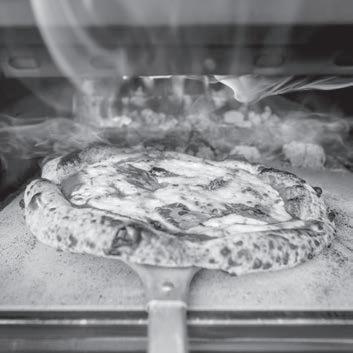
the bustling piazzas of Southern Italy. At the heart of the festival are the iconic pizzas of Naples, dishes protected by centuries of tradition and crafted with the finest ingredients. Guests can savor the legendary Margherita, adorned with San Marzano tomatoes, fresh buffalo mozzarella, and fragrant basil; the bold and spicy Diavola, topped with

MEDICARD Philippines (MediCard), a leading health company and the health arm of AIA Philippines (formerly Philam Life), continues to advance its mission of empowering Filipinos to live healthier, longer, better lives through its enhanced LiveWell Lifestyle Management Program (Livewell). Developed in partnership with Singapore-based health technology and analytics company Amplify Health, the program is powered by the AMPED app, an innovative all-in-one platform that connects members with doctors, nutritionists, coaches, and support services anytime, anywhere.
“Livewell is designed to give MediCard members timely, personalized support whenever they need it,” said MediCard CEO Julian Mengual. “It helps individuals achieve their health goals in ways that are practical and relevant to their daily lives, while delivering a more seamless and accessible care experience.”
MediCard’s Livewell Lifestyle Management Program is a long-term, holistic care pathway designed to help its members manage chronic conditions such as diabetes, hypertension, and cardiovascular disease.
The program simplifies condition management by making care more personalized and accessible. Members can benefit from:
One-on-one support through video consultations and unlimited text-based coaching Direct access to a lead dietitian who can guide them every step of the way. Helpful tools that make healthy habits easier to build, such as AI-powered meal logging, food ratings, activity and sleep tracking, personalized goals, and more.
Access to insights such as biomarker trends, weight updates, and progress summaries
All coaches are based in the Philippines, trained in lifestyle management, and able to communicate in both English and Tagalog, ensuring support is both accessible and relatable.
For one patient living with diabetes, the decision to commit to the program came after a personal turning point, “I tried to manage my nutrition on my own but failed and I fainted. I thought of my son, and I realized that even though I’m a nurse, I needed a professional nutritionist who could check my weight, daily needs and nutritional requirements to formulate the right diet for my condition.”
She had one clear goal when she decided to join the program: to better manage her condition. Through Livewell, she now works closely with MediCard’s medical and
nutrition team, receiving ongoing support tailored to her needs.
Registered Dietitian Emma Perida emphasizes that sustained patient success is driven by clarity and continuous support, both of which are embedded in the program.
“Patients stay consistent because of the milestones we set together. When the goals and expected results are clear, they follow through. And as they go along, we continue to support them, communicate with them, and follow up. They know we care,” said Perida.
Perida says the coaches’ responsiveness and genuine concern drive accountability, paired with a personalized approach that Livewell reinforces through structured coaching and clear communication channels.
Dr. Mary Joanne Ramos, MediCard’s Head of Medical Governance and Capability, emphasized that one of the core philosophies behind every lifestyle management program is empowering patients through sustainable habits. She also mentioned that for such a program to be considered a success, the three C’s should be present: “It must be continuous, consistent, and complete. Continuous effort, consistent good habits, and complete adherence to medication and follow-ups are what truly move patients toward better health.”
Livewell reinforces these principles through one-on-one coaching, progress tracking, program summary reports, and more to help the patients in the health journey.
The program officially kicked off with a three-day launch event titled “Livewell Expedition” at MediCard offices, delivering an immersive Livewell experience to MediCard employees. The event featured curated “health destinations” guiding participants through a holistic wellness journey, starting with blood tests to assess key health indicators. There were also face-to-face medical consultations and personalized health assessments with a doctor, and several wellness booths offering essential health resources and products. Since launch, the program has been continuously rolled out through a series of roadshows nationwide to keep the momentum going, bringing similar wellness experiences to several corporate accounts of MediCard. Through Livewell, MediCard reaffirms its commitment to stand with patients in helping them build healthier habits, overcome challenges, and achieve long-term wellness. Livewell Lifestyle Management Program is exclusively available to MediCard members, ensuring that enrollees receive personalized support and guidance as part of their healthcare benefits, along with a few thoughtful rewards throughout the program. MediCard members and non-members alike are encouraged to discover how the Livewell Lifestyle Management Program can support their wellness journey. To inquire about eligibility or participation, you may contact your MediCard point-of-contact or email lifestylemanagement@medicardphils. com. You may also visit https://www. medicardphils.com/ or follow MediCard’s official Facebook and Instagram account for more details.
Sun Life Grepa introduces Sun Grepa Premier Legacy to protect the wealth built by Filipino families
Efiery salami and chili; the earthy Quattro Formaggi blending four melted cheeses; and the beloved Marinara, one of the oldest Neapolitan pies, finished simply with garlic, oregano, and extra virgin olive oil. Each pizza is prepared in the traditional Neapolitan style — thin-crusted, blistered, and bursting with flavor. The event begins at 5 pm on both evenings, making it the perfect way to enjoy a spectacular Cebu sunset paired with great food.
Flexibility is at the heart of the Pizza Festival experience. Guests may enjoy their favorite dishes à la carte throughout the two-day event, allowing them to mix and match at their own pace. For those who wish to indulge fully, a specially curated dinner buffet will be available on July 4, priced at P2,200 nett per person.
Reservations are highly encouraged to secure your spot for the July 4 buffet evening. For inquiries and reservations, guests may contact Tambuli Seaside Resort & Spa directly through its official channels.
VERY Filipino family has a story of sacrifice and perseverance behind the wealth they’ve built. Sun Life Grepa Financial, Inc. (Sun Life Grepa) wants to make sure that story doesn’t end with them. Across Asia, an estimated USD5.8 trillion* in family wealth is expected to change hands between generations by 2030, the largest intergenerational transfer in the region’s history. Yet despite growing awareness of the need to plan, most families haven’t taken the steps to protect what they’ve built. Wills go unwritten. Succession plans stay unfinished. And wealth that took decades to build can unravel in a single transition.
Sun Life Grepa Premier Legacy is designed to close that gap: giving High-Net-Worth Filipino families the tools to transfer wealth on their own terms, with clarity, control, and continuity. The plan provides life insurance coverage equivalent to 200% of the face amount from day one through age 100, ensuring families have the financial stability they need during life’s most critical transitions – estate settlement, business succession, or the protection of shared family assets. It is anchored on three commitments: Protecting and preserving wealth - Coverage is structured to maintain estate value and provide the liquidity families need, so that when the time comes to pass the torch, there’s enough left to make it count.
Keeping the plan




Story & photos by Randy S. Peregrino
GEELY Motor Philippines (GMP) has formally introduced the EX2, its latest all-electric subcompact hatchback.
The unveiling follows earlier dynamic previews at the Manila International Auto Show (MIAS) and the Philippine International Motor Show (PIMS), where the EX2 drew attention for its blend of affordability, practicality, and proven global success. According to Geely, the EX2 is not merely another addition to the brand’s electrified lineup. It arrives with the distinction of being the best-selling A/Bsegment pure EV worldwide and the topselling vehicle in China in 2025 and early 2026. Built on Geely’s Global Intelligent Electric Architecture (GEA), the EX2 is designed to redefine urban mobility in the Philippines by combining compact dimensions with expansive interior space and intelligent technology.
GOLDEN RATIO DESIGN
GEELYS design philosophy guided by the 0.618 Golden Ratio is evident in the EX2’s balanced proportions. The hatchback’s exterior features a “smiling” front fascia, feather-inspired LED headlights, and 16-inch cloverleaf alloy wheels, lending a playful yet sophisticated character. Its compact footprint—4,135 mm long and 1,805 mm wide—makes it agile in
congested city streets, while the 2,650 mm wheelbase maximizes cabin space and stability.
INTELLIGENT COCKPIT
INSIDE, the EX2 transforms into a modern sanctuary. The dashboard is dominated by a 14.6-inch HD central touchscreen powered by Geely’s Flyme Auto intelligent cockpit system, seamlessly integrating Apple CarPlay, Android Auto, and Bluetooth connectivity. A supplementary 8.8inch digital instrument cluster ensures essential driving data is always within reach. Adding to the cabin’s appeal is a 256-color ambient lighting system that lets drivers personalize the atmosphere. Higher trims introduce conveniences such as wireless charging, upgraded audio, and vegan leather finishes, underscoring Geely’s intent to deliver premium touches in a compact EV.
SPACE AND PRACTICALITY
THE EX2’s strength lies in its packaging. Despite its nimble exterior, the hatchback offers class-leading interior space. The rear seats comfortably accommodate three adults, while the 375-liter cargo area expands to 1,320 liters with the rear seats folded.
Practicality extends to the 70-liter front trunk (frunk), a rarity in the segment. Geely claims that unlike other models that offer just 20–30 liters, the EX2’s frunk is spacious enough to
THE All-New Land Cruiser is now in the market, with Toyota Motor Philippines (TMP) making another bold move by unleashing an electrified variant of the iconic ride that has gallantly ruled its segment for decades.
I will never forget myfirst experience with the car, when it became my partner in covering the fabled Tour of Luzon bicycle road race in 1975 as a sportswriter for the Bulletin Today (the martial law name of Manila Bulletin). It never failed our team that included then Bulletin chief photographer Luis Garcia (may his soul rest in peace) and Jun Salanguit, a tough-as-nails driver, who migrated to America in the Eighties. Ah, those were the days when life was like a river simply flowing gently into the sea—untroubled. I fell in love with the Land Cruiser that I dreamed of owning one someday. Fifty one years later, it remains just that—a dream.
In a statement through TMP’s youthful drumbeater Joseph Ben Villavieja, the Land Cruiser is now a full-fledged hybrid electric vehicle (HEV) as the company pursues its relentless mission to reduce carbon emissions through its models. Previewed at the 10th Philippine International Motor Show, the Land Cruiser HEV is set to bring the legendary nameplate into the electrified vehicle market.
TMP’s full statement:
“Guided by Toyota’s multi-pathway approach and mission of empowering people to choose what is proven, the Land Cruiser HEV offers a new motor and engine to accommodate the changing needs of customers.
“Built on a legendary 70-year legacy of quality, durability

Everyday usability is further enhanced by 36 storage compartments strategically placed throughout the cabin.
REAR-WHEEL DRIVE DYNAMICS
BREAKING convention, the EX2 employs a rear-mounted permanent magnet synchronous motor delivering 114 hp and 150 N-m of torque. This RWD layout is paired with MacPherson strut front suspension and multi-link independent rear suspension for balanced handling and driving comfort.
On paper, the hatchback accelerates from 0–100 km/h in 11.5 seconds and tops at 130km/h, while its tight 4.95-meter turning radius makes maneuvering through narrow streets effortless.
Powering the EX2 is a 39.4 kWh

and reliability, the Land Cruiser nameplate has been in production since 1951.
“First known as the Jeep BJ, it later gained the name Land Cruiser towards the end of its production.
“Toyota would then improve its platform, creating a legendary reputation as a powerful and reliable off-roading machine.
FIRST LAND CRUISER
“THE nameplate would next find its way to the Philippines with the Land Cruiser 80’s debut in 1990.
“The car featured a major upgrade in comfort, features and technology, built on top of an already impressive package courtesy of its predecessors. The renowned SUV would garner a deep following, spawning many Land Cruiser enthusiasts, creating an unbreakable heritage through the
offering up to 395 km NEDC range (approximately 325 km WLTP). Charging flexibility is a highlight: DC fast charging replenishes 30–80 percent in 25 minutes, while AC home charging takes about 6.5 hours from 10–100 percent. V2L function is also supported.
SAFETY AND DRIVER ASSISTANCE
SAFETY remains integral to Geely’s design ethos. The EX2 features a highstrength cage body and a comprehensive ADAS suite, including Adaptive Cruise Control, Automatic Emergency Braking, Lane Departure Warning, and a 540-degree transparent chassis camera system that provides unobstructed views of the car’s surroundings and underbody. The Max variant further enhances driver
years. Land Cruisers from different generations are still very much around, a testament to the car’s reliability, proven performance and faithful following.
ELECTRIFIED ERA
“THE car’s current iteration categorizes the Land Cruiser 300 as a full-sized SUV built both for urban roads and off road.
“The latest version has a 3.3 V6 Twin Turbo engine, producing 306 PS, with a 10-speed automatic gearbox ensuring a smooth yet powerful experience.
“Just like the Land Cruisers that came before it, the Land Cruiser 300 has become a staple SUV for Filipinos who are looking for a car that is built to last on top of legendary performance. As part of Toyota’s efforts in empowering people with the power of choice, the Land Cruiser now comes as an HEV through the addition of an electric motor producing 49 PS alongside the 3.5 Twin Turbo V6 engine’s 415 PS.
FROM DIESEL TO GASOLINE
“THE new engine will also now run on gasoline instead of diesel. The hybrid variant also comes with electric power steering to provide a lighter driving experience.
“The exterior will also have a subtle but noticeable change with the inclusion of Aero with Jet-Black Garnish. These new features and additions to the car is set to usher it into the electrified era, with the Land Cruiser combining a heritage of proven power and durability with innovative hybrid technology.
“‘The Land Cruiser HEV is part of Toyota’s efforts in
confidence with intelligent high-beam control and panoramic monitoring.
VARIANTS AND PRICING
FILIPINO buyers are presented with two distinct choices. The entry-level EX2 Pro, priced at P938,000, comes equipped with 15-inch steel wheels and a suite of standard infotainment and safety features, making it a practical option for those seeking affordability without compromising essentials. Meanwhile, the top-spec EX2 Max, retailing at P1.038 million, elevates the experience with 16-inch alloy wheels, wireless charging capability, an upgraded audio system, and an enhanced ADAS suite. Despite the differences in equipment, both variants deliver the hallmark Geely EV driving experience, ensuring that buyers enjoy the same balance of performance, technology, and efficiency across the range.
A NEW BENCHMARK FOR FILIPINO EV BUYERS?
THE arrival of the EX2 signals a pivotal moment for the Philippine EV market. By combining affordability, spacious practicality, intelligent technology, and proven global success, it positions itself as a compelling choice for Filipino buyers ready to embrace electrified mobility. More than just another hatchback, Geely presents the EX2 as the brand’s vision of urban mobility redefined—efficient, intelligent, and accessible.
offering different powertrains that address our customers’ needs and lifestyles,” said Elijah Marcial, the TMP First Vice President for Vehicle Sales Operations. “Customers who want to experience the legendary heritage and proven performance of the Land Cruiser, while having access to Toyota’s hybrid technology, will find this car to be the perfect choice as their partner on the road. We hope the addition of the Land Cruiser HEV to Toyota’s wide lineup of cars gives our customers the power of choice when it comes to their mobility needs.”
“Customers may purchase the Land Cruiser HEV in the following colors: Attitude Black Mica, Silver Metallic, Gray Metallic and Precious White Pearl as a premium color.
“To learn more about the Land Cruiser
THE police forces of the Philippines and Norway signed on Thursday a new cooperation deal to combat online sexual abuse and exploitation of children (Osaec).
the abuse have also been identified and arrested, said the embassy.
“Crime knows no borders, nor can our cooperation do so. This agreement gives us better opportunities to prevent sexual abuse of children by identifying and stopping abusers where crime occurs before more children are exposed,” Alfheim said.
By Jovee Marie N. dela Cruz @joveemarie
HOUSE of Representatives assistant majority leader
on Thursday challenged the Villar group’s assertion that right-ofway (ROW) complications are solely to blame for the prolonged delay of the multibillion-peso LRT-1 Cavite Extension Project.
The Villar Group, through its companies Fine Properties Inc. and Villar Land Holdings Inc., denied responsibility for the setback, saying they had even offered to donate the required properties to expedite construction and avoid protracted expropriation proceedings.
In a statement, Deputy Majority Leader Mark Anthony Santos of Las Piñas, however, argued that the real cause of the delay is the failure to finalize and sign the proposed Rightof-Way Usage Agreement (Rowua), despite repeated directives from President Marcos for the Department of Transportation (DOTr) to resolve the project’s bottlenecks.
Santos noted that officials from the DOTr, Light Rail Transit Authority (LRTA), Light Rail Manila Corp. (LRMC), and representatives of the Villar Group held multiple meetings from September 2021 to June 2025 to finalize the Rowua.
Despite these discussions, the agreement remains unsigned, preventing the government from proceeding with the revised alignment of the project.
“Imagine, a single family can delay –or even derail—a project that would benefit millions of ordinary Filipinos and taxpayers. We have documentary evidence
or resibo showing that this government project has been repeatedly delayed,” Santos said.
The LRT-1 Cavite Extension Project has been in development for decades, spanning the administrations of former Presidents Joseph Estrada, Gloria Macapagal Arroyo, Benigno Aquino III, Rodrigo Duterte, and the current administration.
Unresolved issues continue to affect Phase 2 of the P64.915-billion project, particularly the Las Piñas and Zapote stations.
Santos also cited a two-page letter from Transportation Secretary Giovanni Lopez addressed to Cynthia J. Javarez, president of Fine Properties Inc. and Golden MV Holdings Inc., stating that despite ongoing coordination and good-faith efforts by the government, the landowners have yet to approve the draft Rowua needed to formalize their commitment to donate the property at no cost to the government.
Earlier, Ombudsman Jesus Crispin Remulla cited concerns over the alignment in Sucat, Parañaque, where the project reportedly stalled due to proposals to reroute it toward C-5, where the Villar family owns properties.
Sens. Mark and Camille Villar
have denied allegations that they blocked the implementation of the LRT-1 Cavite Extension Project.
Former senator Cynthia Villar has also strongly denied allegations linking them to delays in the multibillion-peso LRT-1 Cavite Extension Project, stressing that such claims do not reflect the actual situation.
In a statement last Wednesday posted on her Facebook account, she clarified that Fine Properties Inc. and Villar Land Holdings, Inc. have been cooperative in efforts to facilitate the project, even offering to donate portions of their properties to help expedite its implementation.
“In fact, the proposal to donate the properties involved came from the companies to help move the project forward and avoid the cost and delay of expropriation.
“The companies’ representatives and the Light Rail Transit Authority have also been in constant coordination, and at this point, they are simply waiting for LRTA’s due diligence and the necessary documents for review,” she said.
“The companies have no reason to delay a project that will greatly benefit the public and remain fully supportive of its timely completion,” Villar said.
By Carmel Pedroza
CEBU CITY—A new 60-megawatt
(MW) Battery Energy Storage System (BESS) is expected to strengthen Cebu’s power reliability, improve grid stability, and support the province’s growing economy as electricity demand continues to rise.
The project took a major step forward on Wednesday, with the groundbreaking of the facility in the City of Naga in southern Cebu. Developed by AboitizPower Corp., the battery storage system is designed to help stabilize the Visayas grid by storing excess electricity and releasing it during periods of peak demand.
Company executives, Cebu Gov. Pamela Baricuatro, City of Naga Mayor Valdemar Chiong, Department of Energy (DOE) officials, and other government representatives attended
the groundbreaking ceremony.
Once completed, the facility will have a power capacity of 60 megawatts and an energy storage capacity of 120 megawatt-hours.
It will pr ovide fast-response ancillary services, increase the grid’s operational flexibility, and serve as a contingency and regulating reserve to help manage fluctuations in electricity supply and demand across the Visayas.
“Naga BESS represents transformation in action. It reflects our efforts to strengthen the energy system by investing in people, infrastructure, and technology to enhance the flexibility, resilience, and reliability of the grid,” said Celso C. Caballero III, president of AboitizPower Transition Business Group.
Baricuatro emphasized that the project complements the provincial government’s efforts to make Cebu more attractive to investors by ensuring critical infrastructure keeps pace
with economic development.
“As many of you know, one of my priorities has been making Cebu more investmentready. We have been actively positioning Cebu as the Province of Charm—not only because of our beautiful destinations, but because of the warmth of our people, the strength of our workforce, and our commitment to create an environment where businesses can thrive responsibly,” she said.
She noted that improving power stability is essential as Cebu continues to expand economically.
“But before we can attract more investments, we must also ensure that we have the infrastructure to support them,” Baricuatro said.
“One of our biggest concerns today is power stability. In recent months, Cebu has experienced several yellow alerts, reminding us that as our economy grows and the demand
for electricity continues to increase, we must also strengthen the systems that keep our homes, businesses, hospitals, schools, and industries running,” she added.
Baricuatro also assured continued provincial government support for private sector investments that contribute to economic growth and benefit Cebuanos.
Energy Undersecretary Mario Marasigan said the project will help improve Cebu’s resilience against power disruptions while supporting greater integration of renewable energy in the Visayas.
“The Department of Energy commends AboitizPower for its continued confidence in the Philippine energy future. Your investment demonstrates that innovation and sustainability can go beyond what we have been dreaming of,” Marasigan said.
The battery energy storage facility is targeted to begin operations in 2027.
By Claudeth Mocon-Ciriaco
BEYOND the shock-and-awe impact of the June 22 school shooting in Leyte that left three students dead, the stories of the survivors are just as compelling of attention. But they also raise troubling questions.
One of the victims
TACLOBAN school shooting was shot by a person he had considered sharing the closest bond with, according to the victim’s sister. At Wednesday’s hearing of the Senate Committee on Women, Children, Family Relations and Gender Equality, Janica Bituin told senators she is still in disbelief that alias Nash, the best friend of her brother Gerric, would shoot him in the back. Gerric was critically injured and is now recuperating at ACE Medical Center.
According to Janica, her younger brother and “Nash” were close friends since they were classmates in Grade 8.
Bright to gloomy MASAYAHIN na kaibigan si Nash [Nash is a jovial friend],” Janica recalled during the hearing, presided over by committee chair Sen. Risa Hontiveros.
However, Janica recalled that prior to the tragic incident, during the flag ceremony, Nash’s mood was a little different. This was narrated to her by her brother, she said.
Citing her brother’s recollection, Janica said that Gerric’s teacher had asked him to get a sketch pad just before they heard gunshots. Then they realized the chilling sound was ringing out dangerously close to their location.
Later, Janica said that a concerned woman came to their house and inform them that Gerric was severely wounded. The same woman had earlier brought Gerric to the hospital.
Meanwhile, there is much handwringing over what could account for Nash’s capacity for violence, when, besides shooting his close friend Gerric, his aunt who owned the gun he had used kept telling senators he was a good boy. Police Staff Sgt. Arla Ray Paciencia admitted, though, that she had brought Nash to the firing range—“only once”— because head expressed wish to be like her, a cop. When pressed by Sen. Raffy Tulfo if she knew that bringing minors to a firing range is illegal, Paciencia claimed she “had no personal knowledge” of this subject. What transformed Nash—from being a “good” young man to one who shoots his own close friend twice—may perhaps be partly explained by a confirmation by the Cybercrime Investigation and Coordinating Center (CICC) that the two minors behind the deadly shooting at San Jose National High School in Tacloban City were groomed by 764, a notorious international online network of violent extremists.
CICC Undersecretary Renato Paraiso, speaking to B usiness M irror by phone, said authorities recovered chat logs that established the two teenage perpetrators were active members of 764 and were deliberately recruited and manipulated by the group.
According to the US Federal Bureau of Investigation (FBI), 764 is a nihilistic violent extremist and cybercriminal network that specifically targets minors and vulnerable individuals online.
The group operates through social media platforms and gaming apps, using sextortion, blackmail, and physical coercion to force victims into self-harm, animal cruelty, child sexual abuse material (CSAM) production, and other acts of violence.
Its operations are secretive and invitationbased, making it difficult to monitor and infiltrate, Paraiso said.
Brave survivor ANOTHER student who is still in hospital is Kaye Lapidario.
Senator Hontiveros, who chairs the Committee, lauded the bravery of Kaye in protecting her classmates from the two suspects who were then walking near their classroom, firing indiscriminately. Kaye rushed to close the door when she was shot.
Unfortunately, according to her father, Rolando, Kaye sustained a gunshot wound on her right hip and the bullet exited her left leg.
Deputy Police Commissioner Lars Erik Alfheim of the Norwegian Police Service and the National Police (PNP) Chief, Gen. Jose Melencio Nartatez Jr., signed the memorandum of understanding (MOU) in a ceremony in Quezon City.
The Norwegian Embassy in Manila said the new deal will provide both countries with more opportunities to exchange and receive information related to online child sexual abuse cases.
“This strengthens collective efforts of the Norwegian Police and the PNP to identify perpetrators, detect and investigate offences, and better protect vulnerable children,” it said.
“The MOU represents an important preventive tool. By strengthening cooperation with the PNP, we can contribute to a greater extent to the fight against crime where it occurs,” it added.
The Philippine and the Norwegian police organizations had been exchanging information since 2020, which had been instrumental in the police operations that saved several children from ongoing abuse across the Philippines.
Perpetrators in Norway who have ordered
Norwegian Ambassador to Manila Christian Halaas Lyster said the fight against online sex abuse and exploitation of children had been a “top priority” of the embassy.
“Through our cooperation, we work together to create awareness of this challenging problem and prevent victims from being abused and keep our children safe,” he said.
President Marcos in April 2024, condemned online sexual abuse and exploitation in all its forms and mobilized the administration to intensify the fight against the crime.
A United Nations Children’s Fund study in 2022 showed that two out of 10, or around two million internet-using children in the Philippines aged 12 to 17 are subjected to online sexual abuse and exploitation (Osaec).
ATOTAL of 80 wheelchairs were distributed by the Philippine Red Cross (PRC) and its partners as part of the groups’ Mobility for Dignity Program providing wheelchairs to persons with disabilities, senior citizens, and individuals with mobility impairments.
The distribution on Wednesday coincided with the launching of Rotary District 3810’s new service year under the theme “Pagsibol” (Sprouting), symbolizing growth and a cultivated culture of community care, the event underscored a shared commitment to restoring dignity, independence, and hope to vulnerable individuals.
In addition to the mobility assistance, recipients received five kilograms of rice and essential cooking ingredients.
“To our recipients, this wheelchair is for you. May it help you move more freely, return to your daily activities, and continue pursuing your goals in life. You are not alone—the Philippine Red Cross is here to support you in every step of your journey toward dignity, independence, and hope,” said PRC Chairman and Chief Executive Officer Richard J. Gordon.
District Governor-Elect and Arch Klumph Society member Gov. Bing Carrion explained that the theme “Pagsibol” reflects Rotary’s aspiration to grow a culture of compassion that creates a lasting impact.
“Ang tinawag po namin dito ay Pagsibol. Ito ay growing like a plant. Gusto natin na ang itatanim natin ay punong-puno ng kabaitan,
pagmamahalan, at pagtitingin sa ating kapwa kasi ang pakay natin sa mundo ay magtulungan. Ang purpose namin ay to create this world a safer, happier, and healthier world for us all,” Carrion said.
Representing the Rotary Club of Makati Zobel, Emil Orencio encouraged recipients to recognize their invaluable role in society.
“Ayoko kayong tawaging PWD dahil pareho lang tayong mahalaga sa lipunan. Nandito kami para i-empower kayo. Sana magtulungan tayo upang mas marami pang mga kababayan ang mabigyan ng wheelchairs,” Orencio added.
“Mobility is essential to human dignity. Through this program, we are not just providing assistive devices—we are opening doors for a better quality of life for our recipients,” said PRC Secretary General Gwendolyn Pang. Launched in 2022, the Mobility for Dignity program is one of the PRC’s flagship humanitarian initiatives, bringing the total number of mobility devices turned over in its latest nationwide rollout to 231. This ongoing initiative is made possible through the enduring partnership of the Wheelchair Foundation, Chair the Love, Rotary Club of Manila 101, and various Rotary organizations nationwide. Prior to the July 1 event, the PRC had already distributed 151 wheelchairs in Malabon City; Subic, Zambales; Laguna; Metro Manila; and Rizal. Claudeth Mocon-Ciriaco
Dumanjug ban on mobile phones in schools not reaction to shooting
CEBU CITY—The local government of Dumanjug town on Thursday clarified that its policy restricting the use of mobile phones in schools is not a reaction to the recent shooting incident involving students elsewhere, but part of a broader and long-term strategy to improve education, discipline, and campus safety.
Despite her situation, Rolando said that his daughter was able to send him a text message about the situation and her injuries.
From their farm, Rolando rushed to the school to look for his daughter.
Justice
JENICA , meanwhile, is asking that justice be served for all the victims who died and were injured.
Mabigyan ng hustisya [ang] mga na biktimalalonasamganamatayan.”
She also condemned content creators who even used AI to create fake news, claiming that her brother was one of the fatalities.
Both Jenica and Rolando have expressed hope that even though the suspects are minors—aged 14 and 15, they should not be excused from facing accountability.
“[Sana’y] hindi maging hadlang ang pagiging menor de edad para di makulong,” Janica stressed.
Meanwhile, Rolando is hoping that the minimum age of criminal responsibility would be lowered from 15 to 12.
Para di na pamarisan ang pagawa ng krimen. Kasi kung di ibaba, mamimihasa dahilhindisilamakukulong [So that no one will follow their example in committing crime. Because if it’s not lowered, they will be emboldened further as they know they won’t be jailed],” Rolando lamented.
With earlier report by Lorenz Marasigan
Mayor Efren Guntrano Gica said the initiative had already been discussed during the Municipal School Board meeting in March after school heads and district supervisors raised alarm over worsening learning outcomes among students.
Gica said many Grade 7 learners continue to struggle with competencies expected of Grade 3 pupils, while teachers are also burdened by large class sizes and existing policies requiring home visitation before a student may be failed.
“The cellphone restriction is one component of a comprehensive educational reform designed to reduce classroom distractions, improve student focus, and help address the learning crisis confronting our schools,” Gica said.
To help struggling learners, the municipality launched the Dahunog Dumanjug Tutorial Initiative, a summer tutorial program fully funded by the Office of the Mayor.
The program aims to bridge learning gaps that widened during the pandemic and ensure public school graduates remain competitive with students from private institutions.
Beyond academic interventions, the local government has also intensified measures promoting discipline and responsible youth development.
Among these are curfew ordinances requiring Grade 10 students and below to be off the streets by 8:00 p.m.
All minors below 18 years old must observe a 10:00 p.m. curfew, unless accompanied by parents or guardians or otherwise allowed by law.
The municipality also strictly enforces ordinances prohibiting individuals 21 years old and below from smoking, consuming alcoholic beverages, purchasing tobacco or alcohol products, or being used as buyers for others.
Gica said these initiatives recognize that education extends beyond the classroom and is closely linked to discipline, health, safety, and family responsibility. The administration is likewise pursuing the establishment of a modern public library envisioned as one of the best learning facilities in Cebu Province, providing students with an inspiring space for reading, research, and lifelong learning.
As part of its educational reform study, the municipality also examined international policies, including Australia’s restrictions on mobile phone use in schools, citing evidence that limiting cellphone use helps improve classroom engagement, student concentration, and academic performance.
Campus Safety Reinforced MAYOR Gica noted that the recent shooting and stabbing incidents reported in various parts of the country merely underscored the importance of implementing measures already under consideration.
Schools
“Our
He