
NCR board OKs ₧85 wage hike, labor calls it a token
statement as labor groups criticized the new wage order issued by the Regional Tripartite Wages and Productivity Board-National Capital Region (RTWPB-NCR) for being below the P200 legislated wage hike they are pushing in Congress.
She noted the wage boards recognize the plight of workers in their struggle to cope with rising cost of living, but she said they must also consider the capability of employers to pay the said increase.
get-p85-daily-wage-increase/)
Malacañang said the P85 daily minimum wage hike—the highest granted by the regional wage board to date—in Metro Manila went through a comprehensive study to balance the interest of both employers and workers.
Palace Press Officer Claire Castro issued the

THEBy Andrea E. San Juan
Bangko Sentral ng Pilipinas (BSP) is now looking at a widerthan-usual inflation forecast range as it gauges how the declining domestic oil prices, lower prices of rice and meat could have offset the higher electricity rates and vegetable prices in June.
In a statement on Tuesday, the central bank said it projects June 2026 inflation to settle within the range of 6 to 7 percent.
“The decline of domestic oil prices and the lower prices of major food items, such as rice and meat may temper inflation for the month,” the BSP said.
However, it noted that higher electricity rates and vegetable prices could “partly offset” these downward price pressures.
For this year, this is the widest month-ahead inflation forecast range of the central bank, with the lower and upper bound of the range having a 1-percentagepoint difference.
“It is difficult to suddenly give a high salary that employers cannot afford since it will cause more of our countrymen to lose their jobs and there will be more unemployment,” the Presidential Communications Office (PCO) Undersecretary explained in Filipino in a press briefing. She also noted that it is up to lawmakers to pass the bill implementing P200 increase.
“That is the job of Congress. The govern-
ment will only act on [the data] which is monitored and assessed by the regional tripartite productivity and wages board,” Castro said.
The Trade Union Congress of the Philippines (TUCP) slammed the P85 minimum wage hike in NCR for being “grossly inadequate in the face of the collapse in workers’ purchasing power, but will be even released in tranches.”
Of the said increase, the P60 will take effect on July 19, while the remaining P25 will be implemented on 1 January 2027.
The timing of the announcement of the increase also drew criticism in social media for allegedly being government’s attempt to divert attention from the large demonstrations of the Iglesia Ni Cristo (INC) in Edsa, coinciding with the sect’s show of support for one of its own, Sen. Rodante Marcoleta. The senator
has been saying since last week he expects to be arrested soon, as authorities are preparing plunder charges against him.
Undersecretary Castro denied the narrative that the wage story was meant to cover up the INC rally. The RTWPB-NCR has already drafted its new wage order weeks ago after conducting the necessary public consultations and going through the necessary study, she said.
“They should not attribute any malice to [the announcement],” she said.
‘Tokenism’ DESPITE it being the largest wage increase granted by the regional wage board to date, the Sentro ng mga Nagkakaisa at Progresibong Manggagawa (Sentro) called the adjustment



“At present, offsetting forces such as easing fuel and some food prices on one hand, and higher electricity rates, vegetable prices, and geopolitical risks among others make it more difficult to estimate the exact inflation outcome,” Rivera told this newspaper. For this year, these were the BSP’s month-ahead inflation
forecasts: January, 1.4 to 2.2 percent; February, 2.3 to 3.1 percent; March, 3.1 to 3.9 percent; April, 5.6 to 6.4 percent; May, 7.1 to 7.9
Wider forecast range, greater uncertainty SOUGHT for comment, Philippine Institute for Development Studies (PIDS) Senior Research Fellow John Paolo R. Rivera explained to the BusinessMirror that a wider forecast range “suggests greater uncertainty around the inflation outlook.”







By Mary Jade Jadormio


FILIPINOS are increasingly looking beyond traditional professions, with virtual assistant emerging as the country’s most searched career, overtaking doctor as interest in digital and remote work continues to grow, according to an international study by financial technology firm Remitly. The study, which analyzed Google searches across 145 countries, found that online career interest in the Philippines has shifted toward digital occupations, with vlogger, content creator and social media manager also making the country’s top 10 list. The findings marked a departure from Remitly’s 2024 report, when doctor ranked as the country’s most searched career.

S&P GLOBAL Ratings has warned that the escalation of geopolitical risks could “ultimately tilt” its ratings view on banks in Asia-Pacific from stable to negative.
S&P Global said a downward scenario of a longer or worse conflict in the Middle East would hit AsiaPacific banks “much harder” than under its base case.
The debt watcher estimates that cumulative credit losses for 2026 and 2027 would rise 25 percent over its base case as downside hits to household, corporate, and government sectors take their toll on banks’ credit quality.
“If oil prices keep climbing and supply chains deteriorate, cumulative credit losses could total $910 billion over 2026 and 2027, compared with $730 billion under our base case,” the credit rating agency said.
In its downside scenario, the debt watcher expects Brent crude to peak at $200 per barrel, before cooling toward $100 per barrel by 2027.
“That compares with our base case of Brent averaging $110 per barrel for the rest of this year, and then $80 per barrel in 2027,” the credit rating agency said.
In assessing the risks associated with Asia-Pacific banking systems, S&P Global Ratings flagged escalation of geopolitical risks as posing a “high” risk on Asia-Pacific banks. Meanwhile, it said that there would be limited risk on these banks should there be a pivot from risk-on to risk-off sentiment. The debt watcher added that risks from nonbank and fund finance are “manageable and of limited risk” to financial stability.
It flagged as a “medium” risk on banks’ operations the impact of
rapid technological changes.
“Technological advancements, particularly in generative AI, offer significant benefits but enable significant risks,” the credit rating agency said.
Still, S&P Global pointed out that the “adverse impact” of geopolitical developments is “dragging on AsiaPacific households and corporate borrowers, increasing the risk of higher nonperforming assets and credit losses for banks.”
Two other credit rating agencies have already revised downwards their outlooks for the Philippines’s banking system amid recent economic challenges. For one, Fitch Ratings revised the Philippine banking sector’s 2026 outlook to “deteriorating” from “neutral.”
“This takes into consideration our projections of higher credit impairments associated with a
significant slowdown in economic growth, as well as the impact of higher inflation on household finances and debt-servicing capacity,” the debt watcher said in a nonrating action commentary on June 25. (See: https://businessmirror. com.ph/2026/06/27/bsp-saysready-to-take-appropriate-action-on-fitch-deteriorating-outlook-on-banks/)
Another credit rating agency, Moody’s Ratings, has revised its outlook for the Philippines’s banking system from stable to negative as it expects elevated inflation, combined with “markedly slower” public investment disbursement amid the ongoing flood-control probe, to further dampen credit demand and business sentiment. (See: https://businessmirror. com.ph/2026/06/22/outlookfor-banking-system-revised-tonegative/)
in securing a sustainable future for both economic growth and environmental stewardship.”
In January this year, however, Dizon acknowledged that reaching net-zero emissions would be challenging for the industry, given the nature of cement manufacturing.
(See: https://businessmirror.com.
ph/2026/01/26/cement-industrybanking-on-alternative-fuels-toslash-carbon-dioxide-emissions/)
He also said the roadmap is voluntary and does not impose legally binding obligations on participating companies, but instead serves as a commitment for firms seeking to make their operations more sustainable.
Data cited by the Unido on its website showed that the Philippine cement industry produced more than 27 million metric tons in 2024, supported by an installed production capacity of about 53 million metric tons.
The roadmap’s rollout comes as the government increasingly incorporates sustainability into public policy.
Measures such as the New Government Procurement Reform Act and the Tatak Pinoy Act include provisions promoting sustainable procurement, which could encourage greater demand for lower-carbon construction materials.
Dizon had earlier said the roadmap, initially targeted for completion in February, was intended to be presented during an Asean meeting hosted by the Philippines in March.
The official launch took place after further consultations and refinement of the framework.
Bless Aubrey Ogerio
Call center stocks fall on fear AI makes them ‘uninvestable’
By Henry Ren Bloomberg
SIGNS that companies are increasingly turning to artificial intelligence to handle customer service tasks has triggered a fresh selloff in shares of two call-center companies.
Concentrix Corp. and Teleperformance SE fell sharply on Tuesday. The losses started after Concentrix cut its revenue outlook and warned that some of its customers are cutting back spending, exacerbating worries among analysts that the industry faces a severe threat from new artificial intelligence tools.
Continued from A11
The rally, which drew thousands, tied up traffic on the critical thoroughfare, disrupting the early morning commute of workers and motorists, many of whom stayed on the road for 4-5 hours, instead of the usual one hour.
“Too many investors see the subsector as uninvestable,” wrote RBC
Capital Markets analyst Karl Green.
“The biggest negative in our view is the comment that some clients have simply withdrawn customer support altogether in some areas.”
Concentrix slumped 25 percent in trading before the open of US ex-
“The Chief PNP has ordered all our police units nationwide to be on full alert status,” PNP spokesperson Col. Allen Rae Co said in a briefing.
The PNP earlier reported the full alert status would only cover the National Capital Region, Central Luzon, Calabarzon, National Support Units, and Camp Crame-based offices.
“This is to prevent any untoward incident in all our areas within the country,” Co said.
Nartatez Jr. on Tuesday said that they are

changes. French firm Teleperformance tumbled as much as 16 percent to the lowest levels in over a decade.
Concentrix lowered mid-point of its fiscal 2026 revenue outlook range by about $130 million.
As well, executives on a postearnings conference call flagged several scenarios where its clients ended up cutting down on call center spending. Some of them are moving works offshore to cut costs at a faster pace. Others may decide to ditch support for some high-cost markets at all, according to Chief Executive Officer Chris Caldwell.
“We are definitely seeing increased financial pressure on our clients as they try and cope with their own investment needs and their current operating environments,” Caldwell said.
continuing to monitor the ongoing public assembly at the People Power Monument along EDSA, Quezon City and has implemented appropriate security measures to ensure the safety of participants, commuters, motorists, and the general public.
And as of 9am, Nartatez said a total of 5,936 police and allied security personnel have been deployed in key areas, including the People Power Monument, EDSA Shrine, the Senate of the Philippines, Mendiola, Ayala Bridge, the US Embassy, Liwasang Bonifacio and other identified locations.
Both stocks have been swept up in a broader selloff in software and business services stocks this year. The big worry among investors is that their business models will struggle to compete against cheaper and faster AI systems, and customers are putting a bigger portion of IT budgets to firms like OpenAI and Anthropic.
“Concentrix reinforced concerns that AI is shrinking demand for its core customer-experience outsourcing business faster than higher-value AI services are expanding,” said Bloomberg Intelligence analyst Tamlin Bason.
Concentrix operates in 483 locations in 74 countries. More than 160 of Fortune Global 500 companies used its services as of end-November, according to its latest annual report.
Civil disturbance management contingents, including the Reactionary Standby Support Forces and Quick Reaction Forces, remain on standby to respond immediately should the need arise, the PNP chief said.
As this developed, the Armed Forces of the Philippines (AFP), through its National Capital Region-based units, remained in close coordination with the PNP and other concerned government agencies in monitoring the situation related to the lightning rally.
With Rex Anthony Naval, Claudeth Mocon-Ciriaco
NCR boards OKs ₧85 wage hike…
Continued from A1
inadequate to recover workers’ lost purchasing power after months of rising prices.
“This is not wage recovery—it is tokenism,” the labor coalition said in a statement.
Sentro also opposed the staggered implementation, arguing that workers need immediate relief from higher prices instead of waiting months for the full increase.
“Hunger and unpaid bills do not come in installments.”
The Trade Union Congress of the Philippines (TUCP) likewise rejected Tolentino’s description of the wage adjustment as “historic.”
The federation argued that the increase remains too small to offset the erosion of workers’ real wages caused by inflation.
TUCP pointed to Tuesday’s hearing by the House Committee on Labor and Employment on the proposed legislated P200 nationwide
wage increase, where lawmakers agreed to continue deliberations after the President’s State of the Nation Address to finalize a substitute bill.
The group argued that the latest wage order further exposed the limits of the regional wage board system in addressing workers’ income needs.
It also questioned Tolentino’s absence from the congressional hearing, saying the labor department should support efforts to legislate a nationwide wage increase instead of defending the current wage-setting mechanism.
“If the biggest wage board increase they can boast of is only P85—in installment at that—this only proves further that this system is broken,” the group added.
Mary Jade Jadormio and Samuel P. Medenilla


Rounding out the Philippine top 10 were lawyer, actor, astronaut, flight attendant and diplomat, reflecting sustained interest in established professions alongside emerging digital careers. The rankings were based on Google searches conducted between May 2025 and May 2026 for phrases such as “how to be a” and “how to become a” across 424 occupations.
Meanwhile, data from the Philippine Statistics Authority showed the services sector remained the country’s largest source of employment, accounting for 62.3 percent of all employed Filipinos in April 2026.
Additionally, wholesale and retail trade employed the biggest share of Filipino workers, followed by agriculture and forestry and construction.
Globally, acting overtook being a pilot as the world’s most searched career for the first time since Remitly launched the study in 2022.
Searches for becoming an actor reached 222,080 annually, narrowly surpassing pilot with 221,060 searches, while firefighter climbed to third place and lawyer posted one of the biggest gains after search interest jumped 273 percent from the previous study.
The report also identified artificial intelligence-related occupations as an emerging career category, with searches for prompt engineer, artificial intelligence specialist and machine learning engineer appearing in the global data for the first time.
“Perhaps the most striking finding is the growing influence of artificial intelligence on career aspirations,” Ryan Riley, Remitly’s vice president for marketing for Europe, the Middle East, Africa and Asia-Pacific said. He said the emergence of AI-related careers underscores how rapidly technological advances are reshaping perceptions of future employment opportunities.
“Just three years ago, virtually no one was searching for roles like ‘Prompt Engineer.’ Today, AI-related careers are beginning to appear in the data, reflecting how quickly new technologies are reshaping the way people think about work,” Riley added.
The study also found that YouTuber remained the top career choice in 28 countries, more than any other occupation included in the analysis, while entrepreneur and pilot followed as the most searched professions across multiple markets.
Remitly said the rankings were based on Google search volumes and should be viewed as an indicator of online interest in occupations rather than actual labor market demand, hiring activity or employment trends.
percent and June, 6 to 7 percent.
The actual headline inflation rates for this year were the following: January, 2 percent ; February, 2.4 percent; March, 4.1 percent; April, 7.2 percent and 6.8 percent in May of this year, data from the Philippine Statistics Authority (PSA) showed.
Outlook: Disinflation slow, uneven
FOR his part, Ruben Carlo Asuncion, chief economist at Union Bank of the Philippines (UBP), said the bank sees inflation accelerating to 6.9 percent year-on-year, slightly higher than May. Asuncion said this is underscoring a key theme: “Disinflation remains slow and uneven.”
The bank’s chief economist further explained that while relief from oil prices is helping ease transport and power costs, domestic pressures “persist”—including foreign exchange (FX) weakness, import costs, and second-round effects.
“The result: inflation is stabilizing, but not yet declining,” Asuncion pointed out.
He also noted that potential El Niño risks later this year could “sustain pressure” on food prices.
Another sign that inflation may not be on a downward trajectory yet is that “past cost shocks are still feeding into prices,” he added.
“Inflation typically reacts with a lag—meaning today’s easing may take time to reflect,” added Asuncion.
For his part, Rivera said he expects average inflation in 2026 to remain above the BSP’s 2 to 4 percent target range due to “supply-side pressures and heightened global uncertainty.”
However, he said inflation should “gradually ease in the second half if commodity prices stabilize.”
Moving forward, the BSP said it will remain “vigilant and guided” by incoming data, particularly on inflation and growth prospects.
“It will continue to monitor recent developments in the Middle East for their implications for inflation and economic activity,” the central bank said in its statement.
South Korea-donated ship to be used in cleanup
PRESIDENT Marcos on Tuesday said the newly commissioned clean-up ship donated by South Korea will be used in the implementation of a five-year initiative of Manila and Seoul to provide relief to the Manila Bay, which he said is one of the country’s most “environmentally stressed water bodies.”
On Tuesday, the Department of Environment of Natural Resources (DENR) inaugurated the Marine Clean-up Vessel (MCUV), which was named MV Nilad, for the Enhancement of Marine Litter Management (EMLM) at the Manila Bay in South Harbor at the Port Area in Manila.
The 25-meter and 101-ton ship was named after nilad—a native mangrove that once grew abundantly along the Manila Bay—and donated by the Korea International Cooperation Agency (Koica). It will be operated by DENR, Department of Transportation and the Coast Guard (PCG).
“Floating plastics and marine debris have accumulated in its waters, threatening marine life, affecting the health of nearby communities, and disrupting economic activities that depend on a clean and safe environment,” Marcos said in his speech, which was read by Transportation Secretary Giovanni Z. Lopez.
MV Nilad will strengthen the government’s capacity to collect floating waste, respond to pollution incidents, and protect coastal
of Manila Bay
ecosystems that sustain millions of Filipinos, according to a statement from the Department of Environment and Natural Resources (DENR).
In his speech, Marcos lauded the South Korean government for the new vessel, which he said will help the continuous marine litter collection, waste retrieval, and emergency oil spill response in the Manila Bay.
“The MV Nilad is a concrete reflection of the friendship and cooperation between the Philippines and the Republic of Korea. It reminds us that when nations work together, challenges can be met with lasting solutions,” he said.
It will be used to implement the US$8.2million EMLM, which aims to improve the environmental protection of Manila Bay in the next five years.
“Through grant assistance from the Korea International Cooperation Agency or Koica, this initiative strengthens our capacity to manage marine litter, improve environmental monitoring, build local capabilities, and raise public awareness on marine protection,” Marcos said. Marcos said the Manila Bay is among the country’s most polluted bodies of water.
Based on a survey conducted by the De La Salle University-Dasmariñas under the EMLM project, there are 6.5 million items weighing 203,000 kilograms of garbage and other pollutants in Manila Bay. Samuel P. Medenilla
Legislator seeks nationwide EMSS
ALAWMAKER is pushing for the establishment of a unified and standardized Emergency Medical Services System (EMSS) nationwide to ensure that lifesaving, pre-hospital care is readily available in all communities during emergencies.
Parañaque Rep. Brian Yamsuan has filed House Bill (HB) 9474, which seeks to institutionalize the EMSS by setting clear national standards for emergency protocols and operations, while also mandating the continuous training and professionalization of medical first responders.
“A well-functioning, coordinated emergency medical services system may be the key to a patient’s survival and recovery before being brought to the hospital,” Yamsuan said.
“It could spell the difference between life and death for people in critical situations,” he added.
He emphasized that a robust and comprehensive EMSS is crucial for a disaster-prone country like the Philippines, as it serves as the first line of defense during natural calamities, mass casualty incidents, and epidemics.
Yamsuan also stressed that accident victims and patients facing medical emergencies deserve immediate and quality pre-hospital care, noting that the EMSS serves as their critical first link to definitive medical treatment.
“During crises, survival is determined not only by the sophistication of medical equipment but also by how quickly and effectively help arrives before reaching the hospital. While it is important for the government to invest in better hospitals, medicines, and medical technology, it is even more critical to ensure that a system is in place to connect people to these services when they need them most,” he said.
“Every life matters. In any crisis, the delivery of emergency services should be equal for all those in need, regardless of one’s status in life,” he added.
Under the proposed measure, a National EMSS Council will be created under the Department of the Interior and Local Government (DILG) to formulate and enforce national standards and protocols for emergency medical response across the country.
A(WPS)
during the
TOTAL of 44 Chinese seacraft and
from June 23 to 29,
than the
monitoring period, the
(AFP) said
In a message to reporters, the
spokesperson for the WPS, Rear Adm.
Group sets ‘Jericho Walk’ at Senate
By Jovee Marie N. dela Cruz @joveemarie

ACOALITION of faith-based Christian groups is calling on Filipinos to join a “Jericho Walk” outside the Senate on July 4, 2026, as it intensifies its appeal for justice and accountability in the impeachment trial of Vice President Sara Dutere.
The group, known as the Kingdom Keepers, invited the public to gather at 7:00 a.m. in front of
the Senate building, framing the activity as both a spiritual act and a call for civic participation.
The planned walk draws inspiration from the biblical story in Joshua 6, where the Israelites marched around the walls of Jericho, which later fell. The coalition said the event symbolizes a collective effort to “bring down the walls of injustice” in the country.
“We invite our people to participate in this Jericho Walk as an expression of faith, unity, and
our shared desire for justice,” the group said.
Alongside the call for public participation, the Kingdom Keepers reiterated its appeal for integrity in the impeachment proceedings, urging all those involved to prioritize truth over technicalities.
“For all participants in the impeachment trial to focus on the substance of the law and refrain from concealing the truth behind Pharisaical technicalities,” the
‘INC rally will not deter Ombudsman from filing plunder case vs Macoleta’
TThe council will be chaired by the DILG Secretary and co-chaired by the Secretary of Health.
It will also be tasked with ensuring coordination and networking among government health agencies, local governments (LGUs), and private and non-government medical institutions. The Bureau of Fire Protection (BFP) will serve as the council’s secretariat.
Yamsuan said the bill aims to address the fragmented and uneven quality of emergency response systems nationwide. Currently, LGUs operate under varying standards for emergency protocols, ambulance services, dispatch systems, and personnel training, with many areas still lacking adequate equipment and coordination, including reliable emergency hotlines.
To streamline access to emergency assistance, the bill proposes the adoption of a unified national emergency hotline—911.
HB 9474 also provides for the creation of plantilla positions for emergency medical services personnel in government hospitals and health facilities, including those under LGUs.
The Council will submit proposed qualification standards to the Civil Service Commission (CSC), and EMS personnel will be required to undergo training and continuing education through the DOH and accredited institutions.
The measure further sets minimum standards for ambulances and other emergency medical vehicles to ensure they are properly designed and equipped for crisis response.
All LGUs will be mandated to establish and institutionalize their respective EMSS, ensure the availability of sufficient emergency transport vehicles with qualified EMS personnel, and set up dispatch centers to respond to all emergency cases.
While funding for the EMSS will primarily come from the General Appropriations Act, the bill also proposes the creation of an EMSS Fund to augment the operational budgets of LGUs—especially those in geographically isolated and disadvantaged areas (Gidas)—as well as support the administrative functions of the Council. The fund may be sourced from fees, donations, and grants, subject to regulations by the Commission on Audit (COA).
dela Cruz
Jovee Marie N.
Vincent Trinidad, said these Chinese ships were detected at Ayungin Shoal, Bajo de Masinloc, Escoda Shoal and Pag-asa Islands. The Chinese vessels seen include: n Ayungin Shoal-eight vessels from the China Coast Guard (CCG) and one naval craft from the People’s Liberation Army Navy (PLAN); n Bajo de Masinloc-18 CCG vessels, and nine PLAN warships; n Escoda Shoal-two CCG ships and two PLAN; n Pag-asa Islands-one CCG and three PLAN.
The total is significantly higher than the 17 detected in the June 16 to 22 monitoring period.
The lower number of Chinese vessels during this timeline was earlier attributed by the AFP to inclement weather conditions. Rex Anthony Naval with PNA
group said, warning against what it described as legal maneuvering that could undermine justice.
The coalition also called on senator-judges to decide the case based strictly on evidence, and not on personal interests, political alliances, or loyalties.
The group encouraged Filipinos to remain vigilant and actively engaged, stressing the public’s role in holding leaders accountable.
By Joel R. San Juan @jrsanjuan1573
HE ongoing rally along Edsa led by members of Iglesia Ni Cristo (INC) will not deter the Office of the Ombudsman from pursuing the filing of plunder charges against its member and opposition Sen. Rodante Marcoleta.
At a press briefing, Assistant Ombudsman Jose Dominic Clavano IV reiterated that the Ombudsman, just as the INC, is advocating transparency and accountability in connection with the flood control mess.
Related story on page B8
Clavano explained that the case against Marcoleta is based on his own admission that he received P75 million campaign donations in 2025 which he failed to declare in his Statement of Contributions and Expenditures (Soce) submitted to the Commission on Elections and Statement of Assets, Liabilities and Networth (SALN) that all government workers are required to submit yearly.
“So, is it our mandate to stop cases? Perhaps not. It is our mandate to investigate and prosecute cases and once the evidence is there and in this case the evidence was amply supplied by the respondents themselves. Our hands are quite tied here,” he said.
Own admission
CLAVANO described as “clear-cut” the case against Marcoleta considering that the evidence used by the investigating prosecutors
EBy Lenie Lectura @llectura
LECTRICITY bills for July and August will not reflect the Green Energy Auction Allowance (GEA-All) amounting to P0.0371 per kilowatt-hour (kWh).
This after the Energy Regulatory Commission (ERC) extended the temporary suspension of the collection of the GEA-All for the July and August 2026 billing months as part of its efforts to help ease electricity costs for Filipino consumers amid prevailing economic challenges.
The GEA-All is a uniform charge collected from electricity consumers to fund payments to renewable energy (RE) developers participating in the government’s Green Energy Auction Program (GEAP), supporting the country’s transition toward a cleaner and more sustainable energy future.
The GEA-All rate applies to all collection agents, including Distribution Utilities (DUs), Retail Electricity Suppliers (RES), and the
THE Visayas power grid was again placed on yellow alert on Tuesday from 5:00 p.m. to 8:00 p.m. owing to thinning power reserves.
A yellow alert is issued when the operating margin is insufficient to meet the transmission grid’s contingency requirement. According to the National Grid Corporation of the Philippines (NGCP), the available capacity stood at 2,559 megawatts (MW) while peak demand reached 2,320MW. There are 12 plants on forced outage, eight since May, one plant since March, three since 2025, two plants since 2024, another two since 2023, and one plant since 2021, while 16 plants are running
actually was based on his own statements made in public.
The official also denied the claim of Marcoleta’s camp that the charges stemmed from his determination to hold the real culprits in the multi-billion flood control scandal accountable.
Clavano noted that political persecution is usually being used as “fallback defense” of government officials being charged before the Ombudsman.
“The facts will speak for themselves and I think when you read the case and you listen to the admission and if you listen to the interviews, you will see that the case was quite clear-cut. That’s why it’s hard to see where Senator Marcoleta is coming from because the evidence came from him,” Clavano pointed out.
Ombudsman Jesus Crispin Remulla, at a news conference on Monday, said the plunder charges against Marcoleta and his co respondents are expected to be filed before the Sandiganbayan within the week.
Aside from the senator, former congressman Michael Defensor and businessmen Joseph Espiritu and Aristotle Viray are expected to be charged along with him.
The case stemmed from the complaint filed by the Field Investigation Bureau (FIB), Office of the Deputy Ombudsman for Luzon indicting them for the crime of plunder, indirect bribery and violation of violation of Presidential Decree 46 ,which prohibits public officials from receiving, directly or indirectly, and for private persons to give, or offer to give, any gift, present or other valuable thing on any
National Grid Corporation of the Philippines (NGCP).
The ERC first suspended the GEA-All collection for the May and June billing periods, removing the P0.0371 per kWh rate charged to consumers. Back then, the commission said the GEA-All fund stood at P466.49 million, which was still sufficient to pay the RE developers.
With the continued suspension of the collection of GEA-All, the ERC said the GEA-All fund remains financially sufficient to cover payment obligations to eligible RE developers.
As of June 5, 2026, the fund maintained a balance of approximately P707.47 million, which is adequate to support expected disbursements, including payments for additional RE facilities expected to begin commercial operations in the coming months.
The ERC said the temporary suspension is intended to provide immediate relief to electricity consumers as Filipino households continue to face the effects of rising inflation and increasing cost-of-living pressures
on derated capacities, for a total of 975MW unavailable to the grid.
The shutdown of three major coal plants— TVI 1, TVI 2, and PEDC 3—also triggered a grid alert in the Visayas, NGCP added. Meanwhile, businessman Manuel V. Pangilinan said Tuesday his group can help address the current power shortage in the Visayas by putting up gas-fired power plants originally intended for Chromite Gas Holdings Inc.
“Well, there’s excess turbines from when we made investment in Chromite. So the plan is to build the excess turbines, not in Batangas, but in the Visayas, maybe in Mindanao as well.
occasion, against the respondents.
Based on the complaint affidavit filed by the FIB, Marcoleta filed before the Commission on Elections (Comelec) his Soce related to the 2025 senatorial elections and declared no cash or in-kind contribution.
Despite the zero declaration on his SOCE, the FIB said Marcoleta admitted receipt of contributions from Defensor, Espiritue and Viray donated P30 million, P25 million and P20 million, respectively, in various dates last January 2025.
The complaint further noted that Marcoleta did not indicate any cash-on-hand in his SALN as of June 30, 2025.
The FIB accused Marcoleta of “unjust enrichment” when he accepted the money from Defensor, Espiritu and Viray, who were charged as “co-conspirators.”
In his counter-affidavit, Marcolea said the complaint “is legally insufficient” because it does not establish the elements of the offenses charged.
He pointed out that the donations were not stated in SOCE he submitted to the poll body since these were made before the campaign period.
Not targetted
THE Office of the Ombudsman on Tuesday said the plunder case to be filed in the Sandiganbayan against Marcoleta is not “targeted” but part of genuine efforts to combat graft and corruption.
See “Marcoleta,” A8
brought about by global developments. The ERC emphasized that while consumer relief remains a priority, the financial integrity of the GEA-All Fund will continue to be safeguarded to ensure timely payments to qualified RE developers.
The Commission noted that it will continue to closely monitor the status of the GEA-All Fund and conduct a comprehensive assessment by August 2026 to determine whether a further extension of the suspension may be warranted.
Meanwhile, all collection agents are directed to implement the suspension beginning with the July and August 2026 billing cycles and submit compliance reports, including sample customer bills reflecting the removal of the GEA-All line item, within 15 days after the close of the August billing period.
The ERC reiterated that failure to comply with the advisory may result in the issuance of a show cause order (SCO) and the imposition of appropriate penalties under existing laws and regulations.
“I think there are four of them. So how they will split it between the Visayas, and Mindanao, I don’t know yet. But clearly, the Visayas needs more power, so we’ll probably build the gas plants definitely in the Visayas, maybe a portion in Mindanao,” said Pangilinan. The capacity of the six turbines is 435MW.
Chromite Gas is a consortium formed by MGEN and AboitizPower’s Therma NatGas Power Inc. (TNGP). The joint venture operates as a major investment vehicle for the country’s
with
By Manuel T. Cayon @awimailbox
DAVAO CITY—Snakes are on a biting binge in the Davao Region, increasing the incidence by as many as three fold and spreading thin the resources to combat the venomous ones, a hospital poison control physician said. From an average of 200 snake bites in the region annually, the tally has reached 600 bites, said Dr. Ella Joy Nogas, medical specialist at the Poison Treatment and Control Institute of the Southern Philippines Medical Center here.
Bites were occurring not only in the countryside but even inside homes, she said, “as humans invade the environment and disturb the natural habitat of snakes and other wildlife,” she said.
She said the region has also the most venomous snake species in the Philippines, notably the locally called banakon, and the King Cobra.
The SPMC has the available antivenom vials for treatment but warned residents “not to delay any further transport of the victim to the hospital.” There was one particular case that the victim was dead in two hours after he was bitten. It depends on the dose and load of venom injected into the victim.
The SPMC has already reached out to the barangay first responders to educate them and equip them with the necessary management of incidents of snake bites.
“There are no first aid actions here, even washing the wound may not be good because it might even help spread the venom.”
She said the antivenom is to be used when there is the onset of paralysis, a clear indication of “envenomation” or the life-threatening symptoms. Here lies the management knowledge of the first responders to resuscitate or maintain the lifelines as they battle against time to reach the hospital.
Unfortunately, the antivenom vials are not available in any hospital, public or private, nor are they deployed in strategic district hospitals, owing to their stiff cost and the scarce number of cases brought in daily. The Davao Regional Medical Center, an adjunct of the SPMC located in Tagum City, Davao del Norte, is the only other government hospital with antivenom vials. The anti-venom vial for bites by the Philippine cobra costs P3,800 while that for the banakon costs P8,000. That was then, before the Covid-19 pandemic, when the Research Institute for Tropical Medicine (RITM) in Muntinlupa manufactured and maintained the species-specific antivenom.
She said antivenom production ebbed in the aftermath of the Covid-19 treatment and the SPMC shifted to importing the snake antivenom from India, which Nogas said the SPMC continued to test its efficacy. “So far they are effective here. We are still doing further clinical test,” she said.
Snake bite on sharp rise in Davao Region
Electronics lift May factory gate prices
By Bless Aubrey Ogerio
HIGHER factory gate prices for electronic products drove faster producer inflation in the Philippine manufacturing sector in May, the Philippine Statistics Authority (PSA) reported.
The Producer Price Index (PPI) for manufacturing rose 2.9 percent year on year in May, faster than the 2.6-percent increase recorded in April. A year earlier, the index had declined by 0.3 percent.
The PSA attributed the accelera -
tion primarily to the manufacture of computer, electronic and optical products, whose producer prices climbed 5.9 percent in May from 4.4 percent in April.
The electronics industry accounted for 50.8 percent of the
Cebu moves to strengthen investor confidence in reclamation projects
By Carmel Pedroza
CEBU CITY—The local government of the province of Cebu has introduced amendments to its reclamation ordinance that restore flexible compliance options for project proponents, a move expected to strengthen investor confidence while ensuring the province continues to receive its rightful share from reclamation developments.
The amendments, contained in Provincial Ordinance 2025-18, allow reclamation proponents to choose among several ways of fulfilling the provincial government’s mandatory 10-percent entitlement from reclamation projects.
While offering greater flexibility to investors, the ordinance maintains the province’s right to receive at least 10 percent of the usable reclaimed land or its equivalent value.
The revised ordinance was presented during the inaugural meeting of the Cebu Provincial Reclamation Authority (CPRA) under the administration of Gov. Pamela Baricuatro at the Cebu Provincial Capitol.
The meeting was attended by Baricuatro, Provincial Administrator Ace Durano, Provincial Board committee chairpersons Antonio Bacaltos Jr., Mike Villamor and Raymond Calderon, along with department heads, including Provincial Assessor Michelle Languido.
Members of the newly organized CPRA were briefed on the amendments introduced under Provincial Ordinance 2025-18, which received unanimous approval from the Provincial Board and was signed by Baricuatro on January 6.
Under Cebu’s original reclamation ordinance enacted in 1996, the province is entitled to at least 10 percent of the usable reclaimed land in every reclamation project carried out under provincial authority, regardless of whether the project is privately or publicly funded and whether it is ongoing or already completed.
However, amendments passed during the previous administration required proponents to transfer the province’s entire 10-percent share exclusively through land conveyance, removing other compliance alternatives that had previously been available.
The latest amendment reinstates those options, giving developers greater flexibility in meeting their obligations.
Aside from transferring a portion of the reclaimed land, proponents may instead pay the equivalent monetary value based on the higher of the property’s appraised or prevailing market value. They may also fulfill the requirement through a lot swap, provided the replacement property matches the value of the province’s corresponding share.
Durano said restoring these alternatives will make Cebu’s investment environment more practical and attractive to developers.
He explained that allowing proponents to choose the most feasible mode of compliance helps avoid unnecessary financial or operational burdens while preserving the Province’s interests.
Durano cited the experience of Tsuneishi Heavy Industries in Balamban, where determining which portion of the reclaimed property should be transferred to the provincial government has posed implementation challenges.
H e noted that providing proponents with compliance options allows them to select the arrangement best suited to their circumstances.
To facilitate implementation of the amended ordinance, the CPRA approved a resolution authorizing the Provincial Investment and Promotions Office to formally notify reclamation proponents and require them to submit, in writing, their preferred mode of compliance.
Meanwhile, Provincial Assessor Michelle Languido said that proponents choosing the cash payment option should pay based on the property’s current appraised or market value at the time payment is made, rather than its value when the reclamation project was completed.
Several reclamation projects across Cebu are covered by the ordinance, including developments undertaken by Tsuneishi Heavy Industries and Austal Ltd. Philippines in Balamban; Global Business Power Corp., Carmen Copper Corp. and Atlas Fertilizer Corp. in Toledo City; Cebu South Harbor and Container Terminal Corp. in Talisay City; Meridian 123 Corp. in Minglanilla; Solid Earth Development Corp. and Mabuhay Filcement Inc. in San Fernando; and Dynacast Shipbuilding and Repairs Inc. in Danao City. In each project, the provincial government is entitled to receive 10 percent of the usable reclaimed land or its equivalent value under the amended ordinance.

overall acceleration in manufacturing producer prices during the month. It also carries the secondlargest weight among the 22 manufacturing industry divisions used in computing the PPI.
Other sectors that contributed to the faster increase included the manufacture of basic metals, whose producer prices accelerated to 5.4 percent from 3.8 percent, and the manufacture of chemicals and chemical products, which posted a 3.9-percent increase from 3.2 percent in the previous month.
Overall, 16 of the 22 manufacturing industry divisions recorded annual price increases in May, while three posted declines.
The PSA identified computer, electronic and optical products, basic metals, and coke and refined
petroleum products as the three largest contributors to the manufacturing sector’s overall producer price growth.
Meanwhile, producer price growth for food manufacturing eased to 1.3 percent in May from 1.5 percent in April, although it remained higher than the 0.4-percent increase recorded a year earlier.
The slowdown was mainly attributed to weaker price movements in five of the eight food manufacturing industry groups, led by the manufacture of vegetable and animal oils and fats, whose annual price decline widened to 4.9 percent from 3.5 percent in April.
However, some food segments posted stronger price growth.
Producer prices for the processing and preserving of fish, crustaceans and mollusks accelerated to 4.4 percent from 2.8 percent, while other food products edged up 0.2 percent from 0.1 percent.
The manufacture of grain mill products, starches and starch products also returned to positive territory, posting a 0.1-percent annual increase after recording a 0.2-percent decline in April.
The PSA compiles the Producer Price Index through its monthly Producer Price Survey, which tracks changes in factory gate prices of goods produced by manufacturing establishments.
The index serves as an indicator of price movements at the producer level before products reach wholesalers, retailers or consumers.
Consensus emerges on PPP merger rules
ASHARED push for quicker approvals and less red tape emerged from both government and private sector stakeholders during consultations on proposed rules governing merger notifications for public-private partnership (PPP) projects.
The common position surfaced during focus group discussions by the Philippine Competition Commission’s (PCC) Mergers and Acquisitions Office (MAO) and the Public-Private Partnership (PPP) Center to gather feedback on a draft circular updating the process for exempting certain PPP projects from compulsory merger notification.
While stakeholders offered sector-specific recommendations, discussions largely centered on streamlining procedures, clarifying exemption rules and aligning regulatory requirements with the timelines prescribed under the PPP Code.
Implementing agencies proposed clarifying exemption thresholds, synchronizing evaluation periods with the strict timelines under the PPP Code, preventing duplicate documentary submissions across government agencies, and expanding exemp -
tion grounds to cover sectors such as health, education and low-cost housing.
Private sector participants, likewise, called for clearer guidance on key provisions, particularly the definition of what constitutes a “new economic activity” that may qualify for exemption.
One proposal seeks to exempt projects involving initial investments that introduce new economic activities in disadvantaged areas, arguing that such investments create additional market capacity while posing minimal risks of distorting competition.
Private stakeholders also recommended expanding the exemption grounds to include socialized housing, health and defense projects.
In addition, they proposed requiring only documents relevant to the specific exemption being applied for and suggested issuing a joint circular between the PCC and the PPP Center to harmonize merger notification procedures with existing PPP processes.
For her part, MAO director Lianne Ivy Medina said the technical, legal and operational inputs gathered during the two-day
consultations would be carefully considered as the commission finalizes the draft circular.
The proposed guidelines seek to align the PCC’s merger notification framework with the PPP Code and its implementing rules.
Once adopted, the circular will replace the previous guidelines under PCC Memorandum Circular 19-001, 20-001 and 20-002, which were repealed following the enactment of the PPP Code.
The draft circular introduces a revised framework designed to simplify review procedures while establishing five grounds for exempting eligible PPP projects based on regional and economic development benchmarks.
Under the Philippine Competition Act, joint ventures involving PPP projects remain subject to compulsory notification when they meet the prescribed thresholds, currently set at P9.1 billion for the size of the parties and P3.8 billion for the size of the transaction.
The PCC said the proposed changes aim to facilitate the implementation of priority infrastructure projects while ensuring that competition in affected markets remains protected. Bless Aubrey Ogerio
‘AI use in statistics needs public trust’
THE growing use of artificial intelligence (AI) and other non-traditional data sources in official statistics must be backed by transparent methodologies and internationally accepted standards to maintain public trust, Commission on Population and Development Executive Director Lisa Grace Bersales said.
In an event organized by the United Nations Economic and Social Commission for Asia and the Pacific (Escap), Bersales said statistical agencies must ensure that new technologies are subjected to the same level of scrutiny as traditional data sources before they are incorporated into official statistics.
“I will not rely on this if there is no study that was done on methodology to incorporate these new data sources,” Bersales said at the Asia-Pacific Stats Café Series: Building Trust in Official Statistics in a Digital Society, referring to the use of AI, big data and administrative records in producing official statistics.
She said her confidence in statistics released by the Philippine Statistics Authority (PSA) comes from knowing that the agency adheres to internationally recognized standards and is transparent about how its data are produced.
“As a user of official statistics, I believe I have the advantage because I understand how these statistics are being generated by our statistics office, the Philippine Statistics Authority,” Bersales said.
“There is transparency in how the
methodologies were developed. There is clear understanding of how international standards are being maintained by the statistics office. And so I have that big trust on the statistics that are being released,” she added.
Bersales pointed to the sharp decline in the Philippines’ total fertility rate as an example of why methodological consistency matters.
She recalled that the total fertility rate dropped to 1.9 children per woman in the 2022 National Demographic and Health Survey from 2.7 in the 2017 survey, prompting questions from data users over whether the PSA had changed its methodology.
“I asked, ‘Did you change the methodology? How was your response rate for the National Demographic and Health Survey in 2022?’ The response to me was, ‘The standards were maintained,’” Bersales said.
“Even as others were questioning, I said, ‘Well, that is based on the methodology,’” she added, noting that the survey also received technical support from relevant agencies and development partners.
She said later official data validated the trend, with the 2025 National Demographic and Health Survey showing the fertility rate falling further to 1.7 children per woman.
Meanwhile, the 2024 Census of Population reported that the country’s annual population growth rate slowed to 0.8 percent from 1.6 percent in 2020.
“So this is where I have my trust because I know that the statistics office maintains
www.businessmirror.com.ph
GovNet to link 47 govt agencies, LGUs, schools in Subic Freeport
By Henry Empeño
FREEPORT—
UBIC BAY
SThe dream to bridge the digital divide, establish inter-agency connectivity, and deliver faster public service is finally realized by the Subic Bay Metropolitan Authority (SBMA) after the launch here last week of the Government Network (GovNet) digital infrastructure.
SBMA Chairman and Administrator Eduardo Jose L. Aliño said the network will connect 47 government agencies, public schools and hospitals located in Subic, as well nearby local governments (LGU).
The high-speed direct internet linkage was facilitated by the Department of Information and Communications Technology (DICT), which is setting up similar infrastructures nationwide under the National Broadband Program.
Aliño welcomed the Subic GovNet initiative as a huge step toward modernization of government operations and making public services more accessible to residents and businesses here.
“GovNet is more than infrastructure; it is the backbone of a unified digital ecosystem for government,” Aliño remarked during the project launch at the Best Western Hotel here.
“It will connect 44 government agencie and ensure faster communication, better coordination, quicker document processing, and easier access to online services,” he added.
DICT Central Luzon Assistant Regional Director James Francis Villanueva noted that the GovNet setup is critically important for Subic, as it is recognized as a center trade, logistics, investment, tourism, and innovation.
“In today’s digital economy, roads, ports, and airports are no longer enough, [as] digital infrastructure has become just as important as physical infrastructure,” Villanueva noted.
the international standards. And of course, they do dissemination and report on what challenges they’ve had,” Bersales said.
She also cited the PSA’s work on estimating the country’s maternal mortality ratio after household surveys failed to produce a sufficient sample size.
Instead of immediately using civil registration and vital statistics records, Bersales said the PSA first evaluated the completeness of death registration data before applying it to estimate the maternal mortality ratio.
“These are my sources of trust, knowing that methodologies are professionally done with the participation of our academics and researchers,” she said.
Beyond methodology, Bersales said statistical agencies should continue engaging stakeholders, including researchers, civil society groups and the media, to identify potential concerns such as bias, discrimination and data privacy issues before releasing official statistics.
“It’s when many are in the room and they’re given the opportunity to provide inputs. That’s when you are alerted that it seems there is some discrimination against a certain group or data privacy is being breached,” she said.
She added that regular consultations allow statistical offices to address issues they may have overlooked and help sustain public confidence as official statistics increasingly incorporate emerging technologies. Bless Aubrey Ogerio
“Through the GovNet, [DICT] is helping to ensure that Subic Bay remains globally competitive and fully prepared for the opportunities of the digital economy,” he added.
DICT’s GovNet project provides a high-speed fiberoptic internet with bandwidth capacities reaching up to 10 Gbps, which allows interconnection of isolated agency databases to improve inter-agency communication and ease government transactions. The system replaces fragmented internet setups and eliminates the need for multiple, expensive individual ISP subscriptions by centralizing government network infrastructure.
The National Broadband Plan (NBP) is the Philippine government’s strategic blueprint to build a nationwide digital infrastructure, accelerating the deployment of fiber optic cables and wireless technologies to provide universal, fast, reliable, and affordable internet services.
Before Subic, the DICT has also installed GovNet to connect, among others, 102 government agencies and LGUs in the Cordillera Region, 70 government institutions in Iloilo City, and 122 government offices in Davao City and neighboring areas in Mindanao.
Kiko urges DOH to boost leptospirosis drug supply in farming communities
By Butch Fernandez @butchfBM
AMID reports of rising cases of leptospirosis among farmers, Senator Francis “Kiko” Pangilinan is calling on the Department of Health (DOH) to ensure adequate medicines are available in farming communities, which are the most vulnerable to the disease, especially during the rainy season.
Farmers regularly work in flooded rice fields and other waterlogged agricultural areas, the senator noted, and pointed out that this places them at heightened risk of exposure to leptospirosis, a potentially fatal bacterial infection transmitted through water contaminated with the urine of infected animals.
Bilang ating mga frontliners na sumisigurong mayroon tayong pagkain arawaraw, hindi naman siguro tama na nasa bingitpasilangkamatayanosinasakripisyo angkanilangkalusuganparalangmakapag trabaho,” the senator, who chairs the Senate Committee on Agriculture, Food, and Agrarian Reform, said.
(As our frontliners who ensure we have food on our table each day, it’s unjust to leave them at risk from death or let them sacrifice their health just so they can do their work).
He urged the Department of Health (DOH), in coordination with local government units, to maintain adequate stocks of treatment
medicines for leptospirosis in rural health units, especially in agricultural communities prone to flooding.
The need for intensified public health information campaigns to educate farmers and rural residents on preventive measures, early symptoms, and the importance of seeking immediate medical attention after possible exposure was also flagged by the senator.
Uulitin ko: ang pangangalaga sa ating mgamagsasakaaypangangalagarinsaating food producers. Kailangannilangproteksyon labansasakit,lalong-lalonatuwingtag-ulan at nagkakaroon ng panganib sa kanilang kalusugan,” Pangilinan added.
I repeat: caring for our farmers is also caring for our food producers. They need protection from disease, especially in the rainy season and there is much risk in their surroundings.
The DOH, Pangilinan said, had reported a 6 percent increase in leptospirosis cases from January 4 to June 6 this year compared with the same period last year. The agency said that the majority of the cases involve farmers, who are susceptible to the disease because of their prolonged exposure to mud and potentially contaminated water.
Symptoms of leptospirosis can range from mild flu-like illness to severe, life-threatening organ failure. Early treatment is crucial to prevent more severe complications, as it can be fatal if left untreated.
Manila Water assures customers with uninterrupted water supply
MANILA Water assured customers in the East Zone of continuous water service despite the ongoing effects of a strong El Niño and the reduced allocation from the Angat Dam.
This after the National Water Resources Board (NWRB) lowered the allocation to 48 cubic meters per second (CMS) from the usual 52 CMS as the water level in Angat was near the critical level of 160 meters. Despite this, Manila Water said customers can expect a steady supply and normal water pressure.
The company explained that it has taken strategic infrastructure investments and projects to ease its dependence on Angat Dam. Over the years, it has developed alternative water sources that now help keep the supply stable, especially during dry months, sources that were not available during previous El Niño episodes.
Manila Water said this is partly because the Upper Wawa Dam and Tayabasan Weir, which can deliver up to 710 million liters per day and serve as a major buffer during supply constraints, are already in operation. Currently, additional water coming from the Calawis Water Supply System Phase 1
can provide up to 80 million liters per day.
Supply is further strengthened by treatment facilities drawing from Laguna Lake. These include the Cardona Water Treatment Plant, which can produce up to 110 million liters per day, and the East Bay Phase 1 Treatment Plant, which adds another 50 million liters per day.
Because of these sources, Manila Water can draw water to augment the reduced supply from Angat and keep water flowing to homes across the East Zone without interruption.
The company is also set to boost supply further with soon-to-be-completed projects within the year. The Kaysakat Project is expected to add 220 million liters per day once completed in October, while the East Bay Phase 2 Water Supply Project will contribute another 200 million liters per day once it begins to be commissioned by September. These should augment the water supply and continue providing 24/7 water supply into next year should El Niño persist beyond 2026.
See “Manila Water,” A8
MMDA: C-5 sidewalks get upgrade with water-absorptive pavement
THE Metropolitan Manila Development Authority (MMDA), together with the local government of Pasig City, on Tuesday leads the kick-off ceremony of the Nature-Based Sidewalk Improvement Project along C-5 Road, seeking to enhance pedestrian accessibility and promote sustainable urban development.
MMDA Chairman Romando Artes said the location is the pilot area for the project aimed at improving walkability and addressing environmental and flood concerns in the metropolis.
“With the integration of green infrastructure, this project can prevent land subsidence (pagbabanglupa). Rainwater is allowed to pass through, reducing runoff and puddling. Instead of the water going directly to the drainage, it will go to the rainwater catchment first which can thus help in mitigating urban flooding,” said Artes. With approximate length of three kilometers, the sidewalk improvement using the Naturebased solutions is the MMDA’s response to the LGU’s request for the assistance in the repair and rehabilitation of the sidewalks from Ortigas Avenue to Bagong Ilog.
Existing sidewalks in the city using traditional impervious concrete sidewalk will be
New ‘RE Compass’ platform launches to bridge critical data gaps in renewable energy planning
By Lenie Lectura @llectura
THE Forum for the Future, Ocean Energy Pathway (OEP), and FriedrichEbert-Stiftung (FES) Philippines have recently launched RE Compass, a platform addressing ecological and social data gaps in the Philippine renewable energy (RE) planning.
Running through 2027, the platform will consolidate datasets on biodiversity and ancestral domains to promote nature-positive and socially inclusive energy development.
RE Compass will be developed in three phases.
The first focuses on building the coalition and consolidating fragmented datasets on biodiversity hotspots, ancestral domains, and grid corridors.
The second introduces a prototypical digital platform to a selected geography to test data-sharing frameworks with local government units and coastal communities. The third phase aims to socialize the platform and embed it within the national data infrastructure, complementing existing government permitting systems.
The goal is to ensure industry stakeholders have evidence needed to manage
environmental and social risks.
“The information that should guide where renewable energy projects are developed is often fragmented, and the perspectives of affected communities are not always reflected early in decision-making.
“RE Compass aims to bring these elements together by combining credible data with participatory approaches before site decisions are made. An energy transition is more likely to succeed when it is informed by sound evidence and shaped through inclusive dialogue,” said Natalia Figge, Country Director, Friedrich-Ebert-Stiftung (FES) Philippines.
Sumi Dhanarajan, Managing Director, Southeast Asia, Forum for the Future, said RE Compass is about making sure that industry stakeholders involved in RE development have the information to manage environmental and social risks.
OEP Country Head Rizaller Amolo stressed that the growing offshore wind sector requires robust platform
US visitor visa refusals for Filipinos top 30% in ‘25
By Malou Talosig-Bartolome
SECURING a US visitor visa has become more difficult for Philippine passport holders, with official data showing rejection rates for B-visas crossing the 30-percent threshold in fiscal year 2025.
Figures released by the US State Department placed the Philippines’ adjusted refusal rate at 30.76 percent in 2025, up from 28.33 percent the previous year.
The 2025 figure is also a significant breach of the long-term average of refusal rate for the Philippines from 2006 to 2021.
A global study titled “Global Inequalities in US Visa Rejections” by sociologists Kevin J. A. Thomas and Ricardo Henrique Lowe Jr. found that the 15-year mean average refusal rate for the Philippines stood at 28.5 percent.
What Are B-Visas?
B-VISAS are short-term, nonimmigrant visas issued by the United States for temporary visits. B-1 for business purposes such as attending meetings, conferences, or contract negotiations. B-2 for tourism, leisure, or medical visits.
Most applicants receive a combined B1/B-2 visa, typically valid for up to 10 years with multiple entries. Each entry generally allows a stay of up to six months. Holders are barred from employment or long-term study in the US.
Since 2025, Filipino applicants for US B1/B-2 visas must pay a non-refundable fee of USD $160 (around P8,800).
Regional divide
THE Philippines’ rejection rate sits mid-range compared with its neighbors. Japan posted a refusal rate of just 5.68 percent, Malaysia 7.92 percent, and Singapore 18.64 percent. By contrast, India (22.04 percent), China (20.21 percent), Vietnam (22.08 percent), Thailand (25.67 percent), and Indonesia (26.69 percent) all recorded lower rates than the Philippines.
At the other end of the spectrum, Bangladesh registered 61.45 percent, Nepal 69.47 percent, and Laos 84.35 percent, highlighting the steep barriers faced by applicants from lower-income countries.
Global disparities
GLOBALLY, the divide is stark. Liechtenstein, Monaco, and Vatican City reported zero refusals in 2025, while applicants from the Federated States of Micronesia faced a 100-percent rejection rate. Other countries with high refusal levels included Somalia (83.52 percent), Palau (80 percent), and Gambia (75.29 percent).
Overstay records
THE US Department of Homeland Security’s Entry/Exit Overstay Report for FY2025 showed that about 1.2 percent of all nonimmigrant admissions overstayed their authorized period.
Philippines: Just under 2 percent of expected departures overstayed, a relatively modest figure compared with regional peers.
India: 3–4 percent overstay rate, reflecting large student and worker flows.
China: Below 2 percent overstay rate.
Bangladesh and Nepal: Double-digit overstay rates, aligning with their high refusal levels.
Micronesia and Palau: Extremely high percentages, mirroring their near-total refusal rates.
While overstay records are one factor in visa adjudication, the Philippines’ relatively low overstay rate has not translated into lower refusal rates.
Structural bottleneck
AT the core of the disparities is Section 214(b) of the 1952 Immigration and Nationality Act, which legally presumes every nonimmigrant visa applicant to be a potential immigrant unless proven otherwise.
The study by Thomas and Lowe Jr. highlights that this provision grants absolute discretion to consular officers in determining whether ties to the home country are sufficient. Between 58 and 80 percent of all nonimmigrant visa rejections from 2000 to 2016 were made entirely under Section 214(b).
The researchers warn that this level of unchecked authority has led to the “systemic institutionalization of racist and subjective personal prejudices,” helping explain why African countries face rejection rates more than double those of European nations.
The disparities persist even when controlling for GDP, demographics, and historical overstay rates, underscoring the role of consular discretion as a structural bottleneck in global mobility.
The US Embassy in Manila has yet to issue a statement when BusinessMirror sought comment.
Marcos welcomes new US envoy Lipton
Preplaced by a permeable pavement system with landscaping, and when possible, stormwater detention tanks.
The permeable pavers are made of crushed recycled glass and hard plastics in support of the program of the MMDA on waste diversion. Collected from the rivers, the permeable pavers are environmentally-friendly, enhances drainage, built to withstand heavy loads and harsh weather conditions, and strong.
The bricks came from the agency’s Integrated Solid Waste Management Processing Facility in Vitas Pumping Station.
For his part, Pasig City Mayor Victor Ma. Regis “Vico”Sotto expressed his full support, describing the project as“an innovative solution”in attaining the goal of a walkable Metro Manila. Meanwhile, Vice Mayor Robert “Dodot” Jaworski, Jr. hoped that Pasig will be able to replicate the project in their respective sidewalk improvements in the city’s inner streets. Congressman Roman Romulo, on the other hand, zeroed in on mental health saying that walkable streets will address the issue of mental wellness.
The project is expected to be completed within six months with the MMDA’s plan of expanding it to other LGUs in the NCR. Claudeth Mocon-Ciriaco
RESIDENT Ferdinand Marcos explored the expansion of cooperation with Washington on economic and defense matters during his recent meeting with Ambassador-designate of the United States of America to the Philippines Lee Lipton.
Last Tuesday, Lipton, a Florida-based businessman, presented his credentials to the chief executive in Malacañang.
During the ceremony, Marcos and Lipton talked about areas where the Philippines and the US could further collaborate.
The discussion aims to build on top of the
80 years of diplomatic relations and the 75th anniversary of the Mutual Defense Treaty of the Philippines and the US.
“Both sides exchanged views on key priorities, including economic cooperation, defense and security, maritime affairs, regional developments, and the Philippines’ ASEAN [Association of Southeast Asian Nations] Chairship,” the Presidential Communications (PCO) said in a statement.
“More opportunities for collaboration are expected as the Philippines and the United States continue expanding cooperation across
strategic, economic, and people-to-people initiatives,” it added.
Marcos and the US diplomat also reiterated their longstanding commitment to peace, stability, and mutual prosperity.
Lipton replaced former US Ambassador to the Philippines MaryKay Carlson.
Prior to his assignment to the Philippines, Lipton served as chief of staff of the Organization of American States. He also has 50 years of experience in the private sectors providing services to brands such as Calvin Klein, St. John Knits, and Guess. Samuel P. Medenilla
‘Bonoan’s state witness bid made to pin down Romualdez’
THE Office of the Ombudsman on Tuesday said testimony of Department of Public Works and Highways (DPWH) Manuel Bonoan will be used to further strengthen the grand case of conspiracy to defraud the national treasury that is being readied against former House Speaker Martin Romualdez.
Assistant Ombudsman Jose Dominic Clavano IV made the statement after the Ombudsman received flak over its decision to accept Bonoan as state witness and discharge him as a respondent in the plunder and graft cases filed against him and several others
before the Sandiganbayan for allegedly receiving kickbacks from the government’s multi-billion flood control and infrastructure projects.
At a press briefing, Clavano admitted that it was a tough decision for the Ombudsman to accept Bonoan’s offer to become a state witness but at the same time defended the office’s decision.
“It was a difficult decision and there were a lot of consideration that had to go into that decision such as his age, illnesses and all of that,” Clavano said.
The assistant ombudsman pointed out
for stakeholders, particularly to safeguard coastal communities. “Access to credible data and early, meaningful community participation in the development process are crucial for building buy-in, which is essential for the success of the offshore wind sector,” he said.
Forum for the Future is a global sustainability non-profit that convened the REI Philippines (Responsible Energy Initiative Philippines). It works to align stakeholders across sectors to ensure the shift to RE is just, regenerative, and ecologically safe. OEP, meanwhile, accelerates global offshore wind growth. It provides independent support to governments, empowering local communities and enhancing marine ecosystems alongside expansion of OSW. FES is a foundation promoting social democracy by supporting evidencebased policy making, inclusive development, and democratic governance alongside civil society and government partners.
By Bless Aubrey Ogerio
THE 13th KALAKAL CALABARZON
Regional Trade Fair generated P8.46 million in sales, exceeding its original P5-million target by about P3.46 million, as locally made products drew strong consumer demand and created new market opportunities for micro, small and medium enterprises (MSMEs). The five-day trade fair, organized by the Department of Trade and Industry (DTI) Region IV-A, recorded total sales of P8,456,450.
The event featured 51 DTI-assisted MSMEs from Cavite, Laguna, Batangas, Rizal and Quezon, providing entrepreneurs with a platform to connect with bulk buyers, increase retail sales and introduce their products to a broader market.
DTI Regional Director Marissa Argente said the outcome reflects the increasing competitiveness of MSMEs in the region.
“The success of KALAKAL CALABARZON 2026 reflects the strength and competitiveness of our MSMEs,” Argente said.
“Surpassing our sales target demonstrates a growing appreciation for locally made products and the increasing confidence of consumers and buyers in the quality of regional enterprises,” she added. The trade fair concluded with awards recognizing outstanding innovation and sales performance.
In the food category for the Most Innovative Product Awards, Anitta Café of Batangas placed first, followed by R3B2P Ube Manufacturing of Rizal and Café Cuatro PH Coffee Store of Laguna.
For non-food products, Olvin Scrapwood Furniture and Antique of Quezon won the top innovation award, ahead of Wangis Laro at Kwento Corp. of Cavite and Vin Vie Integrated Farm of Batangas.
Meanwhile, Mira’s Food and Agriventure Inc. of Batangas emerged as the top seller in the food category, followed by Phil. Morinda Citrifolia Inc. of Laguna and Sauce On Food House of Rizal.
that they accepted Bonoan as a state witness because of his intention to testify precisely pin down Romuladez. Romualdez is currently under investigation by the Ombudsman for possible plunder, direct bribery, violations of Section 3 (a) and 3 (b) of the Anti-Graft and Corrupt Practices Act, indirect bribery, and money laundering for his alleged involvement in the multibillion anomalous flood control projects of the government.
Clavano said being the former DPWH
In the non-food category, Camar Creation Furniture Design Corporation of Quezon topped sales, with Souq Salamanca Artisan Arts and Crafts of Batangas placing second and Olvin Scrapwood Furniture and Antiques of Quezon finishing third. The agency said the trade fair also serves as a venue for long-term business development by encouraging participating enterprises to improve product quality, strengthen branding and expand their market reach beyond immediate sales. “At the DTI, our goal is to help our entrepreneurs


A8 Wednesday, July 1, 2026
www.businessmirror.com.ph
DICT welcomes Google, Steam move to restrict violent game after shooting
By Lorenz S. Marasigan @lorenzmarasigan & Jovee Marie N. Dela Cruz @joveemarie
GOOGLE and Steam have blocked nationwide access to GoreBox in the Philippines, with the Cybercrime Investigation and Coordinating Center (CICC) confirming the violent video game is no longer downloadable from either platform and has become unplayable even on devices where it had previously been installed.
The CICC said the restriction, which Google granted following a government request, prevents Filipino users from downloading GoreBox through the Google Play Store while also rendering the game unresponsive beyond its loading screen for those who had installed it before the block took effect.
“We welcome Google’s decision to work with the Philippine government in promoting a safer online environment especially for our children. With this restriction, we are assured that minors will no longer be able to access such a violent game,” Department of Information and Communications Technology (DICT) Secretary Henry Aguda said on Tuesday. Google’s move followed a similar action by PC gaming distribution platform Steam, which had earlier restricted nationwide access to GoreBox, putting both major digital distribution
platforms in compliance with the government’s appeal.
The CICC reached out to both tech firms last week after police investigators found that one of the two teenage shooters behind the deadly attack at San Jose National High School in Tacloban City was an avid player of GoreBox, an R-18 sandbox game developed by F2Games.
The shooting left three students dead and several others injured.
“We also laud this action by Steam as it recognizes the need for violent video games such as GoreBox to put in place strict safety measures that protect Filipino children from the possible dangers of repeated exposure to violent content,” said CICC Deputy Executive Director Alvin Navarro.
The DICT and the CICC met with representatives from Google earlier this week, where Aguda reiterated
the government’s request to restrict access to GoreBox until the platform can ensure minors cannot easily bypass age restrictions to download the application.
During the meeting, the CICC emphasized the Google Play Store’s responsibility in promoting digital safety amid concerns over the game’s alleged influence on one of the Tacloban shooting perpetrators.
The meeting was also attended by representatives from the Department of Education and the Department of Social Welfare and Development-Council for the Welfare of Children.
“This also shows that collaboration between government and tech companies can deliver timely solutions to emerging digital risks,” Aguda added.
The crackdown earlier drew pushback from the Game Developers Association of the Philippines (GDAP), which argued in a statement that violent video games should not bear the blame for the Tacloban shooting and cautioned against oversimplifying the tragedy’s causes.
The group cited more than two decades of international research that has failed to establish a direct causal link between violent video games and serious acts of violence, and called instead for a shared approach to child safety spanning developers, platforms, parents, schools, and government.
Solon calls for regional crisis response network after shooting A LAWMAKER is pushing for the creation of a regional rapid-response network composed of mental health and
child protection professionals, following the recent shooting at San Jose National High School in Tacloban City Leyte Rep. Ferdinand Martin G. Romualdez said the proposed network aims to enable faster and more coordinated responses to incidents involving violence, trauma, and students in distress, as part of a broader effort to strengthen school safety systems.
Romualdez said the initiative will focus on three immediate actions.
“First, we will establish a regional network of volunteer psychologists, psychiatrists, guidance counselors, social workers, and other professionals who can be quickly deployed during incidents like this,” he said after meeting with officials from the Commission on Higher Education (CHED), Department of Education (DepEd), Department of Health (DOH), and Department of Social Welfare and Development (DSWD) at Price Mansion in Tacloban City on Monday.
He added that the network will be supported by preventive education and stronger coordination among government agencies, schools, and local communities.
“Second, we will conduct regular seminars for students, parents, and teachers on mental wellness, child protection, and violence prevention. Third, we will strengthen coordination among all agencies to ensure faster response for children who need help,” Romualdez said.
The initiative comes in the wake of the San Jose National High School shooting, which left three students dead and at least 20 others injured. The incident
MinDA explores transport infra cooperation with China
DAVAO CITY—The government’s socioeconomic planning unit for Mindanao explored additional projects with the China’s infrastructure giant China Road and Bridge Corporation (CRBC), banking on the latter’s two multimillion bridge projects here, one of which was finished to help lay out the iconic 17.8-kilometer coastal road project here.
The Mindanao Development Authority (MinDA) and CRBC had high-level talks on the sidelines of the 17th International Infrastructure Investment and Construction Forum (IIICF) 2026 held in Macau on June 1012 to expand CRBC’s infrastructure presence elsewhere in Mindanao.
During the discussions, CRBC President Wang Lijun updated its ongoing initiatives,
Marcoleta. . .
Continued from A3
Walangkatotohananponatargeted ang ating efforts. These are genuine efforts na maayosangatinglipunanparahindinatayo tawaginna [It is not true that our efforts are targeted. These are genuine efforts to fix our society so that we will no longer be called a] broken society,” Clavano said.
“This is the time po na kailangan na natin ayusin ang ating lipunan. Wala po tayong kinikilingan dito sa ating ginagawa [This is the time that we need to fix our society. We are not biased in what we do],” he added.
including the Samal Island–Davao City Connector Project, a P23.04-billion bridge project that links the Island Garden City of Samal to mainland Davao.
The CRBC finished in December last year its other well-known and successful infrastructure project in Davao City, the P3.1-billion Davao River Bucana Bridge, a vital component of the Davao City Coastal Road.
The IIICF engagement between MinDA and CRBC explored potential collaboration in strategic transport infrastructure, including bridges, ports, airports, railways, and other connectivity projects that align with the Mindanao Agenda 2023–2028 and the government’s Building a Better Mindanao campaign, said Sec. Leo Tereso Magno, MinDA chairperson.
Clavano said it would be up to the antigraft court to determine whether an arrest warrant will be issued against Marcoleta and his co-accused.
He said Marcoleta was still a congressman when he received the P75 million for his senatorial bid in the mid-term 2025 national and local elections.
What selective justice?
MALACAÑANG on Tuesday rejected allegations of “selective justice” raised by the Iglesia ni Cristo (INC) in connection with the legal troubles facing Marcoleta, insisting that the Marcos administration does not shield allies or target critics.
Palace Press Officer Claire Castro said the government’s actions are guided by evidence rather than political affiliation. Sa ngayon ay wala pong selective justice na namamayani sa administrasyon ni Pangulong Marcos Jr. [At present, there

Lijun also expressed his sympathies and support following the recent earthquake that affected parts of Mindanao and reaffirmed their readiness to assist in recovery efforts if needed.
Magno said he would emphasize the importance of partnerships, including that of China, to improve mobility, enhance competitiveness, and create greater economic opportunities in Mindanao. China has been a valued development partner of BIMP EAGA since 2005, with the partnership formalized through the Framework of Economic Cooperation signed in 2009.
“This enduring cooperation has provided a strong foundation for mutual progress and continues to open new opportunities for collaboration between China and the subregion,” Magno said. He is the Philippine
is no selective justice prevailing under the administration of President Marcos Jr.],” she said in a Palace briefing.
She pointed out that even political allies of the administration have faced criminal charges and detention, citing former Sen. Ramon Revilla Jr., who is currently detained after the Sandiganbayan issued an arrest warrant for a non-bailable case connected to a ghost flood control project in Bulacan.
“Kayangapokahitnakaibigan,kaalyado, naunapaponanakulong,na-detain atngayon ayhumaharapsakasong plunder at graft [In fact, even friends and allies have previously been jailed, detained, and are now facing plunder and graft cases],” Castro said.
The Palace official reiterated Marcos’ position that public officials facing allegations must answer them through legal processes.
signing minister for the Brunei-IndonesiaMalaysia-Philippines East Asean Growth Area (BIMP-EAGA).
He said the proposed projects with CRBC are expected to strengthen regional supply chains, support sustainable development, and reinforce Mindanao’s role as a hub for growth in Southeast Asia.
He said President Ferdinand R. Marcos Jr. has consistently mentioned the importance of BIMP-EAGA as a platform to advance connectivity, trade, and inclusive growth within the subregion. He said the Marcos administration has its own Build Better More infrastructure program.
He said MinDA’s engagement with CRBC “is seen as a concrete step in translating this vision into action.” Manuel T. Cayon
Castro said the allegations against Marcoleta stemmed from the senator’s own public statements.
The Palace also dismissed suggestions that the reported case against Marcoleta was linked to his supposed efforts to expose alleged irregularities in government flood control projects.
Hindiposiyanag-iisadahilangadministrasyonnaitoaygustoporingmalamanang lahat ng katotohanan at gusto mapanagot anglahatngsangkot[He is not alone because this administration also wants to uncover the truth and hold all those involved accountable],” she said.
Castro added investigations into alleged anomalies in flood control projects would continue regardless of who raises the issue. With PNA

has sparked nationwide concern over school safety, bullying, children’s exposure to violent online content, and the availability of psychosocial support for affected individuals.
“First and foremost, we extend our deepest sympathies to the families of the victims. As parents and as a nation, we all share in their pain,” Romualdez said.
However, the lawmaker emphasized that government action must go beyond expressions of sympathy.
“I believe that sympathy alone is not enough. We have a responsibility to act,” he stressed.
Romualdez convened the meeting with key agencies to discuss both immediate assistance for those affected and long-term measures to prevent similar tragedies.
“We called on CHED, DepEd, DOH, and DSWD to determine what we can do—not only to help those affected now, but also to prevent such tragedies from happening again,” he explained.
He also rejected suggestions that Congress should leave the issue entirely to executive agencies, emphasizing the legislature’s role in addressing systemic gaps.
“We are also responsible for bringing sectors together and ensuring that government programs receive adequate support. If there are gaps in law or funding, it is our job to address them,” he added.
Romualdez cautioned against attributing the incident to a single cause while investigations are ongoing, noting that school violence often stems from
Jericho. . .
multiple, overlapping factors.
“We should not preempt the investigation. Incidents like this may involve various factors—mental health, family environment, bullying, social media, access to counseling, and more,” he said. He emphasized that the goal is to strengthen the entire child protection and school safety system rather than addressing isolated issues after each tragedy.
Among the possible legislative measures being considered are the expansion of school-based mental health programs, the hiring of more guidance counselors and social workers, strengthening Good Manners and Right Conduct (GMRC) programs, and reviewing safeguards on minors’ use of social media.
“These include expanding school mental health programs, increasing the number of guidance counselors and social workers in schools, strengthening GMRC, and studying measures to ensure safer social media use among minors,” Romualdez said.
“Our goal is to make our schools better prepared to protect our youth,” he added.
Romualdez stressed that ensuring children’s safety is a shared national responsibility.
“The safety of our children is not the responsibility of a single agency. It is a responsibility shared by the entire government, schools, parents, communities, and every Filipino,” he said. Romualdez said the country should not wait for another tragedy before fixing gaps in school safety, mental health support and child protection.
It also urged citizens to pray for guidance and intervention as the trial unfolds.
Citing Matthew 23:23, the coalition underscored the primacy of justice, mercy, and faithfulness over rigid adherence to form.
Continued from A3 Manila Water. . .
Continued from A5
“With these infrastructure investments to provide additional water supply in place, our customers can continue to enjoy 24/7 water service despite the lower allocation from Angat Dam brought about by the El Niño phenomenon. The company is also continuing to enhance these efforts to secure water supply in the long term, with more water supply projects already in the pipeline,” Manila Water Corporate Communication Group Head Dittie Galang said.
Bonoan. . .
Continued from A5
secretary, Bonoan has valuable information to offer in connection with the budget process, particularly on the DPWH budget which the House leadership allegedly made insertions for kickbacks.
“Between the two—you have somebody who was charged already with plunder and you have another case which could change the history of the Philippines because we are trying to exact accountability on one of the biggest heist on our
The group has also expressed support for senators who continue to uphold good governance amid ongoing tensions in the Senate, while renewing its call for justice in the impeachment trial. It commended lawmakers who remain focused on serving the public, and voiced hope for the restoration of order and unity within the Senate.
With these existing and incoming sources, Manila Water foresees that it can continue to supply its concession area with 24/7 water availability without the need for rotational water interruptions or water rationing.
The company continues to closely monitor supply and demand, especially as hotter weather drives higher water use. Even with the additional water sources, customers are encouraged to practice intelligent and responsible water use to help ensure supply remains steady throughout the El Niño period, which can last up to early 2027. Jonathan L. Mayuga
budget—we would rather go for the bigger case than have him rot in jail for how many years,” Clavano stressed.
“He really has valuable information to offer. He was in the room. He was personally there. He was the one speaking with the Cabinet secretaries and that is a unique position that he was in,” he added.
Clavano also said it is within the power of the Ombudsman to grant immunity to a person qualified to become a state witness.
“That is not meant to protect the guilty but to reward the cooperation of somebody who knows a lot,” Clavano explained. Joel R. San Juan

Mixed signals: US announces Doha talks, Iran says no meeting planned
By Jon Gambrell & Josh Boak The Associated Press
DUBAI, United Arab Emirates—
The United States and Iran on Monday separately announced they will send delegations to Qatar this week, though Tehran insisted it has not agreed to meet with the US “at any level” after attacks across the Persian Gulf over the weekend challenged negotiations to end the war.



US President Donald Trump said the Islamic Republic had requested a meeting with US counterparts and that they planned to convene Tuesday in Doha, Qatar.
But one of Iran’s senior negotiators denied talks had been scheduled. And the spokesman for Iran’s Foreign Ministry said Tehran was sending its delegation to Qatar, a key mediator in the negotiations, to discuss terms of the interim deal without involving the US.
Hostilities mounted in recent days in the Strait of Hormuz, through which a fifth of the world’s oil had been shipped before war began. After four days of trading strikes, both sides appeared to pause their attacks Monday.
The US and Iran agreed to an interim deal earlier this month that calls for Tehran to dilute its stockpile of enriched uranium. It also waives US-backed oil sanctions on the country, calls for free traffic through the Strait of Hormuz and gives each side 60 days to hammer out broader agreements.
On Tuesday, Chief Telecom also said it was working with prosecutors on the case, adding that operations remained normal. Its stock slid more than 2%.
Taiwan doesn’t currently treat AI chip exports to China as a crime. While local
Confusion mounts over next round of Iran-US talks
AFTER Trump said Monday morning on social media that the US and Iran planned to meet, White House press secretary Karoline Leavitt told Fox News’ “Fox & Friends” that special envoy Steve Witkoff and Jared Kushner, the president’s son-in-law, were flying to Qatar.
Pakistan, also a key mediator, had said talks between Iran and the US would resume Tuesday.
But Kazem Gharibabadi, a senior negotiator for Iran, said in comments published by Iranian state media that no talks had been confirmed. And Esmail Baghaei, spokesman for Iran’s Foreign Ministry, said that its delegation was traveling to Qatar this week to discuss the planned release of frozen Iranian assets and other issues related to the deal.
“There are no negotiation meetings with the US side at any level scheduled in the coming days,” Baghaei said.
However, that left open the possibility of messages being passed to the Qataris between the two sides.
authorities warn potential sellers that they may be breaking US rules should they proceed, the only legal recourse through the island’s courts is to charge suspected smugglers with violations of other, existing local laws. Taipei is now considering criminalizing exports themselves, which would give local prosecutors more tools to go after the illicit trade.
Authorities made their first known

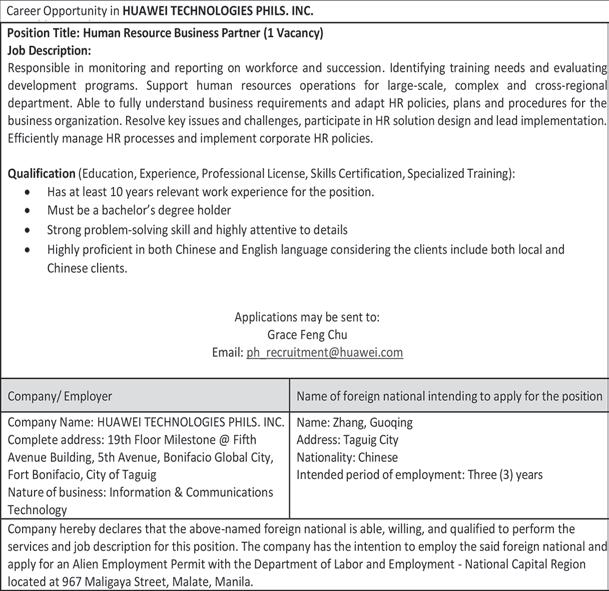

Increased tension in waterway vital to world energy supplies
DURING the war that began Feb. 28, Iran’s attacks and threats stopped cargo ships and tankers from moving through the Strait of Hormuz, creating a global energy crisis.
In recent days, Iran has twice attacked vessels in the strait—including a tanker filled with Qatari crude—following efforts to open Oman’s territorial waters to both inbound and outbound traffic from the Persian Gulf.
The attacks drew retaliatory American airstrikes and raised concerns that negotiations to reach a formal end to the war could be disrupted. Iran launched drone and missile attacks targeting Bahrain and Kuwait on Sunday.
The strait has long been considered an international waterway despite being in Iran and Oman’s territorial waters.
The Trump administration was operating Monday on the understanding that the US and Iran are standing down after the recent backand-forth strikes and that vessels
detentions of alleged chip smugglers in May, on charges of falsifying documents related to exports of Super Micro servers containing highly priced Nvidia AI chips. The three individuals were suspected of successfully sending at least one batch of Nvidia’s AI chips to China via Japan, Bloomberg News has reported, and attempting to export around 50 servers that Taiwan authorities seized before they left the island.
“Super Micro’s Taiwan offices were raided by local authorities, according to Bloomberg News, reflecting persistent headline risk after its co-founder was indicted for allegedly smuggling Nvidia GPUs to China. Although the company hasn’t been implicated, we expect news related to US GPU export controls to shadow the company’s favorable AI-server fundamentals, likely weighing on valuations until there’s a full resolution,” said Bloomberg analyst Woo Jin Ho.
can move freely through the Strait of Hormuz, said a US official who requested anonymity to discuss the sensitive negotiations.
Iran’s president, US official say $6 billion coming to Iran THE US official also said that Qatar planned to release $6 billion in frozen Iranian assets that would be used to purchase US food products for the Iranian people.
Iranian President Masoud Pezeshkian had announced the expected release of funds earlier Monday in comments published by the state-run IRNA news agency. Pezeshkian, a reformist within Iran’s theocracy, is the highestranking official within Iran to reference the release of the funds held by Qatar.
reported from Washington.
The Keelung District Prosecutors Office said in its statement that it has also summoned the individuals searched on Monday for interviews. Taiwan has this year taken a more aggressive stance about the leakage of technology from its world-leading chipmaking sector. The island is considering fortifying its export controls on AI chip sales to China to better align with the US, Bloomberg News has reported. That would give Taiwan prosecutors more tools to crack down on illicit trade of AI hardware, which is manufactured in bulk on the island. Both Nvidia and Advanced Micro Devices Inc. rely on Taiwan Semiconductor Manufacturing Co. to make their cutting-edge chips.
Any move to curb AI chip sales is likely to trigger a response from President Xi Jinping’s government in China, which views Taiwan as its own territory—a characterization the self-ruled island democracy strongly rejects. With assistance from Twinnie Siu, Dina Bass, Adrian Kennedy and Edwin Chan/Bloomberg

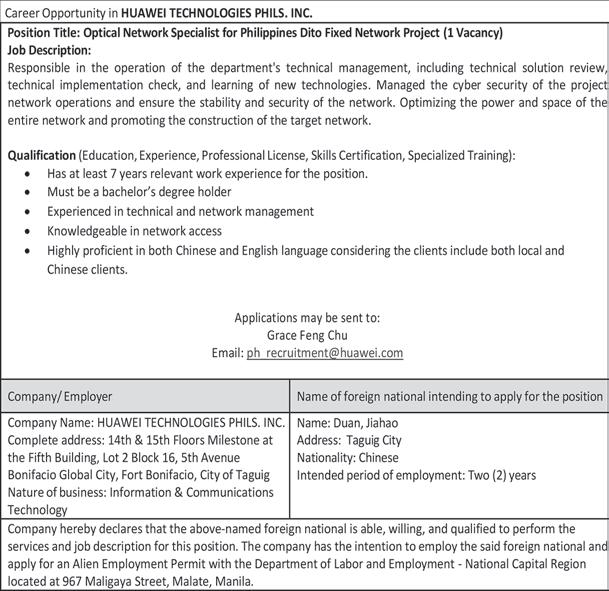
Boak
Associated Press writers Nasser Karimi and Amir Vahdat in Tehran, Iran; Bassem Mroue and Sally Abou AlJoud in Beirut; Sylvie Corbet in Paris and Russ Bynum in Savannah, Georgia, contributed to this report.
www.businessmirror.com.ph
2nd Front Page
BusinessMirror
DESPITE IMPORT SURGE, TRADE IN GOODS GAP EASES IN MAY
By Bless Aubrey Ogerio
THE country’s merchandise trade deficit narrowed to its lowest level in two months in May, even as imports continued to outpace exports, according to preliminary data released by the Philippine Statistics Authority (PSA).
The balance of trade in goods posted a deficit of $5.48 billion in May, improving from the previous month and marking the narrowest trade gap since March. However, the deficit widened 50.5 percent from the $3.64 billion recorded in May 2025, reflecting faster growth in imports than exports.
The PSA said the trade deficit’s annual increase moderated from the 61.4-percent growth recorded in April, reversing the 23-percent decline posted in May last year.
Total external trade in goods reached $21.23 billion in May, up 16.1 percent from $18.28 billion a year earlier. While slightly below the $21.42 billion recorded in March, it was the second-highest monthly trade value so far this year.
Export earnings rose 7.6 percent year on year to $7.87 billion, the highest since March when exports reached $8.19 billion.
Electronic products remained the country’s leading export, generating $4.30 billion, or 54.6 percent of total export earnings. The sector also posted the largest increase in export value during the month, rising by $458.57 million from a year earlier.
Manufactured goods continued to dominate outbound shipments, accounting for $6.16 billion, or 78.2 percent, of total exports.
From January to May, total exports
PHL cement roadmap charts long road to net zero
THE Philippines on Monday launched its first Cement and Concrete Industry Decarbonization Roadmap, laying out a longterm strategy to reduce emissions from one of the country’s most carbon-intensive industries.
The roadmap, launched by the Department of Trade and Industry (DTI) together with the Government of Canada, the United Nations Industrial Development Organization (UNIDO), and the Cement Manufacturers Association of the Philippines (CeMAP), outlines the sector’s decarbonization pathway through 2050 with milestones set every five years.
The initiative is expected to guide the cement industry’s transition toward lower-carbon production while maintaining the supply of cement needed for infrastructure, housing, and other construction projects.
The roadmap was developed under Unido’s cement and concrete decarbonization project, funded by Environment and Climate Change Canada. With the launch, the Philippines became the second country in Southeast Asia after Thailand to adopt a national cement decarbonization framework.
According to CeMAP, the roadmap provides a science-based framework for reducing emissions by increasing the production of low-carbon cement, expanding the use of alternative and renewable energy, improving energy efficiency, developing new supplementary cementitious materials, and eventually deploying carbon capture technologies.
For his part, CeMAP President John Reinier Dizon said the roadmap provides a common direction for both government and industry as the country pursues economic development alongside climate goals.
“Developing and implementing a Cement and Concrete Decarbonization Roadmap is important because it provides a clear, coordinated strategy for one of the world’s most carbon-intensive industries to reduce emissions while continuing to support economic growth and infrastructure development,” Dizon said.
The roadmap, Dizon said, also “provides a clear pathway for government and industry to work together
reached $37.87 billion, up 10.6 percent from $34.25 billion in the same period last year. According to the PSA, this represents the highest five-month export value since the series began in 1991.
Imports, meanwhile, climbed at a faster pace, increasing 21.9 percent to $13.36 billion from $10.96 billion a year earlier. Despite the annual increase, the May import bill was the lowest since March.
Electronic products also accounted for the largest increase in imports, rising by $2.23 billion year on year. The commodity likewise remained the country’s biggest import item, amounting to $4.63 billion, or 34.7 percent of total imports.
Raw materials and intermediate goods accounted for the largest share of imports at $5.46 billion, representing 40.9 percent of the total.
For the first five months of 2026, imports reached a record $63.11 billion, up 16.2 percent from $54.32 billion in the same period last year, marking the highest January-to-May import value since records began in 1991.
The United States remained the Philippines’s top export destination in May, purchasing $1.35 billion worth of Philippine goods, followed by Hong Kong, Japan, China, and Singapore.
On the import side, China remained the country’s largest supplier with $4.23 billion, accounting for 31.7 percent of total imports. It was followed by South Korea, Indonesia, Malaysia, and Japan.
Per the statistics agency, the International Merchandise Trade Statistics serve as a key input in compiling the country’s balance of payments, formulating economic policies, and supporting research and investment analysis.
PBBM pushing through with Canada trip amid INC rallies
By Samuel P. Medenilla
CONFIDENT that concerned government agencies are now ready for a possible extended demonstration by Iglesia Ni Cristo (INC) on Edsa and other parts of Metro Manila, President Ferdinand Marcos Jr. will push through with his four-day official visit to Canada this week.
“There will be no changes in the schedule of the President going to Canada tomorrow,” Presidential Communications Office (PCO) Acting Secretary
Dave M. Gomez told reporters on Tuesday.
During his visit in Canada from July 1 to 4,
Marcos will hold bilateral talks with Canadian Prime Minister Mark Joseph Carney to discuss defense and security; trade and investment; economic resilience; energy and critical minerals; and people-to-people linkages.
Gomez made the clarification after the chief executive opted to cancel his participation in several events Tuesday morning to monitor the effects of the “surprise rally” by INC members, which caused massive traffic congestion in the National Capital Region and disrupted the morning commute of thousands of workers.
The canceled events were the inauguration of the Marine Clean-up Vessel for the Enhancement of Marine Litter Management at the Manila Bay and the Foreign Correspondents Association of the Philippines (Focap) luncheon in Makati.
Selective justice INC held the demonstration after the Office of
El Nido eyes ₧760-M water supply upgrade
the Ombudsman announced it will soon file plunder raps against Senator Rodante D. Marcoleta, an INC member, after he admitted accepting P75 million worth of campaign donations.
The religious group decried the Ombudsman’s ongoing attempt to charge Marcoleta as a form of selective justice.
Palace Press Officer Claire Castro denied this, saying the Marcos administration is not singling out the lawmaker. She urged Marcoleta to defend himself before the courts rather than resorting to the demonstrations.
She also admitted that they were only made aware of the demonstration on Tuesday morning after the INC kept it hidden from authorities.
Collateral damage
THE religious group held the protest without obtaining the necessary permit for it in Quezon City and Manila.
“Although we respect the INC leadership, it admitted that this was a surprise rally and they hid it [from authorities]. This is not good because it does not comply with the law and it does not respect the rights of other people,” Castro said in Filipino in a press briefing.
The Philippine National Police (PNP) reported that the number of people who participated in the INC rallies on Edsa in Quezon City as well as the Liwasang Bonifacio in Manila reached over 12,000 and caused many people to be late for work or school.
“We experienced collateral damage when
it affected many people. This will have a major impact on the economy, on every business, on every person who needs to go to school, to their job, or go to the hospital quickly,” Castro said.
The large crowd also resulted in the tightening of security in the Malacañang compound, with the gates in Arlegui and Solano closed.
Despite the heightened security measures, Castro noted the Palace did not consider the amassing of people in Edsa as a security threat.
In fact, she said the President directed the Philippine National Police to exercise maximum tolerance and the swift restoration of normalcy in the affected areas since he recognized their right to hold a protest as part of their freedom of expression.
Illegal rally ASKED if the government will hold the INC accountable for its “illegal rally,” Castro said the matter must still go through the necessary investigation from authorities.
“So if we see any violation of any law [in the INC demonstrations], this will be investigated,” Castro said.
The government, she said, is also ready in case the INC will extend its demonstrations in the coming days.
“The government is always ready, not just to save this administration but to save every person who will be affected by this rally,” Castro said.
MMDA mobilizes THE Metropolitan Manila Development Au-
thority deployed additional traffic enforcers on Epifanio de los Santos Avenue (EDSA) and activated the Emergency Operations Center as the agency continued monitoring the traffic situation, ensuring coordination with other concerned agencies after the INC rally near the People Power Monument in Quezon City. MMDA General Manager Nicolas Torre III confirmed that the rally has no permit and proper coordination with the agency.
“There is absolutely no coordination and this rally has no permit,” Torre said in a radio interview, adding that the MMDA started towing vehicles of protesters left unattended or illegally parked along Edsa.
The MMDA said that ralliers started gathering at the People Power Monument at 3 am.
“The MMDA respects the right of every Filipino to peaceful assembly, but it is also our duty to ensure the safe, orderly and continued flow of traffic on Edsa,”
By Ma. Stella F. Arnaldo Special
Tto the BusinessMirror
HE local government unit (LGU) of El Nido in Palawan has proposed to implement P760-million project to fix its fragile and aging water supply system.
A feasibility study (FS) completed in December 2025 calls for a massive multiphase investment aimed at securing the municipality’s water supply through 2050, and ensuring clean drinking water not just for tourists, but for its local residents as well. The move comes on the heels of rising cases of acute gastroenteritis and E. coli contamination over the years, which have exposed the vulnerabilities of the current water infrastructure. As per the FS, only about 17 percent of the population in the priority barangays is served by the municipal system, forcing many to rely on potentially contaminated backyard wells.
Last year, close to 643,000 overnight tourists visited El Nido, up 28 percent from 2024. It has been recognized internationally by popular travel publications and award-giving bodies. For one, Entalula Beach was ranked no. 2 beach in the world and no. 1 beach in Asia by the World’s 50 Best Beaches 2025 awards. The Tourism Infrastructure and Enterprise Zone Authority (Tieza), the infrastructure arm of the Department of Tourism, has approved a P500-million grant to fund the said water upgrade in El Nido. Tieza will be bidding out the project soon. (See, “P500-M El Nido water project OKd as Tieza warns of funding risks,” in the BusinessMirror, May 4, 2026.)
10K connections target THE study covers 2025–2050, with the project targeting to serve 11 priority barangays, including the urban core and key tourism corridors like Bucana and Villa Libertad. By 2050, the system is projected to manage a “maximum day demand of 12,653 cubic meters,” serving approximately 10,000 connections. This is nearly a 10-fold increase from the current 1,331 active connections.
The first phase of the project will be covered by the Tieza grant, and focuses on immediate source development, including an infiltration gallery at the Bulalacao River and a 3-million-liter-
per-day (MLD) modular treatment plant. It is supposed to be completed by 2027.
The second phase (2032) involves developing the Dewil River source and additional deep wells in Villa Libertad, while the third phase focuses on the Taberna River source to support northern expansion.
According to the FS, a copy of which was shared with the BusinessMirror a “conjuctive use” strategy is recommended to ensure continuous water supply despite the drying up of sources during droughts. This means surface water from rivers will be integrated with groundwater from a network of new deep wells.
The FS also suggests the use of prefabricated modular water treatment plants that can be installed faster and can be expanded quickly than traditional facilities built on site. This will be an advantage for a municipality undergoing rapid urban expansion.
Impact on visitor arrivals
THE study warned that a further deterioriation in water quality and service will “greatly affect tourism arrivals,” potentially jeopardizing 64 percent to 75 percent of the El Nido Water Supply System’s projected revenues.
Tourists currently account for 13 percent to 17 percent of the daily municipal population, placing a significant load on local utilities. However, they are also the most profitable segment; high-volume commercial users, primarily hotels and resorts, contribute roughly 67 percent of the system’s total revenues.
The study proposes transforming the water utility system into a “Category C” water district model, which in the Philippines means is a midsized local water district with 3,000 to 10,000 active service connections. It will have four dedicated sections: Administrative, Commercial, Production and Water Quality, and Engineering and Construction.
The study recommended the hiring of 48 additional personnel to man the expanded water district,bringing the total workforce to 84.
While the project is viable, it will likely require “tariff hikes of 5 percent to 8 percent” starting in 2032 to fund subsequent phases internally, while servicing an existing P120-million debt to the Development Bank of the Philippines.

El Niño and pests: A double hit to sugar security
THE average international price of sugar was higher in May due to concerns over an anticipated tightening of global sugar supplies, the Food and Agriculture Organization of the United Nations reported in early June. FAO said its sugar price index averaged 95.1 points in May, up 6.6 points or 7.5 percent from April, marking the highest level since October 2025. Additional support to prices, FAO said, also came from concerns that El Niño conditions could adversely affect sugar production in India and Thailand until next year, potentially reducing global export availability.
As the Philippines has increasingly relied on imports in recent years to prevent domestic sugar prices from skyrocketing, this warning by FAO should prompt the government and the private sector to work together to hasten efforts that will eliminate one of the threats to local supply. Currently, there are two main threats to sugarcane farms—El Niño and the infestation of red-striped soft-scale insect (RSSI), a pest that could slash yield by half. The Sugar Regulatory Administration (SRA) is still validating reports that nearly a third of cane farms in the Negros region were attacked by RSSI, but what is certain at this time is that it is spreading. (See, “Pest attacks more cane farms in Negros,” in the BusinessMirror, June 24, 2026).
Drought caused by El Niño could exacerbate the situation in sugarproducing areas that have been struck by RSSI as less rainfall could cut cane production. Last May, SRA revised downward its projection for raw sugar output due to pest infestation and weather-related shocks. (See, “Pest, bad weather to cut sugar output–SRA,” in the BusinessMirror, May 18, 2026). Raw sugar production for the current crop year ending September 30 is seen falling to 1.85 MMT, 11 percent lower than the previous crop year’s production of 2.085 MMT, a four-year high.
Output cuts do not bode well for a country that is expected to consume more sugar, based on estimates made by the United States Department of Agriculture-Foreign Agricultural Service (USDA-FAS) in Manila. The USDA-FAS said in a report it released last April that the country’s consumption of the sweetener will rise by 2 percent to 2.3 MMT in marketing year 2026-2027 due to increasing population and demand for sugar and sugar-containing products. Citing a study from the University of Asia and the Pacific’s Center for Food and Agribusiness, USDA-FAS noted that industrial users, including those in the beverage, preserved fruits, and confectionery users, account for 50 percent of domestic sugar demand.
Interventions, such as the mass production of a fungus—a biocontrol agent that can stop RSSI in its tracks—must be implemented without delay. The national government should also secure the assistance of local government units (LGUs) to prevent infected planting materials from leaving their areas. Stakeholders cannot drag their feet on RSSI with drought looming, and cuts to sugar exporters’ output will introduce price volatility and eventually make it difficult for the Philippines to secure the volumes needed to plug supply gaps.

Top retirement destination

TTHE BUILDER
HE Philippines is fast building a reputation as one of the world’s top retirement destinations. The recognition signals a more vibrant hospitality and tourism sector in the years to come, which could also mean increased jobs for our health workers and fuel the demand for more infrastructure facilities.
The Philippines is the world’s top retirement destination for 2026, ranking first in the Retirement Abroad Index 2026.
The report evaluated countries across five categories, namely healthcare quality, visa accessibility, health insurance requirements, cost of living and expat community and integration. The Philippines ranked first across all indicators to secure the top overall position.
International health insurance provider Expatriate Group released the index, which rated 20 countries across over 180 nations.
The country also built on earlier recognition after winning Best Retirement Destination in Asia at the 2025 TripZilla Excellence Awards.
The accolade and the publicity that accompany the recognitions serve as a free marketing promotion for the Philippines. I commend the Philippine Retirement Authority (PRA) for its flagship initiative,
the Special Resident Retiree’s Visa (SRRV) that provides qualified foreign nationals a pathway to longterm residency in the country.
The citations support government efforts to position the Philippines as a premier destination for all age segments.
Department of Tourism (DOT)
Secretary Dita Angara-Mathay noted that the Philippines stands out for its hospitality, affordable living, quality services and vibrant communities that allow retirees to live, travel and thrive.
Retirement places are normally situated in exotic locations covering a tapestry of stunning beaches, lush landscapes and vibrant culture.
The Philippines offers diverse experiences for every traveler, warm hospitality and endless activities that make the stays of retirees an unforgettable journey.
PRA General Manager and Chief Executive Bob Zozobrado has com-
The Philippines is fast building a reputation as one of the world’s top retirement destinations. The recognition signals a more vibrant hospitality and tourism sector in the years to come, which could also mean increased jobs for our health workers and fuel the demand for more infrastructure facilities.
mitted to improving the retirement experience of foreign nationals and showcasing the Philippines as a “home away from home.”
Making the Philippines a top destination for foreign retirees, however, will require national government support. For one, retirement places must be more accessible and in proximity to health centers like hospitals.
The government, thus, must build more infrastructure facilities, like roads, ports and bridges, to make the stay of foreign retirees hassle-free and convenient befitting a modern setting with a rustic atmosphere.
Foreign retirees can also serve as our tourism ambassadors once they enjoy their stay here. They can retell their stories to relatives and friends and convince them to try the Philippines as an alternative tourism spot.
We need such foreign endorsements to boost the local tourism industry and create additional jobs in the countryside.
Foreign visitor arrivals rose 6.2
percent to 2.95 million from Jan. 1 to June 16 year-on-year, up 6.16 percent. The United States emerged as the country’s top source market, accounting for 591,569 of the total arrivals as of June 17.
Secretary Angara-Mathay believes the growth in arrivals should translate into broader economic gains.
“The United States has now become our number one source market, with more than half a million visitors and still growing,” says Angara-Mathay, adding that tourism growth should be measured in terms of jobs, investments and community opportunities.
Tourism’s growing role as an investment platform is becoming evident. The sector in recent official overseas engagements generated about $3.4 billion in investment leads and financing support across aviation, infrastructure, healthcare and related sectors.
Investments in tourism-supporting infrastructure, including airports, ports, digital systems, renewable energy and wellness facilities will also strengthen destination development across the country. Tourism investments fuel other sectors in the Philippine economy. More importantly, it directly generates jobs and improves the income in the countryside, leading to an inclusive economy.
For feedback e-mail to senatormarkvillar@ gmail.com or visit our web site: https://markvillar. com.ph
Antonio L. Cabangon Chua Founder
T. Anthony C. Cabangon
Lourdes M. Fernandez Jennifer A. Ng Vittorio V. Vitug Lorenzo M. Lomibao Jr., Gerard S. Ramos Lyn B. Resurreccion, Dennis D. Estopace Angel R. Calso, Dionisio L. Pelayo
Ruben M. Cruz Jr.
Eduardo A. Davad Nonilon G. Reyes
D. Edgard A. Cabangon Benjamin V. Ramos Aldwin Maralit Tolosa Rolando M. Manangan
BusinessMirror is published daily by the Philippine Business Daily Mirror Publishing, Inc.,
817-9467; 813-0725. Fax
813-7025. (Advertising Sales) 893-2019; 817-1351, 817-2807. (Circulation) 893-1662; 814-0134 to 36. E-mail: news.businessmirror@gmail.com www.businessmirror.com.ph
by BROWN MADONNA Press, Inc.–Sun Valley Drive KM-15, South Superhighway, Parañaque, Metro Manila


CHINA faces greater uncertainty in forecasting energy demand as structural changes in the economy and the rapid expansion of new industries reshape consumption patterns, according to a top government official.
Demand over the past five years surpassed the government’s expectations, said Ren Yuzhi, director - ge neral of the planning department at the National Energy Administration. The growth of artificial intelligence, electric vehicles and other emerging sectors is compounding the problem for energy planners trying to map out the next five.
Deliberations extend to potentially rethinking China’s geography and where electricity is consumed, after decades of building up power networks to serve the massive cities in the east.
“Forecasting future energy demand—especially electric -
ity—is a key challenge in the next planning cycle,” Ren said in an exclusive interview on Friday, after his agency released more details on the energy component of China’s new five-year plan that runs through 2030.
“AI computing centers and the development of electric vehicles are important factors,” he said.
“EVs, in particular, have seen faster growth in recent years— especially this year—and charging demand has risen significantly.”
Understanding future energy demand is critical for the planners guiding trillions of dollars in investment in China’s more centrally planned economy. The
Understanding future energy demand is critical for the planners guiding trillions of dollars in investment in China’s more centrally planned economy. The task is made more complicated by the country’s transition to cleaner but less consistent renewable energy.
task is made more complicated by the country’s transition to cleaner but less consistent renewable energy. China now expects an average annual increase in power demand of around 600 billion kilowatt-hours in the next five years, according to the NEA, which would be more than Germany produces in a year. That compares to 570 billion kilowatt-hours over the past five years, said Ren.
Marked shifts THE implications of getting it wrong can be seen in the marked shifts in China’s energy policy over the past five years. In 2021, planners estimated China would need about 4.6 billion tons of coal equivalent a year by 2025, a 14 percent increase from 2020 levels. Instead, demand grew so fast that total production ended up at 5.13 billion tons last year. A series of power shortages in 2021 and 2022 led to an aboutface in the country’s policy around coal. In April 2021, President Xi Jinping said the country would strictly control coal-fired power generation projects, as well as limit the increase in coal consumption through 2025. But after the shortages, which occurred during a period See “China,” A13
Mark Villar
Indonesia capital flight caps most-profitable bank’s wealth push
By Chanyaporn Chanjaroen & Norman Harsono
INDONESIA’S biggest non-state bank said capital flight has hampered efforts to expand its wealth management business, underscoring how an erosion of investor confidence is hindering the private sector in Southeast Asia’s largest economy.
PT Bank Central Asia has seen a significant increase in customers transferring money abroad this year, Chief Executive Officer Hendra Lembong said in an interview from Jakarta this month. The outflow was likely “a reflection of the situation” in the country, which needs to improve, said Lembong.
“If we still see Indonesians transferring wealth offshore, then it’s not that easy to build the onshore wealth platform,” he said. “But if the Indonesia climate is back to stable, then our wealth platform will continue to grow quite fast.”
Indonesian stocks and the rupiah have plunged to record lows this year over investor concerns about President Prabowo Subianto’s interventionist economic agenda. Overseas investors have sold a net $4.2 billion of Indonesian stocks this year, though they have started buying bonds again, according to data compiled by Bloomberg.
While BCA is one of the world’s most-profitable lenders based on its return-to-tangibleequity ratio, its stock has lost more than a quarter of its value this year, paring its market capitalization to about 700 trillion rupiah ($39 billion). Still, its market value is the highest among Jakarta-based banks, and accounts for almost 30 percent of MSCI Indonesia weightings.
To prop up the rupiah and stem capital flight, Bank Indonesia raised interest rates three times in about a month by a total of 100 basis points. The central bank clamped down on the foreign currency amount people can buy without an underlying transaction to $10,000 per month, from $100,000 before April.
“We see increases of money being transferred and we need to reverse the trend,” Lembong said. “At least there’s an attempt to reduce the outflow” by the government.
BCA, with more than 1,200 branches across the country, doesn’t have overseas branches and only has a representative office in neighboring Singapore, according to its most recent annual report. Its state-owned rivals Bank Mandiri and Bank Negara Indonesia, both among the country’s largest lenders by assets, have wealth operations in the city-state, which has been a popular destination for offshore money including from Indonesia. Its assets under management rose to 319 trillion rupiah as of March 31, little changed from 313 trillion rupiah at the end of December, a bank presentation shows.
A stable rupiah as well as more clarity on corporate information will help bring back foreign investors, Lembong said, referring to a concern raised by MSCI Inc.
MSCI downgraded Indonesia’s assessment on information flow to negative this month, citing limited transparency in shareholding structures, coordinated trading behavior that undermines price formation and a lack of corporate disclosure in English.
BCA’s wealth business has been growing at a faster rate than the bank’s bigger lending business that has been hit by a more uncertain environment.
NASA races to save Swift telescope from falling back to Earth with daring rescue mission
CIndonesian stocks and the rupiah have plunged to record lows this year over investor concerns about President Prabowo Subianto’s interventionist economic agenda. Overseas investors have sold a net $4.2 billion of Indonesian stocks this year, though they have started buying bonds again, according to data compiled by Bloomberg.
Lembong now expects lending to grow in a range of 5 percent to 6 percent this year, compared with an earlier 8 percent to 10 percent projection, as customers have become reluctant to expand due to higher raw material costs including oil.
Large, reputable local firms are still seeing foreign investment and continue to expand, though not as fast as before, he said. The veteran banker sees “some challenges” for the rest, especially for consumer loans.
Lembong, who became CEO last year, spent his early career with Citigroup Inc. and was at the US bank for almost 15 years in London, Hong Kong and Singapore. Before joining BCA in 2020, he was at Kuala Lumpurbased CIMB Group Holdings Bhd in a variety of top roles.
BCA’s largest shareholders are the billionaire Hartono brothers, who have a net worth of about $26 billion, according to the Bloomberg Billionaires Index. One of the brothers, Michael Hartono, passed away at 86 in March.
Despite the headwinds, the bank is trying to cross-sell more wealth services to existing affluent and high-net-worth customers, according to Lembong. These are defined as those with portfolios worth at least 1 billion rupiah and 5 billion rupiah. Wealth management has been a strong growth driver for BCA over the last few years through fee-based income, whose growth has outpaced net interest income growth for the past five quarters, according to data compiled by Bloomberg. Lembong, 54, is also focused on developing BCA’s subsidiaries, including Islamic banking unit PT Bank BCA Syariah. He cited strong business potential in the country, which has the world’s largest Muslim population. That market is currently dominated by state-owned PT Bank Syariah Indonesia. BCA, which employs more than 26,000 people, is focused on expanding the use of artificial intelligence to reduce costs and improve customer service, he said. The lender has partnered with Huawei Technologies Co. to help build its own largelanguage model for internal use. It plans to hire in some areas including its securities and insurance entities, which are much smaller than the banking operations, according to Lembong. To attract investors, the lender this year started increasing the frequency of dividend payments and rolled out a share buyback plan of up to 5 trillion rupiah to arrest the stock decline. BCA’s returnon-tangible-equity, a gauge of profitability, tops 23 percent, higher than JPMorgan Chase & Co., according to data tracked by Bloomberg. With assistance from Pui Gwen Yeung/Bloomberg
By Marcia Dunn | AP Aerospace Writer
APE CANAVERAL, Fla.—NASA is racing to save an aging telescope from falling back to Earth with a daring rescue mission.
The $30 million salvage operation gets underway as soon as this week with the planned launch of a robotic lifesaver.
NASA hired startup Katalyst Space Technologies to boost the Swift Observatory to a higher orbit where it can continue hunting for some of the universe’s biggest explosions.
A three-armed spacecraft built by Katalyst will chase after Swift once it takes off from an atoll in the Pacific’s Marshall Islands aboard an airplane-launched Pegasus rocket.
Scanning the cosmos since its launch in 2004, Swift has been sinking faster and faster because of recent intense solar activity. It needs to get to a higher, more stable orbit as soon as possible to survive.
NASA’s Hubble Space Telescope— also at risk—could be next.
Like Swift, Hubble is losing altitude as the sun erupts with one flare after another. Katalyst Space CEO Ghonhee Lee said his company’s next-generation robot, still in development, could save the day for the much bigger Hubble in a couple years.
Only China has attempted a mission like the upcoming one, success-
EU
fully boosting a satellite into a higher graveyard orbit four years ago.
“This is the first American space robot to go up and do anything like this,” Lee told The Associated Press. “NASA has all these big senior observatories…all of them can benefit from a service like this. So, what we’re proving with this mission is this is a new play in the playbook that’s available.”
It will take Katalyst’s autonomous spacecraft, named Link, about a month to rendezvous with Swift and catch it, and another couple of months to raise its orbit from the current 224 miles (360 kilometers) to the desired 373 miles (600 kilometers).
The 1.6-ton (1.4-metric ton) gamma ray observatory must be above 185 miles (300 kilometers) for the rescue to work. It’s expected to reach that point of no return in October, according to the latest estimates.
Roughly the size of a small kitchen refrigerator with a 40-foot (12-meter) solar wingspan, Link sports three arms with a reach of just over 3 feet (1 meter). Each arm has two finger-like pinching grippers that resemble the hands of a Lego mini figure.
NASA hired startup Katalyst Space Technologies to boost the Swift Observatory to a higher orbit where it can continue hunting for some of the universe’s biggest explosions. A three-armed spacecraft built by Katalyst will chase after Swift once it takes off from an atoll in the Pacific’s Marshall Islands aboard an airplanelaunched Pegasus rocket.
If all goes well, Swift could be back in business by September, according to Lee.
Worth hundreds of millions of dollars, Swift was never designed to be repaired, let alone retrieved by hands— human or otherwise. That’s what makes this so challenging, according to company officials, who stress there is no guarantee it will work.
NASA signed a contract with Katalyst last September with only two requests: It has to be a rush job, but please don’t make things worse. Nine months later, the company is ready to rumble.
“I have to be honest. No one thought it was going to be possible. No one thought we would get as far as we’ve already gotten today,” said Shawn Domagal-Goldman, NASA’s astrophysics director.
NASA has bought a little more time for Swift, turning off all scientific instruments to slow its descent.
and China agree on October deadline to reset trade ties
By Jorge Valero
THE European Union and China set an October deadline to make progress on trade disagreements, as tensions rise between the two economic powers.
“Not everything will be solved, not everything will be fixed, but we think that between now and October, our teams have sufficient time to deliver the tangible results,” EU trade chief Maros Sefcovic told reporters Brussels on Monday after meeting with Chinese Commerce Minister Wang Wentao.
Sefcovic said that the two sides will work to address a variety of issues plaguing the EU-China economic relationship—most notably a growing trade deficit as subsidized Chinese goods flood the European market. Officials will also look at Chinese export controls, which have squeezed Europe’s access to essential supplies, as well as intellectual property rights and World Trade Organization reforms.
As part of the effort, the EU and China will create a joint platform to monitor trade flows and identify any sudden surges.
The push is part of Europe’s renewed attempt to combat Chinese trade practices, which leaders say are harming the continent’s economy. But Europe is in a bind: Any action against Beijing will inevitably prompt retaliation, endangering Europe’s access to a pivotal market. So for now, officials are favoring talks.
“This trend is not sustainable, and the status quo is not an option,”
continued from A12
of disruptions related to the pandemic, skyrocketing global energy prices and a drought that shriveled domestic hydropower output, authorities changed tack. China kept its green energy ambitions, but miners were also pushed to boost output to record levels and hundreds of new coal power plants were approved.
Officials said the new coal plants were intended to backstop the country’s fleet of intermittent wind and solar plants,
Sefcovic said, noting that Monday’s joint statement with China was the first of its kind since 2019. “The EU remains open for business, but we need to defend our industrial base and keep pushing for a level playing field globally.”
The two sides also agreed that expanding market access will help balance trade relations and exchanged a list of issues on that front, according to a statement from China’s Ministry of Commerce. Beijing has criticized the EU’s latest policies which restrict Chinese investment in some key sectors, such as the Industrial Accelerator Act, for being protectionist and violating WTO rules.
The October deadline is in line with the next EU leaders summit on October 15, and comes shortly after Chinese President Xi Jinping is expected to visit the US in September. It also lands just before a suspension expires for export controls on China’s critical minerals.
“We would know what the direction of travel is, how we want to tackle the issues we will put on the table and to simply work in a very intensive manner to address all trade issues,” Sefcovic said.
The EU’s trade deficit with China reached reached €360 billion ($410 billion) last year, with all 27 member states experiencing the imbalance.
which saw an even greater surge in growth following the power shortages. But power output from fossil fuels still rose 19 percent from 2020 to 2025, and is up another 3.4 percent this year through May.
China’s current plans call for peaking coal by 2030. To achieve that, clean energy will need to grow swiftly and be flexible enough to handle all additional demand.
Traditional industries like steel continue to consume vast amounts of energy, while new sectors like AI and advanced manufacturing are becoming im -
Observations ceased in February.
NASA’s science mission chief Nicky Fox said it’s worth the effort. “If we let Swift reenter, we would lose that telescope. We would lose a lot of capability,” she said. “We don’t currently have the budget to build another one to replace that.” While everything cannot be saved in space, Swift is special, said Domagal-Goldman.
True to its name, Swift is designed to pivot quickly to capture latebreaking astronomical events such as gamma ray bursts and exploding stars. With more discoveries expected by the Webb Space Telescope and soon-to-launch Roman Space Telescope, Swift, if saved, would be busier than ever as “NASA’s first responder.” Katalyst sees Swift as the jumping-off point for a new repair business in space. The company’s nextgeneration robotic rescuer, scheduled to fly next year, will tackle satellites as high as 22,300 miles (35,800 kilometers) up. Lee envisions hundreds of robots in orbit one day, not only fixing and hoisting satellites but also refueling them and building solar farms, data centers and other platforms. Thirty-six-year-old Hubble, which received repeat servicing by spacewalking astronauts during the shuttle era, could follow in 2028 with a life-extending Katalyst boost.“It’s a national treasure,” Fox said. “People love Hubble.”
China has warned that it would retaliate to any new EU trade curbs. Over the weekend, a socialmedia account affiliated with China Central Television, a state media outlet, said the country could endure a freeze in economic and trade ties with the EU if needed.
Brussels is also concerned that Beijing has developed dangerous leverage over European firms, which depend on Chinese supplies like semiconductors and rare earth minerals.
While Sefcovic negotiates, the European Commission, the EU’s executive arm, is working on a plan to end companies’ singular reliance on Chinese supplies. A proposal is expected this fall, Bloomberg previously reported. EU leaders directed the commission to develop these proposals during a June summit, conceding that years of talks with China have achieved little. Yet leaders vary on how aggressively to confront Beijing.
“The question is thus not whether Europe should respond; it must respond,” Belgian Prime Minister Bart de Wever said earlier this month.
“The only question is how, and that’s a very difficult question that it needs a lot of reflection.”
China has warned that it would retaliate to any new EU trade curbs.
Over the weekend, a social-media account affiliated with China Central Television, a state media outlet, said the country could endure a freeze in
portant new sources of demand. At the same time, China wants to shift energy use from fossil fuels to electricity, which will add further strains to the grid, Ren said.
“We will not only need to meet traditional demand, but also the growing needs of people’s daily lives,” Ren said. “Increasingly, new areas are having a significant impact.”
Those new sources of demand are prompting policymakers to reconsider how energy and industrial capacity are geographically distributed, he said. Rather than continuing to transmit
economic and trade ties with the EU if needed.
Europe’s response will partly depend on Germany’s stance. Berlin has long preferred dialog with Beijing and voted against EU tariffs on Chinese electric vehicles in October 2024. But its firms, especially in the automotive, chemical and clean-tech sectors, have been under severe pressure from Chinese rivals. Volkswagen AG is looking to cut 100,000 jobs and may shutter factories, according to media reports. Earlier this month, BMW AG slashed its profitability forecast, citing weak demand and more intense competition in China.
German car shipments to China fell by a third in 2025, leaving the companies more than 50 percent below their 2022 peak of about €30 billion, according to an analysis by the German Economic Institute. Over the weekend, German Economy Minister Katherina Reiche also met with Wang, her Chinese counterpart, following up on a May visit to the Asian nation. The German Economy Ministry said Reiche told Wang she wanted closer cooperation with Beijing, but that open markets require a level playing field. Wang told the German minister that Beijing hopes Berlin will play a “positive and constructive” role within the EU, and encourage the bloc to adopt a “rational and pragmatic” economic and trade policy stance toward China, according to a Tuesday statement from the China’s Ministry of Commerce. With assistance from Kamil Kowalcze, Jing Li and Colum Murphy/Bloomberg
large volumes of electricity from western China to the eastern seaboard, authorities are weighing a shift toward relocating energy-intensive industries westward, closer to renewable resources.
“The western region has traditionally focused on exporting coal, electricity, and natural gas,” Ren said, referring to a point made earlier Friday at a press briefing by NEA deputy director Wan Jinsong “Going forward, it is more likely that the west will export finished products and computing power.” Dan Murtaugh, Ocean Hou/Bloomberg

PSC chair Gregorio: Cebu
By Carmel Loise Pedroza
LAPU-LAPU City—Cebu is positioning itself as one of the country’s leading sports tourism destinations as it prepares to host major international sporting events expected to generate billions of pesos in economic activity, boost tourism and inspire the next generation of Filipino athletes.
Speaking before tourism and business leaders in Cebu recently, Philippine Sports Commission (PSC) chairman Patrick Gregorio said Cebu’s world-class tourism assets, strategic location and growing sports infrastructure make it an ideal venue for international competitions that bring lasting economic and social benefits.
Among the biggest events lined up is the 7th Asian Beach Games set from March 7 to 16, 2028—it is expected to attract at least 4,000 athletes, 1,500 technical officials and thousands of family members and supporters from 45 Asian countries.
Gregorio said the event alone is expected to bring between 10,000 and 12,000 visitors to Cebu for nearly two weeks, creating a significant boost for hotels, restaurants, transport services, retail establishments, and local businesses.
He added that the Philippine government is investing around P4 billion to host the games, but projected the economic returns could be as much as 15 times the initial investment through tourism spending and related business activities.
Games move economies,” said Gregorio, emphasizing that sports tourism is more than simply staging competitions.
He cited Administrative Order No. 38, signed by President Ferdinand Marcos Jr. in October 2025, directing the PSC, Department of Tourism, Department of the Interior and Local Government, Clark Development Corporation, Bases Conversion and Development Authority, and other agencies to work together in promoting
THE 5150 Triathlon Islands of the Philippines Series heads to Bohol on July 12 for the pivotal third leg of the four-stop circuit showcasing Olympic-distance racing across some of the country’s most breathtaking island destinations.
S et against the backdrop of one of the country’s premier sports tourism destinations, Bohol offers competitors a unique racing experience amid stunning natural attractions, rolling countryside and warm island hospitality.
O rganized by Sunrise Events Inc., the series forms part of the National Sports Tourism-Inter Agency Council’s initiative to position the Philippines as a premier global destination for endurance sports, with support from the Tourism Infrastructure and Enterprise Zone Authority.
T he Philippine Sports Commission is at the forefront
sports tourism nationwide.
A ccording to Gregorio, hosting sports events requires a whole-ofgovernment approach because of the scale of international competitions and the large number of visitors they bring.
U nlike traditional conventions or meetings, sports events attract not only athletes but also coaches, officials, parents, grandparents, sib lings, and supporters who typically s tay for several days.
“ There is no low season in sports tourism. Athletes come because they have to compete, earn ranking points, or qualify for international competitions like the Olympics,” he said.

Gregorio said sports tourism also serves as an effective marketing platform for Cebu and the Philippines, as visiting athletes share their experiences through social media, showcasing local destinations to audiences around the world.
B eyond tourism revenues, he said hosting world-class competitions inspires young Filipinos to pursue sports after watching elite athletes compete firsthand.
When a young boy from LapuLapu or Mandaue watches these international competitions, he may dream of one day representing the Philippines,” Gregorio said.
The PSC is also looking beyond major tournaments by promoting sports camps, training centers, and sports academies that can attract athletes from countries experiencing winter seasons.
Gregorio cited Bali’s successful football training facilities as an example that Cebu could replicate, noting that the province’s tropical climate makes it an attractive yearround training destination.
He also highlighted additional revenue opportunities from ticket sales, broadcasting rights, merchandising, sponsorships, hospitality, and travel packages.
of the campaign, stressing that internationally recognized races held in scenic natural settings can promote both the nation’s sporting prestige and its tourism industry.
I n Bohol, the Sun Life 5150 Triathlon combines highperformance racing with the island’s signature charm.
Athletes will tackle the classic Olympic-distance format featuring a 1.5-km swim, 40-km bike ride and 10-km run across a course expected to test endurance, speed and strategy under the tropical sun, over rolling terrain and against a highly competitive field.
T he event is expected to draw many of the country’s top triathletes, including elite under-23 standouts, alongside seasoned age-group racers eager to make their mark on one of the most prestigious stops on the local circuit.

Alexandra & Serena
I WROTE this on Tuesday hours before Alexandra “Alex” Eala and Serena Williams started playing in the 139th Wimbledon, the year’s third of four majors in tennis.
Gilas down under: Game 7 mentality
HE best way to beat New Zealand and Australia is to play as if there’s no tomorrow—like a Philippine Basketball Association (PBA) Finals going the whole route, according to men’s national team head coach Tim Cone.
“Every game for Gilas is a championship game, it’s a suddendeath Game 7,” said Cone on Tuesday, three days before Gilas Pilipinas square off with the New Zealand Tall Blacks at the conclusion of the second window of the FIBA 2027 World Cup Asia Qualifiers in Auckland this Friday. Cone—the most successful coach in the PBA with 26 titles—knows how it feels to get to play a Game 7—he was there 11 times in his 37 years as a head coach and won seven of them, the most recent was with Barangay Ginebra San Miguel in the Governors’ Cup over TNT Tropang 5G. Cone also is a believer many times over.
We’re always preparing the best way we can every game, everywhere,” he said. “We have been a team that pulled surprises before and I’m not going to be surprised if we pull it off again.”
B acktrack to 2023 at the
ARRIVING from Bangkok the night before, Lloyd Go made a threatening first impression with a flawless, two-eagle fueled eightunder 64 to storm to a commanding three-shot lead over Jeffren Lumbo at the start of the International Container Terminal Services Inc. Pinewoods Challenge in Baguio City on Tuesday. Making its Philippine Golf Tour debut as a host venue, the Pinewoods Golf and Country Club immediately lived up to its reputation as one of the country’s most

I n their first-round assignments, Eala was to face Renata Zarazua with Williams meeting Maya Joint.
O n paper, both Eala and Williams are the odds-on picks.
E ala, the nation’s tennis toast since her breakthrough blast in March last year when she bundled out three Top 10 (Ostapenko, Keys and Swiatek) players in the Miami Open in her rookie professional year, is ranked 29th in Wimbledon against the 76th-seeded Zarazua.
The 21-year-old, 5-foot-9 Eala is way ahead in statistics as she totes a 221-133, win-loss card as against the paltry 19-19 season record of Zarazua, the 28-year-old, 5-foot-3 Mexican.
W hile Zarazua has yet to post a tournament win, Eala has already won two Women’s Tennis Association’s (WTA) titles in her infant pro career spanning only barely 16 months.
E ala has had a string of notable grass court appearances in her preparation for the grass-surfaced Wimbledon, in the process plucking a recent win over world No. 2 Elena Rybakina in a stunning upset that shook the tennis world.
A nd should Eala proceed to play true to form and defeat
exacting courses. Its narrow landing areas, sidehill fairways, severe elevation changes, treacherous hazards, difficult pin placements and glass-like greens punished even the slightest mistakes, while thick fog repeatedly halted play, disrupting the rhythm of the field. Yet every time play resumed, Go simply picked up where he left off.
“ I just came from Bangkok last night and it was my first time to play the course today, so I was really more conservative with my round,” Go said. Th at conservative game plan hardly showed on the scorecard.
He birdied Nos. 3 and 7 before eagling the par-five 10th. After another lengthy fog interruption, he birdied No. 14, chipped in for his second eagle on the par-four 17th, then capped his round with another birdie on the closing hole to complete one of the
SEVENTEENYEAR-OLD
Tiffany Lee stayed composed amid thick fog blanketing the Cordilleras to card a three-under 69 and seize control of the International Container Terminal Services Inc. Pinewoods Challenge on Tuesday in Baguio City.
“It’s a very tough course, honestly. You need a lot of accuracy and a good short game,” said Lee, who held a two-stroke lead over Chanelle Avaricio after 18 holes of the 54-hole P1million championship. The round was anything but linear for Lee as she opened with a roller-coaster
Hangzhou Asian Games and Cone and Gilas Pilipinas pulled off a monumental upset of China, 77-76, in the semifinals right on their opponents’ home turf.
A dd the stunners they pulled off in a European sortie—they beat host Latvia, 89-80, in the Olympic Qualifying Tournament in July 2024 in Riga.
A nd the Tall Blacks? The Philippines have beaten them before—93-89 on November 21, 2024 in FIBA Asia Cup Qualifiers at the SM Mall of Asia
It’s only Australia that’s been beating the Philippines each time—the Gilas-Aussies game is on Monday in Perth.
Gilas Pilipinas has been impressive in training camp, beating Australia National Basketball League teams Franklin Bulls, 94-66, on Tuesday and Manawatu, Jets 90-61, last Sunday in Palmerstone in New Zealand.
Justin Brownlee didn’t play in both friendlies while big man Mike Philips sat out the Bulls game to rest.
B ut Cone’s not about to consider those as momentum.
“ We played well but there are
finest opening rounds on the Philippine Golf Tour (PGT) this season.
I was just lucky that every time I hit a bad shot, it would end up on the correct spot, always uphill,” he said.
Lumbo put together one of the day’s strongest finishes to secure solo second with a 67. After trading two birdies with the same number of bogeys at the front, he caught fire coming home, birdieing five of his last nine holes to keep himself within striking distance.
Everything came together for me on the back nine—my tee shots, wedge game and putting,” said Lumbo, whose late charge vaulted him into early contention for a second Tour title.
C lyde Mondilla produced the tournament’s most spectacular shot, holing out for a rare albatross—a two on No. 10—to card a 69 and share third with Collin Wheeler.
front nine, mixing four birdies with two bogeys and a double bogey on a day made even more difficult by intermittent stoppages as fog swept across the course.
Just when momentum seemed uncertain, she reignited her round with a decisive four-birdie burst starting on No. 14.
Th at late surge transformed what had been a crowded leaderboard into a clearer statement of intent.
I was focusing on hitting more confidently, especially on narrow fairways and small openings into the greens,” she said. “I tried to commit fully to my shots so I could execute properly.” The greens are hard and fast, very difficult to control,” she added. “I just had to work through it the best I could.”
B ehind her, Avaricio just couldn’t not sustain her run—she opened with an eagle-aided 32 and briefly threatened to run away with the round, only to stumble on the back nine with three bogeys against a birdie for a 71.
Zarazua, she might yet meet Serena Williams in the second round—that is, if Serena also gets to hurdle Joint in her return trip to Wimbledon. But the comebacking Serena faced the specter of “truth decay” as rust could have gathered since her last singles match was four years ago yet—losing to nondescript Ajla Tomljanovic in the third round of the 2022 US Open.
S erena came back only last June after delivering her second child in 2023 (another girl)—but she has only played in two doubles matches thus far.
In her return, Serena and Victoria Mboko won their first match in the HSBC Championship early this month, but Serena’s celebration was short-lived as she and Mboko were forced to quit when Mboko sprained her ankle in her singles outing. Serena, with 23 Grand Slam titles across her name, would pair next with Karolina Muchova, losing in the first round of the Berlin Open only days back. I n Maya Joint, the 44-year-old Serena has an opponent more than half her age.

My tee shots were pretty good, but I struggled around the greens and my putting was a little off,” said Avaricio, who admitted the course setup and slick surfaces punished small errors. “I need to do better on my putting.” She also credited insights from Monday’s pro-am round for helping her navigate the tricky conditions, though the late-round wobble proved costly. I was able to read some notes from the pro-am—it helped a lot,” she added. Just behind the lead pair, momentum shifted repeatedly across a tightly packed leaderboard. M afy Singson stayed in contention for much of the round but faded late with bogeys on Nos. 16 and 18, finishing with a 72, while Monica Mandario endured one of the day’s sharpest reversals—racing to a fourunder start, including an eagle on No. 14, before a back-nine collapse featuring multiple bogeys and a double bogey dropped her to a 73.
T he 20-year-old Joint is seeded 87th and has a so-so season record of 3-15 (win-loss). The Australian was up on
PHILIPPINE Sports Commission chairman Patrick Gregorio outlines plans before tourism and business leaders in Cebu to position Cebu as a premier sports tourism destination. CARMEL PEDROZA
Editor: Jennifer A. Ng
CNPF retains 2026 capex guidance as demand rises

By VG Cabuag @villygc
TUNA canner Century Pacific Food Inc. (CNPF) said it is sticking to its capital expenditure (capex) guidance of as much as P9 billion this year, citing growing demand for its products.
The company said it still expects to post double-digit growth this year despite geopolitical issues, such as the war in the Middle East, and natural disasters, such as the recent earthquake in Mindanao which affected its operations.
The company said this year’s capex was double the level it set aside in previous years. In 2025, it allocated P4.1 billion in capex.
“So, the capacity we build today to
serve that market will be meaningfully larger by the time it comes online. We have a pretty big capex this year, and I think a big part of that really goes to our coconut business, or actually not just the coconut business, but to our OEM export businesses,” Teodoro Alexander T. Po, the company’s president and CEO, said. The company said its businesses will expand by double digits every year, including in 2026.
Its supply chain, according to company executives, is starting to feel the pressure to meet demand.
“We are increasing capacity, top of mind coconut, dairy, tuna, pet (food), even some investments in meat. It’s really, it’s really across the board, because our business has been growing in the ‘teens’ over the last five years, so we’re starting to hit the capacity on a number of the plants,” Christopher Paulus Nicholas T. Po, the company’s executive chairman, said in a media briefing after the company’s stockholders’ meeting.
He said growth is more pronounced in its export market for OEM coconut products, in particular, coconut water.
“We have secured long-term contracts, and we have actually, we’re actually building the infrastructure and the capacity to supply that, those long-term contracts.”
CNPF noted that consumers are now more conservative when it
comes to their spending habits to cope with rising costs.
“They continue to buy or go for brands that they trust so branded products continue to be part of the portfolio,” Po said.
The company said the company raised its prices last May by about 3 percent, or half of the current headline inflation rate.
Po noted that people have been downsizing in terms of the number or the size of the product that they buy, but there is continued support for their trusted brands.
“Having said that, some consumer segments also look for cheaper alternatives, and in our portfolio, as you know, we have like a broad spectrum of brands that cater to, let’s say, upper-income, middle-income and low-income, and it’s a cascade of affordable brands or different brands of different price ranges that are able to capture demand as it shifts.”
CPG lists fixed-rate notes on PDEx
REAL estate developer Century Properties Group Inc. (CPG)
on Tuesday said it enrolled its P3 billion, 5-year fixed-rate corporate notes with the Philippine Dealing and Exchange Corp. (PDEx).
The peso-denominated notes were issued to qualified buyers and are exempt from registration with the Securities and Exchange Commission.
The company said the proceeds will be used for “strategic land banking” nationwide, mainly in Calabarzon, Central Luzon, Panay and Davao regions, and the construction of presold units for its first-home residential business.


By Justine Xyrah Garcia
NANJING, China – Chinese clean energy giant Golden Concord Holdings Ltd. (GCL) Group is betting on perovskite solar technology as it looks to strengthen its renewable energy (RE) business, with the company positioning the emerging photovoltaic material as a key part of its long-term growth strategy.
During a presentation at its headquarters in Suzhou Industrial Park last June 29, GCL said it is bringing gigawatt-scale production lines for perovskite technology online, describing it as a next-generation solar technology that offers high efficiency, scalability, stability and lightweight applications.
sion efficiencies of 19.04 percent for its single-junction perovskite modules and 29.51 percent for tandem modules, which combine perovskite with conventional silicon solar cells.
During the presentation, GCL said its latest tandem modules have achieved conversion efficiencies of up to 33 percent, compared with about 27 percent for traditional solar modules.
Beyond perovskite, GCL said it is expanding investments in energy storage, virtual power plants, and artificial intelligence-enabled energy management systems as it diversifies beyond conventional solar manufacturing.
The issuance forms part of CPG’s long-term capital management strategy to strengthen funding flexibility and diversify its funding sources. By proactively accessing the capital markets, the company said it aims to reduce execution risk while preserving the flexibility to pursue growth opportunities as they arise.
“This issuance reinforces our long-term funding platform and reflects our disciplined approach to capital management,” Marco Antonio, president and CEO of CPG, said. “By raising capital ahead of need, we are enhancing financial
China Bank Capital Corp. served as sole arranger and bookrunner for the transaction.
Aboitiz unit unveils new solar plant
ABOITIZ Renewables Inc., the renewable energy (RE) arm of Aboitiz Power Corp. (AboitizPower), has inaugurated its 92.55-megawatt peak (MWp) San Manuel Solar Power Plant in Pangasinan, bolstering the country’s renewable energy (RE) capacity and the Luzon grid.
As the company’s third solar facility in the province, this project increases their local portfolio to 340.55 MWp to support energy security and diversification.
The two other solar projects in Pangasinan are the 154-MWp Laoag 1 and 2 and the 94-MWp CayangaBugallon solar power plants.
Aboitiz Renewables said its growing clean energy portfolio now includes 45 RE facilities across the Philippines, spanning solar, hydro, geothermal, and energy storage. It continues to expand its presence, backed by a development pipeline of more than 1,800MW in solar, hydro, and wind projects.
“As demand for electricity continues to grow, power generation investments like San Manuel help strengthen our energy system, diversify our energy mix, and support the Philippines’s long-term energy security,” said AboitizPower President and CEO Danel
Aboitiz. Lenie Lectura
flexibility while remaining wellpositioned to pursue future opportunities. We continue to see strong long-term fundamentals in the Philippine housing market, supported by the country’s structural housing backlog and sustained enduser demand.”
The transaction also aligns longterm funding with the company’s long-term corporate requirements while supporting prudent balance sheet management.
“Our priority is to maintain a funding profile that gives us flexibility without compromising financial discipline,” Rodel V. Marqueses, the company’s CFO and head of investor relations said.
“This issuance strengthens our capital base, broadens our sources of long-term funding, and positions us to execute our growth plans while remaining disciplined in managing our leverage and other key financial metrics.”
Last May, CPG said its net income slid by 6 percent to P446 million in the first quarter, 6 percent lower than last year’s P473 million.
The company attributed the decline to higher interest expense and taxes that partly offset the improvement in operating performance.
Consolidated revenues for the period slid by almost 4 percent to P3.58 billion from the previous year’s P3.72 billion. VG Cabuag
Lotus gains 590% in tough decade for snack firms
SOARING global sales of Biscoff cookies are helping a Belgian food company extend a remarkable decade of stock market outperformance.
Lotus Bakeries NV shares are up 47 percent year-to-date, taking gains in the last decade to nearly 590 percent. That’s as food and staple stocks have largely struggled on a worldwide scale.
Key to the stock’s rise has been the growth of Biscoff. The caramelized biscuits are now in the world’s top five for sales, according to the company’s latest annual report. This year, a “Japanese cheesecake” trend involving Lotus biscuits went viral on TikTok.
“You can compare it to Oreo when that was growing drastically,” Ignacio Canals Polo, an analyst at Bloomberg Intelligence, said in an interview. “People seem to like it everywhere they go. That’s the most important part to understand about Lotus Bakeries.”
Founded in 1932, Lotus Bakeries has been gradually expanding the presence of its flagship Biscoff biscuit globally, including a partnership with US carrier Delta Air Lines Inc. More recently, the company opened a factory in Thailand in its push to reach Asian markets, and has expanded into areas such as spreads, ice cream and chocolates. The move into new products

and markets has seen revenue skyrocket. Sales jumped an average 17% each year between 2014 and 2024, according to Bloomberg Intelligence, as the brand’s popularity grew worldwide.
“Shareholders have been handsomely rewarded via a combination of dividends and share buybacks,” said Ketan Patel, a fund manager at the family office Whitefriars, which owns Lotus shares—noting that dividends have grown annually for more than two decades.
Lotus Bakeries did not respond to a Bloomberg request for comment.
Analysts are broadly optimistic or neutral on the stock, though its average price target suggests there’s no room for upside over the next 12 months.
It trades at a hefty premium to peers. A multiple of about 46 times expected earnings is more
than double the MSCI World Food, Beverage and Tobacco Index, and over 20 percent more expensive than its own average valuation over the past decade.
BNP Paribas’ Mikheil Omanadze is the only analyst tracked by Bloomberg with a sell-equivalent rating and has been bearish on the stock for more than two years, seeing its valuation premium as excessive. He sees potential challenges stemming from the increased popularity of GLP-1 weight-loss drugs and “ultra-processed food narratives,” which may weigh on valuations by turning consumers away from sweet snacking.
The company has made moves to insulate itself from healthconscious consumer disruption through early M&A action. In 2015, it acquired the Bear, Trek and Nakd brands — all of which have become big names within healthy snacking — as part of its natural-foods division. This now accounts for 25 percent of its revenue, according to its most recent annual report.
“The challenge for the business will be how to keep on delivering on double-digit growth in a global market that is highly competitive and has low barriers to entry,” said Whitefriars’ Patel. “A mis-step on products, marketing, distribution, technology et cetera could derail the growth story.” Bloomberg News
Unlike conventional solar panels that rely solely on silicon to convert sunlight into electricity, perovskite solar cells use a different light-absorbing material that researchers believe could make solar panels more efficient while requiring less material to manufacture.
The Renewable Energy Institute (REI) said the technology has attracted growing interest across the solar industry because of its potential to improve the performance of conventional silicon-based solar panels.
However, the institute noted that perovskite remains in the early stages of commercialization, with manufacturers continuing to improve its long-term stability and scale up production.
GCL has already begun commercializing the technology. Last year, the company unveiled what it said was the world’s largest massproduced perovskite solar module, measuring 2.76 square meters.
It also reported laboratory conver-
A.P. Moller-Maersk A/S
shares jumped in early trading after the shipping company upgraded its profit outlook for this year, citing solid demand especially in Asia and a global container market that looks to stay healthy for the rest of the year.
The Copenhagen-based company, the world’s No. 2 container carrier, made the announcement in a statement posted on its website late Monday. Ranges for both underlying EBITDA and EBIT were increased, topping analysts’ estimates, and free cash flow will also be better than previously expected, Maersk said.
Shares rose as much as 5.4 percent in Copenhagen shortly after open on Tuesday before losing steam and were largely unchanged from the previous day’s close at 09:30 a.m. local time.
Container volume growth is now seen at about 4 percent globally this year, an improvement from Maersk’s previous expectation for an expansion ranging from 2 percent to 4 percent.
Shipping lines are benefiting from a recent surge in spot con -
Company officials said the strategy seeks to integrate renewable power generation, energy storage, and computing infrastructure into a unified energy ecosystem. Founded in 1990, GCL has grown into an integrated energy company with businesses spanning polysilicon production, semiconductor materials, lithium battery materials, and power generation.
The company said it operates across the photovoltaic supply chain—from silicon materials and wafers to solar cells and modules— and has accumulated more than 5,000 patents supporting its clean energy and advanced materials businesses.
Asked whether GCL is considering expanding into the Philippines, company officials said there are no immediate plans to enter the market. However, they said the company is exploring opportunities to expand partnerships in more countries, including those in Southeast Asia. GCL said its products and services are currently available in more than 70 countries.
tainer rates, as cargo owners look to book early amid disruptions ranging from violence in the Mideast to US tariff uncertainty. Ocean freight volumes typically pick up in July and August as retailers pad inventories for the back-to-school and holiday shopping seasons. The ongoing tensions in the Middle East have also prolonged the diversion of vessels around the Cape of Good Hope instead of through the Red Sea. The longer voyages reduce effective shipping capacity, providing additional support for freight rates and temporarily easing concerns over a wave of new vessel deliveries in the years ahead.
“The supply overhang in the container industry is significant with the order book approaching 40 percent of the current global fleet. This is mitigated by a very strong financial profile with a net cash position,” Brian Godsk Borsting, chief analyst at Danske Bank Credit Research, said in a note. Borsting said he expects Maersk to have “another solid year,” supported by external factors, adding that the guidance upgrade is slightly credit positive. Bloomberg News
PHOTO FROM WWW.LOTUSBISCOFF.COM
PHOTO FROM WWW.GCL-PEROVSKITE.COM
Entrepreneur
How Mercato Centrale is cultivating a food entrepreneur ecosystem in the Philippines

By Rizal Raoul S. Reyes @brownindio
Leveraging AI

DIGITAL technologies are aggressively reshaping the marketplace. They are fundamentally transforming how sales teams operate, interact with clients, and deliver long-term value. And through AI-driven insights, sales leaders now possess unprecedented tools to optimize performance and elevate the customer experience. But let’s face reality: technology alone does not guarantee results.
As sales leaders, we must integrate these advanced digital tools strategically without ever losing our human connection. True digital transformation requires a clear vision, relentless execution, and a culture of continuous learning to maximize impact. If you want to successfully lead your team through the AI evolution and unlock peak performance, you must execute these five core strategies.
Align technology with business goals
NOT every flashy tool or platform adds value to your bottom line. True success comes from selecting technologies that directly support your strategic objectives and complement your team’s behavioral strengths. Identify exactly where AI can bridge operational gaps, improve efficiency, and deepen client engagement. As Satya Nadella accurately pointed out, “Every company is a software company. You have to start thinking and operating like a digital company.” Alignment ensures that technology drives meaningful outcomes, not just empty, uncoordinated activity. As leaders, we must lift the lid and prioritize solutions that enhance both team performance and longterm client value.
Invest in data quality and insights
THE true power of digital tools depends entirely on clean, accurate data. Your analytics, dashboards, and AI predictive models are only as useful as the underlying data feeding them. If the foundation is flawed, your strategy will crumble. W. Edwards Deming famously emphasized, “In God we trust; all others must bring data.” High-quality data enables informed decisions, sharper forecasting, and deeply personalized customer interactions. When teams can completely trust their data, they stop second-guessing. They begin to act with absolute confidence, speed, and agility in front of the buyer.
Train and empower your team TECHNOLOGY adoption is completely dead in the water if your people don’t know how to leverage it to win. You cannot just hand them a tool and expect miracles; you must provide ongoing training, targeted coaching, and personal support to help them navigate new digital environments. Alvin Toffler powerfully observed, “The illiterate of the 21st century will not be those who cannot read and write, but those who cannot learn, unlearn, and relearn.” Empowered sales professionals seamlessly leverage AI tools to enhance their efficiency, sharpen their insights,
and safeguard client relationships.
Continuous learning ensures that tech adoption is consistent, impactful, and sustainable.
Maintain human-centric sales practices
EVEN in an AI-dominated, tech-driven ecosystem, the human element remains completely irreplaceable. You must build authentic relationships, masterfully understand your client’s underlying needs, and deliver genuine empathy alongside your automation. Tony Zambito stated it perfectly: “Understanding the buyer’s world is the first step in connecting with them in a meaningful way.” Digital tools are meant to augment and elevate human engagement, never to replace it. Sales leaders must strike a flawless balance between technological efficiency and authentic, heart-to-heart client interaction. Never forget: people still buy from people.
Iterate and evolve continuously
DIGITAL transformation is not a onetime project with a fixed endpoint— it is an ongoing, daily evolution. You must test new approaches, rigorously assess performance metrics, and refine your sales processes regularly. Reid Hoffman famously noted, “If you are not embarrassed by the first version of your product, you’ve launched too late.” Iterative improvement ensures your technology keeps perfect pace with shifting market changes and rising client expectations. Leaders who embrace continuous evolution are the ones who sustain a permanent competitive advantage and secure long-term results.
Final thoughts
THE digital transformation wave in sales offers an unprecedented opportunity to optimize team output, deliver superior client outcomes, and dominate the market. By intentionally aligning technology with strategic goals, investing heavily in data quality, upskilling your teams, maintaining human-centric habits, and iterating daily, you can harness the absolute potential of modern AI. Success does not come from simply adopting technology; it comes from thoughtful, behavioral integration. The next time challenges arise within your pipeline, pause and ask yourself: “Am I merely reacting to the tech disruption, or am I truly leading my people through it?” Strategically blend advanced technology with deep human insight to drive measurable impact, forge lasting relationships, and achieve sustainable growth. You got this. God bless!
Alexey “Coach Lex” Rola Cajilig is the President and CEO of ARCWAY Consultancy Inc., a recognized Sales Leadership Coach, Strategic Sales Operations Consultant, Christian Motivational Speaker, and Human Ecologist. As the author of The Effective Seller and Solving the Sales Puzzle, Coach Lex empowers leaders and sales professionals to turn knowledge into action and action into measurable results. He is also the creator of the ARCH Styles, a cutting-edge behavioral discovery framework that helps individuals and teams unlock their true potential and perform at their peak. Connect, collaborate, and transform your leadership execution at arcway.ph.
THE food industry offers massive entrepreneurial potential. This is the bullish outlook of Rene “RJ” Ledesma, Jr, the CEO of food incubator Mercato Centrale Group.
“The success of The Next Big Food Entrepreneur in Bridgetowne last April reaffirmed something we’ve always believed—that there’s tremendous potential in Filipino food entrepreneurship,” said Ledesma.
“The event wasn’t just about discovering exciting new food concepts; it was about giving aspiring entrepreneurs a platform to launch, validate, and grow their businesses,” Ledesma added.
Building on that momentum, Ledesma and his team are currently evaluating new locations that share the same profile as Bridgetowne, “where outdoor food markets can thrive and become platforms for food entrepreneurs while serving communities that are looking for unique dining experiences. We’re still carefully vetting potential sites, but our vision remains the same: to create spaces where entrepreneurship and community come together.”
Ledesma added Mercato Centrale is also expanding their indoor offerings through limited-edition themed weekend markets that cater to passionate foodpreneurs and weekend entrepreneurs who may not yet be ready for full-time operations but are

looking for opportunities to showcase their concepts.
It does not stop there. Mercato is also investing even more in entrepreneur development. “We’re launching MercatoCon, a summit for food MSMEs and bazaar entrepreneurs, where participants can learn from industry practitioners, build networks, and gain practical business insights,” Ledesma said.
Mercato Academy is also strengthening its cooperation with the College of Saint Benilde to help aspiring food entrepreneurs develop the entrepreneurial, operational, and marketing skills needed to build sustainable food businesses.
“I’m very optimistic about the future of food entrepreneurship in the Philippines. More Filipinos are seeing entrepreneurship as a viable career path, while consumers continue to seek fresh concepts and unique food experiences. Competition is certainly becoming stronger, but that’s a positive sign of a growing and maturing industry. It pushes entrepreneurs to innovate, improve quality, and build stronger businesses,” he explained.
Ultimately, Mercato’s mission has always been about something far
DTI showcases top PHL food brands in Singapore

THE Department of Trade and Industry (DTI), through the Philippine Trade and Investment Centre in Singapore (PTIC-Singapore) and the Export Marketing Bureau (EMB), recently partnered with top Philippine food brands to showcase a premium selection of artisanal chocolates, crispy kangkong chips, and specialty snacks.
Held during the Philippines’ 128th Independence Day reception in Singapore, the event gave Singaporean government ministers, foreign diplomats, and high-profile business leaders a vibrant taste of Filipino flavors.
Supported by the Philippine Embassy in Singapore and Philippine Airlines, PTIC-Singapore hosted a “Taste of the Philippines” pavilion. The exhibit featured interactive product displays, sampling activities, and curated gift sets distributed to distinguished guests at the National Day reception, held at the Pan Pacific Orchard Singapore.
The exhibition highlighted an impressive lineup of creative and traditional Philippine products from five key exporters. Sweets and artisanal treats took center stage with Auro Chocolate’s award-winning, single-origin chocolate bars in unique fusion flavors like Dark Chocolate Mango Crunch, Calamansi Cheesecake, and Mocha Crunch. Year Luck Food and Industrial Corporation also featured its popular Konitos mini wafer cones. For savory and novel alternatives,
King showcased its pioneering crispy kangkong chips, celebrated as the world’s first commercially flavored water spinach snack. Villa Socorro Farm also presented its signature Sabanana banana chips, along with Camote sweet potato chips made from three distinct varieties of Philippine sweet potatoes.
Regent Foods Corporation completed the lineup with its iconic snacks, including Belgian chocolate waffles and Big Mouth Corniks. The brand also highlighted its assorted sponge cakes in Ube and Pandan flavors, which have been rapidly gaining popularity in Singapore.
The diplomatic reception served as a strategic platform to boost the visibility of Philippine food exports among Singapore-based stakeholders and cultivate future business partnerships. To maximize reach, PTIC-Singapore introduced a digital product catalog accessible via QR codes at the exhibition tables, allowing attendees to connect with exporters seamlessly.
The curated Philippine gift sets were presented to the evening’s Guest of Honor, Singaporean Minister for Foreign Affairs Vivian Balakrishnan, alongside Members of Parliament Vikram Nair and Yip Hon Weng. Sets were also distributed to the diplomatic corps and prominent business leaders, including representatives from the Singapore Manufacturing Federation and the Singapore Business Federation.
greater than organizing food markets.
“Our goal is to help build successful Filipino food entrepreneurs, and we believe that by providing the right platforms, education, and community support, we can contribute meaningfully to the continued growth of the country’s food entrepreneurship ecosystem,” Ledesma said.
Meanwhile, Mercato officially crowned PokéBee , a fast-casual brand specializing in flavorful, localized Hawaiian bowls, as the grand winner of its flagship program, The Next Big Food Entrepreneur (NBFE) 2026. The high-stakes finale, held on April 18 at Mercato Centrale Bridgetowne, Pasig City, marked the culmination of a rigorous search for the country’s next culinary icon.
Founded by husband-and-wife team Goldwin and Vina Garcia, PokéBee was born from a simple observation: the Poké they knew as everyday street food in Hawaii was being positioned as a luxury product in the Philippines. The brand’s
mission to make high-quality Poké affordable and accessible to local diners earned it the top spot over more than 60 entries.
The win also carries deep personal significance. PokéBee’s original recipes were formulated by Goldwin’s late brother, who adapted the traditional Hawaiian flavor profile for the Filipino palate, but passed away before seeing the brand come to life.
“PokéBee is solving a real market gap,” said Vanessa Ledesma, President of Mercato Centrale Group. “By localizing Poké for the Filipino palate, they are fulfilling a vital, meaningful role in our food ecosystem and doing it at an accessible price point.” As grand winner, PokéBee receives a Food SME Starter Package designed to accelerate its growth from startup to multi-branch operation, including six months of rentfree residency at a prime Mercato Centrale location, a business mentorship grant, and a one-year supply of Solane LPG refills.
Laoag starts brewing ‘Kapeng Ilokano’ to boost livelihood
By Leilanie Adriano
LAOAG CITY—Coffee growing here gains momentum as government agencies, local governmentunitsandindustryplayers gather at the Capitol auditorium for the first Ilocos Norte Provincial Coffee Forum on Wednesday to explore and boost opportunities to revitalize the coffee industry in Luzon.
The Ilocos Norte provincial government, in partnership with the Department of Trade and Industry, developed a coffee industry roadmap after Ilocos Sur’s success in the 2026 Robusta awards. The plan aims to energize the coffee value chain—production, processing and marketing — by empowering farmers, supporting local enterprises, and fostering innovation and sustainability.
During the forum, Juliet Pascual, a resource person on the coffee value chain, underscored the importance of crafting a local industry roadmap that aligns with the national coffee roadmap to globalize local coffee.
With an estimated annual production of 72,400 kg of Arabica, Robusta, Excelsa, and Liberica coffee, grown mostly by the Piddig Coffee Growers Association in Piddig town and the Saguigui Tribal Council Inc. in Pagudpud, the province of Ilocos Norte has begun brewing its homegrown “Kapeng Ilokano” brand to boost the livelihood of local farmers.
Both Ilocos Norte Governor Cecilia Araneta-Marcos and Vice Governor Matthew Joseph Manotoc, who attended the forum, committed to supporting programs to boost coffee production.
“We have seen that this is doable, and we congratulate Ilocos Sur. Of course, we also want to mimic, someday match, or hopefully beat Ilocos Sur because there’s a friendly rivalry with them,” Manotoc said.
Araneta-Marcos also recognized the huge market potential of coffee to uplift the lives of Ilokano families, hence the need “to identify practical strategies to grow the industry sector and make them more competitive.” On the part of the DTI, provincial director Amelia Galvez said the future of coffee lies in stronger collaboration and partnership among all sectors. She assured that the DTI has lined up various interventions to improve the quality of local coffee products and help them join the league of the world’s most competitive coffee brands.
However, the DTI identified several challenges that continue to hinder its growth. These include limited access to quality planting materials, gaps in technical knowledge for production and processing, concerns about product quality and consistency, and the need for stronger market linkages and industry collaboration. PNA

Kangkong
Editor: Vittorio V. Vitug
FROM left to right: RJ Ledesma, CEO of Mercato Centrale; Jose Renato Mariano III, Ancestre Owner; Vanessa Ledesma, President of Mercato Centrale; and Daniel Aguilar, General Manager of Mercato Centrale; pose for a photo onstage as Ancestre receives its award as the NBFE 2026 3rd Place Winner.
‘Limited market competition makes rice prices stay high’
By Ada Pelonia
LIMITED market competition failed to translate steep rice tariff cuts into lower retail prices for Filipino consumers, wrote experts in a paper published in “The Philippine Review of Economics.”
The paper, titled “Tariff Cuts Without Consumer Gains? A Competition Policy Perspective on Philippine Price Trends,” examines the reasons domestic rice prices remained high despite sliding global quotations and trade liberalization.
The article was penned by Department of Economy, Planning, and Development Secretary Arsenio M. Balisacan, Seameo Innotech Centre Director Majah-Leah V. Ravago and Enrico G. Trinidad. Their findings showed that aside from persisting weaknesses in domestic supply chains, limited market competition also remains a pressing constraint.
“Despite increased importation and declining landed costs, the passthrough to retail prices remains minimal and delayed,” the paper said.
The authors wrote that “historical decomposition” pointed at shocks to imports, stocks, and farmgate prices continuing to dominate price dynamics. This suggests that adjustments along the supply chain are “neither smooth nor fully competitive.”
“These patterns are consistent with a market environment where limited contestability and the presence of dominant intermediaries weaken price transmission,” the authors said.
“Practices such as hoarding, strategic inventory management, or coordinated behavior among traders may allow market participants to retain gains from lower import costs rather than pass them on to consumers,” they asserted. Hence, the authors flagged the
insufficiency of the liberalization of rice trade under the Rice Tariffication Law (RTL) or Republic Act (RA) 11203.
“When market structure enables the exercise of pricing power, policyinduced cost reductions do not automatically translate into lower retail prices,” the authors wrote
The paper also flagged policy uncertainty—including frequent adjustments in tariff rates or discretionary import decisions—as also exacerbating such outcomes.
“As a result, the benefits of RTL risk unequal distribution, favoring larger, better-positioned market participants while leaving consumers, particularly poorer households, exposed to persistently high food prices.”
Signed into law in 2019, RA 11203 removed quantitative restrictions (QRs) and slapped a 35-percent tariff rate on imports to lower retail rice prices. This was further slashed to 15 percent in 2024 through Executive Order (EO) 62.
Policy response TO address these challenges, the authors said enhancing competition and market governance is essential.
Such measures include strengthening the Philippine Competition Commission’s (PCC) capacity to detect, investigate, and prosecute anticompetitive practices through evi-
dence that meets judicial standards. Balisacan, to note, is the founding chairman of the PCC, a position he held from 2016 to 2022 prior to returning as Secretary of the National Economic and Development Authority (Neda). The Neda was later renamed DepDev.
He and fellow paper authors said that “improving transparency in rice markets—particularly through better monitoring and public reporting of inventory levels across both public and private sectors—can reduce information asymmetries, discourage speculative behavior, and support more timely policy interventions,” the authors noted.
Sustained investment in storage, logistics, and distribution infrastructure is crucial to address supply-side inefficiencies, they added.
As such, the paper noted that apart from opening markets, stabilizing food prices requires making markets work.
“Effective price stabilization depends on a comprehensive reform agenda that strengthens institutions, improves infrastructure, and, crucially, promotes genuine competition in the rice sector.”
The authors warned that without these complementary measures, “tariff reductions alone are unlikely to deliver sustained and equitable gains for consumers.”
Analysts weigh in on BSP stance on AI in finance
By Andrea E. San Juan
ANALYSTS gave a qualified support to the central bank’s stance on the use of artificial intelligence (AI) saying the technology can help improve the “timeliness” and “depth” of monetary policy but warns against over-reliance.
As such, analysts say the use of AI should complement “sound” human judgment.
Experts provided their respective insights on this matter after Bangko Sentral ng Pilipinas (BSP) Governor Eli M. Remolona Jr. said the central bank “has stepped up its use of artificial intelligence (AI) to better track a rapidly changing environment.”
In the BSP’s 2025 Annual Report, Remolona said that “good policy needs good and timely information.”
“We employed large language models to measure sentiment and monitor trade flows,” the country’s central bank chief added.
According to Remolona, these models allow decision-makers in the central bank to formulate a “more data-driven monetary policy that is ahead of the curve.”
In response to the governor’s pronouncement, analysts supported the central bank’s move to utilize artificial intelligence as a tool in decisionmaking.
Necessary evolution
SOUGHT for comments, Jonathan L. Ravelas, senior adviser at Reyes Tacandong & Co., told the BusinessMirror that the BSP’s move to use AI in monetary policy is a “smart and necessary evolution” especially amid a fast-moving environment.
Mirror that the use of the tool should “complement economic judgment.” Ravelas echoed Rivera’s sentiment, emphasizing that “AI is a tool, not a decision-maker.”
Reduced accuracy
THE two analysts concur on the view that using AI comes with risks, including data bias and lack of transparency.
Rivera flagged “reduced accuracy” as one of the main risks in using the tool, especially during “unprecedented” events such as geopolitical conflicts, wherein, he underscored: “historical patterns may no longer apply.”
“So it must be balanced with traditional models, and, most importantly, sound human judgment. Especially during periods of geopolitical uncertainty, like the Middle East conflict, no model is perfect,” Ravelas pointed out. These economists underscored that AI should be used alongside traditional macroeconomic models, market intelligence, and judgement.
“In short, it’s not about replacing central bankers, it’s about making them faster, sharper, and more forward-looking,” Ravelas told the BusinessMirror.
Rivera also noted that, “especially during periods of elevated uncertainty, policymakers should treat AI as an input to decision-making, rather than the decision-maker itself.”
Complex trade-offs
By Reine Juvierre Alberto @reine_alberto
DEMAND for 3-year Treasury bonds (T-bonds) surged on Tuesday, pushing yields lower as investors snapped up the government’s debt papers. The Bureau of the Treasury made a full award of bids amounting to P30 billion after tenders totaled P65.135 billion, more than twice the amount offered.
Michael L. Ricafort, chief economist at Rizal Commercial Banking Corp., pointed to the easing geopolitical tensions between Washington and Tehran for the drop in yields. Likewise, oil prices have declined after the interim US-Iran agreement and helped ease inflationary
LOANS granted via banks’ Foreign Currency Deposit Units (FCDU) posted a 2.15-percent year-on-year (YoY) decline in the first quarter of 2026, according to the Bangko Sentral ng Pilipinas (BSP).
Data showed FCDU loans as of end-March reached $15.44 billion, which is $340-million down from the $15.78 billion posted in end-March last year. Compared to the last quarter of 2025, BSP data showed the contraction was lower at 0.8 percent or by $122.25 million from $15.56 billion in endDecember 2025.
FCDU loans granted to Philippine-based borrowers stood at 67.6 percent of total outstanding or $10.44 billion, majority of which went to several industries. The latter includes merchandise and service exporters at $2.7 billion or 26.4 percent of the total ;followed by towing, tanker, trucking, forwarding, personal and other industries at $2.51 billion or 24 percent of the total.
The BSP also said power generation companies accounted for $1.85 billion or 17.7 percent.
The data also showed the maturity profile of the FCDU
pressures, Ricafort added. Amid conflicting signals on the negotiations, the White House said the next round of peace talks between the two countries is set to take place in Doha, Qatar, on Tuesday. US President Donald Trump said the meeting will be “perhaps important, perhaps not,” following recent attacks that put the truce in jeopardy.
Amid these headlines, Tuesday’s auction was marked by robust investor demand. The latter enabled the Treasury to raise funds at lower borrowing costs, as the average yield on the 3-year bonds fell to 6.580 percent. The yield is lower by 72.7 basis points from 7.307 percent in the previous auction last June 9. However, this was slightly above the secondary market benchmark rate
for the same tenor at 6.500 percent by 8 basis points.
Accepted bids carried yields ranging from a low of 6.500 percent to a high of 6.610 percent.
The reissued debt papers have a remaining term of three years and three months and carry a coupon rate of 7 percent.
Ricadort expect yields may remain elevated as the Bangko Sentral ng Pilipinas (BSP) gave hawkish signals on possible rate hikes if inflation remains above the 2-percent to 4-percent target range.
BSP Governor Eli M. Remolona Jr. said there is “a lot” of room for further rate hikes as the Middle East conflict remains uncertain.
The BSP expects inflation to settle within the range of 6 to 7 percent in
Sloan portfolio remained predominantly medium-term to long-term.
This means these loans are payable over a term of more than one year. Medium-term to long-term loans formed about 77.1 percent, slightly lower than the 79.2 recorded from the previous quarter. Meanwhile, FCDU deposit liabilities reached $60.769 billion as of end-March 2026, higher by $941 million or by 1.57 percent from the end-December 2025 level of $59.828 billion.
Year-on-year, FCDU deposit liabilities increased by $1.85 billion or by 3.14 percent from the end-March 2025 level of $58.919 billion.
The central bank explained that FCDU loans are foreign currency-denominated loans extended by FCDUs of local banks or local branches of foreign banks authorized by the BSP to engage in foreign currency transactions.
“These loans support economic activities that require foreign exchange, such as importers, businesses, and individuals with foreign currency transactions,” the BSP noted. Andrea E. San Juan
TAGFLATION is a situation where there is a simultaneous occurrence of high prices (inflation), slow economic growth (drop in gross domestic product), resulting in unemployment. It is an economic conundrum devoutly to be avoided by nations.
But no matter how government men turn purple in the face with denials, the recent figures of 7.2 percent inflation and 2.4 percent GDP growth rate. punishes Juan de la Cruz economically. The cost of energy (the Philippines being 90-percent dependent on Middle East oil) and the faltering peso-dollar rate (from P55:$1, to P61 to today’s P60-plus) present a negative double whammy.
The WTI Crude Oil index may have dropped to $70/ barrel of oil (from over $100/barrel at the peak of the US-Iran war), with the memorandum of understanding between Washington and Tehran, but the destruction of oil and port refineries in the Middle East leads analysts to think the real significant reduction in domestic oil prices here will take about a year.
On the other hand, government spending has slipped due to curation (owing to the impact of the flood control mess), foreign direct investments down 17 percent, and the consumer demand is weakening (inflation and unemployment). The Philippines would be lucky to hit the Asian Development Bank’s forecast of 4.4 percent GDP growth rate for 2026 versus the government’s medium-term targets of 6
June, after inflation slowed to 6.8 percent in May.
“The BSP will remain vigilant and guided by incoming data, particularly on inflation and growth prospects. It will continue to monitor recent developments in the Middle East for their implications for inflation and economic activity,” read a statement the central bank issued last Tuesday.
In June, the Treasury raised a total of P167.116 billion from its auction of T-bonds.
This month, the government aims to borrow a total of P410 billion from the local debt market, higher than the up to P268 billion it sought to raise in June.
The borrowing program consists of up to P250 billion in Treasury bills and up to P160 billion in T-bonds.

percent to 8 percent. for the rest of the BBM years. The figures are miles apart.
Debt-to-GDP ratio
AN international prudential (not legal) standard for sovereign targets is to keep the debt-to-GDP ratio at 60 percent. That was already breached in 2024 at 60.7 percent, though not that alarming. However, in 2025, with the ballooning of the “unappropriated fund,” which aided in the discovery of the scandalous P1-trillion flood control mess, this ratio shot to 63.7 percent debt-to-GDP ratio by the end of 2025. With the GDP growth rate in 2026 certain to be anemic and debt levels likely not to decelerate significantly as we need a trillion pesos for debt servicing in a year alone, this 63.7 percent debt-to-GDP ratio could worsen and negatively affect the perspective of investors/debtors to the Philippines, demanding higher interest rates and more stringent returns in investments, in consideration of the heightened sovereign risk. Fiscal panic?
REALIZING that a lower GDP really
Ravelas said that in today’s fastmoving environment, “central banks need real-time insights—not just backward-looking data.”
The foreign exchange analyst explained that the use of AI would help “detect shifts in sentiment, trade flows, and inflation risks much earlier.”
Meanwhile, Philippine Institute for Development Studies (PIDS) Senior Research Fellow John Paolo R. Rivera explained how AI can help in monetary policy analysts.
“AI can process large volumes of real-time data more efficiently, improving the timeliness and depth of monetary policy analysis,” Rivera said.
However, he told the Business-
mean fewer sources for taxes, it seems some government finance people apparently panicked in order to shore up other non-tax sources of funding inflow. Anything to stop the widening financing gap and the fiscal deficit? Recently, the government sold government assets like the CalirayaBatacan-Kalayaan hydro plant and the Nonoc Mining for a combined value of about P37 billion. The Department of Finance plans to further privatize assets to generate some additional P100 billion. They include the Food Terminal Property in Taguig, NLEX Corp. government holdings, SMC SLEX government holdings, the Financial Center Area in Pasay, Mile Long Property in Makati, and the Atrium Condominium.
People have been brought to court due to the government’s illegally transferring P60 billion in PhilHealth “excess funds” to the National Treasury, which the Supreme Court ordered returned. A law mandated that the sin taxes were to be exclusively used for PhilHealth usage, in the face of a lack of benefits to the beneficiaries, and some hospitals remaining unpaid. The “plunder” case against DOF people did not, however, prosper.
The most controversial “fundraising” event made by the government was when the central bank sold 25 metric tons in the first half of our gold reserves. Although the proceeds did not go directly to the Treasury, the Bangko Sentral ng Pilipinas (BSP) has been questioned about the ef -
IN an article published by the Bank for International Settlements (BIS), an international institution that serves as a “bank for central banks” and other financial authorities worldwide, it noted that as central banks explore the “transformative potential” of AI, they face “complex trade-offs” that demand careful consideration.
Tao Zhang, BIS Chief Representative for Asia and the Pacific, said in a forum in October last year that “while the potential of AI to automate routine tasks and enhance efficiency is undeniable, human judgment remains indispensable.”
“Central banks must cultivate teams with a balanced mix of economic expertise and technical skills to effectively oversee and interpret AI-driven insights, ensuring that human oversight complements technological advancements,” Zhang said.
ficacy and necessity of the massive gold reserve sale after the prices of gold zoomed the following year, following the controversial BSP sale. The BSP called it “reserve management strategy,” except that some $700 million to $900 million was the resulting differential between the selling price of the BSP (2024) and the prevailing gold price obtained thereafter (2025). Our research shows that the average gold selling price was only between $2,200 to $2,450 an ounce of gold in 2024, compared to $2,650 to $2,770 in the following year in 2025. It must be mentioned that gold is not the sole form of BSP government reserves. Why the almost “indecent” haste to sell such a great magnitude of gold and at prices, which in hindsight and in fairness, were lower than the next year’s gold prices. At best, this represents an “opportunity cost” of the BSP and an awful thing since the whole government machinery is in dire need of funds. On top of all these, still some unresolved political issues are also currently bedeviling the economy, making betting on stagflation staying around for the rest of the year as NOT a bad bet.
FINEX FREE ENTERPRISE
Zoilo ‘Bingo’ Dejaresco III
Boundaries and family bonds

FAMILY brings some of the deepest comfort a person can know. It also brings some of the heaviest pressure. The same people who show up when things fall apart can also be the ones who leave you feeling tired in ways that are difficult to name. Many people find it harder to set limits with relatives than with anyone else in their lives, and the reason is almost always the same. Love and guilt have been so closely tied together for so long that saying no to someone you care about feels like a kind of betrayal. You may agree to things that drain your time and energy not because you want to, but because guilt weighs more than resentment.
Healthy boundaries are not a withdrawal of love. They are clear limits that protect your time, your peace, and your emotional reserves so that the love you do offer can actually be genuine. Without them, relationships tend to grow unequal in ways that neither person fully acknowledges. You begin dreading calls instead of welcoming them. You show up to gatherings already exhausted. Frustration quietly settles into the spaces where warmth used to live, and eventually that frustration becomes something much harder to address.
Much of the difficulty comes from what you were taught about family in your early years. You may have grown up hearing that love means constant availability, that keeping peace matters more than honest communication, or that a good family member always says yes.
That kind of conditioning does not disappear simply because you are older and more conscious of your own patterns. When you try to set a limit, something old and familiar pushes back. That discomfort is not proof that you are doing something wrong. It is proof that you are doing something new. Consider a relative who calls late in the evening several times a week to talk through personal problems. At first you listen because you care, and caring feels good. But after several weeks, your phone ringing at night produces dread rather than warmth. Rather than enduring the situation in silence, you can explain calmly that you care deeply and want to be supportive, but that you need your evenings to be quiet. That is not rejection. That is an honest account of what you can offer and when. Most relationships handle that kind of honesty far better than they handle years of quiet resentment that builds beneath the surface.

Money is another place where limits become necessary. When a relative asks for financial help, especially with an emotional appeal attached, it can be genuinely difficult to pause and consider your own situation first. Saying yes out of guilt, when it places real strain on your savings or responsibilities, does not protect the relationship. It protects the comfort of that single moment while creating stress that grows over time. You are allowed to consider your finances honestly before answering. You can express care without providing money. Helping others should not leave your own stability in a worse condition than before you agreed.
By Cathy Bussewitz
The Assocaited Press
NEW YORK—When Monique Di Liberto began looking for a paying job after putting her career on pause to parent full-time, she felt paralyzed by selfdoubt. “Who do you think you are trying this after 17 years?” Di Liberto recalled asking herself. “You have no business doing this.”
The fear and uncertainty she felt is familiar to many people seeking work after an absence from the job market. Whether they lost a position during mass layoffs or needed to leave one to care for an ill loved one, job applicants can expect questions about employment history lapses to surface during screenings and interviews.
“You have to address it honestly and directly,” said Andy Decker, CEO of Goodwin Recruiting, a candidate recruitment and placement firm. “Make sure that you’ve included anything you did during that time. Did you get certifications? Did you volunteer?” Extended periods between jobs have become far more common and are less stigmatized than they were before many people worked from home or took time off during the Covid-19 pandemic to take care of children or relatives, Decker said. Some people note these periods on their resumes as a “career break” or “family responsibility,” he said.
Here are strategies suggested by a recruiter and workers who have been there for addressing a career gap: n Highlight transferable life skills. Employers are more focused on skills or results than a perfect career path, and volunteering your services at a nonprofit organization is a good way to keep those skills fresh, Decker said.
Di Liberto, 57, was a classically trained opera singer
before she got married and became a mother. While her husband built a chiropractic practice, she set aside her music career ambitions to raise their children.
Once she decided to reenter the workforce, Di Liberto didn’t have 9-to-5 job experience to feature on her resume. Instead, she reviewed activities beyond family life for skills that would translate into a work environment.
Serving as PTA president at her children’s school, for example, required managing budgets and presenting project plans to the school board. She also helped with budgeting, software rollouts and hiring for her husband’s business.
Even so, she kept hearing as she applied for administrative support roles that she wasn’t qualified. However, one person who interviewed Di Liberto was intrigued, saying, “This resume was so different than anything I had ever seen. I needed to see the person who created this.”
The company hired her. Over the next decade, she was promoted and recruited away by other employers and worked her way up to head of client services at an artificial intelligence company.
n Practice telling a layoff story. If you lost a job due to restructuring or layoffs, you don’t need to volunteer that information on a resume but be honest
if an interviewer asks why you left, Decker said.
“I would simply say, ‘I was one of 270 people caught up in this reduction of force,’ or if you made it through a few rounds of layoffs, say, ‘Over two years we had five rounds of reductions in force, I made it through four, I was caught up in the fifth,’” Decker suggested. Practice your response before the interview, and avoid negativity such as blaming the employer. “Own it, acknowledge it and move on,” Decker said.
Baura Zia, 35, was laid off in 2022 shortly after returning from maternity leave. She was upset initially but says losing her job “was honestly a
Privacy deserves the same protection. Some relatives ask deeply personal questions about your income, your relationships, your health, or your life choices in ways that feel intrusive rather than caring. At a family gathering, when someone presses you about why you are not yet married, how much your new job pays, or whether you plan to have children, you are not required to answer fully or at all. You can respond briefly and redirect the conversation toward something more comfortable. A simple statement expressing that you prefer keeping certain matters
private is enough. You do not need to defend that decision or explain yourself at length. When setting any boundary, plain and calm language works better than long explanations. Long explanations invite arguments because they suggest that your limit requires justification, and once that conversation begins, it rarely ends in a useful place. Short and honest statements carry more weight. You can say that you are not available during work hours. Or, you can say that a particular comment felt hurtful and you would rather not hear it again. Consistent behavior teaches the people around you what treatment you accept.
Guilt will still come, and that is worth saying clearly, because many people interpret guilt as a sign that they made the wrong choice. Guilt often appears not because you behaved badly but because you broke a pattern that has existed for a long time. Changing how you respond to family takes adjustment, and adjustment is uncomfortable before it becomes ordinary. Family members may also react with surprise or displeasure once you stop automatically agreeing to every request. Rather than treating guilt as evidence of failure, treat it as evidence of change. With time and consistent effort, the choices that once felt painful begin to feel like the only reasonable ones. You can love your family deeply and honestly without losing yourself in the process. That is not a compromise. That is simply what a lasting and healthy relationship truly requires.
LSGH’s Kundirana batch 2025-2026 set farewell concert
TODAY’S members of Kundirana, the premier singing group of the La Salle Green Hills, will mark the conclusion of their academic year through Kundirana 2026: Next In Line–The Farewell Concert It will be held at the Br. Donato Center for the Performing Arts (BDC) on July 4, 2026 at 7 pm.
Throughout the trimesters, the students devoted themselves to music, fellowship, outreach and service.
By their performances within and beyond the campus, the batch shared its talents, touched lives, and continued the proud tradition of the Kundirana Music Ministry.
Serving as the final farewell concert of Kundirana Batch 2025–2026, Next In Line celebrates the times while symbolizing the passing of the torch to a new generation of Kundirana artists who will soon join the ministry.
The evening will feature the music which defined their journeys and honor the lasting impact they have made on the communities they have served.
The concert is open to the public. Tickets are priced at ₱200 and will be available onsite.

blessing in disguise” because she spent the next three years raising her two children full-time.
“Having grace with yourself is really important,” Zia said. “It’s not a flaw to have a career gap. If anything, you’ve grown so much from that.”
n Own your accomplishments. Addressing resume gaps due to major employment barriers such as incarceration can be especially difficult.
Ryan Cuellar, 29, who was charged with felony possession of stolen property at age 18 and sent to jail a month before he expected to graduate high school, is proud of his perseverance and record of overcoming hurdles. “Don’t reflect on your mistake but take pride in what you learn from it and what you are doing about it,” Cuellar advised.
After being incarcerated for a few months, Cuellar returned to high school to repeat his senior year.
Then he took a string of odd jobs that didn’t require background checks, including acting gigs and working as a machine operator, while also taking college classes.
After receiving certification as a paralegal, Cuellar said he used the training to petition to have his criminal record sealed. That meant he did not have to disclose his legal history on job applications or worry about getting asked about it following background checks. Cuellar chose to tell potential employers about it anyway, even though doing so often hurt his chances of getting hired. He also volunteered at the jail, helping people held there acquire skills to help them succeed after their release. He recently landed his first full-time job, working as a salesperson for a company that provides online tutoring services.
133 Antipolo families receive land titles through SHFC’s CMP
In its continuing effort to provide secure and permanent homes for more Filipino families, the Social Housing Finance Corporation (SHFC), together with the Department of Human Settlements and Urban Development (DHSUD), awarded Transfer Certificates of Title (TCTs) to 133 families during a ceremony held in Barangay Sta. Cruz, Antipolo City, Rizal on June 25, 2026.
The beneficiaries are members of the Sitio Sto. Niño de Pasig Homeowners Association, Inc. (HOAI) in Barangay Sta. Cruz, which is supported under SHFC’s Community Mortgage Program (CMP), a key component of President Ferdinand Marcos Jr.’s Expanded Pambansang Pabahay para sa Pilipino (4PH) Program.
The event, led by DHSUD Secretary Jose Ramon Aliling, alongside SHFC President and CEO Federico Laxa and Rizal Governor Nina Ricci Ynares-Chiongbian, marked a new chapter for the 133 beneficiaries who now officially own the land they have occupied for nearly four decades.
In his message, Laxa acknowledged the beneficiaries’ long journey toward securing their land titles. “Alam ko po ang pinagdaanan ng bawat isa sa inyo. Alam ko po ang sakripisyo at pagtitiyaga ninyo upang maisakatuparan ang inyong

pinakamimithi at pinakaaasamasam na mga titulo sa lupaing kinatitirikan ng inyong mga tahanan [I know what each of you has been through. I know the sacrifice and perseverance you have made to realize your most desired and coveted titles to the land where your homes stand],” he said.
Meanwhile, Ynares-Chiongbian expressed her gratitude to the national government and underscored the importance of providing every Filipino family with secure homeownership. She noted that the land titles awarded to the residents represent security not only for the beneficiaries themselves but also for their families.
For her part, HOA President Salvacion Iliw-Iliw thanked both the national and local governments for helping fulfill their long-held dream. “Almost 38 years ang struggle natin at paghihirap, ito na po (ang hinihintay natin). Unang-una, maraming salamat sa SHFC, sa DHSUD, at sa ating punong lalawigan na tumulong upang maisakatuparan ang pangarap ng bawat isa [We have been struggling and
suffering for almost 38 years, this is it (what we have been waiting for). First of all, thank you very much to SHFC, DHSUD, and our provincial government for helping to make everyone’s dreams come true],” she said.
Comprising a total of 186 members, the Sitio Sto. Niño de Pasig Homeowners’ Association is made up of families originally from Pasig City who were relocated to Antipolo after their former homes were demolished. Through the CMP loan they received in 1999, they were able to secure ownership of the land where they have since rebuilt their lives and communities.
The title awarding underscores the continuing commitment of SHFC and DHSUD to provide not only housing but also land tenure security for Filipino families who have long dreamed of owning the land on which their homes stand.
For more information on SHFC projects and application procedures, the public may visit www.shfc.gov.ph or call (02) 5322-7300.
Libreng konsulta, NBB: Saving women’s lives through Alagang Mediatrix OB-GYN Program

Mediatrix Medical Center is strengthening access to women’s healthcare through its Alagang Mediatrix OB-GYN Program.
Mdeaths and infant mortality remain serious public health concerns in the Philippines. According to the World Health Organization (WHO), the global maternal mortality ratio stood at 197 deaths per 100,000 live births in 2023. In the Philippines, the maternal mortality rate was 84 deaths per 100,000 live births. In Batangas, Lipa City recorded the highest number of maternal deaths in 2022, with seven cases, as well as the highest number of fetal deaths at 48.
To help address these challenges, Mary Mediatrix Medical Center continues to strengthen access to maternal
and women’s healthcare through its Alagang Mediatrix OB-GYN Program, which offers free consultations for women of all ages and free hospital deliveries for qualified patients through the PhilHealth No Balance Billing (NBB) Program.
According to Dr. Elenita Diga, Chair of the Department of Obstetrics and Gynecology at Mary Mediatrix Medical Center, many maternal deaths can be prevented through timely prenatal care and access to appropriate medical services.
“Many maternal deaths are preventable. One of the most dangerous complications we encounter is severe postpartum hemorrhage, or excessive bleeding after childbirth. This can happen after a normal delivery or a Cesarean section, and when it occurs, every minute matters,” Dr. Diga said.
“That is why the Alagang Mediatrix OB-GYN Program with No Balance Billing is important. This program allows mothers to receive prenatal care earlier, identify high-risk pregnancies sooner, and gain access to hospital-based treatment and delivery services regardless of their financial circumstances. Ultimately, our goal is simple: that every mother delivers safely to a healthy baby.”
The Alagang Mediatrix OB-GYN Program provides women with access to specialized obstetric and gynecologic consultations for a wide range of health concerns. Services are available to both pregnant and non-pregnant women, promoting preventive care,
early diagnosis, and timely treatment. Patients are also guided through follow-up consultations and appropriate hospital-based care at the Good Samaritan Clinic.
For qualified patients, the PhilHealth No Balance Billing Program covers basic ward accommodation, physicians’ professional fees, selected laboratory tests, medicines, diagnostic procedures, prenatal care, and childbirth-related services, helping reduce the financial burden on expectant mothers and their families.
The hospital said it fully implements the No Balance Billing mandate while providing additional institutional support to ensure that more women can receive safe, quality maternal healthcare regardless of their financial situation.
The Alagang Mediatrix OB-GYN Program is funded by the Office of the President of Mary Mediatrix Medical Center as part of the hospital’s continuing commitment to improve access to women’s healthcare and help reduce preventable maternal and newborn complications in the community.
Women who are pregnant, planning a pregnancy, or experiencing gynecologic concerns are encouraged to inquire about the Alagang Mediatrix OB-GYN Program through the Mary Mediatrix Medical Center Department of Obstetrics and Gynecology.
For consultations and inquiries, visit the Good Samaritan OPD Clinic at the 2nd Floor, MAB 1 Building, every Tuesday, Wednesday, and Friday from 9:00 a.m. to 12:00 noon, or call or text 0956-244-8102.
PHeLNIDs Project concludes with major gains for Philippine National Health Laboratory Network
THE Japan International Cooperation Agency (JICA), in partnership with the Department of Health (DOH), officially marked the completion of the “Project for Strengthening the Philippine National Health Laboratory Network for Infectious Diseases (PHeLNIDs Project)” in a closing ceremony held on June 23, 2026 in Quezon City attended by JICA representatives and DOH Officials.
The closing ceremony gathered representatives from the DOH, including the Office for Health Laboratories (OHL), the Epidemiology Bureau (EB) and the Research Institute for Tropical Medicine (RITM), the Center for Health Developments, alongside JICA and project stakeholders. The event featured presentations on the project’s accomplishments, messages from partner institutions, and the approval and signing of the Project Completion Report.
Implemented from 2022 to 2026, the project aimed to strengthen the Philippine National Health Laboratory System by enhancing laboratory networks, genomic surveillance and surveillance data analytics to better prepare the country for future outbreaks and public health emergencies.
The importance of a strong laboratory network and surveillance system grows as the Philippines continues to respond to emerging and resurging infectious diseases. As a country with diverse local health contexts, timely
disease detection, laboratory confirmation and datadriven decision-making are critical for effective outbreak response and public health preparedness. The PHeLNIDs Project was designed to strengthen laboratory capacities and support a more responsive and coordinated national laboratory network. Among its key outputs, the project developed a tiered network plan for Philippine laboratories, along with quality assurance tools and guidance on supply chain and procurement. PHeLNIDs Project also supported a national strategy and training for Whole Genome Sequencing (WGS) and expanded surveillance data analytics capacity with 32 staff from different regional laboratories and DOH offices trained in Japan on laboratory management, WGS and surveillance data analytics. The project also conducted 21 workshops and trainings in the Philippines, attended by more than 300 DOH staff and health personnel.
The project also contributed to the decentralization of laboratory services and strengthened the technical capacities of health personnel nationwide through these trainings and workshops on biosafety and biosecurity as well as studies on specimen referral systems and turnaround times (TAT). These efforts supported stronger laboratory-based surveillance and testing for priority infectious diseases, including measles/rubella, cholera, dengue, diphtheria,
ZTE showcases full-stack AI capabilities at MWC Shanghai 2026
ZTE Corporation, a global provider of integrated information and communication technology solutions, showcased its full-stack artificial intelligence (AI) capabilities at MWC Shanghai 2026, highlighting innovations designed to improve token efficiency, lower AI operating costs, and accelerate AI adoption across industries.
The company featured its TCO-optimal AI Factory, AIOS-powered ecosystem, AI-enabled terminals, and next-generation network technologies, demonstrating how computing, networking, storage, energy, and software can work together to support large-scale AI deployment.
As AI applications become more widespread, ZTE said the industry’s focus is shifting from simply expanding computing power to improving token efficiency— the amount of AI output generated for every unit of computing resource.
To address this, ZTE introduced its AI Factory solutions, including the SuperPod, which supports plugand-play deployment with scalability of up to 16,000 GPUs. Built on the company’s Orthogonal Electrical eXchange (OEX) architecture, the platform is designed to improve efficiency in AI model training and inference.
The company also showcased technologies that optimize inference through the integration of networking, storage, and computing resources. Its solution combines non-blocking networking with Global Server Load Balancing (GSLB) to improve coordination across large GPU clusters.
To reduce energy consumption, ZTE unveiled its AI Data Center (AIDC) solution, which integrates an 800V HVDC power supply, liquid cooling, and intelligent power management to support more energy-efficient AI operations.
Beyond infrastructure, ZTE highlighted its NewStart AIOS, which serves as the operating foundation for AI applications. Built on AIOS, the company’s Co-Claw enterprise agent platform extends AI capabilities to businesses, homes, and individual users.
For enterprises, Co-Claw is designed to improve office productivity, research and development, and operational decision-making through intelligent workflows.
For consumers, ZTE introduced AI-powered devices, including AI smartphones, cloud PCs, smart displays, and home terminals that function as digital assistants, entertainment companions, and smart home controllers.
The company said the combination of AIOS, CoClaw, and AI-enabled devices enables tokens to become schedulable, serviceable, and monetizable resources for operators and enterprises.

ZTE also presented its latest developments in nextgeneration communications, emphasizing that future 6G networks will play a key role in supporting AI services.
As part of its 6G roadmap, the company showcased satellite communication payload solutions designed for satellite-ground integrated networks (SAGIN), enabling the evolution from 5G-Advanced to 6G.
Among the highlights was the demonstration of GigaMIMO technology and what ZTE described as the world’s first 256 TR U6G prototype, designed to improve network capacity, coverage, and spectral efficiency for future wireless communications.
The company likewise introduced AI-powered networking solutions, including AIR MAX, which integrates AI into network infrastructure to help operators automate operations and develop new AI-driven services. Its AI HI-NET solution combines AI-native networking, ultra-high-speed connectivity, and built-in security to support intelligent computing and wide-area network performance.
Meanwhile, ZTE said its 10G AI-Optical Network has already been deployed in homes, campuses, and small businesses, supporting the development of alloptical cities.
Additional innovations showcased at the event included AI-assisted calling services, intelligent mobile network technologies, integrated sensing and communications (ISAC) for low-altitude applications, and highly autonomous network management.
According to ZTE, the technologies presented at MWC Shanghai 2026 demonstrate a complete AI ecosystem— from AI infrastructure and operating systems to intelligent devices and future communications networks—designed to accelerate the commercial deployment of AI.
The company said it will continue working with industry partners to build AI infrastructure and ecosystems that are more efficient, inclusive, and sustainable, helping expand AI applications across industries.

Mpertussis, influenza-like illness and severe acute respiratory illness, among others, laying the foundation for a more resilient laboratory system for infectious disease surveillance and response.
JICA Senior Representative IDE Soichiro highlights that the project “represents a strong foundation upon which future efforts can be built. Sustaining and institutionalizing the tools, systems, training materials and capacities developed through this project will be essential to ensuring a stronger and more resilient health laboratory system for years to come.”
Marking the 70th anniversary of diplomatic relations between Japan and the Philippines this year, JICA continues to support the Philippine health sector through a comprehensive partnership that strengthens health systems, advances universal health coverage, and enhances preparedness against public health threats. The PHeLNIDs Project represents one of the many collaborative efforts between Japan and the Philippines to build resilient institutions and improve health security for all Filipinos.
JICA reaffirms its commitment in building a stronger, more responsive, and sustainable health system in the Philippines. The project’s achievements will continue to serve as valuable foundations for future efforts to strengthen laboratory-based surveillance and preparedness against emerging infectious diseases.
ORE Filipinos seek scenic surroundings and upscale lifestyles, which is why Do It Wilcon Neogan officially opened on June 26, 2026. The move provides convenient access to a wide range of home essentials that elevate everyday living amidst Tagaytay’s captivating surroundings.
With the city’s ongoing economic development, many homeowners are looking for more than basic facilities. Increasingly, the interest comes from finding a one-stop shop that can cater to residential and lifestyle preferences.
Wilcon’s President and CEO, Ms. Lorraine BeloCincochan, officiated the opening ceremony along with local government representatives. Belo-Cincochan extended a warm and personal message. “We believe our responsibility is not only to help build structures, but to encourage building with care and purpose. We hope that Do It Wilcon Neogan becomes a reliable partner in turning your plans and aspirations into reality.”
Settled in this region are the prime areas of natural wonders, such as the panoramic views of Taal Lake, mountain ridges, themed gardens, and eco-farms. Many locals and tourists visit to experience the natural terrain. As vacations and leisure trips are planned around such key destinations, this entails arranging lodging and accommodations for the period of stay.
Wilcon knows that homeowners and proprietors who manage resorts, transients, parks, and lush landscapes often require reliable amenities to maintain their spaces.
DIW Neogan is conveniently located nearby; a full range of home essentials is within reach, providing the solutions needed to enhance and upgrade their facilities.
In addition, Wilcon recognizes the need to strike a balance between urban living standards and environmental conservation. Items for a sustainable and responsible way of life are exclusively delivered, such as solar-powered LED lights and air solutions from Alphalux and Kaze, respectively. This extends to water-saving solutions as well, such as Pozzi for the
Editor: Tet Andolong

CHAMPIONING WELLNESS AT HOME AND WORK THROUGH SMART, AFFORDABLE SOLUTIONS
By Rizal Raoul S. Reyes @brownindio

FOR many Filipinos, luxury is often associated with designer brands, expensive gadgets, or lavish vacations. But for Kyle You, founder of Comfort Living, luxury begins with something far more essential: a good night’s sleep.
For the past 13 years, Comfort Living has quietly built a loyal following by making premium sleep products more accessible t o Filipino households. What started as an online mattress and pillow business has evolved into a wellness-focused company offering innovative products designed to improve comfort, health, and productivity both at home and in the workplace.
"Our mission is simple—we want to offer affordable luxury to our customers,” said You during a recent media event. "For us, luxury isn't about fancy clothes, watches, or jewelry. It's the luxury of being able to have a good night’s sleep.”
The philosophy has resonated strongly with consumers. Through word-of-mouth

recommendations and customer referrals, Comfort Living has grown into one of the country’s recognized online providers of mattresses, pillows, and sleep accessories.
Making quality sleep accessible YOU recalled how his own experience purchasing an expensive mattress years ago inspired h im to establish the company.
"When I bought my first mattress, it cost almost half a month's salary, maybe even a full month’s salary. Yet every day my back was hurting. I felt there had to be a better way," he said.
Determined to provide Filipinos with highquality sleep solutions at reasonable prices, Comfort Living adopted a direct-to-consumer online model. By eliminating the costs associated with operating multiple retail stores, the c ompany can pass on savings to customers.
Today, its mattresses range from around P10,000 to P60,000—significantly lower than some premium international brands that can cost several hundred thousand pesos.
To ensure customer satisfaction, the company guides buyers through a personalized


selection process, asking about sleeping positions, firmness preferences, and individual comfort needs before recommending products.
F or customers concerned about buying a mattress online without physically testing it, Comfort Living offers replacement o ptions if the product is not the right fit and provides warranties for manufacturing defects.
What expats really want: Rethinking residential value in the Philippines

FOR years, the Philippine property narrative has revolved around growth: rising values, expanding townships, and a steady inflow of both local and foreign buyers. But when it comes to expatriates, the conversation needs to shift. The question is no longer where the market is growing fastest—it’s where it is most livable and secure. Expats are looking for stability anchored on location, security, amenities, property management quality, and proximity to essentials. These factors now define what a “premium” residential offering truly is.
Location: Beyond CBD prestige LOCATION remains the first major consideration. While central business districts like Makati CBD, Ortigas Center, Rockwell Center, and Fort Bonifacio continue to hold appeal, Colliers consistently highlights the growing attractiveness of integrated communities and regional hubs. Even within Metro Manila, there is growth trajectory along peripheries.
For expats, proximity to office towers and ease of living are important. Accessibility to airports, business districts, and lifestyle hubs matters. This is why masterplanned townships, particularly those outside traditional CBDs, are gaining ground. They offer continuity: residential, retail, and recreational spaces designed to function as a single ecosystem and fostering the 15-minute community rule. This is also one of the major reasons why while the Metro Manila
residential market recorded a vacancy of nearly 25 percent in Q1 2026, the key hubs such as Rockwell Center, Makati CBD, Ortigas Center, and Fort Bonifacio recorded vacancies ranging from 6 percent to 19 percent, much lower than the industry average.
Security and exclusivity:
Non-negotiables, not luxuries IF location is the starting point, security is the dealbreaker. Expats typically come from markets where safety and privacy are baseline expectations. In the Philippine context, this elevates developments that offer controlled access, low-density planning, and layered security features.
But security is only half the equation. Increasingly, exclusivity is part of the value proposition. Whether it’s a gated horizontal development in Southern Luzon or a highend condominium in Makati CBD, the appeal lies in limited supply and controlled environments. These aren’t just lifestyle choices— they are risk-mitigation strategies.
Amenities: From add-ons to differentiators
COLLIERS Philippines has repeatedly noted the rise of integrated communities and lifestyle-oriented developments. For expats, this translates to a higher expectation for amenities—not as perks, but as essentials. Well-curated amenities—fitness centers, co-working spaces, leisure decks, and wellness facilities—address a simple reality: expats often prioritize convenience and quality of life over sheer space. Developments that replicate international standards in hospitality and design are more likely to command attention.
Property management:
The underrated driver of value
ONE of the most overlooked considerations, yet arguably one of the most important, is
property management. Colliers’ broader commentary on real estate consistently points to the need for professionalization and operational excellence, and this is where expat expectations are especially high.
Efficient maintenance, responsive administration, and transparent policies are critical. For expats—many of whom are leasing rather than owning—day-to-day management quality determines whether a property feels premium or merely expensive.
A well-managed building or community doesn’t just preserve value—it defines the living experience.
Proximity to retail, healthcare, and education
FINALLY, proximity to retail, hospitals, and schools is not a convenience—it is a necessity. At Colliers Philippines, we frequently emphasize the importance of integrated developments where residents can live, work, and consume within a unified space.
Expats, particularly those relocating with families, prioritize access to international schools; proximity to reputable hospitals; and walkable or short-distance retail and dining options.
This explains the continued strength of mixed-use developments. They minimize friction in daily life and provide the kind of predictability that expatriates value.
The bigger shift
THE Philippine market is maturing beyond the usual property growth metrics. For expatriates, value lies in consistency—of environment, services, and access.
Colliers Philippines believes that the expatriate market is redefining what matters. Firms that provide seamless, secure, and well-managed environments won’t just attract foreign tenants—they will command loyalty, resilience, and long-term relevance. In this market, consistency is the new currency.
Expanding wellness beyond the bedroom
AS consumer awareness about health and wellness continues to grow, Comfort Living has expanded beyond mattresses and pillows.
The company recently introduced a range of wellness-oriented products, including cooling blankets designed for tropical climates a nd adjustable smart beds that allow users to elevate different sections of the mattress for reading, relaxation, or watching television.
But perhaps one of its most notable expansions is into ergonomic workplace solutions, particularly standing desks.
A ccording to You, the move aligns naturally with the company’s mission of promoting healthier lifestyles.
" We know the purpose of standing desks is to help people avoid sitting too long," he explained. "Anything related to health, good posture, and wellness is something we want to include in our product lineup."
The company believes that wellness should not stop when people leave their bedrooms. With hybrid work arrangements becoming more common, many Filipinos are spending long hours working from home, making
e rgonomic furniture increasingly important for overall health and productivity.
Innovation driven by wellness COMFORT Living's commitment to innovation is supported by research and development teams in both the Philippines and T hailand. The company also operates its own manufacturing facility in Thailand, allowing it greater control over product quality while maintaining cost efficiency.
The result is a steady stream of products designed around a single goal: helping customers live healthier, more comfortable lives.
When you sleep well, you perform better at work. Children study better. You enjoy quality time with your family more. People around you are happier because you're happier too,” he said.
You noted the growing awareness among consumers has created a strong market for wellness-focused products, particularly in Metro Manila, which remains the company's largest market.
A wellness partner for Filipino homes FROM sleep solutions and smart beds to ergonomic workstations, the company is redefining luxury as comfort, health, and peace of mind—benefits that can be enjoyed daily rather than occasionally.
For Comfort Living, You said true luxury is not measured by price tags but by the quality of life it helps create.
“We want to bring the luxury of having a good night’s sleep to all the Filipinos. So, you know, that’s why we want to make sure we exceptionally-efficient operations,” You pointed out.
And for thousands of Filipinos seeking better sleep, improved posture, and healthier lifestyles, that promise of affordable wellness continues to be a welcome reality.
Where work meets well-being: A different pace at Greenfield District
GREENFIELD Tower has reached a remarkable 96 percent occupancy rate or 46,000 of leasable area. This milestone underscores the sustained demand for workplaces that offer more than just accessibility. With an anticipated 100 percent leasedout status by third quarter of the year, reaffirming Greenfield District as a premier business address in Mandaluyong City. Select office spaces are also available within its vibrant retail areas, offering a dynamic environment that integrates business with lifestyle.
As companies rethink the role of physical workspaces, greater attention is being given to how a place supports daily experience. Productivity remains important, but so does well-being, movement, and a sense of ease throughout the workday. Within this context, Greenfield Tower presents an example of how these priorities are beginning to converge.
A place where wellness belongs LOCATED within the Greenfield District, the tower is surrounded by open spaces that stand in contrast to the tighter layouts of many business districts in Metro Manila.
Wide walkways and landscaped areas create opportunities for movement beyond the office floor. Employees can step outside between meetings, take short walks, or simply spend time in a less confined setting. Wellness, in this environment, becomes part of the routine rather than a separate activity.
The district also features a variety of facilities that promote active lifestyles. Within walking distance, you'll find padel, pickle ball, badminton, volleyball courts, professional basketball courts, bowling alleys as well as pool tables, golf simulators, fencing and taekwondo clinics, pilates studio, bouldering, and wall climbing facilities, making it easy for workers to incorporate physical activity into their daily routines.
A sense of belonging
BEYOND the physical features, the environment shapes how people relate to the workplace.
In less crowded spaces, there is room for interaction that feels unhurried. Conversations extend beyond meeting rooms, and breaks feel less constrained by time or space.
Over time, these small shifts contribute to a broader sense that the workplace is not just somewhere to report

to, but somewhere people can settle into more naturally. The mix of office, residential, and retail spaces within the district enhances this effect, creating a setting that feels lively throughout the day while still offering moments and spaces to unwind and relax.
Connected and accessible GREENFIELD Tower remains closely linked to key areas across Metro Manila. It is situated along the EDSA and Shaw Boulevard corridor, with access to Ortigas,
Rethinking the workday AS companies continue to refine their return to office strategies, the expectations placed on physical workspaces are evolving.
Offices have evolved beyond mere spaces for task completion, they are now dynamic environments that foster interactions, shape emotions and enhance overall performance.
Greenfield Tower reflects this shift toward spaces that nurture both wellness and productivity. With nearly full occupancy, its remaining office suites and the surrounding leasable retail areas are designed to foster a healthy, balanced environment that makes people feel that wellness truly belongs here.
COMFORT Living smart desk
PREMIUM signature steel bed frame with headrest
COMFORT Living Philippines country director Kyle You
B8
Wednesday, July 1, 2026
House leaders seek hefty fines on erring social media platforms
By Jovee Marie N. dela Cruz @joveemarie
THE leadership of the House of Representatives has introduced
a bill seeking to impose fines
of up to P50 million on social media platforms that fail to comply with mandatory child online safety standards, including age verification, parental controls, and safeguards against harmful content.
Speaker Faustino G. Dy III and House of Representatives Majority Leader Ferdinand Alexander Marcos filed House Bill 9965, or the proposed Children’s Social Media Safety Act, which authorizes the temporary restriction of access to social media platforms in the Philippines—or even their prohibition from operating in the country—in cases of repeated and serious violations, subject to due process. The measure aims to establish the country’s first comprehensive regulatory framework governing children’s access to and use of social media. It promotes responsible, age-appropriate digital engagement through stronger safeguards, greater platform accountability, enhanced parental supervision,
and improved digital literacy. According to the bill’s explanatory note, the proposal is grounded in the State’s constitutional duty to protect the rights and welfare of children and to promote their physical, moral, intellectual, and social well-being. “In the digital age, this duty extends to ensuring that children are protected from risks arising from the use of social media and other digital platforms. At its core, this bill recognizes that every child deserves a safe environment to grow, learn, and develop free from harm both in the physical and digital world,” the explanatory note states. The proposal cited studies linking excessive social media use among children to increased anxiety and depression, low self-esteem, sleep disruption, cyberbullying, exposure to harmful content, and compulsive usage driven by platorm design. It also warned of children’s growing exposure to misleading and artificially generated content that can distort reality and negatively affect their development.
No comprehensive framework
THE explanatory note further pointed
out that existing laws do not provide a comprehensive framework governing the responsibilities of social media platforms in protecting children online, despite the growing influence of algorithms and digital systems on what young users see and consume.
To address these gaps, the bill introduces an age-based regulatory framework. Children below 13 years old would be strictly prohibited from creating, maintaining, or using social media accounts, recognizing their vulnerability and limited capacity to navigate digital risks.
Social media platforms would be required to implement reliable age verification systems, immediately disable prohibited accounts, and prevent repeated account creation intended to circumvent the law.
For children aged 13 to below 18, access would only be allowed with verifiable parental or guardian consent and active supervision. Platforms must also periodically re-verify users’ age and parental consent, while automatically restricting access once such consent is withdrawn.
The bill also mandates social media companies to provide parents and
guardians with tools to supervise their children’s accounts, monitor online activity, manage privacy settings, set screen-time limits, and withdraw consent when necessary.
To strengthen child safety, platforms must apply the highest privacy and safety settings by default for minors. The bill also restricts geolocation sharing, financial transactions, and the collection or use of children’s biometric and sensitive personal data, in line with the Data Privacy Act of 2012.
Additionally, the measure seeks to regulate algorithms and digital systems by prohibiting the promotion of harmful content, requiring platforms to detect and limit children’s exposure to such material, and banning manipulative design features that may harm their development. It also requires the removal of artificially generated or altered content that misrepresents real events, individuals, or statements.
Musts
TO improve accountability, social media platforms would be required to disclose how their algorithms influence
content distribution, ensure meaningful human oversight of algorithmic decisions affecting children, and submit regular transparency reports to the Department of Information and Communications Technology (DICT).
The bill also directs the DICT, in coordination with the Department of Education, to integrate digital literacy and ethical social media use into the K to 12 curriculum. It includes provisions for training teachers and conducting awareness programs for parents and children to promote responsible online behavior.
To ensure compliance, the measure imposes administrative fines ranging from P5 million to P10 million for failure to act on prohibited accounts, and P20 million to P50 million for violations of platform obligations. Repeated and serious violations may result in temporary access restrictions or a total ban on operations in the Philippines, subject to due process.
Recognizing that healthy childhood extends beyond digital spaces, the bill also requires local governments to establish device-free community spaces and organize sports, arts, and civic activities that encourage children to
spend more time offline.
“We see that social media plays a significant role in everyday life, which is why we have an even greater responsibility to ensure that our children are safe while using it. If we allow Filipino children to explore the online world, they should be provided with sufficient protections,” said Dy. He added that while digital platforms offer opportunities for learning and communication, they also expose children to risks such as cyberbullying, harmful content, online exploitation, addiction, anxiety, and sleep disruption—issues that current laws do not adequately address.
“If we have laws protecting children in schools, on the streets, and in our communities, we should also have clear protections when they use social media,” Dy said.
“It is our responsibility to ensure that technology serves the best interests of children and does not become a source of harm to their development,” he added.
Dy clarified that the proposal is not intended to deprive children of access to technology but to promote safer and healthier digital engagement.
‘People deserve to hear evidence against Sara’ Lacson hits Marcoleta’s ‘gaslighting’ over planned arrest claim
AMID rallies on Epifanio delos Santos Avenue by the Iglesia ni Cristo to support one of their own, Sen. Panfilo M. Lacson called out Sen. Rodante Marcoleta Tuesday for claiming that his impending arrest over plunder charges is linked to the impeachment trial of Vice President Sara Duterte.
Marcoleta claimed early Tuesday that the case against him had long been planned, citing Lacson’s remarks weeks earlier that nine more senators could be arrested and jailed.
“It’s gaslighting time once more. The mention of nine senators being possibly incarcerated was a hypothetical statement in the context of determining the base number to compute the constitutional requirement of 2/3 vote of all senators actively participating
or not in the impeachment trial,” Lacson said. At the same time, Lacson expressed hope that the Office of the Ombudsman will not cave in to the pressure stemming from the INC rallies in support of Marcoleta.
Lacson also expressed optimism that despite disruptions caused by Marcoleta’s supporters, the National Police (PNP) will maintain peace and order.

“Ombudsman [Jesus Crispin] Boying [Remulla] is tough as a Caviteño will always be. I trust that he won’t cave in to the INC rallies and pressure—not today, not tomorrow and certainly not when Senator Marcoleta’s plunder case is filed in court as earlier announced,” Lacson said on X.
INC members staged on Tuesday a surprise rally on Edsa in Quezon City to protest the possible arrest of Marcoleta, a member of their religious group. The case against Marcoleta involves P75 million in gifts or donations Marcoleta received in January 2025 when he was a congressman.
Marcoleta earlier admitted receipt of the amount on national television.
Several persons were reportedly arrested during Tuesday’s rally, as tension escalated between law enforcers and rally participants.
The INC confirmed that the Edsa rally was in support of Marcoleta, who claimed the plunder charges against him aimed to stop him from exposing corruption and taking part in Vice President Sara Duterte’s impeachment trial.
Impeachment numbers
EARLIER last month, Lacson had aired concern that the Supreme Court may need to intervene to address the possible “absurdity” of the Impeachment Court being reduced to a mere formality for acquittal if at least nine out of 24 Senator-Judges were hypothetically detained and suspended as in the case of Sen. Jose “Jinggoy” Estrada.
“For what will the impeachment trial be for if only 15 senator judges can vote, and 16 votes are needed to convict? The trial could be reduced to a formality for acquittal. So the Supreme Court may need to intervene,” Lacson said in a radio interview on last June 18.
In a Facebook post early Tuesday, Marcoleta claimed the plunder case that the Office of the Ombudsman is preparing to file against him before the Sandiganbayan aims to stop him from exposing corruption and taking part in the impeachment trial which starts July 6.
Remulla on Monday said the case against Marcoleta is “for resolution” and they are “about to file it already.” Butch Fernandez
THE Filipino people deserve the opportunity to hear all the evidence before forming any judgment on the impeachment case against Vice President Sara Z. Duterte, a House trial spokesman said on Tuesday.
As the Senate Impeachment Court prepares to begin trial proceedings, House trial spokesperson and impeachment adviser Robert Ace Barbers urged the public to allow the constitutional process to run its course and not be swayed by competing political narratives.
“The impeachment process exists for a reason. It is a constitutional mechanism designed to establish the facts through evidence presented before an impartial court,” Barbers said.
“The Filipino people should not be asked to decide based on slogans, speculation, or social media campaigns. They deserve to hear the evidence first,” Barbers, chairman of the then House Quad Committee, said.
Barbers said the focus should be on ensuring that the impeachment court hears the case without unnecessary delays.
“Whether one supports or opposes the impeachment is ultimately a matter of personal opinion. But everyone should agree on one principle—that the constitutional process must be allowed to proceed,” he said.
He emphasized that the Senate Impeachment Court—not politicians or online commentators—has the constitutional duty to determine the outcome of the case.
“The Constitution entrusts the Impeachment Court—not public noise, not political rhetoric—with the responsibility of deciding the case after hearing the evidence,” Barbers said.
Hear evidence
DEPUTY Speaker Paolo Ortega V Union echoed the call, warning that the greatest injustice in the impeachment case would be denying the Filipino people the chance to hear the evidence.
Ortega stressed that the constitutional process must proceed without obstruction, noting that the public—not just the parties involved—has the right to know the facts.
“The most important thing now is to present the evidence. Before we judge, we must first hear the entire case,” Ortega, who represents La Union, said.
“We should not obstruct the process. The evidence is not only for the impeachment court but also for the Filipino people,” he added.
He warned that any attempt to halt proceedings before evidence is presented would deprive the public of the transparency the process is meant to provide.
The Deputy Speaker said the House prosecution panel is ready to present its case before the Senate impeachment court and will respect whatever judgment the tribunal reaches.
“Let the process be completed. Let the evidence be heard. And afterward, let the impeachment court decide based on the law and the facts presented,” he said.
Reserve judgment
DEPUTY Speaker Jay Khonghun also urged the public to withhold judgment on the impeachment case until both sides have fully presented their evidence before the Senate impeachment court.
Khonghun said impeachment is a constitutional proceeding where conclusions must be based on evidence presented in open court—not on claims made outside it.
“Every Filipino has the right to form an opinion, but that opinion should be informed by the evidence presented before the impeachment court,” Khonghun said.
“The fairest position today is to listen first, allow both sides to be heard, and let the constitutional process work,” Khonghun, who represents Zambales, said. He cautioned against procedural maneuvers that could preempt the trial and prevent the public from hearing the evidence.
“The people have waited for this constitutional process. They should not be deprived of the opportunity to know the facts that will be presented before the impeachment court,” Khonghun said. He added that the Senate Impeachment Court alone has the authority to determine whether the evidence is sufficient.
“The final verdict does not belong to any political group, social media campaign, or public relations effort. It belongs to the impeachment court after it has heard the evidence from both sides,” he said. Jovee Marie N. dela Cruz
Candaba mayor shuts trade center after ceiling collapse
CANDABA, Pampanga—The municipal government of Candaba has ordered the immediate closure of the Anastacio Gallardo Trade Center after a portion of its ceiling collapsed on Monday morning, injuring six people and prompting a comprehensive structural safety inspection.
Mayor Rene E. Maglanque directed the Municipal Engineering Office and the Municipal Disaster Risk Reduction and Management Office (MDRRMO) to conduct a thorough assessment of the building to ensure public safety while repair works and further evaluation are undertaken.
The incident occurred at around 8:56 a.m. when sections of the trade center’s plastic ceiling suddenly gave way and fell onto an occupied portion of the building.
The six injured victims were rescued by municipal emergency responders, administered first aid at the scene, and taken to the Candaba Municipal Infirmary, where they received medical treatment. Authorities said
all victims sustained minor injuries and are now in stable condition.
Acting Municipal Administrator Michael V. Sagum identified the injured as: Wilma Aquino, 30, of barangay Dalayap; Maricel Cabral, 46, of barangay Cuayan Bugtong; Reane Joy Cariñas, 22, of barangay Buas; Kian Jasper Aquino, 1, of barangay Dalayap; Nita Mallari, 63, of barangay Paralaya; and Elaine Tegalan, 43, of barangay Barit.
A distress call was received by the MDRRMO at 8:46 a.m. Emergency responders Raymund Hernandez, Jayson Macapagal, Isagani Galang and Gladys Alinea immediately responded using a rescue vehicle, provided emergency medical assistance, and took the victims to the infirmary for further treatment.
Initial inspection conducted by municipal engineers indicated that the collapse was caused by the deterioration and weakening of the plastic ceiling material.
Authorities are conducting a more detailed structural investigation to determine whether
other portions of the building have also been compromised.
“We have made certain that every injured individual receives sufficient and proper medical attention. Their welfare is our priority,” Maglanque said.
The mayor also ordered that the trade center remain closed to vendors and the public pending the completion of the engineering assessment.
“The entire facility will remain closed until our engineers certify that it is structurally safe. We will not allow it to reopen until all necessary repairs have been completed and the building is declared safe for occupancy,” Maglanque said. Municipal officials immediately secured the area to prevent additional accidents