growth may slow further in the first quarter of 2026, as lingering fallout from last year’s corruption scandal and renewed pressures from the Middle East crisis weigh on the economy, the country’s chief economist said.
Urea prices could soar to $542 per MT–BMI
Pelonia
BMI
per MT, while Middle East urea stood at $850 per MT.
“This trajectory is built on an assumption that a near-term resolution to the US-Iran conflict will gradually alleviate market concerns over physical supply availability, easing prices from their current elevated levels.”
The research firm expects the US-Iran conflict to conclude by end-April, citing its “extend-toend” base case assumption.
This will support its outlook of US Gulf urea prices moderating, as expectations of a resumption in physical trade from the Gulf Cooperation Council (GCC) ease demand for US Gulf supply.
“Our expectation is that the gradual reopen-
ing of the Strait of Hormuz combined with an easing risk premium, as market participants grow increasingly confident that exportable volumes from the GCC will be available during key global demand windows, will reduce the urgency to hedge forward price exposure.
BMI, however, acknowledged the limitations of its forecast, saying central to the price outlook was its assumption over a near-term end to the conflict. “We remain cognizant of the potential for the conflict and the curbing of trade flows through the Strait of Hormuz to persist beyond our base case, which in addition to continuing to restrict physical supplies would also have a more meaningful impact on global production, though we still expect the US market to be largely shielded.” Under its base case, BMI said the Strait reopens before the market exhausts the buffer created by
By Ma. Stella F. Arnaldo Special to the BusinessMirror
STAKEHOLDERS on Boracay Island may have found an ally in the new Tourism Secretary, who wants a study to be made to evaluate the necessity of a bridge connecting to the Aklan mainland, and its possible impact on the environment and livelihood of the people.
Speaking with reporters on the sidelines of the Industry Dialogue on Tourism Constraints hosted by the Tourism Congress of the Philippines and Management Association of the Philippines, Tourism Secretary-designate Ma. Bernadita Angara-Mathay said on Wednesday, “Our heart is with the small players. But at the same
By Reine Juvierre S. Alberto
THE Bureau of Internal Revenue (BIR) has placed 19 vehicles owned by the Discaya couple under constructive distraint and for seizure to preserve highvalue assets for potential government recovery.
Assistant Commissioner for Enforcement and Advocacy Service
James H. Roldan told reporters on Wednesday that the BIR has served warrants of seizure and constructive distraint on the vehicles kept at the St. Gerrard Construction office in Pasig City.
A total of 15 vehicles registered in the names of Pacifico F. Discaya II and Cezarah Rowena Discaya were
placed under constructive distraint, allowing the BIR to secure and preserve the assets while tax-related matters remain under investigation.
Meanwhile, four vehicles were subjected to constructive seizure in connection with the existing tax assessment involving St. Gerrard Construction General Contractor & Development Corporation, which is currently under collection proceedings.
Roldan said those subject to the warrants of seizure will go through the auction process and contribute to the government’s revenue collection.
“We are here to preserve assets and protect the government’s ability to collect taxes, while fully observing due process,” Internal
Revenue Commissioner Charlito Martin R. Mendoza was quoted in a statement as saying. The vehicles were previously under the Bureau of Customs’ (BOC) custody.
Customs Assistant Commissioner Vincent Philip C. Maronilla said no violations were found in the importation of 17 vehicles owned by the Discayas.
“Our investigation proved that their importers paid the correct taxes, so there’s no violation,” Maronilla said.
“They paid their importers a fair compensation, so there’s no violation,” Maronilla said. “All of these were imported by legitimate dealers, car dealers here in the Philippines. Upon review, we did not see any irregularity.”
Customs Deputy Chief of Staff Chris Noel A. Bendijo said the vehicles were turned over to the BIR because it is no longer under the BOC’s jurisdiction. The BOC’s role is only to check if the vehicles were legally imported and if the correct customs duties and taxes were paid. In 2025, the BIR filed criminal tax cases with the Department of Justice against the Discayas for over P7.18 billion in
(DepDev) Secretary Arsenio M. Balisacan
Recommendations
WITH this, Ravelas said firms need to hedge FX risk the same way they manage credit or operational risk.
“First, match currencies: borrow in the same currency as revenues whenever possible, or shift part of FX debt back to pesos. Second, lock in cash flows—use forwards, swaps, or options to hedge near -term receivables and debt service. Third, hedge structurally: diversify suppliers, invoice flexibly, and build natural hedges across markets. And finally, treat FX risk as a board-level issue, not just a treasury task—because in volatile markets, what kills investment isn’t the peso level, it’s unmanaged volatility,” the analyst told this newspaper.
Sykimte said a weaker peso can only help if the exporter is not “heavily” import-dependent.
“Exporters are sensitive to movements in the peso because their operations touch both sides of the fx market, they earn in dollars, but many also spend or borrow in dollars,” the DTI official told this newspaper.
“A weaker peso should help exporters because every dollar they earn converts to more pesos. But it’s a bit more complicated than that. Many Philippine exporters still rely on imported raw materials, equipment, or packaging,” she also pointed out.
As such, when the peso weakens, their production costs also go up.
In those cases, the Trade official pointed out that the benefit of higher peso revenues can be partly or even fully cancelled out by “more expensive” inputs.
PBBM meets French, Czech envoys on case of Zaldy Co
By Samuel P. Medenilla
PRESIDENTFerdinand Marcos Jr. is eyeing closer cooperation with France and the Czech Republic to finally bring home former congressman Elizaldy “Zaldy” Co, who is linked to millions worth of flood control anomalies.
The chief executive met with French Ambassador to the Philippines Maria Fontanel and Chargé d’Affaires of the Embassy of the Czech Republic, Eva Tenzin in Malacañang on Wednesday to explore possible options to repatriate Co. Co was reported to be in France, where he has a pending application for political asylum.
DepDev…
Continued from A14
energy-intensive data centers. Structural constraints, including gaps in digital in-
“Moving forward, he (Marcos) remains hopeful of future police, legal and judicial cooperation, so that once and for all Zaldy Co is brought back to PH to face justice,” the Presidential Communications Office said in a statement.
“The President is confident of the strength of our bilateral relations with France and the Czech Republic
frastructure, limited AI-ready data, and a shortage of skilled workers, also pose challenges to adoption.
In a separate interview, Socioeconomic Planning Secretary Arsenio M. Balisacan said these challenges highlight why governance must evolve alongside technology, stressing that AI presents both opportunities and risks.
that is grounded on shared values, including respect for the rule of law,” it added.
During the meeting, the President expressed disappointment at how Co was able to evade the high-level coordination team led by Justice Secretary Frederick A. Vida in the Czech Republic. Co was temporarily held by Czech authorities after he was barred from entering Germany for presenting “invalid documentation” on April 16, 2026.
Marcos asked Fontanel and Tenzin for additional information about what happened to Co after he was released from custody by the Czech authorities. According to news reports, Co was able to leave the Czech Republic due to the absence of an International Criminal Police Organization (Interpol) Red Notice or international arrest warrant against him.
“Just like any technologies, they can be misused and used improperly to the risk of other people,” Balisacan said, emphasizing the need for accountability and stronger safeguards.
At the same time, he said the government is pushing for a more targeted approach to adoption, focusing on “small AI” or localized solutions that respond to specific needs across regions and sectors.
“The focus for us is really to describe it as small AI, localized,” Balisacan said, noting that applications in agriculture, education, and health can be tailored to local conditions rather than relying solely on large-scale systems.
Continued from A1
could fall below 3 percent.
This comes after the economy expanded by 3 percent in the fourth quarter of 2025, the slowest pace since the pandemicinduced contraction in the first quarter of 2021, and the weakest non-pandemic growth since 2011.
If realized, this would be significantly lower than the 5.4-percent growth recorded in the first quarter of 2025.
“We are trying to recover from the infrastructure issue last year and then hit again by even more serious problems. So it’s of course understandable that we can’t expect to be better than what we had in previous quarters,” Balisacan said during a chance interview in Manila.
Balisacan said the Philippines is among the countries most affected by the economic shocks stemming from the Middle East crisis, noting that most of the country’s fuel requirements—whether raw or refined—are sourced directly or indirectly from the region.
He also noted that several multilateral organizations have downgraded their growth outlook for the global economy, including countries in Southeast Asia.
For the Philippines, both the World Bank and the International Monetary Fund (IMF) have cut their growth forecasts to 3.7 percent and 4.1 percent, respectively, for this year.
A further slowdown in the first quarter would also put the gov-
time, there’s a clamor for connectivity—you want fresh food, you want mobility, so these must be balanced. So if there is what you call a sciencebased ecotourism, which will protect our islands, then that’s the way to go.”
Last year, the former Ako Bicol Representative left the country to undergo medical treatment in the US.
However, after Co was linked to flood control anomalies, he refused to return home, citing alleged threats to his life. He was accused of malversation of public funds and graft for his alleged involvement in the P289.5-million road dike project anomaly in Oriental Mindoro
He resigned as member of the House of Representatives last September and has since then travelled to other countries.
To limit his movement, the Department of Foreign Affairs cancelled his passport in December.
The Department of the Interior and Local Government said he also has a Portuguese passport allowing him to travel to other countries.
He added that while AI offers strong growth potential, especially as digital commerce expands, adoption will depend on addressing key constraints such as energy supply, internet access, and workforce readiness.
“The opportunities are huge, the benefits are huge, but we need to ensure that the technology does not pose harm to anyone,” he said.
The framework draws from global and regional models but will be tailored to local conditions.
The DepDev said consultations with stakeholders will continue before the framework is finalized. Justine Xyrah Garcia
ernment’s 5 percent to 6 percent growth target for this year at risk.
DBCC review in May
ASKED about this, Balisacan, who also co-chairs the Cabinetlevel Development Budget Coordination Committee (DBCC), said the panel will review its growth assumptions at least a week after the release of first quarter GDP data on May 7.
“Our practice is to do this review as soon as we have the economic performance report which will be released next week. So immediately after that, maybe a week or two after that,” he said.
Despite the headwinds, the chief economist said the government is working to ensure that the “economy is not severely slowed down by these shocks.”
He added that protecting the most vulnerable sectors remains a priority, with the government extending financial support to cushion the impact of rising costs.
“But the most important thing is that we will be able to recover as soon as this shock is over,” Balisacan added.
‘Full-year GDP at 4.2 percent’ MEANWHILE , during a midyear economic review conducted by the University of Asia and the Pacific, economist Victor A. Abola said full-year GDP growth may settle at 4.2 percent this year.
If realized, this would match the pace recorded in 2021 at the height of the Covid-19 pandemic.
Excluding the pandemic period, it would be the slowest growth since 2010, when the economy expanded by 3.6 percent. Abola said the services sector is expected to remain the main driver of growth, with output projected to expand by 5.2 percent. He cautioned, however, that the country needs to rethink its growth strategy, stressing the need to strengthen the manufacturing or industry sector, which he described as the “key to sustained growth.”
While she admits that she still has “no firm position” on the P7.8-billion bridge project to be constructed by San Miguel Holdings Corp. (SMHC), the DOT chief said, “Let’s study first what is the net effect... It’s always a delicate balance.”
The controversial bridge project was approved on March 25 by the Department of Public Works and Highways (DPWH) despite overwhelming opposition from island stakeholders and the local government units. DPWH Acting Secretary Vivencio B. Dizon received from Malacañang a position paper from the Boracay Foundation Inc. on the same day his agency sent a notice of award to SMHC. (See, “Vince told of stakeholders’ opposition to Boracay bridge, but still OKs project,” in the BusinessMirror, April 20, 2026.)
‘Give travel taxes a chance’ ANGARA-MATHAY is also seeking the possible postponement of legislation scrapping travel taxes, which she underscored are being used to build necessary projects and infrastructure for the benefit of the tourism sector.
“If we’re given the opportunity to extend, before the taxes are removed, because Tieza (Tourism Infrastructure and Enterprise Zone Authority) is organized to contribute to trainings, education, infrastructure… we want to keep doing that. But what we’ll do is to let people know where it’s going. I know it’s not a popular opinion, but we cannot suddenly put a gap in the subsidy to these very important things,” she added.
President Ferdinand R. Marcos Jr. instructed lawmakers to draw up legislation to eliminate travel taxes, which last year amounted to P8.7 billion. This year, Tieza projects travel taxes to reach over P9 billion, although the estimate was made prior to the energy crisis. The House of Representatives has already approved the scrapping of the travel taxes, but has yet to identify where exactly the funds for Tieza’s projects will come from. Tieza is the primary tourism investment promotion agency and most of its travel tax collections fund vital infrastructure and equipment in tourist destinations such as water rehabilitation and sewerage systems, hyperbaric chambers for divers, rehabilitation of historic tourist sites like the Cagsawa Ruins, among others. (See, “Tourism competitiveness at risk in travel tax junking,” in the BusinessMirror, Feb. 23, 2026.)
6.7-M visitor goal remains
MEANWHILE , the new DOT chief said the 6.7-million foreign visitor target this year will remain for now. She stressed that with the energy crisis, “I don’t want to overpromise. If I maintain that number, given the situation, I’ll be very happy, but if I get a bonus (i.e., more arrivals), I will celebrate.”
She said in a mix of English and Filipino, “It’s better to temper expectations, but I think we can do well… The industry stakeholders are excellent. There’s always innovation, like in gastronomy, I was just talking to the Slow Food Community from Negros — they were able to get 75,000 visitors [to Terra Madre Asia-Pacific last November].” In her remarks at the Industry Dialogue, Angara-Mathay acknowledged reports of canceled bookings and more cautious travelers because of the energy crisis. “At the same time, demand is not disappearing— it is shifting and rebalancing. From January to April 27, 2026, we recorded 2.24 million international arrivals, up nearly 9 percent year on year (yoy). What this tells us is simple: tourism demand is still strong, but more sensitive, more selective, and more dynamic.”
Last year, the Philippines attracted some 5.8 million foreign visitors, 1.3-percent less yoy, cushioned mainly by the arrivals of overseas Filipinos from long-haul markets.
2026 Asia-Pacific Stevie Awards
PHL firms sweep multiple categories at Asia-Pacific Stevie Awards
The program, regarded as one of the region’s premier platforms for workplace innovation, drew more than 1,000 nominations from across Asia-Pacific markets.
By John Eiron R. Francisco
PHILIPPINE companies continued to notch recognitions across the Asia-Pacific region, with wins spanning telecommunications, real estate, banking, retail, and community-driven innovation programs.
The recognitions were conferred at the 2026 Asia-Pacific Stevie Awards, held on April 17 at The Venetian Hotel in Macau, China, where leading organizations from the Philippines stood alongside winners from 23 markets across the region.
This year’s awardees also included companies and institutions from Australia, Bangladesh, Cambodia, China, France, Hong Kong, India, Indonesia, Japan, South Korea, Malaysia, Maldives, Myanmar, New Zealand, Pakistan, Saudi Arabia, Singapore, Sri Lanka, Taiwan, Thailand, the United States, and Vietnam. Stevie Awards President Maggie Miller said the 13th Asia-Pacific Stevie Awards “received a highly competitive and impressive slate of entries,” with judges noting a strong emphasis on innovation, execution, and measurable impact across the nominations.
The program, regarded as one of the region’s premier platforms for workplace innovation, drew more than 1,000 nominations from across Asia-Pacific markets. Entries were evaluated by an international panel of judges across a wide range of categories, including Innovative Achievement in Product Innovation, Award for Innovative Management, and Award for Excellence in Innovation in AI Strategy and Implementation, among others.
PHL conglomerates maintain strong
regional footing
Among the most prominent Philippine performers was the SM Group, which collectively secured 32 Stevie Awards through various subsidiaries including SM Supermalls, SM Foundation Inc., SM City La Union, and Ripple8 Inc.
The group’s wins covered a wide range of categories, including the Award for Innovation in Cultural or Community Events, the Award for Innovation in Purpose-Driven Marketing, Innovative Achievement in Diversity & Inclusion, and the Award for Innovation in Non-Profit/NGO Publications, among others.
“On behalf of SM Supermalls in the Philippines and China, we would like to thank the Asia-Pacific Stevie Awards for this honor.” said SM Supermalls Executive Vice President Joaquin L. San Agustin, who accepted the recognition.
“This is a testament to how we continue to evolve and innovate to deliver a truly maxedout experience for our customers.”
He added, “We dedicate this to the millions of our customers back home, as well as to our tenant partners and employees who make these experiences possible.”
The spread of awards reflects how large retail-led conglomerates are expanding their definition of innovation beyond commercial performance, integrating social engagement and community programming into core business strategy.
M egaworld Corporation followed closely with 19 awards, through its subsidiaries Megaworld Lifestyle Malls and Megaworld Foundation Inc.
The company was recognized for the
Award for Innovation in AI-Driven Customer Service, Award for Innovation in Lifestyle Videos, Award for Excellence in Innovation in Non-Profit Organizations or NGOs, and the Award for Excellence in Innovation in Education, among others.
“These recognitions reinforce our commitment to purposeful innovation, creating experiences that connect, inspire, and make a lasting impact on our communities,” Megaworld Lifestyle Malls said in a statement.
The recognition reflects ongoing shifts in the real estate sector, where developers are increasingly evaluated not only on property delivery but also on their ability to build integrated lifestyle ecosystems supported by digital platforms and customer engagement tools.
Digital transformation drives telecom and utilities recognition Telecommunications and utilities also posted notable gains, reflecting ongoing investments in digital infrastructure and service modernization.
Globe Telecom earned eight Stevie Awards, while PLDT, Smart, and PLDT Global collectively secured seven. The wins point to continued evolution in customer experience platforms, enterprise solutions, and digital service delivery in an increasingly competitive connectivity market.
Manila Electric Company (Meralco) stood out in the utilities sector with nine awards, signaling how energy distributors are adapting to expectations around operational efficiency, customer engagement, and sustainability-linked innovation.
CEBUANA LHUILLIER EARNS TOP GOLD AND SILVER WINS AT THE ASIA-PACIFIC STEVIE AWARDS
Following these Gold wins, Jean Henri Lhuillier received two major individual Silver Stevie Awards, underscoring the leadership behind the company’s strong performance.
CEBUANA Lhuillier earned multiple Gold and Silver honors at the 13th annual AsiaPacific Stevie Awards, highlighting the company’s purpose-led innovations in financial inclusion, literacy, and consumer engagement under the leadership of President and CEO Jean Henri Lhuillier.
Widely regarded as one of the region’s premier business awards programs, the Asia-Pacific Stevie® Awards recognize excellence across 29 Asia-Pacific markets. Cebuana Lhuillier’s wins this year spanned consumer products and services, communications, social impact, and MSME empowerment—reflecting a holistic strategy that aligns financial solutions with the real needs of Filipinos.
Under Jean Henri Lhuillier’s leadership, Cebuana Lhuillier secured three Gold Stevie Awards, recognizing innovations that advance inclusive and purpose-driven finance. The company earned Gold for Innovation in Consumer Products and Services for redefining financial inclusion through an integrated financial ecosystem that connects Filipinos to accessible and appropriate solutions across various life stages.
Money Guro received Gold for Innovation in the Use of Social Media, cited for redefining financial literacy by transforming digital platforms into credible,
engaging tools that help everyday Filipinos build practical money skills.
Emirosco Michael “Mike” Sena, First Vice President and Chief Marketing and Communications Officer, was awarded Gold as Most Innovative Communications Professional of the Year, honoring his role in translating Cebuana Lhuillier’s purpose-led strategy into communications and programs that build trust, participation, and long-term relevance.
Following these Gold wins, Jean Henri Lhuillier received two major individual Silver Stevie Awards, underscoring the leadership behind the company’s strong performance. He was recognized as Most Innovative Social Impact Leader of the Year for driving innovative solutions to social and community challenges, and as Most Innovative Finance Executive of the Year for redefining finance through a life-stage financial ecosystem designed to evolve with customers’ needs.
Cebuana Lhuillier’s momentum continued with additional Silver Stevie Awards, reflecting the breadth of initiatives guided by Lhuillier’s vision. Pasasalamat earned Silver for Innovation in Consumer Events, recognized for redefining financial services through compassionate, humancentered consumer engagements.
Cebuana Lhuillier Gold Bar received Silver for Innovative Achievement in Product Innova-
tion for democratizing gold investment through inclusive product design. Iponventure was awarded Silver for Innovation in PurposeDriven Marketing for turning saving into a national movement that encourages positive financial behavior. Meanwhile, KaNegosyo Center earned Silver for Innovation in Business-to-Business Services for empowering MSMEs at scale through strengthened business support and access to capital.
These recognitions affirm our belief that innovation must always be grounded in real human needs,” said Lhuillier. “Our focus remains on building financial solutions that are accessible, relevant, and responsive to the everyday realities of Filipinos.”
For Mike Sena, the awards highlight how purpose-led leadership shapes effective communication. “When programs are built around people’s real needs, communication becomes more than messaging—it becomes a pathway to participation, confidence, and longterm impact,” he shared.
Cebuana Lhuillier’s strong performance at the Asia-Pacific Stevie Awards reflects how its leadershipdriven strategy, integrated financial ecosystem, and advocacy-led initiatives continue to set benchmarks for innovation across the region— bringing financial inclusion closer to more Filipinos.
impact,” said Meralco Senior Vice President and Chief Audit Executive Melanie T. Oteyza. Across the region, utilities are under pressure to modernize legacy systems, and Meralco’s recognition suggests Philippine energy players are actively aligning with these regional benchmarks.
Financial services and consumer brands strengthen presence
In banking, the Bank of the Philippine Islands (BPI) earned five awards, reflecting progress in digital banking transformation, customer service redesign, and internal innovation initiatives.
As financial institutions across Asia-Pacific face disruption from fintech players, traditional banks are increasingly being measured by their ability to accelerate digital adoption while maintaining trust and scale. Consumer-facing brands also remained
marketing, key competitive areas in a region where consumer expectations are rapidly evolving.
Legacy and diversified groups adapt to new innovation standards
Cebuana Lhuillier parent company PJ Lhuillier Inc. received nine awards, highlighting the transformation of traditional financial service providers into broader financial inclusion platforms. The
and
The Nation
Tax records of Duterte, husband to stay sealed
By Samuel P. Medenilla | @sam_medenilla
THE House of Representatives
Committee on Justice has voted to keep the box from the Bureau Internal Revenue (BIR) containing the tax records of Vice President Sara Duterte and her husband, Manases Carpio, sealed and let the Senate decide on whether to open it or not.
Most or 38 members of the Committee voted against the proposal of Party-list Rep. Leila de Lima of Mamamayang Liberal (ML) to open the box containing the income tax returns of Duterte and Carpio during the impeachment hearing of the panel last Wednesday.
In the voting of the proposal, only six members were in favor and there were no abstentions.
The committee then approved the motion made by Senior Deputy Majority Leader Lorenz Defensor of Iloilo to keep the box sealed as part of the official records and send it to the Senate in the event that the upper chamber has to conduct an impeachment trial against Duterte.
Many members of the panel have expressed concern that the public disclosure of the tax records of Duterte and Carpio may violate the provisions of the National Internal Revenue Code (NIRC).
The Bureau of Internal Revenue (BIR) said congress may only look into such tax records in executive session and only in aid of legislation. De Lima, however, maintained her previous position that the Committee has the power to open the box under the Constitution to hold government officials accountable.
Distinct process “LET us be clear, uulitin ko lang po, impeachment is not a mere legislative inquiry. It is a distinct constitutional process. To allow a provision of the tax code to override the constitutional
PhilHealth
TO help reduce the incidence of maternal mortality, President Marcos announced on Wednesday that the Philippine Health Insurance Corporation (Philhealth) shall expand its maternity benefits this week.
Starting Thursday, the Chief Executive said the state health insurer will raise the amount it will shoulder from the medical bills of its members, who will have a normal delivery from P9,750 to P29,000. F or those who will undergo
power of impeachment is to invert the hierarchy of laws,” de Lima said.
Manila Rep. Bienvenido Abante Jr. and most members of the Committee deemed the opening of the box unnecessary in deciding if there is probable cause in the impeachment complaints against Duterte.
The grounds cited in the impeachment complaints against the Vice President include her supposed misuse of P612.5 million in confidential funds, unexplained wealth, Statements of Assets, Liabilities and Net Worth (SALNs) discrepancies, as well as the grave threats she ,made against President Marcos, First Lady Liza Araneta-Marcos, and former Speaker Ferdinand Martin G. Romualdez.
A bante said it will be prudent for the panel to leave the decision to the Senate since it will be the one to rule if Duterte should be impeached or not.
“ Let the Senate open this [box] as part of the impeachment trial to reveal the truth at the right time of trial. Let’s not preempt the process for the sake of our legal system and our country,” he said in Filipino.
Deputy Speaker and Quezon Rep. David Suarez agreed with Abante’s position when he said that opening the box could expose members of the panel to more lawsuits and disrupt the impeachment proceedings.
Suarez backed the position of the House Committee on Justice chairperson and Batangas Rep. Gerville Luistro to take the “conservative route” to prevent the camp of the
cesarean section, the maternity benefit will be raised from P37,000 to a range of P58,000 to P62,000. Marcos also announced that those who give birth in wards in public and private hospitals, will most likely no longer have to pay any fees.
H e said Philhealth will also increase the number of the prenatal check-ups it will cover from four to eight and will include vaccines and laboratory tests. It will also include three follow-up check-ups after they give birth.
Vice President from disrupting the impeachment hearing.
“So I would rather heed to the call of the chairwoman who has always decided to proceed with caution because for all we know opening this box, although we do believe it has legal basis, might trigger a petition in the court to again stop the proceeding,” Suarez said.
T he latest of the said cases was filed by Carpio before the Quezon City Prosecutor’s Office on Monday morning. He accused some members the Committee of violating the Anti-Money Laundering Act, bank secrecy laws, and the Data Privacy Act when they disclosed his bank records in an impeachment hearing last week.
NBI: ‘Reasonable certainty of conviction’ THE National Bureau of Investigation (NBI) has found a “reasonable certainty of conviction” against the Vice President for inciting to sedition and multiple counts of grave threats, based on statements she made in a November 23, 2024 news conference where she publicly claimed that she contracted an assassin to kill President Marcos, First Lady Liza Araneta-Marcos, and former Speaker Martin G. Romualdez.
D uring the House Committee on Justice’s final impeachment proceeding on the determination of probable cause, the NBI submitted a sworn report of its investigation into the alleged death threats the Vice President made at a virtual press conference in November 2024.
The panel replayed a clip of the news conference where Duterte was seen and heard saying: “May kinausap na ako na tao Sinabi ko sa kaniya na kapag pinatay ako patayin mo si BBM, si Liza Araneta at si Martin Romualdez. No joke. Nagbilin na ako ‘Pag namatay ako, sabi ko, ’wag ka tumigil hanggang hindi mo mapatay sila,’ and then he said yes.”
Reading the report that was in the form of an affidavit, the bureau’s Yentl Malicad, a lawyer, said the NBI had properly established the three elements of inciting to sedition: first, that Duterte was not a direct participant in the act of sedition itself;
T he President welcomed the expanded Philhealth benefits since it will translate to better healthcare for mothers and their babies.
Our goal is simple, we want to ensure that every mother can give birth safely and without worrying about where to get the money,” he said in Filipino in a video message posted in his social media account on Wednesday.
M any expecting mothers, he said, do not take medical checkups since they cannot afford it.
FBy Rex Anthony Naval
ILIPINO and American troops, taking part in this year’s iteration of Exercise Balikatan, conducted an Integrated Air and Missile Defense (IAMD) exercise from April 26 to 29 highlighting the growing aerial domain defense capabilities of the two nations. In a statement on Wednesday, the Combined Joint Information Bureau of Balikatan said the drills took place at Naval Station Leovigildo Gantioqui in San Antonio, Zambales.
During the exercise, Philippine and US forces collaborated to detect, track, and engage simulated targets through a seamless sensor-to-shooter p rocess. Early warning data from radar systems were analyzed and relayed to tactical units, enabling rapid engagement using the Philippine Air Force SPYDER Air Defense System alongside US assets such as the US Army’s Avenger and the US Marine Corps’ Marine Air Defense Integrated System [Madis],” it added.
second, that she did utter seditious statements; and third, that the statements were made through speech.
NBI agent John Mark Calilung also confirmed to the committee that the bureau had verified and authenticated the video of the online press conference, ensuring it was an accurate and unaltered record of what transpired, with no edits, splices, or artificial intelligence generation.
He added that Meta had complied with the bureau’s request to preserve the video, which had been livestreamed by the account of former presidential spokesperson Harry Roque.
Grave threats
PARTY-LIST Rep. Percival Cendaña of Akbayan then asked the NBI whether its investigation also found the Vice President’s acts to constitute grave threats, which Malicad confirmed.
“So kanina po plinay natin ’yung video, tapos tinanong po natin sa NBI kung batay ba sa video na ’yun ay inciting to sedition iyong ginawa ni VP Sara at ang sagot po nila is on the affirmative. Naka -cite din po kasi ’yung grave threats, so tanong lang po sa NBI, batay po sa affidavit of investigation, iyon po bang ginawa ni VP Sara, grave threats po ba iyon?” he asked.
Base po sa ebidensya na nakalap ng NBI at nai-submit sa Department of Justice for the purpose of preliminary investigation, ang naging findings po ng NBI is the acts of the Vice President constituted grave threats,” Malicad responded.
Party-list Rep. Chel Diokno of Akbayan asked whether the NBI had been able to identify the individual Duterte claimed to have contracted.
NBI Anti-Cybercrime Division Chief Jeremy Lotoc said that while he could not divulge specific details of the investigation, the bureau believes the person Duterte mentioned is one and the same individual.
“ Definitely we believe na mayroon ho siyang kinausap at mayroon hong assassin na naka- assign, base po sa conversation. Based ho sa aming affidavit, VP Sara is referring to one and the same person,” he said.
See “Tax,” A10
We want no life to be put at risk simply because of a lack of money,” Marcos said.
T he Philippine Statistics Authority (PSA) has reported that maternal mortality ratio (MMR)— maternal deaths per 100,000 live births—in the country dropped to 119 in 2024 from 151 in 2020. However, it is still higher than the prescribed less than 70 MMR by 2030 under the Sustainable Development Goal of the United Nations. Samuel P. Medenilla
The integration of counter-unmanned aerial systems (c-UAS) technologies further enhanced the capability to counter aerial threats.
T he training brought together key air defense units, including the 3rd Light Air Defense Artillery Battalion (LAAB), E/6-52 35th Air Defense Artillery (ADA), and the 960th Air and Missile Defense Warning Detachment (AMDW).
T he exercise was observed by the Japan Air Self-Defense Force reflecting a shared commitment among like-minded nations to regional s tability and collective security.
“ The IAMD exercise underscored how coordinated, ground-to-air defense systems provide a r obust defense against increasingly complex aerial threats. As Exercise Balikatan 41-2026 progresses, training activities like IAMD continue to enhance interoperability and operational readiness among allied forces, ensuring a s ynchronized, responsive, and mission-ready defense of national airspace,” it stressed.
THE chairman of the House of Representatives Committee on Justice, Batangas Rep. Gerville Luistro on Wednesday pressed for a separate and full-scale investigation into the Michael YangSammy Uy network as alleged by former senator Antonio Trillanes IV. Yang and Uy are alleged cronies of former President Rodrigo Duterte and his children.
Luistro made the call after the House Committee on Justice found that the transactions it tested from Trillanes’ sworn statement matched official records from the Anti-Money Laundering Council.
She said the section of Trillanes’s claims involving alleged payouts and the names tied to them now demands far more than passing mention in a committee hearing.
Dito sa milyon - milyong payout, may mga pangalan na nabanggit, mga pangalang hindi bastabasta makakalimutan [In the payout involving millions, there were names mentioned, names that cannot just be forgotten]. Names like Michael Yang and Sammy Uy,” Luistro pointed out. These are not ordinary names, lalo na dahil napakalaking pera ang pinag - uusapan [especially because large amounts of money were involved],” she added.
L uistro said the pattern suggested by Trillanes’ statement
THE Bureau of Internal Revenue (BIR) has ordered the issuance of Letters of Authority (LOAs) to conduct tax audits on Vice President Sara Z. Duterte, her spouse Manases Carpio, and nine business entities linked to the couple.
I n a statement, the BIR said the companies subject to audit include Carpio Lawyers (formerly Carpio and Duterte Lawyers), Zelta Matiem Salon, City Hall King Chow Foods Corporation, Davao Bounty Times Foods Corporation, Madayaw Fisheries Inc., Davao Emerging Taipans Corporation, Amianan Shores, Inc., Cale88 Foods Corporation, and Geometry Security and Investigation Agency, Inc.
The bureau said the move follows its determination that probable cause exists to warrant a formal audit investigation.
The LOAs authorize designated revenue officers to examine the taxpayers’ books of accounts and other financial records.
The BIR added that the issuance of LOAs was based on thirdparty information, including data obtained from publicly available and
THE Quezon City Police District (QCPD) on Tuesday launched a manhunt for the gunman and his accomplice who ambushed and killed two persons on Timog Avenue, less than 500 meters away from its Kamuning station.
I nvestigators initially identified the victims as “Norberto,” 51, driver, of Cubao, Quezon City, and “Ceferino,” 75, passenger, of Teachers Village, Quezon City.
S ocial media posts however identified the elder fatality as bill iards enthusiast and tournament promoter Perry Mariano, who is also operated nightclubs in the city.
I nitial investigation revealed that the victims sustained multiple gunshot wounds after being attacked by two unidentified motorcycleborne assailants around 3 p.m near the corner of Timog
goes beyond isolated transactions and points instead to something systematic.
“At dahil dito, dapat magkaroon pa ng mas malalim pa na imbestigasyon Kailangang tukuyin ang buong lawak ng network na ito kung sino ang sangkot, paano gumalaw ang pera, at saan ito nagmula [Because of this, there should be a deeper investigation to identify the scope of the network, who are involved, how money is moved and its source],” Luistro said.
She said the April 22 hearing marked the point where Trillanes’ old allegations were no longer being judged as rumor alone but were being measured against official documents. She noted that the process of checking the annexes of his sworn statement found that 19 randomly selected transactions matched AMLC records. Hindi ito tsamba Hindi coincidence. Ito ay kumpirmasyon [This is not luck nor coincidence. This is confirmation],” Luistro emphasized.
For Luistro, that changed the character of the discussion because allegations once dismissed as gossip were now standing on official ground. She said that when placed side by side, the SALN record, the AMLC findings and Trillanes’ narrative are now pointing in the same direction. Sam Medenilla with PNA
official sources, as allowed under Section 5 of the National Internal Revenue Code (NIRC).
I t said it also considered testimony from the Office of the Ombudsman regarding Duterte’s Statements of Assets, Liabilities, and Net Worth (SALNs), as well as reports from the Anti-Money Laundering Council disclosed during impeachment proceedings initiated by the House of Representatives against the Vice President on April 22. “A Letter of Authority is the legal instrument of the BIR to initiate formal tax audits of any taxpayer. It is not a conclusion of liability, but it is a necessary step in determining the correct taxes due,” BIR Commissioner Charlito Martin Mendoza said. Accountability begins with the consistent application of the law. Where there is a basis to investigate, the BIR will do so. And if evidence of tax violations exists, it is our duty to pursue the appropriate civil, administrative, or criminal remedies.”
The BIR assured that due process will be observed and the rights of all audited entities will be respected. PNA
Avenue and Epifanio delos Santos Avenue, a block away from the police station and just across the premises of GMA Network. The assailants were reportedly wearing helmets and casual clothing, with the back rider identified as the gunman who used a pistol of still undetermined caliber.
The QCPD said “Norberto” was declared dead on arrival at the East Avenue Medical Center at approximately 4:49 p.m., while “Ceferino” succumbed to his injuries and was pronounced dead at around 6:55 p.m.
A thorough and ongoing investigation is being conducted to determine the identities and whereabouts of the suspects and to establish the motive behind the incident. Police operations have been intensified to ensure the swift arrest of those responsible. Rex Anthony Naval
Economy
PHL strengthens origin branding with GI logo
By Bless Aubrey Ogerio
THE Intellectual Property Office
of the Philippines (IPOPHL) has launched a new Geographical Indications (GI) logo aimed at strengthening the protection and visibility of locally produced goods tied to specific regions.
L aunched on Tuesday, the GI logo is intended to serve as an official mark certifying that a product originates from a defined location and carries qualities linked to that place. It was developed by the Bureau of Trademarks under IPOPHL.
A GI is more than a label. It is a declaration of origin, that a product possesses a quality or characteristic essentially attributable to where
it comes from: to the land, the climate, and the people who produce it,” IPOPHL Director General Teodoro Pascua said.
A uthorities said the logo is expected to make it easier for consumers to identify authentic origin-based products, while also helping producers build stronger brand value and market recognition backed by government protection.
The rollout comes as the country pushes to further develop its GI system and improve coordination in safeguarding region-specific products amid ongoing policy updates and pending legislative measures.
G eographical indications are used to identify goods that come from a specific place where their quality, reputation, or characteristics are essentially linked to
Pag-IBIG brings to Cebu 1st housing fair in Visayas
By Carmel Pedroza
THOUSANDS of aspiring homeowners are expected to gather as the Pag-IBIG Fund stages its first-ever Visayas Housing Fair in Cebu, a move aimed at expanding access to affordable housing across the region.
The two-day event will run from April 30 to May 1 at the IEC Convention Center (IC3), featuring around 20,000 housing units from across the Visayas and other parts of the country. Among these are 564 reacquired properties in Cebu available for purchase.
Pag-IBIG Vice President for Public and Media Relations Domingo Jacinto Jr. said the initiative aligns with the directive of Ferdinand Marcos Jr. to broaden homeownership opportunities for Filipino workers.
This is a real chance for members to find and afford a housing unit with the help of Pag-IBIG Fund,” Jacinto said. More than 5,000 prospective buyers and at least 47 housing developers are expected to participate.
The fair will serve as a centralized venue where attendees can explore housing options, consult on financing, and begin the process of acquiring a home Officials said the event is open to the public without the need for reservations, although advance registration is encouraged for convenience.
Housing units on display include projects in Cebu, Bacolod, and Iloilo, with Cebu alone offering over 10,000 units located in key areas such as Cebu City, Lapu-Lapu City, Carcar City,
Liloan, Compostela, and Danao City.
O ptions range from house-and-lot packages to condominium units.
The fair will also highlight Pag-IBIG’s Expanded Pambansang Pabahay para sa Pilipino (4PH) Program, which widened eligibility for housing loans by raising the income cap from P14,000 to P34,600 per month.
Under the expanded program, qualified firsttime buyers earning within the threshold may avail of a subsidized 3 percent interest rate for the first five years—lower than the standard 6.25 percent Pag-IBIG housing loan rate.
T he program now covers both condominium and house-and-lot units, further increasing options for low- to middle-income earners.
Buyers may qualify after one year of Pag-IBIG membership under the expanded 4PH program, while those under regular housing loans may opt to complete the required two-year contribution through lump-sum payments.
P ag-IBIG will also promote its home improvement loan program, allowing qualified members to borrow up to P300,000 for renovations or upgrades to existing properties.
L oan eligibility and borrowing capacity will be assessed on-site, based on income, loan amount, and applicable interest rates.
W ith large crowds anticipated, organizers advise attendees to bring a valid governmentissued ID and proof of income to facilitate onthe-spot assessment and application.
CCC leads transparency project to strengthen PHL climate action
By Jonathan L. Mayuga @jonlmayuga
THE Climate Change Commission, along with several national government agencies, recently launched a transparency project aimed at strengthening the country’s capacity to comply with the transparency requirements under Article 13 of the Paris Agreement.
I mplemented by the CCC as executing agency, in partnership with the Department of Environment and Natural Resources (DENR) as co-leader, the Capacity-Building Initiative for Transparency in the Philippines (Cbit PH) is funded by the Global Environment Facility through Conservation International— Global Environment Facility (CI-GEF), with the Manila Observatory serving as executing agency support partner and project management unit.
The project is co-led with the DENR, with support from the Global Environment Facility through Conservation International – Global Environment Facility (CI-GEF).
I n a statement, CCC Vice Chairperson and Executive Director Robert E.A. Borje emphasized the need to integrate existing policies, data systems, and platforms into a cohesive and functional whole.
We have policies that set direction. We have sectoral systems that generate data. We have platforms that are meant to bring these together. And under the Paris Agreement, particularly through the Enhanced Transparency Framework, we are expected to connect all of these to track progress, to understand impact, and to inform decisions,” he said.
“ These are not separate requirements. In practice, they have to work as one system that links science, policy, and investment and allows us to act with clarity and consistency.
The Cbit Philippines Project is meant to operationalize that,” Borje added.
that origin. These may apply to agricultural, industrial and handicraft products.
A ccording to IPOPHL, the GI certification helps products command higher market value while also protecting consumers from misleading claims about origin and quality. It is also seen as a tool to support trade at both domestic and international levels. Under the new system, the GI logo will only
A n inception workshop followed the launch, which convened key government agencies, including the Department of Agriculture (DA), Department of Science and Technology (DOST), and Department of Transportation (DOTr), development partners, and stakeholders to align strategies for enhancing the country’s climate transparency systems, particularly on Measurement, Reporting, and Verification (MRV) of greenhouse gas emissions.
E nvironment Undersecretary Analiza Rebuelta-Teh underscored the importance of transparency in driving global climate ambition, noting that investments in transparency serve as the backbone of the global transition toward a low-carbon and climate-resilient future.
A strong transparency system allows us to demonstrate progress of our Nationally Determined Contribution (NDC), unlock greater access to climate finance, and design policies that are grounded in real and reliable data,” Teh said.
M eanwhile, Aki Marcelino of CI-GEF highlighted that transparency remains central to the Paris Agreement, enabling countries to track progress and strengthen accountability.
F r. Ramon Villarin SJ of the Manila Observatory also emphasized that transparency lies at the heart of climate action, stressing the need for stronger institutional capacity and data systems.
T he two-day workshop featured presentations from key sectoral agencies, including the Department of Energy, DOTr, and DENR, on their ongoing transparency initiatives for greenhouse gas emissions. Discussions also surfaced challenges in reporting and identified capacity needs to support the country’s Enhanced Transparency Framework.
A ceremonial signing of commitment among partner institutions was also conducted, reaffirming support for the project.
be issued to registered products that meet set specifications. It will be governed by IPOPHL and subject to strict use guidelines. The logo must be used only by authorized GI holders, appear alongside the registered GI name, and comply with prescribed visual standards to maintain consistency and integrity.
At present, the Philippines has four registered geographical indications: Guimaras
Mangoes, Alburquerque Asin Tibuok, Aklan Piña and T’nalak of South Cotabato.
The agency is also working to advance Bikol Pili and Camiguin Lanzones toward GI registration.
IPOPHL said it will continue consultations on the governance framework for the logo, alongside capacity-building programs for producers and other stakeholders in the GI system.
Editor: Angel R. Calso
UAE’s departure from OPEC shakes up alliance that influences global oil prices
By David Mchugh AP Business Writer
FRANKFURT, Germany—The decision by the United Arab Emirates to leave the OPEC oil cartel shook up the 65-year-old alliance that produces some 40% of the world’s crude oil and exerts major influence over the price of energy around the globe.
The UAE said in the announcement Tuesday that when it leaves OPEC this Friday, it plans to carry on with its long-held goal of increasing crude production “in a gradual and measured manner, aligned with demand and market conditions.”
Right now, that’s academic as far as oil prices go, since Iran is still blocking the Strait of Hormuz, which means much of the oil from Persian Gulf producers such as the UAE cannot be exported. But the departure could have long-term effects on oil prices.
Here’s what to know about the UAE’s decision to leave OPEC:
OPEC has sought to manage the price of oil
THE Organization of the Petroleum Exporting Countries was formed in Baghdad in September 1960 by Iran, Iraq, Kuwait, Saudi Arabia and Venezuela. It has 12 members—counting the UAE— that hold more than 80% of the world’s proven oil reserves. Other members are Algeria, Equatorial Guinea, Gabon, Libya, Nigeria and the Republic of the Congo.
The group, headquartered in Vienna, aims to regulate oil prices by coordinating increases or decreases in production.
The goal has been to keep prices high enough so member govern -
ments can balance their budgets and reap the benefits of their natural resources—but not so high as to cause a recession in consuming countries or to halt energy-consuming activity, a phenomenon known as demand destruction.
That approach has sometimes drawn pushback from leaders in the US, where the price of gasoline is highly political. President Donald Trump at one point accused OPEC of “ripping off the rest of the world,” and his predecessor Joe Biden also badgered OPEC to produce more oil.
OPEC says its objective is “to coordinate and unify petroleum policies among member countries, in order to secure fair and stable prices for petroleum producers; an efficient, economic and regular supply of petroleum to consuming nations; and a fair return on capital to those investing in the industry.”
The creation of OPEC signaled a change from a world in which Western companies dominated the oil market to one where the countries with the reserves took more control over their resources and profits.
At times, OPEC’s production moves have had large effects on the global economy. In 1973, its Arab members imposed an oil embargo on the US and other countries that supported Israel during the Yom
Kippur War. Oil prices quadrupled, and long lines appeared at American gas stations.
In 2016, OPEC joined with another 10 oil-producing countries, the largest of which is Russia, to form an alliance known as OPEC+.
The UAE chafed at the cartel’s restrictions on production
THE UAE is seeking more independence in how much oil it sells. Cartels keep prices higher, but they restrict members’ earnings and market share against non-cartel members. There has been longstanding friction between the UAE and Saudi Arabia, the biggest OPEC producer and de facto leader of the cartel.
One reason for producing more now: Experts think oil consumption will peak in coming years as the world transitions to renewable energy sources that do not emit carbon dioxide, the greenhouse gas that fuels climate change.
That means barrels underground could be worth more today than they might be later, when oil consumption declines, so restraining production might mean losing out on profits.
OPEC might lose some of its leverage over prices
THE UAE’s withdrawal removes one of OPEC’s few members with the ability to quickly increase production—the mechanism through which the cartel manages oil prices, said Jorge Leon, head of geopolitical analysis at Rystad Energy.
“A structurally weaker OPEC, with less spare capacity concentrated within the group, will find it increasingly difficult to calibrate supply and stabilize prices,” Leon said. “The net effect points to a more fragmented supply landscape and a potentially more volatile oil market over time as OPEC’s capacity to smooth imbalances diminishes.”
Departure will not add oil to the market while the strait is blocked IRAN is blocking the Strait of Hormuz, the passage for tankers carrying a fifth of the world’s oil and gas supplies. That prevents much of the oil produced by Persian Gulf countries such as Saudi Arabia and the UAE from getting to customers. For the short term, that’s the biggest issue affecting oil prices, which have risen sharply as a result.
If the UAE achieves its goal of producing more oil after the war, that could speed a return to price levels more in line with those before the war, said Michael Brown, research strategist at Pepperstone foreign exchange brokerage.
“As for crude in the here and now, all that really matters is whether the Strait of Hormuz is open or closed,” he said. “At present, it’s essentially shut, tightening supply conditions day by day and probably seeing benchmarks continue to grind higher on a daily basis as well.”
Asian stocks mostly gain and oil rises after the UAE says it will leave OPEC
By Chan Ho-Him AP Business Writer
HONG KONG — Stocks mostly advanced in Asia on Wednesday despite losses on Wall Street, while oil prices gained on uncertainties over when the war in Iran will end and after the United Arab Emirates said it would leave OPEC in a blow to the powerful oil cartel. US futures edged higher. Markets in Japan were closed for a holiday.
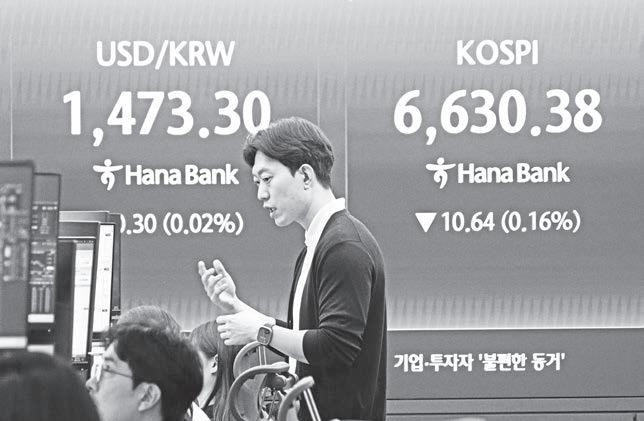
Elsewhere in Asia, South Korea’s Kospi rose 0.8% to 6,690.90 and the Hang Seng in Hong Kong gained 1.5% to 26,050.90. The Shanghai Composite index traded 0.7% higher at 4,107.51.
Australia’s S&P/ASX 200 slipped 0.3%, to 8,687.00.
Taiwan’s Taiex lost 0.6%, and India’s Sensex gained 1.4%.
The price of a barrel of Brent crude oil to be delivered in June rose 1.1% to $112.47 early Wednesday. Brent to be delivered in July was also up 1.1% to $105.50. Brent oil was around $70 per barrel before the war began in late February.
Benchmark US crude gained 1% to $100.94 a barrel.
The UAE’s departure from OPEC, due to happen on Friday, has been closely watched by oil markets. OPEC accounts for roughly 40% of global oil output, and
the UAE is one of OPEC’s largest oil producers. It has pushed back against OPEC production quotas in recent years, wanting to sell more oil to the rest of the world.
“The UAE’s exit will increase (oil) output,” ING Bank strategists Warren Patterson and Ewa Manthey wrote in a research note on Wednesday. “The UAE has been increasingly frustrated over recent years by its output being constrained by OPEC production quotas, which have kept it well below its potential.”
“However, before this can be tapped, there must be a resolution in the Persian Gulf that allows for uninhibited energy flows through
the Strait of Hormuz once again,” they added. As US-Iran negotiations for a permanent end to the Iran war stalled and the Strait of Hormuz, where roughly one fifth of the world’s oil passed through before the war, was still largely closed, short term impacts on oil prices will still depend mainly on prospects for reopening the waterway, analysts said. The UAE was the third largest oil producer within OPEC before the Iran war. ING said its departure “will reduce OPEC’s effectiveness in managing and influencing the global oil market through supply measures.”
Investors are also awaiting more updates on US-Iran peace talks, although limited progress has been made. Iran has offered to reopen the Strait of Hormuz if the United States lifts its blockade on its ports. So far, the US appears to be ruling out a deal that excludes the Islamic Republic’s nuclear program.
The Federal Reserve is expected to announce a decision on interest rates later Wednesday. On Tuesday, Wall Street retreated from its recent record highs. The benchmark S&P 500 fell 0.5% from its latest all-time high to 7,138.80. The Dow Jones Industrial Average edged down 0.1% to 49,141.93, and the technology-heavy Nasdaq composite dropped 0.9% to 24,663.80. Artificial intelligence -related stocks led the losses. Chip company Broadcom lost 4.4%, Nvidia fell 1.6% and Micron Technology lost 3.9%. Alphabet, Amazon, Microsoft and Meta Platforms are reporting quarterly results on Wednesday. In other dealings early Wednesday the US dollar
A8 Thursday, April 30, 2026
The World
Australia proposes 2.25% levy on Google, Meta, and TikTok to fund news reporters
By Rod Mcguirk
The Associated Press
ELBOURNE, Australia—
MAustralia has proposed taxing digital giants Meta, Google and TikTok on a part of their revenue to pay for news reporters.
The government released draft legislation
Tuesday it intends to introduce to Parliament by July 2 that would create a financial incentive for the social media companies to strike deals with news organizations to pay for journalism.
The platforms’ criticisms included that the proposal was a “digital services tax” that misunderstood the evolving advertising industry and would fail to deliver a sustainable news sector.
Australian Prime Minister Anthony Albanese said a monetary value needed to be attached to journalists’ work.
“It shouldn’t just be able to be taken by a large multinational corporation and used to generate profits for that organization with no compensation appropriate for the people who produce that creative content,” Albanese told reporters.
“We think that investment in journalism is critical to a healthy democracy,” he added. It’s Australia’s second legislative attempt to make the platforms pay for the Australian news text and images that their users view.
Digital platforms had been pressured to strike deals with Australian news publishers to pay for journalism by legislation passed in 2021 that created the country’s News Media Bargaining Code.
The platforms chose to reach commercial deals with news creators rather than be forced into arbitration and have a judge set the price.
But they have since avoided renewing those deals by removing news from their services.
The proposed News Bargaining Incentive would charge major platforms that choose not to strike commercial deals with news publishers a 2.25% tax on their Australian revenue.
The platforms would be given offsets and their overall costs would be lowered if they agree to pay publishers for journalism, the government said.
The government expects the incentive would raise between 200 to 250 million
Australian dollars ($144 million-$179 million) a year. That was about as much as the platforms paid news outlets when the News Media Bargaining Code was working at its peak.
The government would distribute that income among news organizations based on how many journalists each organization employed, Communication Minister Anika Wells said.
The tax would apply to Meta Platforms, which owns Facebook and Instagram, Google, which is owned by Alphabet Inc., and TikTok, which is majority-owned by US-backed investors.
Opposing the proposed legislation, Meta said news organizations “voluntarily post content on our platforms because they receive value from doing so.”
“The idea that we take their news content is simply wrong. This proposed legislation, which would apply to platforms regardless of whether news content even appears on our services, is nothing more than a digital services tax,” Meta said in a statement.
“A government-mandated transfer of wealth from one industry to another, with no connection to the value exchanged, will
not deliver a sustainable or innovative news sector. Instead, it will create a news industry dependent on a government-administered subsidy scheme,” Meta added.
Google said “we reject the need for this tax.”
“It ignores the fact that Google already has commercial agreements with the news industry, misunderstands how the ad market changed and mandates payments from some companies while arbitrarily excluding platforms like Microsoft, Snapchat and OpenAI—despite the major shift in how people consume news,” a Google statement said.
TikTok did not immediately respond to a request for comment.
All the targeted platforms are American. US critics have argued that Australia’s News Media Bargaining Code had disproportionately cost American corporations.
Albanese was not concerned by potential pushback from the United States.
“We’re a sovereign nation and my government will make decisions based upon the Australian national interest,” Albanese said.
South Korean court sentences ex-President Yoon to 7 years for charges including resisting arrest
By Kim Tong-Hyung The Associated Press
SEOUL, South Korea—A South Korean appeals court on Wednesday sentenced ousted President Yoon Suk Yeol to seven years in prison for resisting arrest and bypassing a legitimate Cabinet meeting before his brief imposition of martial law in December 2024.
The conviction for obstruction of justice and other charges comes on top of a life sentence he has already received on rebellion charges stemming from his baffling authoritarian push, which triggered the most serious crisis for the country’s democracy in decades.
Judge Yoon Sung-sik of the Seoul High Court said the conservative former president sidestepped a legally mandated full Cabinet meeting before declaring martial law, falsified documents to conceal the lapse, and deployed security officials “like a private army” to resist law enforcement efforts to arrest him in the weeks following his impeachment. Former President Yoon stood quietly as the verdict was delivered and made no comment.
A lower court in January sentenced Yoon to five years in prison but partially cleared him of abuse-of-power charges tied to the Cabinet meeting ahead of the martial law declaration, finding he was not responsible
for the failure to attend of two members who were invited to attend.
The Seoul High Court reversed that acquittal, finding him guilty on all counts and ruling that he violated the rights of those two as well as seven other Cabinet members who weren’t notified by convening only a select few to simulate a formal meeting.
Though brief, Yoon’s Dec. 3, 2024 martial law decree threw the country into a severe political crisis, paralyzing politics and high-level diplomacy and rattling financial markets. The turmoil eased only after his liberal rival, Lee Jae Myung, won an early presidential election in June. Yoon was suspended from office on Dec. 14, 2024 after being impeached by the liberal-led legislature and was formally removed by the Constitutional Court in April 2025.
Following his suspension from office, he refused to comply with a Seoul court’s warrant to detain him for questioning, setting up a standoff in which dozens of investigators arrived at the presidential residence in early January 2025 but were blocked by presidential security forces and vehicle barricades. He was detained later that month, released by another court in March, and was then re-arrested in July. He remained in custody after that as a series of criminal trials, which are continuing, began.
Rare earth mining is poisoning Mekong River tributaries, threatening ‘the world’s kitchen’
CBy Anton L. Delgado & Aniruddha Ghosal
The Associated Press
HIANG SAEN, Thailand—
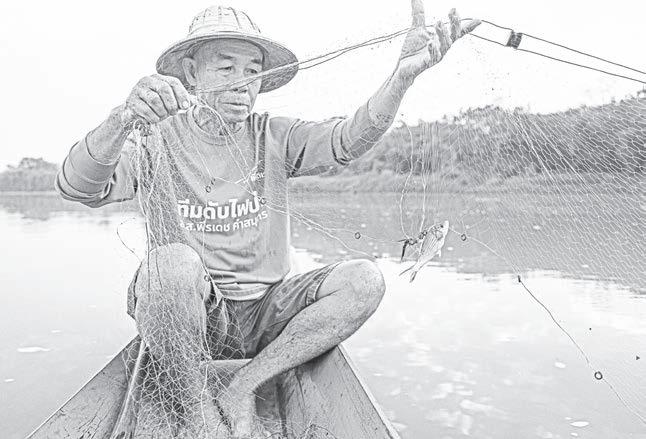
Perched on the bow of his longtail fishing boat, 75-year-old Sukjai Yana untangled a handful of small fish from his net, disappointed by his catch and fretting over whether he can sell them.
Some days Yana earns nothing: demand for fish is falling due to worries over contamination of the Mekong River and its tributaries by toxic runoff from rare earth mines upstream that is threatening millions who rely on those waters for farms and fisheries.
Chiang Saen, a fishing hub in northern Thailand, has been Yana’s family’s home for decades.
“I don’t know where else I’d go,” he said.
Yana is one of 70 million people in mainland Southeast Asia who depend on the nearly 5,000-kilometer (3,100-mile) Mekong River. Rising demand for rare earth materials is driving an unregulated mining boom centered in wartorn Myanmar, to the west, that is spreading to Laos, in the east.
The Mekong has long faced mounting pressures, from plastic pollution to hydropower dams hemming it upstream and sand mining devouring its banks. But experts warn that the toxic runoff from the mines could pose an existential threat.
Exposure to heavy metals such as arsenic, mercury, lead and cadmium raises risks of cancer, organ failure and developmental harm,
especially for children and pregnant women.
Thailand is bearing the brunt of the mining boom as such toxins imperil its global food exports— from bags of rice in US supermarkets to edamame snacks served in Japan and garlic used in Malaysian kitchens. Responses remain local and limited, while smuggling and Myanmar’s civil war complicate regional fixes, raising concerns for downstream Cambodia and Vietnam.
Agriculture is the backbone of Southeast Asia’s economies, said Suebsakun Kidnukorn of Mae Fah Luang University in northern Thailand’s Chiang Rai, warning that rare earth mines are destroying “the world’s kitchen.”
Toxic runoff seeps into Thailand WHILE cutting banana bunches on a farm in the hilly Thai village of Tha Ton, 63-year-old Lah Boonruang taps his fingers to count the toxin-exposed crops he harvests—rice, garlic, corn, onion, mangoes and bananas. He irrigates his fields with water from the Kok River, a Mekong tributary that flows into Thailand from Myanmar and is laden with
toxins.
“Everyone is afraid of the toxins,” he said. “If we can’t export, a farmer is the first to die.”
Thailand is one of the world’s top rice exporters along with India and Vietnam. It exported over $10 billion worth of rice and fruits in 2024, according to trade figures that rank the US as the top rice importer.
“Our worry is that toxins accumulate in the rice we export. This would make our rice farming industry, which is our culture, collapse,” said Niwat Roykaew, founder of the environmental institute The Mekong School in northern Thailand’s Chiang Khong.
Thai scientists have found elevated heavy metal pollution in other Mekong tributaries, like the Sai and Ruak rivers.
The Mekong starts in China and flows through five Southeast Asian nations before emptying into the sea. Millions rely on fish from the Mekong Basin for protein.
Warnings to ethnic minorities in the hills of northern Thailand to avoid using river water are painful for the Lahu, who are famed as fisher people, said Sela Lipo, 56, a Lahu elder.
“The Lahu’s way of life is always with a river,” he said. “The contaminated river has cut off our lifeline.”
Solutions are local and limited THAILAND’S government says it has little leverage against mining operations across the border in strife-torn Myanmar and Laos. The Thai response has also been constrained by limited expertise, information and funds, said Aweera Pakkamart of Thailand’s Pollution Control Department.
Instead, public universities, local governments and regional organizations like the Mekong River Commission, have mainly focused on monitoring levels of heavy metals and educating communities about risks.
Recent water, fish and sediment samples from Mekong tributaries had high levels of dangerous heavy metals, such as arsenic, mercury, lead and cadmium, from rare earth mining, said Warakorn Maneechuket, a researcher at Thailand’s Naresuan University.
In a lab, she uses a scalpel to point out tell-tale signs of contamination—tumor-like growths, discolored scales, and unusual eye coloration—before dissecting a catfish caught from the Kok River.
The accumulation of heavy metals is insidious. Arsenic can cause organ failure. Mercury damages the nervous system. Lead impairs cognition and cadmium harms the kidneys.
To raise awareness of health risks, Tanapon Phenrat of Naresuan University helped develop a
smartphone fish safety app, training fishers in Chiang Saen to use it to identify and upload images of suspicious fish. Building a citizen-science database for northern Thailand can help quantify the scale and spread of contamination, he said.
“Each and every sample is very important,” he said.
Rare earth demand rises
THE ubiquity of rare earth elements means demand keeps rising.
Rare earths are vital to modern technology, from smartphones and electric vehicles to missiles and jets. Despite the name, they are common. It is the costly mining and complex refining process, concentrated in China, that makes them scarce.
The US-based Stimson Center has used satellite photo analysis to identify nearly 800 suspected unregulated rare earth and other mining sites along Mekong tributaries in Laos, Myanmar and Cambodia.
Many in Myanmar are in areas
of active fighting. The war has driven a “diversification of mines” geographically, according to Regan Kwan of The Stimson Center, who has tracked expansion of mining to 26 sites along rivers in Laos. Rare earths are mined by digging up rock or washing chemicals through soil to extract the minerals, creating toxic waste. The physical footprint of this process is recognizable in satellite data, Kwan said.
Myanmar is China’s leading supplier of heavy rare earths, exporting more than $4.2 billion worth of such materials to China between 2017 and 2024, mostly after a miliary takeover in 2021. US President Donald Trump made securing America’s supply of critical minerals and rare earths a key foreign policy objective. Used in fighter jets like the F-35, submarines, Tomahawk missiles, radar systems and smart bombs, according to the US government, the need for more supplies is growing as the US replenishes and expands military stockpiles drawn down by the wars in Iran and Ukraine. is bad news for the river that sustains mainland Southeast Asia.
Conflicts in last century— which include the Vietnam War and the Khmer Rouge genocide— were the most devastating for the Mekong region, but toxic runoff ranks a close second, said Brian Eyler of the Stimson Center, who called it an “atomic bomb” for river basin. It’s far more damaging than other threats like large dams and “it is not stopping.”
Ghosal reported from Hanoi, Vietnam. Freelance reporter Ladawan Sondak contributed to this report.
Another Russian oil facility burns after Zelenskyy touts Ukraine’s drone reach
By The Associated Press
ANOTHER oil facility deep inside Russia was reportedly on fire Wednesday following what Ukraine’s president claimed was his country’s latest long-range drone attack.
The facility is in the Perm region of Russia, located in the Ural mountains more than 1,500 kilometers (900 miles) from Ukraine. Ukraine’s Security Service, known as the SBU, said it had struck a Russian oil pumping station near the city of Perm as part of efforts to target Russia’s energy infrastructure. Russian media also reported the attack, though Perm Gov. Dmitry Makhonin said only that a drone hit an unspecified industrial facility, sparking a fire. Russian officials have not been forthcoming about Ukrainian claims that Kyiv is carrying out more long-range attacks and that its domestically developed drones are increasingly accurate.
Advanced drone technology has become a defining feature of the battle as Russia’s bigger army presses its more than four-year invasion of its neighbor. Ukraine’s response has included a drive to develop new drones for attack and defense.
Ukraine claims it hit a key Russian oil hub
UKRAINIAN President Volodymyr Zelenskyy on Wednesday posted a video on the Telegram messaging app showing a large plume of black smoke rising into the sky in countryside near a built-up area. Without specifying it was the reported Perm attack or what was hit, Zelenskyy said Ukraine was expanding the range of its long-distance strikes, describing them as a new phase in efforts to limit Russia’s ability to wage war by denying it crucial oil revenue.
It was not possible to independently verify the video.
The SBU claimed that most oil storage tanks at the facility, which it said is owned by Russia’s pipeline operator Transneft and is a key hub in the country’s oil transportation system, were ablaze. The claims could not be independently verified.
Zelenskyy thanked the SBU for the precision of its strikes.
“The straight-line distance is more than 1,500 kilometers. We will continue to increase these ranges,” he said.
The attack came a day after Ukraine struck the Tuapse oil refinery and terminal on the Black Sea for the third time in less than two weeks, prompting the evacuation of local people and threatening what Russian President Vladimir Putin said could be “serious environmental consequences.” Local authorities said the fire at the Tuapse had been “contained” by Wednesday.
drones exploit Russian vulnerabilities
“Ukrainian
FISHERMAN
A10 Thursday, April 30, 2026
King Charles III highlights US-UK bond during busy day of diplomacy with Donald Trump and Congress
By Steven Sloan, Josh Boak, Mary Clare Jalonick & Darlene Superville The Associated Press
WASHINGTON—King Charles III
marked the 250th anniversary of American independence from Britain with gratitude that the two countries united to build “one of the most consequential alliances in human history” while urging “that we ignore the clarion calls to become ever more inward-looking.”
Speaking Tuesday to a joint session of the US Congress, Charles repeatedly highlighted the historical and cultural ties that he said have cemented an enduring bond between the United States and the United Kingdom. But even as he spoke in unifying, optimistic terms, he delivered a series of nuanced warnings encouraging leaders in the US to remain collaborative and engaged in global affairs.
He said the alliance between the US and the U.K., tested anew by President Donald Trump’s war in Iran, “cannot rest on past achievements.” Charles urged “unyielding resolve” in backing Ukraine against Russia and heralded the NATO alliance that Trump has consistently undermined.
The king praised religious pluralism and interfaith dialogue in terms that are rare in Trump’s Washington. As the White House rolls back regulations aimed at denting climate change, the king encouraged
those in power to “reflect on our shared responsibility to safeguard nature, our most precious and irreplaceable asset.”
At one point, Charles traced the notion of checks and balances on executive power to the Magna Carta, the foundational legal document sealed by King John in 1215. Trump told The New York Times earlier this year that he was constrained only by “my own morality.”
And acknowledging a scandal that has roiled politics in both the US and U.K., Charles subtly alluded to the victims of Jeffrey Epstein, the convicted sex offender with ties to British officials, including the king’s brother, Andrew.
King celebrates independence and focuses on repairing a frayed relationship
CHARLES is on a four-day visit to the US intended to both celebrate American independence and to repair the country’s fraying relationship with the U.K. He hardly arrived in Washington as an oppositional figure to Trump. Joined by Queen Camilla, Charles had a warm greeting with the president and first lady Melania Trump at the White House earlier Tuesday. In his welcome remarks, Trump also highlighted the shared history between the two countries.
“American patriots today can sing, ‘My country, ‘tis of thee, sweet land of liberty,’ only because our colonial ancestors first sang, ‘God save the king,’” Trump said.
The leaders met privately in the Oval Office for a meeting Trump later described as “really good,” adding that Charles is a “fantastic person.”
Trump hosted the royal couple for a jovial state dinner later Tuesday in the East Room of the White House. About 130 guests were seated at two long tables that were decorated with low floral arrangements. The guests included tech leaders such as outgoing Apple CEO Tim Cook and Amazon founder Jeff Bezos, along with conservative
Supreme Court justices and several Fox News journalists and hosts.
Charles and Camilla will continue their US tour this week with stops in New York City and Virginia.
During his roughly 20-minute speech to Congress, the king, who is expressly apolitical, never directly criticized Trump. Still, the contrast was apparent at times and some British commentators described his speech as more political than they had expected.
Just two months earlier, Trump stood at the same lectern and chided Democrats for not standing during part of his State of the Union address. The king, for his part, elicited multiple standing ovations from Democrats and Republicans who listened with rapt attention.
Charles is just the second British monarch to address a joint session of Congress. His mother, Queen Elizabeth II, delivered a similar speech in 1991 highlighting the historic ties between both countries and the importance of their democratic values.
Charles acknowledges a ‘more volatile and more dangerous’ world WHILE the king paid tribute to those remarks, he acknowledged that today’s environment is “more volatile and more dangerous than the world to which my late mother spoke.”
Many of the lawmakers in the room were at Saturday’s White House Correspondents’ Dinner, which was disrupted by a shooting that authorities have described as an attempted assassination against Trump.
“Let me say with unshakeable resolve,” Charles said. “Such acts of violence will never succeed.”
Meanwhile, Trump’s up-and-down relationship with British Prime Minister Keir Starmer has taken a particularly sour turn over the past several months as the Republican president has sought to rally international support for the war in Iran.
Trump criticized Starmer, who has largely resisted his overtures, by saying, “This is not Winston Churchill that we’re dealing with.” Trump has also imposed tariffs on the U.K. and warned of additional levies despite a Supreme Court ruling earlier this year that has made such unilateral moves more challenging. Trump threatened just last week to slap a “big tariff” on the U.K. if it doesn’t scrap a digital services tax on US technology companies. Trump has more broadly challenged the traditional trans-Atlantic alliance with efforts to annex Greenland and threats to walk away from NATO. He has repeatedly imposed tariffs on and taunted Canada, a member of the British Commonwealth. Ahead of his speech, the king had faced some calls on Capitol Hill to meet with Epstein’s victims while he is in the US. He didn’t make a direct mention of the convicted sex offender, but did reference the “collective strength” in the US and the U.K. to “support victims of some of the ills that, so tragically, exist in both our societies today.” If Charles offered low-key criticism of Trump, the president didn’t seem to mind. He said later that the king “made a great speech.”
“I was very jealous,” he said.
The Associated Press writers Stephen Groves and Aamer Madhani in Washington and Danica Kirka in London contributed to this report.
High-level talks begin on moving away from fossil fuels at Colombia conference
SBy Steven Grattan The Associated Press
ANTA MARTA, Colombia—High-level
talks to accelerate the shift from fossil fuels got underway Tuesday in Colombia’s Caribbean city of Santa Marta, where President Gustavo Petro warned the world could “reach a point of no return” without the Amazon’s role in regulating the climate.
The two-day segment of ministers and senior officials marks the political centerpiece of the First Conference on Transitioning away from Fossil Fuels, where more than 50 countries have been discussing how to move away from oil, gas and coal—the main drivers of global warming—toward cleaner energy.
“The conclusion is unavoidable, we must transition away from fossil fuels—not just because it’s good for climate, but because it strengthens our energy independence and security,” said Stientje van Veldhoven, minister for climate policy and green growth
for the Netherlands, which is co-hosting the conference with Colombia.
The meeting reflects growing frustration among some governments and advocates that decades of U.N. climate negotiations have failed to directly address fossil fuel production, prompting the Santa Marta summit to push the issue outside formal talks. Recent negotiations have acknowledged the need for a transition, but countries remain divided over how to implement it and how to finance the shift.
Before the president took the stage, members of the Indigenous Arhuaco community from the Sierra Nevada de Santa Marta—who have long defended their ancestral lands from outside development— opened the ceremony with a traditional harmonization ritual, a spiritual ceremony in which they spoke in their native language and played ancestral instruments.
Colombian president warns Amazon at tipping point SPEAKING in the afternoon, President Petro
FPJ Bayanihan Party-list Rep. Brian Poe also pointed out that the NBI’s authentication and complaint underscore how Duterte’s statements were no ordinary threats—ones that drew condemnation from the global community. He drew a sharp contrast with a 2018 case in which a public school teacher who made a similar threat online against then-President Rodrigo Roa Duterte was
warned that “the Amazon rainforest is burning,” adding that “without it we reach a point of no return.”
The leftist leader questioned the global economic model underpinning fossil fuel use, asking whether “capitalism can really adapt to a way of life that is not fossilbased.” He said U.N. climate talks have fallen short, arguing that “the unity of states has failed” and calling for broader action beyond governments.
Petro also linked current conflicts to energy dependence, saying “the wars we are seeing are driven by desperate geopolitical strategies around fossil resources.”
Colombia’s Environment Minister Irene Vélez Torres said in opening comments before Petro’s address that the conflict in the Middle East has revealed that “we are not only dealing with a climate and environmental crisis, but also an economic and national security crisis.”
Petro has positioned Colombia as a leading voice calling for a global shift away from fossil fuels, while pushing for a gradual
arrested by the National Police (PNP). The Vice President, he noted, remains free.
“The reason why bring this up is because this is no ordinary threat. This is a threat by the Vice President against the President of the Republic of the Philippines, and people around
transition at home that balances climate goals with economic realities.
A key moment for international cooperation
OUTSIDE the conference venue in the morning, members of a mining union protested against Petro and the event, chanting through megaphones and holding signs that read: “I arrive at the conference by plane to criticize the oil industry,” “More oil, less Petro,” and “Defend your oil barrels.”
With elections in a month’s time, outgoing Petro kept his pledge since taking office to halt new oil and gas exploration and steer the country toward a post-fossil fuel economy, even as the Andean nation remains heavily dependent on oil and coal exports.
Minister Vélez Torres framed the gathering as a key moment for international cooperation.
“Let this conference be the moment when ambition becomes solidarity and when cooperation becomes the path toward a future beyond fossil fuels,” she said on
the world took note of that, questioning our stability and our national security,” he said.
“I remember a case in 2018 of a teacher who had made a similar threat online and was arrested by the PNP he was not a public official, he was an ordinary
Tuesday morning. “Let’s make this a turning point in history.”
Yuvelis Morales Blanco, a 25-year-old activist from Puerto Wilches, Colombia, spoke at the opening plenary and called for urgent action and a transition rooted in communities.
“We are called to make real the world we have imagined,” she said, urging governments to take “direct and concrete actions” to move away from fossil fuels and protect nature. “We demand energy justice, climate justice and justice for youth and children.”
Discussions in Santa Marta so far have highlighted the central challenge of funding the transition, particularly for developing countries facing high borrowing costs and limited access to capital.
Van Veldhoven of the Netherlands said access to affordable financing would be critical to ensuring the transition can happen globally, particularly for developing countries facing high debt and limited fiscal space.
filipino citizen. This committee has to take into consideration that moment in 2018 because we are sending a message wit hthe decision that we make today on probable cause,” he added.
NBI Director Melvin Matibag confirmed the 2018 case and stressed that the bureau treats all threats against public officials as serious, whether they are claimed to be jokes or not. It was precisely for this reason, he said, that the NBI decided to file criminal complaints against the Vice President over her remarks in 2024.
Participants have also debated the role of policy tools such as carbon markets and government subsidies, as well as how to ensure the transition does not repeat patterns of land use and resource exploitation that have harmed communities in the past. Organizers say the conference will not produce binding agreements, but that it is intended to build political momentum and bring together countries willing to accelerate the transition outside the formal U.N. process. It is also seen as a steppingstone toward upcoming global climate negotiations, where financing and timelines for reducing fossil fuel use are expected to remain key points of debate. On Monday, Tuvalu, a tiny, low-lying Polynesian island nation in the South Pacific Ocean, announced it will host the next conference on transitioning away from fossil fuels. Small island nations are highly susceptible to climate change, with Tuvalu expected to be submerged by 2100 due to rising sea levels, according to scientists and the U.N.
The point is, why are we saying this is because we in the law enforcement, the National Bureau of Investigaiton, we consider all the threat to the President and to any official of the government a serious threat. Hindi po ito pwede biro-biro and iyong mga pinakita pong video kanina diyan, iyan po ay pinagaralan at naging parte ng pagdedesisyon
Military cooperation with partners supporting Ukraine “is already underway” with countries in the Middle East, the Gulf, Europe and the Caucasus, he said on Telegram late Tuesday.
The deals involve the production and supply of drones and missiles as well as software and technology, according to Zelenskyy. Kyiv has also handed a proposal to the
he said.
Comelec eyes birth certificate requirement for BSKE bets
HE Commission on Elec -
Ttions (Comelec) is considering requiring aspiring candidates to submit birth certificates when filing their certificates of candidacy for the Barangay and Sangguniang Kabataan Elections (BSKE) and future polls.
Comelec said the proposed additional document would help verify candidates’ ages and citizenship, particularly in races where statutory age limits and nationality rules are key qualifications.
Poll body Chairman George Erwin M. Garcia said the measure was initially intended for the Bangsamoro elections and may also be adopted for the BSKE. Para sa kaalaman po ng lahat, ngayon po sanang eleksyon sa Bangsamoro ay ipapatupad na namin ang isa sa mga idadagdag namin na requirement ng filing ng candidacy, na gusto naming gawin para sa 2028 National and Local Elections at ’yung Barangay and SK Elections ,” Garcia said. He clarified that the requirement is still being eyed as part of reforms to strengthen candidate screening and prevent recurring qualification disputes.
“Gusto po namin [sa BSKE] na ang lahat ng kandidatura ng mga taong magpa-file ng kanilang candidacy ay may kalakip na birth certificate. ’Yan po ay para mas makita namin, malaman namin kung kailan ba talaga ipinanganak ang taong ’yan,” he added. Mary Jade Jadormio
Senate distributes fresh vegetables to beneficiaries
THE Senate Spouses Foundation Inc., in coordination with the Office of the Senate Secretary and the Legislation Department, rolled out the “Ani ng Bayan, Alay sa Mamamayan” on Wednesday, April 29, 2026, distributing two truckloads of fresh vegetables from Benguet to around 400 beneficiaries. Acting Senate Spouses Foundation Inc. President Ciara Sotto said the effort reflects the Senate’s commitment to support the people amid difficult times.
“We should not forget our family within… especially in these challenging times, we must continue helping one another,” Sotto said.
Senate Secretary Mark Llandro “Dong” Mendoza said the initiative helped both farmers and beneficiaries by reducing waste and easing daily expenses.
“As we help, it doesn’t have to be all at once… first, we are able to assist our farmers, and second, this is for you, to somehow help lessen your expenses,” Mendoza told the recipients.
Deputy Secretary for Legislation Mavic Laurel- Garcia said the program started after farmers reported difficulty selling their produce, which often went to waste.
“There were really no buyers for the farmers’ vegetables… we had no other intention but to help our farmers in Benguet, and eventually expand this so we could also extend assistance to all of you,” Garcia said.
A total of 765 bags of vegetables, each weighing around eight kilos, were distributed to the Senate utility personnel, blue guards, K9 unit, Metropolitan Manila Development Authority (MMDA), Philippine National Police (PNP), marines, Bureau of Fire Protection (BFP), Philippine Coast Guard (PCG), visitors of the Senate Public Assistance Office (SPAO), and Highway Patrol Group (HPG).
The initial one truckload of vegetables containing Baguio beans, cauliflower, chinese cabbage, potatoes, and cucumbers was expanded to two, following support from Mendoza and Sotto, allowing wider distribution of the harvest. Office of the Senate Sergeant-at-Arms Chief M/Gen. Rene C. Samonte was also present during the distribution.
The “Ani ng Bayan, Alay sa Mamamayan” initiative aims to bridge assistance between agricultural producers and institutional beneficiaries. Butch Fernandez
6 universities break into THE Asia Rankings 2026, cementing PHL’s global academic rise
By Claudeth Mocon-Ciriaco @claudethmc3
SIX Philippine universities showcased remarkable global competitiveness in the 2026 Times Higher Education (THE) Asia University Rankings, marking this achievement as a significant step forward in strengthening the country’s position in global academic rankings and producing future-ready Filipino graduates, the Commission on Higher Education (CHED) said on Wednesday. In the most comprehensive regional evaluation to date, which assessed 929 universities across 36 countries using 18 performance indicators, the Philippine higher
education sector delivered strong performance across all five core THE pillars—Teaching, Research Environment, Research Quality, International Outlook, and Industry Engagement.
Showcasing sustained academic excellence and institutional stability, these six premier universities successfully hurdled THE’s stringent performance metrics to secure their official placements among Asia’s best:
* Ateneo de Manila University (ADMU) leads the Philippine cohort, securing a prominent place in the 501–600 bracket.
* De La Salle University (DLSU), Mapúa University, University of Santo Tomas (UST), and University
of the Philippines (UP) demonstrated collective national strength by placing in a formidable four-way tie in the 601–800 bracket.
*Mindanao State UniversityIligan Institute of Technology (MSU-IIT) successfully secured a position in the 801+ bracket, representing vital academic excellence from Mindanao.
Beyond these ranked universities, 42 additional Philippine universities attained “Reporter” status—a 121 percent increase from the previous year—reflecting stronger participation in global benchmarking and more robust institutional data systems.
CHED said that this new heights reached on the global stage is an -
Fuel prices seen rising next week following UAE’s exit from OPEC
LBy Lenie Lectura @llectura
OCAL pump prices are seen to rise next week based on this week’s first two trading days.
Sources said that diesel price, as of Tuesday and Wednesday trading in the Mean of Platts Singapore (MOPS), is going up by as much as P3 per liter while gasoline is moving upwards to as high as P2 per liter. The figures may still change at the end of five-day trading period.
Local oil firms implement their
price adjustments every week to reflect movements in the world oil market.
Sources said the price movement reflects the United Arab Emirates’ (UAE) departure from OPEC and OPEC+ which effectively ended its nearly six decades of membership and removed the organization’s third-largest producer from the quota framework. UAE’s exit will start May 1.
“In the near-term, the move may act bullish as losing UAE’s volumes from the coordinated
pool removes a meaningful buffer at a time global spare capacity is already at historical lows following the Hormuz crisis.
In the medium-term, it is conditionally bearish in structure as UAE will have the flexibility to respond to market dynamics and produce more freely,” the sources added.
OPEC accounts for about 40 percent of the world’s oil output.
Last Tuesday, oil firms reduced diesel price by P12.94 per liter, kerosene by P15.71 per liter. Gasoline went up byP0.53 per liter.
First of its kind forensic lab in Taguig nears completion
By Butch Fernandez @butchfBM
WORLD -class forensic labora -
Atory meant to help solve crimes faster and deter criminals is nearing completion in the City of Taguig, just two years after it broke ground, the office of Senate Minority Leader Alan Peter Cayetano announced.
On Tuesday, the senator brought Public Works Secretary Vince Dizon to the site of the Philippine National Police (PNP)’s first-of-its-kind forensic laboratory in Camp Bagong Diwa as part of the secretary’s Department of Public Works and Highways (DPWH) inspection of DPWH projects in the senator’s home city.
Several portions of the project have already been completed, while work on other sections continues to make significant progress.
“The intention here is to move the capability of PNP,” Cayetano told reporters during the visit on Tuesday, April 28, 2026.
“The responsibility for fighting crime rests o on all of society: parents, priests, pastors, businessmen, media. That’s system-wide. But how do you help the police? One way is to back them up with the facilities and science,” he continued, partly in Filipino.
The project is a collaboration between the City Government of Taguig,
the National Capital Region Police Office (NCRPO), and Taguig City University, whose criminology program consistently ranks among the top in the country.
T he visit also highlighted Cayetano’s long-running partnership with Dizon, the DPWH’s “action man” who has been personally inspecting public works projects across the country since taking over the department.
First of its kind in Southeast Asia
CAYETANO who has championed the project since 2007, earlier said the facility is envisioned to become the “most modern forensics unit in Southeast Asia” and a major step toward strengthening the country’s justice system.
“All around the world, law enforcement is moving into two things: forensic science and artificial intelligence,” he said.
Once opened, the 12-storey facility in Taguig will house the 13 technical divisions of the National Capital Region (NCR) Regional Forensic Unit, providing a central site for faster and more coordinated evidence processing, analysis, and secure storage.
The lab’s advanced facilities can analyze different kinds of evidence, from physical to digital. This includes facilities for medico-legal and autopsy work, forensic chemistry and drug-testing, DNA analysis, ballistics and firearms
testing, and checking fingerprints and suspicious documents.
“‘In a crime scene, we even put yellow tape. But then we’re led to wonder, are they really getting the fingerprints and DNA? Can we trust the results of DNA tests that have been passed around. Are we sure suspects are detained?” he said. “Many of these questions can be resolved if we have a very professional forensic group at modern crime lab.”
Deterrent to crime
THE project is part of Cayetano’s broader push to modernize crime laboratories across the country to help law enforcers build stronger evidence and solve cases faster.
“The biggest deterrent to crime is the certainty of being caught,” he said back in 2022 during Taguig’s celebration of National Correctional Consciousness Week.
He stressed that while witness testimony is accepted in court, forensic evidence “simply has more weight.”
During the visit to the forensic lab on Tuesday, the senator encouraged police officers, whether active in the service or retired, to communicate their needs to policymakers.
“Please engage policymakers, from the barangay all the way to Malacañang, because you know the problema better and can help with the solution,” he said.
chored on President Ferdinand R. Marcos Jr.’s vision of a futureready and competitive workforce.
CHED Chairperson Dr. Shirley C. Agrupis emphasized that the results signal both progress and direction for the sector.
“These rankings affirm that Philippine higher education institutions are steadily gaining ground in the global academic community. More importantly, they highlight the growing commitment of our universities to quality, transparency, and international engagement,” she said.
She added that CHED will continue to support institutions in strengthening their global outlook through policies and pro -
grams aligned with international standards.
“Our focus is not only on rankings, but on building a higher education system that produces globally competitive, future-ready Filipino graduates.”
CHED commends all participating institutions for advancing a culture of excellence and accountability, as the sector continues to expand its presence on the regional and global stage.
Under the CHED ACHIEVE Agenda, the Commission is steadily elevating national academic standards to position Filipino graduates for the global stage— competitive, adaptable, and future-ready.
Supreme Court asked to resolve issues on redistricting, party registration prior to first BARMM elections
By Joel R. San Juan @jrsanjuan1573 & Mary Jade Jadormio
MUSLIM leaders have asked the Supreme Court to immediately resolve their petition concerning the redistricting and political party accreditation in Bangsamoro Autonomous Region in Muslim Mindanao (BARMM).
In their manifestation, petitioners Sultan Alim Saad I. Amate and Maulana L. Mamutuk said their petition seeking to declare Bangsamoro Autonomy Act (BAA) No. 86 (redistricting) and Section 17 of BAA No. 88 (political party accreditation) as unconstitutional.
Their petition also sought the issuance of a status quo ante order and/or a temporary restraining order to prevent respondents Bangsamoro Transition Authority (BTA) and Commission on Elections (Comelec) from enforcing the “unconstitutional”provisions of Bangsamoro Autonomy Act (BAA) No. 86 and Section 17 of BAA No. 88.
The petitioners argued that BAA 68 could be another districting scheme repeating the same defects found in BAA 77, which the Court struck down on September 30, 2025 for violating Section 5 of the Voter’s Registration Act (VRA).
The said provision prohibits any alteration of precincts once the election period has started.
“The Supreme Court (SC) already struck down the earlier redistricting law in ‘Ali, Jr.’ and set 31 October 2025 as the deadline to fix it. That deadline was missed. BAA 86 was passed late, and now stands questioned as another gerrymandered measure repeating the same defects,” the petitioners.
It also directed the BTA to immediately determine parliamentary districts and directed the Comelec to prepare for elections not later than March 31, 2026, which also did not push through.
The Congress subsequently enacted Republic Act 12317, which reset the first regular BARMM election to September 14, 2026 and synchronizing future BARMM elections with the national and local elections beginning May 2031.
Aside from redistricting, the petitioners said they are also challenging Section 17 of BAA No. 88 as it forces already registered parties to register again.
The said requirement, according to the petitioners, is not merely procedural, but could operate as a form of exclusion.
The petitioners said election rules should not
favor those who crafted them, especially in the region’s first parliamentary polls. The petitioners called on the Comelec to resolve all pending party accreditation matters with urgency, transparency, and equal treatment ahead of the May 5 to 7 filing of certificates of candidacy. They also urged the poll body to intensify voter education by warning that the lack of information has led some communities to believe that the September 14, 2026 elections may again be postponed.
Comelec adds P1K honorarium for BARMM poll workers
THE Commission on Elections said it will grant an additional P1,000 honorarium to election personnel who will serve in the September 14 Bangsamoro parliamentary elections. Comelec Chairman George Erwin M. Garcia said the added compensation will benefit Electoral Board members, Department of Education supervisors and support staff assigned to the polls.
Gustokongi-announce,magdadagdagpa angComelecngadditional P1,000,” Garcia said. He said the increase would bring total additional honoraria to around P3,000 for workers involved in the regional vote.
“So, more or less P3,000 angmadadagdagna honorarianglahatngmgaElectoral Board Members, lahatngmgaDESO, lahatngsupport staff namaglilingkodsaBangsamoro Parliamentary Elections,” Garcia added. The poll chief said the move recognizes the higher cost of transportation and food faced by personnel during election duty. Sapagkat nauunawaan po natin na nagmamahalangpamasaheatpresyongpagkain,” he said. The announcement was made during a command conference attended by election officials, security forces and other agencies involved in preparations for the Bangsamoro vote. The September exercise will mark the first parliamentary elections in the BARMM. Comelec said the regional elections are a major step in the area’s transition to parliamentary self-governance.
The commission is also coordinating with partner agencies for logistics and security arrangements ahead of the polls. The added compensation aims to support workers who will be deployed in the field during the elections, according to the poll body chief.
Coalition of small-scale miners calls for mining law reform
By Jonathan L.Mayuga @jonlmayuga
TBayan Act, which simplifies application and licensing processes to reduce red tape and boost formalization. The proposed measure empowers local mining regulatory boards to declare and manage Minahang Bayan Zones in consultation
with local governments, communities, and Indigenous Peoples, while enforcing safety laws and banning hazardous
Smooth sailing ahead: Why Marina’s online ticketing mandate is a win for passengers
FOR decades, inter-island sea travel in the Philippines has been a test of endurance—not just against rough waves, but against ticket scalpers, chaotic lines, and manual manifests that slow down emergency responses. The Maritime Industry Authority’s new circular, requiring all domestic passenger ship operators to adopt a Shipping Online Ticketing System (SOTS) under the “SEAS” platform, is a long-overdue modernization that promises to finally bring order to our ports. (Read the BusinessMirror story: “Marina orders local shipping companies to adopt SOTS,” April 13, 2026).
At its core, Memorandum Circular DS-2026-01 addresses three persistent failures of the current system. First, ticket scalping—an informal tax on the poor that drives up fares during peak seasons—will be neutralized by real-time capacity controls and electronic bookings. Second, automated passenger manifests mean that in the event of a maritime incident, the Coast Guard will know exactly who is on board without waiting for handwritten lists or last-minute head counts. Third, and perhaps most critically, mandatory discounts for senior citizens, PWDs, students, and Medal of Valor awardees will be applied automatically. No more “the system is down” excuses. No more promotional schemes that replace legally mandated fare cuts.
Marina Administrator Sonia B. Malaluan put it succinctly: “With SEAS, every Filipino passenger can finally travel with peace of mind.” That peace of mind extends to the vulnerable sectors who have long been shortchanged. A senior citizen should not have to argue at a ticket booth for a discount that is theirs by right. An automated system removes human discretion—and human abuse. The circular is also pragmatic. It exempts motorbancas, recreational boats, and company service vessels, recognizing that one-size-fits-all regulation would sink smaller operators. For covered shipowners, the rules allow flexibility: they can develop their own system, hire a third-party provider, or subscribe to SEAS itself. The four-year full implementation timeline for smaller ports, compared to two years for major ones, acknowledges the digital divide between Manila and Masbate. And critically, operators must maintain assisted online booking for passengers with limited digital access—including seniors, PWDs, and pregnant women—at ticketing offices outside port terminals. This “no one left behind” clause ensures that modernization does not become exclusion.
The incentives are generous: up to three years of 100 percent discount on the Annual Tonnage Fee for early adopters. That is real money for shipping lines, and it signals that Marina is serious about carrots before sticks. Even the “Marina-Compliant SOTS Operator” digital seal, though non-binding, creates market pressure. Passengers will gravitate toward operators who display it.
Skeptics will rightly ask about implementation. Will smaller shipping lines in remote provinces have the capital to build or subscribe to a compliant system? Will internet connectivity in ports like Jolo or Basco support 24/7 real-time synchronization? Marina’s phased approach—a pilot in the second quarter, rollout in the third, and yearslong compliance windows—suggests awareness of these hurdles. But the agency must also commit to subsidizing connectivity or providing a lightweight, offline-capable version of SEAS for the most isolated routes.
Another concern: data privacy. A centralized system handling passenger manifests, payments, and discounts contains sensitive information. Marina must work closely with the National Privacy Commission to ensure that SEAS and all third-party equivalents are fully compliant with the Data Privacy Act. A breach would erode public trust faster than any scalper ever could.
Still, the direction is correct. The Philippines is an archipelagic nation. Sea travel is not a luxury; it is a necessity. For too long, passengers have been treated as cargo— herded, overcharged, and undercounted. Marina’s new rules reframe the passenger as a customer with rights: to a fair fare, to a verified seat, and to be accounted for in an emergency. The scalpers and the system abusers will resist. Some operators will drag their feet. But the destination is clear: a safer, fairer, and more convenient sea travel experience for every Filipino. With SEAS, we are finally charting that course. The only question now is whether the industry will row together as one—so that no one is left behind.
2005
BusinessMirror
Antonio L. Cabangon Chua
T. Anthony C. Cabangon
Lourdes M. Fernandez
Jennifer A. Ng Vittorio V. Vitug
Lorenzo M. Lomibao Jr., Gerard S. Ramos
Lyn B. Resurreccion, Dennis D. Estopace
Angel R. Calso, Dionisio L. Pelayo
Ruben M. Cruz Jr.
Eduardo A. Davad
Nonilon G. Reyes
D. Edgard A. Cabangon Benjamin V. Ramos
Aldwin Maralit Tolosa
Rolando M. Manangan
BusinessMirror is published daily by the Philippine Business Daily Mirror Publishing, Inc., with offices on the 3rd floor of Dominga Building III 2113 Chino Roces Avenue corner De La Rosa Street, Makati City, Philippines. Tel. Nos. (Editorial) 817-9467; 813-0725. Fax line: 813-7025. (Advertising Sales) 893-2019; 817-1351, 817-2807. (Circulation) 893-1662; 814-0134 to 36. E-mail: news.businessmirror@gmail.com www.businessmirror.com.ph
They paid you with Pidgeys
IJohn Mangun
OUTSIDE THE BOX
N the summer of 2016, millions of people walked into traffic, trespassed into cemeteries, and stood outside strangers’ houses at two in the morning—voluntarily, enthusiastically, for free—and Niantic got 30 billion photographs out of it.
On the day Pokémon Go launched in the Philippines, players were already crowding Quezon City at midnight. What looked like nostalgiadriven recreation was, in structural terms, a workforce arriving for its first unpaid shift.
Pokémon Go was a location-based augmented reality mobile game— players walked through real-world environments pointing their phone cameras at physical surroundings to capture virtual creatures overlaid on the screen. Niantic, the San Francisco company that built it, has since confirmed what the game was actually for. Its platform now holds roughly 30 billion real-world images gathered through gameplay, each tagged with GPS coordinates, camera angle, device orientation, and timestamp.
Those images, captured at more than a million locations globally, form the dataset underpinning Niantic Spatial, a commercial mapping
intelligence product the company is licensing to robotics manufacturers and autonomous systems developers. The game was the data collection interface. The players were the tools. The mechanism was more deliberate than it looked. PokéStops— fixed points players visited to collect in-game items—were placed at landmarks and building entrances, directing players to photograph specific real-world locations. Gyms, where players returned repeatedly to contest and defend territory, were the higher-value targets: dozens of players photographing the same location across multiple sessions, angles, and lighting conditions generates exactly the structured, multiperspective coverage that machinelearning spatial models require. Gym placement was not a game design decision. It was a sampling strategy.
The Philippines was not a marginal market. Filipinos adopted the
The 30 billion images are already in Niantic’s servers. That ledger is permanently closed. The open question is whether the population that mapped the country’s streets for free in 2016 has any clearer understanding, in 2026, of what the next version of this arrangement will cost them. The game will look different. The mechanism will be identical. The compensation will be the same.
game with enough intensity that the military banned soldiers from playing near bases within weeks of launch, citing GPS-enabled scanning of restricted facilities as a security risk. Globe Telecom formalized a partnership with Niantic by October 2016, expanding Gym and PokéStop density nationwide and bundling game access into prepaid plans.
What this meant in practice was that a young, mobile-first population spent months walking through dense urban environments—barangay streets, market corridors, transport hubs—generating ground-level spatial data that no satellite has ever captured. Philippine urban streets: where the sidewalk is a kitchen, the alley is a market, and Niantic needed every inch of it.
The academic framework for what happened is called digital labor theory—the argument that platform
AI boom drives 770% jump in Asia’s lesser-known chip supplier
By Sangmi Cha
THE artificial intelligence rally exploding across Asia is now spreading deeper into the supply chain.
For much of the past year, the spotlight has been on chipmakers such as Taiwan Semiconductor Manufacturing Co., Samsung Electronics Co. and SK Hynix Inc.—all critical suppliers to Nvidia Corp. A global chip shortage has sent those stocks skyrocketing to record highs.
Now, investors are looking further into the AI supply ecosystem as even the most powerful processors cannot work without the lesserknown components that support them. That growing awareness— combined with rising demand and prices—is helping a new group of companies rally.
They fall into three main categories. Multi-layer ceramic capacitors (MLCCs) regulate power inside electronic systems. Advanced chip substrates connect semiconductors to the rest of the hardware. And thermal compression bonding (TCB) is the precision process that fuses everything together.
“Think of the printed circuit-
board as a dining table. Then the plate on the dining table, you can call it a substrate—and the food inside the plate is the chips,” said Kieron Poon, investment director of Asian equities at Aberdeen Investments.
Within this group, substrate makers such as Unimicron Technology Corp. and Ibiden Co. have surged around 770 percent and 530 percent respectively over the past 12 months. MLCC producers Samsung Electro-Mechanics Co. and Murata Manufacturing Co. climbed to record highs this month. TCB leader Hanmi Semiconductor Co. also hit an all-time high. Much of this supply chain is concentrated in Asia,
mainly South Korea, Taiwan, Japan and China.
What’s driving this is the intensity of AI infrastructure buildouts. AI servers consume far more power than conventional ones, and that has a cascading effect. More power means more components to manage and stabilize it.
An AI server can use 10 to 15 times more MLCCs than a standard server, and about 30 times more than a smartphone, according to Young Jae Lee, senior investment manager at Pictet Asset Management. This surge in demand is tightening supply and pushing up prices for those components. Samsung ElectroMechanics said this week it’s considering raising MLCC product prices by as much as 10 percent. Citigroup Inc. analyst Takayuki Naito also highlighted growing expectations for price increases across components like MLCCs, aluminum capacitors and package substrates.
Naito sees this as a potential support for Japanese manufacturers such as Murata Manufacturing and Taiyo Yuden Co., which may take a
users perform economically productive work, generating data and behavioral signals that companies monetize, without compensation, because the exchange is disguised as entertainment. The theory predates smartphones and was largely ignored when the product being extracted was social media engagement. Pokémon Go made the extraction physical. Players did not just scroll; they walked specific routes, returned to specific locations, and pointed cameras at specific objects, all directed by game mechanics calibrated to data collection requirements rather than player enjoyment.
Niantic received the pictures. A Filipino teenager who spent that August in Divisoria received a Pidgey. Niantic is now licensing the intelligence derived from that dataset across the spatial computing sector. Its position in that market is built entirely on what its players produced for free. That is not a minor footnote. It is the business model, confirmed by Niantic’s own public statements. The BSP has invested considerable institutional energy in regulating what Filipinos exchange when they move money through digital platforms—rightly, given how fast the population migrated from cash to e-wallet. The data economy demands the same vigilance and has not received it.
The Data Privacy Act requires companies to disclose what personal
more aggressive approach to pricing. JPMorgan Chase & Co. analysts raised their price targets for Murata and Yuden last week, saying supply and demand are likely to stay tight for an extended period. Production lines for MLCCs and substrates are already running at more than 90% capacity, said Simon Woo, head of Korea research at BofA Global Research. “If AI demand ramps up even slightly from here, capacity for conventional use will shrink sharply,” he said. The ripple effects are spreading further across the ecosystem. Optical component makers have also been pulled into the rally, as investors pay closer attention to the role these technologies play in data centers, especially as rising use of AI drives the need for ever more bandwidth. Supply of capacitors, substrates and TCB remains concentrated and the firms serve a rapidly expanding pool of customers, said Aberdeen’s Poon. This means pricing power will “definitely still be in the hands of the supplier,” he said. Bloomberg See “Mangun,” A13
Ukraine faces risk of tougher EU loan terms to get aid payouts
By Volodymyr Verbianyi & Jorge Valero
THE European Union is considering imposing stricter conditions on its €90 billion ($105 billion) loan to Ukraine, making some of the payouts dependent on the introduction of an unpopular tax change for businesses, according to people familiar with the matter.
The plan being discussed by the European Commission, the EU’s executive arm, would affect €8.4 billion in so-called macro-financial assistance expected to be granted this year under the program, which is essential to keeping Kyiv in the fight against Russia’s full-scale invasion.
The push coincides with Ukraine’s efforts to persuade its other major donor, the International Monetary Fund, to at least delay imposing the same requirement to unlock more aid under a separate loan program worth more than $8 billion, the people said. They asked to remain anonymous because the talks are private.
The discussion has zoomed in on changes to a preferential tax regime currently applying to some Ukrainian companies. Initially designed for self-employed entrepreneurs and small businesses, it allows firms to pay a minimum rate of 5 percent of revenue. The change would add more than 40 billion hryvnia ($907 million) annually to the budget, according to the Finance Ministry’s estimates.
The Finance Ministry and Ukraine’s major donors have argued that the arrangement is a drain on the wartime budget, distorts competition and helps maintain a large shadow economy.
The proposal would require the authorities in Kyiv to impose a 20 percent value-added tax on those companies currently operating under the preferential system, whose annual revenue exceeds 4 million hryvnia, the people said.
The EU aid potentially affected by the new condition accounts for just a fraction of the entire two-year package, which is made up of about €60 billion in defense support with the rest split between macro-financial assistance and the so-called Ukraine Facility package, which provides funds for general budget spending.
The European Commission spokesperson said the commission was “working tirelessly” to finalize the memorandum of understanding that would underpin the conditions for the funding for Ukraine, but declined to provide details.
The EU’s executive always coordinates its “reform agenda with the IMF, and this is the case also now,” according to the spokesperson. The aim was to conclude the talks “as soon as possible with an ambitious reform agenda to strengthen Ukraine’s economy” and speed up its integration with the EU, the spokesperson said.
Extremely unpopular
BUT the push is likely to raise tensions inside the Ukrainian society as the proposed measures are extremely unpopular. A standoff between parliament and President Volodymyr Zelenskyy is also making them difficult to implement.
The plan being discussed by the European Commission, the EU’s executive arm, would affect €8.4 billion in so-called macrofinancial assistance expected to be granted this year under the program, which is essential to keeping Kyiv in the fight against Russia’s full-scale invasion.
Ukraine has long pushed for the EU to approve payouts from the aid package, which faced months of obstruction from Hungarian Prime Minister Viktor Orban. His defeat in a parliamentary election earlier this month opened the way for the money to start being released before the end of this quarter.
While the new conditions won’t affect the key defense assistance, they are still likely to run into difficulties.
Parliament openly defied Zelenskyy earlier this year in refusing to change the tax arrangement including expanding the categories of foreign parcels subject to VAT, another of the requirements being pushed by the IMF. The president’s office, meanwhile, blamed the Finance Ministry for being too pliant toward the IMF.
Further IMF disbursements depend on this and other fiscal-tightening measures that Kyiv agreed to implement to curb the size of the shadow economy. However, it has already missed a March deadline to amend the legislation. It now has until June, when the next IMF review is due, to do so.
The Washington-based lender has so far disbursed $1.5 billion under the current program. The next tranche of about $700 million remains in question.
With parliament in a stalemate to pass the tax changes, Ukrainian officials and the IMF discussed a possible delay to the implementation of VAT measures for self-employed entrepreneurs by about a year during the lender’s Spring meeting earlier this month, the people said.
The IMF is still insisting, however, that parliament passes VAT tightening on parcels by June, they said. The Finance Ministry said on Monday it would soon submit the relevant bill to parliament. Still, the prospects for the amendments to pass are looking slim, one of the people said.
The Finance Ministry in Kyiv and the IMF both declined to comment.
Even if Ukraine manages to buy some time now, it will eventually have to reform its tax system to bring it in line with EU rules during accession talks. This would include getting rid of some exemption. For now, Kyiv’s international donors could consider other measures to generate revenue or curb informal economy, one of the people said. Bloomberg
data they collect but has no provision compelling disclosure of what that data produces commercially— no requirement that Niantic or any platform tell Filipino users their images are now embedded in a spatial intelligence product being licensed to third parties. Consent frameworks were not written for a world where a children’s game collects raw material in 2016 and sells the refined product in 2026. Europe is beginning to impose downstream disclosure requirements—obligations that follow the data through its commercial life rather than stopping at the point of collection. The Philippines is not near that conversation. The 30 billion images are already in Niantic’s servers. That ledger is permanently closed. The open question is whether the population that mapped the country’s streets for free in 2016 has any clearer understanding, in 2026, of what the next version of this arrangement will cost them. The game will look different. The mechanism will be identical. The compensation will be the same.
Global forest loss fell sharply in 2025 after hitting record high
By Fabiano Maisonnave
TROPICAL forest loss declined significantly last year, falling 36 percent after reaching a record level in 2024. Still, the world lost 4.3 million hectares (10.6 million acres) of rainforest—an area roughly the size of Denmark, or more than 11 soccer fields every minute.
New data from the University of Maryland, published through the World Resources Institute’s Global Forest Watch, shows that the loss of primary—or mature and largely undisturbed—humid tropical forests slowed down in 2025. But it was still 46% higher than a decade earlier, and last year saw a relative lull in wildfires after an exceptionally bad fire year in 2024. Blazes are increasing in the tropics due to warmer temperatures and more severe droughts.
Outside the tropics, the climate signal was starker. Wildfires burned 5.3 million hectares in Canada, making 2025 the country’s second-worst fire year on record. In France, firedriven tree-cover loss was the most severe on record, seven times higher than in the previous year.
The analysis uses a broad definition of forest loss that includes not just deforestation for agriculture but also timber harvesting and natural disturbances to forests.
At the COP26 climate summit in 2021, more than 100 countries pledged to halt and reverse forest loss by 2030. The world remains far from that goal as agricultural expan-
sion and fires continue to destroy important biodiversity hotspots and carbon sinks. Forest loss in 2025 was still about 70 percent too high for countries to be on track for the deadline, according to the World Resources Institute, or WRI.
“Achieving this goal in the coming years will not be easy as forests become more vulnerable to climate change, and as humanity’s demand for food, fuel and materials from forests and the lands they stand on continues to grow,” said Elizabeth Goldman, co-director of Global Forest Watch at WRI, during a press briefing.
Agriculture—spanning largescale commodity production and subsistence farming—was the biggest driver of tree-cover loss across the tropics in 2025. In countries such as Brazil and Bolivia, cattle ranching and soy cultivation were major pressures, while coca, oil palms and other crops drove losses in Peru, Laos and elsewhere.
By contrast, in much of the Congo Basin, forest clearing was tied more closely to shifting cultivation patterns, demand for wood fuel and
New data from the University of Maryland, published through the World Resources Institute’s Global Forest Watch, shows that the loss of primary—or mature and largely undisturbed—humid tropical forests slowed down in 2025. But it was still 46 percent higher than a decade earlier, and last year saw a relative lull in wildfires after an exceptionally bad fire year in 2024. Blazes are increasing in the tropics due to warmer temperatures and more severe droughts.
poverty.
Fires increasingly interact with those pressures. They have consumed twice as much tree cover in the past three years as they did between 2003 and 2005, according to WRI. In the tropics, most fires are sparked by human activity, but hotter and drier conditions linked to climate change are making forests more flammable and allowing wildfires to spread farther and cause more damage.
Brazil, which encompasses twothirds of the Amazon, the world’s largest rainforest, recorded the largest absolute area of primary forest loss. But it cut that loss by 42 percent from the previous year. The report attributes the decline to stronger environmental policy and enforcement under President Luiz Inácio
UK’s split-screen moment lays bare struggle to adapt to Trump
By Brendan Scott
IN one legislative chamber, a British king appealed to centuries of shared history in a bid to preserve his country’s most important alliance. In another, an ocean away, a British prime minister watched his agenda get sidelined again by his past efforts to protect the US-UK “special relationship.”
The twin scenes, playing out in Washington’s House of Representatives and the House of Commons in London, illustrated how much managing ties with Donald Trump’s America has come to consume the British state. Despite Prime Minister Keir Starmer’s efforts to adapt his left-leaning Labour government to the billionaire Republican’s personality-driven foreign policy, he has watched ties sink to their lowest level in decades.
This week, Starmer deployed the best messenger he could muster to reach a president who is unusually comfortable associating himself with royalty: King Charles III. The 77-year-old monarch’s state visit to Washington—ostensibly to mark the 250th anniversary of American independence from Britain—gave Trump the opportunity to hold a military review and a fighter-jet flyover at the White House.
“TWO KINGS” the White House posted on its official social media account, alongside a photo of Charles and Trump standing side by side. Still, the visit elicited some reassuring words from Trump who praised the “cherished bond” between the two countries and said he was “very certain that it will continue that way long into the future.”
Back in London, however, Starmer was battling to contain the fallout from his first attempt to navigate a more transactional approach in Washington: the disastrous appointment of — now former — Ambassador to the US Peter Mandelson. Even as Charles was exchanging gifts with Trump at the White House, members of Parliament in Westminster were debating whether to refer Starmer to an ethics investigation for assuring them “due process” had been followed in the nomination.
Starmer won the vote, but the months-long uproar over Mandelson’s ties to the late sex offender
Jeffrey Epstein have helped push his premiership to the brink. Tuesday’s debate occupied several of parliament’s last hours in session before recess with key pieces of government-backed legislation waiting to be approved.
The drip feed of revelations about how various officials overlooked Mandelson’s past associations in the rush to install someone they thought could better communicate with the Trump administration has done much to erode the prime minister’s authority and fuel speculation about a challenge to replace him.
That struggle was laid out in testimony in parliament on Tuesday by the architect of Starmer’s rise to power, Morgan McSweeney. The prime minister’s former chief of staff, who resigned amid a previous surge in outrage over the Mandelson appointment, explained to MPs on the Foreign Affairs Committee how Trump’s 2024 victory over then-Vice President Kamala Harris had sent the government reeling.
“There would have been, for a Labour administration, a broader range of candidates available to him had the Democrats won that election,” McSweeney said. “If Kamala Harris had won the US presidential election, I think it would have gone to a different candidate.”
Mandelson featured prominently in Starmer’s early overtures to Trump, including his gesture to invite the president to an unusual second state visit in Britain last year. The UK was the first country to sign a trade pact with Trump in the wake of his “Liberation Day” tariff barrage, and, for a few months, spared Starmer from the same messy public fight Canada’s Mark Carney, another of Charles’ prime ministers, endured.
But those gains have proved fleeting, as Starmer balked at Trump’s claims to Greenland and
Lula da Silva.
The improvement stands in stark contrast to 2024, when Brazil’s Amazon suffered its worst drought on record, fueling unprecedented forest fires.
André Lima, Brazil’s secretary for deforestation control, said in a phone interview that the country’s forest policy rests on “two agendas t hat are intertwined”—curbing deforestation and controlling fires. He said the government relaunched the federal anti-deforestation plan in 2023 under Lula and is now beginning to see results. Citing Brazil’s official data, Lima said Amazon deforestation fell 50 percent in 2025 compared with 2022.
On fires, Lima argued that the spike in late 2024 should be seen less as a policy breakdown than the result of exceptional climate conditions: a strong El Niño, North Atlantic warming and two consecutive years of drought that left the Amazon far more flammable. He said the government has since stepped up its response with $380 million for fire control, new prevention rules and more support for state fire brigades and municipal involvement.
“A good year is a good year, but you need good years forever if you’re going to conserve the tropical rainforest,” said Matthew Hansen, a remote sensing scientist at the University of Maryland and director of its Global Land Analysis and Discovery (GLAD) laboratory. “And we like the news
This week, Starmer deployed the best messenger he could muster to reach a president who is unusually comfortable associating himself with royalty: King Charles III. The 77-year-old monarch’s state visit to Washington—ostensibly to mark the 250th anniversary of American independence from Britain— gave Trump the opportunity to hold a military review and a fighter-jet flyover at the White House.
pressed the UK to commit resources to his military campaign against Iran. Key issues in the trade deal remain unresolved and Trump has withdrawn support for Starmer’s plan to transfer ownership of a strategic island chain in the Indian Ocean, plunging the proposal into limbo.
Starmer’s government, which continues to debate how to meet Trump’s spending demands for North Atlantic Treaty Organization nations, has found itself on the receiving end of the president’s latest threats against the alliance. Reuters reported just days before the king’s visit that a Pentagon official had suggested reviewing Britain’s claim to the Falkland Islands as part of a range options to punish the country over its lack of support for the war in Iran.
“The future of the transatlantic alliance hangs in the balance,” Senate Minority Leader Charles Schumer, a New York Democrat, said on Tuesday, adding that he hoped Charles could get Trump to understand the stakes. “Our national security and the security of the world depends on it.”
The cracks in the US-UK relationship showed through the carefully choreographic pageantry. Just before King Charles arrived at the White House, the Financial Times reported that Mandelson’s replacement as ambassador had played down the special relationship in a private meeting with students, saying the US’s only such relationship was “probably Israel.” That left it to the king, who is
bound by constitutional convention to stay above day-to-day politics, to assume an unusually overtly diplomatic role in trying to stabilize the relationship. In a speech to Congress, Charles drew on everything from the Magna Carta to the principles of the American Revolution to the blood shed in two world wars to explain why the allies should stay together.
“The story of the United Kingdom and the United States is, at its heart, a story of reconciliation, renewal and remarkable partnership,” Charles said in a speech interrupted by frequent standing ovations from American lawmakers. “From the bitter divisions of 250 years ago, we forged a friendship that has grown into one of the most consequential alliances in human history.” Trump himself praised the remarks hours later at the White House. “A great speech. I was very jealous.” The review from Senator Lindsey Graham, a close ally of the president, was that “the King nailed it.”
“There is often a political split screen in the US-UK relationship, with one leader or another experiencing political turbulence at home,” said Max Bergmann, a former State Department official who now directs the Europe, Russia and Eurasia Program at the Center for Strategic & International Studies. “But the relationship almost always rises above that. It points to the strength of the partnership. Leaders come and go but the ‘special relationship’ lives on.”
But back in Britain, many will wonder how long before the cracks in the relationship emerge again. Anand Menon, professor of European politics and foreign affairs at King’s College London, said any impact Charles may have on Trump is unlikely to last.
“My hunch is that the sort of warm, fuzzy feelings of this weekend wouldn’t endure that long,” said Menon, who’s also a nonresident senior fellow in the Center on the United States and Europe at Brookings. “President Trump doesn’t seem to have that much of a long memory.” With assistance from Ellen Milligan, Erik Wasson, Joe Mayes, Courtney Subramanian and Jennifer A. Dlouhy/Bloomberg
Thursday, April 30, 2026
2nd Front
BusinessMirror
House panel votes: Probable cause in complaints vs VP Sara
By Samuel P. Medenilla
THE impeachment complaints against Vice President Sara Duterte are now a step closer to being transmitted to the Senate after the House Committee on Justice concluded on Wednesday its last hearing to determine probable cause on the complaints filed by Saballa et. al. and Cabrera.
The 53 members of the committee unanimously voted that both complaints have probable cause after looking through the pieces of evidence and statements submitted by the relevant government agencies and witnesses in its three previous clarificatory hearings on the two impeachment complaints.
“With that, we direct the committee secretary. We direct the committee to prepare the committee report along with the resolution and the articles of impeachment. We further direct the committee secretary, the committee to transmit the same to the complainant, the respondent vice president, and the justice members,” House Committee on Justice chair and Batangas Rep. Gerville “Jinky Bitrics” Luistro said.
The impeachment complaint filed by Saballa et al. was the third to be filed against Duterte, which accused her of misuse of confidential and intelligence funds, having unexplained wealth, Statement of Assets, Liabilities and Net Worth (SALN) discrepancies, and issuing
grave threats against President Ferdinand Marcos Jr. and his family.
Mamamayang Liberal (ML) Party-list Rep. Leila de Lima, who endorsed the Saballa et. al. complaint is confident there is more than sufficient probable cause to impeach the Vice President on the said grounds.
“Without a doubt, we have seen more than probable cause in this impeachment proceeding, and without question, we have sufficient and reasonable grounds to move this process forward and to impeach the Vice President,” De Lima said in Filipino.
The fourth impeachment complaint was filed by lawyer Nathaniel Cabrera, who made similar allegations against the Vice President.
Manila 6th District Rep. Bienvenido “Benny” Abante Jr., the endorser of the Cabrera complaint, also said there is overwhelming pieces of evidence against Duterte on her supposed betrayal of public trust at culpable violation of the Constitution based on the said complaints.
“Madam Chairman, we have
DON’T RUSH TWEAKS ON FOOD NUTRIENT
LIMITS, GOVT TOLD
By Ada Pelonia
LOCAL food manufacturers called for a recalibration of governmentproposed nutrient thresholds, warning that Filipino consumers might feel the pinch of added costs if the policy pushed through.
The Philippine Chamber of Food Manufacturers Inc. (PCFMI) and the Food Industry Asia (FIA) urged the National Nutrition Council (NNC) to further refine the proposed Philippine Nutrient Profile Model (PNPM), which will classify packaged goods based on their levels of sugar, sodium, saturated fat, and total fat.
The proposed food classification model aims to advance healthier consumption habits amid mounting cases of non-communicable diseases (NCDs) in the country.
Once enacted, they said the PNPM could be used to implement front-of-package labels on products that exceed set thresholds, restrict how food and beverages can be marketed, and impose taxes on certain products.
Despite being a valid response against the worsening NCD cases in the Philippines, PCFMI Executive Director Mario Capanzana raised concerns on the proposed nutrient thresholds, which were based on the Pan American Health Organization (PAHO).
“We propose to recalibrate it and classify it according to perhaps the global standards, like the Codex [or] the Philippine National Standards, if that is applicable,” Capanzana told reporters in a joint press briefing in Taguig City on Wednesday.
For his part, FIA CEO Matt Kovac also flagged the nutrient thresholds.
“Why would you base a food classifica-
tion system on somewhere like Central and South America? Filipino diets and consumption habits are incredibly different from Central and South America,” Kovac said.
Citing scientific analysis, they noted that around 95 percent of commercially available food products will fail to meet the profiling thresholds if current limits were retained.
The policy could directly affect the affordability of grocery staples, including instant noodles, canned goods, beverages, and packaged snack foods, among others.
“With manufacturers reformulating goods or redesigning packaging, consumers will likely feel the burden of the added cost.”
Furthermore, they said micro, small, and medium enterprises (MSMEs) also face potential financial risks, as reformulation that tests new recipes would be expensive and time-consuming.
“All companies—SMEs and large— would have to change the label on those products on absolutely everything. They would have to register those products with the FDA [Food and Drug Administration], so that takes time and money and unique capabilities,” Kovac said.
“If you look at it through that lens […] that would be quite extreme, and it would be incredibly costly in totality to the industry, particularly to SMEs,” he added. With proper studies and inclusive technical consultation, they said the PNPM can be effective and practical.
“Working together, government and industry can ensure it improves public health without making food less affordable or harming the food supply chain.”
enough ‘smoke’ to prove there is ‘fire’. There is strong probable cause to impeach Sara Duterte. This is not a ‘fishing expedition’—this is a search for justice for the public funds that have been put in duffel bags and hidden in the dark. It is time to bring this case to the Senate. It is time for the truth,” Abante said in Filipino.
The panel also approved the proposal of De Lima to consolidate the complaints, which she said rely on substantially the same pieces of evidence and witnesses.
“Consolidating the two complaints for the purpose of preparing the articles of impeachment will prevent duplication of the work of this committee, managing
the risks of confusion, inconsistency, and dilution of the charges when subjected to the constitutional threshold of a one-third vote of all members of the House,” De Lima said to justify her proposal.
Once the necessary threshold of votes is reached at the House of Representatives, the articles of impeachment will be transmitted to the Senate, which will start the impeachment trial of the Vice President.
‘Better risk mgt, forecasting to blunt exporters’ losses’
By Andrea E. San Juan
PHILIPPINE exporters would have to improve their forecasting and risk management strategies or else their trade gains from dollar earnings would be outweighed by foreign exchange-denominated debt when the peso-dollar exchange rate becomes erratic, according to an analyst. Jonathan L. Ravelas, senior adviser at Reyes Tacandong & Co. explained to the BusinessMirror that while a weaker peso boosts export receipts, this benefit is “quickly overwhelmed when firms carry a lot of dollar debt.”
The foreign exchange analyst revealed that around half of goods exporters’ liabilities are FX-denominated, so when the dollar swings or strengthens, the peso cost of servicing debt rises faster than revenues.
“The financial hit to balance sheets outweighs the trade gains, forcing firms to delay investment. The practical takeaway is simple—earning in dollars is not enough; managing FX debt and volatility is now critical to staying competitive,” he also told this newspaper.
Speaking for the exporters, Department of Trade and Industry (DTI) Export Marketing Bureau Director Bianca Pearl R. Sykimte explained to this newspaper that foreign exchange volatility “naturally creates pressure for firms that borrow in dollars.”
“When the peso weakens, the peso value of their dollar obligations increases, and that can tighten cash
flow, especially for companies with thin margins or high import content,” added the Trade official.
She pointed out that the degree of impact really varies from firm to firm, depending on their exposure, hedging arrangements, and overall financial structure.
For small and medium enterprise exporters, Sykimte noted they might be having a hard time managing foreign exchange volatility.
Philippine Institute for Development Studies (PIDS) Senior Research Fellow John Paolo R. Rivera told this newspaper that while a weaker peso can increase export revenues in peso terms, he underscored that volatility itself creates uncertainty.
This, he said, makes it harder for firms to price contracts, manage cash flows, and plan production.
As a result, Rivera said: “This dampens investment and reduce competitiveness.”
The PIDS senior research fellow said many exporters especially in manufacturing have foreign exchange-denominated debt.
“When the dollar strengthens, the peso value of their liabilities rises, increasing debt servicing costs. This can offset, or even outweigh, the gains from higher export revenues,” said Rivera.
BSP paper
ANALYSTS shared these views after the Bangko Sentral ng Pilipinas (BSP) uploaded a discussion paper revealing that manufacturing firms
and exporters are vulnerable to dollar volatility because of their large FX debt exposures.
“Among the firm categories analyzed, goods exporters appear to be the most impacted by the volatility in the US dollar index,” the BSP paper noted.
While an appreciation of the US dollar (or, equivalently, a depreciation of the Philippine peso) would typically increase exporters’ FX revenues in peso terms, it does not offset the adverse effects of heightened US dollar volatility, the paper underscored.
“A likely reason is that, in our sample, goods exporters have a relatively high share of FX-denominated debt [54.8 percent]. As the US dollar strengthens, the peso value of these obligations also increases,” the discussion paper uploaded by the central bank noted.
As such, the paper underscored the importance of managing foreign exchange debt, even for firms that earn in US dollars, as they remain “exposed to potential mismatches between the timing and magnitude of FX revenues and debt repayments.”
“Exchange rate fluctuations can significantly raise the local currency cost of servicing foreign debt, particularly when earnings decline or when market volatility leads to unexpected currency movements,” the BSP study said. Moreover, factors such as shifts in external demand or increased import requirements may mean that not all FX revenues are available or sufficient to fully cover FX debt payments.
See “Losses,” A2
Luistro earlier said they are targeting to submit their report to the plenary once Congress resumes its regular sessions on May 4, 2026. She said the House Committee on Justice will resume its hearing on the matter next Monday at 10 am.
THE Department of Economy, Planning, and Development (DepDev) is set to release the country’s first-ever governance framework on artificial intelligence (AI) in the coming months, as the government moves to accelerate adoption across regions.
DepDev Undersecretary Rosemarie G. Edillon said the draft framework, now under consultation,
RECORDED RECKONING Members of Congress Justice committee watch a video showing Vice President Sara Duterte during a congressional hearing on an impeachment bid against her at the House of Representatives in Quezon City, on Wednesday, April 29, 2026. AP/AARON FAVILA
Editor: Jennifer A. Ng
SMIC will sustain growth by focusing on strengths—exec
By VG Cabuag @villygc
SM Investments Corp. (SMIC) on Wednesday said its retail business would keep the conglomerate going during turbulent times.
Timothy Daniels, the company’s head of investor relations and sustainability, said SMIC is “cautiously optimistic” about its prospects as the mix of its earnings from its portfolio investments were “mostly positive.”
“That means that we have gone into the mode that we always do at such (challenging) times, where we go back to the principles of what makes us a great operator. Number one, we focus on the customer. We focus on the customer’s needs and the breadth of our retailing, our formats, our merchandising, and our ability to meet the customer’s needs at every price point.”
‘First
TSMIC reported a consolidated net income of P21.5 billion in the first quarter, up 7 percent from P20.1 billion last year.
Consolidated revenues for January to March rose 5 percent to P159.4 billion, from P152 billion a year ago. “The first quarter continued to deliver good results for us, especially in retail. We are aware of external challenges and will endeavor to maintain our performance by being disciplined on costs and focused on meeting consumer needs even when their spending is constrained,” Frederic C. DyBuncio, president and CEO, said.
Banking contributed 49 percent of reported net earnings, followed by property at 28 percent, retail at 15 percent and portfolio investments at 8 percent.
Retail performance reflected resilient consumer activity, with SM Retail reporting a net income of P4.1 billion, up 13 percent from the previous year’s P3.6 billion.
Revenues grew 5 percent to P106 billion from the previous P100.3 billion.
Growth was led by non-food retail, particularly department stores, supported by seasonal demand including graduation-related spending.
The company said there were steady contributions from specialty and food retail formats.
As the group’s largest consumerfacing business, SM Retail contributes significantly to recurring cash flows at the parent level.
Portfolio investments continued to provide incremental growth and diversification.
Atlas Consolidated Mining and Development Corp.’s net income tripled in the first quarter as it benefited from higher copper prices.
2GO Group Inc., the delisted shipping line operator, recorded growth across its logistics and travel segments as its income almost doubled, while Goldilocks Bakeshop’s income grew 3 percent due to higher demand for its products during the early graduation season.
At the parent level, SM’s scale, recurring income and broad exposure to the Philippines’s consumer-driven economy enabled it to generate cash across cycles and allocate capital toward long-term value creation.
“The company since 1958 have seen through many ups and downs, and what they’re just saying is we’re sticking to the guns that we know how to operate, and we’re going to operate more sharply, and that we will do what we have tried and tested over the decades,” said Franklin C. Gomez, the company’s executive vice president for finance.
Gen deal may hurt pension funds’
HE Lopez majority on Wednesday said state-owned pension funds Social Security System (SSS) and the Government Service Insurance System (GSIS) may lose their investments in First Gen Corp. if the poison pill is triggered.
The family faction allied with Eugenio L. Lopez III said global investment firm KKR may also lose its investments, whose shares worth P12 billion are held by The Hongkong and Shanghai Banking Corp. Ltd.
SSS has investments worth more than P1 billion while GSIS had almost a billion based on the April 28 closing price of P16.86.
“The huge loss would reduce the capacity of SSS and GSIS to assist their private- and government-sec-
Gen
AEST zone concessionaire
WMaynilad Water Services Inc. on Wednesday said it is reviewing its nonservice obligations as it is planning to trim its P30billion capital expenditures (capex) for this year.
tor members and to pay for their retirement benefits, including monthly pensions,” Lopez Inc. said.
The poison pills kick in if Federico
“Piki” R. Lopez is removed as chairman and CEO of First Gen.
This would allow Prime Infrastructure Capital Inc. to buy out First Gen from its gas and hydropower businesses at a 25-percent discount, or a loss of about P24 billion.
Other foreign investors have invested in First Gen through foreign custodians, such as Standard Chartered and Deutsche Bank.
These foreign investors are likely to question the poison pills as they adhere to high standards of corporate governance, particularly transparency, protection of shareholders’
rights, and a strong corporate governance platform, it said
“Why would one person’s job be worth billions of pesos of other people’s money? This is a scandal, and the government should investigate, especially now that First Gen has been found to have disclosed the two pills two and six months late, and only because the majority exposed them,” it said. The family faction called for a government investigation, as this is “crucial” since they claimed First Gen has refused to release copies of the investment agreements to determine whether the poison pills existed at the time the investments were disclosed, or “were mere afterthoughts.”
“More than disclosure missteps,
it removes the right of the board and shareholders to replace management, a fundamental right of all shareholders, especially for listed companies.”
It said a First Gen board member wrote to the company, challenging the validity of the board’s approval of the hydropower transaction. The letter did not identify the board member.
The Lopez majority said the investigation should examine why First Gen, after buying a 40-percent stake in Prime’s hydropower business, reduced its stake just weeks later to 33 percent.
“Was this done to avoid seeking Philippine Competition Commission approvals?” VG Cabuag
Z can’t get enough of teensy ‘grandma watches’
FTER more than two decades of oversize cases dominating wrists, watchmakers are pivoting to smaller diameters as younger consumers— particularly women in their 20s and early 30s—embrace so-called grandma watches for their versatility, vintage appeal and ability to be styled alongside jewelry. It’s one of the fastest-growing watch segments on the market.
Pop culture and social media platforms reveal both male and female celebrities donning tiny watches once dismissed as outdated: Actor
Timothée Chalamet is often seen wearing a slim Cartier Panthère or a wee 34-millimeter Jaeger-LeCoultre. Bad Bunny has been spotted in a diminutive Patek Philippe Ellipse. Serena Williams chose a miniature Audemars Piguet Royal Oak for the Met Gala last year, and Hailey Bieber opted for a little jeweled bauble from the same brand.
These sightings, along with savvy watch buyers’ desires for more versatile watches, are accelerating the size shift. Top watch brands are steadily shrinking down from their standard 42mm-and-above case diameters, to 38mm or 36mm and even sub-34mm designs. Additionally, gender labels are starting to disappear as lines blur about not only sizes but also materials and even colors.
“The nontraditional watch collectors gravitate toward these
styles,” says Brynn Wallner, the 34-year-old founder of Dimepiece, a platform dedicated to women and watches. “As more women are getting into watches and going for their first one, they want something smaller that is more versatile, easy to wear and that goes with everything without making a huge statement.”
Tiny watches meet the trend of quiet (or private) luxury, but another key factor in their popularity is stackability “with the bracelets women have in their wardrobes already,” says Melanie Chud, president of retail for the 1916 Co., owners of dozens of retail jewelry and pre-owned watch stores in America. “When we show a customer how great her bracelets match up with the small watch, suddenly her face lights up because they’ve been styled at a level that feels really good for them.”
This consumer desire for versatility and wearability add up to one thing: The smaller the case, the bigger the opportunity for heritage brands like Rolex, Cartier, Piaget, Dior, Jaeger-LeCoultre and others.
Rolex just added two new Oyster Perpetual watches in 28mm and 34mm sizes at the recent Watches and Wonders show in Geneva, and fans are crooning over the 28mm 18-karat yellow gold version with a green stone dial and Oyster bracelet. Similarly, Cartier unveiled a few
new small watches this year, including an oval shaped Baignoire bangle with artistic Clous de Paris (pyramid-shaped) studding all over the case and dial, as well as several tiny Tanks.
Cartier has a long history of innovative shapes in smaller sizes. According to its director of image, style and heritage, Pierre Rainero, the Baignoire of today was born in 1958, but the oval shape has been a signature of Cartier from the beginning of the 20th century. That of consistency of form, says Rainero, is key to the Baignoire’s success.
“The new model offers the Clous de Paris all over the case and even on the dial,” he continues, “and it demonstrates Cartier’s specific approach as a jeweler: to study a piece as jewelry, but then to take innovative and creative license.”
In fact, many brands are making small changes in vintage references to render them contemporary — from decorative finishes and accents to gem setting on cases or dials to using two-tone materials such as steel and yellow gold that allow the watch to blend beautifully with existing jewelry collections. Shapes such as square, rectangle and oval, plus asymmetrical motifs, can liven the look.
The shift to smaller watches is happening across all price points. At the upper end of the spectrum, in the tens of thousands of dollars,
high-jeweled mini watches reminiscent of 1950s cocktail watches are prominent. But there are plenty of options in the several thousanddollar range and even in the severalhundred-dollar world, like the new Citizen Eco-Drive Fio and Frederique Constant Manchette with turquoise dial.
According to Wallner, younger women are finding watches at thrift stores and even raiding grandma’s old jewelry boxes for these small watches—and then modernizing them with their own personal style.
“What once seemed too old-fashioned is now being embraced by a new generation. It’s just a matter of styling,” she says. “Maybe they wear it with streetwear, or jeans and a T-shirt, and all of a sudden, it looks cool. You wear the watch; it doesn’t wear you.”
Wallner adds that the smaller watches from elite brands also tend to be undervalued on the secondary watch market, so smart shoppers can find good deals.
Eugene Tutunikov, chief executive officer of pre-owned watch retailer SwissWatchExpo, concurs. “We are finding the demand for sub-30mm cases is soaring, driven by nostalgia for the ’80s and ’90s glamour, and because women want a watch that plays nicely in a stack,” he says. “Turns out Grandma had spectacular taste all along.” Bloomberg News
Ramocito S. Fernandez, the company’s president and CEO, said the company may postpone some costs that do not directly affect required services and control discretionary spending to offset fuel-related cost pressures.
The company said it has been managing its costs strictly, particularly in light of the Iran war and the resulting spikes in fuel prices.
It said the effects of higher fuel prices in Maynilad’s operations were on fuel power, de-sludging, services and chemicals.
The four items account for only 30 percent of its operational expense budget.
Of these, only one half are actually sensitive to fuel rate changes owing to contracts that it has previously forged. It has fixed rates for some of the agreements.
“Our first-quarter results reflect steady progress in improving service reliability while continuing investments to strengthen our system,” Fernandez said.
“As we move through the year,
EVOENERGI, an affiliate of publicly-listed D&L Industries, has won a competitive bidding for the supply of renewable energy (RE) to Golden Arches Development Corp. (GADC), the master franchise holder of McDonald’s in the Philippines.
EvoEnergi was selected by McDonald’s Philippines as the Retail Electricity Supplier (RES) for the first phase of 224 McDonald’s facilities across Luzon, organized into 23 retail aggregated groups. These sites represent a combined demand of approximately 22,000 kilowatts within the franchise areas of Manila Electric Co. (Meralco), Pangasinan III Electric Cooperative Inc. (Panelco III), and Batangas II Electric Cooperative Inc. (Batelec II).
The partnership, the first of its kind for GADC, supports the Energy Regulatory Commission’s Retail Aggregation Program (RAP), which allowed GADC to combine the electricity demand of its stores within the same distribution utility, enabling them to source affordable generation supply.
Maximizing the RAP supports GADC’s plan of continuously scaling
we remain focused on sustaining these improvements and ensuring that our investments translate into better outcomes for the community.”
For the first quarter, the company has already disbursed some P5.4 billion in capex, 11 percent higher than the previous year.
Ongoing capex projects include the Camanava wastewater treatment facility, the largest in its portfolio; Pasay new water project; Parada reservoir; Valenzuela pipe replacement; and other buffer and supply projects. Maynilad said its net income grew 10 percent to P4 billion in the first quarter from last year’s P3.6 billion, with net income margin improved to 43.9 percent.
Revenues grew 6 percent to P9.1 billion from P8.6 billion last year, driven by higher billed volume and an expanding customer base. Total billed connections grew by 1 percent to 1.58 million, while total billed volume increased by 2 percent to 136.1 million cubic meters. Growth was driven primarily by the domestic segment, which posted a 3-percent hike in billed volume. Non-revenue water further declined to 30.7 percent during the end period and 32 percent on average, from 36.2 percent (periodend) and 37.8 percent (average) last year. VG Cabuag
their store portfolio while advancing efficiency, resilience, and sustainability goals—all while reinforcing EvoEnergi’s commitment to integrity and service
“We are committed to being more than just an electricity supplier— we aim to be a trusted, long term partner, providing stability, transparency, and support that enhance the everyday McDonald’s experience for Filipinos, while upholding the brand’s legacy and standards,” said Julian Lao, EvoEnergi president. This partnership supports McDonald’s Philippines’ operations, where consistent electricity is critical to 24/7 kitchen functions, digital ordering systems, and drive-thru services across its nationwide network.
“With RAP and EvoEnergi’s service, we have the ability to better plan, budget, and potentially realize savings on energy. This for us is a significant step forward and contribute in our ability to sustainability and provide affordable and value meals to our Filipino customers,” said
PHOTO FROM WWW.MAYNILADWATER.COM.PH
Banking&Finance
Peso dip offsets losses from tax pause—BOC
By Reine Juvierre Alberto @reine_alberto
AWEAKER peso helped cush-
ion the Bureau of Customs’ (BOC) revenue collections as the local tender’s level jacked up the value of imports and offset the impact of the suspension of the excise tax on kerosene and liquefied petroleum gas (LPG).
According to Customs Assistant Commissioner Vincent Philip C. Maronilla, the Bureau already factored in the impact of the excise tax suspension.
“[There is] an impact, but we were prepared for that. In fact, we were prepared for a bigger reduction because everybody was calling for suspension of a larger set of petroleum products,” Maronilla told reporters last Wednesday.
The suspension of excise taxes on kerosene and LPG will result in a revenue loss of P510 million per month for the BOC (See: https:// businessmirror.com.ph/2026/04/ 14/%E2%82%B10-51b-losses-amonth-seen-on-tax-pause/).
To date, the BOC holds a surplus of P5 billion in its collections, which Maronilla said was driven by revenue efficiency and the weakness of the peso.
“We were able to streamline our procedures and our assessment policies,” he explained. “Slowly, the reforms that are being made by Commissioner Nepomuceno is coming to fruition.”
“But of course, we’re not going to deny that there’s a slight effect from the increase in the dollar,” Maronilla added.
The peso weakened to a new alltime low of P61.567 against the dollar on Wednesday.
A stronger dollar would raise the
value of imports and, consequently, lead to higher import duties for the Bureau to collect, Maronilla said. This helped “balance out” the losses from the excise tax suspension, he added.
As of April 29, the BOC has collected P76.2 billion out of the P78.6billion target for the whole month.
Maronilla said if excise taxes on diesel and gasoline are suspended, it would have a significant impact on the BOC’s revenue collection.
Figures from the BOC showed that petroleum and oil products contributed about P410 billion in taxes and duties in 2025.
“Kami naman pag kaya namin, titiisin namin yon. Alam namin na kailangan kami ng bayan, kailangan ng pananalapi natin,” Maronilla said. [On our part, if we can manage, we will endure it. We know that the country needs us and that our national finances rely on our performance.]
If the BOC can recover the losses from its revenue efficiency and other non-traditional sources of revenue, then it will not ask for revenue adjustments, said the BOC chief.
The BOC has raised P99.508 million from public auctions so far this year to maximize the value of forfeited goods and boost its revenue collection.
“Aaray lang kami pag wala ng pagkukunan. Pero kung may pagkukunan, hangga’t kaya namin, hindi,” Maronilla said. [What would hurt us is the absence of fund sources. But as long as there are available sources, and for as long as we can handle it, noboydy would hear a peep from us.]
The Cabinet-level Development Budget Coordination Committee has yet to decide whether the BOC’s collection target will be revised.
This year, the BOC is tasked to collect P1.003 trillion in revenues.
Central banks ‘scoop up a load’ of gold in bumpy Q1
CENTRAL banks added gold holdings at the fastest pace in more than a year in the first quarter, as a slump in prices encouraged a wave of buying that more than offset sales by a handful of institutions.
Net official-sector purchases totaled 244 tons in the three months, up from 208 tons in the previous quarter, according to estimates from the World Gold Council, an industry body. Poland, Uzbekistan and China were the largest reported buyers, although some other purchases were undeclared.
Gold prices have swung wildly this year, hitting a record in late January, before slumping in March after the outbreak of the US-Iran war. Among factors weighing on bullion were soaring energy prices, which raised expectations that central banks will keep borrowing costs steady or even hike them to contain inflation. That’s a headwind for the metal, which does not bear interest.
“It’s the first time in a while that we’ve seen a decent correction in gold,” said John Reade, chief strategist at the London-based World Gold Council. “That has allowed central banks that might have been hanging back, waiting for exactly this opportunity, to come in and scoop
Tup a load.”
The jump in net accumulation is especially marked given several central banks pared holdings. Turkey, Russia and Azerbaijan joined a number of other smaller banks and sovereign wealth funds in shedding an estimated 115 tons over the period. At the time, the moves raised concerns about institutions’ continued appetite for gold, a trend that’s been a key driver of its multi-year rally.
Each bank had its own motivation for selling: Turkey to shield its currency and economy from the effects of the war; Russia to meet a budget deficit; and in Azerbaijan’s case, to bring holdings back within permitted limits.
Spot bullion was trading a little below $4,600 an ounce shortly ahead of the WGC’s report. Prices peaked at a record near $5,600 on January 29, then went on to shed 12 percent in March to cap the biggest monthly drop since 2008.
Much of the central-bank buying included in the WGC’s figures isn’t disclosed, and not included in International Monetary Fund statistics. Consultancy Metals Focus Ltd. calculates estimated purchases on behalf of the WGC using a combination of public data, trade statistics and field research. Bloomberg
Peso plunge puts PHL near levels ‘difficult to manage’
By Andrea Louise San Juan
THE Philippine peso is approaching levels “difficult to manage given current resources,” an analyst warned, as the local currency dropped to a new record low of P61.567 against the dollar on Wednesday.
According to Philippine Institute for Development Studies (PIDS) Senior Research Fellow John Paolo R. Rivera, while a “gradual and orderly depreciation is acceptable, sustained or disorderly weakness could become a concern.” Rivera told the BusinessMirror that the current level of deprecia-
tion is “still generally tolerable but it is approaching levels where risks become more pronounced.”
He explained that the depreciation trajectory of the local tender has “mixed effects” as a weak peso bolsters exports and remittances but places upward inflation pressures and hikes the costs of debt.
And Rivera said it is not just the level that causes concern but also “speed and persistence.”
The peso is currently in a six-day losing streak against the greenback.
The BusinessMirror sought Rivera’s views as the local currency closed on Wednesday at P61.567 against the greenback, or 26 centavos weaker than its previous finish of P61.3 on April 28. That data from the Bankers Association of the Philippines (BAP) showed the peso traded for as weak as P61.67 against the dollar; its strongest at P61.2 within the trading session.Jonathan L. Ravelas, senior adviser at Reyes Tacandong & Co. said escalating tensions in the Middle East has fueled the dollar’s strength as investors pour their assets into “safe haven.”
“The uncertainty is keeping oil prices elevated and thus keeping safe haven trade alive,” Ravelas said.
Michael L. Ricafort, chief economist of Rizal Commercial Banking Corp. (RCBC), attributed the further weakening of the peso to “continued hedging activities by importers, investors, and others with requirements for US dollars after breaching above 61 yesterday [Tuesday], as a matter of prudence that triggered some purchase orders as part of managing market risks.”
Ravelas earlier explained that as the peso breached P61 level on Tuesday, this keeps imported inflation risks alive, causing fuel, food, and power costs to rise.
(See: https://businessmirror.com. ph/2026/04/29/inflation-fearsrise-as-peso-hits-record-low%e2%82%b161-3/) He recommends that policy focus should be on managing volatility, not defending a fixed level through intervention by the central bank and a “prudent” monetary stance.
Junior bankers sick of grunt work build $2B AI tool
IN a cramped Manhattan apartment in late 2021, three young investment bankers often toiled into the wee morning hours, crunching away on spreadsheets and rearranging logos on slide decks, while one of their roommates was taking a risk.
Gabriel Stengel had just quit his job at Lazard Inc. to team up with fellow Princeton University computer science graduate John Willett, a former JPMorgan Chase & Co. banker, so the pair could work fulltime around Stengel’s kitchen table on something else: coding an artificial intelligence tool that would take over that dealmaking drudgery.
“A lot of the analytical work is done by a 21-year-old in tools from 40 years ago at 2 a.m.,” Stengel, 27, said in an interview at the Park Avenue headquarters of their venture, Rogo Technologies. Such thoughts nagged at him in his early career: “Why do I have to use Excel? Why do I have to present it in PowerPoint?”
Rogo, which they founded with computer scientist Tumas Rackaitis, 26, just notched a $2 billion valuation in a fundraising round. That’s up from $750 million three months ago. The new $160 million series D round was led by Kleiner Perkins, with additional money coming from existing backers including Sequoia Capital, Thrive Capital, Khosla Ventures and JPMorgan Chase & Co.’s Growth Equity Partners, Rogo said last Wednesday.
The company has more than 35,000 users and counts some of the world’s largest banks and private markets investors among its more than 250 clients, including Lazard, JPMorgan, Moelis & Co., Bank of America Corp., Wells Fargo & Co. and Singapore sovereign wealth fund GIC Pte, according to people familiar with the matter. It offers them a platform designed to lighten workloads—though some in the industry worry that it may reduce the number of junior bankers, too.
Rogo’s founders left their budding banking careers at a moment of acute dissatisfaction among young Wall Streeters. When the pandem-
ic erupted in 2020, it unleashed a torrent of dealmaking, and professionals on the lower rungs ended up working around the clock from apartments, trying to keep up with demands. In early 2021, a slide deck by junior Goldman Sachs Group Inc. bankers went viral on social media, complaining of conflicting workstreams and almost 100-hour work weeks.
Rogo’s platform can create slide decks, design complex corporate restructurings and produce research that can take an analyst dozens of hours to do manually. Its workforce is roughly evenly split between engineers and former finance professionals—called “forward deployed bankers”—who in many cases once worked for the same firms they’re now advising, helping them maximize what the tool can do. Felix, its AI agent, is named after Felix Rohatyn, a legendary investment banker at Lazard who helped rescue New York City from financial collapse in the 1970s.
One of Rogo’s features is the ability to toggle between underlying AI models, including Anthropic PBC’s Claude, OpenAI’s ChatGPT and Alphabet Inc.’s Gemini, so that clients don’t have to put all of their money into one of them while it’s unclear which may ultimately dominate the industry.
“For a lot of these executives, it’s such a turbulent moment—you want to pick the right horse,” Stengel said. One of his former room-
mates, who worked late hours in investment banking while Stengel and Willett, also 27, built Rogo, now works in private equity and uses the software in his day job.
Rogo, along with other specialized AI entrants such as Hebbia, are fueling a lot of anxiety in Wall Street’s lower rungs over the prospect that machines will displace trainees, then work up the ranks.
While Rogo’s founders acknowledge those concerns, they predict that junior bankers will benefit by being freed from grunt work so they can try more meaningful roles earlier in their careers. Ultimately, Stengel predicts, the technology will spawn “AI-first” investment banks, where staff will focus on “more human” parts of the job, offering insights and handling relationships.
History suggests human roles won’t disappear suddenly, but evolve. “There’s going to be more for humans to do, more for them to extend their judgment, to use their ambition,” he said.
Despite the emergence of tools like Excel and data providers that replaced earlier manual work, investment banking has “become this global, massive enterprise,” said Rahul Rekhi, 34, who joined Rogo as president after spending a year in President Joe Biden’s Treasury Department and seven years at Lazard.
The founders, who opened a London office in January and are hiring in Singapore, Japan and Australia, expect their software will help fi-
nancial firms enter more markets. They also predict it will democratize high finance, allowing leaner organizations and under-resourced governments to do complex work without paying high fees. Wall Streeters famously resist giving up legacy software and platforms they’ve used for decades. And among AI enthusiasts, there are skeptics who paint Rogo as an unnecessary layer, because finance professionals can do much of the work directly with large AI models, which may catch up and threaten the company’s relevance. Indeed, major AI firms have their own financial services teams pitching products to the sector. Rogo is racing to stay ahead, building out functions for due diligence, financing options and data organization. Its bosses, who expect to employ close to 300 people by the end of the year, say it’s fast becoming a financial infrastructure company rather than just a productivity tool. It can draw on a plethora of data providers and offer easily auditable citations traceable to each dataset. And its small army of finance experts can provide a tailored service the AI labs can’t. (Bloomberg LP, the parent company of Bloomberg News, competes with some of Rogo’s data partners.) On Wall Street, banks are already contending with growing pains from AI. They’re developing protections against more sophisticated cyberattacks, trying to get engineers and back offices to work more efficiently with new tools, and unraveling tangles that come from having multiple siloed models and sprawling data that hasn’t been consolidated. Some firms have sought to build their own tools, with mixed success.
Using Rogo is already helping to make dealmaking groups at Nomura Holdings Inc. more efficient, according to Patrice Maffre, the company’s international head of investment banking. He said Rogo’s technology “represents a step-change in the speed of content” that Nomura’s bankers can produce. Todd Gillespie, Bloomberg
THE founders of Rogo, who want AI to free up junior banker workloads. PHOTOGRAPHER: BEN SKLAR/BLOOMBERG
‘Funds will help agri sector cope with shocks’
TBy Ada Pelonia @adapelonia
HE Department of Agriculture (DA) is seeking an additional budget of P68 billion to support planters who are grappling with the effects of the global oil crisis and to prepare the farm sector for El Niño.
Agriculture Secretary Francis -
co Tiu Laurel Jr. said the amount forms part of the needed P96.1billion total fund to help farmers and fishers cope with hefty hikes in fertilizer and pump prices which jacked up production costs.
Broken down, P69.61 billion will be earmarked for fuel assistance, with the remaining P26.5 billion for fertilizers. Currently, he said the DA has an available
P28 billion from its budget.
“The additional funding needed for co-investment is P68 billion which, in principle, has been approved by the Unified Package for Livelihoods, Industry, Food and Transport (UPLIFT) Committee,” the DA chief said in a Senate hearing on Wednesday. Earlier, he said the Executive Secretary and the Department of Budget and Management (DBM)
Wheat highest since 2024 as drought in US, costly fertilizer hit supply
WHEAT surged to the highest in nearly two years as drought in the United States was pressuring yields at a time soaring fertilizer costs prompted farmers to pare back planting of nutrientintensive crops such as grains.
Futures for soft red winter wheat in Chicago climbed as much as 4.1 percent, touching the highest level since June 2024, as there was little relief in sight for US Plains wheat fields planted last autumn that now are withering with a lack of rain. The US Department of Agriculture (USDA) late Monday kept crop ratings unchanged at just 30 percent rated good or excellent, although the percentage of wheat rated poor or very poor increased.
“Drought persists and recovery prospects remain slim,” No Bull Ag analyst Susan Stroud said.
American growers were set to plant the fewest acres of wheat since record keeping began in 1919 as high costs for fertilizer, seeds and equipment have made it difficult to turn a profit. Wheat fields are now ahead of schedule in forming heads of grain as stressed plants rush to the finish line before any moisture runs out. Wheat was 34 percent headed as of Sunday, compared to the five-year average of 21 percent, according to USDA’s report.
“Add in warmer-than-normal temperatures and a persistent lack of moisture, and development is accelerating — at the expense of yield potential,” Stroud said.
The USDA won’t estimate yields for the crop until May 12 while an annual tour of hard red winter wheat fields in the top US growing state of Kansas begins the same day.
Years of drought in the central Plains has also prevented the cattle herd from expanding. Futures for live cattle hit a fresh all-time high Tuesday while some wheat fields will be “grazed out” for cattle instead of harvested for grain.
“It is difficult to get a gauge on where HRW wheat yields may land but it would be safe to say they will be well below last year,” the Hightower Report said. “Around the globe, we expect wheat production and yield to be under at least minor pressure due to the crop input costs, especially fertilizer supply issues, which are much more
accute overseas than in the US.” Australia and Argentina are among key producers expected to plant less.
Meanwhile, the ongoing conflict in Iran is set to raise global commodity prices to the highest since 2022 as key industrial supplies like oil and metal get disrupted, according to the World Bank Group.
Argentina soy meal
THE Netherlands has rejected at least two Argentinian soybean meal cargoes this month after non-approved genetically modified material was found, threatening to disrupt a major trade flow.
Dutch authorities filed two alerts in April involving cargoes originating from Argentina, the world’s top exporter of soybean meal. The April 14 and 17 notifications cited the presence of unauthorized GMO traits, according to the European Commission website.
The Netherlands is a key gateway for feed imports into the European Union, and disruptions there can ripple across regional supply chains. Additional scrutiny of Argentine cargoes could curb demand from the bloc — the world’s largest soymeal importer — for South American supplies, boosting the appeal of US soybean meal. Chicago soybean meal futures rallied as much as 3.2 percent on Monday on speculation that the rejection would boost demand for alternative origins. Prices largely held gains Tuesday as traders continue to assess the impact of the trade disruption.
The reports have “triggered some pretty decent buying into meal, (with) meal finishing $8 to $9 higher, unwinding the meal oil spread. That spilled over into the soybean complex,” Curt Kimmel, hedging strategist at AgMarket.Net, said on Illinois Public Media’s Closing Market Report.
Argentina is aware of the notifications about the trait, known as HB4, developed by Bioceres Crop Solutions SA to help plants tolerate drought, but is concerned about the method of detection used in the Netherlands, according to an Argentine government statement. Argentina has met with the European Commission to address the concerns over possible false-positive samples.
Bloomberg News
committed to raise the P45 billion of the P68 billion needed for the agriculture sector.
“The DBM is currently processing P6 billion...so we can fund our agri-transport needs, fuel assistance, and alternative fertilizer requirements in replacement for urea. We’re also going to expand the P20 rice to help our people.”
Meanwhile, the DA has outlined a plan to help the farm sector manage potential dry conditions brought by the El Niño likely to occur later in 2026, anchoring its response on lessons from the 2024 dry spell that ravaged plantations.
The plan will assess irrigation systems to identify areas that could be affected by reduced water availability and study the possible use of cloud seeding in selected areas in cases of absence in rainfall.
The DA said it has also started prepositioning agricultural support inputs such as drought-tol -
erant seed varieties, fertilizers, and irrigation assistance to ensure availability.
”Existing support mechanisms, including crop insurance, access to credit, and market facilitation are also being strengthened to help stabilize farmers’ incomes.”
The agency reactivated its El Niño Task Force to align actions across agencies involved in water management and agricultural support.
”The measures are aimed at strengthening preparedness and ensuring that support systems are in place to help farmers main -
tain productivity under changing weather conditions,” the DA chief said.
The DA said the country’s rice imports could reach a new record high as spikes in fertilizer and fuel prices and El Niño could cut palay output this year.
Agriculture Assistant Secretary Arnel de Mesa said palay production this year could fall to a range of 18.6 million metric tons (MMT) to 18.8 MMT if fertilizer and pump prices will continue their upward momentum, citing a revised outlook from the National Rice Program which initially projected an output of 20.28 MMT for this year prior to the price shocks. The latest outlook is the lowest in 10 years, dashing hopes that Philippine rice output would again reach the 20-MMT mark, a level that the government is aiming to hit to reduce the country’s purchases of the imported food staple.
Volume of fish unloaded in local ports higher in March
FISH unloading volume in regional ports went up by over 15 percent in March, the Philippine Fisheries Development Authority (PFDA) said.
The PFDA said the fish unloading volume in the reference month expanded by 15.62 percent to 50,607.95 metric tons (MT) from last year’s 43,769.97 MT. The agency said the Navotas Fish Port Complex—the largest regional fish port— accounted for nearly half of the fish unloading volume in March at 24,461.16 MT, higher than the 17,909.954 MT recorded in the previous year.
This was followed by the General Santos Fish Port Complex, which supplied 16,965.70 MT of fish to consumers and stakeholders last
month. This was, however, lower than the 19,251.758 MT posted in the same period in 2025.
The PFDA said the sole port in the Visayas— the Iloilo Fish Port Complex—delivered 2,817.61 MT of fish in March, which was also higher than last year’s 2,444.75 MT.
Meanwhile, ports in Mindanao posted mixed fish unloading volumes during the period, according to the agency.
Fish unloaded in Zamboanga Fish Port Complex leaped by 73 percent to 726.635 MT from 420.42 MT in 2025, while the unloading volume in Davao Fish Port Complex contracted by 11 percent to 237.252 MT from last year’s 266.516 MT.
In Luzon, PFDA said the Lucena Fish
Port Complex unloaded 1,942.70 MT of fish products in March, higher than the previous year’s 1,729.17 MT. Fish delivered from the Bulan Fish Port Complex surged to 3,452.15 MT last month from last year’s 1,747.4 MT.
The agency also said the Sual Fish Port delivered 3.99 MT of fish products to consumers in the reference month, while those unloaded in Camaligan Fish Port stood at 0.77 MT.
The PFDA has temporarily suspended the collection of entrance fees in regional ports nationwide.
In an advisory posted online, the PFDA said the intervention followed Executive Order (EO) 110 signed by President Ferdinand
Marcos Jr., which declared a state of national energy emergency.
“All clients and stakeholders of the PFDA and the public are hereby informed of the temporary suspension of the collection of entrance fees at all regional fish ports [RFPs]nationwide, starting April 9, 2026,” the agency said in Filipino.
The PFDA said this would ensure ample supply of fish at affordable prices for Filipino consumers.
“This measure aims to provide relief to fishermen, port users, and other stakeholders, and to ensure the continuous flow of fish supply in the market in line with the government’s goal of keeping prices affordable and ensuring food security amid the prevailing economic challenges.” Ada Pelonia
‘Acute food insecurity, malnutrition still alarmingly high’
ACUTE food insecurity and malnutrition levels remain alarmingly high and deeply entrenched, with crises increasingly concentrated in a core group of countries, according to the Global Report on Food Crises (GRFC) 2026, released recently by an international alliance.
In its 10th edition, the GRFC shows that acute hunger has doubled over the past decade, with two famines declared last year for the first time in the report’s history.
The report from the Global Network Against Food Crises reveals that acute food insecurity remains highly concentrated. Ten countries — Afghanistan, Bangladesh, the Democratic Republic of the Congo, Myanmar, Nigeria, Pakistan, South Sudan, Sudan, Syrian Arab Republic, and Yemen — accounted for two-thirds of all people facing high levels of acute hunger.
Afghanistan, South Sudan, Sudan, and Yemen experienced the largest food crises both in terms of the share and absolute number of people facing high levels of acute food insecurity.
At the most extreme end, famine was identified in Gaza Governorate and parts of Sudan in 2025 by the Integrated Food
Security Phase Classification (IPC) system. This marks the first time since the GRFC began reporting that famine has been confirmed in two separate contexts in the same year. This signals a sharp escalation in the most extreme forms of hunger and malnutrition, driven primarily by conflict and restricted humanitarian access, and exacerbated by forced displacement.
In total, 266 million people in 47 countries/territories experienced high levels of acute food insecurity in 2025, representing almost 23 percent of the analyzed population – a proportion that is marginally higher than in 2024 and nearly double the share recorded in 2016.
In 2025, the severity of acute food insecurity was the second highest on record, with the share of people facing extreme hunger remaining at one of the most critical levels seen in the past two decades. The number of people facing catastrophic hunger (IPC Phase 5) is nine times higher than it was in 2016.
At the same time, acute malnutrition remains a critical and growing concern. In 2025 alone, 35.5 million children were acutely malnourished, including nearly 10 million
suffering from severe acute malnutrition.
“Nearly half of food-crisis contexts also faced nutrition crises, reflecting the combined effects of inadequate diets, disease burden, and breakdowns in essential services. In the most severe contexts, including Gaza, Myanmar, South Sudan and Sudan, these compounded shocks have resulted in extreme levels of malnutrition and elevated risks of mortality.”
In addition, forced displacement continued to exacerbate food insecurity. More than 85 million people were forcibly displaced across food-crisis contexts in 2025, including internally displaced people, asylum-seekers and refugees with people forced to flee consistently facing higher levels of acute hunger than host communities.
“Conflict remains the primary driver of acute food insecurity and malnutrition for millions around the world, with outright famine emerging in two conflict-affected areas in the same year — an unprecedented development,” said United Nations Secretary-General António Guterres in the foreword to the report. “This report is a call to action urging global leaders to summon the political will to rapidly scale
up investment in lifesaving aid, and work to end the conflicts that inflict so much suffering on so many.”
Looking ahead, the report warns that severe levels of acute food insecurity remain critical in multiple contexts in 2026. Ongoing conflicts, climate variability and global economic uncertainty — including risks to food markets — are likely to sustain or worsen conditions in many countries.
In particular, while a full assessment is premature, the escalation of the conflict in the Middle East – in addition to causing further displacement in a region already hosting millions of forcibly displaced and returnees - exposes countries/territories with food crises to both direct and indirect risks of global agrifood market disruptions. Immediate food security implications are mainly regional, given the Middle East’s dependence on food imports, but are having immediate impacts on the purchasing power of already-vulnerable communities as energy and logistics costs rise. At the same time, Gulf countries are major energy and fertilizer exporters, and continued transport disruptions could create wider spillover risks for global agrifood markets, the report warned.
DOST developing method to detect heavy metals in high-value crops
TBy Manuel T. Cayon @awimailbox
HE government is developing a portable rapid diagnostic method to trace heavy metals in high-value crops in the country to further improve detection.
The Philippine Nuclear Research Institute (PNRI) of the Department of Science and Technology has already organized the inception meeting last January at the DOST-PNRI office in Quezon City “to discuss the grants-in-aid program guidelines and address important technical, financial, and administrative matters to ensure smooth project implementation.”
Project Leader Dr. Roland Rallos of DOSTPNRI presented the processes, important
details, and plans of the project team for implementation.
The project, “Development and Application of Rapid, Non-destructive Heavy Metal and Trace Element Detection Techniques in Plant Materials,” is implemented by the DOST-PNRI and monitored by DOST-Philippine Council for Agriculture, Aquatic and Natural Resources Research and Development (PCAARRD).
The DOST announced it was funding the project research and development that would develop a rapid and non-destructive diagnostic method for detecting heavy metals and trace elements in various high-value agricultural crops such as cacao, coffee, corn, cabbage, lettuce, coconut, mango, and banana. This innovation project will work towards
validation of food quality for high-value agricultural crops, employing nuclear-allied techniques to develop a portable diagnostic method for Filipino farmers.
The project’s focus is high-value agricultural crops such as cacao, coffee, corn, cabbage, lettuce, coconut, mango, and banana. The DOST said these crops are widely consumed by Filipinos and exported to global markets, underscoring the need to comply with both local and international food safety standards and regulations.
The project will be implemented for two years in Ilocos, Western Visayas, Davao, Zamboanga Peninsula, and Soccsksargen.
The DOST said heavy metals and trace elements can be found in crops from agricultural
inputs such as fertilizers, pesticides, and amendment, in industrial activities in the area, and metal equipment used in processing, and transport and storage conditions.
The possible heavy metals that can be found in these crops include cadmium (Cd), copper (Cu), lead (Pb), chromium (Cr), arsenic (As), and mercury (Hg), “which when consumed consistently in amounts that are not safe for human consumption that can cause cancer as well as cardiovascular, neurological, and kidney problems, among others”.
“Increasing crop productivity in our country should ultimately contribute to better human health, not compromise it. Heavy metal contamination remains a reality in many agricultural lands, and addressing this
challenge requires science-based interventions developed through rigorous research by our institutions,” DOST Secretary Renato U. Solidum Jr. said in a statement.
“This project will help improve the quality of our produce while equipping our farmers with a cost-effective method for detecting heavy metals.”
To address the problems of heavy metal and trace elements in high-value crops, the DOST said the project needed a more affordable, faster, and accessible detection process that can be accessible by farmers and farm owners in the country.
“Successful implementation of the project is expected to provide farmers, cooperatives, and local technicians a cost-effective and
accessible device that can enhance product quality, marketability, and ultimately improve agricultural livelihoods.”
Additionally, it said, the study is looking to generate a calibration database that can support accurate detection and analysis of heavy metals and trace elements, guide policy recommendations on food safety regulations, and aid decision-making process for bioremediation operations. On a wider scale, the project is expected to strengthen the Philippine agricultural sector by enhancing both local and global competitiveness of high-value crops while contributing to the protection of public health through improved food safety, quality control, and regulation.
THIS BUSINESSMIRROR file photo shows the impact of the El Niño dry spell on a farm in Isabela province.
Travel for less this year with up to 70% discounts on hotels, resorts at HSMA’s SOS
Travelers looking to stretch their budgets amid rising and unpredictable travel costs can now lock in the year’s best deals as the Hotel Sales and Marketing Association (HSMA) launches its Summer Online Sale (SOS) from April 24 to May 24, 2026.
Previously held in September, HSMA has moved the sale earlier to give Filipinos a smarter way to plan ahead, offering up to 70 percent off on hotel stays, dining, and vacation packages exclusive to the event and not available on other booking platforms.
A proven industry driver since 2020, SOS has generated over P138 million in sales and attracted strong nationwide participation, with more than 25,000 vouchers sold. This year, the refreshed Summer Online Sale aims to reignite interest by giving travelers more time, and more reason, to book early.
“With prices expected to fluctuate due to global economic pressures, this is the best time to secure travel at significantly lower rates,” said HSMA President Loleth So. “These are exclusive deals you simply won’t find anywhere else.”
A total of 69 hotels and resorts nationwide are offering curated packages for all types of travelers, from city staycations to beach getaways for the period April 24 until May 24, 2026.
Renowned brands participating in the SOS from popular beach destinations Boracay and Iloilo are the Chancellor Hotel Boracay, Belmont Hotel Boracay, Savoy Hotel Boracay,
Crimson Resort and Spa, Movenpick Resort and Spa, Discovery Boracay, Fairways and Bluewater, Four Points by Sheraton Boracay, Belmont Hotel Iloilo, and Richmond Hotel Iloilo.
Those planning to visit the Queen City of the South may browse offers from Marco Polo Plaza Cebu, Bluewater Sumilon Beach Resort, Bluewater Maribago, Mercure Mactan Cebu, Savoy Hotel Mactan, Quest Hotel & Conference Center Cebu, Waterfront Cebu City Hotel & Casino, J Park Island, Crimson Resort and Spa Mactan, and Bai Hotel Cebu.
Equally popular destinations Palawan, Davao and Bohol will showcase packages from Acacia Hotel Davao, Discovery Samal, Discovery Coron, Bluewater Panglao Beach Resort, H Resort Bohol -The Coral Cliff, The Lime Resort Bohol and The Bellevue Resort.
Featured resorts located in North and South Luzon are Sol Y Viento Pansol, Pico
Sands Hotel, Acuatico Beach Resort & Hotel, The Bayleaf Cavite, Twin Lakes Hotel Tagaytay, Acuaverde Beach Resort and Hotel, Quest Hotel Tagaytay, Anya Resort Tagaytay, Taal Vista Hotel, Timberland Highlands Resort, and Quest Plus Conference Clark.
City hotels offer great value by mixing the relaxation of a weekend escape without the hassle of leaving the city. The participating hotels in Pasig City and Quezon City are Discovery Suites, Richmonde Hotel Ortigas, The Linden Suites, Luxent Hotel, Citadines Roces Quezon City, Eastwood Richmonde, Ace Hotels & Suites, Park Inn by Radisson, North EDSA, and Grand Hyatt Manila.
A mix of notable international chains and Filipino hospitality brands from Manila, Makati and Bonifacio Global City (BGC) are also taking part with special rates from The Alpha Suites, Dusit Thani Manila, Ascott Makati, Citadines Benavidez Makati, Bayview Park Hotel, Hotel Lucky Chinatown, The Bayleaf Intramuros, The Manila Hotel, Diamond Hotel Manila, and Lyf Malate Manila.
Why book during SOS?
• Up to 70 percent off on rooms and packages
• Exclusive rates not offered on other travel sites
As travel demand continues to rise, HSMA’s Summer Online Sale gives travelers a rare window to book early, save more, and travel smarter.
All offers are available through the official HSMA platform www.hsma.org. ph/sos beginning April 24 and will remain online until May 24, 2026. Visitors to the site may look for the Summer Online Sale tab and search vacation and hotel/resort options per destination.
Hotel Sogo accelerates digital shift with launch of new mobile app
Leadership and innovation in one frame. From left, Christy Santiago, Ronald Sebastian, and Paz Tesoro (Sector Heads), with Sogo Aiko, Hotel Sogo Ambassador, at the center. Alongside are Emmithy Bugnalen (Sector Head), Johnny Co (Brand Head), and Glenn Santillan (HLX Head & Sector Head). Seated are Sue Geminiano (Corporate Marketing Head) and Christian Estrellado (Digital & IT Director), driving the future of Hotel Sogo through its Mobile App launch.
HOTEL Sogo, the country’s largest hotel chain, officially ushered in a new era of hospitality last April 27, 2026, with the formal launch of the Hotel Sogo Mobile App at Eurotel North EDSA. Under the theme “SOGO ON THE GO,” the event was spearheaded by Brand Head Johnny Co, Corporate Marketing Head Sue Geminiano, and Digital & IT Director Christian Estrellado, marking a pivotal shift for the brand as it integrates cutting-edge technology into its signature service model. With more than 50 branches nationwide, the hotel giant is positioning itself as a tech-forward leader, offering a seamless digital gateway to its extensive network of properties to ensure that comfort and accessibility are always within reach for every Filipino traveler. The “SOGO ON THE GO” initiative is designed to act as a personal travel companion, catering to the fast-paced lifestyle of modern guests who prioritize speed and efficiency. During the launch, Geminiano emphasized that the brand is not simply launching an app, but rather the next chapter of Hotel Sogo, a chapter where its promise of comfort, value, privacy, and Filipino hospitality remains the same, but is now made faster, easier, and more digital. “Today, we
are not simply launching an app. We are launching the next chapter of Hotel Sogo,” Geminiano stated. “The app gives our guests the power to choose where, when, and how they want to stay with just a few taps.”
Currently, the Hotel Sogo Mobile App is available for download on the Google Play Store for Android users, with an iOS version for the Apple App Store confirmed to be arriving soon. This phased rollout is part of a broader strategy to digitize the guest journey across all 50+ nationwide branches, from bustling urban centers to key provincial hubs.
By incorporating multiple secure payment options and digital check-in features, Hotel Sogo aims to evolve its iconic “So Clean... So Good” identity into a modern mobile experience. “So Clean… So Good… Only now, it is also So Fast, So Easy, and So Digital,” the leadership team noted, while reassuring the public that “technology will not replace the warmth of Filipino hospitality. The app is not here to replace our people; it is here to support them.”
As the company looks toward future updates, including loyalty rewards tracking and personalized in-app support, Hotel Sogo sent a clear message to both long-time patrons and the next generation of travelers: “To our loyal guests, this app was built for you. To our new digital customers, welcome to Sogo.”
To know more about Hotel Sogo, please visit their official Facebook page at https://www.facebook. com/HotelSogoOfficialPage or check out their official website at www.hotelsogo.com.
Puregold Kicks Off Hakot Relay 2026 in Iloilo, Delivers
AFTER setting a strong precedent with its 2025 debut, Puregold officially kicked off its 2026 Hakot Relay series in Iloilo, bringing a highenergy opening leg while providing practical value for communities across the Visayas. Held on April 25, 2026, along Iloilo Sunset Boulevard, Puregold brought its Hakot Relay Iloilo to life, combining its signature race experience with live performances from crowd-favorite Pinoy hiphop artists Skusta Clee and Flow G. As the first of three nationwide stops, the Iloilo leg signaled a more expansive rollout for the Hakot Relay in 2026. Participants from across the region—including Bacolod, Cebu, Antique, and other parts of Panay—made their way to Iloilo, taking part in the activities. For many, the experience went beyond participation, offering the opportunity to secure essential groceries at a time when rising fuel costs and increasing prices of everyday goods continue to impact household budgets.
Vincent Co, President of Puregold Price Club Inc., shared that the initiative reflects the brand’s continued commitment to creating community-driven programs that benefit Filipino households.
“We want to create experiences that bring people
together while also delivering real value to our communities, something that reflects what Puregold stands for. The Hakot Relay is one way we’re able to connect with Filipinos by giving them something they can both enjoy and take home, especially at a time when basic needs matter even more. We look forward to sharing this to more areas and reaching even more customers,” he said.
More than a standard race format, the Hakot Relay takes on deeper meaning in today’s context, where rising prices and ongoing uncertainties have made everyday expenses more challenging for many Filipinos.
In this sense, it serves as a timely response to the needs of families across the country. By uniting people through a shared activity while allowing them to take home essential items, the initiative reflects both a sense of community and tangible support.
“We’re happy to introduce the Hakot Relay to more regions this year, starting with the Visayas. It’s our way of giving back by creating something people can enjoy collectively, while also helping in a simple but meaningful way. Seeing that kind of response here in Iloilo makes this leg more fulfilling for us,” said Puregold Senior Marketing Manager Ivy Hayagan-Piedad.
The Iloilo leg also underscored Puregold’s continued strength in mounting large-scale, on-ground experiences, building on the success of its inaugural Hakot Relay in 2025. Race waves, loot stations, and on-ground activations were carried out with strong organization, ensuring that participants were able to fully experience both the activity and its deeper purpose.
Runners crossed the finish line with finisher’s medals, grocery bags, and exclusive event merchandise, with select waves also receiving surprise item drops along the course. More than event giveaways, these take-home items offered relevant resources, something participants could use for their households in the months ahead.
As the series continues its nationwide run, Puregold builds on a concept that resonates for its relevance in today’s environment. With upcoming legs set for South Luzon and Metro Manila, the Puregold Hakot Relay 2026 reaches more communities, delivering a panalo experience that connects people together while responding to the everyday realities faced by Filipino households.
Stay in the loop. Subscribe to the Puregold Channel on YouTube, like @puregold.shopping on Facebook, and follow @puregold_ph on Instagram and Twitter and @ puregoldph on TikTok.
Meralco clarifies electricity bill charges to help consumers navigate misinformation
THE Manila Electric Company (Meralco) has addressed confusion and countered misleading claims circulating on social media about electricity bill charges, as it intensified efforts to empower consumers with accurate, accessible, and verifiable information.
Electricity bills clearly show a breakdown of charges, allowing customers to see exactly where their monthly payments go.
“Meralco, just like other electricity distributors across the country, operate under strict regulatory oversight that ensures all charges are lawful, transparent, and properly vetted. Every line item in your electricity bill has been approved before they are reflected and implemented,” Meralco Vice President and Head of Corporate Communications Joe R. Zaldarriaga said.
These include public policy charges like the Senior Citizen subsidy, Lifeline Rate subsidy and Universal Charge, which support programs for the vulnerable sectors of the society and other government projects; as well as the Feed-in Tariff Allowance and Green Energy Auction Allowance which are paid by all electricity end-users to accelerate the country’s transition to clean energy. All these charges are covered by existing laws and regulations.
“These mandated charges are remitted to the government through the relevant agencies. To reiterate, these are not new charges and they are not exclusive to Meralco as these are implemented by all distribution utilities and electric cooperatives in the country,”
Zaldarriaga said.
Just like other pass-through charges like generation and transmission costs and taxes, Meralco and other distributors do not earn from these pass-through charges.
“We act solely as collection agents for these costs. These do not form part of our revenues in any way,” Zaldarriaga emphasized. “Again, we are highly regulated, with all charges in electricity bills subject to rigorous review and regulatory clearance prior to implementation.”
In terms of Meralco’s own distribution charge, the company said this has not moved since its reduction in 2022. Amid the spread of misinformation particularly on social media, Meralco said it will continue to actively provide clear, factual, and timely information to help customers better understand their electricity bills.
“We will not cease our efforts to empower consumers with the right information. We put prime importance to transparency and accountability and I would like to assure our customers that they can reach out to us any time through our various customer touch points,” Zaldarriaga concluded.
For concerns, customers can report using the My Meralco app or through Meralco’s official social media accounts on Facebook (www.facebook.com/meralco) and X formerly Twitter (@meralco). They may also text their concerns to 0920-9716211 or 0917-5516211 or contact the Meralco Hotline at 16211. Other relevant customer information may also be accessed through the company’s official website at www.meralco.com.ph.
Philippine junior gymnastics national team member launches The Balance Project PHI
THE Balance Project PHI successfully held its inaugural camp from March 20 to 22, 2026, at LTSA Makati, marking the beginning of a youth-driven initiative aimed at supporting grassroots sports development in the Philippines.
The project was conceptualized by 15-year-old Sabina Estelle Tayag, a Grade 10 student from Brent International School Manila and a high-performance gymnast. In 2025, Sabina earned a spot on the Philippine Junior National Team, representing the country at the Asian Junior Championships in Jecheon, South Korea, and the Junior World Championships held in Pasay City.
“I am part of the LTSA Future Internationals Program, or FIP,” Sabina shared. “We’ve always helped out in outreach programs under the LTSA LGU Assistance Program. When that program ended, I felt like I wanted to do something to continue its legacy.”
The first official camp of The Balance Project PHI brought in 13 artistic gymnasts from Laoag City, all preparing for the upcoming Palarong Pambansa. According to Sabina, the choice of Laoag was inspired by LTSA coach Alex Tolentino, who has been supporting the city’s gymnastics program for several years.
“I reached out to Coach Alex to ask how we could help, and that’s how this camp came about,” she explained.
The three-day camp focused on refining routines and giving the athletes the opportunity to train using proper equipment, resources that are often limited in provincial areas. Leading the sessions was LTSA Head Coach George Kostadinov, alongside coaches Alex Tolentino, JM Labang, and Sid Tayag.
Prior to this camp, The Balance Project PHI had already begun supporting young athletes by arranging free training opportunities at LTSA Makati for selected gymnasts from Batangas City. However, the Laoag camp marks the project’s first large-scale initiative. The event was made possible through the support of
Teaching the gymnasts and their coaches from Laoag City some of the basic core conditioning and shaper drills that LTSA uses for its competitive and high performance teams.
Proleo Building, Mirabeau La Galleria, LTSA Makati, and Tumbles and Twirls.
Looking ahead, Sabina hopes this is just the beginning.
“I hope this is the first of many camps,” she said. “Eventually, I’d like The Balance Project to go beyond gymnastics and support student-athletes from other sports as well.”
She added that the next step is to build partnerships with organizations and sponsors who share the same vision of youth empowerment and development through sports.
With its first successful camp completed, The Balance Project PHI sets the stage for what could become a meaningful movement in nurturing young Filipino athletes across the country.
Meralco executives, from left, Head of Utility Economics Lawrence Fernandez, Head of Corporate Communications Joe Zaldarriaga, and Head of Tariff Management Roderick Dennison Nacu explain charges seen on electricity bills.
Strong bookings, high occupancy reported at 680-room Hotel101-Madrid
DoubleDragon Corporation’s subsidiary, Hotel101 Global, Inc. (NASDAQ: HBNB), has announced robust early booking performance for its 680room Hotel101-Madrid, the company’s first operational international property, which officially opened in March 2026.
Since it began accepting bookings, Hotel101Madrid has generated over 45,000 hotel night bookings, representing €5.44 million (approximately P387 million) in hotel revenues. This strong start bodes well for continued revenue generation in the European market.
Hotel101 Global also reported a very high occupancy rate at the 680-room property, further reinforcing the strength of demand for the brand’s standardized hospitality offering.
The year 2026 is shaping up to be a milestone for DoubleDragon, as it begins generating highvolume recurring revenues from its diversified portfolio, which includes provincial community mall leasing, industrial warehouse leasing, office leasing, and hospitality assets in the Philippines and overseas.
In the Philippines, the 519-room Hotel101-Manila and the 606-room Hotel101Fort continue to operate at consistently high occupancy levels.
Since March 2026, Hotel101 Global has started generating recurring revenues from its newly opened Hotel101-Madrid in Spain. This will be followed by additional recurring revenues in Japanese yen from the 482-room Hotel101-Niseko in Hokkaido, Japan, which is set to open in December 2026.
Hotel101-Madrid has been designated as the official hotel partner of the Formula
Actual photo of the 680-room Hotel101 in Madrid, Spain
1 Spanish Grand Prix from 2026 to 2035 through an exclusive agreement with MATCH Hospitality Europe. It is also among the five largest hotels in Madrid.
Located on a prime 6,593-square-meter site in Valdebebas, Madrid, the hotel is strategically positioned adjacent to the new Formula 1 Spanish Grand Prix circuit, overlooking the iconic “Valdebebas Curve.”
The property offers strong accessibility and convenience, with a three-minute walk to Valdebebas Train Station, four minutes to the IFEMA convention complex, five minutes to the Real Madrid Sports Complex, and seven minutes to Madrid-Barajas International Airport.
The hotel features modern amenities, including an all-day dining restaurant, HBNB Kitchen by award-winning La Sucursal; two swimming pools; a fitness center; a children’s playground; a 24/7 reception; a business center; function rooms; and a proprietary app for seamless guest experiences, from digital check-in to keyless access.
DoubleDragon is set to achieve a
milestone this year with its highest number of room openings in a single year. A total of 2,229 new hotel rooms are expected to become operational in 2026—680 rooms in Madrid, which opened in March; followed by 519 rooms in Davao, 548 rooms in Cebu, and 482 rooms in Niseko, Hokkaido, Japan.
Hotel101-Niseko, a 482-room development, will be one of the largest hotel projects in the Niseko area. It will mark the company’s formal entry into the Japanese market and is expected to generate recurring revenues in Japanese yen starting December 2026.
The DoubleDragon Group continues to tap capital markets in the Philippines and the United States to strengthen its balance sheet, with the goal of increasing its total equity base to P500 billion.
DoubleDragon expects its Hotel101 subsidiary, with its asset-light business model, to become one of the Philippines’ major homegrown brands and a viable export to other countries, generating significant US dollar inflows for the Philippine economy.
Mindful snacking: Making labels work for your well-being because tough times need more mindful snacking habits
IN a world that constantly asks more of us, from navigating daily routines to facing broader challenges, finding moments of comfort, connection, and mindfulness is more important than ever. Snacking, a beloved part of Filipino life, often serves as a quick pick-me-up or a shared moment with loved ones. It’s in these everyday moments that we find a unique opportunity to become more present and intentional about how we nourish ourselves. It’s the right time to Snack Mindfully.
Recognizing this, Mondelēz International, in partnership with trusted and registered nutritionist-dietitian Jo Sebastian, held a recent event designed to empower Filipinos to transform “mindless” snacking habits into truly #MindfulSnacking experiences, making every bite a #SnackNaSwak moment for overall well-being.
At its core, mindful snacking is a simple yet profound idea: choosing and savoring snacks with attention and intention. It’s about finding that sweet spot between
enjoyment and wellness, leading to satisfaction and increased awareness of what and how much we consume.
This practice supports both body and mind, helping individuals make smart choices that contribute positively to their well-being.
Snacking is one of life’s simplest pleasures. Whether it’s a quick bite to refuel, a quiet pause in a busy day, or a shared merienda with friends and family. It slips easily into our routines, offering both comfort and connection. In many ways, it nourishes not just the body, but the small moments in between.
It is almost second nature to reach for a quick pick-meup at certain times of the day, and because snacking comes so easily, it is a good opportunity to become more present in the way we choose and enjoy what we eat.
As more Filipinos become more proactive and intentional about their well-being, there is a natural shift toward making more informed food decisions. Taste and convenience remain non-negotiable but they are now joined by a desire for understanding of portions, of ingredients, and of balance.
Without this awareness, even everyday indulgences can feel uncertain. Nutrition labels go unread, portion sizes become guesswork, and the line between enjoyment and overindulgence blurs. What emerges is not a lack of enjoyment, but a lack of clarity.
Recognizing this, Mondelēz International, in partnership with registered nutritionist-dietitian and content creator Jo Sebastian, introduced “Snack na Swak,” an initiative designed to navigate their snack choices with confidence, transforming “mindless” habits into “mindful” experiences. This is anchored on reading nutrition labels and understanding them, choosing the right portions for snacks, and enjoying your snacks fully by being present in the moment.
For Mondelēz International, this philosophy reflects a
deeper understanding of how people live and eat. Snacking is not separate from daily life, as it supports both body and mind. Making mindful snacking accessible, therefore, means making it easy to understand, practical to apply, and enjoyable to sustain.
In a live session recently held at the Common Ground in Rockwell, Sebastian guided participants through handson activities such as the “Portion Puzzle,” where guests learned how to read nutrition labels, manage portion sizes, and create snack combinations that stay within a mindful 250-calorie range. This supports data from the Food and Nutrition Research Institute of the Department of Science and Technology (FNRI-DOST), which says each snack must be within the 250 calorie range. The takeaway was clear: balance isn’t about saying “no” to your favorite treats; it’s about knowing how they fit into your day.
Arlene Reario, President of the Philippine Association of Nutrition (PAN) also supported this message. Reario agrees that through clearer and informative packaging, portioncontrolled options, and continuous product innovation, Filipinos can make informed, mindful choices.
There is no need to give up the snacks that bring comfort and delight. An iconic twist of Oreo cookies, the creamy taste of Cadbury Dairy Milk, or the crisp bite of Tiger Energy Biscuits can still be part of a balanced lifestyle. By approaching these favorites with intention, they become more than just a quick bite; they become a conscious act of self-care. Very crucial when other things are out of your control.
By combining education with meaningful engagement, Mindful Snacking empowers Filipinos to embrace a holistic relationship with food. Every treat can truly be #SnackNaSwak: simple, satisfying, and thoughtfully enjoyable.
For more information about Mindful Snacking, visit https://www.snackmindful.com/
ORTIGAS Land Corporation has partnered with Advent
“At Ortigas Land, our trajectory reflects a commitment to progress that goes beyond development. We do this by creating places that remain meaningful over time,” said Ortigas Land Vice President and Head of Ortigas Malls Arch. Renee Bacani. By integrating renewable energy into its flagship estate, Ortigas Land said that it aims to elevate the lifestyle experience of the Ortigas Community through a sustainable
“As we celebrate our 95th year, this partnership with AUSI strengthens the sustainable foundations of GH Mall,” Bacani shared. “It ensures that we continue to create an
environment where businesses can thrive and where the stories of families within the Ortigas community can grow and unfold for generations to come.”
AUSI said that the 20-year PPA is designed to support the sustainable growth of GH Mall, providing the estate with energy security and operational cost optimization.
“We are proud to be a partner in environmental stewardship for Ortigas Land as they continue to build great places for life,” said AUSI Chairperson and
Suzuki Philippines celebrates ‘Tagumpay,’ honors top dealer groups, reinforces winning direction for 2026
SUZUKI Philippines Incorporated (SPH) opened its 2026 Dealer Conference by recognizing the driving force behind its continued success, the Top 5 Volume Driver Dealer Groups that delivered outstanding sales performance and operational excellence over the past year.
Leading the roster is Sakura Autoworld Inc., hailed as the Top Dealer Group in Sales (1st Place), followed by Cebu AutoCentrale Corporation / Autocentral Incorporated in 2nd Place, Etna Motors Inc. / Mt. Sinai Motors Corporation securing 3rd Place, Grand Canyon Multiholdings, Inc. in 4th Place, and lastly Matrix Motor Corporation in 5th Place. These dealer groups played a pivotal role in accelerating Suzuki’s growth, demonstrating strong market execution, customer focus, and consistency across their respective networks.
In addition, the Legacy Partnership Award was presented to Ponce Automobile Corporation in recognition of its unwavering partnership with Suzuki Philippines Incorporated for over three decades. The award honors their steadfast commitment, loyalty, and invaluable contributions in strengthening the Suzuki brand while delivering exceptional service to customers in Bacolod and Negros Occidental. Their 31 years of dedication stand as a testament to a truly enduring partnership built on trust, excellence, and shared success. Their achievements were instrumental in Suzuki Philippines’ solid 2025 performance, where the company recorded 21,984 units sold, marking an eight percent growth year-on-year, and maintaining its Top 3 position in CAMPI rankings.
The recognition of these top-performing groups set the tone for the evening highlight of the 2026 Suzuki Dealer Conference, held at Solaire Resort Entertainment City, and themed “Tagumpay.” The event gathered dealer principals, partners, bank partners, and company leaders in a celebration of shared accomplishments and a renewed commitment to future growth.
In his keynote message, SPH President Koichiro Hirao emphasized that Suzuki’s success is built on the strength and alignment of its dealer network. He noted that as the market becomes more competitive and customer expectations continue to evolve, growth will require a more disciplined and focused approach, one that goes beyond traditional methods and embraces adaptability, strategic execution, and longterm thinking.
Automobile Division Director and General Manager Norihide Takei reinforced this direction by highlighting the
Philippines stands shoulder to shoulder with ADF on Anzac Day
highlighting the shared history of remembrance. Wreaths were laid by Philippine Veterans Affairs Office representative Pablo Lorenzo, alongside Australian, New Zealand and Turkish officials, before veterans, organizations and members of the public followed. The Ode was recited by Australian Defense Force Warrant Officer Elizabeth Crean before the Last Post sounded, followed by a two-minute silence. Reveille was then played to close the ceremony, before national anthems reflected a shared respect across nations.
importance of “smarter volume,” stressing that success today is not defined by scale alone, but by the ability of dealerships to operate efficiently, respond quickly to market needs, and deliver meaningful customer experiences. He emphasized that dealers remain at the forefront of the business, transforming opportunities into sales and building lasting relationships with customers.
Suzuki Philippines also reaffirmed its long-term commitment to growth through continued investments in infrastructure and operational capability.
Managing Director Norminio Mojica shared updates on key developments, including the expansion of the company’s Pre-Delivery Inspection facility and the development of a new integrated parts warehouse and training center. These initiatives are designed to strengthen operational efficiency and support the growing demands of both the network and customers. Beyond sales, the conference underscored the importance of aftersales excellence in sustaining customer trust and brand loyalty. Yukio Sato, General Manager for After Sales and Marine Division, emphasized that while a sale marks the beginning of the customer journey, it is the quality, reliability, and consistency of aftersales service that ultimately define long-term success.
Earlier in the day, Suzuki Philippines also staged its first-ever Suzuki Dealer Summit, bringing together dealer principals for a series of insightful sessions led by respected thought leaders.
The summit opened with Rafael Alfonso Manalili, Economist and Assistant Vice President at the Bank of the Philippine Islands, who shared his analysis on macroeconomic trends and their impact on financial markets and business decision-making, helping dealers better understand the broader economic landscape and its implications on their operations.
This was followed by Carlo Ople, Founder of Unbox and CEO of the Unbox Group, who provided valuable perspectives on digital ecosystems and how online interest can be effectively converted into real business results.
Closing the summit was Francis J. Kong, one of the country’s most respected business speakers, who delivered an inspiring talk on leadership and customer experience, emphasizing that true service excellence is rooted in culture, mindset, and daily execution within the organization.
In the photo are, from left, AdventEnergy VP - Retail Sales & Services Catherine Del Villar-Pasilaban and Upgrade Energy Philippines President & CEO and AUSI
Australian Defense Force personnel walk towards the Tomb of the Unknown Soldier to lay a wreath during the Anzac Day ceremony in Manila, 2026.
ANNE CURTIS, ERWAN HEUSSAFF ENCOURAGE FILIPINOS TO MOVE FOR LONGEVITY AND HOLISTIC HEALTH
ACTRESS and TV host Anne Curtis and lifestyle content
creator Erwan Heussaff are encouraging Filipinos to invest in their health and well-being through movement and everyday choices in their newest video collaborations with Manulife Philippines. Rooted in Manulife’s commitment to longevity, the videos reflect an evolving mindset—shifting the focus from simply adding years to life, to improving the quality of those years through life balance and intentional choices that lead to sustainable habits.
The influencer couple was in attendance when Manulife Philippines launched “ManulifeMOVE,” a holistic health program that brings together the relevant proposition, services, products and partners to improve customer’s wellbeing at every stage.
“When I say the word ‘health,’ I often think first of movement. But lately, I’ve been thinking about something deeper,” Curtis says in the video. “At the launch of ManulifeMOVE, I realized this shift: for Filipinos, health is no longer just about adding years to your life. It’s about adding quality to those years.”
She added that this mindset mirrors insights from Manulife’s Asia Care Survey, which showed that more Filipinos are seeking life balance, wellness, and intention in their everyday lives.
“MOVE is all about helping us make small, conscious choices that add up to a better life,” Curtis said. “Little things like eating lighter meals, going on walks, and prioritizing your mental health can go a long way to finding everyday balance.” Heussaff, meanwhile, focused on heart health and the impact of daily habits—particularly around food and movement—on long-term well-being.
“Heart disease is the top illness Filipinos are most worried about according to a recent Manulife’s Asia Care Survey,” Heussaff said. “We all have a relative who had heart disease. We all know someone who struggles with diabetes. We see why. We know the risks, but the part that no one wants to hear is that we actually have a choice to make a difference.” He emphasized usual behaviors that lead to heart health problems such as overconsumption of salt and processed food, and not eating enough fruits and vegetables. He noted that to achieve a healthy lifestyle, consistency matters more than perfection.
“There’s nothing wrong with enjoying food or indulging, but daily choices matter,” he said. “Small and consistent actions like socializing and even just going for a walk go a long way to improving heart health and overall well-being. You or your loved ones don’t have to be part of statistics.”
“Even small, consistent moves can make a meaningful difference to how we live and how well we live over time,” said Sonali Verma, chief marketing officer, Manulife Philippines. “ManulifeMOVE is designed to help Filipinos build healthier habits through movement and everyday choices that support better physical, mental, and financial well-being across life stages.” More information can be found at tinyurl.com/44yf73e6.
YOU can only sit in front of the fridge with the door open for so long.
As heat waves blast the world like a blow dryer on high, folks are reaching for anything that promises a little personal chill: portable mini fans, cooling neck wraps, high-tech vests and all kinds of heat-beating headwear.
Of course, cooling gear helps most when paired with basic and safe strategies against the heat: most importantly hydration, shade and rest. Stay out of extreme heat when possible, and know the signs of heat exhaustion or heat stroke.
Yet these wearable wonders and breezy gadgets can offer some relief. They might look quirky, but when the AC struggles and the sidewalk feels like a stovetop, they can start to seem like must-haves.
WHEN YOU’RE AT HOME
INDOORS, stay comfy with cool-feel sheets (like those with a silky finish or lightweight fibers), bed fans (where a nozzle inserted into the bed linens pumps a flow of air around you), or a cooling pillow or chill pad, which are filled with a gel that can stay cool for hours. Sleep-product brands include Serta, Sealy,
Parentlife BusinessMirror
Learning from mistakes: The gift of imperfection–Part II
LAST week, I shared about my views on embracing mistakes as a chance to learn, rather than seeing them as points of failure. I spoke about shifting our lens—from always wanting our children to be right, to recognizing the powerful moments hidden in every fall. These are moments that allow us to discover not only our children’s strengths but also our own growth as parents.
This week, I would like to share another priceless gem that both our children and we as parents gain when we truly embrace the gift of imperfection. My son Marcus’ journey reminds me of this every single day. As a toddler, he was constantly tripping.
At first, we thought it was just part of growing up. But over time, and thanks to Dr. Daniel Su, we learned that he was extremely flat-footed. Naturally, as a mother I wanted to protect him. I started him with violin lessons at 4 years old, thinking it was the safer path since it was less risk of physical injury.
Later on, we thought of letting him try soccer.
He gave it a chance, but it did not resonate with him. He was more in to spending hours playing with his animal figurines and his Yokai watch. When my daughter Meagan started fencing at 13, Marcus was 9. They both attended a trial class with Republic
Casper, Pluto and Threshold. The chill pads can work for your own bed and the pets’ bed, too. There are chillable full-size mattresses (Chilipad, 8Sleep and BedJet get good reviews from The Spruce) and smaller, simple pads (CoolCare and Sharper Image, among others).
OUTDOOR WEARABLES
CLARE EPSTEIN, an employee safety expert with Vector Solutions in Tampa, Florida, works to reduce heat stress for at-risk employees in industries like construction, aviation and agriculture. She recommends wearables, like cooling scarves and evaporative cooling vests.
“By soaking the fabric in cold water at the beginning of the day, the vest slowly cools, and keeps the wearer cool,” she says.
Clothes made of “phase change materials,” or PCMs, contain gel capsules or pads that can help moderate body temperatures. Uline.com advertises a vest that stays under 60 degrees for a few hours, and AlphaCool offers a neck tube that performs similarly.
Another feature of the tube, which is made of a polymer material, is that it doesn’t get overly chilled,
Fencing, and both immediately gravitated toward Sabre. Coach Lucio Teves was not only Marcus’ fencing coach but he was also his Fortnite buddy. I would always tell people that he is a big reason why I think both my children loved fencing that much at the time. What started as twice-a-week training slowly grew—three times, then five.
Coaches Don Navarro and Coach Eric Brando, both from the National Team then, and his Kuya Khiane Felipe also encouraged him a lot.
At just 10 years old, Marcus medaled in his first international competition at the 2019 MiniMe International in Singapore. Then the pandemic came. Marcus continued his fencing training online, but it was during this time that basketball entered his life. My husband installed a ring in our driveway to keep both children active, and what started as simple shooting became something more. As restrictions eased, he began training with friends from school under Coach Karl Dehesa, a former 3-on-3 national team player.
A year later, their school joined an international tournament in Mexico. Marcus came to us and pleaded if he could join. A week before the trip, he admitted he was scared he would not be played because he was so new to the game. I asked Coach Karl for advice. Coach Karl took the time to speak to him a day before the trip and told him to not be afraid of not performing well and just do everything he could to contribute to the team. His teammates encouraged him too, and he was fortunate to room with his Kuya Gelo, now the captain of their team, and still his confidante today. They faced tall, strong Caucasian players. But from the very first game, Marcus chose to show up, even if not perfectly, but courageously. He defended like there was no tomorrow. He had so many bruises, but happily did it again the next games. On the fifth game, he ended up on a stretcher. But this did
so it’s safe for kids to use.
Also for kids, there’s a line of plush toys from Warmies that includes little critters of the farmyard, ocean, forest and safari that can be popped in the freezer before a trip to the park or playground.
Wearable items that incorporate small fans or thermoelectric coolers are also good, Epstein says. And there are vests with tubed reservoirs you can fill with water or electrolytes so you can sip as you go.
“These encourage people to take more water breaks, and stay hydrated,” says Epstein.
The wearables range is extensive. Along with cooling buffs, headbands, wristbands, socks and scarves, there are cooling brimmed hats and ball caps. Brands include Mission, Ergodyne, and Sunday Afternoon.
If you’d prefer a refreshing breeze, USB-chargeable handheld or wearable fans might do the job.
CHILL ADVICE
LYNN CAMPBELL, co-founder of 10Adventures travel company in Calgary, Alberta, takes a lot of strenuous hiking and cycling trips with her husband, Richard. They’ve developed some easy hacks for hot days.
not stop him from playing their last game. The team won bronze. As a mother, that moment was difficult. But even then, I saw something so different. My once super shy little boy, who was extremely introverted, showed so much confidence and passion. He did not care if he was unfamiliar with the rules, or if he was going to make a mistake, or at that age looked awkward in front of so many people—he just wanted to do his best for his teammates who believed in him a lot.
When Marcus turned 14, he had already been winning consistently in fencing, both locally and internationally. Naturally, I was advised to have him focus on fencing, especially since he was on track for the Cadet National Team. But Marcus made a different choice. He wanted to continue basketball more seriously. He told me, “I’m not afraid if I’m not as good in basketball. I’m learning something new. And I like being part of a team.” That stayed with me. Even if I did not totally agree with his decision and found it illogical, I could not ignore his firm resolve to pursue what he thought was right for him. As an educator, it amazed me to see a child choosing growth over comfort, learning over certainty, and collaboration over individual recognition. As a parent, I decided to let him make this decision and fully support him despite my doubts.
As he pursued his basketball, he was even reprimanded by adults at times for not “hogging the ball,” but for him, it was more important to learn his part well by following the coach’s play. He believed it was more important to contribute to the team’s success than to stand out individually.
Today, at 16, Marcus has qualified for the Cadet National Fencing Team and represented the Philippines in Jakarta this year for the 2026 Asian Junior Cadet Fencing Championships. To be continued....
“We’ll wake up early, so we’re done by 10 or 11 am, or if we’re out on the trails, split the day in two, so we rest by water or in the shade over the hottest part” of the day, she says.
Wear light colors and thin, breathable fabrics.
And bring an umbrella. “This is a game-changer,” Campbell says.
“Now we always pack ultralight, compact ones; they’re incredible.”
Also, pour cool water on your head and back. “We freeze a few bottles of water so we can pour ice water on us to cool down,” Campbell says. “Putting the bottles under the armpits, in the groin, or on the back of the neck can effectively cool a person down.”
And Annita Katee, a contributing writer for Apartment Therapy, has another way to prep your bed on hot nights:
“Pop your sheets into the freezer at least two hours before bedtime, then pull them out right before you
AS parents, Anne and Erwan, shown here with daughter Dahlia, share how planning ahead gives their family greater peace of mind.
B8 Thursday, April 30, 2026
Syrian sweeps jerseys; PSC full support of ToL
By Josef Ramos
TAGAYTAY City—Syria’s
Yousef Ibrahiem Alrefai
led a 1-2-3 sweep of foreign riders of Stage 1 of the MPTC Tour of Luzon 2026 as the Philippine Sports Commission (PSC) underscored its full support to the 14-stage race offering one of the most challenging routes in the fabled history of the race.
A lrefai and Life Cycle Works (LCW) UAE teammate Nikita Shulchenko clasped hands as they approached the last hundred meters to the Praying Hands finish before the Syrian was escorted by his Russian teammate to the line.
A big crowd of cycling fans cheered and thumped the wooden A-boards as Alrefai went on to win all five jerseys offered for the day—Purple for stage winner, Paquito Rivas (polka dot) for King of the Mountain, Red for Most Combative, White for Best Young Rider (he’s only 19) and the coveted Yellow for Individual General Classification.
It marked the first time in memory that one rider scooped all jerseys for the day, a feat Alrefai said was a product of teamwork, especially from LCW UAE’s Filipino riders.
“ The Great Revival we ignited in 2025 is now in full motion in 2026. Thank you to MPTC and to all who stand behind this iconic cycling race,’’ said Gregorio during the morning Grand Depart in CaSoBe, a Landco Pacific Corp. beachfront paradise in Batangas.
This event is a shining example of how sports thrive when the public and private sectors collaborate,’’ Gregorio said. “The PSC is proud to champion the Tour of Luzon 2026—one of the pillars of our sports tourism program, and a symbol of our nation’s momentum in global cycling.”
By Aldrin Quinto
S ANYA, China— As the Sanya Asian Beach Games (ABG) draw to a close Thursday, Philippine Sports Commission (PSC) chairman Patrick “Pato” Gregorio and Cebu ABG organizing committee chief Ramon “Tats” Suzara said the Philippines needs to shift its focus forward and lay the groundwork to deliver a successful competition and a stronger performance on home sand.
“ It’s not just
THAILAND’S Kongphopsarutawadee Worapeerachayakorn h as piled so many block points that attackers often try to get over her hands or around her arms.
Naraphornrapat Taravadee often has the ground covered. It was more of the same for the Thai duo in a 21-17, 21-15 victory over Japan’s Ren and Non Matsumoto in the women’s beach volleyball gold medal match in the Asian Beach Games at Tianya Haijiao centercourt.
Matsumoto sisters work hard for their points. Naraphornrapat complemented her perfectly with sharp reads, timely saves, while also being armed with a ferocious swing.
C hina’s Dong Jie and Jiang Kaiyue claimed the bronze after an intense 2114, 18-21, 15-13 victory over Thailand’s Mungkhon Salinda and Seehawong Patcharaporn. I nterestingly, the finalists were the teams that put an end to the Philippine duos’ fine run in the competition.
JAVIE BAUTISTA and
Bautista
a
in the boys’ division, overcoming a strong field and a seven-stroke deficit to secure a thrilling one-stroke victory over Vito Sarines after a brilliant 65. Espedido dominated the girls’ side from the outset, cruising to a wire-towire six-stroke triumph over a latecharging Ronee Dungca despite a 74 at the par-69 John Hay layout.
A fter a third-place finish at Summit Point, Bautista finally broke through in stirring fashion. Entering the final round seven shots behind Sarines, he trailed for much of the day before unleashing a decisive run of three straight birdies to close, then watched as Jacob Casuga faltered down the stretch.
Casuga had appeared in control, firing a four-under card through 12 holes and rallying from five strokes back to take a lead of as many as three, but costly bogeys on Nos. 14 and 16 and a double bogey on the 17th derailed his title bid. Sarines kept the pressure on, matching Bautista’s clutch birdie on the 17th to pull even at three-over overall. However, he couldn’t replicate
Douglas Tyler Hannay of Greatb Britain put Excellent Noodles Cycling Team on the podium by crossing almost two minutes behind in the race presented by both the PSC and the Metro Pacific Tollways Corp. of the MVP Group. We keep attacking at the last five kilometers to keep our lead,” Shulchenko, 26, said. PSC chairman Patrick Gregorio
I was amazed by my local teammates. They really supported us and so glad to get our first ever stage victory here in the Philippines,” said Alrefei, who won in three hours, 36 minutes and 35 seconds, the same clocking as Shulchenko in the 143.70km contest.
flagged off the 91 riders representing seven local and six foreign teams at CaSoBe in Calatagan with NLEX Corporation president and general manager Luis Reñon, Calatagan Mayor Rico Puno and Ronald Dulatre.
G regorio, brainchild of the Tour’s return in the post-pandemic era, expressed optimism about the race’s role as a driver of sports tourism, especially after six foreigners joined the competition despite the ongoing energy crisis.
Defending champion Joo Dae Yeong of South Korea tried to replicate his first-stag win in this yeat’s race sanctioned by the PhilCycling headed by Philippine Olympic Committee president Abraham Tolentino and also supported by the Philippine Amusement and Gaming Corp. but got entangled in the peloton as they made the climb on Payapa Road, 15 kms to the finish.
Joo finished in a big bunch two minutes after Alferai.
Go For Gold, meanwhile, was the best team for the day with a total time of 14:34.32, followed by Excellent Noodles Cycling Team (14 seconds behind) and Standard Insurance Philippines (28 seconds behind).
A gainst a Japanese pair that has made its mark with excellent court movement and had not dropped a set entering the final, the Thais managed to pull it off, thanks to game plan that was months in the making.
Th ailand coach Petcharaj Putsorn said he had closely studied the Matsumotos in the leadup to the match, impressed with their court smarts.
Japan’s movement is very good, they understand the game well,” Petcharaj said.
We focused on blocking, net defense, because the Japanese are very good around the court.”
A 6 -foot-3 spiker with a remarkable reach, K ongphopsarutawadee m ade the
K ongphopsarutawadee and Naraphornrapat defeated South Korea’s Kim Hyunjoo and Seo Gaeun, 21-7, 21-6, in the Round of 16 and beat the Philippines’ Sofia Pagara and Khylem Progella, 21-17, 21-15, in the quarterfinals before getting past Dong and Jiang in the semifinals, 1921, 21-16, 15-11.
O n the way to the final, the Matsumoto sisters rolled past Rachael Yu Jie Goh and Sin Sing Yee of Malaysia, 21-7, 21-14, in the Round of 16 and stopped Filipinas Sunnie Kalani Villapando and Gryzelle Joanice Matibag, 21-10, 21-13, in the quarterfinals. The Japanese pair beat Mungkhon and Seehawong, 21-14, 21-13, in the semis. Aldrin Quinto
Bautista’s closing birdie, allowing Bautista to seal a dramatic victory that had seemed unlikely after an opening 75.
Bautista’s explosive finish gave him a 36-hole total of 140, edging Sarines, who carded a 141 after a 73, while Casuga settled for a 69 and slipped to third at 142.
My game was really good, and I’m proud of myself because it was my personal best,” said Bautista, 13, reflecting on his final-round heroics.
I struggled with my chipping, everything was coming up short, but I managed to put it all together at the finish, including a chip-in for birdie on the 17th,” he added.
Bautista came into the third leg of the Luzon Series well-prepared, having trained at the Junior Asian Golf Academy in Thailand to improve his approach shots, which he said had been the biggest weakness in his game.
“ This win means a lot, especially since I dedicate it to my mom, who is celebrating her birthday this month,” said Bautista. He capped his strong finish with a solid 8-iron tee shot on the par-three No. 18, setting up the winning putt from six feet.
Espedido entered the third leg of the JPGT Luzon Series determined to improve on her fifth-place result at Mount Malarayat and a runner-up showing at Summit Point.
Despite an opening-round 76, the
from
by
Yanson and Martheena
young standout
Subic Bay surged ahead
six strokes and sealed the victory with a four-over performance, finishing with a 150.
MAVIS ESPEDIDO triumphs with a 36-hole total of 150. JPGT PHOTO
YOUSEF IBRAHIEM ALREFAI (right) crosses the finish line with teammate Nikita Schulchenko. ROY DOMINGO
PSC chairman Patrick Gregorio (second from left) flags off the riders in Stage 1 with (from left) NLEX Corporation president and general manager Luis Reñon, Calatagan Mayor Rico Puno and Ronald Dulatre in CaSoBe on Wednesday. PSC PHOTO
A BusinessMirror
Earth Month
GREEN PRACTICES
Climate responsibility in the shadow of growth
In the Philippines, where climate risks are part of everyday life, top corporations continue to align development with environmental responsibility.
By John Eiron R. Francisco
ROGRESS in the Philippines
Pis often associated with the tangible: towering skylines, sprawling malls, faster connectivity, and infrastructure that promise a more convenient way of life.
These markers of growth, largely driven by private sector giants, have long defined what development looks like, shaping not only the economy but also the everyday experience of millions of Filipinos.
Yet beyond what is immediately seen, progress carries consequences that are often less noticeable but increasingly felt.
Hotter days that stretch longer than before, floods that arrive with less predictability, and shifting weather patterns that increasingly disrupt work, travel, and communities all reflect mounting environmental pressures that accompany expansion.
W hile these conditions are often viewed as part of a broader global climate reality rather than the responsibility of any single actor, it is equally true that the country’s largest developers and industries, those actively reshaping land use, consumption patterns, and urban form, inevitably influence the scale and direction of that impact.
Growth, in this sense, is no longer assessed purely by speed or size, but increasingly by its capacity to endure, how efficiently resources are managed, how energy systems are structured, and how well environmental pressures are anticipated and addressed alongside expansion.
Th is Earth Day, the global celebration serves as a reminder that sustainability is no longer just about awareness, but about accountability and action.
In the Philippines, where climate risks are part of everyday life, top corporations continue to align development with environmental responsibility.
BPI Goes Greener
For instance, the Bank of the Philippine Islands (BPI), which recently broke into the top 10 among 36 Philippine companies in TIME and Statista’s Asia-Pacific’s Best Companies of 2026 list, is strengthening its environmental sustainability agenda through integrated programs aimed at reducing its operational footprint while supporting financing for climate-resilient growth. At the core of its internal efforts is the Resource Efficiency Program, which focuses on lowering energy and water consumption,
Continued on C2
Grab Philippines Mobilizes PHP 350M Bayanihan Fund to Fuel Resilience Among Driver and Delivery Partners
GRAB Philippines has mobilized PHP 350 million through its Grab Bayanihan Fuel Crisis Support Program for its partners as rising fuel prices continue to impact the earnings of transport and delivery professionals.
The program brings together multiple initiatives aimed at helping protect the viability and stability of driver- and delivery-partner livelihoods amid the fuel crisis. These include expanded incentives,
and delivery-partners. The goal is to help safeguard their welfare, while ensuring that transport and delivery professionals are able to sustain their livelihoods through the crisis.
Grab Philippines Managing Director Ronald Roda shares, “When fuel prices rise, livelihoods are the first to feel it, and platforms like ours carry a responsibility to respond with the scale and speed that the moment requires. The PHP 350 million we have mobilized is resilience, designed to keep our driver- and delivery-partners on the road and their families steady through the crisis. This is
Earth Month
Climate responsibility in the shadow of growth
improving waste management, and adopting green building standards such as EDGE and LEED across its facilities and branches.
BPI became the first bank in the Philippines to adopt the Retail Aggregation Program (RAP), allowing 70 of its branches to transition to renewable energy through a partnership with ACEN Renewable Energy Solutions (ACEN RES).
The program enables businesses with multiple locations to consolidate electricity demand and directly source power from renewable suppliers, helping reduce carbon emissions and support cleaner energy use across operations.
On the financing side, BPI implements its Sustainable Finance Program, which supports projects in renewable energy, energy efficiency, sustainable agriculture, and other climate-aligned initiatives, particularly for businesses seeking greener transitions.
The bank also strengthens its climate resilience strategy through its Environmental Risk Assessment initiatives, which evaluate exposure to natural hazards like floods, typhoons, and earthquakes to guide lending decisions and portfolio management.
Ayala Advances Net Zero Goal
Ayala Corporation, which is also ranked on the regional list, has likewise advanced group-wide climate initiatives through emissions reduction, renewable energy adoption, and stronger sustainability disclosures.
In 2024, the Ayala Group completed greenhouse gas accounting and validation for 2022, 2023, and 2024 in line with the GHG Protocol, while updating its 2021 baseline to improve emissions tracking and support future reduction strategies.
These efforts have begun to deliver measurable gains, including a 26 percent reduction in Scope 1 emissions, or direct emissions from company-controlled sources such as fuel use, generators, and refrigerant leaks, and a 16 percent reduction in Scope 2 emissions, which cover indirect emissions from purchased electricity used across offices, malls, and other facilities, in 2023 compared with the 2021 baseline.
Renewable energy also accounted for 56 percent of purchased electricity in 2024, up from 35 percent in 2021, helping lower the group’s overall power-related carbon footprint.
Ayala said it is aligning with
the Science Based Targets initiative (SBTi) as part of its commitment to reach net-zero greenhouse gas emissions by 2050.
The company has also adopted climate-related disclosures based on the Task Force on Climate-related Financial Disclosures (TCFD) and is preparing for evolving global standards under the International Sustainability Standards Board (ISSB).
Ayala Land’s Sustainability and Climate Strategy
Ayala Land, specifically, is strengthening its sustainability efforts by integrating climate resilience, biodiversity protection, and green design across its developments.
Recognized in TIME and Statista’s World’s Most Sustainable Companies 2025, the company applies geohazard screening, biodiversity assessments, and climate risk evaluations in its projects, while expanding green spaces and planting 3,643 native trees across 1,252 hectares of open areas.
It is also being reported that the company avoids developing forested lands and implements erosion and sediment control measures to protect ecosystems.
Its biodiversity programs have recorded 1,774 species of flora and fauna, including 131 species listed by the IUCN, alongside conservation efforts that have protected over 35 sea turtle nests and released more than 2,430 hatchlings in 2024.
For mobility, Ayala Land has built 104.7 kilometers of bike lanes and supports over 350,000 daily commuters through transit-oriented and pedestrian-friendly developments.
Ayala Land has also set complementary 2030 targets to accelerate decarbonization and improve resource efficiency across its developments.
These include ensuring that all new developments are connected to renewable energy sources, achieving a 10 percent reduction in water withdrawal through the use of recycled water, increasing the utilization of low-carbon materials in construction by 20 percent, and subjecting all suppliers and service providers to ESG screening.
The company said these targets support its broader climate transition strategy and are embedded in scenario analysis, risk assessments, and capital allocation processes.
BDO Commitment to Global Sustainability Standards
BDO Unibank, in its eighth Sustainability Report covering Janu-
ary to December 2025, disclosed its environmental, social, and governance performance, aligned with global frameworks including the UN Sustainable Development Goals, UN Global Compact, GHG Protocol, IFRS S1 and S2, TCFD recommendations, SASB standards, and the ASEAN Corporate Governance Scorecard.
On environmental performance, the bank reported the recycling of 137,952 cubic meters of water, 13,106 MWh of electricity sourced from renewable energy, and 23,940 kilograms of waste recycled across its operations.
The report also showed continued expansion of its sustainable financing portfolio. As of the latest period, BDO said it has financed P1.21 trillion in sustainable finance projects, covering sectors such as renewable energy, green infrastructure, water management, and social development programs.
Th is includes support for 6,165 MW of renewable energy capacity across 71 projects, helping avoid an estimated 8.49 million tonnes of carbon dioxide emissions annually.
BDO also highlighted its role in capital-raising for sustainability-linked initiatives, including the issuance of a P115 billion ASEAN Sustainability Bond in 2025, which was used to fund eligible green and social projects under its sustainable finance framework.
The bank likewise reaffirmed its alignment with the United Nations Global Compact principles, covering climate action, clean energy transition, responsible business practices, human rights, and governance standards.
SMIC Sustainability Framework and Resource Management
SM Investments Corporation (SMIC) is advancing its sustainability efforts across its retail, property, banking, and investment businesses through programs focused on resource efficiency and environmental responsibility. Across its operations, the group follows the “avoid, reduce, reuse, recycle, and repurpose” approach to manage resources more efficiently. It has ongoing programs for waste, plastic, energy, and water management, including a partnership with GUUN that converts plastic waste into alternative fuel. SM also carries out water recycling and efficiency measures to reduce overall consumption.
In property development, SM aligns its growth with urbanization and sustainable city planning. It operates more than 20 integrated
sold 4 million reusable bags in the same year. On energy use, SM Stores recorded 110.62 GWh of electricity consumption across 76 branches in 2024. The group achieved 48 GWh in energy savings through LED upgrades and efficiency programs, and has reached a five percent total energy savings since 2019. It also installed 738 solar panels in SM Store Cubao,
For
lifestyle cities and nearly 100 malls that function as commercial and community centers.
The group also aims to reduce its carbon emissions by 40 percent by 2040, supported by investments in green infrastructure, renewable energy, and sustainable sourcing.
In retail, SM promotes environmentally friendly consumption through initiatives such as Green Finds, Green Store, and Green Habits. Watsons now offers over 1,600 green products, refill stations, and a Greener Store concept. SM Markets reported selling 19 million reusable Green bags in 2024, while SM Store
In waste management, SM avoided 4.12 million kilograms of tarpaulin waste through digital advertising and reached 40 percent compliance under extended producer responsibility rules. It also uses ecofriendly cleaning materials and improved ventilation systems to reduce energy use while maintaining an average store temperature of 23.23°C.
In investments, SM has expanded into renewable energy through the Philippine Geothermal Production Company and continues supporting clean energy transition through copper investments, sustainable logistics via 2GO, and expanded consumer offerings through Goldilocks.
SMC’s green economy goal San Miguel Corporation (SMC), meanwhile, reported continued ef-
forts to improve resource efficiency, waste reduction, and environmental protection across its operations in 2024, aligned with its goals of a circular economy by 2040 and netzero emissions by 2050. The company used 32 million metric tons (MT) of materials, up 18.1 percent from 2023, largely due to land development works under San Miguel Aerocity Inc. Despite the increase, 21.2 percent or 6.8 million MT came from renewable sources, mainly agricultural inputs, packaging materials, and bio-based fuels.
SMC also reported a 7 percent reduction in solid waste, driven by reuse systems where brewery byproducts like spent grains and yeast accounted for the largest share but were repurposed as animal feed. Glass waste was also fully recycled internally. Overall, 84 percent of solid waste was diverted from landfills.
Plastic waste reached 26,100 MT, 3 percent lower year-on-year, with 40.5 percent recovered under Extended Producer Responsibility systems.
Coal ash increased by 22 percent, but 15.4 percent was reused in cement production. Hazardous waste totaled 16,000 MT, with 41 percent diverted to accredited treatment facilities.
On resource efficiency, SMC reported 7.8 billion liters of freshwater saved, a 5 percent increase in rainwater use, and reductions in energy and emissions intensity across key businesses.
Through its environmental programs, more than 6.5 million trees have been planted under Project 747, alongside coral reef restoration efforts and river clean-up activities, removing 8 million MT of waste and silt.
SMC said these initiatives support its long-term targets of a circular economy by 2040, net-zero emissions by 2050, and large-scale environmental restoration programs nationwide.
Sector-Wide
Sustainability Efforts
While major conglomerates continue to scale up sustainability programs across industries, other firms such as Manila Electric Company (Meralco), Aboitiz Equity Ventures Inc., Megaworld, among others, are also expanding initiatives that integrate efficiency measures and climate considerations into their operations.
This signals a broader shift where sustainability is becoming part of standard business practice rather than a stand-alone initiative, as companies adjust to longer-term environmental and operational risks.
In the current climate context, this highlights the need for coordinated action across sectors. Environmental pressures are increasingly shared realities that extend beyond individual industries and corporate boundaries.
A lthough firms continue to compete in their respective markets, climate-related disruptions such as rising temperatures, resource constraints, and extreme weather events are now shaping common operating conditions across supply chains and infrastructure networks.
These developments underscore how environmental risks are closely tied to economic stability, influencing not only business performance but also the resilience of communities and long-term growth planning.
Continued from C1
Setting new benchmarks in green practices, Megaworld’s Eastwood City was honored at the ESGBusiness Awards 2024 for being a smart city that is able to combine sustainability with innovation. PHOTO SOURCE: MEGAWORLD WEBSITE.
BDO Sustainability supports
Earth Month
EVERYONE PLAYS A PART
| Ways to Conserve the Environment Wherever, Whoever You Are
A vital highlight of the 2026 Earth Day campaign is the “Power of One”—the daily choices that dismantle destructive industries from the inside out.
By Vincent Peter Rivera
THE global environmental crisis is accelerating at an alarming rate. The United Nations Environment Programme (UNEP) warns that immediate action is no longer a choice, but a necessity—especially as the UN’s 2030 Agenda for Sustainable Development draws closer.
The seventh edition of UNEP’s Global Environment Outlook (GEO-7) emphasized that this is a collective burden. The report calls on “governments, organizations, Indigenous Peoples, academia, and the private sector” to acknowledge the urgency of the crisis. It also encourages collaboration in the co-design and implementation of integrated policies and actions. Th is call for universal collaboration is the focus of Earth Day. For 2026, the website EARTHDAY.ORG declared the official theme to be “Our Power,
Our Planet,” which highlights the collective strength of individuals, communities, and local leaders. The theme calls for tangible action, specifically aiming to triple global clean electricity by 2030 through renewable energy and civic engagement. Take Community Action True environmental progress is built on the foundation of collective visibility. By organizing peaceful demonstrations centered on ecological preservation, citizens can use their collective voice to push the government to
make environmental stewardship a top priority.
B eyond the streets, community action can also happen inside classrooms and along the coastline. The “Teach-
Call for Earth Hour: ‘Beyond switching off lights, embrace longterm, sustainable
habits’—CCC
Climate action is not just about one hour of darkness. It is about what we do after the lights come back on.
THE Climate Change Commission (CCC), meanwhile, stressed that the one-hour lights-off initiative must extend beyond the hour and translate into everyday practices. “Climate action is not just about one hour of darkness. It is about what we do after the lights come back on, and not just about turning off the lights. This is about giving life to our hopes and dreams for our country,” said CCC Vice Chairperson and Executive Director Robert E.A. Borje. The commission called on Filipinos to go beyond the symbolic switching off of lights and embrace long-term, sustainable habits to combat the climate crisis. “This year’s event provides a timely and relevant opportunity for us to reflect not only
on the issue of climate change and environmental preservation, but also on the need to conserve energy and to limit fuel consumption amid the current global crisis,” the group said. Earlier, the commission convened stakeholders to polish the Philippines’ updated Nationally Determined Contribution (NDC) ahead of its submission to the United Nations Framework Convention on Climate Change (UNFCCC). The NDC serves as the country’s roadmap for reducing greenhouse gas emissions and strengthening climate action. According to NDC, the Philippines committed to a projected 75 percent reduction and avoidance of emissions from 2020 to 2030. The draft NDC 2026 text was
presented to stakeholders from civil society organizations, marginalized groups, academia, the private sector, and development partners. The consultation aimed to validate its clarity and technical soundness and to identify remaining gaps ahead of submission.
The NDC 2026 is co-led by the CCC and the Department of Environment and Natural Resources (DENR), in coordination with national government agencies, such as the DOE, Department of Transportation (DOTr), and the Department of Agriculture (DA), among others.
The CCC remains committed to an inclusive and transparent process in finalizing the country’s NDC, to ensure a credible and workable climate action pathway for the Philippines.
In”—a tradition tracing back to 1960s activism—remains a cornerstone of Earth Day. It is an interactive forum between experts and citizens that revolves around introducing a problem and
discussing potential solutions. Th rough environment-related teach-ins, you can weigh in on various environmental issues and their possible solutions.
L astly, cleanup drives provide
a step closer to creating a waste-free world. According to EARTHDAY. ORG, cleanups can remove up to 99% of microplastics from the area surrounding the waste.
Take Advocacy Action On the 55th anniversary of Earth Day, the advocacy has shifted towards defending the legal frameworks that protect our air and water. With recent natural disasters serving as a grim warning, there is an urgent call for governments to accelerate the transition to renewable energy. Th
by 2050.
A n effective way to achieve this is by ending our reliance on fossil fuels, which are the primary source of the greenhouse gases trapping heat in our atmosphere. Instead, the focus must shift toward investing in alternative sources of energy that are clean, accessible, affordable, and sustainable, such as sunlight, wind, water, organic waste, and heat from the Earth.
A nother advocacy priority is the global crusade against the “plastic plague.” With emerging research linking plastic production to rising rates of hormonal illnesses and cancers, the call for a United Nations-led global solution has never been more urgent.
By participating in global petitions and demanding a stop to plastic use, advocates are pushing for a future where national borders do not limit the protection of human health. The goal is a legally binding international treaty that treats plastic pollution as the transboundary crisis it truly is.
Take Individual Action A vital highlight of the 2026 campaign is the “Power of One”— the daily choices that dismantle destructive industries from the inside out.
Th is begins with a rejection of “fast fashion,” an industry notorious for overproduction and high carbon emissions. Individuals are encouraged to buy fewer clothes and invest in natural fibers like linen and hemp to reduce microplastic shedding. It is also important to support local tailors and sustainable brands. By choosing quality over volume, consumers become more discerning in their purchases, helping reduce their footprint one garment at a time.
Equally vital is the transition to a “climateconscious plate.” Animal agriculture remains one of the largest contributors to deforestation and greenhouse gas emissions. A single pound of beef requires a staggering 1,800 gallons of water. Shifting to plant-based meals can reduce water impact by 99%, offering a simple yet profound way to relieve the planet’s burdens.
Those with garden space are encouraged to grow their own food. By planting native pollinator gardens and plants, individuals support the biotic processes— bees, butterflies, and birds—that sustain nearly all terrestrial life. These small-scale ecosystems act as individual anchors for a global green recovery.
The environmental crisis is a burden we all bear. It affects you, your loved ones, and the very ground you stand on. This is your invitation to contribute and do your fair share toward saving our only home in the universe.
Participants of Lakbay Kalikasan 2026 gathered at the La Mesa Nature Reserve in Novaliches, Quezon City on Saturday, April 18, 2026. The event dubbed as Let’s Move for Nature highlights the collective support for environmental protection. This year’s theme, “Our Power, Our Planet,” set by EARTHDAY.ORG, celebrates fhe power of communities in advancing environmental progress. Photo by Nonoy Lacza/BusinessMirror.
Editor: Anne Ruth Dela Cruz
Health&Fitness
Future of Filipino molecular diagnostics is here with launch of Lab-in-a-Mug 3.0
By Candy P. Dalizon Contributor
MANILA HealthTek Inc. (MTek) and Unsilo Labs Inc. (Unsilo) have signed a Memorandum of Agreement to codevelop Lab-in-a-Mug 3.0 (LiaM 3.0), marking a significant evolution for the Philippines’s premier locally designed molecular diagnostics platform.
Originally created by MTek to bring molecular testing beyond conventional laboratories, the Lab-in-a-Mug platform enables thermal incubation for nucleic acid amplification at the point of need. The upcoming LiaM 3.0 builds upon this foundation by integrating optical
detection, wireless connectivity, and a more deployment-ready form factor tailored for clinical use and low-volume field operations.
The collaboration merges MTek’s clinical expertise and commercialization track record with Unsilo’s specialization in hardware development. Unsilo, a spinout from Ateneo de Manila University, will serve as the technical lead for system integration, while MTek will
spearhead manufacturing and nationwide deployment.
“Lab-in-a-Mug was developed to bring molecular diagnostics closer to those who need them,” said Dr. Raul Destura, founder of MTek. “With LiaM 3.0, we are transforming the platform into a more capable, usable device for realworld clinical and field settings.”
Ricardo Jose S. Guerrero, PhD, Co-Founder and CEO of Unsilo Labs, echoed this sentiment: “At Unsilo, we want to ensure that the efforts of Filipino scientists are not confined to the lab. Through rigorous engineering, we are turning these breakthroughs into technologies that can actually be deployed to serve the public.”
The legacy of Lab-in-a-Mug THE platform first reached a medical milestone in 2020 with the launch of the Biotek M Dengue Kit. Developed by Dr. Destura’s team from University of the Philippines Manila and University of the Philippines Diliman with backing from the Department of Science and Technology (DOST), the Lab-in-a-Mug offered a faster, more affordable confirmatory test for dengue. By miniaturizing a complex isothermal unit into a device the size of a mug, the team created a portable laboratory capable of providing results in an hour or less. With a specificity of 94 percent and sensitivity of 87 percent of
its diagnostic for Dengue using this device, it became a vital tool for hospitals with minimal laboratory facilities, particularly in serving marginalized sectors. The launch of the further modifications of its assay led to much higher diagnostic accuracy.
A multi-disease pipeline
THE Lab-in-a-Mug project is not limited to dengue. The platform utilizes Loop‐Mediated Isothermal Amplification (LAMP) with modifications, a powerful gene amplification technique that will soon support a pipeline of 11 different diagnostic kits for infectious diseases.
The platform’s diagnostic capabilities are rapidly expanding, with several new rapid tests currently in development to address a broad range of public health challenges.
The pipeline includes targeted molecular tools for infectious diseases such as tuberculosis, leptospirosis, and influenza, as well as critical tests for water-borne and tropical diseases, including salmonellosis, chikungunya, schistosomiasis, and paragonimiasis.
By diversifying its diagnostic reach, the platform aims to provide a comprehensive, portable solution for the early detection and management of the most prevalent illnesses in the region.
By prioritizing subsequent technologies based on community needs, MTek and Unsilo are ensuring that LiaM 3.0 remains at the forefront of accessible, science-based healthcare in the Philippines.
THE Lab-in-a-Mug enables thermal incubation for nucleic acid amplification at the point of need.
REPRESENTATIVES from Manila HealthTek Inc. (MTek) and Unsilo Labs Inc. (Unsilo)
sign a Memorandum of Agreement to co-develop Lab-in-a-Mug 3.0 (LiaM 3.0).
Thursday, April 30, 2026
UNICEF urges stronger immunization efforts to reach every Filipino child
By Claudeth Mocon-Ciriaco
VACCINES are among the most effective public health interventions, having saved an estimated 154 million lives over the past 50 years.
Since 1976, the Philippines’ National Immunization Program (NIP) has made substantial progress in policy and governance, disease elimination, and vaccination coverage.
In commemoration of World Immunization Week 2026, UNICEF Philippines is urging sustained action to reach more unvaccinated and underimmunized children by strengthening routine immunization systems and addressing long-standing supply and demand challenges.
This year’s theme, “For every generation, vaccines work,” highlights how vaccines have protected families and communities for decades, as well as the shared responsibility to sustain these gains for the future.
The latest National Demographic and Health Survey findings suggest that reaching at least 95 percent immunization coverage nationwide is achievable. Region I already meets this benchmark, demonstrating what is possible when services are accessible and communities are engaged.
OBy Candy P. Dalizon Contributor
BESITY is not just “skin deep”; it is a chronic, complex disease. It is not a lack of willpower, a personal failure, or a lifestyle choice that can be resolved through diet and exercise alone. Recognized as a chronic, relapsing condition, obesity is driven by genetic, physiological, and environmental factors. Health experts agree that it is far more than a matter of personal responsibility or caloric balance; it often requires science-based medical intervention.
With obesity rising as a major driver of chronic disease and healthcare burden in the Philippines, global healthcare company Novo Nordisk has launched the Live Lighter movement. This multi-sector initiative aims to transform both public understanding and access to care.
Unveiled at a media launch in Makati City on April 24, 2026, the initiative calls for a shift in perspective, viewing obesity not as a moral failing, but as a biological reality.
“For almost 30 years, we have studied obesity not as a lifestyle issue, but as a chronic disease. Today is not just about introducing a new treatment option; it is about changing how a country understands obesity,” said Wei Sun, General Manager of Novo Nordisk Philippines. “Through Live Lighter, we aim to help Filipinos treat obesity right—with science, compassion, and the support they deserve.”
NEPHROPLUS Philippines marked a major milestone in its commitment to advancing renal care in the country with the inauguration of its first-ever training facility—the NephroPlus Hemodialysis Training Center located at the GEMPC Building in Timog Avenue, Quezon City. The launch of the training center comes at a crucial time for the Philippine healthcare sector, as dialysis cases continue to rise alongside the growing prevalence of chronic kidney disease (CKD). With more Filipinos requiring life-sustaining dialysis treatment, the need for accessible, high-quality dialysis centers has become more urgent, particularly in underserved communities. Equally important is the growing demand for highly trained hemodialysis nurses and technicians who can deliver safe, ethical, and patientcentered care.
Designed to address this need, the NephroPlus Hemodialysis Training Center aims to develop highly competent, ethical, and globally competitive hemodialysis
UNICEF noted that sustaining national gains will require closing persistent equity gaps across geographic areas and income levels. For instance, some parents may not have enough resources to bring their children to health clinics for vaccination.
Basic antigen coverage is highest among the richest wealth quintile (88 percent) and lowest among the poorest (66 percent), underscoring the need for targeted efforts in remote, underserved, and disadvantaged communities.
Immunization activity
EARLIER this year, the Philippine government, through the Department of Health (DOH), intensified efforts to curb outbreaks of vaccine-preventable diseases by rolling out the first phase of the Measles-Rubella Supplemental Immunization Activity (MR-SIA) in Mindanao.
While overall coverage for the first phase reached 82 percent, the Bangsamoro Autonomous Region in Muslim Mindanao (BARMM) achieved over 90 percent coverage, signaling strong momentum. Replicating the success of this campaign and applying best practices to routine immunization can make a meaningful difference in the lives of Bangsamoro children.
The movement reframes health to focus on overall well-being and reducing medical burdens, opening the door to more informed, supportive conversations among patients, doctors, and the broader community.
Expanding access to science-based treatment
THE launch coincides with the introduction of a new prescription therapy based on semaglutide, a GLP-1 receptor agonist that works with the body’s biology to help regulate appetite, energy intake, and metabolic processes. By targeting the underlying mechanisms of obesity, this class of treatment represents a shift toward more holistic and medically guided care.
Dr. Christiana Vida Montefalcon, Head of Clinical, Medical, Regulatory, and Pharmacovigilance of Novo Nordisk Philippines, underscored that for many patients, obesity is not simply a matter of diet and exercise but a chronic disease that may require long-term health management and medical treatment. As such, newer therapies can play a critical role, particularly for individuals who have struggled to achieve or sustain weight loss through conventional methods alone.
“Advancements like these are changing the way we approach obesity care,” Dr. Montefalcon shared. “They allow us to address the biological drivers of the disease, giving patients a more realistic and sustainable path toward better health.”
“This is not just about weight loss,” she noted. “It is about the overall health and condition of people living with obesity.”
professionals through structured programs aligned with the standards of the Department of Health (DOH), the Philippine Society of Nephrology (PSN), and international best practices in renal care.
The NephroPlus Philippines Hemodialysis Training Center currently offers two specialized two-month programs: the Hemodialysis Training Curriculum for hemodialysis nurses and the Reuse Technician Curriculum for hemodialysis technicians. Both training programs consist of a balanced mix of theory and practice to ensure that students gain a comprehensive and effective learning experience.
The nursing curriculum can accommodate up to 24 trainees per batch, where nurse-trainees gain access to a comprehensive learning progression from the fundamentals of kidney function and related diseases to advanced hemodialysis technologies and the patient-centered care philosophy that lies at the heart of NephroPlus.
Strengthening routine immunization systems
TO reach more unvaccinated children and sustain immunization gains, UNICEF Philippines is calling for stronger routine immunization systems that address long-standing supply and demand challenges while reinforcing transparency, accountability, and public trust.
This includes ensuring reliable vaccine availability, strengthening local service delivery, and providing families with clear, evidence-based information.
“Vaccines have protected generation after generation. But the next generation depends on whether we reach every child today, especially those who remain unvaccinated. We must close the gaps that leave children unprotected by ensuring reliable vaccine supply and quality services, and by building trust and demand in communities so that families choose protection for their children,” said Kyungsun Kim, UNICEF Representative in the Philippines.
Sustained commitment, collective action UNICEF reaffirmed its commitment to working alongside the government, health workers, and communities to
Semaglutide for obesity management
DURING the event, Novo Nordisk introduced Wegovy, which contains semaglutide—a molecule that mimics the body’s natural hormone GLP-1, responsible for regulating appetite.
Semaglutide for obesity (Wegovy) is a once-weekly prescription medication designed to assist adults in their weight loss journey. It is specifically indicated for individuals with obesity (a BMI of 30 kg/m² or higher) or those who are overweight (a BMI of 27 kg/m² or higher) and have at least one weight-related medical condition. Functioning as a GLP-1 receptor agonist, the medication mimics a natural hormone to regulate appetite and enhance feelings of fullness.
By targeting these biological drivers, it helps patients eat less and sustain weight reduction when used as part of a comprehensive plan that includes a reduced-calorie diet and increased physical activity.
Because obesity is associated with serious risks such as cardiovascular disease and type 2 diabetes, it often requires long-term medical management. Consequently, semaglutide is viewed as a long-term treatment rather than a quick fix. Patients should expect gradual results over several months. It is also important to note that weight regain can occur if treatment is stopped, highlighting the need for ongoing care to maintain health outcomes.
Safety and professional supervision are central to the use of this medication. It is not intended for cosmetic or off-label use
Meanwhile, the technician curriculum delivers comprehensive training on dialyzer operations, including cleaning, rinsing, sterilization, and waste management, with a strong emphasis on strict adherence to ethical standards and compliance protocols to ensure that every patient, whom NephroPlus refers to as a “guest,” is treated with respect and care.
The training center is open to NephroPlus employees and supports the company’s long-term goal of developing a sustainable, highly skilled dialysis workforce across its expanding network. Graduates may have the opportunity to join NephroPlus clinics locally or pursue international career pathways within the company’s global network, including in countries such as India and Saudi Arabia.
This initiative supports the company’s long-term goal of building a sustainable and highly skilled dialysis workforce across its growing network. Graduates will have the opportunity to join NephroPlus local clinics
reach children who have been missed. This includes strengthening routine services, addressing barriers to access, and supporting trusted local voices with timely, evidence-based information.
With sustained commitment and collective action, the Philippines can protect every generation and ensure that no child is left behind.
The DOH, local government units, the World Health Organization, and other stakeholders, along with UNICEF, continue to support the NIP through evidence-based assistance delivered via transparent and accountable mechanisms.
This includes UNICEF’s recent donation of one million doses of measles vaccines to support the next phases of the supplemental immunization activity aimed at reaching underserved communities, as well as efforts to empower community influencers to promote vaccination and address hesitancy.
UNICEF is also supporting the DOH’s inter-office task force on supply chain and logistics to improve vaccine availability and distribution, while helping shape the National Immunization Strategy 2026–2030 to close remaining coverage gaps nationwide.
and must only be prescribed by a healthcare professional after a full medical assessment.
“What’s notable about semaglutide for obesity is the preservation of muscle mass. About 78 percent of the weight loss experienced by patients in studies is attributed to fat mass. So, if a patient loses 10 kilograms, roughly 8 kilograms of that is fat mass,” said Dr. Montefalcon.
Patients starting the medication may experience gastrointestinal side effects such as nausea, vomiting, diarrhea, or constipation. These symptoms are typically mild to moderate and generally improve as the body adjusts over time. It is crucial for patients to maintain open communication with their healthcare providers to manage these effects and monitor overall progress.
In the Philippines, the FDA has officially registered various strengths of semaglutide (Wegovy) injection, ranging from 0.25 mg to 2.4 mg, providing an evidence-based option to address the country’s rising obesity rates.
Experts from Novo Nordisk also clarified the distinction between brands. While Wegovy and Ozempic share the same active ingredient, they are approved for different uses and are not interchangeable. Wegovy is for chronic weight management, while Ozempic is for type 2 diabetes.
They also underscored that semaglutide is not a substitute for a healthy lifestyle but a supportive tool designed to work alongside proper nutrition and exercise to achieve optimal health outcomes.
or pursue an international career within the company’s global network, including countries such as Uzbekistan and Saudi Arabia.
Speaking at the inauguration, Kamal D. Shah, Co-founder of NephroPlus and a dialysis patient for 29 years, emphasized the company’s mission to transform how dialysis is perceived by patients and the public.
“At NephroPlus, we believe that everybody on dialysis can lead a completely normal life—work, travel, have fun, go to movies, bond with friends, and do everything that any individual can do,” said Kamal. “There’s been a misconception that once somebody starts dialysis, it’s the end of life, or that they become bedridden, frustrated, and sick. But that’s not necessarily true. If we provide good quality dialysis, our guests can continue living fully.”
Gowtham Arumugam, Country Head of NephroPlus, emphasized the unique emotional demands of the profession, reflecting on the importance of the people-first approach at NephroPlus.
&
Groups urge urgent action vs alcohol-related harms
By Rizal Raoul Reyes Contributor
HEALTH advocates recently urged the national government to take urgent and decisive action on rising alcoholrelated social harms.
During the launch of the “Sinasaktan ng Alak ang Pamilya” campaign in Quezon City, health advocates and affected Filipinos shared data and personal stories highlighting the real-life impact of alcohol harm on families.
“The harm caused by alcohol is not always visible—families losing members because of it, stories of children going to bed hungry because a parent’s wages were spent on drinks, homes filled with shouting and violence, and the development of cancer and heart disease,” said Akbayan Party-list Rep. Dadah Kiram Ismula, speaking in Filipino. She is one of the authors of House Bills 5475 and 5476, which propose raising taxes on alcohol products.
Anchored on global evidence showing that higher alcohol taxes reduce consumption, Reps. Antonino B. Roman III, Nathaniel Oducado, Chel Diokno, Perci Cendaña, Dadah Ismula, Kaka Bag-ao, and Loreto Amante also filed similar bills seeking to increase excise taxes on alcohol to prevent related harms.
Strengthen regulations IN a video message played during the event, Oducado cited the death of Kingston Chen, who was struck by a drunk driver in Cebu, as a reminder of the urgent need to strengthen regulations to mitigate alcohol-related harm.
Survivor accounts and a staged family dining setup highlighted what organizers described as the effects of alcohol on everyday family life in Filipino homes.
“I was drinking one to two shots of alcohol once a week, thinking it was a safe level of consumption. But little did I know that it contributed to my two ischemic strokes. I can only imagine what my family would have gone through if I weren’t lucky enough to survive,” said Romeo Tancioco, a stroke survivor, during the campaign launch.
Despite being deeply embedded in Filipino social life, alcohol carries serious yet often overlooked health risks. Dr. Hector Santos of the Philippine Medical Association noted that alcohol is linked to more than 200 diseases and injuries, many of which place a growing burden on the country’s healthcare system.
“Alcohol is normalized in Filipino culture.
ABy J. Manuel Gonzalez
T a time when health advice is everywhere—online, in clinics, and across social media—understanding basic nutrition has become both more important and more confusing. Studies often present findings through statistics and probabilities, leaving many people unsure of what truly matters when it comes to food and health.
At its core, nutrition does not have to be complicated. It begins with a simple idea: food is what nourishes the body. Everything we eat serves a purpose, whether it is to provide energy, support growth, or maintain essential bodily functions.
What is in our food?
BY weight and composition, most of the food we eat is made up of three primary components: proteins, fats, and carbohydrates, along with water. These are known as macronutrients, and they supply the body with energy, commonly measured in calories.
Beyond these, food also contains smaller but equally important elements such as vitamins, minerals, and other bioactive compounds. These micronutrients, though needed in much smaller amounts, play vital roles in supporting immunity, brain function, and overall well-being.
The role of protein in the body
PROTEINS are essential building blocks of life. They are made up of smaller units called amino acids, about 20 of which are fundamental to human health. These amino acids combine in different ways to support a wide range of bodily functions.
Protein-rich foods include meat, fish, dairy products, eggs, and plant-based sources such as beans, lentils, and certain grains. With proper planning, even plantbased diets can provide sufficient protein for the body’s needs.
It’s present in celebrations, gatherings, and even moments of grief,” he said. “Behind this normalization is a long list of preventable illnesses that continue to harm Filipinos and their families every day.”
Major challenge
SANTOS also acknowledged that lobbying by tobacco and alcohol companies remains a major challenge, given their substantial financial resources to influence public narratives.
“We have to continue educating the public on the perils of alcohol and smoking, notwithstanding the strong influence of these companies,” Santos told the BusinessMirror on the sidelines of the event.
According to the PMA, some 47 Filipinos die each day from alcohol-related causes, with 45.2 percent linked to liver disease. Alcohol is also a known risk factor for cancers of the intestine and stomach, as well as breast and ovarian cancer among women.
On a social level, eight out of ten Filipinos report knowing someone who has been harmed by alcohol, with community violence cited as the most common alcohol-related issue. For advocates, these figures underscore the widespread and deeply rooted nature of alcohol harm across Filipino communities.
Aggressive marketing ADVOCATES stress that these harms are not isolated but are driven by the affordability, accessibility, and aggressive marketing of alcohol products, some of which target younger audiences.
“This is the reality for millions of Filipino families,” said Paul Roset of the Sin Tax Coalition. “Alcohol is often cheaper than basic necessities and is available almost everywhere. But what families ultimately pay is far greater: their health, safety, and future.” The campaign urges Filipinos to learn more about how alcohol harms families and seeks to send a clear message to the national government: decisive action on alcohol policy through proven and cost-effective measures is urgently needed. Without higher alcohol taxes and stronger enforcement of existing regulations, advocates warn that alcoholrelated harms will continue to burden families and the nation.
“When alcohol harms, families suffer the most,” Roset added. “It is the children who lose a parent, the partners who carry the burden alone, and the homes that quietly fall apart. This is why we cannot afford to delay action any longer.”
Once consumed, proteins are broken down into amino acids and used to repair and maintain tissues such as muscles, skin, hair, and internal organs. This process is continuous, supporting the body’s ability to heal, grow, and function properly. Protein can also serve as a secondary source of energy when needed. However, its primary role remains structural and functional rather than purely energetic.
Balancing nutrition for better health
UNDERSTANDING nutrition is not just about identifying nutrients; it is about balance. A healthy diet includes a combination of mac ronutrients and micronutrients working together to support the body. Rather than focusing on extremes or trends, a more sustainable approach to nutrition emphasizes variety in food choices, moderation in portions. and consistency in healthy habits This balanced perspective helps support not only physical health but also long-term well-being. As research continues to evolve, so too will our understanding of nutrition and metabolism. But even with changing trends, the fundamentals remain the same: nourishing the body with the right mix of nutrients is key to maintaining health and improving quality of life.
J. Manuel “Manny” Gonzalez is a former international banker with an MBA from Columbia University who transitioned into entrepreneurship as the principal force behind the conceptualization, design, and development of Plantation Bay Resort and Spa. Beyond business, he is also a writer and thought leader with interests spanning travel, food, and global issues, combining analytical rigor with practical experience across finance, hospitality, and public discourse.
New payment model to reshape healthcare system, PIDS says
By Rizal Raoul Reyes Contributor
Gtank Philippine Institute for Development Studies (PIDS) said the Philippines is transitioning to a DiagnosisRelated Groups (DRG)-based payment system under the Universal Health Care Act, a shift that will change how healthcare providers are reimbursed and how resources are allocated across the health system.
Citing a recent study, PIDS said that around 10 percent of PhilHealth inpatient claims from 2018 to 2023 could not be classified under DRGs due to incomplete or inconsistent clinical data. The study also identified broader system challenges, including fragmented data systems, weak integration of clinical and financial information, and limited capacity for real-time monitoring, all of which may affect payment accuracy and provider performance tracking.
Clinical coding
PIDS Senior Research Fellow and Health Economics and Finance Program (HEFP) Director Dr. Valerie Gilbert Ulep said the transition to DRGs
would have significant implications for healthcare providers, particularly in clinical coding, cost management, and service delivery.
“The move to DRG systems will have far-reaching implications for our providers,” Ulep said.
PIDS also expressed support for ongoing reforms in hospital payment under the country’s UHC program, as global experts gathered for a regional workshop on DRGs.
Through HEFP, PIDS co-hosted the workshop, which focused on DRGs, a payment system designed to improve efficiency, control costs, and strengthen healthcare delivery.
DRGs classify hospital cases based on clinical characteristics and expected resource use, with providers receiving fixed payments per case instead of separate reimbursements for each service.
Improve efficiency WHEN combined with global budgets, the system is seen to improve efficiency, reduce unnecessary procedures, and better align incentives with health outcomes.
PIDS, through HEFP, continues to support PhilHealth in implementing UHC reforms, including through the Responsive, Integrated, and Sustain -
able Health Financing (RISE) Mission Project.
Through research, policy dialogue, and technical support, PIDS aims to strengthen provider payment systems and advance evidence-based health reforms.
Capacity building
PARTICIPANTS from public and private hospitals highlighted the need for capacity building, improved health information systems, and better alignment between payment policies and actual conditions.
The three-day Asia Regional DRG Workshop and Knowledge Exchange, held from March 25 to 27, 2026, gathered experts from across Asia and beyond—including Vietnam, Thailand, Malaysia, Singapore, Japan, Mongolia, China, Germany, and Australia.
The workshop was organized by the World Bank and the Government of Japan to help countries address common challenges in implementing DRG-based payment systems, including provider integration and financial sustainability.
As co-host, PIDS facilitated discussions linking international experience with the Philippines’ ongoing transition to DRG-based payments.
‘Atay Aksyon Nation’ reminds Filipinos to prioritize liver health
By Patrick Villanueva
HOW often do you think about your liver’s health? That was the question at the heart of the “Atay Aksyon Nation” event held recently at One Ayala Mall in Makati, reminding Filipinos of the importance of being mindful of their liver health.
The event was led by Dr. Anna Guia Limpoco of the Philippine Academy of Family Physicians, Dr. Karen De Luna of the Hepatology Society of the Philippines, Essentiale Forte P Brand Manager Gheck Barlis, and brand ambassador Ogie Alcasid.
During the presentation, one key point highlighted, also featured in a liver health trivia segment, was that around 18 million Filipinos either have or are at risk of developing fatty liver disease, based on data cited from a 2022 Philippine News Agency report.
The event emphasized the importance of recognizing early signs of liver problems and taking proactive steps to protect liver health.
“Many Filipinos still overlook liver health until it becomes a serious concern, which is why early intervention matters. Our goal is to empower Filipinos with the right knowledge and encourage them to take proactive steps toward protecting their liver— not just on World Liver Day, but every day,” said Barlis.
Reversal of liver disease
SPEAKERS also emphasized that fatty liver disease can be reversed to some extent. The liver, they noted, is one of the few organs capable of regenerating itself when proper measures are taken.
“Kapag na-damage na ‘yung atay… to some extent… puwede pang ma-reverse or mabaliktad ‘yung damage na nagawa sa atay [If the liver has been damaged, to some extent, this can be reversed or the damage to the liver can be reversed.],” said Dr. De Luna, while stressing that recovery depends on making meaningful lifestyle changes.
One of the steps discussed was the use of proper medication or supplements, such as Essentiale Forte P. However, speakers underscored that supplements are not a one-size-fits-
all solution. Long-term improvement depends on a person’s commitment to healthier habits, including proper nutrition, regular activity, and avoiding harmful vices.
“When you want to take care of your liver, you have to be motivated enough to take care of your whole health,” said Dr. Limpoco. “If a person understands that, it encourages a healthier lifestyle.”
To cap off the event, Essentiale Forte P, in partnership with Mercury Drug, extended its advocacy through a buy-to-donate initiative. Under the program, Opella pledged to donate one capsule to the Mercury Drug Foundation for every 10 Essentiale Forte P capsules purchased, helping support underserved communities.
From specialized care to community outreach: Asian Hospital steps up healthcare delivery
IN an evolving healthcare landscape where innovation and compassion must go hand in hand, Asian Hospital and Medical Center continues to raise the bar in delivering patient-centered care.
Through a series of recent milestones—from the launch of specialized medical facilities and academic recognitions to community outreach and global accolades—the hospital reinforces its commitment to advancing healthcare, empowering communities, and upholding service excellence.
These initiatives reflect a holistic approach to healthcare, one that not only prioritizes cutting-edge treatment and clinical expertise, but also emphasizes education, prevention, and meaningful patient experiences.
Advancing Neurological Care with Epilepsy Monitoring Unit AT the forefront of its developments in brain health, Asian Hospital, through the Asian Brain Institute, has launched its Epilepsy Monitoring Unit (EMU), a specialized facility dedicated to accurate seizure diagnosis and comprehensive epilepsy care. The EMU enhances the hospital’s commitment to providing advanced neurological services, including pediatric epilepsy care and epilepsy surgery, ensuring patients receive precise diagnoses and personalized treatment for better seizure control and improved quality of life. Through this initiative, Asian Hospital continues to advance neurological care for patients and the communities it serves.
Asian Institute of Respirology
Earns 3rd Reaccreditation
THE Asian Institute of Respirology has successfully achieved its 3rd reaccreditation for 2026 to 2028, marking another important milestone in its commitment to excellence.
This recognition reflects the program’s dedication to maintaining high standards in respiratory care, education, and continuous improvement. It also highlights the leader -
of
continued commitment to
Ethel
Empowering Communities
Through Parkinson’s Lay Forum
A MEANINGFUL gathering took place in Putatan, Muntinlupa City, as patients, families, and community members joined the Parkinson’s Lay Forum held in partnership with Asian Hospital Charities.
The event provided a platform to share knowledge, foster understanding, and build a support network for those affected by Parkinson’s disease. Through education and community collaboration, the forum reinforced a shared commitment to raising awareness and improving the lives of those affected.
Community Health Caravan Promotes Wellness
RESIDENTS of the Alabang Hills community came together for a successful Community Health Caravan held at the Alabang Hills Village Multi-Purpose Pavilion. The event provided free health services, including blood pressure and blood sugar screening, memory and stress assessments, nutrition counseling, and postural evaluation. Participants also gained valuable knowledge through health talks on rabies prevention and diabetes
awareness, along with a Basic CPR training session that equipped attendees with essential life-saving skills. The initiative highlighted the importance of health awareness, prevention, and early detection, bring
Honorable Mention at Customer Experience Global Summit Awards
ASIAN Hospital received an Honorable Mention at the Customer Experience Global Summit Awards, held at Sheraton Hotel Manila Bay. The CXGS
Anonuevo.
ASIAN Institute of Respirology Team with Dr. Beaver Tamesis, Dr. Lenora Fernandez, and Dr. Ethel Anonuevo
THE Asian Hospital team conducts a Parkinson’s Disease lay forum.
PERSONALITIES at the ‘Atay Aksyon Nation’ event.
Mount Elizabeth Hospital elevates complex care with completion of Project Renaissance
By Anne Ruth Dela Cruz
SINGAPORE—For
many Filipinos, the Lion City of Singapore is a favorite tourist destination. For others, however, it is the place to go for their medical needs. Singapore’s healthcare system is renowned for being efficient, high-quality, and cost-effective, consistently ranking among the world’s best.
One Singaporean hospital frequently visited by Filipinos is Mount Elizabeth Hospital (MEH), part of the IHH Healthcare multinational network. Based on 2025 data, MEH’s top 3 international patient markets are Indonesia (50 percent), the Philippines (9 percent), and Vietnam (5 percent). These patients seek services in gastroenterology, general surgery, cardiology, urology, and orthopedics.
Recognizing the strong presence of patients from these countries, MEH recently hosted members of the media from Indonesia, the Philippines (this writer included), and Vietnam as part of an initiative to share more about the completion of Project Renaissance— the hospital’s first major overhaul since opening in 1979. The media tour was held from April 16 to 19, 2026. Participants also attended the “Lessons for Life Oncology Forum,” which marked the 20th anniversary of the Parkway Cancer Centre, also part of the IHH Healthcare system. First announced in 2023, the SG$350 million, threeyear transformation project, jointly invested in by IHH Healthcare and Parkway Life REIT, has significantly upgraded core infrastructure, clinical environments, and digital systems to support the complex, high-acuity care that both local and international patients have long trusted MEH for.
A legacy of care, reimagined MEH is a 389-bed tertiary care hospital located in the heart of Singapore’s prime shopping district. Serving generations of families since 1979, it is renowned for its comprehensive range of medical services and depth of clinical expertise, with more than 450 qualified and experienced specialists under one roof.
In his media briefing, Yong Yih Ming, Chief Operating Officer of IHH Healthcare Singapore and Chief Executive Officer of MEH, shared that while the renovation took three years to complete, preparation for the project spanned nearly a decade.
“The idea for Project Renaissance actually started about 10 years ago. Because of the way the organization is structured, I needed to secure the approval of 300 doctors from five units in this building to proceed with the renovation,” Yong said, adding that management began re-engaging the doctors four to five years ago.
He emphasized the importance of securing doctors’ support and ensuring they were fully informed that hospital operations would not be disrupted during implementation. Doctors were also consulted on the equipment to be acquired as part of Project Renaissance.
After 10 years of planning, numerous town hall meetings with doctors, and six months of preparation, MEH held its wall-breaking ceremony in January 2023 to officially embark on Project Renaissance.
Designed for complex care
“PROJECT Renaissance is a strategic transformation that reinforces MEH’s leadership in complex care. The trust placed in MEH by both local and international patients has guided every stage of this journey,” Yong said.
“That trust shaped how we re-examined our infrastructure, workflows, and digital systems, ensuring they are aligned with the realities of how complex care is delivered today—and equipped to support how it will be delivered in the future. More importantly, this transformation enables us to deliver better outcomes while creating sustainable long-term value for our patients,” he added.
Project Renaissance expands MEH’s Orchard campus into a fully integrated healthcare ecosystem, which includes:
n Mount Elizabeth Medical Centre, housing accredited specialist clinics and supporting outpatient consultations;
n Paragon Medical Centre, which consolidates doctors’ clinics alongside outpatient radiology, rehabilitation, and executive health screening services;
n The Heeren, home to ambulatory care services, including the Fertility Centre and the Hematology & Stem Cell Transplant Centre;
n Tong Building, where administrative offices and ambulatory care services (ready by end-2026) are located; and
n Lucky Plaza, which houses the Rehabilitation Robotics Centre for outpatient recovery and therapy.
n Collectively, these facilities allow services to be right-sited based on care intensity, reducing congestion within the hospital, improving access to care, and enabling MEH to focus its inpatient capacity on more complex cases.
Enhancing patient experience, efficiency
THE hospital’s newly reconfigured wards adopt efficient, space-optimized layouts, with VIP wards designed to flexibly accommodate family admissions. Clinical adjacencies have been carefully planned to minimize unnecessary patient transfers and delays. Rooms are now equipped with in-ward dialysis capabilities and continuous telemetry monitoring, allowing appropriate patients to receive treatment within their care units rather than being repeatedly transferred across departments, improving safety and shortening lengths of stay.
Beyond clinical operations, Project Renaissance embeds efficiency into the hospital’s infrastructure. A new Building Management System (BMS) monitors and tracks energy consumption in real time, enabling more efficient energy use, predictive maintenance, and lower long-term operating costs.
Project Renaissance advances MEH’s approach to value-based care, where care is delivered in the most appropriate setting and with outcomes that matter to patients. By expanding into a fully integrated campus that spans inpatient, outpatient, and ambulatory care, MEH can optimize care delivery, improve productivity
across teams, and reduce long-term operating costs, supporting sustainable, high-quality care while preserving clinical excellence. The redesigned MEH has been purpose-built to support increasingly complex case mixes, faster diagnosis and intervention, as well as closer collaboration across multidisciplinary teams.
Meeting evolving healthcare needs
“WE have noticed a change in the disease profile over the past five years. There are more cancer, cardiothoracic, and heart cases—it’s probably a 10 to 15 percent increase,” Yong noted.
“And that is the reason why, when we undertook this renovation, we ensured that we acquired equipment that can help us manage such complex conditions and enable our surgeons and doctors to deliver betterquality treatment,” he added.
Key changes include:
n Expanded clinical capacity, including an additional 56 single-bed rooms to meet strong local and international demand;
n A consolidated Operating Theatre complex, colocating day surgery and major operating theatres with critical care services;
n A new integrated Radiology Complex, bringing advanced diagnostic capabilities into a single, purposebuilt space with direct connectivity to inpatient wards and urgent care areas;
n Fourteen new elevators integrated with the hospital’s newly configured 100-meter corridors across five floors, enabling better segregation of patient, staff, and service movement for safety, privacy, and efficiency; and
n Sustainability features embedded into the redevelopment, including energy-efficient design and 381 rooftop solar panels
A digital-first future
n Project Renaissance also strengthens the hospi -
tal’s digital backbone, linking operational efficiency with safer, more predictable patient care and improved clinical outcomes. These features include:
n A Patient Intelligence Center integrates bed management, operating theatre, and endoscopy scheduling using live operational data, allowing teams to actively manage capacity, patient flow, and resource allocation across the hospital
l Complementing this is LizWorld, MEH’s patient experience platform, which brings together digital wayfinding, in-room services, patient information, and self-service requests into a single system
l Patients now use a guided digital in-room interface for orientation, replacing standard verbal briefings
l Orientation time has been reduced from 12 to eight minutes, saving an estimated 800 staff hours annually
l Average service request wait times have been cut from 40 to 20 minutes, with each request requiring 12 minutes less nursing time—contributing to an annual saving of 120 nursing hours
n An advanced radiology technology lineup, including the NAEOTOM Alpha photon-counting CT and advanced angio imaging systems
“Singapore continues to be one of the region’s leading hubs for wealth, business, entertainment, and travel—and is equally well trusted for quality healthcare,” said Dr. Peter Chow, Chief Executive Officer of IHH Healthcare Singapore.
“Project Renaissance exemplifies how IHH continues to reinvent itself as a system. In this case, it ensures that Singapore and our Mount Elizabeth hospitals remain top of mind among local and regional patients— and the top choice for private healthcare, especially for complex care. It will ensure that we remain a leader in high-quality, person-centric care into the next generation,” he added.
Across IHH Singapore’s hospitals, including MEH, additional digital initiatives are already being deployed to support clinicians and frontline teams with tools for future-ready care delivery.
Cerebral+, the new in-house electronic medical records system, has been implemented across all four hospitals, supporting more consistent clinical documentation and information flow across care teams, with full integration into Singapore’s National Electronic Health Records planned.
In medical imaging, AI-enabled solutions such as Annalise.ai, Lunit, and SenseCare Chest CT have been installed across Parkway Radiology facilities and hospitals to assist radiologists in detecting abnormalities, prioritizing urgent cases, and improving diagnostic confidence.
To support frontline nursing teams, NurseShift. ai—an AI-powered nurse rostering system—optimizes staffing mix and shift planning, reduces manual administrative workload, and allows nurses to spend more time on direct patient care.
OFFICIALS from Mount Elizabeth Hospital conducted the Wall Breaking Ceremony back in January 2023 to signal the start of Project Renaissance.
MEH’s new exterior
MEH’s Green Wall
YONG YIH MING with journalists from Indonesia, the Philippines and Vietnam
PATIENT Intelligence Center
SKYLIGHT Atrium located just outside the hospital’s main door.
YONG YIH MING, Chief Operating Officer of IHH Healthcare Singapore and Chief Executive Officer of Mount Elizabeth Hospital
Envoys&Expats
In harmony, Austrian-Philippine relations strike a resonant chord
THE enduring appeal of Austrian music finds renewed expression in the Philippines, as cultural exchanges continue to serve as a bridge between two nations bound by history, shared values, and a growing spirit of collaboration.
This year marks a milestone in that relationship, with Austria and the Philippines celebrating 80 years of diplomatic ties—a partnership that has expanded well beyond historical roots into areas such as trade, investment, education, and development cooperation. Recent initiatives signal a forward-looking agenda anchored on mutual growth and sustainability.
For Ambassador Johann Brieger, the relationship is ultimately defined by people-to-people connections: from the contributions of the Filipino community in Austria, to the shared appreciation for culture and the arts. As both countries deepen engagement across sectors, these human linkages continue to give resonance and meaning to an evolving bilateral partnership, as attested by the Austrian envoy in this exclusive exchange
ENVOYS&EXPATS: Please describe the current state of Austria-Philippines relations. What key developments have shaped this partnership in recent years?
BRIEGER: The friendly relations between our countries are characterized by mutual respect and a growing scope of cooperation. Austria-Philippines ties reach far
back into history: from the enduring friendship between Dr. José Rizal and scholar Ferdinand Blumentritt to the early contributions of Austrian conductors to the Manila Symphony Orchestra, these small but meaningful connections reflect a long-standing bond built on shared values, cultural affinity, and a genuine spirit of friendship. We are extremely happy to celebrate the 80th anniversary of diplomatic relations this year, which is such a milestone because this highlights a partnership that has matured in both depth and breadth, grounded in shared values and a genuine interest in each other’s societies. In recent years, our cooperation has expanded in several meaningful areas: Trade and investment links continue to develop, with Austrian companies contributing in sectors such as infrastructure, energy, and technology. At the same time, peopleto-people ties remain a cornerstone of our relationship, not least through the vibrant Filipino community in Austria, which plays an important role in fostering closer ties between our nations. These connections are further strengthened through growing exchanges in tourism, as well as
in science and education, where collaboration and shared learning continue to bring Austrians and Filipinos closer together.
We have also seen encouraging collaboration in cultural diplomacy, exemplified by exchanges in music and the arts, which resonate strongly with audiences in both countries. In addition, Austria, together with European partners, has been engaged in supporting peacebuilding and development efforts in Mindanao, reflecting our shared commitment to stability and inclusive growth.
Overall, the relationship is dynamic and forward-looking, and I am confident that it will continue to strengthen in the years ahead.
Austria is widely known for its cultural heritage. How is it strengthening cultural ties with this country?
Cultural diplomacy has always been at the heart of Austria’s engagement with the Philippines, and we see it as one of the most meaningful ways to bring our societies closer together. Austria’s rich musical tradition, in particular, offers a natural bridge, as it resonates deeply with the Filipino appreciation for music and the performing arts.
At the same time, we see intercultural exchange as a dynamic, twoway process grounded in meaningful connection and collaboration. It is not only about sharing our heritage, but about learning from one another, working together, and creating something new through the meeting of talents and perspectives. It’s always so wonderful to see Austrian and Filipino artists, musicians, and cultural institutions come together and enrich one an-
other’s craft and open new spaces for creativity and innovation.
This is something I am particularly proud of. These partnerships go beyond artistic cooperation; through such collaborations, we see tangible outcomes and creations that reflect a spirit of mutual respect and shared purpose: Culture becomes more than an exchange; it becomes a platform for dialogue, deeper understanding, and lasting friendship.
There were recently signed finance-related agreements between Austria and the Philippines. How will these benefit Filipinos?
Through the recently signed memorandum of understanding on a government-to-government financial cooperation, Austria will support financing projects in public infrastructure in the broader sense, such as health care, education, agri-tech, emergency services, and transport infrastructure.
The aim is generally for projects that bring new technologies and innovative concepts to the Philippines, establish a showcase for such innovation and how the country can utilize them to further development.
Priority areas for economic cooperation between Austria and the Philippines moving forward?
Austria is home to companies that rank among global leaders in environmental and urban technologies, as well as in renewable energy. At the same time, our country is one of the world’s top exporters of railway equipment and expertise— an area that will be increasingly relevant for the Philippines as it advances its ambitious expansion
of the national railway network.
We are likewise keen to see more Austrian investment in Philippine manufacturing. Recent examples highlight this positive trend: ALPLA—the Austrian producer of packaging solutions—has opened a new production facility in Calamba City, while HEAD Sports has established the world’s largest tennis ball factory in Davao.
These investments reflect the Philippines’ strong appeal as a business destination, supported by a young, skilled, and motivated workforce. We believe that expanding manufacturing investment will play a key role in the country’s sustainable economic development.
How would you illustrate the Filipino community in Austria, and the role they play in Austrian society?
The Filipino community in Austria is widely regarded as dynamic, well-integrated, and highly valued. Over the years, Filipinos have built a strong reputation for their professionalism, dedication, and positive outlook, qualities that have earned them the respect and appreciation of Austrian society.
Many members of the community are active in essential sectors such as healthcare, hospitality, and services, where their contributions are both visible and deeply appreciated. At the same time, they enrich Austrian society through their strong sense of community, vibrant traditions, and active engagement.
Beyond their economic and social contributions, Filipinos in Austria also serve as important cultural ambassadors. They help foster mutual understanding and bring our two
countries closer together through everyday interactions and cultural exchanges.
For Filipinos who may be less familiar with your country, what makes it an attractive destination—for tourism, education, or work?
Austria offers a unique combination of cultural richness, natural beauty, and a high quality of life, which makes it an appealing destination for Filipinos across different fields of interest.
For tourists, Austria is renowned for its historic cities, alpine landscapes, and vibrant cultural scene. From Vienna’s imperial heritage and world-class museums to the scenic beauty of Salzburg and the Austrian Alps, visitors can experience both tradition and modernity in a very accessible and welcoming setting.
In the field of education, Austria provides high-quality academic institutions with a strong emphasis on research, innovation, and the arts. Many universities offer internationally recognized programs, and the country’s central location in Europe allows students to benefit from a diverse and interconnected academic environment.
As a place to work, Austria is known for its stability, well-functioning institutions, and strong social systems. It offers a safe environment, a high standard of living, and opportunities in sectors such as healthcare, engineering, tourism, and skilled trades. At the same time, Austria places great value on worklife balance, which is an important aspect of daily life.
THE PHILIPPINE MISSION IN AUSTRIA
Phil., Austrian tourism leads seal deals at MICE presentation and B2B event
TOURISM stakeholders forged new partnerships and showcased the Philippines as a competitive destination for business events during the recent “Philippine MICE Sales Presentation and Business-to-Business Networking Event.”
and the Austrian Federal Economic Chamber, the event connected Philippine tourism suppliers with Austrian tour operators, generat -
Austrian diplomatic magazine features PHL in spring issue
VIENNA—The Philippines took center stage in the Spring (March to May) 2026 issue of Austrian magazine Cercle Diplomatique, with the country prominently featured on the magazine’s cover story as “a nation of contrasts and rapid change.”
The magazine focuses on diplomacy, international affairs, business, culture, and lifestyle.
The issue was presented during last month’s launch reception at Meliá Vienna, which brought together members of the diplomatic corps and representatives from Austrian government institutions, international organizations, business, academia, media, and cultural institutions.
The feature presents the Philippines as a dynamic country shaped by both tradition and transformation. It covers the recent visit of Secretary of Foreign Affairs Ma. Theresa P. Lazaro to Vienna, the country’s Asean chairship, and the growing engagement with Austria as the two countries mark 80 years of diplomatic relations. It also provides readers with an overview of the Philippines’ rich history, economic potential, globally competitive workforce, and diverse
PHL leads discussion on bolstering fraud prevention at global summit
VIENNA—At last month’s Global Fraud Summit, the Philippines led a panel discussion on effective fraud prevention to highlight innovative strategies for confronting evolving fraud threats.
Ambassador Evangelina Lourdes A. Bernas, as the Philippines’ permanent representative to international organizations in Vienna, moderated the panel composed of high-level, international experts from Chile, United Kingdom, and the private sector, including Chile’s Comptroller General.
In framing the discussions, the envoy emphasized the country’s commitment to prevent fraud through a whole-of-society approach, fight traf-
ficking in persons and forced criminality related to scam centers, and advance digital literacy.
During the discussions, the panel highlighted the importance of collaborative work among institutions in detecting and preventing fraud, as well as data sharing. The Handbook on Effective Communication Strategies for Fraud Prevention was launched to share extensive practical tools for effective prevention of malpractices.
At the closing, Bernas emphasized that “prevention gives the most impact and to prevent fraud takes strategy.” She highlighted the crucial role of data sharing as part of cross-collaboration to effectively prevent fraud.
landscapes and cultural heritage across its 7,641 islands.
The issue also features an interview with Ambassador Evangelina A. Bernas, who discussed the robust relations between the Philippines and Austria and the expanding opportu-
nities for cooperation in diplomacy, trade, culture, and people-to-people exchanges.
In her remarks, Bernas said, “Our bilateral ties continue to flourish— through cooperation in multilateral diplomacy, through growing economic engagement, and through the well-established Filipino community in Austria, whose professionalism and dedication contribute meaningfully to Austrian society.”
She further stated that “not only have our very best Filipino nurses, [information technology] workers, and hotel professionals decided to make their mark in Austria, but we are also proud of the second- and third-generation of Austrians of Filipino descent who excel in their fields—be it [in football, opera, ballet, and others].”
The collaboration with Cercle Diplomatique forms part of the embassy’s initiatives marking the 80th anniversary of Philippines-Austria diplomatic relations.
Strength, resilience of ‘Pinays’ highlighted at film screening
THE late multi-awarded Filipina actress Cherie Gil’s emotional performance drew praise from Viennese moviegoers at the public screening of the film Sonata at the Gasometer Cinemas in Vienna.
Directed by acclaimed filmmakers Peque Gallaga and Lore Reyes, the film gathered a diverse audience that included members of the Ilonggo and Filipino-Austrian community, local Viennese residents, as well as members of the diplomatic corps and the Austrian government.
The movie follows the life of Regina Cadena—a retired opera singer who learns to navigate her new life in Negros with the help of Jonjon, his family, and the local community. The film highlights the beauty of Negros Island in the Visayas region, its vibrant landscapes, heritage, and ancestral homes. It had dialogues in the Hiligaynon language with English subtitles.
In her opening message, First Secretary and
Consul Candy Cypres-Bauzon emphasized the role of women in Filipino cultural identity: “The film… is a tribute to the women, their friendships, and breakthroughs they achieved because of their talent, strength, and resilience.”
She also thanked the Ilonggo community in Austria for their cooperation and bayanihan spirit in co-organizing the film screening with the embassy.
PHL delivers Asean’s position on narcotics, reinforces pledge to address global menace
IENNA—The Philippines reaffirmed its commitment to a balanced approach to addressing the global drug menace during the 69th Session of the Commission on Narcotic Drugs (CND). The country also delivered Asean’s common position as this year’s chair. Secretary Oscar Valenzuela of the Dangerous
ing new contacts and qualified leads while promoting the Philippines as an emerging destination for business events, incentives, and corporate travel.
In her recorded video message, Chief Operating Officer Maria Margarita Montemayor Nograles of TPB highlighted the Philippines’ strengths as a business events destination, citing its “combination of business-ready cities and worldclass incentive destinations.”
The event featured presentations from both Philippine and Austrian tourism representatives, followed by a networking session connecting Philippine destination
management companies and hotels with Austrian businesses.
In her opening remarks, Ambassador Evangelina A. Bernas noted the strong potential to expand tourism exchange between the Philippines and Austria. She emphasized that the event was organized to “facilitate direct engagement in one setting and allow partners to explore concrete opportunities.”
The event formed part of the embassy’s activities marking the year-long celebration of the 80th anniversary of diplomatic relations between the Philippines and Austria.
In harmony, Austrian-Philippine relations strike a resonant chord
Continued from D1
Altogether, these qualities make Austria not only an attractive destination, but also a place where visitors, students, and professionals can feel both inspired and at home.
In your view, what shared values or connections help link Austrians and Filipinos?
I am sure it’s not just The Sound of Music that brings us together, although it does seem to be the first point of reference in almost every conversation between an Austrian and a Filipino.
I think one connection that stands out most is our shared appreciation for culture and the arts, particularly music. Both Austrians and Filipinos take great pride in their musical traditions, and this common passion creates an immediate and meaningful bond between our peoples.
Equally important are values such as openness, hospitality, and a deep respect for diversity. These qualities make it easy for Austrians and Filipinos to engage with one another in a spirit of warmth, friendship, and cooperation.
On a personal note, what has been your most meaningful experience as Austria’s ambassador to the Philippines, and what continues to inspire you in your work?
As other ambassadors are able to sing in Filipino, what would be proof of your immersion in our country so far?
One of the most meaningful experiences for me as Austria’s ambassador to the Philippines has been the genuine warmth of the encounters I have had across the country. Whether in Manila or in different provinces in Luzon, Visayas, or Mindanao, I am consistently struck by the openness, resilience, diverse and vibrant culture, hospitality, resilience, and optimism of Filipinos. These moments, more than any single event, have made my time here both professionally fulfilling and personally memorable. What continues to inspire me is the daily opportunity to learn something new and to continually expand my perspective through new experiences. I find it particularly fascinating that our countries, despite the geographical distance between us, have developed such strong and enduring connections, rooted in history and sustained until today. As for proof of immersion, I will humbly admit that I have not yet reached the stage of singing in Filipino like some of my distinguished colleagues…there have certainly been a few attempts along the way. But I have to say that I am now a fan of rice and adobo, which is quite something from an Austrian who loves our schnitzels! (Interview by Mike Policarpio.)
Organized by the Embassy of the Philippines in Vienna in partnership with the Tourism Promotions Board Philippines (TPB)
CHAIR of the Global Coalition to Fight Financial Crime Xolisile Khanyile (from left), Ambassador and Permanent Representative Alison Grant (Canada), Ambassador and Permanent Representative Lindsay Skoll (UK) and Ambassador Evangelina A. Bernas UNODC/DFA
AMBASSADOR Bernas delivers the opening remarks. DFA
BRIEGER shares the Filipino culture with his grandchildren.
ASEAN CHAIRSHIP
PHL donates commemorative sculpture to Asean Secretariat
JAKARTA—As part of the Philippines’ chairship activities, Secretary of Foreign Affairs (SFA) Ma. Theresa P. Lazaro, in her capacity as 2026 regional chair, unveiled and formally turned over a commemorative sculpture to the Asean Secretariat.
The sculpture, “Vitality,” was created by renowned Philippine artist Impy Pilapil, especially for the Philippines’ chairship under the theme
“Navigating Our Future, Together.”
It uses Romblon marble from the Philippines with steel and glass, and draws inspiration from the region’s unifying seas. For the artist, the work is a tribute to Asean’s lasting bonds, nurturing unity, growth, and shared aspirations for a brighter future.
In her remarks on April 22, Lazaro noted how the sculpture seeks to express the Philippines’ aspirations for its chairship year, while capturing the richness and diversity of Asean’s cultures from multiple perspectives:
“The sculpture is a lasting reminder of what the region stands for: a community grounded in cooperation, shared values, and a common vision of endur-
ing peace, stability, and prosperity.”
Following the unveiling, the secretary also briefly met with Asean Secretary-General Kao Kim Hourn, where they exchanged views on preparations for the 48th Asean Summit and Related Summits, as well as other ongoing initiatives.
The sculpture will form part of the permanent installation at the Asean Gallery in the Asean Secretariat, serving as a lasting symbol of regional unity and the Philippines’ contribution to strengthening cooperation and shared progress within Southeast Asia.
The SFA was in Jakarta on official business for the eighth PhilippineIndonesia Joint Commission on Bilateral Cooperation, then visited the Asean Secretariat for the unveiling ceremony.
unveiling of ‘Vitality’
Envoy lectures on PHL’s 2026 Asean chairship
AT the invitation of the VinUniversity’s College of Arts and Sciences in Ha Noi, Vietnam, Ambassador Francisco Noel R. Fernandez III delivered a lecture on the Philippines’ Asean priorities during its 2026 chairmanship.
Fernandez underscored the importance of Asean, with an emphasis on the Philippines’ three priorities, otherwise known as the 3Ps: political and security anchors; prosperity corridors; and people empowerment.
He discussed the milestone celebrations that coincide with the country’s chairship, including the 50th anniversary of the Treaty of Amity and Cooperation, as well as the target conclusion of the Asean-China Code of Conduct Negotiations.
Ambassador in S. Africa briefs Asean heads on PHL chairship
WELCOMED by the Asean Pretoria Committee (APC) at the High Commission of Singapore on March 25, Ambassador to South Africa Myla Grace Ragenia C. Macahilig briefed the region’s heads of mission on the priorities of the Philippines’ 2026 chairship of Asean. The APC is composed of Asean missions in Pretoria: the Philippines, Indonesia,
S’porean politician shares wisdom with Filipino youth
SINGAPOREAN opposition politician and activist Dr. Chee Soon Juan encouraged the Filipino youth to cultivate inner strength, confront adversity with courage, and remain hopeful in the face of uncertainty.
In a timely discussion, the secretary-general of the Singapore Democratic Party (SDP) shared practical lessons from his lived experiences with student leaders and aspiring diplomats in attendance.
Inspired by his book Unbroken: The Power of Resilience, the academic and author reflected on his personal experiences with isolation, finding strength in struggle, and failure, as he offered thoughtful insights for those who seek ways to navigate a complex and high-pressure world.
answer portion, Dr. Chee concurred with the students’ version of resilience as a revolution of how communities can band together. He, however, stressed that “this does not only mean connecting with the West, but also fostering collaboration within Asia.”
“That’s how change begins,” he emphasized. “If you look at anything that has been enduring change, it has always required people—humanity— coming together and making sure that change becomes meaningful.”
Dr. Chee highlighted that if people believe what they do matters, it will all come into play. However, he also clarified that failure, or non-success, is normal.
The ambassador also tackled the various roadblocks Asean currently confronts, most prominent of which is the prevalence of trafficking in persons and cross-border crime, then posed questions about the future of Southeast Asia amid traditional and transnational challenges.
The lecture was followed by an open forum, which invited VinUniversity faculty and students to ask questions and engage the ambassador in a discussion. With the participants, he discussed issues related to the South China Sea, Myanmar, the Cambodia-Thailand conflict, and Asean identity.
The ambassador’s participation was part of VinUniversity’s “A Conversation with Diplomats Series.”
In his lecture, Dr. Chee, who is a former chairperson of Council of Asian Liberals and Democrats, imparted four strategies to achieve resilient leadership: Growth mindset, learned optimism, locus of control, and delayed gratification. He likewise shared the “ABCDE model” of learned optimism by American psychologist and educator Martin Seligman: Adversity (identify the negative event you are facing), Beliefs (document your beliefs during or immediately after adversity), Consequences (note the behavior that resulted from your thoughts), Disputation (challenge negative beliefs using facts and evidence), and Energization (renew the sense of hope using disputed beliefs).
Dr. Chee noted that progress comes with a price and expressed his understanding that the relentless push for advancement and excellence comes with burnout—currently a crisis among the youth. With this, he reiterated the importance of resilience training, especially during times of uncertainty, such as the advent of artificial intelligence. His advice: “Look not just at the present state, but beyond it. Resiliency, after all, is not synonymous with complacency.”
“The whole idea of resilience is not just to endure it stoically, but to be able to come back stronger and be able to figure out where you want to go,” he stressed. “Rather than saying ‘things are so expensive’ and ‘how pitiful I am’ and start feeling sorry for yourself, ask yourself where we are going as a society.” He encouraged the young audience to think in terms of being critical and independent, and to utilize their creativity and resourcefulness to answer pressing issues: “Have that whole idea of learned optimism—build our future for us. We have to maintain that clarity of thought in terms of where we want to take ourselves and our society.”
Q&A
DURING the question-and-
“You are not going to be able to build Rome in one day,” he warned. “Small incremental steps matter. Work on the efforts of those who have come before you.”
Success, according to him, can sometimes be one in a million. However, the speaker clarified that it is all worth the effort. The key is to adopt a healthy mindset, to know what one can do, and strategize.
“Make sure that you put meaning into your actions, difficulties, and trials, and then you will find that it is a lot easier to accept as you go through life,” he added. “You can rest well and know with the fact, the knowledge, that others who come after you will carry on the fight.”
Achieving a balance
AT the forum, Dr. Chee also acknowledged how the student leaders and achievers in the audience can be the potential leaders of the nation. He took the opportunity to remind them of the significance of having a balance between progress, respecting human rights, and promoting social welfare. Accountability is likewise important—to extend personal apologies when needed, and to take responsibility without excuses.
Amid issues of inequality, the expert speaker reiterated the crucial role of healthy communal resilience: “Individual resilience is not enough. Right now, to be able to build bridges across communities, cultures, and countries—this is where the conversation must begin.” Dr. Chee concluded the session by encouraging the youth to continue to pay attention to community building, and to not just fall and get discouraged when adversity arrives.
CALD, in partnership with the De La Salle-College of Saint Benilde School of Diplomacy and Governance, organized the event. The session was moderated by Benilde SDG Senior Faculty Edwin Estrada at the Duerr Auditorium of the Benilde Taft Campus. The event concluded with the book signing of “Unbroken…”
‘VITALITY’ sculpted by renowned Philippine artist Impy Pilapil
ASEAN Secretary-General Dr. Kao Kim Hourn and Asean chair-SFA Ma. Theresa P. Lazaro at the
AMBASSADOR Francisco Noel R. Fernandez
Malaysia, Myanmar, Singapore, Thailand, and Vietnam. Leadership of the APC rotates every six months among its members. The Singapore High Commission serves as the committee’s chair in the first half of 2026, followed by the Philippines. Through the years, the APC has promoted the steady expansion of Asean-South Africa relations.
AMBASSADOR Myla Grace Ragenia C. Macahilig (left) briefs Asean Heads of Mission and officials on the priorities of the Philippines’ Asean chairship.
SINGAPORE DEMOCRATIC PARTY secretary-general Dr. Chee Soon Juan
Spelling as sovereignty: Ukraine says it’s ‘Chornobyl,’ no longer ‘Chernobyl’
By Malou Talosig-Bartolome
DECADES after the world’s worst nuclear accident, Ukraine says the spelling of the place has been wrong all along.
The Ministry of Foreign Affairs of Ukraine has insisted that the site should be written as “Chornobyl”— not “Chernobyl”—in line with Ukrainian transliteration.
The ministry said adopting Ukrainian spellings respects the country’s language and culture, while moving away from Russian forms imposed during the Soviet era.
Correcting these names, it added, is part of a broader effort to “decolonize language” and address longstanding imbalances in global usage.
“Using the correct transliteration for a place in Ukraine affirms recognition of [the country] as a sovereign state—a fact Russia tries to deny,” the ministry explained. Ukraine welcomed the decision
of states and international organizations to adopt “Chornobyl,” including its formal recognition in a United Nations resolution passed on December 10, 2025.
The measure, titled “Strengthening international cooperation and coordination of efforts to study, mitigate and minimize the consequences of the Chornobyl disaster,” was adopted by the United Nations (UN) General Assembly with 97 votes in favor, 8 against, and 39 abstentions.
The Philippines voted in favor, joining the majority bloc that backed Ukraine’s push for linguistic accuracy and sovereignty.
The resolution also declared that the International Chornobyl Disaster Remembrance Day (April
26) will now use the Ukrainian spelling, then expressed concern over Russia’s February 2025 drone strike that damaged the new safe confinement structure at the nuclear power plant.
A commemorative session was scheduled on April 24, 2026, to mark the 40th anniversary of the disaster.
The ministry pointed to the successful global shift from “Kiev” to “Kyiv” as a precedent, noting that linguistic accuracy has become a global practice in updating place names.
“Like Kyiv, Chornobyl reflects Ukrainian pronunciation and thus aligns with the global practice of updating place names for linguistic correctness,” the statement read. “All Ukrainian cities deserve to have their names rendered correctly.”
For Kyiv, spelling matters—and correcting “Chornobyl” is another step toward asserting its sovereignty and cultural independence, with Manila’s vote underscoring Philippine support for Ukraine’s position at the UN.
NHCP holds exhibit on Carlos P. Romulo The hypocrisy on Hormuz: Pragmatism over principles
THE National Historical Commission of the Philippines (NHCP) formally launched the special gallery exhibition “IMPETUS—Carlos
P. Romulo: Architect of Diplomacy” on April 20 at the NHCP Presidential Car Museum inside Quezon Memorial Circle.
Organized in line with the 2026 Year of Philippine Diplomatic History and Diaspora, the exhibit honors the life and global legacy of Romulo: statesman, diplomat, journalist, soldier, and the first Asian and Filipino president of the United Nations General Assembly. Foreign Affairs Undersecretary for Economic and Cultural Diplomacy Maria Andrelita S. Austria, who represented Secretary Ma. Theresa Lazaro as the guest of honor, together with Mayor Josefina “Joy” Belmonte of Quezon City, the Romulo Foundation and Romulo descendants, NHCP officials, diplomats, scholars, and stakeholders in public history and international relations attended the event.
The exhibition highlighted Romulo’s pivotal role in shaping Philippine foreign policy and advancing peaceful diplomacy, multilateralism, and international cooperation during crucial moments of the 20th century. Titled “IMPETUS,” it presented Romulo as a driving force in world affairs—one who advanced dialogue amid conflict, and asserted the voice of small nations on the global stage. On display are original artifacts from the Romulo Collection, complemented by multimedia and interpretive installations. The public is encouraged to visit the exhibit and check the NHCP website and official Facebook page for updates and related activities.
The NHCP is the national government agency that promotes Philippine history through its museums, research, and publications, and preserves historical heritage by way of conservation and marking of historic sites and structures.
WE love to champion the “rules-based international order.” For years, we’ve waved international law around like a shield, demanding freedom of navigation to protect our claims in the South China Sea.
But the moment the Strait of Hormuz—the global economy’s absolute jugular—gets choked off by Iran and squeezed further by Donald Trump’s erratic moves, all that high-minded talk suddenly evaporates. We are learning a very hard, very fast lesson: We can’t run jeepneys or power grids on principles alone.
Faced with a paralyzing energy crisis and skyrocketing prices, Manila has gone into pure survival mode. The urgent need to “Trumpproof” the country’s economy is forcing us into strategic corners that would have earned us a massive scolding from Washington just a few years ago. Driven by sheer
desperation, the government has started quietly back-channeling to buy Russian oil. A few pragmatic senators are suggesting doing it without bothering to ask the United States for a hall pass.
But the realpolitik doesn’t stop in Moscow. We are actually engaging directly with Tehran, essentially asking them nicely to let our ships pass through Hormuz. The real kicker? We are negotiating for emergency fuel from China. Think about the irony there. We are actively shelving our bitter territorial grievances in the West Philippine Sea just so we can beg our biggest maritime bully for cheap oil.
Why toss the “rules-based” playbook out the window so quickly? Because it collides with the one thing that dictates everything in this country: the protection of our overseas Filipino workers.
When push comes to shove, grand ideas about national se -
curity and economic diplomacy take a backseat to the diaspora. There are over 1 million Filipinos in the Middle East right now. Around 4,500 of our seafarers are floating right in the crosshairs of the Persian Gulf and the Strait of Hormuz. Their remittances keep our domestic economy breathing, and any harm that comes to them is political suicide for whoever is sitting in Malacañang. We simply cannot afford to play the loyal, ideological ally to the West if it means starving our own people of fuel, or leaving 2 million Filipinos stranded in an active war zone.
It’s a bitter pill, realizing that rulings of the United Nations Convention on the Law of the Sea or UNCLOS don’t put food on the table or gas in the tank. But if we are going to navigate this chaotic multipolar shift, we need an actual, unified game plan—not just knee-jerk panic.
President Ferdinand “Bongbong” Marcos Jr. needs to call a full National Security Council meeting immediately to lock in this policy shift and prepare for the inevitable diplomatic backlash from the US. This isn’t just an academic exercise in foreign relations anymore; it’s about keeping the lights on.
Given the massive stakes—national energy security and millions of lives—this NSC meeting has to happen now, whether Vice President Sara Duterte is in the room or not. The crisis in the Middle East isn’t going to pause for our local political dramas.
By Thelma Gecolea
THE University of the Philippines and the Department of Environment and Natural Resources’ Natural Resources Development Corp. (NRDC) jointly hosted a testimonial dinner at The Executive House of the university in honor of outgoing Romanian ambassador to the Philippines Răduța Dana Matache.
Acting Secretary Juan Miguel T. Cuna of the DENR, Ambassadors Massimo Santoro (EU), Gilberto Fonseca Guimaraes de Mouro (Brazil), Dr. Smiljana Knez (Slovenia), and Marielle Geraedts (Netherlands) joined representatives from government, business, among others, in paying tribute to Matache.
President and CEO of NRDC Judge Benjamin Turgano recognized Matache’s role in advancing academic and intellectual exchange between Romania and the Philippines. He said that the envoy helped affirm the enduring value of dialogue, scholarship, and institutional partnership.
He recalled the ambassador’s role in nurturing a partnership between Wesleyan University Philippines and the Banat University of Life Sciences in Timișoara, Romania. The engagement paved the way for an Erasmus Mundus higher education cooperation.
Turgano said that the partnership characterized Matache’s diplomatic mission and deeply resonated with the institutional mission of NRDC. It is mandated to promote the development of the country’s natural resources in a manner that “is sustainable, equitable, and oriented toward the common good.”
UP President Atty. Angelo A. Jimenez commended Matache for her contribution to the enduring academic cooperation between the university and the Embassy of Romania. He expressed appreciation for her personal support of academic exchange, and for her efforts to strengthen linkages between Romanian universities and UP.
Jimenez affirmed the important role of universities as places where international friendship can be translated into meaningful collaboration, intellectual growth, and the formation of enduring ties.
Warm connections
THE ambassador thanked the two gentlemen and other interlocutors, especially in the field of education, for their help in strengthening academic cooperation between the Philippines and Romania.
Throughout her tenure in the Philippines, Matache regarded the Philippines as “a country where connections came naturally.”
She spoke warmly of the Filipino people’s openness and remarkable accessibility, saying that she had embraced everything that the country had to offer: from the people’s vibrant spirit, to landscapes and rich culinary traditions, including having a taste of “ginataang bilo-bilo.”
“The Philippines has become our second home because of the friendships we have with the Filipinos,” the ambassador said.
Belief in the Filipino
“LIKE the many colleagues from the diplomatic community, we believe in the Filipino people. I believe in the Philippines, and I’m convinced that you will all be successful,” she remarked. “Romania will remain a partner: A friend, a like-minded country, apparently far away but in fact, very close.” Matache started her tenure in the Philippines in December 2021. She also holds concurrent accreditation to Palau, the Marshall Islands, and the Federated States of Micronesia.
She has served in various senior capacities within the Ministry of Foreign Affairs of Romania, including as secretary of State for European Affairs. Her assignments abroad include postings in Washington, D.C. and London where she served as chargé d’affaires a.i., and later as ambassador of Romania to Sweden from 2009 to 2015.
AERIAL shot of the Chornobyl nuclear plant
AMBASSADOR Răduța Dana Matache (right) with UP and DENR-NRDC officials