




By Allan Olingo & Anton L. Delgado The Associated Press
THE Iran war’s global energy shock is causing some nations in Asia and Africa to boost nuclear power generation and spurring atomic energy plans in non-nuclear countries on both continents.
Asia, where most of the Middle Eastern oil and natural gas was headed, was hit first and hardest by disruptions to shipping routes carrying those fuels — swiftly followed by Africa. The US and Europe are also feeling the pinch as the conflict drives up energy costs.
African and Asian nations with nuclear plants are increasing their output as they scramble for short-term energy supplies, while non-nuclear countries are accelerating long-term nuclear plans to safeguard against future fossil fuel shocks.
Nuclear power isn’t a quick fix for the current energy crisis. Developing atomic energy can take decades, especially for nuclear newcomers. But long-term commitments to nuclear power made now will likely lock it in to countries’ future energy mixes, said Joshua Kurlantzick of the Council on Foreign Relations.
In Asia, the Iran war is pushing South Korea to increase nuclear power generation, while Taiwan is debating restarting mothballed reactors. In Africa, future plans to build reactors have taken on urgency, with Kenya, Rwanda and South Africa affirming their support.
Nuclear power takes advantage of the energy released when the nucleus of an atom, such as uranium, splits in a process called fission. Unlike fossil fuels, this doesn’t release climate changecausing carbon dioxide. But it
creates potentially dangerous radioactive waste, one reason many countries are cautious about nuclear power. The war has accelerated a global “nuclear renaissance,” said Rachel Bronson of the Bulletin of the Atomic Scientists, as countries seek an out from the risks of fossil fuel markets.
There are 31 countries that use nuclear power, which provides about 10% of global electricity, according to the International Atomic Energy Agency, which says another 40 nations are either considering the technology or preparing to build a plant.
Hard-hit Asia advances on nuclear IN Asia, where energy triage efforts range from increased coal use to purchases of Russian crude oil, countries with nuclear plants are seeking to get more out of their existing reactors.
South Korea is increasing generation at its nuclear plants and speeding up maintenance at five offline reactors, with restarts planned in May.
Taiwan and Japan are reversing policies that shuttered nuclear sites following the 2011 Fukushima nuclear meltdown, triggered when an earthquake and tsunami disabled the power supply that cooled the reactors.
Taiwan is considering the years-long process of restarting
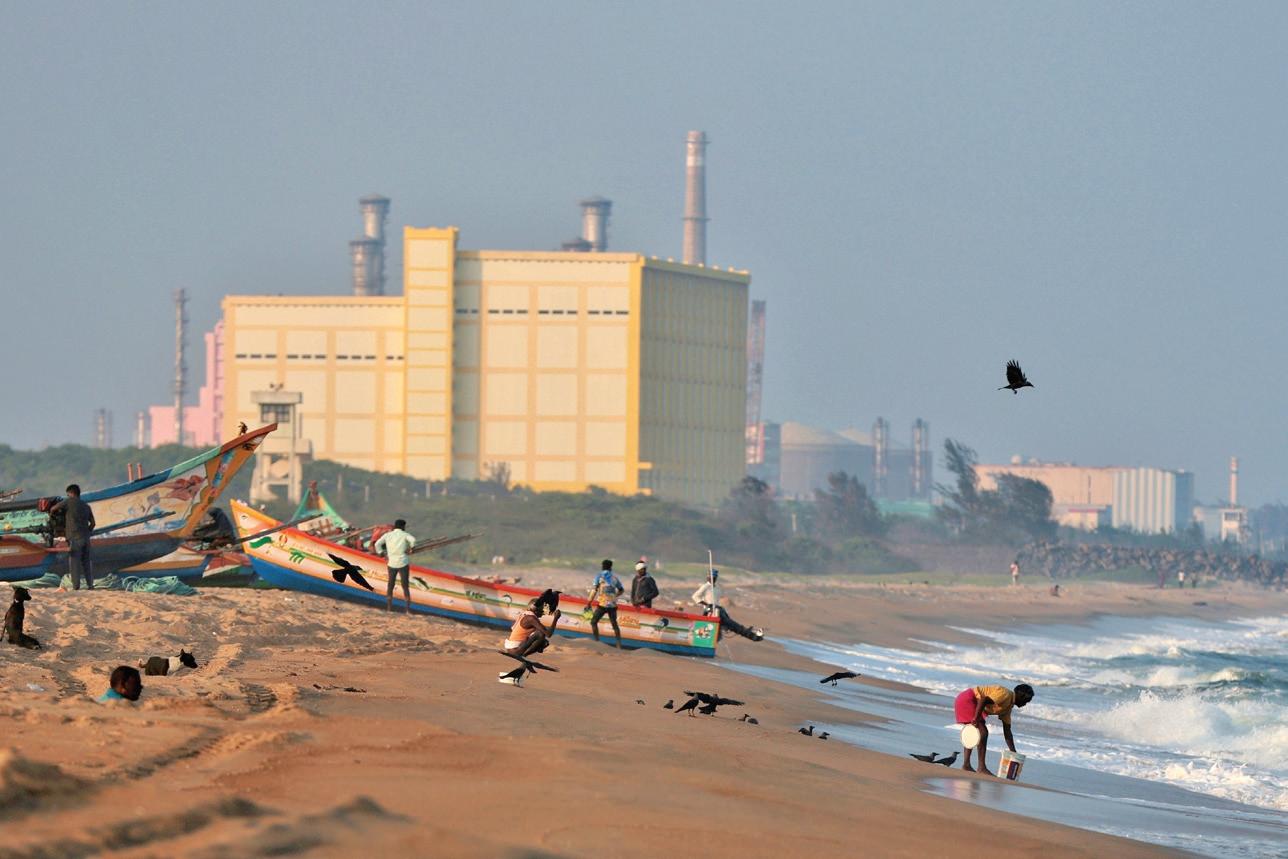
two reactors because of the current crisis, which will require meticulous inspections, safety checks and control system verifications.
In Japan, since the start of the war, Prime Minister Takaichi Sanae has signed a $40-billion reactor deal with the US, a nuclear fuel recycling agreement with France and promised Indonesia nuclear cooperation. Japan restarted the world’s largest nuclear plant, the KashiwazakiKariwa site, in January.
Renewables, like solar and wind, make more sense than nuclear for energy affordability and security, according to Michiyo Miyamoto of the US-based Institute for Energy Economics and Financial Analysis. While the Iran war is also
driving consumer and government interest in renewable energy globally and in Japan, historically high electricity costs combined with the current crisis is swinging Japanese public opinion toward acceptance of nuclear power, she said.
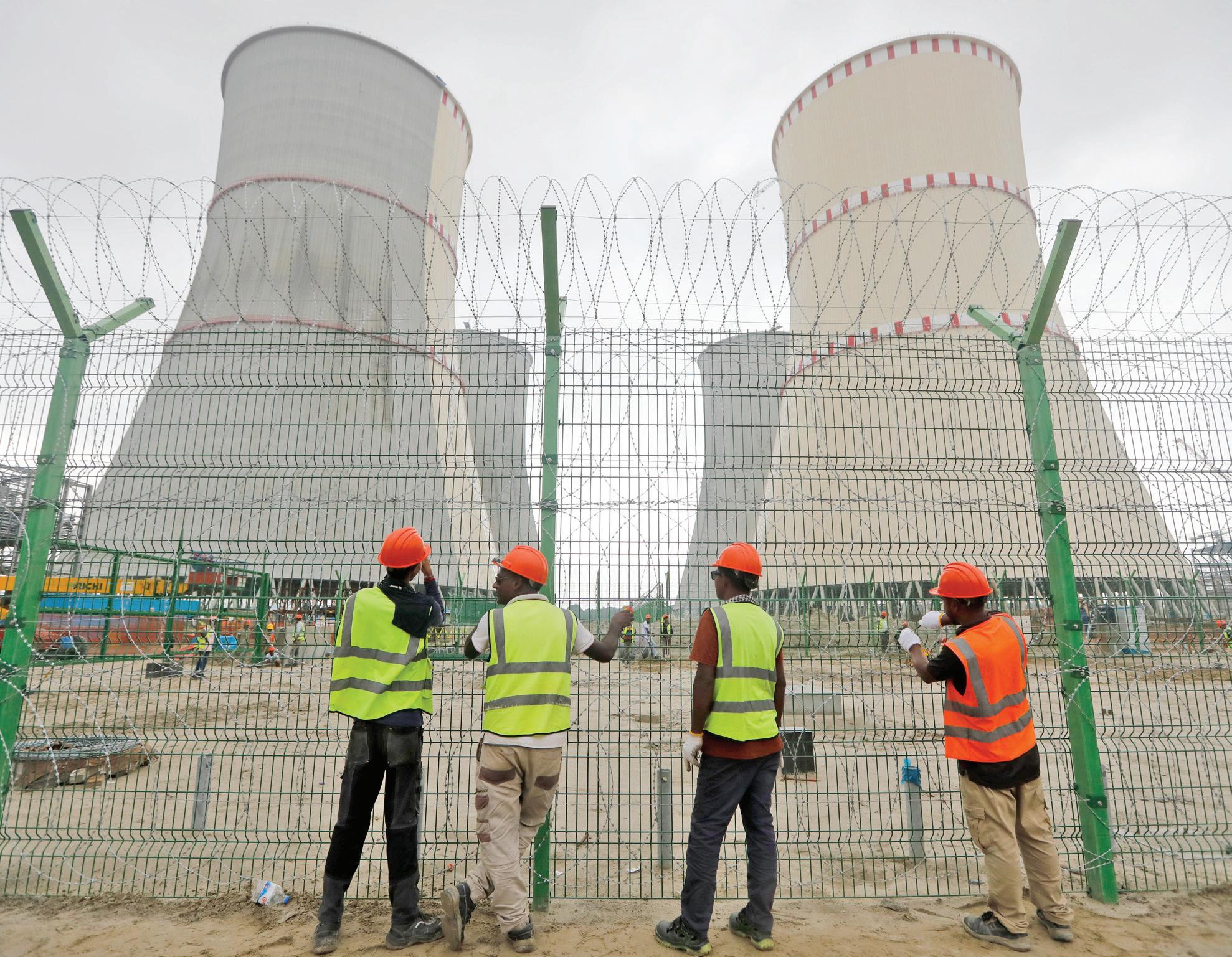
In South Asia, Bangladesh is racing to turn on new reactors built by Russia’s state-owned nuclear corporation Rosatom. Dhaka hopes they will supply the national grid with 300 megawatts by this summer, relieving some pressure from current gas shortfalls.
Meanwhile, Vietnam signed a deal with Moscow in March for two Russian-designed reactors.
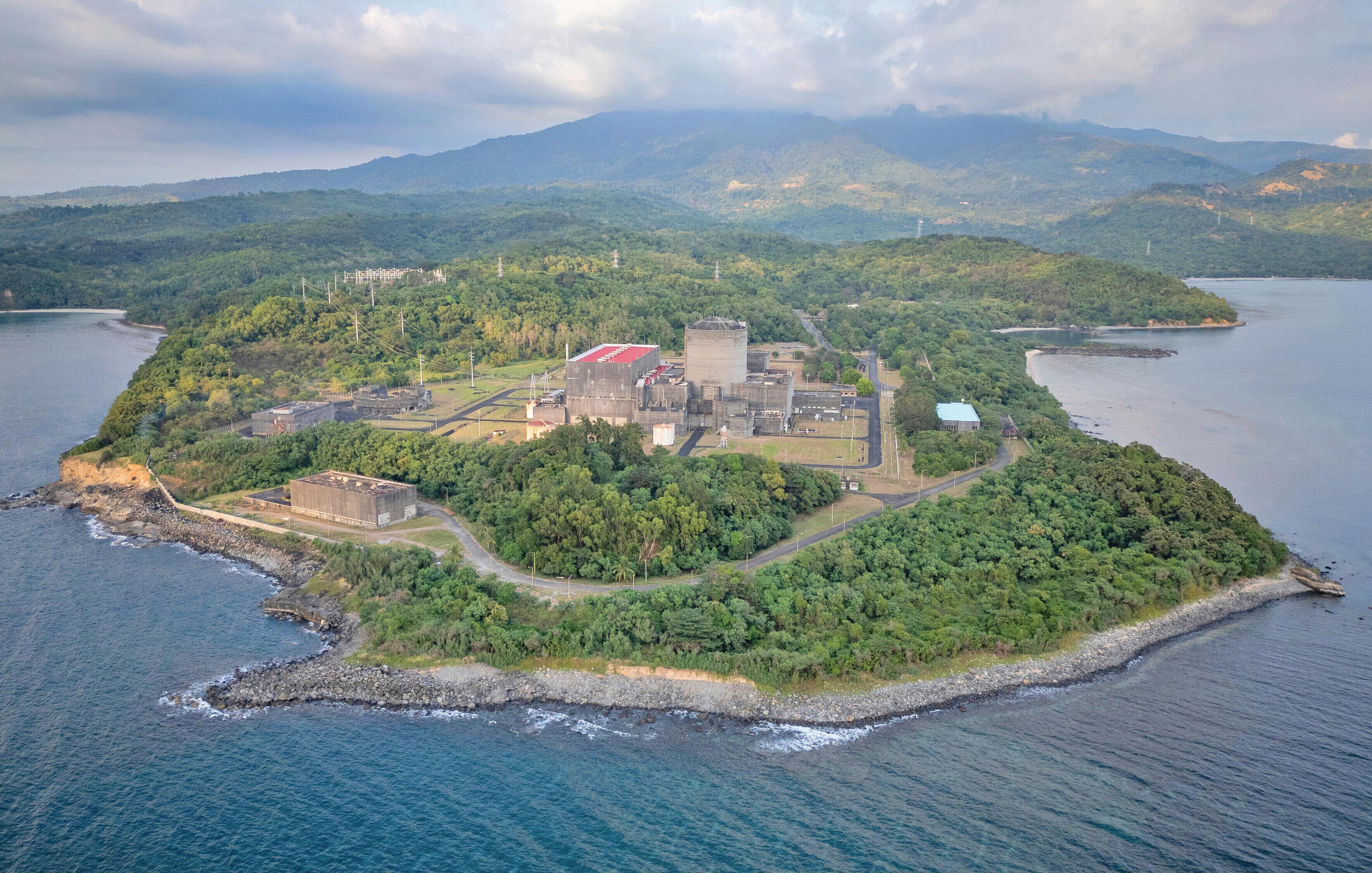
The Philippines, which recently declared a national energy emergency, is also considering reviving a nuclear plant built in the aftermath of the 1973 oil crisis but was never turned on.
“I hope we learned our lesson,” said Alvie Asuncion-Astronomo of the Philippine Nuclear Research Institute. The Iran war is “providing a needed push for nuclear.”
Africa voices atomic aims SOARING energy prices and power shortages in Africa, triggered by the Iran war, is leading to public calls for nuclear cooperation and re-invigorated interest in longterm nuclear energy plans, which are underway in more than 20 of the 54 African countries.
With Africa seen as an atomic energy growth market, nuclear nations — including the US, Russia, China, France and South Korea — are pitching advanced technology such as small modular reactors, or SMRs, as a solution to energy shortages.
These modular reactors are a cheaper, more compact alternative to large-scale plants.
Proponents tout them as a faster option, but projects can still take years. Kenya, for instance, plans to bring a small modular reactor online in 2034 after starting the first phase in 2009.
By Rebecca Choong Wilkins Bloomberg
PRESIDENT Xi Jinping is wrapping up what’s been an unusually busy week of diplomacy in Beijing, showcasing the fervent interest of world leaders to develop ties with China while the US is embroiled in a conflict with Iran.
Xi has held at least five highprofile tête-à-têtes, despite the lack of any formal gathering in China’s capital this week. Excluding weeks the country hosted major summits, it’s the quickest tempo since July 2024.
The roster has ranged from a US NATO ally — Spain’s Prime Minister Pedro Sánchez — to a Middle East representative — Abu Dhabi’s Crown Prince Sheikh Khaled bin Mohammed. The meetings were followed by a visit from the leader of neighboring Vietnam — To Lam, the nation’s president and Communist Party chief, who recently secured a fresh five-year term.
Xi has been positioning his nation as a source of stability and bulwark of respect for international rules, against the backdrop of President Donald Trump’s threat to bomb Iran “back to the Stone Ages.” Left unclear: Whether China’s leaders, who have long promised benefits from deeper ties to the world’s No. 2 economy, will offer concrete help for countries facing the current energy crisis.
“World leaders are heading to
Beijing because they increasingly see China as a hedge against an unpredictable United States,” said Neil Thomas, fellow on Chinese Politics at the Asia Society Policy Institute’s Center for China Analysis. “Many want Beijing to play a larger role as a defender of stability, diplomacy, and an open global economy.”
Trump, by contrast, has spent the week deepening his isolation on the global stage, by openly lambasting one-time close allies including Italy’s Giorgia Meloni and the UK’s Keir Starmer. He also launched a broadside against Pope Leo XIV, calling the popular and highly visible spiritual leader “terrible for foreign policy.”
Italy’s foreign minister this week visited Beijing, where officials pledged to deepen ties with Rome.
Trump has increasingly — and unsuccessfully — turned to threats to pressure allies into working with the US military to open up the Strait of Hormuz and restore flows of energy from the Persian Gulf to the rest of the world.
Global leaders have sought to coordinate without the US pres-
ent. Starmer is traveling to Paris to host a video conference on Friday alongside French President Emmanuel Macron, bringing together a coalition of roughly 40 countries working to help restore free transit through the Strait of Hormuz. South Korea, Japan and Australia have been part of that effort previously, which focuses on supporting a ceasefire.
China’s neighbor Japan has already been active in terms of opening up the checkbook. Prime Minister Sanae Takaichi this week promised a $10-billion aid package to help nations in Southeast Asia

cope with soaring crude oil prices. She made that announcement while hosting a virtual meeting with regional leaders Wednesday on a new initiative, “Power Asia,” designed to strengthen the energy supply chain. Included in the session was Vietnam’s prime minister, on the same day that To Lam met in Beijing with Xi — who offered words of solidarity, but no hard support.
China’s most concrete public action so far has come alongside its “no-limits” friendship with Moscow. Xi again touted the stability of ties with Russia and pledged deeper bilateral coordination in his meeting with Foreign Minister Sergei Lavrov this week.
Russia and China, two of Iran’s most important backers, earlier this month vetoed a United Nations Security Council resolution encouraging countries to coordinate efforts to reopen the Strait of Hormuz. That motion would have tacitly condoned mili -
tary action in the waterway. Beijing argued the “unbalanced” proposal failed to address the root cause of the problem and only made accusations against Iran.
Trump has publicly credited Beijing with nudging the Islamic Republic to participate in peace talks last week, an assertion bolstered by Iranian officials reportedly saying the same. But Chinese state media has pushed back on that, saying that claim incorrectly blames Iran for blocking talks, and puts a burden on China to negotiate ceasefire conversations, according to a social media post from CCTV.
China’s Foreign Ministry has said Beijing had made its “own efforts” in pushing for a ceasefire without providing more details.
Xi and Chinese officials have cautiously taken a more vocal approach, keeping enough distance so they aren’t blamed if the talks fail, according to Ja Ian Chong, an associate professor of political sci-
ence at the National University of Singapore.
“Beijing also has concerns about managing its own relationship with Washington,” he said. “More direct and active involvement in negotiations could win the Trump administration’s affirmation as much as earn its ire and blame.”
China — the world’s largest oil importer — isn’t yet incentivized economically to take a more proactive role in the Iran conflict. Its vast commercial oil reserves have so far insulated the country from the dramatic price shocks ripping through the rest of Asia. That may change as the war drags on. Rising prices have broken the country’s longest deflationary streak in decades and higher operating expenses will drain industries already laboring under razorthin margins.
Still, China has been reluctant to become directly embroiled in a volatile conflict. Beijing’s friendship with Tehran and commercial ties with Gulf states took center stage as China helped broker a detente between Saudi Arabia and Iran in 2023 — a breakthrough widely hailed at the time as a sign of Xi’s growing clout in the region.
Since then, China has largely taken a backseat as fighting reignited in the Middle East. The October 2023 Hamas attacks on Israel and ensuing escalation exposed the limits of its influence. Official messaging has confined itself to calls for restraint and de-escalation, preferring to focus on booming business.
Beijing has demonstrated it’s not willing to actively resolve a standoff, which is devastating for the global economy, according to Richard McGregor, a senior fellow for East Asia at the Lowy Institute.
“It is very easy to criticize the US,” he said. “Even America’s allies are at odds with Trump and Washington these days — but sooner or later, China needs to go beyond the position of critic, and get some real diplomatic skin in the game.”
Continued from A1
Last month, Justus Wabuyabo of Kenya’s Nuclear Power and Energy Agency, said “nuclear energy is no longer a distant aspiration for African countries; it is a strategic necessity.”
During a March summit convened by the UN’s nuclear watchdog agency, Rwandan President Paul Kagame said Africa will be “one of the most important global markets” for the smaller reactors in the years ahead.
Smaller reactors, which can offer scalable, low-emitting base load power, are considered a solution to Africa’s rising electricity demand, weak grids and over reliance on imported diesel.
Similarly, Loyiso Tyabashe of the South African Nuclear Energy Corporation, said SMRs could “fulfill our strategic objective of positioning South Africa at the forefront of advanced nuclear technologies.”
South Africa, which has the continent’s only existing nuclear plants, wants nuclear to go from making around 5% of its energy mix now to 16% by 2040.
US and Russia vie for role as a nuclear provider THE energy disruptions come as competition for influence in Africa intensifies between Washington and Moscow.
Russia’s Rosatom is building Egypt’s first reactor and has cooperation agreements with Ethiopia, Burkina Faso, Ghana, Tanzania and Niger, spanning major projects, research centers, uranium processing facilities and training programs.
While only Kenya and Ghana

have joined an American-led modular reactor initiative, Washington is trying to catch up.
The US and South Korea sponsored a nuclear conference in Nairobi last month. Ryan Taugher of the US State Department said Washington is working with African nations to rapidly develop secure and safe civil nuclear reactors.
Ghana, which aims to begin building a nuclear plant in 2027, is in the market for foreign suppliers.
Considering the risks of nuclear energy RISKS like meltdowns and mismanaged waste remain, even as interest builds. Nuclear energy could also be a step toward building nuclear bombs.
Ayumi Fukakusa, of the advocacy group Friends of the Earth Japan, said “nuclear is very risky” and will keep countries reliant on imported fuels such as enriched uranium.
Given that nuclear sectors take years to develop, governments should stay focused on building out renewables for long-term energy security, said Rex Amancio of the Global Renewables Alliance. Bronson, with the atomic scientists group, also said nuclear plants are vulnerable during conflicts, citing recent instances where reactors were specifically targeted during the Iran war and the Russia-Ukraine War.
“All of this comes into the mix of how we think about energy security,” she said. “Countries are now weighing those kinds of risks against the other risks, which Asia and Africa are seeing first and foremost, about what happens when gas and oil stops.”
Editor: Angel R. Calso
April 19, 2026
By Clara Hernanz Lizarraga
WHEN Paz Orge Acebillo’s family received a letter on behalf of Amazon Web Services proposing a “private amicable agreement” to buy the land her family had owned for nearly half a century, she thought it was a scam. The letter cited a government-backed data-center project labelled “of general interest.” It promised her father “superior” compensation and signed off with an urgent request: The family had four days to make their interest known.
“My mother called me, she was alarmed,” said Acebillo, whose family has long used their small patch of land in Aragón, northern Spain, to grow vegetables and to gather for birthday celebrations, communions and summer evenings.
“The next day, she went to the town hall and showed the letter to a civil servant, who told her it must be a mistake,” Acebillo recalled. “No matter who you spoke to at the town hall, nobody knew anything.”
Acebillo is among thousands of people whose lives have been upended by the global rush to build the infrastructure behind artificial intelligence. The AI race has prompted unprecedented spending from technology companies, along with risky Wall Street bets and complex debt arrangements. How quickly companies can build, connect and bring data centers online will play a large part in who comes out on top.
Aragón has become one of Europe’s fastest growing datacenter hubs, with investments announced by Amazon.com Inc., Microsoft Corp. and others surpassing €80 billion ($94.4 billion).
On the surface, Aragón is a Big Tech company’s dream. Vast, uninterrupted stretches of the region are empty: Beyond its capital, Zaragoza, the landscape opens out into broad countryside where most municipalities have fewer than 26 residents per square mile. Spain’s electricity prices are generally 20% to 30% lower than the European average, with renewables accounting for nearly 90% of the electricity generated last year in Aragón. And in a country that already has some of the lowest labor costs in Western Europe, Aragón comes in slightly below the national average.
There is also PIGA. Proyecto de Interés General de Aragón is a legal mechanism created in 2015 to shore up weak spots in the local
economy. Used sparingly for many years, it has been at the heart of the data-center push—allowing the regional government to fasttrack projects, reduce administrative procedures and exempt companies from certain taxes. Its success has been such that industry lobbyists have touted it in Brussels as a model for accelerating the AI buildout elsewhere. As part of a consultation of the European Union’s upcoming Cloud and AI Development Act, which aims to at least triple the continent’s datacenter capacity within five to seven years, both Microsoft and Amazon praised Aragón’s accelerated permitting as an example of how to manage what Microsoft called the EU’s “highly idiosyncratic, slow and unpredictable process,” public documents show.
The PIGA framework also gives companies the right to use forced expropriation and can limit the ability of municipal authorities and local residents to block projects. A development awarded “general interest” status can override local zoning plans and change a site’s land-use designation, which can significantly alter a plot’s value. Developers typically begin by negotiating purchases directly with landowners, but if an agreement cannot be reached, they can force a sale.
Regional officials speak boldly of the jobs and long-term prosperity that await, once Aragón becomes “the Virginia of Europe”—a continental data-center capital.
The investment is an opportunity to build an ecosystem around data centers, Aragón’s Vice-President Mar Vaquero said in a phone interview. In a region of nearly 1.4 million people, the government expects data centers to create tens of thousands of jobs and says local companies are already feeling the positive impact. A case in point is Zaragoza-based Levitec, which

develops and installs electrical and refrigeration systems. The company says its revenues grew tenfold to €300 million in the five years to 2025, with data centers accounting for 40% of sales.
“That’s what we’ve seen happening in Virginia, where every data center job creates six jobs in the local economy,” Vaquero said. Such figures are contested by economists, who argue they are based on modeling assumptions that overstate real-world impacts and conflates construction jobs with permanent ones.
Spain’s national government has been ambivalent about the data-center industry. While the investments flowing into the country have been publicly celebrated, some officials believe the current wave of projects overestimates demand for computing power. The central government controls access to the country’s power grid and in the past has purposefully avoided granting connections for some projects, according to people familiar with the matter. In March, it announced that future permissions will be tied to sustainability and efficiency criteria.
This gatekeeping has rankled industry and regional officials, who say Madrid is undermining their economy on political grounds. Meanwhile, municipal leaders say their towns are bearing the brunt of a boom whose benefits will largely flow elsewhere. Villamayor de Gállego and Villanueva de Gállego—small towns at the coalface of the buildout—are taking the Aragón government to court to address concerns that range from use of land and water to tax exemptions. A group of environmental activists and academics have also filed a legal challenge against AWS’s data center expansion.
“The impacts are reasonable for a project of this type,” said David Blázquez, AWS’s head of public policy for Spain and Portugal. He added that when the company first announced its data-center plans for Aragón, town councils, trade associations and unions spoke in favor of the project.
Microsoft believes projects of this scale and complexity “can only be developed with a PIGA,” a spokesperson said by email. The company “is committed to covering all the energy consumption of its data centers with renewable energy purchases” and wants to “drive concrete environmental improvements in the region,” the spokesperson added.
In council member Marysol Ruberte’s view, using the PIGA framework in Villamayor isn’t justified, because it has very little unemployment. Villanueva, meanwhile, has the highest income per capita in the region. Certain municipal taxes don’t apply under PIGA, meaning the towns will receive none of the construction revenue they would normally collect. (Vaquero said that “in the long term, the benefits for those towns are far greater than the one-off construction tax revenue.”)
Ruberte recalled a newspaper headline that described Villamayor as a lottery winner.
“A lottery?” Ruberte said. “What I’ve won is a stone in my shoe.”
A different business
AWS, the cloud-computing arm of Amazon, has been by far the biggest promoter of data centers in Aragón. It was the first to arrive, too. In 2022, AWS opened three data centers in Zaragoza and Huesca, announcing plans to expand two years later. Then, in early March, Amazon said it would more than double its investment to
€33.7 billion. The first three centers have created between 700 and 950 jobs so far, more than threequarters of which are in construction, local institution Fundación Basilio Paraíso estimates. At the entrance to AWS’s offices in central Madrid, a large model of the Aragón complex is on display: three sets of grey buildings situated among miniature foam trees, solar panels and wind turbines. Tiny white sheep graze beside the server halls. At one edge sits a small town with a church and a cluster of white houses, generic enough to be almost anywhere in Spain.

By Andy Lin & Mackenzie Hawkins
HOURS after the United States charged a Super Micro Computer Inc. co-founder with illegally smuggling billions of dollars’ worth of Nvidia Corp. AI chips to China, shares of a little-known Shenzhen-based computing company plummeted by the daily limit of 20%.
Sharetronic Data Technology Co., which is setting up AI data centers across the Asian country, said immediately after the plunge that it complies with regulations for hardware purchases. The company also assured investors it doesn’t have “any business cooperation or relationship” with Super Micro. Records filed with Chinese government agencies and reviewed by Bloomberg News suggest that Sharetronic procured hundreds of Super Micro systems containing high-end Nvidia chips, which have been banned from sale to and within China absent permission from Washington since 2022. Two invoices from May and June of last year show sales from Sharetronic to a Shenzhen subsidiary of 276 SYS-821GE-TNHR servers, valued at 632 million yuan ($92 million). These are Super Micro systems that contain either Nvidia’s H100 or H200 processors, the standard for training and running AI models like ChatGPT until Nvidia launched its current line of products last year. It’s unclear from whom Sharetronic sourced the hardware.
While the volumes in question are relatively small—the biggest American and Chinese tech players are spending orders of magnitude more on servers for AI data centers—the documents provide a window into China’s demand for banned US chips. Sharetronic is one of dozens of smaller companies that rent AI servers to third parties, a common setup in China and elsewhere—and the firm has told Chinese regulators that it uses American hardware to fuel that business.
The invoices also raise questions about how exhaustively the world’s top tech companies track sales of their most sensitive products. Nvidia said in a statement that its “customers are under express instructions not to provide any controlled servers, support or service” without US approval, while Super Micro said it’s never sold products to Sharetronic and that the company isn’t a customer. Yet publicly-accessible records suggest that Sharetronic still managed to get its hands on banned gear.
Washington has restricted sales to China of most AI processors, including the H100 and H200, as part of a yearslong effort to curtail technological development that could aid the Asian nation’s military. American authorities have ramped up enforcement of those rules in recent months, pursuing several smaller-scale cases before indicting Super Micro’s cofounder, Yih-Shyan “Wally” Liaw, in March. Liaw has pled not guilty to charges that he helped divert Nvidia-powered servers worth $2.5 billion to China.
That March indictment detailed a sophisticated smuggling operation but left several key questions unanswered—including to whom the hardware ultimately went. Spokespeople for the US attorney’s office that’s handling the case, plus the Commerce Department agency assisting with it, declined to comment on whether Sharetronic is among the defendants’ unnamed Chinese customers.
Sharetronic, in an emailed statement, didn’t directly answer questions about the invoices. It reiterated that it doesn’t have “any business cooperation or relationship with Super Micro,” and declined to provide additional details on its equipment purchases or sales, citing client confidentiality.
“The servers the company and its affiliates have purchased are used to provide clients with computing services, and all related assets have come from legal and compliant channels,” Sharetronic said. Its law firm issued a statement on its official WeChat account after the March 20 share plunge threatening to take legal action against individuals and entities that harm

its interest or spread rumors. Sharetronic, founded more than two decades ago in Shenzhen, is one of many Chinese tech companies pivoting into the AI data center boom. Its efforts began with the 2024 launch of a joint venture called Guangzhou Fcloud Technology Co., which is focused on building high-performance computing infrastructure across the Asian country, according to FCloud’s website and an interview with Sharetronic’s chairman published by the state-owned Securities Times.
Toward the end of that year, FCloud secured a coveted designation as an Nvidia Cloud Partner, or NCP, for compute—one of only eight such companies in China, according to Nvidia’s website. Globally, 59 firms have won the certification, which means that Nvidia deems them capable of providing “robust, secure and energy-efficient infrastructures” for AI workloads. Two other NCPs, both in Southeast Asia, have drawn scrutiny for possible semiconductor trade violations.
After FCloud’s NCP designation, Sharetronic went on a spending spree. It issued procurement announcements for a total 32.2 billion yuan in hardware and sought significant bank loans along the way. That investment “will lay a solid foundation” for continued growth, Sharetronic Chairman Geng Kangming has said, noting that the company’s expenditure is small compared to customer demand.
For the most part, Sharetronic hasn’t disclosed exactly which types of AI servers it’s buying. But its financing activity offers some visibility.
Last year, Sharetronic and two newly-created subsidiaries offered AI servers as collateral when seeking bank loans, submitting redacted versions of server purchase invoices to a credit agency overseen by China’s central bank. Bloomberg matched those invoice numbers, issuance dates and total values to documents from a database managed by the State Taxation Administration.
That yielded 17 complete invoices, which described servers worth around 6 billion yuan—roughly a fifth of the total volume Sharetronic said it planned to procure. The majority of that hardware was described only in generic terms. But the two invoices from May and June—documenting sales from Sharetronic to a subsidiary it had recently established—named two specific types of servers: the 276 Super Micro systems that use Nvidia H100 and H200 chips, plus a smaller batch of 32 Dell products dubbed the PowerEdge XE9680. These servers are compatible with a variety of American chips, from Nvidia and other makers, meaning the product name alone doesn’t answer the question of which specific processors made their way into China. But all of the potential options were subject to US curbs by May 2025, when the invoice is dated. Dell, in an emailed statement, said it found “no record of the alleged sales. If we determine that a customer has diverted our products or transferred them to an unauthorized location or customer, we take swift and appropriate action including termination.” Nvidia didn’t directly answer questions about whether sales of banned AI servers by FCloud’s parent company, Sharetronic, would affect its NCP designation. Like all Chinese companies, FCloud would need approval from Washington and Beijing before acquiring any H200 servers, Nvidia said, referring to products it’s in the process of introducing to the Chinese market after President Donald Trump said he’d approve some licenses. With assistance from Jessica Sui, Debby Wu, Ian King and Bob Van Voris/Bloomberg
By Paul Wiseman & Yuri Kageyama The Associated Press
ASHINGTON—The world
Weconomy is experiencing a disorienting flashback to the 1970s.
Oil prices are once again surging in the wake of war in the Middle East, driving up the cost of gasoline, diesel and jet fuel and threatening a return to stagflation—the toxic mix of higher prices and slower growth that made economic life so miserable a half century ago.
But the US and world economies are less vulnerable now than they were when Saudi Arabia and other Middle Eastern petroleum producers withheld oil supplies to punish countries that supported Israel in the 1973 Yom Kippur War.
In response to that shock—and another triggered six years later by the Iranian revolution—countries embarked on a new course to increase their energy efficiency, reduce their dependence on Middle Eastern oil, stockpile fuel against future threats, and find and develop alternative sources of energy.
“We have decades of experience now dealing with these kinds of oil shocks,’’ said Amy Myers Jaffe, research professor at New

York University’s Center for Global Affairs. Of course, the notion that the current Iran energy shock could have been worse is little comfort to frustrated American motorists paying $4 or more for a gallon of gasoline, to European farmers contending with skyrocketing fertilizer prices and to street vendors in India who can’t get enough gas to cook curries and samosas for their customers.
And the sheer scale is unprecedented. In response to attacks by the United States and Israel that began Feb. 28, Iran effectively shut off the Strait of Hormuz, through which 20 million barrels of oil—or one-fifth of global production—flowed daily.
Lutz Kilian, director of the Federal Reserve Bank of Dallas’ Center for Energy and the Economy, figures that 5 million daily barrels can either be rerouted from the Persian Gulf to the Red Sea or continue to transit through the Strait of Hormuz. But that still means that roughly 15 million barrels—or 15%—of daily global oil production is missing, compared with just 6% in the 1973 embargo and after Iraq’s invasion of Kuwait in 1990.
Cushioning the blow CHANGES the US and other countries made over the past five decades have limited the economic fallout from the war. In 1973,


oil accounted for almost half—46%—of world energy supplies. By 2023, oil’s share had fallen to 30%, according to the International Energy Agency.
The world still uses more oil than ever:
Consumption topped 100 million barrels a day last year, up from fewer than 60 million barrels a day in 1973. But a much bigger share of global energy is coming from other sources—such as natural gas, nuclear, solar—compared to five decades ago.
The United States, in particular, has weaned itself away from dependence on foreign oil.
When the ‘73 oil shock hit, America’s domestic energy production was in decline and its reliance on oil imports was growing alarmingly. But the rise of fracking -- pumping high-pressure water deep underground to extract previously hard-to-get oil or gas from rock—rejuvenated US energy production in the 21st century. By 2019, America had become a net petroleum exporter.
“The US economy is much better positioned than it was in the 1970s,” when it was “particularly vulnerable to an oil price shock,” said Sam Ori, executive director of the University of Chicago’s Energy Policy Institute.
In the early ‘70s, for example, the United States got about 20% of its electricity from oil, Ori said. But a law enacted in 1978 prohibited the use of petroleum in power plants. Now the United States gets no electricity from oil—aside from a few generators in, say, the far reaches of Alaska.
Dimming the lights
THE 1973 oil embargo was a wakeup call, creating shortages that led to long lines at US gasoline stations.
On Nov. 25, 1973, President Richard Nixon went on television to ask the American people to make sacrifices. To conserve fuel, he urged gasoline stations to shut their pumps from Saturday night through Sunday, hoping to discourage long-distance weekend driving.
He asked Congress to lower the maximum speed limit to 50 miles an hour (lawmakers settled for 55 miles an hour) and to ban ornamental and most commercial lighting (they balked at that). Nixon himself promised to dim the White House Christmas lights.
But while those memories may have left a lasting imprint on some, Jaffe of New York University’s Center for Global Affairs says that today, “a repeat of long gasoline lines,
fuel rationing, and outright fuel shortages in the US seems highly unlikely.”
Other countries took aggressive action following the 1973 oil embargo as well.
The United Kingdom, contending with a coal strike as well as the energy crisis, cut the work week to three days to slash electricity consumption. France ordered offices to turn off the lights at night.
Japan, almost entirely dependent on imported oil, passed a series of “sho-ene’’ laws—combining the Japanese words for “save’’ or “reduce’’ with “energy’’—mandating energy efficiency in shipping, buildings, machinery, automobiles and homes.
Japan also encouraged the use of liquefied natural and gas and the rapid growth of nuclear power, an effort set back after a 2011 earthquake and tsunami damaged the Fukushima nuclear plant. Overall, Japan ranks No. 21 in the world in per-capita energy consumption, according to International Energy Agency data, as a result of its efficiency drive and widespread use of buses and trains. The United States is No. 9. More fuel-efficient cars, new oil fields
THE US government began imposing fuel economy standards in 1975. Fuel economy has risen from 13.1 miles per gallon for model year 1975 vehicles to 27.1 mpg in model year 2023, according to the Environmental Protection Agency. The World Bank, in fact, attributes most of the drop in the global economy’s dependence on oil to stricter fuel efficiency requirements for vehicles around the world.
The ‘70s shocks also set off a search for oil outside the Middle East—Prudhoe Bay in Alaska, the North Sea fields off the coasts of the United Kingdom and Norway and Canada’s oil sands deposits.
As fracking boomed, US oil production shot up from 5 million barrels a day in 2008 to 13.6 million barrels a day last year. Over the same period, US natural gas production has more than doubled.
Countries also began stockpiling oil and set up the Paris-based International Energy Agency in 1975 to coordinate responses to energy shocks. Last month, the agency’s 32 member countries agreed to release 400 million barrels of oil in an effort to calm the oil market; included were 172 million barrels from the US Strategic Petroleum Reserve, set up in 1975. Central banks such as the Federal Reserve also learned lessons. In the ‘70s, they reduced interest rates to protect the economy from the oil shocks. In so doing, they overlooked the threat posed by higher energy costs—and inflation, already elevated, got worse.
In a Feb. 17 commentary—11 days before the United States and Israel attacked Iran—the Dallas Fed’s Kilian wrote that the Fed erred in cutting rates to boost the economy when the 1970s oil shocks hit: “What we can learn from the 1970s is that a well-intentioned policy of stimulating the economy by lowering interest rates has the potential of inadvertently reigniting inflation.’’
Trump undoes efforts to reduce oil dependence WHILE much has changed, the University of Chicago’s Ori cautions: “Oil is still king, the No. 1 fuel in the US economy.’’ Cars, planes, trucks and ships get about 90% of their delivered energy from petroleum. “The lifeblood of the economy—the transportation sector —is still overwhelmingly reliant on petroleum fuel, the price of which is set in a global market,’’ Ori said, “and a disruption anywhere affects the price everywhere.’’ He also notes that President Donald Trump is undoing many of the policies meant to reduce America’s dependence on petroleum and to encourage the use of electric vehicles.
Kageyama reported from Tokyo.
By Eduardo Verdugo & María Verza
The Associated Press
GUADALAJARA, México—For
hours under the blistering sun,
Raúl Servín shovels and digs his way through days filled with pain, hope and usually frustration. He is looking for his son, gone eight years now—and for “ all the other missing people “ in Mexico as well.
Every Tuesday, Servín loads a van with picks, shovels, water and lunches. He commends himself to God. He picks up his three teammates for the day. Then they venture forth into areas where the ground beneath their feet may sometimes hide the bodies of the missing—the victims of foul play in a Mexican state rife with drug cartel violence.
They call themselves the Guerreros Buscadores—the “Searching Warriors.”
There is much to search for, and dozens of groups like theirs do: More than 130,000 people have been reported missing since 2006, according to official records.
Balancing the search efforts with daily obligations is not easy. Servín lost his job when he started looking for his missing son. Now he works as a waiter on weekends.
But the most difficult parts also offer ways forward—news that arrives via a skull, a mutilated body, evidence of closure in many respects of the word. There is even joy now and then—even if it comes from a pit.
On those difficult days, Servín, 54, comes to grips with a jarring fact: Sometimes, in the end, the worst-case scenario can become the best possible outcome.
Searching, waiting, hoping SERVÍN’S life is filled with mixed-feeling moments not easy to witness. On a recent day, these Guerreros agreed to be shadowed by an Associated Press photojournalist to see what they do—and why it matters. They set out to cover several locations on the outskirts of Guadalajara, the capital of the Mexican state of Jalisco and a World Cup host city. Servín and the women go alone, unaccompanied by any protection. The only semblance of an authority is a “panic button” held by Servín that connects to a federal network to protect rights activists. It is perilous work in a perilous environment. Mexico is neither at war nor under a military dictatorship, yet thousands of people disappear every year amid cartel violence. Clandestine graves are discovered on a semiregular basis; more than 70,000 unidentified remains have piled up in morgues and cemeteries. The previous administration recognized the magnitude of the problem and launched official search commissions, but high levels of impunity and inaction persist. The current government has said missing information
for one-third of those disappeared makes it impossible to search for them at all. Families remain the main driving force behind the searches and the findings.
The group heads to several locations based on anonymous tips received on the Guerreros Buscadores website. These often come from people who heard screams or gunshots or who saw something but fear going to the authorities. On their previous outing, they dug down more than a yard (meter) at four locations. Nothing. Sometimes they find bloodstains or shell casings. They check every tip anyway. Says Servín: “There cannot be room for doubt.”
He receives a call. An informant says there is a body buried in a residential area. The information seems reliable, so they change their plans. This time they won’t be able to check the area in advance, a security measure to avoid encountering drug cartel lookouts or gunmen who could drive them off with shots into the sky. That has happened before.
Arches mark the entrance to the residential complex identified by the informant. It sits next to a commuter train line on the outskirts of Guadalajara, a city plastered with fliers of missing people. Jalisco state, a stronghold of the Jalisco New Generation Cartel, is an epicenter of disappearances.
Mexican President Claudia Sheinbaum visited the area following the violence that erupted in February over the killing of the cartel’s leader. She insisted that security for the World Cup would be guaranteed.
The search collectives want to take advantage of the world’s focus on Mexico to draw attention to their reality. “I love soccer,” Servín says, “but that’s not going to stop me from going out to search.”
A lullaby for the dead CAPS and scarves shield the searchers from the sun. Each wears a personalized T-shirt with a photo of their loved one. Servín’s reads: “Searcher Dad.”
The group prepares their equipment. A metal rod they call “the seer” is a must-have: For over a decade, it has been the searchers’ rudimentary yet indispensable tool. They stick it into the ground and then sniff. If there’s an organic smell, there’s a clue. They begin digging in a small dirt area at one residential corner. They dig and dig some more. Nothing.
Then, after hours of no progress, Servín steps outside the apartment complex and walks between the wall and the tracks. The ground is soft. “I saw a hole with small rocks; it was strange.”
Years ago, his heart would have raced. Now he says, “I don’t get nervous anymore.” He kneels and grips his shovel. A train passes. First, he sees part of a skull. He begins to dig out the soil with his shovel and hands.
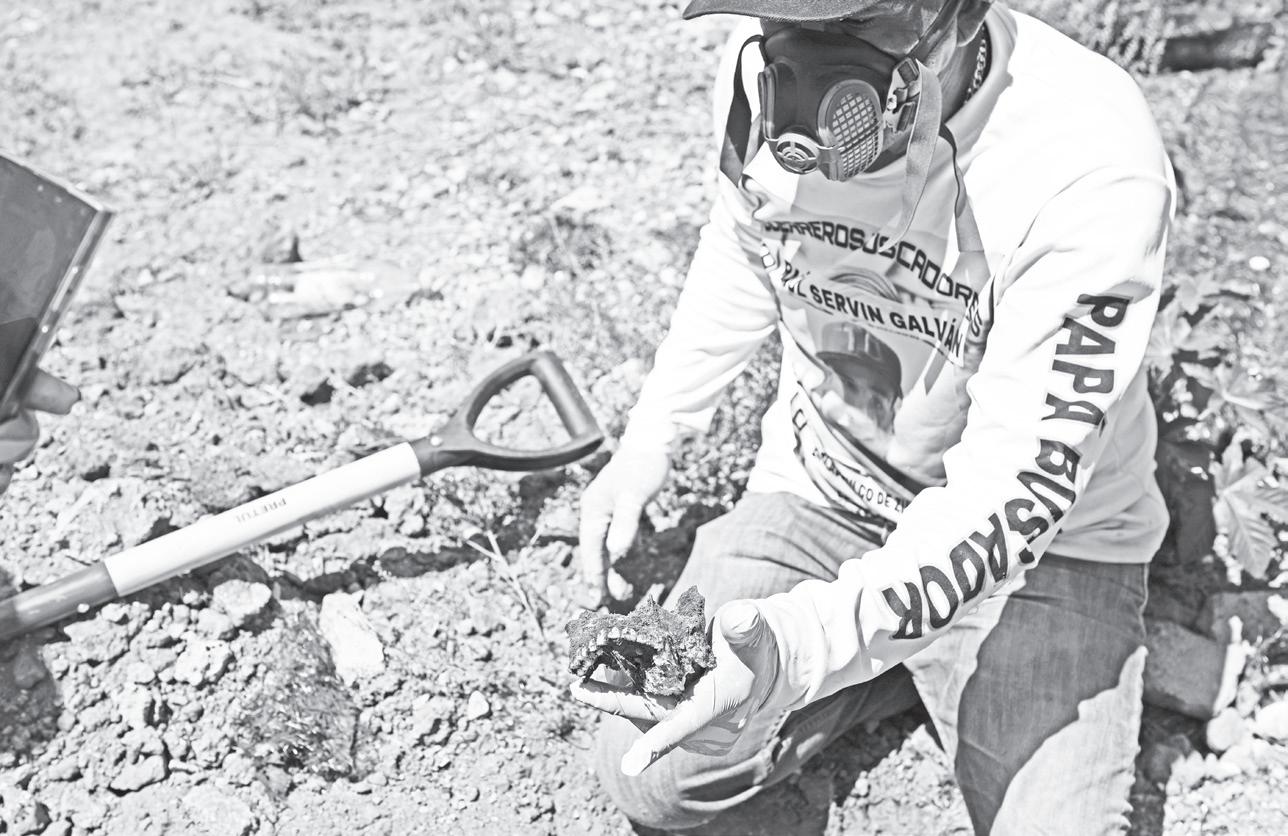
“We’ve got a positive!” he shouts.
The four don masks and gloves. A jawbone appears. There is no doubt: It is a human being.
Servín shows his colleagues the head, holding it with the utmost delicacy. They decide to keep digging to look for the full body. A bag of bones appears. Then a shoe. Then a pelvis. They carefully place each outside the pit. If any bone looks the same, it would be placed elsewhere because it could belong to a second person.
The women’s voices mingle like lullabies. “Hi baby, you’re going home soon.” “Your family is waiting for you.” One lights a candle at the edge of the pit. To someone unfamiliar with violent environments, the scene might seem macabre. To those who witness it, it’s an act of tremendous tenderness and solidarity carried out by people who were re-victimized by the authorities for years. In 2021, a prosecutor handed a woman the remains of her relative in a trash bag. A photo of her with a vacant stare over the huge black bag at her feet went viral.
Criminals hide their victims because if there’s no body, there’s no crime. Nearly 20,000 missing people have been found dead since 2010. So, finding a body can be dangerous.
Servín activates his panic button that many searchers carry. Since 2010, at least 36 searchers have been killed, according to civil society organizations. The latest was in mid-March.
Servín talks to the federal officials on the line, confirms his identity with a password, explains what he found and notes the location. He requests hourly monitoring, which means a call to confirm everything is all right.
Then he phones the police.
Navigating the aftermath— logistically and emotionally ONE of the women prepares to go live on Facebook. It’s a way to leave a record. If they hadn’t gone live when they found a

There’s the pelvis.”
The phone zooms in to show the details of the shoe, of the jawbone missing a tooth.
Any detail might help. One woman hopes that the “little person” will soon be with loved ones. They pray. Servín begins answering questions online. He’s no expert, but his experience tells him the body might have been buried about 18 months ago. It cannot be his son, but hope is never entirely lost; two weeks ago, a mother found her son after seven years of searching. He thanks God that there are remains for DNA testing.
When the Guerreros find bodies “in pieces,” Servín feels like crying. “What hits us hardest is to think that our children might be in those conditions.”
But he also feels good. Because he knows there are answers there.
ranch used by the Jalisco Cartel, it would have been difficult to get people to believe what they discovered. It also helps people recognize things.
“There’s a pair of gray underwear that says ‘Sport’ in orange letters, some size 5 brown boots,” one of the searchers explains.
“There’s the skull, it still has some hair. …
While waiting for the authorities, the searchers sit down to rest. It is a moment of intimate conversation among people united by grief and their mission.
A woman from the neighborhood arrives with her son. She has a missing child and wants to see if he recognizes anything. An
hour later, another mother arrives. The searchers embrace her and advise to go to the attorney’s office for a DNA test. Emotion overflows.
When the police arrive, Servín answers their questions. Mistrust, though, persists because he knows some officers work for the cartel. He says that “some time ago” the authorities accused them of contaminating crime scenes, but the collectives have gradually earned respect.
As evening falls, the forensic team begins its job. In Mexico, the results of a genetic test can take days or years. The remains of one searcher’s brother—a searcher who is also Servín’s partner—have been at the forensic institute for six years. There has been a match, but the experts haven’t finished processing the remains from all the bags found back then. “It’s illogical,” he says. His anguish is evident. At 9 p.m., Servín presses the panic button one more time to check in that he is home. “I arrive feeling at peace,” he says, “knowing the day was fruitful.”
Verza reported from Mexico City.


Sunday, April 19, 2026
By Jana Randow
ECONOMIC policymakers are meeting in Washington to assess the damage President Donald Trump’s war on Iran has caused to growth in the Middle East and beyond.
For many attendees of the International Monetary Fund and World Bank’s spring meetings from April 13 to 18 in the US capital, the trip brings a sense of déjà vu, after last year’s event was dominated by punitive trade tariffs—another shock brought on by Trump.
The 2026 edition will focus on reading the tea leaves after the US and Iran failed to reach an agreement after marathon weekend talks in Pakistan aimed at turning a two-week ceasefire into lasting peace, and on how governments and central banks can best support their economies without creating new problems.
Ahead of the meetings, attended by finance ministers and central bankers from around the world, IMF chief Kristalina Georgieva warned that the international community is becoming less able to respond to shocks. Fiscal space is lacking, policies that protect one country may harm others, and great-power politics are more likely to fuel conflicts than resolve them.
“Buckle up” was the main advice she offered ahead of new economic forecasts to be published on Tuesday, along with a report on global financial stability. “Given the impact of the war, we are going to downgrade them.”
In January, world output was seen rising 3.3% this year, with expansions of 2.1% in the US, 1.4% in the euro zone and 5.4% across emerging Asia. Then, at the end of February, bombs started hitting Iran.
“The next couple of quarters are going to be essential to understand how much this has tested the resilience of some economies that were a bit in a muddle-through period before the war,” Ludovic Subran, chief economist at Allianz SE, told
Continued from A3
In Aragón, Amazon says it plans to invest €30 million over the next decade in community programs that support education and sustainability, including a robotics training program and partnering with local football clubs.
Yet across the region, the reality of the investment boom is less tidy than the model suggests.
In villages where everyone knows everyone, questions of who held out, who sold their land and what prices were paid are constant talking points. Farmers track land deals across towns, wary of surrendering a way of life for less money than their neighbors secured. In some places, datacenter companies have paid as little as €2 a square meter; elsewhere they’ve forked out €23 a square meter. Some people claim payouts have climbed even higher after negotiations with particularly resistant owners. Local officials worry that land price inflation will be an obstacle to already sluggish house building.
In Villamayor, a town of about 2,800 people where two sites are planned and at least three more are due to be connected to the local substation, several farmers refused to speak on the record because they feared it would affect their chances of getting the best possible deal. One person who had recently reached an agreement said they had wanted to keep their land, but eventually felt there was no way they could stop the project. Others in their 30s, who were giving up a recently launched
Bloomberg Television.
What already seems clear is that the ripple effects of Trump’s aggression and the mistrust it has sown will linger—even if the truce agreed to by the US and Iran holds up, peace is restored, and shipping through a key waterway returns to normal.
“This ceasefire has clearly removed the most extreme downside risk,” said Ewa Manthey, a commodities strategist at ING. “For this to be a true turning point, we would need to see sustained and uneventful flows through the Strait of Hormuz, not just the headlines about reopening.”
“Last year it was tariffs. This year it’s oil prices. Trump’s America First instincts are injecting significant volatility into the global economy. In the end, the tariff shock proved less severe than anticipated. It’s possible the Iran war shock will go in the same direction. As long as the Strait of Hormuz stays closed, though, oil prices will stay high, the blow to global growth will deepen, and the impulse to global inflation increase,” said Bloomberg global chief economist Tom Orlik.
With top monetary policy officials in Washington, the central bank slate elsewhere looks thin. Still, economic indicators are due across regions, including Chinese and UK GDP prints and inflation readings from India to Nigeria to Argentina.
What’s coming up in the global economy:
INVESTORS will receive the next installment of March US inflation data with the producer price index on Tuesday. Similar to the consumer price report, the measure of wholesale inflation will reflect the surge in energy prices during the first
livestock farming business, said it was unclear whether the compensation would be enough to start over. All described feeling impotent, while some were deeply resentful of local officials, who they felt had failed to back them.
Over coffee at El Nacional in Villamayor, Antonio Gimeno and Rafael Rascón, both in their 80s, talked about farmers who had been leasing public land and were now being asked to leave.
“They just tell you, ‘out!’” said Gimeno.
“And we have to tuck our tails between our legs,” said Rascón. A factory worker for much of his life, he grew crops on the side to supplement his wages. While he no longer needed the money, he had, until recently, continued to spend his days on the land. But with the new projects, he has been told he can no longer farm there.
“I’m nobody there now, because the land wasn’t mine,” he said. “So if they kick me in the backside now, at 84 years old, what am I supposed to do?”
“The countryside is in ruins,” he said, vigorously shaking the spoon in his coffee.
“There aren’t many young people left in the fields.”
In total, Aragón is expected to host about 25 facilities in the coming years.
For the optimists, AI holds the potential to radically transform society, compressing decades of scientific advances into the coming few years and potentially driving unprecedented productivity. Millions of people regularly use large-language models for tasks big and small, and strides can already be seen in areas as varied as developing code, analyzing medical images and predicting proteins’ complex structures.

month of the Iran war.
Economists project the PPI rose 1.1% from a month earlier, which would be the largest increase in four years. In addition to crude oil and diesel, the PPI could also indicate how quickly and to what extent disrupted Middle East production is spreading to the US.
The report includes price changes for materials used in the early stages of the production process, such as metals, plastics, chemicals and fertilizer. Transportation services costs may also reflect the impact from higher fuel prices.
The core PPI, which excludes energy and food, is forecast to rise 0.4% for a second month, extending a stretch of heightened wholesale inflation pressures that dates back to late 2025.
Apart from the PPI, the relatively sparse economic data calendar includes a report on March existinghome sales that will probably underscore a languishing housing market.
Economists expect little change in contract closings, which largely reflect buying decisions from a month or two earlier. Mortgage rates approached 6% in late February before advancing sharply in March, when inflation fears spooked the bond market.
Turning north, Canada’s March data on existing home sales and housing starts will offer insight into how the Iran conflict’s economic shock may be deepening hesitation among buyers and builders. The Canadian Federation of Independent Business’s latest barometer will be watched for early signs of how the oil price spike is shaping sentiment and investment.
But that work is far more powerintensive than traditional computing and demands more water, to cool both the power plants and the data centers themselves.
“Before, data centers could be criticized for their resource consumption, but they still had a link to our own data consumption as users,” said Marina Otero, a lecturer at Harvard and adviser to the council of Villamayor. “The goal now is to build evergreater computing capacity to develop artificial intelligence.”
“That has created a tension between the digital footprint of the population and that of the technologies being developed.”
Good neighbors
OPPONENTS of development projects are routinely described as Nimbys: people who often support progress in the abstract, but resist construction that shows up in their own backyard. The label isn’t always unfair, but sometimes community concerns about resource use or environmental damage are well-founded. And the costs and benefits of AI aren’t, at least for now, evenly distributed. The gains are most visible in the market capitalizations of a handful of technology firms. The costs, on the other hand, are showing up in very tangible ways for people who have no stake in those gains: the strain on power grids, the draw on water supplies in drought-stressed regions, the noise and heat emitted by facilities the size of several city blocks.
Across towns in Aragón, people spoke of how the buildout seemed to be pitting locals against one another.
“They say they want to be good neighbors, that they want to collaborate,
years. Malaysia also releases inflation figures in the coming week, and trade statistics are due from China and India.
There are no rate decisions in Asia, but two events involving BOJ Governor Kazuo Ueda are worthy of note. Ueda on Monday delivers his final scheduled speech ahead of the April 28 decision, and will hold a press briefing in Washington after the IMF and G-20 meetings on Thursday.
February releases of manufacturing sales, wholesale sales and international securities transactions will help round out the prewar economic picture.
Asia
CHINA grabs the spotlight Thursday with the release of data expected to show that the economy grew 4.8% year on year in the first quarter, comfortably within the 4.5%-5% targeted range for 2026.
Retail sales, industrial output and property investment statistics for March, due the same day, will show what sort of momentum there was heading into the second quarter, when there’s a risk that sliding global demand owing to the Middle East conflict could erode business activity. Malaysia and Singapore also release first-quarter GDP this week.
Australia publishes a pair of sentiment gauges on Tuesday. The business confidence index for March may reflect the impact of the Iran war after the measure turned negative in February. The consumer confidence index is also due. Two days later, Australia releases March labor statistics that are likely to influence expectations about the RBA’s next policy decision on May 5. A focus will be on whether jobs growth can stay relatively robust after strong gains in February.
India on Monday is expected to report that consumer inflation accelerated to 3.4% in March, the fastest in nearly a year, but still well below the Reserve Bank’s 4% medium-term target. Wholesale prices later in the week are likely to grow at the quickest pace in three
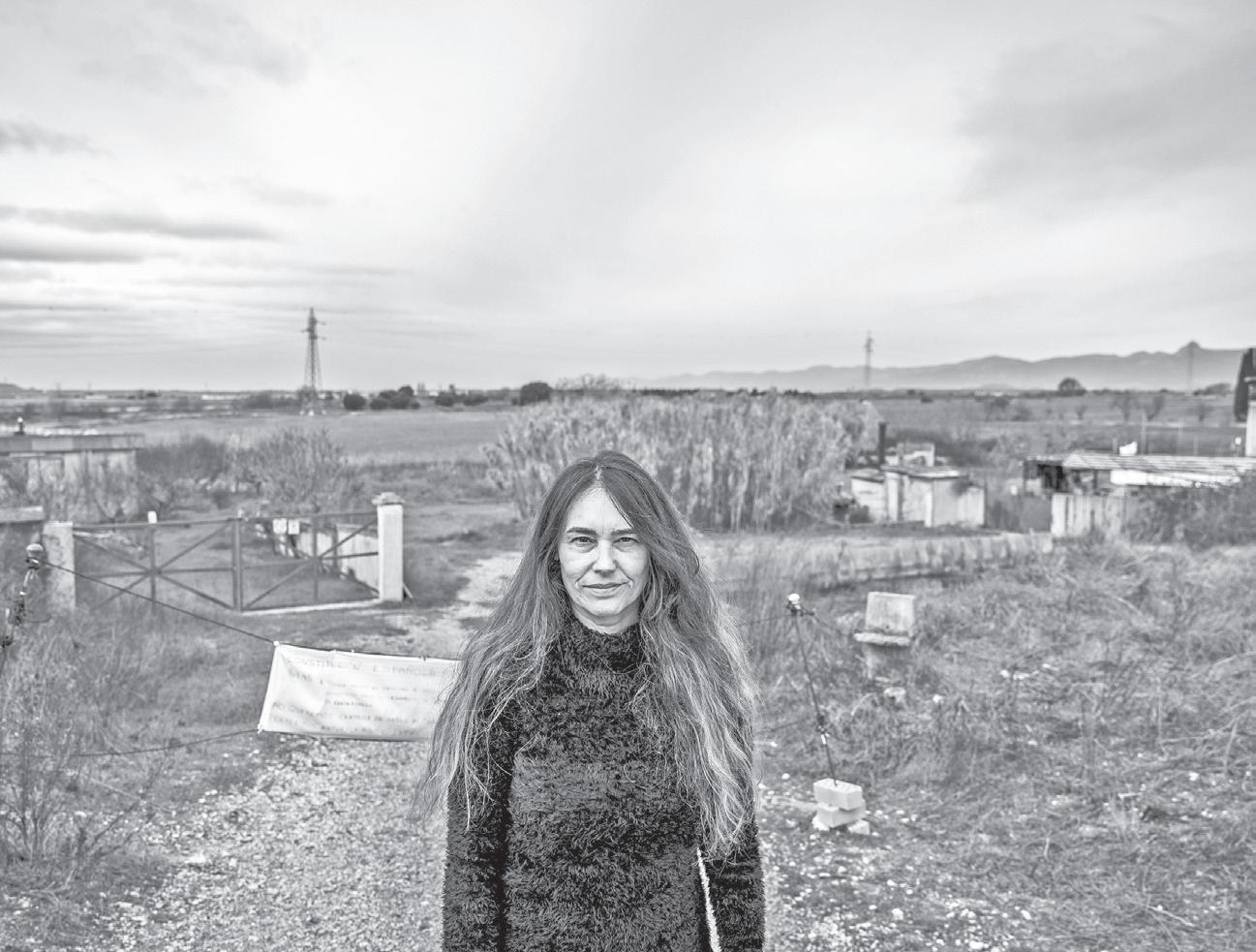
and yet they end up dividing the town,” said Acebillo, referring to the data-center companies. She is from Cuarte, a village of fewer than 100 residents next to which Amazon is building a campus that’s set to cover the equivalent of 98 soccer pitches.
She has filed a court case against the Aragón government, which is expected to draw AWS as co-defendant, accusing regional officials of omitting essential procedural steps and alleged document forgery. “It’s as if there was nothing of value here,” she said.
“Some neighbors get persuaded, they’re pressured and eventually give in, and the ones who are against it get pushed aside,” she said, as she walked past the fruit trees and silver-green artichoke plants on her family’s plot of land. This year they haven’t planted nearly as much as in the past, she said.
In an adjacent, largely empty plot, another family usually grows cereals. They do not live in the village year-round and have been formally expropriated, according to Acebillo. The two families once got along well, she said, but stopped speaking after the land sales began.
After receiving the mysterious letter back in February 2025, Acebillo found out others in the town had received similar mail.
Local councillors organized a neighborhood meeting with AWS’s Blázquez.
In an area that suffers electricity cuts due to the poor state of the lines, people were anxious about the site’s power needs and whether farmers and residents would be left short of water during periods of drought. Charming and approachable, Blázquez told the 50
jumped more than 40% last month, impacting transport fares and food prices. Still, base effects may result in the annual reading easing to 13.4% from 15.1%, according to Bloomberg Economics.
Latin America ON Tuesday, Argentina’s March consumer price data are likely to again underscore the limits of President Javier Milei’s inflation fighting strategy.
Given Ueda’s commitment to thorough communication—and with pricing in the overnight swaps market indicating traders see a roughly 60% chance of a hike this month—the appearances may be a chance to alert the market if it’s off base in its thinking, or to offer a nod of assent.
ALMOST the entire European Central Bank Governing Council is heading to DC for the IMF meetings, with President Christine Lagarde, Chief Economist Philip Lane and Executive Board members Isabel Schnabel and Piero Cipollone all set to speak.
Back in Europe, accounts of the ECB and Swiss National Bank’s March 19 decisions, when both central banks held rates steady, are due on Thursday. Investors will be seeing if the reports show any biases toward rate increases—in the case of Frankfurt—or taking borrowing costs negative—in Zurich.
The same day, a monthly GDP reading for the UK is likely to show growth of just 0.1% in February— the last print before the impact of the Iran war shows up in output data.
Inflation numbers are scheduled for Israel and Nigeria on Wednesday.
In the former, data are expected to show the monthly consumerprice reading jumped the most in five months in March, as its joint attacks with the US on Iran intensified. Economists expect the measure to climb to 0.5% in March from 0.2% in February. The year-onyear print is nonetheless expected to remain at about 2%, well in the middle of the central bank’s 1%-3% target range.
Nigerian March inflation data will the first reading of price growth in the West African nation since the start of the Iran war. Fuel costs
or so locals who turned up not to worry. He said that AWS’s data centers were “ecological” and would require water for cooling only during the hot summer months. In the winter, the centers could rely on the cool outside air, similar to just opening the windows, people at the meeting remembered him saying. Some found it hard to believe.
“These guys thought we were stupid,” said Acebillo. “They think people here are uneducated.”
To keep servers from overheating, data centers have traditionally relied on air conditioning and fans, sometimes using air from outdoors when temperatures are low enough. Some use water to cool the air through evaporation. But AI’s power demands are pushing this approach to its limit and the industry is shifting toward liquid cooling, in which water or other fluids circulate closer to the hardware to absorb heat. It is more efficient per server, but the intensity of AI computing means data centers use more servers, and often more water too.
Some weeks later, Aragón’s government released filings showing Amazon had requested an increase in authorized water use, pointing to climate change and rising temperatures.
Blázquez said the letters giving Acebillo and others four days to decide whether to sell their land had been a “human error” and that people should ignore them.
In a phone interview, Blázquez said AWS acted on locals’ suggestion to reroute a high-voltage power line that was set to cross the town and that other adjustments were made along the way. He used the
Analysts surveyed by the central bank see the monthly reading hitting 3% for the first time in a year, while the annual reading languishes above 30%.
Budget data due Thursday is all but certain to show that Argentina met the March fiscal target outlined in its program with the IMF, while Torcuato Di Tella University’s leading indicator continues to run hot and cold.
In Brazil, February GDP-proxy data look set to be more in line with an economy that’s flatlining under the weight of the central bank’s double-digit interest rates. Ahead of elections this year, tax reforms, government transfers to low-income families, and steps to expand consumer credit will likely sustain consumer spending.
Banco Central do Brasil in March—before the US and Iran agreed the ceasefire—kept its 2026 GDP forecast at 1.6%, down from 2.3% last year. A prolonged Middle East conflict, the central bank had warned, would weigh on activity and spur inflation.
In the days after Sunday’s socalled mega ballot—the winnowing of more than 30 presidential hopefuls down to a final two for a June 7 run-off—Peru will report February economic activity as well as the March labor market report for the country’s capital of Lima. Peru’s economy has been holding up, surprising analysts in the face of considerable political volatility; the nation’s had eight presidents and seven impeachment trials since 2016.
Still, January GDP-proxy data pointed to the cooling that most analysts see pulling 2026 growth below 3% from last year’s 3.4%. With assistance from Beril Akman, Vince Golle, Simon Lee, Robert Jameson, Paul Richardson, Nduka Orjinmo, Lisa Abramowicz, Laura Dhillon Kane and Brian Fowler/Bloomberg
window analogy again to explain how AWS would optimize energy and water use and added that the data center’s overall water consumption would be insignificant compared with what’s used in agriculture and other industries.
Amazon has dropped plans to expropriate hundreds of plots in the area, according to public records, because it had already secured rights through private agreements. Acebillo has been told the company was no longer seeking her expropriation. Her court case is ongoing.
‘We’re always late’
“We have a feeling that we’re always late,” said Villamayor council member Ruberte, referring to the development planned around the town. “If we had known about it earlier and organized ourselves with all the mayors, maybe we could have presented a united front.”
The town’s mayor, José Luis Montero, was initially optimistic about AI investment. Now, with several data centers slated nearby, he worries about the damage to the area’s natural environment. According to Aragón’s Vaquero, all environmental concerns have been dealt with.
Montero’s doubts go further than land and water, though. He’s also thinking about time, about whether all these servers and technology will sooner or later become obsolete and whether all of this trouble will have been worthwhile.
“Maybe what they now need 80 hectares for will fit in a room like this in a few years,” he said, gesturing around his small office. With assistance from Thomas Gualtieri/ Bloomberg

By Manuel T. Cayon
DAVAO CITY—The Depart -
ment of Science and Tech -
nology (DOST) lauded the work in the country of Sweden-based Filipino scientist to strengthen the country’s research and development capacity in thin films, a critical area driven by the growing demands of the electronics and semiconductor industry.
The DOST said Balik Scientist Dr. Janella Mae R. Salamania, described as accomplished physicist and research scientist in material science, recently lectured and introduced advanced concepts and hands-on training on thin film science to students and researchers at Central Mindanao University (CMU) in Musuan, Bukidnon, her host institution.
She also helped establish collaborative linkages with Sweden’s top-ranked Linköping University and Uppsala University for CMU’s international research networks.
Salamania said the country’s research and development (R&D) on material science and thin films “is active and growing, but it’s still in an early stage compared to large global research centers.”
The DOST said the semiconductor industry is considered the largest consumer of thin films and also among the top electronic exports of the Philippines, accounting for 60.52 percent of total exports, based on the 2025 data of the Semiconductor and Electronics Industries in the Philippines Foundation Inc. This contributes to a growing demand for thin films in the country, it said. However, the DOST also disclosed that the R&D capacity and local production of high-quality and cost-efficient thin films remain a challenge.
In Mindanao, the DOST helped fund the Optoelectronics Laboratory of the Mindanao State UniversityMarawi City campus. The laboratory that was established in 2023 operates

equipment and electronic devices, including spectrometers and oscilloscopes that develop technologies that rely and interact with light, as well as other devices that function as
semi-conductor analyzers.
“By bringing home globally trained Filipino scientists, we accelerate technology development, strengthen regional research ecosystems, and en -
AS the nation continues to grapple with the impacts of the current fuel crisis, the Department of Science and Technology (DOST) is highlighting local innovations that could help ease the country’s reliance on imported fuels.
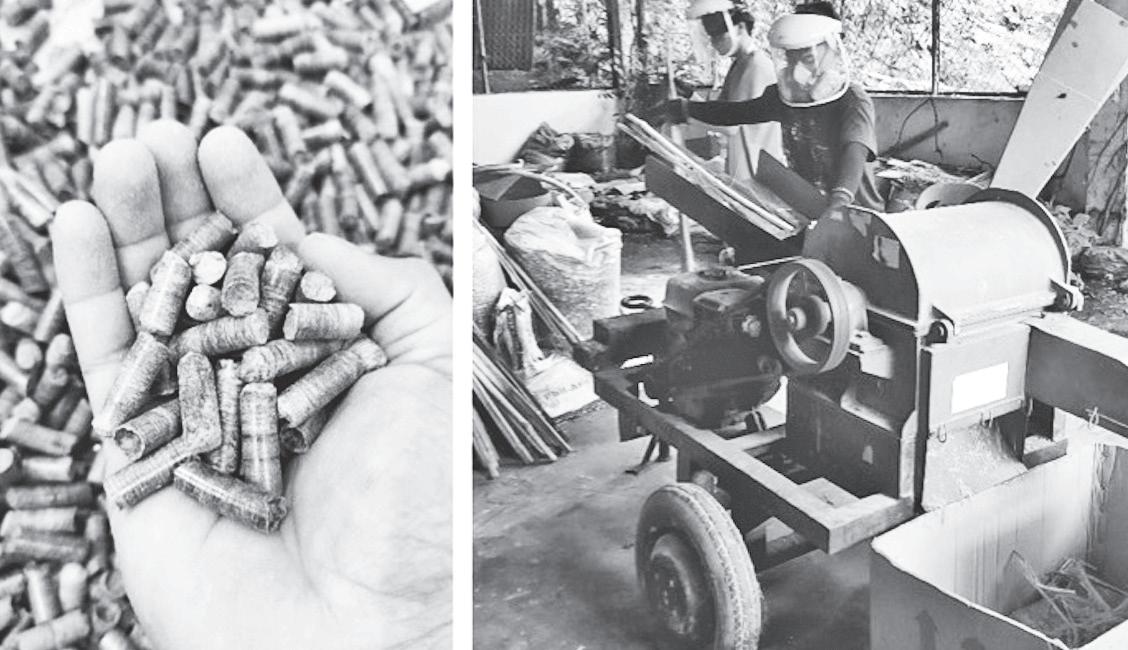
The bamboo pellets and charcoal briquettes developed by the DOST- Forest Products Research and Development Institute (DOST-FPRDI) are cleaner, locally sourced, and energy-efficient biomass fuels that are sustainable and support community-based energy production.
“The recent declaration of a state of national energy emergency shows our country’s vulnerability to disruptions in fuel supply. By converting abundant biomass materials into efficient fuels, we offer a renewable, locally sourced substitute that can help with our country’s needs,” explained Science Secretary Renato U. Solidum Jr.
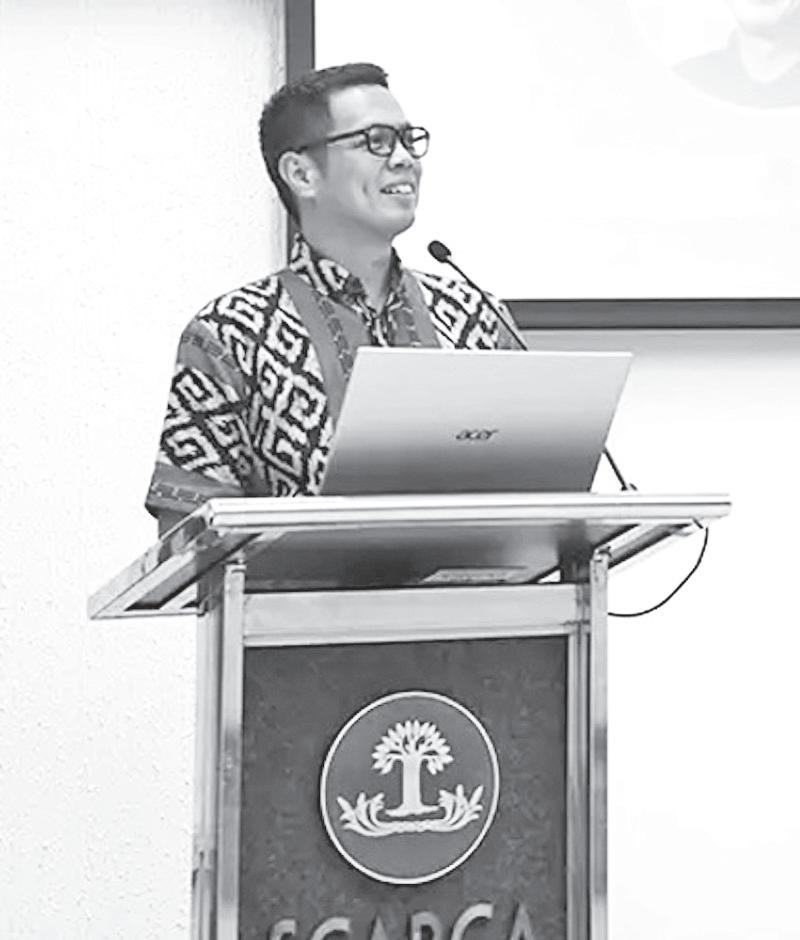
Lstudy by the Philippine Rice Research Institute (PhilRice) has found that conflicting priorities among key players in the rice value chain are holding back the full potential of National Seed Industry Council Rice Crop (NSIC Rc) 160, a well-regarded Filipino rice variety noted for its premium grain quality and export potential. Presented by Dr. Jaime Manalo IV during the Southeast Asian Regional Center for Graduate Study and Research in Agriculture (Searca) Agriculture and Development
traders, consumers, and the food industry have resulted in slow adoption, despite NSIC Rc 160’s longstanding popularity.
Bamboo pellets are a densified form of bamboo designed for optimum combustion. These pellets have higher energy density than other biomass materials, such as wood chips and agricultural residues.
Materials with high energy density contain and give off more energy.
Bamboo pellets are lightweight and easy to transport. It is typically cylindrical in shape, with a diameter of about 8mm to 12mm and a length of 20mm to 30mm. “One cubic meter of these pellets can generate as much as 12.15 gigajoules (GJ). One GJ is approximately 277 kilowatt hours (kWh),” explained DOSTFPRDI Researcher Dr. Anniver Ryan P. Lapuz.
“In coal-fired power plants, bamboo pellets can be used as a co-firing fuel. For biomass-based industries, they can serve as a supplementary fuel source to conven -
tional materials, such as bagasse and rice hull. At the household level, these pellets could be used for cooking just like your regular charcoal—only, it is denser and gives higher heating value than the ordinary uling [charcoal],” Lapuz explained.
Studies show that co-firing bamboo pellets with coal can significantly reduce greenhouse gas emissions. This makes bamboo pellets a promising option in the country’s efforts to mitigate climate change.
DOST-FPRDI Director Rico J. Cabangon explained: “Bamboo is an ideal and reliable biomass energy source because it is abundant and fast-growing.”
According to Cabangon, some species of bamboo can grow more than 1 meter per day or about 4 cm per hour. It can also thrive almost anywhere—in poor soil conditions, grasslands, denuded lands and watersheds, and
according to the study. Several millers also view it as highly competitive against imported rice varieties—if supply volume and grain quality are kept consistent.
However, two decades since its release, the variety’s performance remains far below its potential.
To understand the situation, the research team conducted innovations mapping across nine provinces, engaging 167 stakeholders to analyze motivations, roles, and tensions within the rice chain.
in both tropical and temperate regions.
“By turning a fast-growing local resource like bamboo into a fuel alternative, we are helping build a future that is less dependent on finite resources and more grounded in sustainable materials,” he added.
Another innovation, the charcoal briquette, is a compacted mass of fuel material made from a mix of charcoal fines and binder, and molded under pressure.
Compared to ordinary charcoal, the briquettes are less messy and easier to handle because they are compact and uniform in size. They also burn slowly, give more intense heat per unit volume, and are almost smokeless when burning.
DOST-FPRDI has a manual and hydraulic charcoal briquetting technologies ready for adoption. Opportunities for MSMEs, rural communities BESIDES alternative fuels, these technologies also open opportunities for small businesses and rural communities to engage in biomass fuel production.
“Promoting biomass-based energy technologies can stimulate rural livelihoods while addressing crucial energy concerns,” Cabangon said.
“With the right support, communities can establish small-scale pelletizing or briquetting operations to generate income as they participate directly in building a more resilient and localized energy system,” he pointed out.
With continued research, technology transfer, and industry partnerships, DOST-FPRDI hopes these technologies will contribute to a more sustainable, affordable, and secure energy future for the Philippines. Apple Jean C. Martin-de Leon/S&T Media Services
keting efforts and practices that compromise grain quality, such as intentional late harvesting to fetch higher prices. Manalo reflected that while conflicts are inevitable, notably in a democratic society, and lack a quick fix, he sees the need for a facilitated dialogue to iron out the issues impacting the progress of NSIC Rc 160.
sure that innovation directly benefits Filipino communities and industries.
This is an investment that the DOST will continue to foster,” DOST Secretary Renato U. Solidum Jr. said.
Salamania finished her doctoral studies in Materials Science from Linköping University, and currently a works as research and development scientist at Seco Tools in Fagersta, Sweden.
She specializes on thin film science, materials science, and physics, with research focused on amorphous carbon thin films and plasma physics.
“The engagement of Dr. Salamania reflects the sustained growth of the Balik Scientist Program in reaching regional universities and empowering them with specialized expertise,” said DOST Undersecretary Leah J. Buendia for R&D.
“We are seeing stronger research outputs, enhanced laboratory capabilities, and more confident young researchers because of these engagements. The BSP
remains committed to supporting institutions like CMU in developing emerging and strategic fields,” Buendia added.
Engr. Niñaliza H. Escorial, deputy executive director and OIC of the Office of the Executive Director of DOST-Philippine Council for Industry, Energy and Emerging Technology Research and Development said, the programs “are catalysts for institutional transformation.”
“In the Industry, Energy and Emerging Technology sector, their contributions go beyond research outputs. They build systems, mentor future innovators, and establish global linkages that elevate our competitiveness. Dr. Salamania’s accomplishments at CMU clearly demonstrate how the BSP strengthens both regional capacity and national development,” Escorial said.
To date, the Balik Scientist Program has supported 709 Balik Scientists, with 956 engagements, the DOST said.

BRINGING science closer to communities, nuLab begins its 2026 trips with women scientists and an all-girls mobile classroom at the Philippine Science High School-Main Campus in Diliman, Quezon City, in February.
nuLab is a mobile laboratory of the Department of Science and Technology’s Science Education Institute (DOST-SEI) that transforms learning into an immersive experience, where students engage with science through hands-on activities, real-world applications, and direct conversations with experts in the field.
In celebration of the International Day of Women and Girls in Science, nuLab welcomed female students from San Francisco High School and Quezon City Science High School for three specialized sessions by Filipina scientists. The UNESCO-declared global event is for celebrating women in science and for shaping a future where there is science and gender equality
Dr. Vallerie Ann Samson, deputy director and chairperson of the Gender and Development Focal Point System of the DOST Philippine Nuclear Research Institute (DOST-PNRI), facilitated a session on Nuclear Science.
Samson introduced students to the fundamentals of nuclear science and its many applications in medicine, agriculture, energy, and industry, demonstrating how nuclear technologies quietly but profoundly contribute to addressing real-world challenges.
Sharing her extensive knowledge of river systems, Dr. Pamela Louise Tolentino led a session on Environmental Science.
A Filipina scientist from the University of Glasgow in the United Kingdom, Tolentino discussed how rivers are living, dynamic systems that shape ecosystems, sustain communities, and influence the landscapes through which they flow.
For her part, Dr. Sheryl Lyn Monterola, director of the University of the Philippines National Institute for Science and Mathematics Education Development, guided the students in navigating their paths in the sciences during the Nurturing STEM Identity session. STEM is short for science, technology, engineering and mathematics.
felt the need to be the first woman to raise a question,” Samson shared. “Once one woman speaks up, others tend to follow. Sometimes, all it takes is seeing someone like you [to] take that first step.” Tolentino agreed. She said taking space as a woman is paving the way for young women as well.
“When young women see someone like them in science, it becomes easier to believe that they belong in that space too,” she explained. Being a role model for fellow Filipinas builds a “sense of connection” that boosts their confidence in STEM and encourages them to keep going.
Highlighting the value of perseverance, Monterola reminded her class: “For women, it is important to embrace a growth mindset and [to] keep going despite challenges.”
For her, building a career in STEM is an everyday choice.
“It’s not just about being brilliant for a moment, but about sustaining that brilliance. Being consistent, pushing through setbacks, and believing that you can succeed no matter how difficult the path may be,” Moterola pointed out.
Receptive to these insights, many participants felt inspired to pursue STEM. It also made the seemingly distant and abstract field of STEM more human to them.
The students expressed that their nuLab experience was a meaningful moment of reflection that helped bridge aspirations and possibilities.
Why exposure matters THESE interactions between scientists and students are at the heart of nuLab’s mission. While many young Filipinos are eager to explore science, access to meaningful opportunities can still be limited by resources and infrastructure.
Among the key concerns raised were millers’ perceived exclusion from government program planning, inconsistent supply levels due to continuous breeding of new varieties, and the limited availability of
The study calls for stronger policy support to encourage the sustained adoption of proven rice technologies. It also forms part of a broader PhilRice research initiative examining how government-developed innovations perform once introduced to the market.
to ensure
Other issues include inconsistent mar -
The full study appears in the December 2025 issue of the Asian Journal of Agriculture and Development, published by Searca. The issue is available for free at ajad.searca.org
Monterola encouraged students to reflect on their relationship with science, emphasizing the importance of confidence, mentorship, and representation in shaping a young person’s journey into STEM.
Encouraging the next generation BEYOND scientific concepts and hands-on experimentation, three sessions highlighted personal reflections from the Filipina scientists about their professional journeys.
“In many conferences I’ve attended, I often
For young Filipinas, STEM can feel out of reach in spaces where they remain underrepresented. The nuLab’s first trip of 2026, held during the International Day of Women and Girls in Science, highlighted the importance of visibility and connection. By bringing women scientists directly into learning spaces, the program shows students what is possible and who they can become. More than a mobile laboratory, nuLab is a bridge that links curiosity with opportunity, and classrooms with real-world science. As it travels across the country this year, nuLab carries a simple but powerful message that science is not confined to laboratories or textbooks. It is not distant. It lives in questions, in communities, and in every young mind willing to explore and imagine something more.
A8 Sunday, April 19, 2026

SPEAKING at a meeting dedicated to peace in Bamenda, Cameroon, Pope Leo XIV warns against the “masters of war” who pretend not to acknowledge that “it only takes a moment to destroy, yet often a lifetime is not enough to rebuild” and who spend billions on weapons but dedicate nothing to helping people heal. In the midst of a pause in the ongoing violence in Cameroon, Pope Leo XIV travelled to Bamenda—an English-speaking city located in the northwestern part of the country—on his second day in Cameroon.
After meeting with local authorities at the airport, the pope moved to the Cathedral of St. Joseph, which serves as the seat of the Archdiocese of Bamenda. There, he met with the Community of Bamenda for a Meeting of Peace.
Starting with a few moments of prayer in the Chapel of the Blessed Sacrament, the Holy Father and Archbishop Andrew Nkea Fuanya of Bamenda entered the Cathedral.
Welcomed by a hymn and a greeting by the Archbishop, the peace meeting then heard the testimonies of the Supreme Traditional Chief of Mankon, Fon Fru Asaah Angwafor IV; the Emeritus Moderator of the Presbyterian Church, Fonki Samuel Forba; the Imam of the Central Mosque of Buea, Mohammad Abubakar; a consecrated religious, Sister Carine Tangiri Mangu, Sister of St. Anne; and a family of internally displaced persons, Denis Salo, his wife, and their three children.
Here to proclaim peace
AFTER hearing the testimonies, Pope Leo joined his voice and highlighted how their “lived experience of suffering” in community has strengthened their belief in God’s constant presence.
The pope, reflecting on Arch -

bishop Fuanya’s words from the Prophet Isaiah, said: “How beautiful upon the mountains are the feet of the messenger who announces peace!” (Is 52:7).
His response centered on the beauty of the Bamendan community’s feet “dusty from this bloodstained yet fertile land that has been mistreated, yet is rich in vegetation and fruit.”
Their feet have carried them far in spite of the challenges they have faced, and this community has “remained on the path of goodness.”
Pope Leo expressed his gratitude for being welcomed to the city.
“Because,” he said, “it is true: I am here to proclaim peace.”
But, the Holy Father noted, the people of Bamenda have been proclaiming the message of peace to him.
You are the city on a hill TURNING back to one of the testimonies, he highlighted how the crisis affecting Cameroon—an ongoing armed conflict between Separatists and the government—has brought the Christian and Muslim communities closer together.
“Indeed, your religious leaders
have come together to establish a Movement for Peace, through which they seek to mediate between the opposing sides,” he pointed out.
Pope Leo shared his hope and desire that this could be possible in other places around the world. He warned against people who “manipulate religion and the very name of God for their own military, economic and political gain, dragging that which is sacred into darkness and filth.”
The Holy Father pointed out that the people of Bamenda, despite the almost decade long conflict, are the light of the world as they hunger and thirst for justice.
“Bamenda, today you are the city on the hill, resplendent in the eyes of all,” the Pope said, encouraging them not to lose hope.
‘Only takes one moment to destroy’
ADDRESSING those, especially lay and religious women, who care for individuals traumatized by violence, he offered a word of gratitude for their work, which often goes unnoticed and is also dangerous.
The “masters of war” pretend not to acknowledge that “it only takes a moment to destroy, yet often a
lifetime is not enough to rebuild,” he said.
The pope lamented how those in power turn a blind eye to the billions of dollars spent on killing and devastation, “yet the resources needed for healing, education and restoration are nowhere to be found.”
People who take the resources from the African lands in turn use the money for weapons, “perpetuating an endless cycle of destabilization and death.”
Pope Leo argued how this is an upside-down world and he urged everyone to denounce and reject this exploitation of God’s creation.
The Holy Father called for “a decisive change of course—a true conversion—that will lead us in the opposite direction, onto a sustainable path rich in human fraternity.”
The world is “being ravaged by a handful of tyrants, yet it is held together by a multitude of supportive brothers and sisters.”
Peace is not something to be invented. Rather, he stressed, it is something we discover when we embrace our neighbor as our brother or sister. Family is not something we choose, but people we must accept as we live together in the same common home.
He recalled the words of Pope Francis in Evangelii Gaudium: “My mission of being in the heart of the people is not just a part of my life… that is the reason why I am here in this world” (No. 273). It is with this same heart and mission that Pope Leo explained why he came to Bamenda.
Therefore, the Holy Father called eveyone to be part of the silent revolution of walking together in our own vocations growing in concrete ways the mission of loving our neighbors.
“As the Imam said, let us thank God that this crisis has not degenerated into a religious war, and that we are still trying to love one another.”
News
Kielce Gussie/Vatican
RSt. Paul de Chartres Sr. Eva Fidela Maamo has died at age 85. Maamo, a surgeon and missionary who dedicated her life to serving the poorest communities, died on April 14, according to the Parañaque-based Our Lady of Peace Hospital, which she founded in 1986.
“A life so beautifully lived in service to the poor and in need deserves to be beautifully remembered,” the hospital said.
Born in 1940 in Liloan, Southern Leyte, she trained at Velez College of Medicine in Cebu before joining the Sisters of St. Paul of Chartres and committing herself to missionary health care.
Her early work in Lake Sebu in the southern Philippines saw her treating

Eva
Indigenous patients in a bamboo infirmary, improvising surgeries with limited tools, sometimes using flashlights and coconut
water in place of standard equipment.
Returning to Manila in 1980, she expanded her outreach among the urban poor, providing food programs for malnourished children, shelters for abused women and street youth, and livelihood initiatives aimed at restoring dignity and self-reliance.
Her mission extended beyond routine care, as she led medical teams responding to disasters, including the 1991 Mount Pinatubo eruption, and organized resettlement efforts for displaced Aeta communities.
Despite her small stature, colleagues described Maamo as relentless, inspiring volunteers to endure long, exhausting operations by continuing her own work alongside them.
Her missionary work for the poor and marginalized earned her the Ramon Magsaysay Award for Community Leadership in 1997.
The award foundation said her life embodied compassion translated into action, calling her service to “the least of my brethren” a powerful form of nationbuilding.
In honoring her, the foundation recognized her example in bringing humane, accessible health care to marginalized Filipinos long deprived of even the most basic medical services.
Maamo’s wake was at the Foundation of Our Lady of Peace Mission Inc. office in Parañaque City. Interment details will be announced later. CBCP News
ROME—Dozens of Filipino priests in Rome marked their college’s 65th anniversary with a pilgrimage to northern Italy. Their jouney on April 10 and 11 brought 44 student priests of the Pontificio Collegio Filippino, with religious sisters and lay collaborators, to sites linked to Pope St. John XXIII. The group visited the hilltop Basilica of Madonna della Corona before traveling to Bergamo, the birthplace of the pope known as the “Good Pope.” The pilgrimage culminated on April 11 at the Santuario Sotto il Monte Giovanni XXIII, marking the anniversary of the encyclical “Pacem in Terris.”
Promulgated in 1963 at the height of Cold War tensions, the encyclical called

Editor: Lyn Resurreccion • www.businessmirror.com.ph

Asian bishops echo Pope Leo XIV; urge end to violence, return to talks
ECHOING a global peace appeal from Pope Leo XIV, leaders of the Federation of Asian Bishops’ Conferences urged an end to escalating violence and a return to negotiations.
In a pastoral appeal titled “Blessed are the Peacemakers,” the bishops warned of deepening global anxiety and an increasing reliance on force, deterrence and domination.
“In these days of deepening global anxiety and escalating violence, we... wish to express our prayerful solidarity with His Holiness Pope Leo XIV, and to echo his urgent appeal for peace,” they said.
The statement was signed by Cardinal Filipe Neri Ferrao, Cardinal Pablo Virgilio David and Cardinal Isao Kikuchi, leaders of the regional bishops’ body.
They appealed for an immediate halt to hostilities and urged leaders to return to negotiations “with sincerity and courage,” stressing that “dialogue is not weakness but the highest form of responsibility.”
The bishops also called for respect for international law and humanitarian norms,
saying these safeguards are essential to protect human dignity, especially among the most vulnerable. They cautioned against invoking religion to justify conflict, warning that “violence can never be the foundation of a just and lasting peace.”
“Invoking God to justify war is a distortion of faith,” the statement said, calling the pope’s message as moral leadership rather than political partisanship.
The bishops emphasized that peacemaking is a moral obligation, not an abstract ideal, and urged nations to reject power politics in favor of justice and dialogue.
“This beatitude is not a pious ideal. It is a moral imperative,” they said.
Drawing from Asia’s history of conflict and reconciliation, they said peace is achieved not through domination but through patient dialogue, mutual respect and justice. They added that the church must “form consciences, speak truth, and keep alive the hope that peace is possible,” inviting people worldwide to pray and act.

Egypt, PHL boost interreligious ties with exchanges, trainings
EGYPT and the Philippines are strengthening interreligious dialogue through exchanges, training and joint initiative aimed at promoting peace and mutual understanding.
Egypt’s Minister of Religious Endowments
Dr. Osama Al-Azhari said recent agreements reflect “several points of cooperation” serving “the best interest” of both nations.
for peace founded on truth, justice, love and freedom.
The college traces its origins to Pope St. John XXIII, who established it in 1961 to support Filipino clergy pursuing advanced studies in Rome.
At Sotto il Monte, the group joined the local community for Mass presided over by the college’s rector, Fr. Gregory Gaston, with spiritual director Fr. Andrew Recepcion as homilist.
The pilgrimage concluded with prayers at the Garden of Peace before the group returned to Rome.
Established in June 1961, the Pontificio Collegio Filippino has since formed hundreds of Filipino priests sent by their bishops for advanced theological studies. Fr. Jay Dador/CBCP News
Central to the partnership are planned exchanges between Muslim and Christian leaders, including visits of Filipino bishops and priests to Egypt for dialogue and cultural immersion.
Al-Azhari said Egypt will host clergy who will encounter local churches and visit sites linked to the Holy Family, deepening appreciation of shared spiritual heritage.
He made the statement after a meeting with Archbishop Gilbert Garcera of Lipa, president of the Catholic Bishops’ Conference of the Philippines, at the CBCP headquarters in Intramuros, Manila on April 14. Among those with the CBCP head during the meeting was Archbishop Ricardo Baccay of Tuguegarao, chairman of the Episcopal Commission on Public Affairs.
Garcera said the dialogue revealed “the beauty of culture, the beauty of interfaith relationship,” adding that “we are brothers and sisters.”
He said participants are united spiritually, saying “we are one in achieving with the grace of God the peace that is expected of us in the whole world.” Beyond church engagement, Egypt and the Philippines are expanding cooperation with Muslim communities through training programs promoting “coexistence, loyalty and patriotism,” Al-Azhari said. The initiative, developed with the National Commission on Muslim Filipinos led by Secretary Sabuddin Abdurahim, focuses on values of stability and peaceful coexistence.
Additional discussions include possible training for Philippine judges and lawyers, with Egypt offering “full support of knowledge” from its religious institutions and legal bodies.
Egypt’s ambassador to Manila, Nader Nabil Zaki, joined the meetings, which officials said aim to build trust and deepen institutional cooperation. Al-Azhari expressed optimism about future engagement, citing “great horizons ahead”and reaffirming Egypt’s commitment to support efforts fostering stability, prosperity and stronger interfaith relations. Nikko Balbedina/CBCP News

Asean Champions of Biodiversity Media Category 2014
Editor: Lyn Resurreccion
Story & photos

by Jonathan L. Mayuga
EVERY morning, 55-year-old Eddie Morada rides his motorcycle to work
in a subdivision in General Trias, Cavite. With his dark green sun hat, longsleeve t-shirt, grass cutter, and a bagful of gardening tools, he clocks his time card at the subdivision’s main entrance.
Along with other maintenance personnel of the homeowners’ association, Morada, or Eddie to his colleagues, is credited by the village’s homeowners for greening both sides of the subdivision’s main gate, the two rotundas, and the jogging path by trimming the grass and watering the plants.
“People who pass by would sometimes stop and tell me, ‘It’s beautiful,” Morada told the B usiness M irror in an interview on April 15. Sometimes, he said, generous homeowners would bring him snacks to express their appreciation.
Mini parks
WHILE saying that his job is not easy, he, however admitted, that watering the plants and being in the subdivision’s mini-parks or green spaces is good for him.
“I can relax and appreciate the beauty of the surroundings,” he said.
Zaldy Estolano, 38, another maintenance man, agreed that people who would pass by the area would stop and express appreciation.
“They would stop and appreciate it. Sometimes, they would sit down and enjoy for a while,” Estolano, or Toto to his colleagues, said in Filipino during a separate interview with the B usiness M irror on April 15.
Estolano, an expert welder and allaround handyman, is sometimes assigned to water plants.
Toto agrees with Eddie that having mini-parks or green spaces inside a subdivision offers a healthy alternative to the concrete jungle that characterizes small subdivisions. Some have very minimal, or sometimes no green space where people can commune with nature.
At the jogging path cum mini park in the subdivision, herbal plants and fruit trees like mango, papaya, and guava provide children reasons to go outdoors.
Trees, bees, and birds
ESTOLANO said the mini-parks and the trees around the subdivision are a welcome sight, as they attract bees, butterflies, birds, and other wildlife.
“There are [birds like] maya [small brown sparrow], tarat [brown shrike], uwak [largebilled crow], tikling [barred rail], bato-bato [wild dove], tagak [white heron],” he said.
Sas a key
INGAPORE—Prof.
in the development and
of Quantitative Microbial Risk Assessment (QMRA), a science-based approach to safeguard the quality of drinking water, as well as water reuse systems. Rose’s work has transformed the science of microbial risk management and guided policies that protect public health and ensure safe water for communities worldwide. Her expertise in the water quality and health sector has also played a key role in strengthening Singapore’s used water management, and the introduction of NEWater, Singapore’s third National Tap.
Commenting on her award, Rose, the 11th recipient of the Lee Kuan Yew Water Prize said: “I am deeply honored to receive this esteemed award. This recognition reflects our collective progress in advancing microbial risk science and its role in protecting public health today.’
She said safe water is “one of the world’s most fundamental yet unevenly distributed resource critical to sustaining human life.”
As microbial risks continue to evolve, she said, “strengthening the robustness of our water systems remains an ongoing
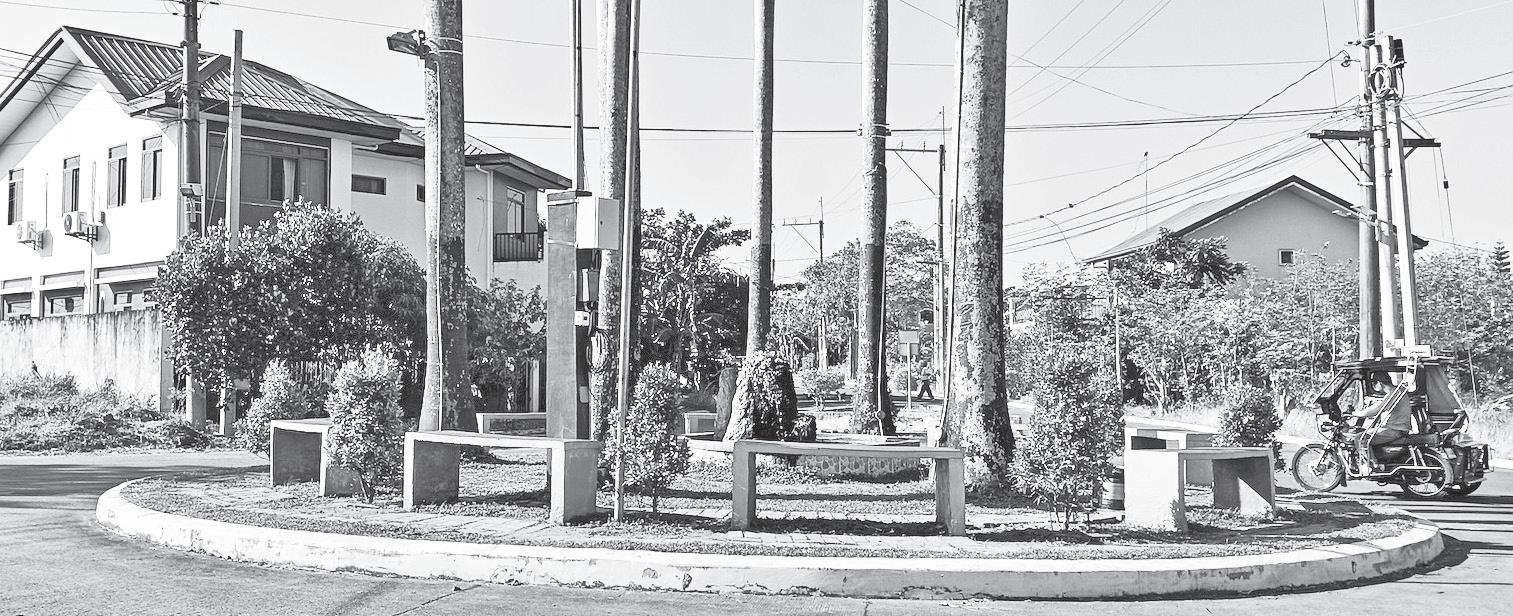
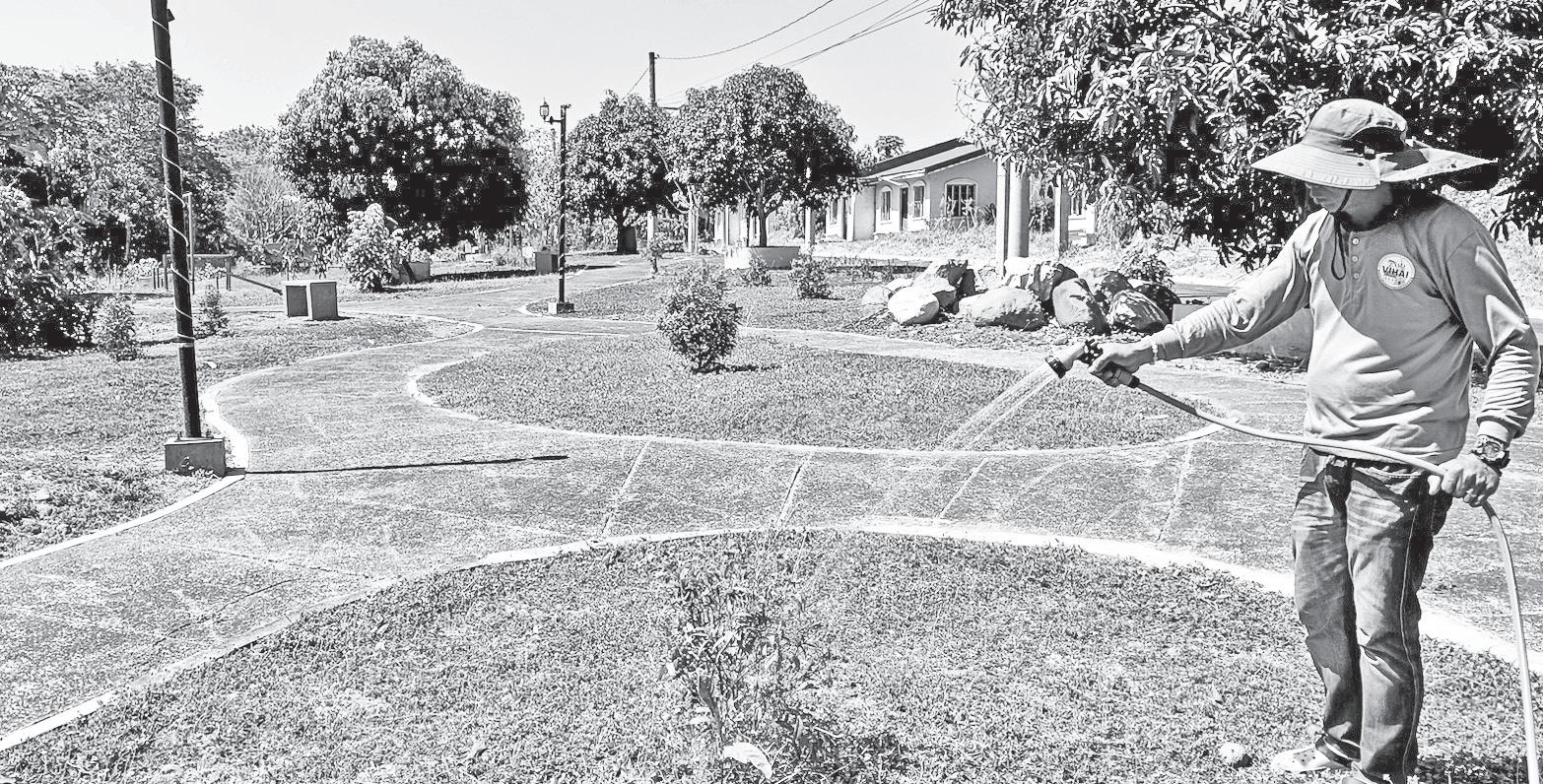
The kwago (brown owl) is also making the subdivision its breeding ground.
Because the subdivision used to be a vast rice farm, lizards—such as bubuli (skink) and bayawak (water monitor)—could be seen in the area from time to time.
Rapid urbanization, shrinking green spaces
RAPID urbanization, with the development of subdivisions from idle farms in General Trias, has been causing green spaces to shrink.
This is true also in other cities and municipalities across the country.
While some subdivision developers set aside a portion of land for green spaces, rapid urbanization is threatening urban biodiversity elsewhere, including common areas that could have been set aside for conservation, or developed into a public park, amid the intensifying effects of climate change.
Law creating public parks pushed FORTUNATELY there is now a growing rec -
endeavour to ensure they remain dependable and resilient; safeguarding both water quality and people’s lives.” Rose is the current Homer Nowlin chair in Water Research, and director of the Water Alliance at Michigan State University.
Uncovering invisible risks to revolutionise water safety
IN the late 1980s and 1990s, Rose led a team to investigate a series of waterborne disease outbreaks across the United States. Among the most severe was the 1993 Cryptosporidiosis outbreak in Milwaukee, Wisconsin, where an estimated 403,000 residents fell ill and at least 69 deaths were recorded.
She was the first to demonstrate the widespread occurrence of Cryptosporidium as a zoonotic pathogen in the United States, and its transmission to humans through inadequately filtered and disinfected drinking water supplies.
By establishing Cryptosporidium as the causative agent of these outbreaks, she highlighted the vulnerability of drinking water systems to microbial contamination—a challenge with global public health implications.
Her findings revealed a critical gap: pathogens could evade conventional water treatment, existing monitoring systems
ognition of the importance allotting even small areas for green spaces—or public parks where people can share and enjoy.
A bill seeking to establish a Philippine National Public Parks System to protect and expand public parks was filed in the House of Representatives. It aims to ensure access to healthy, safe, and enjoyable open spaces across the country.
“The increased heat during [dry season] is a reminder that not all of us have access to properly ventilated and comfortable homes,” Rep. Nathaniel M. Oducado of 1Tahanan Partylist, who filed House Bill (HB) 8743, or the proposed Philippine National Public Parks System Act, on March 24, said in a news release.
Lifelines for people
ACCORDING to Oducado, public parks are not luxuries. They are lifelines for people and children, adding that his proposed law ensures that every Filipino, rich or poor, has fair access to safe and well-managed public spaces.
The World Health Organization recom -
detected microbes without quantifying risk, and public health responses were largely reactive rather than predictive.
She pioneered QMRA in the 1990s and early 2000s to address the critical gaps undermining water safety and public health.
QMRA introduced a systematic, sciencebased approach to assess and manage microbial risks in drinking and other forms of water, including reuse water.
By enabling scientists to quantify infection risks and illness probabilities based on pathogen concentrations, exposure
mends that there be at least 9 square meters of green space per person, far above what is available in many cities, Oducado said.
“According to the 2020 Census, only 24.24 percent of our 42,046 barangays have a public plaza or park. In Metro Manila, it is only 20.2 percent, meaning millions of Filipinos grow up without safe green spaces to breathe, play, and gather,” Oducado said.
Public parks authority
HB 8743 proposes the establishment of the Philippine National Public Parks System and creates the National and Local Public Parks Authority (Nalpa) to manage, develop, and fund national and local public parks.
The bill dissolves the National Parks Development Committee and the Nayong Pilipino Foundation, and transfers their powers, assets, and responsibilities to Nalpa.
The new parks authority will be attached to the Office of the President for budget coordination and will be supported by an initial P100 million fund and retained
park income.
“Rizal Park alone drew 5.7 million visitors in 2023 and reached 121,000 visitors… last New Year’s Day, proving how badly our people need open spaces that are safe, clean, and accessible,” Oducado said.
He warned that without a clear system, urban growth will continue to eat up the last remaining green areas.
LGU mandates
THE measure mandates local government units (LGUs) to identify and develop urban parks and open spaces; to grant the public free admission to Nalpa parks subject to reasonable rules; to authorize the levy of fees for special activities; to allow land acquisition when necessary; and to create a National Parks Institute to train park managers and planners.
“Parks are not just places for picnics,” Oducado explained. ”They are needed for public health, cleaner air, cooler cities, flood control, tourism, biodiversity protection,
pathways and consumption patterns, QMRA shifted water management from reactive “detect and correct” approaches to proactive “predict and prevent” strategies.
This revolutionized water safety, boosting the quality of water systems to reliably meet health standards.
QMRA is now widely adopted in drinking water regulations worldwide, including the United States Environmental Protection Agency’s Safe Drinking Water Standards, and the World Health Organisation’s Third Edition of the Drinking Water Quality Guidelines in 2004.
Rose’s work has enabled water utilities and regulators to define treatment requirements based on tolerable health risks for any given water source.
She extended the application of QMRA beyond drinking water to assess microbial risks in treated wastewater and water reuse systems.
This greatly strengthened global confidence in leveraging recycled water as a viable and sustainable supply source, and has strongly advocated for the adoption of water reuse to address global water scarcity.
She also advised the Orange County Water District’s Independent Advisory Panel
and stronger communities, especially as climate change makes cities hotter and more crowded.”
Biodiversity corridors
INTERNATIONAL biodiversity expert
Theresa Mundita S. Lim underscored the importance of urban biodiversity. She said that if properly planned, public parks serve as biodiversity corridors—extensions of habitats that allow wildlife to move safely across remaining natural ecosystems—forests or wetland areas that used to be contiguous but have now been fragmented by urban and industrial development.
“Creating public parks is a welcome and necessary step, but as I have said, these spaces must be planned carefully and thoughtfully. This includes the use of indigenous vegetation and consideration of the native wildlife that may persist in surrounding areas,” Lim, a former director of the Biodiversity Management Bureau of the Department of Environment and Natural Resources, told the B usiness M irror via email on April 14.
“Well-designed green spaces do more than beautify cities. They support biodiversity, improve air quality, and strengthen urban resilience,” added Lim, the immediate former executive director of Asean Centre for Biodiversity.
An urgent necessity SHE explained that at a time when air quality is deteriorating and communities are becoming more vulnerable to natural disasters, the need for public green spaces is more urgent than ever.
“Unfortunately, the rising value of land and the growing demand for real estate development often work against this goal,” she pointed out.
According to Lim, many landowners and developers are more likely to use available land for subdivisions or commercial projects because these offer greater financial returns than setting aside a parcel of land for public green space, especially in the absence of meaningful incentives.
“This is why there is a need to facilitate the implementation of the Pencas [Philippine Ecosystem and Natural Capital Accounting System] law. We need to account for the full value of ecosystem services provided by urban green spaces, including clean air, sustainable water supply, and disaster resilience, when assessing the costs and benefits of land use,” Lim said.
“Only then can we create the enabling environment that provides real incentives for investing in public green spaces and encourages urban development that is both sustainable and people-centered,” she added.
and the California State Water Resources Control Board’s Expert Panel on water reuse.
Her guidance contributed to California’s Indirect and Direct Potable Reuse regulations, which are models for water reuse standards worldwide, including in Australia, Spain, and the United States.
Rose has worked closely for over two decades with Public Utilities Board (PUB), Singapore’s National Water Agency, to strengthen water quality and safety.
She was instrumental in the advancement of NEWater which was introduced in 2003, serving on the NEWater Expert Panel from 1998 to 2002. She shared her expertise, provided guidance on best practices for water quality monitoring, and reviewed findings from health studies which demonstrated the long-term safety of NEWater.
From 2003 to 2019, she also chaired PUB’s External Audit Panel, supporting the safe and robust implementation of water reuse in Singapore.
In recognition of her significant contributions, she was conferred the Honorary Citizen Award by the government of Singapore in 2015. Beyond research, she has advanced global knowledge and capacity in microbial risk assessment through training and collaborative initiatives, such as launching the QMRA Summer Institute and QMRAwiki.
She has also strengthened preparedness for waterborne disease outbreaks worldwide by spearheading major international initiatives, such as the Global Water Pathogen Project and Wastewater Sphere.
A steadfast champion of global public health ROSE , 72, has dedicated her professional life to improving water quality and safeguarding public health outcomes. She is widely regarded as one of the world’s leading authorities in water microbiology and received the 2024 International Water Association Global Water Award for her contributions.
She continues to lead research on emerging microbial health risks, driven by a deep and enduring commitment to improving lives worldwide. Her work remains critical as cities strengthen their water resilience against evolving public health and climate challenges. Rose will receive the Lee Kuan Yew Water Prize—an award certificate, a gold medallion, and S$300,000, presented in partnership with Temasek Foundation—at the awarding ceremony on June 16, during the official opening of the Singapore International Water Week 2026. Media
and friendly spirit. AP

Editor: Jun Lomibao | mirror_sports@yahoo.com.ph
Emana’s vision transforms into court precision

SANYA, China—As the Sixth Asian Beach Games draws near, 4,680 youth volunteers, affectionately known as the “Little Deer” (Xiao Lu Lu), have completed their general training and are now intensively honing their foreign language skills and job-specific practical abilities in final preparation for the event.
Recruited from 12 universities, including Hainan University and Hainan Normal University, as well as other local organizations, the volunteers share the common nickname “Little Deer.”
The name is derived from Sanya’s nickname, “Deer City,” and is meant to reflect the volunteers’ lively, warm, and friendly spirit.
“See ya in Sanya” is both the slogan of the Asian Beach Games and the guiding principle for its volunteers.
Liang Zihan, a student from Hainan Tropical Ocean University, said: “Since the launch of the volun
teer recruitment drive, whether it is learning about the Games, mastering multilingual communication, or taking part in scenario-based drills and emergency exercises, I have given it my all. I hope to convey Sanya’s warmth, openness, and inclusiveness to every friend who comes from afar.”
Alongside local students, the volunteer team also includes many young people from across China brought together by the Games.
Wu Yujia, a sophomore at the Hospitality Institute of Sanya, is one of them.
“I want to show a warm, caring and energetic Sanya,” she said. When asked about her future plans, she did not hesitate: “I want to stay in Sanya.” In her eyes, the city’s pleasant climate and beautiful scenery have deepened her affection for it and strengthened her commitment to volunteering.
The Sixth Asian Beach Games will be held in Sanya, Hainan, from April 22 to 30.
Bronny, LeBron look forward to postseason playing together
L SEGUNDO, California—
ELeBron James and Bronny James made National Basketball Association (NBA) history last season when a father and son played together for the first time. They took their family dynamic to another level this season by playing meaningful minutes together and even getting the first father-to-son assist in NBA history.
The James clan has the chance to add another chapter to its family lore this month, thanks to Bronny’s growth into a player that all of the Los Angeles Lakers can trust.
LeBron and Bronny seem likely to play postseason minutes together this month when the Lakers face the Houston Rockets in the first round.
The greatest scorer in NBA history and his 21-year-old son have been teammates for nearly two years, but the prospect of accomplishing a new first is still special to both generations.
“It’s insane,” Bronny said Thursday after practice at the Lakers’ training complex. “I mean, I’ve literally watched his whole career. Now
I’m a part of it. So it’s a great experi ence. I’m appreciative of it—but I’m part of the job, too. So I have to do my job as well. I’ve got to lock in.” Bronny’s playing time has in creased over the last month, and he has been a rotation member for the Lakers since Luka Doncic and Austin Reaves went down with injuries two weeks ago.
LeBron takes an obvious fatherly pride in Bronny’s development into a contributor for their short-handed team.
“Every moment we get an oppor tunity to play together is something I never take for granted,” LeBron said.
“Me being on the floor with him postseason, regular season, training camp, practices, it’s the best thing that’s ever happened to me in my career, above everything I’ve accom plished,” he added. “The fact that he’s put himself in position to get his number called for a postseason game is pretty remarkable and pretty cool, given the circumstances that he’s been through over the last couple of years. He earned it. He deserves it. He’ll be ready.”
Nick Faldo (1989-90), Tiger Woods (2001-02) and now, Rory McIlroy (2025-26). With the recent Masters being his sixth
jor, Rory moves ahead of Seve Ballesteros (5) and ties Nick Faldo (6)
‘See ya in Sanya’ is both the slogan of the Asian Beach Games and the guiding principle for its volunteers, who are also young people from across China brought together by the event.
Delegations from all 45 member countries and regions of the Olympic Council of Asia (OCA) will take part in what is the largest and most influential beach sports event in Asia.
As the first major international sporting event to be held in Hainan after the independent customs operations of the Hainan Free Trade Port, the Games are not only a celebration of Asian sport but also an important opportunity for Hainan to present an open and welcoming face to the world.
WADA to India: Clean up doping issues IN New Delhi, the World Anti-Doping
After playing sporadic NBA minutes during his first one-and-a-half NBA seasons, Bronny has stepped up into a regular role—partly out of necessity with the Lakers’ top two scorers sidelined, but also because he earned more playing time.
He has played 13 minutes or more in seven of the Lakers’ past 10 games, averaging 19 minutes
Agency (WADA) reported progress in its fight to clean up India, its worst offender.
India has topped WADA’s list of doping lawbreakers for three consecutive years, reporting the highest positive rate among major nations.
That’s a red flag for the country scheduled to host the 2030 Commonwealth Games and aiming to host the 2036 Olympics.
“Performance-enhancing drugs and steroids are readily available in India—it is one of the biggest producers. It is a serious problem,” WADA president Witold Bańka said at a press
over the past four. That responsibility seems likely to continue in the postseason, since Doncic and Reaves won’t play in Game 1 on Saturday, and there’s no timetable for their return.
Lakers coach JJ Redick confirmed he will be using every healthy option while Los Angeles attempts to beat overwhelming odds without its starting backcourt. AP
conference last week for its global anti-doping intelligence and investigations network.
“At the same time I have had fruitful conversations with different stakeholders here—from the sports minister, to NADA (National AntiDoping Agency), and the CBI (Central Bureau of Investigation) to enhance cooperation in cracking down on the doping networks.”
NADA head Anant Kumar outlined how the menace was being tackled within via a two-pronged strategy that was strengthening the detection and testing systems, while also increasing athletes’ trust in the system through improved transparency and efficiency.
NADA has increased testing from about 4,000 samples in 2019 to about 8,000 in 2025 though this remained low compared to countries like China, which tested upwards of 15,000 athletes annually. AP


WHEN University Athletic Association of the Philippines (UAAP) MVP Kaye Emana stepped onto the courts of the Women’s Tennis Association (WTA) 126 Philippine Women’s Open last January at the Rizal Memorial Tennis Center, her talent was undeniable, but her discomfort was visible.
Tugging at her glasses between rallies, Emana looked distracted, her focus split between the ball and the frames perched uneasily on her face.
That moment caught the attention of the FDM Neuroscience and Vision Care Research and Training Institute, which saw beyond the surface: a promising athlete hindered by something as simple, yet crucial, as vision gear. With full support from the Philippine Sports Commission (PSC), Emana was invited for a comprehensive assessment last month under the program of the FDM Institute led by its chairman Dr. Teresita Yambot. Thanks to the collaboration between PSC and FDM Institute, Emana received two pairs of glasses during the two-day, functional assessment on members of the national pool as part of the program dubbed “Sight on the Goal, Sports Performance Vision in Action” recently at the Rizal Memorial Coliseum.
“I feel I finally got the right glasses—I became more comfortable with how I move on the court and show what my game really is,” Emana said. “I get to focus more on my shots, I’m no longer bothered by my glasses.” She received glasses for daily wear and another designed specifically for training and competition courtesy of Dr. Aaron Gary “Bugsy” Lising of Joseph Sabater Paredes-Ophthal Mix (frames) and Dr. Gina Acla (prescription lenses) with the cost-free eyewear carrying a combined value of P50,000.

“This is part of our continuing efforts to help our national athletes and provide them with the best care possible, in this case their vision. Indeed, an eye opener on what it takes for our national athletes to perform even better,” PSC chairman Patrick Gregorio said. With Dr. Vittorio Mena Jr. and Dr. Elizabeth Nace as guest speakers and

seventh and hit it in two at the eighth for an eagle try that missed. Those two birdies settled his round, and while Rose stumbled around Amen Corner, Rory went around holes 11-13 in par-birdiebirdie. And
but was tied with Cameron Young and nipping at their heels were some of the world’s best, all within striking distance. It was no longer a stroll for Rory, he had a battle to the finish. The final round was much-anticipated as things were tight at the top. Rory was still struggling to find his form but had enough grit in him to stay at or near the lead. He actually trailed Justin Rose before they finished the front nine, no thanks to a double bogey 5 by Rory at the par3 fourth hole and another bogey at the sixth. As Rory teed off on the seventh, he was at


Young voices and renewed visions at Hospicio de San Jose
APRIL 19, 2026 | soundstrip.businessmirror@gmail.com
TStory and photos by John Eiron
R. Francisco
orn between business expectations and a lifelong love for music, independent OPM music artist Mark Carpio found his answer not in choosing one over the other, but in embracing both to define his own identity.
As the son of Engr. Reynaldo Carpio, a real estate developer behind Grand Monaco Land, Carpio grew up aware of the expectations tied to his family name. But alongside the privilege came a personal question that lingered: how does one define success without going through the same struggles that shaped a self-made parent?
“Coming from an established father, how do you create your own identity?” Carpio said during a media preview of his newest single, titled “Huling Pag-ibig,” held last Friday in Taytay, Rizal. “I didn’t go through what he went through… so where do I belong?”
That question led him to revisit something that had always been part of his life, music.
Carpio shared that while his father was supportive of his musical interests during his younger years, that support shifted as he grew older, with a stronger push toward pursuing business. The challenge, he said, was learning how to navigate both worlds without losing

Publisher :
T. Anthony C. Cabangon
Lourdes M. Fernandez
Editor-In-Chief :
Concept :
Aldwin M. Tolosa
Y2Z Editor :
SoundStrip Editor : Group Creative Director : Graphic Designers :
Jt Nisay
Edwin P. Sallan
Eduardo A. Davad
Niggel Figueroa
Chow Jarlego
Contributing Writers :
Tony M. Maghirang
Rick Olivares
Jingo Zapata
Reine Juvierre S. Alberto
John Eiron R. Francisco
Patrick Villanueva
Ana Zoe V. Davad
Justine Xyrah Garcia
Ginger Franz S. Ocampo
Trixzy Leigh Bonotan
Bless Aubrey Ogerio
Photographers :
Bernard P. Testa
Nonie Reyes
Y2Z & SOUNDSTRIP are published and distributed free every Sunday by the Philippine Business Daily Mirror Publishing Inc. as a project of the
The Philippine Business Mirror Publishing, Inc., with offices on the 3rd Floor of Dominga Building III 2113 Chino Roces Avenue corner Dela Rosa Street, Makati City, Philippines. Tel. Nos. (Editorial) 817-9467; 813-0725. Fax line: 813-7025
Advertising Sales: 893-2019; 817-1351,817-2807. Circulation: 893-1662; 814-0134 to 36. www.businessmirror.com.ph
sight of what mattered to him.
“Music was always my first love,” he said. “Although I finished business, but still, it was always my first love.”
Over time, even his father’s stance softened. Carpio recalled leaving copies of his album at home, unsure of how they would be received. Later, he found out they had been quietly shared during a family gathering.
“At first, he didn’t like it,” he admitted. “But in the back of his mind, he was proud.”
For Carpio, the journey has reshaped how he views his family background. Rather than seeing it as a shadow to step out of, he now considers it a foundation to build on.
“There’s this misconception that coming from a well-off family is a disadvantage when trying to prove yourself,” he said. “But it’s not. It’s a blessing. You just have to embrace it and start from there.”
That shift in perspective has allowed him to take pride in both his upbringing and his individuality, carrying the Carpio name while creating his own voice.
“I’m proud of my father, I’m proud of my family, and I’m proud of his achievements,” he said. “I’ll always be part of that because it’s my last name.”
Despite his business responsibilities, Carpio continues to work full-time while dedicating his remaining time to music, which he describes not as a hobby, but as a calling.
“It’s not about me,” he said. “It’s about the people I can reach. That’s my purpose in music. It’s my megaphone for messages.”
Huling Pag-ibig: A Decade in the Making Carpio began his professional music career a decade ago, marking his 10th year in the industry this year. He is known for songs such as “Hiling,” “Kay Tagal,” “Through the Years,” and “Don’t Know What to Do (Don’t Know What to Say),” which have helped expand




his platform and reach.
Now under EMPIRE.PH Music and ONErpm, Carpio recently released his EP “Huling Pag-ibig,” a project shaped by a decade-long personal and creative journey.
He shared that his earlier track “Hiling,” released in 2015, was inspired by his search for the love of his life, a pursuit that spanned ten years. In hindsight, he realized that “Kay Tagal” was, unknowingly, a reflection of that same unfolding love story.
That narrative came full circle last year when he got engaged to his fiancée, Angela Robson, a moment he described as completing the arc of his long search for love.
But even as one chapter closed, new questions emerged. Reflecting on unfinished songs and ideas he had set aside, Carpio found himself exploring a more complex emotional space.
He posed a haunting thought: what happens when, after waiting in the “line of fate” for so long, love finally arrives, only to be taken away? It is this tension between fulfillment and loss that defines “Huling Pag-ibig.”
The EP captures the feeling of believing you’ve found the love of your life, only to realize it wasn’t meant to last and the quiet, painful resolve that perhaps, after such an experience, loving again may no longer be possible.
Carpio added that the project is not solely his personal narrative. While crafting the four-track EP, he also drew from the stories of people around him, friends dealing with loss, families searching for closure, a friend recovering from a five-year relationship, and even fans who shared their own experiences of
heartbreak and healing.
“I’m a very emphatic person,” he said. “So when you tell me your story, I can really picture the situation and put myself in your shoes.”
He added that this emotional sensitivity often becomes intensified in his creative process. “When you tell me you’re sad, I can immediately visualize it,” he explained. “And I’m able to translate that emotion into melodies and lyrics.”
Beyond “Huling Pag-ibig,” Carpio is already looking ahead to the next chapter of his creative journey.
In an interview with BusinessMirror’s SoundStrip, he shared that his upcoming material may explore the idea of “God’s best,” a belief that what is truly meant for a person arrives naturally, without force or desperation.
From there, Carpio reflected on the emotional distance between loss and renewal, and the quiet uncertainty that follows heartbreak.
“How do you go from great loss, to living alone, and then finding the courage to love again?” he said. “Reaching God’s best is always a journey.”
He added that his next songs may continue to trace that emotional path, touching on themes of trial and error in love, rebuilding trust, and the hesitation that comes after being hurt.
“I might write about the trial and errors again of love, or losing trust,” he said. “How can you love again after going through such pain? Those are the topics I’m going to write about next.”
There are moments when Filipino songs feel less like music and more like quiet conversations you weren’t ready to have. A line like “hindi na ba ako lilisanin” doesn’t rush—it lingers just long enough to hurt. “Sa dulo ng pasilyo ng ating alaala” unfolds slowly, the way memory does. And when a song says “uhaw sa damdaming hindi masabi,” the feeling doesn’t explode. It settles.
That’s not accidental.
What people usually fall in love with are the lyrics—the words they memorize, the lines that feel written just for them. But what makes those words stay is everything around them: the pause before the line arrives, the restraint that keeps it from being overpowered, the silence that lets emotion breathe before the next sound comes in.
That’s why songs like Multo, Pasilyo, and Uhaw don’t feel hurried. The rhythm knows when to hold back. The beat knows when not to peak too early. The song doesn’t tell you how to feel—it gives you room to feel it yourself.
And somewhere in that space—between the lyric you recognize and the pause that follows—there is someone listening just as closely.
Sometimes, you’ll notice a session guitarist standing quietly at the side of a Cup of Joe performance. Other times, you’ll feel his presence in places where songs are allowed to take their time— like Cozy Cove up north or Harana sa Manila in the city.
His name is Shadiel Chan. And his story doesn’t begin with a hit. It begins with P500.
The P500 Leap
Before his name became quietly attached to some
of today’s most emotionally resonant OPM tracks, Shadiel, also known as Shad was an engineering student in Baguio trying to understand where music fit in a life that didn’t promise it. He once booked studio time—three expensive hours—and walked out knowing the song in his head never fully arrived.
Before he ever shaped songs for other people, he tried to make one of his own. While still in college, he wrote and recorded a track called This Is My Life. It wasn’t meant to launch a career. It wasn’t polished. It didn’t pretend to belong in the industry yet. Years later, he would admit he wasn’t proud of it—not because it failed, but because it was honest about where he was then. It was simply a starting point. Proof that you don’t begin by being good—you begin by beginning.
So he chose another way.
A modest setup from a music store. A laptop. A recording interface. Borrowed rooms. Long nights. And a grandmother who believed enough to help him pay for the tools monthly—not with grand speeches, but with steady faith.
When classmates and schoolmates started asking for help recording songs, he said yes. Sometimes for P500.
Not because the work was worth that little, but because starting meant choosing belief over certainty.

That P500 wasn’t a rate. It was a leap.
And it taught him something early: when you don’t have much, you learn to listen.
Learning When Not to Touch the Song
Most listeners meet a song through its words. But before a lyric ever lands, there are decisions that determine how deeply it will hit—decisions about timing, texture, and restraint.
When to let the voice sit alone. When to pull everything back so one line can breathe. When to stop adding, because adding would dilute the truth.
This sensitivity— to sound, silence, and pacing—became the quiet signature across Shad’s work.
You hear it in Away From the Current by Keiko Necesario, where space is treated as part of the story. You feel it in Pasilyo by SunKissed Lola, where the emotion already exists and doesn’t need to be pushed.
With Dilaw, whose entire albums passed through his hands, songs like Uhaw weren’t shaped for instant payoff. They were allowed to stretch across a body of work, letting longing sit instead of rushing toward release.
That same care threads through songs that found their audiences quietly—songs that didn’t ask to be noticed, but stayed long enough to be remembered. Lihim by Arthur Miguel treats secrecy with respect, letting emotion exist without

forcing resolution. Ikot by Over October understands repetition not as laziness, but as honesty. Be With You by The Ridleys keeps intimacy simple, trusting that sincerity doesn’t need scale.
Yakap by Figvres leans into comfort as atmosphere—soft, steady, unafraid of stillness. And then there is Abelyana by Maki—a turning point not because it reaches higher, but because it listens better. The emotion is clear but never exaggerated. The pacing feels assured. There’s confidence in knowing when the song has said enough. That restraint—the decision not to overplay vulnerability—is part of why Maki’s music now feels fully formed.
That same sensitivity carries through Kinakabahan by Lily, Sisig by Eliza Maturan, and Tahan Na by Carlo—songs that don’t shout comfort, but offer it quietly.
Different voices. Different stages. The same discipline underneath.
When Cup of Joe first walked into the studio, there was no prophecy. They were young. Unpolished. Unsure. To Shad, they were clients—nothing more.
But they kept coming back.
Session after session, trust replaced transaction. Conversations grew longer. Silences became safer. Over time, he stopped working for them and started working with them.
That slow build shaped Multo—and what many people miss is that it doesn’t have to be a love song. Yes, it can sound like heartbreak. But the multo here is bigger than an ex. It’s about mental health—the thoughts that linger, the memories that replay, the feelings that haunt you even when nothing is visibly wrong. That’s why the song doesn’t rush. That’s why the pauses feel heavy.
As the band grew, so did the songs—Sagada, Misteryoso, Mananatili, and Sandali—each one marking a chapter not just in popularity, but in confidence, clarity, and trust.
When crowds began singing those lines back, the feeling wasn’t triumph.
It was disbelief.
Because somewhere inside, he was still the guy who once charged P500, hoping someone would care


enough to listen.
Where Songs Are Allowed to Begin
That same instinct led Shad to build Nine Degrees North—not as a machine for instant stars, but as a space where unfamiliar voices are allowed to arrive unfinished. Artists don’t come to be packaged. They come to be heard. Some bring one song. Some bring doubt. What they’re given first is time.
From that philosophy grew Cozy Cove.
Most audiences walk in knowing one or two names on the lineup. Maybe a song they’ve heard before. Rarely all of them. Artists often perform unreleased material— songs still finding their shape. The room allows curiosity without pressure, discovery without demand. By the end of the night, strangers lean toward each other and ask, “Uy, sino favorite mo?”
Not “sikat ba siya?”
But who moved you.
That question is Shad’s legacy unfolding in real time.
Harana sa Manila carries that same spirit into the city, reimagining the Filipino harana for a modern stage. Curated by Nine Degrees North, it brings international voices—like Vietnamese R&B singer My Anh and Australian singer RINI—in performances built for listening for the Filipino audience. The setup is intimate, the production deliberate, and the focus remains on how a song lands rather than how loudly it arrives.
Both Cozy Cove and Harana sa Manila extend beyond the room. Their performances are streamed on youtube —letting songs travel farther without losing their softness.
Shadiel Chan’s story isn’t about being the loudest presence in the room. It’s about knowing when to step back so the song can speak.
From a first attempt called This Is My Life to a P500 leap, to music that now lives in commutes, weddings, breakups, reconciliations, and quiet nights, the belief remains the same:
Some songs pass. Some songs stay. And the ones that stay usually started quietly — with someone brave enough to listen first.
By Bernard Testa
INSIDE the storied halls of Hospicio de San Jose (HDSJ), the first social welfare institution in the Philippines, art is not just displayed. It is revived, reimagined, and given a second chance to be seen, felt, and understood.
A total of 102 artworks created by the Angels of Rendu were presented in a special exhibition in February, featuring pieces gathered from shows held between 2024 and 2025, under the auspices of the Rotary Club of Manila. Rather than keeping the artworks in storage, organizers chose to bring them back into the light, allowing each work another opportunity to connect with an audience.
“We were thinking about giving these art pieces a second chance,” said Maribel Ardales, assistant administrator of HDSJ told this writer. “Hopefully, someone would connect to it—and maybe purchase it.”
Art as an expression, advocacy, and power HDSJ was established in 1810 and is located in the City of Manila. Today, it runs programs to support the surrendered, abandoned and neglected children, older persons, persons with special needs, and persons in crisis. For its February exhibition, HDSJ allotted the proceeds to sustain the institution’s art program, covering expenses for materials, workshops, and exposure trips such as museum visits that expand the students’ creative horizons. The funds also helped in the renovation of the dormitories and classrooms.
Beyond funding, the exhibit revealed something more profound: the value of art as a voice. Since its first exhibit in 2019, the Angels of Rendu art club has grown from 2 to 15 artists, including children from other institutions managed by the Daughters of Charity, a community of women who devote their lives to serving the poorest and most abandoned individuals in today’s society.
Among the artists is May, an artist-inresidence whose work, titled The Last Tree, reflects her concern for the environment. Inspired by nature and anime, her piece carries a message that is both urgent and deeply personal.
“Sunod-sunod na ang pagbaha. Unti-unti nang gumaganti na ang kalikasan. Paano na ang susunod na generation?” she said. May only discovered her talent a few


years ago at the age of 18. What began as curiosity soon turned into passion, nurtured through art lessons at the Hospicio. She mostly paints landscapes inspired by places she hopes to visit someday. One of her artistic inspirations is a fellow artistin-residence, Angie, who paints using her feet.


who found confidence in her own abilities through Angie’s example.
Collaboration and creativity
ART at the Hospicio is not always a solitary act. Collaborative works also emerge from the program, such as The Castle by Angelika and Glody.
“Para sa akin, ang pagpipinta ay pagmamahal: May tiyaga.”
Artist-in-residence Angie, who paints using her feet
Angie’s story stands as one of resilience and determination. Despite her physical limitations, she has created around 300 artworks, selling most of them. She can complete a piece in as little as two days.
Angie began painting at the young age of eleven and continues to hone her craft through weekly art sessions. “Para sa akin,” she said, “ang pagpipinta ay pagmamahal: May tiyaga. Dahil sa basic art lessons, natutunan kong ma-express ang sarili ko nang mas maayos.”
Her perseverance has inspired many within the community, including May,
The concept—a grand house surrounded by clouds and trees—came from Angelika’s imagination, while Glody helped bring it to life using a unique technique learned in class: painting with tissue dipped in different colors to create varied textures and hues. The piece reflects not just creativity, but the shared learning experience fostered within the program.
“Nakakaantig ng damdamin to see what these kids have in their hearts and minds—their desires, their emotions,” said artist-invitee Hazel Llemos. “I’m happy that they have this avenue for expression.”

Her companion, Nicole Asares, echoed the sentiment, saying “May kanya-kanya silang stroke. Ang gagaling nila. I’m really happy for them.”
Guiding without limiting BEHIND the program are mentors who serve not as directors, but as guides. Architects Melanie Basco and Jao Mandanas volunteered to teach the students, drawing from their own background in design and art.
“Advocacy siya—but it wasn’t really planned. Naghahanap sila ng art teacher, so we volunteered,” Basco shared.
Rather than imposing structure, they focus on helping students translate imagination into form.
“Nasa kanila ‘yung pagpipinta. Naging guide lang kami kung paano nila mailalagay sa canvas ang imagination at inspiration nila,” she added. While the exhibit ran for a limited time, its purpose extended far beyond a single week. Around 40 pieces are already set for another showcase at LRI Design Plaza this June, continuing the journey of these artworks.
“We don’t want to waste any canvas,” said Maribel Ardales, assistant administrator. “We either display it, sell it, or repurpose it— paint over it, create something new.”
In this way, she added, sustainability becomes both a practice and a philosophy, ensuring that no piece of art, like no voice, is ever truly discarded.
n Cover photo by Anete Lusina on Pexels.com