

ADB cuts PHL growth forecast for ’26 to

By Justine Xyrah Garcia
THE Philippines’s growth is set to stall at 4.4 percent this year, matching its 2025 pace, as tensions in the Middle East cloud the outlook, the Asian Development Bank (ADB) said Friday.
In its Asian Development Outlook, the multilateral lender cut its growth forecast from 5.3 percent. For 2027, the country is expected to expand by 5.5 percent.
Both projections fall short of the government’s targets of 5 to 6 percent for 2026 and 5.5 to 6.5 percent for 2027.
The bank’s baseline scenario assumes tensions will ease within the next two months.
The ADB noted that among developing Southeast Asian economies, only the Philippines, Thailand, and Malaysia saw downward revisions, with the first two deemed “very exposed” to spillovers from the ongoing conflict.
According to ADB Senior Eco -
nomics Officer Teresa Mendoza, the Philippines’s heavy dependence on imported oil leaves it particularly vulnerable to global price shocks, which quickly feed into domestic inflation.
“Domestic demand will continue to benefit from the lagged effects of monetary easing since 2024, but these gains will be partly offset by recent inflationary pressures and heightened uncertainties which will weigh on investment and erode household purchasing power,” Mendoza said during a press briefing in Mandaluyong. For 2026, the ADB now expects inflation to average 4 percent— higher than its earlier 3-percent



New takeover attempt at Subic marine park
SBy Henry Empeño
UBIC BAY FREEPORT—Another attempt by a former official of the Subic Bay Marine Exploratorium, Inc. (SBMEI) to take over the company was thwarted after his group, escorted by some police officials, was denied entry to the SBMEI complex by park security on Thursday, March 8. According to SBMEI President and CEO Robert Ianne Gonzaga, former SBMEI Chairman Timothy J. Desmond arrived at the marine park gates with a convoy of two Philippine National Police vehicles with armed personnel, several private cars, and a pickup truck carrying masked men.
Desmond’s group, through individuals falsely representing themselves as officers of SBMEI, demanded entry to the facility “in a brazen attempt to forcibly take over the facility,” Gonzaga said.
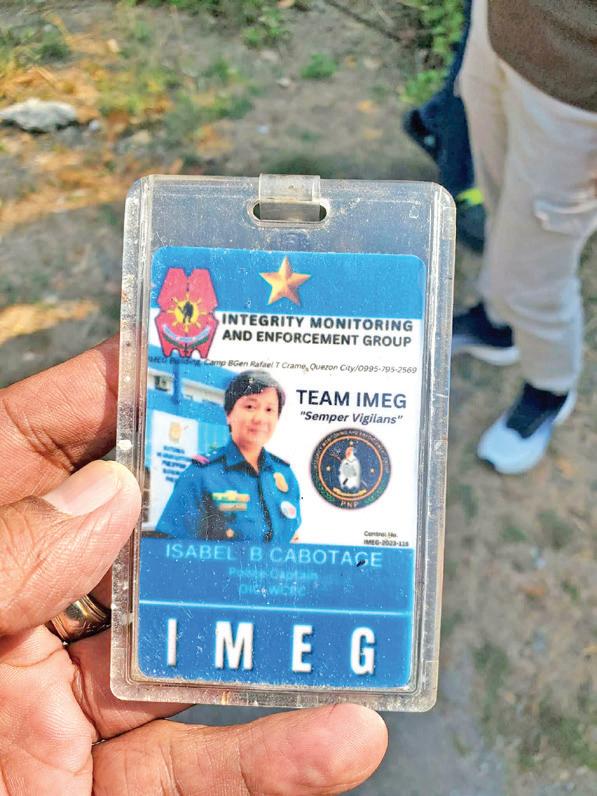
The police escorts, Gonzaga added, were headed by Capt. Isabel Cabotage of the PNP-Integrity Monitoring and Enforcement Group (PNP-IMEG) based at Camp Crame.

Cabotage reportedly told SBMEI Security Chief Brando Agao that she was there to verify reports that PNP personnel were on duty at SBMEI’s Camayan Beach Resort. However, Gonzaga said such stated purpose did not explain why she was in the company of Des-



By Andrea E. San Juan
TWO weeks ahead of its April 23 policy meeting, the Bangko Sentral ng Pilipinas (BSP) signaled that it is on a wait-and-see stance, as it called the US-Iran wardriven oil shock a “new experience” but admitted that it sees quicker spillover effects into the prices of goods in the Philippines.
In a televised interview on Friday, BSP Governor Eli M. Remolona Jr. warned that second-round effects or the transmission of oil shock into local prices of goods may start to surface sooner than expected.
“In the past it would be two to three months. But given how sharp the rise in oil prices has been, it may be quicker than
ELEVATED inflation, weaker credit outlook and the Middle East conflict could weigh on foreign direct investments (FDI), analysts said. “Looking ahead, risks from elevated inflation, a weaker credit outlook, and the Middle East conflict could keep FDI subdued in the near term, with investors likely to remain selective and defer large capital commitments,” Ruben Carlo O. Asuncion,

mond’s group and the masked individuals escorting the group.
“Desmond’s group had no court order, no writ of any kind, and had not even coordinated (their arrival) with the Subic Bay Metropolitan Authority (SBMA),” Gonzaga said.

COMMUTERS along Commonwealth Avenue in Quezon City struggle for
FDI net inflows 39% lower at $443M in Jan, numbers seen dipping with
Foreign Direct Investments (FDI) into the Philippines posted net inflows of $443 million in January 2026.
The FDI net inflows recorded in the first month of the year were 39.23 percent lower than the $729 million in January 2025. Foreign capital infused into the country in January was also leaner by 20.89 percent compared to the $560 million recorded in December 2025.
Historical data shown by the central bank thus indicated that investments poured by foreign countries into the Philippines in the first month of 2026 marked the lowest in four months.
In a statement on Friday, BSP said: “This suggests that rising geopolitical risks are weighing on investor sentiment.”
The central bank said Japan was the leading source of FDIs, with most inflows directed to the manufacturing industry during the month.
“Equity capital placements were sourced primarily from Japan, the United States, and South Korea, and were channeled largely into the manufacturing, real estate, and wholesale and retail trade industries,” BSP said.
Asuncion said the softer FDI inflows in January reflect “continued investor caution amid geopolitical tensions, tighter financial conditions, and lingering concerns over inflation and growth.”
war
Ricafort, for his part, said the decline in FDIs in recent months was largely due to the political noise, especially since September 2025, which he said led to waitand-see attitude for some foreign investors.
Moving forward, RCBC’s chief economist said improved governance standards and reforms would help improve international investor confidence and sentiment, including for FDIs.
“FDIs could improve in 2026 if anti-corruption measures and other reforms related to further improving governance standards are taken seriously, as these are also the basis for the catch up government spending to make up for the soft patch/underspending in the latter part of 2025 due to the political noises largely attributed to the anomalous flood control projects,” added Ricafort.
BSP said FDI includes: investment by a nonresident direct investor in a resident enterprise, whose equity capital in the latter is at least 10 percent, and investment made by a nonresident subsidiary/associate in its resident direct investor.
“Net FDI flows refer to nonresidents’ net equity capital (i.e., placements less withdrawals) + reinvestment of earnings + debt instruments (i.e., net intercompany borrowings),” the central bank also noted. Andrea E. San Juan
New takeover attempt...

States against him,” Gonzaga told BusinessMirror in a statement.
He added that JV China, Inc. is now only a minority stockholder of SBMEI after its shares were sold at a delinquency auction recently for failure to pay P32.5 million in unpaid subscriptions.
“Desmond has no right to exert any authority over this company. That is exactly why the Board of Directors banned him and his cohorts from all SBMEI properties,” Gonzaga said.
The April 8 incident was the second attempt by Desmond to take over the SBMEI, which oper-

ates the Ocean Adventure marine theme park, Camayan Beach Resort, Adventure Beach Waterpark, and Adventure Cove, all located in a sprawling complex at Ilanin Forest West here.
Last February, the SBMEI said Desmond tried to convene an illegal stockholders’ meeting at the Subic Freeport with proxies who the incumbent SBMEI board said were unqualified. The Board voided the supposed stockholders’ meeting.
SBMEI’s legal tangle with Desmond arose from charges in 2013 by Virginia Dio, president of investor firm HS Equities, who accused Desmond, then SBMEI Chairman and CEO, of defrauding her and HS Equities of a total of $2.15 million infused in 2002 for the development of SBMEI’s marine theme park project.
For this, Desmond was convicted of fraud in June 2020 and
ADB
was jailed at the Olongapo City District Jail.
Gonzaga said Desmond has now waged a proxy fight through alleged cohorts Roiben Baun, Eva Ragadio, and Alayson Macapagal, who sent letters directing SBMEI managers to take instructions only from them. Gonzaga said Baun styles himself as chairman, Ragadio as president and CEO, and Macapagal as corporate secretary.
The SBMEI official also questioned how Desmond could still operate freely when he is facing a deportation complaint before the Bureau of Immigration, and has pending cases in the country.
“How can this foreigner be issued a visa by the Bureau of Immigration? If a Filipino ever did something like this in the United States, we would not be issued a visa at all.
But here, this American walks free and uses our own police as security detail,” Gonzaga said.
cuts PHL
growth forecast for ’26 to 4.4%
Continued from A1 projection but still within the government’s 2 to 4 percent target band.
Mendoza said rising fuel and transport costs, alongside higher global prices for food, fertilizer, and other commodities, are broadening price pressures across the economy.
A weaker peso has compounded these risks by raising the cost of imports, she added.
The currency has come under strain in recent weeks, hitting multiple record lows—including a P60.75 per dollar close in endMarch—before recovering slightly following the announcement of a temporary ceasefire between the United States and Iran.
Mendoza also warned that the country’s heavy reliance on overseas Filipino workers (OFWs) in the Middle East exposes remittance flows to risk, which could dampen private consumption this year.
Remittance inflows reached $35.6 billion in 2025, or 7.3 percent of the country’s total gross domestic product (GDP). Of this, $6.5 billion worth of remittances came from the Middle East alone.
“We see that a prolonged conflict in the Middle East poses downside risks given that the Middle East comprises about 17 percent of remittance sources, largely from Saudi Arabia and the United Arab Emirates,” she said, adding that while remittances have historically held up during shocks, a more prolonged crisis would make them “highly vulnerable.”
Taken together, Mendoza said these pressures underscore the need for steady macroeconomic management and deeper structural reforms.
Strengthening human capital, improving governance, and creating a more competitive investment
BSP on waitand-see mode, fears quick spillover effects of ME war
Continued from A1
Comparing the US-Iran war to the Russia-Ukraine war in 2022, the Philippines’ central bank chief said: “This is actually quite different from 2022,” adding, “The sense of uncertainty, I think, is bigger now than before.”
Policy tools inadequate REMOLONA pointed this out as he stressed anew that monetary policy tools are “demand-side” tools which could not address inflation driven by supply shocks.
As such, he explained: “So for inflation, we usually weaken demand by tightening monetary policy. That would not have a lot of effect in the face of a supply shock.”
“So we’re waiting for spillover effects onto demand. When those effects appear, then we can do something with monetary policy. We kinda anticipate when they will appear. And so that’s how we’re making our decision,” added Remolona.
The central bank governor said the BSP had to “err on the side of caution” during the off-cycle policy meeting held by the Monetary Board on March 26 when it decided to keep the policy rate unchanged at 4.25 percent.
“There was very little we can do about that on the monetary policy, whereas we were seeing weak growth and we didn’t want to make that worse. And so we erred on the side of caution. We decided to wait and see,” Remolona said. The central bank chief admitted that the Monetary Board, the highest policy-making body of the BSP, needed a few more weeks “to be clear about what needed to be done.”
Remolona, however, expressed hope that by the next policy meeting which is on the 23rd of April, the seven-man Monetary Board would have “a much better sense of where we stand.”
climate will be critical to cushioning the economy against external shocks while sustaining growth momentum, she added.
Bigger concern:
Distribution of impact
MEANWHILE , ADB Philippines
Country Director Andrew Jeffries said the bigger concern lies not just in the headline growth figure but also how the impact is distributed across sectors and households.
“Perhaps more important is it’s a much more pronounced negative effect for pockets of the population as opposed to the whole [gross domestic product] figure for the country as a whole,” Jeffries said during the same briefing.
He emphasized that the real risk is concentrated damage on vulnerable groups—particularly those in transport and low-income households—rather than a broadbased slowdown, especially given uncertainty over how long the conflict could persist.
Uncertainty in borrowing
AMID these uncertainties, ADB said the government is expected to take a more cautious approach to fiscal management.
Jeffries said the Marcos administration is now reassessing its borrowing strategies and prioritizing spending, while also exploring greater use of public-private partnerships to finance key projects.
“It’s the government’s call on who they borrow from and for what purpose. Given this crisis—and the fiscal strain that we don’t know how long will last—that may also affect what they borrow for and what they may need to prioritize and postpone,” he said. “There’s a lot more uncertainty around borrowing generally.”
The ADB is set to complete its review of Philippine projects by May, he said.
ADB: “very tricky position” DURING the Asian Development Outlook on Friday, officials of the multilateral lender Asian Development Bank (ADB) said the BSP is currently in a “very tricky position” as it gauges how monetary policy tools will effectively address inflation woes in the Philippines moving forward.
ADB Country Director for the Philippines Andrew Jeffries pointed out that raising rates because of the external shock is “not necessarily going to produce . . . It’s not as an effective tool to address inflation as when it’s a demand-driven domestic economy issue so it puts the central bank in a very tricky position going forward on whether to raise rates, given what inflation may become going down the road.”
Teresa Mendoza, Senior Economics Officer at ADB Philippines Country Office, said the ADB projects the BSP would adopt a “neutral stance” for now as the central bank may watch out for signs of broader inflationary pressures.
“We actually are projecting a neutral stance, so it’s not leaning towards the monetary policy tightening, or into the neutral stance, but given the downside risks and higher pressures on inflation, particularly on second round impacts as it gets broader, we have already seen core inflation based on the latest release in March,” said Mendoza.
The ADB official said the core inflation has risen, adding, “We’ve actually seen this trend over the past two to three months, yet it remains in the middle of the central target range 2 to 4 percent.”
“So in the meantime, we’re seeing a neutral stance but with a risk of tightening should the prolonged conflict elevate price pressures further,” added Mendoza.
The SBMEI marine park complex in the Subic Bay Freeport TAKTIKOM FILE PHOTO
www.businessmirror.com.ph
Sen Kiko: Mideast war impact on agri warrants support for biofertilizers
IN light of escalating tensions in the Middle East and their potential impact on global agricultural supply chains, domestic biofertilizer production must be strengthened as a strategic response to looming fertilizer shortages and rising costs, according to the chairman of the Senate agriculture committee.
Senator Francis “Kiko” Pangilinan made the pitch after he visited the AgriSpecialist, Inc. (ASI) Bio N Manufacturing Plant in Santa Rosa, Laguna last week. The plant is a high-tech modern biofertilizer production facility that produces world-class biofertilizer domestically.
Noting that the ongoing conflict in the Middle East has disrupted critical supply routes and contributed to volatility in the global fertilizer market, Pangilinan pointed to the significant challenges this poses to farmers who already face high input costs.
“We must reduce our dependence on imported chemical fertilizers. Hindi dapat sa tuwing may sigalot sa Middle East at krisis sa enerhiya at langis, ang ating mga magsasaka, mangingisda, at mamimili ang unang-unang natatamaan. Gutom at kahirapan ang magiging resulta kapag patuloy tayong magiging vulnerable sa mga sitwasyon na ito [We cannot abide a situation where our farmers, fishermen and consumers are always the first and hardest hit each time there is a crisis in the Middle East or with oil or energy],” the lawmaker said.
“By investing in and promoting biofertilizer production, we not only cushion ourselves from global
supply shocks but also empower our agricultural sector to become more resilient and sustainable,” he added.
Biofertilizers are derived from beneficial microorganisms, and offer an environmentally friendly and cost-effective alternative to conventional chemical fertilizers.
According to Pangilinan, expanding local production can help stabilize prices, improve soil health, and increase crop yields over time.
In particular, Bio N is proven to reduce synthetic nitrogen fertilizer use by 30 percent to 50 percent, directly addressing the urea supply and cost crisis faced by farmers. This microbial biofertilizer was developed by the University of the Philippines-Los Baños.
The researchers said the particular variant of the biofertilizer can increase yield and produce healthier crops such as corn and vegetables, improve soil health and sustainability, make plants healthy and green even in drought and in the presence of pests, and reduce the incidence of rice tungro and corn earworm attack.
Pangilinan called on relevant government agencies, including the Department of Agriculture, to scale up research, provide incentives to local producers, and facilitate training programs for farmers on the use of biofertilizers.
He also encouraged publicprivate partnerships to accelerate innovation and ensure widespread availability across the country.
“Now more than ever, we must prioritize long-term solutions that protect both our farmers’ livelihoods and our nation’s food supply,” he said. Butch Fernandez
BIR digital system needs reviewing, says Sen Win; cites Apr 15 ITR filing
SEN. Win Gatchalian has filed a resolution seeking an inquiry into the status of the Bureau of Internal Revenue’s digitalization program, stressing the urgency of making tax compliance easier, faster, and more accessible for Filipino taxpayers, especially with the April 15 deadline for filing income tax returns (ITRs).

Despite ME truce, govt going full speed on services rollout
By Samuel Medenilla
DESPITE the ongoing two-week ceasefire between the United States and Iran, which helped lower global oil prices, the government will soon roll out new programs to promote energy conservation, boost the country’s fuel supplies, and reduce public utility vehicle fares to keep the cost of living stable.
Energy Secretary Sharon S. Garin said on Friday that the Marcos administration will push through with these initiatives since there is no assurance the conflict in the Middle East will be finally resolved in the coming days.
The US and Israel airstrikes against Iran last February 28 disrupted global supply chains after Tehran retaliated by attacking its neighboring countries and restricting passage in the Strait of Hormuz, where a fifth of the world’s oil supply passes through.
Washington and Tehran have announced a two-week cease-fire as both parties prepare for talks to end their hostilities in the Middle East in Pakistan on Saturday.
Garin said even if the said talks becomes successful, there is no guarantee there will be no additional conflict erupting in the Middle East, which can once again indirectly affect the country’s oil supplies.
She explained the country, which is a net importer of petroleum products, procures its oil from other Asian countries, which directly import oil from the Middle East like South Korea and Japan.
“We need energy sovereignty really. We can all contribute to that by saving energy and electricity,” Garin said in a press briefing last Friday.
She urged the public to participate in the weekly “Earth Hour” event, which they will launch next week.
Earth Hour is an annual event where the public are encouraged to switch off non-essential electric lights for an hour.
The said practice, Garin said, will help to further extend the country’s supply of petroleum products, which is also used for electricity.
Energy supply
GARIN said President Ferdinand
Marcos Jr. has directed the government’s Philippine National Oil Corporation (PNOC) to buy 318 million liters of oil, which is equivalent to 2 million barrels to augment the supplies of local oil firms amid the market uncertainty caused by the Middle East conflict.
“So far, what has been ordered and will definitely arrive is 165 million [liters] which will come from Malaysia, Singapore, India, Oman and Singapore also,” she said.
The country has sufficient stocks of oil to last for 50 days, which is higher than the usual 30 days, the energy chief stressed.
She said the 50-day buffer stock is maintained since oil firms are still able to regularly replenish their supplies even with supply chain disruptions caused by the Middle East crisis.
The high price of oil, Garin said, currently has minimal impact on electricity rates.
“The increase is in centavos, maybe about 40 centavos, 30 centavos because the price of coal has increased, the price of transportation has increased,” Garin said.
PUV support
As for keeping PUV fares stable, DOE and the Land Transportation Franchising and Regulatory Board (LTFRB) will soon implement the fuel subsidy and service contracting program, as announced by Marcos on Thursday.
LTFRB Vigor D. Mendoza II said they were given P1.5-billion for the implementation of the fuel subsidy program, which will run until July.
He said the first phase of the
program will cover diesel-powered 142,698 jeepney and UV Express units and around 14,000 gas stations nationwide.
Under the program, drivers of the qualified PUVs will get a P10 per liter of diesel subsidy, which will be capped at 150 per liter every week.
It will be initially implemented next week by DOE-monitored gas stations initially in the following routes in Metro Manila: Commonwealth, Quezon Avenue, España, Zapote, A. Bonifacio, Rizal, and Marcos Highway.
Mendoza also disclosed they will implement a service contracting program in over 840 routes starting April 15, 2026. PUVs which will participate in the program will be paid between 30 and 100 pesos per kilometer, depending on the type of vehicle. For buses, it will be P100 per kilometer (km), while for traditional jeeps it is P30 per km and for modern jeeps, it is P40 per km.
“The guidelines are being ironed out today. By today, we will come out with the full guidelines so operators can easily understand what to do,” Mendoza said. He said the passengers of the PUVs that will participate in the service contracting program will also get a 20-percent discount in their fares.
The LTFRB official said the PUVs which are covered by the program, will be required to ply their routes at off-peak hours and must display the necessary sign as well as fare matrix.
The program will benefit 50,000 PUV, 1,000 operators, and around 15 million commuters.
Honed by life, driven by passion: Cebu ‘entrep’ charts own path
ABy Lito Cinco
The BIR is mandated under the Ease of Paying Taxes Act, authored by Gatchalian, to adopt an integrated digitalization strategy by providing automated end-to-end solutions for the benefit of taxpayers.
To facilitate the agency’s digitalization, the BIR received a fund allocation of P3.220 billion under the 2026 General Appropriations Act. However, the BIR itself has said it is unlikely to achieve a 99-percent digitalization rate this year, Gatchalian noted. Butch Fernandez
The senator said accelerating the BIR’s digitalization bid would enhance the government’s revenue collection. Under Senate Resolution 316, Gatchalian pointed out that the BIR’s February tax campaign revealed 85 percent of collections came through electronic payments. “This signals readiness for a full digital shift and underscores the need to accelerate the BIR’s digitalization program,” Gatchalian said. “An effective tax administration eases taxpayer burden, boosts compliance, cuts red tape, curbs corruption, and builds public confidence,” he emphasized.
DSWD warns public anew vs fake messages asking payment for cash aid
THE Department of Social Welfare and Development (DSWD) on Friday again cautioned the public against circulating text messages or online posts asking for P1,000 in exchange for the release of the DSWD’s P5,000 cash relief assistance (CRA), stressing that these are fraudulent schemes.
The warning follows reports from DSWD’s Field Office (FO) 2 (Cagayan Valley) about individuals attempting to scam CRA beneficiaries by falsely claiming that a fee is required to access the cash aid from the Department’s Assistance to Individuals in Crisis Situation (AICS) program.
Asst. Secretary Irene Dumlao, the DSWD spokesperson, reminded the public against falling for the fake claims of scammers.
“We strongly remind the public that the DSWD never charges anything in exchange for access to financial aid. This is a clear scam and is not part of the department’s
services,” Dumlao said in Filipino. In a Facebook post on Friday (April 10), FO 2 reiterated that the DSWD does not collect any form of payment in exchange for its services.
The DSWD spokesperson urged beneficiaries and the general public to remain vigilant and to immediately report suspicious messages or individuals engaging in such activities.
The DSWD spokesperson emphasized that only official communications from its field offices and authorized partners should be considered as legitimate sources of information regarding its programs and services.
With cash aid payouts rolled out for regional public utility vehicle (PUV) drivers, the DSWD also continues to coordinate with concerned authorities to address these fraudulent activities and ensure the protection of its beneficiaries.
T 78, Cebuano entrepreneur Bunny Pages has stepped down as Chief Executive Officer (CEO) of The Pages Group of Companies, choosing to remain as Chairman. For many, that would signal retirement. For Bunny, it simply marks a new chapter.
His story is anything but typical.
In three decades, Bunny built what began as a modest daycare center in SM City Cebu, a small preschool inside his garage, and a humble healthy drink stall into a diversified group of more than 20 companies—mostly homegrown restaurant brands, several now franchised across the Visayas and Mindanao employing nearly 2,000 people.
Honed by life’s experiences and driven by passion, Bunny made an uncommon decision at an age when most people slow down. At 50, while serving as VisMin District Manager of Manulife—a stable and high-earning senior leadership role—he chose to leave the life insurance industry and start from scratch.
A chemical engineering graduate of the University of San Carlos (1968), Bunny followed the traditional path advised by his parents: study hard, graduate, and find a good job. He began his career with Mobil Oil Phils. and stayed for five years before moving to Manulife, where he spent nearly 25 years.
But something was missing.
“In my last two years in the life insurance industry, I realized I was still not my own man,” Bunny recalls. “The business was doing could be taken away anytime. I was unhappy. I wanted excitement. I don’t even like being around people who are not excited about life.”

That restlessness sparked entrepreneurship.
While still in the life insurance business, he and his family opened a daycare center in SM City Cebu and a small preschool in their garage at a rented house in Paradise Village, Cebu City. The daycare eventually closed, but the school grew into Bright Academy International, now serving around 700 students ably led by Allen, the mother of his five children. Soon after, he spotted opportunity
in a small healthy drink stall near their daycare center. Together with John, his eldest son, they acquired it. Today, Thirsty is a recognized brand in Southern Philippines with both company-owned and franchised outlets.
“The business evolved. We didn’t have a grand master
closed businesses when needed. That’s part of being disciplined.” One lesson he often shares: “Do not fall in love with your business. Don’t let ego cloud decisions. I started with nothing. That keeps you humble.”
For years, he has shared such insights in his popular SunStar column,
Succession,
Three
His eldest son John, now CEO, and his four siblings—Charlie, Randy, Michael, and Cheryl—were each running different parts of the group, largely held together by Bunny’s leadership.
This February, he formally transitioned out of operations.
“I’m not retiring. I remain Chairman, focused on the big picture. John now has full authority in running the company. I still receive daily sales reports but I no longer involve myself in day-to-day decisions.”
The family had drafted a constitution eight years ago, but implementation was loose. Following this transition, they revisited and updated it, this time committing to follow it strictly to ensure continuity.
As for what’s next? A SECOND book. More Corporate Responsibility Programs (CSR). Mentorship. Regular exercise. Travel. And more time with his 11 grandchildren. After a life honed by experience and fueled by
Saturday, April 11, 2026
DBP okays ₧2-B standby credit for Naga City, Cebu LGU projects
By Carmel Pedroza
NAGA CITY, Cebu—The Development Bank of the Philippines (DBP) has approved a P2-billion standby credit facility for the Naga City government while also inaugurating its newly relocated branch-lite unit to strengthen its presence in the area. The loan facility is expected to support key infrastructure projects of the local government, including the ongoing construction of a 150-bed capacity hospital in Barangay Poblacion.
Mayor Valdemar Chiong said the funding will help accelerate the city’s flagship medical facility, which broke ground in 2023 on a 6,000-square-meter site.
The local government has already invested P280 million in the project.
Chiong is targeting the completion of the hospital by late 2027.
DBP Assistant Vice President Kristine Michelle Ancog, acting head of the DBP Talisay Branch and Naga Branch-Lite Unit (BLU), said the credit facility under -

scores the bank’s continued support for initiatives that drive “developmental progress,” with repayment terms of up to 10 to 15 years.
Ancog said the bank’s strengthened commitment to Naga City also comes with the opening of its newly relocated branch-lite unit, designed to better serve clients and partners.
“Today marks our renewed commitment to the City of Naga. We
are not just opening the doors of a new office—we are establishing a more strategic and accessible location that allows us to better respond to the city’s growing economic activity,” she said.
Cebu Gov. Pamela Baricuatro also echoed a similar sentiment, saying “mas duol ang serbisyo, mas dali ang paglambo [Closer service, faster progress].”
The new office replaces the original branch-lite unit established
in 2018 at the Naga City public market—the first of its kind in Cebu province.
Ancog noted that Naga City has long been one of DBP’s top institutional depositors, prompting the bank to establish its pioneering branch-lite unit in the city to be closer to one of its most valued clients.
The relocation was also influenced by the impact of Typhoon Odette, which affected the previous site. This new office is more accessible, and strategically located near the city treasurer’s office to improve coordination and service delivery.
DBP Chairperson Philip Lo affirmed the bank’s commitment to Naga City’s development, saying it will continue to expand support for projects that enhance competitiveness and improve the lives of Cebuanos.
“We remain committed to ramping up support for initiatives that will further strengthen the city’s growth and uplift its people,” Lo said.
DBP plans to establish more BLUs to serve and reach clients in other parts of Cebu province.
DLSU top PHL private university in economics, econometrics
By Claudeth Mocon-Ciriaco
DE La Salle University (DLSU) has been recognized as the country’s top private university in Economics and Econometrics based on the 2026 QS World University Rankings by Subject. The 2026 QS World University Rankings by Subject showed that DLSU paced in the 451-500 bracket in the field of Economics and Econometrics.
“This achievement affirms our commitment to academic excellence, rigorous research, and producing graduates who contribute meaningfully to economic policy and sustainable development in the Philippines and beyond,” said Carlos L. Tiu School of Economics Dean Dr. Arlene Inocencio, as she also extend her gratitude to the faculty, students, and partners, “whose dedication continues to strengthen our global standing.”
In the same rankings, DLSU is the lone
Philippine university that is ranked in Philosophy (151-200).
The University is also the country’s top HEI in Business and Management Studies (401-450) and Education and Training (351-400).
Moreover, it is the leading private university in the Philippines in the areas of Computer Science and Information Systems (551-600), English Language and Literature (201-250), and Politics (301-400).
DLSU also improved its rankings in the
broad subject areas of Arts and Humanities (=365) and Social Sciences and Management (=382).
QS employs the following metrics to evaluate the subject rankings: Reputation indicators which are based on the responses of more than 200,000 employers and academics to QS surveys; Citations per Paper and H-Index which measure research impact and productivity; and International Research Network which assesses cross-border research collaboration.
Villanueva hails BSP flexi-terms loan proposal, prods GSIS, SSS on relief
SEN. Joel Villanueva welcomed the Bangko Sentral ng Pilipinas’ proposal to shift to a principlesbased framework for salary-based personal loans, calling it a timely and sensible reform that puts borrowers’ actual capacity to pay at the center of lending
decisions.
“This is the kind of initiative we expect from the Bangko Sentral which mandates banks to assess the status of borrowers, their capacity to pay, and to restructure their loans accordingly,” said Villanueva, speaking partly in Filipino. The chair of the

Senate Banks committee added that this move is fair and long awaited.
The BSP’s draft circular proposes moving away from prescriptive limits on loan tenor toward an approach that allows BSP-supervised financial institutions to set repayment terms based on a borrower’s creditworthiness, repayment history, and loan purpose — with terms open to mutual agreement between lender and borrower, subject to sound credit risk management standards.
The proposed change removes the existing BSP directive on setting the original loan term for education, hospitalization, emergency, travel, household, and other personal consumption needs to three years and extendible up to a maximum of five years in meritorious circumstances.
Villanueva said the proposal aligns with the broader legislative thrust of protecting Filipino borrowers from debt-servicing arrangements that bear no relation to their actual financial situation.
The senator also said that the Senate committee on banks is prepared to exercise its oversight function to ensure the smooth
implementation of the policy change.
He cited both the ongoing moratorium on GSIS loans and the SSS’ recent announcement as evidence that the pressure on ordinary Filipinos has reached a point that demands a coordinated, systemic response—not piecemeal relief.
“We are seeing the same distress signal coming from multiple directions at once. The BSP is proposing flexibility for private borrowers. The GSIS moratorium is now in effect for government workers. And now the SSS is saying it is studying a loan moratorium and penalty condonation for its own members and employers,” Villanueva said.
“These are not isolated decisions. They are all pointing to the same reality on the ground,” he added.
Villanueva welcomed the SSS announcement, but said the language of active study and ongoing review needed to translate into action without further delay.
Villanueva also called on the Home Development Mutual Fund or Pag-IBIG to consider extending a reprieve on existing loans of qualified borrowers.
Butch Fernandez

Waste workers still at risk after Cebu landfill collapse
CEBU CITY—Community groups are calling for urgent action to protect residents of Barangay Binaliw and improve safety conditions for waste workers in the aftermath of the deadly landfill collapse in Cebu, warning that both environmental hazards and occupational risks remain largely unresolved.
Howell Villacrusis, secretary general of Alyansa sa mga Mamumuo sa Sugbo–Kilusang Mayo Uno (AMA Sugbo-KMU), said workers at the site continue to face unsafe conditions, citing serious gaps in occupational safety and health compliance.
Speaking at a public forum at the University of the Philippines Cebu on Friday, Villacrusis said waste workers were not provided with adequate protective gear despite handling hazardous materials, including syringes and chemicals, and were instead given only basic fabric gloves and uniforms.
He also raised concerns over how conditions at the site were being monitored, saying increasing volumes of garbage were reportedly downplayed by safety personnel who maintained that operations remained under control and relied largely on drone-based aerial checks rather than direct on-site inspections, indicating major shortcomings in oversight.
“The silence of the DOLE - 7 with regards to the occupational safety and health hazards committed by Prime Waste. Until now, we do not know the official findings of the government is on this incident,” he said, noting that no investigation results were made public.
Villacrusis said they tried to engage with the Cebu City government as early as January, but could not secure a meeting due to scheduling conflicts and prior commitments of local officials.
The forum also underscored continuing risks faced by nearby communities and waste workers, with residents still experiencing the effects of pollution from accumulated waste, including contaminated water sources and deteriorating air quality that continue to affect health and livelihoods.
Experts said the situation reflects long-standing weaknesses in both policy enforcement and design.
While the Ecological Solid Waste Management Act of 2000 is in place, implementation remains uneven, with key provisions such as the Non-Environmentally Acceptable Products and Packaging (NEAPP) list still not fully established.
Waste, plastic pollution crisis
ENVIRONMENTAL lawyer Gloria Estenzo Ramos said existing laws intended to prevent waste are either poorly implemented or insufficiently designed to reduce waste generation at its source.
The forum, titled “Solving the Twin Crises of Waste and Plastic Pollution,” brought together stakeholders to examine persistent gaps in waste governance and push for reforms aimed at addressing the problem upstream.
Participants also flagged the growing burden of single-use plastics, which account for an estimated 12 to 24 percent of the country’s total waste stream, further straining already limited local government and waste management capacity.
They warned against increasing reliance on disposal-focused solutions such as waste-to-energy (WTE) facilities, citing potential long-term environmental and health risks, including toxic emissions and contamination from microplastics and leachate affecting soil and water systems.
Environmental expert Dr. Jorge Emmanuel said continued dependence on landfills and incineration-type technologies would only worsen the crisis, noting that plastic waste can persist for centuries and that thermal treatment processes can produce highly toxic pollutants that accumulate in ecosystems and the food chain over time.
He stressed that no form of incineration can be considered truly clean, adding that the most effective response is to reduce waste generation at its source rather than expand disposal systems.
The forum called for a shift toward prevention-oriented solutions, including enforceable waste reduction targets, a ban on single-use plastics, and the expansion of reuse and refill systems in local economies.
Greenpeace Philippines campaigner Marian Ledesma said reliance on disposal-based approaches and other “false solutions” will not address the crisis, noting that communities have already demonstrated the effectiveness of reuse systems in reducing waste while supporting safer livelihoods.
She added that stronger support from government and the private sector is needed to scale these initiatives, rather than continued investment in systems that place communities at risk, emphasizing that solutions already exist but require political will to implement. Carmel Pedroza

OFFICIALS from DBP and Cebu Province led the ribbon-cutting ceremony during the opening of its first Naga Branch - Lite Unit in Naga City on Friday, April 10, 2026. CARMEL PEDROZA
Foods that heal brain cells and restore elderly memory
By Jona C. Redondo
AS we age, brain cells face increasing challenges from inflammation, oxidative stress, reduced blood flow, and the buildup of toxic proteins like betaamyloid. These processes contribute to memory loss, cognitive decline, and conditions such as Alzheimer’s disease. The good news is that certain foods can support the brain’s natural repair mechanisms—protecting neurons, reducing inflammation, enhancing cellular cleanup (mitophagy), improving blood flow, and even aiding the glymphatic system that clears waste during deep sleep.
Dr. William Li, a physician, scientist, and author of Eat to Beat Disease, highlights this in his video content on brain health and dementia prevention (https://www.youtube.com/ watch?v=yYDcyTn5RLs&t=1332s).
Drawing from long-term studies involving over 81,000 people, he explains how the Mediterranean-style eating pattern can slash dementia risk by 16 percent to 27 percent. His recommendations focus on everyday foods rich in omega-3s, polyphenols, healthy fats, and antioxidants that protect and repair brain cells at the cellular level. These foods don’t just “boost memory”—they support neurogenesis factors like BDNF (brainderived neurotrophic factor), maintain neural membrane integrity, and optimize overnight brain repair while you sleep.
Here are five science-backed foods Dr. Li and related research emphasize for seniors over 60. Incorporating them regularly can help heal brain cells, restore memory, and promote sharper thinking.
1. Fatty fish (Salmon, sardines, mackerel)
Fatty fish are packed with DHA and EPA omega-3 fatty acids—the building blocks of brain cell membranes. About 60 percent of the brain’s dry weight is fat, and DHA keeps cell membranes flexible so neurons can communicate efficiently. In aging brains, omega-3s reduce neuroinflammation, clear amyloid plaques, and support blood flow to the hippocampus (the memory center). Dr. Li notes that seafood 2–3 times weekly aligns with Mediterranean diet benefits that cut cognitive decline. Studies show higher omega-3 intake slows brain shrinkage and improves memory scores in older adults. For elderly individuals, this translates to better recall and slower progression of mild cognitive impairment. Aim for 8–12 ounces weekly of wild-caught or low-mercury options like sardines (also rich in B12 for nerve repair). Bake or grill with olive oil for maximum absorption.
2. Blueberries (especially wild varieties)
Often called “brainberries,” blueberries deliver anthocyanins—flavonoid antioxidants that cross the blood-brain barrier. They neutralize free radicals, reduce oxidative stress, and stimulate BDNF to support neuron repair and new connections. Research cited in brain-health discussions shows that daily blueberry intake can make the brain perform as if it were 2.5 years younger in older adults, improving memory consolidation during sleep.
Dr. Li highlights berries as part of the polyphenol-rich fruits in the Mediterranean pattern that protect against dementia. One study found older adults eating blueberries daily showed better episodic memory and executive function after just 12 weeks. For seniors, a half-cup of fresh or frozen wild blueberries (higher in antioxidants) in oatmeal, smoothies, or yogurt provides a simple nightly ritual that aids overnight glymphatic cleansing.
3. Walnuts (and other tree nuts)
TimeOur DSWD releases social pensions for 3,581 indigent seniors in NCR
tophagy—the cellular “cleanup crew” that removes damaged mitochondria in brain cells—preventing energy failure that leads to memory fog. Dr. Li points to tree nuts as key for healthy fats that keep blood vessels flexible and reduce chronic brain inflammation.
A handful (about 1 ounce) daily has been linked in cohort studies to better cognitive scores and slower decline in elderly populations. Walnuts also support the gut-brain axis by feeding beneficial microbes that produce anti-inflammatory short-chain fatty acids. Snack on raw or lightly toasted walnuts before bed to fuel repair processes while sleeping. Mix with berries for a powerful combo.
4. Extra Virgin Olive Oil (EVOO) and avocados Healthy monounsaturated fats in EVOO and avocados improve cerebral blood flow and methylation (a process vital for DNA repair in neurons). Polyphenols in high-quality EVOO act as potent anti-inflammatories, protecting against vascular damage that starves brain cells of oxygen and nutrients. Dr. Li emphasizes EVOO as a cornerstone of the Mediterranean diet, which enhances memory and cognition even in those with genetic risks.
Avocados add potassium and fiber for stable blood sugar—crucial since insulin resistance accelerates brain aging. Use 1–2 tablespoons of EVOO daily for drizzling on salads or cooking, and half an avocado a few times weekly. Seniors report clearer thinking and fewer “senior moments” when these replace processed oils.
5. Green tea or Matcha Green tea and its concentrated form, matcha, provide EGCG (epigallocatechin gallate) and L-theanine. These compounds reduce brain inflammation, improve sleep quality (enhancing overnight toxin clearance), and boost focus without jitters. A Japanese study on older adults with mild cognitive impairment found that just 2 grams of matcha daily for 12 weeks improved cognition, sleep depth, and mood via the gut-brain axis.
Dr. Li recommends matcha or high-quality green tea for its polyphenols that support neuroprotection and social engagement hormones like oxytocin. Drink 1–2 cups daily, ideally in the morning or early afternoon to avoid sleep disruption. It pairs well with the other foods for a complete brain-support protocol.
Putting it all together: The Mediterranean approach for lasting results
DR. LI stresses that these foods work best as part of a broader Mediterranean pattern: plenty of leafy greens, legumes, whole grains, herbs, and spices, while limiting ultra-processed foods, trans fats, and excess saturated fats. This diet lowers risks of diabetes, heart disease, and stroke— all linked to faster brain aging. Longterm data show adherents have up to 27 percent lower dementia incidence, with measurable improvements in memory tests.
For elderly individuals, start small: add sardines to salads twice weekly, sprinkle walnuts on yogurt, enjoy blueberry smoothies, cook with EVOO, and sip matcha. Combine with good sleep (7–9 hours), light exercise, and social connection for synergy. While no food is a cure, consistent intake supports the brain’s innate healing—protecting cells, clearing debris during sleep, and restoring memory pathways.
BusinessMirror
By Jose Cielito Reganit
THE Department of Social Welfare and Development (DSWD), through its Social Pension for Indigent Senior Citizens (SPISC) program, has released the first quarter stipend to 3,581 indigent seniors residing in the cities of Manila, Parañaque and Pasay.
“Many grandfathers and grandmothers in various cities of Metro Manila were happy before the end of March because they received their social pensions. Each senior received P3,000,” DSWD spokesperson Assistant Secretary Irene Dumlao said in a news release on Monday.
During the payout, 1,494 seniors received their social pension at the Paraiso Sports Complex in Tondo, Manila; 1,220 beneficiaries at the Greenheights Subdivision in Parañaque City; and in Pasay City, the Office for Senior Citizens Affairs
accommodated 1,105 beneficiaries. “Ang gusto po ng ating Pangulong Ferdinand R. Marcos Jr. ay magkaroon din ng tulong pinansyal ang ating mga senior citizens lalo na ‘yung mga wala namang natatanggap na pensyon. Karamihan sa kanila ay walang mga kamag-anak na may kakayahang sumuporta sa pangangailangan nila sa gamot, pagkain at iba pa (President Marcos wants senior citizens to also receive financial assistance, especially those who are not receiving pension. Most of them don’t have relatives who are

THERE is a Jewish teaching that says God knows how many words each person will say in his lifetime and what those words will be. Once the person reaches the quota, it’s time for him to depart from this world.
I have a grand daughter who will probably not exceed her allotted number of words in her lifetime. This is because she doesn’t speak as we do. If she speaks at all, she would just mumble the words, barely audible and hard to grasp, sounding more like grunts. No amount of frantic prompting can make her speak the words louder.
realized that she is expressing herself through other ways.
For instance, she has remarkable hand and mind coordination. She can do the Rubik’s Cube in a minute or so. Gift her with picture puzzles

Our family affectionately calls her “Lexa” or “Lexi.” I prefer to call her “Leksing,” which sounds to me as a more native term of endearment. This April 15, she will be celebrating her 16th birthday.
It’s an exhausting process to extricate or extract what Lexi wants to convey, requiring tact and lots of patience and aural sensitivity. Just a slight tone of irritation or frustration in my wife’s voice and she immediately leaves, recoiling back to her shell.
or Lego pieces and before you know it, she has already put them together effortlessly.

capable of supporting their needs on medicine, food and other needs),” Dumlao said.
The DSWD social pension program serves as a core government assistance scheme that provides a monthly stipend of P1,000 to qualified indigent elderly Filipinos to augment their daily subsistence and medical needs.
A granddaughter of few words
ing us for their astounding execution. We didn’t know she was into painting, until she came home one day with a bouquet of flowers telling us casually in so very few words which we could hardly grasped that her artwork won first prize in a school contest. That painting and another of her artworks have already fetched a sizeable sum from buyers.

But most surprisingly of all, she is also innately adept at expressing herself through writing.
This was confirmed when she wrote a private message to her Daddy, which he showed to us. It was about her request to move to another school for reasons I won’t need to disclose here. Among other qualities, her long missive shows verbal facility, maturity and an organized mind.
Channeling her thoughts, feelings through her crafts, artworks and her writing, that may be her way of saying “listen to me. I don’t need my tongue to speak. I can do it through music, painting and I can write.”
Walnuts stand out for their plantbased omega-3 ALA, polyphenols, and vitamin E. They promote mi-
Consult a doctor before major dietary changes, especially with medications or conditions. Dr. Li’s message is empowering: food is medicine, and it’s never too late to nourish your brain for sharper, healthier years ahead. By choosing these healing foods, seniors can actively support brain cell repair and memory restoration—one delicious bite at a time.
When I tried researching her condition online, I stumbled on a syndrome called “selective communication” or “selective mutism” to categorize a person who is unable to speak in certain social situations. I’m reminded of Gelsomina, the mute character in Federico Fellini’s film “La Strada,” silent but soulful, her eyes taking in everything and reflecting a slight sadness in her ambiguous smile. Maybe that’s what she’s got. We’re not really sure. We don’t even know if she is aware of it or even self-conscious about it. She’s not a complete recluse because we know she has a close circle of “talkative” friends. But then, gradually, we have
She’s awesome at doing crafts such as paper folding, crocheting and even plaster sculpting. One time her classmate handed her necklace for Alexa to fix and it took her less than a half hour to do it. For a small fee, of course. One time her Dad found out she had accumulated earnings of around P10,000 for her handcrafted products. Maybe she’s even a budding entrepreneur too! With her dexterous hands combined with her natural musicality, she can play difficult Chopin and Beethoven piano pieces (in secret) and there was a time when she was taking violin lessons in school without us knowing. To balance her musical side, she’s good at volleyball, badminton and table tennis. I once caught her eyeing the game of pickle ball, too.
Thanks to Lexi, my wife is developing a more acute and discerning listening ear. She can more or less decipher the meaning of Lexi’s grunts and mumblings, without being impatient. This is why Lexi is very comfortable “talking” to her.

Lately I read about a woman who is afflicted with “dystonia,” a rare neurological condition which affects her speech.
Fully embracing her predicament, she writes: “Not being able to talk bestowed a great advantage on me, as I developed the best listening ear. With pride, I loved it when my friends told me that they felt comfortable telling me their deepest, darkest secrets because they knew that I could not and would not tell a soul.”
Then she keeps amazing us with her adeptness in the arts, which is only being revealed now. She deftly makes illustrations that keep amaz-
The program aims to reduce hunger, improve the living conditions of the elderly sector, and protect them from neglect or deprivation. Based on the program guidelines, an indigent senior citizen refers to: 60 years old or older; frail, sickly, or with disability; without pension from the Social Security System, Government Service Insurance System, Philippine Veterans Affairs Office and no permanent source of income or financial support from family or relatives. PNA
effort it would take to try to say them. At the same time, when there was something truly important for her to say, she has learned to be really tenacious and insist that people listen to her even through writing. For we are all guilty of wronging someone with speech, including words that embarrass, insult or deceive others, or cause emotional pain or distress. Broken marriages, broken families, shattered friendships, or ruined careers are often caused by a few hurtful words. Our world as grandparents is closing down while Lexi’s world is opening up. In God’s good time, Lexi will finally have the ability to speak louder and enunciate her words. When that time comes, our wish is that she would shun crude speech,

free of expletives and expressions that are the lingua franca of her TikTok generation. Instead, may her carefully chosen words reflect the traits of humility, modesty, and loving kindness that are manifestations of a good soul.
Four years ago, to mark her 12th birthday, I wrote the following lines: Will Alexa speak today? Don’t ask, just leave her alone. Will we hear her speak today? The silence gets heavier and heavier.
I wrote those lines as a love letter to life’s gifted underdogs and to give voice to those who don’t easily fit in and are struggling to tell us that they just want to be left alone so they can enjoy the kind of contentment they feel inside their personal comfort zones.
Let Lexi’s deliberate unspokenness serve to remind us that one good spoken word is better than a thousand useless words uttered in idle chatter. www.businessmirror.com.ph
Her speech problem has also been a great purifier of her speech. She has learned to consider very carefully whether something needed to be said: most things are not important enough for the monumental
SENIOR citizens from Laoag City, Ilocos Norte receive P3,000 each under the Social Pension for Indigent Senior Citizens at Laoag City multi-purpose hall on October 21, 2025. The Department of Social Welfare and Development on March 23, 2026, said indigent senior citizens may still use other government-issued identification cards when claiming their social pension. PNA/CONTRIBUTED PHOTO












With its new A-series phones, Samsung focuses on ‘Awesome Intelligence’

THERE are many things that make the Samsung Galaxy A57 5G and Galaxy A37 5G worth talking about, and some of those are the processor upgrades. Reviewers have said that the two new phones are “closer than ever” to Samsung’s flagship models.
The Galaxy A37 5G is powered by Samsung’s Exynos 1480, which promises 14 percent better CPU performance, 24 percent better graphics, and 167 percent better neural processing performance.
The Galaxy A57 5G sports the Exynos 1680 and offers upgrades: 10 percent better CPU performance, 7 percent faster graphics, and 42 percent improved neural processing.
“The latest Galaxy A series reflects Samsung’s commitment to expanding AI capabilities across more devices and empowering more users to harness the power of intuitive AI that simplifies everyday tasks,” said Samsung in a press release.
The Galaxy A57 5G and Galaxy A37 5G are Samsung’s mid-range smartphones focused on “Awesome Intelligence” (AI) features, IP68 durability, and long-term support.
With the latest One UI 8.5, Samsung has democratized its AI innovations to include more brand users. That means Galaxy A57 5G and Galaxy A37 5G have access to Samsung’s “Awesome Intelligence” to help with creativity and productivity.
So what’s new in terms of AI in the Galaxy A57 5G and Galaxy A37 5G? Voice Transcription is new to the Voice Recorder app. AI Select is now easier to access with a long press on the Edge Panel. It also supports Drag & Drop in Multi-Window layout, allowing users to easily move images into Samsung Notes or Photo Editor. “Awesome Intelligence makes everyday photo editing easier than ever,” said Samsung. Object Eraser now delivers more natural results when removing unwanted distractions, like a passerby in the background or clutter in a café. On
Experience peak power with a flagship feel with OPPO A6 Pro
CONSUMER tech brand OPPO is raising the bar for the A Series with the OPPO A6 Pro, a smartphone that brings advanced system innovation into a more accessible device for everyday users. With enhanced thermal design, capable mobile platforms, and a high-quality display, it delivers a smoother and more reliable experience for entertainment, connectivity, and daily use. Phones tend to heat up during demanding activities like gaming, streaming, multitasking, and long video calls, which is why the OPPO A6 Pro features the SuperCool VC System. With a 4,300mm² vapor chamber, expanded graphite layer, and an optimized thermal layout, it



dissipation, reduces hotspots, and keeps horizontal use more comfortable for stable performance during extended play, bingewatching, or calls.
The OPPO A6 Pro is designed to match different user needs, giving users the flexibility to choose the experience that fits their lifestyle. Its 5G variant is powered by the MediaTek Dimensity 6300 Mobile Platform, which brings faster connectivity and smoother overall performance. For users, this means quicker downloads, less waiting time when opening content, betterquality streaming, and a more responsive experience during online gaming or other connection-heavy tasks.


the day. On the 5G variant, for example, the Ultra Bright 120Hz AMOLED Display makes viewing more immersive with vivid color, sharper contrast, and smoother motion. With up to 1,400 nits of peak brightness, the screen stays clear even outdoors, making it easier to check directions, reply to messages, or watch videos under direct sunlight. The 120Hz refresh rate also makes scrolling, swiping, and gameplay feel smoother and more fluid.
Combined with the SuperCool VC System and OPPO’s system-level optimization, both variants are built to stay
efficient, comfortable, and responsive, giving users a capable smartphone experience that feels polished and easy to rely on every day. Get it at OPPO stores nationwide or online via Shopee, Lazada, TikTok Shop, and the official OPPO Online Store.
The 4G variant in either Coral Pink or Lunar Titanium colorway packs 8GB RAM and 256GB of user memory, and is priced at P15,999. The OPPO A6 Pro 5G variant in either Coral Pink or Stellar Blue colorway comes with either 6GB RAM and 128GB user memory, priced at P13,999; or 8GB RAM and 256GB user memory at P18,999.
PALO ALTO LAUNCHES CYBERSECURITY SOLUTION FOR SMALL BUSINESSES
BY RIZAL RAOUL REYES
GLOBAL cybersecurity provider Palo Alto Networks recently launched the Prisma Browser for Business specifically to provide the cybersecurity requirements for small businesses. Dubbed by the company as the most secure workspace for small business, Palo Alto’s latest offering enables small business owners to easily configure and manage the apps and AI
most small businesses, the browser is now the office. It’s where you interact with customers, manage your books, and use new AI tools to help grow your business. But standard browsers weren’t built to stop modern cyberattacks or prevent AI data leaks. We’re providing small businesses with the same protection used by the world’s largest enterprises, but in an easy to use, simple to manage workspace with flexible and accessible pricing for any small business,” explained Anupam Upadhyaya, SVP of product for Palo Alto Networks, in a press statement.
According to Palo Alto, small businesses depend on an average of 36 applications running in the browser, which is where most work gets done. However, with 95 percent of companies experiencing a security incident originating in the browser, the need for a secure workspace has never been greater. At the same time, employees are rapidly adopting AI, making it harder than ever for small businesses to tame the workspace chaos, keep their business protected and prevent unintended AI actions.
Prisma Browser for Business is a secure workspace designed for small businesses to streamline the workspace, protect the business, and control artificial intelligence (AI) action. By streamlining the workspace, Upadhyaya said it can easily configure and manage the apps and AI tools teams rely on to work securely from any device, anywhere. It has pro-active protection by blocking AI-powered phishing, ransomware and fraud threats before they harm the business. The Prisma Browser for Business enables teams to leverage AI for productivity, while preventing business information from ending up in the wrong hands. The company claims it processes billions of threats daily for the world’s largest companies. With the introduction of the Prisman Browser for Business, Upadhyaya said Palo Alto offers the same enterprise-grade protection for small businesses.
PS5 TO RAMP UP PRICES, CPUS MAY FOLLOW SUIT
BY PATRICK VILLANUEVA
WITH the global shortage of computer parts and the current economic status on account of the war and inflation rates, the gaming world will inevitably fall victim—and it has already started.
From the delayed release of Valve’s Steam Machine and other consoles, gamers will also face an unforeseen scenario: a price hike on PlayStation’s PS5 console, more than 5 years after its initial release.
Usually, a console’s value over time should get lower. In fact, a graphic from IGN, a prominent gaming news website, shared that this was the first time a console increased its price. The PS1 lowered from $299 to $99, PS2 from $299 to $129, PS3 from $599 to $269, and PS4 from $399 to $199. However, the PS5 becomes the first of its kind, increasing its price from $499 to $649.99 as announced in the PlayStation blog. This became effective on April 2, 2026 US time. There is no official announcement yet for the updated price in the Philippines. Currently, it is priced at roughly P30,790 as listed in Datablitz and Abenson’s online store.
Madiskarte...
in—small decisions that prevent bigger problems later.

For those who prioritize dependable all-around use, the 4G variant runs on the MediaTek Helio G100 Mobile Platform, offering reliable performance for entertainment, productivity, and everyday multitasking. This translates to smoother app-switching, more consistent performance for daily tasks, and a device that can keep up with work, browsing, messaging, and media consumption without feeling sluggish.


improves heat and phone that feels smooth, capable, and easy to rely free time, or simply managing everyday tasks go.

Paired with OPPO’s system-level optimization, both variants are built to stay efficient and responsive throughout the day. The benefit for users is a phone experience that feels smooth, capable, and easy to rely on, whether they are catching up on shows, staying productive, gaming in their free time, or simply managing everyday tasks on the go.

CONTINUED FROM A7
common, it’s thinking a few steps ahead.
Holy Week just wrapped up, but summer travel is still in full swing. For many Filipinos, that means packed schedules, long drives, flights, and time with family.
Plans usually focus on destinations and itineraries. Health rarely makes it to the checklist—until something interrupts the trip.
One example is having access to a doctor anytime, anywhere. The mWell Healthsavers Plan allows users to consult a licensed Filipino doctor through the app without needing to search for nearby clinics or hospitals.
For ₱399, it includes a video consultation, e-prescription, medical certificate, and e-lab requests if needed, along with personal accident insurance coverage.
Everything is accessible through the app—download, register, go to the Shop section, select Healthsavers, and complete the purchase.
different user needs while delivering a smooth and reliable experience throughout
The OPPO A6 Pro is built to support different user needs while delivering a smooth and reliable experience throughout
It doesn’t take much. A headache, fever, or minor illness can slow everything down, especially when you’re away from home. For those traveling abroad, even basic care can mean unexpected costs.
This is where “diskarte” comes
For Filipinos traveling locally or abroad, access to familiar medical advice removes one more variable from the trip—and can make the difference between a minor delay and a disrupted plan.
Meanwhile, PC gamers also cannot catch a break as another price surge will hit their components, this time with their CPUs. Chinese market research firm Minutes Logic Society reported that Intel is planning a price hike to their CPU, with prices expected to ramp up 30 percent higher than 2025. This price hike would be the third, after Intel’s increase in February and March of 2026. The reason behind this increase, according to Minutes Logic Society, is the demand for the capability to use cloud-based AI computing power for consumer-grade CPUs. “To reduce computing overhead, some users, especially software developers, are choosing to deploy AI-related applications locally, thus creating a strong demand for AI PCs equipped with local AI computing capabilities,” reads the report from Minutes Logic Society. While games continue to demand high specs, the PC components are also becoming more expensive. As of now, the average gamer can still play games. However, it is becoming clearer that gaming is no longer just a niche hobby but a luxury if these prices continue to rise.
A6 Saturday, April 11,

Madiskarte Moms PH built a community and turned it into opportunity

ON March 29, 1994, while most of the country was still asleep, history was being made inside a PLDT facility in Makati as the Philippines connected to the global internet for the first time. There were no crowds, no countdown, no headlines—just a successful signal traveling across a 64 kbps line to the United States. Hours later, during a live demonstration in Cebu, that connection was confirmed to the public with a simple line that would define the moment:
“We’re in.”
CREATED TO CONNECT PEOPLE MORE than three decades later, that purpose shows up differently. Not in cables or routers, but in the communities that formed because of them. Some stay as conversations. Others move further and become something people can actually build on.
Madiskarte Moms PH is one of those communities. Powered by PLDT Home, it reflects how connectivity can move beyond access and into opportunity. What started as a Facebook group during the pandemic has grown into a working network where mothers exchange business ideas, share practical advice, and support each other through the realities of building a livelihood.

And with those exchanges, the idea of being “madiskarte” has also evolved. What used to describe resourcefulness now covers a broader range— adaptability, creativity, and the ability to manage multiple roles at once.
BECOMING MADISKARTE
MADISKARTE Moms PH began as a digital space for mothers who wanted to learn how to start or improve their businesses. Early conversations focused on practical concerns—pricing, sourcing, selling online, and managing daily operations while taking care of family responsibilities. Over time, that space developed into something more structured. The community expanded into mentorship, online learning sessions, and programs that helped members turn small ideas into working businesses. By 2024, the group had reached over 190,000 members, with nearly 25,000 moms trained through webinars and online sessions. Today, the community has surpassed 226,000 members, continuing to expand as more mothers enter the platform and build their own ventures. Those numbers translate to real businesses—home-based ventures generating steady income, and side hustles turning into full-time work.
BRINGING MADISKARTE
TO THE NATIONAL STAGE
THAT same progression is reflected in Gawad Madiskarte, the community’s flagship awards program. Now on its fourth year, it brings members from an online platform into the national spotlight, recognizing those who have turned ideas into thriving businesses.
On March 28, 2026, at Seda BGC, the winners of the 4th Gawad Madiskarte were revealed and this year’s finalists reflected a wide range of businesses, from early-stage ventures to expanding enterprises.
For the Start-Up, Diskarteng Angat category, Kianne Intila Telan (Creationz by Kianne), Mercedita T. Madrona (KusiNANAY’s Food Products), and Sheena Marie A. Mallari (Jakesheen’s Homemade Spreads) were recognized, with Mallari emerging as the winner. What began in 2020 at the height of the pandemic grew from just ₱2,000 capital and a simple idea—a yema spread made to capture a familiar Filipino flavor. Mallari shared that through consistent social media selling and a reseller model that allowed others to start with minimal capital, the business quickly gained traction, reaching close to ₱70,000 in earnings within weeks
scaled operations, expanding to larger volumes and eventually growing into an eight-digit enterprise under the brand Cacaomistry. Medrano attributes their success to the right mindset, systems, and consistent execution.
In the Diskarteng Eco-Friendly category, Rambie Go (Rambie’s Collection), Lanie Abanes Geronimo (Ecobum Cloth Diapers), and April Rose Ocampo (Bounty Honey) were named finalists, with Geronimo taking the win. Geronimo’s business was shaped by personal loss and the realities of waste management at home, leading her to create reusable cloth diapers designed to reduce the thousands of disposable diapers families throw away. Built on both sustainability and practicality, the product offers an option that can be reused over time while addressing everyday parenting needs.
local craftsmen. Espiritu shared plans to expand into carpentry and modular training programs to help train future craftsmen, and provide skills and livelihood opportunities within the community.
The winners were selected by a panel that included Menardo “Butch” Jimenez Jr., Ces Oreña-Drilon, Bernadette “Bidibidi” De Los Santos, Prep Palacios, Anna Meloto-Wilk, Melissa Yeung-Yap, and Angela Chen-Delantar, bringing together perspectives from business, media, and technology.
All 12 finalists were nominated for the final award of the night—the Diskarteng Fiber Biz Award, which recognizes businesses that strongly resonate with fellow mompreneurs and reflect both persistence and relatability within the community. The winner, voted by members of Madiskarte Moms PH, was Rambie Go of Rambie’s Collection.
many business ideas that have taken shape within the Madiskarte Moms community—ideas that started as simple posts, questions, or shared experiences, and eventually grew into real ventures. For the moms behind them, this is already real. Products are being made, orders are coming in, and income is supporting their families. For other members watching from the same community, it’s proof that it can be done—and that the first step doesn’t have to be big. The path is already there. The community is already built.
If you’re part of it—even just watching—all you have to do is decide: “We’re in.”
DISKARTE TIP: AFTER THE TRIP
IF there’s one thing all Madiskarte Moms have in
This love story started with a missed organic encounter and saved by online dating
EVERYONE wants an organic encounter to spark their love story these days—a meetcute, a surprise encounter, a spontaneous connection.
But what most people don’t realize is that organic encounters are often fleeting and easily passed over.
When Ian, 27, and Johanna, 24, matched on Viber Dating, they thought it was because of luck and the algorithm. But months after they officially became a couple, a casual exchange of old photos revealed that they had photos of the same spot at a pop-up kiosk and booth outside Johanna’s campus, taken one year ago. As they stared at each other’s shots in shock, they realized that they had been at the exact same place, on the same date, only hours apart. “We almost crossed paths without knowing it,” they said.
It was a missed organic encounter saved by online dating.
Ian and Johanna admit that if they hadn’t turned to online dating, they may have continued to miss meeting each other, and probably would never have met. “Looking back, it feels like a quiet reminder that sometimes the right people are already moving in the same circles—we just need the right moment and the right platform to truly find each other,” says the couple.
Just wishing for an organic encounter may not cut it. Why leave it up to fate when online dating can actually increase your chances to make it happen? Not only are
you able to search for people with similar interests, but you can also safely talk before deciding on meeting up. Take it straight from a real-life couple—here are some ways Viber Dating can make your own organic encounter happen.
■ START WITH THE PHOTOS IN YOUR PROFILE. The first step toward a real connection starts with your profile. Most people are tempted to upload one to two photos to show they’re not overly eager, but Ian and Johanna both suggest uploading several photos (Viber Dating allows up to six photos, one as a profile photo) that present different aspects of your life and personality, nothing too overly edited or heavily filtered. In their case, it was a simple photo of Johanna immersed in nature that sparked a connection with Ian, who also loves spending time outdoors.
Pro-tip: Viber Dating users can also write a short description of themselves and add their interests to their profiles.
■ GO BEYOND THE USUAL OPENING LINES. After matching with Johanna, Ian didn’t wait around and messaged her right away. In fact, Viber Dating’s 2026 State of Modern Dating (SOMD) report says that 46 percent of users start chatting in under an hour. Instead of sticking to conventional getting-to-know-you opening lines, Ian made a gamble and asked: Who are your top 3 senators? (It had been election season when they matched.)
“It was about understanding each other’s
perspectives and values,” explains Ian.
The key here is to be clear about what you’re looking for, as they add, “Share your intentions early—whether it’s something casual or something deeper—so both of you have a clear understanding from the start.”
■ SHOW UP AND COMMIT TO THE CONVERSATION. The State of the Modern Dating report highlights that “very slow replies” are a top frustration for women, indicating indifference and inconsistency, given that real intentions can be harder to convey through chats. Instead of being coy or playing hard-to-get, Ian and Johanna made sure to reply to each other consistently.
“From the beginning, we were both consistent and genuinely interested in talking every day. Instead of overanalyzing single messages, we paid attention to effort and openness,” shares Ian.
■ IT’S OKAY TO TAKE YOUR TIME IN THE TALKING STAGE. Thirty-one percent of women value the ability to chat before meeting someone in person, says the modern dating report, so don’t be pressured and make use of the app to get to know the person first. Safety remains a priority for Viber Dating users. A huge majority of them, over 65 percent in many regions, say that “Better Privacy” is their top request in online dating, with “Hide profile from contacts” as one of the most loved Viber Dating features. Ian and Johanna agree and emphasize the importance of getting to know

A7 Editor: Gerard S. Ramos • Saturday, April 11, 2026
PRESENT during the celebration were (from left) John Y. Palanca, senior vice president and head of home consumer business, PLDT Inc.; Rosalyn Mesina, country programme coordinator, UN Women; Sheena Marie Mallari, owner of Jakesheen Homemade Spreads; Lanie Abanes Geronimo, owner of Ecobum Cloth Diapers; Melanie Medrano, owner of Gramworth Enterprises Inc.; Elsie Espiritu, owner of Kamagong Woodworks; Rambie Go, owner of Rambie’s Collection; Ina Pineda, VP and head of marketing communications, PLDT Home; and Cheryl Maxine Loyola, AVP and head of public relations and brand advocacies, PLDT Home
IAN CHIOCO and Johanna Peñaverde
Editor: Mike Policarpio
New consortium positions the Phils. as study-abroad hub for US students
By Malou Talosig-Bartolome
THE Philippines is opening its doors wider to American students seeking academic credits and cultural immersion with the launch of the Consortium for Study Abroad in the Philippines (CSAP).
Formally unveiled on March 24, CSAP is being spearheaded by the Philippine-American Educational Foundation (PAEF, or Fulbright Philippines) in partnership with the Commission on Higher Education (CHED), Department of Tourism (DOT), Department of Foreign Affairs (DFA), and the United States Embassy in Manila.
For decades, student mobility has largely flowed one way—Filipinos pursuing studies in the US. CSAP aims to reverse that trend by creating a direct pipeline for American universities to send students to the Philippines for short-term courses, semester exchanges, and faculty-led programs.
The consortium serves as a “onestop bridge” to ease the administra -
tive and logistical challenges of setting up study abroad programs.
The initiative involves 16 higher education institutions or HEIs nationwide: Mariano Marcos State University (Ilocos Norte), Don Mariano Marcos Memorial State University (La Union), University of Batangas (Batangas), Palawan State University (Palawan), University of the Philippines-Visayas (Iloilo), West Visayas State University (Iloilo), Colegio San Agustin-Bacolod, Silliman University (Dumaguete), Ateneo de Davao University, Holy Cross of Davao College, University of Mindanao (Davao), University of the Cordilleras (Baguio), Quirino State University, University of the Philippines-Los Baños (Laguna), Visayas State University (Leyte), and Holy Name University (Bohol).

Specialized programs
FULBRIGHT PHILIPPINES Executive
Director Julio Amador III described CSAP as a “unified national gateway” anchored on four pillars: standardized academic rigor, uniform duty of care, living laboratories, and streamlined mobility.
“We ensure that students and scholars gain not only global-standard academic knowledge, but also a deeper appreciation of the cultures and communities that shape our societies,” Amador said.
Beyond traditional disciplines, CSAP offers niche programs unique

to the Philippines:
US Embassy Counselor for Public Affairs Jessica Simon noted growing interest among American students in field-based experiences such as marine biology, agriculture, and environmental science. She emphasized that welcoming US students is a cornerstone of bilateral ties, especially as the two nations mark 80 years of diplomatic relations in 2026.
CHED Chairperson Shirley Agrupis assured partner institutions of program comparability and credit transferability.
Participating universities are also offering international dormitories, visa application assistance, medical services, and cultural integration offices to guarantee a seamless experience.
Tourism Assistant Secretary Christine Joy E. Cari highlighted how CSAP dovetails with flagship projects like “Voluntourism" and the "Philippine Experience Program," which are designed to immerse learners in Filipino heritage, gastronomy, and local communities.
Vocation of service: DFA promotes diplomacy as career path to Ateneans
THE Department of Foreign Affairs, represented by Undersecretary for Administration and Board of Foreign Service Examination (BFSE) Chairperson Ma. Theresa Dizon-de Vega, encouraged students of diplomacy and international relations at the Ateneo Project for Asian and International Relations (APAIR) Foreign Service Series Information Session to consider a career in diplomacy and public service. Dizon-de Vega delivered a talk on “Diplomacy as a Career Path: Serving the Nation in an Evolving World” on March 28 at the Ateneo de Manila University’s Loyola Campus before around 40 Diplomacy and International Relations majors, as well as guest students from other educational institutions.
The undersecretary spoke about
GLOBE, alongside the Department of Education (DepEd) and local government units, is supporting the continued expansion of Ayala Foundation’s CENTEX Digital Education program as it reinforces a shared commitment to improving access to quality digital learning for Filipino learners. The program introduces a “High Touch, High Tech” approach to education, combining digital modules, in-person coaching, and Professional Learning Communities. In turn, these elements enable teachers to use digital tools and real-time data to deliver targeted instructional support based on students’ actual learning needs.
CENTEX Digital Education is built on the belief that technology alone is not enough, and that mean -

ingful improvement requires a strong support system anchored in real-time data, so instruction can be adjusted, timely, and responsive to each learner and sustained by community engagement. In its pilot phase in San Marcelino, Zambales, the program showed a 13.8 percentage-point improvement in Math learning outcomes among students in treatment schools compared to control schools within just 12 weeks.
“Learning improves when technology is [combined] with care, guidance, and accountability,” said Chief Sustainability and Corporate Communications Officer Yoly Crisanto of Globe.
“CENTEX Digital Education reflects our commitment to help teachers lead confident digital classrooms and ensure students learn at the right level—
not just move through the system.”
The program empowers educators to become confident, data-driven mentors who can address individual learning needs, helping build a thriving learning community for both teachers and students. It also exposes students early to digital tools that build future-readiness and confidence in learning.
“CENTEX is about helping students learn better by supporting the teachers who guide them,” said Ayala Foundation president Tony Lambino. “By strengthening teacher capacity and using data to inform instruction, we help teachers differentiate learning and provide support that responds to each student’s needs.” Globe customers can support the initiative through Globe Rewards or
E LA SALLE UNIVERSITY
D(DLSU) is the country’s top university in Business and Management Studies based on the 2026 QS World University Rankings by Subject after placing in the 401450 bracket.
In a statement, Ramon V. Del Rosario College of Business Dean Dr. Reynaldo Bautista Jr. said the recognition “reflects a collective effort built on deliberate choices, shared standards, and the consistent hard work of our faculty, students, administrators, and partners. It represents a sustained commitment to academic excellence, meaningful research, and industry relevance.”
“More importantly, this milestone is not an endpoint,” shared Dr. Bautista. “It reminds us of our responsibility to continue raising the bar, deepen our impact, and ensure that our work remains relevant and responsive to society’s needs. It serves as inspiration for us to keep improving and moving forward together.”
In the same rankings cycle, DLSU is the lone Philippine university ranked in Philosophy (151-200). It is also the country’s top higher education institution or HEI in Education and Training (351-400). Moreover, it is the leading private university in the Philippines in the areas of Computer Science and Information Systems (551-600), Economics and Econometrics (451-500), English Language and Literature (201-250), and Politics (301-400).
DLSU also improved its rankings in the broad subject areas of Arts and Humanities (=365) and Social Sciences and Management (=382).
QS employs the following metrics to evaluate the subject rankings: Reputation indicators, which are based on the responses of more than 200,000 employers and academics to QS surveys; Citations per Paper and H-Index, which measure research impact and productivity; and International Research Network, which assesses cross-border research collaboration.
Pilipino Foundation and Benilde link up for cultural education, internships

Dthe multi-faceted aspects of diplomatic work and shared that more than a profession, it is a vocation rooted in service, grounded in knowledge, and driven by a commitment to the country. She likewise provided information on the requirements for the Foreign Service Officers Examination.
Aside from the DFA, other experts and advocates of climate action from SICAD and AltCop were present to provide insights on how government, the youth, and civil society can work together to ensure just transitions toward sustainability.
A question-and-answer segment provided an opportunity for the audience to engage with the speakers.
The DFA-BFSE said it will continue to undertake career talks on diplomacy in the coming months.
RIVEN by its goal of championing Filipino heritage and sustainable tourism initiatives, the Nayong Pilipino Foundation (NPF) recently teamed up with the De La Salle-College of Saint Benilde to bolster their mutual pursuit of cultural education, while creating more learning opportunities for students.
The partnership was sealed with the ceremonial signing of a memorandum of understanding (MOU) between NPF and Benilde through its School of Hotel, Restaurant, and Institution Management (SHRIM).
Executive Director Dr. Marygrace Ac-ac and Marketing and Operations Office OIC Paul Formaran represented NPF.
Chancellor Benhur Ong, Vice Chancellor for Academics Angelo Marco Lacson, and SHRIM Dean Dr. Marie Paz Castro headed the college’s delegation.
“Making our programs more agile and responsive to our rapidly evolving job market, the signing of this MOU is a big step forward for tourism and hospitality micro-credentials in the

country,” Castro said. The dean likewise expressed her gratitude to NPF, as it recognized the college as its first academic partner for micro-credentialing in tourism management.
Some areas for collaboration include student internships for the various academic courses of Benilde, data analytics workshops and seminars, immersions, and exposure trips for faculty and associates. The joint endeavor likewise seeks to advocate mentorship, cooperative research, and project development, which equips Benildeans with realworld experience while contributing to NPF’s initiatives in the travel and tourism industry.
“The shared belief of different schools and academic institutions, especially the De La Salle College of Saint Benilde, and the belief of the mandate of Nayong Pilipino when it comes to cultural heritage, preservation, safeguarding, and even promoting the Philippine tourism—we believe this is a milestone,” Ac-ac explained.
BENILDE Vice Chancellor for Academics Angelo Marco Lacson (from left); Nayong Pilipino Executive Director Dr. Marygrace Ac-ac; Benilde Chancellor Benhur Ong; Nayong Pilipino Marketing and Operations Office OIC Paul Formaran; and Benilde School of Hotel, Restaurant, and Institution Management Dean Dr. Marie Paz Castro
UNDERSECRETARY and BFSE Chairperson Ma. Theresa B. Dizon-de Vega with student organizers and participants of the APAIR Foreign Service Series
Cetacean Surveys, Mindanao Studies, Planetary Health, as well as History and Cultural Heritage of Manila.
TOURISM Assistant Secretary Christine Joy E. Cari (from left), US Embassy Counselor for Public Affairs Jessica Simon, CHED Chairperson Shirley C. Agrupis, Foreign Affairs Assistant Secretary Raquel Solano, and PAEF Executive Director Julio S. Amador III lead the joint ceremonial button press to officially activate the Consortium for Study Abroad in the Philippines digital portal. PAEF
US Embassy and Philippine government principals join the 19 representatives of partner universities as PAEF’s new institutional partners, with 15 serving as founding members of the CSAP network. PAEF
AYALA FOUNDATION’S CENTEX Digital Education program brings together the Department of Education and local school communities.
Tourism Editor: Edwin P. Sallan
DIVING CALAMIANES
Exploring history highlighted by dugong encounters

Photos by Arabelle Jimenez
THERE are places in the Philippines that feel like postcards come to life—and then there’s the Calamianes, one of the many gems of the MIMAROPA Region in the Philippines. MIMAROPA (Region IV-B) is an administrative region in the Philippines composed of five island provinces: Mindoro (Occidental/Oriental), Marinduque, Romblon, and Palawan.
Tucked in the northernmost reaches of Palawan, the Calamianes group of islands is where history, legend, and raw natural beauty collide in ways that feel almost unreal. Composed primarily of Busuanga, Coron, Culion, and a scattering of smaller islands, the Calamianes is more than just a destination—it’s a layered story waiting to be explored above and beneath the water.
Long before it became a bucket-list haven for divers and beach lovers, the Calamianes was already steeped in myth and mystery. Local Tagbanua legends speak of ancestral spirits guarding the lakes and limestone cliffs of Coron, particularly the sacred Kayangan Lake, believed to be watched over by unseen protectors. The Tagbanua people, among the oldest ethnic groups in the Philippines, still consider many of these areas sacred, a rare example of living heritage coexisting with modern tourism.
Historically, the islands were once part of ancient trade routes linking Southeast Asia, China, and the rest of the archipelago. But it was during World War II that Coron, in particular, would carve its name into global history. In September 1944, American forces launched a surprise air attack on
WEEKEND IN BAGUIO

a Japanese supply fleet anchored in Coron Bay. What followed was a devastating assault that sent several warships and cargo vessels to the ocean floor—creating what is now one of the most iconic wreck diving sites in the world.
Coron IT was an honor for me to be invited by Department of Tourism MIMAROPA Regional Director Robby Alabado at the first-ever Calamianes Dive Safari, highlighting its underwater treasures through underwater photography. Today, Coron is synonymous with shipwreck diving, drawing divers from across the globe who come to explore these underwater time capsules. Descending into the depths of Coron Bay is like stepping into a submerged museum. The wrecks—such as the Okikawa Maru, Irako, and Akitsushima—remain hauntingly intact, their steel hulls now softened by time and draped in coral. Sunlight pierces through broken decks and cargo holds, illuminating schools of fish that have made these wrecks their home. What makes these historical dive sites truly remarkable is the fusion of history and
When doing less allows
Story & photos by
John Eiron R. Francisco
ARE you the type of traveler who wants to tick off every item on the itinerary, chase the latest trends, and spend time where the crowds are? Or do you prefer a more spontaneous adventure, letting your feet and curiosity decide your path?
There’s no right or wrong way to travel. After all, it’s deeply personal, shaped by your budget, the time you can take off, and the kind of experience you’re seeking, be it comfort and certainty, or discovery and surprise. Some find joy in carefully curated itineraries, maximizing every hour in a new place. Others find meaning in the unplanned moments such as the unexpected cafe, a quiet street. Or a conversation with a stranger that wasn’t on any list. But after traveling often and experiencing both sides, I've realized that sometimes, doing less allows you to experience more. When you stop trying to see everything, you begin to notice what usually goes unnoticed. You see how locals move through their day, how a place breathes at its own pace, fast or slow, loud or quiet. The unexpected moments or encounters that you will remember years later.
These unhurried moments become a collection of stories, feelings, and impressions that are uniquely yours.
I was reminded of this toward the end of March, when took a spontaneous trip to Baguio City with friends from the industry. It wasn’t meant to be a packed itinerary, but just a quick escape, a chance to breathe over the weekend. No strict schedule, no list of places to cover. Just the intention to unwind. But that was when it hit me, what else was there left for me to see?
I’ve been to Baguio more times than I can count. I’ve walked around Burnham, strolled past Wright Park, looked out from Mines View, and passed by the Mansion. These are the

marine life. Barracudas glide past rusting gun turrets, while batfish hover near collapsed masts. Soft corals and sponges have claimed these once-feared war machines, transforming them into thriving artificial reefs. It’s a surreal experience—one moment you’re contemplating the weight of history, the next you’re surrounded by a vibrant underwater ecosystem teeming with life.
Busuanga
BEYOND Coron lies another gem that feels like a well-kept secret—Black Island in Busuanga. Named for its dramatic dark limestone cliffs that rise sharply from the sea, Black Island is the kind of place that feels untouched and untamed. Beneath its rugged exterior lies a network of caves, some accessible by swimming through narrow openings that lead into cathedral-like chambers lit by shafts of sunlight. The waters around Black Island are just as captivating. While it may not have the same wartime wrecks as Coron, it offers equally mesmerizing dive experiences. Coral gardens flourish here, with a diversity of marine
you to experience more
places the city is known for, the ones every itinerary points you to. But at this point, I wasn’t looking for crowds or checkpoints. I didn’t want to spend my time squeezing through busy spots just to say I’d been there again. So I found myself asking a different question: if not the usual places, then where? And more importantly, how did I want to experience Baguio this time?
A Slow Start in the City of Pines OUR nearly 48-hour Baguio escape began at Common Ground, a 24-hour café just a short walk from Burnham Park. We arrived earlier than expected, surprised by the morning chill, and needed a place to warm up and spend a few hours before checking into the hotel. The café felt less like a stopover and more like a temporary home. With its warm wooden interiors and cozy, lived-in charm, it invited you to slow down, sink into a chair, and savor a steaming cup of coffee.
We stayed without keeping track of time, letting ourselves settle in. Even as other guests came and went, the space never felt

crowded or noisy, it was simply a place to hang out, work, or just be.
A softer season BY sunrise, we made our way to Burnham Park. What struck me wasn’t just the cool morning air, but the pace of the city. The usual surge of tourists seemed more subdued this time, a noticeable shift from previous years, likely influenced by rising travel costs and fuel prices.
Baguio City Mayor Benjamin Magalong noted that tourist arrivals dropped by as much as 50 percent during the Holy Week period, with some hotels experiencing occupancy declines of up to 60 percent.
The continued surge in fuel prices, he said, has weighed heavily on the local economy, more challenging, even, than during the pandemic years.
And yet, the park was far from empty.
Families gathered on the grass for early picnics. Children laughed as they wobbled on rented bikes. Couples walked aimlessly, hands tucked into jackets against the cold. It wasn’t loud, but it was full.



life that includes reef sharks, turtles, and vibrant schools of tropical fish. It’s quieter, less crowded, and perfect for those seeking a more intimate connection with the sea. In the pristine waters of Palawan, the gentle dugong—often called a sea cow— glides gracefully through lush seagrass meadows. Diving and snorkeling in Busuanga offer rare encounters with two beloved residents: Aban and Pingas. Aban, known as the “king of the cove,” charms visitors with his calm and friendly presence, while Pingas is easily identified by the notch on his tail. Frequently seen near Aban-Aban Cove and surrounding areas in Northern Coron, these endangered creatures highlight the region’s rich marine biodiversity and the importance of preserving their fragile habitat.
Culion
IF Coron tells a story of war and transformation, Culion offers one of resilience and redemption. Once known as the site of the largest leper colony in the world during the early 20th century, Culion carries a history that is both heavy and inspiring. Established by the American colonial government in
In that moment, it became clear that Baguio doesn’t need to be crowded to feel complete. Its charm has never relied on volume, but on the quiet, shared experiences it offers. And perhaps that’s why it continues to endure as the country’s Summer Capital, not just as a destination, but as a feeling people return to, again and again.
SotoGrande Hotel Baguio
FOR a place to retreat and recharge, we checked in at SotoGrande Hotel Baguio, one of the city’s newest accommodations, strategically located near some of its most iconic spots, many within walking distance, others just a short drive away.
The hotel positions itself as more than just a place to stay, but as part of the overall Baguio experience.
“We know visitors come here to reconnect with the city’s roots, the cool climate, the calm, and the charm,” Jun Delos Santos, the hotel’s new general manager told the BusinessMirror. “We want to be part of that experience, especially for special occasions or milestones.”
Designed to cater to both leisure and business travelers, the hotel blends comfort and convenience with thoughtful amenities. Guests can enjoy a heated pool, a fitness gym, meeting facilities, spa services, and 24-hour support.
One of its standout offerings is the “Merienda Buffet,” where local delicacies are served, giving visitors a taste of the region even with -




1906, the Culion Leper Colony became a place of isolation for thousands of Filipinos afflicted with Hansen’s disease.
Walking through Culion today, you can still feel echoes of its past. The Culion Museum and Archives houses photographs, medical instruments, and personal accounts that paint a vivid picture of life during that era. But Culion is no longer defined by its history of isolation. The disease has long been eradicated, and what remains is a peaceful island community surrounded by pristine waters, rich coral reefs, and a sense of quiet dignity. It’s a place that invites reflection—where history doesn’t haunt, but instead teaches and inspires.
Then there’s Pass Island—a slice of paradise that feels almost too perfect to be real.
With its powdery white sand, swaying palm trees, and crystal-clear waters, Pass Island is often described as the ultimate tropical escape. Unlike the dramatic limestone landscapes of Coron, Pass Island offers a softer, more laid-back charm.
Here, the pace slows down. You can spend hours simply floating in the calm, shallow waters, snorkeling among colorful fish, or lounging under the shade of coconut trees
out stepping out.
“We’re hoping the hotel continues to grow and attract more visitors,” Delos Santos added.
“With the MICE (Meetings, Incentives, Conferences, and Events) segments, we’re excited to welcome more guests who come not just to stay, but to experience Baguio fully.”
Quiet Discoveries
BUT it was outside the hotel, in the u planned parts of the trip, where the experience truly unfolded.
Curious and having never visited the Old Diplomat Hotel before, we decided to make our way there, drawn by the stories surrounding the once-abandoned structure. When we arrived, however, we learned that the building itself was no longer open to the public, though the surrounding grounds remained accessible.
What could have easily been a moment of disappointment turned into something unexpectedly rewarding.
Just a short walk away, we stumbled upon a small artisan village called Pansigshan, quiet, tucked away, and far removed from the usual tourist flow. It was the kind of place you wouldn’t find on a typical itinerary, which perhaps made it feel even more special.
The space carried a calm, almost meditative atmosphere. Pine trees swayed gently in the cool breeze, while small stalls offered coffee, pastries, and handcrafted goods. It was not particularly large, nor overwhelmingly filled with attractions but it had just enough to make you want to stay. And we did.
Whimsical Corners
JUST a stone’s throw from Session Road, we discovered another artisan village called IliLikha Artists Village, a whimsical treehouse alive with color, creativity, and local flavors. Mosaics cover the walls and floors, handcrafted installations invite exploration, and cozy nooks tempt you to pause and linger.
Here, art and food come together effortlessly, every texture underfoot, every color overhead feels like part of the experience. It’s a fresh, fun way to see, taste, and feel the city. And just around the corner, we stumbled upon “Oh My Gulay,” a hidden gem perched atop a quiet building.
with nothing but the sound of gentle waves in the background. For the more adventurous, there are opportunities for kayaking, beach volleyball, and even overnight camping under a sky filled with stars. It’s the kind of place that reminds you why you fell in love with the idea of travel in the first place. What makes the Calamianes truly special is how seamlessly it weaves together these diverse experiences. In a single trip, you can dive into wartime history, explore sacred lakes guarded by ancient beliefs, swim through hidden caves, reflect on stories of resilience, and unwind on beaches that feel like your own private sanctuary. It’s a destination that doesn’t just offer sights—it offers stories. Stories etched into rusting shipwrecks beneath the sea. Stories whispered through limestone cliffs and sacred waters. Stories carried by the people who call these islands home. And as you leave the Calamianes, sunkissed and salt-soaked, you realize that what stays with you isn’t just the beauty—it’s the depth. The kind that lingers long after the journey ends, quietly calling you back for more.
Tucked away from the usual bustle, the entrance alone felt like discovering a secret. Once inside, the space unfolds into a cozy, earthy haven, with wooden interiors, soft lighting, and a relaxed, homey vibe that immediately calls you to chill out. The menu is friendly to both vegetarians and budget-conscious diners, with dishes made from fresh, local ingredients. Each bite was satisfying and flavorful which offers a simple yet enjoyable meal without breaking the bank. It was a quiet, comfortable spot to pause, enjoy good food, and soak in the relaxed vibe of the city.
A gentle adventure FOR a touch of adventure, we explored Camp John Hay’s public trails, divided into yellow, blue, and red routes. We opted for the yellow trail, which is perfect for beginners, gentle enough for a relaxed walk, yet offering enough variety to feel like a real escape into nature. Walking there, I found myself slowing down even more, noticing the quiet rhythm of the forest, the rustle of leaves, and the distant chirping of birds. Exploration, I realized, isn’t always about conquering the hardest paths or ticking off famous sights. It can be about letting yourself simply be present, noticing details you might otherwise overlook, and feeling connected to a place in your own way.
For a calmer, introspective pause, we later discovered Mt. Cloud, a local bookstore tucked beneath a wooden house by the river. Its name evokes the clouds above, yet the space feels grounded and intimate. Inside, books by local authors, emerging writers, and international literary voices rest quietly, waiting for those willing to soak, explore, and lose themselves in stories that invite both reflection and discovery. By the time we headed back to Manila, I realized that slowing down had shown me a different side of Baguio, a side that doing less allowed me to truly experience. More streets to wander without rush, more flavors to savor without checklist pressure, more quiet corners to discover at my own pace. And above all, more moments to pause, breathe, and simply be, letting the city leave its subtle, lasting impression.
AUTHOR Arabelle Jimenez with dive buddy Mhey Corpuz enjoying their adventure at the DOT MIMAROPA Dive Safari. DUGONG (Sea Cow) named Pingas shows off to the delight of divers in Busuanga.
THE Nanchin Maru shipwreck lies in shallow waters of Black Island in Busuanga.
THE Teru Kaze Maru Japanese Navy vessel in the waters of Coron sank in 1944.
SOFT corals and colorful sponges thrive around shipwrecks in Coron.
A SCHOOL of Oxeye Scad can be seen in shallow waters, which is also a sight for snorkelers.







Editor: Angel R. Calso
US and Iran prepare for ceasefire talks in Islamabad as Netanyahu authorizes negotiations with Lebanon
By Jon Gambrell, Elena Becatoros & Mike Corder The Associated Press
DUBAI, United Arab Emirates—Negotiators from Iran and the United States prepared Friday for high-level talks planned to start a day later in Islamabad, seeking to steady a ceasefire teetering over Israel and Hezbollah exchanging fire and Tehran’s chokehold over the Strait of Hormuz.
US Vice President JD Vance was set to take off from Washington, with Iran still remaining mum over its team as it tried to pressure Washington to halt Israeli attacks in Lebanon. The semiofficial Tasnim news agency, close to Iran’s Revolutionary Guard, claimed that talks would “remain suspended” otherwise.
Meanwhile, Kuwait said it faced a drone attack Thursday night that it blamed on Iran and its militia allies in the region. Though Iran’s paramilitary Revolutionary Guard denied launching any assault, it has in the past carried out attacks across the Mideast it did not claim.
In addition to talks in Iran, Israel-Lebanon negotiations are also expected to begin next week at the State Department in Washington—a potential boost to Middle East ceasefire efforts—according to a US official and a person familiar with the plans, who spoke on condition of anonymity due to the delicacy of the matter.
This came after Israeli Prime Minister Benjamin Netanyahu said Thursday that he has authorized direct negotiations with Lebanon “as soon as possible” aimed at disarming Iranian-backed Hezbollah militants and establishing relations between the neighbors.
Israel and Lebanon have technically been at war since Israel was established in 1948, and Netanyahu later stressed that there was no ceasefire between them. Israel’s announcement of negotiations with Lebanon comes amid disagreement over whether the ceasefire deal included a pause in fighting between Israel and Hezbollah, and a day after Israel pounded Beirut with airstrikes, the deadliest day in Lebanon since the war began Feb. 28.
The talks in Washington are expected to be handled on the American side by the US ambassador to Lebanon, Michel Issa, and on the Israeli side by the Israeli ambassador to the US, Yechiel Leiter, according to the person familiar with the planning.
The Lebanese government had not responded as of Friday morning, and it was not immediately clear who would represent Lebanon. The timing and location of the talks was first reported by Axios.
Pressure on ceasefire continues AFTER declaring victory with the ceasefire announcement, both Iran and the US have appeared to apply pressure on

each other. Semiofficial news agencies in Iran suggested forces have mined the Strait of Hormuz, a crucial waterway for oil that Tehran has closed. Trump warned that US forces would hit Iran harder than before if it did not fulfill the agreement.
Late Thursday, US President Donald Trump appeared to cast doubt on the effectiveness of the ceasefire, writing on his social media platform:
“Iran is doing a very poor job, dishonorable some would say, of allowing Oil to go through the Strait of Hormuz.”
“That is not the agreement we have!” Trump wrote of the trickle of ships Iran has allowed to pass through the crucial waterway.
Underlining Iran’s continued control of the strait, a Botswana-flagged liquefied natural gas tanker attempted to travel out of the Persian Gulf via a route ordered by the Revolutionary Guard, but suddenly turned around and headed back early Friday, shiptracking data showed.
Saudi Arabia said recent attacks have damaged a key pipeline in the kingdom. Saudi Arabia’s state-run Saudi Press Agency, quoting an anonymous official, said its crucial EastWest pipeline, which carries oil out to the Red Sea and avoids the Strait of Hormuz, was damaged in the recent attacks.
Questions also remained over what will happen to Iran’s stockpile of enriched uranium at the heart of tensions, how and when normal traffic will resume through the strait, and what happens to Iran’s ability to launch future missile attacks and support armed proxies in the region.
Israel vows to continue striking Hezbollah in Lebanon IRAN’S parliament speaker, Mohammad Bagher Qalibaf, warned in a social media post Thursday that continued Israeli attacks on Hezbollah in Lebanon would bring “explicit costs and STRONG responses.” Qalibaf has been discussed as a possible negotiator who could meet Vance in Islamabad. The White House has said Vance would lead the delegation for talks starting Saturday.
Trump said Thursday that he has asked Netanyahu to dial
back the strikes in Lebanon.
Lebanon’s health ministry said more than 300 people were killed and more than 1,100 wounded Wednesday by Israeli strikes on central Beirut and other areas of Lebanon that Israel said targeted Hezbollah, which joined the war in support of Tehran.
Early Friday morning, Israel’s military said it struck approximately 10 launchers in Lebanon that had fired rockets toward northern Israel on Thursday.
Threat of mines looms over the strait FOUR tankers and three bulk carriers crossed through the strait Thursday, bringing the total number of ships passing through since the ceasefire to at least 12, according to the data firm Kpler.
Semiofficial news agencies in Iran published a chart Thursday suggesting the country’s paramilitary Revolutionary Guard put sea mines into the Strait of Hormuz during the war—a message that may be intended to pressure the US.
The chart, released by the ISNA news agency and Tasnim, showed a large circle marked “danger zone” in Farsi over the route ships take through the strait, through which 20% of all traded oil and natural gas once passed.
The head of the United Arab Emirates’ major oil company, Sultan al-Jaber, said some 230 ships loaded with oil were waiting to get through the strait and must be allowed “to navigate this corridor without condition.”
The strait’s de facto closure has caused oil prices to skyrocket—affecting the cost of gasoline, food and other basics far beyond the Middle East. The spot price of Brent crude, the international standard, was around $96 Friday, up about 35% since the war began.
Corder reported from The Hague, Netherlands. Becatoros reported from Athens, Greece. Associated Press writers Chan Ho-him in Hong Kong, Zeke Miller, Matthew Lee and Will Weissert in Washington, Hannah Schoenbaum in Salt Lake City and Kareem Chehayeb and Hussein Malla in Beirut contributed to this report.
DISPLACED families extend their hands while waiting for donated food beside the tents they use as shelters after fleeing Israeli bombardment in southern Lebanon, in Beirut, Lebanon, Thursday, April 9, 2026. AP/EMILIO
Zelenskyy says Ukrainian forces shot down Shahed drones in Middle Eastern countries during Iran war
By Volodymyr Yurchuk & Hanna Arhirova
The Associated Press
KYIV, Ukraine—Ukrainian military personnel shot down Iranian-designed Shahed drones in multiple Middle Eastern countries during the Iran war, President Volodymyr Zelenskyy said, describing the operations as part of a broader effort to help partners counter the same weapons used by Russia in Ukraine.
Zelenskyy made his first public acknowledgment of the operations Wednesday in remarks to reporters that were embargoed
until Friday. He said Ukrainian forces took part in active operations abroad using domestically produced interceptor drones prov -



en in countering Iranian-designed Shahed drones used by Russia in Ukraine.
“This was not about a training mission or exercises, but about support in building a modern air defense system that can actually work,” Zelenskyy said.
Ukraine took part in the defensive operations before the tentative ceasefire in the Middle East was reached among Iran, the United States and Israel this week.
Zelenskyy did not identify the countries involved but said Ukrainian personnel operated across several nations, helping strengthen their air defense systems. He previously said that 228 Ukrainian experts were deployed in the region.
In exchange, Ukraine is receiving weapons to protect its energy infrastructure, along with oil, diesel and, in some cases, financial

arrangements, he said.
The Ukrainian leader said the agreements would bolster Ukraine’s energy stability and described the



partnerships as something that would “be marketed” as Kyiv seeks to formalize and expand its defense export role.
“We are helping strengthen their security in exchange for contributions to our country’s resilience,” he said. “This is far more than simply receiving money.” The disclosure comes amid concerns that conflict in the Middle East could divert Western military support from Ukraine, particularly air defense supplies.
But Zelenskyy said that partners were continuing to supply missiles for Patriot systems, adding that a new batch had arrived in recent days and that Ukraine was working with all partners to ensure its air defense remained in place.
Zelenskyy also said he had urged US envoys Steve Witkoff and Jared Kushner to visit Kyiv, noting the offer came before a ceasefire in the Middle East.


UKRAINE’S President Volodymyr Zelenskyy looks on after an interview with The Associated Press, in Istanbul, Turkey, Saturday, April 4, 2026. AP/KHALIL HAMRA
Jakarta and Paris urge UN to ‘protect the protectors’ as UNIFIL patrols face rising risks in southern Lebanon
By Troi Santos
NDONESIA and France ral
Ilied a wide group of countries at United Nations Headquar ters in New York on Thursday to demand stronger safeguards for peacekeepers in Lebanon, fol lowing the deaths of three Indo nesian soldiers serving with the U.N. Interim Force in Lebanon and injuries to several others in recent cross‑border violence in the south. At a joint appearance in the Security Council stakeout area on the building’s second floor, the two governments urged both the Council and the U.N. Secretariat to make full use of available in struments to better shield peace keepers, pursue inquiries into re cent incidents and ensure those responsible are held to account under international law.
Standing with envoys from nu merous troop‑contributing nations, Indonesian Ambassador Umar Hadi delivered a joint declaration backed by over 50 countries from every re gion as well as the European Union. The document voiced serious alarm about the rise in tensions in Lebanon since early March and the resulting dangers for personnel serving under the U.N. flag. Hadi noted that addi tional states had already indicated they would associate themselves with the text, a sign that anxiety over peacekeeper protection now reaches across political divides that often surface in debates on Lebanon.
The initiative came on the heels of two late‑March incidents in southern Lebanon that left three Indonesian peacekeepers dead and injured colleagues from France, Ghana, Indonesia, Nepal and Po land, amid intensified exchanges of fire between Israeli forces and Hezbollah and allied armed groups along the Blue Line frontier. The remains of the Indonesian soldiers were repatriated to Jakarta on 4 April with full military honors, bringing the conflict’s human cost into sharp focus at home for a country that has quietly become
Zelenskyy. . .
Continued from A18
“I told them: “Come to us, and then go to Moscow. Let’s hold a trilateral meeting in this format.” he said. “They were receptive to this, but as we can see, they decided they cannot be far from their president right now.”
one of the U.N.’s major troop sup pliers. Diplomats in New York stressed that U.N. inquiries into the exact circumstances of the in cidents are still underway.
In the joint declaration, partici pating states strongly denounced the repeated attacks directed at UNIFIL, highlighting in particu lar the recent deadly strikes that killed the Indonesian soldiers and wounded peacekeepers from sev eral other contingents. They also criticized what they described as an emerging pattern of aggressive conduct toward UNIFIL staff and leadership on the ground, refer ring to episodes of fire, intimida tion and obstruction that have shrunk the mission’s operating space and blurred the distinction between impartial monitoring and direct exposure to hostilities.
The text restated a basic prin ciple of peacekeeping: U.N. person nel must not be targeted. It em phasized that assaults on peace keepers breach the protections they enjoy under international law and relevant Security Coun cil decisions and could amount to war crimes. By framing the issue in these legal terms, the troop con tributors signaled their expecta tion that such incidents be treated as potential violations of interna tional criminal law, not simply as unfortunate by‑products of con flict. They implicitly pressed both governments and armed groups to reassess how they conduct military operations in the vicinity of U.N. positions and patrol routes.
Acting on behalf of the larger group, Indonesia and France ap pealed to the Security Council and the Secretariat to turn the safety agenda on paper into con crete measures tailored to the de teriorating conditions in southern Lebanon. The statement described the security of peacekeepers as non‑negotiable and called on U.N. bodies to step up protective steps in what it termed an increasingly hazardous environment. Diplo mats present suggested that this
He said it remained unclear whether the envoys would still visit Kyiv or whether talks would instead take place in a third country. On the substance of discussions, Zelenskyy said Ukraine is preparing proposals on security guarantees to present to the United States and expressed hope diplomacy would move forward.
The US-led talks have made no progress on key issues, and Washington’s attention has switched to the Middle East conflict while the Russian and Ukrainian armies remain locked in battle on the roughly 1,250-kilometer (800-mile) front line.
Separately, Zelenskyy said he expects Western allies to restore full sanctions on Russian oil, warning that any easing could allow Moscow to sustain its war effort and offload key energy assets. Russia has been profiting from a surge in global energy prices, brought on by damage to oil and gas infrastructure in the Gulf and Iran’s blocking of the Strait of Hormuz, a vital sea route for global oil supplies.


could mean reinforcing protective equipment and assets, sharpening risk analysis and delivering firmer diplomatic messages to the par ties about respecting the mission’s freedom of movement—steps that, if pursued, would reveal how far powerful states are prepared to go in pressing their partners when U.N. personnel are under threat.
The group also reiterated full backing for UNIFIL and the mandate defined in the Security Council’s resolutions on Lebanon, especially the decision adopted after the 2006 war between Israel and Hezbollah that set out the mission’s core tasks. Those tasks include supervising the cessation of hostilities, work ing alongside the Lebanese Armed Forces in the south and helping to ensure that the area between the Blue Line and the Litani River is not used by unauthorized armed actors. The recent surge in violence has, in the view of many officials, thrown into relief a central tension in that mandate: a peacekeeping operation structured around a ceasefire now finds itself functioning in condi tions that increasingly resemble a low‑level war.
The declaration linked wor ries about peacekeeper protection to the broader deterioration of
humanitarian conditions inside Lebanon, where renewed fighting has piled onto years of economic collapse and political stalemate. It flagged mounting civilian ca sualties, widespread damage to homes and infrastructure and the displacement of more than a million people from communities in the south. Aid organizations report that repeated strikes and cross‑border fire have uprooted residents from frontline villages, stretching limited shelter capac ity and services further north and shrinking the safety margins when U.N. movements coincide with ci vilian flight from affected areas.
For some troop‑contributing countries, the Jakarta–Paris ap peal also revives memories of past clashes with U.N. command over how much danger their troops are expected to absorb. A decade ago, the Philippines pulled its peace keepers out of the U.N. mission on the Golan Heights after Fili pino troops, encircled by Syrian rebels, defied a reported order from the force commander to sur render their weapons and instead fought their way out before Manila repatriated the contingent ahead of schedule. That episode, which Philippine officials later cited as


proof they would not accept “im possible” missions with unclear rules of engagement, has since become a reference point for gov ernments weighing whether the political will in New York to pro tect peacekeepers truly matches the risks on the ground.
Countries endorsing the text also urged a rapid reduction of tensions and a return to arrange ments designed to keep the border zone calm. They pressed the par ties to go back to the 2024 cease fire understanding and to comply with the obligations set out in the main Security Council resolution governing the Lebanon file, ad opted after earlier escalations to halt cross‑border attacks and recommit both sides to its terms. The statement called for fighting in Lebanon to stop, for tensions to be scaled down and for all ac tors to re‑engage in negotiations, presenting diplomacy as the only durable way to lessen risks for both civilians and U.N. personnel.
The document concluded by restating long‑standing inter national support for Lebanon’s sovereignty and stability and by honoring the work of peacekeep ers deployed there, even as the number of diplomats crowding
the blue‑backed stakeout area be trayed the level of unease among their capitals. The signatories re affirmed their commitment to the country’s independence, territo rial integrity and national unity and expressed gratitude for the dedication of U.N. peacekeepers who serve in dangerous environ ments on behalf of the wider inter national community, along with appreciation for the governments that contribute them. For Indonesia, which now ranks among the largest provid ers of uniformed personnel to U.N. operations, the deaths of its soldiers have sharpened a ques tion that many troop‑contrib uting countries quietly weigh: how long they can continue to deploy forces to missions where, in their view, the political resolve to ensure adequate protection has not kept pace with the threats on the ground. France, with its long‑standing links to Lebanon and permanent seat on the Secu rity Council, appeared to use the joint appearance to project that concern from inside the Council itself. Paris and Jakarta, in effect, invited other permanent members to treat attacks on peacekeepers as a strategic boundary that should not be crossed, rather than as an operational risk to be managed.
Disclaimer: This article draws on official statements and publicly available information. Questions about responsibility for particular attacks on United Nations peacekeepers are subject to ongoing inquiries by the relevant authorities. References to possible breaches of international law reflect the positions and wording of the individuals cited and do not represent a legal finding by this publication.


Siconic Cloud 9 Towers are undergoing a major renovation to welcome the world’s
surfers and fans for the World
League QS6000 International Pro. The Philippine Sports Commission (PSC)—in partnership with the local government of General Luna and the province of Surigao del Norte—is spearheading the facelift of the Cloud 9 Towers, an enduring symbol of Siargao’s surfing heritage and a beacon for surfers and tourists alike.
“Restoring Cloud 9 Towers is about elevating Siargao’s surfing heritage to the global stage,” PSC Chairman Patrick Gregorio said. “We are committed to providing a world-class venue that reflects the spirit and resilience of our surfing community.” The renovation was formally launched Wednesday with the signing of an agreement among Gregorio, General Luna Mayor Johnson Sajulga and Vice Mayor Romina RusillonSajulga and Surigao del Norte Governor Robert Lyndon Barbers.
photo with the Cloud 9 tower, you’ve never been in Siargao,” said Sajulga, underscoring the tower’s cultural significance.
The proposed three-storey Cloud 9 watchtower will serve as a premier viewing platform for spectators and media, offering unparalleled vantage points of the competition.

“This is sports tourism at its best,” Gregorio said. “The Cloud 9 Towers showcase our efforts in both tourism and sports.”
Originally built in 2003, the towers have witnessed countless competitions and become synonymous with Siargao’s vibrant surf culture.
But Super Typhoon Odette in 2021 devastated the structure, leaving only a partially rehabilitated single-storey platform rebuilt with PSC support.
“This renovation is more than rebuilding a structure; it’s about restoring the heartbeat of Siargao and boosting tourism and local livelihoods,” Barbers said.
The World Surf League QS6000 International Pro, set for October 16 to 25, represents a significant upgrade to the annual Siargao International Surfing Cup. With higher ranking points and prize money, the event is expected to draw elite surfers from around the globe.
“This is really an icon in the island of Siargao. If you don’t have a
The new project aims to rebuild the towers into a resilient, environmentally sustainable structure that honors the past while meeting the demands of a world-class surfing event.
“The restoration of this iconic tower has been a dream for the people of Siargao, especially General Luna,” Rusillon-Sajulga said. “If we are able to restore this tower, finally we can say that we have recovered from Typhoon Odette.”
Also present at the signing were PSC commissioner Fritz Gaston and former Surigao del Norte provincial board member Atty. John Cubillan.

Eldrew Yulo bags ticket to worlds

By Josef Ramos

ADAMSON University shutout
University of the Philippines (UP), 5-0, not only to sweep the race-to-two championship series but extend its dynasty to 13 straight softball crowns in the Season 88 of the University Athletic Asssociation of the Philippines on Friday at the Rizal Memorial Baseball Stadium. Adamson University—which also blanked UP, 5-0, in Game 1 Monday—has also surpassed Far Eastern University as the winningest in UAAP softball with 21 championships.
“We’re very grateful and very happy, thank you Lord,” said Adamson University’s Ana Santiago as she cemented her status as the most successful head coach in league history. “We prayed hard for this one, I’m so proud of the players.” Down to one out in the first inning, Reyae Villamin sent a deep fly to right field that could have been an easy catch for UP’s Sathia Romero-Salas.
Instead, the rookie Fighting Maroon misplayed the catch, allowing Roma Mae Cruz to score the go-ahead run.
Villamin was then rewarded with a run of her own after another defensive error from left fielder Laica Atlas.
Mae Langga, the season’s Best Hitter (BA .480) and Best Slugger (SA 1.040), then delivered her lone hit of the day—a triple down the right-field line past Romero-Salas—to spark the third-inning run. Langga, the team captain and eventual season MVP, extended the lead to three after a sacrifice fly to right field from Villamin.
Three straight hits from Mea Tubongbanua, Jhaycel Roldan and MJ Libaton produced two more runs, which ultimately stood as the final score as the Adamson defense shut down UP.
“The girls’ leveled up for this one,” said Santiago, who also coaches the
national team Blu Girls. “I told the girls ‘at the end of the day, whatever you get this season, be proud of yourselves.”
The Fighting Maroons had a chance to get on the scoreboard after back-to-back hits from substitutes Erika Ocampo and Airess Libaton, but Glory Alonzo struck out Cali Adriatico for the second out. Alonzo, who was named the season’s Best Pitcher, then induced a long fly ball from graduating Reuel Caogdan that Villamin easily caught for the final out. She had five strikeouts.
“They say No. 13 isn’t a lucky number, but we proved it isn’t,” said Alonzo, who ended her UAAP career with back-to-back Best Pitcher and two Finals MVP awards.
Langga also collected the awards for Most RBIs (13) and Most Home Runs (3) in her final season.
University of Santo Tomas finished third for the fourth straight season with freshman standout Anna Rose Macatbag winning Rookie of the Year honors, while De La Salle University’s Cassandra Inot claimed the Most Stolen Bases award with six.




Sharamkou of Belarus ranked second in floor exercise with 56 points, followed by Anze Hribar of Slovenia with 38 points and Rayderley Zapata of Spain with 38 points. Yulo only missed the Cottbus (Germany) leg with the sixth and lasty stop in
the world championships as a team that’s why we are also preparing for the Asian championships in June in China,” Alyousef said. “We want the whole team to make it and not only one athlete.”
ALEXIS NAILGA and Tash Balangauan delivered standout performances to dominate the premier 15-18 division of the International Container Terminal Services Inc. (ICTSI) Mactan Island Junior Philippine Golf Tour (JPGT) Championship in Lapu Lapu City on Friday.
Nailga carried a commanding 20-stroke cushion into the final round with a 66 and 69 at the Mactan Island Golf Course, but had to survive a double bogey and a bogey for the second straight day to close out with a 75. He still settled for a 15-shot romp with a six-over 210 in the first leg of the six-stage regional series organized by Pilipinas Golf Tournaments Inc. But Nailga, unlike Balangauan, will skip the Alta Vista leg to focus on the Mindanao swing of the southern series which kicks off at home in Del Monte from April 29 to May 1. Roman Tiongko rebounded from wobbly opening rounds of 80 and 77 with a late surge, carding an even-par 68 to snatch second place at 225, while Sebastian Sajuela shot a 75 to share third place at 233 with Ritchie Go, who turned in a 76.
In the girls’ division, Balangauan refused to treat the final round as a mere formality.
Armed with a commanding 13-stroke overnight lead, she played with relentless focus and methodically stretched her advantage with a closing 71. She punctuated her round with three birdies over the final six holes—highlighted by a pitch-in eagle on the last—to seal the tournament with a 226 total for an emphatic 20shot victory.
Apple Gothiong placed second at 246 after a 78, while Lois Lane Go pooled a 249 after a 77 for third.
While the premier division was a showcase of dominance, the younger age groups disputed over 36 holes saw the tournament’s most gripping moments. In the 7-10 boys’ category, Ethan Lago had to dig deep to hold off a determined Lucas Revilleza, while Akeisha Yocte outlasted Vanya Go and Zoey Mascariñas in a tightly contested girls’ race last Thursday. The 11-14 division also featured intense battles, with Ralph Batican and Marqaela Dy emerging victorious after hard-fought campaigns.


MITCHELLIN CRUSPERO and Matthew Morris delivered standout performances in contrasting fashion to share top honors in the Governor’s Cup Age Group Championships at the NODSEP courts in Dumaguete City Thursday. Cruspero grabbed the spotlight in the girls’ side with a gritty 7-5, 5-2 (ret.) victory over Rousey Paliwag in the 16-and-under final before showcasing her dominance in the premier 18-and-under championship. The rising star from Tayasan imposed her power and control to overwhelm Shara Paliwag, 6-1, 6-2, in the Group 2 tournament presented by Dunlop.
On the boys’ side, local bet Morris thrilled the home crowd by matching Cruspero’s two-title feat. Morris dropped just three games in four matches in the 16-and-under division he capped by a dominant 6-1, 6-1 win over doubles partner
Andrian Rodriguez in the final. Morris carried his form into the 18-and-under category nby crushing Hazlie Malicay, 6-2, 6-1, to share MVP honors with Cruspero in the opening leg of the four-stage Visayan swing of the country’s longestrunning talent search organized by Palawan Pawnshop under president and CEO Bobby Castro.
Pre-tournament favorite Ayl Gonzaga of Olongapo withdrew at the last minute, opening the door for emerging talents from the host city and nearby areas to shine.
Morris also teamed up with Rodriguez to capture the 18-andunder doubles title, defeating Sky Bacongga and Malicay, 8-4.
Cruspero, however, fell short of a three-title sweep as she and Isobel Alipo-on bowed to siblings Shara and Rousey Paliwag, 6-8, in a tightly contested final.
Other singles winners in the tournament hosted by Negros
Oriental Governor Chaco Sagarbarria and sanctioned by the Philippine Tennis Association and Universal Tennis included Rousey Paliwag, Zhynaiah Gargaceran, Drig Escobar and Vanjoseph Zamora Jr. Paliwag dominated Gargaceran, 6-1, 6-2, to claim the girls’ 14-andunder crown, while Gargaceran bounced back to upset top seed Arissa Macapendeg, 6-3, 6-1, in the 12-and-under final.
Escobar staged a comeback to edge Ciaran Alipo-On, 3-6, 6-1, 6-4, for the boys’ 14-and-under trophy, while Zamora overwhelmed Xylo Calijan, 6-0, 6-0, to rule the boys’ 12-and-under division. In doubles play, Ciaran Alipo-on and Rothmuel Escobar dominated Cham Fabillar and Blaze Sotto, 8-1, to secure the boys’ 14-andunder title and Macapendeg and
PHILIPPINE Sports Commission chairman Patrick Gregorio (center) with commissioner Matthew Gaston, Surigao Del Norte Governor Robert Lyndon Barbers and General Luna Mayor Johnson Sajulga and Vice Mayor Doc Minmin Rusillon-Sajulga and municipal staff. PSC PHOTO
Rousey Paliwag claimed the girls’ crown with an 8-4 win over Marriet Bolongaita and Khia Villarmente.
MATTHEW MORRIS (right) holds his trophy with Mitchellen Cruspero and tournament official Allan Nocete. PPS PHOTO
KARL ELDREW YULO is on the right path to following his elder brother Carlos’s footsteps. BM FILE PHOTO
ALEXIS NAILGA and Tash Balangauan make sure every putt goes in. NONIE REYES
THE Lady Falcons—coached by Ana Santiago—clinch their 13th straight title for a front-running 21st overall in the league. UAAP PHOTO