BusinessEnquirer | Issue149 | VISIONARIES SPECIAL | ACMS DELOITTE APPLE
VISIONARIES IN ACTION
THREE LEADERS. THRESS JOURNEYS. ONE MISSION, BUILDING A BETTER FUTURE
JOHN TERNUS SENIOR VICE PRESIDENT HARDWARE ENGINEERING APPLE
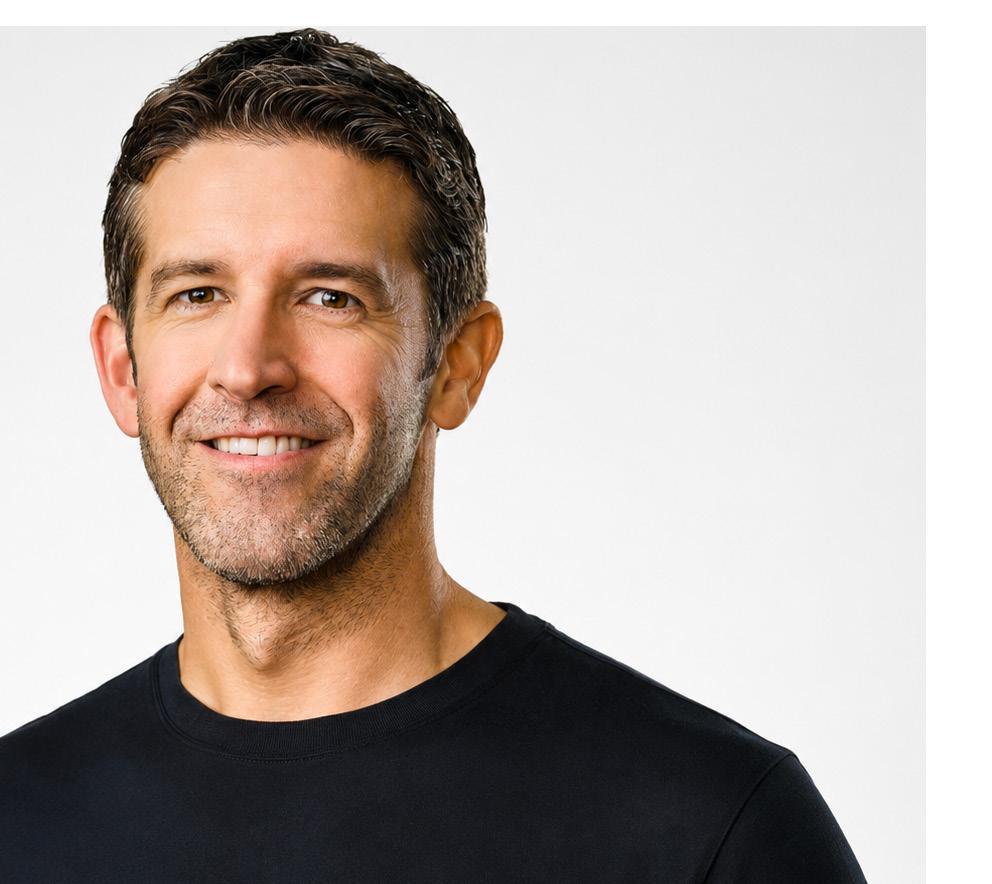
EVAN J. SCHWARTZ CHIEF INNOVATION OFFICER
AT AMCS GROUP
BILL BRIGGS CHIEF TECHNOLOGY OFFICER DELOITTE
ENGINEERING TOMORROW DELOITTE, APPLE AND AMCS GROUP ON THE LEADERS SHAPING THE NEXT ERA OF TECHNOLOGY
In an age where technology is no longer a department, but the operating system of global business, the world’s most influential organisations are being shaped by leaders who understand one essential truth: innovation only matters when it creates meaningful progress.
Across consulting, consumer technology and enterprise sustainability software, three names stand out as powerful examples of this new leadership era: John Ternus, Senior Vice President of Hardware Engineering at Apple; Evan J. Schwartz, Chief Innovation Officer at AMCS Group; and Bill Briggs, US Chief Technology Officer and Principal at Deloitte.
Each operates in a different arena. Apple builds the devices that define modern life. AMCS Group powers digital transformation across resource-intensive
industries, waste, recycling, logistics and sustainability. Deloitte guides some of the world’s largest organisations through complexity, change and reinvention. Yet the thread connecting these leaders is clear: they do not simply follow technology trends. They translate them into real-world value.
Turning Technology into Business Confidence
For Deloitte, that ability has become one of the reasons it remains a defining force in global professional services. The firm has built its reputation not only on scale, but on strategic relevance. With a global network serving major corporations, governments and industry leaders, Deloitte has become a trusted partner for organisations looking to modernise, transform and compete in uncertain markets.
At the centre of Deloitte’s technology vision is Bill Briggs, a leader whose work sits at the intersection of emerging technology and practical business transformation. As US Chief Technology Officer, Briggs helps clients understand how new technologies can reshape their organisations, not in some distant future, but from the reality of where they stand today.
That distinction matters. Many organisations talk about artificial
Engineering the Human Experience
That same disciplined approach to innovation can be seen at Apple through the work of John Ternus. As Senior Vice President of Hardware Engineering, Ternus has led the teams behind some of the most recognisable products in the world, including iPhone, iPad, Mac, Apple Watch, AirPods and Apple Vision Pro.
Apple’s power has always come from its ability to make technology feel human.
It understands that transformation is not about buying tools. It is about building confidence. It is about helping organisations make decisions in moments where the market is moving faster than traditional structures can handle. Deloitte’s showcase is not just its size; it is its ability to help clients turn complexity into clarity.
durable, responsible and useful.
Innovation for the Circular Economy
Where Apple transforms the consumer experience, AMCS Group is transforming the industries behind the global sustainability agenda. Evan J. Schwartz, Chief Innovation Officer at AMCS Group,
TECHNOLOGY AND SOFTWARE DELOITTE INSIGHT SHOWCASE
brings a practical and deeply operational view of innovation. His work focuses on how AI, SaaS platforms, data science and enterprise architecture can help industries such as waste, recycling, transport and logistics become more efficient, intelligent and sustainable.
Schwartz’s vision is especially relevant because sustainability has moved from corporate messaging into operational necessity. Companies now need data, visibility, compliance, automation and performance intelligence. They need to reduce cost while improving environmental outcomes. They need systems that can manage complexity across fleets, routes, materials, facilities, reporting frameworks and customer expectations.
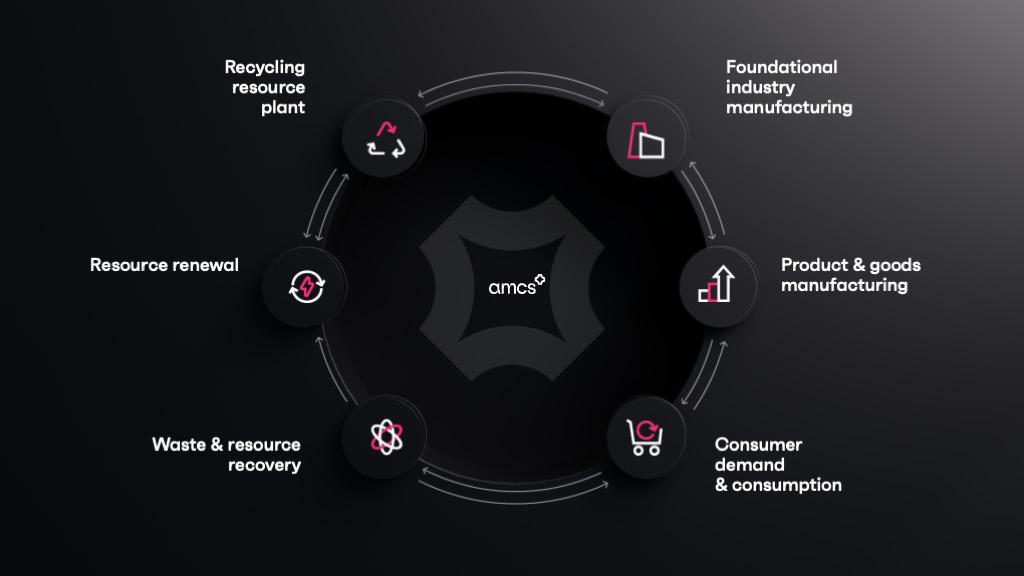
This is where AMCS Group has positioned itself as a technology partner for the circular economy. Its performance sustainability platform supports businesses that must operate with precision in demanding, asset-heavy environments. Schwartz’s role is to help turn emerging technologies into usable frameworks that improve decisionmaking, service reliability and commercial performance.
His approach to AI is particularly powerful. Rather than treating AI as a fashionable overlay, he has championed its role as part of wider operating-model transformation. For industries under pressure from labour shortages, rising costs and increased sustainability demands, AI can help move organisations from reactive, manual processes towards intelligent, automated workflows. The opportunity is not to replace human expertise, but to elevate it.
Three Leaders, One Shared Direction
Together, Ternus, Schwartz and Briggs reflect three different but complementary versions of modern technology leadership. Ternus shows the power of engineering excellence at consumer scale. Schwartz demonstrates how innovation can solve complex industrial and sustainability challenges. Briggs represents the strategic bridge between emerging technology and enterprise transformation. Their work highlights a wider business truth: the next generation of winners will be organisations that can combine technical ambition with disciplined execution.
TECHNOLOGY AND SOFTWARE DELOITTE INSIGHT SHOWCASE
The Deloitte Showcase of Relevance
For Deloitte, this is precisely where its leadership becomes most visible. The firm does not simply advise on change; it helps organisations absorb it. Through leaders like Bill Briggs, Deloitte gives clients the tools, thinking and confidence to navigate disruption with purpose. Its global reach, industry knowledge and technology capability allow it to support transformation across every level of an organisation.
The Deloitte showcase is therefore a showcase of relevance. In a world where every boardroom is asking what AI means, how to modernise legacy systems, how to protect data, how to improve productivity and how to build resilient organisations, Deloitte remains one of the few firms able to answer across strategy, technology, risk and people.
Engineering What Comes Next
Apple, AMCS Group and Deloitte may operate in different markets, but they each prove the same point: innovation is strongest when it is led by people who understand both the technology and the human outcome.
John Ternus is helping shape products that millions of people use every day. Evan J. Schwartz is helping industries turn sustainability into performance. Bill Briggs is helping enterprises prepare for a future that is arriving faster than many expected.
Together, they represent the positive face of technology leadership: intelligent, practical, ambitious and focused on impact.
For Business Enquirer, their stories offer a clear message to the global business community. The future will not be defined by technology alone. It will be defined by the leaders who know how to engineer it, govern it, scale it and make it matter.
THE COMPANIES THAT WILL OUTRUN TIME
There is a particular moment in every technological cycle when the conversation shifts. It moves away from curiosity and into consequence. Artificial intelligence has reached that moment. What was once framed as possibility is now revealing itself as a dividing line, separating organisations that are structurally prepared to move at speed from those still experimenting at the edges, unsure how to translate ambition into action.
Across boardrooms, AI remains a strategic priority. Investment is increasing, pilot programmes are multiplying, and leadership language has adapted accordingly. Yet beneath that surface, something more revealing is taking shape. Many organisations are not struggling to understand AI. They are struggling to make it real.
Few voices have been as consistent, or as clear, on this divide as Evan J. Schwartz. An Amazon best-selling author, Chair of the Computer Science and Cybersecurity Board of Advisors at Jacksonville University, and Adjunct Professor spanning project management, data science, AI model development, and software architecture, Schwartz operates at the intersection of academic rigour and enterprise execution. In his role as Chief Innovation Officer at AMCS Group,
he has become a leading voice on what it actually takes to move AI from ambition to operational reality.
This is the tension that defines the current landscape, and it is one that Schwartz has spent years dissecting. His argument is not that organisations lack vision. It is that they lack the systems required to execute against it.
“Most organizations don’t fail at innovation strategy. They fail at innovation execution,” he explains. “Strategy is about answering a very specific question. What should AI do in our business. Not what it can do. That distinction is critical.”
It is a subtle shift in language, but one that exposes a fundamental flaw in how many companies approach transformation. The temptation, particularly in a rapidly evolving market, is to begin with capability. What can the technology do. What tools are available. What competitors are deploying. The result is often an accumulation of disconnected solutions, impressive in isolation but incapable of producing sustained value.
Execution, as Schwartz sees it, is where those ambitions collide with reality. “AI is not a technology deployment. It is an operating model transformation,” he says. “We’re no longer solving a tech problem.
AMCS PROJECT DIRECTED BY: JAMIE WAITE
EVAN J. SCHWARTZ, AMCS GROUP
EVAN J. SCHWARTZ, AMCS GROUP
TECHNOLOGY AND SOFTWARE
It’s a digital workforce challenge. If you don’t redesign how work gets done, how decisions are made, and who owns outcomes, the strategy never materializes.”
There is a quiet severity to that assessment. It reframes AI not as an enhancement layer, but as something far more structural. The implication is clear. Organisations that treat AI as an add-on will inevitably stall, not because the technology fails, but because the system around it remains unchanged.
This gap between intent and execution is visible across industries. Leadership teams speak confidently about AI as a strategic capability, yet within their organisations it often manifests as fragmented experimentation. Small teams build pilots, departments test isolated use cases, and pockets of progress emerge. But they rarely scale.
Schwartz describes this as the “lab success problem,” a phrase that captures the illusion of progress that can take hold when controlled experiments outperform expectations but fail to translate into operational environments. “Executives often ask what AI can do, but that’s the
wrong question,” he says. “The better question is what should AI do in our business. Without that clarity, teams chase use cases, deploy tools, and build pilots that never scale.”
The consequences of that misalignment are not neutral. AI systems, by design, execute instructions without context. They amplify whatever direction they are given. If leadership intent is vague, the outcome is not simply inefficiency, but scaled confusion. “AI does not understand business strategy, and strategy does not equal context,” Schwartz notes. “It will execute exactly what it’s told, without judgment. If leadership doesn’t define intent clearly, the system will amplify misalignment at scale.”
The organisations that are beginning to break through this barrier are doing something fundamentally different. They are not starting with tools. They are starting with structure. They are asking not how to deploy AI, but how to build an environment in which it can operate consistently and at scale.
Central to this is what Schwartz describes as three non-negotiable conditions
Schedule a strategy call today!
EVAN J. SCHWARTZ, AMCS GROUP
TECHNOLOGY AND SOFTWARE
for moving from experimentation to repeatable value. Governance, use cases, and data. The sequence matters, but more importantly, the relationship between them defines whether AI becomes embedded or remains peripheral.
“Governance must come first,” he says. “Organizations need to define what AI should do, not just what it can do. That includes ethical boundaries, accountability, and the need for humans to remain in control. Without this, scaling AI introduces risk faster than value.”
It is a point that resonates deeply in an environment where regulatory scrutiny is increasing and public trust remains fragile. Governance is often perceived as a constraint, something that slows innovation. In practice, it is the opposite. It creates the conditions for safe acceleration.
From there, use cases provide direction. They anchor AI in business reality, ensuring that deployment is tied to outcomes rather than experimentation for its own sake. Only then does data come into play, not as a starting point, but as an enabler.
“Many organizations try to solve for data first,” Schwartz explains. “But in reality, use cases tell you what data you actually need. Data alone doesn’t drive success. It only supports it.”
What emerges from this is a model that is neither linear nor universal. The path to adoption varies depending on organisational culture, risk appetite, and operational maturity. A highly regulated enterprise may prioritise governance and data before moving into use cases. A more agile organisation may iterate rapidly, building governance alongside deployment. The critical factor is alignment.
This emphasis on alignment extends into what Schwartz has formalised as his Successful AI Adoption Model, a framework that brings together three interdependent systems. Stewardship, operational design, and adoption.
These are not abstract concepts. They are practical levers that determine whether AI becomes embedded within the fabric of an organisation or remains an external layer. “These three elements are not
independent,” he says. “They are a tightly integrated system for building a digital workforce.”
The notion of a digital workforce is perhaps the most defining idea in Schwartz’s thinking. It moves the conversation beyond automation and into augmentation, beyond efficiency and into scale. It is not about replacing human effort, but about reconfiguring how work is performed.
Within this model, the adoption layer is shaped by culture. There is no single blueprint. Organisations must align their approach to their own behavioural reality. Misalignment here is one of the most common causes of failure.
The operational layer, meanwhile, defines how work is executed. It forces organisations to confront difficult questions. Are processes being fully automated, with AI agents operating under human supervision, or is the goal to augment human capability by offloading low-value tasks. The answer determines everything from organisational structure to performance metrics.
Yet it is the third layer, stewardship, that Schwartz identifies as the most overlooked and the most critical. “AI shouldn’t replace human judgment. It requires it at every level,” he says. “Stewards act as the managers of the digital workforce. They provide context, ensure data integrity, and validate outcomes.”
The emergence of this role signals a broader shift in how organisations must think about talent. AI adoption is not simply a technical challenge. It is a human one. It requires new capabilities, new forms of oversight, and a redefinition of accountability.
“Leadership is shifting from directing technology initiatives to designing operating systems for the business,” Schwartz explains. “Leaders now need to define what AI should do in the business, where humans remain accountable, and how value is measured and scaled.”
This reframing places a new responsibility on executive teams. It is no longer sufficient to sponsor innovation. They must architect it. They must design
EVAN J. SCHWARTZ, AMCS GROUP
EVAN J. SCHWARTZ, AMCS GROUP
systems that integrate human judgment with machine execution in a way that is both scalable and controllable.
The organisations that succeed in doing this are already demonstrating what that future looks like. They are embedding AI into core workflows, not isolating it in innovation labs. They are investing in governance as a strategic capability, not a compliance exercise. They are redefining roles, building stewardship functions, and measuring value in terms of outcomes rather than activity.
The impact is not incremental. It is exponential. “You’re not targeting efficiency percentages here,” Schwartz says. “You’re targeting four to eight times productivity.”
That level of acceleration changes the competitive landscape entirely. It compresses timelines, reshapes customer expectations, and redefines what constitutes responsiveness. In such an environment, hesitation carries a cost that is often underestimated.
Schwartz is unequivocal on this point. “The organizations that succeed over the next three to five years will be those that operationalize AI. They will start with governance, align adoption to culture, redesign their operating model, and embed AI into core workflows.”
The alternative is stagnation. Organisations that remain in pilot mode, treating AI as a tool rather than a structural transformation, will find themselves increasingly disconnected from the pace of the market.
“Time is running out,” he says. “If you think you can sit this one out and wait, by the time you see the need to catch up, your competition is so far out ahead of you, you’ll be out of business.”
It is a stark warning, but one grounded in observable reality. In industries where AI has already been operationalised, the gap between leaders and laggards is widening rapidly. Decisions are being made faster, services delivered sooner, and value captured earlier in the cycle.
Schwartz offers a simple but powerful illustration. While one company is preparing a response to a customer proposal, another has already responded in near real time, secured the business, and begun execution. The difference is not effort. It is structure.
This is the future that is taking shape. Not one defined by isolated innovation, but by integrated systems. Not one where AI sits alongside the business, but where it is woven into its core.
The question, then, is not whether organisations will adopt AI. It is how they will do so, and whether they will do it in time. The companies that understand this distinction, that recognise AI as an operating model transformation rather than a technological upgrade, will not simply keep pace. They will redefine it.
In that sense, the real story of AI is not about machines. It is about momentum. About which organisations can move with clarity, with structure, and with intent. And which, despite all their ambition, will find themselves watching the future arrive without them.