HOW ZING TOOTHPASTE IS ELEVATING A FORGOTTEN RITUAL
Some of the most essential products in our daily lives have a tendency to disappear in plain sight. Not because they lack importance, but because they have remained unchanged for so long that we stop noticing them altogether. Toothpaste is one of those products— functional, clinical, and largely uninspiring. For decades, oral care has existed quietly in the background, dominated by legacy brands and incremental innovation, with little suggestion that anything needed to change.

Until, gradually, it did.
Zing Toothpaste represents a different kind of disruption—one that is less about noise and more about intention. Rather than reinventing oral care through bold claims or dramatic marketing, it reframes something deeply routine through the lens of modern lifestyle, design, and performance. In doing so, it taps into a broader cultural shift: the re-evaluation of everyday habits. In today’s consumer landscape, even the smallest rituals are being asked to do more—and to mean more.
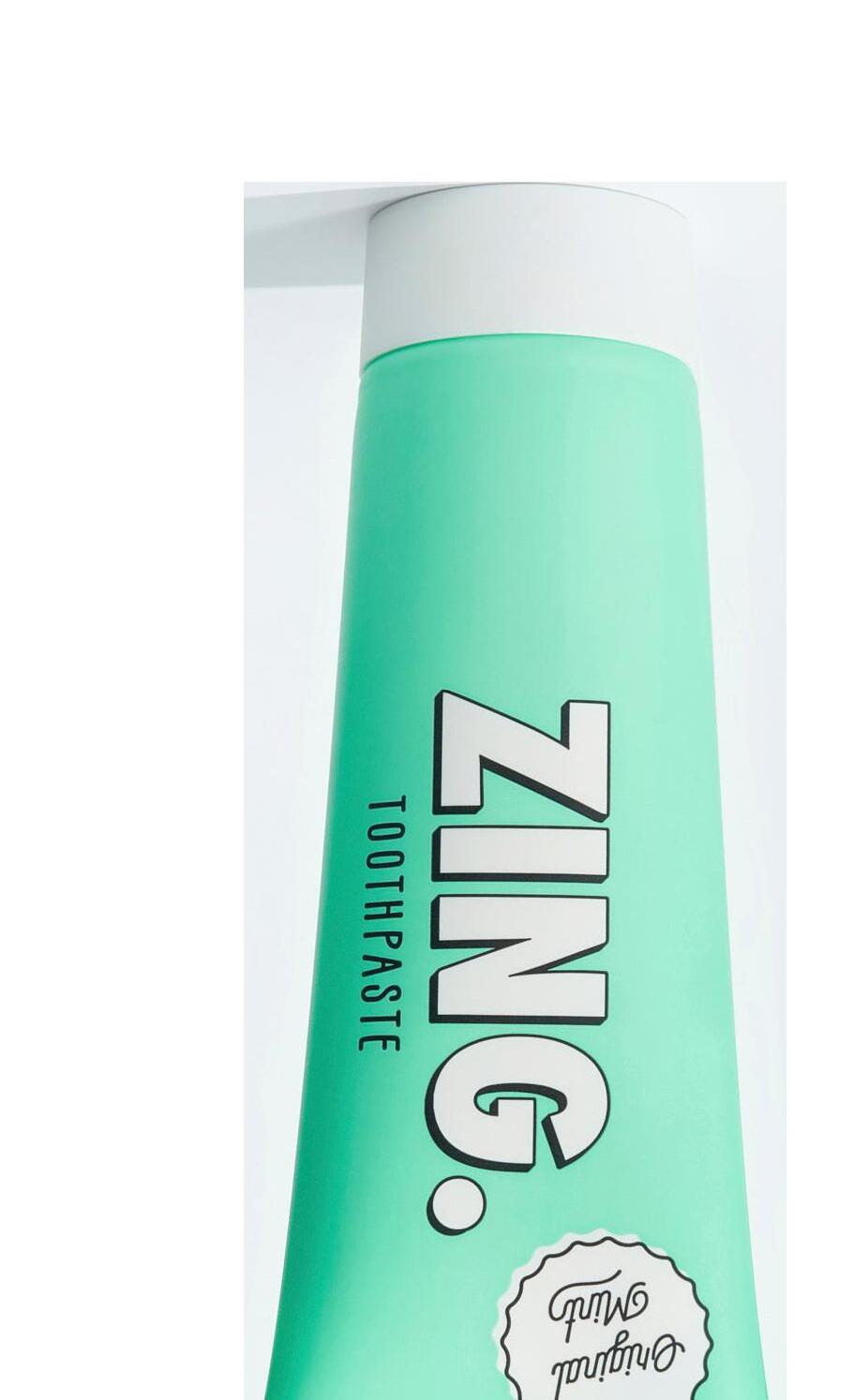
Zing Toothpaste

At the heart of Zing’s approach is a clear understanding that the future of consumer products lies in the collapse of categories. It is no longer enough for something to simply perform a single function. Increasingly, products are expected to clean, repair, protect, and integrate seamlessly into a wider narrative of health and wellbeing.
Zing’s formulation reflects this shift. Fluoride, long regarded as a cornerstone of cavity prevention, is paired with hydroxyapatite—a mineral that mirrors the natural structure of tooth enamel and supports remineralisation. This combination is not accidental. It moves beyond the binary debates that have historically defined oral care, offering instead a more holistic, integrated solution. Rather than choosing between traditional protection and modern alternatives, Zing positions itself as an evolution of both.
This sense of refinement extends to its approach to whitening. Instead of relying on harsh abrasives, the formula incorporates enzymes such as papain to gently dissolve surface stains caused by everyday habits like coffee, wine, and tea. The result is a quieter, more gradual form of effectiveness—less about immediate transformation and more about consistent, long-term improvement.
That philosophy runs throughout the product. With a low-abrasion formula designed for daily use, Zing avoids the dramatic “before and after” narrative that has long defined the category. Instead, it emphasises maintenance— subtle, cumulative, and ultimately more sustainable.
Just as important as what the product includes is what it leaves out. Zing’s formula is free from SLS, a common foaming agent that can irritate sensitive mouths, and excludes titanium dioxide, a pigment often used for cosmetic whitening rather than functional benefit. These decisions reflect
a broader shift in consumer expectations. Increasingly, people are not just interested in what a product does—they want to know what it contains, how it is made, and whether it aligns with their values.
Zing responds to this demand with clarity. The product is vegan-friendly, crueltyfree, and manufactured in the UK using recyclable packaging and a reduced carbon footprint compared to many mass-market alternatives. Yet notably, the brand does not overstate these credentials. Sustainability and transparency are not framed as moral differentiators, but as part of a baseline standard of quality. They are presented not as selling points, but as expectations.
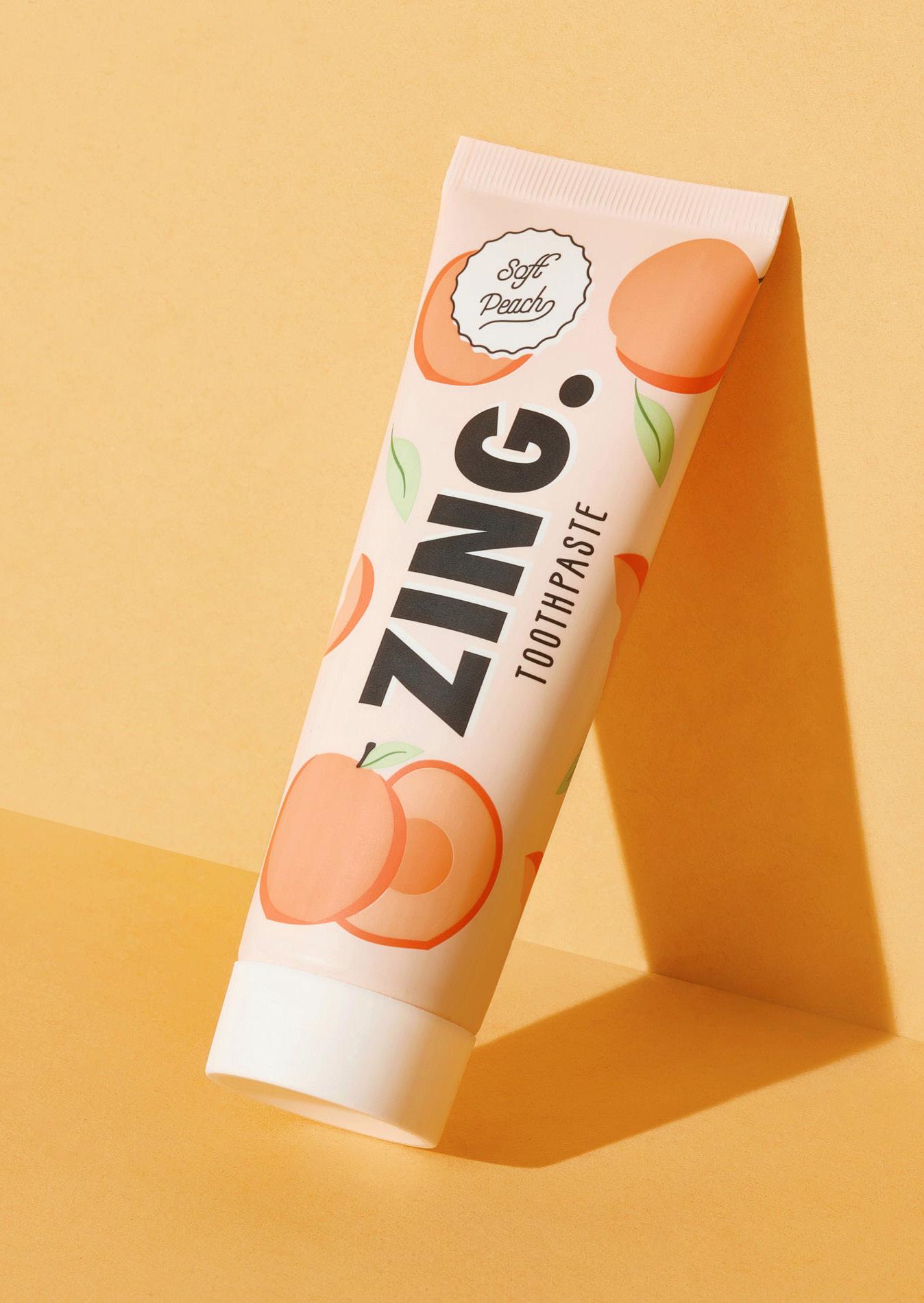
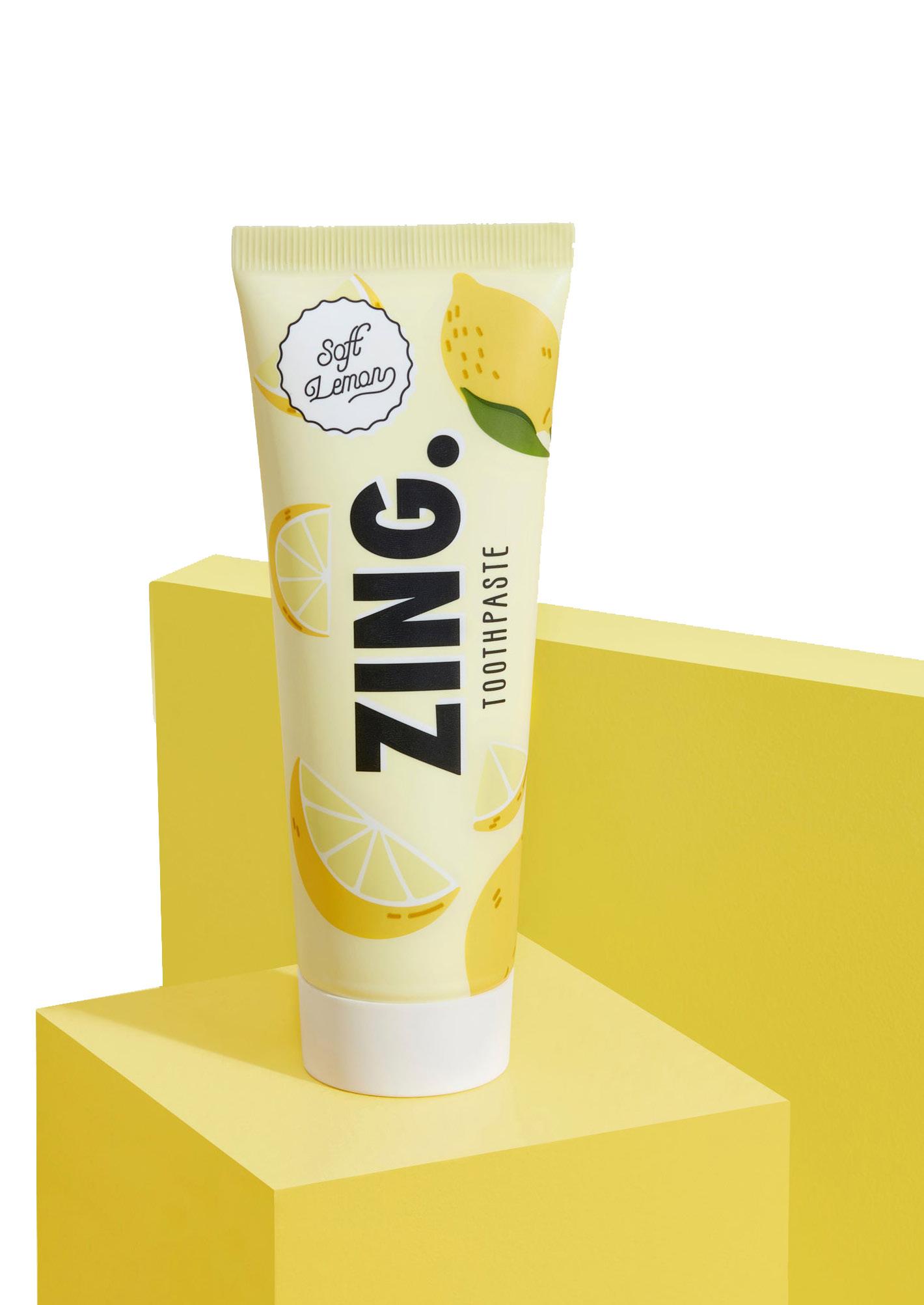
This understated confidence carries through to the brand’s aesthetic. Clean, minimal, and slightly playful without veering into novelty, Zing feels designed to be seen. It is the kind of product that sits comfortably on a bathroom shelf rather than being tucked away in a cabinet. While that may seem like a small detail, it reflects a larger shift: design is no longer reserved for luxury categories. It has become an expectation, even in the most everyday items.
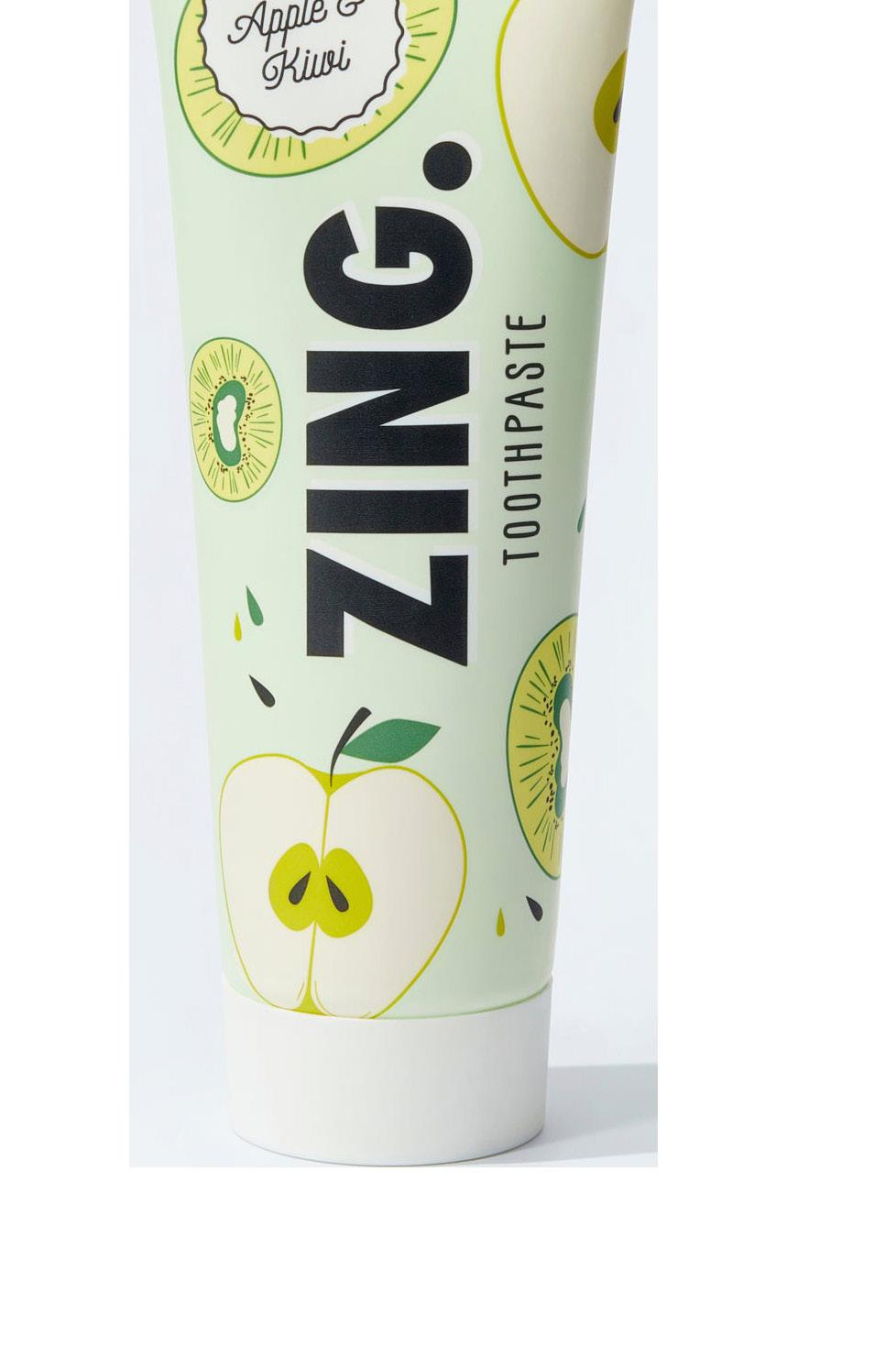
The flavour profile reinforces this sense of reimagination. Moving beyond the long-standing dominance of mint, Zing introduces options such as peach, lemon, and apple—subtle variations that transform brushing from a purely functional act into a more sensory experience. It is a small but telling change, one that speaks to a growing desire for personalisation and variety, even in the most routine moments.
Taken together, these elements allow Zing to transcend its category. What it offers is not simply toothpaste, but a reconsidered ritual—something more deliberate, more aligned with the values that shape decisions in areas like food, fitness, and lifestyle. Oral care, in this context, becomes part of a broader ecosystem of selfoptimisation.
From a business perspective, this positioning is particularly compelling. Zing sits within a new generation of brands redefining what “premium” means. It is no longer about exclusivity in the traditional sense, but about intentionality—paying more for products that feel better designed, more transparent, and more aligned with contemporary expectations.
Priced between £10 and £13, Zing occupies a carefully chosen middle ground. It sits above standard supermarket options, yet remains more accessible than specialist dental products. This positioning mirrors a wider trend seen across industries, from skincare to nutrition to apparel: the rise of the “premium everyday.” Products that justify their price through a combination of performance, design, and narrative, rather than branding alone.
Zing’s growth also reflects a broader shift in how consumers think about health. Oral care is no longer treated as an isolated category; it is increasingly connected to overall wellbeing, linked to everything from diet to long-term health outcomes. By focusing on enamel strength, sensitivity reduction, and lasting protection, Zing aligns itself with the language of modern wellness rather than traditional hygiene.
Of course, no contemporary brand operates without scrutiny. Zing has, at times, attracted regulatory attention, particularly around claims related to competitor ingredients. This highlights an important reality: as brands push boundaries and redefine categories, they must also navigate the demands of scientific accuracy and regulatory oversight. In a space as trust-dependent as health, credibility remains paramount.
For consumers, however, the broader takeaway is not controversy, but evolution. The fact that toothpaste is now part of a wider conversation about ingredients, sustainability, and performance is, in itself, a sign of how much the landscape has changed—and how unlikely it is to revert.
What makes Zing most interesting is not any single feature, but what it represents as a whole. It signals a move away from passive consumption towards active choice, a recognition that even the most routine products can be improved, refined, and reimagined. It speaks to a generation that is no longer satisfied with default options, and that expects more from the products it uses every day.
In that sense, Zing is less about disruption and more about alignment. It brings oral care into step with the expectations already established in adjacent industries, from skincare to nutrition to lifestyle design. And once that alignment happens, it becomes difficult to reverse.
Because the question is no longer whether a product works. It is whether it works well enough for the life you are trying to build.
Zing answers that question not through exaggerated promises, but through a considered balance of formulation, design, and positioning. It elevates the everyday without overcomplicating it—a subtle but powerful shift.
In doing so, it captures something many brands overlook: true innovation is not always about creating something entirely new. Sometimes, it begins with looking at something familiar and asking a better question.
Why does it have to stay this way?
For toothpaste, the answer is becoming increasingly clear.
It doesn’t.
www.zingtoothpaste.com