FROM PLASMA TO PATIENTS: THE LEADERSHIP BEHIND HOW PLASMAGEN IS CLOSING INDIA’S THERAPEUTIC GAP




There are few areas of modern healthcare where the distance between scientific capability and patient access is as stark as it is in plasmaderived therapies. These are not optional treatments or marginal interventions. They are essential, often life-saving, relied upon in critical care, immune deficiencies, trauma response and rare diseases. Yet in India, for decades, access to such therapies has been shaped not

by need, but by availability, with a heavy dependence on imports defining both supply and affordability.
It is this imbalance that sits at the heart of PlasmaGen’s story. Under the leadership of Vinod Nahar, Vivek Vasudev Kamath, and Sethumadhavan, the company has moved with clarity and intent to address what is, in essence, a systemic gap. Their work is not framed as disruption for its own sake, but as the deliberate construction of an ecosystem capable of delivering consistency, quality and access at scale.

PLASMAGEN
PROJECT DIRECTED BY: RUPERT KAY

Cemil Biosciences Private Limited is a Bangalorebased biotechnology company supporting India’s Life Sciences and Pharmaceutical industries with dependable, high-quality microbiology solutions. Established in 2019, the company strives to simplify and standardize microbiological testing while consistently supplying innovative and reliable products, enabling Microbiologists to concentrate more on their core areas.
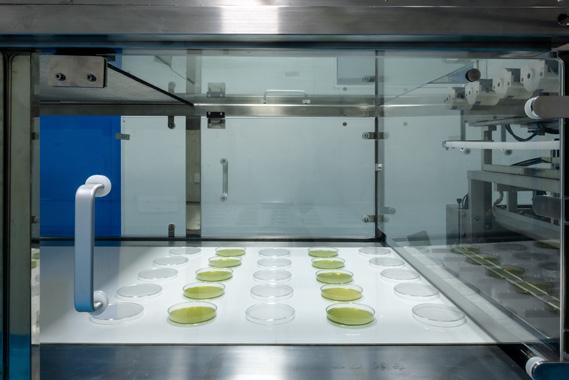
Cemil operates a fully automated, GMP-compliant manufacturing facility, ensuring complete product traceability and eliminating the risk of contamination throughout the production process. Its operations follow a structured, ISO 9001:2015 Certified quality management system, ensuring disciplined processes, documentation, and continual improvement across manufacturing and supply. Comprehensive batch traceability and controlled production practices further strengthen product reliability and consistency.
The organization is led by a multidisciplinary team with extensive expertise in microbiology, biotechnology,
www.cemilbio.com

quality assurance, regulatory compliance, and engineering. Their collective experience allows Cemil to deliver solutions that are both compliant and operationally efficient.
Cemil Biosciences offers a wide range of ready-touse microbiology products, including pre-poured culture media plates, liquid media, and agar in bottles formulated for convenient melting and pouring. Its core range includes widely used selective and non-selective culture media, and lab consumables such as sterile swabs, filter funnels, sampling bottles, sterile IPA and sterile Petri Plates, available in standard and lockable formats. Their experienced R&D team works closely with clients to create bespoke solutions to meet unique customer requirements.
With a strong focus on customization, cost efficiency, and dependable supply, Cemil Biosciences continues to support laboratories across India with practical, Madein-India solutions that simplify microbiological testing and improve operational outcomes.


What emerges from conversations with the leadership team is a shared understanding that the challenge is not singular. It is layered, spanning science, infrastructure, regulation, logistics and trust. Plasma-derived therapies cannot be scaled through manufacturing alone. They require a fully integrated approach, one that begins with ethical plasma collection and extends through to advanced fractionation, rigorous quality control and reliable clinical delivery.
That thinking has shaped PlasmaGen from its earliest days. The original ambition to reduce India’s reliance on imported therapies has evolved into something far more comprehensive. Today, the organisation is focused on building a sustainable, end-to-end plasma ecosystem, one that aligns with global standards while remaining grounded in the realities of the Indian healthcare landscape.
The leadership dynamic behind that evolution is particularly instructive. Each brings a distinct perspective, whether rooted in scientific expertise, operational execution or commercial strategy. What is notable, however, is not the difference in backgrounds, but the cohesion in decision-making. In a sector defined by complexity and regulation, the ability to align across disciplines is not simply beneficial, it is essential. PlasmaGen’s progress reflects that alignment, with innovation, scale and patient impact consistently treated as interconnected priorities rather than competing interests.
Nowhere is this more evident than in the company’s approach to plasma fractionation. Widely regarded as one of the most demanding areas within biopharmaceutical manufacturing, fractionation requires precision at every stage. Plasma is not a uniform raw material. It is biologically variable,

sensitive and highly regulated. Converting it into safe, effective therapies demands advanced purification processes, robust viral inactivation systems and a level of process control that ensures reproducibility across batches.
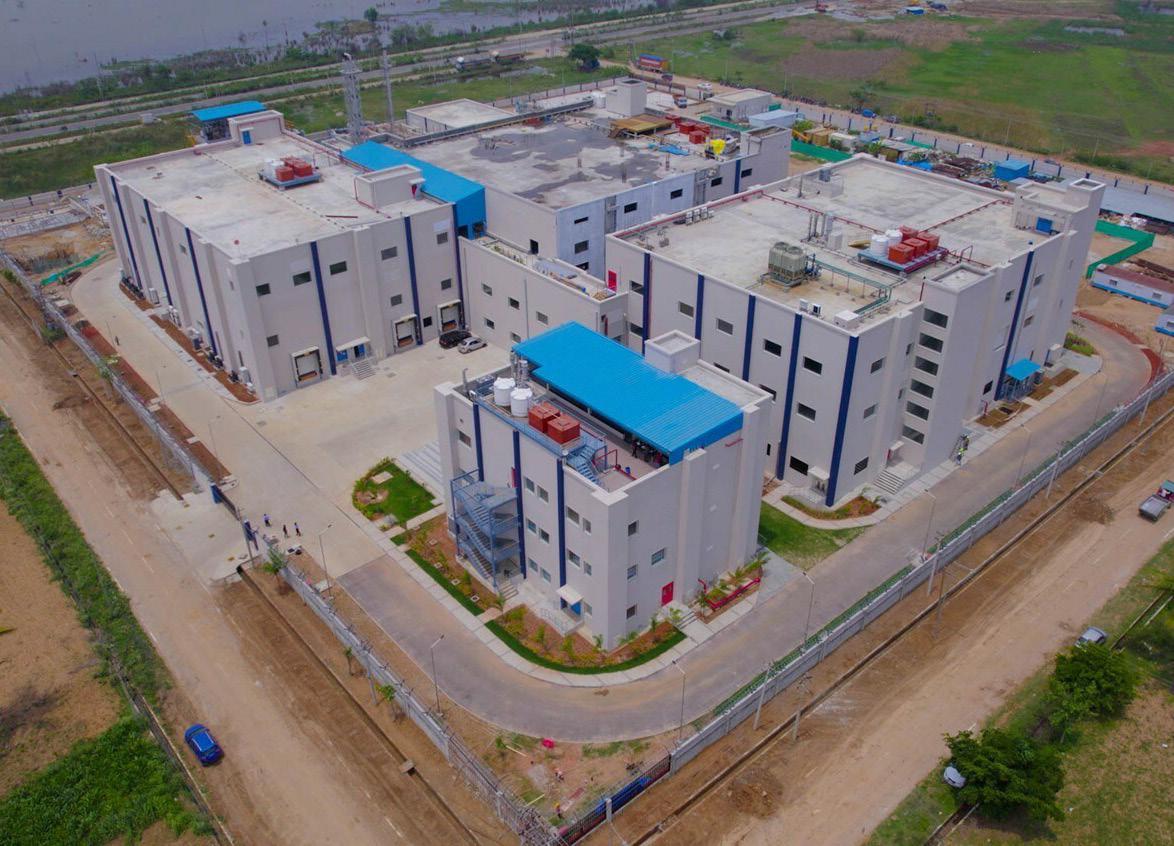
PlasmaGen’s facilities have been developed with these demands in mind. Built to meet internationally recognised standards, they incorporate next-generation technologies and automated systems designed to optimise yield while maintaining uncompromising quality. Compliance with European and British pharmacopoeial benchmarks reflects a deliberate decision to operate at a global level, positioning the company not only as a domestic solution, but as a credible international player.
This focus on manufacturing excellence, however, is only one dimension of the broader strategy. If production represents the backbone of the business, then plasma










collection and supply chain management form its circulatory system. Historically, India’s plasma infrastructure has faced limitations, particularly in the availability of dedicated plasmapheresis centres. This has constrained the ability to build a consistent and scalable supply of plasma, reinforcing reliance on recovered sources and imported material.
Addressing this challenge requires more than capital investment. It requires behavioural change. Plasma donation is not widely understood, and building a culture of participation takes time.
PlasmaGen’s efforts in donor awareness and engagement reflect a long-term view, one that recognises trust as the foundation of any sustainable collection model. Education, transparency and ethical practices are central to that effort, ensuring that donors are not only informed, but confident in the impact of their contribution.

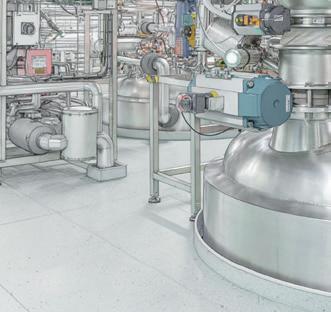
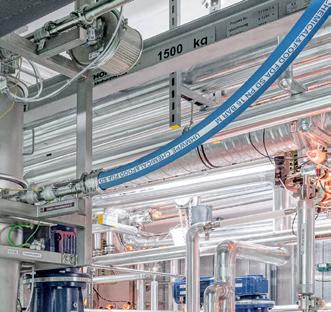
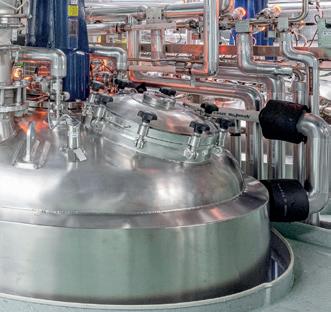





Modular design by the principle: Process first. Planning from the inside out.
Holistic plant engineering from the idea to production of:
Special Dosage Forms

Alongside collection, the logistical demands of plasma handling introduce another layer of complexity. Temperature control is critical at every stage, from collection through to processing and distribution. Cold-chain infrastructure must operate with precision across diverse geographies, often in environments where variability is the norm. PlasmaGen’s investment in this area underscores a broader operational philosophy: reliability is not an outcome, it is a system.
That system extends into the company’s distribution model, particularly within India’s fragmented healthcare landscape. Delivering therapies consistently across regions requires a combination of infrastructure, planning and clinical engagement. PlasmaGen has approached this challenge by pairing robust supply chain capabilities with structured medical education, ensuring that clinicians are equipped with both the knowledge and the confidence to utilise plasma-derived therapies effectively.
Trust, once again, is central. In a field where clinical outcomes are closely tied to product integrity, relationships between manufacturers, hospitals and physicians carry significant weight. PlasmaGen’s emphasis on transparency and long-term partnership reflects an understanding that trust is built incrementally, through consistent delivery and demonstrated quality.
Beyond the operational and clinical dimensions, the company’s work speaks to a broader shift in how healthcare systems approach resilience. Local manufacturing of plasma-derived therapies is not simply a commercial advantage. It is a strategic necessity. By reducing dependence on imports, India gains greater control over supply continuity, pricing stability and long-term planning. In a global environment where supply chains are increasingly scrutinised, this shift carries significant implications.
The economic impact is equally substantial. Building a domestic plasma ecosystem requires the development of
specialised capabilities across science, manufacturing and logistics. PlasmaGen’s growth has contributed to this capability building, creating skilled employment opportunities and strengthening India’s position within the global biopharmaceutical sector.
At the same time, the leadership team is clear in its positioning of commercial success. Growth, while important, is not pursued at the expense of accessibility. Quality, affordability and patient access are treated as fixed principles rather than variables to be adjusted. This approach reflects a disciplined governance model, supported by strong investor backing and a long-term perspective on value creation.
That balance becomes particularly relevant as PlasmaGen expands its global footprint. International markets present both opportunity and complexity, with diverse regulatory requirements shaping entry strategies. Rather than pursuing rapid expansion, the company has adopted a measured approach, focusing on regions where unmet clinical need is significant and where its capabilities can deliver meaningful impact.
Markets across South Asia and parts of Latin America have emerged as strategic priorities, reflecting similarities in healthcare challenges and access gaps. Expanding into these regions requires careful navigation of regulatory frameworks, including country-specific approvals and, in some cases, additional clinical data. Managing these complexities while maintaining consistent quality standards is a defining feature of the company’s international strategy.
Central to this expansion is the network of ecosystem partners that underpin PlasmaGen’s operations. From plasma collection organisations and logistics providers to manufacturing service partners and hospital networks, collaboration sits at the core of the business model. These partnerships are not transactional. They are structured around shared quality systems, governance frameworks and long-term




alignment, enabling the company to operate effectively at scale.
The importance of this ecosystem cannot be overstated. In a sector where each stage of the value chain is interdependent, the strength of partnerships directly influences the reliability of outcomes. PlasmaGen’s ability to manage this network reflects both operational discipline and strategic foresight, ensuring that growth is supported by a stable and scalable foundation.
Looking ahead, the leadership team’s vision is both ambitious and grounded. Over the next five years, PlasmaGen aims to establish itself as a globally credible plasma therapeutics company, one that serves domestic needs while expanding selectively into international markets. Success will be defined not by scale alone, but by the ability to deliver consistent quality, achieve global regulatory benchmarks and expand patient access in a meaningful way.
There is, within this vision, a clear sense of purpose. PlasmaGen is not positioning itself merely as a participant in the global biopharmaceutical industry, but as a contributor to a broader shift towards equitable access. In doing so, it reflects a wider recognition that healthcare innovation must ultimately be measured not by its sophistication, but by its reach.
For Vinod Nahar, Vivek Vasudev Kamath, and Sethumadhavan, that measure remains constant. The goal is not simply to build capacity, but to ensure that capacity translates into impact. To move, steadily and deliberately, from plasma to patients, closing the gap that has long defined this space.
And in that transition, PlasmaGen offers something more than a business success story. It offers a blueprint for how leadership, when aligned with purpose and executed with discipline, can reshape not only an industry, but the outcomes it delivers for those who depend on it most.
www.plasmagen.com