BUSINESS BUDDHA




True expressions of Scotland’s famous Whisky regions






Specially selected, matured, and blended for a truly remarkable flavor experience . True whiskymakers since 1948.

Contributing
Alana Baxter
DJ Nick Proof
Gilbert Bong
Kevin Halliday
Lara Schuelke
Linda Kupecek
Linda Easthouse
Lindsay White
Michelle Falzone
Moji Ajele
Trina N. Lo
Design Director
FreshInk Communications
Graphic Designer
Emilia Sikorska
Photography
Jana Miko
Roxanne Coetzee
Business Buddha Inc.
1925 - 18 Avenue NE, #115 Calgary, AB T2E 7T8 By Appointment Only
Phone: 587-887-1021 Ext: 202 Email: info@businessbuddha.ca
Website: businessbuddhamagazine.ca
SOCIAL MEDIA
Facebook @businessbuddhamagazine
Instagram @businessbuddhamagazine
LinkedIn @businessbuddhamagazine
Advertising Inquiries
587-887-1021 Ext: 202 ads@businessbuddha.ca
Brenda Davidson
587-887-1021 Ext: 200 brenda@businessbuddha.ca
Faye Elford
587-887-1021 Ext: 201 faye@businessbuddha.ca

Subscriptions



The first issue of this magazine taught me so many lessons in publishing and people—many that were somewhat surprising and others that were no surprise at all.
With the turmoil and uncertainty the world has been facing—tariffs changing seemingly daily, wars, floods, and massive economic fluctuations—it has been a challenge to sell advertising. The traditional revenue streams that publishers have long relied upon feel increasingly unpredictable in our current climate. Yet what I've experienced has been nothing short of encouraging.
Without prompting, we've received fabulous feedback about our first issue. Many people have shared that they love the content, the visuals, and especially that it's concise enough to read in one sitting. I loved hearing that! It tells me we're hitting the mark we intended as we continue to figure out the rest of the kinks—which are simply matters of uncertainty with delivery and workflow refinements.
What caught me off guard was the speed at which people respond to inquiries for content creation. It's not
what I expected! With social media and our cell phones forever in our faces, the pace of communication has accelerated beyond anything I anticipated. Keeping up is a challenge. I own three businesses, each with its own social media accounts and email, as well as those for my volunteer role. I also maintain a personal social media presence and handle social media for my volunteer role.
This digital juggling act has become the new reality for entrepreneurs and publishers alike. We're operating in an environment where responsiveness isn't just appreciated—it's expected. The same technology that enables us to reach audiences instantly also demands that we be available instantly.
Yet amid this whirlwind of connectivity and constant communication, there's something deeply satisfying about creating content that people genuinely want to consume. In a world oversaturated with information, we've managed to produce something that readers find valuable enough to finish in one sitting. That's no small feat.
As we move forward with future issues, I'm reminded that publishing—like any
business—is ultimately about serving people. The economic headwinds, the technological pressures, the operational challenges—these are all part of the deal.
But at the heart of it all is the simple goal of creating something worthwhile for our readers and connecting Canada's business community.
The lessons from our first issue continue to inform our approach, and I'm excited to see how we'll evolve while staying true to what resonates with our audience.
We acknowledge that Business Buddha is located in the heart of Southern Alberta, on the traditional territories of the peoples of Treaty 7. This includes the Blackfoot Confederacy, comprised of the Siksika, Piikani, and Kainai First Nations, as well as the Tsuut’ina First Nation and the Stoney Nakoda Nations, including Chiniki, Bearspaw, and Goodstoney First Nations. We also recognize
that Calgary is home to Métis Nation of Alberta, specifically within Districts 5 and 6. This land is situated northwest of where the Bow River meets the Elbow River, a site traditionally known as Moh’kins’tsis to the Blackfoot, Wîchîspa to the Stoney Nakoda, and Guts’ists’i to the Tsuut’ina. We honor the rich histories, languages, cultures, and traditions of
these Nations and communities whose presence continues to enrich this region.
On this land and in this place, we strive to learn together, walk together, and grow together ‘in a good way,’ fostering meaningful relationships with Indigenous Peoples and respecting their enduring connection to this land.
by Alana Baxter
I’ve always believed that what we buy and who we buy it from—matters. The things we bring into our homes and wear on our bodies have the power to connect us to people, to stories, and to a sense of place. That belief is at the heart of why I started Fitzba. Fitzba is a digital platform designed to make it easier for people to shop local. We help small retailers get discovered through our website and app by showcasing their products to a broader audience that values authenticity, community, and connection.
shadowing their team. That call turned into a summer job—and eventually, a full scholarship in exchange for three years of work after graduation. I was hooked. Not just by the code or the systems, but by the idea of solving real problems for real people.
Later, as I worked in consumer product development, I began to understand how deeply meaningful it is when local businesses help people discover products in a safe, trusted space. I fell in love with those relationships, with the way small shops act as community
"FITZBA CREATES A DEDICATED SPACE WHERE LOCAL RETAILERS CAN SHOWCASE THEIR UNIQUE OFFERINGS AND CONNECT WITH CUSTOMERS WHO VALUE AUTHENTIC, COMMUNITY-BASED SHOPPING EXPERIENCES"
But this isn’t just about retail. For me, it’s about creating a more accessible, human-centred economy—where local businesses have the tools they need to thrive.
My journey into tech and entrepreneurship started in a pretty unconventional way. While I was studying computer engineering, I cold called the CEO of a Calgary avionics startup and asked if I could spend a day
anchors. And I knew I wanted to build something that made it easier for them to compete in an increasingly digital-first world.
But building something that doesn’t exist yet? It’s hard.
Every process, every feature, every system—you have to figure it out from scratch. There’ve been moments I’ve questioned if it was worth it. But then a shop owner will tell me that Fitzba
brought in a wave of new customers— people who actually walked into their store because of us. That’s what keeps me going.
One of the biggest challenges we face is helping people rethink what "buying Canadian" really means. We hosted a panel with the Canadian Federation of Independent Business where we unpacked this exact issue. Many people don’t realize that buying from a locally owned store—even if the product isn’t made here—supports Canadian jobs, contributes taxes, and helps build stronger communities. That nuance matters.
We’ve even added little maple leaf icons next to Canadian-owned shops and products in our platform so shoppers can make informed choices. There’s still a groundswell of support for local and Canadian-owned, but we need to keep the energy alive with clear, actionable ways for people to participate.
Of course, no conversation about retail today would be complete without talking about AI. When used well, AI can help small businesses understand their customers and streamline their operations. But here’s the thing: technology should make personal service more personal, not less. I believe in using tech to amplify what makes local shopping special—not erase it.

And finally, sustainability. Consumers are becoming more conscious and more skeptical—they want real commitment, not corporate greenwashing. That’s where small businesses shine. When people know the shop owner by name and see their values in action, that trust is irreplaceable.
To any founder just starting out: use the resources around you. Canada has incredible programs and people ready to support new entrepreneurs. And above all, build your community. No one gets through the hard parts alone.
Fitzba is my way of combining what I love most: technology, community, and purpose. I didn’t just want to create a platform. I wanted to create a movement—one that brings heart back into the way we shop.
Advice for Entrepreneurs...
There are so many incredible resources for startups in this country. Use them. And more importantly, build your network. Surround yourself with people who’ll support you through the hard years.
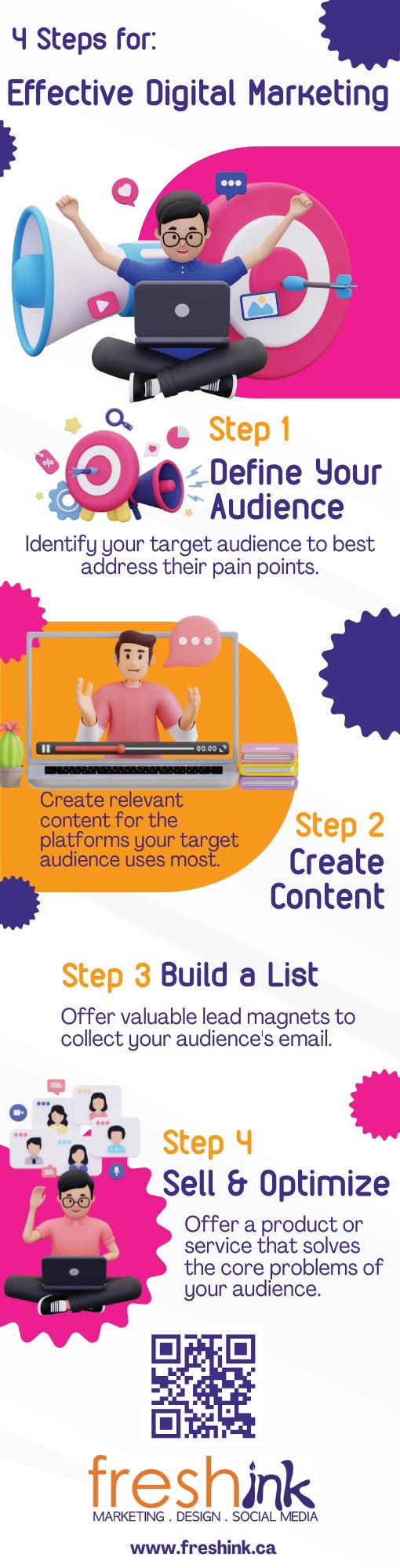
The convergence of physical and digital retail experiences isn't just a trend—it's becoming the survival baseline for small businesses. Retailers that integrate omnichannel strategies effectively report 30% higher customer lifetime value than single-channel competitors.
We're helping local storefronts leverage this agility through tools that bridge their physical presence with digital discovery. 85% of people are experiencing disruptive effects of climate change, driving demand for sustainable products. However, consumers are becoming more sophisticated about spotting "greenwashing" versus genuine environmental commitment.
Source: Google Digital Marketing
Trends 2025
by Linda Kupecek
WHAT HAPPENS WHEN MOTHERHOOD NEVER MAKES THE PRIORITY LIST—AND HOW A LIFE OF CREATION CAN TAKE UNEXPECTED FORMS.
Inever consciously decided not to have children. It just wasn’t a priority. I always assumed that once My Brilliant Career was in place, I’d marry and produce two obligatory offspring. But it took so long for My Brilliant Career to happen, I sort of forgot to get around to it.
Sure, I started off with a bang—a supporting role in an A-list Warner Bros. film—but I never landed in that happy place of consistent success that many, including myself, had anticipated. My career path shifted from performer to journalist, columnist, award-winning screenwriter and playwright, television host, and eventually, a successful author.
is more important? Which road shall we take?
Of course, that’s the trade-off—or the gamble, depending on how you frame it. The promise is that one day, someone will be around to help you reset your WiFi password, change a lightbulb or drive you to your cataract surgery. Supposedly.
From what I gather, parenting can be a rollercoaster of inconvenience, expense, and monster teenagers. Yet, I see the tenderness with which my friends parent, the total emotional investment they pour into shaping someone else's future. It’s a level of care I’ve poured into stories— hours and hours writing and rewriting scripts, carving manuscripts until they
“WE ALL GIVE BIRTH TO SOMETHING. CREATIONS, CAREERS, COMMUNITIES, COMPANIES OR YES—ACTUAL CHILDREN.”
But motherhood? That never made the plan. It was not on my To Do list.
The reality is: parenthood is still harder for women, no matter how many podcasts or panel discussions tell us we’ve come a long way. Unless you’ve married a particularly evolved partner (as many of my friends fortunately have), the weight of childcare, sacrifices, and schedule gymnastics still lands mostly on the mother. Promotions declined for camping trips. Vacations traded for education funds. All involving a lot of gender driven negotiation. Whose career
felt just right. Maybe that’s my version of parenting. Maybe it’s all the same yearning to leave something behind.
Years ago, one of my publishers sent out a mass email letting authors know which titles were about to be pulped for low sales. My second book was on the list. I gasped, “NO! MY CHILDREN! NOT SHREDDED!” and saved as many copies as I could from the shredder.
We all give birth to something. Creations, careers, companies, communities, or yes—actual children.

BY
They’re all shaped by time, love, and a whole lot of uncertainty.
I’ve never regretted the path I took. In truth, I’m not even sure it was a choice—it just was. We all walk our own road, and the wise among us learn not to regret it. Sure, it might hurt when you find yourself nine hours deep into an ER visit, alone, with nobody who gives a hoot about you except the derelict drunk crying on your shoulder. But at this stage, I’m not about to rewrite my own drama.



by Gilbert Bong, Investment Advisor & Founding Partner
Private equity is playing a bigger role than ever in the Canadian wealth management landscape — and the ripple effects are being felt across the country.
Over the last few years, large Canadian banks have aggressively expanded their wealth divisions. A prime example: Royal Bank of Canada (RBC), which significantly grew its U.S. footprint and recently acquired HSBC’s Canadian operations. These moves aren't just about market share — they're about consolidation, scale, and ultimately, control.
At the same time, private equity-backed aggregators like Harbourfront Wealth are scooping up independent advisors and their books of business at a rapid pace. Their goal? To build enough mass to trigger a liquidity event — typically a sale to a larger bank or another PE firm. While this kind of growth can fuel innovation and expand service offerings, it also carries a less discussed downside: the risk of depersonalization. As firms get bigger and move faster, clients can start to feel more like data points than individuals. Growth at all costs can come at the expense of service, continuity, and trust — the very things investors value most. Without proper service and attention, not only will clients leave, but they will also not share what is most valued, their networks for referrals

There's a prevailing assumption that bigger firms mean better advice, but the truth is more nuanced. In fact, some of the most sophisticated, client-focused strategies come from independent wealth management firms — those that have chosen a different path, resisting the siren song of scale for the sake of service.
Independents face their own set of challenges. Rising compliance costs, evolving technology needs, and a highly competitive talent market make it harder than ever to operate solo. Mergers and acquisitions are often seen as a necessary survival tactic. Still, there are standout firms growing intentionally — not just getting bigger but getting better. This matters more than ever, especially as portfolio strategies continue to
evolve. The traditional 60/40 stock-bond portfolio is no longer the gold standard. Instead, there’s a growing shift toward alternative investments like private equity, real estate, infrastructure, and even private debt. These vehicles can enhance returns — but more importantly, they provide true diversification in an increasingly complex market.
For investors, navigating this new terrain can be daunting. But it doesn’t have to be. It starts with asking the right questions. Here are a few tips for choosing an investment advisor in today’s environment:
• Ask about ownership. Is the firm independent or owned by a bank?
Backed by private equity? Understanding who ultimately controls the business can help you assess where priorities lie — with shareholders or with clients.
• Understand their investment philosophy. Are they limited to in-house products or can they access a wide range of solutions, including alternatives? Advisors should be transparent about how they’re compensated and whether their recommendations are driven by client need or corporate incentives.
• Consider the client experience. Is your advisor accessible? Do they understand your goals and values? Human advice — rooted in long-term relationships — is what clients want and need.
• Look for transparency and communication. A great advisor doesn't just manage money, they educate, inform, and guide. If your advisor isn’t proactively communicating or walking you through the “why” behind decisions, it may be time to reconsider.
The wealth management industry is undergoing a transformation. While large-scale consolidations and private equity plays dominate the headlines, there remains a thriving community of independent advisors who are doing things differently — with care, purpose, and clarity.
The key is to stay informed, ask better questions, and choose partners who prioritize your goals over growth targets.
Wealth isn’t just about numbers. It’s about the life you’re building — and you deserve advice that reflects that, from a person who has the same needs you do!
How do you save money while growing if you need to spend money to make money?
Trade your goods or services with other businesses and grow!

BUSINESS EXPENSES
• Phone Lines
• Website & Email Hosting
• Bookkeeping & Financial Advisory
• Photography, Videography, & Printing
• Marketing; Social Media Management
• Advertising: Print and Digital
• Office & Co-working Space Rental

HEALTH & WELLNESS
• Dentists
• Massage
• Chiropractors
• Personal Trainers
• Psychology Services

PERSONAL SERVICES & FUN
• Dining Out
• Financial Planning
• Artwork & Home Decor
• Clothing, Shoes, & Accessories
• Vacations & Accommodations

by Linda Easthouse
We live in a fast-paced world where our to-do lists never seem to end, and our minds race to keep up with life's demands. From work deadlines to family commitments to children's needs, everyone's appointments and, and, and... It feels like we're carrying an invisible load—a mental load of keeping everyone else organized and all the pieces of the business running. But what if I told you that this mental load isn't just tiring, but it's also impacting your body on a deep, hormonal level?
"IT'S EASY TO CARRY THE STRESS OF ONE AREA OF LIFE INTO ANOTHER."
back into balance, lowering cortisol and restoring your body's natural state of calm and focus.
without letting them consume your mental energy.
These are some of the ways I stay organized and lower my stress while still getting most of it done:
When we constantly juggle multiple tasks and worries, our brains signal the release of cortisol, the "stress hormone." While cortisol is helpful in short bursts, constant overproduction wears us down, leading to anxiety, fatigue, and even impacting our ability to think clearly. The cycle of stress leaves us stuck in a loop, never truly present in our lives.
But here's the good news: you have the power to break free. By clearing mental clutter and creating space in your mind, you can bring your nervous system
When your mind is constantly occupied, it doesn't leave much room for simply being in the moment. Be-ing fully present is when the magic of life happens—those little moments of joy, peace, and connection that nourish the soul. Clearing your mental load isn't about ignoring responsibilities; it's about permitting yourself to step out of overwhelm and into the beauty of now. But the frank reality is—family, work, financial responsibilities, and household tasks don't disappear when you're trying to reduce stress. How do you balance taking care of all the small details for everyone in your family, managing your household, staying on top of work responsibilities, and lowering your stress levels? It might sound impossible, but it's about changing how you manage the load, not ignoring it.
Getting caught in the trap of thinking you need to do everything at once is easy. Between coordinating schedules and handling meals, laundry, bills, and work tasks, the weight can feel crushing. But there are ways to manage these details
Focus on what truly needs your attention. Our mental load is often filled with tasks or worries that aren't as urgent as they seem. Take a moment to breathe, and ask yourself, "What matters most right now?" Let go of the non-essentials and give your energy to what's truly important. And remember, you don't have to do everything on your own. Family life, work, and household tasks are shared experiences. Involve other family members by assigning age-appropriate tasks to your children, and hire or recruit family help to share the load. At work, delegate tasks where possible or ask for support when needed. Knowing that you're not carrying it all alone lightens the mental load. Request extended deadlines to balance the load.
Create simple systems to streamline daily tasks rather than keeping everything in your head. A family calendar can help coordinate everyone's schedules, a meal plan reduces the stress of figuring out what's for dinner, and task lists for specific days of the week prevent
overwhelm. By organizing the small details into a system, you free up your mental energy. Use a free productivity tool to do a brain dump onto paper so you don't have to hold it all in your head.
We often overwhelm ourselves by expecting perfection in every area of life. Be gentle with yourself and set realistic expectations. Not every task has to be done perfectly or immediately. Ask yourself: What truly needs my attention today? What can wait? Let go of the pressure to get it all done at once, and allow yourself the grace to focus on what matters most.
It's easy to carry the stress of one area of life into another. Transitioning from work to family time or managing work responsibilities to household tasks can be difficult when your mind is filled with unfinished business. Before you switch gears, take a few mindful breaths. Use those moments to let go of what you've been working on and prepare your mind to be present for what's next. This practice helps keep each area of your life from overwhelming the others.
You don't need to say yes to every demand on your time. Learning to say

no—gracefully and with love—protects your mental space. Whether it's turning down an extra work task or letting go of non-essential family commitments, creating boundaries is an act of self-care. By saying no to what's not serving you, you're saying yes to mental clarity and emotional well-being.
Setting boundaries with your thoughts is key. Your mind can only hold so much. Permit yourself to set boundaries – say NO – on when and how much time you spend on particular thoughts. For example, if you're constantly worrying about a future task, designate a time to think about it and let it go for now. This allows you to focus on the present without the weight of future concerns.
Self-care isn't a luxury; it's a necessity when managing multiple responsibilities. Nourishing your body and mind should be a non-negotiable part of your daily routine; whether it's taking a few minutes for quiet meditation, enjoying a cup of tea, or walking in nature, these small selfcare moments help keep stress levels low and prevent burnout.
Practice Mindful Breathing as a simple yet powerful way to clear mental clutter. Close your eyes, take a deep breath, and focus on the sensation of air filling your lungs. Exhale slowly and let go of tension and thoughts that aren't serving you in the moment. Breathwork calms the nervous system and signals your body that it's safe to relax, helping lower cortisol naturally.
Clearing your mental load doesn't mean dropping everything—it means approaching your tasks with balance, clarity, and self-compassion. When you balance your mental load, lower cortisol, and embrace healthy ways of managing life's details, you create space for the present moment. And in that space, you'll find the peace, joy, and fulfillment you deserve.
So take a deep breath, organize what's necessary, let go of perfection, and step into the gift of now.
by Kevin Halliday
Success starts when excuses stop. Once I stopped negotiating with my unhealthy habits, both my business and my life levelled up. Health created clarity. Clarity created momentum. Momentum created measurable results.
Just a few years ago, I was 240 pounds, battling alcohol dependency, buried
training as a natural bodybuilder. Once I prioritized my health, my focus and leadership skills improved. Energy returned. Confidence followed. So did better decision-making.
Routine builds resilience. Burnout and isolation are modern-day silent killers for entrepreneurs, especially over 50. I rebuilt my life with structure: consistent
"JUST A FEW YEARS AGO, I WAS 240 POUNDS, BATTLING ALCOHOL DEPENDENCY BURIED UNDER HEALTH ISSUES, AND DANGEROUSLY CLOSE TO COMPLET BURNOUT"
under health issues, and dangerously close to complete burnout. Today, I’m a champion bodybuilder and the founder of the award-winning Spindle Stairs & Railings. I also host ShedTalk, a podcast focused on health, mindset, and growth for men over fifty.
The turning point was ownership. I stopped outsourcing blame and started making small, consistent decisions — choices that led to change. I dropped sixty pounds, quit drinking, and began
meals, eight hours of sleep, and daily training. Discipline gave me freedom.
My transformation wasn’t just physical — it was professional and deeply personal. I became a two-time WNBF champion and a more present leader. I embraced social media, grew multiple ventures, and found a voice through ShedTalk, which began in my backyard shed and evolved into The Shed Movement — a space where men explore strength, health, and identity.
Your health is your ROI. There’s no marketing plan or business strategy that beats the clarity and stamina that comes from being well-rested, properly fueled, and mentally strong. When I got fit, I became a better leader — more focused, less reactive, and more decisive. Discipline breeds creativity.
Many business owners resist routine, thinking it stifles innovation. But I’ve found the opposite. The discipline I

apply in the gym has spilled into every part of my work — sharpening my time management, deepening my client relationships, and helping me focus on high-impact decisions.
Your business reflects your energy. When I was burnt out, it showed in my team and operations. As I raised my standards personally, the business began to operate at a higher level. That alignment was no accident. It’s never too late to change. I didn’t start bodybuilding until I was over 50. You don’t need to wait for a
breakdown to make a breakthrough. You just need to decide that you're worth investing in.
The best part? I’m still learning. Still evolving. I believe leadership is about showing others what’s possible. You’re never too old to rewrite your story.
My mantra: Life doesn’t end at 50 — it starts. And your body is your bottom line.
LEARN MORE ABOUT THE








by Lara Schuelke, MEd CDP

Experiential learning is a core part of entering a new career with success for students of all ages. It allows them to apply their academic learning in a workplace or practical setting in many forms through work-integrated learning (WIL) experiences. From apprenticeships to practicums to capstone projects, WIL can look different depending on the program of study.
Using the Southern Alberta Institute of Technology (SAIT) as a benchmark, we’ll explore specifics of their successful WIL program so you can develop your own list of questions for when your business is ready to proceed with a WIL program.
As active partners in student learning, SAIT's industry connections provide unique opportunities for students to engage with professionals, gain perspective exploring career paths and develop valuable workplace skills in authentic settings.
Partnering with a post-secondary institution like SAIT to offer WIL opportunities provides direct access to diversely talented and highly motivated students who bring new ideas, fresh perspectives and enthusiasm to the workplace. Organizations gain shortterm, additional employees — with potential funding support — who may be candidates for long-term employment after graduation. It can certainly be beneficial to work with a new potential employee and show them how your

organization operates, before making a commitment to a new hire.
Through mentorship and guidance to a WIL student, organizations support their growth, skill development and confidence, allowing them to gain valuable knowledge and experience while building
four-month terms from January to April, May to August and September to December. With various WIL options, the opportunities are endless (and flexible). Work experiences can range from one to 16 months, but are most frequently around four months. Depending on the
professional connections. It also creates an opportunity for leadership training and mentorship with existing employees. You can find your internal leaders and identify who may receive the next promotion.
Most programs at SAIT have at least one WIL opportunity built into the curriculum, and some require students to complete multiple WIL projects to graduate. Even when it isn’t a requirement, students may choose to participate to gain a competitive advantage and build a resumé with relevant work experience when they begin their career search.
While students may be available for placements throughout the year, most opportunities align with SAIT’s
program, this includes apprenticeship, co-op, internship, practicum, and field study. Industry projects range from one to four months and allow students to work together to solve a problem for the client during their class.
A capstone project is hands-on experience where students apply their knowledge base tackling real-world challenges. Ranging from 12 to 16 weeks, they involve research and development, collaboration and a final presentation showcasing the skills and solutions honed throughout their studies.
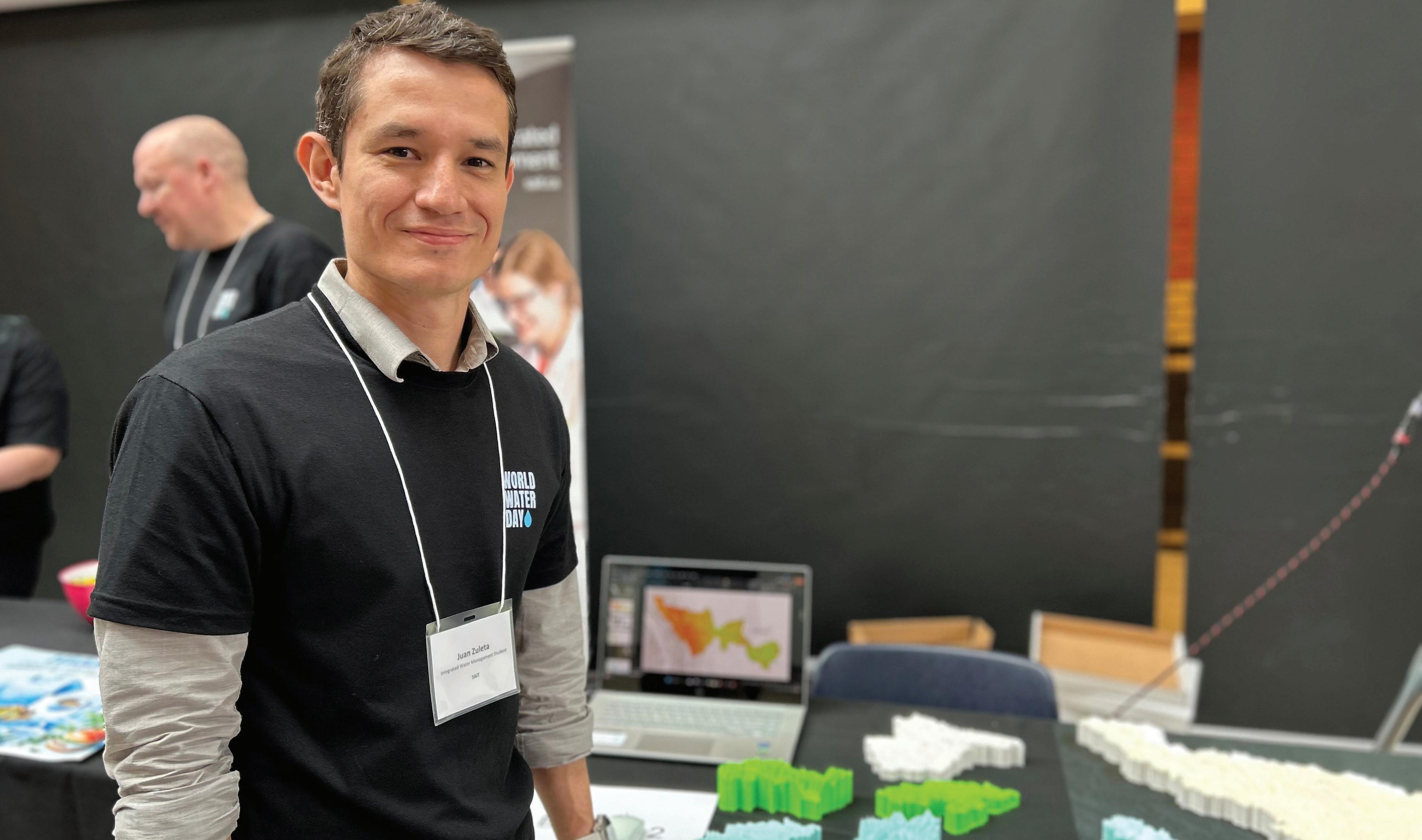
Juan Zuleta, a second-year Integrated Water Management student, chose to investigate water use behaviours at SAIT as his capstone project. By gathering valuable insight into water usage habits on campus, Zuleta aimed to identify areas where behaviour can be influenced to improve water efficiency.
After SAIT, Zuleta wants to apply his new skills to influence people regarding water conservation practices and decisions.

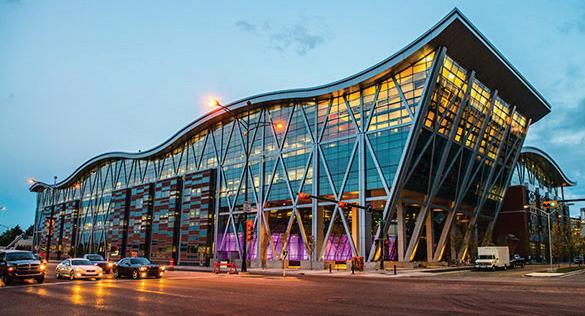
A group of marketing students in SAIT's School of Business worked with a local business on a case study for their work-integrated learning opportunity. Site visits at Fahr Brewery (not shown in photo) gave the group insight into the industry as they evaluated marketing communication strategies to promote a signature Oktoberfest event and analyzed the company’s digital footprint.
Grant Fulford and Lesi Nwielaghi, graduates of SAIT's Information Systems Security program, sought careers in cybersecurity to help create real solutions to real problems.
With sights set on making a difference in the digital realm, Fulford and Nwielaghi credited participating in a co-op experience helped elevate applied cybersecurity skills and advance their careers.

Queen, show them what your next move is...

by Business Buddha
TOP TIPS THAT
This month's tips revole around saving money in your business especially during the summer months for those businesses that naturally slow down.
1. Have a plan for booking holidays. If planned properly, having some of your key staff take a well-deserved holiday, especially when kids are out of school, is important for culture and employee satisfaction. Ensure you have at least one key team member in town at all times and have a clear process for requesting holidays that is simple and fair to everyone.
2. Have a back-up team!
Sometimes needing extra help is inevitable. Interview and test quality candidates to come in as relief if that’s possible in your business. I was once that relief for an ad agency and any time a key team member needed to be away for an extended vacation or leave, I was top of their list. The benefit to having prevetted me was they knew my availability and work style and it was plug and play for both of us. They were also able to budget based on pre-renegotiated rates.
3. Unplug it.

We once worked with a restaurant owner who brought in DJs on the weekends. We noted the amount of equipment they left there during the week that was all plugged in and seemingly on. Unplugging
electronics when not in use can save you hundreds of dollars every year. If it’s not equipment that requires resetting or recalibration, it’s a simple money saver.
4. Order in bulk.
Small businesses don’t like to tie up capital when they don’t have to. But if your business cycles are clear with established up and down times, pre-ordering supplies in bulk can not only save you money, but also a lot of time. Look back through invoices from the past 2-3 years and note what your costs are and if nothing else, preschedule orders for times when you know are busy. Set it and forget it!
5. Manage weekend mode at your office. While most business have addressed this to save money and help be green, there is still a lot of movement in smaller businesses with office moves. Be sure to have heating, cooling and lights automatically switch off or to cost saving modes when you’re closed.
6. Utilize down time.
Most businesses don't shut down entirely over a quiet season, but you definitely don't want to waste the time
you're paying for. So have a list of tasks employees can tackle over the quite months such as reviewing costs with vendors, locating open boxes of supplies needed at a discount, and reviewing software subscriptions to see if they are being used actively.
7. Bring your own food!
For owners and employees alike, eating out and buying coffee can really add up! Bring snacks to prevent hunger distraction and make a little extra at dinner and bring leftovers. If nothing else, buy lunch from a grocery store if one is nearby instead of dining out. Except for client meetings and special occasions, of course!
8. Ask for reduced hours.
Imagine being trapped in an office on a gorgeous summer day with nothing to do. Most of us hate being trapped indoors on a beautiful summer day, so have you ASKED your team if they might prefer to come in later or go home earlier during slow periods in lieu of overtime when it's busy? We're not HR experts or employment lawyers so be sure to check in with experts to see what can legally be offered before proposing it to your team!

9. Bonus time.
If there really isn't anything great for your team to do, have you considered becoming super boss by giving them paid time off? Just a day here and there but think about how to reward them when it won't hurt the business. Even one day off with some passes to a water park or a zoo would make you the best boss ever! They say you can't buy happiness, but we think you can suggest loyalty in business with perks.
10. Educate your team. If paid time off isn't in your DNA, then why not pay for a video course or a workshop leader to come in and improve your team's skills? They'll appreciate being paid to learn and improve and not be bored!
11. Outsource Strategically
Hire contractors for tasks that require special training or ongoing education such as bookkeeping, social media, and IT Management. Pay only for what you need, when you need it and never have to pay to keep their training up to date.
12. Take Advantage of Tax Deductions
Work with a seasoned bookkeeper or accountant to ensure you're claiming all eligible deductions properly. Yes I said properly! The tricks I learned from a seasoned bookkeeper, yes they were all legal and above board, have saved me thousands of dollars over the years! And for Pete sake, have someone who knows what they are doing do your books!
13. Lease Equipment
Instead of purchasing new equipment and paying in full, explore leasing options. While you may have some interest to pay, it's all a tax write off! This helps with cash flow while ensuring you have the latest and greatest and fastest of equipment for your team. Believe it or not, this can greatly boost moral as well!
14.
If your business model permits, reduce overhead by downsizing office space or adopting shared workspaces. Even partial remote work can cut costs on utilities, rent, and supplies. Side benefits are new networks and potential revenue from referrals!
15. Review Subscriptions & Licenses
Review all recurring payments for tools, platforms, and memberships regularly. Schedule this during your slow season. Cancel unused services or switch to lower-tier plans. Many businesses pay for overlapping or unnecessary software without realizing it.
16. Review
Compare providers or renegotiate your credit card and POS transaction rates on a regular basis. Even small percentage reductions can mean big savings over time, especially for high-volume businesses. Explore organizations that provide a discounted rate for payment processing.
If you're wondering what MROI is, then you're probably not tracking it. It stands for Marketing Return on Investment. We repeatedly learn of businesses who take the time and spend the money on marketing but get lazy when it comes to tracking. Using only their main phones number or website address in all places. If you don't track it, you won't know what's actually working. You'll only have an illusion of what is, but it will not be reality. A simple tracking link, or digital phone line could save you a lot of money.
18. Partner for Co-Marketing Team up with complementary businesses to share the cost of events, advertising, or promotions. You can leave your business cards at each others' businesses, distribute marketing materials when purchased are made to your customers and share social media content. You’ll reach new audiences without doubling your spend.
19. Hire Experts
While it always feels like more money, it rarely is. The cost of an unskilled person is sometimes immeasurable in time lost, extra hours paid for without getting results and mistakes made.
20. Barter for Services
Leverage platforms like BarterPay™ to trade your expertise or products for things you’d pay for otherwise including marketing services, graphic design, client gifts and even staff incentives.

by DJ Nick Proof
When the pandemic hit in 2020 and work slowed to a halt, I found myself with time on my hands — and a need to do something creative. That’s when I picked up DJing. It started as a passion project, just messing around with tracks and learning the basics. But after about a year, I felt a pull to go deeper, so I started producing music too. That felt like the natural next step.
Thankfully, there’s a ton of great content out there from top producers. YouTube, online courses — you name it. All you really need is a decent computer and software like Ableton, which is used by some of the best in the game, like Skrillex and Deadmau5.
Getting into the scene was exciting at first, but I quickly saw the challenges. The industry is packed — oversaturated with new DJs and producers, many of whom are happy to work for free just to get noticed. That makes it tough to build real momentum or make money, especially when most of the income in the industry actually comes from selling products to other artists, not fans. Locally, things can be even trickier. There are only a few promoters running most of the big shows, and they tend to book their friends or those who are willing to shift their style to fit what’s expected. That’s never felt right to me. I want to stay true to my sound, even
if it means fewer gigs. As an artist, the moment you start compromising your voice to fit someone else’s mould, you lose the edge that makes you different in the first place.
passionate about creating, and you're in it for the art, not the applause, you might just find your place.
I may not have all the answers, and the path hasn’t always been smooth, but
“MORE ARTISTS ARE TAKING THINGS INTO THEIR OWN HANDS, ORGANIZING THEIR OWN SHOWS, ROMOTING EVENTS, AND EVEN BRINGING IN TALENT FROM OUTSIDE THE COUNTRY.”
But I’ve seen a shift happening — and I’m part of it. More artists are taking things into their own hands, organizing their own shows, promoting events, and even bringing in talent from outside the country. These events are fresher, more inclusive, and give space to voices that are often overlooked. That kind of energy is what keeps me going.
It’s been incredibly rewarding to connect with people who show up for the music, not just the hype. I’ve found purpose in creating spaces where authenticity and originality are the headline acts. That’s where the underground scene thrives — in basements, warehouses, and pop-up venues where creativity comes first and egos are left at the door.
If someone asked me for advice about getting into this industry, I’d say: don’t — unless you really love the music. It’s frustrating, and often unrewarding, especially at the start. But if you’re

I’ve found something real here. Music gives me a purpose and a way to connect — and that’s more rewarding than any paycheck.
Don’t chase trends. Build a sound that’s yours — not what’s popular.
Promote yourself. Don’t wait for permission. Start your own events or livestreams.

Invest in learning. YouTube, online courses, and collaboration will fast-track your skills.
Play the long game. Growth is slow, but if you stay consistent, people notice.
Love the grind. If you’re not obsessed with music, this probably isn’t for you.

by Michelle Falzone

Through kinesiology—the study of the mechanics of body movement—I coach women to connect more deeply with their bodies, their needs, and their deepest desires. My clients learn to release tension using self-massage tools, improve joint mobility, and build strength in ways that reduce or even eliminate everyday pain.
My own struggles with chronic pain, inflammation, hormone imbalances, and mental health led me to believe there had to be a better way. I knew I could help women more effectively if I built something of my own. So, in 2021, I launched Pivot Your Wellness—a women’s health and movement coaching practice designed to support women at all stages of life.
That practice helped carry me through physical injuries, mental health dips, low self-esteem, and chronic pain.
In my teens and early twenties, I also faced persistent skin issues, bloating, and cycles of burnout. A visit to a naturopath and a personalized nutrition plan opened my eyes to how food impacts inflammation. By becoming more mindful of things like bread, pasta, and processed foods, I cleared my skin and improved my energy.
I wanted to share that same empowerment with others—but starting a business wasn’t easy. When I moved to Calgary in 2023 to run my coaching practice full-time, I barely knew anyone. I had taken financial risks, relied on credit
“ I FELL IN LOVE WITH HOW STRONG I WAS GETTING, HOW CLEARLY I WAS THINKING”
The foundation of my business is a four-month coaching program, followed by an optional monthly membership. It’s intentionally high touch, offering message support between sessions, wellness education modules, live movement classes, and customized movement programs so that each client can feel confident and independent in her care.
My own passion for movement started early. At 14, I began strength training to prepare for a shot-put competition. I quickly fell in love with the process—how strong I felt, how clearly, I could think, and how much it boosted my confidence.
cards and loans, and felt at times like I was barely keeping my head above water. But I showed up. I led with heart. I gave the same confidence to my clients that I was learning to claim for myself.
And it worked. My practice has now expanded to include both online and in-person sessions, and I’m close to having a waitlist. What began as a deeply personal journey has grown into a thriving wellness practice—and I’m just getting started.
Take a little break
It is essential to manage our expectations and practice self-kindness. Women run on a different rhythm than our male counterparts, and I encourage all entrepreneurial women to lean into this instead of pushing through. There are times when rest is the best medicine for ourselves and our businesses.
Women of all ages and stages of life and business are encouraged to:
• Adjust your expectations for the number of hours you’d like to work each week and have your schedule reflect this.
• Calibrate yourself. Practice habits that help you show up as fully as you can.
• Take time off and own it. Let go of what others may think of your choice, and remember the reason you started your business– freedom.
• Outsource tasks you don’t enjoy.
• Equip yourself to manage menopausal symptoms during the summer better.
• Set 1-2 business goals for the summer. These can be small and require minimal and consistent effort.
• Say ‘no thank you’ to any opportunity that doesn’t excite you.
• Be flexible and embrace the fun. Perfection is elusive. Surrender control, balance as best as possible, and make fun memories with your friends and family this summer while mastering your business!

BY TRINA LO
by Moji Ajele
Inever expected a networking group to change my life. But back in 2006, when I bought a sign company with confidence in my business skills, reality hit hard: opening your doors doesn’t guarantee customers. It wasn’t until a chance introduction to BNI that I began to understand the true power of relationships in business.
What started as a way to meet
part hasn’t been the work itself; it’s been the assumptions people make about my motives.
There are days when people see me as “just in it for the money.” That stings. Because truthfully, this work isn’t sustainable without heart. It takes resilience, emotional labour, and a deep desire to serve others. I often joke, “I’d love BNI if it weren’t for the people,” but
"THERE’S FREEDOM IN KNOWING YOU CAN’T PLEASE EVERYONE. I NO LONGER TRY TO."

potential clients quickly became something deeper. In that room full of professionals, I found people who genuinely wanted to help each other. They showed up with generosity, authenticity, and heart—and that changed everything for me. Eventually, those connections helped me realise that what I loved most wasn’t the technical side of signage. It was the relationships. By 2011, my husband and I had the opportunity to purchase the BNI franchise in our region. We jumped in— and we’ve never looked back.
I’ve always believed in doing business with kindness, courage, and authenticity. But I won’t sugar-coat it—this journey has been tough at times. The hardest
behind the humour is a real truth—people can be unkind. And I’ve had to grow a thick skin.
One of the hardest moments came during the pandemic. As BNI transitioned to online meetings to keep members connected, someone launched a petition against me, calling for everything to be shut down. They saw our decision as greedy. But I still wonder what might’ve happened to the 400+ businesses in our region if we’d backed down. It was painful—but it affirmed the importance of staying true to your convictions.
The pandemic didn’t just test our resolve— it accelerated a digital shift in networking. BNI went global online, connecting over
300,000 businesses virtually. Even now, nearly half of our chapters remain fully digital. That shift was necessary, but it also revealed something deeper: in a digital world, authentic connection matters more than ever.
AI is part of this transformation. I don’t see it as a threat—I see it as a tool. It's not about replacing people; it's about amplifying our ability to connect, collaborate, and serve. Of course, we need to be wise about how we use it— ethically, strategically, and responsibly. AI literacy will be crucial for business owners who want to stay relevant. And as we navigate all of this change, I keep returning to one core truth: business is still about people. It’s about showing up with empathy. It’s about understanding that we don’t all share the same lived experiences.
I love seeing more women-led groups emerge, along with those designed for newcomers to Canada. These groups

are powerful because they speak directly to real, specific needs. If you’re thinking about starting something, build it around a clear purpose—and stay grounded in service.
There’s freedom in knowing you can’t please everyone. I no longer try to. I lead with kindness and assume that everyone is fighting a battle I can’t see. And if that grace isn’t always returned, I remind myself I’m here for the ones who are ready to grow, connect, and build with purpose.
If you ask me what to wear to a networking event, I’d say: dress with respect for the setting and comfort for yourself. Personally, I’ll reach for a breathable blazer or a dressy cardigan— something that feels like me, but polished. Because when you show up as yourself, the right people will find you.
Give before you ask. Whether it’s a connection, a compliment, or simply your full attention, show up ready to contribute.
The more specific you are about your niche, the easier it is for others to refer the right people to you.
A thoughtful follow-up—whether by email, text, or handwritten note—can set you apart more than any pitch.
You don’t need to win over every room. Focus on real relationships, not popularity contests.
Great networking isn’t about a one-time event—it’s about showing up, again and again, with sincerity and reliability.
LEARN MORE ABOUT THE AUTHOR, MOJI AJELE

by Lindsay White
Once upon a time, HR was about compliance, hiring, and the occasional awkward conversation. Today? It's trauma-informed leadership, menopause accommodations, mental health crises, and navigating generational culture clashes — sometimes before noon.
As a leadership coach, a fractional chief people officer, and the founder of High Voltage Leadership, I focus on helping female founders grow their dream teams and workplace culture.
I’ve also become a menopause advocate. One of the toughest seasons I've faced was trying to lead my business while going through perimenopause — brain fog, sleep deprivation, mood swings, the works — all while helping other women grow companies and teams of their own. It's a part of leadership no one prepares us for, and yet, it shapes us in powerful ways. It’s why I’m passionate about helping women navigate business growth without burning out.
In my podcast, Female Founder Unplugged, I dive deep into the real stories of scaling a business, leading with heart, and building workplaces that work for people — not against them. We talk about the raw, unfiltered truth behind success. Because the curated highlight reel of entrepreneurship doesn’t show the late nights, hard conversations, or hormonal roller coasters — and those
are often the moments that define our leadership the most.
Advice for Small Business Owners:
Your team is your most considerable expense — and your biggest asset. If your people aren't aligned with your business plan, you leave money, energy, and opportunity on the table.
Culture – Can your team do their best work and still feel like they belong?
Culture isn't ping-pong tables and pizza parties. It's how your people feel day to day — and whether they believe their contributions matter.
Remote-first policies and hybrid teams are no longer novel. They’re expected.
"THE MOST FORWARD-THINKING FOUNDERS I WORK WITH ARE FOCUSED ON BUILDING INTENTIONAL CULTURE, EVEN WHEN TEAMS AREN’T ALL IN THE SAME ROOM."
Leadership – Are you showing up as the leader your team needs now, not just the one you were when you started? Businesses evolve, and so do their leaders. Who you were at launch isn’t who your company needs today. Are you growing alongside your business, or standing in its way?
People Strategy – Do your roles, hiring processes, compensation plans, and performance reviews align with where your business is going — not just where it’s been? It’s not just about getting the work done; it’s about building a team that helps your company grow in the right direction.
The most forward-thinking founders I work with are focused on building intentional culture, even when teams aren’t all in the same room. That means real-deal inclusion, psychological safety, and the systems to support both.
And here's something I want every female founder to know: you don’t have to do it all. You can lead with vision and get support. You can build a thriving company and prioritize your health. The sooner you create a people strategy rooted in your values, the sooner your business stops feeling held together with duct tape and hope.
Canadian business owners, especially in Alberta and BC, are feeling the

squeeze from evolving compliance laws and shifting workforce expectations. We’re also seeing a clear trend: as businesses grow past the $1M revenue mark, founders are turning to fractional HR and leadership support to level up without overcommitting on overhead.
I started my career in fast-paced corporate environments, always drawn to the intersection of people, performance, and potential. After managing highperforming teams and watching too many brilliant women burn out trying to do it all, I leapt into leadership consulting. With two decades of experience in corporate leadership, executive coaching,
and HR strategy, I bring a uniquely human — and unapologetically honest — perspective to modern leadership. Because when you invest in your leadership and your people, the ROI isn’t just profit. It’s clarity, alignment, and a company you actually want to show up for.






That's for you to discover!



Visit us on our social media channels, locate these images, and share where you think these photos were taken in the comments to win a prize! Be as specific as you can, list the city, province and neighbourhood for outdoor images and the name of the company or business for interior shots!
Prizes will be delivered digitally within 60 days of the publication release and announced on social media.
Good luck!
@businessbuddhamagazine
by Roxanne Coetzee

Roxanne Coetzee of Blackrose Photography creates bold, emotionally rich portraits that celebrate families, children, pets, and professionals in all their unique stories. As a full-service boutique photographer, she offers everything from legacy family artwork to authentic business portraits that reflect confidence and character. Her work helps people feel seen, valued, and proud — both at home and in their careers.



Show them what you're made of!