

Why Outsource to Fiji? Simple. Smart. Strategic.

As the Responsible Regulatory Industry Arm and the sole government-backed authority in Fiji’s outsourcing sector, Outsource Fiji is spearheading a new era of strategic offshoring and near-shoring in the heart of the Pacific.
We expertly connect global enterprises, particularly in Australia, New Zealand, the USA, and the EU, with Fiji’s rapidly growing talent pool. Gain direct access to highly skilled professionals across Knowledge Process Outsourcing (KPO), Business Process Outsourcing (BPO), and an extensive range of Information Technology Outsourcing (ITO) and specialized IT knowledge services. This positions Fiji as a premium destination for night-seat and long-haul operations.
At Outsource Fiji, we go beyond cost reduction—we are your strategic partner in driving innovation, agility, and long-term growth. Whether your goal is to enhance operational efficiency, tap into niche expertise, or implement round-the-clock service models using our optimal time zone, Outsource Fiji is your gateway to unlocking the Pacific’s full outsourcing potential.


1.Diversification: Expand and protect your business by outsourcing to Fiji for lower costs, better efficiency, and great customer service.
3.English Proficiency: High literacy rates ensure seamless communication.
5.Time Zone Advantage: Extended business hours for global reach

7.Stable Infrastructure: Reliable telecommunications and IT support.
2.Cost-Effectiveness: Lower operating costs and competitive wages.
4.Skilled Workforce: Access to a talented pool across diverse industries.
6.Cultural Affinity: Strong ties with Western markets for better understanding.
8.Government Support: Proactive policies and incentives for growth.
To explore how Outsource Fiji can support your business goals, contact Marketing and Communications Consultant Pravin Narain at pravin@outsourcefiji.com or visit our website at www.outsourcefiji.com


Following its strong rebound from the Covid-19 pandemic, led by its world-class tourism sector, Fiji has – like the rest of the world – felt the impact of higher global oil prices this year. While these have temporarily slowed growth, the longer-term outlook for Fiji’s economy remains healthy, as you’ll hear from the many business leaders we interviewed in preparing this magazine.
Encouragingly, alongside a pipeline of major investments in the tourism sector, we are seeing a focus on improving the enabling environment for business, both in terms of investments in essential infrastructure, and also reforms to approval processes and permitting.
Fiji’s 2026/7 National Budget – the last to be delivered before national elections are due to be held – has helped to set the agenda in this regard.
All this means Fiji now offers even more genuine opportunities for those looking to invest and build stronger
connections in the Pacific. You’ll read about many of these opportunities in this publication.
Business Advantage International has been publishing business and investment intelligence and hosting events on Asia-Pacific economies since 2005.
While we’re best known for our work in the neighbouring Pacific economy of Papua New Guinea, our first-ever publication was actually on Fiji back in 2005. We were delighted to return to Fiji in 2025 to re-launch Business Advantage Fiji. We plan to release a new edition regularly, so there is always an up-to-date publication available on Fiji’s economy.
As well as our print and online publications, Business Advantage International convenes an annual investment conference focused on PNG and the Pacific.
Andrew Wilkins Publishing Director
Business Advantage International










12 Feature interview
Which key business opportunities will drive Fiji’s future growth? We sit down with the Reserve Bank of Fiji’s Governor Ariff Ali to find out.
14 Perspectives
Business and government leaders share their insights and views on Fiji’s economy.
18 Investment
Fiji’s leading domestic investors discuss their investment strategies and how they plan to shape the country’s next phase of growth.
24 Tourism
Fiji tourism has been on a “dream run.” We ask some of the sector’s leaders, including the new CEO of Fiji Airways, for their views on what’s next.
22
Economic Map of Fiji
16 The Fiji 100 CEO Survey
What are the profit, investment and recruitment plans of Fiji’s top companies? We present the results of our inaugural business confidence survey on Fiji.
29
Banking & finance
We take a closer look at Fiji’s highly competitive banking sector.
Business Advantage Fiji 2026/27 is published by Business Advantage International Pty Ltd Level 20, 31 Queen Street, Melbourne VIC, 3000 Australia Tel +61 3 8330 6081
Experts in publishing and marketing www.businessadvantageinternational.com
A digital edition of this publication is available free online at businessadvantagefiji.com. Additional printed copies can be purchased for A$50 (incl. GST and postage) from the above address or by emailing info@businessadvantageinternational.com.
© Copyright 2026 Business Advantage International Pty Ltd and contributors
ISSN 3083-5321 (print)/ ISSN 3083-533X (digital)
Printed in Australia. Both printer and paper manufacturer for this publication are accredited to ISO14001, the internationally recognised standard for environmental management. This publication is printed using vegetable inks and the stock is elemental chlorine free and manufactured using sustainable forestry practices.
6
Economic update
We talk to the experts about current business conditions and Fiji’s short-to-medium term prospects.
32
Outsourcing: Fiji’s other niche
Fiji’s business process outsourcing sector is scaling fast, with its key
players targeting the premium end of the market.
34
Telecommunications
From 5G to data-driven services, sector leaders discuss Fiji’s rapidly maturing telecoms market.
36
Ports & logistics
The head of Fiji Ports Corporation outlines plans to upgrade the country’s two busiest ports.
37 Energy
How Fiji is ramping up its pursuit of renewable electricity.
40
Infrastructure & transport
With more traffic on Fiji’s roads than ever, maintenance has become an even greater focus.
41
Directory
Our guide to Fiji for the business traveller.
Advertising: Charles Saldanha (cs@businessadvantageinternational.com)
Commercial Director: Robert Hamilton-Jones (rhj@businessadvantageinternational.com)
Publishing Director: Andrew Wilkins (aw@businessadvantageinternational.com)
Senior Business Editor: Nadav Shemer Shlezinger (ns@businessadvantageinternational.com)
Editorial: Charlotte Armstrong, Paul Chai, Sally Woollett
Design: Alicia Freile, Jodie Horne
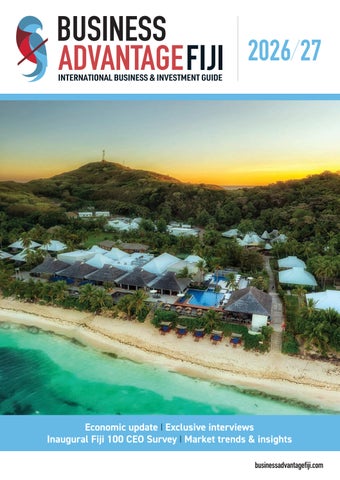
Cover image: Sunrise over Tokoriki Island Resort in the Mamanuca group of islands, Fiji. (Credit: Taras Vyshnya/Getty Images)
DISCLAIMER
Business Advantage Fiji is a general guide to some potential business opportunities in Fiji and is not designed as a comprehensive survey. The opinions expressed herein are not necessarily those of the publisher and the publisher does not endorse any of the business or investment opportunities featured, nor does it accept any liability for any costs or losses related to dealings with entities mentioned in this publication. Readers are strongly advised to pursue their own due diligence and seek expert advice before making any investment decisions.
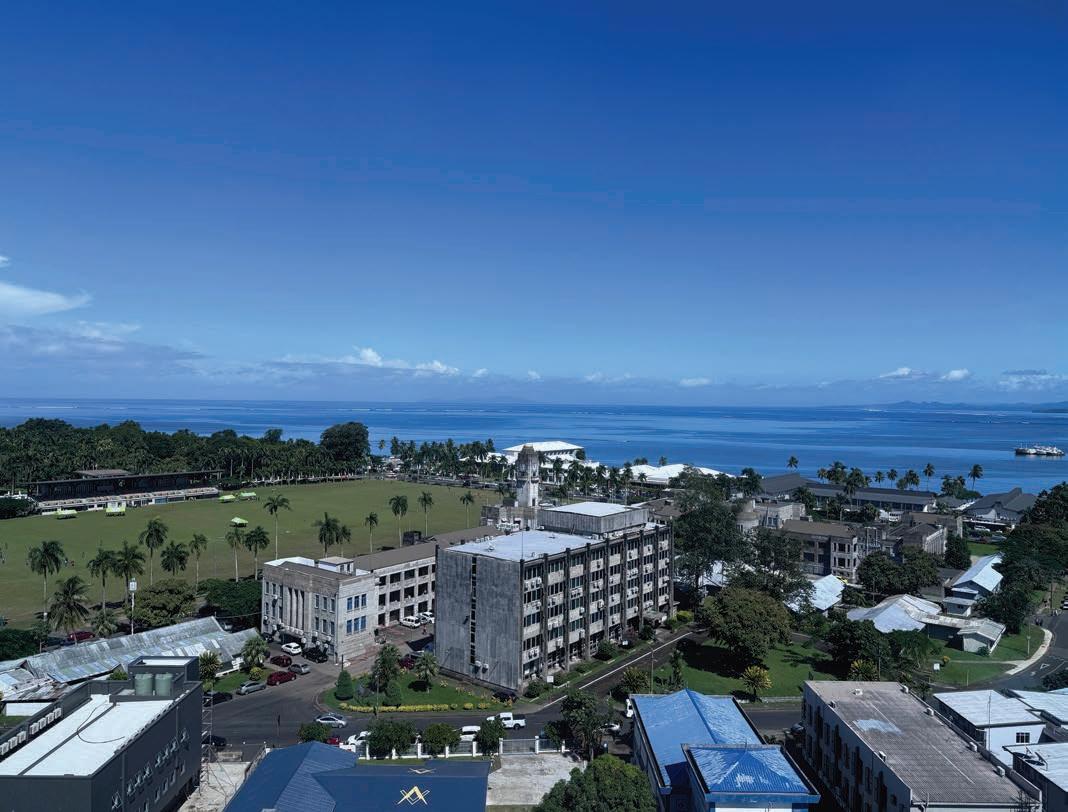
While the global fuel crisis is having an impact on Fiji, business leaders express confidence in the country’s economic trajectory, as it plans for new elections and a surge in investment in infrastructure.
By Andrew Wilkins
Looking beyond the impact of higher global oil prices in 2026 (see page 8), Fiji’s economy has been travelling well.
“I think Fiji’s got a very strong growth future, for three reasons,” Sohaib Mahmood, Country Head for Australian bank ANZ, tells Business Advantage Fiji. “Tourism is growing – the resorts are incredibly busy. That’s your main earner. Then, there’s the well-placed aid and grants from international agencies. If you combine both of them with remittances, those are the main revenue sources.”
The large diaspora of Fijians working overseas sent over F$1 billion home in 2025.
The expansion of Fiji’s economy since its textbook reopening to tourists post-Covid, has led to a surge of private sector investment aimed at upgrading existing inventory and expanding capacity to meet greater demand, both in tourism and real estate.
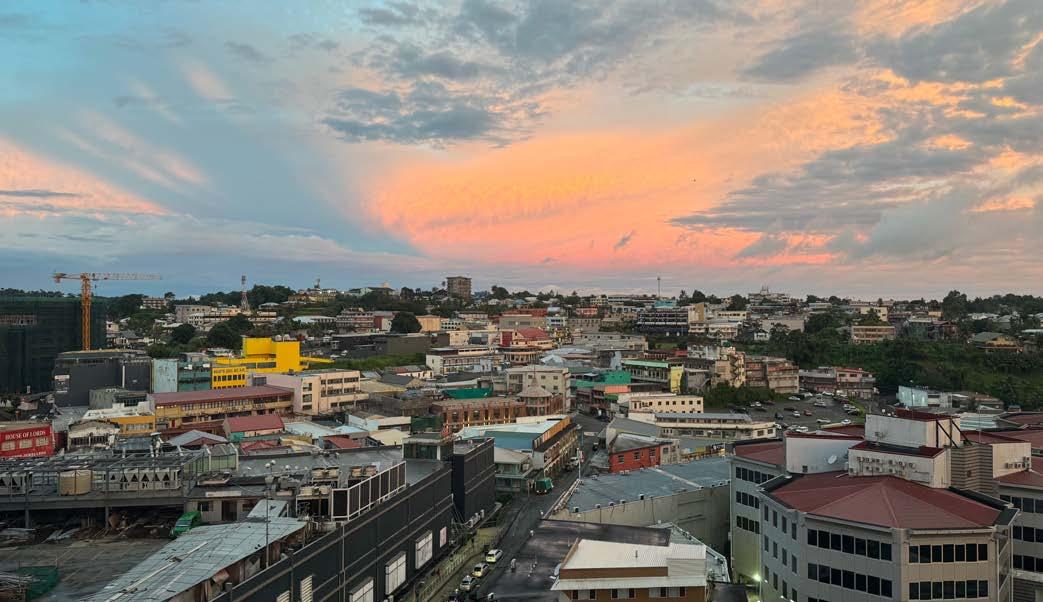
The skyline and shoreline of Fiji’s capital, Suva, is undergoing some significant changes, as developers aim to address a long-term shortage of office space and hotel rooms.
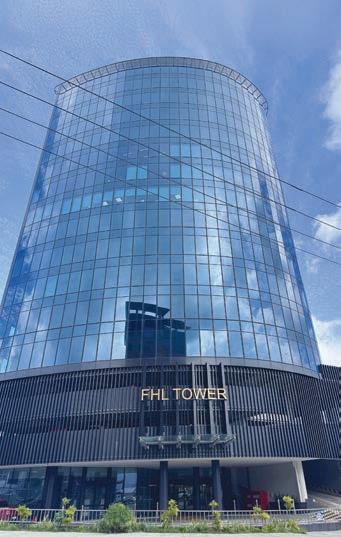
Fijian Holdings’ 18-storey FHL Tower opened in Suva in October 2025 and is already fully tenanted. Meanwhile, Carpenters Fiji’s 12-storey MHCC Tower is one of two major developments by the Malaysian-owned group expected to open in 2027 – the other being the 178-key Hilton Garden Inn on Suva’s waterfront.
“This is the first new hotel opening in Suva for some years, so there’s a lot of excitement around us coming,” Carey Osbourne, Cluster General Manager for Hilton in Fiji, tells Business Advantage Fiji
While the Hilton Garden Inn is aimed more at the business traveller and locals, there are many more properties currently under development across the country aimed at the million-plus tourists who visit Fiji each year.
These include Yavu Collective’s F$250 million five-star Sofitel Vatu Talei resort on Denarau Island plus two new four-star hospitality assets worth a combined F$130 million, a Radisson Blu Mirage Resort on Naisoso Island and a One&Only Resorts & Private Homes property in the Yasawa Islands. (For more on Fiji’s planned tourism developments, see page 24).
The inaugural Fiji 100 CEO Survey, conducted by Business Advantage International for this publication, confirms fuel price and availability as the number one issue facing Fiji businesses, followed by a shortage of expertise/skills, excessive red tape and inflation (see page 16).
While there is very little Fiji can do about global oil prices, other factors – such as improving the enabling environment for business – are more within its control.
“What we’re doing is trying to work with government to ensure that we reduce the cost of doing business where possible,” says Eldon Eastgate, President of the Fiji Commerce and Employers Federation, which is lobbying government to build on its recent progress with the digitising of approvals and licensing, improving coordination across government agencies and achieving greater regulatory transparency and consistency.
To help improve matters, Fiji’s government has already created a taskforce to fast-track investment projects, while investor-facing agencies Investment Fiji and the Ministry of Immigration are working together to reduce the time it takes to issue investor permits.
One thing businesses in Fiji haven’t had to worry about recently is the cost of borrowing. The Reserve Bank of Fiji’s Overnight Policy Rate has been running at 0.25 per cent since March 2020.
“The reason why interest rates are low in Fiji is that there’s ample system liquidity – there’s plenty of money in the system for the banks to lend,” explains Maikash Ali,
Acting Country Head in Fiji for Bank South Pacific (BSP), the Pacific’s largest bank. “Now, that liquidity has been tightening, and there may be downside risks to that … At some point in time, the rates will have to go up.
“It’s been good for the country. It’s been good for borrowers, it’s given them the confidence to borrow, but it cannot last forever.”
As noted in the CEO Survey, Fiji’s employers are still facing skills shortages – a symptom of a post-Covid “brain drain” as skilled workers have sought opportunities overseas.
“A major challenge for us at the moment is the productivity of the workforce and the availability of skilled labour,” notes Cate Pleass of bottled water manufacturer Pleass Global, echoing the comments of many employers we spoke to for this publication. “It’s a huge challenge. A lot of skilled labour has left the country and gone to Australia and New Zealand.”
Fiji has been importing workers from Bangladesh, India and the Philippines to compensate in skills areas such as digital workers and analysts but has a challenge accommodating significant numbers of expat workers.
Many employers have their own in-house training programs but, ultimately, the country will need to develop its own skills base through more investment in technical skills and training.
While the fiscal and regulatory environment for business is relatively stable in Fiji, two pieces of legislation currently being drafted are likely to have relevant implications. A new

WHAT WE’RE DOING IS TRYING TO WORK WITH GOVERNMENT TO ENSURE THAT WE REDUCE THE COST OF DOING BUSINESS WHERE POSSIBLE.
ELDON EASTGATE President, Fiji Commerce and Employers Federation

Employment Relations Act is seeking to better define workers’ rights and employers’ responsibilities, while the Commercial Use of Marine Areas Act is a pioneering attempt to balance the usage needs of commerce with those of iTaukei (indigenous) landowners. Meanwhile, a commission was set up in March 2026 to review the country’s 2013 Constitution, and the review was in progress at the time of writing.
Infrastructure focus
Improvement in infrastructure is another area that could greatly improve Fiji’s business environment.
Fiji’s infrastructure situation is by no means all negative. The country’s telecommunications infrastructure – already the best
As it has around the world, the rise in the price of oil caused by conflict in the Middle East has undoubtedly had an impact on businesses in Fiji and on the country’s economy more broadly.
“From what we’ve being told by the fuel companies, there’s probably not going to be an issue with supply. The only issue would be cost,” Eldon Eastgate, President of the Fiji Commerce and Employers Federation, tells Business Advantage Fiji. “A lot of the businesses that we talk to are looking at ways to mitigate price pressures.”
Higher fuel prices undoubtedly had a significant impact in the first half of 2026, with the Reserve Bank of Fiji recording an annual inflation rate of 3.9 per cent in May, on the back of rising transport costs. This is a marked reversal from the 1.53 per cent decline in inflation recorded over the preceding 12 months.
The consequent slowing of retail activity and a softening of momentum in tourism (Fiji’s largest economic sector, which accounts for around 40 per cent of its GDP), has led the Reserve Bank of Fiji to revise down its real GDP growth expectations for 2026, from 3.0 per cent to 1.5 per cent.
“While visitor arrivals remain supportive of economic activity, the pace of expansion has slowed, weakening one of the key drivers of
in the Pacific – continues to improve. In 2025, Fiji became part of tech giant Google’s Pacific Connect Initiative with the landing of Google’s Tabua and Bulikula undersea cables in Fiji. Meanwhile, the rollout of 5G services commenced in late 2025 following the issuing of relevant spectrum.
In aviation, it has a world-class airline in Fiji Airways, and its international airport in Nadi has established itself as one of the leading transit airports in the Pacific region.
“I’m not so concerned around our aviation sector, but we need some serious thoughts around how to improve ports and shipping and roads from an infrastructure perspective,” says Eldon Eastgate. “Our heavy reliance on fossil fuel generators needs to be looked at too.”
growth,” said Reserve Bank Governor Arrif Ali in a June statement.
“These factors are expected to dampen private consumption and investment activity, resulting in a slower pace of economic growth in 2026 than previously projected.”
While international fuel prices were already easing at the time of writing (June 2026), any impact on domestic fuel prices will take time to flow through, with the Fijian Competition and Consumer Commission’s regulated fuel price operating with an approximate two-month lag.
In the meantime, direct budget support from multilateral agencies such as the Asian Development Bank and bilateral donors Australia and New Zealand is expected to help Fiji’s government ease the pressure on
households and businesses affected by higher fuel prices.
While its aviation and transport sectors remain heavily dependent on fuel oil, it is worth noting that the country is less reliant on it for electricity generation.
“Today, depending on hydrology, approximately 45 to 55 per cent of Fiji’s electricity generation comes from renewable sources, primarily hydroelectricity, with the remainder from thermal generation,” Fatiaki Gibson, Chief Executive Officer of state-owned power provider Energy Fiji, tells Business Advantage Fiji. “This renewable base has acted as an important buffer against the full impact of global oil price shocks.”
Fiji’s National Budget for 2026/7 contained some good news in this regard. Fiji’s Minister for Finance, Commerce and Business Development, the Hon. Esrom Yosef Immanuel, confirmed capital expenditure on infrastructure would be increasing, with F$876 million budgeted for the 2026/7 financial year.
He outlined a pipeline of public infrastructure projects worth some F$5 billion, including for renewable energy

BSP is more than a bank - we’re your business partner. With deep local insight in Fiji and global banking expertise, we help businesses grow and compete across the Pacific and beyond. Headquartered in PNG, BSP operates in Fiji, Cook Islands, Samoa, Solomon Islands, Tonga, and Vanuatu, serving enterprises of every size.
We’re investing in digital capabilities, including online foreign exchange, to deliver international quality services. Whether funding new projects, improving payments, optimising cash flow, or supporting employees with workplace banking, our relationship managers are here to put your business first.
Talk to us today about your business goals. With our heritage, knowledge, and regional footprint you can be assured that we have our business as our priority.
transition, port infrastructure redevelopment and airport expansion.
“Capital spending will significantly increase as we progress from design and tender stage to actual implementation of the above projects,” he said. “We target to double our capital spending in the short-to-medium term.” (For more on Fiji’s infrastructure development plans, see pages 34 to 40.)
“Fixing the infrastructure is important for any country to grow. You can’t go and start business if the water is not there,” comments Jaoji Koroi, Group CEO at local investment fund Fijian Holdings.
“It may be costly over a period of time but I think it needs to be prioritised and done. Fiji has a lot of potential in tourism and associated areas, in agriculture, but we really need these basic building blocks to be invested in.”
While the exact date wasn’t available at the time of publication, Fijians must go to the polls to elect a new national government by January 2027, when the current government completes its four-year term. While the country’s hotels can expect to be a little busier, most businesses are taking a “wait and see” approach regarding the election period.
“In my experience, three to six months leading into an election, the investment activity slows down a little bit,” notes Maikash Ali.
“If you look at past trends, pre-election it’s pretty soft and subdued,” adds Eldon Eastgate. “With our history

with coups and so forth, people do tend to tread lightly leading up to elections. Once elections are done and the results are known, generally it’s back to business as usual.”
While Reserve Bank projections suggest the pre-oil crisis levels of growth may not return until 2028, the fundamentals of Fiji’s economy remain strong.
“I personally think that it’ll be reasonably stable. I don’t see big growth. I don’t see big decline. We are only a three, threeand-a-half hour hop away from New Zealand and Australia and a safe and proven market,” says BSP’s Maikash Ali. “I am quietly optimistic about the future.”
One of the key opportunities Fiji has in coming years is to build out its economy beyond its world-class tourism sector. Some progress has been made in this regard, with business process outsourcing a recent success story (see page 32). Fiji’s position as a services and logistics hub for many of the Pacific’s other island nations is also leading to growth in transshipment activity (see page 36).
“There’s a whole range of exciting opportunities in Fiji beyond tourism,” Michael Nacola, Managing Director of BSP Life, which manages a F$1.25 billion investment portfolio, tells Business Advantage Fiji
“Look at commercial agriculture, for example; look at Fiji being the hub of the Pacific, from an aviation and the seaports perspective; look at Google’s now-landed cable into Fiji and the opportunities that can be catalysed in the ICT and data centre space; look at renewable energy.
“There’s a wide range of new industries that can be scaled up pretty rapidly, which is critical to diversifying Fiji’s economic base.”
“I think if we had a concentrated effort towards agribusiness, there is a huge opportunity here,” agrees Sohaib Mahmood, the recently appointed Country Head in Fiji for Australian bank, ANZ. “If you just fly from Suva to Nadi or
Population
902,623 (2026 projection, Fiji Bureau of Statistics)
Capital Suva
Exclusive Economic Zone 1.26 million sq km
People iTaukei (indigenous Fijian), Indo-Fijian and other
Time zone GMT + 12 h
Business languages English, Fijian and Hindi
Political status Parliamentary democracy
GDP US$ 6.352 billion (2026 projection, IMF)
GDP growth 1.5 per cent (2026 forecast, Reserve Bank of Fiji)
Inflation 2.0 per cent (2026 forecast, IMF)
Currency Fiji dollar (F$)

across the other islands, you’ll see a lot of undeveloped land.”
Given how close Fiji is to the big economic centres on Australia’s east coast, Mahmoud thinks Fiji could also expand its physical trade.
“I don’t see why there couldn’t be more manufacturing here if the government supports it and encourages it. There’s a lot of opportunity here.”
For Kamal Chetty, CEO of Investment Fiji (Fiji’s investment promotion agency), it is about attracting the right kind of investors to fit with Fiji’s profile as a country.
“We need to ensure the technology and investment we bring into the country supports sustainable growth. That means, they must not overuse our natural resources or put excessive strain on local capacity. In our view, the right investors are those who bring efficiency and smarter ways of operating that allow us to grow without depleting what we have.”
For Chetty, targeting this kind of investor aligns with Fiji’s broader push to diversify its economy beyond traditional sectors: “The goal is not just more investment, but investment that opens new industries, builds local capability, and reduces the country’s exposure to any single source of growth.”
Major industrial sectors Tourism, agriculture, telecommunications, manufacturing, fisheries, forestry, retail/wholesale, construction, business services
Exports Mineral water, sugar, vegetable products, mineral products, gold, garments, seafood, wood products
Major export markets USA, Australia, China, New Zealand, Vanuatu, Samoa
Imports Machinery and appliances, fuel, vehicles, animal products, prepared food, chemicals, plastics, textiles
Major import markets China, Singapore, New Zealand, Australia, Japan, India
New listings and an increase in new investors is proving the viability of Fiji’s small but promising stock exchange.
While Fiji’s stock market, the South Pacific Stock Exchange (SPX), is small, it has been “building momentum” in the past 12 months, according to its CEO, Sheraj Obeyesekere.
“Last year, 18 out of 20 companies paid out a total of over F$100 million in dividends,” he notes. Total market capitalisation on the exchange sat at F$4 billion as of June 2026.
Trading activity has improved in recent years and the momentum has continued, with the 2025 total trading value of F$62.6 million being surpassed within the first five months of 2026.
According to Griffon Emose, Managing Director of local stockbroker Kontiki Capital, star performers on the exchange last year included Sun Insurance, FijiCare, Kontiki Finance and BSP Convertible Notes.
The exchange’s index grew by around seven per cent in 2025.
January 2026 saw the listing of a wholesale corporate bond for the RB Patel Group, which raised over F$21 million. In March 2026, Shreedhar Motors became the 21st company to list on the exchange, following a successful F$9 million initial public offering (IPO). This development makes 2026 the first year in the exchange’s history to record new listings in both equity and debt.
The first new stockbroker in 25 years also entered the market in 2026, in the form of Sun Insurance subsidiary Sun Stockbrokers (Sun Insurance itself having gone through an IPO in 2024).
About 90 per cent of the investors in the exchange are institutional, with recent new inflows coming from institutional funds based elsewhere in the Pacific.
“There’s a lot of liquidity around, both in Fiji and across the Pacific. For example, the Unit Trust of Samoa recently took a stake in Kontiki Finance,” says Emose.
Attracting more retail investors is a stated goal of the exchange and, encouragingly, the majority of SPX’s 200 per cent increase in new investors in the past year have been retail investors.
LAST YEAR, 18 OUT OF 20 COMPANIES PAID OUT A TOTAL OF F$100 MILLION IN DIVIDENDS.
According to Obeyesekere, there are a further three companies currently working towards a listing currently, attracted in part by the opportunity to diversify their debt capital over the long term.
Obeyesekere hopes that a new trading system due in 2027 will pave the way for the digitisation of the exchange and encourage more retail participation.
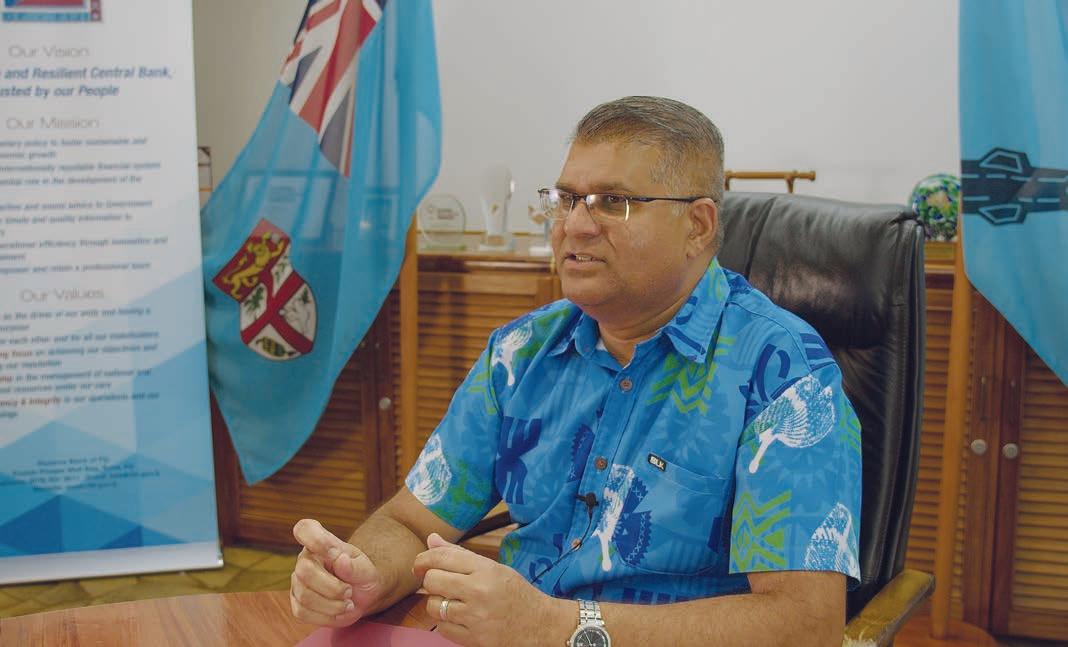
In a wide-ranging interview, the Governor of the Reserve Bank of Fiji, Ariff Ali, talks exclusively to Business Advantage Fiji about opportunities to diversify the Pacific nation’s economy, develop its infrastructure and improve the enabling environment for business.
Business Advantage Fiji: Where do you see the opportunities to diversify Fiji’s economy?
Ariff Ali: We’ve spoken about diversification of the Fijian economy for a very long time. We had the sugar industry, which is now almost onethird, one-quarter the size of its peak. Then the garment industry was at one stage quite large. It is now about onequarter of what it was.
So, really, what are our sectors?
I think it’s the primary sector. Fisheries, forestry and agriculture still have potential. We need to increase productivity in those.
Other than that, there is diversification of our tourism. A lot of tourists from Australia and New Zealand come and spend a week and then go. I still feel that we need to diversify. We’ve seen this happening with sports
tourism. Then there’s medical tourism, which needs to be coupled with the right medical facilities in the tertiary sector, given we are close to Australia and New Zealand. There’s also retirement homes. Again, these rely on tertiary medical services. We have a number of new hospitals that have come on and we need to see how that pans out.
Another is the business process outsourcing (BPO) sector. This has grown significantly since Covid. Our estimate is this employs close to 8000 people right now, bringing somewhere close to US$250 million in foreign exchange.
I strongly feel that this is a sector that can grow. We cannot compete with India or the Philippines; what we need do is look at smaller niches and this is what we are good at. Of course, Fiji’s time zone helps us too.
The last one is renewable energy. I’m of the strong view that we can encourage a lot of private sector investment, particularly in solar, given the advancement of technology. This will not just bring in direct investment but also help achieve energy security.
BA Fiji: What are the other priority areas in infrastructure?
AA: We need to invest a bit more of our CapEx on infrastructure, whether it’s roads, bridges, water and sewage and so forth, including medical facilities. Over the last three years, the numbers have
not been too promising, but they have shown a gradual increase.
The investment in our port in Suva is long overdue. Currently, whenever we have a cruise ship, the container ships have to go out of port because there’s not enough space at the wharf.
BA Fiji: There are now six banks competing for a market of less than a million people. Are there too many players or would you welcome more competition?
AA: Some people would say that’s actually over-serviced but I think it’s positive. There is intense competition in the banking sector.
international banking services. And they bring in expertise that otherwise you wouldn’t have.
There is also no issue with financial stability. Non-performing loans are around three per cent of all loans, which, for a developing country, is extremely good. In terms of profitability, all of them are making a healthy return, which is ultimately what you want.
BA Fiji: Are you comfortable with Fiji’s progress with financial inclusion?
SOME PEOPLE WOULD SAY [BANKING IS] ACTUALLY OVER-SERVICED BUT I THINK IT’S POSITIVE. THERE IS INTENSE COMPETITION IN THE BANKING SECTOR.
Look at the banks’ exchange rate spread: it’s very narrow. You look at interest rates, and margins are very low and interest rates themselves are low too. So, from a competition perspective, you see that that is helping consumers and businesses. When you look at the services that they provide - again, they’re very competitive.
Five of our six commercial banks are internationally owned and provide
AA: Definitely. Over the last couple of years, we’ve invested quite a large amount into the payment system and what we have now is interoperability between mobile wallets and banks. Last year, there were 116 million transactions worth F$7.3 billion just in mobile wallets. More than 50 per cent of personal remittances are now coming through the wallet.
Fiji’s a small country with a dispersed population. Not everybody will have a bank account. That doesn’t bother me now, if people have a mobile wallet.
BSP Life is Fiji’s second largest institutional investor with a well
investment portfolio that has more than doubled in the past decade from FJ$526M to FJ$1.26B in 2026.





Business and government leaders provide their personal takes on Fiji’s economy.

business. Come talk to the experts. We’ve got a world class airline. We’ve got world class tourism product. We’ve got a well-developed financial system. We’ve got predictability with our tax framework. We’ve got highly skilled, well-educated people. So, the ingredients for success are available in Fiji.
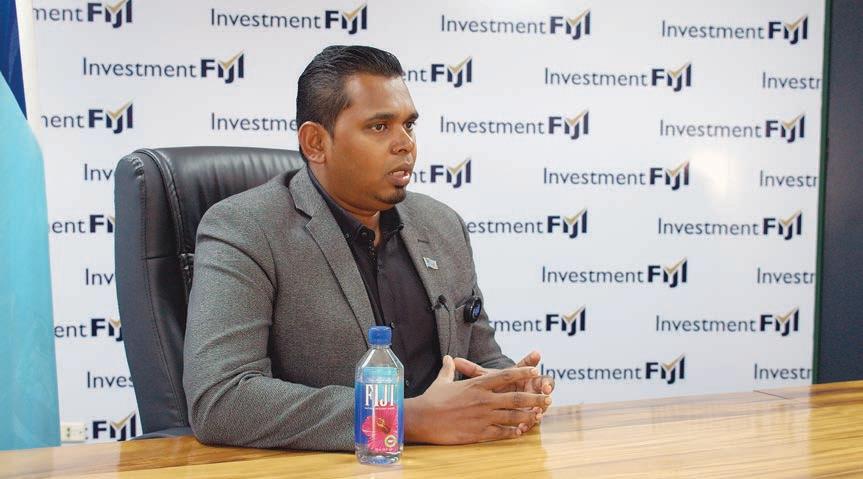
There’s a wide range of opportunities in Fiji beyond tourism.
At BSP Life, we are watching these opportunities with interest. We don’t have capability or the capacity to lead on some of these fronts, but we are certainly keen to explore them with partners that do.
Moving forward on a syndicated basis, where local and foreign investors partner on large opportunities – with support from government – will assist us in converting opportunities quicker. Collaboration enables sharing of risk and reward whilst merging financial and intellectual capital.
Michael Nacola Managing Director, BSP Life

tourism sector. You also get duty concessions, and other things.
But I think the more important part about Fiji’s investment attraction strategy is the support of Investment Fiji and other business-facing agencies, and the support from the government. You’re looking at how fast I can get connected to networks, how fast I can start building. We’re doing a lot of work around that space to see if we are able to facilitate the projects faster.
Fiji is able to get some good investments. Google has invested here. You’ve got some sovereign and superannuation funds currently investing here.
We are also very fortunate that we have local investors that have built good businesses in Fiji. We can bring in foreign investors, but we look at what can we do as an organisation to connect them together with our local ecosystem.
Kamal Chetty CEO, Investment Fiji
Islands countries such as Papua New Guinea, Vanuatu and Tonga. The other 30 per cent is the United States, China and a little bit to the Middle East.
We’re building a F$22 million new factory that will be bigger than our current one. We’re bursting at the seams and that gives us opportunity to increase our capacity significantly. We hope it will be ready by July 2027.
We’re in the advantageous position of having very supportive shareholders, including the Fiji National Provident Fund.
The growth and capacity of the company are very unlimited: we’ve got 420 acres of freehold land, so we have the opportunity to construct additional facilities, and we have very well-managed aquifers for sustainable water supply.
Cate Pleass Joint CEO, Pleass Global
Under a concession agreement, Health Care (Fiji) Pte Ltd, trading as Aspen Medical, is tasked with managing, upgrading and maintaining the healthcare infrastructure and delivery of health services at both Lautoka and Ba public hospitals.
Our next big step is to introduce all-digital medical records and integrated hospital management system. This will be a first for Fiji, within the public health system. After that, the next big one will be the new build of the Lautoka hospital itself.

Medical or health tourism is certainly a topic that has been talked about by businesses and government. We’ve now got cardiothoracic services here in the Pacific, so we could see patients from our island neighbours like Tuvalu or Vanuatu.
When we get Lautoka hospital to the international standards prescribed in our concessional agreement, we’ve then [also] got a product on site in Fiji for international travellers and retirees.
Gavin Whiteside CEO, Aspen Medical Fiji
We cover 12 markets that constitute our Pacific Islands business unit, with Fiji being the heart – all production happens in Fiji, where we’ve got three production sites.

We began consolidating the business in 2022, when Paradise Beverages, formerly a listed public company in Fiji, became a wholly owned subsidiary of CocaCola Europacific Partners. Over the last few years, we’ve done the same with our shared service functions, which means our retail customers get one visit from one sales person, place one order, and get one delivery.
Looking forward, we’ve got master plans for alcoholic and non-alcoholic production under development. We are looking at a five-to-ten-year horizon for capital investment.
We are very positive about the future of the Fiji business. We’ve got a lot of investment in export as well and are strengthening our reach into Samoa, Vanuatu, Tonga and the smaller Pacific Islands.
Ryan Mahoney Commercial Director, CocaCola Europacific Partners Fiji

How confident are Fijian business leaders about the next 12 months? Since 2012, the PNG 100 CEO Survey has revealed trends in confidence among business leaders in neighbouring Papua New Guinea. This year, for the first time, we have surveyed the CEOs of Fiji’s leading businesses.
The inaugural Fiji 100 CEO Survey asked CEOs how their profits performed in 2025/6 compared to their expectations.
Businesses performed solidly, with 35 per cent of chief executives reporting that their profits exceeded expectations and a further 57 per cent saying they met expectations. Less than nine per cent of CEOs said profits fell short of expectations.
Future profit expectations
The survey asked how profits are likely to perform in 2026/7, compared to 2025/6.
Most CEOs expressed optimism, with 57 per cent expecting profits to exceed 2025/6, and an additional 22 per cent expecting profits to be about the same in 2026/7. Just 21 per cent of CEOs expected profits to be lower in 2026/7.
Investment intentions
The survey asked respondents for their capital expenditure plans in 2026/7.
In a positive signal, 48 per cent of CEOs forecast an increase in CapEx, with the largest single group (35 per cent) forecasting a “substantial” increase. A further 30 per cent said CapEx would be around the same as in 2025/6, while 22 per cent flagged lower CapEx.
Recruitment intentions
The survey asked respondents to indicate their recruitment intentions for 2026/7, compared to 2025/6.
The responses were positive overall, with 43 per cent of CEOs expecting to increase their head count and 57 per cent saying they would maintain current staffing levels. None of the CEOs said they would reduce head count.
Business impediments
We asked CEOs to rank the key impediments facing their business, from 5 for “mission critical” to 1 for “not relevant.”
Fuel price and availability emerged as the leading impediment facing Fiji businesses, with an average score of
3.70. Most responses were collected in April and May, so this score may shift as global fuel markets and geopolitics evolve. Even so, fuel topping the list underlines Fiji’s vulnerability as a remote island economy to global supply chain disruptions.
Next on the list were a shortage of expertise/skills and excessive red tape (both 3.52), inflation (3.30) and lack of market research/intelligence (3.26). At the other end of the scale, CEOs were least concerned about lack of available land (1.52), work permits and visas (1.74) and corruption (1.78).
The average score across the 19 impediments was 2.74, lower than the equivalent figure of 2.92 recorded in the 2026 PNG 100 CEO Survey, suggesting Fiji’s CEOs feel somewhat less constrained overall than their counterparts in Papua New Guinea.
Fiji’s CEOs were considerably less concerned than PNG’s CEOs about corruption (Fiji 1.78 vs PNG 3.15), security/ law and order (2.83 vs 4.04), unreliable telecommunications (1.96 vs 3.06) and unreliable utilities (3.17 vs 4.17). CEOs of Fijian businesses were, however, at least as concerned as those in PNG about a lack of available office/warehouse space (2.48 vs 1.91) and access to market research and intelligence (3.26 vs 3.17).
The 2026 Fiji 100 CEO Survey was conducted by Business Advantage International between April and June 2026. The survey included senior executives from a representative sample of Fiji’s largest companies, across all sectors of the economy.
What are the critical impediments facing your business right now? (weighted average)
Looking back on your business’s performance in 2025/6, did your profits…
Substantially fall short of expectations?
Fall slightly short of expectations? Greatly exceed expectations?
In 2026/7, do you anticipate that your profits will…
Be slightly less than 2025/6?
Substantially exceed 2025/6?
Meet expectations?
How much investment (e.g. CapEx in plant, equipment, land or other assets) are you planning in 2026/7?
Be about the same as 2025/6?
What level of recruitment are you planning in 2026/7, compared to 2025/6?
Somewhat exceed 2025/6?
We take a closer to look at some of the key investors driving economic activity in Fiji and their respective investment approaches, starting with BSP Life.
By Andrew Wilkins
In 2026, BSP Life celebrates 150 years since its establishment in Fiji back in 1876 as Colonial Mutual Life Assurance.
Part of the BSP Financial Group since 2010, BSP Life is Fiji’s leading insurer, offering life and health insurance products. The way the company handles the insurance premiums it receives has led to it managing a sizeable and diversified investment fund.
“We must invest premiums we receive prudently, given we have a fiduciary responsibility to our customers that their hard-earned investments with us deliver sustainable value for them over time,” explains Managing Director Michael Nacola.
“Our investment portfolio has grown considerably, particularly in the last 15 years. The portfolio in 2010 was F$350 million, and today it stands at F$1.25 billion.”
Investment approach
As with superannuation funds, BSP Life needs to exercise caution in making
Annual member return 8.42% (2015—2024)
Number of policy holders 100,000 (2026)
Notable assets
IN THE CONTEXT OF WHAT’S HAPPENING GLOBALLY RIGHT NOW, FIJI’S LOCATION IS A MAJOR STRATEGIC ADVANTAGE.
MICHAEL NACOLA Managing Director, BSP Life
Co-owner, Sofitel Resort & Spa and Vatu Talei Hotel, Future Farms Pte Ltd, Oceania Hospitals
investments, while still aiming to achieve growth.
One of the challenges BSP Life Fiji faces, says Nacola, is the lack of sophisticated and mature investment instruments available overseas, such as managed funds, that it can invest in.
“With the absence of those instruments, we’ve essentially created a managed fund of our own. We currently have eight asset classes, ranging from private equity assets, investments in assets listed on the South Pacific Stock Exchange, a broad directly-managed property portfolio, some overseas investments, as well as defensive assets including government bonds and term deposits. It’s taken time to get to this mature state.”
As far as assessing new investment opportunities is concerned, Nacola says
a lot of requests and proposals come across their table.
“There is a meticulous assessment process before an opportunity gets taken through internal approvals and proceeding from concept to execution stage, because we’re very conscious that we’re using policyholder money,” says Nacola.
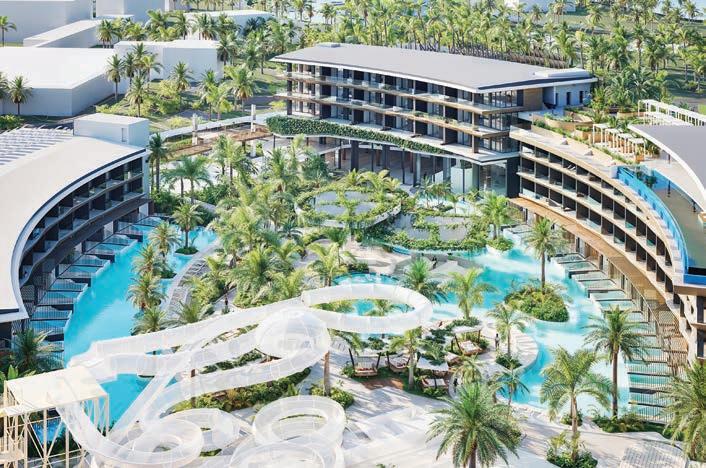
A notable BSP Life holding is the fivestar Sofitel Resort & Spa on Denarau Island. This will soon be joined by Vatu Talei, a new F$250 million luxury hotel on an adjacent site, which is due to become fully operational in 2027. The latter is being developed under a joint venture with Fiji Airways called Yavu Collective.
“It’s a unique development for

largest
Golf Resort & Spa and Suva’s Grand Pacific Hotel, it also owns a sizeable bank of undeveloped land, including on Denarau Island.
Offshore, FNPF’s investments are mainly in managed funds but it is now also the second-largest shareholder in Papua New Guinea-headquartered regional bank BSP Financial Group. FNPF also has exposure to PNG through Amalgamated Telecom Holdings, which owns Vodafone PNG.
Fiji, never seen before in the southern hemisphere,” Nacola enthuses. “It complements the offering that we currently have in the Sofitel and introduces a sophisticated product that appeals to discerning guests, particularly from long-haul markets like North America, who are looking for something special.”
Nacola says BSP Life is keen to scale up its portfolio more rapidly and he sees the syndicated investments model, whereby local investors like BSP Life form partnerships with “specialist offshore investors that bring both intellectual capital and financial capital” to a project.
There is an “amazing range of opportunity” in Fiji for investors, he says, and the timing is ideal right now.
“Sometimes our location in the past has been seen as a disadvantage because we are remote from large and mature markets. But, in the context of what’s happening globally right now, Fiji’s location is a major strategic advantage.”
In 2025, FNPF reached a key milestone, achieving F$1 billion in income for the first time. This is turn delivered an 8.75 per cent return to members – its highest in over 30 years, on the back of strong returns from both local and international equity investments. These returns included an impressive 22 per cent growth in dividends from its hotel investments.
FNPF runs three funds, each with their own balance sheets, investment policies and governance.
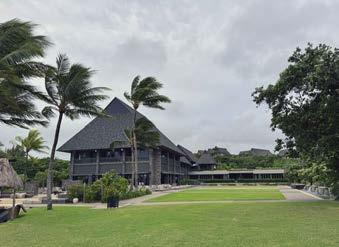
While almost three-quarters of its assets are in fixed income and equities, FNPF also has a sizeable property portfolio and is the country’s largest landlord. As well as notable tourism assets such as the currently renovating Westin Fiji, the InterContinental Fiji
Recent new investments include strategic funding for the Radisson Blu Mirage Resort on Naisoso Island, the F$25 million acquisition of land at Pacific Harbour, and a F$45 million investment in the upgrade of the Westin Hotel in Denarau.
NATIONAL PROVIDENT FUND – KEY FACTS
Fund name FNPF
Year established 1966
Funds under management
F$12.1 billion
Annual member return 8.75% (2025)
Number of fund members 436,860 (2026)
Notable assets Owner, InterContinental Fiji Golf Resort & Spa, Grand Pacific Hotel and Mariott Denarau Properties; major owner, Amalgamated Telecom Holdings and HFC Bank

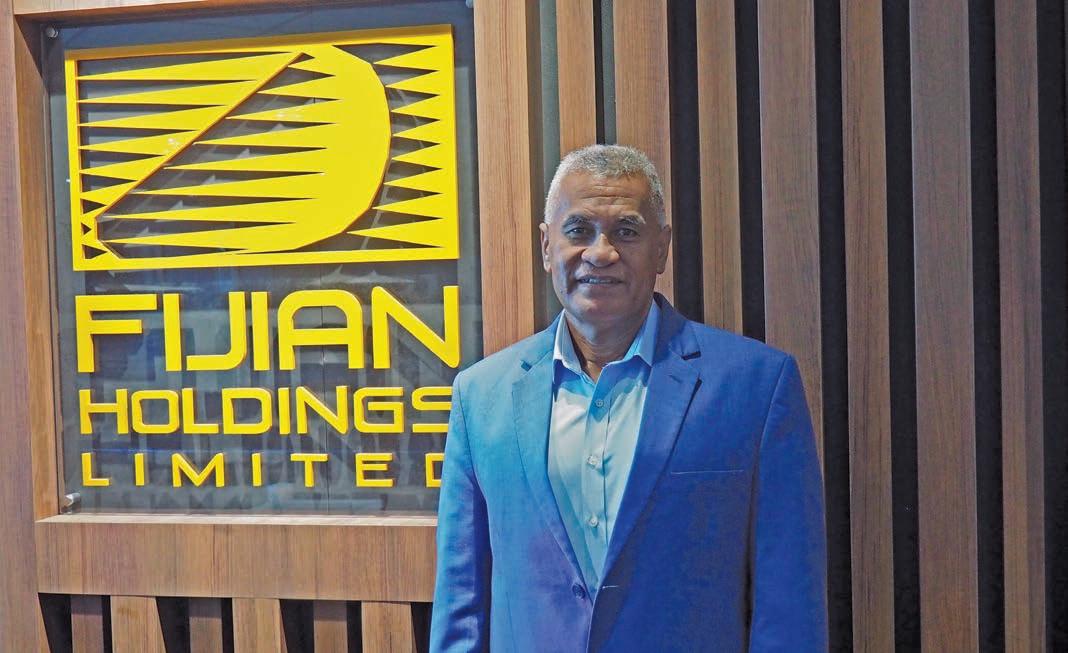
Created in 1984, investment fund Fijian Holdings Limited (FHL) is wholly owned by iTaukei (indigenous Fijians), including several indigenous councils, boards and investment vehicles.
Fijian Holdings’ portfolio of assets is diverse, across tourism, finance, retail, manufacturing, building services and media. Its two largest shareholders are landowner entities, the iTaukei Affairs Board and the iTaukei Trust Fund Board, which between them control over two-thirds of its shares.
A signature recent investment has been the 18-storey FHL Tower in downtown Suva, which opened in October 2025 and is now fully tenanted, according to FHL’s Group Chief Executive Officer Jaoji Koroi.
“We have high-quality tenants.
The challenge for us now is to make sure that we deliver in terms of the services that we provide as landlord, so we’re reinvesting in that and setting standards,” he tells Business Advantage Fiji. “We have a lot of land that’s earmarked for development, but at this stage we want to stabilise the earnings from this development first, and make sure it operates properly.”
In some ways, the long-awaited opening of the FHL Tower marks the end of a busy period of expansion for the group.
“Post-Covid, the theme for our
Fund name Fijian Holdings Year established
THE HOUSING MARKET IN FIJI IS UNDERDEVELOPED –THERE’S A LOT OF SPACE THERE.
JAOJI KOROI
Group Chief Executive Officer, Fijian Holdings Limited
strategic plan was growing into new frontiers in pursuit of our purpose. So, we were challenging our subsidiaries to grow, reinvest in the business, and look at new areas to grow into,” says Koroi.
“I’m pleased that, in the last three years, the group has made investments totalling over F$487 million –including the expansion in Merchant Finance’s loan portfolio.”
Looking forward, Koroi sees opportunities in helping landowners developing housing on their land –something Merchant Finance, one of 14 subsidiary businesses owned by FHL, is well placed to assist with by providing housing loans.
FHL already has two existing joint ventures with landowners for property development, and more are planned.
“The housing market in Fiji is underdeveloped – there’s a lot of space

One of the largest international investors in Fiji is the United States food and agriculture conglomerate The Wonderful Company, owner of one of the country’s international success stories, FIJI Water.
While exports of FIJI Water continue to grow, the company is looking to build on its Fiji footprint by making some forays into agriculture.
In December 2025, it launched a pilot program to grow Persian limes, Mexican limes, lemons and papayas at Waiqele on Vanua Levu, which, it believes, offers the climate, soil and land access to
there – and it’s an area that I think will have a strong impact for Fiji in the future,” he says.
The group is also moving into the development of smaller hotels in the Yasawa Islands, to expand and support its tourism-related businesses such as inter-island marine logistics business South Sea Cruises.
“South Sea Cruises has done a lot of re-investment in the last few years, changing their fleet and also developing new products,” he explains.
“A small boutique hotel has already been acquired, one is under development, and two more are in the planning stage. One of those at the planning stage is quite a huge, for us –
grow high-quality citrus, mangoes and papayas. The program will see 7000 seedlings nurtured in a newly built greenhouse propagation facility.
The company has also conducted hands-on beekeeping workshops with local farmers, sharing its expertise in bee biology, hive management, and pest and disease management.
“The long-term vision extends far beyond. By reducing Fiji’s dependence on imported fruit, this initiative will help create a new pathway to reduce trade deficit and strengthen local food security,” the company said in a statement.
more than 100 rooms.”
In a strategic move in February 2026, FHL acquired an additional 23.5 per cent equity interest in another key tourism asset, Port Denarau Marina Limited, from Skeggs Group Limited.
The group is also making a F$40 million investment to upgrade Fiji’s largest cement mill, run by its Pacific Cement subsidiary, in anticipation of higher demand in coming years.
“Infrastructure in Fiji clearly needs to be taken to the next stage – whether it’s water, electricity, housing, roads or ports – and they all need cement,” says Koroi.
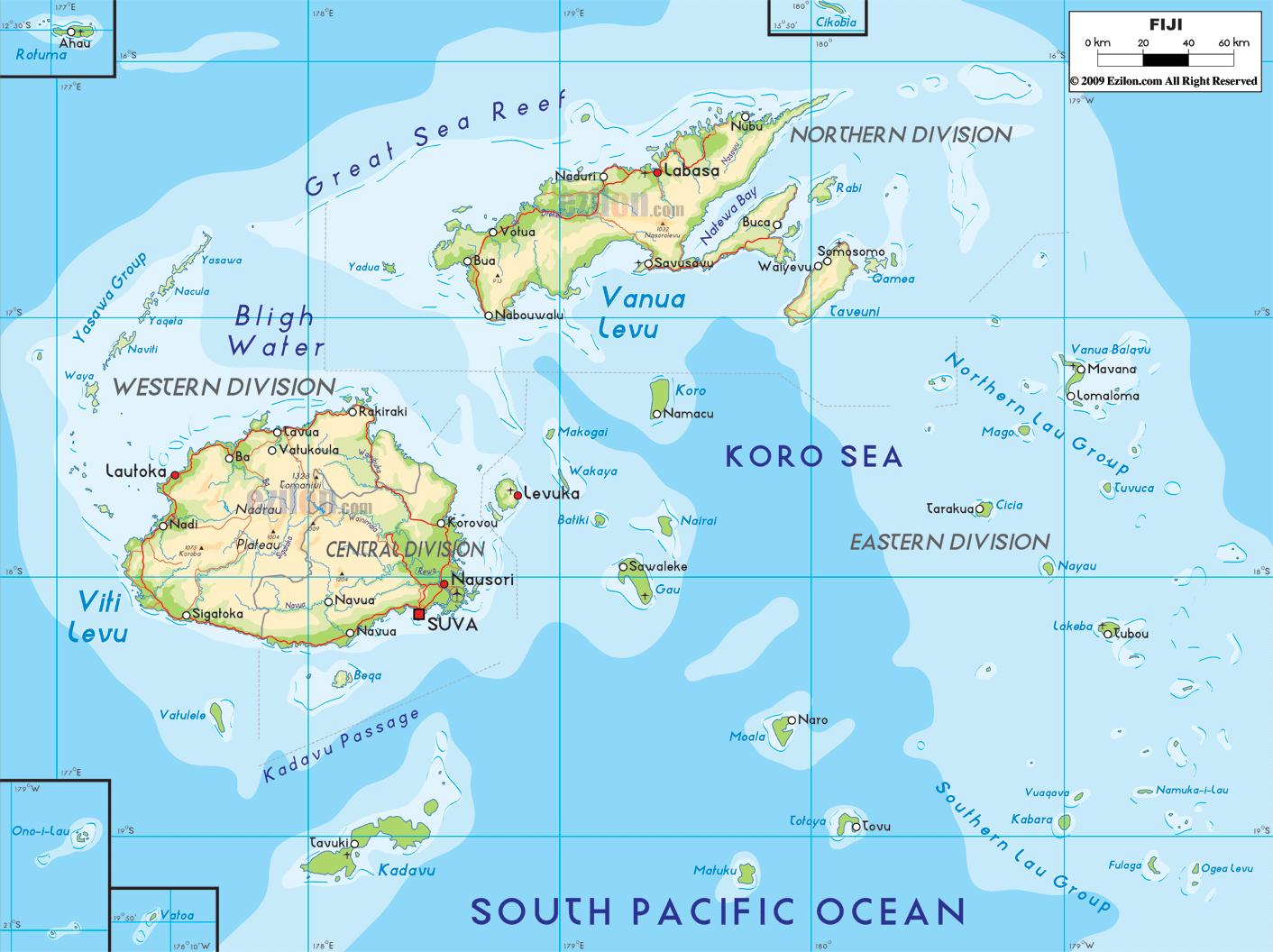



Infrastructure
Port Airport
Main roads
Electricity infrastructure
Wind power station
Diesel/Thermal power station
Hydro power station
Solar power station
Transmission lines
Mining projects
Iron sands mine
Gold mine
Primary production
Livestock
Sugar cane
Fisheries
Forestry
Coffee
Manufacturing
Undersea fibre optic cables
Bulikula (Google, 2026)
ICN1 (2014)
Gondwana-2 (2022)
Southern Cross NEXT (2022)
Tui Samoa (2018)
Southern Cross Cable Network (2000)
Tabua (Google, 2026)
Tonga Cable (2013)




‘Where happiness comes naturally’: Fiji tourism’s dream run
Fiji’s key sector is still breaking records, despite short- and long-term challenges.
By Robert Hamilton-Jones
Fiji’s tourism industry has had a dream run post-COVID which, at the time of writing in mid-2026, is continuing, despite the fuel price shock earlier in the year and related global instability.
“We have had four stellar years, from 2022 to 2025, with record visitor numbers year after year,” says Maikash Ali, Head of Corporate & Institutional Banking (Fiji & Pacific Islands) at Bank South Pacific (BSP).
The records were still tumbling three months into 2026, when the Middle East conflict broke out and threatened to upend the global tourism industry. However, even skyrocketing fuel price and uncertain global outlook could not initially stall Fiji’s momentum – quite the opposite, as Fiji benefited from being seen as a safe destination far from the conflict:
“When the fuel crisis happened, we wondered if there would be cancellations,” says Fantasha Lockington, CEO of the Fiji Hotel and Tourism Association (FHTA). “In fact, what we saw was an increase in interest, showing people [from main markets of Australia and New Zealand] opting for short-haul flights rather than long-haul.”

WHEN THE FUEL CRISIS HAPPENED, WE WONDERED IF THERE WOULD BE CANCELLATIONS. IN FACT, WHAT WE SAW WAS AN INCREASE IN INTEREST.
FANTASHA
LOCKINGTON CEO, Fiji Hotel and Tourism Association
Nonetheless, the economic hit from the crisis is expected to impact demand from those key source markets, where around 70 per cent of Fiji’s international visitors originate, as their own economies soften. Moreover, the sudden steep rise in the oil price has put huge pressure on airlines, obliging Fiji Airways to temporarily cut some international services (see box). The Reserve Bank of Fiji announced in June that visitor
arrivals were therefore expected to “grow at a slower pace than previously anticipated.”
All the same, by late June fuel prices had dropped to their pre-crisis levels and the medium- to long-term outlook for the sector remains very positive.
New properties, new connections
Unsurprisingly, the high demand of recent years has led to a flurry of investment in new properties, many of which are due to come on stream in the next year or two. Several of these, most notably the Vatu Talei property on Denarau (see page 18), will not just add much-needed room inventory but will also diversify and enhance Fiji’s accommodation offering.
In 2025, Fiji’s award-winning national carrier, Fiji Airways, became a full member of the Oneworld Alliance and a full partner of the American Airlines AAdvantage rewards program. As CEO Paul Scurrah explains in his interview on page 26, this is increasing Fiji’s appeal beyond its traditional markets and making it easier to reach.
Perhaps the biggest longer-term challenge to the industry is infrastructure, as increased visitor arrivals inevitably put pressure on ageing infrastructure:
“We’ve outgrown the airport, we’ve outgrown the roads,” says Fantasha Lockington of the FHTA. “They are expanding the airport but that doesn’t make sense if you don’t redesign the roads as well. Then there’s power and water: the [recent] fuel challenge has brought home that we should have done more in renewable energy.’
Infrastructure is also the key to opening up more of Fiji’s 14 provinces to tourism (the vast majority of the industry is currently concentrated in just three). The ongoing Fiji Tourism Development Program, known locally as the Na Vualiku Project (navualiku.com), is a good start. Financed by the World Bank, this flagship Fiji Government project aims to support sustainable tourism development on the islands of Vanua Levu and Taveuni. A total of F$400 million is due to be invested in three stages over the next decade.












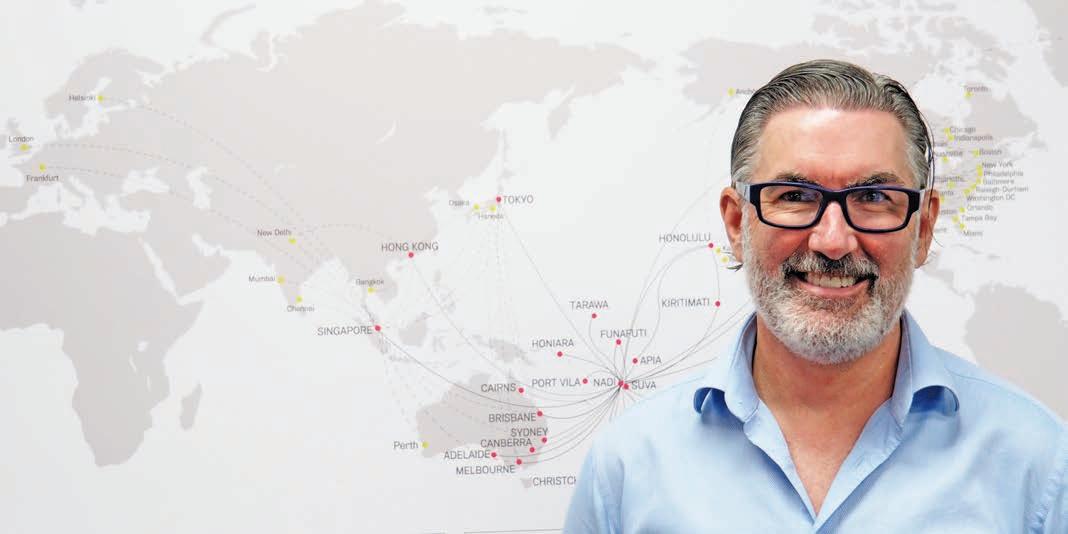
Business Advantage Fiji sat down with Paul Scurrah, CEO of Fiji Airways, at the beginning of May 2026 to discuss the impact of the Middle East conflict, the American Airlines partnership, its Oneworld membership, as well as plans for growth.
Business Advantage Fiji: You’re six months into the role. What are your first impressions?
Paul Scurrah: In doing my research before I accepted the job, the thing that struck me was how happy the Fijian people were. I looked into it a little bit more deeply and it’s not a show, it’s actually genuine happiness. That is something we should be incredibly proud of: airlines love to have a point of difference and we want to make sure that our people are the biggest difference between us and our competition.
BA Fiji: Obviously, the Middle East conflict is not something you were expecting at the beginning of the year. How is the airline responding to that challenge?
PS: Of course, we’d prefer not to be in such an expensive fuel environment and it’s certainly hurting us as an airline. Thankfully, we’re doing okay on the revenue line because we’re also seen as a destination that is safe, family-friendly and relatively isolated from trouble.
So, for the reasons I mentioned, we’re not as badly affected as other airlines
because, touch wood, at the moment demand is healthy and strong. We’re seeing really good forward booking numbers from our key markets. But there are certain services that we just could not sustain with the current fuel cost environment, so we’ve made some minor tweaks to our schedule.
We’ve taken the approach to date not to put a fuel surcharge on. But we have found it necessary to push our base prices up to recover.
BA Fiji: When we talked to your predecessor last year, your new strategic partnership with American
THE RELATIONSHIP WITH AMERICAN AIRLINES AND, IN FACT, ALL OF OUR ONEWORLD PARTNERS, IS PROVING REALLY STRATEGICALLY IMPORTANT TO US.
Airlines was a major focus. How is that relationship developing?
PS: The relationship with American Airlines and, in fact, all of our Oneworld partners is proving really strategically important to us. In terms of the access to 900 destinations we now have across 14 other partners, it has allowed us to effectively increase our network massively without buying a new plane.
With American [Airlines], they’ve been a great partner in the US. Their loyalty relationship with us is very important as well. They’re a very important redemption partner and they’re promoting us extensively throughout the US.
We also have a great relationship with Qantas. They’re an important partner because Australia is our biggest source market.
What’s great for our customers is that there’s a seamless nature to our service offering, which gives them confidence when they book with us.
BA Fiji: Fiji Airways has developed a significant business in transit passengers in recent years. How do you see that market developing?
PS: Our transit business has really been a catalyst for us getting global recognition for how good our product is. It has enabled us to fly someone on Fiji Airways who was not initially thinking about Fiji as a holiday destination – or even as Fiji Airways as a way to get to there – and put our brand at the front of their mind for when they are looking for a holiday. So, the transit product has served us incredibly well and is going to be a big part of our future.
BA Fiji: You already have a young fleet, certainly by Pacific standards. What is your growth strategy for the next few years?
PS: We’ve got great Boeing 737 MAXs, Airbus A350s and A330s, with a great onboard product. We see room to grow inside the fleet profile we’ve got at the moment. We think it’ll serve us well for the next three to five years.
We certainly can’t neglect our core markets of Australia and New Zealand. They are so close and they have such a close bond with Fiji.
There are already some really excellent products out there in terms of tour facilities but more could be done, for instance in the interior of the main island, Viti Levu.
We also want to see product diversification happening, particularly in the Northern Division. To give you an example, there is now an island-hopping track that goes from Nukubati, where the Great Sea Reef is, all the way down to Savusavu and ending up in Taveuni.
I am also passionate about agritourism, which has been floated for many years. On Viti Levu, you could have cooking tours, cooking classes, visits to villages where you are involved ‘from farm to table’, and so get educated as you take part.
Then you go to places like Taveuni, where you have really interesting things like turning soursop (tropical fruit) into ice cream. So, each area starts to have its own unique foodie trail.
MICE is a key strategic segment for Tourism Fiji. It is a high-value market that delivers benefits well beyond the conference or event itself. Pre- and post-event itineraries provide delegates and their accompanying partners, families and travel companions with opportunities to immerse themselves in Fiji’s tourism experiences through island day trips, cultural encounters, adventure activities, wellness offerings and other unique experiences. This extended visitor spend generates broader economic benefits across the tourism sector while showcasing the diversity of Fiji’s tourism product.
Fiji used to be really popular as a wedding destination: resorts would say “we’re doing weddings three times
But I think there’s a lot of growth to come out of North America and Asia. We’re seeing really strong support for our Hong Kong, Singapore and Tokyo flights and we also see China as an important future market. Of course, India also has a close relationship with

I THINK THERE IS A STRONG REALISATION THAT PEOPLE JUST DON’T COME TO FIJI; THEY COME TO EXPERIENCE THE PEOPLE, THE CULTURE –EXPERIENTIAL TRAVEL –AND FIJI REALLY EXCELS IN THAT BECAUSE OF OUR WELCOMING NATURE.
DR PARESH PANT CEO,
Tourism Fiji
a day.” I think now is a great time to revisit that because, when you look at Australia and New Zealand, weddings are quite expensive. You could have a much more cost-effective wedding in Fiji and you would also get a tropical destination with friendly people.
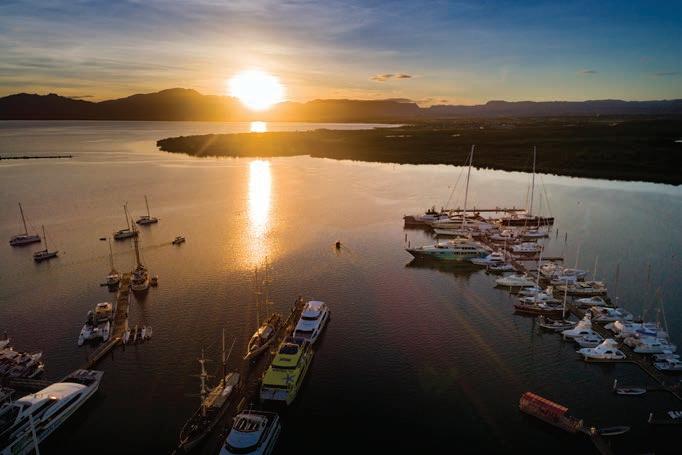
Finally, there is marine tourism: yachties are already important to the economies of, say, Savusavu or Denarau. The operators are already here but further dialogue and encouragement would help grow those parts of the industry as well.
Fiji, for obvious reasons. At the same time, our codeshare alliances and our Oneworld Alliance partnership opens up the whole world and we’re seeing really healthy growth out of Europe as well, especially the United Kingdom.
With the imminent opening of the new Radisson Blu Mirage on Naisoso Island, all eyes are on this new island development, just a short drive from Nadi airport.
By Paul Chai
Denarau Island is arguably the cornerstone of Fiji’s tourism industry. The island is home to nine major hotels and resorts with over 40 restaurants, and contains the country’s main tourism marina. In fact, according to Fiji’s National Sustainable Tourism Framework, the Coral Coast–Nadi–Denarau corridor contains approximately 75 per cent of Fiji’s entire hotel room inventory.
Part of this success is due to travellers’ reluctance to take a second flight to paradise (a fact that is also seeing new artificial islands pop up in the Maldives just a short boat ride from its capital, Malé). This need for resorts on Viti Levu has made land near Fiji’s Nadi International Airport a key focus for investment, first at Wailoaloa and more recently on Naisoso Island.
Naisoso sits in Nadi Bay, with views toward the Mamanuca Islands; it is just five minutes from Nadi International Airport and in easy reach of nearby ferry terminals to the Mamanuca and Yasawa Islands. It has everything it needs to be the next popular resort investment hotspot.
Bob Lowres, head of Relcorp, saw the potential of the island when he purchased it in 2006 but the global financial crisis, the Covid pandemic
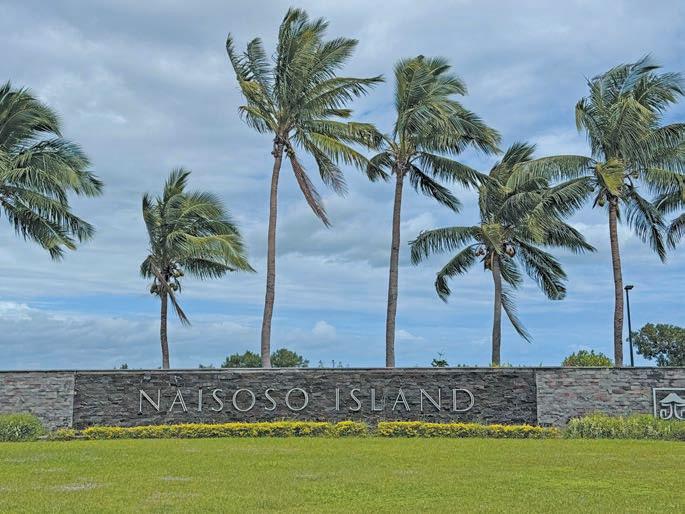
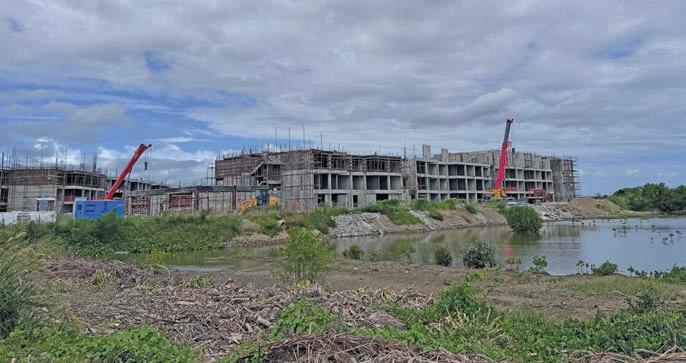
and three cyclones slowed things down. Finally, the Radisson Blu Mirage is set to put the location firmly on the map. Due to open in 2027, this beachfront resort will offer 144 keys with one, two, and three bedroom apartments set across eight buildings.
rooms we are finding that it is going from strength to strength,” says Lowres. “The other thing is that our island is completely freehold, whereas only eight per cent of the land in Fiji is freehold land.”
BECAUSE FIJI IS SO SHORT ON HOTEL ROOMS, WE ARE FINDING IT IS GOING FROM STRENGTH TO STRENGTH.
The Radisson Blu project is being funded by Fiji’s largest super fund, Fiji National Provident Fund, and banker BSP Financial Group (Fiji) Pte Ltd under an innovative ‘syndicated finance’ arrangement that relies on multiple layers of financing, rather than a traditional hotel construction loan.
“We call it ‘Fiji’s finest address’ and because Fiji is so short on hotel
As well as hotel developments –another large hotel group is also in talks to build there – Naisoso Island is home to an exclusive residential community. The estate comprises 122 residential lots, including absolute beachfront and riverfront sites, with land sizes ranging from 1,140 square metres (sqm) to 5,500 sqm; 50 houses have already been built and another eight to ten are under construction.
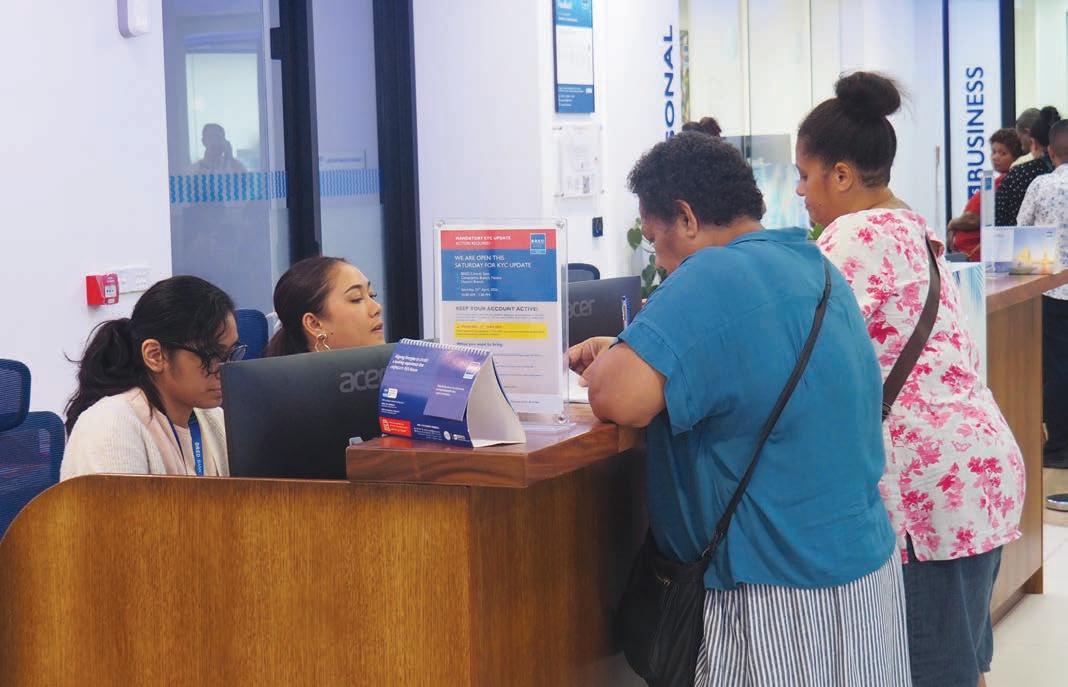
With six major banks, five of which are internationally owned, competing in a market of less than a million people, Fiji’s banking and financing sector is inevitably highly competitive.
As Reserve Bank of Fiji Governor Arrif Ali tells Business Advantage Fiji, Fiji’s banking and finance sector is in good shape (see our interview on page 12).
There is plenty of liquidity in the system, interest rates remain at historic lows, non-performing loans are running at around three per cent and the banks themselves are achieving healthy profits.
BSP Fiji, part of the Pacific’s largest bank, BSP Financial Group, achieved strong results in 2025 and has approximately 28 per cent market share across both loans and deposits.
“BSP’s result is underpinned by the investment that we’ve made in our network – in our infrastructure, the number of branches we have across the country, the number of ATMs, the number of EFTPOS, number of staff –and the quality of the service we offer,” says Country Head Maikash Ali.
Australian commitment
“In terms of Fiji and the Pacific more locally we’ve had a good half-year,” says ANZ’s Fiji Country Head, Sohaib Mahmood.
ANZ is unique among Fiji’s banks in that its Pacific operations, including

BSP’S RESULT IS UNDERPINNED BY THE INVESTMENT THAT WE’VE MADE IN OUR NETWORK.
MAIKASH ALI
Country Head, BSP Fiji
those in Fiji, are supported by a limited A$2 billion guarantee from the Australian government signed in 2025. Under this guarantee, the bank has committed to invest A$50 million in its Pacific banking operations and maintain fee-free international money transfers.
“It’s about having a meaningful presence and ensuring our returns and everything that we measure at a group level is also held at the Pacific or Fiji level specifically,” Mahmood elaborates.
“We’re now investing in long-term infrastructure. We’ve got a commitment to put our $50 million into banking systems, including digital banking. This will result in faster customer turnarounds, more efficient banking, better quality products, and safer banking.”
Fiji’s other Australian-owned bank, Westpac, recommitted to the Fiji market in 2023, when it took its Pacific operations off the market.
Finding gaps in the market ANZ is by no means the only international bank to be investing more in Fiji. BRED Bank, part of the French-owned Banque Populaire Group, has been active in the country since 2012 and has a presence in other Pacific markets such as New Caledonia, Vanuatu and the Solomon Islands.
In 2026, it opened a new head office in Suva and a new branch in Sigatoka. According to its CEO, Pierre Tastet, a new flagship branch in Nadi is set to open by year’s end.
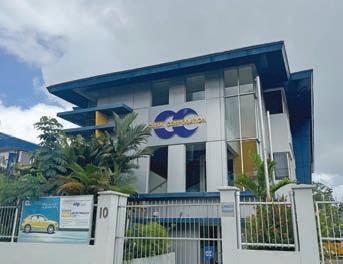
Credit Corporation’s Suva head office.
“BRED is a French bank with strong ambition overseas, particularly in developing economies,” he tells Business Advantage Fiji. “We are committed to the development of Fiji’s economy for the long-term.”
Without the decades of history in Fiji that some other banks have, BRED Bank’s focus, says Tastet, is on the quality of its staff, services and tools.
“We want to build our branches to play advisory roles, while everyday transactions are moved to our digital platforms.”
BRED’s new branches have separate facilities for retail and corporate banking. Tastet says they can draw on expertise from across the BRED Group’s international businesses if needed to
help execute more complex deals such as equity finance and structured debt.
Small-to-medium enterprises (SMEs) are also a focus, with the bank recently signing a deal with the IFC, part of the World Bank Group, under which the IFC will provide credit guarantees to support BRED Bank issuing more loans to small businesses in Fiji.
Fiji’s only locally owned bank, HFC, delivered around F$50 million profit in 2025 and has seen its asset base grow to F$2.4 billion by trying to differentiate itself from its competitors.
“We can’t tackle the international banks head on,” observes CEO Rakesh Ram. “Absolute relationship banking is the solution.” This is involves adding value to the bank’s clients, with 60 per cent of bank staff customer-facing, having quick turnaround times because all its decisions can be made locally.
While Fiji may have a market in which only around 600,000 people are bankable, Ram says “we focus on quality rather than quantity.”
While HFC maintains a branch network and recently opened a new branch in Pacific Harbour, Ram says the bank is seeing the benefit of its investment in digital services.
Part of the Papua New Guineabased TISA Group, the formerly named Capital Insurance rebranded as TISA Insurance in May 2026.
“The TISA Insurance Group operates across five Pacific countries - Papua New Guinea, Fiji, Tonga, Vanuatu and the Solomon Islands,” explains CEO David Ariff Chan.
“The rebrand reflects who we are: a Pacific insurer, proudly Pacificowned and Pacific-focused. It brings our businesses together under a single regional identity and reinforces our long-term commitment to the communities and economies we serve across the region.”
The rebranding comes at a time of significant growth for the insurer in Fiji.
“We have grown by 37 per cent
over the past couple of years,” Chan tells Business Advantage Fiji
“We’ve experienced strong growth in recent years, driven by disciplined execution, strong customer relationships and an expanding distribution network.”
TISA Insurance distributes its products through brokers, agents, strategic partners, financial institutions, and direct channels, with growth across both corporate and retail markets.
“Our strategy is centred on making insurance more accessible, delivering outstanding service and building long-term relationships
with our customers and business partners.”
TISA insurance offers a broad portfolio of business and personal insurance solutions, including property, liability, marine, motor, home, medical and term life insurance.

“Corporate and commercial insurance remains an important part of our business, but we’re equally focused on helping more Pacific families and small businesses access quality insurance protection. Fiji remains an under-insured market, presenting a significant opportunity to strengthen financial resilience across our communities,” he says.
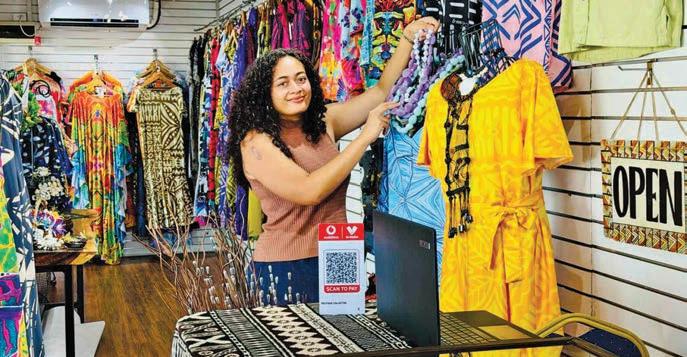
M-PAiSA has had such success that it had to be carved out of parent company Vodafone Fiji into its own regulated entity. Shailendra Prasad, General Manager of operator Digital Financial Services, tells Business Advantage Fiji about the innovations and financial inclusion gaps in the market that M-PAiSA has been able to fill that have largely driven its rapid growth - and what’s next.
By Nadav Shemer Shlezinger
When Fiji’s central bank decided M-PAiSA had outgrown its place inside a telco, it forced a rethink of how the country’s leading mobile money wallet and other licensed eWallets do business.
“We are processing such a large volume of deposited funds and it is understandable that the Reserve Bank wants increased oversight,”
Shailendra Prasad, General Manager of operator Digital Financial Services, tells Business Advantage Fiji. “It’s treating it like a bank.”
That oversight saw Digital Financial Services carved out of parent company Vodafone Fiji in 2025 and licensed separately as a national payment service provider.
M-PAiSA’s scale is hard to overstate. Of Vodafone Fiji’s roughly 700,000 mobile subscribers, around 600,000 are registered for the service, with some 400,000 transacting at least once a month.
“An estimated forty-five per cent of Fiji’s population were unbanked or underbanked [when M-PAiSA
Beyond the commercial banks, there is plenty of opportunity for finance companies in Fiji as well, especially in the SME sector.
“Last year presented some good opportunities in the asset finance space, which we capitalised on,” observes Mohammed Nawaz, Country Manager
launched, in 2010],” Prasad says. “Now that number is down to around six per cent.”
Rather than competing head-on with the banks, as it once did, M-PAiSA now works alongside them, with new rules on interoperability letting customers move money seamlessly between wallets and bank accounts since 2023. “We are actually helping [banks] acquire more deposits without spending money to go and look for them,” Prasad says.
Collaboration with financial institutions now extends to global card networks, too. M-PAiSA has become a Mastercard issuer in its own right – a first for a non-bank entity in the region, according to Prasad – and recently launched tap-and-pay with Mastercard on Android, also a Fiji first.
“We’ve been able to do this despite the non-availability of Samsung, Google Pay, or Apple in Fiji. Our technical team was able to develop a
of leading finance company Credit Corporation (Fiji) Pte Ltd. “That gave us strong portfolio growth of 39 per cent in our loan book and an 11 per cent increase in profit.”
As well as competitive interest rates, Credit Corporation’s result has been in part helped by a larger footprint, with its office in Labasa having completed a
proprietary solution in-house,” he adds.
Remittances are another major growth driver through partnerships with the likes of Western Union, Remitly, World Remit Thunes and others.
“Before Covid, we were bringing in about US$1 million (F$2.3 million) in inward remittances. Now we are bringing in about US$30 million (F$70 million),” Prasad says.
Another development Prasad is watching keenly is the Reserve Bank’s plan to align with the global EMVCo QR standard. Once complete, Fijian retailers will be able to display a single QR code to accept payments from multiple digital wallets.
“While we see it as a risk to our overall market share, we can also see the opportunity that it will grow the pie,” he says. “We are already working with some banks on collaborations in that space.”
full year in operation.
Moving ahead, the company is investing in an upgrade of its digital systems and will soon move its Nakasi branch to a larger premises to accommodate further growth.

Call centres are big business in Fiji, where the biggest challenge is finding enough workers to meet international demand.
By Robert Hamilton-Jones
Walking down Suva’s main thoroughfare, Victoria Parade, in mid2026 and perhaps the most noticeable change from a year earlier is the eightstorey building that is now entirely occupied by outsourcing business Centrecom.
It is an unusually prominent reminder of Fiji’s other niche sector besides tourism: business process outsourcing (BPO).
Centrecom is an international BPO operator, employing around 1,000 people across four Fiji sites. The new Suva site, which has consolidated three smaller sites around the capital, is the largest. Centrecom has a similar operation in Malta, smaller offices worldwide and it caters to a worldwide client base.
Whereas the nation’s thriving tourism industry is high-profile, this sector is typically heard but not seen. But, once Fiji was linked to the Southern Cross fibre-optic cable in 2000, giving it broadband internet years before its Pacific Island neighbours, it was quick to recognise
the potential of its workforce to manage specific business tasks or operational functions for international companies (e.g. contact centres, human resources/ finance/accounting services and IT helpdesks).
Today, the outsourcing sector employs over 9,000 Fijians and contributes around F$280 million directly to the local economy.
“Our workers are highly educated, have a neutral English accent and a strong understanding of different cultural perspectives,” says Josefa
OUR WORKERS ARE HIGHLY EDUCATED, HAVE A NEUTRAL ENGLISH ACCENT AND A STRONG UNDERSTANDING OF DIFFERENT CULTURAL PERSPECTIVES.
JOSEFA WIVOU Executive Director of
Outsource Fiji

International BPO operator
Mindpearl has operated in Fiji since 2009. It currently employs about 1,000 staff to support around 10 clients, including airlines and finance, insurance and mobile phone companies. Most operate in the broad Australia/New Zealand time zone, an example of what is known as ‘nearshoring’, where services are outsourced to an operator in the same region.
Wivou, Executive Director of Outsource Fiji, the state-funded entity responsible for promoting the sector.
“We also offer a short travel time from source markets such as Australia and New Zealand, allowing clients to make regular site visits if they wish.”
The biggest challenge facing the sector is recruiting enough workers to meet demand. Fiji has less than one million inhabitants and has suffered a welldocumented exodus of skilled workers post-Covid. The outsourcing sector has
been especially impacted as it typically attracts younger workers.
Given this supply constraint, it is no surprise that Outsource Fiji sees moving up the value chain as the key to future growth, in the form of so-called Knowledge Outsource Processing (KPO):
“KPO includes high-value categories like accounting, research, financial services and legal,” explains Josefa Wivou. “Workers may require a lot more training but the pay packet is much higher than in the traditional BPO space.”
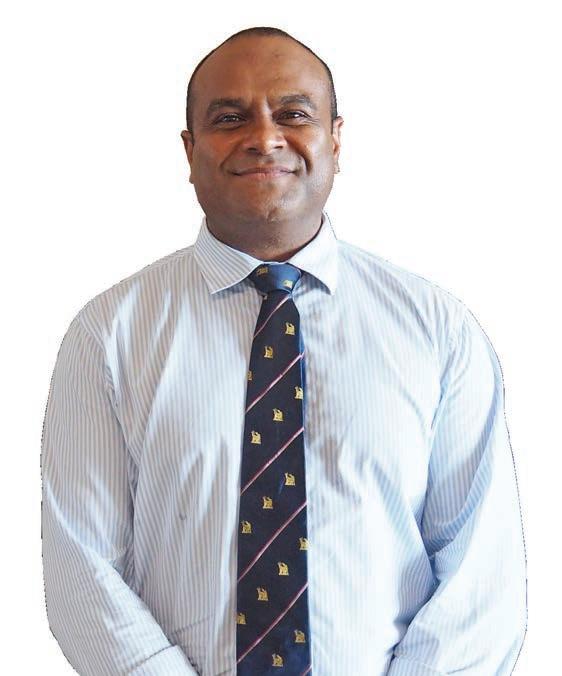
While Fiji can’t compete with India or the Philippines in terms of scale, it has clearly found its own niche at the premium end of the market.
Centrecom’s Managing Director, Anthony Cassar, sums up this ethos:
“We don’t want to be the biggest, we want to be the best and we choose our partners carefully. Whilst we have grown, especially post-Covid, it’s about sustainable growth.”
“The entire school system in Fiji is in English,” explains Erik Van Duivenbode, who oversees the Fiji operation, “and the Fiji accent is accepted all over the world, wherever English is spoken.”
He also praises the work ethic and attitude of his workforce:
“Fiji has a strong sharing culture, which is really valuable in our sector. We also appreciate how flexible our Fiji employees are, for instance when they need to switch to a new account.”
The fact that Fiji is now the largest of Mindpearl’s five international sites (which span the globe from Cape Town to Lima, Peru) is testament to its competitive advantage in this space.

Amalgamated Telecom Holdings (ATH) is the dominant player in Fiji’s telecommunications sector, operating mobile and fixed-line services, broadband and IT services across the Pacific. Business Advantage Fiji sat down with its CEO Ivan Fong to identify how it is achieving record growth in a maturing market.
Business Advantage Fiji: ATH celebrated a milestone in 2025, reaching F$1 billion in revenue. How was this achieved?
Ivan Fong: Fiji is a sizeable market, but with one million population and with the market maturing in terms of competition, our growth could have stalled. The board felt we should diversify our sources of revenue by operating in other Pacific Regional markets. Papua New Guinea (PNG), Samoa and our other Pacific markets are now generating more than 50 per cent of the group’s revenues today. For our board, it’s a big tick in terms of what they wanted to achieve.
BA Fiji: What do you see as the underlying causes of the group’s equally strong profit result?
IF: As primarily an internet business, the largest costs of business are always sourcing bandwidth and equipment. Getting some of these deals on a group basis has certainly moved the result in that direction.
A very large contribution has come out of our Vodafone PNG subsidiary as well. That business has started to cover its fixed costs and contribute positively to the results of the group.
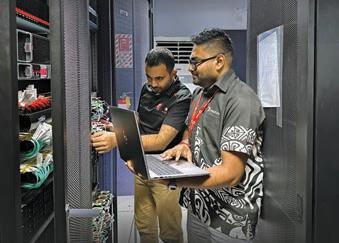
BA Fiji: 5G spectrum was released in Fiji in late 2025. Is there significant investment for the group moving to that next-generation technology?
IF: Most of the operators in Fiji actually had the investments and supply contracts lined up to deliver 5G so, even before the ink dried on those authorisations, they were well along the way in terms of providing 5G.
At this stage, it is a very expensive piece of infrastructure to build out and provide. National coverage will be challenging because 5G requires a lot of other infrastructure to be in place, such as reliable power. In developing markets like Fiji, particularly in rural areas, that may not be available.
But for densely populated areas, 5G has provided a big boost in terms of capacity. There’s also been technological developments in our existing 4G networks. New MIMO [multiple in, multiple out] antenna technology is boosting throughput by about 30 per cent without that heavy 5G investment requirement.
BA Fiji: Low earth orbit (LEO) internet provider Starlink was licensed to enter the Fiji market at the end of 2023. What impact has it had?
IF: With most Pacific markets now having experience with Starlink, people have figured out what the sweet spot for Starlink is, compared to what existing operators offer. We do compete somewhat on the retail front but one of the things our teams looked at was using Starlink to extend our own infrastructure.
Starlink has been a great solution to provide universal service to areas that
didn’t receive good coverage before. In terms of the digital payments and digital ecosystems, it’s much easier to get that seamless service with a smartphone, so more recently our teams have been trying out extending the 4G networks using Starlink.
Initially, a lot of customers thought that Starlink would be real upfront competition, and it is somewhat, but I think a lot of corporates are finding out that there’s no substitute for fibre –it’s still many times more reliable than LEO services.
BA Fiji: Google has now connected two new undersea cables to Fiji. What do you see as the opportunities arising from this new infrastructure?
IF: While the cables have landed, none of them directly provide any service into Fiji yet. The discussions still remain with Google and potentially others to look at connectivity into Fiji.
Fiji has access to fast internet and cheap capacity but, with the Southern Cross cable going out of service in 2030, we’ll be left with one cable (Southern Cross Next). I’m quite nervous about that.
One of the challenges for us is funding second and additional cables into Fiji. Each cable you land is a minimum US$30 million investment. While a single cable provides more than enough capacity for the country currently, it’s of national strategic importance to get Fiji’s connectivity shored up. So, a broader discussion has to happen with government and multilateral agencies about how to finance this.
With the majority of Fijians already owning a mobile handset and having access to the internet, the country’s telcos have switched their focus to offering more services to existing customers in the battle for market share.
The three main players in Fiji’s telecommunications market are ATH-owned Vodafone Fiji (mobile) and Telecom Fiji (fixed line and broadband), and Digicel Fiji, owned by Australia’s largest telco, Telstra.
“Competition is still intense, both in the corporate space and consumer space,” notes Elenoa Biukoto, CEO at Vodafone Fiji, Fiji’s largest telco. “I don’t expect that to lessen any time in the near future.”
“What has helped us maintain our market share is that we’ve been able to really look at our vertical services.”
A key such service, launched in 2025, is the Vodafone Play entertainment platform, which provides film and TV content for streaming, including live content from local broadcaster Fiji Television Ltd.
“The other thing that’s really unique to Vodafone Play is that we also sponsor a lot of local sporting tournaments, including the local Rugby League competition, so we’ve been able to show that live,” Biukoto tells Business Advantage Fiji. Digicel’s rival service, DTV, was launched in 2023.
Another differentiator for Vodafone is its M-PAiSA mobile payments platform (see page 31), which has recently been spun off into a standalone subsidiary, Digicel Finance Services (see page 31).
Rival Digicel Fiji offers a similar mobile payment product, MyCash.
A major influence on the way data services are delivered in Fiji has been the success of the country’s data-hungry business process outsourcing sector (see page 32).
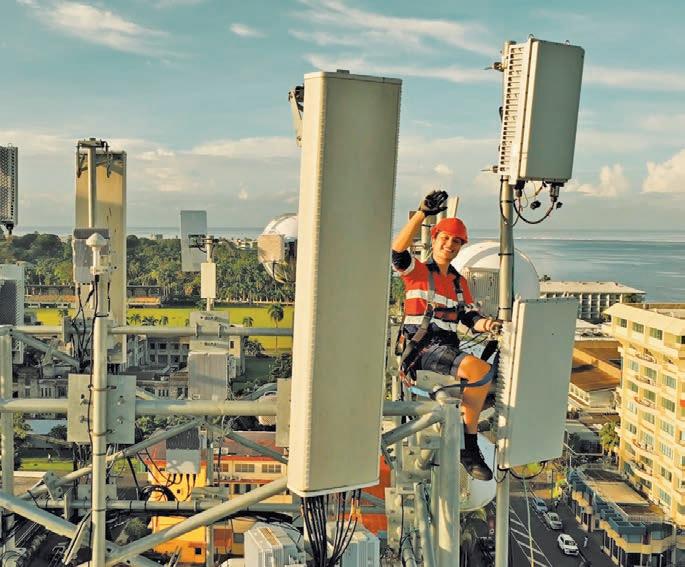
“In terms of their data growth, that’s really impacted how we think about delivering data to a customer. That particular industry needs primary connections, secondary connections – everything in terms of redundancy,” notes Biukoto.
While broadband connectivity is now in both Viti Levu and (thanks to Telecom Fiji’s award-winning Savusavu–Labasa Fibre project) Vanua Levu, Fiji’s telcos have a unique challenge to service the five per cent of the population that lives in remote communities across over 100 inhabited islands.
“Their expectation is at a certain point that they would receive the same or similar kind of service as more populated areas,” says Biukoto.
“If you had asked me four years ago, I would have said that it was a long way off but, in the last two years, we have been trialling micro base stations powered by solar power systems in smaller communities, with the backhaul delivered via satellite providers like Intelsat. Now, I’m quite optimistic about the future of that five per cent.”

WHAT HAS HELPED US MAINTAIN OUR MARKET SHARE IS THAT WE’VE BEEN ABLE TO REALLY LOOK AT OUR VERTICAL SERVICES.
ELENOA BIUKOTO CEO, Vodafone
For its part, Digicel Fiji signed a Universal Service Obligation contract in December 2025 to provide essential mobile and digital connectivity services to underserved communities in the remote Lau Islands.
For some time, Fiji’s two major ports in Suva and Lautoka have been faced with capacity issues. Plans are in place for significant expansions at both, says Fiji Ports Corporation’s Acting CEO Suresh Prasad.
Vessel numbers have not significantly increased over the last few years, but the ships are definitely getting bigger and heavier, so if you look at the volumes, they’re definitely going up.
Gateway cargo volumes are growing by about two to three per cent a year, but the biggest increase we have seen recently has been in transshipment volumes, which are growing by about 14 per cent annually. These are cargoes being landed in Fiji, but then going off to Vanuatu or Samoa, for example.
Fiji Ports Corporation is a landlord port and the only port management company in Fiji. We are the port owners, and the port operations are done by Fiji Ports Terminal Limited (FPTL), of which we own 49 per cent shares. We also have a subsidiary,
Fiji Ships & Heavy Industries Ltd, which provides slipways and ship repair facilities.
Cumulatively, over the next 10 years, we have about F$400 million of capital program projects – about F$150 million for Suva and F$250 million for Lautoka. That is not the end of it: we are going through a logistics master plan for Suva that will be completed around July next year. Out of that, we will potentially have some more projects for Suva as well. All in all, we may even be looking at about F$500 million over the next 10 years.
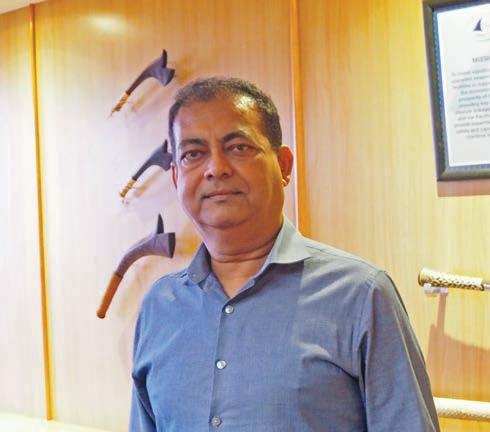
In Suva, we want to unlock capacity. The port has a capacity of 100,000 twenty-foot equivalent units (TEUs) a year. We did 129,000 TEUs in 2025 – so you can see it is operating well beyond its design capacity.
The southern part of the main wharf, Kings Wharf, needs to be rehabilitated so that we can facilitate container operations there, in addition to bunker and cruise vessels. We have a F$40 million rehabilitation project starting towards the end of the year, and we also have some projects in the pipeline to increase the capacity of the yard itself. We are continually looking for professional firms that can provide design work and civil engineering services for these projects.
At Lautoka, we have a capacity of 80,000 TEUs per year and last year we
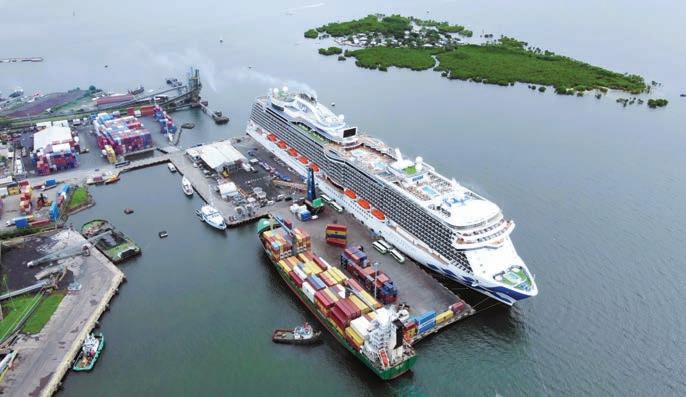
CUMULATIVELY, OVER THE NEXT 10 YEARS, WE HAVE ABOUT F$400 MILLION OF CAPITAL PROGRAM PROJECTS.
SURESH PRASAD
Acting CEO, Fiji Ports Corporation
did 79,000 – so it is right at capacity, too. Our largest exporter out of Lautoka is FIJI Water, and they are wanting to double their production over the next five years. We have to bring our facility up to speed to accommodate this additional growth.
We have just completed a project to unlock yard capacity. Now we are working on expanding the berth and looking at potentially working with other ports in the area. We are very keen on using iron sands miner Amex Resources’ private wharf to help unlock this capacity.
We are also looking at enhancing crane efficiency. Right now, FPTL has a single crane operational in each of Lautoka and Suva. The board is working on making a second crane operational in Suva by mid2027. The productivity is roughly 14 container moves per crane per hour, and FPTL is looking at bringing in more cranes to improve that further.
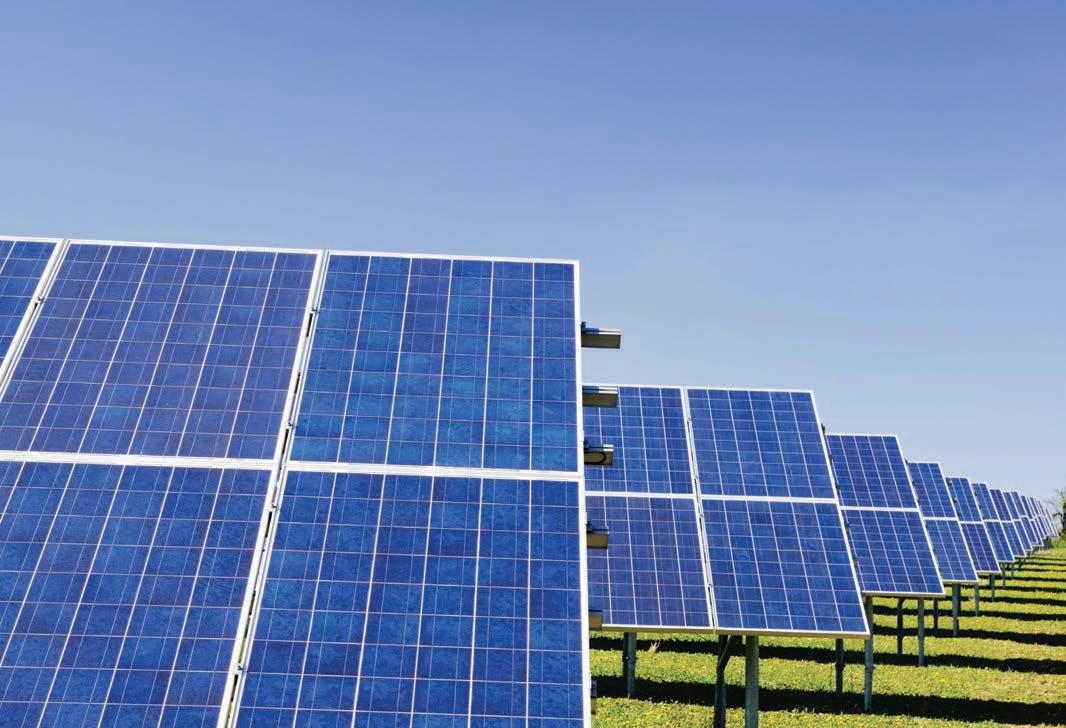
Global fuel challenges during 2026 – and a five per cent annual growth in energy demand within Fiji itself – have thrown even more focus on accelerating the development of renewable energy in the country, as the CEO of state utility Energy Fiji explains.
“One of the key strategic lessons globally is that energy security is now inseparable from renewable energy investment,” says Fatiaki Gibson, CEO of state-owned power provider, Energy Fiji Limited (EFL). “For Fiji, every additional megawatt of renewable generation reduces exposure to imported fuel costs, foreign exchange pressure and global geopolitical risks.”
Fiji’s increasing participation in the digital economy will also be underpinned and enabled by reliable and affordable electricity.
Already, between 45 and 55 per cent of Fiji’s electricity is generated from hydro and thermal power but
EFL is currently progressing a F$2 billion pipeline of renewable energy generation projects in pursuit of Fiji’s national target of 90 per cent renewable generation by 2035. Fiji’s new Energy Master Plan, currently in draft form, envisages 100 per cent renewables by 2045.
According to Gibson, this pipeline includes large-scale hydro projects such as the 21 megawatt (MW) Qaliwana project and the proposed 32 MW Namosi hydro, both on Viti Levu. Grid-scale solar generation projects are also being pursued, including at Bureta on Viti Levu and Seaqaqa on Vanua Levu.

FATIAKI GIBSON Chief Executive Officer, Energy Fiji Limited
“EFL has identified a target of approximately 165 MW of new solar capacity supported by battery storage systems over the medium term,” he says. For Fiji’s more remote communities, solar and hydro-powered mini-grids are a more suitable solution, helping to reduce their reliance on diesel fuel generators.
As Gibson points out, however, “generation alone is not enough.” Significant investment is also being directed toward improving power transmission across the country, including introducing new 132 kilovolt transmission lines, upgrading substations and introducing grid automation and digital monitoring systems.
“This is especially important as renewable generation sources are increasingly located in resource-rich areas that require stronger transmission
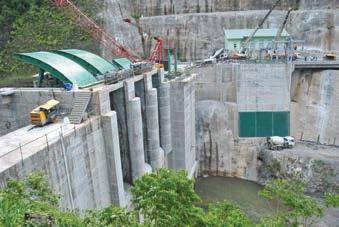
connectivity to urban and industrial centres,” he observes. “EFL is also developing renewable energy zones to optimise generation and transmission planning across Viti Levu.”
All this investment is leading to significant opportunities for the private sector to get involved in securing Fiji’s energy future. Furthermore, the country’s requirement for resilient infrastructure due to its vulnerability
When it comes to the development of its infrastructure, Fiji has a number of supporters ready and willing to provide grants and donor aid.
These include not only neighbouring Australia and New Zealand but also multilateral agencies such as the Asian Development Bank, World Bank Group and the European Investment Bank.
Together with other agencies, the supporters formed the Pacific Infrastructure partnership in 2024 to “strengthen coordination, improve transparency, and support greater participation by industry in delivering sustainable and resilient infrastructure across the Pacific.”
One particularly helpful resource to arise from this partnership is the Pacific Instructure Pipeline website (https://pacificinfrastructure.org), managed and maintained by the Pacific Regional Infrastructure Facility, which provides details of
hundreds of current and proposed infrastructure projects across the region.
As of June 2026, the site was listing 83 current infrastructure projects and procurement packages in Fiji alone, between them worth US$749.9 million, across energy, transport, water/waste water and social infrastructure (which includes social housing, health and education). Looking forward, a further 38
projects worth US$2.1 billion were listed as “prospective”, including the project to relocate the port of Suva.
The site, which is kept up to date on a regular basis, also provides contractors with the opportunity to list their businesses, setting out their capabilities and specialisations.
to cyclones and other climate-related disruptions means it needs a higher level of external expertise.
“EFL sees strong opportunities for private investment in utility-scale solar generation, battery storage systems, renewable mini-grids, specialised engineering services, grid technologies and renewable infrastructure development,” says Gibson.
In addition, there are opportunities for independent power producers to sell power to EFL in order to reduce pressure on its balance sheet and accelerate renewables development.
In the case of the planned Namosi project previously noted, private developer HydroFiji will build, own and operate the hydro plant, with EFL to be its main customer under a power purchase agreement. The developer plans to commission its plant in mid-2029.
“Infrastructure investment also creates significant downstream opportunities for local contractors, engineering firms, logistics providers, equipment suppliers, ICT companies and professional services businesses,” adds Gibson.
While the private sector can undoubtedly help EFL deliver on its plans, the important role played by international donor agencies such as the Asian Development Bank, World Bank Group and European Union can’t be overstated.
These and other organisations not only provide concessional loans and grants against specific projects but also provide much-needed technical assistance, such as the recently approved US$1.2 million World Bank grant which will be used for project preparation.
Fiji’s energy transition is placing it in a sweet spot for new funding sources as well.
“Fiji’s renewable energy program aligns strongly with ESG [Environmental, Social and Governance] investment principles, climate resilience financing, sustainable infrastructure mandates and green transition objectives,” says Gibson. “This positions Fiji well to attract international green capital and blended financing solutions.”
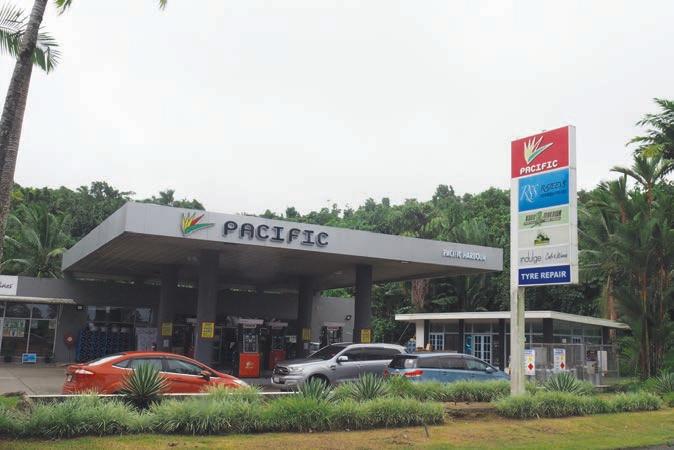
With fuel price and availability in the spotlight, we caught up with Stephane Cadel, CEO of Pacific Energy, Fiji’s largest distributor of petroleum products, including to Energy Fiji Limited (EFL).
Formed in French Polynesia in 1987 and working in Fiji since 2010, Pacific Energy distributes to 12 Pacific Island countries.
By consolidating fuel requirements, it is able to negotiate more favourable supply contracts with international oil traders, typically in Singapore. Fiji is a key transshipment hub in its regional network, from which it makes deliveries to smaller jurisdictions via its own shipping company.
“While it has been a bit stressful lately, there’s been absolutely no disruption to our supply chain so far,” says CEO Stephane Cadel, speaking to Business Advantage Fiji in May 2026. “Fortunately, we benefit from a long-standing strategic partnership with our supplier in Singapore. Through our term contract, we have secured both guaranteed product allocations and stable commercial terms, providing us with greater supply security even during periods of market disruption.”
The volatility in global fuel
prices has, however, highlighted the limitations of Fiji’s current fuel pricing framework, which was developed for a very different market environment. During periods of exceptional market disruption, Pacific Energy has at times faced delays in recovering its costs at the pump.
“When such situations persist, they can place significant pressure on working capital and, ultimately, on the resilience of fuel supply to the local market,” he explains. “This underscores the importance of reviewing and modernising the regulatory framework so that it remains fit for purpose in today’s global energy market.”
Looking ahead, Cadel shares the enthusiasm of Fatiaki Gibson, CEO of EFL, for renewable energy:
“We understand that, while oil products may be the easiest way to provide energy for the Pacific Islands, it’s not necessarily the best. So, regionally we are already diversifying into renewable energy, especially solar, with one plant already operating in French Polynesia and another in the pipeline.”
The company hopes to introduce similar technology into Fiji in the near future.
Fast-growing volumes of traffic are placing greater emphasis than ever on the need to maintain Fiji’s road transport infrastructure. The head of the government agency responsible outlines the challenges to Business Advantage Fiji.
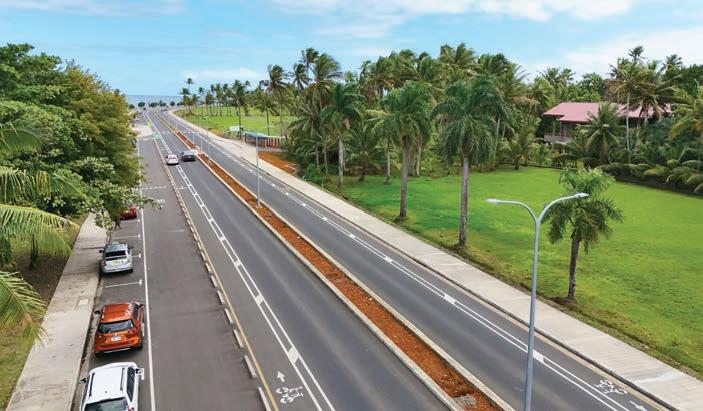
Fiji currently has some 1,828 kilometres (km) of sealed roads, 4,573 km of unsealed roads, 1,422 bridges and 32 jetties in active use, and their maintenance, upgrade and replacement is the responsibility of the Fiji Roads Authority (FRA).
Funded directly from the National Budget to the tune of just under F$370 million in 2026/7, the Authority’s priorities are clear, according to its CEO Apisai Ketenilagi:
“Before we start thinking about investment in new capital construction, it should be our priority first to maintain our existing network so it can be accessible to all … more than 50% of our budget is for maintenance.”
Two key factors make maintenance a particular challenge in Fiji, according to Ketenilagi: first, regular climaterelated events such as flooding and cyclones and, second, the increasing volumes of traffic on the country’s roads, particularly on the main island, Viti Levu.
“Over the last ten years, traffic growth has been between five and ten per cent a year,” he tells Business Advantage Fiji. Heavier vehicle loads also have an impact on how regularly maintenance is required.
“Our major capital project right now is for the replacement of critical bridges,” says Ketenilagi. “We already
identified about 20 of them and we have started with the first four: two in Suva and Nadi, and two in between Nadi and Lautoka.”
All four bridges are within the two busiest sections of Fiji’s national road network: the 193 km Queens Highway between capital city and major seaport Suva and the international airport at Nadi, and the road connecting Nadi to Fiji’s second busiest port at Lautoka.
These increasingly busy roads are not only vital conduits for commerce and logistics but are also essential for the country’s tourism sector.
The FRA plays an important role when new developments such as resorts or industrial centres are being planned.
“When development proposals come in, we have to comment on the relevant criteria developers need to fulfill when connecting their development to the existing road network,” says Ketenilagi. “They have to carry out a traffic impact assessment and we make a recommendation on how they should facilitate all those requirements.”
Like many organisations in Fiji, finding and retaining skilled workers is a challenge for the FRA, given the lure of working in the private sector or overseas. Skills, once lost, take time to replace.
“Road specialists require specialised
training. They have to learn about pavement and road design, the materials to use and different types of construction,” notes Ketenilagi.
In part to add to its own institutional capacity, in April 2026 the FRA signed a partnership with Australia’s National Transport Research Organisation with the aim of improving the quality, resilience and long-term performance of Fiji’s road network.

OVER THE LAST TEN YEARS, TRAFFIC GROWTH HAS BEEN BETWEEN FIVE AND TEN PER CENT A YEAR.
APISAI
KETENILAGI CEO, Fiji Roads Authority.
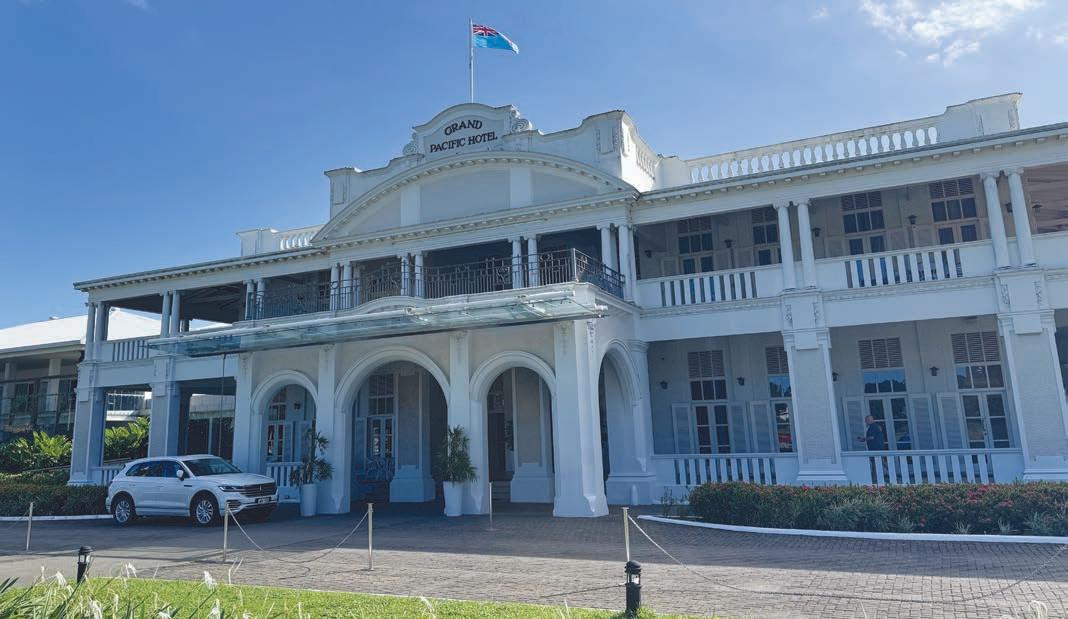
There’s no substitute to getting on a plane and visiting Fiji for yourself. Here’s our brief guide for the business traveller.
Nearly all international flights land at Nadi, Fiji’s tourism hub, on the western side of the main island of Viti Levu (known as ‘the West’).
The majority of passengers arrive via Fiji Airways, which has direct daily services to multiple destinations in Australia, New
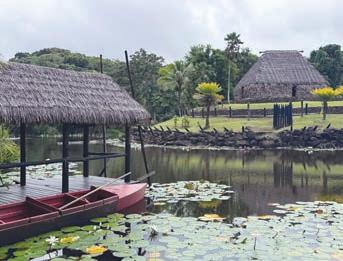

Zealand, North America and Asia, plus several other Pacific islands.
The capital, Suva, is served by Nausori Airport, 25 to 45 minutes’ drive from the city centre, depending on the time of day.
To get from Nadi to Suva you can either fly (usually via Fiji Link, Fiji Airways’ domestic subsidiary) or drive along Queens Road (just over three hours). Fiji Link also operates flights from both Nadi and Suva to some of the other islands, especially Vanua Levu.
For a comprehensive guide to Fiji’s regions check out the Fiji Tourism website: www.fiji. travel/things-to-know/destination-guide/ discover-fiji
In both Nadi and Suva, taxis are plentiful but typically only accept cash. To hire a private vehicle with driver or airport transfers, enquire at your hotel.
Suva
Grand Pacific Hotel: Suva’s iconic waterfront property re-opened in 2014, a century after its initial construction. The most upmarket option for business travellers, it is now managed by IHG Hotels, which has
signalled its intention to rebrand it as an Intercontinental Hotel.
Holiday Inn: Less glamourous but still very popular is IHG’s original Suva property, located almost next door. Check out the live music on Saturday evenings.
Quest Serviced Apartments: for longer stays, Quest provides self-catering facilities and is located right in the middle of Suva’s business hub.
Tanoa Plaza: this four-star property is the go-to option for visiting trade delegations.
Hilton Garden Inn: due to open in 2027 (see box).

Fiji’s capital has long been under-supplied with hotel options for the business traveller. That is finally set to change in 2027, when the Hilton Garden Inn is scheduled to open.
Located a short walk from the main commercial hub, it is being funded by the Carpenters Group (a local subsidiary of Malaysian conglomerate MBf) to the tune of around F$75 million.
“With 178 rooms, this will be the largest property in town and will cater to the corporate traveller, with super-fast wifi and other elevated touches in a great location,” says Carey Osborne, General Manager for Hilton in Fiji.
In the ‘West’ (Nadi and surrounds), the fivestar resorts at Denarau Island (15 minutes from Nadi’s commercial centre) will certainly let you combine business with pleasure in some style. Note that in high season prices can be on the high side and availability low. The Sheraton and Sofitel often host business conferences.
Opened in 2024, the Crowne Plaza Resort at Wailoaloa is a bit closer to Nadi, while the Mercure Hotel is right in the town centre, near Nadi Airport.
There’s no shortage of premium dining venues in Fiji’s main centres, including in the top hotels. But here are a few suggestions, specifically for the business traveller.
Suva
Rudy’s Italian Trattoria & Grill: a genuinely authentic Italian restaurant, a 10-to-15-minute drive out of the centre. We can’t praise this enough and, happily, their range includes everything from pasta, pizza and desserts to regular main courses. You can even order Italian wine by the glass.
My Kai: the historic colonial home at 46 Knollys Street, formerly owned by the prominent Fijian statesman Ratu Sir Lala Sukuna, has been turned into a delightful, good-value restaurant and bar. Fresh local ingredients dominate an expansive menu. We recommend the Sri Lankan specials.
Tiko’s Floating Restaurant: this charming floating venue on Suva Harbour has served
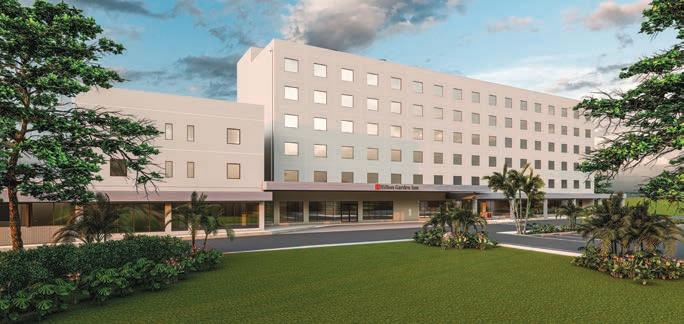
It will initially also bring two premium dining spots (including one alfresco) to an excellent yet undeveloped waterfront precinct. A proposed second stage to the
excellent fish and seafood at surprisingly reasonable prices for 40 years. The vessel doesn’t leave its mooring but still rocks gently to provide an authentic nautical vibe.
Eden Bistro & Bar: close to the Australian and US diplomatic missions and popular with the local business community, Eden has bright decor and a varied menu, including lots of seafood.
Steamship Bar: located at the heritage Grand Pacific Hotel (see p 41), this is the ideal place for a business meeting (inside) or a pre-dinner drink (on the terrace).
In the West, you are spoilt for choice on Denarau Island but you might need to book ahead.
The Waitui Bar & Grill at the Sofitel offers premium cuts of steak and seafood in a stylish beachfront setting.
Not to be outdone, the Tatavu Grill at the nearby Sheraton sits right on the sand. There are excellent Latin-Fijian fusion dishes, with an emphasis on seafood, great service and, if you are lucky, even live music. Combine it with a visit to Cellar & Barrel, the Sheraton’s sophisticated adults-only enclave boasting over 300 types of wine, whisky and other spirits.
If you feel like mixing things up on Denarau, the Italian (Basilico) and Lebanese (Byblos) restaurants at Radisson Blu Resort certainly don’t cut any corners.
Over at Denarau Marina (the departure point for many island resorts), check out the inconspicuous Nadina Restaurant for terrific traditional Fijian food (such as fresh
project would create a vibrant retail hub.
“I think it’ll be game changing for the Suva market,” adds Osborne.
Spanish mackerel in coconut cream) and friendly service. We’ve also heard good things about Vasaqa (vasaqa.com), “Fiji’s only gastronomic smokehouse experience,” in the Wailoaloa area.
Industry
BPO (Business Process Outsourcing) Council outsourcefiji.com
Fiji Commerce & Employers Federation fcef.com.fj
Fiji Hotel Tourism Association fhta.com.fj
Government
Portal for business-related government permits and applications businessnow.gov.fj
Fiji government portal fiji.gov.fj
Investment Fiji investmentfiji.org.fj
Tourism Fiji fiji.travel
Register your Vodafone Fiji eSIM today and arrive ready to explore