FQM Trident
THE DATA-DRIVEN MINE BUILDING ZAMBIA’S NEXT MINING DISTRICT
NEXT MINING DISTRICT
Xoliswa Mhlaraza
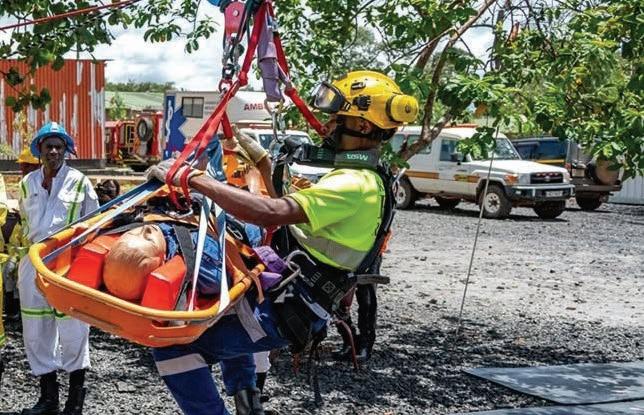
When Anthony Mukutuma described the new automated drilling system at Sentinel, the most important detail was not the machine itself. It was the distance the technology created between a worker and danger.
At FQM Trident’s Sentinel copper mine in Kalumbila, drilling is no longer only a matter of steel, dust, diesel and human endurance in the pit. Three automated drill machines have been successfully tested in partnership with Flanders Inc., using laser sensors and GPS technology to improve drill-hole precision while allowing operators to manage the equipment from a secure remote location.
“Trident is no longer only a story about scale. It is becoming a story about intelligence.”
Before a truck moves, before a shovel loads, before ore reaches the crusher, the drill pattern has already begun to decide the mine’s performance. Hole accuracy affects blasting. Blasting affects fragmentation. Fragmentation
affects crusher behaviour. Crusher behaviour affects mill throughput. Throughput affects recovery. In a large, low-grade, high-volume copper mine, precision at the beginning creates value all the way to the plant.
“Innovation is central to how we operate at First Quantum,” said Mukutuma, First Quantum’s Zambia Country Director. “We are proud to introduce this state-of-the-art drilling system and to show once again that Zambia is at the forefront of modern copper production.”
That is the sharpest frame for the current Trident story.
Trident is no longer only a story about scale. It is becoming a story about intelligence.
At Kalumbila in Zambia’s North-Western Province, First Quantum Minerals’ Trident operation brings together Sentinel, one of Africa’s most advanced copper mines, and Enterprise, the nickel mine now ramping up beside it. Around them, First Quantum has helped create more than an operating complex. It has helped shape a town, a supplier base, a labour economy, a communityinvestment model and a regional development platform.
The next five years will test how much value that platform can create.
The mine-to-mill mind
Large open-pit mines are often judged by the size of their trucks, shovels and mills. Sentinel has all of that.
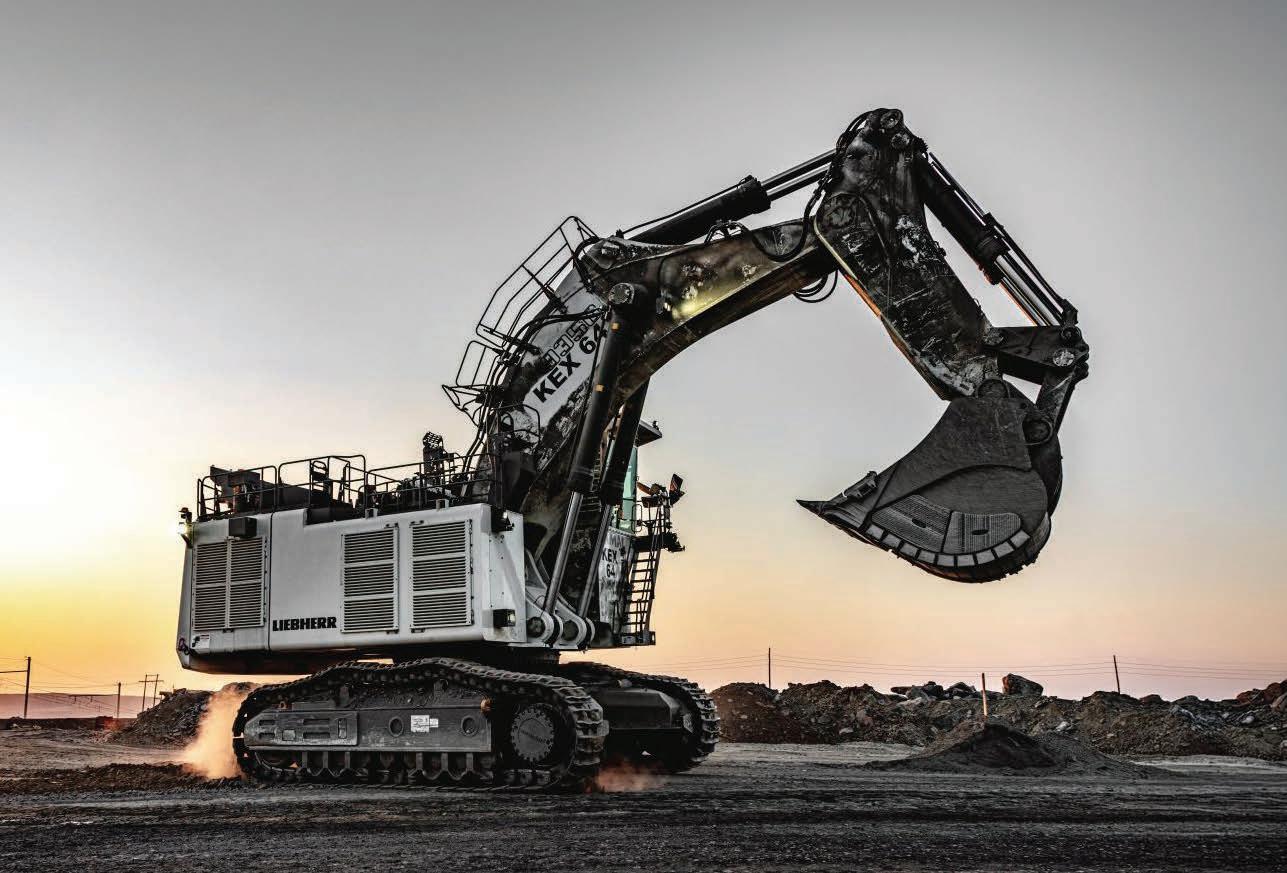
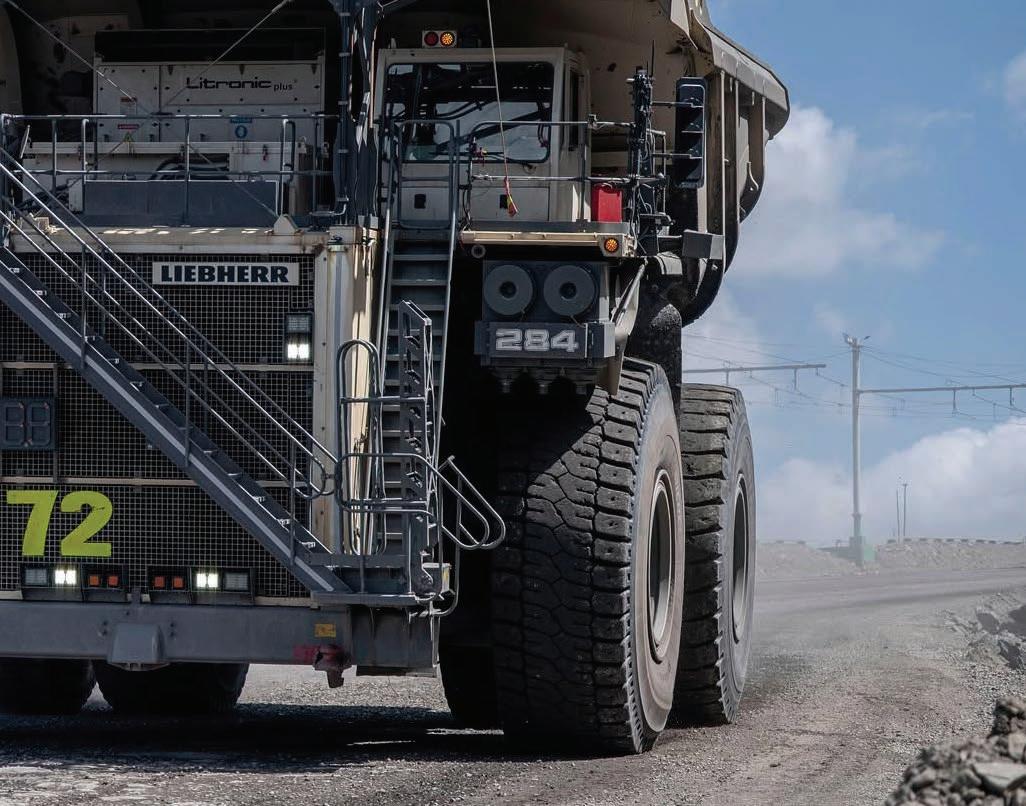
Its fleet includes ultra-class haul trucks such as Komatsu 860E, Komatsu 960E and Liebherr T 284 models, supported by large shovels including Caterpillar 7495HR rope shovels, a Komatsu PC8000 electric shovel, Komatsu PC5500 hydraulic shovels and large wheel loaders. Its drilling fleet includes Caterpillar MD6640 rigs and Epiroc PV271, D65 and DML rigs.
Caterpillar, supported locally through Barloworld, and Epiroc sit close to the mine’s production front line. Their equipment helps turn the mining plan into physical movement: drilling, loading, hauling, maintaining access to ore and keeping the pit advancing through its stages. Hitachi Construction Machinery belongs to the next chapter of that equipment story, particularly
through First Quantum’s wider move toward trolley and battery-electric haulage.
But Sentinel’s most interesting work is not found in one machine. It is found in the connections between machines.
That is where automation and mine-to-mill thinking are strengthening the Trident story. Automated drilling improves the first step. FragTrack, the Orica-developed fragmentationanalysis system implemented at FQM Trident, adds another layer. Using machine vision and artificial intelligence, FragTrack helps the mine understand the size distribution of blasted rock, giving operators better data on blast performance and downstream impacts.
FQM Trident’s implementation of FragTrack was recognised with the Excellence in Industrial Technology and Automation Award at the 2025 ICTAZ Tech Excellence Awards. The reason is clear: fragmentation is not a back-office metric. It
“Not just more copper. Smarter copper.”
is one of the hidden levers of mining productivity. Better fragmentation can reduce crusher bridging, improve crusher performance and reduce energy waste through the comminution chain.
That is the new Trident hook. Not just more copper. Smarter copper.
The pit, the crushers and the conveyor
As Sentinel advances through its mining stages, the geometry of the pit keeps changing. Crushers must move. Conveyors must adapt. Haulage distances must be controlled.
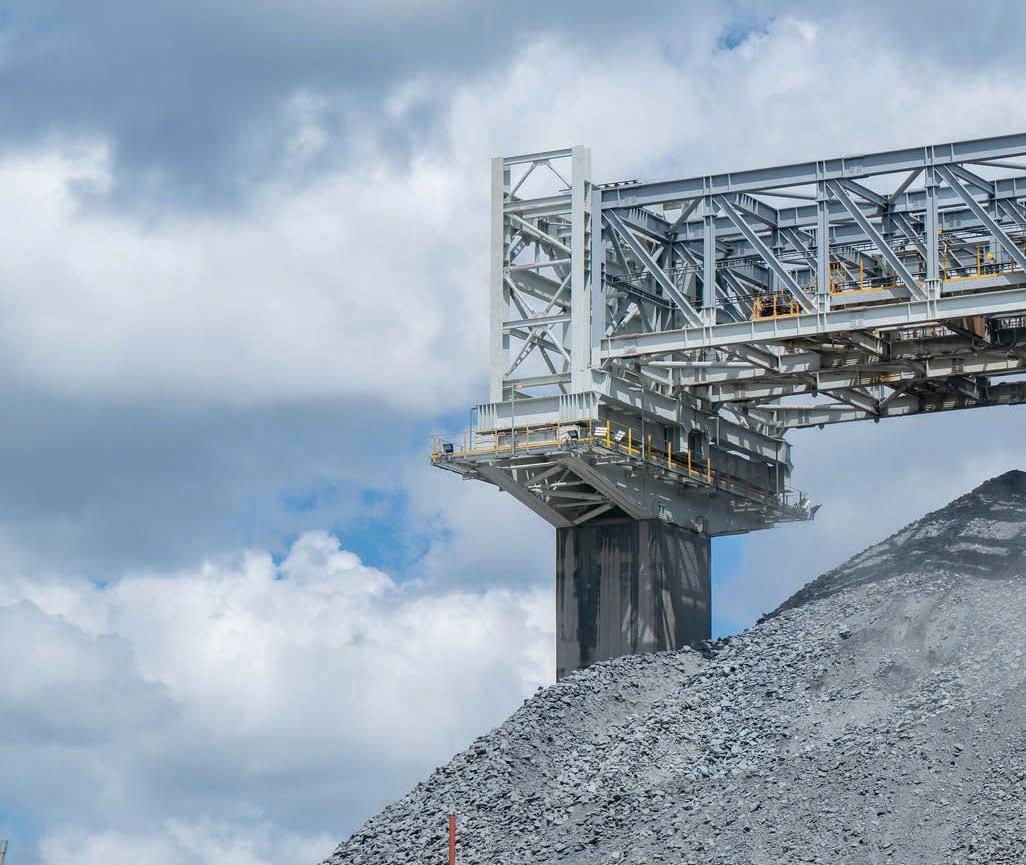
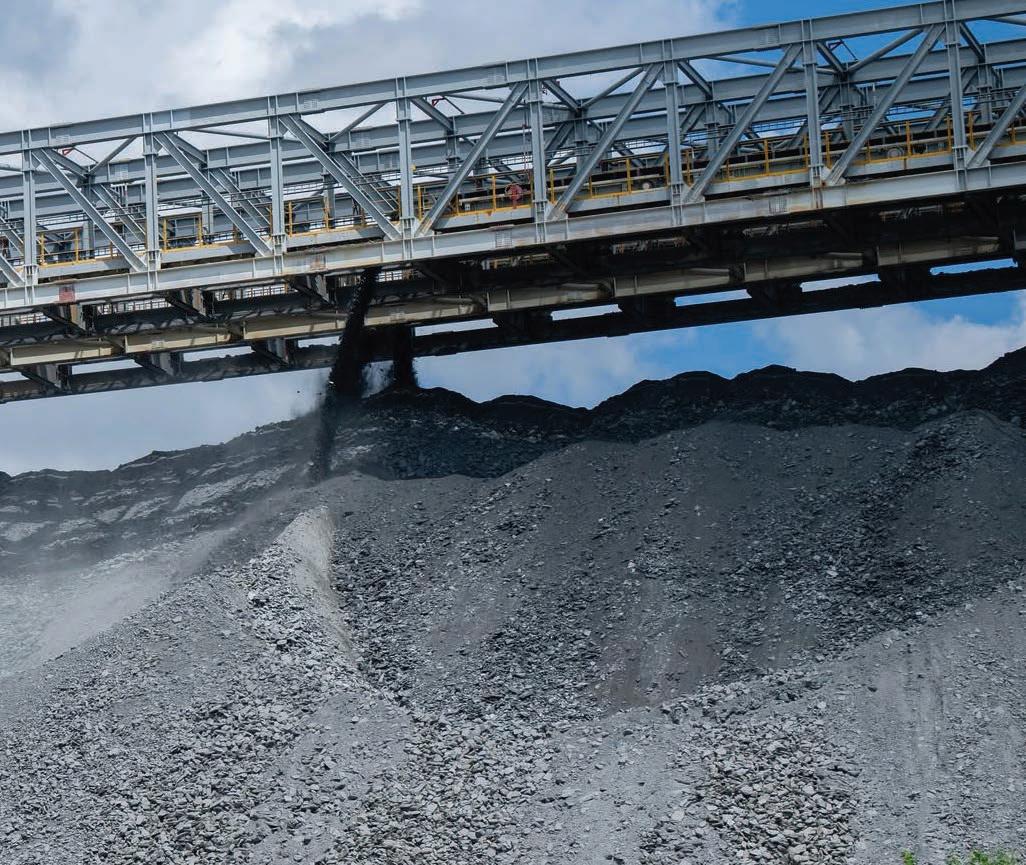
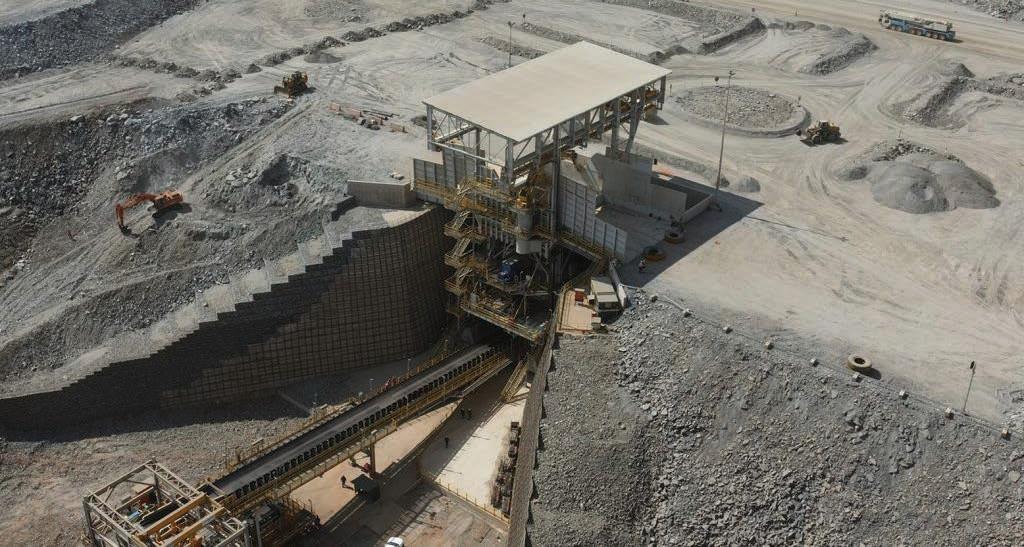
The relocation of in-pit crushers and the commissioning of the rail-run conveyor are part of that discipline. The rail-run conveyor is designed to move ore from the in-pit crusher to the wider processing system with lower friction, reduced belt tension, lower electricity demand and reduced maintenance pressure. It is one of the less dramatic but more important
pieces of Sentinel’s recent operating story: a practical response to the simple problem of distance.
This is where partners such as Weir Minerals, Siemens and ABB become part of the Trident system.
Weir Minerals’ processing and slurryhandling technologies support the movement, classification and management of material inside the plant. Siemens’ drive technologies are part of the electrical backbone needed to run large milling and process systems at scale. ABB is part of the broader electrification story, especially through collaboration with Hitachi and First Quantum on future battery-trolley haulage. These companies represent the infrastructure behind the infrastructure: the pumps, drives, controls, cyclones, electrification systems and engineered components that allow a large mine to operate with consistency.
At Sentinel, the operating story is becoming increasingly data-led. Ore is not simply mined. It is measured, moved, crushed, conveyed, classified and recovered through systems that are learning from each other.
The trolley line and the decarbonised climb
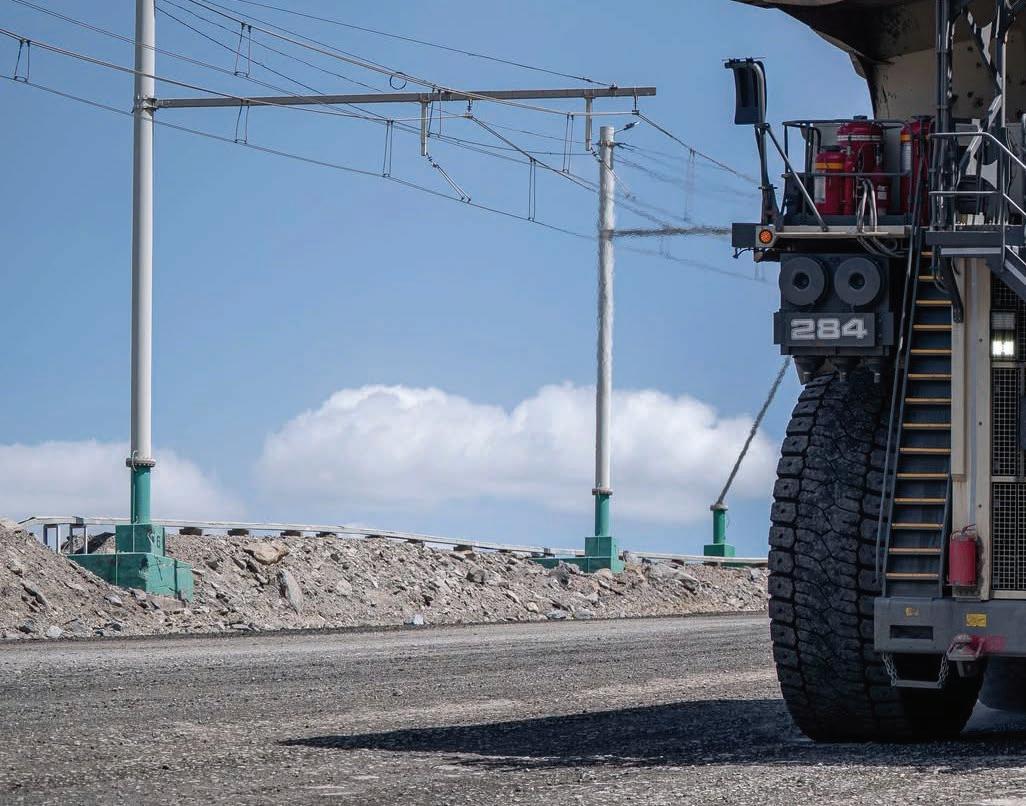
The most visible symbol of Trident’s technology story is the Quantum Electra-Haul trolley-assist system.
On a conventional ramp, a fully loaded haul truck burns heavily as it climbs. On trolley, the truck connects to overhead electrical infrastructure and draws power directly as it ascends. The result is faster ramp speed, lower diesel use and improved productivity on one of the most fuelintensive parts of the mining cycle.
At Sentinel, trolley-assist is now part of the operating toolkit. During a 2025 site visit, the trolley line was cited as covering about 8% of Sentinel’s total haulage routes, with expansion actively targeted. Loaded trucks on trolley were cited at 20km/h and roughly three minutes on the ramp, compared with 11km/h and 5.5 minutes off the line. Diesel use on trolley was reported
at about 50 litres per hour equivalent, compared with 650 litres per hour when not connected. Those figures explain the system’s importance. Trolley-assist reduces fuel exposure, improves ramp productivity and strengthens Sentinel’s lower-carbon operating pathway. As the world asks more questions about the carbon intensity of copper supply chains, the technology also becomes part of Trident’s strategic positioning. The future of mining will not be won only by finding new ore. It will also be won by moving existing ore with greater intelligence, lower waste and better energy discipline.
Two metals, one platform
The operating momentum is important. In 2024, Sentinel produced about 231,000 tonnes of copper, above the top end of its revised guidance range, supported by higher grades, higher throughput, improved crusher availability
and improved fragmentation. That performance reinforced Sentinel’s position as the copper engine of Trident.
Enterprise adds the second metal and the second pillar.
First Quantum declared commercial production at Enterprise in June 2024. The mine is now ramping up as the orebody becomes more accessible. Guidance for Enterprise pointed to 15,000 to 25,000 tonnes of contained nickel in 2025, rising to 30,000 to 40,000 tonnes in 2026 and 2027.
Copper is essential to electrification, transmission, construction and industrial growth. Nickel adds exposure to stainless steel and battery-related demand. Together, Sentinel and Enterprise give Trident a dual role in the energytransition economy.
But production alone is not the full story. The stronger feature is that production is increasingly
“Trident is a mine. But it is also a market.”
tied to better systems: automated drilling, AI-enabled fragmentation analysis, trolley-assist, rail-run conveying, crusher relocation, improved grade control, and more efficient mine-to-mill performance.
That is what makes Trident distinctive. It is producing, but it is also learning.
The contractors who make scale possible
Large mines are often described by the name of the operator, but projects like Trident are built and sustained by a much wider industrial ecosystem. On the mining side, Caterpillar, Barloworld, Epiroc and Hitachi Construction Machinery are tied to
fleet productivity, drilling performance, haulage efficiency and the move toward electrified equipment.
On the processing and power side, Weir Minerals, Siemens and ABB support the systems that crush, grind, pump, classify, power and control the flow of ore.
On the services side, Kal Tire Mining Group Zambia, Mining Haulage Ltd, KASCCO Group and Quattro Kalumbila belong to the practical rhythm of a working mine: tyres, transport, earthworks, civil works, site logistics, field services and operational support.
In a mine built around ultra-class trucks, tyre
management is production-critical. A truck parked on bad rubber is a production unit removed from the cycle. Haulage, maintenance and contractor support are not peripheral services. They are part of the mine’s nervous system.
NEI Zambia Ltd, also known as Northern Engineering Industries, represents another important layer: Zambian engineering and industrial capability. Large mines need fabrication, maintenance, mechanical support and locally available technical competence. The deeper that capability becomes, the stronger Zambia’s mining economy becomes.
Saro Agro Industrial and Kitwe Processing sit best in the wider value-chain narrative. Around a mine such as Trident, agricultural support, industrial services and downstream processing capacity all matter because the long-term ambition is not only to export minerals, but to deepen the economy around them. Saro Agro connects naturally with the livelihood and agriculturedevelopment conversation around Kalumbila.
Kitwe Processing points toward Zambia’s broader ambition to capture more value from the mineral economy through specialist processing and industrial participation.
The gravity of a mine this size reaches beyond the pit. It pulls machinery suppliers, drilling specialists, tyre experts, transport companies, engineering firms, power partners, agricultural support providers and processing businesses into a wider economic orbit.
Trident is a mine. But it is also a market.
Local businesses and the supplierdevelopment bridge
A data-driven mine needs capable local contractors.
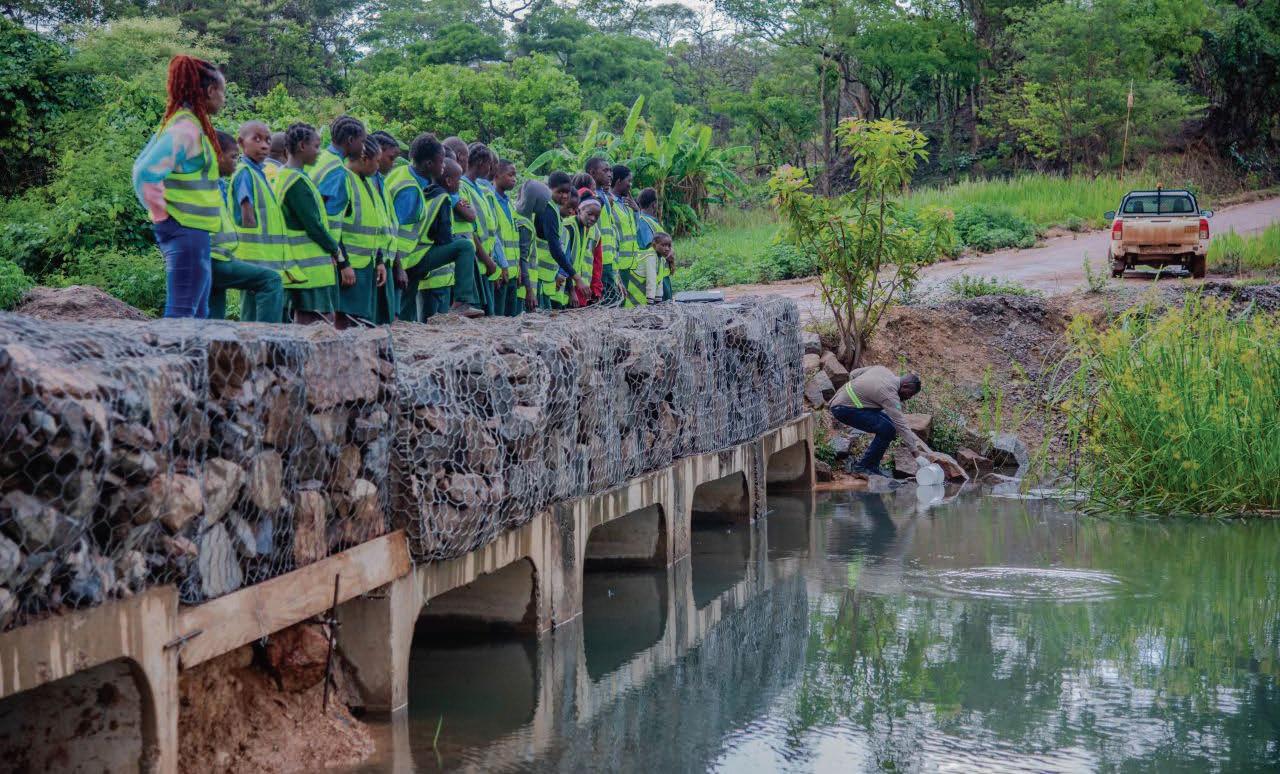
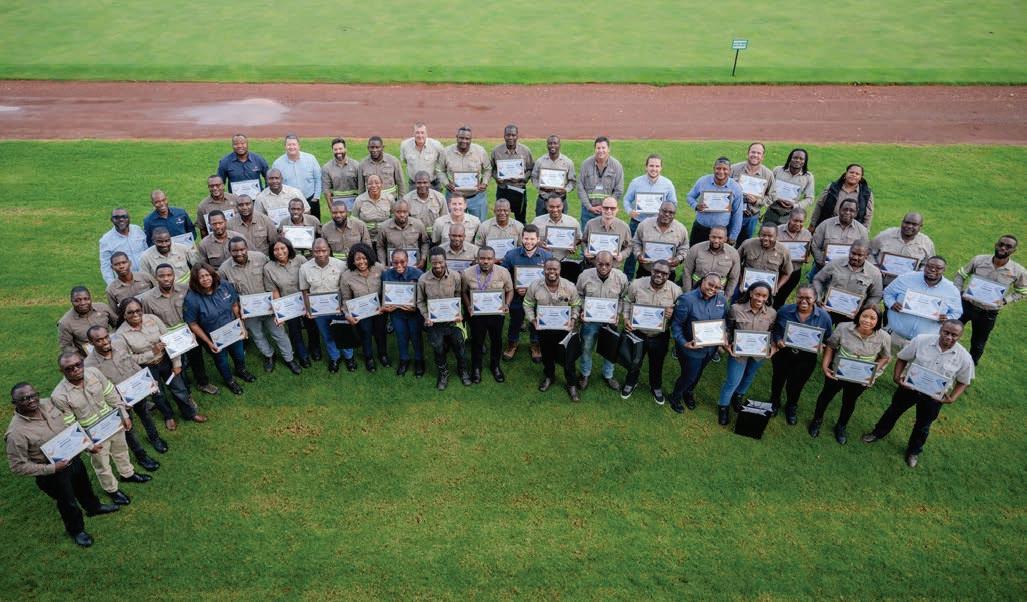
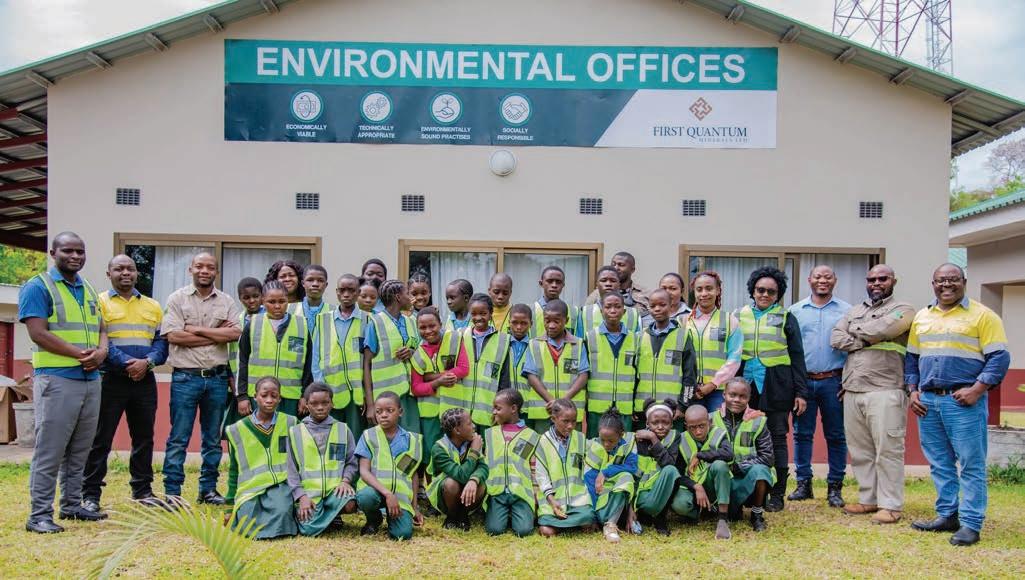
That is why FQM Trident’s Business Incubation and Supplier Development Programme is one of the most important non-production developments in the current story. Developed through a partnership between FQM, the Government of Zambia through the Citizens Economic Empowerment Commission, and
“Mines create direct jobs, but supplier development creates firms. Firms create resilience.”
Prospero Limited, the programme is designed to help local suppliers meet industry standards and access opportunities within and beyond the mining sector.
The programme has engaged 550 local suppliers and supported more than 300 businesses with ZMW 8.5 million in grants and training. FQM Trident Assistant General Manager Frederic Wouters has called it a “bold step toward inclusive economic empowerment,” highlighting the Kalumbila Business Incubation Centre as a model for public-private collaboration.
For Kalumbila and the wider North-Western Province, this may be one of Trident’s most important long-term effects. Mines create direct jobs, but supplier development creates firms. Firms create resilience. Resilience creates an
economy that can outlast a single mine cycle. This is where the operational and social stories meet.
A growing town needs businesses that can serve more than one client. A country targeting higher copper production needs a supplier base strong enough to support expansion without importing every solution. A mine that wants to be modern must help modernise the economy around it.
Kwanzangana: from giving to shared governance
The social investment story has also matured. Through the Trident Foundation, First Quantum has supported education, health, agriculture, livelihoods and community infrastructure around
Kalumbila. But the launch of Kwanzangana gives that work a more defined governance model. Kwanzangana, derived from the Lunda word for “sharing,” is designed as a community-led Corporate Social Investment model. Under the approach, elected community representatives work with government officials, traditional leaders and the Trident Foundation to guide how resources are allocated to projects in health, education, agriculture and infrastructure.
That is a meaningful shift. It moves social investment from company-led generosity toward shared decision-making.
Trident Foundation Manager Joseph Ngwira described the model as being about more than funding projects. Its purpose, he said, is to empower communities to shape their own future.
North Western Provincial Deputy Permanent Secretary Luckson Mulumbi praised the model for placing people at the centre of development, while Senior Chief Musele Musokantanda IV described it as a home-grown solution rooted in fairness, unity and shared responsibility.
The importance of Kwanzangana is not only in the projects it may fund. It is in the principle it carries: communities must not merely receive mining benefits; they must help decide what those benefits become.
Kalumbila as a post-mine growth hub
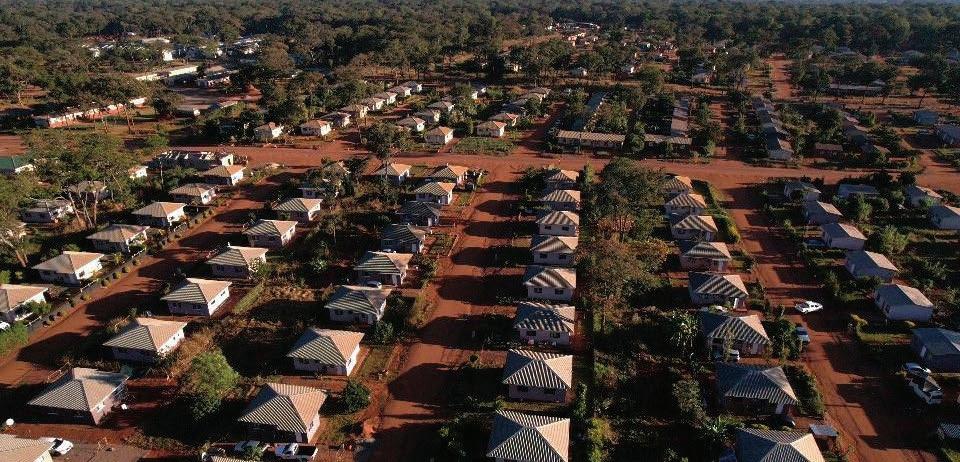
Kalumbila itself has become one of the strongest physical expressions of Trident’s wider ambition. The town is being positioned not simply as a settlement beside a mine, but as a planned growth hub. Through Kalumbila Town Development Corporation, the area has been developed as a post-mine legacy and regional platform with Multi-Facility Economic Zone status.
The hard facts give that ambition weight. Kalumbila sits on more than 5,000 hectares of land. Plans include 10,000 residential plots, extensive commercial land and more than 100 hectares dedicated to industrial development. Earlier MFEZ approval was designed to give local suppliers a designated industrial base from which to serve Sentinel, Enterprise and other businesses around the FQM sites.
In January 2026, a European Union Delegation to Zambia visit brought new attention to this model. The delegation toured Sentinel Pit and key social infrastructure investments, including Kalumbila Secondary School and Wumi Mini Hospital. Wumi Mini Hospital now provides healthcare access to communities that previously had to travel more than 90km for similar services.
That is what makes Kalumbila different from a conventional mine settlement. It is infrastructure
for the mine, but also infrastructure beyond the mine.
Labour stability and the people-first test Technology can make a mine more efficient, but people still determine whether it works.
That is why the 2025–2026 collective bargaining agreement between First Quantum subsidiaries Kansanshi Mining and FQM Trident and six major unions deserves a place in the feature. The agreement provided for salary and benefit improvements, including a 15% increase in basic salaries for eligible employees from January 2025.
For a mine under pressure from power costs, fuel
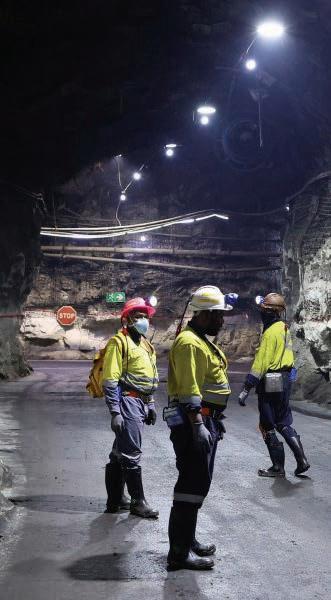
risks, grade transitions and the constant capital demands of large-scale operations, labour stability is part of performance.
FQM Trident Assistant General Manager Frederic Wouters described the bargaining process as reflecting trust, professionalism and respect between management and union representatives. That language matters because productivity in modern mining is not built by machines alone. It is built by trained people who believe the future includes them.
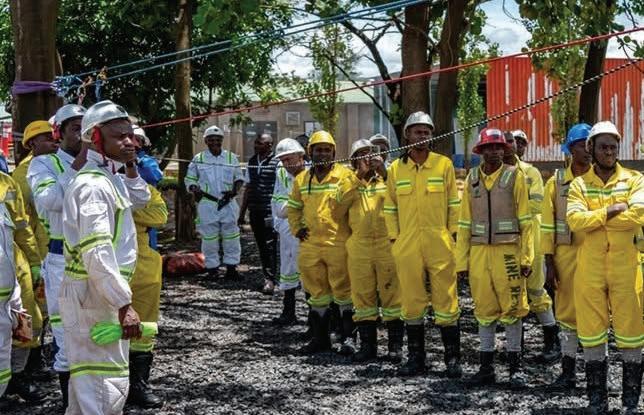
This is also the human answer to automation. The automated drilling rollout has been presented not as a job-cutting exercise, but as a pathway to higher-skilled roles: control-room operators, field supervisors and technology-enabled mine workers.
If Trident is to become a model for Zambia’s mining future, that will be one of the tests: whether automation upgrades people as well as machines.
Zambia-wide contribution, Tridentspecific value
The economic scale is substantial, but it must be read correctly.
In 2025, First Quantum reported a US$3.46 billion contribution to Zambia across its Zambian operations at Kansanshi in Solwezi and FQM Trident in Kalumbila. That Zambia-wide figure included US$902 million in taxes, US$2.14 billion in procurement from Zambian-registered suppliers, US$389 million in salaries and wages, and more than US$23 million in community investment and social outreach.
Within that wider picture, FQM Trident contributed US$139 million in taxes and royalties to the Zambian government.
The distinction matters. Kansanshi and Trident together form First Quantum’s Zambian platform, but Trident’s own contribution is significant in its own right: government revenues, local employment, Kalumbila Town Council contributions, contractor engagement, supplier demand and the secondary economy forming around the mine.
Its value is not only what it extracts. It is what it circulates.
The next five years
The next five years at Trident appear to centre on four connected priorities.
First, increase the efficiency of ore supply and processing. That means Stage 3 and Stage 4 pit work, improved fragmentation, crusher reliability, rail-run conveying, mill throughput, flotation recovery and tighter mine-to-mill control. Second, scale digital mining systems. Automated drilling and FragTrack point toward a more datarich operation where drilling, blasting, crushing and processing are increasingly connected by feedback loops.
Third, strengthen local supplier participation. The Business Incubation and Supplier Development Programme suggests that local content will remain a strategic pillar, not merely compliance language.
Fourth, deepen community-led investment. Kwanzangana gives FQM Trident a more structured model for turning mining value
into community-chosen outcomes in health, education, agriculture and infrastructure.
This is why Trident’s strongest editorial frame is no longer simply “large-scale copper mine.” It is “technology-led regional development platform.”
The mine is producing copper and nickel. But it is also producing data, skills, suppliers, civic infrastructure, local enterprise and a model of shared development that Zambia can test at scale.
What Zambia builds above it
At Kalumbila, the mine and the town have grown into each other.
The drills are becoming automated. The blast data is becoming more intelligent. The crushers are moving with the pit. The rail-run conveyor is carrying ore into the processing system. The trolley line is changing the economics of the climb. Enterprise is adding nickel to the Trident platform. Local suppliers are being trained and financed. Kwanzangana is giving communities a stronger voice in how development resources are spent.
“The story will not only be about what lies beneath Zambia’s ground. It will be about what Zambia builds above it.”
That is what makes Trident one of Zambia’s defining infrastructure stories. The future will still be demanding. Grades change. Equipment wears. Markets move. Power availability matters. Fuel costs matter. Communities need evidence that development is real, fair and lasting. Suppliers need opportunities that are practical, transparent and sustained. But Trident has already proved something important.
Zambia can host mines of global scale and technical ambition. It can attract world-class partners while building domestic capability. It can turn a remote orebody into a working industrial district. It can connect copper and nickel production to schools, hospitals, suppliers, farmers, contractors and a town designed to outlive the first chapter of mining.
The next chapter will be written in automated drill patterns, AI fragmentation data, Stage 4 stripping, Enterprise nickel performance, trolleyassist expansion, supplier development and community-led investment.
And if Trident continues to do what it has done at its best, the story will not only be about what lies beneath Zambia’s ground.
It will be about what Zambia builds above it.
Zambia Rd, P.O Box 71785, Ndola, Zambia. (+260) 212 659401 info@fqml.com www.first-quantum.com