Strength, Confidence, and Joy in Motion
Our K–8 Physical Education program is intentionally designed as a developmental arc. It begins with joyful movement and foundational skills, and steadily builds toward strength, strategy, and leadership.”
- MICHELE WILLIAMS, HEAD OF SCHOOL
A K–8 PE PROGRAM THAT GROWS WITH STUDENTS
Walk onto the Burke’s campus any morning, and you’ll find students running, skipping, tossing, and collaborating their way through a vibrant physical education program—one intentionally designed to grow with them from kindergarten to eighth grade.
What looks like simple joyful movement on the surface is actually a carefully sequenced curriculum that builds skills, leadership, and confidence over nearly a decade.
STARTING STRONG IN LOWER SCHOOL
Lower School PE teachers David Hay and Jonathan Portero-Brown know that the journey begins with the fundamentals. In kindergarten, students attend PE twice a week, learning the basics of movement, coordination, and classroom leadership. By first grade, PE becomes a daily experience—“a chance to build consistent habits and confidence,” Mr. Hay explains.
Each class begins with a warmup, but even this moment is an opportunity to build student agency. Kindergarteners take turns demonstrating simple exercises. As they grow, students graduate to leading full warm-up routines, standing at the front of the class, and guiding their peers through motions they’ve practiced.
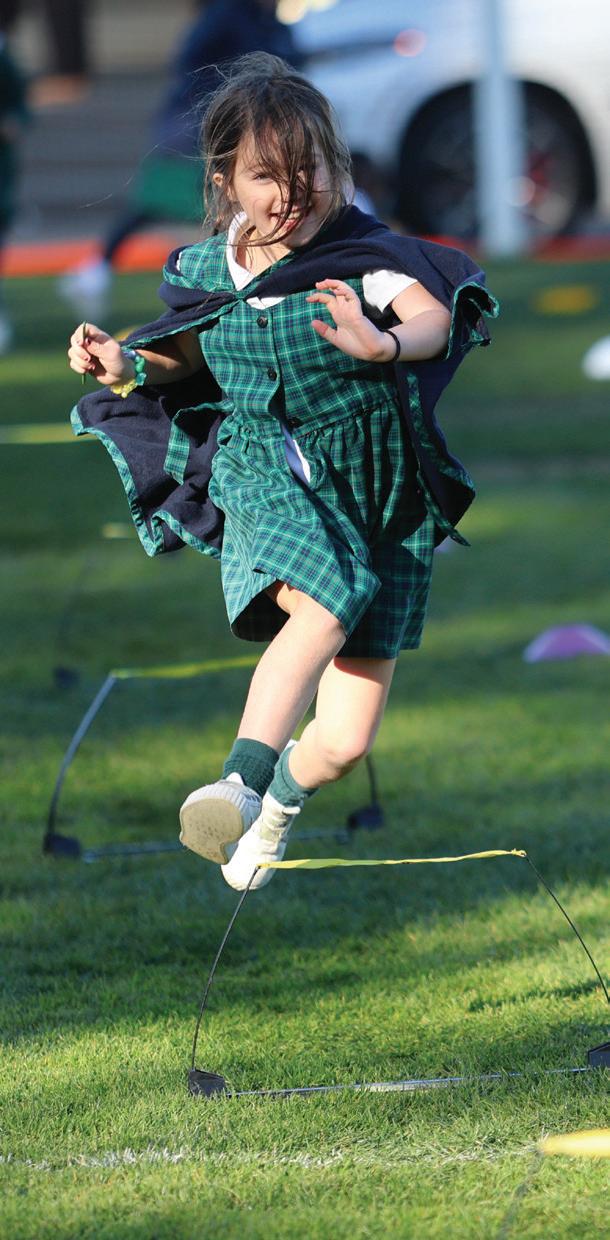
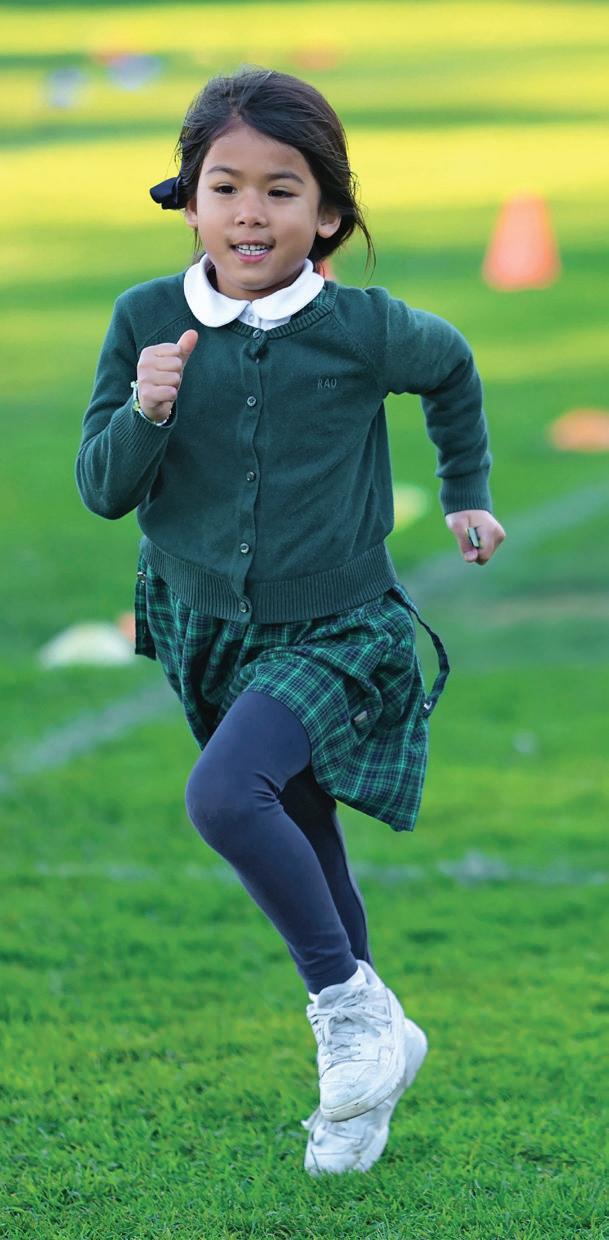
From there, students rotate through skill-based activities such as practicing running form and skipping patterns. They move on to working through agility movements, obstacle courses, throwing and tossing, kicking techniques, and foundational footwork. “We teach skills through fun,” Mr. Hay says. “And everything we do builds toward something else.”
Fridays bring “Game Day,” where students apply the week’s skills in playful, developmentally appropriate challenges. One week might end with throwing games; another, with obstacle-course races or team challenges.
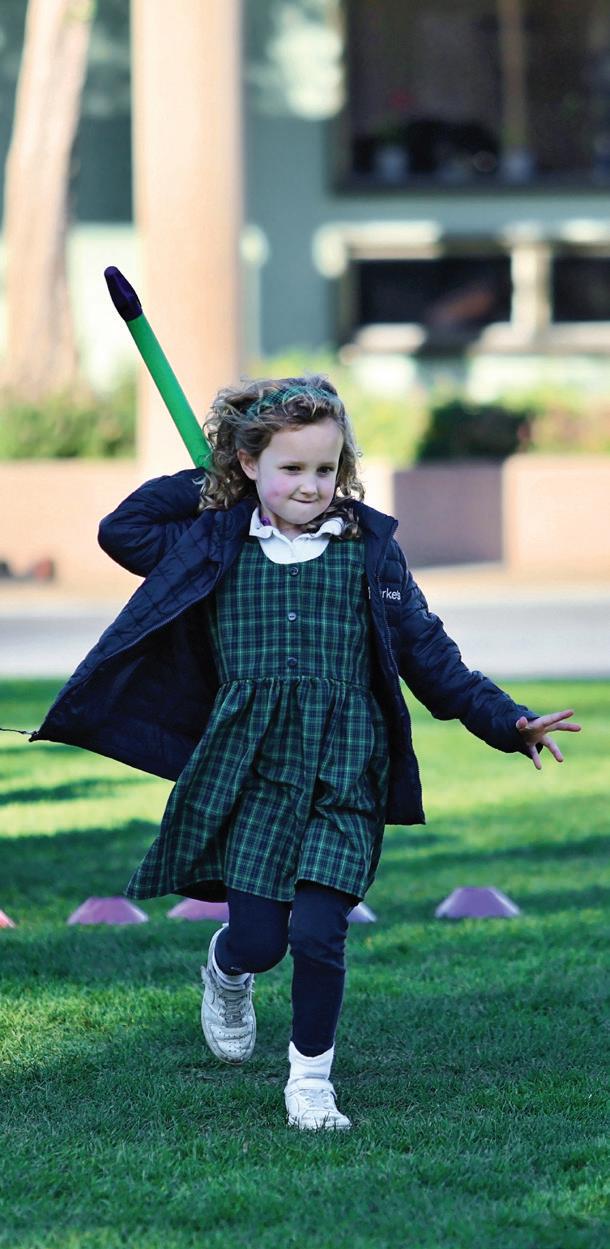
Lower School students also enjoy “Field Day” sessions, where laps, hurdles, standing long jump, and javelin-style throws turn fitness into a personal challenge. Students earn popsicle sticks each session, tracking their progress per session
and throughout the semester based on the laps and events they complete—a beloved tradition that motivates them to try their best.
Challenge Day in the spring is a joyful celebration of courage, curiosity, and community. Students rotate through a variety of high-energy stations, from freeze dance and scooters to scaling a climbing wall and learning from a special guest presenter. Each activity encourages them to try something new, take a healthy risk, and enjoy a day filled with movement and laughter.
CONFIDENCE AND SEL IN ACTION
Some of the most memorable activities blend physical movement with creativity and social–emotional learning. In one popular unit, students design and build their own structures, which then become central to a throwing game. At the beginning of the school year, kindergarteners navigate a “lunch tray obstacle course” to practice carrying trays safely and respectfully.
“We remind them that mistakes are okay,” Mr. Portero-Brown says. “If someone drops their tray, the first step is to be kind.”
The Lower School PE team also leads brain–body integration lessons—short Bal-a-Vis-X sessions focused on midline crossing, tracking, and movement patterns that support focus and cognitive development.
By the time students reach fourth grade, they’ve gained a strong movement foundation, confidence in leading peers, and a broad introduction to the skills used across multiple sports.


TAKE A PEEK INTO A BAL-A-VIS-X SESSION LED BY THIRD GRADERS!
A NEW STAGE IN UPPER SCHOOL: APPLYING SKILLS AND BUILDING LEADERS
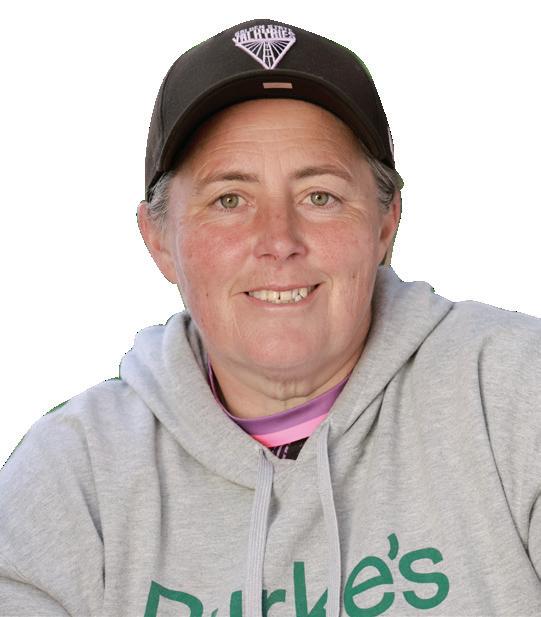
When students enter fifth grade, they step into a PE program that mirrors the structure, expectations, and independence of middle school life. Upper School PE teachers Ashling Bryant and Charlee Underwood guide students through a multi-year progression where each grade builds on the last. As Ms. Underwood puts it, “Competence breeds confidence,” a belief reflected in a program designed to help students apply their skills, take ownership, and lead with purpose.
Fifth grade is foundational, with basics of each unit introduced and practiced, along with a focus on spatial awareness, fundamental movement patterns, and a yearlong exploration of how to be a good partner and group member in PE.
Building on the solid foundations established in fifth grade, sixth and seventh grades focus on developing and mastering specific skills in each unit. There is a focus on cooperative skills in sixth grade, with more competition introduced in seventh grade. Peer feedback is introduced and developed, from very scripted and factual to more open-ended and observation-based. And with each unit, students practice applying their knowledge, assessing strengths, and reflecting on areas for growth.
UPPER SCHOOL

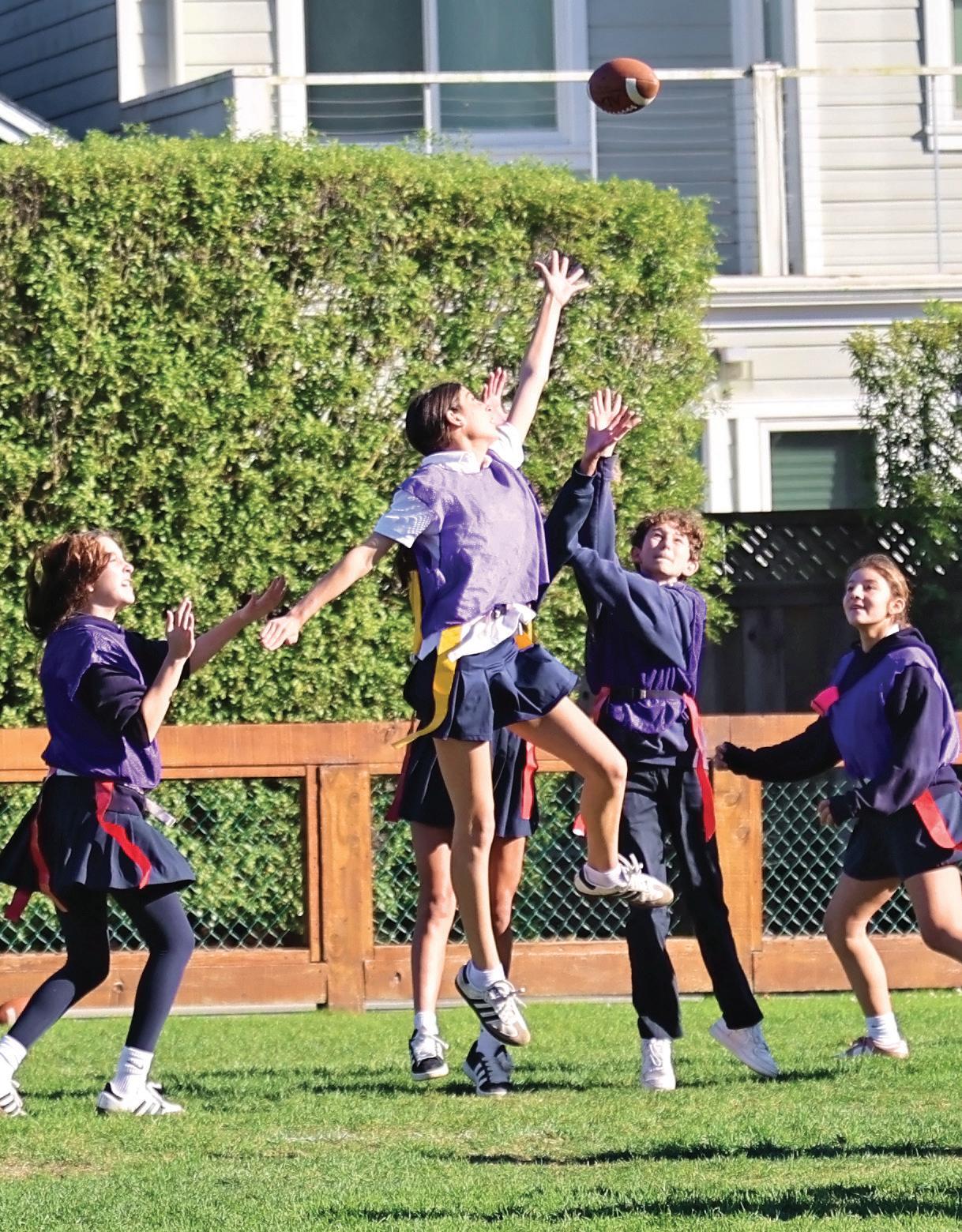
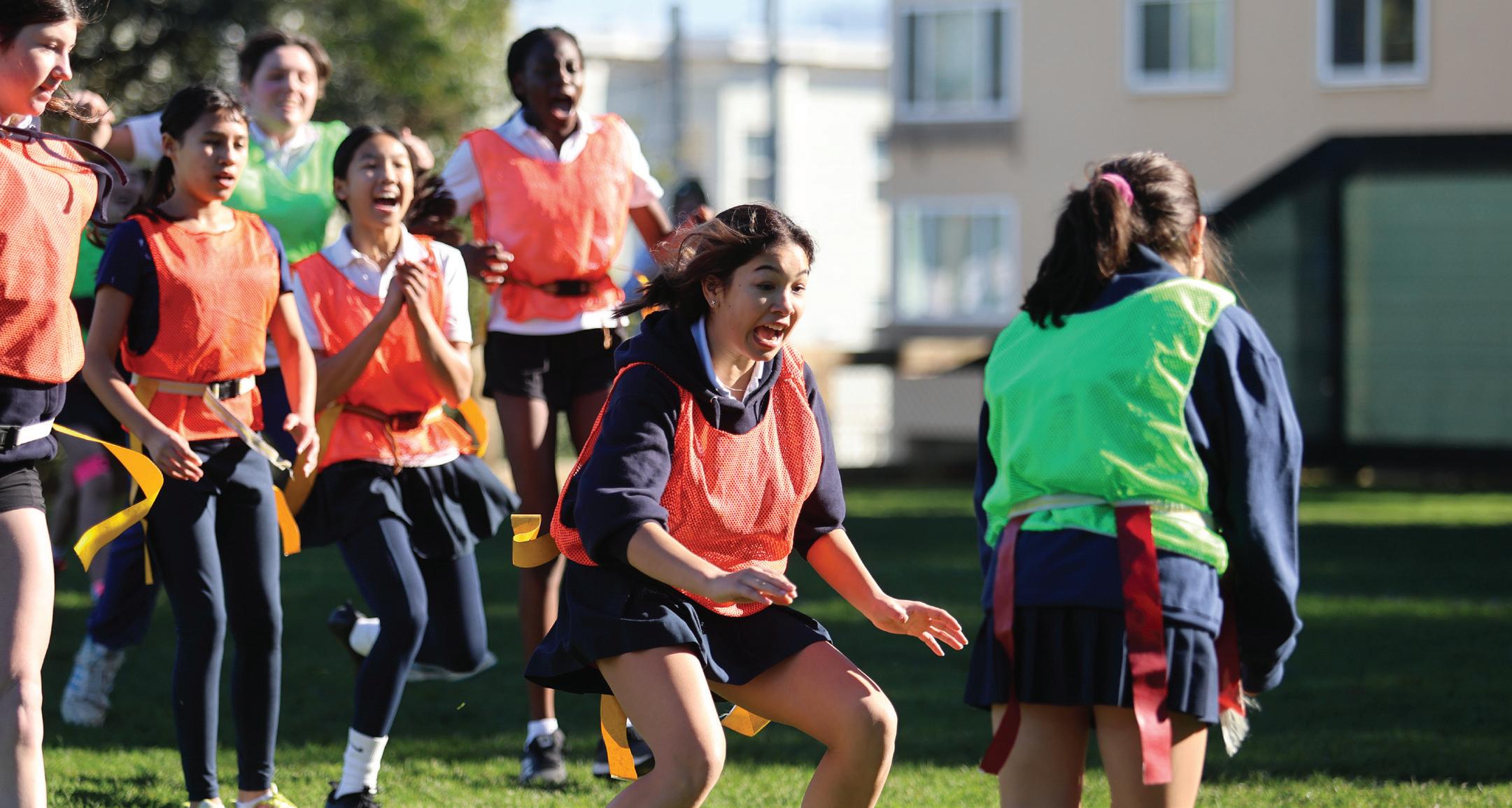
By eighth grade, it all comes together when students are placed on Challenge PE teams for the entire year. They compete in sport-based challenges, design strategies, identify roles on their team, and hold each other accountable. Some students lead strategy talks. Others shine as quiet but reliable passers, defenders, or motivators.
“If we’re doing a lot of teaching in eighth grade, we haven’t done our job in fifth, sixth, and seventh,” Bryant explains. “Eighth grade is about application, leadership, and teamwork.”
Challenge PE also gives students who don’t participate in after-school sports the chance to experience team culture in an inclusive, supportive environment.
THE HEART OF IT ALL: JOY, GROWTH, AND FRIENDSHIPS
From the first warm-up a kindergartener leads to the final Challenge PE match in eighth grade, the K–8 PE program is a journey of learning, confidence, and connection. Students discover their strengths, work through challenges, and become leaders—on the field, in the gym, and beyond. And alongside the ribbons and skill mastery are the friendships and confidence students carry with them long after middle school.