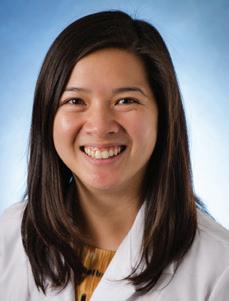
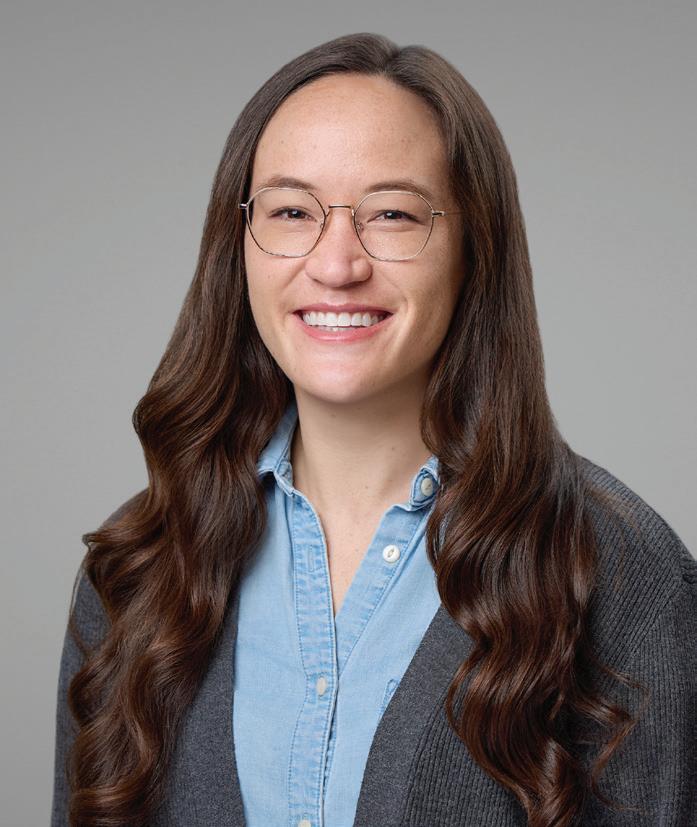
LISA LAI Communications & Advancement Assistant lisa.lai@burkes.org
Designedby BacioDesign&Marketing,Inc.
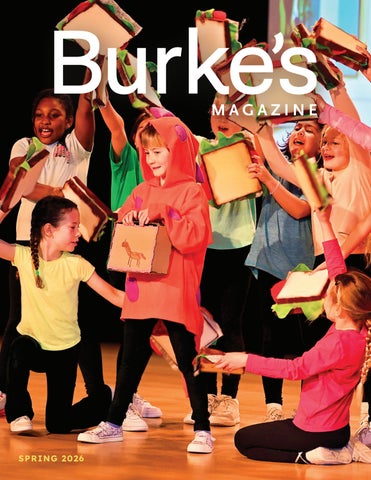
BURKE’S
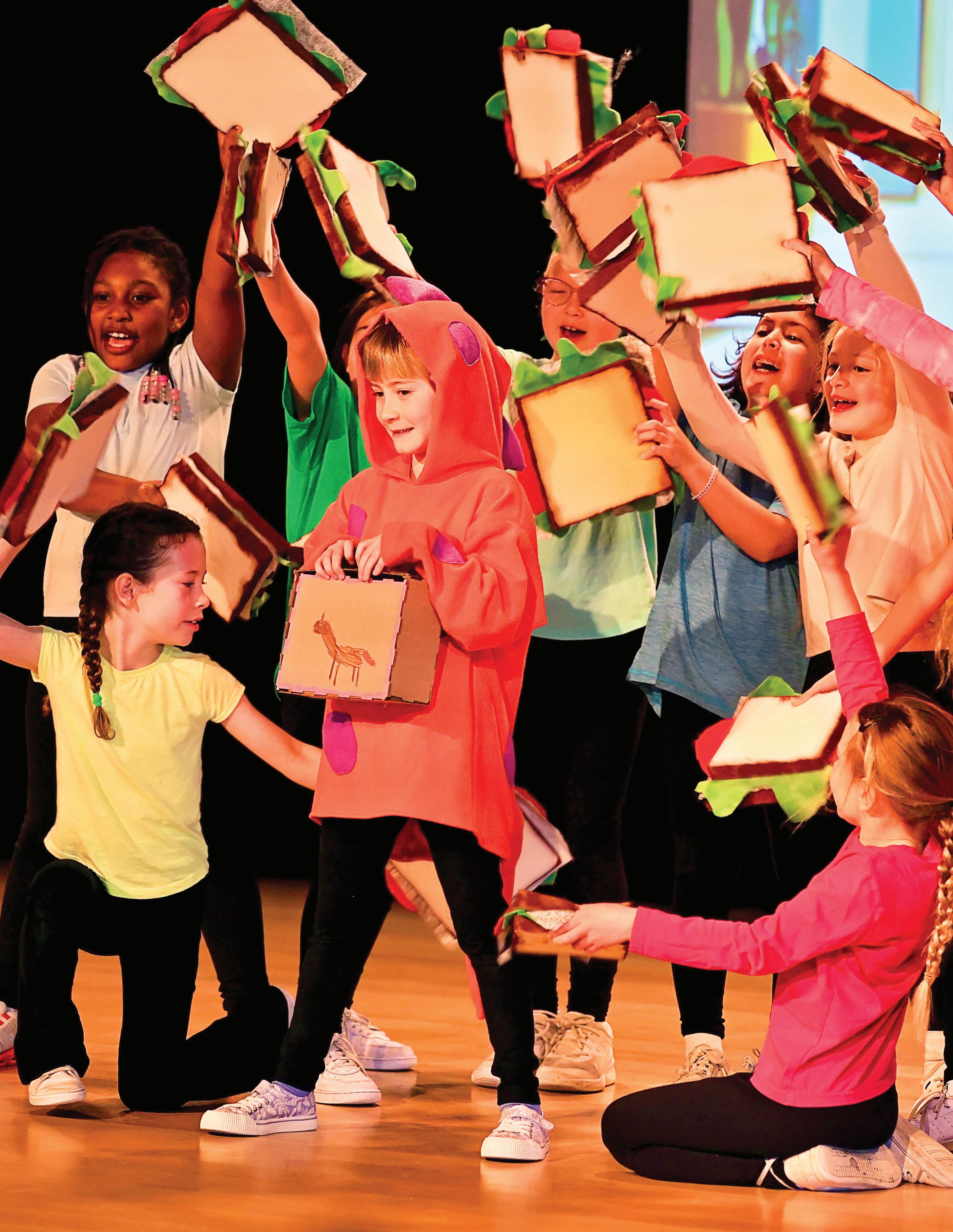
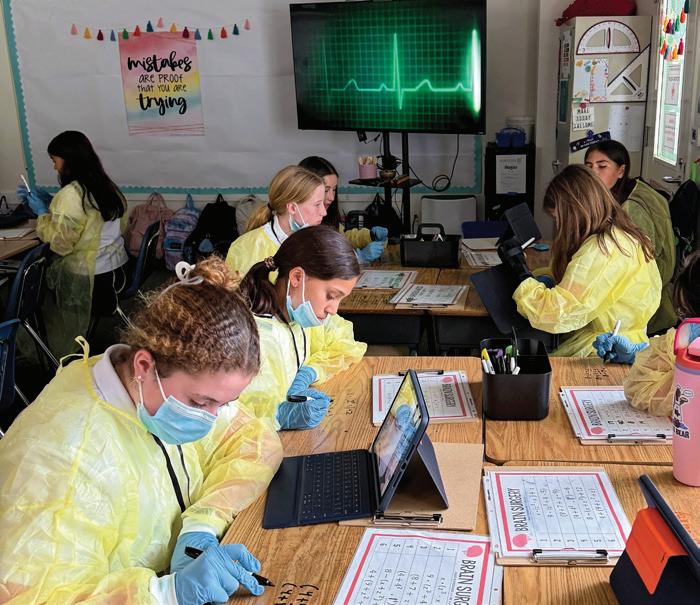
Second graders leaned into the theme of how to handle things when you don’t like them in their original production of “We Don’t Eat Our Classmates.”
OPENING SHOTS
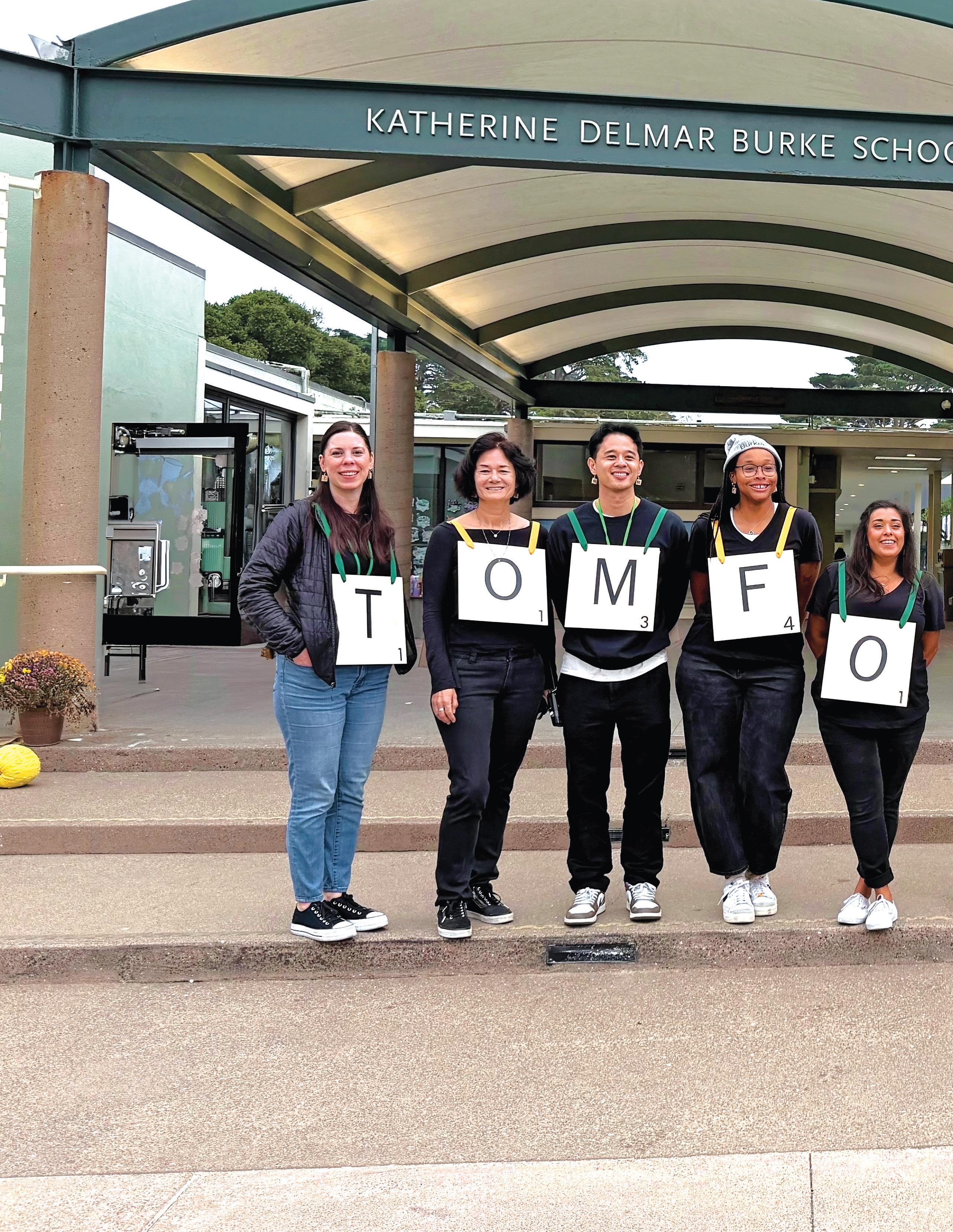
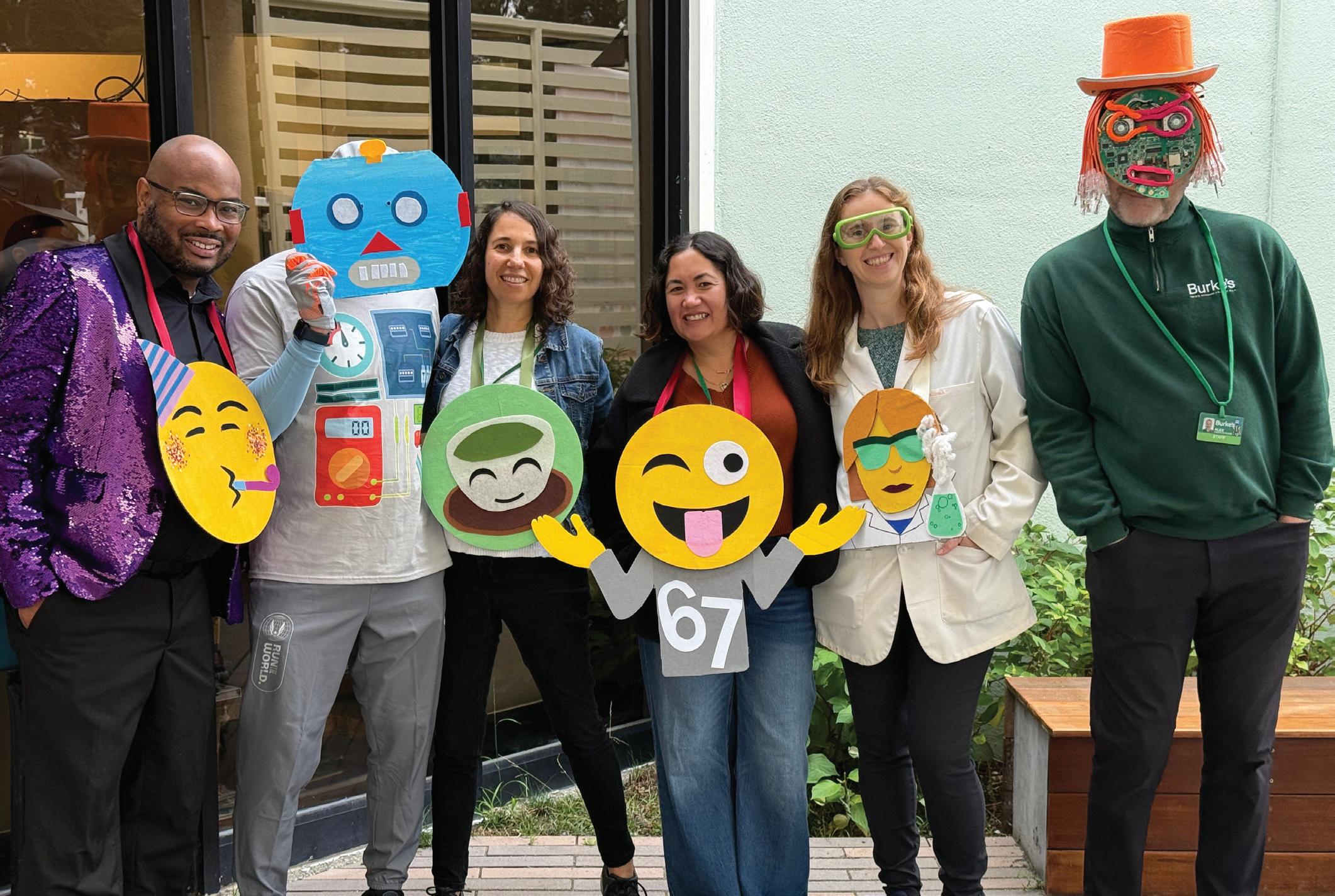
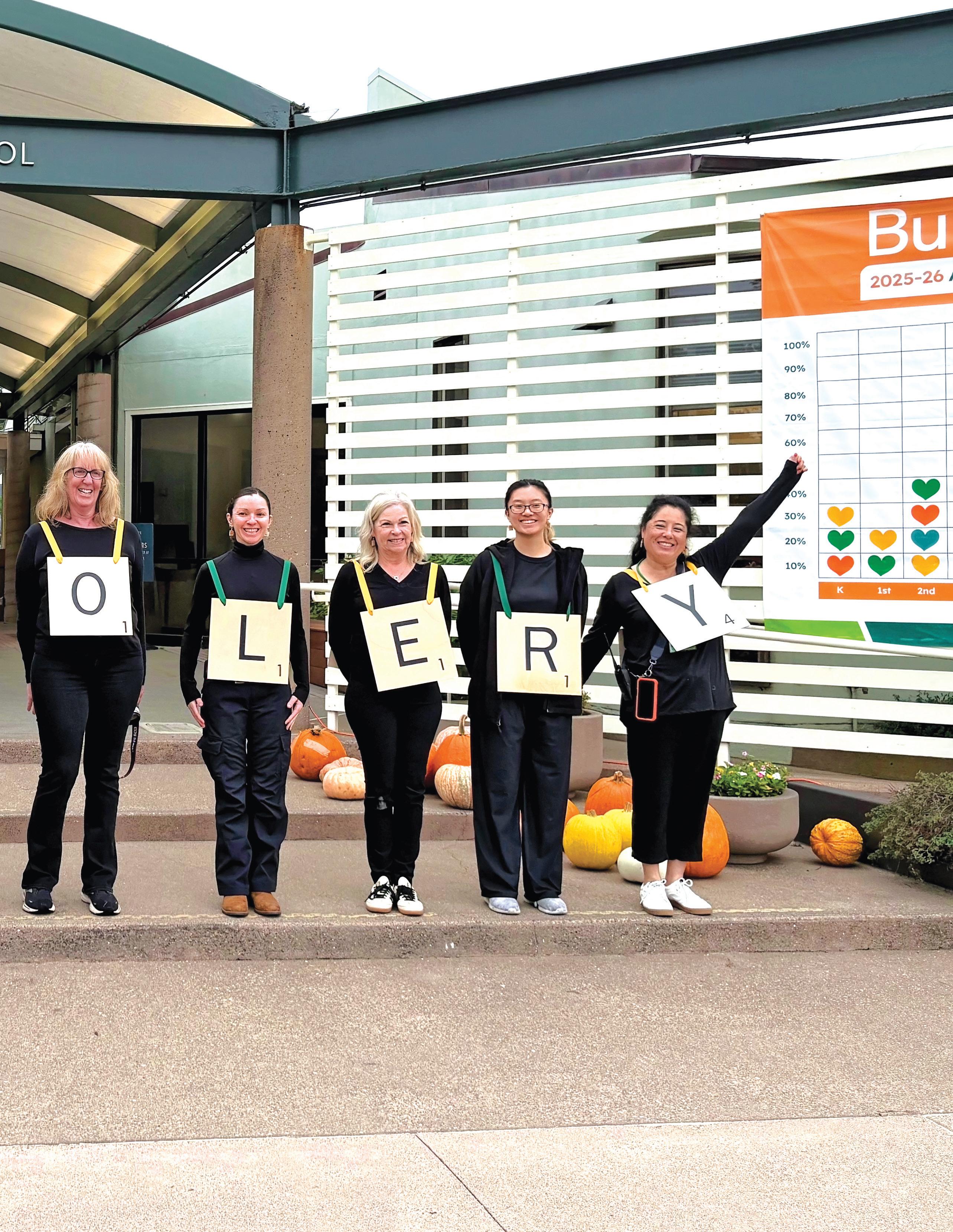
Halloween
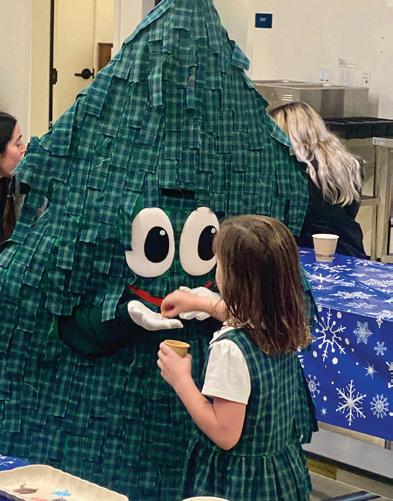
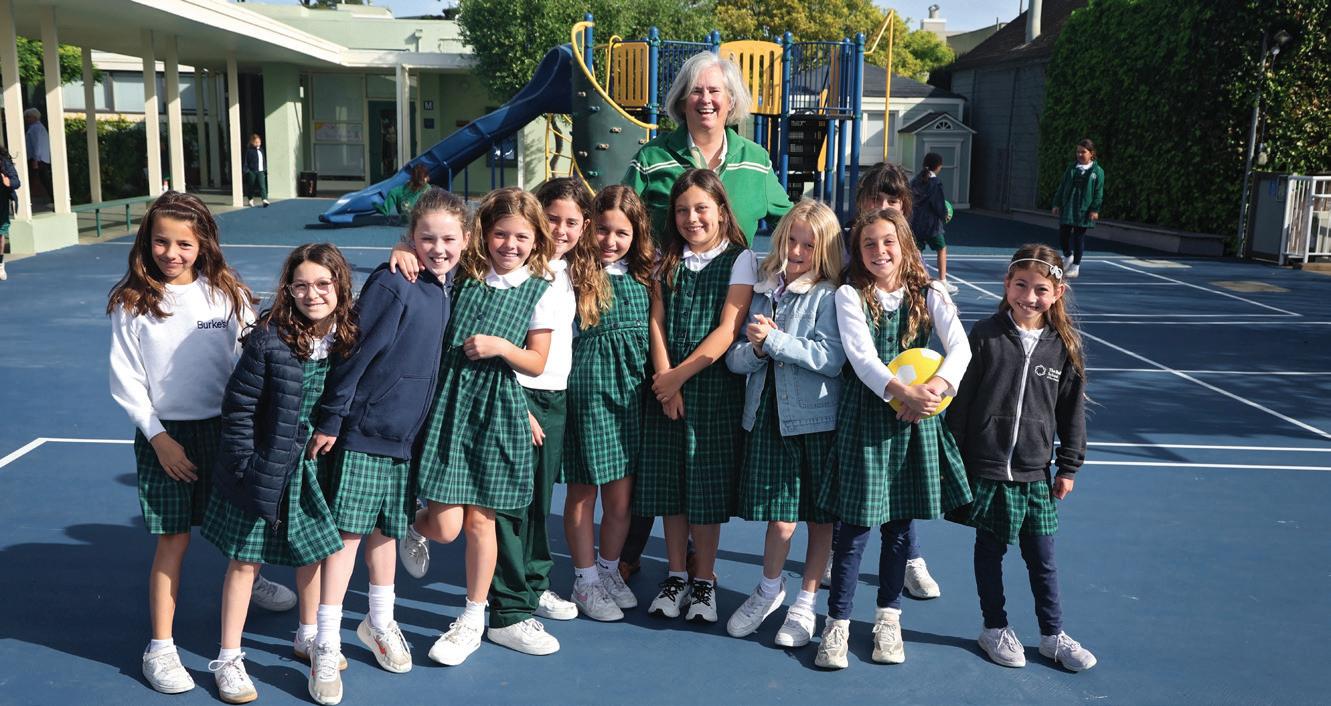
Our faculty and staff love Halloween just as much as the kids!
Alum Visits
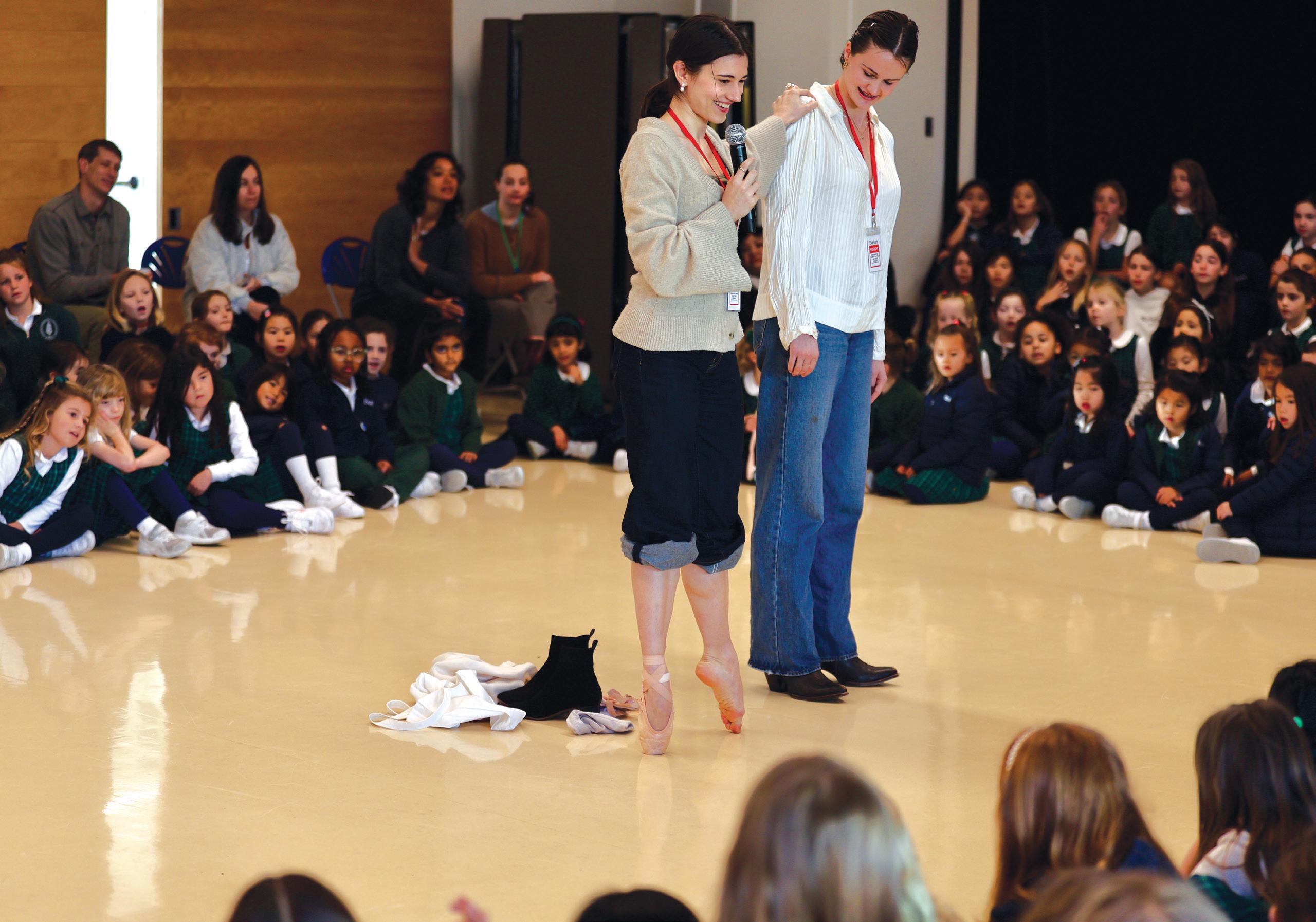
STUDENT ASSEMBLY
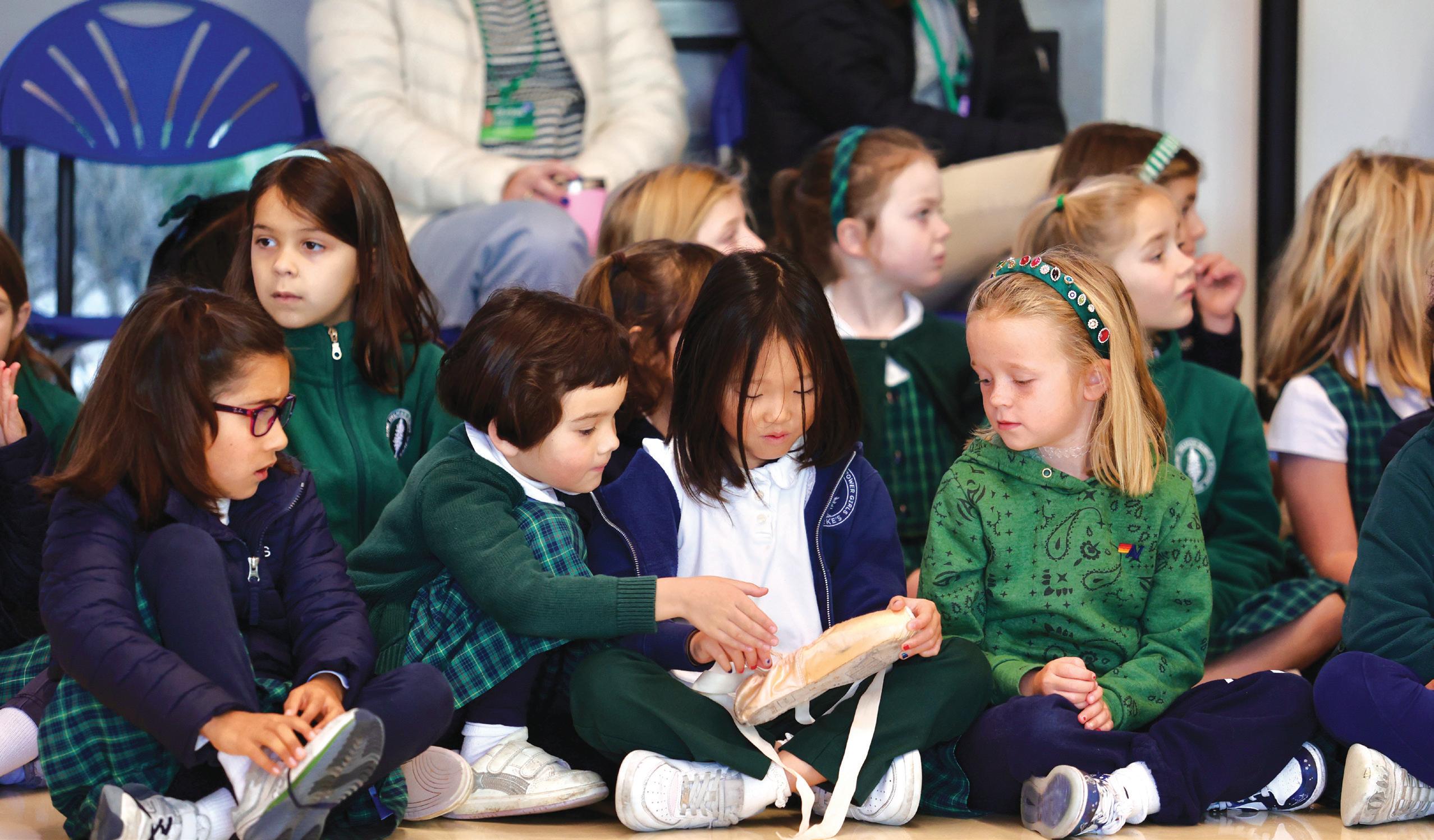
Emma Wheeler ’18 and Lily Peta ’18, both professional ballet dancers, returned to campus to talk about their shared love of dance, favorite school memories, and how the Burke’s motto to educate, encourage, and empower laid the foundation for them to embark on founding and directing Midsommar Dans, a nonprofit dance festival this summer in Sweden.
LOWER SCHOOL ART
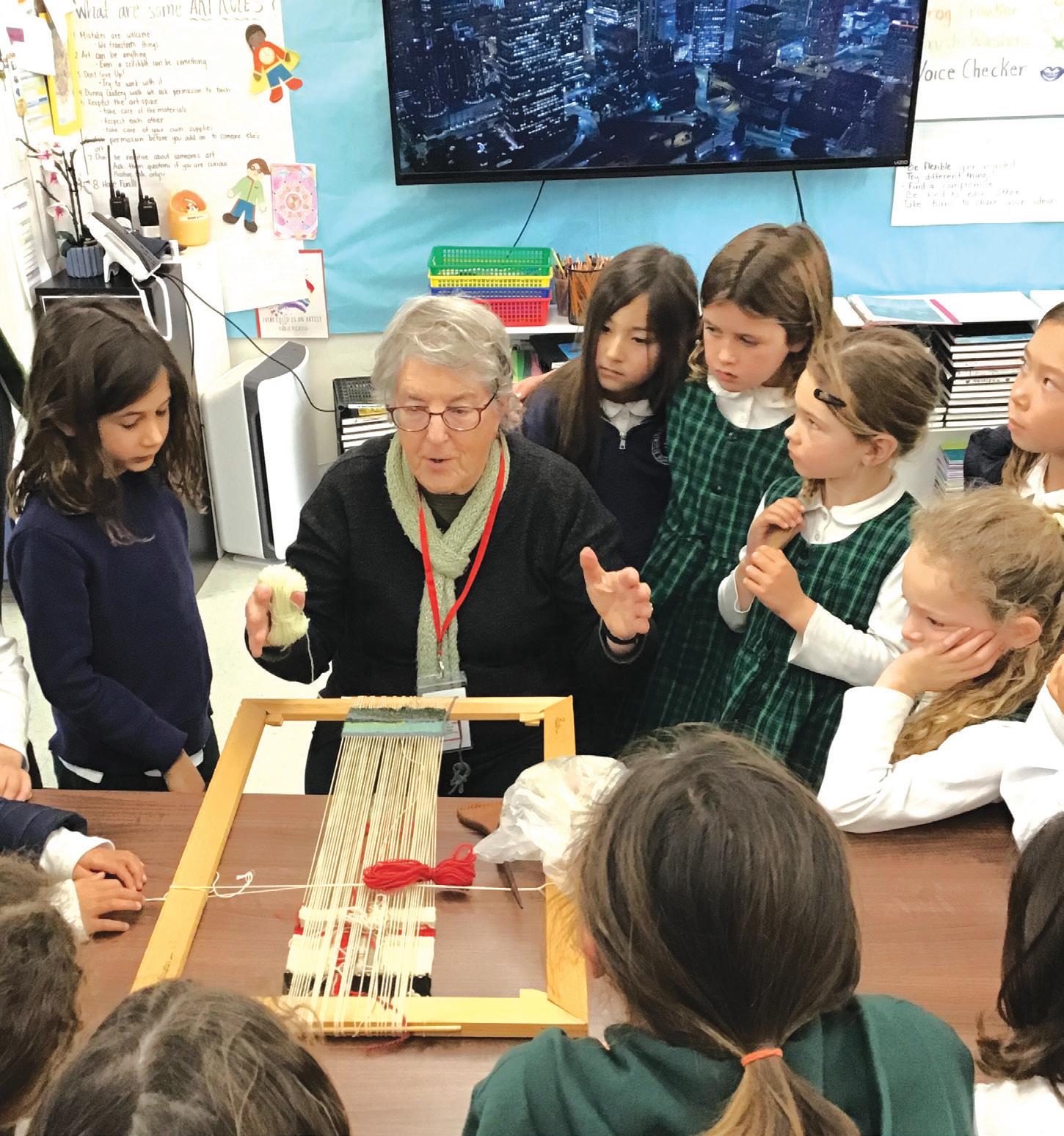
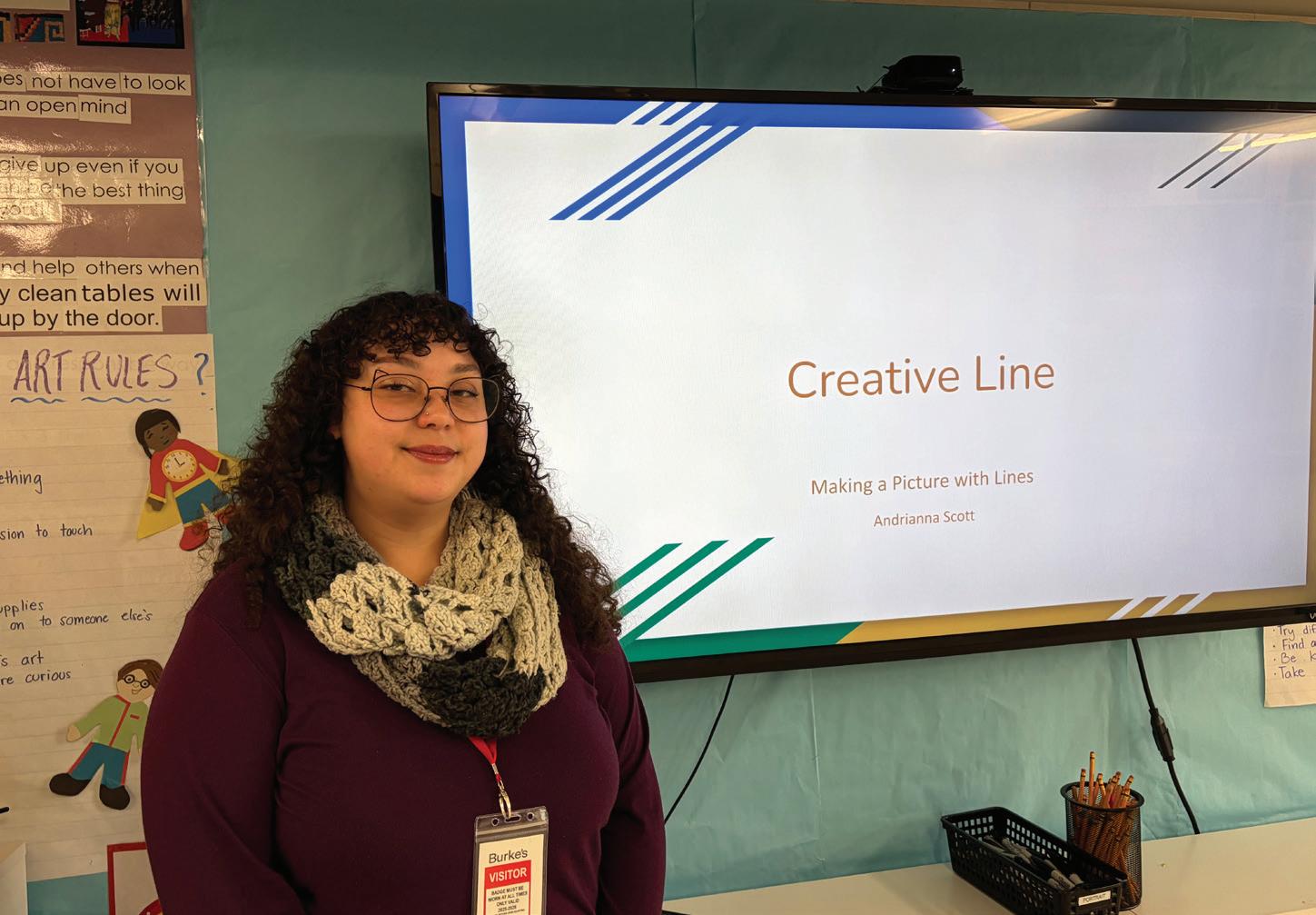
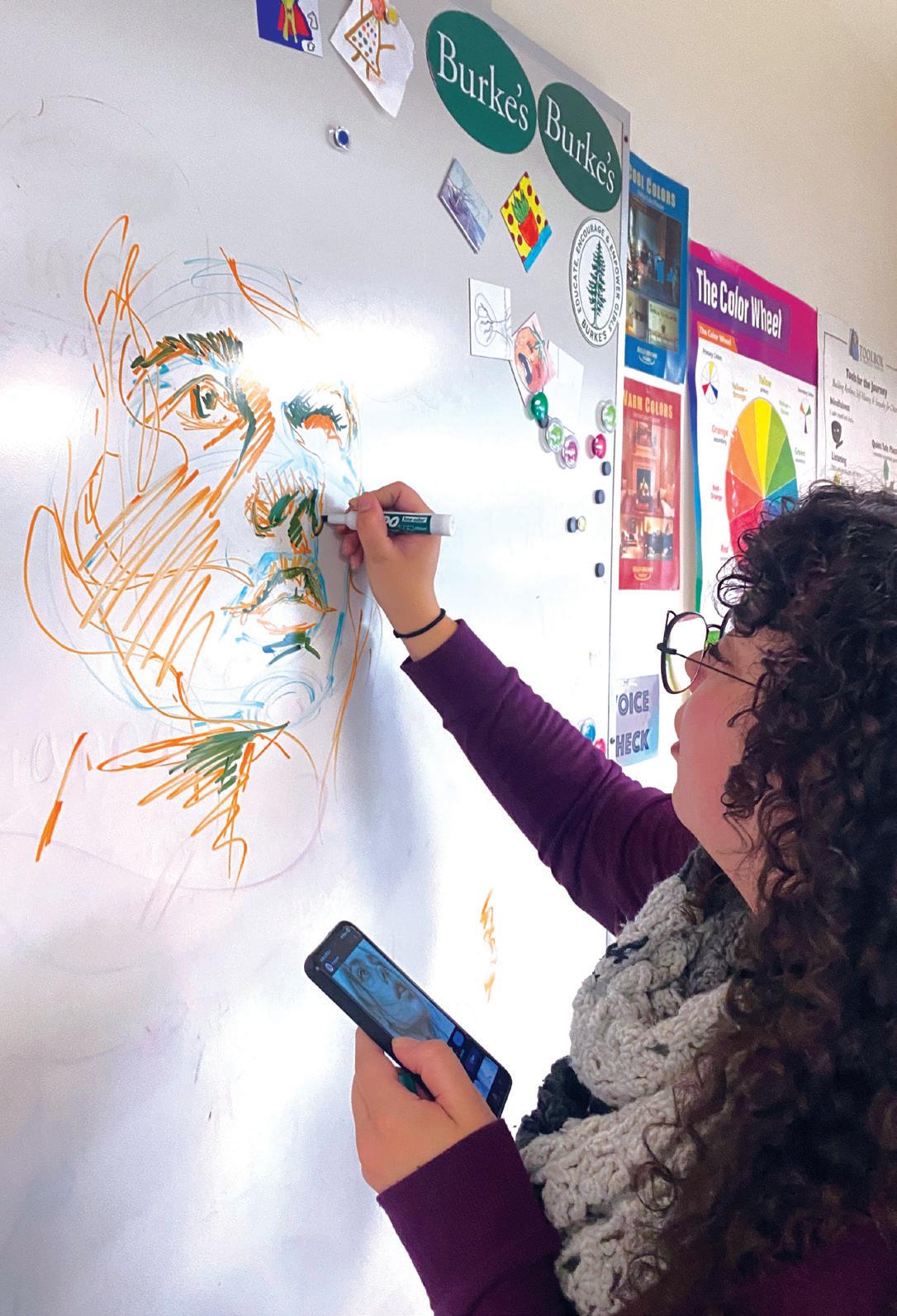
We were delighted to have two alum guest artists visit the Lower School Art classroom! Andrianna Scott ’12 taught first graders about line art, and Alexandra Schilling Friedman ’65 shared her weaving expertise with second grade!
Our alumnae community is filled with inspiring leaders, creators, and changemakers— and our students would love to learn from you. Whether your expertise is in the arts, athletics, business, public service, science, or any other field, we invite you to return to campus and share your experiences with the next generation of Burke’s girls. If you’re interested in visiting campus or speaking with students, please reach out to Melissa Sterling at melissa.sterling@burkes.org to get started. Let’s keep the Burke’s tradition of learning, leadership, and connection strong—together.
Night at Bay FC
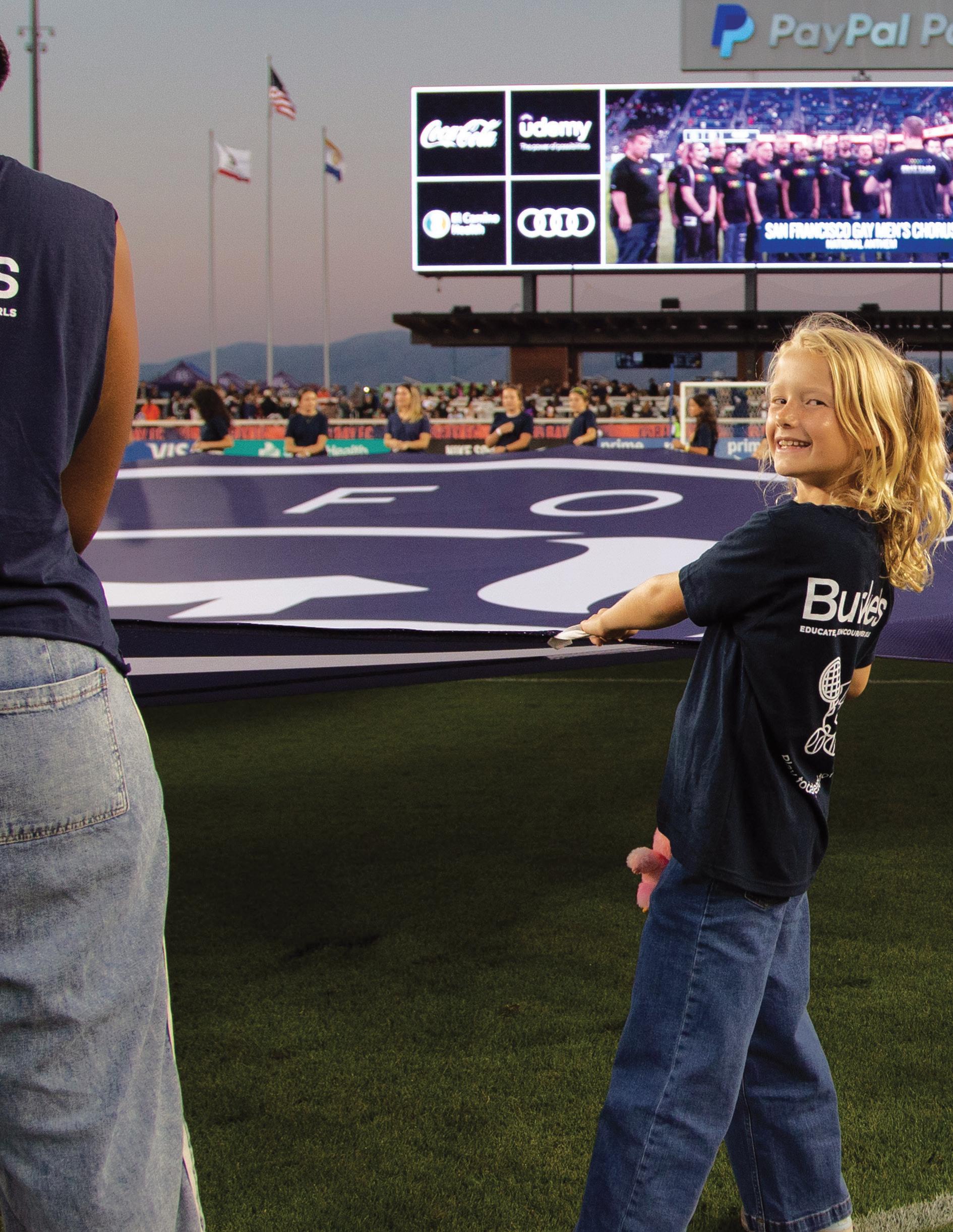
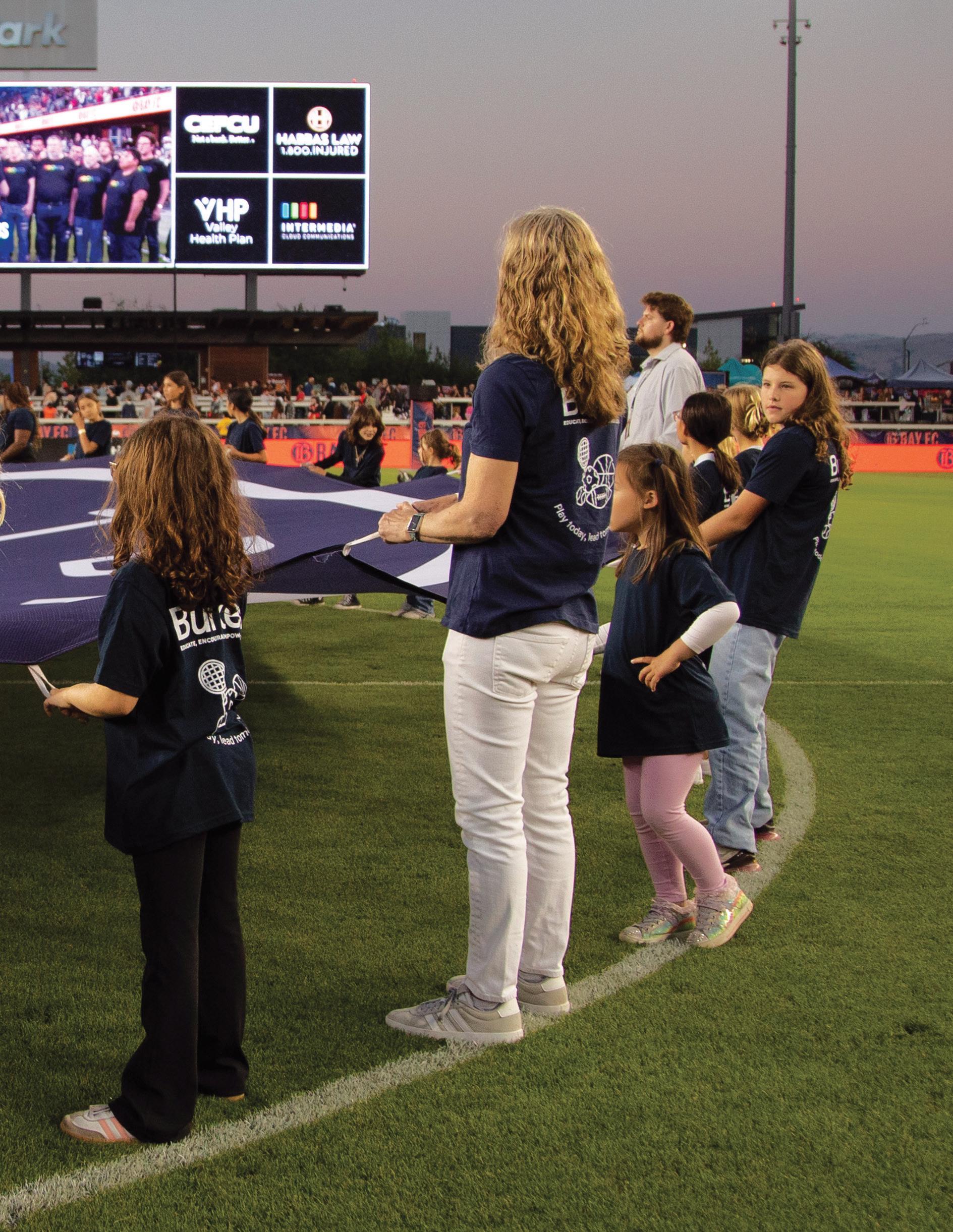
From tailgate hot dogs to centerfield pride! Burke’s students, faculty, and families joined Bay FC at their match against the Utah Royals and proudly held the Bay FC flag during the national anthem.
School Families
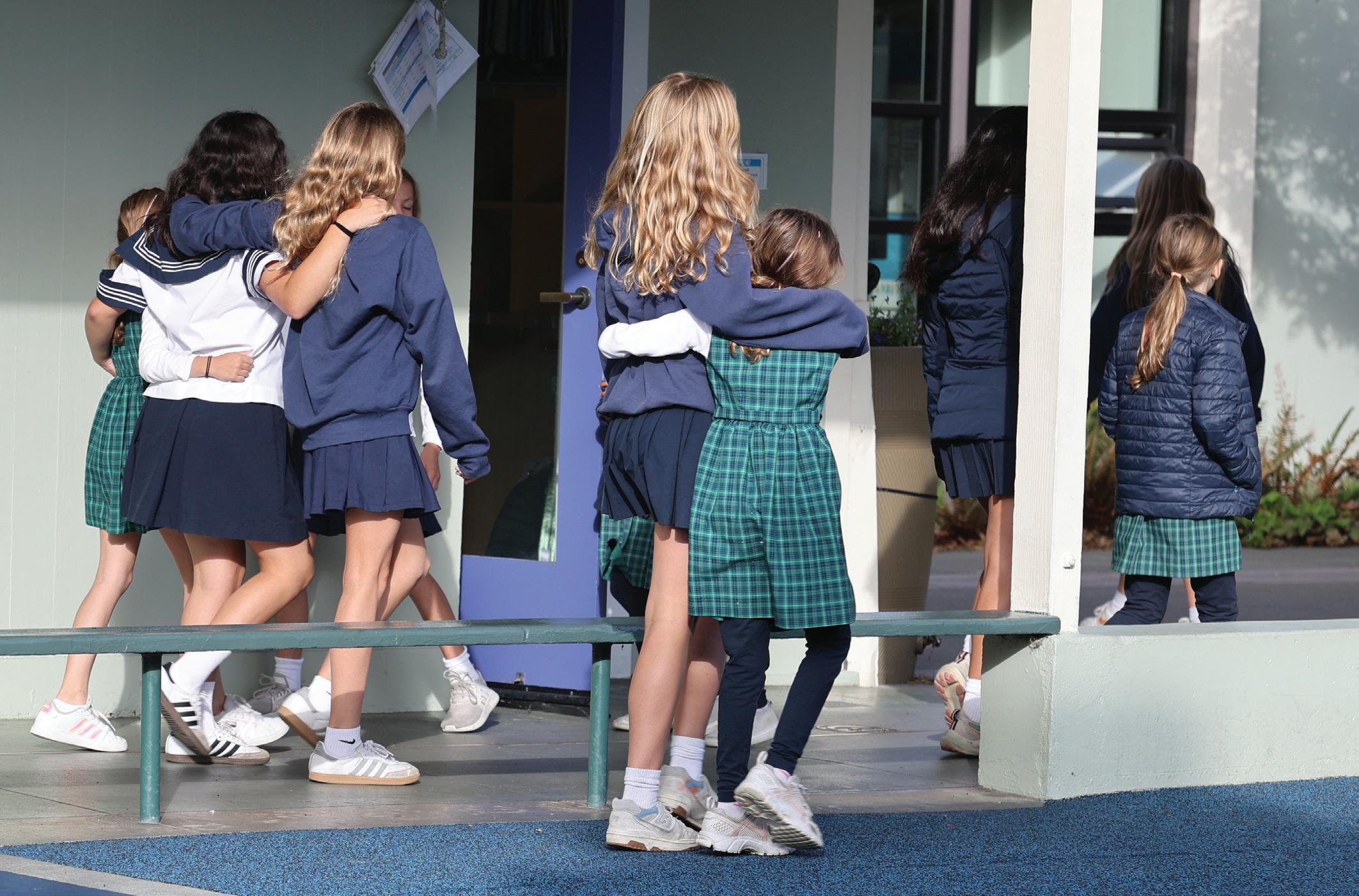
It’s always a time of joy and excitement before a Families event when Big Siblings go to pick up their Little Siblings! At the core of School Families are the relationships between Big Siblings (fourth graders) and Little Siblings (kindergarteners), who are paired off each fall.
Greetings from the Head of School
A MESSAGE FROM MICHELE WILLIAMS
One of the great joys of my role as Head of School is witnessing the remarkable growth and self-discovery of our students. A student may try out for a sports team, run for an elected office, find inspiration in the arts, or discover a passion for all three. There are truly 400 ways to be a Burke’s girl, and it is an honor to watch students find their own path during their years on campus.
Our rigorous academics and robust program offerings are designed to nurture that growth. In this issue, we highlight our Seventh and Eighth Grade English program in “Finding Their Voices” (p. 20) and our K-8 Physical Education program in “Strength, Confidence, and Joy in Motion” (p. 22). In both features, faculty share how their classes are intentionally designed to evolve with students—building skills, confidence, and a strong sense of self along the way.
You will also find a continuation of our Inspirations series, with a special focus on alumnae in sports. As a former varsity athlete at Smith College, this theme is particularly meaningful to me. The alumnae profiled demonstrate the wide world of opportunity and the many paths athletics can open. Lizzie Leader ’01 (p. 37) shared a powerful statistic from a recent Her Sport study: 94% of women in executive roles played sports growing up, and 91% credit those experiences as important to their career success. The confidence, resilience, teamwork, and leadership cultivated through athletics extend far beyond the playing field.
That spirit was on full display at our Alumnae Reunion Luncheon, which welcomed more than 150 guests and honored our 2026 Distinguished Alumna, Whitney Gaynor ’96. An entrepreneur and technologist, Whitney has maintained a lifelong commitment to figure skating. She trained and competed at a high level through age 18, earning multiple national rankings. After retiring from competition, she became an Olympic-certified official in both singles and pairs skating—one of only three individuals in the United States to hold both certifications. I encourage you to read her remarks on page 28 and enjoy the photographs from this joyful gathering.
Complementing our focus on athletics, Buzz at Burke’s offers a window into the everyday energy of our classrooms, where students build confidence and character. Meet new members of our Upper School Math faculty, celebrate our YES Entrepreneurs, explore how we use our spectacular location by the sea as an extension of the classroom, and much more.
As always, thank you for being part of this vibrant and enduring community.
Warmly,
MICHELE WILLIAMS
CELEBRATIONS FROM THE 2026 WINTER OLYMPICS
Our 2026 Distinguished Alumna Whitney Gaynor ’96 served on the 2026 Olympic Technical Panel for Pairs—the first US woman to serve on any technical panel at an Olympic Games!
Scan to listen to Whitney’s Alumnae Reunion speech.
Eileen Gu ’17 won Gold in the Women’s Freeski Halfpipe and two Silver medals (Freeski Big Air, Freeski Slopestyle). Combined with her success from the 2022 Winter Olympics (two Golds and one Silver), Eileen is the most decorated freestyle skier in Olympic history.
Scan to see Eileen’s 2023 Pansy Day speech.
STRATEGIC PLAN in ACTION
UPPER SCHOOL STUDENT CLUBS An Investment in the Whole Child
The establishment of Flex Period—and the Clubs Program it enables—represents a deliberate investment in the whole child. Students gain new opportunities to lead, serve, and engage with each other in ways that complement academic learning.
For the 2025–26 school year, Burke’s introduced a redesigned schedule in both the Lower and Upper Schools. These changes were designed around a shared commitment to creating learning environments that support academic excellence, student well-being, and meaningful leadership development.
In the Upper School, the schedule redesign centers on two key goals: optimized learning and enhanced wellbeing. Daily Conference periods improve the flow of each student’s day, and slightly longer class periods allow for deeper exploration of complex ideas. Flex Period was designed to protect community time in the schedule and to support school events and traditions with minimal disruption to classes. It has also created other opportunities—namely, an opportunity for student clubs and greater student leadership opportunities.
At the beginning of the school year, Upper Schoolers were invited to choose from clubs offering both short and longterm leadership roles and interest-based experiences. The response has been both enthusiastic and inspiring.
“It is fun to be in the hallway in the morning when students and teachers remember that it’s a day we have clubs. Everyone is excited to do something together they are passionate about!”
SHEENA TART-ZELVIN Upper School Director
Students are trying out new things, going deeper in a subject they love, and intermingling between grades, strengthening the Upper School community. Some of the year-long club leadership opportunities include:
• Leading sustainability initiatives and service projects in the Environmental Sustainability Club.
• Building school spirit and cross-grade connection in the Green and Gold Club.
• Elevating student voice through creative leadership and mentorship in a student-produced zine.
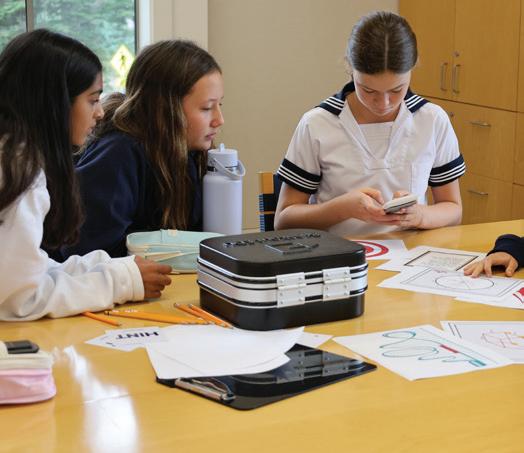
In addition, there are semester-long clubs such as BattleBots, Engineering Club, Art4Action, and Math Club—giving students the opportunity to commit to long-term projects, competitions, and collaborative problem-solving.
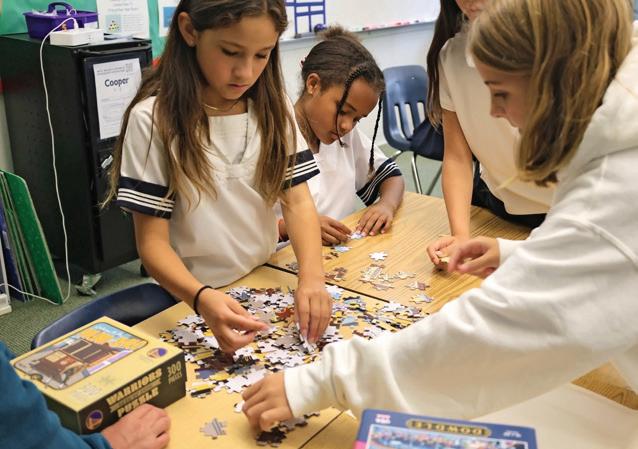
Exploratory clubs such as World Culture Club, Dungeons & Dragons, Club Zen, Music Appreciation, and Origami & Puzzles let students drop in to have fun, try new things, and connect with peers.
Keep up with all the happenings at Burke’s in real time on our social media accounts!
facebook.com/katherine.delmar.burke.school
instagram.com/burkesschool
BLEND DINNER
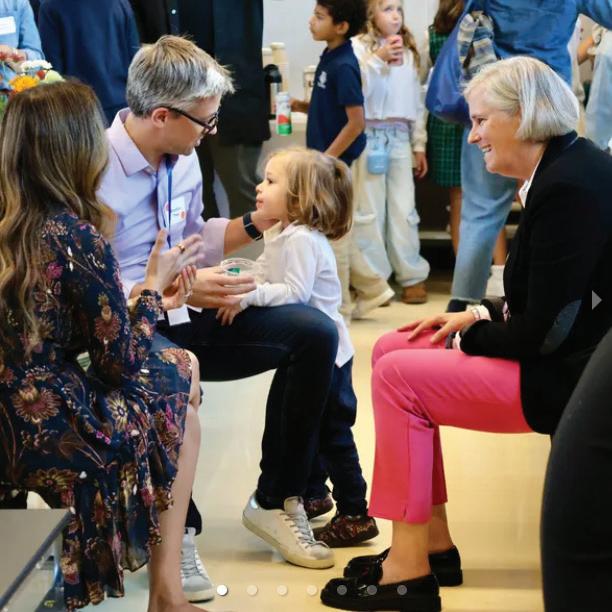
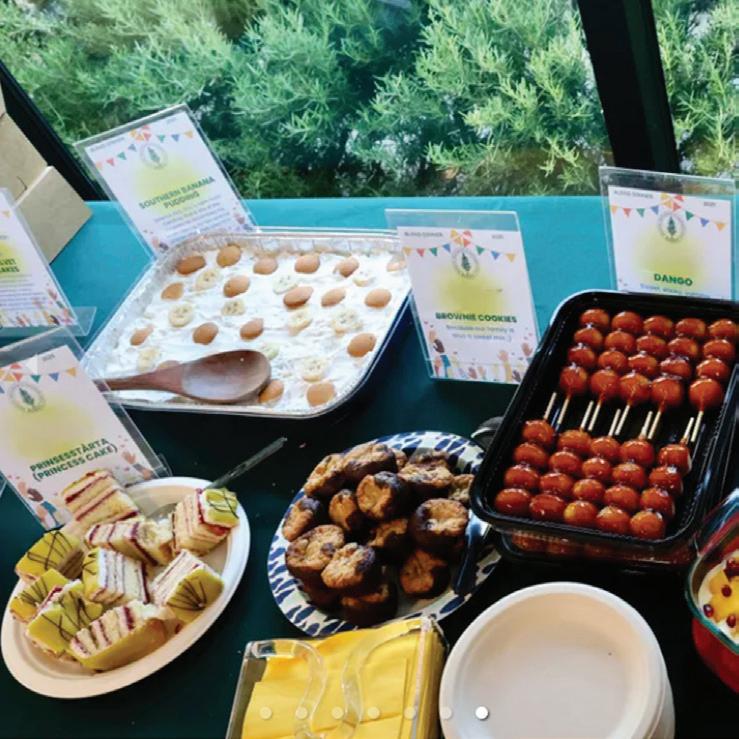
We had a fantastic kick-off to the school year with our annual BLEND Dinner, organized by the DEIB Office in partnership with our Parents’ Association Inclusivity and Community-Building Committee (ICBC). The evening brought together families, faculty, and staff for a warm, welcoming gathering that reflected the spirit of connection at the heart of our community. Shared tables, lively conversation, and thoughtful exchanges made it clear how meaningful it is to begin the year in community with one another.
The event was capped off by an incredible array of favorite desserts generously brought by our families. The BLEND Dinner continues to be a joyful reminder that our diversity is a strength— and that coming together to share a meal is a wonderful way to build relationships and start the year connected.
MLK MARCH
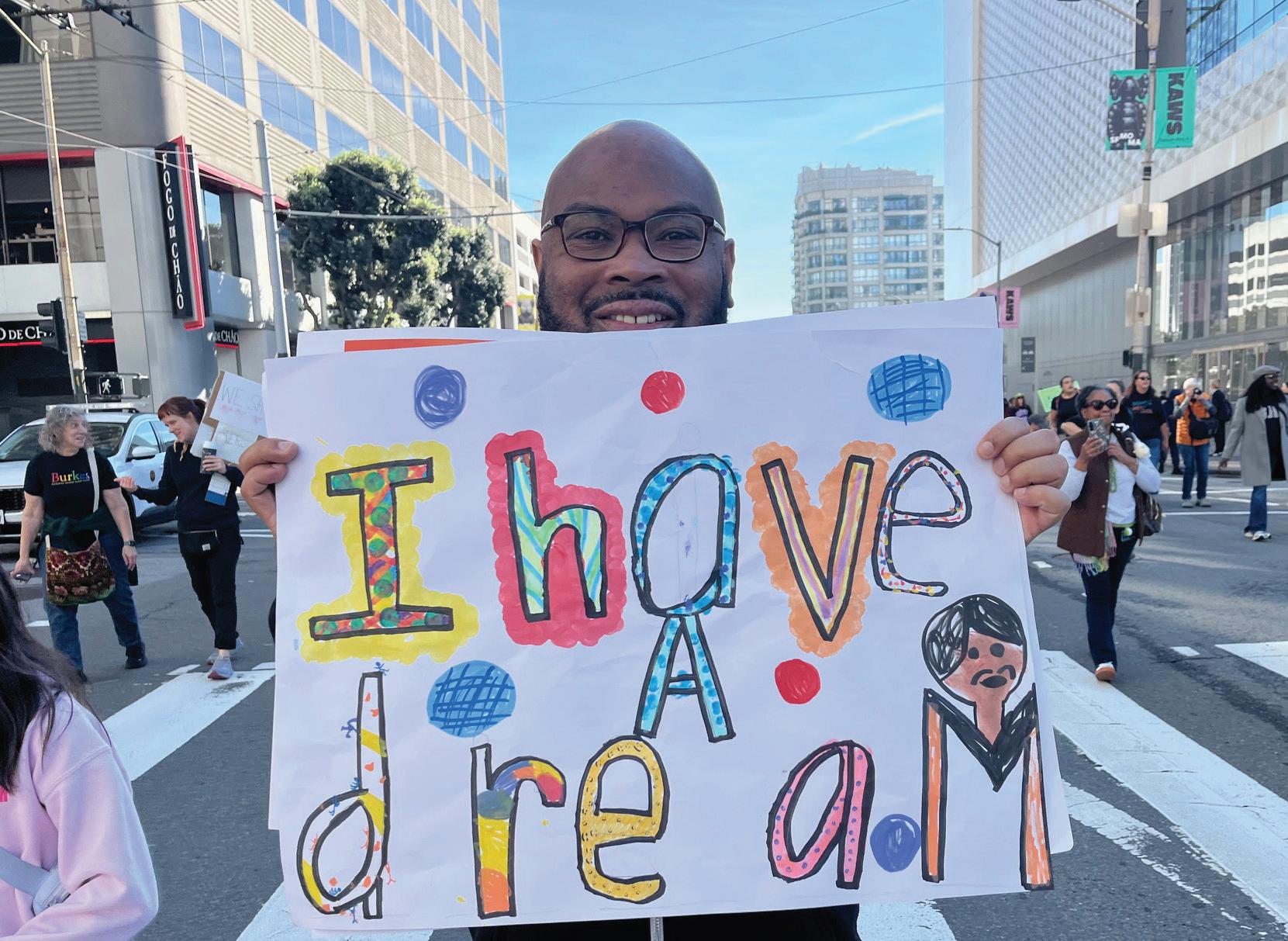
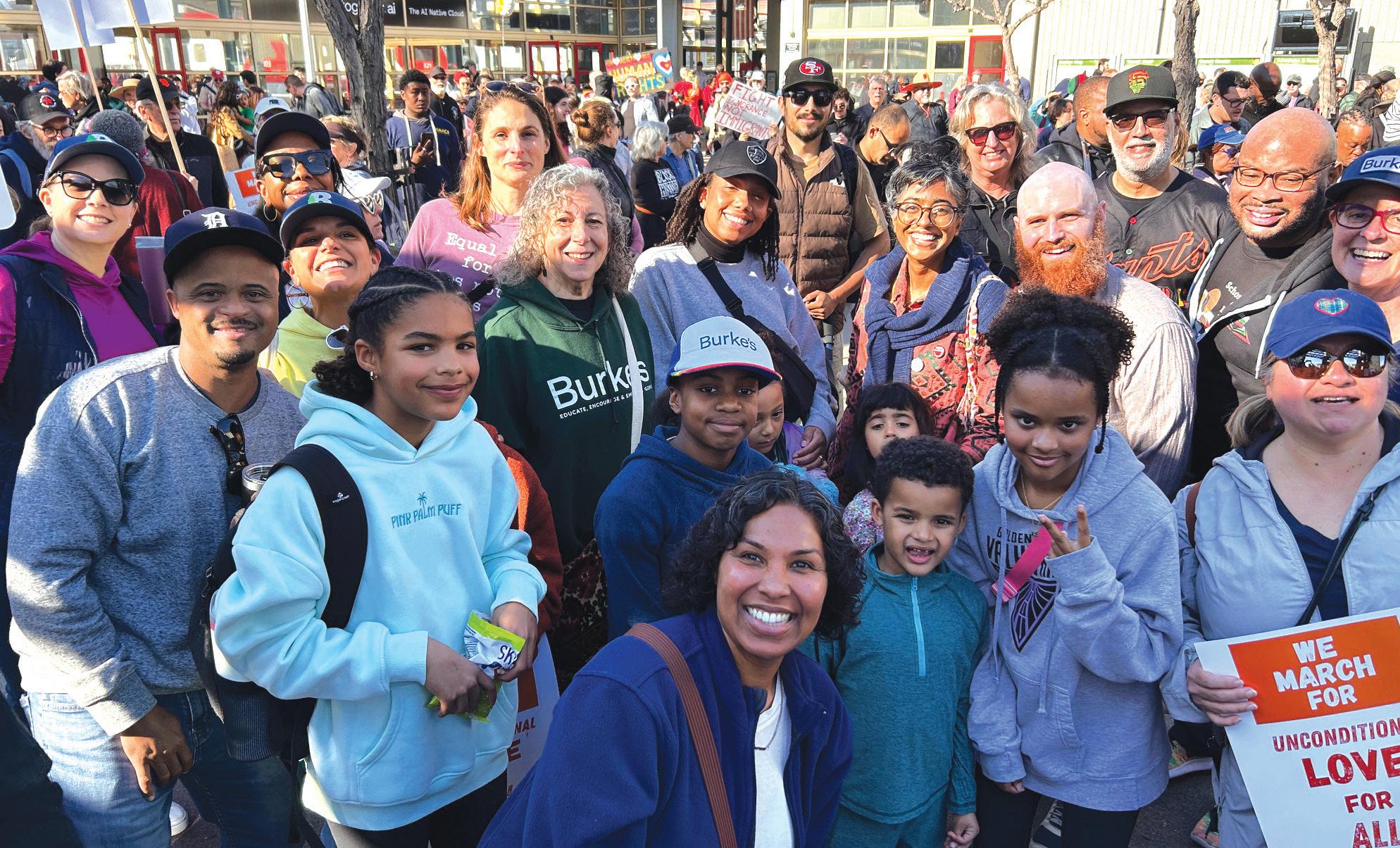
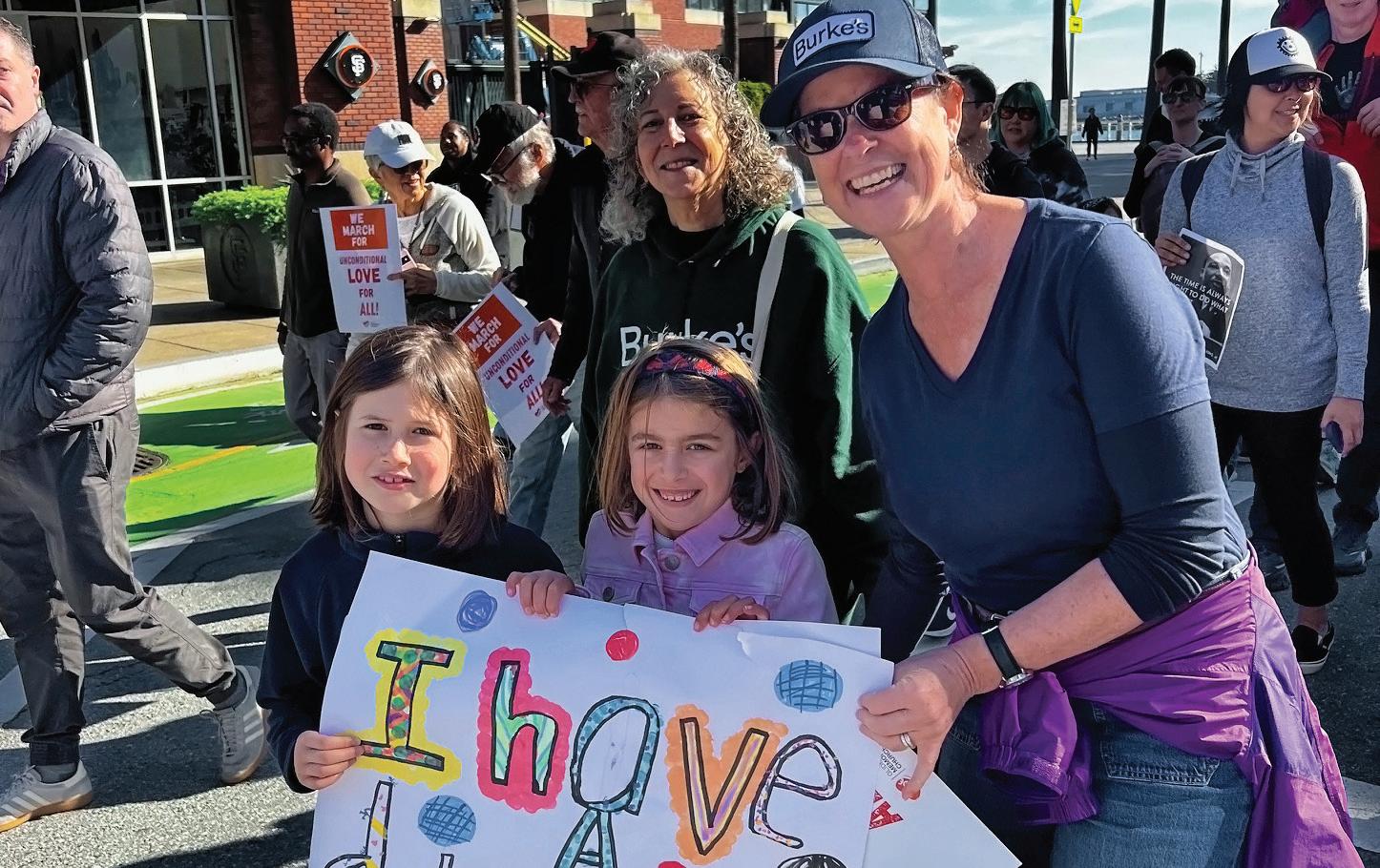
What began with our African-American/Black Parent Affinity Group has become a cherished Burke’s tradition. With handmade signs, proud voices, and a shared purpose, Burke’s students marched in the annual MLK Jr. March in honor of Dr. King and the fight for civil rights.
FACULTY PROFILES
UPPER SCHOOL MATH DEPARTMENT
Frances Elsberry
Upper School Math Teacher Frances Elsberry knows firsthand the value of hands-on learning experiences. A native of Tucson, Arizona, she attended a Montessori school through eighth grade, which she credits with most influencing her path to becoming a teacher, as she was able to explore her own interests and design much of her own learning early on. After attending a parochial high school, Frances studied politics at Pomona College and continued to expand her interests and hobbies, joining the student government and an all-girls a cappella group.
After graduating, Frances moved to San Francisco to co-teach at San Francisco Day School, and simultaneously attended Bay Area Teacher Training Institute to get her master’s and teaching credential. She initially had an interest in teaching the humanities, but as she continued working at other independent schools over the next seven years, she discovered she thoroughly enjoyed teaching math.
“I was drawn to math for a lot of reasons,” Frances explains. “It is super satisfying to see students learn a new skill. It’s creative, and it challenges me to be creative, and the tools and strategies I was using twenty-five years ago in Montessori school are still helpful to students today.
“I was drawn to Burke’s because I had friends who worked here who really loved their experience, so I also wanted to teach here! I wanted the chance to work with other math teachers who were extremely
experienced, and I have always been curious about working at a single-gender school. When I came to campus for my interview, it was so amazing to see the students’ leadership immediately in the classroom and outside.”
Outside of teaching math, Frances enjoys swimming at China Beach or Aquatic Park, taking long walks, embroidering and sewing, cooking, and reading. She typically reads 75-100 books a year!
Nikki Hogan
Nikki Hogan, Upper School Math Teacher, is dedicated to building students’ confidence in math.
Nikki is a native Californian, having grown up by the beach in San Diego. She moved to the Bay Area to study communicative disorders at San Francisco State University, originally planning to become a speech pathologist. Her professional path led her to work for Google Helpouts, where she provided online support to students and teachers. During her time there, she repeatedly heard the same frustrations about disengagement and anxiety around math, and it sparked her into action. Over the next twelve years, Nikki worked as a middle school math educator, most recently at Convent & Stuart Hall, before coming to Burke’s. While at Convent, Nikki was the recipient of several awards, including the Convent of the Sacred Heart Sister Mary Mardel Fund for Faculty Excellence, as well as the Millie Fusco Heart of an Educator Award.
“I chose to work at Burke’s because the commitment to educating the whole child truly resonated with me,” Nikki says. “I appreciate the thoughtfulness and intention behind every decision, and I feel incredibly supported as an educator. It is clear that Burke’s is a community that cares deeply about its students, its teachers, and its mission.”
At Burke’s, Nikki loves to make math come alive for her students, showing them that math exists all around them by traveling to Oracle Park to study how statistics shape the game of baseball, or setting up a “math café,” where students place orders and calculate tips, taxes, and totals. “My goal is to inspire and empower my students by making math meaningful, accessible, and connected to the real world. Above all, I want every student to leave my class feeling confident, capable, and proud to call themselves mathematicians.”
When not teaching math, Nikki loves to walk around and explore her neighborhood, from shopping at the farmer’s market by the Ferry Building to eating dinner with family and friends at new restaurants. She enjoys cooking as well, and is always looking for new recipes to try.
FOURTH GRADERS SHINE IN “SHE CAN’T SEE YOU”
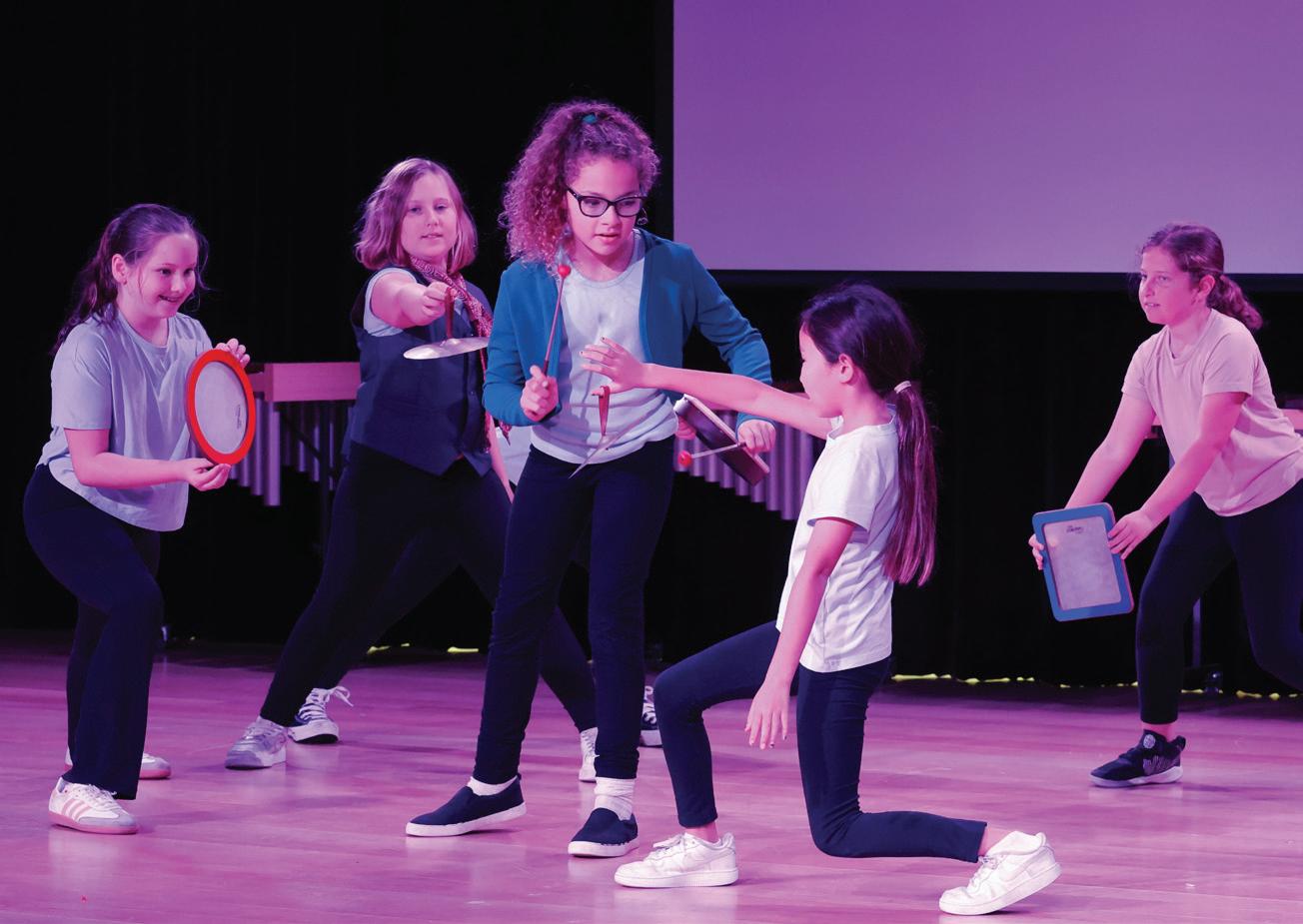
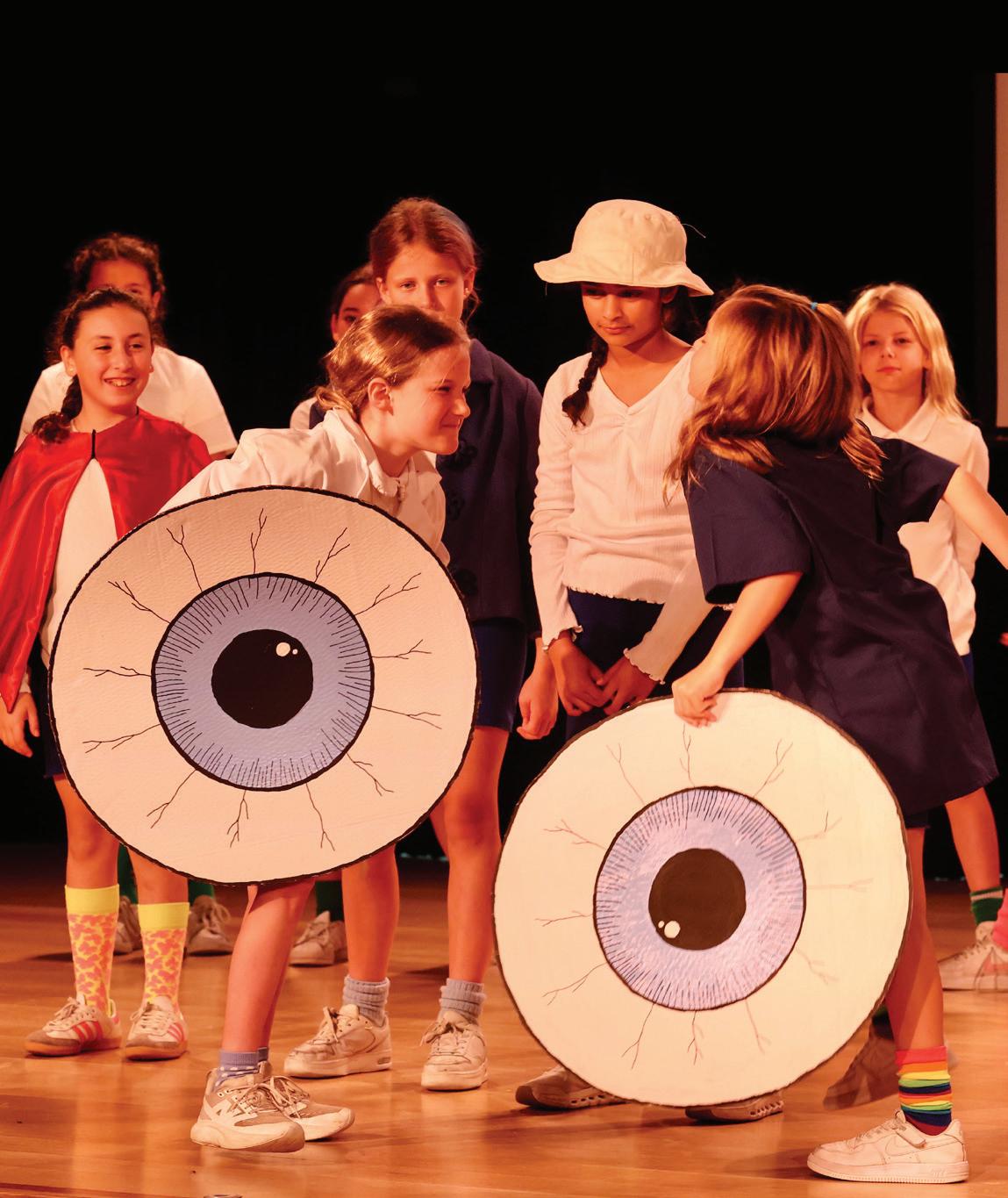
The fourth graders captivated the audience with their thought-provoking performances that examined human communication and expression across different sensory disabilities. 4A told of visual artist, performer, and advocate Christine Sun Kim and musician Evelyn Glennie, and their relationships to sound as deaf artists. 4B honored Burke’s own alum, M. Leona Godin ’86, who developed a progressive eye disease when she was in fourth grade, and is now a blind performance artist, disability advocate, professor, and published author.
Fourth graders began preparing with theater teacher Ms. Larsen, from researching deaf and blind histories and cultures in the library and exploring the senses, to examining how humans learn to communicate with each other and investigating language and words that are not spoken or written down. Ms. Larsen, who brings a background in devising, movement direction, and new play development to the drama classroom, helped both classes write and develop their plays and scripts.
Lower School Music Specialist Ms. Mandelstein was heavily involved, bringing her expertise as a musician
and storyteller to add musical instrumentation, songs, and sound effects. This was key to bringing the plays to life, enhancing the exploration of sound as vibration and the idea that there is no wrong way to experience it. Sound was also explored as both character, emotion, and place, adding to the immersive sensory experience and exploration of how to tell a story if we are not only favoring sight or hearing.
Ms. Herman, Lower School Art Specialist, had the fourth grade students create internal and external landscapes. These were used as projections throughout the plays to consider if we can ever truly understand what is happening inside another person. No matter how we communicate or how hard we try… a person’s inner world will always be deep and somewhat of a mystery.
With themes of power, access, disability, and language across both plays, the Class of 2030 showed that communication, art, and language transcend writings on a page and even the spoken word.
UPPER SCHOOL ART CHANGE MAGNETS
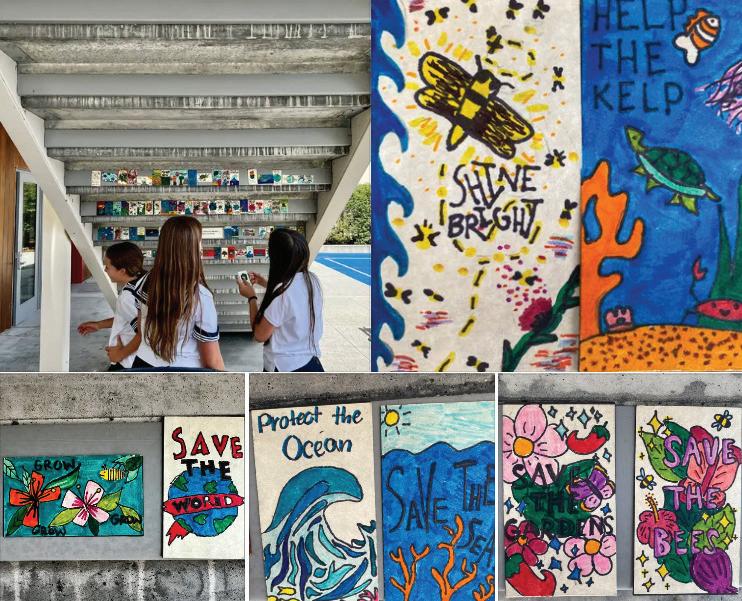
Art in action! Our fifth and sixth graders created “Change Magnets”—mini, portable posters addressing the climate crisis. You can spot their inspiring display under the stairs by the Upper School Art Studio! Upper School students in all grades can sign up for Art4Action as part of the Upper School Club offerings.
UPPER SCHOOL MATH TEAM RETREAT
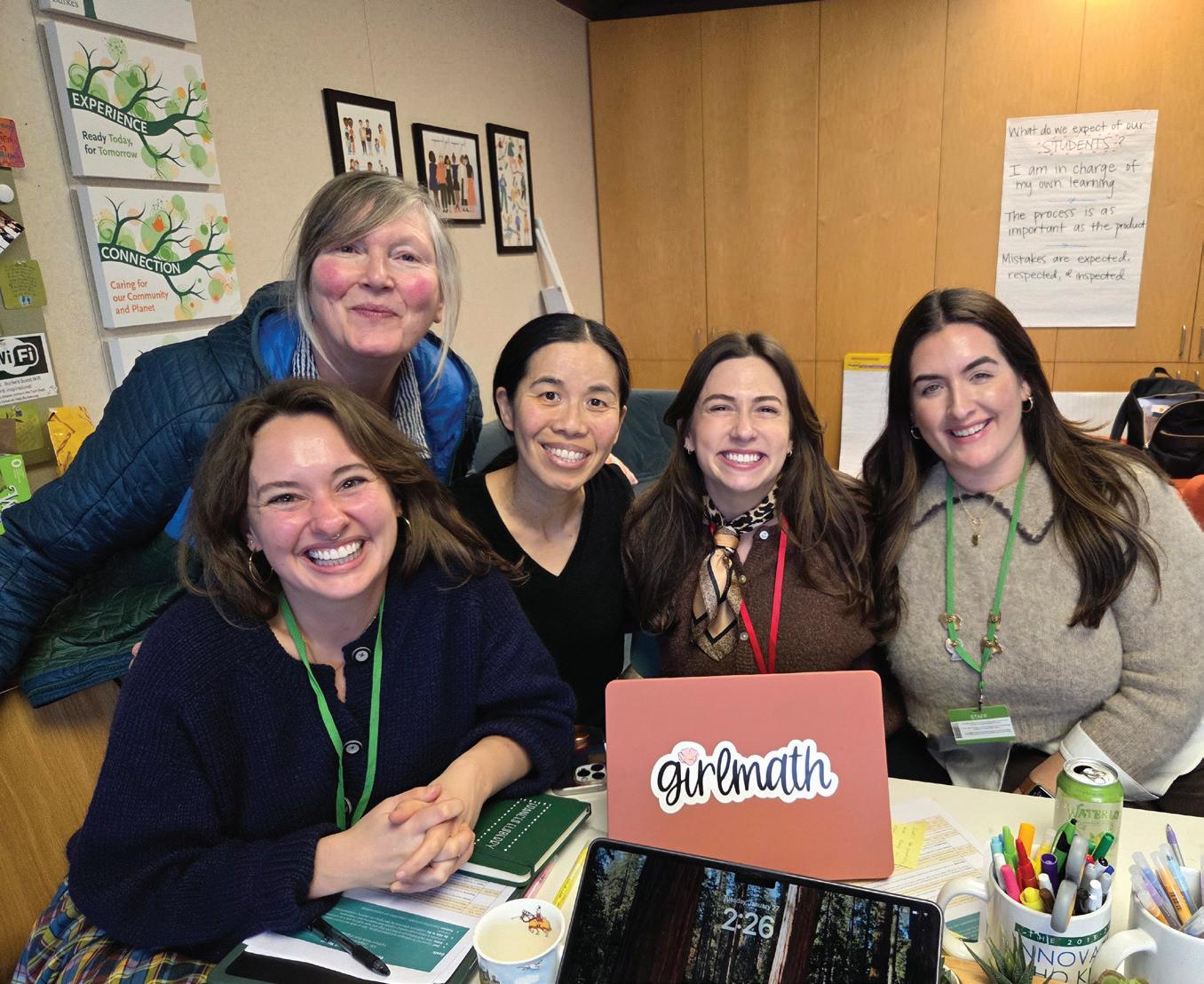
The Math Department gathered for a dedicated retreat, reflecting their commitment to intentional growth, curricular alignment, and a shared vision for math learning at Burke’s. The day was facilitated by Arielle Silver of GirlMath, an organization aligned with Burke’s in its effort to create spaces where middle school girls feel seen, challenged, and inspired.
Together, the team focused on practice and planning to ensure that every student experiences consistent, high-quality instruction that builds confidence, deep conceptual understanding, and a strong mathematical voice.
SEVENTH & THIRD GRADE DESIGN
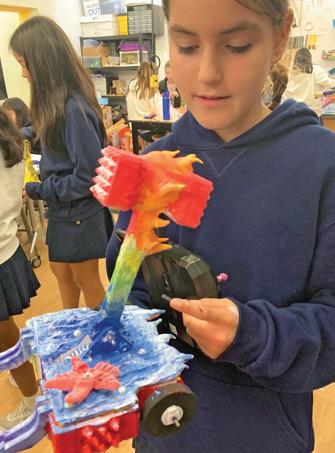
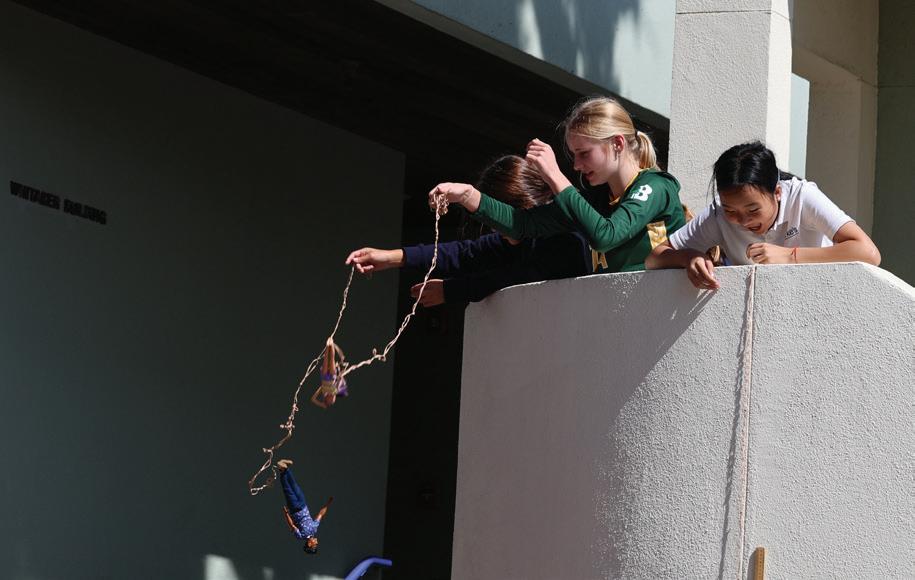
Seventh graders launched a design thinking project with their third grade school siblings to use those insights to design and build a toy tailored to their partner’s interests and needs. The toys will be presented later in the school year!
UPPER SCHOOL SERVICE DAY
On Friday, October 17, over 130 Upper Schoolers (with the help of 45 parents) volunteered for seven nonprofit organizations across San Francisco.
Fifth Grade: Students had the opportunity to join Refuse Refuse for a beach cleanup, or head to the Richmond Neighborhood Center for a neighborhood cleanup, unloading food for pantries, and crafting 270 Halloween-themed gifts for grocery deliveries.
Sixth Grade: In addition to helping with the beach cleanup, sixth graders partnered with Compass Family Services to support families experiencing homelessness. They organized a Halloween costume closet and assembled more than 150 treat bags. Inspired by the experience, one student shared, “When I grow up, I’m going to build homes for people.”
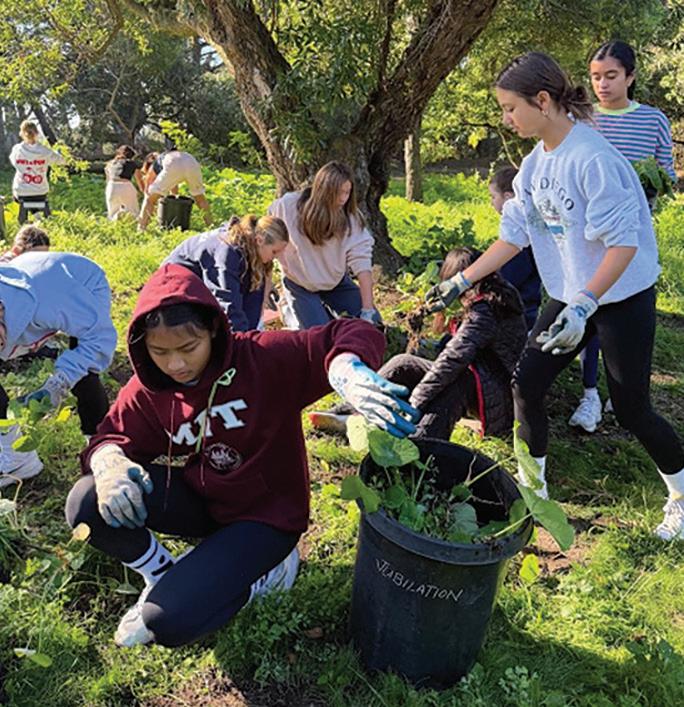
Seventh Grade: Students worked with SF Parks and Rec to restore habitats and improve community spaces—removing invasive plants, extending irrigation, and deadwooding trees to improve the sight
APPRECIATION FOR LOWER SCHOOL
Upper Schoolers created a Lower School appreciation work of art in the Campus Center. It was a beautiful reminder of the way our youngest learners uplift the entire community—and how deeply they are valued by their older peers.
lines and create a meadow for picnics. Another group volunteered at Family House, which supports families of children receiving care at UCSF Hospital.
Eighth Grade: The Class of 2026 worked at two sites: the Homeless Prenatal Program by helping at its weekly grocery and supplies pantry, and the Richmond Senior Center, where they tidied storage spaces, decorated for Halloween, shared lunch with seniors, and exchanged stories—bonding over everything from exercise routines to mahjong.
LANDS END CLASSROOM
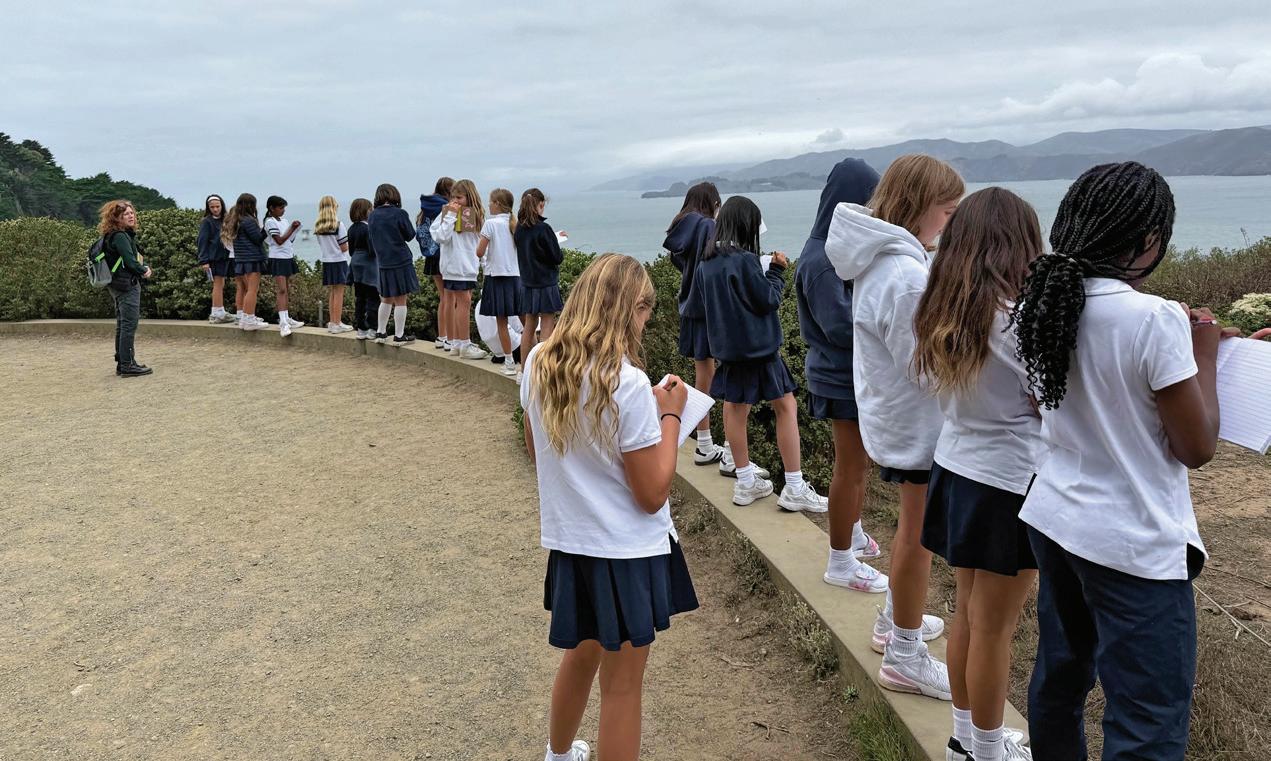
Field trips to gorgeous Lands End are common and often become an extension of the classroom! Our fifth grade humanities students took full advantage of this outdoor learning space during a nature walk, soaking in the views while engaging in reflective descriptive writing and journaling.
A YES SUCCESS
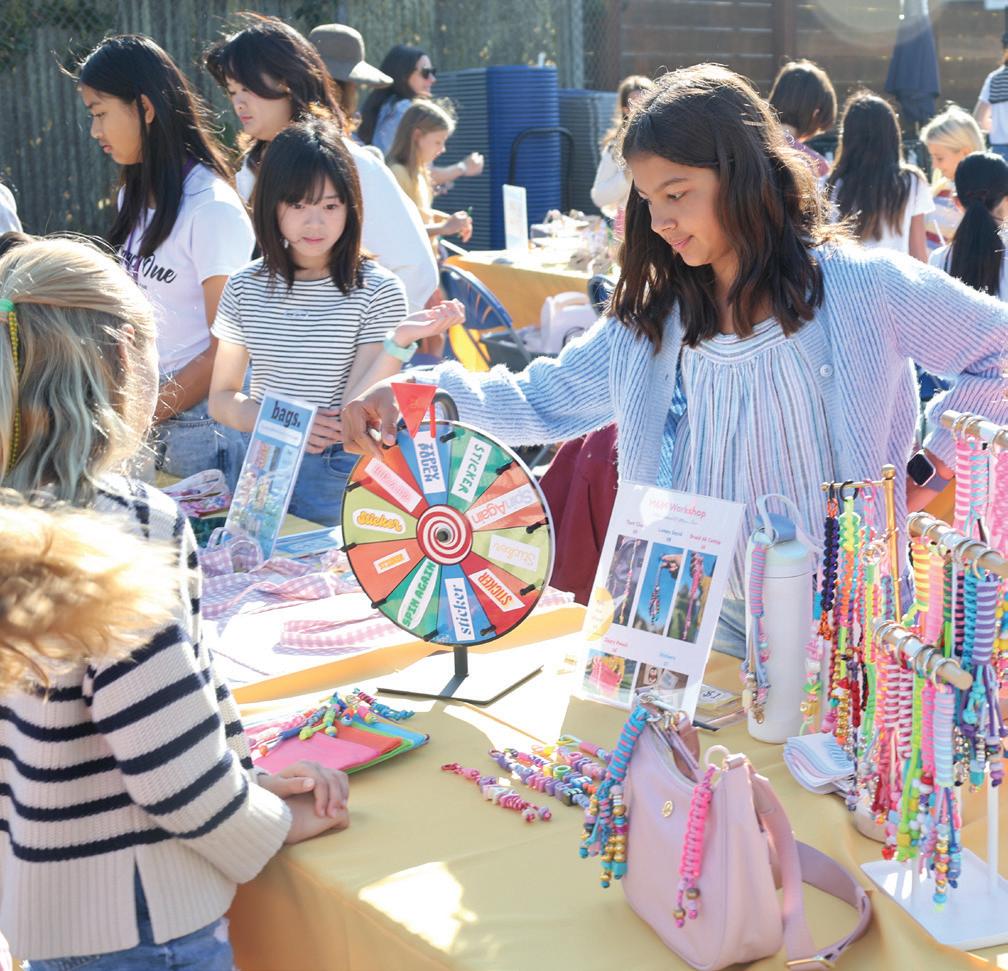
In preparation for the Fall Festival, Burke’s Upper School Young Entrepreneurs have the opportunity to start their own businesses, either by themselves or with other classmates. Over the course of biweekly lunch meetings led by parent volunteers, students develop business plans by detailing the prices of their products, the costs to make them, and their expected sales and inventory.
Megan P., parent of Mira ’26 and Mali ’28, emphasized the importance of the Young Entrepreneurs’ Shops (YES) on empowering girls to think like and become entrepreneurs. “YES is a great opportunity for the girls to learn about profits and losses, about how to build a business plan and how to think about expenses relative to the amount of time that they have to spend when making the product,” she said. “They also have to think about how to market the products and who their target audience is, so it’s a really great experience for them to learn what it takes to build a business.”
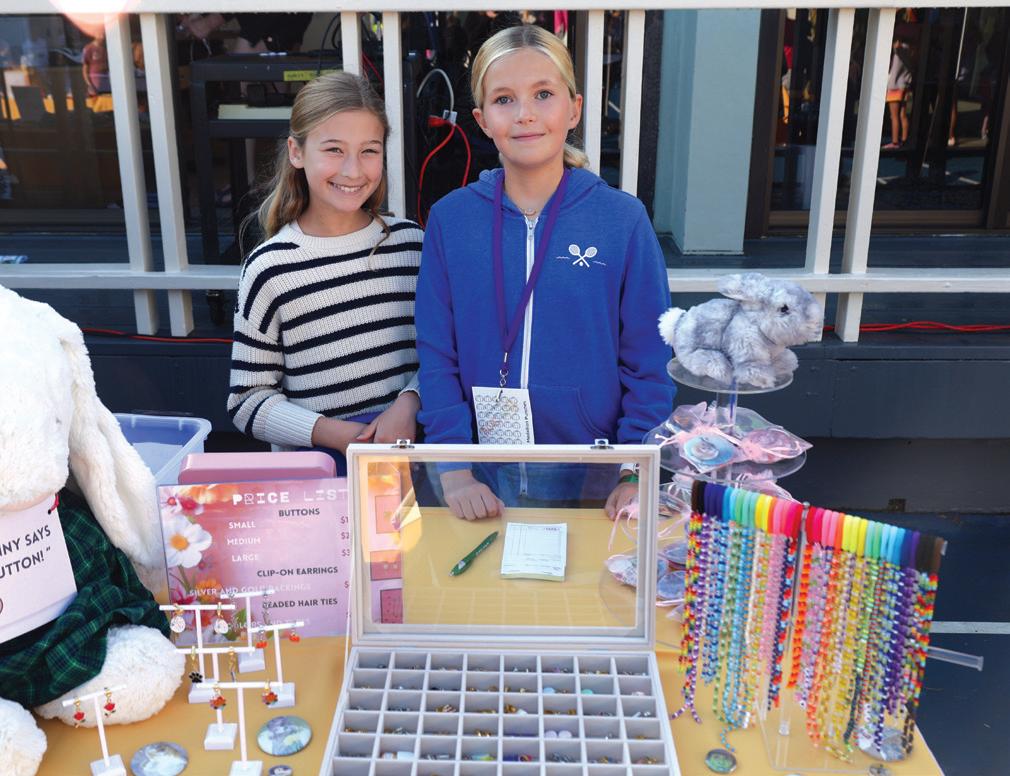
Harper ’29 and Alyssa ’29 participated in YES for the first time this year. Their products, spacethemed earrings and keychains, drew from their prior experiences in jewelry making, but assembling them into sellable products was a different challenge. “Making jewelry is harder than you think,” they reflected. “You have to clip everything on, and it takes a lot of work, so we’re planning it in advance. You should always plan things in advance to make your products.”
Finding Their Voices
ENGLISH IN GRADES 7–8
CULTIVATING CONFIDENCE AND CURIOSITY THROUGH LANGUAGE
In the seventh and eighth grade English classroom—led by Ms. Neves with one seventh grade section taught by Ms. Henshaw—learning is deliberate and demanding, deeply rooted in Ms. Neves’ belief in students’ ability to read complex texts, think critically, and express themselves with confidence. Students explore a wide variety of texts—novels, plays, poems, and nonfiction—focusing on themes such as identity, coming-of-age, justice, and gender.
When Ms. Neves meets parents at the start of the year, she doesn’t lead with unit lists or grading policies. Experience has taught her that families are asking a more fundamental question. As she explains, “Parents are really looking to know who this person is with their kid for two years…what’s their ‘why?’”
A Path to Teaching and to Middle School
Ms. Neves’ “why” wasn’t a straight line. Raised by parents who deeply valued education—and in a family of educators, including two grandmothers who were teachers and a grandfather who was a professor—she grew up surrounded by learning and ideas. Still, teaching itself wasn’t an obvious or immediate path.
After studying conflict and human rights and working at the United Nations, she realized she missed working directly with people. Substitute teaching at a middle school, in all its strange, formative intensity, won her over.
“I really liked it,” she says. “And I really like middle school kids. They’re changing so quickly.”
That possibility, to influence students at a moment when
confidence, identity, and curiosity are still taking shape, drives everything that happens in her classroom.
Teaching Students to Trust Themselves as Readers
The goal of seventh and eighth grade English is simple and ambitious: students should leave feeling like readers and writers. Not kids who simply completed assignments, but young people who believe they can make meaning from challenging texts and move others with their words.
To do that, Ms. Neves doesn’t shy away from difficulty. Students read Emily Dickinson. They wrestle with Edgar Allan Poe. These are texts that can intimidate many middle schoolers—and that’s precisely the point.
“We’ll figure it out,” she tells them. And together, they do.
At the same time, the curriculum makes space for contemporary voices and narratives where students can see themselves reflected. The balance is intentional: modern stories that resonate alongside classics that challenge.
A Thoughtful Progression from Seventh to Eighth Grade
The curriculum is intentionally sequenced, with seventh grade students focusing on research, source synthesis, and writing informative pieces. They practice close reading and analysis to prepare them for the deeper nuance of eighth grade.
By eighth grade, the questions no longer have easy answers. Students debate moral responsibility, argue multiple perspectives, and explore ambiguity. In one unit, they analyze whether a character’s life truly improves. In another, they write from both the oppressed and the oppressor’s points of view. The work demands empathy, critical thinking, and the ability to hold competing truths at once.
“I’m asking my students questions I genuinely don’t know the answer to,” she says. “And that’s where real thinking begins.”
The ultimate hope is that by the time students move on to high school, they have both the skills and the confidence to question, challenge, and articulate their own understanding in unfamiliar spaces.
Poetry and Voice
One of the most anticipated moments of the year comes during the eighth grade poetry unit. The unit is intentionally placed at the end of the year, culminating in an open mic. Every student stands up and reads an original poem aloud.
Students who struggle with traditional essays may shine here, freed from rigid structures. Others may be humbled. What emerges, again and again, is wisdom, vulnerability, and new insights.
“I’m always surprised by the depth of their work. The things that these kids are holding in their hearts,” she reflects, “there’s always at least one kid who stills the room.”
The Power of Words
Perhaps most striking is that Ms. Neves herself was not always a reader. “I hated reading,” she says plainly. It wasn’t until college that she encountered The Alchemist, a book she could not put down. It was a moment that transformed her relationship with stories.
That experience shapes her mission. She wants students to discover that reading can be meaningful, immersive, and personal. She listens carefully to their feedback, adjusting texts when necessary, always asking whether a book invites students in or pushes them away from reading.
At the heart of everything is a simple truth she returns to again and again: “Words have power. They can move people. They can challenge ideas. They can help students understand themselves and the world around them.” And if students leave her classroom believing, as she puts it, “I am a writer. I can do this”— then the work has been worthwhile.
JULIANA NEVES
Strength, Confidence, and Joy in Motion
Our K–8 Physical Education program is intentionally designed as a developmental arc. It begins with joyful movement and foundational skills, and steadily builds toward strength, strategy, and leadership.”
- MICHELE WILLIAMS, HEAD OF SCHOOL
A K–8 PE PROGRAM THAT GROWS WITH STUDENTS
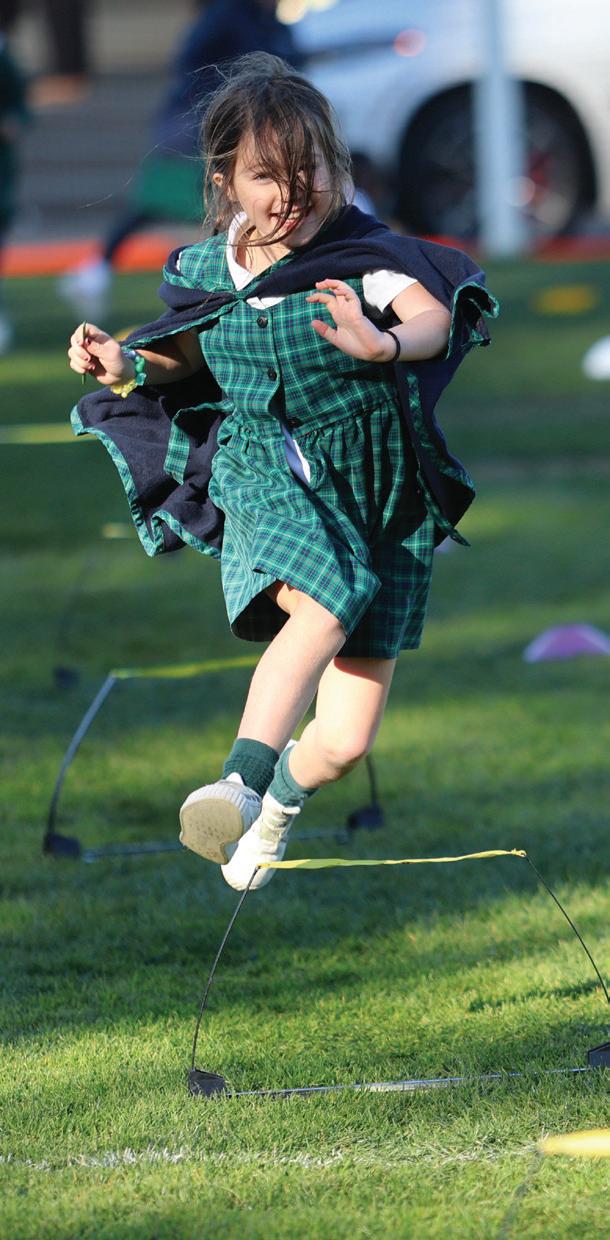
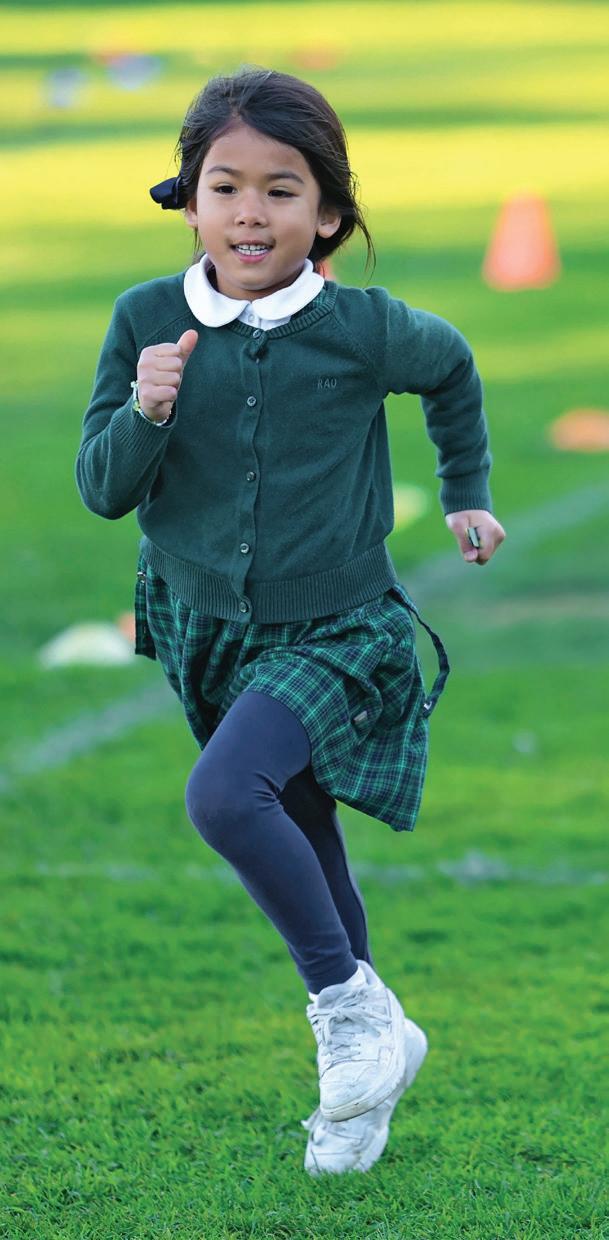
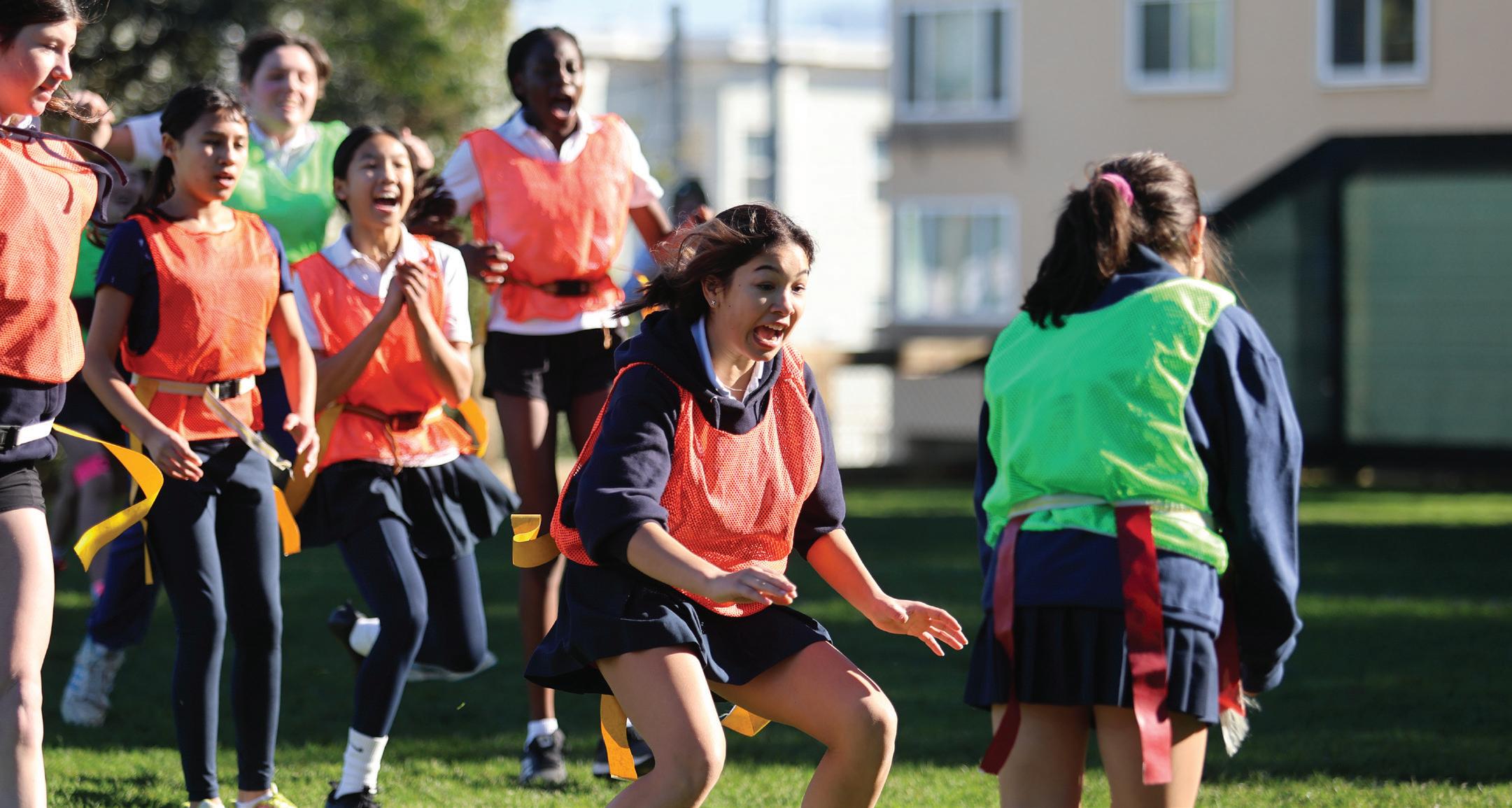
Walk onto the Burke’s campus any morning, and you’ll find students running, skipping, tossing, and collaborating their way through a vibrant physical education program—one intentionally designed to grow with them from kindergarten to eighth grade.
What looks like simple joyful movement on the surface is actually a carefully sequenced curriculum that builds skills, leadership, and confidence over nearly a decade.
STARTING STRONG IN LOWER SCHOOL
Lower School PE teachers David Hay and Jonathan Portero-Brown know that the journey begins with the fundamentals. In kindergarten, students attend PE twice a week, learning the basics of movement, coordination, and classroom leadership. By first grade, PE becomes a daily experience—“a chance to build consistent habits and confidence,” Mr. Hay explains.
Each class begins with a warmup, but even this moment is an opportunity to build student agency. Kindergarteners take turns demonstrating simple exercises. As they grow, students graduate to leading full warm-up routines, standing at the front of the class, and guiding their peers through motions they’ve practiced.
From there, students rotate through skill-based activities such as practicing running form and skipping patterns. They move on to working through agility movements, obstacle courses, throwing and tossing, kicking techniques, and foundational footwork. “We teach skills through fun,” Mr. Hay says. “And everything we do builds toward something else.”
Fridays bring “Game Day,” where students apply the week’s skills in playful, developmentally appropriate challenges. One week might end with throwing games; another, with obstacle-course races or team challenges.
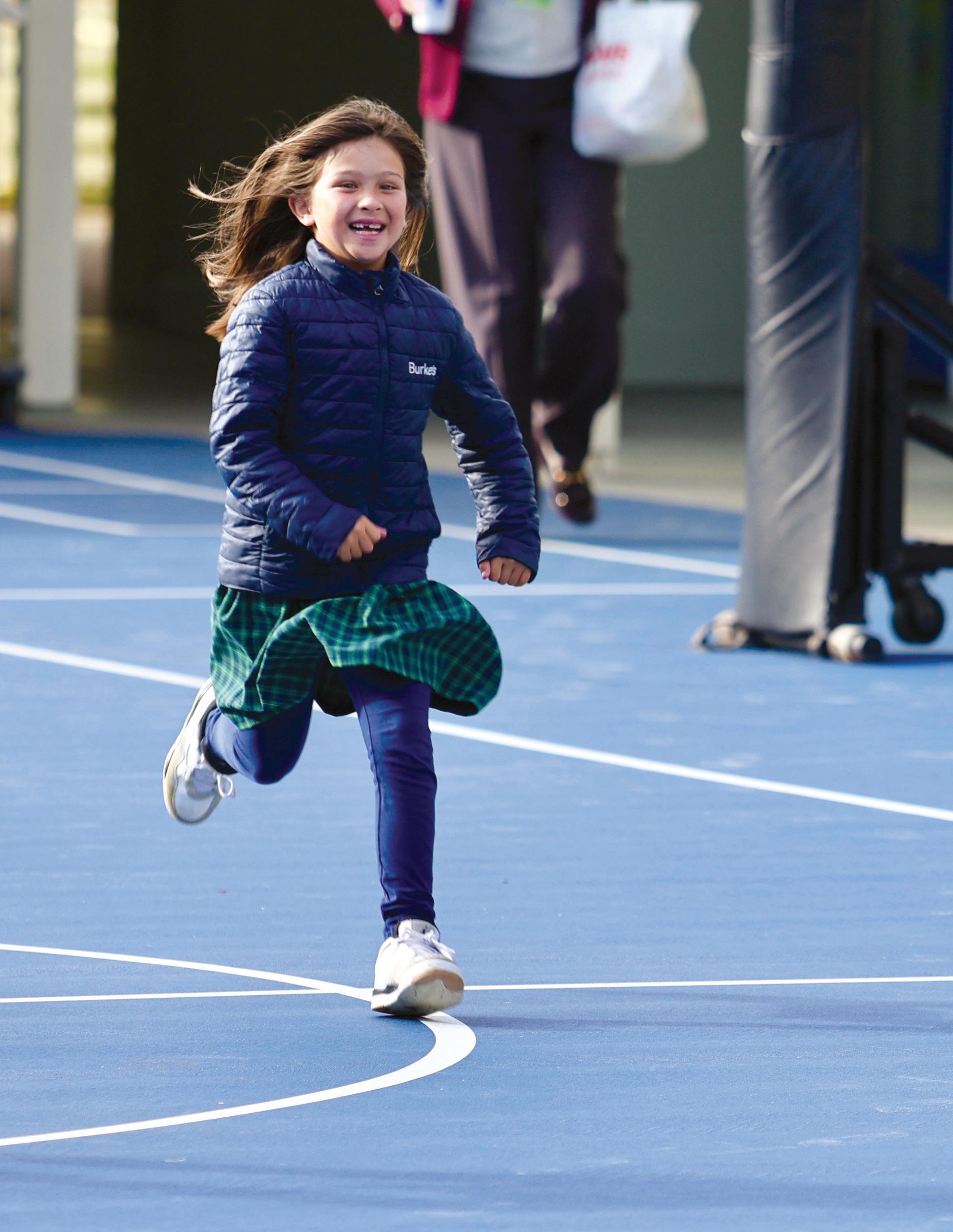
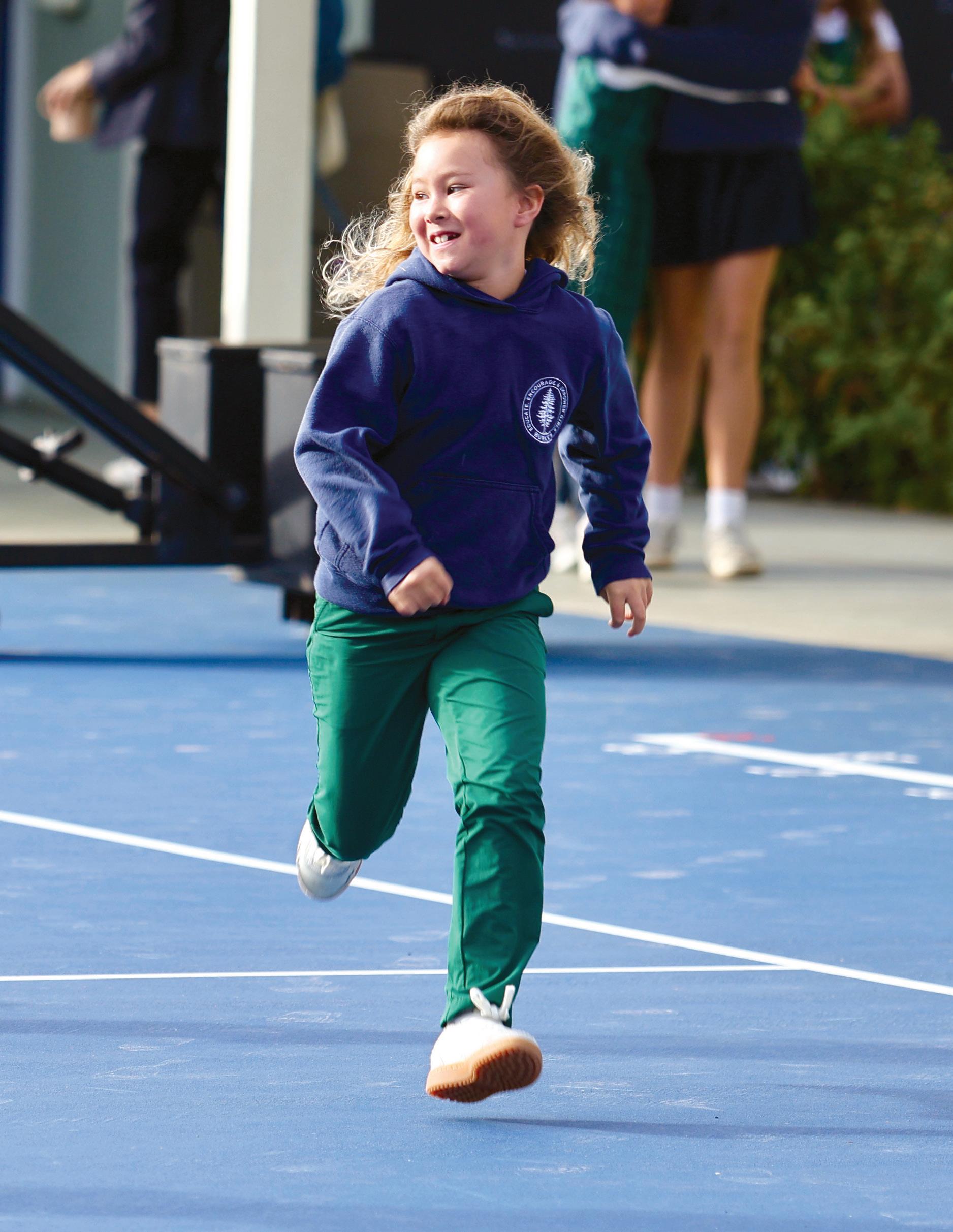
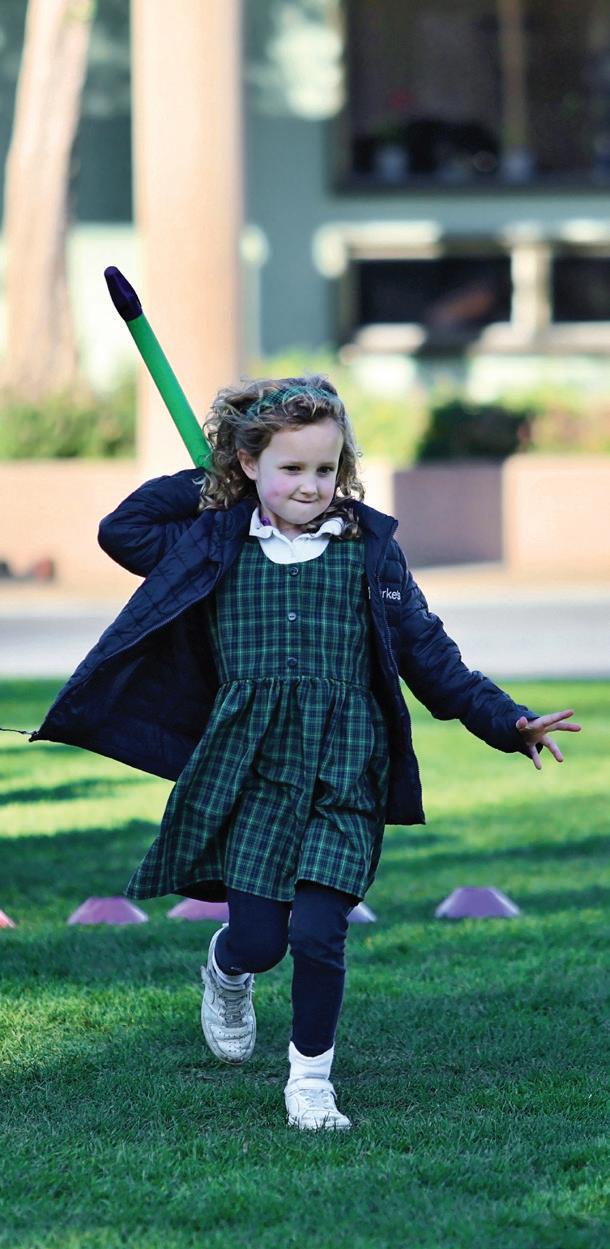
Lower School students also enjoy “Field Day” sessions, where laps, hurdles, standing long jump, and javelin-style throws turn fitness into a personal challenge. Students earn popsicle sticks each session, tracking their progress per session
and throughout the semester based on the laps and events they complete—a beloved tradition that motivates them to try their best.
Challenge Day in the spring is a joyful celebration of courage, curiosity, and community. Students rotate through a variety of high-energy stations, from freeze dance and scooters to scaling a climbing wall and learning from a special guest presenter. Each activity encourages them to try something new, take a healthy risk, and enjoy a day filled with movement and laughter.
CONFIDENCE AND SEL IN ACTION
Some of the most memorable activities blend physical movement with creativity and social–emotional learning. In one popular unit, students design and build their own structures, which then become central to a throwing game. At the beginning of the school year, kindergarteners navigate a “lunch tray obstacle course” to practice carrying trays safely and respectfully.
“We remind them that mistakes are okay,” Mr. Portero-Brown says. “If someone drops their tray, the first step is to be kind.”
The Lower School PE team also leads brain–body integration lessons—short Bal-a-Vis-X sessions focused on midline crossing, tracking, and movement patterns that support focus and cognitive development.
By the time students reach fourth grade, they’ve gained a strong movement foundation, confidence in leading peers, and a broad introduction to the skills used across multiple sports.
TAKE A PEEK INTO A BAL-A-VIS-X SESSION LED BY THIRD GRADERS!
DAVID HAY
JONATHAN PORTERO-BROWN
A NEW STAGE IN UPPER SCHOOL: APPLYING SKILLS AND BUILDING LEADERS
When students enter fifth grade, they step into a PE program that mirrors the structure, expectations, and independence of middle school life. Upper School PE teachers Ashling Bryant and Charlee Underwood guide students through a multi-year progression where each grade builds on the last. As Ms. Underwood puts it, “Competence breeds confidence,” a belief reflected in a program designed to help students apply their skills, take ownership, and lead with purpose.
Fifth grade is foundational, with basics of each unit introduced and practiced, along with a focus on spatial awareness, fundamental movement patterns, and a yearlong exploration of how to be a good partner and group member in PE.
Building on the solid foundations established in fifth grade, sixth and seventh grades focus on developing and mastering specific skills in each unit. There is a focus on cooperative skills in sixth grade, with more competition introduced in seventh grade. Peer feedback is introduced and developed, from very scripted and factual to more open-ended and observation-based. And with each unit, students practice applying their knowledge, assessing strengths, and reflecting on areas for growth.
UPPER SCHOOL
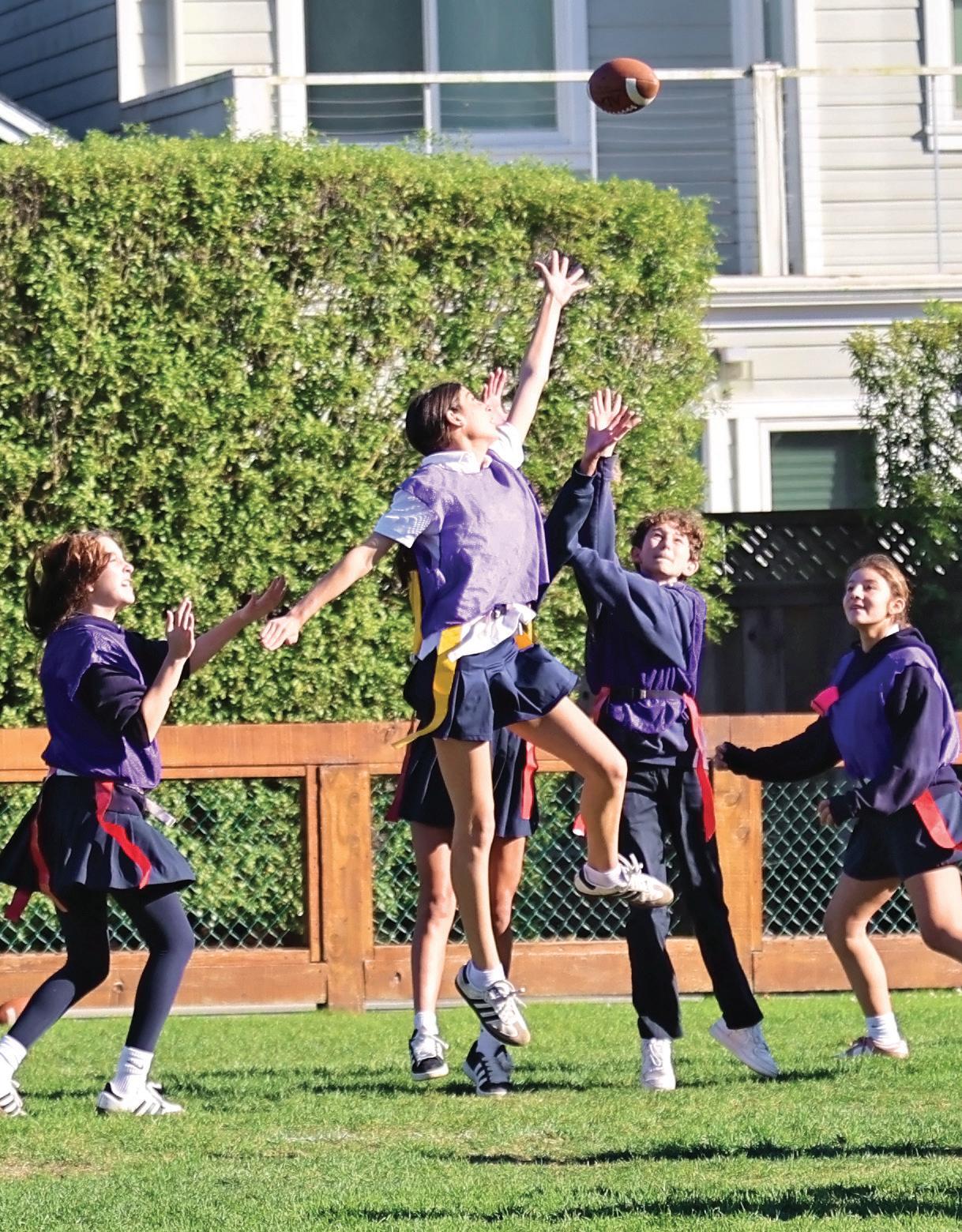
By eighth grade, it all comes together when students are placed on Challenge PE teams for the entire year. They compete in sport-based challenges, design strategies, identify roles on their team, and hold each other accountable. Some students lead strategy talks. Others shine as quiet but reliable passers, defenders, or motivators.
“If we’re doing a lot of teaching in eighth grade, we haven’t done our job in fifth, sixth, and seventh,” Bryant explains. “Eighth grade is about application, leadership, and teamwork.”
Challenge PE also gives students who don’t participate in after-school sports the chance to experience team culture in an inclusive, supportive environment.
THE HEART OF IT ALL: JOY, GROWTH, AND FRIENDSHIPS
From the first warm-up a kindergartener leads to the final Challenge PE match in eighth grade, the K–8 PE program is a journey of learning, confidence, and connection. Students discover their strengths, work through challenges, and become leaders—on the field, in the gym, and beyond. And alongside the ribbons and skill mastery are the friendships and confidence students carry with them long after middle school.
EIGHTH GRADE CHALLENGE PE
REFLECTIONS
“
The thing I enjoyed most about Challenge PE was improving my teamwork skills and having the opportunity to lead. Challenge PE allowed me to step out of my comfort zone and I felt like I really grew.
I loved my team, and I felt like we really communicated and made sure to work things out if we had a problem.
“
In Challenge PE, I enjoyed seeing my team work well together most of all. Within each unit, our team included people with extensive familiarity with the sport and those without. We played to our team’s strengths and weaknesses, and always put up a good fight.
“
I enjoyed getting to know my team throughout the year and growing closer to them through Challenge PE.
Alumnae Board
CONNECTING AND ENGAGING BURKE’S 2,379 ALUMNAE WORLDWIDE
The Burke’s Alumnae Board is a dynamic group of alumnae dedicated to strengthening connections between Katherine Delmar Burke School and its vibrant alumnae community. Through meaningful engagement, the Board fosters lifelong ties, celebrates shared experiences, and champions the continued growth and success of Burke’s.
Serving as ambassadors for Burke’s, Board members help nurture alumnae relationships and inspire support for the school’s mission and future. The group meets on campus four times a year and actively engages with the broader alumnae network throughout the year—sharing updates, gathering feedback, and building community.
2025-26 EXECUTIVE COMMITTEE
Mira Hui Cheung ’95 President Jewel Devora ’09 Vice President, Diversity, Equity, Inclusion, and Belonging
MEMBERS
Natalie Jamison Tiret ’98 Vice President, Development
Natalie J. Engmann ’01 Vice President, Governance
Board members are also active participants in alumnaesponsored events like Burke’s Festival, the Holiday Cookie Decorating Party, the Alumnae Reunion Luncheon, and more!
If you’re interested in joining the Alumnae Board for the 2026-27 year or want to learn more, please reach out to Melissa Sterling at melissa.sterling@burkes.org.
We’d love to hear from you!
Sinclaire O’Grady ’09 Vice President, Events
Class Representatives
BUILDING
CONNECTIONS ACROSS GENERATIONS
Class Representatives are vital alumnae volunteers who help strengthen the bonds between classmates and Burke’s, as well as among fellow alumnae.
Ideally, each graduating class has at least one Class Representative who serves as a liaison—sharing news about alumnae and school programs, encouraging support for the Burke’s Annual Fund, and gathering updates and contact information for our annual Class Notes.
Not sure who your Class Representative is? Thinking about getting involved? We’d love to have you on board!
Reach out to Melissa Sterling, Annual Giving & Alumnae Engagement Manager, at melissa.sterling@burkes.org to learn more.
Sara Poole ’10 Vice President, Mentorship
Darby Gaynor Glickman ’98 At-Large
Talia Seidman Rhodes ’03
Secretary
CALL FOR SUBMISSIONS
Alumnae Inspirations in Science
The next Inspirations section of the magazine will highlight alumnae working in science.
As with so many Burke’s paths, “science” can take many forms. You might be conducting research in a lab, working in medicine or public health, teaching the next generation of scientists, developing new technologies, studying the environment, analyzing data, or communicating scientific discoveries through journalism, policy, or media.
Whether through research, application, education, innovation, or advocacy, we would love to hear about your work. Share what you’re doing to be considered for inclusion in the Fall issue of Burke’sMagazine
Please contact Melissa Sterling at melissa.sterling@burkes.org.
Olivia Cannell ’11
Katya Yudin ’08
Katy Congdon Williams ’96
Tiana RideoutRosales ’97
Tiffany Miller ’08
Lisa Harada ’03
Xandrine Griffin ’11
Jenna Friedel Collins ’12
Alexandra Bryan ’12
Alumnae UPDATES
A MESSAGE FROM MELISSA STERLING
Annual Giving and Alumnae Engagement Manager
A NOTE TO OUR ALUMNAE
There is something truly special about the Burke’s alumnae community. Wherever life takes you, the connection you share—with one another and with this school—remains vibrant, generous, and deeply inspiring. This spring, I’m delighted to offer a guide to the Alumnae section of the magazine, highlighting just a few of the many ways our alumnae continue to shape and strengthen the Burke’s story.
THE ALUMNAE EVENT OF THE YEAR: REUNION LUNCHEON
Our Alumnae Reunion Luncheon was nothing short of spectacular and firmly earned its reputation as the alumnae event of the year. With record-setting attendance, the energy in the room was palpable as we celebrated graduation years ending in 1s and 6s—bringing together generations of Burke’s women in a joyful, meaningful way.
We were especially proud to honor Whitney Gaynor ’96 as our Distinguished Alumna, fresh from her return from the Winter Olympics, where she served as a judge for figure skating (see her remarks on page 28). We recognized her extraordinary accomplishments and the values she so beautifully embodies. Heartfelt thanks go to our incredible co-chairs, Katy Congdon Williams ’96 and Sinclaire O’Grady ’09, whose leadership, vision, and care made the day both seamless and memorable. The luncheon was a powerful reminder of the lifelong bonds formed at Burke’s and the enduring strength of our alumnae network.
INSPIRATIONS IN SPORTS
One of my favorite sections of Burke’sMagazine is Inspirations, and in this issue we turn our focus to Inspirations in Sports. These stories spotlight fascinating alumnae whose journeys reflect resilience, leadership, and the confidence cultivated at Burke’s—both on and off the field. Their paths, diverse and dynamic, remind us that the lessons learned through sport at Burke’s extend far beyond competition, shaping who our alumnae become in every arena of life.
KEEPING OUR COMMUNITY CONNECTED
One of our goals this year has been to strengthen our connection with alumnae by updating and expanding our contact information. In the spirit of staying better in touch, we have been working to ensure our records are current so we can share news, invitations, and opportunities to engage with Burke’s. To date, we have updated over 140 alumnae records, helping us reconnect with members of our community across generations. If you’ve recently shared an update with us—thank you. These small but meaningful steps help keep the Burke’s alumnae network vibrant and connected wherever life may lead.
Warmly,
MELISSA STERLING
P.S. We’d love to hear what you’ve been up to. Your milestones and adventures help bring our alumnae community to life—please don’t hesitate to share your news and updates with us. Reach out to melissa.sterling@burkes.org.
The Katherine Delmar Burke School Distinguished Alumna Award is given each year to an alumna who embodies the values at the heart of the school’s mission to educate, encourage, and empower girls. The recipient exemplifies a life of learning, service to community, individuality, and the ability to make a difference in the world. The awardees are nominated by the alumnae community and voted on by the Alumnae Board.
Whitney Gaynor ’96 is an entrepreneur and technologist. She earned her undergraduate degree from MIT and a Ph.D. from Stanford University, where she specialized in advanced materials and electronic devices. Whitney is the co-founder and CEO of Sinovia Technologies, a company pioneering roll-to-roll printed electronics, including next-generation human-machine interfaces that are more environmentally sustainable than conventional technologies. She has published multiple peerreviewed articles and served as principal investigator on research programs funded by the National Science Foundation and the U.S. Department of Energy. She and her founding team took the company through the Y Combinator accelerator in 2017 and has raised $15M in financing in support of the business.
Outside of her professional career, Whitney has been deeply involved in figure skating. Inspired by their mother, she and her sister Darby ’98 trained and competed at a high level until age 18, with Whitney achieving multiple national rankings. After retiring as an athlete, she became an Olympic-certified official in both singles and pairs skating—one of only three people in the United States to hold these dual certifications. She lives with her husband and son in Menlo Park and is proud to have a niece in third grade at Burke’s.
I’d like to thank the Burke’s Alumnae Board for inviting me today. It is truly an incredible honor and it’s such a privilege to be included amongst the amazing, accomplished women in our Burke’s community who have stood right here.
For those of you who know me, you probably already know these two things about me.
One, I’m an introvert, so speaking about myself doesn’t come naturally. And two, I just got back from Milan, where I was the first American woman to be on a figure skating technical panel at the Olympic Games. When people outside skating hear about this, the first question I get is, “How did that happen?” Well, skating is really a family sport for me and my sister, and I owe our start to our mom, who was a tal-
ented skater and is now a nationally recognized official in the sport. She is also, and has always been, my idol and role model. She introduced us to the ice so young that we will never know what it feels like to not be able to skate. At first, it was one of many activities that we did. But it grew into a way of life for our family.
Our dad worked extra overnight shifts at the hospital to fund the expenses that came along with the sport. He came to all our local competitions and was our biggest fan. Our mom would wake us at 4:30 a.m. and drive us to practice before school almost every day—and then drive us back to the rink after school so that we could learn from our coaches.
We spent so much time in the car. We ate breakfast in the car. We changed for
school in the car. We did homework in the car. At the peak, we skated six days a week. I honestly don’t know how our mom did it—she was a tireless hero in our journey, in addition to having her own career. And we had successes. I won medals at national events in singles and pair skating when I was 10 and 11. I vividly remember being in an assembly at Burke’s when they rolled the TV cart out in the front of the lunchroom and played one of my skating videos. I was surprised and very embarrassed. But I can now appreciate how unique this was, and how Burke’s celebrates their students’ accomplishments.
The Burke’s experience was truly formative, both in and outside of the classroom. Around the beginning of third grade, Diana came over to my house one Saturday and taught me how to make beads out
The following is edited from the speech given at the Alumnae Reunion Luncheon on March 6, 2026.
of FIMO clay. We became obsessed—we made so many beads in so many different color combinations. After a few weekends of this, we had the idea that we would keep making them, sell them at Festival, and donate that money to the school library. To this day, I don’t know who pulled which strings, but we did get a table at the festival outside Mrs. Dittmer’s third grade classroom that we manned all day and sold our jewelry. We ended up donating around $300 to the library. While I’m sure it would have been more capital-efficient to have just donated all the money we had spent at the hobby shop on clay and jewelry bits to the school, Burke’s gave us our first taste of entrepreneurship and empowerment to make a difference.
Through it all, I continued skating. As a teenager, I was competing at the highest level in pair skating to try and earn a spot on Team USA. My partner and I ranked ninth in the country in both 1999 and 2000. Our parents not only supported us in the sport, but made sure that we were well-rounded and prepared for our futures. They knew that skating taught us discipline and time management. How to struggle and push yourself, how to recover from disappointment, how to take responsibility for your own performances, how to succeed gracefully, and how to cheer for others.
Thanks to my parents, Burke’s, and participating in a female-dominant sport, I was raised to believe I belonged in any room I walked into.
The 2000 skating season was my senior year in high school. I had just gotten into MIT. The 2002 Olympics were two years away and pair skating partnerships were commitments. I had skated with the same partner for six seasons. Going to MIT meant ending that partnership and possibly my skating career. But the US usually only sends one or two pair teams to the Olympics. The way the sport was judged back then was very political and moving up in the rankings was really hard. Even if I took two years off of school and trained full-time, the chance of us going from ninth to top two in the country was almost zero. I was able to admit that to myself, and I left for college.
When I got to MIT, I explored the idea of continuing to skate. In late fall, I connected with a potential new skating partner who was a freshman at Harvard. We skated together a few times. It was fun and promising, so I asked him whether he wanted to form a partnership. He said yes. But then he said that he also wanted to write for TheCrimson . And play JV hockey. And maybe try out for an a cappella group.
I had two thoughts. One: freshman year at Harvard must be very different from freshman year at MIT if he was going to have time for all that. And two: if I was going to commute to Harvard to skate with him, he needed to share my level of commitment. So that was it. I wasn’t skating anymore and I made the transition to college. At MIT, I enjoyed research. Being in the lab was like arts and crafts. I was making light-emitting electrochemical cells—little films that glowed red-orange when you applied power to them. When I was a junior, the professor in charge of our lab told us that Timex was going to license this technology as a backlight for watches. A little while later though, the deal had fallen through. It was then I realized how much amazing technology was being developed in academic labs that never sees the light of day because nobody takes that next step to commercialize. I told myself that if I ever had the chance to work on a technology that was good enough, I wanted to make sure it actually reached people.
I graduated and left MIT to do my Ph.D. at Stanford. A couple of years in, my mom told me that the skating judging system had been completely overhauled after the 2002 Olympics. She had been judging skating since before I was born, and now asked me if I was interested in getting involved. We attended our first seminar in 2006, and she and I became qualified technical officials. While I was in grad school, my mom and I often took weekend trips to volunteer at skating competitions together.
At the same time, I started having some success in the lab. In 2011, we started Sinovia to commercialize our material. We began in my co-founder George’s garage, working nights and weekends, supported by government grants. It took us years of R&D and a significant pivot to finally find
some traction. In the early days we had this “business guy” who had convinced us that he should be our CEO because we had no business experience. He ended up being a terrible fit and I took over as CEO in 2017 when we got into the Y Combinator accelerator. Lesson learned: just because you don’t have experience doesn’t mean you can’t learn to do it.
Today we are a team of seven and are fulfilling orders for customers. We actually make light-emitting film—similar to the work I did as an undergrad. Sometimes it’s hard to celebrate how far we’ve come because uncertainty is always looming. But I’m very proud of our team and of the fact that we really are commercializing new technology.
In 2011, after five years of volunteering at US-based competitions, I was sent to the global seminar to earn my international certification. The two most stressful moments of my entire life were my Ph.D. qualifying exam and that first international technical specialist exam. To become Olympic certified in both pairs and single skating, I attended that same seminar and took that same exam three more times.
In 2020, two years ahead of the Olympics, I was asked to officiate at the world championships. However, the world championships were canceled due to COVID. I didn’t get another opportunity to serve until 2025, but when that did happen, I ended up on the team with whom I would serve at the 2026 games. A panel of three women for the very first time on an Olympic pairs technical panel.
The 2026 Olympics was a hugely meaningful experience, primarily because I was able to share it with my entire family. It felt like the culmination of the endless support they’ve shown me over my entire lifetime—a gift we could all share across generations.
Thank you, mom, dad, Darby, and thank you Burke’s Alumnae Board for this wonderful honor. I am forever grateful to the Burke’s experience and to this community of women for shaping my life.
I truly appreciate it. Thank you.
SCAN FOR MORE PHOTOS!
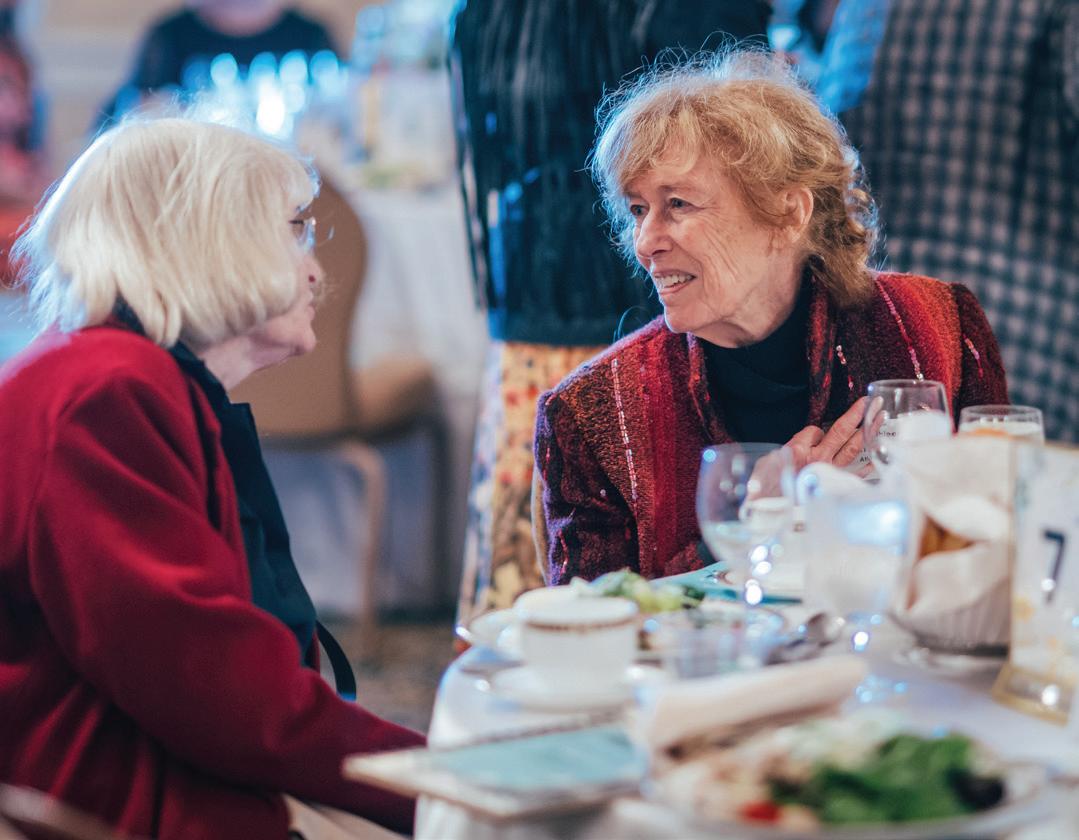
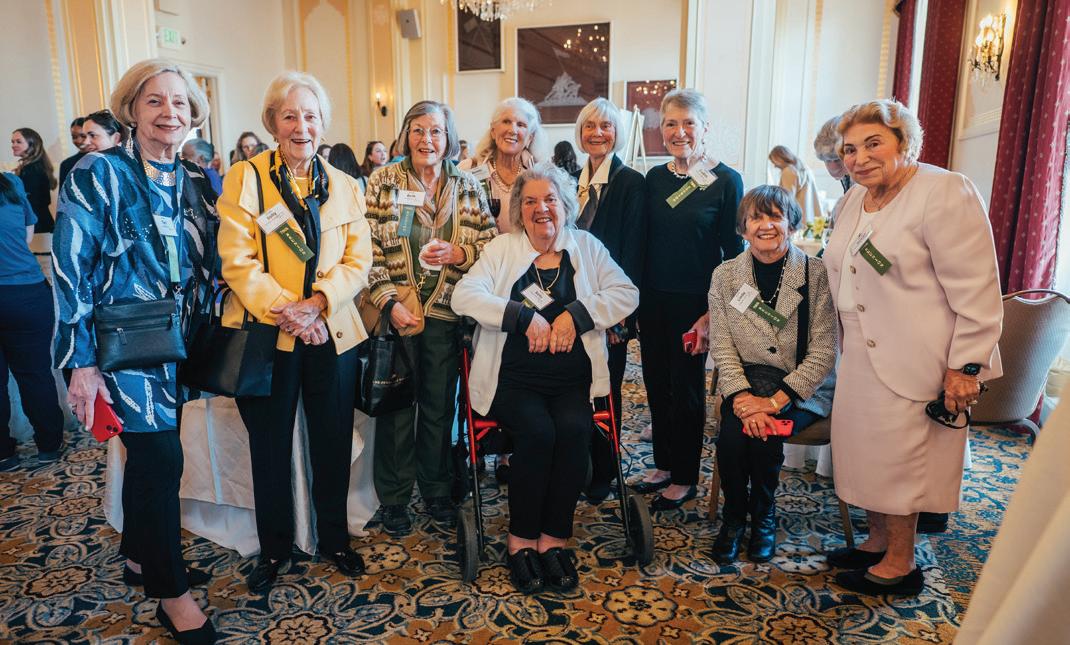
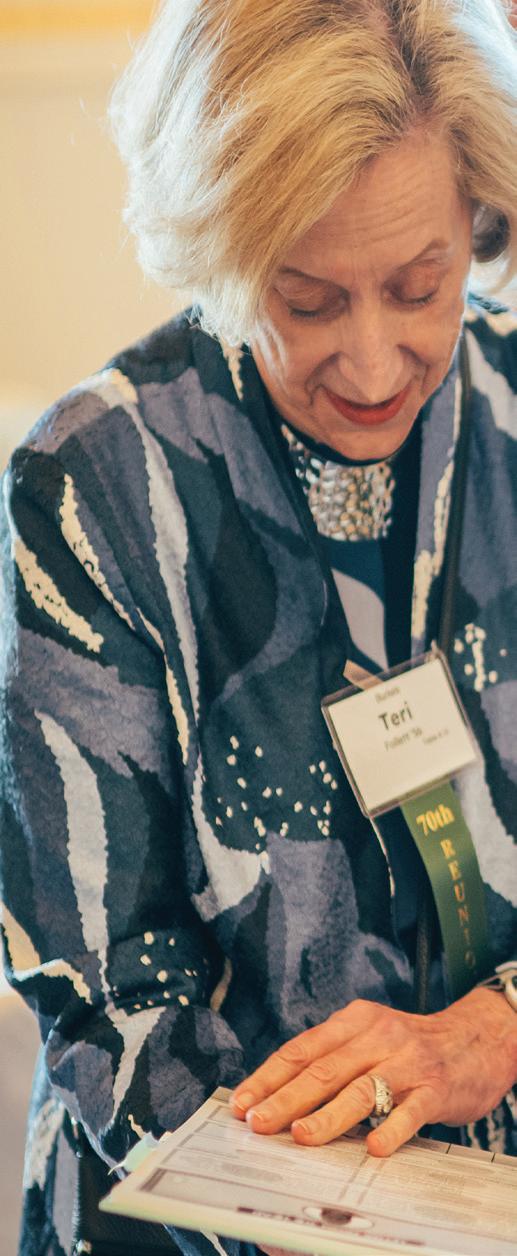
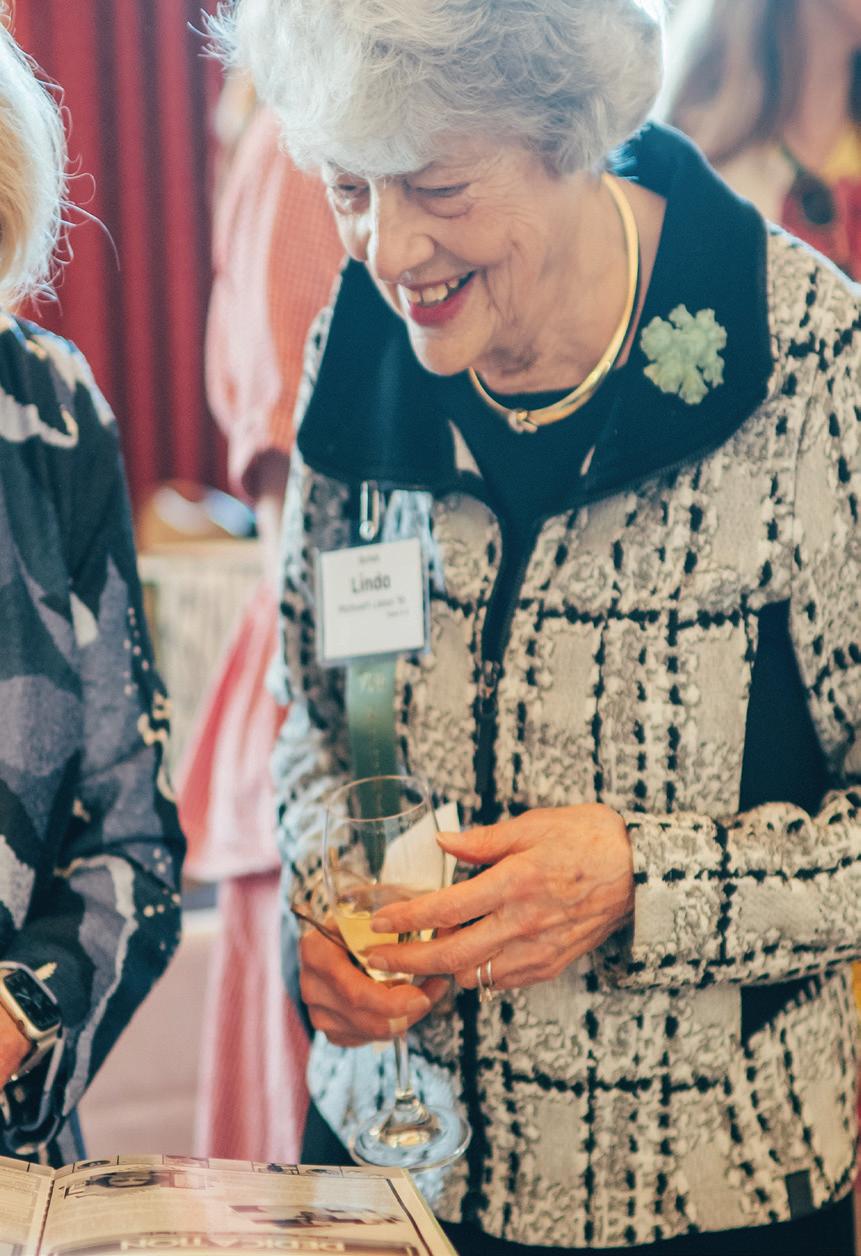
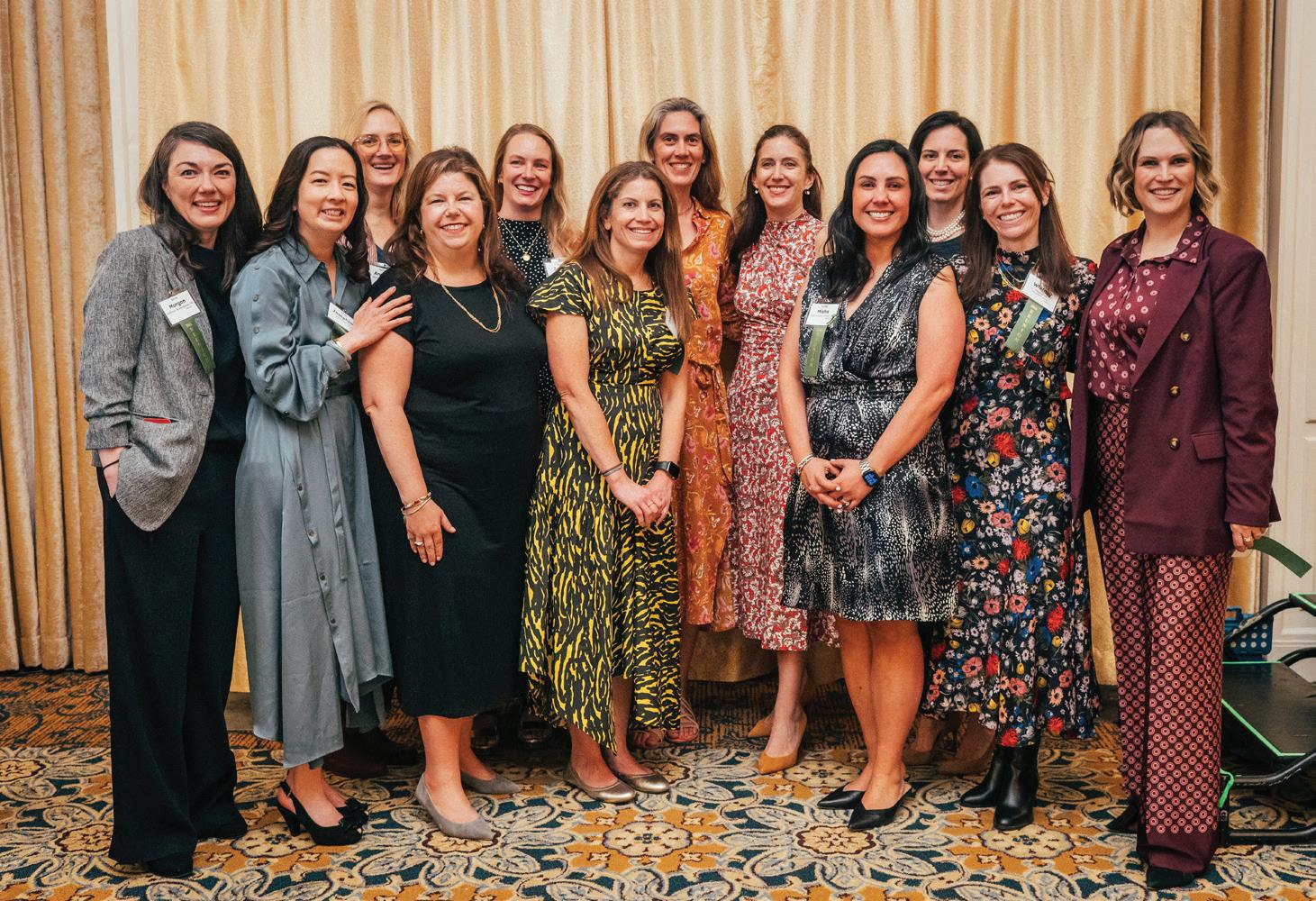
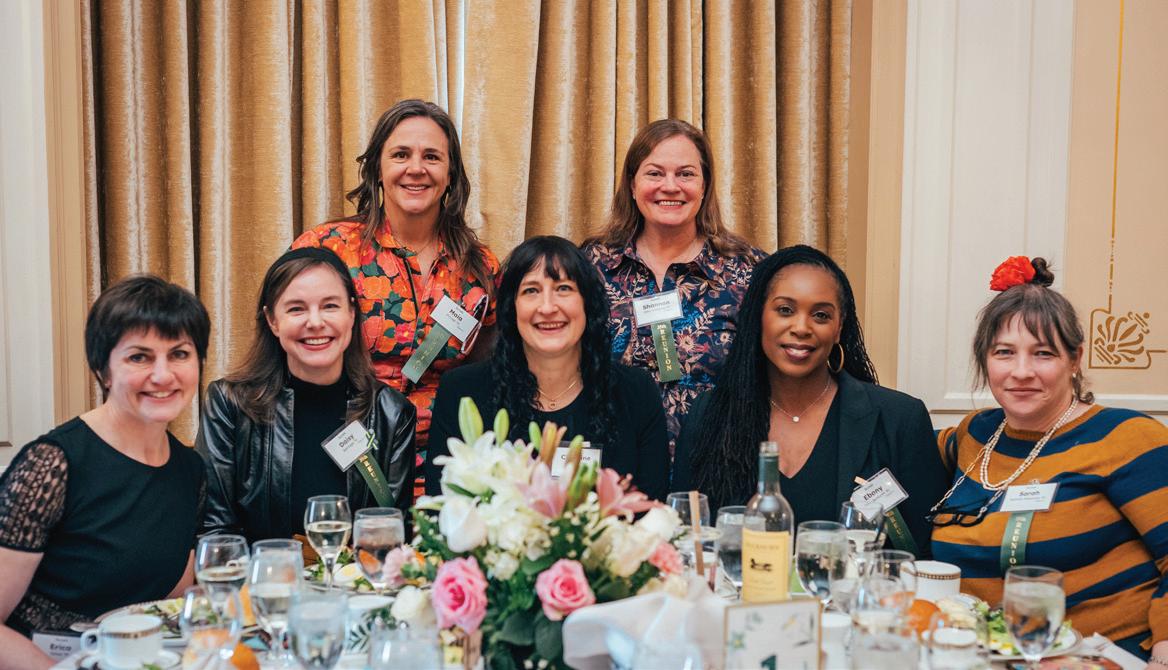
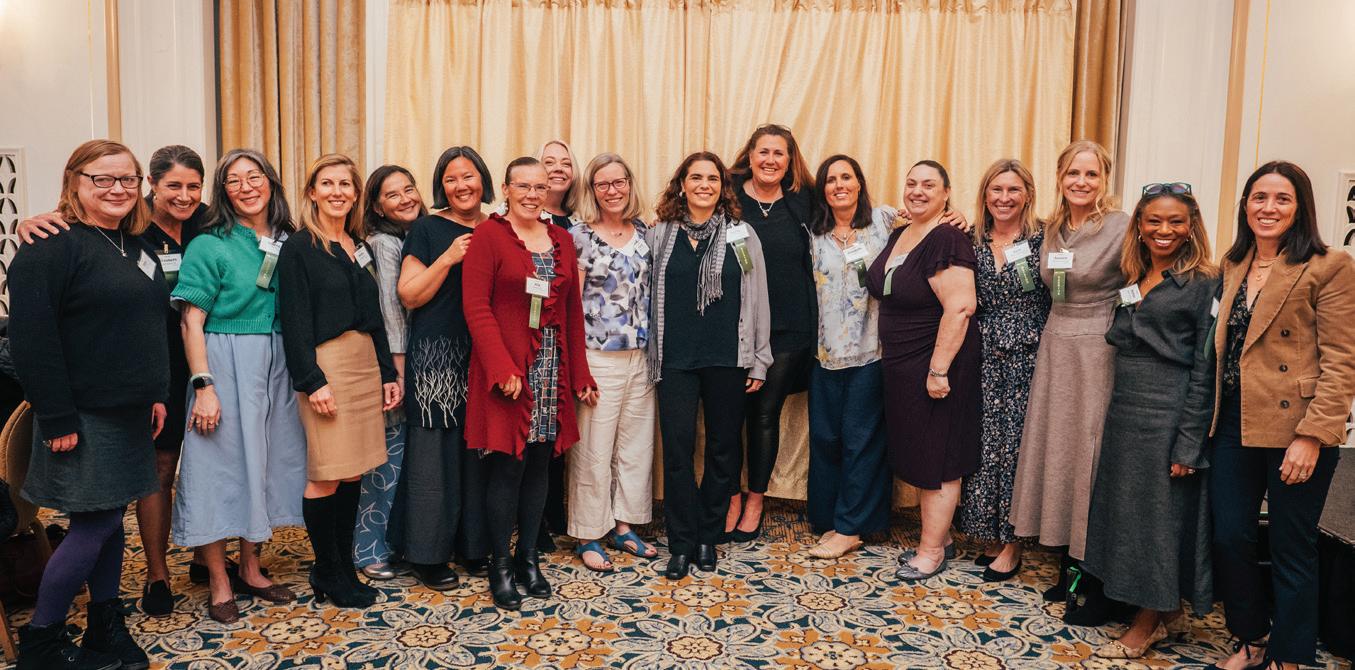
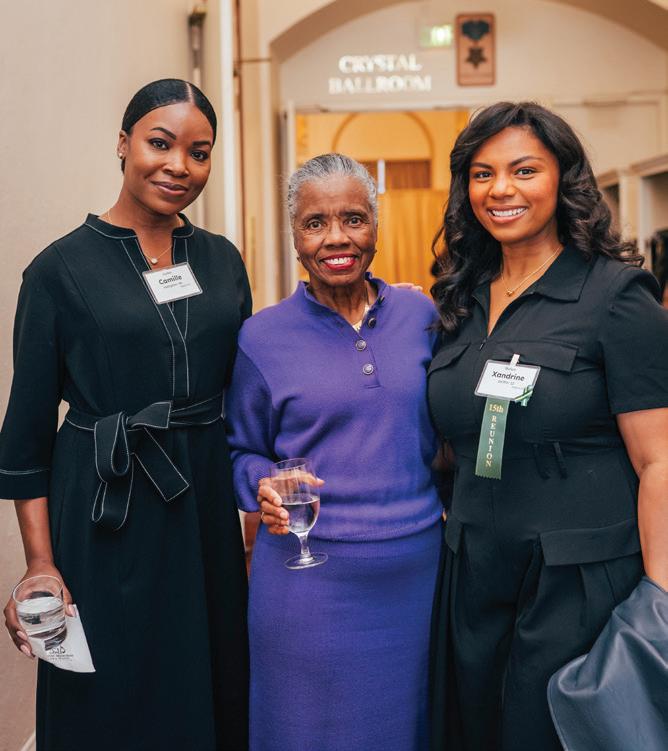
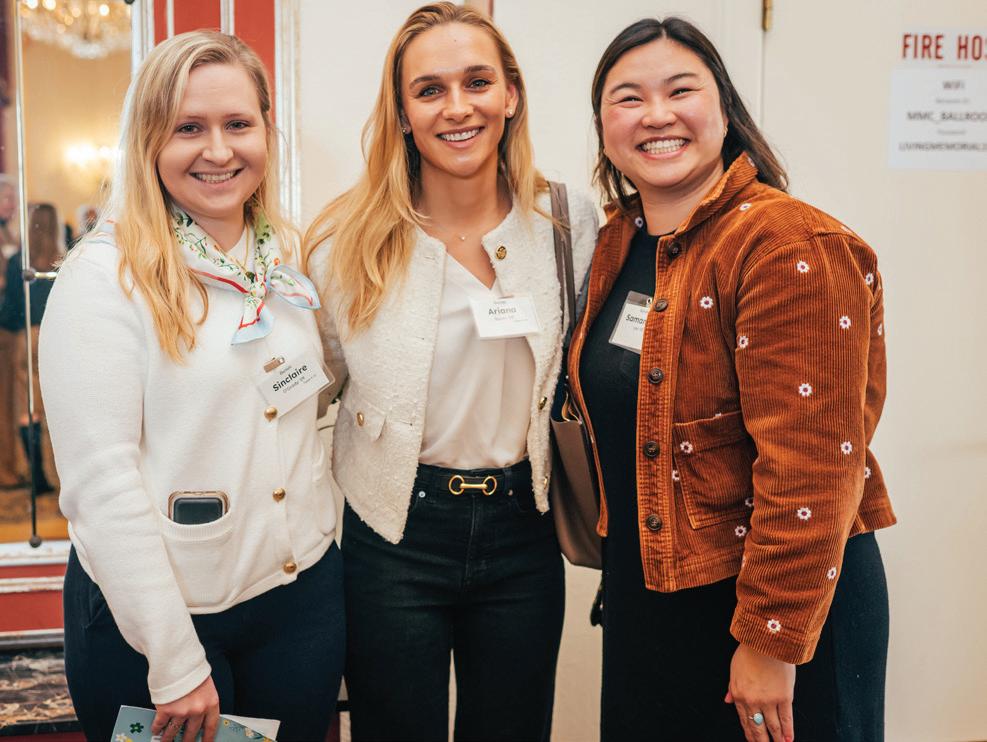
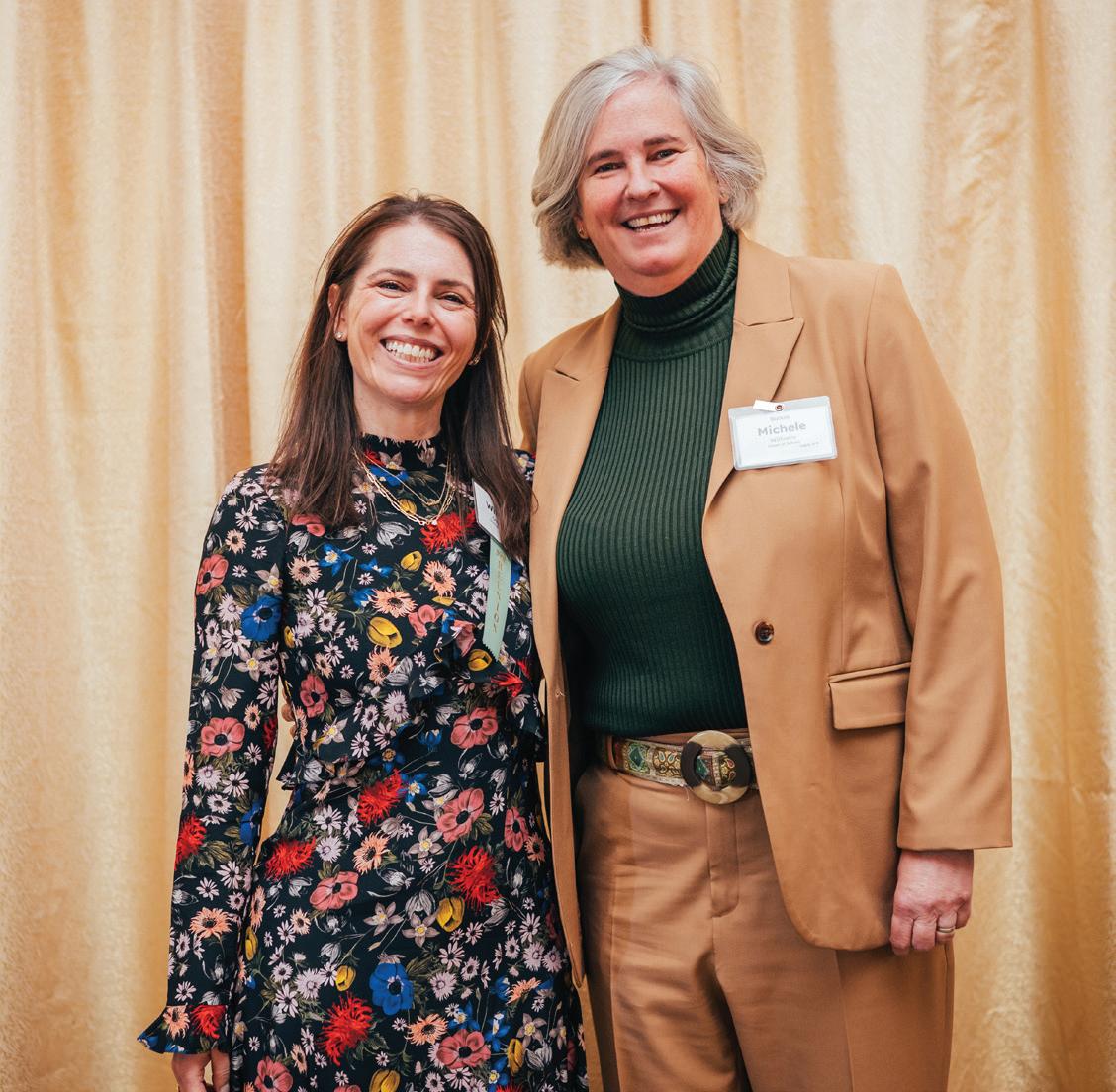
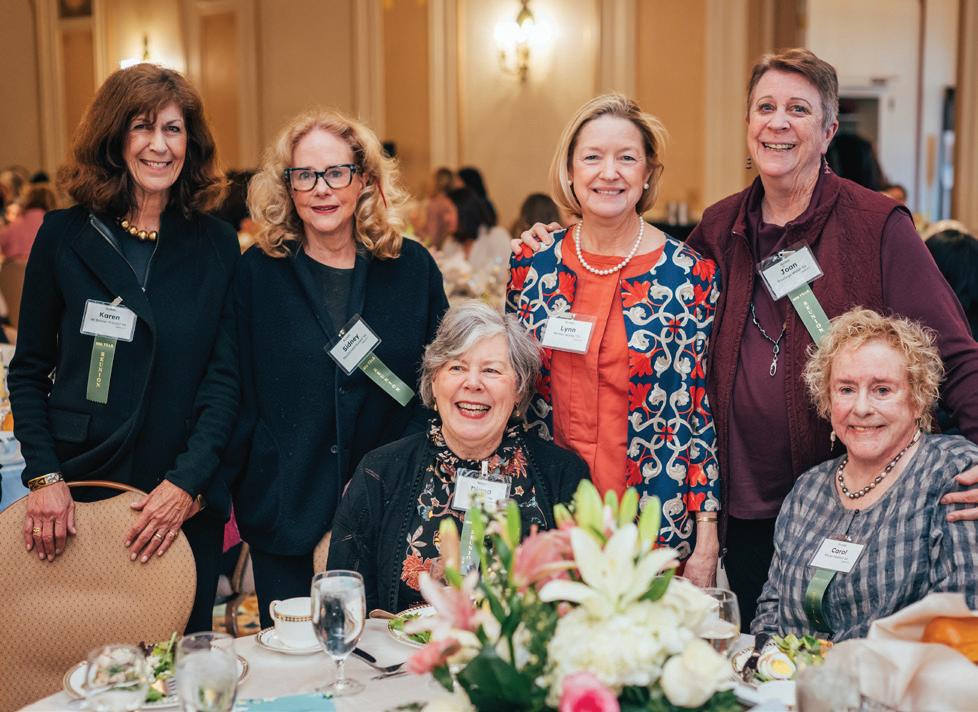
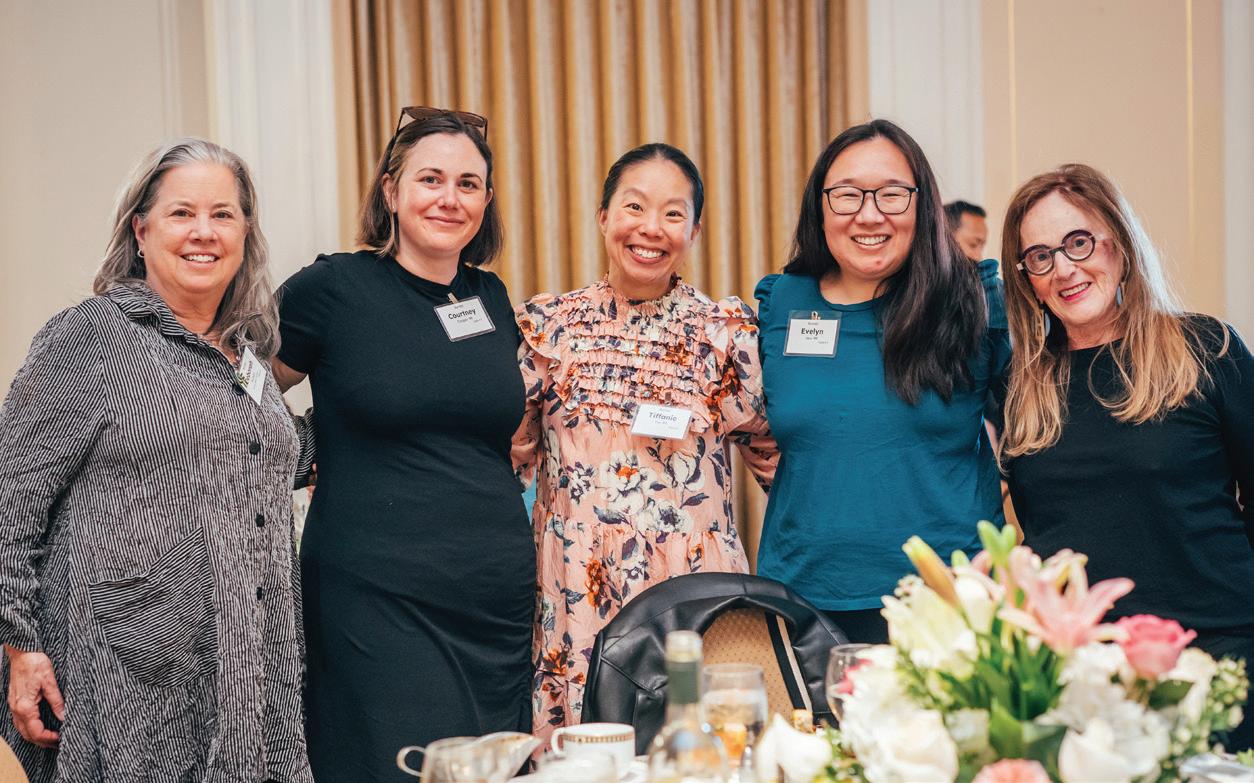
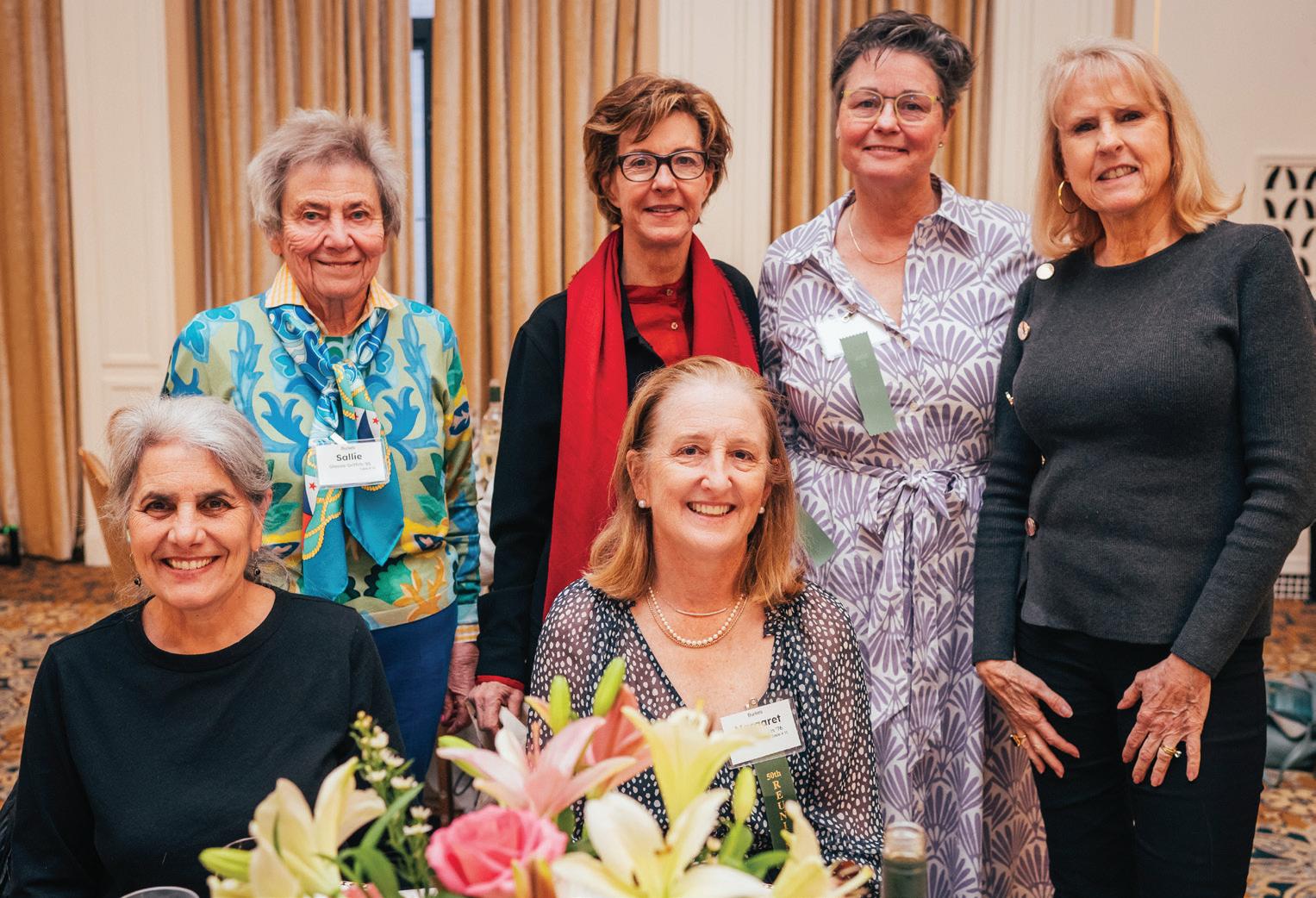
We welcomed more than 159 alumnae from 1951 through 2016 to the annual Alumnae Reunion Luncheon, honoring milestone graduation years ’1 and ’6. This year, we had the privilege to hear from Whitney Gaynor ’96, the 2026 recipient of the Distinguished Alumna Award.
The lovely luncheon room at the Marines’ Memorial Club was filled with a palpable sense of joy and excitement, reflecting the deep connections and cherished memories shared among us. It was a testament to the strong bonds that tie us together as members of the Burke’s community.
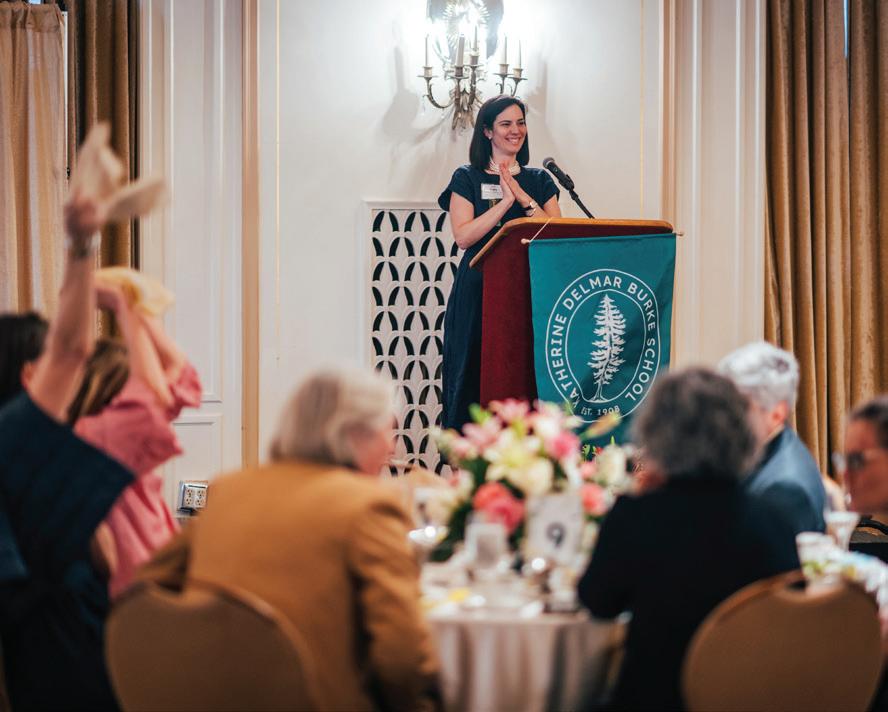
The event featured remarks from Head of School Michele Williams, as well as the Alumnae Board and Luncheon Chairs Katy Congdon Williams ’96 and Sinclaire O’Grady ’09. Michele Williams spoke about how “teaching and learning—more specifically, to
educate, encourage, and empower girls—is our business. That is our work.” Student speaker Amelia J. ’26 shared her seventh grade speech about “Little Hinges” and how even small things can help in big ways.
We look forward to seeing you at future gatherings and continuing to celebrate our shared connection to Burke’s. If you are interested in becoming involved in planning the 2027 reunion, please email Melissa Sterling at melissa.sterling@burkes.org.
Holiday Cookie Decorating
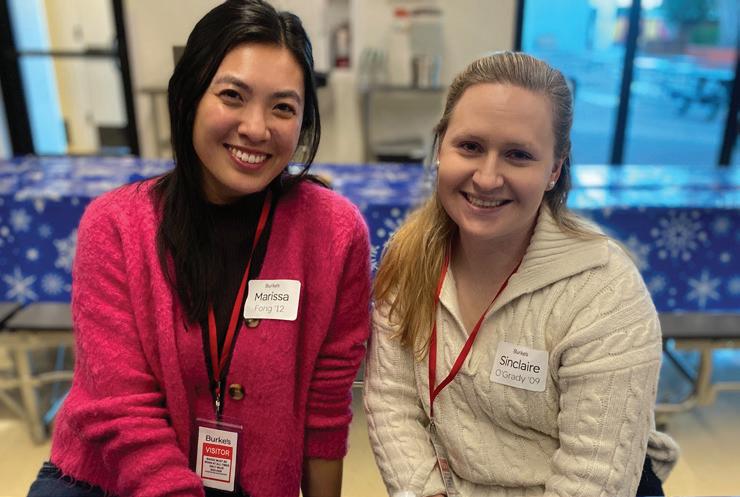
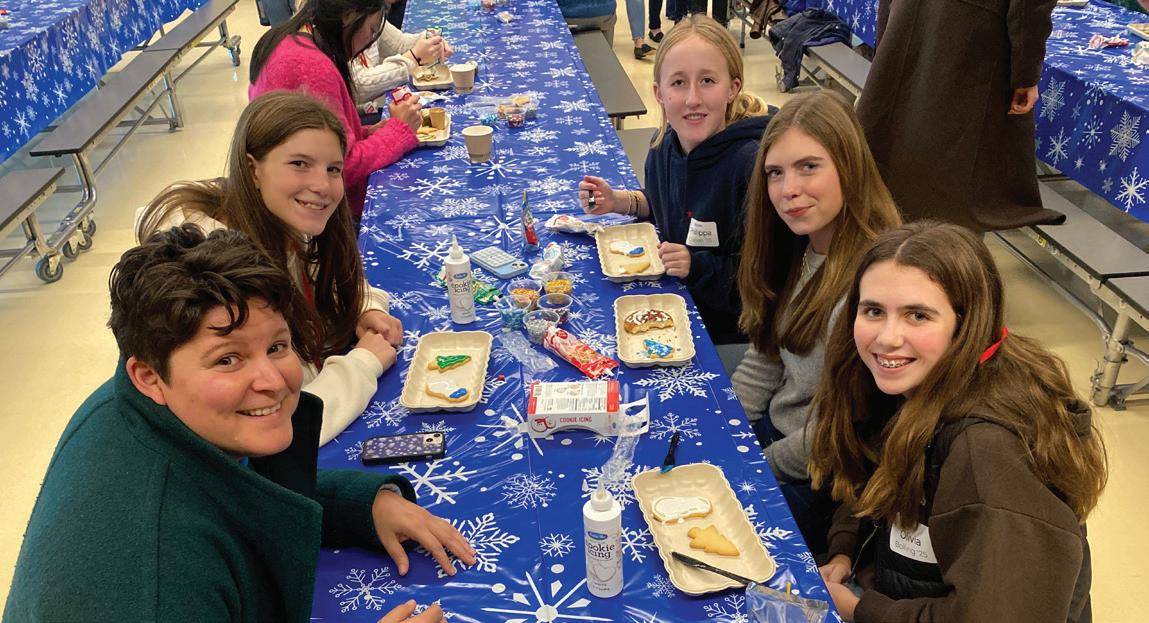
Burke’s Alumnae Board and Event Co-Chairs Finn Smit ’22 & Sarina Banker ’22 invited all alumnae to a delightful afternoon of cookie decorating and light refreshments. This holiday tradition keeps getting better!
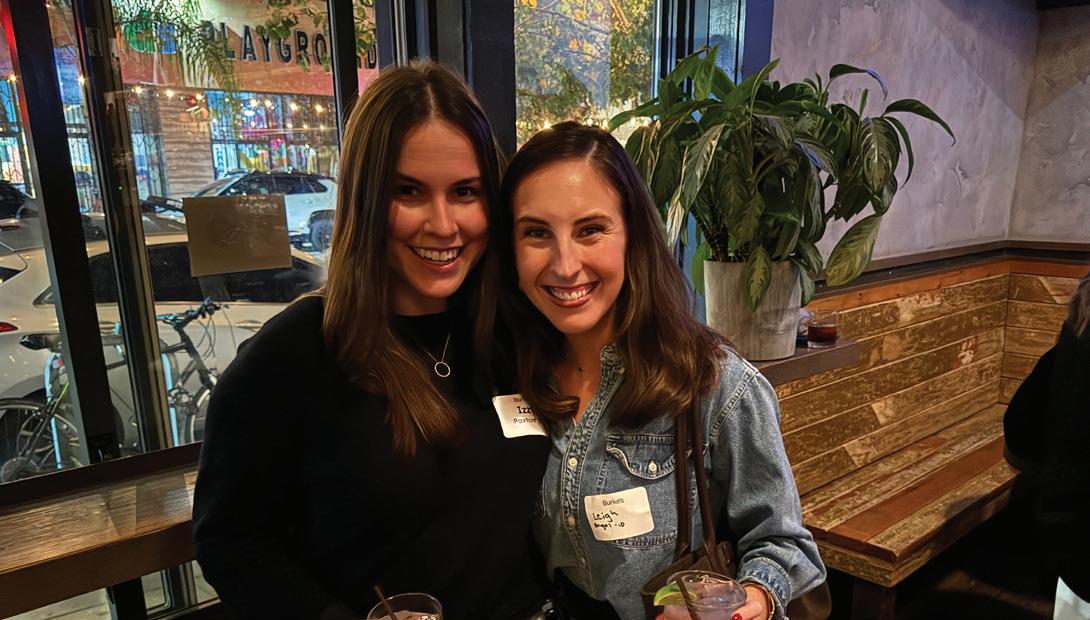
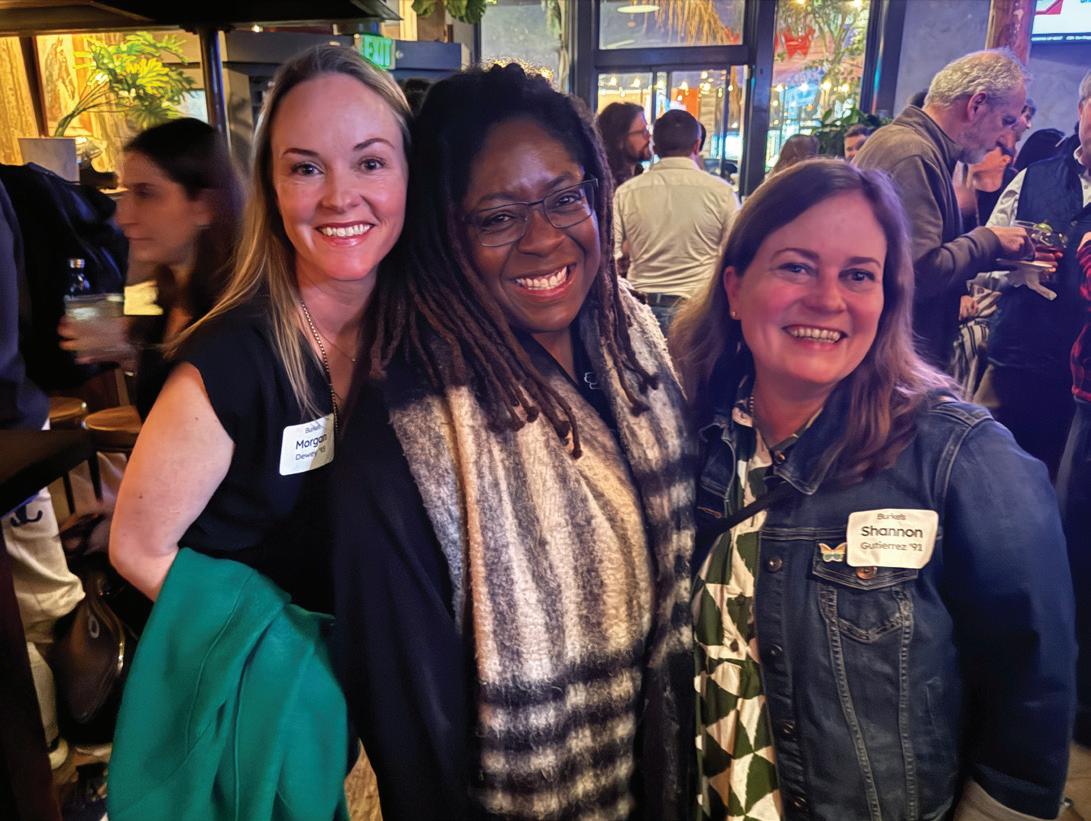
Four School Alumni Happy Hour
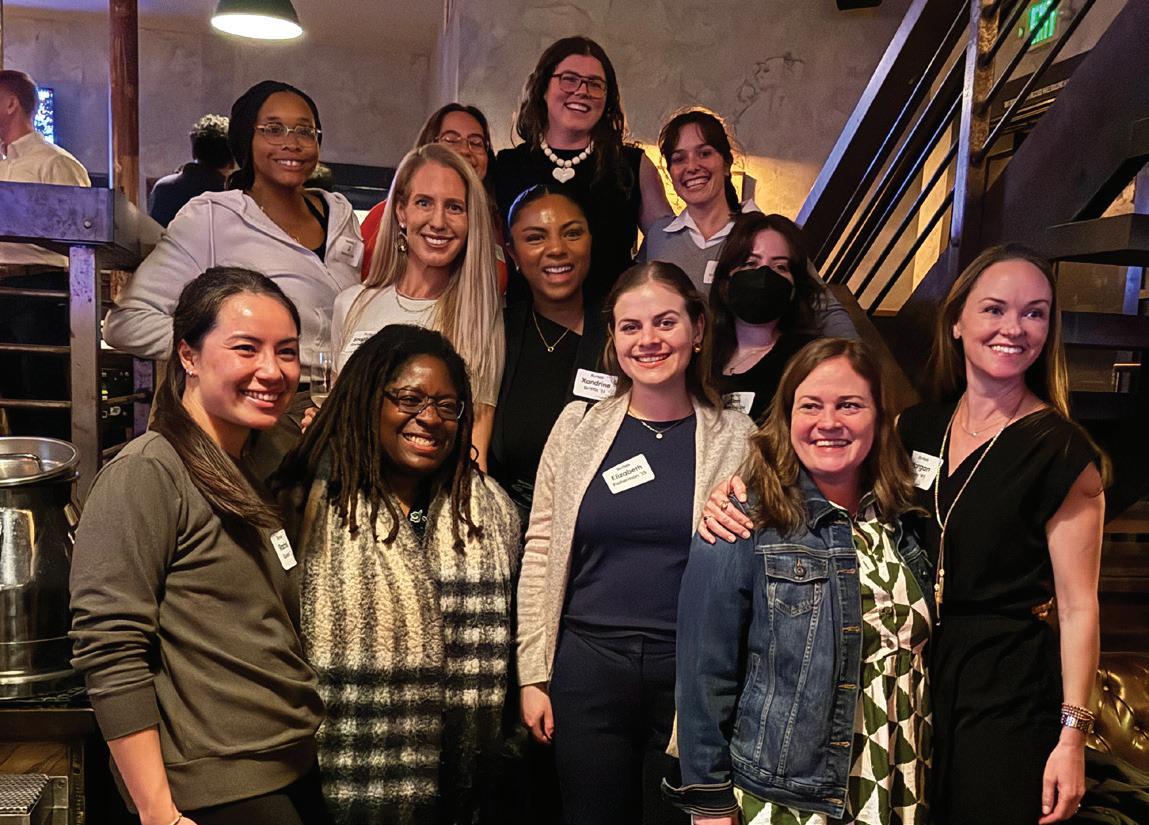
Another great alumni event with Burke’s, Town, Hamlin, and Cathedral!
Alumnae at Festival
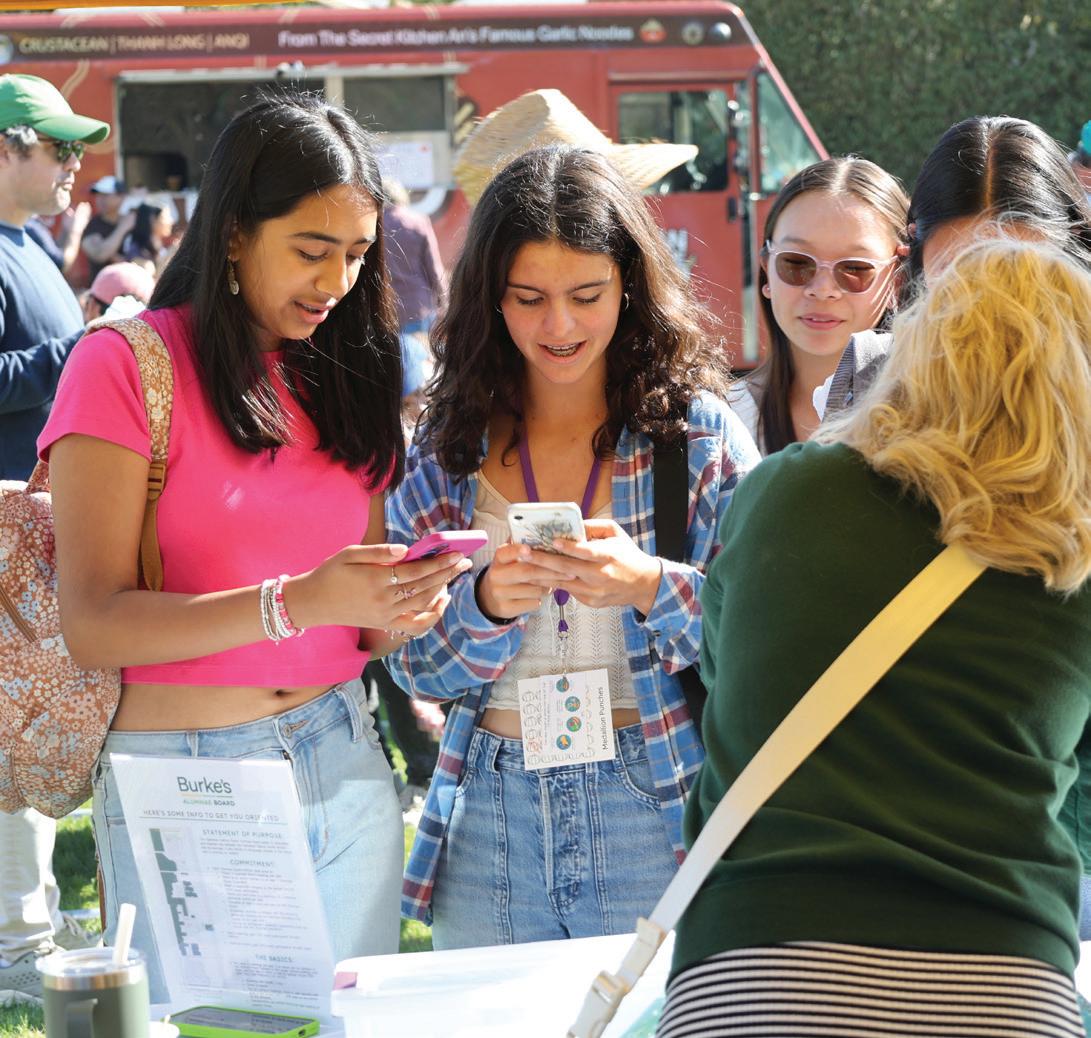
We were thrilled to have young alumnae come back to Festival and join the fun!
INSPIRATIONS
Q&A WITH ALUMNAE WORKING IN SPORTS & ATHLETICS
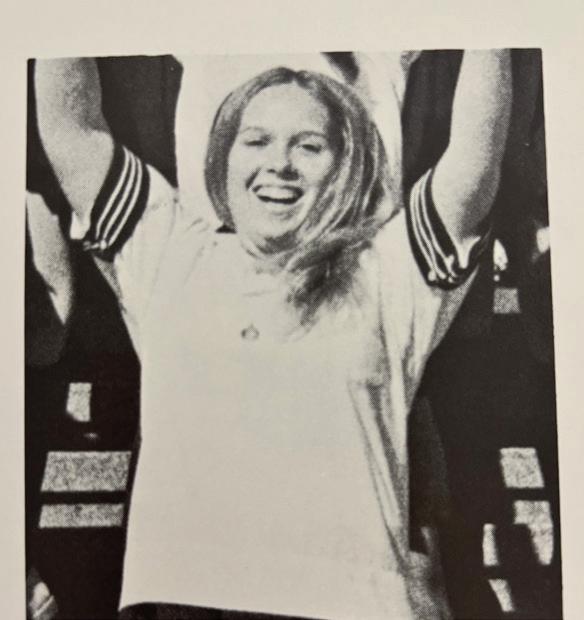
Peggy Haas ’72
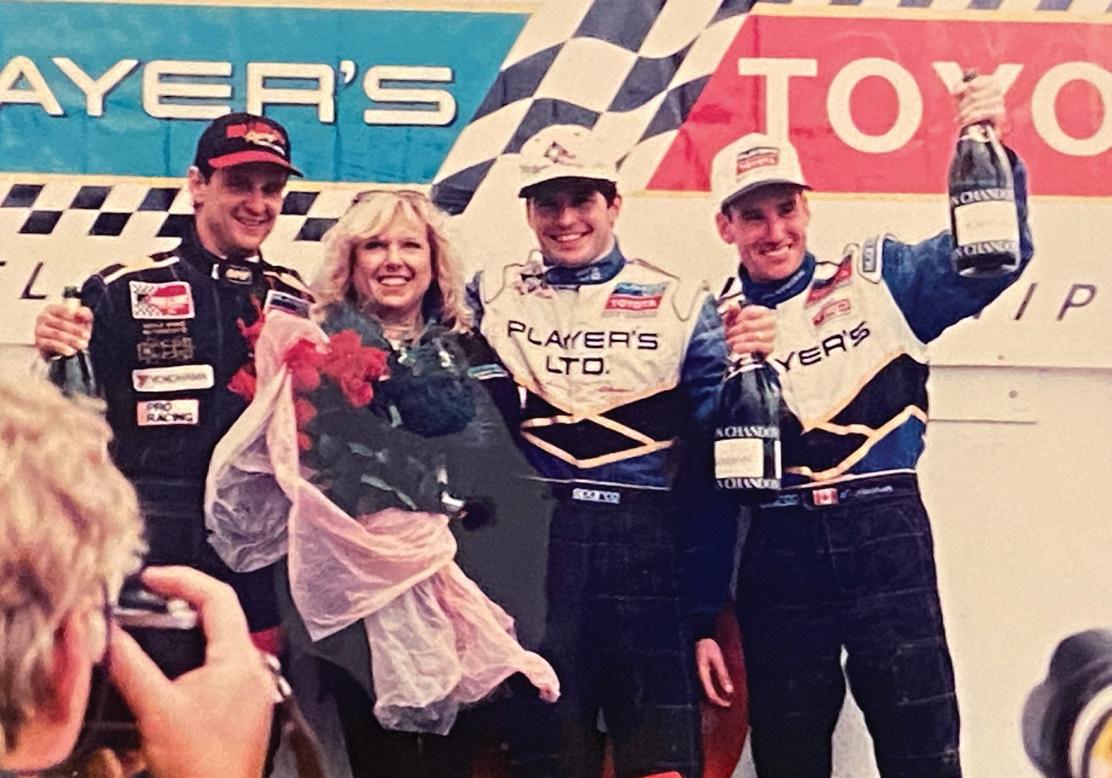
Peggy Haas is a San Francisco philanthropist, arts advocate, and pioneering leader in motorsports. She began her career in Europe as a theatrical producer and director, bringing a passion for the performing arts to communities on both sides of the Atlantic.
In 1990, Peggy co-founded the internationally recognized Lynx Racing in the Toyota Atlantic Series, where she trained IndyCar drivers for fifteen years and helped shape the careers of numerous champions. Her groundbreaking work in racing earned her induction into the Motorsports Press Hall of Fame in 2007.
She currently serves as Chair of the Presidio Theatre Board, continuing to advance its mission to support artists and audiences across San Francisco.
Can you share a specific experience, coach, or teacher at Burke’s who inspired your involvement in sports?
I was fortunate to have several. While my professional path has taken me through theater, arts leadership, and previously into the world of car racing, the foundation for everything I do was shaped during my years at Burke’s. What stands out most wasn’t one single coach or teacher, but rather the culture of encouragement and possibility that surrounded us. At Burke’s, I learned early on that I didn’t have to fit into one box. Whether I was on the stage, involved in athletics, or exploring a new interest, I was supported in trying, learning, and growing. That sense of freedom—to explore different passions without fear of failure—became the fuel behind every new door I’ve walked through since.
What advice would you give to current Burke’s students pursuing athletics?
My advice is simple: don’t be afraid to try something new, even if it feels
unfamiliar or intimidating. You don’t need to have your whole future mapped out. Every experience— whether it’s a sport, a performance, or a leadership role—teaches you something valuable about yourself. Sometimes the path forward isn’t obvious, but each step opens the next door. Trust your instincts, stay curious, and remember that confidence grows from action, not perfection.
How do the principles of leadership, teamwork, and perseverance you learned at Burke’s influence your athletic or professional life?
Whether I’m serving as Board Chair of the Presidio Theatre or reflecting on my time as a car racing team owner, the same principles guide my work: understand your people, build trust, and create an environment where everyone can do their best work. In racing, success depended on teamwork—drivers, engineers, mechanics, and strategists all working in sync. The same is true in the arts. My role has always been to
recognize individual strengths, bring the right people together, and help them function as a cohesive team. Perseverance is essential, too. Both racing and the arts demand resilience, adaptability, and the ability to learn from setbacks.
Any memorable anecdotes from your time at Burke’s related to sports experiences?
Some of my favorite memories at Burke’s weren’t about winning or losing—they were about showing up, participating, and discovering what I was capable of. Whether it was stepping into a new role or taking on a challenge that felt outside my comfort zone, I always felt encouraged to try. That mindset has stayed with me throughout my career. I’ve moved between industries that seem very different on the surface, but they all rely on the same skills: reading people, building strong teams, and staying open to possibility.
Darby Furth Bonomi ’76e
Dr. Darby Bonomi is a nationally respected psychologist and performance consultant known for her work with high achievers in sport and business. She earned her A.B. from U.C. Berkeley in 1985, her Ph.D. in clinical psychology from California School of Professional Psychology in 1991, and her psychoanalytic degree from the San Francisco Center for Psychoanalysis in 1999. Dr. Bonomi had a successful clinical psychology practice focused on women and adolescent girls before shifting her work to sport and high performance settings. With over 30 years of experience, her approach draws on neuroscience, developmental and performance psychology, and strategic coaching to foster clarity, resilience, and purpose in demanding environments. Her writing has been featured in many magazines, including The Plaid Horse, InStride, Practical Horseman, and Eventing Nation. Dr. Bonomi’s recent book, “Unshrinkable: Why Strong Women Secretly Criticize, Diminish, and Thwart Themselves…and How to Stop,” will be published in early 2026.
Can you share a specific experience, coach, or teacher at Burke’s who inspired you to pursue a career or passion in sports?
I came to Burke’s in eighth grade. My 13-year-old self was instantly impressed both by the “massive” field in the entrance and beautiful tennis courts on the other end of campus. From our classrooms upstairs we looked out on a trail in Lincoln Park and a golf course—it certainly seemed to me that Burke’s was an outdoorsy place (which suited me just fine, since I was a horse girl)!
I was overjoyed that P.E. was on the field, instead in a gymnasium, and that we got to play “real” sports, like soccer, field hockey, tennis—just like boys! My new school was literally a breath of fresh air for me.
While I wouldn’t have articulated it at the time, the sports emphasis at Burke’s sent the message to me and all its students: you can be a real athlete and you can compete. You can train hard, be strong, and go after the win, just like boys do. And, you know what? We did just that! Our field hockey and soccer teams were top notch that year, thanks to a number of great athletes in my class.
While I had always been athletic, I had never played any of these sports and had never had the opportunity to be on a real team. The Burke’s coaching staff and students welcomed me, taught me how to play and got me on the field during games. I was even elected captain of the Collars that year, and won ‘most improved player’ in tennis at the year-end awards. I really can’t express how deeply appreciative I felt to be whole heartedly included, encouraged, and even championed by this wonderful group of people.
What advice would you give to current Burke’s students who are considering a path in sports, athletics, or related fields?
Go after it! Pursue your passion! Find others who are doing what you want to do and reach out to them, especially if they are Burke’s alumnae. Don’t be afraid to ask questions, get advice, and ask for help. Any of us in a sports-related field
will be happy to support you in any way we can. Mentoring others is one of the gifts of having experience.
How do you incorporate the principles of leadership and empowerment learned at Burke’s into your athletic or professional work?
A large part of my work nowadays is mentoring and coaching professional athletes, not just about their performance in sport, but also in how they coach their own students, lead their staff, and run their businesses. I find that women often struggle with being authoritative: they worry about being “nice,” pleasing everyone and not making ripples. My upcoming book, “Unshrinkable: Why Strong Women Secretly Criticize, Diminish, and Thwart Themselves…and How to Stop” describes both my personal journey and my 30+ years of experience working with hundreds of women to speak their truth, stop doubting themselves, and step more fully into the leadership positions they have earned.
Do you have any anecdotes about your time at Burke’s related to sports or teamwork that you’d like to share?
The Collars won the year-end competition that year, 1976, and while it was fun to get the victory over the Cuffs, what really stands out to me is the incredible camaraderie of my team. As I mentioned earlier, I never had the experience of being on a team. (In those days, we girls didn’t get to play soccer, etc. starting in kindergarten. We had P.E. in school, and then perhaps ballet or gymnastics outside of school, and a couple of us had riding. But real teams for girls didn’t exist, at least not the way they do now.) The sense of belonging, pulling for each other, knowing anyone’s triumph was a team triumph, felt so vital to me. To be part of such a tight, supportive group of girls was powerful, and that experience certainly played a part in my current role as a sport and performance psychologist and consultant to women.
Heidi Philbrick
Schell ’77e
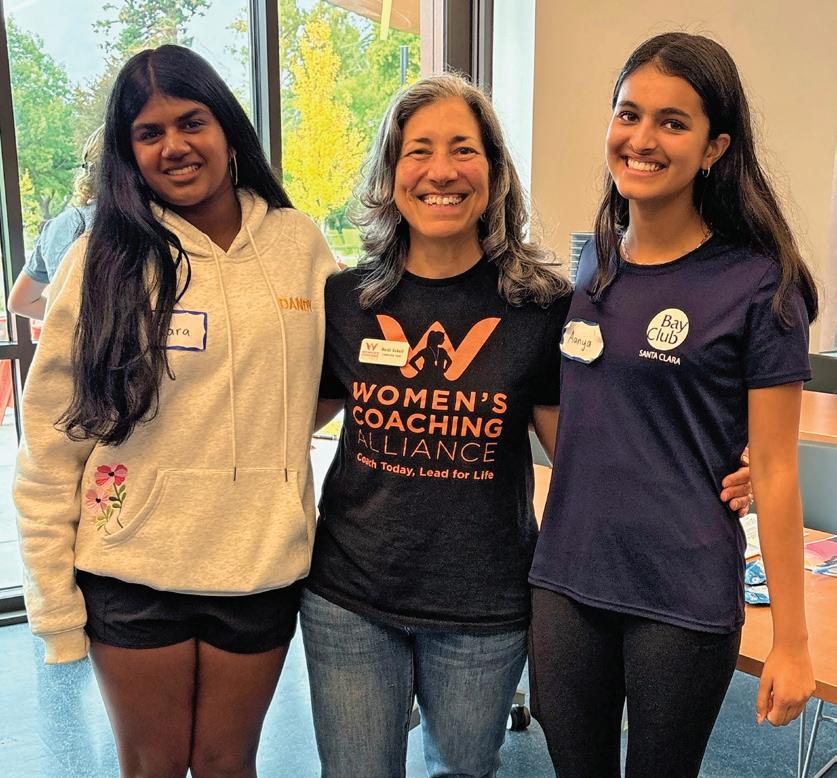
Heidi Philbrick Schell is a third generation Burke’s graduate. Her mother and grandmother both attended grades K-12. Heidi’s one year at Burke’s was transformational for her academically and athletically, helping prepare her for University High School and beyond. She has dedicated her life to giving back to her community, holding many nonprofit leadership positions in addition to her work in the corporate world. In 1998, Heidi took a leave of absence from her position at Levi Strauss & Co. and rode her bicycle across the country raising money for the American Lung Association (ALA). Thanks to that experience, she was hired as VP of Development for the local ALA, where she managed fundraising events including their annual bike ride. She had the opportunity to work at the 2000 Sydney and 2002 Salt Lake Olympics. Today she works with Women’s Coaching Alliance (WCA), which develops female leaders by recruiting 15- to 26-year-old female athletes to coach recreational youth sports. Heidi lives in San Mateo with her husband, two cats, and a 29-year-old parrot. She enjoys birdwatching, hiking, exercising, and cheering on her daughter’s University of Toronto water polo team. Known for having a penchant for arm wrestling, her eighth grade yearbook reads: “Very brilliant smile, blinding speed, the muscles of steel. Always on the look-out for an arm-wrestling match.”
Can you share a specific experience, coach, or teacher at Burke’s who inspired you to pursue a career or passion in sports?
I’m deeply grateful to Mr. Jim Bell and to Burke’s for opening the door to sports for girls at a time when few doors existed. When I was growing up in Napa, opportunities for girls were limited. Title IX had just passed in 1972 when I was in fourth grade. My earliest athletic endeavors were playing tetherball and four square at recess and participating in the annual Presidential Physical Fitness Award program. That all changed at Burke’s, where I discovered my love for sports and my potential as an athlete. I went on to play three varsity sports at University High School, I was honored to be named to the inaugural 1980 AllAmerican Girls High School Soccer Team, and I was ultimately recruited to play soccer at Stanford.
What advice would you give to current Burke’s students who are considering a path in sports, athletics, or related fields?
Build your community and network. Talk to people who work in sports and related fields—coaches, teachers, mentors, family friends, and alumni. Sports careers include journalism, photography, social media, design, data, health and wellness, psychology,
marketing, event planning, and technology—not just being an athlete or coach.
Recognize your transferable skills. Playing sports helps develop confidence and essential leadership skills like teamwork, communication, flexibility, and resilience, which matter on and off the field. Leadership takes many forms— you don’t have to be the star athlete or team captain to be a leader or make an impact. Showing up, supporting others, and staying committed all count.
Volunteer. It’s a powerful way to give back while exploring different interests and career paths. Consider volunteering at local sports events, clinics, or youth organizations. I volunteered on the venue committee for the 1999 Women’s World Cup, an experience that helped shape my path, and started as a volunteer with Women’s Coaching Alliance (WCA) where I’m now working full time.
Be open to leading—and eventually coaching. Coaching is one of the most meaningful ways to stay connected to sports while developing your leadership skills and confidence. Consider applying to coach with WCA; two Burke’s alums coached a Jr. Warriors basketball team with WCA this winter!
“Never be the first person to say no to yourself.” As Alma Cooper, U.S. Army First Lieutenant, Miss USA 2024, and
Stanford master’s student, reminds us, growth happens when you’re willing to step outside your comfort zone. You don’t have to have everything figured out before you try something new.
How do you incorporate the principles of leadership and empowerment learned at Burke’s into your athletic or professional work?
Burke’s mission and emphasis on leadership and empowerment align seamlessly with my work at WCA, whose mission is to develop female leaders through coaching youth sports. At WCA, we empower young women to step into leadership roles by sharing their love of sports with younger athletes while building the confidence and skills to lead on and off the field.
Do you have any anecdotes about your time at Burke’s related to sports or teamwork that you’d like to share?
I moved to San Francisco in eighth grade after attending a co-ed public middle school with 500 students in my class. At Burke’s, I felt included and supported as we built friendships, studied, played sports, and created memories. That’s what teamwork is all about. That sense of belonging lasted well beyond graduation. Reminiscing at our 40th reunion, several classmates couldn’t believe I had only been at Burke’s for one year.
Lizzie Leader ’01
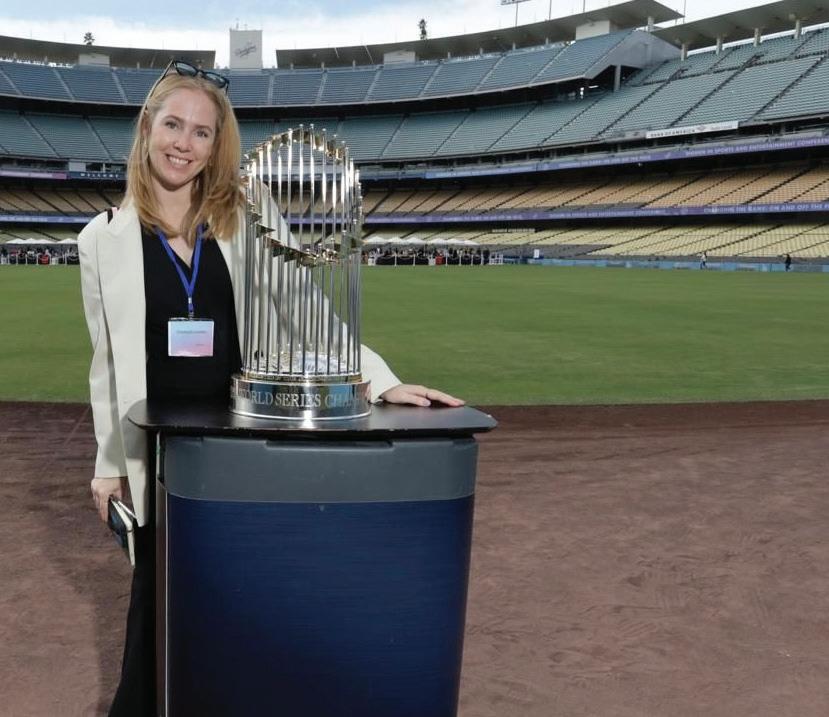
Lizzie Leader is Vice President of Communications and Investor Relations at aXiomatic, a private esports and gaming investment platform with a portfolio that includes Epic Games (Fortnite) and global esports powerhouse Team Liquid. Since joining in 2017, she has overseen external, corporate, and investor communications, providing strategic counsel to senior leadership, partners, and portfolio companies. Her work is particularly focused on Team Liquid, which was recently recognized by Guinness World Records 2026 as the highest-earning esports team in history with an estimated $56M in lifetime winnings.
Lizzie is a member of Sports Business Journal’s Leader Club and holds a B.A. in International Relations from Claremont McKenna College. In her downtime, she can be found cheering on Team Liquid’s “League of Legends” squad or her beloved Los Angeles Dodgers.
Can you share a specific experience, coach, or teacher at Burke’s who inspired you to pursue a career or passion in sports?
What stands out most from my time at Burke’s is not necessarily a single coach or season, but the campus itself. Even as a student, I appreciated how the school’s large grass athletic field sets it apart. In hindsight, that space was emblematic of a broader philosophy at Burke’s: one that wove athletics and outdoor experiences into everyday learning in a way that was welcoming, balanced, and inclusive.
I played soccer in fifth grade, basketball in sixth, and softball in seventh and eighth grades. I wasn’t especially gifted at any of them, but that never mattered much. Burke’s created opportunities for students of all skill levels to participate, explore, and feel a sense of belonging. That approach feels especially rare today as youth sports increasingly push children to specialize early at the expense of broader experiences.
What advice would you give to current Burke’s students who are considering a path in sports, athletics, or related fields?
My advice to current Burke’s students is this: you do not need to be the best athlete to belong in sports. There are many ways to participate, contribute, and lead.
While I was technically a “three-sport athlete” at Burke’s, I was not especially skilled in any of them. So, as competition increased in high school, I found other paths. I helped found my school’s first-ever women’s lacrosse team, creating a space where students who might have felt intimidated by more established programs could participate and belong. I was also my high school’s mascot and wrote for the sports section of the newspaper—even penning an audacious Title IX exposé that challenged budget inequities between men’s and women’s athletic programs.
Those experiences taught me that athletic ecosystems are much bigger than what happens on the field or court. If you love sports but do not see yourself as an elite competitor, explore the many adjacent opportunities around the game, from leadership and creativity to advocacy and storytelling. Pursue the roles that spark your curiosity and keep you engaged! Those experiences can be just as impactful and may shape your future in ways you don’t expect.
How do you incorporate the principles of leadership and empowerment learned at Burke’s into your athletic or professional work?
The professional sports industry has made real progress but remains largely male-dominated. I often find myself as the only woman in the room, and I credit much of my confidence in those spaces to my years at Burke’s from fourth through eighth grade.
Being in an all-girls environment during such a formative time let me develop my voice, take risks, and explore leadership in a supportive yet intellectually challenging setting. At an age when many girls in co-ed classrooms experience a drop in confidence, Burke’s fostered my ambition, self-expression, and critical thinking—skills that continue to shape how I show up today. There’s also a well-documented link between girl’s sports participation and future leadership. Burke’s equips girls with the confidence and skills to lead far beyond the playing field in the future.
Do you have any anecdotes about your time at Burke’s related to sports or teamwork that you’d like to share?
Some of my most lasting lessons in teamwork and appreciation for the outdoors came not just from team sports, but from Burke’s class trips. The Boojum Joshua Tree Backpack Experience in eighth grade stands out. Beyond the physical challenge, my classmates and I were given real responsibilities—navigating by map and compass to our next water station, for example—that felt, at the time, like “do-or-die” tasks. On a lighter note: I’ll never forget when Ms. Major led our P.E. class on a spirited speed walk to Baker Beach in sixth grade, only for us to be unexpectedly met by a pair of nude sunbathers. Chaos ensued…and it’s a memory that still makes me giggle today.
Emily Duh ’06
Emily Duh is the Vice President of Global Event Consulting at Playfly Sports, where she advises cities and stakeholders preparing to host major international sporting events, including the FIFA World Cup 26™. Her work focuses on strategy, operations, bid positioning, and long-term legacy planning.
Emily’s passion for sports began at Burke’s, where she played volleyball, basketball, and soccer. She continued playing soccer at Lick-Wilmerding High School before attending Middlebury College, where she played rugby. While at Middlebury, she discovered the global power of soccer through watching international matches with friends from around the world, an experience that inspired her to pursue a career in sports.
After graduating, Emily earned a master’s degree in Sports Management from Columbia University. She began her professional career at Major League Soccer, including an internship in the Commissioner’s Office, before joining the United Bid Committee for the 2026 FIFA World Cup. As part of the Bid team, she helped coordinate efforts across 32 candidate host cities and supported the successful delivery of the bid to FIFA.
Emily lives in New York City and remains deeply grateful to Burke’s for fostering the confidence and leadership that continue to guide her career.
Can you share a specific experience, coach, or teacher at Burke’s who inspired you to pursue a career or passion in sports?
My love for sports began at Burke’s, and one person who had a lasting impact on me was Ms. Bryant, now the Upper School’s Director of Athletics. At the time, she was my Upper School P.E. teacher, math teacher, and soccer coach. She showed me early on that athletics and academics were equally important and deeply connected.
In P.E. and on the field, I felt free to be fully and unapologetically athletic. Ms. Bryant expected us to compete hard, support one another, and take pride in our effort, while holding us to high standards in the classroom as well. Seeing her lead confidently across all those roles left a lasting impression.
Burke’s made it normal for girls to lead, compete, and take up space. That environment gave me confidence early on and helped shape how I show up today, especially in male-dominated spaces like the sports industry.
What advice would you give to current Burke’s students who are considering a path in sports, athletics, or related fields?
One thing I often tell students and young professionals is that sports stay with you long after you stop playing. In job interviews, even outside the sports industry, I’m frequently asked whether I played sports because employers recognize the skills they help develop. Athletics teach leadership, teamwork, resilience, communication, and how to perform under pressure—all qualities that translate directly to professional life.
My advice is to embrace sports not just for competition, but for the lessons they teach. You don’t need to know exactly how athletics will fit into your future career for them to be valuable. The habits you build on teams—showing up prepared, supporting others, and committing to a shared goal—will serve you no matter what path you choose.
How do you incorporate the principles of leadership and empowerment learned at Burke’s into your athletic or professional work?
Throughout my career, I’ve often been one of the few women in the room. While that can still feel challenging, I’m far more comfortable in those situations than I otherwise would be, and I credit Burke’s for that. Growing up in an environment where girls led on the field and in the classroom, I feel more confident to speak up and trust my perspective today.
In my professional work, I try to lead collaboratively, drawing on what I learned through team sports at Burke’s. I value listening, creating space for different voices, and building trust across teams. Those lessons have shaped not only how I lead, but how I support others, especially in environments where women are still underrepresented.
Do you have any anecdotes about your time at Burke’s related to sports or teamwork that you’d like to share?
One of my favorite sports memories from Burke’s comes from my final year, during the varsity soccer championship game. In the final moments, my teammate, friend, and classmate Emma Abinanti-Sena ’06 scored the winning goal. I still remember all of us sprinting toward her and piling on in celebration.
That moment captured so much of what Burke’s athletics gave me: trust in your teammates, shared effort, and the understanding that success is rarely individual. Long after the final whistle, those lessons stayed with me. Whether in sports or in my professional life, I still draw on what it means to work toward a common goal and celebrate wins together.
Kendall Otridge ’15
Kendall Otridge graduated from Burke’s in 2015 before continuing her education at The Bay School of San Francisco. She went on to play collegiate volleyball at Haverford College, earning a B.A. in environmental studies with double minors in psychology and health studies.
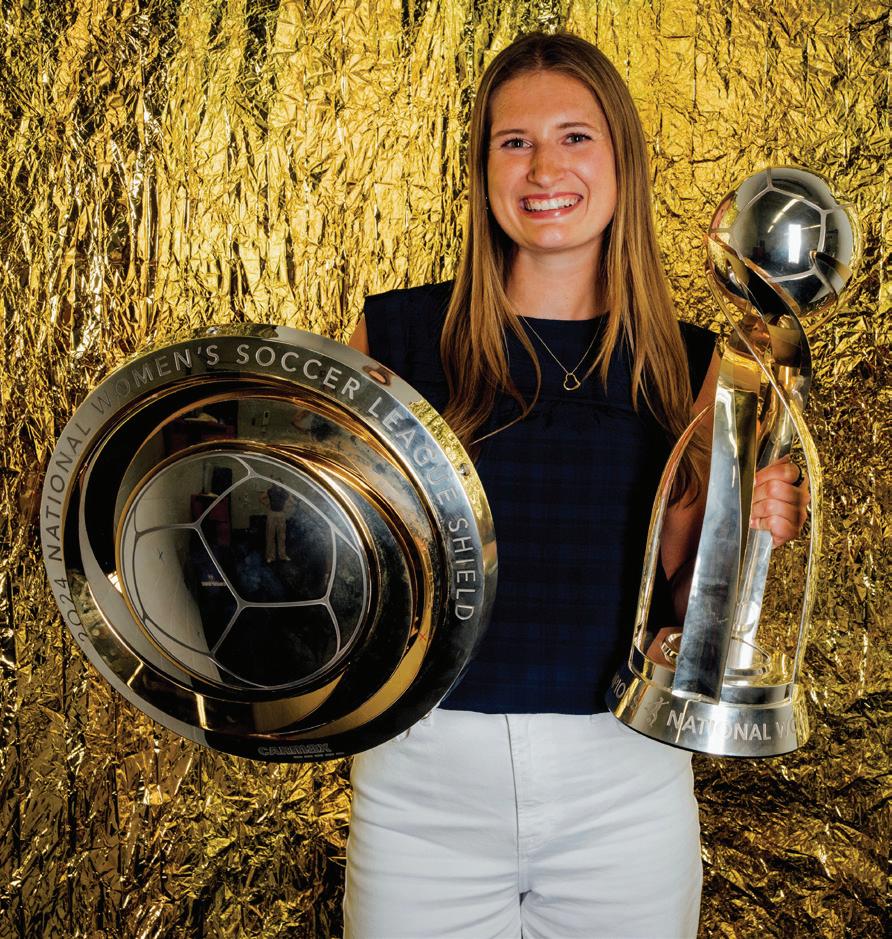
After graduating from Haverford, she moved to Florida to begin a professional career with the Orlando Magic as the arena experience and operations graduate associate. This role sparked her passion for the business side of sports and fan engagement and eventually led her to the soccer world. She now works with Orlando City and Orlando Pride, the MLS and NWSL teams, where she began as a coordinator of Brand Alliance Marketing and was promoted to manager in 2024.
In the current role, she oversees ten corporate partnerships across both teams, including Heart of Florida United Way, Verizon, and Circle K, among others, where she develops and executes strategic activations that align brand goals with meaningful community impact. One of her most memorable career moments was being in Kansas City to witness the Orlando Pride win the 2024 NWSL Championship, a full-circle moment that combined her love of sports, teamwork, and leadership.
Can you share a specific experience, coach, or teacher at Burke’s who inspired you to pursue a career or passion in sports?
I remember being so excited once I moved into Upper School and was finally able to join teams and compete for Burke’s. Looking back, the positive and supportive environment around sports at Burke’s made athletics feel accessible and empowering, especially as a young girl. I didn’t realize how rare and special that environment was, particularly in a sports world that is so male dominated.
While there isn’t an exact experience at Burke’s that inspired me to pursue a career in sports, the strong foundation of community and collaboration allowed me to continue to compete in sports into high school and eventually at the collegiate level. I think that community is one of the things that makes sports so special, powerful, and unique; it brings people together. While competing for Haverford, I realized how much I loved the way athletics connects people. That realization sparked my interest in pursuing a career in the sports industry. Initially, I wasn’t even aware of the wide range of careers available beyond coaching and support staff, but through research and networking, I discovered an industry where I could truly see myself.
What advice would you give to current Burke’s students who are considering a path in sports, athletics, or related fields?
One piece of advice I would give to current Burke’s students who are considering a path in sports is: don’t be afraid to put yourself out there. I know it sounds cliché, but in the sports industry, it truly matters. Sports is a competitive, highly sought-after field, and breaking into it isn’t always easy. If you don’t advocate for yourself, ask questions, and pursue opportunities, it’s difficult to succeed. Raise your hand, ask questions, say yes to new opportunities, even the ones that are intimidating. Be curious, stay resilient, and remember that your path doesn’t have to look like anyone else’s!
Additionally, don’t be afraid to take risks or make mistakes. Sometimes you learn the most from mistakes and the biggest risks can have the biggest positive outcome!
How do you incorporate the principles of leadership and empowerment learned at Burke’s into your athletic or professional work?
One of the most important lessons that Burke’s taught me is that leadership doesn’t require being the loudest voice
in the room. Leadership can look like listening, supporting others, leading by example, and acting with integrity. As a captain at Haverford, I focused on creating an inclusive environment where every teammate felt valued and heard. That same mindset carries into my professional career today. I aim to lead with empathy, preparation, and accountability, all values that were instilled in me early on at Burke’s and continue to influence how I work with others.
Do you have any anecdotes about your time at Burke’s related to sports or teamwork that you’d like to share?
One of my biggest takeaways from my time at Burke’s is the mission statement: Educate, Encourage, and Empower. While I didn’t fully understand the importance of those words at the time, I now find myself striving to embody them almost every day. I consistently push myself to learn and grow while helping educate and support others. I try to encourage those around me to be their best selves and pursue their goals. And perhaps most importantly, I carry the empowerment I gained at Burke’s into my career, especially while working in a male-dominated field, allowing me to be confident, speak up, and trust myself.
Paton Roberts ’17
Paton Roberts is currently the Soccer Category Specialist at Amazon, where she leads strategy for soccer retail products on Amazon US. She recently interned at the National Women’s Soccer League in the Office of the Commissioner after graduating magna cum laude from Harvard in May 2025. There, she wrote a thesis entitled, “Surveying the Field: An Exploration of the Culture of Fandom in the National Women’s Soccer League,” featuring original research across NWSL fans of 12 of the league’s teams. Her work with Harvard Undergraduate Sports Lab included organizing the inaugural and second annual Sports Business Conference led by Harvard undergraduates, and organizing and moderating the club’s first-ever Women in Sports Business Night. She covered Sports Administration for The HarvardCrimson, reporting on breaking news across Harvard Athletics. As a lifelong soccer player and fan, she continues to follow women’s soccer and all women’s sports as often as her job will allow, alongside baking, reading, and running.
Can you share a specific experience, coach, or teacher at Burke’s who inspired you to pursue a career or passion in sports?
All of my athletic experiences at Burke’s, whether it was Challenge P.E. or the soccer team, reinforced my love for sports, and in particular, my love for women’s sports. Though I didn’t realize it at the time, the community I found on those teams and the joy athletics brought me every day both led me to my current career. In particular, my experience on the Burke’s cross country team gave me an appreciation for the connections that only sports can foster, as I grew close to girls across all different grades, social circles, and interests.
What advice would you give to current Burke’s students who are considering a path in sports, athletics, or related fields?
Your time as an athlete is giving you the right experience already! The things that I have learned through sports— teamwork, a strong work ethic, a desire to win—are all traits that have made my current career possible, and I hope that all athletes remember the versatility that their sports experience brings.
How do you incorporate the principles of leadership and empowerment learned at Burke’s into your athletic or professional work?
I use the principles of leadership and empowerment learned at Burke’s in my work every single day. By nature of the sports industry, you are often asked to step up and be a leader at early stages, especially at a younger league like the NWSL. Feeling empowered in my skill set and decision making allows me to do the best work possible, and I credit Burke’s mission to encourage and empower girls with instilling me with the necessary self confidence to succeed in this business!
Do you have any anecdotes about your time at Burke’s related to sports or teamwork that you’d like to share?
I loved my time as an athlete at Burke’s! In eighth grade, I decided to play basketball despite being terrible at it, because I loved being teammates with my classmates on the cross country course and the soccer field that much.
CLASS NOTES
Alumnae Updates From Burke’s
Class of 1952
LYNN SYMONS ELLINGTON is still working as a floral designer for residences in Atherton, gathering flowers from gardens and placing them in situ. She keeps in touch with classmates Tita Crilly Diepenbrock, Barbara Charleston Coleman, and Jean Doolittle Henry. They regularly have a February lunch get-together.
Class of 1956
DR. SUSAN SEELEY traveled on an Oceania Cruise last summer, going from Venice to Istanbul.
LINDA WAGNER SMITH, along with eight other Burke’s classmates, celebrated their 70th reunion at Perry’s!
Class of 1958
GINNY MICHAEL ELLIS has been living at The Peninsula Regent in San Mateo since she moved in 2009 with her late husband Dr. Eldon E. Ellis. She notes that BETH ANDERSON ’56 also
lives at The Peninsula Regent and they went to the Burke’s reunion a couple years ago, where Ginny enjoyed visiting with the class of 1959.
SUSIE COLOMB PFAU has reinvented herself, thanks to NAN BOUTON, and is having a great time handbuilding pottery, nautical/nature subjects, figures, bowls, and wind chimes. “I practically live at the clay studio amongst pottery kindred souls! Connect with me if you’d like to be a guest and get all muddy, or have ideas of things I can pot for you!”
Class of 1966
MELANIE MCCOMISH LYNN enjoyed the annual alumnae gathering on March 6 and her class luncheon the next day. She says, “If you hadn’t heard from us this year, that probably means we can’t find you! Please reach out to a former classmate for more information.”
Class of 1974
JUDY KING-EDMEADE says she is “living and loving retirement!”
Class of 1975
KATY DICKINSON just earned her Doctorate of Ministry! Read more about it in her blog (https:// katysblog.com/about/)!
Class of 1978
LESLIE J. MAYER is still active in the commercial real estate world in Los Angeles, serving as an executive managing director for Cushman and Wakefield. She also enjoys her Mayford Farms jumping horses that compete internationally.
Class of 1986
ELIZABETH LAND retired from NVIDIA and is finally able to volunteer more and spend time with her family and friends. She says, “I would love to be in better touch with my Burke’s classmates and plan a class reunion!”
Class of 2005
HANNAH LAURENCE graduated with her Ph.D. in pathology from Colorado State University in the spring of 2025. She had previously completed veterinary school and a residency in veterinary pathology. She is now working as a veterinary pathologist.
Class of 2006
ALLISON WASSERMAN was recently promoted to senior vice president for original programming at HBO, and listed in The Hollywood Reporter’s “Next Gen: 35 Rising Hollywood Executives Under 35”!
Class of 2008
BECCY VALENTINE has been with California Search and Rescue, a nonprofit run by all volunteers, since 2021, where she has been helping with mutual aid searches across all of California. She leads their recruitment efforts and DE&I team, and also has been on the board for the last two years, organizing their community engagement and fundraising efforts.
Class of 2009
CHARLOTTE BAILINSON is now Charlotte Kennedy! Her wedding last summer was in the beautiful Dordogne region of France, with SINCLAIRE O’GRADY as her maid of honor.
ARIELLE SACKS OTTO and her husband Carl welcomed their first child, Theodore “Teddy” Samuel Otto, on November 26, 2025. They are enjoying this new phase of life as a family of three in New York City!
Class of 2015
MADELEINE DOWD earned degrees in philosophy and evolutionary biology from Harvard in 2025. She was elected to Phi Beta Kappa. Madeleine cowrote the Hasty Pudding Show and was on the Harvard Lampoon writing staff. She is now pursuing an MPhil at Cambridge University in the UK.
ANNABELLE HENDRICKSON has lived in a house full of musicians in Silver Lake, Los Angeles, since she graduated two years ago from UCLA’s Herb Alpert School of Music. She currently works for the Society of Composers & Lyricists (SCL), the premier organization for music creators in film, television, and video games, as the executive assistant to the president. In her role, she plans film/television screenings, composer Q&As, seminars, songwriting sessions, and special events for the composer and lyricist community. She helped launch a new chapter in Chicago, and works regularly on advocacy campaigns to protect the rights of creators in the age of streaming, social media, and AI. Annabelle recently completed her first score for the short film Devils. In her spare time, she plays guitar in a few bands and supports other artists in the local music scene.
Class of 2018
LILY PETA and EMMA WHEELER have been best friends since their time at Burke’s, and have both pursued careers as professional ballet dancers. After two years dancing at Pacific Northwest Ballet in Seattle, Lily is currently beginning a degree at NYU, dancing and studying while based in London. Emma also moved abroad, and is currently dancing and studying in Stockholm after three years at Ballet San Antonio. This year, both are embarking on founding and directing a non-profit dance festival, Midsommar Dans, starting this summer 2026 in Sweden. @midsommar.dans
Class of 2019
FIONA CLARK was a high-point rider on her UCLA equestrian team, which earned high point honors on their first home show of the season!
THALIA RUXIN, ALEX THALER, ERIN WADSWORTH, ISABELLE ASHLEY and CHARLOTTE RECKTENWALD, all attending different universities, studied in Copenhagen this semester.
Class of 2020
CAMI COLPITTS is a sophomore at WashU and a midfielder on their women’s soccer team. They recently won their third national championship in program history, where Cami scored a late goal and led the Bears in a 2-1 win over Emory University on December 6, 2025!
PAGE SPARKS will be a camp staff member at Keewaydin Camp again this summer. Along with ELLA PRADHAN ’23, they are wilderness canoe trippers and important members of the Keewaydin Camp community, the oldest wilderness canoe-tripping camp in the world.
Class of 2023
KIYOMI DALLASKIDD was declared the 2026 Film/Animation Winner with Distinction at San Domenico School in San Anselmo, California.
AISHA MCCULLOCH is San Francisco’s Vice Youth Poet Laureate! She is a cultural ambassador for the city, contributing to civic engagement efforts and sharing her work. Aisha’s poetry is featured in I Can Feel You Across the Seas, a newly-released anthology of poems.
Class of 2024
AANYA CHANDARANA ’24 and ZARA LOGANAATHAN ’24 joined HEIDI PHILBRICK SCHELL ’77e at the WCA Leadership Academy in October 2024 and coached a Jr. Warriors basketball team with Women’s Coaching Alliance and SF Rec and Parks this past winter.
In Memoriam
Burke’s is proud of its strong legacy of graduating strong, confident women. We sadly report the loss of these members of our alumnae family.
Ann Bruck Cunningham ’40
Joan Draper Bishop ’56
Marjorie Maas Grune ’48
Barbara Terry Hopkins ’52
Margot Kottinger Cookson ’53
Ann Edmiston Johnson ’58
Mary Heath Keesling ‘32
Barbara Butte McNeill ’32
Nancy Tait Cox ’44
Barbara Hansen Reding ’63
Melissa Kenady ’69
Jessica Parish Galloway ’78e
Remembering Cynthia Whitsell
BELOVED BURKE’S EDUCATOR
urke’s students, faculty, and staff celebrate the life of Cynthia Whitsell, a beloved teacher at Burke’s for 29 years.
Cynthia Whitsell, dear wife for 39 years, mother of two girls, dedicated drama teacher at the Katherine Delmar Burke School for girls in San Francisco for 29 years, and an ever smiling, gracious friend to all associated with her, died August 20 in hospice at her home in San Francisco.
Cynthia was born December 10, 1933, in Chicago, to Fay and Elizabeth Whitsell and grew up in Beverly. She attended the Faulkner School for Girls on the south side of Chicago. She took her bachelor’s degree in one of the best theatre programs at Northwestern University. She performed at Chicago’s Happy Medium, and in summer stock in a variety of locations over the years. She earned her master of arts in literature from the University of Chicago.
Cynthia was hired to run Burke’s drama program in 1983. Cynthia did not purchase packaged plays for Burke’s. Instead, she adapted or created plays in order to minimize starring roles, and to give each student a broader opportunity on stage.
In a 2002 tribute to Cynthia, 10 years before her retirement in 2012, Bill Orrick, Chair, Board of Trustees, stated in part, “Twenty years of Burke’s students have fond memories of treading the boards under Cynthia’s direction. They have discovered gifts that they did not know they possessed, learned to enact the most amazing things and have grown in stature because of the dramatic heights to which she inspired them.”
Together with her husband, Charles Dutkin, Cynthia was an avid swimmer. They often lived at Seadrift, Stinson Beach, where she enjoyed an hour in the lagoon very early each morning, often wearing a burn shirt between the months of April and October, before commuting to work. At other times, when residing in San Francisco, days usually began with a swim at the morning opening of the Bay Club Gateway.
In her calendar in May 2012, at age 79 and as her retirement from Burke’s loomed, Cynthia wrote, “I know all about the curtain coming down when the run is over...”
Cynthia is survived by her husband, her daughters, Aimee Nalle (Jeff) and Lucia Grauman Clymer (Mike), granddaughters Perry and Suzanne Nalle and step-grandsons Ethan and Mathew Clymer; and her stepdaughter Lynann Miller (Carl) and their children, and sister Deborah Mohn (Jeff) and their children; and members of a much loved, and growing, further extended family residing in Mexico, Texas, and Virginia with whom she extensively visited, traveled, and whose company Cynthia deeply treasured over her years.
A dedicated service was held on August 31 at Sacred Heart Church in Bolinas, where Cynthia and Charles had enjoyed attending services provided by Father Ray when they were in Stinson, and where Aimee and Jeff had been married.
Published by the San Francisco Chronicle from Sep. 5 to Sep. 7, 2025.
16 QUESTIONS
TAKE A WALK ON CAMPUS WITH HEAD OF SCHOOL MICHELE WILLIAMS
In this six-minute “walk-and-talk” video, Burke’s Head of School Michele answers questions about what makes the Burke’s community so special and what excites her about its future. (Literally everything!)
Along the way, she reflects on what first drew her to Burke’s, how our school community defines belonging, Burke’s balance of rigor and joy in learning, and the best piece of advice she has ever given a student.
WAYS to GIVE
Cash, Check, or Credit Card
Gifts by check or credit card are fully tax deductible and provide immediate support to Burke’s. The easiest way to give is online at www.burkes.org/ give, or checks may be mailed to the Advancement Office.
Cryptocurrency
Burke’s accepts select cryptocurrency donations at www.burkes.org/crypto. Donating crypto is a non-taxable event, allowing Burke’s to receive the full value of your gift.
Matching Gifts
For more information about any giving option, please contact Yukiko Meadows, Director of Advancement, at 415.666.3204 or yukiko. meadows@burkes.org.
Many employers match charitable contributions—sometimes even tripling their impact. Please check with your employer to see if your gift qualifies.
Securities & Property
Gifts of appreciated stock, securities, or property may offer significant tax advantages, including deductions at full market value and avoidance of capital gains tax.
Planned Giving
Through the Barbara Burke Legacy Society, donors honor Burke’s in their estate plans or through other planned gifts such as bequests, retirement assets, trusts, or life insurance—often with meaningful tax benefits.
Gifts In-Kind
Burke’s welcomes in-kind gifts that support our educational program or annual Benefit, including supplies, equipment, and auction items.