ALL ON THE SAME PAGE
Choosing partners and suppliers anchored in mutual values creates trust, stability and better commercial outcomes.

GLOVES IN ACTION WHY EMBOSS HYGIENE PAPER? THE EV FLEET ADVANTAGE COMPOSTABLE VS BIODEGRADEABLE
Choosing partners and suppliers anchored in mutual values creates trust, stability and better commercial outcomes.
GLOVES IN ACTION WHY EMBOSS HYGIENE PAPER? THE EV FLEET ADVANTAGE COMPOSTABLE VS BIODEGRADEABLE
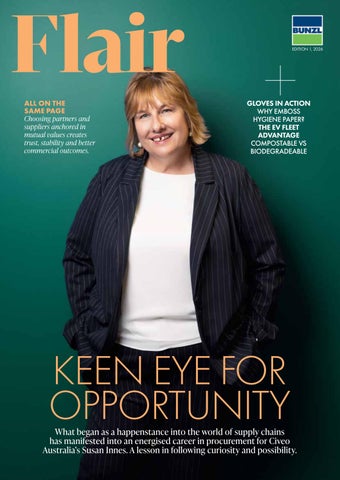
What began as a happenstance into the world of supply chains has manifested into an energised career in procurement for Civeo Australia’s Susan Innes. A lesson in following curiosity and possibility.

As the year gains momentum, this edition of Flair celebrates the innovation, craftsmanship and sustainability shaping our industries today.
Across food manufacturing, healthcare, hospitality and facilities management, we explore how practical thinking and attention to detail continue to raise the bar for quality and efficiency. From the precision behind Skope’s heating and cooling technology (pg 6), to how coloured gloves are improving food safety (pg 20) and why nitrile gloves remain essential for infection prevention (pg 28) – this issue highlights the smart solutions making a difference every day. You’ll also see how an embossed finish on hygiene tissue reflects care and professionalism that your customers notice (pg 32).
Sustainability remains at the heart of what Bunzl does. Take a look at how rPET packaging keeps valuable materials in circulation (pg 24), how compostable products play a role in responsible waste management (pg 12), and how our six new EV vans contribute to our Net Zero 1, 2 and 3 target commitment (pg 4).
Our feature article explores how the right partnerships must be based on trust and aligned values to deliver true benefit, with our feature guest, Susan Innes from Civeo, and Lachlan Mann from Bunzl offering insights on how well-being and satisfaction deliver a win-win in today’s professional relationships (pg 8).
Thank you for your partnership and for sharing our commitment to innovation, sustainability and progress across every industry we serve.

Mark Phelan Managing Director, Bunzl Australia & New Zealand

4 & 5 Spotlight: Sustainability 6 The Process: The Art Of Display
7 Check Out: The Power Of Insight
8 Values First
How shared ethos drives stronger business partnerships and operational certainty.
12 High-Caliber Compostables
Learn about the key differences between compostable and biodegradable materials to improve waste decisions.
16 Crafting The Perfect
Smallgoods producers are using the winter months to perfect premium cured meats and meet customer interest.
20 Control By Colour
Visual cues from gloves help operators prevent crosscontamination and infection.
24 Circular By Design
Using rPET helps businesses meet sustainability goals without sacrificing product quality.
28 The Nitrile Advantage
Learn how nitrile gloves provide strong protection, comfort, and infection control for clinicians.
30 How To Don And Doff Gloves
Step-by-step instructions for how to safely put on and remove disposable gloves.
32 Pattern With Purpose
Embossed hygiene paper enhances performance while elevating brand experience.
34 The Chain Of Chance

35 Expert Q&A
Cover Photography: Graham Werner Cover Photography: Glenn Hunt
Susan Innes reflects on the journey from an accidental career to supply chain leader.
With Bunzl’s Lachlan Mann.
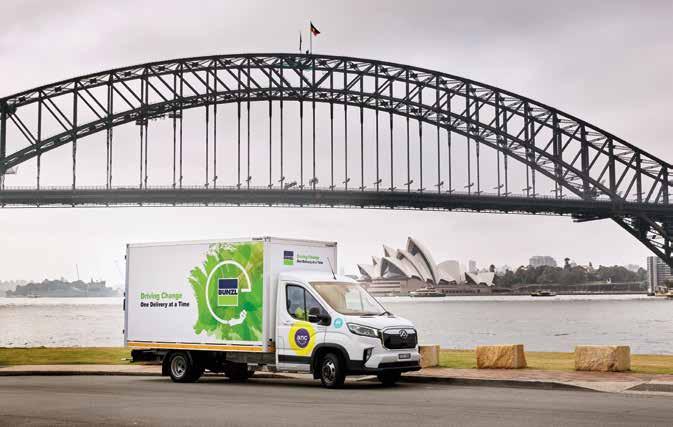
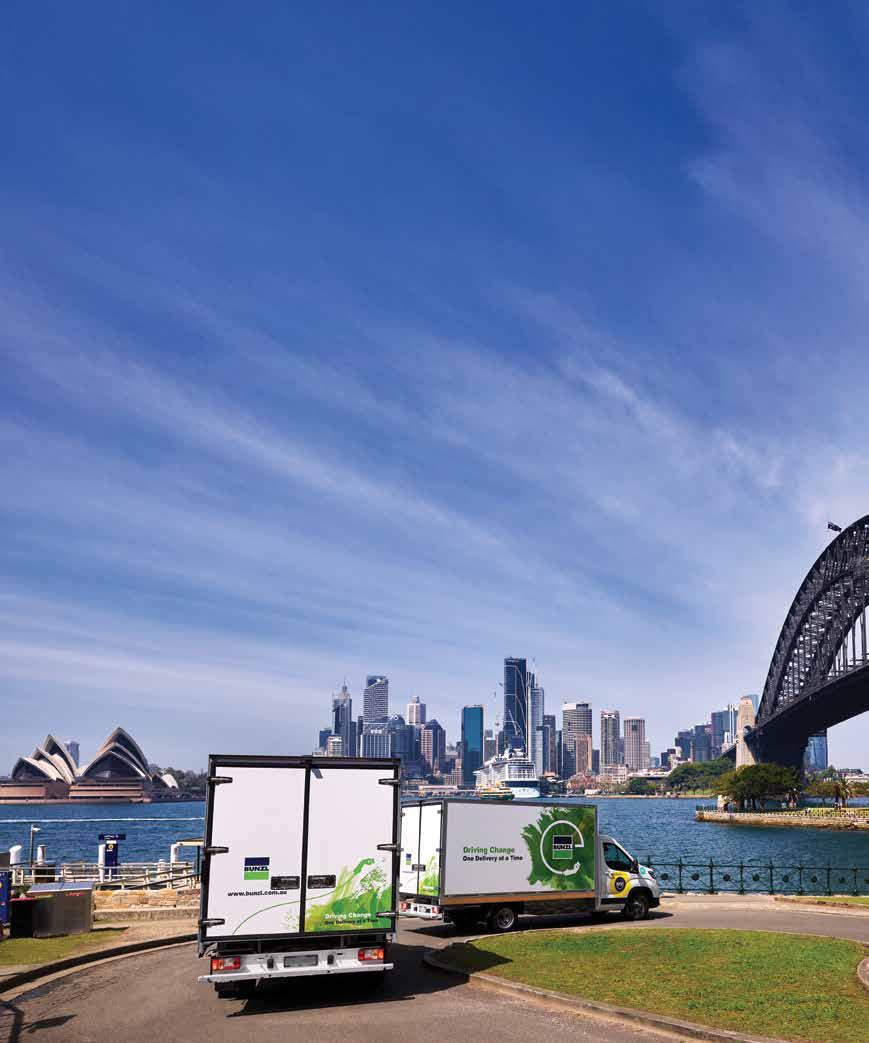
Bunzl’s integration of electric vans demonstrates how operational efficiency and carbon reduction can advance together.
BUNZL HAS TAKEN another step toward a lower-carbon future by integrating electric vehicles (EVs) into its New South Wales delivery fleet. In partnership with freight provider ANC, six new EV vans have joined the 26-vehicle operation, a move signalling sustainable intent and operational foresight.
Bunzl conducts approximately 150,000 deliveries in NSW annually. “We are very aware of how we can positively impact our delivery method and reduce carbon emissions with this first step,” says Scott Briggs, Bunzl’s Regional Operations Manager NSW. “These vehicles will complete more than 15,000 local deliveries, transporting over 10,000 pallets and 25,000 cartons.”
Bunzl’s transition to EVs forms part of Bunzl Asia Pacific’s Carbon Roadmap, which aims for Net Zero Scope 1, 2 and 3 by 2050. EVs now perform 15% of Bunzl’s NSW deliveries, with a projected 23% reduction in annual fleet emissions. While these figures reflect progress, the real story lies in how operational changes can support broader sustainability goals without disrupting performance or reliability.
According to the Department of Climate Change, Energy, the Environment and Water (DCCEW), the transport sector is currently Australia’s third-largest carbon emitter, accounting for around 22% of Australia’s emissions. Passenger cars and light commercial vehicles alone contributed 60% of transport emissions and over 10% of Australia’s total emissions.
By rethinking fleet management and integrating EVs, businesses can prove that decarbonisation and efficiency can align. Lower running costs, reduced maintenance and quieter operation make EVs an intelligent investment in longterm performance. For partnering businesses, that means consistency, reliability and assurance that their supply chain partners are building toward more responsible operations.
“This is another example of Bunzl’s commitment to driving sustainable solutions,” says Mark Phelan, Managing Director, Bunzl ANZ. “As one of Australia’s largest distributors, moving to electric can play a crucial part in cutting carbon emissions and realising our carbon roadmap targets.”
The introduction of EVs reflects a philosophy that connects sustainable responsibility with operational excellence. This philosophy continues guiding businesses toward Net Zero and a logistics network built on intelligence, efficiency and purpose.
Governments are tightening environmental laws as the global focus on climate change intensifies.
AS CLIMATE CHANGE becomes an urgent global priority, governments around the world are tightening environmental laws. One key development is the introduction of mandatory climate-related disclosure regulations in Australia, which require businesses to report on how climate risks and opportunities affect their operations. These regulations aim to improve transparency, accountability and comparability of climate-related information for regulators, investors, customers and other stakeholders.
Australian regulations align with the Taskforce on Climate-Related Financial Disclosures (TCFD), one of the most widely adopted frameworks. TCFD requires businesses to disclose information across four key areas: Governance – How the board and management oversee climate-related risks and opportunities.
Strategy – The actual and potential impacts of climate risks and opportunities on the business model, strategy and financial planning.
Risk Management – How climaterelated risks are identified, assessed and managed.
Metrics and Targets – The metrics and targets used to assess and manage climate-related risks and opportunities, including greenhouse gas emissions.
Depending on the size and nature of the business, these disclosures may be voluntary or mandatory.
Bunzl is required to meet the new disclosure requirements and has been preparing accordingly. However, we aim to go beyond minimum regulations and set higher standards in every region we operate. We are undertaking initiatives not only to comply but to achieve our ambitious carbon reduction and sustainability goals. In recent years, we have:
• Committed to the UN’s Race to Zero campaign for a net-zero economy by 2050.
• Supported the Business Ambition for 1.5ºC campaign.
• Installed rooftop solar at major distribution sites.
• Converted parts of our fleet to electric and hybrid vehicles.
• Had our global climate targets approved by the Science Based Targets Initiative (SBTi).
• Achieved certification under the ISO 14001 environmental management standard.
Disclosures generally include scope 1, 2 and 3 emissions. Scope 3 emissions – indirect emissions across the value chain – are often the most complex to measure and control but are increasingly part of mandatory reporting frameworks. Bunzl are now expanding its efforts to address scope 3 emissions. This includes engaging with our top 750 suppliers to set science-based targets and working with partners to reduce impact, such as consolidating orders and introducing EV trucks into our delivery network. We believe collaboration is key to achieving climate sustainability.
Contact your Bunzl representative to find out more.

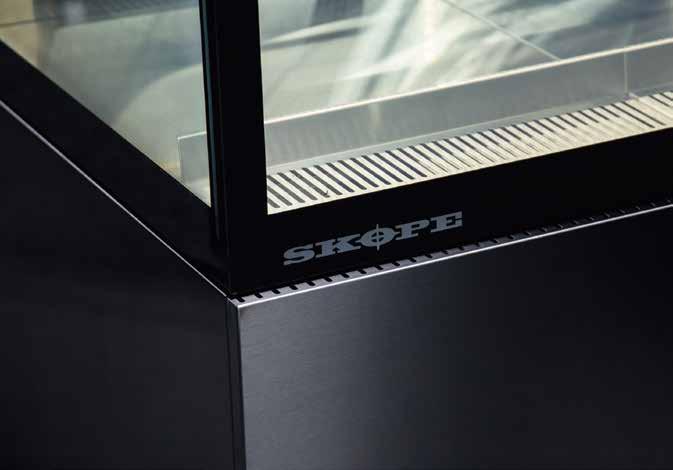
SKOPE’s ActiveView food display range lets food take centre stage, with premium engineering that works quietly behind the scenes.
IN TODAY’S HOSPITALITY and food service space, presentation isn’t an afterthought; it’s an operational strategy. Across cafés, hotels, restaurants and quickservice venues, visual appeal has become central to how customers perceive quality and value. Before a single bite is taken, the way food is displayed, lit and framed can shape an entire experience.
For operators, that visual language has become part of their brand identities, and SKOPE’s ActiveView premium food-display range – including refrigerated and heated models – is built precisely for that intersection of design and performance.
ActiveView units’ frameless, double-glazed glass panels eliminate visual distraction, allowing food to take centre stage while maintaining optimal temperature control. Heated glass prevents condensation, keeping displays crystal-clear even in humid environments. Subtle LED edge lighting runs along each unit’s vertical lines, evenly illuminating every shelf.
The ActiveCore removable refrigeration cartridge in the refrigerated units redefines maintainability. Rather than replacing an entire unit if issues arise, technicians can service or swap out the cartridge in minutes. This minimises downtime, reduces waste and keeps displays operating at peak performance. Its low-
energy design also significantly cuts running costs, helping businesses achieve real energy savings without compromising temperature accuracy or reliability. Through SKOPE-connect, users can easily switch between a food-safe refrigerated setting (1–4°C) and a controlled ambient mode (15–18°C). This capability allows a single cabinet to serve multiple roles, reducing the need for separate displays and freeing up capital for other investments. It also supports more sustainable operations by minimising equipment redundancy and energy waste.
Beyond its technical precision, ActiveView’s efficiency is evident in its space utilisation. The rear-breathing ventilation system allows each unit to be built flush into counters and cabinetry, eliminating the need for visible gaps or bulky clearance zones. It’s a design choice that frees valuable floor space, streamlines service areas and supports the clean, architectural lines preferred in today’s dining and display environments. Combining precision engineering with visual sophistication, SKOPE’s ActiveView range helps operators create displays that perform as well as they present, turning first impressions into lasting ones.
Contact your Bunzl representative to find out more.
Bunzl’s Innov8 series is a living conversation where understanding and expertise meet in real time.
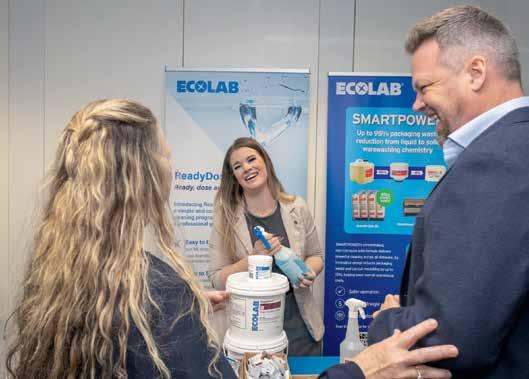
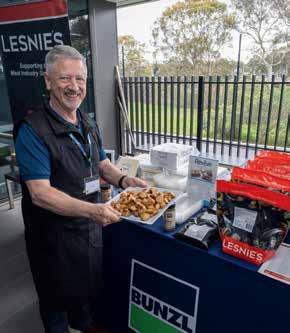
IN A CLIMATE defined by rapid change, there’s no substitute for hands-on learning. Opportunities to meet manufacturers face-to-face, see entire product ranges, and ask industry experts business-specific questions are priceless. Bunzl’s Innov8 series – which visited Adelaide, Perth, Melbourne, Brisbane and Sydney, wrapping up in October 2025 – harnesses this idea, creating events where learning and discovery meet real-world situations and challenges. This year’s Innov8 brought together customers, suppliers and industry specialists. The goal? To share insights and explore product trends, sustainable manufacturing and new techniques shaping the future of healthcare, hospitality, food processing and facilities management. Innov8 creates a space where customers can get clear, practical answers to the questions that drive business decisions. Bringing procurement leaders, managers and operations teams together with the manufacturers who shape their everyday tools and technologies creates a space for open discussion that helps build understanding across sectors. Unlike conventional product expos, Innov8 is built around connecting. Attendees can question,
test and compare products in person, gaining clarity on performance, functionality and suitability for their specific business. From packaging updates and energy-efficient cleaning systems to the latest equipment innovations, each interaction gives attendees a clearer picture of how solutions perform day-to-day.
Procurement managers can assess how new technologies align with their sustainability targets and operational frameworks, while suppliers share progress on circular economy initiatives and design improvements. This transparency builds trust and drives smarter purchasing decisions across diverse industries.
What sets Innov8 apart is its focus on the future. Conversations move beyond the next order cycle to cover the standards, products and practices that will shape the coming years. From regulatory changes to new and improved products, attendees walk away with clear, actionable insights they can apply directly to their day-to-day business decisions and strategic planning. As industries evolve, so do the challenges they face, from compliance pressures to workforce demands and sustainability targets. Innov8’s strength is that it helps bridge those complexities through learning and knowledge exchange. Innov8 will continue in 2026, bringing together new ideas, technologies and connections.
To learn more or express interest in attending, speak with your Bunzl representative.
Across both Australia and New Zealand, leadership teams are reframing how they choose partners and suppliers as a strategic lever. The pivot point?
Choosing partners for cultural fit, trusting partnership and total transparency – then co-designing strategies that remove friction end-to-end. At this baseline, shared integrity is less of a lucky could-have, and more of a strategic approach for companies aiming for production efficiency.
This shift reflects a growing understanding that a company’s strength is shaped less by contracts and more by how people, teams, and expectations connect in practice. When values are aligned early, decisions downstream move faster and with greater confidence because of shared views on risk, accountability and care.
As Lachlan Mann, General Manager Facilities Management at Bunzl ANZ, puts it: “We’re definitely seeing a shift in the market toward partnerships based on shared principles rather than purely on product and price. When organisations choose partners who align on commitment to safety, sustainability and service excellence, it creates a foundation for collaboration that goes beyond mere transactional relationships.”
That collaboration, then, becomes easier, and the risks are lowered. Decisions extend
beyond the next tender cycle; that means shared governance, common KPIs and faster, more confident execution across distributed ANZ networks. It also means fewer escalations, because teams are empowered to resolve issues at the point of impact rather than pushing them up the chain.
Teamwork and authenticity matter the most when they show up in operating behaviour. At workforce hospitality facilities services company Civeo Australia, alignment is baked into how suppliers are screened and managed.
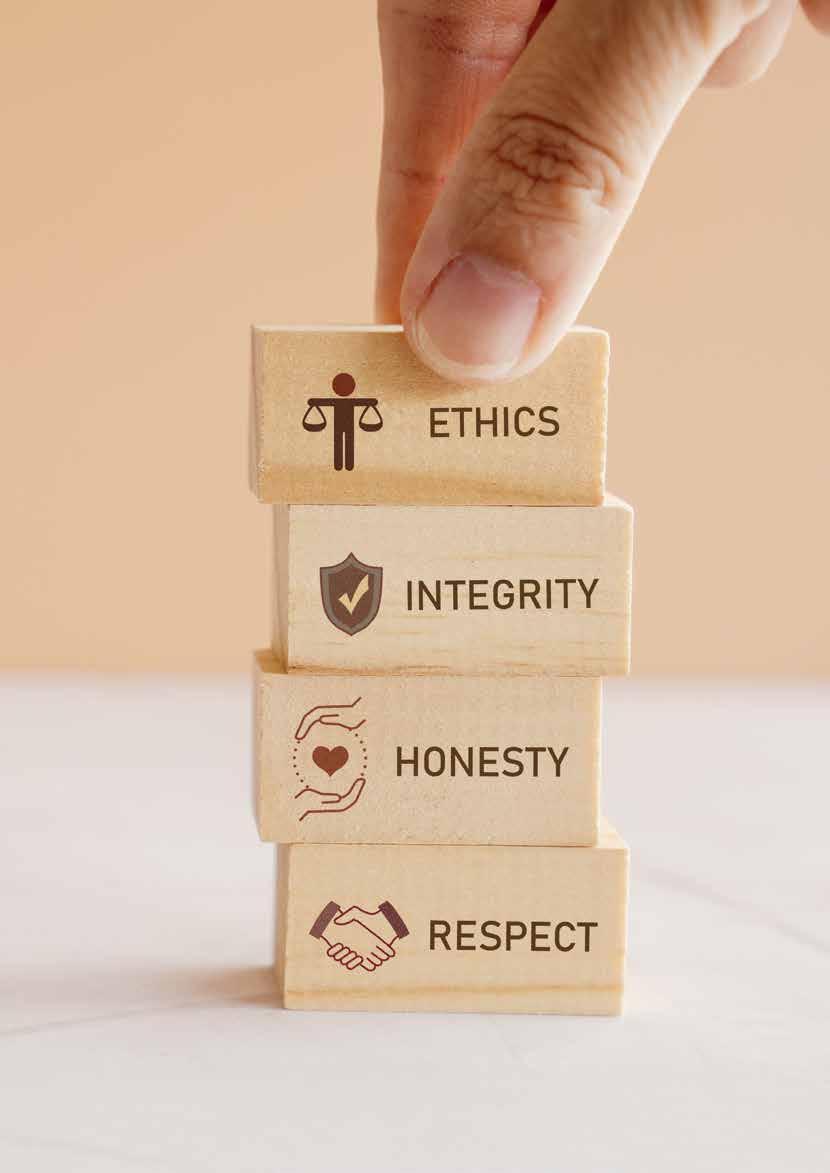
“Teamwork and an alignment of ethics set the foundation for partnership,” says Susan Innes, General Manager, Supply Chain at Civeo. “We seek partnerships built with our suppliers that uphold the same ethos of safety, care, integrity, excellence, respect and collaboration that guide our business.”
In hospitality, facilities and remote-site logistics, that foundation translates to predictable service windows and compliant product standards. It also means partners invest in the right capabilities – people, systems, on-the-ground know-how – to operate as an extension of internal teams across the business. It also means people listen to people to understand pain points and what success looks like for both businesses.

Shared values unlock the trust needed to share the data that actually drives performance –everything from rolling forecasts and inventory status to delivery timelines, project staging and site priorities. That same transparency also creates space for more strategic conversations, where partners can step back from day-today transactions and actively improve how the business operates. In the Bunzl–Civeo partnership, this shows up through ongoing product rationalisation across cleaning and catering ranges, with both sides working together to reduce unnecessary SKUs, drive cost savings, improve availability and standardise products across sites; decisions that support profitability on both sides, not just one.
“Transparency is a game-changer because it removes uncertainty and builds confidence between partners,” says Mann. “When information flows openly, whether it be about stock levels, lead times or potential challenges, both sides can plan proactively on a solution.”
The real payoff is improved reliability because commitments are grounded in real-time inputs
“Teamwork and an alignment of ethics set the foundation for partnership. We seek partnerships built with our suppliers that uphold the same ethos of safety, care, integrity, excellence, respect and collaboration that guide our business.”
and live data. There’s also faster responsiveness because both sides see the same constraints, as well as greater operational certainty because scenario plans exist before the pressure arrives. In environments where variability is high, the difference is felt on the floor instead of just in monthly dashboards.
The strongest sign that collective priorities are working is when the boundary between ‘supplier’ and ‘internal’ blurs in the right way; think shared planning and proactive collaboration well ahead of a problem.
“Our supply partners are an extension of our villages,” says Innes. “When values align – on safety, ethics, and transparency – everything else becomes easier: service is steadier, risks are managed early, and our teams can focus on caring for people.”
That’s especially valuable in ANZ’s dispersed geographies, where distance tends to magnify even the smallest inefficiencies. With a shared common purpose and principles, partners can anticipate and mobilise, which cuts down on disruptions and protects both the customer experience and workforce safety.
A strong values-based business model provides a shared decision-making framework that guides behaviour, reduces ambiguity and allows teams to act with confidence.
• Accountability: Bake in non-negotiables (i.e. safety, ethical sourcing, sustainability standards) into onboarding and contracts.
• Authenticity: Operationalise transparency with shared demand/supply plans and review cadences.
• Teamwork: Invest in culture. Make sure the field teams on both sides know each other and share the same playbook so that they’re acting as extensions of either team.
• Respect: Maintain consistent points of contact to build trust, continuity and institutional knowledge.
• Integrity: Choose long-term trust over shortterm advantage when trade-offs are required.
Get it right, and you’ll enjoy a repeatable process that reduces variability while elevating service delivery. Why? Because partners with aligned codes of conduct make promises and keep them. They consistently deliver. That’s the strategic advantage that industry leaders are investing in across Australia and New Zealand.

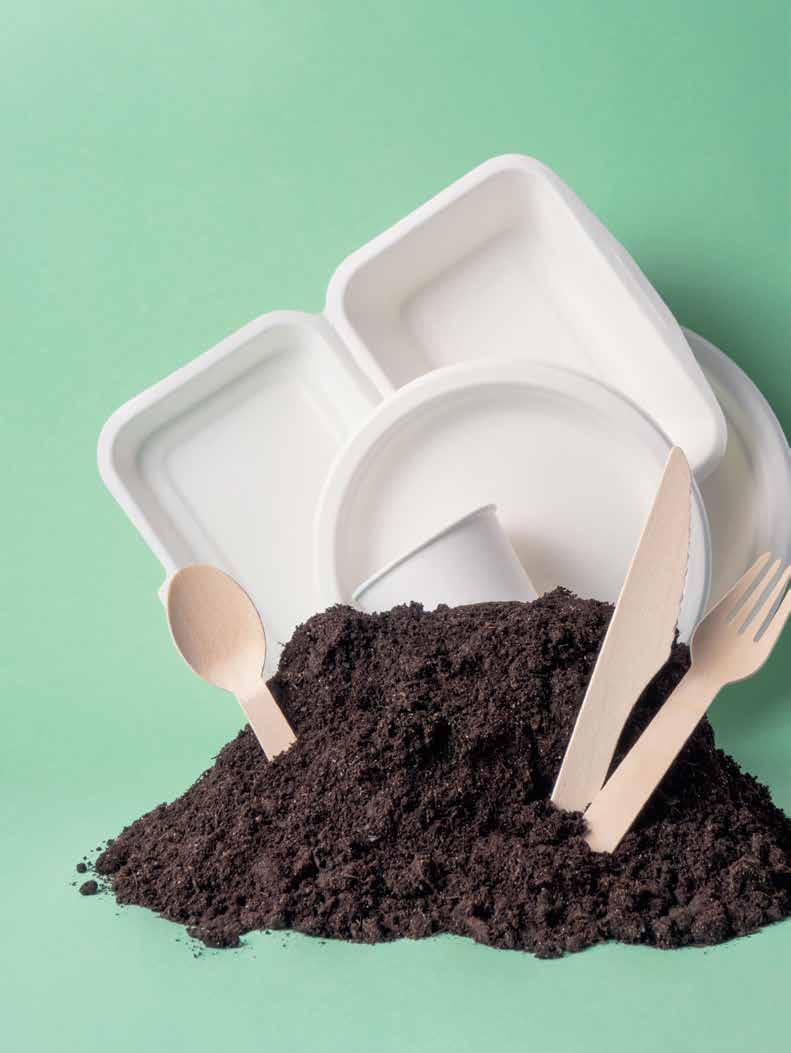
The right label in the right bin can save tonnes of material from landfill. That’s why it’s important to understand how biodegradable and compostable products behave, and which option best suits your waste streams and sustainability goals.
In facilities management, healthcare and hospitality sectors, both biodegradable and compostable products have roles to play. Biodegradable materials break down naturally over time – an increasingly valuable attribute for operators looking to move away from conventional plastics. Compostable materials take this one step further, breaking down into organic matter within defined, shorter timeframes and conditions.
“Compostable materials, if handled in the right disposal stream, can contribute positively to soil health and reduce pollution, whereas biodegradable claims may be less reliable in outcome.”
‘Biodegradable’ simply describes a product or substance that breaks down over time. The important considerations are how long that breakdown takes, what conditions it requires and what are its results or outputs.
“It’s crucial to understand whether a product is suitable for home or industrial composting.”
By understanding the distinction, operators can reduce contamination in waste streams, build brand trust, support sustainability goals, and make confident, evidence-based procurement decisions.
“While all compostable materials are biodegradable, not all biodegradable materials are truly compostable,” says Felicity Kelly, Head of Sustainability at Bunzl Australasia.
Some biodegradable plastics are conventional plastics with small quantities of additives to help them break down faster. Often these plastics are called oxo-degradable, oxo-biodegradable, photo-degradable, photofragmentable, enzymemediated, or landfillbiodegradable. Instead of fully breaking down like biobased plastics, these materials may leave behind microplastic residues, which can pose environmental risks if they enter the wrong waste stream.
‘Compostable,’ on the other hand, breaks down fully into organic matter within specific timeframes and conditions (such as a home compost or industrial composting facility). They can be made from plant-based or synthetic materials; what matters is that they meet

compostability standards and create nutrientrich biomass that supports soil quality.
Certifications for compostable plastics provide buyers with trustworthy information to help them make informed choices. In Australia and New Zealand, there are two relevant Standards: AS 4736:2006 and AS 5810:2010. To be certified compostable, a product must be entirely made from plant-based materials and contain no conventional plastics.
AS 4736:2006 specifies ‘compostable’ plastics for industrial facilities. These require higherthan-ambient temperatures, humidity and specific microbial conditions.
AS 5810:2010 specifies ‘home compostable’ plastics that will break down at ambient temperatures in a home composting system. It’s crucial to understand whether a product is suitable for home or industrial composting. But it’s also vital, if you’re sending products to an industrial composting facility, such as those provided by local councils, to check that the facility can handle that type of product. Not all
“Compostable materials, if handled in the right disposal stream, can contribute positively to soil health and reduce pollution.”
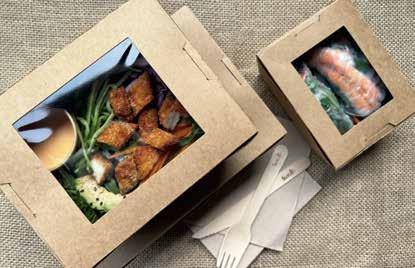
Looking for compostable alternatives? Scan here.
facilities accept compostable plastics into their compost streams. Introducing such plastics can pollute their composts, potentially increasing costs, damaging machinery and even causing entire loads to be sent to landfill. Confirm acceptance with your local processor or council before disposal, as many facilities in Australia and New Zealand do not accept compostable plastics, even if certified.
Compostable plastics will not suit every situation. You might prefer them because they’re biobased rather than conventional plastics—and that’s perfectly reasonable. But if you’re aiming to reduce waste to landfill and want to compost, then you must ensure that waste providers can compost your items. If that is not possible, recycled-content products, or items that can be easily recycled within your existing systems, may be a better fit. Whatever you choose, align purchasing decisions with clear, evidence-based assessments of your waste pathways and sustainability objectives. “Customers, staff, and other stakeholders value the brands that do the right thing,” says Kelly. “When stakeholders see consistent and science-based claims, over time, trust turns into loyalty. Customers and employees associate the brand with honesty, environmental responsibility, not greenwashing or short-term marketing.”
Knowing the difference between biodegradable and compostable materials is the first step toward specifying the right product for your business, your customers and your waste system.

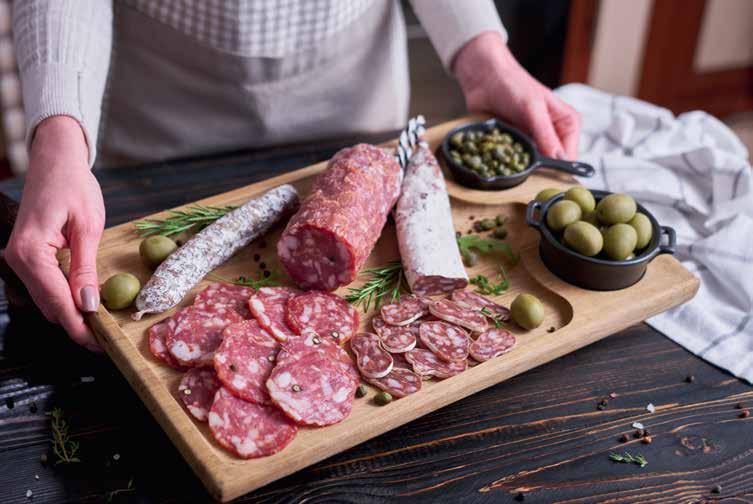
Everything you need to craft authentic salami – from casings and cures to premix.
CODES: NAT1000111368, VHH2832BB1, LES1100504 & LES1200201

www.bunzl.com.au/salami



AS THE WINTER PRODUCTION SEASON APPROACHES, ARTISAN MAKERS ACROSS AUSTRALIA AND NEW ZEALAND ARE LEANING INTO TRADITION AND MODERN PRODUCT DEVELOPMENT TECHNIQUES ALIKE TO MEET THE GROWING DEMAND FOR PREMIUM SMALLGOODS – WITHOUT LOSING THE CRAFT THAT SETS THEM APART.
The market wants your craftsmanship. Premium cured meats are outperforming mass-market lines as younger, urban consumers seek highquality, distinctive flavours. While some shoppers are moderating their ham, bacon and salami consumption for health reasons, demand for preservative-free, gluten-free and salt-reduced variants is rising. In Australia, salami represents a sizeable market at $1.1 billion (2024), while in New Zealand, the other deli meats segment (i.e. sliced chicken, turkey, roast beef, prosciutto, salami, chorizo, pastrami and bresaola) reached NZD$228.7 million (2024). Both are clear signals that continental styles are still firmly in the mainstream.
MAKE THE COOL MONTHS COUNT
Cooked salami can be made year-round, but for fermented varieties, ‘salami season’ (April to July) is where the craft is truly won. The cool months bring together tradition, precision and the discipline that define premium smallgoods. Use this window to tighten your operation and set the tone for the year ahead:
• Forecast then secure inputs: Purchase casings, twines, calibrated cultures, hardwoods, spices and functional ingredients early.
• Calibrate your line: Double-check grinder plates, mincer speeds and fermentation cabinets.
• Tighten specs: Set limits for particle size, salt percentage, starter dose, target pH curve and smokehouse profiles.
• Plan your packaging: Set your format, slice profile and pack size for each channel (retail, deli-slice, foodservice) before you scale.
Consumers still want the texture and aroma of a traditional product, but tuned for modern preferences. That’s driving investment in salt-reduced and clean-label offerings (e.g. preservative-free lines) alongside low-fat bacon and portioncontrolled formats. Makers who can create classic sensory cues with a lighter profile can win market share without diluting their brand.
“Consumers still want the texture and aroma of a traditional product, but tuned for modern preferences. That’s driving investment in salt-reduced and clean-label offerings (e.g. preservative-free lines) alongside low-fat bacon and portioncontrolled formats.”
Niche lines – think wood-smoked short-cut bacon or regional salami styles – can command higher price points and defend margins against private-label and imported products. Industry outlooks point to modest growth overall, with gains accruing to manufacturers that invest in innovative product development and premium positioning. In terms of longevity, vacuum and modified-atmosphere packaging can extend shelf lives and allow your products to reach a broader customer base without compromising on freshness – essential for premium lines that need time to sell through at the right price. Advancements in curing and smoking continue to improve consistency, helping artisans to scale without losing their signature profiles.
Get prepared for your salami season. Scan here.
Competition will remain intense, but the segment is rewarding makers who lean into their craft with operational discipline. If your team owns the details – from starter performance to ‘sliceability’ – and communicates them with confidence, your business will earn the right to play at the premium end all year. Use the cool winter months to set your standards. Then let your products do the talking.



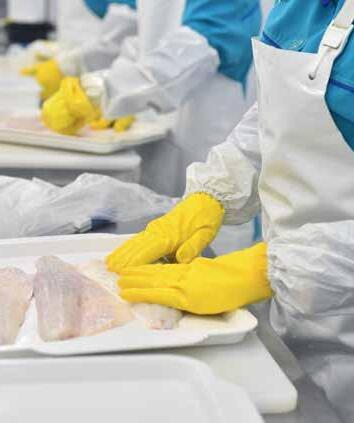
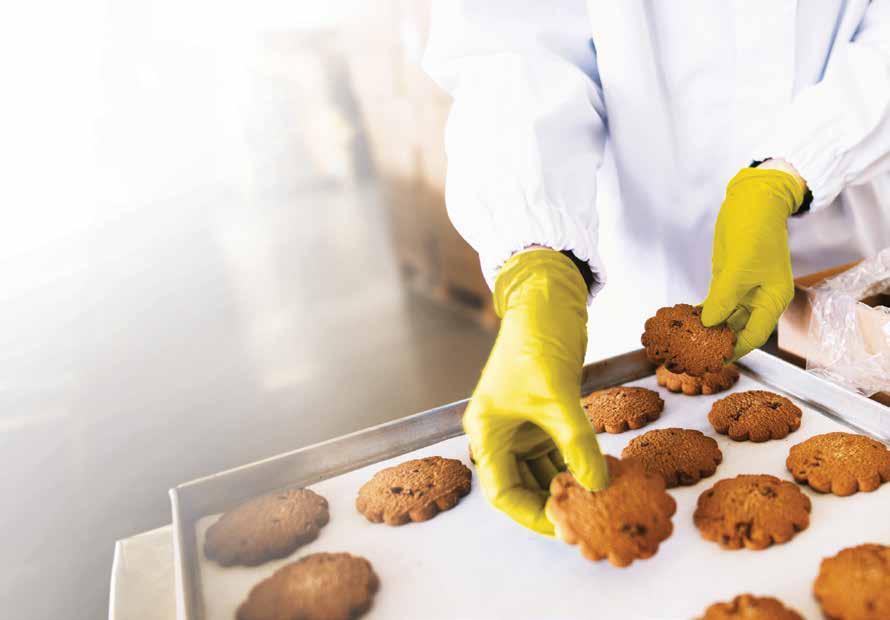
IN HIGH-VOLUME PLANTS ACROSS AUSTRALIA AND NEW ZEALAND, COLOURED FOOD-HANDLING GLOVES ARE A LOW-COST VISUAL CONTROL THAT IMPROVES HYGIENE AND ALLERGEN MANAGEMENT WITHOUT SLOWING PRODUCTION.
In high-volume plants, visual cues beat guesswork. Blue and yellow gloves give leaders instant confirmation that hands are in the right place –and a quick warning when they’re not. Fewer mix-ups, fewer stops, smoother throughput. Contrasting glove colours help teams separate raw and cooked zones, allergen lines and rework areas. That simple contrast cuts the errors that drive waste and recalls.
“Colour coding is an effective way to prevent cross-contamination and reduce allergen risk,” says Tracy Ngui, Bunzl ANZ Category Manager, PPE. “Differentiating foodhandling areas by glove colour lets employees confirm standards at a glance.” Yellow gloves are especially useful when they contrast with products and surfaces. Against stainless, doughs and most proteins, yellow pops – making hands and movements easy to track and out-of-zone work obvious.
seafood or carcasses. In Australia and New Zealand, where facilities may run multiple shifts and product types, a colour-coded glove program can streamline changeovers and reinforce standard work practices without unnecessary complexity.
Keep your colour choices limited and intentional –think blue and yellow – so cues stay as unambiguous as possible across different zones. Try not to match glove colour to ingredients; when colours blend, foreignobject fragments are much harder to detect.
“Differentiating food-handling areas by glove colour lets employees confirm standards at a glance. Yellow gloves are useful when they contrast with products and surfaces.”
Correctly selected gloves protect food from contamination and cross-contamination, and protect workers from irritants, moisture, harsh cleaning solutions and more. They also cover minor cuts and abrasions, and minimise exposure to pathogenic microorganisms when handling raw meat, poultry,
Bright colours can help detect physical contaminants (e.g. spotting a torn fingertip in a mix) much more readily than neutral tones. Each site should set its own colour-use protocols based on foreign object and allergen risk profiles, then standardise them in standard operating procedures (SOPs) and onboarding so every contractor and temp follows the same rules from day one.
Visual systems only work if they’re easy to apply at speed. “Facilities need processes that are efficient and effective,” says Jim Rowntree, National BDM Corporate Accounts, Processor & Industry Division. “Colour coding systems can be complex, while

colour-coded gloves are easy to use and visually distinct. While some colour-coding systems can be complex, glove differentiation is an immediate and cost-effective way to ensure food safety and avoid contaminants, maintain the quality of the product and the reputation of businesses.”
Back it with simple enablers:
• Signage at line entry that maps colour to zone/task)
• Glove dispensers positioned by zone
• Waste streams that keep colours separate
• Quick shift-start checks; supervisors audit at a glance – does the colour in this zone match the task?
Think of coloured food-handling gloves as more than PPE. They’re visual management tools that help teams uphold hygiene and allergen controls at scale. Looking to strengthen hygiene and allergen control in your operation? Scan here.





RECYCLED PET DELIVERS FOOD-GRADE PERFORMANCE WITH A SMALLER ENVIRONMENTAL FOOTPRINT, HELPING OPERATORS MEET SUSTAINABILITY TARGETS WITHOUT COMPROMISING FOOD SAFETY, CLARITY OR STRENGTH.
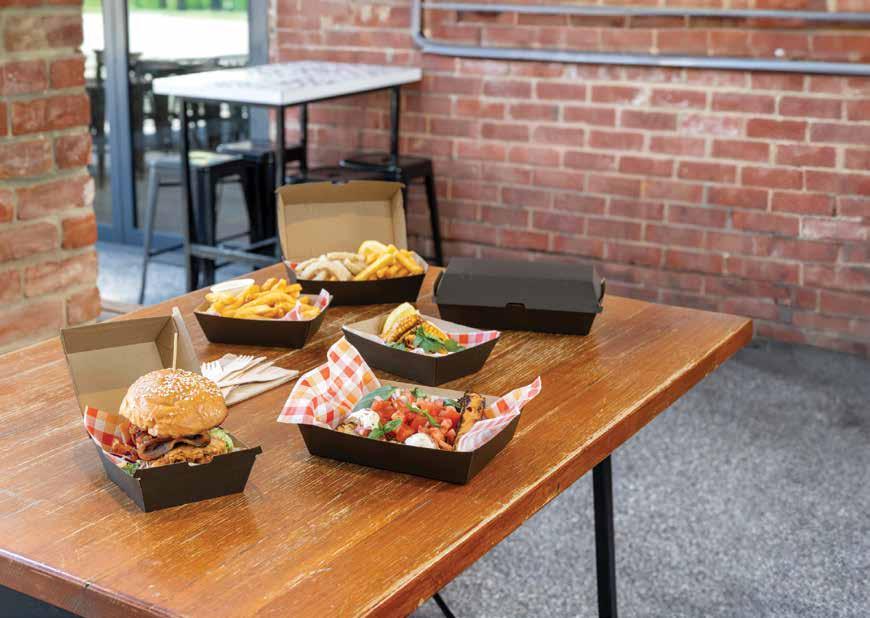
Plastic packaging is facing increasing scrutiny as customers and regulators focus on its environmental impact, particularly its role in plastic pollution and waste. For businesses wanting to meet customer expectations, achieve sustainability targets and still offer high-quality food, rPET can provide a compelling solution. Recycled polyethylene terephthalate – better known as rPET – can be a smart and sustainable food packaging choice across the foodservice, retail and hospitality sectors. It keeps valuable materials in circulation, reduces energy and resource consumption, and helps businesses to reduce their environmental footprint and support a circular economy. Adopting rPET is valuable for brand positioning and may reduce exposure to emerging virgin-plastic charges. That’s a wide range of benefits.
THE RECYCLING PROCESS
Progressive companies are embracing sustainability, and many are using rPET in their packaging because of its strong environmental credentials – it saves energy and resources while diverting plastic from landfills. Turning PET into food-grade rPET involves collecting PET from sources such as water bottles and food packaging, then decontaminating, crushing
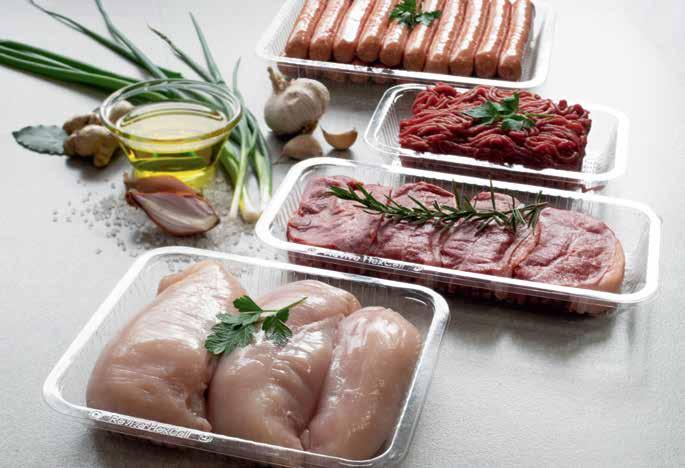
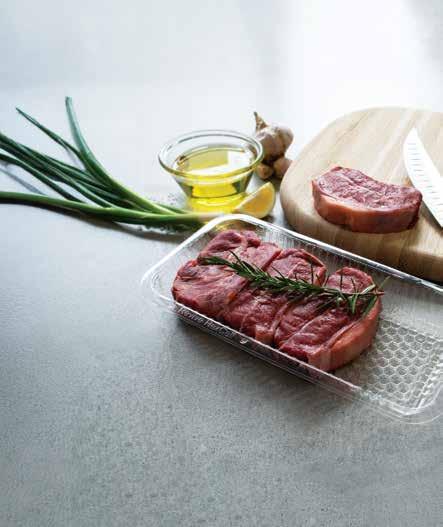
and melting, before extruding it into pellets. Sometimes rPET is spun into fibres and used in clothes or carpets. It can also be used in industrial applications, for example, in strapping. More often, it is reshaped into bottles, containers, trays or other food packaging, often after being blended with some virgin PET for safety and performance reasons.
Despite additional processing steps, life-cycle analysis shows that fewer greenhouse emissions are emitted into the atmosphere using recycled, compared to virgin PET. A life-cycle assessment, conducted by sustainability and environmental international consulting firm Denkstatt Group, found that rPET production (including collection, transportation, sorting, washing, processing, and granulating) resulted in 79% fewer greenhouse gas emissions than virgin PET production.
Choosing rPET can make a significant difference to a business’s broader environmental footprint. By choosing products that are 100% recyclable and made from recycled materials, a company adopts a purchasing approach that supports its sustainability goals while also reducing the amount of waste sent to landfill.
With rPET offering the same strength, rigidity, barrier properties, appearance and temperature
Looking to incorporate rPET into your sustainability strategy? Scan here.

tolerance as PET, it provides a sustainable solution without compromising quality, safety or appearance. And with many consumers making purchasing decisions based on environmental factors and their perception of businesses’ sustainability credentials, using rPET for food packaging can also be a revenue booster.
With performance confirmed, the next question is timing. According to Greg McGrath, national business development manager and MAP tray specialist at Bunzl ANZ, if you haven’t yet made the switch to rPET for food packaging, now could be a good time.
stronger regulation similar to the virgin plastic taxes that were successfully introduced in the EU.”
“Adopting rPET across foodservice, retail and hospitality is valuable for brand positioning and may reduce exposure to emerging virgin-plastic charges.”
“In line with APCO’s 2025 National Packaging targets, MAP trays are under serious sustainability pressure in Australia,” McGrath says. “Many food processors may still be using virgin plastic trays, which are also going to landfill. There’s growing discussion of policy change, with parts of the Government considering
In light of the potential introduction of taxes on virgin plastic packaging, McGrath’s advice is simple: “Look for a product that is recyclable and made from recycled materials.” Regulatory pressure is one of the factors driving global growth in rPET. The global rPET market is currently worth US$11.7 billion, and it is expected to grow at a compound annual growth rate of 6.1% over the next decade, reaching US$20 billion by 2034, according to a report by Custom Market Insights. Corporate sustainability goals and technological advances that have improved the clarity and strength of food-grade rPET are also driving growth.
For Australian and New Zealand businesses looking to support a circular economy, future-proof themselves against regulations, and attract and retain ethical consumers, rPET is an enticing option.

STRONG PROTECTION, CONFIDENT HANDLING, COLOUR CODED AND FIT FOR LONG WEAR – WHY MORE ANZ ORGANISATIONS ARE TURNING TO NITRILE GLOVES FOR EVERYDAY INFECTION CONTROL.

In high-tempo clinical environments, gloves must hold the line. Nitrile gloves deliver superior puncture and tear resistance to reduce barrier failures, while retaining tactile sensitivity for procedures that require precision. Perhaps more importantly, nitrile resists common disinfectants and bodily fluids better than many alternatives, offering superior protection. As nitrile gloves are latex- and powder-free, they also minimise the risk of latex sensitivity reactions for staff and patients. The result? Dependable protection that integrates with standard and transmissionbased precautions in hospitals, aged care, primary care and emergency services.
Gloves are a frontline measure for preventing contact-based infections – protecting clinicians as they deliver patient care and when handling devices and near-patient surfaces.
“Effective hand hygiene is one of the most important strategies in preventing healthcareassociated infections,” says Lesley Barton, Bunzl ANZ, National Clinical, Quality and Governance Manager. “Strong, good-quality gloves should be used for all manual contact with patients, associated devices and immediate environmental surfaces to avoid the risk of infection and contamination.”
Across Australia, healthcare-associated
Opt for nitrile gloves for reliable protection. Scan here to see more.
infections remain a material challenge in acute care, with over 165,000 such incidents occurring every year. But they also happen in officebased practices, community health, long-term care and paramedic settings. All of this should underscore the very real need for consistent glove standards beyond the hospital ward.
Protection must be paired with prudent use. In intensive care units across Australia and New Zealand, clinicians use around 30 pairs of gloves per patient per 12-hour shift. That volume makes glove stewardship a must. This includes enforcing task-based glove use, selecting medical-grade nitrile gloves appropriate to their intended use and reinforcing proper donning and doffing to help staff avoid self-contamination when changing between patients or activities. Also, check that training is in line with local and National guidelines and ensure supply planning anticipates demand peaks.
Build a standardised product matrix that matches clinical risk to glove properties, such as textured fingertips for grip when wet or extended cuffs for splash zones. Confirm chemical compatibility with the disinfectants in use (alcohols, chlorine-based agents, quats, peroxides) and validate comfort/ fit ranges to help with extended wear time. Finally, embed a culture of continuous quality checks (including batch documentation and barrier integrity testing), and reinforce correct donning and doffing practices, so that procurement, infection prevention and frontline teams are always following the same practices.
For healthcare providers, nitrile gloves are strong enough for demanding procedures, resilient against common disinfectants and safer for latex-sensitive users. Coupled with rigorous hygiene practices and stewardship, the right nitrile program will help reduce the risk of transmission while guaranteeing better outcomes for your patients and your workforce.
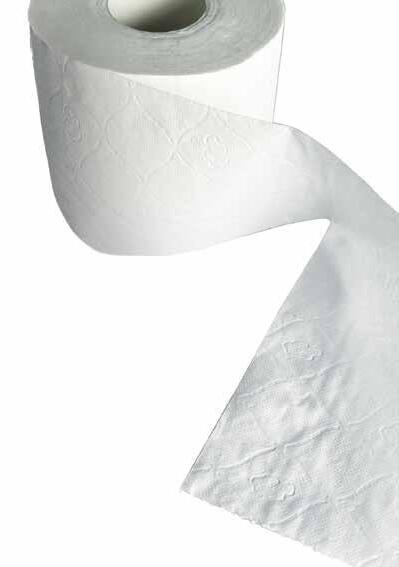
Crafted from renewable virgin wood pulp and 100% recycled fibres for a soft, high-quality finish that shows care in every detail.
www.bunzl.com.au/pristine

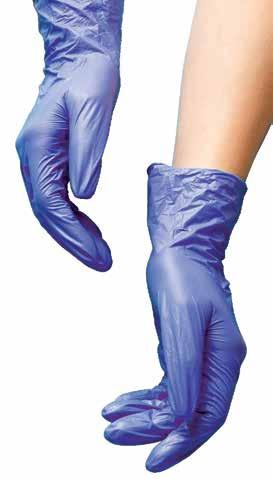
Correct donning (putting on) and doffing (removing) gloves is a critical process that requires significant care in order to limit exposure to pathogens.

Take out a glove from its original box.

Take the second glove with your bare hand and touch only the restricted surface of glove at the wrist.

Touch only a restricted surface of the glove at the wrist – the top edge of the cuff.

Prevent forearm contact by placing the new glove’s exterior over folded gloved fingers, making it easier to safely glove your other hand.

Pinch the glove near the wrist, avoiding forearm contact, and peel it away so it turns inside out during removal.

Firmly hold removed glove in gloved hand, slide ungloved fingers inside wrist, roll off second glove and fold it inside.
Then, perform hand hygiene by rubbing with an alcohol-based handrub or by washing with soap and water.

Don the first glove.

Once gloved, your hands should not touch anything that is not defined by indications and conditions for glove use.

Discard the removed gloves.

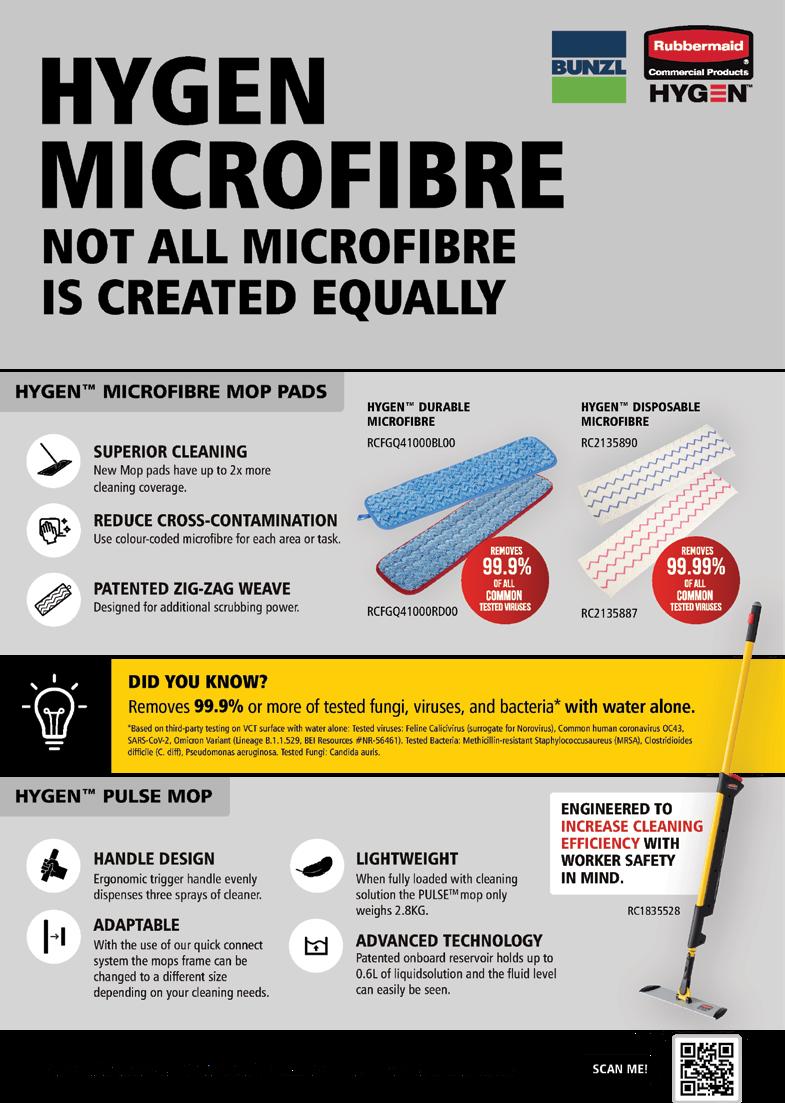
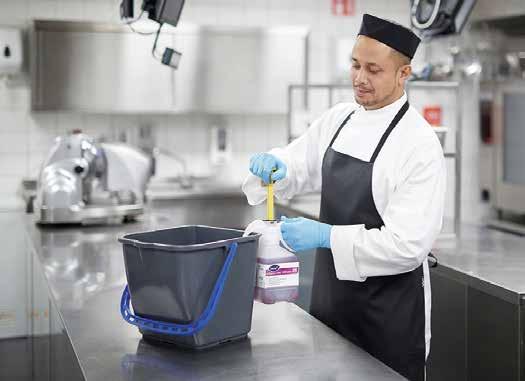
Cleaning is a laborious task at the best of times and for the many public sectors it is the one task that must be completed on a regular basis to a set industry standard. This is further compounded by the fact that customers demand the highest levels of cleanliness which they need to be able to see with their own eyes. Enter Diversey’s SmartDose system, an easy and straight forward range of concentrates which makes cleaning simpler and smarter.
SmartDose users can benefit from its sustainability credentials as one 1.4L SmartDose bottle typically equates to 280 ready to use (RTU) products. If you use an average of 100 cases of 6 x 750ml RTU product per year, the typical annual sustainability improvements are:
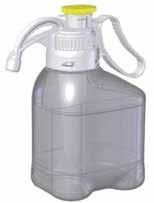
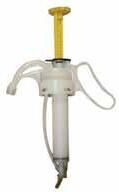
SmartDose bottles have been designed to make the mixing of concentrates simple and time efficient. The bright yellow head has two dosage levels available which are clearly marked allowing for concise mixing of solutions with information as to what each dose should be mixed with available on the bottle. The process of using the pump action on the bottle is simple: select the dosage required by twisting the top to the relevant symbol, pull the top up, push it down and then add water. Please note that the action of pushing down the top once it has been pulled up will dispense a shot of the concentrate so ensure the nozzle is positioned over the container you wish to make the solution up in.



Its design is easy to use and transport around large sites as cleaners will not need to carry large 5L bottles of cleaning fluid but rather a smaller 1.4L concentrated chemical. Equally, the reduction in bottle size means a reduction in plastic waste for your company.
• 441 litres less chemical that has to be manufactured, transported, stored and used (98.0% reduction)
• 41.2 kg less plastic packaging that has to be manufactured, transported, stored and disposed (97.8% reduction)
• 26.3 kg less cardboard packaging that has to be manufactured, transported, stored and disposed (97.8% reduction)
• 124.2kg less greenhouse gas emissions as CO2 equivalence due to packaging alone (98.5% reduction)
The SmartDose range is ultimately one which aims at making commercial cleaning simpler, safer, smarter and more sustainable and its design and operation delivers on these key areas.
The range includes a variety of cleaning solutions which have different purposes and operate with separate additional Diversey ranges. If you use the Taski cleaning system then SmartDose has a range which fits with it, likewise the Suma range also has SmartDose options available. For eco-options there are the Pur-Eco range, both of which can help your business reach its sustainability goals.
The various options all provide commercial cleaning solutions for the following areas and more:
• Glass Cleaner
• Multi Surface Cleaner
• No rinse sanitiser

• Floor Cleaner
• Disinfectant Cleaner

GREAT PAPER ISN’T JUST SOFT. IT’S ENGINEERED. EMBOSSED HYGIENE PAPER PRODUCTS WORK HARDER AND LOOK SMARTER, A DESIGN DETAIL THAT IMPROVES PERFORMANCE AND ELEVATES THE BRAND EXPERIENCE.
In high-traffic environments, it’s easy to think that small details don’t count. Whether a space is a bustling conference venue, a busy airport food court, or a lively restaurant, practicality and efficiency reign supreme.
But it’s often the understated details that elevate an environment, and the experience of those using it, from functional to exceptional. Embossing – the subtle texture added to toilet tissue and hand towels – quietly conveys care, commitment to hygiene and attention to detail. A perfect blend of form and function, embossed paper products enhance both user experience and product efficiency.
The combination of aesthetics and function is strategic, an expertly engineered effort to improve strength and absorbency while providing visual and tactile cues of sophistication and cleanliness.
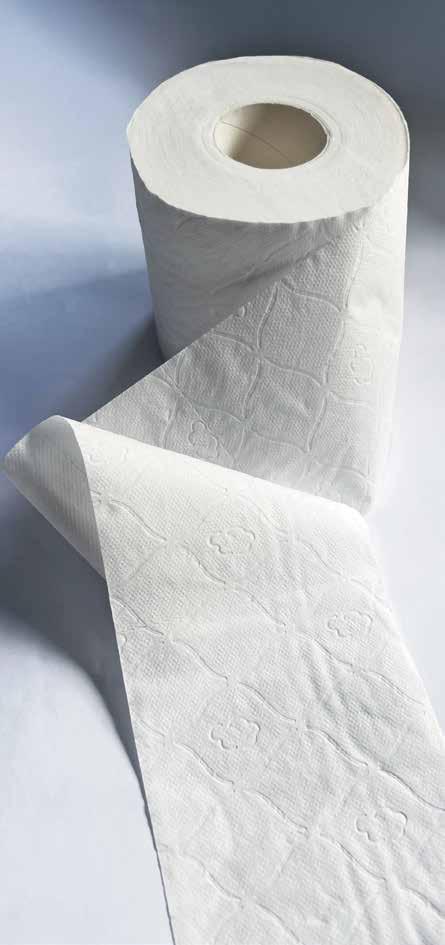
Embossing involves pressing a patterned roller onto layers of paper to create a mix of raised and indented designs. The depth, spacing and alignment of each pattern determine how the paper will behave. Too much pressure, and the paper fibres weaken; just the right balance, and the paper becomes softer, stronger and more comfortable to use. The process also bonds multiple paper plies together, strengthening the sheet and preventing the layers from separating or tearing.
Crucially, embossing increases a sheet’s surface area, which improves absorbency, and the air pockets created during the process also enhance the paper’s resilience. The result? Paper that maintains its structure when wet, requiring fewer sheets for effective use.
Moreover, embossing can be fine-tuned to suit each product type and use case. Some designs will be more appropriate for guest-facing spaces, such as offices and hotels, where toilet tissue softness and comfort signal quality and care. Others are designed to ensure hand towel strength and durability for frequent handling in high-use settings, such as commercial kitchens.
We’ve all experienced that quiet moment when faced with low-quality paper products, or worse, no paper at all, in a public restroom. Conversely, the relief of finding a plump roll of soft, embossed toilet paper or a full canister of textured hand towels is immediate, signalling care, attention and respect for hygiene.
This tactile element plays an important role in an environment’s overall presentation. Whether
it’s in a hospital, airport, hotel or cafeteria, providing quality hygiene paper products that look sophisticated, feel comfortable and do the job is an integral part of a brand or facility’s efforts to deliver user satisfaction and a perception of care.
Embossing technology isn’t just about feel or appearance. Pattern design allows manufacturers to produce hygiene paper products that perform better with less material. Improved absorbency and durability ultimately reduce consumption.
For facilities managers, this kind of efficiency supports not only operational performance but also sustainability initiatives focused on waste reduction.
Facilities that offer clean, comfortable, high-quality hygiene paper products can have a meaningful impact on patrons by providing a sense of confidence and care.
For procurement and facilities managers, sourcing products that go beyond practicality to embrace a superior customer experience is critical to maintaining standards and reinforcing brand reputation. In Australia,
“Crucially, embossing increases a sheet’s surface area, which improves absorbency, and the air pockets created during the process also enhance the paper’s resilience.”
the hygiene paper market is valued at more than $1.7 billion annually, while in New Zealand, the toilet paper market alone generates around $114 million in annual revenue. For decision-makers, details like embossing can help differentiate one product from another in a crowded and competitive category.
From premium washrooms to high-traffic public facilities, embossed hygiene paper brings together form, function and user comfort. The kind of small detail people notice.
See the difference embossed hygiene paper makes. Scan here.


Supply chain, done right, goes mostly unnoticed. But as Susan Innes, General Manager of Supply Chain at Civeo, puts it, the duck gliding across the pond is always paddling hard beneath the surface. It’s a steady discipline and resilience she’s had from the beginning.
“Supply chain is happening in all of our lives all the time, without us even being aware,” says Susan Innes. “So, a lot of people tend to fall into supply chain and procurement roles, rather than realising you can actively pursue them as a career.”
And Susan would know. Her own career in supply chain began almost by accident. Growing up in Queensland’s Deception Bay, life wasn’t easy. “It was an underprivileged area. There wasn’t even a local high school, so getting an education meant more than an hour on the bus each way. That experience gave me a strong sense of self-reliance early on.” That early independence later saw her juggling her teaching studies with shifts on the Woolworths checkouts in Cairns. But within months, she realised it wasn’t teaching that energised her, but the fast-paced supermarket environment with all its operational and logistical challenges. When she decided to leave university to
“My mentor really taught me not to listen to that devil on your shoulder,” she says.”
Lachlan tells us about his role as General Manager in Facilities Management and how innovation plays a crucial part.
take up an opportunity with a Woolworths management program, her parents backed her. “They raised us to value hard work above anything else and trusted that whatever I chose, I’d see it through.” Their belief in her would help shape many of her future decisions.
By the time Susan was working in airport operations with Spotless, she was a young mum. “Balancing a 24/7 operation and being available at three o’clock in the morning if a fridge breaks down, I realised I needed some work–life balance.”
“Putting my family first never felt like a difficult decision – it felt like the right one. I knew I could always return to my career, but I couldn’t get that time back with my kids.” A planning role allowed for a more familyfriendly schedule, and when she was ready to return to leadership, a logistics management role at Aurizon in North Queensland followed. It was here she began working with a mentor who helped broaden her scope and confidence.
“My mentor really taught me not to listen to that devil on your shoulder,” she says. “Supply chain can be a tough gig, you do get knockbacks and criticism. But it’s about not letting that impact your confidence.” That confidence mattered especially in such a male-dominated sector. “Sometimes you’re the only woman in the room,” says Susan. “That can be a lonely voice and sometimes what you have to say may be unpopular, but it needs to be said.”
In 2019, Susan received an Industry Excellence Award from the Supply Chain & Logistics Association of Australia. “To be acknowledged by my peers was huge. To think that little old Susan from Deception Bay could achieve that – it was very meaningful.”
Susan has now been General Manager of Supply Chain at Civeo for nearly three years and describes it as a “unicorn role”. “Different parts of my career, retail, transport, and construction, all play into what Civeo does. But most importantly, it’s about the people – that’s where I get my energy. We don’t achieve what we achieve because of me. We do it because of a fantastic team who all bring something to the table.”
Ultimately, she’d like to see supply chain recognised as a career path in its own right, like engineering or science. For Susan, what was an “accidental career” is now one she knows is worth choosing. And just as her mentor was crucial to her early development, she is focused on supporting the next generation through her leadership.
“I love seeing the younger generation come through and giving them a platform. I want someone to want my job one day. If you can step away and the place still runs, that means you’re doing the right thing as a leader.”

When you were younger, what did you want to be?.
When I was younger, I was driven by a strong desire to help people. I dreamed of becoming a firefighter because it felt like the ultimate way to support others in their most critical moments and contribute to the community. That same passion carries through to what I do today, creating cleaner, more sustainable environments through value and innovation.
Tell us about your role at Bunzl now. I have the privilege to oversee a wide range of services aimed at enhancing workplace hygiene, safety and operational efficiency across a diverse portfolio of customers. My responsibilities encompass strategic planning, product development, and the implementation of sustainable solutions tailored to meet the unique needs of each client, striving for a cleaner future. What do you think is most important when it comes to your role? The most important aspect of my role is driving innovation, bringing more advanced, intelligent solutions to market that empower our clients to deliver greater value to their customers. Our purpose is to support continuous business improvement through a strong focus on ESG, cutting-edge technology, and forward-thinking innovation.
What are you excited to see more of in the future when it comes to your industry?
It’s exciting to witness the ongoing evolution of technology in the Facilities Management industry. Innovations in IoT for tracking consumption, advancements in robotics that work alongside cleaning teams, and sophisticated software platforms for asset tracking, maintenance, and scheduling have all reached a level of maturity. What’s truly transformative is how these technologies are now being integrated into unified, AI-powered platforms, driving higher quality, greater efficiency, and enhanced visibility across operations.
At Bunzl, we believe that to deliver meaningful sustainable outcomes, you need to be where it matters most – on the ground.
Based on results from Bunzl’s pilot, replacing six fossil-fueled trucks with six EV trucks, while maintaining the same delivery distances, is projected to deliver measurable benefits in 2026. Under this model, Bunzl is expected to complete more than 20,000 regional and local deliveries, transporting over 40,000 cartons and 10,000 pallets across NSW by EV trucks. This transition is forecasted to achieve an estimated 23% reduction in transport-related emissions, with approximately 15% of all NSW deliveries carried out by electric trucks.
At Bunzl we believe in better.