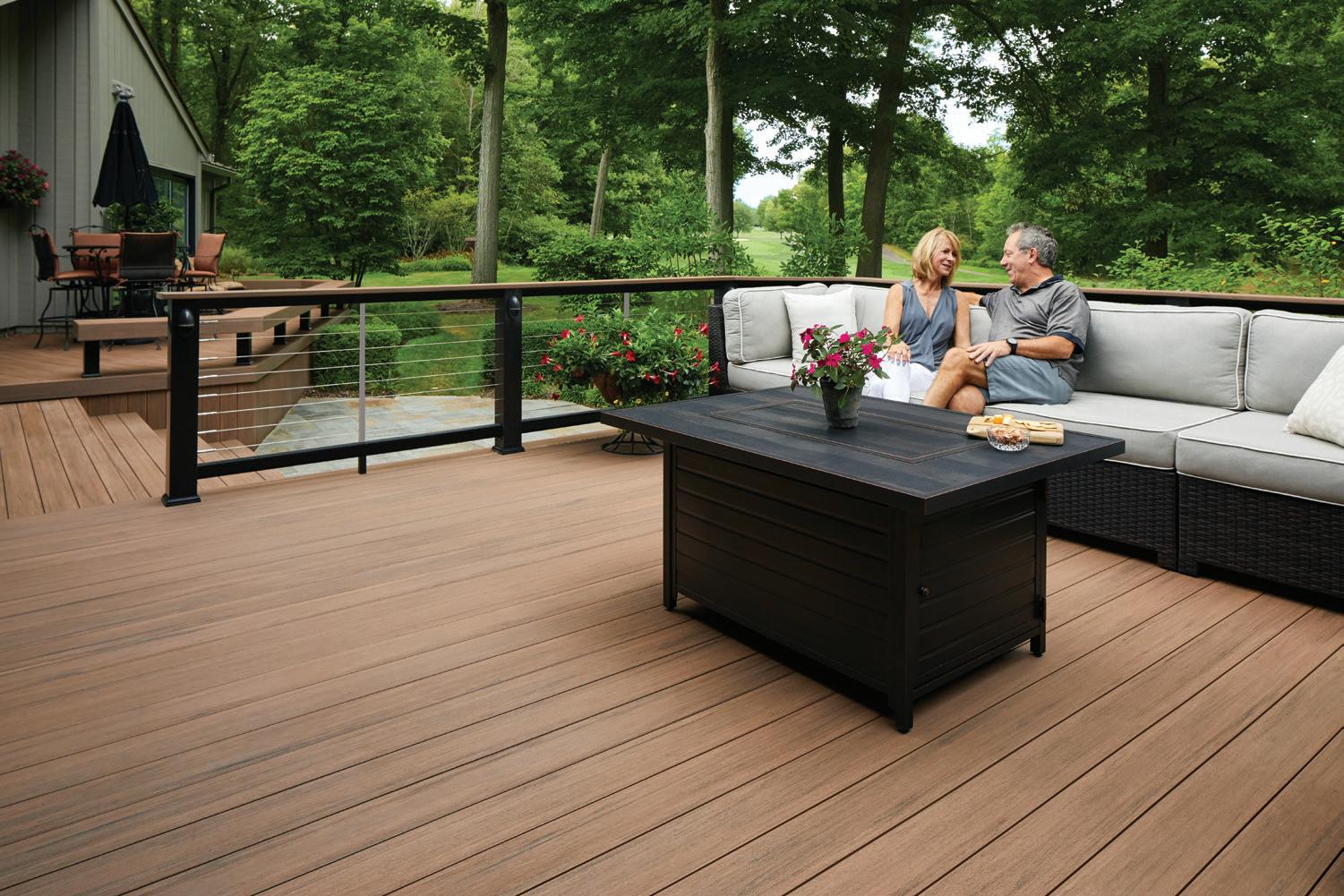
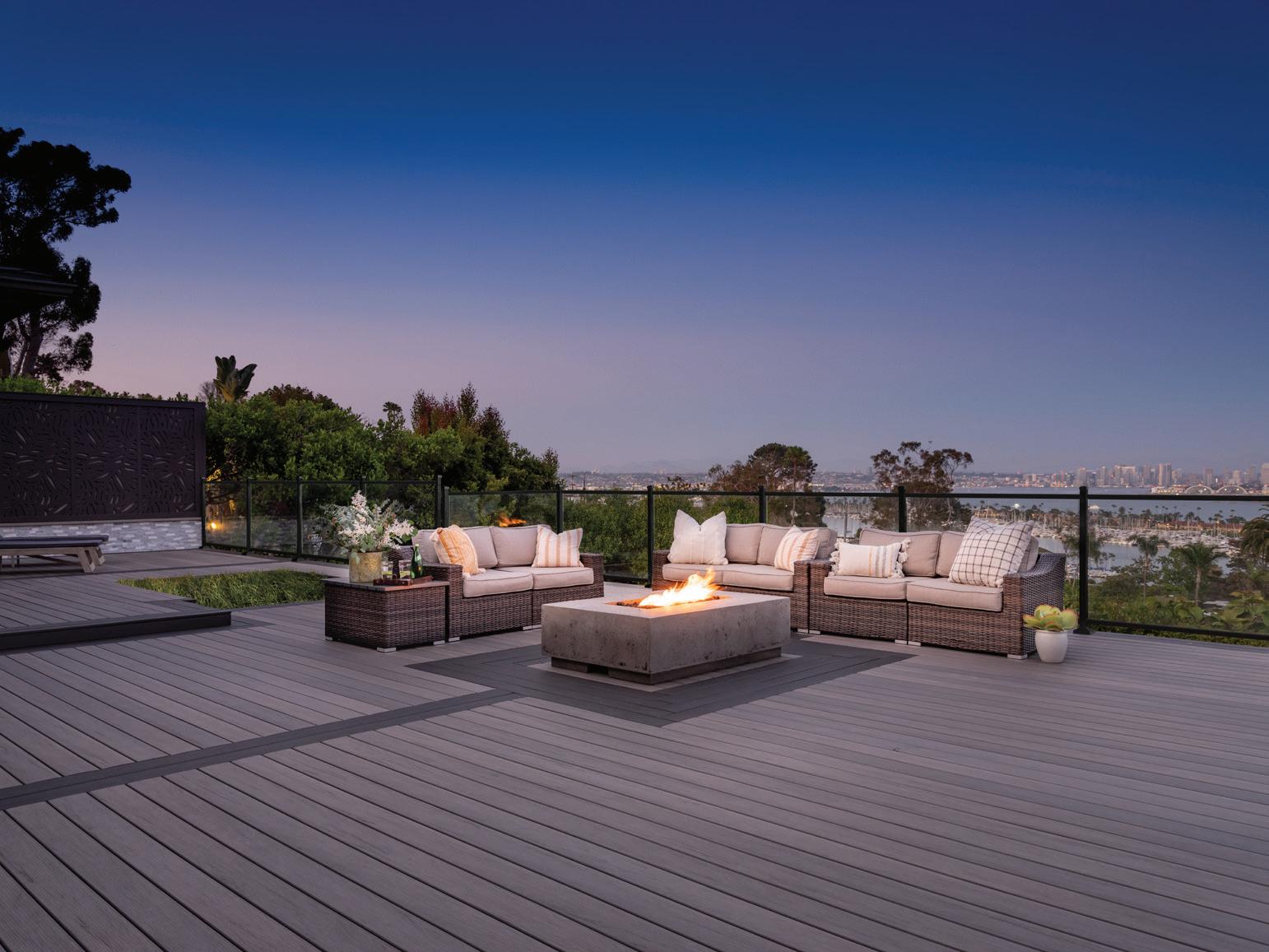
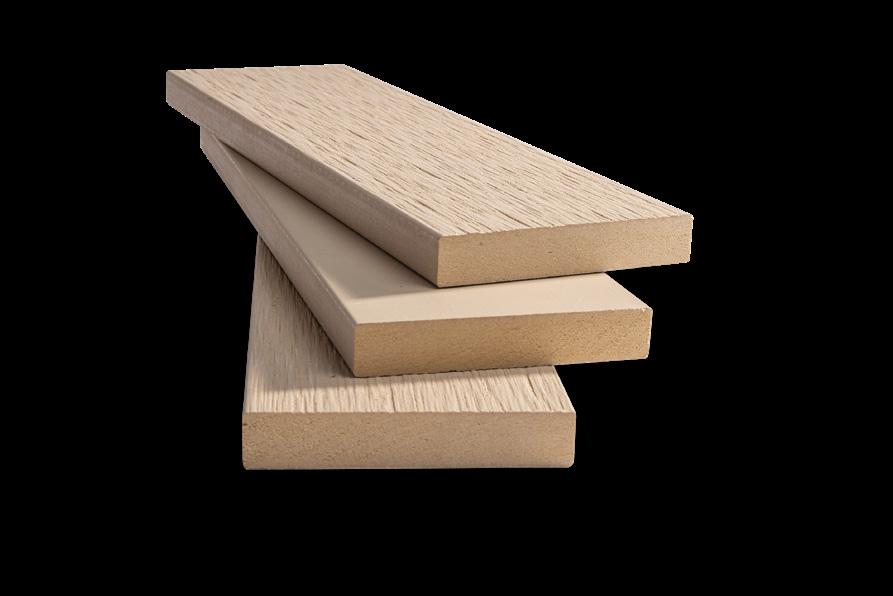
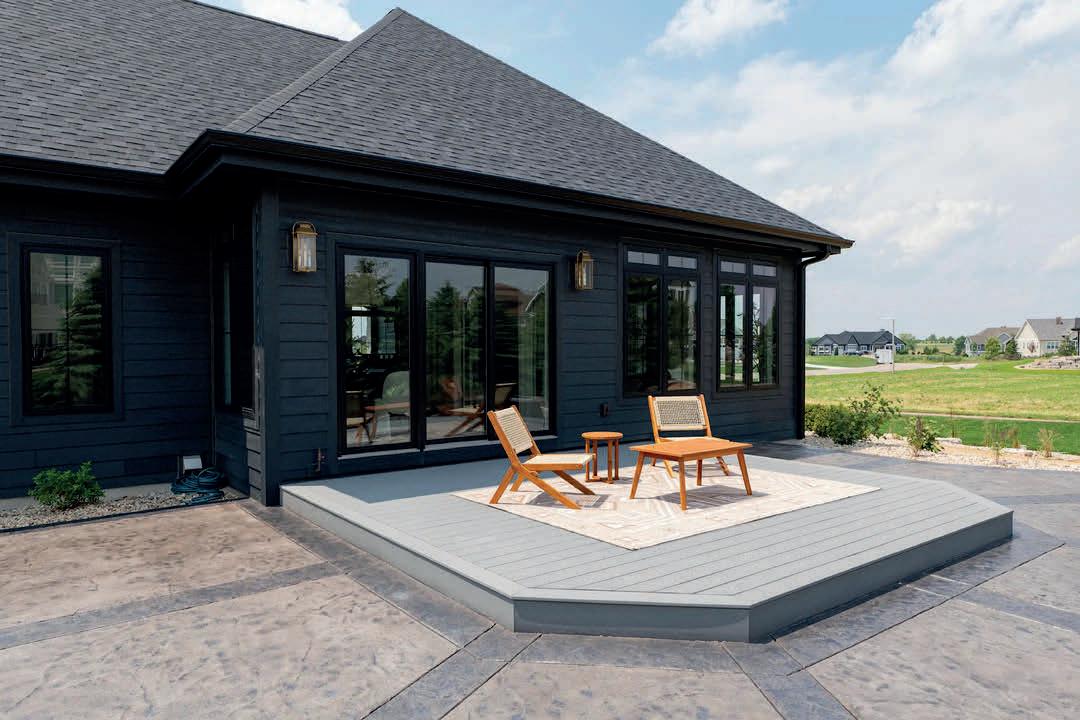
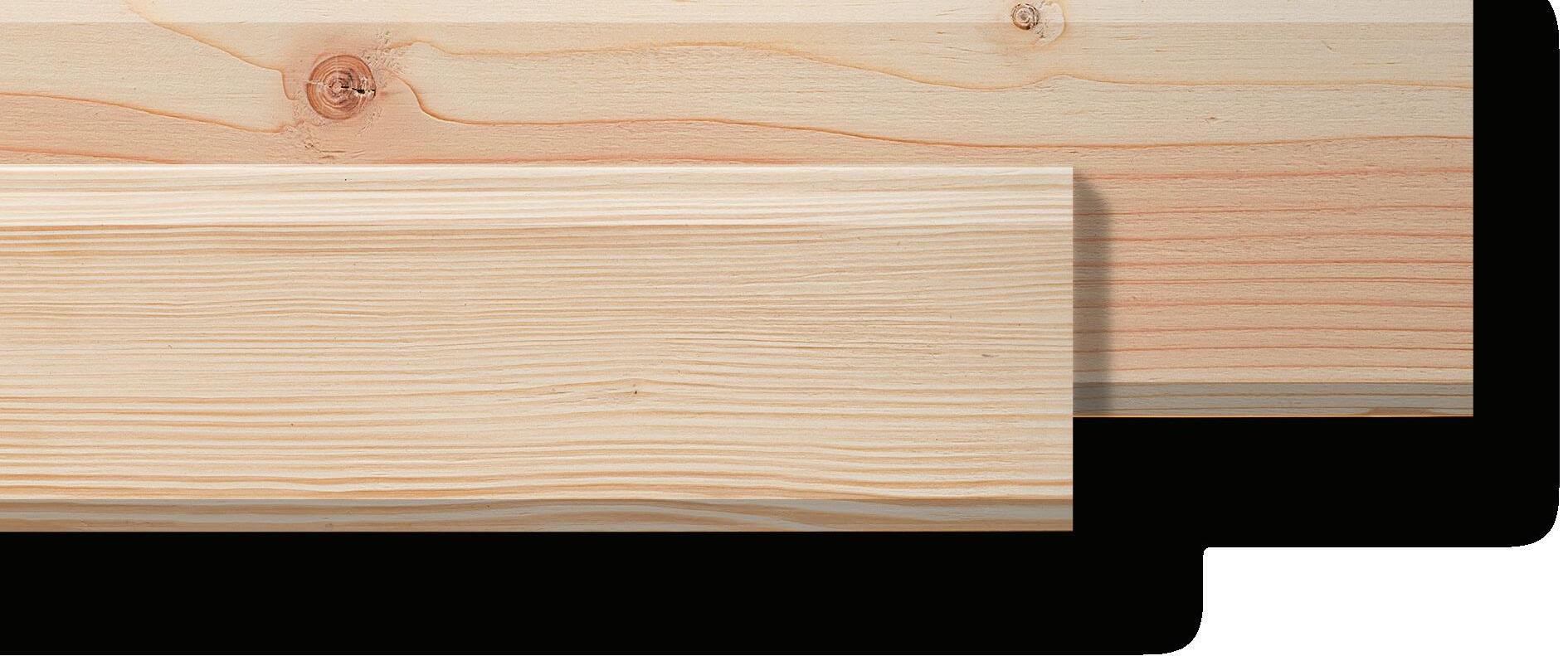
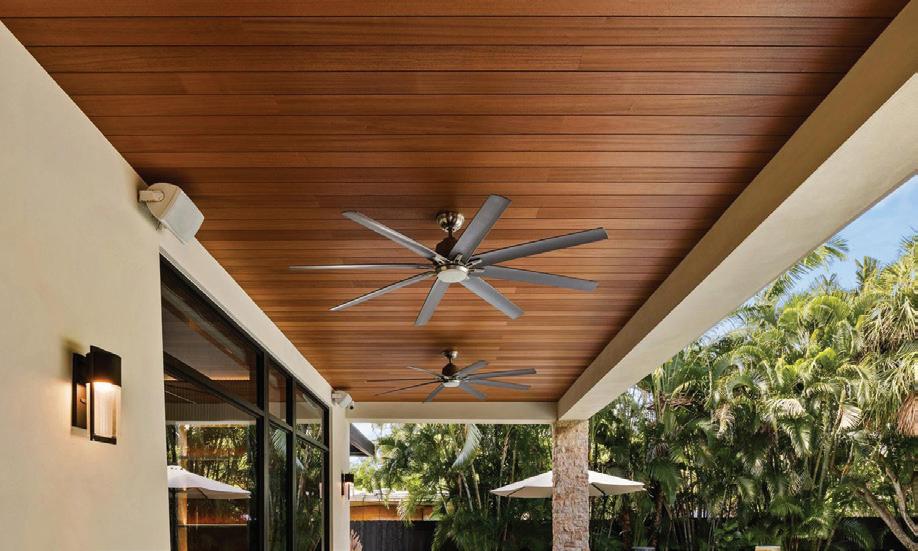
Like the foods we buy, when it comes to decking, we want natural and real. Redwood is always available in abundance of options. So stock the shelves! Unlike mass-produced and inferior products, Redwood is strong, reliable and possesses many qualities not found in artificial products. They maintain temperatures that are comfortable in all climates.
Redwood Empire stocks several grades and sizing options of Redwood.
Your Premier Supplier of Building Materials
2,600 dedicated employees, and one of the most extensive product offerings of value-added treated lumber, we can deliver in ways few others can.
151 Kalmus Dr., Ste. J3, Costa Mesa, CA 92626 Phone (714) 486-2735
CHANGE OF ADDRESS Send address label from recent issue, new address, and 9-digit zip to address below. POSTMASTER Send address changes to The Merchant Magazine, 151 Kalmus Dr., Ste. J3, Costa Mesa, CA 92626. The Merchant Magazine (ISSN 7399723) (USPS 796-560) is published monthly at 151 Kalmus Dr., Ste. J3, Costa Mesa, CA 92626 by 526 Media Group, Inc. Periodicals Postage paid at Santa Ana, CA, and additional post offices. It is an independently-owned publication for the retail, wholesale and distribution levels of the lumber and building products markets in 13 western states. Copyright®2026 by 526 Media Group, Inc. Cover and entire contents are fully protected and must not be reproduced in any manner without written permission. All Rights Reserved. We reserve the right to accept or reject any editorial or advertising matter, and assumes no liability for materials furnished to it. Opinions expressed are those of the authors or persons quoted and not necessarily those of 526 Media Group, Inc. Articles are intended for informational purposes only and should not be construed as legal, financial or business management advice, nor an endorsement of any company, product, service or individual referenced.
Volume 105 • Number 8
THE CLADDING CONTRACTORS CALL FOR
ASCEND ® gives you a premium composite cladding line contractors can sell with confi dence, install with effi ciency, and keep coming back for.
THE LOOK GETS ATTENTION.
Deep shadow lines, rich woodgrain, subtle matte textures, and coordinating 7" Plank and 12" Board & Batten profiles make it easier to create dimension and contrast across classic, contemporary, or distinctly custom designs.
THE DETAILS GET DONE RIGHT. Color-matched accessories help complete corners, edges, and transitions for a premium finished look.
THE INSTALL GETS REMEMBERED. No caulking. No fl ashing. A self-aligning system. Crews can move quickly from fi rst panel to fi nished façade, making ASCEND easier to adopt, quote, and choose again.
THE
PERFORMANCE GETS REPEATED.
Composite construction helps resist weather, fading, and everyday wear—with a Lifetime Limited Warranty that gives the sale more staying power.
HIGH-END SHOULDN’T BE A HARD SELL. Give them the look of wood, the logic of vinyl, and the lift of a premium cladding line built to move the conversation.
SEE WHAT’S POSSIBLE WITH ASCEND.
THE QUIET PROFESSIONALS
------------ BY PATRICK ADAMS
RECENTLY, I WAS catching up a good friend from years back. This is a man they should make a movie about, books about, or perhaps have a national holiday for. The things he has done in his career are legendary and, I would argue, in some cases have changed the course of world events. He is officially retired, and I asked, “What’s next?” His response wasn’t about himself, which perfectly sums him up: “I just hope the next guy in my role does better than me.”
I’ve spent a good part of my life around people who never make the news. No cameras follow them. No reporters ask for interviews. There are no viral videos celebrating what they accomplished on a Tuesday afternoon and they don’t have millions of “followers.” And yet, if they didn’t show up tomorrow, we’d all notice.
Over the years, I’ve been fortunate to meet thousands of people across our industry. Mill owners. Salespeople. Truck drivers. Yard managers. Manufacturers. Dealers. Contractors. People whose names will never appear in history books, but whose work quietly shapes the communities where we live. It’s why we created our company slogan: “Relentlessly serving those who serve.”
Lately, it seems the loudest voices get the most attention. Turn on the television or scroll through social media, and it doesn’t take long before you’re convinced that the people shouting the loudest somehow matter the most. I’ve come to believe exactly the opposite.
The people who have impressed me the most over the years are rarely the loudest people in the room. They’re the quiet professionals. They’re the first ones to arrive and often the last to leave. They don’t chase recognition because they understand that respect is earned over years, not moments. They don’t need everyone to know what they’ve accomplished because their work speaks for itself. They simply do what they said they were going to do. Day after day. Year after year.
I think about the owner who quietly skipped his own paycheck so his employees could receive theirs. The salesman who answered his customer’s phone call while sitting in the hospital with a loved one. The driver who left before sunrise for the thousandth time because someone was counting on that delivery. The employee who has spent 30 or 40 years with the same company, never asking for applause, simply taking pride in doing the job well.
These are the people who built this industry. More importantly, these are the people who continue to sustain it. Their names may never appear on the side of a building, but their fingerprints are everywhere. They’re found in the relationships they’ve built, the promises they’ve kept, and the reputation they’ve earned one conversation at a time.
It reminds me that perhaps the greatest measure of success isn’t how many people know your name. Perhaps it’s how many people trust it.
Character has always fascinated me because it isn’t revealed when everything is going well. It’s revealed on the difficult days—when no one is watching, when doing the right thing is inconvenient, expensive or exhausting.
That’s when quiet professionals separate themselves. They choose integrity over attention. Service over recognition. Responsibility over excuses. Those choices rarely make headlines, but they build something much more valuable than fame. They build legacies.
Our industry has always been filled with people who understand this. We build products that may outlast us. We invest in relationships measured in decades instead of quarters. We shake hands, keep our word, and solve problems because that’s simply what professionals do. Maybe that’s why I love this business. In a world that often celebrates noise, our industry still celebrates substance.
As I travel around the country, I continue to return home inspired—not because of the newest products or the latest technology, but because of the people. The quiet professionals who continue showing up every day, doing extraordinary things in ordinary ways.
They may never ask for recognition. But they certainly deserve our gratitude. So, this month, I simply wanted to say thank you. Thank you for reminding me that character still matters. That keeping your word still matters. That serving others still matters.
And that despite what the headlines might suggest, there are still countless quiet professionals across this country proving every single day that integrity never goes out of style. As always, I am humbled and grateful to serve this great industry, and each of you.
PATRICK S. ADAMS, Publisher/President padams@526mediagroup.com
Manufactured Stone by ProVia ®
SALES & MARKETING BASE CAMP
Tools, strategies and insights you need to reach new heights in sales, marketing, branding and customer engagement.
Every successful climb begins at base camp. Before the ascent comes planning, preparation and assembling the right equipment. The same is true in today’s competitive marketplace. Whether you’re building stronger customer relationships, sharpening your sales approach, or refining your brand message, success requires a clear route and dependable gear. In this special section, industry experts share practical strategies and fresh ideas to help you navigate challenges, seize opportunities, and continue your climb toward growth.
SALES & MARKETING BASE CAMP
CHARTING THE COURSE
TRAIL-TESTED WISDOM
SEASONED INDUSTRY PROFESSIONALS SHARE SURE-FOOTED ADVICE FOR THE NEXT GENERATION
------------ BY DAVID KOENIG
EXPERIENCE remains one of the most valuable commodities in the lumber business. After decades spent buying and selling forest products, the industry’s veterans have accumulated a wealth of knowledge that can’t be found in a textbook or training manual.
The Merchant Magazine asked a group of longtime and retired lumber professionals to share their best nuggets of wisdom with the next generation. Their answers—ranging from practical business guidance to broader life lessons—offer a trail guide for anyone looking to navigate a lengthy, rewarding career in the forest products industry.
Red Emmerson, Sierra Pacific Industries: “Stay focused, take care of your people, and be honest, fair and demanding.”
Jeff Wirkkala, Hardwood Industries: “The harder you work, the more good opportunities will come your way. Work hard, be humble, and be kind. Doors will open for you.”
John Taylor, retired (Taiga Building Products): “Develop a list of questions to ask customers/prospects that are relevant to their market segment or business. Let them do most of the talking. Listen and focus on their issues, wants and needs.
“Create and present programs that will meet/exceed the customer’s needs and expectations. Conduct regular reviews with the customer of the product/service you are providing. Use quantitative and qualitative metrics that show both of you areas of success and areas
that need improvement.
“Get involved in a trade organization that serves/ supports the industry. It’s a great way to meet potential customers or suppliers as well as grow your relationships with current customers or suppliers.”
Mike Boone, retired (Eco-Chemical): “My first reaction is to give the advice that was given to me by my first boss in the industry, Evan Davies, president of Alpine Veneer: ‘One, if the market goes up fast, it will come down fast as well. Two, never tell a lie as we can’t remember everything we say!’
“Another would be to make your customers more than buyers—try to make them partners working together to your mutual benefit, and get to know them as family.”
Brian McCoy, McCoy's Building Supply: “Master your job and be a student of your company and the industry. Commit to a life of integrity and always tell the truth. Grow in your communication skills and look for ways to give first to others around you. Enjoy every day—even the tough ones!”
Pat Bischel, retired (Northern Crossarm): “I did not coin this but it has rung true in my career a number of times: ‘You gotta be tough if you’re going to be stupid.’ This one is very personal: ‘Nothing you do in this life will mean a thing if you don’t get to heaven.’”
Ed Langley, Sierra Forest Products/TNT Wholesalers: “One approach that has served me well is keeping an
open mind to opportunities and creative ways to make a deal work. The most successful traders often recognize value where others may not. Whether it’s a particularly attractive tally, a unique inventory position, a quality load at the right cost, or a product that brings excitement and differentiation to a customer’s inventory, there is often a path to mutual benefit if you are willing to look beyond the obvious.
“Equally important is understanding that relationships are often more valuable than price. Take time to know your suppliers, customers, truckers and mill personnel. Listen more than you talk, learn what drives their business, and treat every transaction as the beginning of a long-term partnership rather than a one-time sale.
“Further, successful traders understand the product, manufacturing process, transportation, inventory management, and market forces that affect supply and demand. Be consistent—return all pertinent messages (texts, emails, calls). Customers and suppliers remember who answers the phone, follows through on commitments, and delivers when product is hard to find. Long-term relationships are built on trust, integrity and consistent performance. Take the time to visit your customer or supplier. Trade shows and other industry events provide great opportunities for quality networking. Make it fun!”
Bob Maurer, NorCal Lumber: “Some adages I always liked: ‘Never counter the low man.’ ‘Never use ASAP as the ship date.’ ‘Measure twice, saw once.’
“‘Sub Prior.’ These two words need to be used and understood. They are short for ‘Subject to Prior Sale.’ This basically means that an offer made may not be available when a customer tries to buy it later. It has become so common that it is understood even when not explicitly stated.
“‘Your first loss is your cheapest.’ Often a trader may have some product that is priced over the current cost (the market fell) and needs to sell it off. They may refuse an offer that they consider too low. But the longer they hold onto the material, the less it’s worth, hence your loss will only grow. In the long run, your first hit (loss) is almost always your cheapest.”
Doug Willis, retired (Cal Timberline): “The lumber business keeps evolving, sometimes at breakneck speed. Consolidations across the board—in the retail, wholesale and timber/sawmilling sectors—will continue. Independent companies at all levels are being absorbed at an astounding rate. Larger national companies are gobbling up independents and expanding into new markets. Communications are getting faster and faster. A.I. will revolutionize many aspects of the business. Further, it will jeopardize relationships and the personnel touch. The lumber business has always been a relationshipcentered business and hopefully will adapt.”
Doug Hanson, Sierra Forest Products: “Always speak the truth. You are trying to build a relationship with your customers.”
Alan Arbiso, Highland Lumber & Mill: “Number one: Always be a good listener. Be honest and interested in your potential customers’ business. Number two: Failure
to plan is planning to fail (Coach John Wooden, UCLA basketball—I think Ben Franklin said it as well). You want your customer to know that you have their best interests in mind.”
Edgar Massoletti, retired (Central Valley Builders Supply): “Be honest, be thoughtful, do what you say you’re going to do. It is not all about price. Listen thoughtfully and build a relationship. A handshake is worth more than the price.
“Years ago, a vendor shipped in a miscellaneous list of redwood products. The vendor failed to list on the packing slip two units of 6x6 Redwood Con Hrt. Rough. What did I do? I called the vendor, gave him a tally of what they shipped, and told them to bill us for the quantities shipped. They greatly appreciated the honesty. In the future, when we would put in a claim for short-shipped products, there was never a question. A relationship was formed.”
Bill Perkins, retired (Burns Lumber): “The most significant and important thing that I constantly reminded many, many employees of is: honesty. I have always believed that to be a great salesman you must have any and all customers believe in you. If they ask for advice, you must be honest, even if it causes you to miss a sale. It is critical to develop a good personal relationship with all customers, getting to know them, their business, and their families.
“Also, your attitude is transparent. Always be up; customers do not like to do business with unhappy people. Along with that, always remember: if you love your job, you never work a day in your life!”
Mike Harley, Greenleaf Trading: “I’d say to all the rookies: ‘It is amazing—the harder I work, the luckier I get.’ I would explain to them we are in a business where we provide lumberyards with the product they need. (It builds confidence.) I then would map out a territory for them to prospect. I would have each person manage 25 accounts in each time zone, so they would not have any downtime. I would then have them write an introduction script they felt comfortable with. I would have a department head—Spruce, Inland or Green—explain the product before entering the prospecting area. After achieving product knowledge, we would conduct oneon-one role-playing before each call of the 75 accounts prospected. We’d review their daily prospecting calls and customer inquiries and offerings. Then I would teach account management alongside time management.”
Bob Crews, Western Lumber Co.: “Honesty above all else and having the ability to convey accurate information to your customer or supplier. Be yourself and just tell it like it is!”
Jeff Ward, Mendo Mill: “Always tell the truth to your customers, even knowing that it may not be what they want to hear. Never lie! Your integrity will follow you throughout your career.
“Join an industry club and get together with fellow men and women who share your beliefs and values. This is one of the best things you can do for your business and personal life. I personally suggest Hoo-Hoo Interna-
tional. There is a club near you somewhere in the U.S. and abroad.”
Larry Huot, LaValley Building Supply: “The most important thing is to think long term, begin planning very early in knowing what you know today to prepare you for the predictable uncertainties of continual change.”
Edward A. San Juan, E.F. San Juan, Inc.: “Be honest always. If our vendor does not charge for something we ordered, let them know. If we overcharged a customer for something they paid, let them know. If we break, bend or lose something, do not try to hide it. Be honest and you will be rewarded with a clear conscience and the respect of those around you.
“This is the advice I would give to the next generation. As you know, we work in an industry that is small enough that everyone knows you or at least knows someone you know. A bad reputation spreads like wildfire, likewise, a reputation of honesty and integrity gets around and defines you (and your company) as one to be trusted.”
Richard Mallory, Williamson and Wolcott Building Supply: “Let’s face it; we are in an established business with steady growth and really not much downside. The shift is on for new technology, new products, and more efficient ways to run or manage a business. That’s the opportunity for new, innovative thinking from the next set of leaders. Regardless of the channel (independent, specialty, mass merchant, distributor), these skills are in
Armorite® Exterior Trim Now Available at Atlantic Forest Products
demand across the industry. It’s a good time to put those skills to work!”
Phil Lail, Pan American Screw: “Looking back at my career, I guess the most important advice I could share is one of the statements my boss shared at my retirement party and that is: ‘Phil practiced the Golden Rule sales strategy,’ meaning I treated our customers the way I would want to be treated even if it meant our company was wrong and had to pay for a mistake that was made. Be open and honest about all transactions even if it hurts.
“The other thing I would offer is: Never give up. It took me almost eight years to land one of our biggest accounts that is now worth millions of dollars. Despite being told no many times, stand tall and don’t take no for an answer if you know in your heart your company has a product or service that can make a difference.”
Tom Flynn, Reclaimed Woods of the World: “Big changes are upon us. The key word today is flexibility. The ability to react quickly and efficiently to change—as change is always coming at us, sometimes more intensely than other times—is critical in staying one step ahead.”
Bill Sullivan, retired (Welco Lumber): “Lumber just got in the way of a true brotherhood industry. I can’t remember all the lumber I sold for over a half century, but I sure remember all the great people.” MM
Armorite Exterior Trim is fully reversible with smooth and modern woodgrain textures, and it’s sealed and primed with eased edges for easy finishing. Installerfriendly and durable, it delivers superior machinability, cutting and fastening. Plus, it’s backed by a 50-year limited warranty you and your customers can count on.
To learn more, call (888) 498-0756 or visit atlanticforest.com
In addition to Roseburg engineered wood products and plywood, Atlantic Forest Products is excited to stock Armorite Exterior Trim.
TOOLS FOR TOUGH TERRAIN
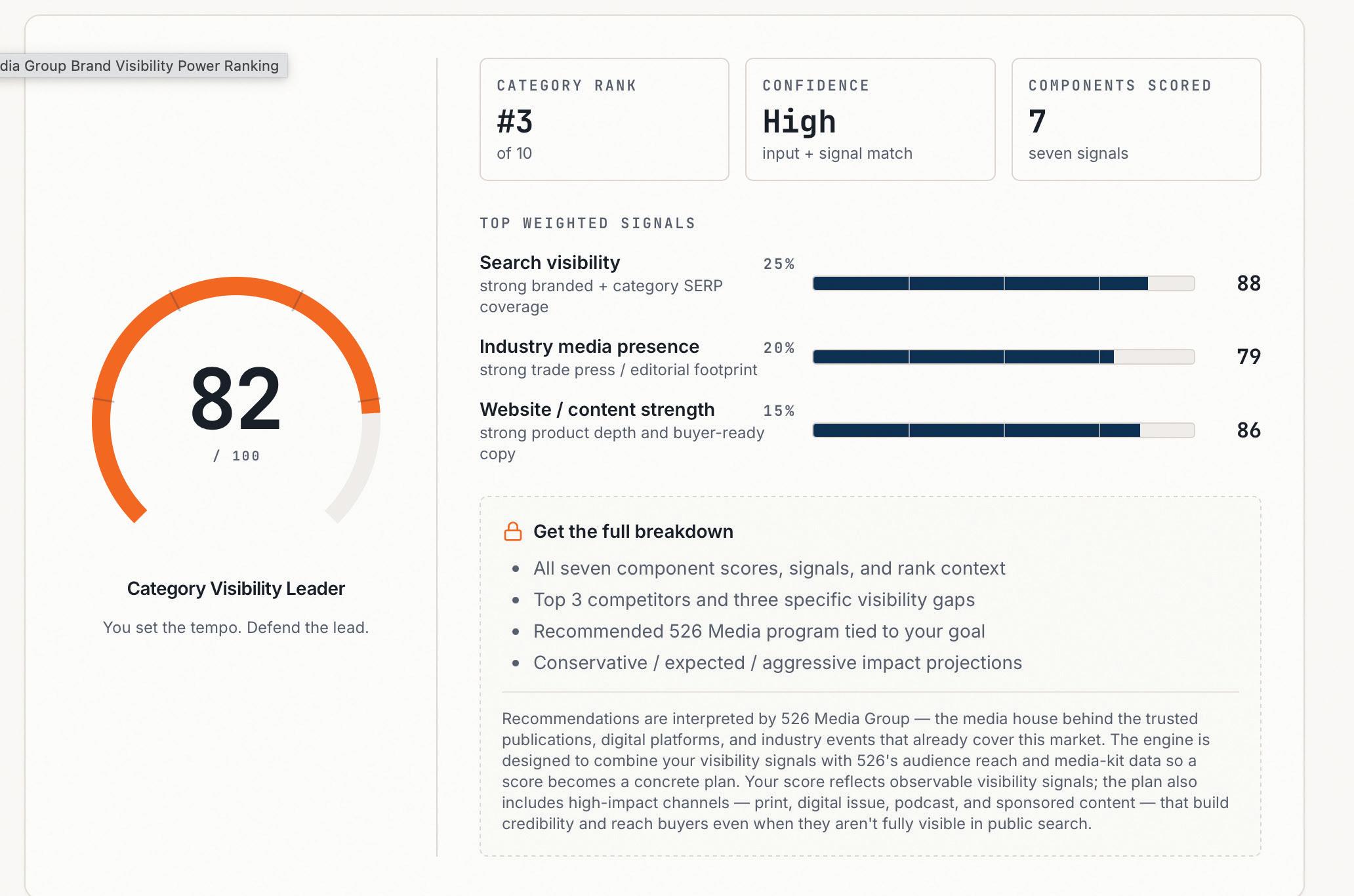
HOW VISIBLE IS YOUR BRAND? RUN YOUR FREE
BRAND VISIBILITY POWER RANKING
HOW VISIBLE is your brand in the building materials market? In a category where buyers, dealers, distributors, contractors, builders and manufacturers are all navigating constant noise, visibility matters.
526 Media Group has launched the Brand Visibility Power Ranking, a free directional benchmark tool designed to help companies better understand how their brand appears within its competitive category.
The tool looks at visibility signals such as category presence, search footprint, content activity, trade visibility, competitive context, and buyer-facing market presence.
The technology uses a directional methodology to help companies identify where they appear strong, where competitors may be more visible, and where market presence could be improved. Companies can then opt to receive suggestions on ways to improve their ranking in any areas they may be lacking.
It is not meant to be a final answer. It is meant to be a starting point. Because in this market, the question is not only whether your company has a sales team. The question is whether or not the market recognizes your brand before the sales conversation even begins. When it is not, cold
outreach becomes ineffective—and expensive.
526 Media Group has spent years serving the companies, channels and professionals that keep the building materials and construction industries moving. Its leading brands include Building Products Digest, The
Merchant Magazine, Deck Specialist, Surface & Panel, Redbook Lumber Data, The Lumber Newswire, and Building-Products.com.
Building material firms can run their own free Brand Visibility Power Ranking at: www.526mediagroup. com/visibility-score. MM
HOW TO SELL TO YOUNGER BUYERS
------------ BY TROY HARRISON
SALESPEOPLE ARE older. Buyers are getting younger. You have a disconnect. In raw terms, the average age of a professional B2B salesperson in the United States is 47.1 years old. Fifteen years ago, that number was 42, so the sales profession is graying. Meanwhile, the average age of a B2B purchasing agent right now is 36 years old. In fact, according to a 2024 survey, Millennials (aged 29 to 44) make up to 73% of B2B buying decisions.
While an 11-year age gap doesn’t sound like much, it can be a chasm as wide as the Grand Canyon. Society underwent significant cultural and technological changes between the tail end of Generation X and the leading edge of the Millennial generation, and those changes greatly impact what Millennials want and expect from salespeople and from the companies that employ them. Generation Z, which is coming behind the Millennials, have the same tendencies—just amplified. In this case, “younger buyers” refer primarily to Millennials and Z’s.
This doesn’t mean that you have to age-match; Millennials and Z’s will certainly engage with, and buy from, more seasoned salespeople. What it does mean is that you have to style-match. In other words, you need to sell the way they want to buy. While this seems intuitive—and it is—it means that some salespeople who were acculturated to different methods of selling and different buyer expectations have to do some serious adapting to stay relevant. Here are three things that you must know about style-matching in order to sell to younger buyers:
1. Younger buyers flip the relationship-building script. The conventional way to build a relationship with a buyer was pretty simple. You’d walk into the office, look around for family pictures, hobby pictures, college
diplomas, or other clues as to the buyer’s personal life, and then you’d start a conversation based upon those interests. This approach has become so hackneyed that it has a name: “Fish on the wall” selling. “Hey, you like to fish? I like to fish, too! Let’s talk about fishing and then I know you’re going to want to buy from me.”
It sounds a little disingenuous because it is. Salespeople have, for generations, been starting conversations about personal issues that they didn’t really care about. That’s because, for generations, you had to find the personal connection first, bond over it, and then you had earned the right to talk business. Younger buyers flip that script completely.
Younger buyers are business-first. They aren’t going to schedule an appointment to talk football for 30 minutes. Instead, you get the appointment by telling them how you can help them to their jobs better. Then, when you get in the door, you get to the point with great business-focused questions and showing them that you can help them do business better. If you are able to actually solve their business needs, then they are open to lunch, drinks, golf, or personal conversations. For salespeople used to the old ways, this is a significant but very important shift—but it’s one that you must make in order to succeed.
2. Younger buyers demand versatility in communication. “All these younger buyers want to do is text! They don’t want to have phone calls!” That’s a common complaint from older buyers. The solution? Get good at texting. Learn how to send a persuasive, grammatically correct (yep, that’s important) message in 240 characters or less. That’s hard for salespeople who are used to lengthy phone conversations or meetings, or for that
matter, who write long emails. The good news is that tools are available to help you with this. AI apps like ChatGPT or Claude.ai are very good at distilling longer communications down to their essence while retaining persuasive ability. You just have to be able to write good AI prompts and edit when necessary.
Texting isn’t the complete solution, however. Younger buyers have a variety of preferred platforms, and what works well for one might not work well for another. Video conferencing ability is mandatory—and not just one platform. Become conversant with Zoom, Teams and Google Meet. And other tech is on the way. If your buyer says, “I want to talk on WhatsApp,” don’t be the salesperson who has to say, “What’s that?” Younger buyers respect adaptability, especially when it’s coupled with experience and expertise.
3. Younger buyers are social media savvy—you had better be, too. Buyers today have a variety of ways of learning about you and your company, and social media is one of their primary tools. If you leave a prospecting message for a younger buyer, be aware that there is about a one-in-three chance that the buyer will look you up on LinkedIn before that buyer thinks about calling you back. And if you don’t look legitimate on LinkedIn, you’re not going to get that call (or email or text). “Looking legitimate” is more than just having a profile on LinkedIn. You need a good professional head
shot, “about me” verbiage, a complete professional history, and some activity (i.e. posting and engagement). Recommendations and a strong network are a definite plus. If you aren’t using LinkedIn as a professional tool, you won’t be taken seriously.
LinkedIn isn’t enough. You also need to be aware of other ways buyers can research you. Do you know what your company’s Google reviews say? Your buyer probably will—and you’d better have explanations for recent bad reviews.
Here’s the exception to the “younger buyers” rule: Many older buyers are learning from, and copying, habits of younger buyers. That means that you can’t just stereotype by age—you have to be versatile, smart and adaptable to buyer needs, no matter what age they are.
If you don’t keep pace with changes in buyers, you’re just going to be the old guy yelling, “Get off my lawn!” Nobody buys from that guy anymore. MM
– Troy Harrison is the Sales Navigator, a speaker, and author of Sell Like You Mean It! and The Pocket Sales Manager. He has trained salespeople from 23 countries and spoken all over North America and Europe (www.troyharrison.com).
STOP BLAMING THE ECONOMY
BY MELISSA WILLIS
SMART BUSINESS owners focus on what they can control rather than worrying about what they can’t control. No amount of pacing and handwringing will change the current economy nor the pace of inflation. While it might be tempting to keep lamenting about what’s not working, business owners whose doors will stay open will be putting on blinders and tracking ways to win.
Here are five ways you can take control of key areas in your business without spending any additional money on staffing, marketing or advertising.
1. Take control of pricing and stop discounting. Everywhere you turn, prices are going up. The cost of supplies rises almost daily.
When small businesses are talking about raising prices, it invokes the type of fear you felt as a child when you thought there were monsters under the bed.
If a business hasn’t raised its prices in two or more years, it is past time. More importantly, there should never be an apology with a price increase. No grocery store on the planet puts a little note next to the butter saying, “Sorry about that extra 50 cents, we had no choice.” You noticed it, and you put it in the basket anyway.
Now, about that discounting that business owners think “gets people in the door.” Stop doing that. Instead of a discount, what can you offer that has a high perceived value and goes with the purchase? Think cosmetic companies with their crowd-pleasing “gift with purchase” or a caterer offering a free dessert with the purchase of a family meal pack. Low cost, high value. Scrap those discounts and add value. Everyone likes “free.”
2. Expense clarity. Tough markets don’t create inefficiencies; they shine an interrogation light on them.
This is the time to put your P&L under a microscope. Where can you make some changes? Here are some areas to consider: employee redundancy, cost of supplies, shopping your insurance, shopping other services like internet, cell phone, and other regular expenses. Negotiate with your vendors. Ask if they would be willing to offer you better pricing if you sign a year-long contract instead of a month-to-month agreement. This will take a bit of time, but it could add up to big savings.
One final note about expenses: many business owners use Amazon to purchase supplies, and they also veer off into other areas when they need personal items, too. “We need printer paper, and I also need paper towels for the house.” Keep personal and professional purchases separate by using different cards to pay for them.
3. There’s more business in your existing customer base. If you have a business with 1,000 customers and you add on a new product or service that costs $50, with only half of your customers taking advantage of this new offer, you’ve added $25,000 in revenue. Who better to make an offer to than the folks who already know, like, and trust you?
The point here is that many businesses offer multiple services, but the majority of their customers only use one or two of them. How many times do you “make the sale” and stop asking if the customer needs or wants anything else? 34% of customers will spend more money at checkout time if asked. Most business owners and sales professionals don’t ask.
Take a good, long look at your current customers or clients. What else can you offer them to be of service and give more value, and at the same time, make more money for yourself? The same fear that keeps business owners from raising prices also keeps business owners and sales professionals from asking, “Would you like fries with that?” We may not be offering fries, but you get the idea. Upsell and cross-sell. You’ll thank yourself later.
4. Follow-up and conversion are grossly underutilized. How many businesses go to the trouble of preparing a quote or a proposal for a prospect and then never follow up? Over 50% never follow up at all. The fortune is in the follow-up. That is an uncomfortable truth. Money is left on the proverbial table more often than it is picked up. Without a system in place for follow-ups, they will likely never happen. Create a system that makes all those proposals turn into closed deals.
Studies show that it takes eight to 12 contacts to even have a meaningful conversation with a prospect, much less close a sale. You might be surprised to learn how often people say, “I tried to call twice and then gave up.” You never know what is going on with a prospect behind the scenes. There could be someone who really needs you, and you gave up. Don’t give up.
5. Know your numbers. Business owners often leave the numbers to the bookkeeper and the accoun-
tant. Business owners must know their numbers. How can one track growth or address issues without knowing the numbers? While it is often said by many an accountant, “Let us worry about your numbers so you can run your business,” that often leaves the business owner in the dark, and problems become unwanted surprises.
Consider monthly meetings with the bookkeeper and/or the accountant. The numbers are a clear indicator of how the business is running, and the owner should be up to speed in all aspects of the business. An unexpected benefit of knowing the numbers is the confidence that comes with it. A business owner will feel more in control of the business when there is financial visibility.
Focusing on what you can control versus worrying about what you can’t control will put your business on a path to success and prosperity. Making small changes every day will lead to big improvements in every business and will diminish the overcast economic conditions. MM
– Melissa Willis is a coach and consultant who has helped owners and sales professionals over her career. She can shine a light on the areas that need the most work while acknowledging what has been successful. Specializing in profit acceleration and communication styles, She helps businesses make more money and keep more of it (www. melissawilliscoaching.com).
SALES & MARKETING BASE CAMP
REACHING NEW HEIGHTS
SELL MORE, GUARANTEED
------------ BY JAMES OLSEN
TWO SELLERS sit side by side. One makes 100 calls and sells two orders. This seller is in the 98% rejection business. The second makes 100 calls and sells eight orders. This seller is in the 92% rejection business. Still a lot of rejection, yes, but the second seller is making four times as much money. (Think $200K a year vs. $50K!)
Both are working hard, but hard at what? Both generate a lot of calls, but what kind of calls? Both call a lot of customers, but what kind of customers? Both speak to people all day long, but how are they speaking to them?
The Popeye Syndrome
Popeye says, “I y’am what I y’am and that’s all that I y’am.” We are not cartoons. We are not a finished product. We are a work in progress, and we can get better. “Salespeople are born, not made” is a myth perpetrated by sales managers who don’t want to train new salespeople and by salespeople looking for an excuse not to get better.
Good sellers with this attitude don’t get better because they are already “made,” no improvements necessary or possible. Struggling sellers let themselves off the hook with this myth. Both are plateaued, just at different levels. It’s Magic!
Some sellers do seem to sell in magical ways. They make it look easy. But making it look easy is different from it actually being easy. The professional comedian, athlete and magician make what they do look easy because their skills are at a professional, money-producing level. Lots of people can tell a joke, sing or play sports, but only those who perform at a professional level get paid to do so.
Guaranteed
Master Sellers do the basics better and more often. If we do these things, we will sell more, guaranteed.
1. More calls – Inside sales. The Master Inside Seller makes an outbound phone call every five minutes for a total of 96 outbound phone calls in an eight-hour day (60
minutes ÷ 5 = 12, x 8 hours = 96). Often more. Call at this rate and your sales will increase, guaranteed.
2. More calls – Outside sales. The Master Distribution Seller spends twice as much time in the field as the distribution seller who struggles. (When they are inside, example #1 above is their output level.) Eight to 10 outside sales calls per day for an outside salesperson is doable but rare.
3. Ask for the order more often. Most sellers don’t ask. The majority only ask once. Master Sellers ask five times (or more) per closing situation and make it seem natural. The Master Seller makes asking for the business part of the relationship. If we ask for the order five times in closing situations, we will sell more, guaranteed.
4. Be at our most charming best. Master Sellers are always positive and charming with clients. They ask interested and interesting questions, and are great listeners. They smile and laugh with their clients. They treat customers like a family member. They are professional, but warm/human with their customers. They are genuine. They are not there only for the deal, and the customer feels it. It makes all the difference. If we can be charming and really care about the people we are doing business with, in a genuine way, we will sell more, guaranteed.
5. Assumptive selling. Master Sellers expect to get the business and project it in everything they say and do. Tone of voice is always positive. Things are “great,” “busy,” “happening,” “on fire,” not “O.K.,” “fine,” “fair-tomiddlin’.” The struggling seller says similar things all the way through the selling process without even knowing it. They are subconsciously apologizing, making themselves second-class citizens.
There are few guarantees in life, but the above will help us sell more, guaranteed. MM
– James Olsen is the principal of Reality Sales Training and creator of SellingLumber.com. Reach him at (503) 544-3572 or james@realitysalestraining.com.
MEET THE
Connecting Customers with Quality Solutions Sales Team
Swanson Group’s Sales team works every day to connect customers with the right products, backed by decades of manufacturing expertise. Their commitment to collaboration and innovation helps strengthen relationships and support projects across a variety of industries.
Ryan Cornutt Reece Hudson Stud Sales Manager Plywood Sales
Joe Buttice
Greg Bess
Ken Pratt Commodity Plywood Sales Manager Specialty Plywood Sales Manager Plywood Technical Service Manager
THE POWER OF PARTNERSHIP
HOW DEALERS AND MANUFACTURERS CAN WORK TOGETHER TO DRIVE DEMAND, ENGAGE CONTRACTORS, AND GROW SALES
------------ BY JODI LEE
THE BUILDING products sales process increasingly begins long before a homeowner walks into a showroom. Consumers arrive armed with online research, brand preferences and contractor recommendations, often curating their choices
before engaging with a dealer. In this environment, retailers that effectively leverage manufacturer marketing investments gain a significant competitive advantage.
Through advertising, public relations, sponsorships and digital
content, manufacturers build awareness and demand at a scale individual dealers cannot achieve alone. But awareness by itself does not drive growth. The building products retailers growing fastest today are those that treat manufacturer marketing as a business asset and actively integrate it into their sales, merchandising and contractor engagement strategies.
Turn Awareness into Opportunity
The strongest manufacturer campaigns do more than build awareness; they help move consumers further along in the buying journey before they enter a store. In some cases, they also generate direct opportunities. For example, leads generated through high-profile initiatives such as the HGTV Dream Home and Smart Home are shared with brand sponsors. At Trex, we nurture those leads to convert interest to our dealers and TrexPro contractors, creating opportunities for local businesses to benefit directly from that national exposure.
Just as importantly, these campaigns help educate and qualify prospective customers before they reach the point of sale. As a result,
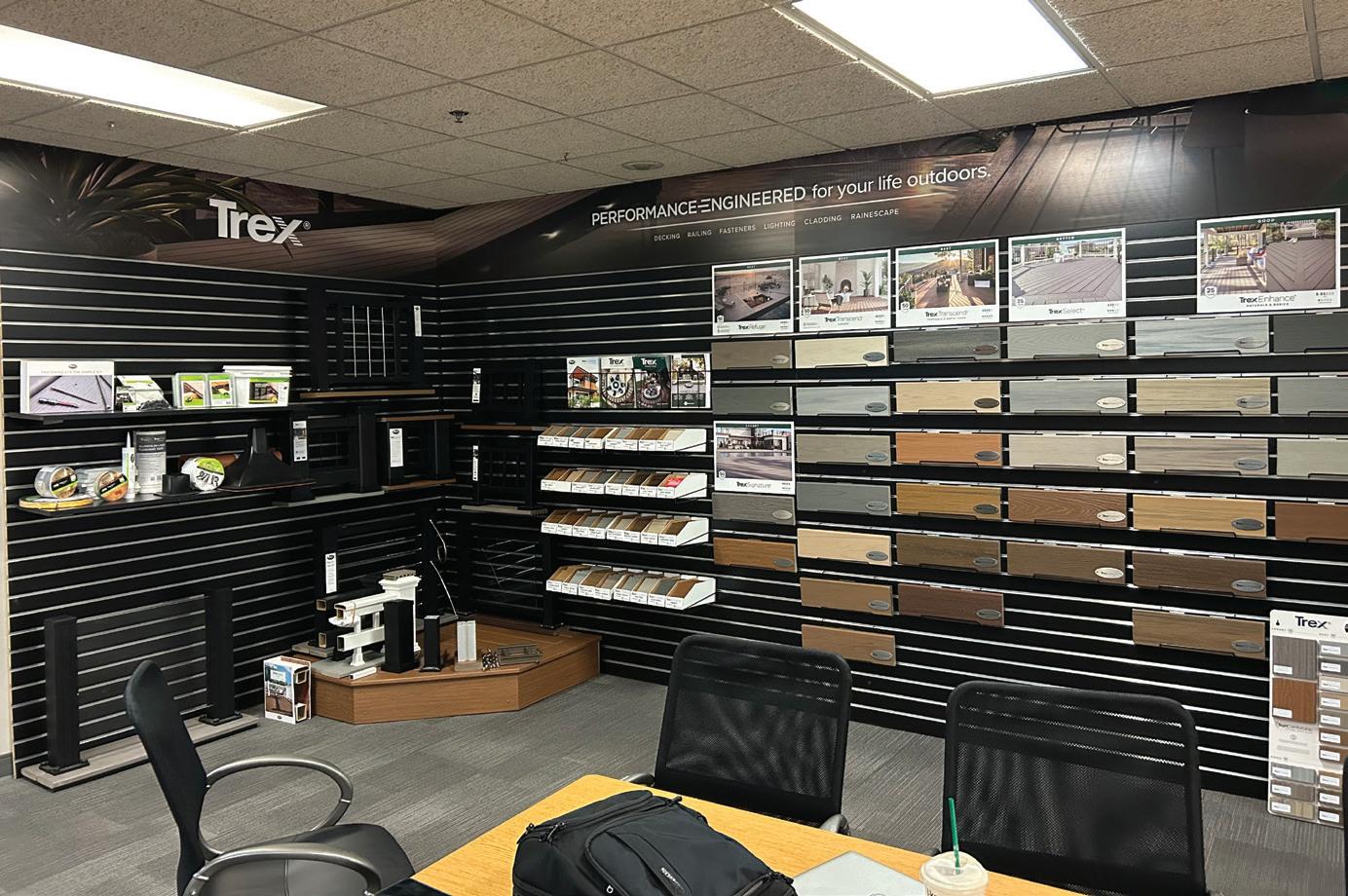
DESPITE CONSUMERS frequently beginning their product searches online by visiting manufacturers’ websites, dealers can move the sale along by offering samples that be seen in person and handled.
dealers experience customers who already understand the brand, recognize its value and have a clearer sense of what they are looking for. These prospects arrive with stronger purchase intent, allowing businesses to spend less time creating interest and more time helping homeowners evaluate options and move toward a decision.
The Competitive Advantage of Expertise
Modern consumers expect a seamless omnichannel experience. They move fluidly between digital and physical touchpoints, often researching products online, comparing options on mobile devices and visiting a showroom only after narrowing their choices. When the information and experience align across those touchpoints, confidence increases and purchase decisions become easier.
Today’s customers are not simply looking for materials; they are seeking guidance, inspiration and confidence in their investment. Increasingly, homeowners are making decisions based on perceived value rather than price alone. Dealers that position themselves as destinations for outdoor living, supported by immersive displays, product samples, and knowledgeable staff, are able to help customers evaluate options, navigate tradeoffs, and make informed purchasing decisions. In a highly competitive market, this personalized, consultative approach represents a meaningful advantage.
Winning Contractor Business
Contractors have become one of the most influential audiences in the building products sales process. Their recommendations often shape homeowner preferences long before a purchase is made.
Leading manufacturers invest in contractor-focused programs, training and marketing initiatives designed to strengthen engagement and increase product familiarity. For instance, Trex recently launched a national TV commercial promoting the benefits of working with a qualified TrexPro contractor. This dedicated spot generated a 98% year-over-year increase in contractor demand. These initiatives don’t just build awareness, they generate qualified demand, strengthen contractor advocacy and create more opportu-
nities for dealers to close sales.
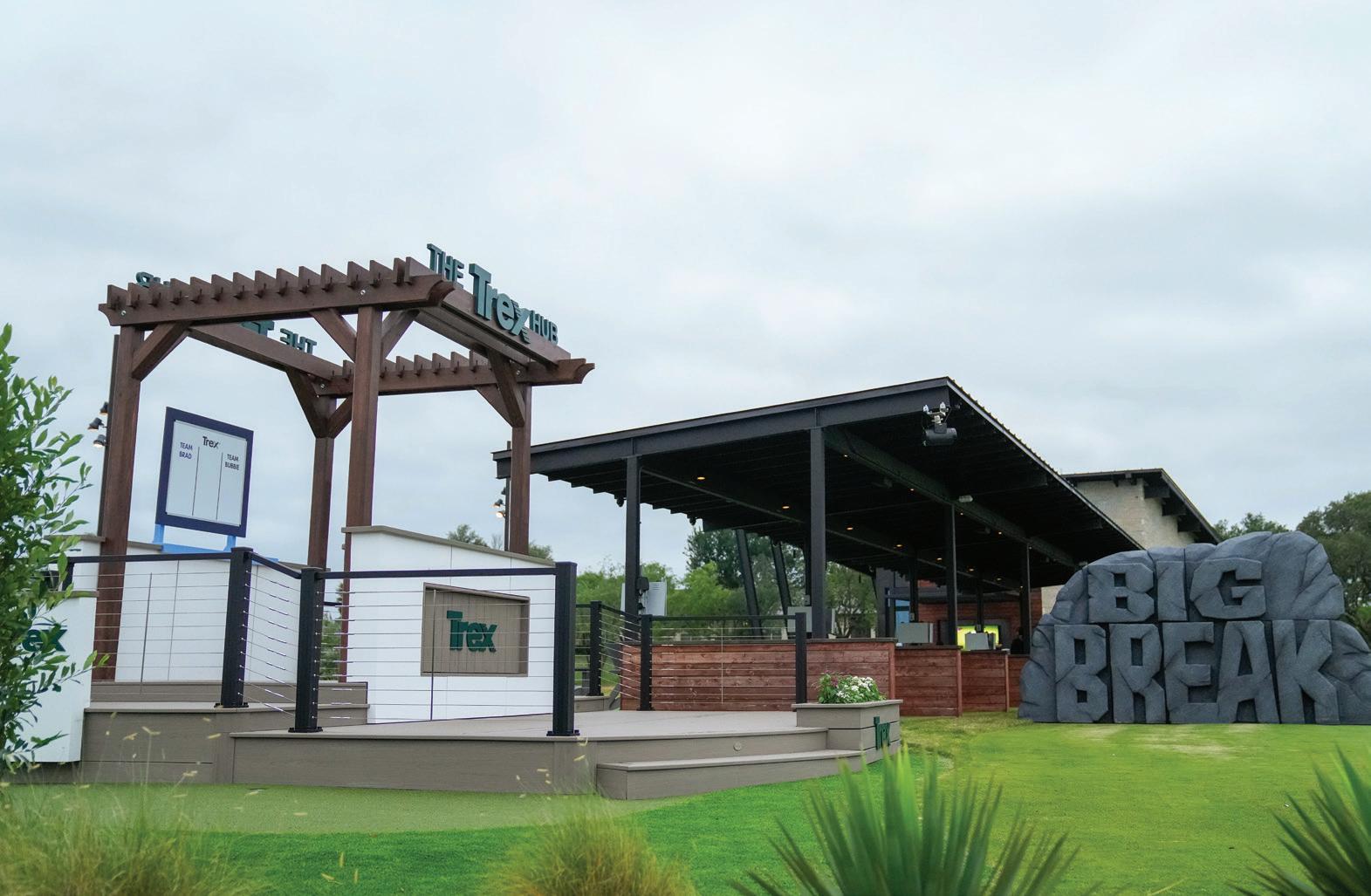
Brands are also investing in sponsorships, events and targeted outreach designed to engage contractors where they work, play and spend their time. Recognizing that many contractors are sports enthusiasts, Trex invests in advertising tied to sports programming and also sponsors high-profile sports properties, such as the 2026 American Century Championship golf tournament and Golf Channel’s popular Big Break reality competition series. By meeting contractors through the content and experiences they already enjoy, we are able to extend our reach beyond traditional advertising and reinforce brand preference in an authentic way.
For decking retailers, strong contractor relationships create a multiplier effect. A trusted builder can influence product selection across dozens of projects each year, making engagement with these professionals one of the most effective drivers of repeat business and longterm growth. Dealers can maximize these efforts by investing in builder engagement beyond the transaction. Training programs, product demonstrations, appreciation events, and marketing support help strengthen loyalty and increase advocacy. Contractors who are confident in the
products they install are more likely to recommend them, creating a cycle of growth that benefits everyone in the channel.
The Value of Strong Brand Partnerships
Meaningful manufacturer partnerships extend far beyond product supply. They help create market momentum while equipping channel partners with the resources needed to capitalize on it. Lead-generation programs, co-branded marketing initiatives, merchandising support, contractor relations and sales tools all contribute to dealer growth.
As customer journeys become more complex and competition intensifies, the distinction between national and local marketing continues to blur. The most successful businesses recognize that growth is no longer driven solely by inventory or price, but by their ability to capitalize on brand momentum, create a consistent customer experience and build strong relationships throughout the channel. MM
– Jodi Lee is senior vice president of marketing for Trex Co., the world’s largest manufacturer of wood-alternative decking and railing, and a leader in high-performance, low-maintenance outdoor living products (www.trex.com).
PREMIERING this month, the Golf Channel’s Big Break reality competition show returns to television with Trex as a sponsor. “The Trex Hub” is a product showcase structure where players can experience the durability and aesthetics of Trex decking and railing. During the episodes, The Trex Hub will be a gathering space where captains and contestants will gather for strategy discussions.
CONSISTENCY IS CRITICAL
------------
BY PAIGE McALLISTER
IN HUMAN RESOURCES, we promote consistency in how employees are treated. We do this because the manager who applies the same expectations, standards, and consequences to everyone—on good days and bad—is more likely to lead a strong, durable team instead of perpetually putting out fires. A team that knows where it stands is a team that performs well.
Consistency sounds simple, but it is not easy. It means holding your top performer to the same standards as your worst performer, documenting the conversation you would rather have informally, and enforcing a rule even when the person breaking it is someone you like. But the payoff is substantial: it is how you earn trust, bring your values to life, protect the organization legally, and win real buy-in.
Consistency Earns Buy-In and Appreciation
Some managers may worry that acting with consistency limits their ability to lead effectively, but it is well established that employees do not resent consistency, they crave it. What erodes morale is not high standards but unpredictable ones. Managing consistently gives people four things they genuinely value:
• They can stop guessing. There is real security in a standard that holds steady. When people are not spending energy reading your mood or bracing for a moving target, that certainty is a relief—and relief frees them to do their best work.
• They see their coworkers held accountable. Nothing demoralizes a strong employee faster than watching a peer coast without consequence. When the standard applies to everyone, people trust that their own hard work actually means something.
• They believe the system is fair. When the same rules genuinely apply to everyone, people trust that
outcomes are earned rather than handed out by favoritism. That belief is what converts grudging compliance into willing effort.
• They know where the company is going and their part in it. Consistency of direction matters as much as consistency of discipline. When priorities do not change week to week, people connect their daily work to a stable goal and that purpose turns compliance into commitment.
How You Treat Employees
Everything starts with how you treat the people who report to you—and the operative word is “everyone.” Consistency in treatment rests on a few concrete practices:
• Set clear expectations. People cannot meet a standard they have never heard articulated. Before you hold anyone accountable for their performance, behavior, or attendance, they need to know what “satisfactory” looks like: what the role requires, the deadlines, how performance is measured. Vague expectations breed inconsistent results—which tempt managers into inconsistent responses. Conversely, Gallup Organization has well documented the fact that employees are most engaged when they know what’s expected of them at work.
• Discipline predictably. The same infraction should draw a comparable response, whoever commits it. When discipline is unpredictable—a warning for one person, nothing for another—employees stop seeing fair correction and start seeing favoritism, or worse, targeting.
• Treat your favorite employee and most frustrating employee the same. While you need to consider each situation on a case-by-case basis, every employee
needs to be held to the same standard and face the same repercussions for failing to meet that standard. Your top performer does not get a pass because they are talented, and your struggling employee is not held to a stricter, unwritten standard because they have frustrated you. The policy is the policy—the chronically late star gets reprimanded, and the underperformer who nails a deadline gets the recognition anyone else would.
• Hold managers accountable, too. Consistency cannot stop at the supervisor’s door. If frontline staff are written up for behavior managers indulge in freely, the standard is not a standard. It is a hierarchy. Additionally, consistency must be a part of what managers are evaluated on and something they are disciplined for failing to uphold.
How You Mirror the Company’s Values
Consistency does not just shape how you manage; it is how your company’s values come to life. Employees do not learn values by reading them on a wall or in a handbook; they learn them by watching what managers consistently reward, tolerate, and punish. You are the living translation of those company values, all eyes are always on you, and consistency is what makes it believable. Company values like integrity and trust, accountability and ownership, excellence and quality, innovation, teamwork, respect and inclusion, and growth
Q . We have an employee who wears way too much fragrance. We have received numerous complaints from other employees, especially those that work in the same area, that the aroma is overwhelming. What can we do?
A. While most personal appearance policies focus on clothing, they should also cover other aspects such as hygiene (“good” and “bad” odors), grooming, jewelry, tattoos, etc.—whatever aspects may be important to the job, especially for reasons such as safety and interaction with others. Enforcing these policies, however, usually involves uncomfortable conversations with the employee in question and firm conversations with the others to not gossip, target, or retaliate against the employee.
In this case, you (or, preferably, someone of the same gender) will need to have a sensitive conversation with the employee. Pull them into a private space, gently tell them that their fragrance is overwhelming for the enclosed area, and suggest they soften it by using less or using it in a different form (i.e., lotion instead of perfume). If the odor is more biological (e.g. body odor), you still need to have the conversation but perhaps suggest showering before coming to work or using cleaning wipes during the day.
There are some situations when deviation from the personal appearance standard is protected such as odor related to a medical condition, a hairstyle protecting certain hair types, a head covering with religious meaning, or a tattoo of cultural significance. In these cases, follow your reasonable accommodation process and have an interactive dialogue with the employee to determine what exceptions can be made or, in situations of importance such as safety, cannot be made.
and learning all show up in how you treat every employee and how you show up consistently over time. When your reactions, standards, and feedback are steady and predictable across people and situations, those values stop being slogans and become the way you actually lead.
The Legal Case for Consistency
There is also a strong reason for why consistency matters: it is one of the most powerful legal protections your organization has. Most employment claims—discrimination, retaliation, wrongful termination—turn not on whether a rule existed, but on whether it was applied evenly. A disciplined or terminated employee asks a simple, powerful question: “Was someone outside my protected class treated differently for the same conduct?” If the answer is yes, you have a problem. Three practices keep you on solid ground:
• Document. If it is not written down and signed, it effectively did not happen. Factual, comprehensive documentation — what occurred (or did not occur), when, what was expected, what was decided—shows your decisions rested on legitimate, continual reasons rather than protected characteristics. Document strong and struggling performers alike; a file holding only negatives for certain employees tells its own story.
• Align your practices. What you do has to match across similar situations. If two employees commit the same violation and only one is written up, that gap is the entire case. Before you act, ask how you have handled the same situation with everyone else.
• Follow your policies and procedures. Your handbook and procedures set the standard against which you will be measured. Deviating from your own stated process without a legitimate reason is often more damaging in litigation than the original issue. If a policy no longer makes sense, change it—do not quietly ignore it for some and enforce it for others.
The Bottom Line
Consistency is not about being inflexible. It is about being fair, predictable and even-handed so that everyone on your team is measured by the same yardstick, and can trust it will not move. Do that, and you will build trust, breathe life into your values, protect your organization, and earn buy-in that no reward or pep talk can manufacture. Inconsistency is expensive—in morale, in turnover, and in legal exposure. Consistency requires discipline, but rewards you everywhere that matters. MM
PAIGE McALLISTER
Paige McAllister, SPHR, SHRM-SCP, is vice president for compliance with The Workplace Advisors, Inc. Reach her at (877) 660-6400 or paige@theworkplaceadvisors.com.
HPM Building Supply, Kea’au, Hi., is preparing to open a state-of-theart wood treating facility this fall in Chehalis, Wa.
The Chehalis Distribution & Treating facility is a multi-year undertaking developed jointly by Adrian Murphy and Colin Thompson. The 36,000-sq. ft. facility on 15 acres will feature state-of-the-art systems for loading, treating and unloading lumber, giving HPM greater control of its treated lumber and building material supply chain as it continues to serve as a source for professional builders and retail customers across Hawaii.
The facility’s opening and longterm success is being overseen by newly promoted VP of manufacturing & construction Thompson. Effective July 1, Thompson succeeded Murphy, who is now senior advisor-lumber & vendor strategy.
Murphy’s move marks the start of a planned, multi-year transition toward retirement. Murphy joined HPM as a lumber buyer and, over 12 years with the company, went on to lead purchasing, products, logistics and
manufacturing. He was instrumental in the 2023 opening of HPM’s West Coast Distribution & Consolidation facility in Fife, Wa., and the current construction of the Chehalis treating plant. In his new role, he will continue supporting HPM’s lumber strategy, vendor relationships, and major capacity-building initiatives.
According to president Adam Bauer, “Adrian’s leadership has significantly contributed to our company’s growth and ability to serve our customers. His deep lumber knowledge and vendor expertise will continue to be invaluable as he moves into this senior advisory role.”
Thompson will oversee component manufacturing, custom metal roofing, wood treating, the door shop, HalePlus factory-built program, and the company’s Washington operations.
HPM operates 21 locations, including retail stores, building supply and lumberyards, Design Centers, roofing and manufacturing facilities, corporate offices, and a West Coast consolidation facility.
Home Depot opened a new location July 30 in Mission Valley (San Diego), Ca.
Santa Cruz Hardware unveiled its fourth location— Seaside Ace Hardware in Seaside, Ca.—with a June 27-28 grand opening celebration.
Billings Hardware, Billings, Mt., closed in mid-June after 12 years, following a weeklong liquidation sale.
Fencing Supply Group is now the exclusive national distributor for Trex Fencing. Thirteen of its 81 locations are in the West, including Merchants Metals in California, Tacoma, Portland, Boise, Salt Lake City, Denver, and Phoenix; Fence & Deck Supply in Utah; and Cedar Supply, Binford Supply, and Pro Access Systems in Colorado.
Century Lumber, Torrington, Wy., celebrated the 150th anniversary of its parent company with a free BBQ on July 11.
Richert Lumber Ace Hardware, Pleasanton, Ca., marked its 50th anniversary.
Marvin is celebrating the 40-year anniversary of its Baker City, Or., wood processing facility.
Boise Cascade Co., Boise, Id., was named one of America’s Best Large Employers in 2026 by Forbes.
FIRE STRIKES ARAUCO PANEL MILL
Arauco North America’s particleboard plant in Albany, Or., suffered damage to its roof and ductwork in a July 11 blaze.
About 25 firefighters needed four hours to contain the conflagration. Crews found flames on the roof and in the air ducts, and used an aerial drone equipped with an infrared camera to locate hidden hot spots.
The cause of the fire remains under investigation.
Two weeks earlier, a dust explosion at Arauco’s MDF mill in Malvern, Ar., sparked a blaze that spread through the facility’s dust collection system, which connected the sander to the silos. About 30 firefighters responded.
A STORY ABOUT GROWING THROUGH AGILITY
Agri Supply has never fit neatly into a single category. Since opening in 1962, what began as a small operation has grown into a multi-faceted business built around serving the diverse needs of our customers.
At our core, we are a retail and wholesale farm and ag supply company with nine locations across the Southeast, including Virginia, Georgia, North Carolina and South Carolina. Our stores range from 40,000 to 120,000 square feet and carry roughly 40,000 items, with strong assortments in agricultural supplies, trailer and mower parts, fencing and three-point equipment. We’ve also developed our own brands, like Carolina Cooker, which has become an important part of our business.
Because of the markets we serve, there is no one-size-fits-all approach that works for us. Our growth has been driven by our ability to stay responsive to customers and adapt store by store.
That same mindset is why our partnership with Orgill has become so valuable. What began as a secondary supplier relationship evolved as we recognized the opportunity to strengthen our hardware business.
Working with Orgill, we completed a 10,000-square-foot hardware reset in one store, and the results quickly exceeded expectations. Their team supported everything from assortment planning to execution, creating a department tailored to our customers—not a cookie-cutter solution.
Because of that success, we’re expanding hardware into additional locations. Our goal remains simple: stay agile, serve our customers and continue building on the foundation established more than 60 years ago.
Barry Partlo President & CEO | Agri Supply | VA, NC, SC & GA
117-YEAR-OLD WASHOUGAL LUMBER CLOSES
Washougal Lumber Co., Washou- gal, Wa., permanently closed June 30 after 117 years with the retirement of owner Brett Scott.
According to Scott, the business had been performing well, but over the last two years, as he neared his 60s and his wife experienced health issues, he decided it was time to close the doors. He officially retired at the end of July, upon turning 60.
The fourth-generation company was launched in 1909 by Scott’s great-grandfather, Ernest Dubois, a Vancouver sawmill operator. Dubois passed the business on to his son-in-law, Lloyd Scott, who 55 years ago passed it to his son, John Scott. John’s sons, Brett and Kevin Scott, took over in 1992.
Scott holds out hope he can sell the building to someone who will continue operating it as a hardware store/lumberyard. In the meantime, the remaining inventory and tools were put up for auction in late July.
CONTRACTOR ADDING ACE IN PULLMAN
A local contractor is bringing Ace Hardware back to Pullman, Wa., at the original site of Pullman Building Supply on North Grand Avenue.
Pullman Building Supply operated a lumberyard on the property until it relocated to the south side of town in 2015. That location closed in 2024, while the previous site on North Grand Avenue operated as the Lumberyard food-truck hall until closing. It was purchased by Jason Dike, who has operated home construction
and remodeling company Revival Home Performance for 15 years.
Dike expects Pullman’s Ace Hardware to open in early October and employ about a dozen workers. The store will carry Benjamin Moore paints. Dike also plans to offer some building supplies.
The last Ace to operate in Pullman closed in 2018.
ORLANDINIS ACQUIRE ARNOLD’S HARDWARE
The Orlandini family, owners of Altadena Hardware, Newhall Hardware, and Newland Hardware, has purchased Arnold’s Frontier Hardware, Sierra Madre, Ca., from current owner Basil Kruger, as well as the real estate from Jean Hatfield, the original owner of Arnold’s Hardware.
They will return Arnold’s Frontier Hardware to the name it first opened under 75 years ago: Arnold’s Hardware. The store is located about five miles away from the former site of Altadena Hardware, which was destroyed in the January 2025 Eaton Fire. The Orlandinis still hope to rebuild Altadena Hardware, but estimate the process could take up to five years.
Co-owner Jimmy Orlandini said, “This one is personal for us. After losing Altadena Hardware in the Eaton Fire, we learned how much a hardware store really means to a town; it’s not the inventory, it’s the people. Sierra Madre is just minutes away, and we’re honored to serve this community while we continue rebuilding.”
Over the coming months, the inventory will expand, including the addition of Benjamin Moore paints, and a full remodeling will get underway, followed by a grand reopening celebration.
Arnold’s Hardware was founded in 1949 by Ollie Arnold, who was succeeded by Bob and Jean Hatfield, and then Kruger.
NORDIC VENEER CLOSING OREGON MILL
After more than 72 years of continuous operation as a family-owned cornerstone of Douglas County’s timber industry, Nordic Veneer Inc. will permanently cease production at its facility in Roseburg, Or.
The company, founded in 1954 by Dick Adams and Norm Jacobsen, purchased the Perkins veneer plant in Dixonville in 1960 and has since operated under the stewardship of the Adams family across four generations. It has been a vital local employer, producing high-quality veneer and contributing to the regional wood products economy.
“After careful and difficult consideration, we have made the decision to close our operations,” said Art Adams, owner of Nordic Veneer. “Our industry has faced sustained wood supply and market challenges, structural realignment, and foreign competition. Despite our team’s hard work, recent investments in efficiency, and deep commitment to this business, sustaining operations is no longer viable under current market conditions.”
Nordic Veneer has long been defined by its family leadership and strong ties to the community, including support for local hospitals and cancer centers, libraries, schools, healthcare systems, Umpqua Valley Christian School, and early efforts to bring Christian radio to the area through translators.
MOVERS & SHAKERS
Pete Medina, ex-Builders FirstSource, has moved to 84 Lumber, Fort Collins, Co., as sales mgr.
David Stallcop has folded The Stallcop Group, Spokane, Wa., and joined Timberlab, Portland, Or., as a sales executive.
Kevin Sigourney, ex-PROSOCO, has joined Central Valley, Napa, Ca., as vice president of sales.
Nicole Carpenter has been promoted to commodity product mgr. at Boise Cascade, Phoenix, Az.
Kyle Clark, ex-Sierra Forest Products, has joined Arbor Wood Co., as Seattle, Wa.-based architectural sales mgr. for the West Coast.
Julia Qualteri, Simpson Strong-Tie, Denver, Co., has been named territory sales mgr. for Colorado and southern Wyoming.
Lee Rahn transferred internally from Spenard Builders Supply, Anchorage, Ak., to Builders FirstSource, Rapid City, S.D., as sales mgr.
Daisy Bream is new to sales at ABC Supply, Oxnard, Ca. Anayeli Morales is now delivery service mgr.
Teaghan Coon, ex-Capital Lumber, has joined Arrow Lumber & Hardware, Buckley, Wa., as a contractor sales specialist.
Jake McGaffin has been named director of technology for Dunn Lumber, Seattle, Wa.
Jolene Land, ex-Action Gypsum Supply, is a new product sales representative at Weyerhaeuser Co., Phoenix, Az.
Ryan Daniels has been named senior vice president, wood products for Rayonier, Inc., Wildlight, Fl.
John Wirsing, outside sales, Builders FirstSource/Alpine Lumber, Crested Butte, Co., has retired.
Enrico Batelli has been appointed chief financial officer for US LBM, Atlanta, Ga.
Taten Wood, ex-SmartLam North America, has joined Cambium, San Francisco, Ca., as senior mgr. of growth partnerships. He is based in Dothan, Al. Emma O’Regan has been promoted to marketing design mgr.
Jesse G. Singh has been appointed CEO and a board of directors member with Fortune Brand Innovations, Deerfield, Il.
Tony Houk has been promoted to senior vice president of operations for Ace Retail Group, owner and operator of more than 260 Ace Hardware stores across 18 states, including Westlake Ace Hardware.
Katherine Collins and Lori J. Ryerkerk have been elected to the board of directors for International Paper, Memphis, Tn., effective Oct. 1.
Drew P. Eyelids is working the graveyard shift at Mungus-Fungus Forest Products, Climax, Nv., report co-owners Hugh Mungus and Freddy Fungus
ALLURA SIDING –BUILT TO ENDURE, STYLED
APA RELEASES 2026 PANEL/EWP YEARBOOK
Elevated tariff rates, a frozen housing market and the sharpest slowdown in U.S. net immigration in decades are converging to constrain demand for engineered wood products in 2026. What those forces mean for the engineered wood industry is examined in depth in the 2026 Structural Panel & Engineered Wood Yearbook, prepared by APA’s vice president of economic analysis and market research Jennifer Coskren. The yearbook analyzes the key economic and market factors driving demand for engineered wood products in North America.
Updated information in the 2026 Yearbook includes:
• Historical and current production statistics for structural panels (OSB and plywood).
• North American product import and export levels.
• U.S. and Canadian nonresidential and industrial construction statistics.
• Demand and production for glulam, I-joists and LVL.
The U.S. economy achieved 2.1% real GDP growth in 2025 and carried that momentum into the first quarter of 2026, despite significant volatility driven by tariff front-loading, a government shutdown, and rising energy costs tied to the ongoing conflict in the Middle East. The Federal Reserve’s ability to bring down long-term rates has been more constrained in this cycle than in prior ones, complicating monetary policy in ways that historical comparisons do not fully capture.
These headwinds have weighed heavily on housing. Mortgage rates averaged 6.8% in 2025, and while showing some improvement in early 2026, rates resumed their climb on renewed energy and inflation concerns. Homebuying sentiment sits at historically low levels, and while the prime-aged homebuyer population remains large, it is beginning to roll over from its demographic peak. Affordability constraints and elevated rates continue to suppress buying activity, and vacancy rates— while gradually improving—remain lean by historical standards.
Against that backdrop, singlefamily construction is forecast to decline again in 2026, averaging 910,000 units for the year. It is not
surprising, then, that engineered wood markets, which are largely driven by residential construction, face a difficult environment. Structural panel production is forecast to fall to 31.6 billion sq. ft. in 2026. Meanwhile, I-joist and LVL production are each expected to grow just 1.0%, while glulam and cross-laminated timber should see a modest lift from continued growth in nonresidential applications.
The entire 2026 market forecast, including all market segments
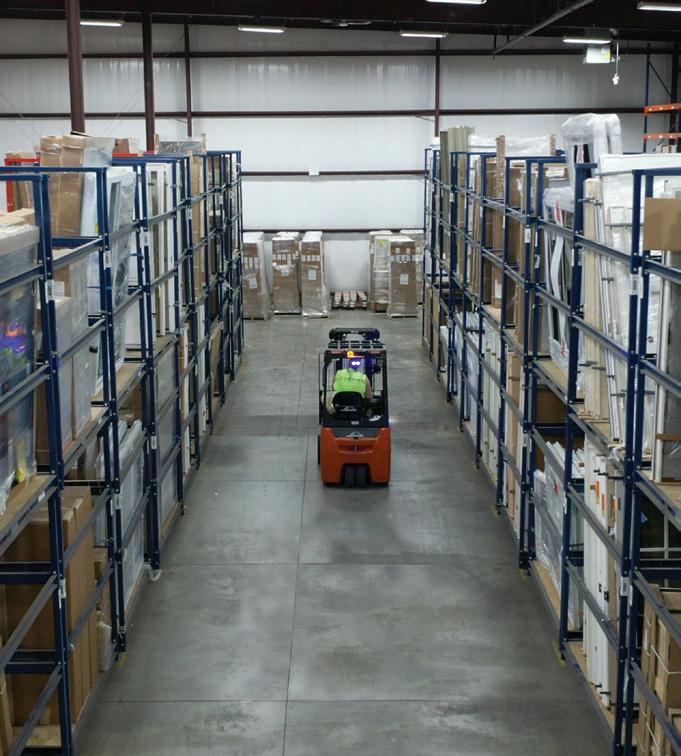
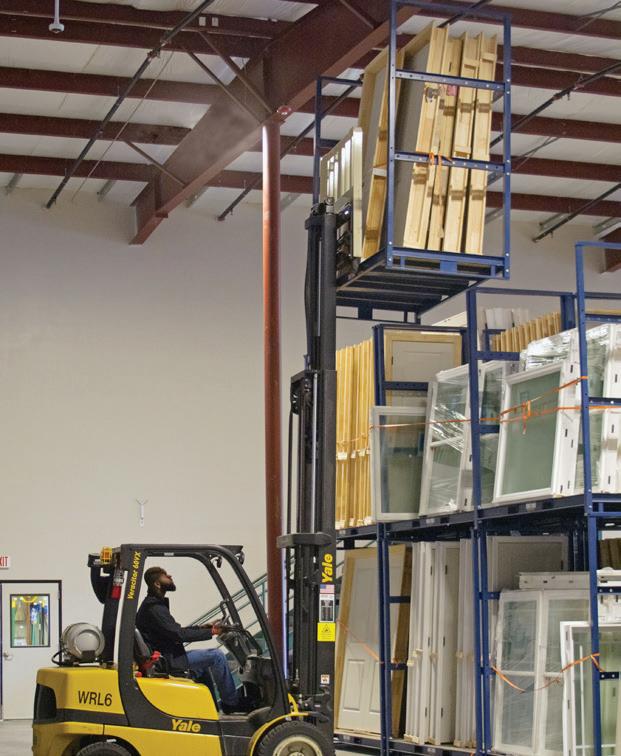
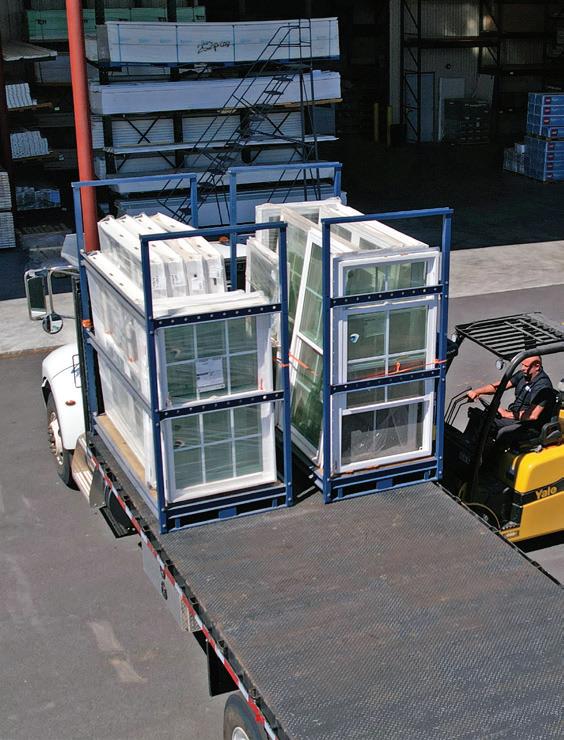
Free up valuable space with our durable steel millwork stack racks—built for doors, windows, and more. Easy to assemble, simple to move, and designed to triple your storage capacity.
and production outlook, as well as statistical data, is included in APA’s 2026 Structural Panel & Engineered Wood Yearbook, Form E191. The yearbook can be purchased for $1,290 at shop.apawood.org.
Founded in 1933 and based in Tacoma, Wa., APA represents about 175 plywood, OSB, glulam, wood I-joist, rim board, CLT and structural composite lumber mills throughout North America. Its primary functions are quality auditing and testing, applied research, and market support and development.
• Truck-Ready: Load directly for faster handling
• D amage-Reducing: Minimize product loss
• S tack-Friendly: Securely stack up to three high
• C ost-Effective: Maximize storage without expanding
SELL SIDING AND DECKING AS A SYSTEM
BY SARA GRAVES
AS OUTDOOR LIVING projects become larger and more sophisticated, the line between decking, siding, trim and other exterior products continues to blur. What were once separate product categories are increasingly being sold and installed as part of a unified exterior system.
According to Joe Ciaraldi, co-president of Professional Building Services, Salem, N.H., covered decks, screened porches, sunrooms and major exterior renovations all create situations where decking and siding must work together. Contractors no longer evaluate them independently. Instead, they are looking for solutions that work together aesthetically and functionally.
Homeowners, meanwhile, are seeking cohesive designs that incorporate complementary colors, coordinated trim details, and consistent architectural styling across multiple product categories. “The goal is to make the space feel intentional and integrated— not added on,” Ciaraldi says.
This shift creates opportunities for manufacturers, distributors and dealers to position products as part of a complete exterior solution rather than as individual components. Projects that bundle decking and siding often deliver benefits beyond appearance, including simplified project management, improved accountability, and greater overall value.
Low-maintenance, warrantied products are becoming especially important as homeowners invest more heavily in comprehensive exterior renovations. Products that reduce ongoing upkeep while supporting longterm durability align with homeowner expectations for outdoor living spaces designed to perform for decades.
The performance connection between product categories is particularly evident in moisture management. Flashing details, clearances, trim integration, and proper installation all play a role in protecting the home envelope. If one component fails, the
performance of adjacent systems can be compromised as well.
Co-president Jordan Ciaraldi explains that in the Northeast where she lives, they have to shovel their decks during the winter. So, even though products such as LP SmartSide call for clearance, contractors will frequently install a larger water table to keep the siding safely above the deck. That not only improves water management, but also helps protect the siding from getting damaged during snow removal.
As exterior projects become more complex, education is also taking on greater importance. Contractors expanding beyond traditional decking applications into siding, trim or covered structures must understand code requirements, installation specifications, and system integration principles. Manufacturer training programs, such as LP’s Certified Installer program, can help bridge knowledge gaps while giving homeowners added confidence in the contractor’s expertise.
Communication remains a defining factor in successful projects. Contractors, manufacturers, suppliers and homeowners all play a role in ensuring that multiple exterior systems function together as intended.
“There is so much consideration across all of these exterior products,” says Jordan. “When homeowners are transforming the exterior of their house, they are dealing with trim, decking, siding and other systems all at once.”
Looking ahead, Joe believes manufacturers and contractors alike will continue moving toward a more integrated approach to exterior design. For dealers and distributors, the message is clear: the future of outdoor living may not belong to individual product categories, but to how effectively those categories are sold together. MM ------------
EXTERIOR BUILDING products are increasingly being sold as part of a unified system. (Photo by LP)
BETTER, DIFFERENT, DISTINCTIVE HOW DEALERS WIN THE MILLWORK
SPEC
BY MEREDITH OPIE
HOMEOWNERS DON’T walk in asking for a crosshead. They walk in with a dream. They’re chasing a feeling their home will create when they pull into the driveway or walk through the front door.
They want their home to feel more polished, more timeless, more farmhouse, more custom, more them. And today, there are seemingly more options than ever before: More profiles. More styles. More brochures. As a result, homeowners are looking to their dealer, builder or remodeler to help them make sense of it all.
The challenge isn’t a lack of options. It’s the avalanche of them. What separates the pros winning this category isn’t how much they carry. It’s how quickly and clearly they turn “I want it to feel like this” into a confident spec.
Variety used to be the edge. Now, translation is. Most homeowners are chasing one of three outcomes. They want their home to look more defined, different or distinctive. Once you hear which one they’re really asking for, the assortment stops feeling overwhelming and starts feeling like a toolkit. Focusing on adding accents and architectural details to windows and doors is the fastest way to add curb appeal to a home.
Defined: “I want my home to look better.”
This is one of the largest customer groups in the category. They know something’s off but can’t always name it. They might say, “I want more curb appeal,” “I want it to feel finished,” or “It just needs something.”
The win here is speed and confidence. Shutters, crossheads, louvers and trim accents frame the areas people notice first: windows, doors, gables, and entries. Louvered shutters lean classic, while Shaker-style shutters feel cleaner and more relaxed. And no matter the home style, any entry can be completely transformed with a single, well-placed crosshead. This customer doesn’t need to see 40 options. They need one strong recommendation that makes them say, “Yes, that.”
In this case, fewer, better-fitting choices beat an open catalog every time.
Different: “I want my home to feel like a different style.”
This customer isn’t just upgrading their home. They’re trying to shift its identity. They may want a farmhouse exterior, a cleaner modern entry, or a more classic architectural presence. They can describe the feeling, but they can’t always describe the products. Bridging that gap is where dealers add real value.
Column wraps are the fastest lever here. A tapered profile instantly reads Craftsman, while a square, woodgrained wrap reads farmhouse before the paint is even dry. Pilasters, whether plain, fluted, double panel, half round, or arch, add vertical definition around entries, windows and garages, and pair with crossheads and trim to formalize the look.
Then bring in the connective tissue: knee braces, rafter tails, dentil blocks. Those details keep a transformation from feeling like a collection of upgrades and make it feel like one home, with one point of view.
This is where the pro becomes a translator, turning the words customers already use—farmhouse, coastal, Crafts-
------------
DECORATIVE MILLWORK can transform a home. Dealers just need to discover what feeling the homeowner is chasing.
man, or modern—into the products that give those styles a pulse.
Distinctive: “I want my home to stand out and feel custom.”
This homeowner already has a strong vision, and often the budget to match. They’re not updating. They’re creating.
Decorative millwork is especially powerful here. Gable pediments, brackets and corbels create the architectural focal points that used to require full custom fabrication, without the lead time or complexity. Layer them with intention and the home’s design language really sings.
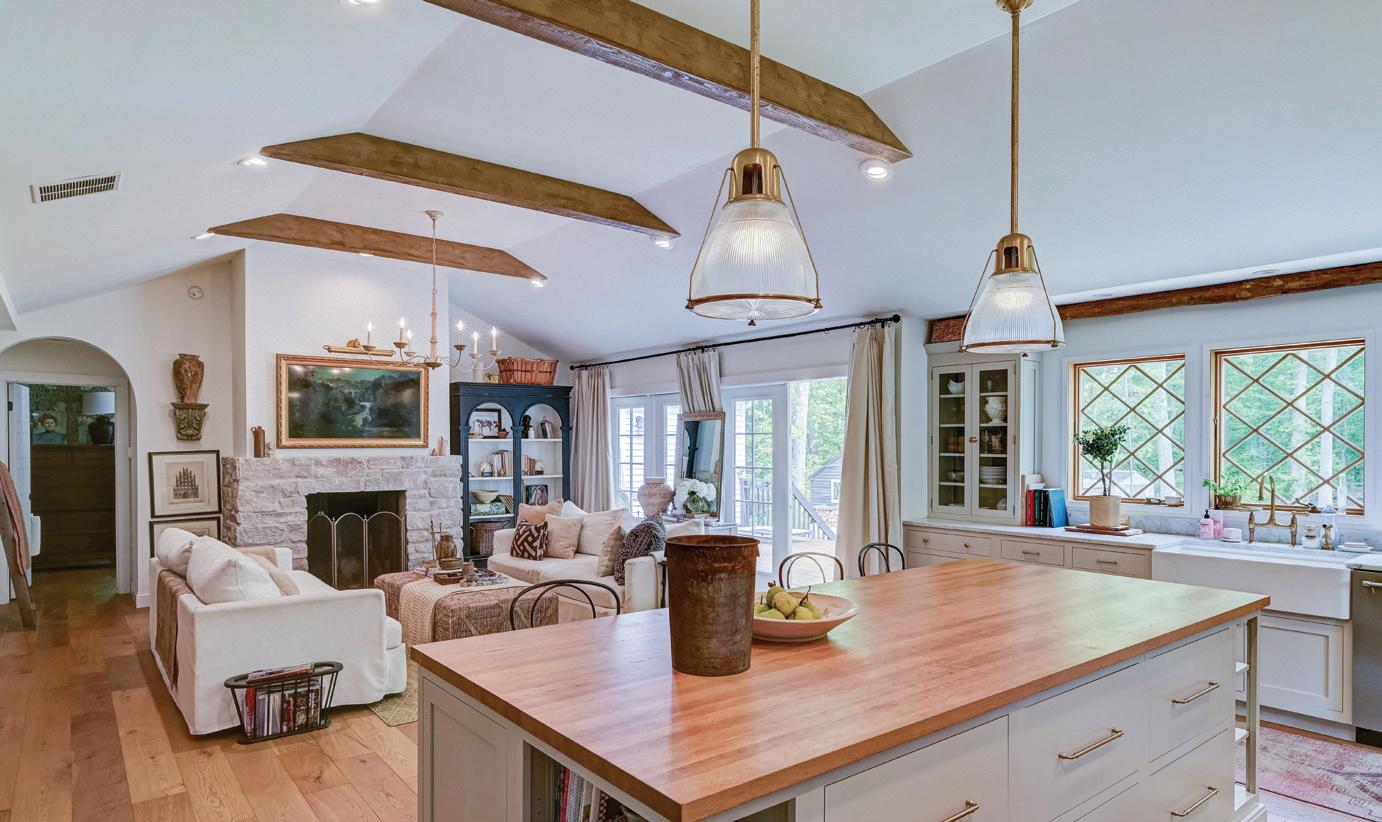
Interior details finish the story. Polyurethane beams are the hero: the warmth and character of real wood without the weight, cost or upkeep. That’s what finally makes rustic, farmhouse and Craftsman ceilings pencil out for real homeowners. Beam mantels carry that warmth to the fireplace, and medallions add character overhead. For this customer, the product was never really the point. It’s the impression their home makes when someone walks in.
Merchandise to the Vision, Not the Category
The same framework that guides the customer conversation can reshape how we merchandise. When displays, lookbooks and digital guides are organized simply by product categories, customers are left to translate their vision on their own. Rows of shutters. Rows of brackets. Rows of columns. It’s an inventory list instead of a shopping experience.
Flip it. Organize around outcomes, like curb appeal, style shift, and custom character, and the path gets simpler for the homeowner and the pro standing next to them. Customers can more easily self-identify the goal, narrow the field, and specify with confidence. Here, clarity is the competitive advantage.
At the end of the day, this category isn’t about millwork alone. It’s about helping someone pull into the driveway of that home in their dreams, a home they love. The dealers, builders and remodelers who understand that don’t just win the spec. They win the next project, and the one after that. MM
– Meredith Opie is associate product manager for Fypon, leading manufacturer of polyurethan decorative millwork (www. fypon.com).
THE LBM SUPPLY companies that win are the ones that seamlessly bridge the gap between the customer’s vision and simplified product specification. (All photos by Fypon)
BEAMS CAN make any interior feel bespoke. Polyurethane beams deliver the warmth and character of real wood without the weight, cost or upkeep
ADDING ACCENTS and architectural details to windows and doors is the fastest way to add curb appeal.
BEYOND THE SURFACE
WHY MOISTURE MANAGEMENT IS CRITICAL TO CLADDING PERFORMANCE
------------ BY TED WINSLOW
WHEN EVALUATING sidings and other modern claddings, the focus tends to be on appearance, durability, color or in some cases maintenance requirements while many of the factors that determine long-term performance are hidden behind the finished exterior. Modern wall assemblies are required to manage more than just weather exposure—they must also manage moisture, airflow/ventilation, drying potential, and durability—in increasingly complex designs and assemblies due to more and more progressive building codes and techniques. Understanding the science behind these systems helps architects, builders and owners make better decisions.
As building codes evolve and wall systems become increasingly airtight and energy efficient, moisture management behind cladding has become more important than ever. Some of the latest changes are pushing the industry towards smarter, more resilient wall assemblies that prioritize one key approach to building design— enhanced drying. For years, building codes were largely driven by energy efficiency needs (for good reasons), but these increased levels of airtightness and insulation have only enhanced the need to ensure proper moisture management starts at the source of most moisture challenges—from the outside in. Many buildings are not as efficient at drying when leaks occur (and they will occur) and now building codes are beginning to shift to address this growing need for durability and resilience.
While the visible cladding receives most of the attention, long-term building performance often depends on what happens behind the surface. By understanding drainage, ventilation and drying mechanisms, building professionals can create wall systems that better withstand weather, protect materials and support durability for decades. This starts by understanding and employing three fundamental principles in today’s construction methodologies: (1) airflow + drainage = durability, (2) capillary breaks matter and (3) rainscreen design principles are becoming standard practice.
In modern construction, designing successful cladding systems isn’t simply about keeping water out—it’s about managing the moisture that finds its way in. This bulk exterior moisture is known to account for over 90% of most moisture-related issues which further highlights the importance of addressing it at the exterior of the assembly—what comes in, must come out. This is where rainscreen walls excel over other systems as they are able to create a capillary break that provides a buffer between the cladding and the wall structure to not only efficiently drain this moisture, but create a means for it to continuously dry out.
When incorporating a rainscreen system, it’s important to understand the components of the basic rainscreen wall: (1) cladding layer, (2) air space, (3) water-resistive barrier (WRB), and (4) backup wall structure. The air gap (capillary break) is the most important part of the systems as this is the layer that is the foundation for why these systems are able to perform so effectively. This layer can be incorporated into the assembly in a variety of ways including strapping (wood furring) as well as more modern solutions such as entangled mats, engineered furring and dimpled sheets. One of the advantages of these more modern solutions is that they are able to provide continuous airflow in multiple directions. They are also able to be attached using common construction tools that are used for installing house wraps and building papers.
Building codes keep evolving—and some of the latest changes are pushing our industry towards smarter, more resilient wall assemblies that prioritize enhanced drying. With our evolving codes, we need to employ evolving techniques, practices and solutions that are able to address the challenges our buildings are facing when it comes to moisture and managing it effectively to preserve this integrity and durability for years to come. MM
– Ted Winslow is director of product & technical sales for Advanced Building Products, Inc. (advancedbuildingproducts.com).
EVOLVING BUILDING codes and more energy-efficient wall systems make moisture management behind cladding more important than ever (Photo by Advanced Building Products)
Re Reddwwood i ood
thrives in some of the most productive timberlands in the world. Redwood is known for its timeless durability without the use of chemicals. Due to its flawless formation, there has never been a Redwood recall. There is a grade of Redwood for every application, every budget, and every customer.
“Growing beyond measure.”
Call or visit us today. Our family of Redwood timberland owners will continue to be your reputable and reliable source of Redwood.
SUNPRO EXPANDS IN SOUTHEAST IDAHO
Sunpro unveiled its newest location in Sugar City, Id.
The 23,265-sq. ft. facility was designed and built to serve builders, contractors, and customers across Southeast Idaho. The space includes a full-sized contractor lumberyard, material storage, offices, and a retail sales floor.
“This facility has been a goal that our team has worked hard towards for a long time,” said area manager Bob Mortensen. “We’re excited to welcome people here to show them what we have built, and what we are still in the process of building. Most of all, we look forward to continued service to our customers and to help build better communities in the areas we serve.”
The location held a grand opening celebration in early June, with more than 40 vendors in attendance. During the event, guests toured the new location and learned more about the products and services available.
The Sugar City location adds to Sunpro’s presence in the area and gives customers a more convenient option nearby. The chain now operates 21 locations—four in Idaho, three in Colorado, and 14 in Utah.
MURPHY DOOR BUYS MERRILL HARDWOODS
Murphy Door, Ogden, Ut., the nation’s leading manufacturer of bookcase doors, Murphy beds, and multifunctional hidden-door furniture, has acquired Merrill Hardwoods Division (MHD), a 30-year-old hardwood manufacturing company based in Rigby, Id.
The deal marks a full-circle moment for Murphy Door: MHD founder Kris Merrill was instrumental in designing and building the very first Murphy Door products more than 13 years ago.
Murphy Door acquired Merrill’s 22,500-sq. ft. facility in Rigby, including its buildings, all manufacturing equipment, and full team of approximately 10 employees, for $3.25 million.
All MHD staff will become Murphy Door employees, with plans to double headcount at the facility within 12 months.
The acquisition is expected to add approximately $5 million to Murphy Door’s top line over the next 12 months and opens new product categories including floating shelves, stair risers, veneered products, custom hardwood supply, and furniture lines such as nightstands, dressers, armoires, vanities and kitchen
cabinets, all featuring the multifunctional and hidden-door elements Murphy Door is known for.
“Kris helped us build our very first product over a decade ago, so bringing MHD into the Murphy Door family feels less like an acquisition and more like coming home,” said Jeremy Barker, CEO of Murphy Door. “The equipment, expertise in hardwood processing and manufacturing, as well as the team they’ve built in Rigby over 30 years, is exactly what we need to take Murphy Door into its next chapter.”
Unlike Murphy Door’s existing panel and sheet goods operation, MHD is a hardwood processor, bringing specialized capabilities including molders, planers, and advanced texturing equipment. The crown jewel is a Hessaman texturing machine that enables cross-scoring and texturing of veneers and exterior siding—a capability Murphy Door believes it is one of the only companies in the nation to possess, and one that opens product categories the company could not previously enter.
Founded in 2012, Murphy Door manufactures 99% of its products in the United States, with major production facilities in Utah and Kentucky.
MONTANA MILL ADDING TREATING FACILITY
Big Sky Forest Products is building a new wood treatment plant on the site of its post mill in St. Regis, Mt., targeting a September start-up.
The 20,000-sq. ft. facility will hold a pressurized retort, made in Vietnam and measuring 9 ft. in diameter and 50 ft. long. It will operate out of a steel building purchased from Pyramid Lumber, Seeley Lake, Mt., according to general manager Steven Freeman.
Big Sky operates under the umbrella of Panhandle Forest Products, Priest River, Id. A matching grant helped make the expansion financially possible.
NEVADA MILL TO EXPAND PRODUCTION
The U.S. Department of Agriculture awarded $50 million in guaranteed loans to help Tahoe Forest Products, Carson City, Nv., expand its milling capabilities.
The funding will allow the company to add dry kilns, a planer mill, and a new saw line, enabling Tahoe to shift from raw material production to as much as 60,000 bd. ft. annually of finished lumber that it could sell to retailers, wholesalers and large builders.
C&E LUMBER COMPANY
1 1/2” to 12” Diameter in Stock.
The funding was made possible by a partnership between the USDA Rural Development and the Forest Service, which aims to ease “the wildfire crisis by investing in local sawmills that clear out dangerous fuel in our forestlands, helping to remove the most immediate threats to communities, critical infrastructure, and natural resources.”
CALIFORNIA FORMS STATE MASS TIMBER COALITION
California has formed the first statewide mass timber coalition—a new public-private partnership designed to accelerate the adoption of mass timber construction, drive forest health and wildfire mitigation efforts, and accelerate economic development across the state’s rural and urban communities.
The California Mass Timber Coalition brings together state and federal agencies, county and local governments, research institutions, industry representatives, forest sector organizations, non-profits, and community partners to support the establishment of an in-state mass timber industry, advancing manufacturing and climate-smart construction with the goal of building resilient communities and advancing California’s forest health goals and climate initiatives.
The coalition will also work to establish state policy and regulations that drive positive outcomes
for utilization and manufacturing of in-state mass timber, industry development, and market growth.
Mass timber offers a low carbon alternative to traditional construction materials. By utilizing wood sourced from sustainable forest management practices, mass timber can help reduce carbon emissions, support forest restoration, and create new jobs in local manufacturing and construction industries.
As a construction material, it offers a range of benefits, combining sustainability with practical perfor-
mance advantages.
“The establishment of the California Mass Timber Coalition marks a significant step forward in our efforts to advance sustainable building practices while improving the health of California’s forests and landscapes,” said Terry O’Brien, chair of the Board of Forestry & Fire Protection. “This collaborative approach will help California leverage innovation, reduce wildfire risks, and support economic opportunities for communities throughout the state.”
STELLA-JONES suffered damage to its Arlington, Wa., treating plant in a two-alarm blaze on the evening of July 22. (Photo courtesy city of Arlington)
DECKS & DOCKS EXPANDS TO COLORADO
Decks & Docks Co. has opened a new location in Denver, Co.—its first in the Rocky Mountains region.
The opening comes on the heels of the chain’s entry into the West, with its recent acquisition of J&W Lumber’s six lumberyards in Southern California. It is operating out of the former site of Denver Reel & Panel, an industrial custom wooden crate and pallet facility that was acquired by Conner Industries in 2023. Shortly thereafter, Conner entered a joint venture with Anderson Pallet & Crate, Sedalia, Co., creating Conner Colorado. The two facilities were merged about 11 months ago.
For Decks & Docks, the facility offers convenient access to major transportation corridors including I-25, I-70, and C-470, and is ideally positioned to serve the greater Denver metro area and Front Range communities, including Aurora, Lakewood, Arvada, Westminster, Centennial, Littleton and surrounding areas.
Established in 1991 in St. Petersburg, Fl., Decks & Docks now operates more than 75 locations in 24 states.
ROSEBURG VENEER PLANT UP FOR AUCTION
Roseburg Forest Products has placed its shuttered 415-acre veneer manufacturing complex in Weed, Ca., on the auction block.
The Union Pacific rail-served site on the I-5 corridor includes a 178,000-sq. ft. veneer plant, 13-megawatt co-generation biomass facility, 48,100-sq. ft. warehouse, 17,500-sq. ft. shop, 11,320-sq. ft. office, 290,000-sq. ft. cluster of other buildings, and 1,670 adjacent acres of timberland.
The veneer plant’s closure last December resulted in the loss of about 145 jobs and millions of dollars in tax revenue, so the city is hopeful a buyer will resume operations of some kind on the site.
Sealed bids for the property are due by Aug. 5.
The facilities sit on the same land where city founder Abner Weed launched the Weed Lumber Co. in 1900.
PLIB EXPANDS ONLINE GRADER TRAINING
Pacific Lumber Inspection Bureau has expanded its online grader training offerings with the launch of STUDS, a stand-alone course designed to help prospective graders, as well as sales and management personnel, learn to grade STUDS according to the National Grading Rule for Dimension Lumber (NGR).
PLIB’s six-unit STUDS course opens with an in-depth overview of the NGR and the grade rules that differentiate STUDS from the other NGR grade classifications (Structural Light Framing, Light Framing, and Structural Joists & Planks).
Units 1-4 describe in detail the most common characteristics used to define the Stud grade. Hundreds of close-up photographs and three-dimensional images captured from in-mill scanners provide an ultra-realistic learning environment. A variety of learning activities teach users to recognize and accurately measure and assess each grade-defining characteristic. Progressively more difficult grading practice exercises are sprinkled throughout.
BASED ON THE LIVE in-mill training the Pacific Lumber Inspection Bureau has been providing for years, its online grader training courses offer unique learning activities utilizing images and videos taken of real lumber.
After an overview of manufacturing standards and other less common characteristics, a review unit utilizes 3D imagery and videos shot at PLIB member mill grading stations to provide eight realistic grading practice activities.
The course concludes with a three-part exam consisting of written questions as well as grading accuracy checks involving both 3D images and real-time grading station videos. Learners who successfully complete the course and pass all three exams receive a certificate of completion indicating their readiness for in-mill training.
STUDS is the second grader training course offered at education.plib.org, PLIB’s online Learning Management System. Foundations of Lumber Grading, an introduction to the basics of lumber grading, was released earlier this year and is a prerequisite to the three NGR Grade courses to be offered, including STUDS. The Foundations course provides knowledge that is required for successful completion of ensuing courses, including in-depth training on all the features and characteristics that impact lumber grades.
“Before anyone can learn to grade lumber they must have a clear understanding of how and why lumber grading came to be, and they must be able to identify, measure and evaluate the characteristics that impact lumber grades,” said PLIB executive VP Erik Wilson.
PLIB’s four-course NGR grading curriculum will be rounded out later this year with release of two additional courses: Light Framing and Structural Light Framing and Joists & Planks. Course registration fees include personal copies of necessary course materials such as PLIB’s Grading Rule Book(s) and PLIB’s new STUD/Light Framing Dry Erase Training Wrap.
“Our courses offer the most comprehensive online grader training anywhere,” Wilson said. “Our extensive use of photos and video of real-life lumber and grading provides the most realistic learning environment possible in an online setting.”
Derived from the in-person training PLIB has provided its members for decades, PLIB’s online training courses accommodate a wide range of learning styles
with a variety of different content delivery methods, including instructional videos, hundreds of photos depicting characteristics found in real lumber, and interactive three-dimensional models derived from actual in-mill scanner data.
Once complete, the courses comprising PLIB’s NGR grading curriculum will be available individually or as bundles.
UNION PACIFIC STRIKES DEAL WITH CN
Union Pacific Railroad and CN have signed a binding Memorandum of Understanding establishing a framework for CN to secure competitive access in connection with the proposed merger between Union Pacific and Norfolk Southern.
The settlement agreement preserves customer options and resolves terminal railroad ownership issues, while expanding CN’s presence in the Midwest and reaffirming gateway protections for all customers and railroads.
Under the settlement, which is contingent on the Surface Transportation Board’s approval and closing of the merger, CN gains access to shipper facilities where Class I railroad options would be reduced from 2-to-1 or 3-to-2, where commercially and operationally feasible; CN acquires Norfolk Southern’s ownership interests in the Kansas City Terminal Railway and the Terminal Railroad Association of St. Louis, and CN gains new access in the Midwest through overhead rights between Tuscola, Il., and East St. Louis, Il., and rights to serve customers between St. Louis, Mo., and
Kansas City, Mo. For the first time, CN will have a footprint in the heart of Kansas City, with usage of Union Pacific’s Neff Yard.
In return, CN will not oppose the Union PacificNorfolk Southern merger.
GEMINI ACQUIRES ICS COATINGS
Gemini Industries, Inc., a leading manufacturer of innovative wood coating solutions, has acquired Industrial Coating Solutions (ICS), Vancouver, Wa.
ICS is an industrial wood coatings distributor, incorporated in 2007 with a mission to help customers make wood finishing profitable. Known for incorporating European products and applications into large, automated finish lines, ICS was also an early adopter of water-based systems and continues to specialize in them today.
Based in El Reno, Ok., Gemini Industries has more than 60 years of experience in developing innovative wood coatings for distributors, professional wood finishers, and consumers.
“This acquisition supports a key element of our long-term growth strategy by strengthening our focus on industrial distribution and OEM markets,” said Chris Hicks, CEO of Gemini. “We are excited about the opportunities it creates to expand our presence and accelerate growth in the Pacific Northwest.”
This acquisition expands Gemini’s footprint to eight strategic administration, distribution, manufacturing and supply locations across the U.S., mostly in the Pacific Northwest.
TREX-FRIENDLY FASTENERS
FastenMaster expanded its Cortex Hidden Fastening System to support Trex’s new PVC decking collection, Trex Refuge, in both new colors—Point Reyes and Martis Valley. With perfect match plugs made directly from the decking boards, no pre-drilling required, and full Cortex system compatibility, pros can install Trex Refuge with the speed, confidence and finished look they expect from FastenMaster.
Cortex for Trex Refuge will be available in 100-lineal ft. and 400-sq. ft. kits with screws, plugs and setting tools. Additionally, collated plug packs are sold separately in 300 and 80 counts, for use with stainless steel screws, drillers for metal framing, and PAMFast collated auto-feed screws.
FASTENMASTER.COM (800) 518-3569
SMOOTH FIBER CEMENT SIDING
VintageWood Smooth architectural wall panels from Nichiha USA deliver a clean, grooved wood aesthetic with deep shadow lines and the durability of fiber cement, meaning no warping, rot or repainting.
Featuring the classic look of lap siding, the 5/8"-thick panels are resistant to fire, wind, pests and moisture. They come in white, gray or custom colors.
NICHIHA.COM (866) 424-4421
SLIDING CARGO SYSTEM
The Weather Guard Sliding Bed System gives contractors and fleet crews faster, safer access to tools and equipment at the tailgate.
With 100% slide extension, the sliding bed brings tools and materials directly to the tailgate, reducing climbing, awkward reaching, and repeated strain during loading and unloading.
The system is constructed from heavy-duty steel and rated for payloads up to 2,000 lbs., with highperformance steel rollers and a powder-coated finish for long-term durability and corrosion resistance.
Available in 65" and 75" models, the bed fits full-size domestic pickup trucks and integrates with Weather Guard truck boxes and racks. Eight adjustable tie-down points and an integrated c-channel help secure cargo.
WEATHERGUARD.COM (800) 456-7865
WIDER BOARD & BATTEN PROFILE
Westlake Royal Building Products introduced a new 9" wide vinyl Board & Batten profile, expanding its Royal and Exterior Portfolio lines and becoming the widest traditional vinyl Board & Batten profile on the market.
Designed for vertical siding applications, the new profile features a 9" overall panel width—with a 7" board width and 2" batten width—creating stronger architectural balance compared to narrower profiles. Built-in design details, including a 5/8" projection height, gently arched battens and batten accentuator beads, also reinforce depth, wall robustness, and strong vertical lines.
WESTLAKEROYALBUILDINGPRODUCTS.COM (800) 521-8486
GIVE CONCRETE A LIFT
HandiFoam has introduced a new high-density polyurethane foam solution engineered to lift, level and stabilize sunken concrete surfaces.
Designed for pro contractors, HandiFoam Concrete Lift Low Pressure Spray Polyurethane Foam fills gaps beneath slabs and delivers controlled lift with fast cure times and long-term structural support. It helps restore uneven concrete without the need for costly tear-out and replacement, minimizing downtime on the jobsite.
Ideal for sidewalks, driveways, patios and walkways, the foam expands to raise settled concrete while remaining lightweight, helping reduce additional stress
CONTROL MOISTURE, BOOST COMFORT
Advanced Building Products’ new ventilation solution, Insulair Rafter Vent Mat, protects homes and buildings from moisture build-up—improving year-round energy efficiency and comfort.
Insulair helps prevent condensation, mold growth, and moisture-related damage that can compromise building performance by providing a continuous 1" air space between the underside of the roof deck and the insulation layer below.
Designed to vent continuously from soffit to ridge, Insulair comes in 35-ft. rolls fitting both 16" OC and 24" OC rafters for a quick and easy install that minimizes
SPIRAL FIREPLACE
Hearth & Home Technologies has introduced the Speira Spiral Fireplace from Stellar by Heat & Glo in new standard sizes. It is offered in four standard heights (4, 5, 6 and 7 ft.) in both single- and double-sided configurations.
The striking gas fire feature is engineered to serve as both a functional hearth and a defining architectural statement.
Featuring flames igniting at the floor and climbing in a spiral to the ceiling, it brings movement and warmth to a vertical space in a format unlike conventional fireplace designs.
STELLAR.HEATNGLO.COM (952) 224-4072
BEAM-CUTTING BREAKTHROUGH
Engineered with the next generation of M18 FUEL motors, electronics and RedLithium Forge battery technology, Milwaukee Tool’s new 10-1/4" Rear Handle Circular Saw provides the industry’s most capable cordless beam-cutting solution.
Built to take on the toughest structural lumber, the saw allows users to cut 4x material in a single pass for fast, confident performance that surpasses all major competitors. It is also the lightest 10-1/4” circular saw on the market, weighing just 10.3 lbs. A compact footprint, well-balanced design, and removable auxiliary handle further improve control and comfort.
AutoStop Advanced Kickback Protection technology detects severe kickback events instantly, shutting the tool down faster than a human hand can react.
MILWAUKEETOOL.COM (800) 729-3878
• 10:30 am check in
• Shotgun start
• Buffet Dinner
• Raffle prizes
• Helicopter ball drop
• Corporate & personal sponsorships available
• Closest to the hole/putting competition
PREMIUM DECK SCREWS
Woodgrain has launched Diamond Deck & Wood Screws, a premium fastening solution for decking, outdoor construction, and treated lumber applications.
Key features—such as patented TTX drive technology, Typhoon head with nibs, and DXAS coarse thread on the screw shank and point—work together to eliminate spin-out and wobble, and to reduce the amount of torque required during installation.
The screws feature a 2,000-hour Nano coating, are approved for exterior and ACQ-treated lumber applications, and are backed by a limited lifetime fastener warranty.
Diamond Deck & Wood Screws are available through Woodgrain distribution locations and Huttig-Grip fastener channels across the U.S.
HUTTIG-GRIP.COM (800) 325-4466
EXPANDED OUTDOOR ACCENTS
Simpson Strong-Tie is further expanding its Outdoor Accents Essentials collection of black powder-coated hardware with new post bases, joist hangers, screws and a deck tension tie.
Load-rated, easy to install and readily available, the collection provides a complete system of structural connections while ensuring a clean, architectural appearance for custom decks, fences, pergolas and other outdoor structures.
The connectors are made of ZMAX-galvanized steel for superior corrosion resistance and feature a stylish black powder-coat finish for added beauty. Colormatched screws ensure a seamless look.
New are ABA44PC/ABA66PC adjustable post bases, DTT1PC Deck Tension Tie, LUS26PC/LUS28PC/ LUS210PC light joist hangers, and SD9212DBB Outdoor Accents Connector screw.
STRONGTIE.COM (800) 999-5099
PREFINISHED MODIFIED WOOD
Maximo Pre-Finished combines thermal modification with advanced finishing technology to deliver a fully customizable solution for cladding, walls, and ceilings. Each board is processed under tightly controlled factory conditions, ensuring consistent color, refined texture, and long-term surface protection—eliminating the variability and limitations of on-site finishing.
It leverages automotive-grade polymer technology and refined coating systems to enhance durability, while significantly reducing maintenance requirements. It uses water-based, low-VOC finishes that meet California and international environmental standards.
The collection comes in four thermally modified species (Thermo Ayous, Scandinavian Thermo, Thermo Clear Radiata, and Thermo Ash), five textures (including Rough Sawn, Wire Brushed, and Charred), and a collection of transparent finishes such as Teak, Oak, Ebony, Walnut, White Oak, Bangkirai, and Deep Black Opaque.
MAXIMOWOOD.COM (888) 987-2224
JACK FOR ALL TRADES
Raymond is introducing the lithium-ion-powered RBW45 Walkie Pallet Jack. With a compact design as well as motorized lift-lower and travel capabilities, the pallet jack allows operators to effortlessly handle loads up to 4,500 lbs. and support productivity in confined spaces and light- and medium- duty applications.
Keypad access enhances security by preventing unauthorized use, while a spare battery keeps operations up and running.
RAYMONDCORP.COM (800) 235-7200
Listings are often submitted months in advance. Always verify dates and locations with sponsor before making plans to attend.
Richard Guy Bennett Sr., Idaho forest products industry icon, died on June 12 at the age of 92.
At age 17, Dick formally joined his father’s Bennett Box Factory, Clarkston, Wa., and went to work negotiating the purchase of additional mills and timberlands. In 1978, he acquired Shearer Lumber Co., Grangeville, Id. The business later evolved into Bennett Forest Industries, which merged with Riley Creek Lumber Co., Coeur d’Alene, Id., in 2008 and became Idaho Forest Group.
Dick was active in politics and industry trade associations, serving as president of the Idaho Forestry Association and an organizer of the Coalition for Fair Lumber Imports.
Todd Michael Murphy, longtime salesman for Western Woods Inc., Chico, Ca., passed away on July 5 at the age of 62. He was diagnosed with cancer in 2010.
Todd started his 44-year lumber career at Sierra Pacific Industries in Chico and had been in sales and purchasing with Western Woods since 1989.
Keith Johnson, 84, retired owner of J&J Forest Products, Sherwood, Or., died on July 2.
After attending Oregon State University, Keith served as a second lieutenant in the Vietnam War. He served two tours before returning home to join the Lumber Division of Boise Cascade. Later, he started his own company.
Richard Page Jr., 97, former Northern California lumber salesman, died on July 2.
A U.S. Army veteran of the Korean War, Richard began his lumber career in the mid-1970s, first at Yuba River Lumber, then at Meeks, Grass Valley, Ca., until retiring in 2006.
National Hardwood Lumber Association – Sept. 16-18, annual convention & show, Cleveland, Oh.; www.nhla.com.
Mountain States Lumber & Building Material Dealers Assn. – Sept. 17, clay shoot, Colorado Clays, Brighton, Co.; www.mslbmda.org.
Ace Hardware – Sept. 22-24, convention, Orange County Convention Center, Orlando, Fl.; acehardware.com.
GlassBuild America – Sept. 23-25, Las Vegas Convention Center, Las Vegas, Nv.; www.glassbuildamerica.com.
Timber Processing & Energy Expo – Sept. 23-25, Portland Expo Center, Portland, Or.; www.timberprocessingandenergyexpo.com.
Southern California Hoo-Hoo Club – Sept. 25, annual Don Gregson Memorial golf tournament, Black Gold Golf Club, Yorba Linda, Ca.; www.hoo-hoo117.org.
East Idaho Fall Home & Garden Show – Sept. 25-26, Mountain America Center, Idaho Falls, Id.; www.mountainamericacenter.com.
Do it Best/True Value – Sept. 25-28, fall market, Indiana Convention Center, Indianapolis, In.; www.doitbestmarket.com.
Composite Panel Association – Sept. 27-29, fall meeting, Hyatt Regency Savannah, Savannah, Ga.; www.compositepanel.org.
Western Roofing Expo – Sept. 27-29, Paris Hotel & Casino, Las Vegas, Nv.; www.wsrca.com.
Black Bart Hoo-Hoo Club – Oct. 2, golf tourney, Ukiah Golf Course, Ukiah, Ca.; www.hoohoo181.org.
National Lumber & Building Material Dealers Association – Oct. 5-7, industry summit, Chicago, Il.; www.dealer.org.
APA–Engineered Wood Assn. – Oct. 24-27, annual meeting & Info Fair, Omni Amelia Island Resort, Fernandina Beach, Fl.; www.apawood.org.
FORTY-THREE YEARS AGO this month, The Merchant Magazine looked into the future—and the predictions, amazingly, seem spot on. The forecast was made by Gary H. London, vice president of real estate firm The Goodkin Group, while speaking at the Wood Moulding & Millwork Producers Association’s annual meeting in San Diego, Ca.
London implored millwork firms that in order to successfully sell products to the housing industry in the future, they must keep abreast of the changing demographic, sociological and technological patterns occurring in the country today and the implications of those changes.
He recommended four courses of action for suppliers to the housing industry:
(1) Increase product and marketing emphasis to the repair and remodeling market, based on such factors as the return movement to older homes and the tendency of families to remain in the same house longer.
(2) Emphasize high-end, value-added products.
1983
(3) Begin thinking about changing the design emphasis of some products. “With the advent of instant communications and electronic technology, the home of the future will be the office of the future,” he said. “And, as people spend more time at home, they will want amenities to enliven the environment in which they will be spending a major portion of their day.”
(4) Emphasize a commitment to improving the distribution and marketing of products, because consumers will be placing more emphasis on the ease and convenience with which they can procure products.
In other news of August 1983, 10 U.S. and Canadian pressure treating companies joined forces to conduct an educational campaign aimed at broadening knowledge among specifiers and users of the performance capabilities of treated wood.
The new group, the Chemonite Council, consisted of 10 treaters that used the waterborne industrial preservative ACZA, including Domtar, MacMillan Bloedel, J.H. Baxter, and McFarland Cascade.
The council hoped to make aware that certain (mostly western) hard-to-treat species do not effectively accept traditional petroleum-based creosote or pentachlorophenol, even when “treated to refusal.”
To ensure accepted standards of penetration and retention are achieved, Chemonite Council plants maintained quality control labs in which increment borings are finely ground, compressed and analyzed by modern laboratory techniques. In addition, quality of treatment is certified by the American Wood Preservers Bureau.
Through a broad-based advertising and public-relations drive, the council hoped to educate purchasers and specifiers that hard-to-treat woods are doomed to early failure with severe exposure to insects, decay or marine borers if treated with the wrong chemicals. MM
August 1983 front cover spotlighted Fremont Forest Products’ terminal in Long Beach. Weyerhaeuser began subleasing the facility in 2005.
saw the release of the Dataline System 525 computer for small lumber dealers. Priced under $20,000, the system included a monitor, printer, computer, disk storage and software for inventory control, accounts receivable and sales analysis. Unlike comparable systems of the time, the 525 backed up to a removable hard drive rather than floppy disks. In 1996, Dataline merged with Enterprise Computer Systems, which in 2005 was purchased by Activant Solutions, which itself was then acquired by Epicor in 2011.
Price Smarter. Trade Confidently. Protect Your Margins. Give your team the essential skills behind every accurate quote. NAWLA’s new on‑demand course uses real world orders to teach board foot calculations, freight impact, mill pricing, margin protection and key conversions. Traders learn to price accurately, work efficiently and make smarter decisions with every order.
NAWLA Lumber Calculator — Included course purchase to support daily work.
Quick, clear and built for busy traders. The calculator, born from the Lumber Math for Trader’s course, helps verify board feet, confirm volumes and streamline workflow with accurate, dependable numbers.